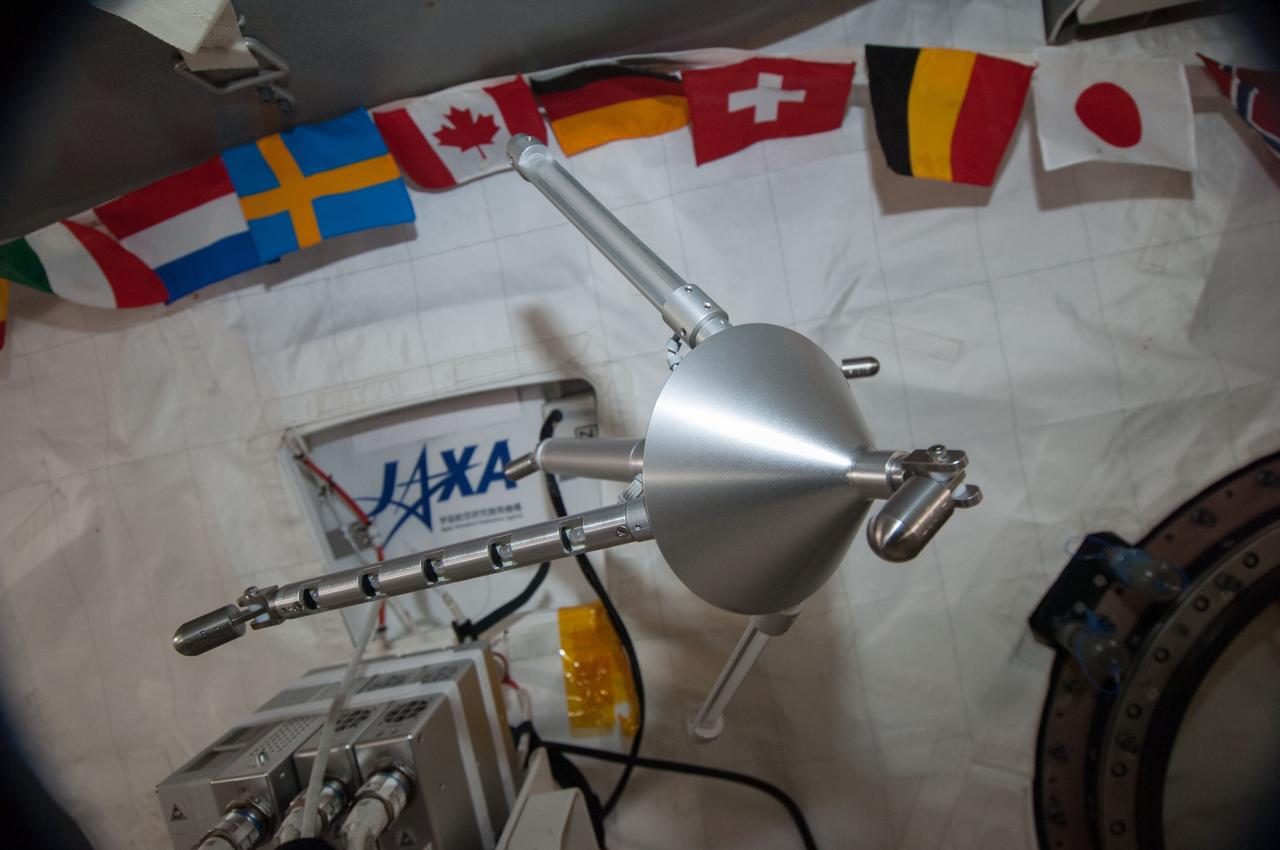
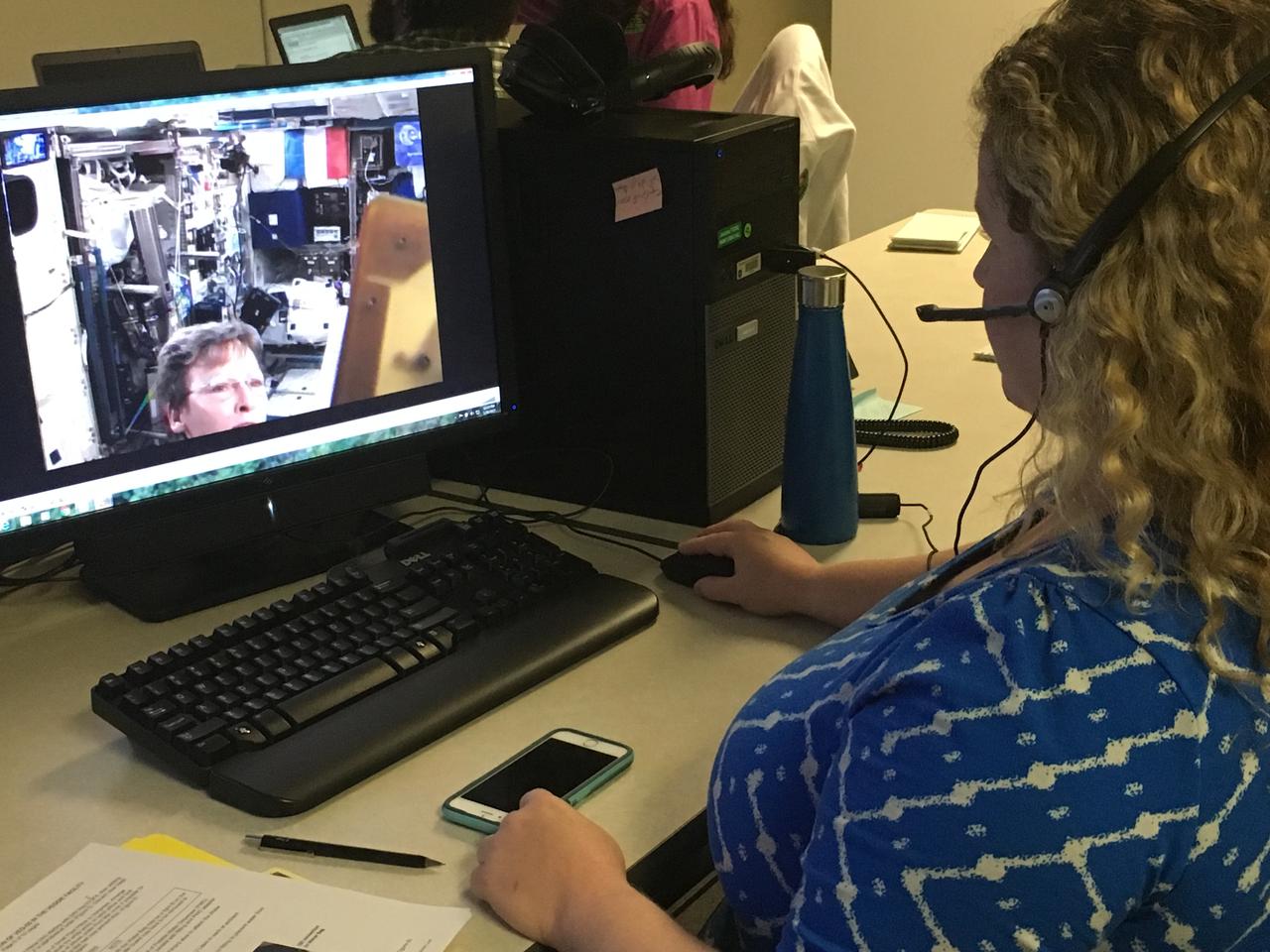
Veggie Project Manager Nicole Dufour provides real-time instructions to astronaut Peggy Whitson aboard the International Space Station as she initiates the latest Veggie experiment.
Latest Veggie Experiment aboard the ISS
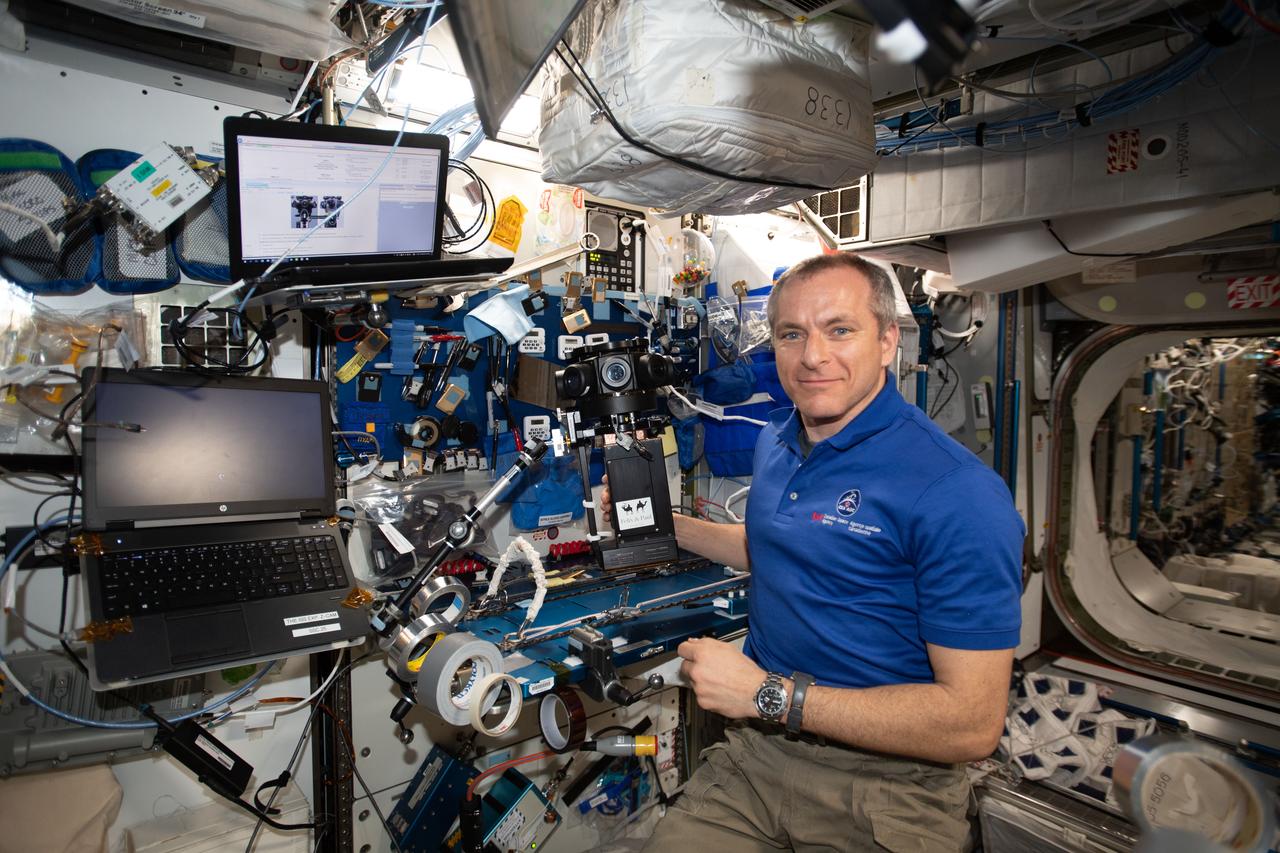
iss058e005160 (1/21/2019) --- A view of Canadian Space Agency (CSA) astronaut David Saint-Jacques setting up the Z-CAM V1 Pro Cinematic camera for the ISS Experience payload. The International Space Station Experience (ISS Experience) creates a virtual reality film documenting daily life aboard the space station. The 8- to 10-minute film created from footage taken during the six-month investigation covers different aspects of crew life, conducting science aboard the station, and the international partnerships involved.
The ISS Experience Z-Cam
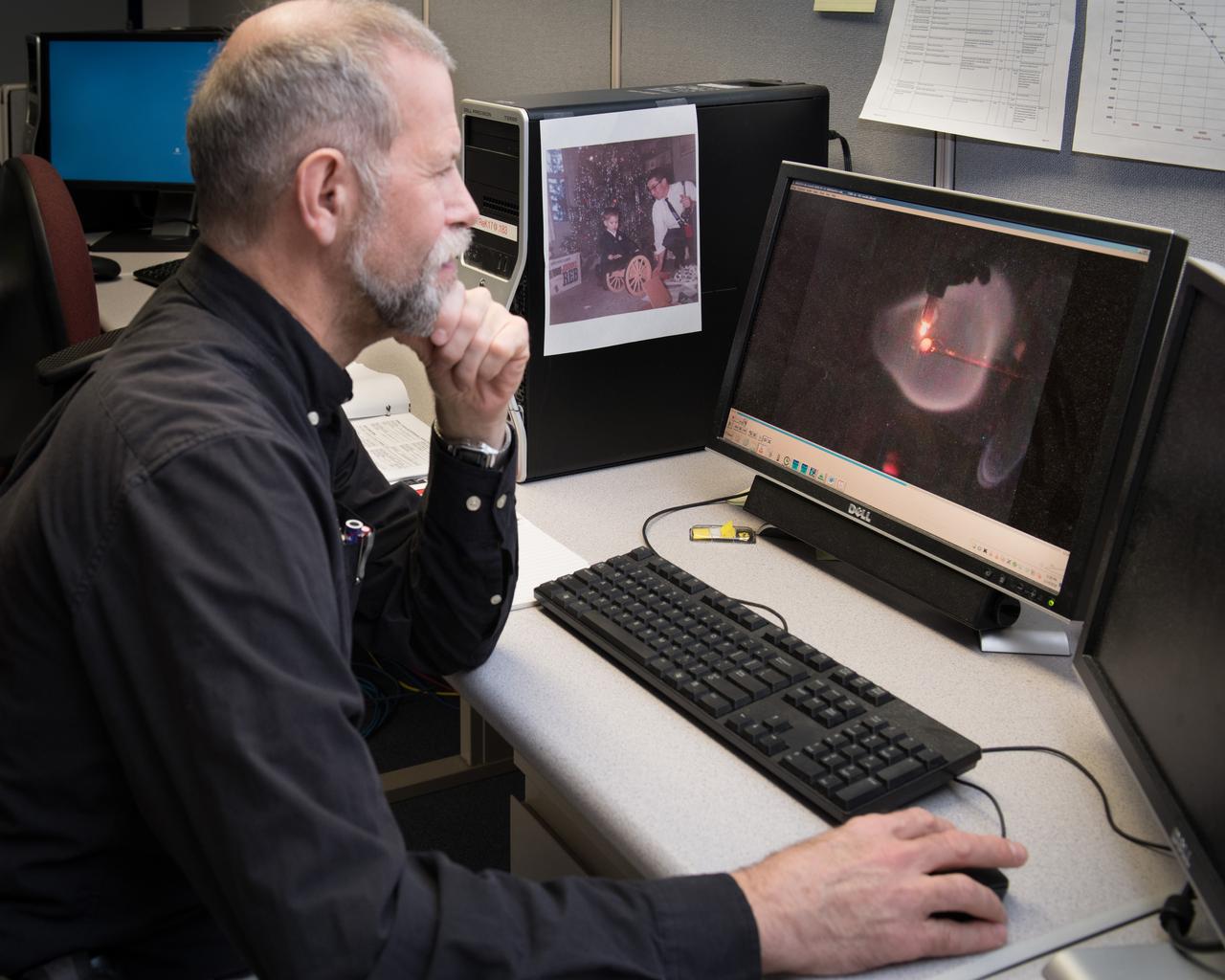
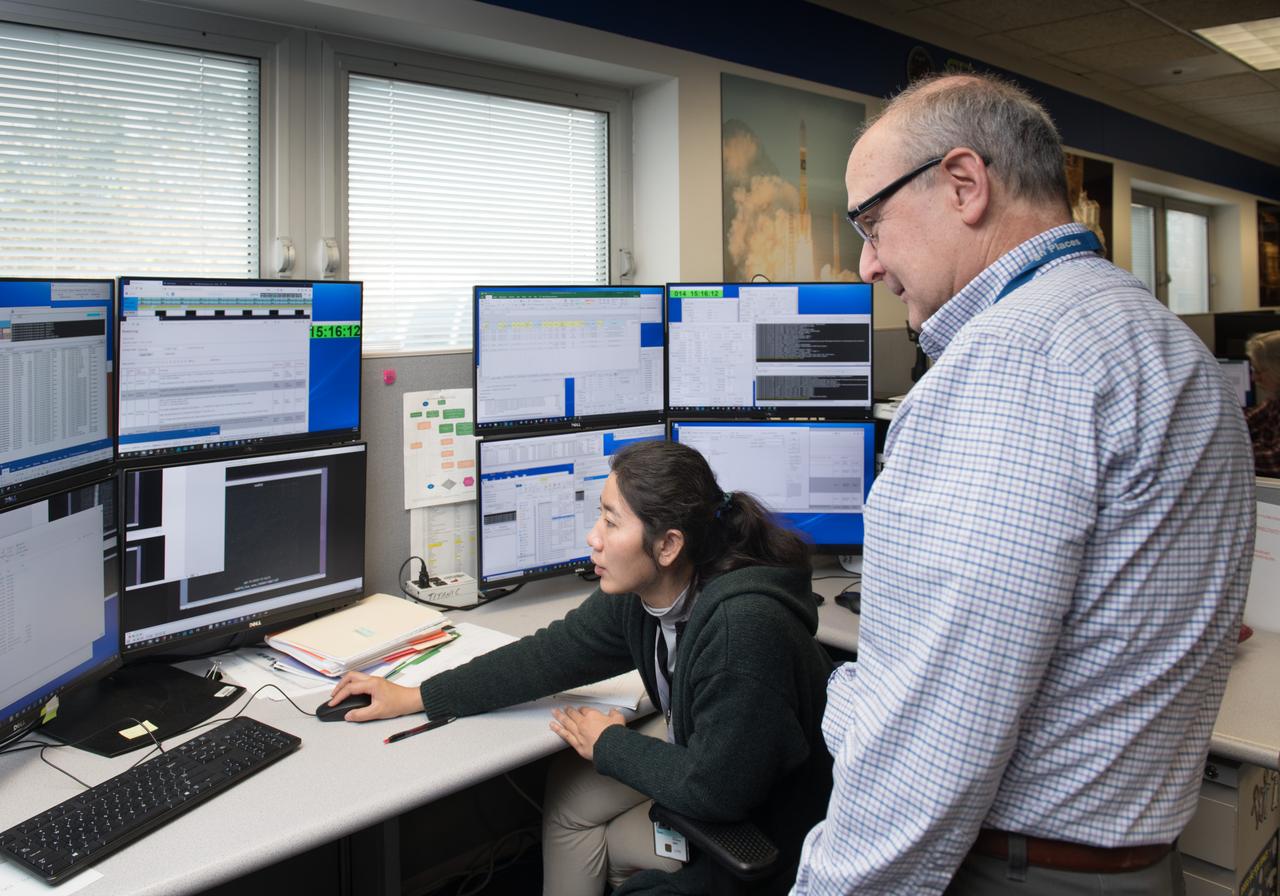
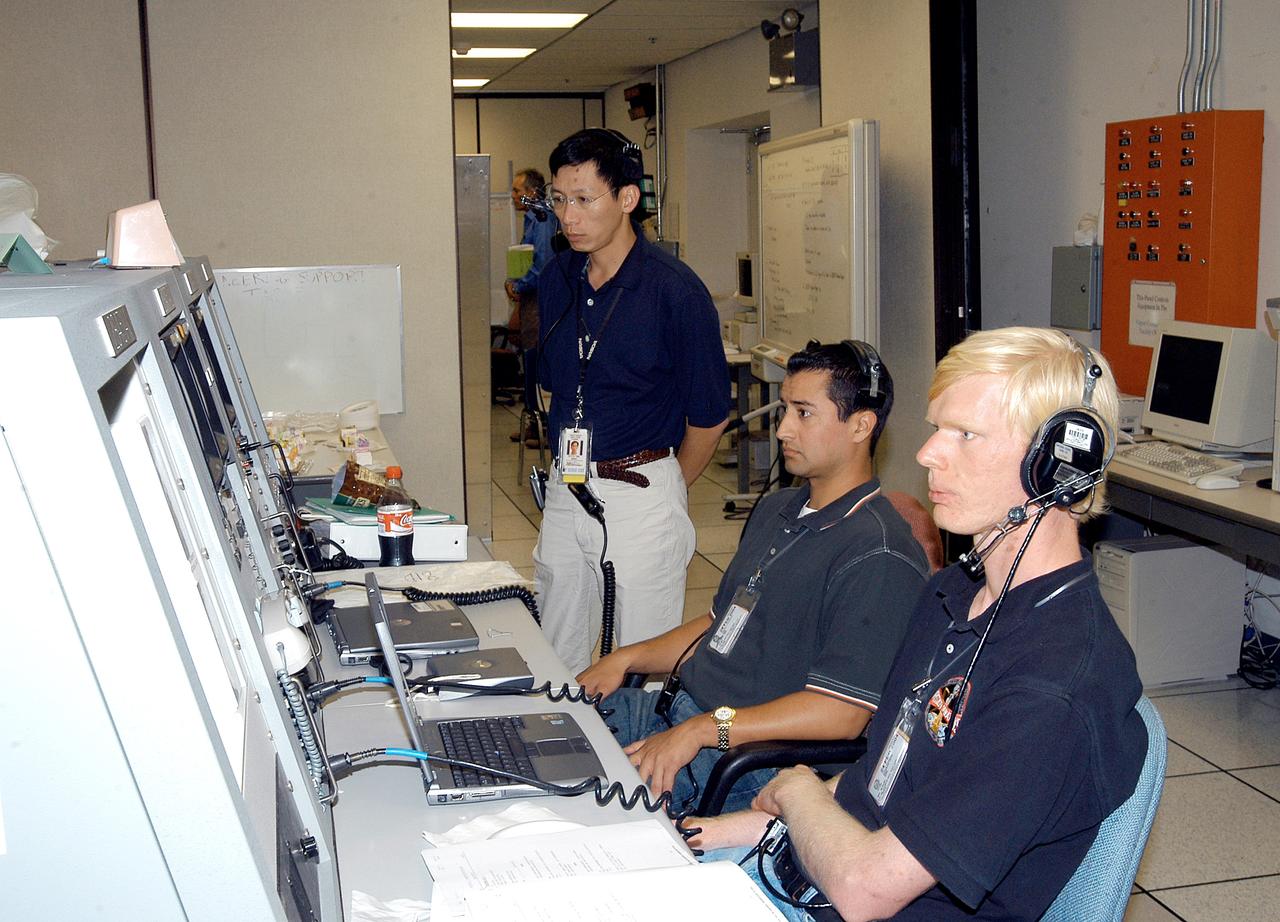
Review of ISS data from the Structure and Response of Spherical Diffusion Flames (s-Flame) experiment - of the Advanced Combustion via Microgravity Experiments. ACME project conducted in the Combustion Integrated Rack, CIR - by ACME Project Scientist Dennis Stocker in the Telescience Support Center,TSC, also known as the Glenn ISS Payload Operations Center, GIPOC
Review of International Space Station, ISS data from the Structure and Response of Spherical Diffusion Flames, s-Flame experiment in the Telescience Support Center, TSC, also known as the Glenn ISS Payload Operations Center, GIPOC
Aboard the International Space Station (ISS), the Russian Lada greenhouse provides home to an experiment that investigates plant development and genetics. Space grown peas have dried and "gone to seed." The crew of the ISS will soon harvest the seeds. Eventually some will be replanted onboard the ISS, and some will be returned to Earth for further study.
International Space Station (ISS)
Aboard the International Space Station (ISS), the Russian Lada greenhouse provides home to an experiment that investigates plant development and genetics. Space grown peas have dried and "gone to seed." The crew of the ISS will soon harvest the seeds. Eventually some will be replanted onboard the ISS, and some will be returned to Earth for further study.
International Space Station (ISS)
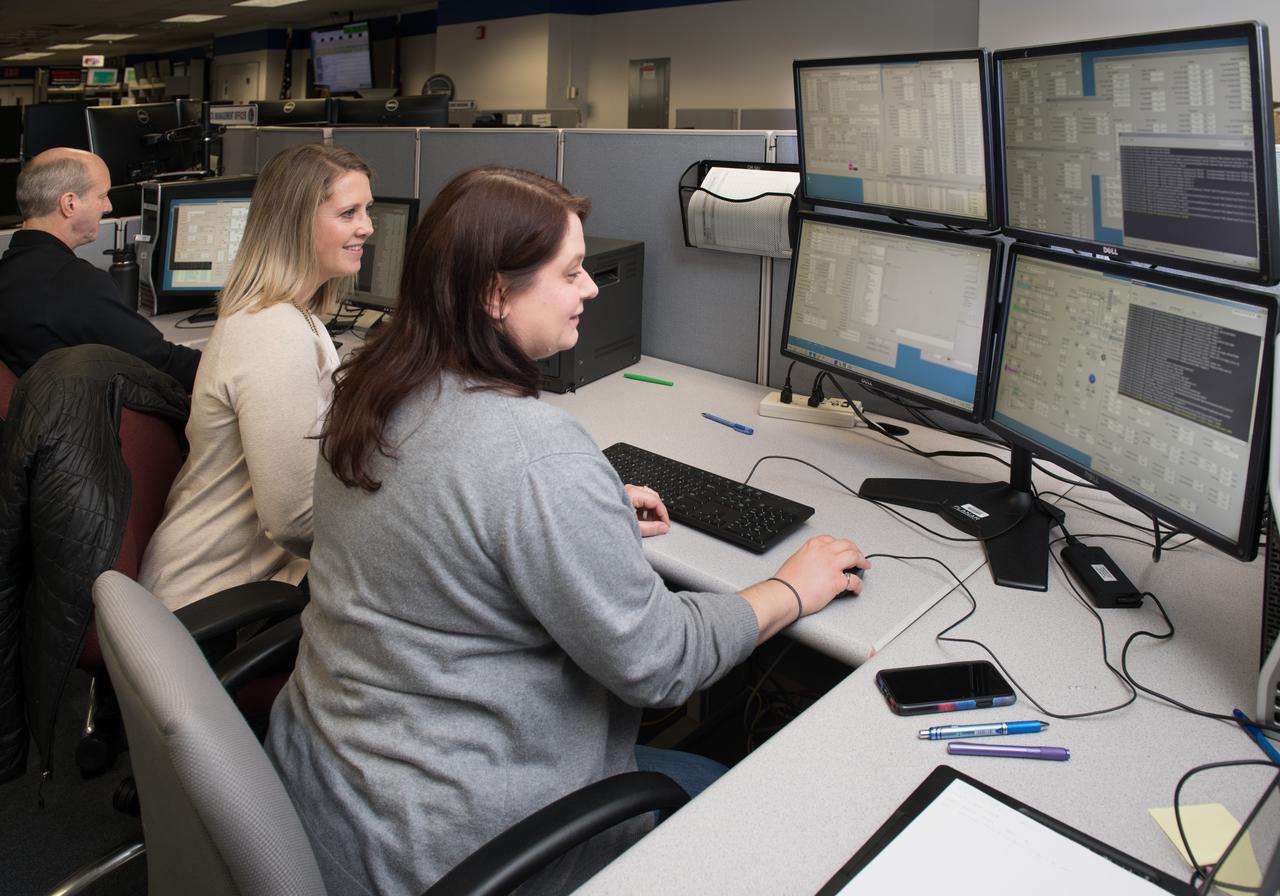
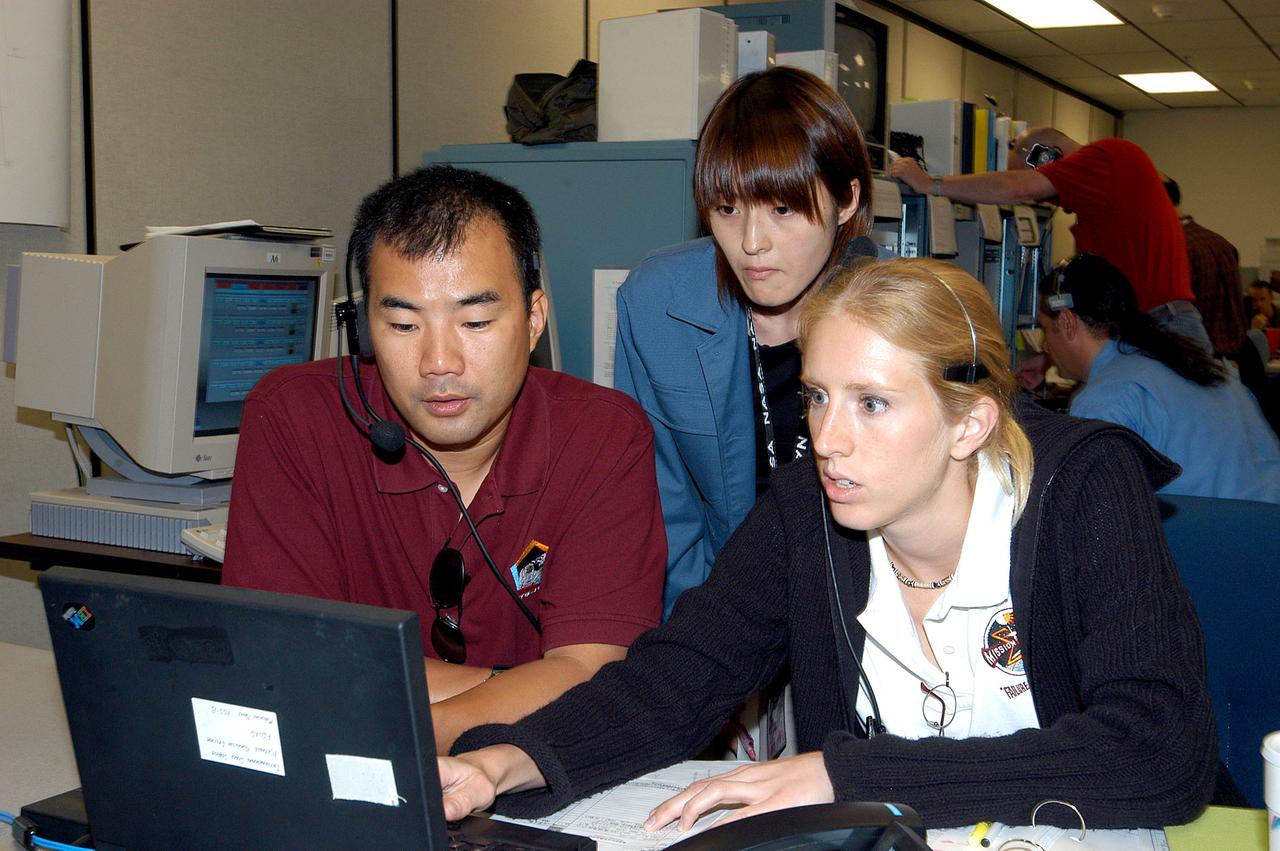
Testing of software with ground hardware for the Structue and Response of Spherical Diffusion Flames, s-Flame, experiment  - of the Advanced Combustion via Microgravity Experiments, ACME, project conducted in the ISS Combustion Integrated Rack, CIR - by ACME Software Engineer Jeffrey Eggers, Operations Lead Angela Adams, and Planning Lead Melani Smajdek in the Telescience Support Center, TSC, also known as the Glenn ISS Payload Operations Center, GIPOC
Testing of software with ground hardware for the Structue and Response of Spherical Diffusion Flames, s-Flame, experiment in the Telescience Support Center, TSC, also known as the Glenn ISS Payload Operations Center, GIPOC
Advanced Colloids Experiment, Thermal 5-2, ACE T5-2 International Space Station, ISS, Fluids Integrated Rack, FIR Operations in the Telescience Support Center, TSC
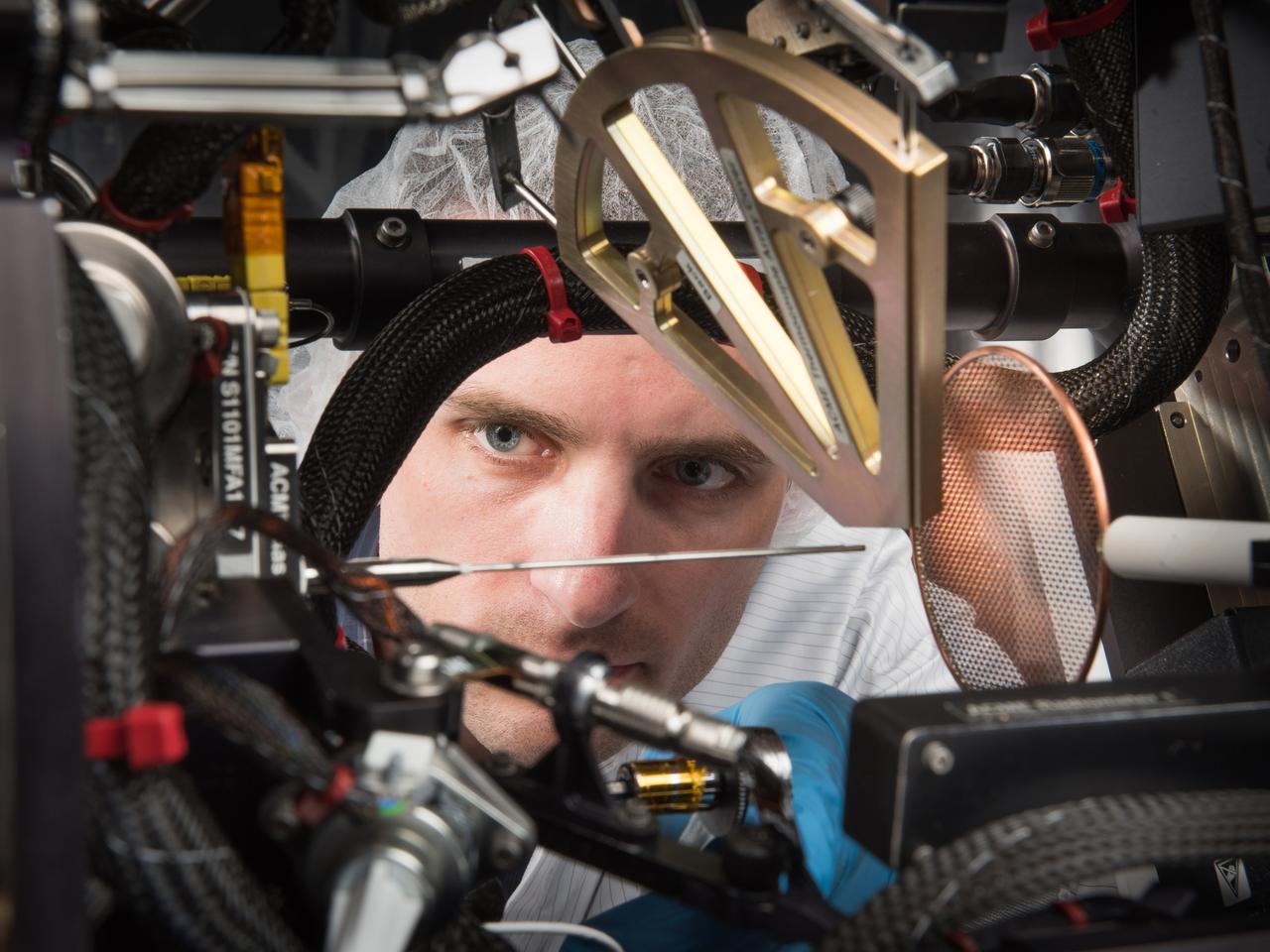
NASA Glenn engineer Christopher Mroczka inspects the gas-jet burner within the Advanced Combustion via Microgravity Experiments, ACME insert for the Combustion Integrated Rack, CIR. The apparatus allows researchers to conduct experiments with flames of gaseous fuels on the International Space Station, ISS
Advanced Combustion via Microgravity Experiments, ACME chamber insert
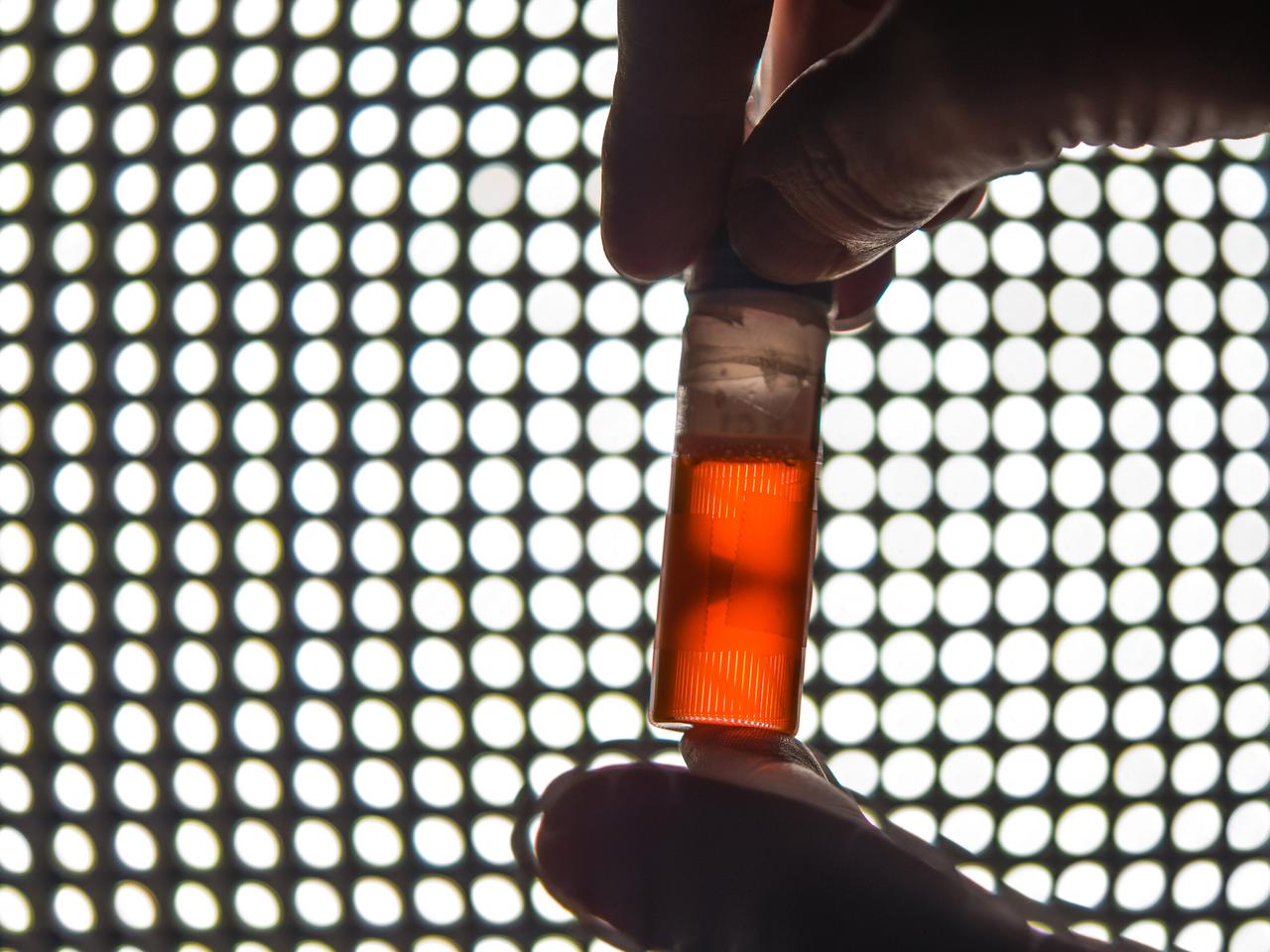
Ground testing for the first confocal Light Microscopy Microscope (LMM)  Experiment. Procter and Gamble is working with NASA Glenn scientists to prepare for a study that examines product stabilizers in a microgravity environment. The particles in the tube glow orange because they have been fluorescently tagged with a dye that reacts to green laser lights to allow construction of a 3D image point by point. The experiment, which will be sent to the ISS later this year, will help P&G develop improved product stabilizers to extend shelf life and develop more environmentally friendly packaging.
Light Microscopy Microscope Experiment
Advanced Colloids Experiment, Thermal 5-2, ACE T5-2 International Space Station, ISS, Fluids Integrated Rack, FIR Operations in the Telescience Support Center, TSC
Advanced Colloids Experiment, Thermal 5-2, ACE T5-2 Internati...
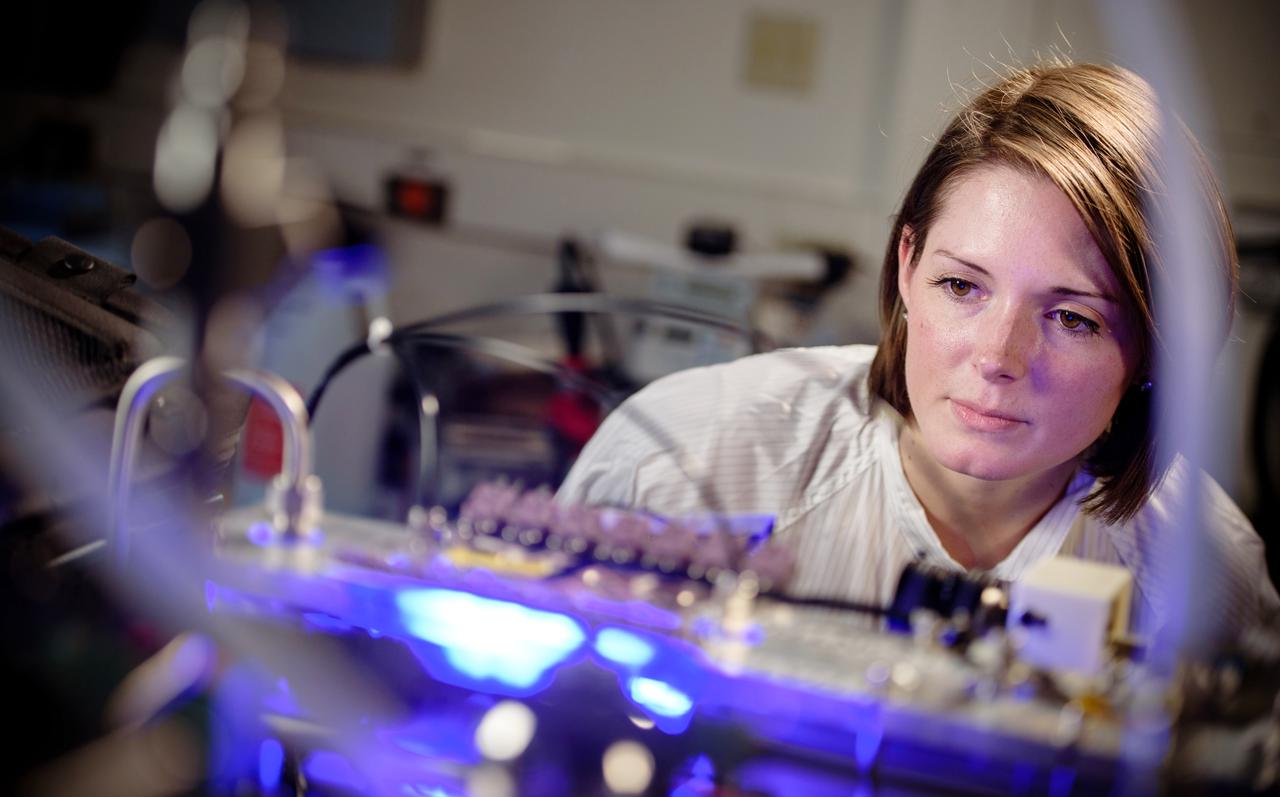
Grace Gaskin, an Aerospace Flight Systems Engineer Trainee, was sworn in as a civil servant in September 2017. After serving for 6 years in the U.S. Army  she enrolled at Case Western Reserve University and will graduate in May 2018 with a degree in Chemical Engineering. As a Pathways Intern one of the many projects she has worked on is the Flow Boiling and Condensation Experiments (FBCE).   The proposed research aims to develop an integrated two-phase flow boiling/condensation facility for the International Space Station (ISS) to serve as a primary platform for obtaining two-phase flow and heat transfer data in microgravity. By comparing the microgravity data against those obtained in Earth's gravity, it will be possible to ascertain the influence of body force on two-phase transport phenomena in pursuit of mechanistic models as well as correlations, and to help determine the minimum flow criteria to ensure gravity independent flow boiling and condensation.
Environmental Portraits of Interns for CL Magazine
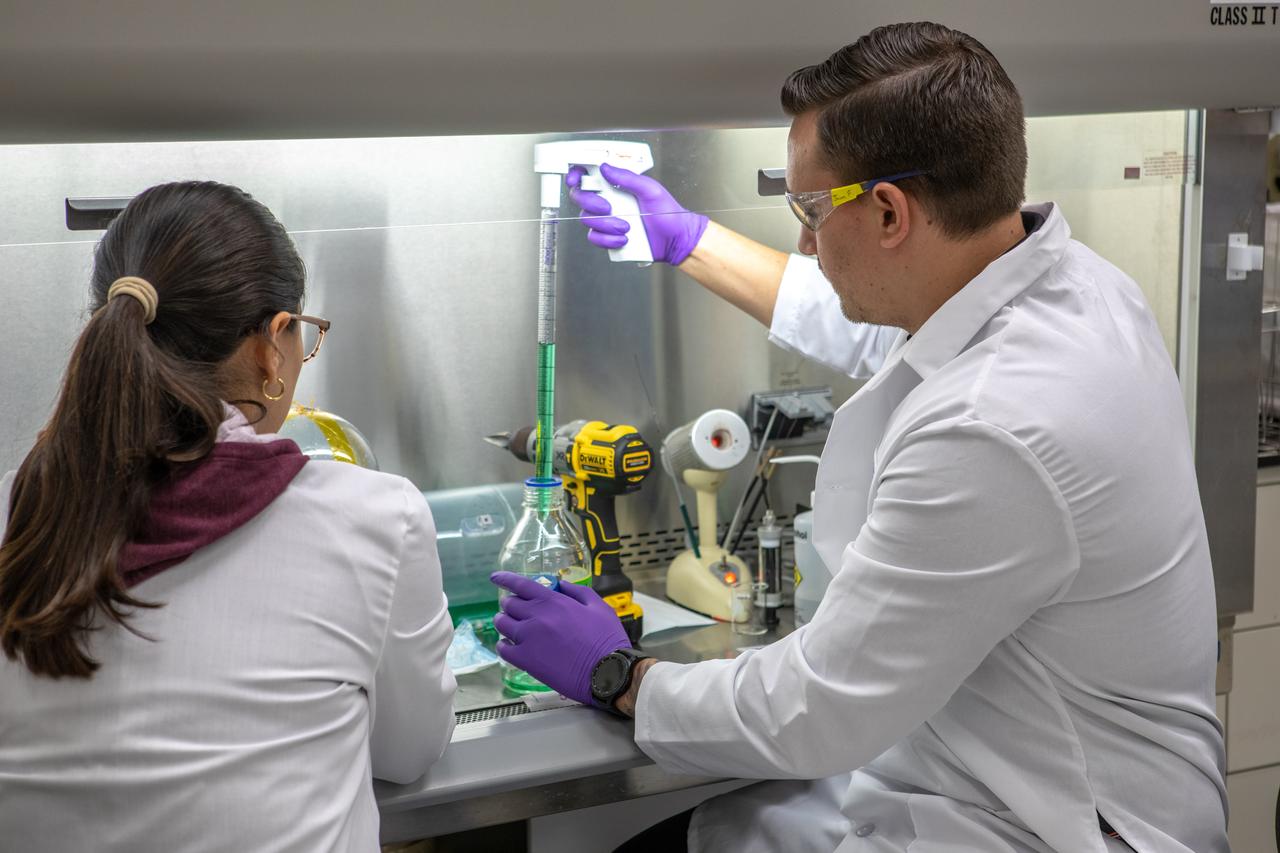
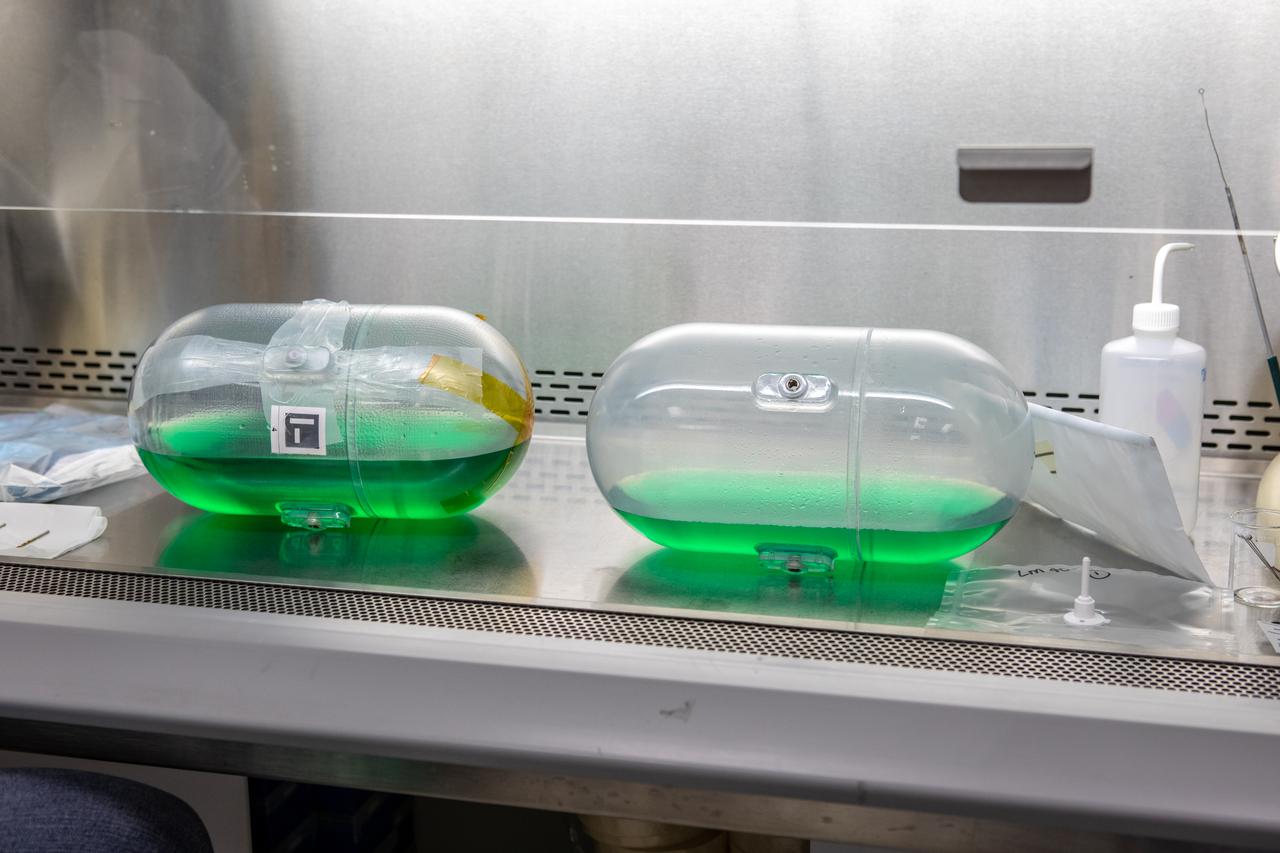
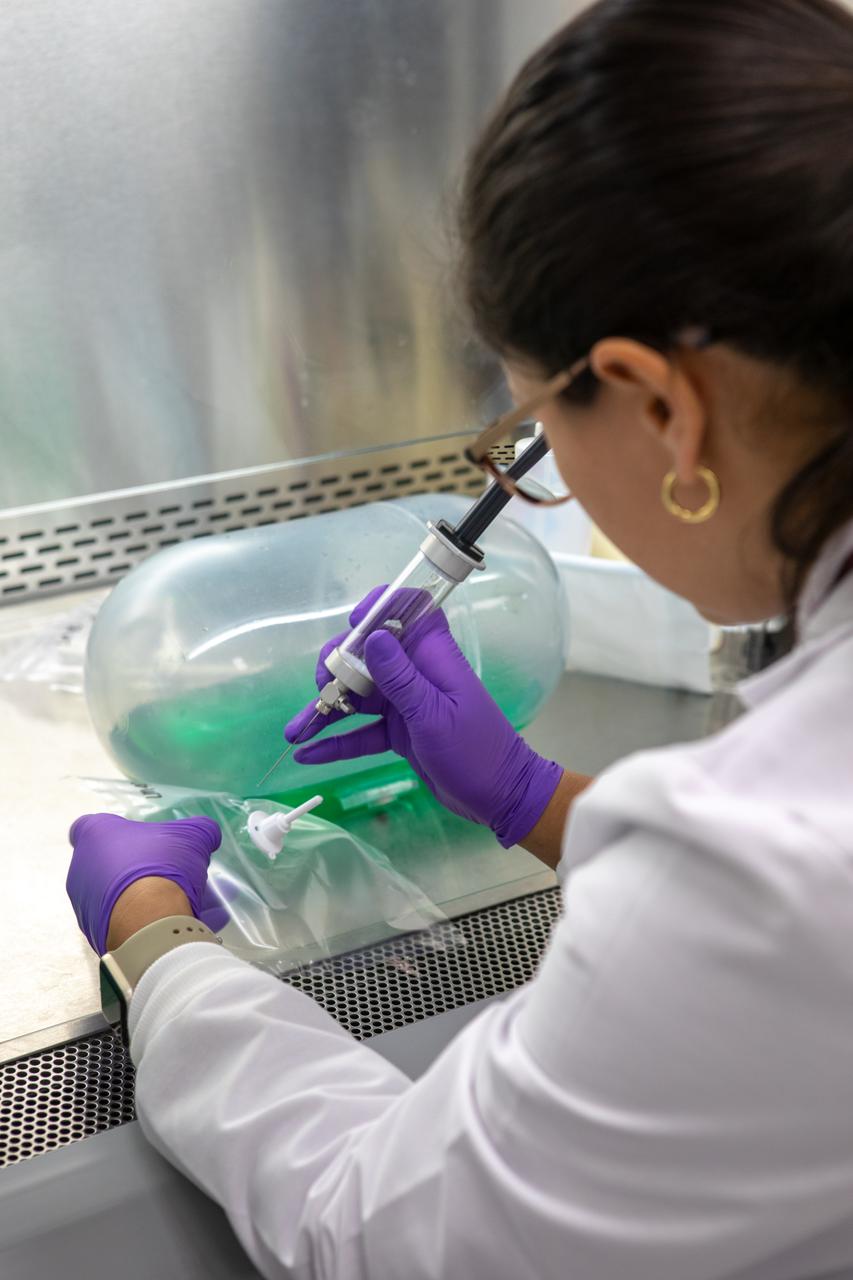
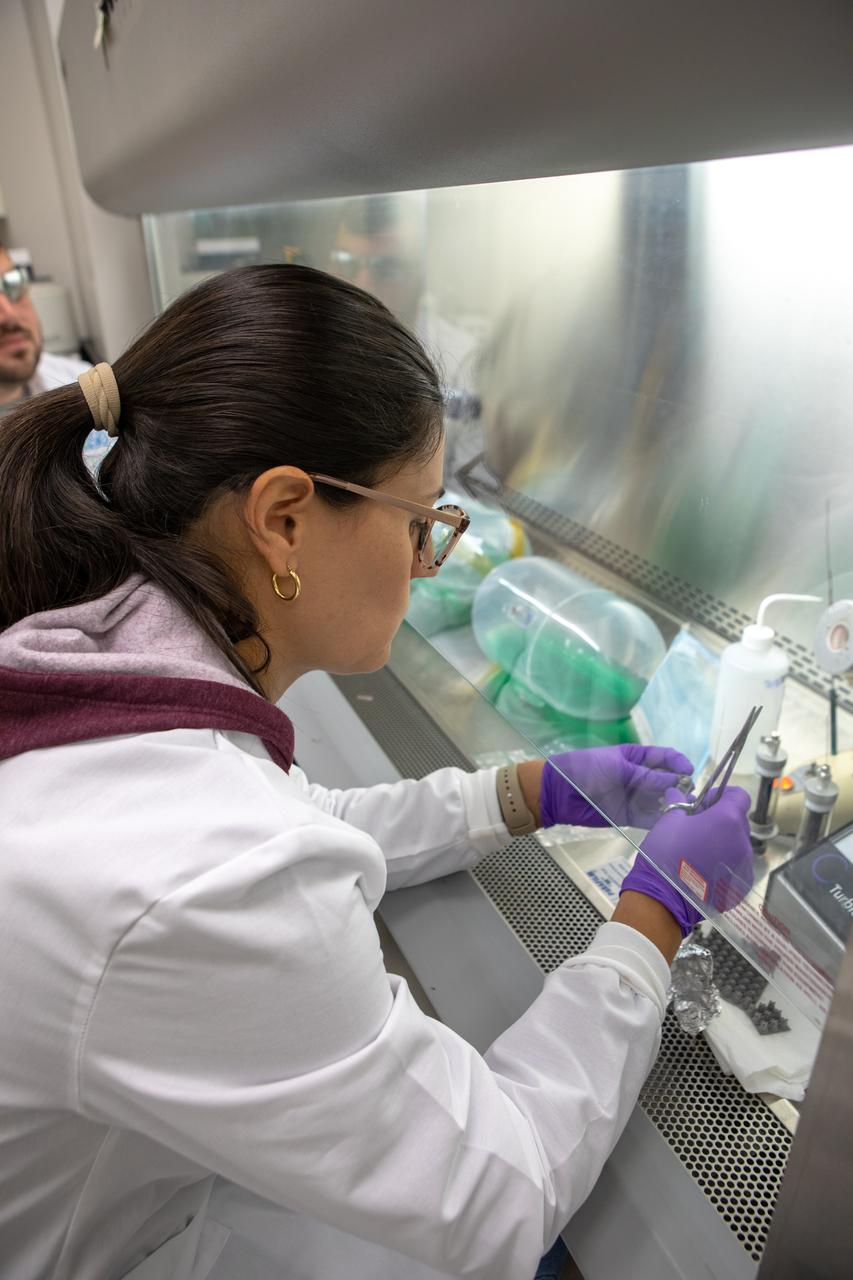
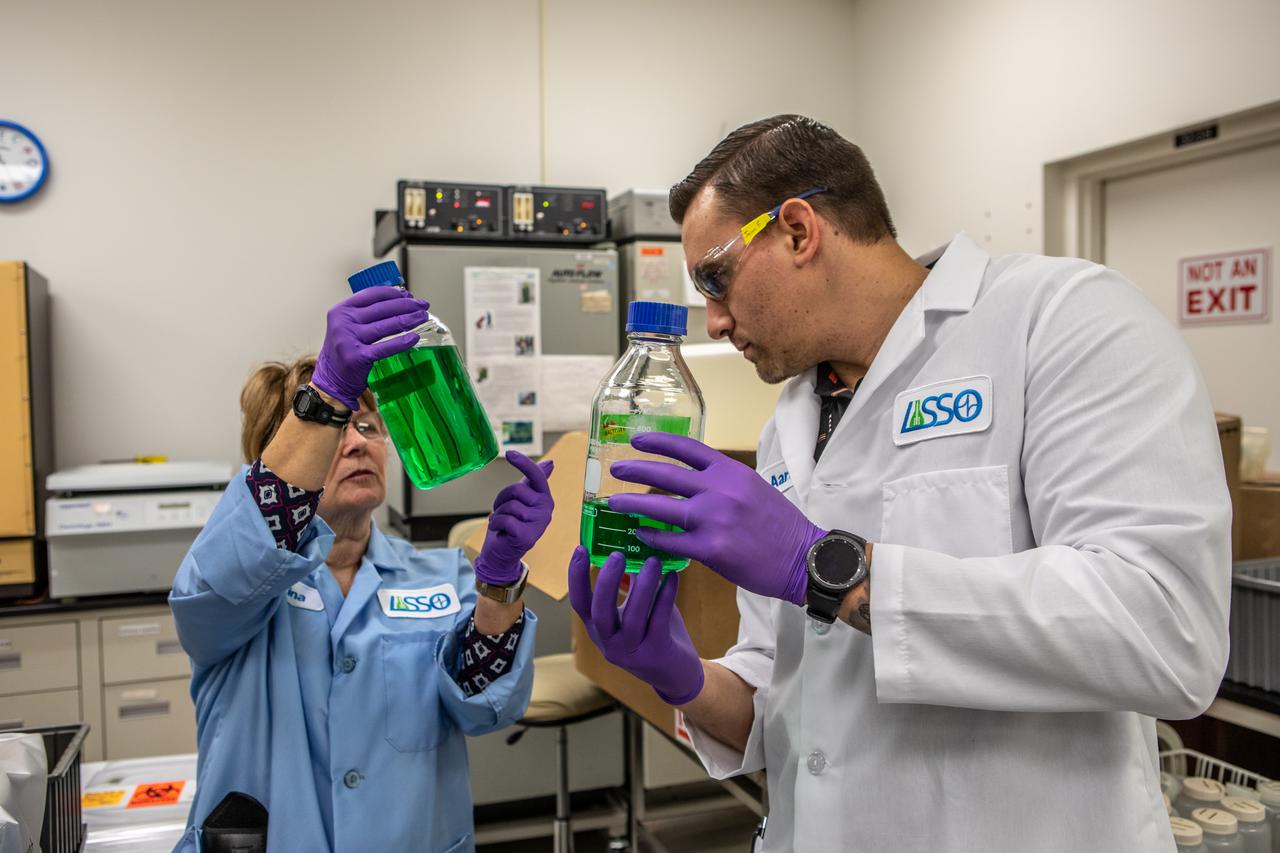
Kennedy Space Center’s Carolina Franco, Ph.D., conducts a biological study on two tanks of water, filled with green dye, in the Florida spaceport’s Neil Armstrong Operations and Checkout Building on Nov. 13, 2019. The tanks have recently returned to Kennedy after spending the last five years on the International Space Station for an experiment to study slosh, or the movement of water, in a zero-gravity environment to help engineers predict the movement of propellant in rocket tanks. Kennedy’s Air and Water Revitalization lab is studying the water tanks to determine if there is, or was, any microbial growth within them. The results will help NASA determine whether clean water can be stored in space for long-duration missions, an essential component to keeping astronauts safe and healthy as the agency prepares for missions to the Moon and beyond to Mars.
ISS Slosh Tank Experiment
Kennedy Space Center’s Carolina Franco, Ph.D., left, and Jason Fischer collect samples from a water tank, filled with green dye, for a biological study in the Florida spaceport’s Neil Armstrong Operations and Checkout Building on Nov. 13, 2019. Two tanks have recently returned to Kennedy after spending the last five years on the International Space Station for an experiment to study slosh, or the movement of water, in a zero-gravity environment to help engineers predict the movement of propellant in rocket tanks. Kennedy’s Air and Water Revitalization lab is studying the water tanks to determine if there is, or was, any microbial growth within them. The results will help NASA determine whether clean water can be stored in space for long-duration missions, an essential component to keeping astronauts safe and healthy as the agency prepares for missions to the Moon and beyond to Mars.
ISS Slosh Tank Experiment
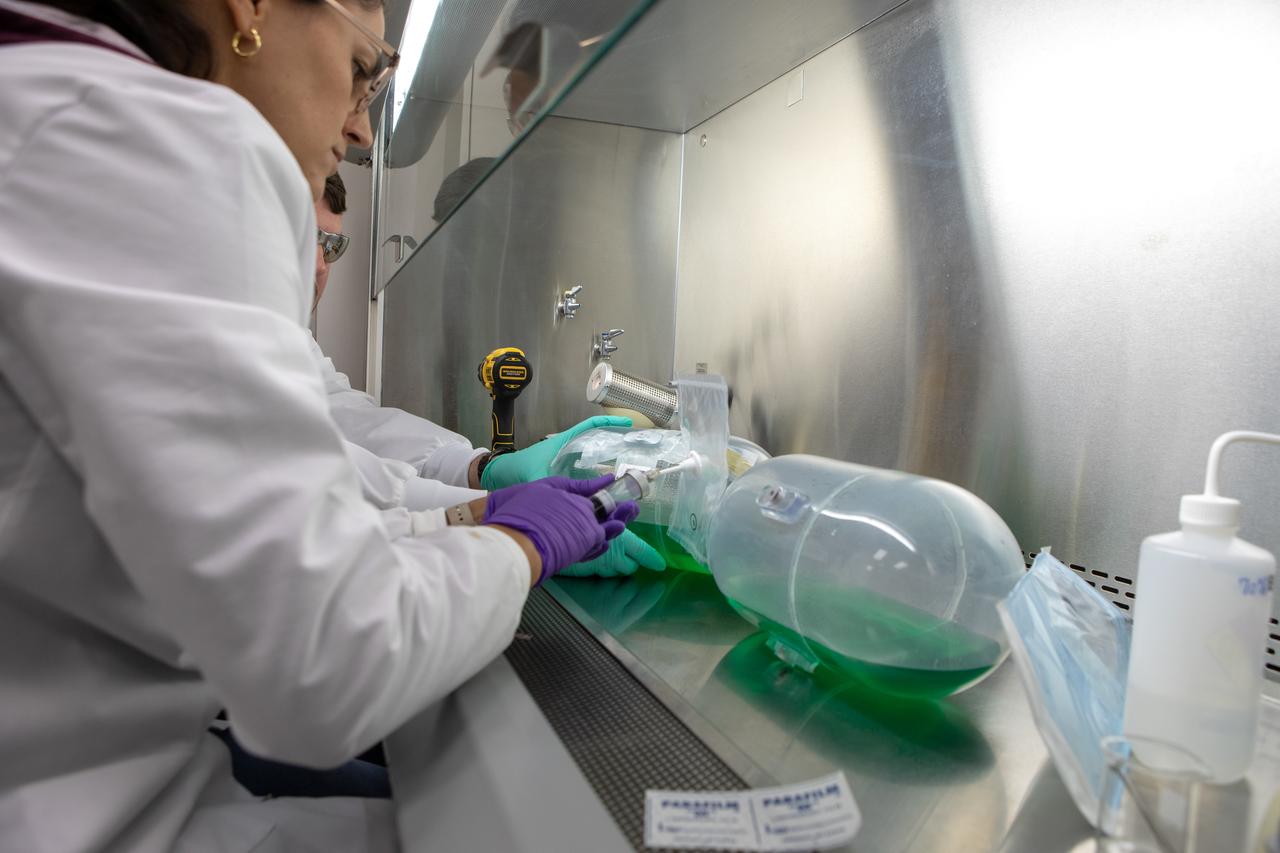
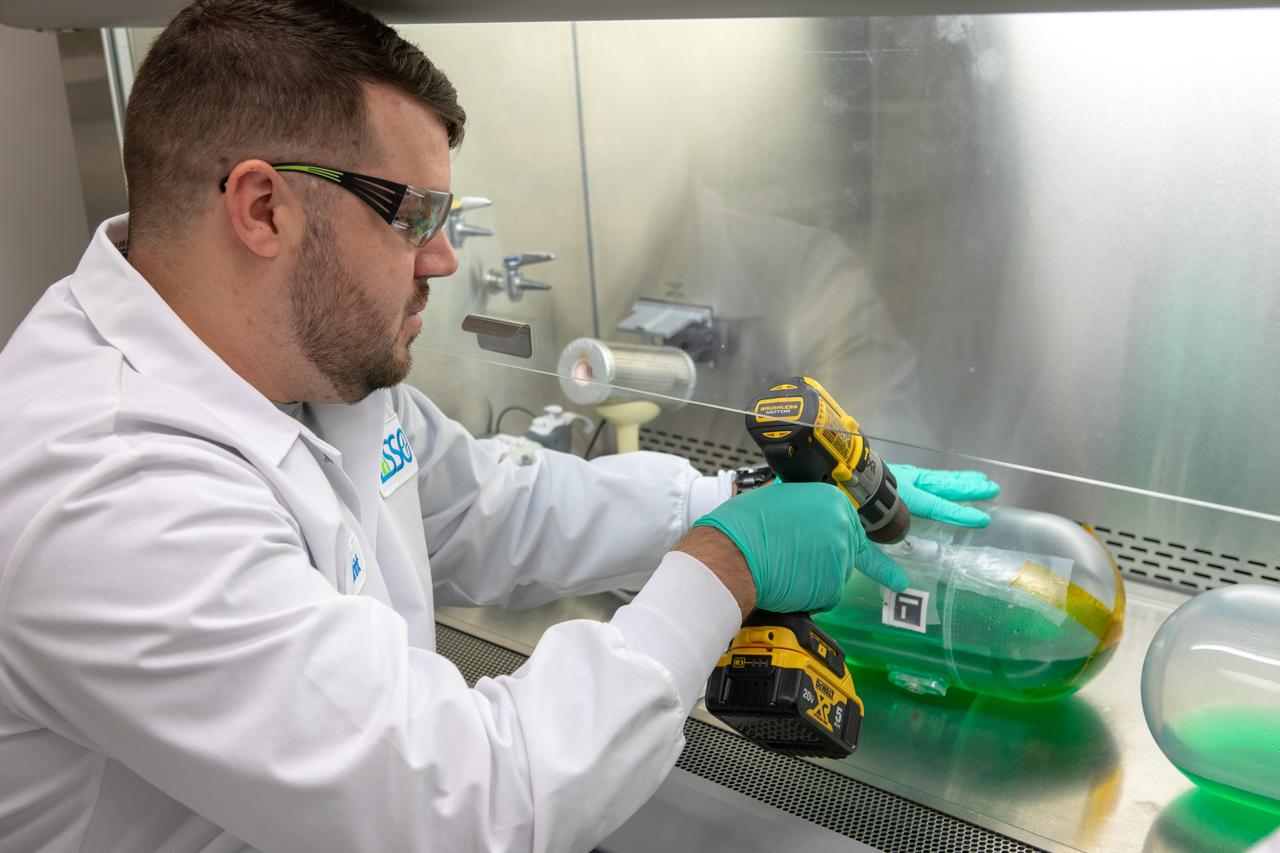
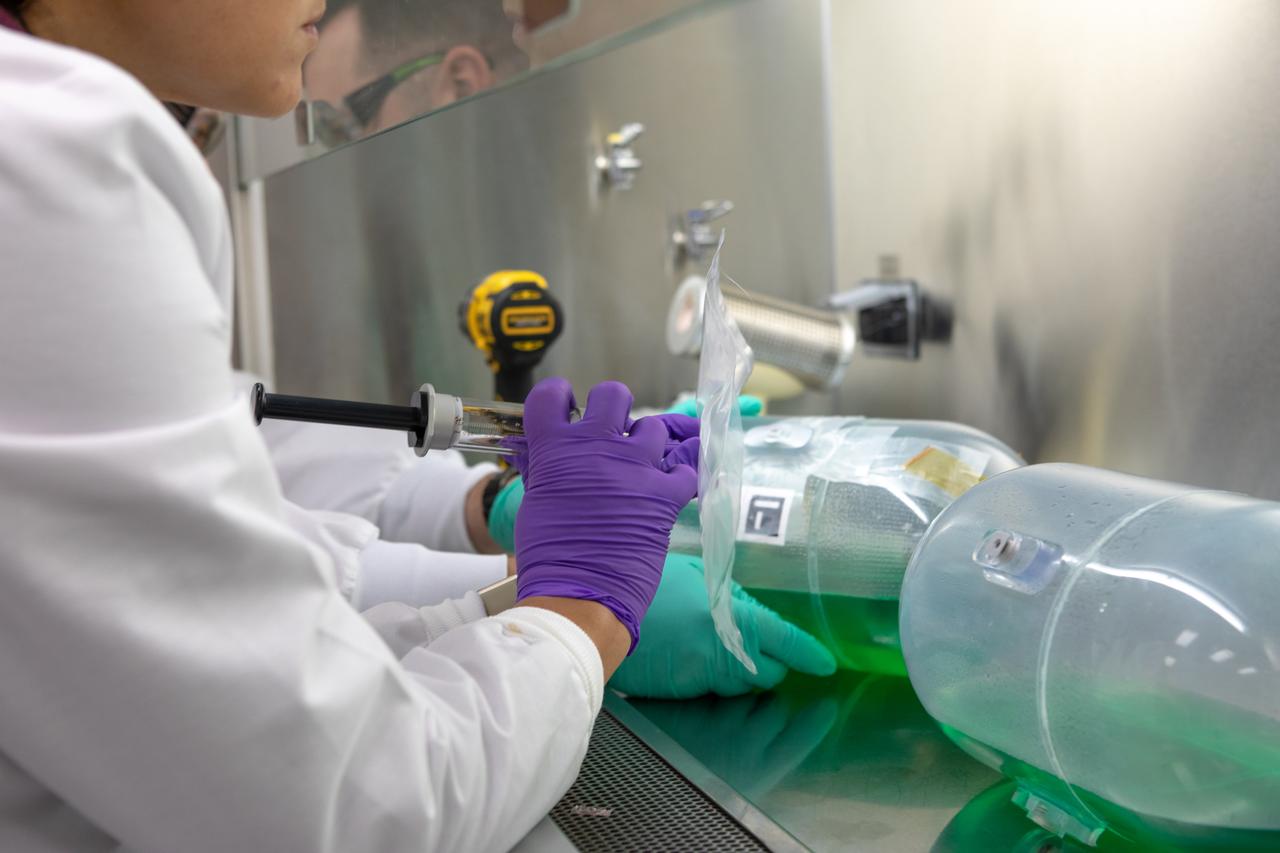
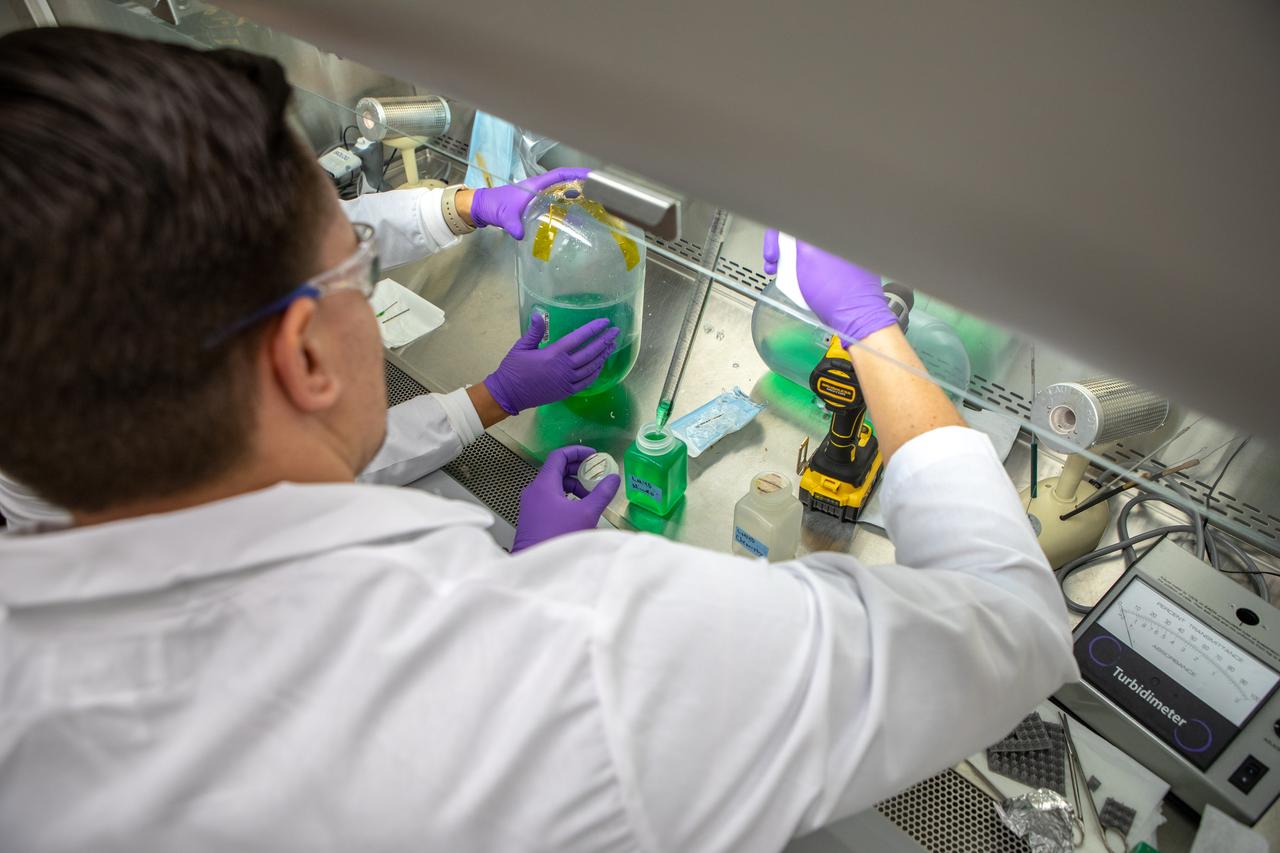
Kennedy Space Center’s Brint Bauer drills into a water tank, filled with green dye, in the Florida spaceport’s Neil Armstrong Operations and Checkout Building on Nov. 13, 2019. Two tanks have recently returned to Kennedy after spending the last five years on the International Space Station for an experiment to study slosh, or the movement of water, in a zero-gravity environment to help engineers predict the movement of propellant in rocket tanks. With the slosh experiment now concluded, Kennedy’s Air and Water Revitalization lab is studying the water tanks to determine if there is, or was, any microbial growth within them. The results will help NASA determine whether clean water can be stored in space for long-duration missions, an essential component to keeping astronauts safe and healthy as the agency prepares for missions to the Moon and beyond to Mars.
ISS Slosh Tank Experiment
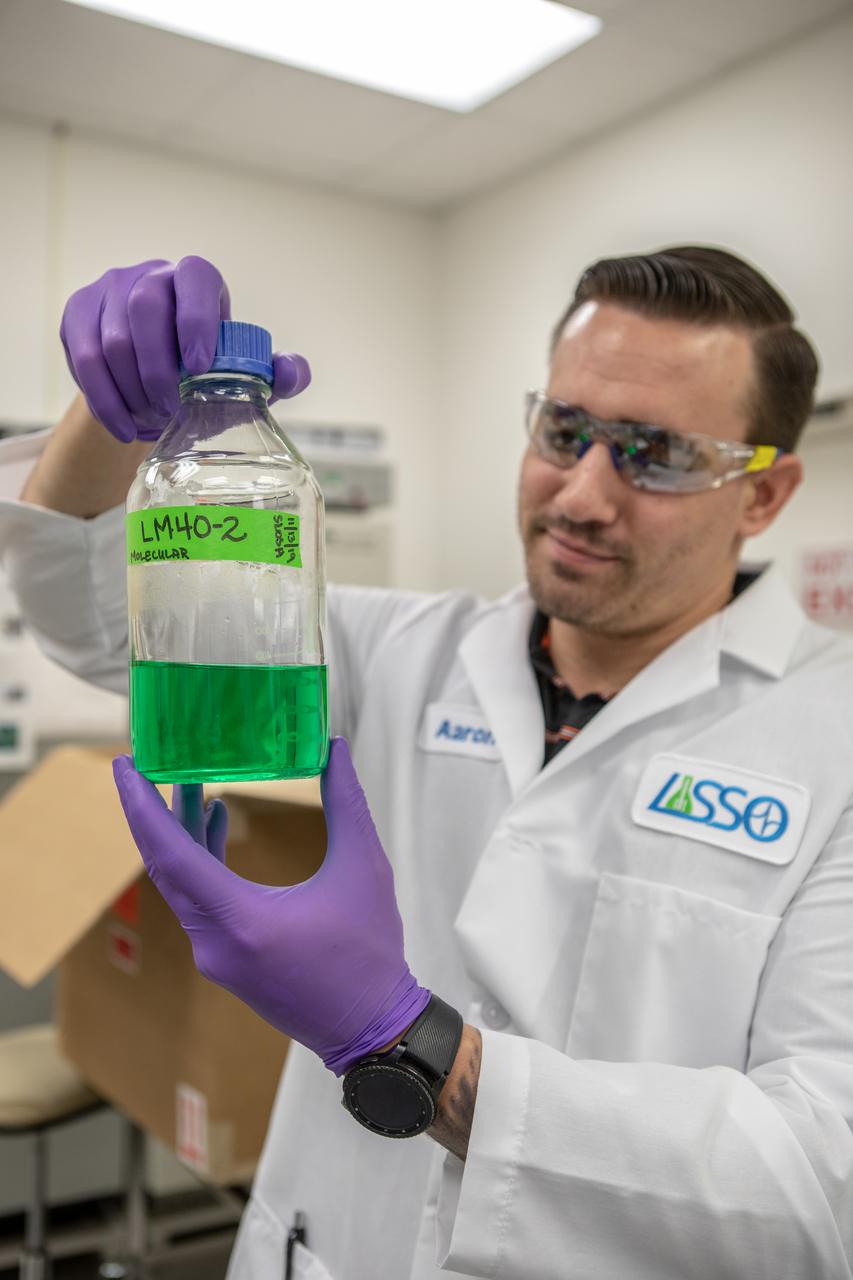
Kennedy Space Center’s Christina Khodadad, Ph.D., left, and Jason Fischer hold samples of water in the Florida spaceport’s Neil Armstrong Operations and Checkout Building on Nov. 13, 2019. Two tanks of water have recently returned to Kennedy after spending the last five years on the International Space Station for an experiment to study slosh, or the movement of water, in a zero-gravity environment to help engineers predict the movement of propellant in rocket tanks. Kennedy’s Air and Water Revitalization lab is studying the water tanks to determine if there is, or was, any microbial growth within them. The results will help NASA determine whether clean water can be stored in space for long-duration missions, an essential component to keeping astronauts safe and healthy as the agency prepares for missions to the Moon and beyond to Mars.
ISS Slosh Tank Experiment
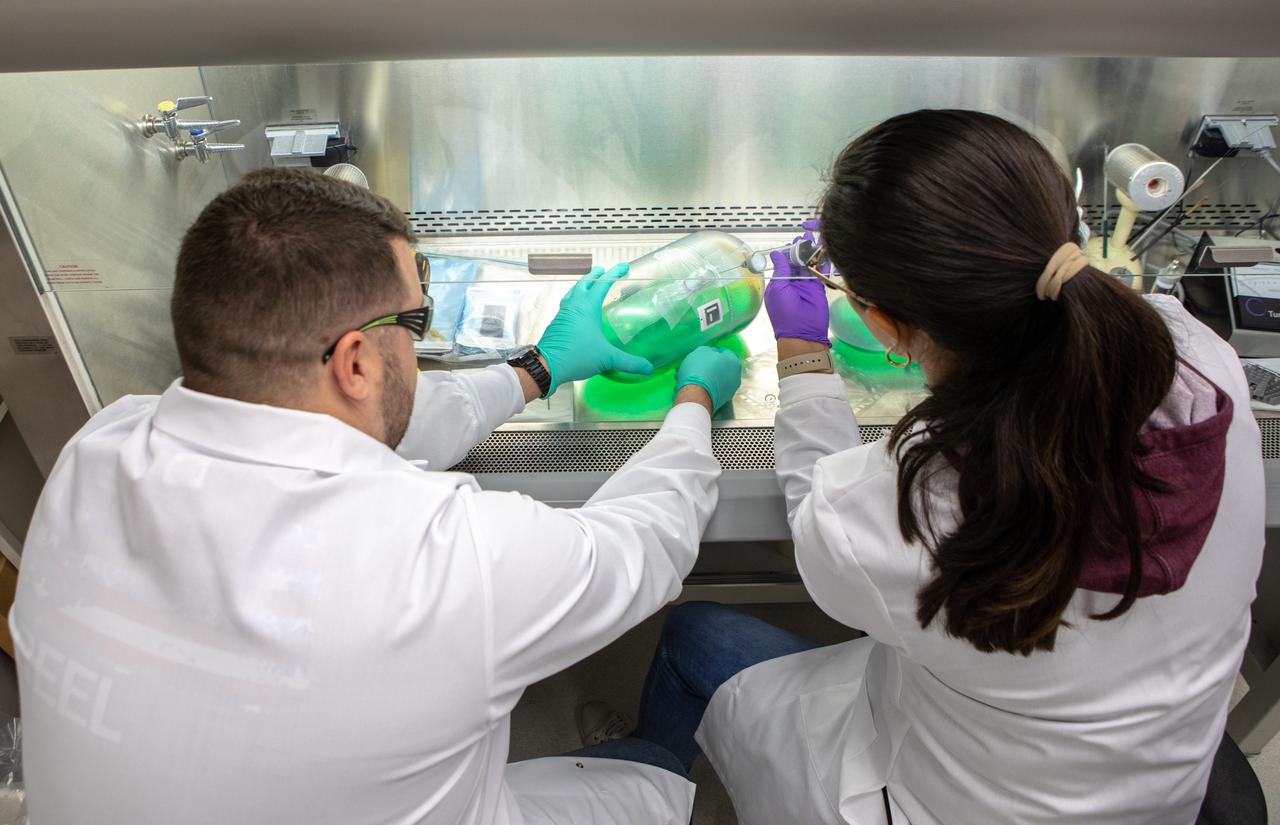
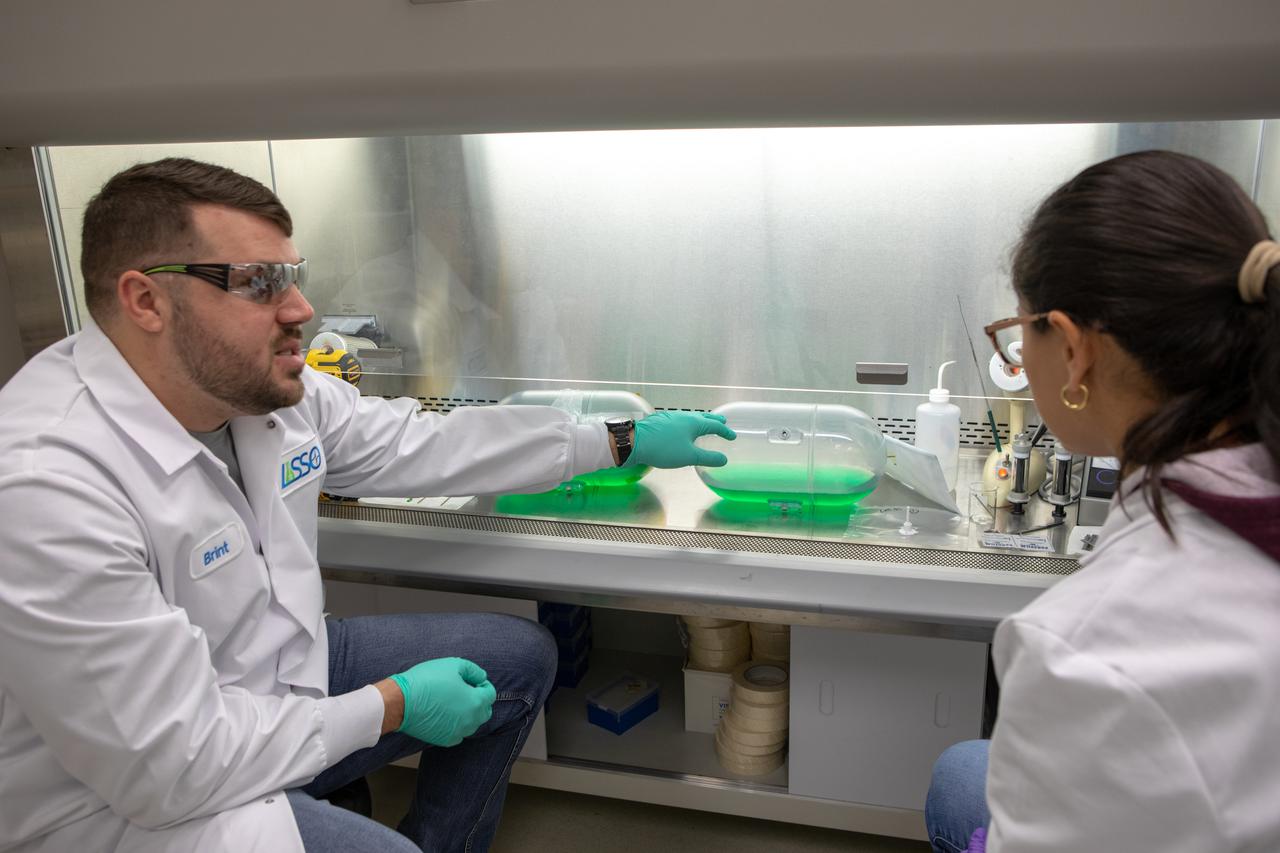
Kennedy Space Center’s Brint Bauer, left, and Carolina Franco, Ph.D., conduct a biological study on two tanks of water, filled with green dye, in the Florida spaceport’s Neil Armstrong Operations and Checkout Building on Nov. 13, 2019. The tanks have recently returned to Kennedy after spending the last five years on the International Space Station for an experiment to study slosh, or the movement of water, in a zero-gravity environment to help engineers predict the movement of propellant in rocket tanks. Kennedy’s Air and Water Revitalization lab is studying the water tanks to determine if there is, or was, any microbial growth within them. The results will help NASA determine whether clean water can be stored in space for long-duration missions, an essential component to keeping astronauts safe and healthy as the agency prepares for missions to the Moon and beyond to Mars.
ISS Slosh Tank Experiment
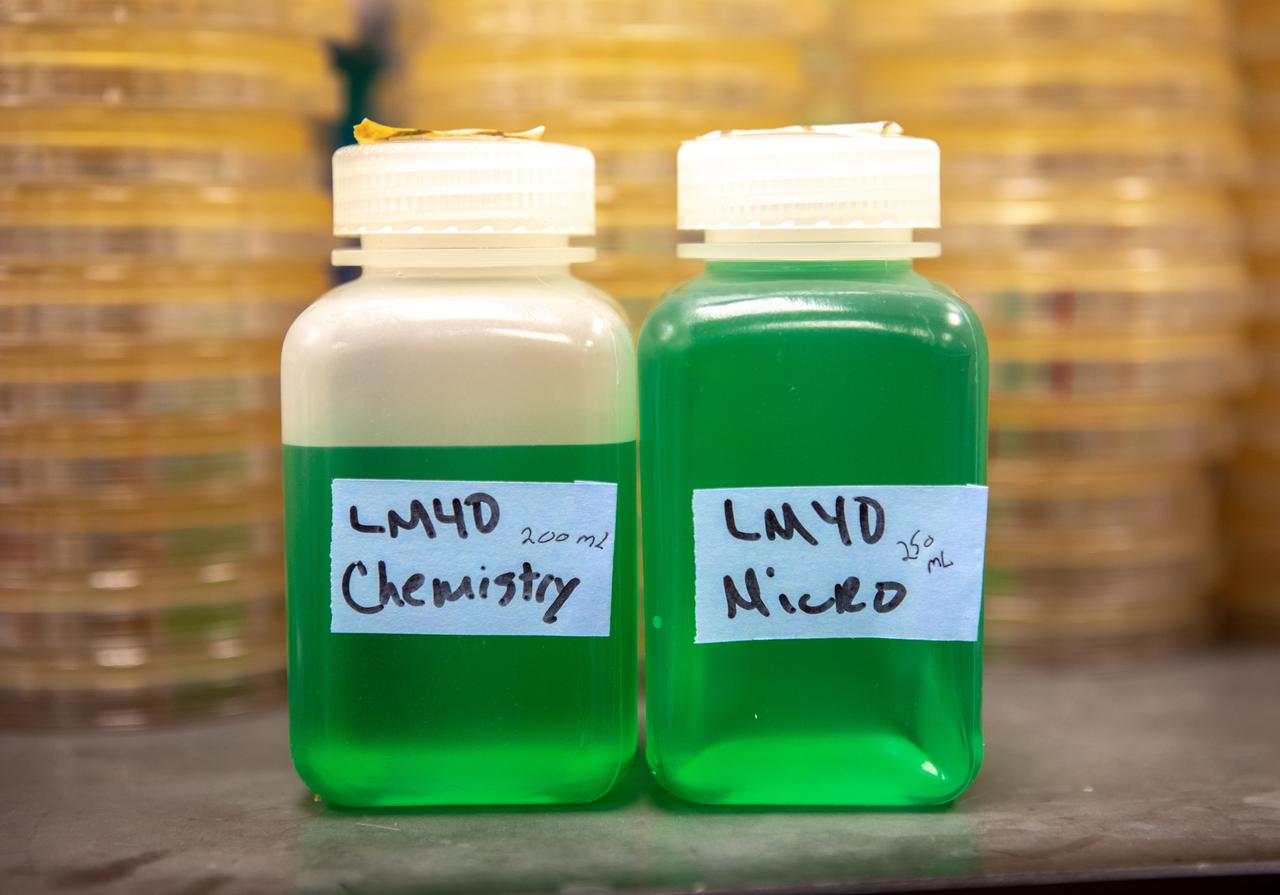
Samples of water, filled with green dye, gathered from two water tanks that have spent the past five years in space, are photographed inside the Neil Armstrong Operations and Checkout Building at NASA’s Kennedy Space Center in Florida on Nov. 13, 2019. The tanks were first sent to the International Space Station in 2014 to study slosh, or the movement of water, in a zero-gravity environment to help engineers predict the movement of propellant in rocket tanks. With the slosh experiment now concluded and the tanks recently returned to Kennedy, they are being utilized for a biological study to determine if there is, or was, any microbial growth within them. The results will help NASA determine whether clean water can be stored in space for long-duration missions, an essential component to keeping astronauts safe and healthy as the agency prepares for missions to the Moon and beyond to Mars.
ISS Slosh Tank Experiment
Kennedy Space Center’s Carolina Franco, Ph.D., collects samples from a water tank, filled with green dye, for a biological study in the Florida spaceport’s Neil Armstrong Operations and Checkout Building on Nov. 13, 2019. Two tanks have recently returned to Kennedy after spending the last five years on the International Space Station for an experiment to study slosh, or the movement of water, in a zero-gravity environment to help engineers predict the movement of propellant in rocket tanks. With the slosh experiment now concluded, Kennedy’s Air and Water Revitalization lab is studying the water tanks to determine if there is, or was, any microbial growth within them. The results will help NASA determine whether clean water can be stored in space for long-duration missions, an essential component to keeping astronauts safe and healthy as the agency prepares for missions to the Moon and beyond to Mars.
ISS Slosh Tank Experiment
A Kennedy Space Center employee collects samples from a water tank, filled with green dye, for a biological study in the Florida spaceport’s Neil Armstrong Operations and Checkout Building on Nov. 13, 2019. Two tanks have recently returned to Kennedy after spending the last five years on the International Space Station for an experiment to study slosh, or the movement of water, in a zero-gravity environment to help engineers predict the movement of propellant in rocket tanks. With the slosh experiment now concluded, Kennedy’s Air and Water Revitalization lab is studying the water tanks to determine if there is, or was, any microbial growth within them. The results will help NASA determine whether clean water can be stored in space for long-duration missions, an essential component to keeping astronauts safe and healthy as the agency prepares for missions to the Moon and beyond to Mars.
ISS Slosh Tank Experiment
A Kennedy Space Center employee collects samples from a water tank, filled with green dye, for a biological study in the Florida spaceport’s Neil Armstrong Operations and Checkout Building on Nov. 13, 2019. Two tanks have recently returned to Kennedy after spending the last five years on the International Space Station for an experiment to study slosh, or the movement of water, in a zero-gravity environment to help engineers predict the movement of propellant in rocket tanks. With the slosh experiment now concluded, the tanks are being utilized to determine if there is, or was, any microbial growth within them. The results will help NASA determine whether clean water can be stored in space for long-duration missions, an essential component to keeping astronauts safe and healthy as the agency prepares for missions to the Moon and beyond to Mars.
ISS Slosh Tank Experiment
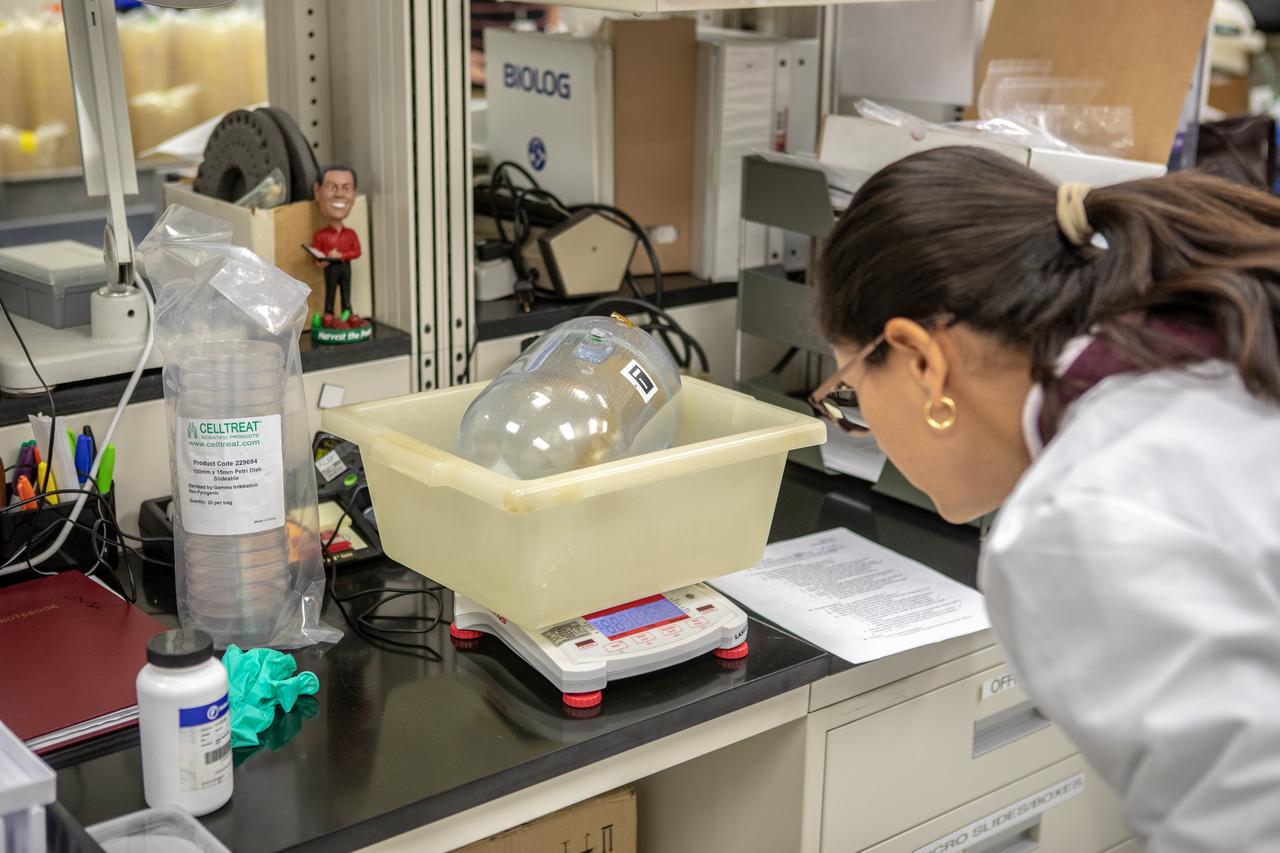
Kennedy Space Center’s Carolina Franco, Ph.D., weighs one of the water tanks, recently returned to the center after remaining on the International Space Station for the past five years, in the Florida spaceport’s Neil Armstrong Operations and Checkout Building on Nov. 13, 2019. Two tanks containing water were first sent to the orbiting laboratory in 2014 to study slosh, or the movement of water, in a zero-gravity environment to help engineers predict the movement of propellant in rocket tanks. Kennedy’s Air and Water Revitalization lab is studying the water tanks to determine if there is, or was, any microbial growth within them. The results will help NASA determine whether clean water can be stored in space for long-duration missions, an essential component to keeping astronauts safe and healthy as the agency prepares for missions to the Moon and beyond to Mars.
ISS Slosh Tank Experiment
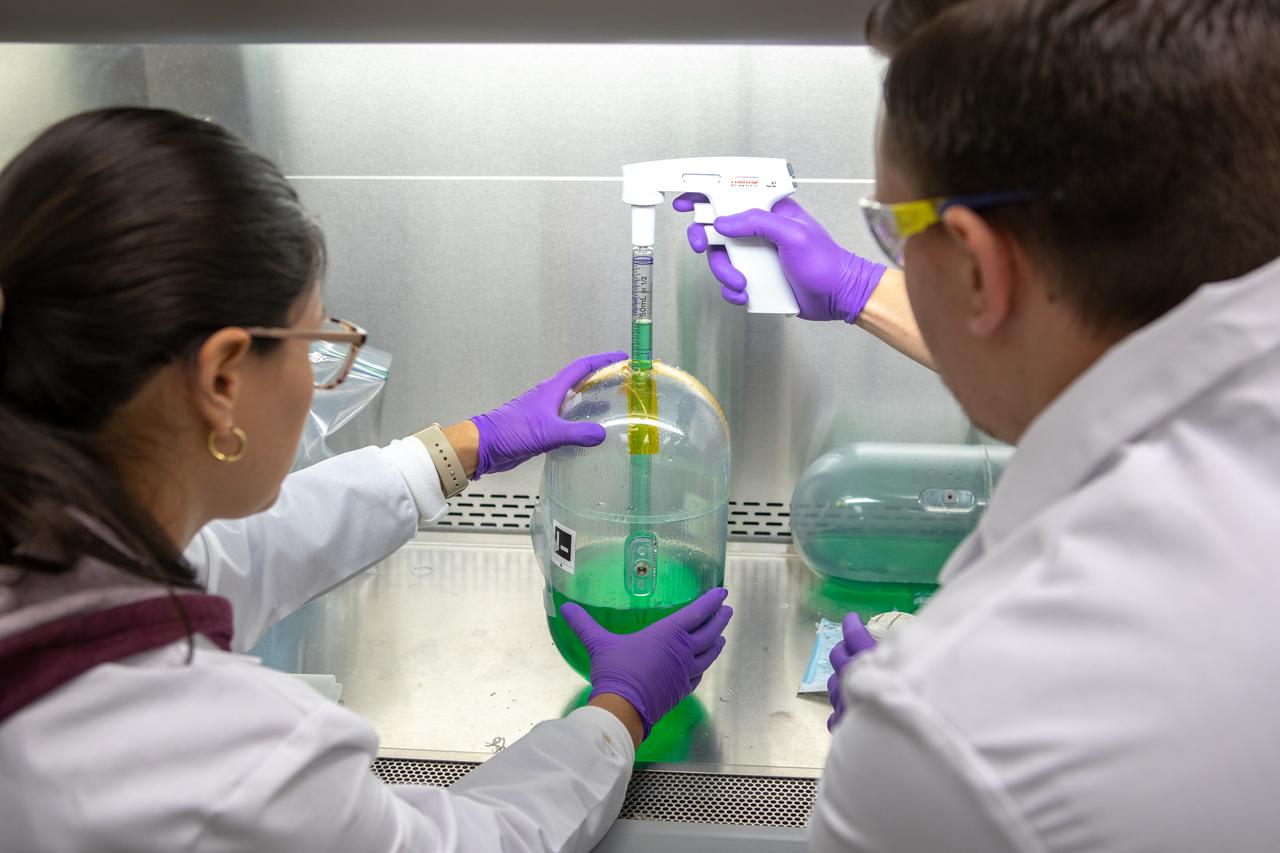
Kennedy Space Center’s Carolina Franco, Ph.D., left, and Jason Fischer collect samples from a water tank, filled with green dye, for a biological study in the Florida spaceport’s Neil Armstrong Operations and Checkout Building on Nov. 13, 2019. Two tanks have recently returned to Kennedy after spending the last five years on the International Space Station for an experiment to study slosh, or the movement of water, in a zero-gravity environment to help engineers predict the movement of propellant in rocket tanks. Kennedy’s Air and Water Revitalization lab is studying the water tanks to determine if there is, or was, any microbial growth within them. The results will help NASA determine whether clean water can be stored in space for long-duration missions, an essential component to keeping astronauts safe and healthy as the agency prepares for missions to the Moon and beyond to Mars.
ISS Slosh Tank Experiment
A Kennedy Space Center employee collects samples from a water tank, filled with green dye, for a biological study in the Florida spaceport’s Neil Armstrong Operations and Checkout Building on Nov. 13, 2019. Two tanks have recently returned to Kennedy after spending the last five years on the International Space Station for an experiment to study slosh, or the movement of water, in a zero-gravity environment to help engineers predict the movement of propellant in rocket tanks. With the slosh experiment now concluded, Kennedy’s Air and Water Revitalization lab is studying the water tanks to determine if there is, or was, any microbial growth within them. The results will help NASA determine whether clean water can be stored in space for long-duration missions, an essential component to keeping astronauts safe and healthy as the agency prepares for missions to the Moon and beyond to Mars.
ISS Slosh Tank Experiment
Kennedy Space Center’s Jason Fischer holds a sample of water in the Florida spaceport’s Neil Armstrong Operations and Checkout Building on Nov. 13, 2019. Two tanks of water have recently returned to Kennedy after spending the last five years on the International Space Station for an experiment to study slosh, or the movement of water, in a zero-gravity environment to help engineers predict the movement of propellant in rocket tanks. Kennedy’s Air and Water Revitalization lab is studying the water tanks to determine if there is, or was, any microbial growth within them. The results will help NASA determine whether clean water can be stored in space for long-duration missions, an essential component to keeping astronauts safe and healthy as the agency prepares for missions to the Moon and beyond to Mars.
ISS Slosh Tank Experiment
Kennedy Space Center’s Brint Bauer, left, and Carolina Franco, Ph.D., collect samples from a water tank, filled with green dye, for a biological study in the Florida spaceport’s Neil Armstrong Operations and Checkout Building on Nov. 13, 2019. Two tanks have recently returned to Kennedy after spending the last five years on the International Space Station for an experiment to study slosh, or the movement of water, in a zero-gravity environment to help engineers predict the movement of propellant in rocket tanks. Kennedy’s Air and Water Revitalization lab is studying the water tanks to determine if there is, or was, any microbial growth within them. The results will help NASA determine whether clean water can be stored in space for long-duration missions, an essential component to keeping astronauts safe and healthy as the agency prepares for missions to the Moon and beyond to Mars.
ISS Slosh Tank Experiment
Researchers from NASA’s Kennedy Space Center Air and Water Revitalization lab are studying two tanks, containing water with green dye, inside the Neil Armstrong Operations and Checkout Building in Florida on Nov. 13, 2019. The tanks have recently returned to Kennedy after remaining on the International Space Station for the past five years, originally sent to space to study slosh – the movement of water – in a zero-gravity environment to help engineers predict the movement of propellant in rocket tanks. With the slosh experiment now concluded, the tanks are being examined to determine if there is, or was, any microbial growth within them. The results will help NASA determine whether clean water can be stored in space for long-duration missions, an essential component to keeping astronauts safe and healthy as the agency prepares for missions to the Moon and beyond to Mars.
ISS Slosh Tank Experiment
Kennedy Space Center’s Jason Fischer collects samples from a water tank, filled with green dye, for a biological study in the Florida spaceport’s Neil Armstrong Operations and Checkout Building on Nov. 13, 2019. Two tanks have recently returned to Kennedy after spending the last five years on the International Space Station for an experiment to study slosh, or the movement of water, in a zero-gravity environment to help engineers predict the movement of propellant in rocket tanks. Kennedy’s Air and Water Revitalization lab is studying the water tanks to determine if there is, or was, any microbial growth within them. The results will help NASA determine whether clean water can be stored in space for long-duration missions, an essential component to keeping astronauts safe and healthy as the agency prepares for missions to the Moon and beyond to Mars.
ISS Slosh Tank Experiment
Kennedy Space Center’s Carolina Franco, Ph.D., collects samples from a water tank, filled with green dye, for a biological study in the Florida spaceport’s Neil Armstrong Operations and Checkout Building on Nov. 13, 2019. Two tanks have recently returned to Kennedy after spending the last five years on the International Space Station for an experiment to study slosh, or the movement of water, in a zero-gravity environment to help engineers predict the movement of propellant in rocket tanks. With the slosh experiment now concluded, Kennedy’s Air and Water Revitalization lab is studying the water tanks to determine if there is, or was, any microbial growth within them. The results will help NASA determine whether clean water can be stored in space for long-duration missions, an essential component to keeping astronauts safe and healthy as the agency prepares for missions to the Moon and beyond to Mars.
ISS Slosh Tank Experiment
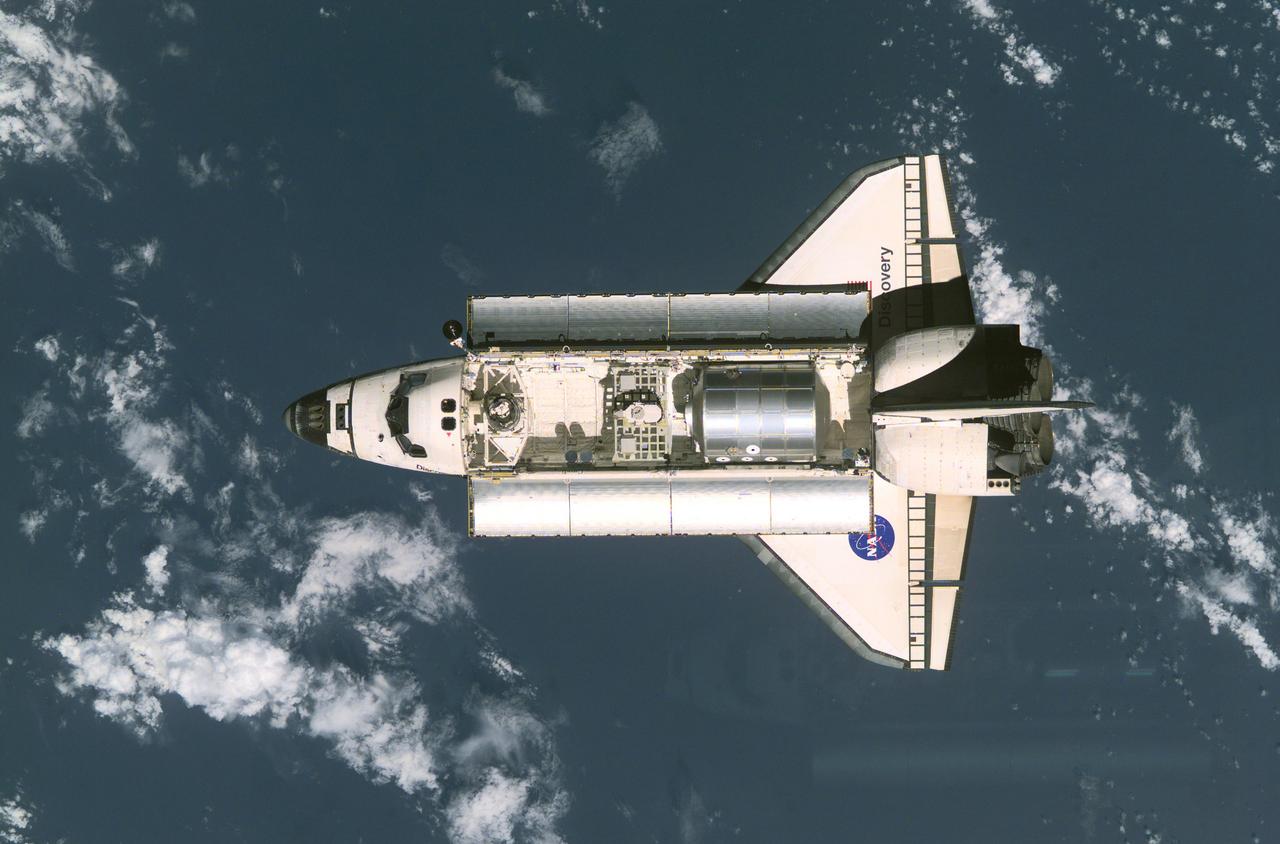
This image of the International Space Station (ISS) was photographed by one of the crewmembers of the STS-105 mission from the Shuttle Orbiter Discovery after separating from the ISS. The STS-105 mission was the 11th ISS assembly flight and its goals were the rotation of the ISS Expedition Two crew with Expedition Three crew, and the delivery of supplies utilizing the Italian-built Multipurpose Logistic Module (MPLM) Leonardo. Aboard Leonardo were six resupply stowage racks, four resupply stowage supply platforms, and two new scientific experiment racks, EXPRESS (Expedite the Processing of Experiments to the Space Station) Racks 4 and 5, which added science capabilities to the ISS. Another payload was the Materials International Space Station Experiment (MISSE), which included materials and other types of space exposure experiments mounted on the exterior of the ISS.
International Space Station (ISS)
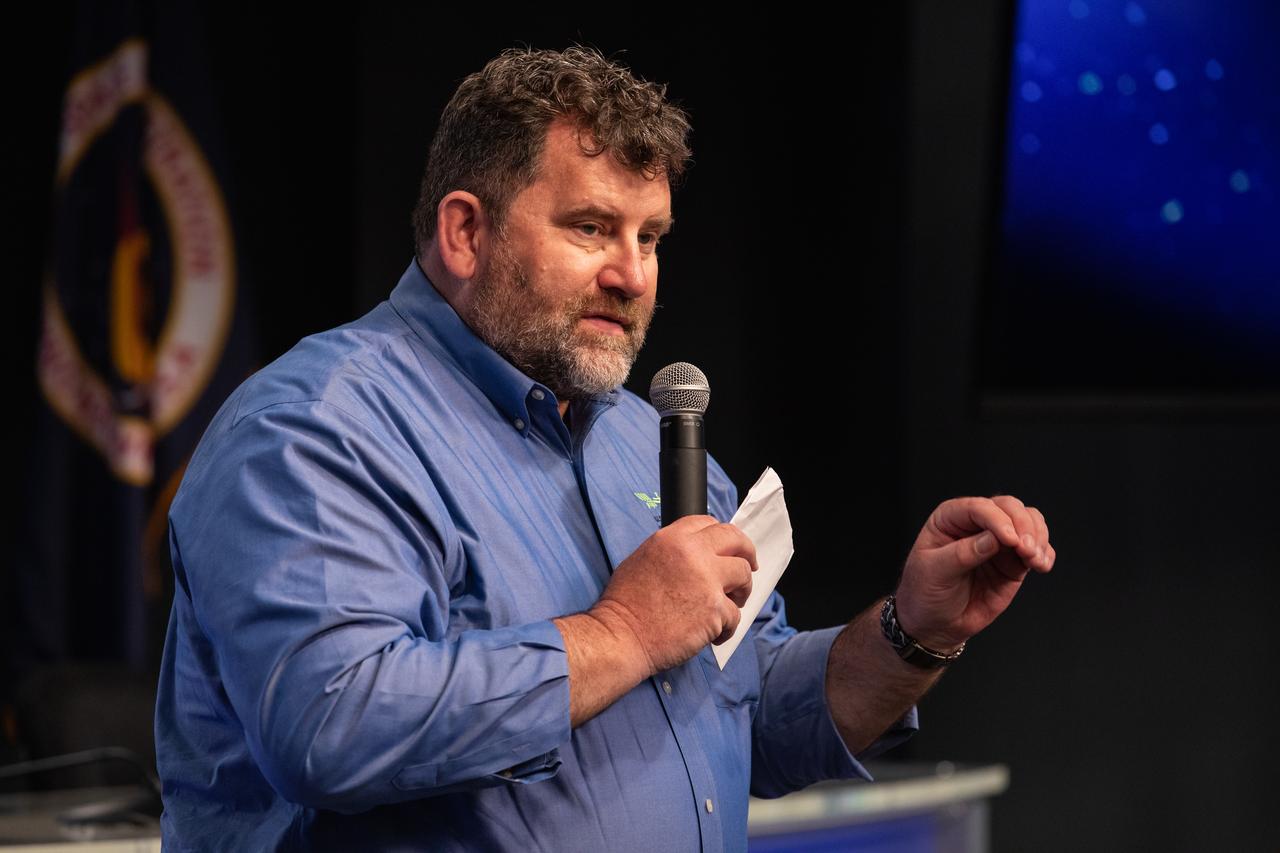
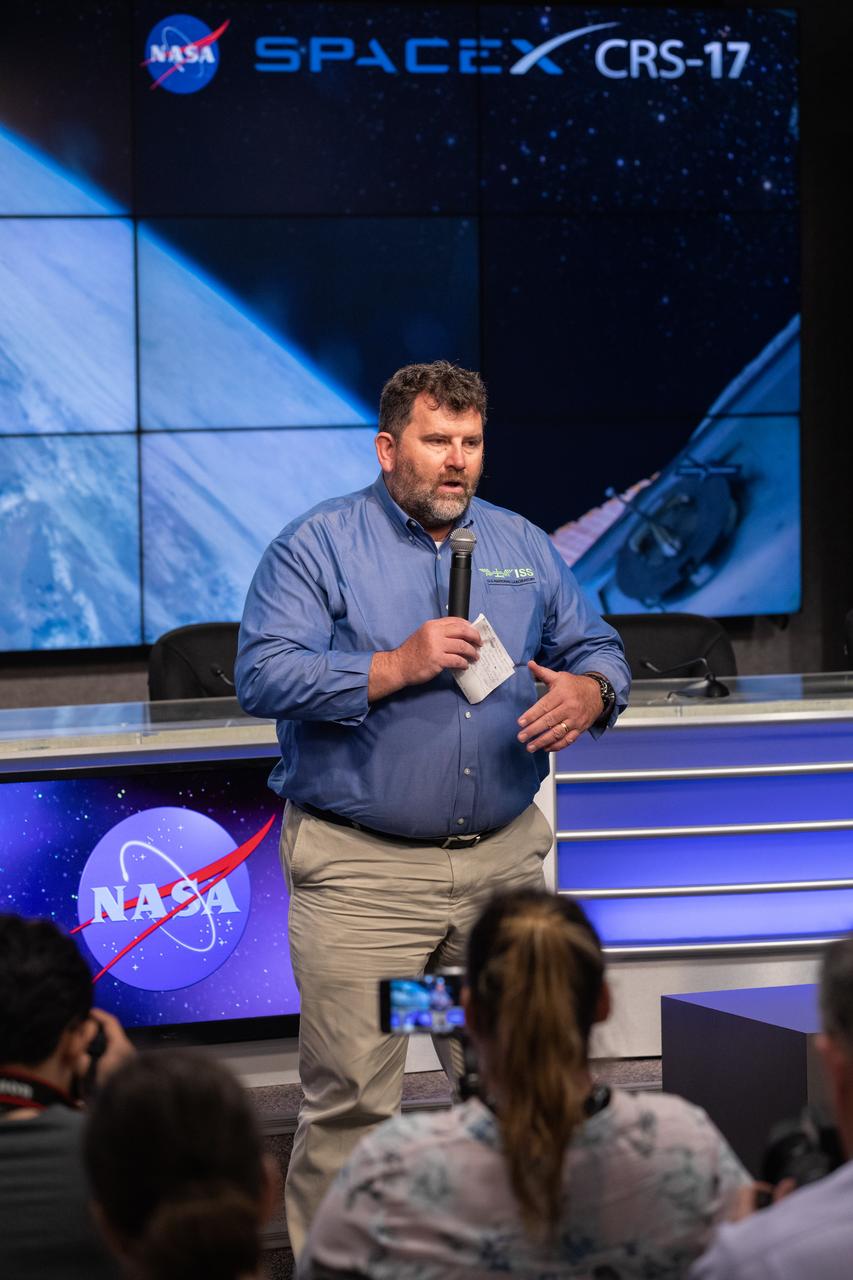
Mike Roberts, deputy chief scientist for the ISS Program at NASA’s Johnson Space Center in Houston, talks to NASA Social participants during a What’s On Board science briefing at the agency’s Kennedy Space Center in Florida on April 29, 2019. The briefing was held for SpaceX’s 17th Commercial Resupply Services (CRS-17) mission to the International Space Station. NASA’s Orbiting Carbon Observatory-3 (OCO-3) and Space Test Program-Houston 6 (STP-H6) are two of the experiments that will be delivered to the space station on CRS-17. The SpaceX Falcon 9 rocket and Dragon cargo module are scheduled to launch no earlier than May 3, 2019, from Space Launch Complex 40 on Cape Canaveral Air Force Station in Florida.
What's On Board Briefing
Mike Roberts, deputy chief scientist for the ISS Program at NASA’s Johnson Space Center in Houston, talks to NASA Social participants during a What’s On Board science briefing at the agency’s Kennedy Space Center in Florida on April 29, 2019. The briefing was held for SpaceX’s 17th Commercial Resupply Services (CRS-17) mission to the International Space Station. NASA’s Orbiting Carbon Observatory-3 (OCO-3) and Space Test Program-Houston 6 (STP-H6) are two of the experiments that will be delivered to the space station on CRS-17. The SpaceX Falcon 9 rocket and Dragon cargo module are scheduled to launch no earlier than May 3, 2019, from Space Launch Complex 40 on Cape Canaveral Air Force Station in Florida.
What's On Board Briefing
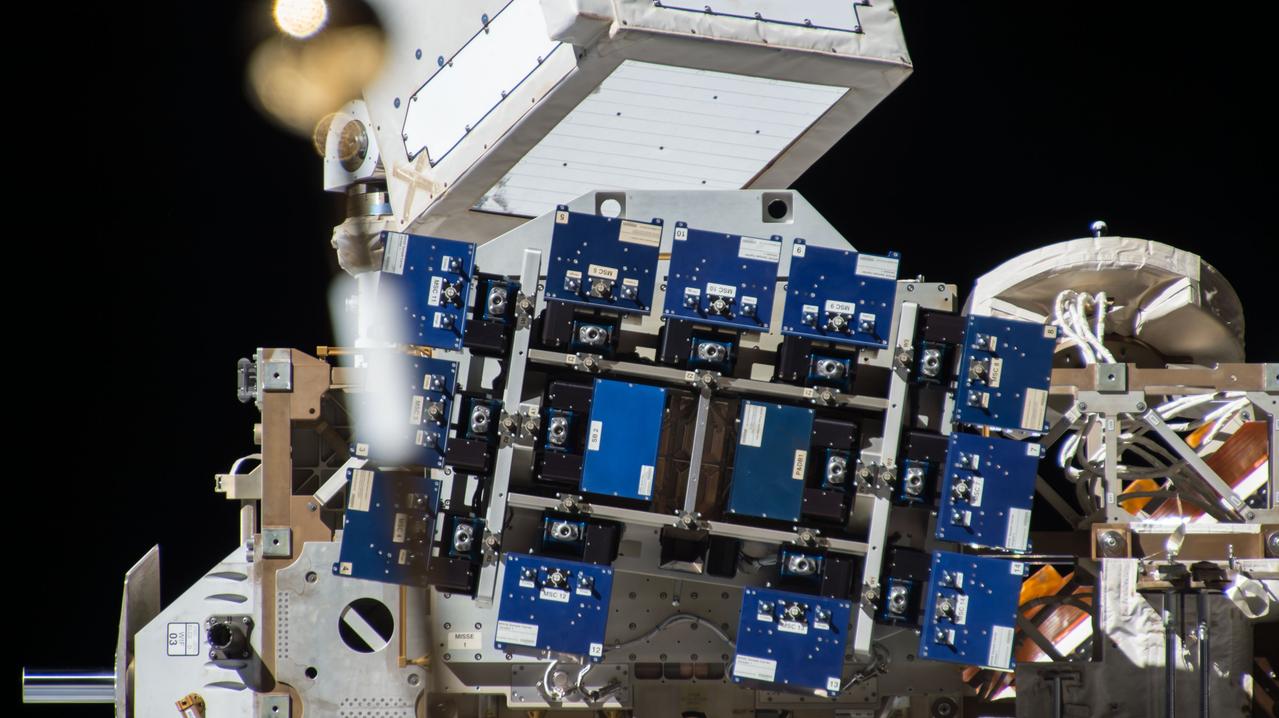
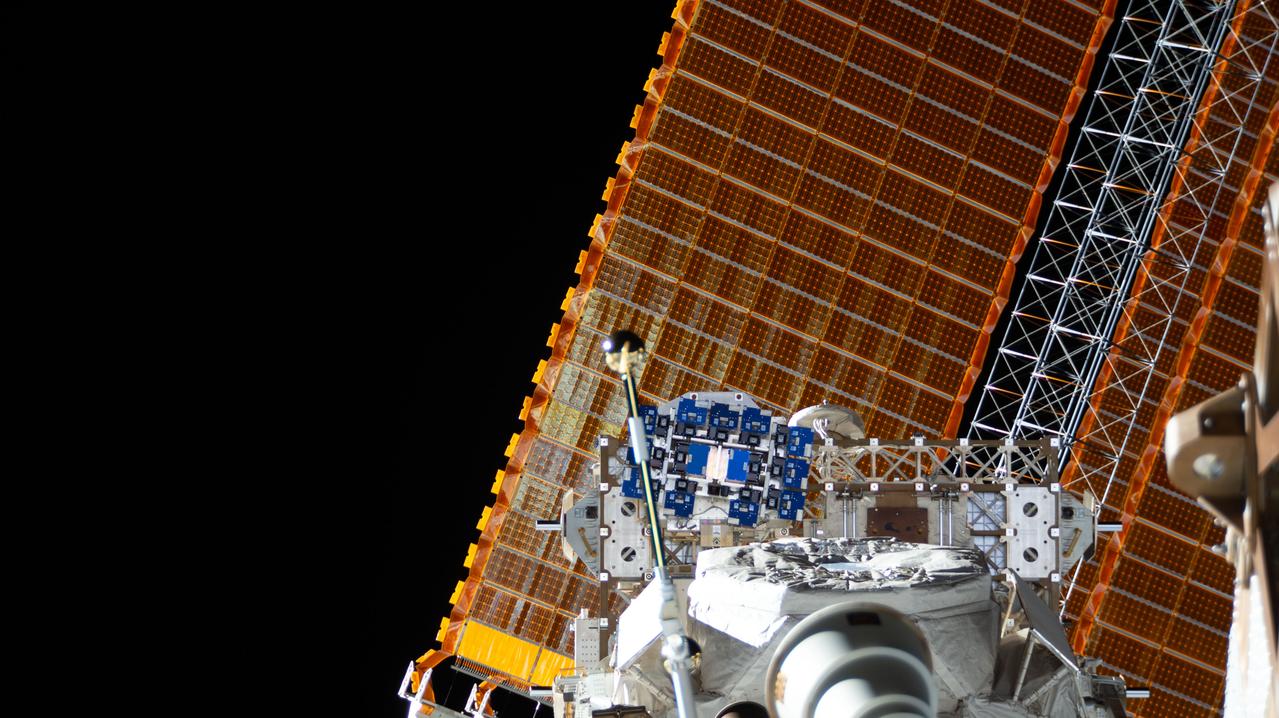
iss059e036747 (4/26/2019) --- --- Photo documentation of the Materials ISS Experiment Flight Facility (MISSE-FF) platform aboard the International Space Station (ISS).
iss059e036747
iss058e003972 (1/26/2019) --- Photo documentation of the Materials ISS Experiment Flight Facility (MISSE-FF) platform aboard the International Space Station (ISS).
MISSE-FF
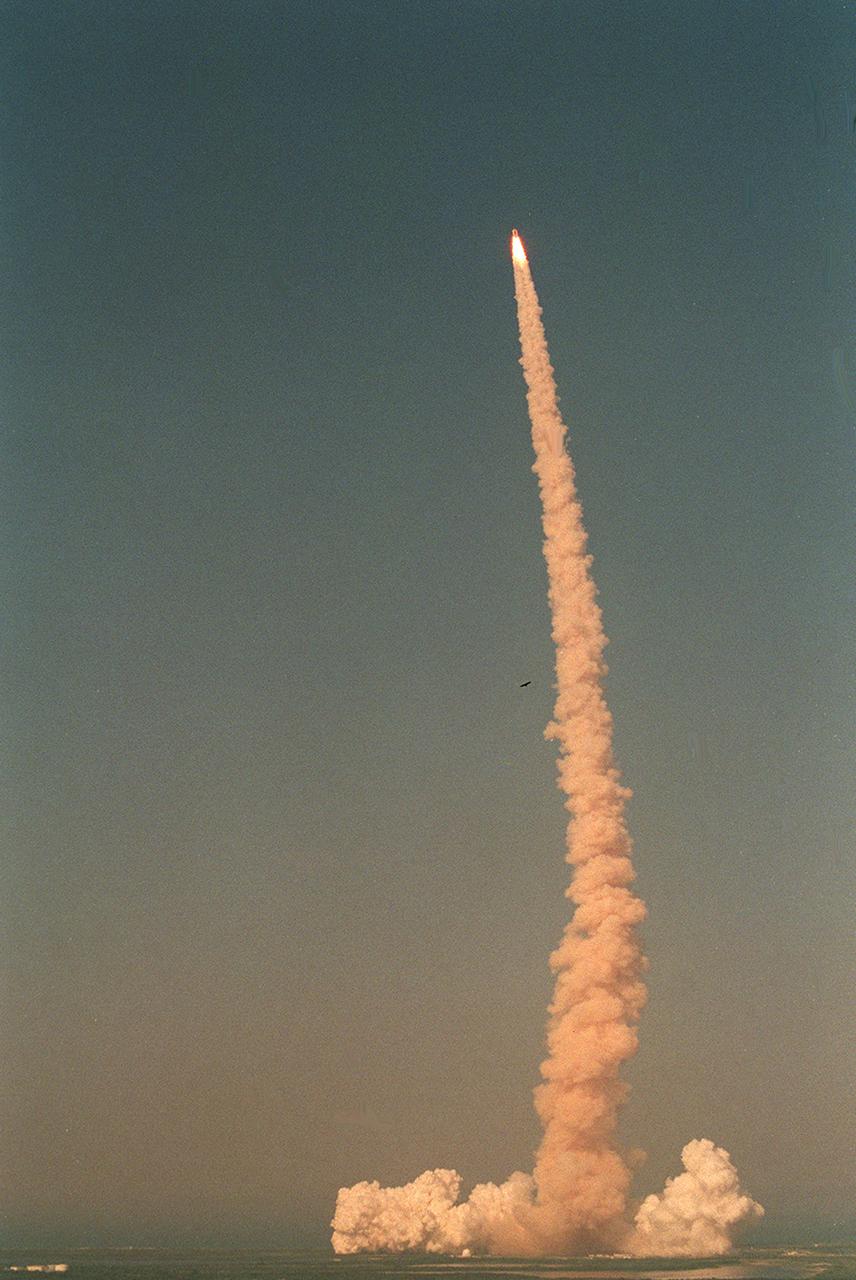
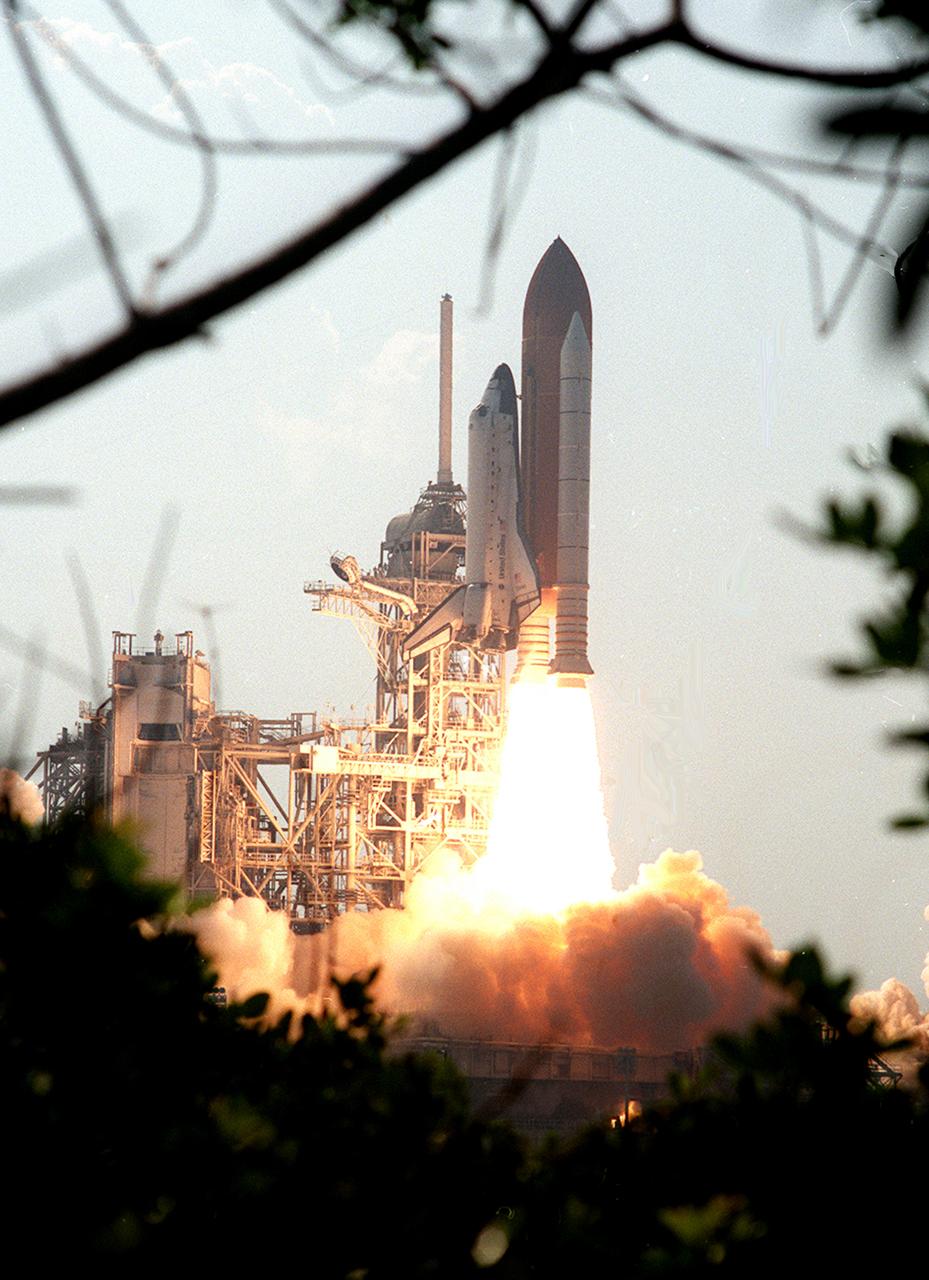
Space Shuttle Orbiter Discovery lifted off for the STS-105 mission on August 10, 2001. The main purpose of the mission was the rotation of the International Space Station (ISS) Expedition Two crew with the Expedition Three crew and the delivery of supplies utilizing the Italian-built Multipurpose Logistics Module (MPLM) Leonardo. Another payload was the Materials International Space Station Experiment (MISSE). The MISSE experiment was to fly materials and other types of space exposure experiments on the Space Station and was the first externally mounted experiment conducted on the ISS.
Space Shuttle Projects
Space Shuttle Orbiter Discovery lifted off for the STS-105 mission on August 10, 2001. The main purpose of the mission was the rotation of the International Space Station (ISS) Expedition Two crew with the Expedition Three crew, and the delivery of supplies utilizing the Italian-built Multipurpose Logistics Module (MPLM) Leonardo. Another payload was the Materials International Space Station Experiment (MISSE). The MISSE experiment was to fly materials and other types of space exposure experiments on the Space Station and was the first externally mounted experiment conducted on the ISS.
Space Shuttle Projects
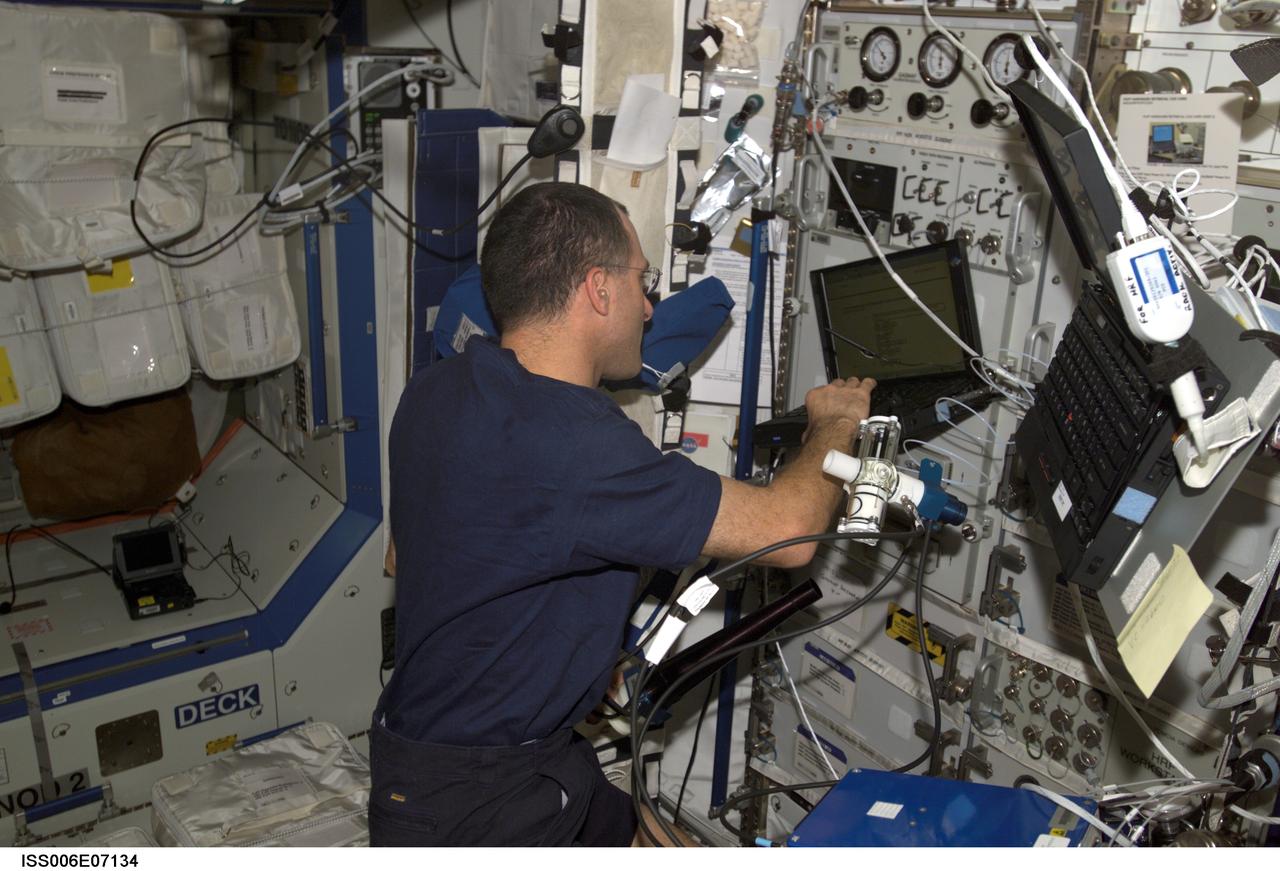
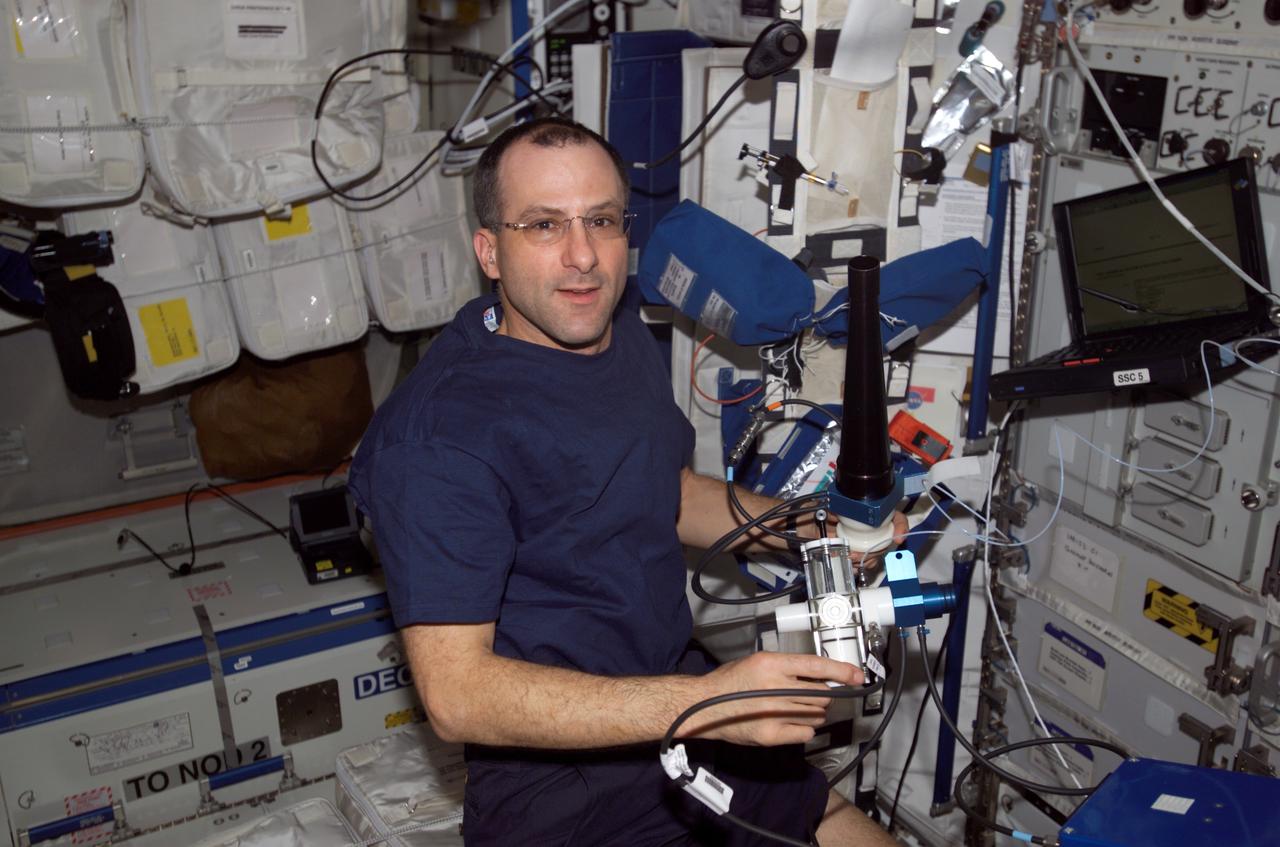
ISS006-E-07134 (9 December 2002) --- Astronaut Donald R. Pettit, Expedition Six NASA ISS science officer, works to set up Pulmonary Function in Flight (PuFF) hardware in preparation for a Human Research Facility (HRF) experiment in the Destiny laboratory on the International Space Station (ISS). Expedition Six is the fourth and final expedition crew to perform the HRF/PuFF Experiment on the ISS.
Expedition Six Flight Engineer Donald R. Pettit is loading software on PC in U.S. Lab
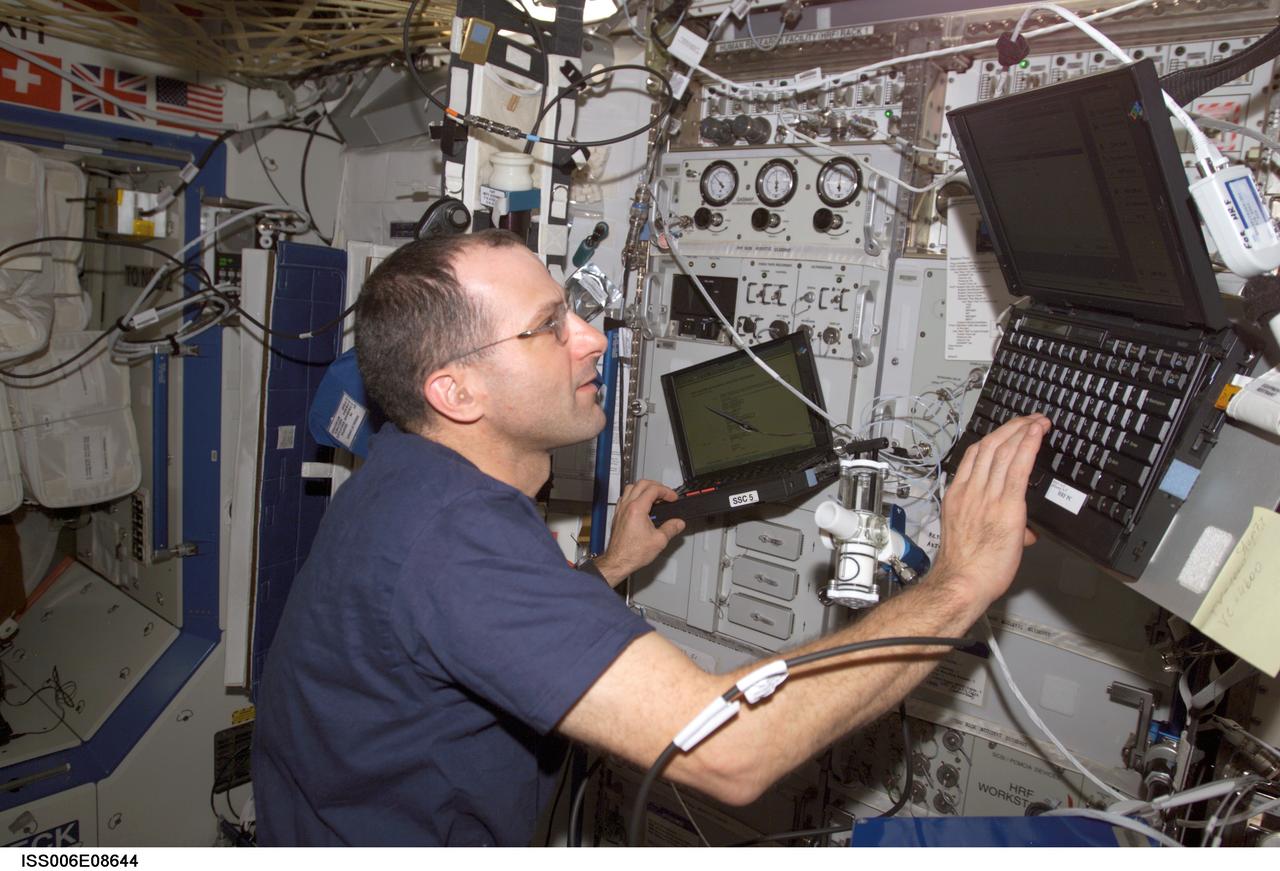
ISS006-E-08644 (9 December 2002) --- Astronaut Donald R. Pettit, Expedition Six NASA ISS science officer, works to set up Pulmonary Function in Flight (PuFF) hardware in preparation for a Human Research Facility (HRF) experiment in the Destiny laboratory on the International Space Station (ISS). Expedition Six is the fourth and final expedition crew to perform the HRF/PuFF Experiment on the ISS.
Expedition Six Flight Eng Donald R. Pettit is setting up the Pulmonary Function in Flight hardware
ISS006-E-07133 (9 December 2002) --- Astronaut Donald R. Pettit, Expedition 6 NASA ISS science officer, works to set up Pulmonary Function in Flight (PuFF) hardware in preparation for a Human Research Facility (HRF) experiment in the Destiny laboratory on the International Space Station (ISS). Expedition 6 is the fourth and final expedition crew to perform the HRF/PuFF Experiment on the ISS.
Expedition Six Flight Engineer Donald R. Pettit is loading software on PC in U.S. Lab
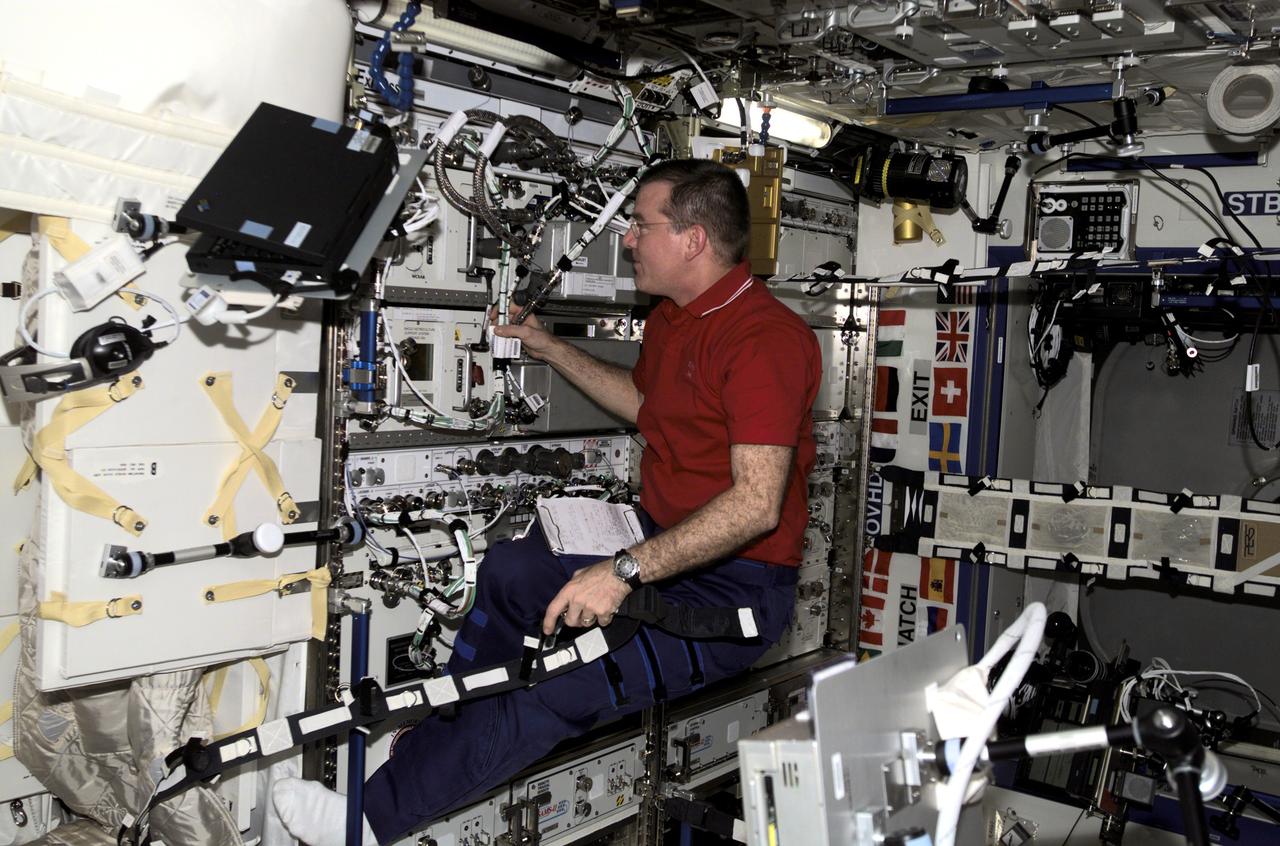
Astronaut James S. Voss, Expedition Two flight engineer, works with a series of cables on the EXPRESS Rack in the United State's Destiny laboratory on the International Space Station (ISS). The EXPRESS Rack is a standardized payload rack system that transports, stores, and supports experiments aboard the ISS. EXPRESS stands for EXpedite the PRocessing of Experiments to the Space Station, reflecting the fact that this system was developed specifically to maximize the Station's research capabilities. The EXPRESS Rack system supports science payloads in several disciplines, including biology, chemistry, physics, ecology, and medicine. With the EXPRESS Rack, getting experiments to space has never been easier or more affordable. With its standardized hardware interfaces and streamlined approach, the EXPRESS Rack enables quick, simple integration of multiple payloads aboard the ISS. The system is comprised of elements that remain on the ISS, as well as elements that travel back and forth between the ISS and Earth via the Space Shuttle.
International Space Station (ISS)
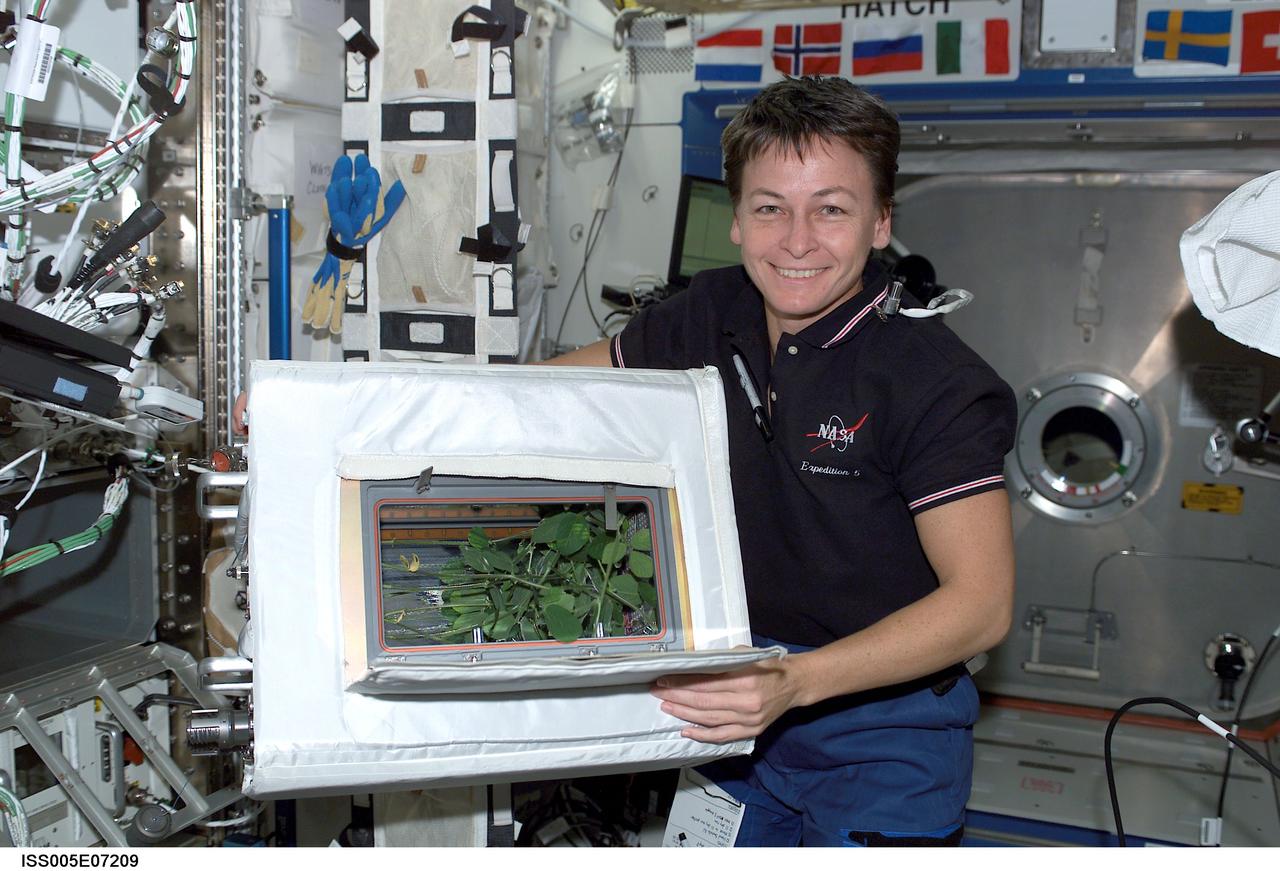
ISS005-E-07209 (10 July 2002) --- Astronaut Peggy A. Whitson, Expedition Five NASA ISS science officer, holds the Advanced Astroculture soybean plant growth experiment in the Destiny laboratory on the International Space Station (ISS).
Whitson holds the ADVASC Soybean plant growth experiment in the U.S. Laboratory
An artist's concept of a fully deployed International Space Station (ISS) Alpha. The ISS-A is a multidisciplinary laboratory, technology test bed, and observatory that will provide an unprecedented undertaking in scientific, technological, and international experiments.
International Space Station (ISS)
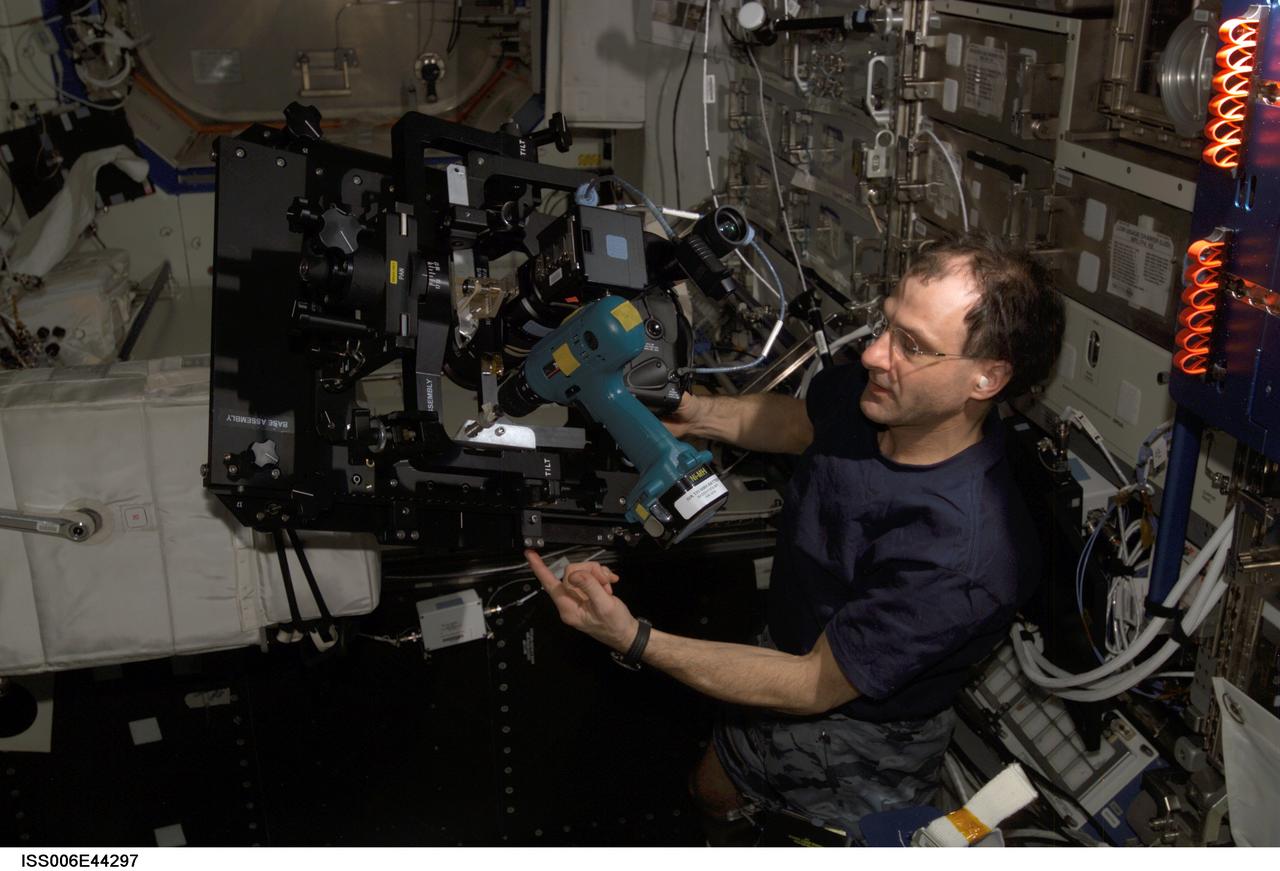
ISS006-E-44297 (5 April 2003) --- Astronaut Donald R. Pettit, Expedition Six NASA ISS science officer, prepares to deploy an observation experiment in the nadir window in the Destiny laboratory on the International Space Station (ISS).
Pettit looks through a spotting scope and runs a drill at the same time in the U.S. Laboratory
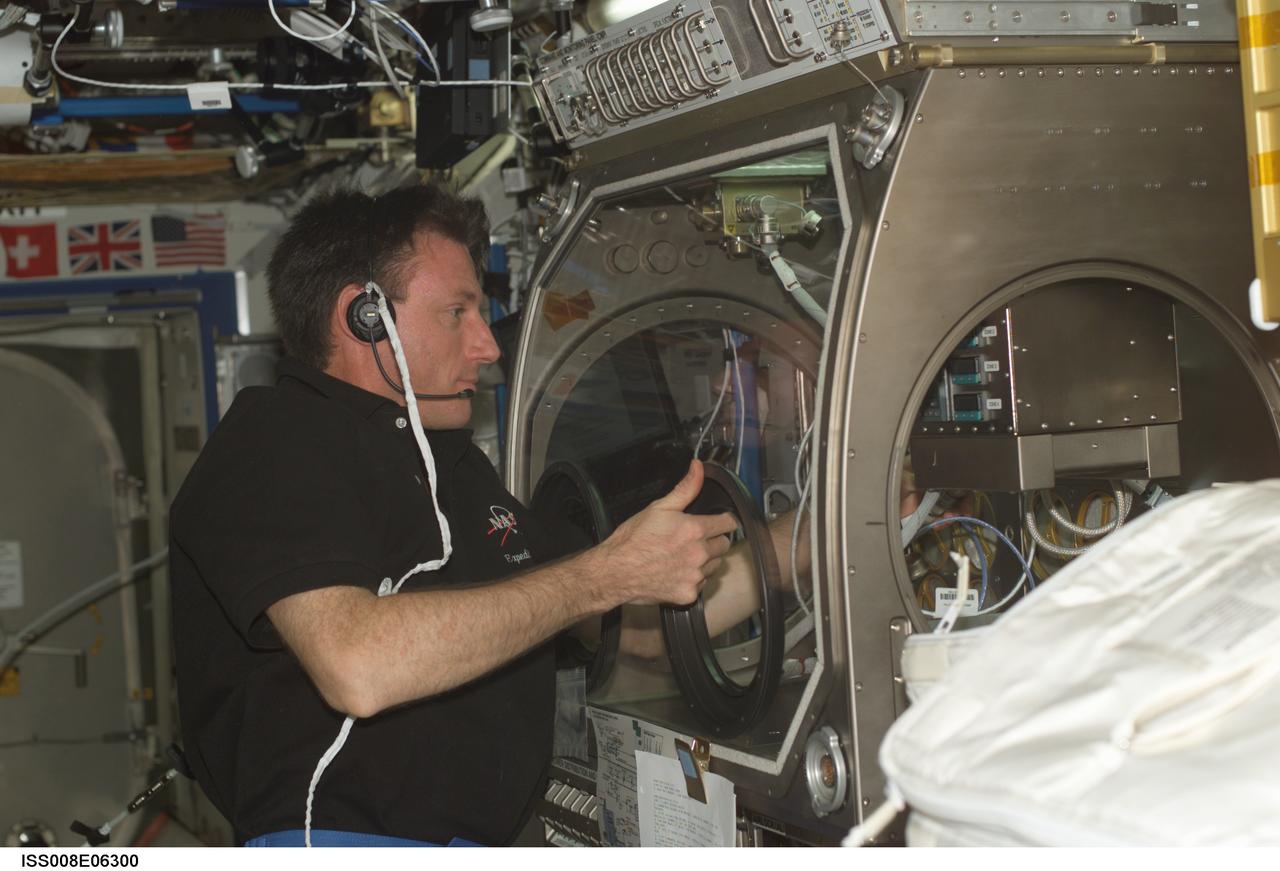
ISS008-E-06300 (28 November 2003) --- Astronaut C. Michael Foale, Expedition 8 mission commander and NASA ISS science officer, installs equipment in the Microgravity Science Glovebox (MSG) for the Pore Formation and Mobility Investigation (PFMI) experiment in the Destiny laboratory on the International Space Station (ISS). This experiment studies how bubbles form in metal and crystal samples, thus deteriorating the samples’ strength and usefulness in experiments.
Foale conducts MSG setup for PFMI experiment in U.S. Lab during Expedition 8
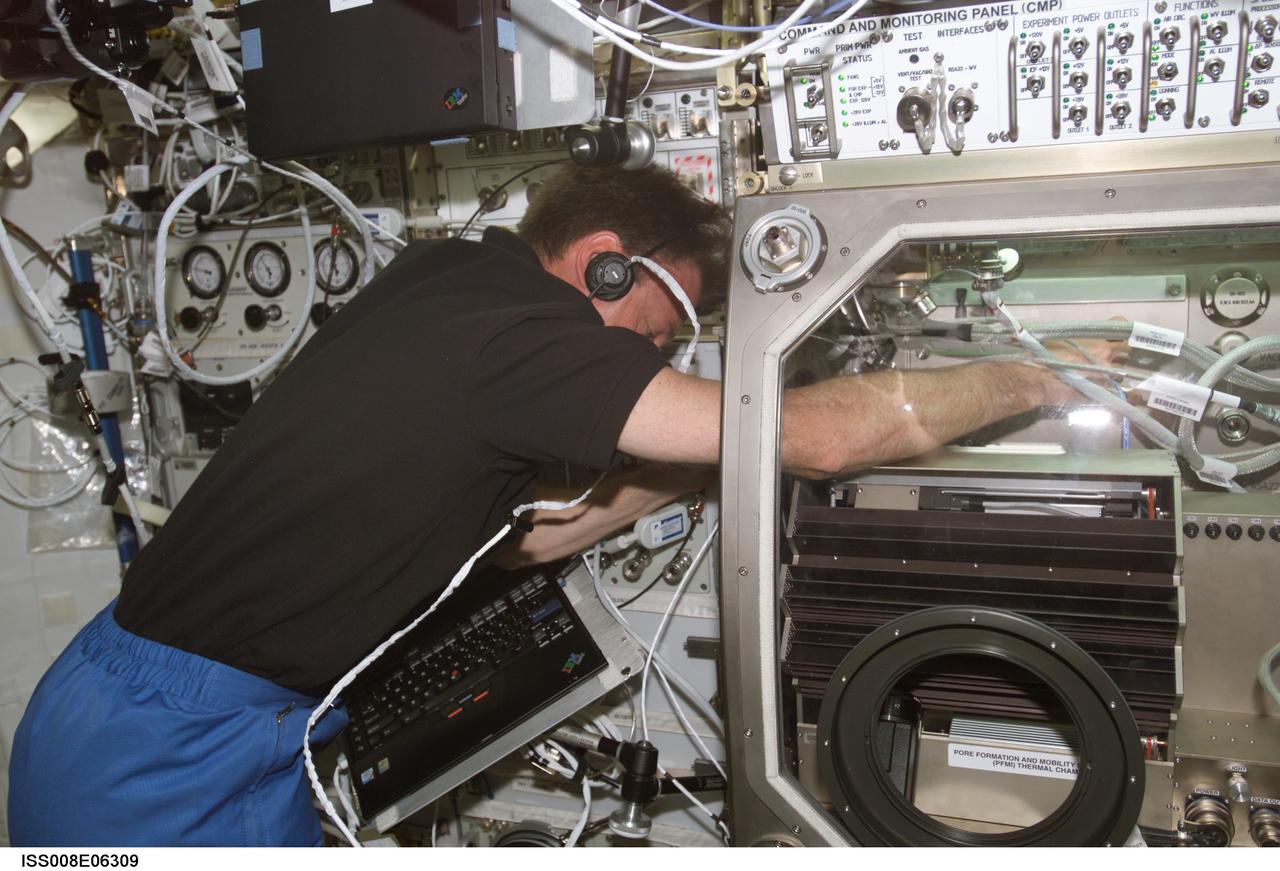
ISS008-E-06309 (28 November 2003) --- Astronaut C. Michael Foale, Expedition 8 mission commander and NASA ISS science officer, installs equipment in the Microgravity Science Glovebox (MSG) for the Pore Formation and Mobility Investigation (PFMI) experiment in the Destiny laboratory on the International Space Station (ISS). This experiment studies how bubbles form in metal and crystal samples, thus deteriorating the samples’ strength and usefulness in experiments.
Foale conducts MSG setup for PFMI experiment in U.S. Lab during Expedition 8
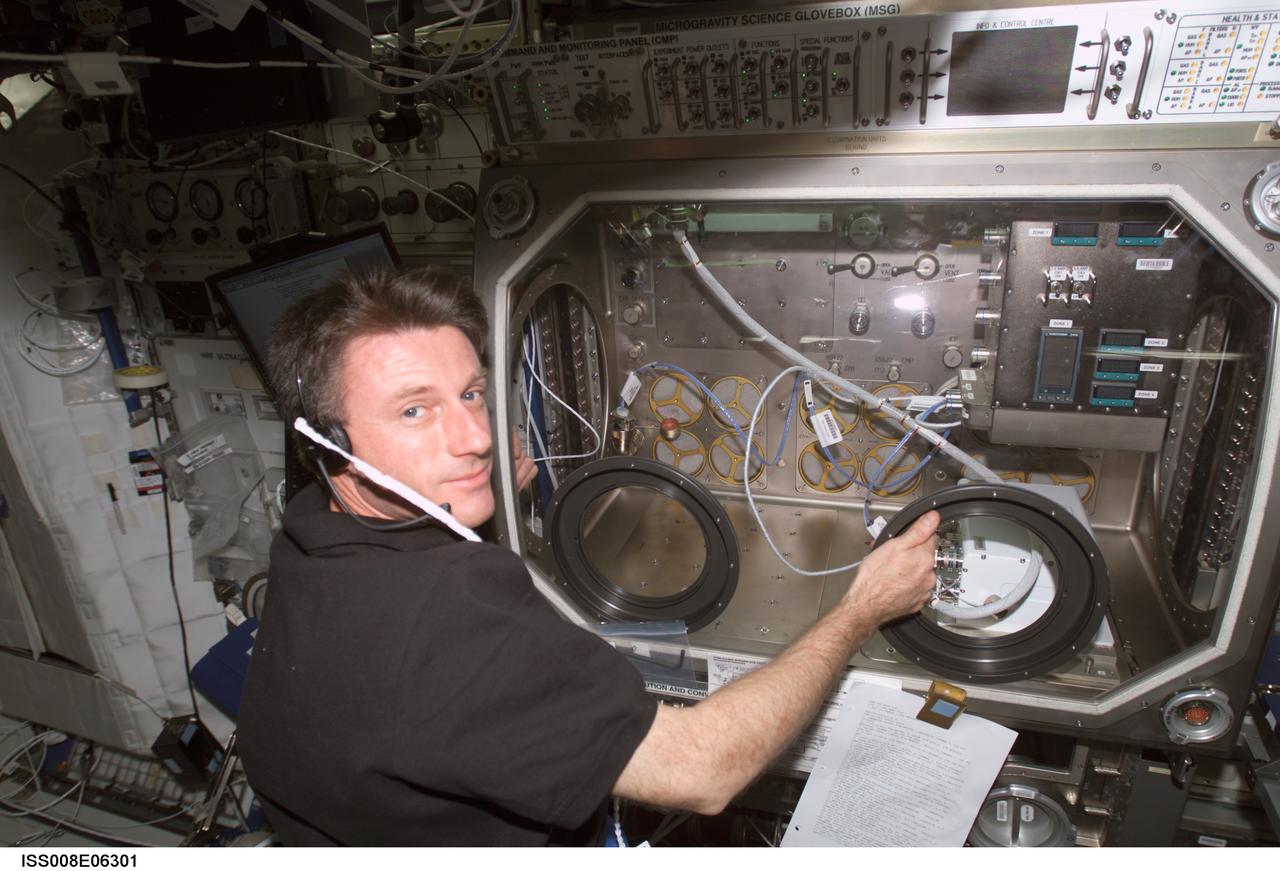
ISS008-E-06301 (28 November 2003) --- Astronaut C. Michael Foale, Expedition 8 mission commander and NASA ISS science officer, installs equipment in the Microgravity Science Glovebox (MSG) for the Pore Formation and Mobility Investigation (PFMI) experiment in the Destiny laboratory on the International Space Station (ISS). This experiment studies how bubbles form in metal and crystal samples, thus deteriorating the samples’ strength and usefulness in experiments.
Foale conducts MSG setup for PFMI experiment in U.S. Lab during Expedition 8
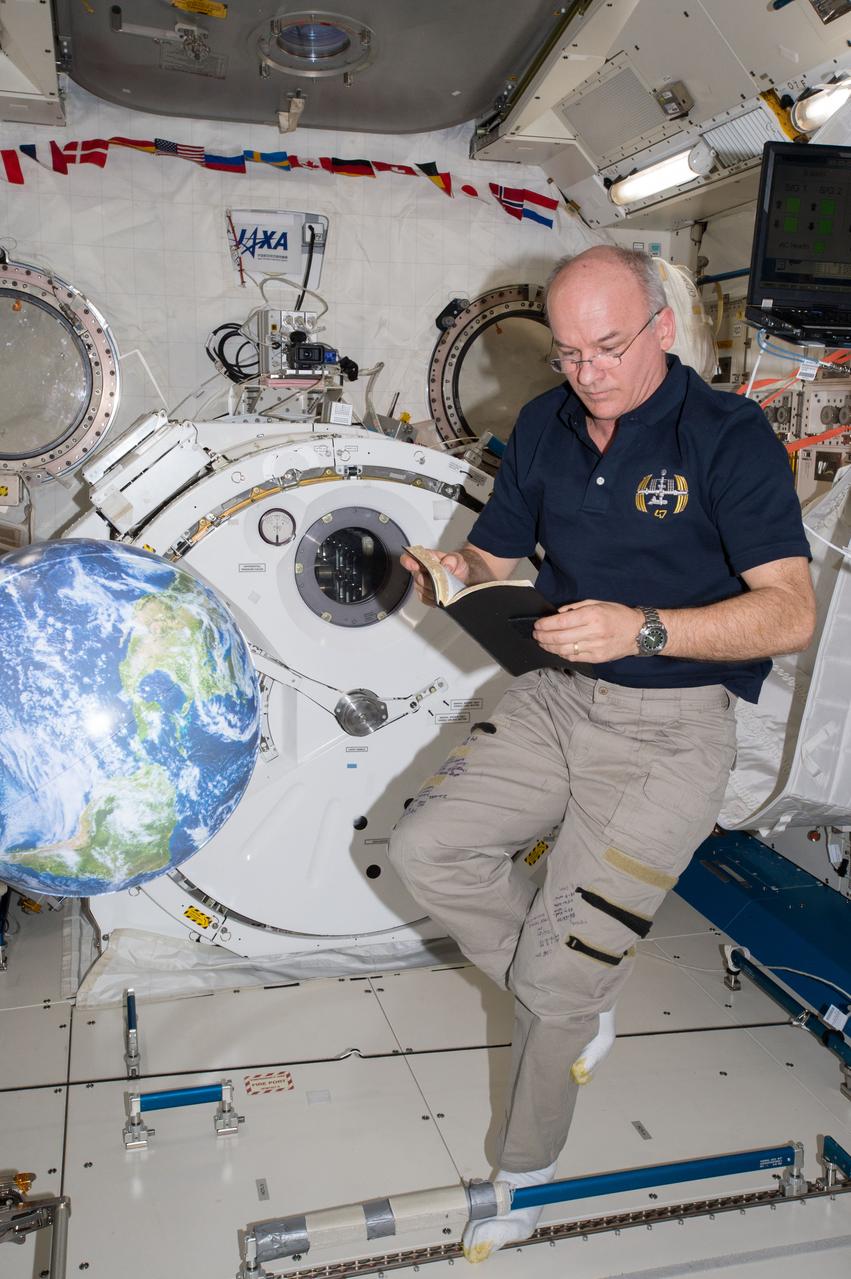
iss047e142189 (6/6/2016) --- NASA astronaut Jeff Williams reading a book in the Japanese Experiment Module (JEM) Pressurized Module (JPM) aboard the International Space Station (ISS) during At Home in Space. This photo was taken to capture the International Space Station (ISS) culture, which includes anything that makes the ISS your home.
At Home in Space
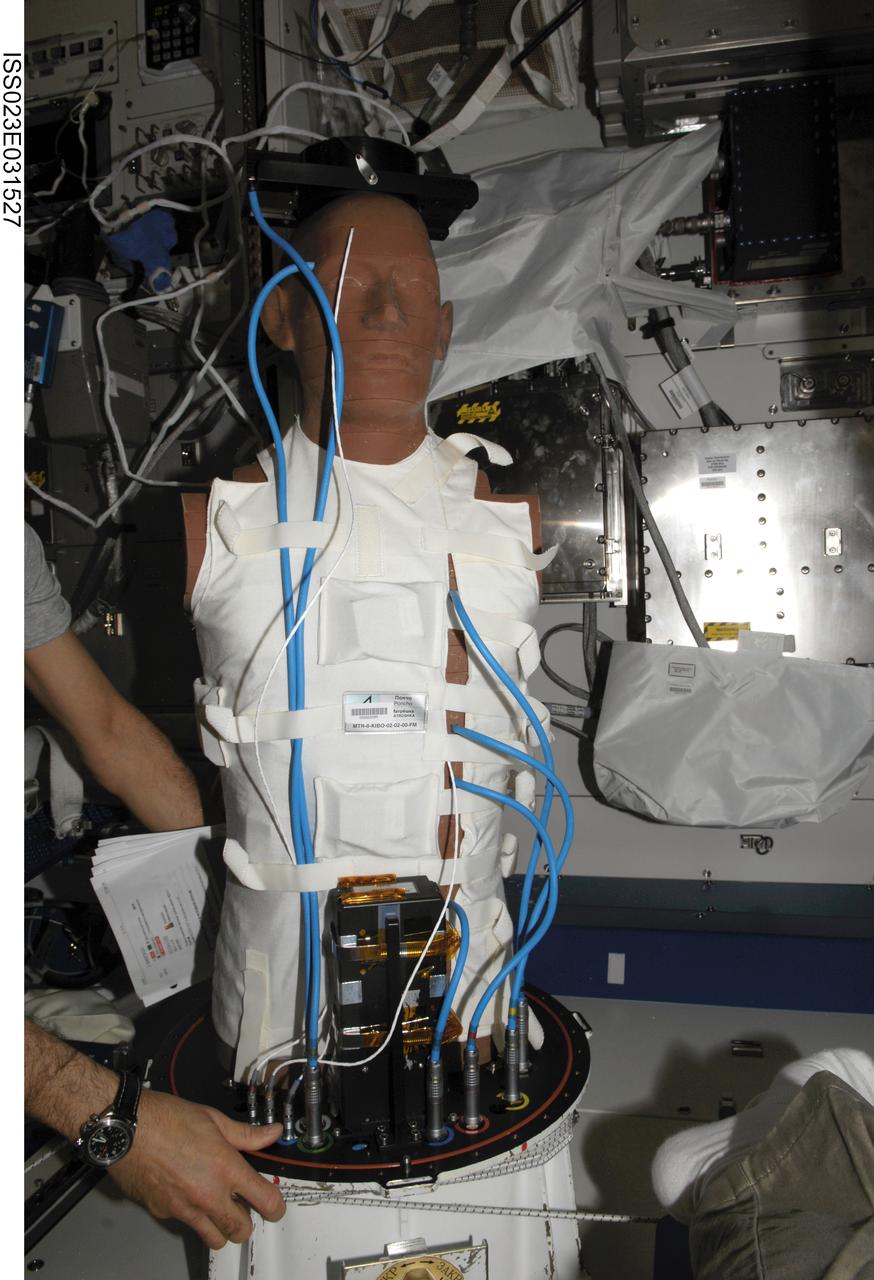
iss023e031527 (5/4/2010) --- A view of the anthropomorphic Phantom for the Matroshka-2 Kibo experiment installed at location JPM1F2 in the Kibo Japanese Experiment Pressurized Module (JPM) aboard the International Space Station (ISS).
Matroshka-2 Kibo Hardware
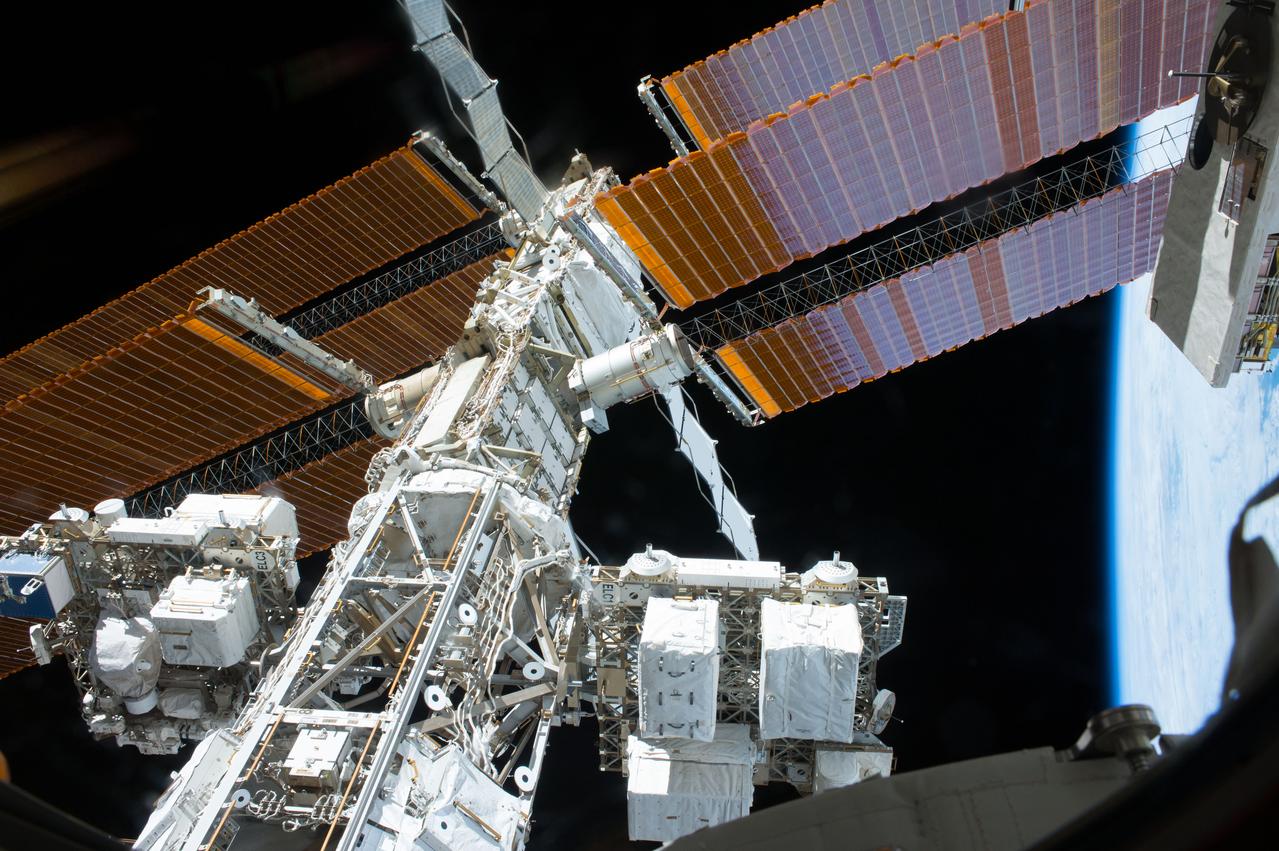
View of the ISS port Truss segments taken through a window in the Kibo Japanese Experiment Pressurized Module (JPM). ExPRESS (Expedite the Processing of Experiments to Space Station) Logistics Carrier-3 (ELC-3) and ELC-1 are in view.
View of the ISS Port Truss
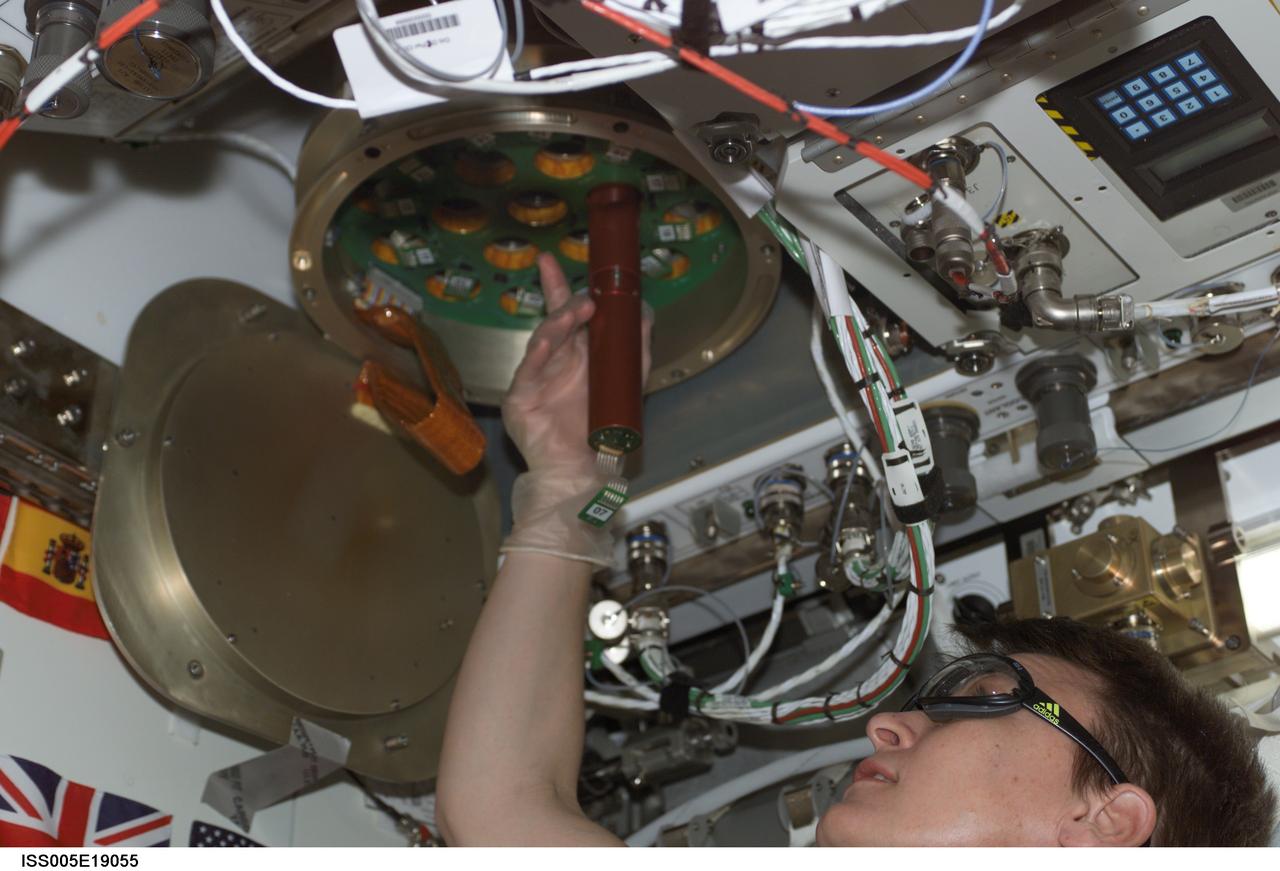
ISS005-E-19055 (29 October 2002) --- Astronaut Peggy A. Whitson, Expedition Five flight engineer, inserts an experiment cartridge in the autoclave for the Zeolite Crystal Growth (ZCG) experiment in Destiny laboratory on the International Space Station (ISS).
Whitson places cartridge into the ZCG experiment in the U.S. Laboratory
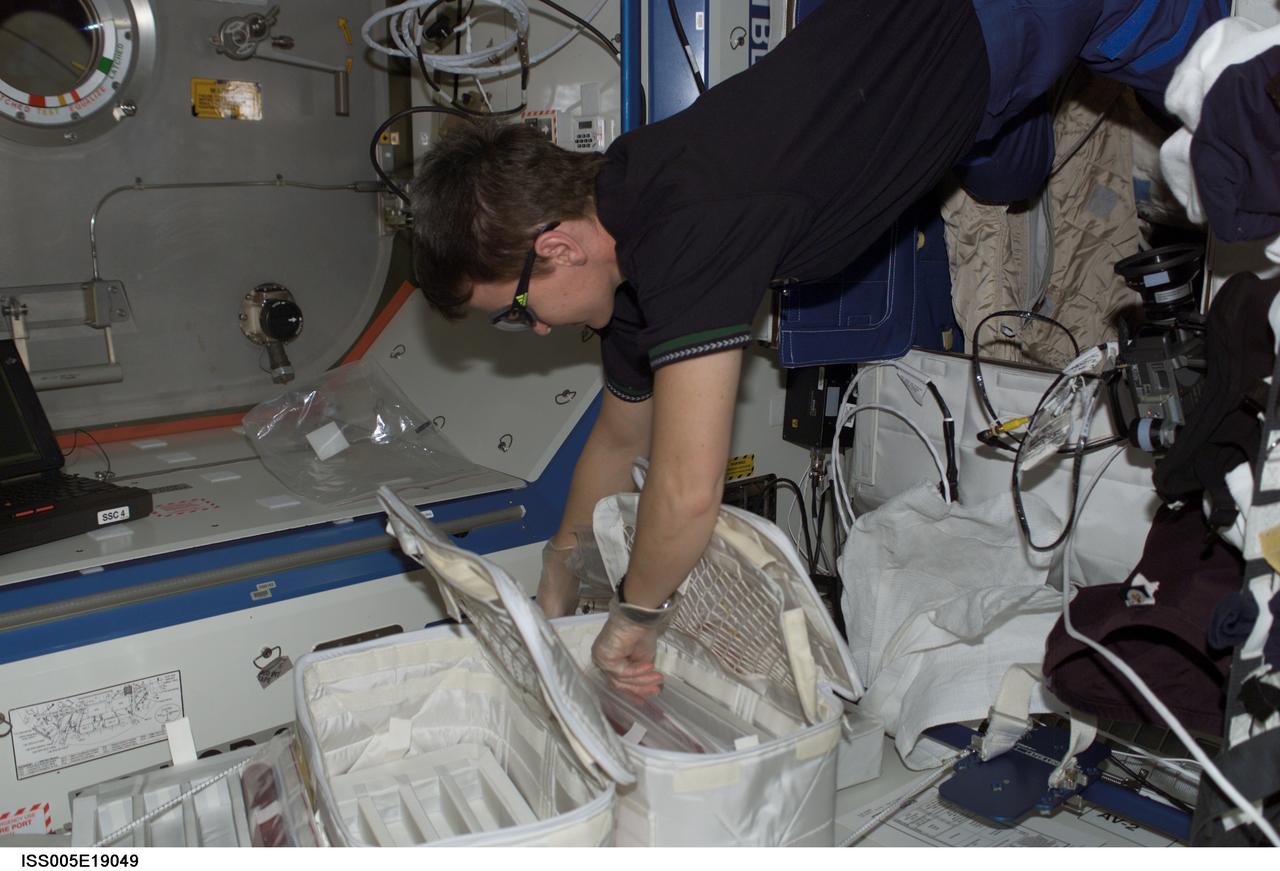
ISS005-E-19049 (29 October 2002) --- Astronaut Peggy A. Whitson, Expedition Five flight engineer, retrieves an experiment cartridge for the Zeolite Crystal Growth (ZCG) experiment in Destiny laboratory on the International Space Station (ISS).
Whitson retrieves an experiment cartridge for the ZCG experiment in the U.S. Laboratory
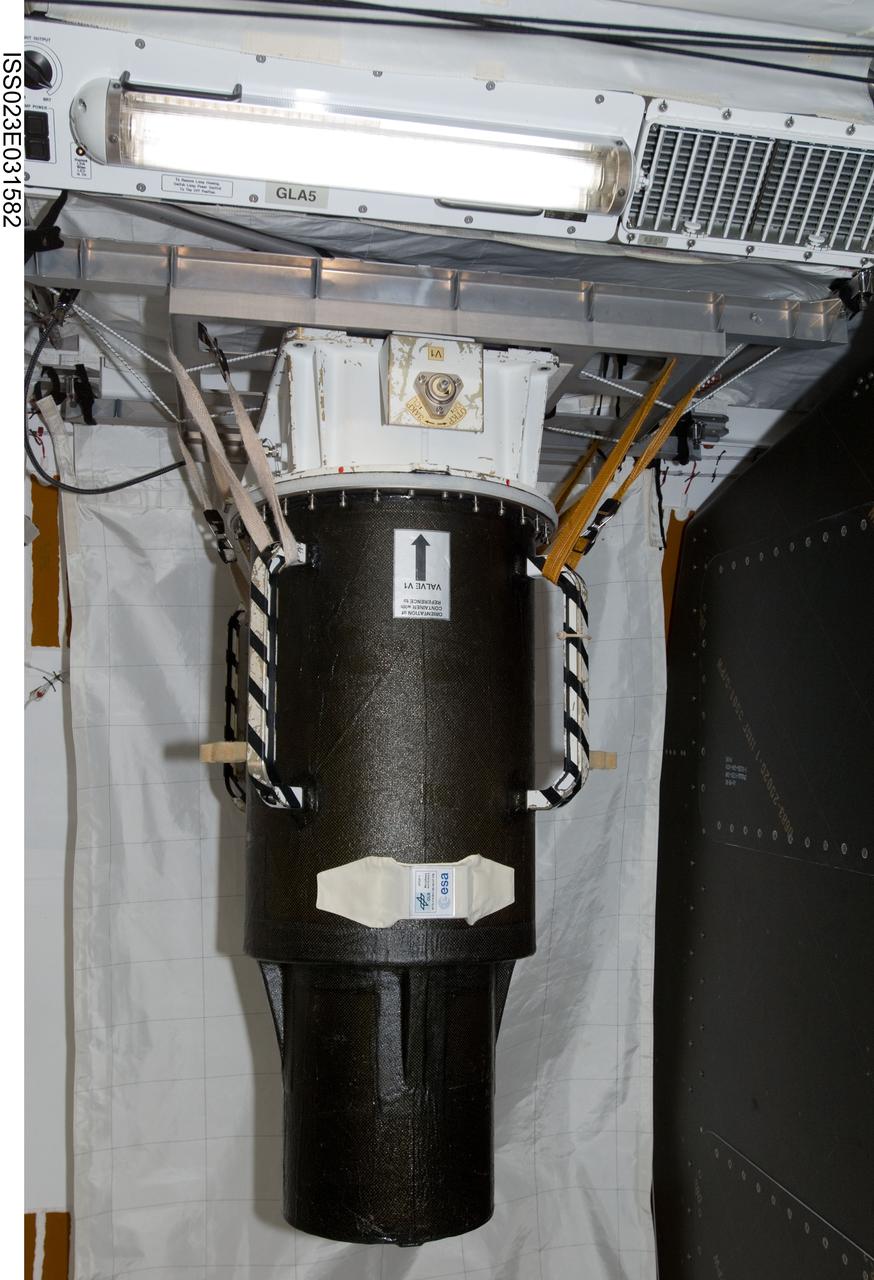
iss023e031582 (5/4/2010) --- A view of the anthropomorphic Phantom for the Matroshka-2 Kibo experiment installed at location JPM1F2 in the Kibo Japanese Experiment Pressurized Module (JPM) aboard the International Space Station (ISS).
Matroshka-2 Kibo Hardware Installed in Kibo
This is a view of the Space Shuttle Discovery as it approaches the International Space Station (ISS) during the STS-105 mission. Visible in the payload bay of Discovery are the Multipurpose Logistics Module (MPLM) Leonardo at right, which stores various supplies and experiments to be transferred into the ISS; at center, the Integrated Cargo Carrier (ICC) which carries the Early Ammonia Servicer (EAS); and two Materials International Space Station Experiment (MISSE) containers at left. Aboard Discovery were the ISS Expedition Three crew, who were to replace the Expedition Two crew that had been living on the ISS for the past five months.
Space Shuttle Projects
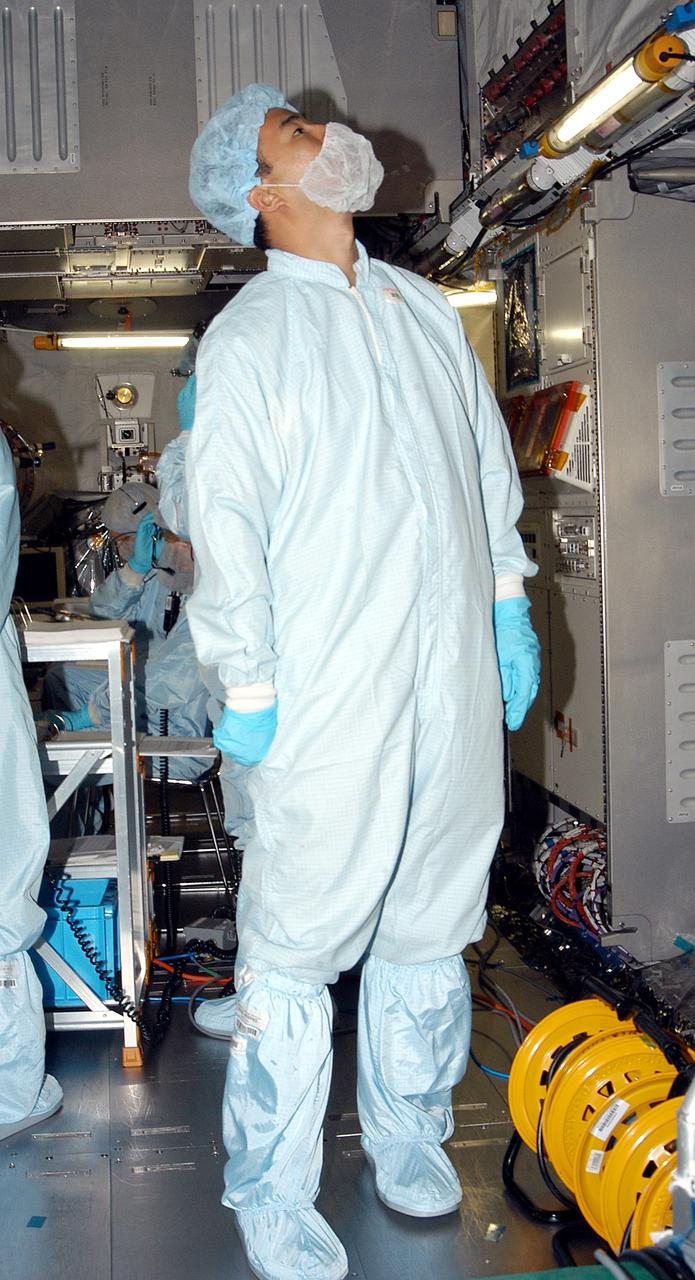
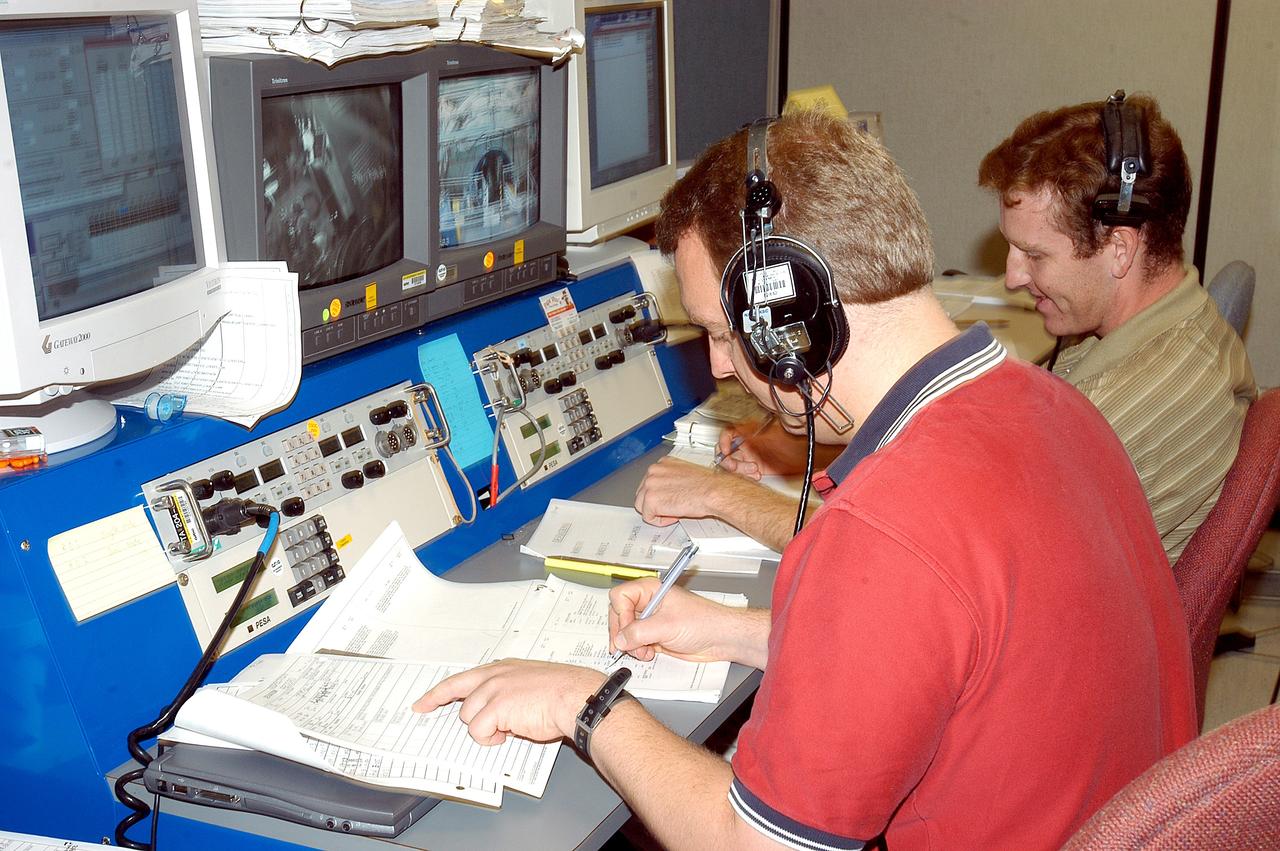
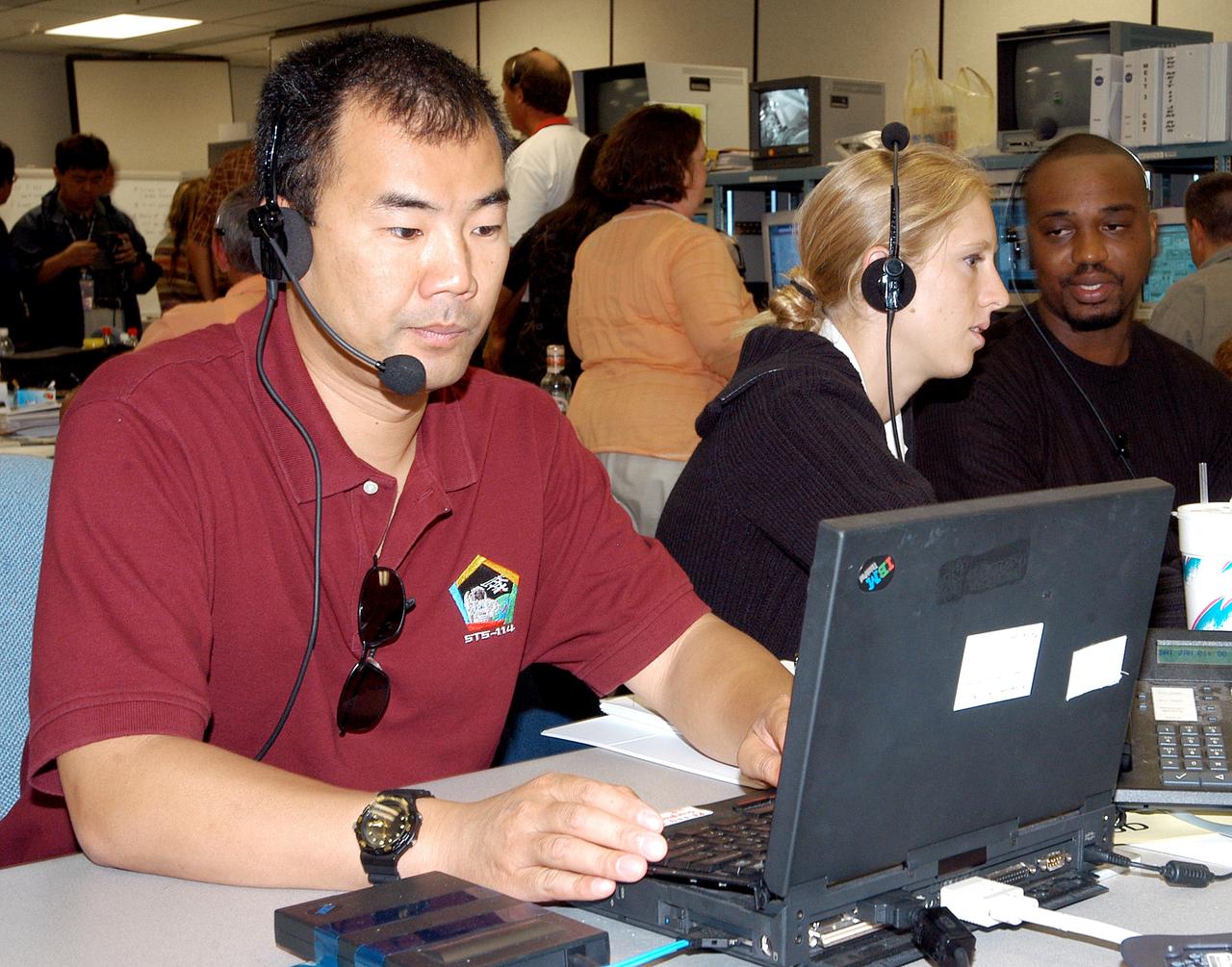
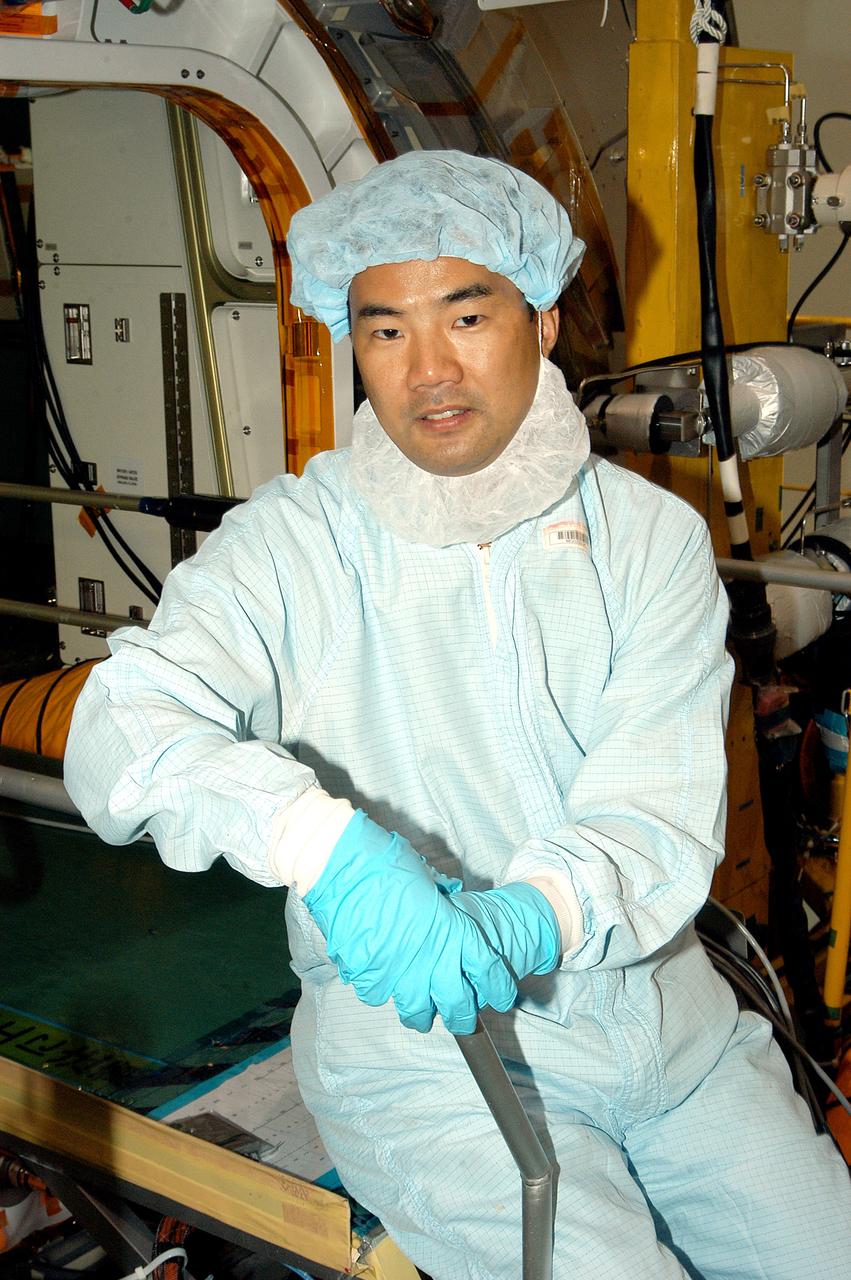
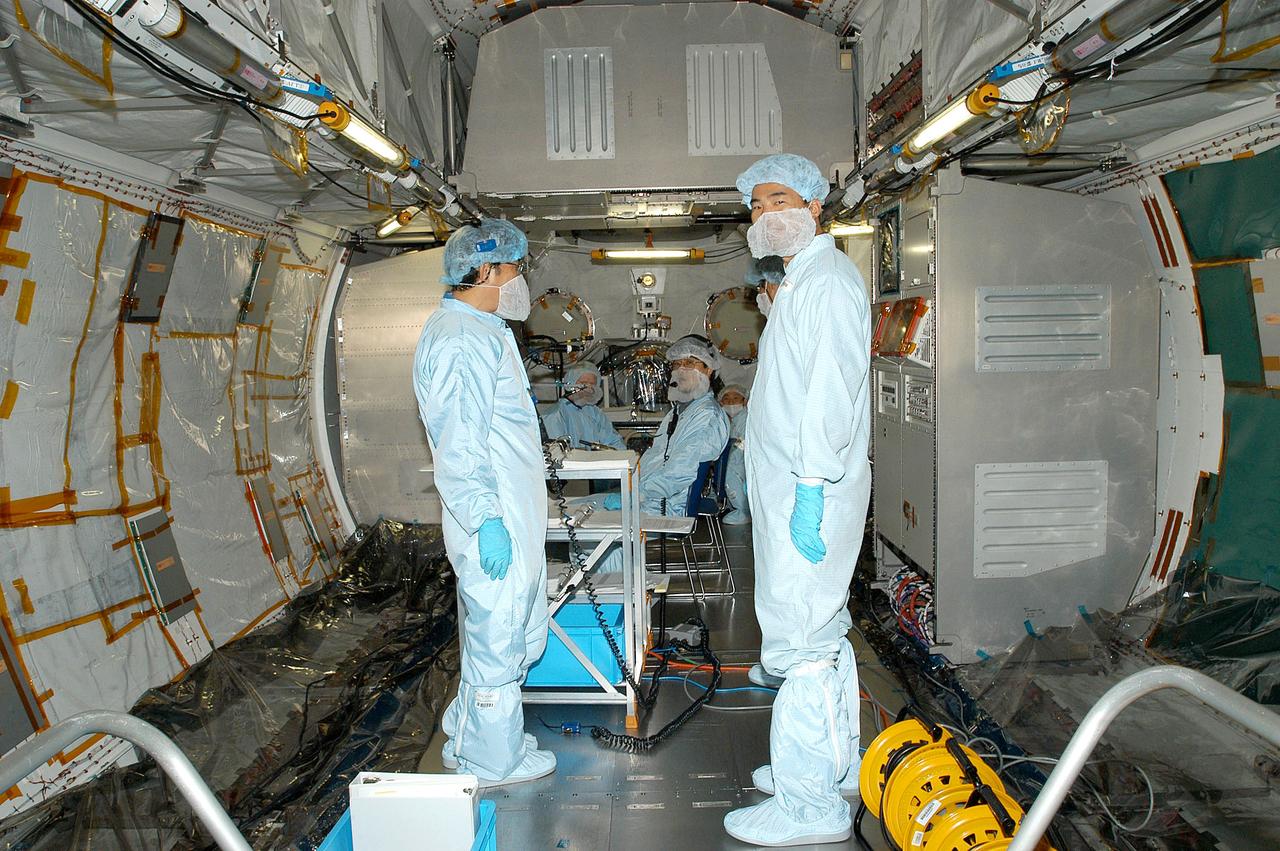
KENNEDY SPACE CENTER, FLA. -   Astronaut Soichi Noguchi, with the National Space Development Agency of Japan (NASDA), works at a console during a Multi-Element Integrated Test (MEIT) of the U.S. Node 2 and the Japanese Experiment Module (JEM).  Noguchi is assigned to mission STS-114 as a mission specialist.   Node 2 attaches to the end of the U.S. Lab on the ISS and provides attach locations for the Japanese laboratory, European laboratory, the Centrifuge Accommodation Module and, eventually, Multipurpose Logistics Modules. It will provide the primary docking location for the Shuttle when a pressurized mating adapter is attached to Node 2.  Installation of the module will complete the U.S. Core of the ISS.   The JEM, developed by NASDA,  is Japan's primary contribution to the Station. It will enhance the unique research capabilities of the orbiting complex by providing an additional environment for astronauts to conduct science experiments.
KENNEDY SPACE CENTER, FLA. - Astronaut Soichi Noguchi, with the National Space Development Agency of Japan (NASDA), works at a console during a Multi-Element Integrated Test (MEIT) of the U.S. Node 2 and the Japanese Experiment Module (JEM). Noguchi is assigned to mission STS-114 as a mission specialist. Node 2 attaches to the end of the U.S. Lab on the ISS and provides attach locations for the Japanese laboratory, European laboratory, the Centrifuge Accommodation Module and, eventually, Multipurpose Logistics Modules. It will provide the primary docking location for the Shuttle when a pressurized mating adapter is attached to Node 2. Installation of the module will complete the U.S. Core of the ISS. The JEM, developed by NASDA, is Japan's primary contribution to the Station. It will enhance the unique research capabilities of the orbiting complex by providing an additional environment for astronauts to conduct science experiments.
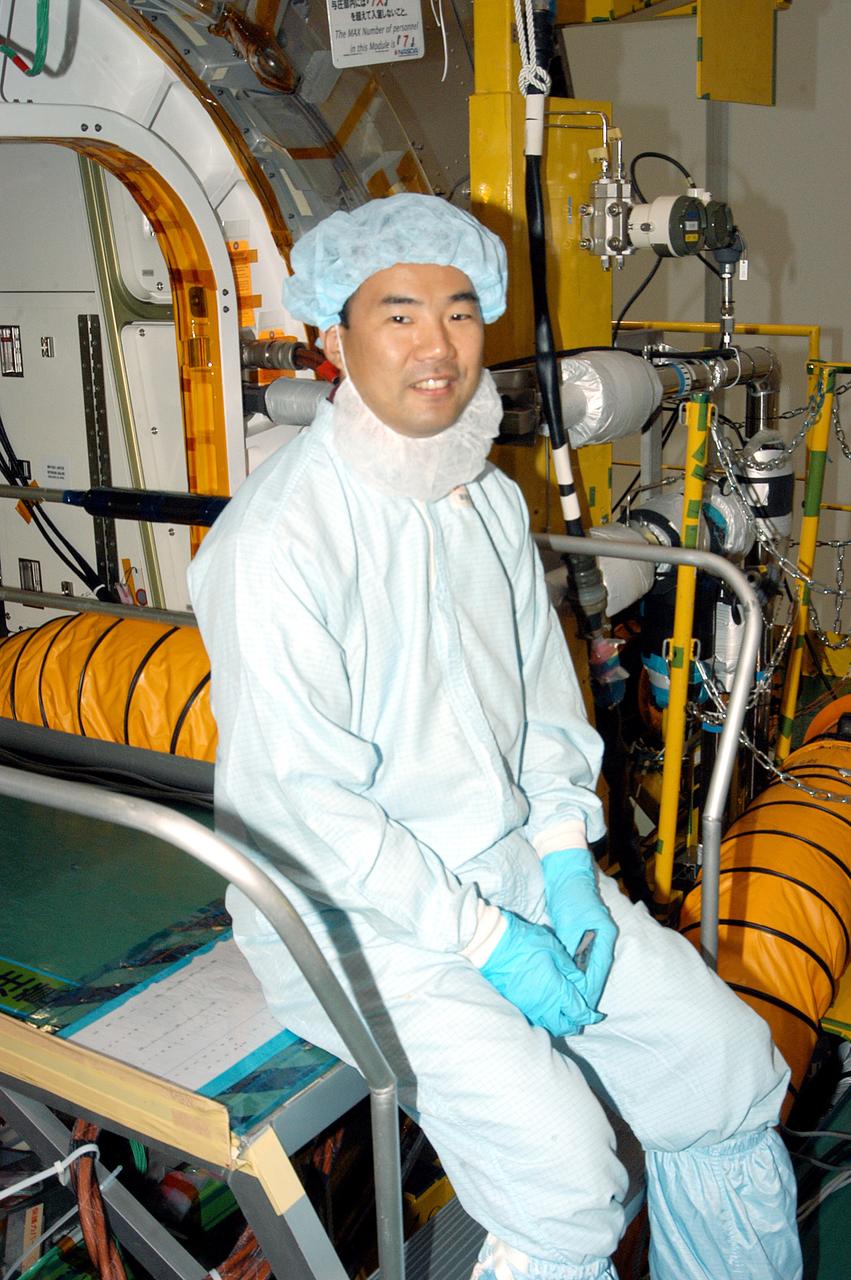
KENNEDY SPACE CENTER, FLA. -  Astronaut Soichi Noguchi, with the National Space Development Agency of Japan (NASDA), rests inside the Japanese Experiment Module (JEM), undergoing a Multi-Element Integrated Test (MEIT)  in the Space Station Processing Facility.  Noguchi is assigned to mission STS-114 as a mission specialist.   Node 2 attaches to the end of the U.S. Lab on the ISS and provides attach locations for the Japanese laboratory, European laboratory, the Centrifuge Accommodation Module and, eventually, Multipurpose Logistics Modules. It will provide the primary docking location for the Shuttle when a pressurized mating adapter is attached to Node 2.  Installation of the module will complete the U.S. Core of the ISS.   The JEM, developed by NASDA,  is Japan's primary contribution to the Station. It will enhance the unique research capabilities of the orbiting complex by providing an additional environment for astronauts to conduct science experiments.
KENNEDY SPACE CENTER, FLA. - Astronaut Soichi Noguchi, with the National Space Development Agency of Japan (NASDA), rests inside the Japanese Experiment Module (JEM), undergoing a Multi-Element Integrated Test (MEIT) in the Space Station Processing Facility. Noguchi is assigned to mission STS-114 as a mission specialist. Node 2 attaches to the end of the U.S. Lab on the ISS and provides attach locations for the Japanese laboratory, European laboratory, the Centrifuge Accommodation Module and, eventually, Multipurpose Logistics Modules. It will provide the primary docking location for the Shuttle when a pressurized mating adapter is attached to Node 2. Installation of the module will complete the U.S. Core of the ISS. The JEM, developed by NASDA, is Japan's primary contribution to the Station. It will enhance the unique research capabilities of the orbiting complex by providing an additional environment for astronauts to conduct science experiments.
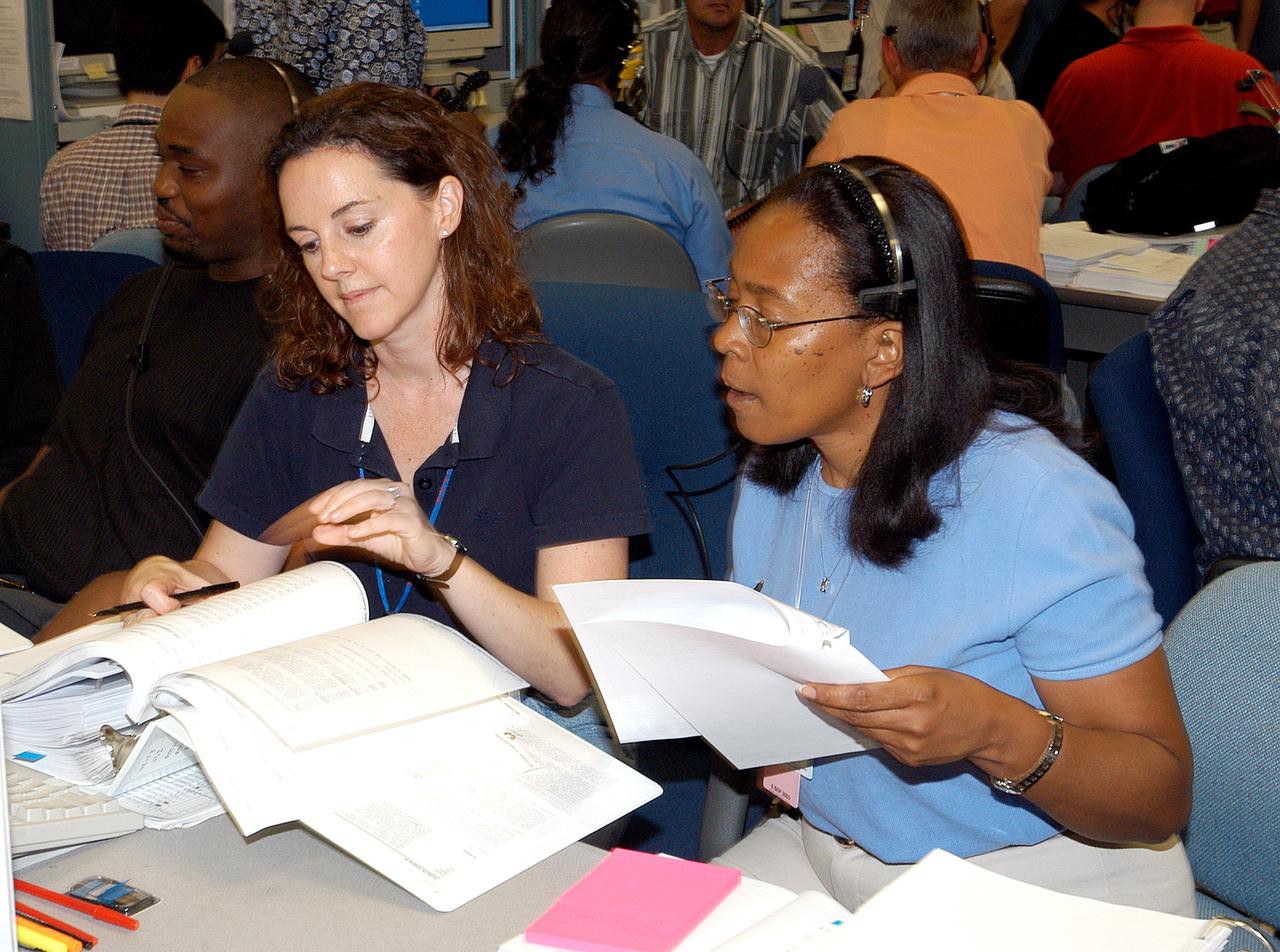
KENNEDY SPACE CENTER, FLA. -   Workers in the Space Station Processing Facility look over paperwork during a Multi-Element Integrated Test (MEIT) of the U.S. Node 2 and the Japanese Experiment Module (JEM).   Node 2 attaches to the end of the U.S. Lab on the ISS and provides attach locations for the Japanese laboratory, European laboratory, the Centrifuge Accommodation Module and, eventually, Multipurpose Logistics Modules. It will provide the primary docking location for the Shuttle when a pressurized mating adapter is attached to Node 2.  Installation of the module will complete the U.S. Core of the ISS.   The JEM, developed by the National Space Development Agency of Japan (NASDA), is Japan's primary contribution to the Station. It will enhance the unique research capabilities of the orbiting complex by providing an additional environment for astronauts to conduct science experiments.
KENNEDY SPACE CENTER, FLA. - Workers in the Space Station Processing Facility look over paperwork during a Multi-Element Integrated Test (MEIT) of the U.S. Node 2 and the Japanese Experiment Module (JEM). Node 2 attaches to the end of the U.S. Lab on the ISS and provides attach locations for the Japanese laboratory, European laboratory, the Centrifuge Accommodation Module and, eventually, Multipurpose Logistics Modules. It will provide the primary docking location for the Shuttle when a pressurized mating adapter is attached to Node 2. Installation of the module will complete the U.S. Core of the ISS. The JEM, developed by the National Space Development Agency of Japan (NASDA), is Japan's primary contribution to the Station. It will enhance the unique research capabilities of the orbiting complex by providing an additional environment for astronauts to conduct science experiments.
KENNEDY SPACE CENTER, FLA. -   Workers in the Space Station Processing Facility observe consoles during a Multi-Element Integrated Test (MEIT) of the U.S. Node 2 and the Japanese Experiment Module (JEM).   Node 2 attaches to the end of the U.S. Lab on the ISS and provides attach locations for the Japanese laboratory, European laboratory, the Centrifuge Accommodation Module and, eventually, Multipurpose Logistics Modules. It will provide the primary docking location for the Shuttle when a pressurized mating adapter is attached to Node 2.  Installation of the module will complete the U.S. Core of the ISS.   The JEM, developed by the National Space Development Agency of Japan (NASDA), is Japan's primary contribution to the Station. It will enhance the unique research capabilities of the orbiting complex by providing an additional environment for astronauts to conduct science experiments.
KENNEDY SPACE CENTER, FLA. - Workers in the Space Station Processing Facility observe consoles during a Multi-Element Integrated Test (MEIT) of the U.S. Node 2 and the Japanese Experiment Module (JEM). Node 2 attaches to the end of the U.S. Lab on the ISS and provides attach locations for the Japanese laboratory, European laboratory, the Centrifuge Accommodation Module and, eventually, Multipurpose Logistics Modules. It will provide the primary docking location for the Shuttle when a pressurized mating adapter is attached to Node 2. Installation of the module will complete the U.S. Core of the ISS. The JEM, developed by the National Space Development Agency of Japan (NASDA), is Japan's primary contribution to the Station. It will enhance the unique research capabilities of the orbiting complex by providing an additional environment for astronauts to conduct science experiments.
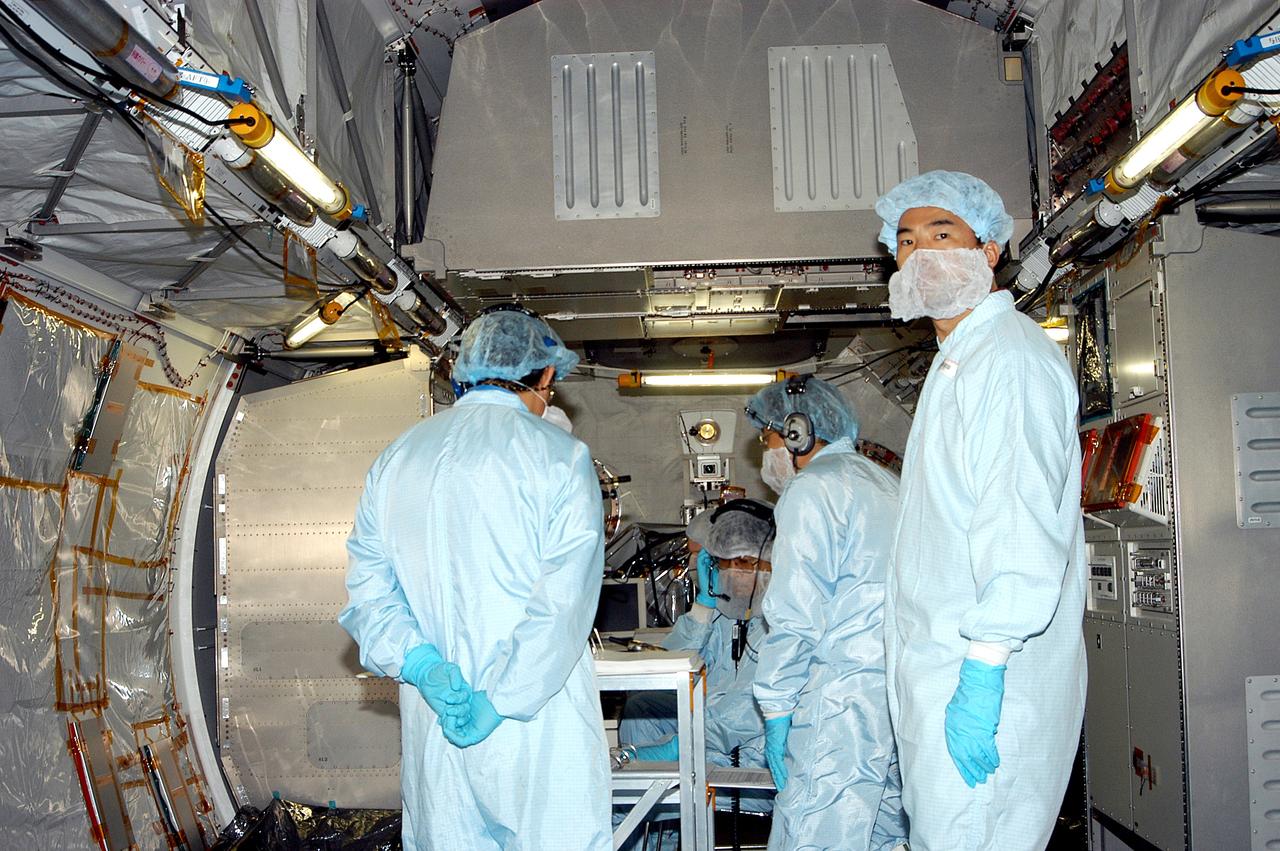
KENNEDY SPACE CENTER, FLA. -   Astronaut Soichi Noguchi, with the National Space Development Agency of Japan (NASDA), is inside the Japanese Experiment Module (JEM), undergoing a Multi-Element Integrated Test (MEIT)  in the Space Station Processing Facility.  Noguchi is assigned to mission STS-114 as a mission specialist.   Node 2 attaches to the end of the U.S. Lab on the ISS and provides attach locations for the Japanese laboratory, European laboratory, the Centrifuge Accommodation Module and, eventually, Multipurpose Logistics Modules. It will provide the primary docking location for the Shuttle when a pressurized mating adapter is attached to Node 2.  Installation of the module will complete the U.S. Core of the ISS.   The JEM, developed by NASDA,  is Japan's primary contribution to the Station. It will enhance the unique research capabilities of the orbiting complex by providing an additional environment for astronauts to conduct science experiments.
KENNEDY SPACE CENTER, FLA. - Astronaut Soichi Noguchi, with the National Space Development Agency of Japan (NASDA), is inside the Japanese Experiment Module (JEM), undergoing a Multi-Element Integrated Test (MEIT) in the Space Station Processing Facility. Noguchi is assigned to mission STS-114 as a mission specialist. Node 2 attaches to the end of the U.S. Lab on the ISS and provides attach locations for the Japanese laboratory, European laboratory, the Centrifuge Accommodation Module and, eventually, Multipurpose Logistics Modules. It will provide the primary docking location for the Shuttle when a pressurized mating adapter is attached to Node 2. Installation of the module will complete the U.S. Core of the ISS. The JEM, developed by NASDA, is Japan's primary contribution to the Station. It will enhance the unique research capabilities of the orbiting complex by providing an additional environment for astronauts to conduct science experiments.
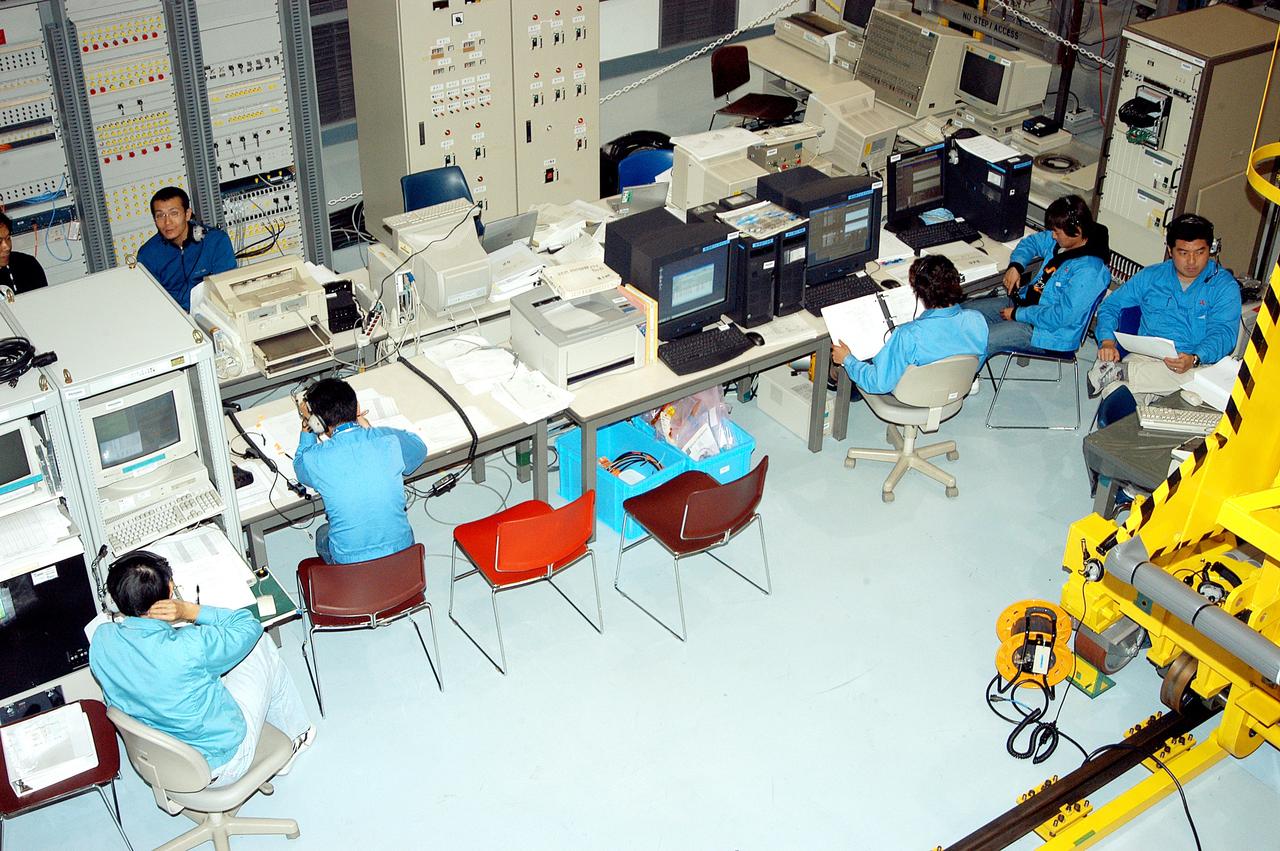
KENNEDY SPACE CENTER, FLA. -  Workers in the Space Station Processing Facility are lined up at consoles during  a Multi-Element Integrated Test (MEIT ) of the Japanese Experiment Module (JEM) and U.S. Node 2.  Node 2 attaches to the end of the U.S. Lab on the ISS and provides attach locations for the Japanese laboratory, European laboratory, the Centrifuge Accommodation Module and, eventually, Multipurpose Logistics Modules. It will provide the primary docking location for the Shuttle when a pressurized mating adapter is attached to Node 2.  Installation of the module will complete the U.S. Core of the ISS.   The JEM, developed by NASDA,  is Japan's primary contribution to the Station. It will enhance the unique research capabilities of the orbiting complex by providing an additional environment for astronauts to conduct science experiments.
KENNEDY SPACE CENTER, FLA. - Workers in the Space Station Processing Facility are lined up at consoles during a Multi-Element Integrated Test (MEIT ) of the Japanese Experiment Module (JEM) and U.S. Node 2. Node 2 attaches to the end of the U.S. Lab on the ISS and provides attach locations for the Japanese laboratory, European laboratory, the Centrifuge Accommodation Module and, eventually, Multipurpose Logistics Modules. It will provide the primary docking location for the Shuttle when a pressurized mating adapter is attached to Node 2. Installation of the module will complete the U.S. Core of the ISS. The JEM, developed by NASDA, is Japan's primary contribution to the Station. It will enhance the unique research capabilities of the orbiting complex by providing an additional environment for astronauts to conduct science experiments.
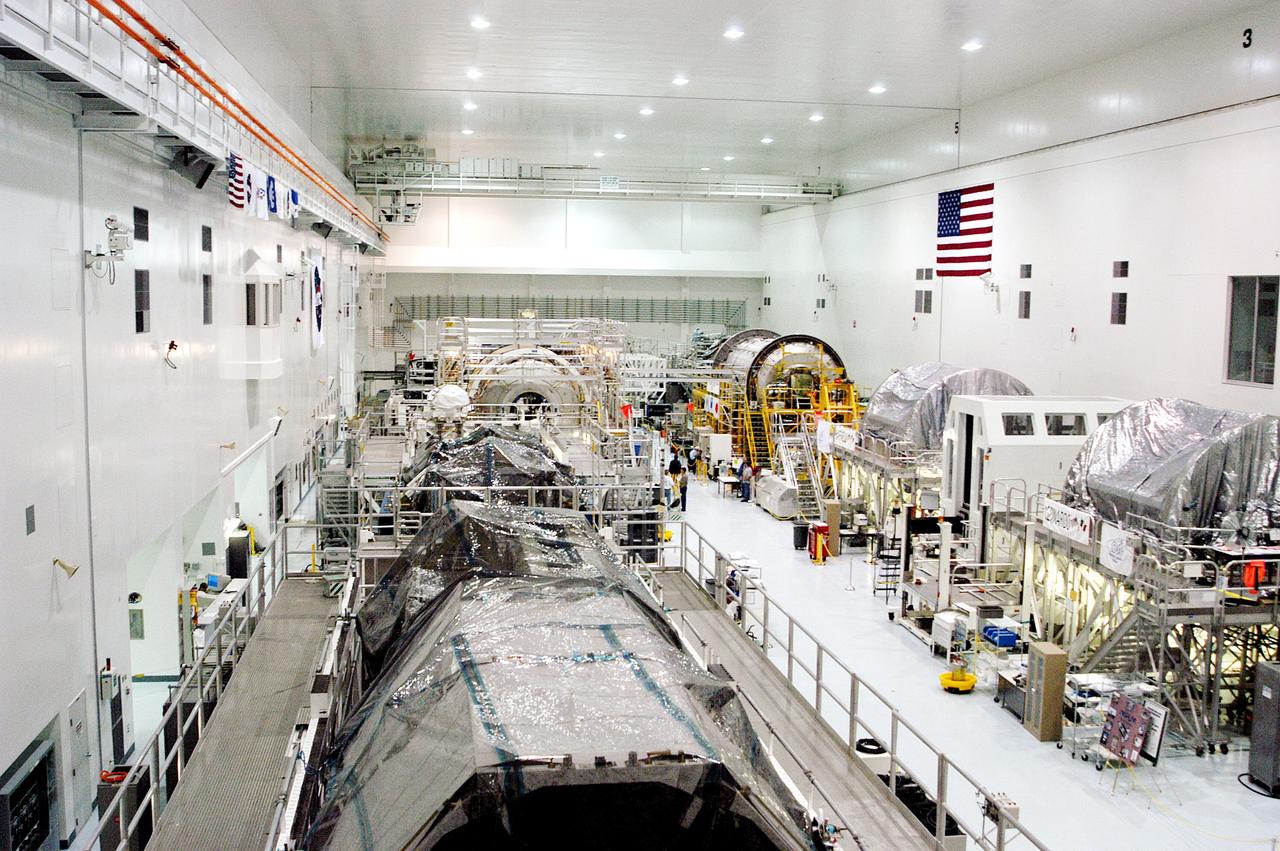
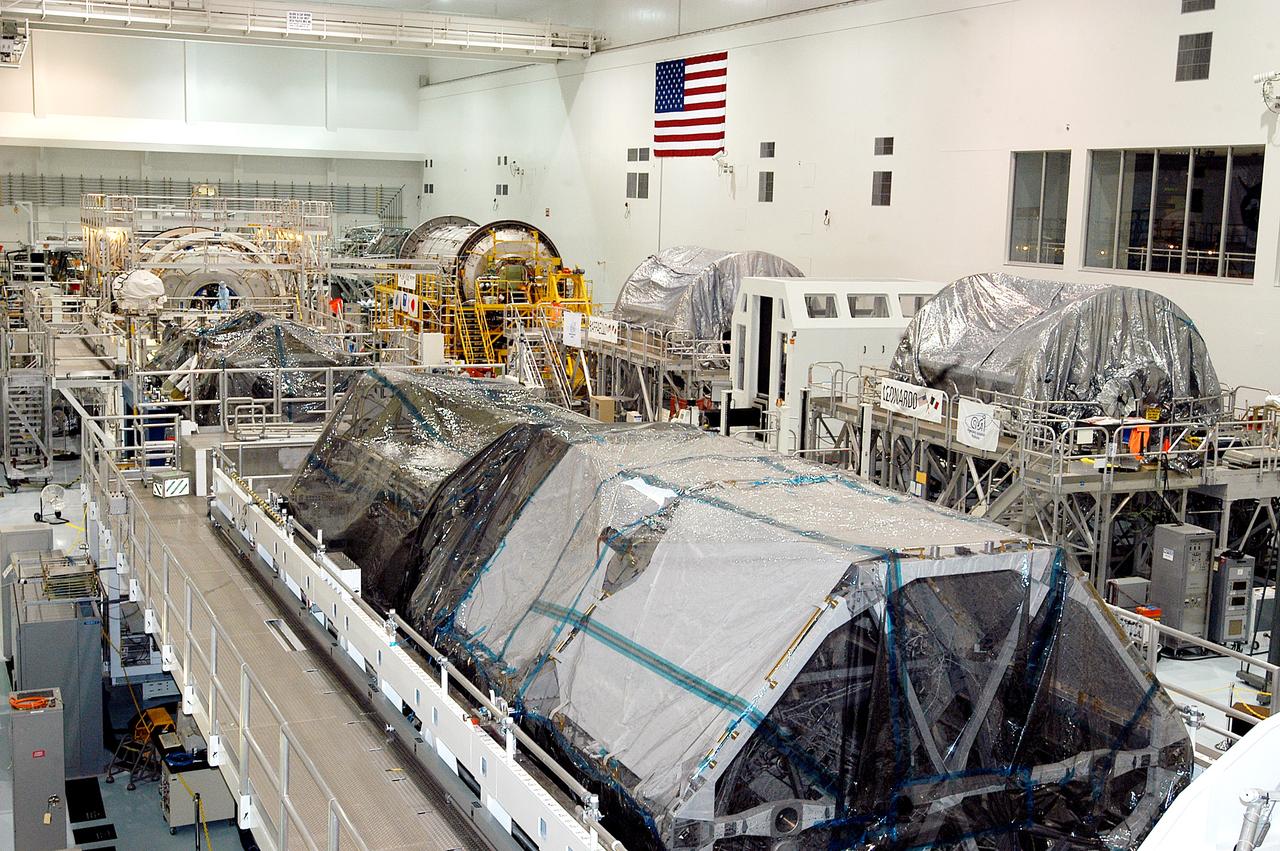
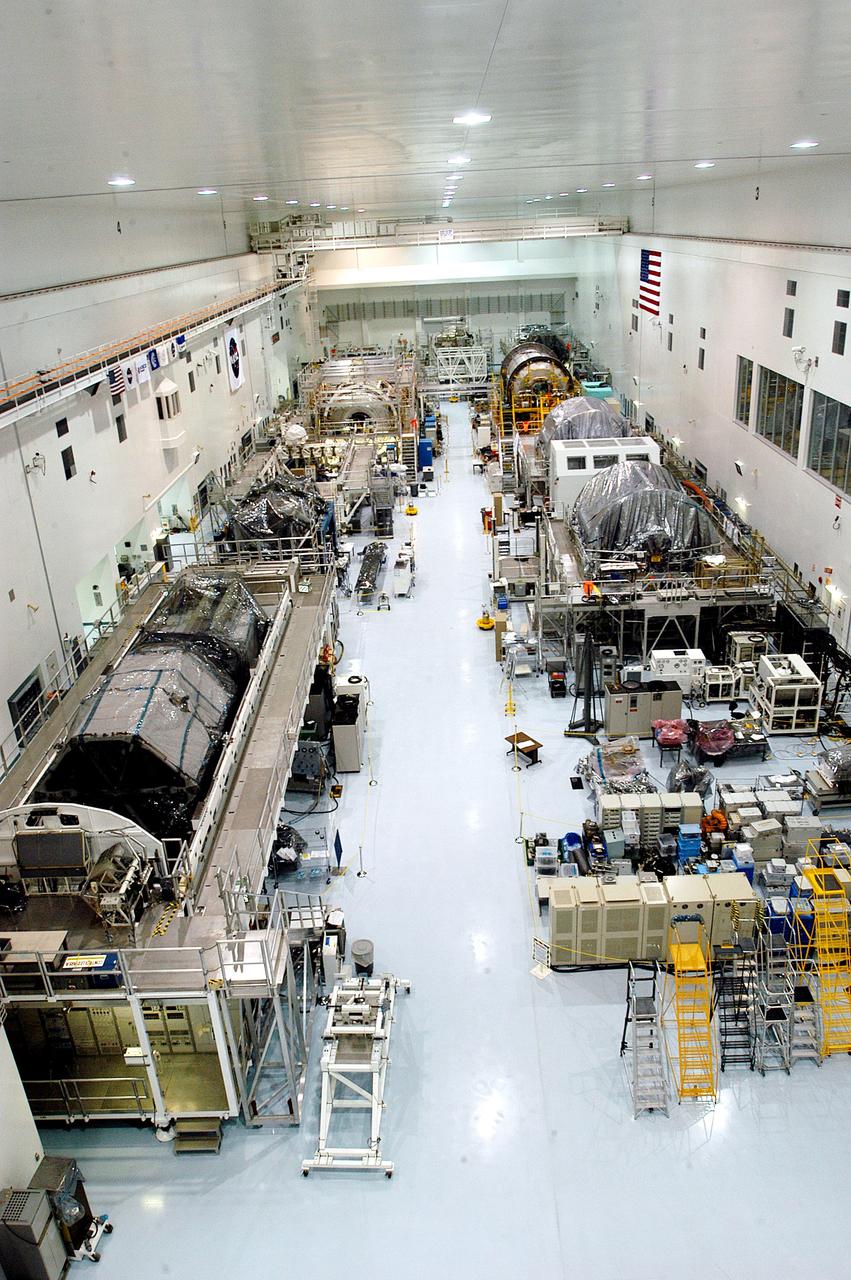
KENNEDY SPACE CENTER, FLA. -  Various elements intended for the International Space Station are lined up in the Space Station Processing Facility.  The newest to arrive at KSC are in the rear: at left, the U.S. Node 2, and next to it at right, the Japanese Experiment Module (JEM).  The two elements are undergoing a Multi-Element Integrated Test (MEIT).   Node 2 attaches to the end of the U.S. Lab on the ISS and provides attach locations for the Japanese laboratory, European laboratory, the Centrifuge Accommodation Module and, eventually, Multipurpose Logistics Modules. It will provide the primary docking location for the Shuttle when a pressurized mating adapter is attached to Node 2.  Installation of the module will complete the U.S. Core of the ISS.   Developed by the National Space Development Agency of Japan (NASDA), the JEM is Japan's primary contribution to the Station. It will enhance the unique research capabilities of the orbiting complex by providing an additional environment for astronauts to conduct science experiments.
KENNEDY SPACE CENTER, FLA. - Various elements intended for the International Space Station are lined up in the Space Station Processing Facility. The newest to arrive at KSC are in the rear: at left, the U.S. Node 2, and next to it at right, the Japanese Experiment Module (JEM). The two elements are undergoing a Multi-Element Integrated Test (MEIT). Node 2 attaches to the end of the U.S. Lab on the ISS and provides attach locations for the Japanese laboratory, European laboratory, the Centrifuge Accommodation Module and, eventually, Multipurpose Logistics Modules. It will provide the primary docking location for the Shuttle when a pressurized mating adapter is attached to Node 2. Installation of the module will complete the U.S. Core of the ISS. Developed by the National Space Development Agency of Japan (NASDA), the JEM is Japan's primary contribution to the Station. It will enhance the unique research capabilities of the orbiting complex by providing an additional environment for astronauts to conduct science experiments.
KENNEDY SPACE CENTER, FLA. -  Various elements intended for the International Space Station are lined up in the Space Station Processing Facility.  The newest to arrive at KSC are in the rear: at left, the U.S. Node 2, and next to it at right, the Japanese Experiment Module (JEM).  The two elements are undergoing a Multi-Element Integrated Test (MEIT).   Node 2 attaches to the end of the U.S. Lab on the ISS and provides attach locations for the Japanese laboratory, European laboratory, the Centrifuge Accommodation Module and, eventually, Multipurpose Logistics Modules. It will provide the primary docking location for the Shuttle when a pressurized mating adapter is attached to Node 2.  Installation of the module will complete the U.S. Core of the ISS.   Developed by the National Space Development Agency of Japan (NASDA), the JEM is Japan's primary contribution to the Station. It will enhance the unique research capabilities of the orbiting complex by providing an additional environment for astronauts to conduct science experiments.
KENNEDY SPACE CENTER, FLA. - Various elements intended for the International Space Station are lined up in the Space Station Processing Facility. The newest to arrive at KSC are in the rear: at left, the U.S. Node 2, and next to it at right, the Japanese Experiment Module (JEM). The two elements are undergoing a Multi-Element Integrated Test (MEIT). Node 2 attaches to the end of the U.S. Lab on the ISS and provides attach locations for the Japanese laboratory, European laboratory, the Centrifuge Accommodation Module and, eventually, Multipurpose Logistics Modules. It will provide the primary docking location for the Shuttle when a pressurized mating adapter is attached to Node 2. Installation of the module will complete the U.S. Core of the ISS. Developed by the National Space Development Agency of Japan (NASDA), the JEM is Japan's primary contribution to the Station. It will enhance the unique research capabilities of the orbiting complex by providing an additional environment for astronauts to conduct science experiments.
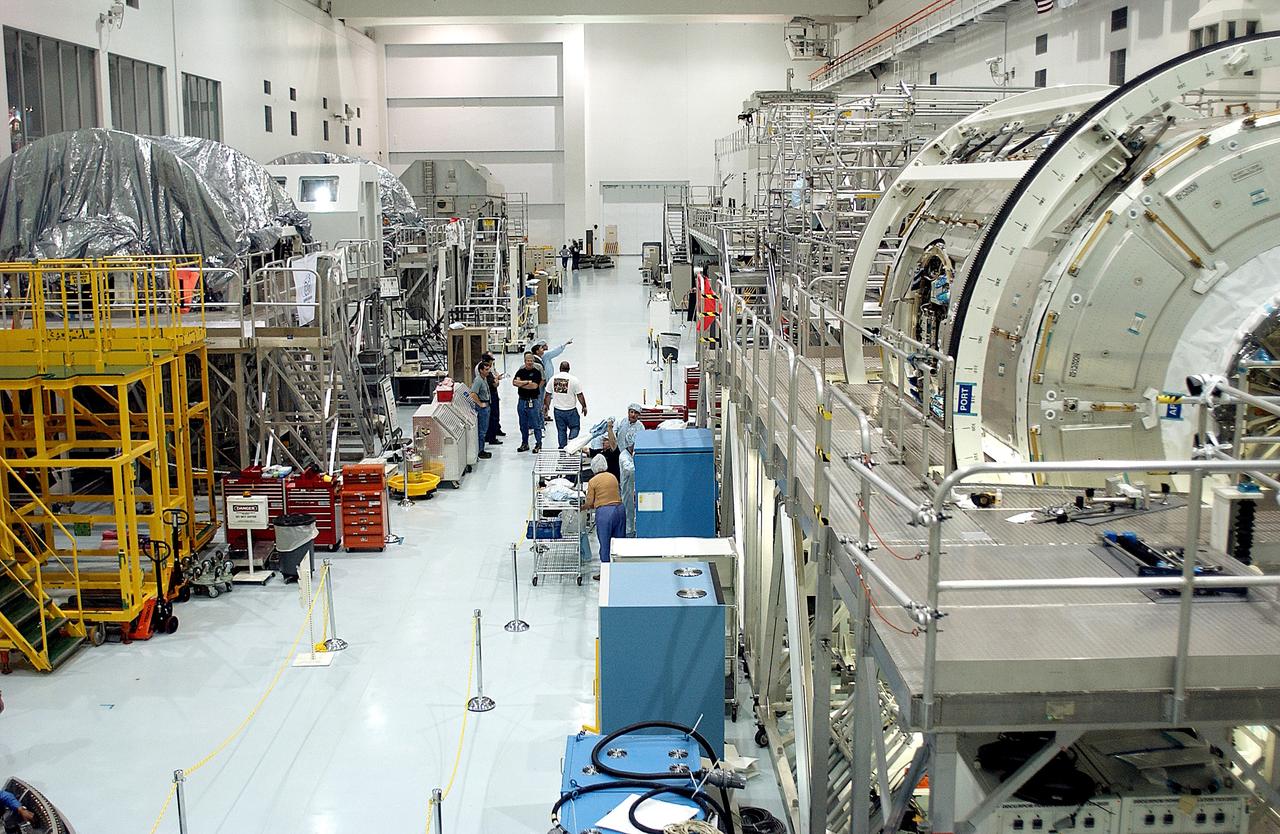
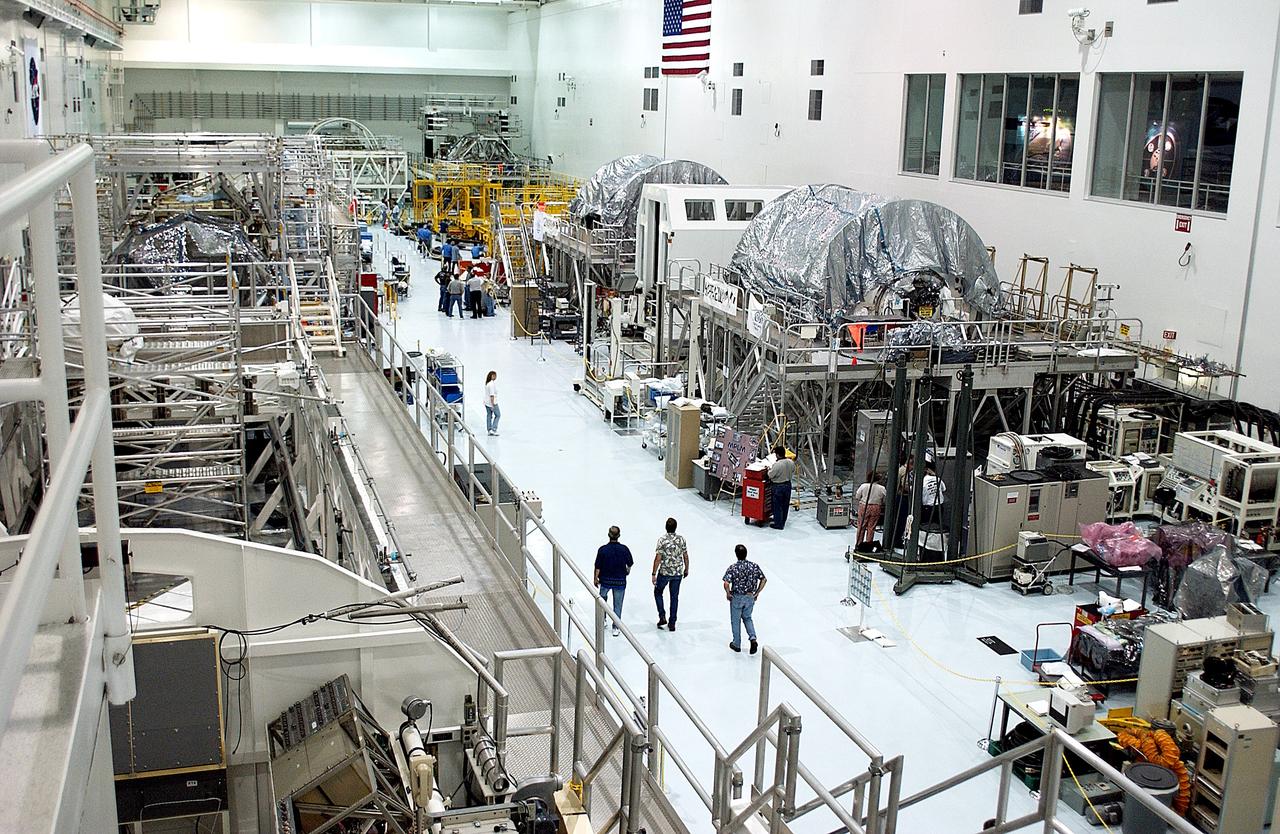
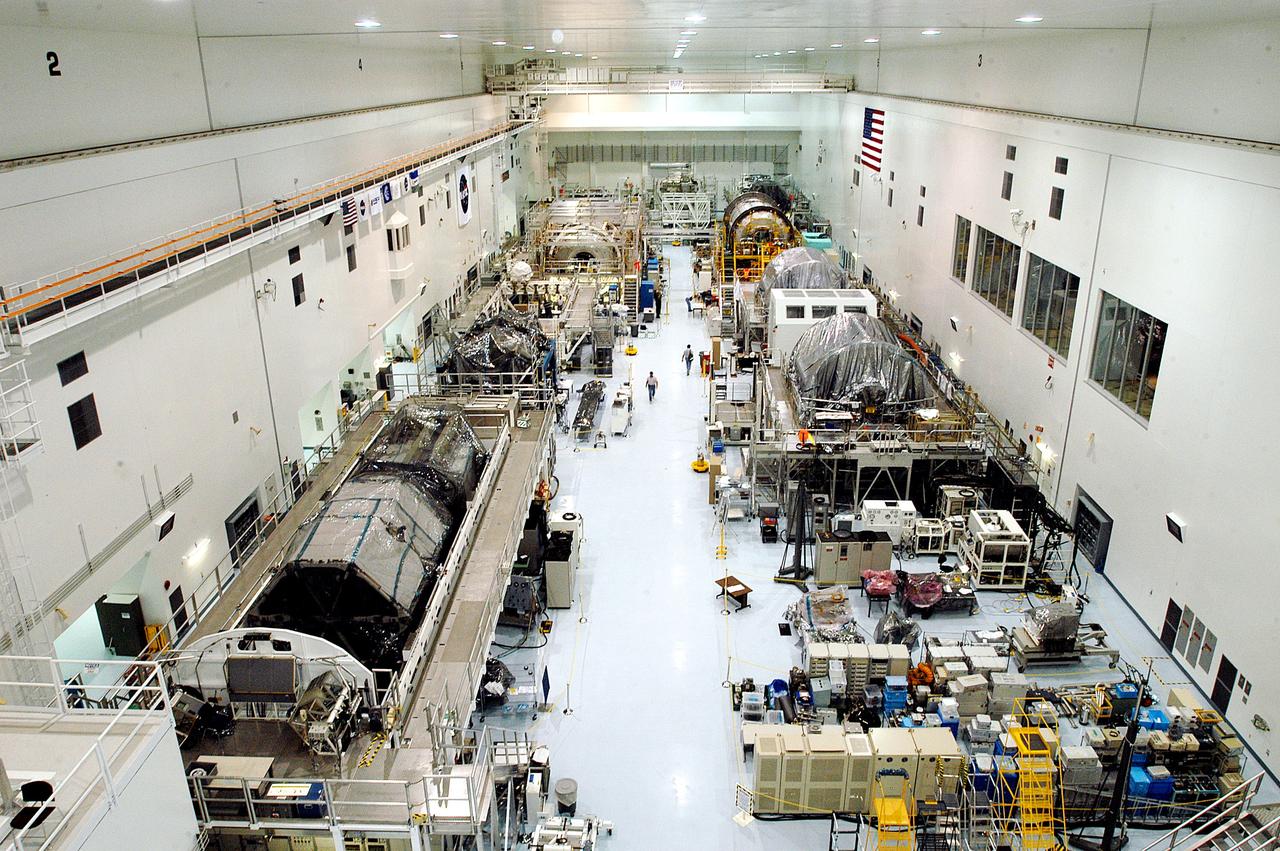
KENNEDY SPACE CENTER, FLA. - An overview of the Space Station Processing Facility shows workstands and ISS elements.   The most recent additions are the Japanese Experiment Module (JEM)’s pressurized module and the Italian-built Node 2.  The pressurized module is the first element of the JEM, Japan’s primary contribution to the Space Station, to be delivered to KSC. It will enhance the unique research capabilities of the orbiting complex by providing an additional shirt-sleeve environment for astronauts to conduct science experiments.  Node 2 will be installed on the end of the U.S. Lab and provides attach locations for the Japanese laboratory, European laboratory, the Centrifuge Accommodation Module and, later, Multipurpose Logistics Modules. It will provide the primary docking location for the Shuttle when a pressurized mating adapter is attached to Node 2.  Installation of the module will complete  the U.S. Core of the ISS.
KENNEDY SPACE CENTER, FLA. - An overview of the Space Station Processing Facility shows workstands and ISS elements. The most recent additions are the Japanese Experiment Module (JEM)’s pressurized module and the Italian-built Node 2. The pressurized module is the first element of the JEM, Japan’s primary contribution to the Space Station, to be delivered to KSC. It will enhance the unique research capabilities of the orbiting complex by providing an additional shirt-sleeve environment for astronauts to conduct science experiments. Node 2 will be installed on the end of the U.S. Lab and provides attach locations for the Japanese laboratory, European laboratory, the Centrifuge Accommodation Module and, later, Multipurpose Logistics Modules. It will provide the primary docking location for the Shuttle when a pressurized mating adapter is attached to Node 2. Installation of the module will complete the U.S. Core of the ISS.
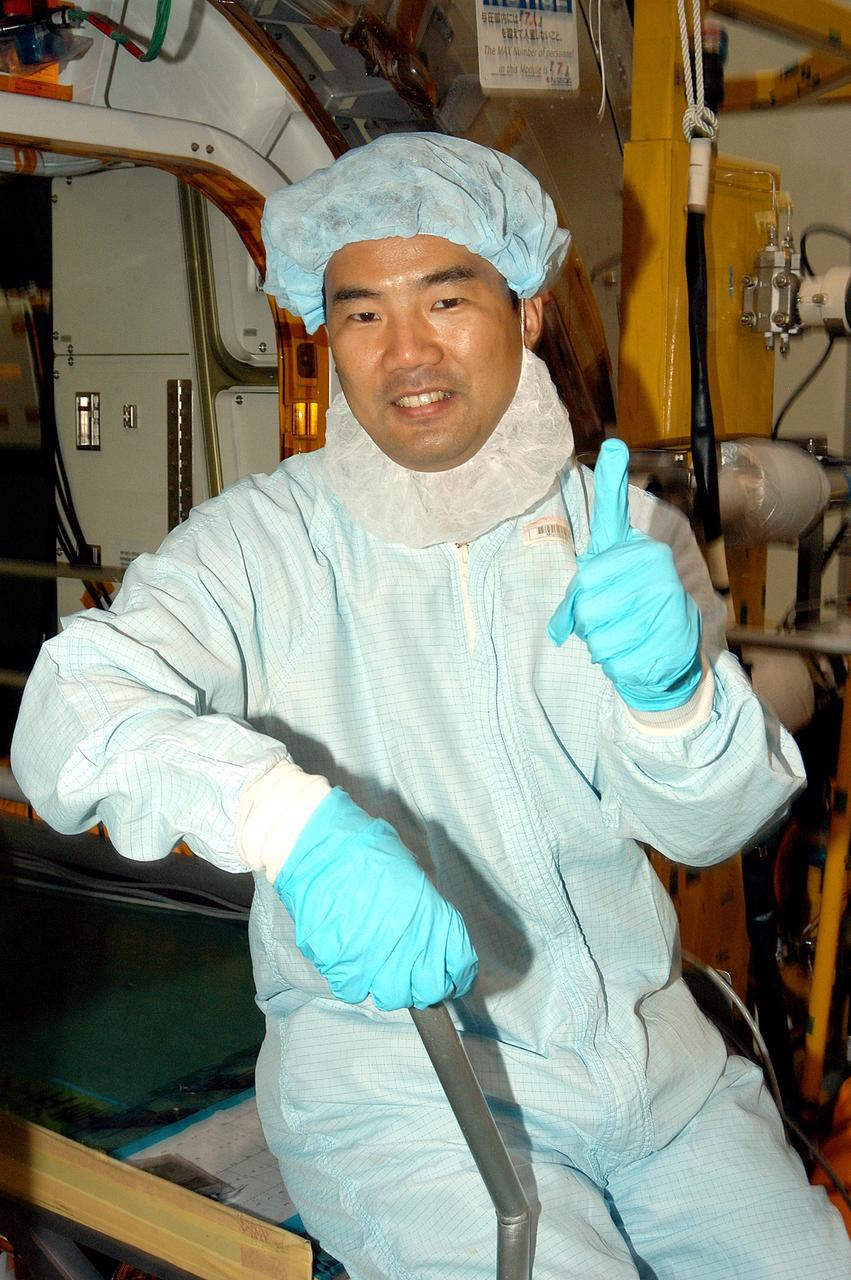
KENNEDY SPACE CENTER, FLA. -  Astronaut Soichi Noguchi, with the National Space Development Agency of Japan (NASDA), signals success during a Multi-Element Integrated Test (MEIT ) of the Japanese Experiment Module (JEM) in the Space Station Processing Facility.  Noguchi is assigned to mission STS-114 as a mission specialist.   Node 2 attaches to the end of the U.S. Lab on the ISS and provides attach locations for the Japanese laboratory, European laboratory, the Centrifuge Accommodation Module and, eventually, Multipurpose Logistics Modules. It will provide the primary docking location for the Shuttle when a pressurized mating adapter is attached to Node 2.  Installation of the module will complete the U.S. Core of the ISS.   The JEM, developed by NASDA,  is Japan's primary contribution to the Station. It will enhance the unique research capabilities of the orbiting complex by providing an additional environment for astronauts to conduct science experiments.
KENNEDY SPACE CENTER, FLA. - Astronaut Soichi Noguchi, with the National Space Development Agency of Japan (NASDA), signals success during a Multi-Element Integrated Test (MEIT ) of the Japanese Experiment Module (JEM) in the Space Station Processing Facility. Noguchi is assigned to mission STS-114 as a mission specialist. Node 2 attaches to the end of the U.S. Lab on the ISS and provides attach locations for the Japanese laboratory, European laboratory, the Centrifuge Accommodation Module and, eventually, Multipurpose Logistics Modules. It will provide the primary docking location for the Shuttle when a pressurized mating adapter is attached to Node 2. Installation of the module will complete the U.S. Core of the ISS. The JEM, developed by NASDA, is Japan's primary contribution to the Station. It will enhance the unique research capabilities of the orbiting complex by providing an additional environment for astronauts to conduct science experiments.
KENNEDY SPACE CENTER, FLA. -   Astronaut Soichi Noguchi (right), with the National Space Development Agency of Japan (NASDA), is inside the Japanese Experiment Module (JEM), undergoing a Multi-Element Integrated Test (MEIT)  in the Space Station Processing Facility.  Noguchi is assigned to mission STS-114 as a mission specialist.   Node 2 attaches to the end of the U.S. Lab on the ISS and provides attach locations for the Japanese laboratory, European laboratory, the Centrifuge Accommodation Module and, eventually, Multipurpose Logistics Modules. It will provide the primary docking location for the Shuttle when a pressurized mating adapter is attached to Node 2.  Installation of the module will complete the U.S. Core of the ISS.   The JEM, developed by NASDA,  is Japan's primary contribution to the Station. It will enhance the unique research capabilities of the orbiting complex by providing an additional environment for astronauts to conduct science experiments.
KENNEDY SPACE CENTER, FLA. - Astronaut Soichi Noguchi (right), with the National Space Development Agency of Japan (NASDA), is inside the Japanese Experiment Module (JEM), undergoing a Multi-Element Integrated Test (MEIT) in the Space Station Processing Facility. Noguchi is assigned to mission STS-114 as a mission specialist. Node 2 attaches to the end of the U.S. Lab on the ISS and provides attach locations for the Japanese laboratory, European laboratory, the Centrifuge Accommodation Module and, eventually, Multipurpose Logistics Modules. It will provide the primary docking location for the Shuttle when a pressurized mating adapter is attached to Node 2. Installation of the module will complete the U.S. Core of the ISS. The JEM, developed by NASDA, is Japan's primary contribution to the Station. It will enhance the unique research capabilities of the orbiting complex by providing an additional environment for astronauts to conduct science experiments.
KENNEDY SPACE CENTER, FLA. - A view of the Space Station Processing Facility shows workstands and ISS elements.   The most recent additions are the Japanese Experiment Module (JEM)’s pressurized module and the Italian-built Node 2.  The pressurized module is the first element of the JEM, Japan’s primary contribution to the Space Station, to be delivered to KSC. It will enhance the unique research capabilities of the orbiting complex by providing an additional shirt-sleeve environment for astronauts to conduct science experiments.  Node 2 will be installed on the end of the U.S. Lab and provides attach locations for the Japanese laboratory, European laboratory, the Centrifuge Accommodation Module and, later, Multipurpose Logistics Modules. It will provide the primary docking location for the Shuttle when a pressurized mating adapter is attached to Node 2.  Installation of the module will complete  the U.S. Core of the ISS.
KENNEDY SPACE CENTER, FLA. - A view of the Space Station Processing Facility shows workstands and ISS elements. The most recent additions are the Japanese Experiment Module (JEM)’s pressurized module and the Italian-built Node 2. The pressurized module is the first element of the JEM, Japan’s primary contribution to the Space Station, to be delivered to KSC. It will enhance the unique research capabilities of the orbiting complex by providing an additional shirt-sleeve environment for astronauts to conduct science experiments. Node 2 will be installed on the end of the U.S. Lab and provides attach locations for the Japanese laboratory, European laboratory, the Centrifuge Accommodation Module and, later, Multipurpose Logistics Modules. It will provide the primary docking location for the Shuttle when a pressurized mating adapter is attached to Node 2. Installation of the module will complete the U.S. Core of the ISS.
KENNEDY SPACE CENTER, FLA. -  Various elements intended for the International Space Station are lined up in the Space Station Processing Facility.  The newest to arrive at KSC are in the rear: at left, the U.S. Node 2, and at right, the Japanese Experiment Module (JEM).  The two elements are undergoing a Multi-Element Integrated Test (MEIT).   Node 2 attaches to the end of the U.S. Lab on the ISS and provides attach locations for the Japanese laboratory, European laboratory, the Centrifuge Accommodation Module and, eventually, Multipurpose Logistics Modules. It will provide the primary docking location for the Shuttle when a pressurized mating adapter is attached to Node 2.  Installation of the module will complete the U.S. Core of the ISS.   Developed by the National Space Development Agency of Japan (NASDA), the JEM is Japan's primary contribution to the Station. It will enhance the unique research capabilities of the orbiting complex by providing an additional environment for astronauts to conduct science experiments.
KENNEDY SPACE CENTER, FLA. - Various elements intended for the International Space Station are lined up in the Space Station Processing Facility. The newest to arrive at KSC are in the rear: at left, the U.S. Node 2, and at right, the Japanese Experiment Module (JEM). The two elements are undergoing a Multi-Element Integrated Test (MEIT). Node 2 attaches to the end of the U.S. Lab on the ISS and provides attach locations for the Japanese laboratory, European laboratory, the Centrifuge Accommodation Module and, eventually, Multipurpose Logistics Modules. It will provide the primary docking location for the Shuttle when a pressurized mating adapter is attached to Node 2. Installation of the module will complete the U.S. Core of the ISS. Developed by the National Space Development Agency of Japan (NASDA), the JEM is Japan's primary contribution to the Station. It will enhance the unique research capabilities of the orbiting complex by providing an additional environment for astronauts to conduct science experiments.
KENNEDY SPACE CENTER, FLA. -   Technicians in the Space Station Processing Facility work on a Multi-Element Integrated Test (MEIT) of the U.S. Node 2 and the Japanese Experiment Module (JEM).   Node 2 attaches to the end of the U.S. Lab on the ISS and provides attach locations for the Japanese laboratory, European laboratory, the Centrifuge Accommodation Module and, eventually, Multipurpose Logistics Modules. It will provide the primary docking location for the Shuttle when a pressurized mating adapter is attached to Node 2.  Installation of the module will complete the U.S. Core of the ISS.   The JEM, developed by the National Space Development Agency of Japan (NASDA), is Japan's primary contribution to the Station. It will enhance the unique research capabilities of the orbiting complex by providing an additional environment for astronauts to conduct science experiments.
KENNEDY SPACE CENTER, FLA. - Technicians in the Space Station Processing Facility work on a Multi-Element Integrated Test (MEIT) of the U.S. Node 2 and the Japanese Experiment Module (JEM). Node 2 attaches to the end of the U.S. Lab on the ISS and provides attach locations for the Japanese laboratory, European laboratory, the Centrifuge Accommodation Module and, eventually, Multipurpose Logistics Modules. It will provide the primary docking location for the Shuttle when a pressurized mating adapter is attached to Node 2. Installation of the module will complete the U.S. Core of the ISS. The JEM, developed by the National Space Development Agency of Japan (NASDA), is Japan's primary contribution to the Station. It will enhance the unique research capabilities of the orbiting complex by providing an additional environment for astronauts to conduct science experiments.
KENNEDY SPACE CENTER, FLA. -  Astronaut Soichi Noguchi, with the National Space Development Agency of Japan (NASDA), rests inside the Japanese Experiment Module (JEM), undergoing a Multi-Element Integrated Test (MEIT)  in the Space Station Processing Facility.  Noguchi is assigned to mission STS-114 as a mission specialist.   Node 2 attaches to the end of the U.S. Lab on the ISS and provides attach locations for the Japanese laboratory, European laboratory, the Centrifuge Accommodation Module and, eventually, Multipurpose Logistics Modules. It will provide the primary docking location for the Shuttle when a pressurized mating adapter is attached to Node 2.  Installation of the module will complete the U.S. Core of the ISS.   The JEM, developed by NASDA,  is Japan's primary contribution to the Station. It will enhance the unique research capabilities of the orbiting complex by providing an additional environment for astronauts to conduct science experiments.
KENNEDY SPACE CENTER, FLA. - Astronaut Soichi Noguchi, with the National Space Development Agency of Japan (NASDA), rests inside the Japanese Experiment Module (JEM), undergoing a Multi-Element Integrated Test (MEIT) in the Space Station Processing Facility. Noguchi is assigned to mission STS-114 as a mission specialist. Node 2 attaches to the end of the U.S. Lab on the ISS and provides attach locations for the Japanese laboratory, European laboratory, the Centrifuge Accommodation Module and, eventually, Multipurpose Logistics Modules. It will provide the primary docking location for the Shuttle when a pressurized mating adapter is attached to Node 2. Installation of the module will complete the U.S. Core of the ISS. The JEM, developed by NASDA, is Japan's primary contribution to the Station. It will enhance the unique research capabilities of the orbiting complex by providing an additional environment for astronauts to conduct science experiments.
KENNEDY SPACE CENTER, FLA. -  Various elements intended for the International Space Station are lined up in the Space Station Processing Facility.  The newest to arrive at KSC are in the rear: at left, the U.S. Node 2, and next to it at right, the Japanese Experiment Module (JEM).  The two elements are undergoing a Multi-Element Integrated Test (MEIT).   Node 2 attaches to the end of the U.S. Lab on the ISS and provides attach locations for the Japanese laboratory, European laboratory, the Centrifuge Accommodation Module and, eventually, Multipurpose Logistics Modules. It will provide the primary docking location for the Shuttle when a pressurized mating adapter is attached to Node 2.  Installation of the module will complete the U.S. Core of the ISS.   Developed by the National Space Development Agency of Japan (NASDA), the JEM is Japan's primary contribution to the Station. It will enhance the unique research capabilities of the orbiting complex by providing an additional environment for astronauts to conduct science experiments.
KENNEDY SPACE CENTER, FLA. - Various elements intended for the International Space Station are lined up in the Space Station Processing Facility. The newest to arrive at KSC are in the rear: at left, the U.S. Node 2, and next to it at right, the Japanese Experiment Module (JEM). The two elements are undergoing a Multi-Element Integrated Test (MEIT). Node 2 attaches to the end of the U.S. Lab on the ISS and provides attach locations for the Japanese laboratory, European laboratory, the Centrifuge Accommodation Module and, eventually, Multipurpose Logistics Modules. It will provide the primary docking location for the Shuttle when a pressurized mating adapter is attached to Node 2. Installation of the module will complete the U.S. Core of the ISS. Developed by the National Space Development Agency of Japan (NASDA), the JEM is Japan's primary contribution to the Station. It will enhance the unique research capabilities of the orbiting complex by providing an additional environment for astronauts to conduct science experiments.
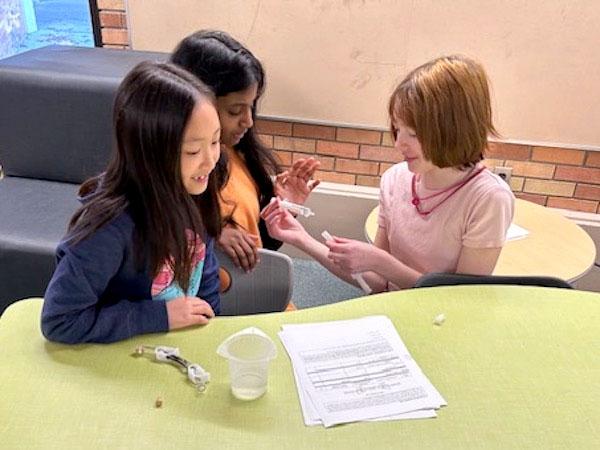
jsc2024e066530 (10/4/2024) --- Creek Valley Elementary School students prepare their experiment, Does Gravity Affect the Germination Growth of Raspberry Seeds, for space. Their experiment is part of the Nanoracks-National Center for Earth and Space Science Education-Surveyor-Student Spaceflight Experiments Program Mission 18 to ISS (Nanoracks-NCESSE-Surveyor-SSEP).
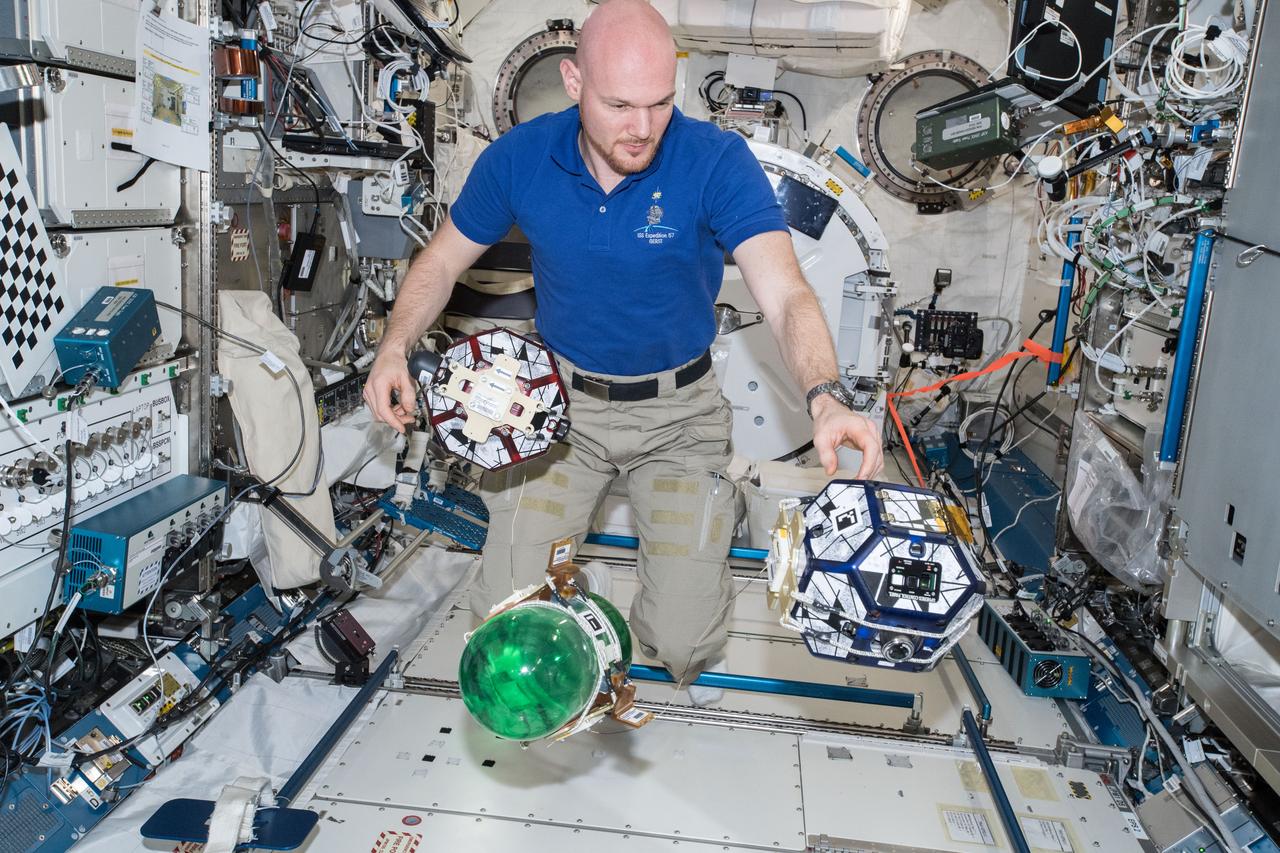
Preflight Imagery for Nanoracks-NCESSE-Surveyor-SSEP
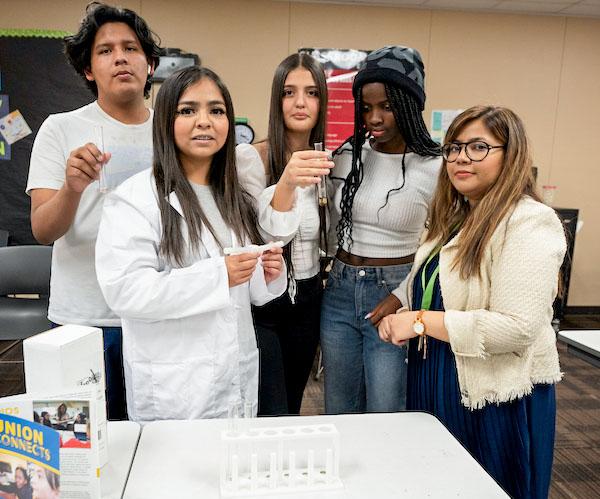
jsc2024e066519 (10/7/2024) --- The Comets set up the test tubes for the final trial of their experiment, Effects of Microgravity on Arabidopsis thaliana Seed Germination. Their experiment is part of the Nanoracks-National Center for Earth and Space Science Education-Surveyor-Student Spaceflight Experiments Program Mission 18 to ISS (Nanoracks-NCESSE-Surveyor-SSEP).
Preflight Imagery for Nanoracks-NCESSE-Surveyor-SSEP
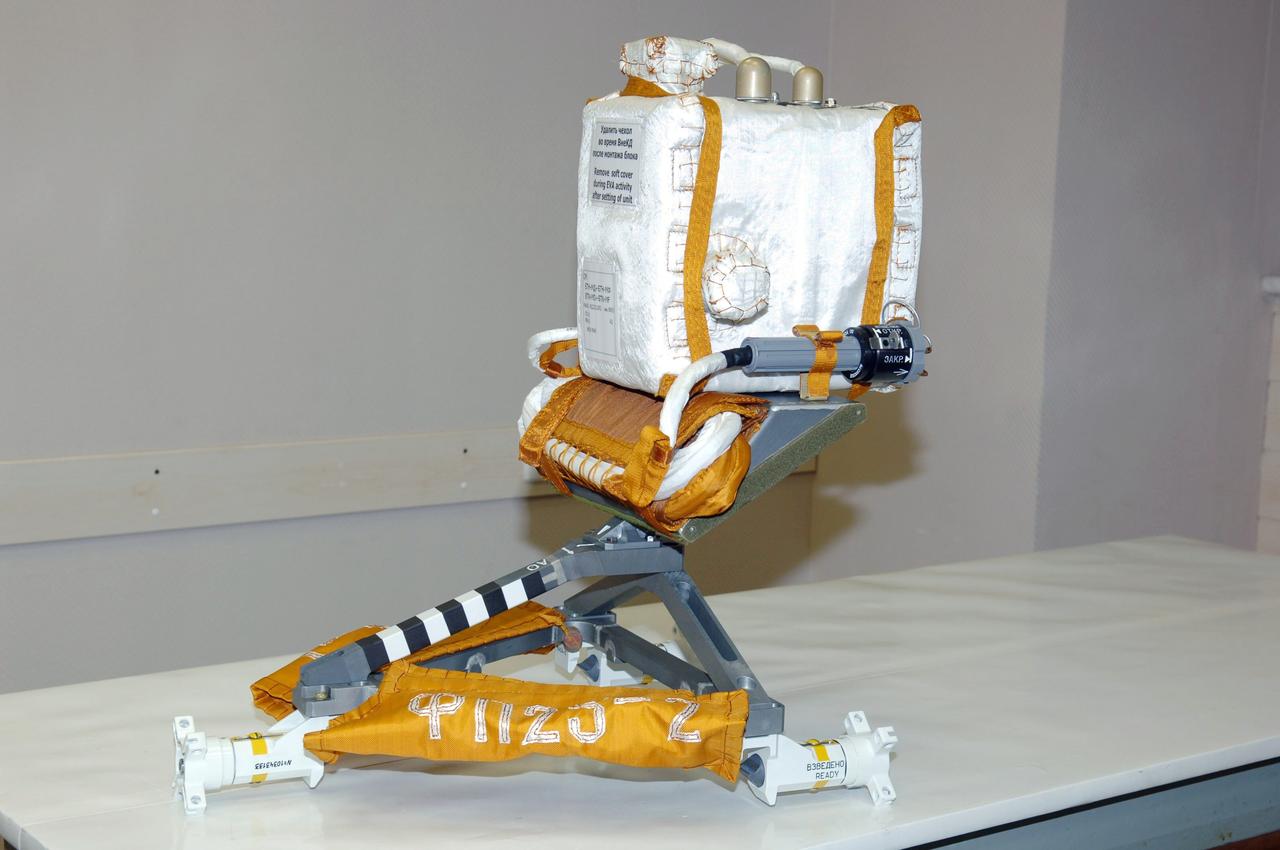
jsc2006e51966 (12/1/2006) --- A preflight view of BTN-M1 hardware without a cover for the BTN-Neutron experiment to be delivered to the ISS during the 23P flight.
BTN-M1 hardware
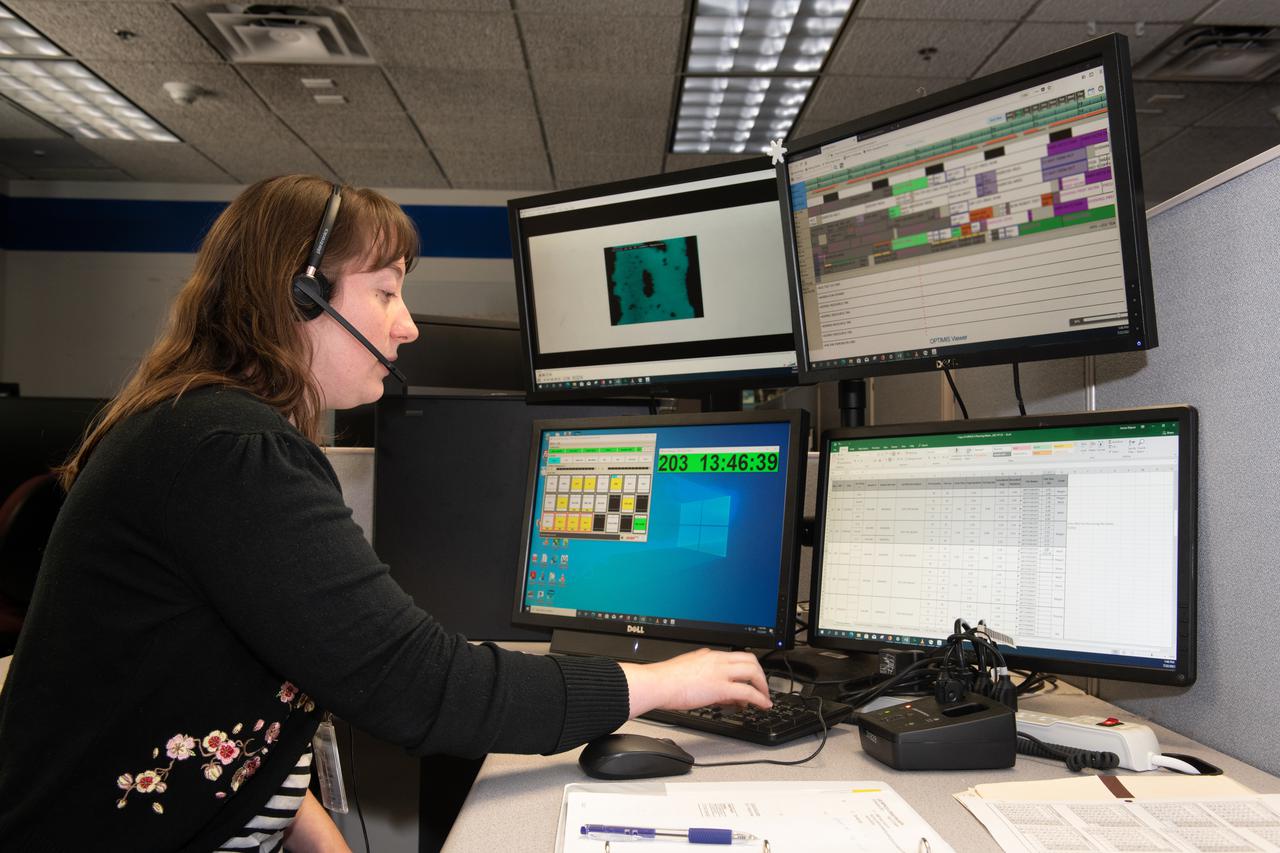
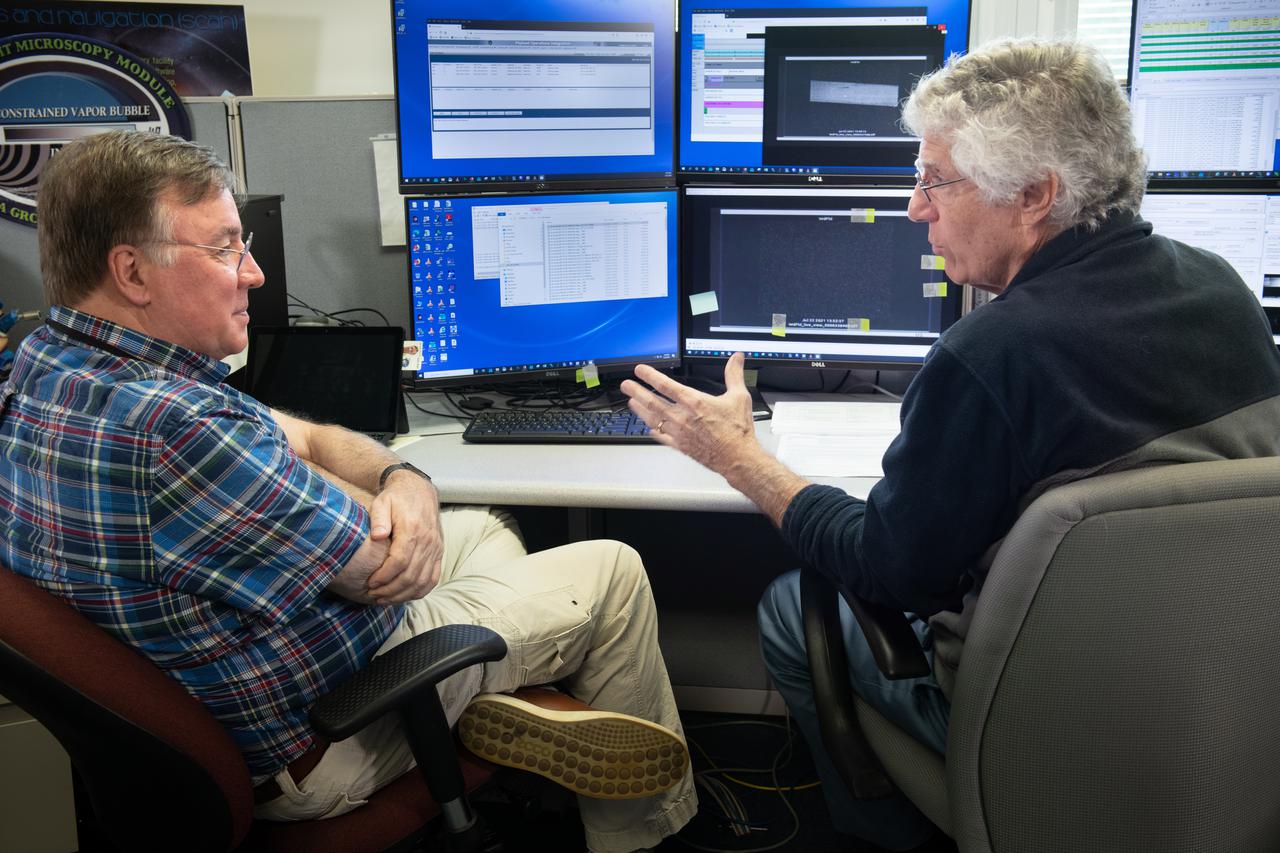
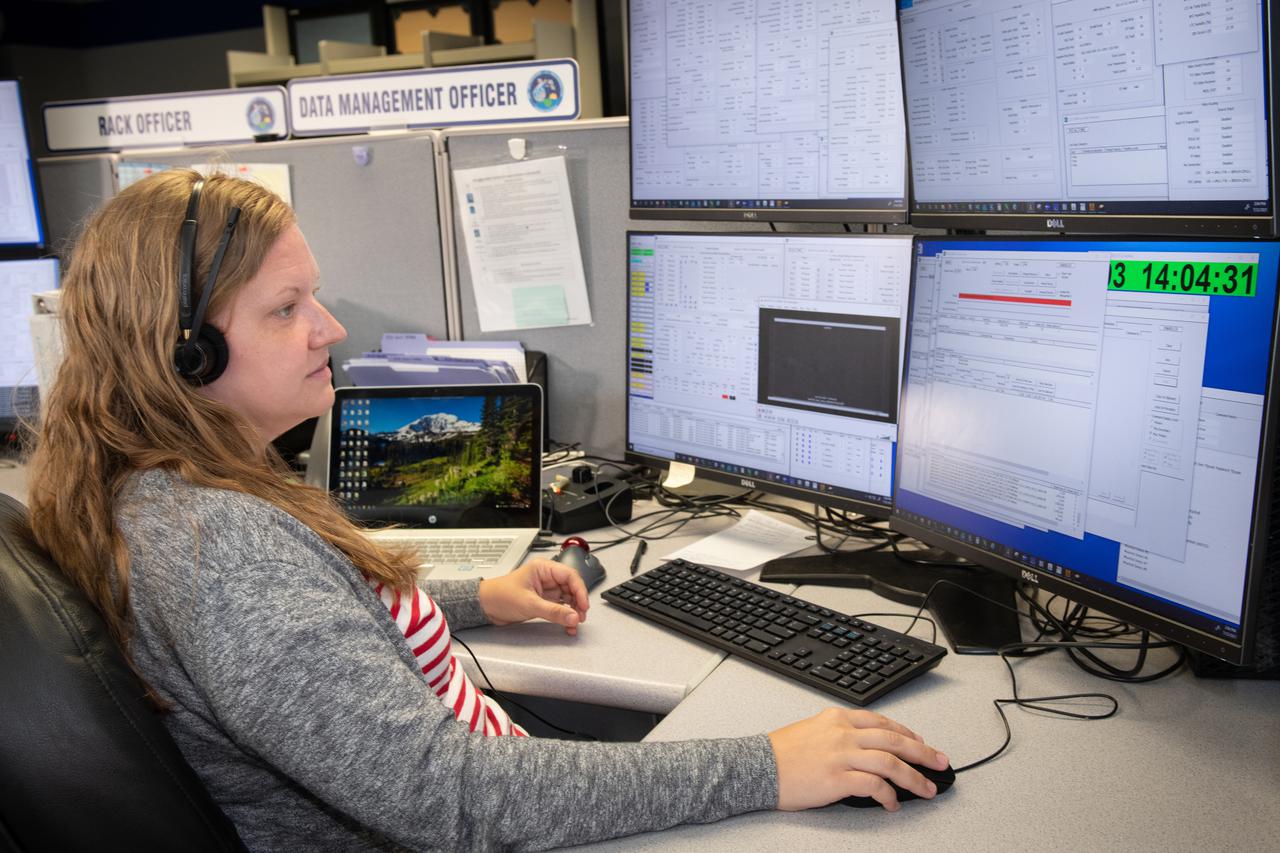
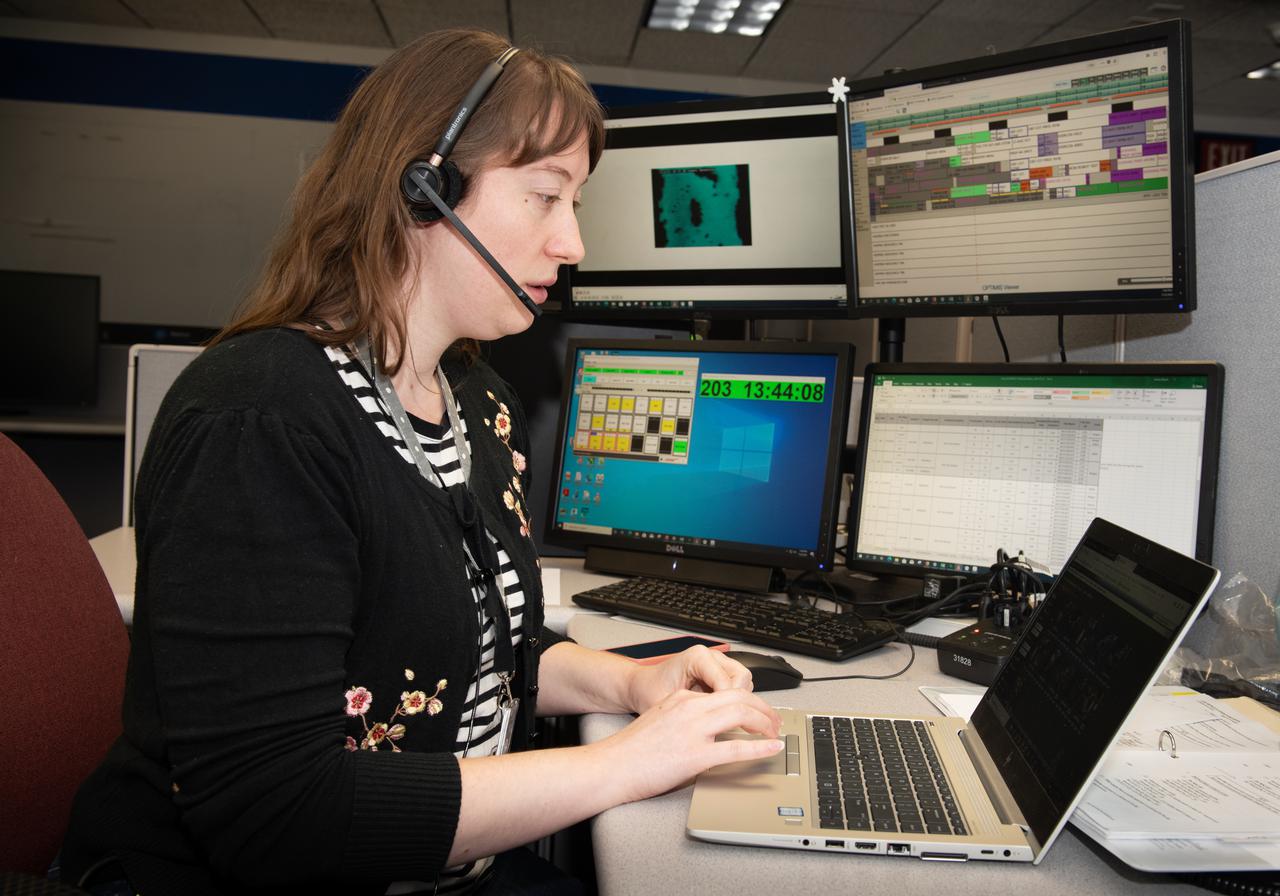
International Space Station, ISS Advanced Colloids Experiment – Thermal 5-3, ACE-T5-3 Operations in the Telescience Support Center, TSC
GRC-2021-C-03371
International Space Station, ISS Advanced Colloids Experiment – Thermal 5-3, ACE-T5-3 Operations in the Telescience Support Center, TSC
GRC-2021-C-03377
International Space Station, ISS Advanced Colloids Experiment – Thermal 5-3, ACE-T5-3 Operations in the Telescience Support Center, TSC
GRC-2021-C-03372
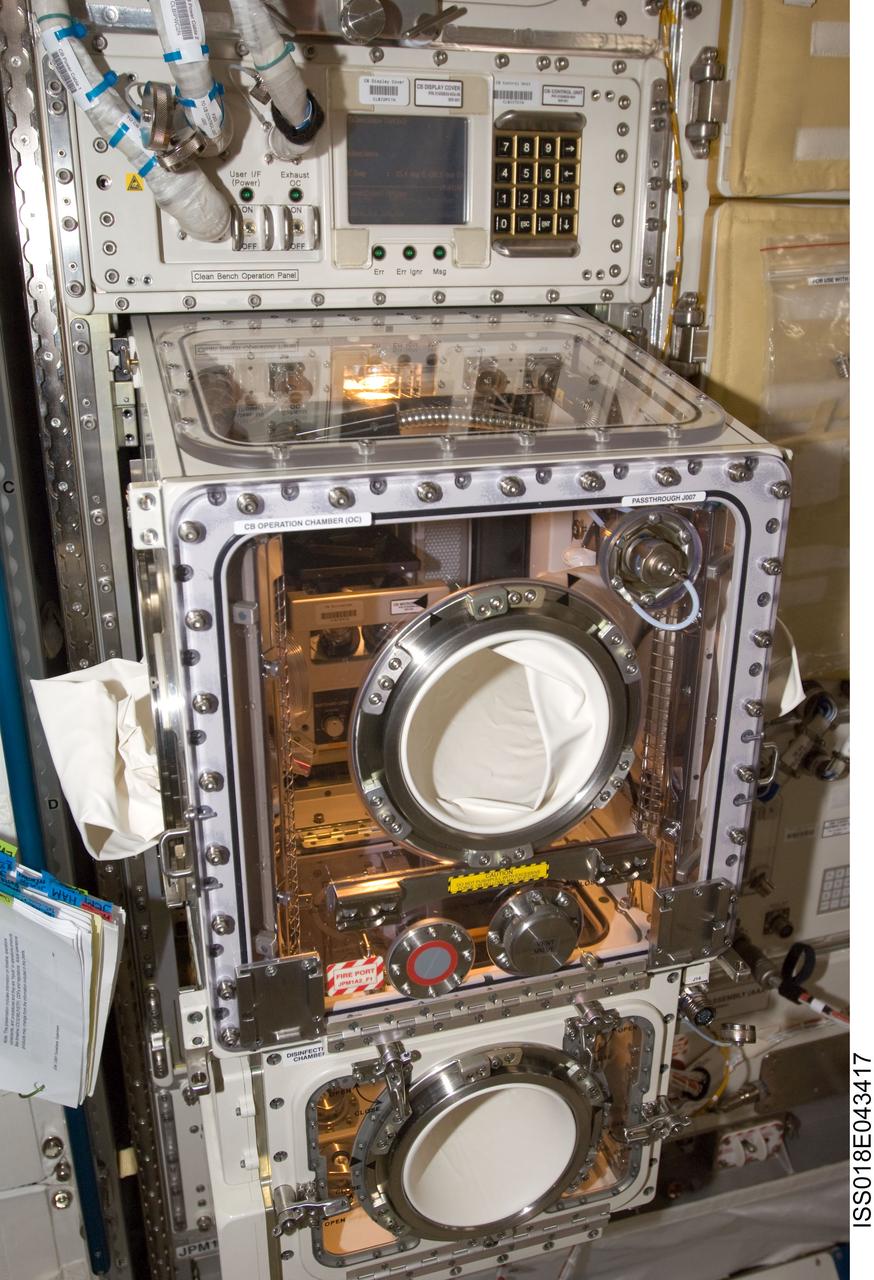
iss018e043417 (3/28/2009) --- A view of DomeGene samples in the CB Operations Chamber (OC) in the Japanese Experiment Module (JEM) aboard the International Space Station (ISS).
CB Operations Chamber (OC) during DomeGene sample removal
International Space Station, ISS Advanced Colloids Experiment – Thermal 5-3, ACE-T5-3 Operations in the Telescience Support Center, TSC
GRC-2021-C-03375
International Space Station, ISS Advanced Colloids Experiment – Thermal 5-3, ACE-T5-3 Operations in the Telescience Support Center, TSC
GRC-2021-C-03373
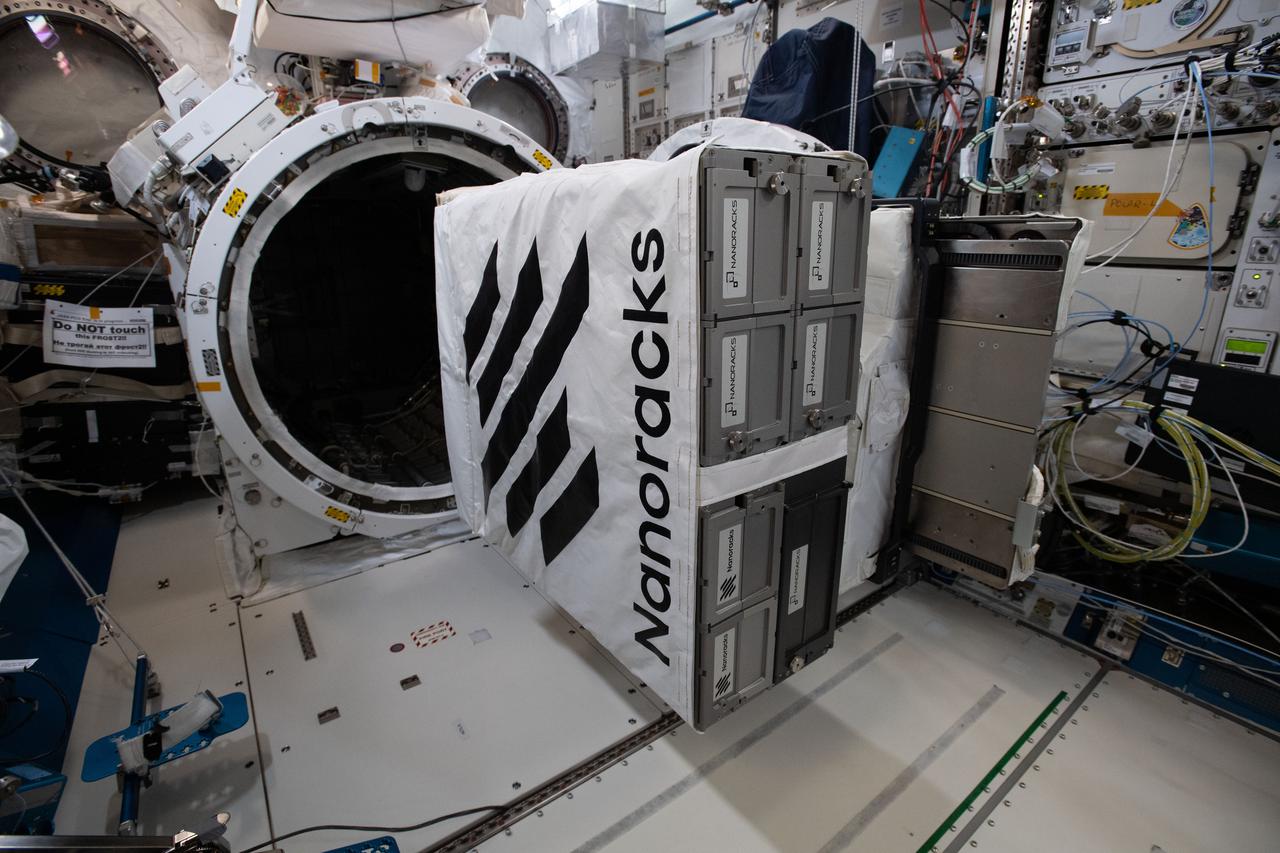
iss065e444435 (10/11/2021) --- A view of NanoRacks CubeSat Deployers hardware on the MPEP (Multipurpose Experiment Platform) aboard the International Space Station (ISS).
NanoRacks CubeSat Deployer Installation on the MPEP
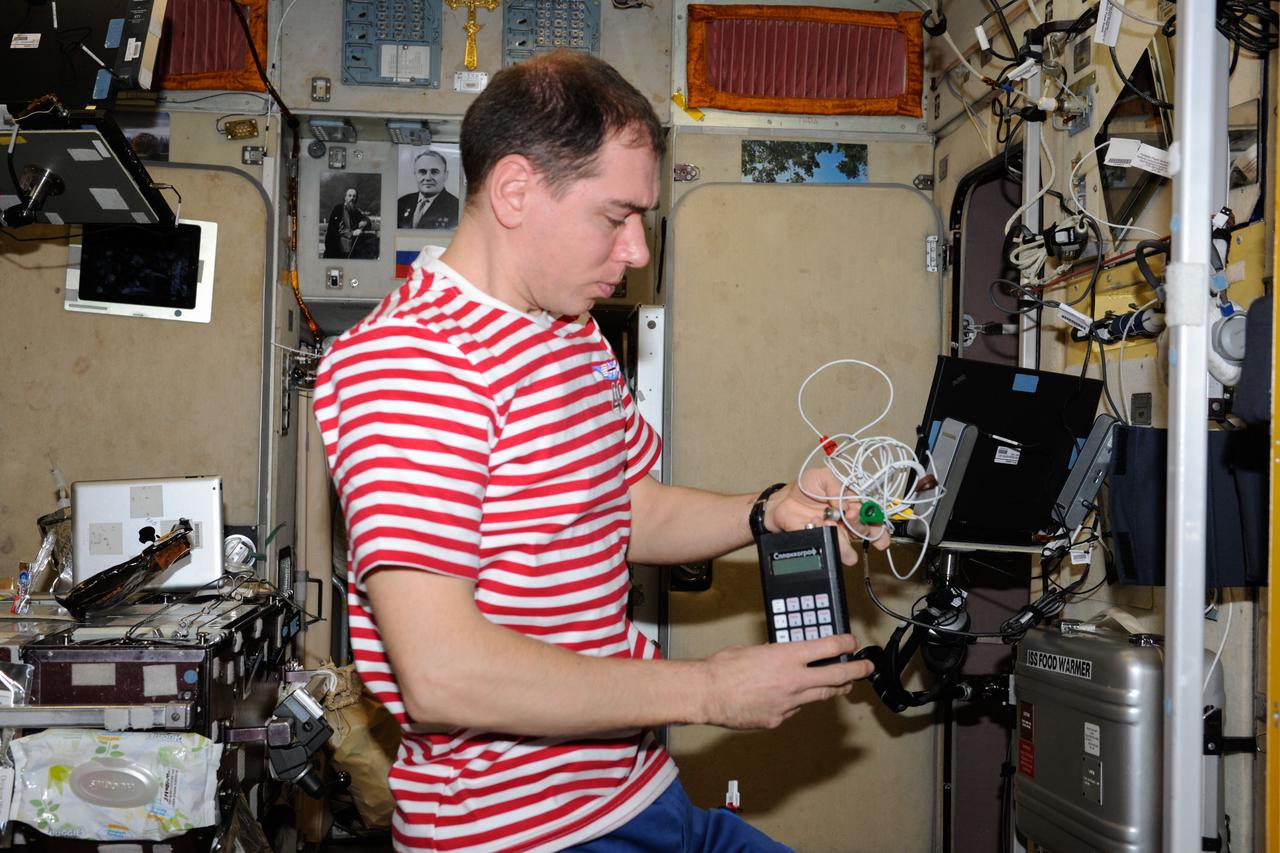
iss046e000891 (12/14/2015) --- Cosmonaut Sergey Volkov is photographed working with Splankh experiment hardware in the Service Module (SM) aboard the International Space Station (ISS).
Splankh experiment ops
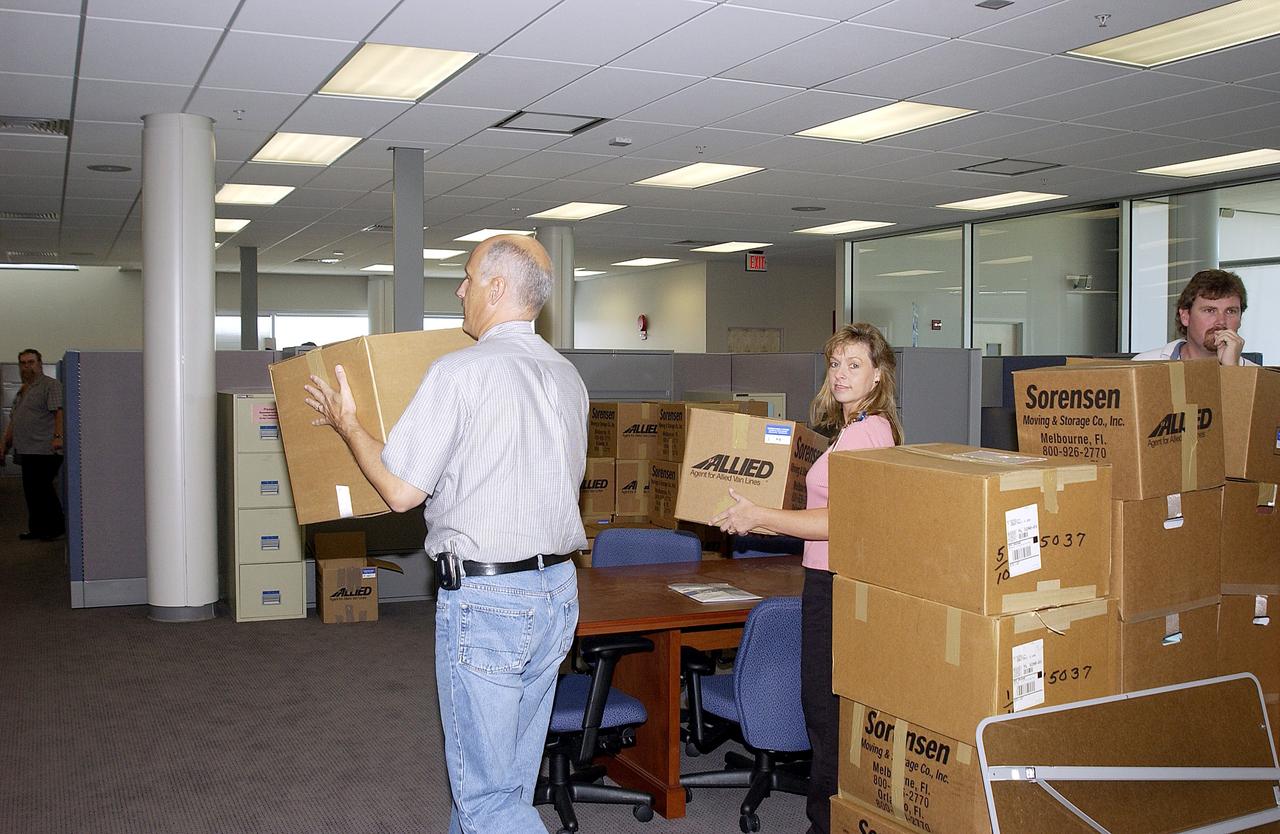
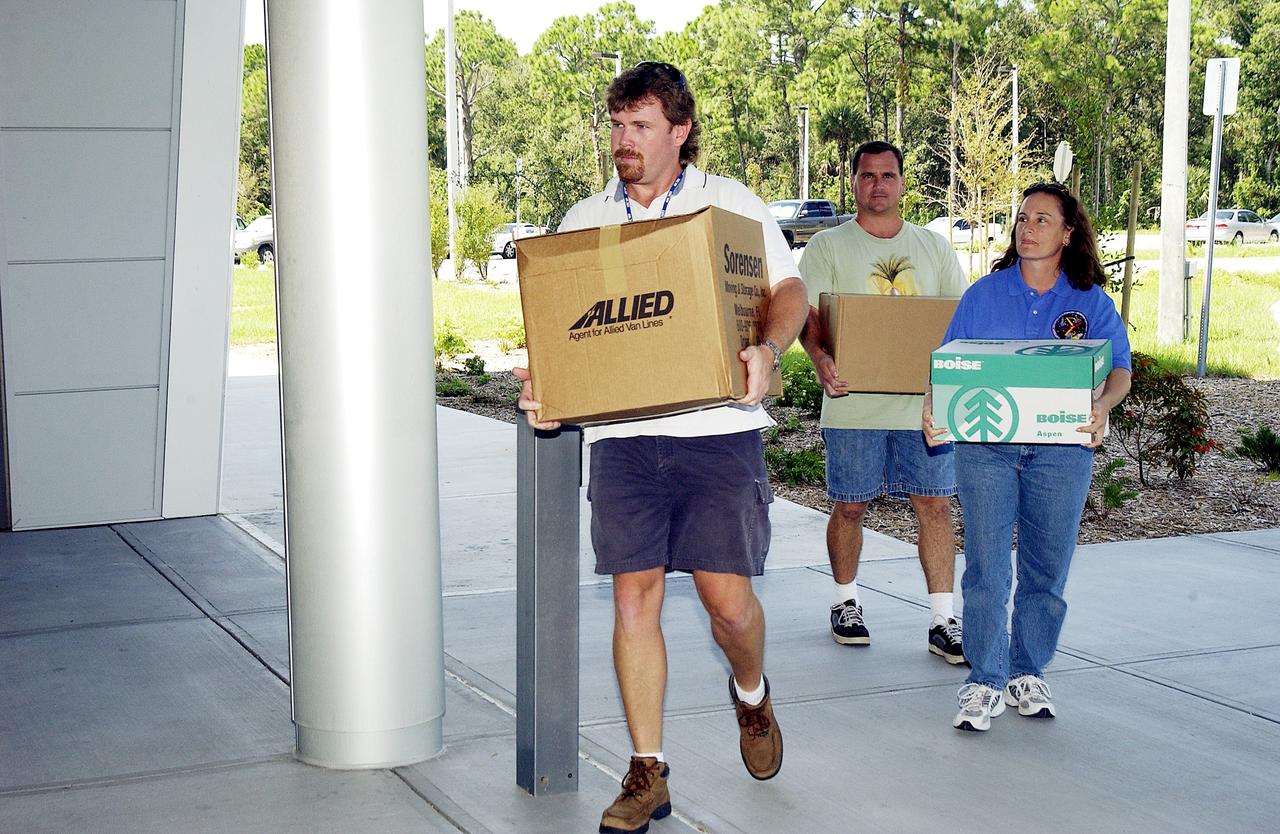
KENNEDY SPACE CENTER, FLA. -  Dynamac employees (from left) Larry Burns, Debbie Wells and Neil  Yorio carry boxes of hardware into the Space Life Sciences Lab (SLSL), formerly known as the Space Experiment Research and Processing Laboratory (SERPL).  They are transferring equipment from Hangar L. The new lab is a state-of-the-art facility being built for ISS biotechnology research. Developed as a partnership between NASA-KSC and the State of Florida, NASA’s life sciences contractor will be the primary tenant of the facility, leasing space to conduct flight experiment processing and NASA-sponsored research. About 20 percent of the facility will be available for use by Florida’s university researchers through the Florida Space Research Institute.
KENNEDY SPACE CENTER, FLA. - Dynamac employees (from left) Larry Burns, Debbie Wells and Neil Yorio carry boxes of hardware into the Space Life Sciences Lab (SLSL), formerly known as the Space Experiment Research and Processing Laboratory (SERPL). They are transferring equipment from Hangar L. The new lab is a state-of-the-art facility being built for ISS biotechnology research. Developed as a partnership between NASA-KSC and the State of Florida, NASA’s life sciences contractor will be the primary tenant of the facility, leasing space to conduct flight experiment processing and NASA-sponsored research. About 20 percent of the facility will be available for use by Florida’s university researchers through the Florida Space Research Institute.
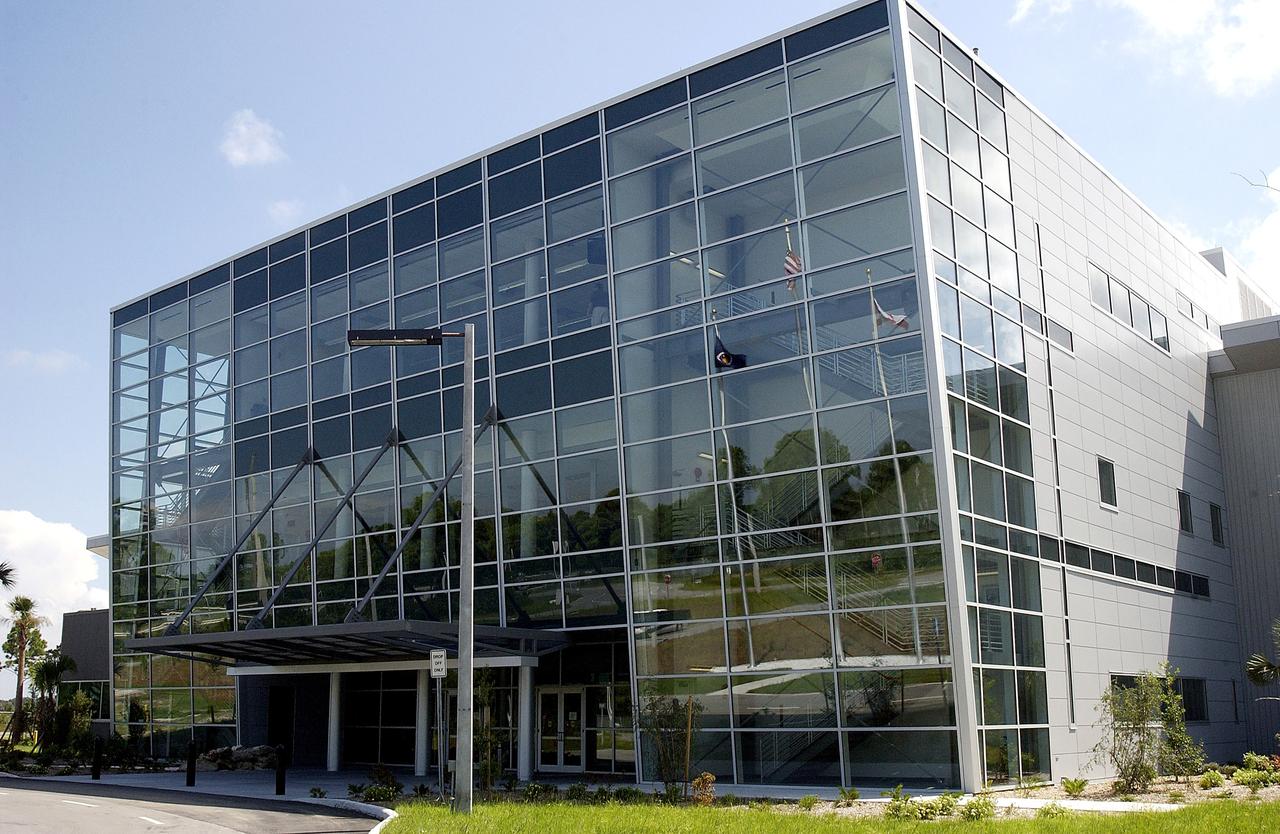
KENNEDY SPACE CENTER, FLA. -  The Space Life Sciences Lab (SLSL), formerly known as the Space Experiment Research and Processing Laboratory (SERPL), is nearing completion.  The new lab is a state-of-the-art facility being built for ISS biotechnology research. Developed as a partnership between NASA-KSC and the State of Florida, NASA’s life sciences contractor will be the primary tenant of the facility, leasing space to conduct flight experiment processing and NASA-sponsored research. About 20 percent of the facility will be available for use by Florida’s university researchers through the Florida Space Research Institute.
KENNEDY SPACE CENTER, FLA. - The Space Life Sciences Lab (SLSL), formerly known as the Space Experiment Research and Processing Laboratory (SERPL), is nearing completion. The new lab is a state-of-the-art facility being built for ISS biotechnology research. Developed as a partnership between NASA-KSC and the State of Florida, NASA’s life sciences contractor will be the primary tenant of the facility, leasing space to conduct flight experiment processing and NASA-sponsored research. About 20 percent of the facility will be available for use by Florida’s university researchers through the Florida Space Research Institute.
KENNEDY SPACE CENTER, FLA. -  Ivan Rodriguez, with Bionetics, and Michelle Crouch and Larry Burns, with Dynamac, carry boxes of equipment into the Space Life Sciences Lab (SLSL), formerly known as the Space Experiment Research and Processing Laboratory (SERPL).    They are transferring equipment from Hangar L. The new lab is a state-of-the-art facility being built for ISS biotechnology research. Developed as a partnership between NASA-KSC and the State of Florida, NASA’s life sciences contractor will be the primary tenant of the facility, leasing space to conduct flight experiment processing and NASA-sponsored research. About 20 percent of the facility will be available for use by Florida’s university researchers through the Florida Space Research Institute.
KENNEDY SPACE CENTER, FLA. - Ivan Rodriguez, with Bionetics, and Michelle Crouch and Larry Burns, with Dynamac, carry boxes of equipment into the Space Life Sciences Lab (SLSL), formerly known as the Space Experiment Research and Processing Laboratory (SERPL). They are transferring equipment from Hangar L. The new lab is a state-of-the-art facility being built for ISS biotechnology research. Developed as a partnership between NASA-KSC and the State of Florida, NASA’s life sciences contractor will be the primary tenant of the facility, leasing space to conduct flight experiment processing and NASA-sponsored research. About 20 percent of the facility will be available for use by Florida’s university researchers through the Florida Space Research Institute.
KENNEDY SPACE CENTER, FLA. -  Astronaut Soichi Noguchi (left), with the National Space Development Agency of Japan (NASDA), works at a console during a Multi-Element Integrated Test (MEIT) of the U.S. Node 2 and the Japanese Experiment Module (JEM) in the Space Station Processing Facility.  The JEM, developed by NASDA, is Japan's primary contribution to the Station. It will enhance the unique research capabilities of the orbiting complex by providing an additional environment for astronauts to conduct science experiments. Noguchi is assigned to mission STS-114 as a mission specialist.  Node 2 provides attach locations for the Japanese laboratory, as well as European laboratory, the Centrifuge Accommodation Module and, eventually, Multipurpose Logistics Modules.  Installation of the module will complete the U.S. Core of the ISS.
KENNEDY SPACE CENTER, FLA. - Astronaut Soichi Noguchi (left), with the National Space Development Agency of Japan (NASDA), works at a console during a Multi-Element Integrated Test (MEIT) of the U.S. Node 2 and the Japanese Experiment Module (JEM) in the Space Station Processing Facility. The JEM, developed by NASDA, is Japan's primary contribution to the Station. It will enhance the unique research capabilities of the orbiting complex by providing an additional environment for astronauts to conduct science experiments. Noguchi is assigned to mission STS-114 as a mission specialist. Node 2 provides attach locations for the Japanese laboratory, as well as European laboratory, the Centrifuge Accommodation Module and, eventually, Multipurpose Logistics Modules. Installation of the module will complete the U.S. Core of the ISS.
KENNEDY SPACE CENTER, FLA. -  In the Space Station Processing Facility, astronaut Soichi Noguchi (right), with the National Space Development Agency of Japan (NASDA), stands inside the Japanese Experiment Module (JEM) that is undergoing a Multi-Element Integrated Test (MEIT) with the U.S. Node 2.  The JEM, developed by NASDA, is Japan's primary contribution to the Station. It will enhance the unique research capabilities of the orbiting complex by providing an additional environment for astronauts to conduct science experiments. Noguchi is assigned to mission STS-114 as a mission specialist.  Node 2 provides attach locations for the Japanese laboratory, as well as European laboratory, the Centrifuge Accommodation Module and, eventually, Multipurpose Logistics Modules.  Installation of the module will complete the U.S. Core of the ISS.
KENNEDY SPACE CENTER, FLA. - In the Space Station Processing Facility, astronaut Soichi Noguchi (right), with the National Space Development Agency of Japan (NASDA), stands inside the Japanese Experiment Module (JEM) that is undergoing a Multi-Element Integrated Test (MEIT) with the U.S. Node 2. The JEM, developed by NASDA, is Japan's primary contribution to the Station. It will enhance the unique research capabilities of the orbiting complex by providing an additional environment for astronauts to conduct science experiments. Noguchi is assigned to mission STS-114 as a mission specialist. Node 2 provides attach locations for the Japanese laboratory, as well as European laboratory, the Centrifuge Accommodation Module and, eventually, Multipurpose Logistics Modules. Installation of the module will complete the U.S. Core of the ISS.
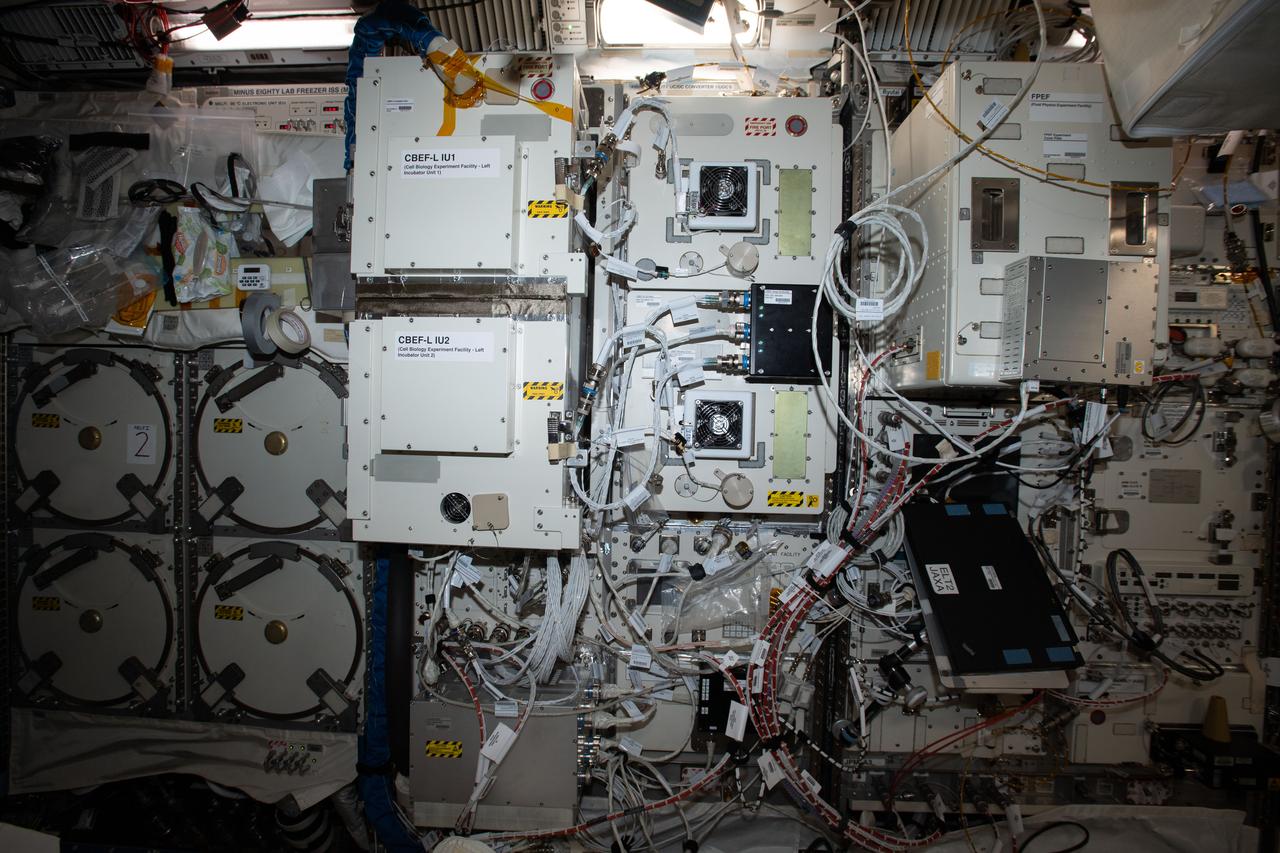
iss062e103684 (3/21/2020) --- A view of the rack containing CBEF-L (Cell Biology Experiment Facility-L) IU1 and CBEF-L IU2 in the Japanese Experiment Module (JEM) Pressurized Module (JPM). aboard the International Space Station (ISS).  Cell Biology Experiment Facility-L (CBEF-L) is a Japan Aerospace Exploration Agency (JAXA) new subrack facility, which is an upgraded facility of the original Cell Biology Experiment Facility (CBEF) currently aboard the International Space Station (ISS). CBEF-L provides new capabilities with additional new resources such as Full High Definition video interface, Ethernet, 24 VDC power supply, and a larger diameter centrifugal test environment. By using the original CBEF and CBEF-L as one facility for the same experiment, the payload user is provided with an upgraded experimental environment that can handle the processing of more experimental samples for a wider array of experiments.
Racks, Control panels
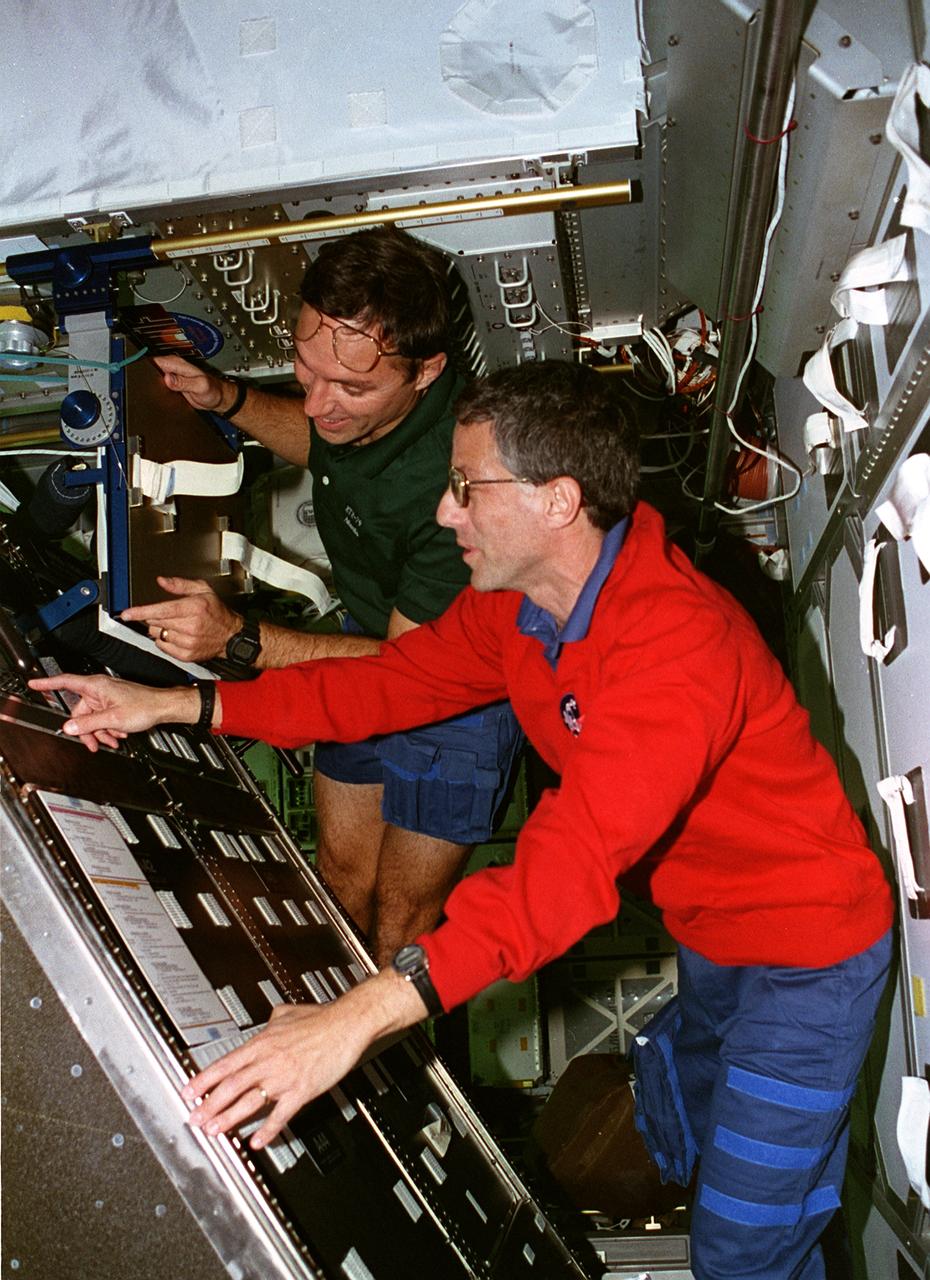
STS079-302-006 (16-26 Sept. 1996) --- Astronauts Jerome (Jay) Apt (right) and Carl E. Walz, both mission specialists, tilt the Active Rack Isolation System (ARIS) hardware which was included on this flight to evaluate conditions and hardware requirements for the International Space Station (ISS). The ARIS is designed to isolate certain experiments from major disturbances that are expected to be found on the ISS, such as vibrations caused by the movement of mechanisms and crew members and the operation of equipment. STS-79 was chosen for the inclusion of the experiment because the Shuttle-Mir complex more closely approximates the acceleration environment of the ISS.
RME 1313 ARIS - Active Rack Isolation System
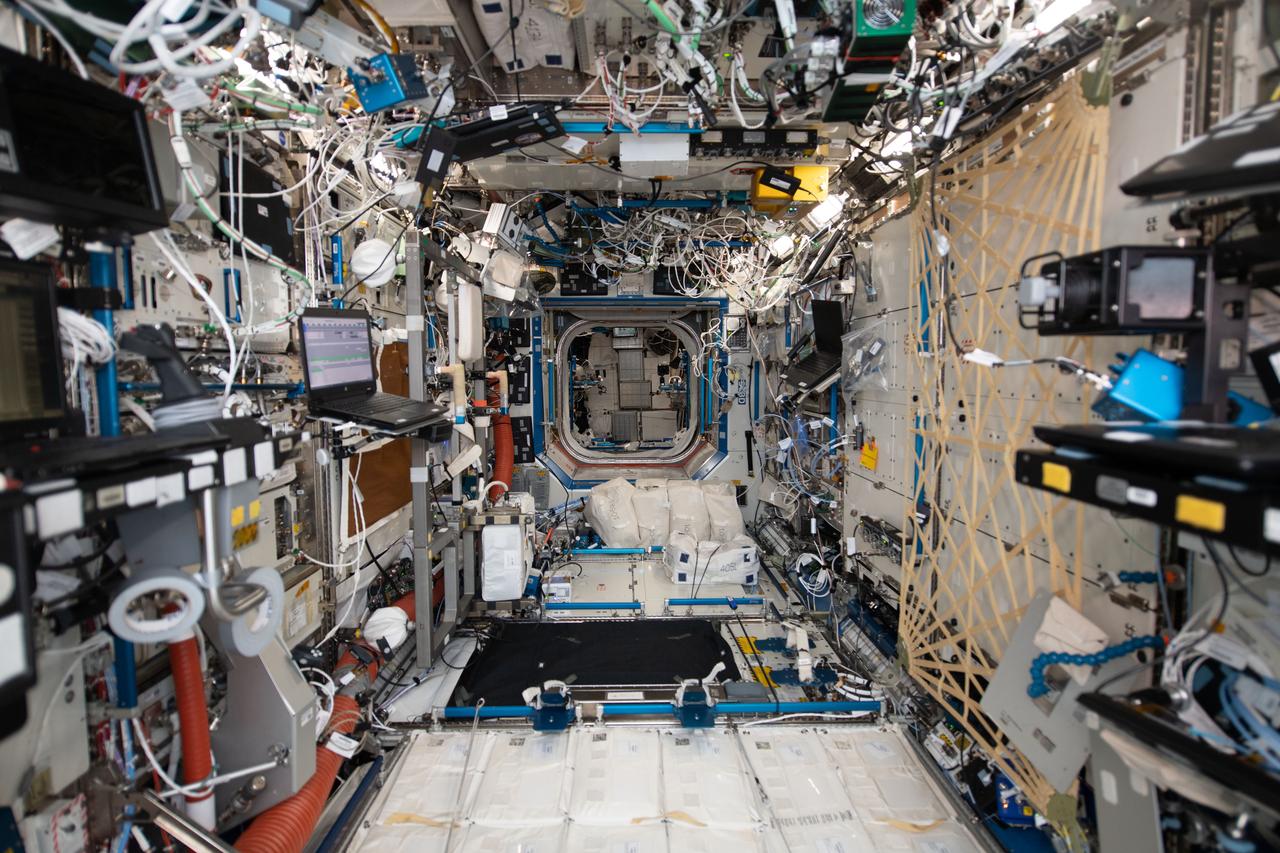
iss058e004610 (1/20/2019) --- A View of the Destiny US Laboratory aboard the International Space Station (ISS). The U.S. Laboratory Module, called Destiny, is the primary research laboratory for U.S. payloads, supporting a wide range of experiments and studies contributing to health, safety, and quality of life for people all over the world. Science conducted on the ISS offers researchers an unparalleled opportunity to test physical processes in the absence of gravity. The results of these experiments will allow scientists to better understand our world and ourselves and prepare us for future missions. Destiny provides internal interfaces to accommodate 24 equipment racks for accommodation and control of ISS systems and scientific research.
Destiny Laboratory
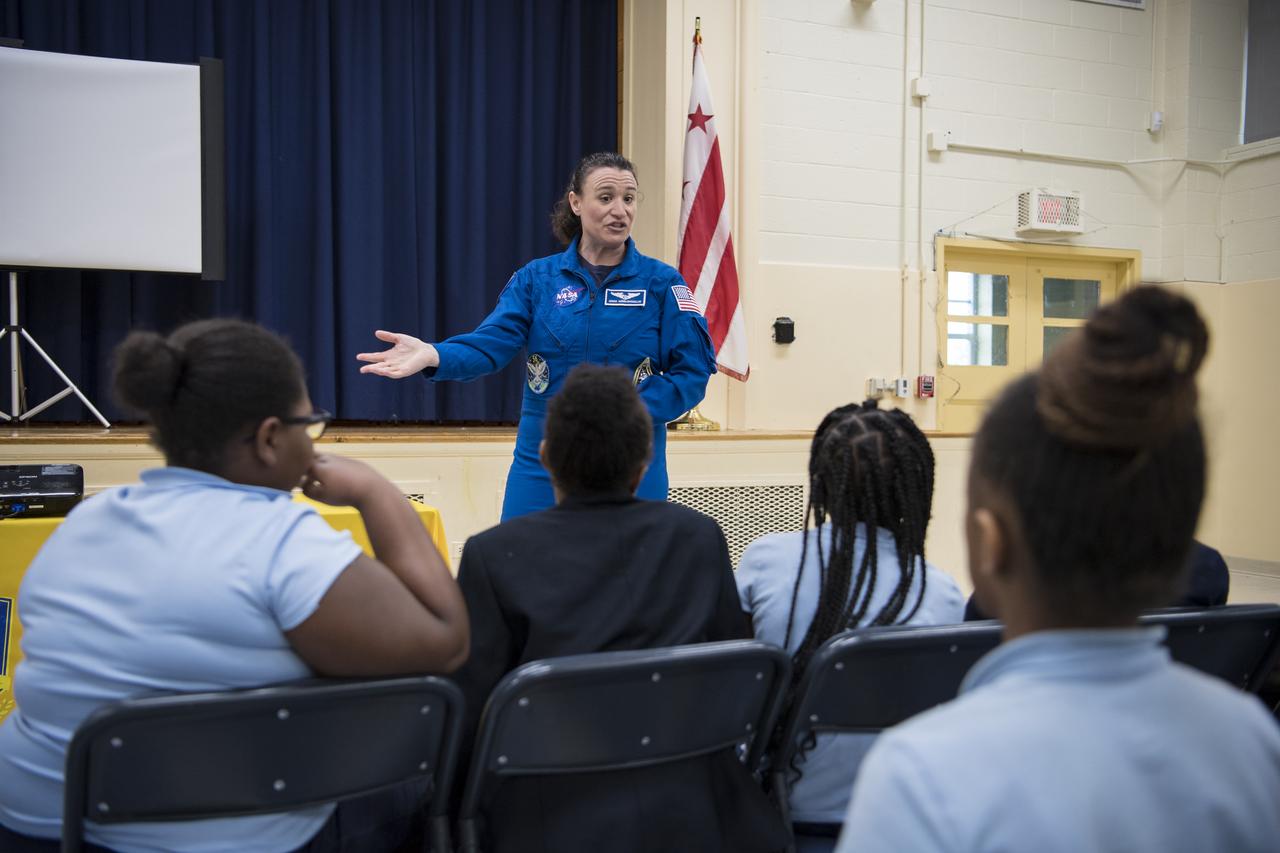
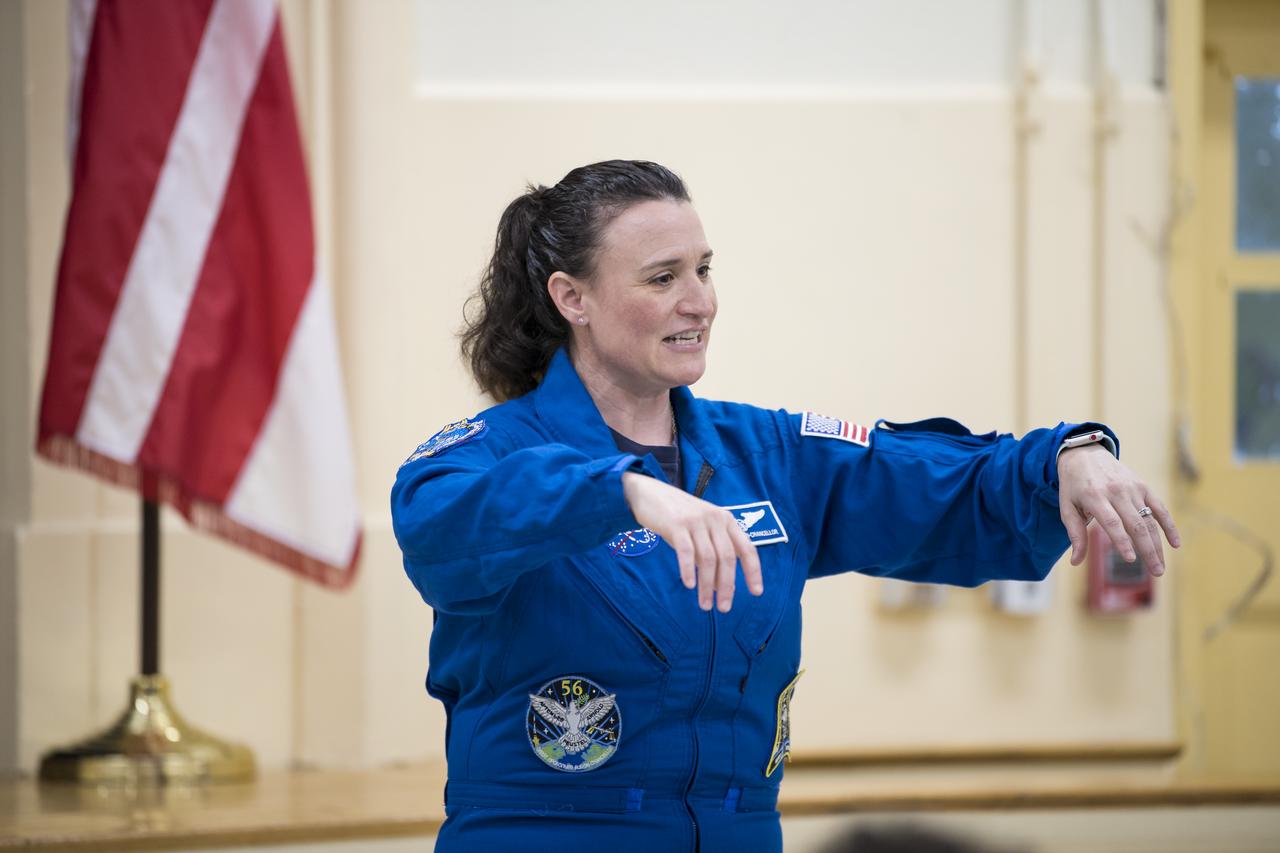
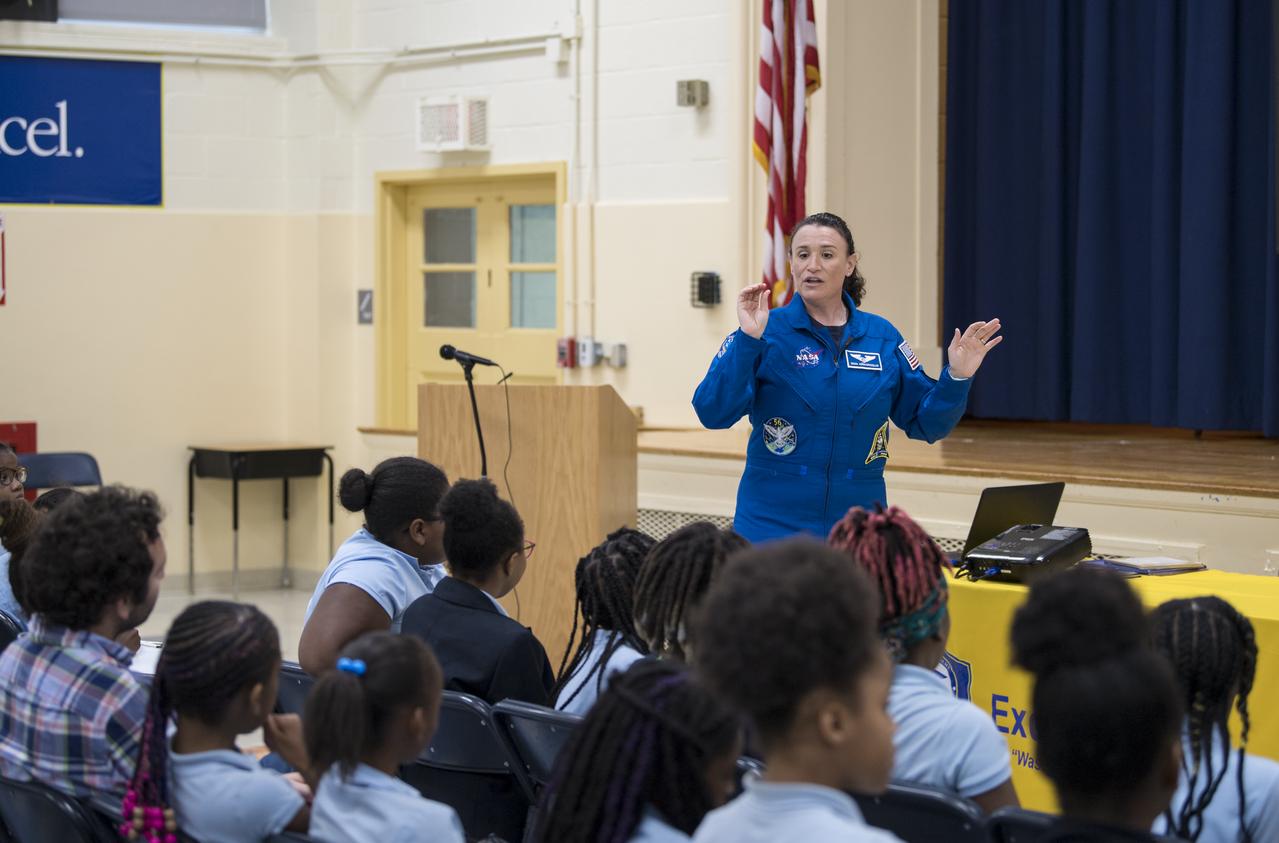
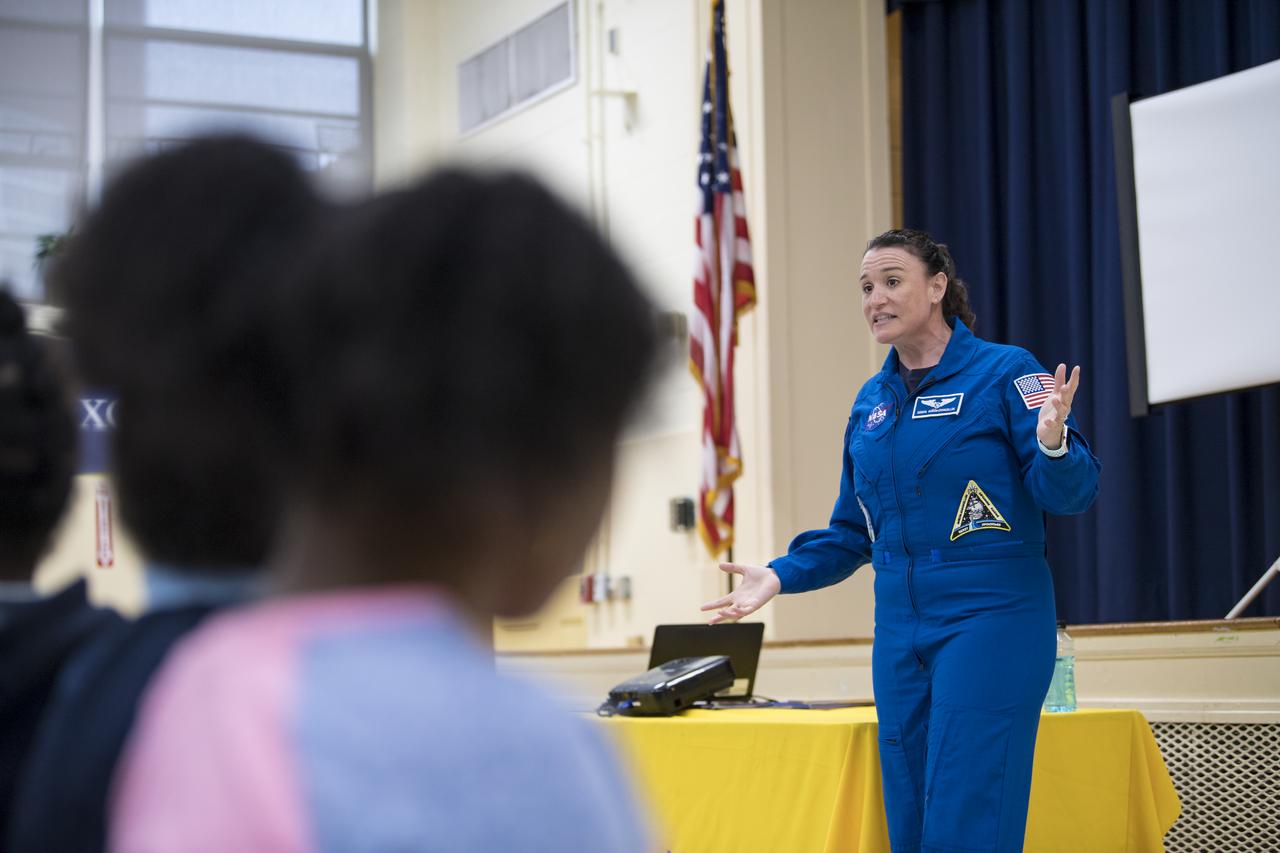
NASA astronaut Dr. Serena Auñón-Chancellor speaks about her experience on Expeditions 56 and 57 onboard the International Space Station (ISS) at Excel Academy Public Charter School, Monday, June 10, 2019 in Washington, DC. Auñón-Chancellor spent 197 days living and working onboard the ISS and contributed to hundreds of experiments in biology, biotechnology, physical science, and Earth science while there. She is also a doctor and started her career with NASA as a flight surgeon in 2006. Photo Credit: (NASA/Aubrey Gemignani)
Astronaut Serena Auñón-Chancellor at Excel Academy
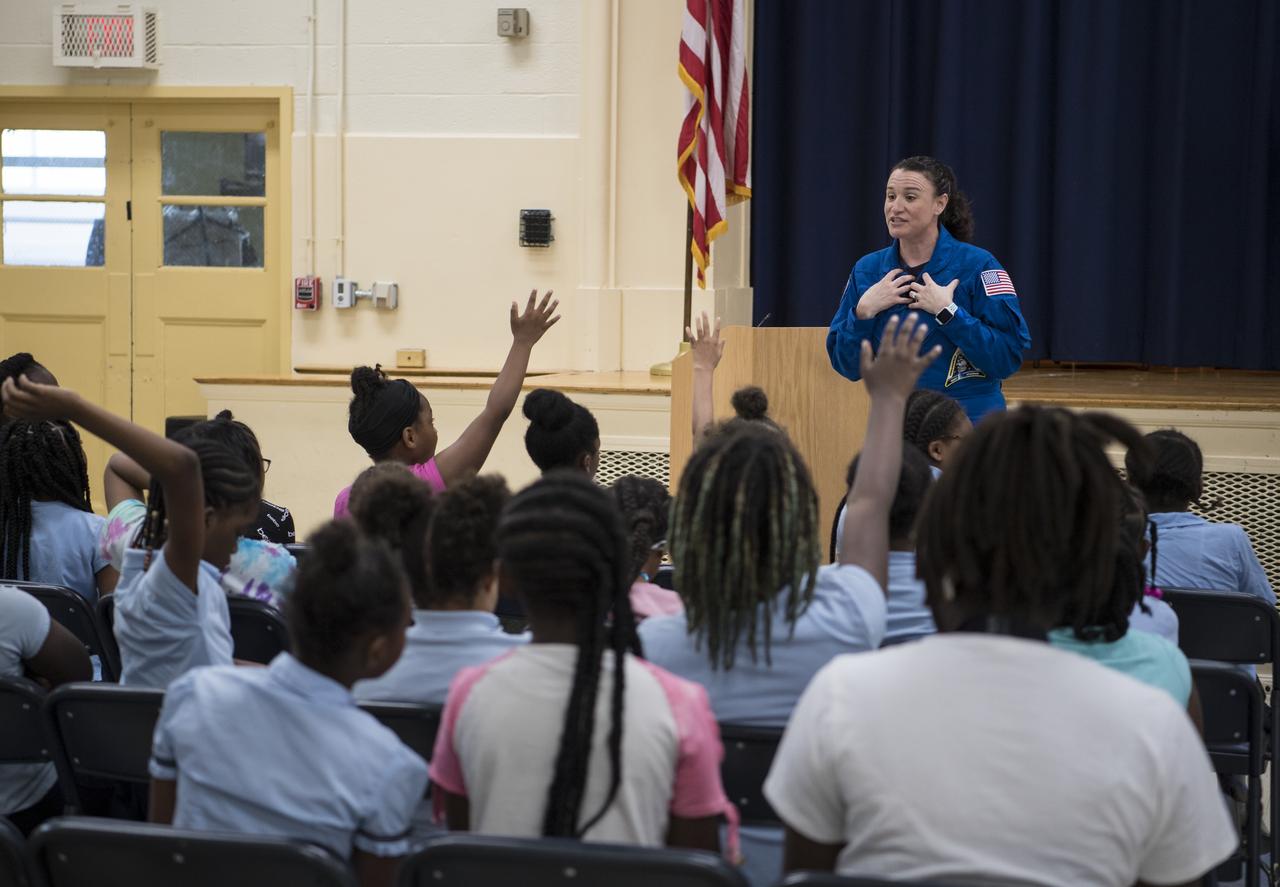
NASA astronaut Dr. Serena Auñón-Chancellor speaks about her experience on Expeditions 56 and 57 onboard the International Space Station (ISS) at Excel Academy Public Charter School, Monday, June 10, 2019 in Washington, DC. Auñón-Chancellor spent 197 days living and working onboard the ISS and contributed to hundreds of experiments in biology, biotechnology, physical science, and Earth science while there. She is also a doctor and started her career with NASA as a flight surgeon in 2006. Photo Credit: (NASA/Aubrey Gemignani)
Astronaut Serena Auñón-Chancellor at Excel Academy
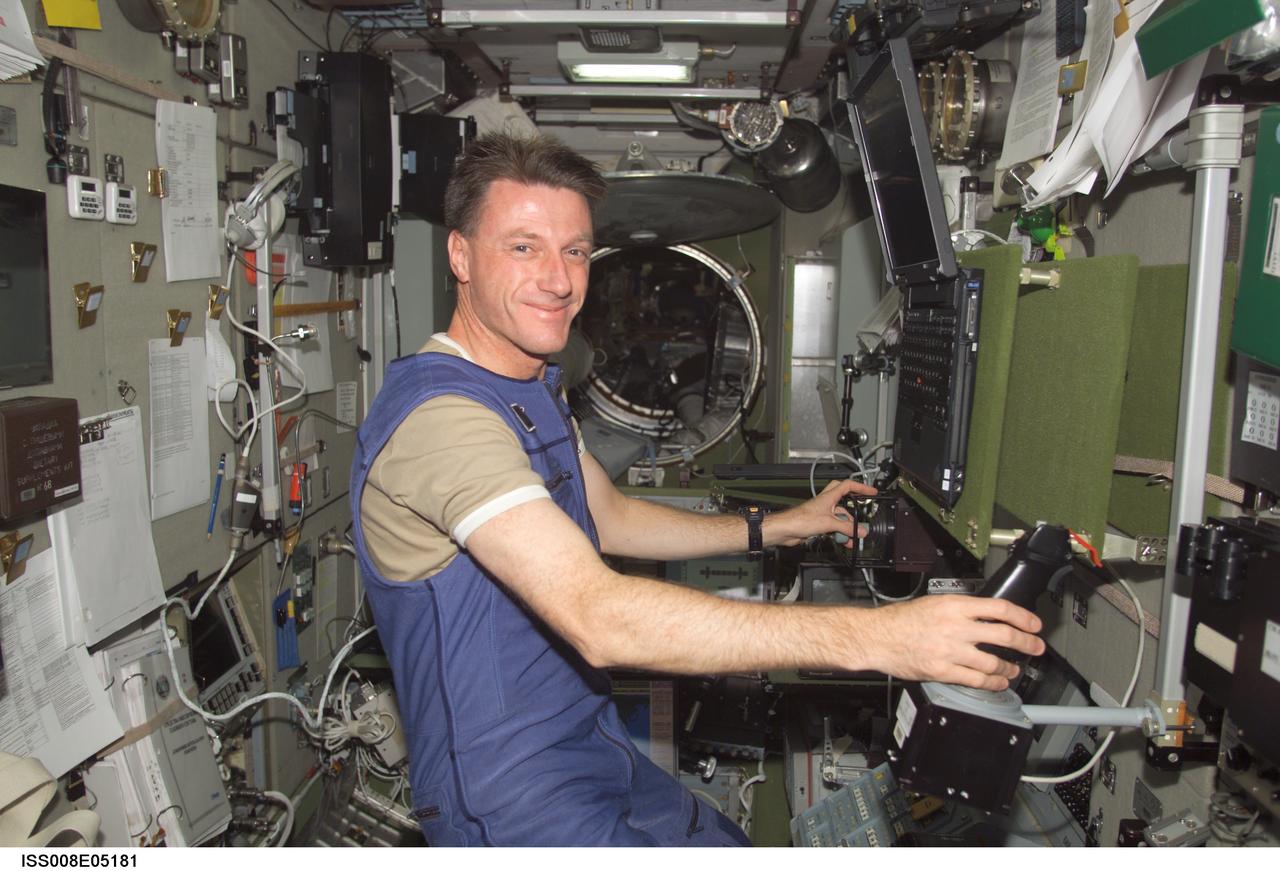
ISS008-E-05181 (31 October 2003) --- Astronaut C. Michael Foale, Expedition 8 mission commander and NASA ISS science officer, works with the Russian biomedical “Pilot” experiment (MBI-15) in the Zvezda Service Module on the International Space Station (ISS). The experiment, which looks at psychological and physiological changes in crew performance during long-duration spaceflight, requires a worktable, ankle restraint system and two control handles for testing piloting skill.
Foale works with the Pilot experiment during Expedition 8
ISS008-E-05026 (27 October 2003) --- European Space Agency (ESA) astronaut Pedro Duque (left) of Spain works with the Cervantes mission experiment PROMISS in the Microgravity Science Glovebox (MSG) in the Destiny laboratory on the International Space Station (ISS). This experiment will investigate the growth processes of proteins in weightless conditions. Astronaut Edward T. Lu, Expedition 7 NASA ISS science officer and flight engineer, is visible at right.
Duque works at the MSG for PromISS 2 in the Lab during Expedition Seven / 8 OPS
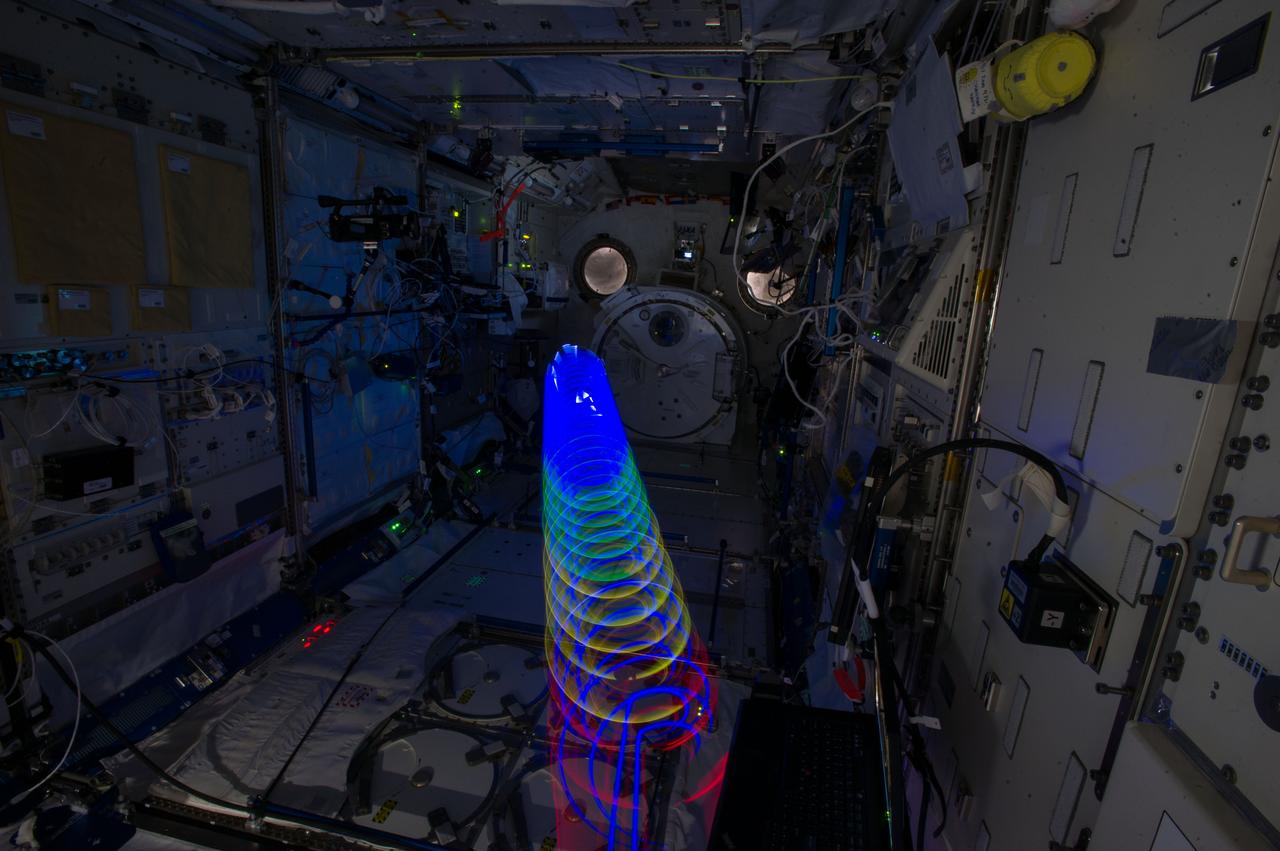
iss038e024926 (1/14/2020) --- View of light spirals from the Education Payload Observation (JAXA-EPO) experiment Spiral Top which aims to record the motion of a spinning top onboard the International Space Station (ISS). The photo was taken in the JAXA Experiment Module (JEM) Pressurized Module (JPM) aboard the International Space Station (ISS).
Spiral Top
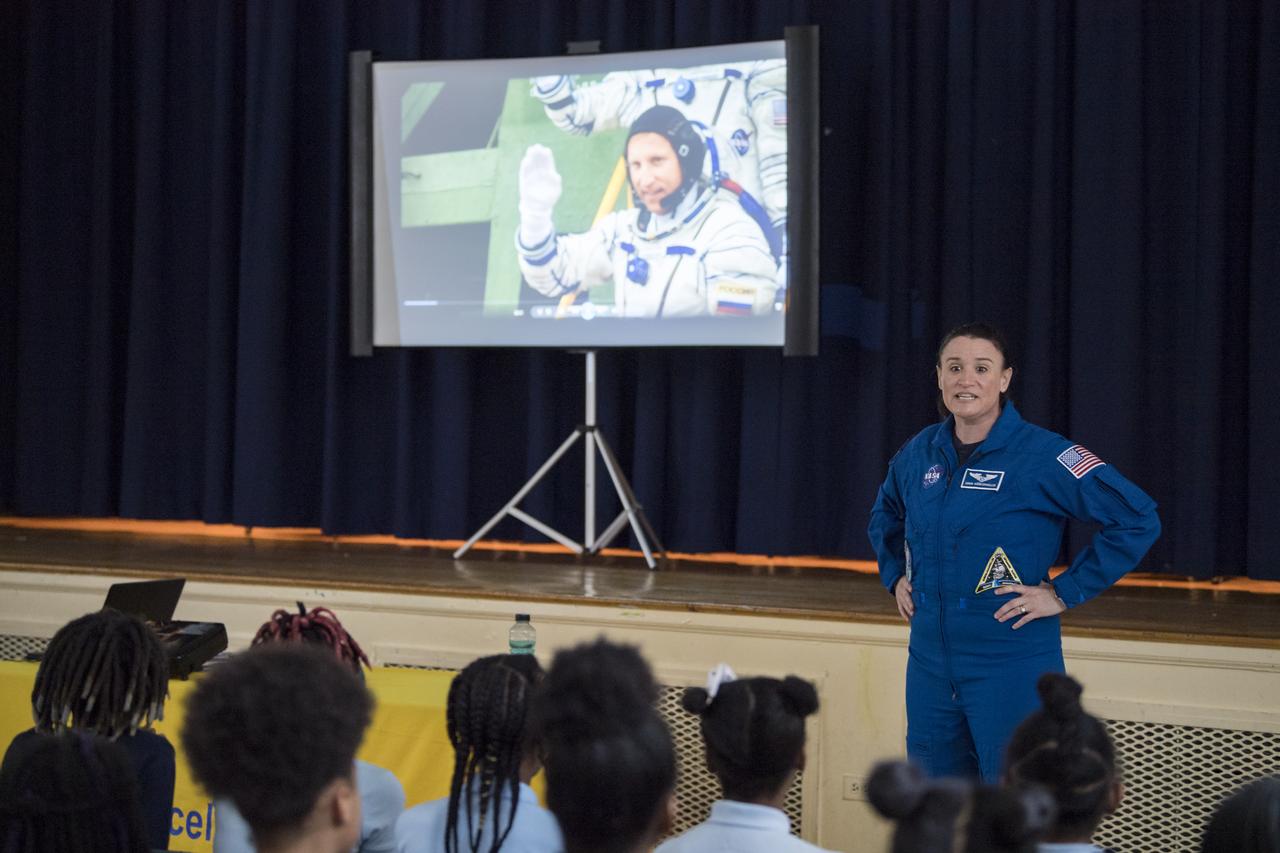
NASA astronaut Dr. Serena Auñón-Chancellor speaks about her experience on Expeditions 56 and 57 onboard the International Space Station (ISS) at Excel Academy Public Charter School, Monday, June 10, 2019 in Washington, DC. Auñón-Chancellor spent 197 days living and working onboard the ISS and contributed to hundreds of experiments in biology, biotechnology, physical science, and Earth science while there. She is also a doctor and started her career with NASA as a flight surgeon in 2006. Photo Credit: (NASA/Aubrey Gemignani)
Astronaut Serena Auñón-Chancellor at Excel Academy
NASA astronaut Dr. Serena Auñón-Chancellor speaks about her experience on Expeditions 56 and 57 onboard the International Space Station (ISS) at Excel Academy Public Charter School, Monday, June 10, 2019 in Washington, DC. Auñón-Chancellor spent 197 days living and working onboard the ISS and contributed to hundreds of experiments in biology, biotechnology, physical science, and Earth science while there. She is also a doctor and started her career with NASA as a flight surgeon in 2006. Photo Credit: (NASA/Aubrey Gemignani)
Astronaut Serena Auñón-Chancellor at Excel Academy
iss038e024925 (1/14/2020) --- View of light spirals from the Education Payload Observation (JAXA-EPO) experiment Spiral Top which aims to record the motion of a spinning top onboard the International Space Station (ISS). The photo was taken in the JAXA Experiment Module (JEM) Pressurized Module (JPM) aboard the International Space Station (ISS).
Spiral Top
NASA astronaut Dr. Serena Auñón-Chancellor speaks about her experience on Expeditions 56 and 57 onboard the International Space Station (ISS) at Excel Academy Public Charter School, Monday, June 10, 2019 in Washington, DC. Auñón-Chancellor spent 197 days living and working onboard the ISS and contributed to hundreds of experiments in biology, biotechnology, physical science, and Earth science while there. She is also a doctor and started her career with NASA as a flight surgeon in 2006. Photo Credit: (NASA/Aubrey Gemignani)
Astronaut Serena Auñón-Chancellor at Excel Academy
NASA astronaut Dr. Serena Auñón-Chancellor speaks about her experience on Expeditions 56 and 57 onboard the International Space Station (ISS) at Excel Academy Public Charter School, Monday, June 10, 2019 in Washington, DC. Auñón-Chancellor spent 197 days living and working onboard the ISS and contributed to hundreds of experiments in biology, biotechnology, physical science, and Earth science while there. She is also a doctor and started her career with NASA as a flight surgeon in 2006. Photo Credit: (NASA/Aubrey Gemignani)
Astronaut Serena Auñón-Chancellor at Excel Academy
JSC2003-E-42544 (June 2003 ) --- The Exposed Facility (EF) of the Japanese Experiment Module (JEM), Japan's primary contribution to the International Space Station (ISS), is shown in a processing facility. The EF is a unique platform on the ISS that is located outside of the Pressurized Module and is continuously exposed to the space environment. Items positioned on the exterior platform focus on Earth observation as well as communication, scientific, engineering and materials science experiments.  Photo Credit: NASA
JEM-EF
NASA astronaut Dr. Serena Auñón-Chancellor speaks about her experience on Expeditions 56 and 57 onboard the International Space Station (ISS) at Excel Academy Public Charter School, Monday, June 10, 2019 in Washington, DC. Auñón-Chancellor spent 197 days living and working onboard the ISS and contributed to hundreds of experiments in biology, biotechnology, physical science, and Earth science while there. She is also a doctor and started her career with NASA as a flight surgeon in 2006. Photo Credit: (NASA/Aubrey Gemignani)
Astronaut Serena Auñón-Chancellor at Excel Academy
jsc2024e067093 (1/19/2024) --- Ohio University’s Mission 18 Team (Michael Lane, Victoria Swiler and Nathan Smith) examine the growth of Sphingomonas sanguinis, an ISS-derived bacteria. Their experiment, Effect of Spaceflight-Adapted Bacteria on Plant Growth and Resilience in Microgravity, is part of the Nanoracks-National Center for Earth and Space Science Education-Surveyor-Student Spaceflight Experiments Program Mission 18 to ISS (Nanoracks-NCESSE-Surveyor-SSEP).
Preflight Imagery for Nanoracks-NCESSE-Surveyor-SSEP