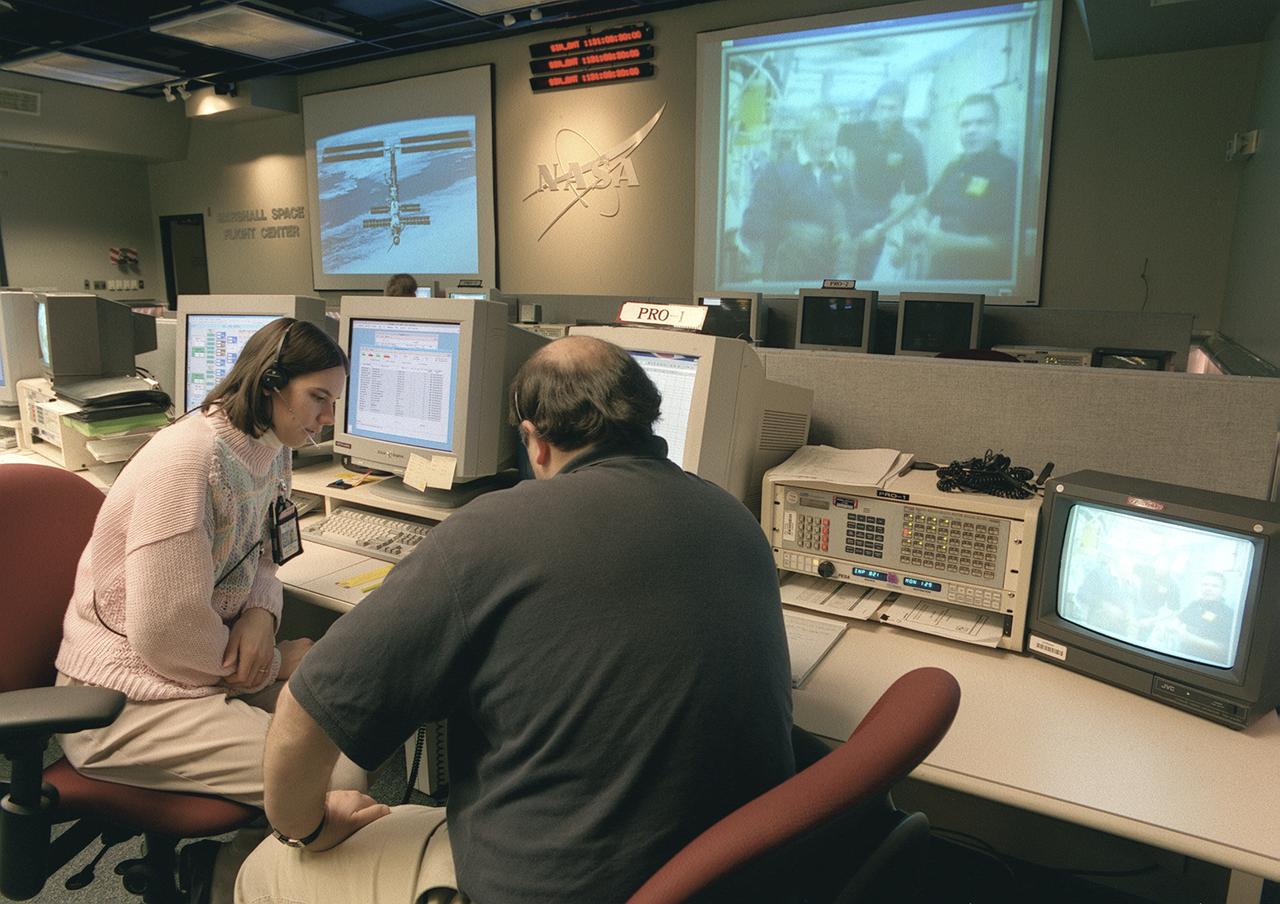
The Payload Operations Center (POC) is the science command post for the International Space Station (ISS). Located at NASA's Marshall Space Flight Center in Huntsville, Alabama, it is the focal point for American and international science activities aboard the ISS. The POC's unique capabilities allow science experts and researchers around the world to perform cutting-edge science in the unique microgravity environment of space. The POC is staffed around the clock by shifts of payload flight controllers. At any given time, 8 to 10 flight controllers are on consoles operating, plarning for, and controlling various systems and payloads. This photograph shows a Payload Rack Officer (PRO) at a work station. The PRO is linked by a computer to all payload racks aboard the ISS. The PRO monitors and configures the resources and environment for science experiments including EXPRESS Racks, multiple-payload racks designed for commercial payloads.
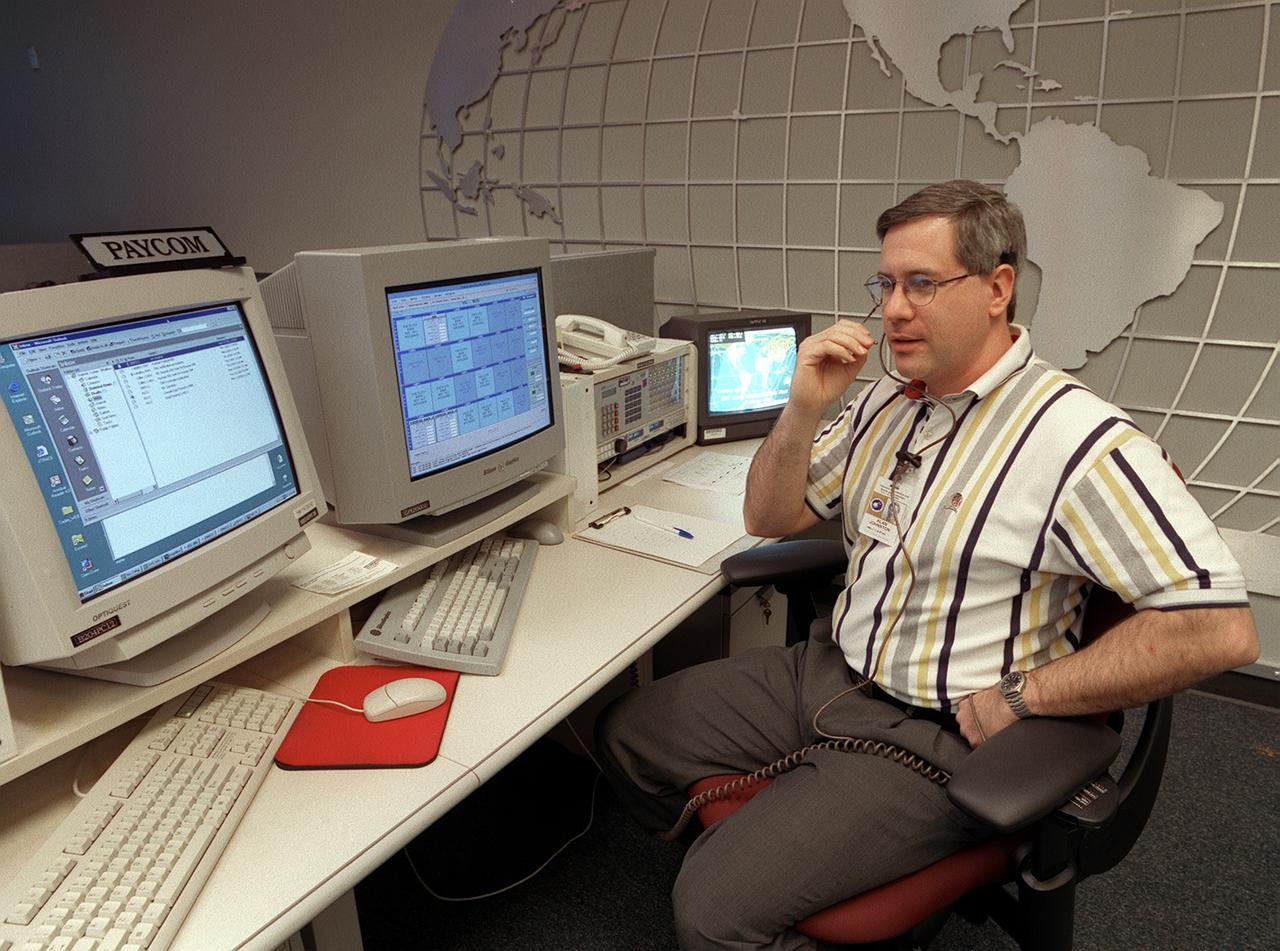
The Payload Operations Center (POC) is the science command post for the International Space Station (ISS). Located at NASA's Marshall Space Flight Center in Huntsville, Alabama, it is the focal point for American and international science activities aboard the ISS. The POC's unique capabilities allow science experts and researchers around the world to perform cutting-edge science in the unique microgravity environment of space. The POC is staffed around the clock by shifts of payload flight controllers. At any given time, 8 to 10 flight controllers are on consoles operating, plarning for, and controlling various systems and payloads. This photograph shows the Payload Communications Manager (PAYCOM) at a work station. The PAYCOM coordinates payload-related voice communications between the POC and the ISS crew. The PAYCOM is the voice of the POC.
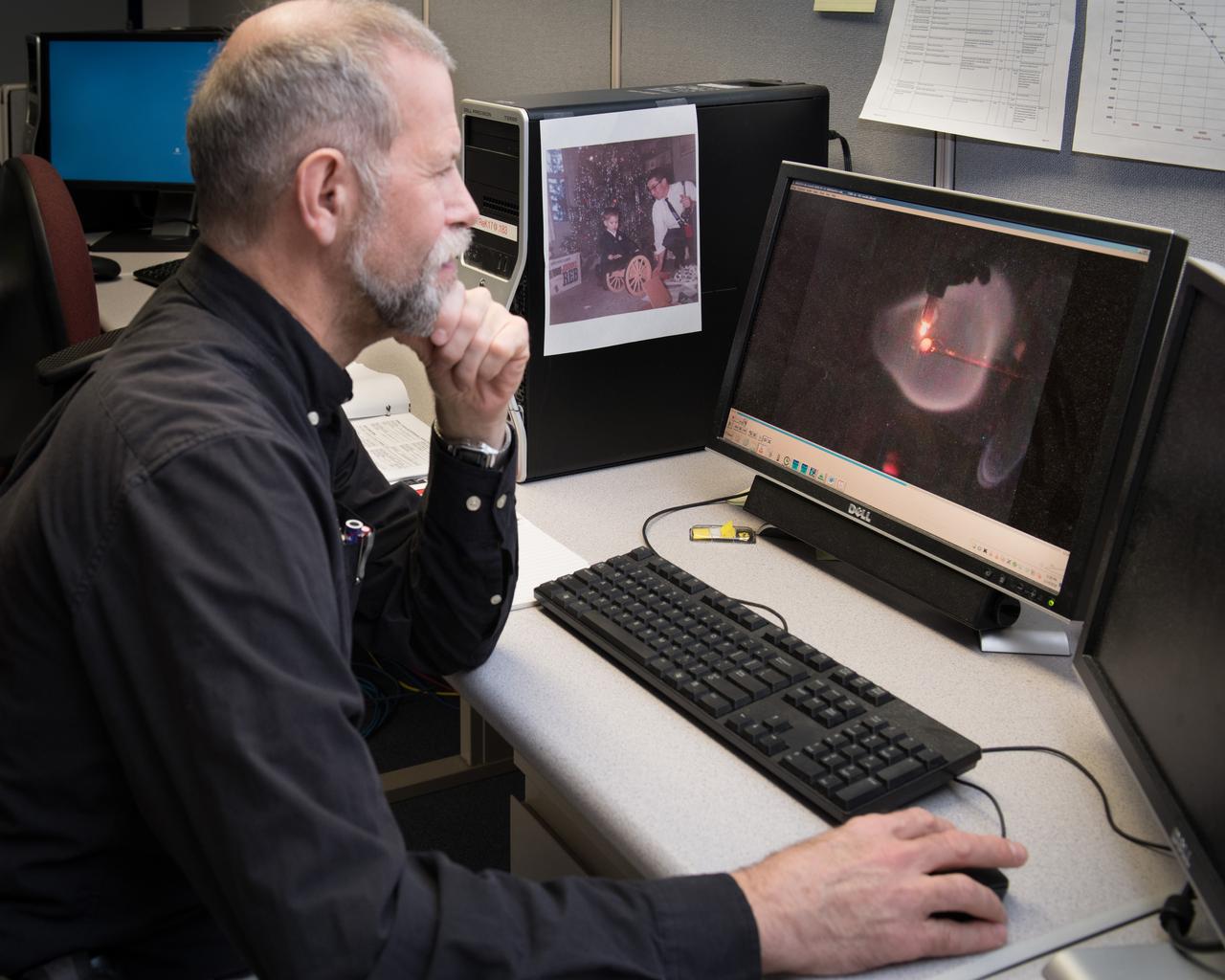
Review of ISS data from the Structure and Response of Spherical Diffusion Flames (s-Flame) experiment - of the Advanced Combustion via Microgravity Experiments. ACME project conducted in the Combustion Integrated Rack, CIR - by ACME Project Scientist Dennis Stocker in the Telescience Support Center,TSC, also known as the Glenn ISS Payload Operations Center, GIPOC
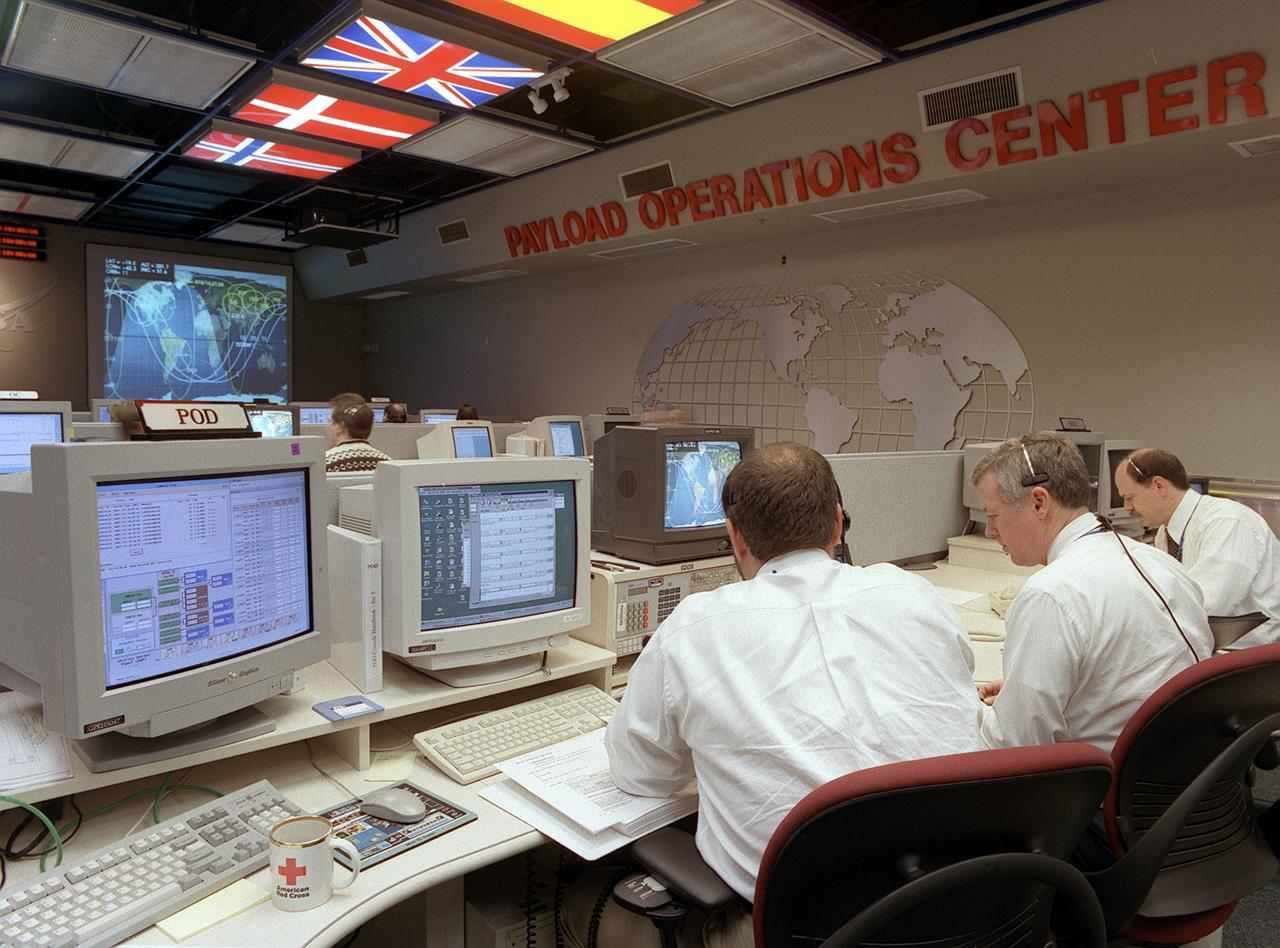
The Payload Operations Center (POC) is the science command post for the International Space Station (ISS). Located at NASA's Marshall Space Flight Center in Huntsville, Alabama, it is the focal point for American and international science activities aboard the ISS. The POC's unique capabilities allow science experts and researchers around the world to perform cutting-edge science in the unique microgravity environment of space. The POC is staffed around the clock by shifts of payload flight controllers. At any given time, 8 to 10 flight controllers are on consoles, operating, plarning for, and controlling various systems and payloads. This photograph shows the Payload Operations Director (POD) at work. The POD is the leader of the POC flight control team. The Director guides all payload activities in coordination with Mission Control at Johnson Space Center at Houston, Texas, the Station crew, the international partners, and other research facilities.
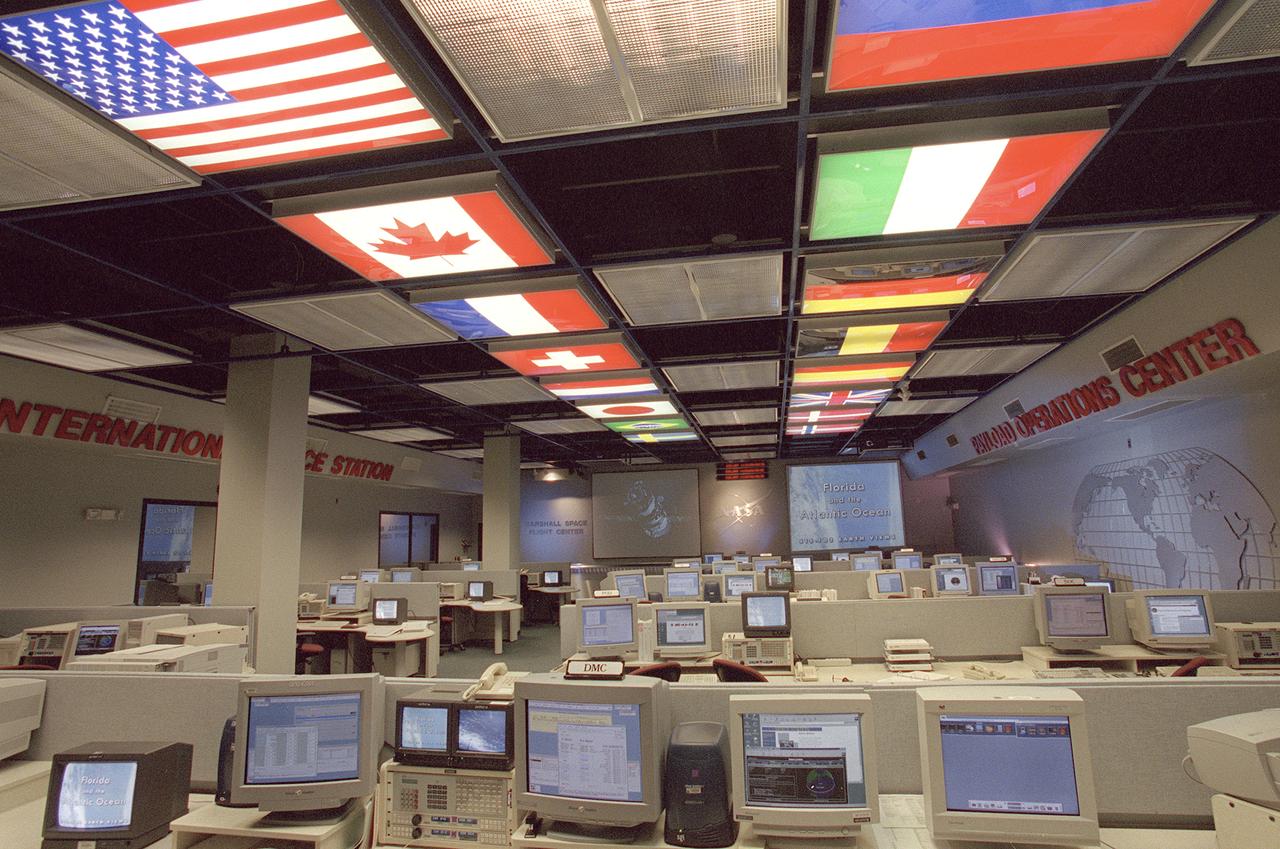
The International Space Station (ISS) Payload Operations Center (POC) at NASA's Marshall Space Flight Center (MSFC) in Huntsville, Alabama, is the world's primary science command post for the International Space Station (ISS), the most ambitious space research facility in human history. The Payload Operations team is responsible for managing all science research experiments aboard the Station. The center is also home for coordination of the mission-plarning work of variety of international sources, all science payload deliveries and retrieval, and payload training and safety programs for the Station crew and all ground personnel. Within the POC, critical payload information from the ISS is displayed on a dedicated workstation, reading both S-band (low data rate) and Ku-band (high data rate) signals from a variety of experiments and procedures operated by the ISS crew and their colleagues on Earth. The POC is the focal point for incorporating research and experiment requirements from all international partners into an integrated ISS payload mission plan. This photograph is an overall view of the MSFC Payload Operations Center displaying the flags of the countries participating the ISS. The flags at the left portray The United States, Canada, France, Switzerland, Netherlands, Japan, Brazil, and Sweden. The flags at the right portray The Russian Federation, Italy, Germany, Belgium, Spain, United Kingdom, Denmark, and Norway.
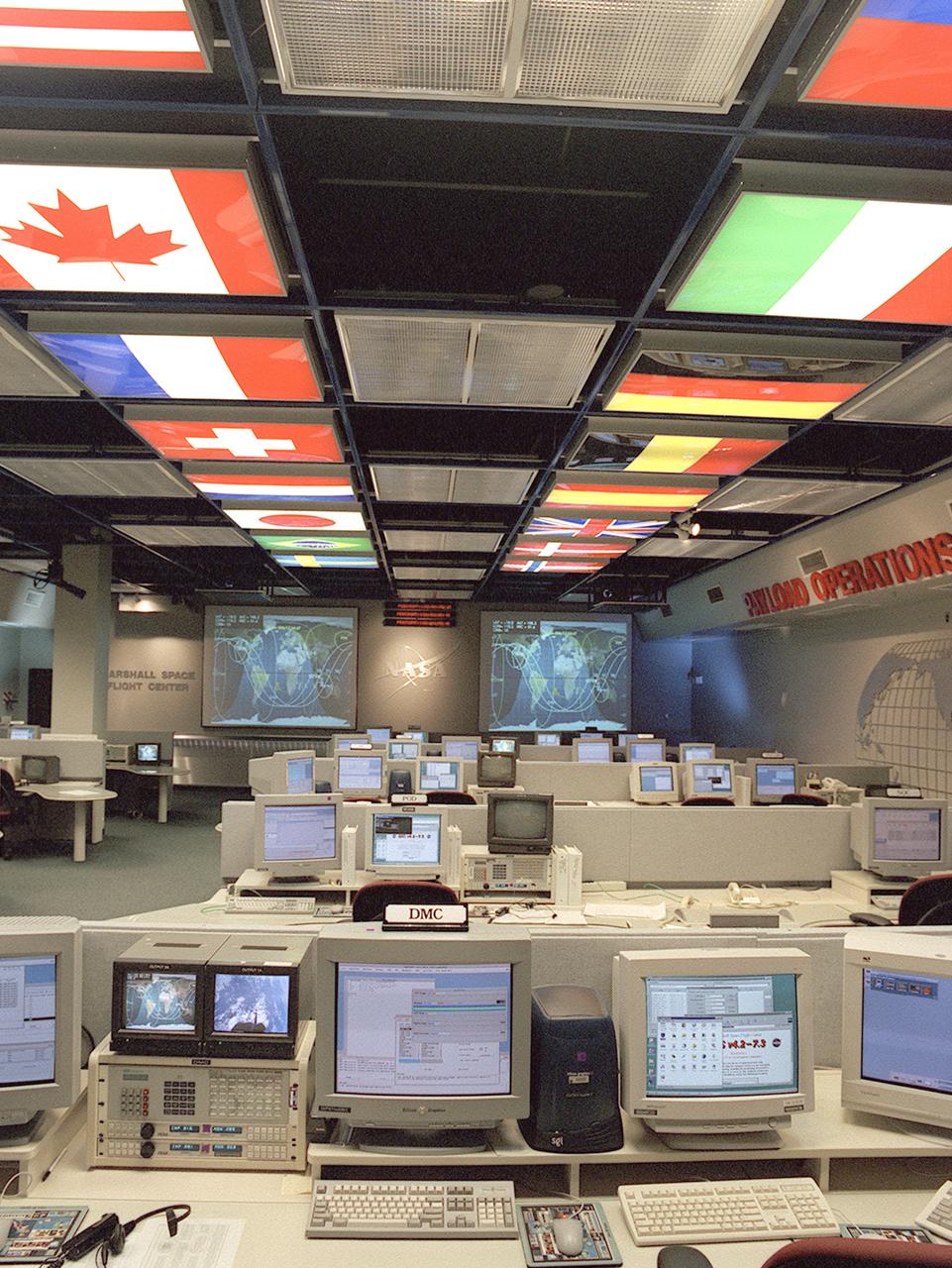
The International Space Station (ISS) Payload Operations Center (POC) at NASA's Marshall Space Flight Center (MSFC) in Huntsville, Alabama, is the world's primary science command post for the (ISS), the most ambitious space research facility in human history. The Payload Operations team is responsible for managing all science research experiments aboard the Station. The center is also home for coordination of the mission-plarning work of variety of international sources, all science payload deliveries and retrieval, and payload training and safety programs for the Station crew and all ground personnel. Within the POC, critical payload information from the ISS is displayed on a dedicated workstation, reading both S-band (low data rate) and Ku-band (high data rate) signals from a variety of experiments and procedures operated by the ISS crew and their colleagues on Earth. The POC is the focal point for incorporating research and experiment requirements from all international partners into an integrated ISS payload mission plan. This photograph is an overall view of the MSFC Payload Operations Center displaying the flags of the countries participating in the ISS. The flags at the left portray The United States, Canada, France, Switzerland, Netherlands, Japan, Brazil, and Sweden. The flags at the right portray The Russian Federation, Italy, Germany, Belgium, Spain, United Kingdom, Denmark, and Norway.
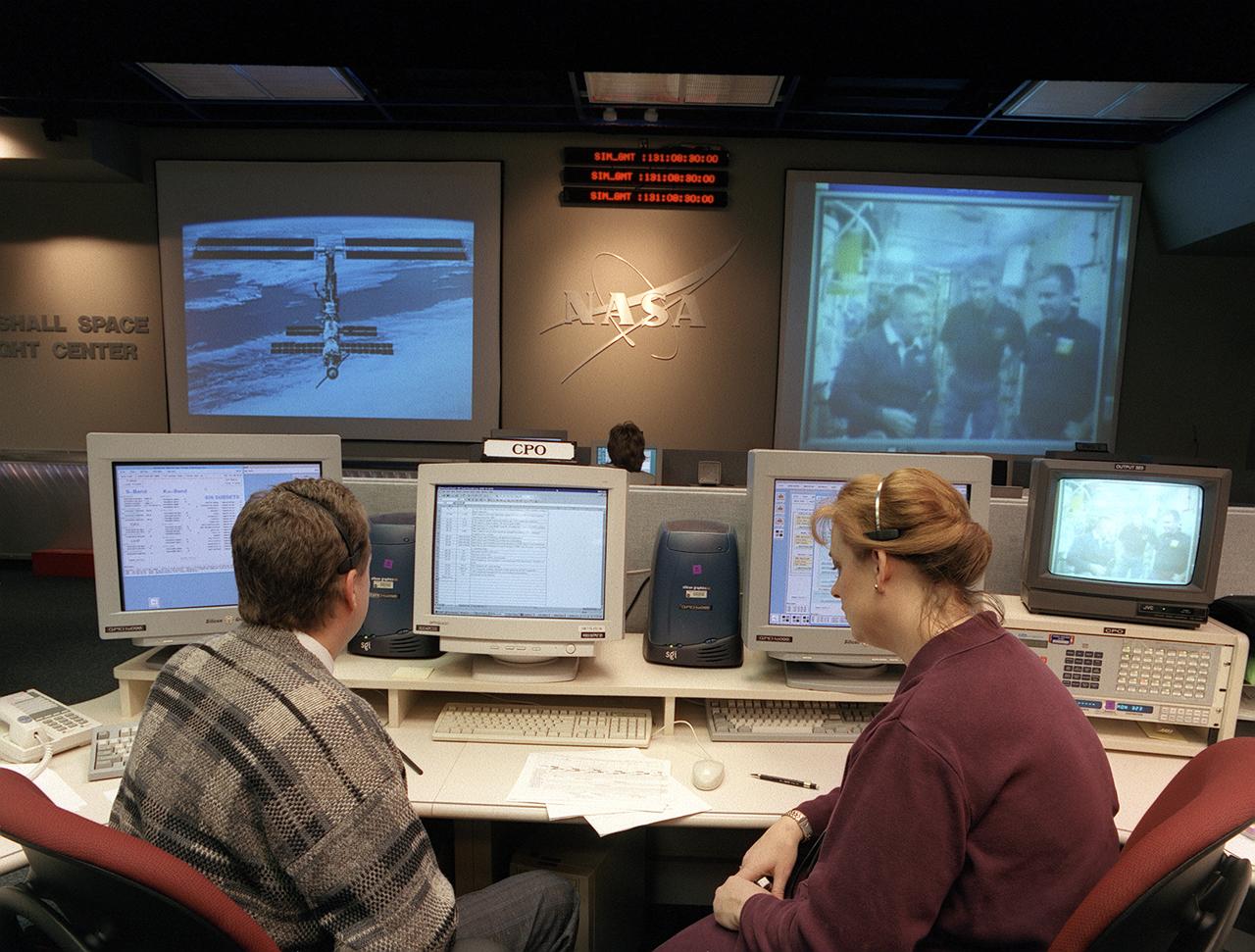
The Payload Operations Center (POC) is the science command post for the International Space Station (ISS). Located at NASA's Marshall Space Flight Center (MSFC) in Huntsville, Alabama, it is the focal point for American and international science activities aboard the ISS. The POC's unique capabilities allow science experts and researchers around the world to perform cutting-edge science in the unique microgravity environment of space. The POC is staffed around the clock by shifts of payload flight controllers. At any given time, 8 to 10 flight controllers are on consoles operating, plarning for, and controlling various systems and payloads. This photograph shows the Command and Payload Multiplexer/Demultiplexer (MDM) Officers (CPO's) at their work stations. The CPO maintains the command link between the Operation Center at MSFC and Mission Control at Johnson Space Center in Houston, Texas, and configures the link to allow the international partners and remote scientists to operate their payloads from their home sites.
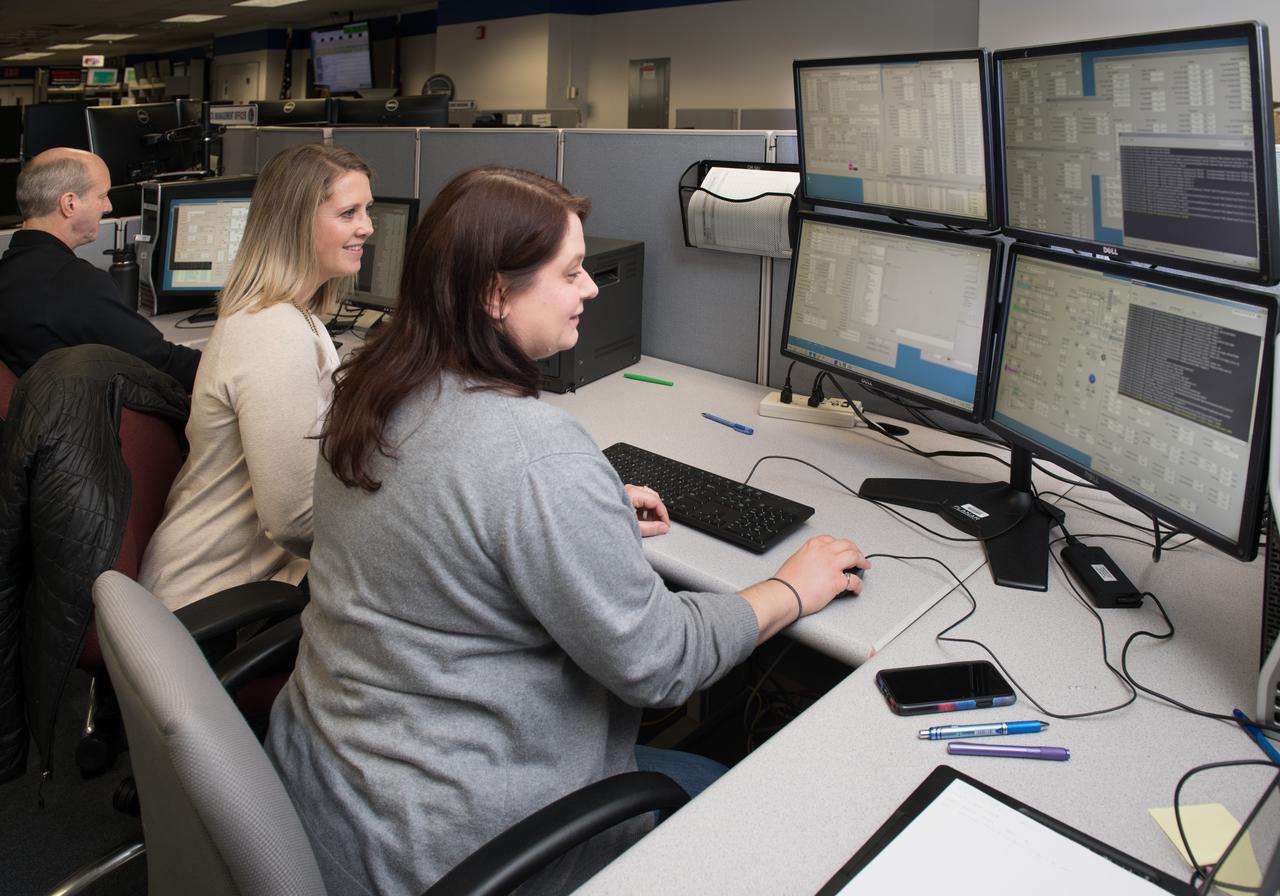
Testing of software with ground hardware for the Structue and Response of Spherical Diffusion Flames, s-Flame, experiment - of the Advanced Combustion via Microgravity Experiments, ACME, project conducted in the ISS Combustion Integrated Rack, CIR - by ACME Software Engineer Jeffrey Eggers, Operations Lead Angela Adams, and Planning Lead Melani Smajdek in the Telescience Support Center, TSC, also known as the Glenn ISS Payload Operations Center, GIPOC
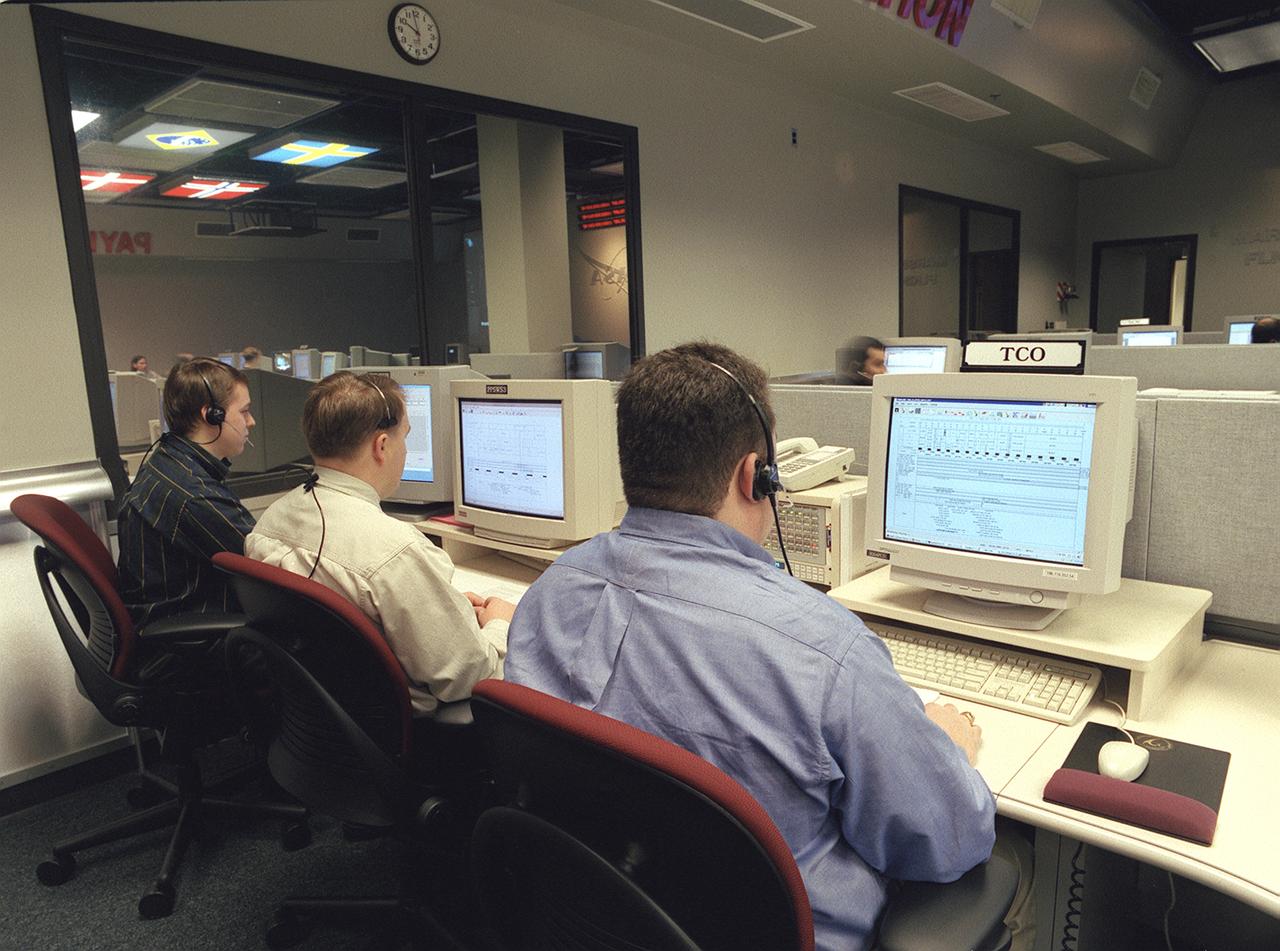
The Payload Operations Center (POC) is the science command post for the International Space Station (ISS). Located at NASA's Marshall Space Flight Center in Huntsville, Alabama, it is the focal point for American and international science activities aboard the ISS. The POC's unique capabilities allow science experts and researchers around the world to perform cutting-edge science in the unique microgravity environment of space. The POC is staffed around the clock by shifts of payload flight controllers. At any given time, 8 to 10 flight controllers are on consoles operating, plarning for, and controlling various systems and payloads. This photograph shows the Timeline Change Officer (TCO) at a work station. The TCO maintains the daily schedule of science activities and work assignments, and works with planners at Mission Control at Johnson Space Center in Houston, Texas, to ensure payload activities are accommodated in overall ISS plans and schedules.
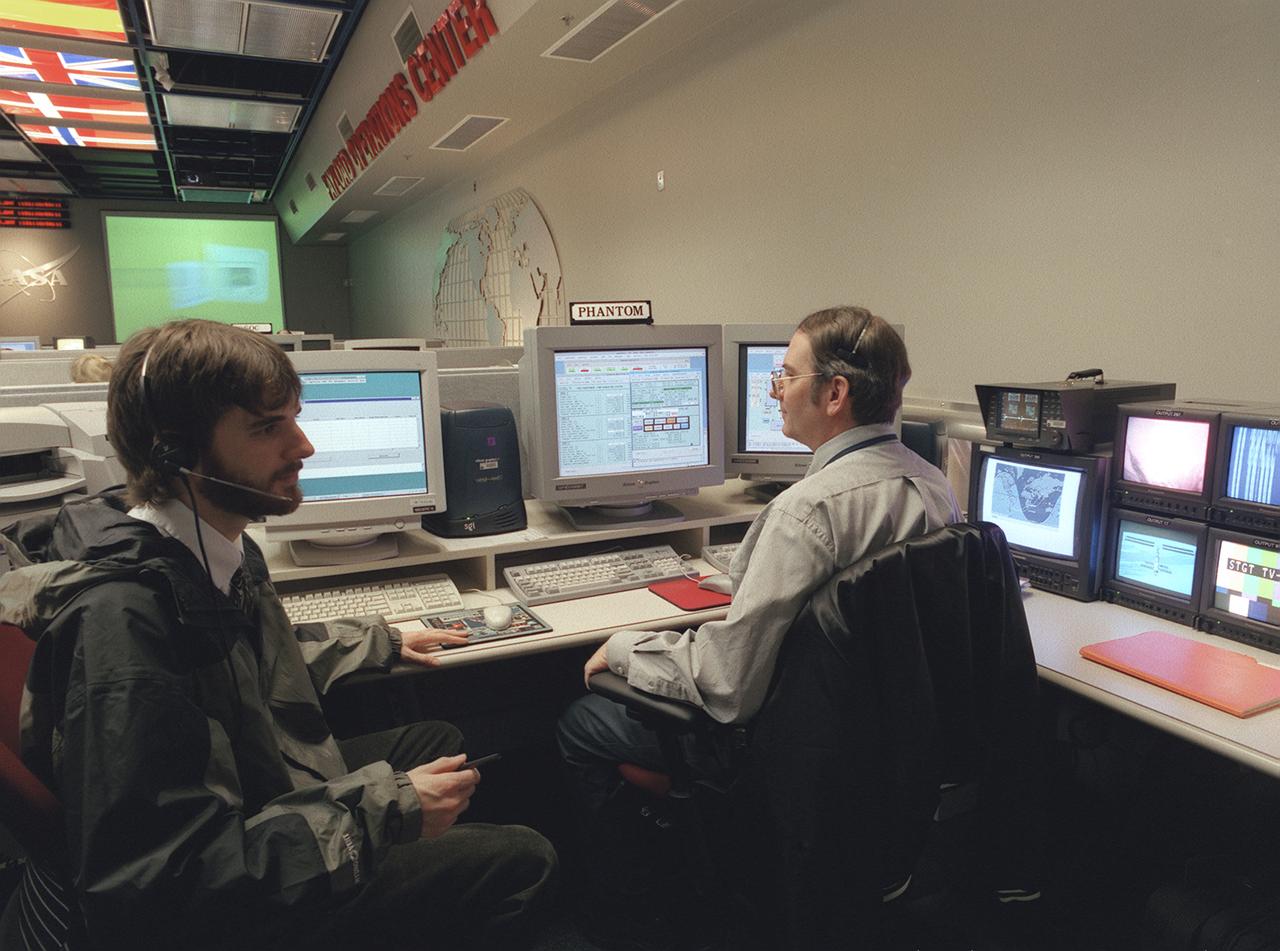
The Payload Operations Center (POC) is the science command post for the International Space Station (ISS). Located at NASA's Marshall Space Flight Center in Huntsville, Alabama, it is the focal point for American and international science activities aboard the ISS. The POC's unique capabilities allow science experts and researchers around the world to perform cutting-edge science in the unique microgravity environment of space. The POC is staffed around the clock by shifts of payload flight controllers. At any given time, 8 to 10 flight controllers are on consoles operating, plarning for, and controlling various systems and payloads. This photograph shows the Photo and TV Operations Manager (PHANTOM) at a work station. The PHANTOM configures all video systems aboard the ISS and ensures they are working properly, providing a video link from the ISS to the POC.
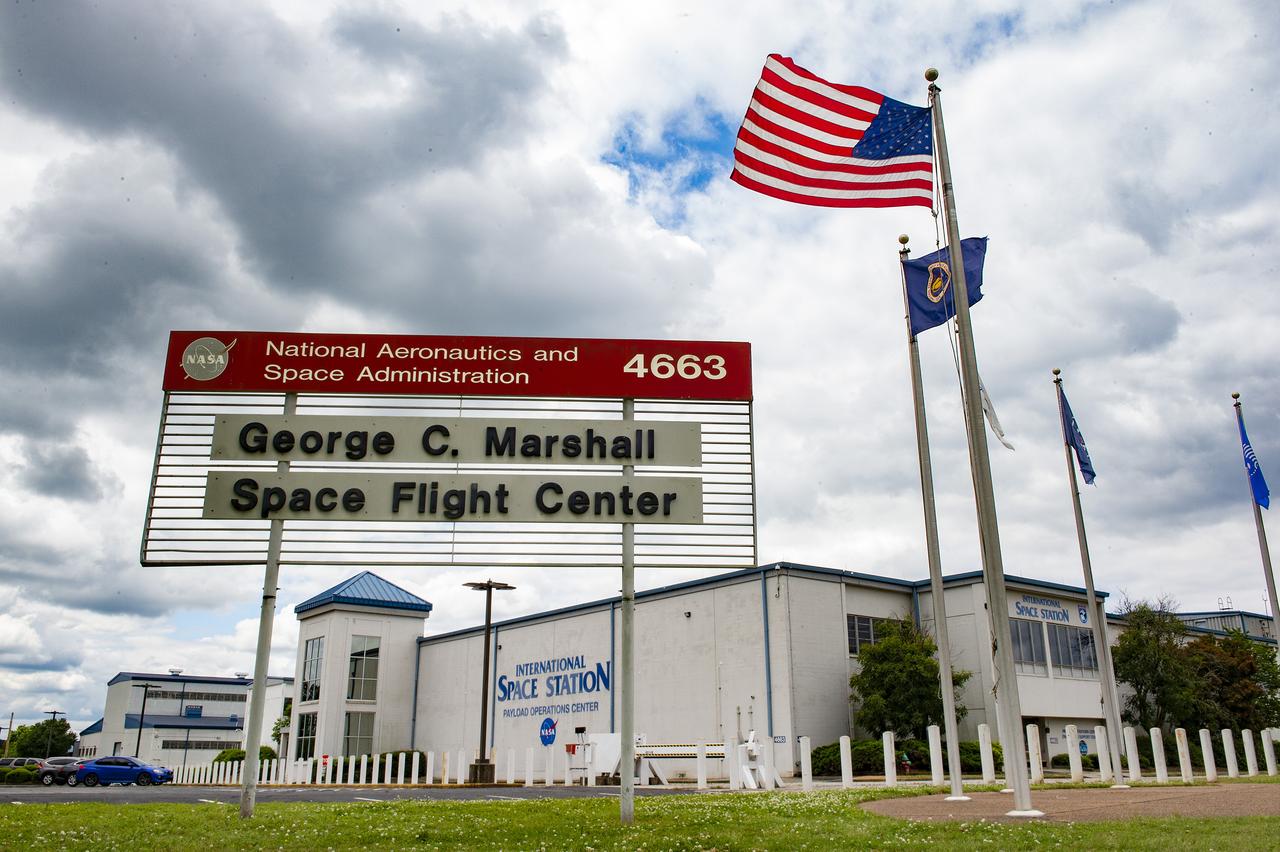
MSFC Building 4663, NE corner view of Huntsville Operations Support Center, housing the Payload Operations Integration Center (POIC). The POIC supports ongoing flight operations and scientific experiments aboard the International Space Station (ISS)
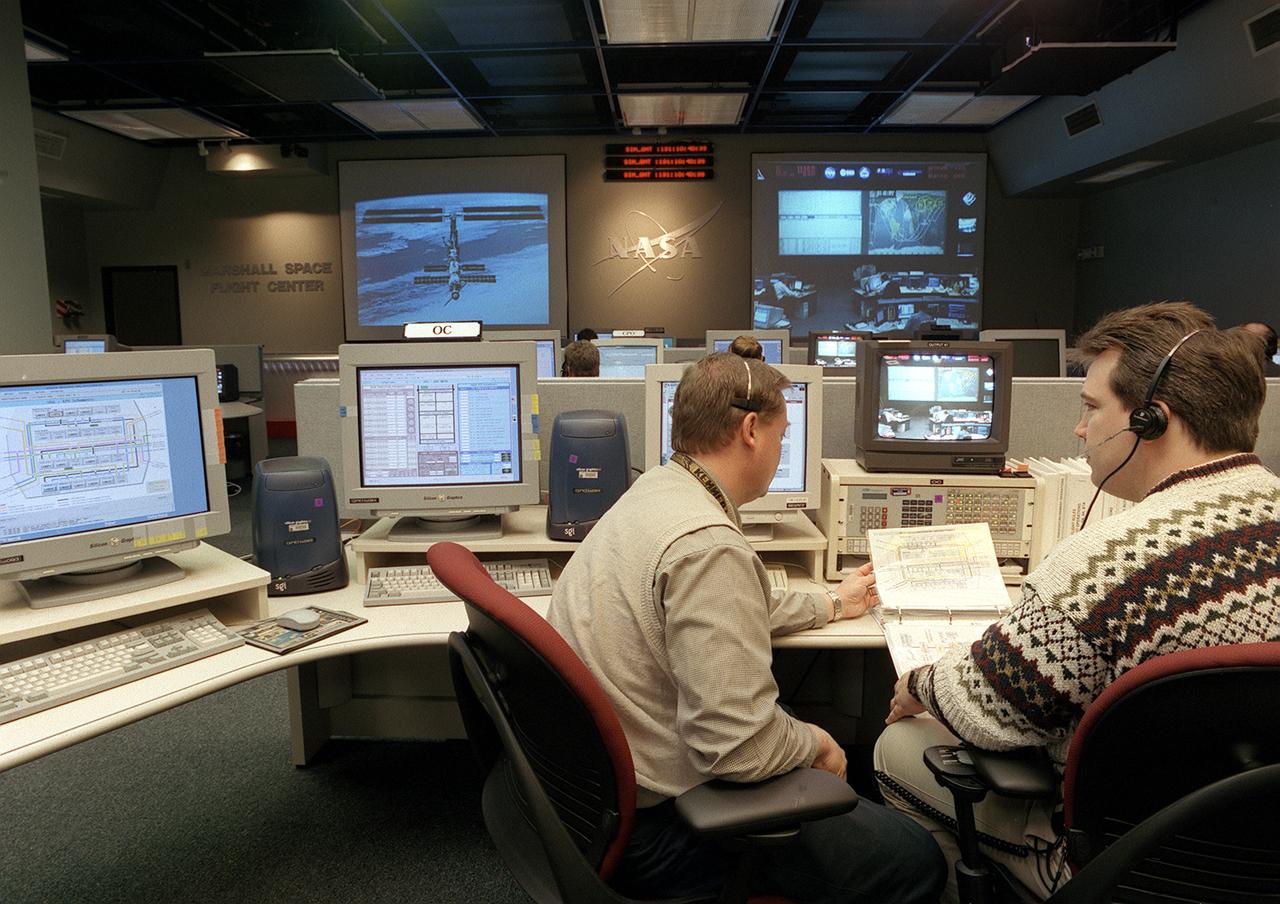
The Payload Operations Center (POC) is the science command post for the International Space Station (ISS). Located at NASA's Marshall Space Flight Center in Huntsville, Alabama, it is the focal point for American and international science activities aboard the ISS. The POC's unique capabilities allow science experts and researchers around the world to perform cutting-edge science in the unique microgravity environment of space. The POC is staffed around the clock by shifts of payload flight controllers. At any given time, 8 to 10 flight controllers are on consoles operating, plarning for, and controlling various systems and payloads. This photograph shows the Operations Controllers (OC) at their work stations. The OC coordinates the configuration of resources to enable science operations, such as power, cooling, commanding, and the availability of items like tools and laboratory equipment.
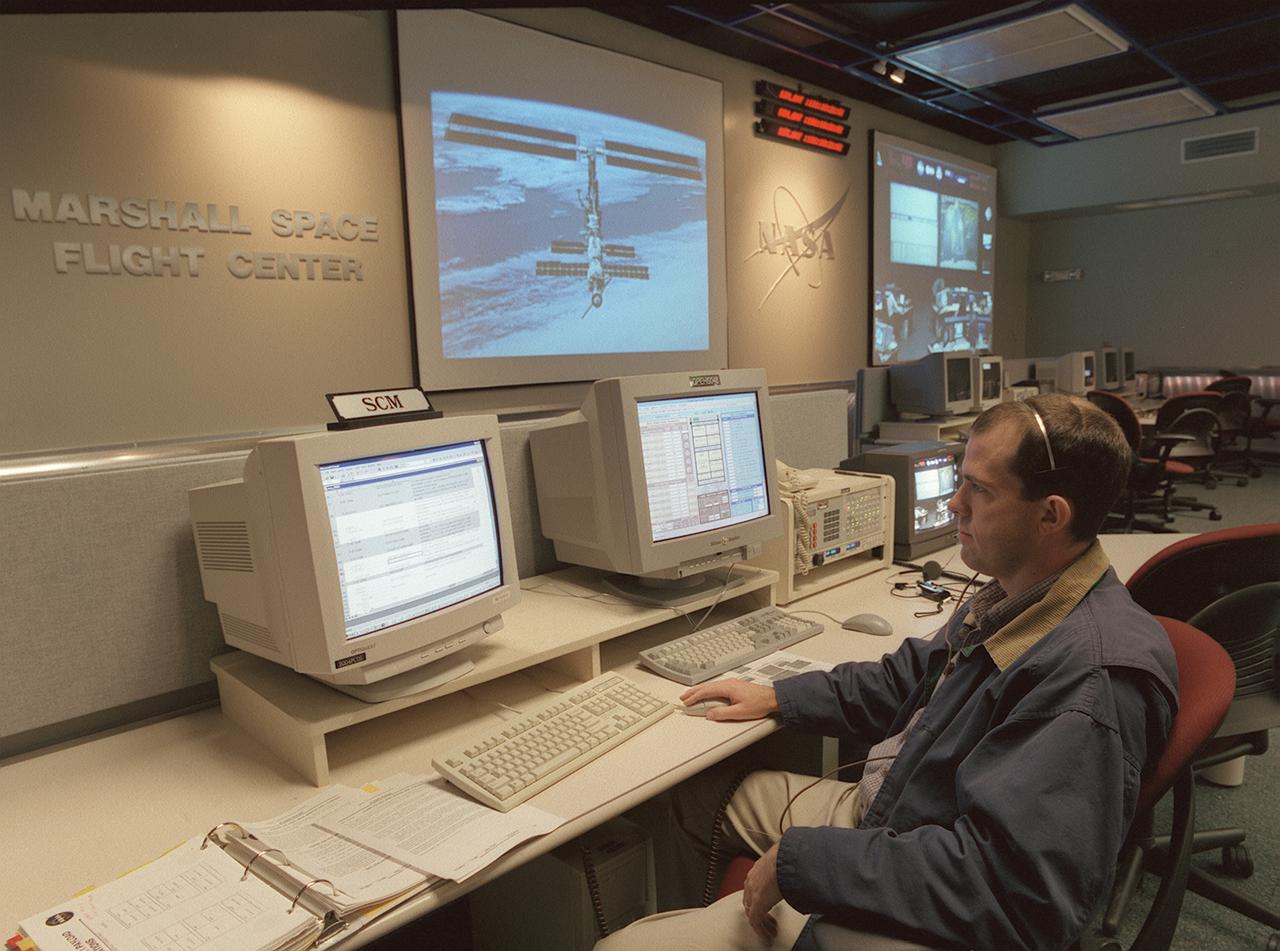
The Payload Operations Center (POC) is the science command post for the International Space Station (ISS). Located at NASA's Marshall Space Flight Center in Huntsville, Alabama, it is the focal point for American and international science activities aboard the ISS. The POC's unique capabilities allow science experts and researchers around the world to perform cutting-edge science in the unique microgravity environment of space. The POC is staffed around the clock by shifts of payload flight controllers. At any given time, 8 to 10 flight controllers are on consoles operating, plarning for, and controlling various systems and payloads. This photograph show the Safety Coordination Manager (SCM) at a work station. The SCM monitors science experiments to ensure they are conducted in a safe manner in accordance with strict safety regulations.
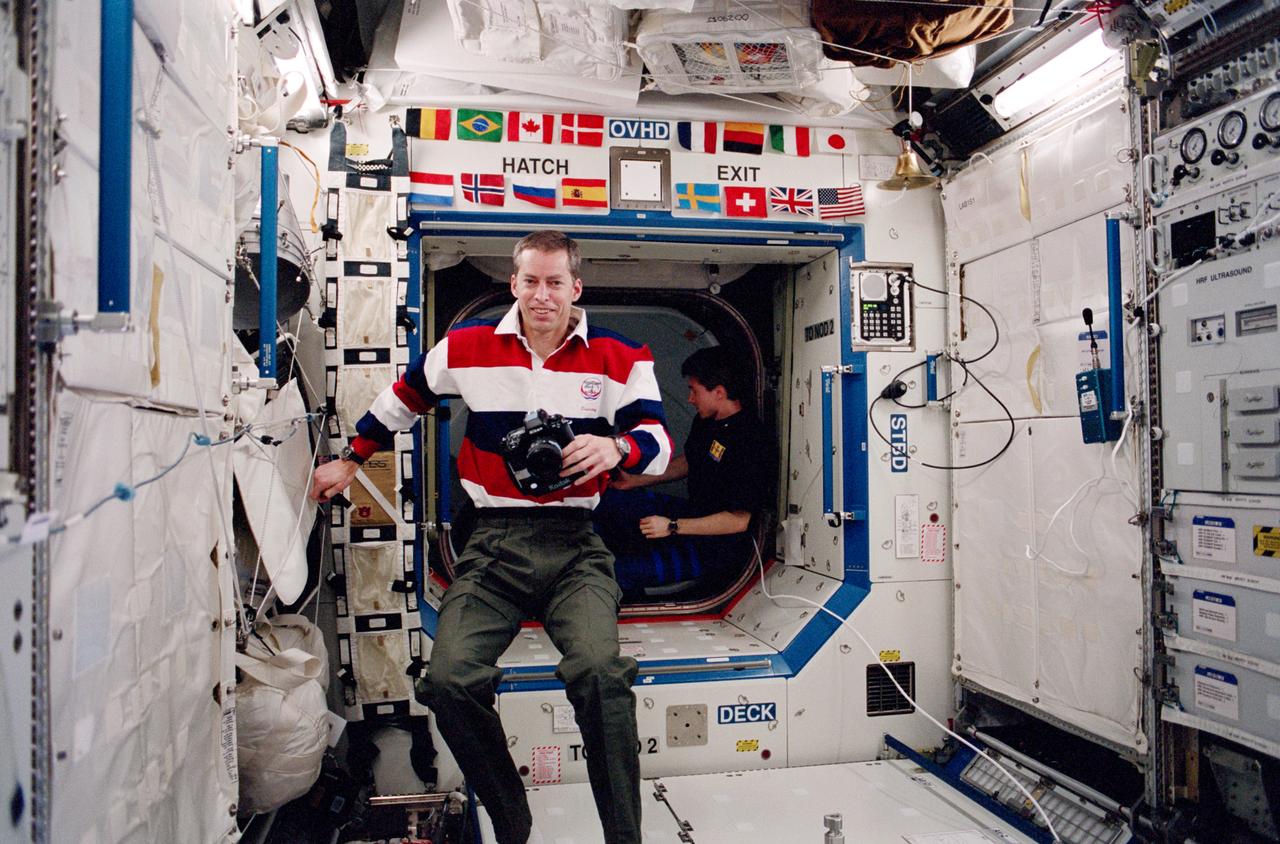
In this Space Shuttle STS-102 mission image, the Payload Equipment Restraint System H-Strap is shown at the left side of the U.S. Laboratory hatch and behind Astronaut James D. Weatherbee, mission specialist. PERS is an integrated modular system of components designed to assist the crew of the International Space Station (ISS) in restraining and carrying necessary payload equipment and tools in a microgravity environment. The Operations Development Group, Flight Projects Directorate at the Marshall Space Flight Center (MSFC), while providing operation support to the ISS Materials Science Research Facility (MSRF), recognized the need for an on-orbit restraint system to facilitate control of lose objects, payloads, and tools. The PERS is the offspring of that need and it helps the ISS crew manage tools and rack components that would otherwise float away in the near-zero gravity environment aboard the Space Station. The system combines Kevlar straps, mesh pockets, Velcro and a variety of cornecting devices into a portable, adjustable system. The system includes the Single Strap, the H-Strap, the Belly Pack, the Laptop Restraint Belt, and the Tool Page Case. The Single Strap and the H-Strap were flown on this mission. The PERS concept was developed by industrial design students at Auburn University and the MSFC Flight Projects Directorate.
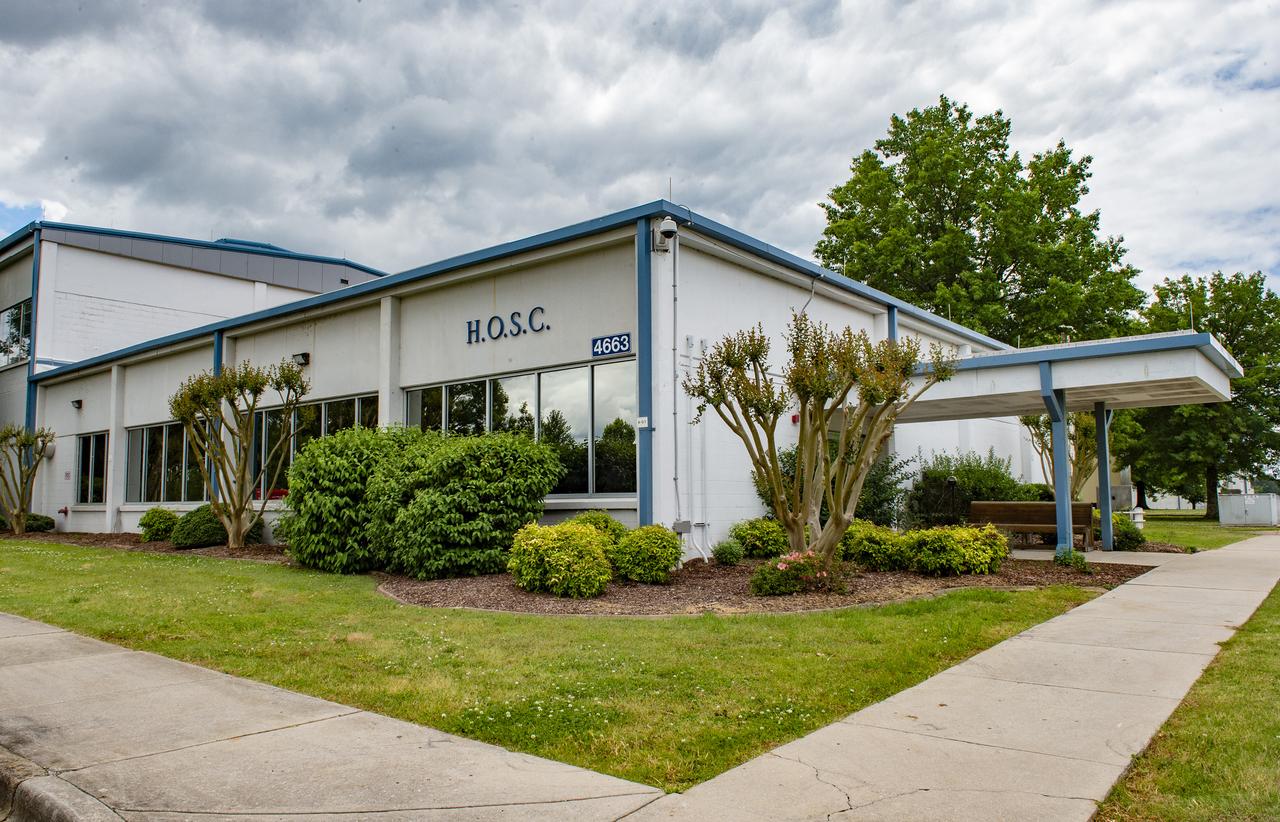
MSFC Building 4663, NW corner view showing entrance to Huntsville Operations Support Center (HOSC). The HOSC is home to the Payload Operations Integration Center (POIC) which supports the mission and scientific experiments aboard the International Space Station (ISS).
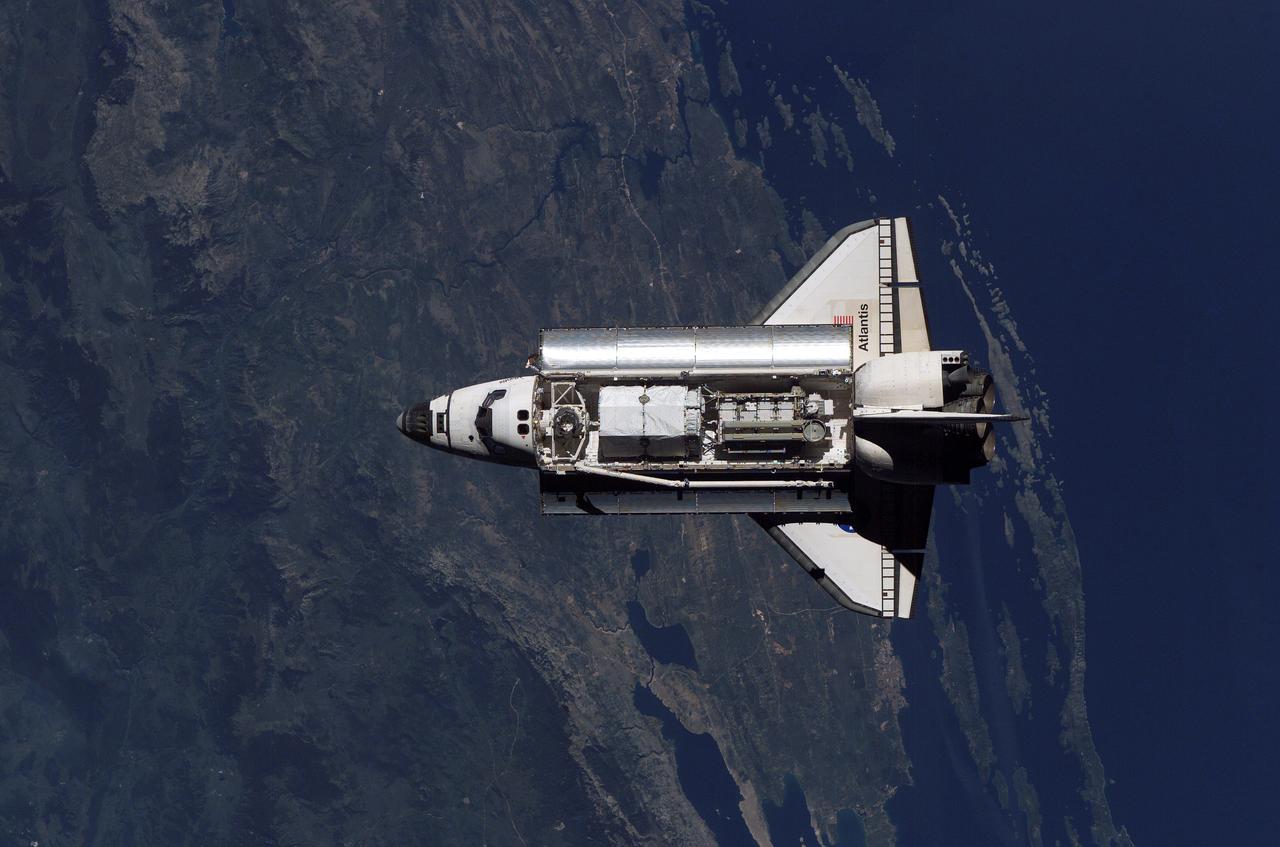
ISS013-E-80624 (11 Sept. 2006) --- This overhead image of the Space Shuttle Atlantis, recorded by an Expedition 13 crewmember onboard the International Space Station as the shuttle approached the station, gives an excellent view of the hardware stowed in the cargo bay which will later be used to resume the construction of the orbital outpost during the STS-115 mission.
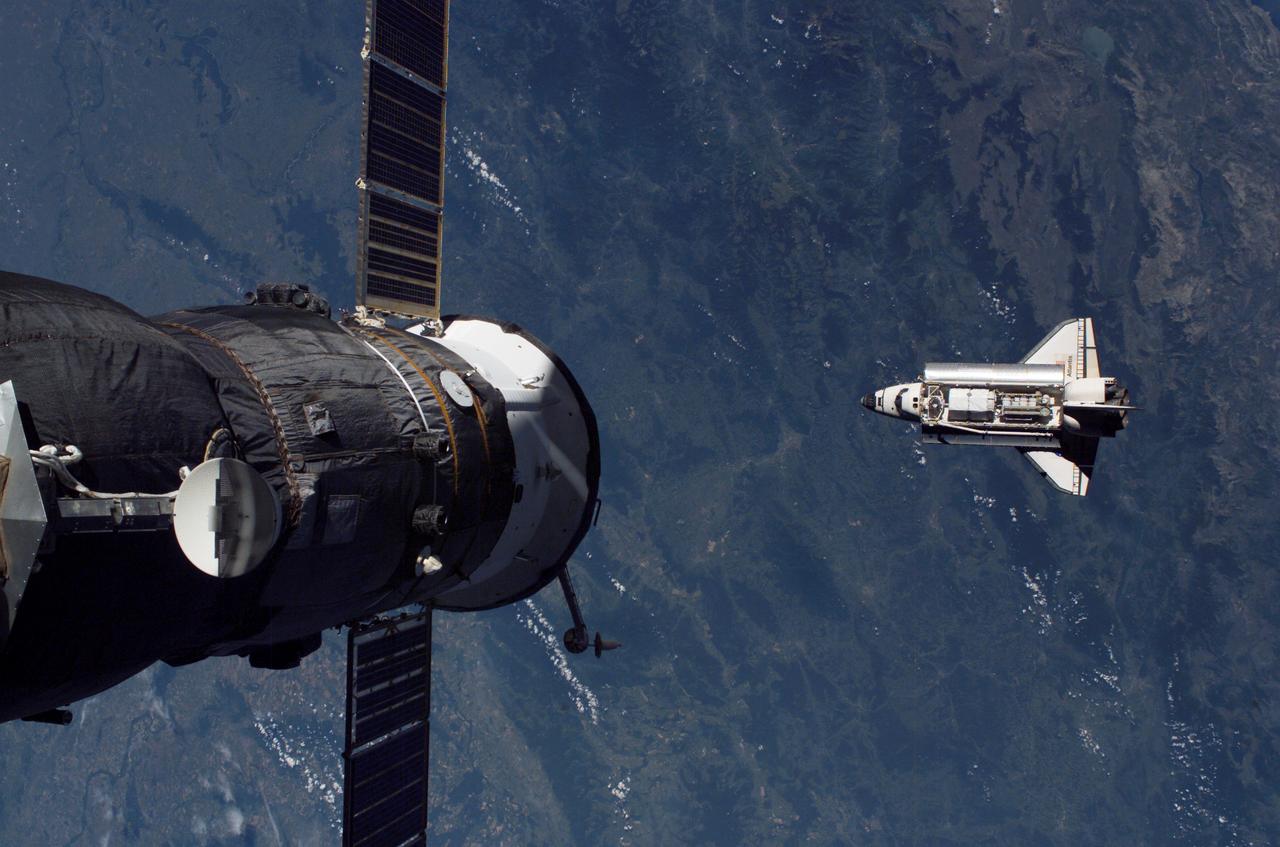
ISS013-E-80625 (11 Sept. 2006) --- This overhead image of the Space Shuttle Atlantis, recorded by an Expedition 13 crewmember onboard the International Space Station as the shuttle approached the station, gives an excellent view of the hardware stowed in the cargo bay which will later be used to resume the construction of the orbital outpost during the STS-115 mission. A Progress resupply vehicle is docked to the station at left.
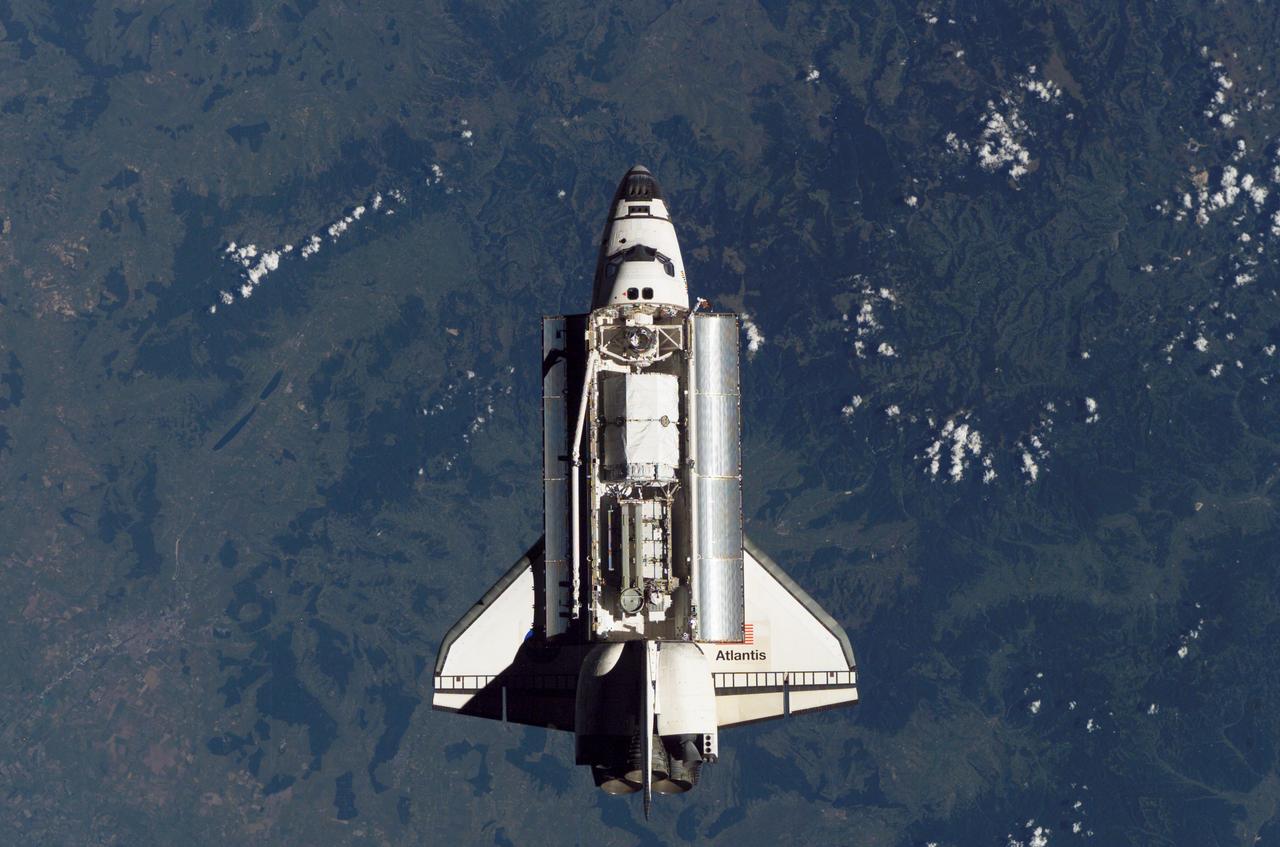
ISS013-E-80632 (11 Sept. 2006) --- This overhead image of the Space Shuttle Atlantis (STS-115), recorded by an Expedition 13 crewmember onboard the International Space Station, gives an excellent view of the hardware stowed in the cargo bay which will later be used to resume the construction of the orbital outpost.
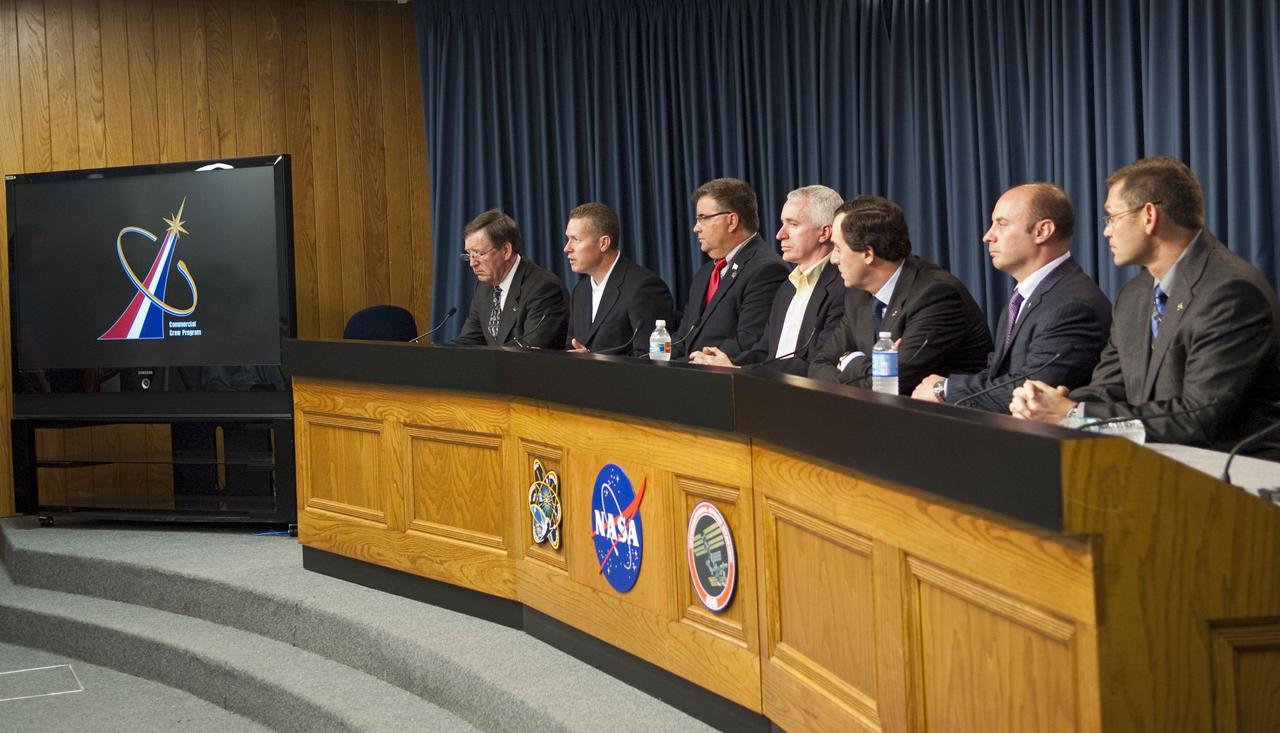
CAPE CANAVERAL, Fla. -- At NASA's Kennedy Space Center in Florida, the agency hosts a media briefing highlighting the four companies selected for the second round of the Commercial Crew Development (CCDev2) efforts. From left, are Michael Braukus, NASA Public Affairs specialist; Phil McAlister, acting director of Commercial Spaceflight Development at NASA Headquarters; Ed Mango, program manager for NASA's Commercial Crew Program at Kennedy; Rob Meyerson, program manager of Blue Origin; Mark Sirangelo, program manager of Sierra Nevada; Garrett Reisman, program manager of SpaceX; and John Elbon, program manager of The Boeing Company. NASA awarded $269.3 million to these companies to accelerate the availability of U.S. commercial crew transportation capabilities and reduce the gap in American human spaceflight capability. Through this activity, NASA also may be able to spur economic growth as potential new space markets are created. Once developed, crew transportation capabilities could become available to commercial and government customers. Photo credit: NASA_Jim Grossmann
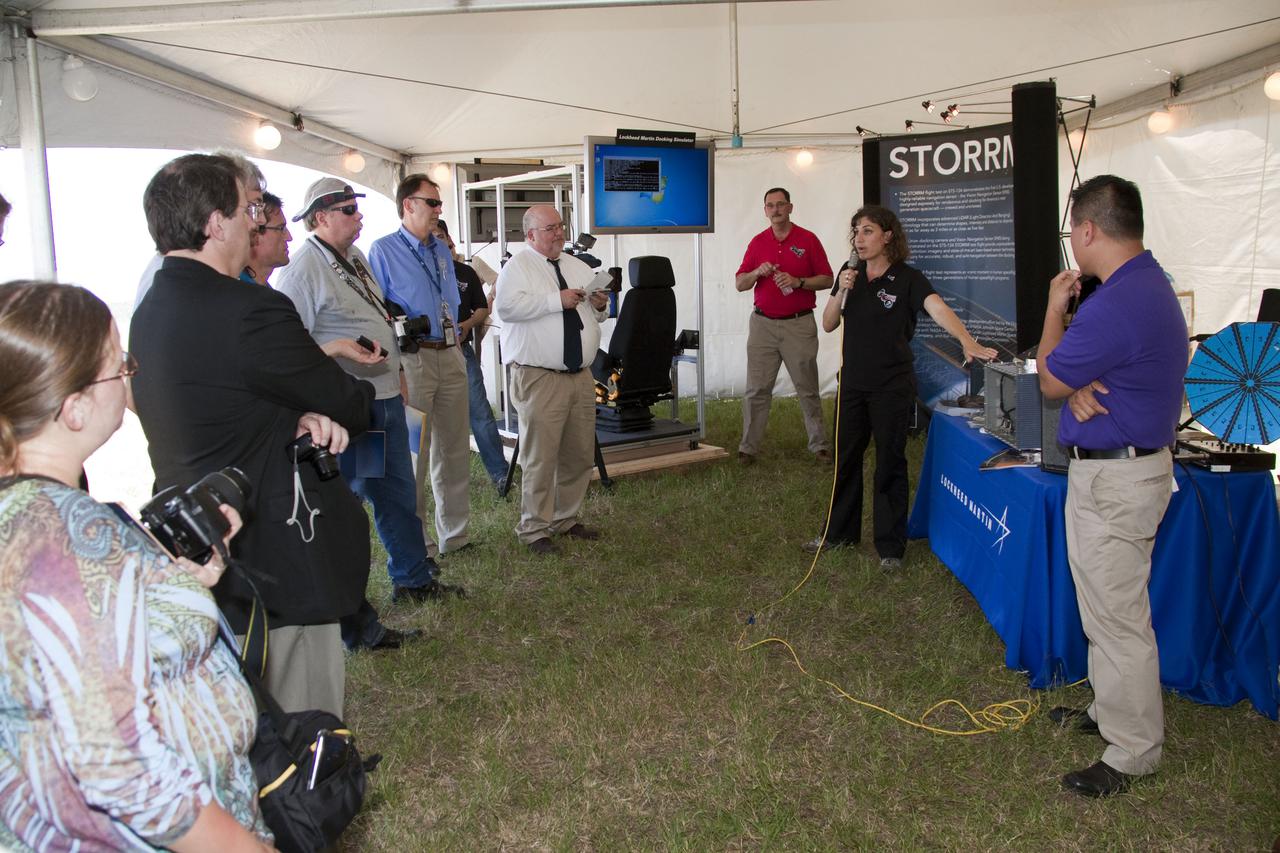
CAPE CANAVERAL, Fla. -- Heather Hinkel, principal investigator for the Sensor Test for Orion Relnav Risk Mitigation, or STORRM, Project at NASA's Johnson Space Center, provides an overview of the flight test that space shuttle Endeavour will perform on the last on-orbit day of the STS-134 mission. The overview took place at NASA's Kennedy Space Center in Florida where Endeavour is awaiting liftoff. During the mission, Endeavour will fly a dedicated maneuver to simulate an Orion rendezvous trajectory, while two Orion sensors collect visual- and laser-based relative navigation data. This will provide an unprecedented in-flight test opportunity for America's next-generation exploration spacecraft. STS-134 also will deliver the Express Logistics Carrier-3, Alpha Magnetic Spectrometer-2 (AMS), a high-pressure gas tank and additional spare parts for the Dextre robotic helper to the space station. Endeavour was scheduled to launch at 3:47 p.m. on April 29, but that attempt was scrubbed for at least 72 hours while engineers assess an issue associated with the shuttle's Auxiliary Power Unit 1. STS-134 will be the final spaceflight for Endeavour. For more information visit, www.nasa.gov_mission_pages_shuttle_shuttlemissions_sts134_index.html. Photo credit: NASA_Jack Pfaller
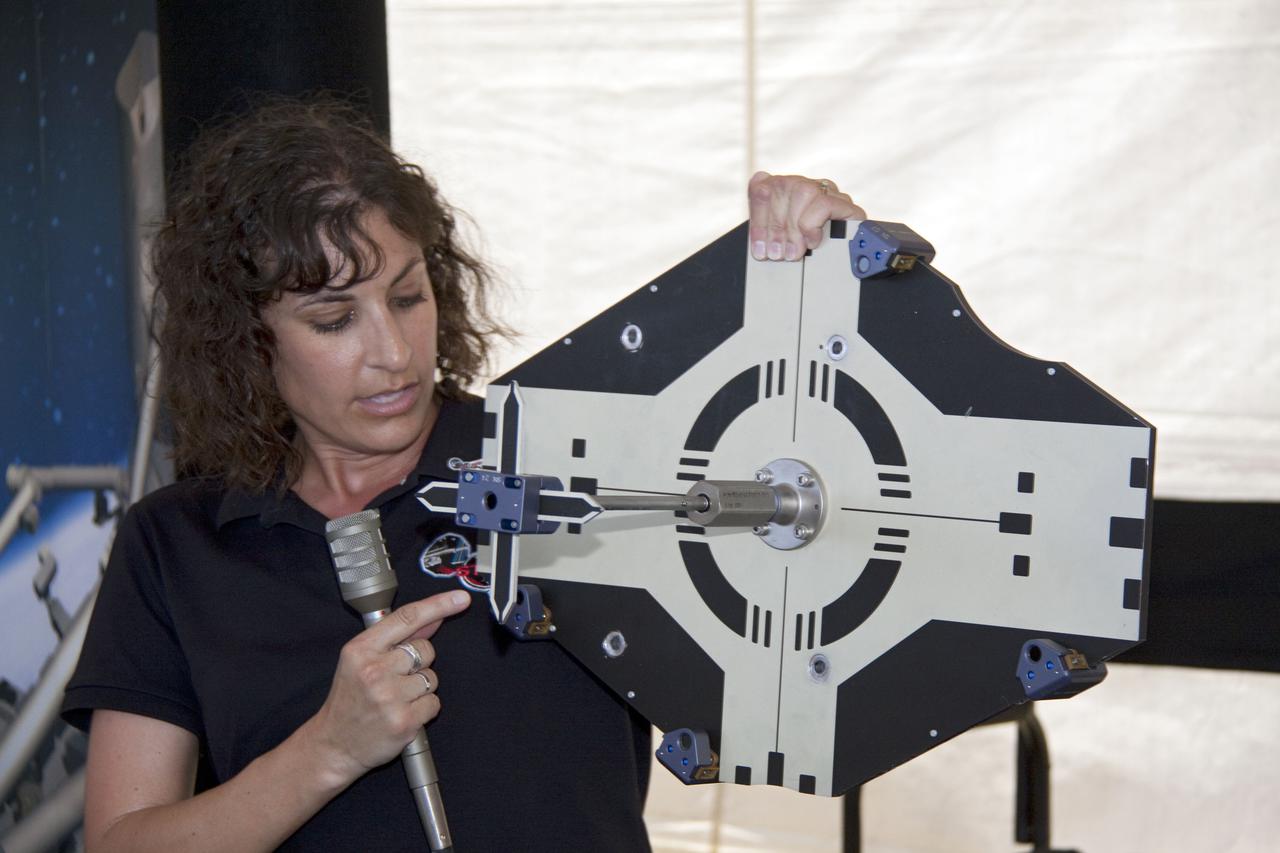
CAPE CANAVERAL, Fla. -- Heather Hinkel, principal investigator for the Sensor Test for Orion Relnav Risk Mitigation, or STORRM, Project at NASA's Johnson Space Center, provides an overview of the flight test that space shuttle Endeavour will perform on the last on-orbit day of the STS-134 mission. The overview took place at NASA's Kennedy Space Center in Florida where Endeavour is awaiting liftoff. During the mission, Endeavour will fly a dedicated maneuver to simulate an Orion rendezvous trajectory, while two Orion sensors collect visual- and laser-based relative navigation data. This will provide an unprecedented in-flight test opportunity for America's next-generation exploration spacecraft. STS-134 also will deliver the Express Logistics Carrier-3, Alpha Magnetic Spectrometer-2 (AMS), a high-pressure gas tank and additional spare parts for the Dextre robotic helper to the space station. Endeavour was scheduled to launch at 3:47 p.m. on April 29, but that attempt was scrubbed for at least 72 hours while engineers assess an issue associated with the shuttle's Auxiliary Power Unit 1. STS-134 will be the final spaceflight for Endeavour. For more information visit, www.nasa.gov_mission_pages_shuttle_shuttlemissions_sts134_index.html. Photo credit: NASA_Jack Pfaller
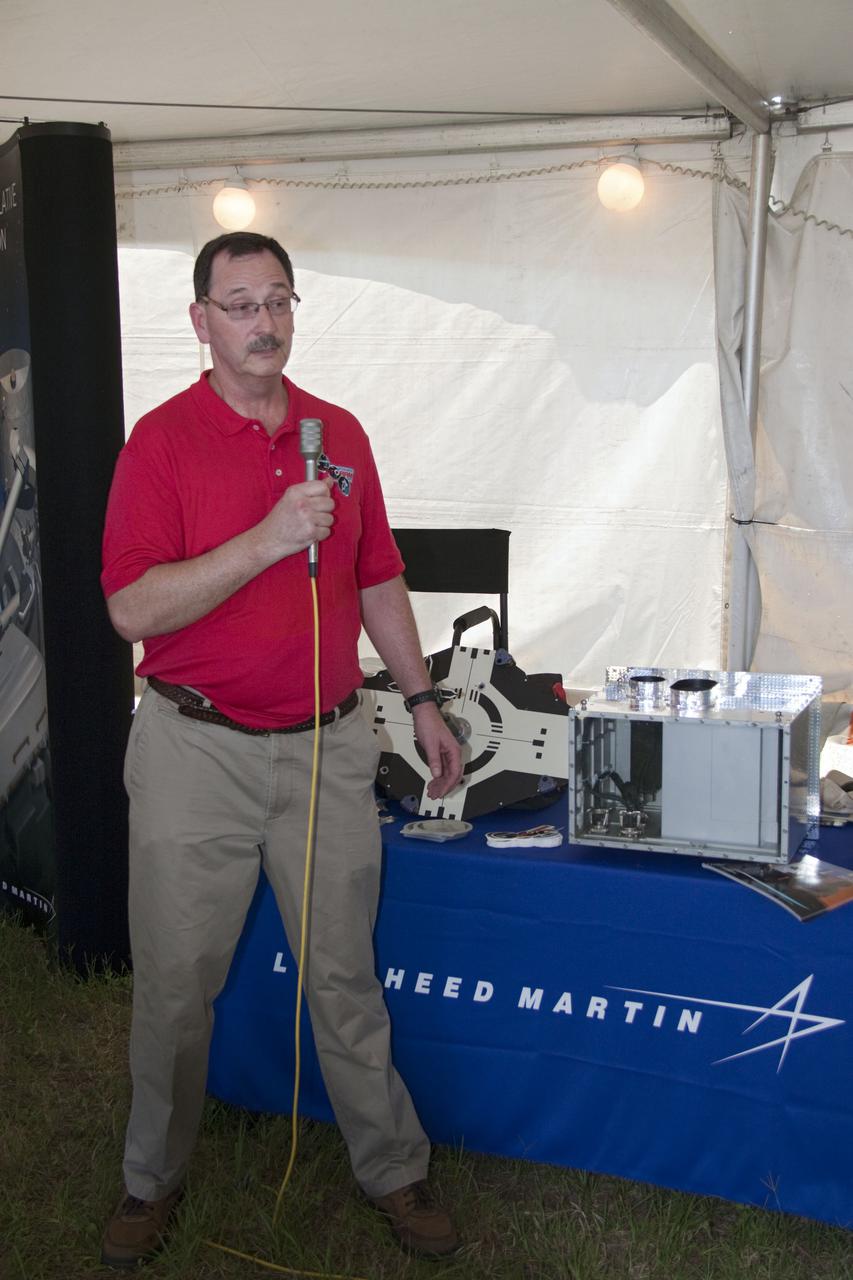
CAPE CANAVERAL, Fla. -- Frank Novak, project manager for the Sensor Test for Orion Relnav Risk Mitigation, or STORRM, at NASA's Langley Research Center in Hampton, Va., provides an overview of the flight test that space shuttle Endeavour will perform on the last on-orbit day of the STS-134 mission. The overview took place at NASA's Kennedy Space Center in Florida where Endeavour is awaiting liftoff. During the mission, Endeavour will fly a dedicated maneuver to simulate an Orion rendezvous trajectory, while two Orion sensors collect visual- and laser-based relative navigation data. This will provide an unprecedented in-flight test opportunity for America's next-generation exploration spacecraft. STS-134 also will deliver the Express Logistics Carrier-3, Alpha Magnetic Spectrometer-2 (AMS), a high-pressure gas tank and additional spare parts for the Dextre robotic helper to the space station. Endeavour was scheduled to launch at 3:47 p.m. on April 29, but that attempt was scrubbed for at least 72 hours while engineers assess an issue associated with the shuttle's Auxiliary Power Unit 1. STS-134 will be the final spaceflight for Endeavour. For more information visit, www.nasa.gov_mission_pages_shuttle_shuttlemissions_sts134_index.html. Photo credit: NASA_Jack Pfaller
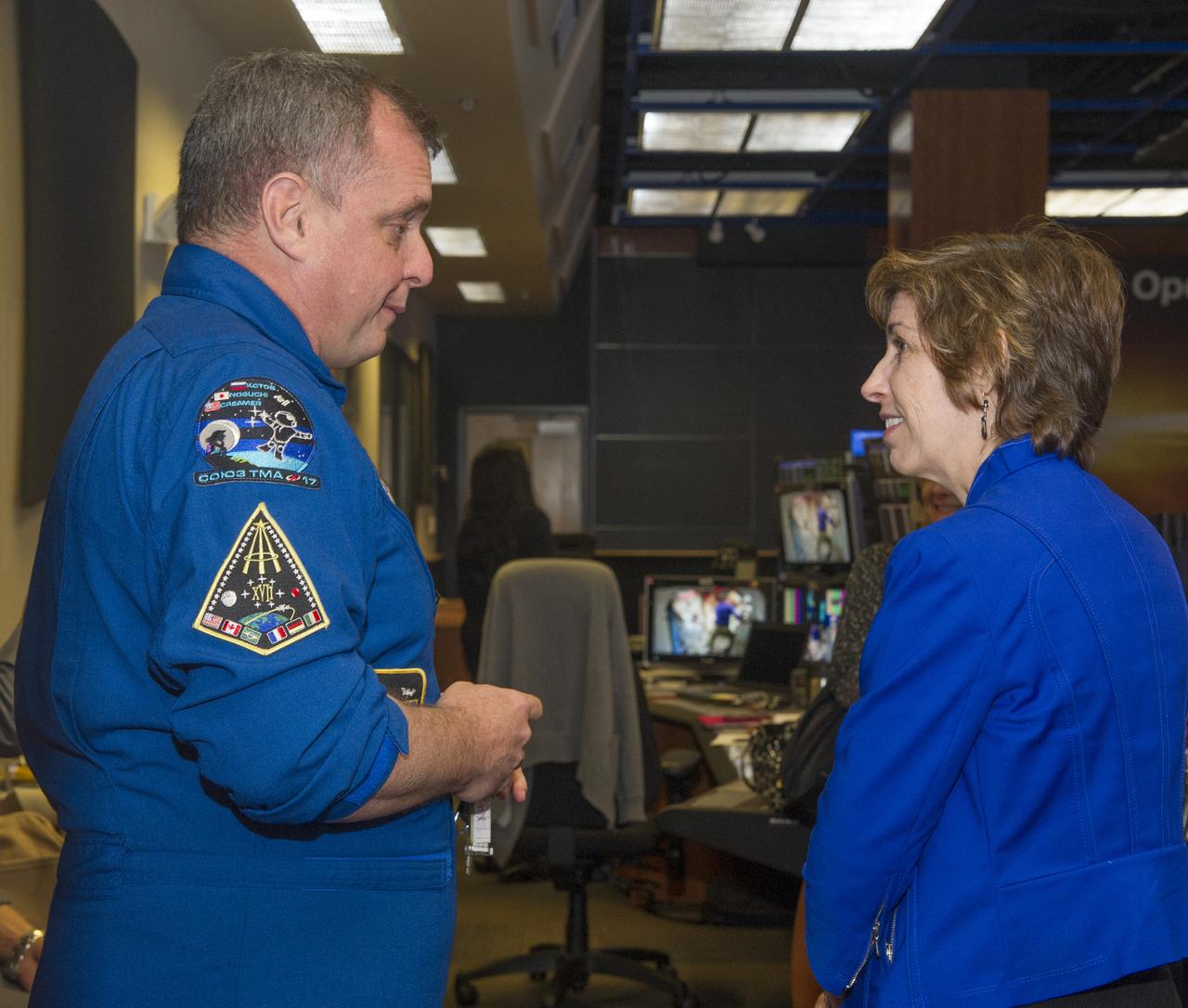
ASTRONAUT T.J. CREAMER OF ISS EXPEDITION 22 AND 23, GREETS DR. ELLEN OCHOA INSIDE THE PAYLOAD OPERATIONS INTEGRATION CENTER FOR THE ISS
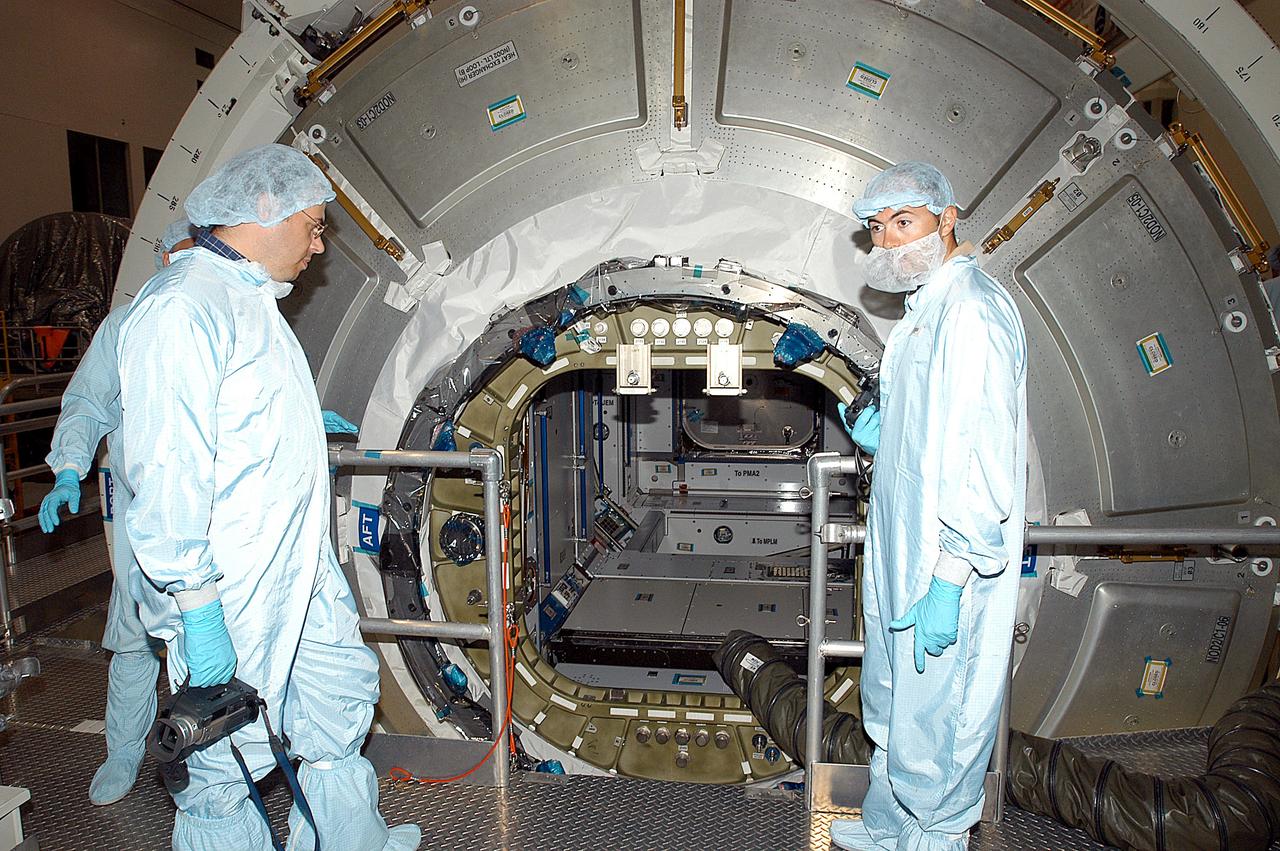
KENNEDY SPACE CENTER, FLA. - Workers in the Space Station Processing Facility stand by after opening the hatch on the Italian-built Node 2, a future element of the International Space Station. Node 2 arrived at KSC June 1. The second of three Station connecting modules, the module attaches to the end of the U.S. Lab and provides attach locations for the Japanese laboratory, European laboratory, the Centrifuge Accommodation Module and, later, Multipurpose Logistics Modules. It will provide the primary docking location for the Shuttle when a pressurized mating adapter is attached to Node 2. Installation of the module will complete the U.S. Core of the ISS. Node 2 is the designated payload for mission STS-120. No orbiter or launch date has been determined yet.Installation of the module will complete the U.S. Core of the ISS. Node 2 is the designated payload for mission STS-120. No orbiter or launch date has been determined yet.Installation of the module will complete the U.S. Core of the ISS. Node 2 is the designated payload for mission STS-120. No orbiter or launch date has been determined yet.
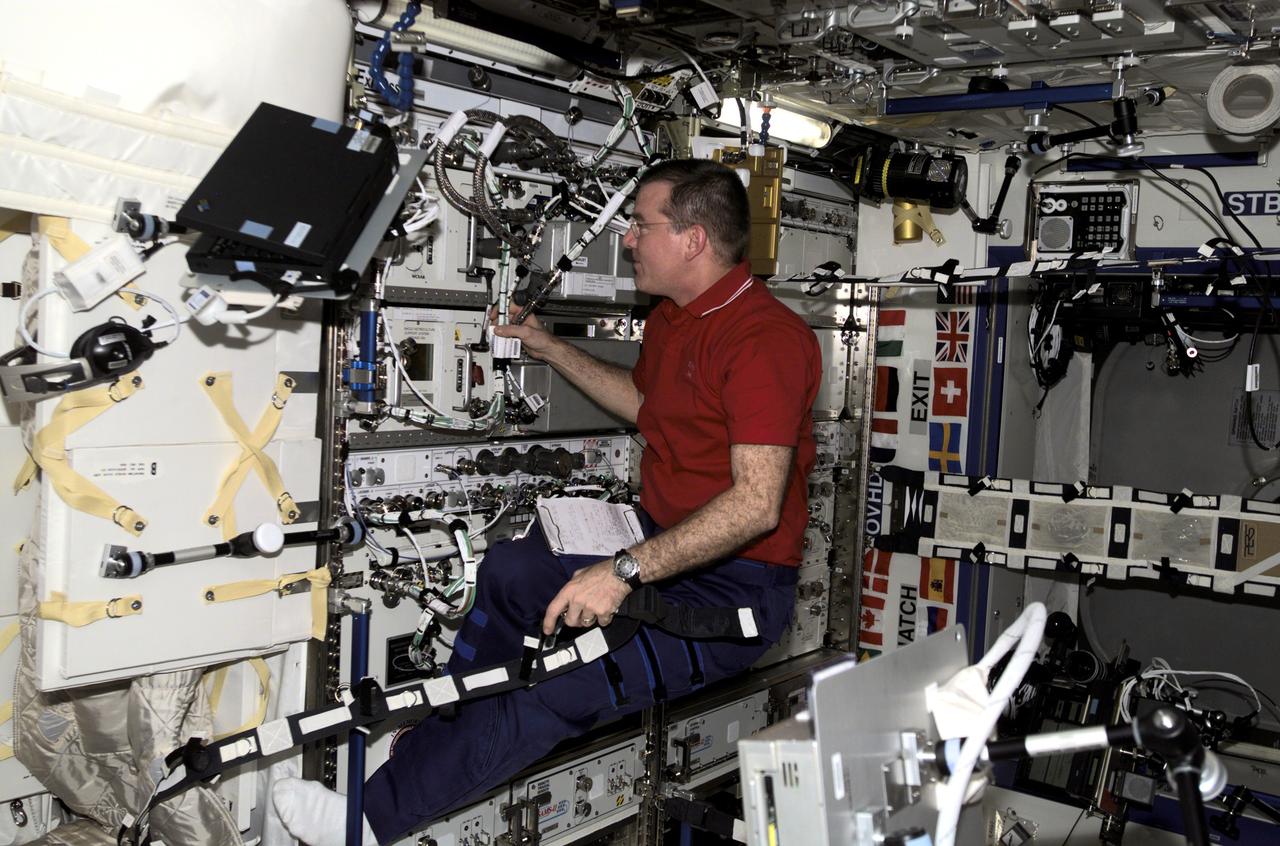
Astronaut James S. Voss, Expedition Two flight engineer, works with a series of cables on the EXPRESS Rack in the United State's Destiny laboratory on the International Space Station (ISS). The EXPRESS Rack is a standardized payload rack system that transports, stores, and supports experiments aboard the ISS. EXPRESS stands for EXpedite the PRocessing of Experiments to the Space Station, reflecting the fact that this system was developed specifically to maximize the Station's research capabilities. The EXPRESS Rack system supports science payloads in several disciplines, including biology, chemistry, physics, ecology, and medicine. With the EXPRESS Rack, getting experiments to space has never been easier or more affordable. With its standardized hardware interfaces and streamlined approach, the EXPRESS Rack enables quick, simple integration of multiple payloads aboard the ISS. The system is comprised of elements that remain on the ISS, as well as elements that travel back and forth between the ISS and Earth via the Space Shuttle.
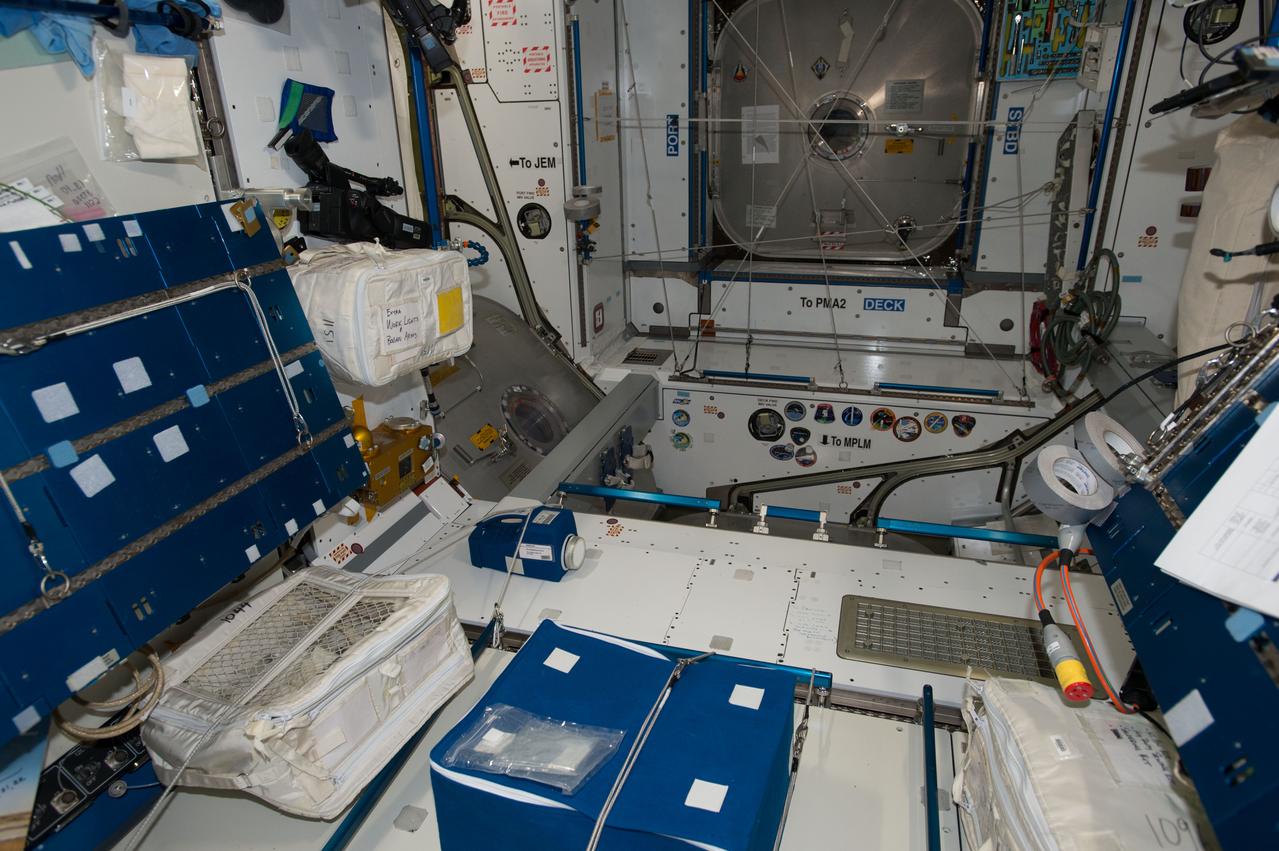
iss042e29609 (3/4/2015) --- Photographic documentation taken prior to collection of surface and air samples using various devices in multiple locations to characterize the types of microbial populations on the International Space Station (ISS) for the Microbial Observatory-1 payload. The Microbial Payload Tracking Series (Microbial Observatory-1) investigation monitors the types of microbes present on ISS over a one-year period. Samples are returned to Earth for further study, enabling scientists to understand the diversity of the microbial flora on the ISS and how it changes over time.
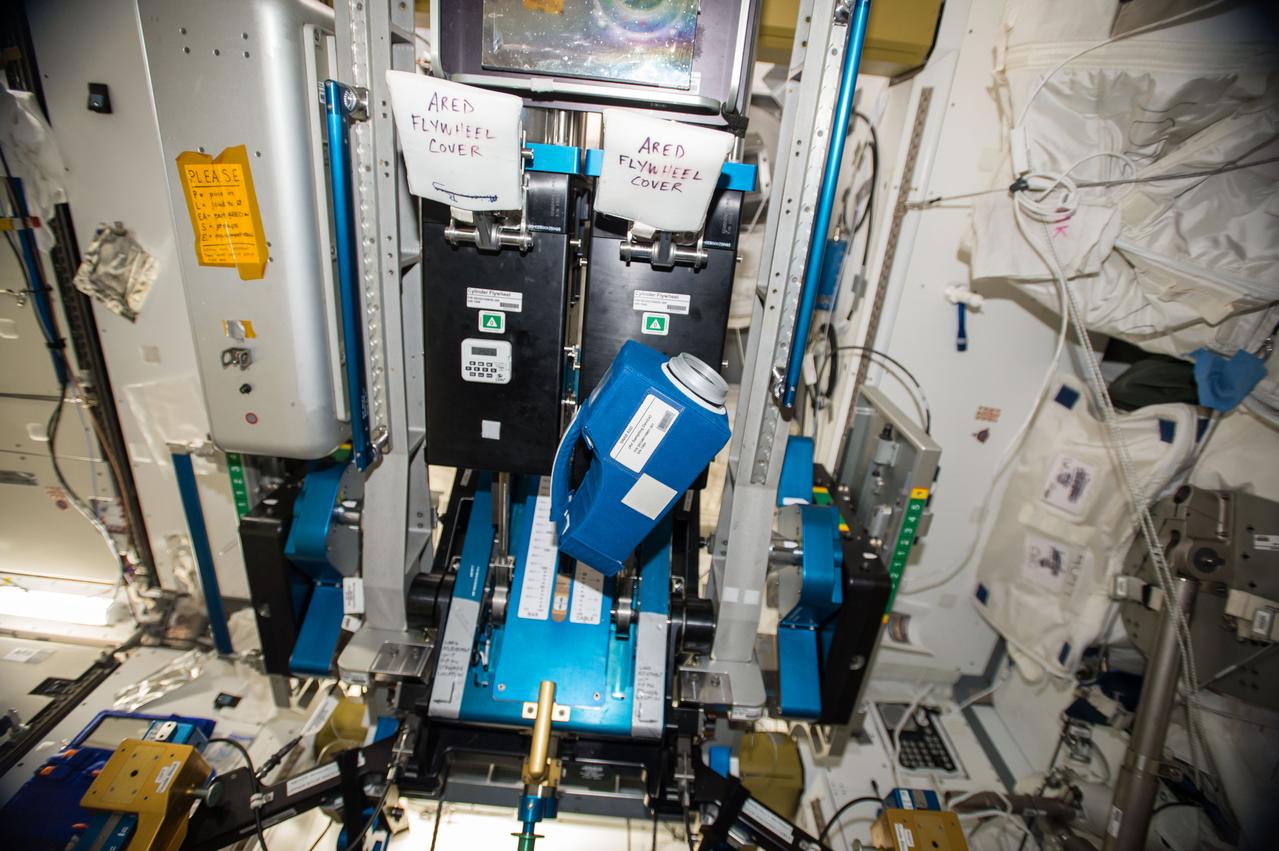
iss043e198394 (5/15/2015) --- Photographic documentation taken prior to collection of surface and air samples using various devices in multiple locations to characterize the types of microbial populations on the International Space Station (ISS) for the Microbial Observatory-1 payload. The Microbial Payload Tracking Series (Microbial Observatory-1) investigation monitors the types of microbes present on ISS over a one-year period. Samples are returned to Earth for further study, enabling scientists to understand the diversity of the microbial flora on the ISS and how it changes over time.
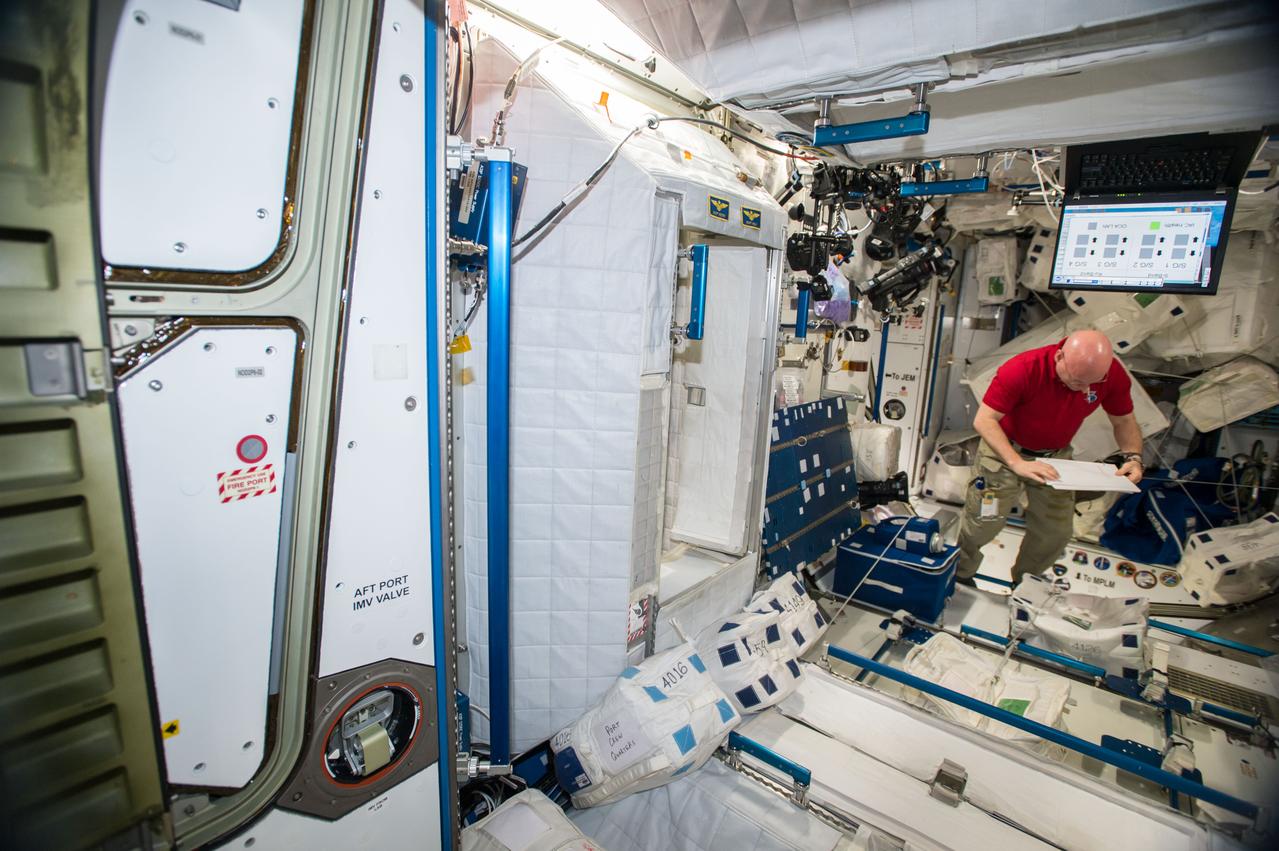
iss043e198418 (5/15/2015) --- NASA astronaut Scott Kelly is shown during the collection of surface and air samples using various devices in multiple locations to characterize the types of microbial populations on the International Space Station (ISS) for the Microbial Observatory-1 payload. The Microbial Payload Tracking Series (Microbial Observatory-1) investigation monitors the types of microbes present on ISS over a one-year period. Samples are returned to Earth for further study, enabling scientists to understand the diversity of the microbial flora on the ISS and how it changes over time.
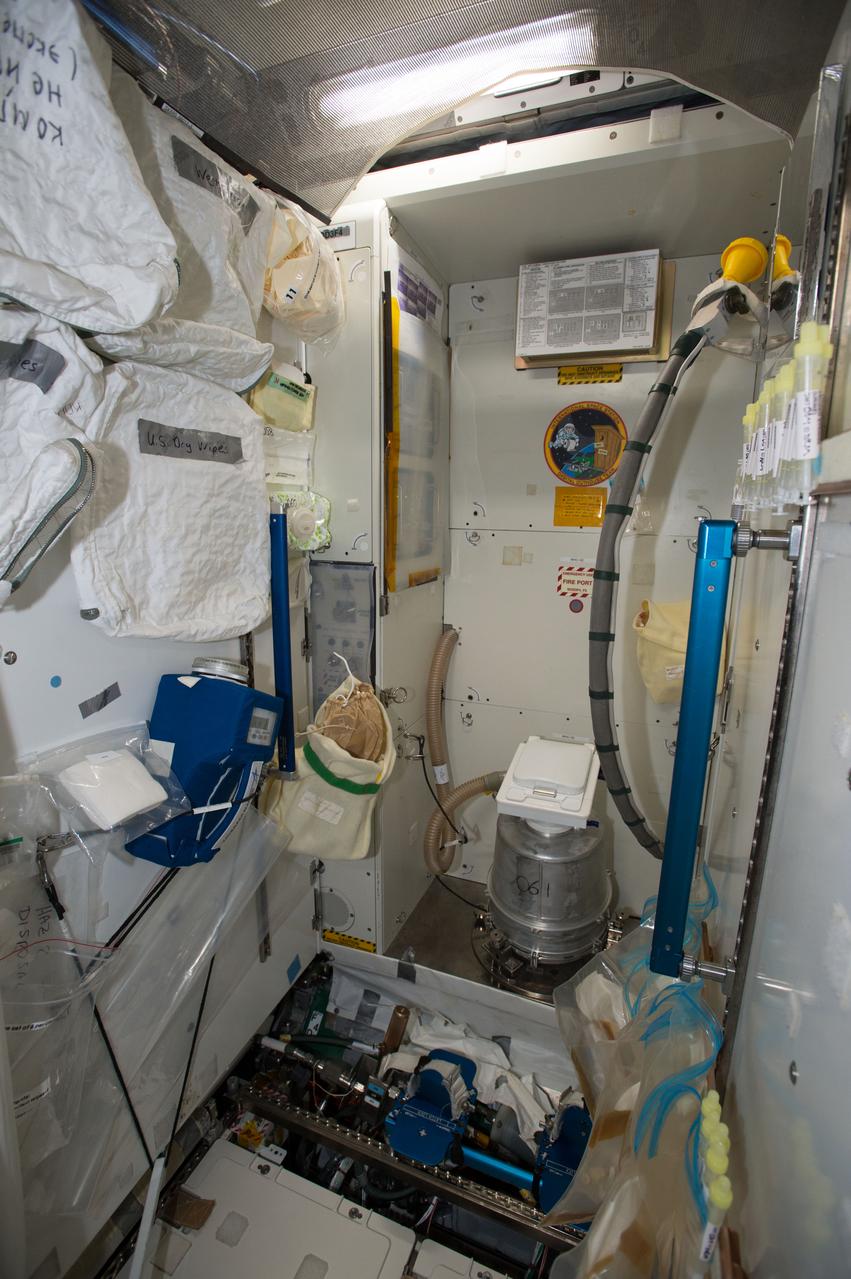
iss042e296534 (3/4/2015) --- Photographic documentation taken prior to collection of surface and air samples using various devices in multiple locations to characterize the types of microbial populations on the International Space Station (ISS) for the Microbial Observatory-1 payload. The Microbial Payload Tracking Series (Microbial Observatory-1) investigation monitors the types of microbes present on ISS over a one-year period. Samples are returned to Earth for further study, enabling scientists to understand the diversity of the microbial flora on the ISS and how it changes over time.
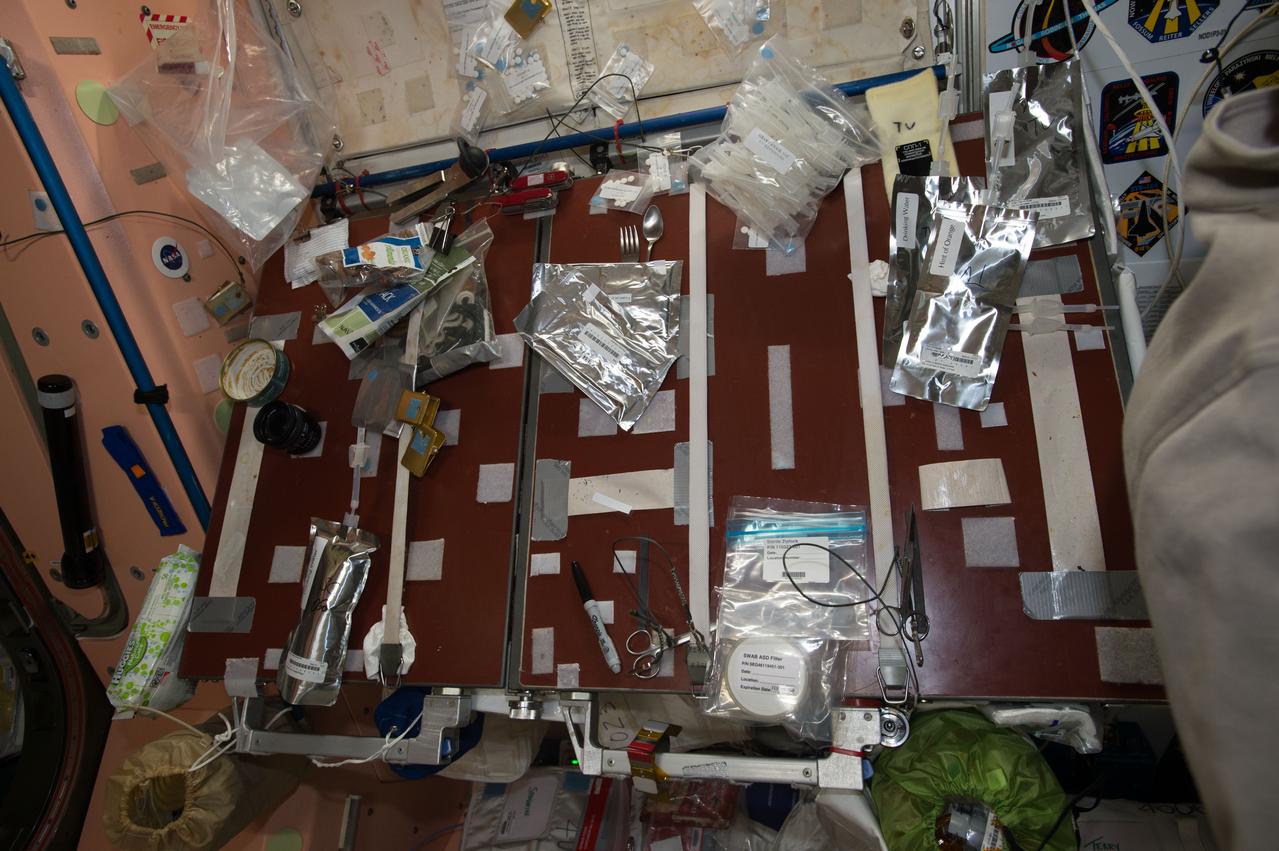
iss042e296526 (3/4/2015) --- Photographic documentation taken prior to collection of surface and air samples using various devices in multiple locations to characterize the types of microbial populations on the International Space Station (ISS) for the Microbial Observatory-1 payload. The Microbial Payload Tracking Series (Microbial Observatory-1) investigation monitors the types of microbes present on ISS over a one-year period. Samples are returned to Earth for further study, enabling scientists to understand the diversity of the microbial flora on the ISS and how it changes over time.
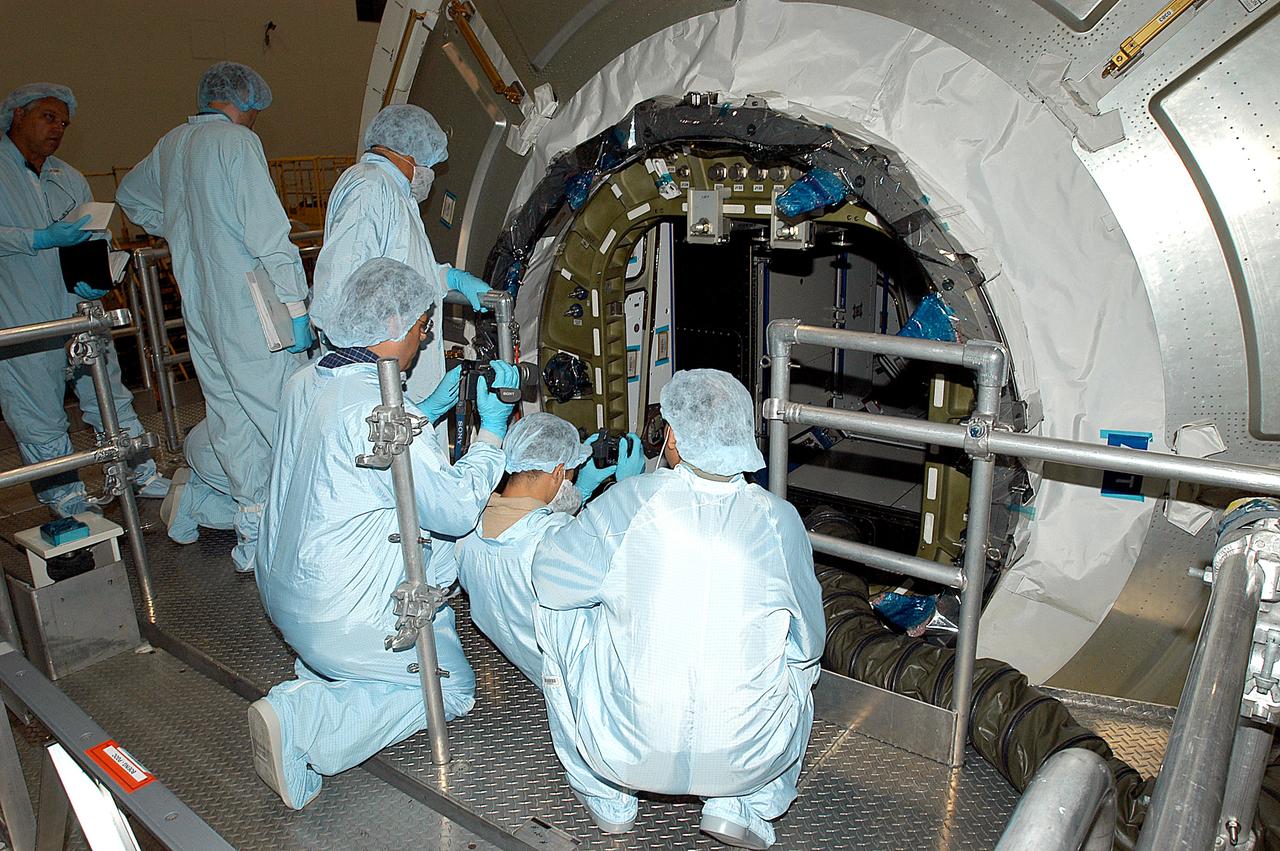
KENNEDY SPACE CENTER, FLA. - Workers in the Space Station Processing Facility attempt to open the hatch on the Italian-built Node 2, a future element of the International Space Station. Node 2 arrived at KSC June 1. The second of three Station connecting modules, the module attaches to the end of the U.S. Lab and provides attach locations for the Japanese laboratory, European laboratory, the Centrifuge Accommodation Module and, later, Multipurpose Logistics Modules. It will provide the primary docking location for the Shuttle when a pressurized mating adapter is attached to Node 2. Installation of the module will complete the U.S. Core of the ISS. Node 2 is the designated payload for mission STS-120. No orbiter or launch date has been determined yet.Installation of the module will complete the U.S. Core of the ISS. Node 2 is the designated payload for mission STS-120. No orbiter or launch date has been determined yet.
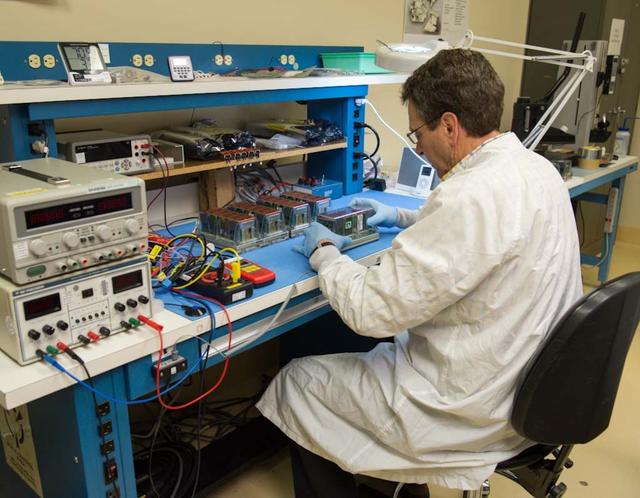
TROPI Seed Growth-1 payload (will fly to ISS on Space X 2) with John Freeman, Intrinsyx @ Ames, Plant Scientist
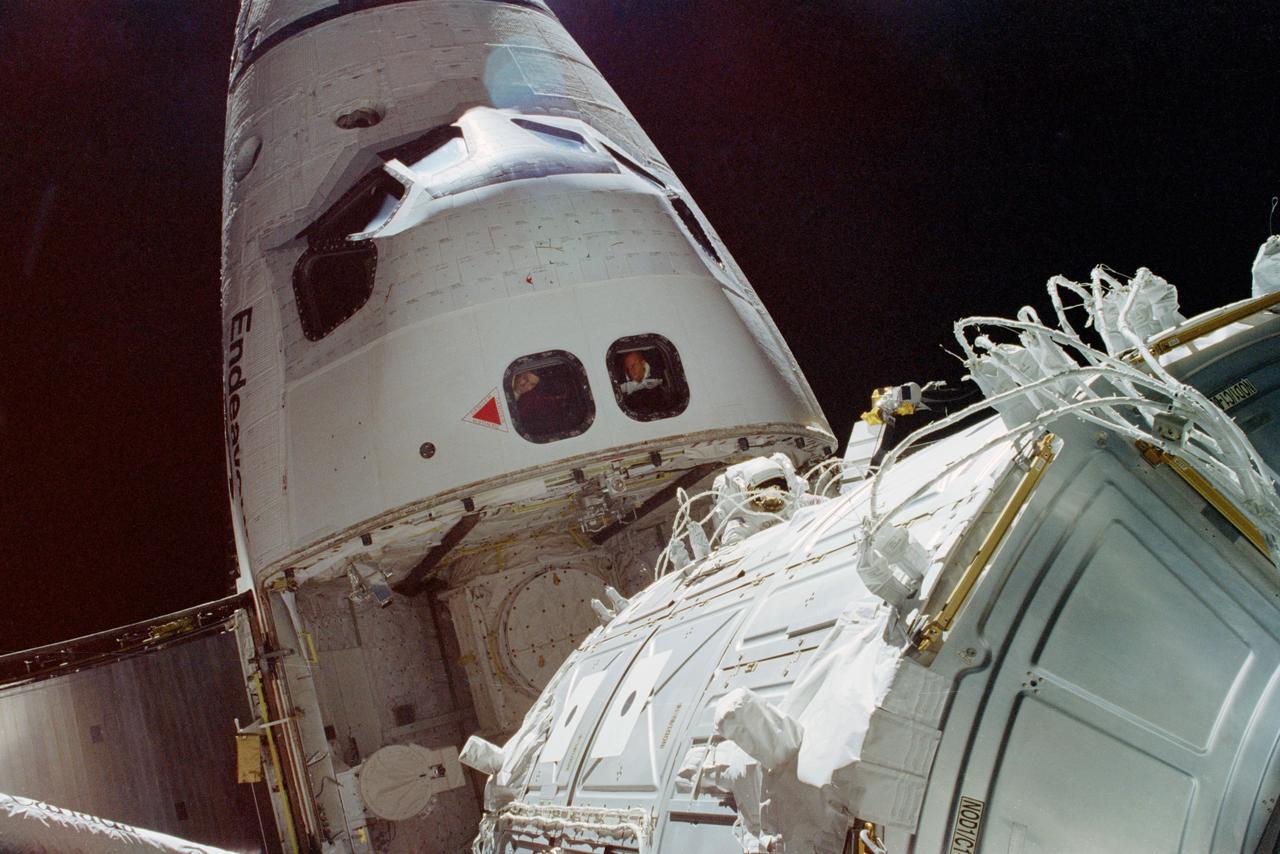
STS088-352-034 (4-15 Dec. 1998) --- This scene photographed from the top of Node 1 shows the nose of the Space Shuttle Endeavour, during one of three space walks. Astronaut James H. Newman, mission specialist (frame center), was joined by astronaut Jerry L. Ross, mission specialist (out of frame), for the extravehicular activity (EVA) to ready for release the recently-joined Russian-built Zarya Module (FGB) and the United States-built Unity (Node 1) Module. Fellow crew members Robert D. Cabana, commander (left window), and Frederick W. ?Rick? Sturckow, pilot, observe the EVA through aft flight deck overhead windows at left center.
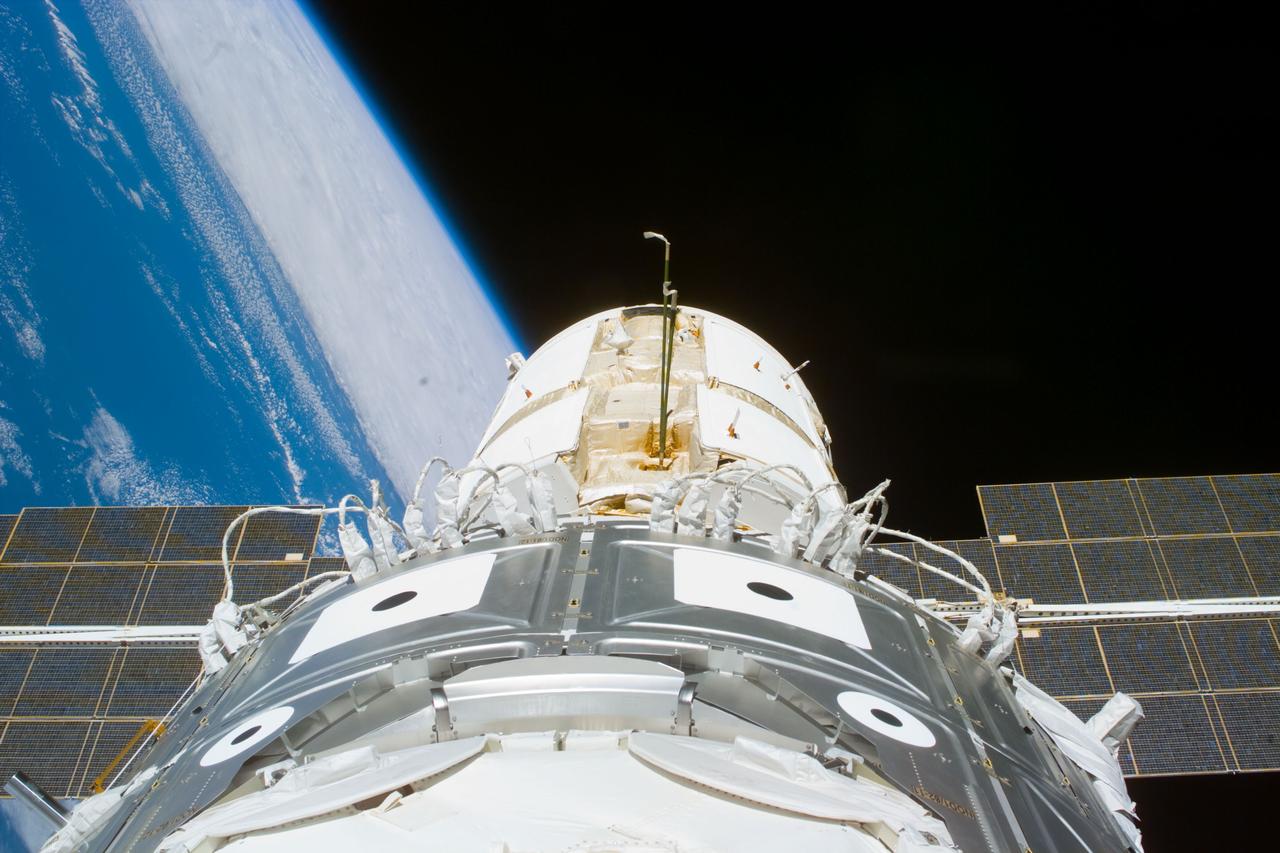
S88-E-5152 (12-13-98) --- One of the final looks at the mated Zarya and Unity modules before the ISS components left Endeavour's cargo bay. The scene was recorded with an electronic still camera (ESC) at 18:20:59 GMT, Dec. 13.
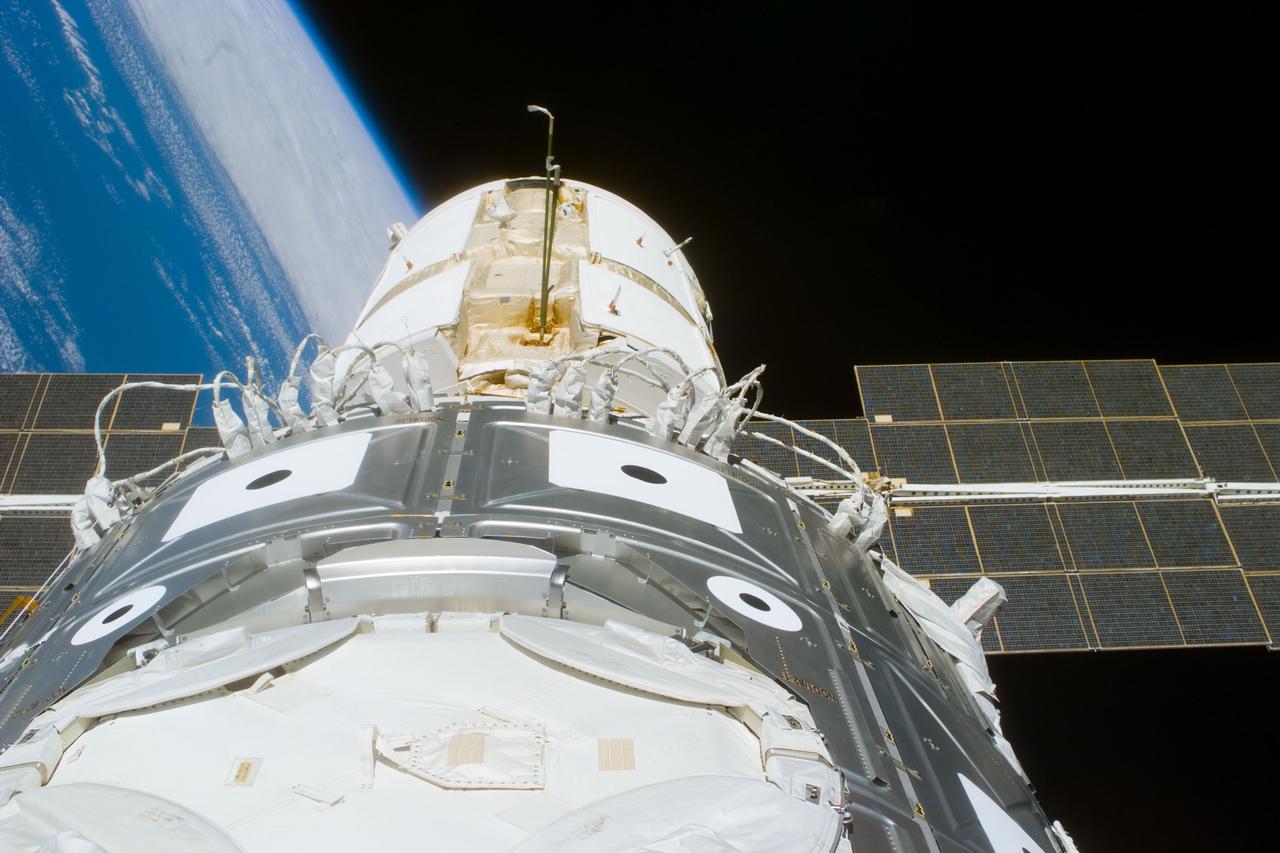
S88-E-5150 (12-13-98) --- One of the final looks at the mated Zarya and Unity modules before the ISS components left Endeavour's cargo bay. The scene was recorded with an electronic still camera (ESC) at 18:20:45 GMT, Dec. 13.
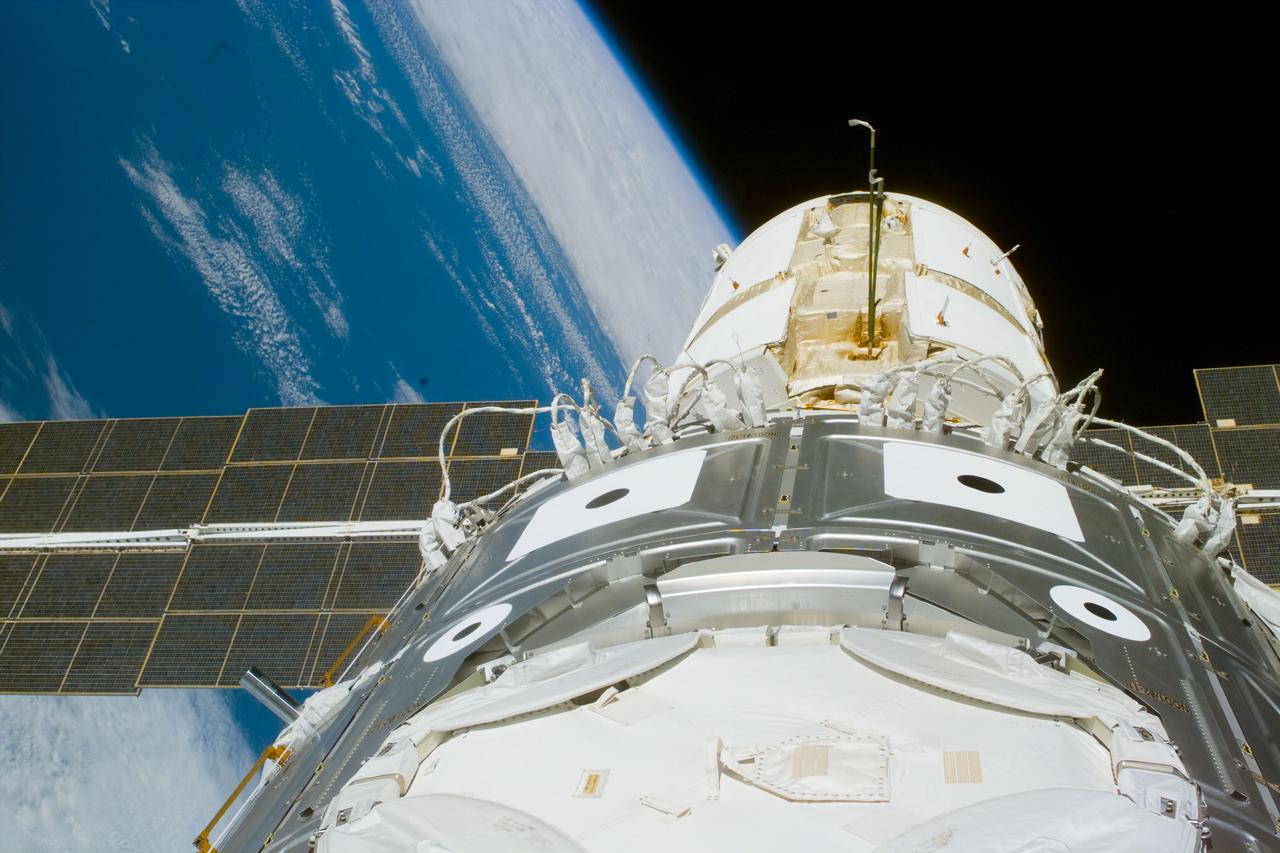
S88-E-5151 (12-13-98) --- One of the final looks at the mated Zarya and Unity modules before the ISS components left Endeavour's cargo bay. The scene was recorded with an electronic still camera (ESC) at 18:20:52 GMT, Dec. 13.
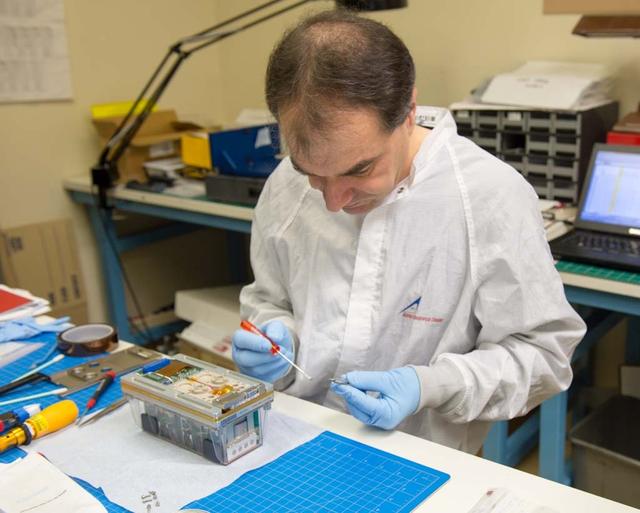
TROPI Seed Growth-1 payload (will fly to ISS on Space X 2) with Thomas Neidermaier, Europeon Modular Culitivation System Payload Intergration Manager both from Astrium Space Transportaton, Friedrichshafen, Germany.
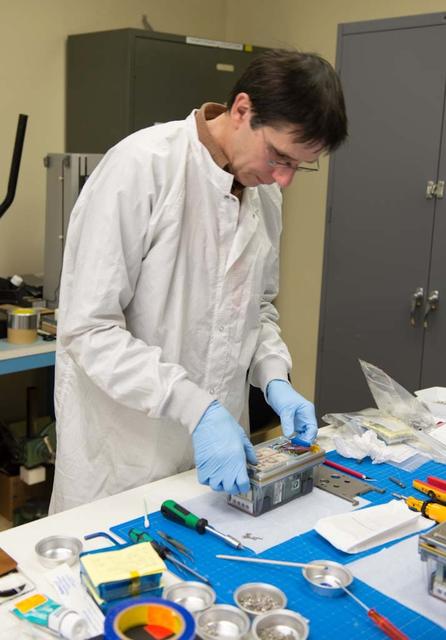
TROPI Seed Growth-1 payload (will fly to ISS on Space X 2) with Reinhard Born, Astrium Space Transportaton, Friedrichshafen, Germany - Europeon Modular Culitivation System Payload Engineering Manager
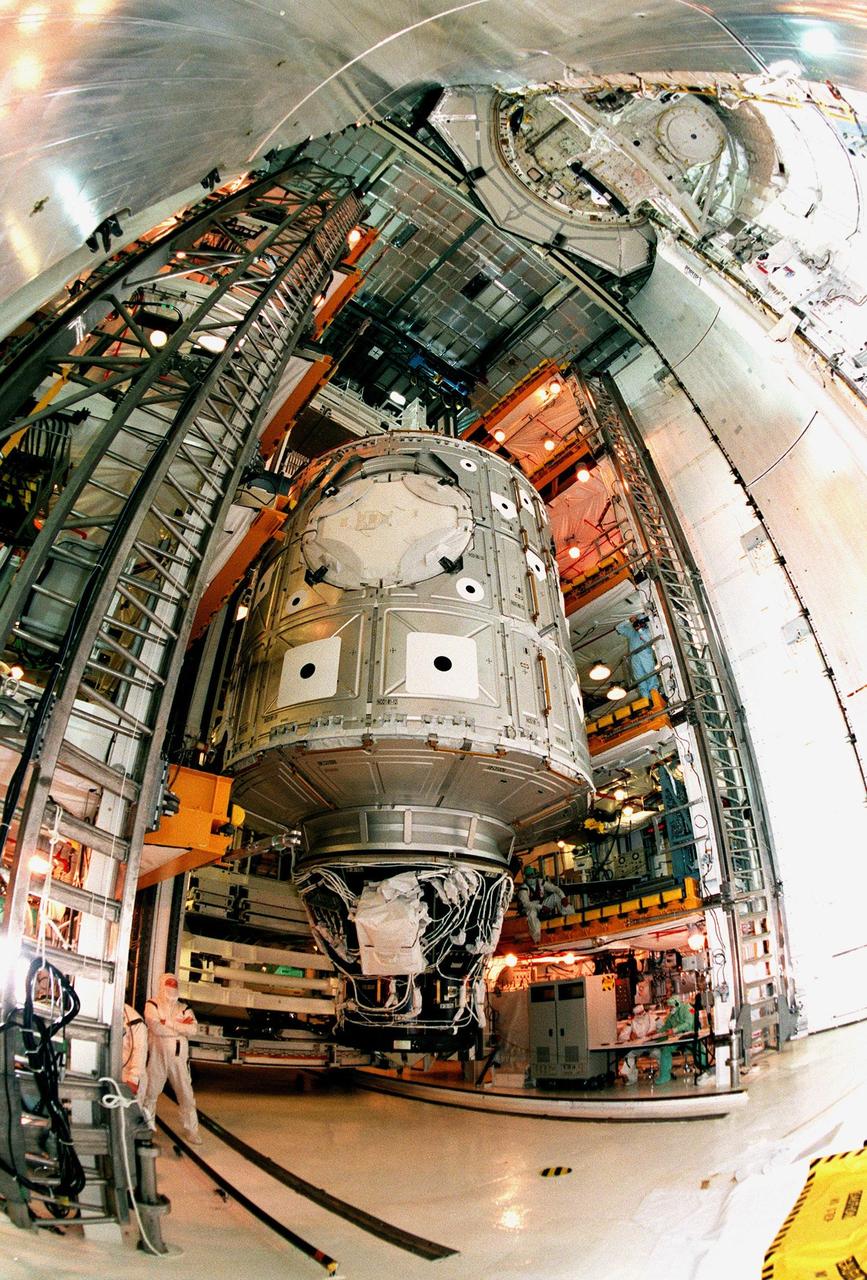
Looking like a painting, this wide-angle view shows the Unity connecting module being moved toward the payload bay of the orbiter Endeavour at Launch Pad 39A. Part of the International Space Station (ISS), Unity is scheduled for launch Dec. 3, 1998, on Mission STS-88. The Unity is a connecting passageway to the living and working areas of ISS. While on orbit, the flight crew will deploy Unity from the payload bay and attach it to the Russian-built Zarya control module which will be in orbit at that time
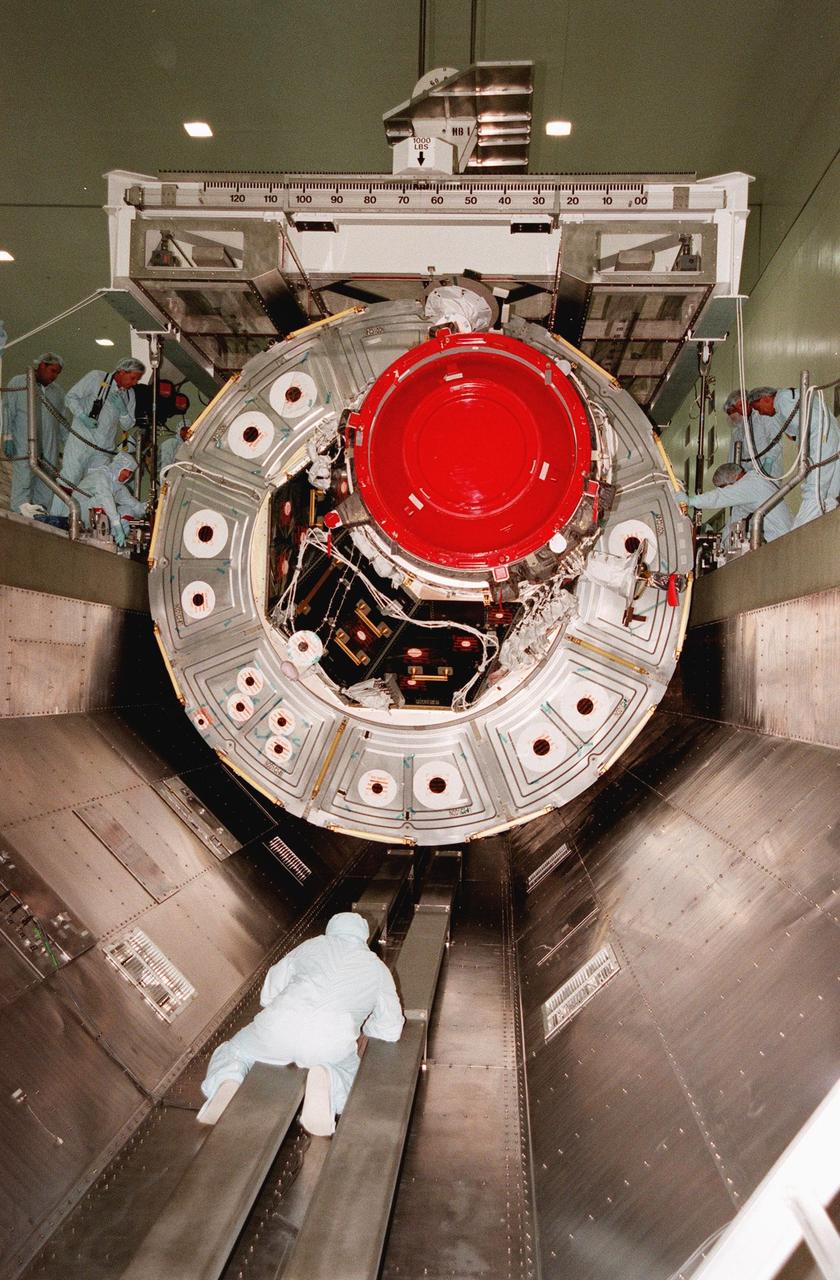
In the Space Station Processing Facility, workers at the side and on the floor of the payload canister guide the Unity connecting module into position for transfer to the launch pad. Part of the International Space Station (ISS), Unity is scheduled for launch aboard Space Shuttle Endeavour on Mission STS-88 in December. The Unity is a connecting passageway to the living and working areas of ISS. While on orbit, the flight crew will deploy Unity from the payload bay and attach Unity to the Russian-built Zarya control module which will be in orbit at that time
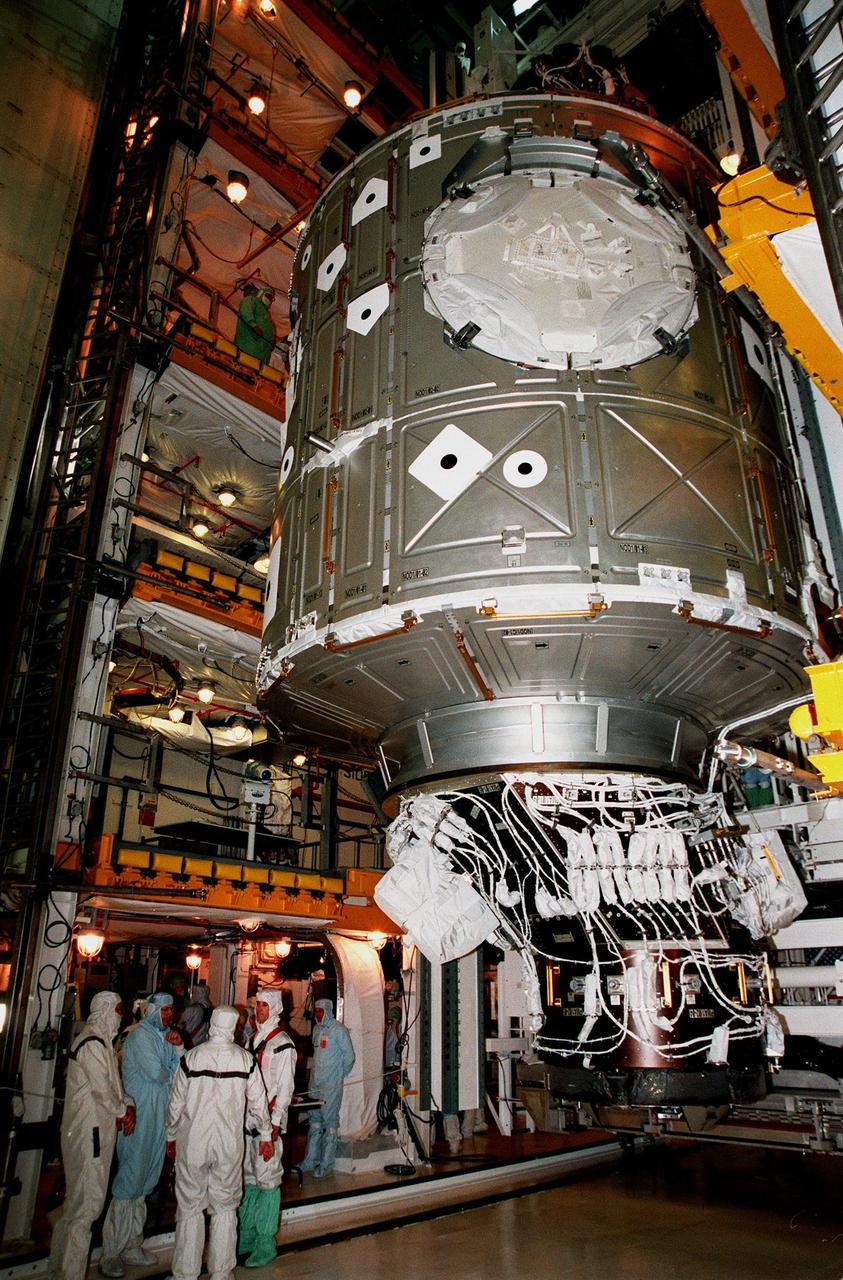
The Unity connecting module is moved toward the payload bay of the orbiter Endeavour at Launch Pad 39A. Part of the International Space Station (ISS), Unity is scheduled for launch Dec. 3, 1998, on Mission STS-88 . The Unity is a connecting passageway to the living and working areas of ISS. While on orbit, the flight crew will deploy Unity from the payload bay and attach it to the Russian-built Zarya control module which will be in orbit at that time
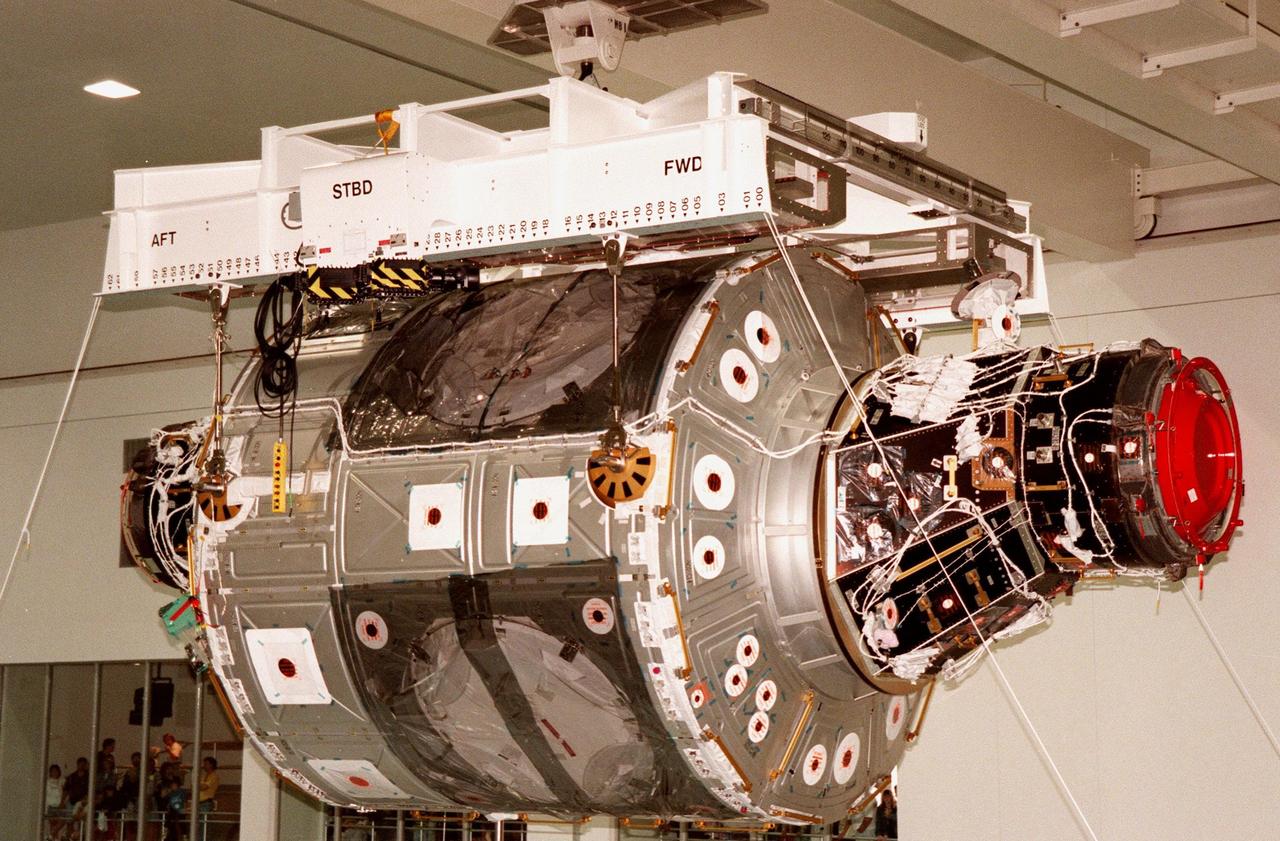
In the Space Station Processing Facility, a closeup view shows the overhead crane holding the Unity connecting module as it moves it to the payload canister for transfer to the launch pad. Part of the International Space Station (ISS), Unity is scheduled for launch aboard Space Shuttle Endeavour on Mission STS-88 in December. The Unity is a connecting passageway to the living and working areas of ISS. While on orbit, the flight crew will deploy Unity from the payload bay and attach Unity to the Russian-built Zarya control module which will be in orbit at that time
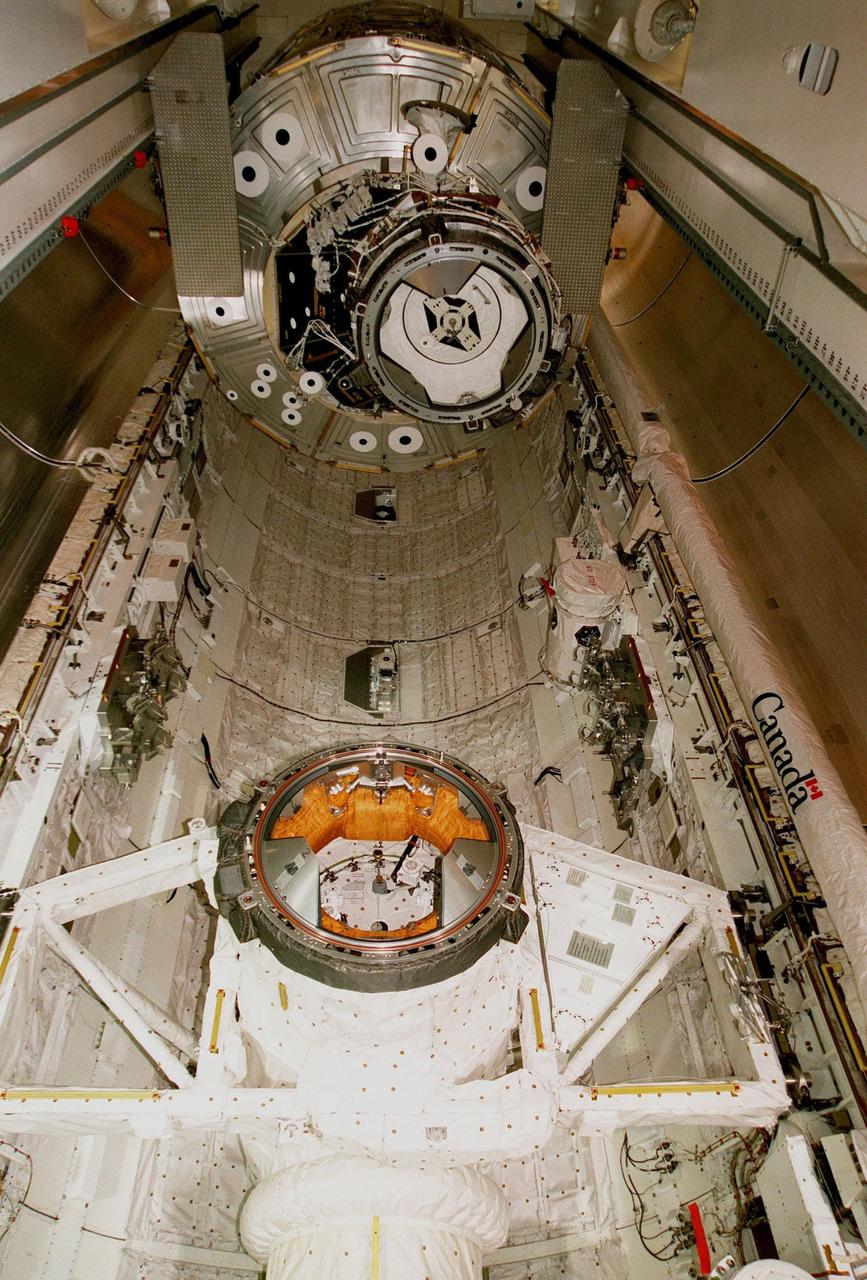
Viewed from below, the Unity connecting module is moved into the payload bay of the orbiter Endeavour at Launch Pad 39A. Part of the International Space Station (ISS), Unity is scheduled for launch Dec. 3, 1998, on Mission STS-88. The Unity is a connecting passageway to the living and working areas of ISS. While on orbit, the flight crew will deploy Unity from the payload bay and attach it to the Russian-built Zarya control module which will be in orbit at that time
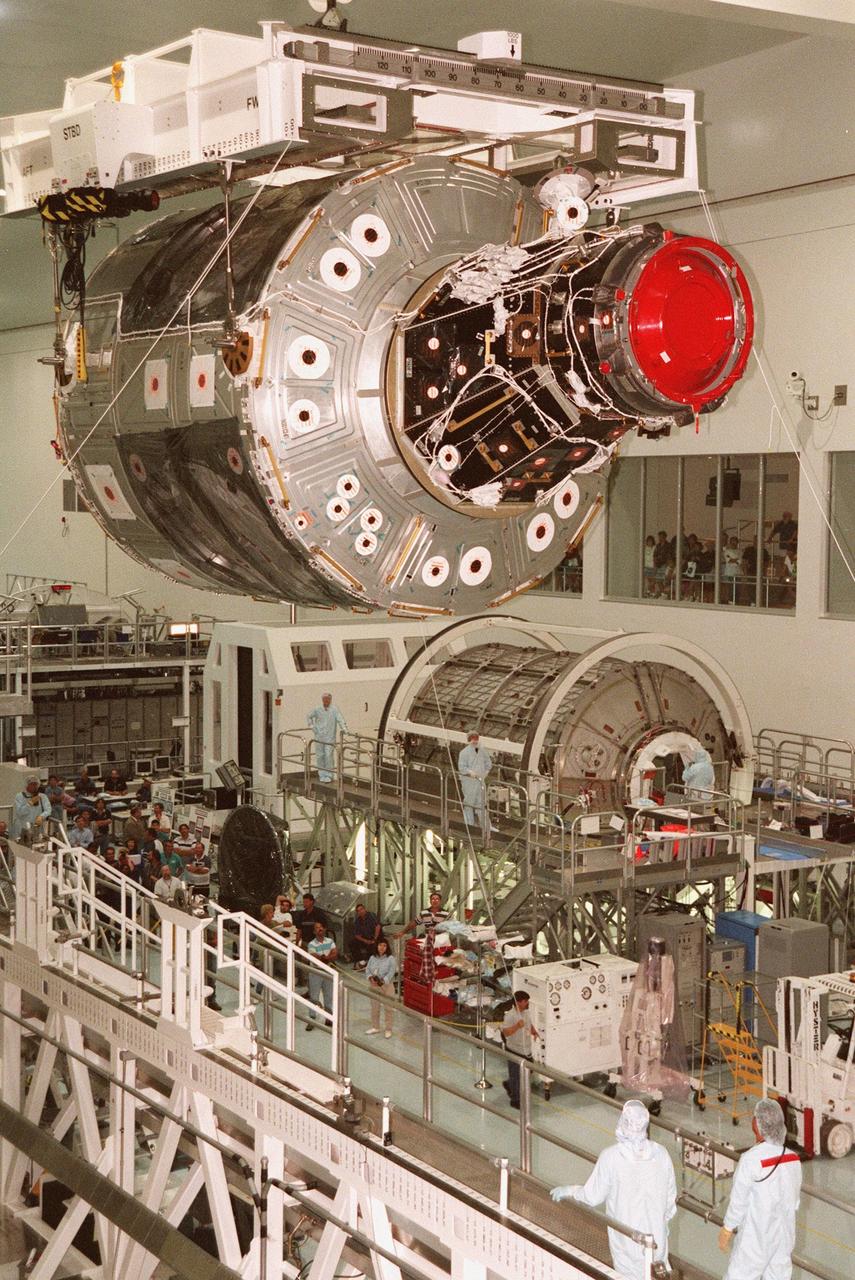
In the Space Station Processing Facility, an overhead crane moves the Unity connecting module to the payload canister for transfer to the launch pad. Part of the International Space Station (ISS), Unity is scheduled for launch aboard Space Shuttle Endeavour on Mission STS-88 in December. The Unity is a connecting passageway to the living and working areas of ISS. While on orbit, the flight crew will deploy Unity from the payload bay and attach Unity to the Russian-built Zarya control module which will be in orbit at that time
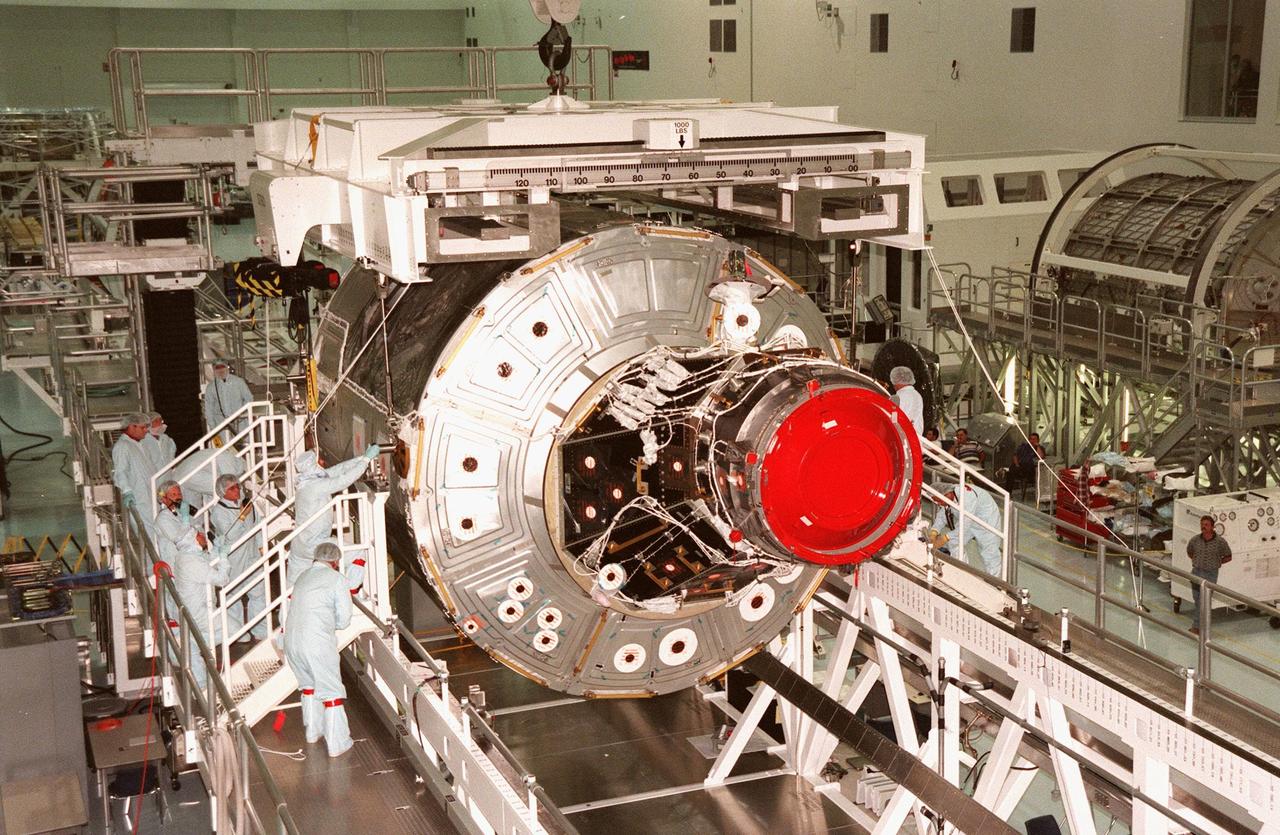
In the Space Station Processing Facility, workers attach the overhead crane that will lift the Unity connecting module from its workstand to move the module to the payload canister. Part of the International Space Station (ISS), Unity is scheduled for launch aboard Space Shuttle Endeavour on Mission STS-88 in December. The Unity is a connecting passageway to the living and working areas of ISS. While on orbit, the flight crew will deploy Unity from the payload bay and attach Unity to the Russian-built Zarya control module which will be in orbit at that time
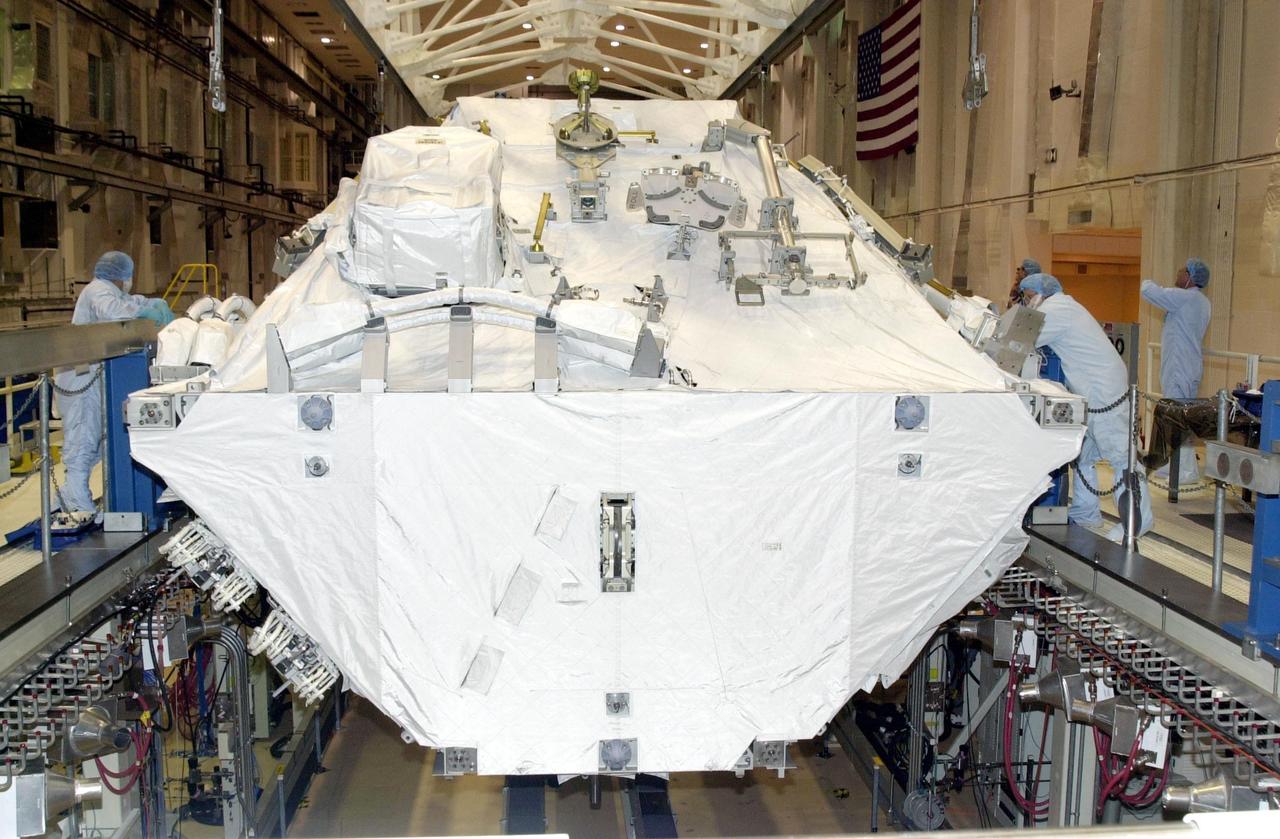
KENNEDY SPACE CENTER, FLA. -- In the Operations and Checkout Building, the Integrated Truss Structure S0 is ready to be moved to the payload canister for transport to the launch pad for mission STS-110. Part of the payload, the S0 truss will become the backbone of the orbiting International Space Station (ISS), at the center of the 10-truss, girderlike structure that will ultimately extend the length of a football field on the ISS. The S0 truss will be attached to the U.S. Lab, "Destiny," on the 11-day mission. Launch is scheduled for April 4.
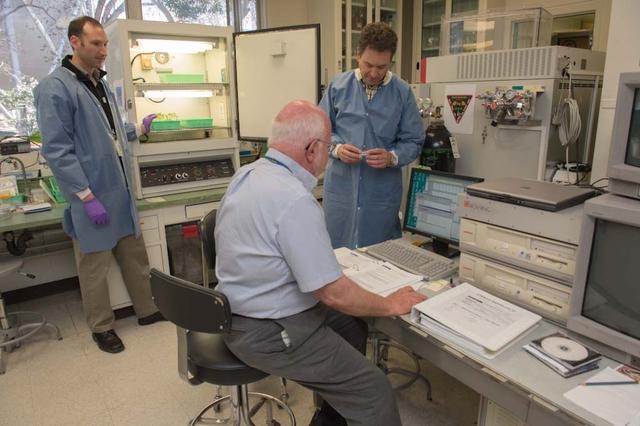
TROPI Seed Growth-1 payload (will fly to ISS on Space X 2) from left to right are Krisofer Vogelsong, Project Science Lead, Tropi SG-1, Lockheed Martin, NASA Ames, John Freeman Plant Scientist, Tropi SG-1, intrinsyx, NASA Ames, seated Dave Heathcote, ISS Payload Support, Lockheed Martin, NASA Ames
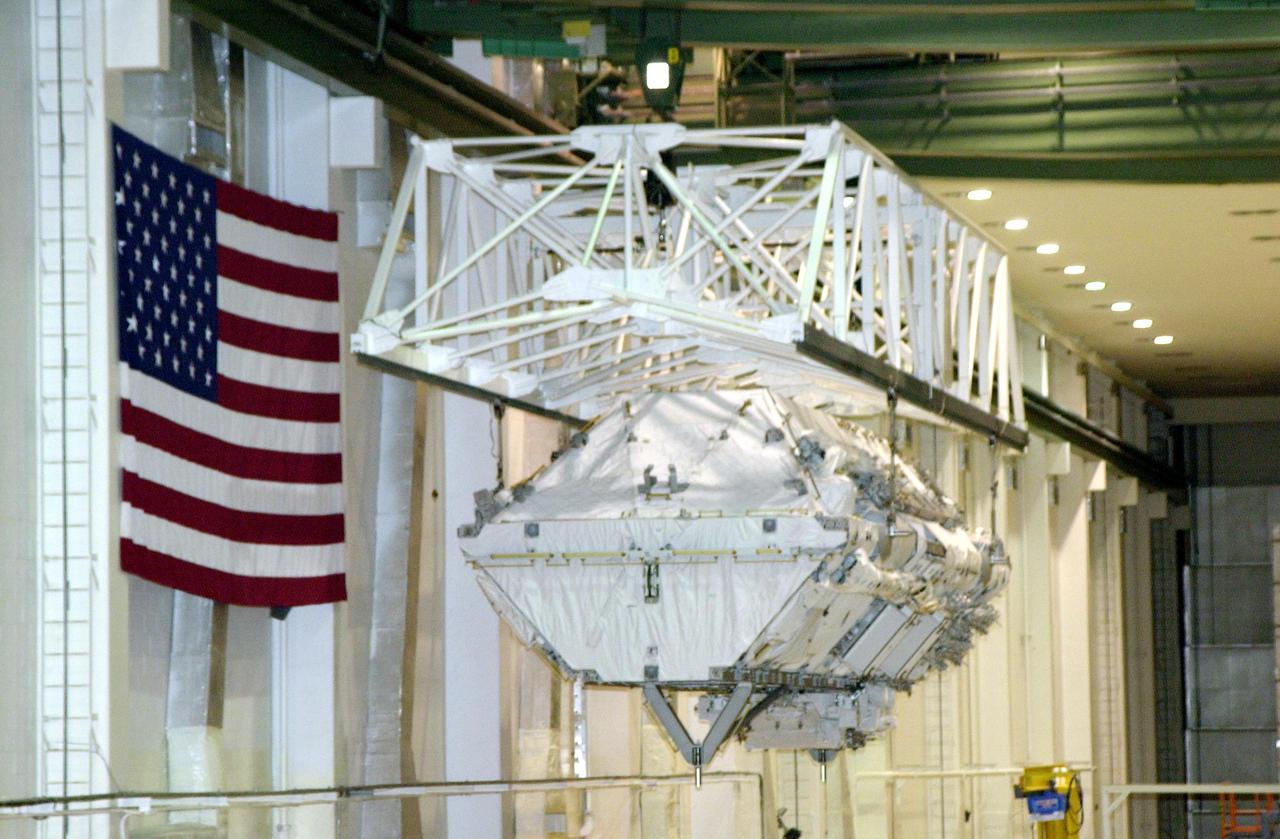
KENNEDY SPACE CENTER, FLA. -- In the Operations and Checkout Building, an overhead crane carries the Integrated Truss Structure S0 from its workstand toward the payload canister. The S0 truss will be transported to the launch pad for mission STS-110. Part of the payload, the S0 truss will become the backbone of the orbiting International Space Station (ISS), at the center of the 10-truss, girderlike structure that will ultimately extend the length of a football field on the ISS. The S0 truss will be attached to the U.S. Lab, 'Destiny,' on the 11-day mission. Launch is scheduled for April 4
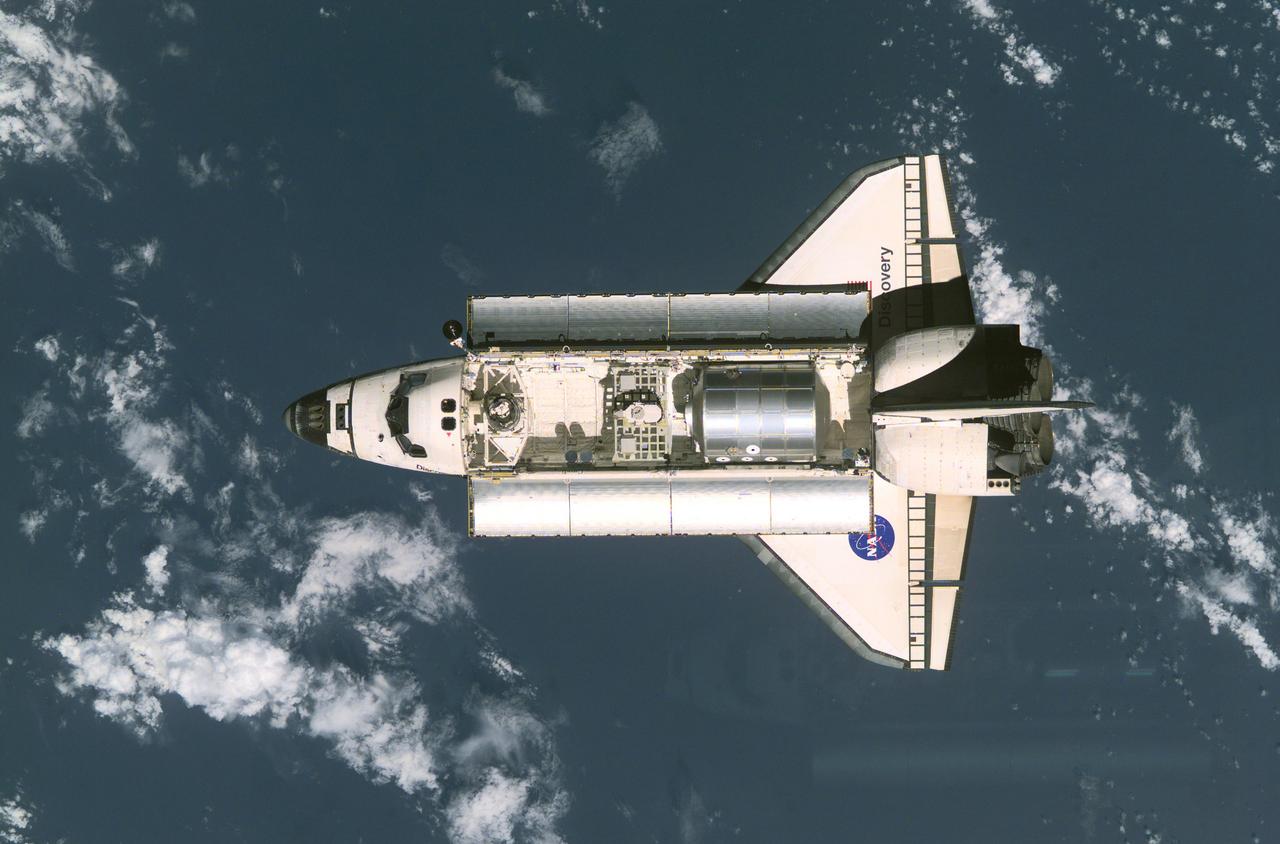
This is a view of the Space Shuttle Discovery as it approaches the International Space Station (ISS) during the STS-105 mission. Visible in the payload bay of Discovery are the Multipurpose Logistics Module (MPLM) Leonardo at right, which stores various supplies and experiments to be transferred into the ISS; at center, the Integrated Cargo Carrier (ICC) which carries the Early Ammonia Servicer (EAS); and two Materials International Space Station Experiment (MISSE) containers at left. Aboard Discovery were the ISS Expedition Three crew, who were to replace the Expedition Two crew that had been living on the ISS for the past five months.
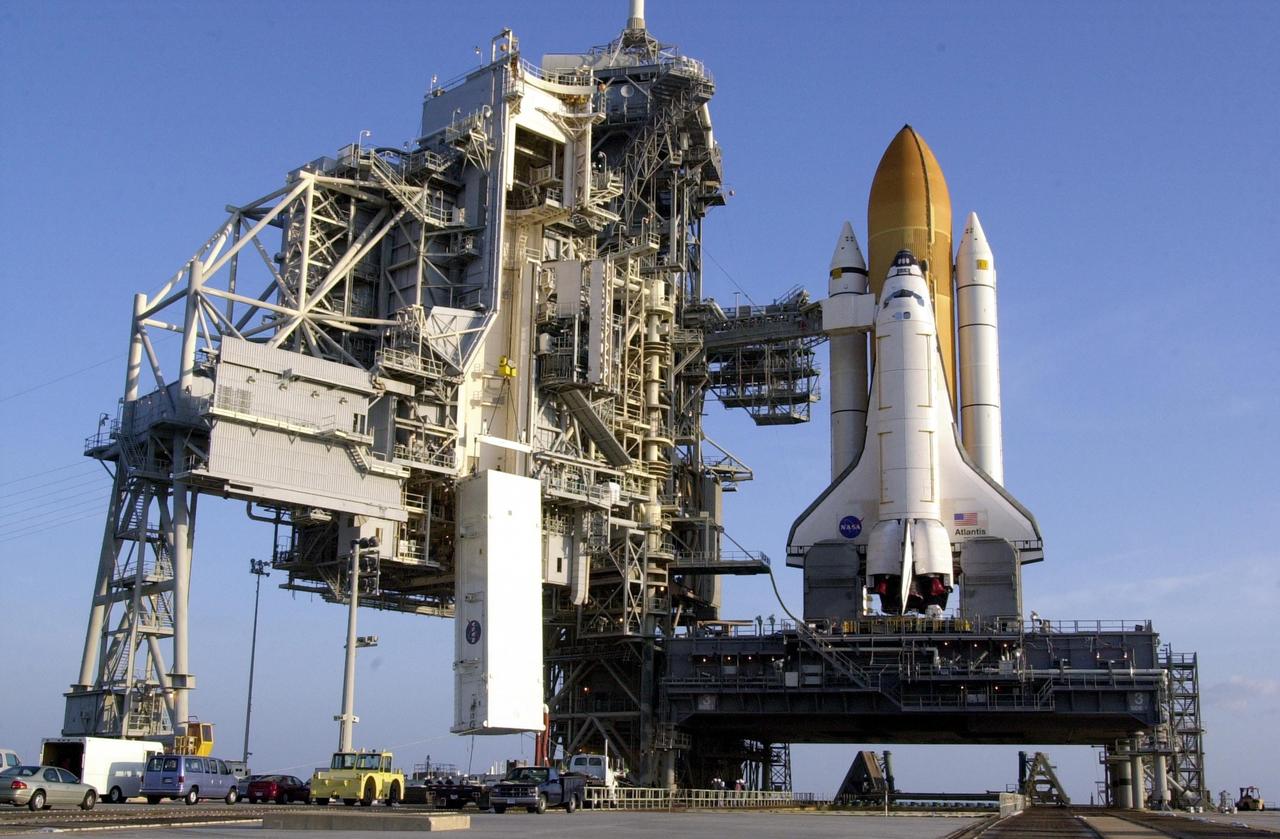
KENNEDY SPACE CENTER, FLA. -- On the launch pad, the payload canister with the S0 Integrated Truss Structure is lifted up the Rotating Service Structure to the payload changeout room for transfer to Space Shuttle Atlantis's payload bay. Part of the payload on mission STS-110, the S0 truss will become the backbone of the orbiting International Space Station (ISS). The S0 truss will be attached to the U.S. Lab, "Destiny," on the 11-day mission. Launch is scheduled for April 4
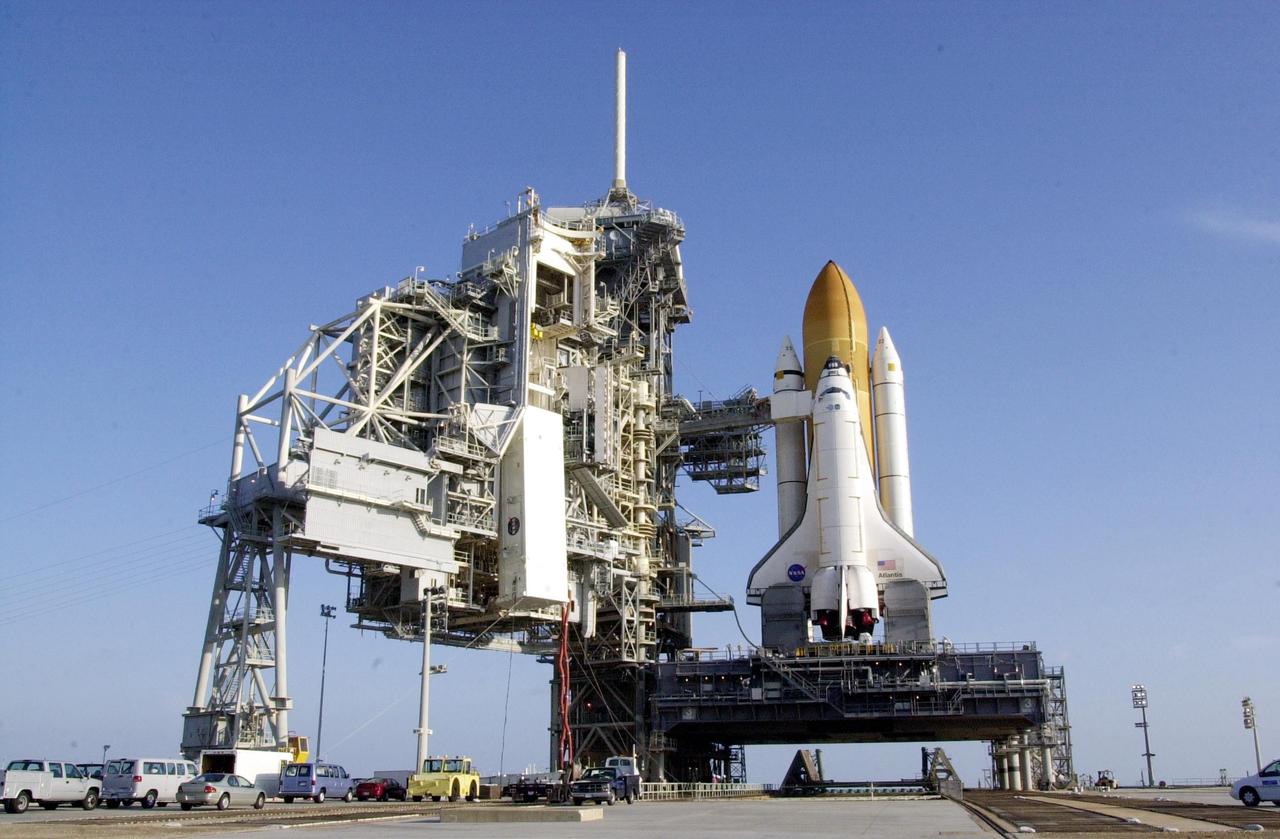
KENNEDY SPACE CENTER, FLA. -- On the launch pad, the payload canister with the S0 Integrated Truss Structure moves up the Rotating Service Structure to the payload changeout room for transfer to Space Shuttle Atlantis's payload bay. Part of the payload on mission STS-110, the S0 truss will become the backbone of the orbiting International Space Station (ISS). The S0 truss will be attached to the U.S. Lab, "Destiny," on the 11-day mission. Launch is scheduled for April 4
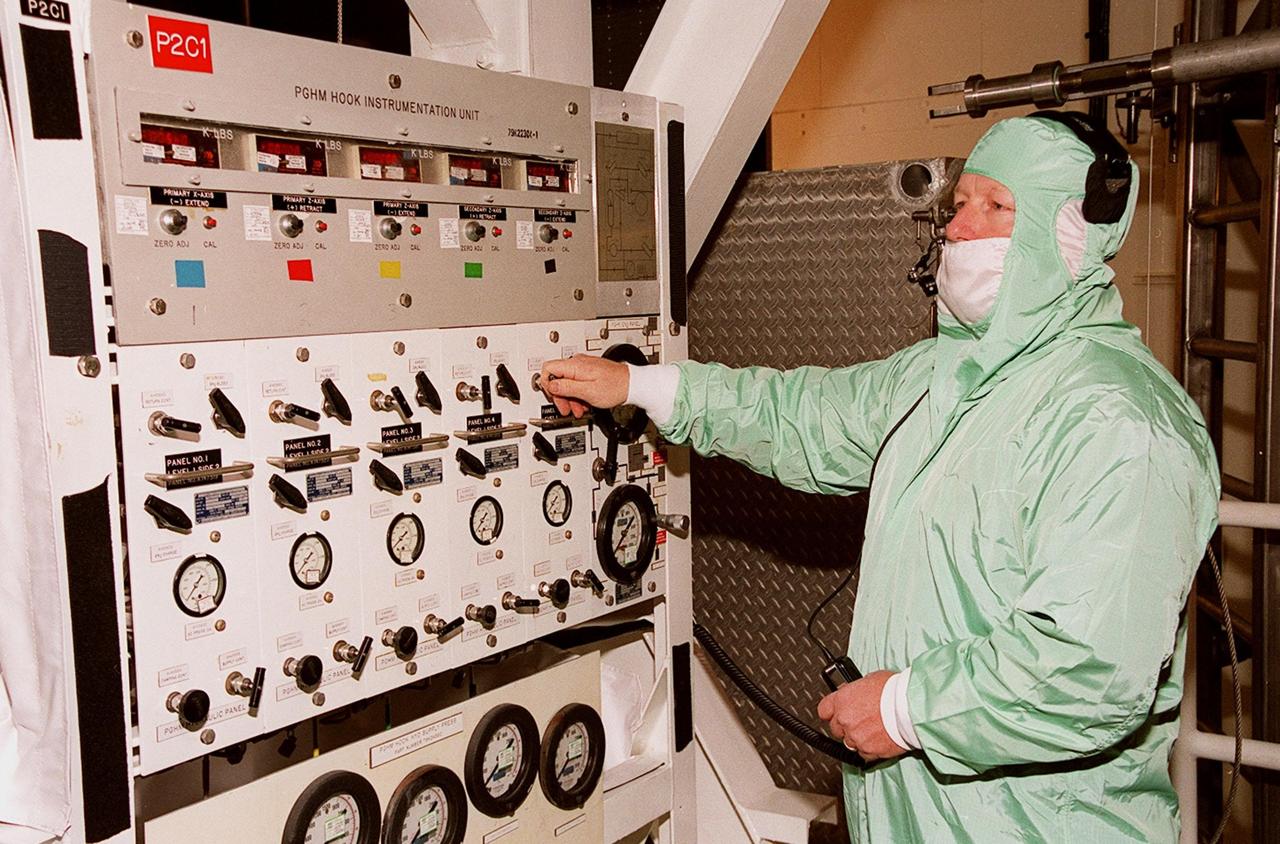
KENNEDY SPACE CENTER, FLA. -- In the Payload Changeout Room at Launch Pad 39A, a technician works switches on the Payload Ground-Handling Mechanism hook instrumentation unit that will move the U.S. Lab Destiny out of the payload canister and into the PCR. Destiny will then be transferred to the payload bay of Atlantis for mission STS-98. Destiny, a key element in the construction of the International Space Station is designed for space science experiments. STS-98 is the seventh construction flight to the ISS. Launch of STS-98 is scheduled for Jan. 19 at 2:11 a.m. EST
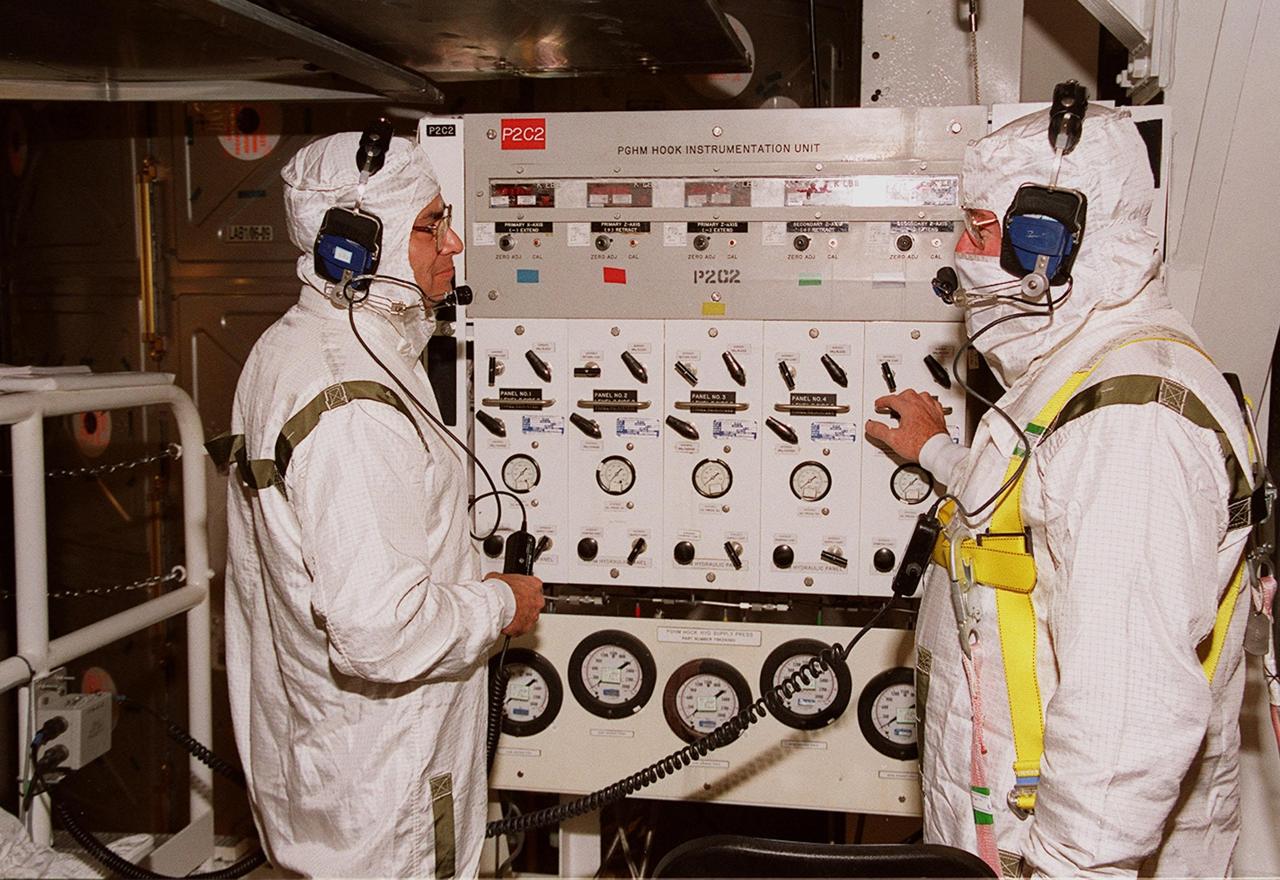
KENNEDY SPACE CENTER, FLA. -- In the Payload Changeout Room at Launch Pad 39A, technicians work the Payload Ground-Handling Mechanism hook instrumentation unit to move the U.S. Lab Destiny out of the payload canister and into the PCR. The Lab will then be transferred to the payload bay of Atlantis for mission STS-98. Destiny, a key element in the construction of the International Space Station is designed for space science experiments. STS-98 is the seventh construction flight to the ISS. Launch of STS-98 is scheduled for Jan. 19 at 2:11 a.m. EST
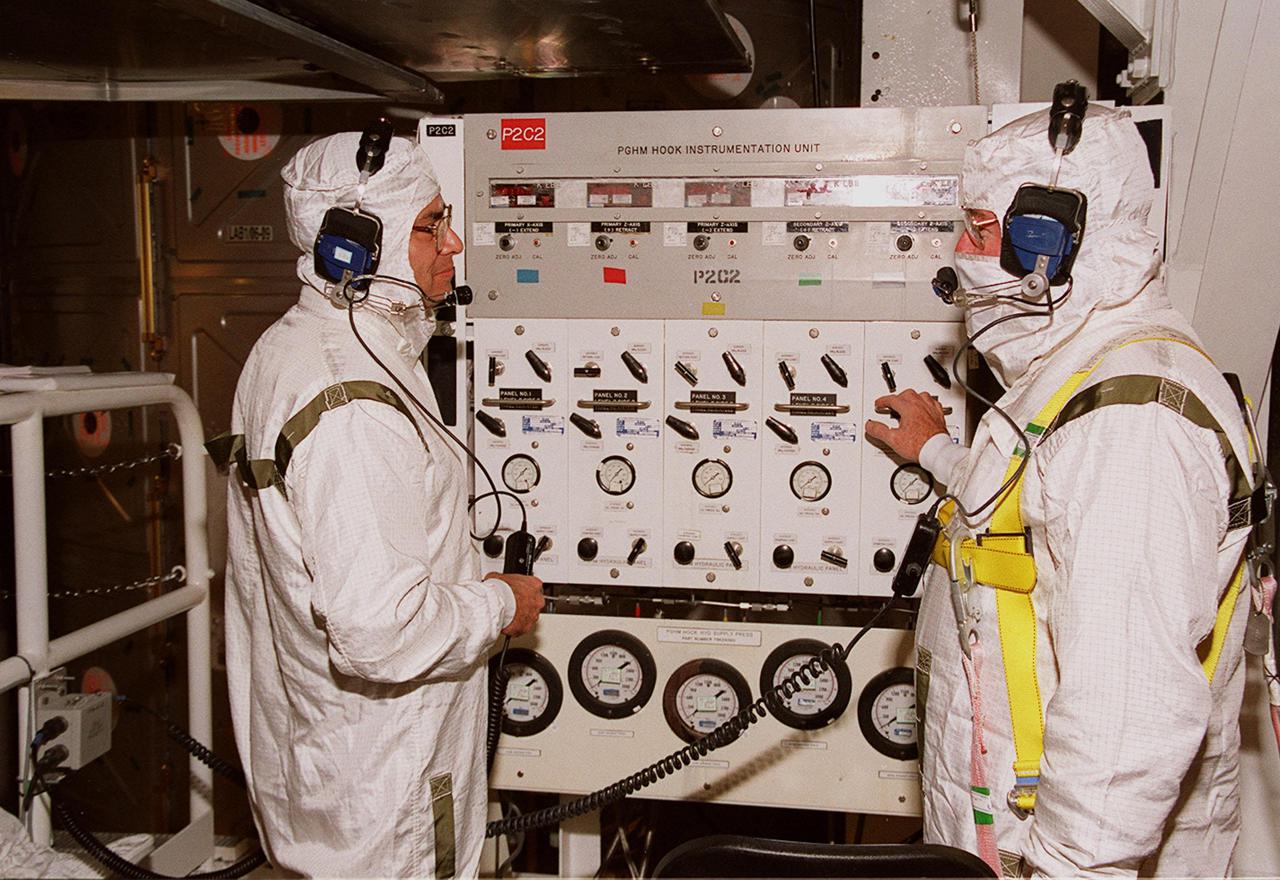
KENNEDY SPACE CENTER, FLA. -- In the Payload Changeout Room at Launch Pad 39A, technicians work the Payload Ground-Handling Mechanism hook instrumentation unit to move the U.S. Lab Destiny out of the payload canister and into the PCR. The Lab will then be transferred to the payload bay of Atlantis for mission STS-98. Destiny, a key element in the construction of the International Space Station is designed for space science experiments. STS-98 is the seventh construction flight to the ISS. Launch of STS-98 is scheduled for Jan. 19 at 2:11 a.m. EST
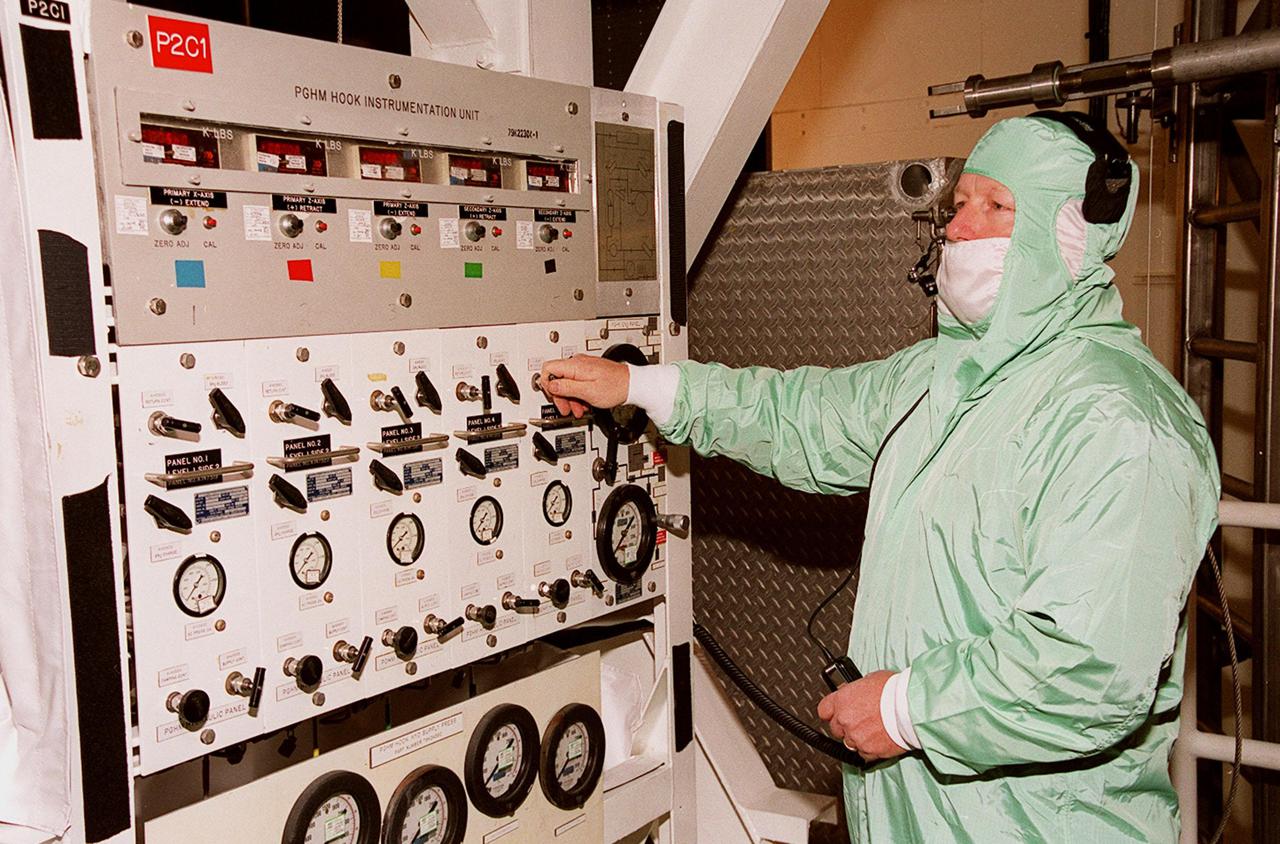
KENNEDY SPACE CENTER, FLA. -- In the Payload Changeout Room at Launch Pad 39A, a technician works switches on the Payload Ground-Handling Mechanism hook instrumentation unit that will move the U.S. Lab Destiny out of the payload canister and into the PCR. Destiny will then be transferred to the payload bay of Atlantis for mission STS-98. Destiny, a key element in the construction of the International Space Station is designed for space science experiments. STS-98 is the seventh construction flight to the ISS. Launch of STS-98 is scheduled for Jan. 19 at 2:11 a.m. EST
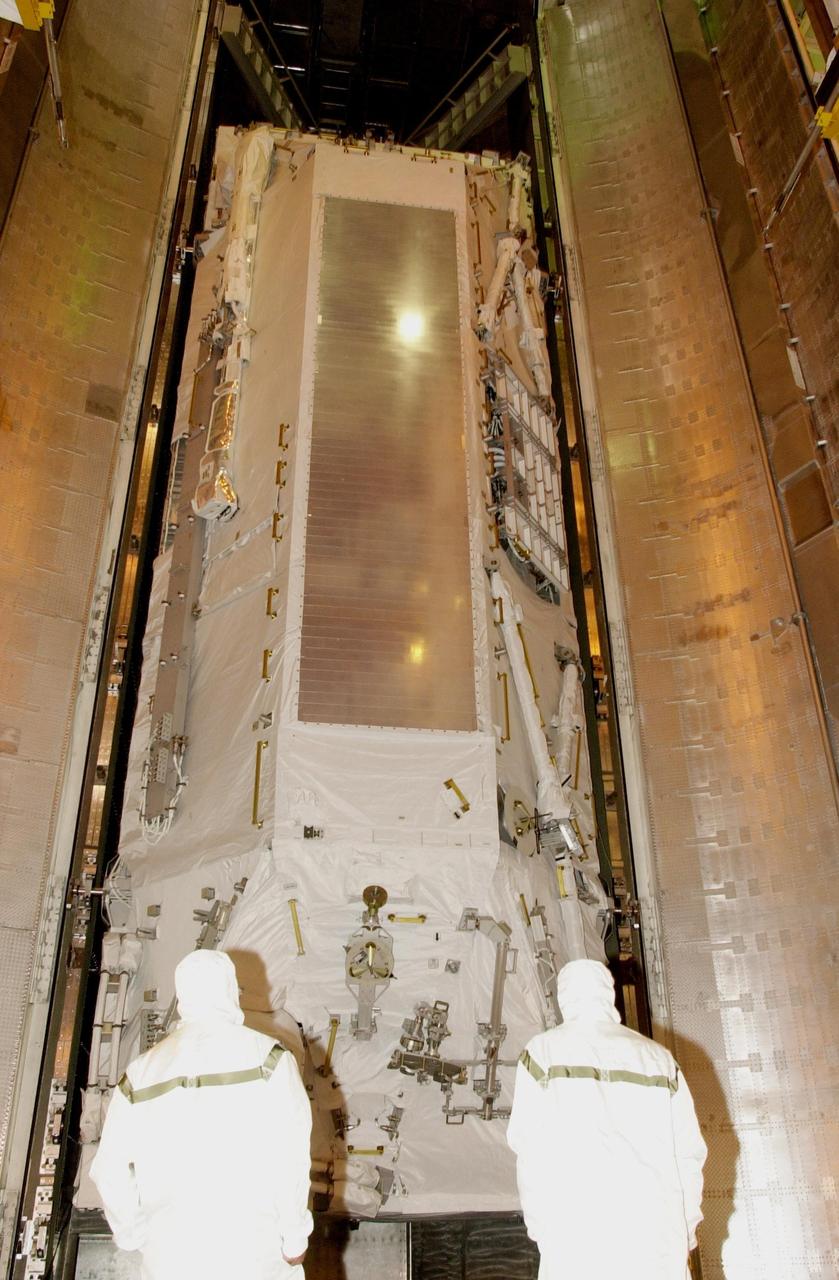
KENNEDY SPACE CENTER, FLA. - In the payload changeout room, workers watch as the doors of the payload canister open to reveal the S0 Integrated Truss Structure. The truss will be moved into the PCR and then transferred to Space Shuttle Atlantis's payload bay. Part of the payload on mission STS-110, the S0 truss will become the backbone of the orbiting International Space Station (ISS). The S0 truss will be attached to the U.S. Lab, "Destiny," on the 11-day mission. Launch is scheduled for April 4

ISS005-E-17235 (13 October 2002) --- The Space Shuttle Atlantis’ payload bay and vertical stabilizer are backdropped against a blue and white Earth. Atlantis was docked with the International Space Station (ISS) at the time.
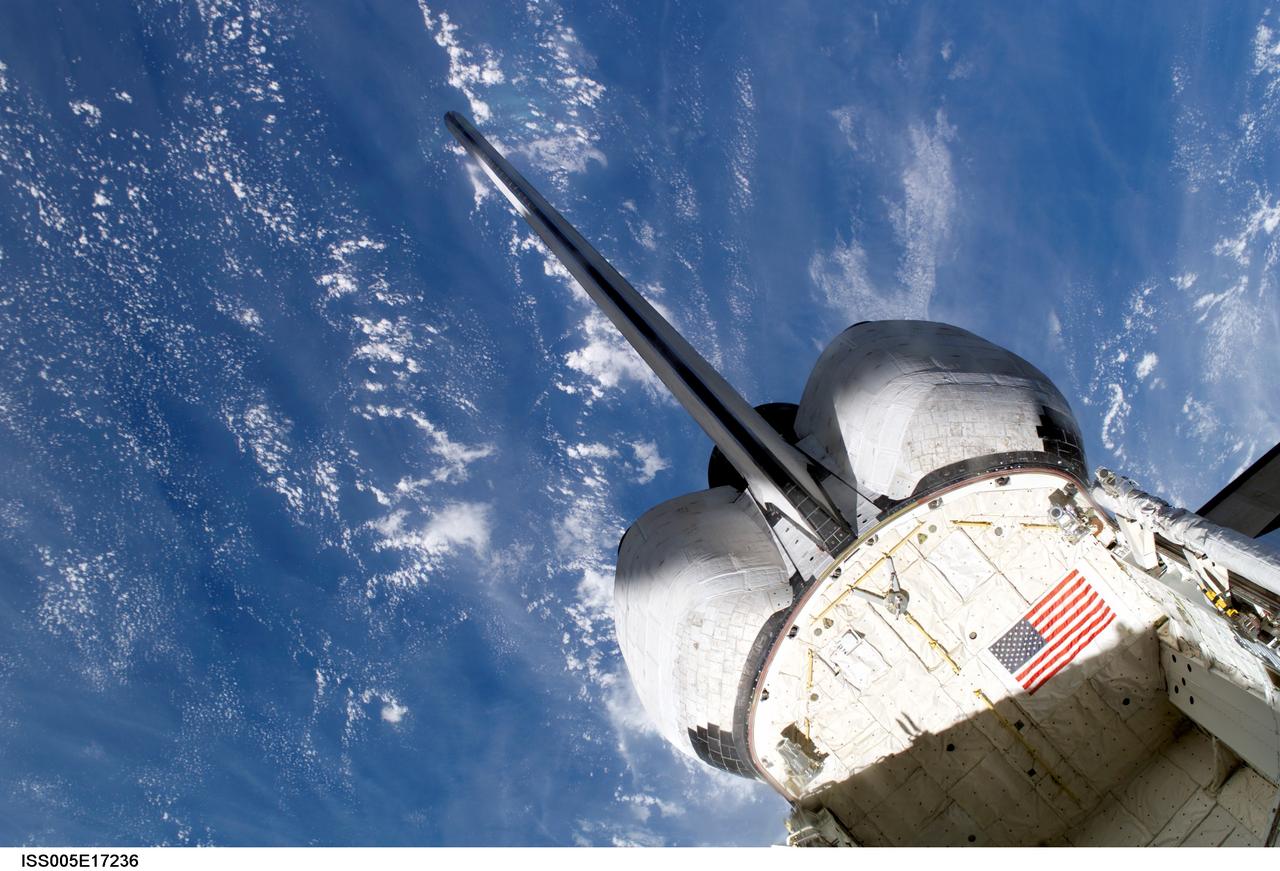
ISS005-E-17236 (13 October 2002) --- The Space Shuttle Atlantis’ payload bay and vertical stabilizer are backdropped against a blue and white Earth. Atlantis was docked with the International Space Station (ISS) at the time.
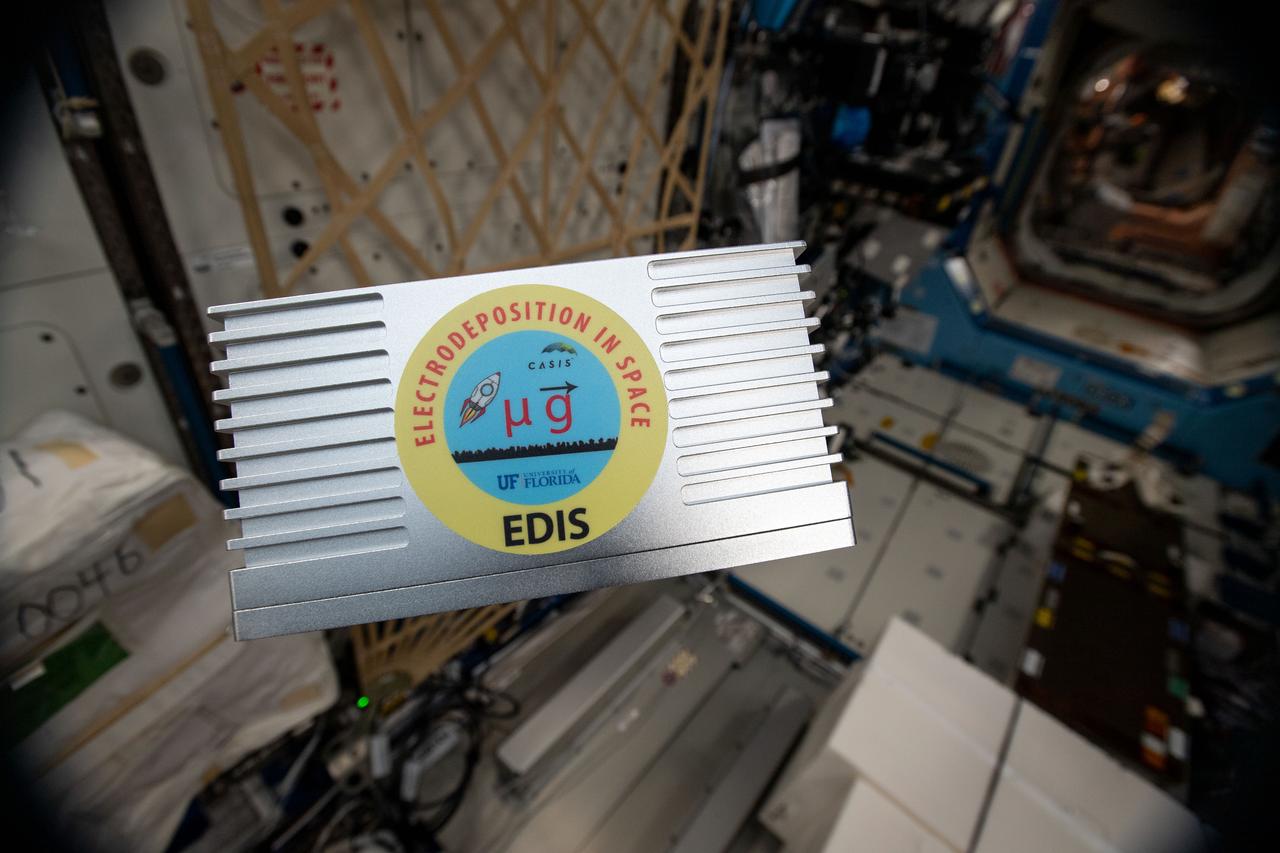
iss059e063749 (5/17/2019) --- Photo documentation of the EDIS investigation onboard the International Space Station (ISS). The payload operates in the TangoLab facility. Electrodeposition Observation in Microgravity examines the role of convection during the electrodeposition process in microgravity.
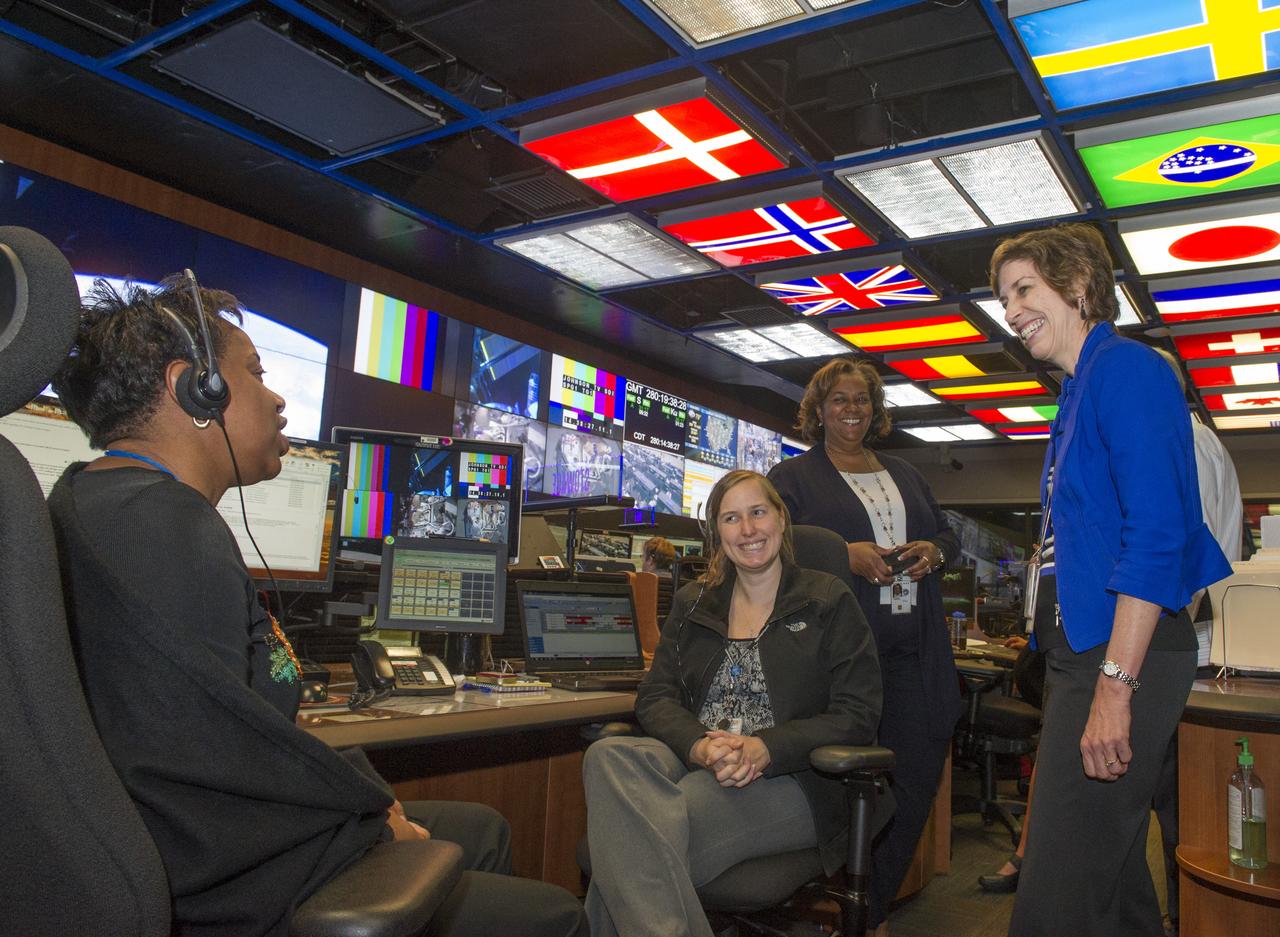
FROM LEFT, EUGENA GOGGANS AND MELISSA HOPPER, BOTH STOWAGE ENGINEERS, AND LYBREASE WOODARD, ASSOCIATE DIRECTOR OF THE MISSION OPERATIONS LAB, GREET DR. ELLEN OCHOA IN THE PAYLOAD OPERATIONS INTEGRATION CENTER FOR THE ISS
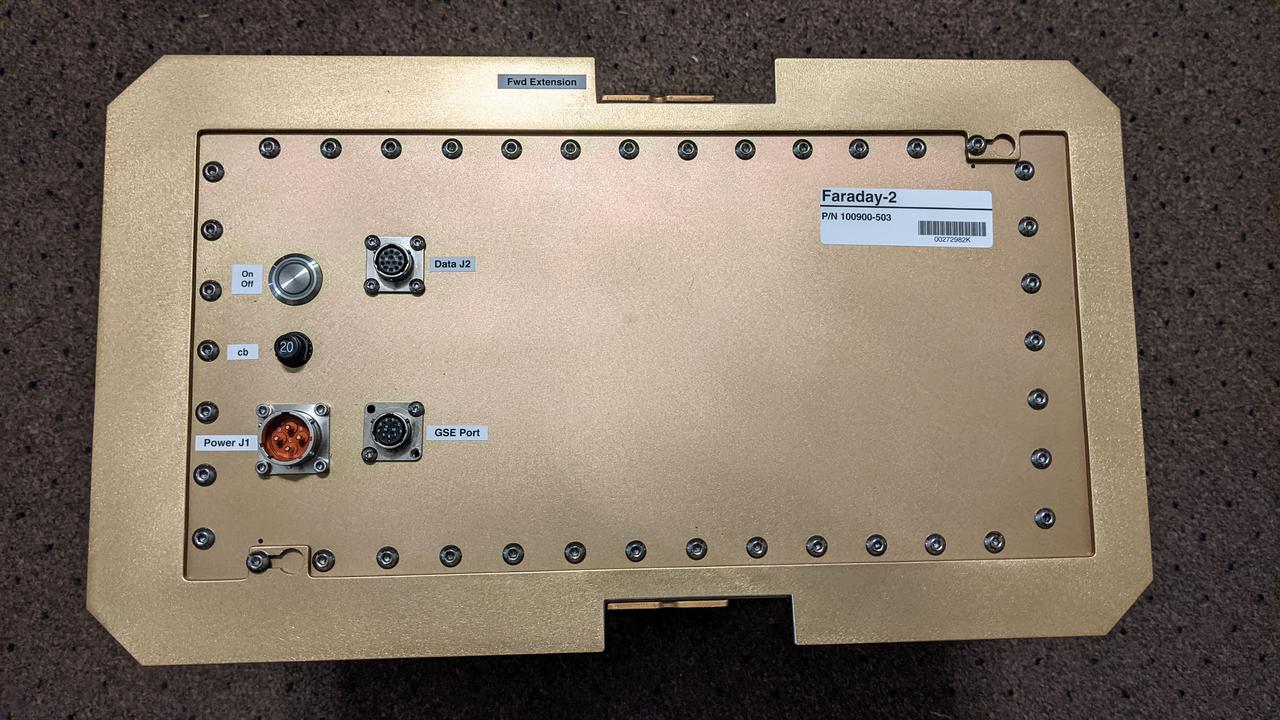
jsc2021e036920 (7/8/2021) --- A preflight view of the Faraday Research Facility front panel. The Faraday Research Facility is a multipurpose research facility that interfaces sub-payloads (µLabs) into the International Space Station (ISS) EXPRESS Racks.
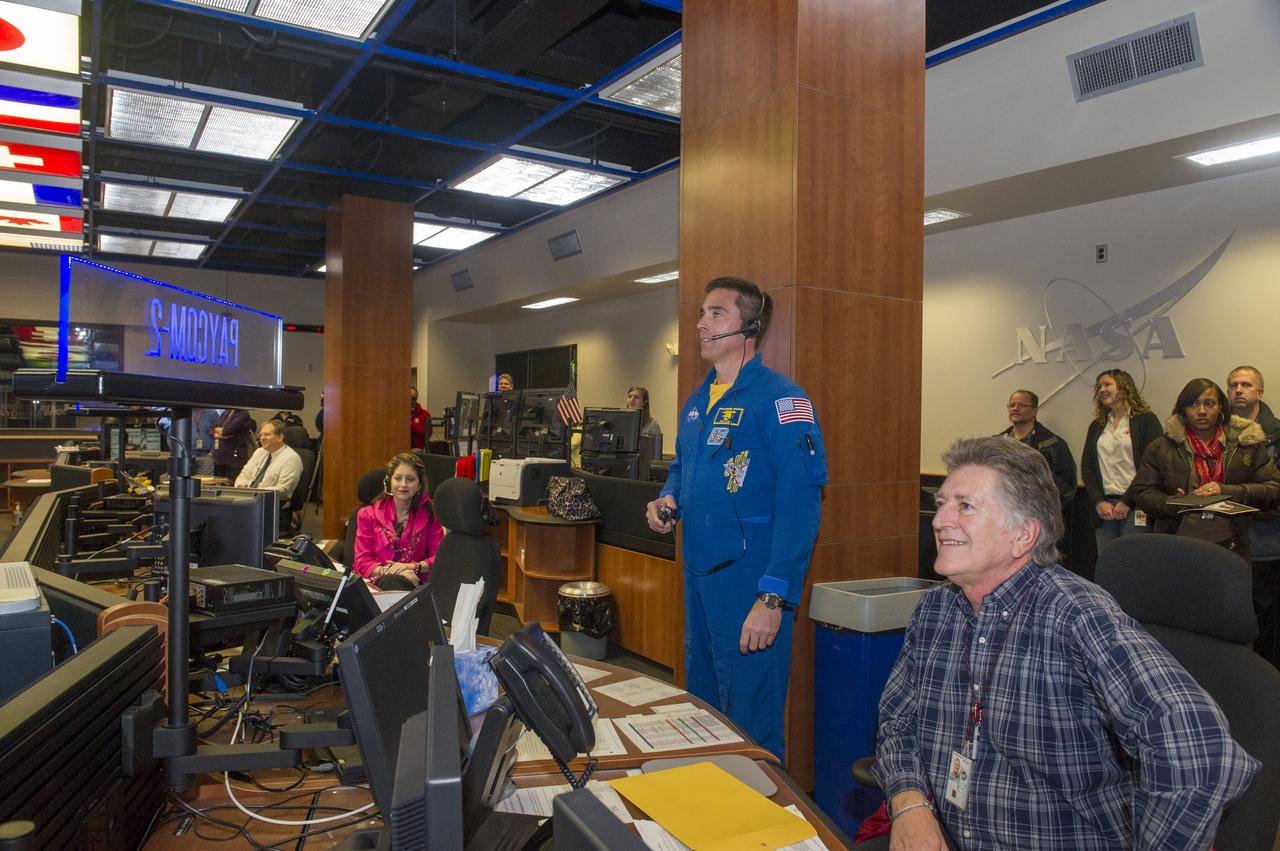
NASA ASTRONAUT CHRIS CASSIDY TALKS LIVE WITH CURRENT ISS CREW MEMBERS DURING A VISIT TO THE PAYLOAD OPERATIONS INTEGRATION CENTER, OR THE POIC, AS PART OF A MARSHALL SPACE FLIGHT CENTER VISIT JAN. 22.
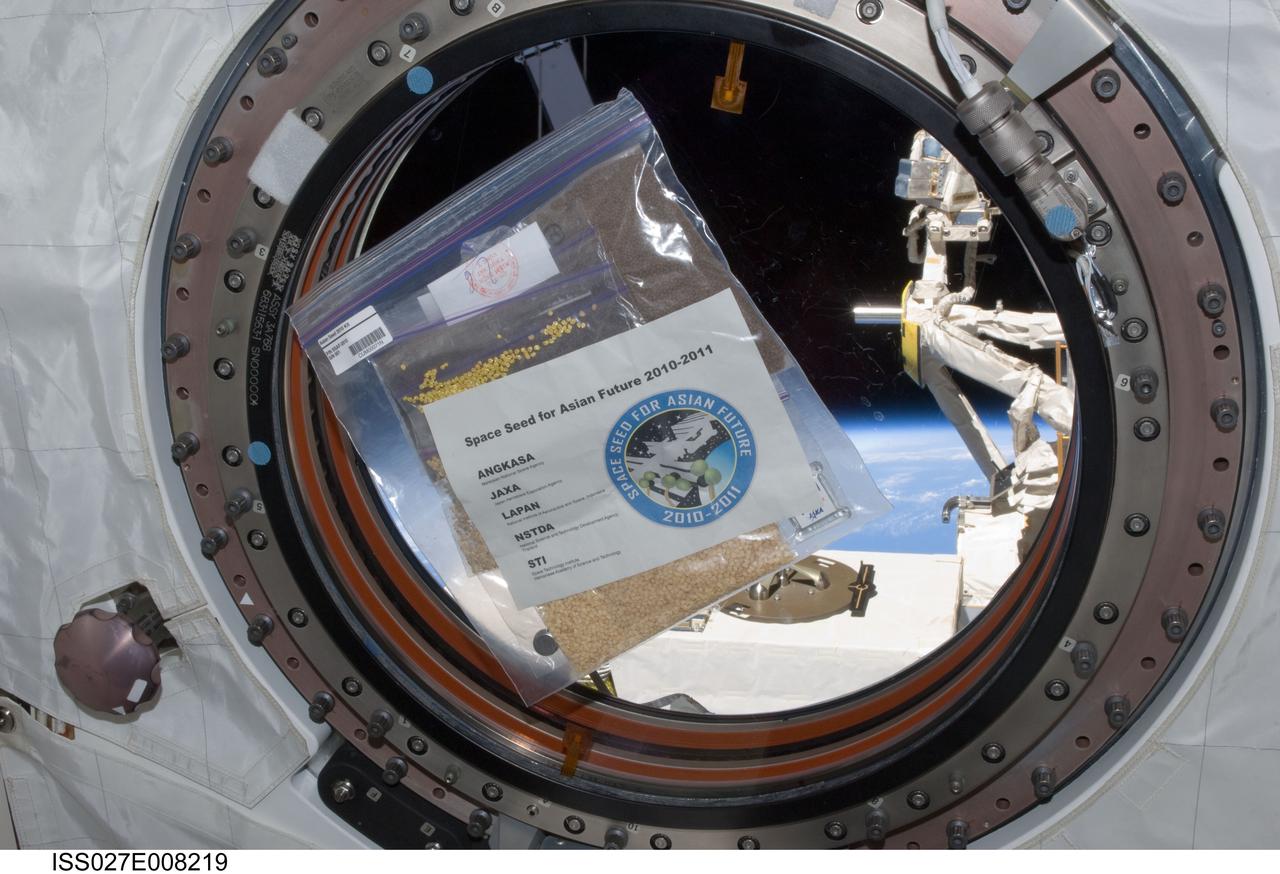
iss027e008219 (3/26/2011) --- Photo documentation of the Asian Seed Package payload, photographed in the Kibo Japanese Experiment Pressurized Module (JPM) aboard the International Space station (ISS).
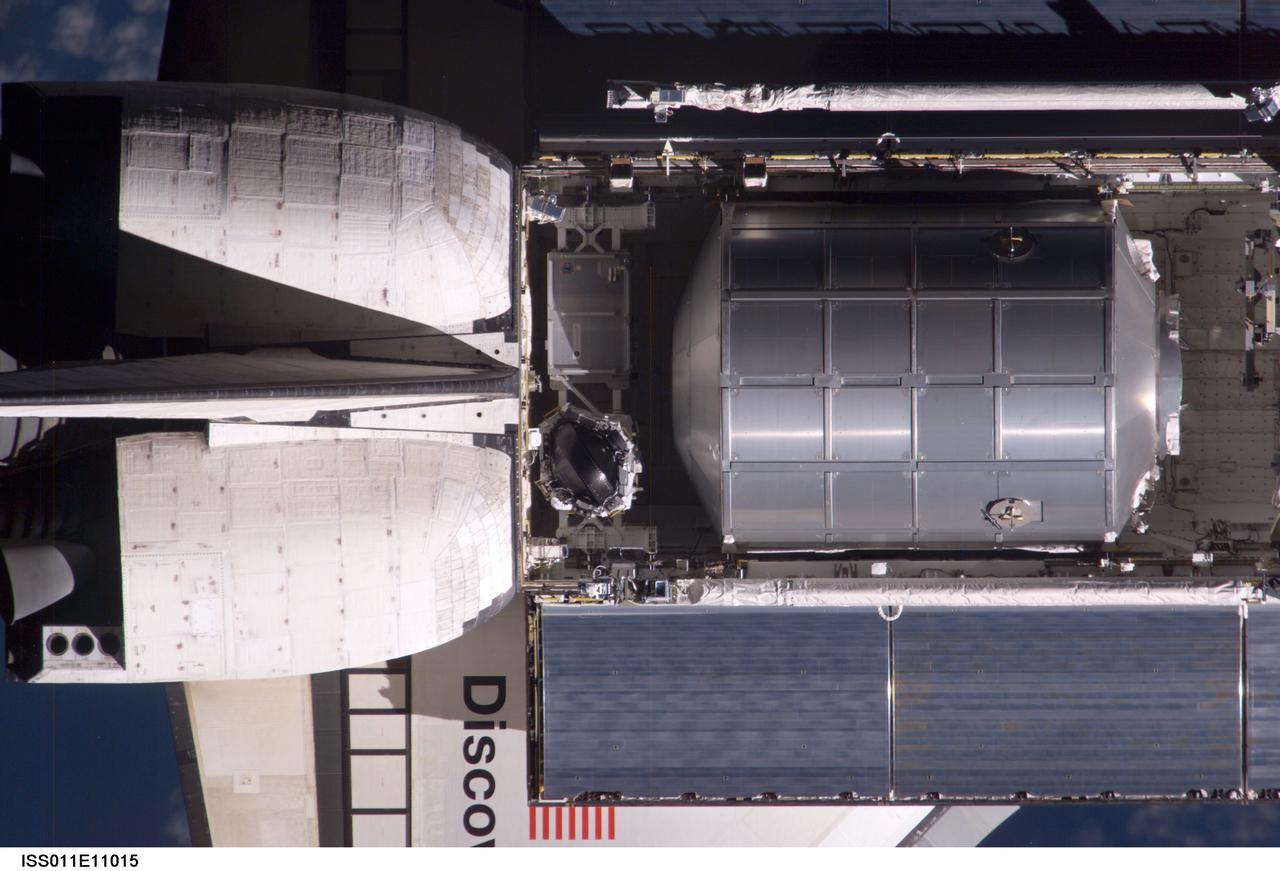
ISS011-E-11015 (28 July 2005) --- The Space Shuttle Discovery's cargo bay and Multipurpose Logistics Module (MPLM) payload as seen from the International Space Station (ISS) just prior to docking earlier today.
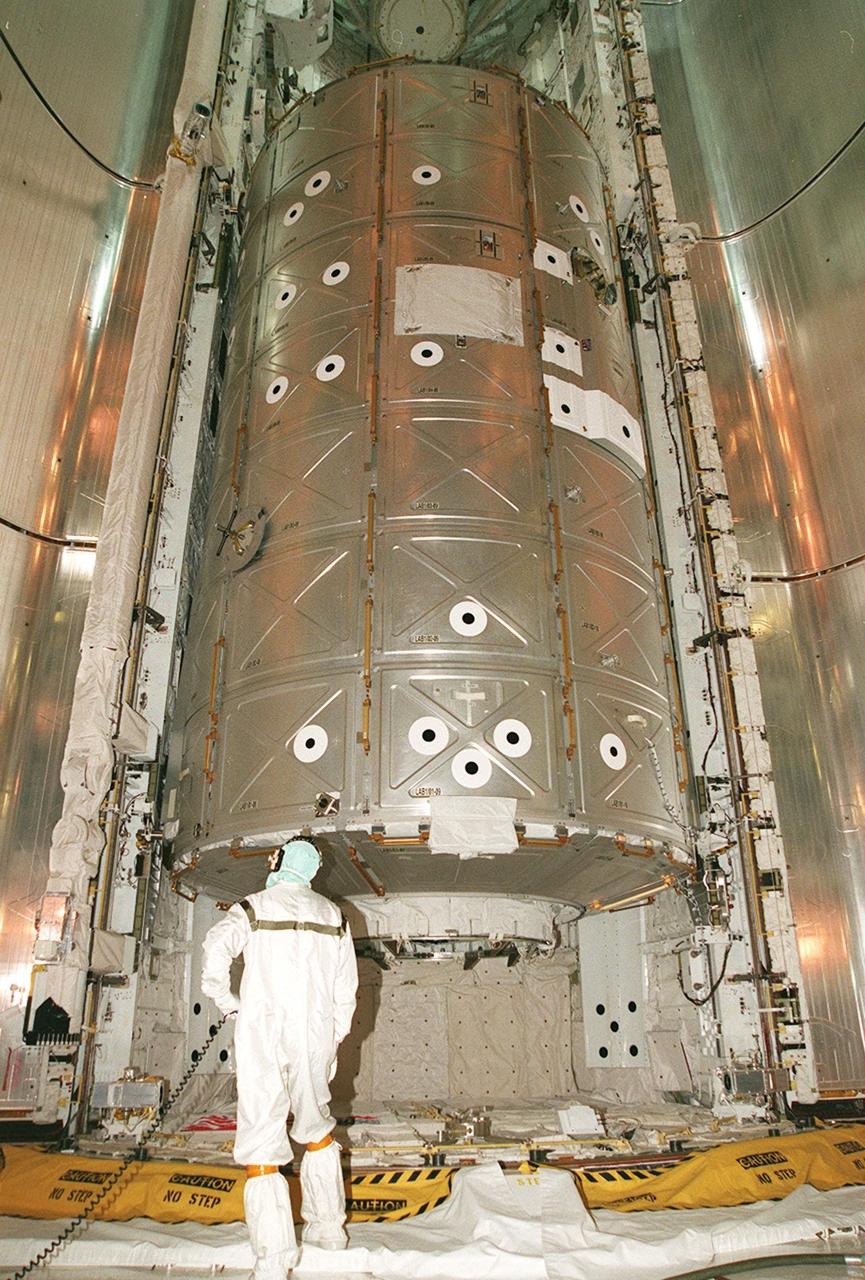
Viewed from the floor of the Payload Changeout Room, Destiny is inside Atlantis’ payload bay, waiting for closure of the payload bay doors. A key element in the construction of the International Space Station, Destiny is 28 feet long and weighs 16 tons. Destiny will be attached to the Unity node on the ISS using the Shuttle’s robot arm, seen here on the left side, with the help of an elbow camera attached to the arm (near the upper end of the lab in the photo). Measurements of the elbow camera revealed only a one-inch clearance from the U.S. Lab payload, which is under review. This research and command-and-control center is the most sophisticated and versatile space laboratory ever built. It will ultimately house a total of 23 experiment racks for crew support and scientific research. Destiny will fly on STS-98, the seventh construction flight to the ISS. Launch of STS-98 is scheduled for Jan. 19 at 2:11 a.m. EST

This image of the International Space Station (ISS) was photographed by one of the crewmembers of the STS-105 mission from the Shuttle Orbiter Discovery after separating from the ISS. The STS-105 mission was the 11th ISS assembly flight and its goals were the rotation of the ISS Expedition Two crew with Expedition Three crew, and the delivery of supplies utilizing the Italian-built Multipurpose Logistic Module (MPLM) Leonardo. Aboard Leonardo were six resupply stowage racks, four resupply stowage supply platforms, and two new scientific experiment racks, EXPRESS (Expedite the Processing of Experiments to the Space Station) Racks 4 and 5, which added science capabilities to the ISS. Another payload was the Materials International Space Station Experiment (MISSE), which included materials and other types of space exposure experiments mounted on the exterior of the ISS.
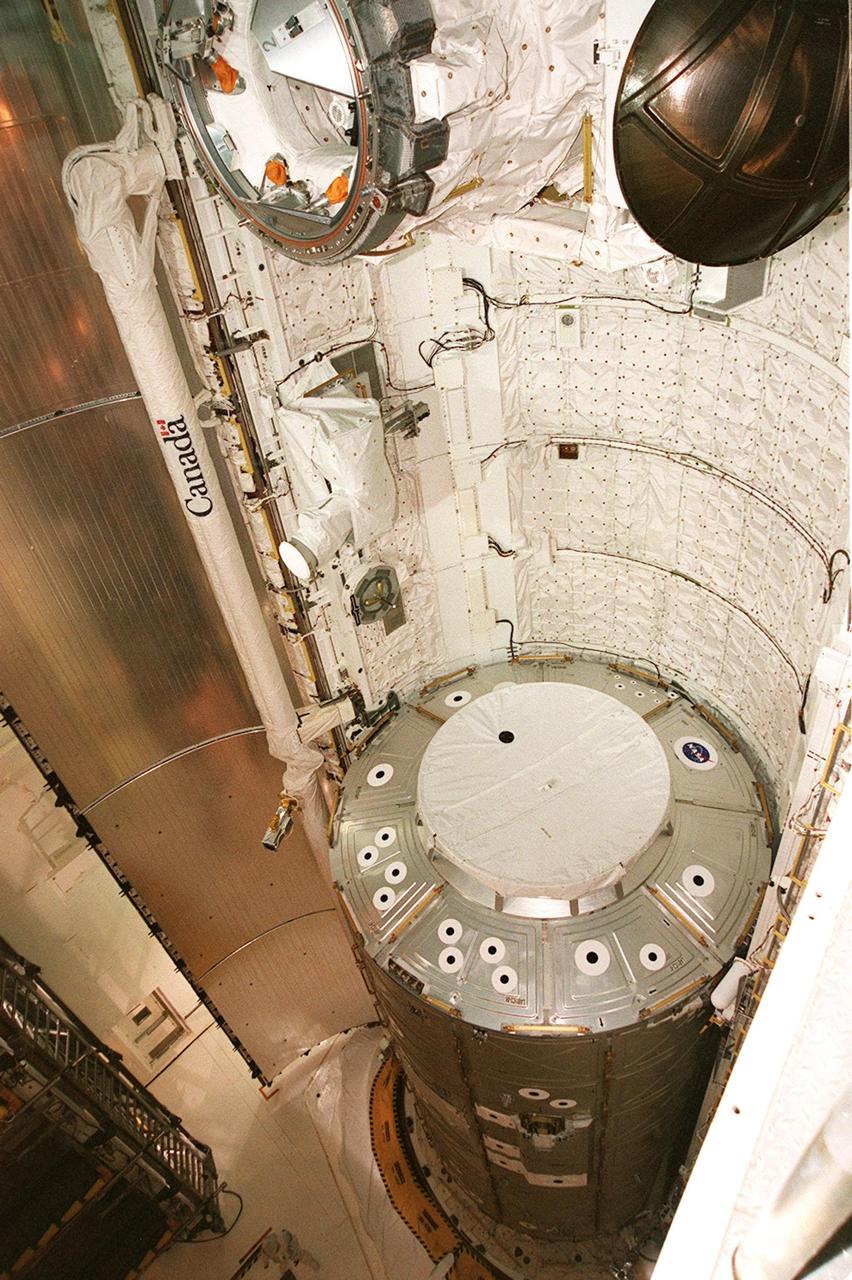
KENNEDY SPACE CENTER, FLA. -- In this view from Level 5, wing platform, of Atlantis’ payload bay, the U.S. Lab Destiny can be seen near the bottom. A key element in the construction of the International Space Station, Destiny is 28 feet long and weighs 16 tons. Destiny will be attached to the Unity node of the ISS using the Shuttle’s robot arm, seen here on the left with the help of an elbow camera, facing left. Measurements of the elbow camera revealed only a one-inch clearance from the U.S. Lab payload, which is under review. Destiny will fly on STS-98, the seventh construction flight to the ISS. Launch of STS-98 is scheduled for Jan. 19 at 2:11 a.m. EST
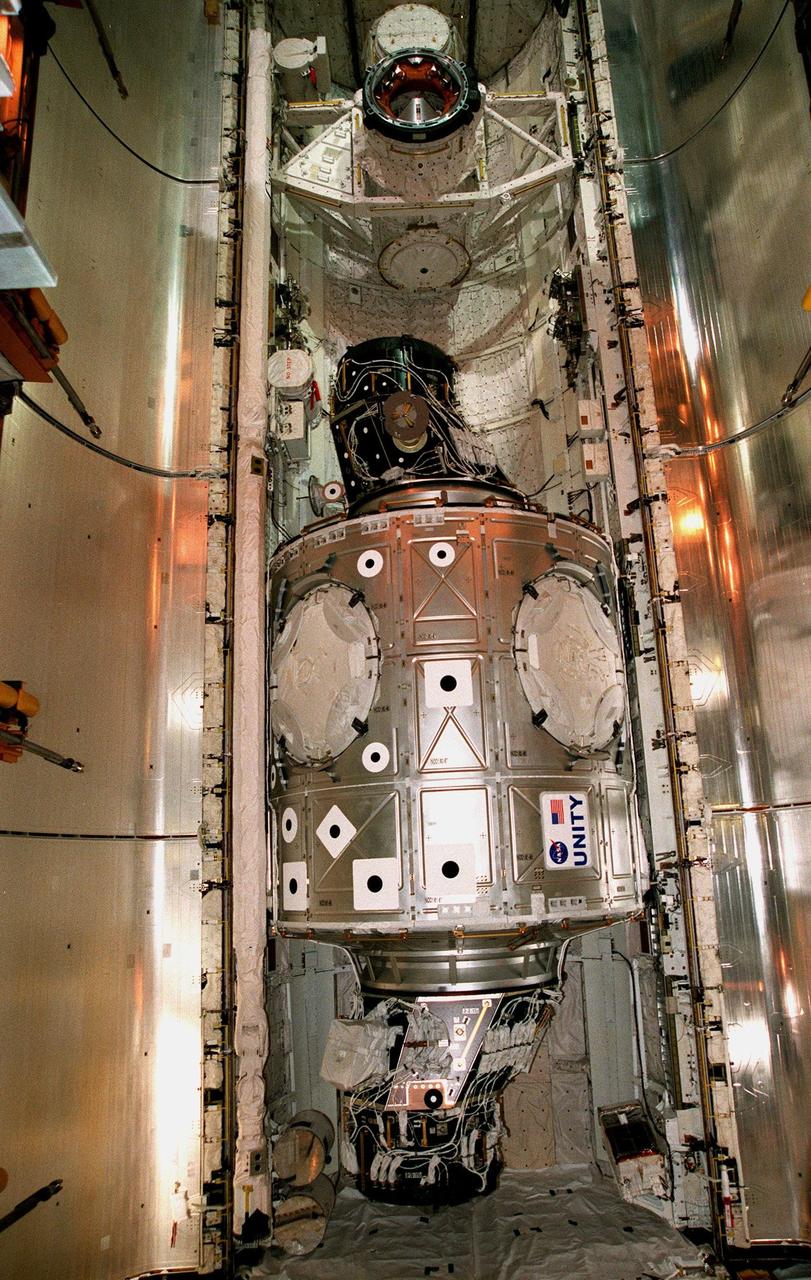
The Unity connecting module rests inside the open payload bay of the orbiter Endeavour at Launch Pad 39A. At the top of bay is the docking mechanism first used with launches to Mir, the Russian space station. Unity is the first U.S. element of the International Space Station (ISS) and is scheduled for launch Dec. 3, 1998, on Mission STS-88. The Unity is a connecting passageway to the living and working areas of ISS. While on orbit, the flight crew will deploy Unity from the payload bay and attach it to the Russian-built Zarya control module which will be in orbit at that time. The mission is expected to last nearly 12 days, landing back at the Kennedy Space Center on Dec. 14
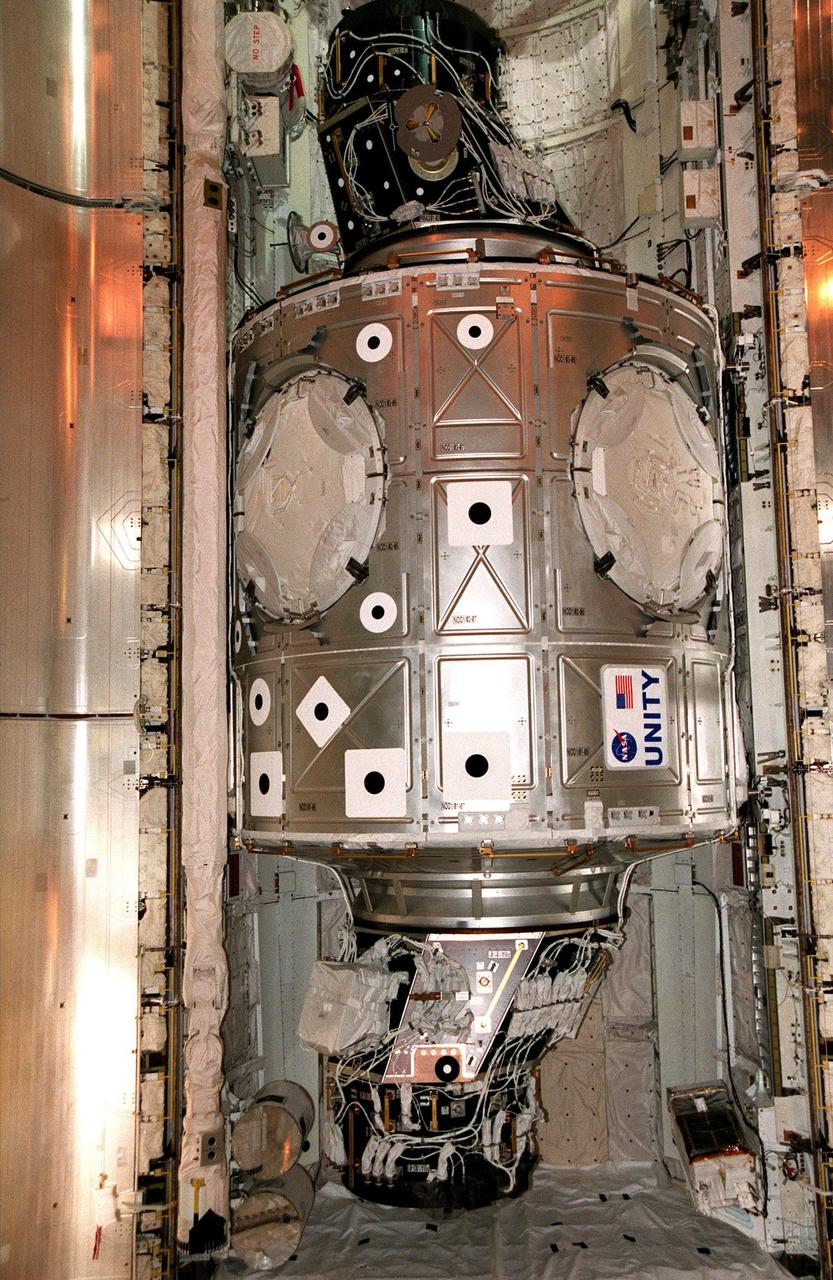
The Unity connecting module rests inside the payload bay of the orbiter Endeavour at Launch Pad 39A. The first U.S. element of the International Space Station (ISS), Unity is scheduled for launch Dec. 3, 1998, on Mission STS-88. The Unity is a connecting passageway to the living and working areas of ISS. While on orbit, the flight crew will deploy Unity from the payload bay and attach it to the Russian-built Zarya control module which will be in orbit at that time. The mission is expected to last nearly 12 days, landing back at the Kennedy Space Center on Dec. 14
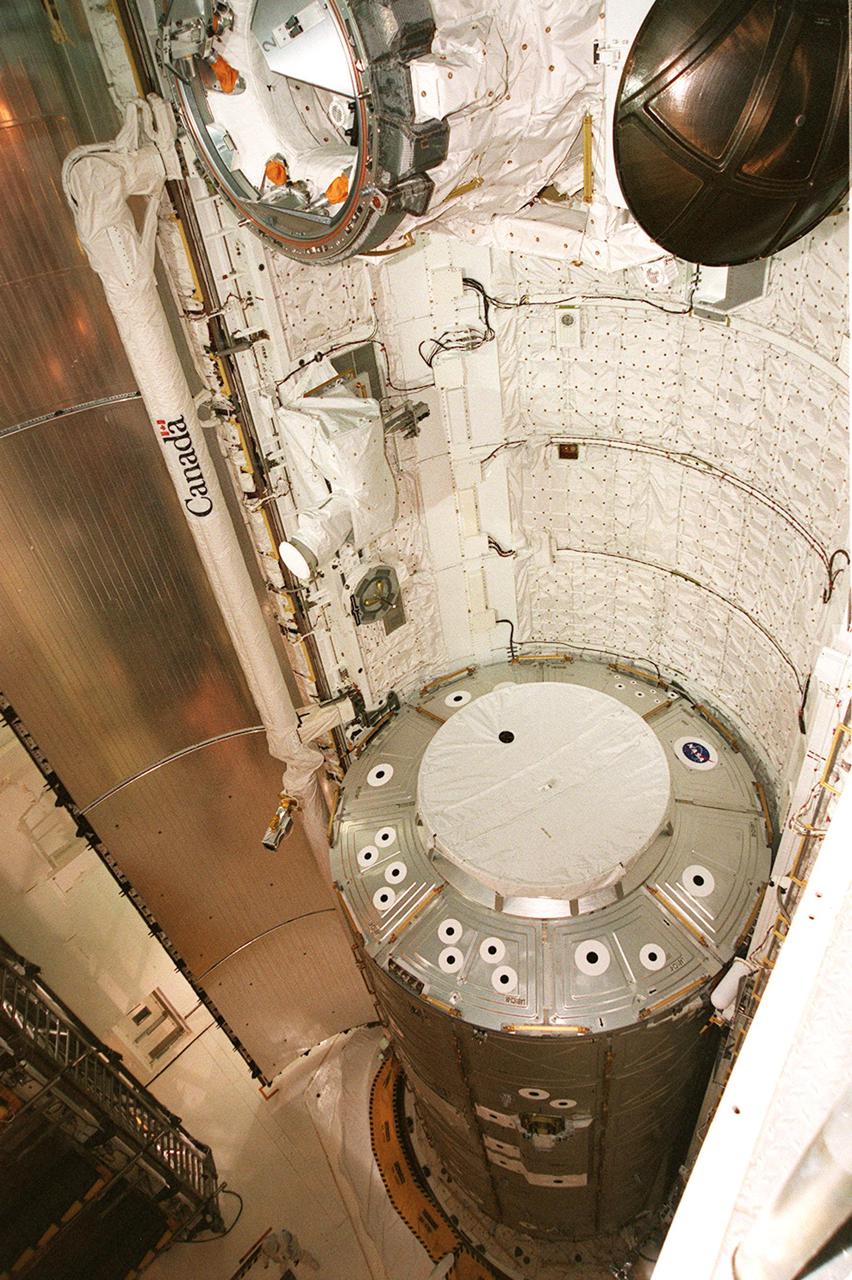
KENNEDY SPACE CENTER, FLA. -- In this view from Level 5, wing platform, of Atlantis’ payload bay, the U.S. Lab Destiny can be seen near the bottom. A key element in the construction of the International Space Station, Destiny is 28 feet long and weighs 16 tons. Destiny will be attached to the Unity node of the ISS using the Shuttle’s robot arm, seen here on the left with the help of an elbow camera, facing left. Measurements of the elbow camera revealed only a one-inch clearance from the U.S. Lab payload, which is under review. Destiny will fly on STS-98, the seventh construction flight to the ISS. Launch of STS-98 is scheduled for Jan. 19 at 2:11 a.m. EST
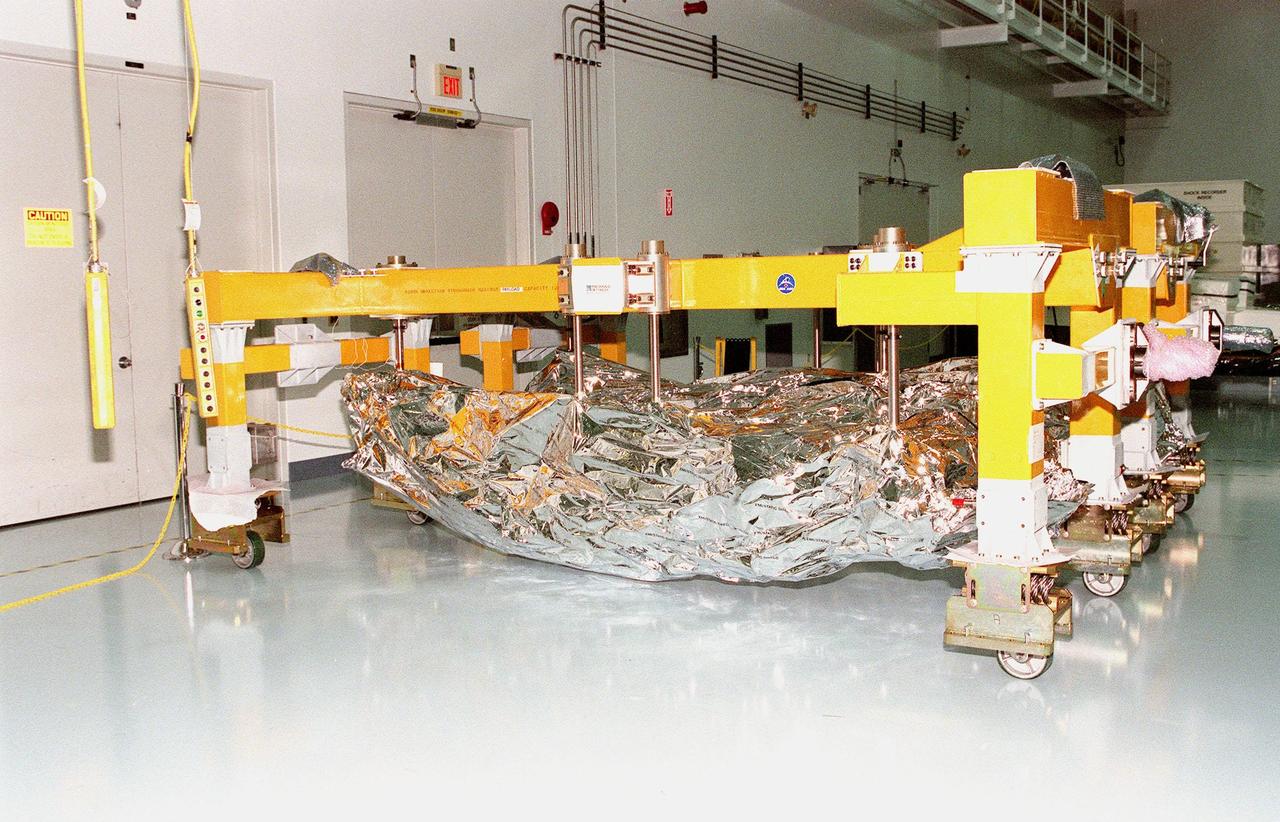
Segments of the Canadian Space Agency's (CSA) Space Station Remote Manipulator System (SSRMS) are lined up in the Space Station Processing Facility at KSC. They will undergo a campaign of prelaunch processing activities. CSA's first contribution to the International Space Station (ISS), the SSRMS is the primary means of transferring payloads between the orbiter payload bay and the ISS for assembly. The 56-foot-long robotic arm includes two 12-foot booms joined by a hinge. Seven joints on the arm allow highly flexible and precise movement. Latching End Effectors are mounted on each end of the arm for grappling. Video cameras mounted on the booms and end effectors will give astronauts maximum visibility for operations and maintenance tasks on the ISS. The SSRMS is scheduled to be launched aboard Space Shuttle Endeavour on STS-100, currently planned for July 2000
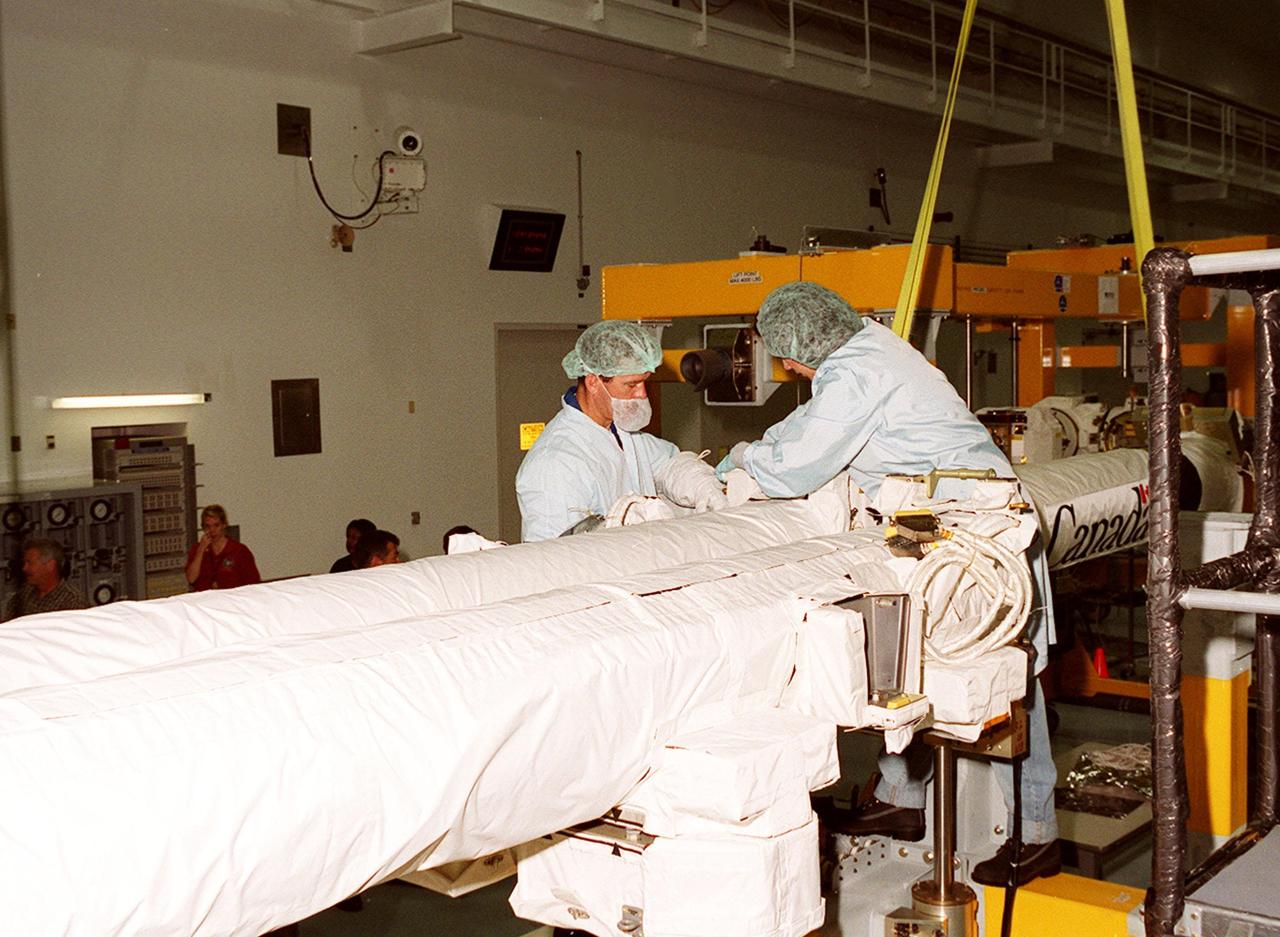
In the Space Station Processing Facility, two workers perform prelaunch processing activities on the Canadian Space Agency's (CSA) Space Station Remote Manipulator System (SSRMS). CSA's first contribution to the International Space Station (ISS), the SSRMS is the primary means of transferring payloads between the orbiter payload bay and the ISS for assembly. The 56-foot-long robotic arm includes two 12-foot booms joined by a hinge. Seven joints on the arm allow highly flexible and precise movement. Latching End Effectors are mounted on each end of the arm for grappling. Video cameras mounted on the booms and end effectors will give astronauts maximum visibility for operations and maintenance tasks on the ISS. The SSRMS is scheduled to be launched aboard Space Shuttle Endeavour on STS-100, currently planned for April 2001
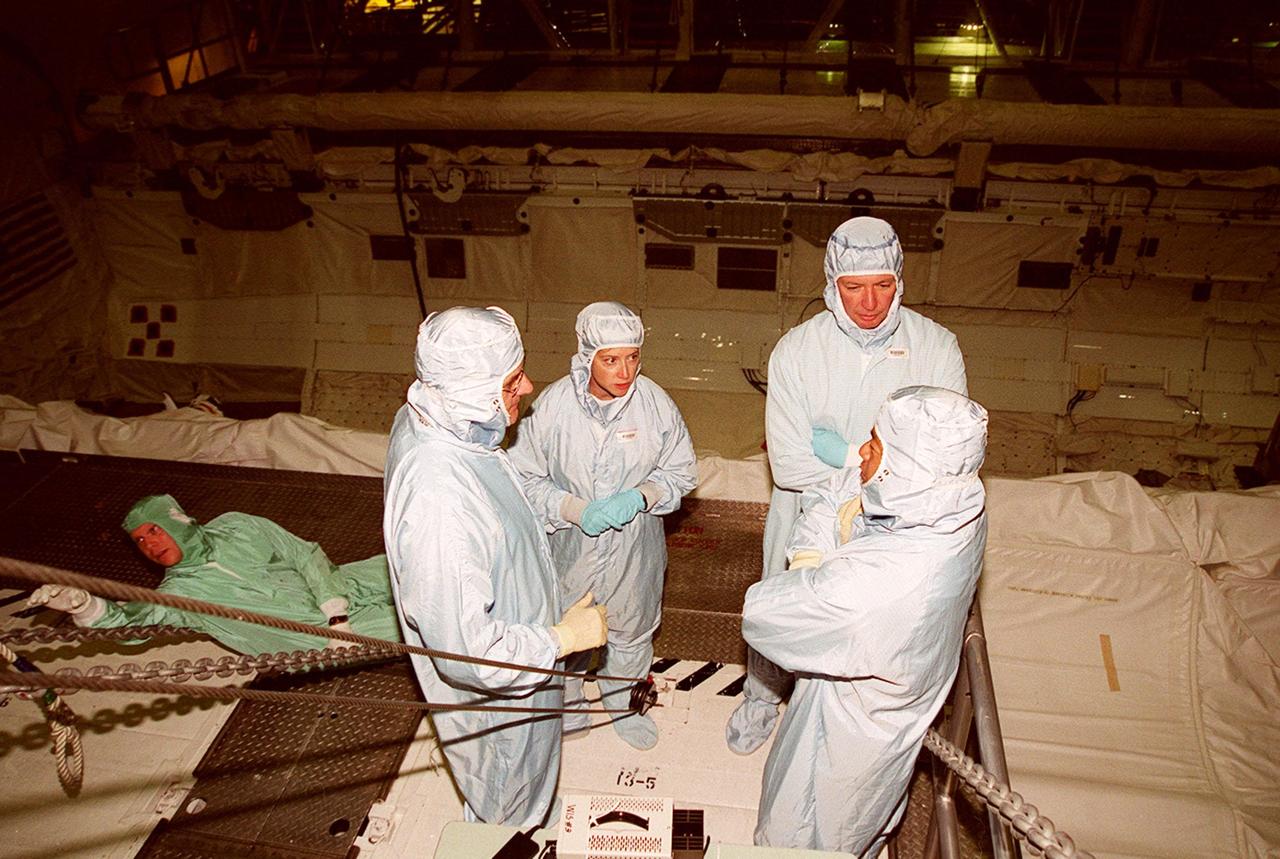
KENNEDY SPACE CENTER, FLA. -- Members of the STS-92 crew take a moment for discussion while checking out the payload bay of the orbiter Discovery in the Orbiter Processing Facility bay 1. Their mission, the fourth U.S. flight to the ISS, includes as payload the Integrated Truss Structure Z1, an early exterior framework to allow the first U.S. solar arrays on a future flight to be temporarily installed on Unity for early power; Ku-band communication to support early science capability and U.S. television; and PMA-3 to provide a Shuttle docking port for solar array installation on the sixth ISS flight and Lab installation on the seventh ISS flight. The crew comprises Mission Commander Brian Duffy, Pilot Pamela Melroy, and Mission Specialists Koichi Wakata, Leroy Chiao, Peter "Jeff" Wisoff, Michael Lopez-Alegria, and William McArthur. Launch of STS-92 is scheduled for Sept. 21, 2000. Wakata is with the National Space Development Agency of Japan
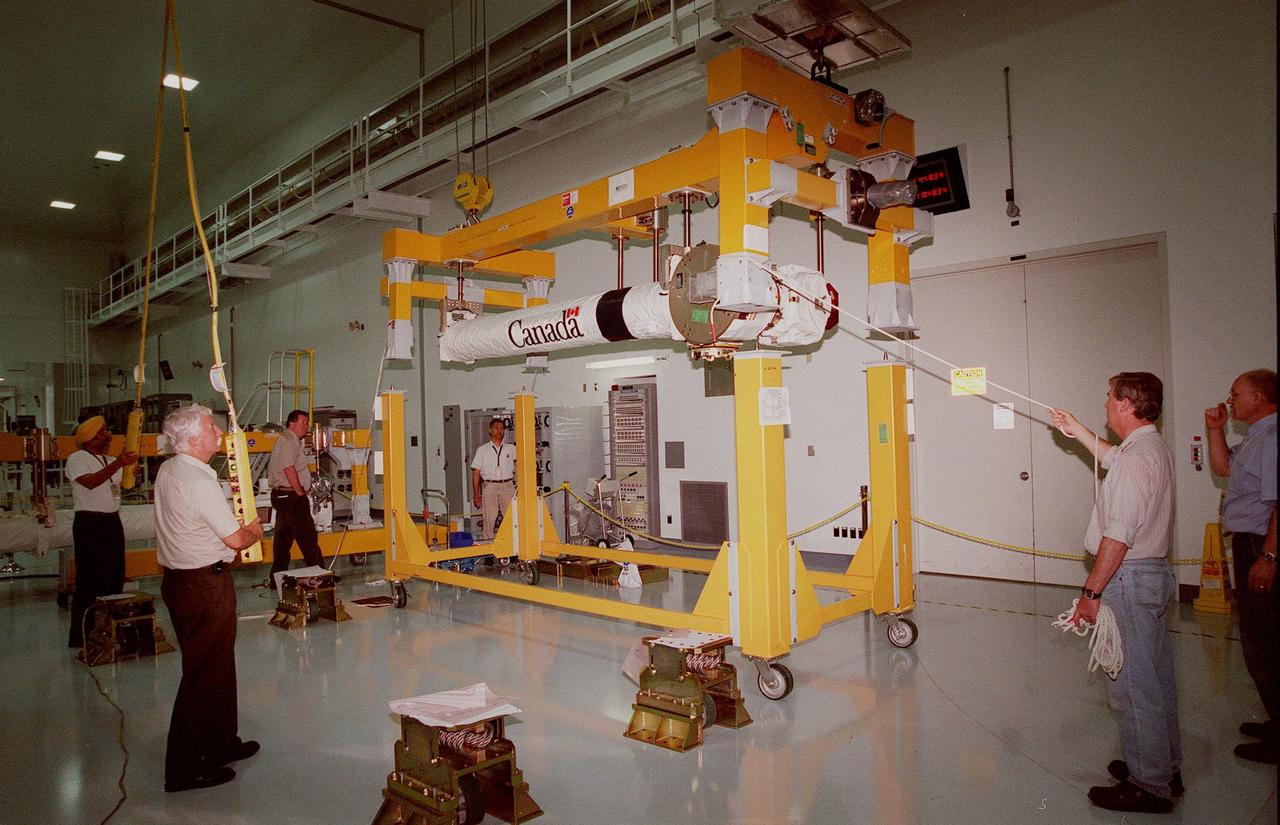
Workers in the in the Space Station Processing Facility move two segments of the Canadian Space Agency's Space Station Remote Manipulator System (SSRMS) to a workstand. CSA's first contribution to the International Space Station (ISS), the SSRMS is the primary means of transferring payloads between the orbiter payload bay and the ISS for assembly. The 56-foot-long robotic arm includes two 12-foot booms joined by a hinge. Seven joints on the arm allow highly flexible and precise movement.. Latching End Effectors are mounted on each end of the arm for grappling. Video cameras mounted on the booms and end effectors will give astronauts maximum visibility for operations and maintenance tasks on the ISS. The SSRMS is at KSC to begin a campaign of prelaunch processing activities. It is scheduled to be launched aboard Space Shuttle Endeavour on mission STS-100, currently planned for July 2000
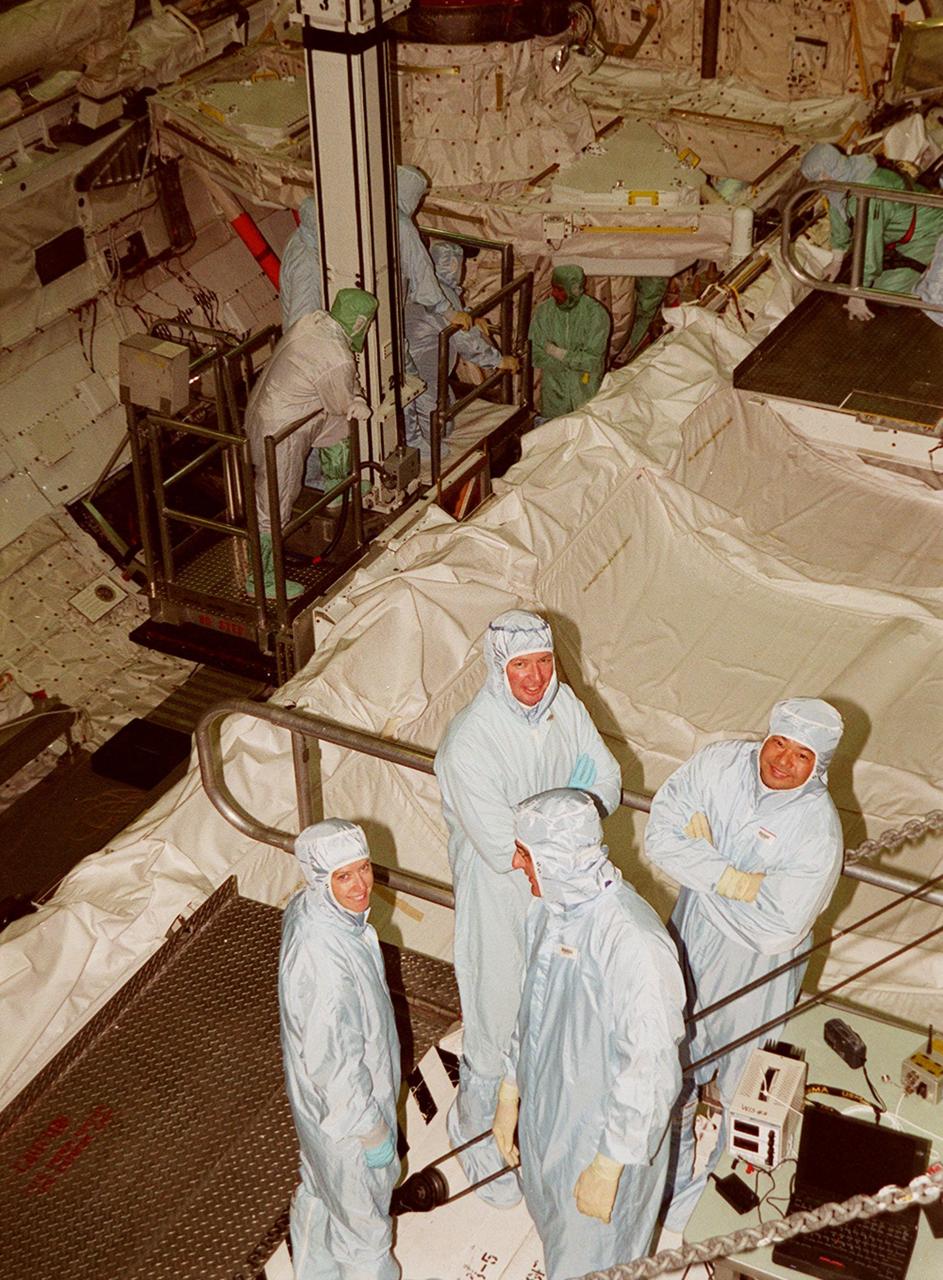
KENNEDY SPACE CENTER, FLA. -- Members of the STS-92 crew pose for the photographer during a break from checking out Discovery's payload bay in the Orbiter Processing Facility bay 1. Their mission, the fourth U.S. flight to the ISS, includes as payload the Integrated Truss Structure Z1, an early exterior framework to allow the first U.S. solar arrays on a future flight to be temporarily installed on Unity for early power; Ku-band communication to support early science capability and U.S. television; and PMA-3 to provide a Shuttle docking port for solar array installation on the sixth ISS flight and Lab installation on the seventh ISS flight. The crew comprises Mission Commander Brian Duffy, Pilot Pamela Melroy, and Mission Specialists Koichi Wakata, Leroy Chiao, Peter "Jeff" Wisoff, Michael Lopez-Alegria, and William McArthur. Launch of STS-92 is scheduled for Sept. 21, 2000. Wakata is with the National Space Development Agency of Japan
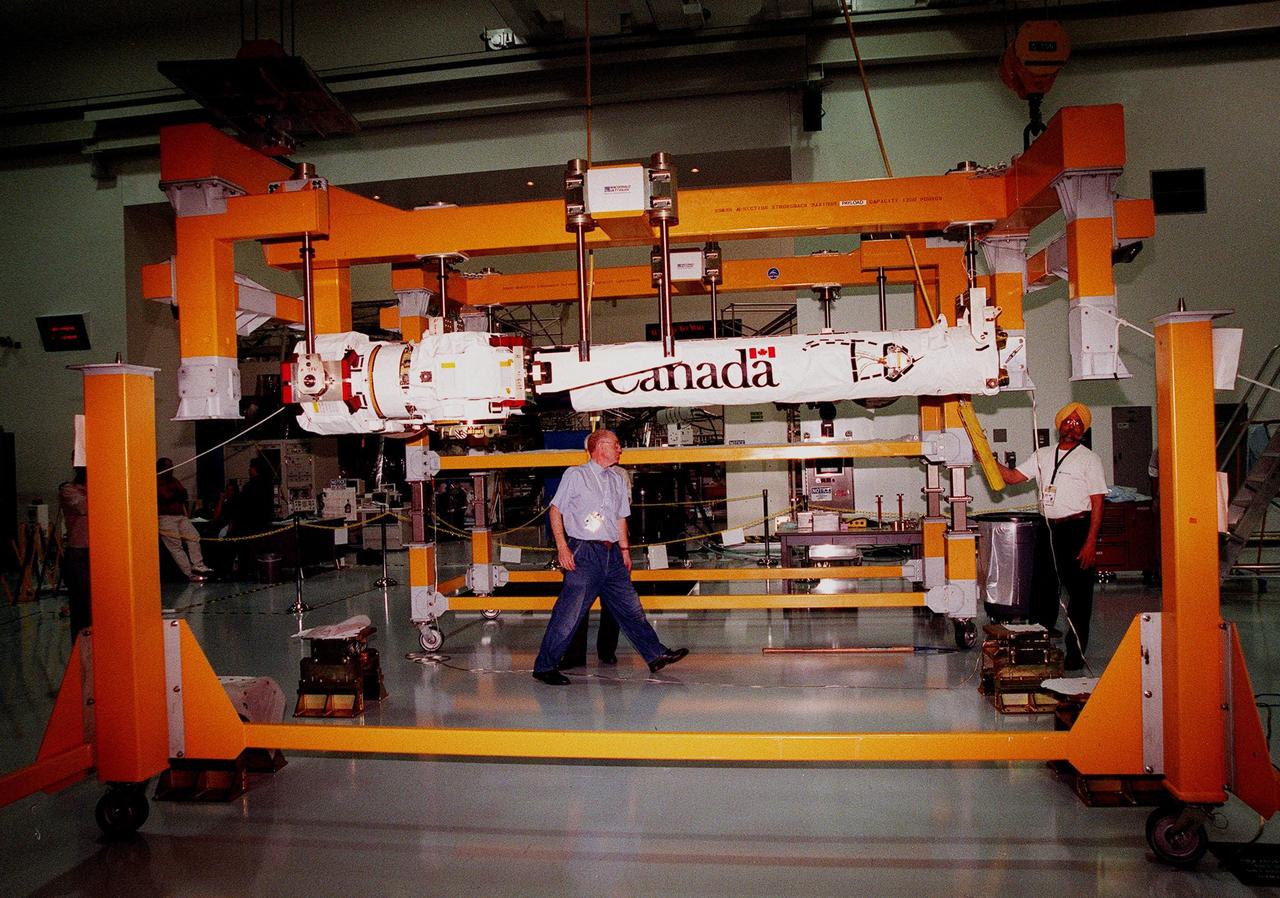
Workers in the Space Station Processing Facility raise a segment of the Canadian Space Agency's Space Station Remote Manipulator System (SSRMS) to move it to a workstand. CSA's first contribution to the International Space Station (ISS), the SSRMS is the primary means of transferring payloads between the orbiter payload bay and the ISS for assembly. The 56-foot-long robotic arm includes two 12-foot booms joined by a hinge. Seven joints on the arm allow highly flexible and precise movement. Latching End Effectors are mounted on each end of the arm for grappling. Video cameras mounted on the booms and end effectors will give astronauts maximum visibility for operations and maintenance tasks on the ISS. The SSRMS is at KSC to begin a campaign of prelaunch processing activities. It is scheduled to be launched aboard Space Shuttle Endeavour on mission STS-100, currently planned for July 2000
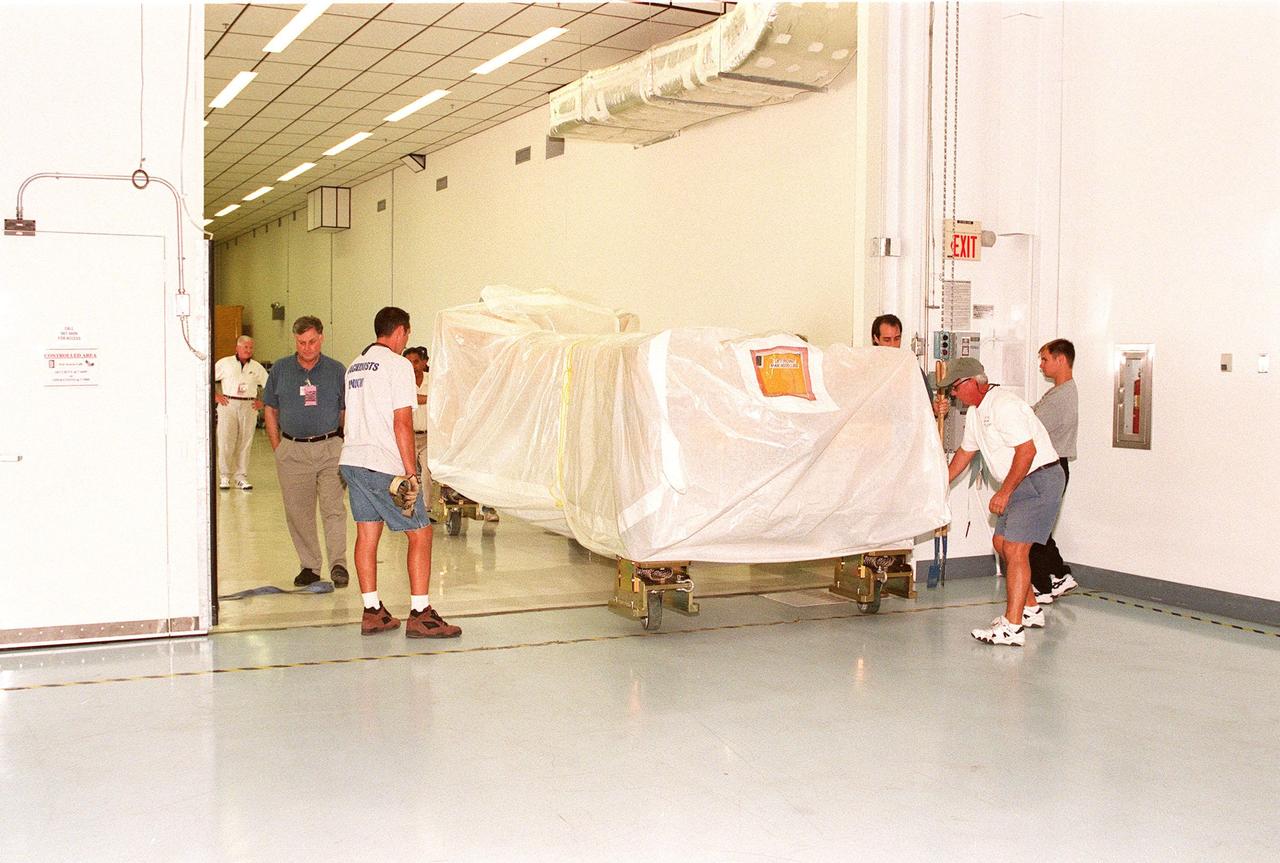
Workers guide a segment of the Canadian Space Agency's (CSA) Space Station Remote Manipulator System (SSRMS) in the Space Station Processing Facility at KSC. It joins two other segments for a campaign of prelaunch processing activities. CSA's first contribution to the International Space Station (ISS), the SSRMS is the primary means of transferring payloads between the orbiter payload bay and the ISS for assembly. The 56-foot-long robotic arm includes two 12-foot booms joined by a hinge. Seven joints on the arm allow highly flexible and precise movement. Latching End Effectors are mounted on each end of the arm for grappling. Video cameras mounted on the booms and end effectors will give astronauts maximum visibility for operations and maintenance tasks on the ISS. The SSRMS is scheduled to be launched aboard Space Shuttle Endeavour on STS-100, currently planned for July 2000
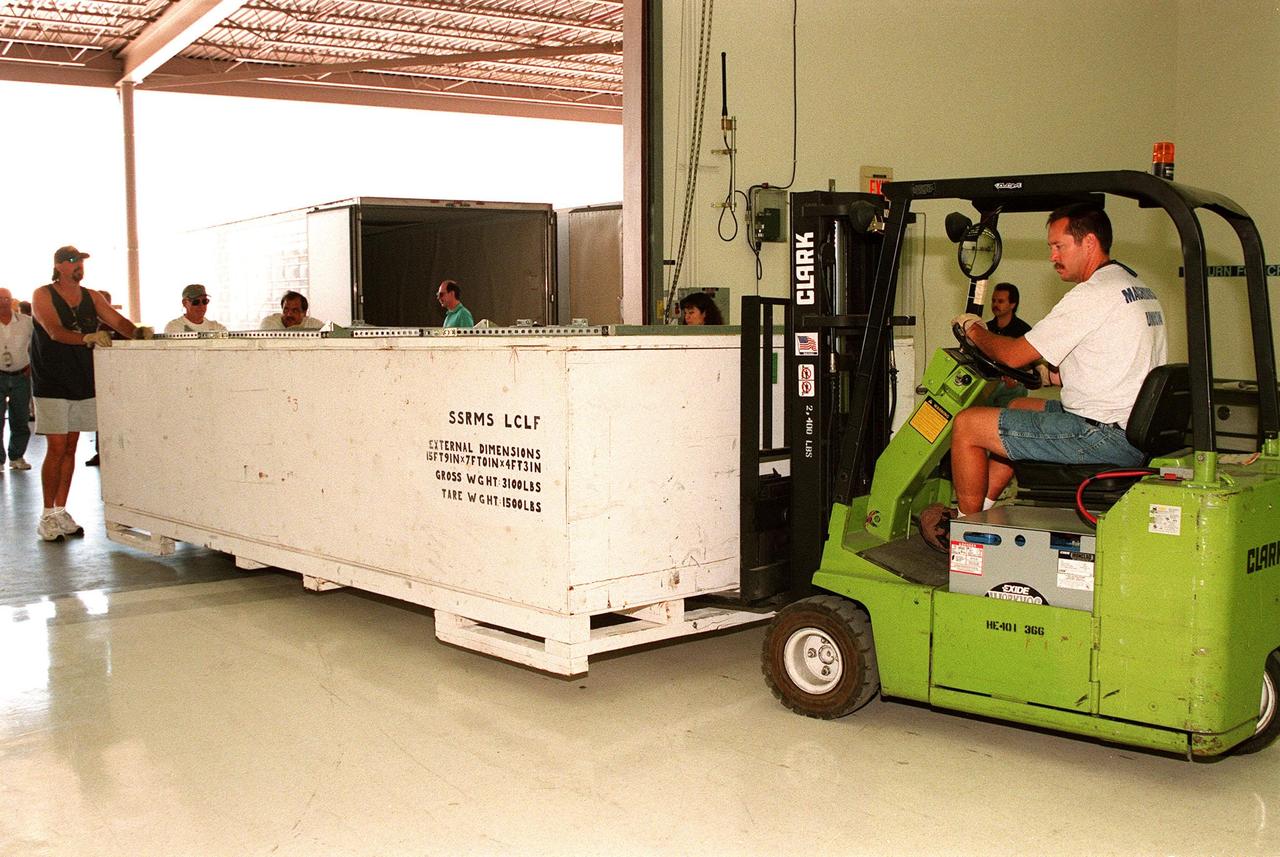
Workers move a box containing a segment of the Canadian Space Agency's (CSA) Space Station Remote Manipulator System (SSRMS) into the Space Station Processing Facility at KSC. It joins two other segments for a campaign of prelaunch processing activities CSA's first contribution to the International Space Station (ISS), the SSRMS is the primary means of transferring payloads between the orbiter payload bay and the ISS for assembly. The 56-foot-long robotic arm includes two 12-foot booms joined by a hinge. Seven joints on the arm allow highly flexible and precise movement. Latching End Effectors are mounted on each end of the arm for grappling. Video cameras mounted on the booms and end effectors will give astronauts maximum visibility for operations and maintenance tasks on the ISS. The SSRMS is scheduled to be launched aboard Space Shuttle Endeavour on STS-100, currently planned for July 2000
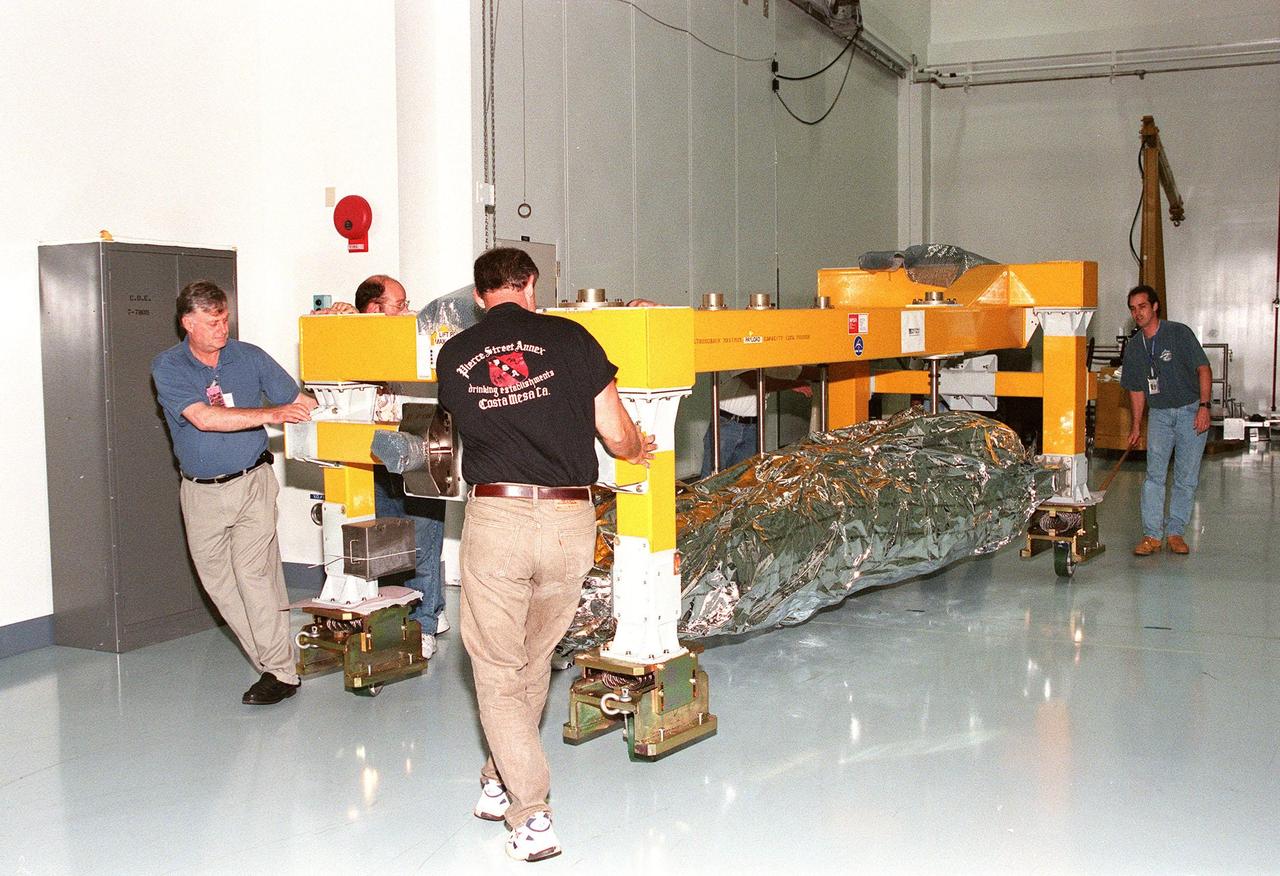
The Canadian Space Agency's (CSA) Space Station Remote Manipulator System (SSRMS) arrives at the Space Station Processing Facility at KSC to begin a campaign of prelaunch processing activities. CSA's first contribution to the International Space Station (ISS), the SSRMS is the primary means of transferring payloads between the orbiter payload bay and the ISS for assembly. The 56-foot-long robotic arm includes two 12-foot booms joined by a hinge. Seven joints on the arm allow highly flexible and precise movement. Latching End Effectors are mounted on each end of the arm for grappling. Video cameras mounted on the booms and end effectors will give astronauts maximum visibility for operations and maintenance tasks on the ISS. The SSRMS is scheduled to be launched aboard Space Shuttle Endeavour on STS-100, currently planned for July 2000
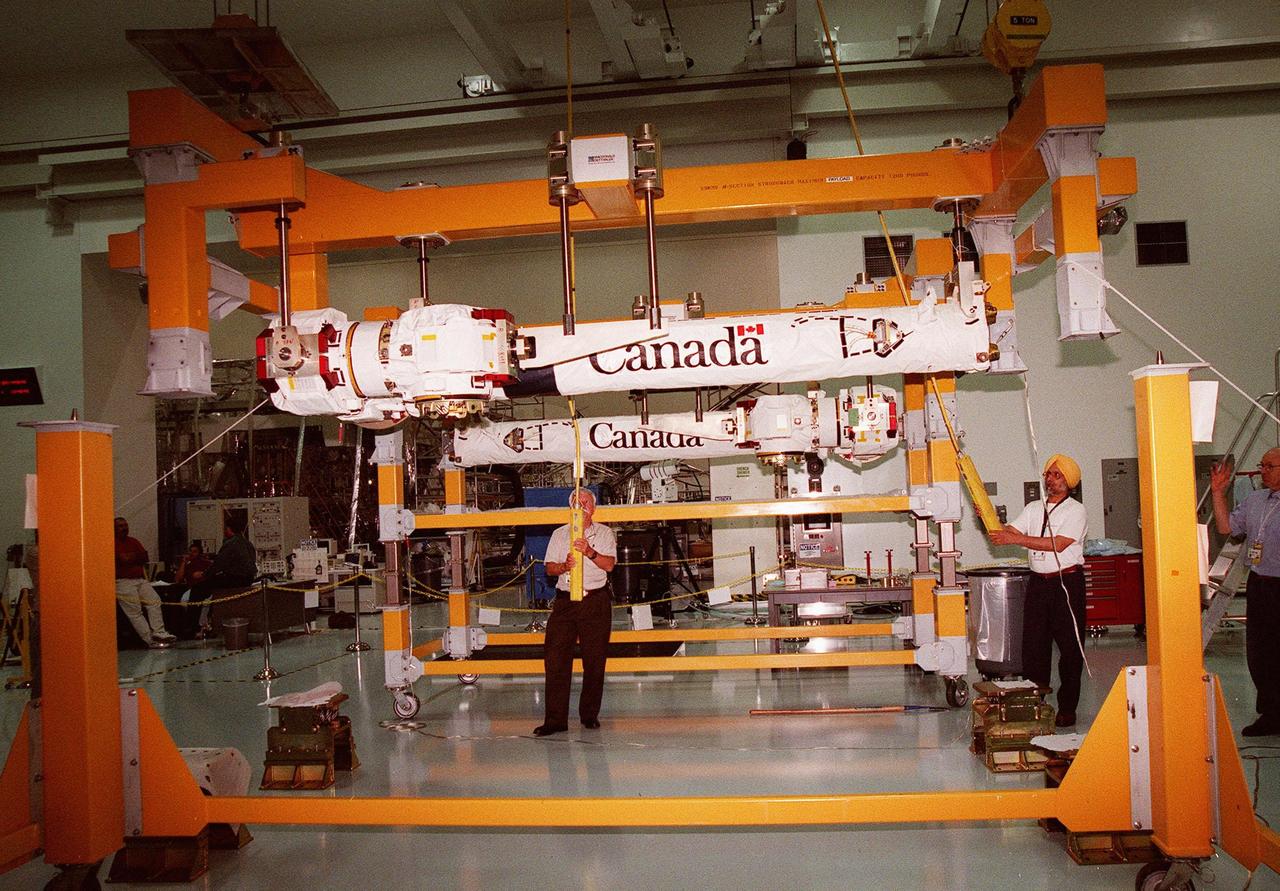
Workers in the Space Station Processing Facility raise two segments of the Canadian Space Agency's Space Station Remote Manipulator System (SSRMS). CSA's first contribution to the International Space Station (ISS), the SSRMS is the primary means of transferring payloads between the orbiter payload bay and the ISS for assembly. The 56-foot-long robotic arm includes two 12-foot booms joined by a hinge. Seven joints on the arm allow highly flexible and precise movement. Latching End Effectors are mounted on each end of the arm for grappling. Video cameras mounted on the booms and end effectors will give astronauts maximum visibility for operations and maintenance tasks on the ISS. The SSRMS is at KSC to begin a campaign of prelaunch processing activities. It is scheduled to be launched aboard Space Shuttle Endeavour on mission STS-100, currently planned for July 2000
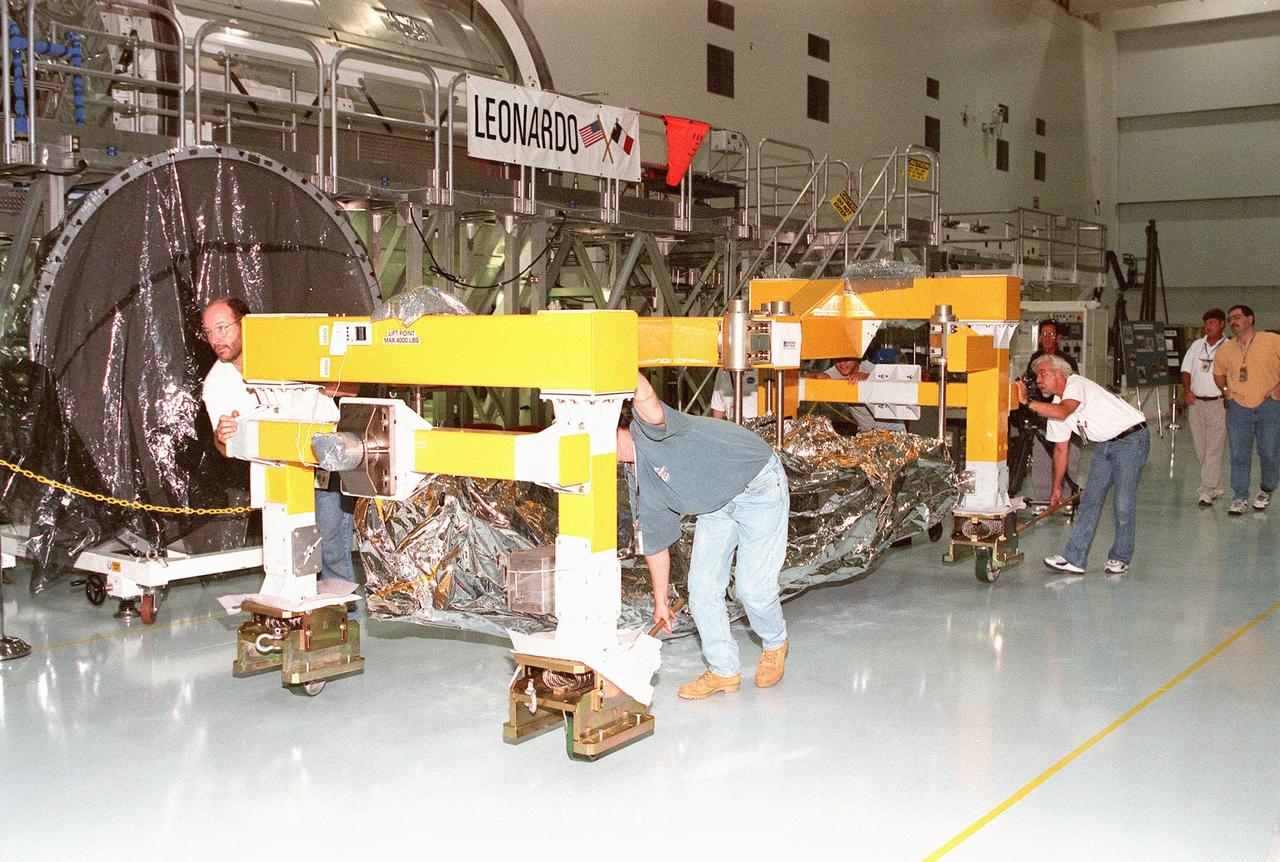
Workers guide a segment of the Canadian Space Agency's (CSA) Space Station Remote Manipulator System (SSRMS) past the Leonardo Multi-Purpose Logistics Module in the Space Station Processing Facility at KSC. The segment joins two others for a campaign of prelaunch processing activities. CSA's first contribution to the International Space Station (ISS), the SSRMS is the primary means of transferring payloads between the orbiter payload bay and the ISS for assembly. The 56-foot-long robotic arm includes two 12-foot booms joined by a hinge. Seven joints on the arm allow highly flexible and precise movement. Latching End Effectors are mounted on each end of the arm for grappling. Video cameras mounted on the booms and end effectors will give astronauts maximum visibility for operations and maintenance tasks on the ISS. The SSRMS is scheduled to be launched aboard Space Shuttle Endeavour on STS-100, currently planned for July 2000
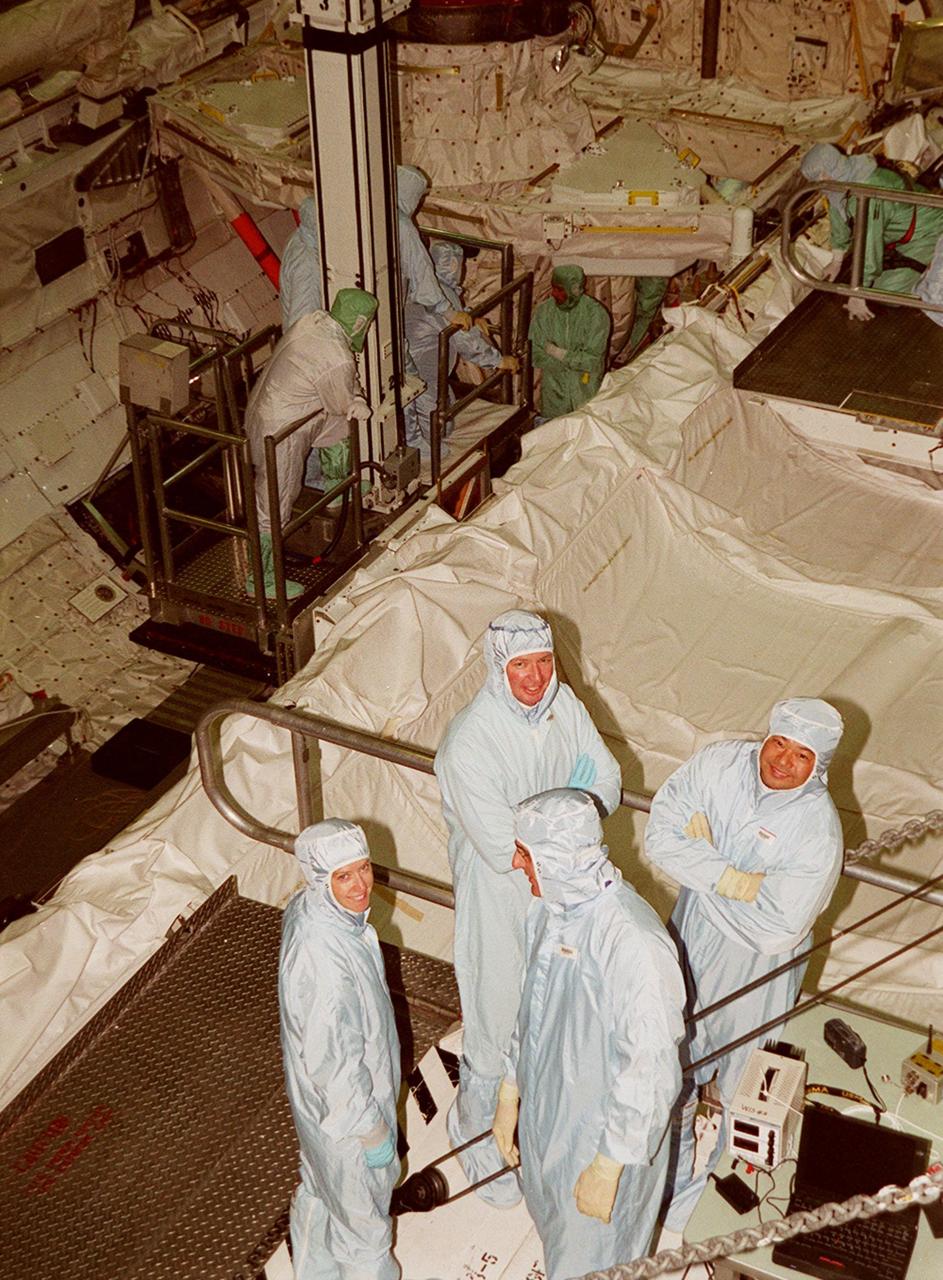
KENNEDY SPACE CENTER, FLA. -- Members of the STS-92 crew pose for the photographer during a break from checking out Discovery's payload bay in the Orbiter Processing Facility bay 1. Their mission, the fourth U.S. flight to the ISS, includes as payload the Integrated Truss Structure Z1, an early exterior framework to allow the first U.S. solar arrays on a future flight to be temporarily installed on Unity for early power; Ku-band communication to support early science capability and U.S. television; and PMA-3 to provide a Shuttle docking port for solar array installation on the sixth ISS flight and Lab installation on the seventh ISS flight. The crew comprises Mission Commander Brian Duffy, Pilot Pamela Melroy, and Mission Specialists Koichi Wakata, Leroy Chiao, Peter "Jeff" Wisoff, Michael Lopez-Alegria, and William McArthur. Launch of STS-92 is scheduled for Sept. 21, 2000. Wakata is with the National Space Development Agency of Japan
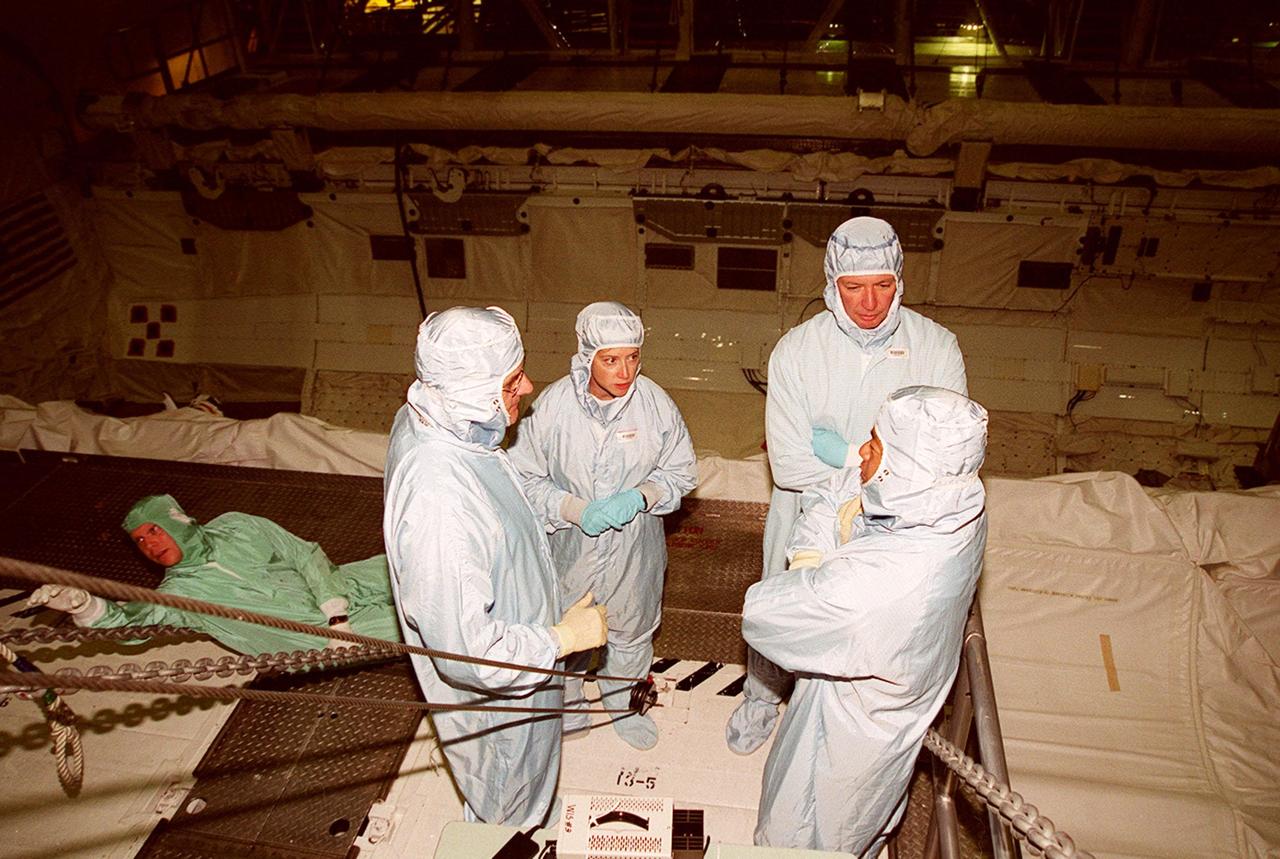
KENNEDY SPACE CENTER, FLA. -- Members of the STS-92 crew take a moment for discussion while checking out the payload bay of the orbiter Discovery in the Orbiter Processing Facility bay 1. Their mission, the fourth U.S. flight to the ISS, includes as payload the Integrated Truss Structure Z1, an early exterior framework to allow the first U.S. solar arrays on a future flight to be temporarily installed on Unity for early power; Ku-band communication to support early science capability and U.S. television; and PMA-3 to provide a Shuttle docking port for solar array installation on the sixth ISS flight and Lab installation on the seventh ISS flight. The crew comprises Mission Commander Brian Duffy, Pilot Pamela Melroy, and Mission Specialists Koichi Wakata, Leroy Chiao, Peter "Jeff" Wisoff, Michael Lopez-Alegria, and William McArthur. Launch of STS-92 is scheduled for Sept. 21, 2000. Wakata is with the National Space Development Agency of Japan
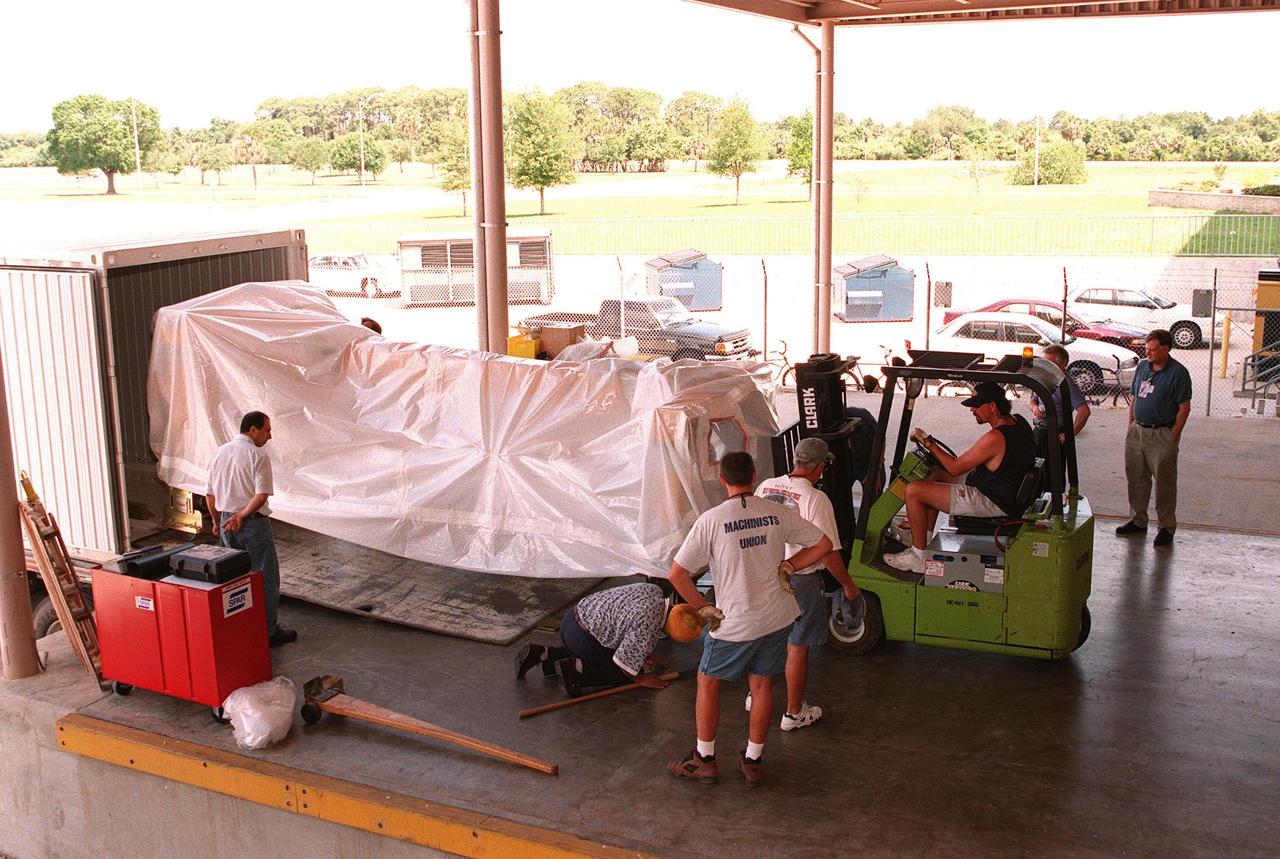
Workers uncrate a segment of the Canadian Space Agency's (CSA) Space Station Remote Manipulator System (SSRMS) in the Space Station Processing Facility at KSC. It joins two other segments for a campaign of prelaunch processing activities. CSA's first contribution to the International Space Station (ISS), the SSRMS is the primary means of transferring payloads between the orbiter payload bay and the ISS for assembly. The 56-foot-long robotic arm includes two 12-foot booms joined by a hinge. Seven joints on the arm allow highly flexible and precise movement. Latching End Effectors are mounted on each end of the arm for grappling. Video cameras mounted on the booms and end effectors will give astronauts maximum visibility for operations and maintenance tasks on the ISS. The SSRMS is scheduled to be launched aboard Space Shuttle Endeavour on STS-100, currently planned for July 2000
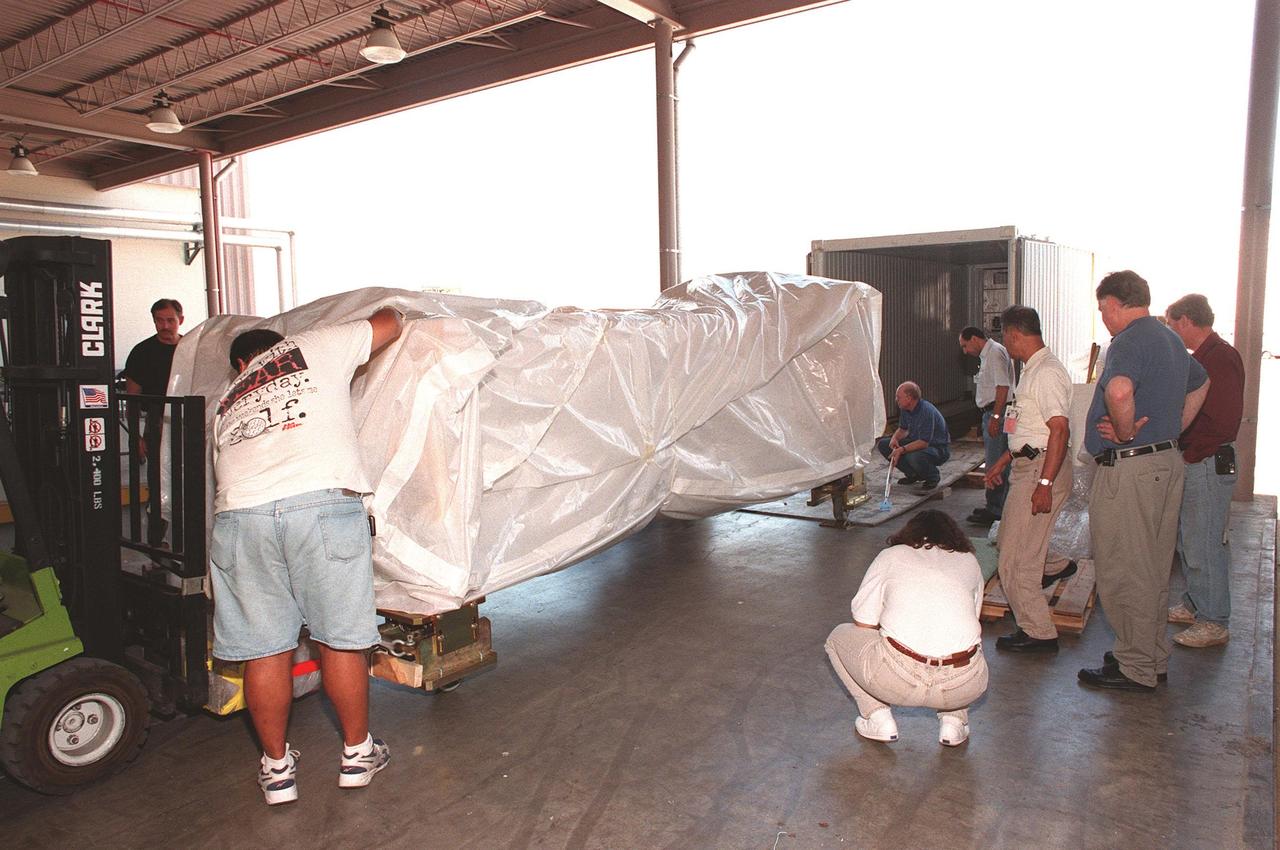
The Canadian Space Agency's (CSA) Space Station Remote Manipulator System (SSRMS) arrives at Kennedy Space Center to begin a campaign of prelaunch processing activities. CSA's first contribution to the International Space Station (ISS), the SSRMS is the primary means of transferring payloads between the orbiter payload bay and the ISS for assembly. The 56-foot-long robotic arm includes two 12-foot booms joined by a hinge. Seven joints on the arm allow highly flexible and precise movement. Latching End Effectors are mounted on each end of the arm for grappling. Video cameras mounted on the booms and end effectors will give astronauts maximum visibility for operations and maintenance tasks on the ISS. The SSRMS is scheduled to be launched aboard Space Shuttle Endeavour on STS-100, currently planned for July 2000
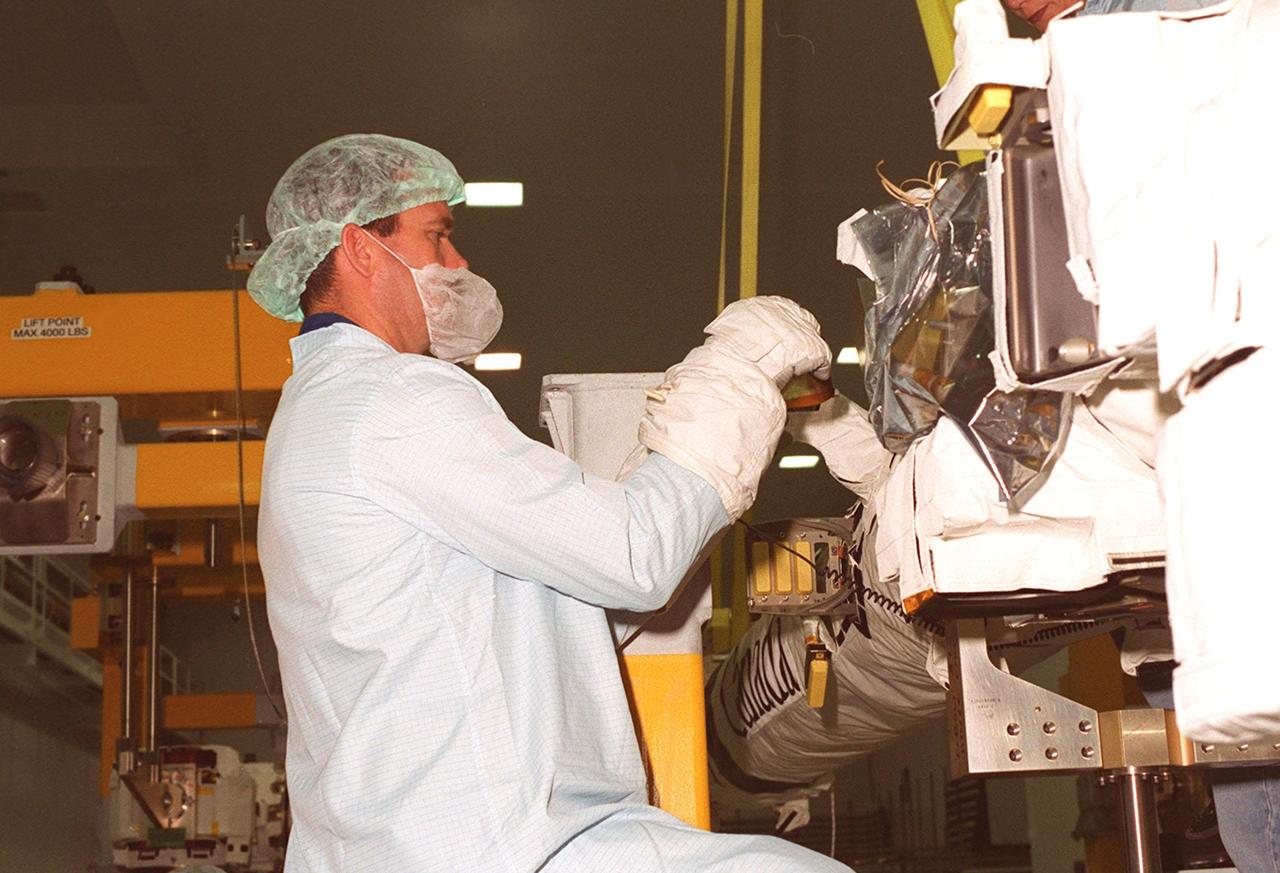
In the Space Station Processing Facility, a worker performs prelaunch processing activities on the Canadian Space Agency's (CSA) Space Station Remote Manipulator System (SSRMS). CSA's first contribution to the International Space Station (ISS), the SSRMS is the primary means of transferring payloads between the orbiter payload bay and the ISS for assembly. The 56-foot-long robotic arm includes two 12-foot booms joined by a hinge. Seven joints on the arm allow highly flexible and precise movement. Latching End Effectors are mounted on each end of the arm for grappling. Video cameras mounted on the booms and end effectors will give astronauts maximum visibility for operations and maintenance tasks on the ISS. The SSRMS is scheduled to be launched aboard Space Shuttle Endeavour on STS-100, currently planned for April 2001
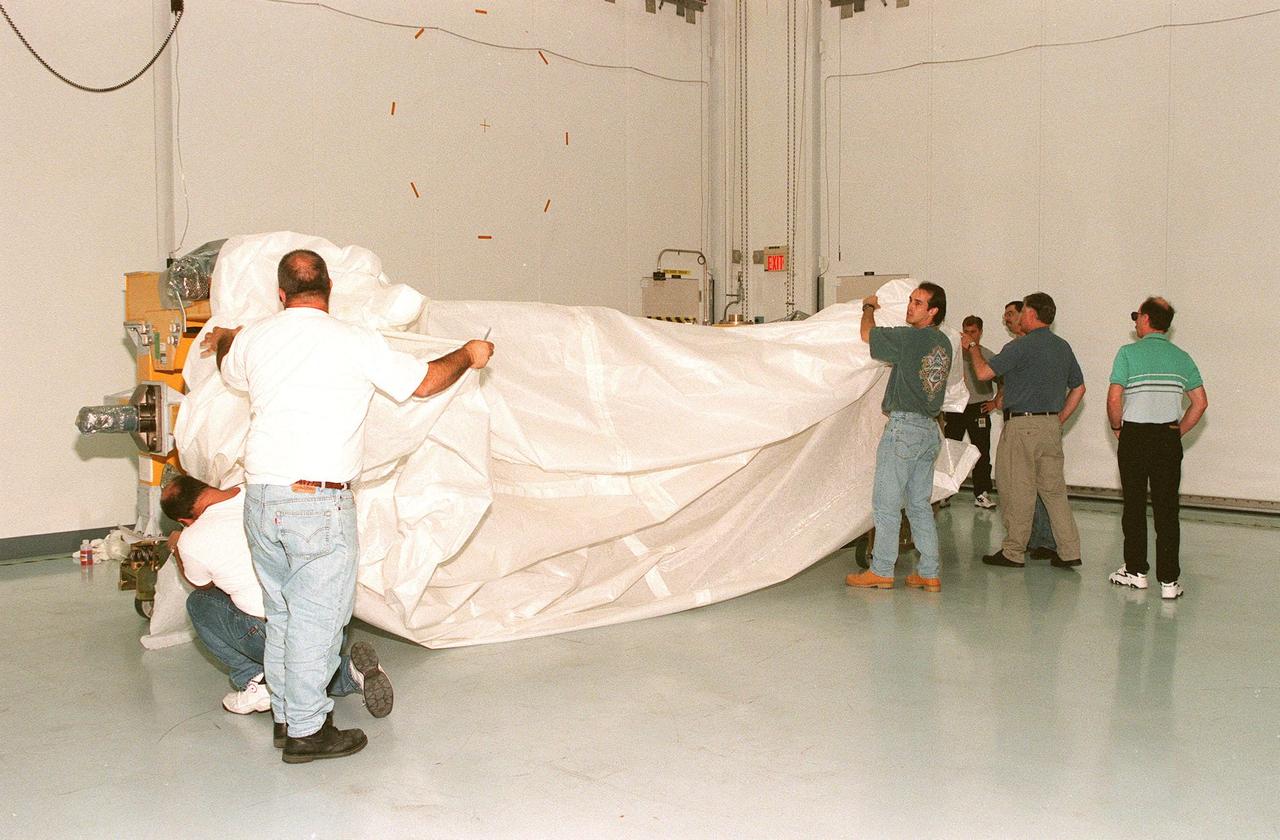
The Canadian Space Agency's (CSA) Space Station Remote Manipulator System (SSRMS) arrives at the Space Station Processing Facility at KSC to begin a campaign of prelaunch processing activities. CSA's first contribution to the International Space Station (ISS), the SSRMS is the primary means of transferring payloads between the orbiter payload bay and the ISS for assembly. The 56-foot-long robotic arm includes two 12-foot booms joined by a hinge. Seven joints on the arm allow highly flexible and precise movement. Latching End Effectors are mounted on each end of the arm for grappling. Video cameras mounted on the booms and end effectors will give astronauts maximum visibility for operations and maintenance tasks on the ISS. The SSRMS is scheduled to be launched aboard Space Shuttle Endeavour on STS-100, currently planned for July 2000
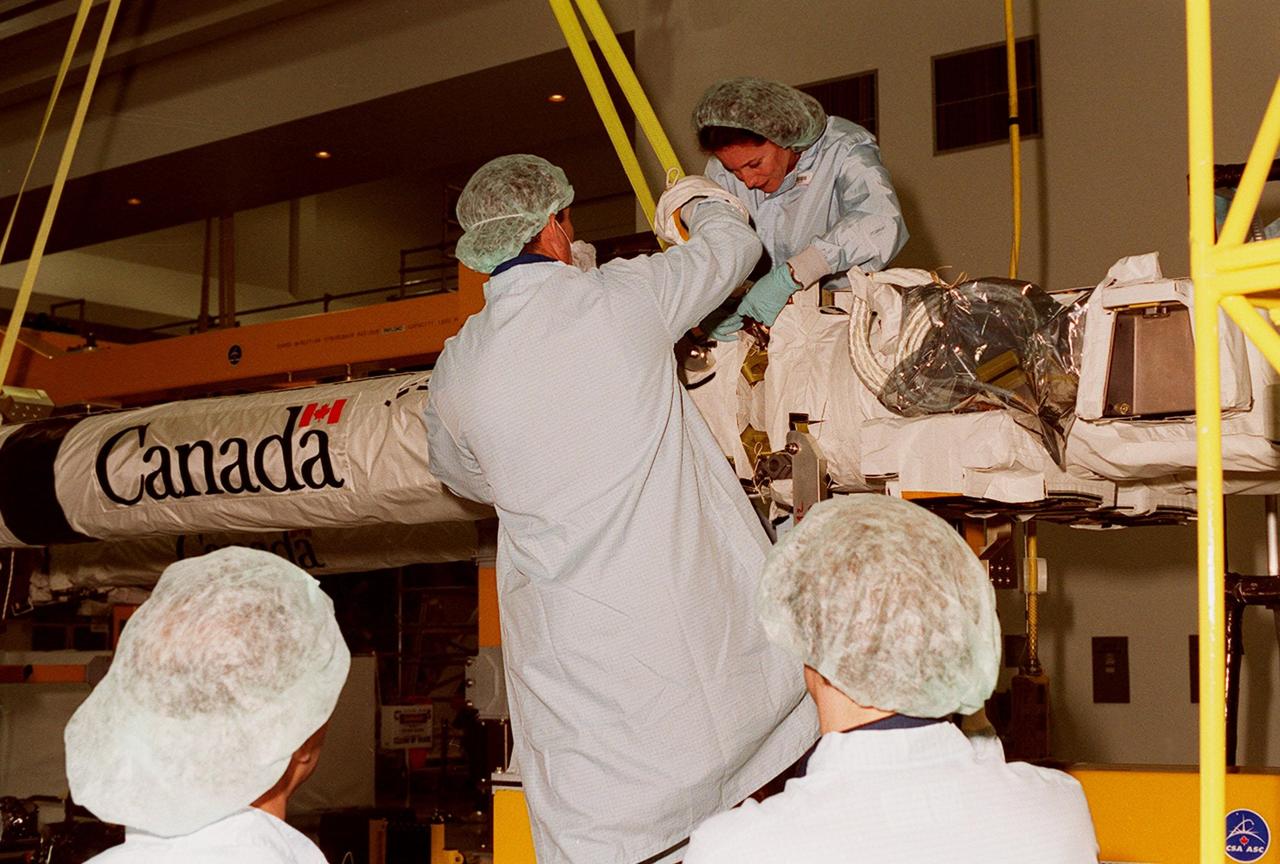
In the Space Station Processing Facility, workers perform prelaunch processing activities on the Canadian Space Agency's (CSA) Space Station Remote Manipulator System (SSRMS). CSA's first contribution to the International Space Station (ISS), the SSRMS is the primary means of transferring payloads between the orbiter payload bay and the ISS for assembly. The 56-foot-long robotic arm includes two 12-foot booms joined by a hinge. Seven joints on the arm allow highly flexible and precise movement. Latching End Effectors are mounted on each end of the arm for grappling. Video cameras mounted on the booms and end effectors will give astronauts maximum visibility for operations and maintenance tasks on the ISS. The SSRMS is scheduled to be launched aboard Space Shuttle Endeavour on STS-100, currently planned for April 2001
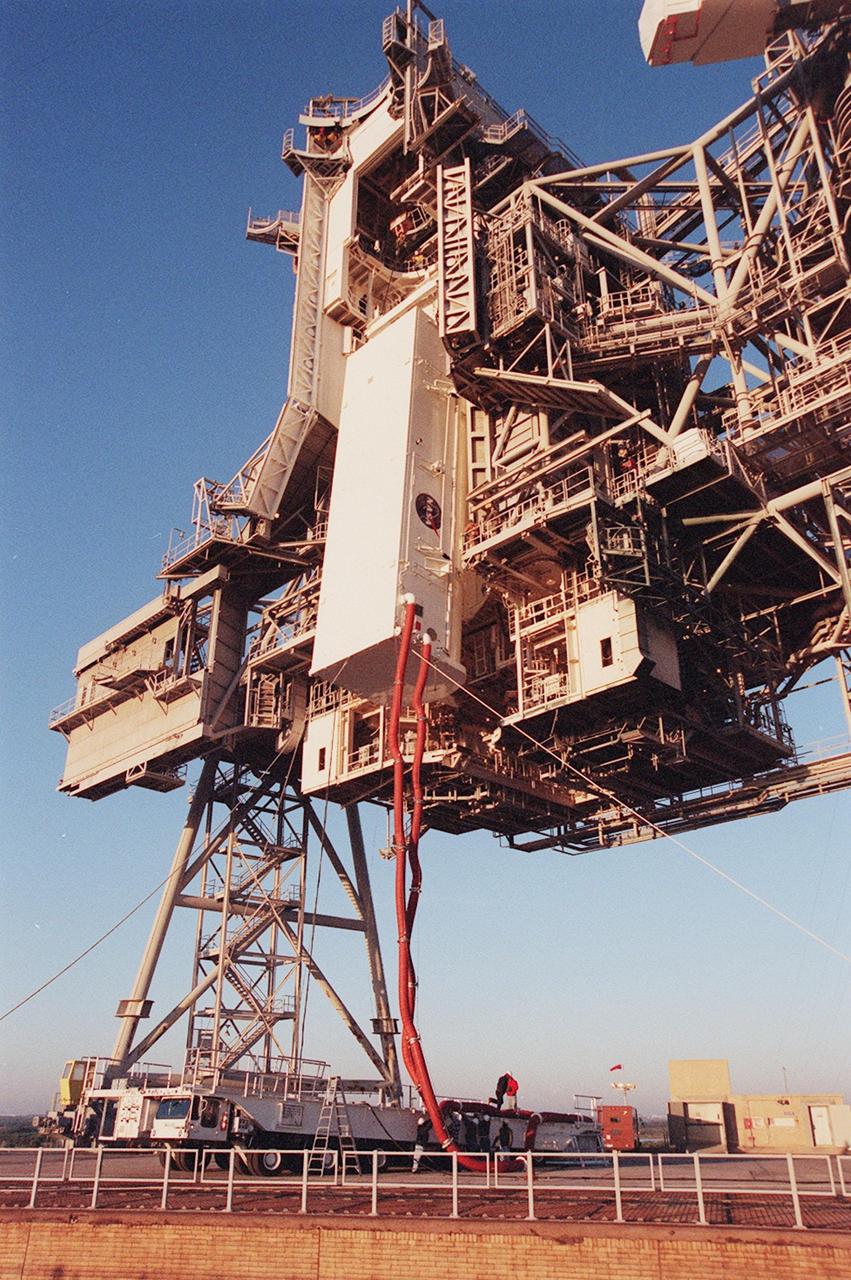
KENNEDY SPACE CENTER, FLA. -- The payload canister containing the U.S. Lab Destiny rises up the Rotating Service Structure to the payload changeout room at Launch Pad 39A. Umbilical hoses are still attached. In the PCR Destiny will be removed and transferred to the payload bay of Atlantis for mission STS-98. Destiny, a key element in the construction of the International Space Station is designed for space science experiments. STS-98 is the seventh construction flight to the ISS. Launch of STS-98 is scheduled for Jan. 19 at 2:11 a.m. EST
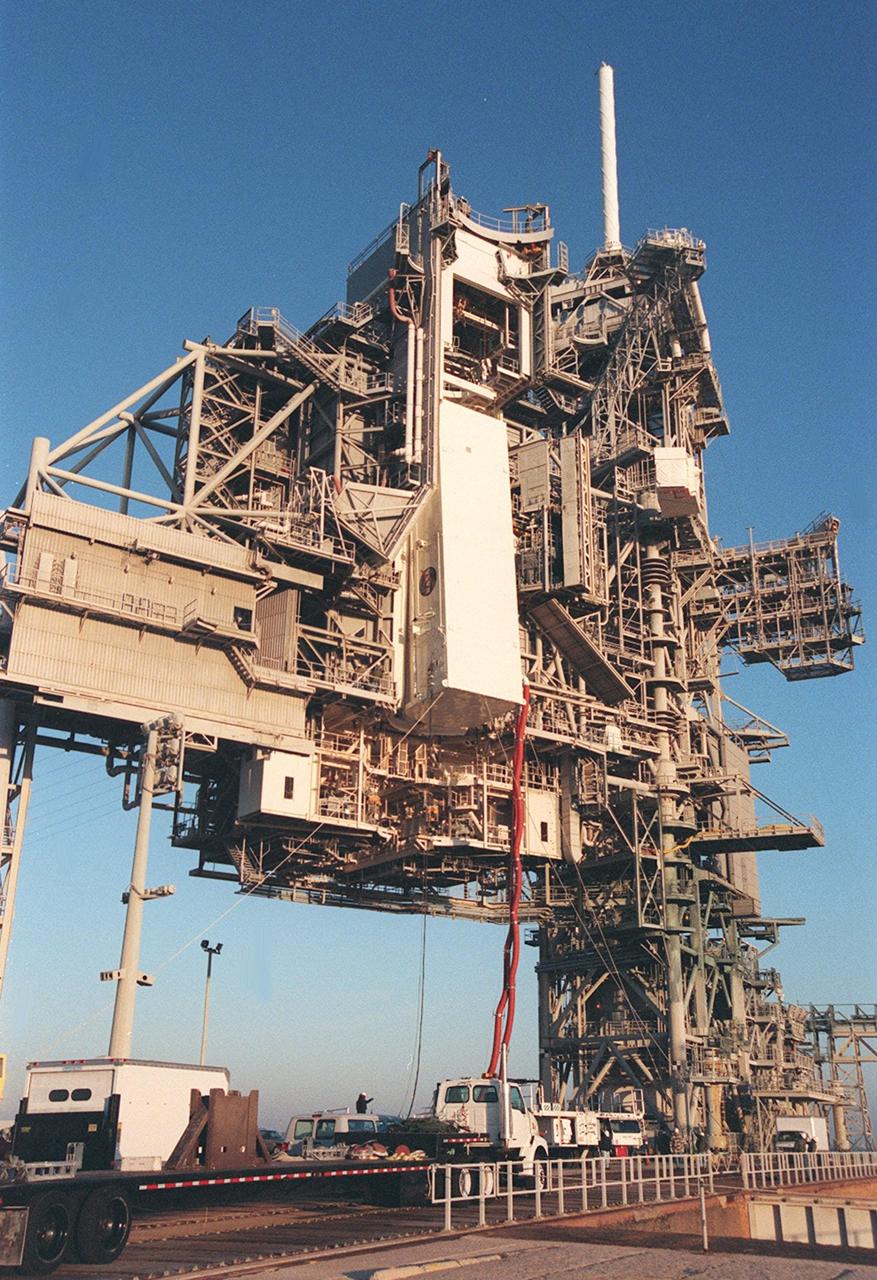
KENNEDY SPACE CENTER, FLA. -- The payload canister containing the U.S. Lab Destiny nears the payload changeout room on the Rotating Service Structure at Launch Pad 39A. Umbilical hoses are still attached. In the PCR Destiny will be removed and transferred to the payload bay of Atlantis for mission STS-98. Destiny, a key element in the construction of the International Space Station is designed for space science experiments. STS-98 is the seventh construction flight to the ISS. Launch of STS-98 is scheduled for Jan. 19 at 2:11 a.m. EST
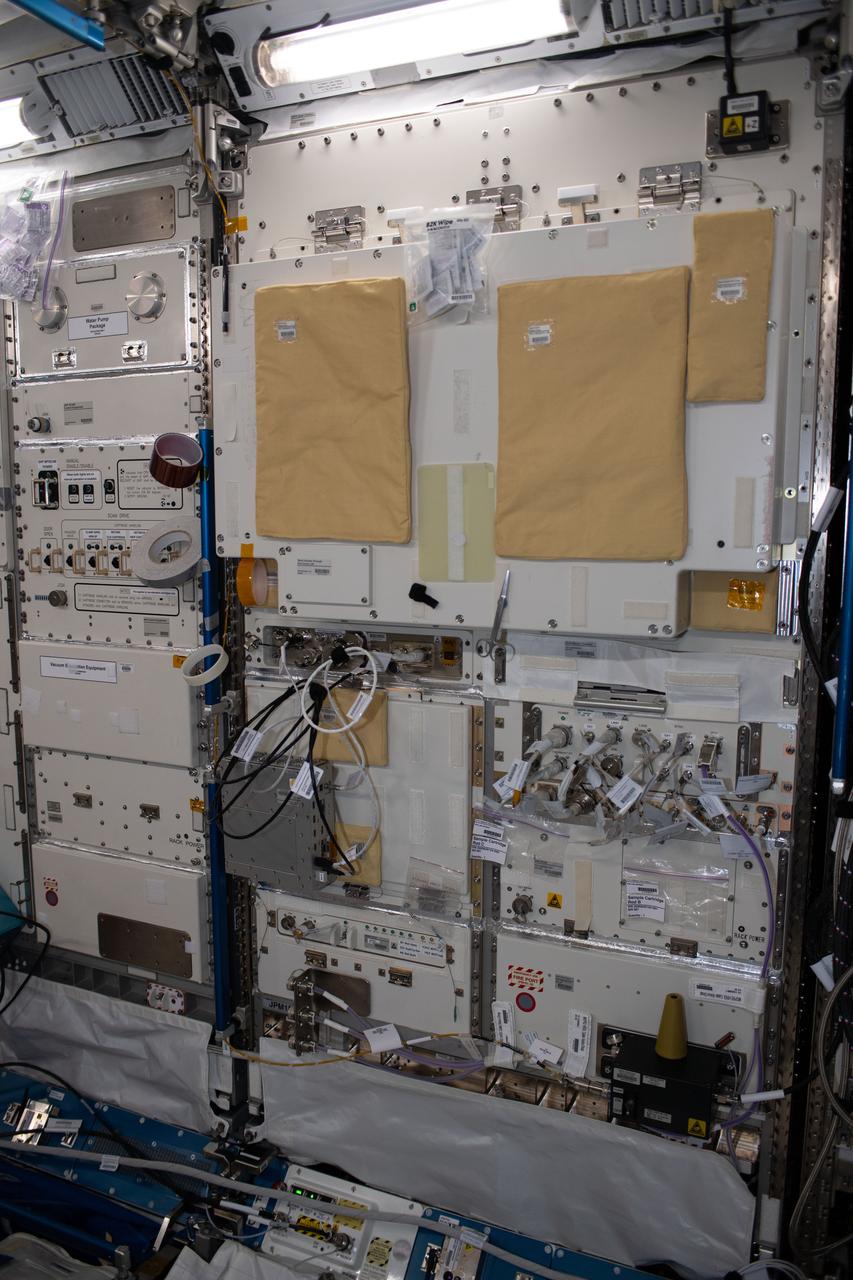
iss056e150256 (8/21/2018) --- A view of the Multi purpose Small Payload Rack (MSPR) 2 in the Kibo Japanese Experiment Pressurized Module (JPM) aboard the International Space Station (ISS). The Multi Purpose Small Payload Rack-2 (MSPR-2) is a second multipurpose payload rack system used in the Japanese Experiment Module (JEM). Similar to the original MSPR (still in use), MSPR-2 has two workspaces and a work table that can be used for wide fields of space environment utilization including science and educational missions.
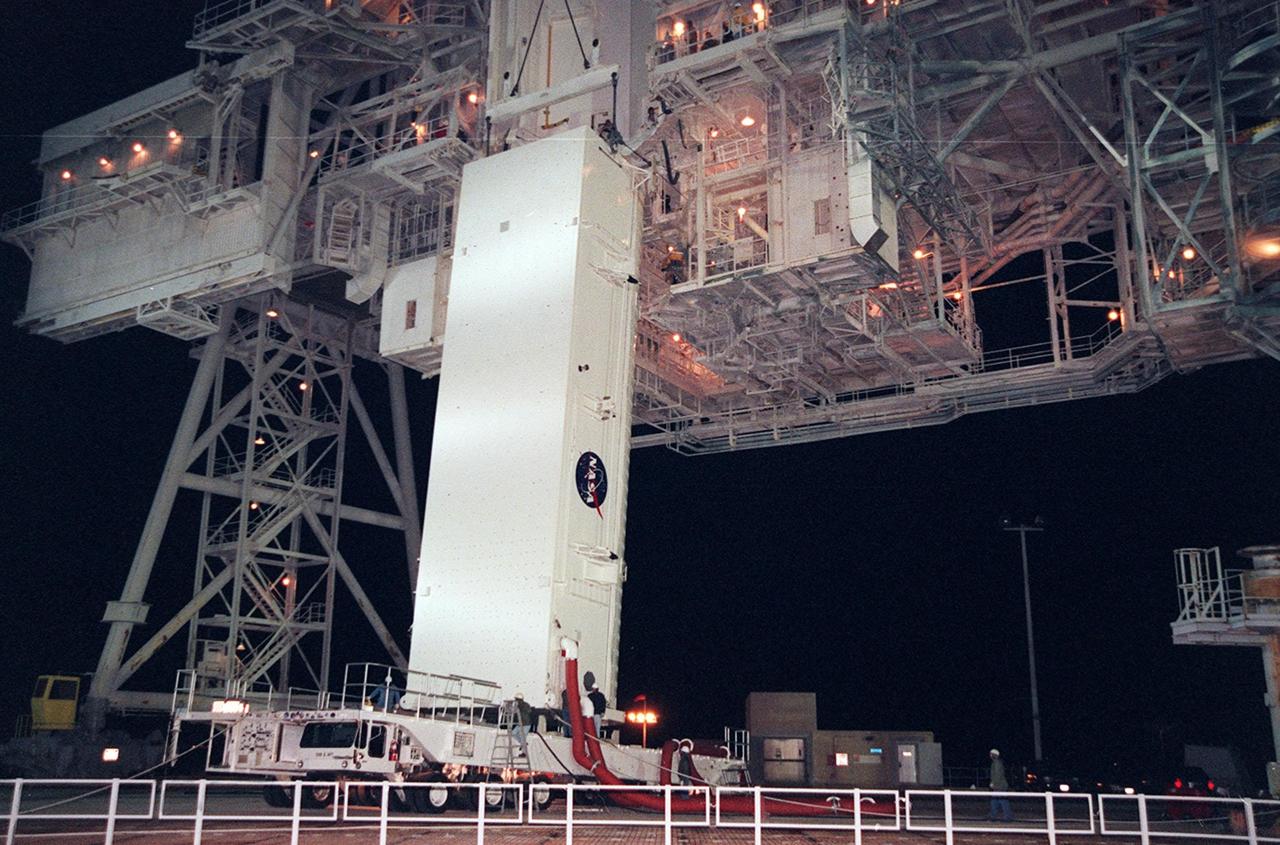
KENNEDY SPACE CENTER, FLA. -- In the early morning, the payload canister containing the U.S. Lab Destiny arrives at the Rotating Service Structure at Launch Pad 39A. The canister will be lifted to the payload changeout room above and Destiny removed, then transferred to the payload bay of Atlantis for mission STS-98. Destiny, a key element in the construction of the International Space Station, is designed for space science experiments. STS-98 is the seventh construction flight to the ISS. Launch of STS-98 is scheduled for Jan. 19 at 2:11 a.m. EST
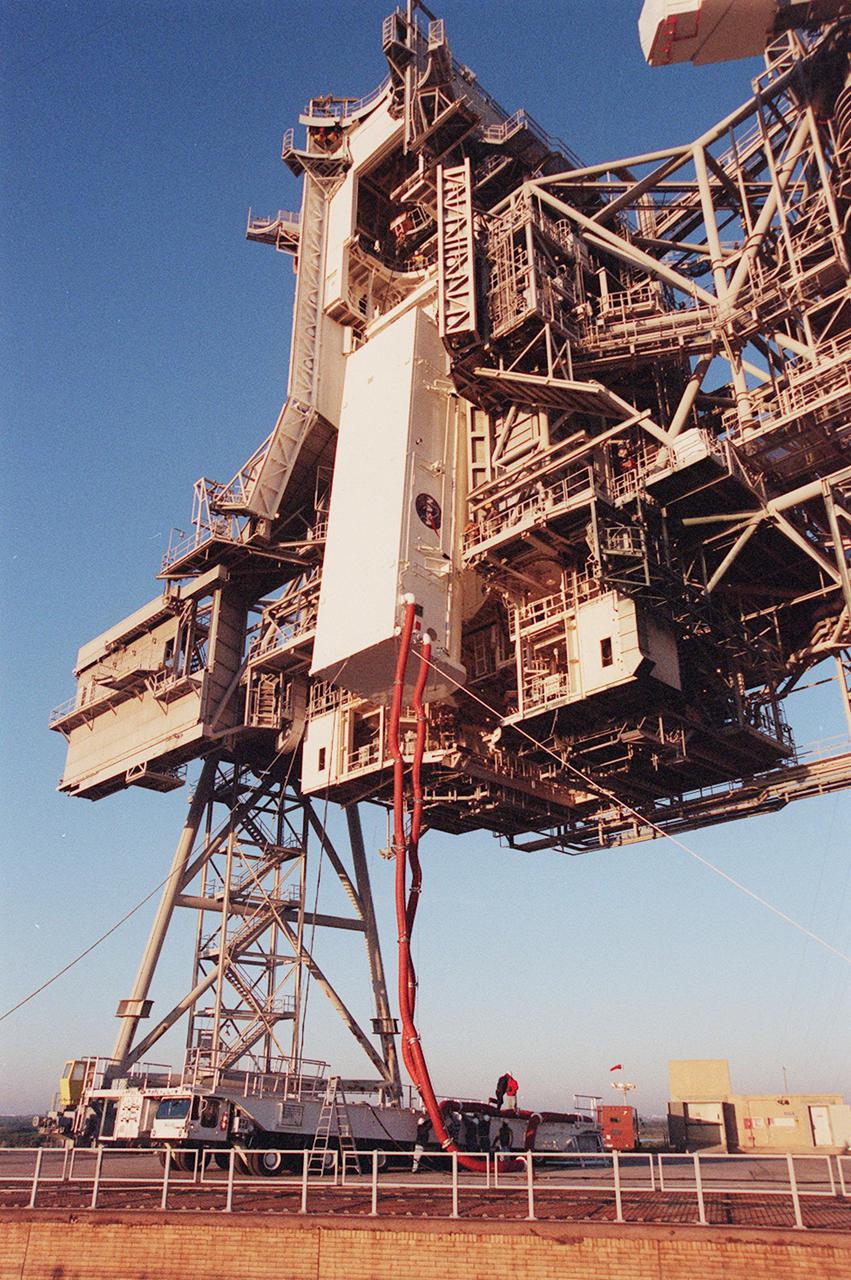
KENNEDY SPACE CENTER, FLA. -- The payload canister containing the U.S. Lab Destiny rises up the Rotating Service Structure to the payload changeout room at Launch Pad 39A. Umbilical hoses are still attached. In the PCR Destiny will be removed and transferred to the payload bay of Atlantis for mission STS-98. Destiny, a key element in the construction of the International Space Station is designed for space science experiments. STS-98 is the seventh construction flight to the ISS. Launch of STS-98 is scheduled for Jan. 19 at 2:11 a.m. EST
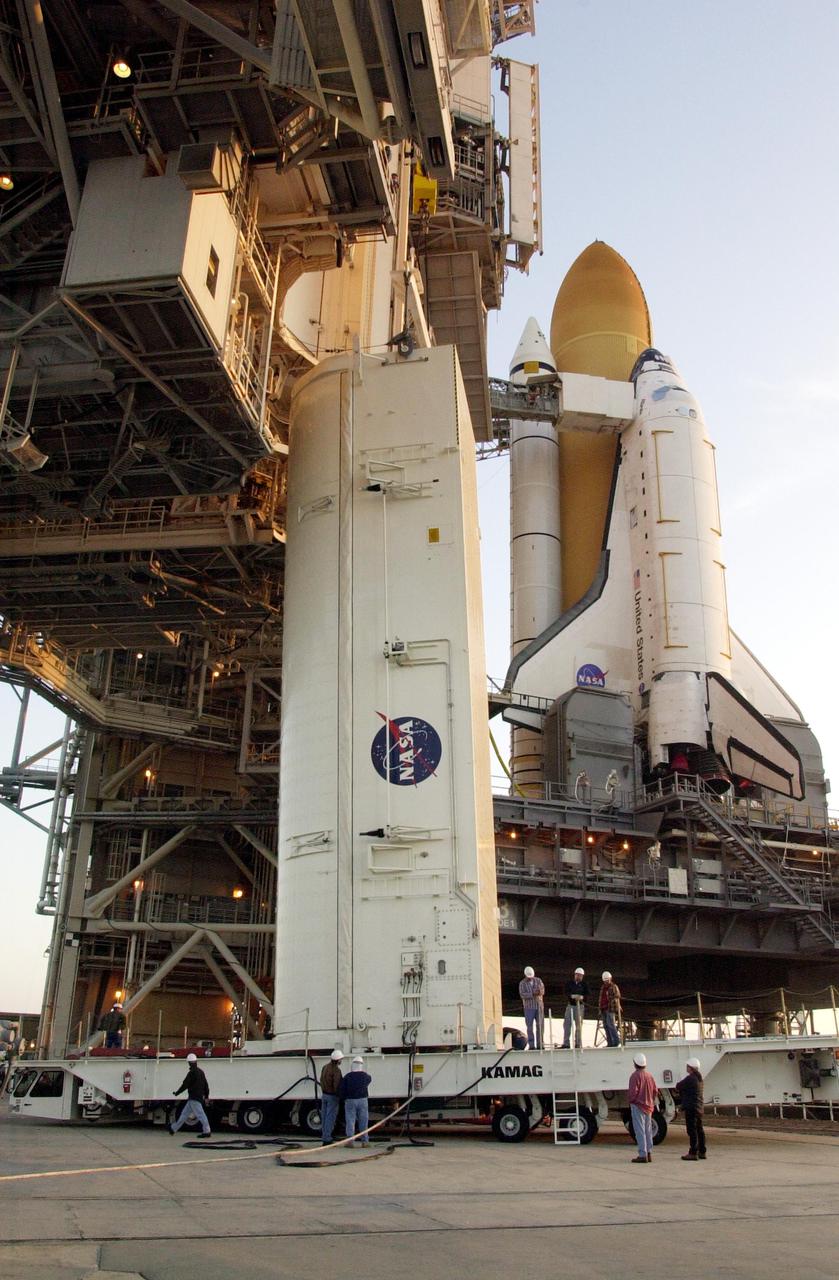
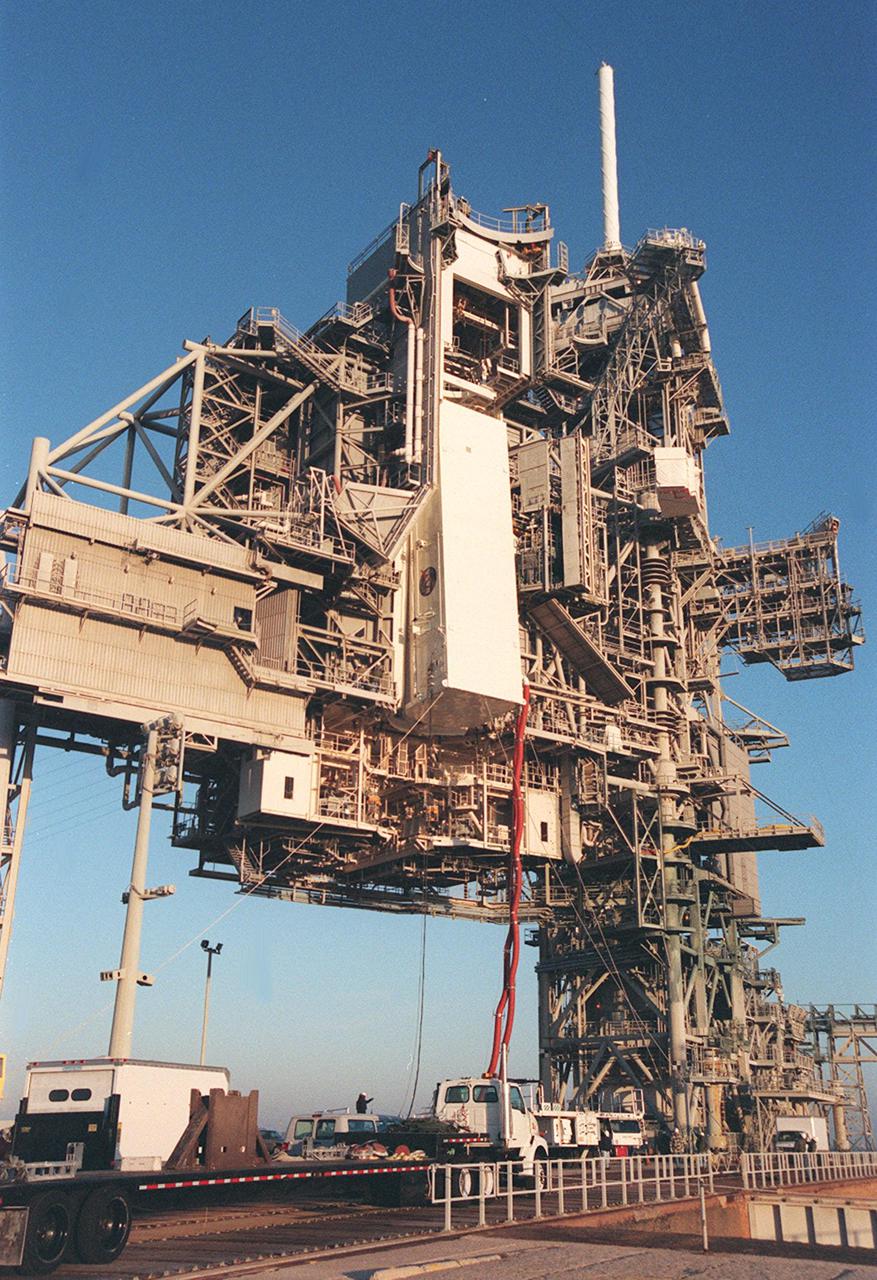
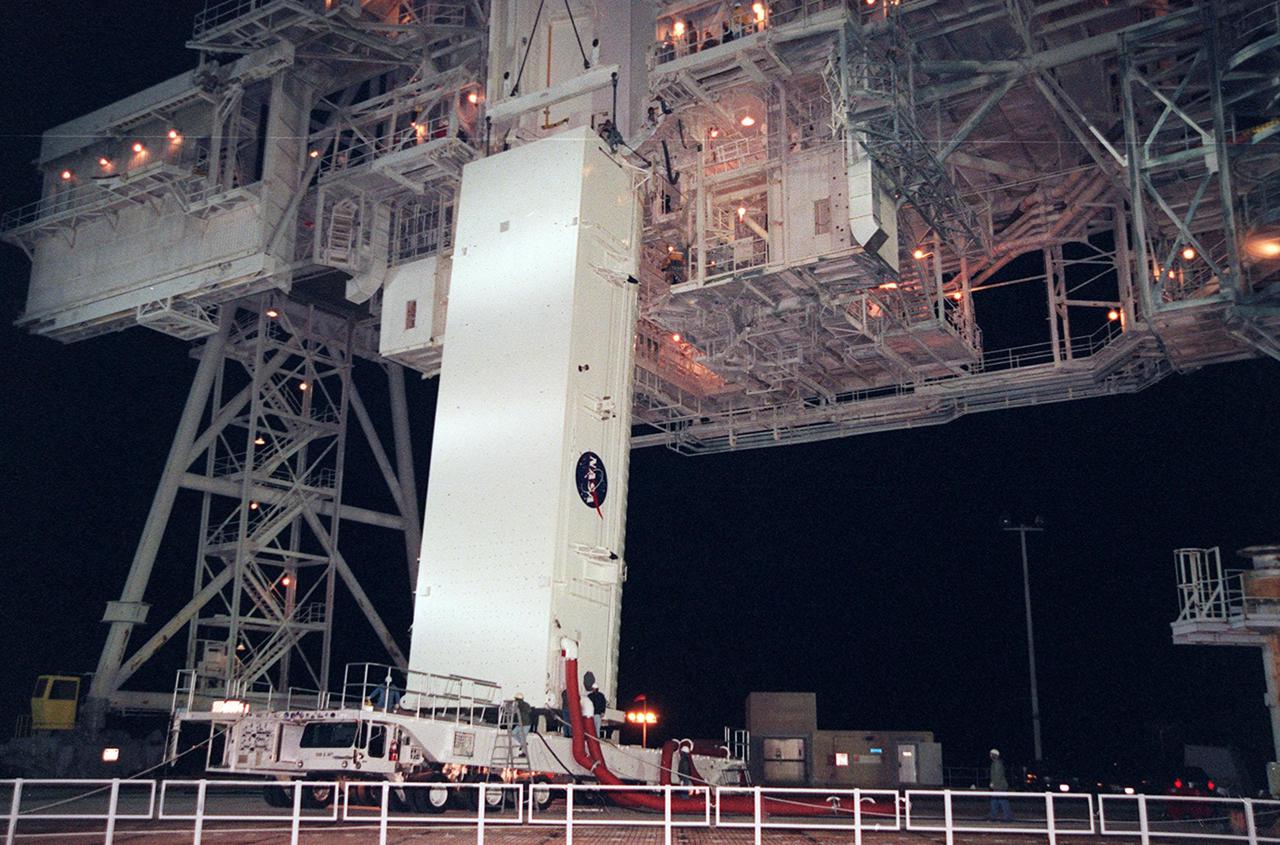
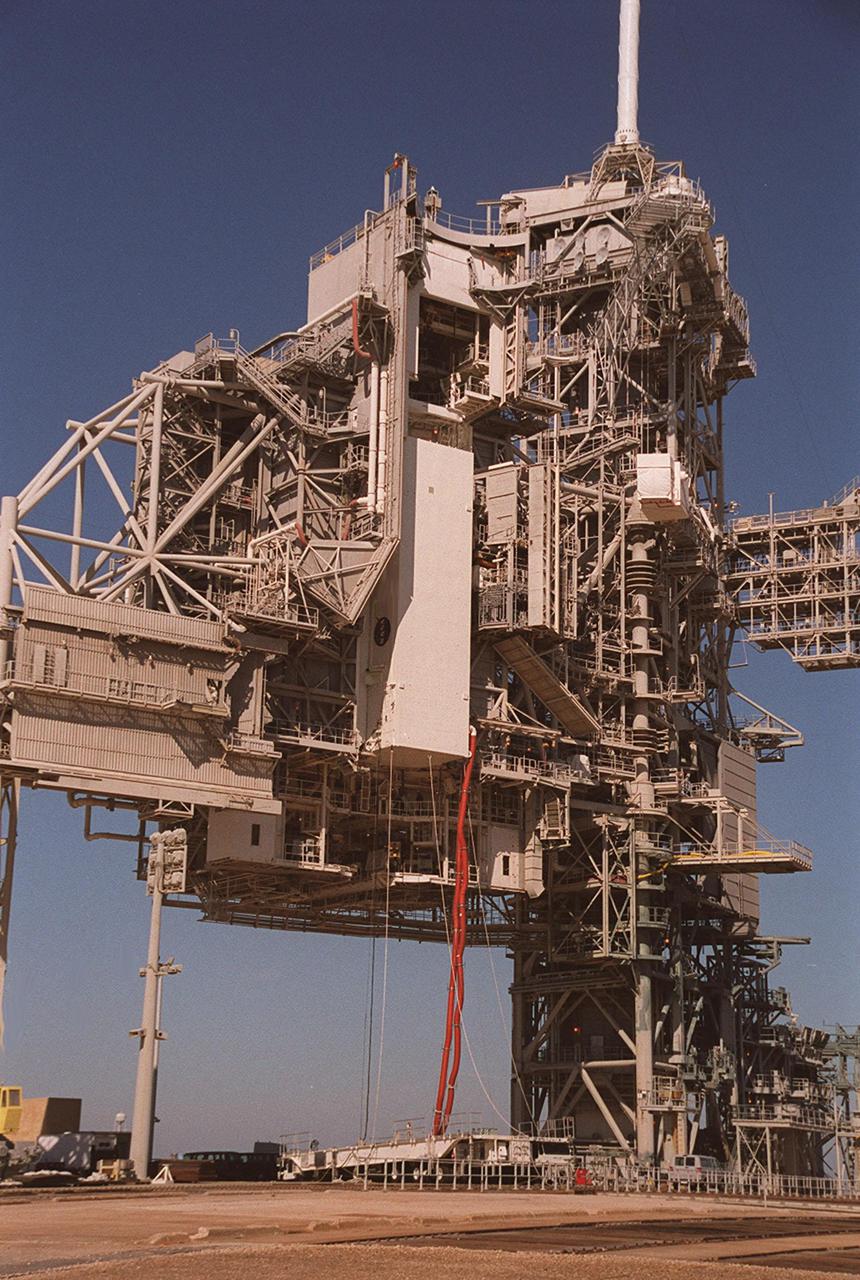
KENNEDY SPACE CENTER, FLA. - On the launch pad, workers prepare the payload canister for its lift to the payload changeout room above. Part of the payload on mission STS-110, the S0 truss will become the backbone of the orbiting International Space Station (ISS). The S0 truss will be attached to the U.S. Lab, 'Destiny,' on the 11-day mission. Launch is scheduled for April 4
KENNEDY SPACE CENTER, FLA. -- The payload canister containing the U.S. Lab Destiny nears the payload changeout room on the Rotating Service Structure at Launch Pad 39A. Umbilical hoses are still attached. In the PCR Destiny will be removed and transferred to the payload bay of Atlantis for mission STS-98. Destiny, a key element in the construction of the International Space Station is designed for space science experiments. STS-98 is the seventh construction flight to the ISS. Launch of STS-98 is scheduled for Jan. 19 at 2:11 a.m. EST
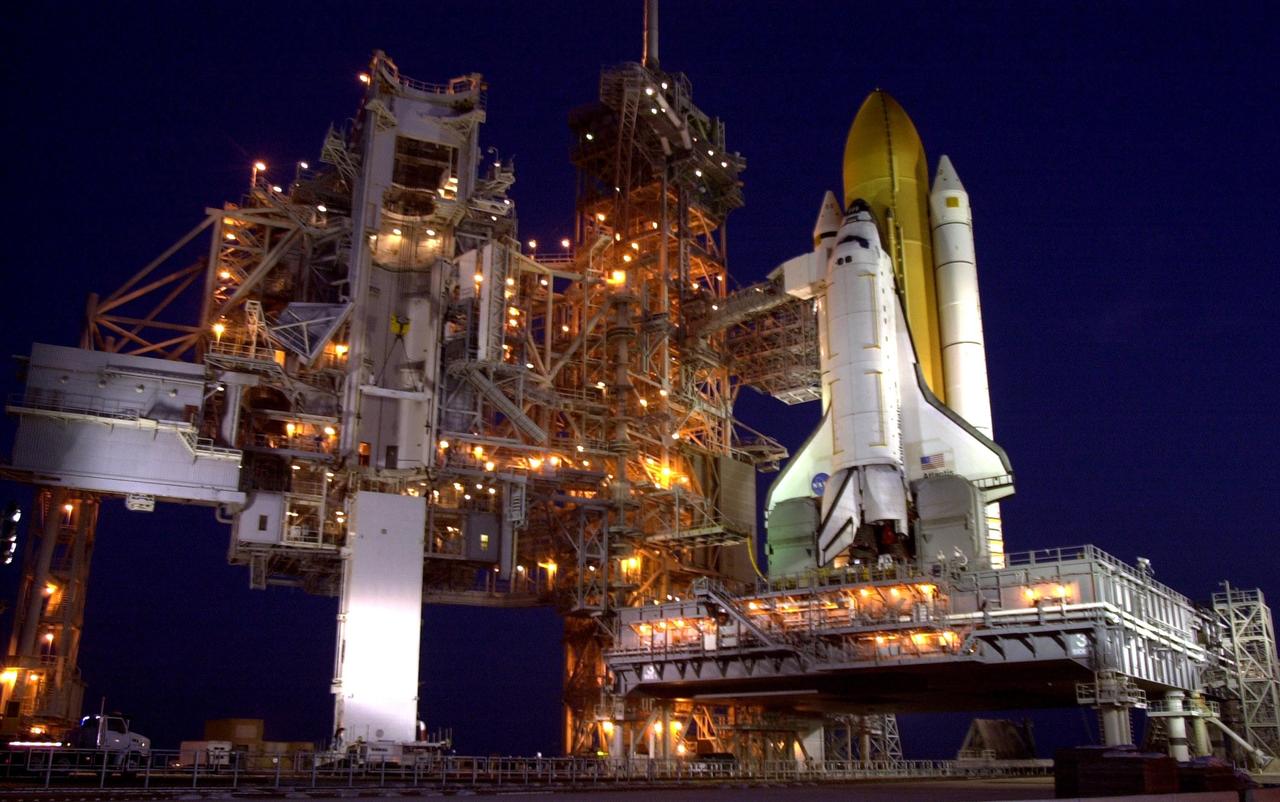
KENNEDY SPACE CENTER, FLA. -- The payload canister with the S0 Integrated Truss Structure arrives at the launch pad for transfer to Space Shuttle Atlantis's payload bay. Part of the payload on mission STS-110, the S0 truss will become the backbone of the orbiting International Space Station (ISS). The S0 truss will be attached to the U.S. Lab, "Destiny," on the 11-day mission. Launch is scheduled for April 4
KENNEDY SPACE CENTER, FLA. -- In the early morning, the payload canister containing the U.S. Lab Destiny arrives at the Rotating Service Structure at Launch Pad 39A. The canister will be lifted to the payload changeout room above and Destiny removed, then transferred to the payload bay of Atlantis for mission STS-98. Destiny, a key element in the construction of the International Space Station, is designed for space science experiments. STS-98 is the seventh construction flight to the ISS. Launch of STS-98 is scheduled for Jan. 19 at 2:11 a.m. EST
KENNEDY SPACE CENTER, FLA. -- The payload canister containing the U.S. Lab Destiny rises up the Rotating Service Structure to the payload changeout room at Launch Pad 39A. There Destiny will be removed and transferred to the payload bay of Atlantis for mission STS-98. Destiny, a key element in the construction of the International Space Station is designed for space science experiments. STS-98 is the seventh construction flight to the ISS. Launch of STS-98 is scheduled for Jan. 19 at 2:11 a.m. EST
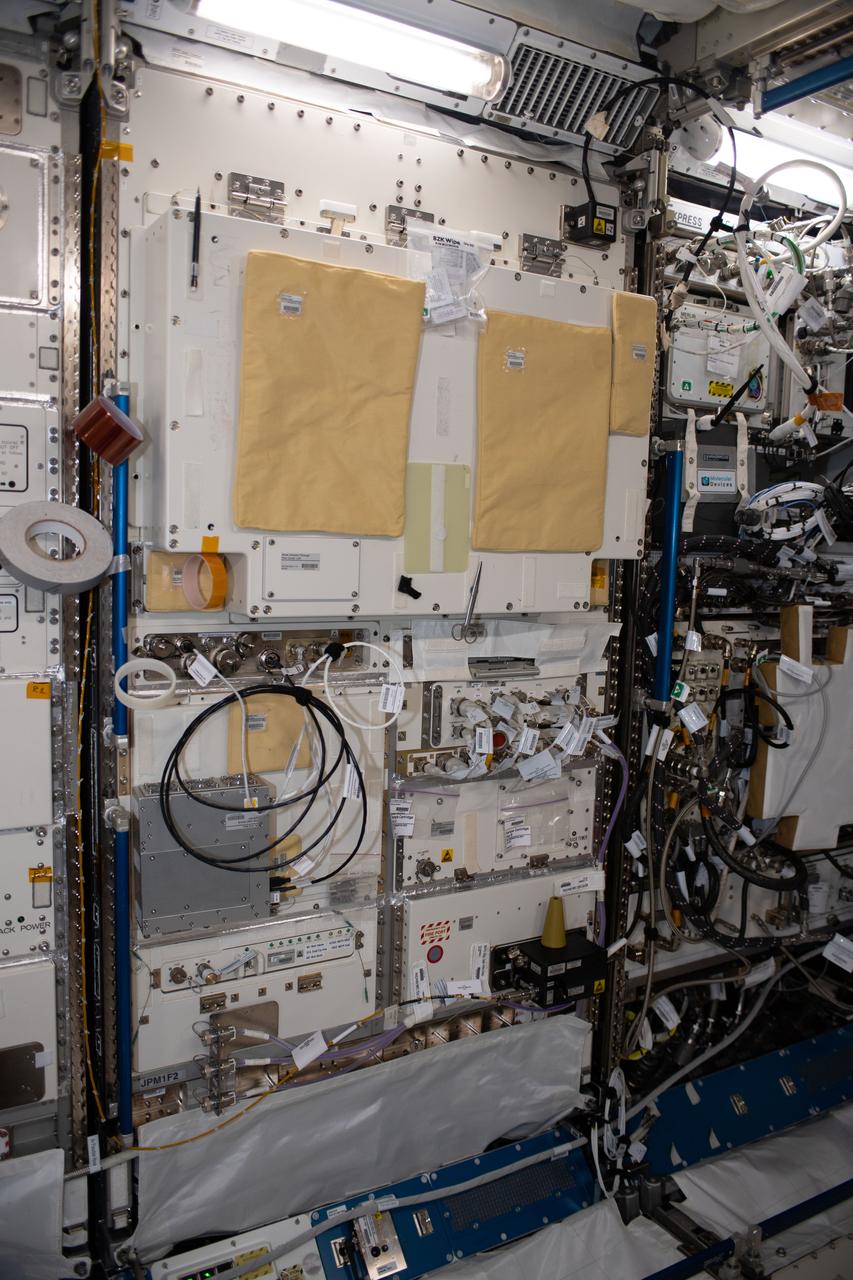
iss056e150255 (8/21/2018) --- A view of the Multi purpose Small Payload Rack (MSPR) 2 in the Kibo Japanese Experiment Pressurized Module (JPM) aboard the International Space Station (ISS). The Multi Purpose Small Payload Rack-2 (MSPR-2) is a second multipurpose payload rack system used in the Japanese Experiment Module (JEM). Similar to the original MSPR (still in use), MSPR-2 has two workspaces and a work table that can be used for wide fields of space environment utilization including science and educational missions.
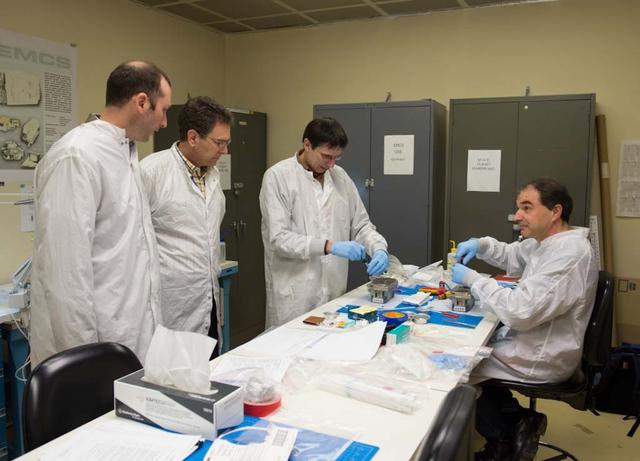
TROPI Seed Growth-1 payload (will fly to ISS on Space X 2) from left to right are Krisofer Vogelsong, Project Science Lead, Tropi SG-1, Lockheed Martin, NASA Ames, John Freeman Plant Scientist, Tropi SG-1, intrinsyx, NASA Ames, Reinhard Born, Europeon Modular Culitivation System Payload Engineering Manager standing and Thomas Neidermaier, Europeon Modular Culitivation System Payload Intergration Manager both from Astrium Space Transportaton ESA, Friedrichshafen, Germany.