
Water and nutrients are being added to plants in the Veggie hardware in NASA Kennedy Space Center's ISS environment simulator chamber. Mizuna mustard, Outredgeous lettuce and Waldmann's green lettuce are growing in Veggie. Growth in the chamber mimics the growth of plant experiments in the Veggie plant growth system on the International Space Station.
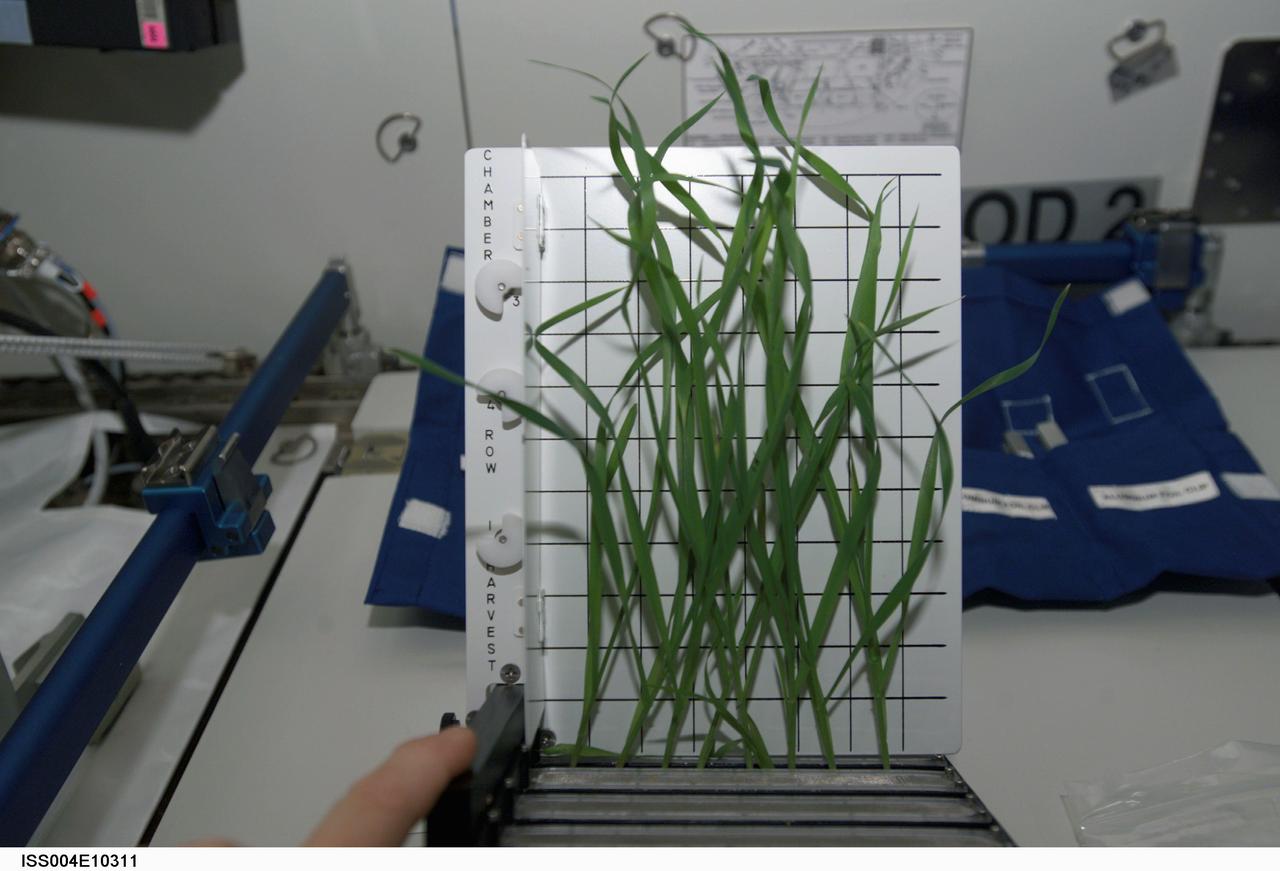
Dwarf wheat were photographed aboard the International Space Station in April 2002. Lessons from on-orbit research on plants will have applications to terrestrial agriculture as well as for long-term space missions. Alternative agricultural systems that can efficiently produce greater quantities of high-quality crops in a small area are important for future space expeditions. Also regenerative life-support systems that include plants will be an important component of long-term space missions. Data from the Biomass Production System (BPS) and the Photosynthesis Experiment and System Testing and Operations (PESTO) will advance controlled-environment agricultural systems and will help farmers produce better, healthier crops in a small area. This same knowledge is critical to closed-loop life support systems for spacecraft. The BPS comprises a miniature environmental control system for four plant growth chambers, all in the volume of two space shuttle lockers. The experience with the BPS on orbit is providing valuable design and operational lessons that will be incorporated into the Plant Growth Units. The objective of PESTO was to flight verify the BPS hardware and to determine how the microgravity environment affects the photosynthesis and metabolic function of Super Dwarf wheat and Brassica rapa (a member of the mustard family).

Outredgeous red leaf lettuce, Mizuna mustard and Waldmann's green lettuce are growing in the Veggie control system in the ISS environment simulator chamber in the Space Station Processing Facility at NASA's Kennedy Space Center in Florida. Growth in the chamber mimics the growth of plant experiments in the Veggie plant growth system on the International Space Station.
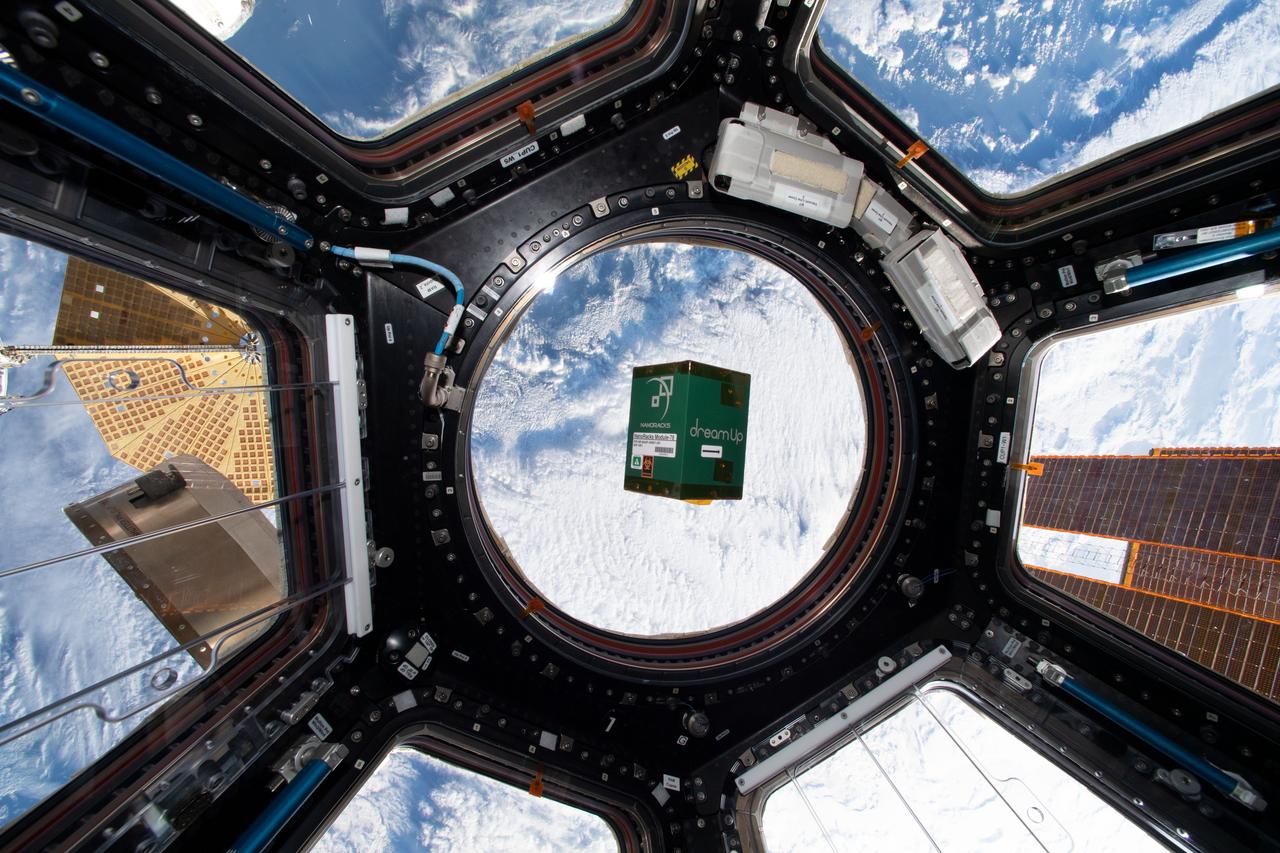
iss059e074538 (5/27/2019) --- Photo documentation of the DreamKit: Plants in Space investigation in the Copula module of the International Space Station (ISS). The DreamKit: Plants in Space investigation is a student investigation that studies plant growth and direction in a microgravity environment.
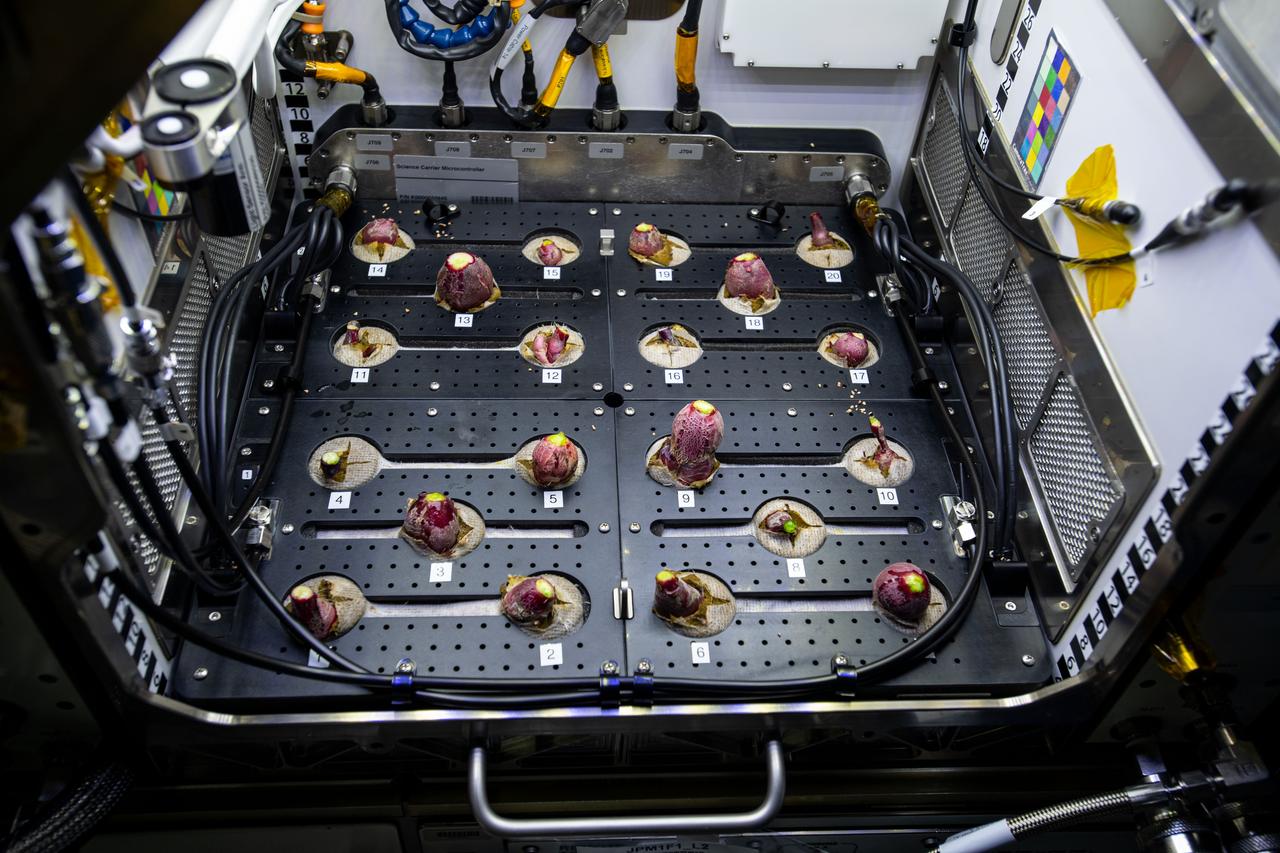
iss064e008707 (11/30/2020) --- Photo documentation of the Plant Habitat-02 investigation aboard the International space Station (ISS). The Assessment of Nutritional Value and Growth Parameters of Space-grown Plants (Plant Habitat-02) uses the Advanced Plant Habitat to cultivate Radishes, a model plant that is nutritious and edible and has a short cultivation time. This research could help optimize plant growth in the unique environment of space, as well as evaluation of nutrition and taste of the plants.
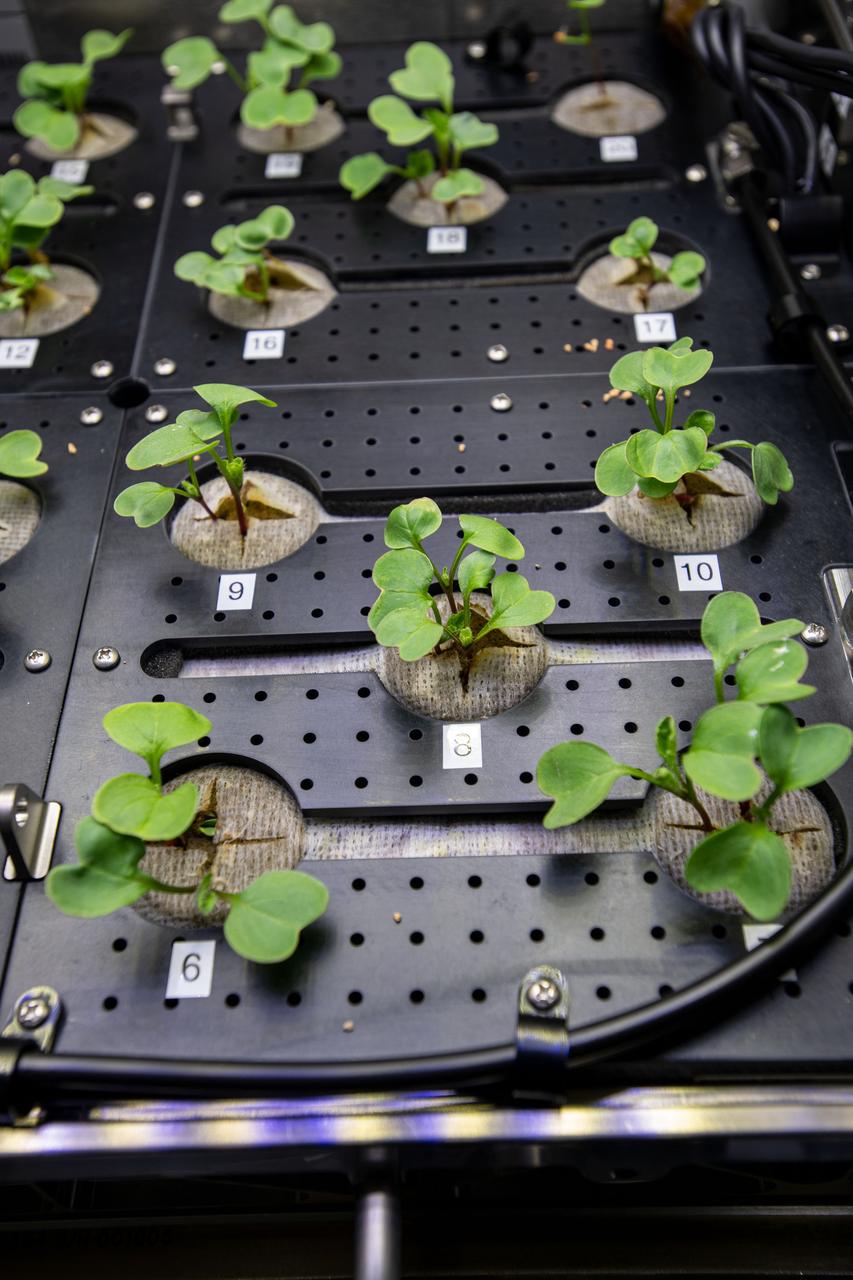
iss064e004045 (11/11/2020) --- Photo documentation of the Plant Habitat-02 investigation aboard the International space Station (ISS). The Assessment of Nutritional Value and Growth Parameters of Space-grown Plants (Plant Habitat-02) uses the Advanced Plant Habitat to cultivate Radishes, a model plant that is nutritious and edible and has a short cultivation time. This research could help optimize plant growth in the unique environment of space, as well as evaluation of nutrition and taste of the plants.
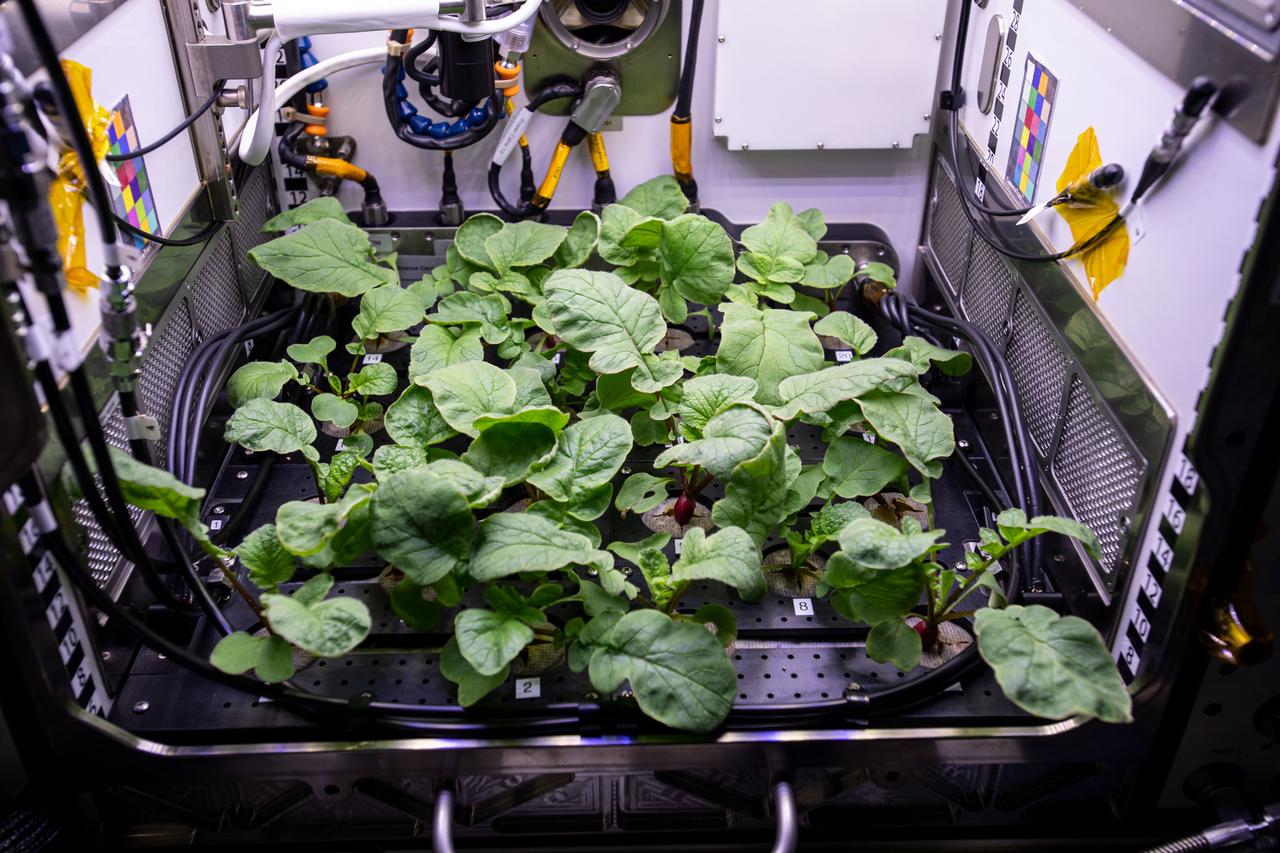
iss064e005046 (11/20/2020) --- Photo documentation of the Plant Habitat-02 investigation aboard the International space Station (ISS). The Assessment of Nutritional Value and Growth Parameters of Space-grown Plants (Plant Habitat-02) uses the Advanced Plant Habitat to cultivate Radishes, a model plant that is nutritious and edible and has a short cultivation time. This research could help optimize plant growth in the unique environment of space, as well as evaluation of nutrition and taste of the plants.
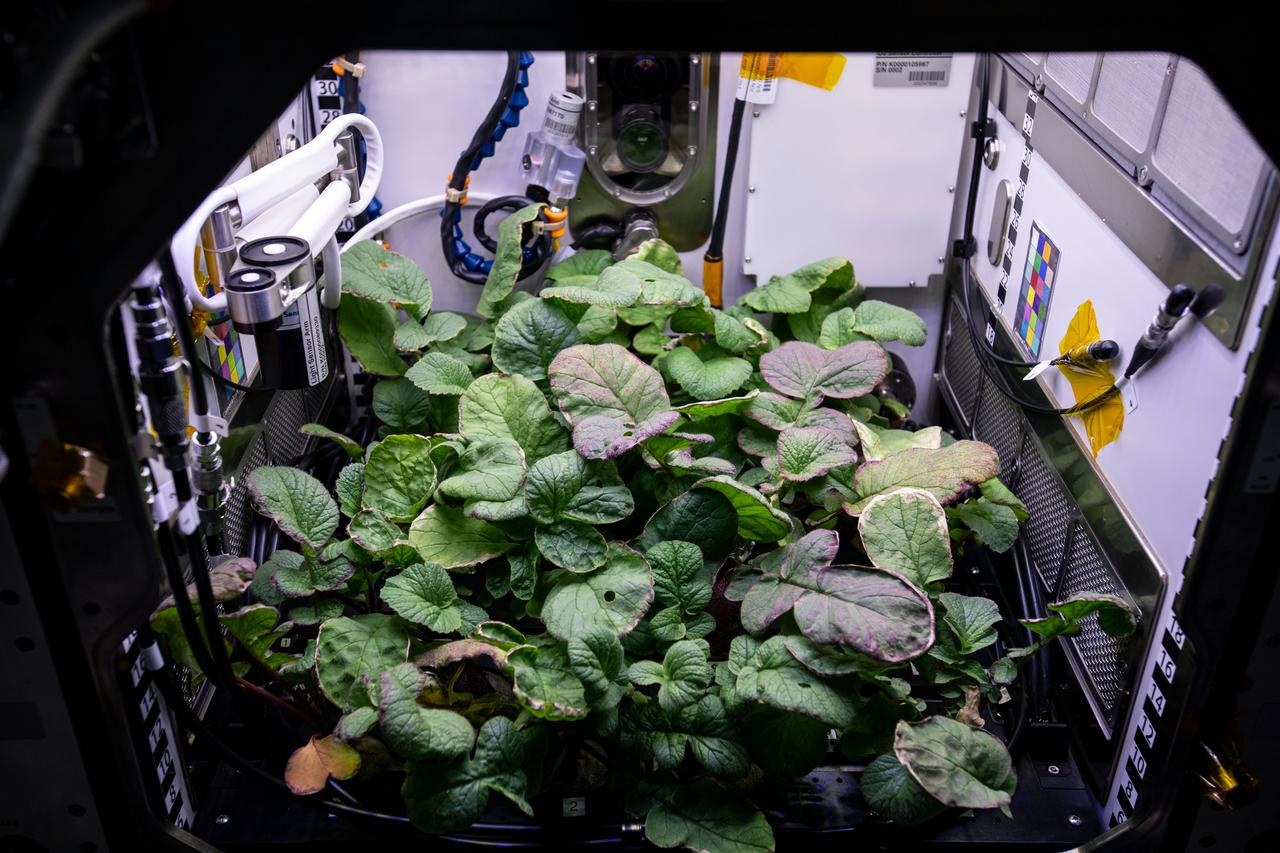
iss064e008476 (11/30/2020) --- Photo documentation of the Plant Habitat-02 investigation aboard the International space Station (ISS). The Assessment of Nutritional Value and Growth Parameters of Space-grown Plants (Plant Habitat-02) uses the Advanced Plant Habitat to cultivate Radishes, a model plant that is nutritious and edible and has a short cultivation time. This research could help optimize plant growth in the unique environment of space, as well as evaluation of nutrition and taste of the plants.

iss064e004037 (11/11/2020) --- Photo documentation of the Plant Habitat-02 investigation aboard the International space Station (ISS). The Assessment of Nutritional Value and Growth Parameters of Space-grown Plants (Plant Habitat-02) uses the Advanced Plant Habitat to cultivate Radishes, a model plant that is nutritious and edible and has a short cultivation time. This research could help optimize plant growth in the unique environment of space, as well as evaluation of nutrition and taste of the plants.
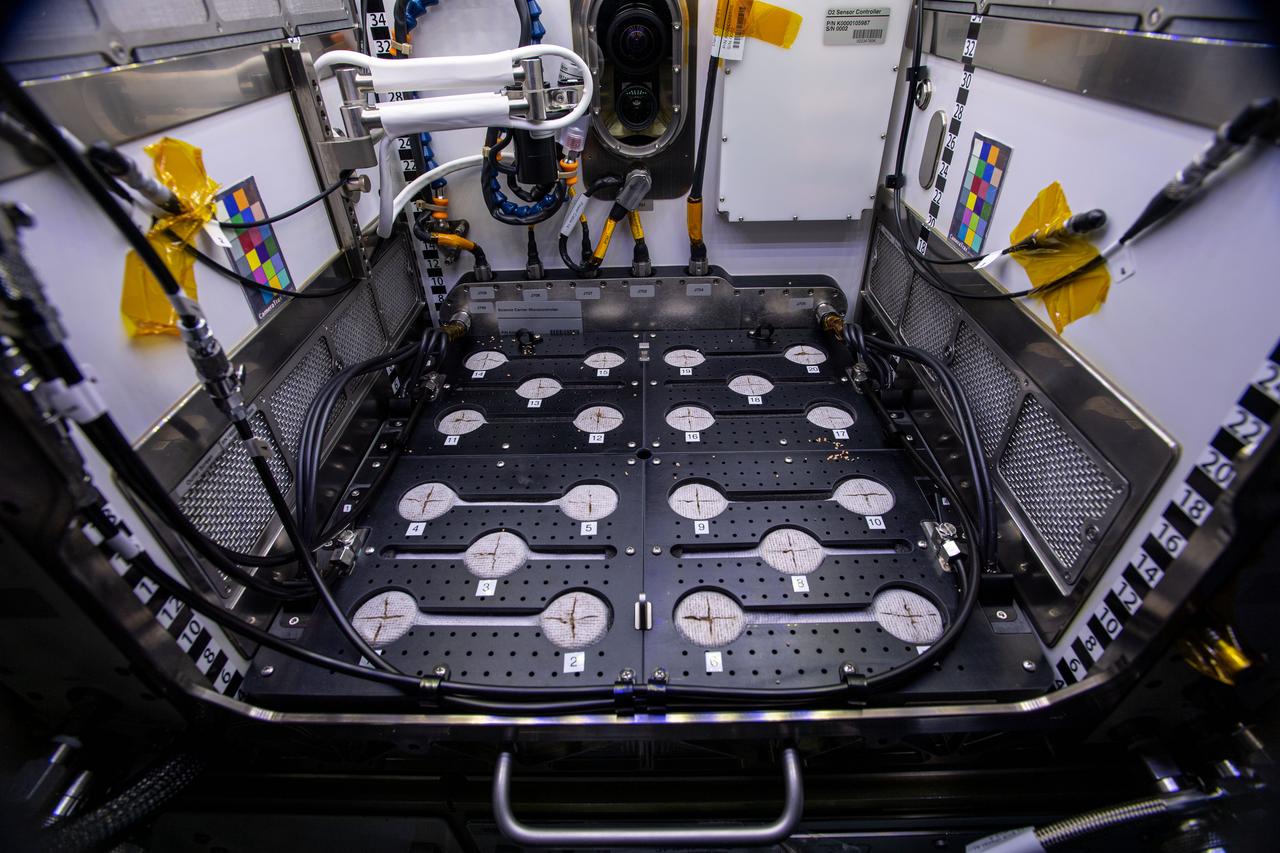
iss064e002961 (11/3/2020) --- Photo documentation of the Plant Habitat-02 investigation aboard the International space Station (ISS). The Assessment of Nutritional Value and Growth Parameters of Space-grown Plants (Plant Habitat-02) uses the Advanced Plant Habitat to cultivate Radishes, a model plant that is nutritious and edible and has a short cultivation time. This research could help optimize plant growth in the unique environment of space, as well as evaluation of nutrition and taste of the plants.
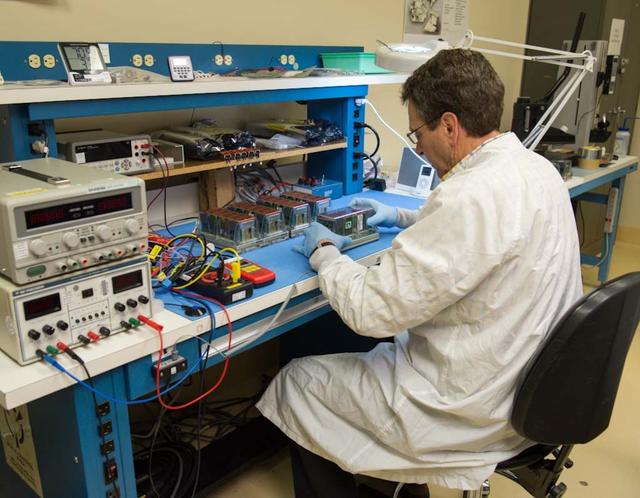
TROPI Seed Growth-1 payload (will fly to ISS on Space X 2) with John Freeman, Intrinsyx @ Ames, Plant Scientist

NASA interns Jessica Scotten, left, and Ayla Grandpre water plants in the Veggie hardware in NASA Kennedy Space Center's ISS environment simulator chamber. Mizuna mustard, Outredgeous lettuce and Waldmann's green lettuce are growing in Veggie. Growth in the chamber mimics the growth of plant experiments in the Veggie plant growth system on the International Space Station.
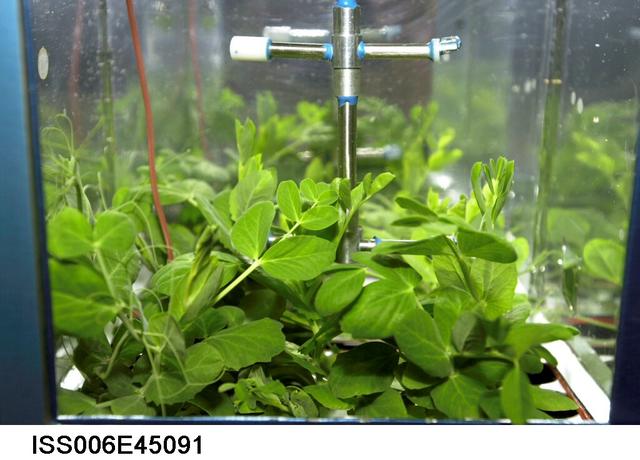
ISS006-E-45091 (25 March 2003) --- A view of the Russian BIO-5 Rasteniya-2/Lada-2 (Plants-2) plant growth experiment located in the Zvezda Service Module on the International Space Station (ISS).
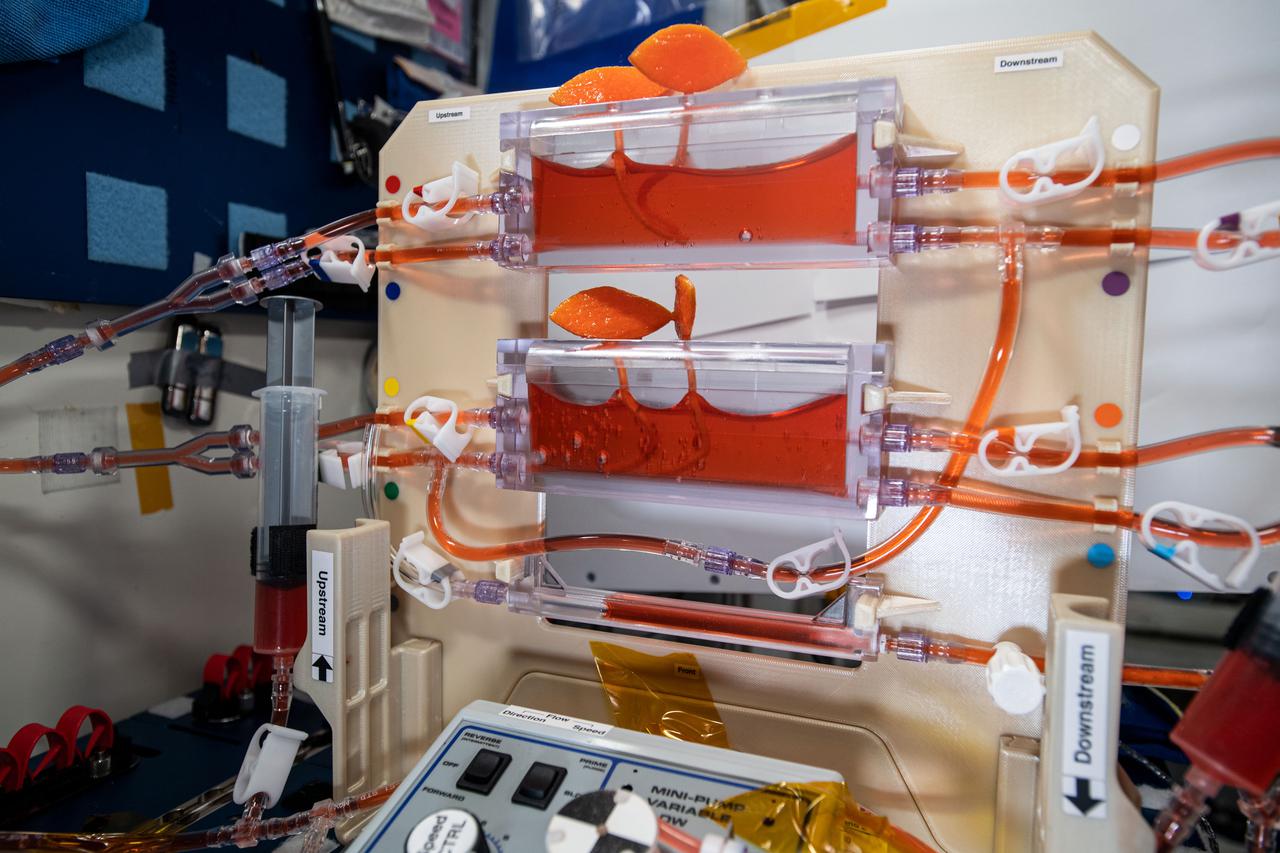
iss064e049289 (3/30/2021) --- A view of the Plant Water Management 3 and 4 investigation aboard the International space Station (ISS). The Plant Water Management 3 and 4 investigation demonstrates passive measures for controlling fluid delivery and uptake in plant growth systems. Reduced gravity creates challenges in providing adequate fluid and nutrition for plant growth. This investigation examines using other physical properties such as surface tension, wetting and system geometry to replace the role of gravity.
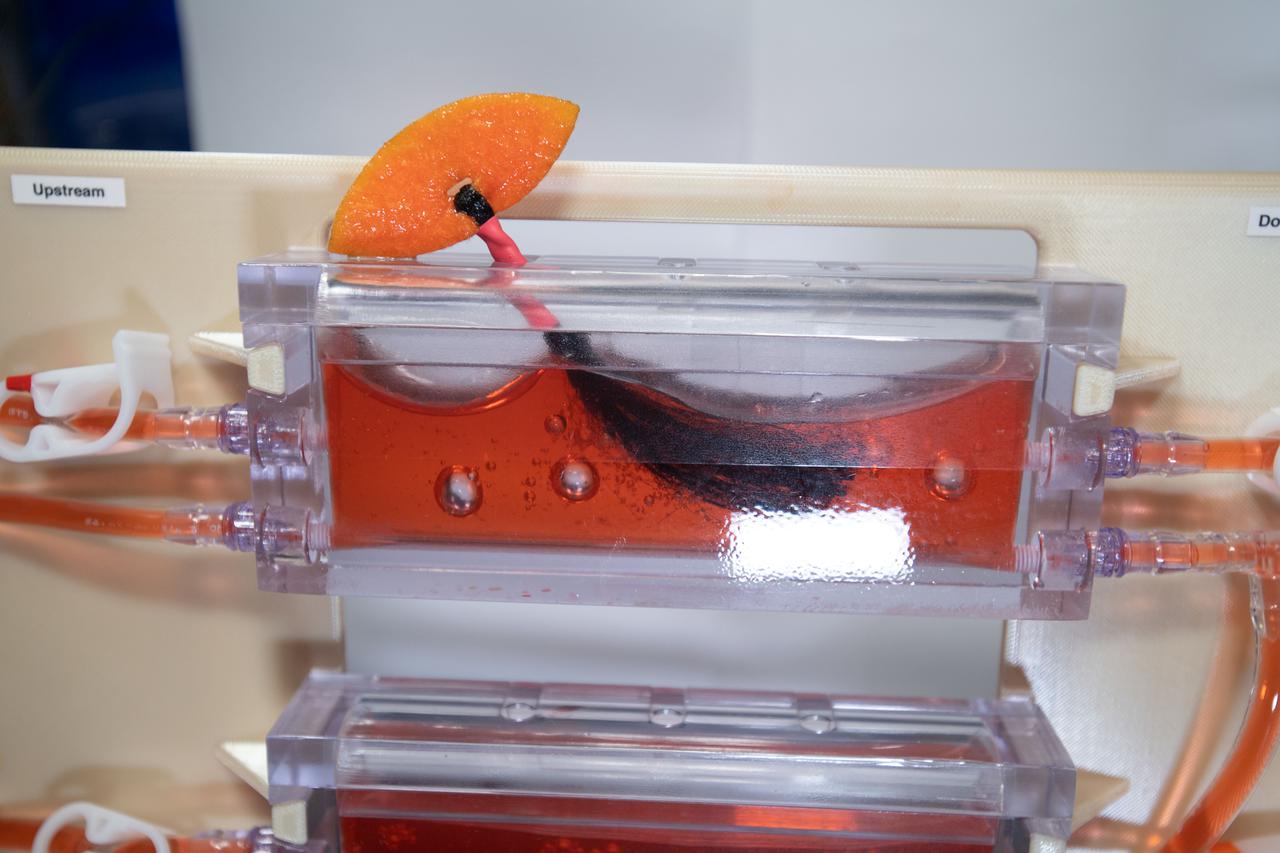
iss064e049400 (3/31/2021) --- A view of the Plant Water Management 3 and 4 investigation aboard the International space Station (ISS). The Plant Water Management 3 and 4 investigation demonstrates passive measures for controlling fluid delivery and uptake in plant growth systems. Reduced gravity creates challenges in providing adequate fluid and nutrition for plant growth. This investigation examines using other physical properties such as surface tension, wetting and system geometry to replace the role of gravity.
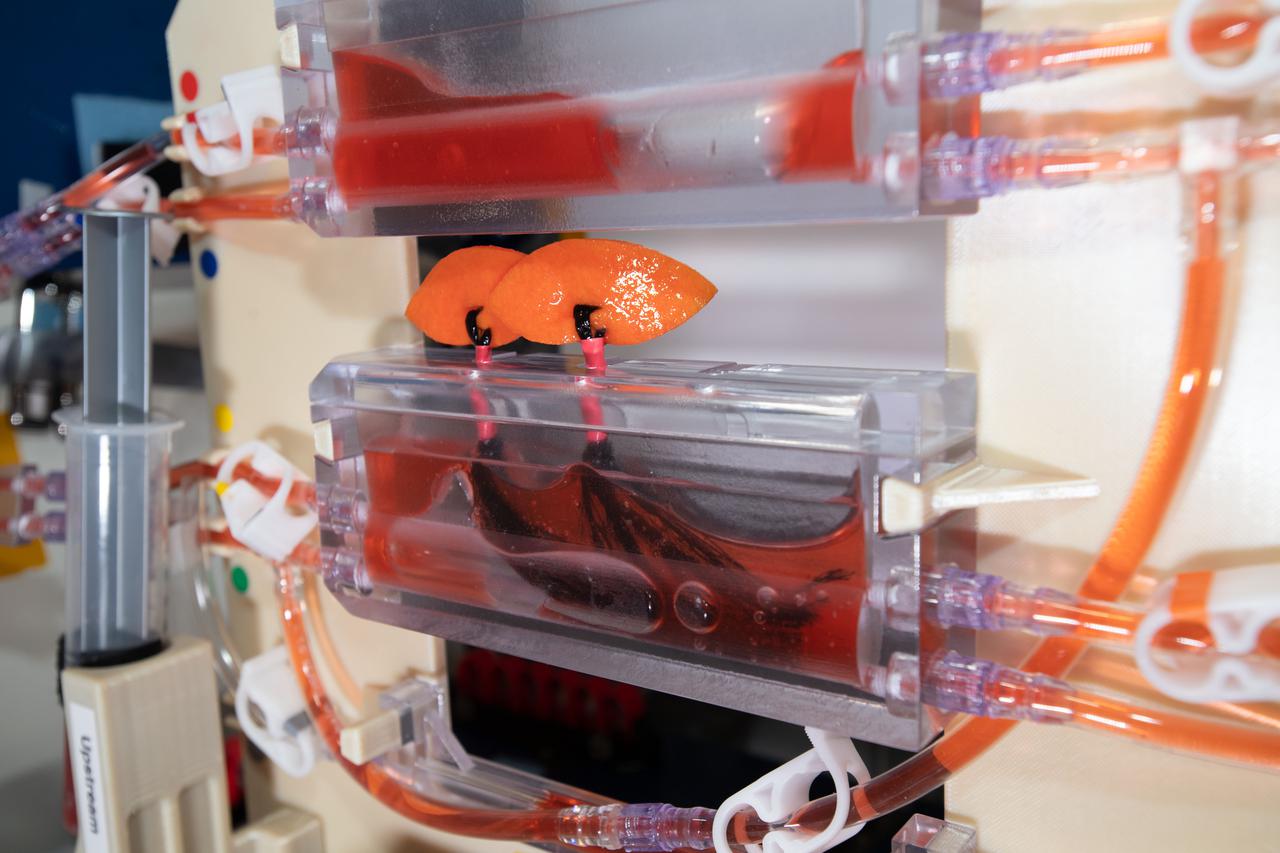
iss064e049484 (3/31/2021) --- A view of the Plant Water Management 3 and 4 investigation aboard the International space Station (ISS). The Plant Water Management 3 and 4 investigation demonstrates passive measures for controlling fluid delivery and uptake in plant growth systems. Reduced gravity creates challenges in providing adequate fluid and nutrition for plant growth. This investigation examines using other physical properties such as surface tension, wetting and system geometry to replace the role of gravity.
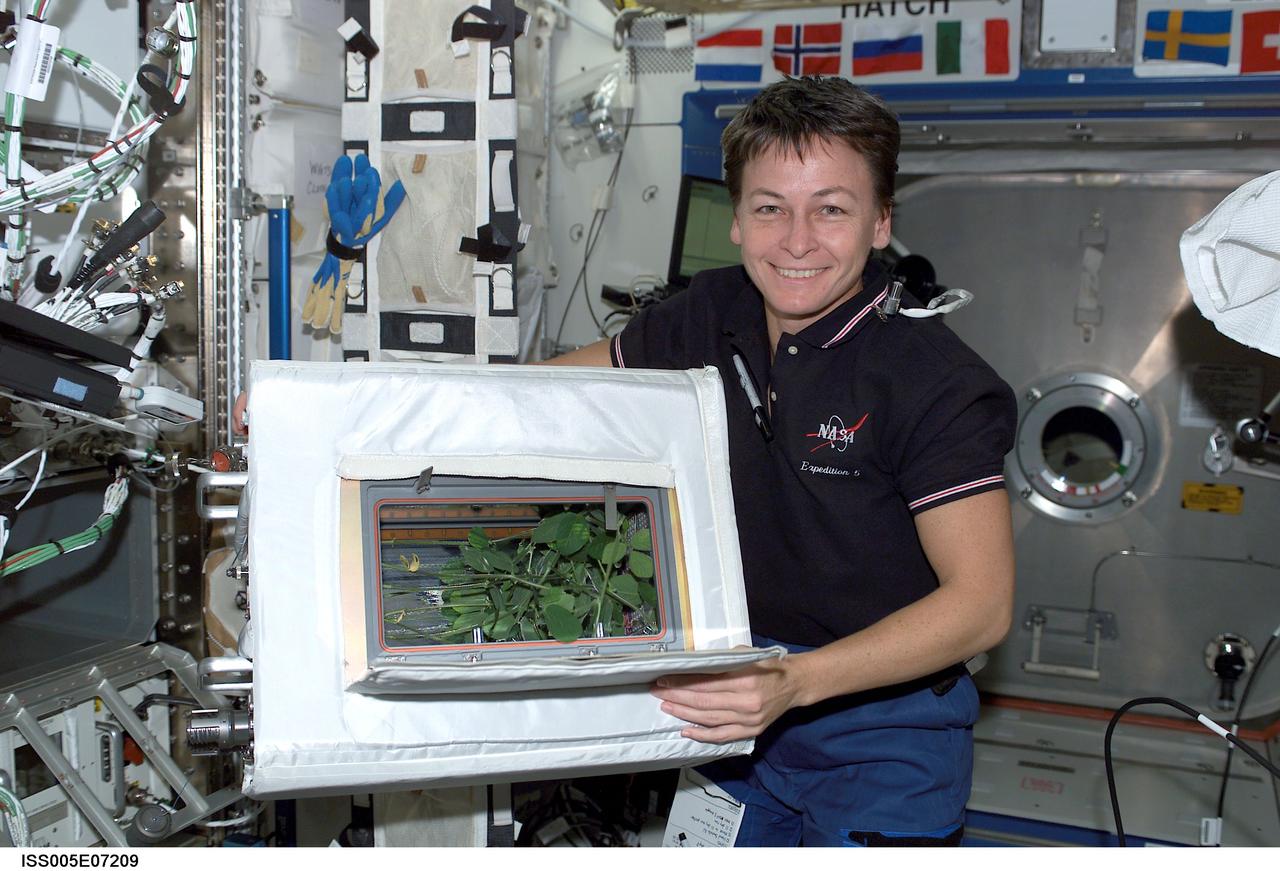
ISS005-E-07209 (10 July 2002) --- Astronaut Peggy A. Whitson, Expedition Five NASA ISS science officer, holds the Advanced Astroculture soybean plant growth experiment in the Destiny laboratory on the International Space Station (ISS).
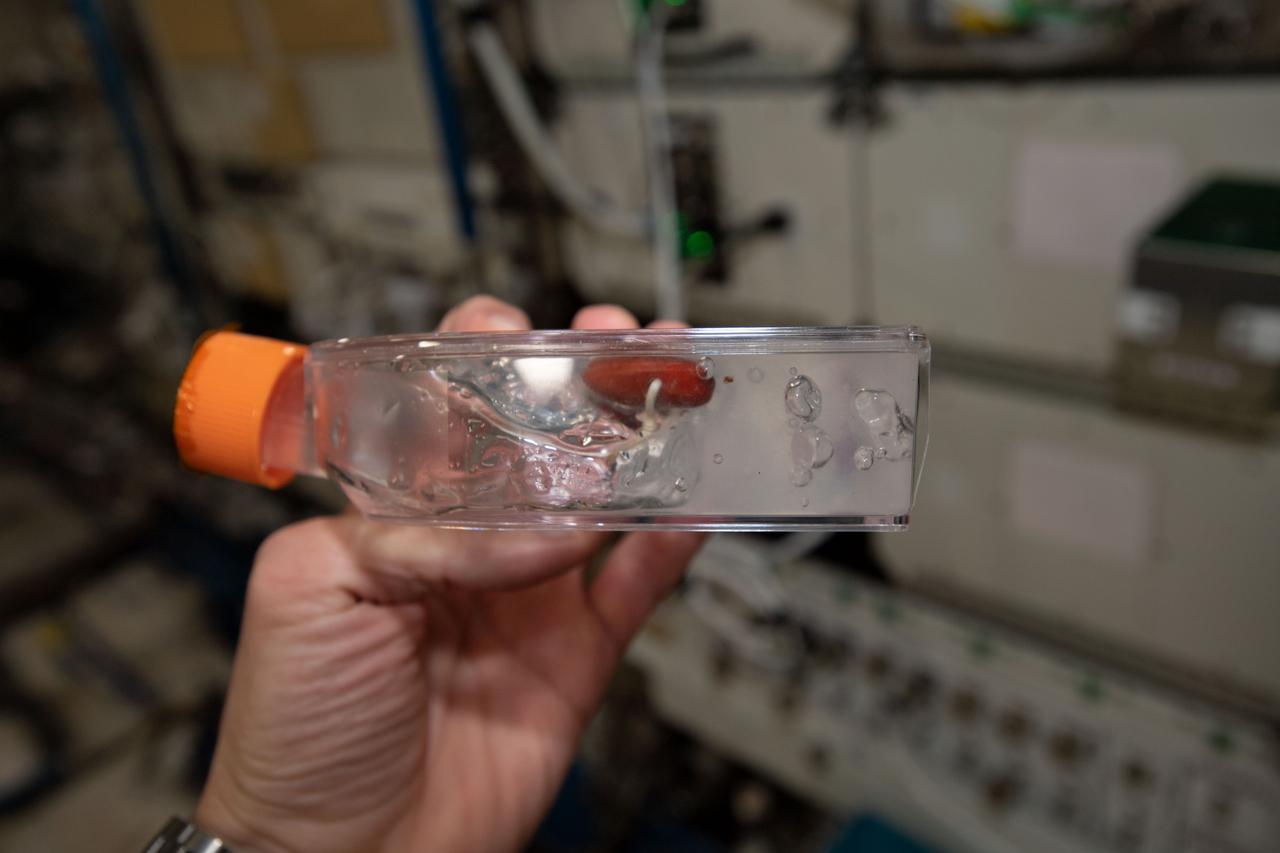
iss060e015476 --- (7/29/2019) Photo documentation aboard the International space Station (ISS) of the The United Arab Emirates (UAE) Palm Tree Growth Experiment (Palm Tree Growth). The investigation examines germination of palm tree seeds in order to determine the best conditions for generating tissue samples for research. A process for growing healthy plant tissue in microgravity could be adapted for testing other indigenous plants of scientific, commercial or educational interest in the UAE. The investigation also observes and documents root growth in microgravity for educational purposes.
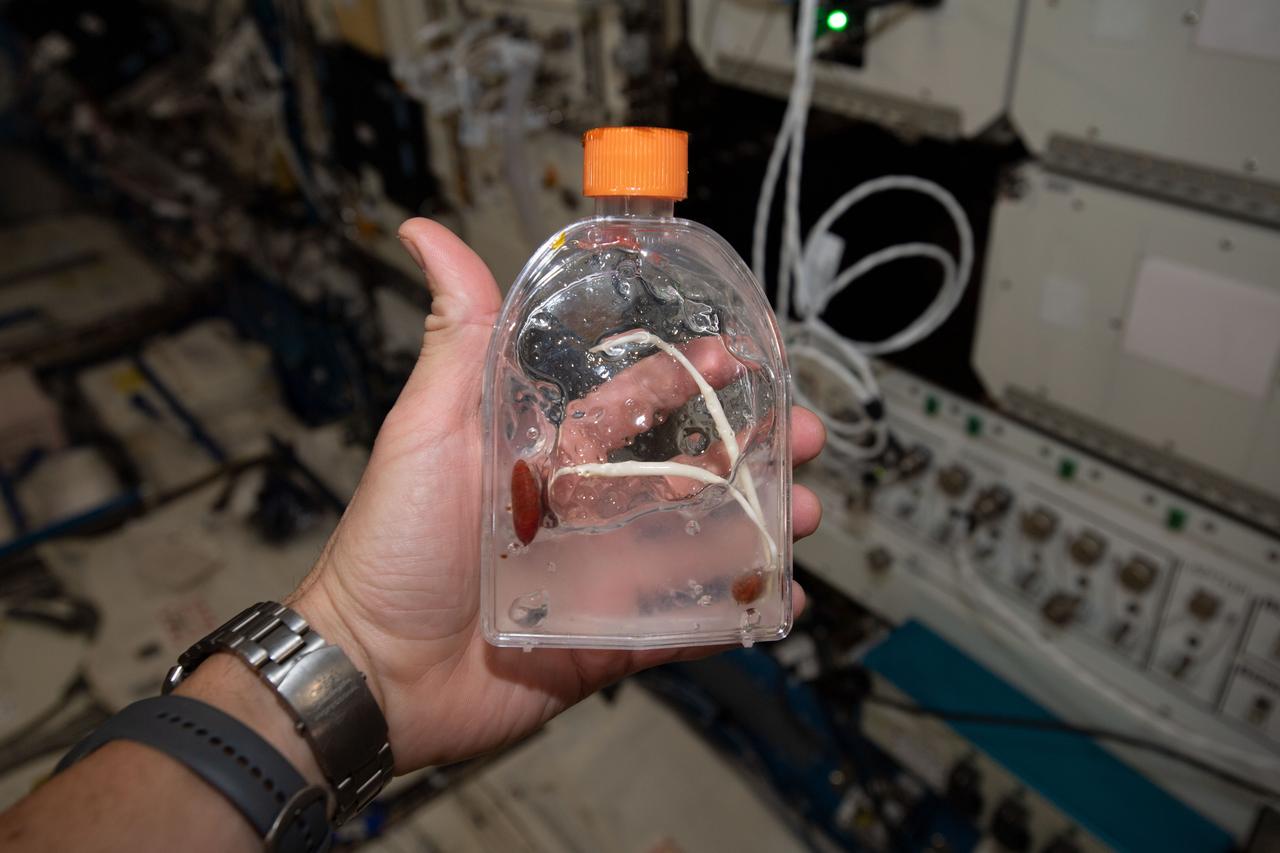
iss060e015472 --- (7/29/2019) Photo documentation aboard the International space Station (ISS) of the The United Arab Emirates (UAE) Palm Tree Growth Experiment (Palm Tree Growth). The investigation examines germination of palm tree seeds in order to determine the best conditions for generating tissue samples for research. A process for growing healthy plant tissue in microgravity could be adapted for testing other indigenous plants of scientific, commercial or educational interest in the UAE. The investigation also observes and documents root growth in microgravity for educational purposes.
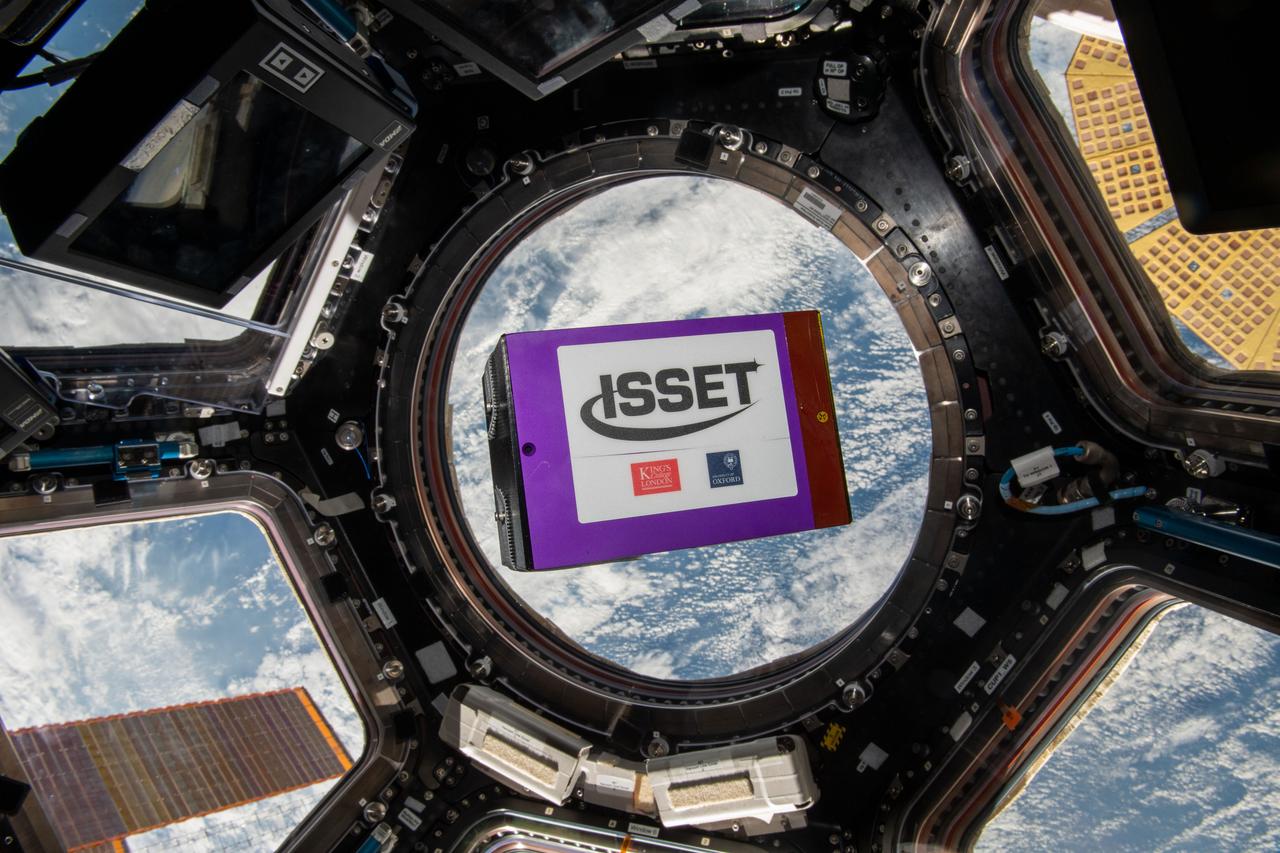
iss068e021547 (11/10/2022) --- A view of the ISSET-Nanoracks-UWS 1 investigation shown in the cupola module aboard the International Space Station (ISS). THE Mission Discovery International Space School Educational Trust – The University of the West of Scotland Plant Monitoring Investigation in Microgravity (ISSET-Nanoracks-UWS 1) examines a method to monitor and measure plant growth in microgravity. It uses intelligent, integrated multi-sensing and lighting control tools to monitor growth of five species of plants for seven days.
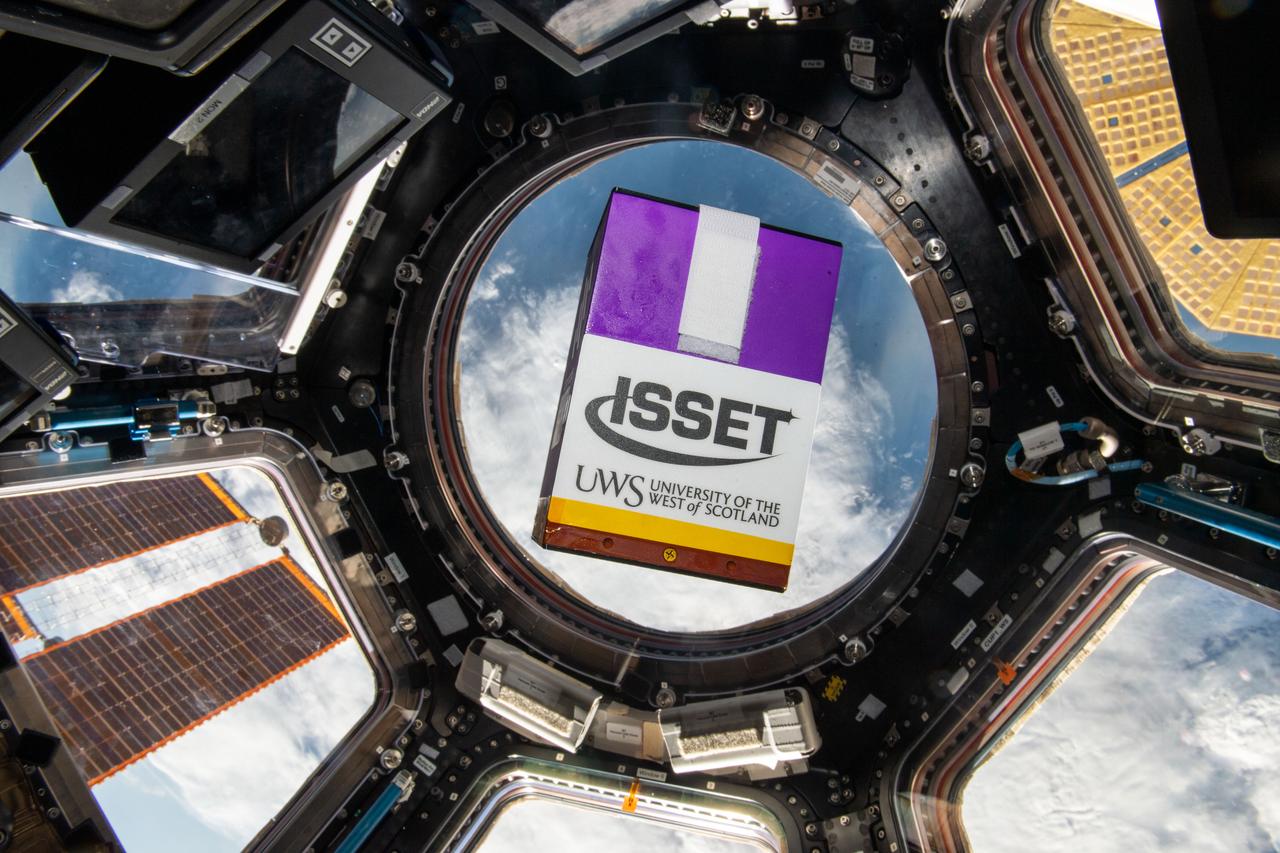
iss068e021558 (11/10/2022) --- A view of the ISSET-Nanoracks-UWS 1 investigation shown in the cupola module aboard the International Space Station (ISS). THE Mission Discovery International Space School Educational Trust – The University of the West of Scotland Plant Monitoring Investigation in Microgravity (ISSET-Nanoracks-UWS 1) examines a method to monitor and measure plant growth in microgravity. It uses intelligent, integrated multi-sensing and lighting control tools to monitor growth of five species of plants for seven days.
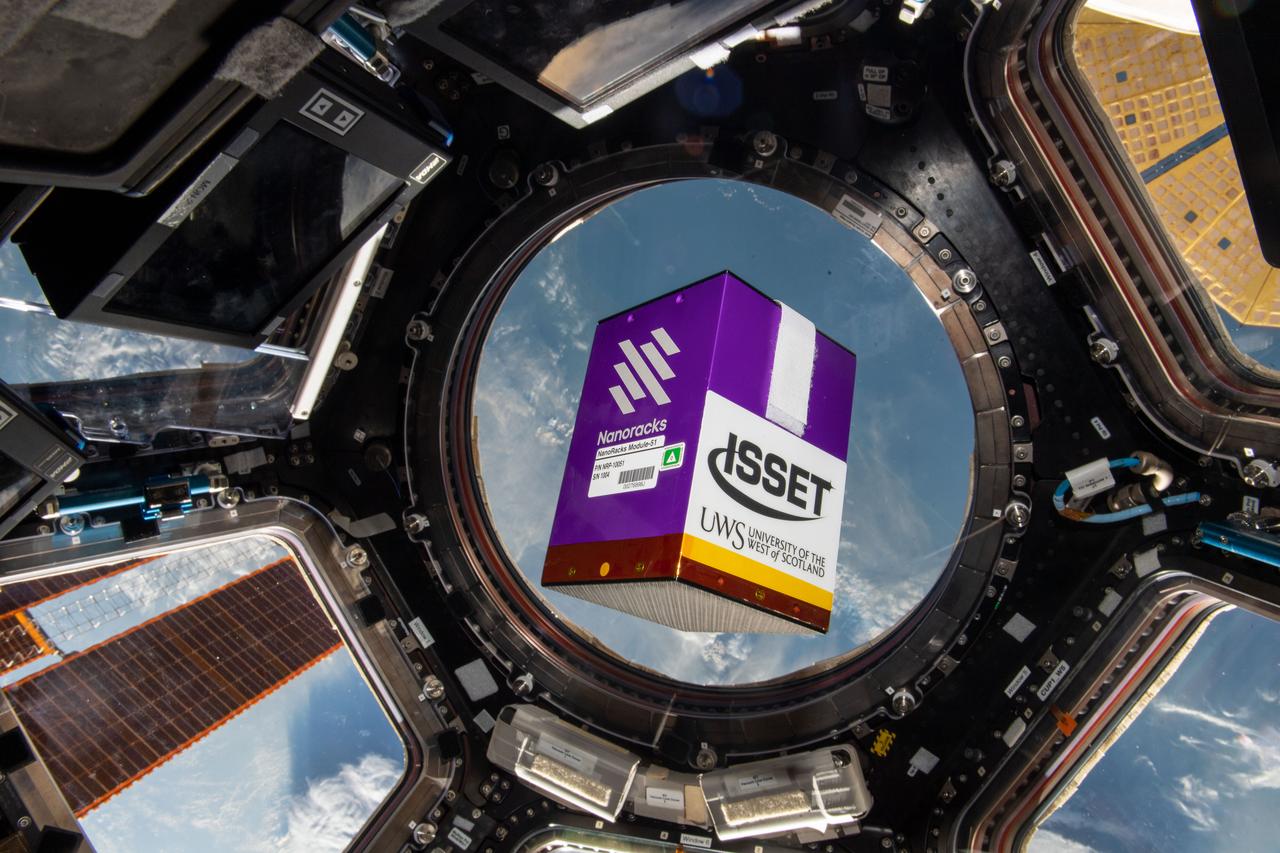
iss068e021563 (11/10/2022) --- A view of the ISSET-Nanoracks-UWS 1 investigation shown in the cupola module aboard the International Space Station (ISS). THE Mission Discovery International Space School Educational Trust – The University of the West of Scotland Plant Monitoring Investigation in Microgravity (ISSET-Nanoracks-UWS 1) examines a method to monitor and measure plant growth in microgravity. It uses intelligent, integrated multi-sensing and lighting control tools to monitor growth of five species of plants for seven days.
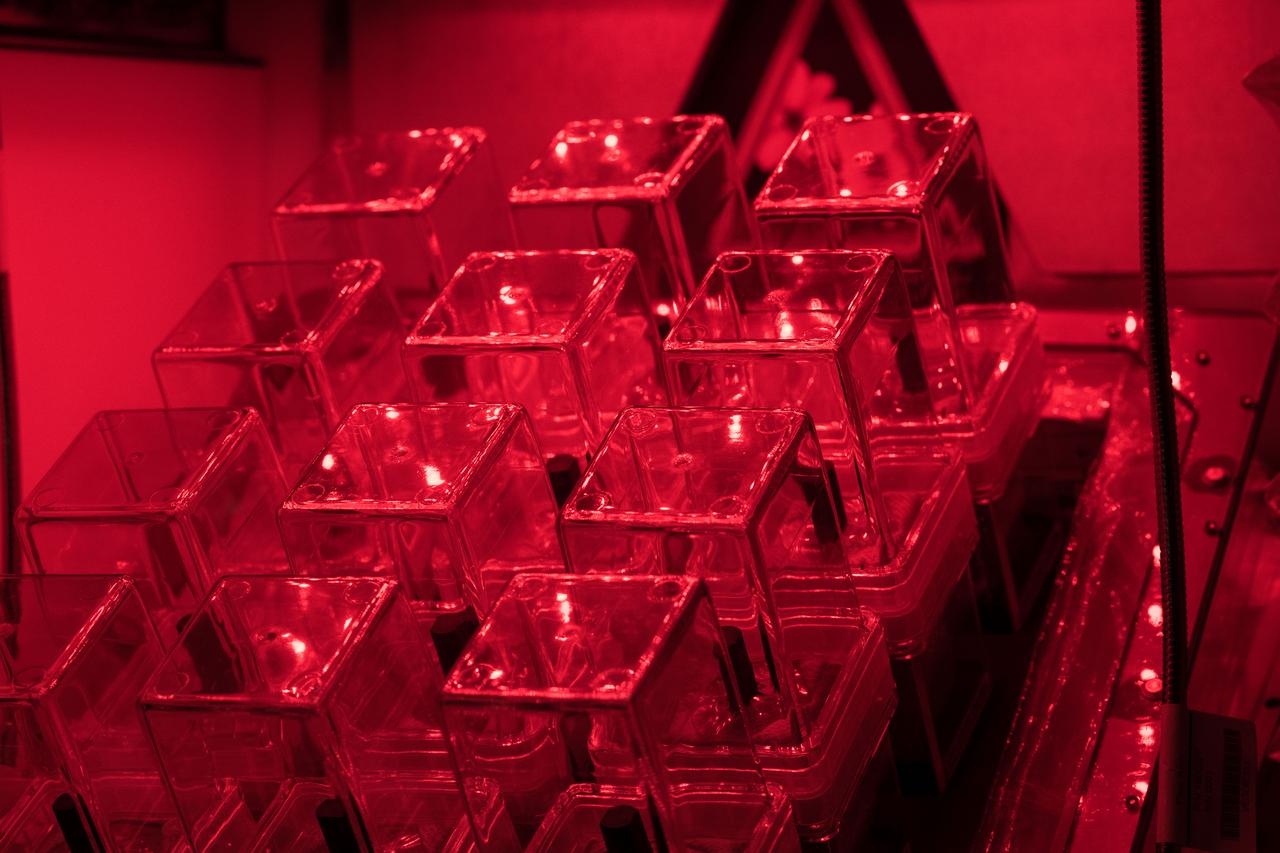
iss055e019903 (4/12/2018) --- Photographic documentation taken aboard the International Space Station (ISS) during the configuration of the Veggie facility and the installation of twenty APEX-06 petri plates to begin the growth process of the plants. APEX-06 expands the understanding of plant growth in space. Detailed understanding of how different plants grow in space can provide for better life support system design and resource planning for long term space missions.
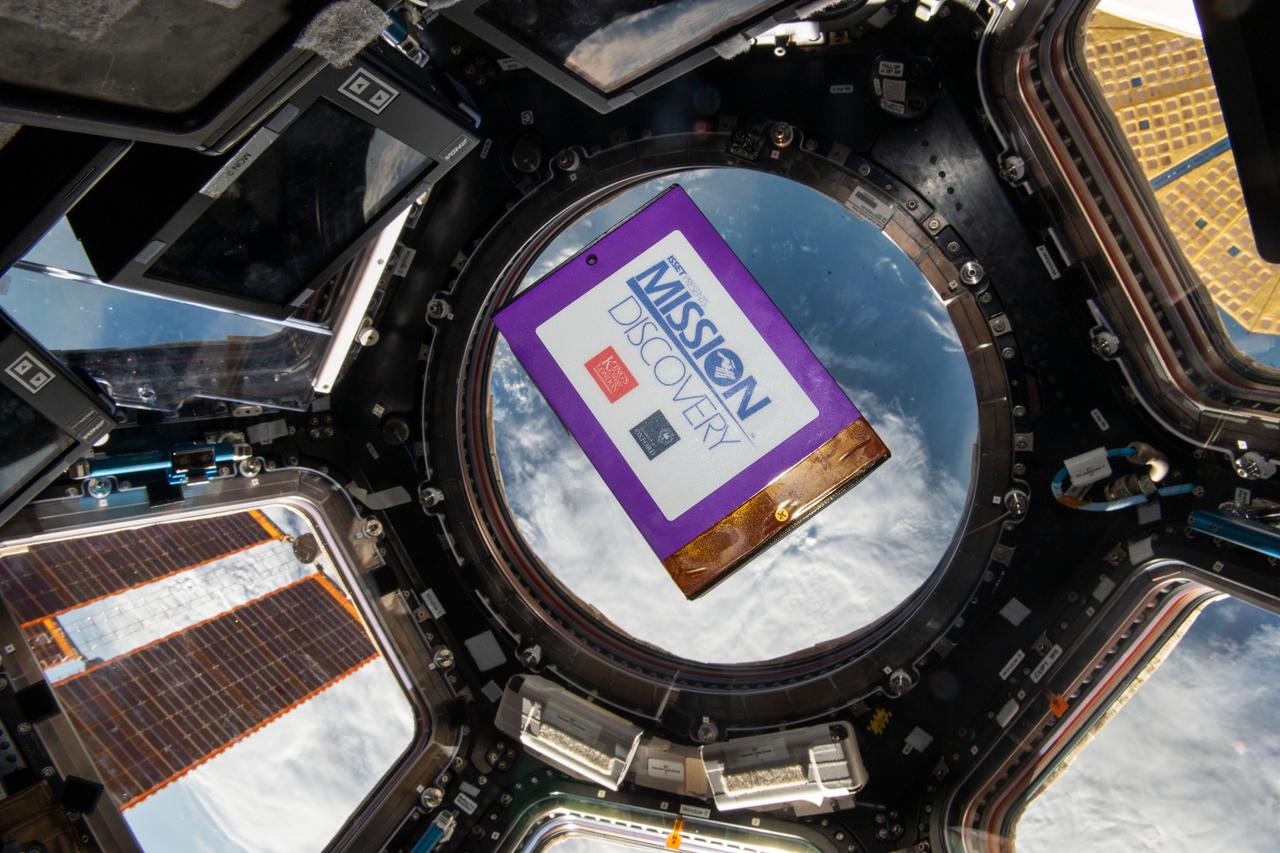
iss068e021559(11/10/2022) --- A view of the ISSET-Nanoracks-UWS 1 investigation shown in the cupola module aboard the International Space Station (ISS). THE Mission Discovery International Space School Educational Trust – The University of the West of Scotland Plant Monitoring Investigation in Microgravity (ISSET-Nanoracks-UWS 1) examines a method to monitor and measure plant growth in microgravity. It uses intelligent, integrated multi-sensing and lighting control tools to monitor growth of five species of plants for seven days.
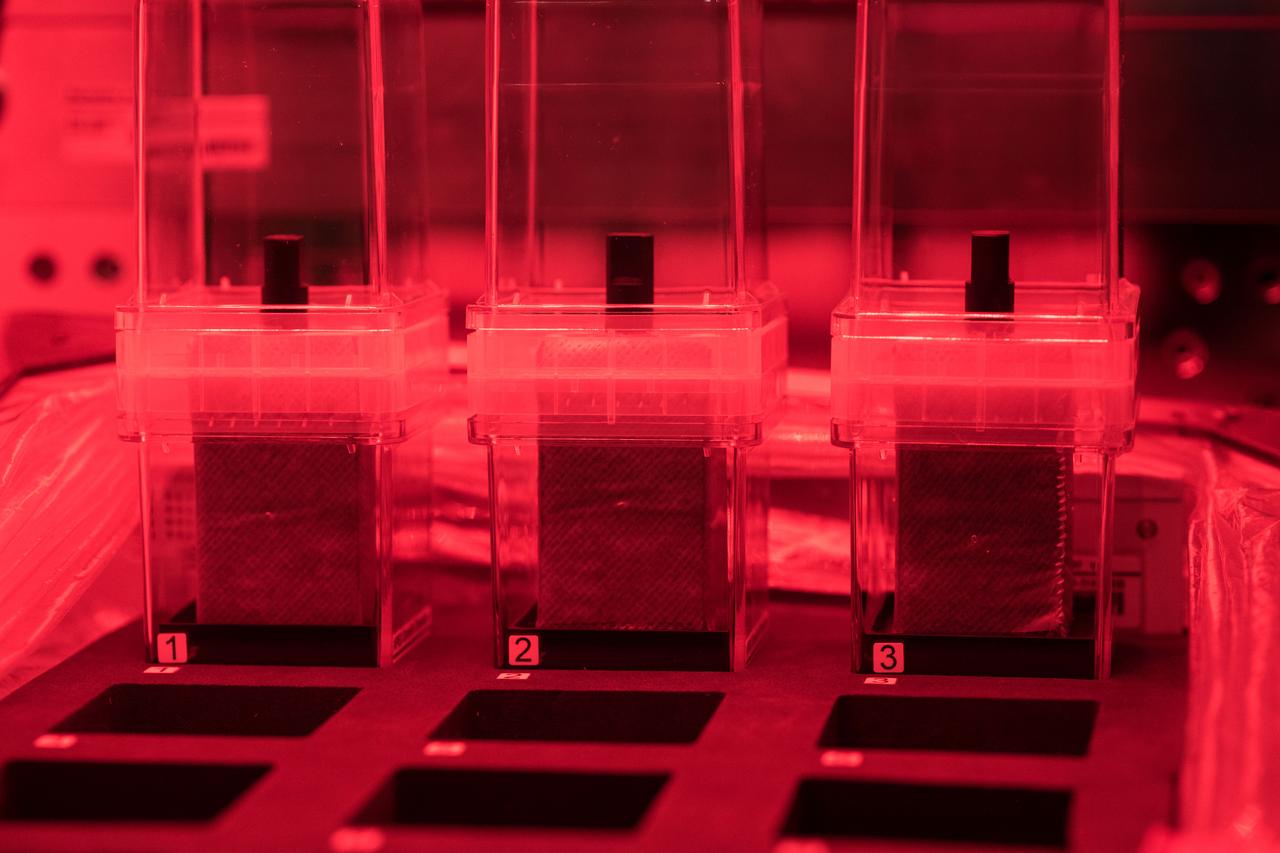
iss055e019872 (4/12/2018) --- Photographic documentation taken aboard the International Space Station (ISS) during the configuration of the Veggie facility and the installation of twenty APEX-06 petri plates to begin the growth process of the plants. APEX-06 expands the understanding of plant growth in space. Detailed understanding of how different plants grow in space can provide for better life support system design and resource planning for long term space missions.
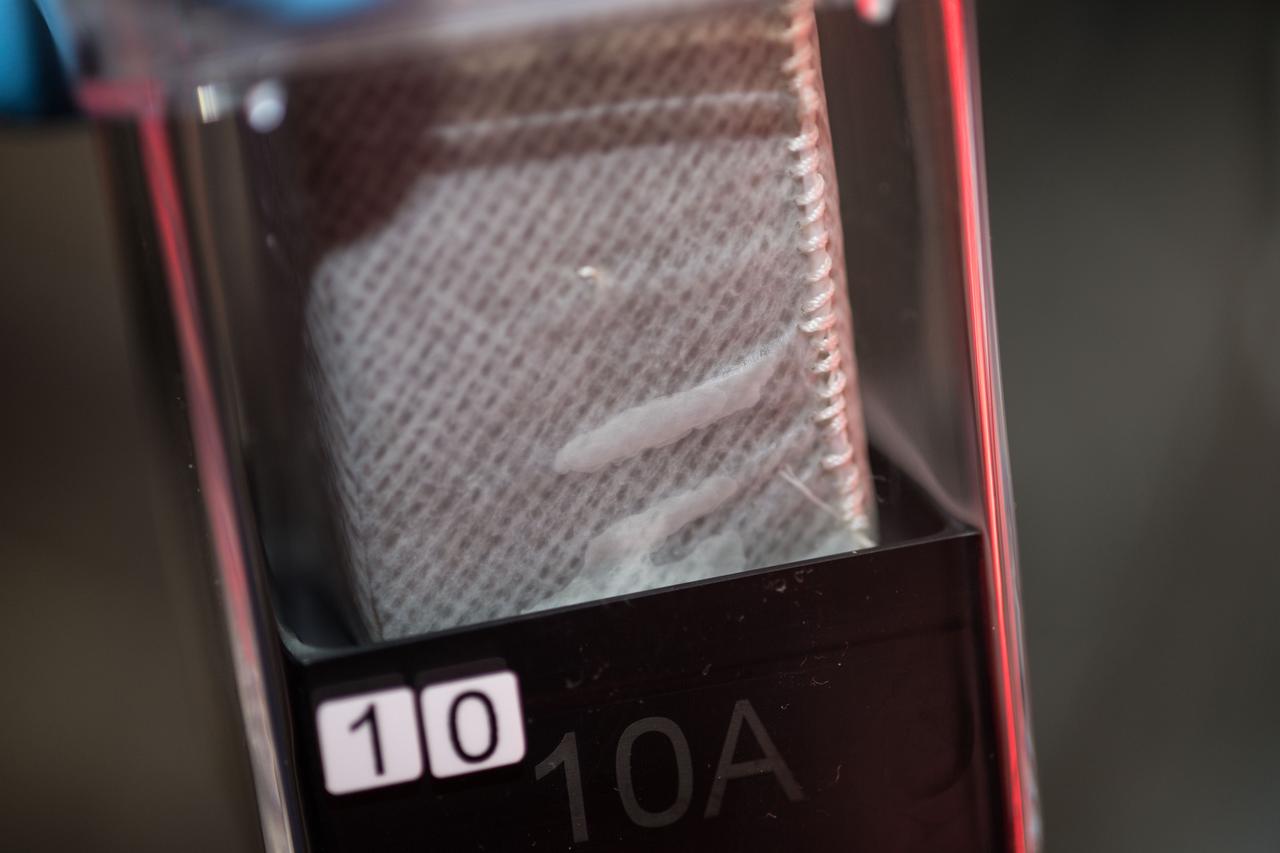
iss055e019898 (4/12/2018) --- Photographic documentation taken aboard the International Space Station (ISS) during the configuration of the Veggie facility and the installation of twenty APEX-06 petri plates to begin the growth process of the plants. APEX-06 expands the understanding of plant growth in space. Detailed understanding of how different plants grow in space can provide for better life support system design and resource planning for long term space missions.
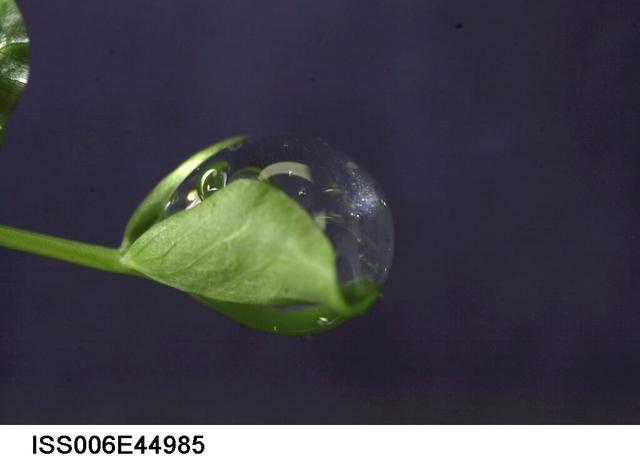
ISS006-E-44985 (10 March 2003) --- A close up view of a water droplet on a leaf on the Russian BIO-5 Rasteniya-2/Lada-2 (Plants-2) plant growth experiment, which is located in the Zvezda Service Module on the International Space Station (ISS).
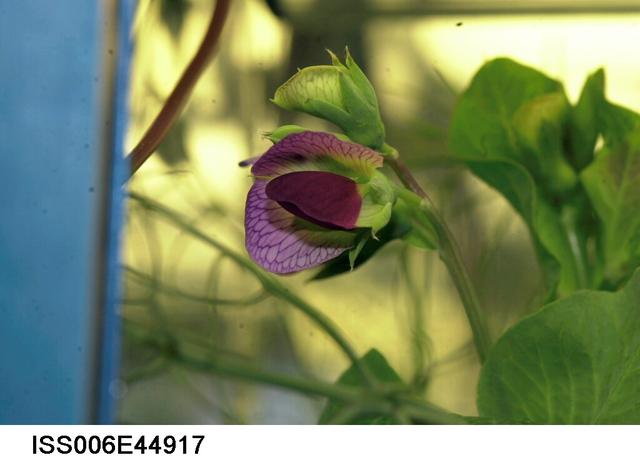
ISS006-E-44917 (5 April 2003) --- A close up view of a bloom on the Russian BIO-5 Rasteniya-2/Lada-2 (Plants-2) plant growth experiment, which is located in the Zvezda Service Module on the International Space Station (ISS).
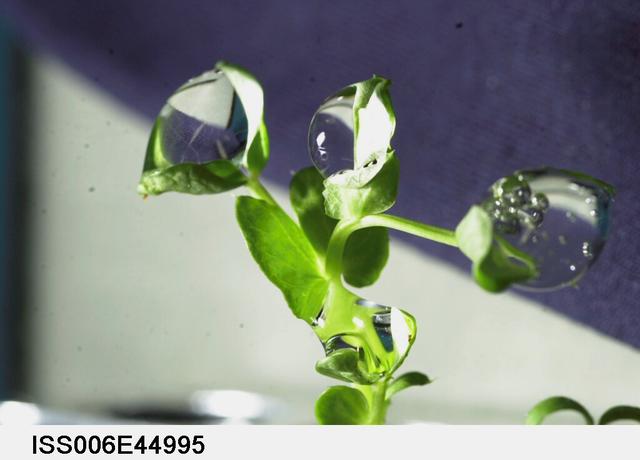
ISS006-E-44995 (10 March 2003) --- A close up view of water droplets on leaves on the Russian BIO-5 Rasteniya-2/Lada-2 (Plants-2) plant growth experiment, which is located in the Zvezda Service Module on the International Space Station (ISS).
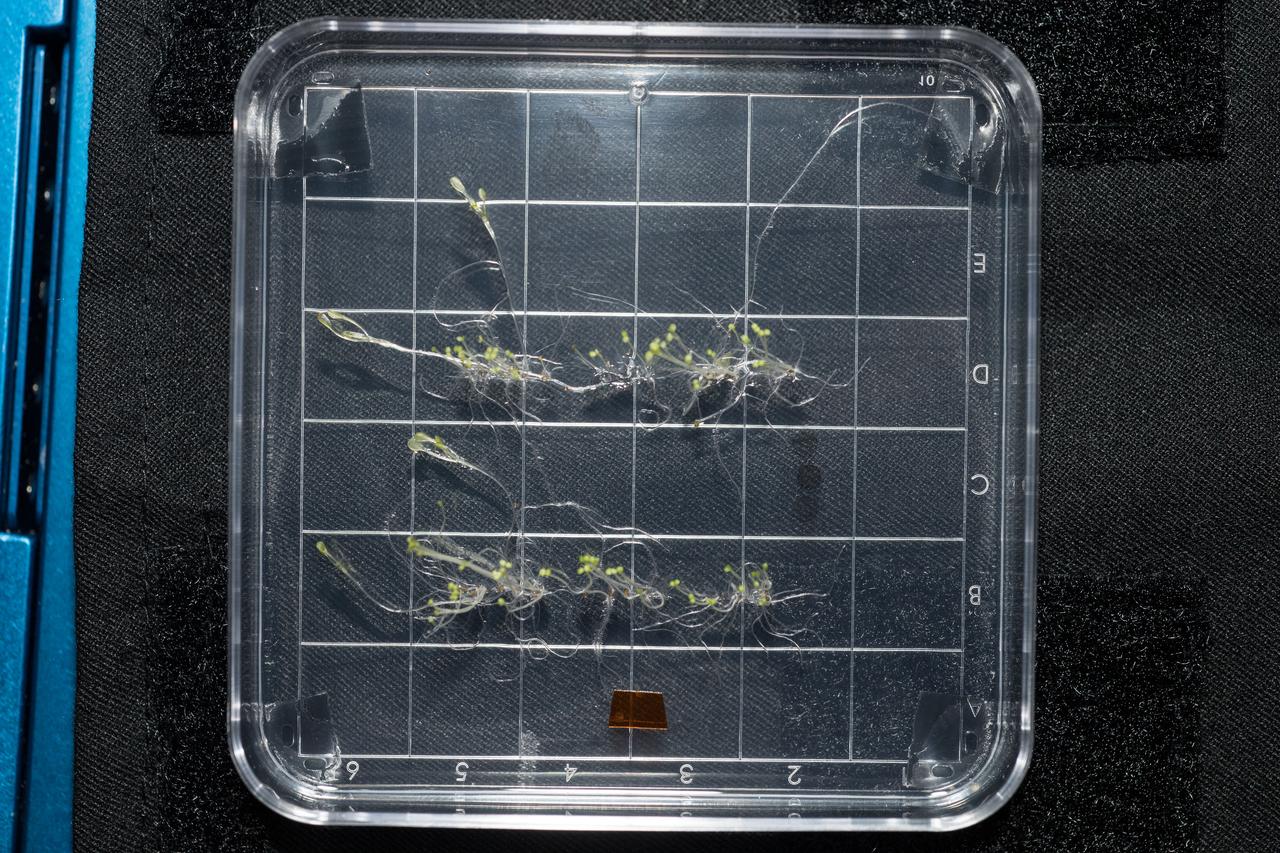
iss054e022372 (1/20/2018) --- Photo documentation of Arabidopsis seedlings from the Petri Plants-2 experiment in the Destiny U.S. Laboratory aboard the International Space Station (ISS). The Characterizing Arabidopsis Root Attractions-2 (CARA-2) investigation explores the molecular biology guiding the altered growth of plants, specifically roots, in spaceflight.
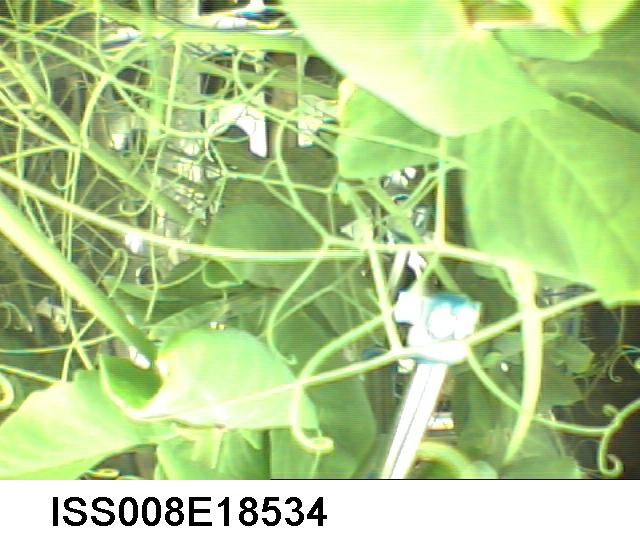
ISS008-E-18534 (March 2004) --- A close-up view, taken by an Expedition 8 crewmember, shows the Russian BIO-5 Rasteniya-2/Lada-2 (Plants-2) plant growth experiment located in the Zvezda Service Module on the International Space Station (ISS).
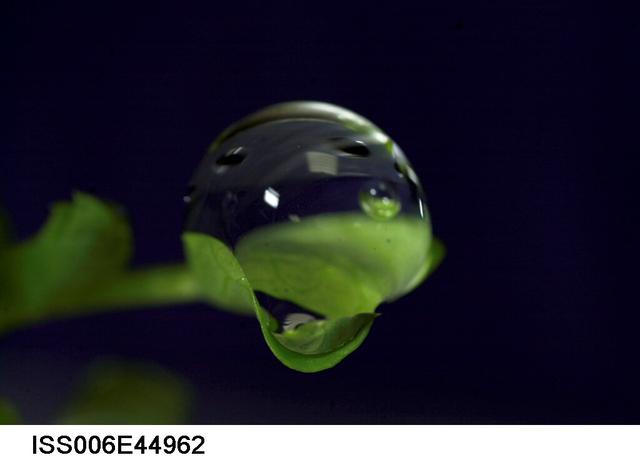
ISS006-E-44962 (9 March 2003) --- A close up view of a water droplet on a leaf on the Russian BIO-5 Rasteniya-2/Lada-2 (Plants-2) plant growth experiment, which is located in the Zvezda Service Module on the International Space Station (ISS).
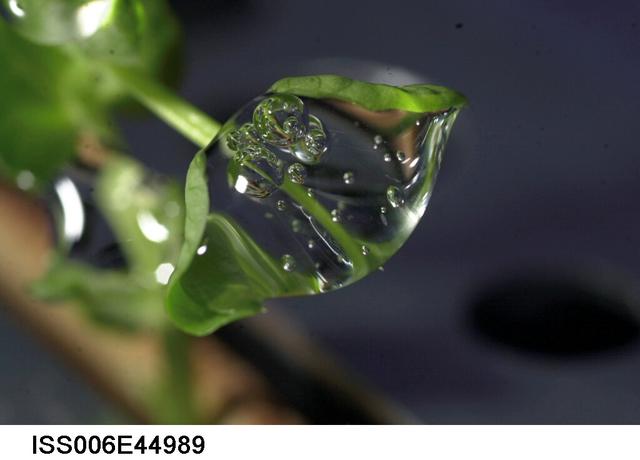
ISS006-E-44989 (10 March 2003) --- A close up view of a water droplet on a leaf on the Russian BIO-5 Rasteniya-2/Lada-2 (Plants-2) plant growth experiment, which is located in the Zvezda Service Module on the International Space Station (ISS).
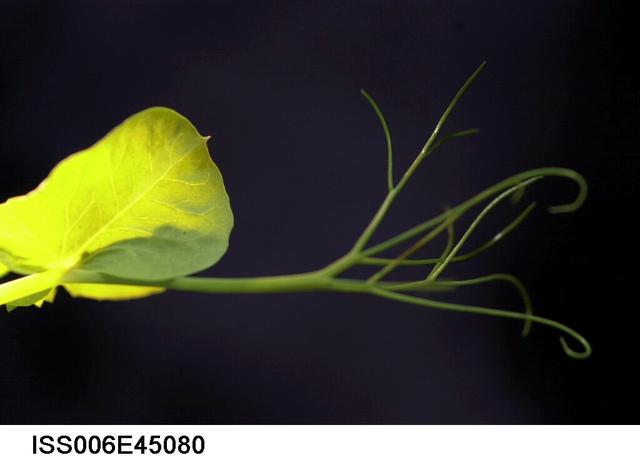
ISS006-E-45080 (17 March 2003) --- A close up view of sprouts on the Russian BIO-5 Rasteniya-2/Lada-2 (Plants-2) plant growth experiment, which is located in the Zvezda Service Module on the International Space Station (ISS).
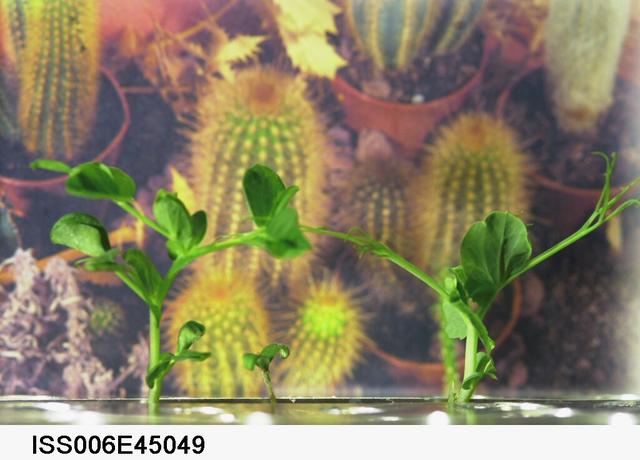
ISS006-E-45049 (14 March 2003) --- A close up view of sprouts on the Russian BIO-5 Rasteniya-2/Lada-2 (Plants-2) plant growth experiment, which is located in the Zvezda Service Module on the International Space Station (ISS).
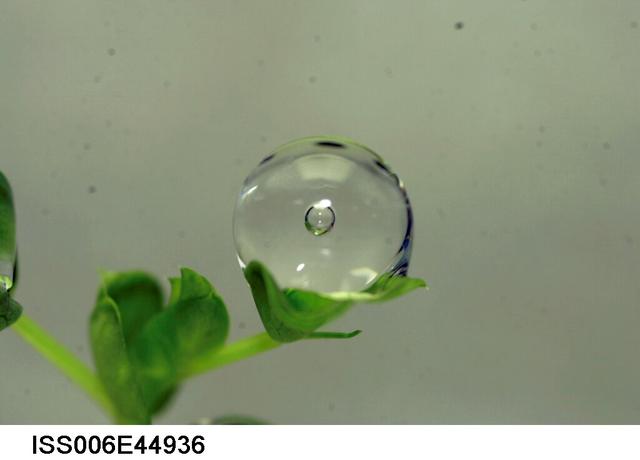
ISS006-E-44936 (9 March 2003) --- A close up view of a water droplet on a leaf on the Russian BIO-5 Rasteniya-2/Lada-2 (Plants-2) plant growth experiment, which is located in the Zvezda Service Module on the International Space Station (ISS).
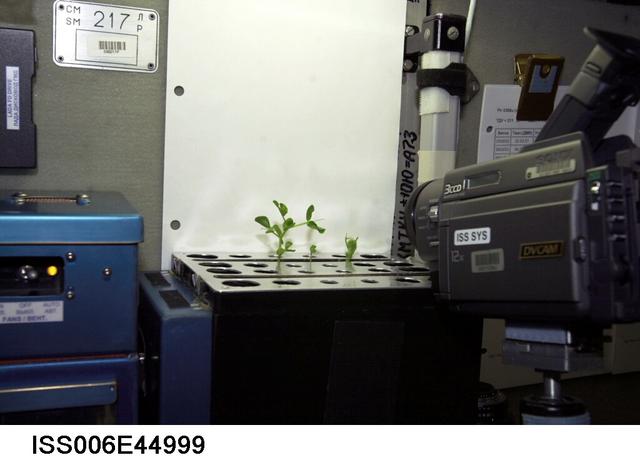
ISS006-E-44999 (12 March 2003) --- A view of the Russian BIO-5 Rasteniya-2/Lada-2 (Plants-2) plant growth experiment located in the Zvezda Service Module on the International Space Station (ISS). A camera used for recording progress of the experiment is visible on the right.

ISS006-E-44929 (9 March 2003) --- A close up view of water droplets on leaves on the Russian BIO-5 Rasteniya-2/Lada-2 (Plants-2) plant growth experiment, which is located in the Zvezda Service Module on the International Space Station (ISS).
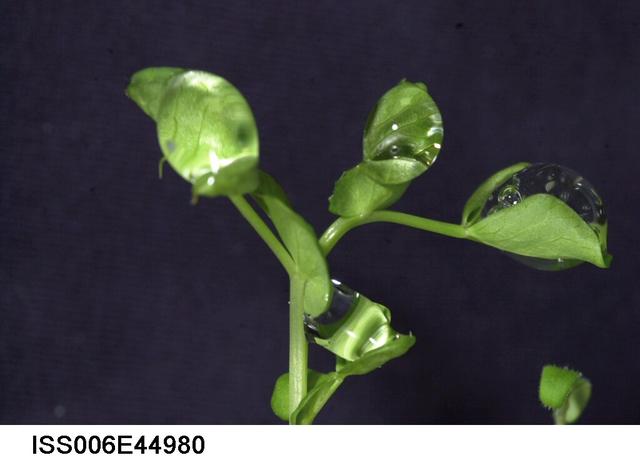
ISS006-E-44980 (10 March 2003) --- A close up view of water droplets on leaves on the Russian BIO-5 Rasteniya-2/Lada-2 (Plants-2) plant growth experiment, which is located in the Zvezda Service Module on the International Space Station (ISS).
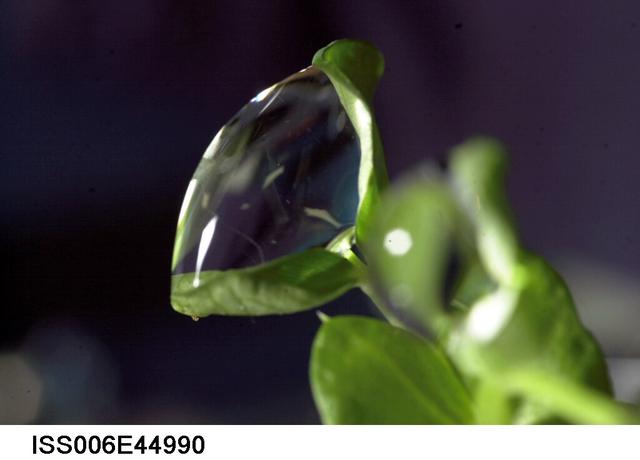
ISS006-E-44990 (10 March 2003) --- A close up view of a water droplet on a leaf on the Russian BIO-5 Rasteniya-2/Lada-2 (Plants-2) plant growth experiment, which is located in the Zvezda Service Module on the International Space Station (ISS).
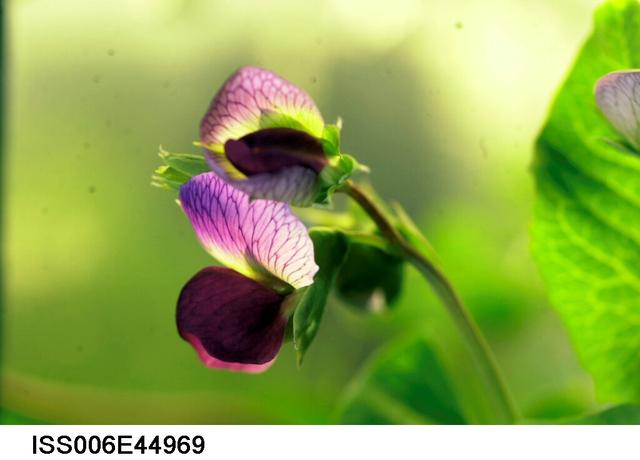
ISS006-E-44969 (6 April 2003) --- A close up view of a bloom on the Russian BIO-5 Rasteniya-2/Lada-2 (Plants-2) plant growth experiment, which is located in the Zvezda Service Module on the International Space Station (ISS).
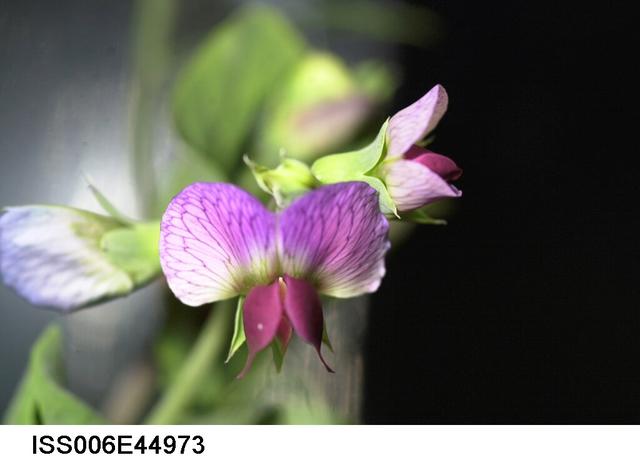
ISS006-E-44973 (6 April 2003) --- A close up view of a bloom on the Russian BIO-5 Rasteniya-2/Lada-2 (Plants-2) plant growth experiment, which is located in the Zvezda Service Module on the International Space Station (ISS).
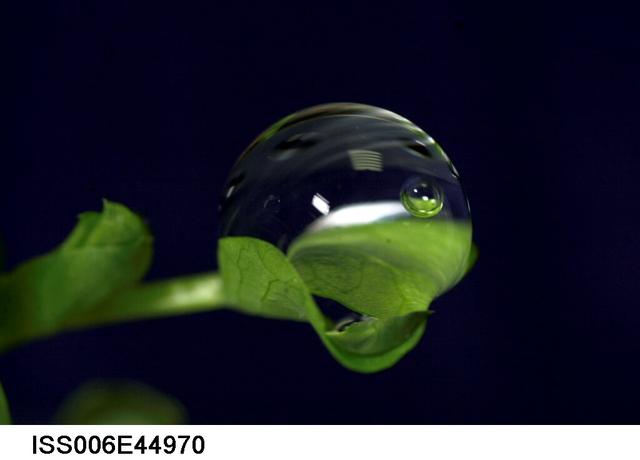
ISS006-E-44970 (9 March 2003) --- A close up view of a water droplet on a leaf on the Russian BIO-5 Rasteniya-2/Lada-2 (Plants-2) plant growth experiment, which is located in the Zvezda Service Module on the International Space Station (ISS).
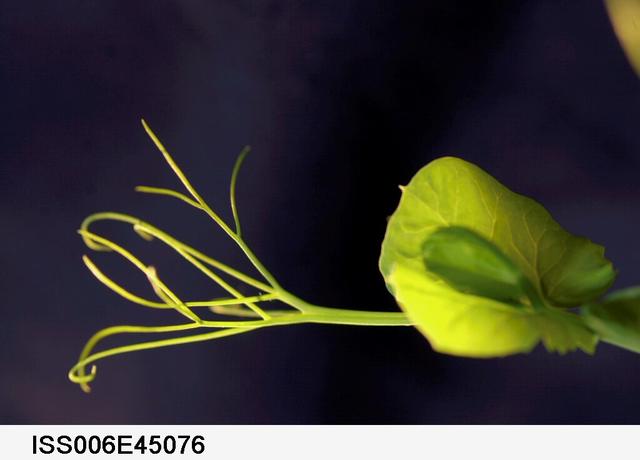
ISS006-E-45076 (17 March 2003) --- A close up view of sprouts on the Russian BIO-5 Rasteniya-2/Lada-2 (Plants-2) plant growth experiment, which is located in the Zvezda Service Module on the International Space Station (ISS).
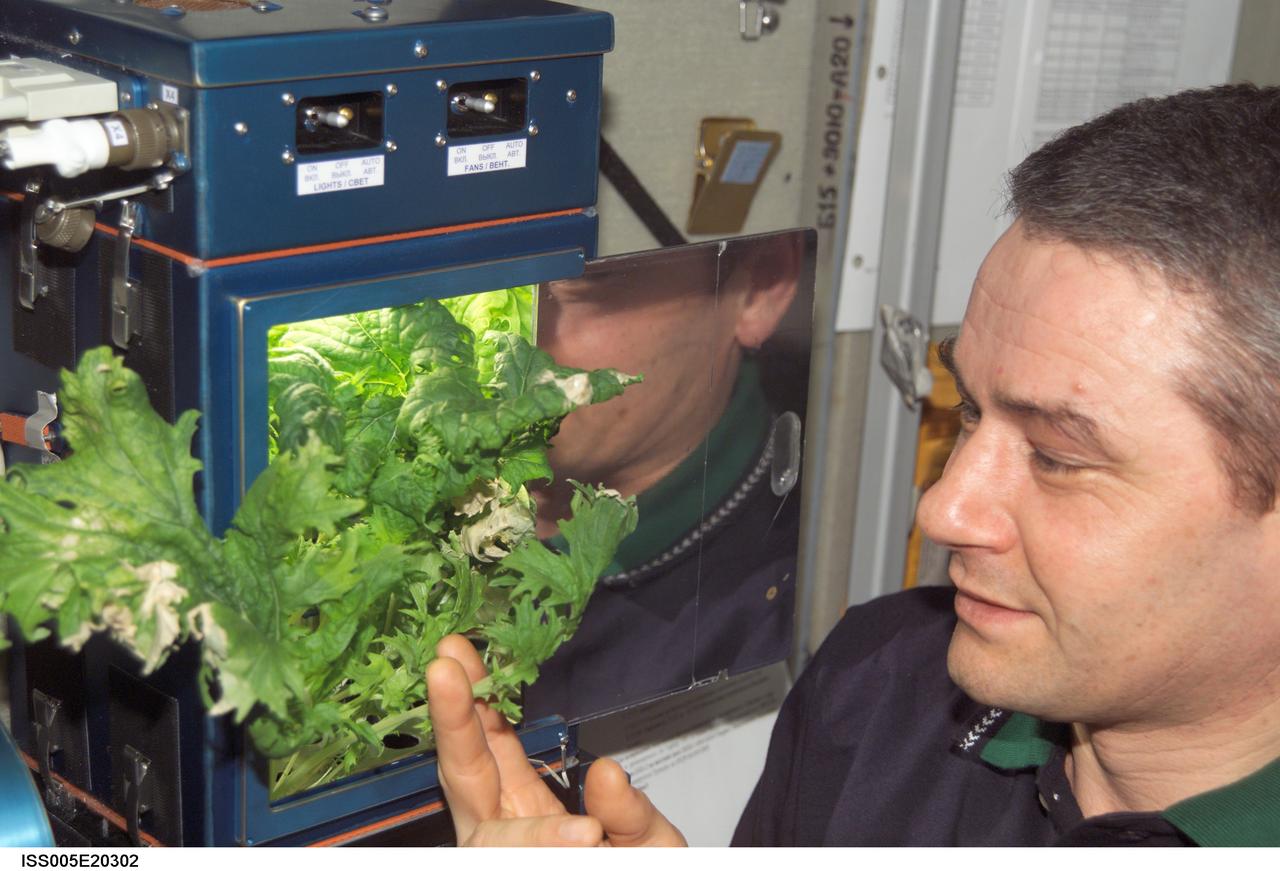
ISS005-E-20302 (8 November 2002) --- Cosmonaut Valery G. Korzun, Expedition Five mission commander, checks a plant growth experiment in the Zvezda Service Module on the International Space Station (ISS). Korzun represents Rosaviakosmos.
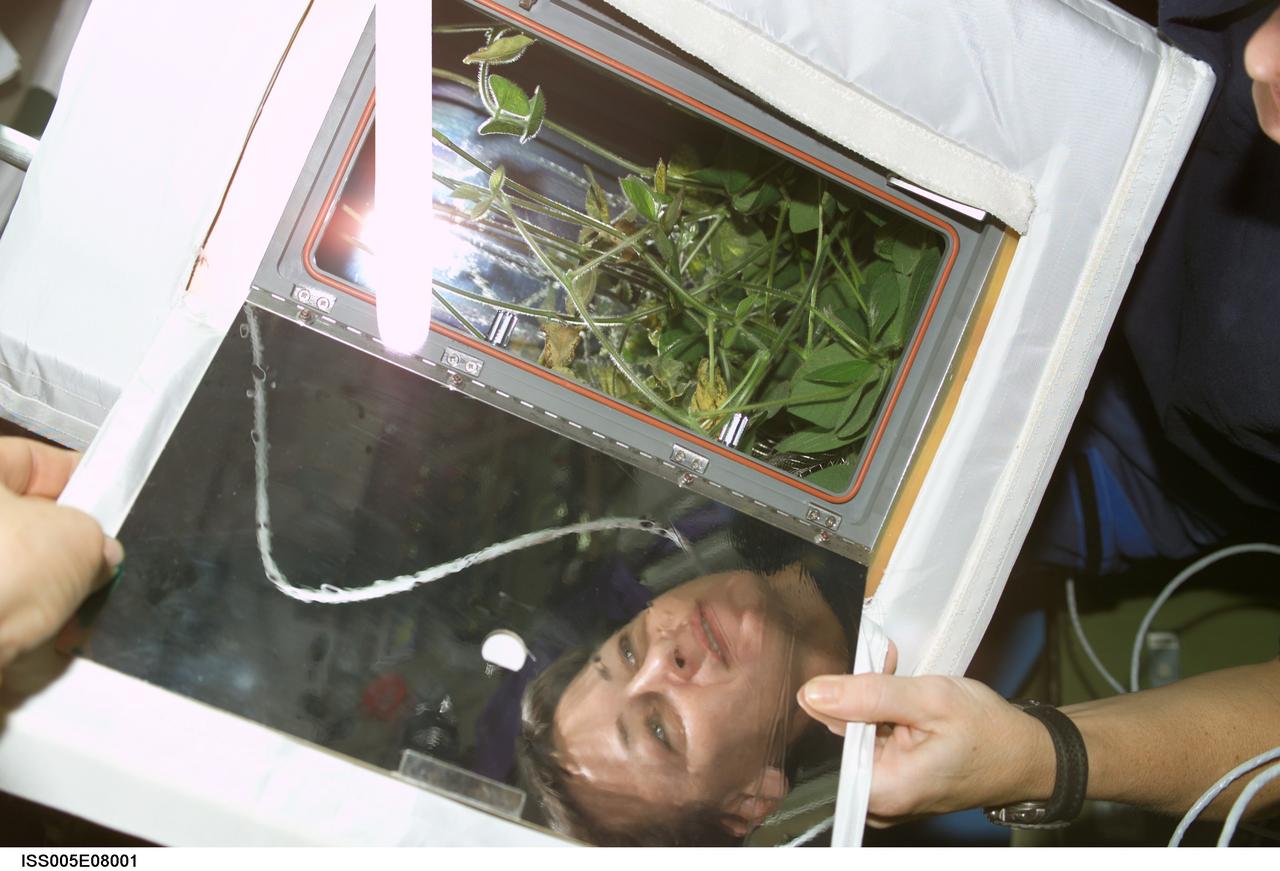
ISS005-E-08001 (18 July 2002) --- Astronaut Peggy A. Whitson, Expedition Five flight engineer, works with the Advanced Astroculture soybean plant growth experiment in the Destiny laboratory on the International Space Station (ISS).
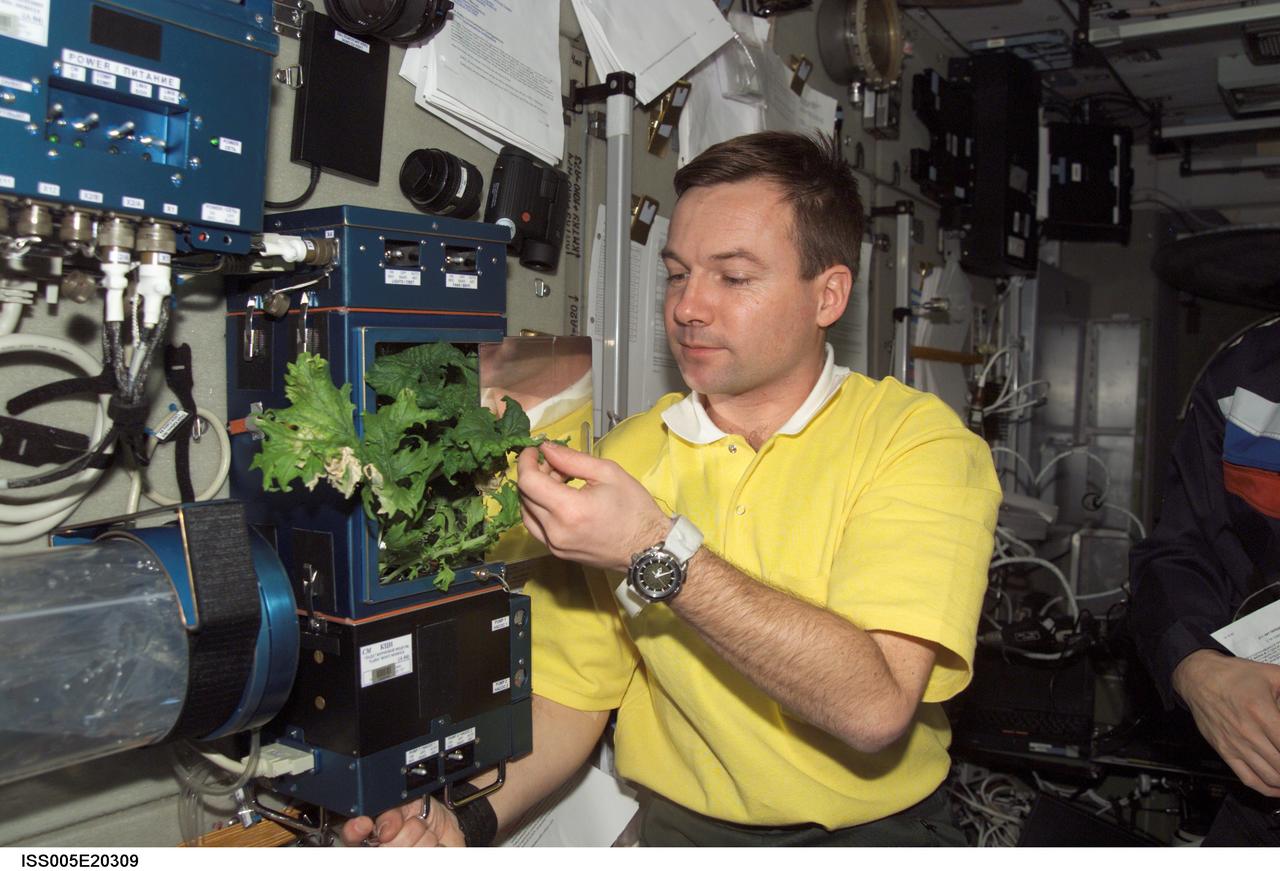
ISS005-E-20309 (8 November 2002) --- Soyuz 5 Flight Engineer Yuri V. Lonchakov looks at a plant growth experiment in the Zvezda Service Module on the International Space Station (ISS). Lonchakov represents Rosaviakosmos.
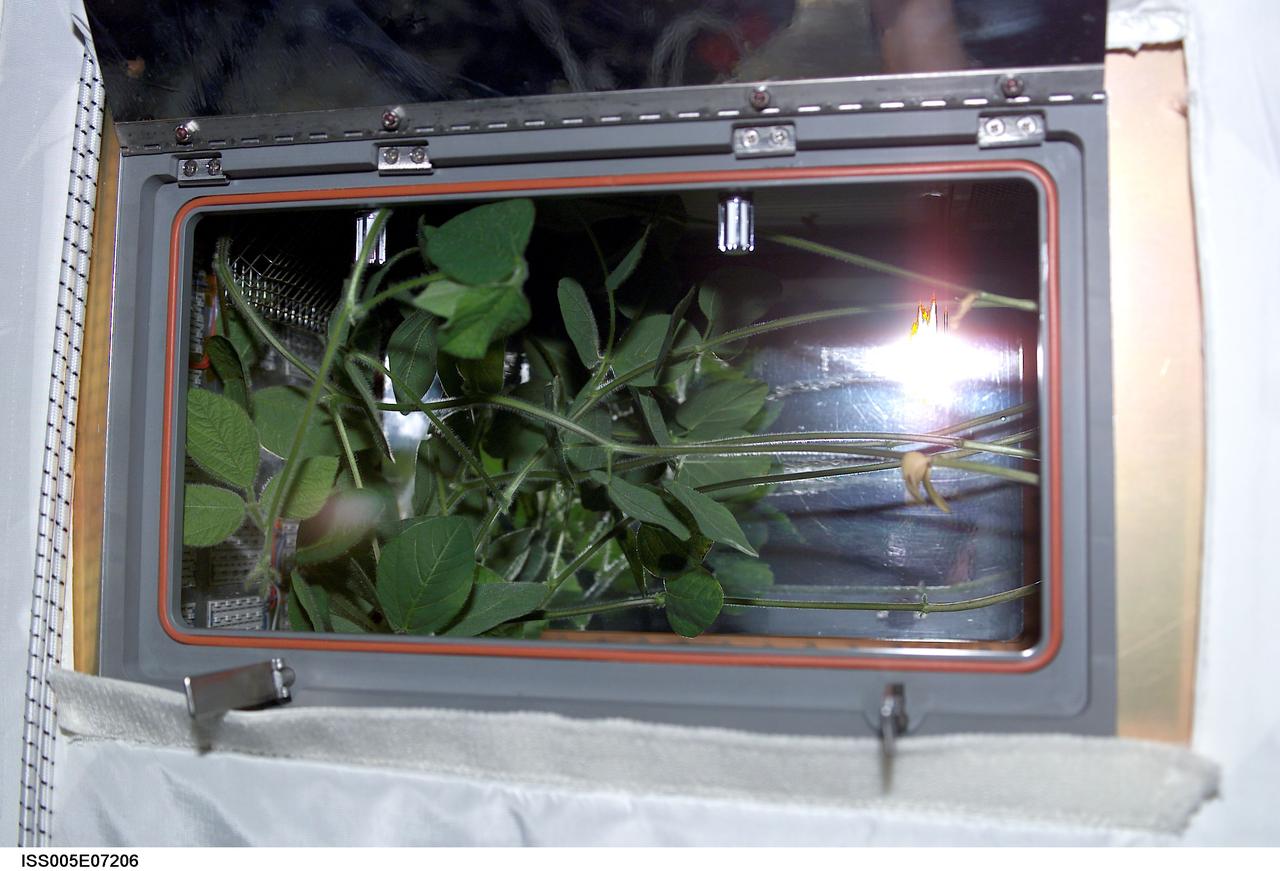
ISS005-E-07206 (10 July 2002) --- A close-up view of the Advanced Astroculture soybean plant growth experiment in the Destiny laboratory on the International Space Station (ISS).
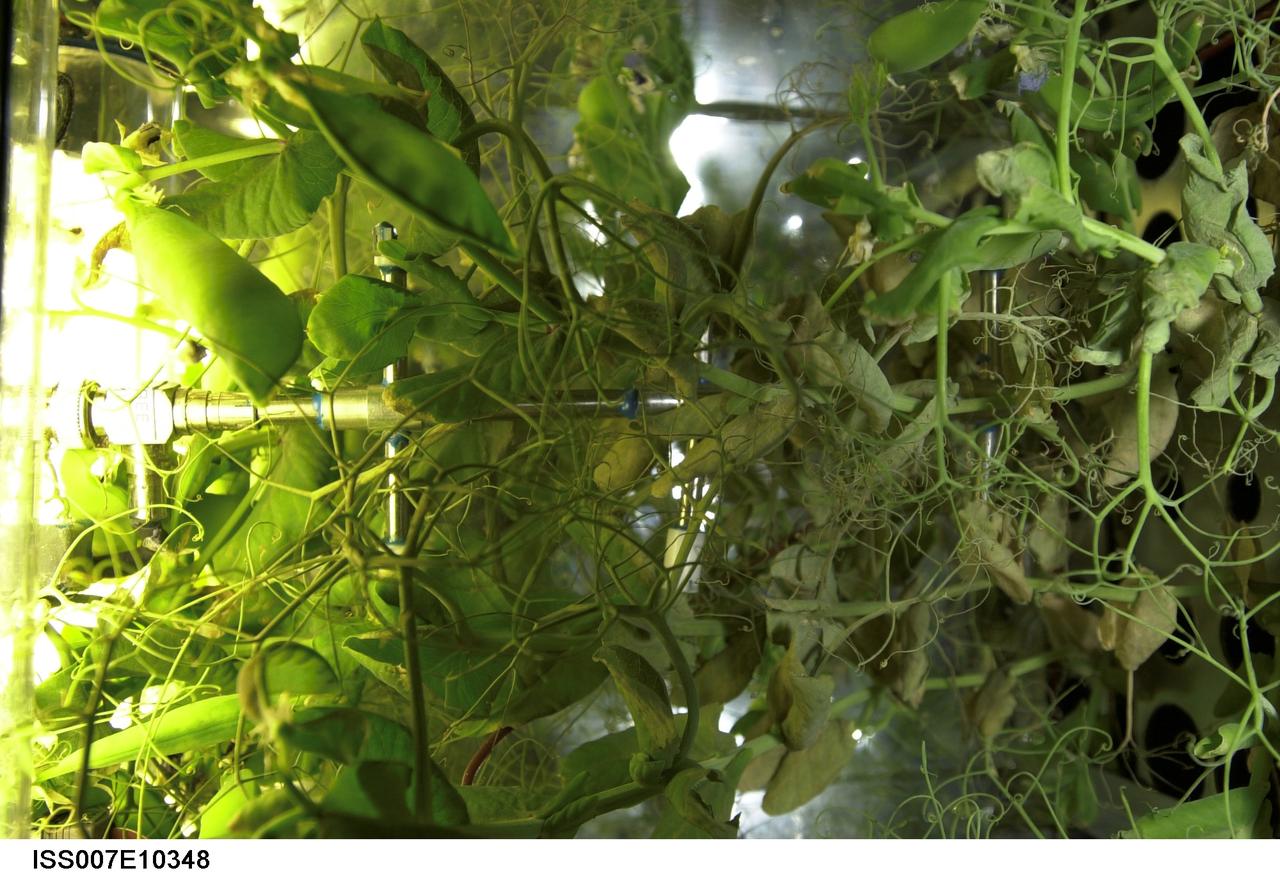
ISS007-E-10348 (July 2003) --- This view of a plant growth experiment inside the Russian Lada greenhouse, located in the Zvezda Service Module, was taken by an Expedition 7 crewmember onboard the International Space Station (ISS).
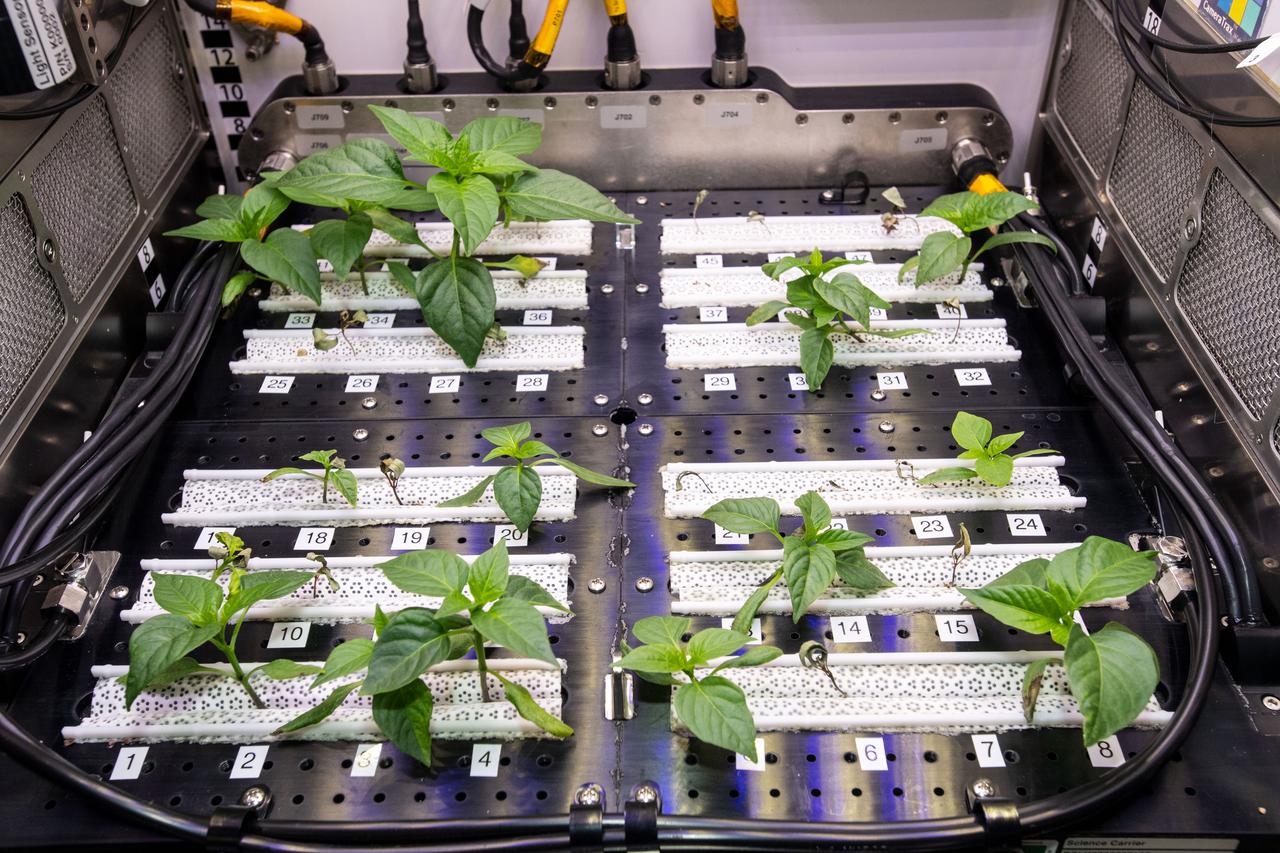
iss065e235366 (8/10/2021) --- Hatch Green Chile plants are pictured growing in the Advanced Plant Habitat aboard the International Space Station (ISS). The Microgravity Growth of New Mexico Hatch Green Chile as a Technical Display of Advanced Plant Habitat’s Capabilities (Plant Habitat-04) demonstrates using the Advanced Plant Habitat (APH) by growing peppers in space for the first time.
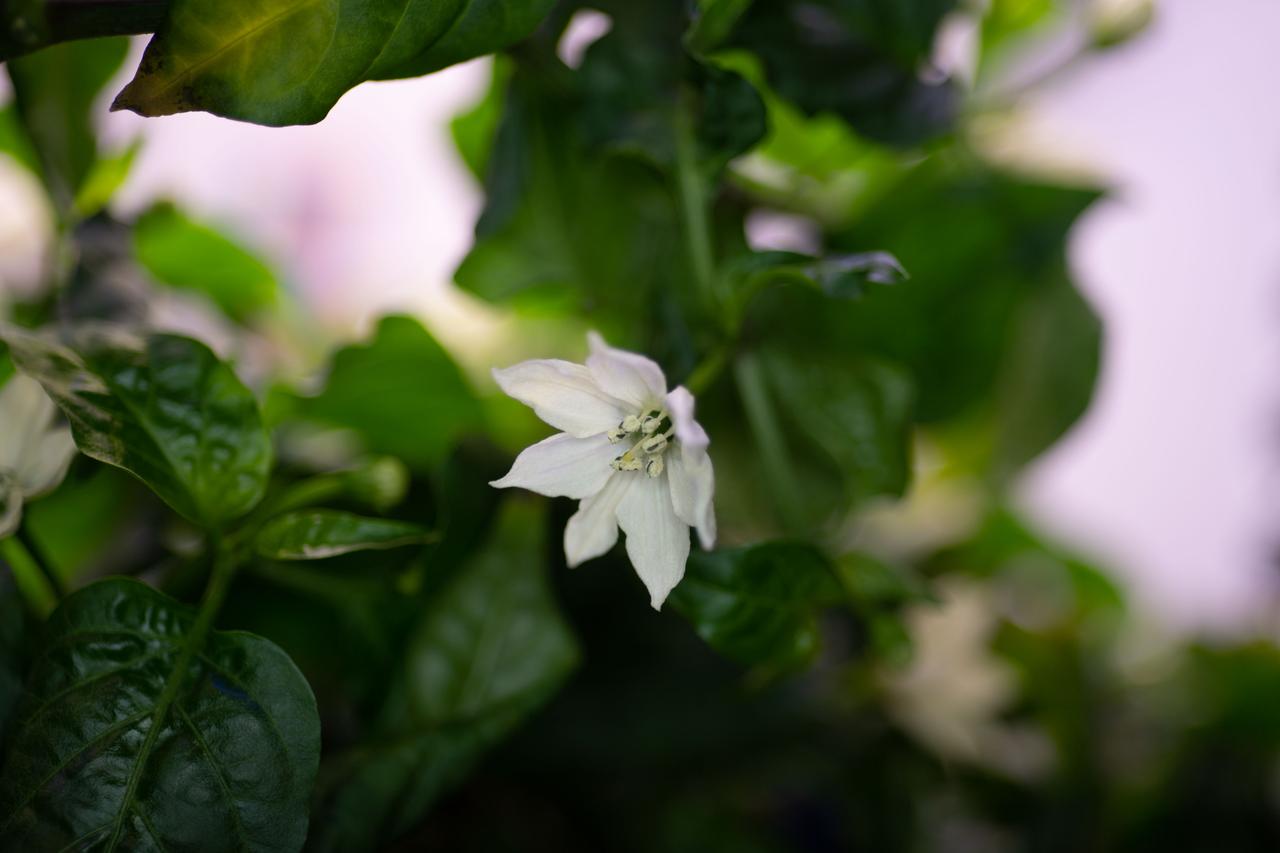
Hatch Green Chile plants are pictured growing in the Advanced Plant Habitat aboard the International Space Station (ISS). The Microgravity Growth of New Mexico Hatch Green Chile as a Technical Display of Advanced Plant Habitat’s Capabilities (Plant Habitat-04) demonstrates using the Advanced Plant Habitat (APH) by growing peppers in space for the first time.

iss065e235367 (8/10/2021) --- Hatch Green Chile plants are pictured growing in the Advanced Plant Habitat aboard the International Space Station (ISS). The Microgravity Growth of New Mexico Hatch Green Chile as a Technical Display of Advanced Plant Habitat’s Capabilities (Plant Habitat-04) demonstrates using the Advanced Plant Habitat (APH) by growing peppers in space for the first time.
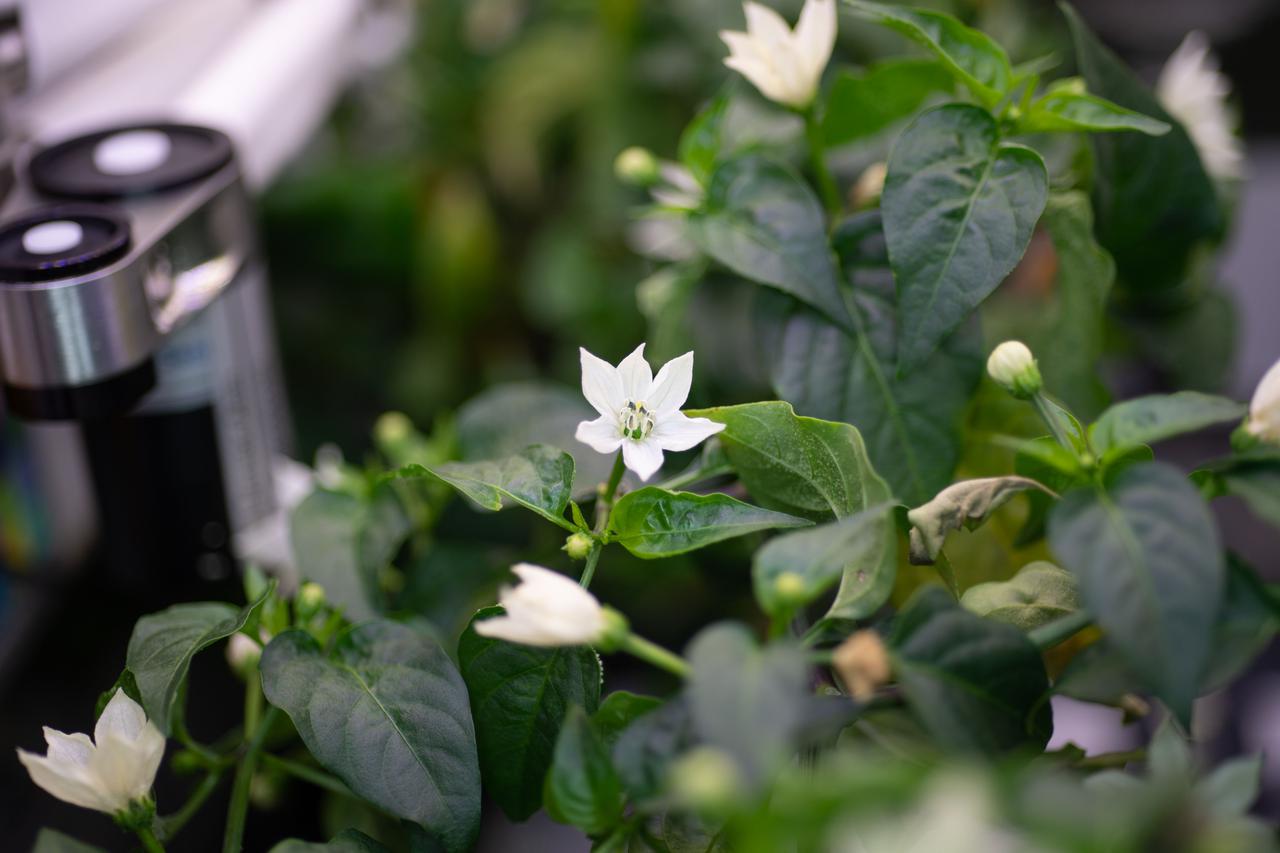
iss065e434036 (9/30/2021) --- Hatch Green Chile plants are pictured growing in the Advanced Plant Habitat aboard the International Space Station (ISS). The Microgravity Growth of New Mexico Hatch Green Chile as a Technical Display of Advanced Plant Habitat’s Capabilities (Plant Habitat-04) demonstrates using the Advanced Plant Habitat (APH) by growing peppers in space for the first time.
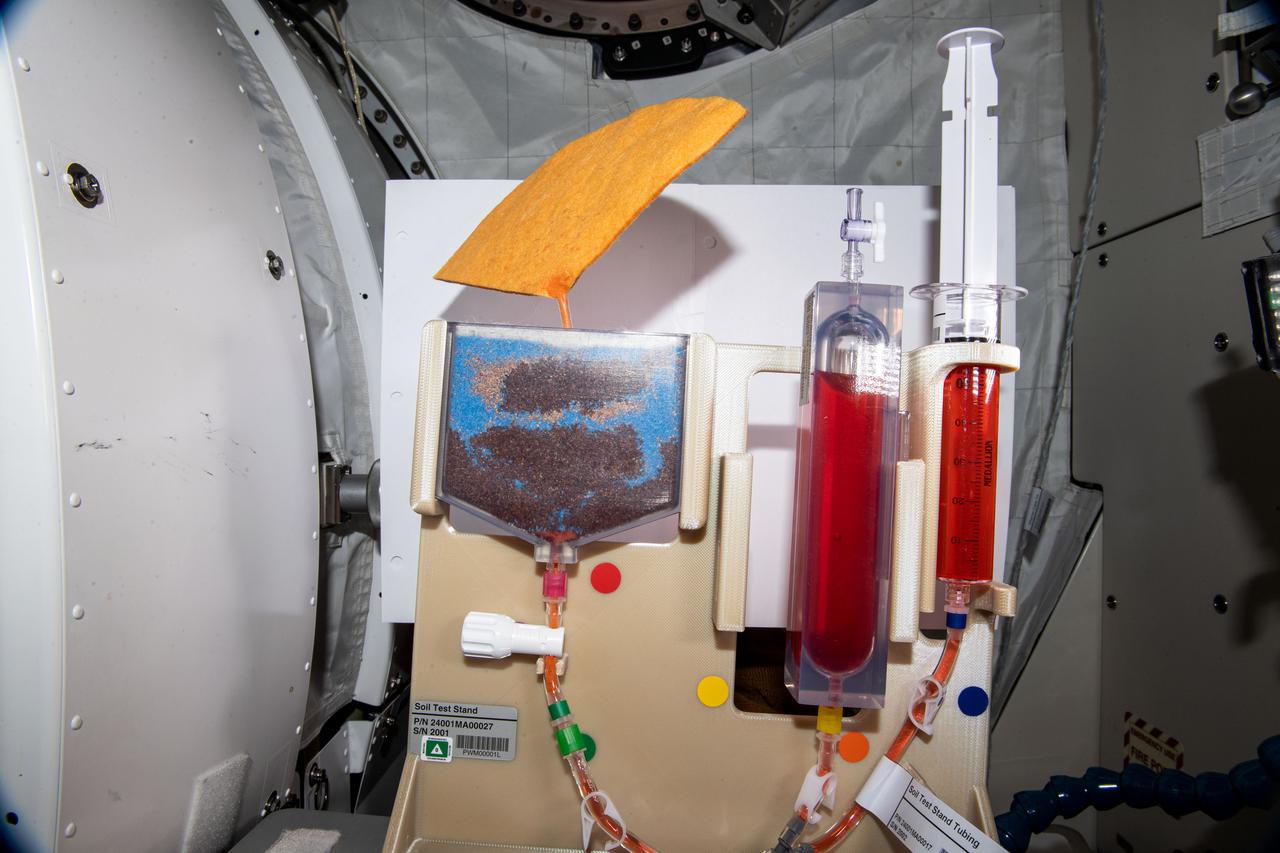
iss064e030235 (2/8/2021) --- A view of the Plant Water Management (PWM) investigation aboard the International space Station (ISS). Plant Water Management demonstrates a hydroponic method for ensuring adequate hydration and aeration to the root zone in order to sustain plants from germination through harvest. Low-gravity capillary fluidics deliver water in single and multiple plant production chambers, and researchers compare growth of individual plants in microgravity and normal gravity.
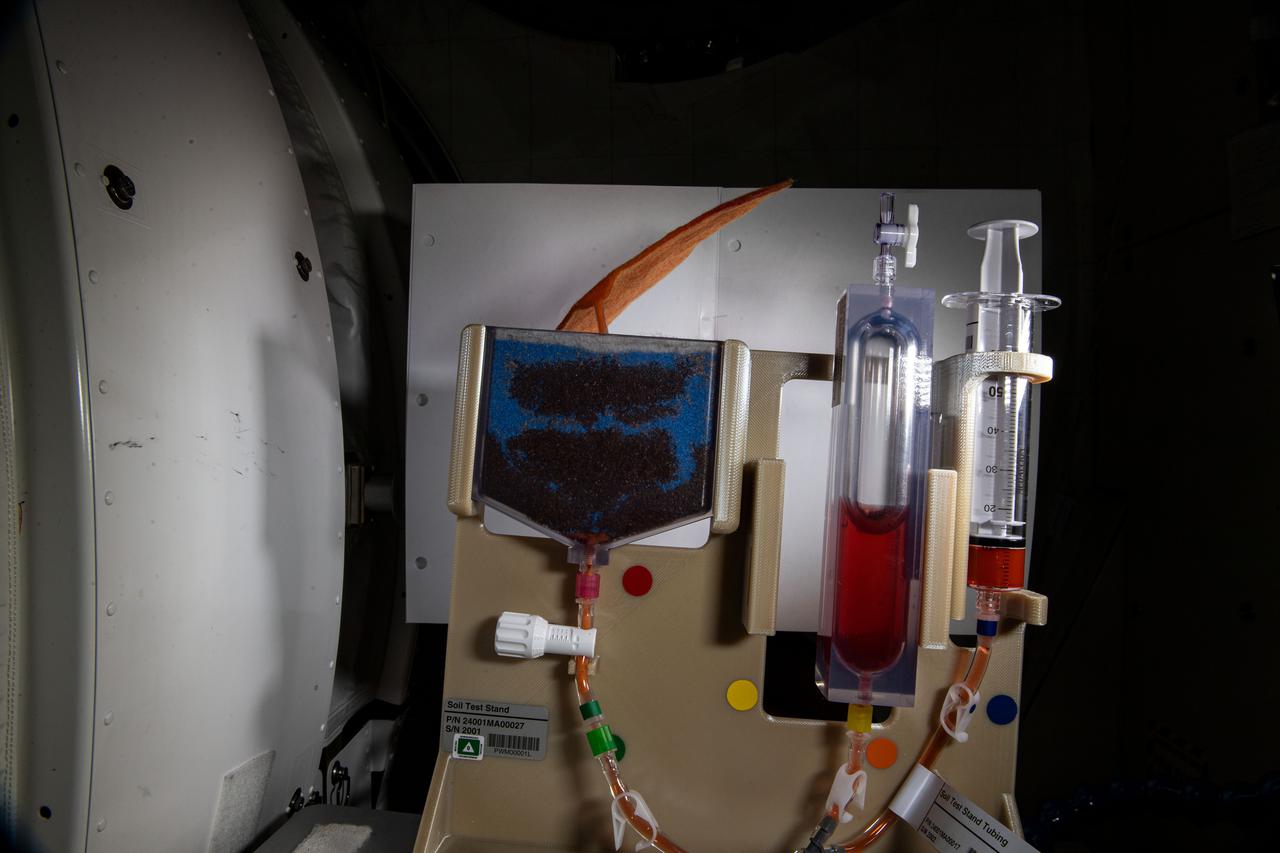
iss064e030517 (2/9/2021) --- A view of the Plant Water Management (PWM) investigation aboard the International space Station (ISS). Plant Water Management demonstrates a hydroponic method for ensuring adequate hydration and aeration to the root zone in order to sustain plants from germination through harvest. Low-gravity capillary fluidics deliver water in single and multiple plant production chambers, and researchers compare growth of individual plants in microgravity and normal gravity.
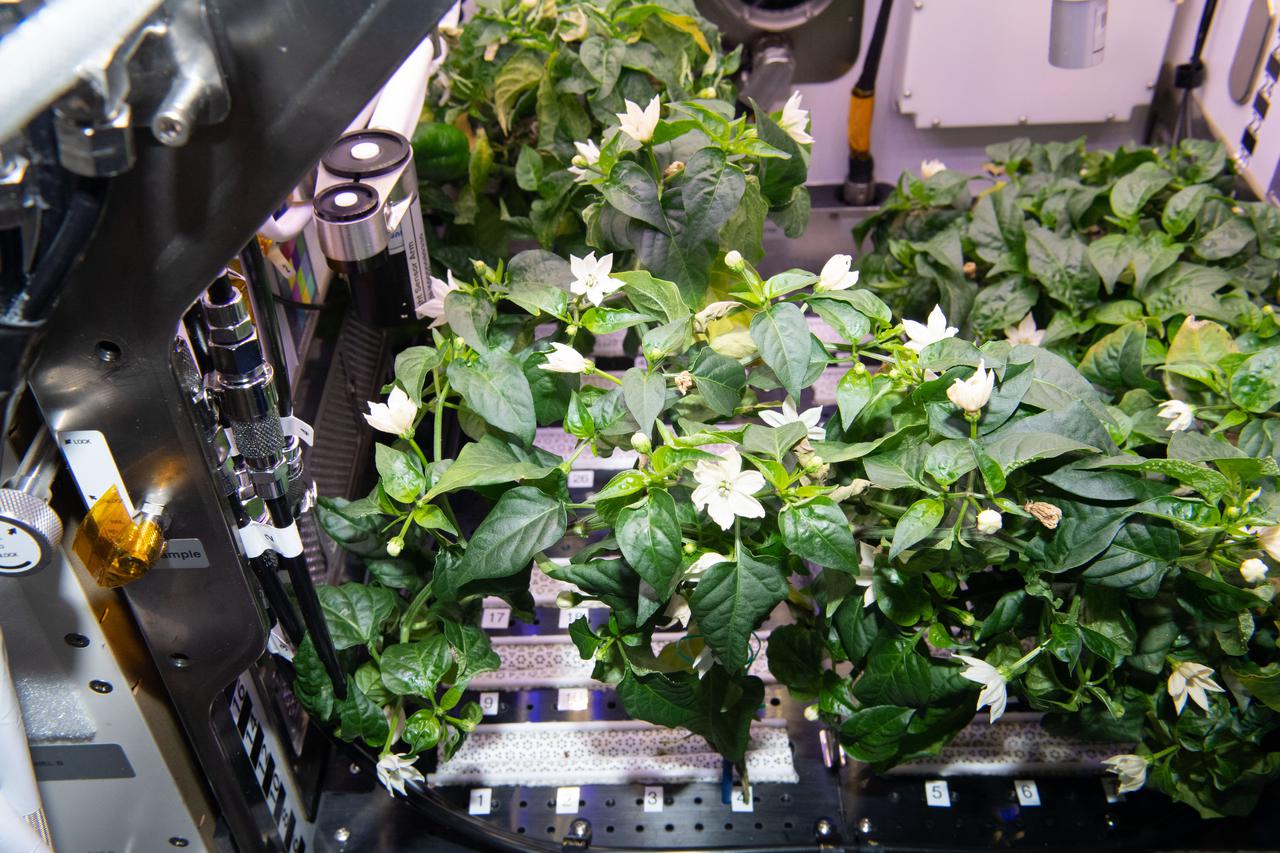
iss065e434054 (9/30/2021) --- Hatch Green Chile plants are pictured growing in the Advanced Plant Habitat aboard the International Space Station (ISS). The Microgravity Growth of New Mexico Hatch Green Chile as a Technical Display of Advanced Plant Habitat’s Capabilities (Plant Habitat-04) demonstrates using the Advanced Plant Habitat (APH) by growing peppers in space for the first time.

iss064e030275 (2/8/2021) --- A view of the Plant Water Management (PWM) investigation aboard the International space Station (ISS). Plant Water Management demonstrates a hydroponic method for ensuring adequate hydration and aeration to the root zone in order to sustain plants from germination through harvest. Low-gravity capillary fluidics deliver water in single and multiple plant production chambers, and researchers compare growth of individual plants in microgravity and normal gravity.
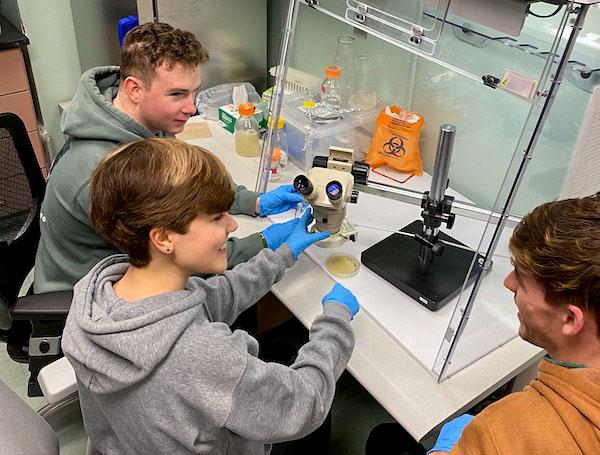
jsc2024e067093 (1/19/2024) --- Ohio University’s Mission 18 Team (Michael Lane, Victoria Swiler and Nathan Smith) examine the growth of Sphingomonas sanguinis, an ISS-derived bacteria. Their experiment, Effect of Spaceflight-Adapted Bacteria on Plant Growth and Resilience in Microgravity, is part of the Nanoracks-National Center for Earth and Space Science Education-Surveyor-Student Spaceflight Experiments Program Mission 18 to ISS (Nanoracks-NCESSE-Surveyor-SSEP).
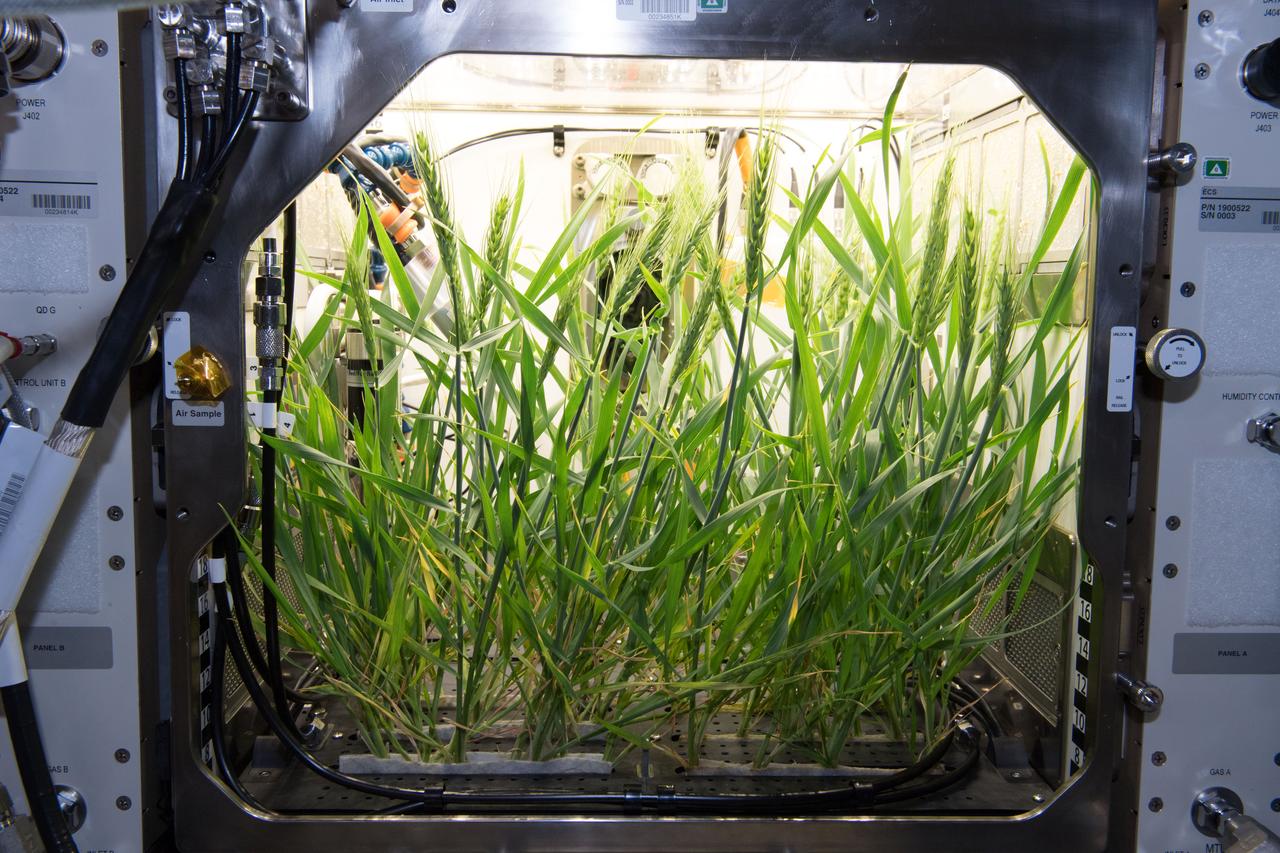
The first growth test of crops in the Advanced Plant Habitat aboard the International Space Station yielded great results. Arabidopsis seeds – small flowering plants related to cabbage and mustard – grew for about six weeks and the dwarf wheat for five weeks. The APH is now ready to support large plant testing on ISS. APH is a fully enclosed, closed-loop system with an environmentally controlled growth chamber. It uses red, blue and green LED lights, and broad spectrum white LED lights. The system's more than 180 sensors will relay real-time information, including temperature, oxygen content and moisture levels back to the team at Kennedy Space Center.
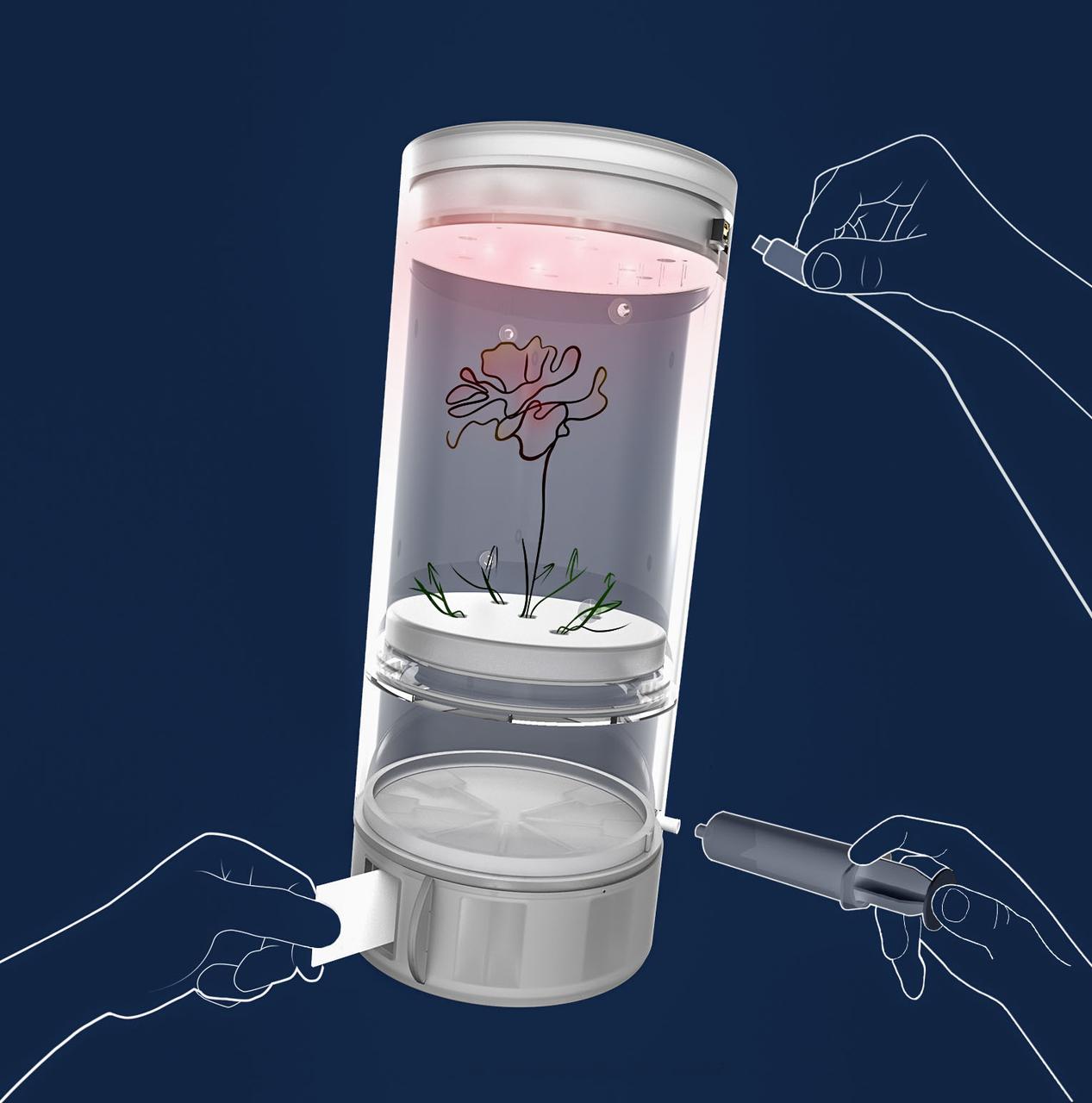
jsc2021e029979 (9/28/2020) --- A 3D image of the vase Eklosion released by Lerouge Jules using keyshot and photoshop. The Eklosion investigation consist of a vase that is utilized by a crew member to grow a Marigold flower (Tagetes patula) aboard the ISS. The investigation takes place at the leisure of the crew member and helps to study the process of plant growth in space, as well as using a personally tended house plant in space to help establish a psychological link between the crew member aboard the ISS and Earth. Image courtesy of Eklo association.
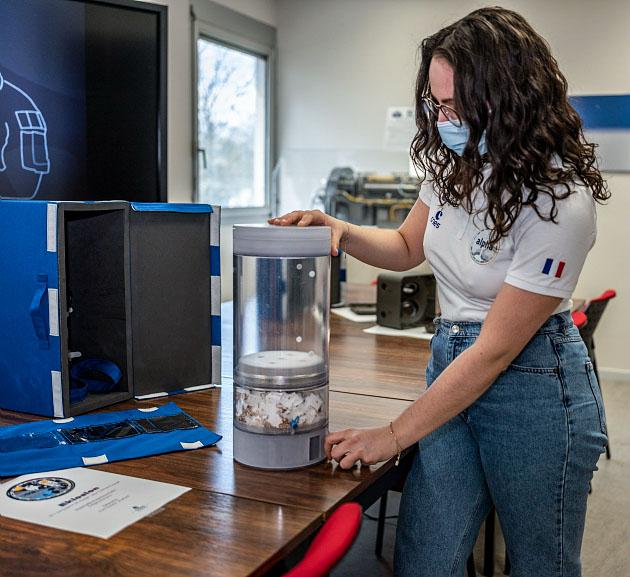
jsc2021e029981 (3/18/2021) --- A Picture of the EKLOSION pot manipulated by Eve Teyssier at CNES Toulouse. The Eklosion investigation consist of a vase that is utilized by a crew member to grow a Marigold flower (Tagetes patula) aboard the ISS. The investigation takes place at the leisure of the crew member and helps to study the process of plant growth in space, as well as using a personally tended house plant in space to help establish a psychological link between the crew member aboard the ISS and Earth. Image courtesy of CNES.
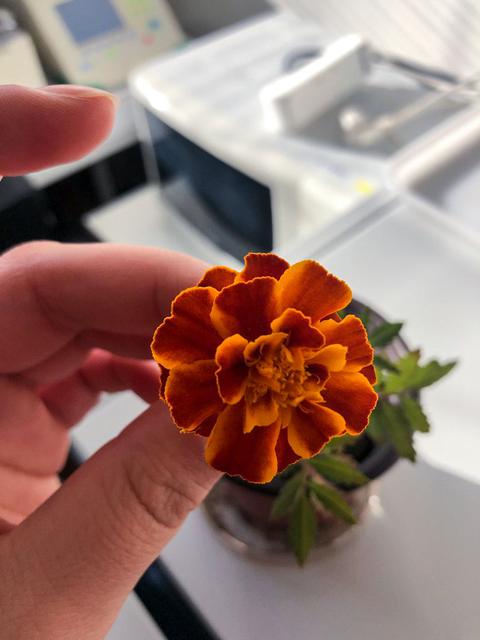
jsc2021e029978 (1/6/2020) --- A Photo of the Marigold flower grown during lab test at Toulouse. The Eklosion investigation consist of a vase that is utilized by a crew member to grow a Marigold flower (Tagetes patula) aboard the ISS. The investigation takes place at the leisure of the crew member and helps to study the process of plant growth in space, as well as using a personally tended house plant in space to help establish a psychological link between the crew member aboard the ISS and Earth. Image courtesy of Eklo association.
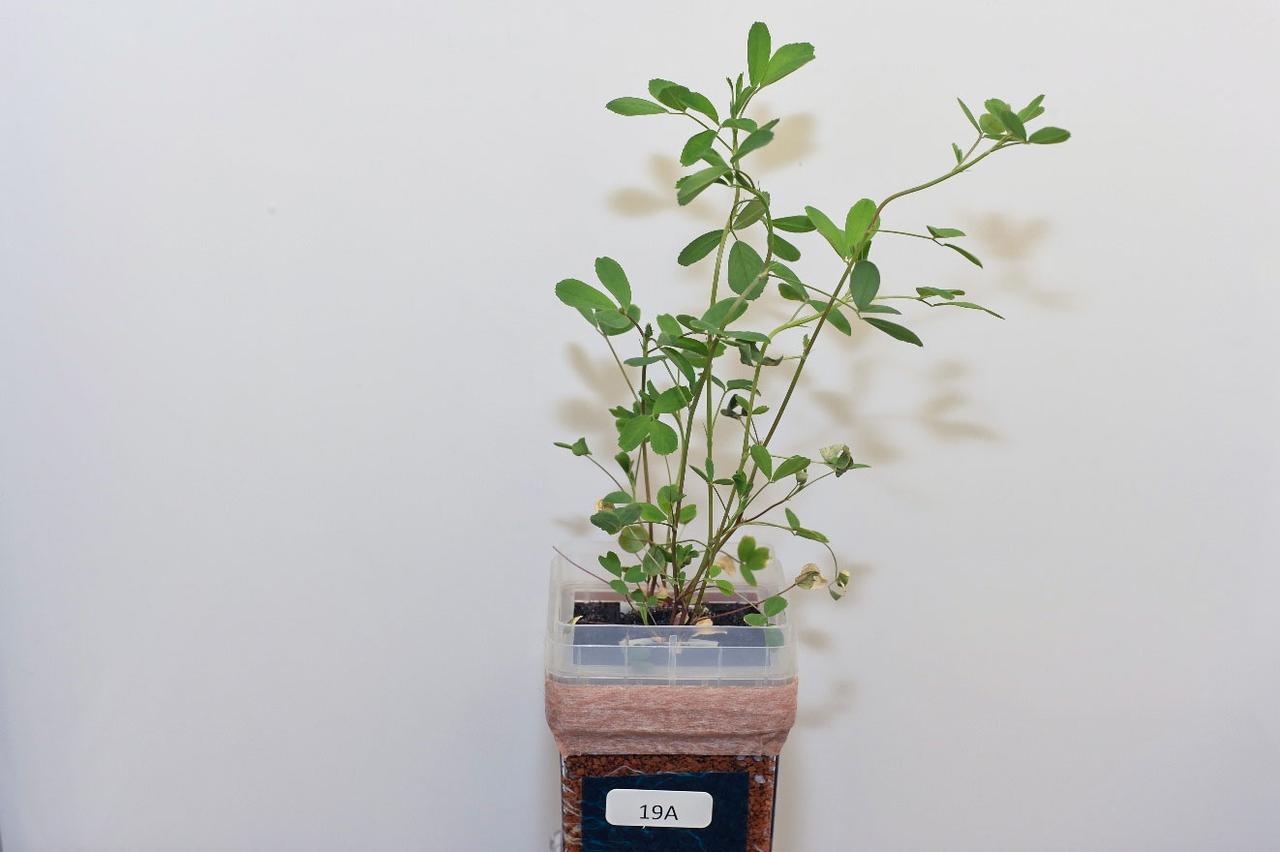
Alfalfa (Medicago sativa) grown with nitrogen during preflight testing as part of Dissecting Beneficial Plant-Microbe Interactions and their Efficacy in the ISS Spaceflight Environment, a Model Study (Veg-06). This investigation examines spaceflight’s effects on the interactions between plants and nitrogen-fixing bacteria called rhizobia. These bacteria can take up nitrogen gas from the air and convert it into ammonia, a form of nitrogen plants can use for growth. One component of the nitrogen fixation emphasis in Veg-06 will compare the growth of alfalfa with rhizobia but no nitrogen fertilizer, alfalfa with rhizobia and a source of nitrogen fertilizer, and alfalfa with neither fertilizer nor rhizobia. Results could provide a fundamental understanding of the interactions of plants and microbes for nitrogen fixation in microgravity and advance the ways to grow plants for food on future space missions. Credit: Washington State University.
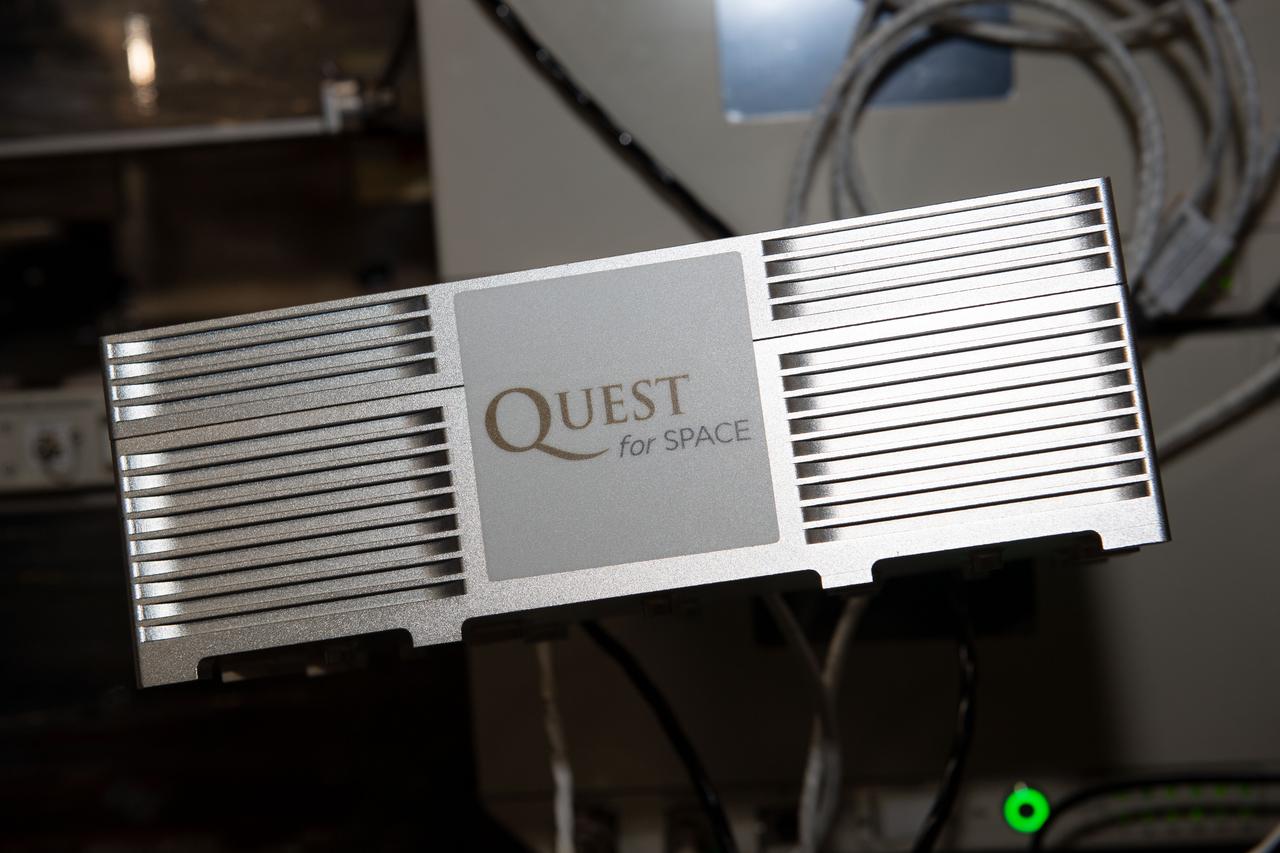
iss069e054897 (8/7/2023) --- A view of the Quest Multi Experiment Module #6 aboard the International space Station (ISS). The 9U Space Tango CubeLab carries 14 individual student-designed experiments and a tech demo, including exploration of magnetism, fluidics, microbial behavior, and plant growth in space.
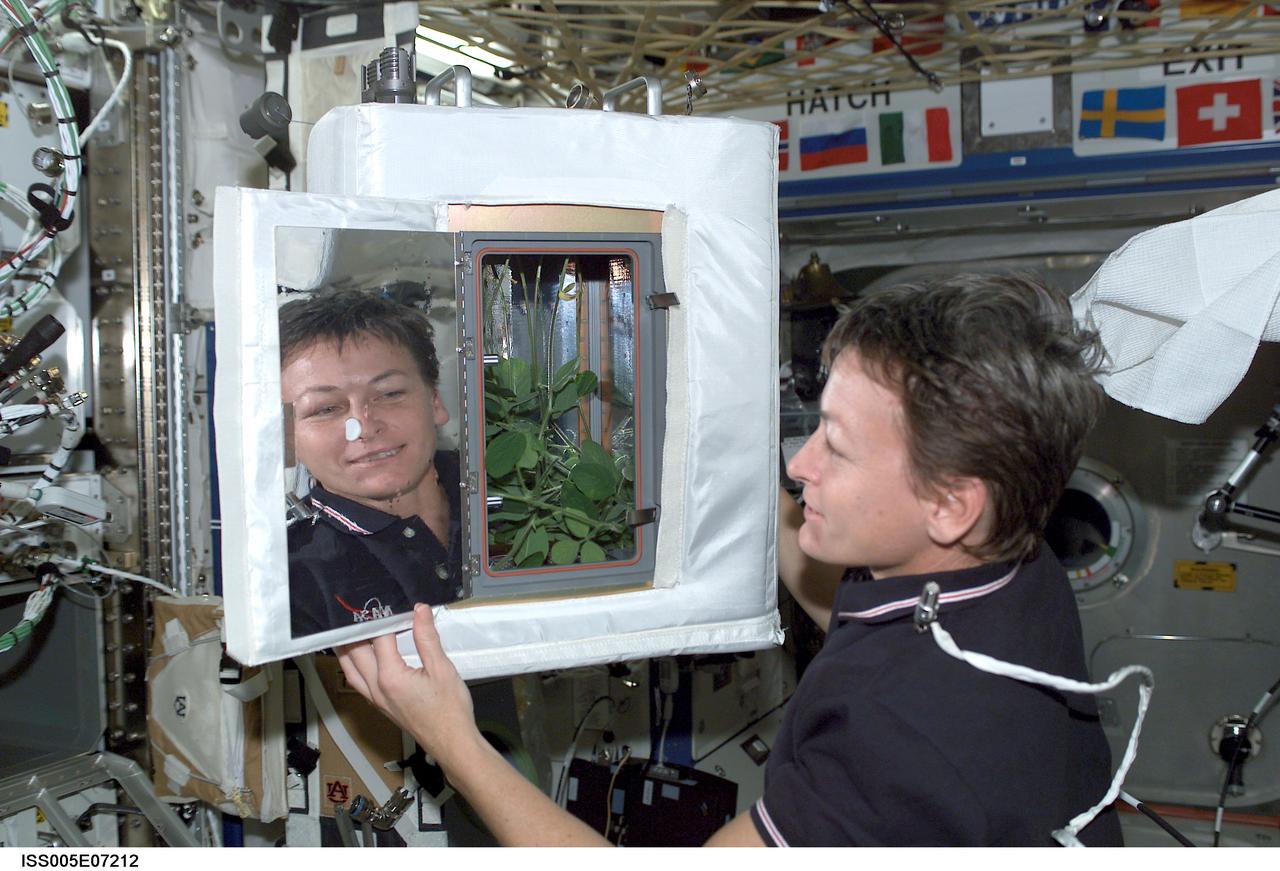
ISS005-E-07212 (10 July 2002) --- NASA Astronaut Peggy Whitson, Expedition 5 International Space Station (ISS) science officer, looks at the Advanced Astroculture (ADVASC) Soybean plant growth experiment as part of Expediting the Process of Experiments to the Space Station (EXPRESS) Rack 4 located in the U.S. Laboratory Destiny.
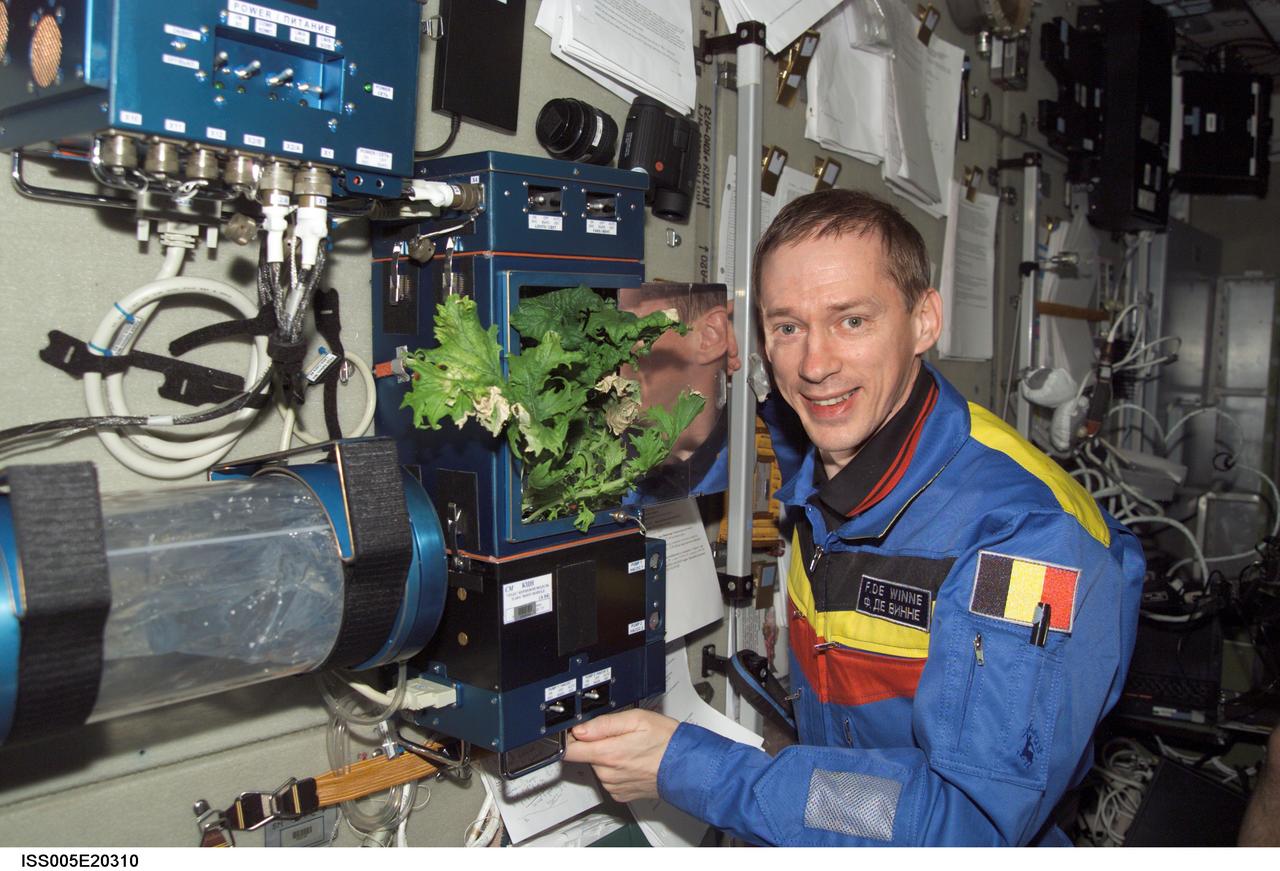
ISS005-E-20310 (8 November 2002) --- Belgian Soyuz 5 Flight Engineer Frank DeWinne is pictured near a plant growth experiment in the Zvezda Service Module on the International Space Station (ISS). DeWinne represents the European Space Agency (ESA).

jsc2021e010332 (5/1/2019) --- The Veggie plant growth hardware at the Kennedy Space Center (KSC) with the TICTOC cotton investigation. Targeting Improved Cotton Through Orbital Cultivation (TICTOC) investigates the morphological and molecular adaptations of cotton seedlings to the microgravity environment encountered in the International Space Station (ISS). Image courtesy of Jeff Richards.
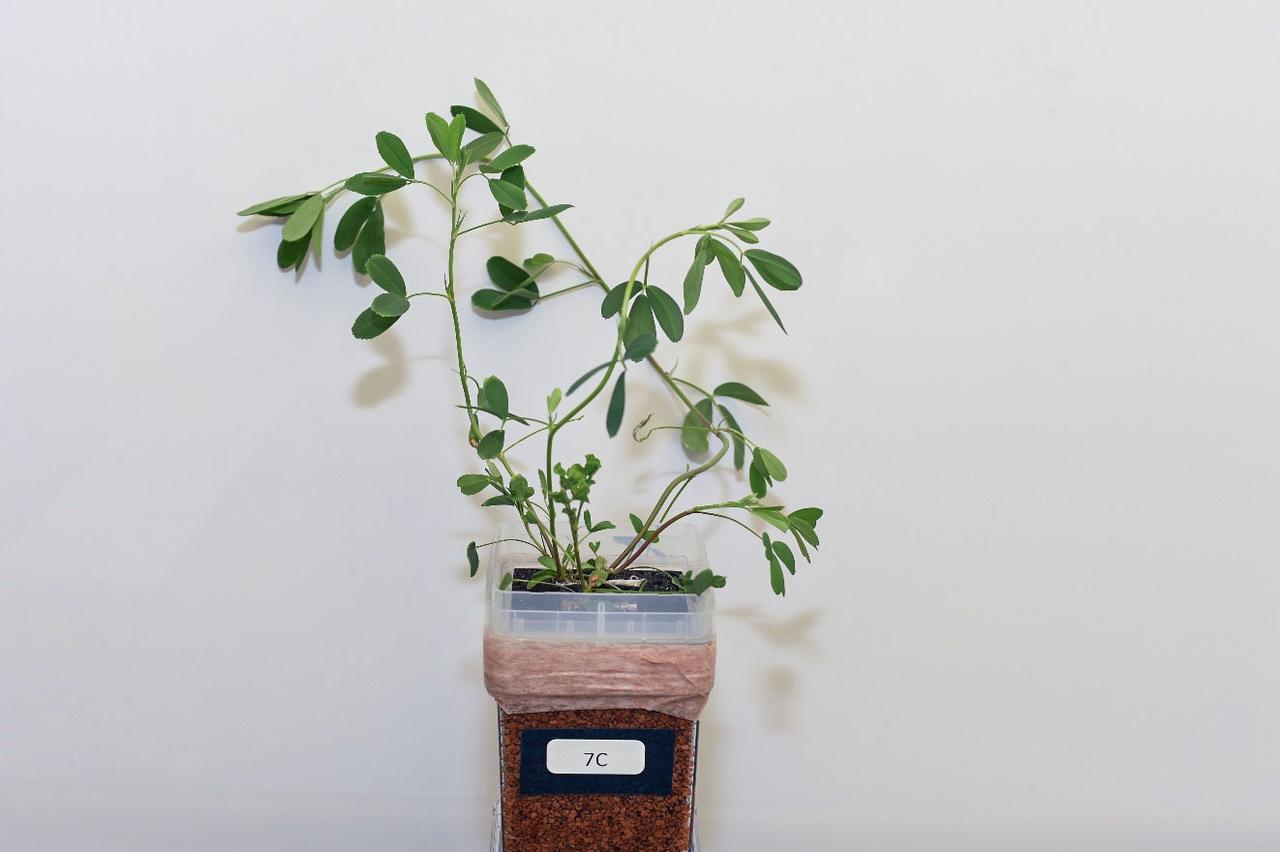
Alfalfa (Medicago sativa) grown with reduced lignin during preflight testing as part of Dissecting Beneficial Plant-Microbe Interactions and their Efficacy in the ISS Spaceflight Environment, a Model Study (Veg-06). This investigation examines spaceflight’s effects on the interactions between plants and nitrogen-fixing bacteria called rhizobia. A second part to this investigation studies the effects of reduced lignin in a space environment. Lignin is a biopolymer that reinforces plant cell walls thereby enabling plants to grow upward against the forces of gravity. Growing plants with less lignin may be feasible in environments with low gravity and may have the added benefit of biodegrading more readily, thereby facilitating the growth of future generations. Credit: Washington State University.

Advanced Plant Experiment, APEX-4, support in the Telescience Support Center at NASA Glenn. APEX-4 continues a highly successful investigation into the effects of microgravity on the development of roots and cells on plant seedlings. After four days of growth, the petri plate will be inserted into the Fluids Integrated Rack (FIR) Light Microscopy Module (LMM) facility for detailed imaging.
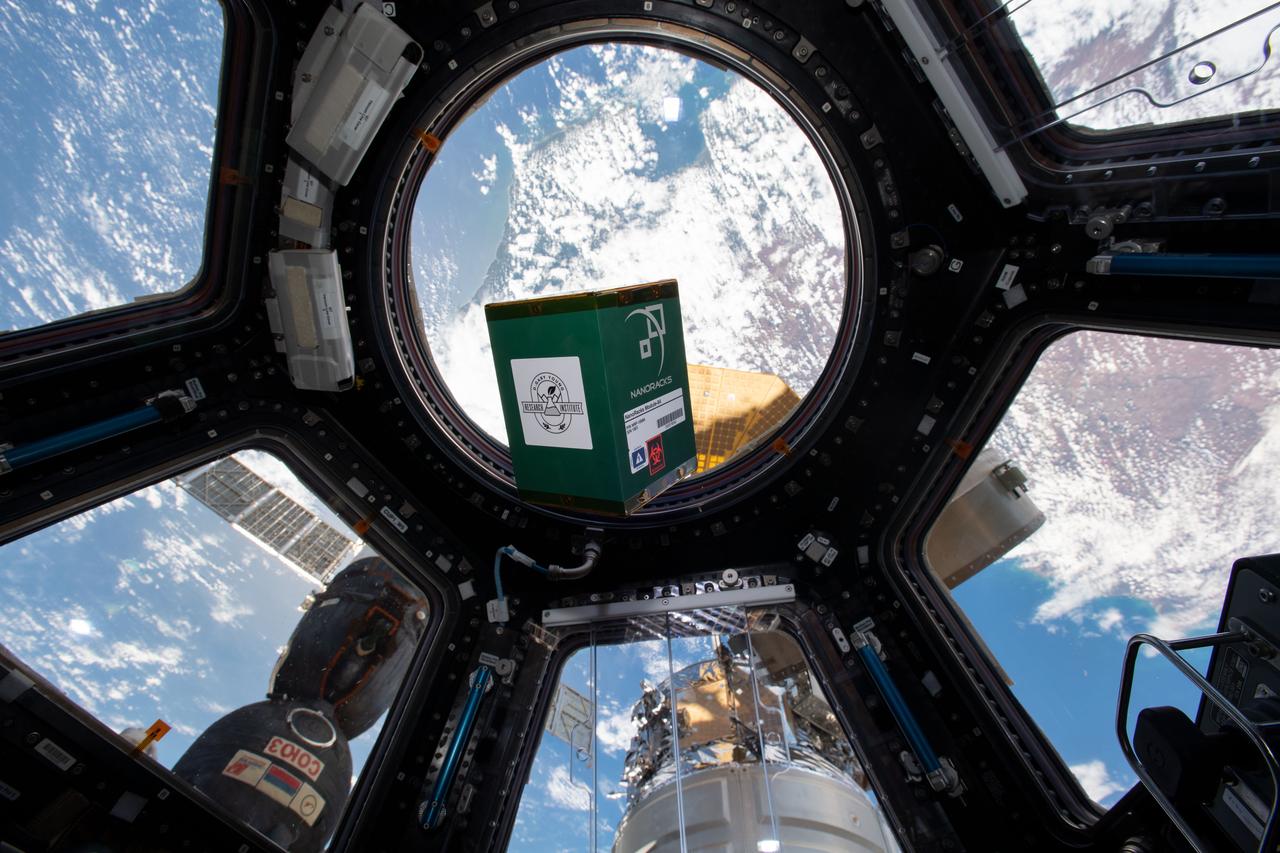
iss060e020116 (7/31/2019) --- A view of the NanoLab containing the Young Living investigation in the Cupola window aboard the International Space Station (ISS). The Young Living investigation studies the effects of exposure to the extraterrestrial environment on plant seeds and essential oils. Researchers expose seeds to the space environment then germinate and grow them to maturity on the ground and extract essential oils. The plant growth and composition of essential oils are compared to those from controls kept on the ground.
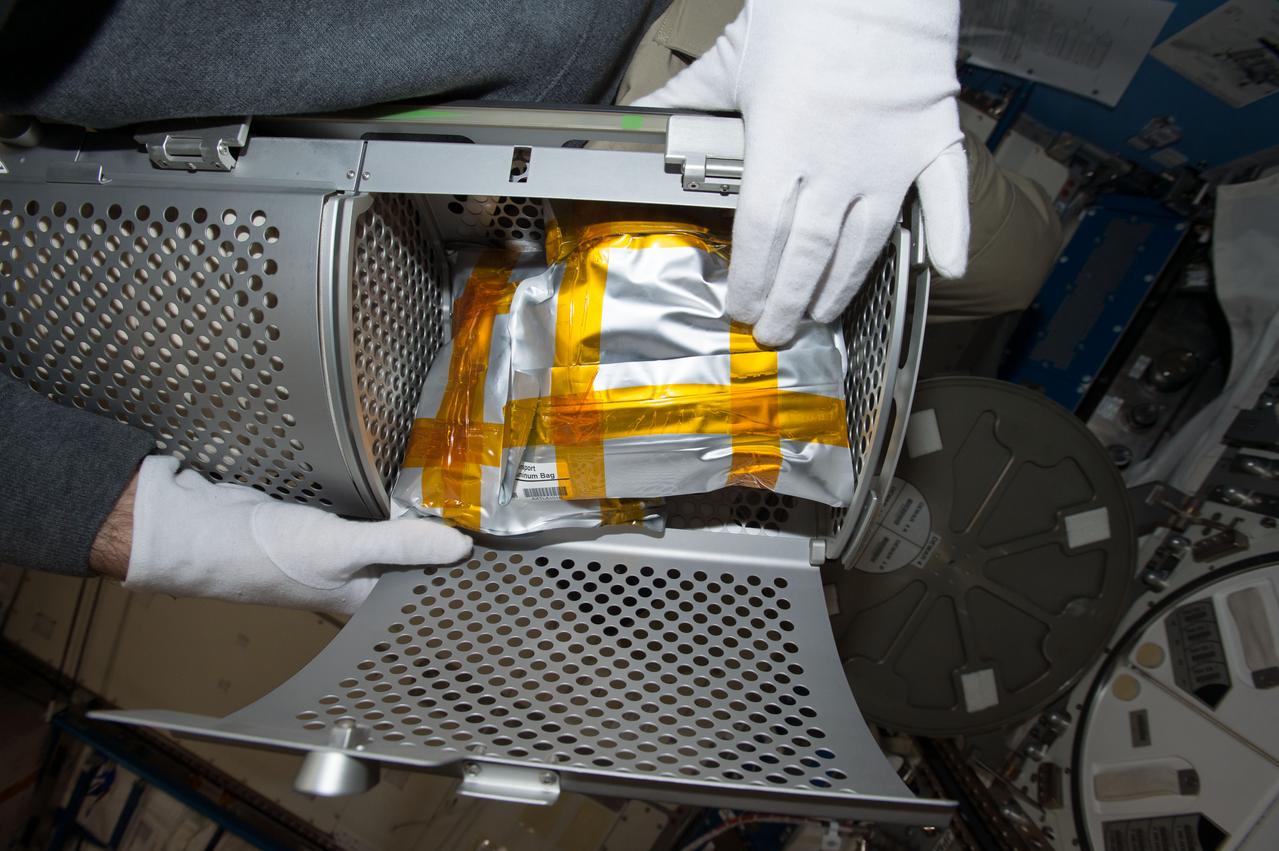
iss050e057655 (3/15/2020) --- Photographic documentation during Auxin Transport sample transfer to Minus Eighty-Degree Laboratory Freezer for ISS (MELFI) insertion. Studies on Gravity-Controlled Growth and Development in Plants Using True Microgravity Conditions (Auxin Transport) clarifies the role of auxins in pea and maize (corn) seedlings grown in microgravity, leading to new insight into how gravity, or the lack of gravity, affects plant development.

iss059e038845 (5/2/2019) --- Canadian Space Agency (CSA) astronaut David Saint-Jacques is photographed performing a reservoir fill on the Veggie Ponds facility in the Columbus module of the International Space Station (ISS). The primary goal of the Veggie PONDS hardware validation test is to demonstrate plant growth in a newly developed plant growing system, Passive Orbital Nutrient Delivery System (PONDS).
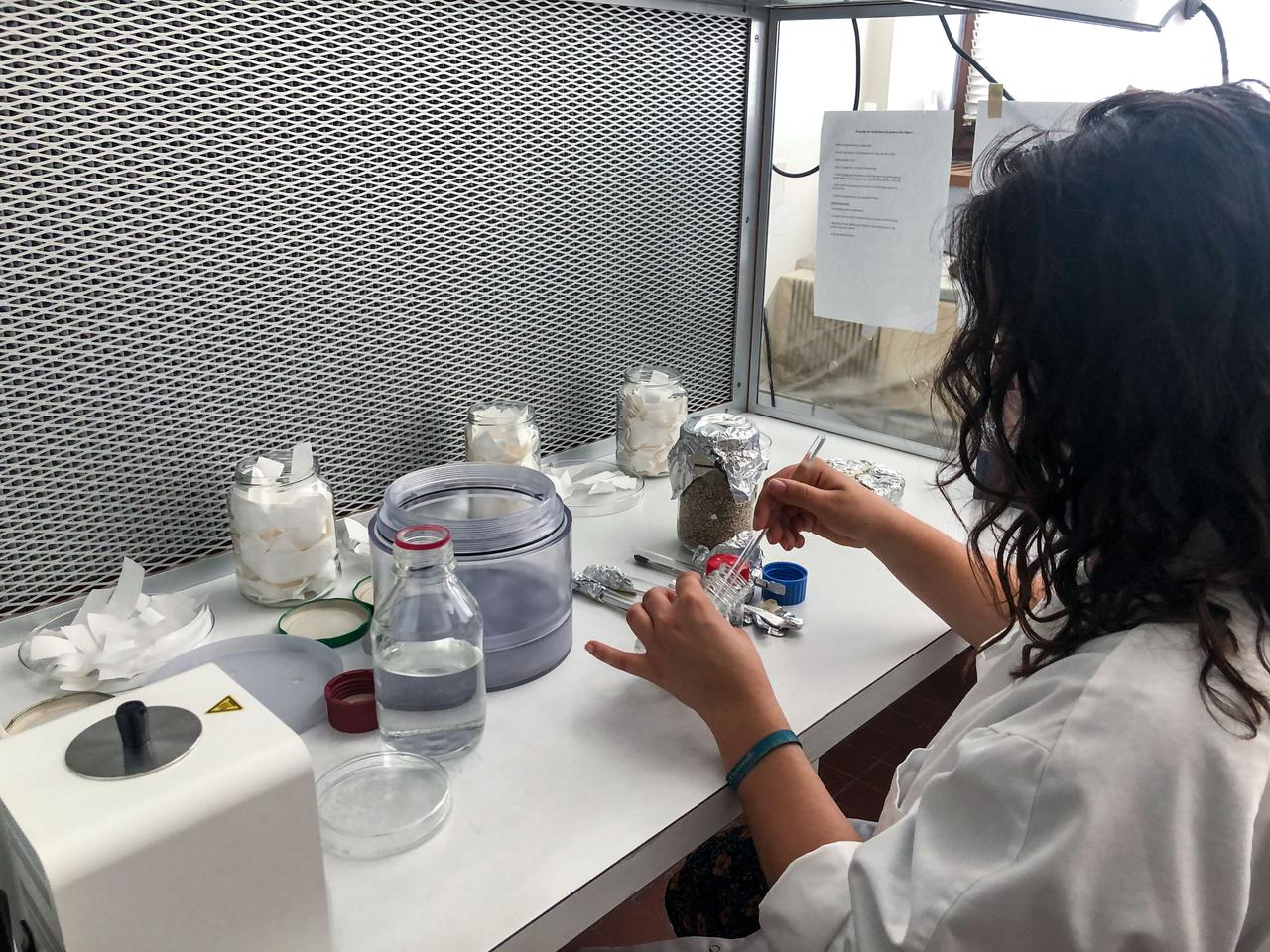
jsc2021e029977 (9/11/2020) --- A preflight biology test on the QM. Eve Teyssier (on the picture) is assembling the pot of the Eklosion capsule under sterile condition. The Eklosion investigation consist of a vase that is utilized by a crew member to grow a Marigold flower (Tagetes patula) aboard the ISS. The investigation takes place at the leisure of the crew member and helps to study the process of plant growth in space, as well as using a personally tended house plant in space to help establish a psychological link between the crew member aboard the ISS and Earth. Image courtesy of Eklo association.
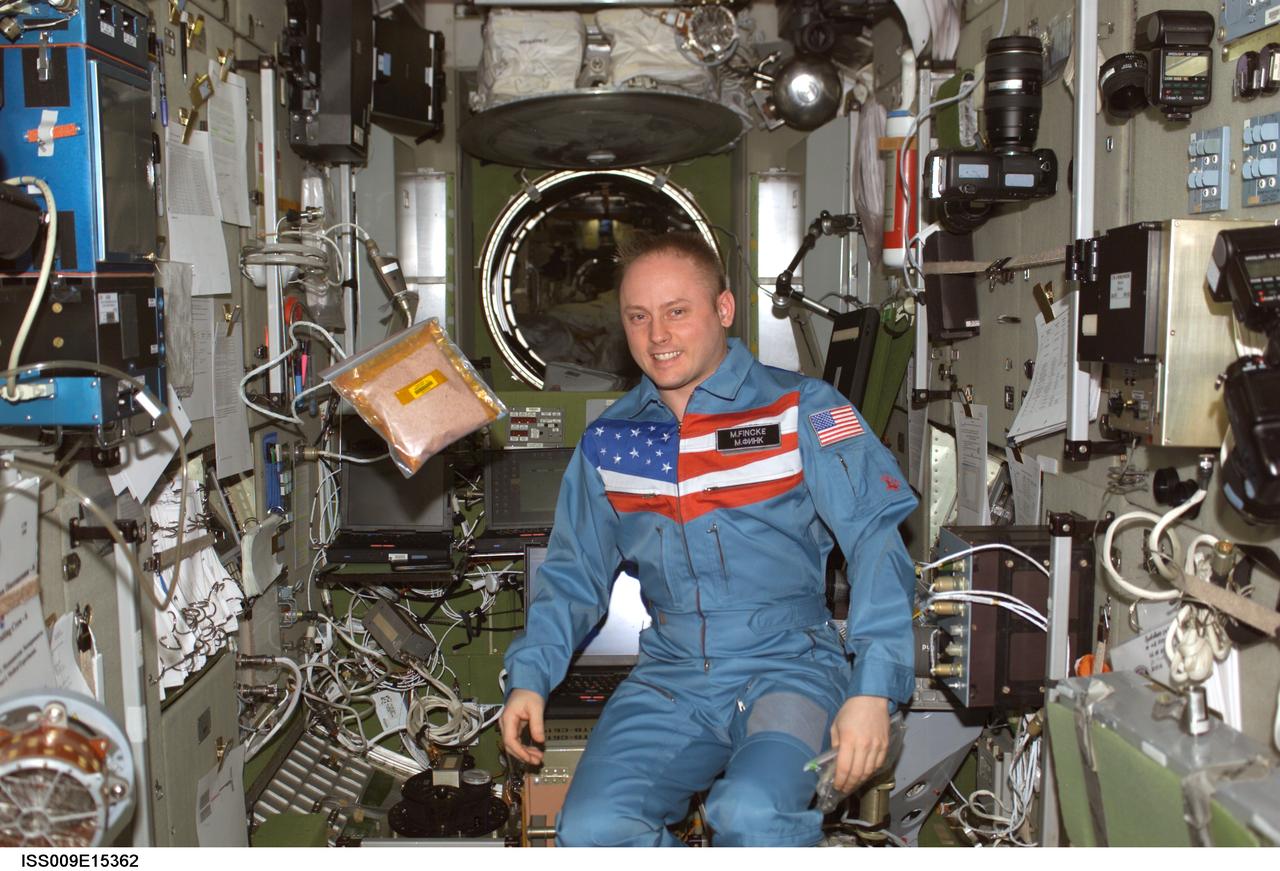
ISS009-E-15362 (17 July 2004) --- Astronaut Edward M. (Mike) Fincke, Expedition 9 NASA ISS science officer and flight engineer, is pictured in the Zvezda Service Module of the International Space Station (ISS). A bag of tomato seeds for the Tomatosphere II Project, an educational program sponsored by Canadian Space Agency (CSA), floats nearby. The seeds will be distributed to classrooms in Canada for use in plant growth experiments.
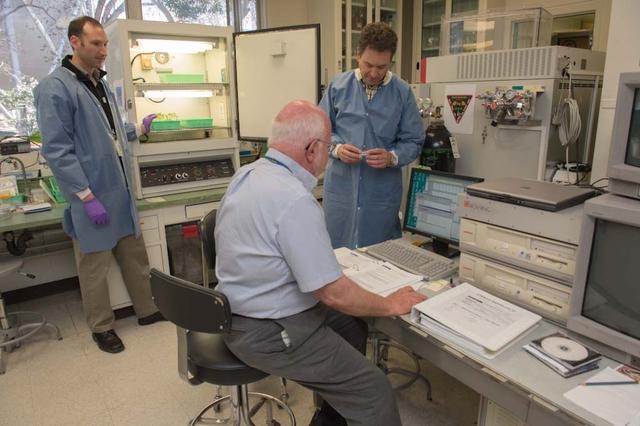
TROPI Seed Growth-1 payload (will fly to ISS on Space X 2) from left to right are Krisofer Vogelsong, Project Science Lead, Tropi SG-1, Lockheed Martin, NASA Ames, John Freeman Plant Scientist, Tropi SG-1, intrinsyx, NASA Ames, seated Dave Heathcote, ISS Payload Support, Lockheed Martin, NASA Ames
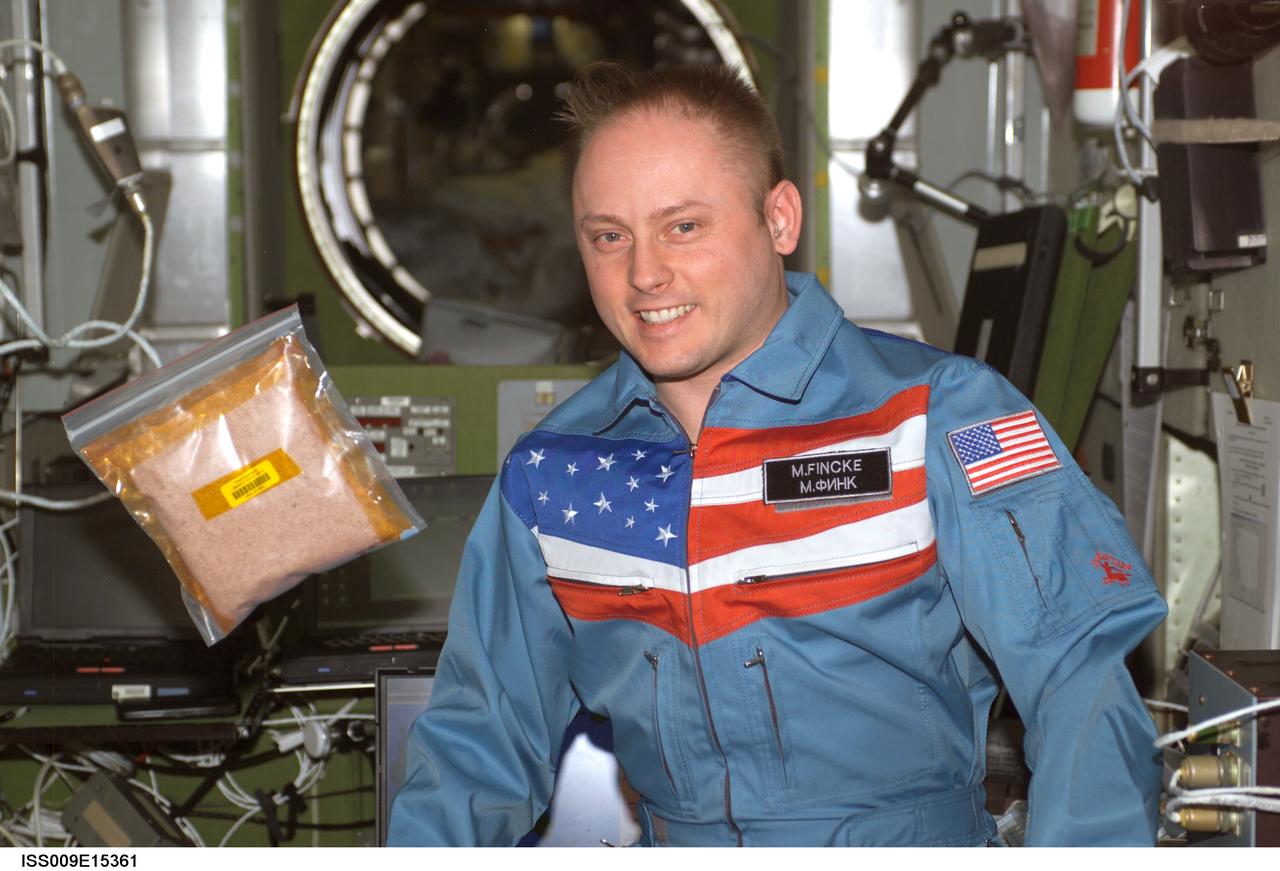
ISS009-E-15361 (17 July 2004) --- Astronaut Edward M. (Mike) Fincke, Expedition 9 NASA ISS science officer and flight engineer, is pictured in the Zvezda Service Module of the International Space Station (ISS). A bag of tomato seeds for the Tomatosphere II Project, an educational program sponsored by Canadian Space Agency (CSA), floats nearby. The seeds will be distributed to classrooms in Canada for use in plant growth experiments.
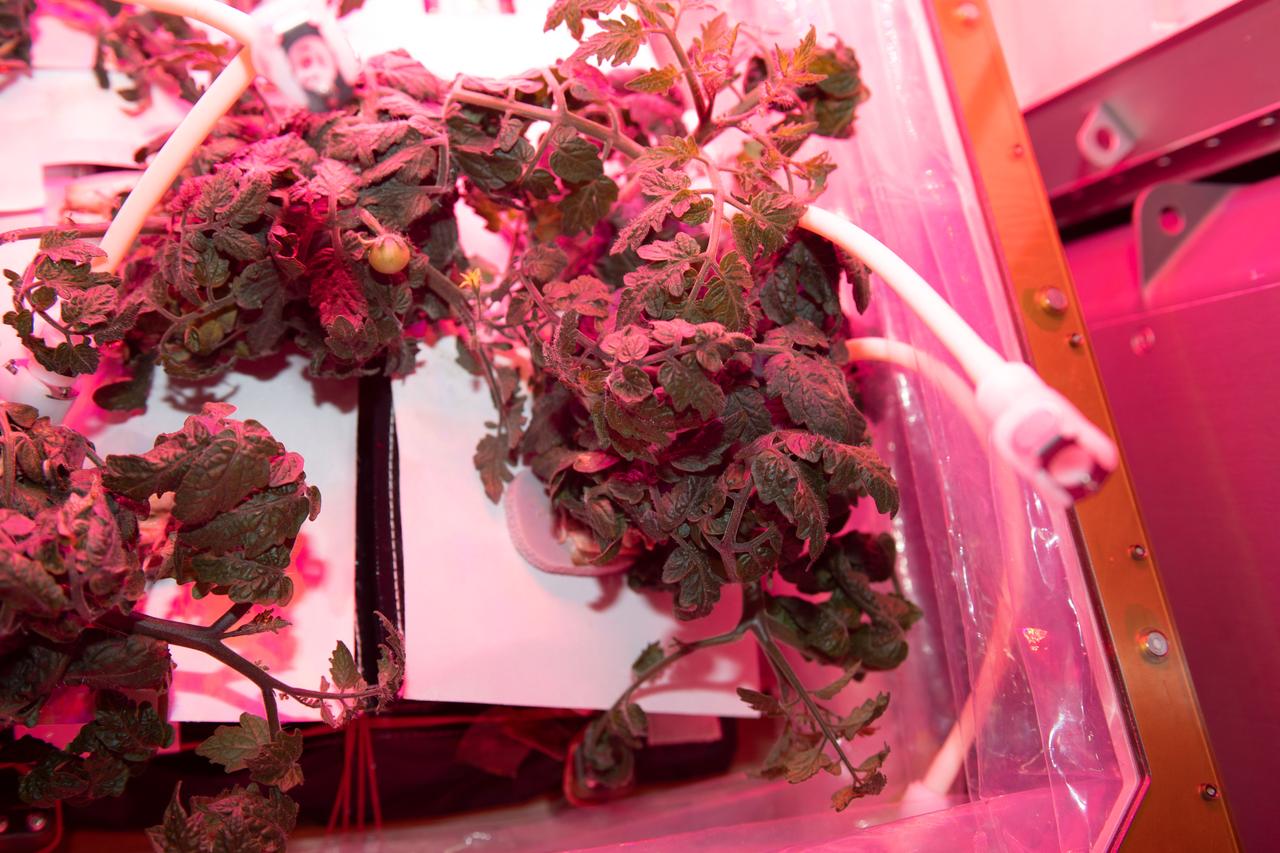
iss068e045298 (Feb. 5, 2023) --- A view of red dwarf tomato plants growing in the Veggie plant growth facility aboard the International Space Station as part of the Pick-and-Eat Salad-Crop Productivity, Nutritional Value, and Acceptability to Supplement the ISS Food System (Veg-05) investigation. Veg-05 is the next step in efforts to address the need for a continuous fresh-food production system in space. This experiment focuses on studying the impact of light quality and fertilizer on fruit production, microbial safety, nutritional value, taste acceptability by the astronauts, and the overall behavioral health benefits of having plants and fresh food in space.
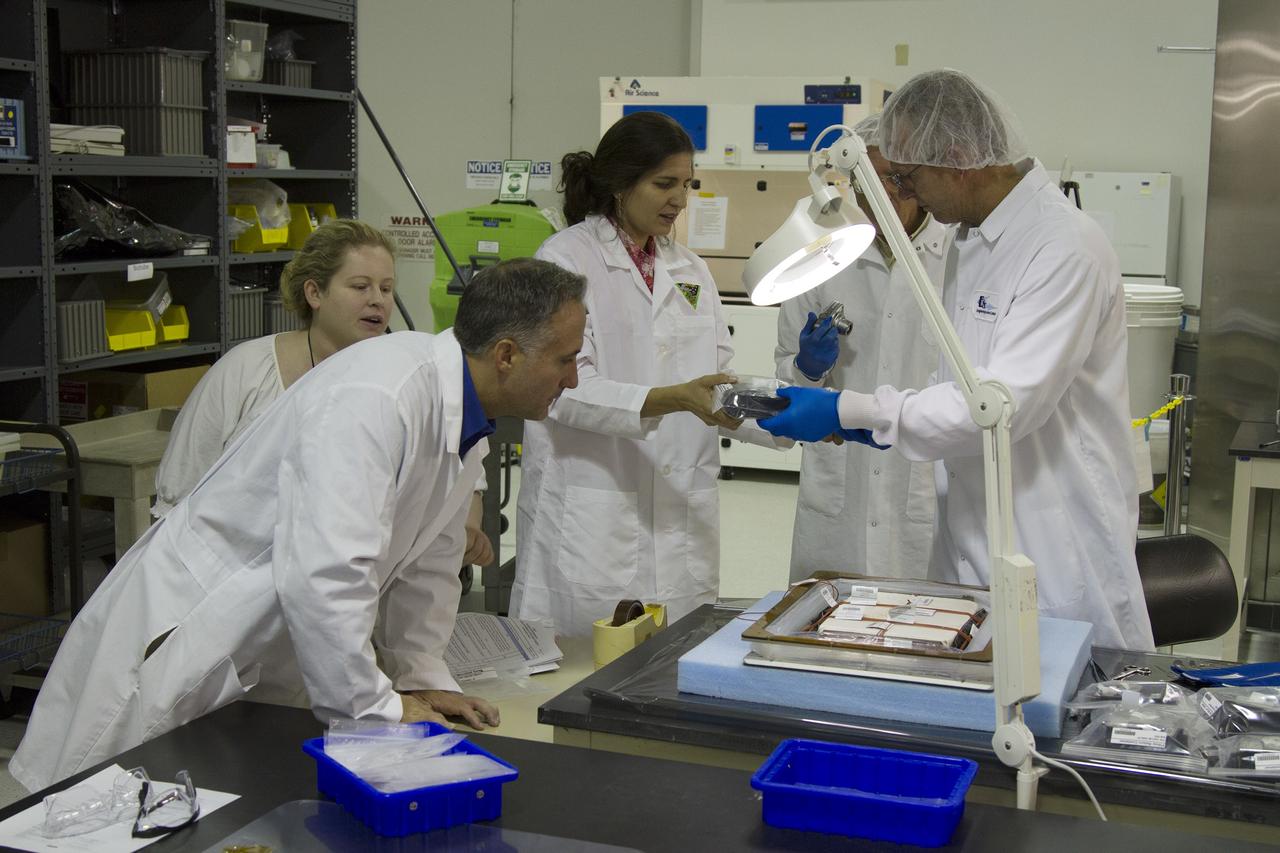
CAPE CANAVERAL, Fla. – At far right, Jim Smodell, a technician with SGT, shows a plant pillow from the Veggie plant growth system to Gioia Massa, NASA payload scientist for Veggie. Partially hidden behind Smodell is Chuck Spern, lead project engineer with QinetiQ North America on the Engineering Services Contract. At left is Trent Smith, NASA project manager in the ISS Ground Processing and Research Project Office, and Nicole Dufour, NASA Engineering and Technology Directorate. They are in the Payload Development Laboratory at the Space Station Processing Facility, or SSPF, at NASA's Kennedy Space Center in Florida. The plant pillows were removed from the Veggie plant growth system inside a control chamber at the SSPF. The growth chamber was used as a control unit for Veggie and procedures were followed identical to those being performed on Veggie and the Veg-01 experiment on the International Space Station. The chamber mimicked the temperature, relative humidity and carbon dioxide concentration of those in the Veggie unit on the space station. Veggie and Veg-01 were delivered to the space station aboard the SpaceX-3 mission. Veggie is the first fresh food production system delivered to the station. Six plant pillows, each containing outredgeous red romaine lettuce seeds and a root mat were inserted into Veggie. The plant chamber's red, blue and green LED lights were activated. The plant growth was monitored for 33 days. On June 10, at the end of the cycle, the plants were carefully harvested, frozen and stored for return to Earth by Expedition 39 flight engineer and NASA astronaut Steve Swanson. Photo credit: NASA/Frankie Martin

ISS022-E-011304 (15 Dec. 2009) --- NASA astronaut Jeffrey Williams, Expedition 22 commander, conducts a daily status check of the Advanced Plant Experiments on Orbit (APEX) experiment in the Kibo laboratory of the International Space Station. During each check, Williams looks for health and color of the plants, since the Cambium plants are removed from the Advanced Biological Research System (ABRS). When completed, the APEX-Cambium payload in conjunction with the NASA-sponsored Transgenic Arabidopsis Gene Expression System (TAGES) will determine the role of gravity in Cambium wood cell development and demonstrate non-destructive reporter gene technology and investigate spaceflight plant stress. APEX-Cambium provides NASA and the ISS community a permanent controlled environment capability to support growth of various organisms (i.e. whole plants).
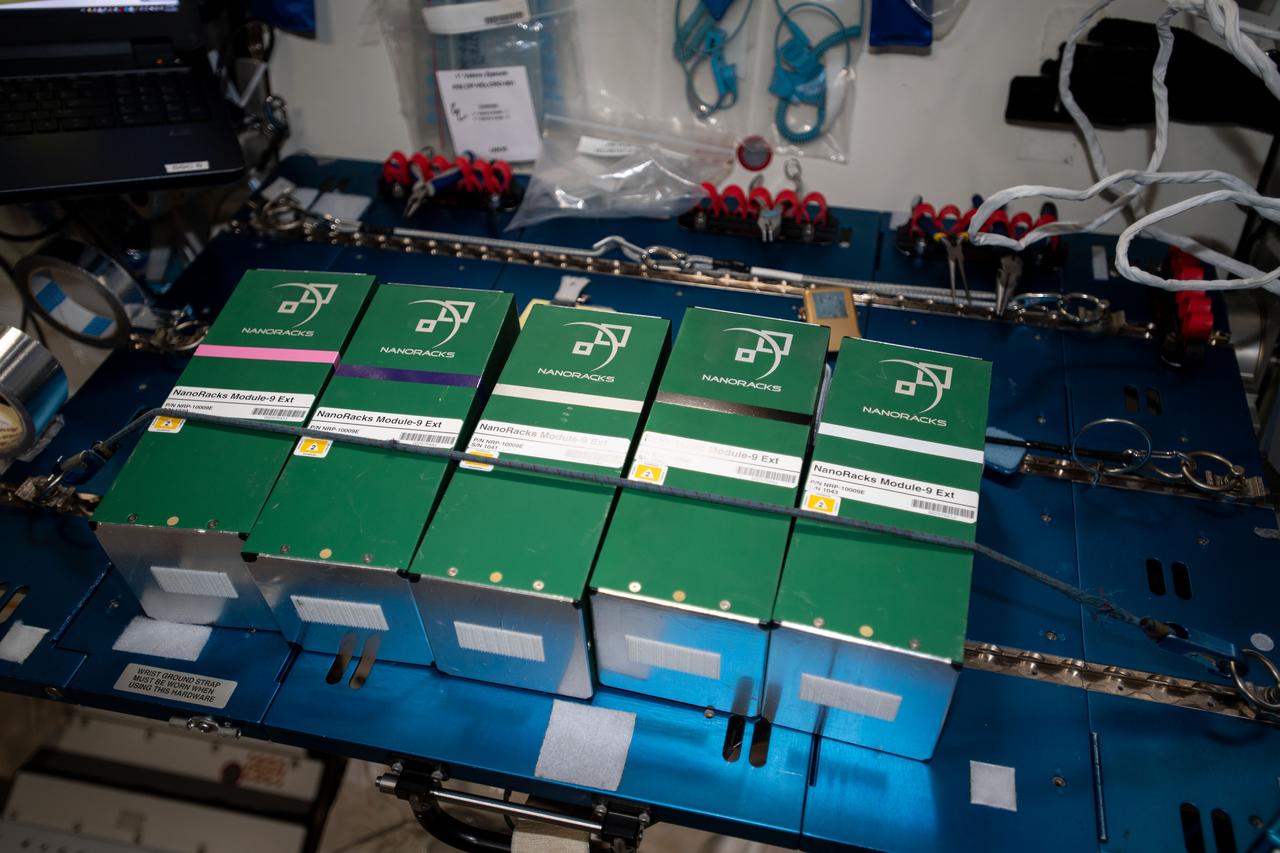
iss060e035405 (8/13/2019) --- A view the NanoRacks-NCESSE-Gemini NanoRacks-National Center for Earth and Space Science-Gemini (SSEP Mission 13) - Part of NanoRacks Module-9 Ext. aboard the International Space Station (ISS). The experiments range from examinations of water filtration and purification to synthetic soil production, rust formation, antibiotic effectiveness, growth and development of microacquatic organisms, and growth of plant, fungi, and bacteria. Each was chosen from more than 3,000 entries submitted by more than 23,000 U.S., Canadian, and Brazilian students. The experiments use NanoRacks MixStix, miniature laboratories activated by space station crew and eventually returned to the student teams on Earth for analysis.
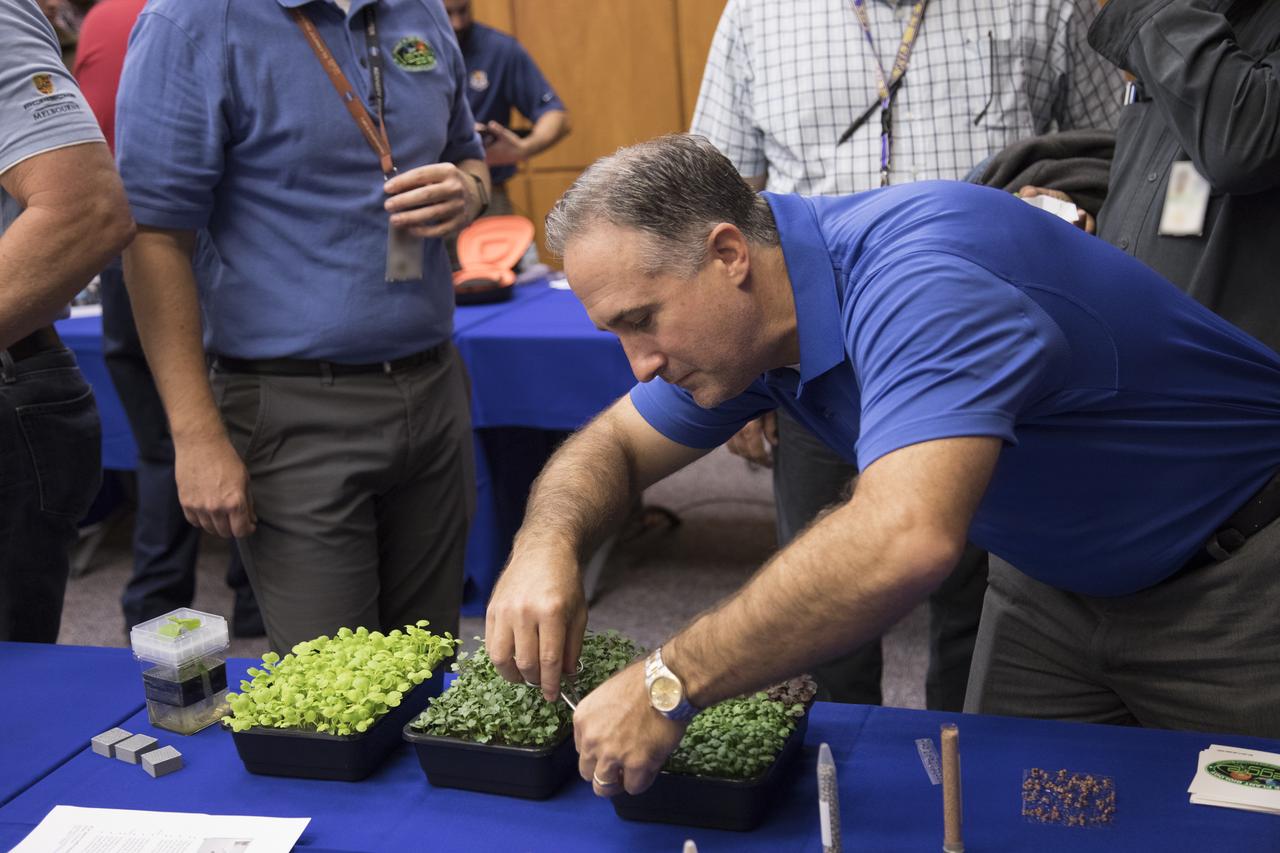
Trent Smith, a project manager in the ISS Exploration Research and Technology Program, displays microgreens grown in the same space dirt (arcillite) that is used in the plant pillows for the Veggie plant growth system on the International Space Station and in a 3-D-printed plastic matrix during the 2017 Innovation Expo showcase at NASA's Kennedy Space Center in Florida. The purpose of the annual two-day event is to help foster innovation and creativity among the Kennedy workforce. The event included several keynote speakers, training opportunities, an innovation showcase and the KSC Kickstart competition.

Commander Steve Swanson harvests plants for the VEG-01 investigation. He is harvesting them on the Maintenance Work Area (MWA) in the Node 2/Harmony. The Veg-01 hardware validation test investigation utilizes the Veggie facility on ISS. This investigation will assess on-orbit function and performance of the Veggie,and focus on the growth and development of Outredgeous Lettuce (Lactuca sativa ) seedlings in the spaceflight environment and the effects of the spaceflight environment on composition of microbial flora on the Veggie-grown plants and the Veggie facility. Lettuce plants are harvested on-orbit, frozen at <-80oC and returned to the ground for post-flight evaluation. Microbial sampling swabs will be taken of the Veggie facility and plant material, frozen and returned to the ground for environmental microbiological examination. Rooting pillows and water sample syringes will also be returned for microbial sampling and root analysis.
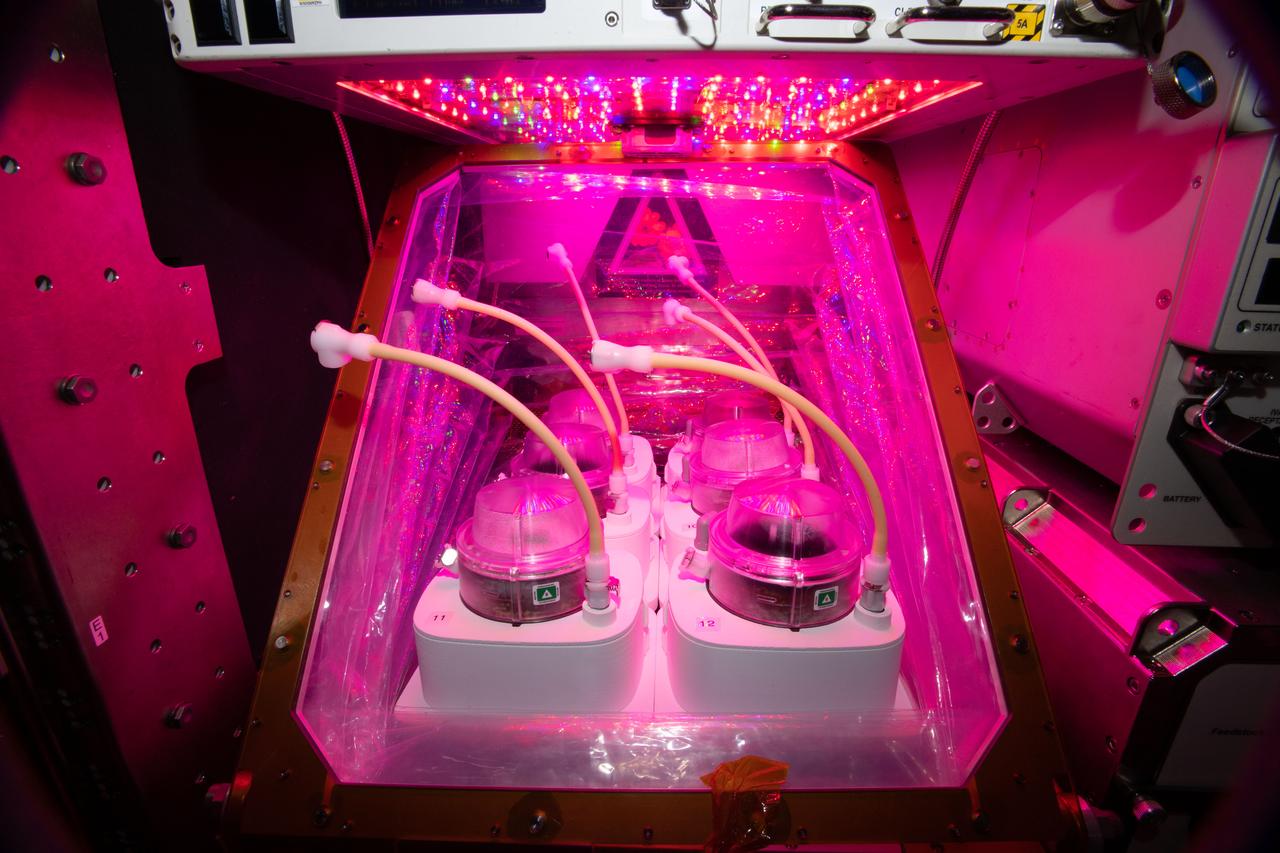
iss062e112685 (3/25/2020) --- Documentation of the Veggie Ponds Modules while module is in Veggie Bellows. Veggie PONDS uses a newly developed passive nutrient delivery system and the Veggie plant growth facility aboard the International Space Station (ISS) to cultivate lettuce and mizuna greens which are to be harvested on-orbit, and consumed, with samples returned to Earth for analysis.
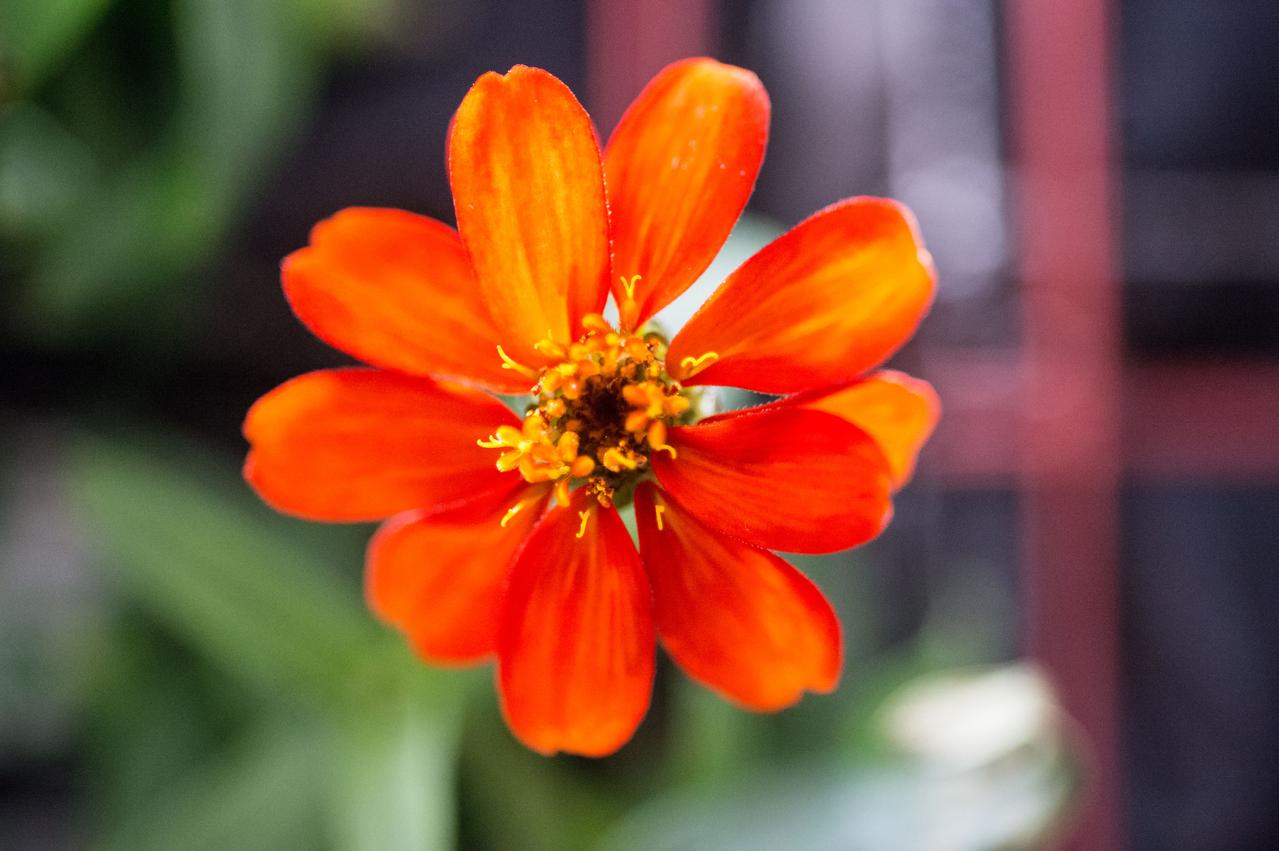
iss046e017204 (1/22/2016) --- Close-up view of Zinnia grown as part of VEG-01 experiment in the Columbus module aboard the International Space Station (ISS). The Veg-01 investigation is used to assess on-orbit function and performance of the Veggie facility, focusing on the growth and development of seedlings in the spaceflight environment and the composition of microbial flora on the plants and the facility. For this run, Zinnias were grown for 60 days and produced flowers.
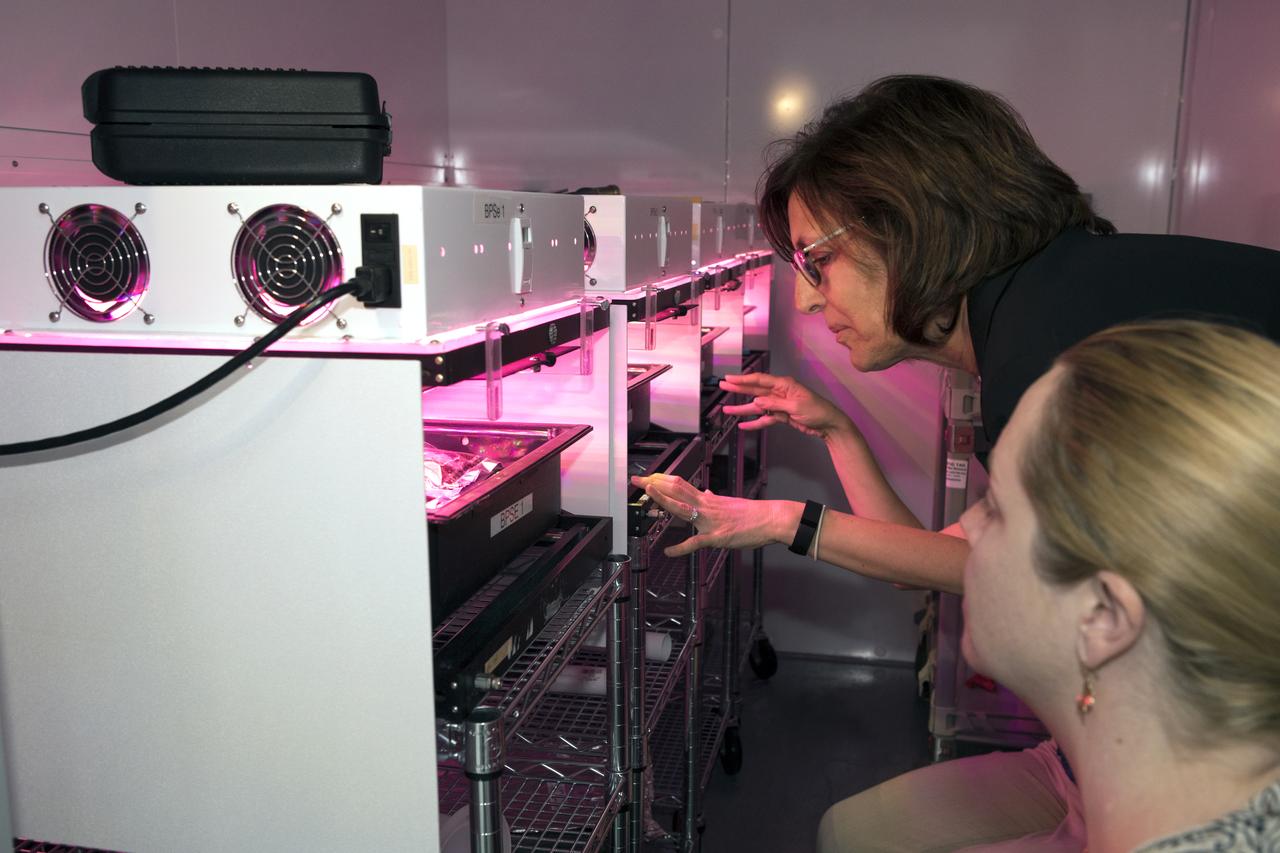
Robyn Gatens, left, deputy director, ISS Division and system capability leader for Environmental Control and Life Support Systems (ECLSS) at NASA Headquarters in Washington, tours laboratories in the Space Station Processing Facility at the agency's Kennedy Space Center in Florida, on June 13, 2018. To her right is Molly Anderson, deputy ECLSS capability lead at Johnson Space Center in Houston. They are viewing plant growth chambers and seeing firsthand some of the capabilities in the center's Exploration Research and Technology Programs.
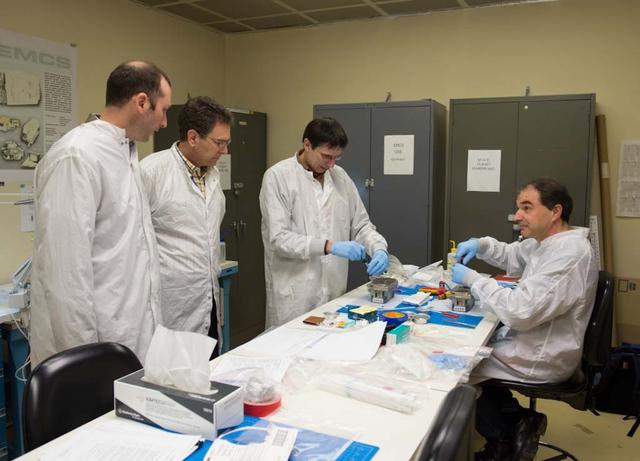
TROPI Seed Growth-1 payload (will fly to ISS on Space X 2) from left to right are Krisofer Vogelsong, Project Science Lead, Tropi SG-1, Lockheed Martin, NASA Ames, John Freeman Plant Scientist, Tropi SG-1, intrinsyx, NASA Ames, Reinhard Born, Europeon Modular Culitivation System Payload Engineering Manager standing and Thomas Neidermaier, Europeon Modular Culitivation System Payload Intergration Manager both from Astrium Space Transportaton ESA, Friedrichshafen, Germany.
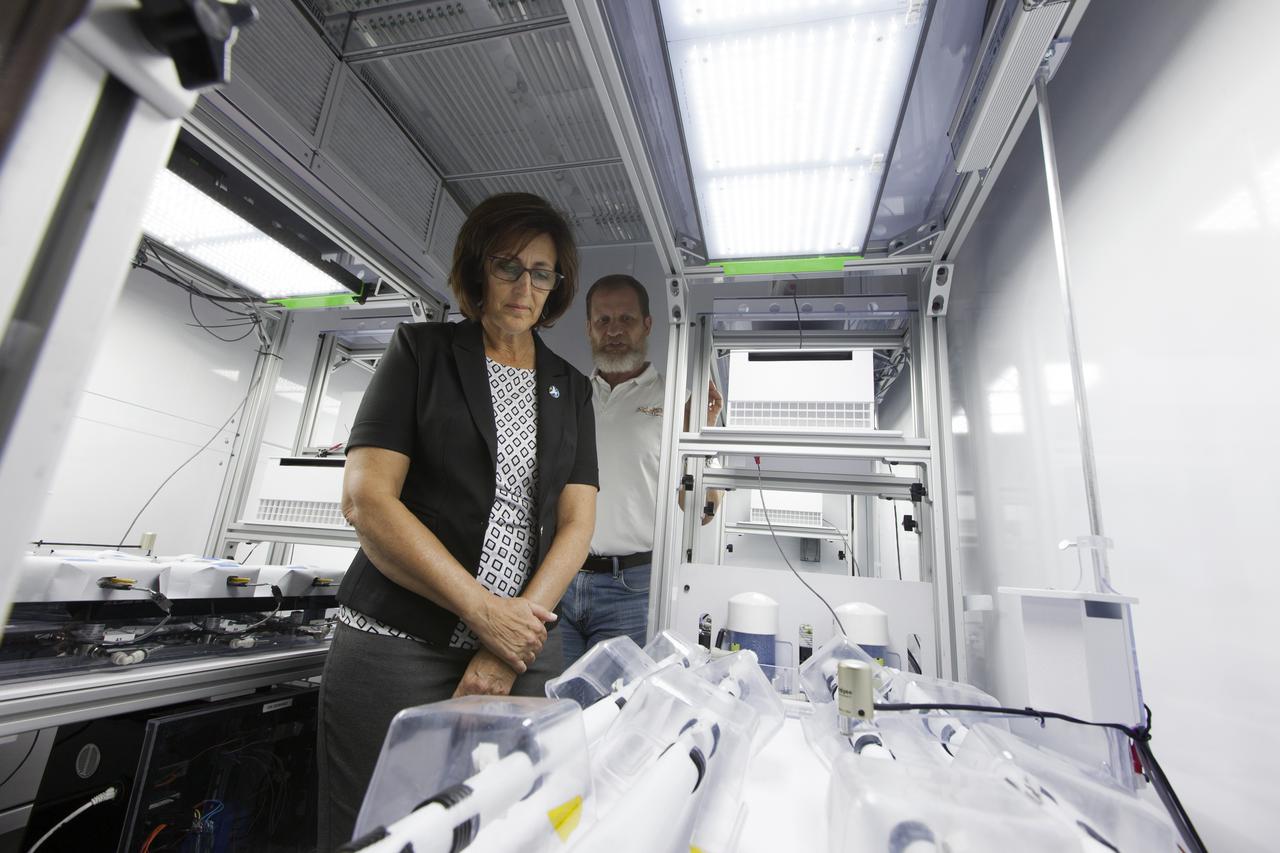
Robyn Gatens, left, deputy director, ISS Division and system capability leader for Environmental Control and Life Support Systems (ECLSS) at NASA Headquarters in Washington, tours laboratories in the Space Station Processing Facility at the agency's Kennedy Space Center in Florida, on June 13, 2018. Standing behind her is Ralph Fritsche, long-duration food production project manager at Kennedy. Gatens is viewing plant growth chambers and seeing firsthand some of the capabilities in the center's Exploration Research and Technology Programs.
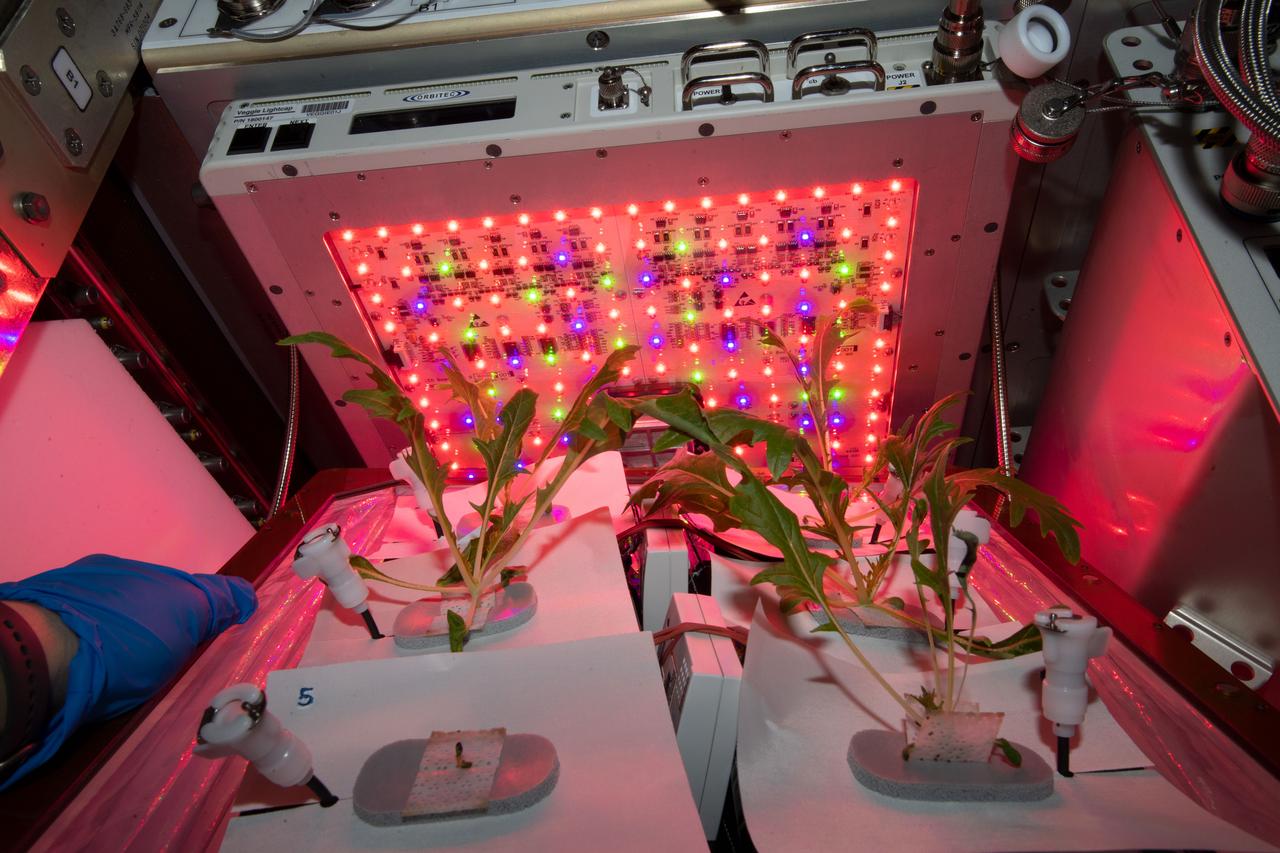
iss059e117376 (6/22/2019) --- Photo documentation taken during VEG-04 Water Check and Mass Measurement Device Operations aboard the International Space Station (ISS). The crew checks plants for water and waters if needed then if there are any leafs that have been broken off. The research of Veg-04A focuses on the impact of light quality and fertilizer on leafy crop growth for a 28-day grow-out.
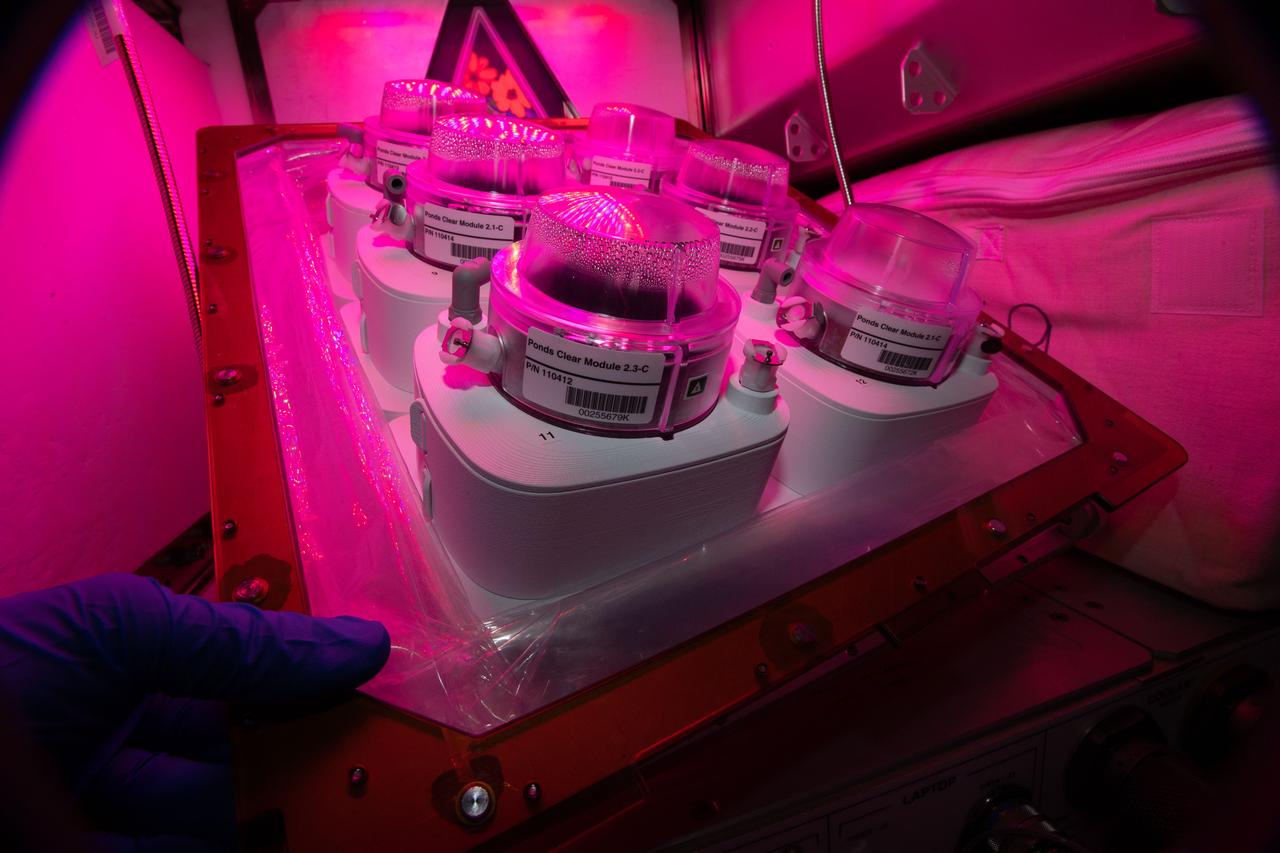
iss059e035838 (4/28/2019) --- Documentation taken during removal of Germination Cap from each Veggie Ponds Module while module is in Veggie Bellows. Veggie PONDS uses a newly developed passive nutrient delivery system and the Veggie plant growth facility aboard the International Space Station (ISS) to cultivate lettuce and mizuna greens which are to be harvested on-orbit, and consumed, with samples returned to Earth for analysis.
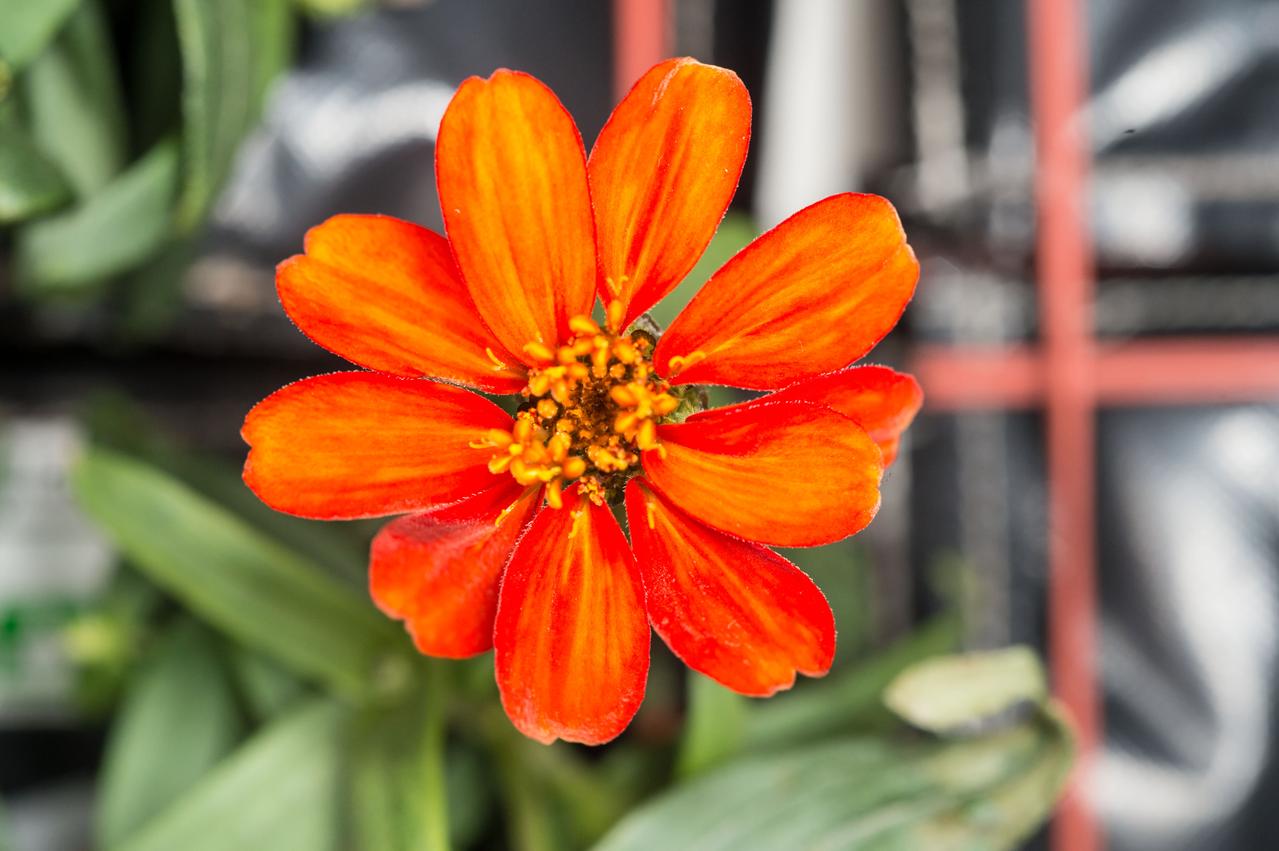
iss046e017198 (1/22/2016) --- Close-up view of Zinnia grown as part of VEG-01 experiment in the Columbus module aboard the International Space Station (ISS). The Veg-01 investigation is used to assess on-orbit function and performance of the Veggie facility, focusing on the growth and development of seedlings in the spaceflight environment and the composition of microbial flora on the plants and the facility. For this run, Zinnias were grown for 60 days and produced flowers.
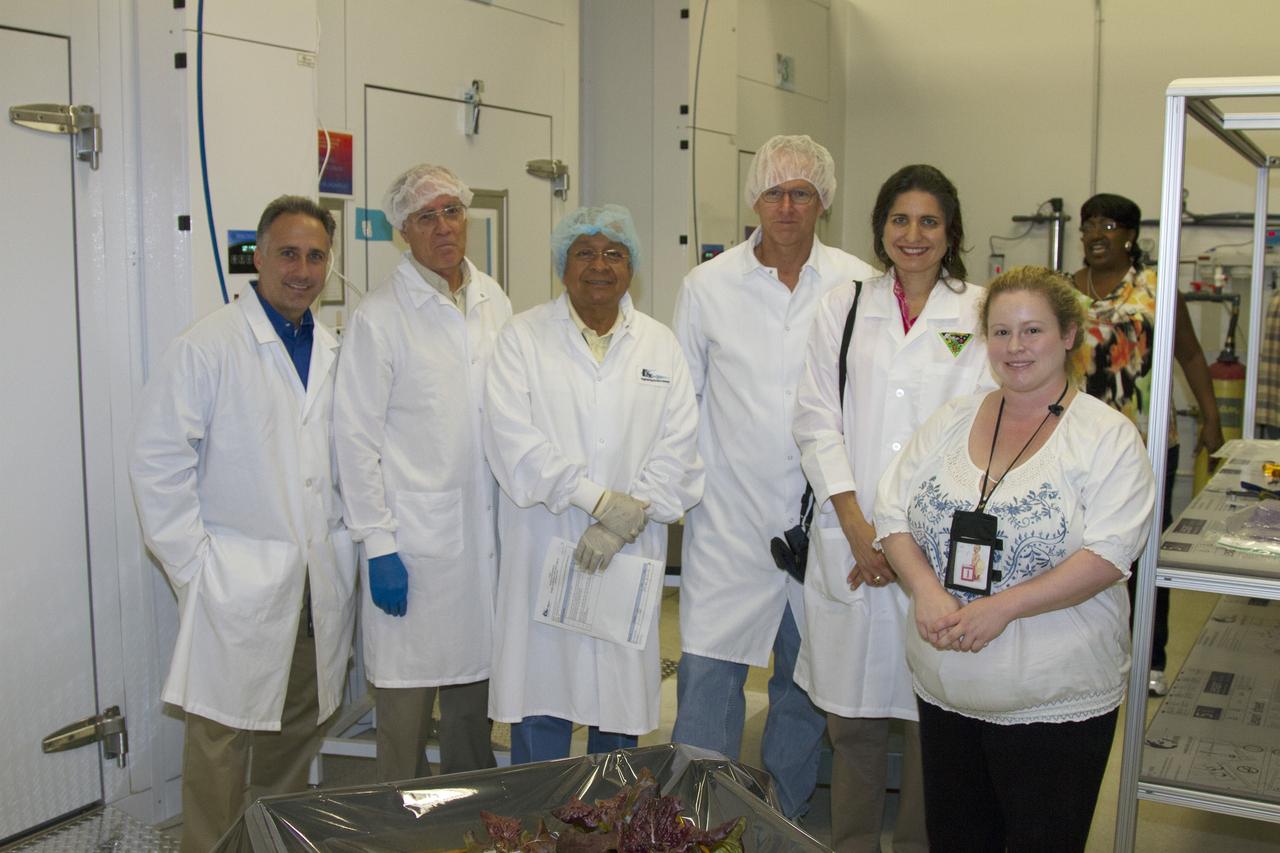
CAPE CANAVERAL, Fla. – The plant pillows containing the outredgeous red lettuce leaves have been removed from the Veggie plant growth system inside a control chamber at the Space Station Processing Facility at NASA's Kennedy Space Center in Florida. From left, are Trent Smith, NASA project manager in the ISS Ground Processing and Research Project Office, Chuck Spern, lead project engineer with QinetiQ North America on the Engineering Services Contract, George Guerra, quality control engineer with QinetiQ North America, Jim Smodell, a technician with SGT, Gioia Massa, NASA payload scientist for Veggie, and Nicole Dufour, NASA Engineering and Technology. The growth chamber was used as a control unit for Veggie and procedures were followed identical to those being performed on Veggie and the Veg-01 experiment on the International Space Station. The chamber mimicked the temperature, relative humidity and carbon dioxide concentration of those in the Veggie unit on the space station. Veggie and Veg-01 were delivered to the space station aboard the SpaceX-3 mission. Veggie is the first fresh food production system delivered to the station. Six plant pillows, each containing outredgeous red romaine lettuce seeds and a root mat were inserted into Veggie. The plant chamber's red, blue and green LED lights were activated. The plant growth was monitored for 33 days. On June 10, at the end of the cycle, the plants were carefully harvested, frozen and stored for return to Earth by Expedition 39 flight engineer and NASA astronaut Steve Swanson. Photo credit: NASA/Frankie Martin
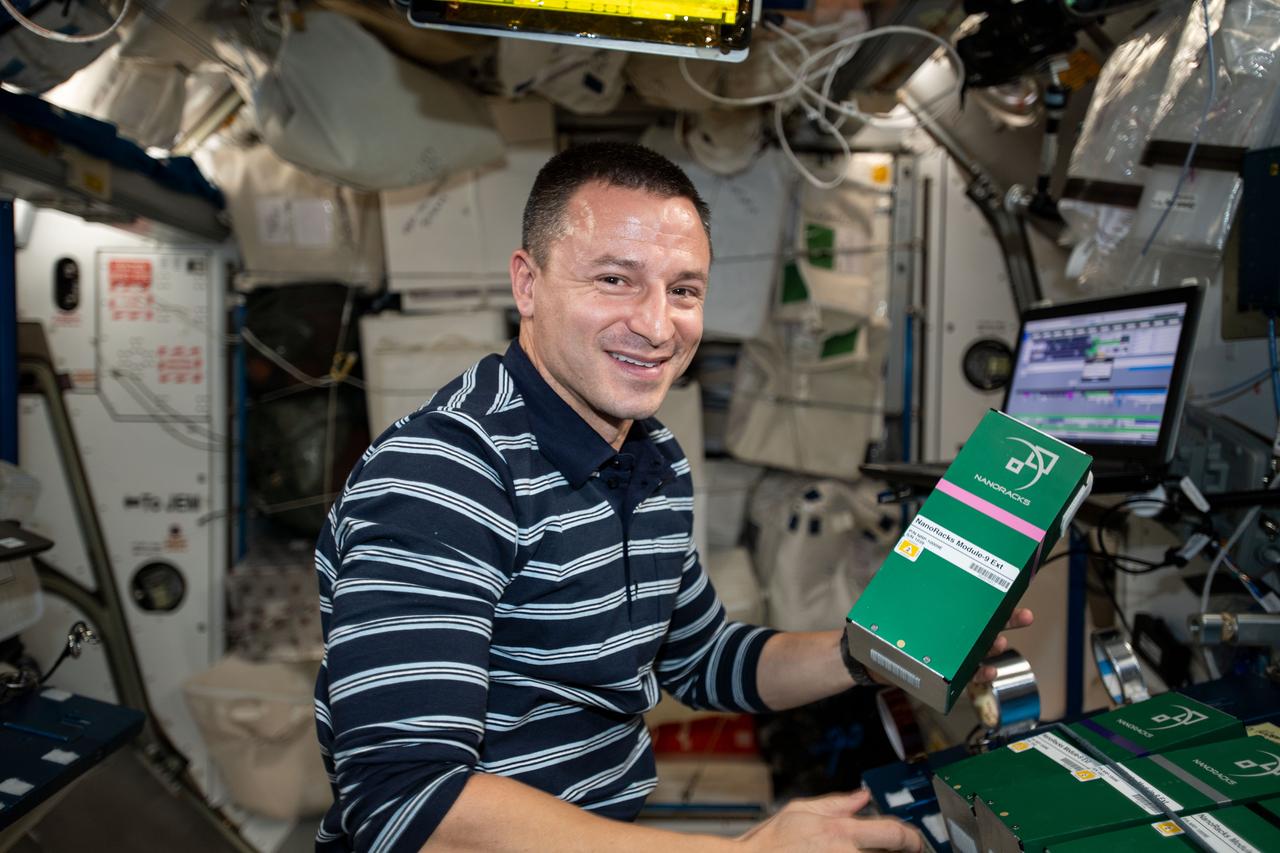
iss060e035409 (8/13/2019) --- A view of NASA astronaut Drew Morgan during the deactivation and/or shaking designated mixture tubes of NanoRacks-NCESSE-Gemini NanoRacks-National Center for Earth and Space Science-Gemini (SSEP Mission 13) - Part of NanoRacks Module-9 Ext. aboard the International Space Station (ISS). The experiments range from examinations of water filtration and purification to synthetic soil production, rust formation, antibiotic effectiveness, growth and development of microacquatic organisms, and growth of plant, fungi, and bacteria. Each was chosen from more than 3,000 entries submitted by more than 23,000 U.S., Canadian, and Brazilian students. The experiments use NanoRacks MixStix, miniature laboratories activated by space station crew and eventually returned to the student teams on Earth for analysis.
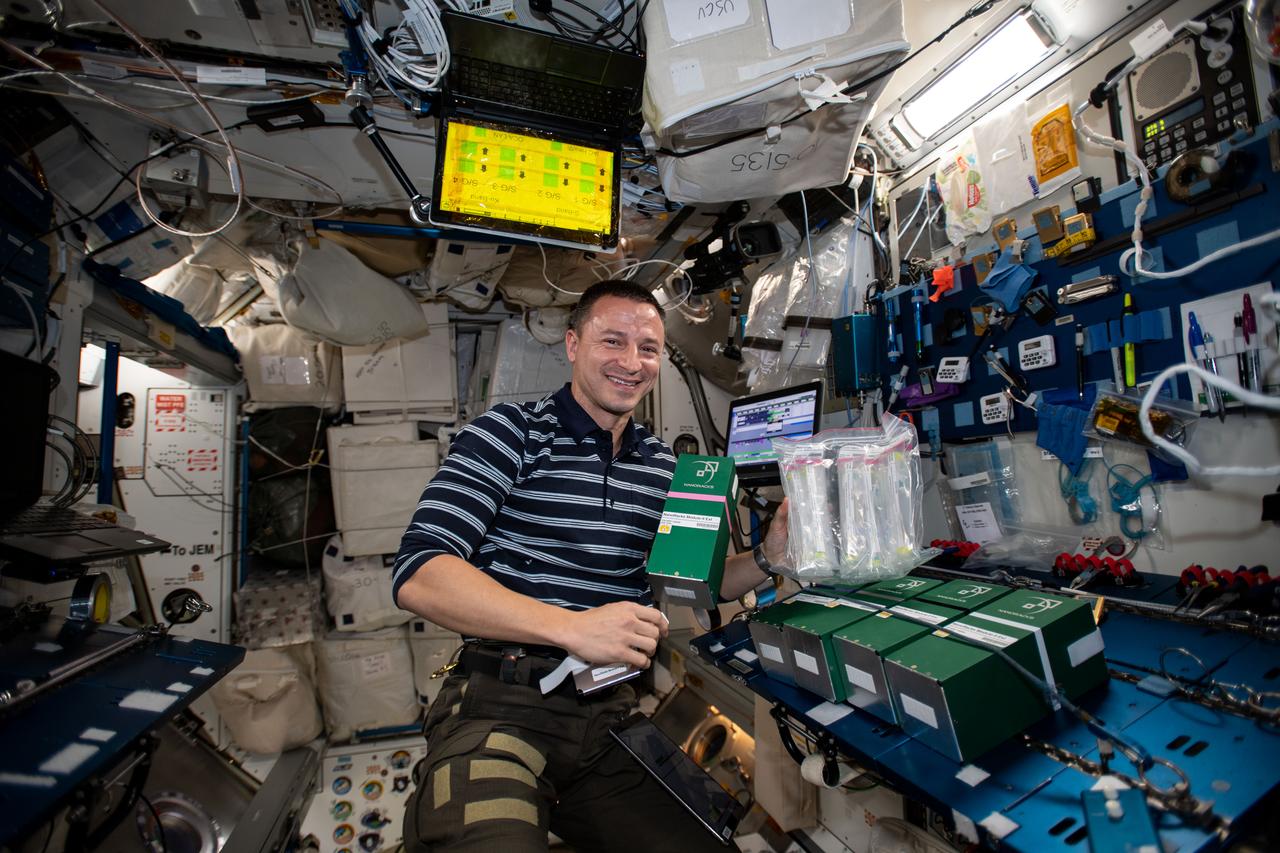
iss060e035415 8/13/2019) --- A view of NASA astronaut Drew Morgan during the deactivation and/or shaking designated mixture tubes of NanoRacks-NCESSE-Gemini NanoRacks-National Center for Earth and Space Science-Gemini (SSEP Mission 13) - Part of NanoRacks Module-9 Ext. aboard the International Space Station (ISS). The experiments range from examinations of water filtration and purification to synthetic soil production, rust formation, antibiotic effectiveness, growth and development of microacquatic organisms, and growth of plant, fungi, and bacteria. Each was chosen from more than 3,000 entries submitted by more than 23,000 U.S., Canadian, and Brazilian students. The experiments use NanoRacks MixStix, miniature laboratories activated by space station crew and eventually returned to the student teams on Earth for analysis.
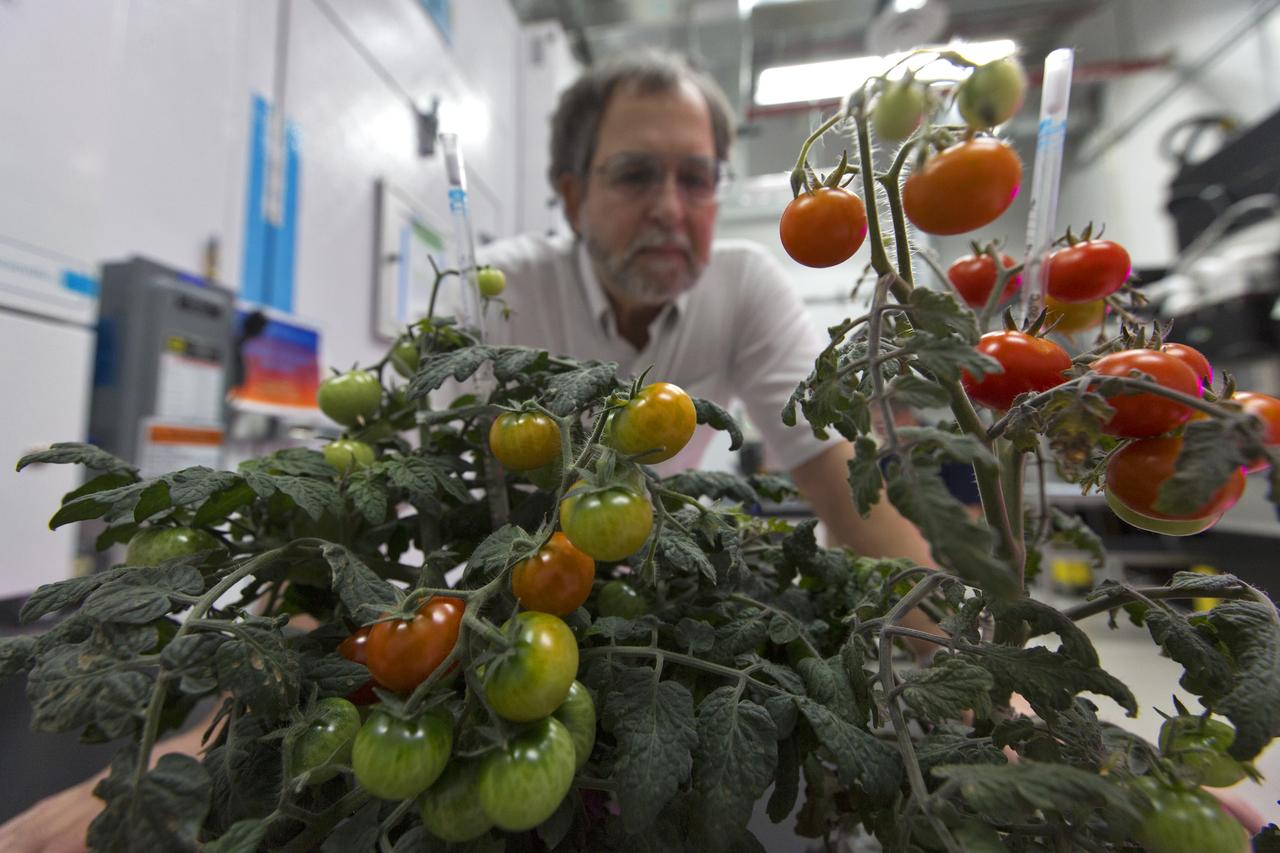
Howard Levine, Ph.D., a research scientist at NASA's Kennedy Space Center in Florida, reviews the growth of several tomato plants in a laboratory in the Space Station Processing Facility. The tomato plants are growing in the Veggie Passive Orbital Nutrient Delivery System (PONDS). Veggie PONDS is a direct follow-on to the Veg-01 and Veg-03 hardware and plant growth validation tests. The primary goal of this newly developed plant growing system, Veggie PONDS, is to demonstrate uniform plant growth. PONDS units have features that are designed to mitigate microgravity effects on water distribution, increase oxygen exchange and provide sufficient room for root zone growth. PONDS is planned for use during Veg-04 and Veg-05 on the International Space Station after the Veggie PONDS Validation flights on SpaceX-14 and OA-9.
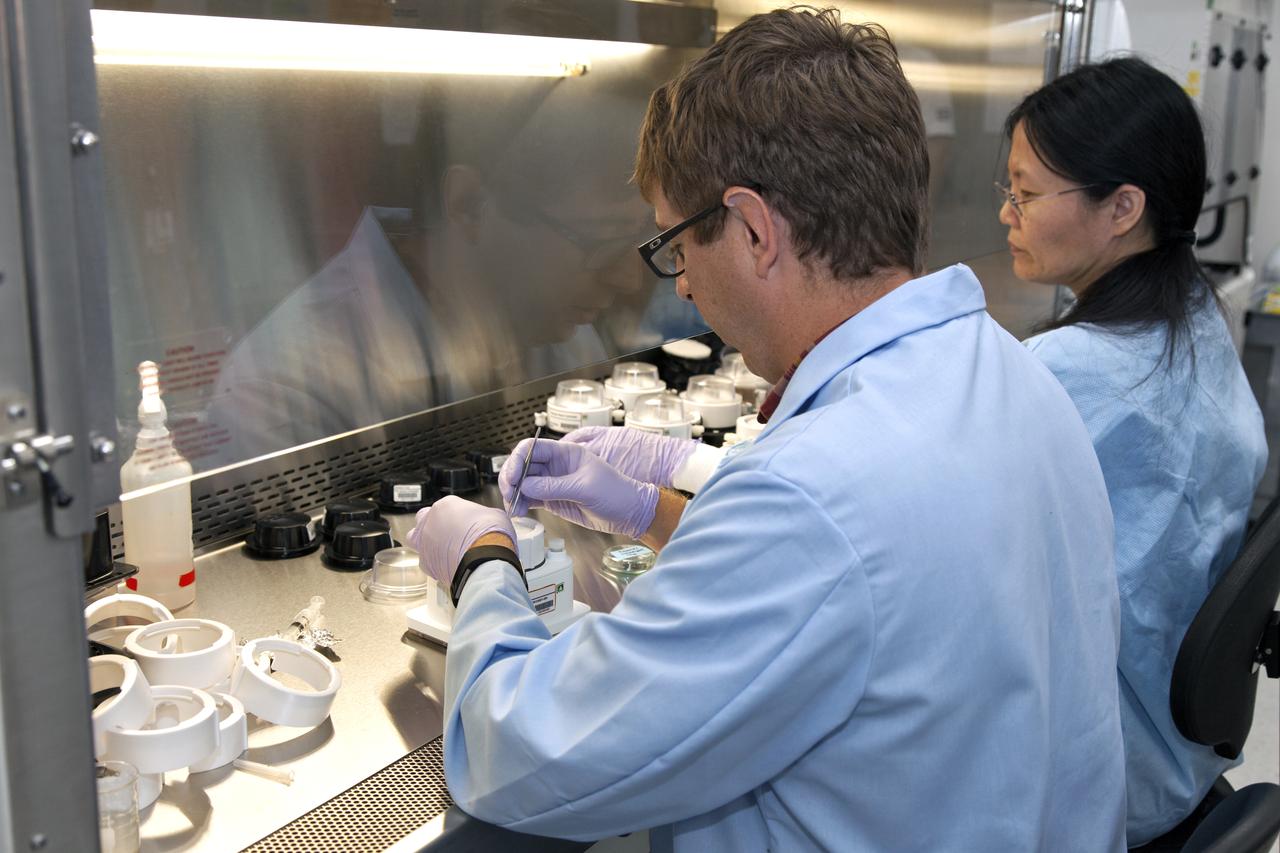
From left, Matthew Romeyn and Dr. Ye Zhang, project scientists, place seeds in Veggie Passive Orbital Nutrient Delivery System (PONDS) units inside a laboratory at the Space Station Processing Facility at NASA’s Kennedy Space Center in Florida. Veggie PONDS is a direct follow-on to the Veg-01 and Veg-03 hardware and plant growth validation tests. The primary goal of this newly developed plant growing system, Veggie PONDS, is to demonstrate uniform plant growth. PONDS units have features that are designed to mitigate microgravity effects on water distribution, increase oxygen exchange and provide sufficient room for root zone growth. PONDS is planned for use during Veg-04 and Veg-05 on the International Space Station after the Veggie PONDS Validation flights on SpaceX-14 and OA-9.
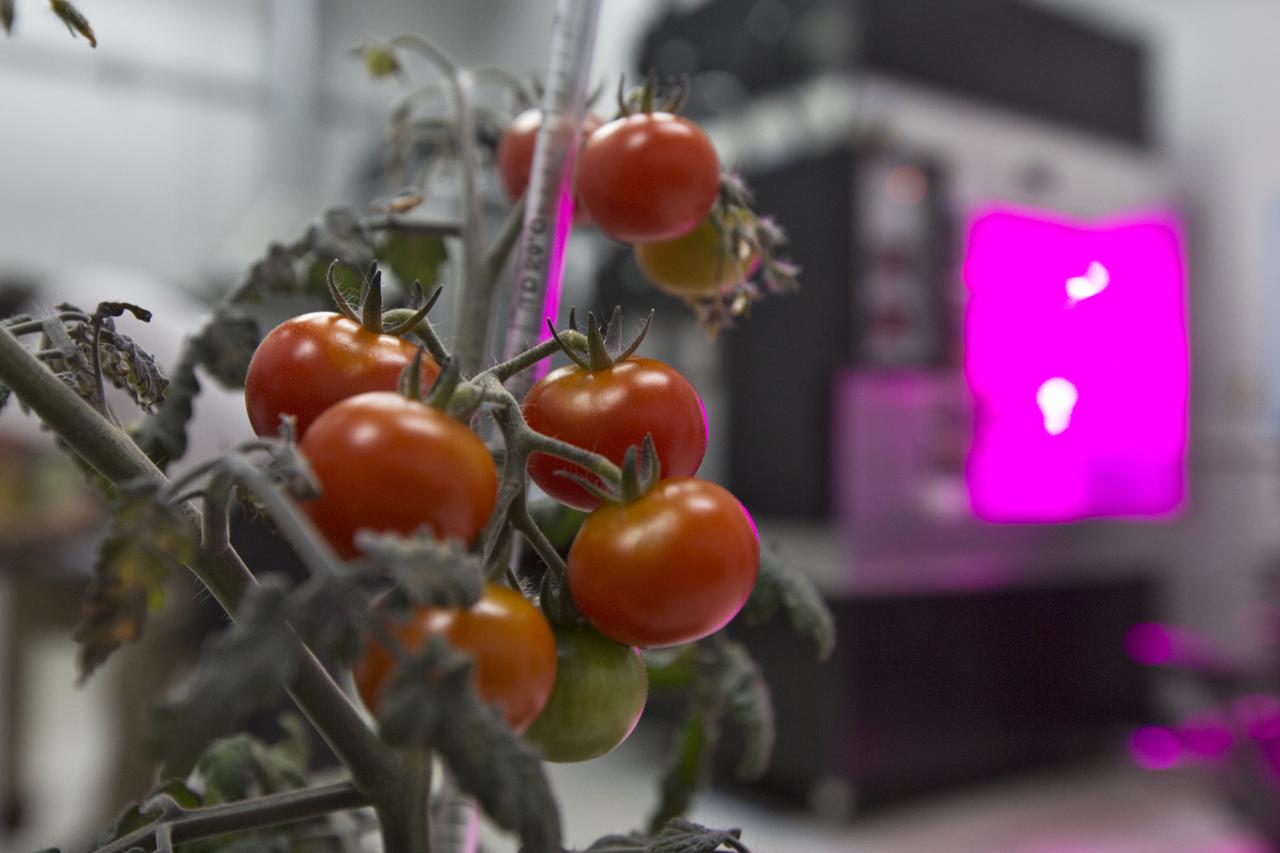
Tomato plants are growing inside a laboratory at the Space Station Processing Facility at NASA’s Kennedy Space Center in Florida. The plant growth is being tested in the Veggie Passive Orbital Nutrient Delivery System (PONDS). Veggie PONDS is a direct follow-on to the Veg-01 and Veg-03 hardware and plant growth validation tests. The primary goal of this newly developed plant growing system, Veggie PONDS, is to demonstrate uniform plant growth. PONDS units have features that are designed to mitigate microgravity effects on water distribution, increase oxygen exchange and provide sufficient room for root zone growth. PONDS is planned for use during Veg-04 and Veg-05 on the International Space Station after the Veggie PONDS Validation flights on SpaceX-14 and OA-9.
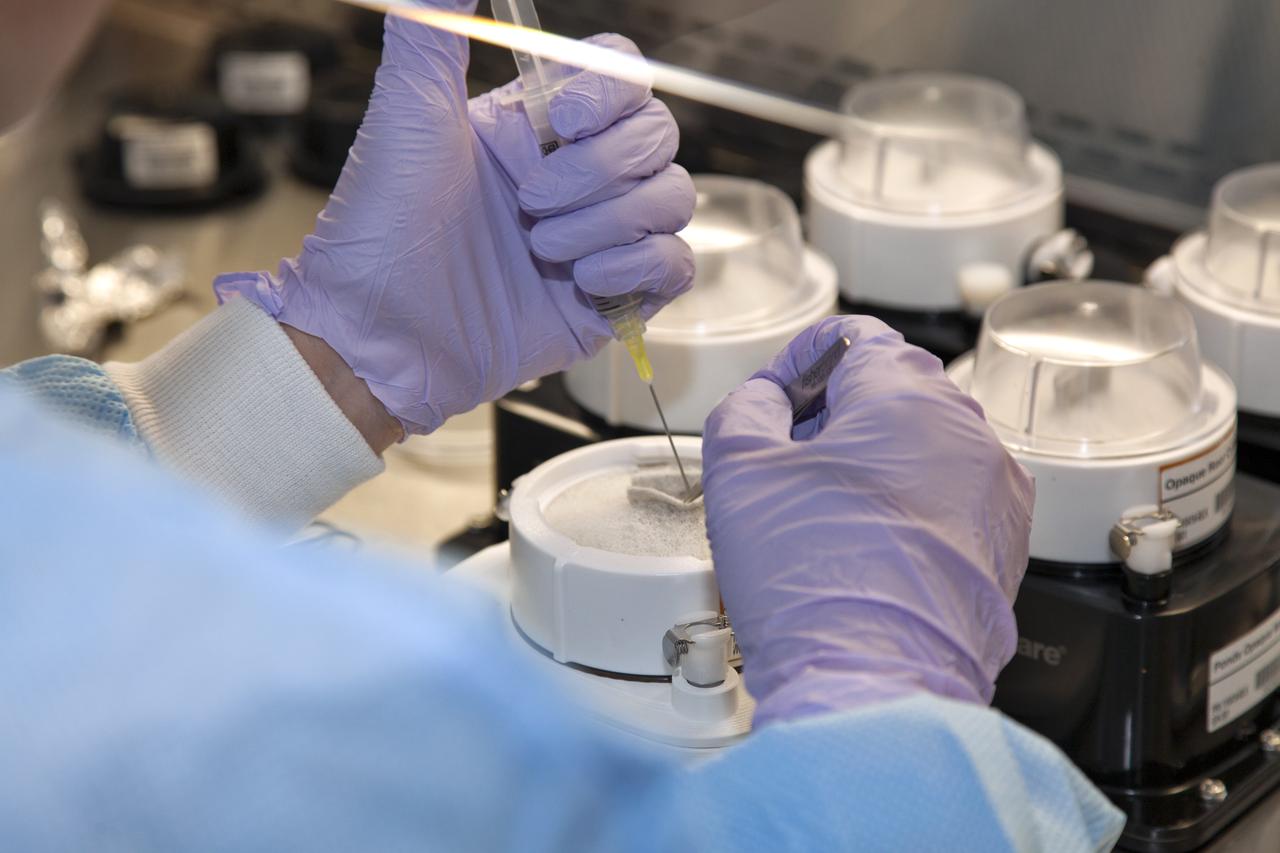
Seeds are being planted in Veggie Passive Orbital Nutrient Delivery System (PONDS) units inside a laboratory at the Space Station Processing Facility at NASA’s Kennedy Space Center in Florida. Veggie PONDS is a direct follow-on to the Veg-01 and Veg-03 hardware and plant growth validation tests. The primary goal of this newly developed plant growing system, Veggie PONDS, is to demonstrate uniform plant growth. PONDS units have features that are designed to mitigate microgravity effects on water distribution, increase oxygen exchange and provide sufficient room for root zone growth. PONDS is planned for use during Veg-04 and Veg-05 on the International Space Station after the Veggie PONDS Validation flights on SpaceX-14 and OA-9.
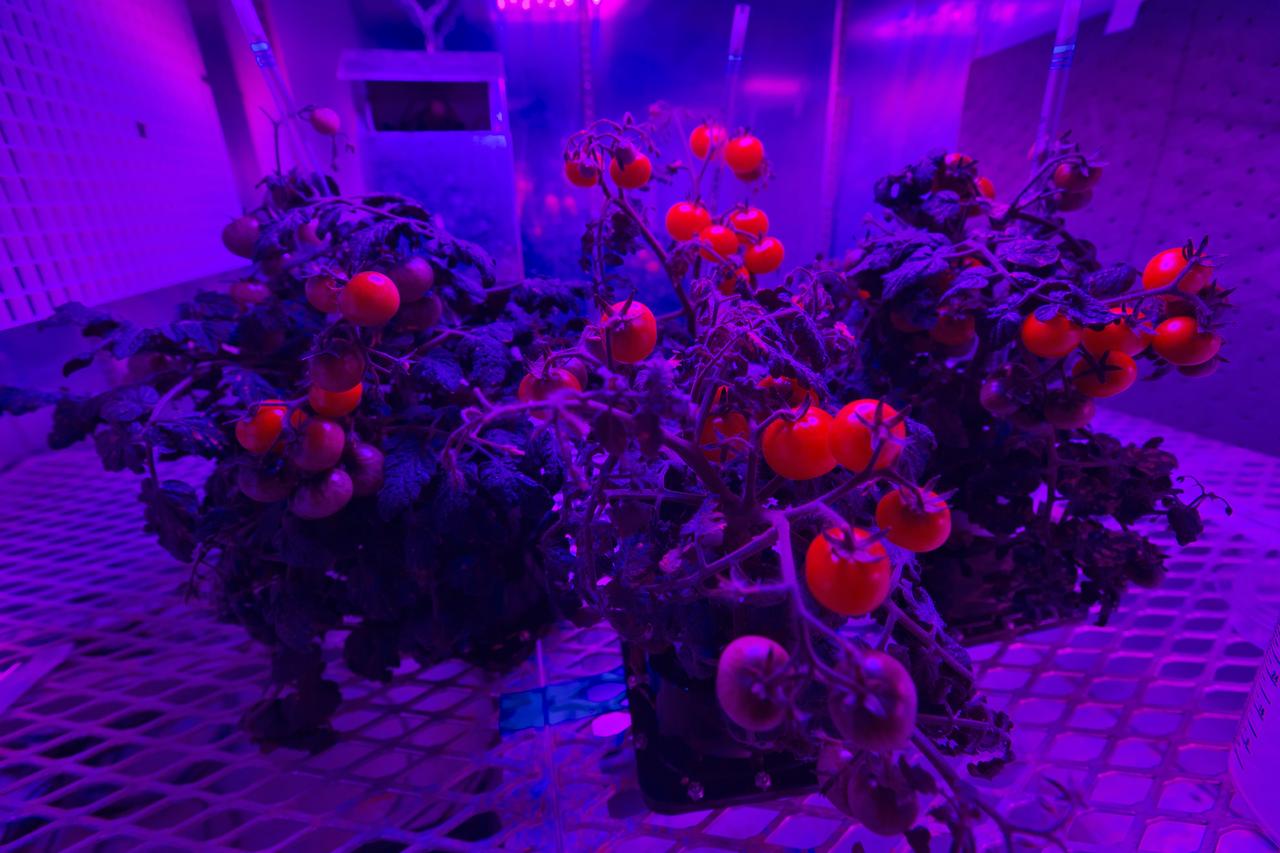
Tomato plants are growing under red and blue LED lights in a growth chamber inside a laboratory at the Space Station Processing Facility at NASA’s Kennedy Space Center in Florida. The plant growth is being tested in the Veggie Passive Orbital Nutrient Delivery System (PONDS). Veggie PONDS is a direct follow-on to the Veg-01 and Veg-03 hardware and plant growth validation tests. The primary goal of this newly developed plant growing system, Veggie PONDS, is to demonstrate uniform plant growth. PONDS units have features that are designed to mitigate microgravity effects on water distribution, increase oxygen exchange and provide sufficient room for root zone growth. PONDS is planned for use during Veg-04 and Veg-05 on the International Space Station after the Veggie PONDS Validation flights on SpaceX-14 and OA-9.
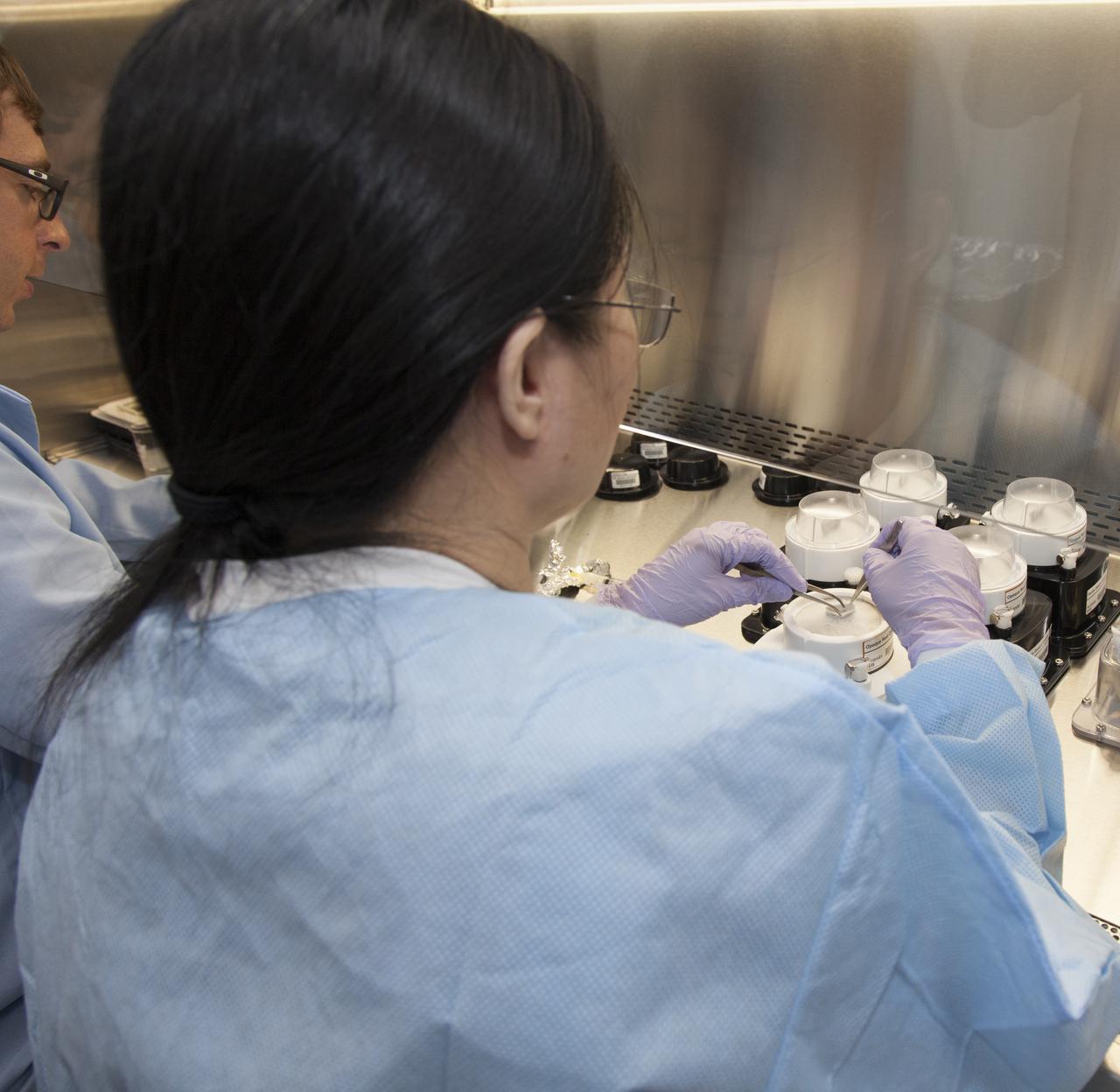
Dr. Ye Zhang, a project scientists, places seeds in Veggie Passive Orbital Nutrient Delivery System (PONDS) units inside a laboratory at the Space Station Processing Facility at NASA's Kennedy Space Center in Florida. Veggie PONDS is a direct follow-on to the Veg-01 and Veg-03 hardware and plant growth validation tests. The primary goal of this newly developed plant growing system, Veggie PONDS, is to demonstrate uniform plant growth. PONDS units have features that are designed to mitigate microgravity effects on water distribution, increase oxygen exchange and provide sufficient room for root zone growth. PONDS is planned for use during Veg-04 and Veg-05 on the International Space Station after the Veggie PONDS Validation flights on SpaceX-14 and OA-9.
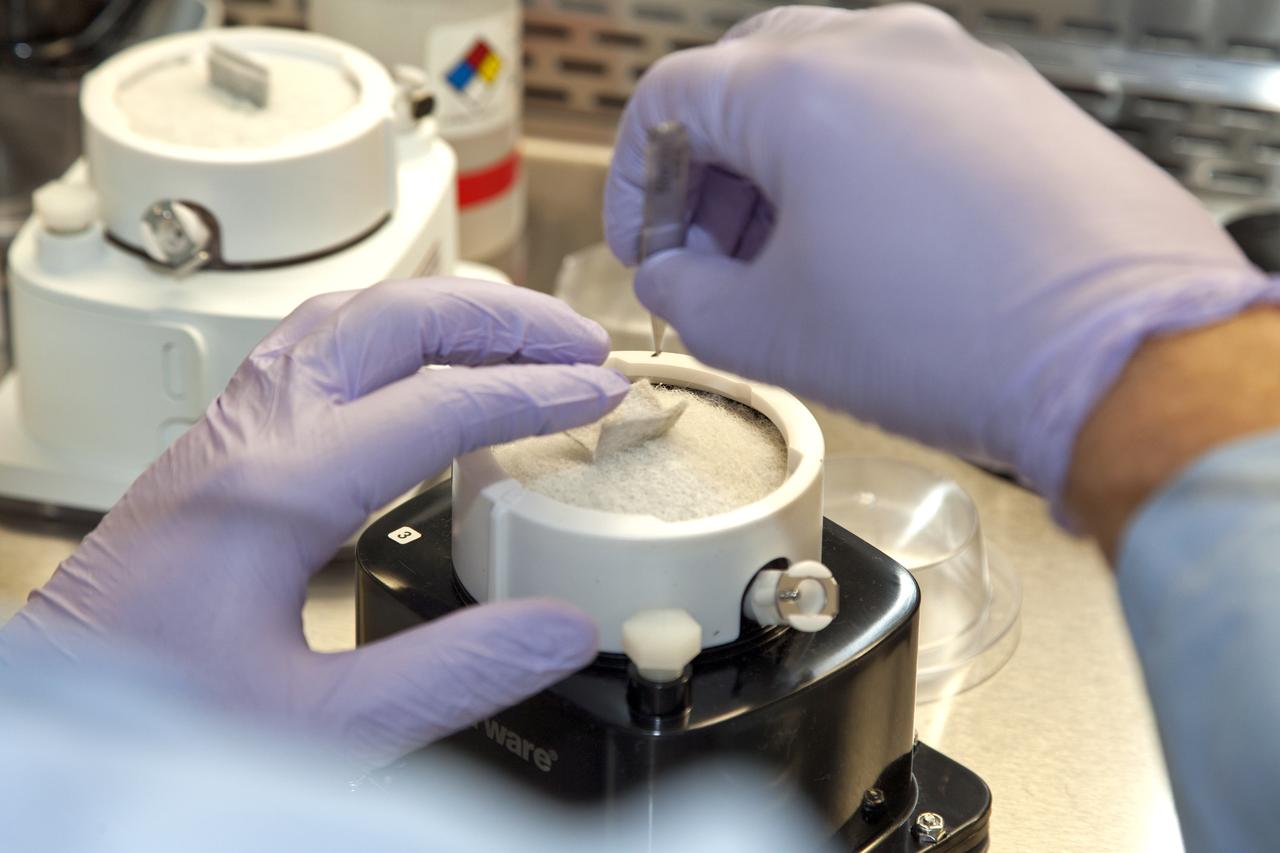
Seeds are being planted in Veggie Passive Orbital Nutrient Delivery System (PONDS) units inside a laboratory at the Space Station Processing Facility at NASA’s Kennedy Space Center in Florida. Veggie PONDS is a direct follow-on to the Veg-01 and Veg-03 hardware and plant growth validation tests. The primary goal of this newly developed plant growing system, Veggie PONDS, is to demonstrate uniform plant growth. PONDS units have features that are designed to mitigate microgravity effects on water distribution, increase oxygen exchange and provide sufficient room for root zone growth. PONDS is planned for use during Veg-04 and Veg-05 on the International Space Station after the Veggie PONDS Validation flights on SpaceX-14 and OA-9.