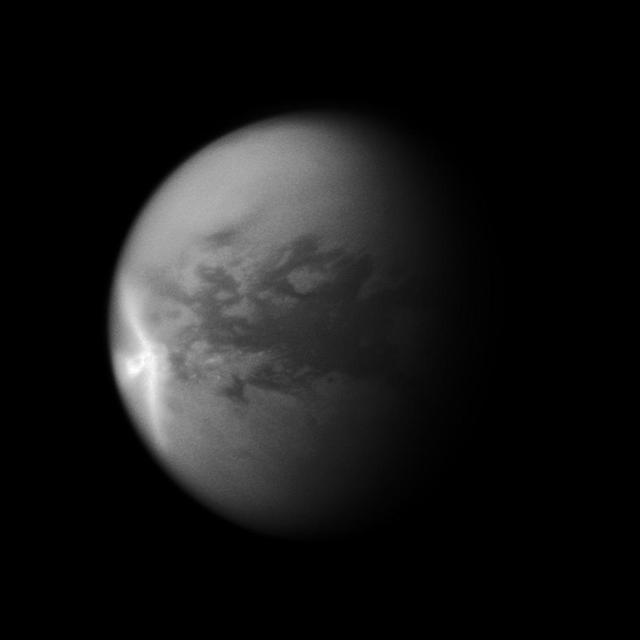
A huge arrow-shaped storm blows across the equatorial region of Titan in this image from NASA Cassini spacecraft, chronicling the seasonal weather changes on Saturn largest moon.
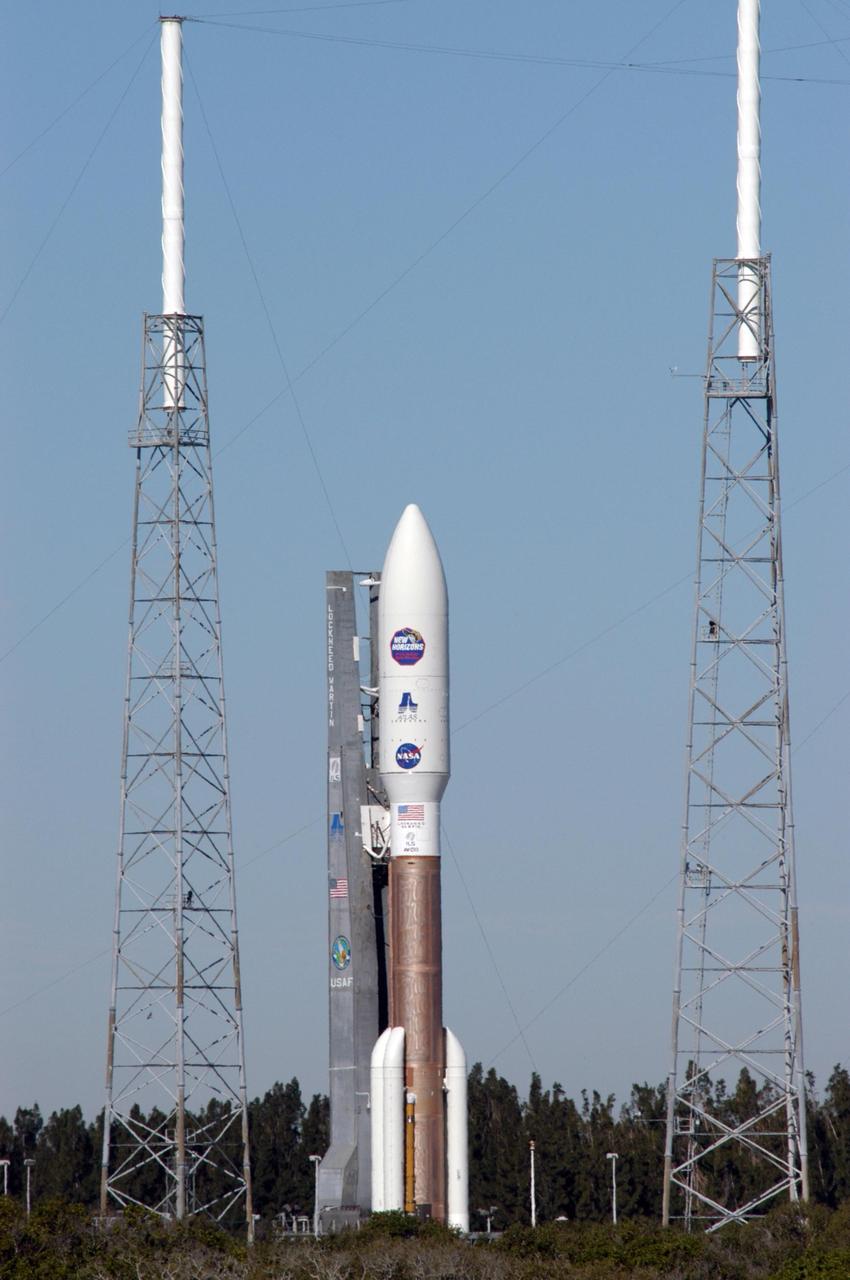
KENNEDY SPACE CENTER, FLA. - On Complex 41 at Cape Canaveral Air Force Station, the Atlas V expendable launch vehicle with the New Horizons spacecraft moves with the launcher umbilical tower between lightning masts on its way to the launch pad. The liftoff is scheduled for 1:24 p.m. EST Jan. 17. After its launch aboard the Atlas V, the compact, 1,050-pound piano-sized probe will get a boost from a kick-stage solid propellant motor for its journey to Pluto. New Horizons will be the fastest spacecraft ever launched, reaching lunar orbit distance in just nine hours and passing Jupiter 13 months later. The New Horizons science payload, developed under direction of Southwest Research Institute, includes imaging infrared and ultraviolet spectrometers, a multi-color camera, a long-range telescopic camera, two particle spectrometers, a space-dust detector and a radio science experiment. The dust counter was designed and built by students at the University of Colorado, Boulder. A launch before Feb. 3 allows New Horizons to fly past Jupiter in early 2007 and use the planet’s gravity as a slingshot toward Pluto. The Jupiter flyby trims the trip to Pluto by as many as five years and provides opportunities to test the spacecraft’s instruments and flyby capabilities on the Jupiter system. New Horizons could reach the Pluto system as early as mid-2015, conducting a five-month-long study possible only from the close-up vantage of a spacecraft.
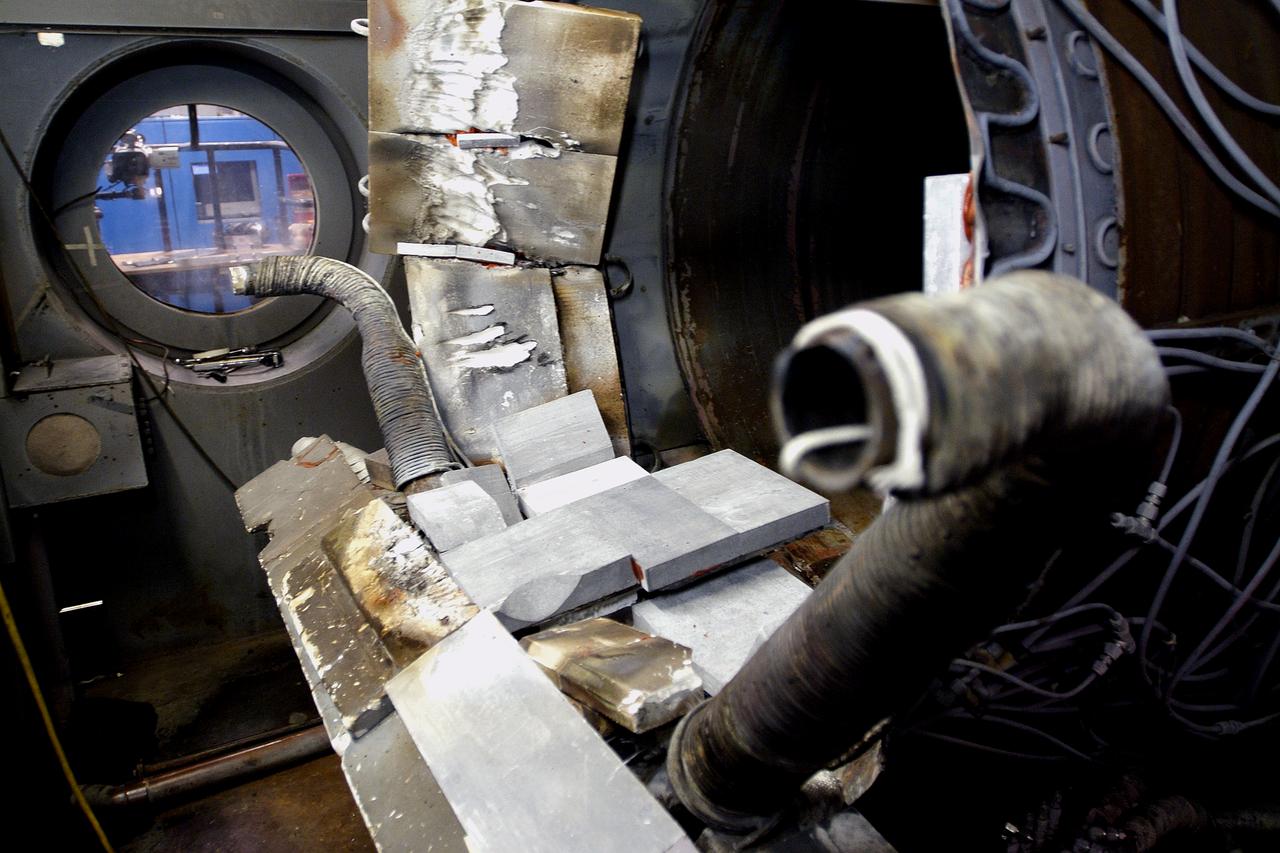
N-238 IHF (Interactive heating Facility) re-build
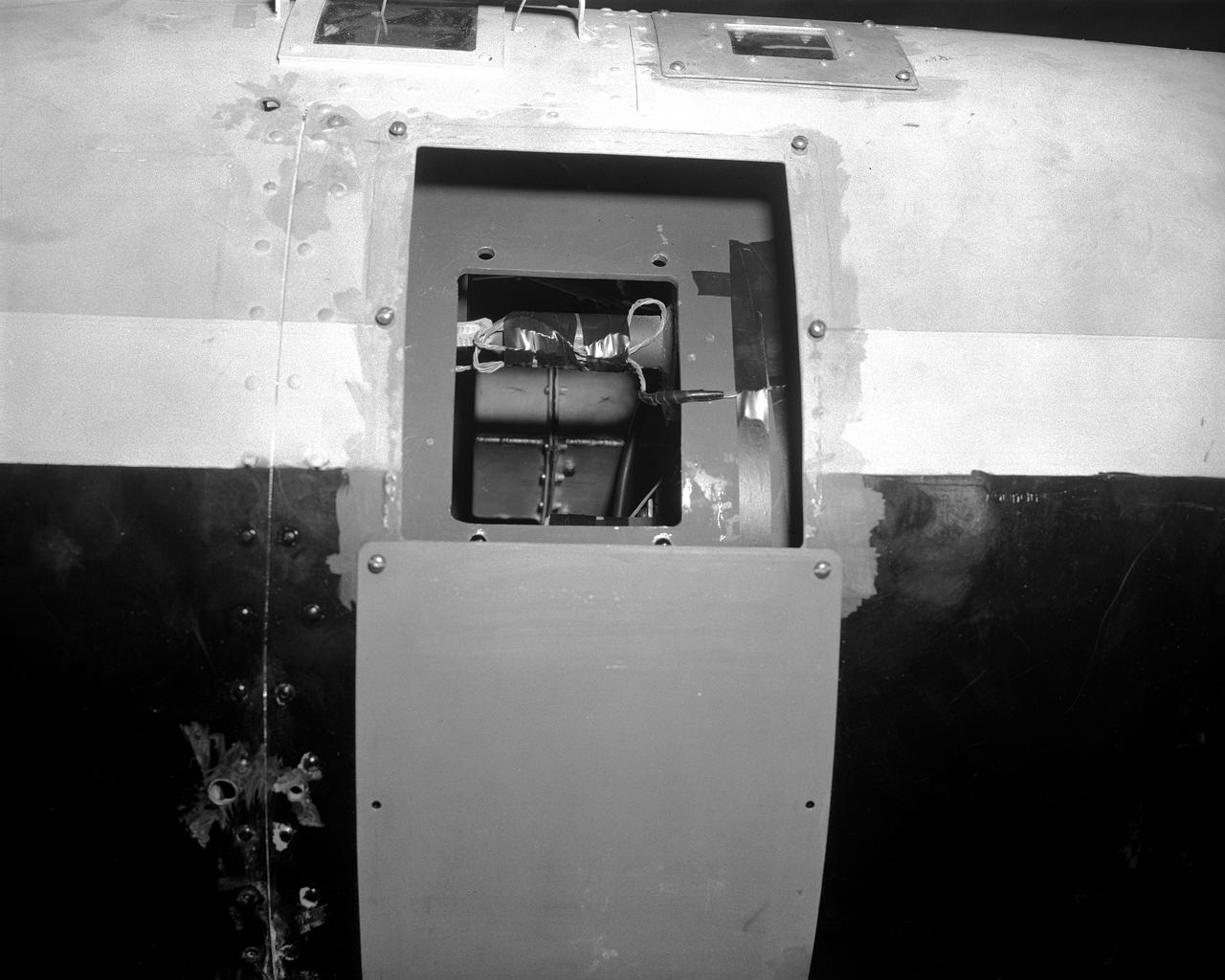
Space Flight Charts, Space Capsule
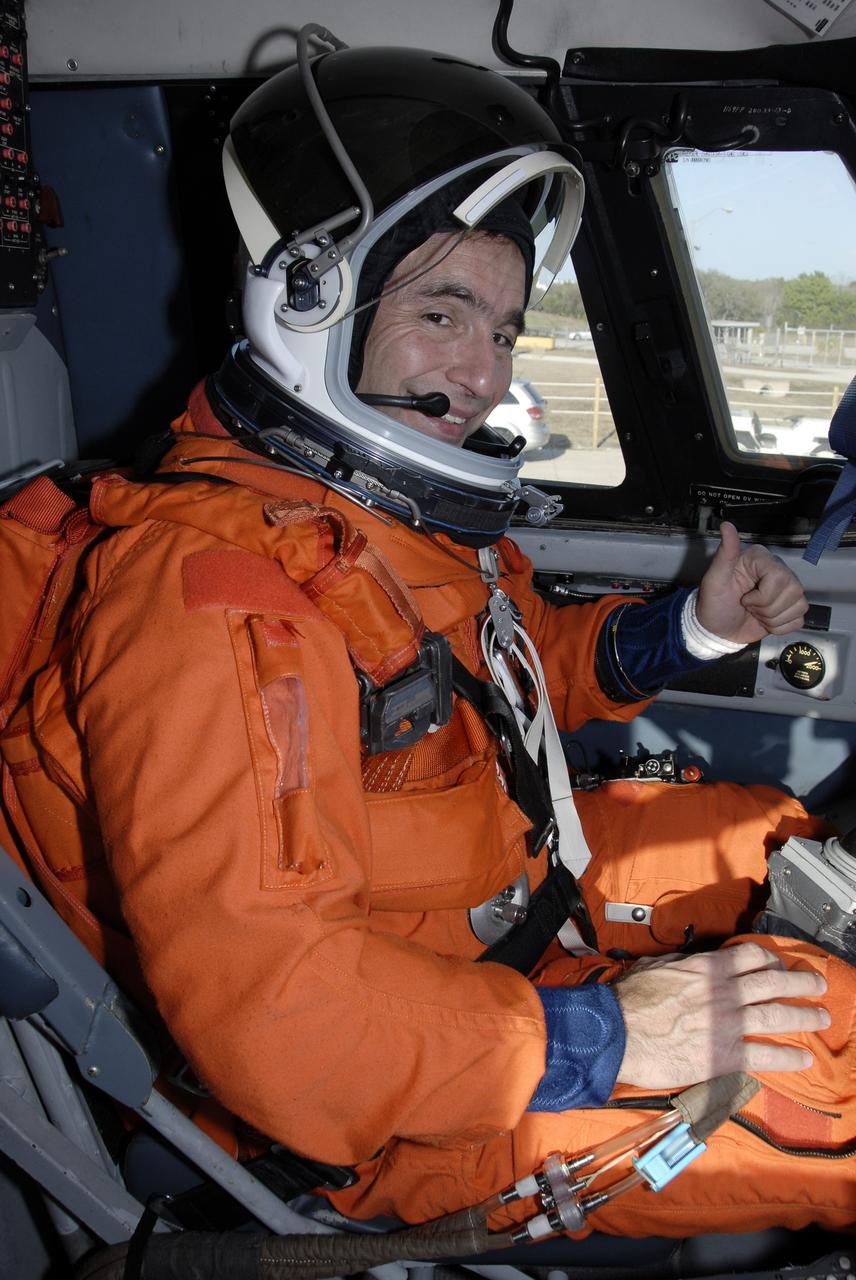
CAPE CANAVERAL, Fla. – On the Shuttle Landing Facility at NASA's Kennedy Space Center in Florida, STS-119 Commander Lee Archambault is seated in the Shuttle Training Aircraft to practice shuttle landings. The mission crew members arrived in the afternoon at Kennedy to prepare for launch. The mission is the 28th to the International Space Station and the 125th space shuttle flight. Space shuttle Discovery will deliver the final pair of power-generating solar array wings and truss element, S6. Photo credit: NASA/Kim Shiflett
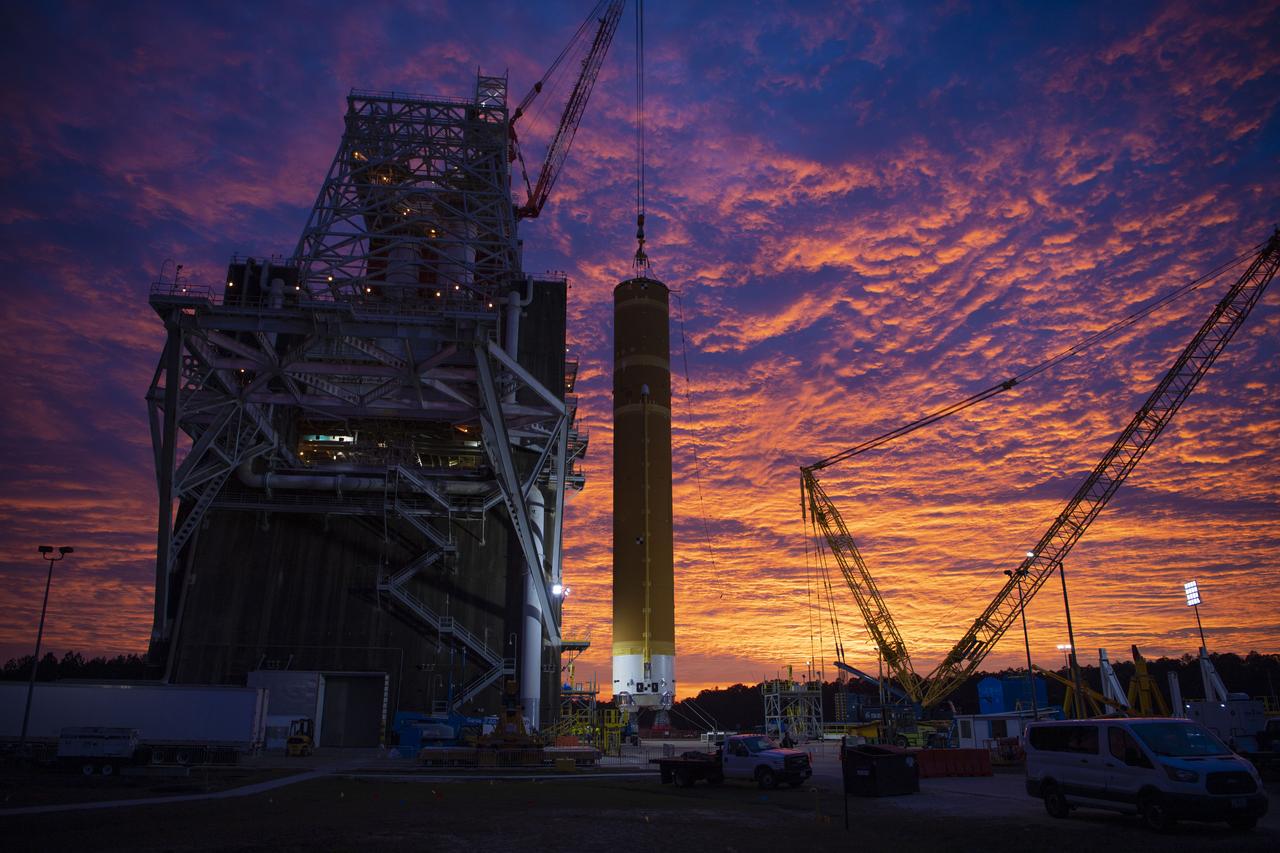
On Jan. 21-22, 2020, crews at Stennis Space Center lifted and installed the first core stage of NASA’s new Space Launch System (SLS) rocket onto the B-2 Test Stand. In upcoming months, a top-to-bottom, integrated series of Green Run tests will be conducted on the stage and its sophisticated systems. Following testing, the stage will be used to help launch the maiden Artemis I test mission of SLS and the Orion spacecraft. Through the Artemis program, NASA will send humans, including the first woman and next man, to the Moon to establish a sustainable presence.
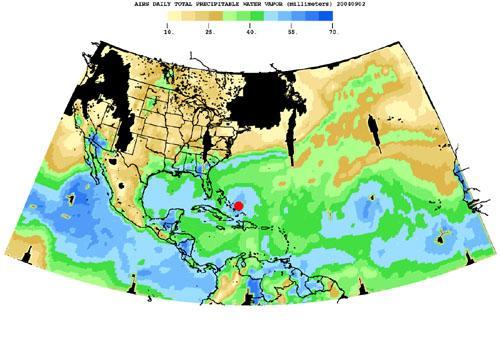
Born in the Atlantic, Hurricane Frances became a category 4 hurricane on August 31, 2004, as seen by the Atmospheric Infrared Sounding System AIRS on NASA Aqua. Expectations are the hurricane will hit the Space Coast of Florida in Brevard County early Sunday morning. This frame from a movie is a time-series of maps that show AIRS observations of the total amount of water vapor present in the atmospheric column above each point of the Earth's surface. If all the water vapor in the column were forced to fall as rain, the depth of the resulting puddle on the surface at that point is equal to the value shown on the map. Fifty millimeters (mm) is about 2 inches. The large band of maximum water vapor in the neighborhood of the equator is the Intertropical Convergence Zone (ITCZ), a region of strong convection and powerful thunderstorms. The movie (see PIA00433) shows the total precipitable water vapor from August 23 through September 2, 2004. You can see Hurricane Frances as it moves through the Caribbean toward Florida, and the changes in intensity are visible. The eye has been marked with a red spot. The water vapor encompassed by the hurricane is also the result of the very strong convection which is an integral part of the formation and intensification of tropical storms. If you look at the last frame of the movie in the lower right corner, you can see the emergence of a new tropical storm. Ivan makes its debut in the Atlantic. http://photojournal.jpl.nasa.gov/catalog/PIA00433
![KENNEDY SPACE CENTER, FLA. - Against a black moonless sky, Space Shuttle Endeavour lights up the night as it blazes into space after an ontime liftoff at 7:49:47 p.m. EST. The launch is the 19th for Endeavour, and the 112th flight in the Shuttle program. Mission STS-113 is the 16th assembly flight to the International Space Station, carrying another structure for the Station, the P1 integrated truss. Also onboard are the Expedition 6 crew, who will replace Expedition 5. Endeavour is scheduled to land at KSC after an 11-day journey. [Photo by Scott Andrews]](https://images-assets.nasa.gov/image/KSC-02pd1806/KSC-02pd1806~medium.jpg)
KENNEDY SPACE CENTER, FLA. - Against a black moonless sky, Space Shuttle Endeavour lights up the night as it blazes into space after an ontime liftoff at 7:49:47 p.m. EST. The launch is the 19th for Endeavour, and the 112th flight in the Shuttle program. Mission STS-113 is the 16th assembly flight to the International Space Station, carrying another structure for the Station, the P1 integrated truss. Also onboard are the Expedition 6 crew, who will replace Expedition 5. Endeavour is scheduled to land at KSC after an 11-day journey. [Photo by Scott Andrews]

ISS018-E-017243 (2 Jan. 2009) --- Astronaut Michael Fincke, Expedition 18 commander, performs in-flight maintenance on the Mass Constituents Analyzer (MCA) in the Destiny laboratory of the International Space Station.
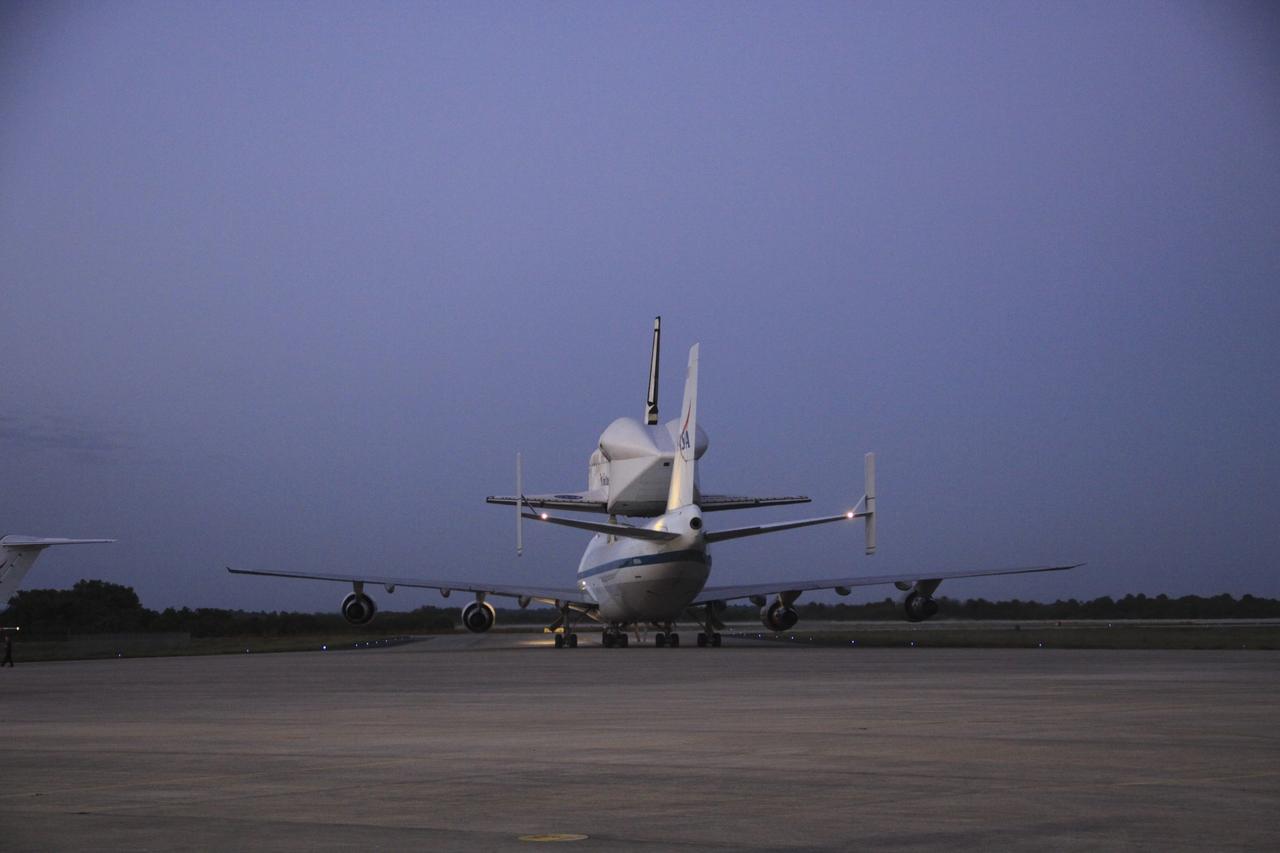
CAPE CANAVERAL, Fla. – The Shuttle Carrier Aircraft transporting space shuttle Discovery to its new home taxis to the runway at the Shuttle Landing Facility at NASA’s Kennedy Space Center in Florida preparing to take off at about 7 a.m. EDT. The aircraft, known as an SCA, is a Boeing 747 jet, originally manufactured for commercial use, which was modified by NASA to transport the shuttles between destinations on Earth. This SCA, designated NASA 905, is assigned to the remaining ferry missions, delivering the shuttles to their permanent public display sites. NASA 905 is scheduled to ferry Discovery to the Washington Dulles International Airport in Virginia on April 17, after which the shuttle will be placed on display in the Smithsonian's National Air and Space Museum Steven F. Udvar-Hazy Center. For more information on the SCA, visit http://www.nasa.gov/centers/dryden/news/FactSheets/FS-013-DFRC.html. For more information on shuttle transition and retirement activities, visit http://www.nasa.gov/transition. Photo credit: NASA/Jim Grossmann

Crater Deformation
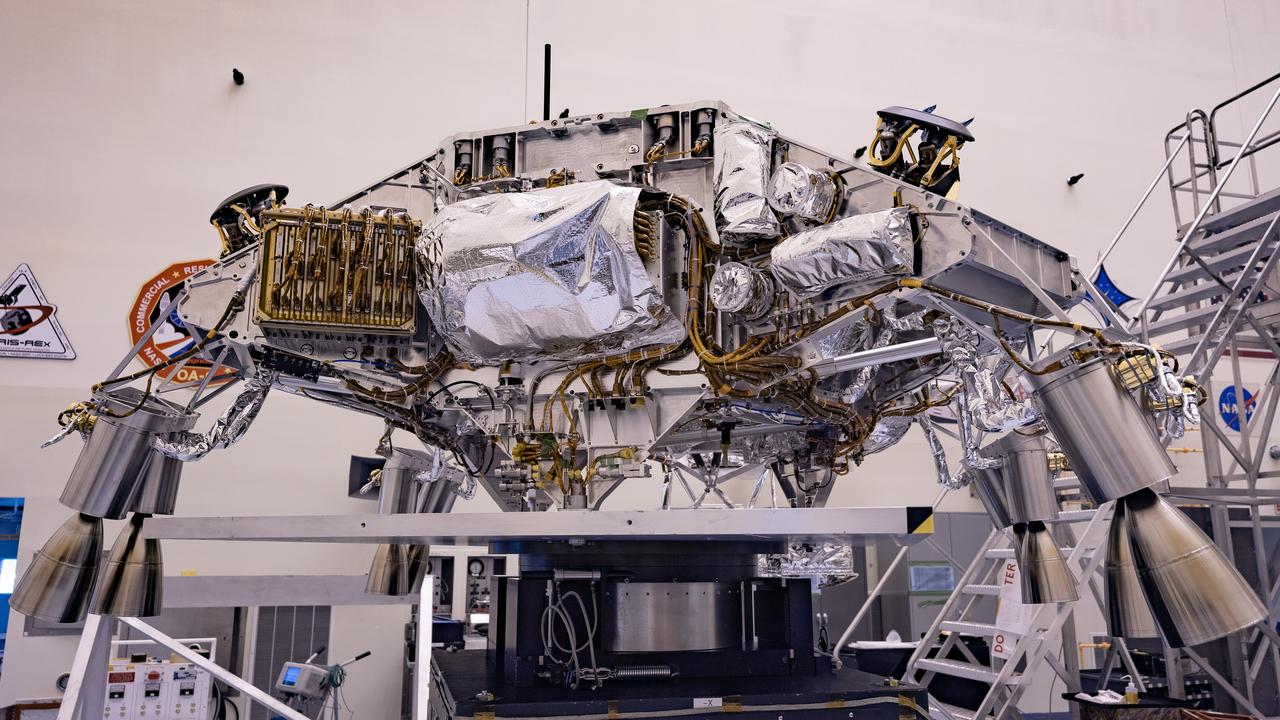
Engineers perform mass properties testing on the rocket-powered descent stage of NASA’s Mars Perseverance rover at Kennedy Space Center on April 12, 2020. The testing to determine the center of gravity, or the point at which weight is evenly dispersed on all sides, was performed inside the Florida spaceport’s Payload Hazardous Servicing Facility. The descent stage will lower the rover through the thin Martian atmosphere and onto the surface on Feb. 18, 2021. Liftoff, aboard a United Launch Alliance Atlas V 541 rocket, is targeted between July 17 and Aug. 5 from Cape Canaveral Air Force Station. NASA’s Launch Services Program based at Kennedy is managing the launch. The rover will seek signs of ancient life and collect rock and soil samples for possible return to Earth.
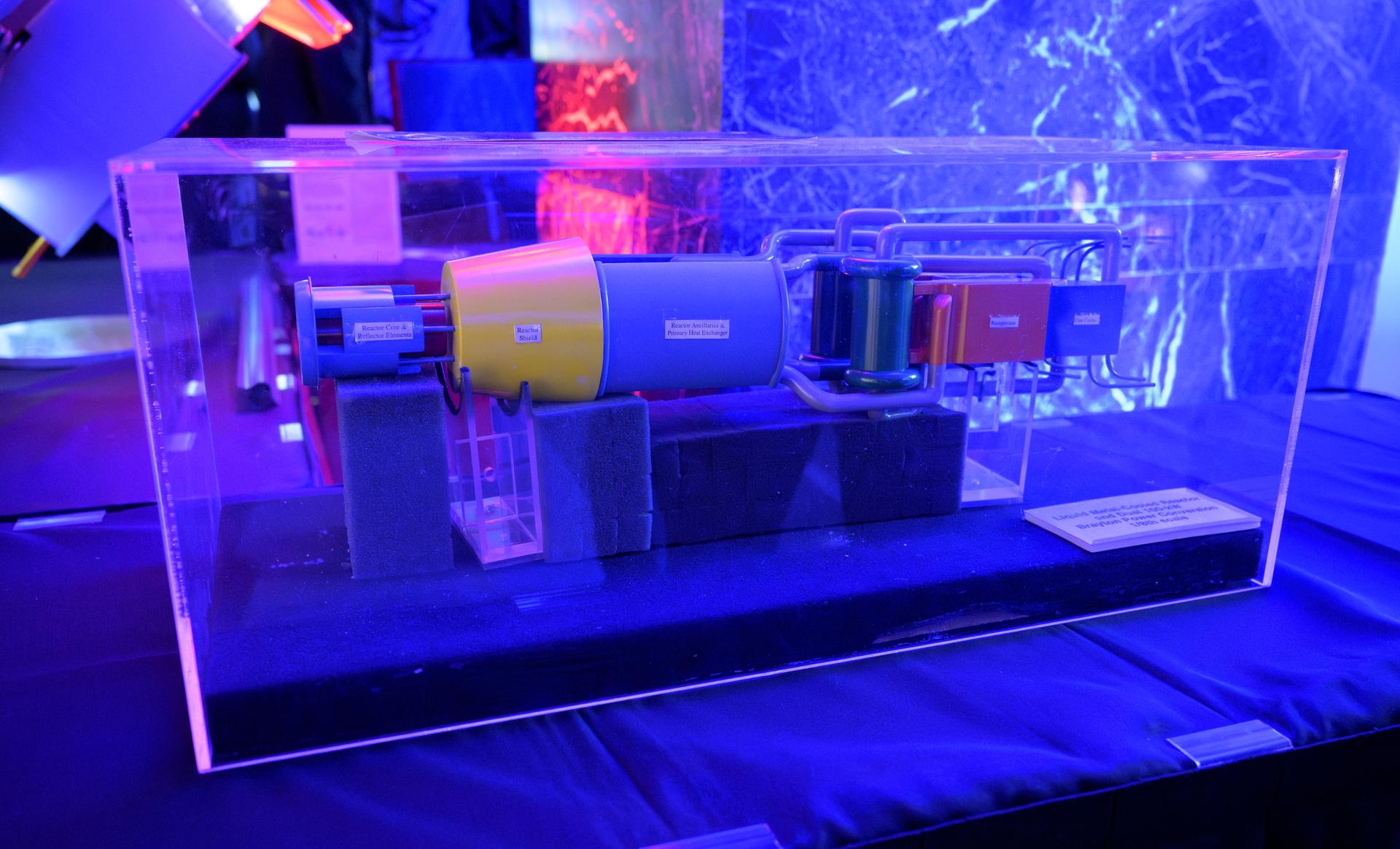
A model of a liquid metal-cooled reactor, dual 100-kw Brayton Power Conversion is seen on display during an event where NASA is outlining how the agency is executing President Donald J. Trump’s National Space Policy and accelerating preparations for America’s return to the surface of the Moon by 2028, Tuesday, March 24, 2026, at the Mary W. Jackson NASA Headquarters building in Washington. During the event NASA leadership provided updates on mission priorities, including sending the first astronauts to the lunar surface in more than 50 years, establishing the initial elements of a permanent lunar base, getting America underway in space on nuclear propulsion, and other objectives. Photo Credit: (NASA/Bill Ingalls)
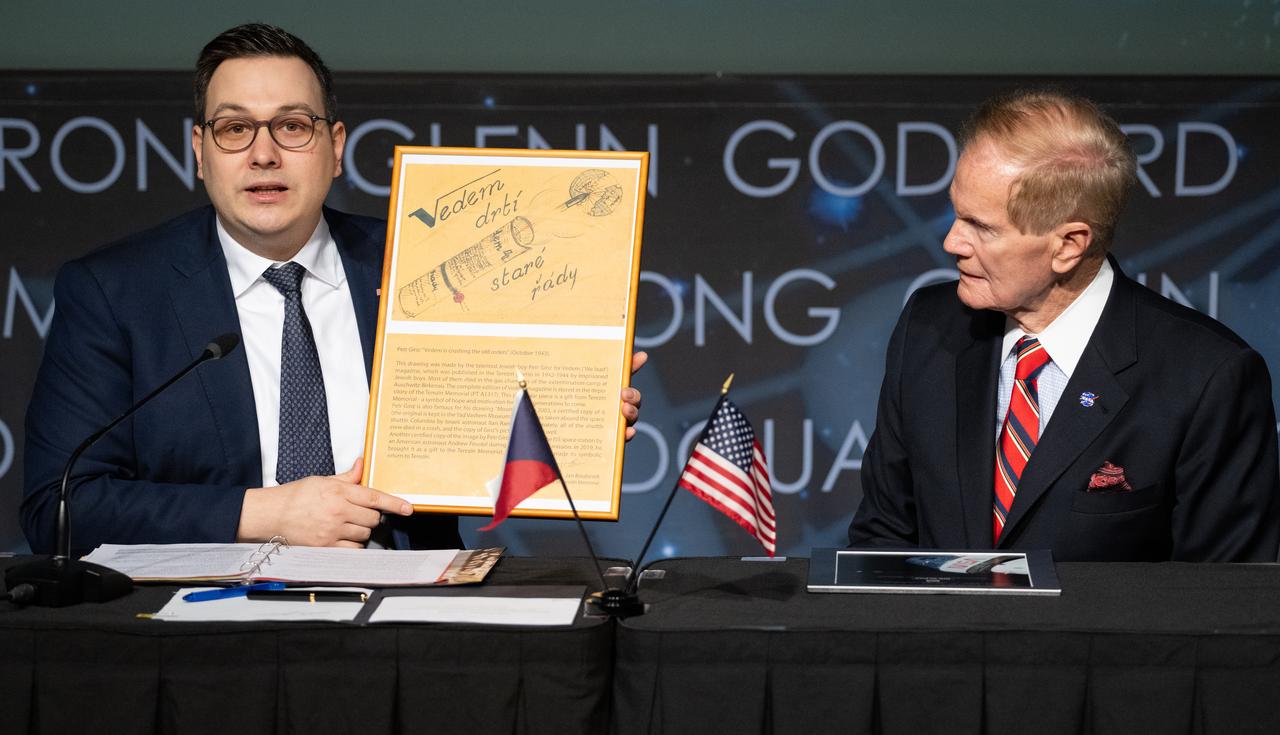
Foreign Affairs Minister for the Czech Republic Jan Lipavský, left, presents NASA Administrator Bill Nelson with a reproduction of an original drawing made by a Czechoslovak boy named Petr Ginz of partial Jewish background who was murdered at Auschwitz concentration camp in 1944, despite being of very young age, he had authored novels and made his own illustrations including this one depicting planet Earth seen from the moon, following the signing of the Artemis Accords, Wednesday, May 3, 2023, at The Mary W. Jackson NASA Headquarters building in Washington DC. The Czech Republic is the twenty fourth country to sign the Artemis Accords, which establish a practical set of principles to guide space exploration cooperation among nations participating in NASA’s Artemis program. Photo Credit: (NASA/Joel Kowsky)
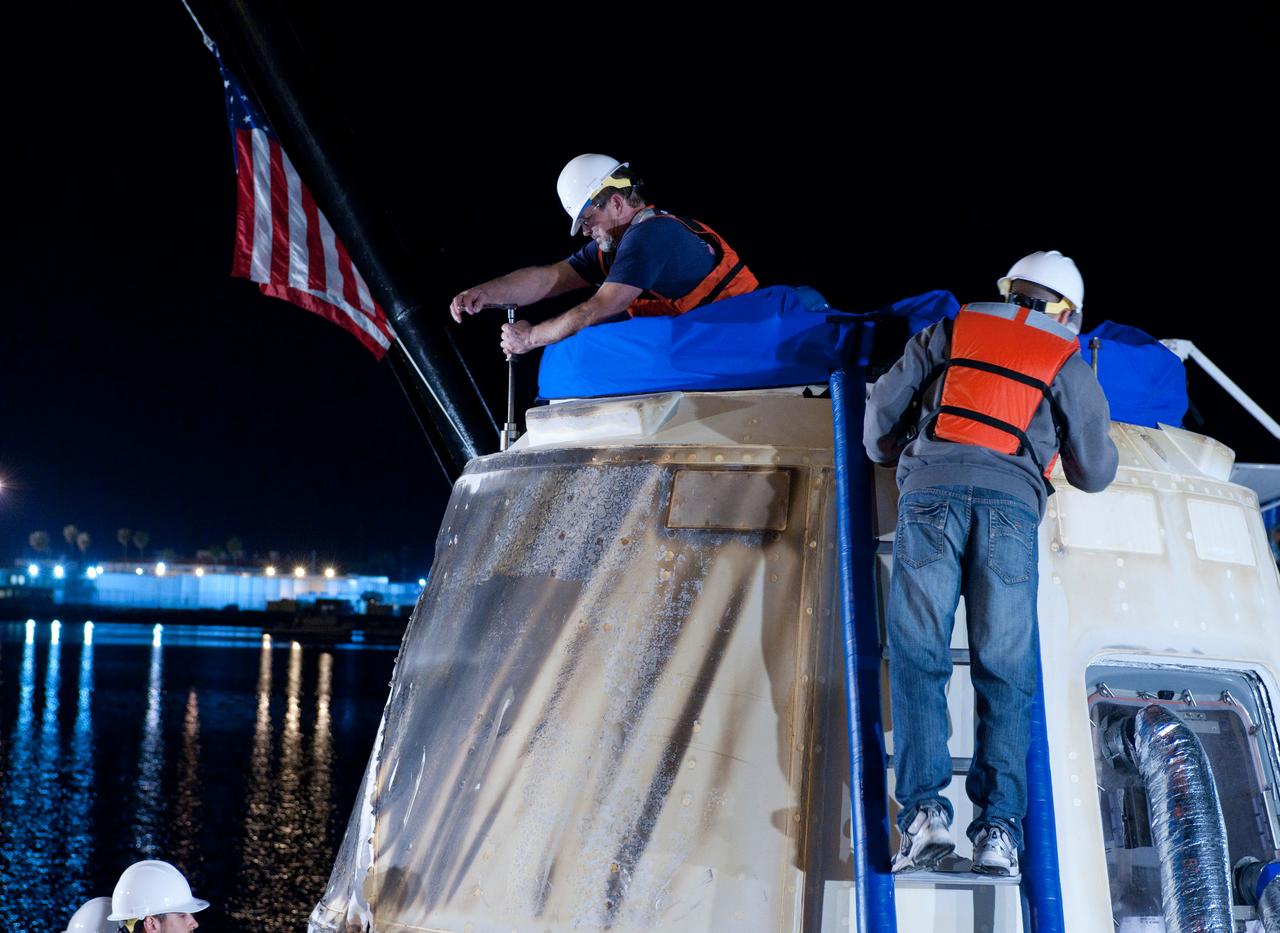
ED13-0079-07 (26 March 2013) ---- SpaceX Dragon's second operational mission ended on March 26 after three weeks attached to the International Space Station. The unmanned spacecraft splashed down in the Pacific Ocean about 214 miles off the coast of Baja California to successfully return about 2,670 pounds of science materials from the orbital outpost. Photo credit: NASA
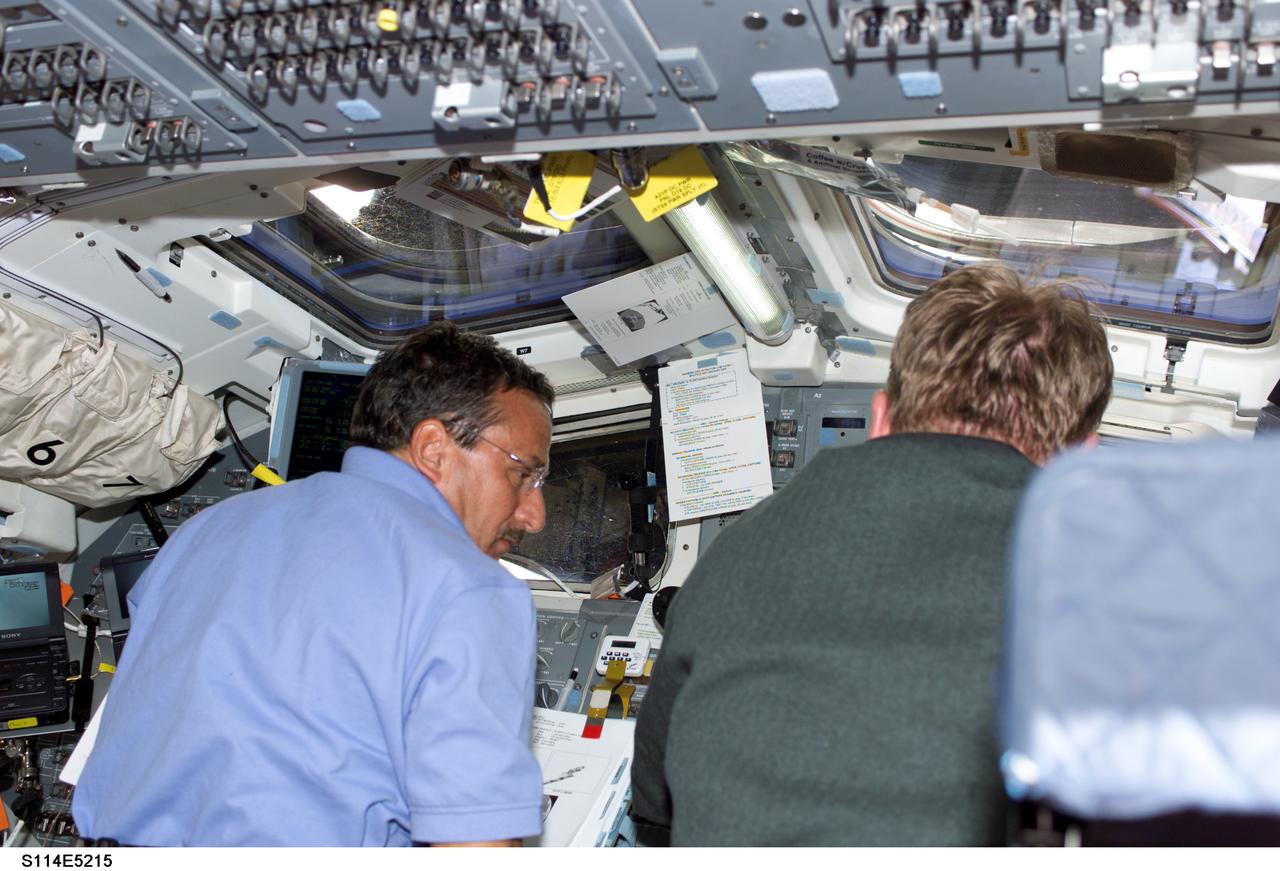
STS114-E-5215 (27 July 2005) --- Astronauts Charles J. Camarda (left) and Andrew S.W. Thomas on Discovery's aft flight deck.
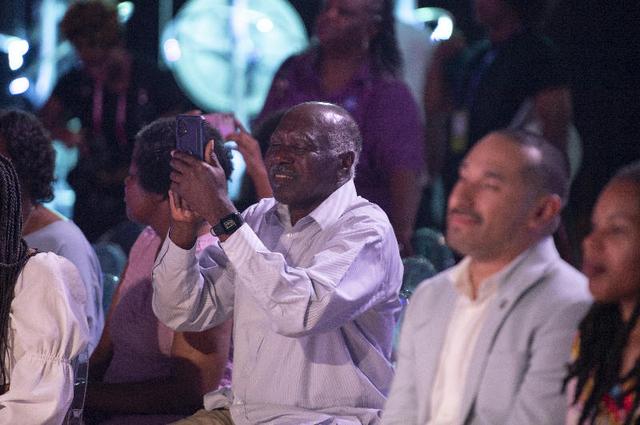
An audience member takes a photo as NASA representatives participate in a Take Up Space (Literally) panel conversation during the 30th annual ESSENCE Fest in New Orleans on July 5.
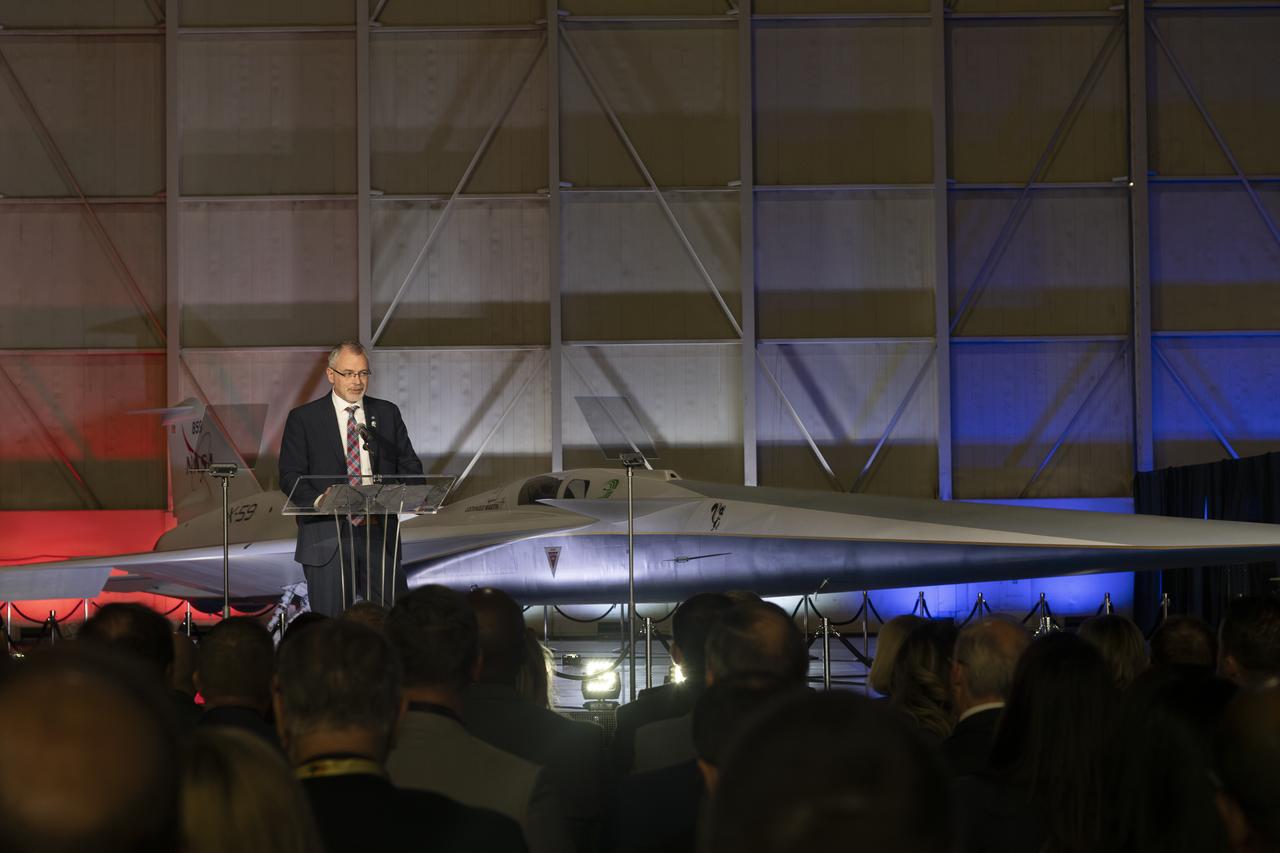
NASA Associate Administrator Jim Free speaks on stage following the unveiling of the agency’s X-59 quiet supersonic research aircraft at a January 12, 2024 event at Lockheed Martin Skunk Works in Palmdale, California. The X-59 is the centerpiece of NASA’s Quesst mission, which seeks to solve one of the major barriers to supersonic flight over land, currently banned in the United States, by making sonic booms quieter.
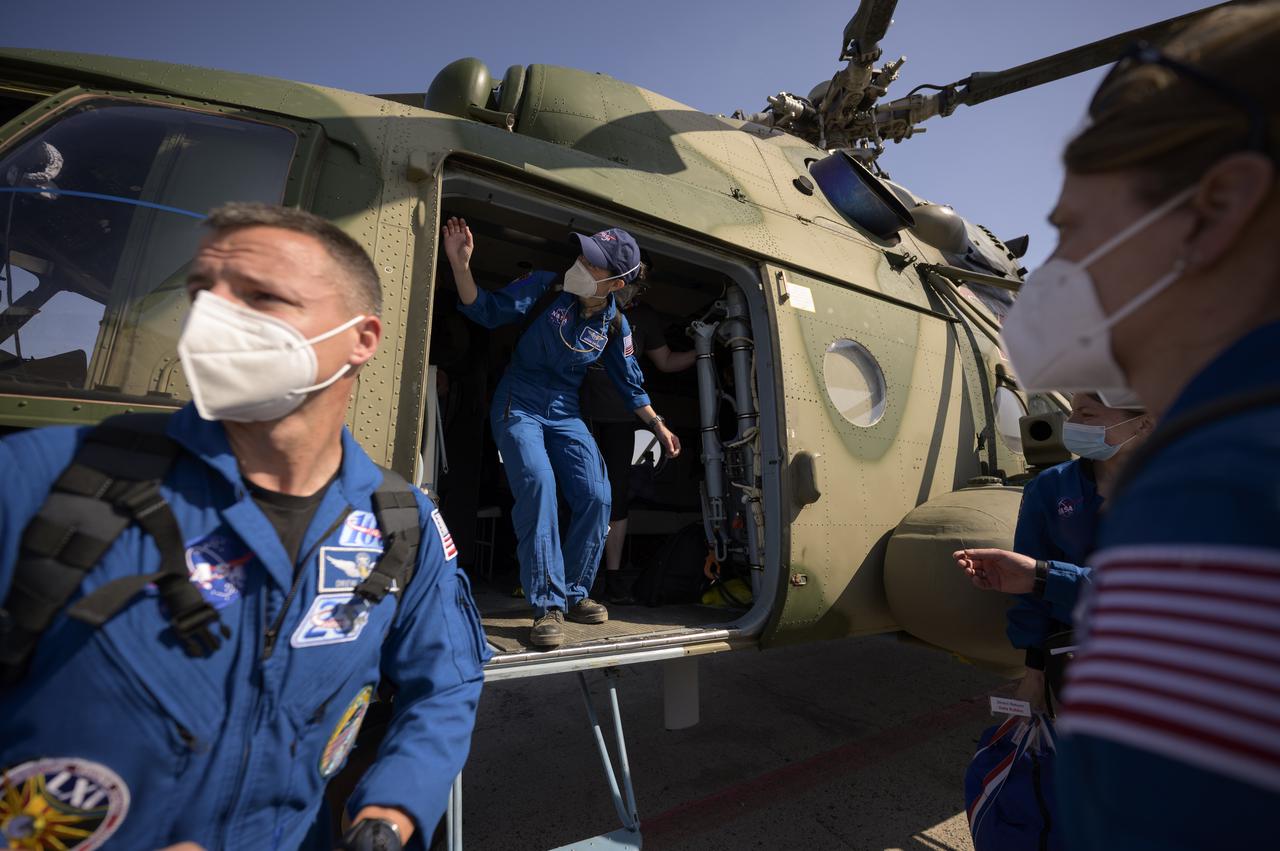
NASA Flight Surgeon Natacha Chough exits the Russian MI-8 helicopter in advance of NASA astronaut Kate Rubins, after Rubins, Roscosmos cosmonauts Sergey Ryzhikov and Sergey Kud-Sverchkov landed in their Soyuz MS-17 spacecraft in a remote area near the town of Zhezkazgan, Kazakhstan on Saturday, April 17, 2021. Rubins, Ryzhikov and Kud-Sverchkov returned after 185 days in space having served as Expedition 63-64 crew members onboard the International Space Station. Photo Credit: NASA/Bill Ingalls
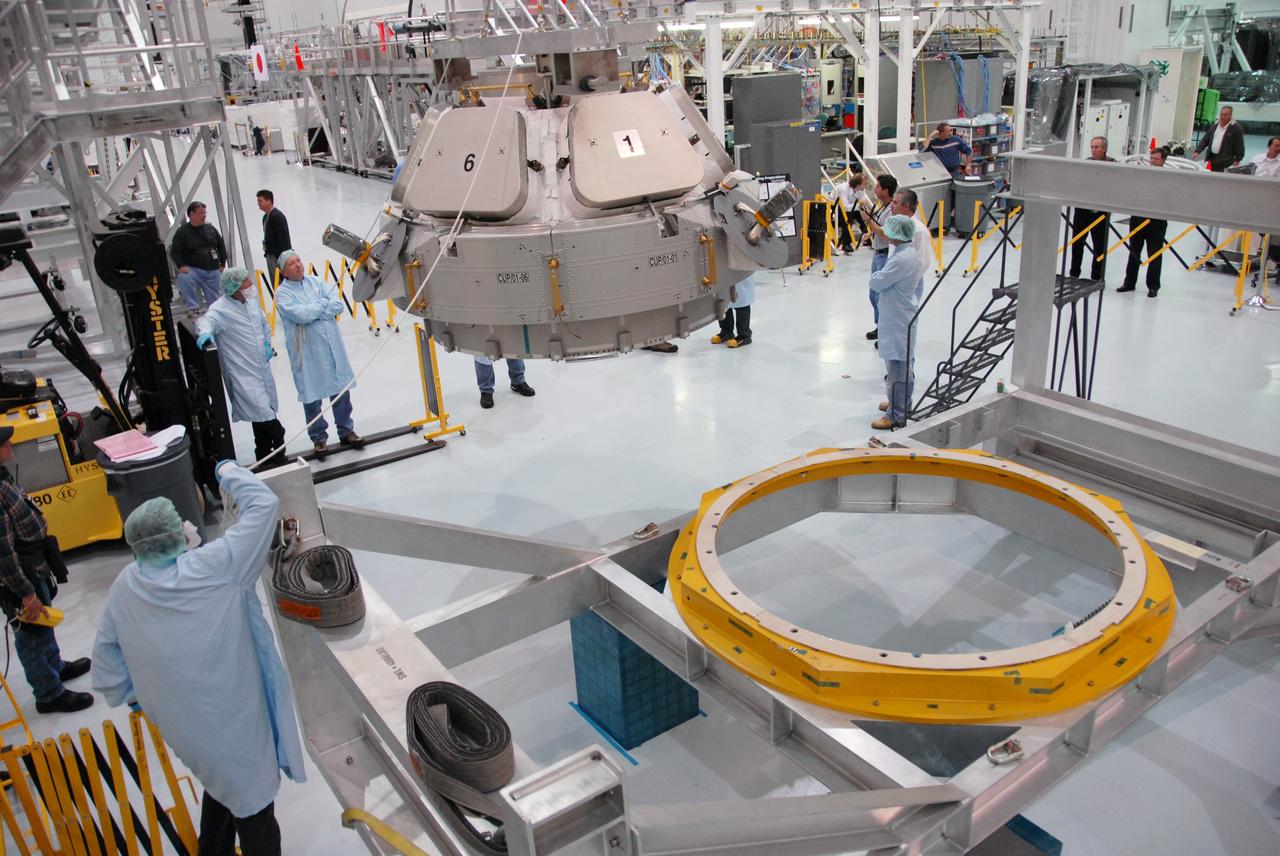
CAPE CANAVERAL, Fla. – Suspended by a crane in the Space Station Processing Facility at NASA's Kennedy Space Center in Florida, the Cupola module moves closer to the workstand at right. The module was delivered to Kennedy by the European Space Agency in 2004 from Alenia Spazio in Turin, Italy. Cupola will provide a 360-degree panoramic view of activities outside the station and spectacular views of the Earth. Cupola has the capability for command and control workstations to be installed to assist in space station remote manipulator system and extra vehicular activities. The final element of the space station core, Cupola is scheduled for launch on space shuttle Endeavour's STS-130 mission, targeted for Dec. 10, 2009. Photo credit: NASA/Cory Huston
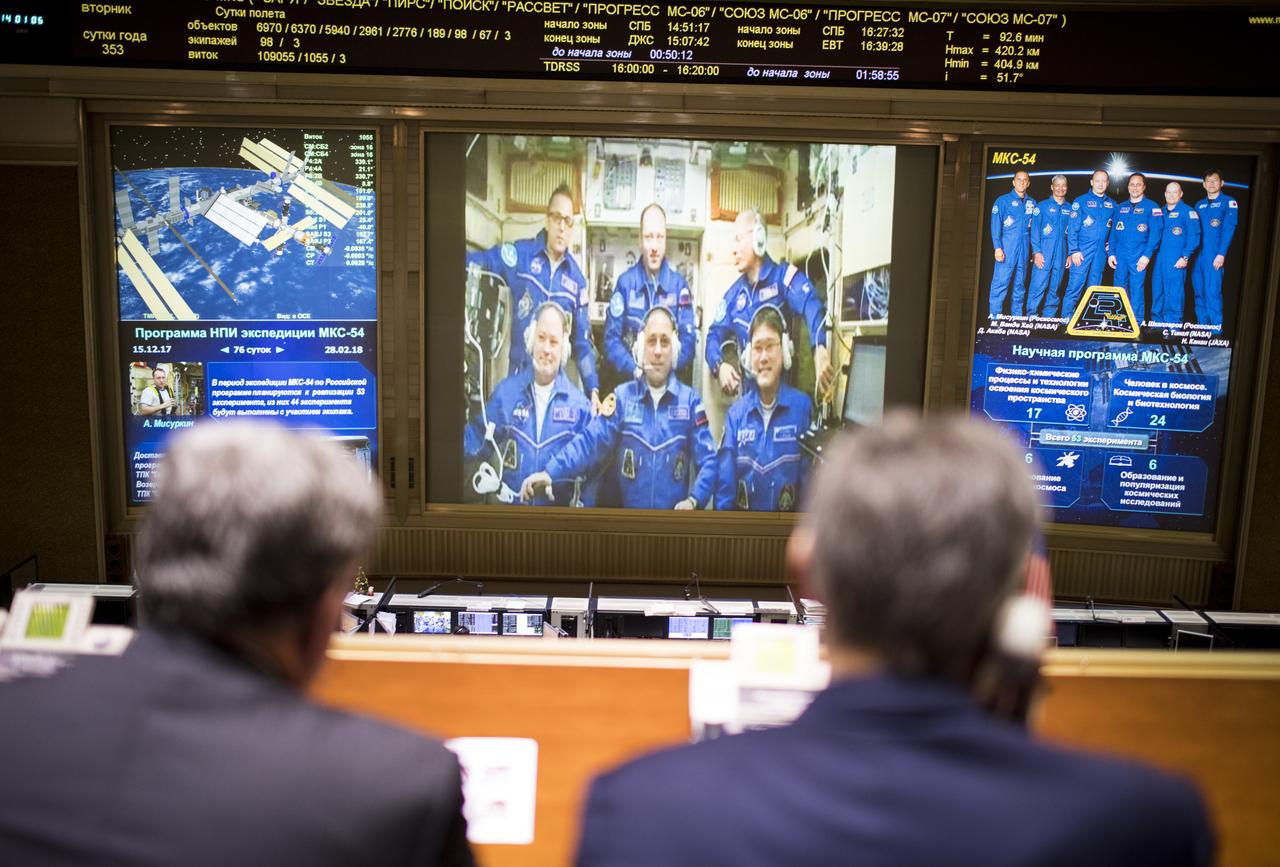
Expedition 54 flight engineers Scott Tingle of NASA, bottom left, Anton Shkaplerov of Roscosmos, bottom center, and Norishige Kanai of the Japan Aerospace Exploration Agency (JAXA) bottom right, are seen with flight engineer Joe Acaba of NASA, top left, Commander Alexander Misurkin, top center, and flight engineer Mark Vande Hei of NASA, top right, on a video monitor as they U.S. Ambassador to Russia Jon Huntsman Jr. at the Moscow Mission Control Center in Korolev, Russia a few hours after the Soyuz MS-07 docked to the International Space Station on Tuesday, Dec. 19, 2017. Photo Credit: (NASA/Joel Kowsky)
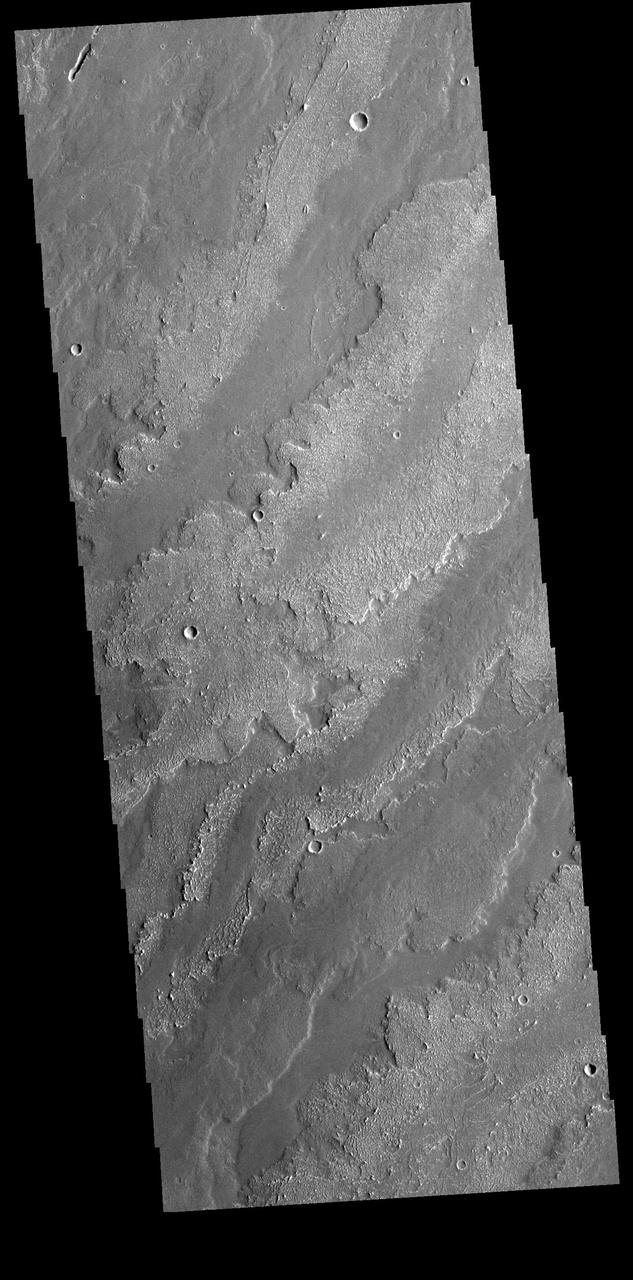
Today's VIS image shows a small portion of the immense lava flows that originated from Arsia Mons. Arsia Mons is the southernmost of the three large aligned volcanoes in the Tharsis region. The different surface textures are created by differences in the lava viscosity and cooling rates. The lobate margins of each flow can be traced back to the start of each flow — or to the point where they are covered by younger flows. Flows in Daedalia Planum can be as long as 180 km. Orbit Number: 80765 Latitude: -22.4517 Longitude: 237.984 Instrument: VIS Captured: 2020-02-28 12:04 https://photojournal.jpl.nasa.gov/catalog/PIA23901
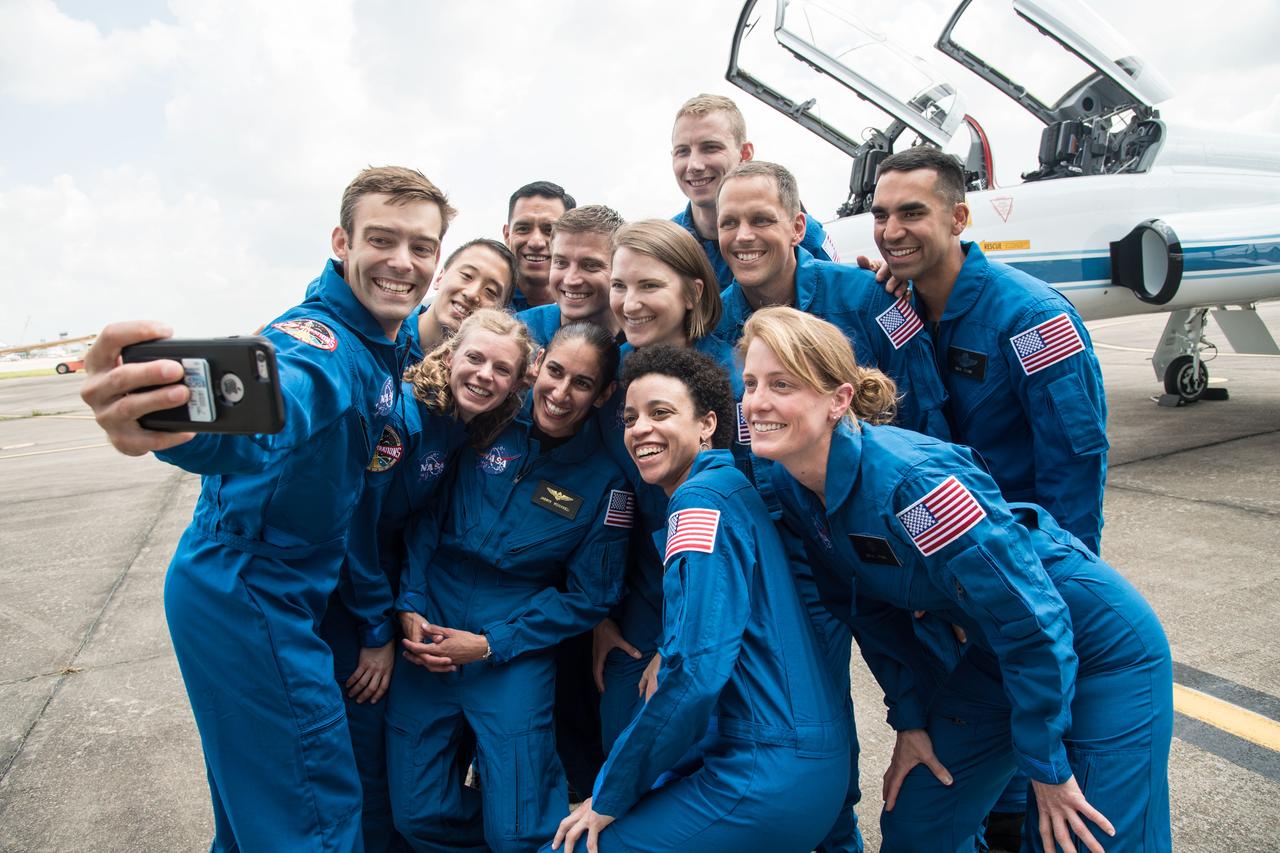
jsc2017e067274 (June 6, 2017) --- NASA’s 2017 Astronaut Candidate Class stopped for a group photo while getting fitted for flight suits at Ellington Airport near NASA’s Johnson Space Center in Houston, Texas.
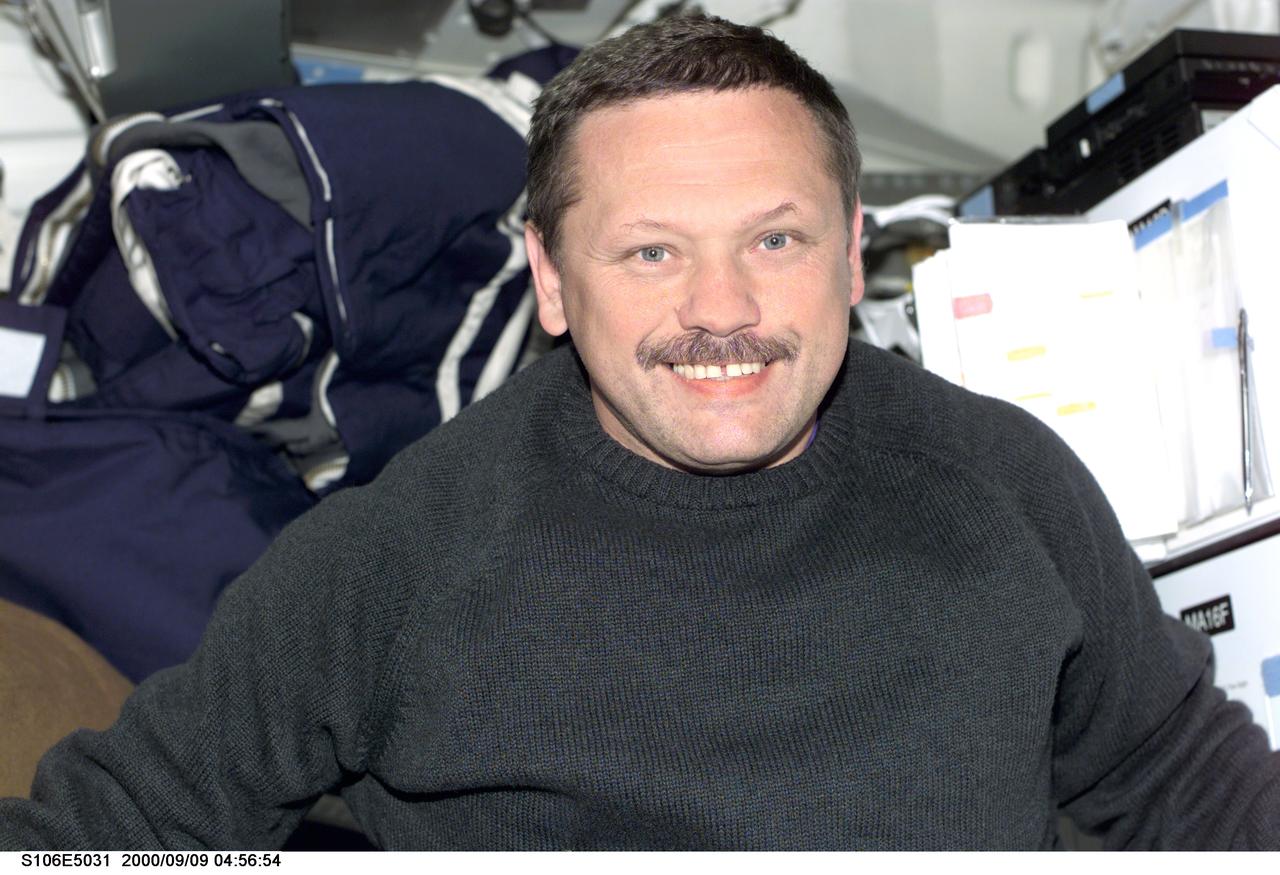
S106-E-5031 (9 September 2000) --- Cosmonaut Boris V. Morukov, one of two mission specialists who represent the Russian Aviation and Space Agency on this scheduled 11-day mission, appears to like the progress of the effort by the seven-member crew to keep up its busy agenda onboard the Space Shuttle Atlantis. The crew is less than 24 hours away from Atlantis' scheduled docking with the International Space Station (ISS).
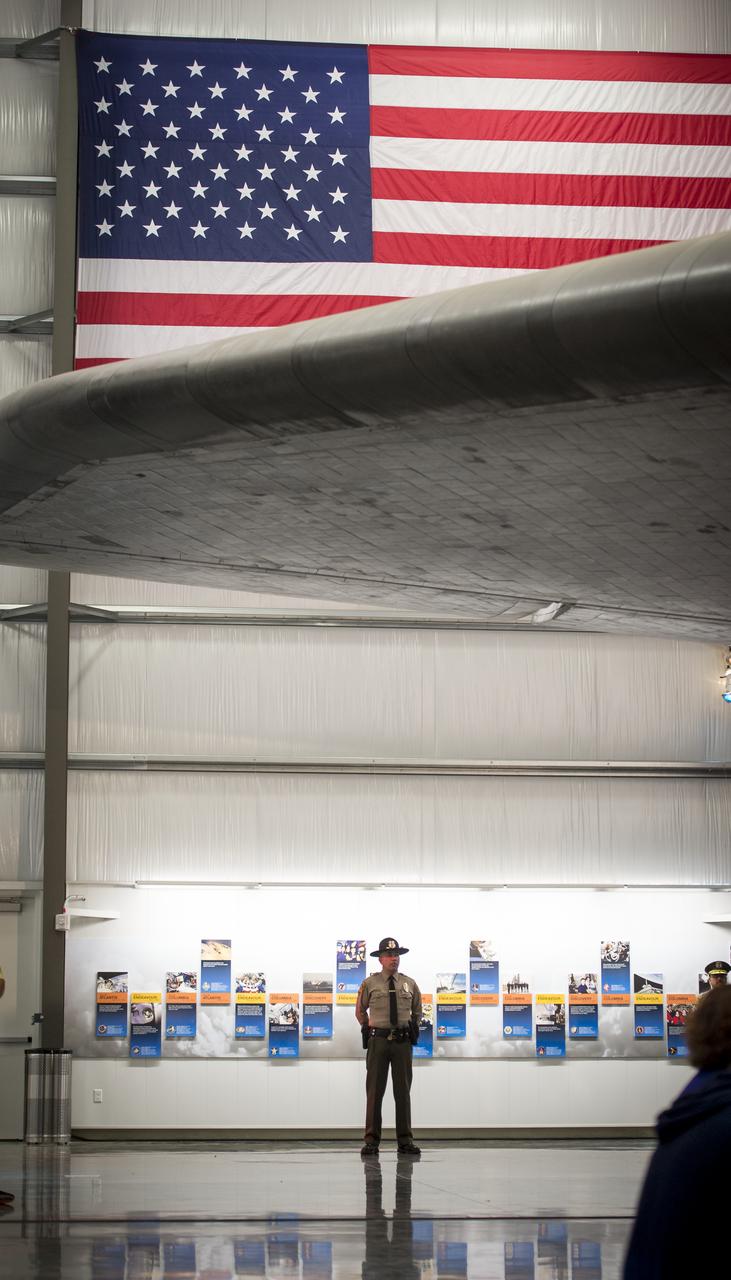
A police officer is seen underneath the wing of the space shuttle Endeavour during the grand opening ceremony for the California Science center's Samuel Oschin Space Shuttle Endeavour Display Pavilion, Tuesday, Oct. 30, 2012, in Los Angeles. Endeavour, built as a replacement for space shuttle Challenger, completed 25 missions, spent 299 days in orbit, and orbited Earth 4,671 times while traveling 122,883,151 miles. Photo Credit: (NASA/Bill Ingalls)
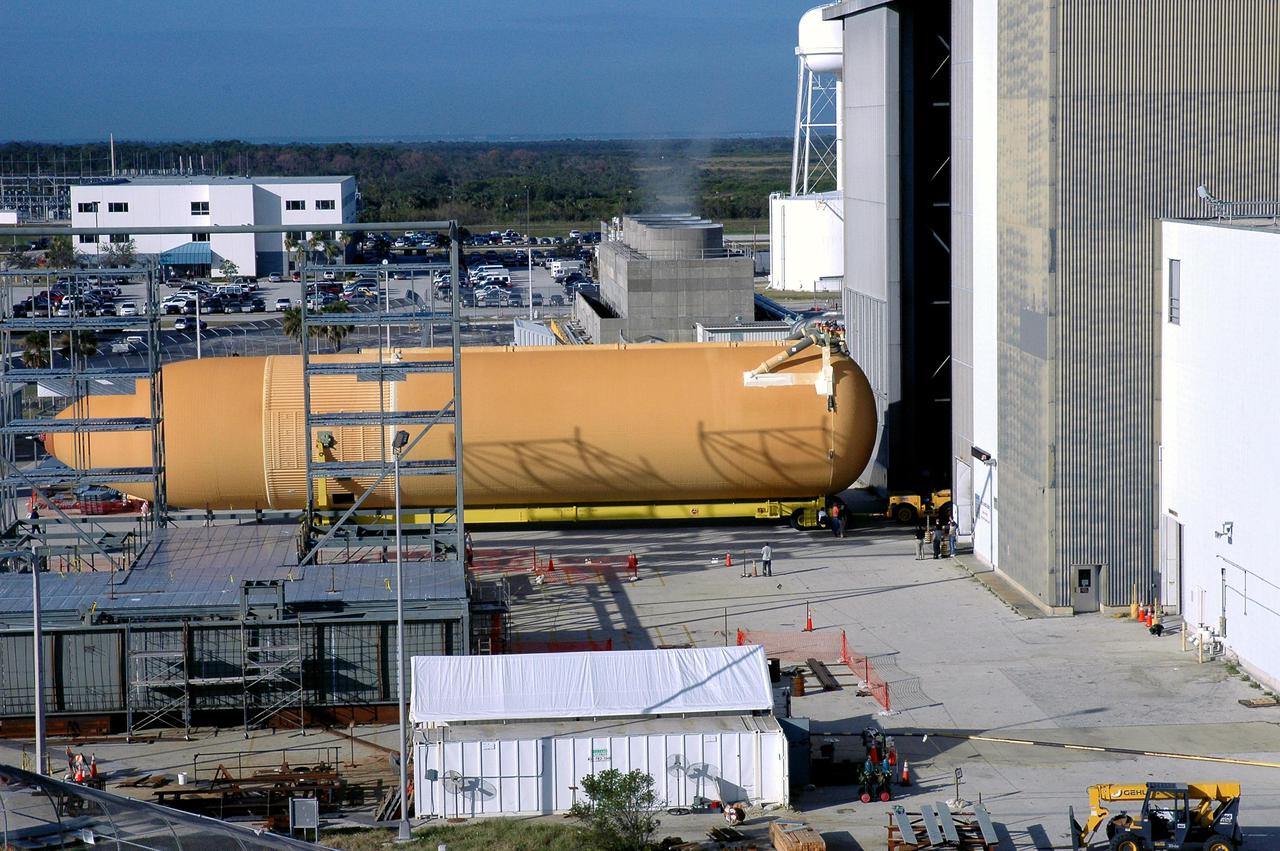
KENNEDY SPACE CENTER, FLA. - Viewed from the roof of the Launch Control Center in the Launch Complex 39 Area, the newly redesigned External Tank is seen moving into the Vehicle Assembly Building. In the transfer aisle of the VAB, the tank will be raised from a horizontal to a vertical position, then lifted high up into a storage cell, or “checkout cell,” where it will undergo inspections of the mechanical, electrical and thermal protection systems. New processing activities resulting from re-design of the tank include inspection of the bipod heater and External Tank separation camera, which includes charging the camera batteries. The tank will be then prepared for mating to the Solid Rocket Boosters. When preparations are complete, the tank will be lifted from the checkout cell, moved across the transfer aisle and into High Bay 1, where it will be lowered and attached to the boosters, which are sitting on the Mobile Launch Platform. The tank is designated for the Return to Flight mission, STS-114, targeted for a launch opportunity beginning in May. The seven-member Discovery crew will fly to the International Space Station primarily to test and evaluate new procedures for flight safety, including Space Shuttle inspection and repair techniques.
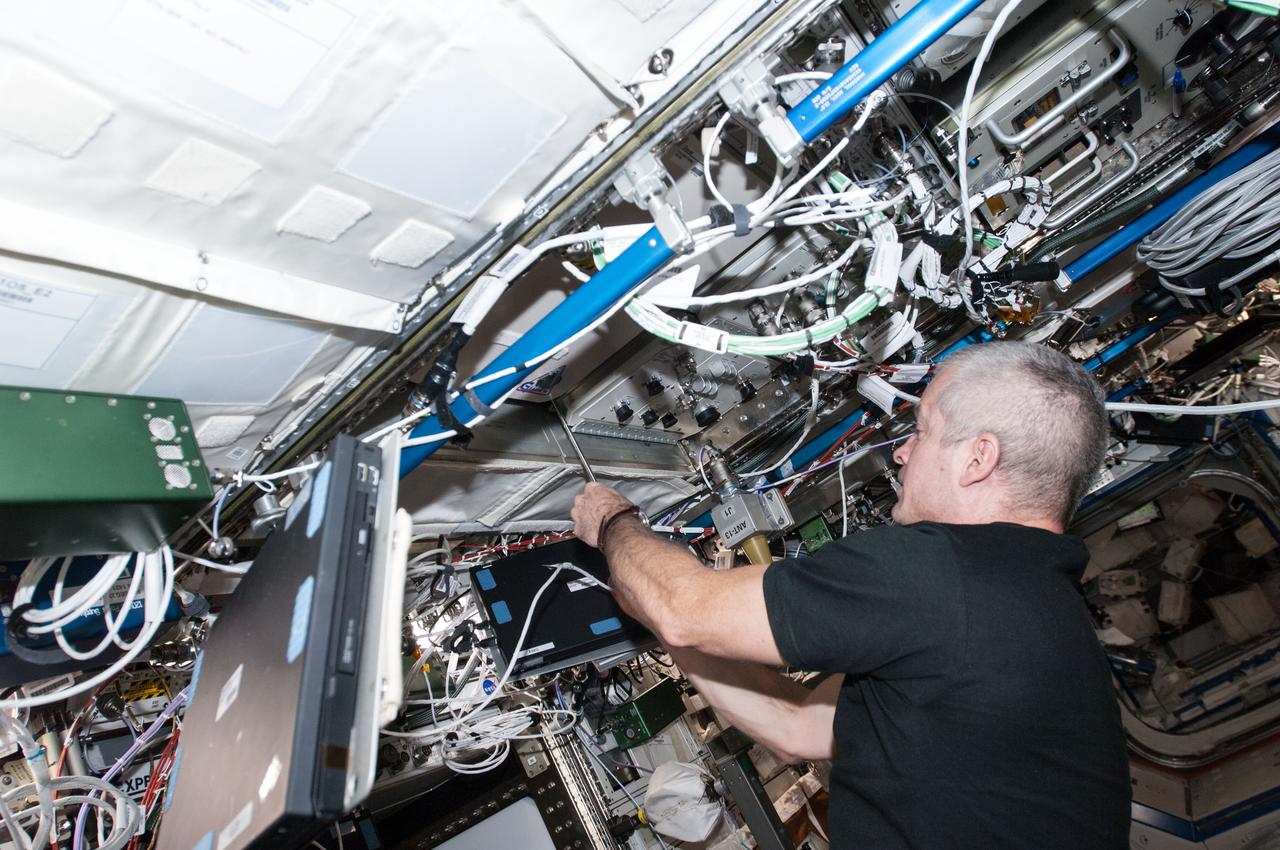
ISS040-E-000297 (16 May 2014) --- NASA astronaut Steve Swanson, Expedition 40 commander, works with the General Laboratory Active Cryogenic ISS Experiment Refrigerator (GLACIER) in the Destiny laboratory of the International Space Station.
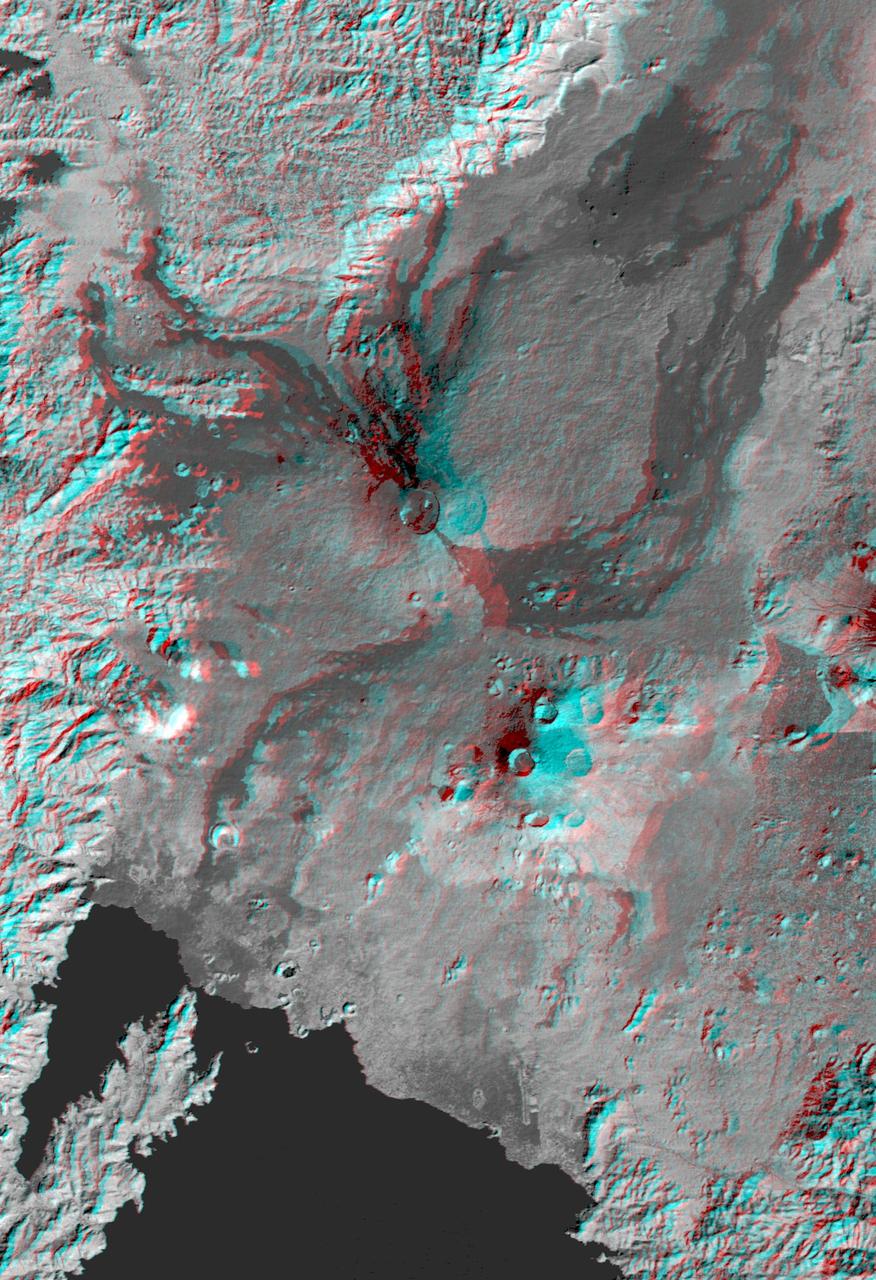
This anaglyph, from NASA Shuttle Radar Topography Mission, is of the Nyiragongo volcano in the Congo. 3D glasses are necessary to view this image.
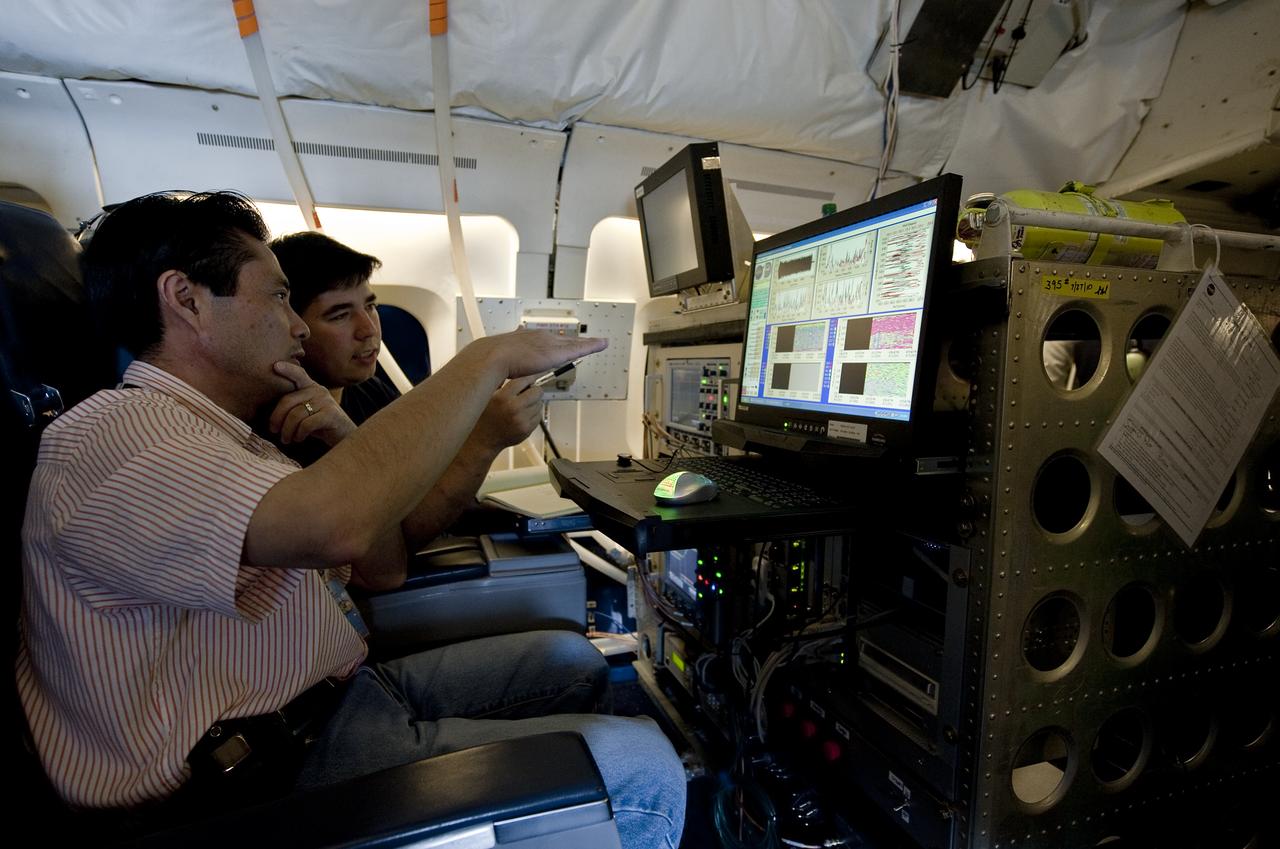
Jeffrey Beyon, left, and Paul Joseph Petzar, right, from NASA's Langley Research Center, work with DAWN Air Data Acquisition and Processing software aboard NASA's DC-8 research aircraft, Sunday, Aug. 15, 2010, in support of the GRIP experiment at Fort Lauderdale International Airport in Fort Lauderdale, Fla. The Genesis and Rapid Intensification Processes (GRIP) experiment is a NASA Earth science field experiment in 2010 that is being conducted to better understand how tropical storms form and develop into major hurricanes. Photo Credit: (NASA/Paul E. Alers)

NASA astronaut Mike Hopkins, center, speaks to members of the media after arriving from Houston at the Launch and Landing Facility at NASA’s Kennedy Space Center with fellow NASA astronauts Shannon Walker, Victor Glover, and Japan Aerospace Exploration Agency (JAXA) astronaut Soichi Noguchi, ahead of SpaceX’s Crew-1 mission, Sunday, Nov. 8, 2020, in Florida. NASA’s SpaceX Crew-1 mission is the first operational mission of the SpaceX Crew Dragon spacecraft and Falcon 9 rocket to the International Space Station as part of the agency’s Commercial Crew Program. Hopkins, Glover, Walker, and Noguchi are scheduled to launch at 7:49 p.m. EST on Saturday, Nov. 14, from Launch Complex 39A at the Kennedy Space Center. Photo Credit: (NASA/Joel Kowsky)
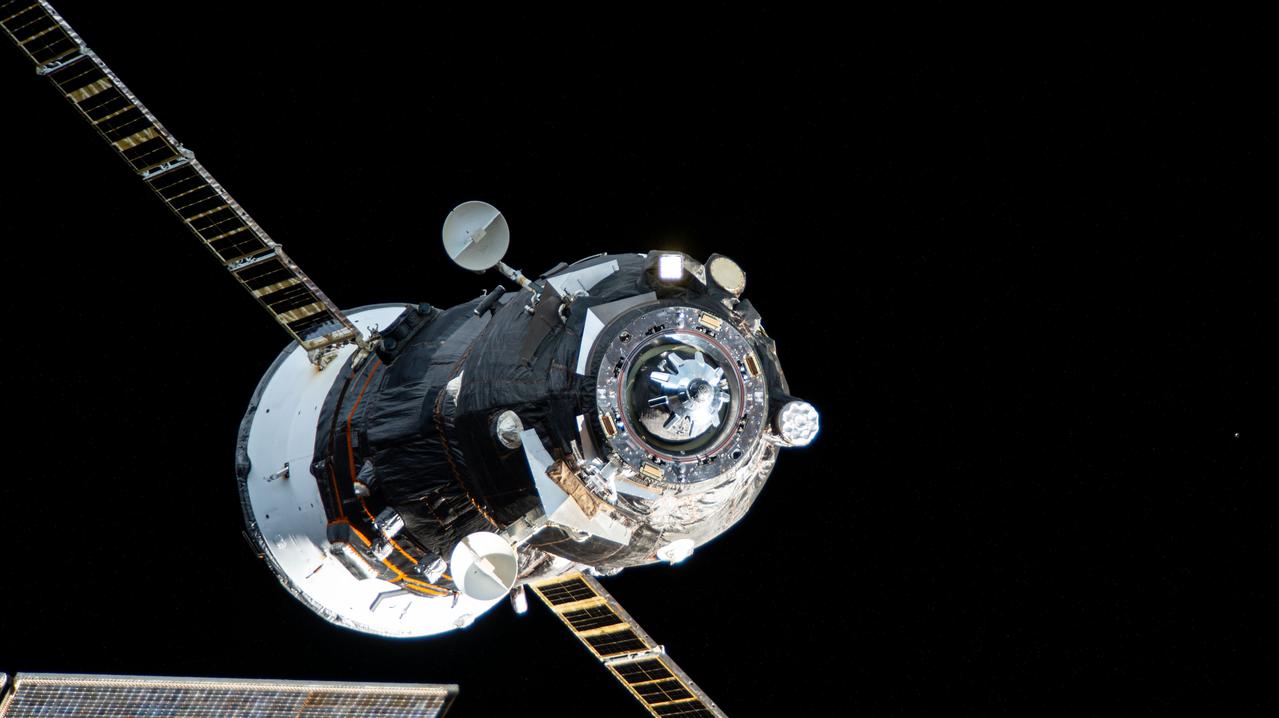
iss071e464295 (Aug. 13, 2024) --- The Progress 87 cargo craft, packed with trash and discarded gear, departs the International Space Station following a six-month resupply mission docked to the Zvezda service module's rear port.
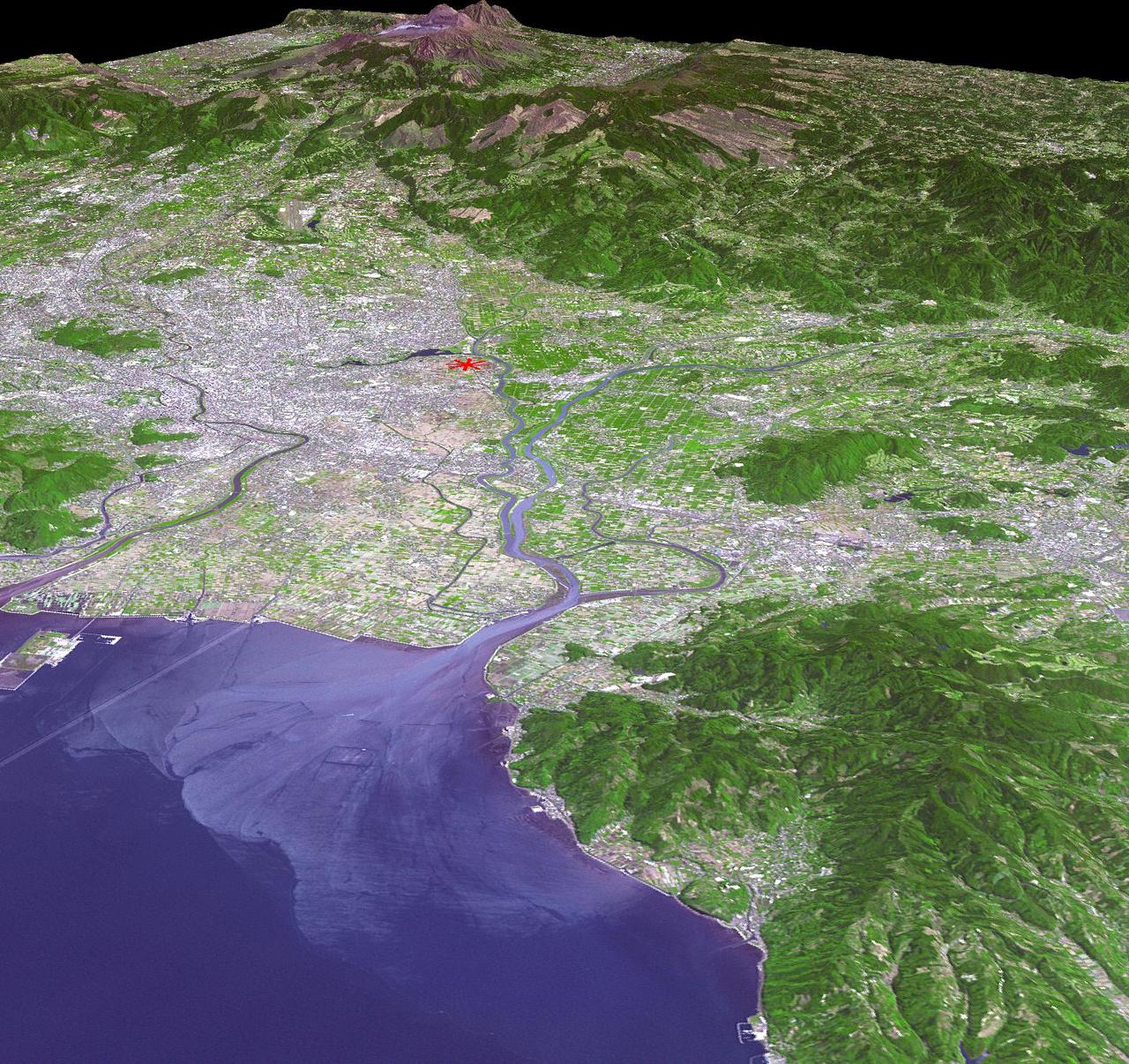
This image from NASA Terra spacecraft shows a perspective view, looking toward the Aso volcanic caldera, which indicates the epicenter with a red star.

KENNEDY SPACE CENTER, FLA. - Workers in the Multi-Purpose Processing Facility move the rotating work stand away from NASA's Solar Radiation and Climate Experiment (SORCE) after mating with the Pegasus XL Expendable Launch Vehicle. SORCE will study and measure solar irradiance as a source of energy in the Earth's atmosphere. The launch of SORCE is scheduled for Jan. 25 at 3:14 p.m. from Cape Canaveral Air Force Station, Fla.
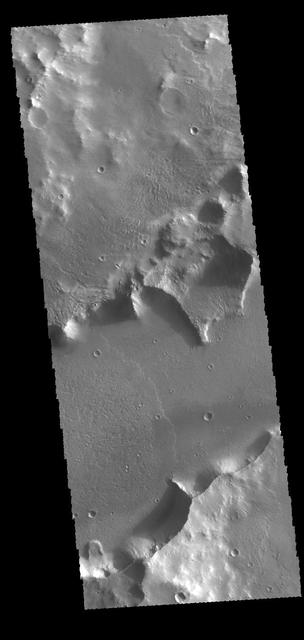
The channel feature in this image from NASA 2001 Mars Odyssey spacecraft is called Mangala Fossa. This feature was formed by tectonic activity, with the walls being faults that allowed the central portion to slide downward forming a graben.

KENNEDY SPACE CENTER, FLA. -- In the Space Station Processing Facility, as part of the Crew Equipment Interface Test, STS-112 Commander Jeffrey Ashby looks over the S1 Integrated Truss Structure, part of the payload for the mission to the International Space Station. The S1 truss is the first starboard (right-side) truss segment, whose main job is providing structural support for the orbiting research facility's radiator panels that cool the Space Station's complex power system. The S1 truss segment also will house communications systems, external experiment positions and other subsystems. The S1 truss will be attached to the S0 truss. Launch of STS-112 is scheduled for Aug. 22, 2002

CAPE CANAVERAL, Fla. – The Radiation Belt Storm Probes, or RBSP, spacecraft are moved inside their payload fairing on the payload transporter from the Astrotech payload processing facility in Titusville, Fla. to Space Launch Complex-41 at Cape Canaveral Air Force Station. The fairing, which holds the twin RBSP spacecraft, will be lifted to the top of a United Launch Alliance Atlas V rocket for launch later in August. The two spacecraft are designed to study the Van Allen radiation belts in unprecedented detail. Photo credit: NASA/Dmitri Gerondidakis
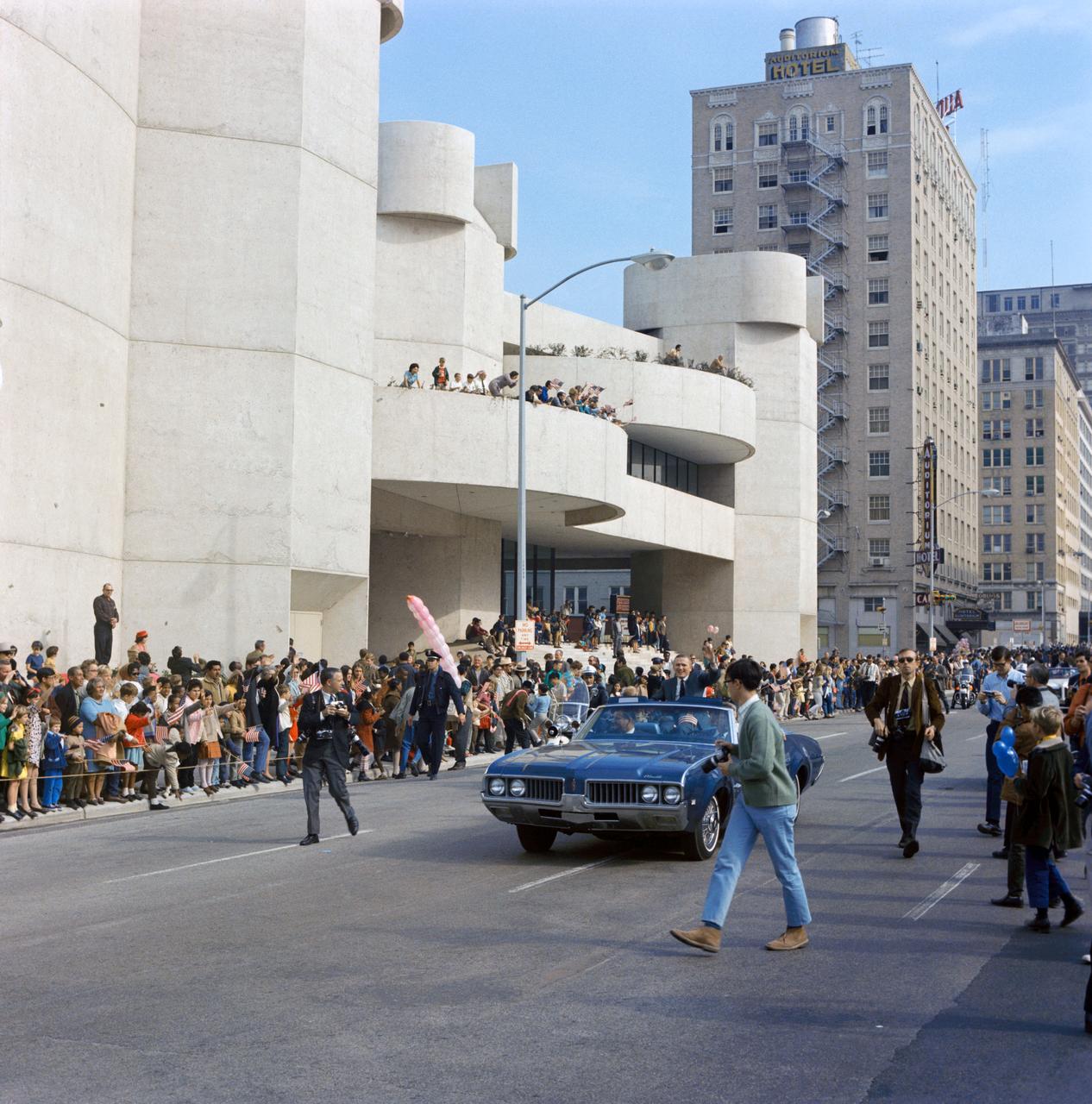
Astronaut Frank Borman, commander; and family are photographed during parade through Houston at the end of the Apollo VIII flight.

As Cassini watches the rings pass in front of the bright red giant star Aldebaran, the star light fluctuates, providing information about the concentrations of ring particles within the various radial features in the rings
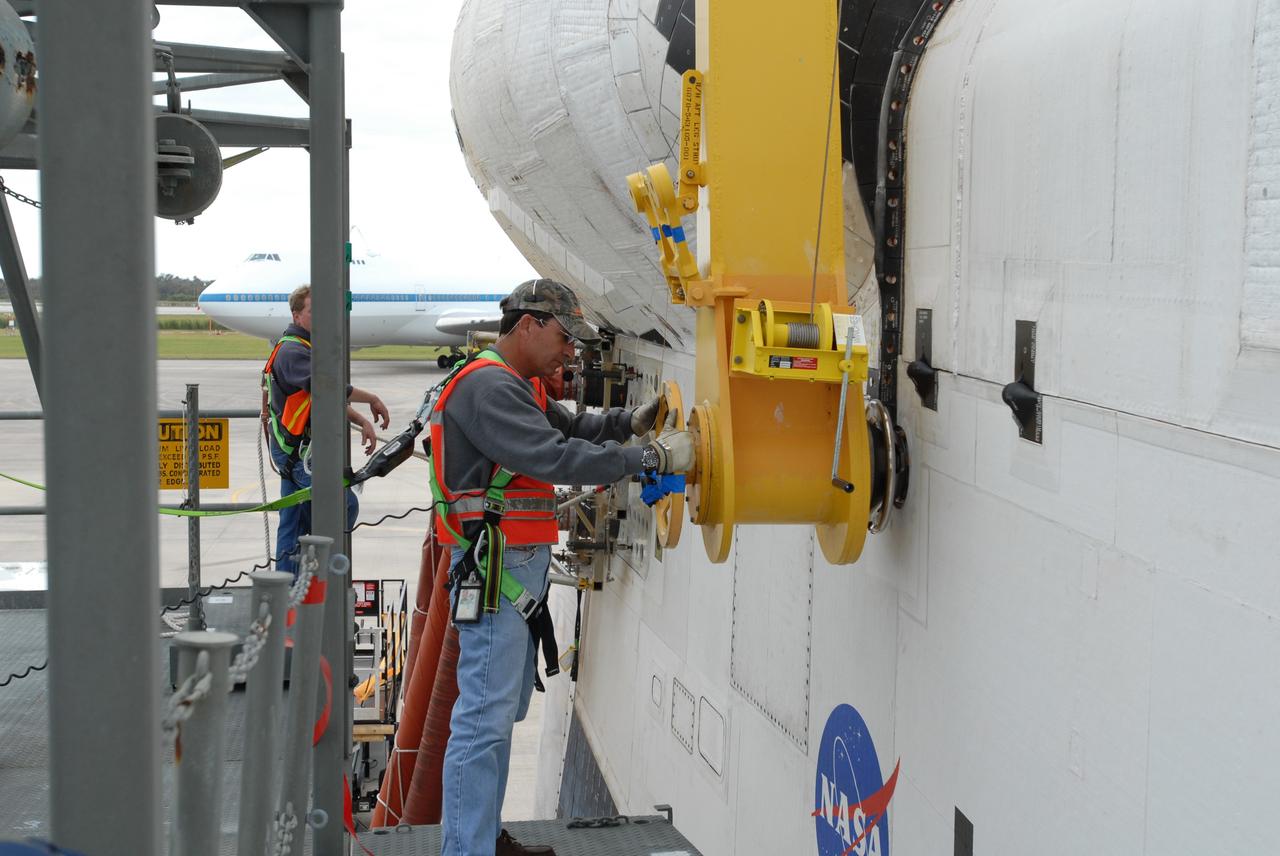
CAPE CANAVERAL, Fla. -- At the Shuttle Landing Facility, or SLF, at NASA's Kennedy Space Center in Florida, workers begin removing the sling from around space shuttle Endeavour. Part of the mate/demate device, the sling enabled Endeavour to be lifted away from shuttle carrier aircraft, or SCA, and lowered to the ground. The SCA carried the shuttle piggyback from California, where Endeavour landed Nov. 30 to end the STS-126 mission. Endeavour will be towed via the two-mile tow-way from the SLF by a diesel-powered tractor to the Orbiter Processing Facility where it will begin preparations for its next mission, STS-127, targeted for May 2009. Photo credit: NASA/Jim Grossmann
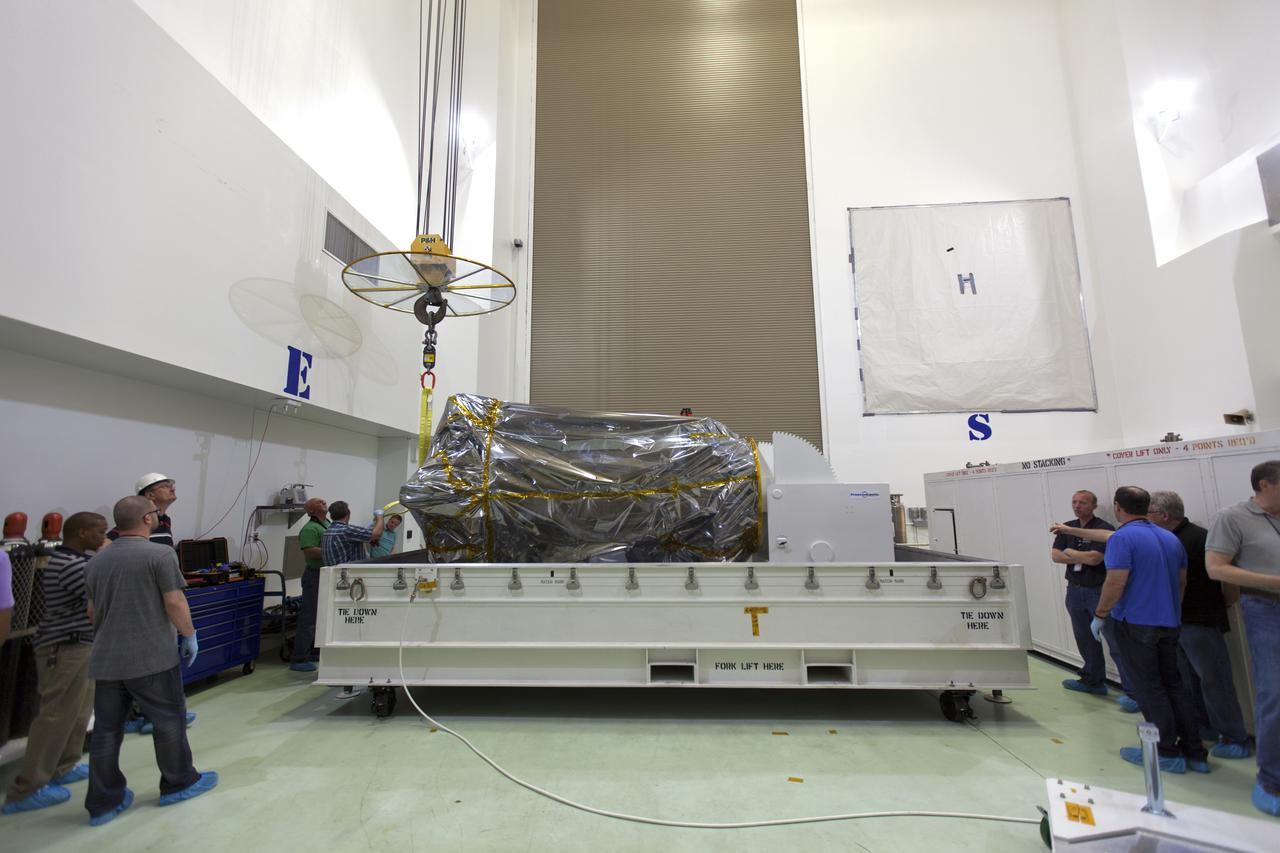
At the Astrotech processing facility in Titusville, Florida, near NASA's Kennedy Space Center, technicians and engineers remove NASA's Parker Solar Probe from its shipping container on Wednesday, April 4, 2018. The Parker Solar Probe will launch on a United Launch Alliance Delta IV Heavy rocket from Space Launch Complex 37 at Cape Canaveral Air Force Station in Florida no earlier than Aug. 4, 2018. The mission will perform the closest-ever observations of a star when it travels through the Sun's atmosphere, called the corona. The probe will rely on measurements and imaging to revolutionize our understanding of the corona and the Sun-Earth connection.
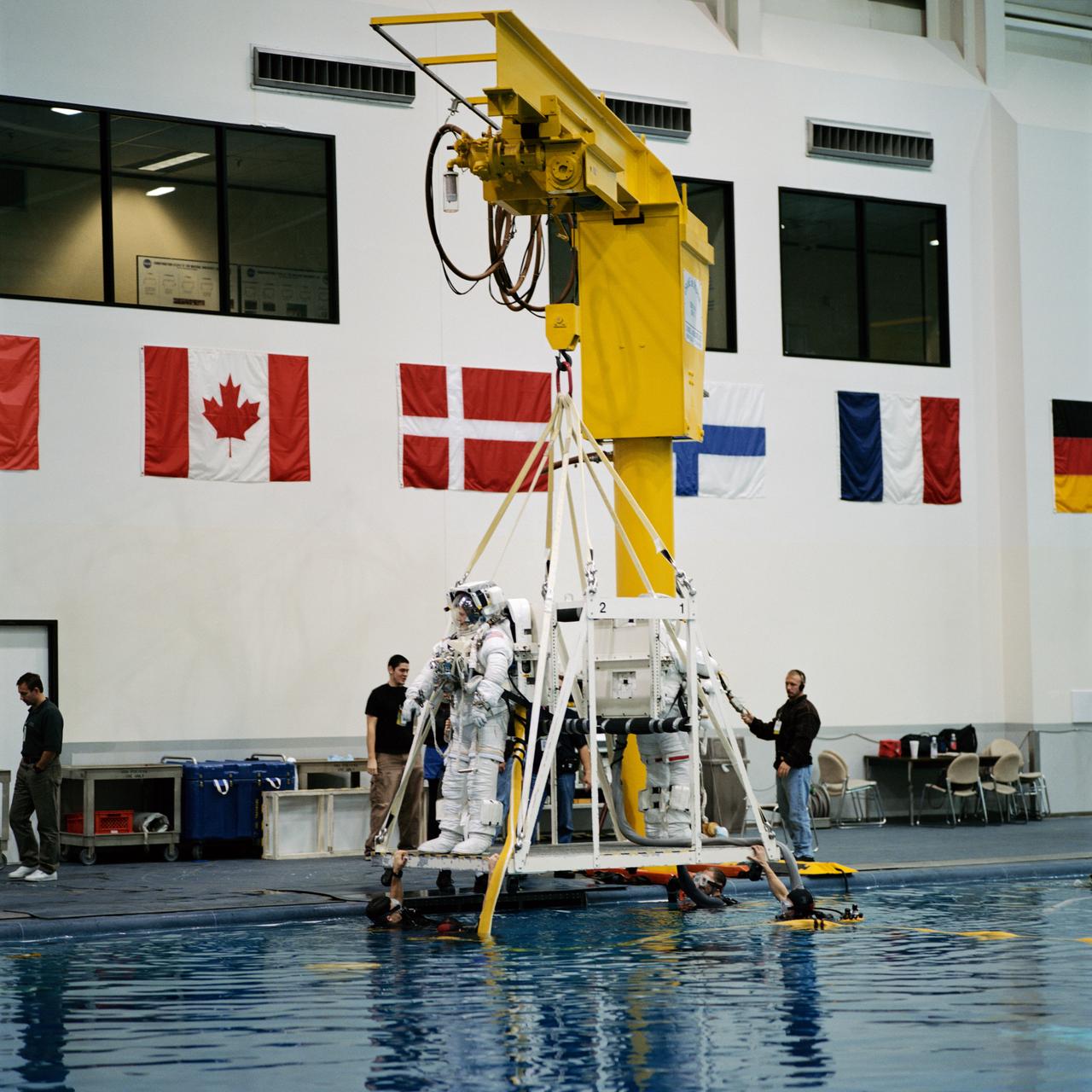
JSC2000-07400 (1 Dec. 2000) --- Both attired in training versions of the Extravehicular Mobility Unit (EMU) spacesuit, astronauts Scott E. Parazynski (left) and Chris A. Hadfield stand on a platform that will ease the two STS-100 mission specialists into a giant pool of water at the Neutral Buoyancy Laboratory (NBL). Minutes later, the two were in a neutrally buoyant state beneath the surface rehearsing spacewalk duties scheduled for next year's visit to the International Space Station (ISS). Hadfield represents the Canadian Space Agency (CSA).
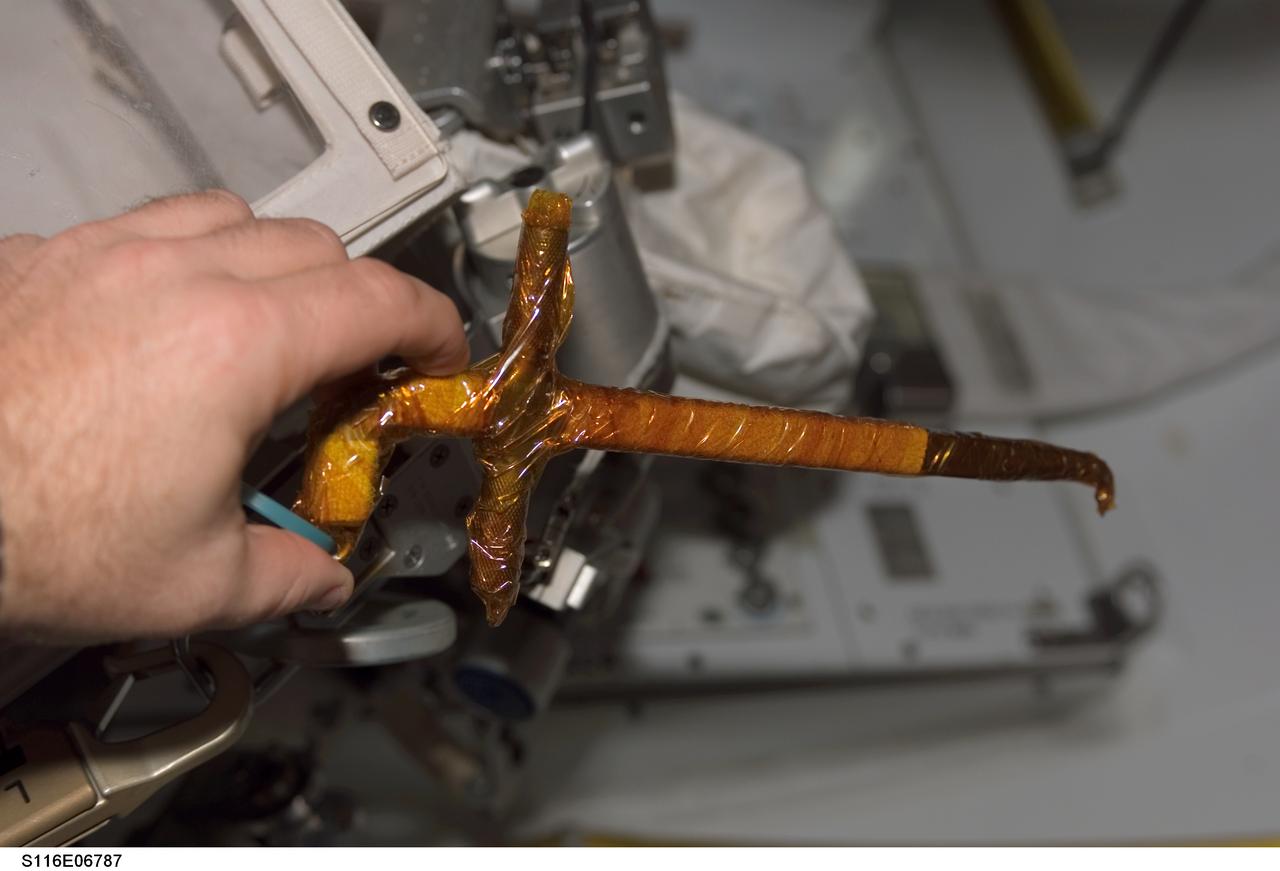
S116-E-06787 (18 Dec. 2006) --- A view of a loop-pin-puller wrapped in insulating tape onboard Space Shuttle Discovery, scheduled for use during STS-116 extravehicular activity (EVA) as construction resumes on the International Space Station.
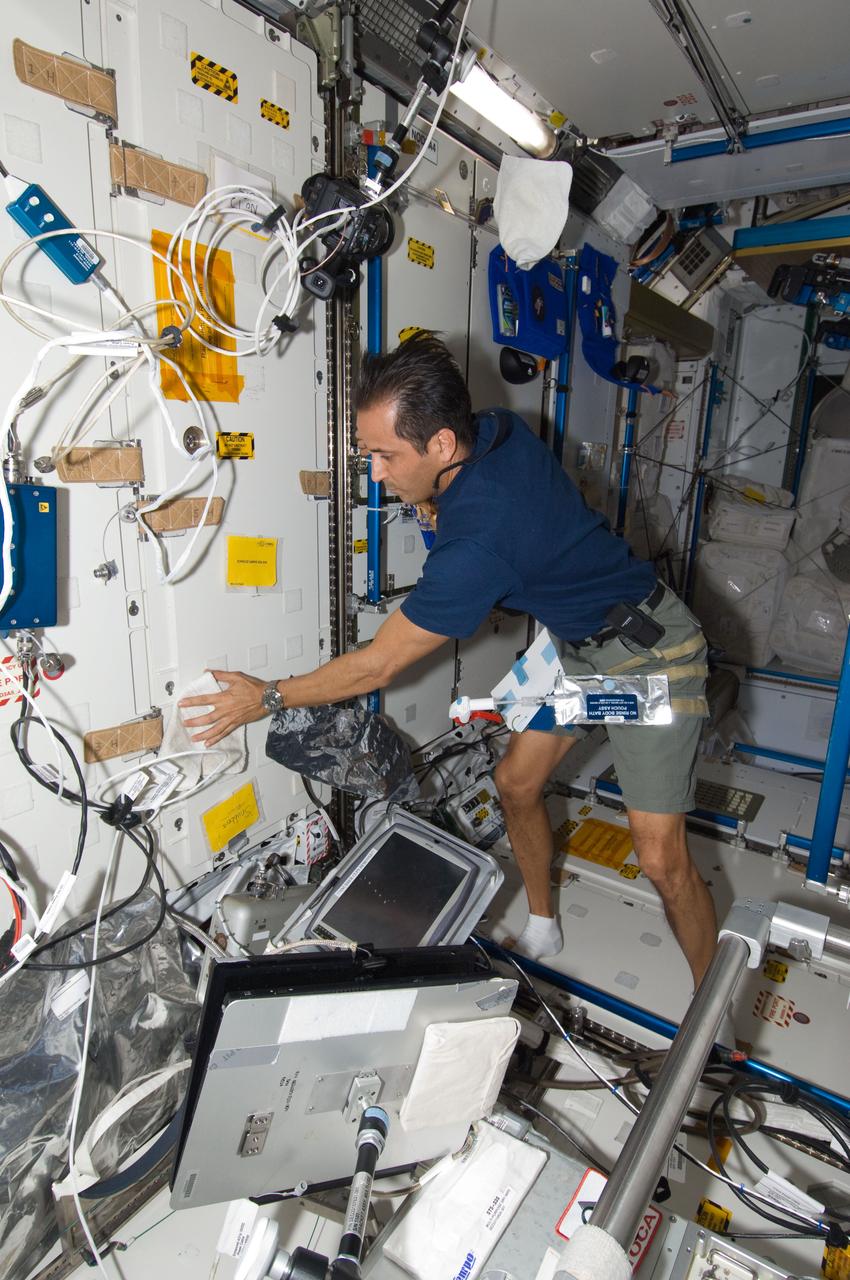
ISS031-E-095918 (8 June 2012) --- NASA astronaut Joe Acaba, Expedition 31 flight engineer, cleans surface areas in the Tranquility node of the International Space Station.
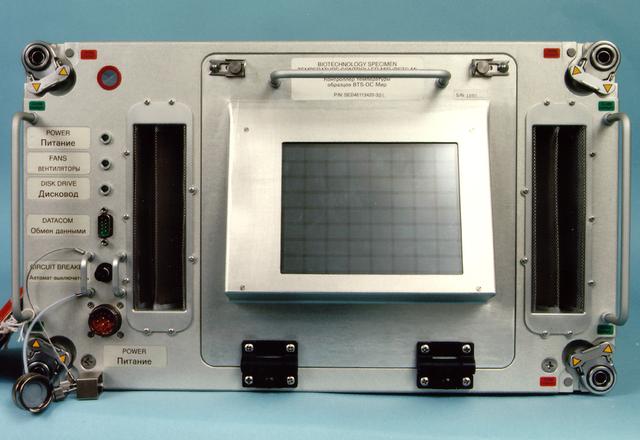
Biotechnology Specimen Temperature Controller (BSTC) will cultivate cells until their turn in the bioreactor; it can also be used in culturing experiments that do not require the bioreactor. The BSTC comprises four incubation/refrigeration chambers individually set at 4 to 50 deg. C (near-freezing to above body temperature). Each chamber holds three rugged tissue chamber modules (12 total), clear Teflon bags holding 30 ml of growth media, all positioned by a metal frame. Every 7 to 21 days (depending on growth rates), an astronaut uses a shrouded syringe and the bags' needleless injection ports to transfer a few cells to a fresh media bag, and to introduce a fixative so that the cells may be studied after flight. The design also lets the crew sample the media to measure glucose, gas, and pH levels, and to inspect cells with a microscope. The controller is monitored by the flight crew through a 23-cm (9-inch) color computer display on the face of the BSTC. This view shows the BTSC with the front panel open. The work is sponsored by NASA's Office of Biological and Physical Research. The bioreactor is managed by the Biotechnology Cell Science Program at NASA's Johnson Space Center (JSC). NASA-sponsored bioreactor research has been instrumental in helping scientists to better understand normal and cancerous tissue development. In cooperation with the medical community, the bioreactor design is being used to prepare better models of human colon, prostate, breast and ovarian tumors. Cartilage, bone marrow, heart muscle, skeletal muscle, pancreatic islet cells, liver and kidney are just a few of the normal tissues being cultured in rotating bioreactors by investigators.
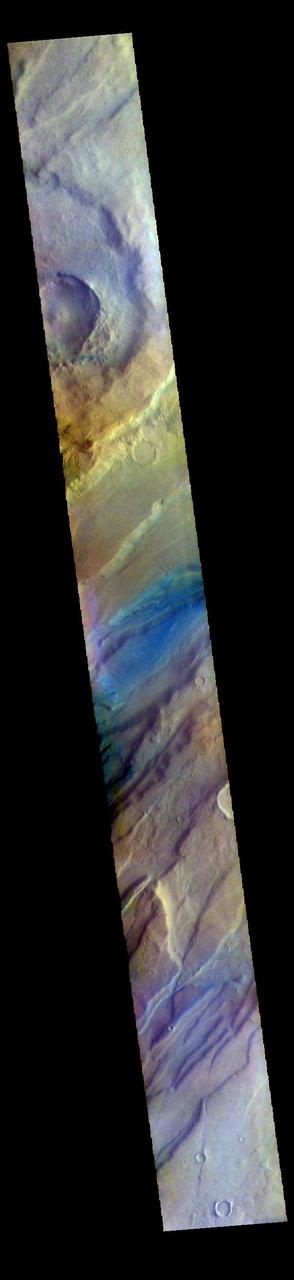
The THEMIS VIS camera contains 5 filters. The data from different filters can be combined in multiple ways to create a false color image. These false color images may reveal subtle variations of the surface not easily identified in a single band image. Today's false color image shows a small portion of Tempe Fossae. The linear features are tectonic graben. Graben are formed by extension of the crust and faulting. When large amounts of pressure or tension are applied to rocks on timescales that are fast enough that the rock cannot respond by deforming, the rock breaks along faults. In the case of a graben, two parallel faults are formed by extension of the crust and the rock in between the faults drops downward into the space created by the extension. The complete fossae system in almost 2000 km (1242 miles) long. The THEMIS VIS camera is capable of capturing color images of the Martian surface using five different color filters. In this mode of operation, the spatial resolution and coverage of the image must be reduced to accommodate the additional data volume produced from using multiple filters. To make a color image, three of the five filter images (each in grayscale) are selected. Each is contrast enhanced and then converted to a red, green, or blue intensity image. These three images are then combined to produce a full color, single image. Because the THEMIS color filters don't span the full range of colors seen by the human eye, a color THEMIS image does not represent true color. Also, because each single-filter image is contrast enhanced before inclusion in the three-color image, the apparent color variation of the scene is exaggerated. Nevertheless, the color variation that does appear is representative of some change in color, however subtle, in the actual scene. Note that the long edges of THEMIS color images typically contain color artifacts that do not represent surface variation. Orbit Number: 94065 Latitude: 46.5357 Longitude: 293.867 Instrument: VIS Captured: 2023-02-27 15:03 https://photojournal.jpl.nasa.gov/catalog/PIA26125

STS-133 DISCOVERY ROLLOUT FROM VAB TO PAD 39A
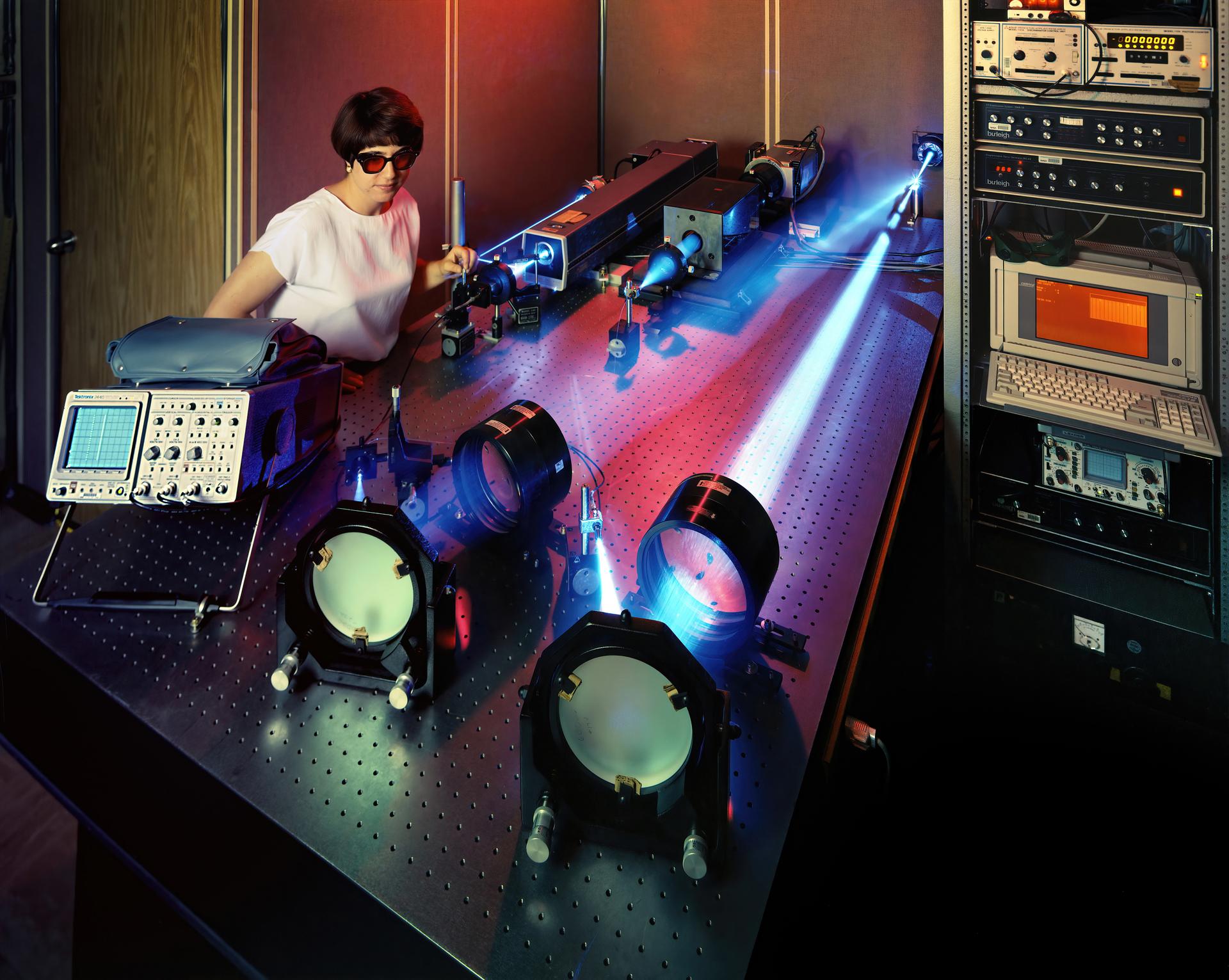
A spectrally resolved Rayleigh/Mie scattering diagnostic was developed to measure temperature and wingspan wise velocity in the vicinity of an ASTOVL aircraft model tested in the Lewis, now Glenn, 9x15 Low Speed Wind Tunnel. This was done for the Phase III hot gas ingestion study of ground-effect flow-field on such aircraft during hover or vertical landing.

The Flight Operations crew stands before a Republic P-47G Thunderbolt at the National Advisory Committee for Aeronautics (NACA) Aircraft Engine Research Laboratory in Cleveland, Ohio. The laboratory’s Flight Research Section was responsible for conducting a variety of research flights. During World War II most of the test flights complemented the efforts in ground-based facilities to improve engine cooling systems or study advanced fuel mixtures. The Republic P–47G was loaned to the laboratory to test NACA modifications to the Wright R–2800 engine’s cooling system at higher altitudes. The laboratory has always maintained a fleet of aircraft so different research projects were often conducted concurrently. The flight research program requires an entire section of personnel to accomplish its work. This staff generally consists of a flight operations group, which includes the section chief, pilots and administrative staff; a flight maintenance group with technicians and mechanics responsible for inspecting aircraft, performing checkouts and installing and removing flight instruments; and a flight research group that integrates the researchers’ experiments into the aircraft. The staff at the time of this March 1944 photograph included 3 pilots, 16 planning and analysis engineers, 36 mechanics and technicians, 10 instrumentation specialists, 6 secretaries and 5 computers.
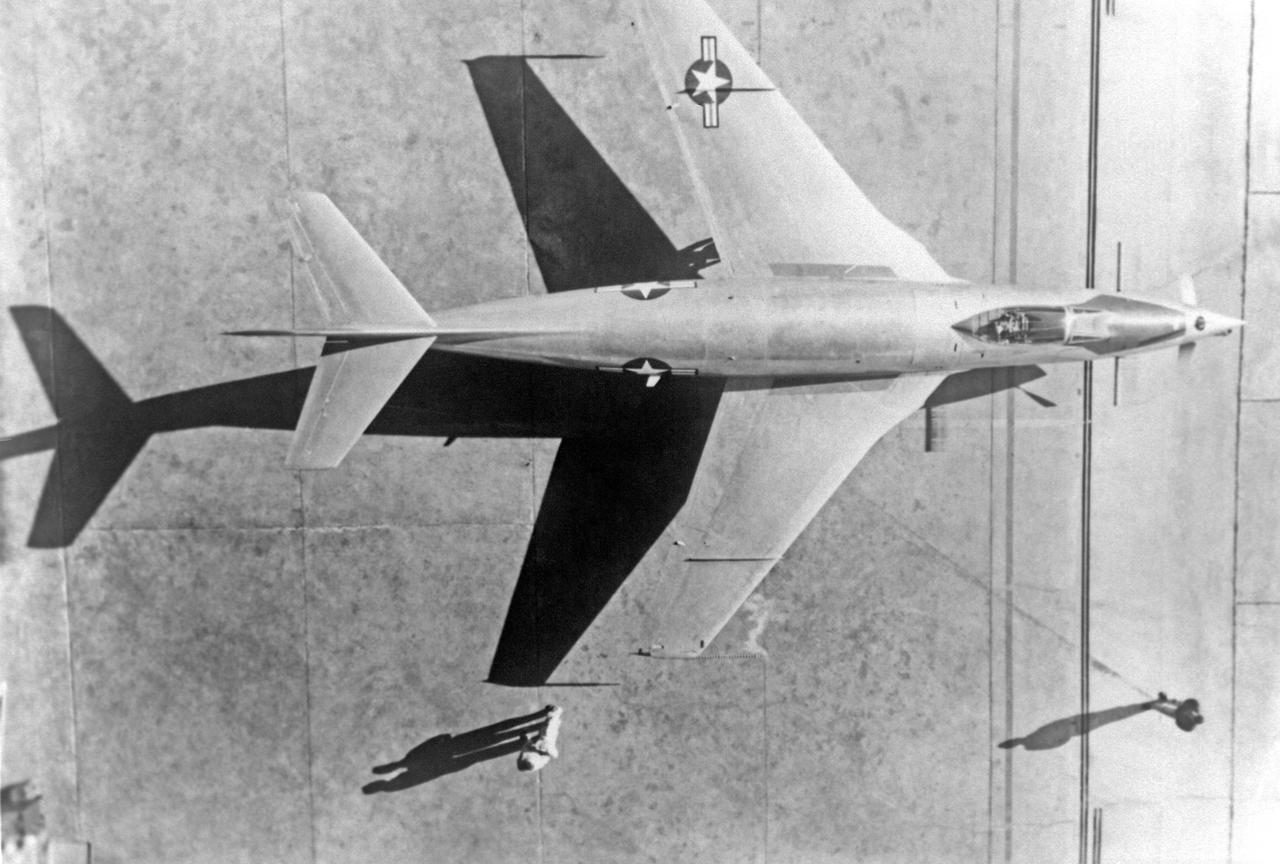
91,591 Overhead view. McDonnell XF-88B Experimental Jet Fighter. Langley used this aircraft in the mid-1950s to explore the potential of a supersonic propeller. Photographed in Engineer in Charge A History of the Langley Aeronautical Laboratory, 1917-1958 by James R. Hansen. Page 508. **Note see L57-2259 for eye level view.
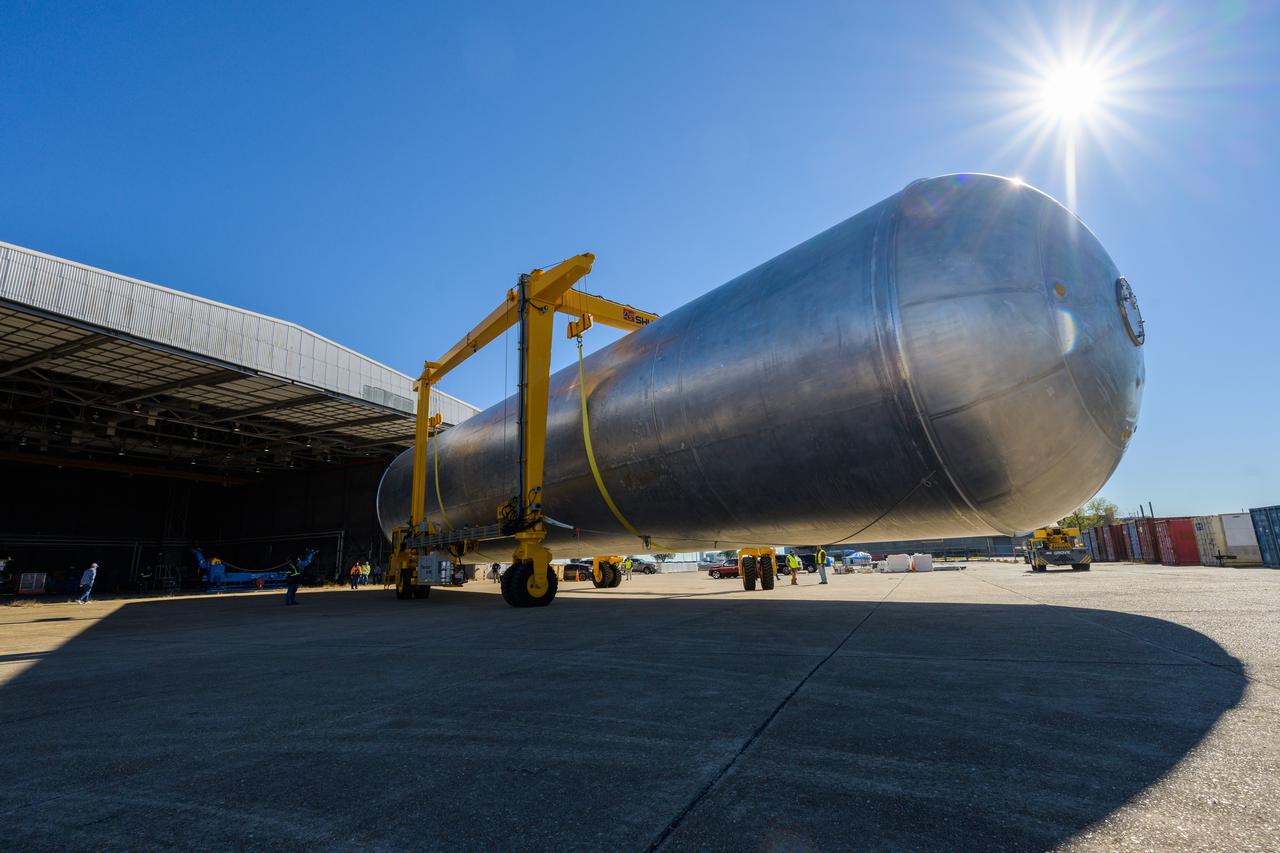
The liquid hydrogen tank that will be part of the Space Launch System rocket’s core stage is being prepared for the Artemis III mission at NASA’s Michoud Assembly Facility in New Orleans. Eventually, the tank will be connected to the engine section that will house the four RS-25 engines. Once the aft simulator is attached, the LH2 tank undergoes non-destructive evaluation, which will test weld strength and ensure the tank is structurally sound. The SLS core stage is made up of five unique elements: the forward skirt, liquid oxygen tank, intertank, liquid hydrogen tank, and the engine section. The tank holds 537,000 gallons of liquid hydrogen cooled to minus 432 degrees Fahrenheit and sits between the core stage’s intertank and engine section. The liquid hydrogen hardware, along with the liquid oxygen tank, will provide propellant to the four RS-25 engines at the bottom of the core stage to produce more than two million pounds of thrust to help launch the Artemis III mission to the Moon. Together with its four RS-25 engines, the rocket’s massive 212-foot-tall core stage — the largest stage NASA has ever built — and its twin solid rocket boosters will produce 8.8 million pounds of thrust to send NASA’s Orion spacecraft, astronauts and supplies beyond Earth’s orbit to the Moon.
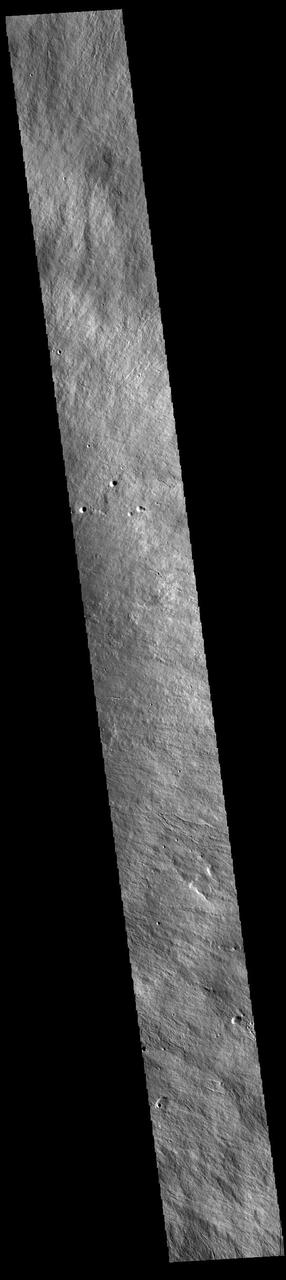
Today's VIS image is located on the upper flank of Olympus Mons. Olympus Mons is the largest volcano in the solar system, reaching heights over 25 km (16 miles) tall from base to summit, with the base covering an area as large as the state of Arizona. For comparison, Mauna Loa is 9 km (5.5 miles) tall measured from its base on the sea floor. Orbit Number: 94916 Latitude: 18.4882 Longitude: 227.856 Instrument: VIS Captured: 2023-05-08 16:34 https://photojournal.jpl.nasa.gov/catalog/PIA26219
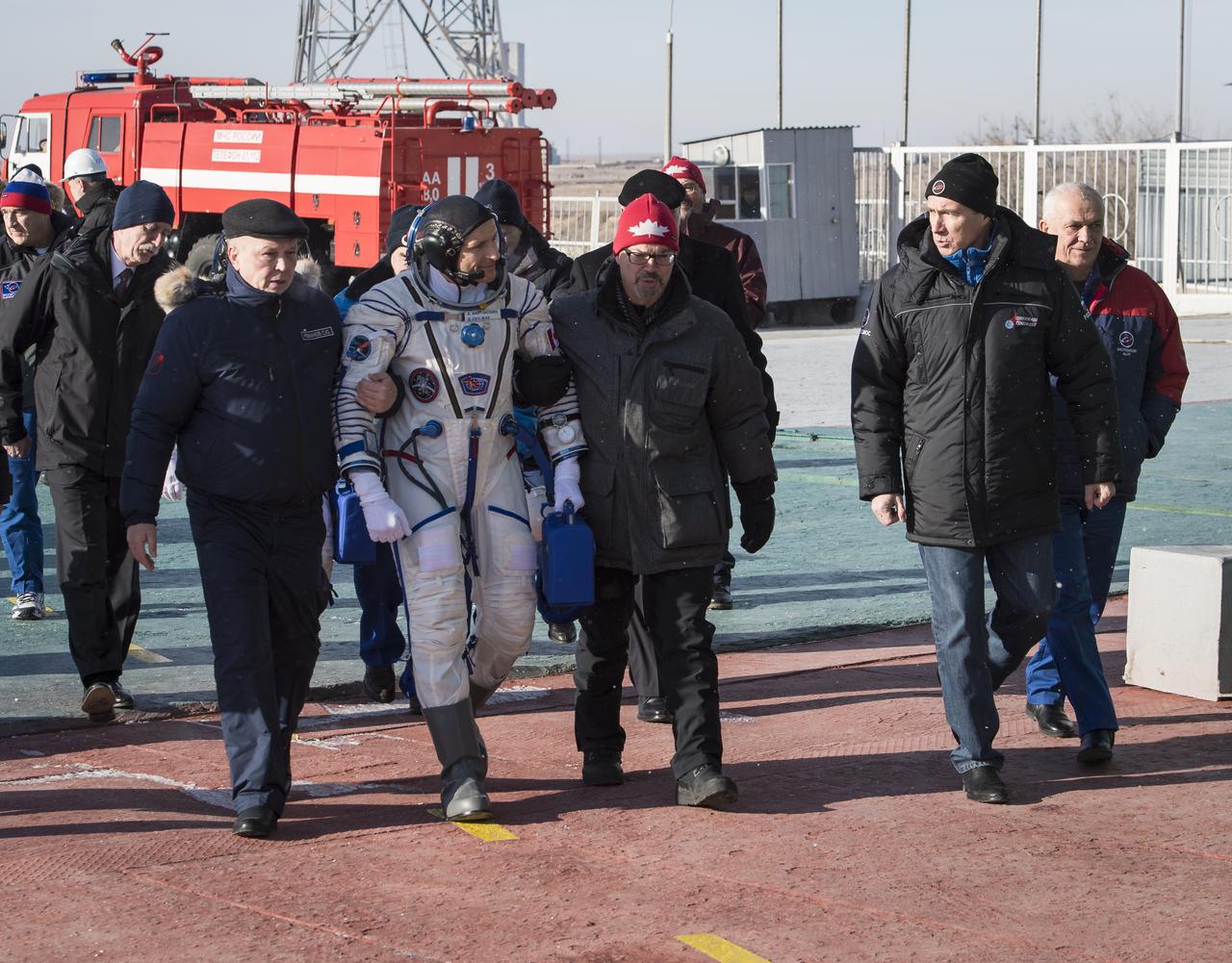
Expedition 58 Flight Engineer David Saint-Jacques is walked to the Soyuz vehicle for launch by Sylvain Laporte, president, Canadian Space Agency (CSA), second from right, Monday, Dec. 3, 2018 in Baikonur, Kazakhstan. Saint-Jacques, Soyuz Commander Oleg Kononenko of Roscosmos, and Flight Engineer Anne McClain of NASA, will spend the next six and a half months onboard the International Space Station. Photo Credit: (NASA/Aubrey Gemignani)
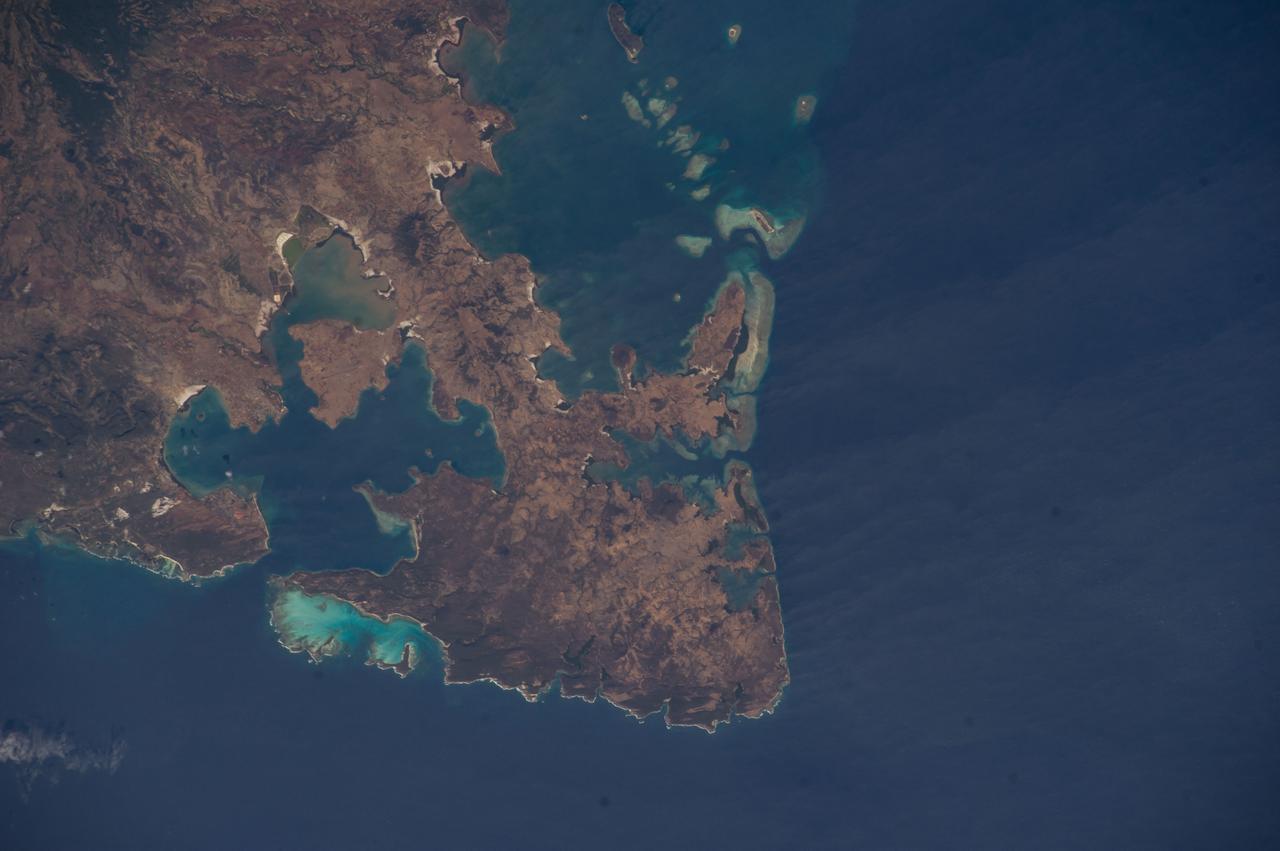
Earth Observation taken during a day pass by the Expedition 40 crew aboard the International Space Station (ISS). Folder lists this as: Floods in India.
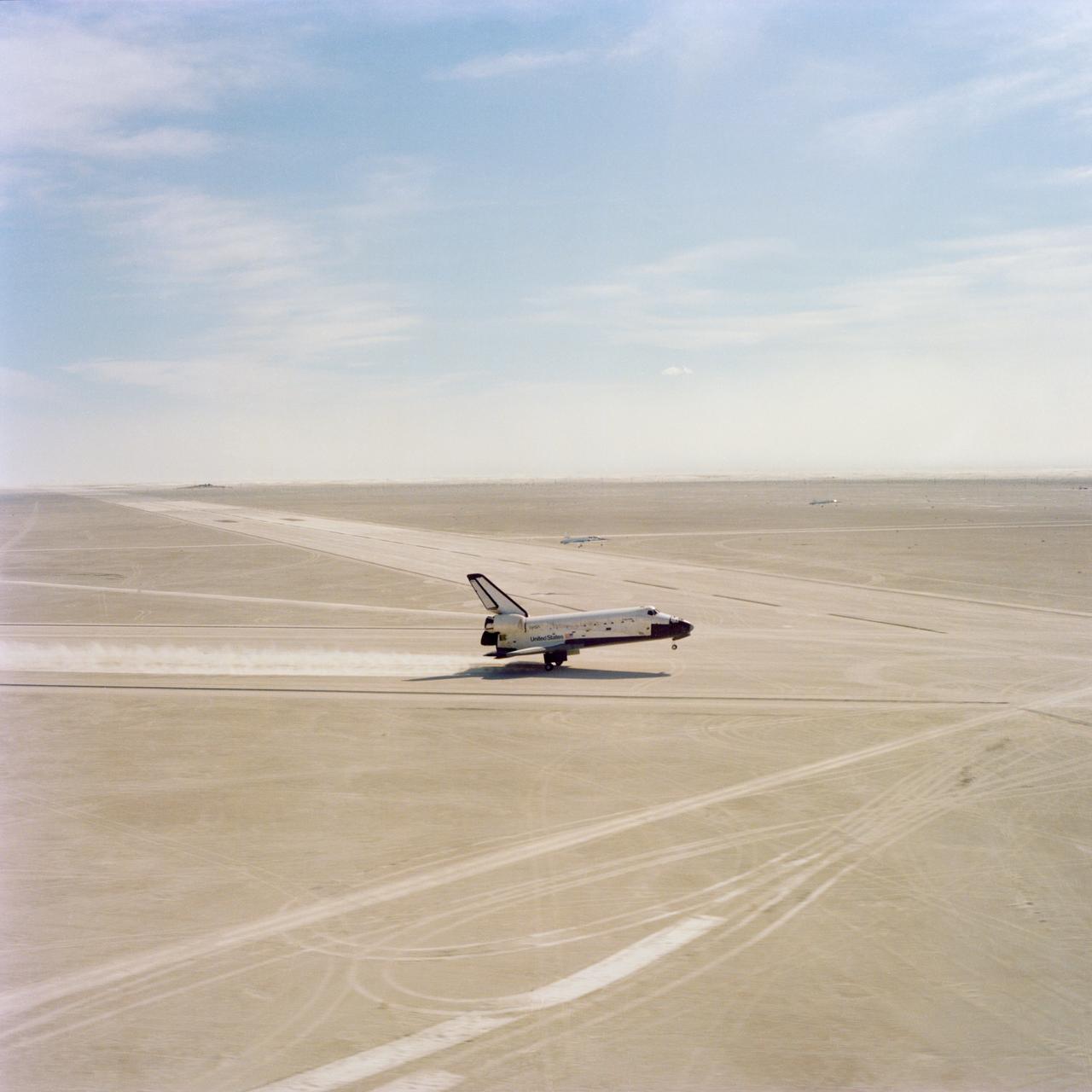
S82-28838 (30 March 1982) --- The space shuttle Columbia (STS-3) touches down on the Northrup Strip at White Sands Missile Range, New Mexico, marking the first time in its three-flight history that it has touched New Mexico soil. T-38 chase plane passenger, Mission Specialist-Astronaut Ronald E. McNair, who also shot some launch photography this flight, recorded a number of frames on 70mm film. Touchdown was shortly after 9 a.m. Mountain Standard Time, March 30, 1982. Photo credit: NASA
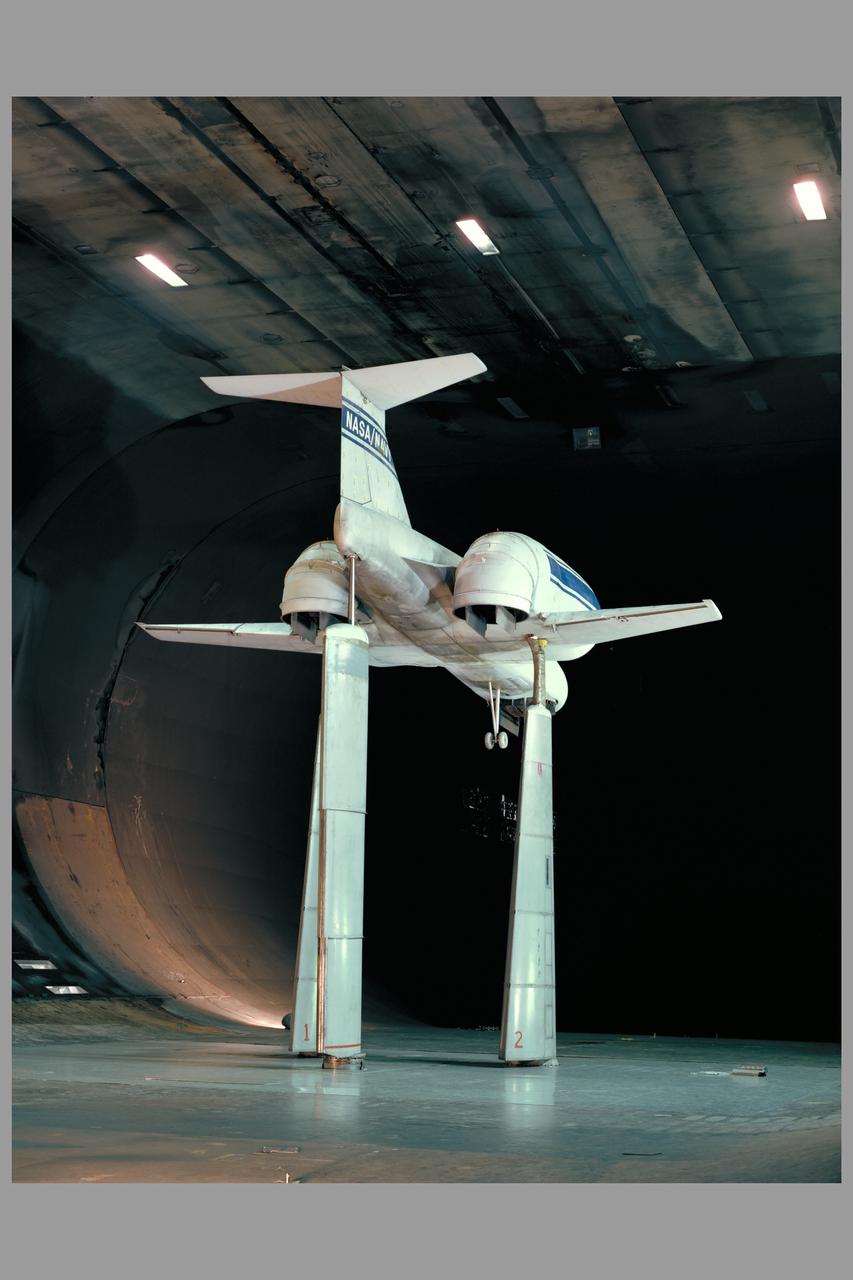
Multi Mission Lift Cruise Fan Model in 40x80ft W.T. Test (Test-490)
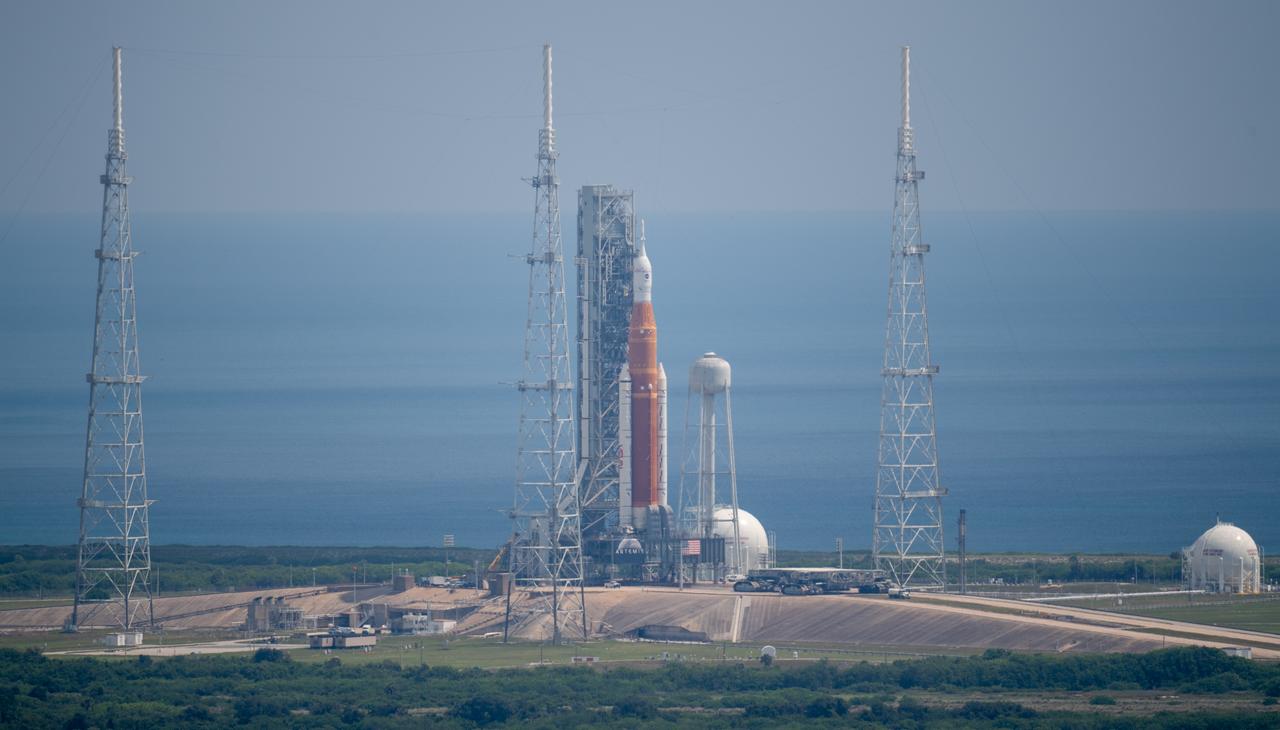
NASA’s Space Launch System (SLS) rocket with the Orion spacecraft aboard is seen atop a mobile launcher at Launch Pad 39B, Wednesday, Aug. 17, 2022, after making the four-mile journey to the launch pad at NASA’s Kennedy Space Center in Florida. NASA’s Artemis I mission is the first integrated test of the agency’s deep space exploration systems: the Orion spacecraft, SLS rocket, and supporting ground systems. Launch of the uncrewed flight test is targeted for no earlier than Aug. 29. Photo Credit: (NASA/Joel Kowsky)
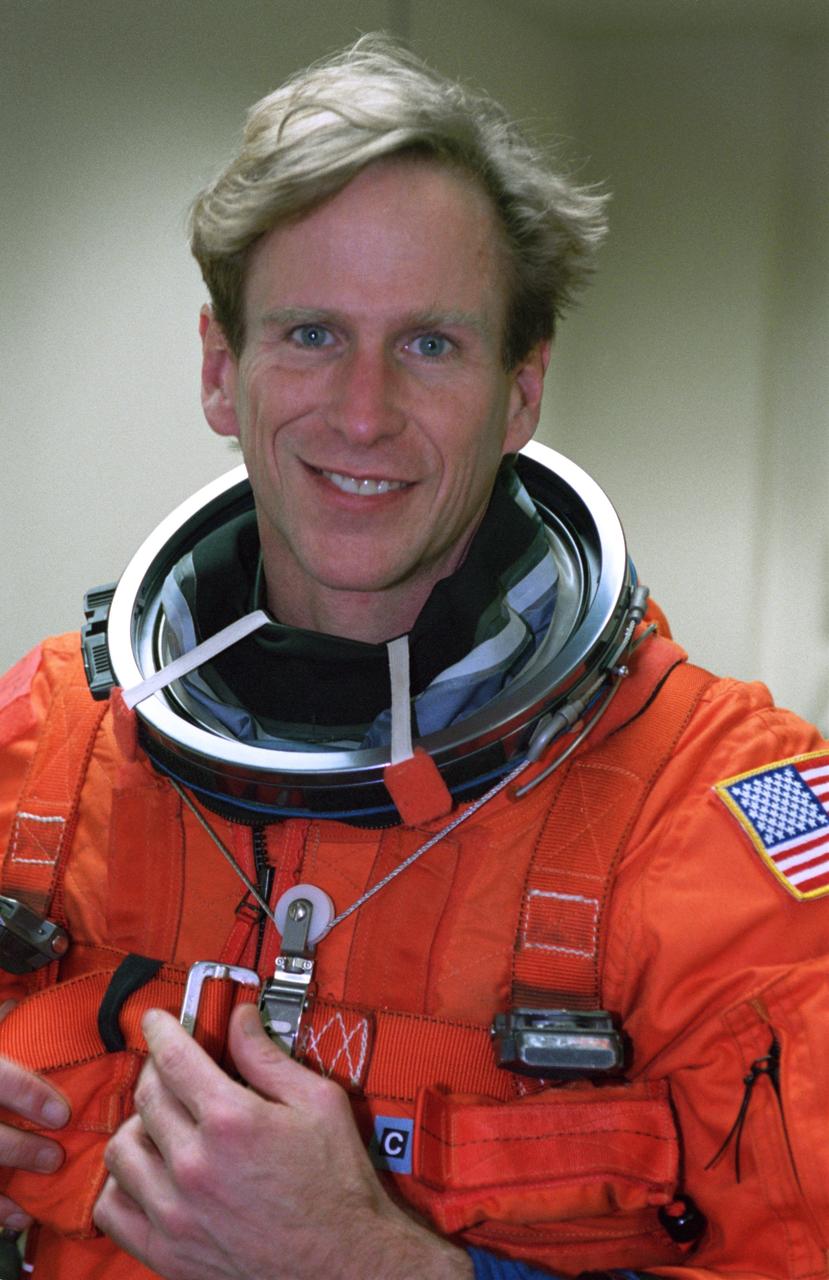
JSC2000-07284 (17 November 2000) --- Astronaut Michael L. Gernhardt, STS-104 mission specialist, attired in a training version of the shuttle launch and entry garment at the Jake Garn Simulation and Training Facility at Johnson Space Center (JSC). Gernhardt will join four other astronauts for a June mission with the International Space Station (ISS).
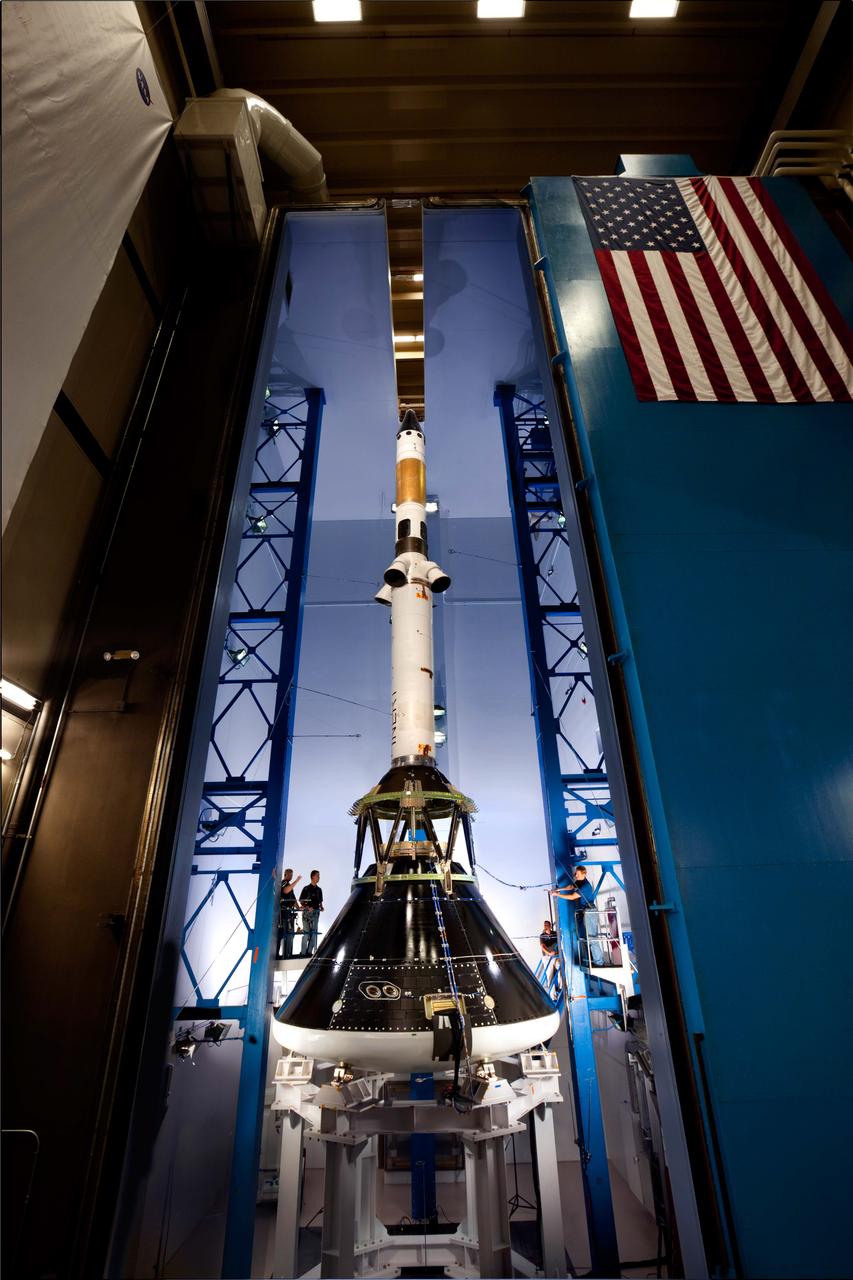
Technicians position microphones around the Orion launch abort system and crew module test articles in preparation for the second round of testing in the acoustic chamber at Lockheed Martin’s facilities near Denver on Aug. 16, 2011. The vehicle was bombarded by acoustic levels of 150 decibels to simulate conditions during launch and abort if necessary. Part of Batch image transfer from Flickr.

S124-E-006793 (6 June 2008) --- Astronaut Greg Chamitoff, Expedition 17 flight engineer, works in the newly installed Kibo Japanese Pressurized Module of the International Space Station while Space Shuttle Discovery (STS-124) is docked with the station.
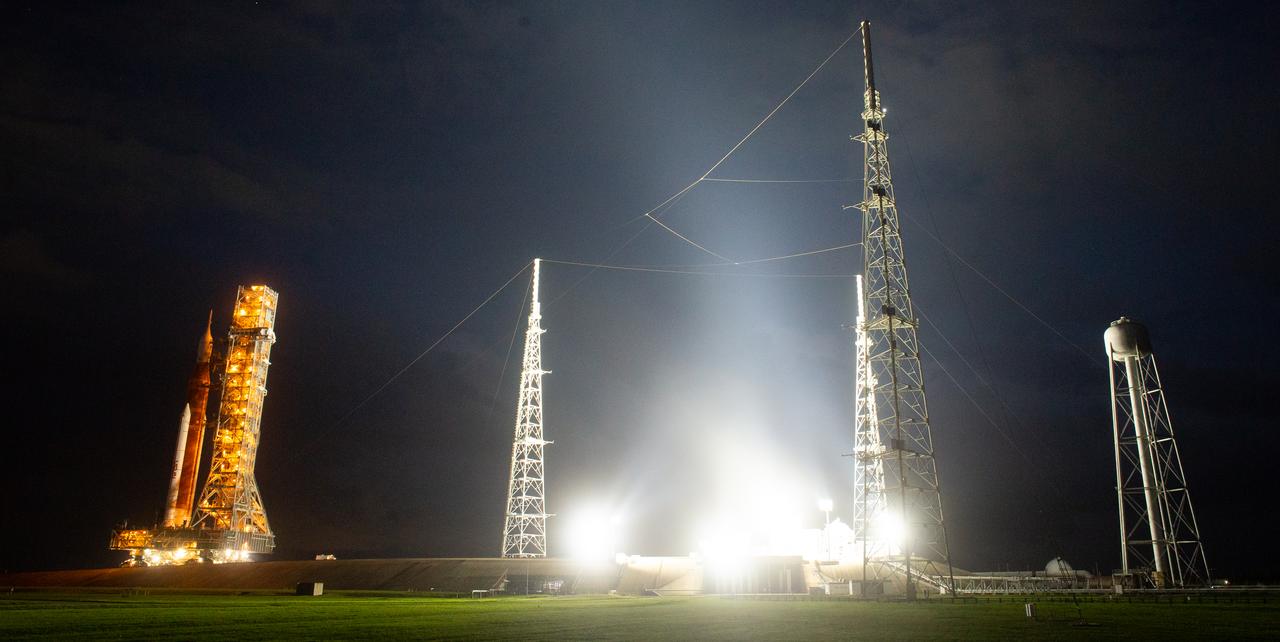
NASA’s Space Launch System (SLS) rocket with the Orion spacecraft aboard is seen atop the mobile launcher as Crawler Transporter-2 (CT-2) climbs the ramp at Launch Pad 39B, Friday, Nov. 4, 2022, at NASA’s Kennedy Space Center in Florida. NASA’s Artemis I mission is the first integrated test of the agency’s deep space exploration systems: the Orion spacecraft, SLS rocket, and supporting ground systems. Launch of the uncrewed flight test is targeted for Nov. 14 at 12:07 a.m. EST. Photo Credit: (NASA/Joel Kowsky)
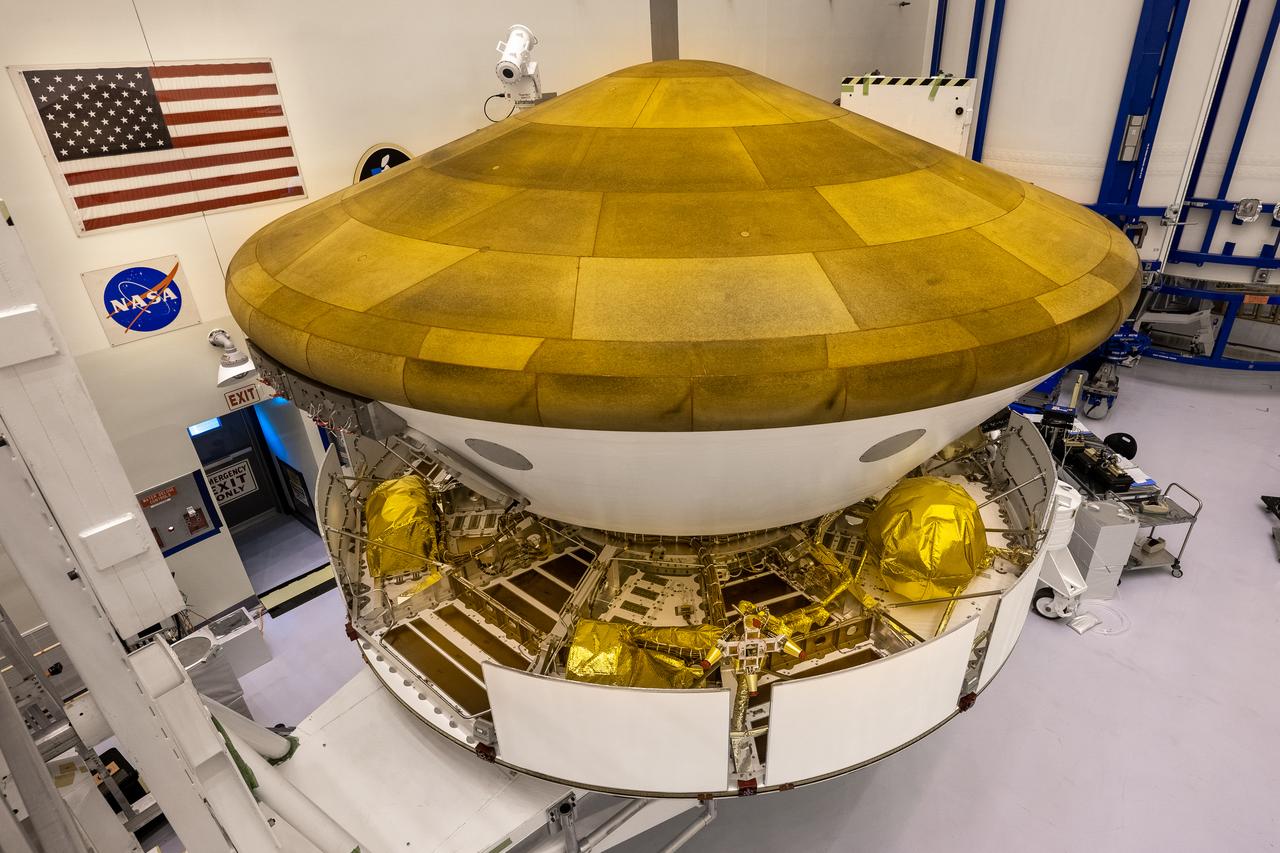
Inside the Payload Hazardous Servicing Facility at NASA’s Kennedy Space Center in Florida, the Backshell-Powered Descent Vehicle, in view, and Entry Vehicle assemblies are being attached to the Mars Perseverance rover on May 29, 2020. The cone-shaped backshell contains the parachute, and along with the mission’s heat shield, provides protection for the rover and descent stage during Martian atmospheric entry. The Mars Perseverance rover is scheduled to launch on July 20 atop a United Launch Alliance Atlas V 541 rocket from Pad 41 at nearby Cape Canaveral Air Force Station. The rover is part of NASA’s Mars Exploration Program, a long-term effort of robotic exploration of the Red Planet. The rover will search for habitable conditions in the ancient past and signs of past microbial life on Mars. The Launch Services Program at Kennedy is responsible for launch management.
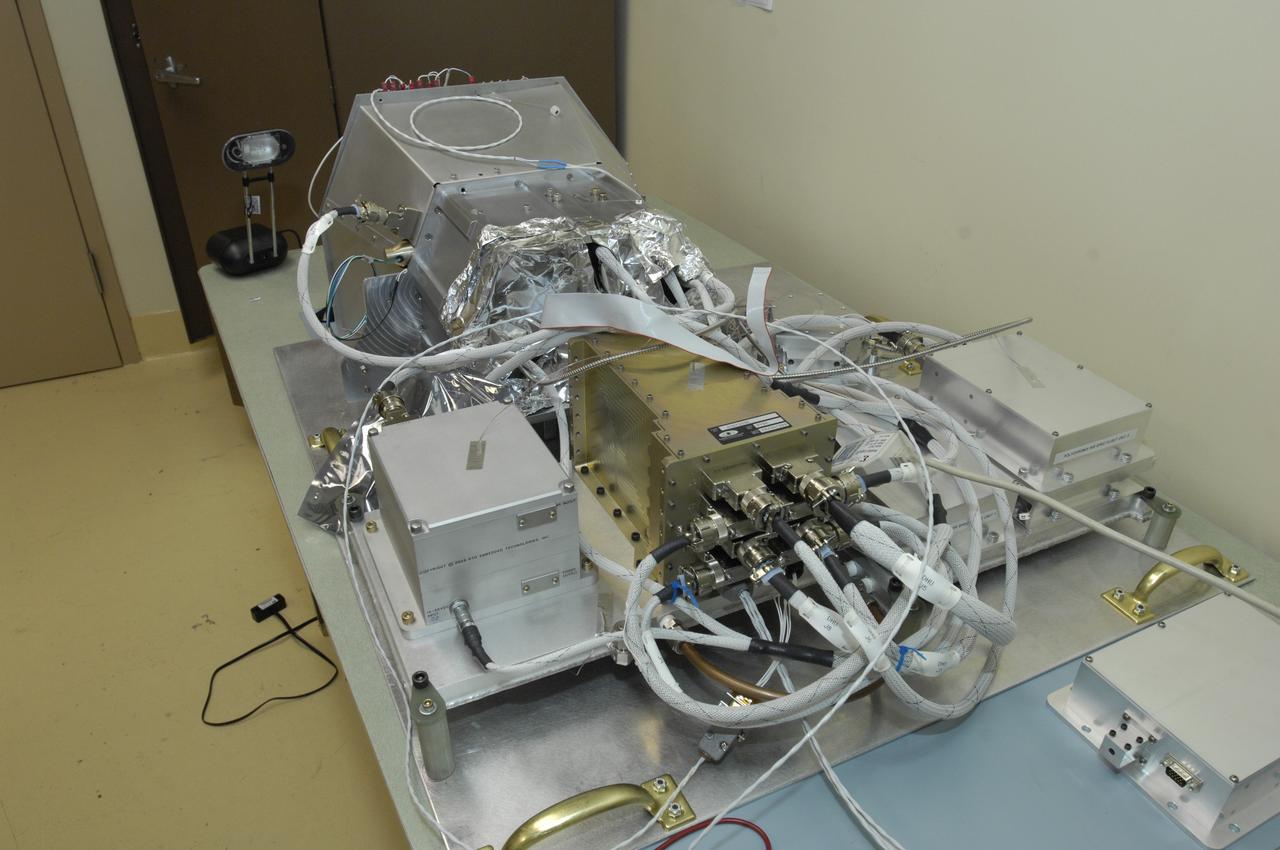
LCROSS in Clean Room at Ames Research Centeer - flight hardware in Thermal Cycle configuration with _______
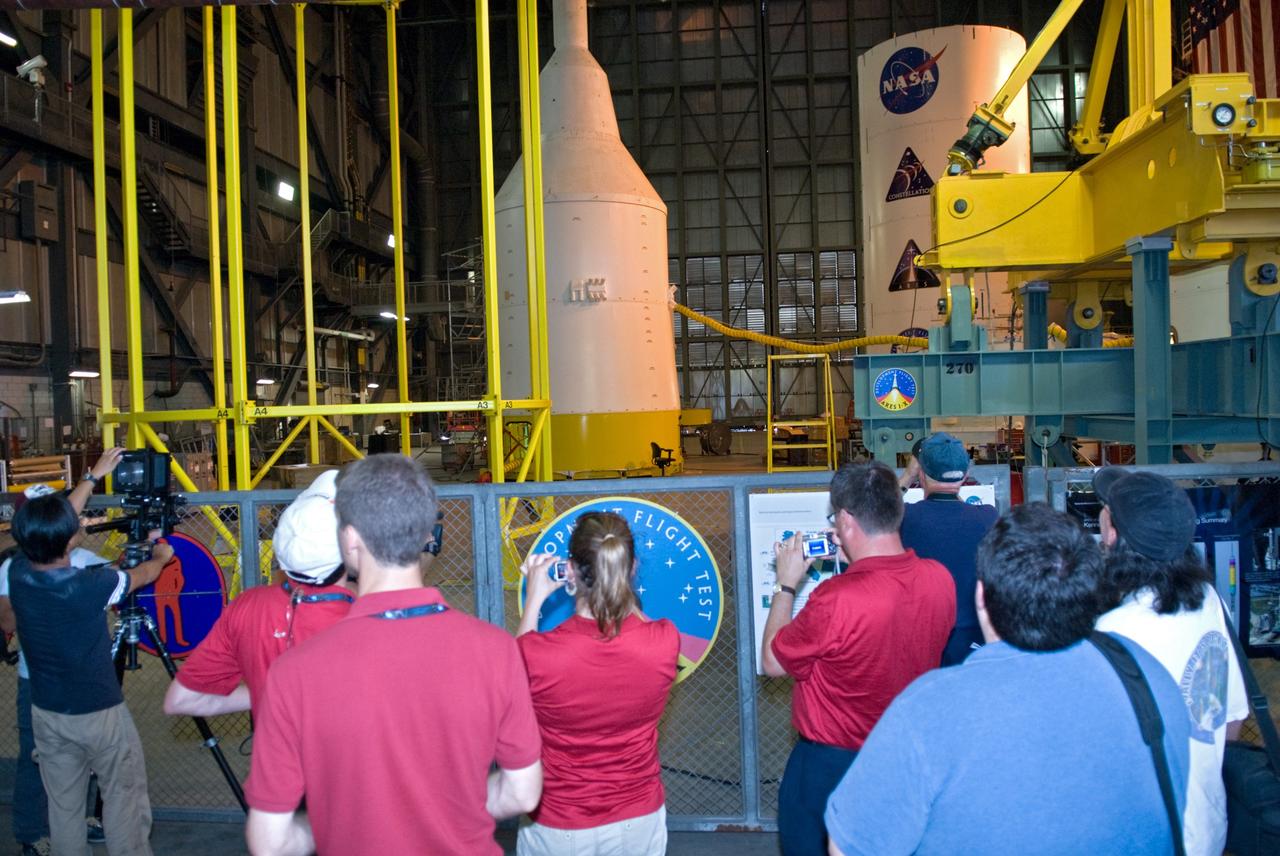
CAPE CANAVERAL, Fla. – In the Vehicle Assembly Building at NASA's Kennedy Space Center in Florida, media get a close look at various segments for the Ares I-X rocket being assembled in High Bay 4. In front at left is the yellow crane known as the "birdcage" that is used to lift the crew module-launch abort system. Ares I-X is the test vehicle for the Ares I, which is part of the Constellation Program to return men to the moon and beyond. Ares I-X is targeted for launch in August 2009. Photo credit: NASA/Kim Shiflett
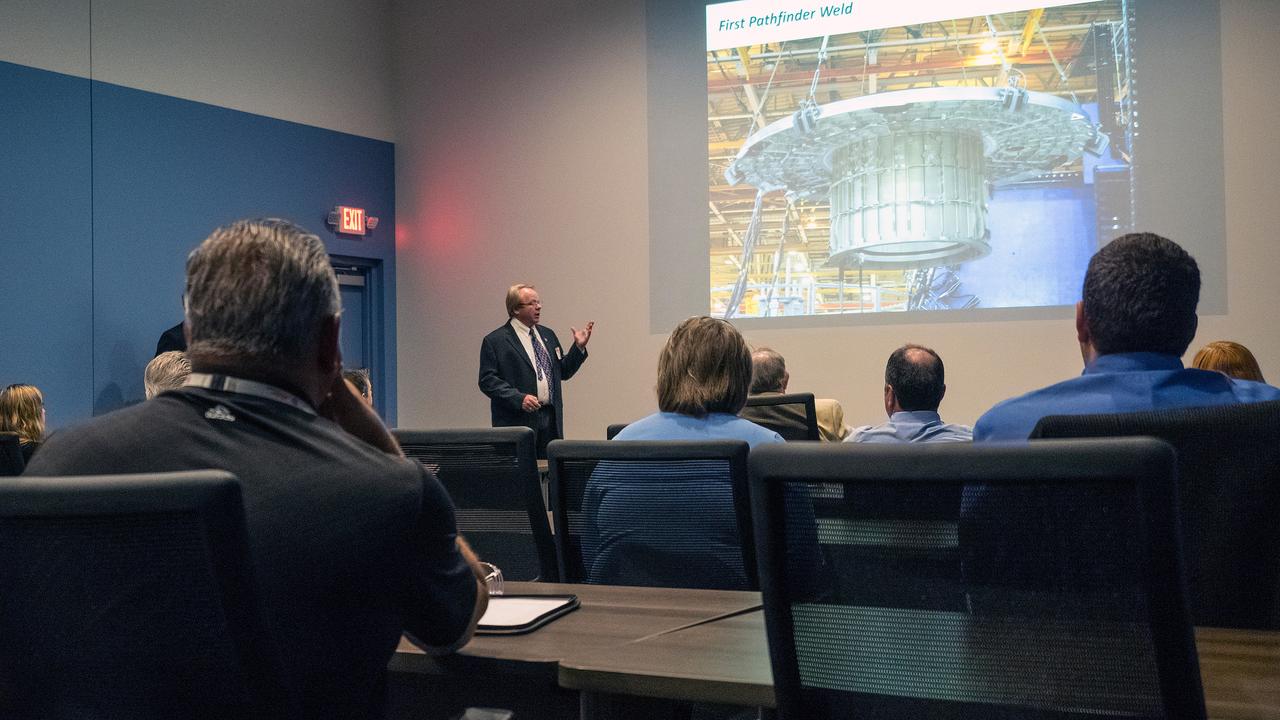
The Orion team visits Major Tool and Machine in Indianapolis, Indiana to see the progress on the cone panel for the Artemis I Orion spacecraft on June 10, 2015. Part of Batch image transfer from Flickr.
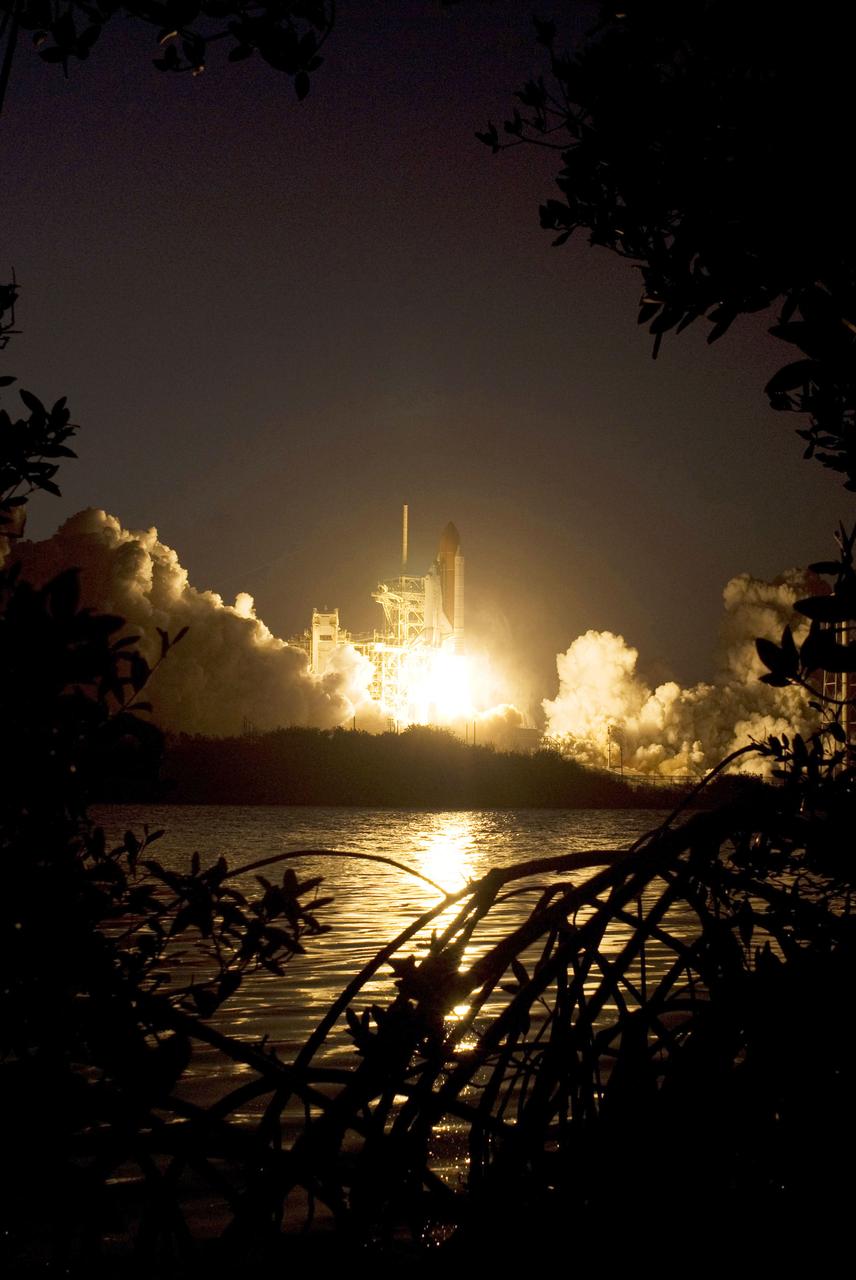
STS119-S-038 (15 March 2009) --- The Space Shuttle Discovery and its seven-member STS-119 crew head toward Earth orbit and a scheduled link-up with the International Space Station. Liftoff was on time at 7:43 p.m. (EDT) on March 15, 2009 from launch pad 39A at NASA’s Kennedy Space Center. Onboard are astronauts Lee Archambault, commander; Tony Antonelli, pilot; Joseph Acaba, Steve Swanson, Richard Arnold, John Phillips and Japan Aerospace Exploration Agency’s Koichi Wakata, all mission specialists. Wakata will join Expedition 18 in progress to serve as a flight engineer aboard the space station. Discovery will deliver the final pair of power-generating solar array wings and the S6 truss segment. Installation of S6 will signal the station's readiness to house a six-member crew for conducting increased science.
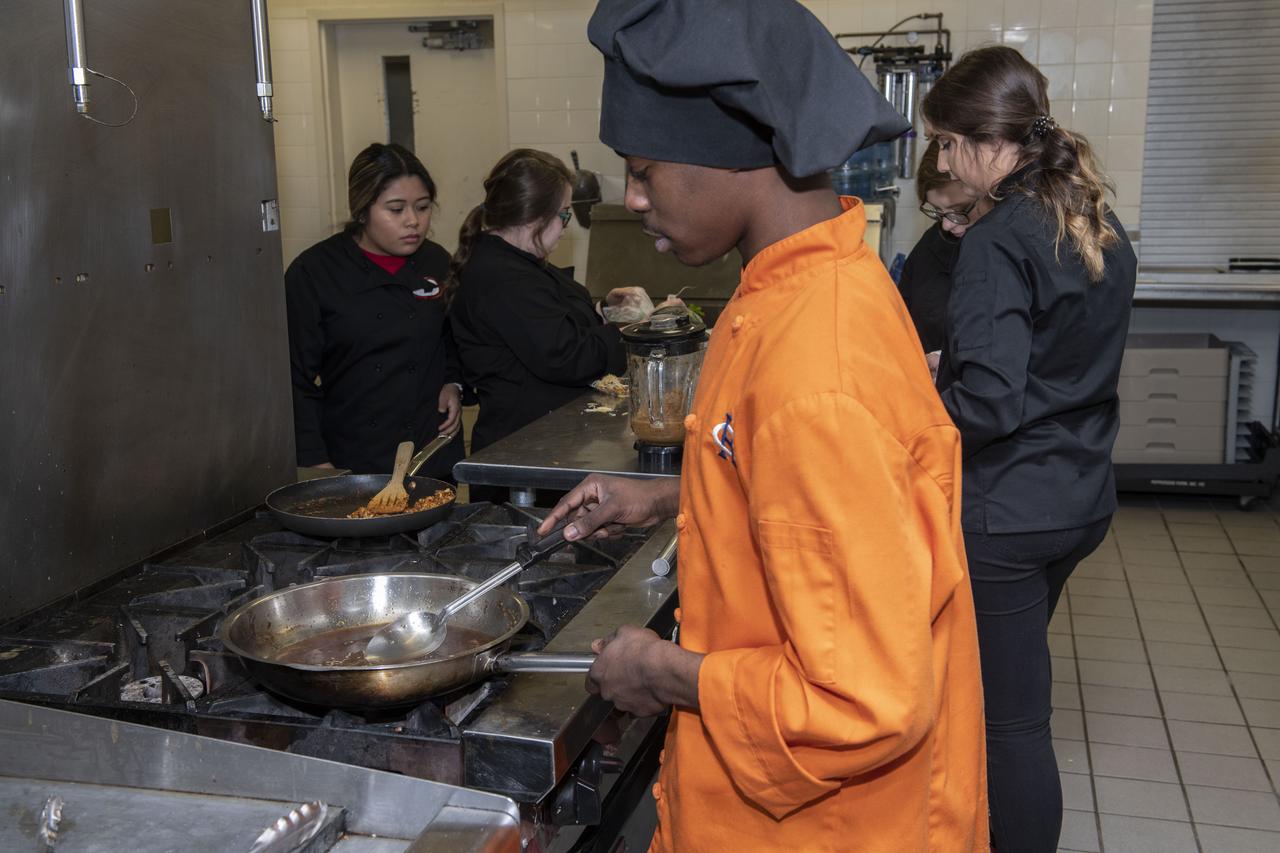
HUNCH (High School Students United with NASA to Create Hardware) students came together at the U.Sl Space and Rocket Center (USSRC) in a competition to create recipes for food to feed astronauts in space. Six teams from North Alabama and George participated. The winner will compete with students from competitions at other NASA centers later at the Johnson Space Flight Center.
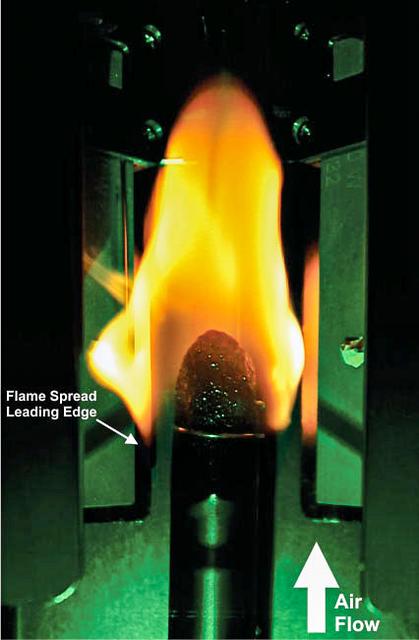
jsc2024e053517 (8/8/2024) --- A plexiglass rod burns in microgravity for the Solid Fuel Ignition and Extinction - Material Ignition and Suppression Test (SoFIE-MIST) investigation. Once each rod is ignited, the flame spreads upstream from the ignition end of the rod. As tests progress, the flame spreads along the rod, consuming oxygen. Once the oxygen concentration drops low enough, the flame extinguishes due to natural oxygen depletion. Data to measure the oxygen concentration, flow rate, and heat loss is obtained at the three test pressures. SoFIE-MIST aims to improve understanding of early fire growth behavior and validate models for material flammability, helping to inform the selection of safer materials for future space facilities and determine the best methods for extinguishing fires in space. .
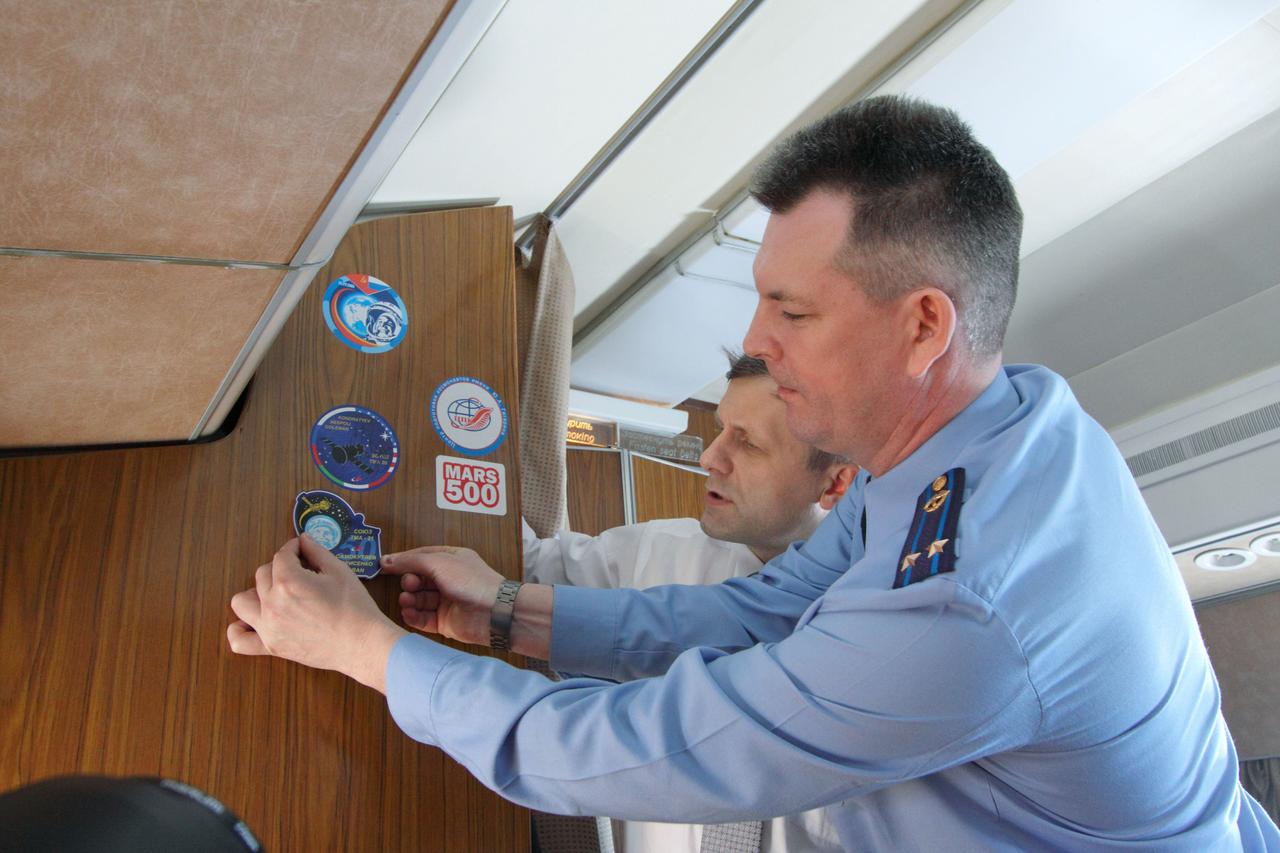
Expedition 27 Soyuz Commander Alexander Samokutyaev (foreground) and Flight Engineer Andrey Borisenko affix their Soyuz crew patch aboard a Gagarin Cosmonaut Training Center plane as they flew from Star City, Russia to the Baikonur Cosmodrome in Kazakhstan March 21, 2011 with their crewmate, NASA Flight Engineer Ron Garan. In Baikonur, they will complete training for their launch April 5 (April 4, U.S. time) on the Soyuz TMA-21 spacecraft to the International Space Station. Credit: NASA/Victor Zelentsov
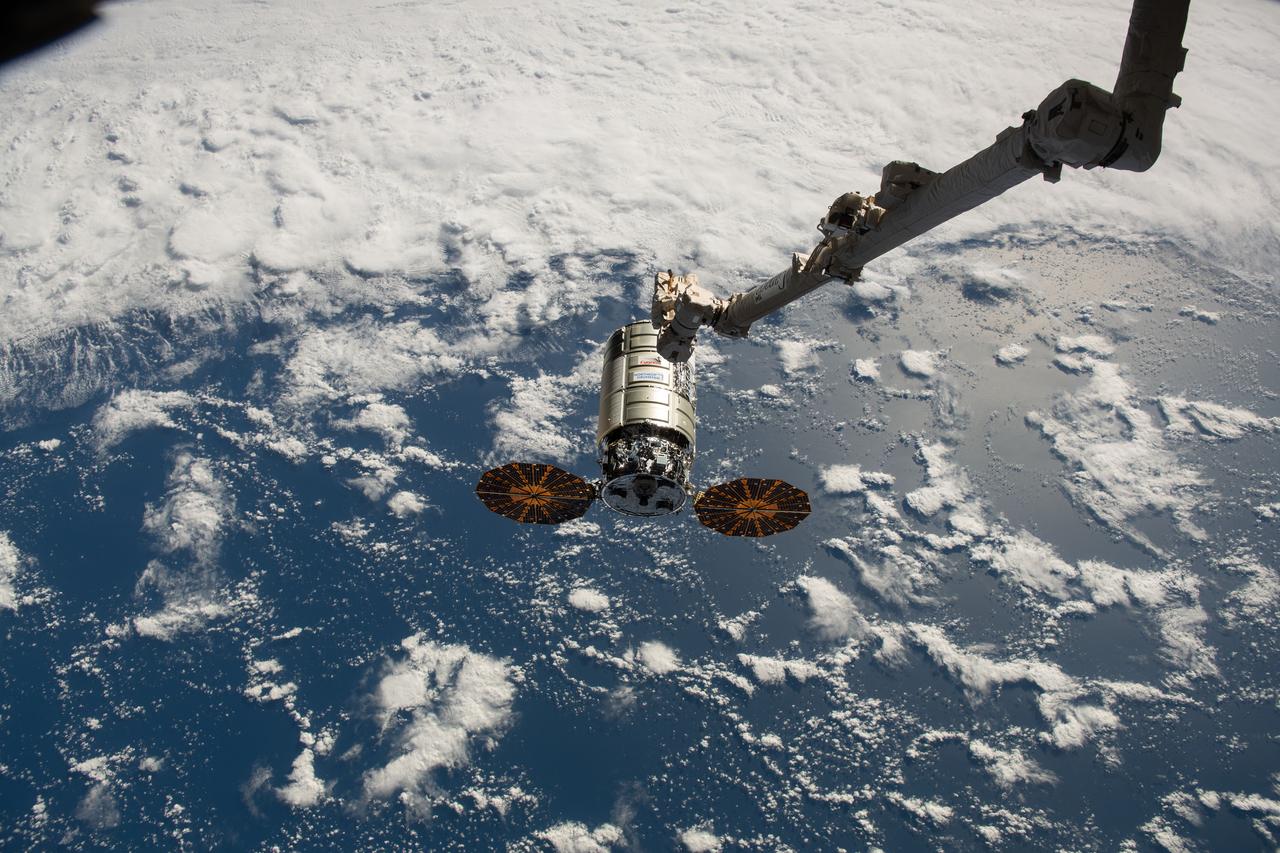
iss063e101288 (Oct. 5, 2020) --- The Northrop Grumman Cygnus space freighter approaches the International Space Station as the Canadarm2 robotic arm is poised to reach out and capture the cargo vehicle.
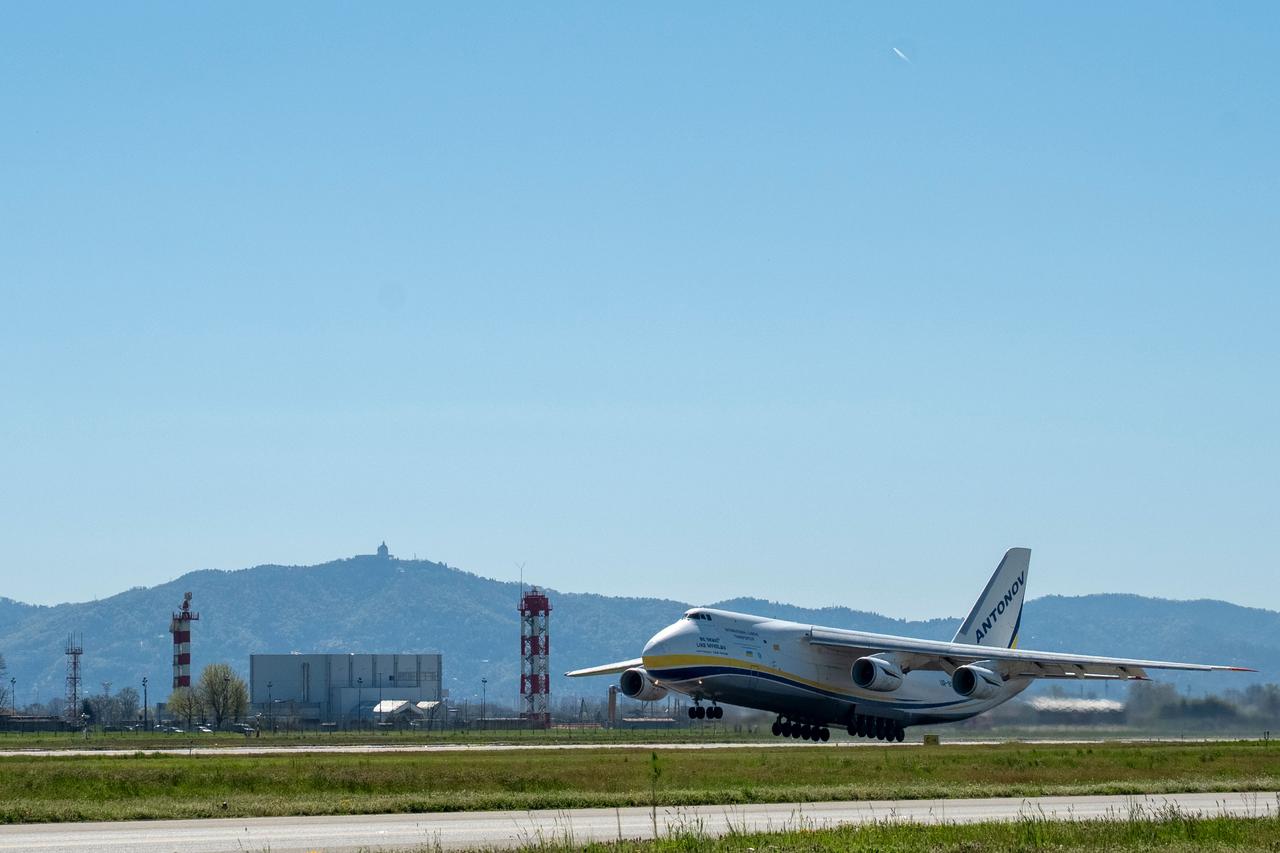
Gateway’s HALO (Habitation and Logistics Outpost) departs Italy en route to Arizona, where it will undergo final outfitting at Northrop Grumman’s facility in Gilbert ahead of its launch to lunar orbit. The module’s primary structure was fabricated by Thales Alenia Space in Turin.
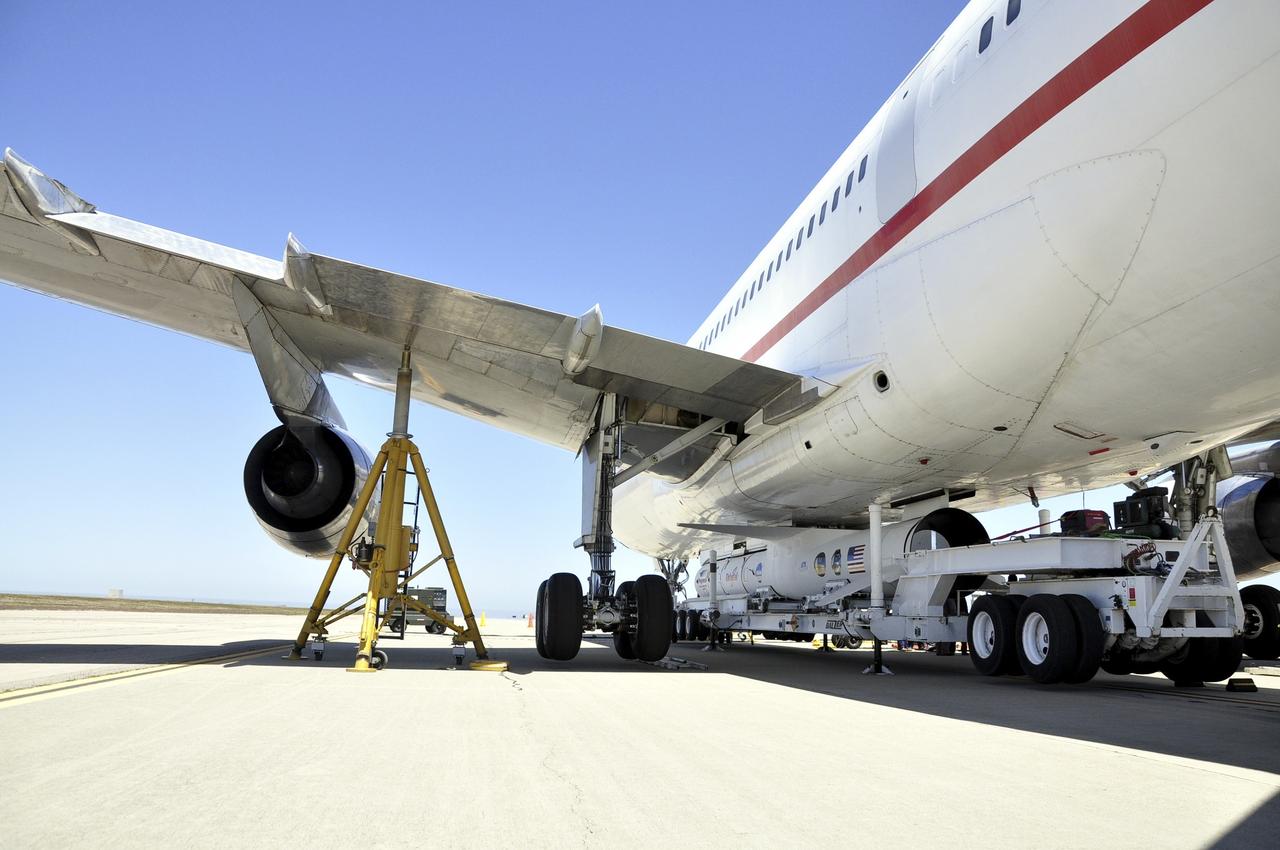
VANDENBERG AIR FORCE BASE, Calif. – Technicians and engineers at Vandenberg Air Force Base in California mate the Pegasus XL rocket with the Interface Region Imaging Spectrograph, or IRIS, solar observatory to the Orbital Sciences L-1011 carrier aircraft. Scheduled for launch from Vandenberg on June 26, 2013, IRIS will open a new window of discovery by tracing the flow of energy and plasma through the chromospheres and transition region into the sun’s corona using spectrometry and imaging. The IRIS mission will observe how solar material moves, gathers energy and heats up as it travels through a largely unexplored region of the solar atmosphere. The interface region, located between the sun's visible surface and upper atmosphere, is where most of the sun's ultraviolet emission is generated. These emissions impact the near-Earth space environment and Earth's climate. For more information, visit http://www.nasa.gov/iris Photo credit: NASA/Randy Beaudoin
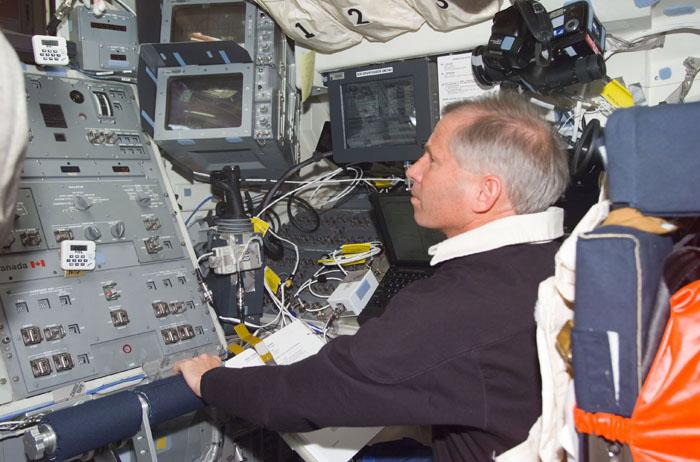
STS98-E-5083 (10 February 2001) --- Astronaut Kenneth D. Cockrell, STS-98 mission commander, is pictured on the flight deck of the Space Shuttle Atlantis. Cockrell is reading a document dealing with the Unity node on the International Space Station. The scene was recorded with a digital still camera.
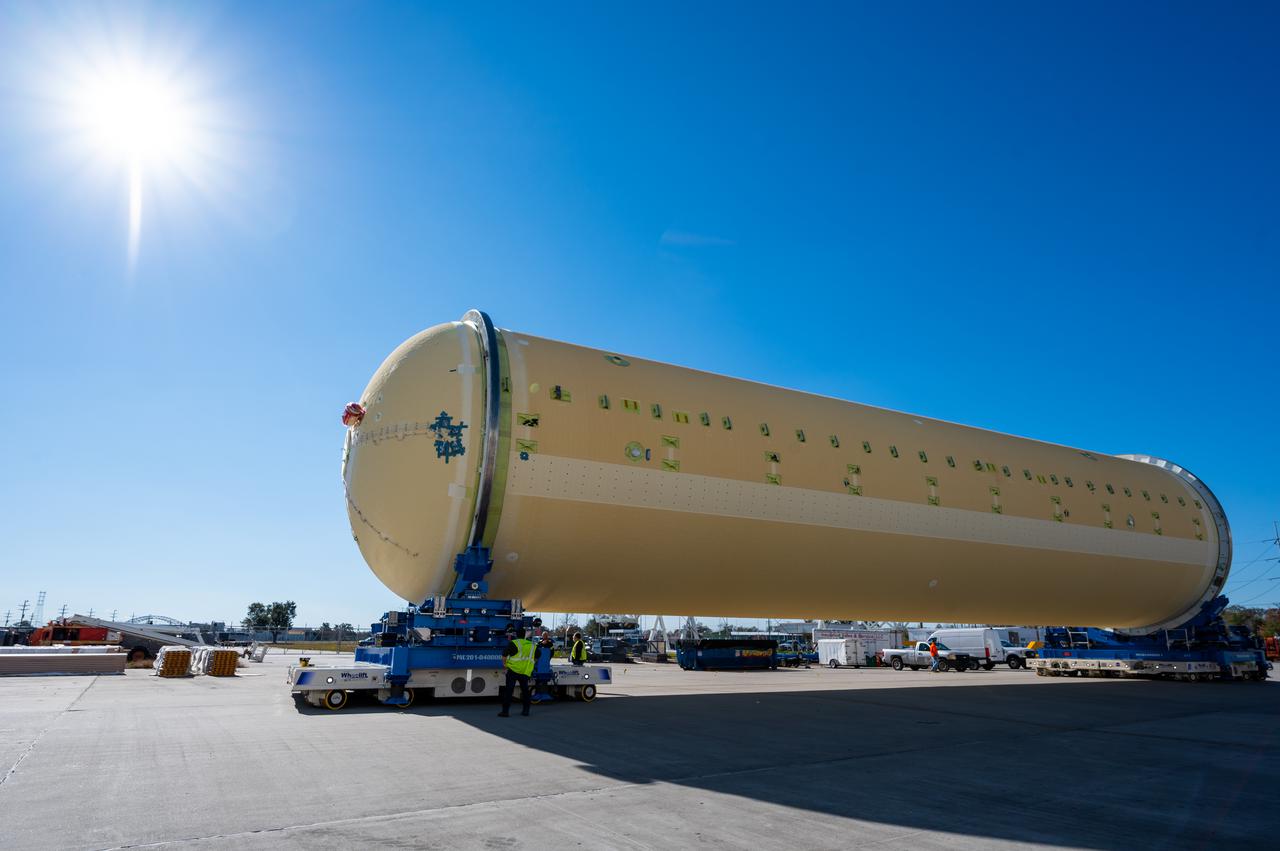
Technicians transported the assembled upper part of the Artemis II core stage to the final assembly area inside the factory at NASA’s Michoud Assembly Facility in New Orleans. On Jan 10, the forward assembly, left was moved next to the Artemis II liquid hydrogen tank, which has been undergoing assembly. Next, Boeing, the lead core stage contractor, will join the forward assembly and the liquid hydrogen tank to complete most of the core stage for the Space Launch System (SLS) rocket that will send the first crew on an Artemis mission. The core stage consists of five major structures that are built, outfitted, and then connected to form the final stage. The forward skirt, liquid oxygen and intertank were connected and tested to form the 66-foot forward assembly. After the forward assembly is joined with the 130-foot liquid hydrogen tank, only the engine section, the fifth piece of the stage, will need to be added to complete the Artemis II core stage. The core stage serves as the backbone of the rocket, supporting the weight of the payload, upper stage, and crew vehicle, as well as the thrust of its four RS-25 engines and two five-segment solid rocket boosters attached to the engine and intertank sections. On Artemis II, the SLS rocket will launch the Orion spacecraft and a crew, sending them into lunar orbit, in preparation for later Artemis missions that will enable the first woman and first person of color to land on the Moon.
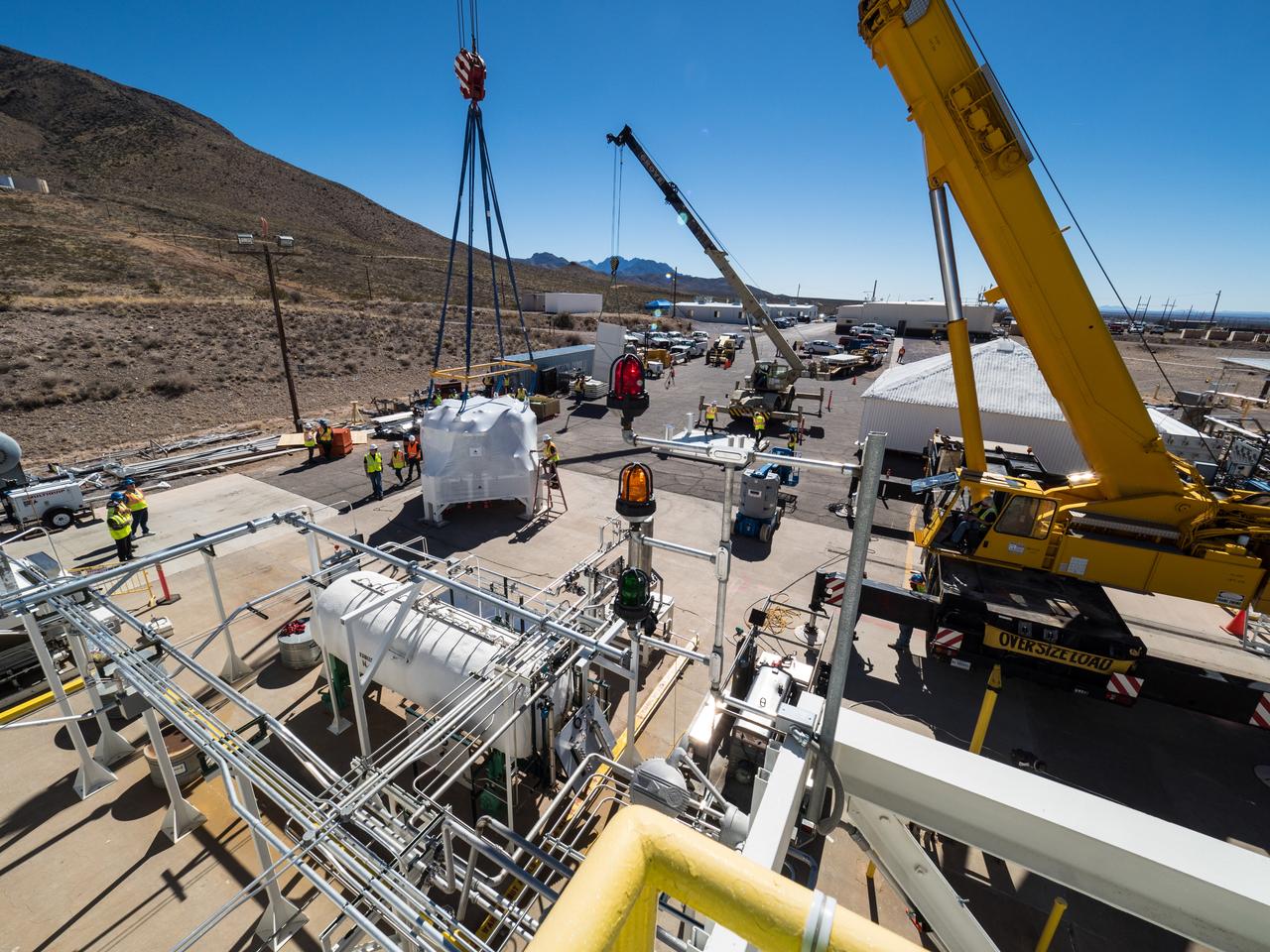
On Feb. 21, 2017 engineers successfully install ESA’s European Service Module Propulsion Qualification Module (PQM) at NASA’s White Sands Test Facility in New Mexico that was delivered by Airbus – ESA’s prime contractor for the Service Module. The module will be equipped with a total of 21 engines to support NASA’s Orion spacecraft: one U.S. Space Shuttle Orbital Maneuvering System (OMS) engine, eight auxiliary thrusters and 12 smaller thrusters produced by Airbus Safran Launchers in Germany. The all-steel PQM structure is used to test the propulsion systems on Orion, including “hot firing” of the OMS engine and thrusters.

CAPE CANAVERAL, Fla. -- In the Orbiter Processing Facility at NASA's Kennedy Space Center in Florida, STS-119 Pilot Tony Antonelli checks the cockpit window of space shuttle Discovery. He and other crew members are at Kennedy for a Crew Equipment Interface Test that provides experience handling tools, equipment and hardware they will use on the mission. On the STS-119 mission, space shuttle Discovery will carry the S6 truss segment to complete the 361-foot-long backbone of the International Space Station. The truss includes the fourth pair of solar array wings and electronics that convert sunlight to power for the orbiting laboratory. Discovery is targeted for launch on Feb. 12, 2009. Photo credit: NASA/Kim Shiflett
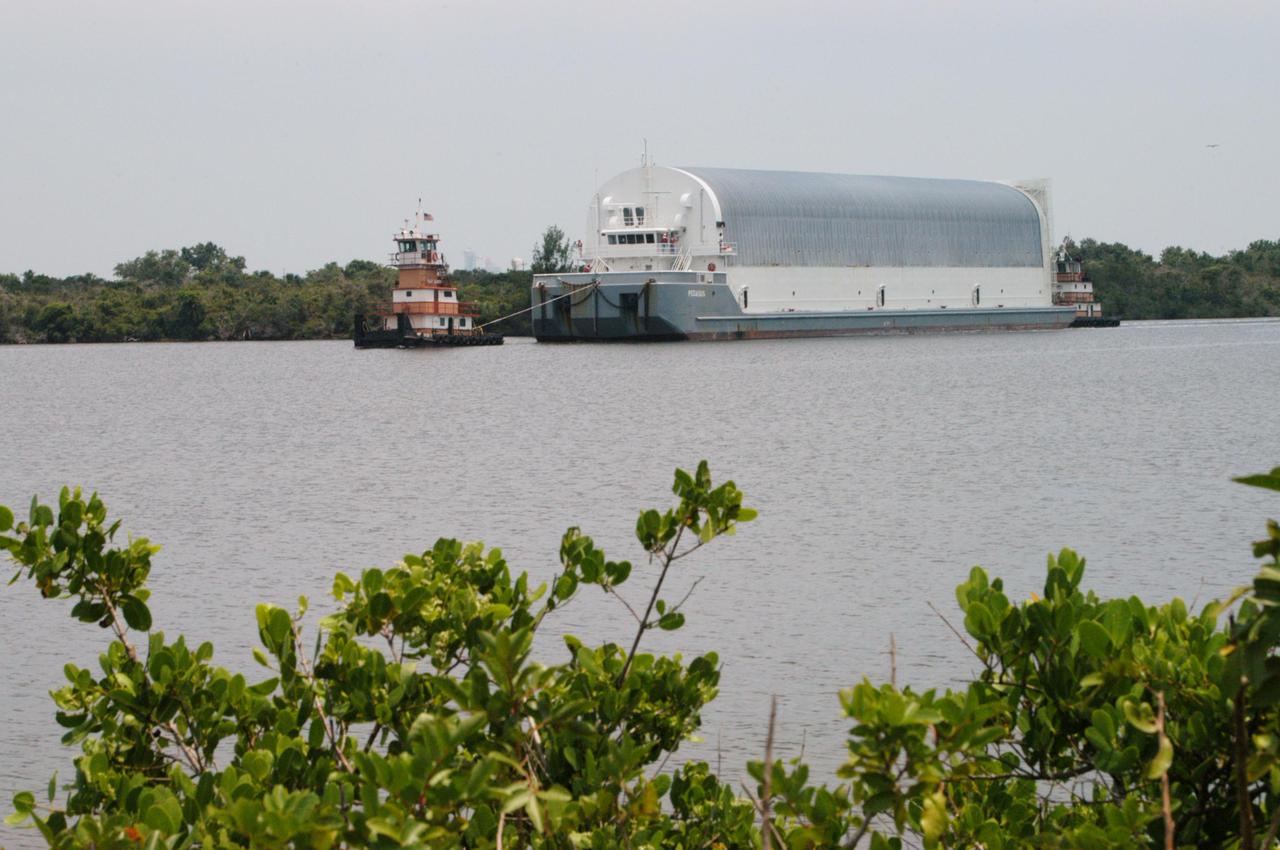
KENNEDY SPACE CENTER, FLA. - A barge carrying a new External Tank (ET) arrives at the Turn Basin in the Launch Complex 39 Area. Designated ET-119, the tank will be used on a future Space Shuttle launch. After being offloaded, the tank will be transported to the Vehicle Assembly Building. The barge was towed on a 900-mile journey at sea from the Michoud Assembly Facility in New Orleans by one of NASA’s Solid Rocket Booster Retrieval Ships.
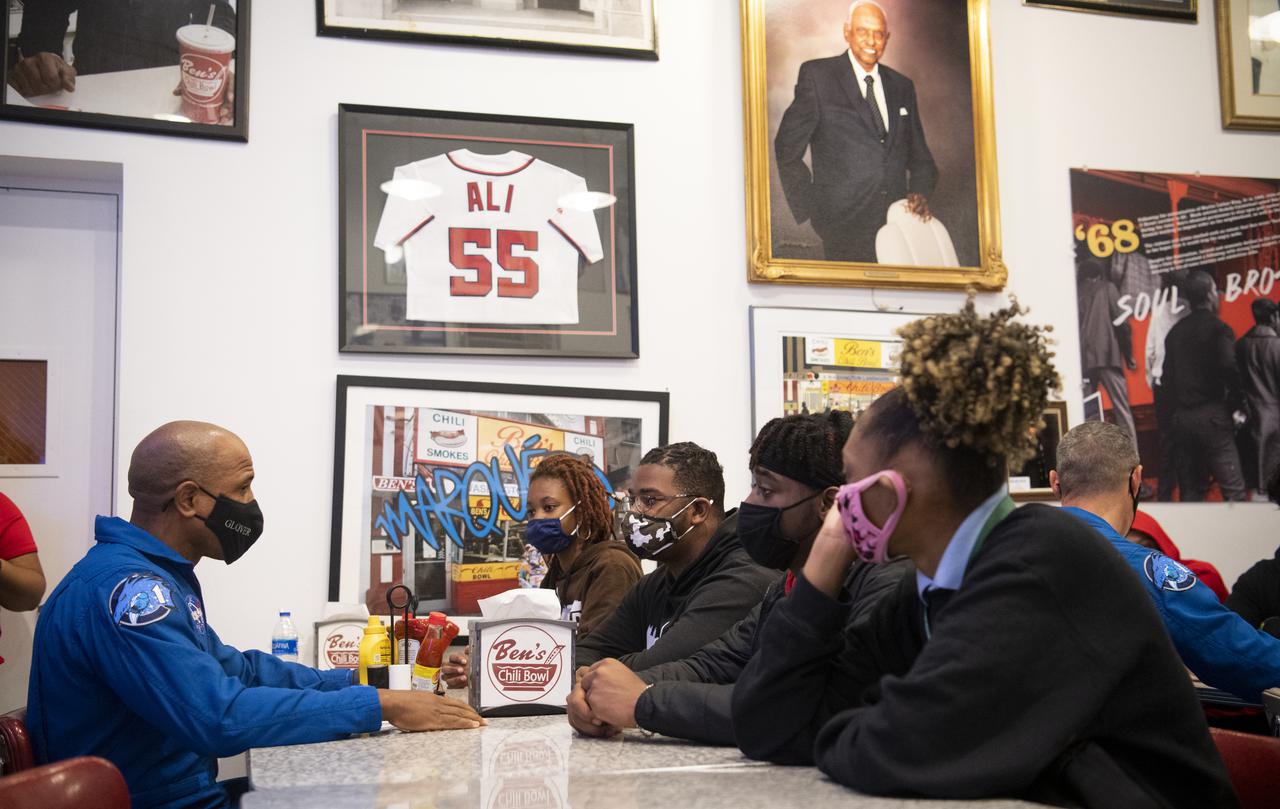
NASA astronaut Victor Glover speaks with students about his time aboard the International Space Station, Thursday, Nov. 18, 2021, at Ben’s Chili Bowl in Washington, DC. Students from Cardozo Educational Campus, Friendship Technology Preparatory High School, McKinley Technical High School, Phelps High School, and Wilson High School heard NASA astronauts Glover, Mike Hopkins, and Shannon Walker speak about the Crew-1 mission, the first crew rotation mission to the International Space Station for SpaceX’s Falcon 9 and Crew Dragon spacecraft as part of the agency’s Commercial Crew Program and the 168 days they spent in space across Expeditions 64 and 65. Photo Credit: (NASA/Joel Kowsky)
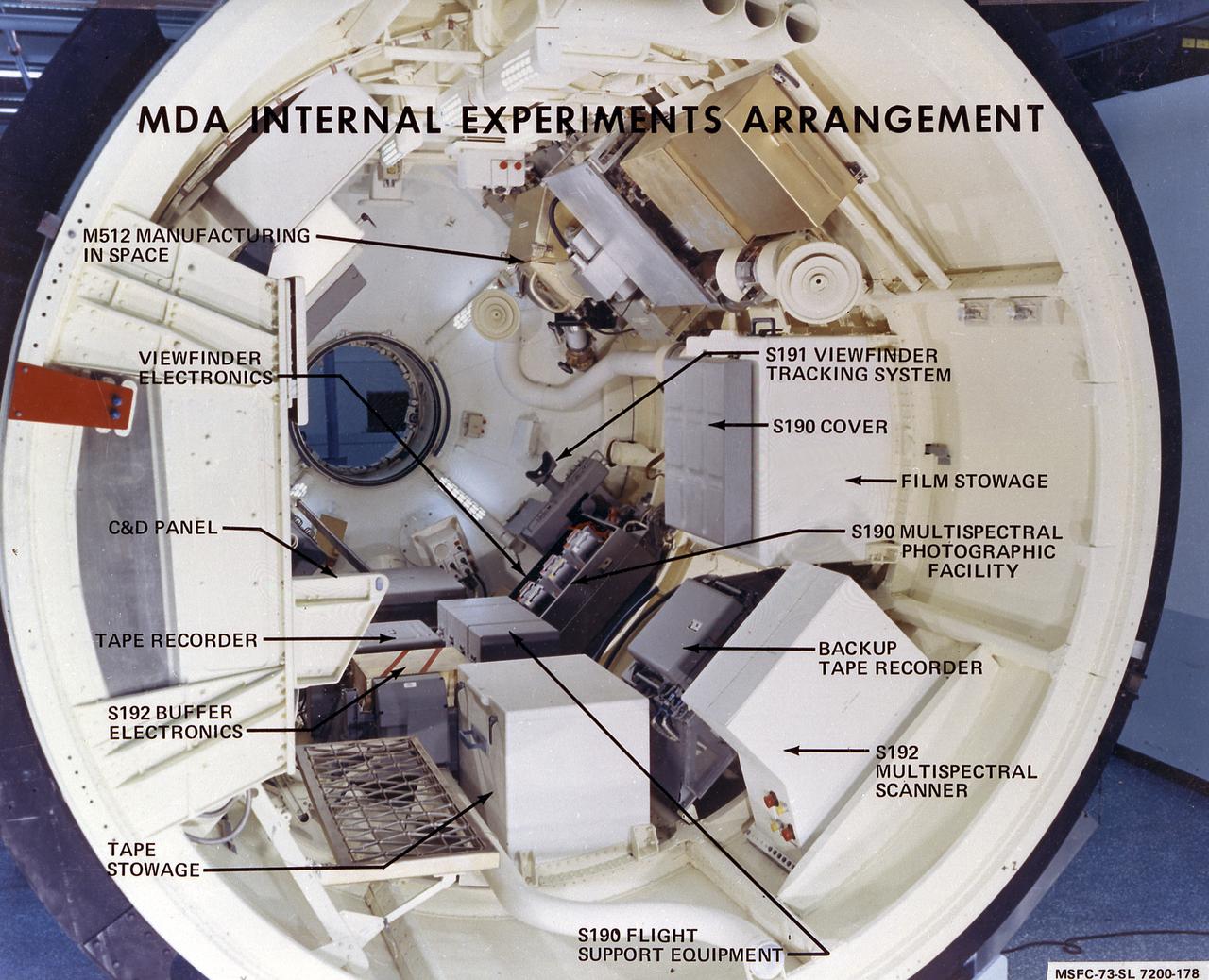
This photograph shows the internal configuration of Skylab's Multiple Docking Adapter (MDA), including callouts for its various internal experiments and facilities. Designed and manufactured by the Marshall Space Flight Center, the MDA housed a number of experiment control and stowage units and provided a docking port for the Apollo Command Module.

CAPE CANAVERAL, Fla. – At Astrotech Space Operations in Titusville, Fla., NASA's Solar Dynamics Observatory, or SDO, remains on the transporter after the shipping cover was removed. SDO is the first space weather research network mission in NASA's Living With a Star Program. The spacecraft's long-term measurements will give solar scientists in-depth information about changes in the sun's magnetic field and insight into how they affect Earth. In preparation for its anticipated November launch, engineers will perform a battery of comprehensive tests to ensure SDO can withstand the stresses and vibrations of the launch itself, as well as what it will encounter in the space environment after launch. Photo credit: NASA/Tim Jacobs
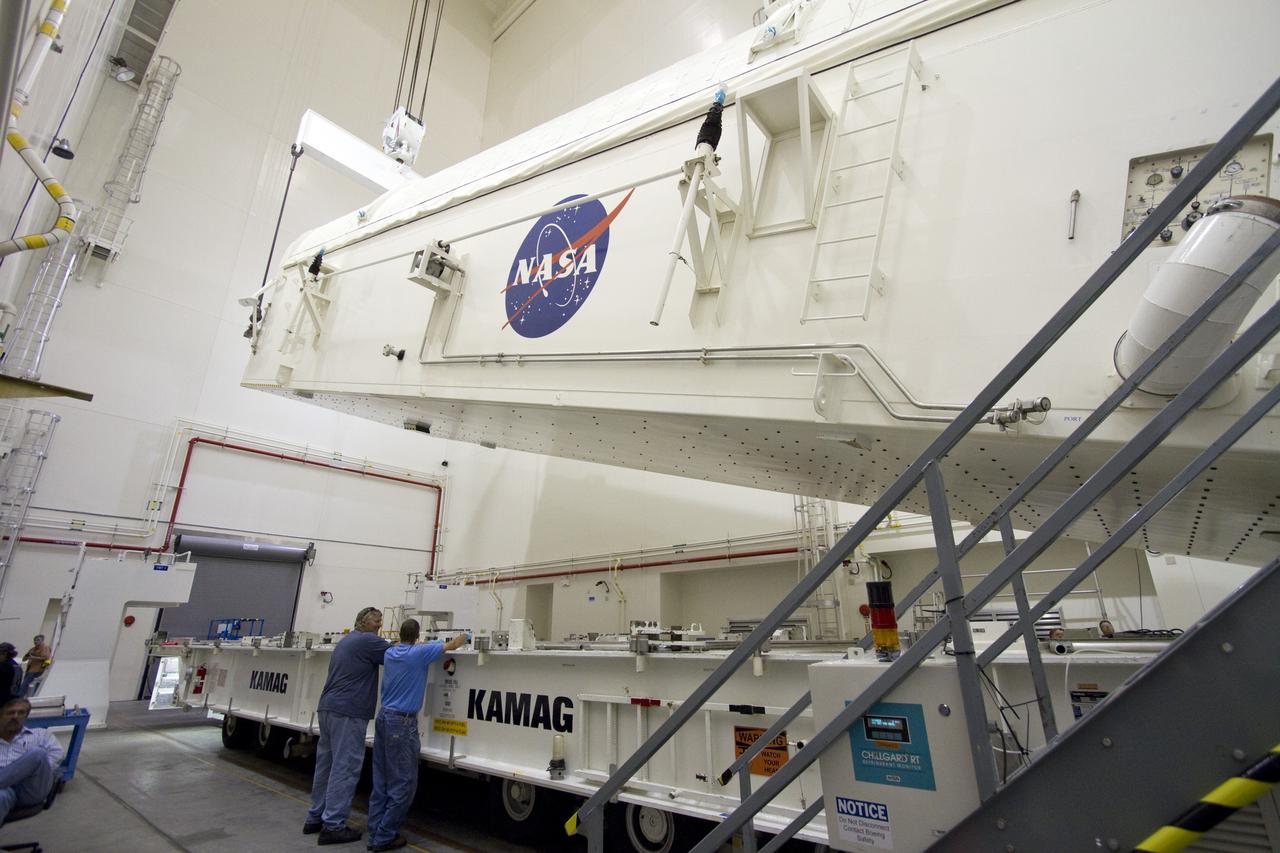
CAPE CANAVERAL, Fla. -- A canister, carrying the Alpha Magnetic Spectrometer-2 AMS and Express Logistics Carrier-3 for space shuttle Endeavour's STS-134 mission, is rotated from a horizontal to vertical position in the Canister Rotation Facility at NASA's Kennedy Space Center in Florida. Endeavour and its six-member STS-134 crew are targeted to lift off April 19 at 7:48 p.m. EDT to deliver the payload to the International Space Station. For more information visit, www.nasa.gov/mission_pages/shuttle/shuttlemissions/sts134/index.html. Photo credit: NASA/Jack Pfaller
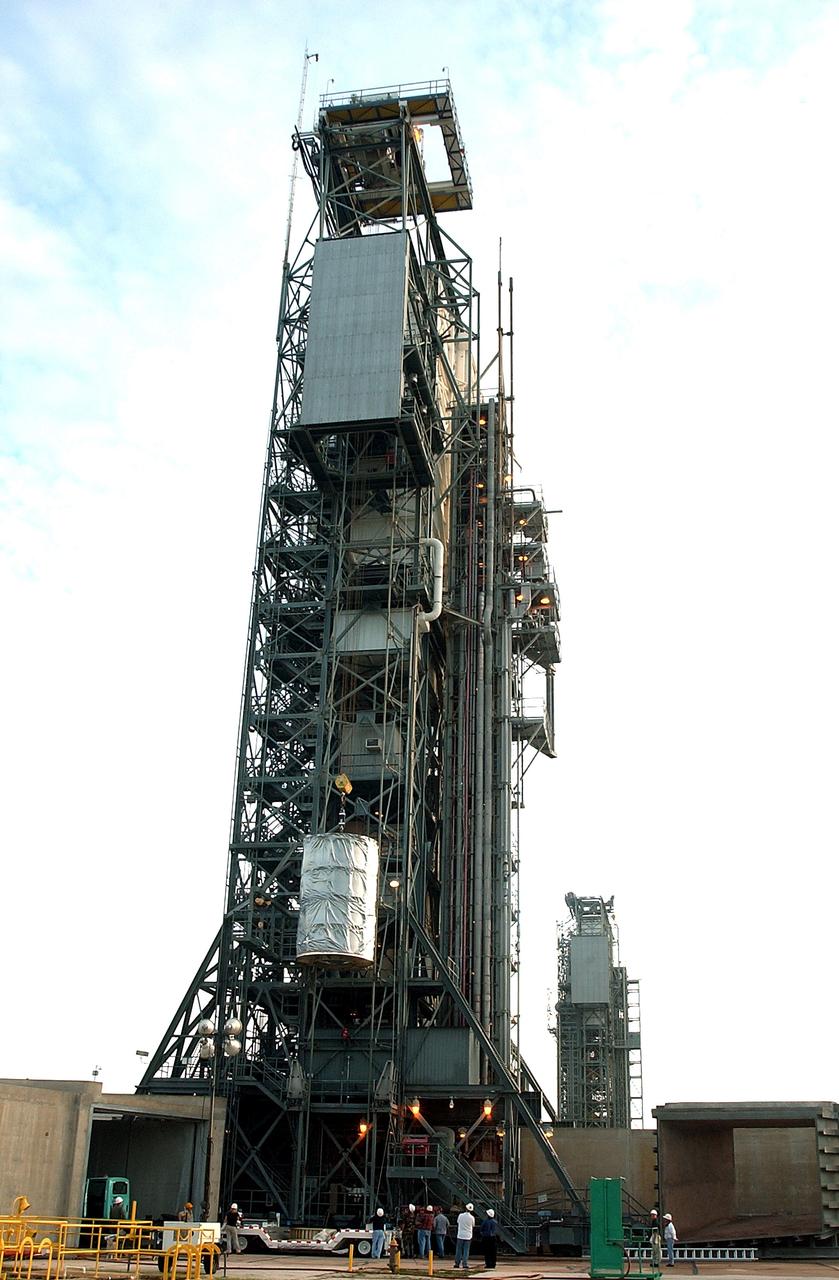
KENNEDY SPACE CENTER, FLA. - After dawn, the Space Infrared Telescope Facility (SIRTF) is lifted up the mobile service tower on Launch Pad 17-B, Cape Canaveral Air Force Station. SIRTF will be attached to the Delta II rocket and encapsulated in its fairing before launch. Consisting of three cryogenically cooled science instruments and an 0.85-meter telescope, SIRTF is one of NASA’s largest infrared telescopes to be launched. It is the fourth and final element in NASA’s family of orbiting “Great Observatories.” SIRTF will obtain images and spectra by detecting the infrared energy, or heat, radiated by objects in space. Most of this infrared radiation is blocked by the Earth's atmosphere and cannot be observed from the ground.
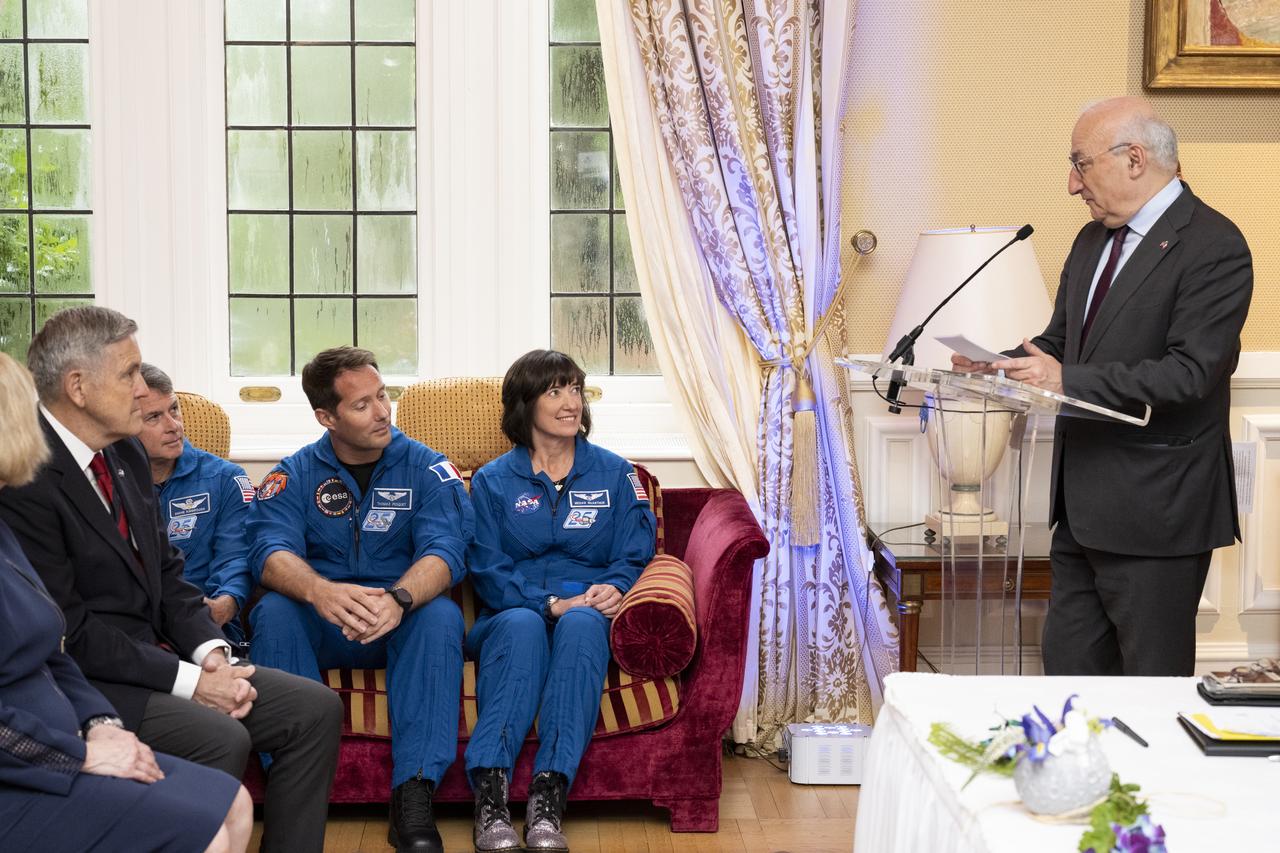
Ambassador of France to the United States Philippe Etienne delivers remarks during an Artemis Accords signing ceremony Tuesday, June 7, 2022, prior to the Centre National d’Etudes Spatiales (CNES) 60th Anniversary event at the French Ambassador’s Residence in Washington. France is the twentieth country to sign the Artemis Accords, which establish a practical set of principles to guide space exploration cooperation among nations participating in NASA’s Artemis program. Photo Credit: (NASA/Keegan Barber)

iss052e021626 (July 31, 2017) --- Astronauts and Expedition 52-53 crew members Paolo Nespoli and Randy Bresnik are at work in their new home in space where they will live until mid-December.

ISS030-E-177225 (15 March 2012) --- NASA astronaut Dan Burbank, Expedition 30 commander, uses Neurospat hardware to perform a science session with the European Space Agency PASSAGES experiment in the Columbus laboratory of the International Space Station. PASSAGES is designed to test how astronauts interpret visual information in weightlessness. It aims at studying the effects of microgravity on the use of the 'Eye-Height' strategy for estimating allowed actions in an environment, and whether this could possibly decrease after a long exposure to weightlessness.
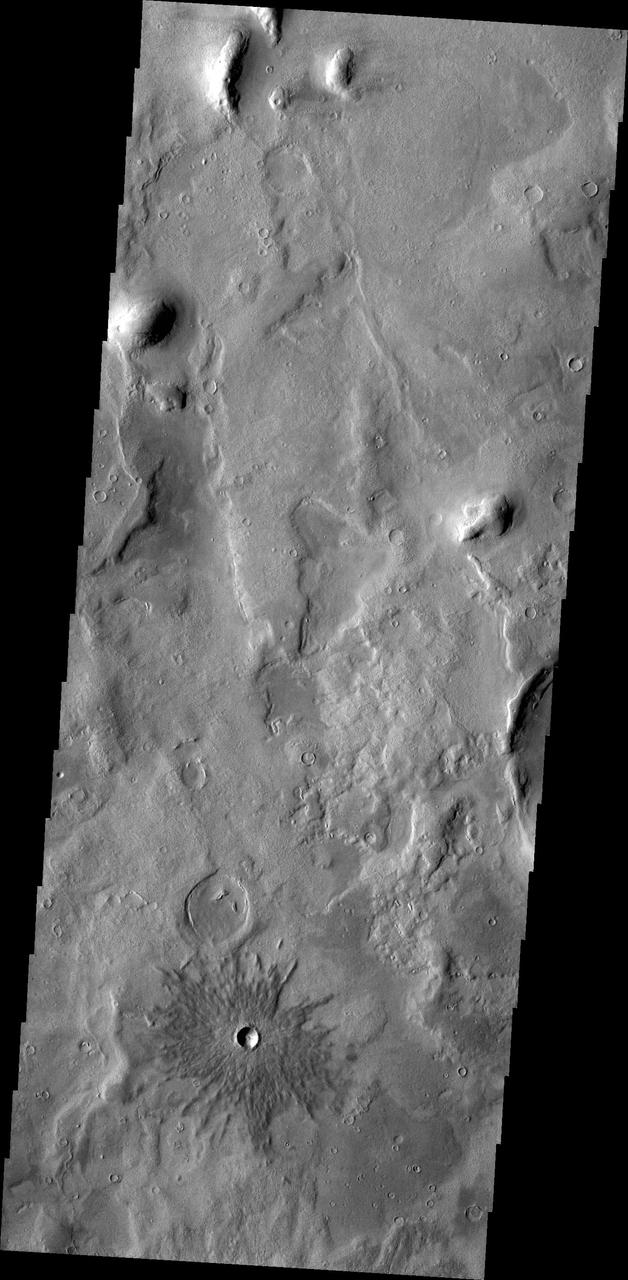
This image from NASA 2001 Mars Odyssey spacecraft shows a small crater near Phlegra Montes.
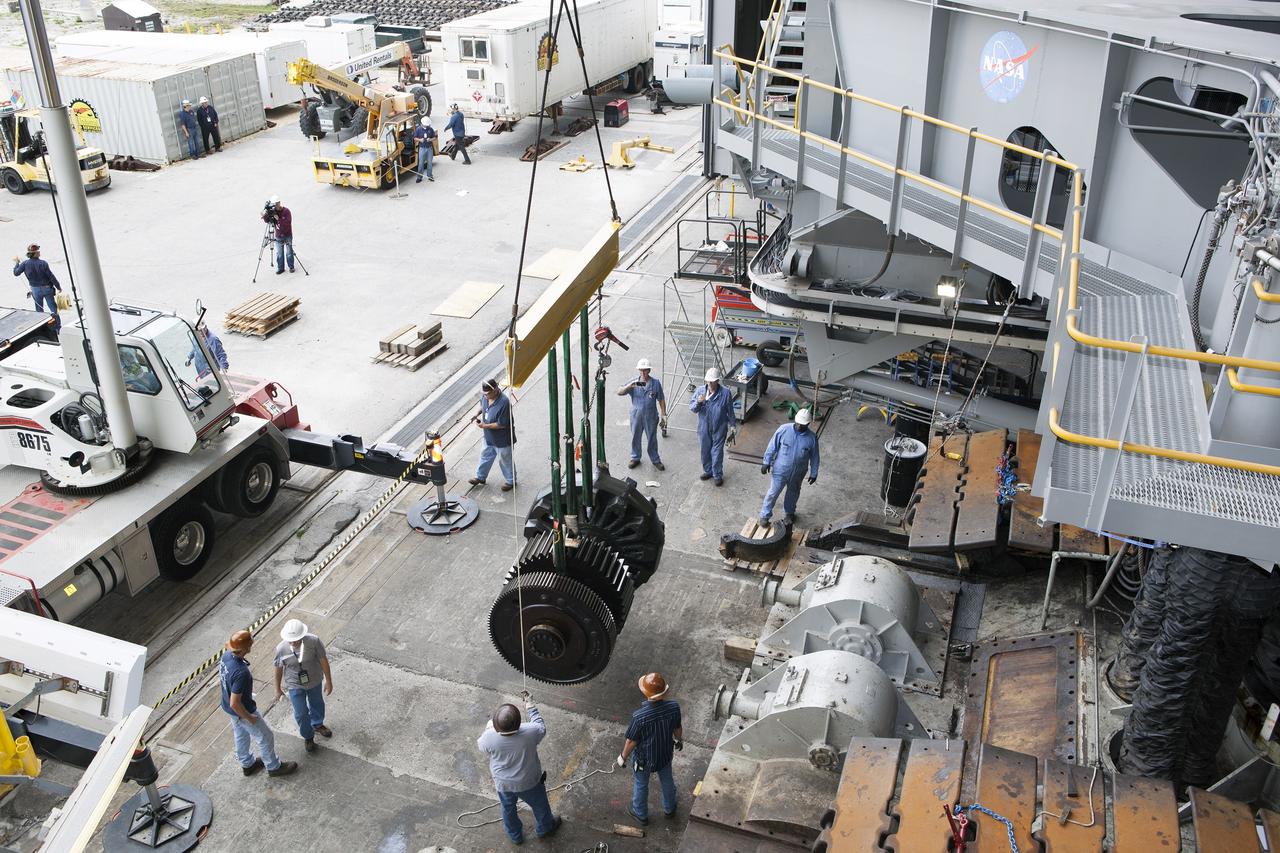
CAPE CANAVERAL, Fla. - Inside the Vehicle Assembly Building at NASA’s Kennedy Space Center in Florida, ground support technicians monitor the progress as an overhead crane lifts a sprocket shaft assembly away from the C truck of crawler-transporter 2, or CT-2. A section of the treads on the C truck were removed to allow access to the sprocket assemblies. The sprocket assemblies will be placed into shipping cradles on pallets and positioned on a flatbed trailer. The assemblies will be sent to a vendor for inspections and refurbishment. Work continues in high bay 2 to upgrade CT-2. The modifications are designed to ensure CT-2’s ability to transport launch vehicles currently in development, such as the agency’s Space Launch System, to the launch pad. The Ground Systems Development and Operations Program office at Kennedy is overseeing the upgrades. For more than 45 years the crawler-transporters were used to transport the mobile launcher platform and the Apollo-Saturn V rockets and, later, space shuttles to Launch Pads 39A and B. For more information, visit: http://www.nasa.gov/exploration/systems/ground/crawler-transporter. Photo credit: NASA/Dimitri Gerondidakis
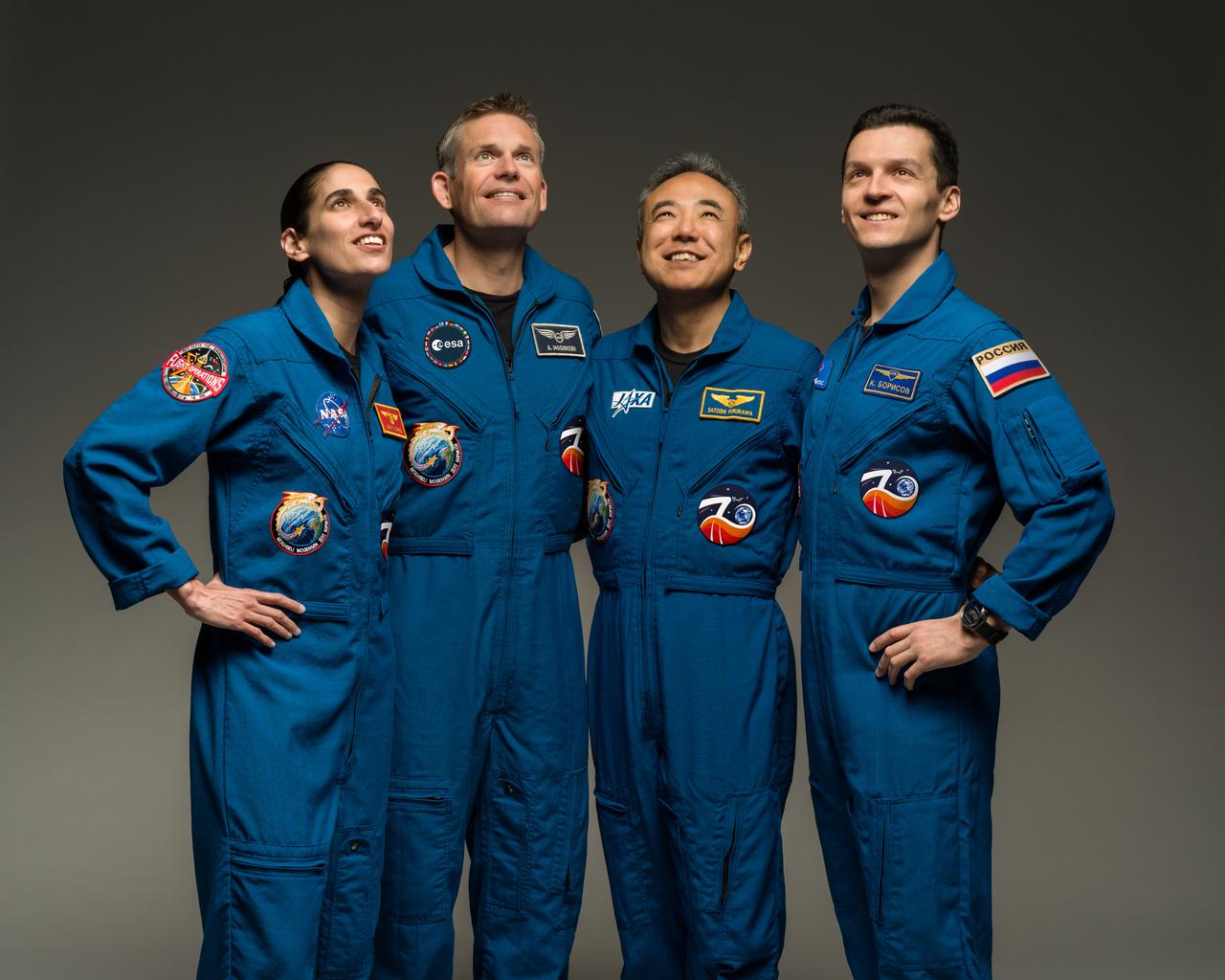
Portrait of NASA's SpaceX Crew-7 crew. From left to right: Roscosmos cosmonaut Konstantin Borisov, ESA astronaut Andreas Mogensen, NASA astronaut Jasmin Moghbeli, and JAXA astronaut Satoshi Furukawa. Credit: NASA/Bill Stafford
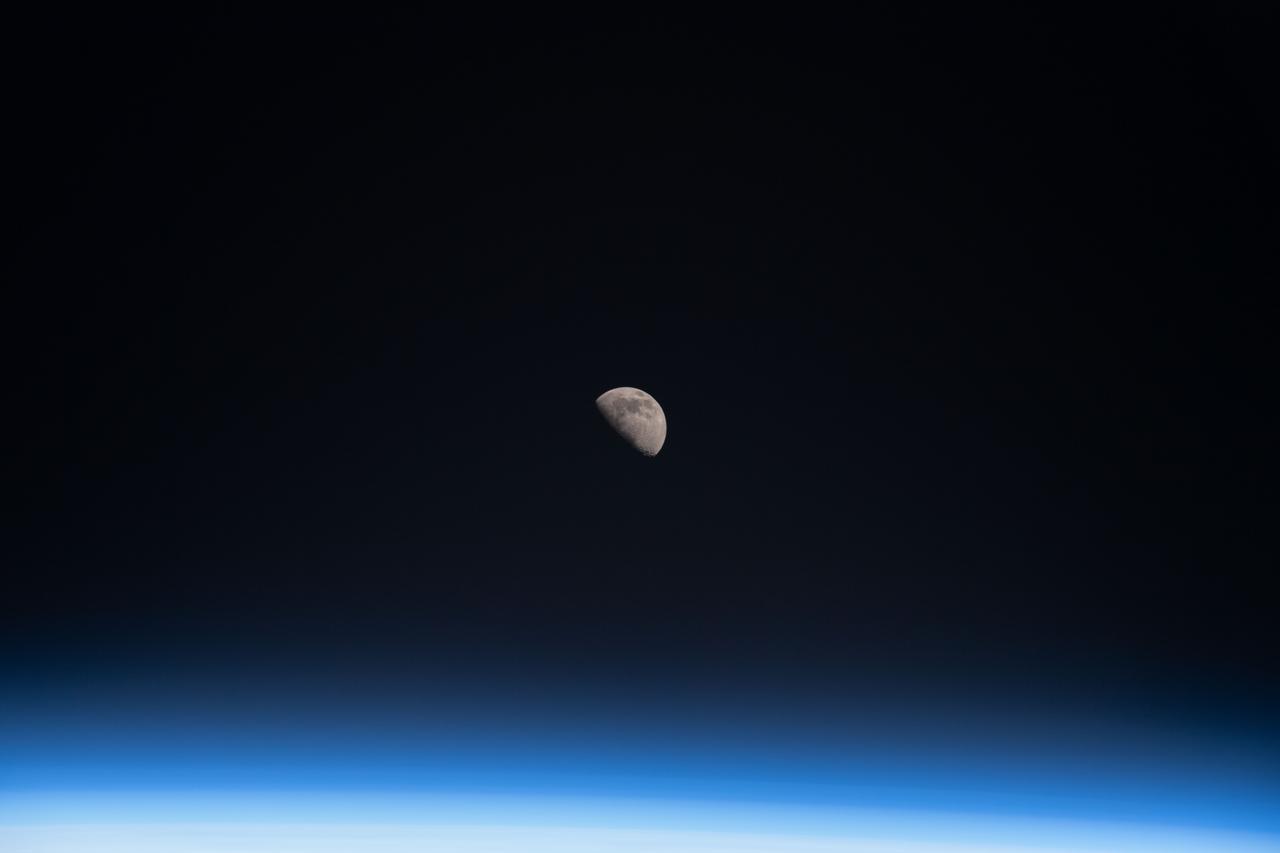
iss067e009291 (April 9, 2022) --- The Full Quarter Moon is pictured from the International Space Station as it orbited 261 miles above the Gulf of Mexico off the coast of Pensacola, Florida.

iss061e001616 (Oct. 6, 2019) --- NASA astronaut Andrew Morgan is suited up in a U.S. spacesuit before beginning a seven hour and one minute spacewalk to upgrade the station's large nickel-hydrogen batteries with newer, more powerful lithium-ion batteries.

NASA Cassini spacecraft snapped this shot of cratered Dione as it flew by the Saturnian moon on Oct. 17, 2010. The large crater at the center of the image is Erulus.
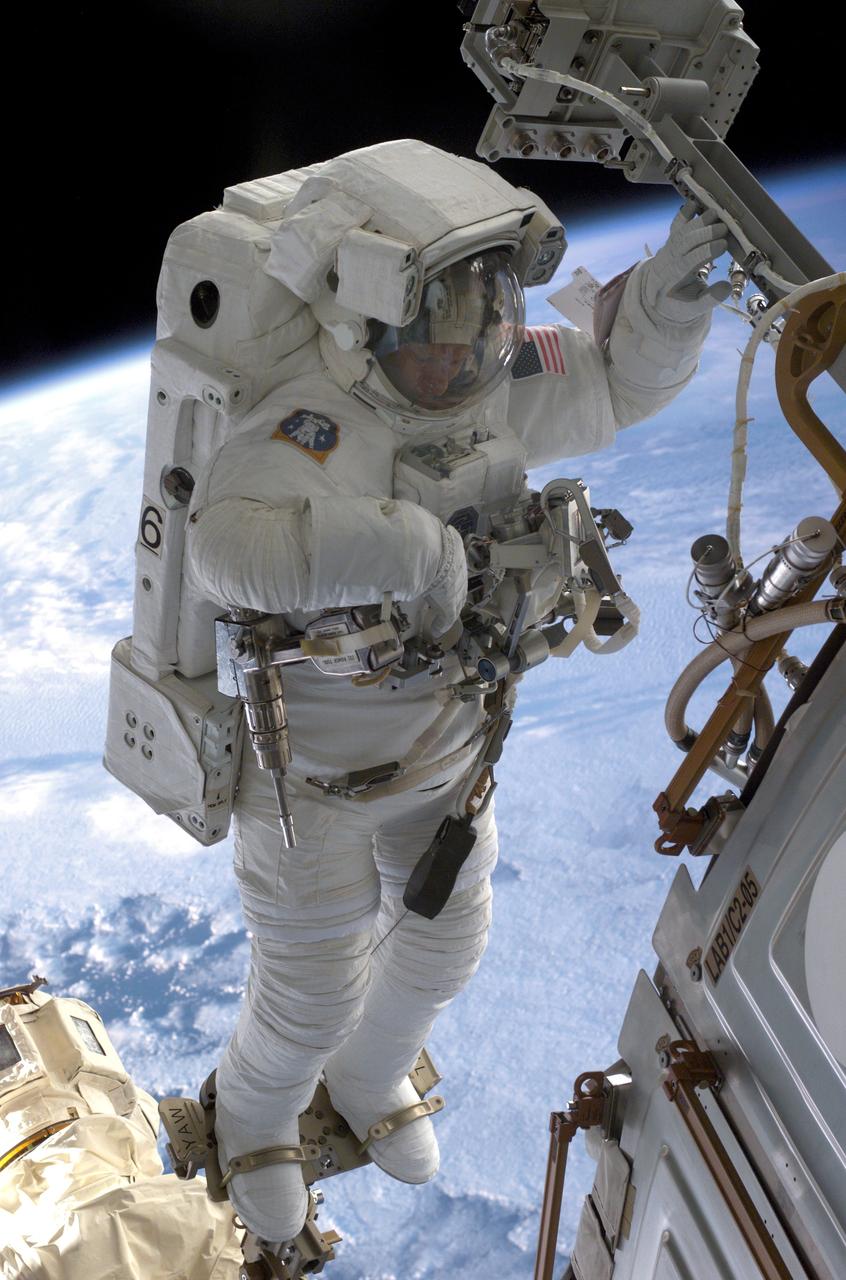
STS112-E-05311 (12 October 2002) --- Astronaut Piers J. Sellers uses both a handrail on the Destiny Laboratory and a foot restraint on the Space Station Remote Manipulator System or Canadarm2 to remain stationary while performing work at the end of the STS-112 mission's second spacewalk. A cloud-covered Earth provides the backdrop for the scene.
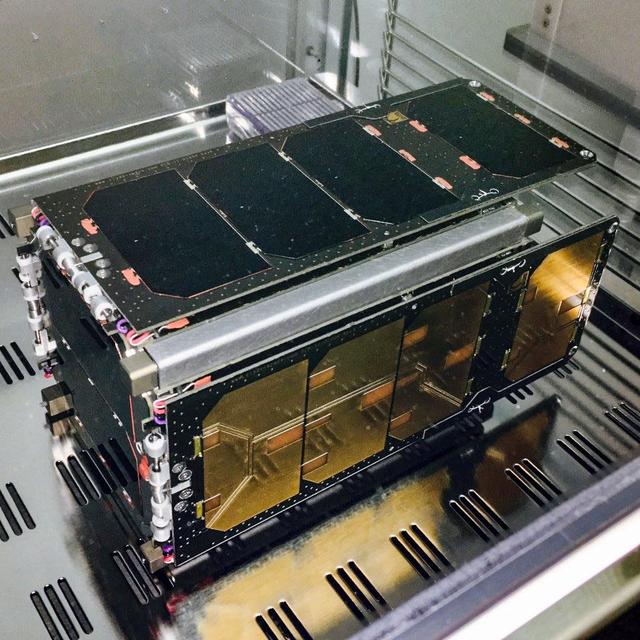
Jsc2020e004942(2/7/2020) — A preflight view of the CryoCube BUS. CryoCube demonstrates on-orbit thermal management technology. Such technology has a variety of potential applications, including storing rocket propellants in space, cooling instruments to improve their signal-to-noise ratios, and supporting future cryogenic experiments in microgravity. The small satellite uses a deployable shield to block radiation from the Sun and Earth and an attitude control system to point its experiment into deep space. Image courtesy of: Sierra Lobo Inc.
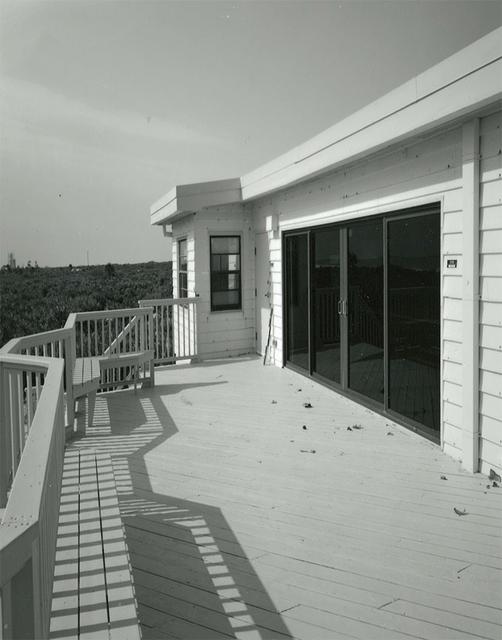
Interior View of Beach House (KSC Center Director's Conference Center)
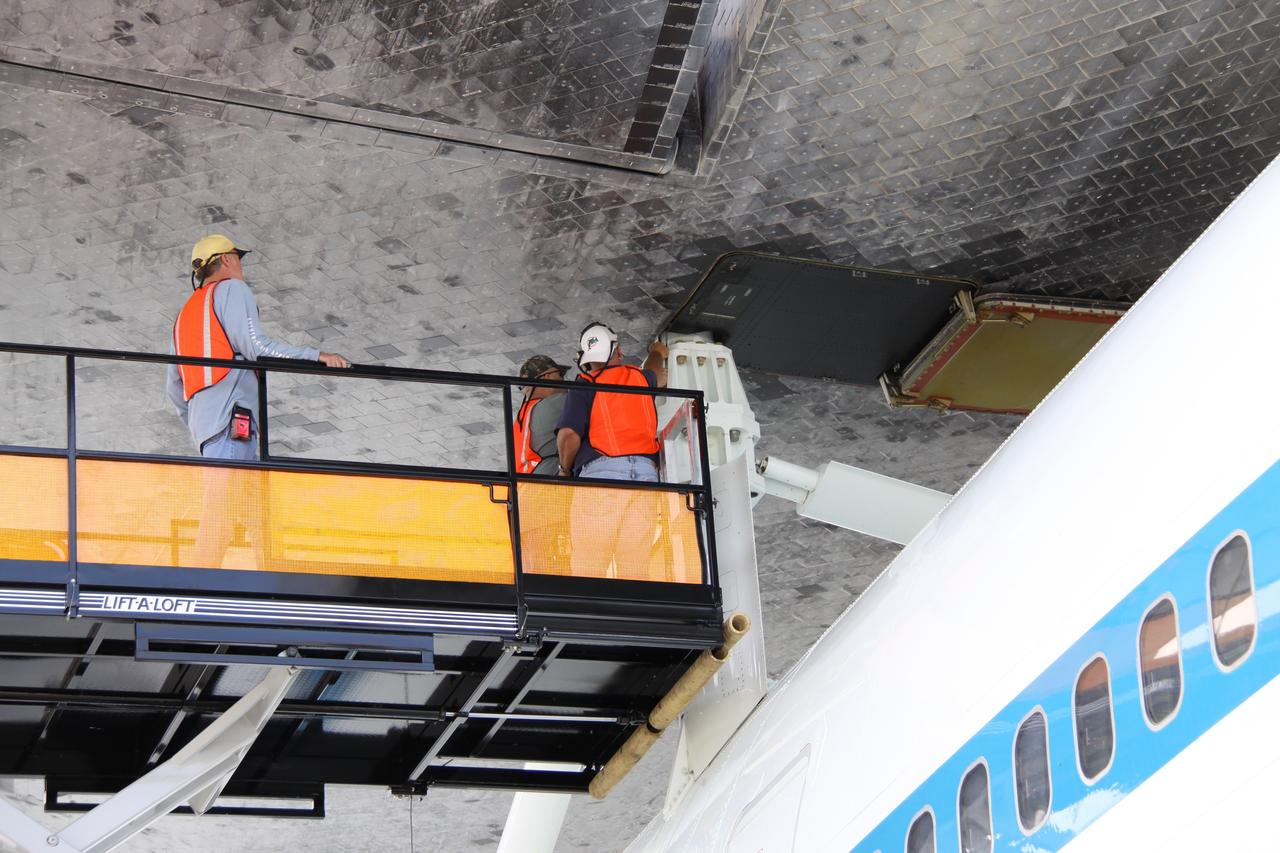
CAPE CANAVERAL, Fla. – Work is under way to separate space shuttle Atlantis from the Shuttle Carrier Aircraft, or SCA, underneath via the mate/demate device on the Shuttle Landing Facility at NASA's Kennedy Space Center in Florida. Workers are removing the struts that attached Atlantis to the SCA. A hoist attached to Atlantis will suspend the shuttle while the SCA is moved away. Atlantis returned from California atop the SCA, a modified Boeing 747, after its May 24 landing at Edwards Air Force Base, concluding mission STS-125. The ferry flight from Edwards Air Force Base began June 1. Atlantis' next assignment is the STS-129 mission, targeted to launch in November 2009. Photo credit: NASA/Jack Pfaller
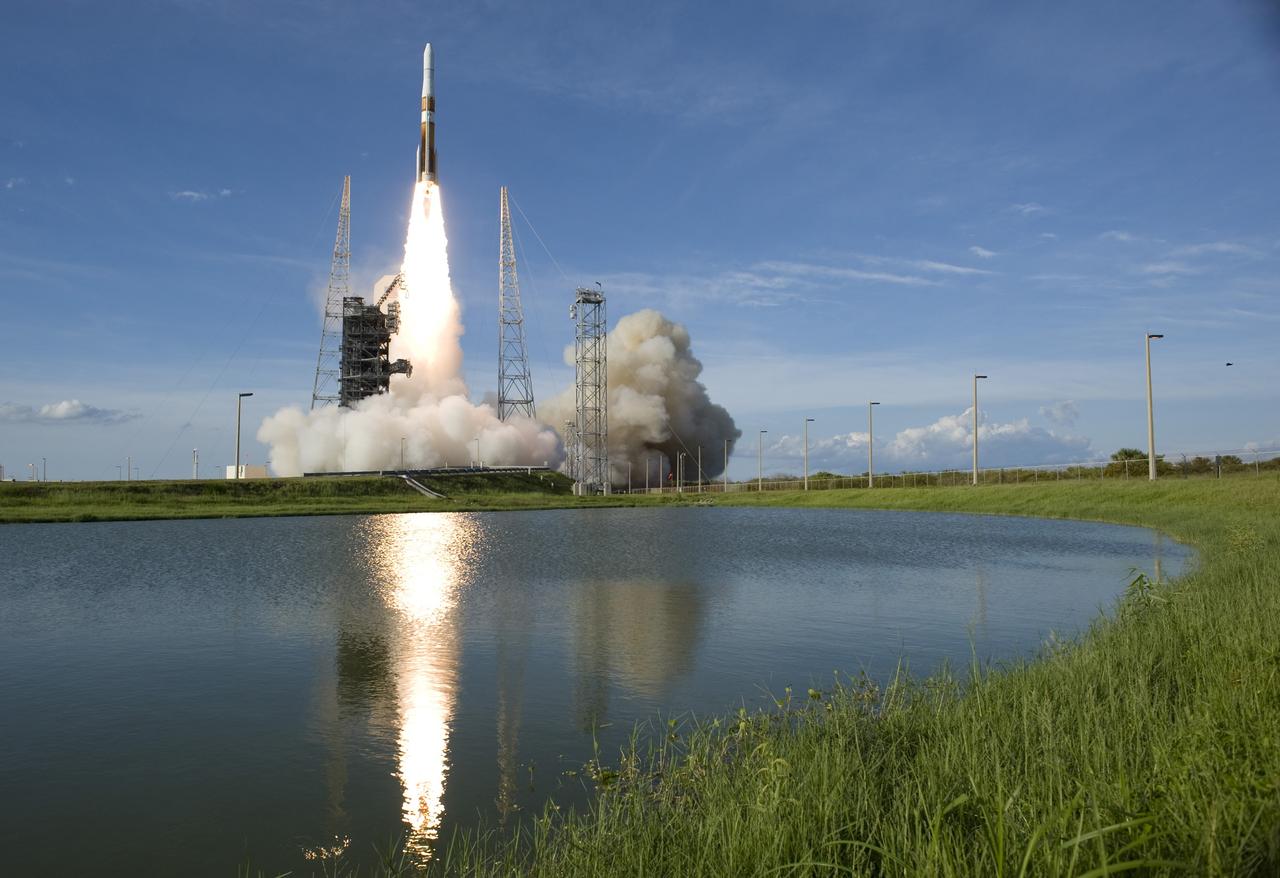
CAPE CANAVERAL, Fla. – The light from engine ignition is reflected in the water near Launch Complex 37 at Cape Canaveral Air Force Station in Florida as a Delta IV rocket clears the tower with the GOES-O satellite aboard. Liftoff was at 6:51 p.m. EDT. The first attempt to launch GOES-O, on June 26, was scrubbed due to thunderstorms in the vicinity of Cape Canaveral. The latest Geostationary Operational Environmental Satellite, GOES-O was developed by NASA for the National Oceanic and Atmospheric Administration, or NOAA. Each of the GOES satellites continuously provides observations of 60 percent of the Earth including the continental United States, providing weather monitoring and forecast operations as well as a continuous and reliable stream of environmental information and severe weather warnings. Once in orbit, GOES-O will be designated GOES-14, and NASA will provide on-orbit checkout and then transfer operational responsibility to NOAA. Photo credit: NASA/Tom Farrar, Sandy Joseph
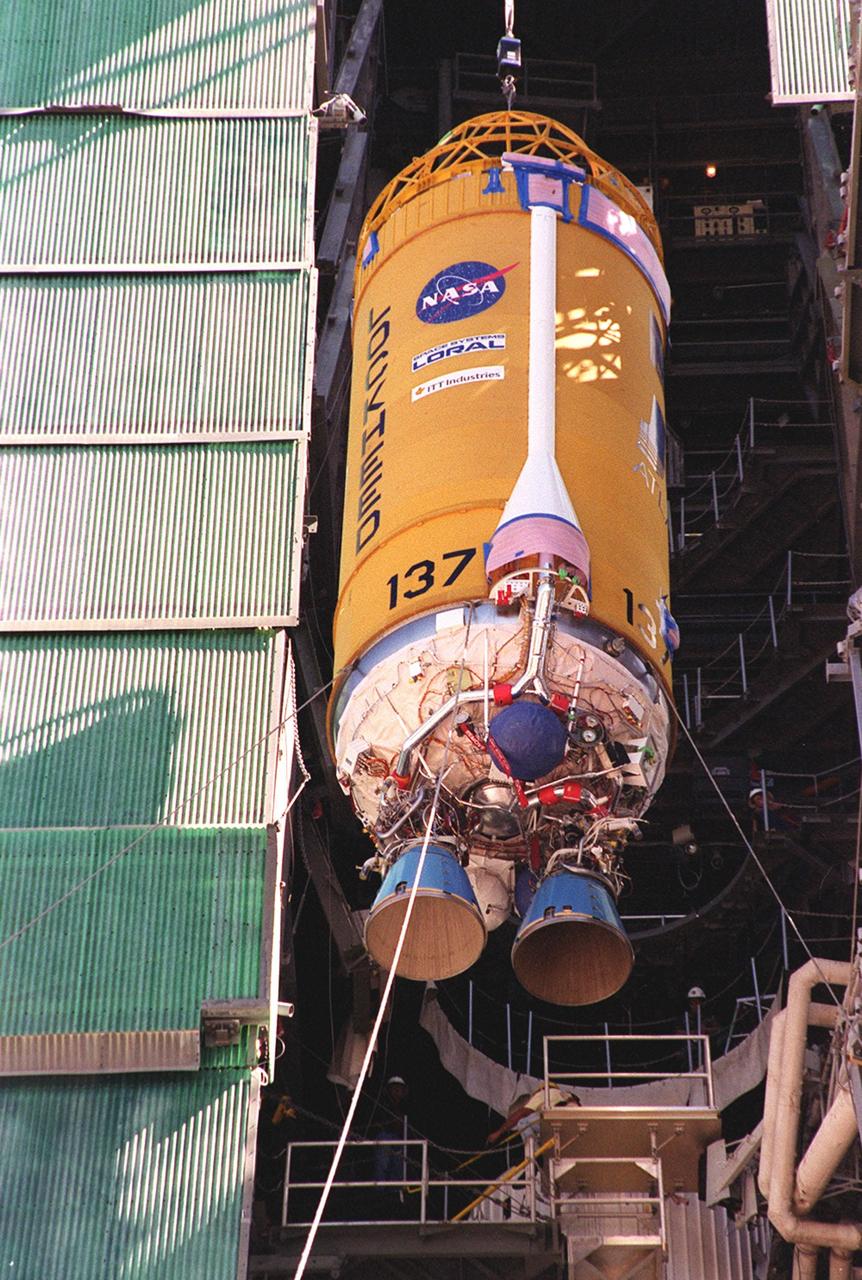
At launch pad 36-A, Cape Canaveral Air Force Station, cables help guide the second stage of an Atlas II/Centaur rocket as it is lifted up the gantry (behind it) for mating with the first stage. Atlas II is designed to launch payloads into low earth orbit, geosynchronous transfer orbit or geosynchronous orbit. The rocket is the launch vehicle for the GOES-L satellite, part of the NOAA National Weather Service system in weather imagery and atmospheric sounding information. The primary objective of the GOES-L is to provide a full capability satellite in an on-orbit storage condition, to assure NOAA continuity in services from a two-satellite constellation. Launch services are being provided by the 45th Space Wing
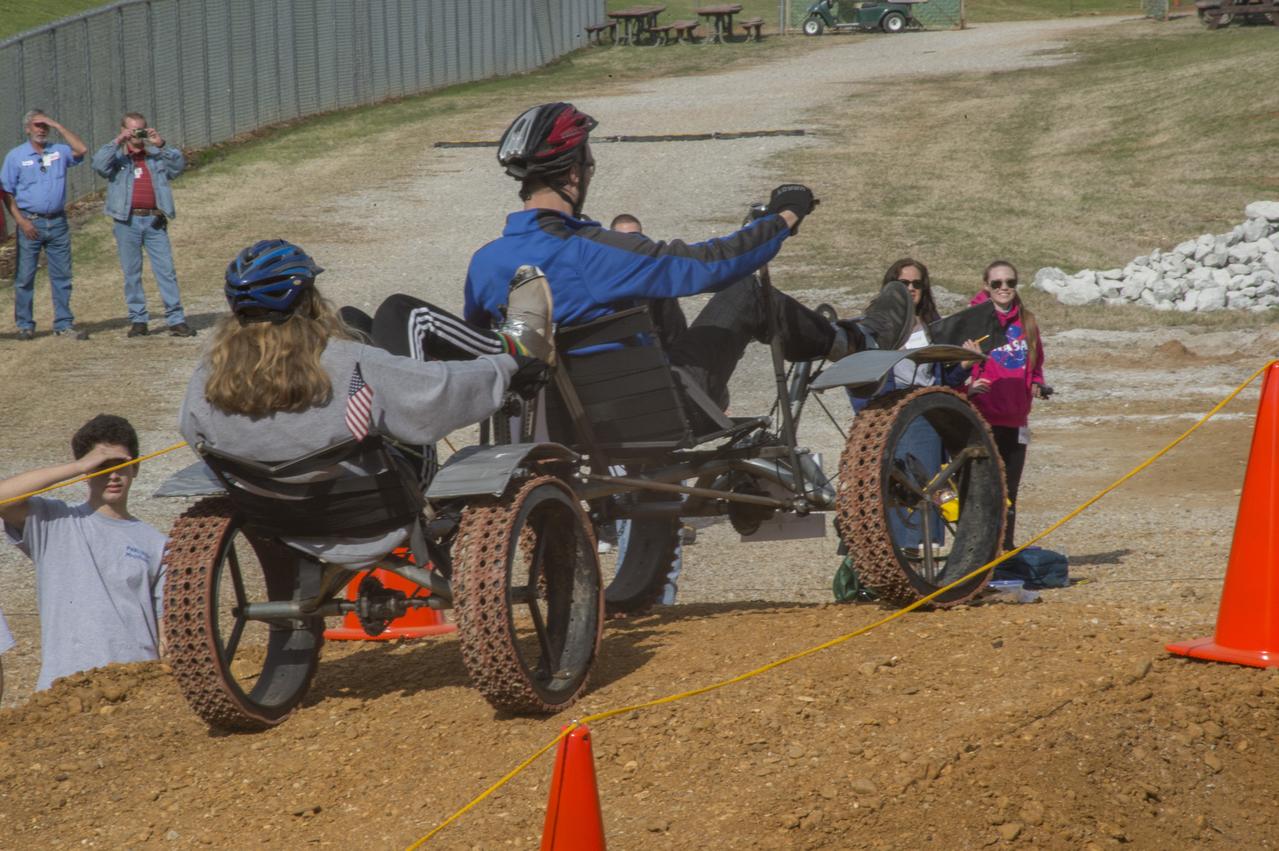
High school and university students competed in the 2018 Human Exploration Rover Challenge event at the U.S. Space and Rocket Center in Huntsville, Alabama. Students came from across the U.S. as well as several foreign countries such as Brazil, Germany, India, and Mexico. This event, which is normally a 2 day event, was shortened to 1 day in 2018 due to adverse weather conditions.
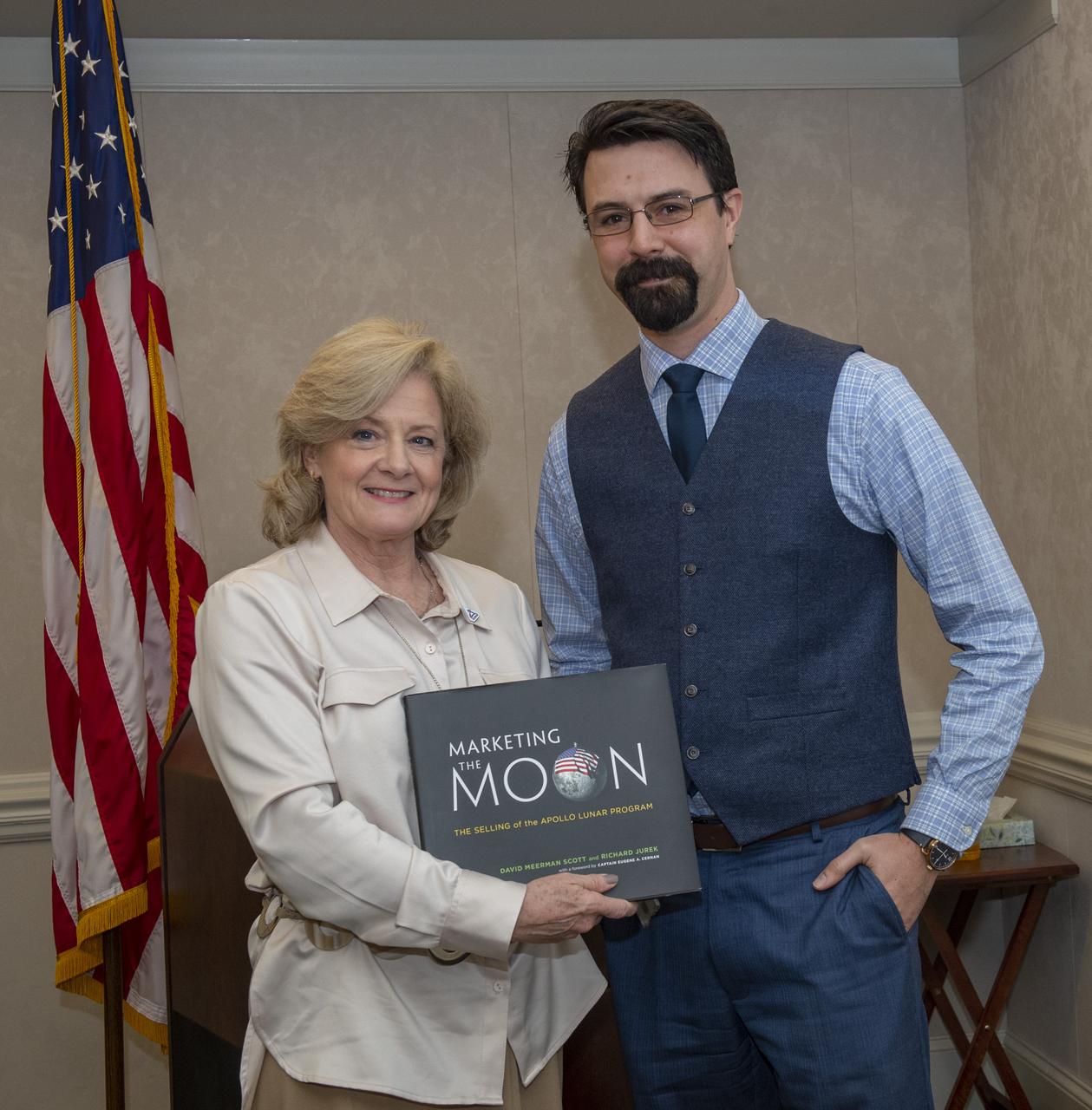
Matthew McSavaney presents memento to Jody Singer in appreciation of her speaking at February, 2020, Marshall Association Luncheon.
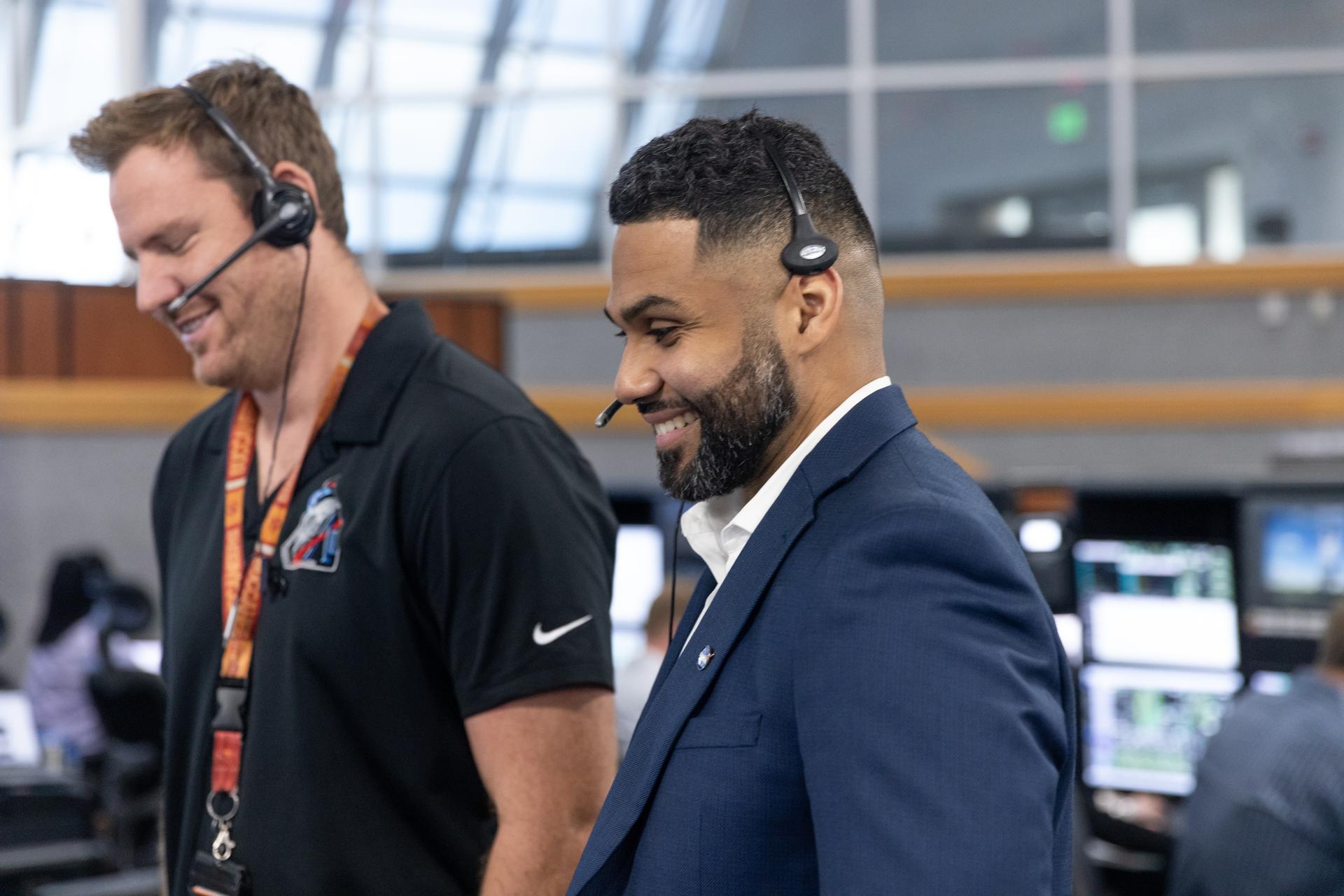
From left, Joe Pavicic, operations project engineer, and Mike Guzman, main propulsion systems engineer participate in an Artemis II launch countdown simulation inside Firing Room 1 in the Launch Control Center at NASA’s Kennedy Space Center in Florida on Wednesday, Nov. 5, 2025. The simulations go through launch day scenarios to help launch team members test software and make adjustments if needed during countdown operations. For Artemis II, four astronauts will venture around the Moon, the first crewed mission on NASA’s path to establishing a long-term presence for science and exploration through Artemis.
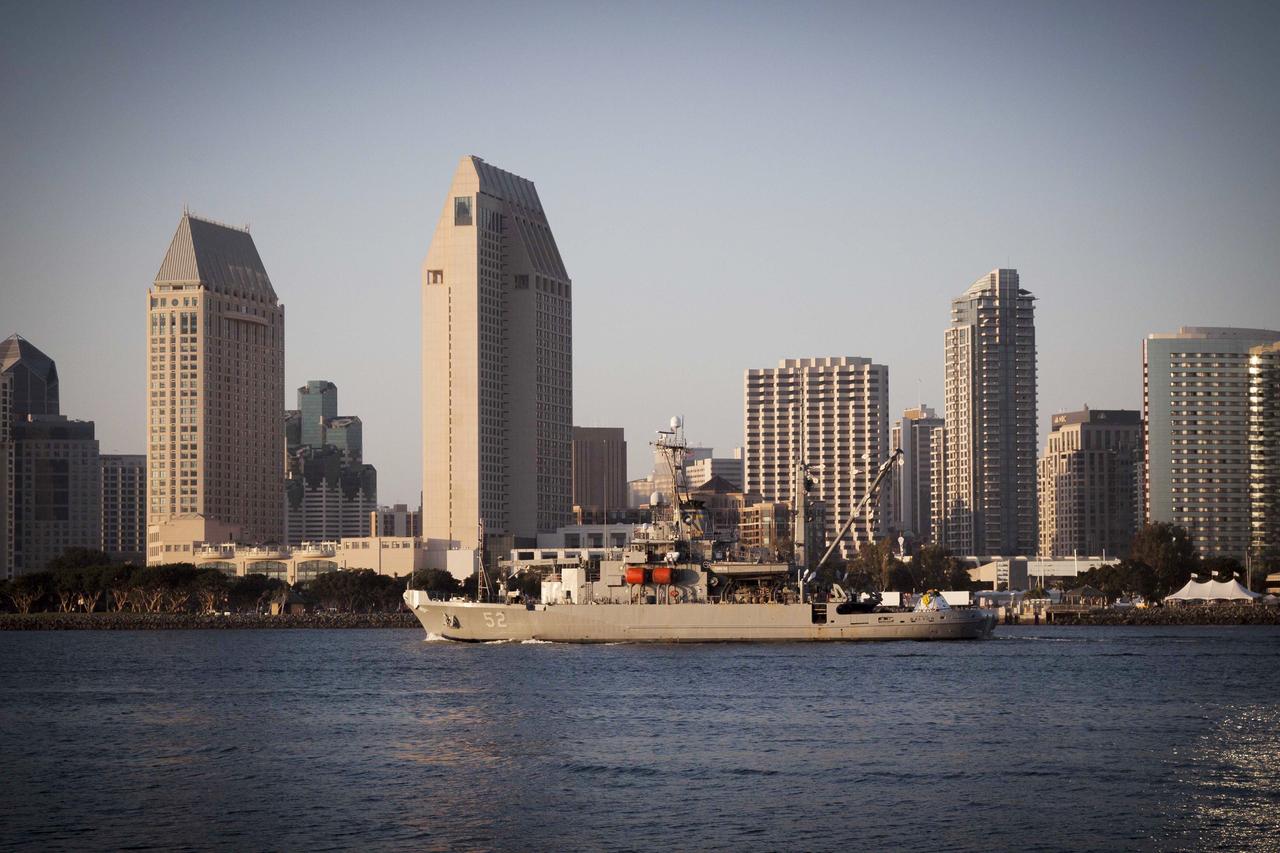
SAN DIEGO, Calif. – The USS Salvor, a safeguard-class rescue and salvage ship, departs from Naval Base San Diego on the first day of Orion Underway Recovery Test 4A. The Orion boilerplate test vehicle is in view on the ship. NASA, Lockheed Martin and the U.S. Navy will conduct alternate recovery methods using a stationary crane in the Pacific Ocean off the coast of San Diego to prepare for recovery of the Orion crew module on its return from a deep space mission. The underway recovery test allows the teams to demonstrate and evaluate recovery processes, procedures, new hardware and personnel in open waters. The Ground Systems Development and Operations Program is conducting the underway recovery tests. Orion is the exploration spacecraft designed to carry astronauts to destinations not yet explored by humans, including an asteroid and Mars. It will have emergency abort capability, sustain the crew during space travel and provide safe re-entry from deep space return velocities. The first unpiloted test flight of Orion is scheduled to launch in 2014 atop a United Launch Alliance Delta IV Heavy rocket and in 2018 on NASA’s Space Launch System rocket. For more information, visit http://www.nasa.gov/orion. Photo credit: NASA/Cory Huston