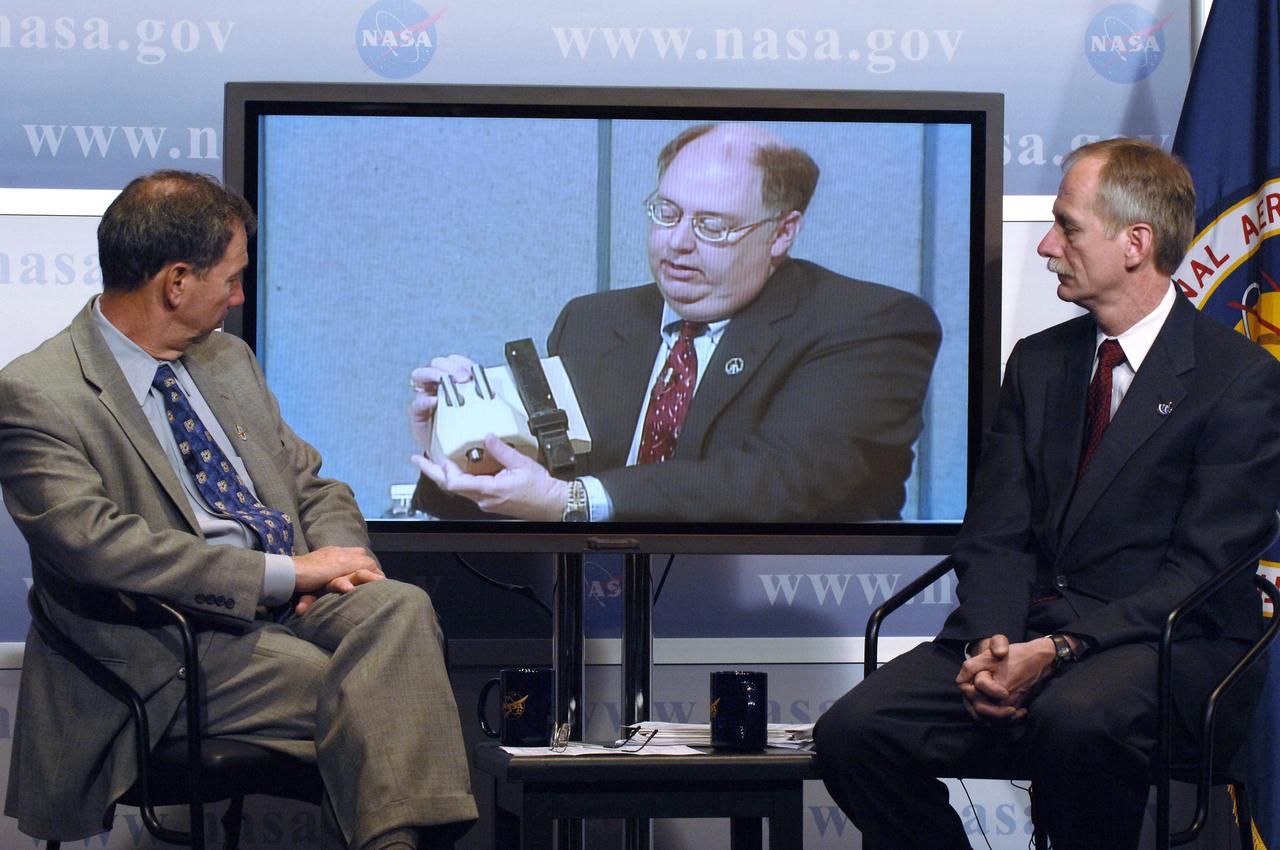
NASA Administrator Michael Griffin, left, and Associate Administrator for Space Operations William Gerstenmaier, right, look on as Space Shuttle Program Manager Wayne Hale talks from NASA's Marshall Space Flight Center about the space shuttle's ice frost ramps during a media briefing about the space shuttle program and processing for the STS-121 mission, Friday, April 28, 2006, at NASA Headquarters in Washington. Photo Credit (NASA/Bill Ingalls)
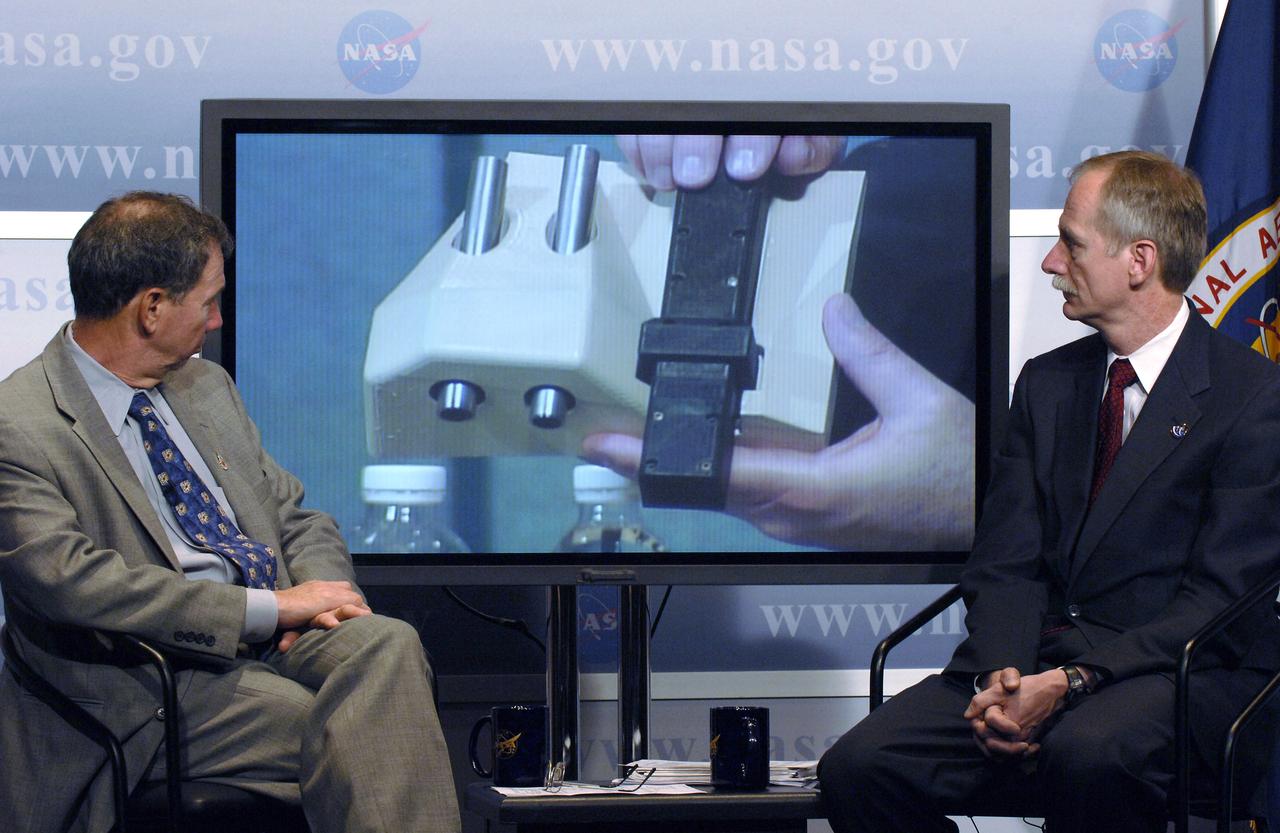
NASA Administrator Michael Griffin, left, and Associate Administrator for Space Operations William Gerstenmaier, right, look on as Space Shuttle Program Manager Wayne Hale from NASA's Marshall Space Flight Center, holds a test configuration of an ice frost ramp during a media briefing about the space shuttle program and processing for the STS-121 mission, Friday, April 28, 2006, at NASA Headquarters in Washington. Photo Credit (NASA/Bill Ingalls)
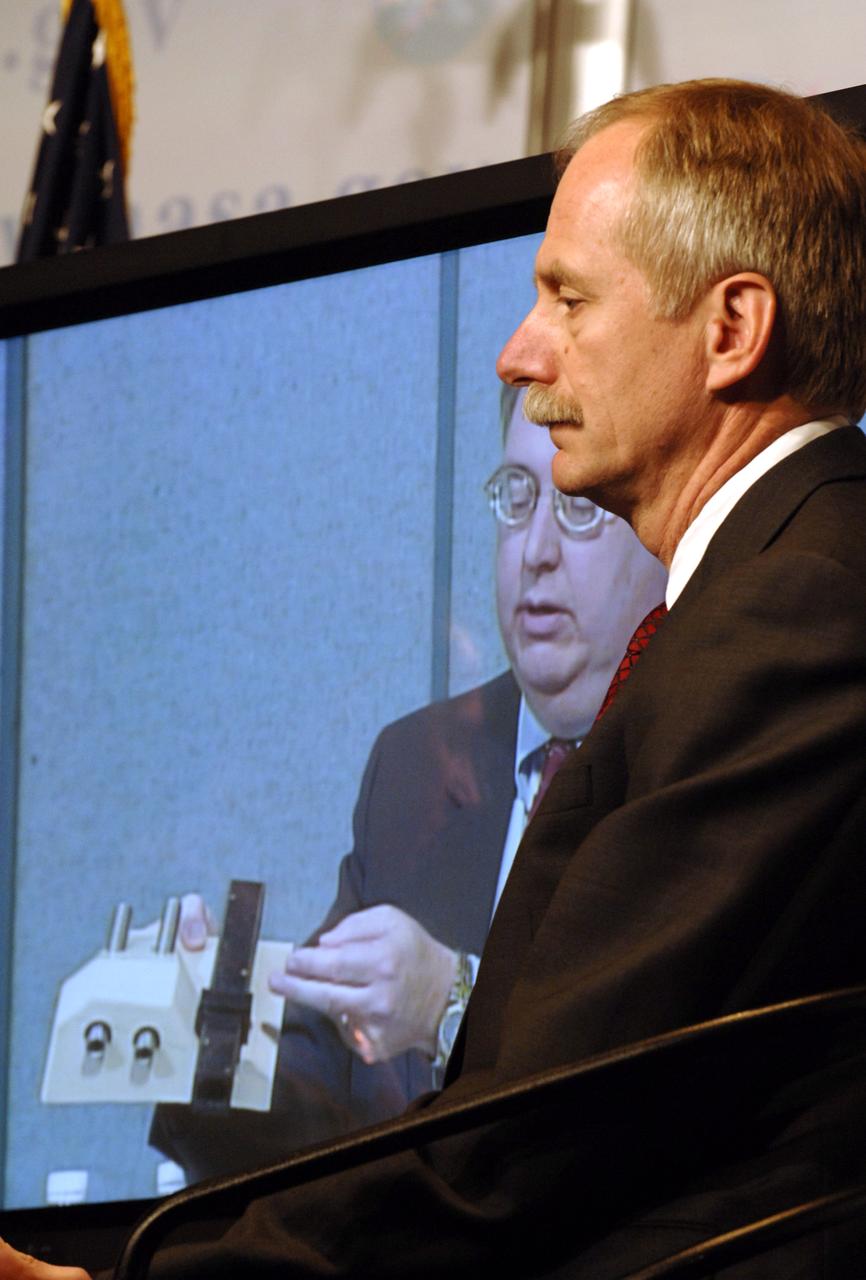
NASA Associate Administrator for Space Operations William Gerstenmaier, right, look on as Space Shuttle Program Manager Wayne Hale speaks from NASA's Marshall Space Flight Center during a media briefing about the space shuttle program and processing for the STS-121 mission, Friday, April 28, 2006, at NASA Headquarters in Washington. Photo Credit (NASA/Bill Ingalls)
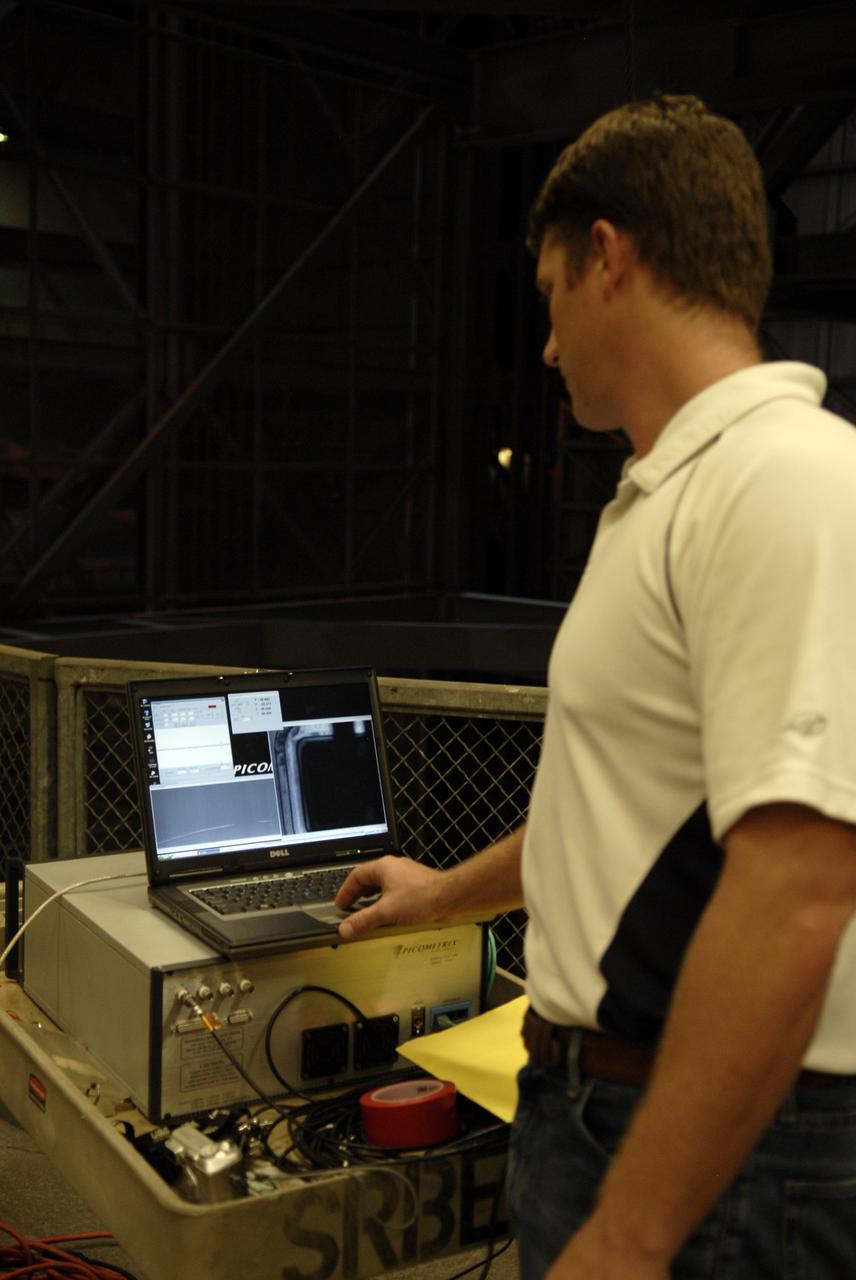
CAPE CANAVERAL, Fla. – In the Vehicle Assembly Building at NASA's Kennedy Space Center’s in Florida, a technician conducts terahertz scans of five ice frost ramps on the external fuel tank, designated ET-133, for space shuttle Atlantis’ STS-129 mission. The ice frost ramps are made from foam insulation and cover brackets that hold pressurization lines on the outside of the external tank. Terahertz scans are wave frequency analysis in the infrared band that can see through the foam insulation to help look for any voids or pockets where the foam is not bonded to the metal primer. The ramps being scanned were on the top part of the tank in the same area where foam came off during the last two shuttle launches. The data will be used to help assess whether foam on ET-132, the fuel tank attached to shuttle Discovery at Kennedy’s Launch Pad 39A, is fit for its flight on the STS-128 mission to the International Space Station. Photo credit: NASA/Kim Shiflett
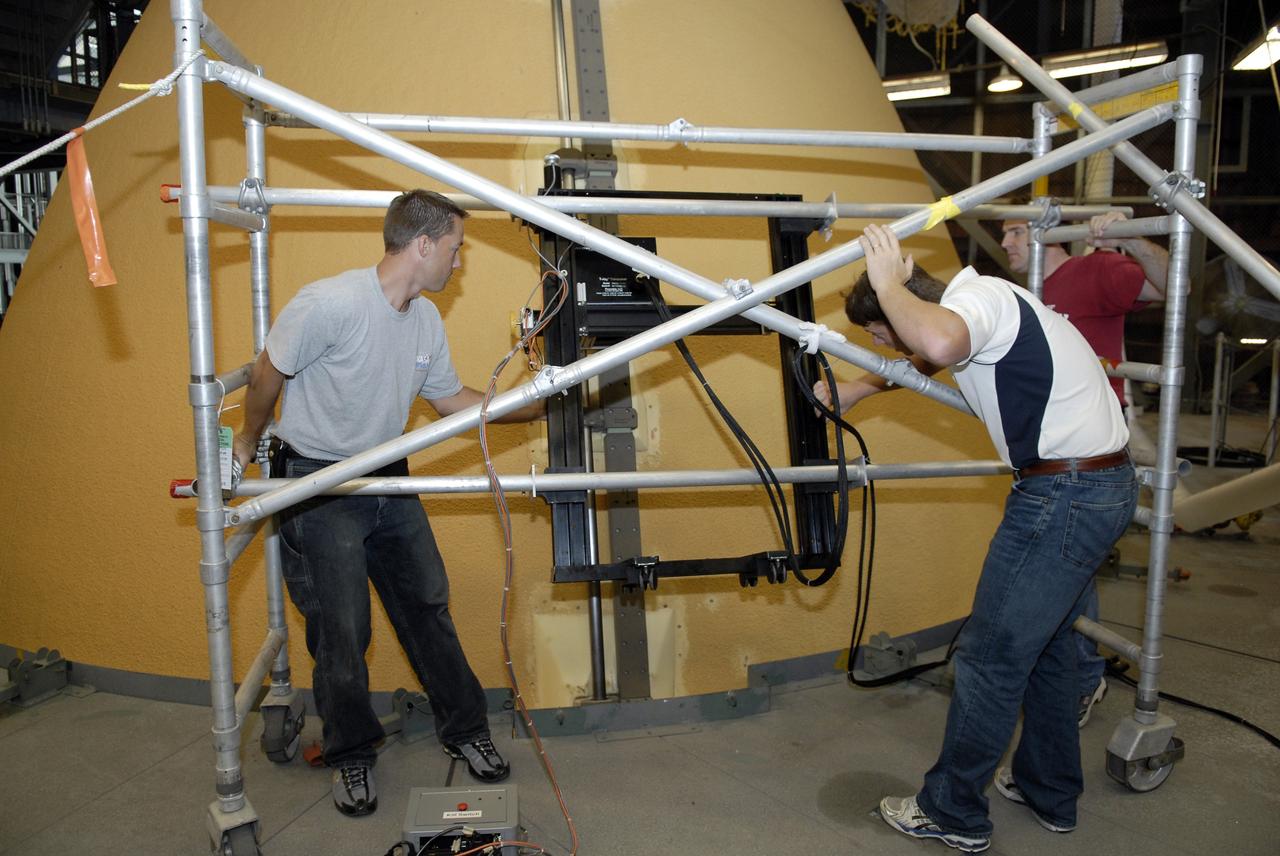
CAPE CANAVERAL, Fla. – In the Vehicle Assembly Building at NASA's Kennedy Space Center’s in Florida, technicians set up equipment that will be used to conduct terahertz scans of five ice frost ramps on the external fuel tank, designated ET-133, for space shuttle Atlantis’ STS-129 mission. The ice frost ramps are made from foam insulation and cover brackets that hold pressurization lines on the outside of the external tank. Terahertz scans are wave frequency analysis in the infrared band that can see through the foam insulation to help look for any voids or pockets where the foam is not bonded to the metal primer. The ramps being scanned were on the top part of the tank in the same area where foam came off during the last two shuttle launches. The data will be used to help assess whether foam on ET-132, the fuel tank attached to shuttle Discovery at Kennedy’s Launch Pad 39A, is fit for its flight on the STS-128 mission to the International Space Station. Photo credit: NASA/Kim Shiflett
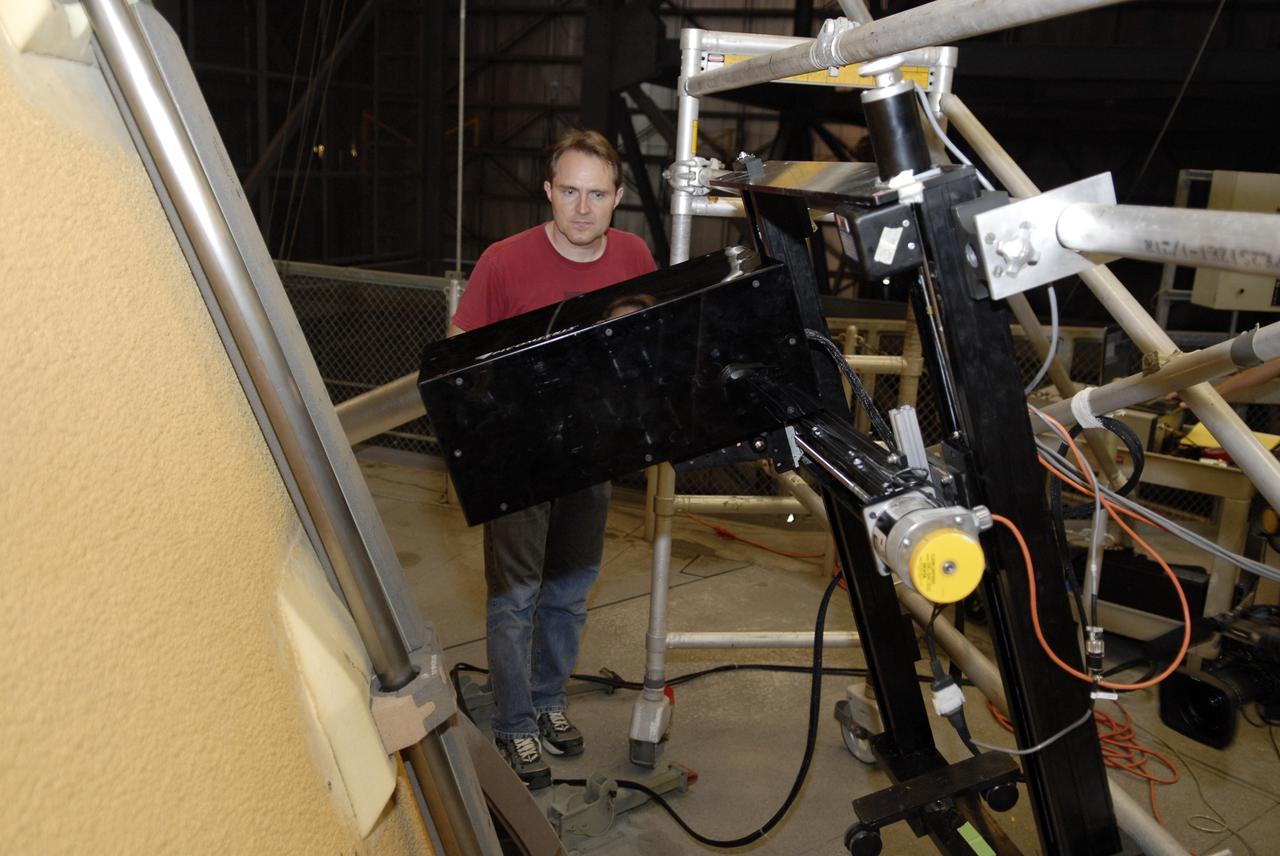
CAPE CANAVERAL, Fla. – In the Vehicle Assembly Building at NASA's Kennedy Space Center’s in Florida, a technician prepares to conduct terahertz scans of five ice frost ramps on the external fuel tank, designated ET-133, for space shuttle Atlantis’ STS-129 mission. The ice frost ramps are made from foam insulation and cover brackets that hold pressurization lines on the outside of the external tank. Terahertz scans are wave frequency analysis in the infrared band that can see through the foam insulation to help look for any voids or pockets where the foam is not bonded to the metal primer. The ramps being scanned were on the top part of the tank in the same area where foam came off during the last two shuttle launches. The data will be used to help assess whether foam on ET-132, the fuel tank attached to shuttle Discovery at Kennedy’s Launch Pad 39A, is fit for its flight on the STS-128 mission to the International Space Station. Photo credit: NASA/Kim Shiflett
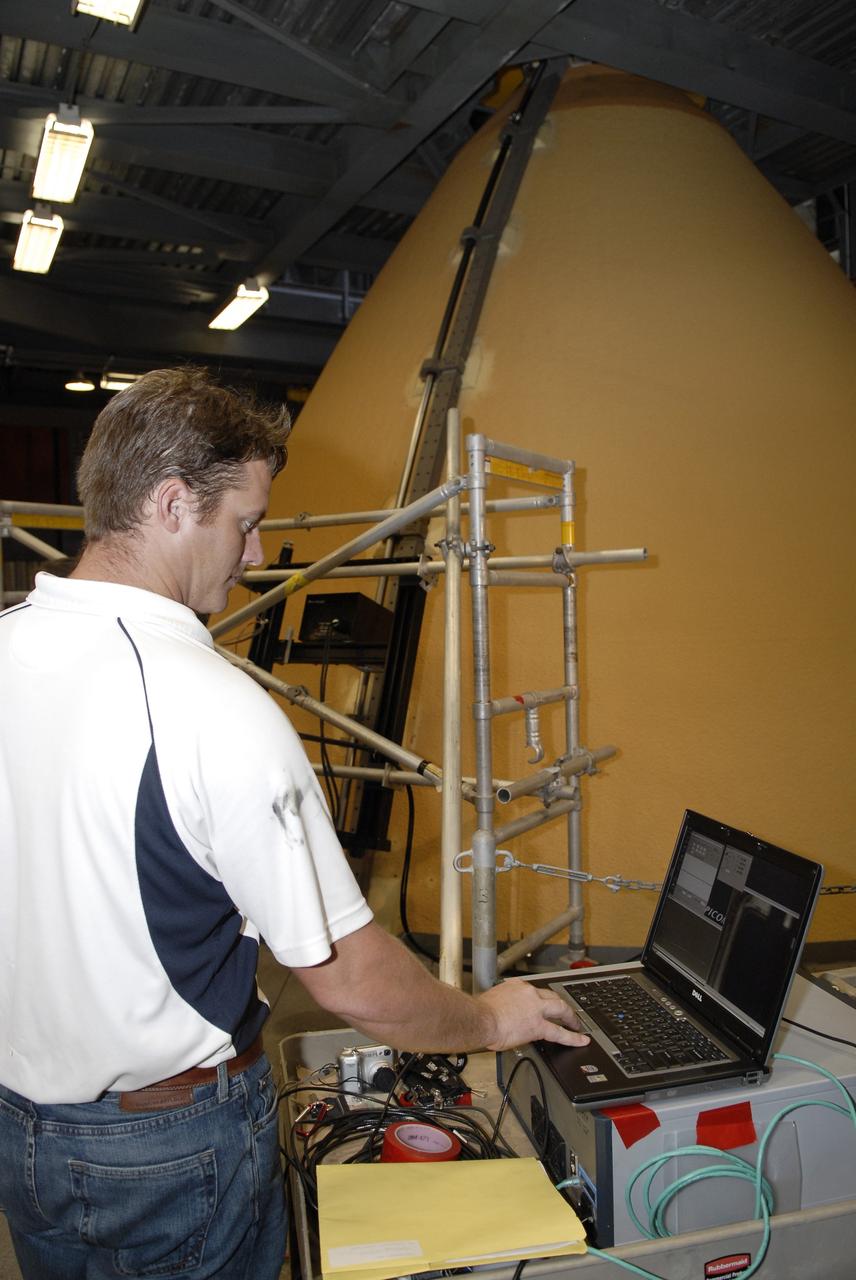
CAPE CANAVERAL, Fla. – In the Vehicle Assembly Building at NASA's Kennedy Space Center’s in Florida, a technician conducts terahertz scans of five ice frost ramps on the external fuel tank, designated ET-133, for space shuttle Atlantis’ STS-129 mission. The ice frost ramps are made from foam insulation and cover brackets that hold pressurization lines on the outside of the external tank. Terahertz scans are wave frequency analysis in the infrared band that can see through the foam insulation to help look for any voids or pockets where the foam is not bonded to the metal primer. The ramps being scanned were on the top part of the tank in the same area where foam came off during the last two shuttle launches. The data will be used to help assess whether foam on ET-132, the fuel tank attached to shuttle Discovery at Kennedy’s Launch Pad 39A, is fit for its flight on the STS-128 mission to the International Space Station. Photo credit: NASA/Kim Shiflett

CAPE CANAVERAL, Fla. – In the Vehicle Assembly Building at NASA's Kennedy Space Center’s in Florida, a technician sets up equipment to support terahertz scans of five ice frost ramps on the external fuel tank, designated ET-133, for space shuttle Atlantis’ STS-129 mission. The ice frost ramps are made from foam insulation and cover brackets that hold pressurization lines on the outside of the external tank. Terahertz scans are wave frequency analysis in the infrared band that can see through the foam insulation to help look for any voids or pockets where the foam is not bonded to the metal primer. The ramps being scanned were on the top part of the tank in the same area where foam came off during the last two shuttle launches. The data will be used to help assess whether foam on ET-132, the fuel tank attached to shuttle Discovery at Kennedy’s Launch Pad 39A, is fit for its flight on the STS-128 mission to the International Space Station. Photo credit: NASA/Kim Shiflett