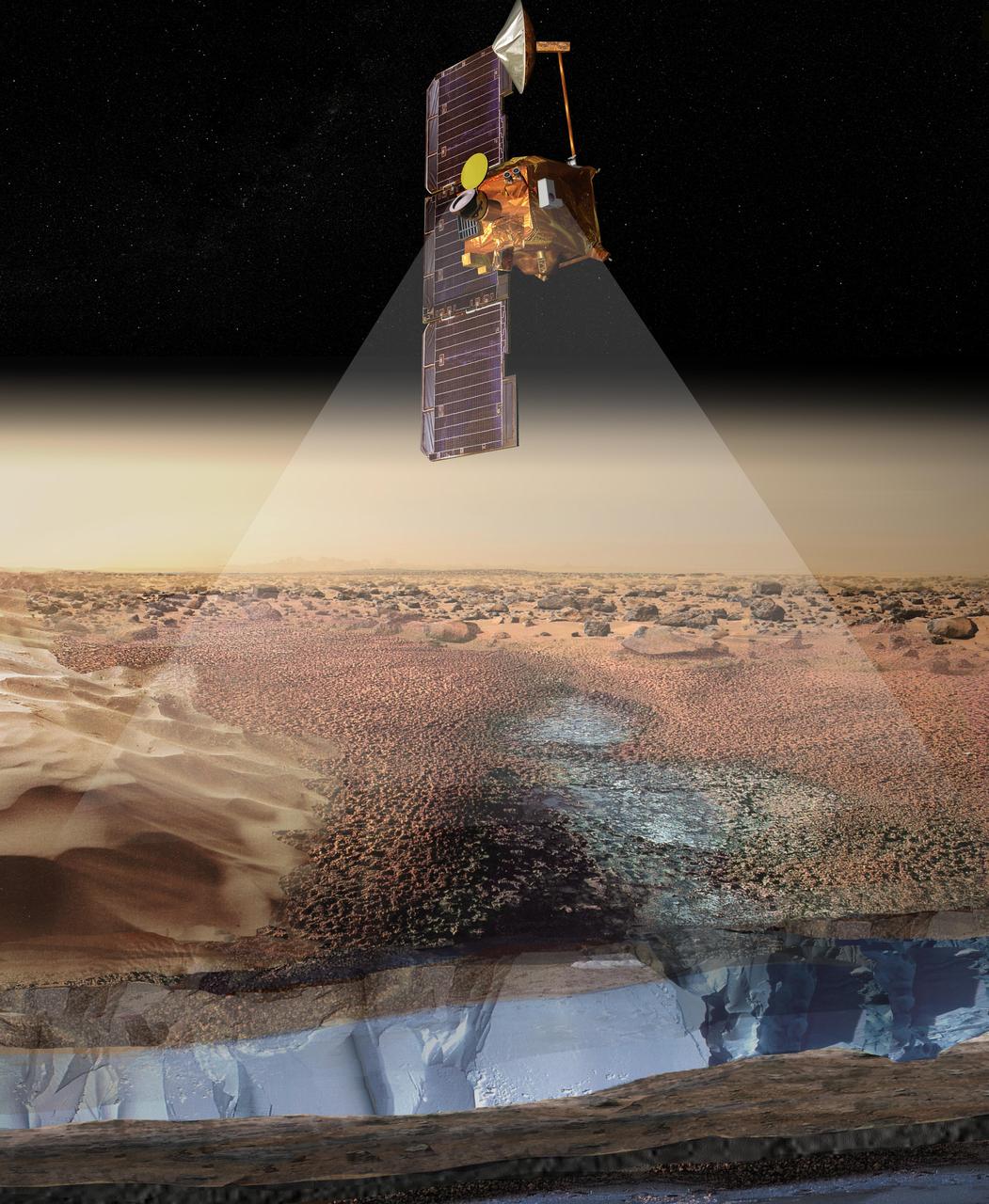
This artist rendering portrays ice-rich layers in the soils of Mars being detected by instruments aboard NASA 2001 Mars Odyssey spacecraft.
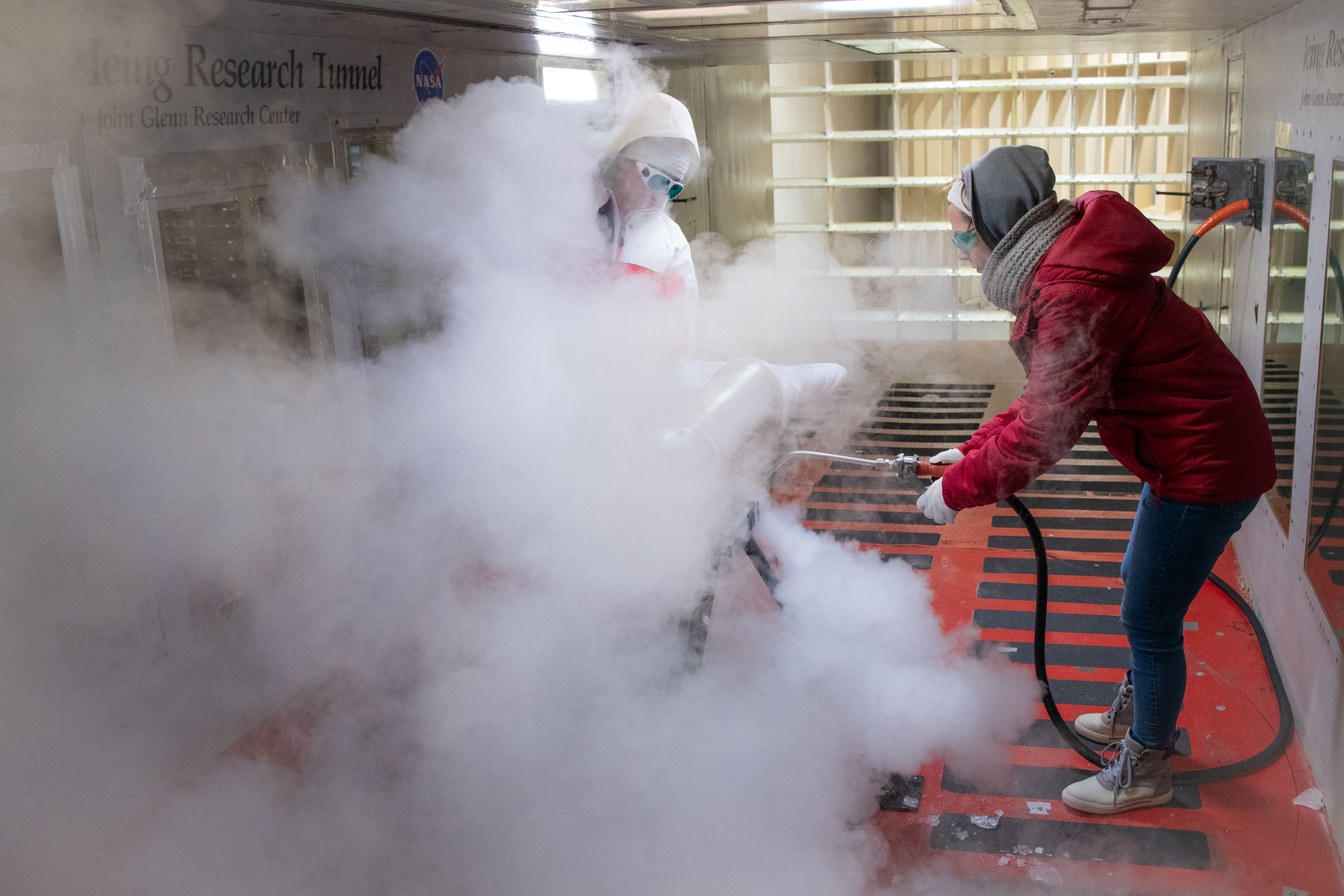
Test engineers clean the ice cloud detection probe in the Icing Research Tunnel in between test runs. Steam is used to melt the accumulated ice on the detection probe. The test engineers need to wear goggles to protect them from the laser light that the probe emits. The laser detects water content and ice particles in the cloud that the wind tunnel produces. This process is done to calibrate the tunnel for research by characterizing the cloud flow.
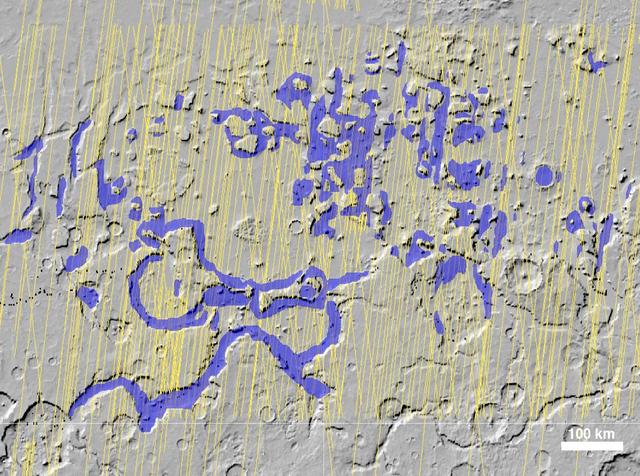
NASA Mars Reconnaissance Orbiter has detected widespread deposits of glacial ice in the mid-latitudes of Mars. This map of a region known as Deuteronilus Mensae, in the northern hemisphere, shows locations of the detected ice deposits in blue.
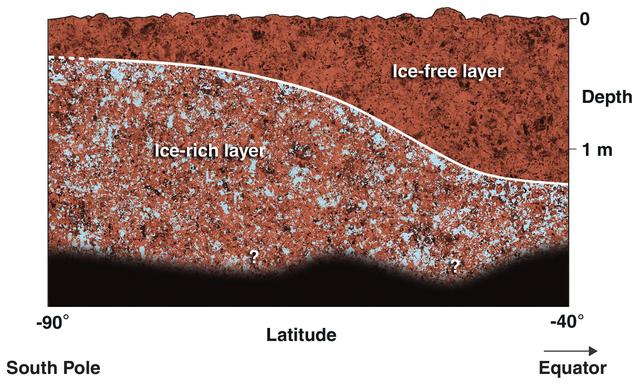
This diagram shows a possible configuration of ice-rich and dry soil in the upper meter 3 feet of Mars. The ice-rich soil was detected by the gamma ray spectrometer suite of instruments aboard NASA Mars Odyssey spacecraft.
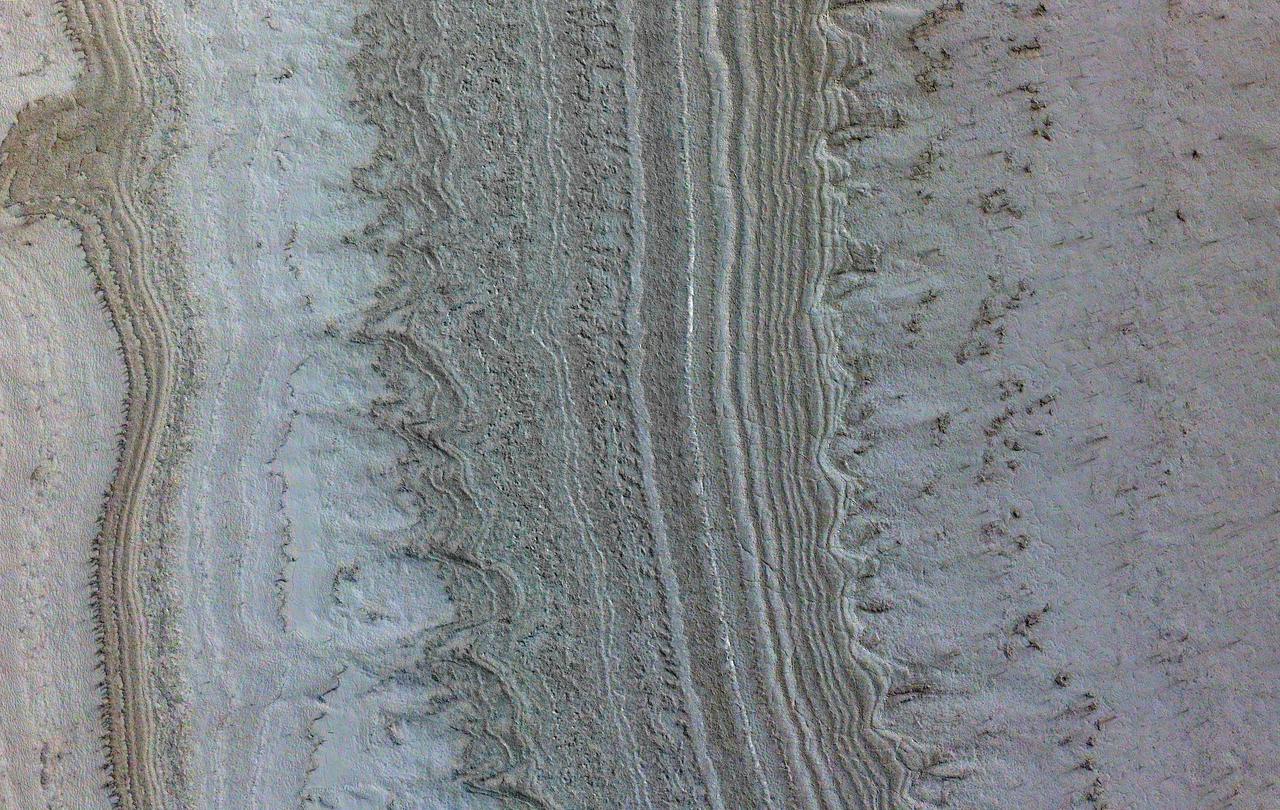
This image taken by NASA's Mars Reconnaissance Orbiter (MRO) shows ice sheets at Mars' south pole. The spacecraft detected clays near this ice; scientists have proposed such clays are the source of radar reflections that have been previously interpreted as liquid water using data from the ESA (European Space Agency) Mars Express orbiter. Flying 186 miles (300 kilometers) above the Martian surface, MRO used its High-Resolution Imaging Science Experiment (HiRISE) camera to study the ice sheets while using its Compact Reconnaissance Imaging Spectrometer (CRISM) to map out clay minerals near the ice. https://photojournal.jpl.nasa.gov/catalog/PIA24763
![Over 500 new impact events have been detected from before-and-after images from NASA's Mars Reconnaissance Orbiter, mostly from MRO's Context Camera, with a HiRISE followup. Those new craters that expose shallow ice are of special interest, especially at latitudes where not previously detected, to better map the ice distribution. We hope to find ice at relatively low latitudes both for understanding recent climate change and as a resource for possible future humans on Mars. This new impact, which occurred between August and December 2016 (at 42.5 degree South latitude) would provide an important constraint if ice was detected. Alas, the HiRISE color image does not indicate that ice is exposed. There is an elongated cluster of new craters (or just dark spots where the craters are too small to resolve), due to an oblique impact in which the bolide fragmented in the Martian atmosphere. The map is projected here at a scale of 25 centimeters (9.8 inches) per pixel. [The original image scale is 25.1 centimeters (9.9 inches) per pixel (with 1 x 1 binning); objects on the order of 75 centimeters (29.5 inches) across are resolved.] North is up. https://photojournal.jpl.nasa.gov/catalog/PIA21578](https://images-assets.nasa.gov/image/PIA21578/PIA21578~medium.jpg)
Over 500 new impact events have been detected from before-and-after images from NASA's Mars Reconnaissance Orbiter, mostly from MRO's Context Camera, with a HiRISE followup. Those new craters that expose shallow ice are of special interest, especially at latitudes where not previously detected, to better map the ice distribution. We hope to find ice at relatively low latitudes both for understanding recent climate change and as a resource for possible future humans on Mars. This new impact, which occurred between August and December 2016 (at 42.5 degree South latitude) would provide an important constraint if ice was detected. Alas, the HiRISE color image does not indicate that ice is exposed. There is an elongated cluster of new craters (or just dark spots where the craters are too small to resolve), due to an oblique impact in which the bolide fragmented in the Martian atmosphere. The map is projected here at a scale of 25 centimeters (9.8 inches) per pixel. [The original image scale is 25.1 centimeters (9.9 inches) per pixel (with 1 x 1 binning); objects on the order of 75 centimeters (29.5 inches) across are resolved.] North is up. https://photojournal.jpl.nasa.gov/catalog/PIA21578
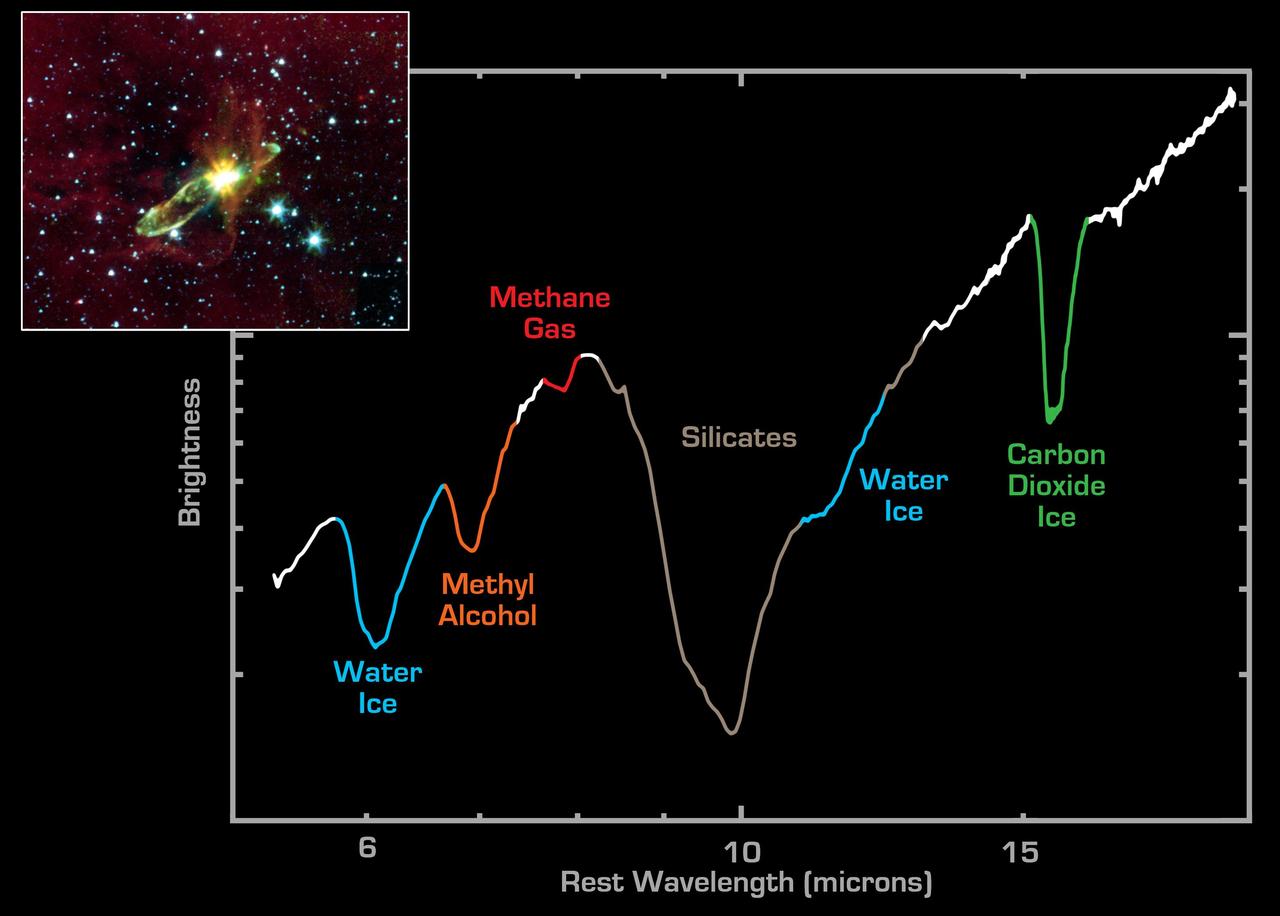
NASA Spitzer Space Telescope has lifted the cosmic veil to see an otherwise hidden newborn star, while detecting the presence of water and carbon dioxide ices, as well as organic molecules.
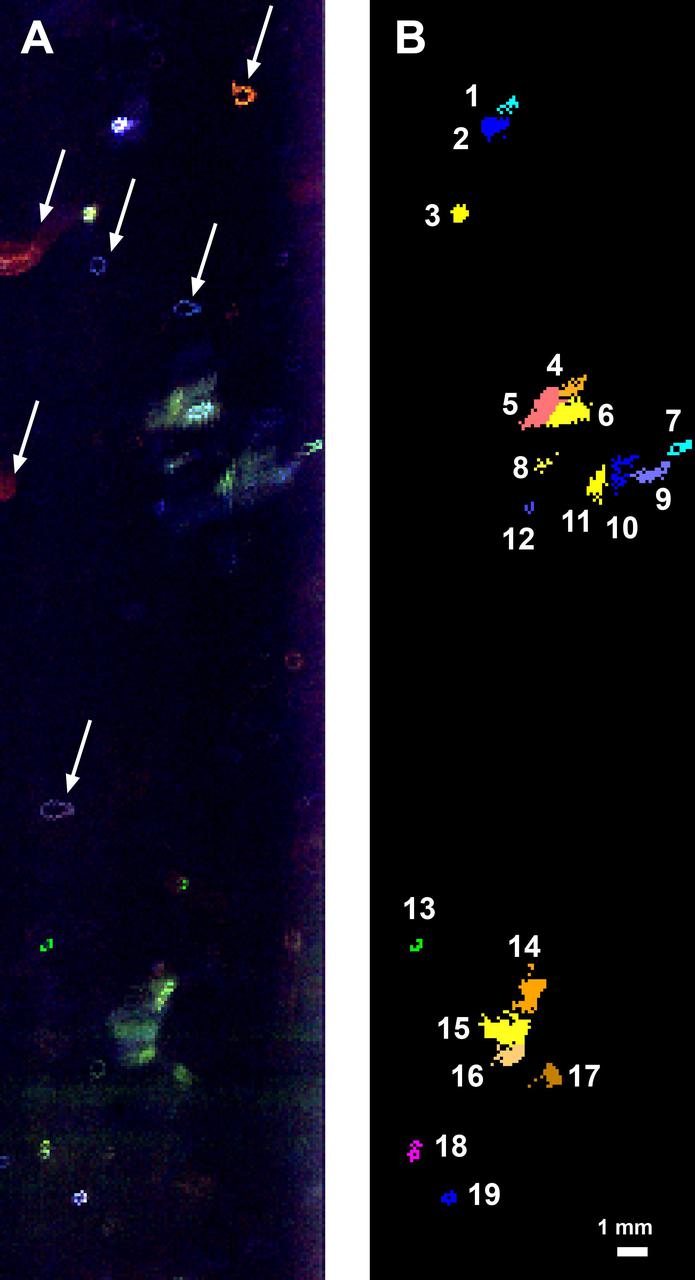
This fluorescence map of the inside wall of an ice borehole near Greenland's Summit Station was produced at a depth of 307.7 feet (93.8 meters) into the ice sheet by the WATSON (Wireline Analysis Tool for the Subsurface Observation of Northern ice sheets) instrument. Recorded during a 2019 field test of the WATSON instrument, the left panel shows the variety of biosignatures that were detected in the ice — different colors represent different organic molecules, some of which are likely microbes. The arrows highlight artifacts on the instrument's optical window, not biosignatures in the ice. In the right panel, the biosignature detections have been colorized to indicate the different features detected. Blotches that are the same color are likely made of the same chemicals. The numbers list the different and distinct features that WATSON detected at that depth in the ice. WATSON could one day be launched aboard a robotic mission to seek out biosignatures on the ocean moons of Enceladus, Europa, or even Titan. The WATSON team hopes to test the instrument in a variety of cold locations on Earth to see how the distribution and variety of biosignatures change depending on where they are. By testing WATSON in different "Earth analogs," scientists would be able to better understand the chemical fingerprints of any biosignatures detected on other worlds. https://photojournal.jpl.nasa.gov/catalog/PIA24140

This view from NASA's Dawn mission shows where ice has been detected in the northern wall of Ceres' Juling Crater, which is in almost permanent shadow. Dawn acquired the picture with its framing camera on Aug. 30, 2016, and it was processed with the help of NASA Ames Stereo Pipeline (ASP), to estimate the slope of the cliff. https://photojournal.jpl.nasa.gov/catalog/PIA21918
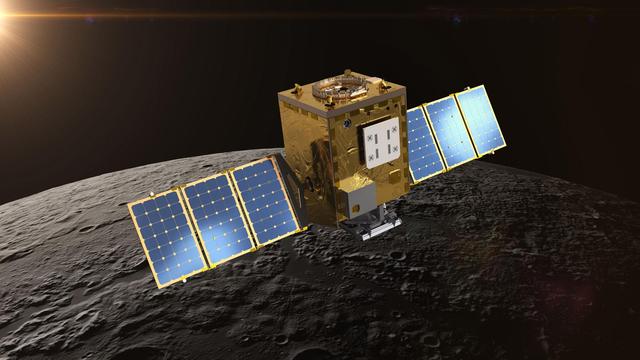
Peering into the Moon's permanently shadowed regions, Lunar Trailblazer will detect signatures of water ice in reflected light, and it will pinpoint the locations of micro-cold traps less than a football field in size. The small satellite will collect measurements at multiple times of day over sunlit regions, helping scientists understand if the water signature on the illuminated surface changes as the lunar surface temperature changes by hundreds of degrees over the course of a lunar day. The goal is to produce high-resolution maps to locate water ice in support of NASA's Artemis Program, which aims to establish a sustainable human presence on the Moon and prepare for future missions to Mars. https://photojournal.jpl.nasa.gov/catalog/PIA24161

This orthographic projection view from NASA MESSENGER spacecraft provides a look at Mercury north polar region. The yellow regions in many of the craters mark locations that show evidence for water ice, as detected by Earth-based radar observations from Arecibo Observatory in Puerto Rico. MESSENGER has collected compelling new evidence that the deposits are indeed water ice, including imaging within the permanently shaded interiors of some of the craters, such as Prokofiev and Fuller. Instrument: Mercury Dual Imaging System (MDIS) Arecibo Radar Image: In yellow (Harmon et al., 2011, Icarus 211, 37-50) http://photojournal.jpl.nasa.gov/catalog/PIA19411
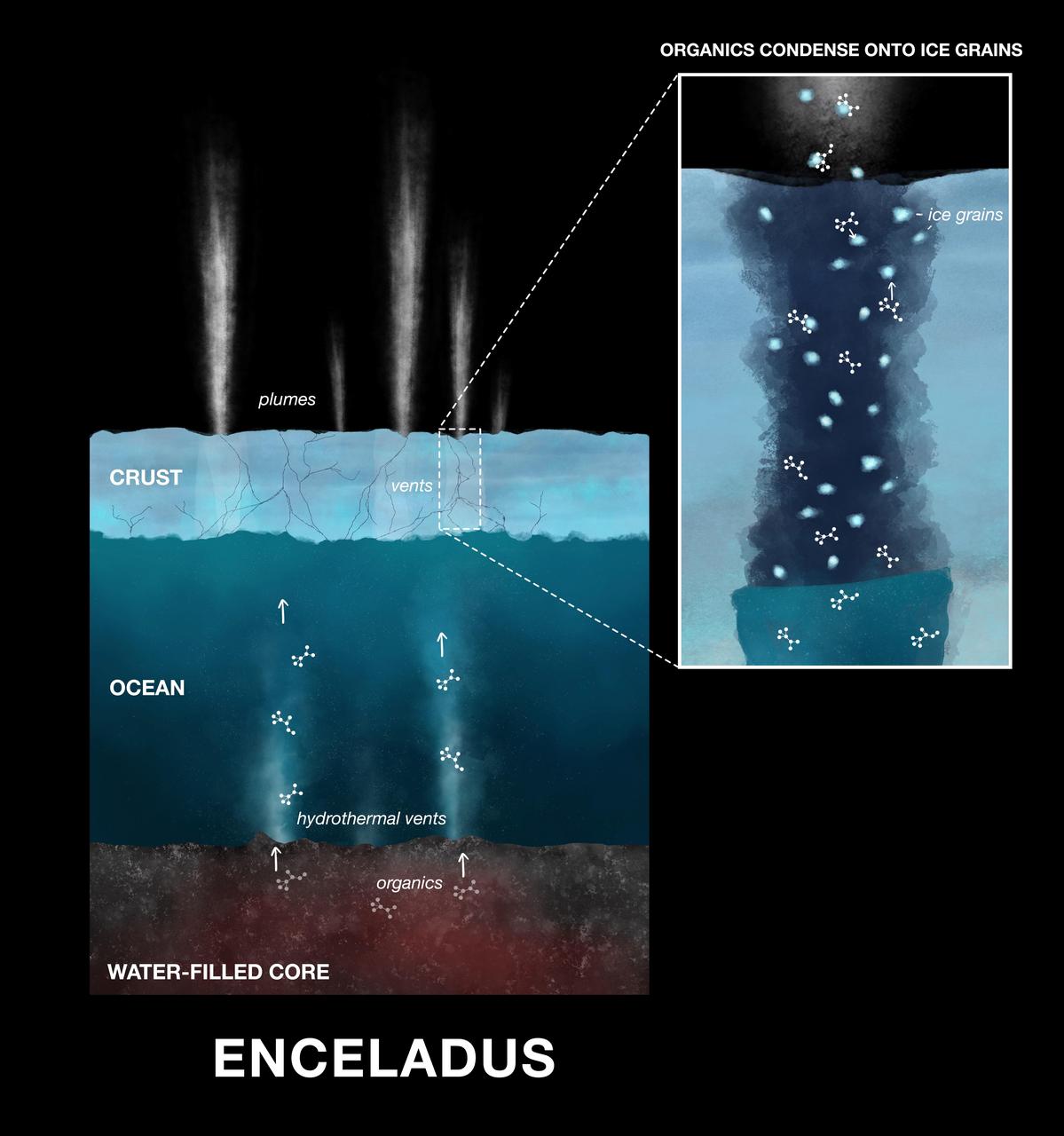
This illustration shows how newly discovered organic compounds — the ingredients of amino acids — were detected by NASA's Cassini spacecraft in the ice grains emitted from Saturn's moon Enceladus. Powerful hydrothermal vents eject material from Enceladus' core into the moon's massive subsurface ocean. After mixing with the water, the material is released into space as water vapor and ice grains. Condensed onto the ice grains are nitrogen- and oxygen-bearing organic compounds. On Earth hydrothermal vents on the ocean floor provide the energy that fuels reactions that produce amino acids, the building blocks of life. Scientists believe Enceladus' hydrothermal vents may operate in the same way, supplying energy that leads to the production of amino acids. https://photojournal.jpl.nasa.gov/catalog/PIA23173
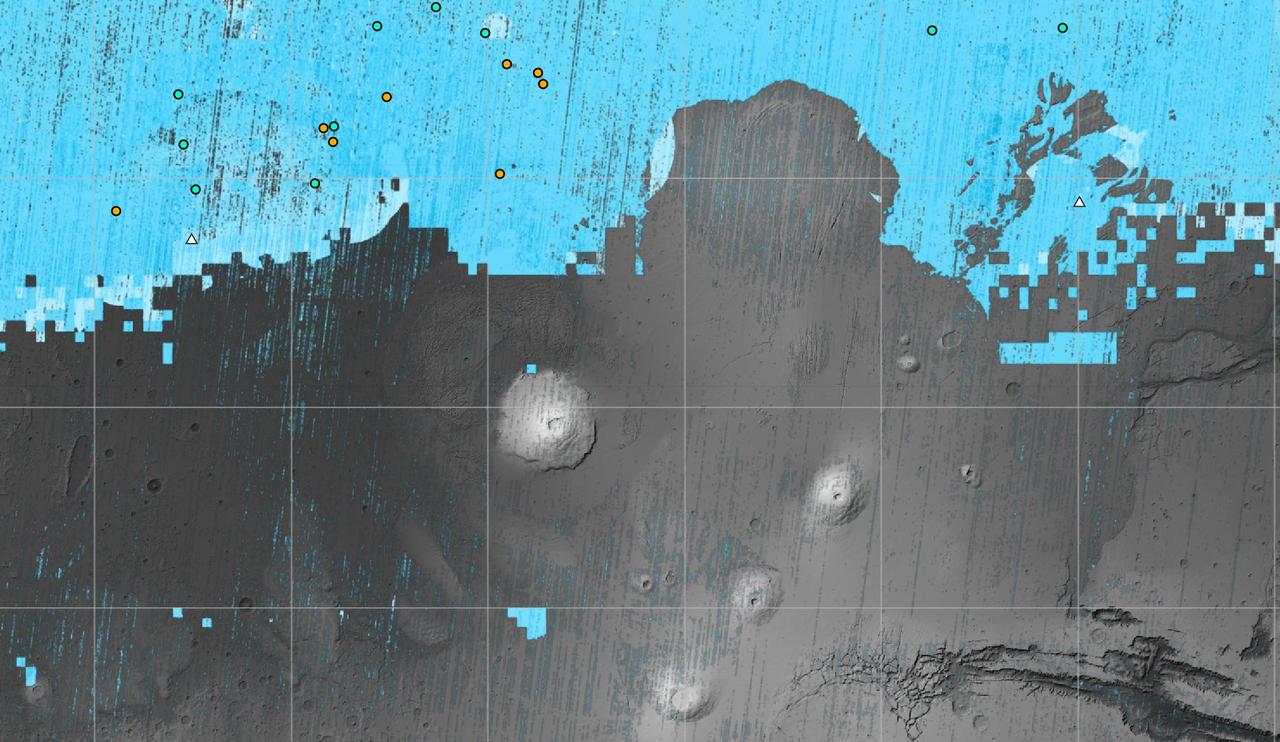
The blue areas on this map of Mars show regions where NASA missions have detected subsurface water ice. Scientists can use the map – part of the Subsurface Water Ice Mapping project, or SWIM – to decide where the first astronauts to set foot on the Red Planet should land. Triangles on the map are past and present Mars missions; circles are ice-exposing impact craters. Mars has both water ice and carbon dioxide ice (dry ice); water ice would be a critical resource for the first astronauts to step foot on Mars, who can use it for drinking, rocket fuel, and other purposes. The more water ice these astronauts land next to, the less they need to bring with them. Because the Martian atmosphere is so thin – less than 1% the pressure experienced at sea level on Earth – liquid water is unstable on the Red Planet and will vaporize unless it's frozen. But water ice on the planet's surface is only stable at high latitudes that are far too cold for astronauts and robots to survive. So SWIM attempts to locate water ice preserved within the subsurface in the mid-latitudes, where landing would be feasible. Such regions are far enough toward the pole for water ice to be plentiful, but close enough to the equator to avoid the coldest temperatures seen on Mars. SWIM combines data from several NASA missions, including the Mars Reconnaissance Orbiter (MRO), 2001 Mars Odyssey, and the now-inactive Mars Global Surveyor. The project mapped the area from the equator to 60 degrees north latitude. https://photojournal.jpl.nasa.gov/catalog/PIA26045
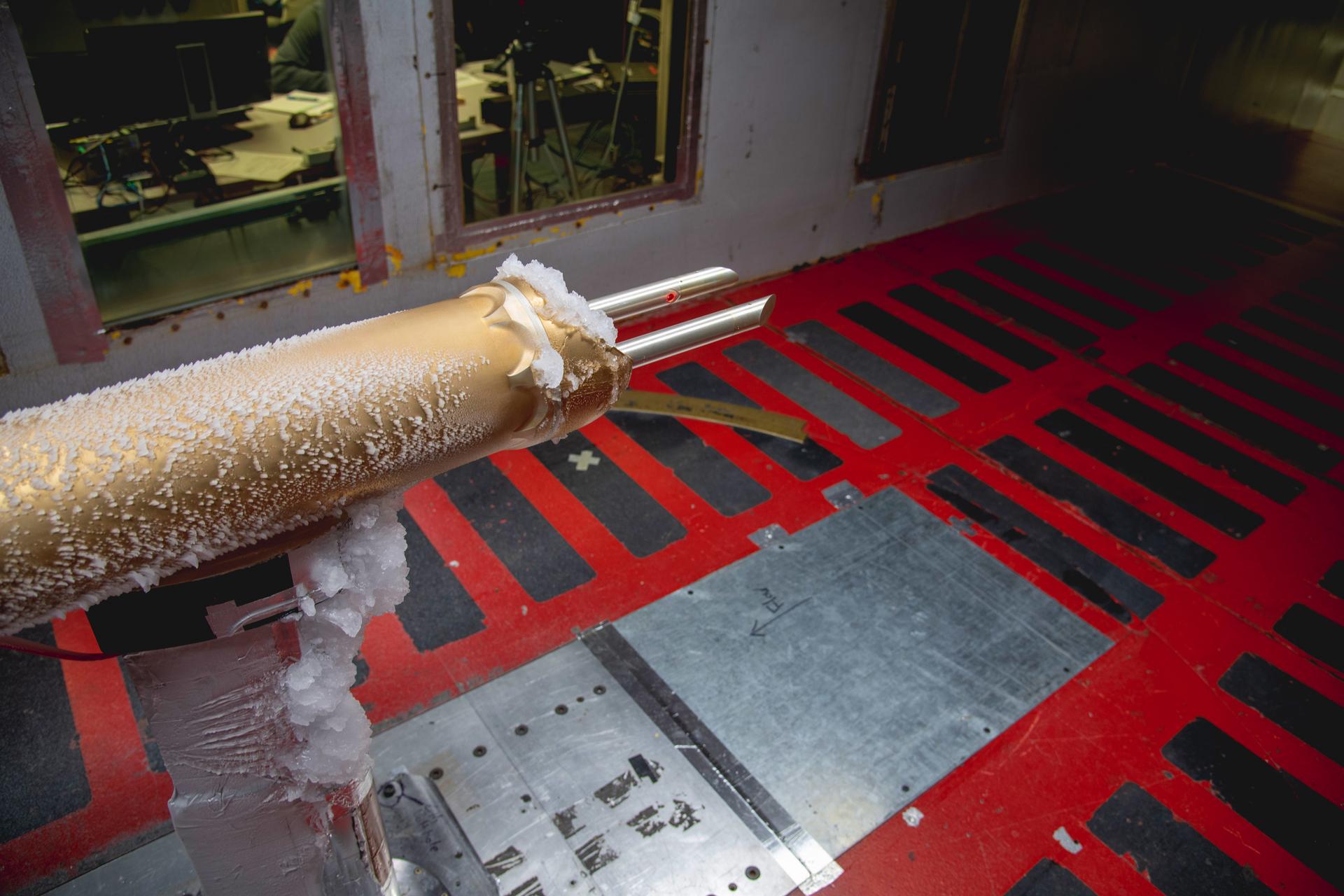
Ice collection seen on un-heated sections of the 1D2D-X ice drop detection probe in the test section of the IRT (Icing Research Tunnel). Drop Size Probe testing - SFD (Subsonic Flight Demonstrator) of SLD (Supercooled Large Drop) Instrumentation Test in IRT (Icing Research Tunnel) – Particle Size Distribution Entry, June 8-11, 2026 Large Drop Testing in IRT
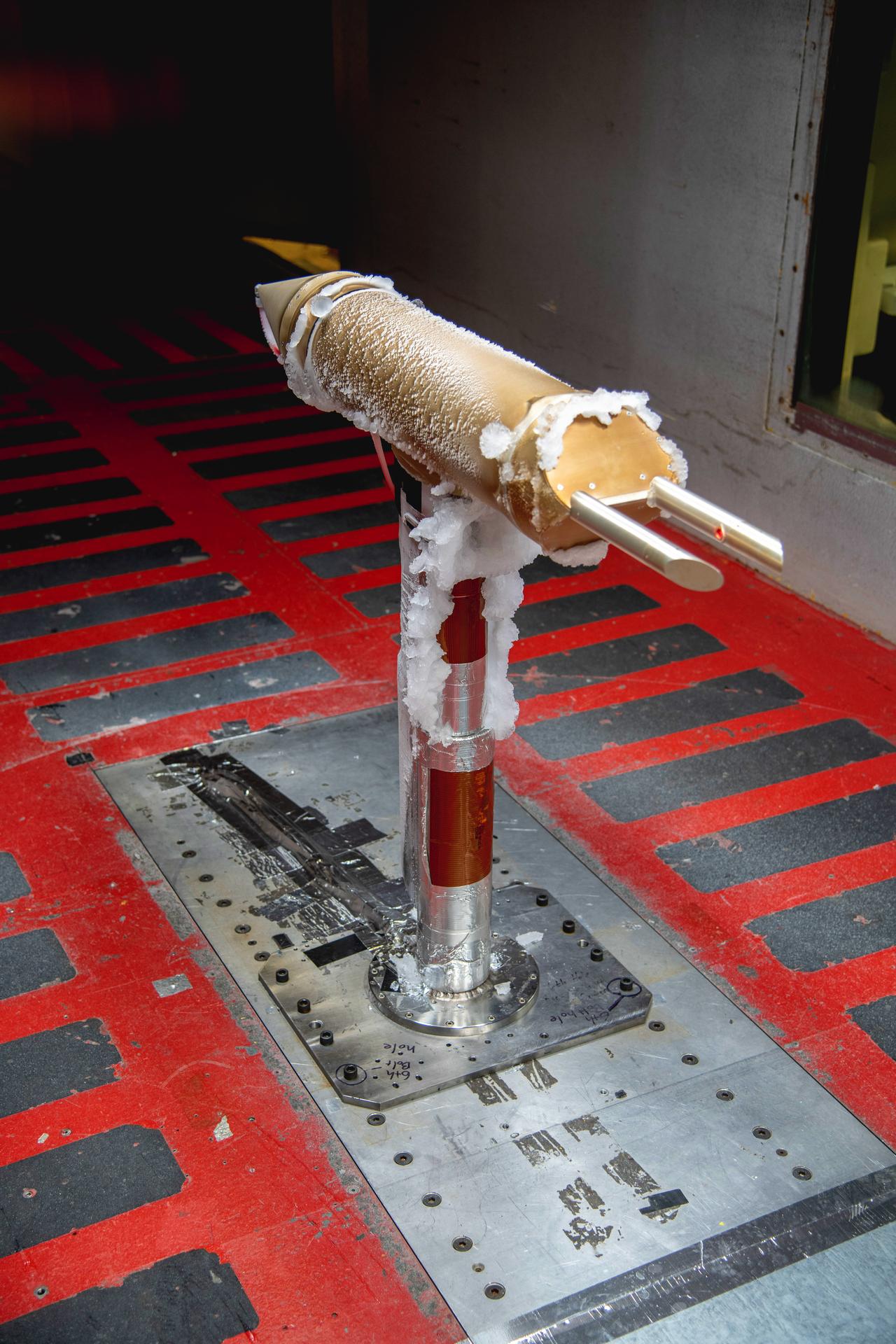
Ice collection seen on un-heated sections of the 1D2D-X ice drop detection probe in the test section of the IRT (Icing Research Tunnel). Drop Size Probe testing - SFD (Subsonic Flight Demonstrator) of SLD (Supercooled Large Drop) Instrumentation Test in IRT (Icing Research Tunnel) – Particle Size Distribution Entry, June 8-11, 2026 Large Drop Testing in IRT
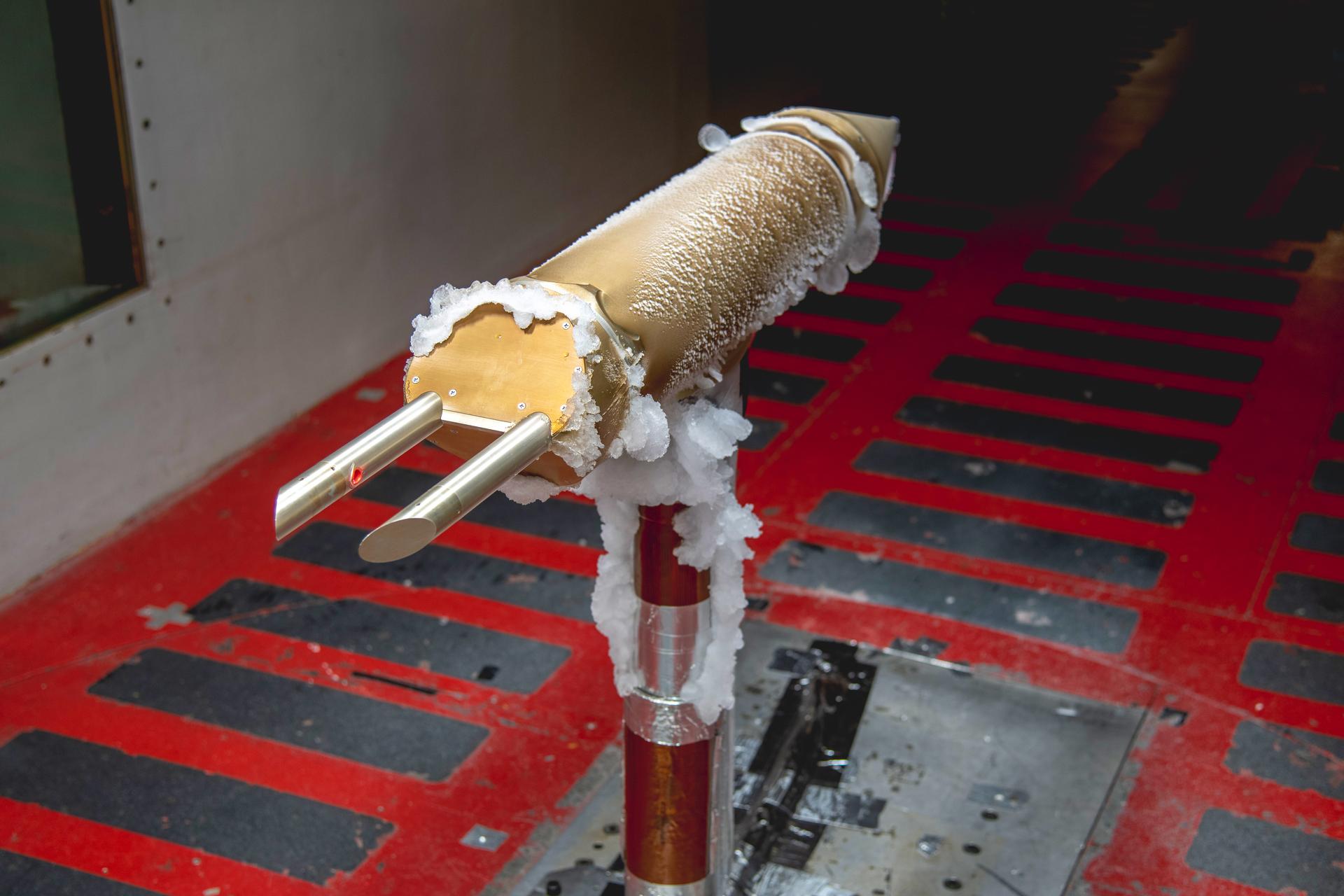
Ice collection seen on un-heated sections of the 1D2D-X ice drop detection probe in the test section of the IRT (Icing Research Tunnel). Drop Size Probe testing - SFD (Subsonic Flight Demonstrator) of SLD (Supercooled Large Drop) Instrumentation Test in IRT (Icing Research Tunnel) – Particle Size Distribution Entry, June 8-11, 2026 Large Drop Testing in IRT
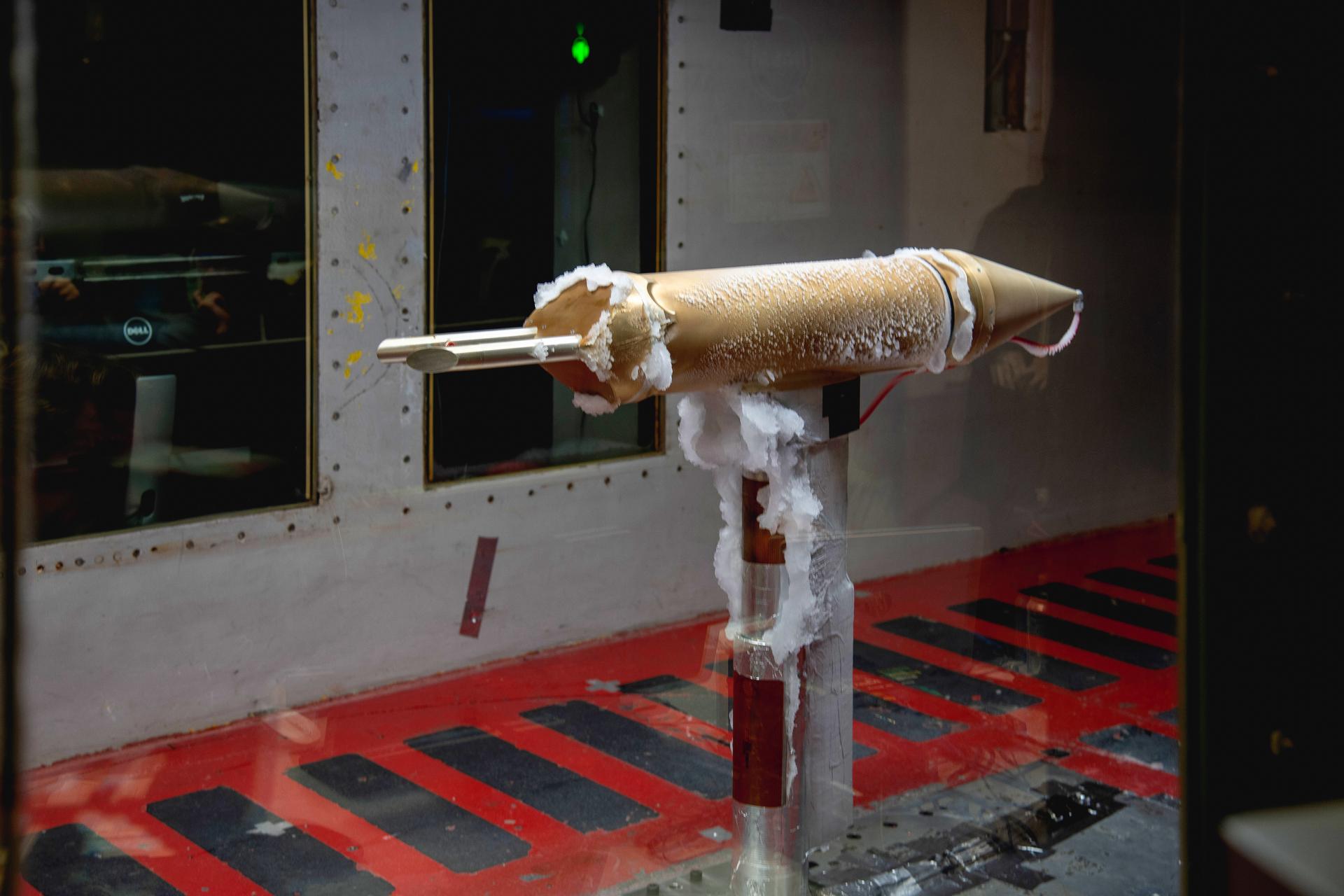
Ice collection seen on un-heated sections of the ice drop detection probe in the test section of the IRT (Icing Research Tunnel). Drop Size Probe testing - SFD (Subsonic Flight Demonstrator) of SLD (Supercooled Large Drop) Instrumentation Test in IRT (Icing Research Tunnel) – Particle Size Distribution Entry, June 8-11, 2026
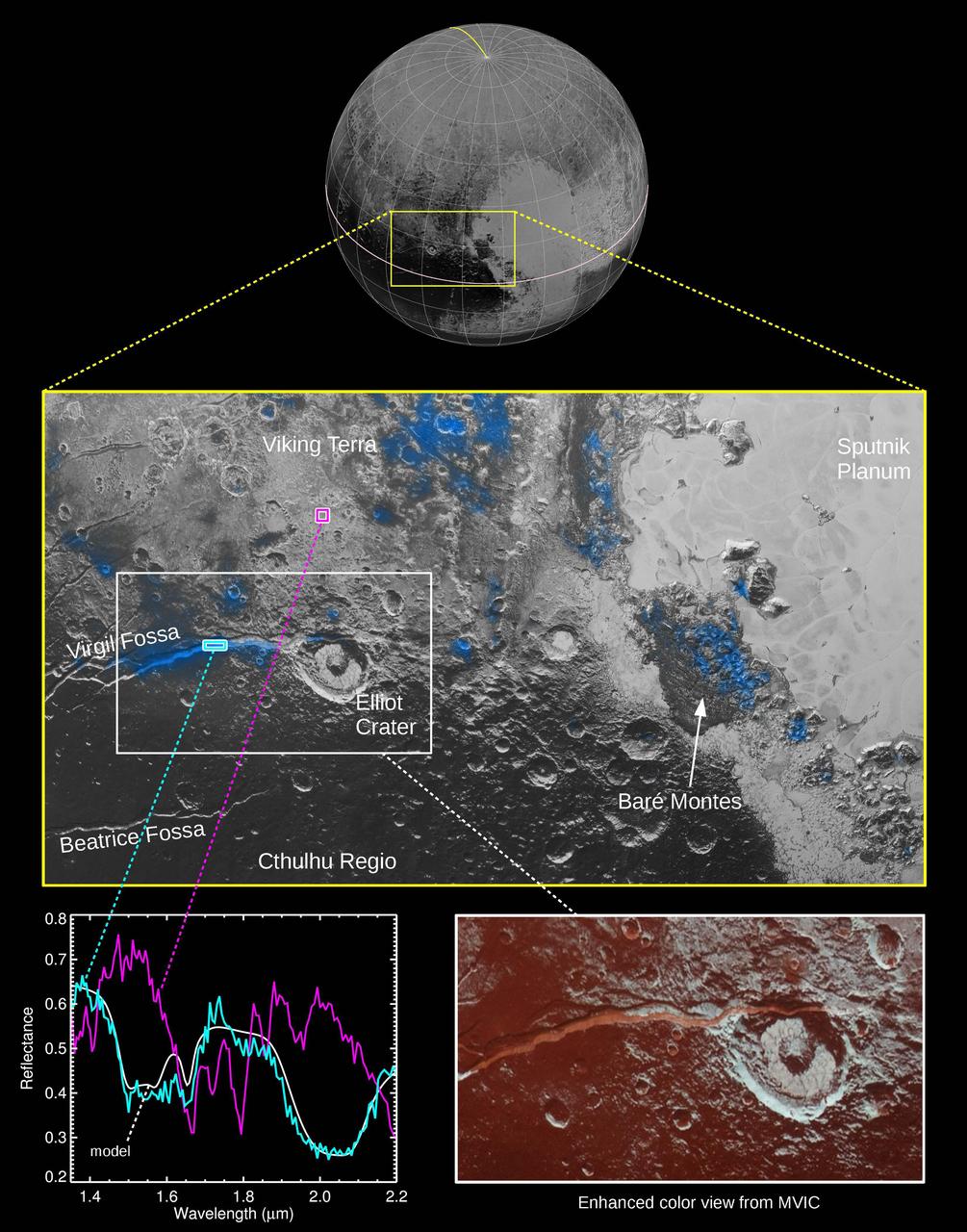
The Ralph instrument on NASA's New Horizons spacecraft detected water ice on Pluto's surface, picking up on the ice's near-infrared spectral characteristics. (See featured image from Oct. 8, 2015.) The middle panel shows a region west of Pluto's "heart" feature -- which the mission team calls Tombaugh Regio -- about 280 miles (450 kilometers) across. It combines visible imagery from Ralph's Multispectral Visible Imaging Camera (MVIC) with infrared spectroscopy from the Linear Etalon Imaging Spectral Array (LEISA). Areas with the strongest water ice spectral signature are highlighted in blue. Major outcrops of water ice occur in regions informally called Viking Terra, along Virgil Fossa west of Elliot crater, and in Baré Montes. Numerous smaller outcrops are associated with impact craters and valleys between mountains. In the lower left panel, LEISA spectra are shown for two regions indicated by cyan and magenta boxes. The white curve is a water ice model spectrum, showing similar features to the cyan spectrum. The magenta spectrum is dominated by methane ice absorptions. The lower right panel shows an MVIC enhanced color view of the region in the white box, with MVIC's blue, red and near-infrared filters displayed in blue, green and red channels, respectively. The regions showing the strongest water ice signature are associated with terrains that are actually a lighter shade of red. http://photojournal.jpl.nasa.gov/catalog/PIA20030

The NACA’s Lewis Flight Propulsion Laboratory acquired the Grumman S2F-1 Tracker from the Navy in 1955 to study icing instrumentation. Lewis’s icing research program was winding down at the time. The use of jet engines was increasing thus reducing the threat of ice accumulation. Nonetheless Lewis continued research on the instrumentation used to detect icing conditions. The S2F-1 Tracker was a carrier-based submarine hunter for the Navy. Grumman developed the Tracker as a successor to its Korean War-era Guardian patrol aircraft. Prototypes first flew in late 1952 and battle-ready versions entered Naval service in early 1954. The Navy utilized the Trackers to protect fleets from attack.
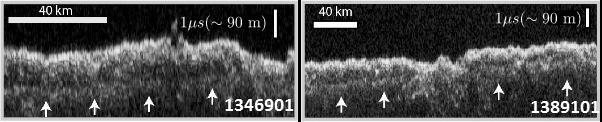
These two images show data acquired by the Shallow Radar (SHARAD) instrument while passing over two ground tracks in a part of Mars' Utopia Planitia region where the orbiting, ground-penetrating radar detected subsurface deposits rich in water ice. The instrument on NASA's Mars Reconnaissance Orbiter emits radio waves and times their echo off of radio-reflective surfaces and interfaces on Mars. The white arrows indicate a subsurface reflector interpreted as the bottom of the ice-rich deposit. The deposit is about as large in area as the state of New Mexico and contains about as much water as Lake Superior. The horizontal scale bar indicates 40 kilometers (25 miles) along the ground track of the radar, as flown by the orbiter overhead. The vertical scale bar indicates a return time of one microsecond for the reflected radio signal, equivalent to a distance of about 90 meters (295 feet). http://photojournal.jpl.nasa.gov/catalog/PIA21137
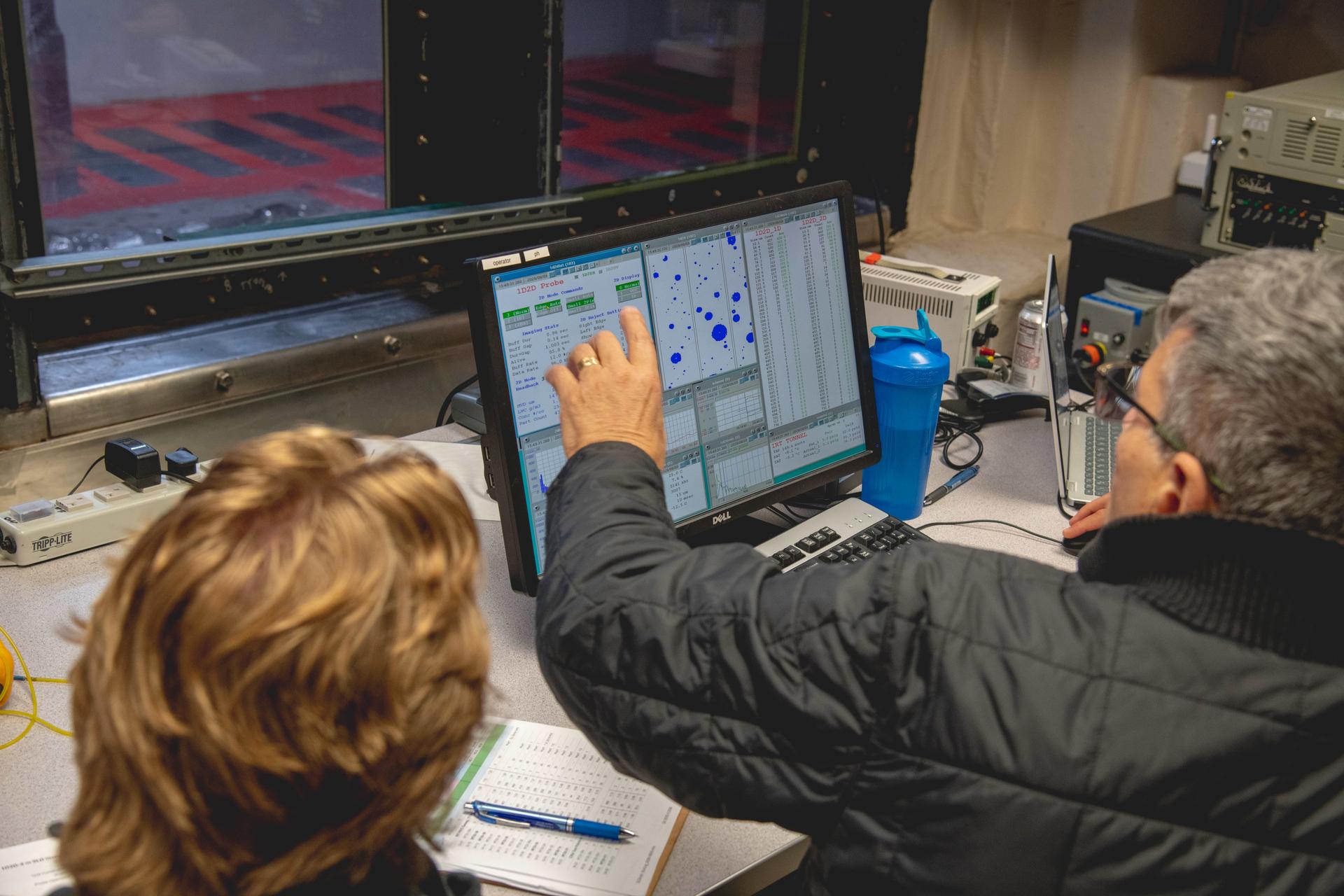
SFD (Subsonic Flight Demonstrator) of SLD (Super Large Drop) testing in IRT (Icing Research Tunnel). Drop size shown on computer from detection probe during test. Cloud drops imaged by probe displayed on computer screen
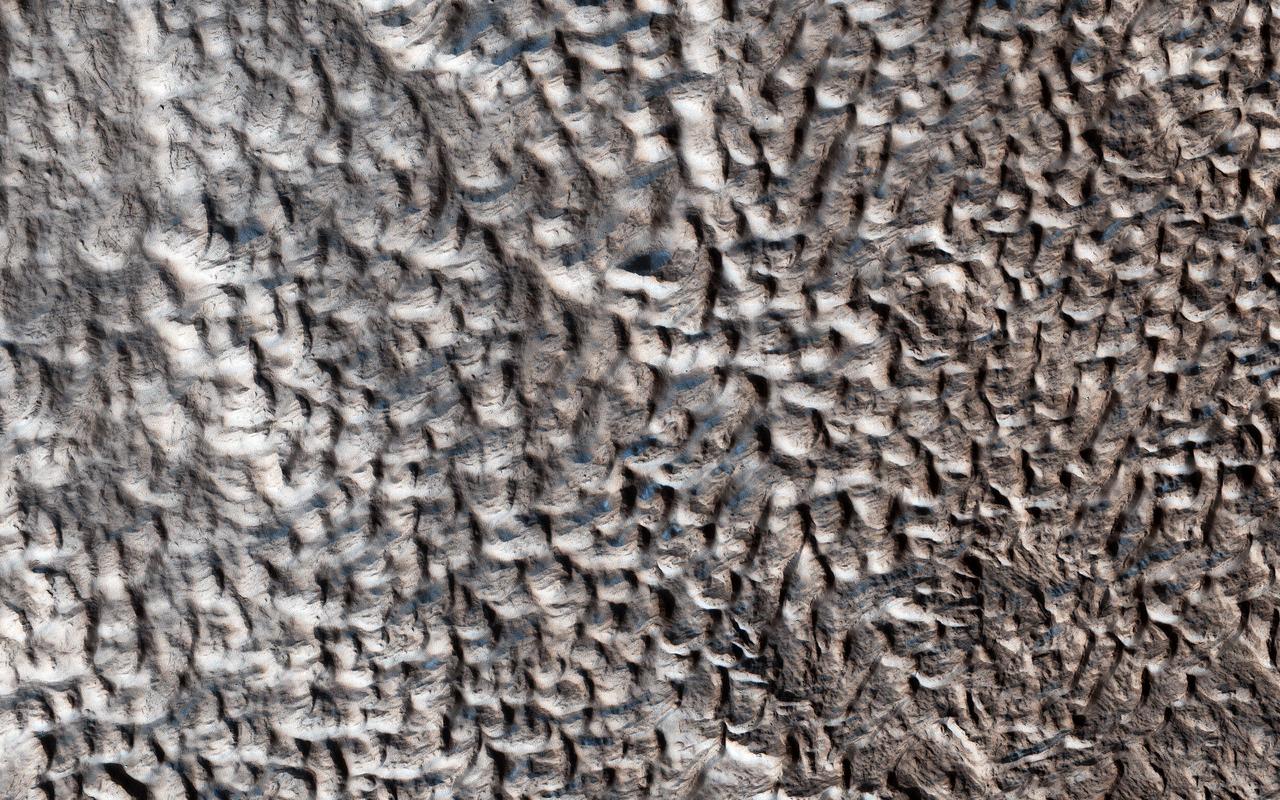
You are staring at one of the unsolved mysteries on Mars. This surface texture of interconnected ridges and troughs, referred to as "brain terrain" is found throughout the mid-latitude regions of Mars. (This image is in Protonilus Mensae.) This bizarrely textured terrain may be directly related to the water-ice that lies beneath the surface. One hypothesis is that when the buried water-ice sublimates (changes from a solid to a gas), it forms the troughs in the ice. The formation of these features might be an active process that is slowly occurring since HiRISE has yet to detect significant changes in these terrains. https://photojournal.jpl.nasa.gov/catalog/PIA23077
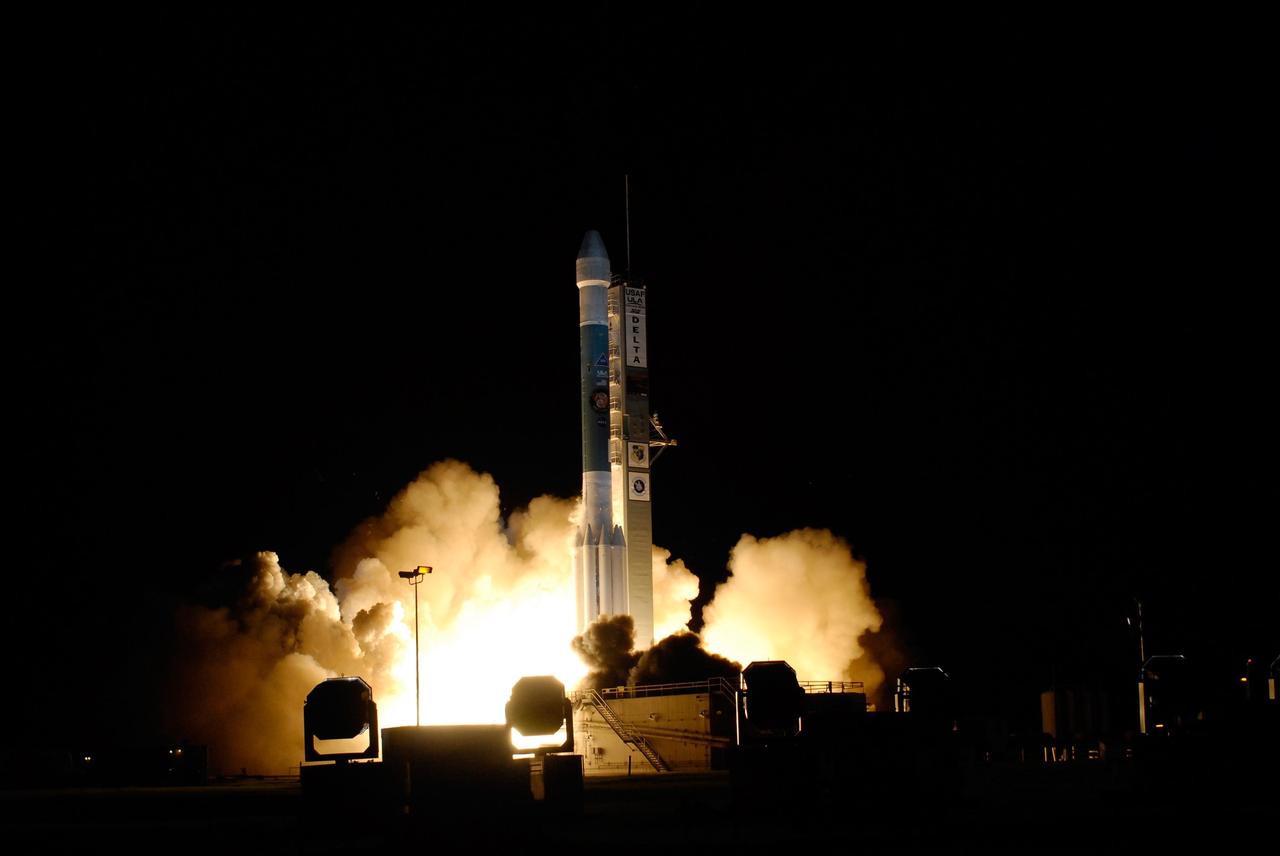
KENNEDY SPACE CENTER, FLA. - NASA's Phoenix Mars lander lifts off from Pad 17A aboard a Delta II 7925 rocket at 5:26 a.m. EDT, illuminating the pad at Cape Canaveral Air Force Station. Phoenix will land in icy soils near the north polar, permanent ice cap of Mars and explore the history of the water in these soils and any associated rocks, while monitoring polar climate. Landing on Mars is planned in May 2008 on arctic ground where a mission currently in orbit, Mars Odyssey, has detected high concentrations of ice just beneath the top layer of soil. Photo credit: NASA/Regina Mitchell-Ryall and Jerry Cannon
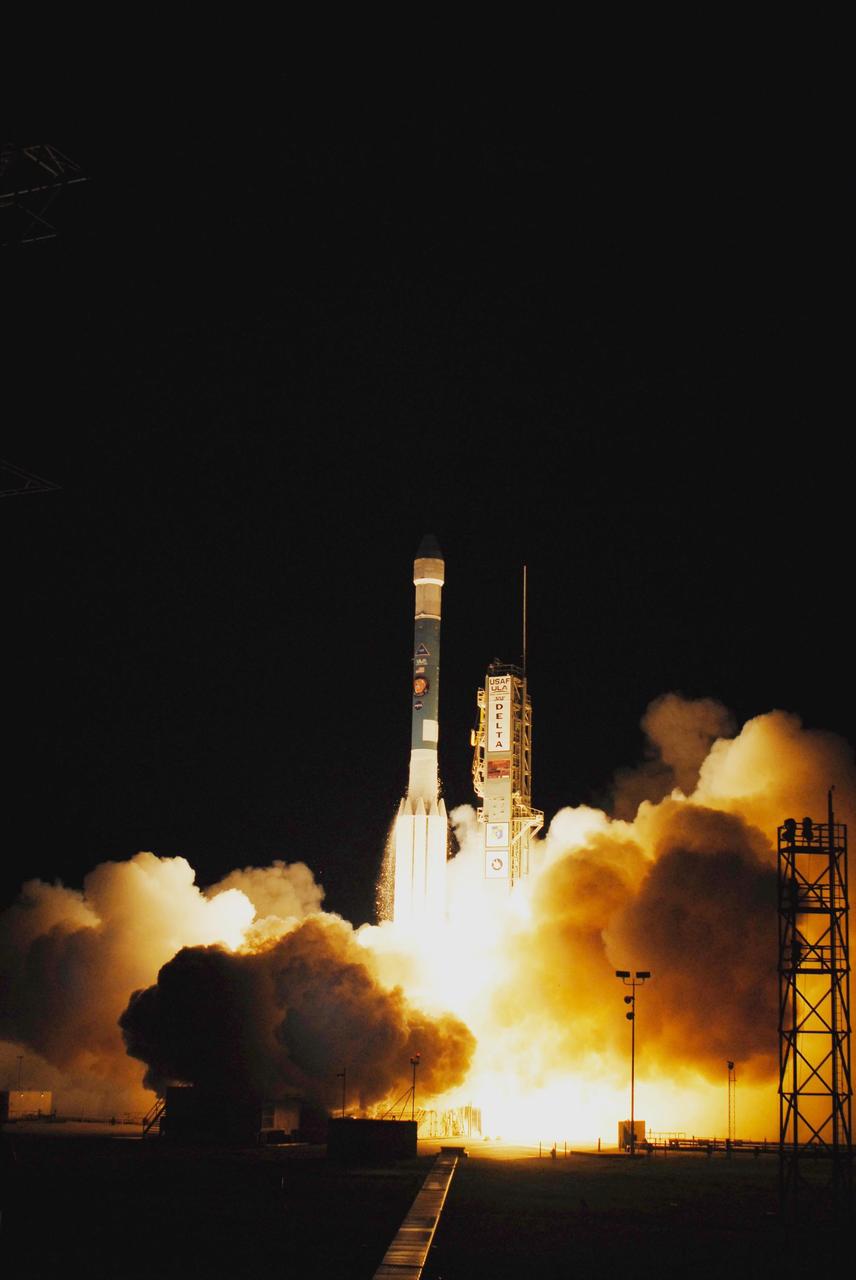
KENNEDY SPACE CENTER, FLA. - The Delta II 7925 rocket carrying NASA's Phoenix Mars lander roars off Pad 17A on Cape Canaveral Air Force Station at 5:26 a.m. EDT. Phoenix will land in icy soils near the north polar, permanent ice cap of Mars and explore the history of the water in these soils and any associated rocks, while monitoring polar climate. Landing on Mars is planned in May 2008 on arctic ground where a mission currently in orbit, Mars Odyssey, has detected high concentrations of ice just beneath the top layer of soil. Photo credit: NASA/Sandra Joseph and John Kechele
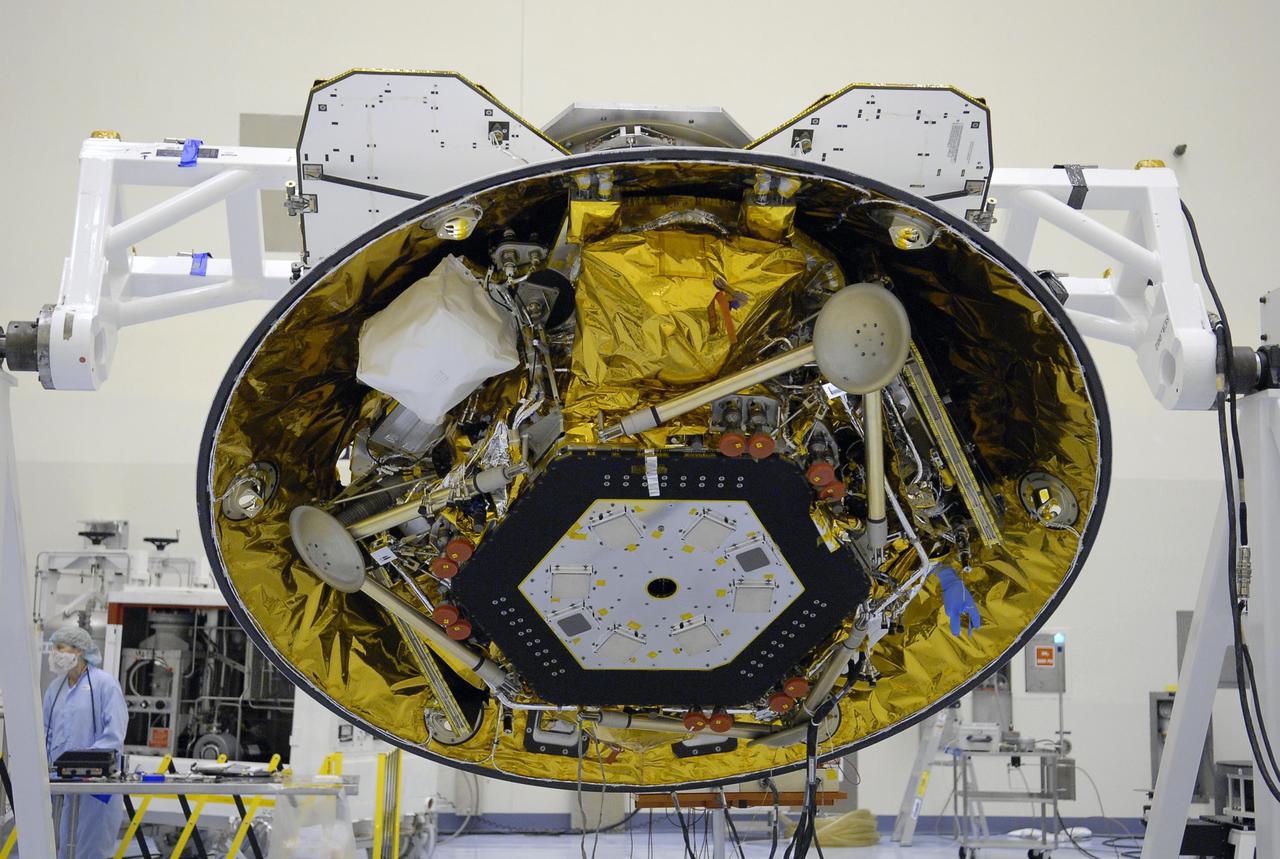
KENNEDY SPACE CENTER, FLA. -- A closeup of the Phoenix Mars Lander on display in the Payload Hazardous Servicing Facility. Phoenix is scheduled to launch Aug. 3 from Launch Pad 17-A at Cape Canaveral Air Force Station. Phoenix will land in icy soils near the north polar permanent ice cap of Mars and explore the history of the water in these soils and any associated rocks, while monitoring polar climate. Landing on Mars is planned in May 2008 on arctic ground where a mission currently in orbit, Mars Odyssey, has detected high concentrations of ice just beneath the top layer of soil. Photo credit: NASA/Kim Shiflett
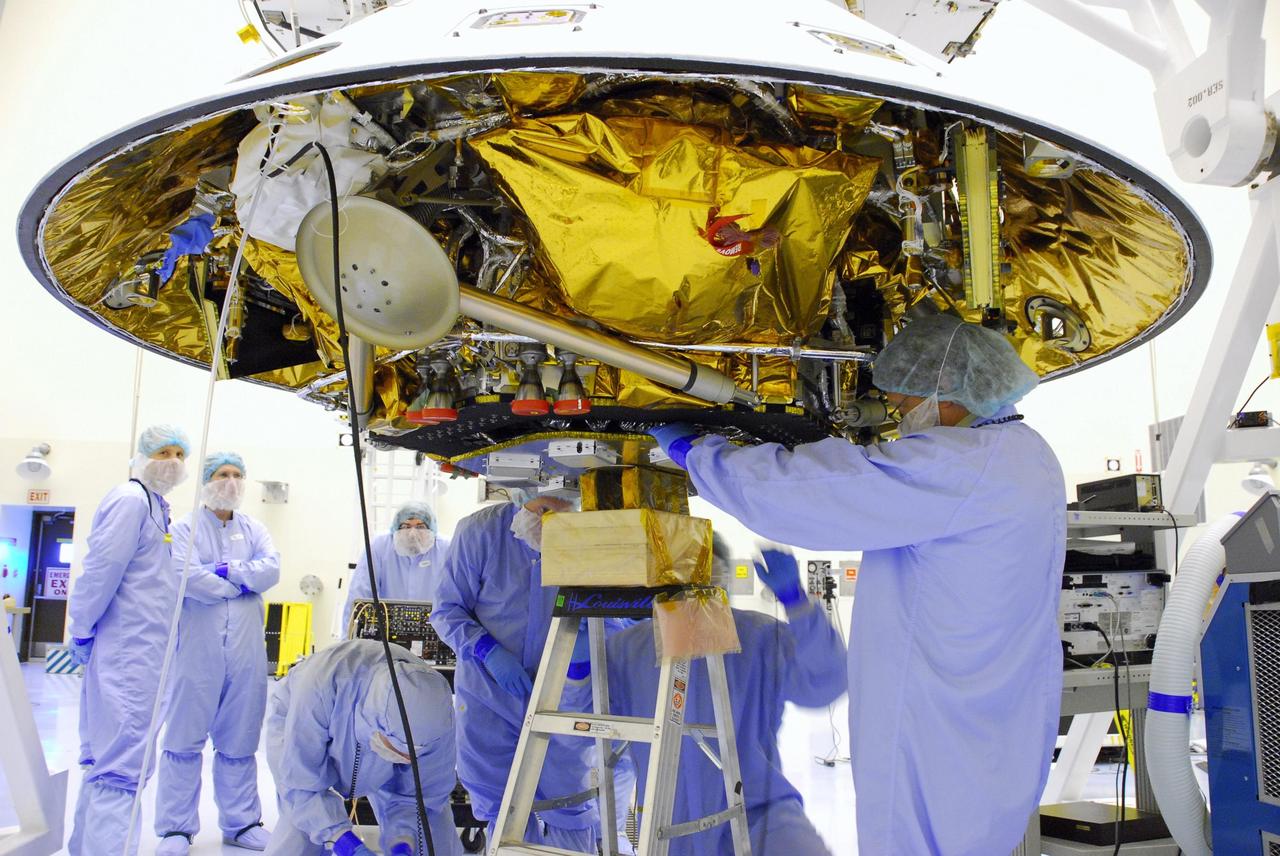
KENNEDY SPACE CENTER, FLA. -- At the Payload Hazardous Servicing Facility, the landing radar is integrated with the Phoenix spacecraft. Testing will follow. The Phoenix mission is the first project in NASA's first openly competed program of Mars Scout missions. Phoenix will land in icy soils near the north polar permanent ice cap of Mars and explore the history of the water in these soils and any associated rocks, while monitoring polar climate. Landing is planned in May 2008 on arctic ground where a mission currently in orbit, Mars Odyssey, has detected high concentrations of ice just beneath the top layer of soil. Photo credit: NASA/George Shelton
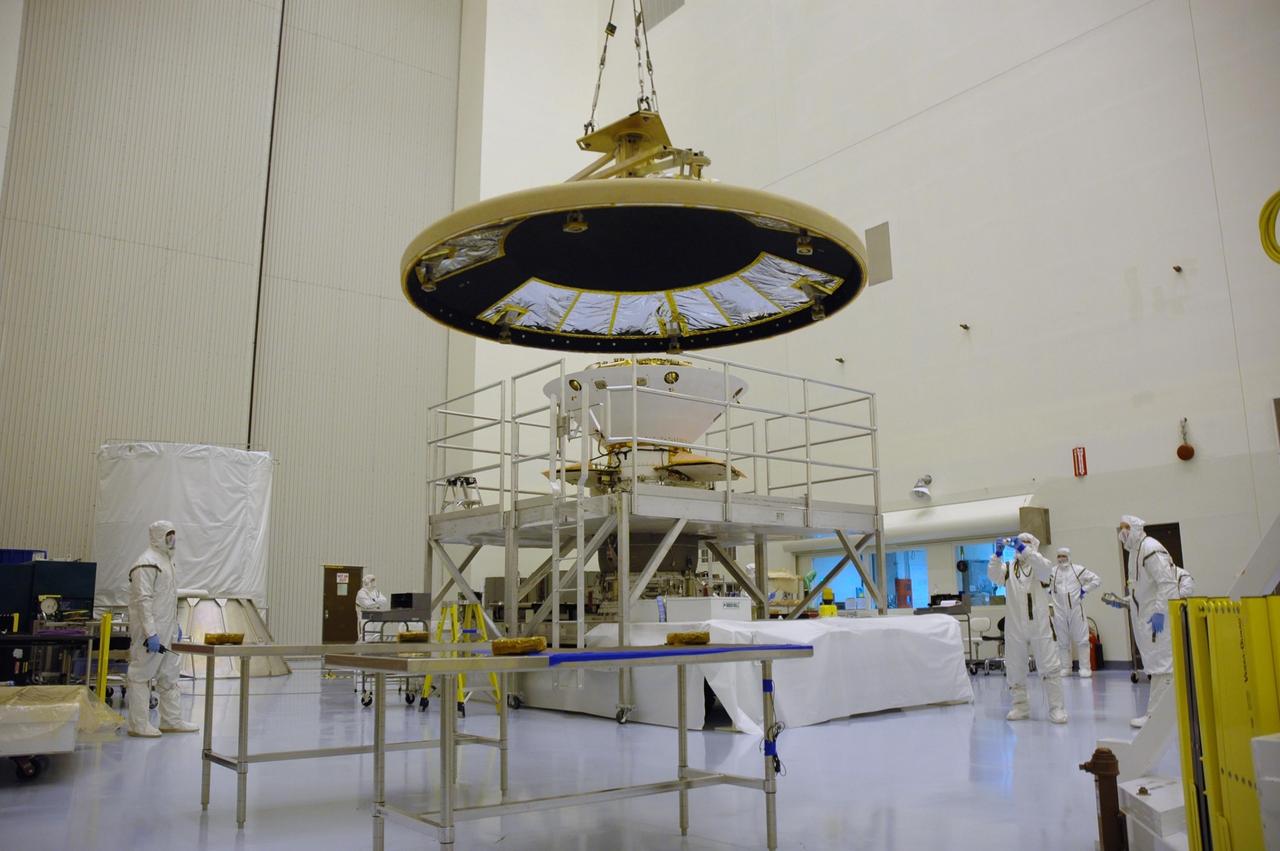
KENNEDY SPACE CENTER, Fla. --In the Payload Hazardous Servicing Facility, the heat shield for the Phoenix Mars Lander spacecraft is moved toward the spacecraft, in the background. Targeted for launch from Cape Canaveral Air Force Station on Aug. 3, Phoenix will land in icy soils near the north polar permanent ice cap of Mars and explore the history of the water in these soils and any associated rocks, while monitoring polar climate. Landing on Mars is planned in May 2008 on arctic ground where a mission currently in orbit, Mars Odyssey, has detected high concentrations of ice just beneath the top layer of soil. Photo credit: NASA/Troy Cryder
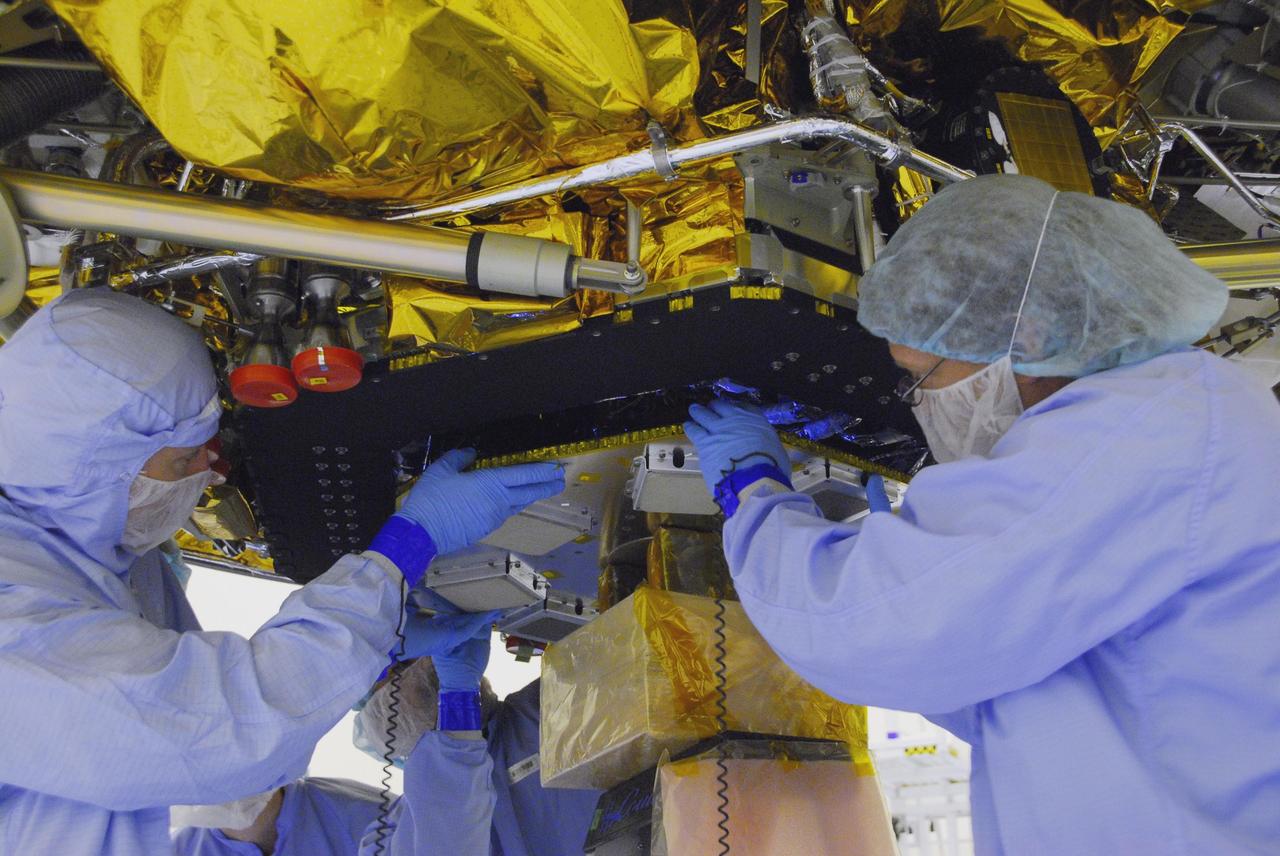
KENNEDY SPACE CENTER, FLA. -- At the Payload Hazardous Servicing Facility, workers integrate the landing radar with the Phoenix spacecraft. Testing will follow. The Phoenix mission is the first project in NASA's first openly competed program of Mars Scout missions. Phoenix will land in icy soils near the north polar permanent ice cap of Mars and explore the history of the water in these soils and any associated rocks, while monitoring polar climate. Landing is planned in May 2008 on arctic ground where a mission currently in orbit, Mars Odyssey, has detected high concentrations of ice just beneath the top layer of soil. Photo credit: NASA/George Shelton
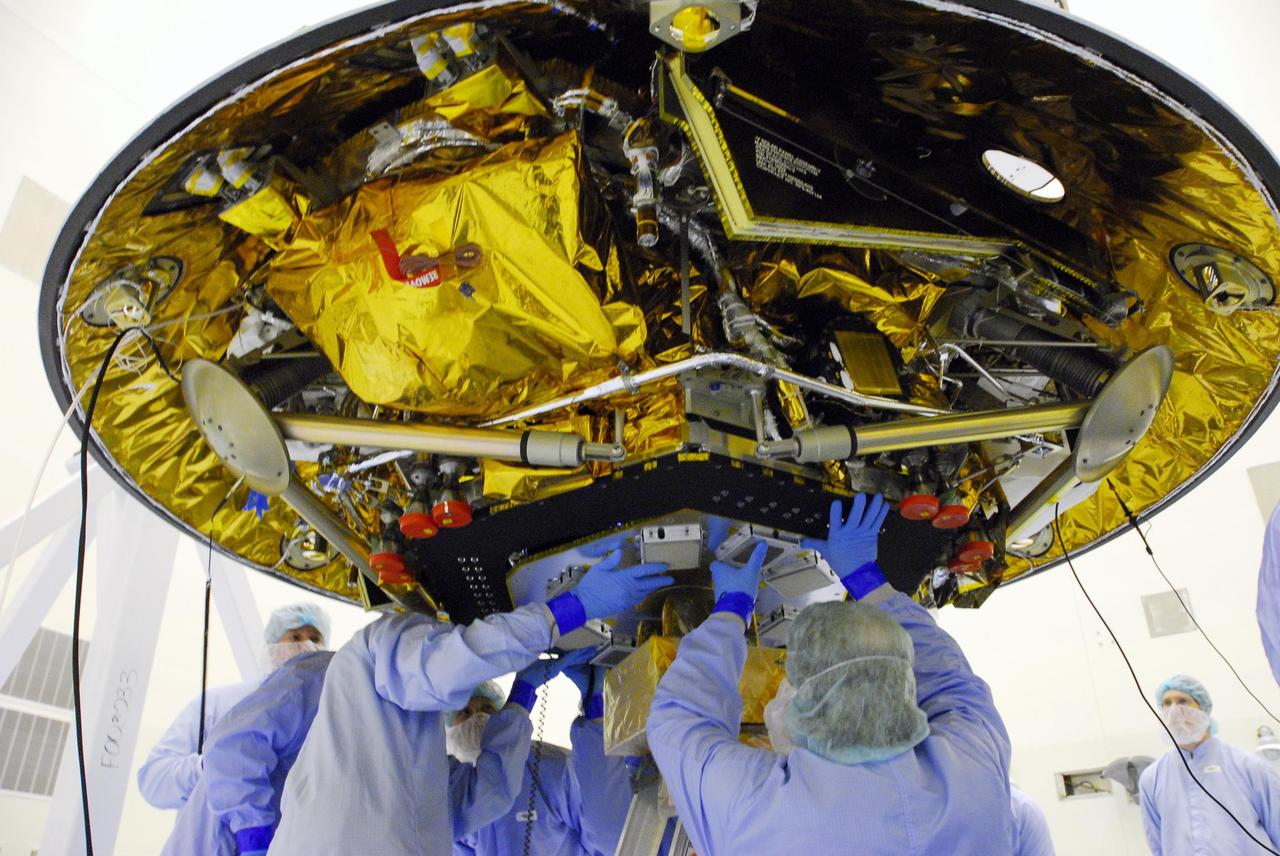
KENNEDY SPACE CENTER, FLA. -- At the Payload Hazardous Servicing Facility, workers integrate the landing radar with the Phoenix spacecraft. Testing will follow. The Phoenix mission is the first project in NASA's first openly competed program of Mars Scout missions. Phoenix will land in icy soils near the north polar permanent ice cap of Mars and explore the history of the water in these soils and any associated rocks, while monitoring polar climate. Landing is planned in May 2008 on arctic ground where a mission currently in orbit, Mars Odyssey, has detected high concentrations of ice just beneath the top layer of soil. Photo credit: NASA/George Shelton
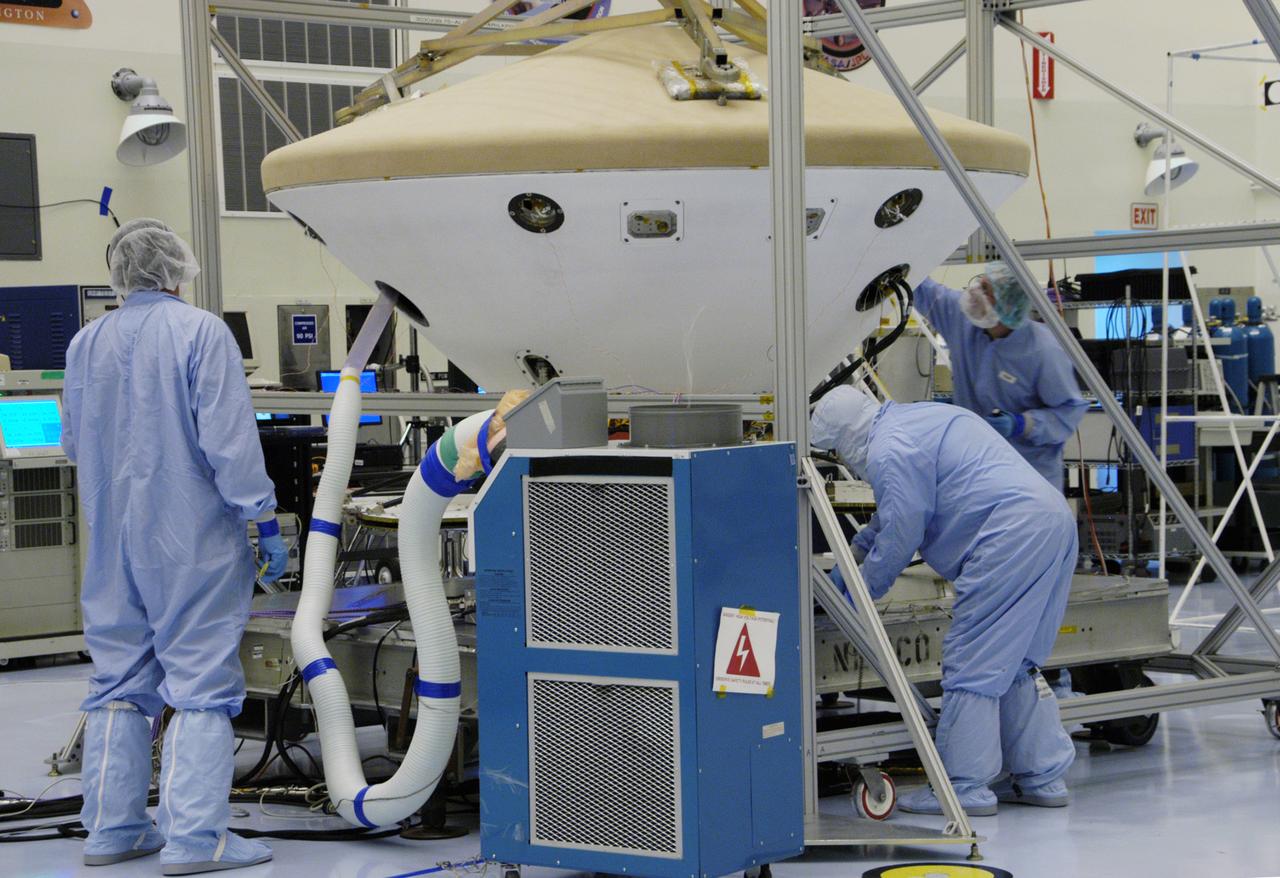
In the Payload Hazardous Servicing Facility, workers monitor the Phoenix spacecraft during a heat shield deployment test, with a firing of ordnance associated with the separation device. Phoenix will land in icy soils near the north polar permanent ice cap of Mars and explore the history of the water in these soils and any associated rocks, while monitoring polar climate. Landing is planned in May 2008 on arctic ground where a mission currently in orbit, Mars Odyssey, has detected high concentrations of ice just beneath the top layer of soil. Launch of Phoenix aboard a Delta II rocket is targeted for Aug. 3 from Cape Canaveral Air Force Station in Florida.
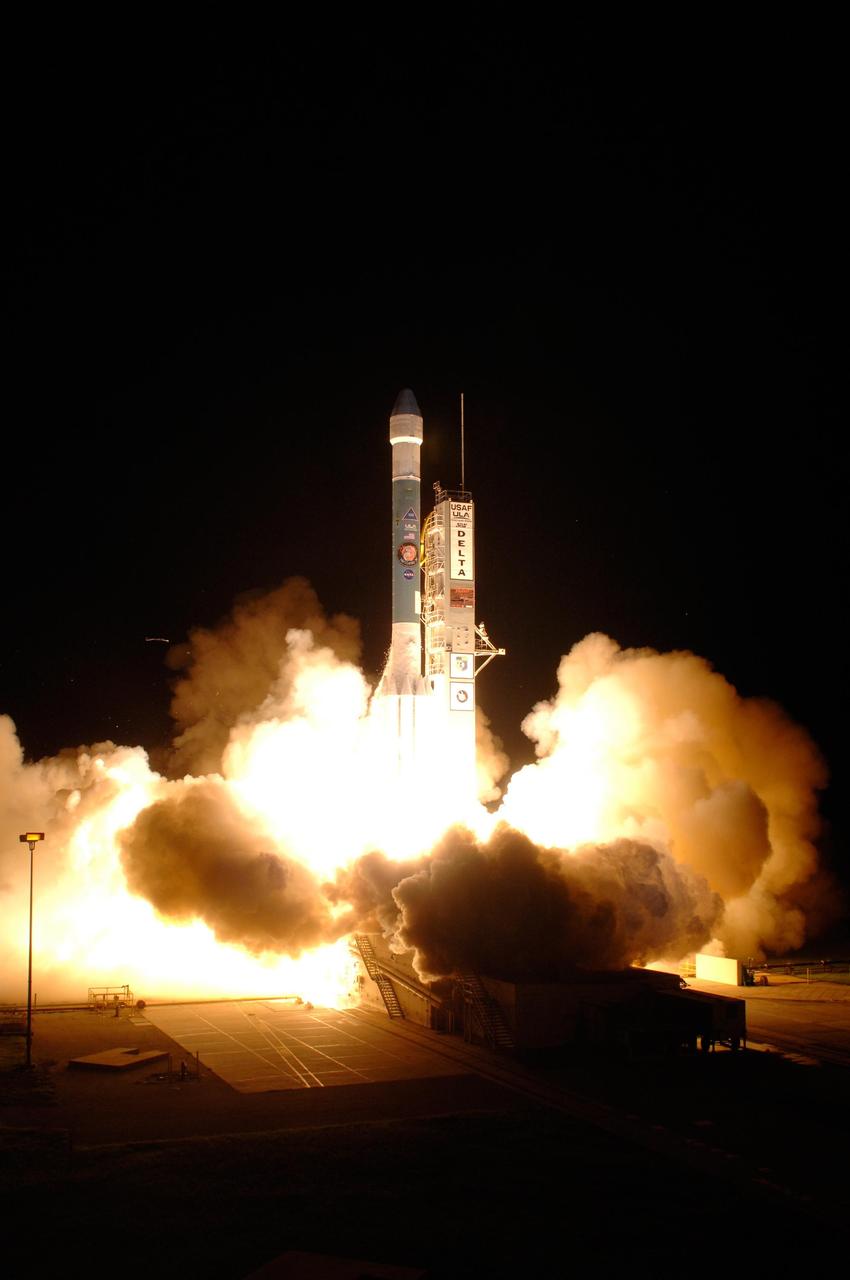
KENNEDY SPACE CENTER, FLA. - NASA's Phoenix spacecraft begins its journey to Mars aboard a Delta II 7925 rocket at 5:26 a.m. EDT from Pad 17A at Cape Canaveral Air Force Station. Phoenix will land in icy soils near the north polar, permanent ice cap of Mars and explore the history of the water in these soils and any associated rocks, while monitoring polar climate. Landing on Mars is planned in May 2008 on arctic ground where a mission currently in orbit, Mars Odyssey, has detected high concentrations of ice just beneath the top layer of soil. Photo credit: NASA/Tony Gray and Robert Murray
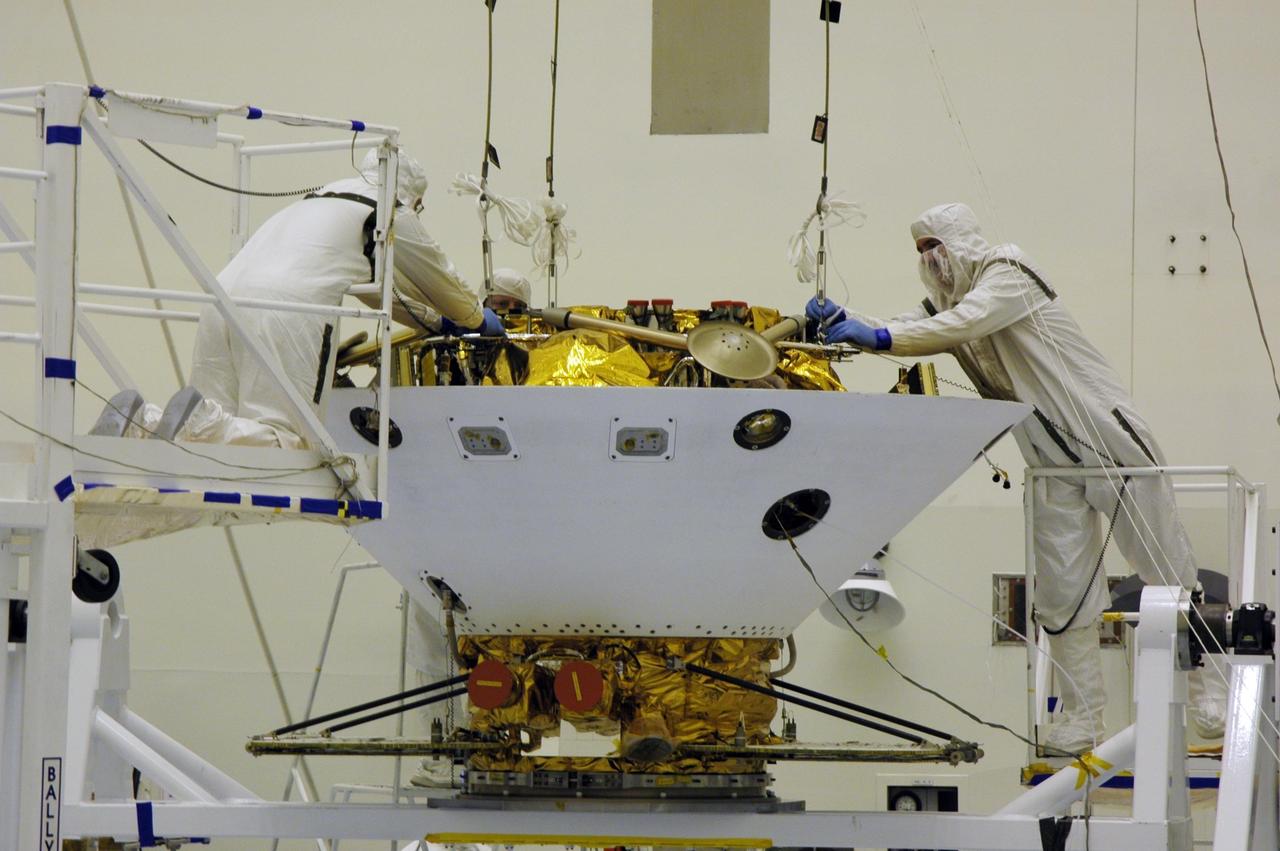
KENNEDY SPACE CENTER, Fla. -- In the Payload Hazardous Servicing Facility, workers attach an overhead crane to the Phoenix Mars Lander spacecraft. The Phoenix will be lifted and moved to the upper stage booster for mating. Targeted for launch from Cape Canaveral Air Force Station on Aug. 3, Phoenix will land in icy soils near the north polar permanent ice cap of Mars and explore the history of the water in these soils and any associated rocks, while monitoring polar climate. Landing on Mars is planned in May 2008 on arctic ground where a mission currently in orbit, Mars Odyssey, has detected high concentrations of ice just beneath the top layer of soil. NASA/Dimitri Gerondidakis
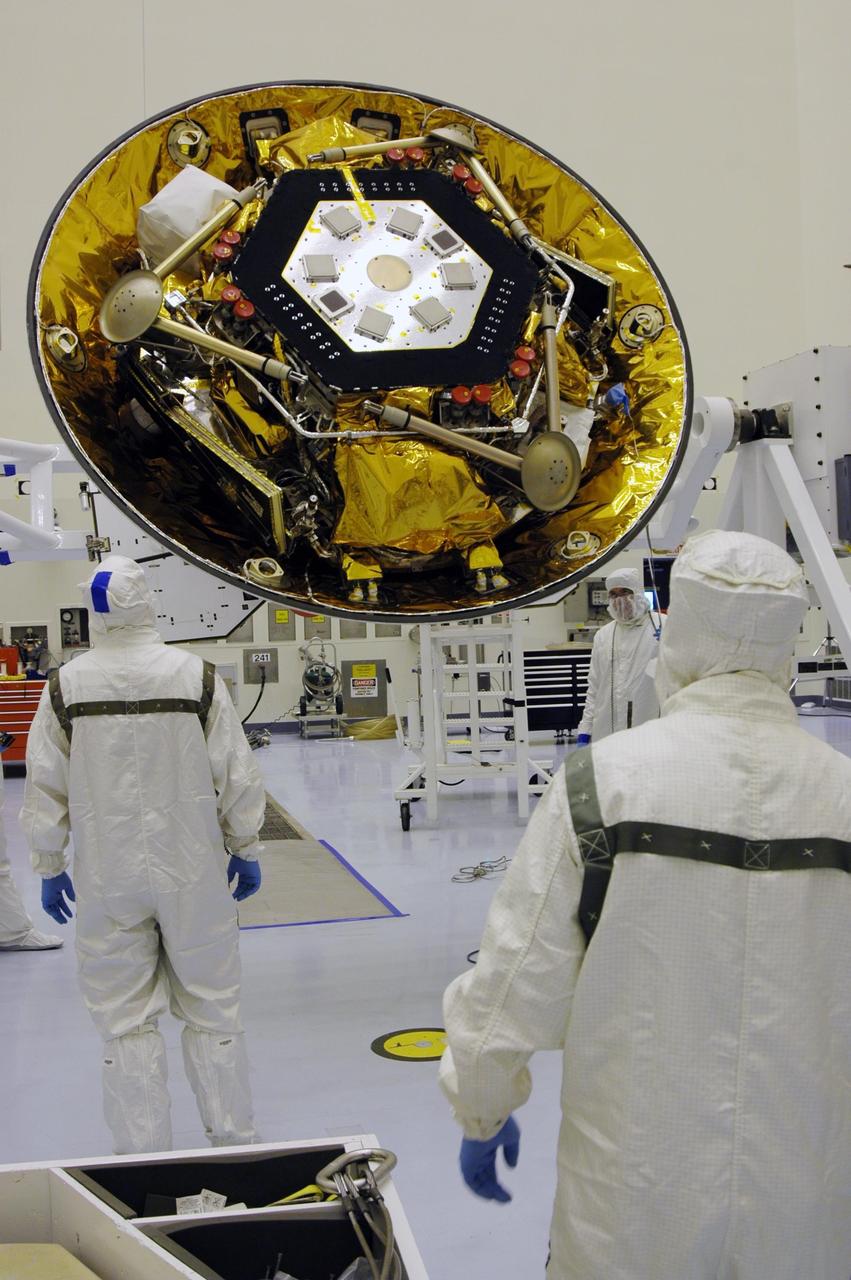
KENNEDY SPACE CENTER, Fla. -- In the Payload Hazardous Servicing Facility, workers rotate the Phoenix Mars Lander spacecraft to move it for mating to the upper stage booster. Targeted for launch from Cape Canaveral Air Force Station on Aug. 3, Phoenix will land in icy soils near the north polar permanent ice cap of Mars and explore the history of the water in these soils and any associated rocks, while monitoring polar climate. Landing on Mars is planned in May 2008 on arctic ground where a mission currently in orbit, Mars Odyssey, has detected high concentrations of ice just beneath the top layer of soil. NASA/Dimitri Gerondidakis

KENNEDY SPACE CENTER, FLA. - NASA's Phoenix Mars lander illuminates Launch Pad 17A as it lifts off aboard a Delta II 7925 rocket at 5:26 a.m. EDT from Cape Canaveral Air Force Station. Phoenix will land in icy soils near the north polar, permanent ice cap of Mars and explore the history of the water in these soils and any associated rocks, while monitoring polar climate. Landing on Mars is planned in May 2008 on arctic ground where a mission currently in orbit, Mars Odyssey, has detected high concentrations of ice just beneath the top layer of soil. Photo credit: NASA/Tony Gray and Robert Murray
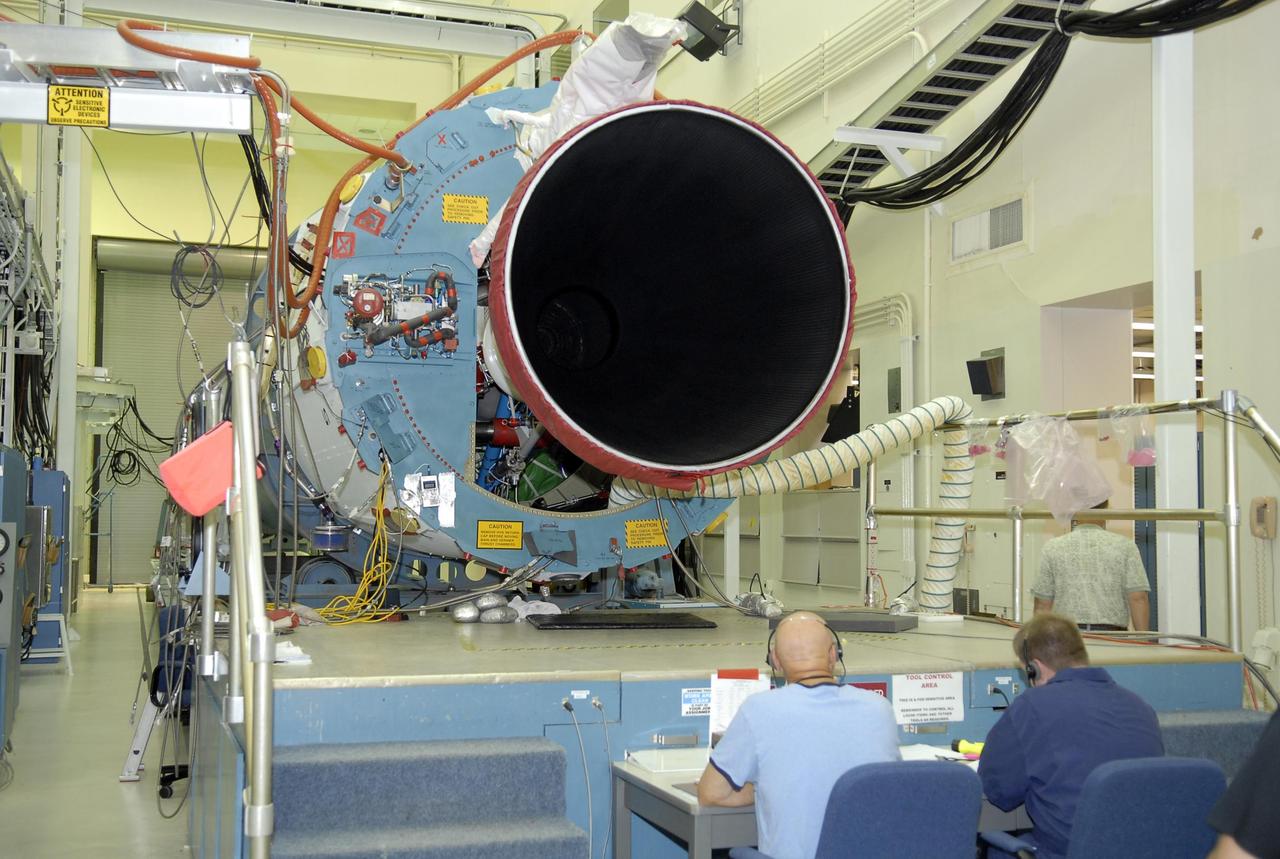
KENNEDY SPACE CENTER, FLA. -- In Hangar A&O on Cape Canaveral Air Force Station in Florida, workers conduct a steering test on the first stage of a Delta II rocket. The rocket is designated for the launch of the Phoenix Mars Lander spacecraft. Phoenix will land in icy soils near the north polar permanent ice cap of Mars and explore the history of the water in these soils and any associated rocks, while monitoring polar climate. Landing is planned in May 2008 on arctic ground where a mission currently in orbit, Mars Odyssey, has detected high concentrations of ice just beneath the top layer of soil. Launch of Phoenix is targeted for Aug. 3. Photo credit: NASA/Kim Shiflett
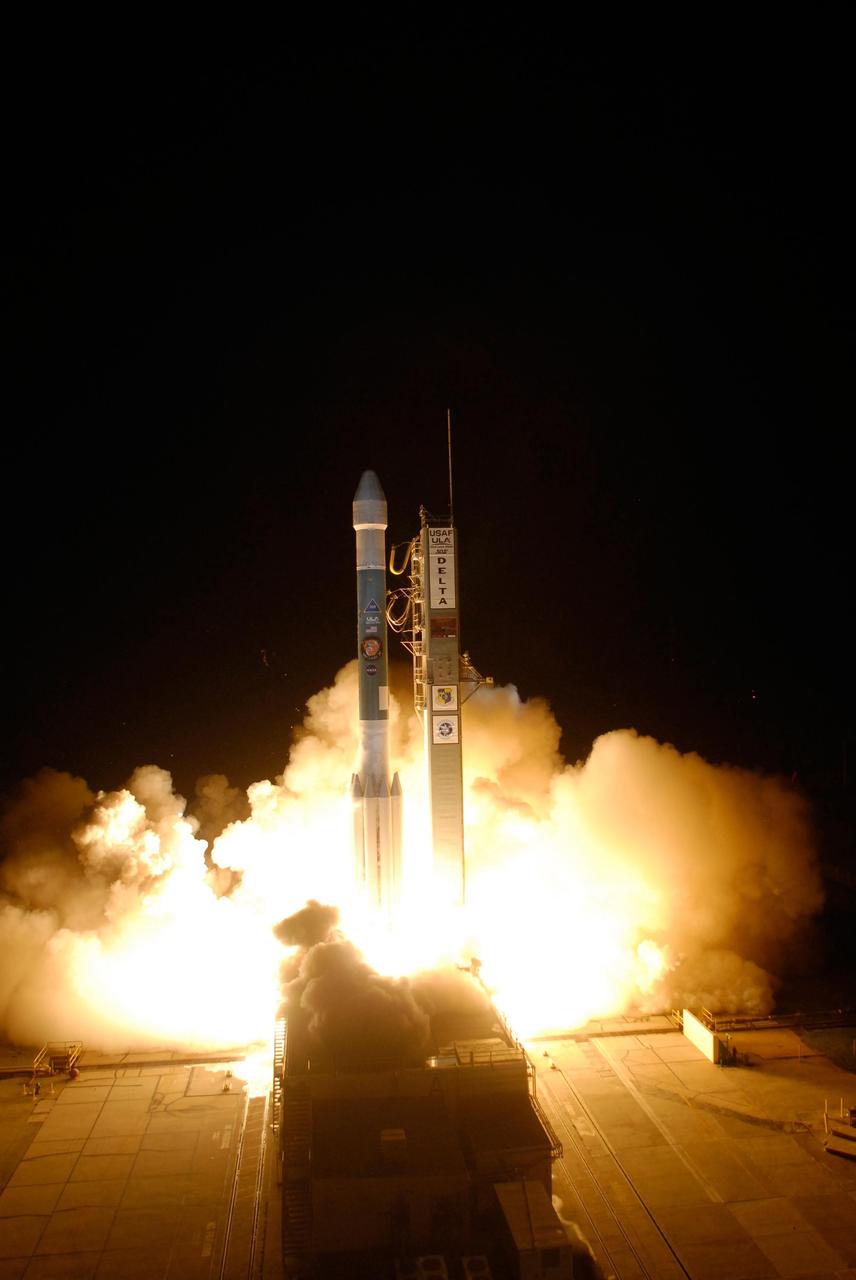
KENNEDY SPACE CENTER, FLA. - The Delta II 7925 rocket carrying NASA's Phoenix Mars lander lifts off at 5:26 a.m. EDT amid billows of smoke on Pad 17A at Cape Canaveral Air Force Station. Phoenix will land in icy soils near the north polar, permanent ice cap of Mars and explore the history of the water in these soils and any associated rocks, while monitoring polar climate. Landing on Mars is planned in May 2008 on arctic ground where a mission currently in orbit, Mars Odyssey, has detected high concentrations of ice just beneath the top layer of soil. Photo credit: NASA/Tony Gray and Robert Murray
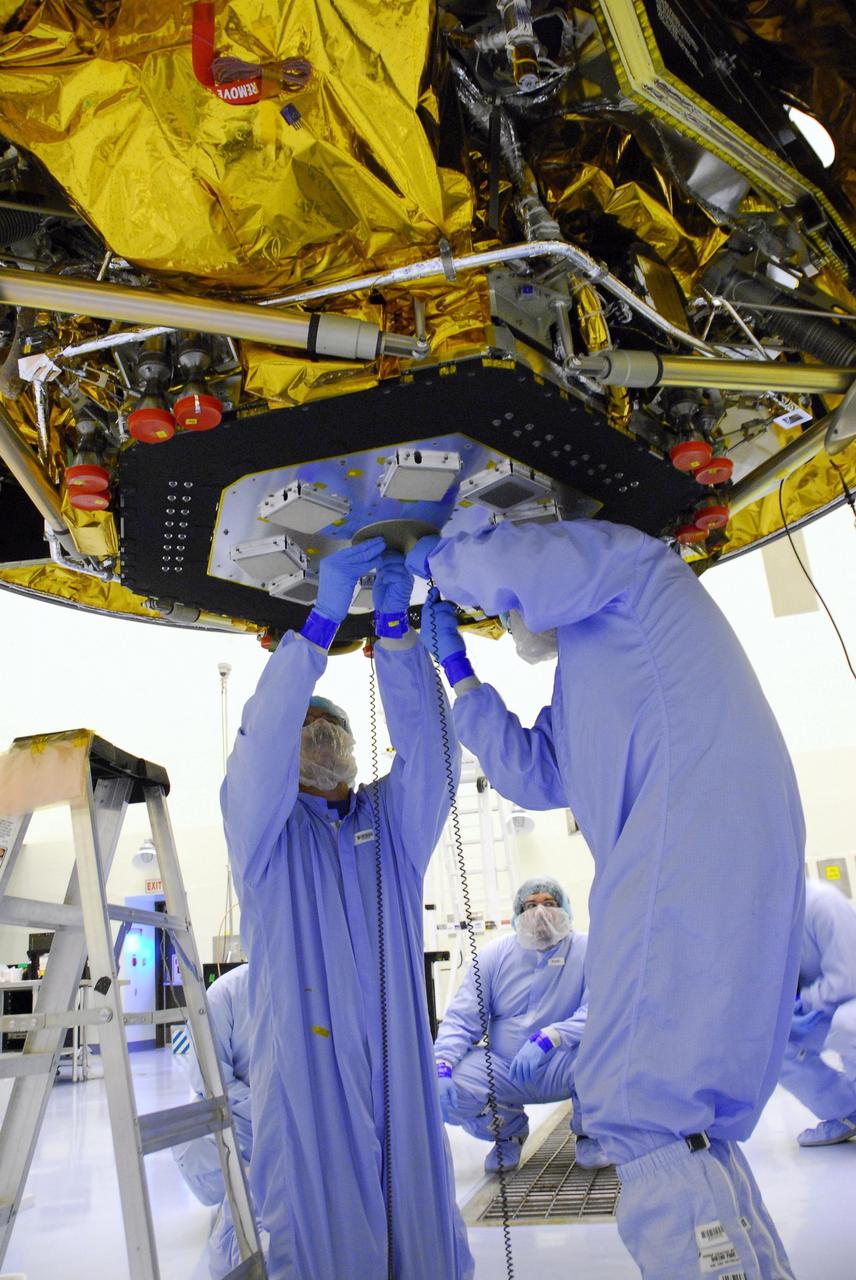
KENNEDY SPACE CENTER, FLA. -- At the Payload Hazardous Servicing Facility, workers integrate the landing radar with the Phoenix spacecraft. Testing will follow. The Phoenix mission is the first project in NASA's first openly competed program of Mars Scout missions. Phoenix will land in icy soils near the north polar permanent ice cap of Mars and explore the history of the water in these soils and any associated rocks, while monitoring polar climate. Landing is planned in May 2008 on arctic ground where a mission currently in orbit, Mars Odyssey, has detected high concentrations of ice just beneath the top layer of soil. Photo credit: NASA/George Shelton
KENNEDY SPACE CENTER, Fla. -- In the Payload Hazardous Servicing Facility, workers prepare the Phoenix Mars Lander spacecraft for rotation. After rotation, the Phoenix will be mated with the upper stage booster. Targeted for launch from Cape Canaveral Air Force Station on Aug. 3, Phoenix will land in icy soils near the north polar permanent ice cap of Mars and explore the history of the water in these soils and any associated rocks, while monitoring polar climate. Landing on Mars is planned in May 2008 on arctic ground where a mission currently in orbit, Mars Odyssey, has detected high concentrations of ice just beneath the top layer of soil. NASA/Dimitri Gerondidakis
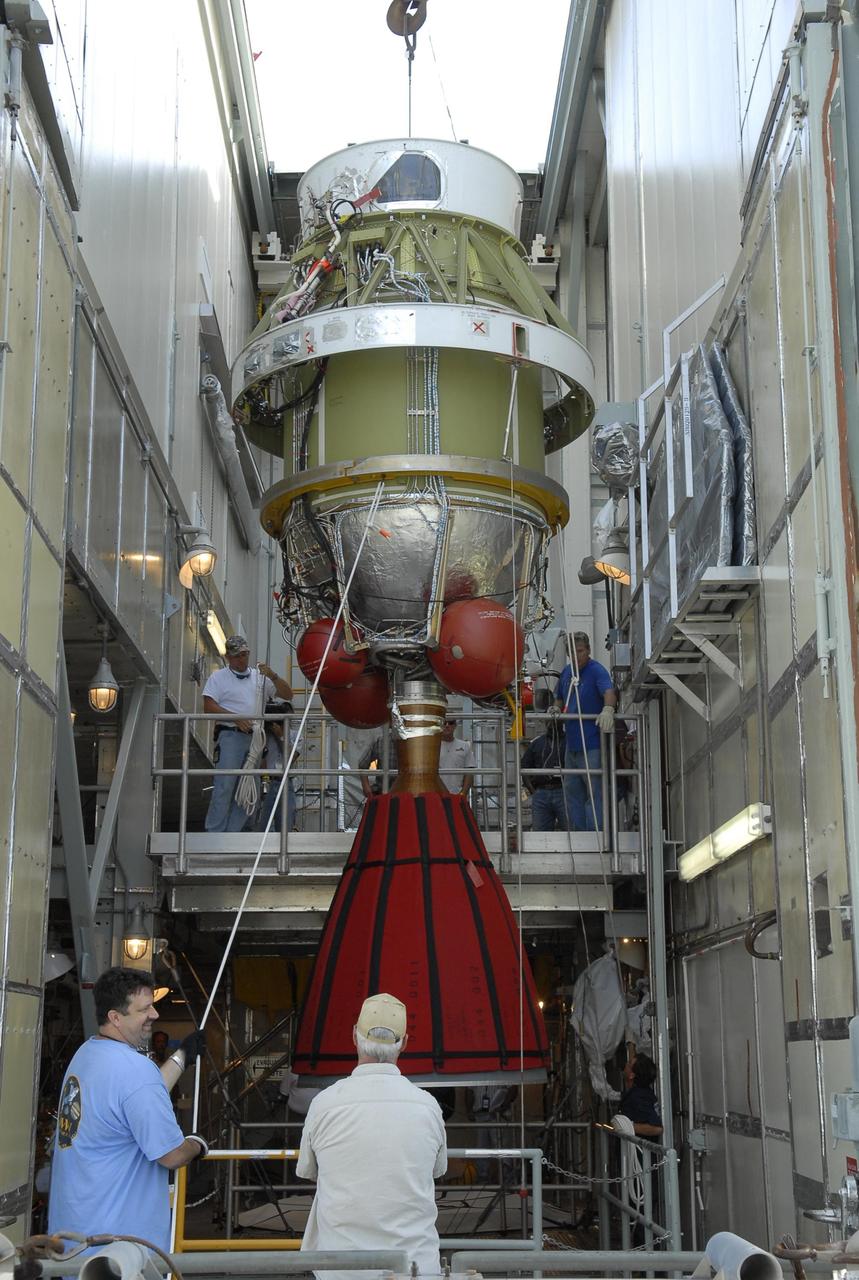
KENNEDY SPACE CENTER, FLA. -- On Launch Pad 17-A at Cape Canaveral Air Force Station, workers supervise the lowering of the second stage of the Delta II launch vehicle toward the Delta's first stage below. Phoenix is scheduled to launch Aug. 3. Phoenix will land in icy soils near the north polar permanent ice cap of Mars and explore the history of the water in these soils and any associated rocks, while monitoring polar climate. Landing on Mars is planned in May 2008 on arctic ground where a mission currently in orbit, Mars Odyssey, has detected high concentrations of ice just beneath the top layer of soil. Photo credit: NASA/Kim Shiflett
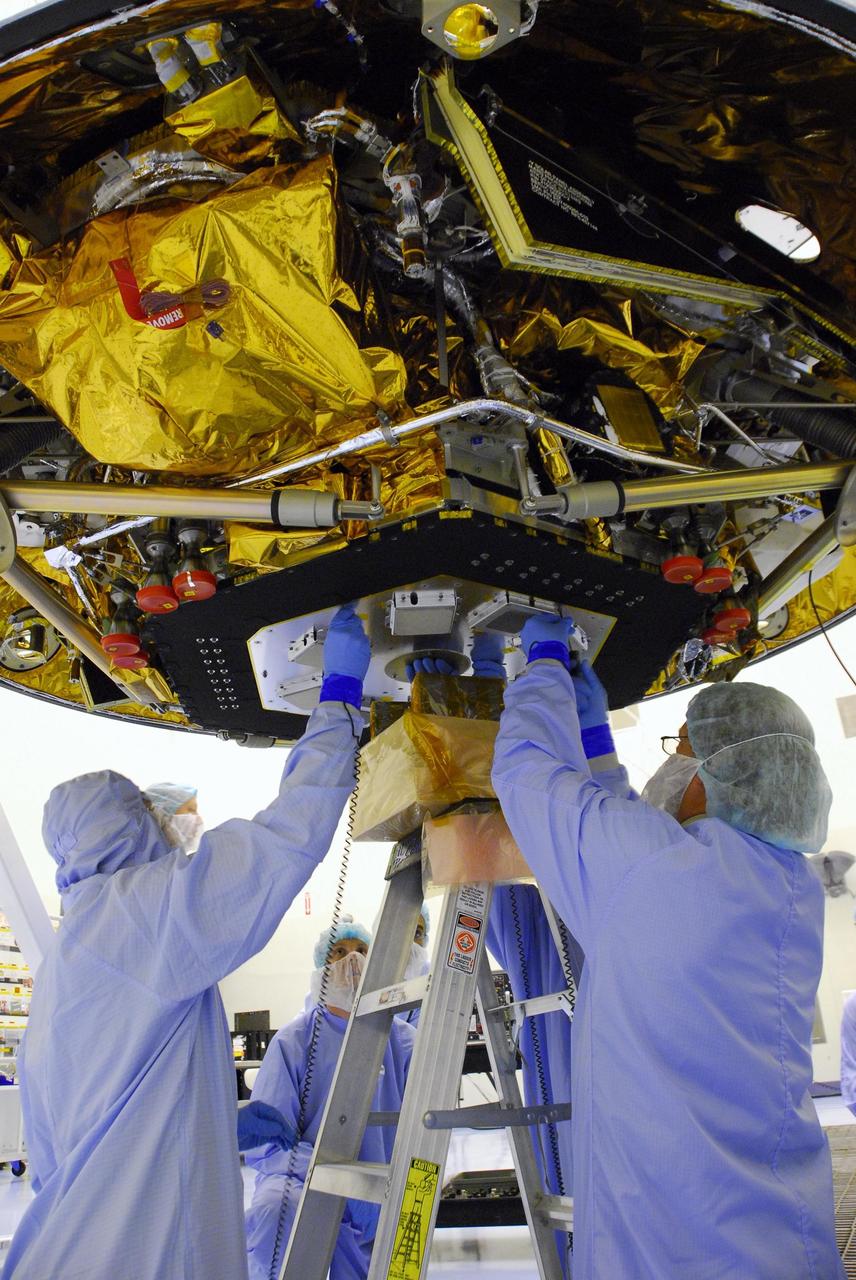
KENNEDY SPACE CENTER, FLA. -- At the Payload Hazardous Servicing Facility, workers integrate the landing radar with the Phoenix spacecraft. Testing will follow. The Phoenix mission is the first project in NASA's first openly competed program of Mars Scout missions. Phoenix will land in icy soils near the north polar permanent ice cap of Mars and explore the history of the water in these soils and any associated rocks, while monitoring polar climate. Landing is planned in May 2008 on arctic ground where a mission currently in orbit, Mars Odyssey, has detected high concentrations of ice just beneath the top layer of soil. Photo credit: NASA/George Shelton
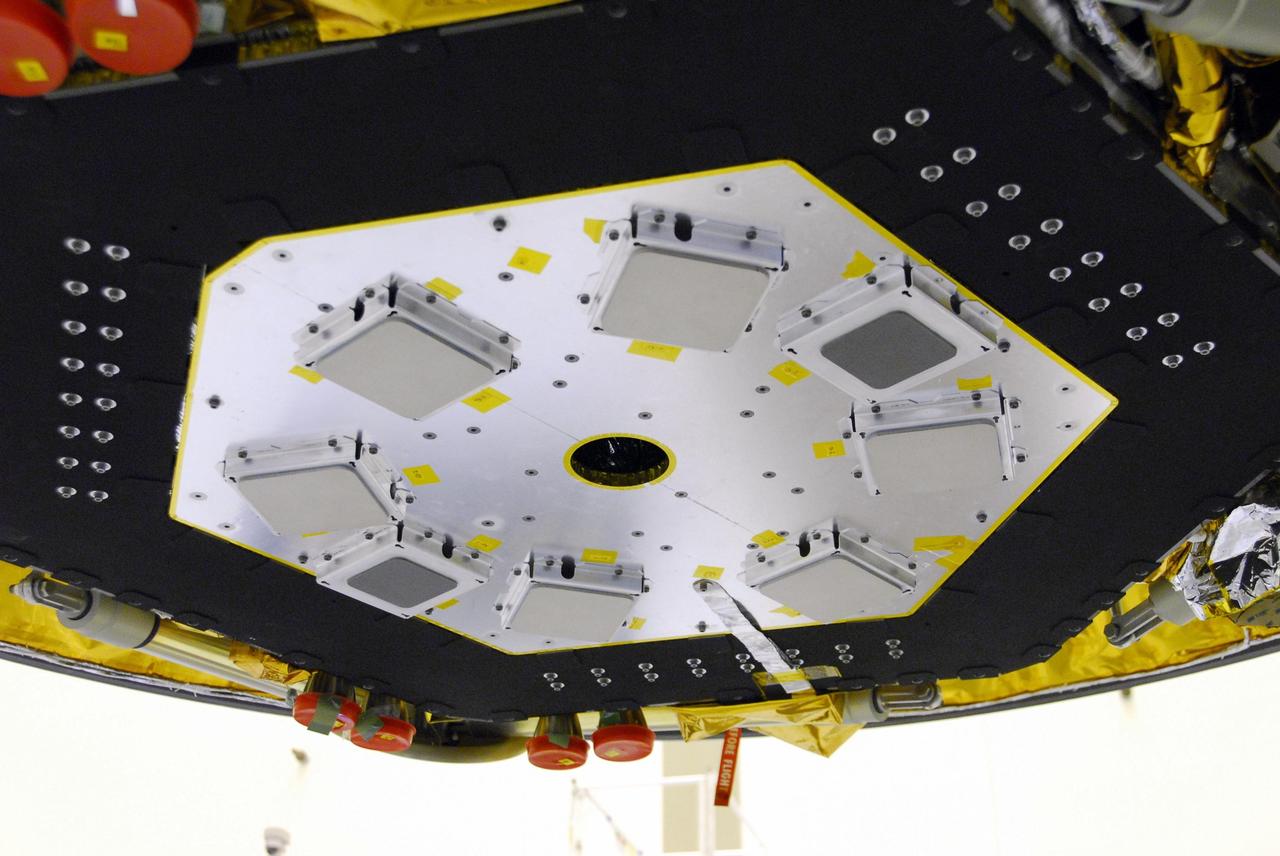
KENNEDY SPACE CENTER, FLA. -- A closeup of the landing radar installed on the Phoenix spacecraft. Testing will follow. The Phoenix mission is the first project in NASA's first openly competed program of Mars Scout missions. Phoenix will land in icy soils near the north polar permanent ice cap of Mars and explore the history of the water in these soils and any associated rocks, while monitoring polar climate. Landing is planned in May 2008 on arctic ground where a mission currently in orbit, Mars Odyssey, has detected high concentrations of ice just beneath the top layer of soil. Photo credit: NASA/George Shelton
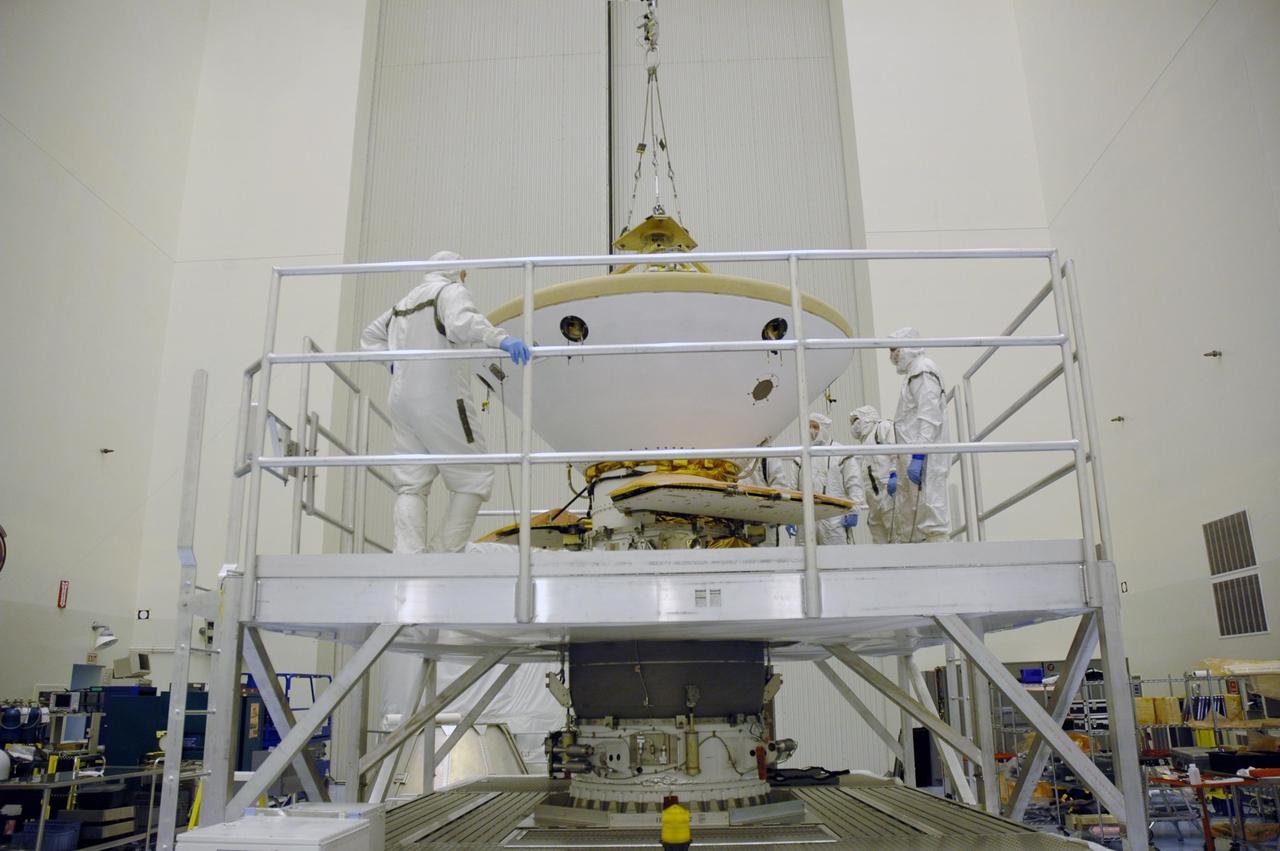
KENNEDY SPACE CENTER, Fla. -- In the Payload Hazardous Servicing Facility, workers observe the installation of the heat shield onto the Phoenix Mars Lander spacecraft. Targeted for launch from Cape Canaveral Air Force Station on Aug. 3, Phoenix will land in icy soils near the north polar permanent ice cap of Mars and explore the history of the water in these soils and any associated rocks, while monitoring polar climate. Landing on Mars is planned in May 2008 on arctic ground where a mission currently in orbit, Mars Odyssey, has detected high concentrations of ice just beneath the top layer of soil. Photo credit: NASA/Troy Cryder
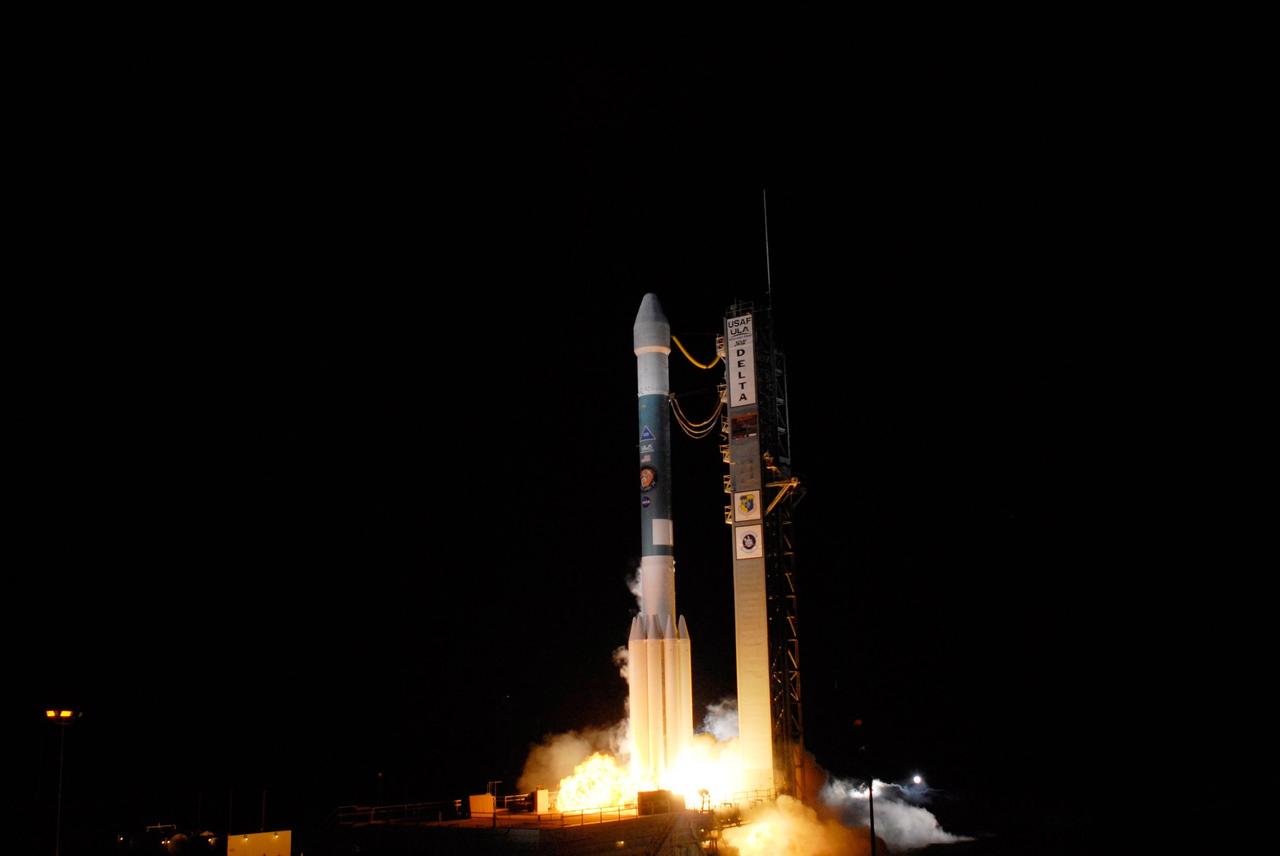
KENNEDY SPACE CENTER, FLA. - NASA's Phoenix Mars lander lifts off from Pad 17A aboard a Delta II 7925 rocket at Cape Canaveral Air Force Station at 5:26 a.m. EDT. Phoenix will land in icy soils near the north polar, permanent ice cap of Mars and explore the history of the water in these soils and any associated rocks, while monitoring polar climate. Landing on Mars is planned in May 2008 on arctic ground where a mission currently in orbit, Mars Odyssey, has detected high concentrations of ice just beneath the top layer of soil. Photo credit: NASA/Regina Mitchell-Ryall and Jerry Cannon
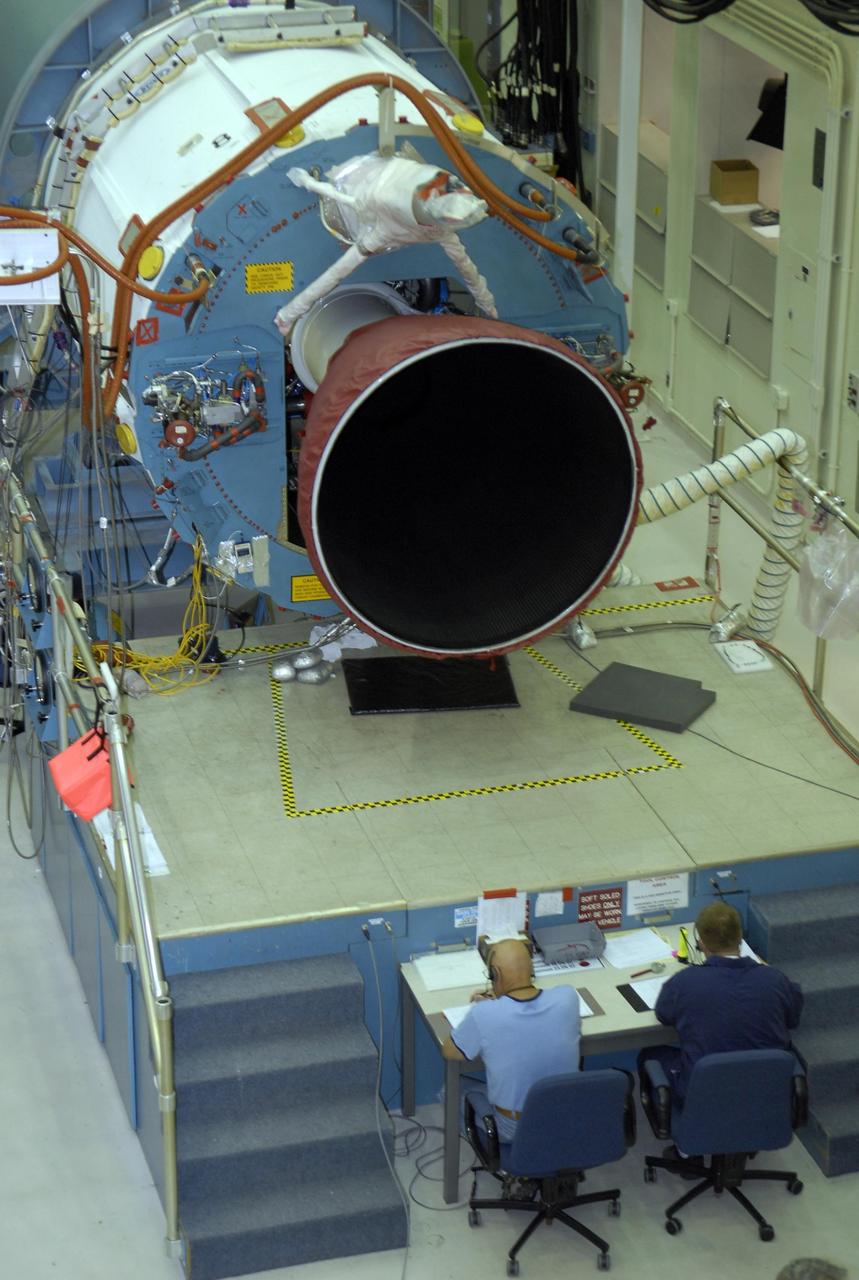
KENNEDY SPACE CENTER, FLA. -- In Hangar A&O on Cape Canaveral Air Force Station in Florida, workers conduct a steering test on the first stage of a Delta II rocket. The rocket is designated for the launch of the Phoenix Mars Lander spacecraft. Phoenix will land in icy soils near the north polar permanent ice cap of Mars and explore the history of the water in these soils and any associated rocks, while monitoring polar climate. Landing is planned in May 2008 on arctic ground where a mission currently in orbit, Mars Odyssey, has detected high concentrations of ice just beneath the top layer of soil. Launch of Phoenix is targeted for Aug. 3. Photo credit: NASA/Kim Shiflett

KENNEDY SPACE CENTER, Fla. -- In the Payload Hazardous Servicing Facility, workers help guide the suspended Phoenix Mars Lander spacecraft toward the upper stage booster in the center. The spacecraft and booster will be mated for launch. Targeted for launch from Cape Canaveral Air Force Station on Aug. 3, Phoenix will land in icy soils near the north polar permanent ice cap of Mars and explore the history of the water in these soils and any associated rocks, while monitoring polar climate. Landing on Mars is planned in May 2008 on arctic ground where a mission currently in orbit, Mars Odyssey, has detected high concentrations of ice just beneath the top layer of soil. NASA/Dimitri Gerondidakis
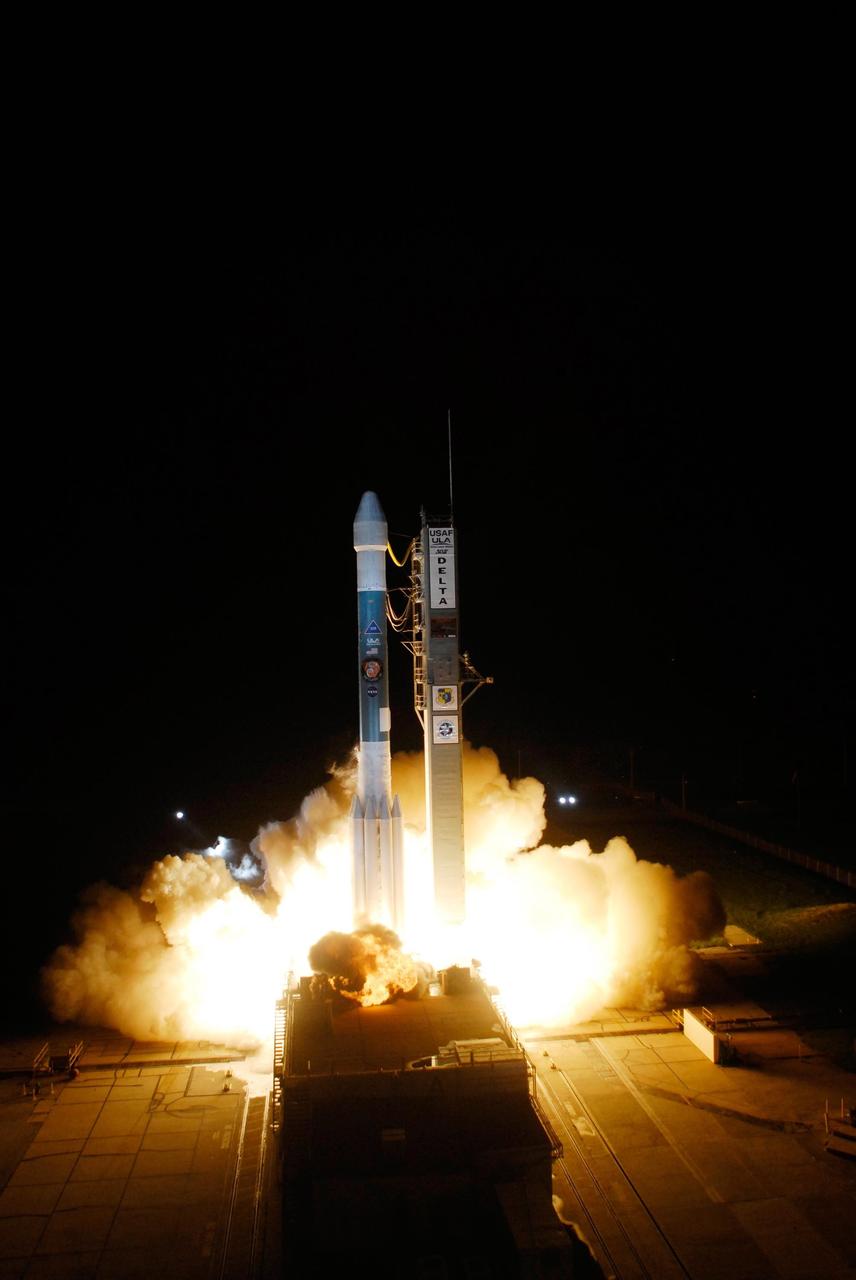
KENNEDY SPACE CENTER, FLA. - NASA's Phoenix spacecraft makes an auspicious start on its journey to Mars aboard a Delta II 7925 rocket at 5:26 a.m. EDT from Pad 17A at Cape Canaveral Air Force Station. Phoenix will land in icy soils near the north polar, permanent ice cap of Mars and explore the history of the water in these soils and any associated rocks, while monitoring polar climate. Landing on Mars is planned in May 2008 on arctic ground where a mission currently in orbit, Mars Odyssey, has detected high concentrations of ice just beneath the top layer of soil. Photo credit: NASA/Tony Gray and Robert Murray
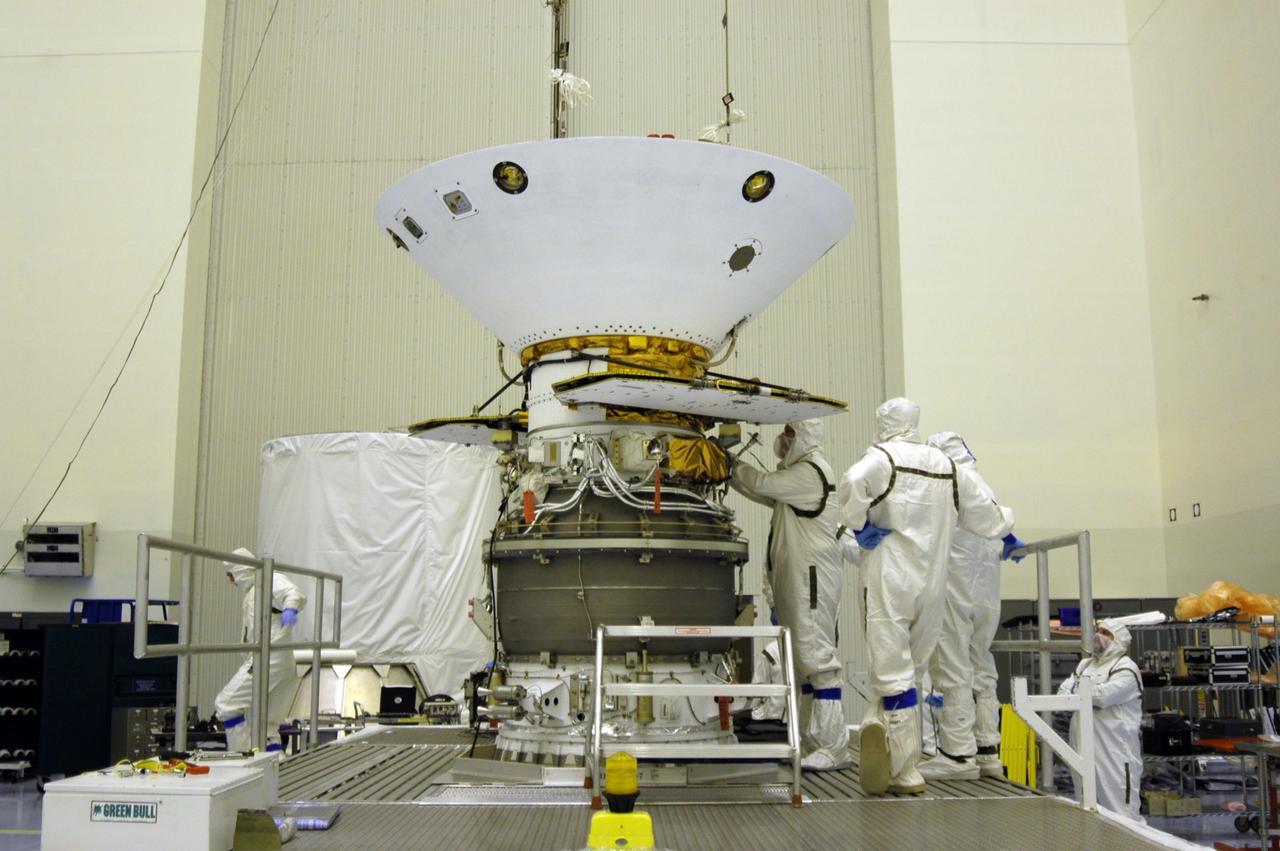
KENNEDY SPACE CENTER, Fla. -- In the Payload Hazardous Servicing Facility, workers secure the Phoenix Mars Lander spacecraft onto the upper stage booster. Targeted for launch from Cape Canaveral Air Force Station on Aug. 3, Phoenix will land in icy soils near the north polar permanent ice cap of Mars and explore the history of the water in these soils and any associated rocks, while monitoring polar climate. Landing on Mars is planned in May 2008 on arctic ground where a mission currently in orbit, Mars Odyssey, has detected high concentrations of ice just beneath the top layer of soil. NASA/Dimitri Gerondidakis
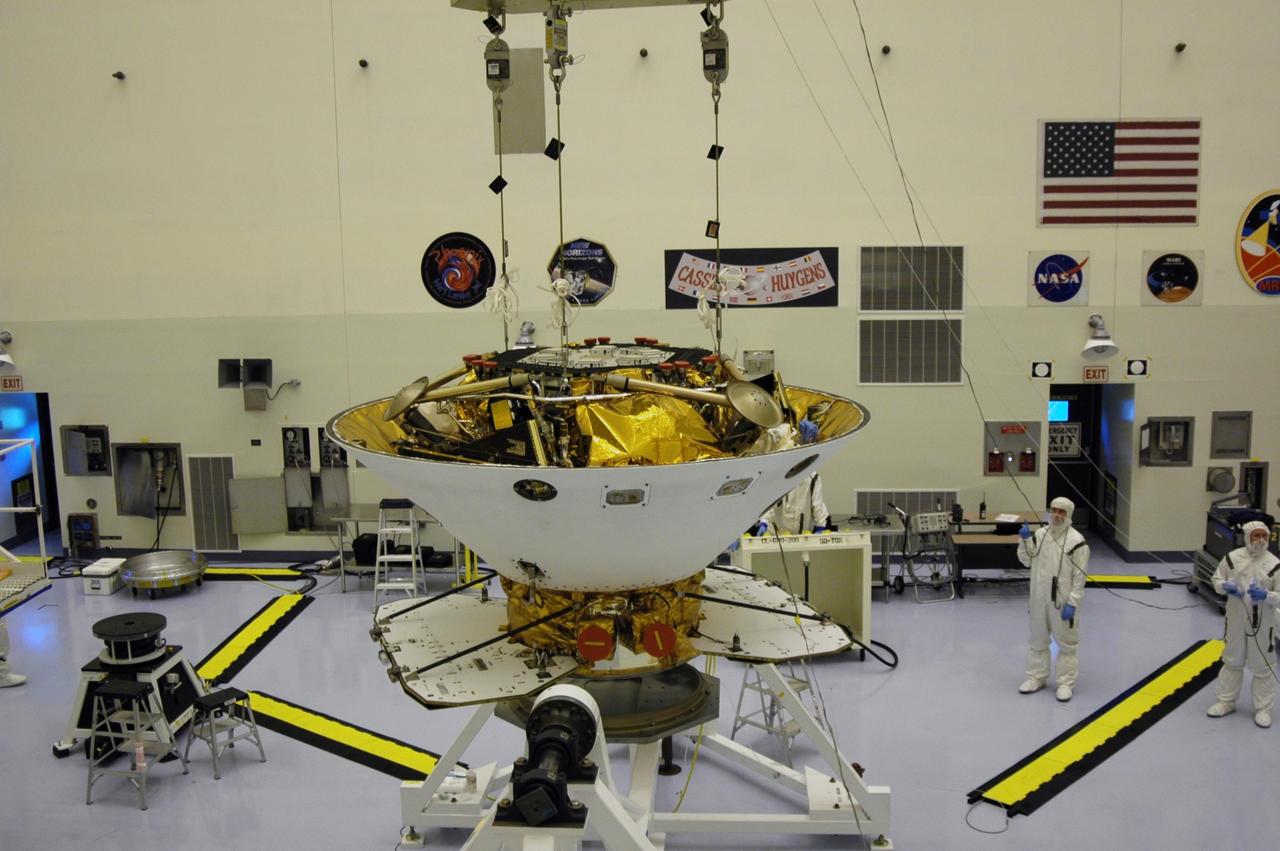
KENNEDY SPACE CENTER, Fla. -- In the Payload Hazardous Servicing Facility, the Phoenix Mars Lander spacecraft is lifted from its stand. The Phoenix will be moved to the upper stage booster for mating. Targeted for launch from Cape Canaveral Air Force Station on Aug. 3, Phoenix will land in icy soils near the north polar permanent ice cap of Mars and explore the history of the water in these soils and any associated rocks, while monitoring polar climate. Landing on Mars is planned in May 2008 on arctic ground where a mission currently in orbit, Mars Odyssey, has detected high concentrations of ice just beneath the top layer of soil. Photo credit: NASA/Dimitri Gerondidakis
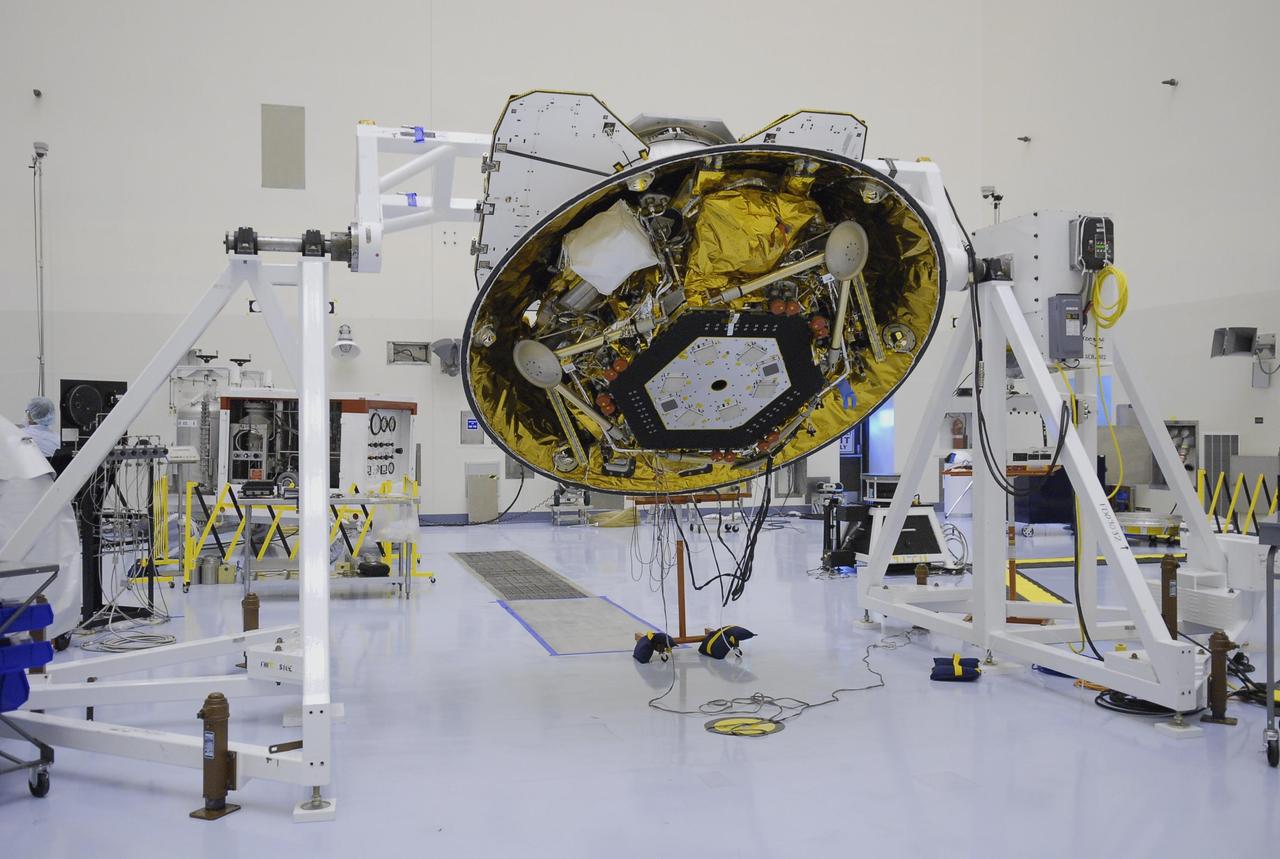
KENNEDY SPACE CENTER, FLA. -- The Phoenix Mars Lander is on display in the Payload Hazardous Servicing Facility. Phoenix is scheduled to launch Aug. 3 from Launch Pad 17-A at Cape Canaveral Air Force Station. Phoenix will land in icy soils near the north polar permanent ice cap of Mars and explore the history of the water in these soils and any associated rocks, while monitoring polar climate. Landing on Mars is planned in May 2008 on arctic ground where a mission currently in orbit, Mars Odyssey, has detected high concentrations of ice just beneath the top layer of soil. Photo credit: NASA/Kim Shiflett
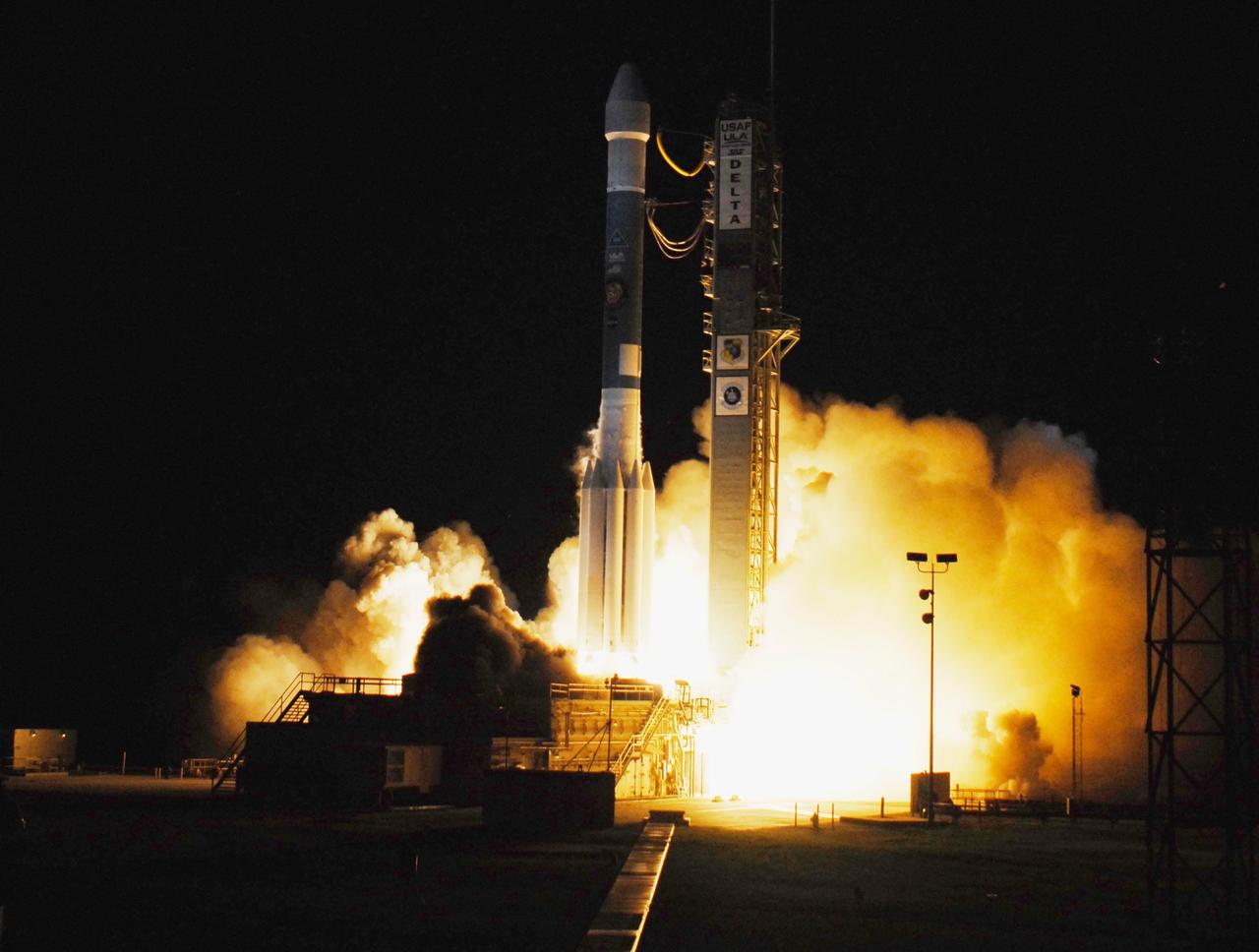
KENNEDY SPACE CENTER, FLA. - The Delta II 7925 rocket carrying NASA's Phoenix Mars lander thunders to life at 5:26 a.m. EDT at Pad 17A on Cape Canaveral Air Force Station. Phoenix will land in icy soils near the north polar, permanent ice cap of Mars and explore the history of the water in these soils and any associated rocks, while monitoring polar climate. Landing on Mars is planned in May 2008 on arctic ground where a mission currently in orbit, Mars Odyssey, has detected high concentrations of ice just beneath the top layer of soil. Photo credit: NASA/Sandra Joseph and John Kechele
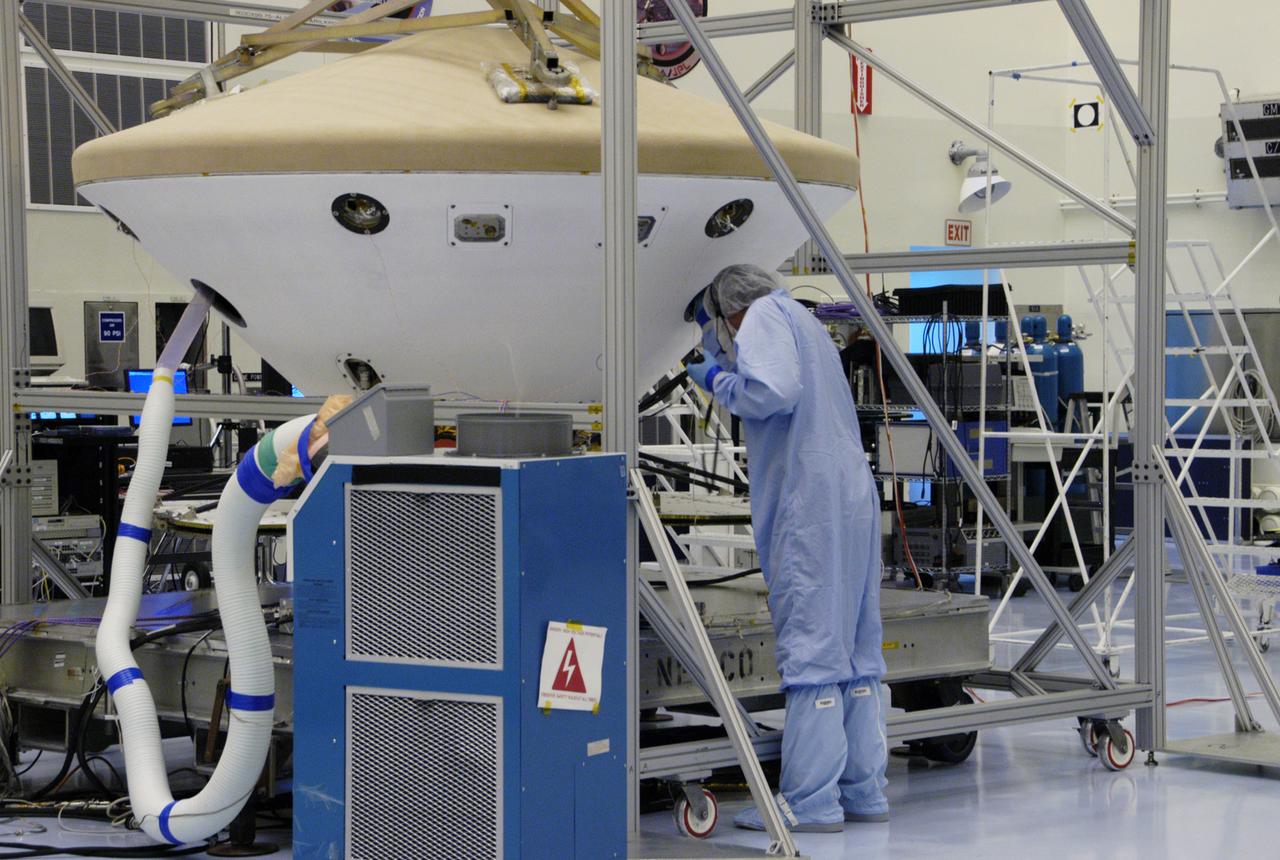
In the Payload Hazardous Servicing Facility, a worker monitors the Phoenix spacecraft during a heat shield deployment test, with a firing of ordnance associated with the separation device. Phoenix will land in icy soils near the north polar permanent ice cap of Mars and explore the history of the water in these soils and any associated rocks, while monitoring polar climate. Landing is planned in May 2008 on arctic ground where a mission currently in orbit, Mars Odyssey, has detected high concentrations of ice just beneath the top layer of soil. Launch of Phoenix aboard a Delta II rocket is targeted for Aug. 3 from Cape Canaveral Air Force Station in Florida.
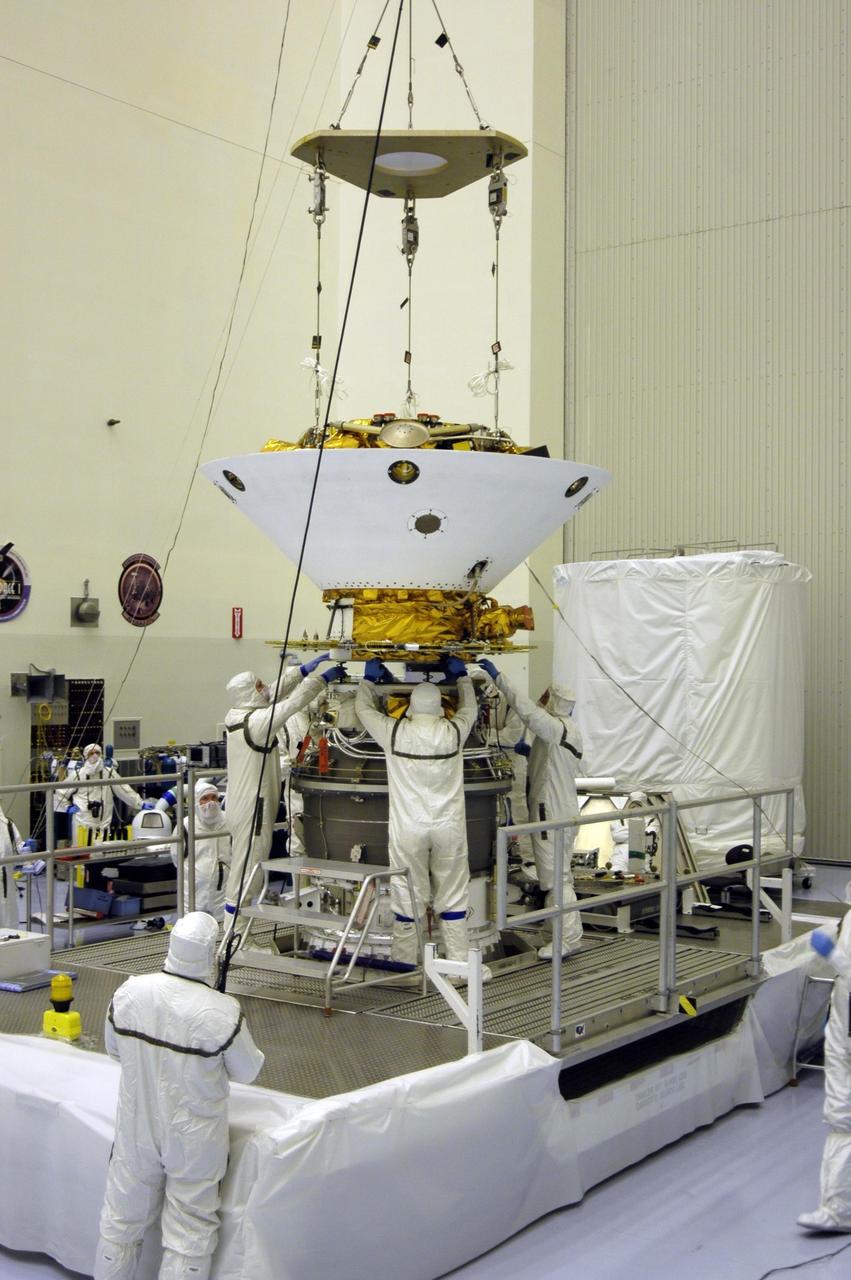
KENNEDY SPACE CENTER, Fla. -- In the Payload Hazardous Servicing Facility, workers attach the Phoenix Mars Lander spacecraft onto the upper stage booster. Targeted for launch from Cape Canaveral Air Force Station on Aug. 3, Phoenix will land in icy soils near the north polar permanent ice cap of Mars and explore the history of the water in these soils and any associated rocks, while monitoring polar climate. Landing on Mars is planned in May 2008 on arctic ground where a mission currently in orbit, Mars Odyssey, has detected high concentrations of ice just beneath the top layer of soil. NASA/Dimitri Gerondidakis
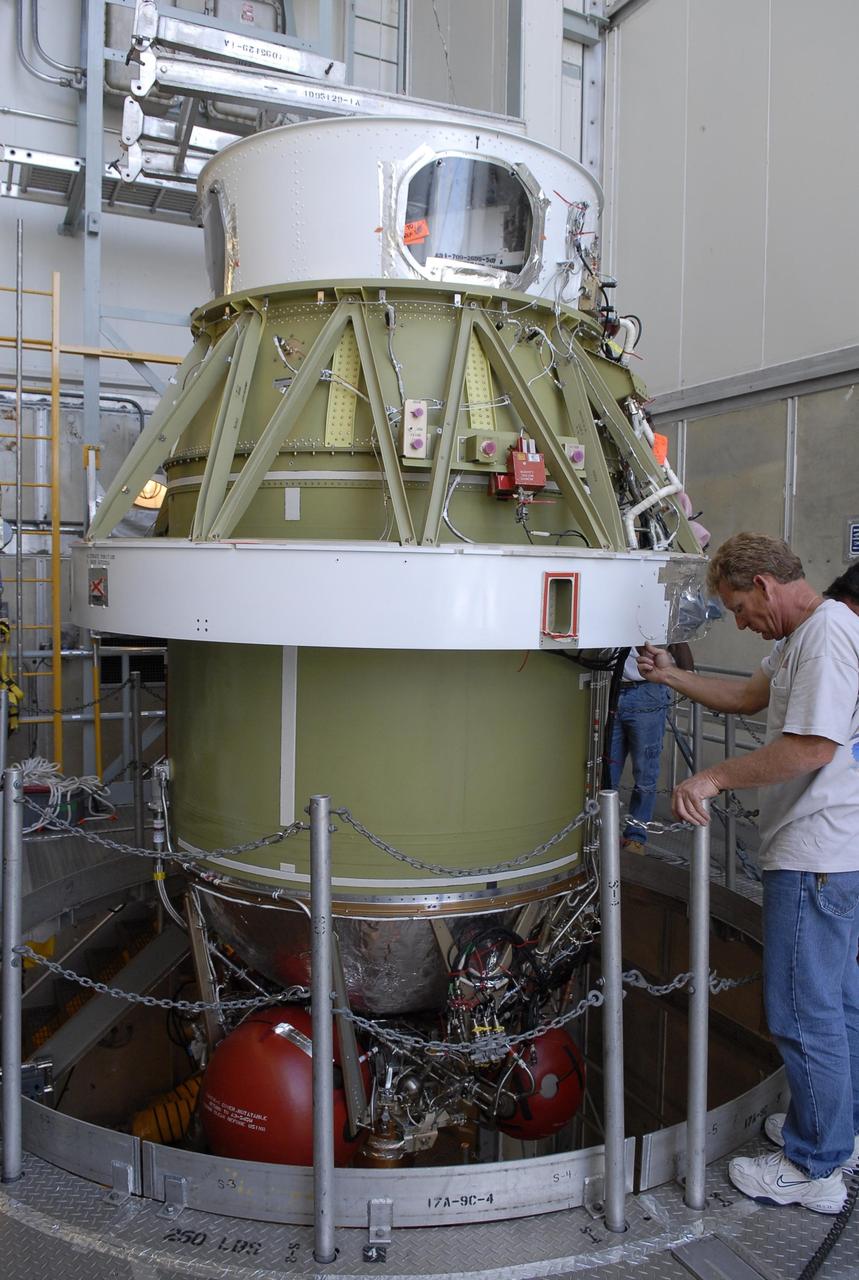
KENNEDY SPACE CENTER, FLA. -- On Launch Pad 17-A at Cape Canaveral Air Force Station, workers supervise the lowering of the second stage of the Delta II launch vehicle toward the Delta's first stage below. Phoenix is scheduled to launch Aug. 3. Phoenix will land in icy soils near the north polar permanent ice cap of Mars and explore the history of the water in these soils and any associated rocks, while monitoring polar climate. Landing on Mars is planned in May 2008 on arctic ground where a mission currently in orbit, Mars Odyssey, has detected high concentrations of ice just beneath the top layer of soil. Photo credit: NASA/Kim Shiflett
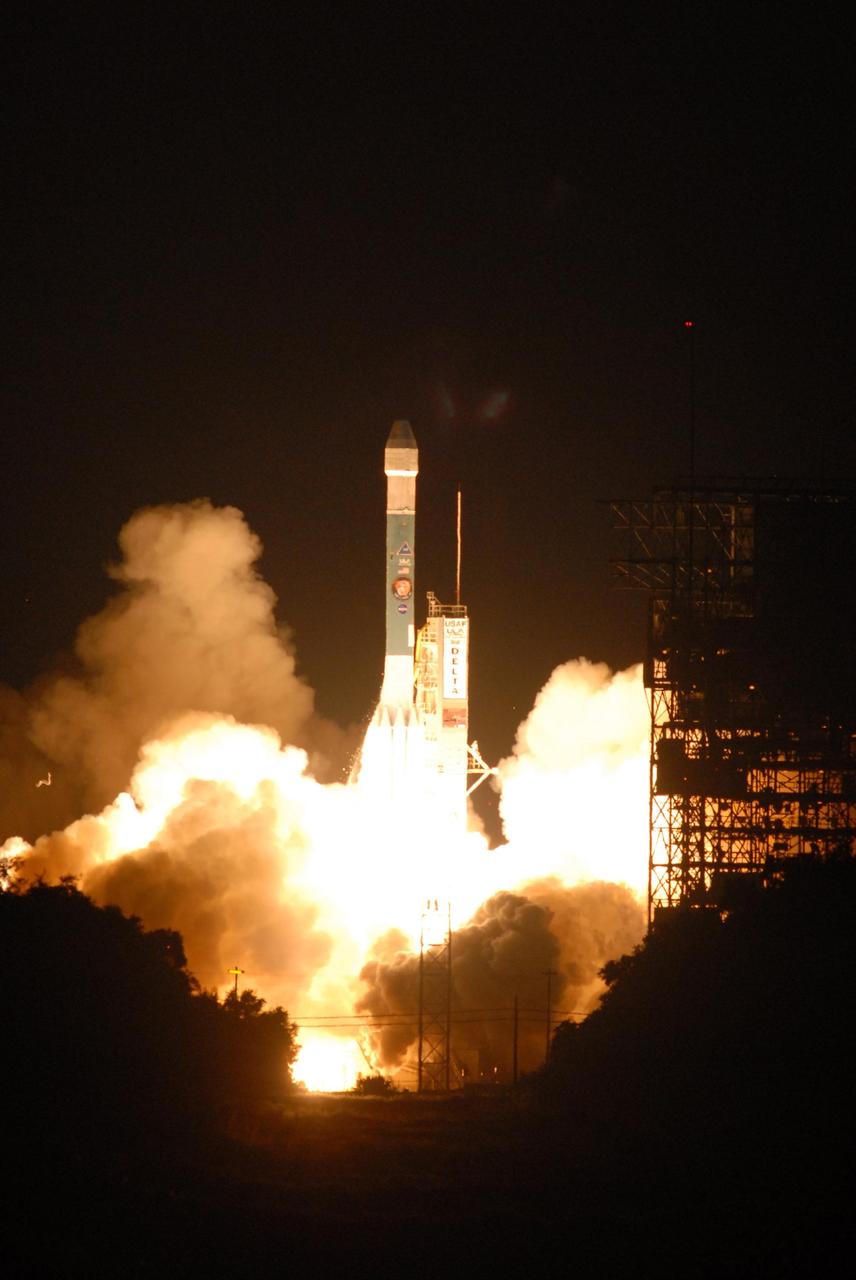
KENNEDY SPACE CENTER, FLA. -- The Delta II 7925 rocket carrying NASA's Phoenix Mars lander lifts off amid billows of smoke from Pad 17A at Cape Canaveral Air Force Station at 5:26 a.m. EDT. Phoenix will land in icy soils near the north polar, permanent ice cap of Mars and explore the history of the water in these soils and any associated rocks, while monitoring polar climate. Landing on Mars is planned in May 2008 on arctic ground where a mission currently in orbit, Mars Odyssey, has detected high concentrations of ice just beneath the top layer of soil. Photo credit: NASA/George Shelton
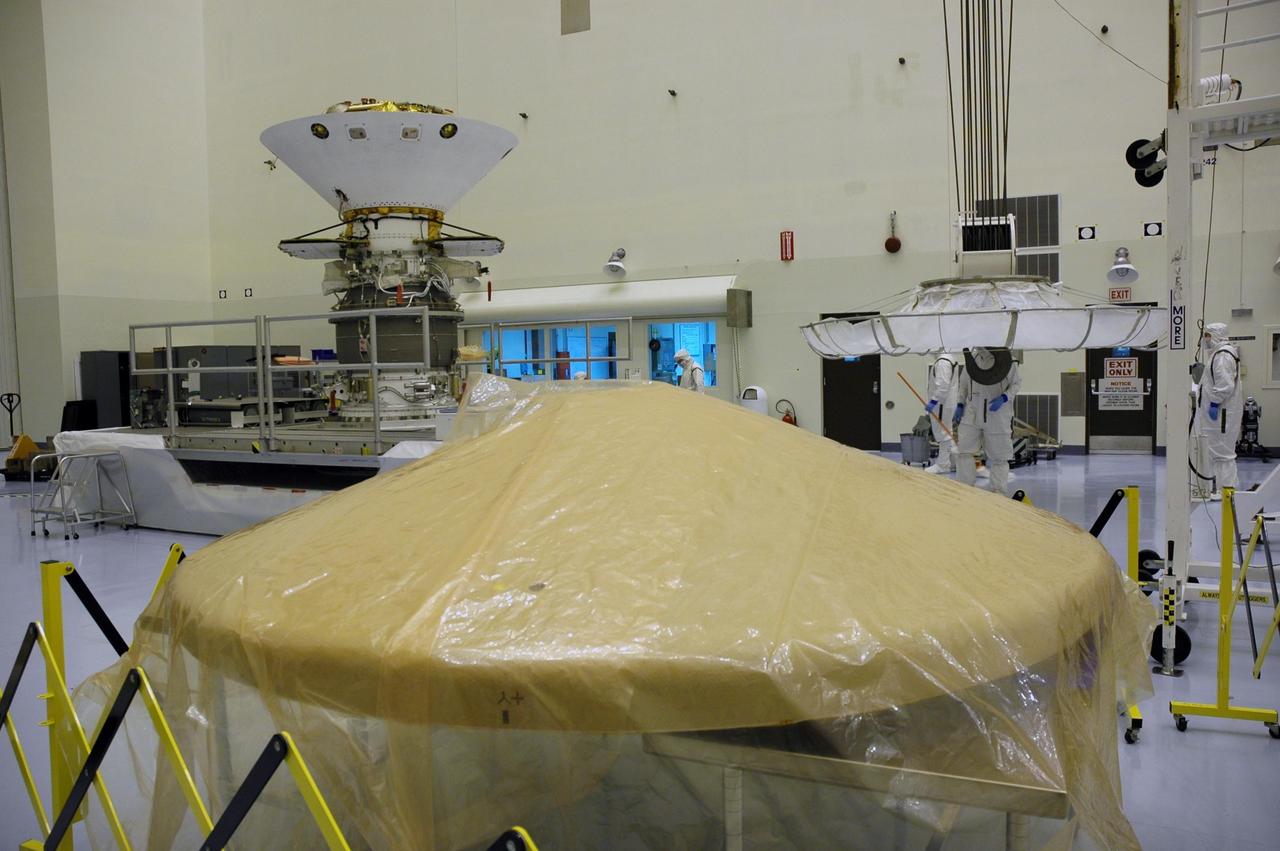
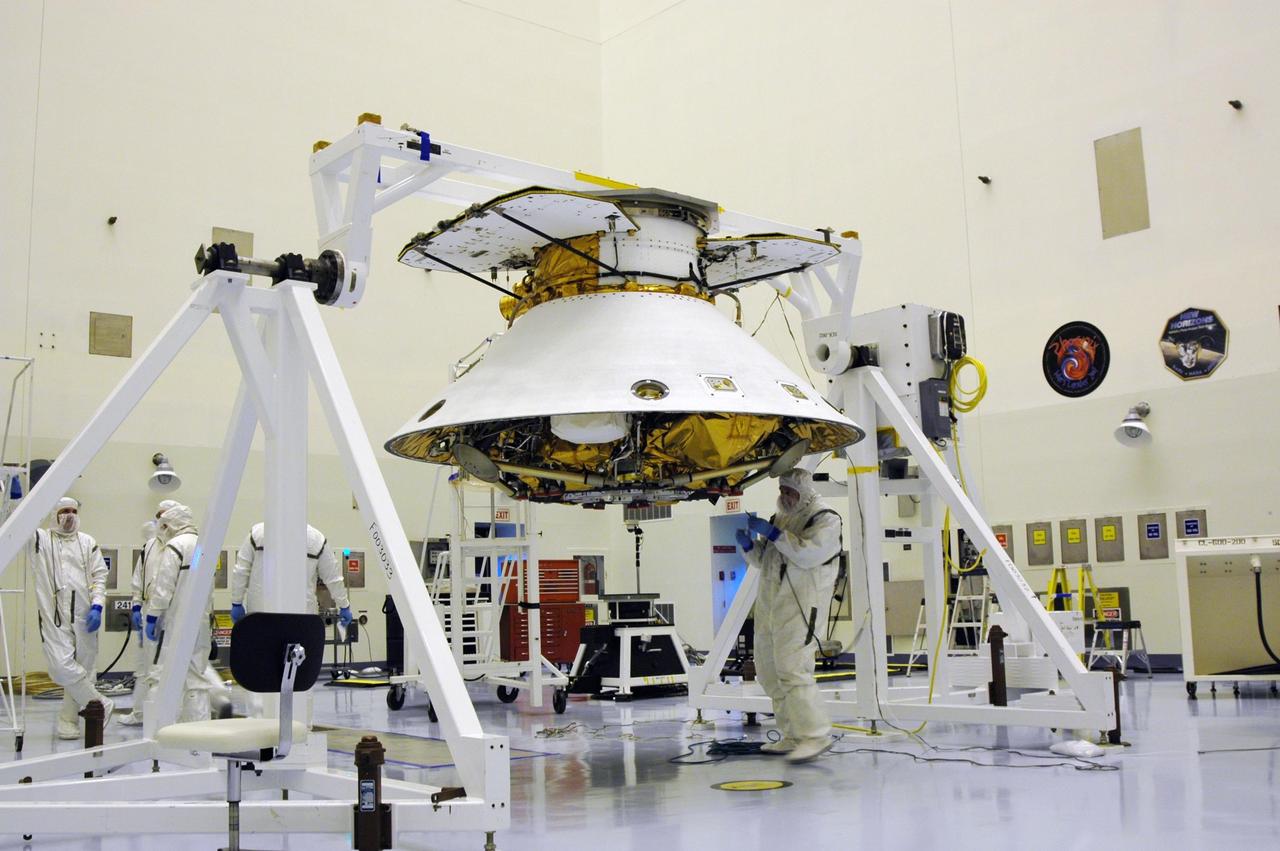
KENNEDY SPACE CENTER, Fla. -- In the Payload Hazardous Servicing Facility, the heat shield (foreground) for the Phoenix Mars Lander spacecraft is ready for installation. Targeted for launch from Cape Canaveral Air Force Station on Aug. 3, Phoenix will land in icy soils near the north polar permanent ice cap of Mars and explore the history of the water in these soils and any associated rocks, while monitoring polar climate. Landing on Mars is planned in May 2008 on arctic ground where a mission currently in orbit, Mars Odyssey, has detected high concentrations of ice just beneath the top layer of soil. Photo credit: NASA/Troy Cryder
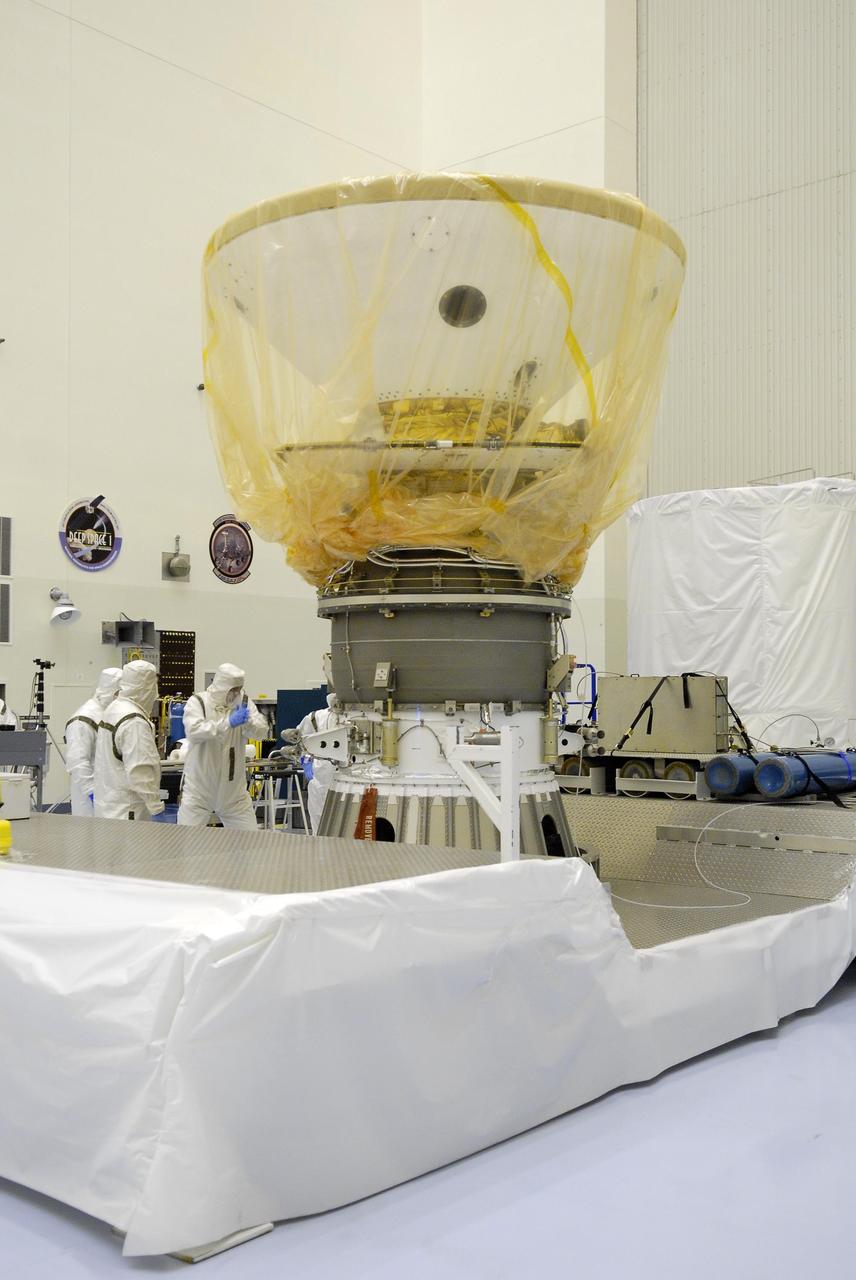
KENNEDY SPACE CENTER, Fla. -- In the Payload Hazardous Servicing Facility, the Phoenix Mars Lander is covered before the shipping canister is installed around it. After the canning, the Phoenix will be transferred to Launch Pad 17-A on Cape Canaveral Air Force Station in Florida for launch on Aug. 3. Phoenix will land in icy soils near the north polar permanent ice cap of Mars and explore the history of the water in these soils and any associated rocks, while monitoring polar climate. Landing on Mars is planned in May 2008 on arctic ground where a mission currently in orbit, Mars Odyssey, has detected high concentrations of ice just beneath the top layer of soil. Photo credit: NASA/Kim Shiflett

KENNEDY SPACE CENTER, Fla. -- In the Payload Hazardous Servicing Facility, workers prepare the upper stage booster to be mated to the Phoenix Mars Lander spacecraft. Targeted for launch from Cape Canaveral Air Force Station on Aug. 3, Phoenix will land in icy soils near the north polar permanent ice cap of Mars and explore the history of the water in these soils and any associated rocks, while monitoring polar climate. Landing on Mars is planned in May 2008 on arctic ground where a mission currently in orbit, Mars Odyssey, has detected high concentrations of ice just beneath the top layer of soil. NASA/Dimitri Gerondidakis
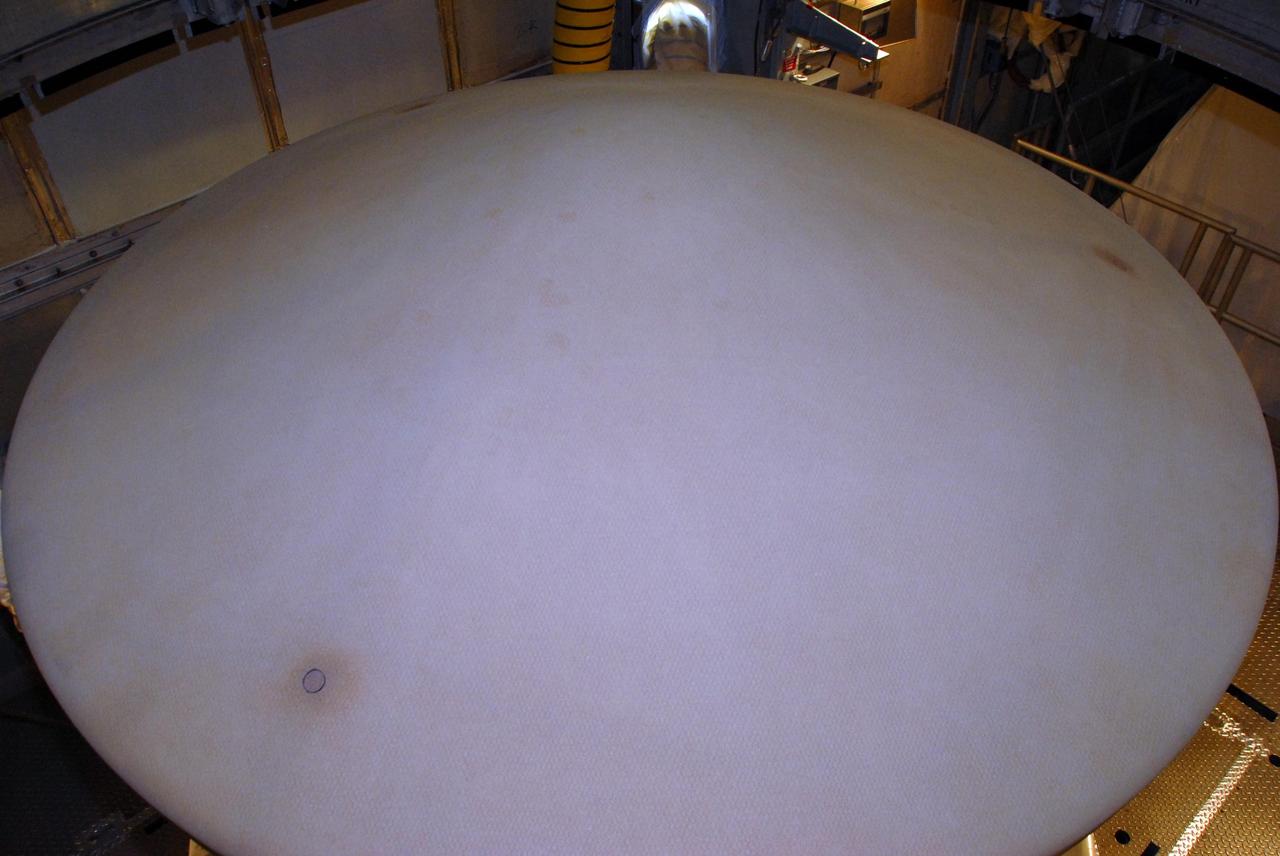
KENNEDY SPACE CENTER, FLA. -- The top of NASA's Phoenix Mars Lander can be seen inside the mobile service tower of Launch Pad 17-A at Cape Canaveral Air Force Station in Florida. Launch of Phoenix on the Delta II launch vehicle is scheduled for no earlier than Aug. 3. Phoenix will land in icy soils near the north polar permanent ice cap of Mars and explore the history of the water in these soils and any associated rocks, while monitoring polar climate. Landing on Mars is planned in May 2008 on arctic ground where a mission currently in orbit, Mars Odyssey, detected high concentrations of ice just beneath the top layer of soil. NASA/George Shelton
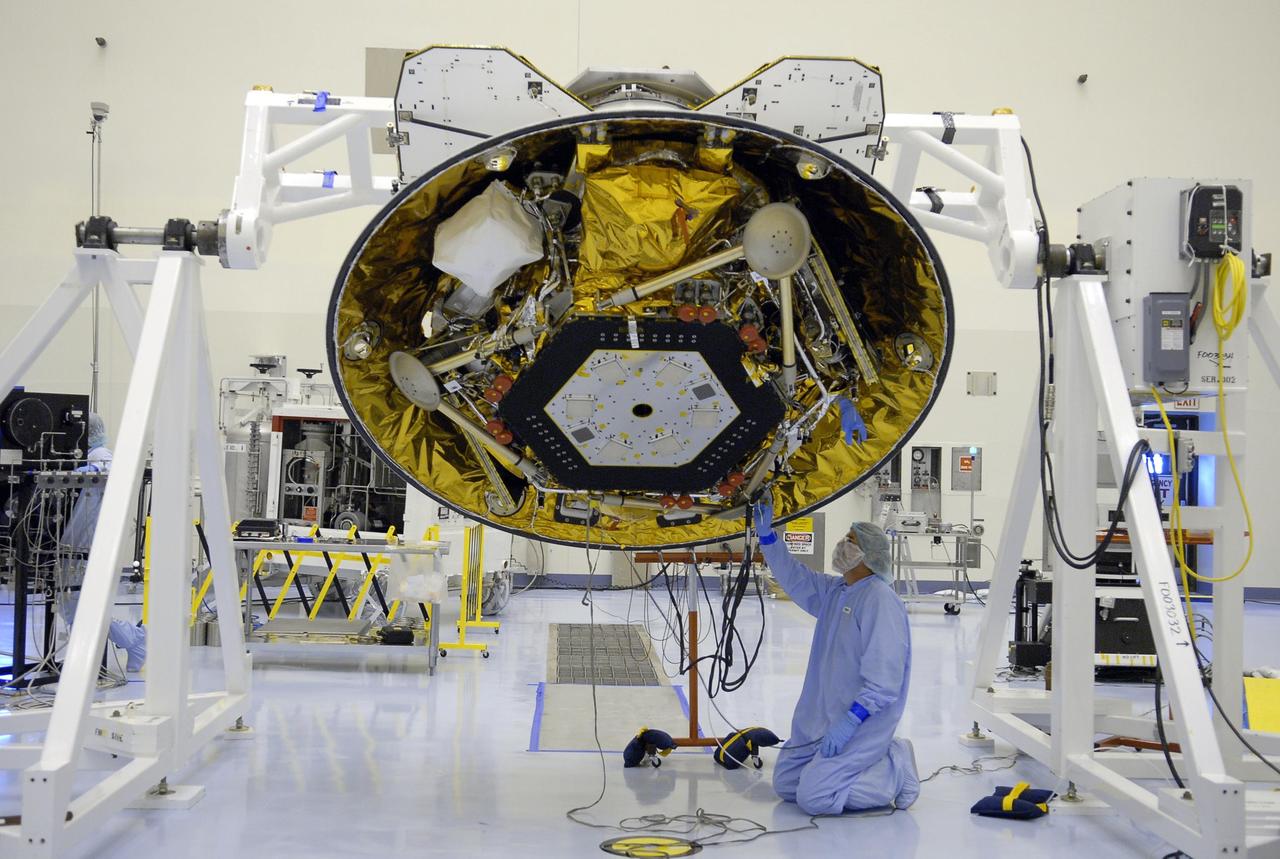
KENNEDY SPACE CENTER, FLA. -- In the Payload Hazardous Servicing Facility, a technician takes a measurement on the Phoenix Mars Lander. The spacecraft is on display for the media. Phoenix is scheduled to launch Aug. 3 from Launch Pad 17-A at Cape Canaveral Air Force Station. Phoenix will land in icy soils near the north polar permanent ice cap of Mars and explore the history of the water in these soils and any associated rocks, while monitoring polar climate. Landing on Mars is planned in May 2008 on arctic ground where a mission currently in orbit, Mars Odyssey, has detected high concentrations of ice just beneath the top layer of soil. Photo credit: NASA/Kim Shiflett
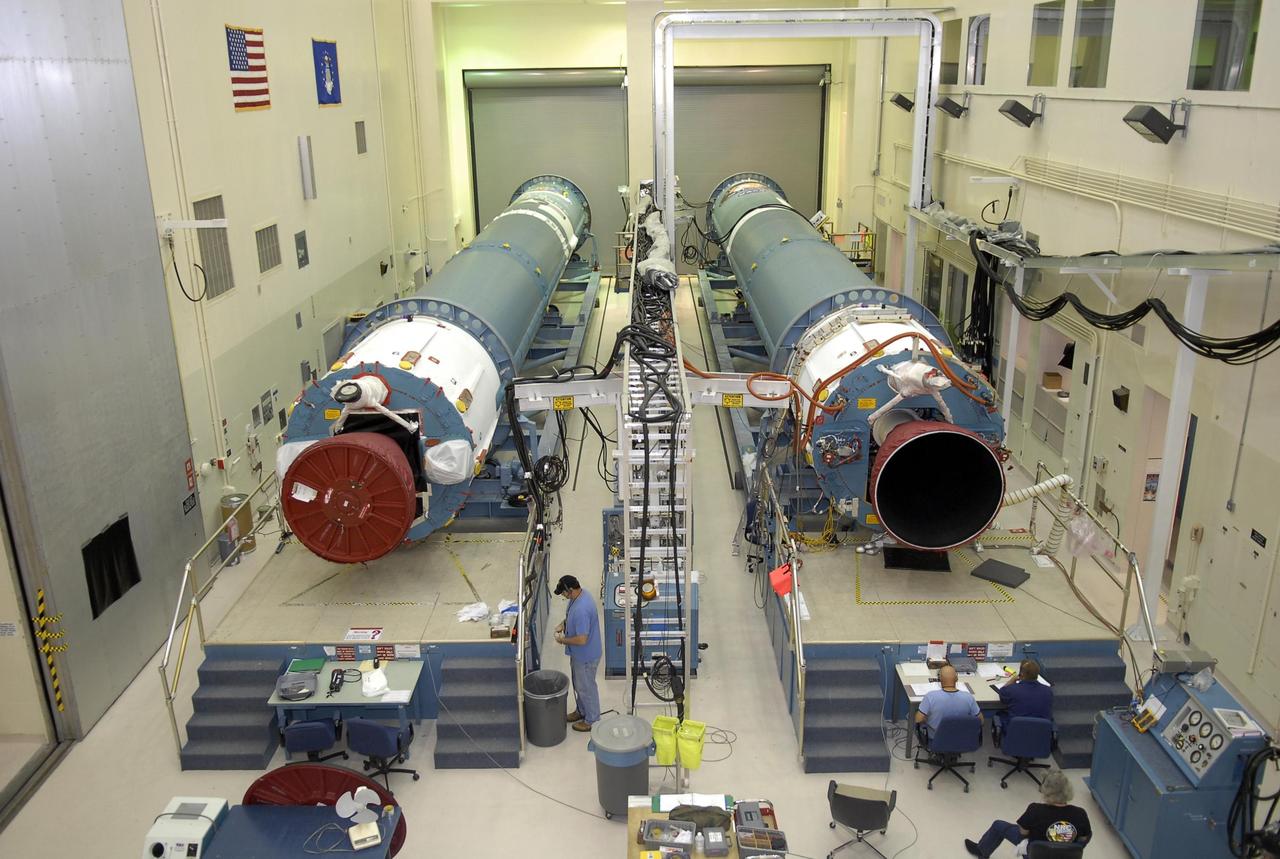
KENNEDY SPACE CENTER, FLA. -- In Hangar A&O on Cape Canaveral Air Force Station in Florida, workers conduct a steering test on the first stage of a Delta II rocket, at right. The rocket is designated for the launch of the Phoenix Mars Lander spacecraft. Phoenix will land in icy soils near the north polar permanent ice cap of Mars and explore the history of the water in these soils and any associated rocks, while monitoring polar climate. Landing is planned in May 2008 on arctic ground where a mission currently in orbit, Mars Odyssey, has detected high concentrations of ice just beneath the top layer of soil. Launch of Phoenix is targeted for Aug. 3. Photo credit: NASA/Kim Shiflett
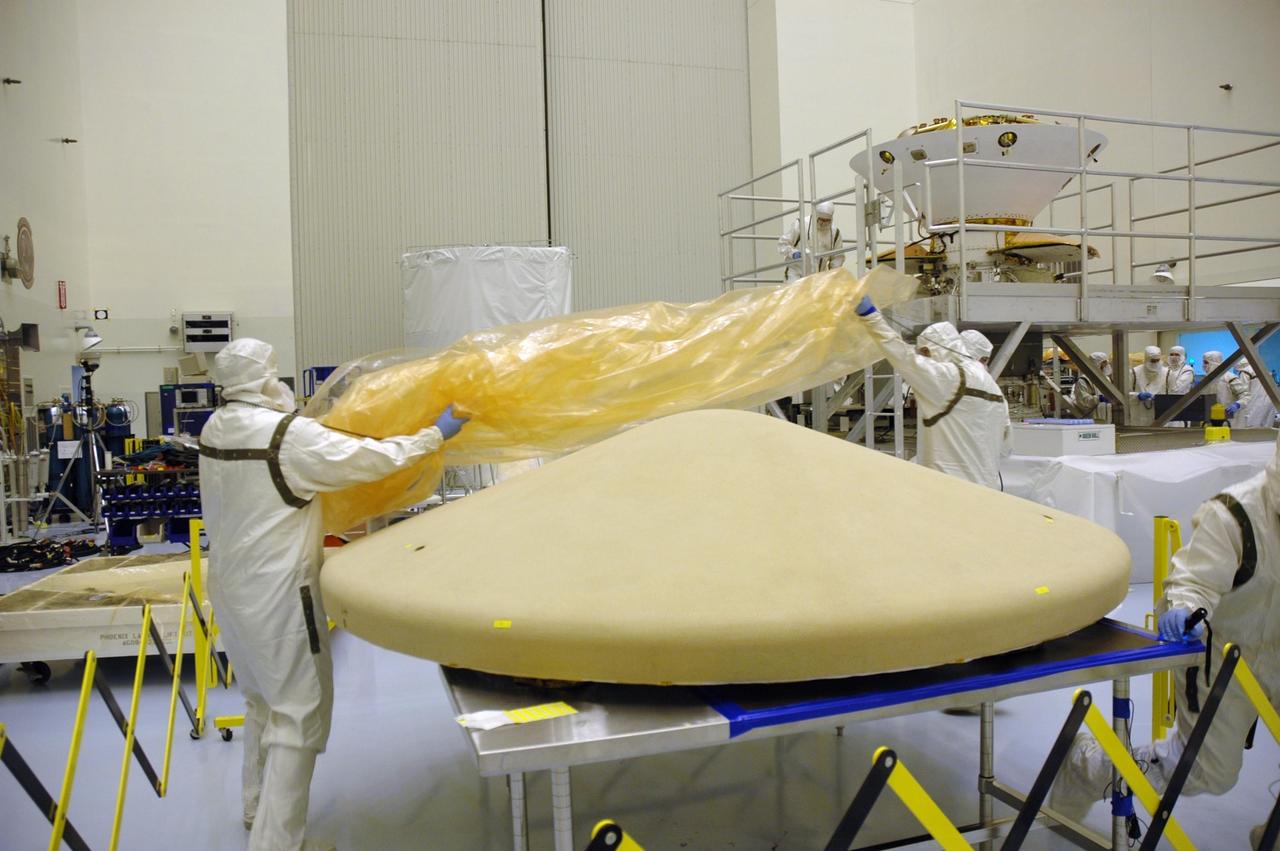
KENNEDY SPACE CENTER, Fla. -- In the Payload Hazardous Servicing Facility, workers remove the covering over the heat shield (foreground) for the Phoenix Mars Lander spacecraft before installation. Targeted for launch from Cape Canaveral Air Force Station on Aug. 3, Phoenix will land in icy soils near the north polar permanent ice cap of Mars and explore the history of the water in these soils and any associated rocks, while monitoring polar climate. Landing on Mars is planned in May 2008 on arctic ground where a mission currently in orbit, Mars Odyssey, has detected high concentrations of ice just beneath the top layer of soil. Photo credit: NASA/Troy Cryder
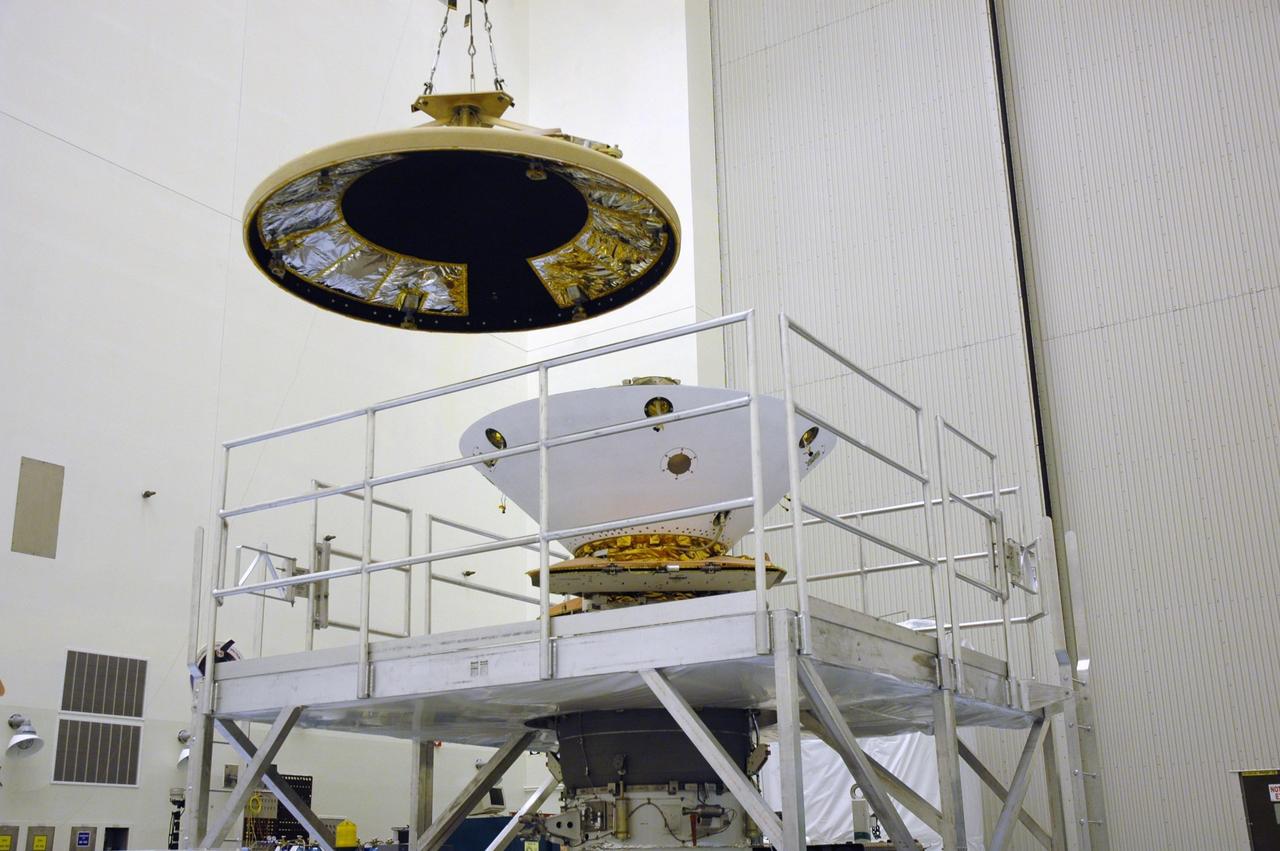
KENNEDY SPACE CENTER, Fla. --In the Payload Hazardous Servicing Facility, the heat shield for the Phoenix Mars Lander spacecraft is moved toward the spacecraft. Targeted for launch from Cape Canaveral Air Force Station on Aug. 3, Phoenix will land in icy soils near the north polar permanent ice cap of Mars and explore the history of the water in these soils and any associated rocks, while monitoring polar climate. Landing on Mars is planned in May 2008 on arctic ground where a mission currently in orbit, Mars Odyssey, has detected high concentrations of ice just beneath the top layer of soil. Photo credit: NASA/Troy Cryder

KENNEDY SPACE CENTER, FLA. -- On Launch Pad 17-A at Cape Canaveral Air Force Station, workers begin mating the second stage of the Delta II launch vehicle to the Delta first stage below. Phoenix is scheduled to launch Aug. 3. Phoenix will land in icy soils near the north polar permanent ice cap of Mars and explore the history of the water in these soils and any associated rocks, while monitoring polar climate. Landing on Mars is planned in May 2008 on arctic ground where a mission currently in orbit, Mars Odyssey, has detected high concentrations of ice just beneath the top layer of soil. Photo credit: NASA/Kim Shiflett
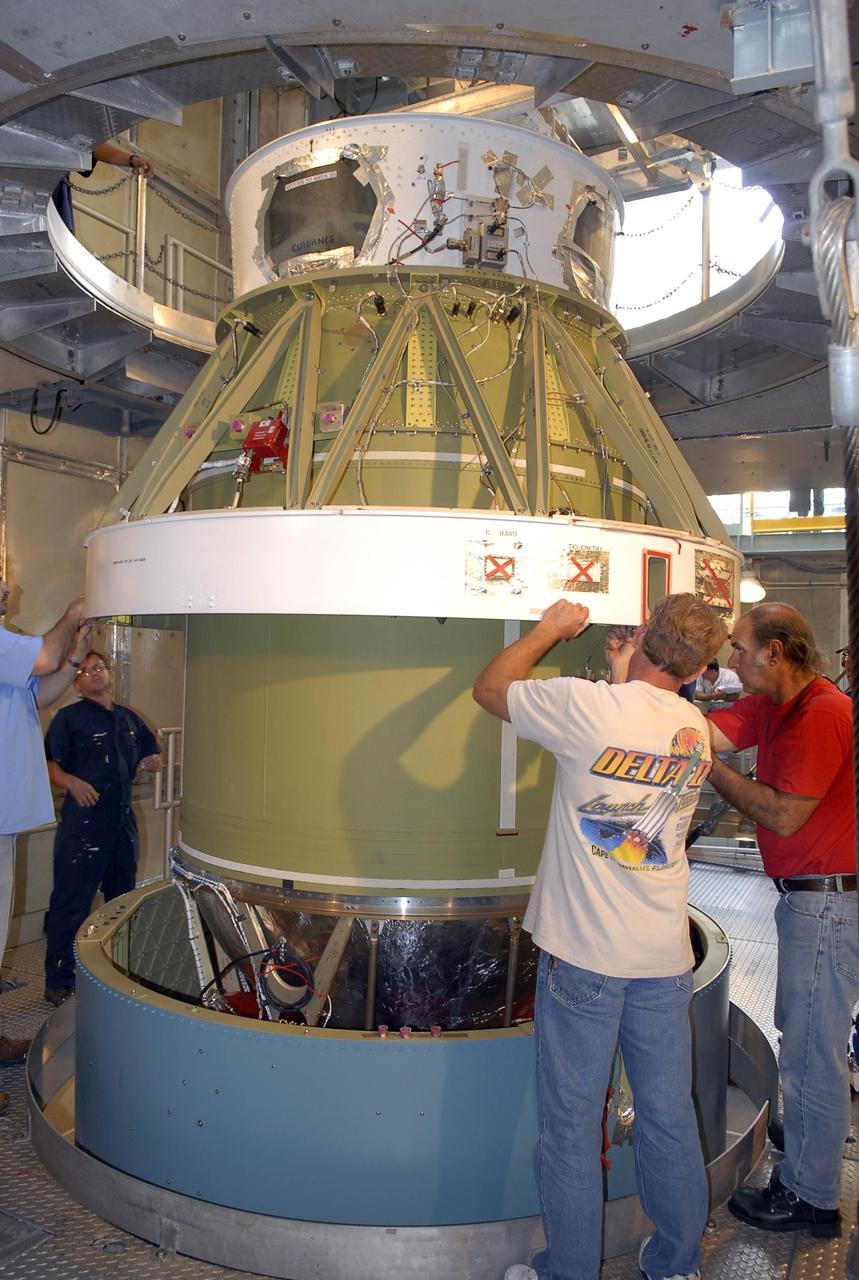
KENNEDY SPACE CENTER, FLA. -- On Launch Pad 17-A at Cape Canaveral Air Force Station, workers prepare the second stage of the Delta II launch vehicle to be mated to the Delta first stage below. Phoenix is scheduled to launch Aug. 3. Phoenix will land in icy soils near the north polar permanent ice cap of Mars and explore the history of the water in these soils and any associated rocks, while monitoring polar climate. Landing on Mars is planned in May 2008 on arctic ground where a mission currently in orbit, Mars Odyssey, has detected high concentrations of ice just beneath the top layer of soil. Photo credit: NASA/Kim Shiflett
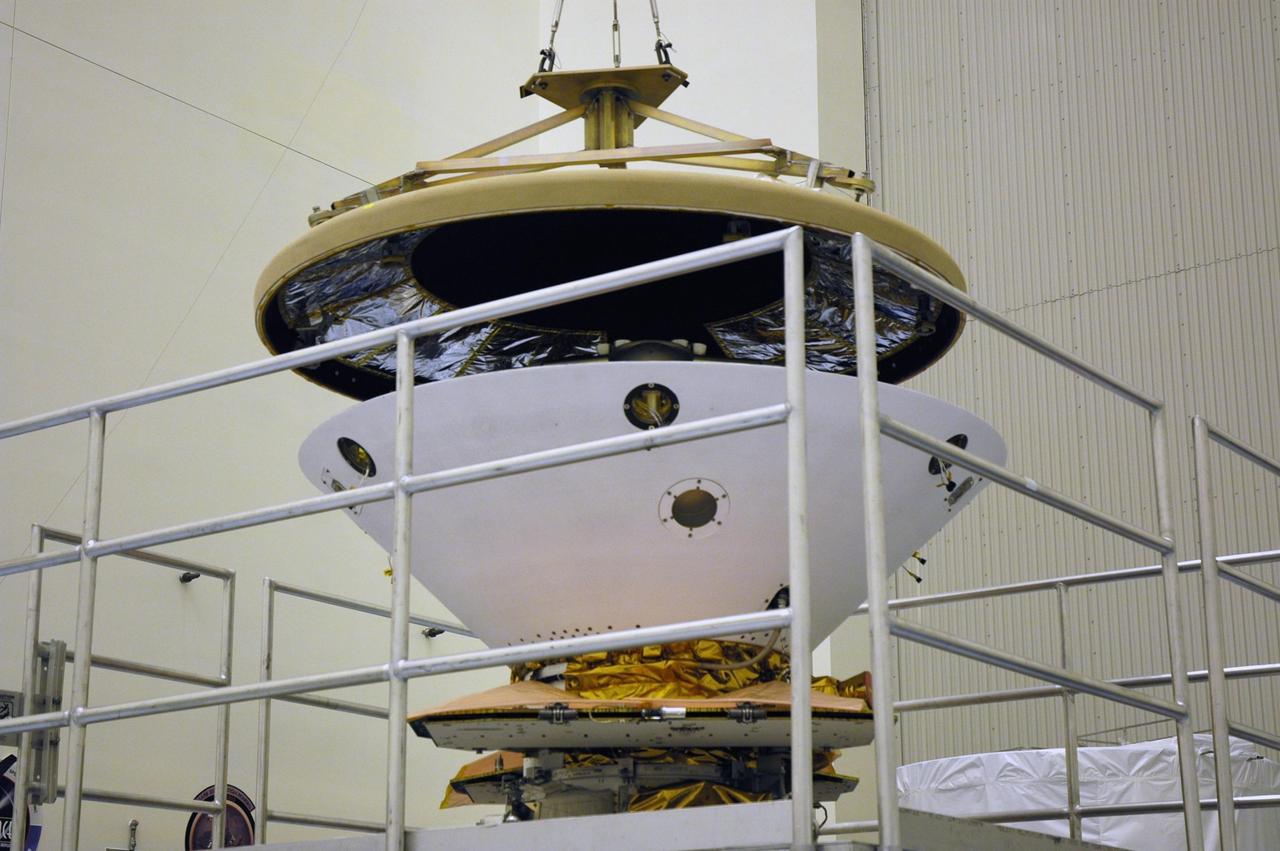
KENNEDY SPACE CENTER, Fla. -- In the Payload Hazardous Servicing Facility, the heat shield for the Phoenix Mars Lander spacecraft is lowered onto the spacecraft. Targeted for launch from Cape Canaveral Air Force Station on Aug. 3, Phoenix will land in icy soils near the north polar permanent ice cap of Mars and explore the history of the water in these soils and any associated rocks, while monitoring polar climate. Landing on Mars is planned in May 2008 on arctic ground where a mission currently in orbit, Mars Odyssey, has detected high concentrations of ice just beneath the top layer of soil. Photo credit: NASA/Troy Cryder
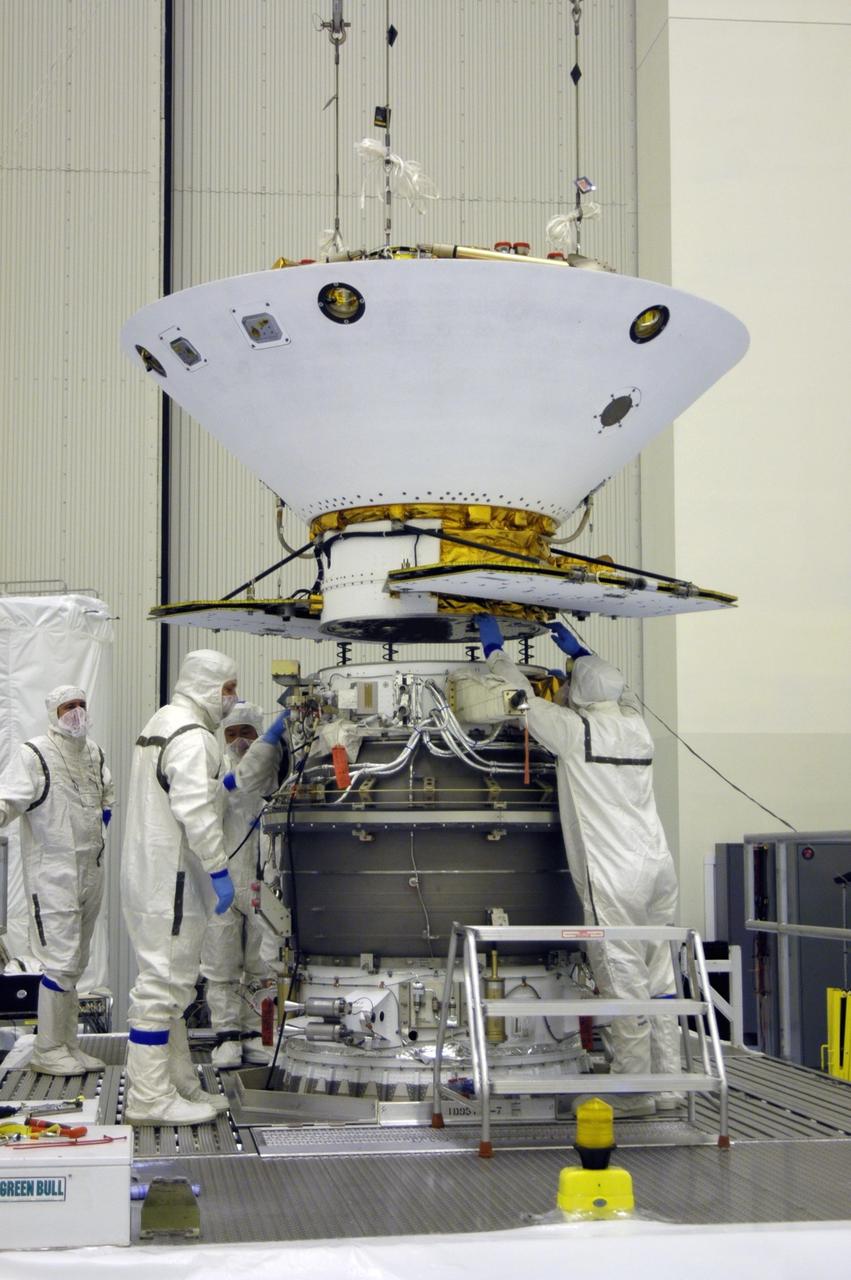
KENNEDY SPACE CENTER, Fla. -- In the Payload Hazardous Servicing Facility, workers guide the Phoenix Mars Lander spacecraft onto the upper stage booster. The spacecraft and booster will be mated for launch. Targeted for launch from Cape Canaveral Air Force Station on Aug. 3, Phoenix will land in icy soils near the north polar permanent ice cap of Mars and explore the history of the water in these soils and any associated rocks, while monitoring polar climate. Landing on Mars is planned in May 2008 on arctic ground where a mission currently in orbit, Mars Odyssey, has detected high concentrations of ice just beneath the top layer of soil. NASA/Dimitri Gerondidakis
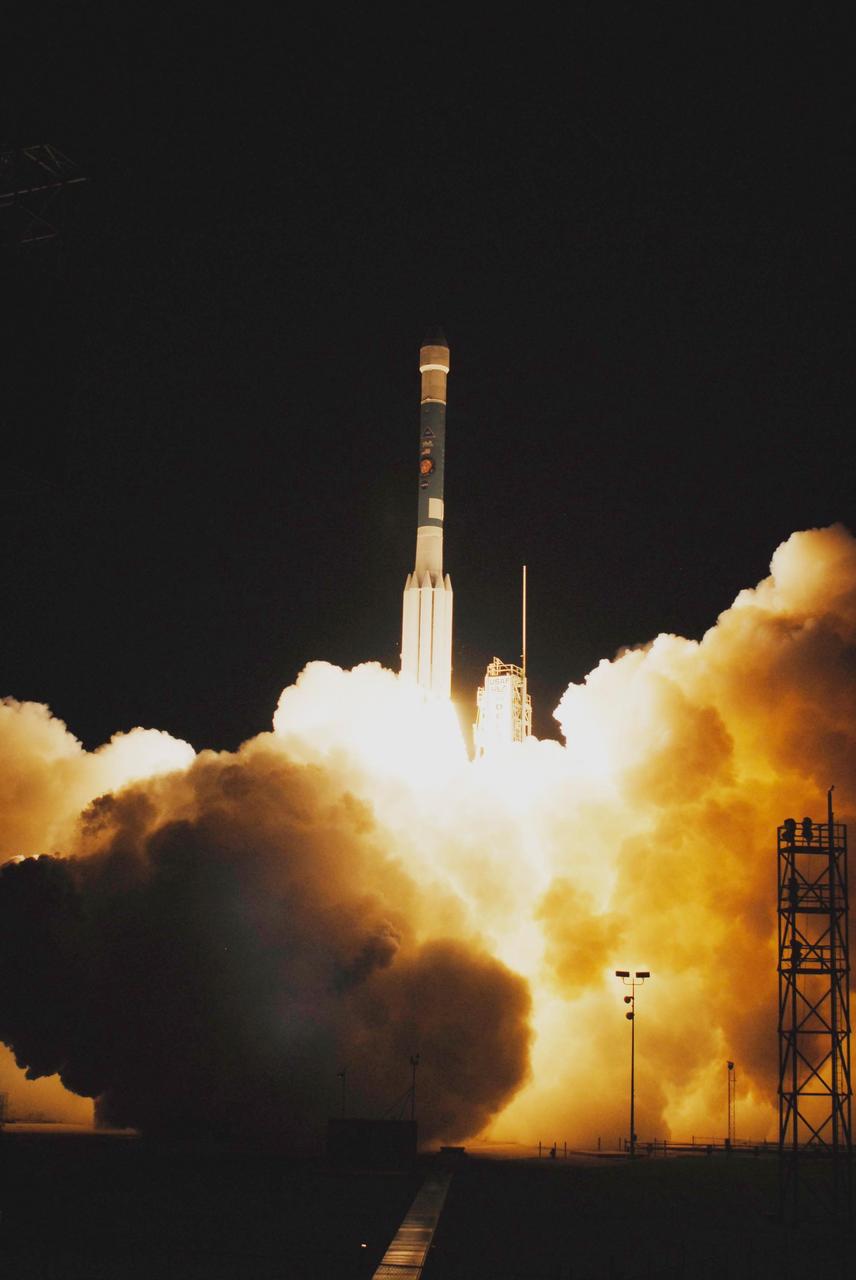
KENNEDY SPACE CENTER, FLA. - The Delta II 7925 rocket carrying NASA's Phoenix Mars lander bounds off Pad 17A on Cape Canaveral Air Force Station at 5:26 a.m. EDT. Phoenix will land in icy soils near the north polar, permanent ice cap of Mars and explore the history of the water in these soils and any associated rocks, while monitoring polar climate. Landing on Mars is planned in May 2008 on arctic ground where a mission currently in orbit, Mars Odyssey, has detected high concentrations of ice just beneath the top layer of soil. Photo credit: NASA/Sandra Joseph and John Kechele
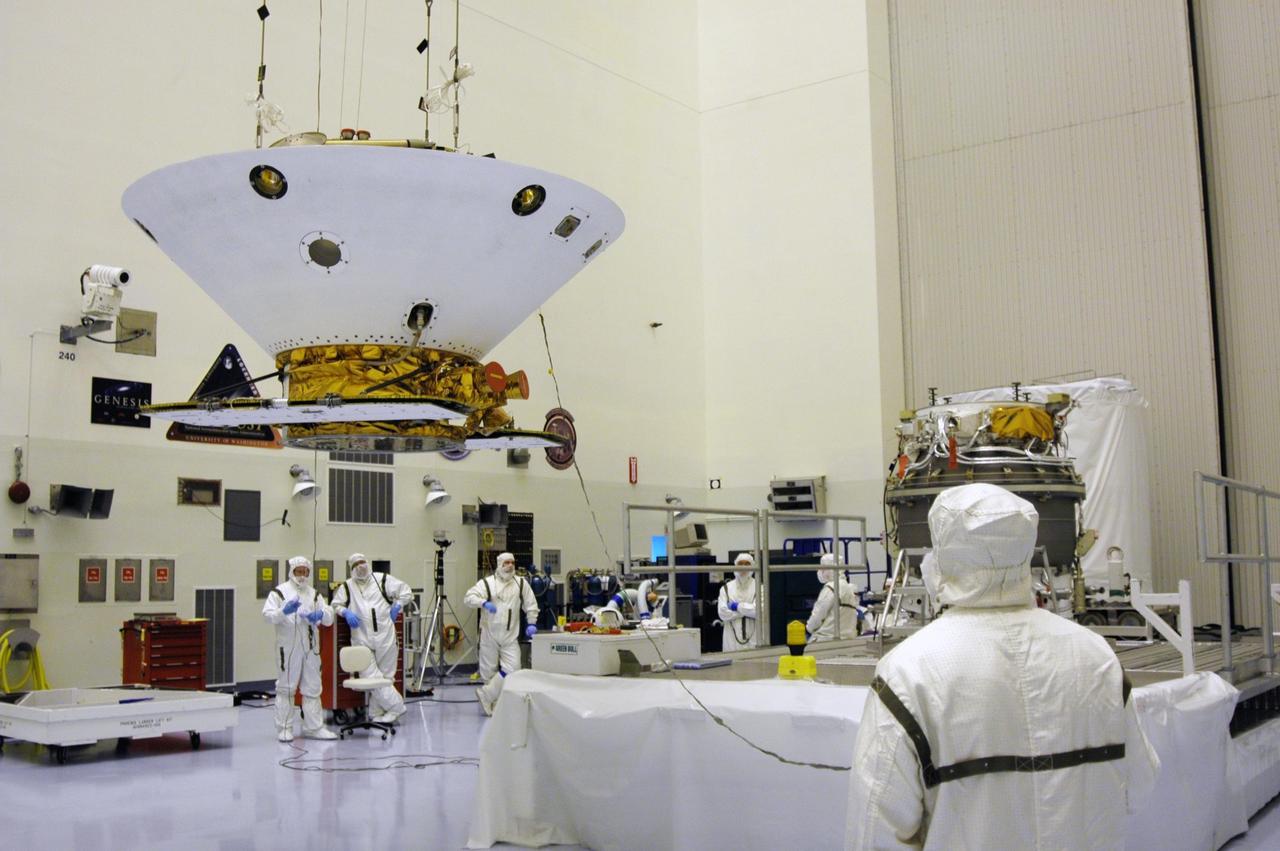
KENNEDY SPACE CENTER, Fla. -- In the Payload Hazardous Servicing Facility, the Phoenix Mars Lander spacecraft is moved across the area toward the upper stage booster at right. The spacecraft and booster will be mated for launch. Targeted for launch from Cape Canaveral Air Force Station on Aug. 3, Phoenix will land in icy soils near the north polar permanent ice cap of Mars and explore the history of the water in these soils and any associated rocks, while monitoring polar climate. Landing on Mars is planned in May 2008 on arctic ground where a mission currently in orbit, Mars Odyssey, has detected high concentrations of ice just beneath the top layer of soil. NASA/Dimitri Gerondidakis
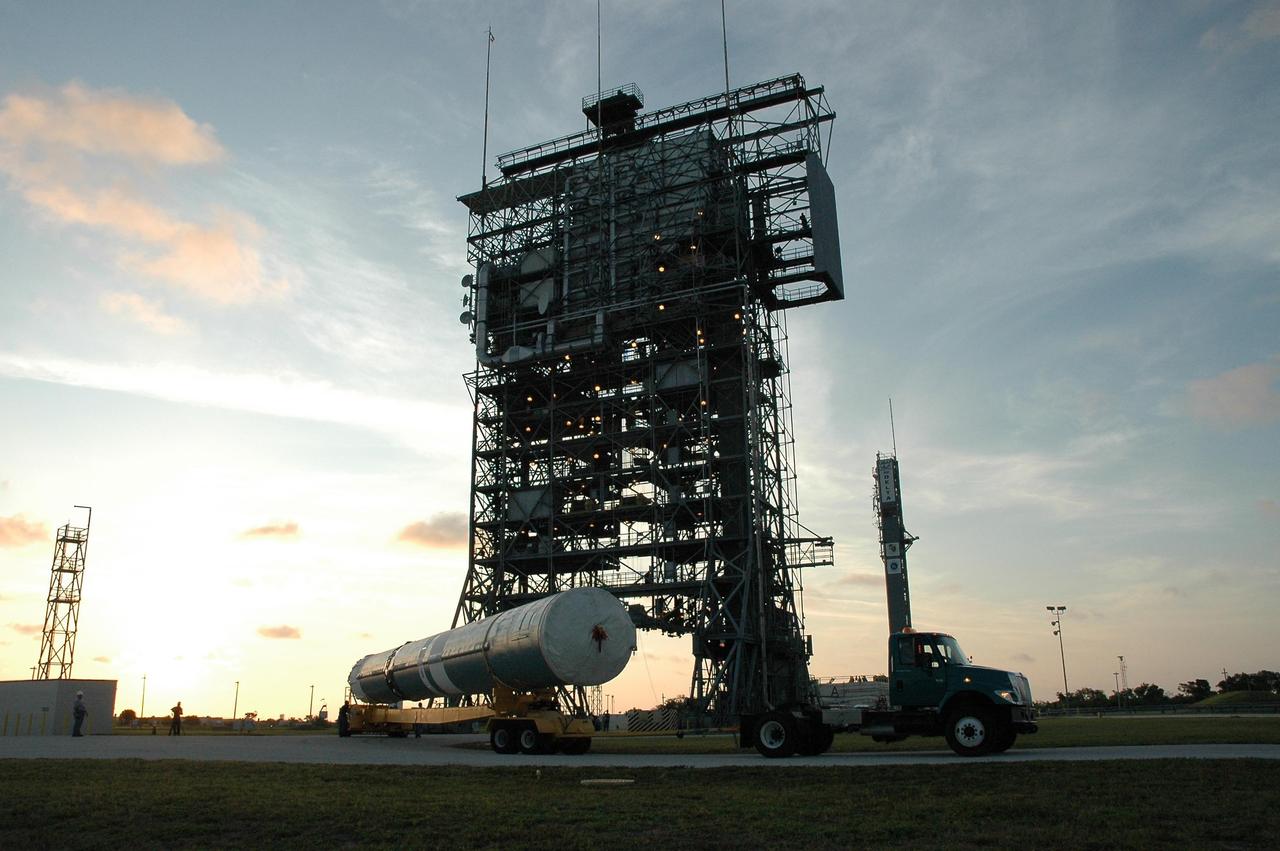
KENNEDY SPACE CENTER, FLA. -- The first stage of a Delta II rocket arrives on Launch Pad 17-A at Cape Canaveral Air Force Station. The rocket is the launch vehicle for the Phoenix spacecraft, targeted for launch on Aug. 3 heading for Mars. Phoenix will land in icy soils near the north polar permanent ice cap of Mars and explore the history of the water in these soils and any associated rocks, while monitoring polar climate. Landing on Mars is planned in May 2008 on arctic ground where a mission currently in orbit, Mars Odyssey, has detected high concentrations of ice just beneath the top layer of soil. Photo credit: NASA/Amanda Diller
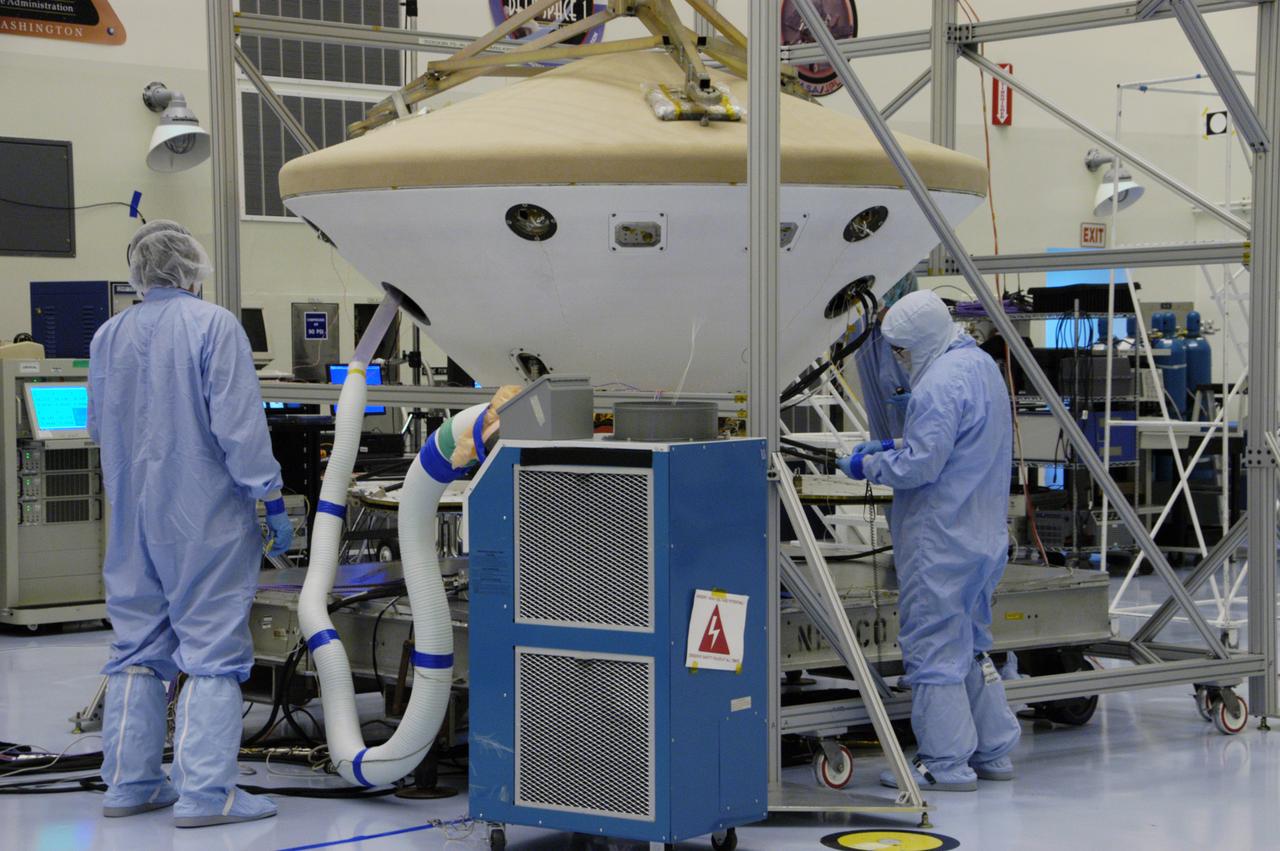
In the Payload Hazardous Servicing Facility, workers monitor the Phoenix spacecraft during a heat shield deployment test, with a firing of ordnance associated with the separation device. Phoenix will land in icy soils near the north polar permanent ice cap of Mars and explore the history of the water in these soils and any associated rocks, while monitoring polar climate. Landing is planned in May 2008 on arctic ground where a mission currently in orbit, Mars Odyssey, has detected high concentrations of ice just beneath the top layer of soil. Launch of Phoenix aboard a Delta II rocket is targeted for Aug. 3 from Cape Canaveral Air Force Station in Florida.
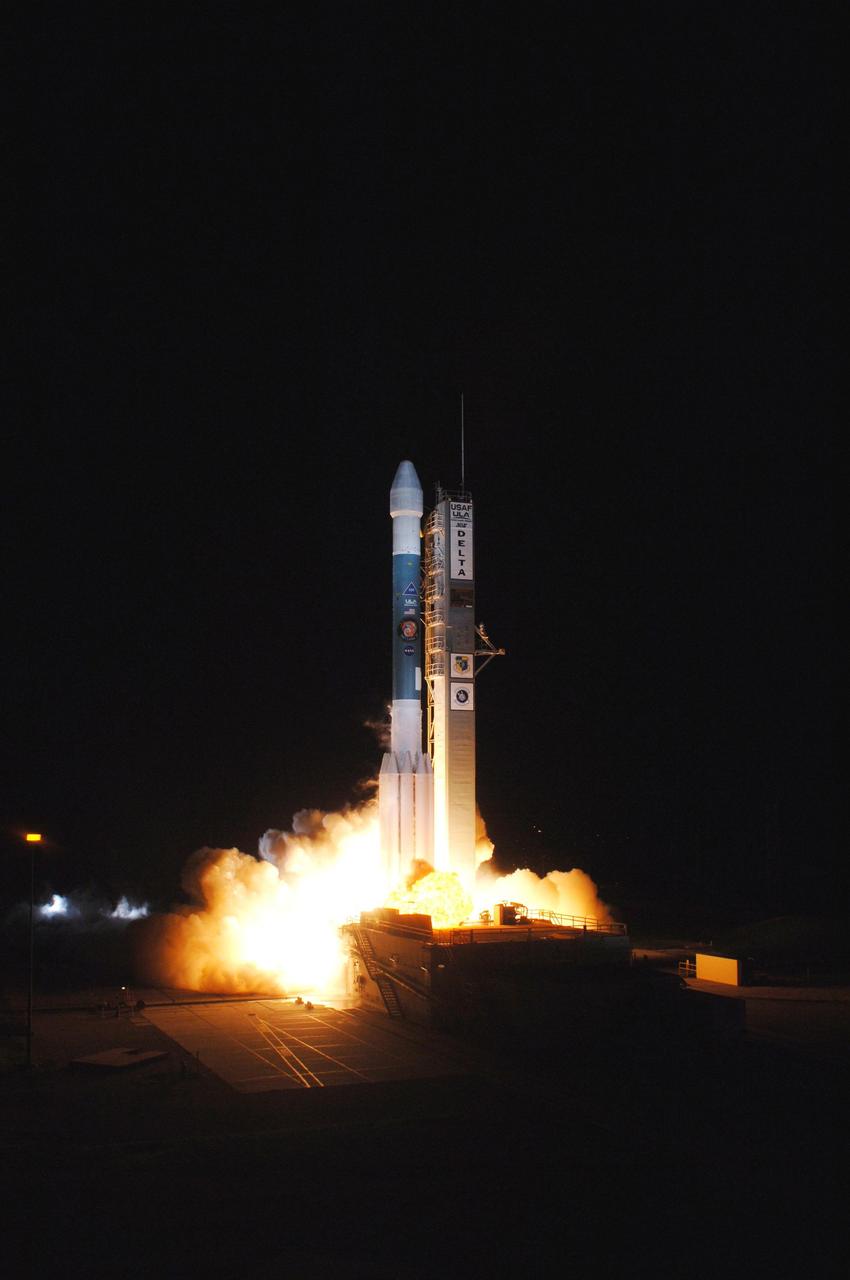
KENNEDY SPACE CENTER, FLA. - NASA's Phoenix spacecraft makes a dramatic start on its mission to Mars aboard a Delta II 7925 rocket at 5:26 a.m. EDT from Pad 17A at Cape Canaveral Air Force Station. Phoenix will land in icy soils near the north polar, permanent ice cap of Mars and explore the history of the water in these soils and any associated rocks, while monitoring polar climate. Landing on Mars is planned in May 2008 on arctic ground where a mission currently in orbit, Mars Odyssey, has detected high concentrations of ice just beneath the top layer of soil. Photo credit: NASA/Tony Gray and Robert Murray

KENNEDY SPACE CENTER, FLA. -- In the Payload Hazardous Servicing Facility at Cape Canaveral Air Force Station, this mesh bag holds the spring and bolt from the test firing to deploy the solar panels on the Phoenix Mars Lander spacecraft. Phoenix will land in icy soils near the north polar permanent ice cap of Mars and explore the history of the water in these soils and any associated rocks, while monitoring polar climate. Landing on Mars is planned in May 2008 on arctic ground where a mission currently in orbit, Mars Odyssey, has detected high concentrations of ice just beneath the top layer of soil. Phoenix is scheduled to launch Aug. 3. Photo credit: NASA/George Shelton
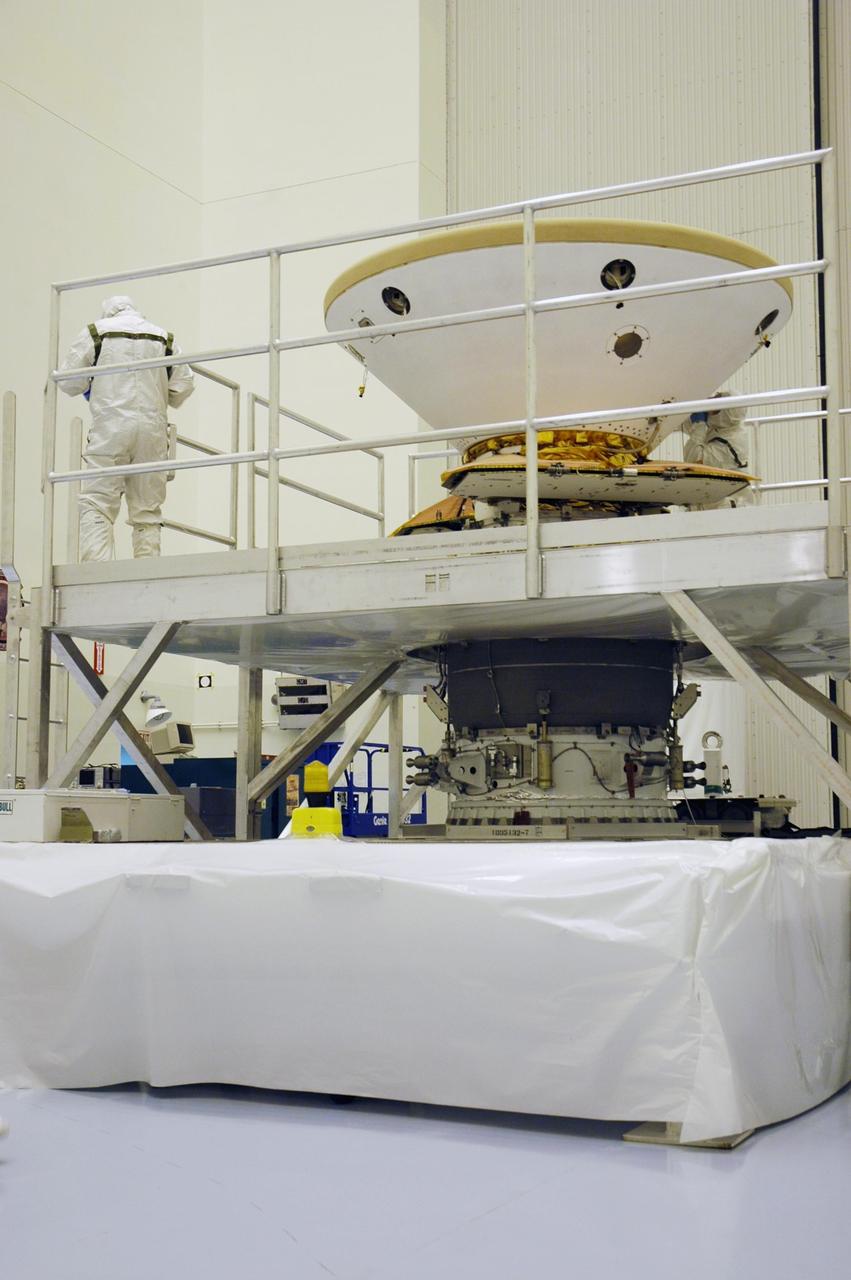
KENNEDY SPACE CENTER, Fla. -- In the Payload Hazardous Servicing Facility, the Phoenix Mars Lander spacecraft rests with its heat shield installed. Targeted for launch from Cape Canaveral Air Force Station on Aug. 3, Phoenix will land in icy soils near the north polar permanent ice cap of Mars and explore the history of the water in these soils and any associated rocks, while monitoring polar climate. Landing on Mars is planned in May 2008 on arctic ground where a mission currently in orbit, Mars Odyssey, has detected high concentrations of ice just beneath the top layer of soil. Photo credit: NASA/Troy Cryder
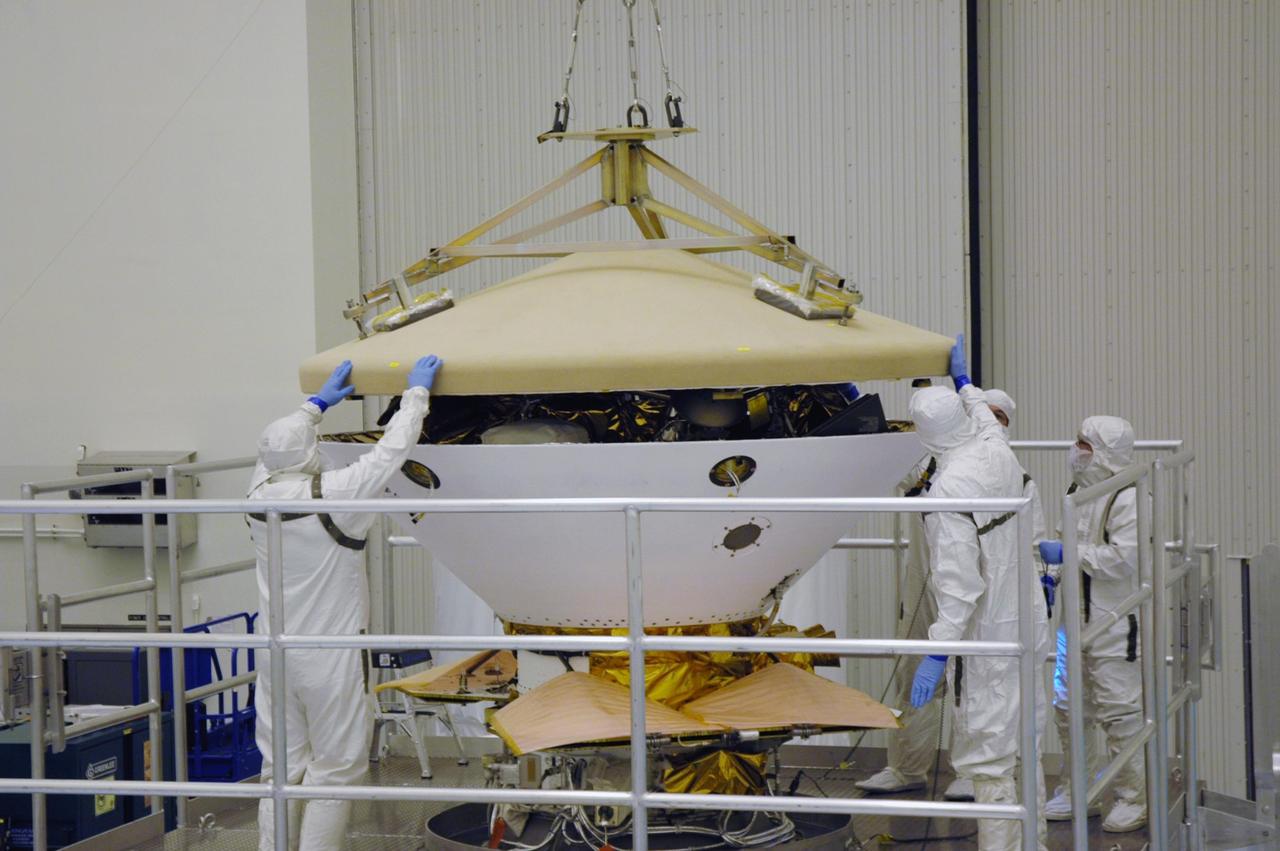
KENNEDY SPACE CENTER, Fla. -- In the Payload Hazardous Servicing Facility, workers guide the heat shield onto the Phoenix Mars Lander spacecraft. Targeted for launch from Cape Canaveral Air Force Station on Aug. 3, Phoenix will land in icy soils near the north polar permanent ice cap of Mars and explore the history of the water in these soils and any associated rocks, while monitoring polar climate. Landing on Mars is planned in May 2008 on arctic ground where a mission currently in orbit, Mars Odyssey, has detected high concentrations of ice just beneath the top layer of soil. Photo credit: NASA/Troy Cryder
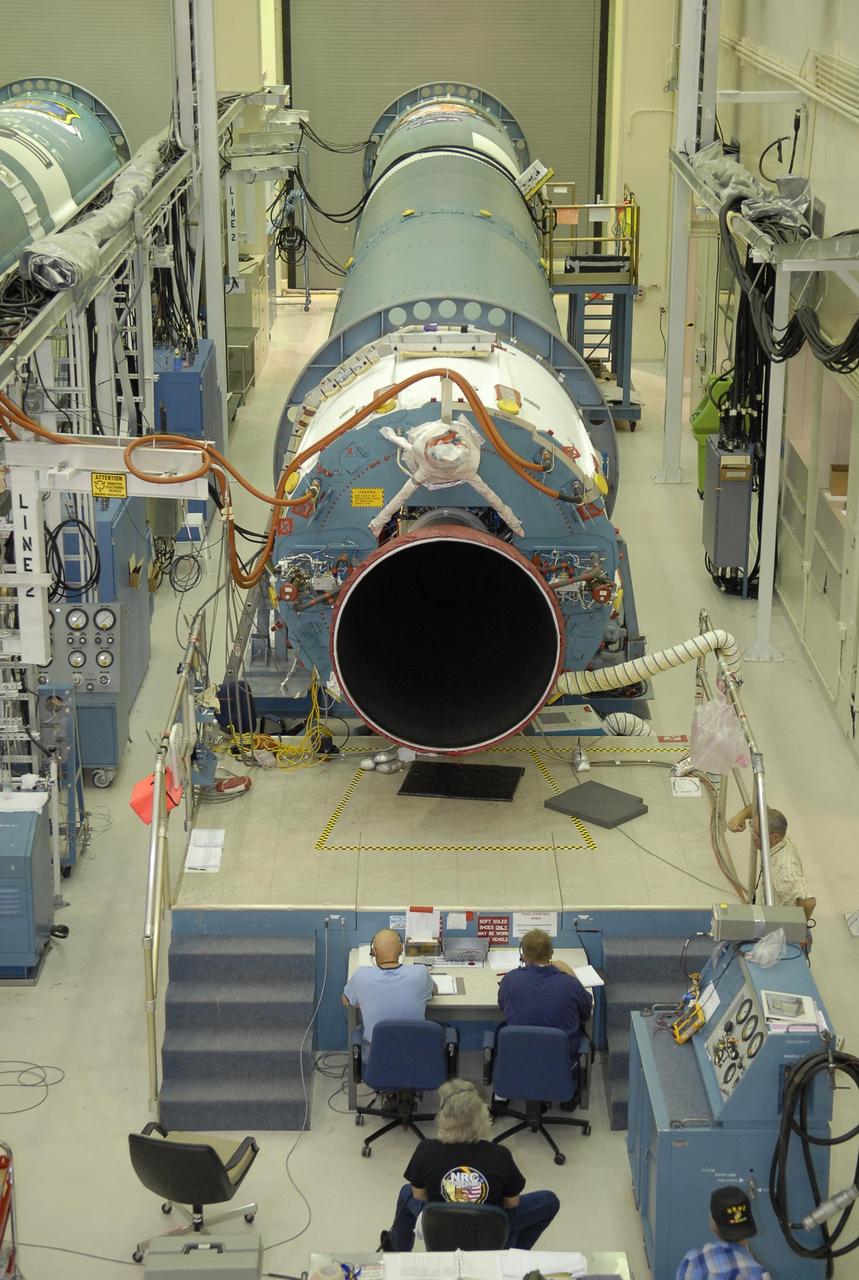
KENNEDY SPACE CENTER, FLA. -- In Hangar A&O on Cape Canaveral Air Force Station in Florida, workers conduct a steering test on the first stage of a Delta II rocket, at right. The rocket is designated for the launch of the Phoenix Mars Lander spacecraft. Phoenix will land in icy soils near the north polar permanent ice cap of Mars and explore the history of the water in these soils and any associated rocks, while monitoring polar climate. Landing is planned in May 2008 on arctic ground where a mission currently in orbit, Mars Odyssey, has detected high concentrations of ice just beneath the top layer of soil. Launch of Phoenix is targeted for Aug. 3. Photo credit: NASA/Kim Shiflett
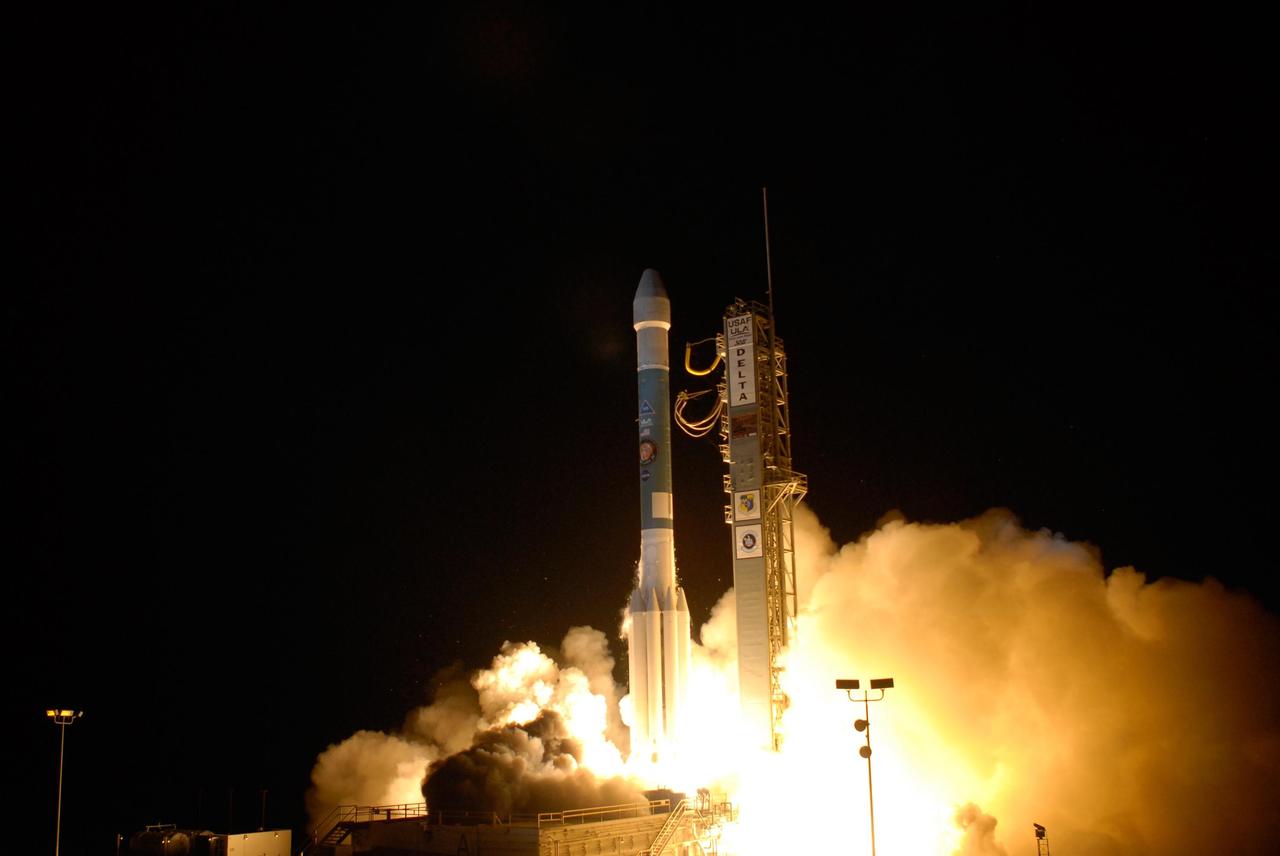
KENNEDY SPACE CENTER, FLA. - NASA's Phoenix Mars lander lifts off from Pad 17A aboard a Delta II 7925 rocket amid billows of smoke at Cape Canaveral Air Force Station at 5:26 a.m. EDT. Phoenix will land in icy soils near the north polar, permanent ice cap of Mars and explore the history of the water in these soils and any associated rocks, while monitoring polar climate. Landing on Mars is planned in May 2008 on arctic ground where a mission currently in orbit, Mars Odyssey, has detected high concentrations of ice just beneath the top layer of soil. Photo credit: NASA/Regina Mitchell-Ryall and Jerry Cannon
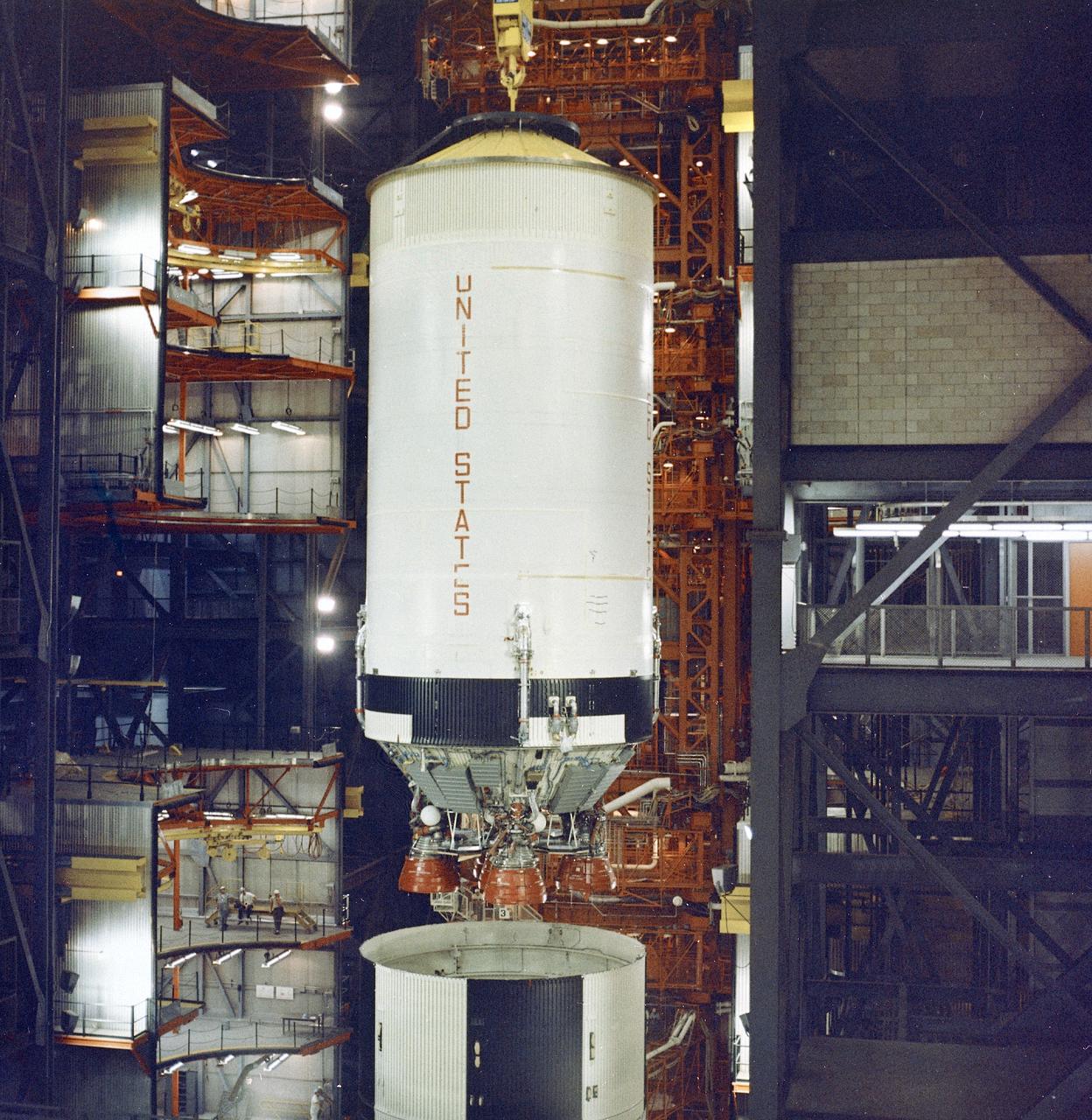
This photograph shows the Saturn V S-II (second) stage of the Apollo 6 mission being lowered atop of the S-IC (first) stage during the final assembly operations in the Vehicle Assembly Building (VAB) at the Kennedy Space Center. The Apollo 6 mission was the second Saturn V unmanned flight for testing an emergency detection system. The launch occurred on April 4, 1968.
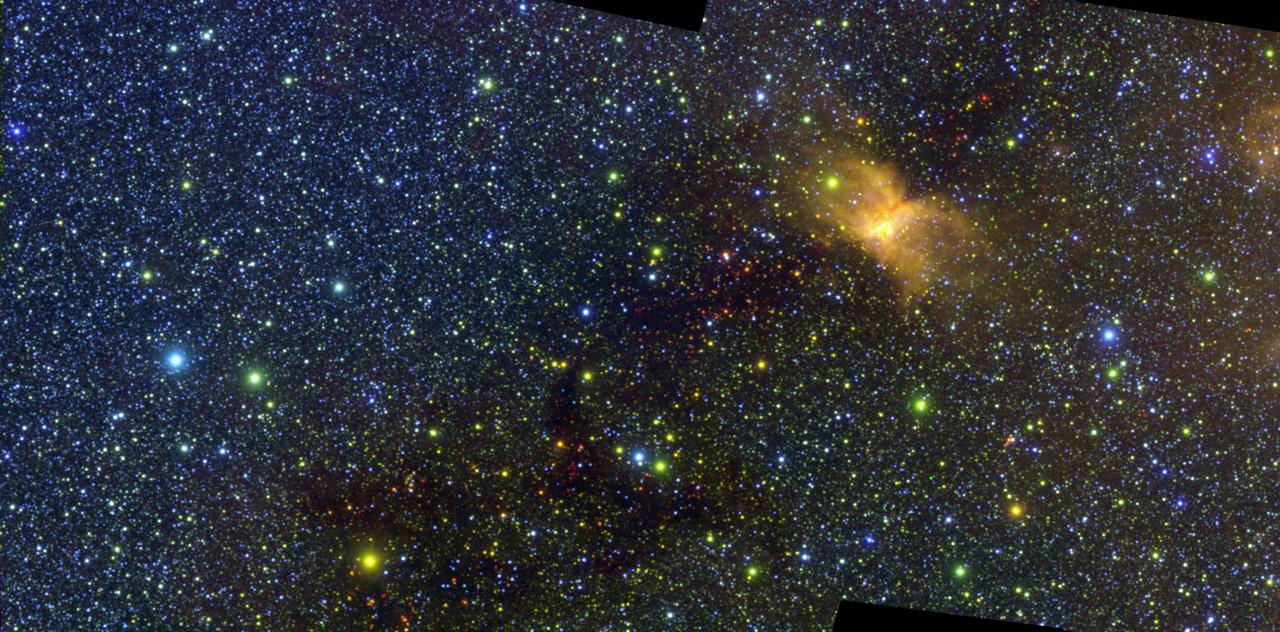
This image of the Vela Molecular Ridge was captured by NASA's SPHEREx (Spectro-Photometer for the History of the Universe, Epoch of Reionization and Ices Explorer) and was part of the mission's first public data release on July 2, 2025. The yellow patch at right is RCW 36, an emission nebula – a cloud of interstellar gas and dust that glows in some infrared colors due to radiation from nearby stars. SPHEREx detects 102 infrared wavelengths, or colors, that aren't visible to the human eye. https://photojournal.jpl.nasa.gov/catalog/PIA26354
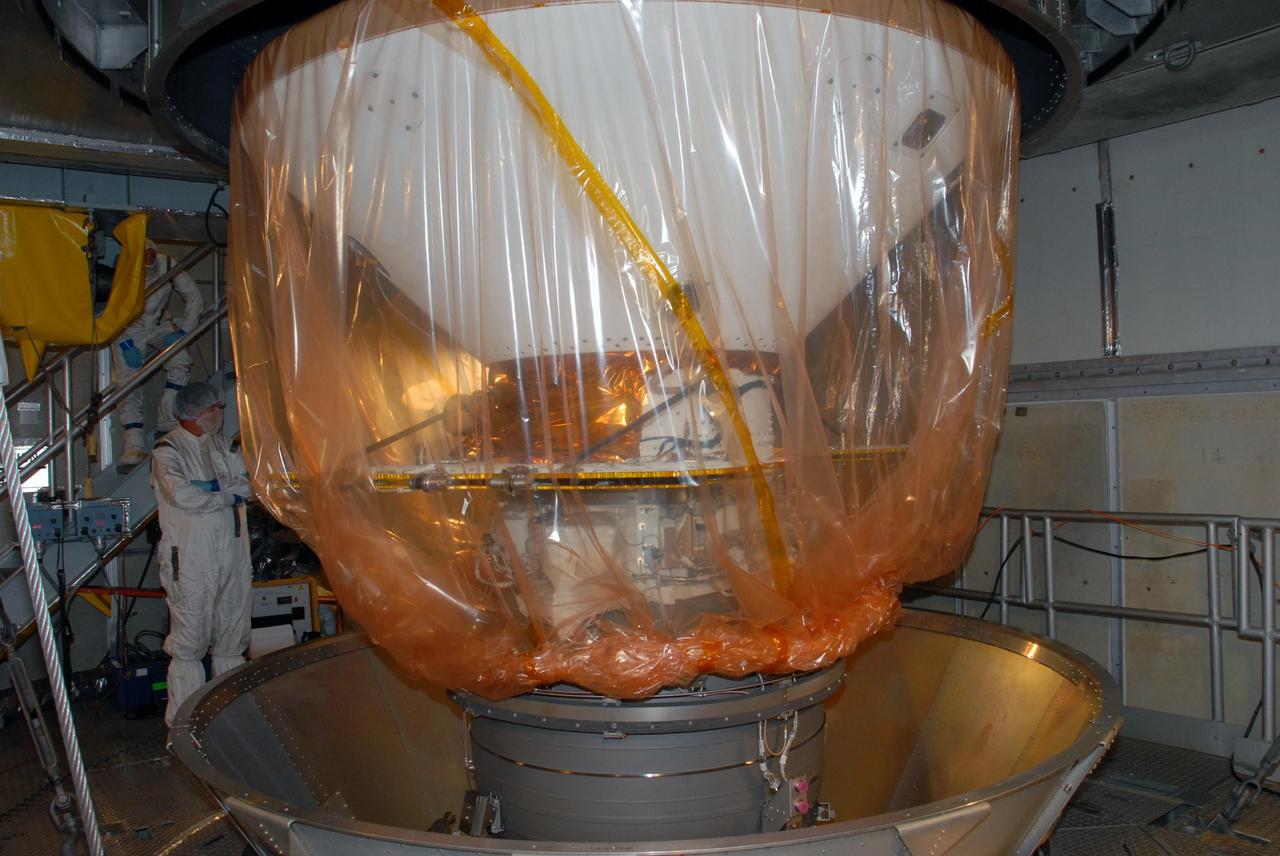
KENNEDY SPACE CENTER, FLA. -- Inside the mobile service tower of Launch Pad 17-A at Cape Canaveral Air Force Station in Florida, workers remove the container from NASA's Phoenix Mars Lander. Launch of Phoenix is scheduled to launch on the Delta II launch vehicle no earlier than Aug. 3. Phoenix will land in icy soils near the north polar permanent ice cap of Mars and explore the history of the water in these soils and any associated rocks, while monitoring polar climate. Landing on Mars is planned in May 2008 on arctic ground where a mission currently in orbit, Mars Odyssey, detected high concentrations of ice just beneath the top layer of soil. NASA/George Shelton
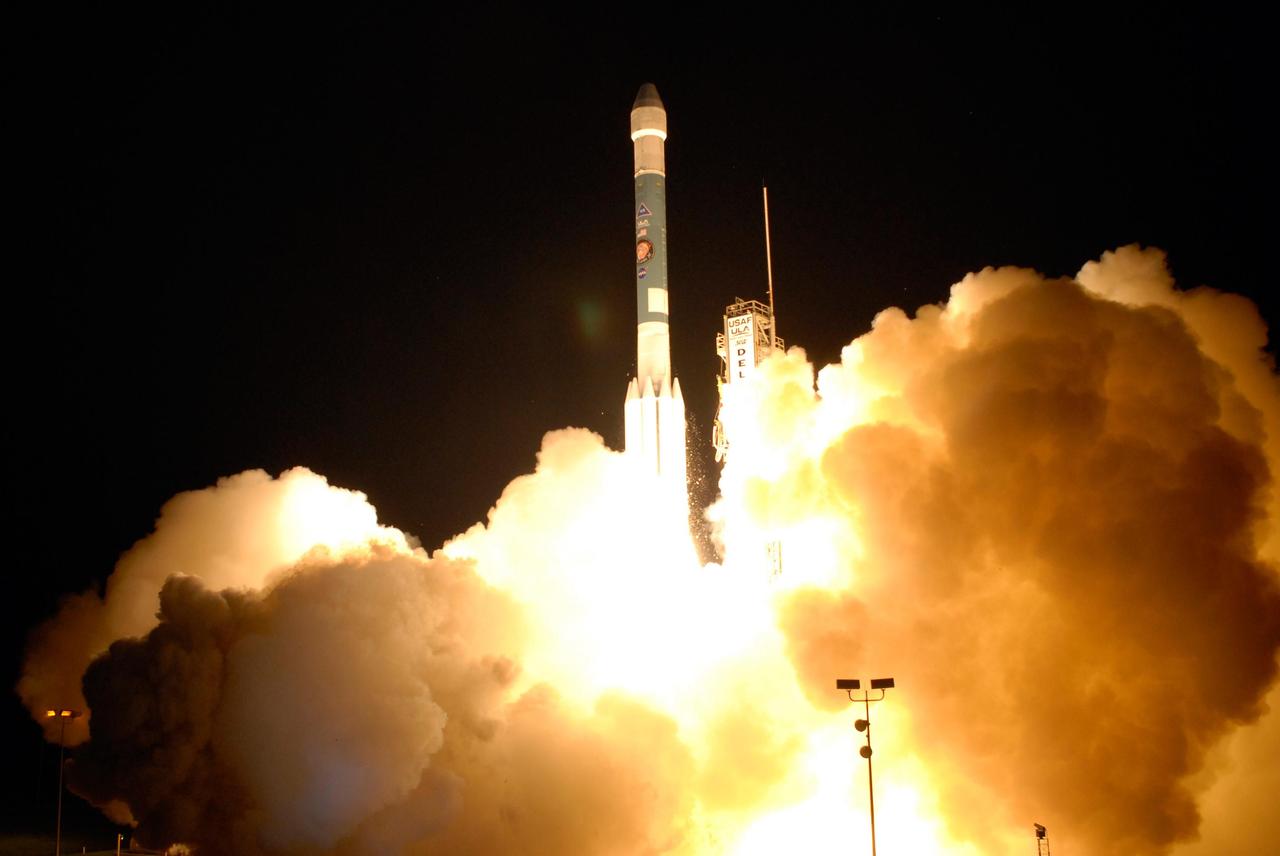
KENNEDY SPACE CENTER, FLA. - NASA's Phoenix Mars lander lifts off from Pad 17A aboard a Delta II 7925 rocket at 5:26 a.m. EDT, illuminating the night sky over Cape Canaveral Air Force Station. Phoenix will land in icy soils near the north polar, permanent ice cap of Mars and explore the history of the water in these soils and any associated rocks, while monitoring polar climate. Landing on Mars is planned in May 2008 on arctic ground where a mission currently in orbit, Mars Odyssey, has detected high concentrations of ice just beneath the top layer of soil. Photo credit: NASA/Regina Mitchell-Ryall and Jerry Cannon
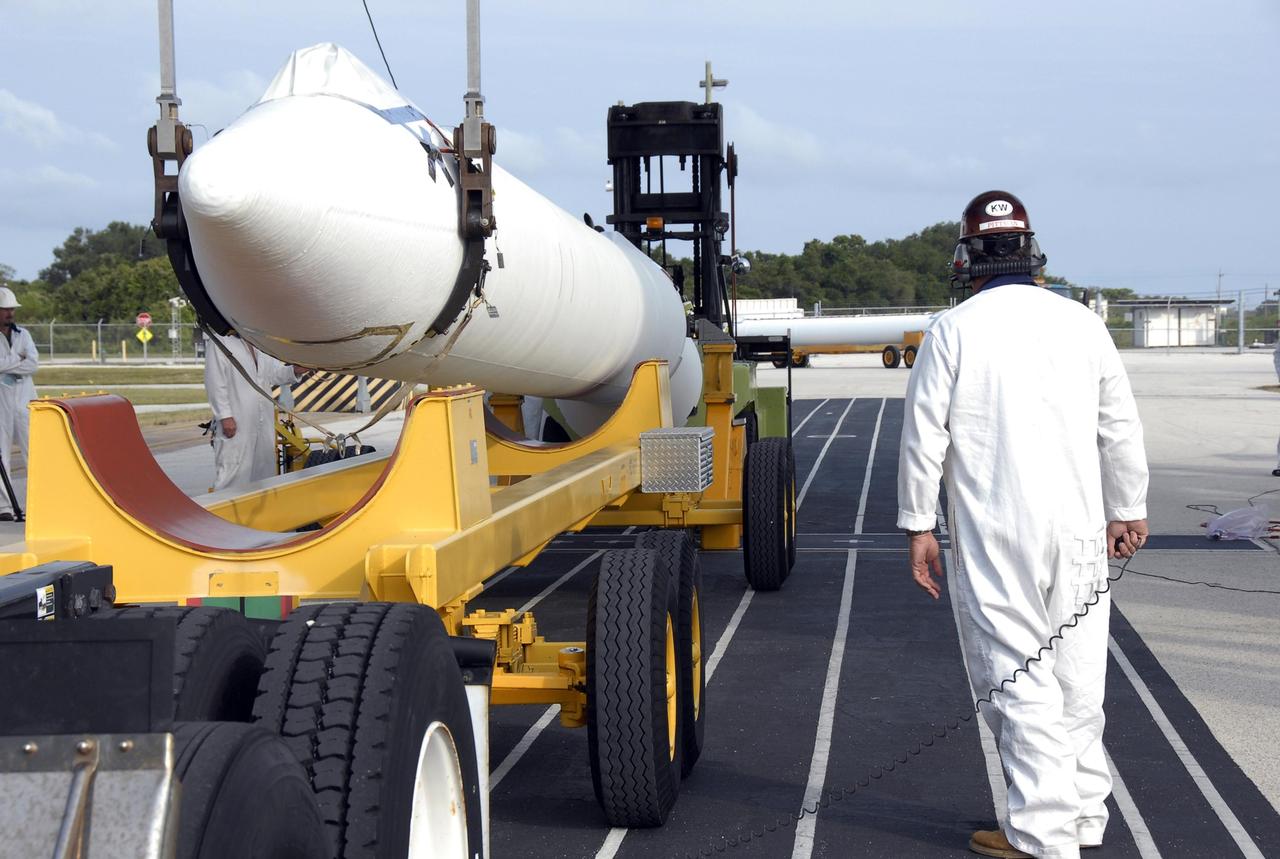
KENNEDY SPACE CENTER, FLA. -- On Pad 17-A at Cape Canaveral Air Force Station, the solid rocket booster is raised off its transporter. The SRB will be lifted into the mobile service tower for mating with the Delta II first stage. The Delta is the launch vehicle for the Phoenix Mars Lander spacecraft. Phoenix will land in icy soils near the north polar permanent ice cap of Mars and explore the history of the water in these soils and any associated rocks, while monitoring polar climate. Landing on Mars is planned in May 2008 on arctic ground where a mission currently in orbit, Mars Odyssey, has detected high concentrations of ice just beneath the top layer of soil. Phoenix is scheduled to launch Aug. 3. Photo credit: NASA/Kim Shiflett
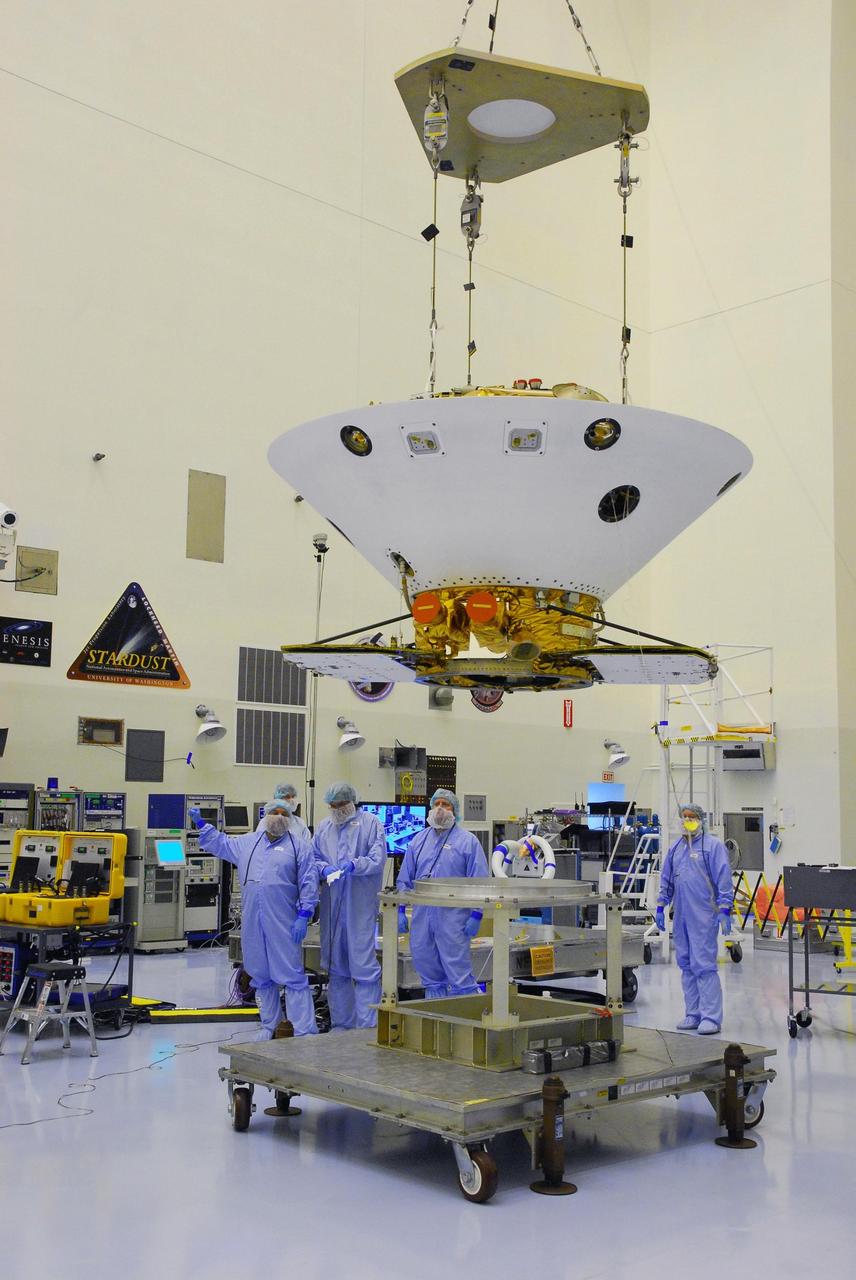
KENNEDY SPACE CENTER, FLA. -- In the Payload Handling Servicing Facility, an overhead crane lifts the Phoenix spacecraft from its stand for a move to a rotation stand for an interim weight and center of gravity determination. The Phoenix mission is the first project in NASA's first openly competed program of Mars Scout missions. Phoenix will land in icy soils near the north polar permanent ice cap of Mars and explore the history of the water in these soils and any associated rocks, while monitoring polar climate. Landing is planned in May 2008 on arctic ground where a mission currently in orbit, Mars Odyssey, has detected high concentrations of ice just beneath the top layer of soil. It will serve as NASA's first exploration of a potential modern habitat on Mars and open the door to a renewed search for carbon-bearing compounds, Photo credit: NASA/George Shelton
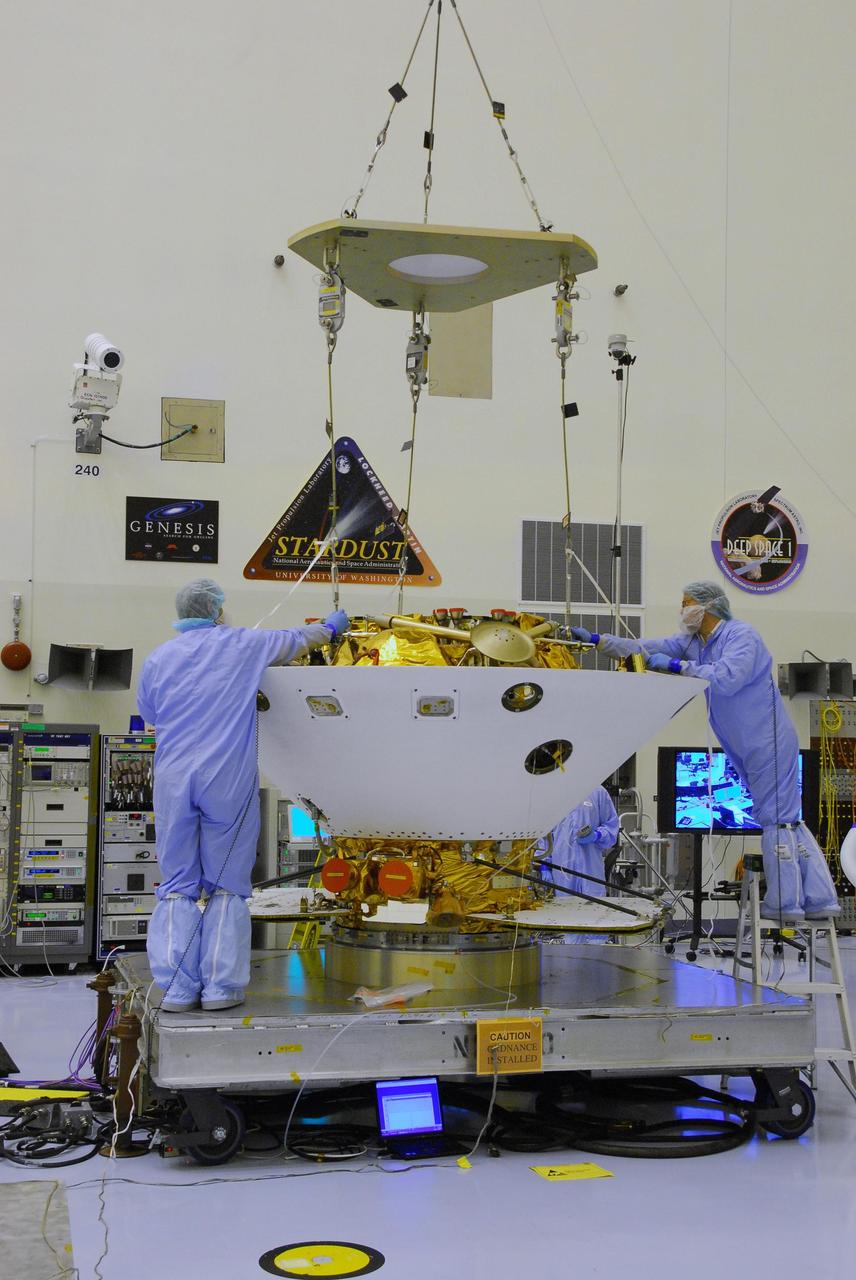
KENNEDY SPACE CENTER, FLA. -- Workers in the Payload Handling Servicing Facility attach an overhead crane to the Phoenix spacecraft. The spacecraft will be lifted and moved to a rotation stand for an interim weight and center of gravity determination. The Phoenix mission is the first project in NASA's first openly competed program of Mars Scout missions. Phoenix will land in icy soils near the north polar permanent ice cap of Mars and explore the history of the water in these soils and any associated rocks, while monitoring polar climate. Landing is planned in May 2008 on arctic ground where a mission currently in orbit, Mars Odyssey, has detected high concentrations of ice just beneath the top layer of soil. It will serve as NASA's first exploration of a potential modern habitat on Mars and open the door to a renewed search for carbon-bearing compounds, Photo credit: NASA/George Shelton
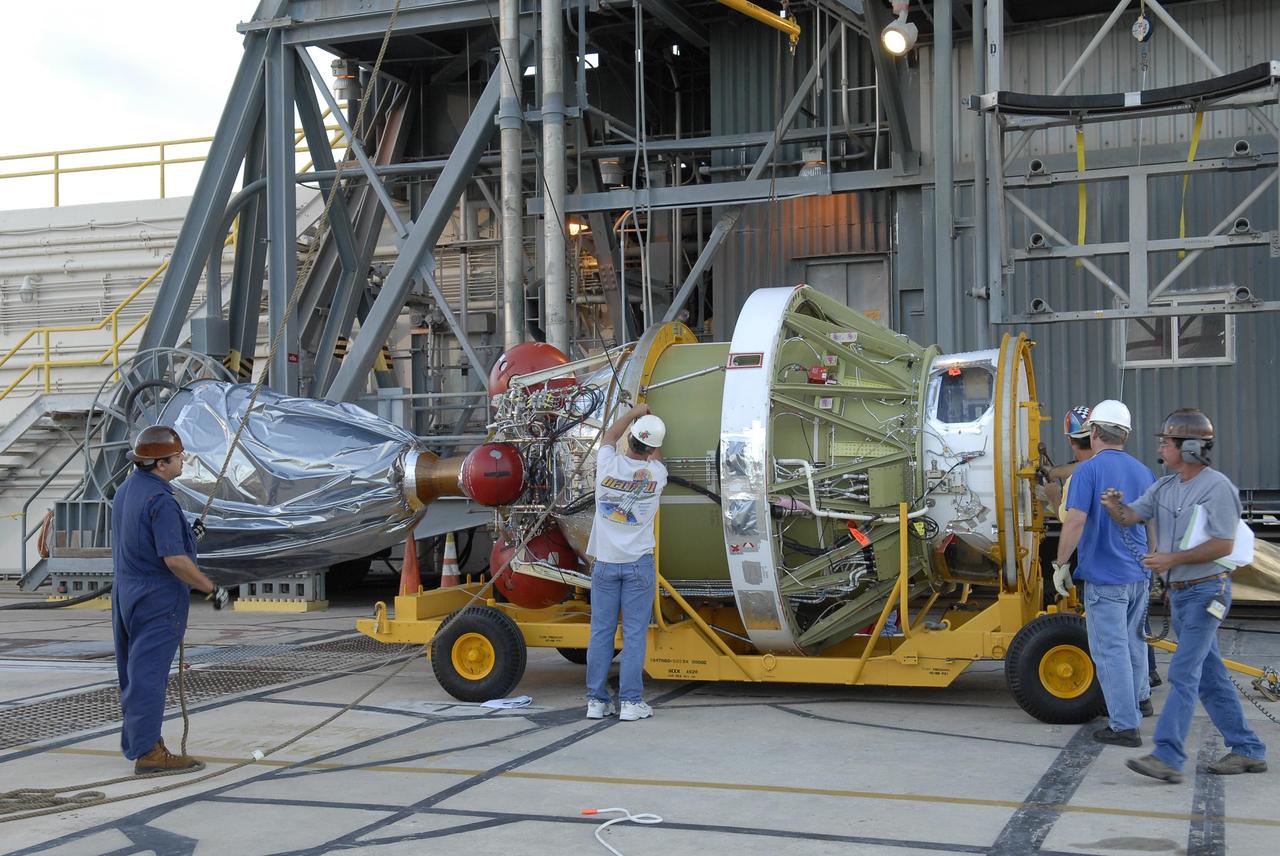
KENNEDY SPACE CENTER, FLA. -- The second stage of the Delta II launch vehicle for NASA's Phoenix Mars Lander arrives on Launch Pad 17-A at Cape Canaveral Air Force Station. The second stage will be lifted into the mobile service tower and mated with the Delta's first stage. The second stage will be lifted into the mobile service tower and mated with the first stage. Phoenix is scheduled to launch Aug. 3. Phoenix will land in icy soils near the north polar permanent ice cap of Mars and explore the history of the water in these soils and any associated rocks, while monitoring polar climate. Landing on Mars is planned in May 2008 on arctic ground where a mission currently in orbit, Mars Odyssey, has detected high concentrations of ice just beneath the top layer of soil. Photo credit: NASA/Kim Shiflett
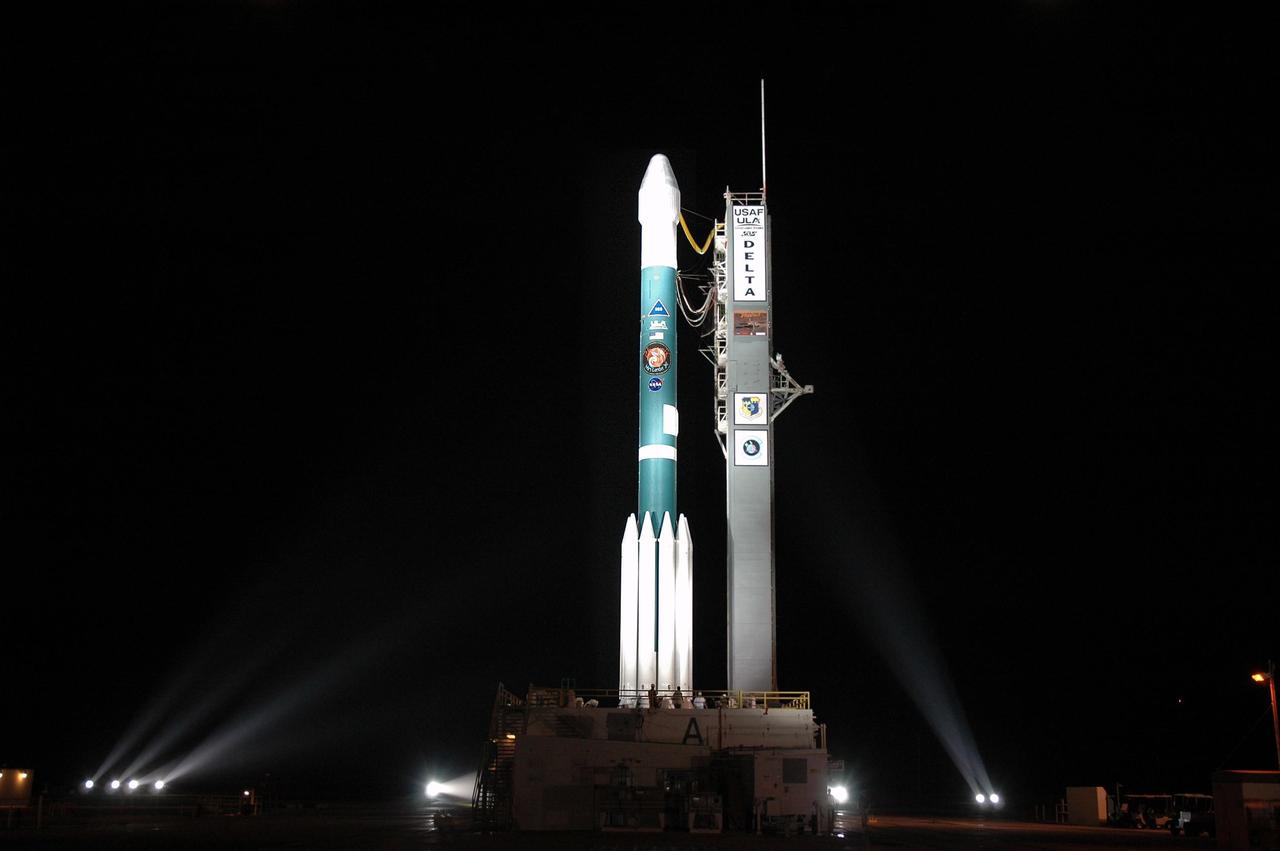
KENNEDY SPACE CENTER, FLA. -- Rollback of the mobile service tower, or gantry, from around the Delta II 7925 rocket is complete on Launch Pad 17A at Cape Canaveral Air Force Station. Equipped with three stages and nine strap-on solid rocket motors, the Delta II rocket packs plenty of punch for sending the Phoenix spacecraft on its way toward Mars. Launch is targeted for Aug. 4 during one of two opportunities for liftoff: 5:26 or 6:02 a.m. EDT. Phoenix will land in icy soils near the north polar, permanent ice cap of Mars and explore the history of the water in these soils and any associated rocks, while monitoring polar climate. Landing on Mars is planned in May 2008 on arctic ground where a mission currently in orbit, Mars Odyssey, has detected high concentrations of ice just beneath the top layer of soil. Photo credit: NASA/Jim Grossmann
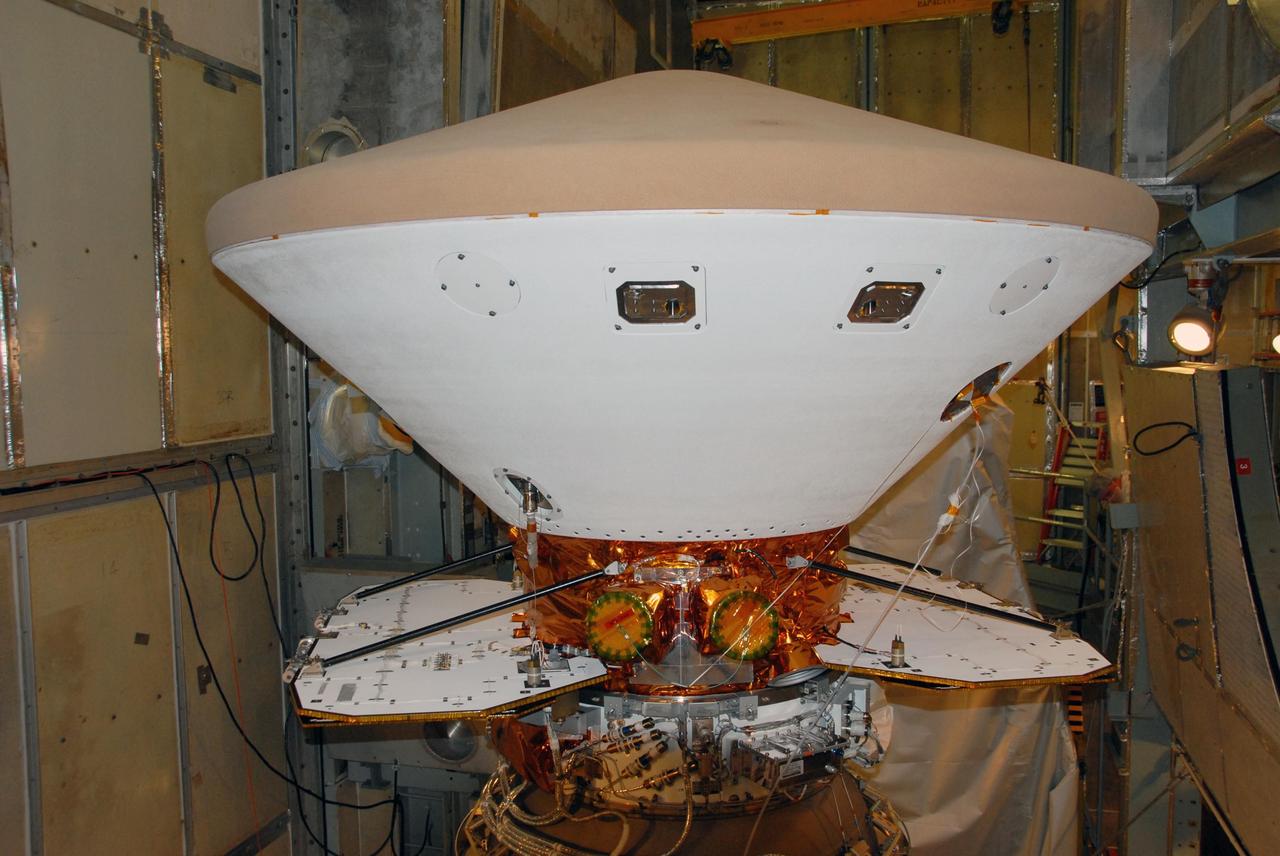
KENNEDY SPACE CENTER, FLA. -- On Launch Pad 17-A at Cape Canaveral Air Force Station, the Phoenix Mars Lander waits for he fairing installation. Phoenix is targeted for launch on Aug. 3 aboard a Delta II rocket. The fairing is a molded structure that fits flush with the outside surface of the Delta II upper stage booster and forms an aerodynamically smooth nose cone, protecting the spacecraft during launch and ascent. Phoenix will land in icy soils near the north polar, permanent ice cap of Mars and explore the history of the water in these soils and any associated rocks, while monitoring polar climate. Landing on Mars is planned in May 2008 on arctic ground where a mission currently in orbit, Mars Odyssey, has detected high concentrations of ice just beneath the top layer of soil. NASA/George Shelton
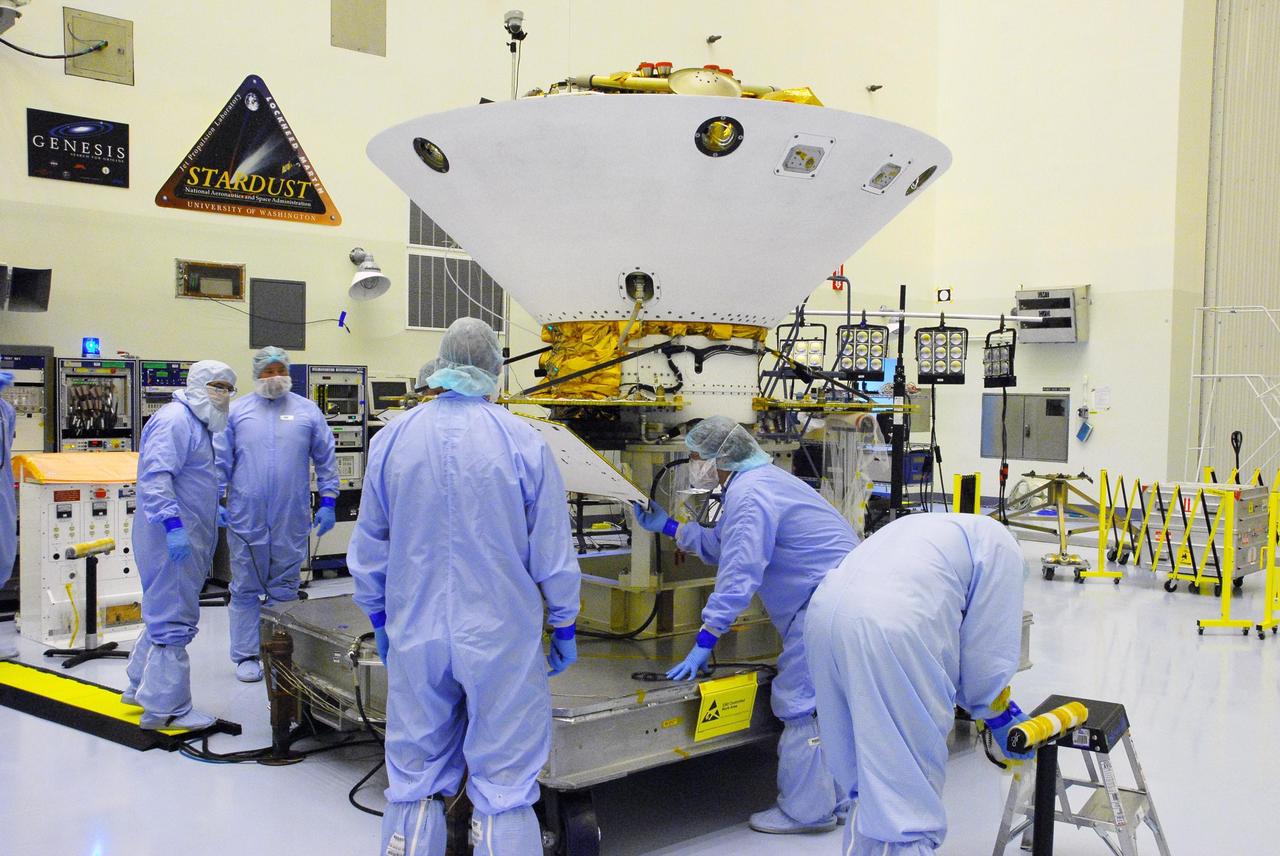
KENNEDY SPACE CENTER, FLA. -- In the Payload Hazardous Servicing Facility at Cape Canaveral Air Force Station, workers prepare the Phoenix Mars Lander spacecraft for solar panel deployment. The deployment of the panels is part of the pre-launch testing under way. Phoenix will land in icy soils near the north polar permanent ice cap of Mars and explore the history of the water in these soils and any associated rocks, while monitoring polar climate. Landing on Mars is planned in May 2008 on arctic ground where a mission currently in orbit, Mars Odyssey, has detected high concentrations of ice just beneath the top layer of soil. Phoenix is scheduled to launch Aug. 3. Photo credit: NASA/George Shelton
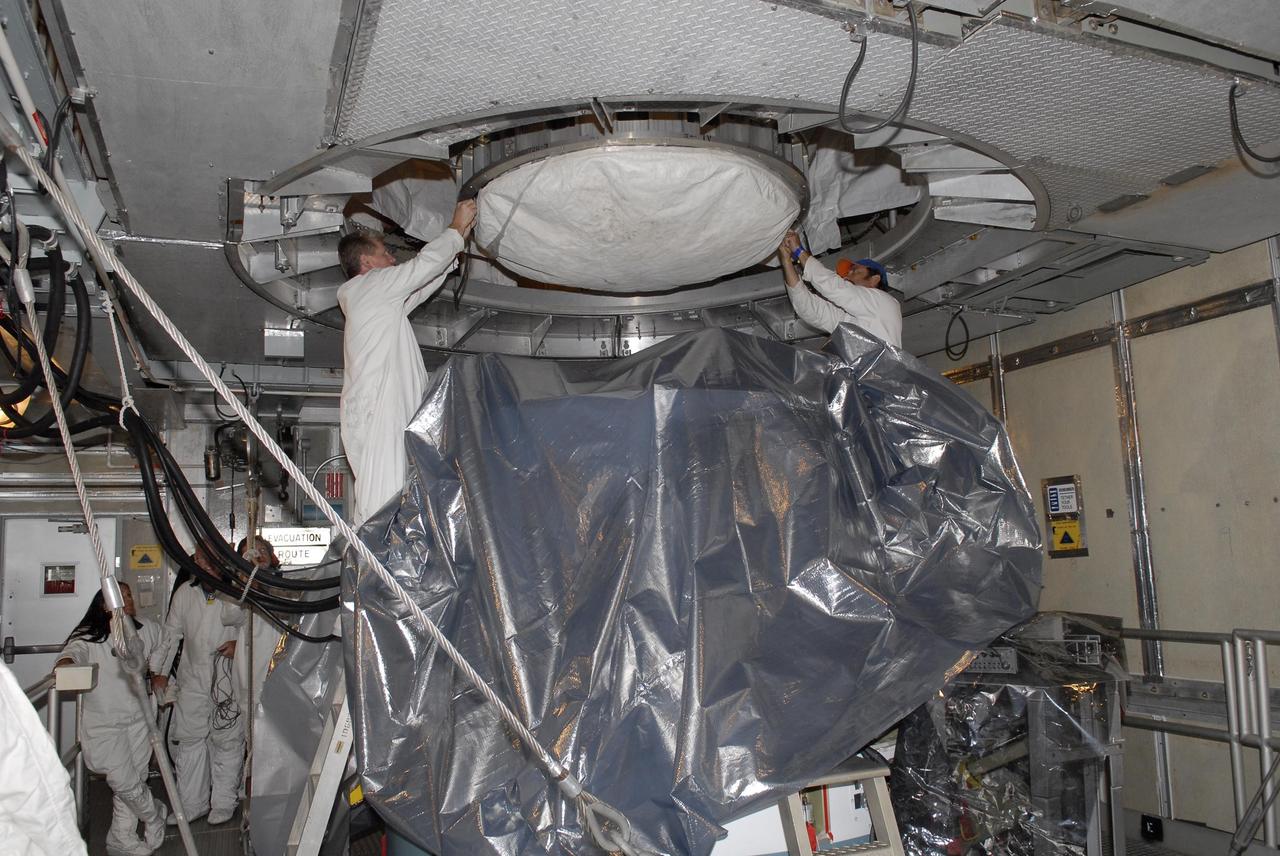
KENNEDY SPACE CENTER, FLA. — Inside the mobile service tower on Launch Pad 17-A, the Phoenix Mars Lander is lowered toward the Delta II second stage for mating. Launch of NASA's Phoenix Mars Lander is scheduled for Aug. 3. There are two instantaneous launch times, 5:35:18 and 6:11:24 a.m. EDT. Phoenix will land in icy soils near the north polar permanent ice cap of Mars and explore the history of the water in these soils and any associated rocks, while monitoring polar climate. Landing on Mars is planned in May 2008 on arctic ground where a mission currently in orbit, Mars Odyssey, has detected high concentrations of ice just beneath the top layer of soil. NASA/George Shelton

KENNEDY SPACE CENTER, FLA. -- In the Payload Hazardous Servicing Facility, photographers dressed in clean-room suits are able to get closeup shots of the Phoenix Mars Lander. Phoenix is scheduled to launch Aug. 3 from Launch Pad 17-A at Cape Canaveral Air Force Station. Phoenix will land in icy soils near the north polar permanent ice cap of Mars and explore the history of the water in these soils and any associated rocks, while monitoring polar climate. Landing on Mars is planned in May 2008 on arctic ground where a mission currently in orbit, Mars Odyssey, has detected high concentrations of ice just beneath the top layer of soil. Photo credit: NASA/Kim Shiflett
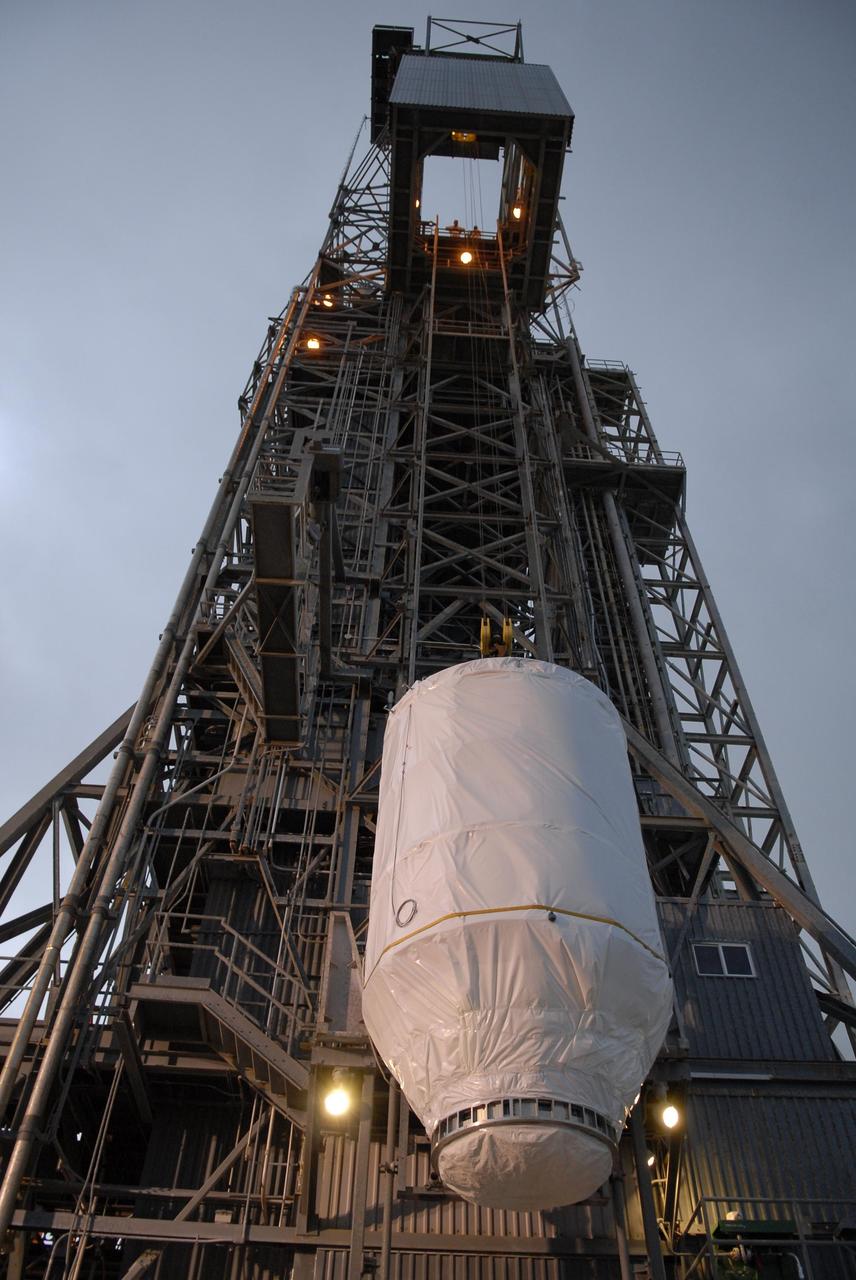
KENNEDY SPACE CENTER, FLA. — Attached to an overhead crane, the Phoenix Mars Lander is lifted up alongside the mobile service tower on Launch Pad 17-A at Cape Canaveral Air Force Station. Once inside the tower, the lander will be mated to the Delta II launch vehicle. Launch of NASA's Phoenix Mars Lander is scheduled for Aug. 3. There are two instantaneous launch times, 5:35:18 and 6:11:24 a.m. EDT. Phoenix will land in icy soils near the north polar permanent ice cap of Mars and explore the history of the water in these soils and any associated rocks, while monitoring polar climate. Landing on Mars is planned in May 2008 on arctic ground where a mission currently in orbit, Mars Odyssey, has detected high concentrations of ice just beneath the top layer of soil. NASA/George Shelton
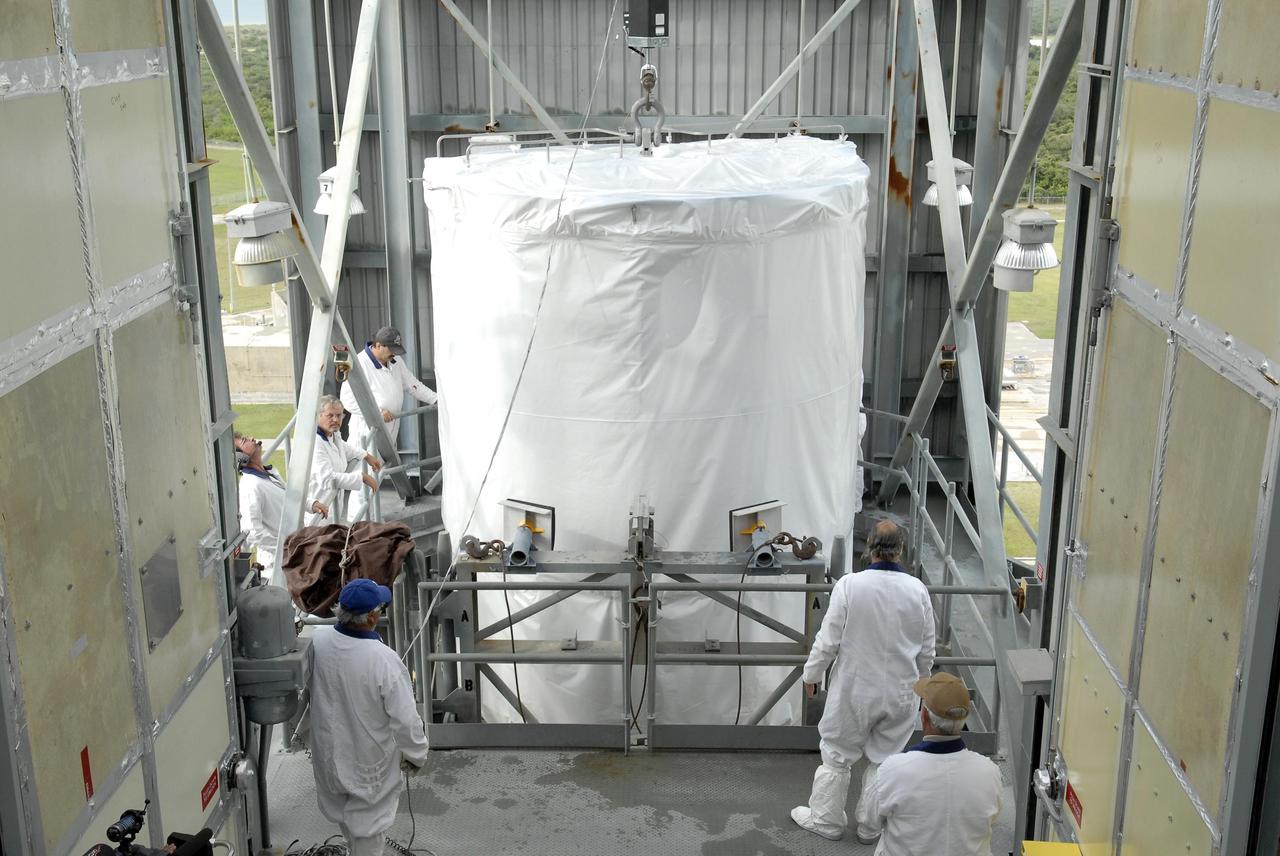
KENNEDY SPACE CENTER, FLA. — The Phoenix Mars Lander is lifted into the upper level of the mobile service tower on Launch Pad 17-A at Cape Canaveral Air Force Station. The lander will be mated to the Delta II launch vehicle. Launch of NASA's Phoenix Mars Lander is scheduled for Aug. 3. There are two instantaneous launch times, 5:35:18 and 6:11:24 a.m. EDT. Phoenix will land in icy soils near the north polar permanent ice cap of Mars and explore the history of the water in these soils and any associated rocks, while monitoring polar climate. Landing on Mars is planned in May 2008 on arctic ground where a mission currently in orbit, Mars Odyssey, has detected high concentrations of ice just beneath the top layer of soil. NASA/George Shelton
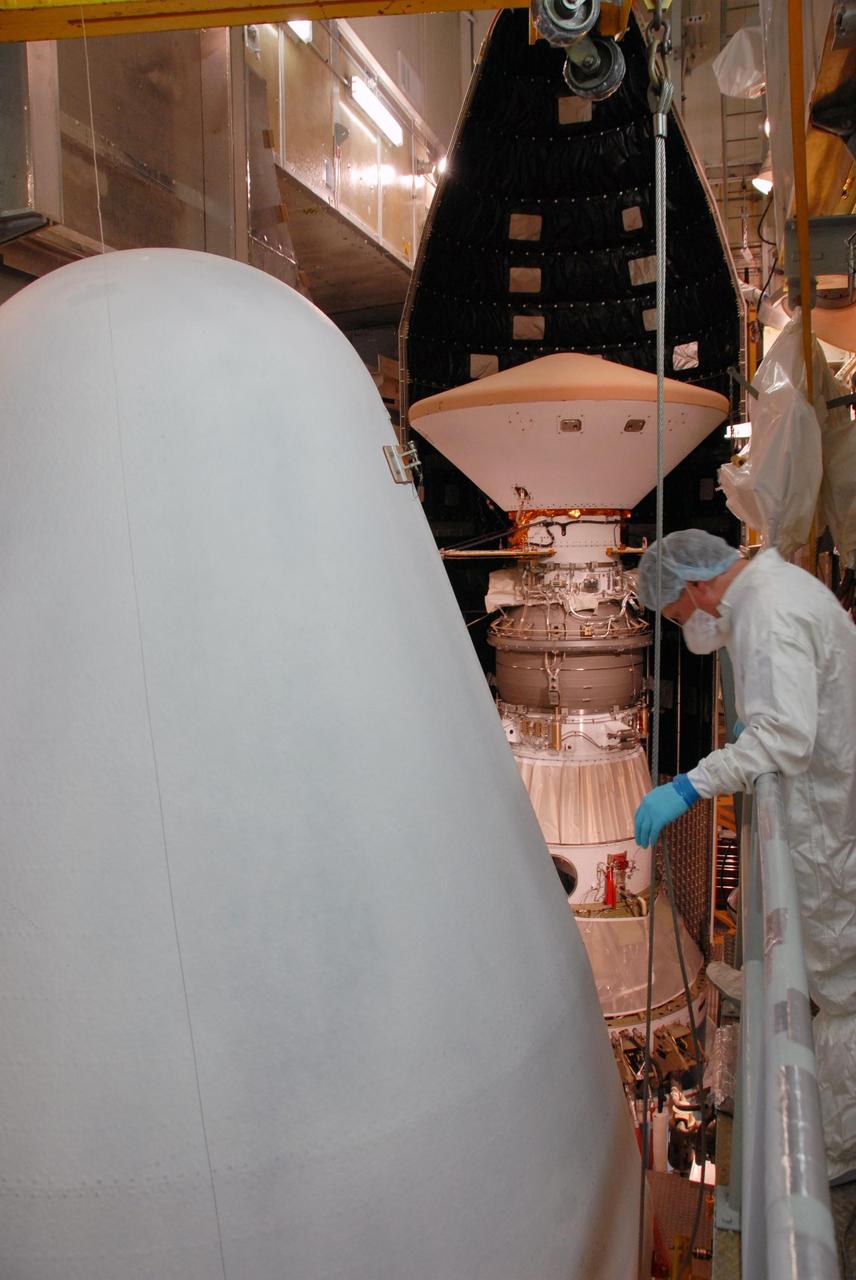
KENNEDY SPACE CENTER, FLA. -- On Launch Pad 17-A at Cape Canaveral Air Force Station, the second half of the fairing (in the foreground) moves toward the Phoenix Mars Lander for installation. Phoenix is targeted for launch on Aug. 3 aboard a Delta II rocket. The fairing is a molded structure that fits flush with the outside surface of the Delta II upper stage booster and forms an aerodynamically smooth nose cone, protecting the spacecraft during launch and ascent. Phoenix will land in icy soils near the north polar, permanent ice cap of Mars and explore the history of the water in these soils and any associated rocks, while monitoring polar climate. Landing on Mars is planned in May 2008 on arctic ground where a mission currently in orbit, Mars Odyssey, has detected high concentrations of ice just beneath the top layer of soil. NASA/George Shelton
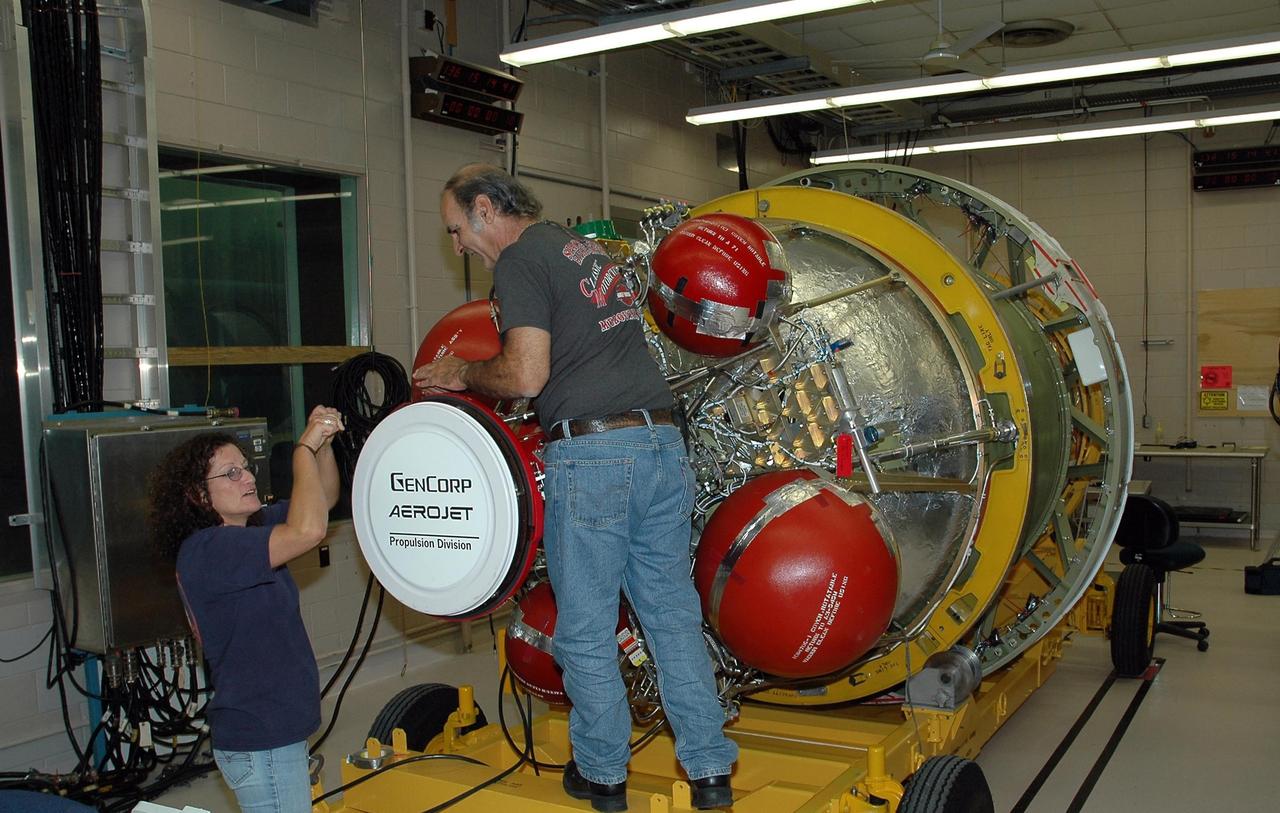
KENNEDY SPACE CENTER, FLA. -- In Hangar A&O at Cape Canaveral Air Force Station, United Launch Alliance workers prepare the Delta II second stage for the Phoenix spacecraft. Phoenix will land in icy soils near the north polar permanent ice cap of Mars and explore the history of the water in these soils and any associated rocks, while monitoring polar climate. Landing is planned in May 2008 on arctic ground where a mission currently in orbit, Mars Odyssey, has detected high concentrations of ice just beneath the top layer of soil. Launch of Phoenix aboard a Delta II rocket is targeted for Aug. 3 from Cape Canaveral Air Force Station in Florida. Photo credit: NASA/Jack Pfaller

KENNEDY SPACE CENTER, Fla. -- In the Payload Hazardous Servicing Facility, workers secure the upper canister to the lower segments surrounding the Phoenix Mars Lander. After the canning, the Phoenix will be transferred to Launch Pad 17-A on Cape Canaveral Air Force Station in Florida for launch on Aug. 3. Phoenix will land in icy soils near the north polar permanent ice cap of Mars and explore the history of the water in these soils and any associated rocks, while monitoring polar climate. Landing on Mars is planned in May 2008 on arctic ground where a mission currently in orbit, Mars Odyssey, has detected high concentrations of ice just beneath the top layer of soil. Photo credit: NASA/Kim Shiflett
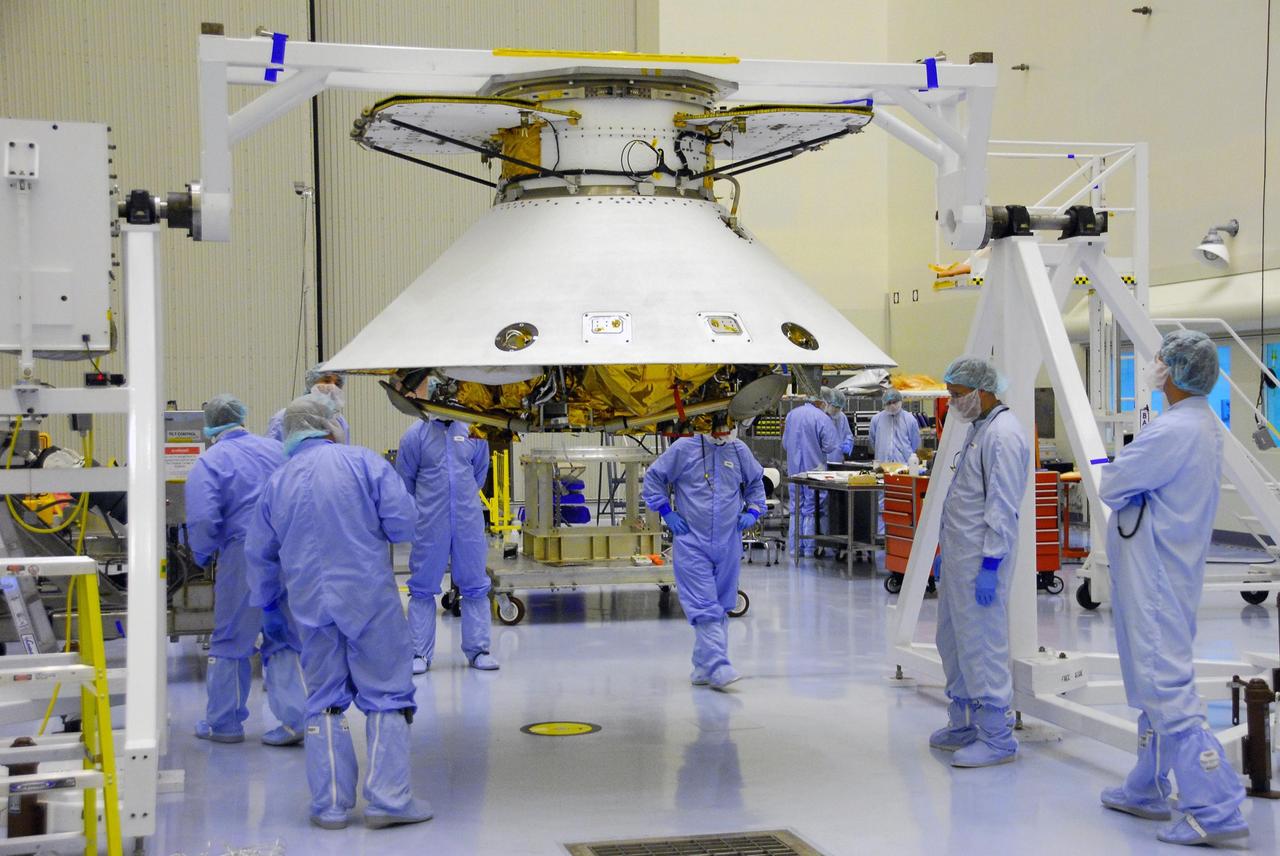
KENNEDY SPACE CENTER, FLA. -- In the Payload Handling Servicing Facility, the Phoenix spacecraft is upside down during rotation. The Phoenix mission is the first project in NASA's first openly competed program of Mars Scout missions. Phoenix will land in icy soils near the north polar permanent ice cap of Mars and explore the history of the water in these soils and any associated rocks, while monitoring polar climate. Landing is planned in May 2008 on arctic ground where a mission currently in orbit, Mars Odyssey, has detected high concentrations of ice just beneath the top layer of soil. It will serve as NASA's first exploration of a potential modern habitat on Mars and open the door to a renewed search for carbon-bearing compounds, Photo credit: NASA/George Shelton
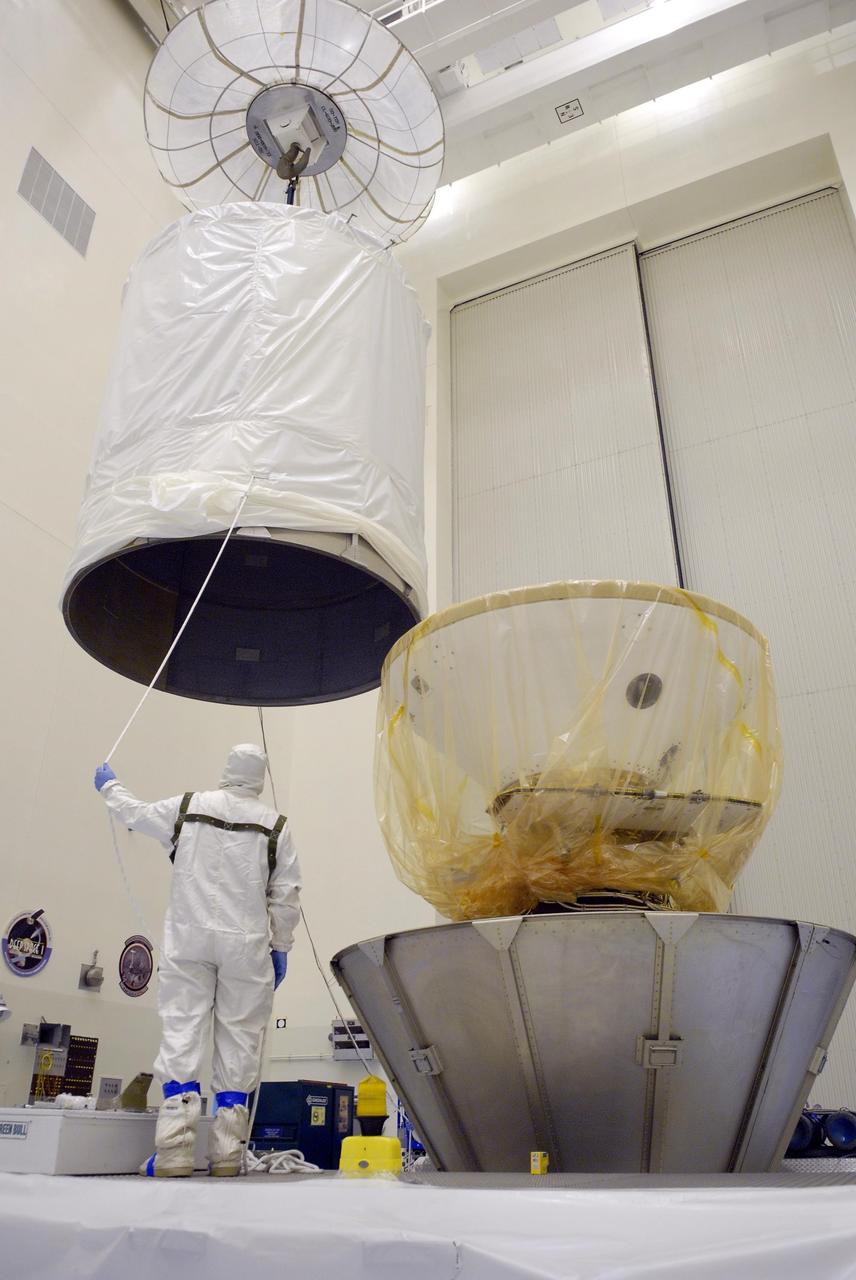
KENNEDY SPACE CENTER, Fla. -- In the Payload Hazardous Servicing Facility, workers guide the upper part of the shipping canister toward the Phoenix Mars Lander. It will be lowered over the top and attached to the lower sections. After the canning, the Phoenix will be transferred to Launch Pad 17-A on Cape Canaveral Air Force Station in Florida for launch on Aug. 3. Phoenix will land in icy soils near the north polar permanent ice cap of Mars and explore the history of the water in these soils and any associated rocks, while monitoring polar climate. Landing on Mars is planned in May 2008 on arctic ground where a mission currently in orbit, Mars Odyssey, has detected high concentrations of ice just beneath the top layer of soil. Photo credit: NASA/Kim Shiflett
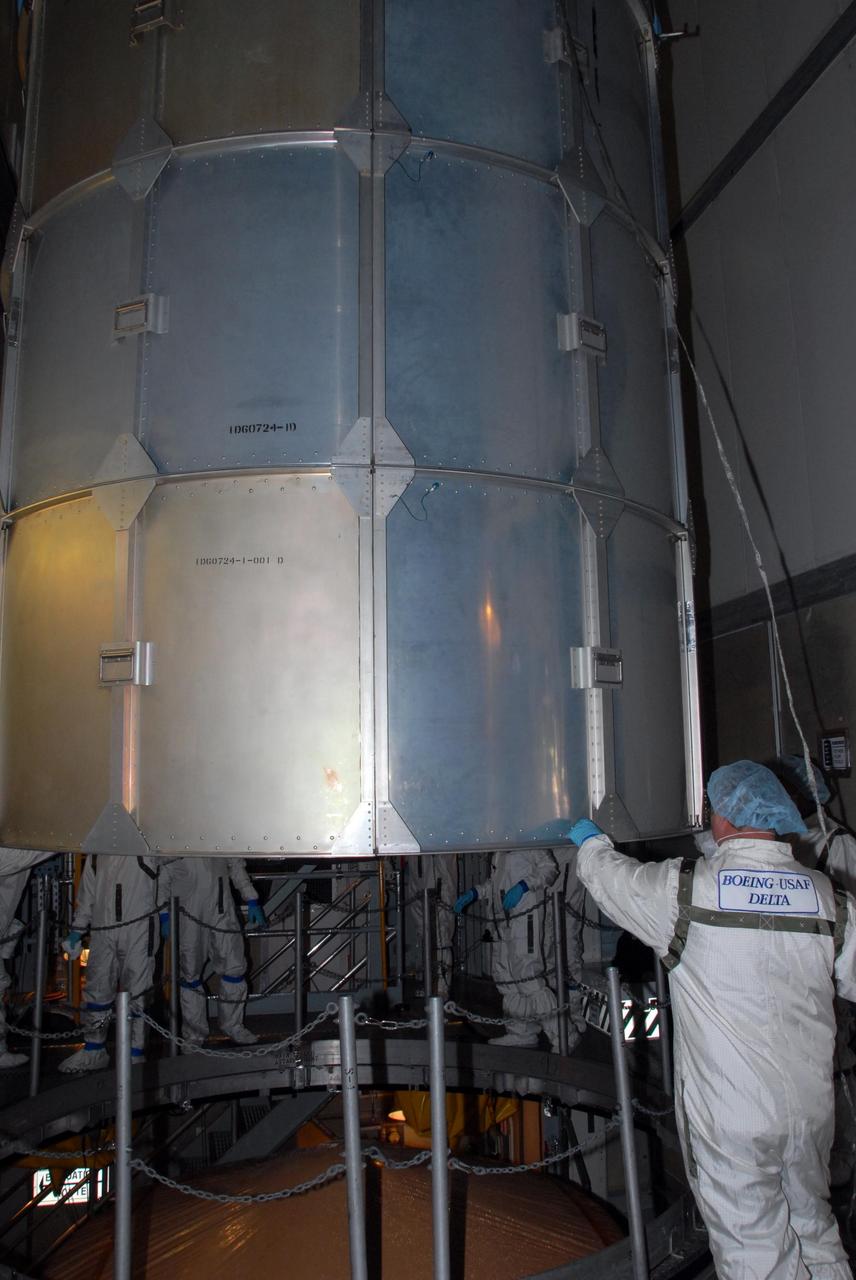
KENNEDY SPACE CENTER, FLA. -- Inside the mobile service tower of Launch Pad 17-A at Cape Canaveral Air Force Station in Florida, workers remove the container lid from NASA's Phoenix Mars Lander. Launch of Phoenix is scheduled to launch on the Delta II launch vehicle no earlier than Aug. 3. Phoenix will land in icy soils near the north polar permanent ice cap of Mars and explore the history of the water in these soils and any associated rocks, while monitoring polar climate. Landing on Mars is planned in May 2008 on arctic ground where a mission currently in orbit, Mars Odyssey, detected high concentrations of ice just beneath the top layer of soil. NASA/George Shelton

KENNEDY SPACE CENTER, FLA. -- On Pad 17-A at Cape Canaveral Air Force Station, the Delta II first stage is rolling back to the mobile service tower for mating with the solid rocket boosters waiting there. The Delta is the launch vehicle for the Phoenix Mars Lander spacecraft. Phoenix will land in icy soils near the north polar permanent ice cap of Mars and explore the history of the water in these soils and any associated rocks, while monitoring polar climate. Landing on Mars is planned in May 2008 on arctic ground where a mission currently in orbit, Mars Odyssey, has detected high concentrations of ice just beneath the top layer of soil. Phoenix is scheduled to launch Aug. 3. Photo credit: NASA/Kim Shiflett
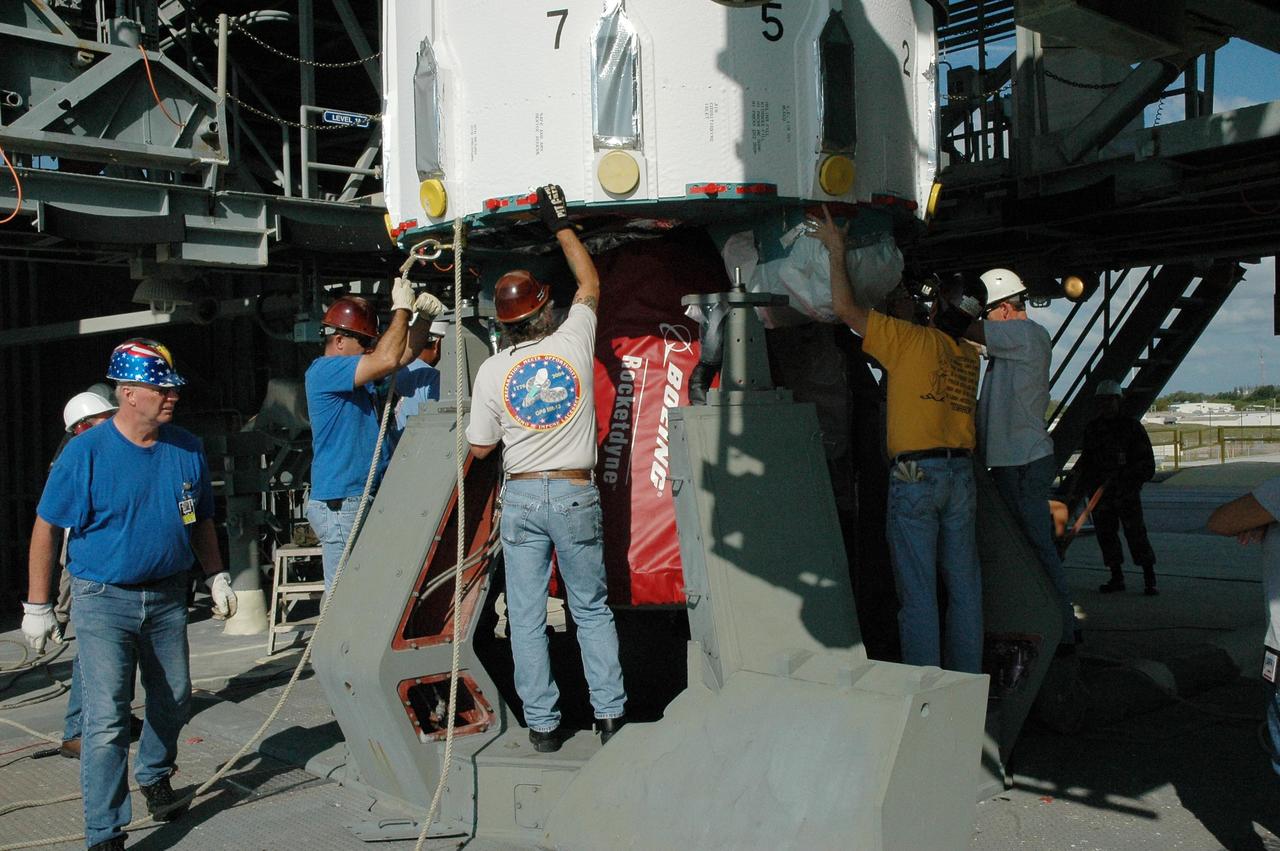
KENNEDY SPACE CENTER, FLA. -- On Launch Pad 17-A at Cape Canaveral Air Force Station, workers prepare the first stage of a Delta II rocket to be lifted up into the mobile service tower. The rocket is the launch vehicle for the Phoenix spacecraft, targeted for launch on Aug. 3 heading for Mars. Phoenix will land in icy soils near the north polar permanent ice cap of Mars and explore the history of the water in these soils and any associated rocks, while monitoring polar climate. Landing on Mars is planned in May 2008 on arctic ground where a mission currently in orbit, Mars Odyssey, has detected high concentrations of ice just beneath the top layer of soil. Photo credit: NASA/Amanda Diller
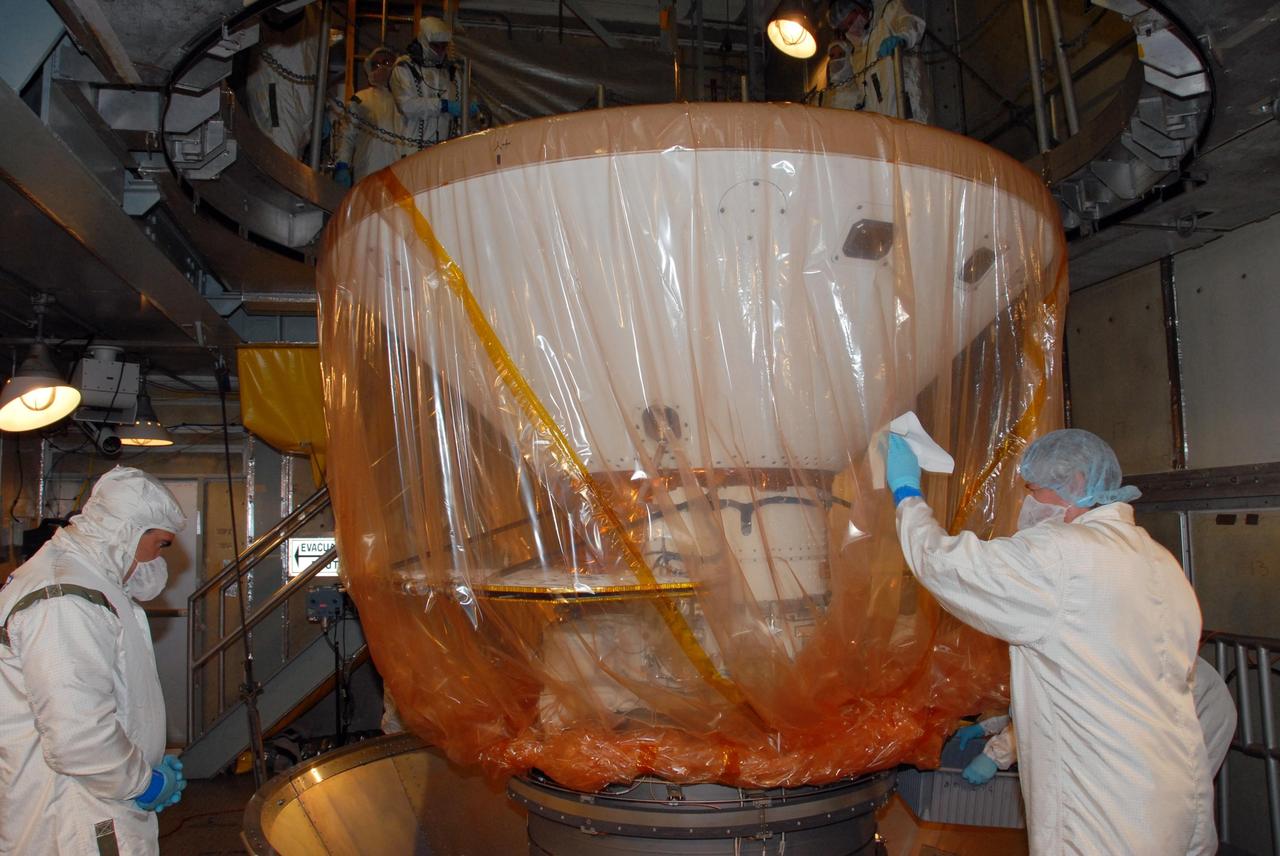
KENNEDY SPACE CENTER, FLA. -- Inside the mobile service tower of Launch Pad 17-A at Cape Canaveral Air Force Station in Florida, workers begin to remove the plastic covering from NASA's Phoenix Mars Lander. Phoenix is scheduled to launch on the Delta II launch vehicle no earlier than Aug. 3. Phoenix will land in icy soils near the north polar permanent ice cap of Mars and explore the history of the water in these soils and any associated rocks, while monitoring polar climate. Landing on Mars is planned in May 2008 on arctic ground where a mission currently in orbit, Mars Odyssey, detected high concentrations of ice just beneath the top layer of soil. NASA/George Shelton