Atmospheric Illusion
An Optical Illusion
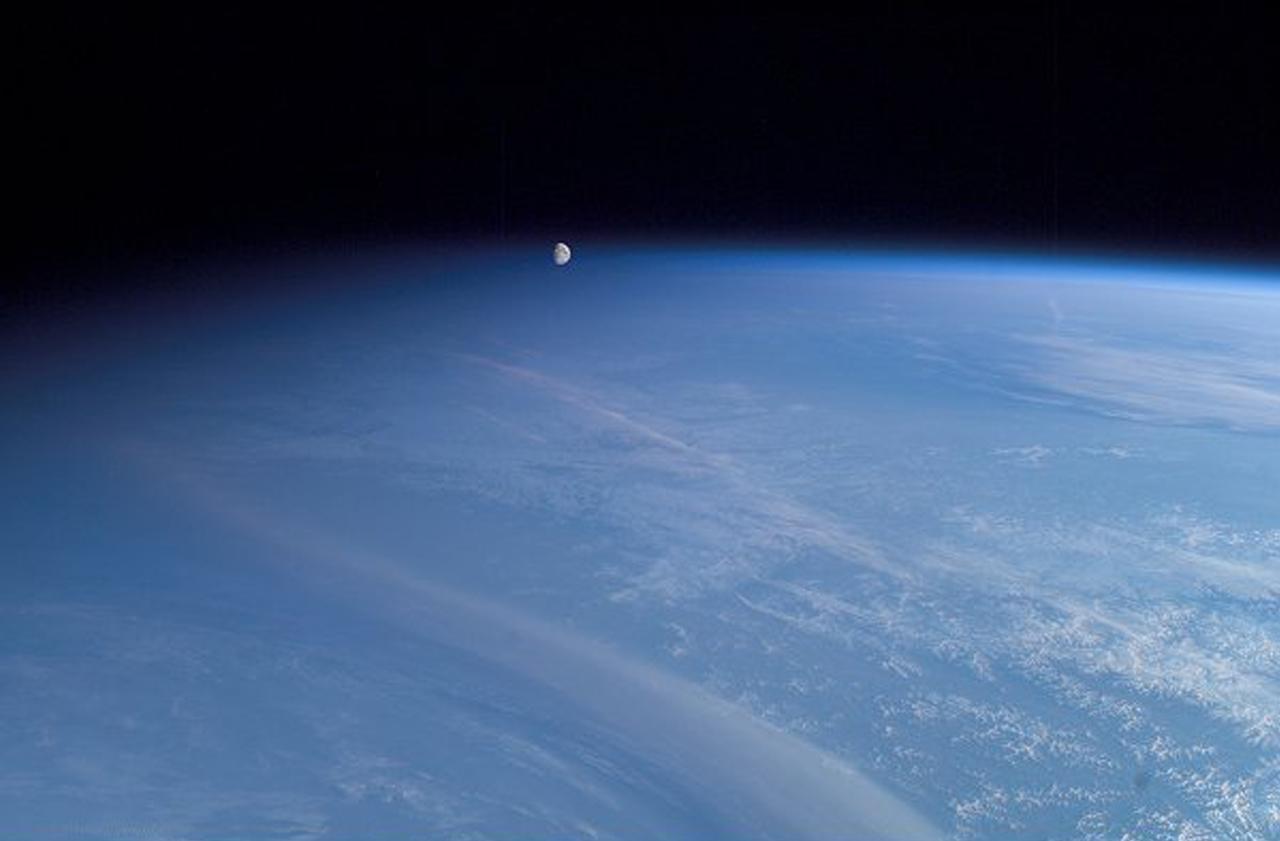
Many odd looking moon photos have been captured over the years by astronauts aboard the International Space Station. Even so, this photograph, taken by the crew over Russia on May 11, 2003, must have come as a surprise. The moon which is really a quarter of a million miles away, appears to be floating inside the Earth's atmosphere. The picture is tricky because of its uneven lighting. With the sun's elevation angle at only 6 degrees, night is falling on the left side of the image while it is still broad daylight on the right side. This gradient of sunlight is the key to the illusion.
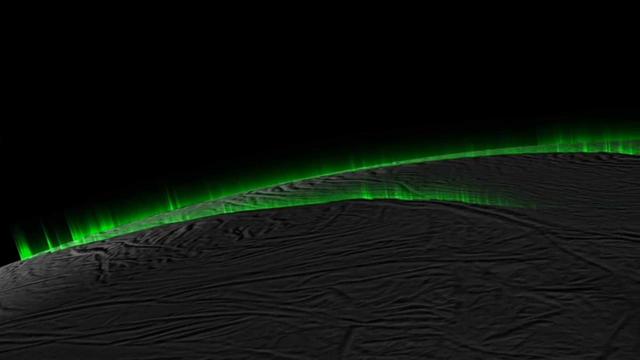
This simulation, which begins and ends with a real image from NASA Cassini spacecraft, demonstrates how the appearance of discrete jets could be an optical illusion that varies based on viewing geometry.
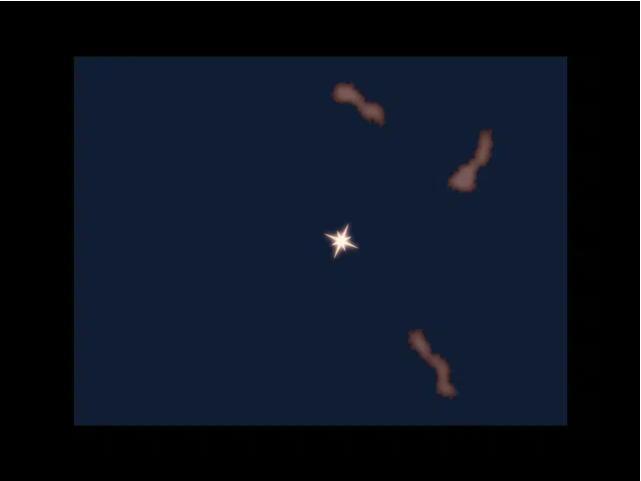
This image illustrates how a light echo works, and how an optical illusion of material moving outward is created.

iss065e050322 (5/21/2021) --- European Space Agency astronaut (ESA) astronaut Thomas Pesquet performing the Illusion activity in the Columbus module aboard the International space Station (ISS). The Illusion activity aims to perform close-up magic tricks (illusions) specific for the microgravity environment aboard the International Space Station (ISS). The mechanism of the illusion is explained on video, and used to introduce the solids mechanics and central nervous system (CNS) challenges in microgravity, as well as for a neuroscience research program conducted by the European Space Agency (ESA) and the Centre National d’Etudes Spatiales (CNES) of France.

iss065e050324 (5/21/2021) --- European Space Agency astronaut (ESA) astronaut Thomas Pesquet performing the Illusion activity in the Columbus module aboard the International space Station (ISS). The Illusion activity aims to perform close-up magic tricks (illusions) specific for the microgravity environment aboard the International Space Station (ISS). The mechanism of the illusion is explained on video, and used to introduce the solids mechanics and central nervous system (CNS) challenges in microgravity, as well as for a neuroscience research program conducted by the European Space Agency (ESA) and the Centre National d’Etudes Spatiales (CNES) of France.
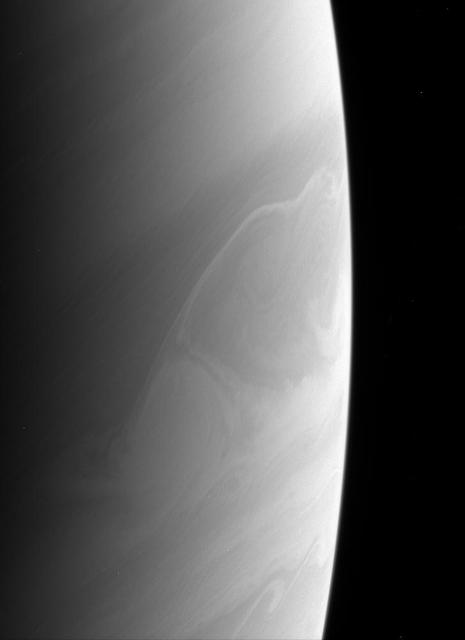
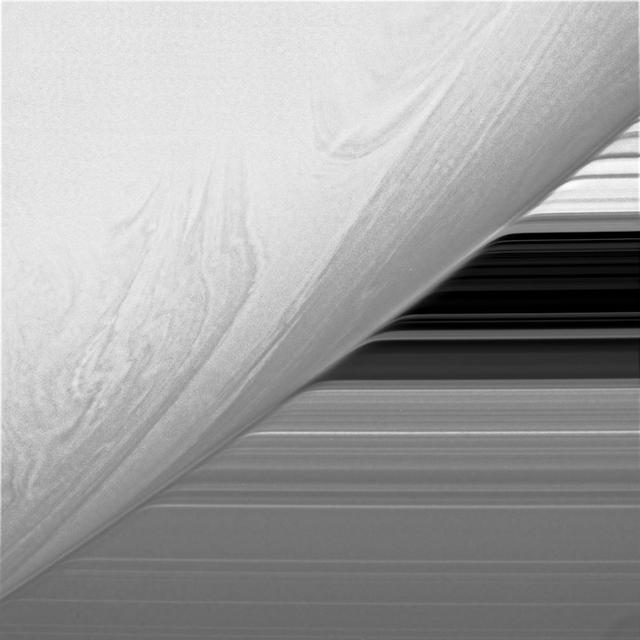
Saturn atmosphere produces beautiful and sometimes perplexing features. Is the bright feature below center a rare crossing of a feature from a zone to a belt, or is it an illusion created by different cloud layers at different levels?
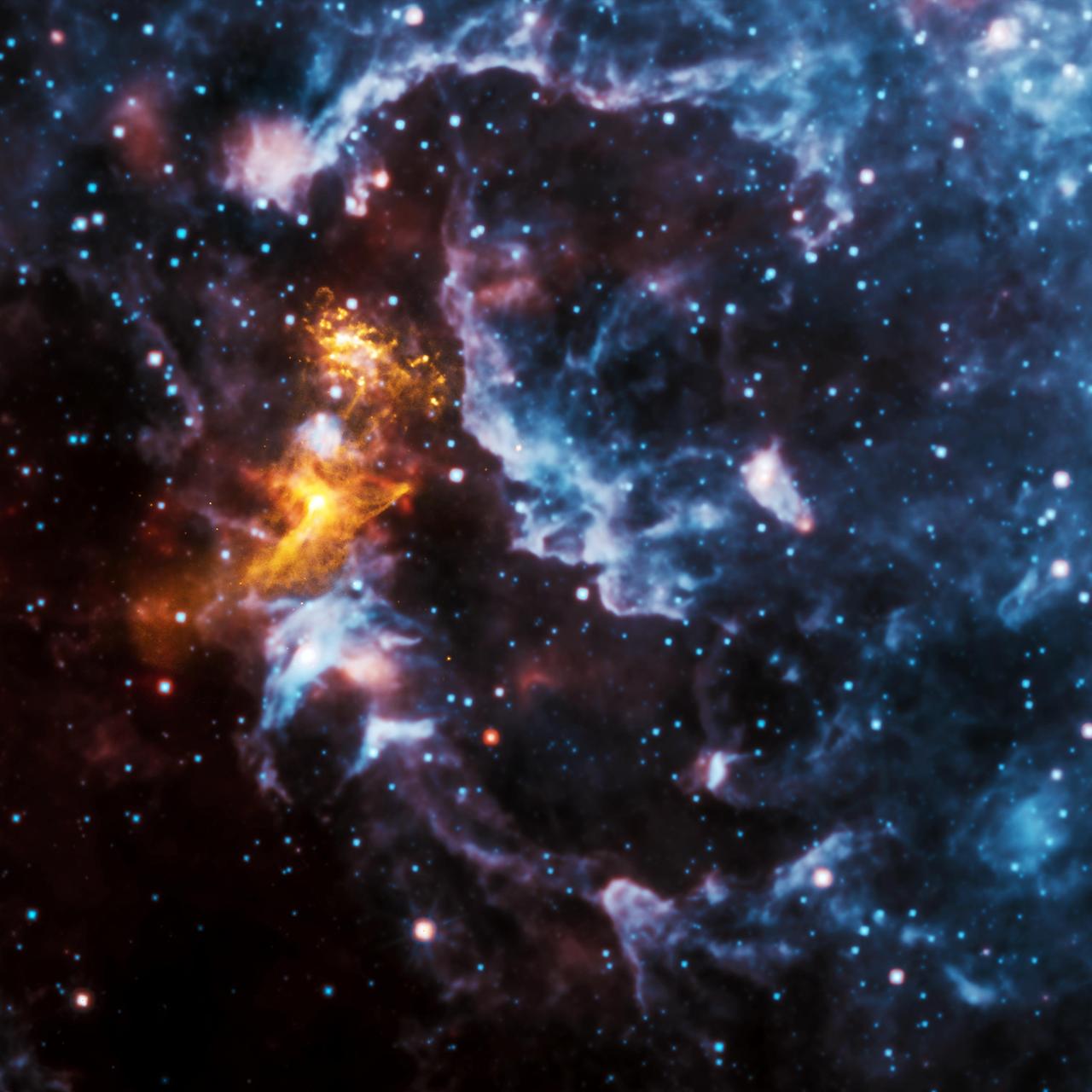
In this image of PSR B1509-58 about 170,000 light-years from Earth, X-rays from NASA Chandra in gold are seen along with infrared data from NASA Wide-field Infrared Survey Explorer WISE telescope in red, green and blue.
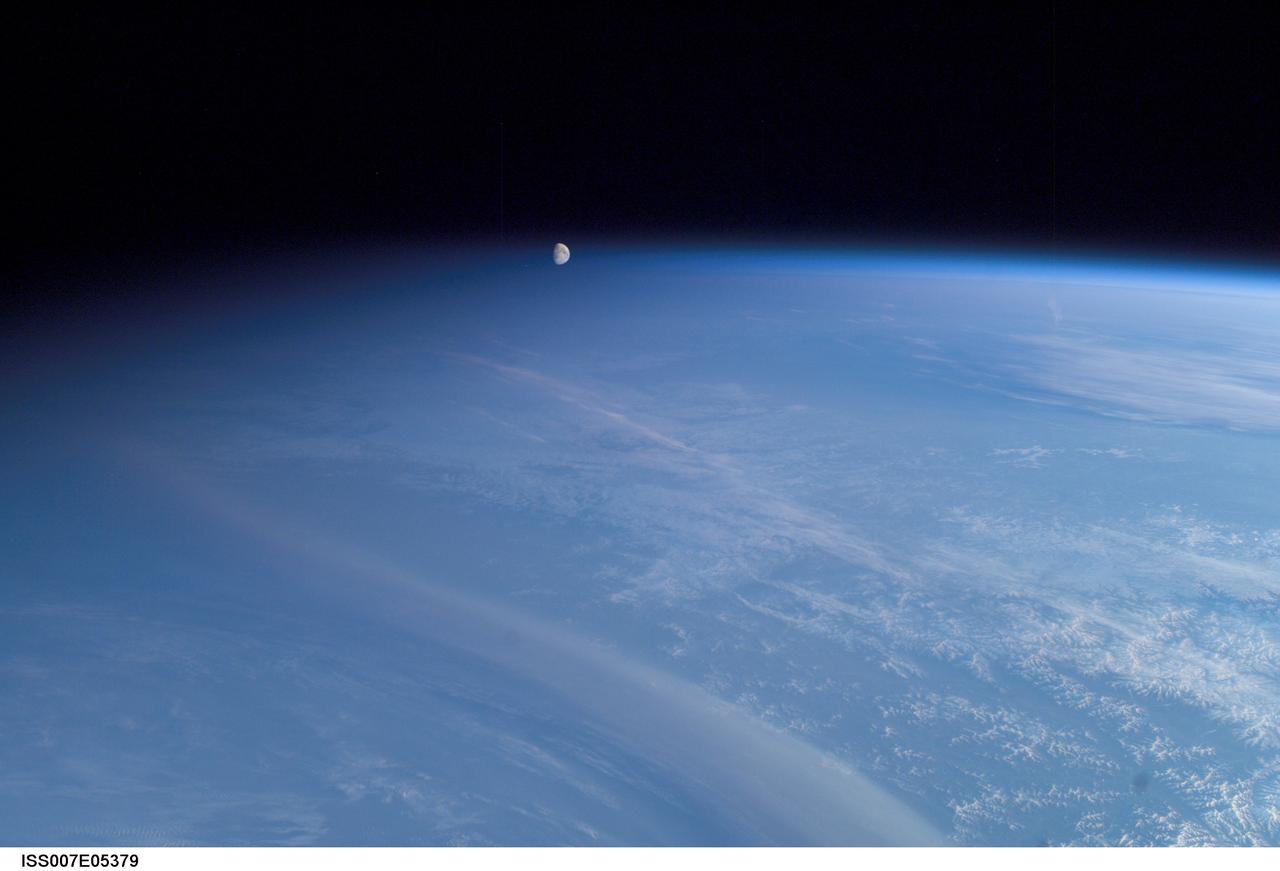
ISS007-E-05379 (11 May 2003) --- The moon seems to be floating inside Earth’s atmosphere as it was photographed by an Expedition 7 crewmember onboard the International Space Station (ISS) while above Russia. It’s an illusion, of course. The moon is really a quarter of a million miles away. The picture is tricky because of its uneven lighting. The sun’s elevation angle is only 6 degrees. On the left side of the image, night is falling; on the right side, it’s still broad daylight. This gradient of sunlight is the key to the illusion.
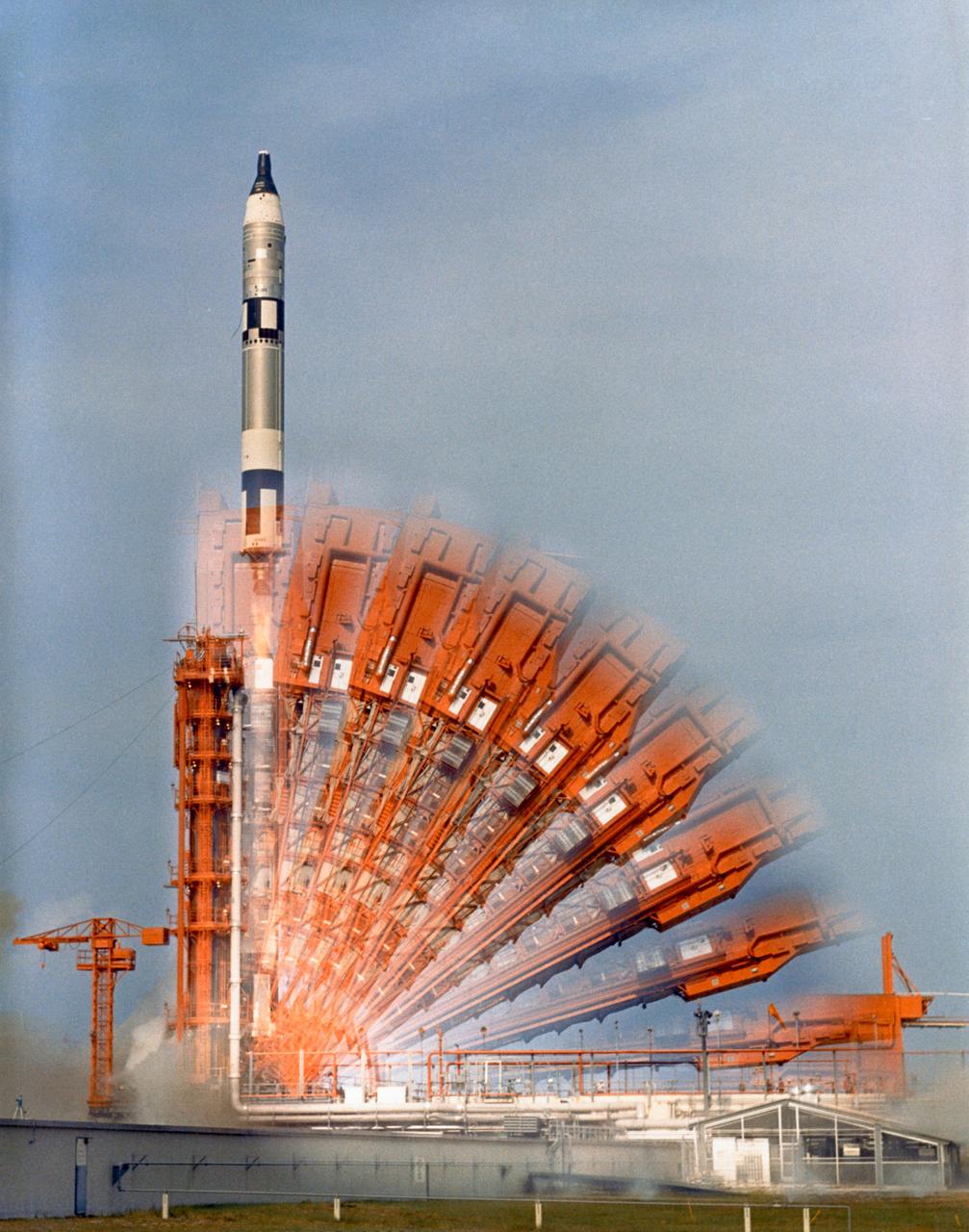
S66-42762 (18 July 1966) --- The Gemini-10 spacecraft is launched from Complex 19 at 5:20 p.m., July 18, 1966. A time exposure creates the illusion of multiple rocker arms. Onboard are astronauts John W. Young, command pilot, and Michael Collins, pilot. Photo credit: NASA
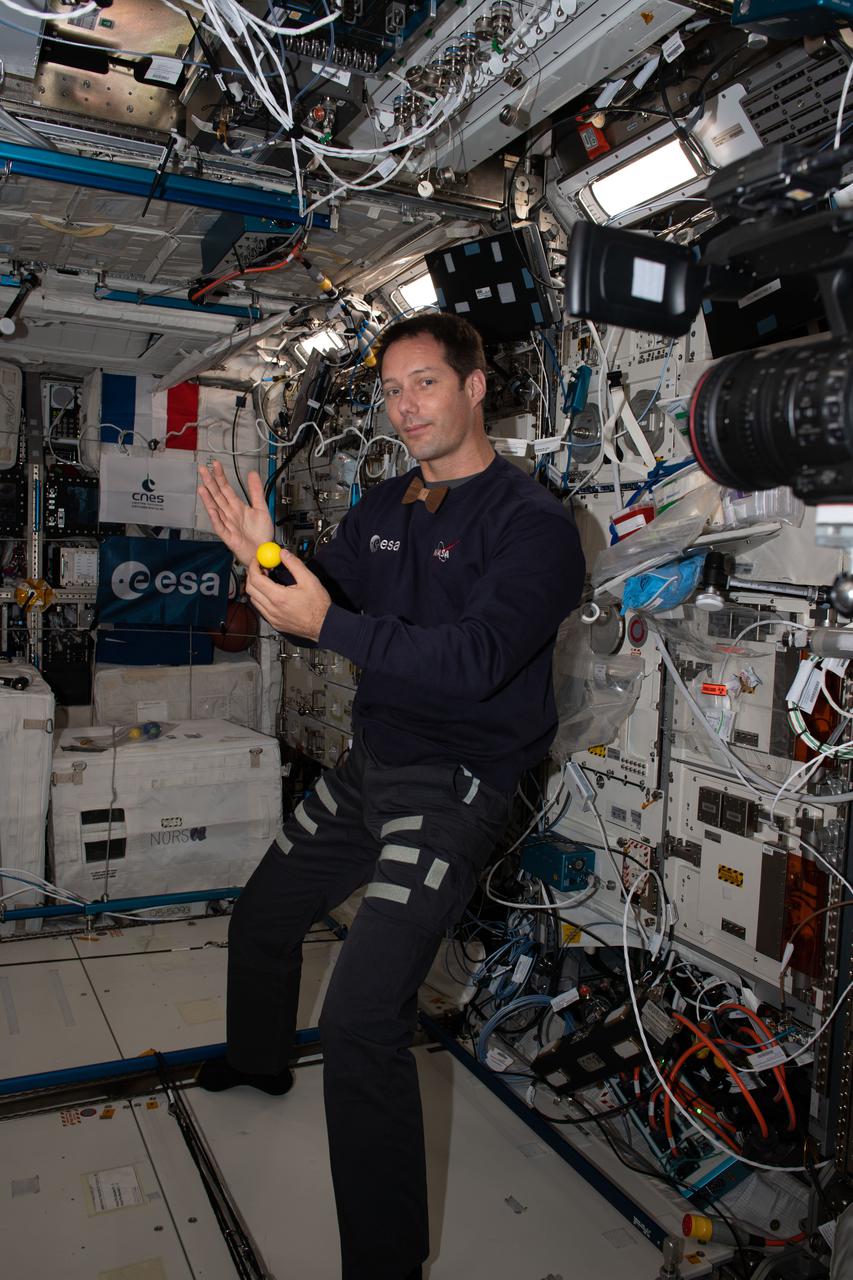
iss065e050323 (May 21, 2021) --- Expedition 65 Flight Engineer Thomas Pesquet of ESA (European Space Agency) performs magic tracks for the Illusion educational study. The experiment sponsored by ESA illustrates how visual perception and the central nervous system is impacted in microgravity.
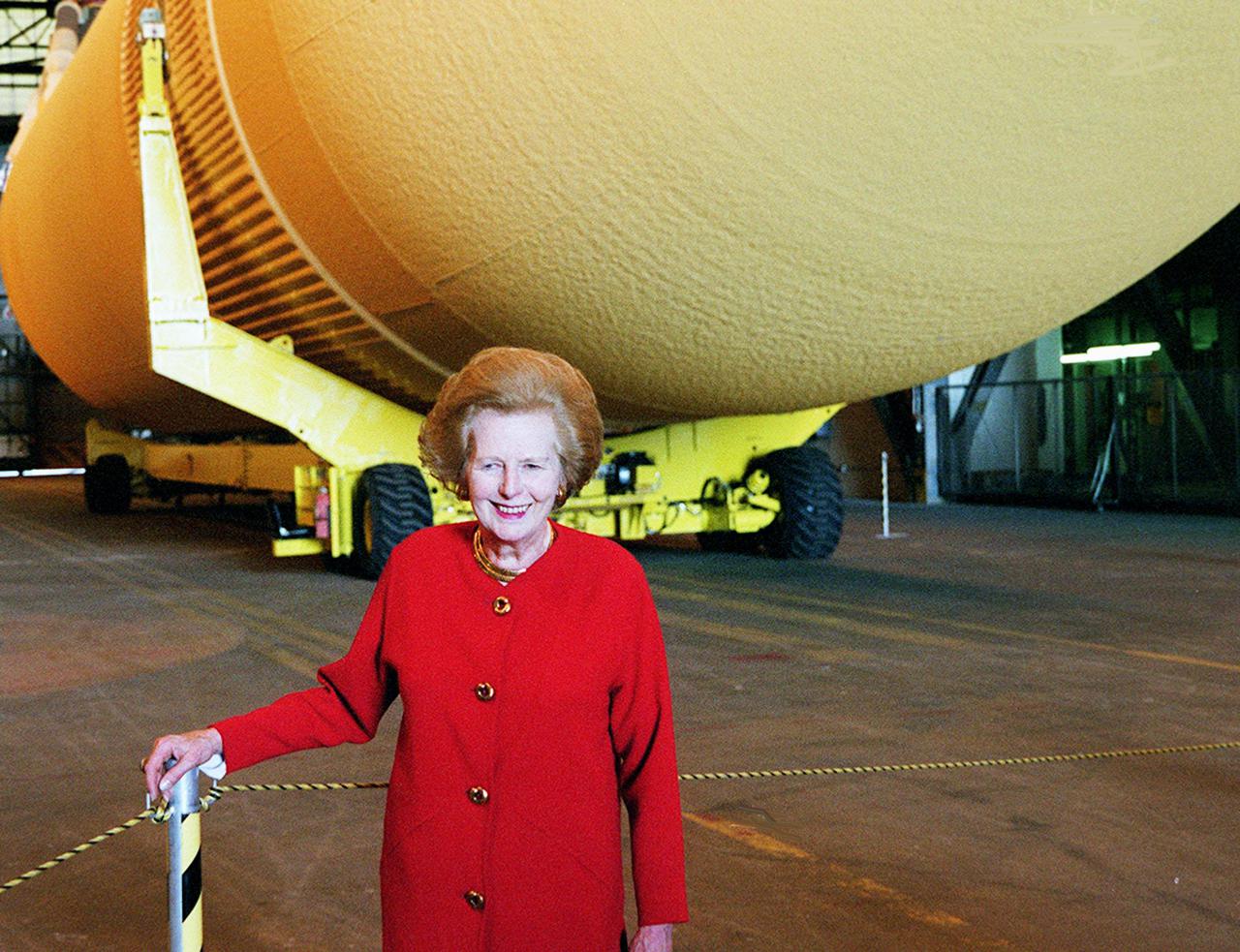
An optical illusion places Lady Margaret Thatcher, former Prime Minister of Great Britain, under an external tank in the Vehicle Assembly Building. In reality, the ET is behind her, waiting in the transfer aisle for stacking on the next Shuttle. Lady Thatcher is touring KSC
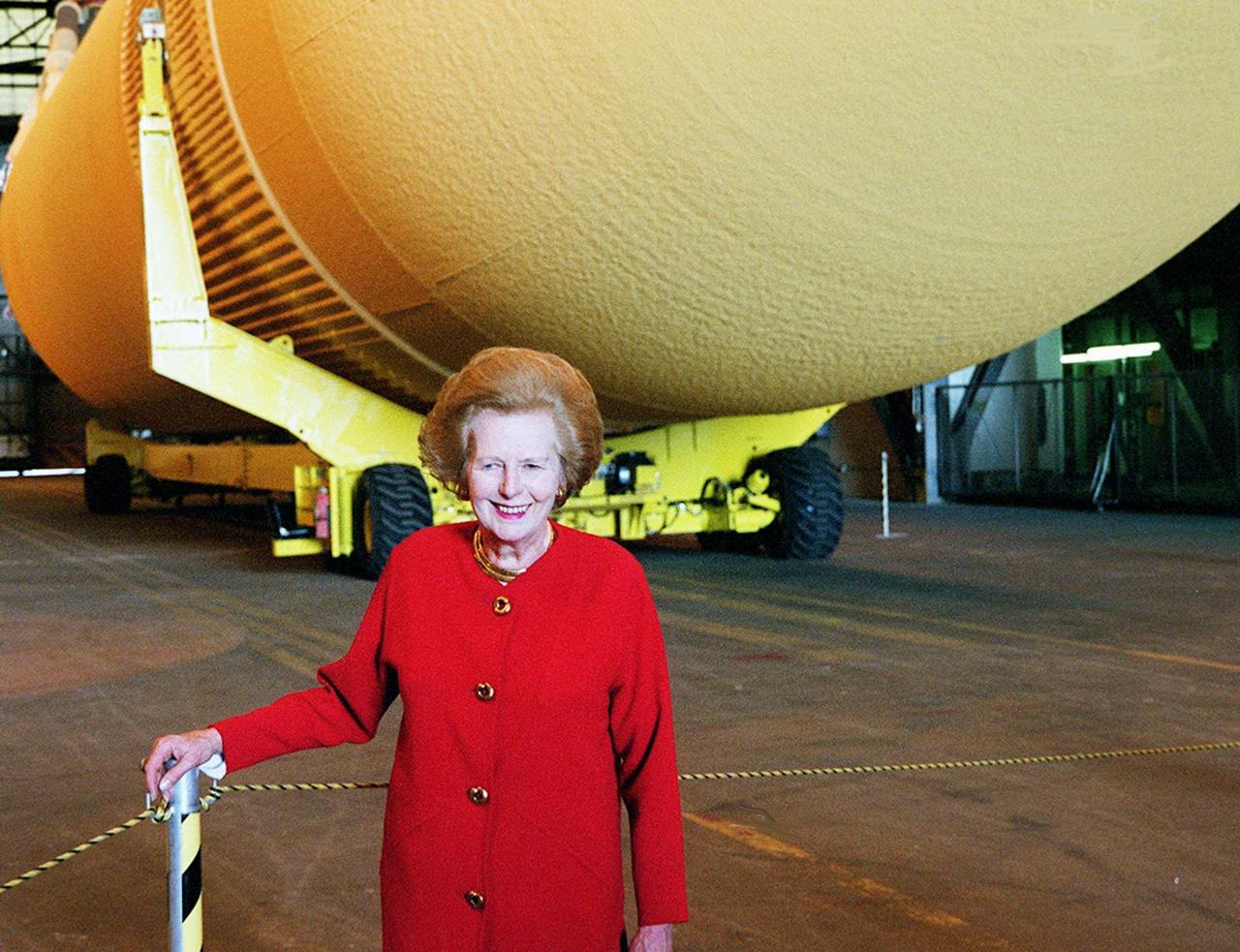
An optical illusion places Lady Margaret Thatcher, former Prime Minister of Great Britain, under an external tank in the Vehicle Assembly Building. In reality, the ET is behind her, waiting in the transfer aisle for stacking on the next Shuttle. Lady Thatcher is touring KSC
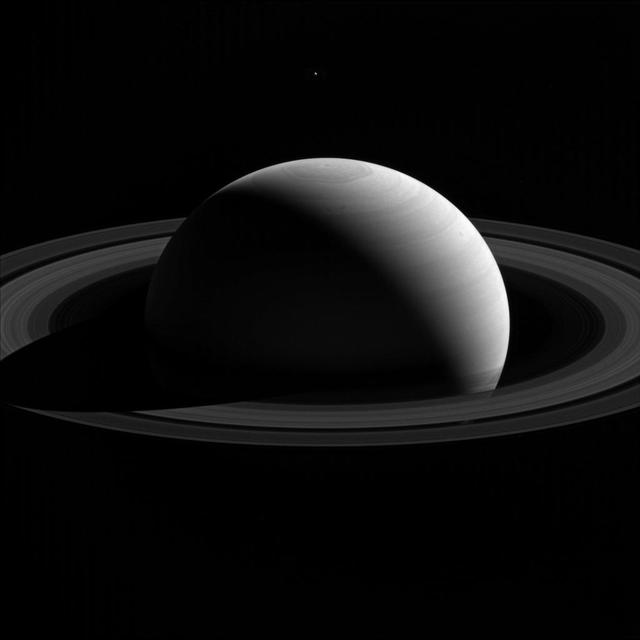
An illusion of perspective, Saturn's moon Tethys seems to hang above the planet's north pole in this view from NASA's Cassini spacecraft. Tethys (660 miles or 1,062 kilometers across) is actually farther away than Saturn in this image. Lacking visual clues about distance, our brains place the moon above Saturn's north pole. Tethys, like all of Saturn's major moons and its ring system, orbits almost exactly in the planet's equatorial plane. This view looks toward the sunlit side of the rings from about 17 degrees above the ring plane. The image was taken with the Cassini spacecraft's wide-angle camera on Jan. 26, 2015 using a spectral filter which preferentially admits wavelengths of near-infrared light centered at 752 nanometers. The view was acquired at a distance of approximately 2.1 million miles (3.4 million kilometers) from Saturn. Image scale on Saturn is 120 miles (200 kilometers) per pixel. Tethys has been brightened by a factor of three relative to Saturn to enhance its visibility. http://photojournal.jpl.nasa.gov/catalog/PIA20488
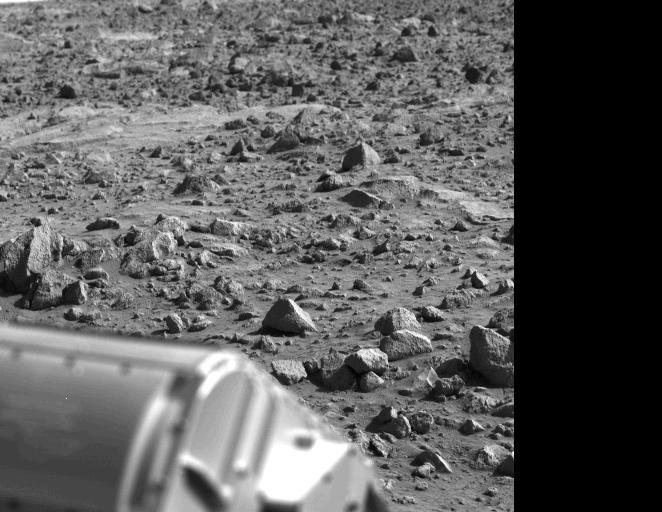
The letter 'B' or perhaps the figure '8' appears to have been etched into the Mars rock at the left edge of this picture taken yesterday by NASA's Viking 1 Lander. It is believed to be an illusion caused by weathering processes and the angle of the sun as it illuminated the scene for the spacecraft camera. The object at lower left is the housing containing the surface sampler scoop. http://photojournal.jpl.nasa.gov/catalog/PIA00386
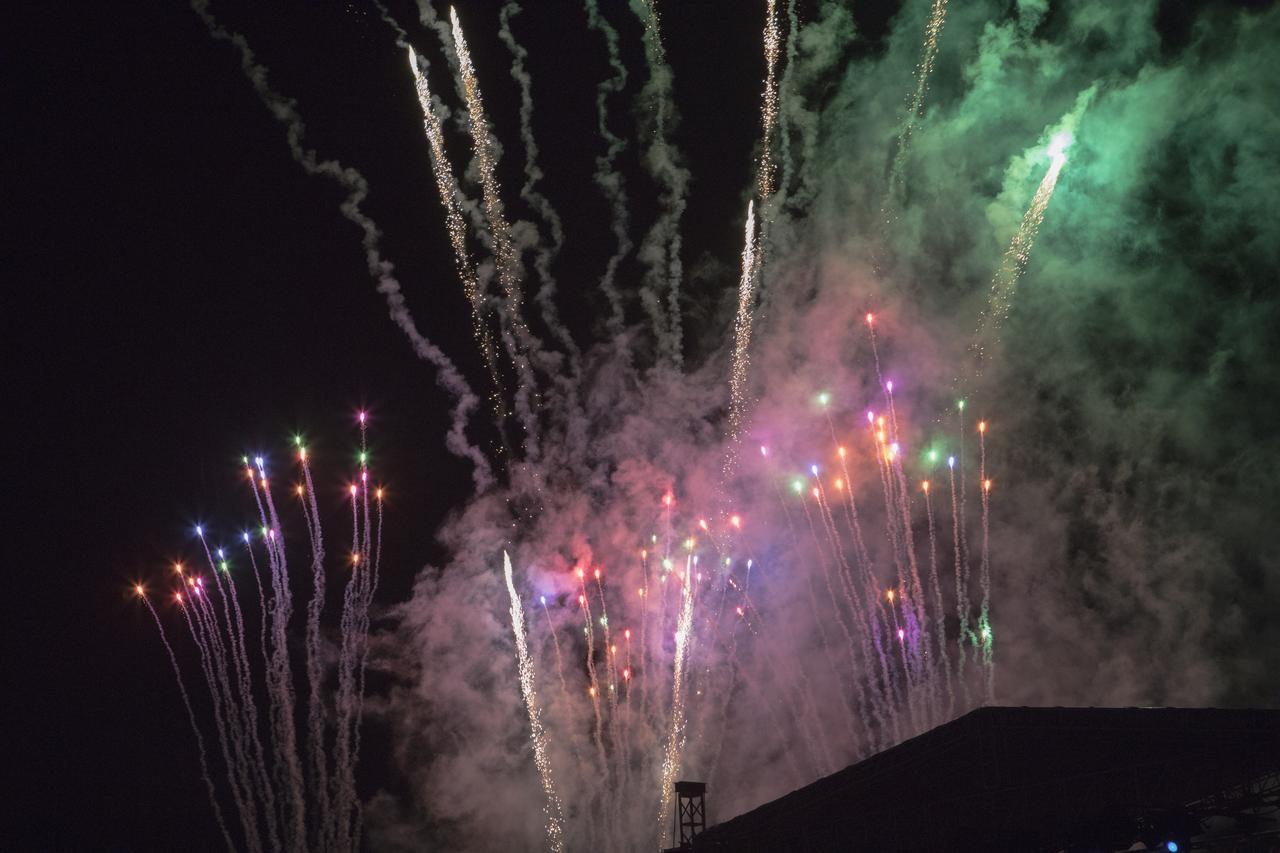
At the Kennedy Space Center Visitor Complex in Florida, the first night of Holidays in Space 2017 ended with a spectacular fireworks finale. Holidays in Space 2017 kicked off Dec. 20 and includes nightly performances by the dance group Fighting Gravity, which uses optical illusions, black light and the interplay of light and dark in its gravity-defying choreography. The event runs through 31, excluding Dec. 25.
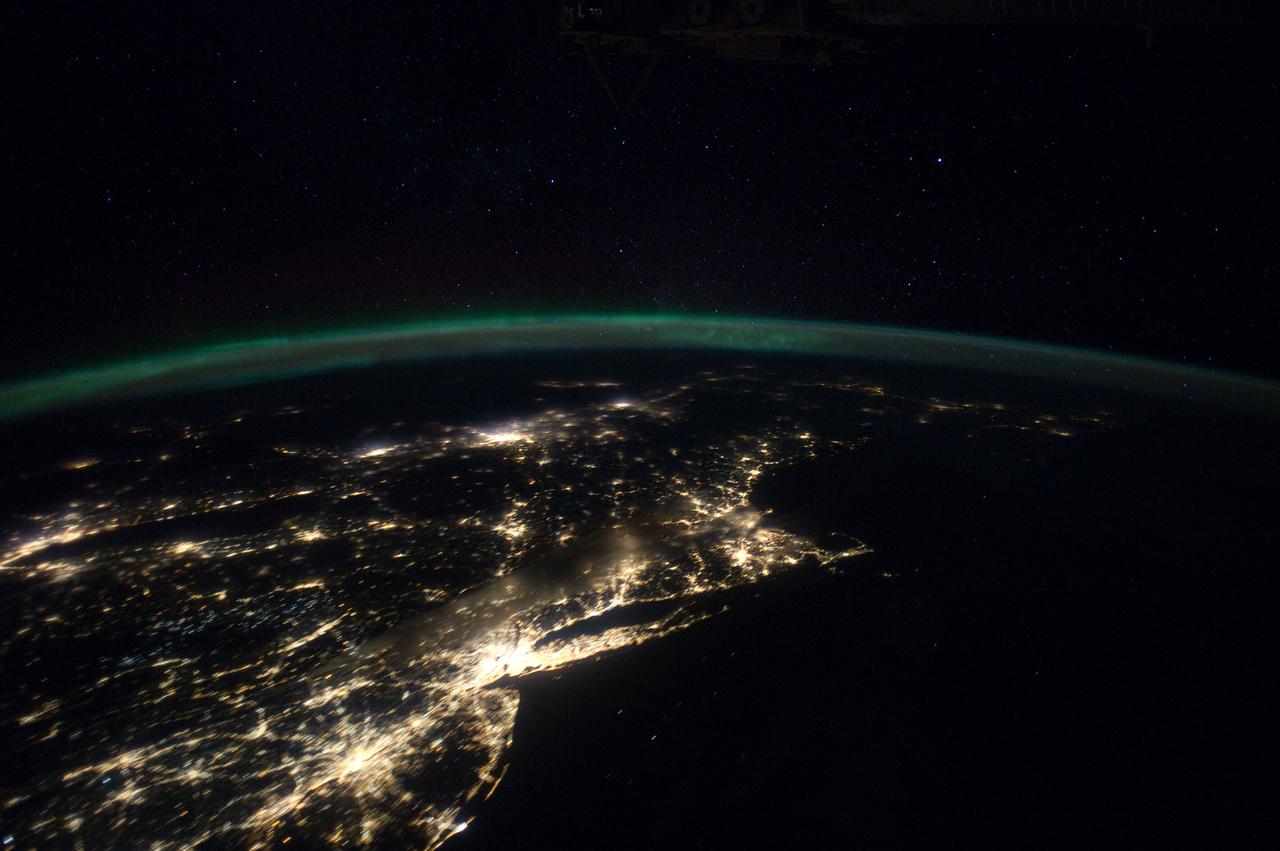
ISS030-E-055791 (29 Jan. 2012) --- This Jan. 29 panorama of much of the East Coast, photographed by one of the Expedition 30 crew members aboard the International Space Station, provides a look generally northeastward: Philadelphia-New York City-Boston corridor (bottom-center); western Lake Ontario shoreline with Toronto (left edge); Montreal (near center). An optical illusion in the photo makes the atmospheric limb and light activity from Aurora Borealis appear “intertwined.”
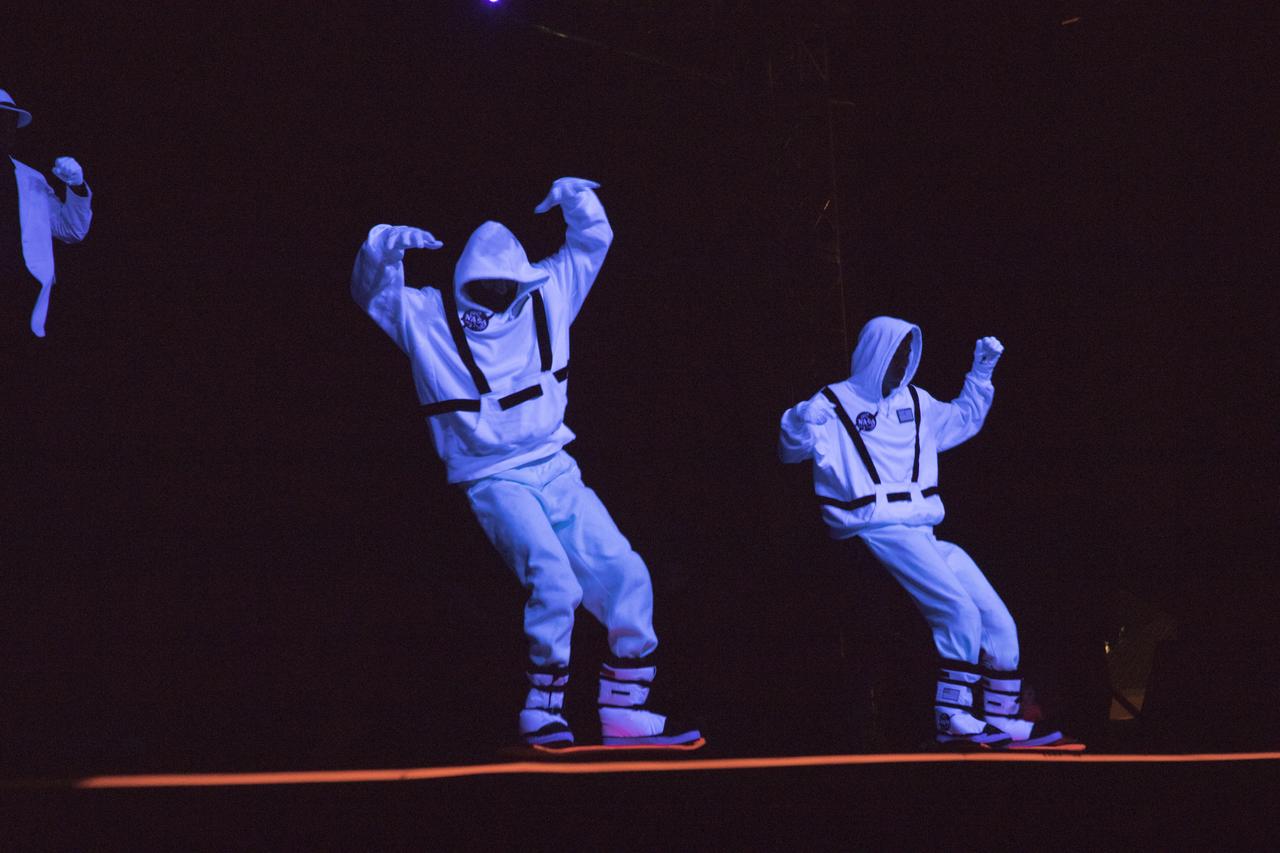
At the Kennedy Space Center Visitor Complex in Florida, Holidays in Space 2017 kicked off with a dazzling performance by the dance group Fighting Gravity, which uses optical illusions, black light and the interplay of light and dark in its gravity-defying choreography. Holidays in Space 2017 kicked off Dec. 20 and includes nightly performances and fireworks from Dec. 20 through 31, excluding Dec. 25.
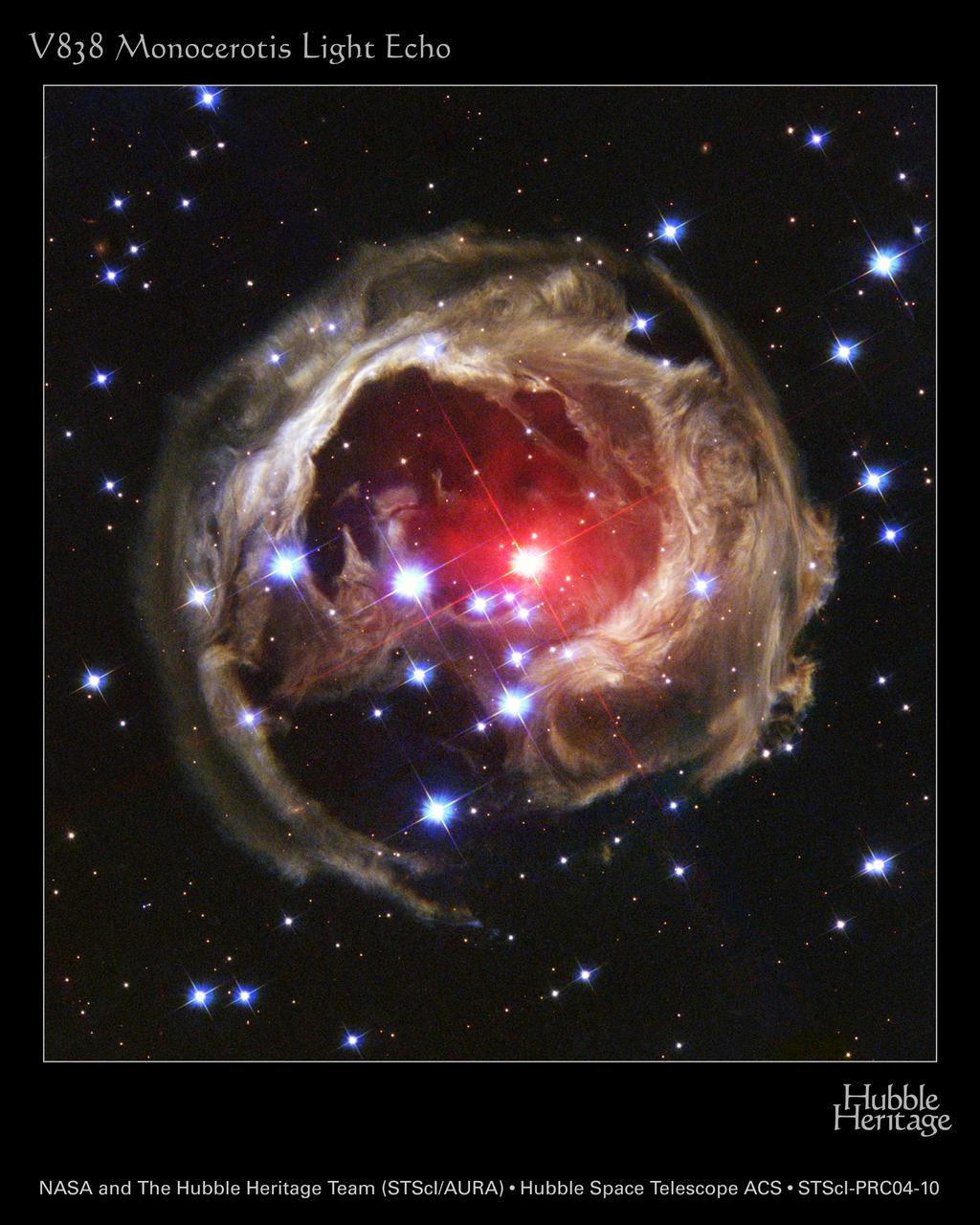
This photo, captured by the NASA Hubble Space Telescope's (HST) Advanced Camera for Surveys, is Hubble's latest view of an expanding halo of light around the distant star V838 Monocerotis, or V Mon, caused by an unusual stellar outburst that occurred back in January 2002. A burst of light from the bizarre star is spreading into space and reflecting off of surrounding circumstellar dust. As different parts are sequentially illuminated, the appearance of the dust changes. This effect is referred to as a "light echo". Located about 20,000 light-years away in the winter constellation Monoceros (the Unicorn), the star brightened to more than 600,000 times our Sun's luminosity. The light echo gives the illusion of contracting, until it finally disappears by the end of the decade.
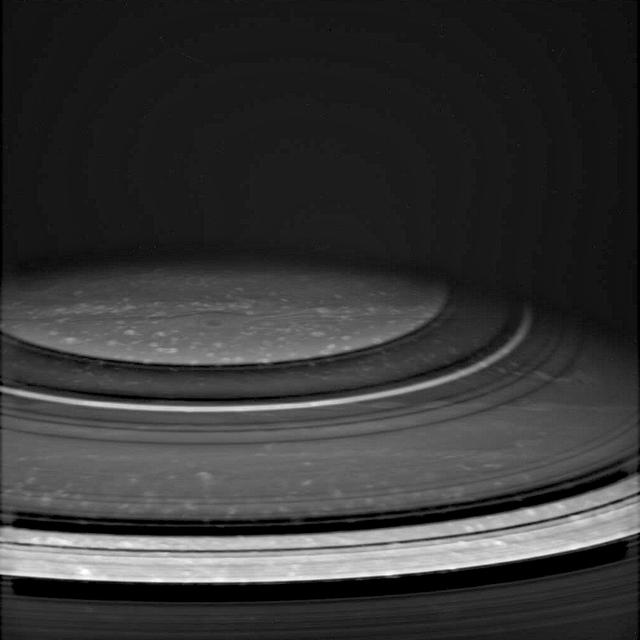
Atmospheric features in Saturn's north polar region are revealed in spectacular detail in this Cassini image, taken in the near infrared spectral region, where methane gas is not very absorbing. The dark shadows of Saturn's rings drape across the planet, creating the illusion of atmospheric bands. Dots of bright clouds give the appearance that this is an active place. The image was taken with the Cassini spacecraft wide angle camera on Dec. 14, 2004, at a distance of 717,800 kilometers (446,100 miles) from Saturn through a filter sensitive to wavelengths of infrared light centered at 939 nanometers. The image scale is about 43 kilometers (27 miles) per pixel. http://photojournal.jpl.nasa.gov/catalog/PIA06567
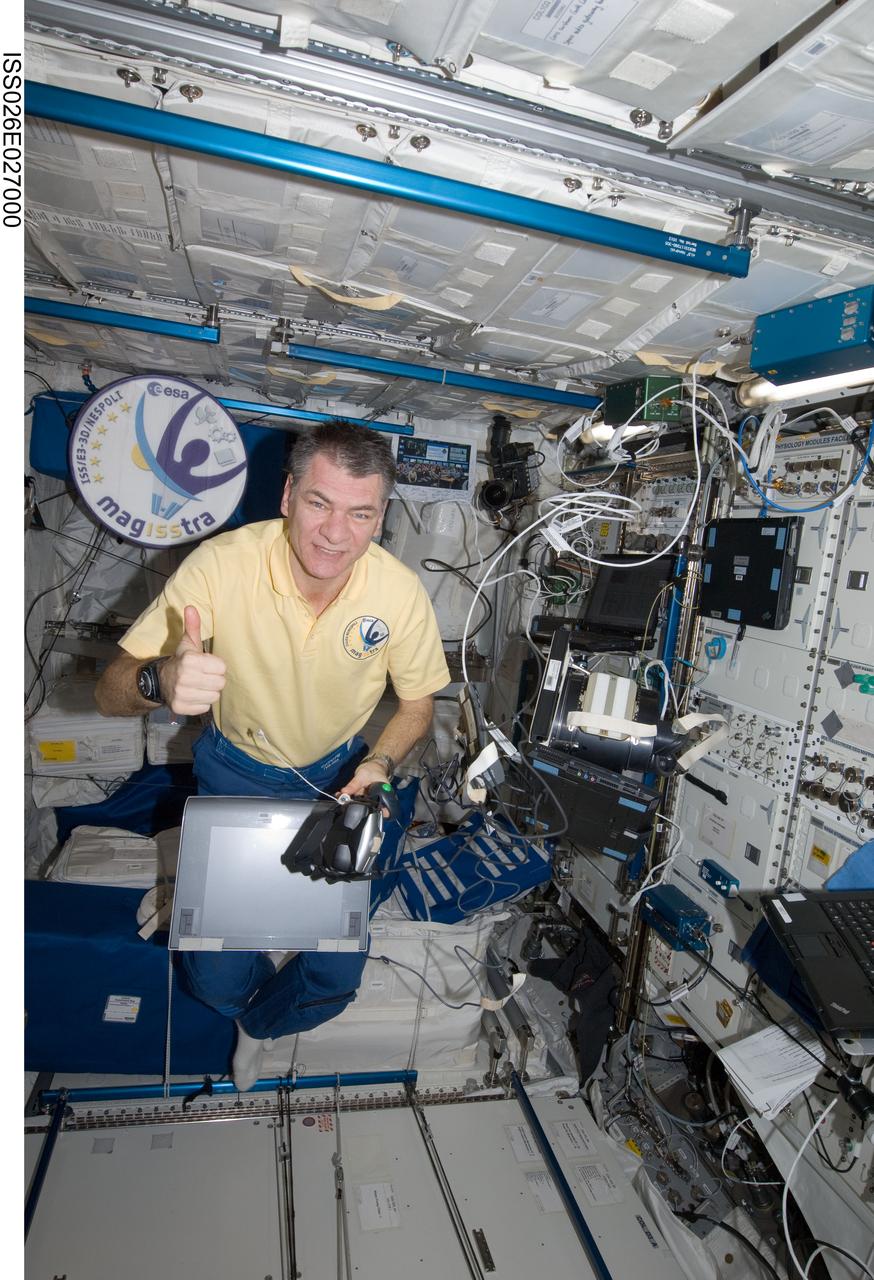
ISS026-E-027000 (12 Feb. 2011) --- European Space Agency (ESA) astronaut Paolo Nespoli, Expedition 26 flight engineer, conducts a test run with the French/CNES neuroscientific research experiment ?3D-Space? (SAP) in the Columbus laboratory of the International Space Station. While floating freely, Nespoli used the ESA multipurpose laptop with a prepared hard disk drive, data storage on a memory card, and an electronic pen table connected to it. 3D-Space, which involves distance, writing and illusion exercises, is designed to test the hypothesis that altered visual perception affects motor control.
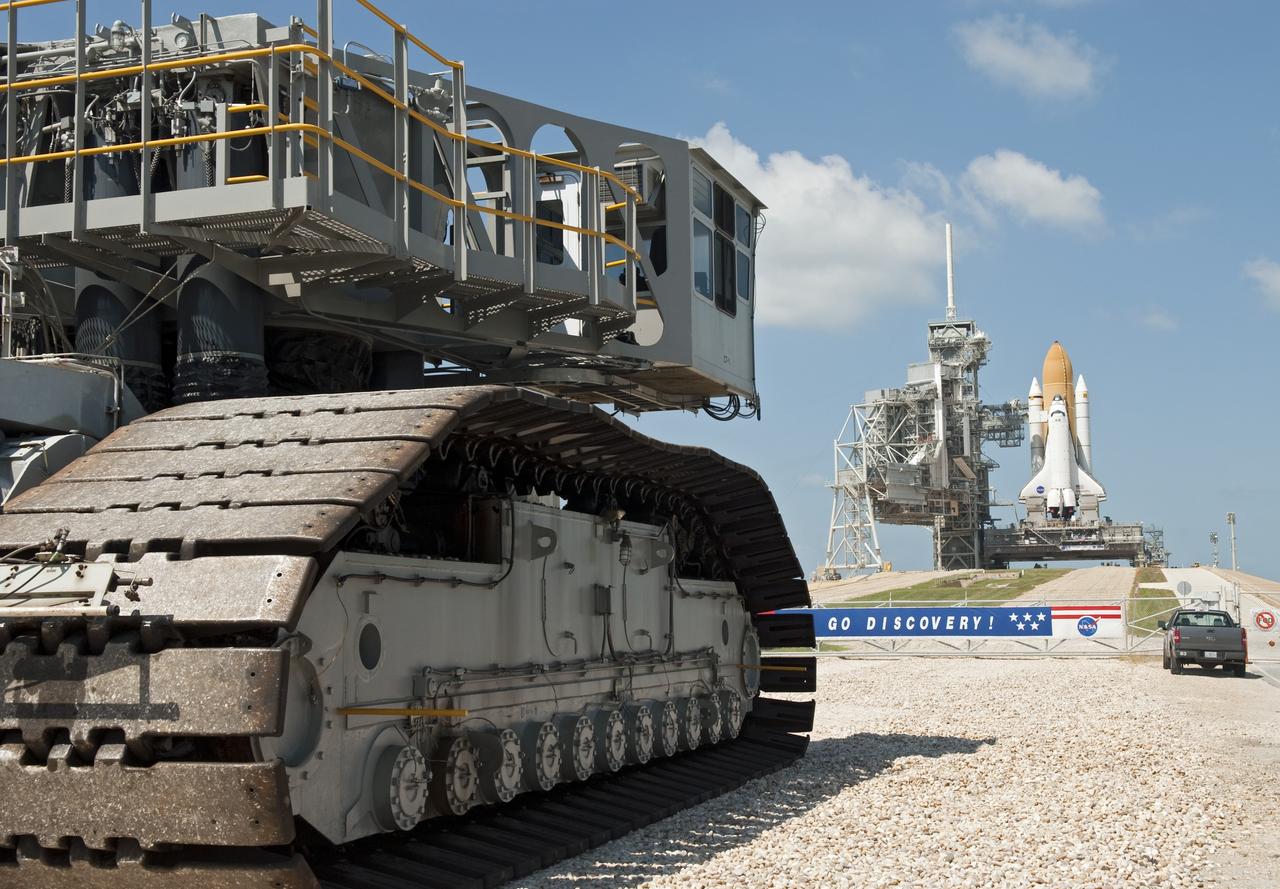
CAPE CANAVERAL, Fla. -- At NASA's Kennedy Space Center in Florida, the crawler-transporter that carried space shuttle Discovery from the Vehicle Assembly Building to Launch Pad 39A, moves toward the pad perimeter gate, giving the illusion that the shuttle is still on top, but smaller than it actually is. The move, called "rollout," sets the stage for Discovery's STS-133 crew to practice countdown and launch procedures during the Terminal Countdown Demonstration Test in mid-October. Targeted to liftoff Nov. 1, Discovery will take the Permanent Multipurpose Module (PMM) packed with supplies and critical spare parts, as well as Robonaut 2 (R2) to the International Space Station. Photo credit: NASA/Jim Grossmann
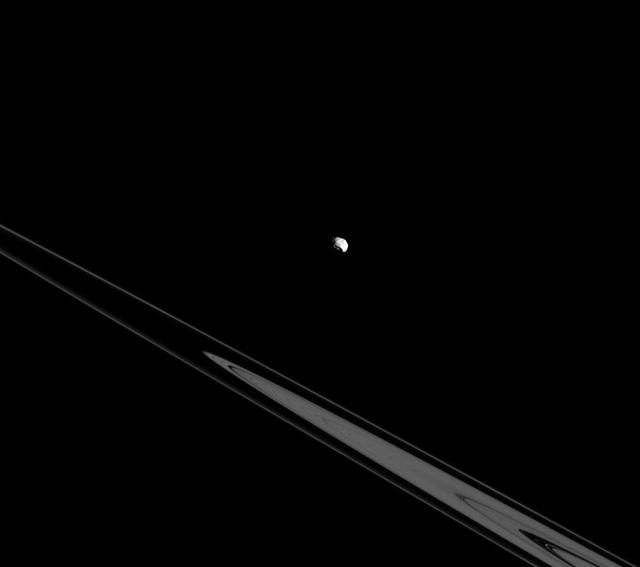
Although Epimetheus appears to be lurking above the rings here, it's actually just an illusion resulting from the viewing angle. In reality, Epimetheus and the rings both orbit in Saturn's equatorial plane. Inner moons and rings orbit very near the equatorial plane of each of the four giant planets in our solar system, but more distant moons can have orbits wildly out of the equatorial plane. It has been theorized that the highly inclined orbits of the outer, distant moons are remnants of the random directions from which they approached the planets they orbit. This view looks toward the unilluminated side of the rings from about -0.3 degrees below the ringplane. The image was taken in visible light with the Cassini spacecraft narrow-angle camera on July 26, 2015. The view was obtained at a distance of approximately 500,000 miles (800,000 kilometers) from Epimetheus and at a Sun-Epimetheus-spacecraft, or phase, angle of 62 degrees. Image scale is 3 miles (5 kilometers) per pixel. http://photojournal.jpl.nasa.gov/catalog/PIA18342

CAPE CANAVERAL, Fla. -- At NASA's Kennedy Space Center in Florida, space shuttle Discovery is visible on Launch Pad 39A before the rotating service structure, which protects it from the elements and provides access to the shuttle, is moved into place. The illusion of the crawler-transporter that carried the spacecraft from the Vehicle Assembly Building to the pad sits outside the perimeter gate. Rollout sets the stage for Discovery's STS-133 crew to practice countdown and launch procedures during the Terminal Countdown Demonstration Test in mid-October. Targeted to liftoff Nov. 1, Discovery will take the Permanent Multipurpose Module (PMM) packed with supplies and critical spare parts, as well as Robonaut 2 (R2) to the International Space Station. Photo credit: NASA/Jim Grossmann
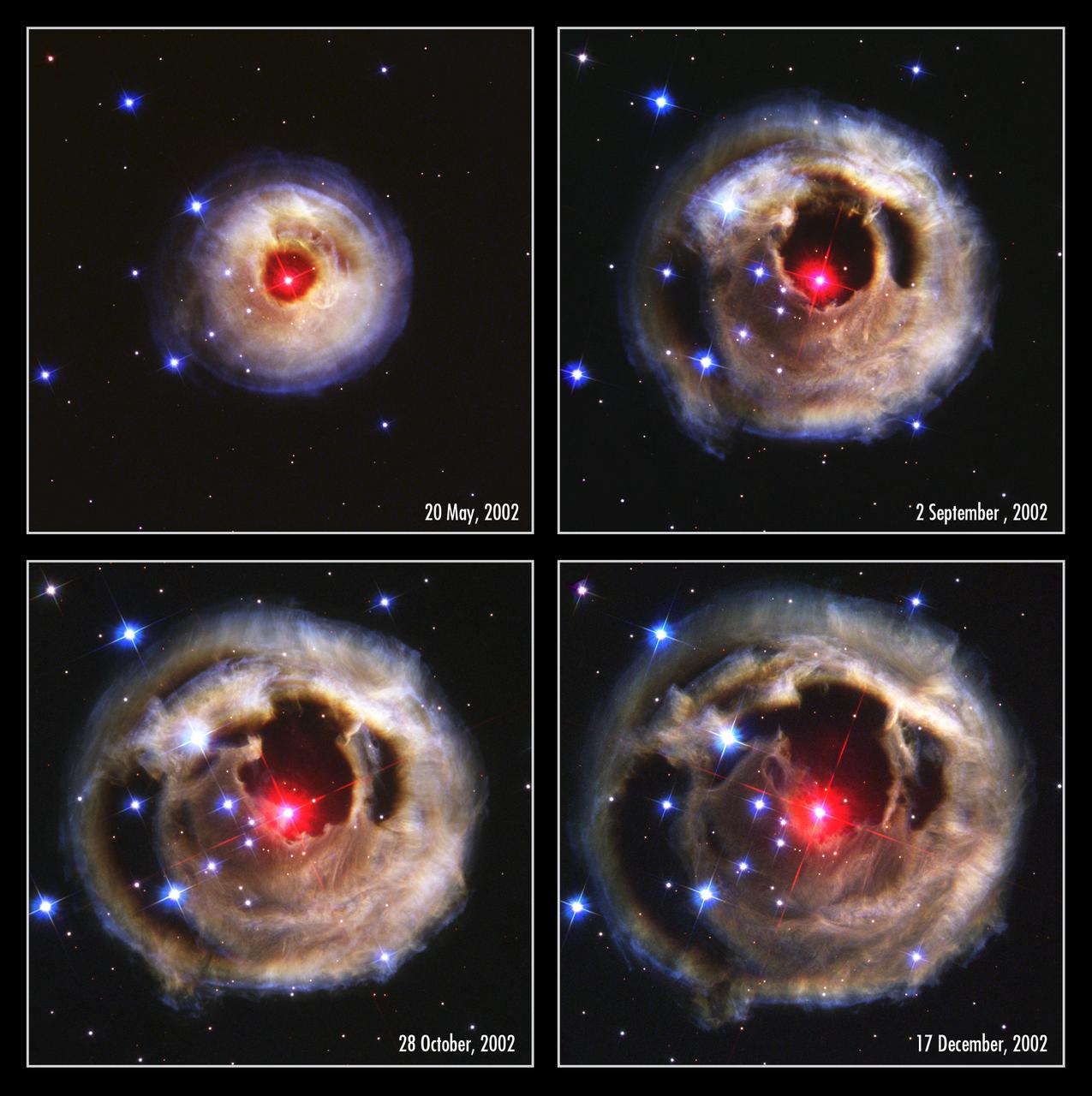
This series of photos, captured by the NASA Hubble Space Telescope's (HST) Advanced Camera for Surveys from May to December 2002, dramatically demonstrates the reverberation of light through space caused by an unusual stellar outburst in January 2002. A burst of light from the bizarre star is spreading into space and reflecting off of surrounding circumstellar dust. As different parts are sequentially illuminated, the appearance of the dust changes. This effect is referred to as a "light echo". The red star at the center of the eyeball like feature is the unusual erupting super giant called V838 Monocerotis, or V Mon, located about 20,000 light-years away in the winter constellation Monoceros (the Unicorn). During its outburst, the star brightened to more than 600,000 times our Sun's luminosity. The circular feature has now expanded to slightly larger than the angular size of Jupiter on the sky, and will continue to expand for several more years until the light from the back side of the nebula begins to arrive. The light echo will then give the illusion of contracting, until it finally disappears by the end of the decade.
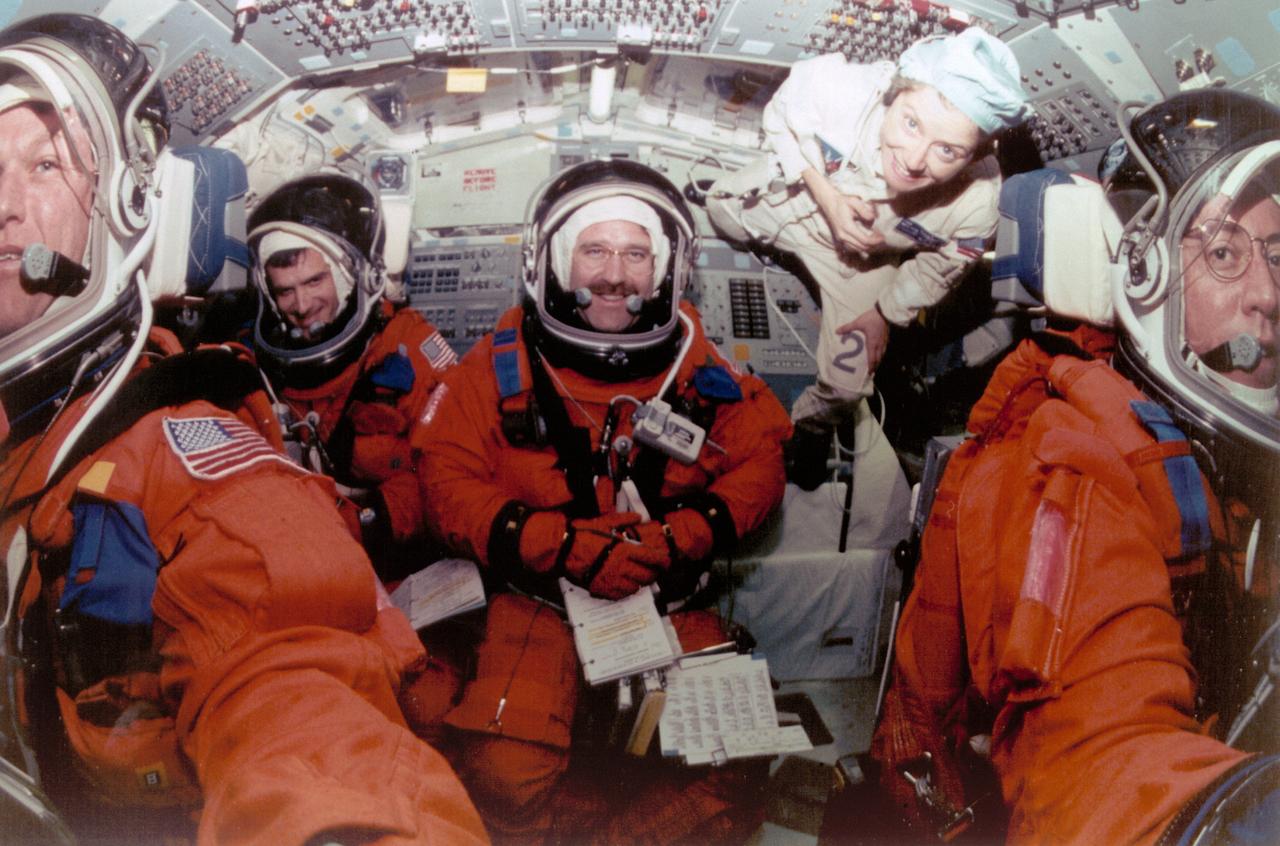
S97-00254 (17 Dec 1996) --- The STS-81 flight crew goes over pre-flight checklists on the flight deck of the Space Shuttle Atlantis during the final phase of the Terminal Countdown Demonstration Test (TCDT) exercises for the January 1997 mission. Crew members pictured, are (from the left) Brent W. Jett, Jr., pilot; Peter J. K. (Jeff) Wisoff and John M. Grunsfeld, mission specialists; along with Michael A. Baker, mission commander. The TCDT represents a simulated final countdown until just before main engine ignition. The astronauts are in their flight positions with the Orbiter in a vertical attitude at Launch Pad 39B, with the camera pointed down from the forward cabin. This angle creates the illusion that astronaut Pam Melroy (in lab suit), mission support assistant, is floating in space. On the mid-deck and out of frame are astronauts Marsha S. Ivins and Jerry M. Linenger. The six will visit Russia?s Mir Space Station, from which they will retrieve John M. Blaha who has been aboard the Mir since September of 1996. Linenger is to replace Blaha, as cosmonaut guest researcher.
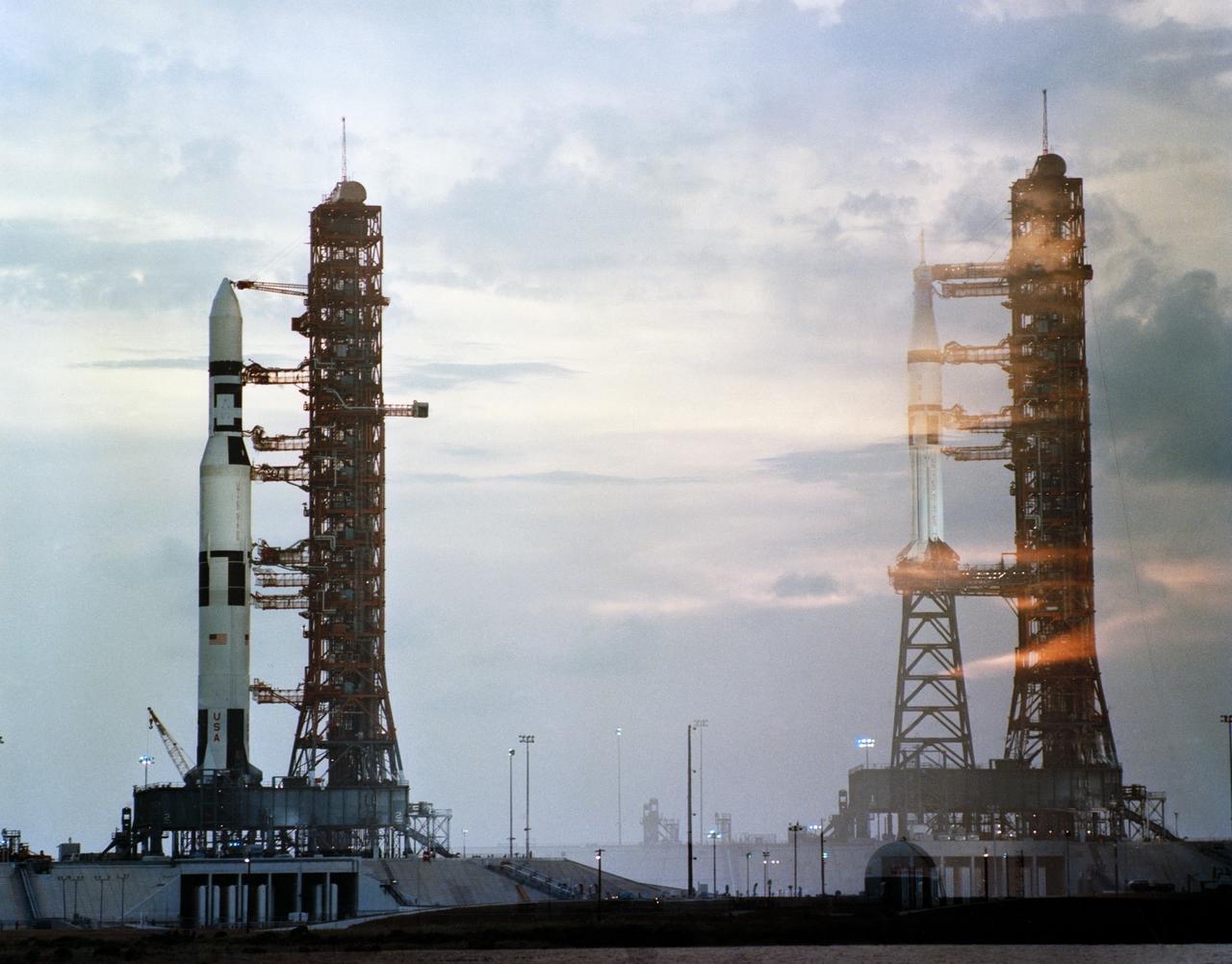
S73-25654 (7 May 1973) --- A deliberate double exposure to help illustrate the comparative sizes and configurations of the Skylab 1 and Skylab 2 space vehicles at Launch Complex 39, Kennedy Space Center, Florida. The double exposure creates an illusion that the rockets are side by side, though actually they are one and a half miles apart. The Skylab 1/ Saturn 1B space vehicle on Pad A is on the left. On the right is the Skylab 2/ Saturn 1B space vehicle on Pad B. The Skylab 1 payload is the space station cluster. The Skylab 2 payload will be an Apollo Command/Service Module (CSM) with astronauts Charles Conrad Jr., Joseph P. Kerwin and Paul J. Weitz aboard. The Saturn V launch vehicle is composed of a Saturn V first (S-1C) stage, a Saturn V second (S-11) stage, and the Skylab payload. The Saturn 1B launch vehicle consists of a Saturn 1B first (S-1B) stage, a Saturn 1B second (S-1VB) stage, and the CSM payload including its launch escape system. Photo credit: NASA
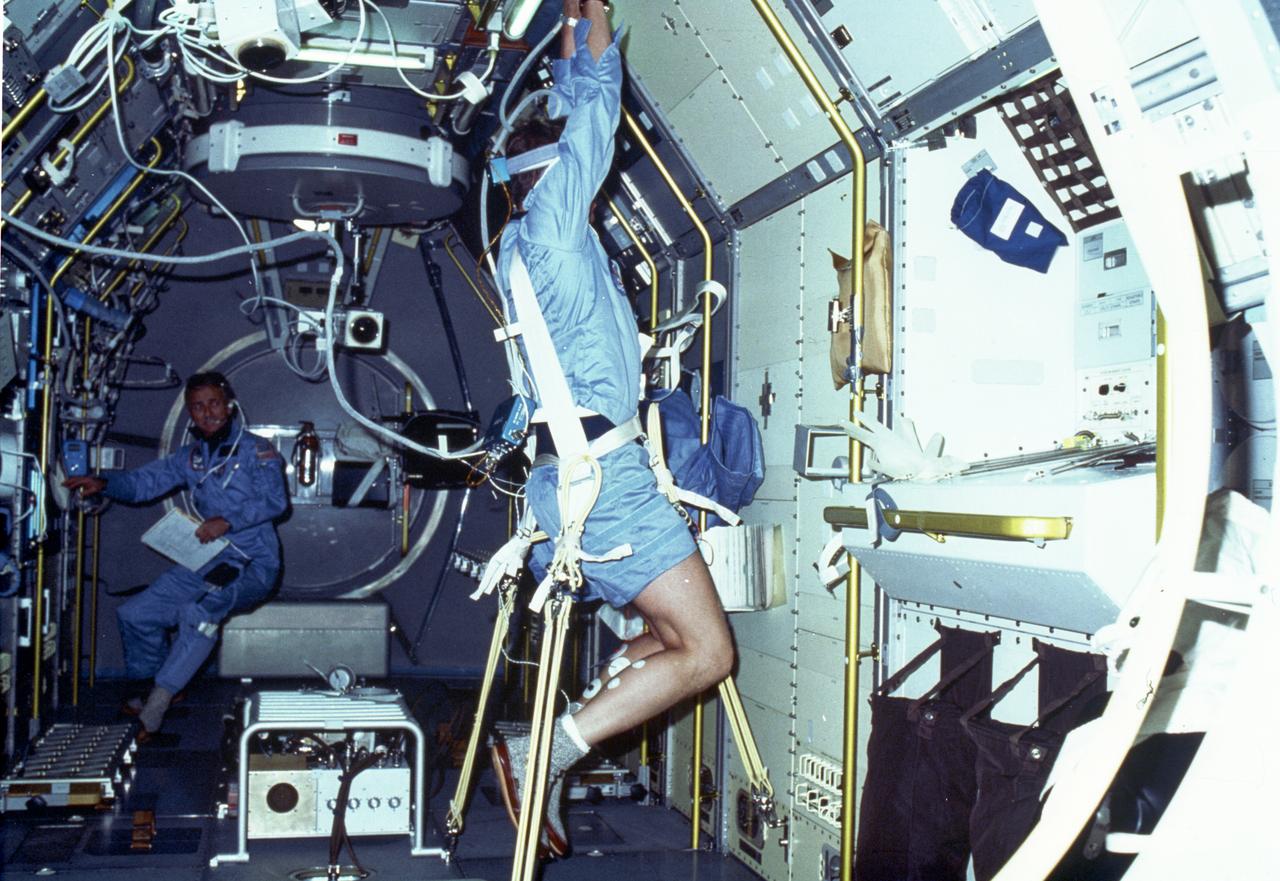
In this Spacelab-1 mission onboard photograph, astronaut Byron Lichtenberg performs a drop experiment, one of the Vestibular Experiments in Space investigations. The experiment examined spinal reflexes to determine whether they changed in microgravity. In Earth's environment, the otoliths signal the muscles to prepare for jolts associated with falling. During the flight, the normal reflex between the otoliths and the muscles was partially inhibited early in flight, declined further as the flight progressed, and returned to normal immediately after landing, suggesting that the brain ignored or reinterpreted otolith signals during space flight. Crewmembers reported a lack of awareness of position and location of feet, difficulty in maintaining balance, and a perception that falls were more sudden, faster, and harder than similar drops experienced in preflight. Crewmembers experienced illusions as they performed prescribed movement tests. When crew members viewed various targets and then pointed at them while blindfolded, their perception of target location and position of their own limbs was inaccurate in flight compared with similar tests on the ground. The Spacelab-1 was a multidisciplinary mission; that is, investigations were performed in several different fields of scientific research. The overall goal of the mission was to verify Spacelab performance through a variety of scientific experiments. The Spacelab-1 was launched aboard the Space Shuttle Orbiter Columbia for the STS-9 mission on November 28, 1983. The Marshall Space Flight Center had management responsibilities for the mission.
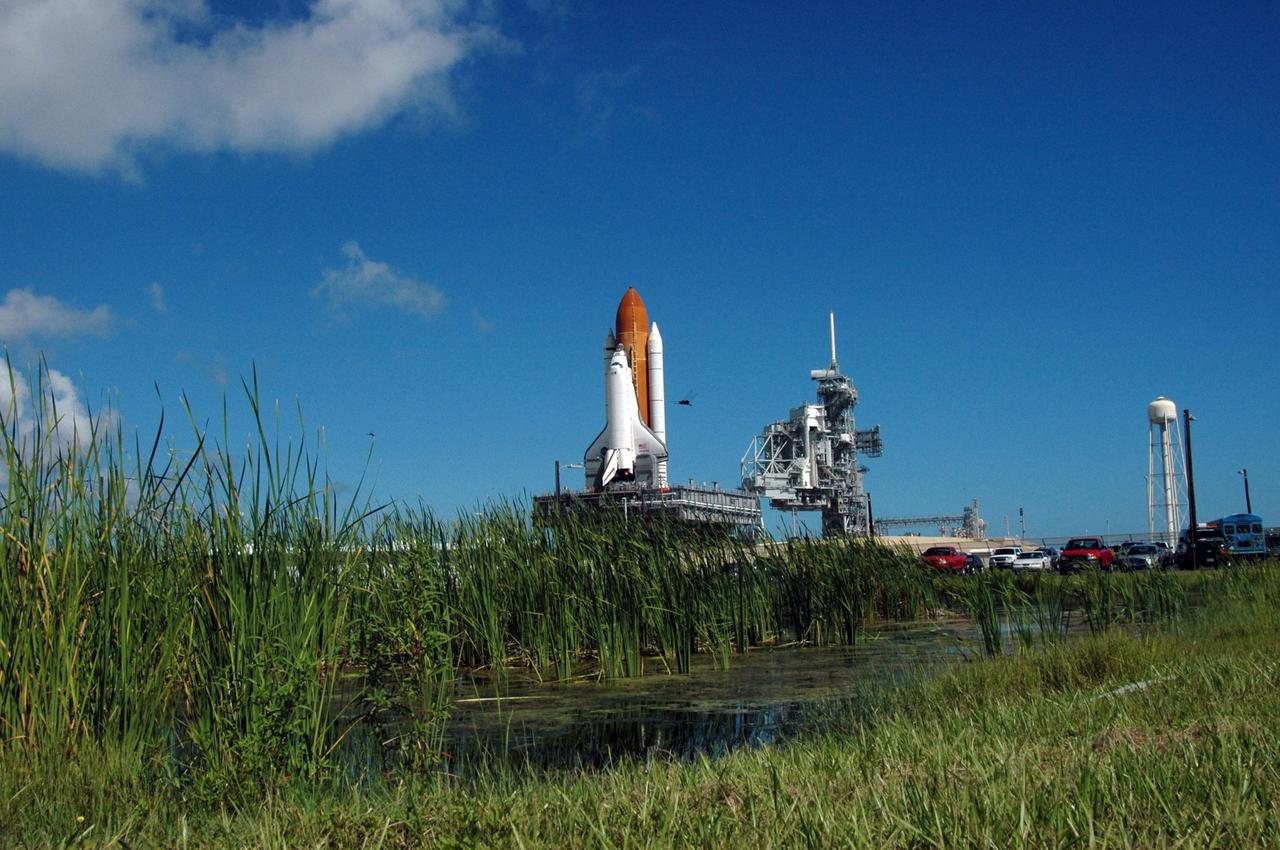
KENNEDY SPACE CENTER, FLA. - The camera captures an optical illusion of a dragonfly above the reedy water near Launch Pad 39B seems to be heading for Space Shuttle Atlantis. The shuttle, sitting on the mobile launcher platform, is being moved off the pad by the crawler-transporter and rolling back to the Vehicle Assembly Building. First motion off the pad was at 10:04 a.m. EDT. The crawler is 131 feet long, 113 feet wide and 20 feet high. It weights 5.5 million pounds unloaded. The combined weight of crawler, mobile launcher platform and a space shuttle is 12 million pounds. Unloaded, the crawler moves at 2 mph. Loaded, the snail's pace slows to 1 mph. The rollback is a safety precaution as the area waits for the arrival of Tropical Storm Ernesto. The storm is forecast to be bringing 58-mph to 70-mph winds in the next 24 hours. The shuttle will be moved into high bay 2, on the southwest side of the VAB, for protection from the storm. Photo credit: NASA/Ken Thornsley
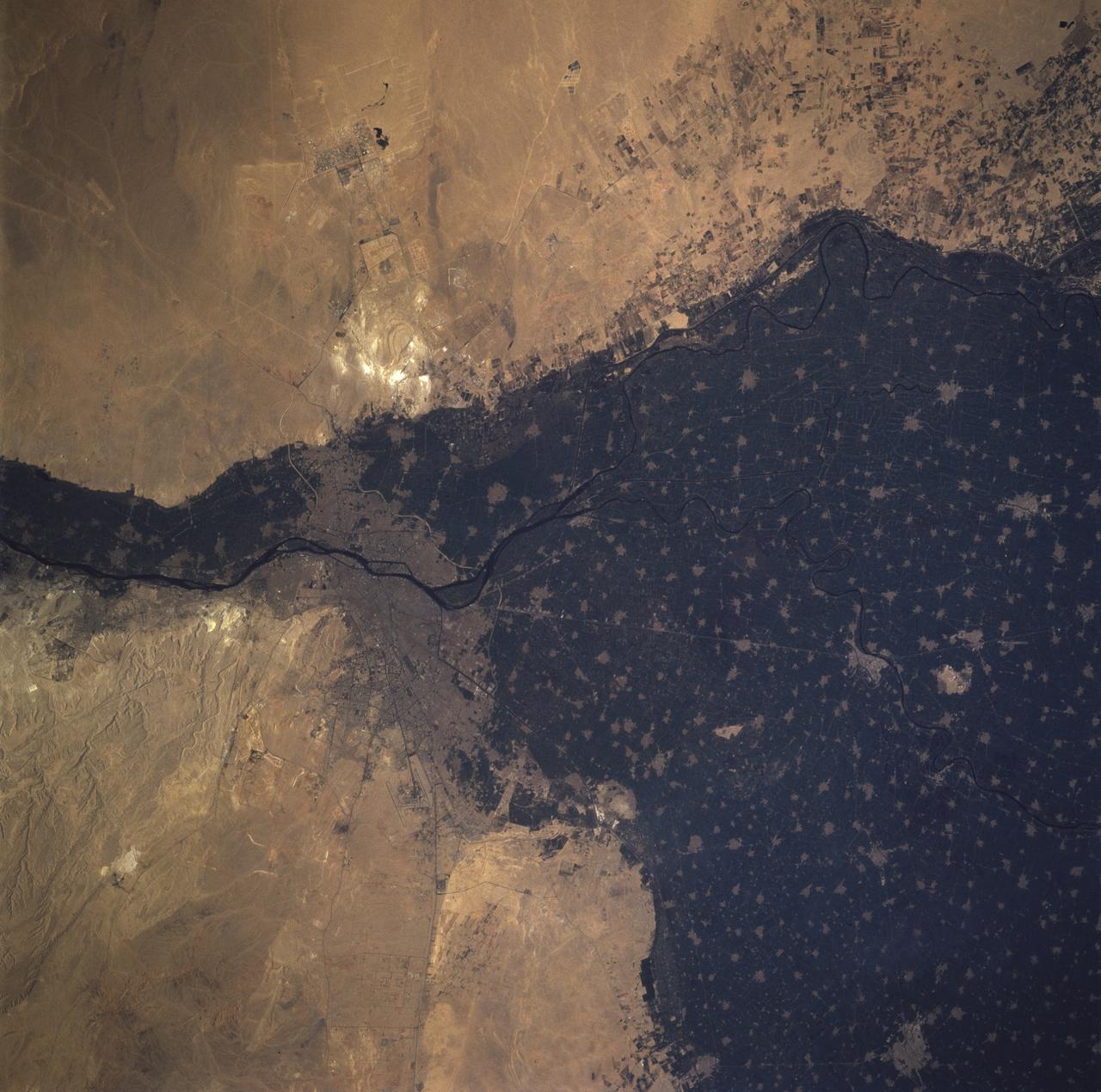
STS081-717-096 (12-22 Jan. 1997) --- The crewmembers, like astronauts 30 years ago, found the Nile River and its conspicuous delta an irresistible photo target from space, in this case from the Space Shuttle Atlantis' overhead windows. The majority of people living in Egypt reside in the city of Cairo. One of the most intensely cultivated lands in the world, the Nile delta can lay claim to some of the highest levels of soil salinity, as well as to being one of the highest users of fertilizer. The majority of Egypt's arable land is located in the delta. Cairo is "young" when compared to Egypt's long history, and has been a city since the Roman Empire. Although the city itself is relatively young, a site on the eastern bank of the Nile became the first capital of Egypt around 4225 BC. The city was called "Oun", but later was renamed Heliopolis by the Greeks. In 1991 the population of Cairo was estimated to be 54,600,000. The Pyramids of Gizai, one of the Seven Wonders of the Ancient World, can be seen on the western edge of the Nile delta and Cairo. The smallest and youngest of three Old Kingdom pyramids, Menkaure, is hard to distinguish because of its small size which casts a small shadow. Khafre is located between Menkaure and the Great Pyramid, and was originally 143 meters high. From the ground it appears that Khafre is taller than the other pyramids but this is an illusion caused by Khafre being built on higher ground. Khufu, or the Great Pyramid, was the first of the three to be built, and at an original height of 147 meters, is the tallest pyramid.
![This new Hubble image showcases a remarkable variety of objects at different distances from us, extending back over halfway to the edge of the observable Universe. The galaxies in this image mostly lie about five billion light-years from Earth but the field also contains other objects, both significantly closer and far more distant. Studies of this region of the sky have shown that many of the objects that appear to lie close together may actually be billions of light-years apart. This is because several groups of galaxies lie along our line of sight, creating something of an optical illusion. Hubble’s cross-section of the Universe is completed by distorted images of galaxies in the very distant background. These objects are sometimes distorted due to a process called gravitational lensing, an extremely valuable technique in astronomy for studying very distant objects [1]. This lensing is caused by the bending of the space-time continuum by massive galaxies lying close to our line of sight to distant objects. One of the lens systems visible here is called CLASS B1608+656, which appears as a small loop in the centre of the image. It features two foreground galaxies distorting and amplifying the light of a distant quasar the known as QSO-160913+653228. The light from this bright disc of matter, which is currently falling into a black hole, has taken nine billion years to reach us — two thirds of the age of the Universe. As well as CLASS B1608+656, astronomers have identified two other gravitational lenses within this image. Two galaxies, dubbed Fred and Ginger by the researchers who studied them, contain enough mass to visibly distort the light from objects behind them. Fred, also known more prosaically as [FMK2006] ACS J160919+6532, lies near the lens galaxies in CLASS B1608+656, while Ginger ([FMK2006] ACS J160910+6532) is markedly closer to us. Despite their different distances from us, both can be seen near to CLASS B1608+656 in the central region of this Hubble image. To capture distant and dim objects like these, Hubble required a long exposure. The image is made up of visible and infrared observations with a total exposure time of 14 hours. More info: <a href="http://www.spacetelescope.org/news/heic1408/" rel="nofollow">www.spacetelescope.org/news/heic1408/</a> Credit: NASA/ESA/Hubble <b><a href="http://www.nasa.gov/audience/formedia/features/MP_Photo_Guidelines.html" rel="nofollow">NASA image use policy.</a></b> <b><a href="http://www.nasa.gov/centers/goddard/home/index.html" rel="nofollow">NASA Goddard Space Flight Center</a></b> enables NASA’s mission through four scientific endeavors: Earth Science, Heliophysics, Solar System Exploration, and Astrophysics. Goddard plays a leading role in NASA’s accomplishments by contributing compelling scientific knowledge to advance the Agency’s mission. <b>Follow us on <a href="http://twitter.com/NASAGoddardPix" rel="nofollow">Twitter</a></b> <b>Like us on <a href="http://www.facebook.com/pages/Greenbelt-MD/NASA-Goddard/395013845897?ref=tsd" rel="nofollow">Facebook</a></b> <b>Find us on <a href="http://instagram.com/nasagoddard?vm=grid" rel="nofollow">Instagram</a></b>](https://images-assets.nasa.gov/image/GSFC_20171208_Archive_e001152/GSFC_20171208_Archive_e001152~medium.jpg)
This new Hubble image showcases a remarkable variety of objects at different distances from us, extending back over halfway to the edge of the observable Universe. The galaxies in this image mostly lie about five billion light-years from Earth but the field also contains other objects, both significantly closer and far more distant. Studies of this region of the sky have shown that many of the objects that appear to lie close together may actually be billions of light-years apart. This is because several groups of galaxies lie along our line of sight, creating something of an optical illusion. Hubble’s cross-section of the Universe is completed by distorted images of galaxies in the very distant background. These objects are sometimes distorted due to a process called gravitational lensing, an extremely valuable technique in astronomy for studying very distant objects [1]. This lensing is caused by the bending of the space-time continuum by massive galaxies lying close to our line of sight to distant objects. One of the lens systems visible here is called CLASS B1608+656, which appears as a small loop in the centre of the image. It features two foreground galaxies distorting and amplifying the light of a distant quasar the known as QSO-160913+653228. The light from this bright disc of matter, which is currently falling into a black hole, has taken nine billion years to reach us — two thirds of the age of the Universe. As well as CLASS B1608+656, astronomers have identified two other gravitational lenses within this image. Two galaxies, dubbed Fred and Ginger by the researchers who studied them, contain enough mass to visibly distort the light from objects behind them. Fred, also known more prosaically as [FMK2006] ACS J160919+6532, lies near the lens galaxies in CLASS B1608+656, while Ginger ([FMK2006] ACS J160910+6532) is markedly closer to us. Despite their different distances from us, both can be seen near to CLASS B1608+656 in the central region of this Hubble image. To capture distant and dim objects like these, Hubble required a long exposure. The image is made up of visible and infrared observations with a total exposure time of 14 hours. More info: <a href="http://www.spacetelescope.org/news/heic1408/" rel="nofollow">www.spacetelescope.org/news/heic1408/</a> Credit: NASA/ESA/Hubble <b><a href="http://www.nasa.gov/audience/formedia/features/MP_Photo_Guidelines.html" rel="nofollow">NASA image use policy.</a></b> <b><a href="http://www.nasa.gov/centers/goddard/home/index.html" rel="nofollow">NASA Goddard Space Flight Center</a></b> enables NASA’s mission through four scientific endeavors: Earth Science, Heliophysics, Solar System Exploration, and Astrophysics. Goddard plays a leading role in NASA’s accomplishments by contributing compelling scientific knowledge to advance the Agency’s mission. <b>Follow us on <a href="http://twitter.com/NASAGoddardPix" rel="nofollow">Twitter</a></b> <b>Like us on <a href="http://www.facebook.com/pages/Greenbelt-MD/NASA-Goddard/395013845897?ref=tsd" rel="nofollow">Facebook</a></b> <b>Find us on <a href="http://instagram.com/nasagoddard?vm=grid" rel="nofollow">Instagram</a></b>
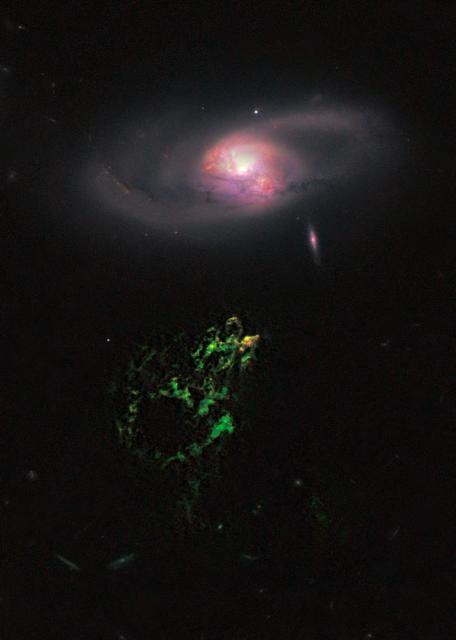
NASA image release January 10, 2011 In this image by NASA's Hubble Space Telescope, an unusual, ghostly green blob of gas appears to float near a normal-looking spiral galaxy. The bizarre object, dubbed Hanny's Voorwerp (Hanny's Object in Dutch), is the only visible part of a 300,000-light-year-long streamer of gas stretching around the galaxy, called IC 2497. The greenish Voorwerp is visible because a searchlight beam of light from the galaxy's core illuminated it. This beam came from a quasar, a bright, energetic object that is powered by a black hole. The quasar may have turned off about 200,000 years ago. This Hubble view uncovers a pocket of star clusters, the yellowish-orange area at the tip of Hanny's Voorwerp. The star clusters are confined to an area that is a few thousand light-years wide. The youngest stars are a couple of million years old. The Voorwerp is the size of our Milky Way galaxy, and its bright green color is from glowing oxygen. Hubble also shows that gas flowing from IC 2497 may have instigated the star birth by compressing the gas in Hanny's Voorwerp. The galaxy is located about 650 million light-years from Earth. What appears to be a gaping hole in Hanny's Voorwerp actually may be a shadow cast by an object in the quasar's light path. The feature gives the illusion of a hole about 20,000 light-years wide. Hubble reveals sharp edges but no other changes in the gas around the apparent opening, suggesting that an object close to the quasar may have blocked some of the light and projected a shadow on the Voorwerp. This phenomenon is similar to a fly on a movie projector lens casting a shadow on a movie screen. An interaction between IC 2497 and another galaxy about a billion years ago may have created Hanny's Voorwerp and fueled the quasar. The Hubble image shows that IC 2497 has been disturbed, with complex dust patches, warped spiral arms, and regions of star formation around its core. These features suggest the aftermath of a galaxy merger. The bright spots in the central part of the galaxy are star-forming regions. The small, pinkish object to the lower right of IC 2497 is an edge-on spiral galaxy in the background. The image was made by combining data from the Advanced Camera for Surveys (ACS) and the Wide Field Camera 3 (WFC3). The ACS exposures were taken April 12, 2010; the WFC3 data, April 4, 2010. Object Names: Hanny's Voorwerp, IC 2497 Image Type: Astronomical Credit: NASA, ESA, W. Keel (University of Alabama), and the Galaxy Zoo Team <b><a href="http://www.nasa.gov/centers/goddard/home/index.html" rel="nofollow">NASA Goddard Space Flight Center</a></b> enables NASA’s mission through four scientific endeavors: Earth Science, Heliophysics, Solar System Exploration, and Astrophysics. Goddard plays a leading role in NASA’s accomplishments by contributing compelling scientific knowledge to advance the Agency’s mission. <b>Follow us on <a href="http://twitter.com/NASA_GoddardPix" rel="nofollow">Twitter</a></b> <b>Join us on <a href="http://www.facebook.com/pages/Greenbelt-MD/NASA-Goddard/395013845897?ref=tsd" rel="nofollow">Facebook</a></b>
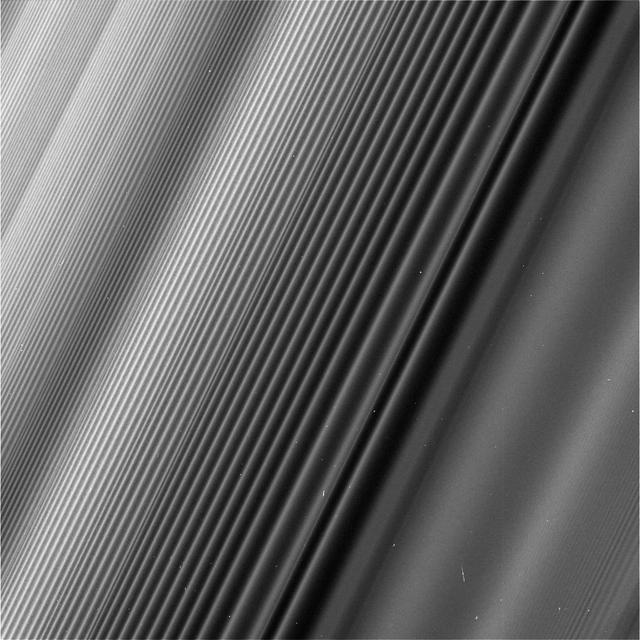
This view from NASA's Cassini spacecraft shows a wave structure in Saturn's rings known as the Janus 2:1 spiral density wave. Resulting from the same process that creates spiral galaxies, spiral density waves in Saturn's rings are much more tightly wound. In this case, every second wave crest is actually the same spiral arm which has encircled the entire planet multiple times. This is the only major density wave visible in Saturn's B ring. Most of the B ring is characterized by structures that dominate the areas where density waves might otherwise occur, but this innermost portion of the B ring is different. The radius from Saturn at which the wave originates (toward lower-right in this image) is 59,796 miles (96,233 kilometers) from the planet. At this location, ring particles orbit Saturn twice for every time the moon Janus orbits once, creating an orbital resonance. The wave propagates outward from the resonance (and away from Saturn), toward upper-left in this view. For reasons researchers do not entirely understand, damping of waves by larger ring structures is very weak at this location, so this wave is seen ringing for hundreds of bright wave crests, unlike density waves in Saturn's A ring. The image gives the illusion that the ring plane is tilted away from the camera toward upper-left, but this is not the case. Because of the mechanics of how this kind of wave propagates, the wavelength decreases with distance from the resonance. Thus, the upper-left of the image is just as close to the camera as the lower-right, while the wavelength of the density wave is simply shorter. This wave is remarkable because Janus, the moon that generates it, is in a strange orbital configuration. Janus and Epimetheus share practically the same orbit and trade places every four years. Every time one of those orbit swaps takes place, the ring at this location responds, spawning a new crest in the wave. The distance between any pair of crests corresponds to four years' worth of the wave propagating downstream from the resonance, which means the wave seen here encodes many decades' worth of the orbital history of Janus and Epimetheus. According to this interpretation, the part of the wave at the very upper-left of this image corresponds to the positions of Janus and Epimetheus around the time of the Voyager flybys in 1980 and 1981, which is the time at which Janus and Epimetheus were first proven to be two distinct objects (they were first observed in 1966). Epimetheus also generates waves at this location, but they are swamped by the waves from Janus, since Janus is the larger of the two moons. This image was taken on June 4, 2017, with the Cassini spacecraft narrow-angle camera. The image was acquired on the sunlit side of the rings from a distance of 47,000 miles (76,000 kilometers) away from the area pictured. The image scale is 1,730 feet (530 meters) per pixel. The phase angle, or sun-ring-spacecraft angle, is 90 degrees. https://photojournal.jpl.nasa.gov/catalog/PIA21627