
Illustration of the SpaceX Crew Dragon and Falcon 9 rocket during the company’s uncrewed In-Flight Abort Test for NASA’s Commercial Crew Program. This demonstration test of Crew Dragon’s launch escape capabilities is designed to provide valuable data toward NASA certifying SpaceX’s crew transportation system for carrying astronauts to and from the International Space Station.
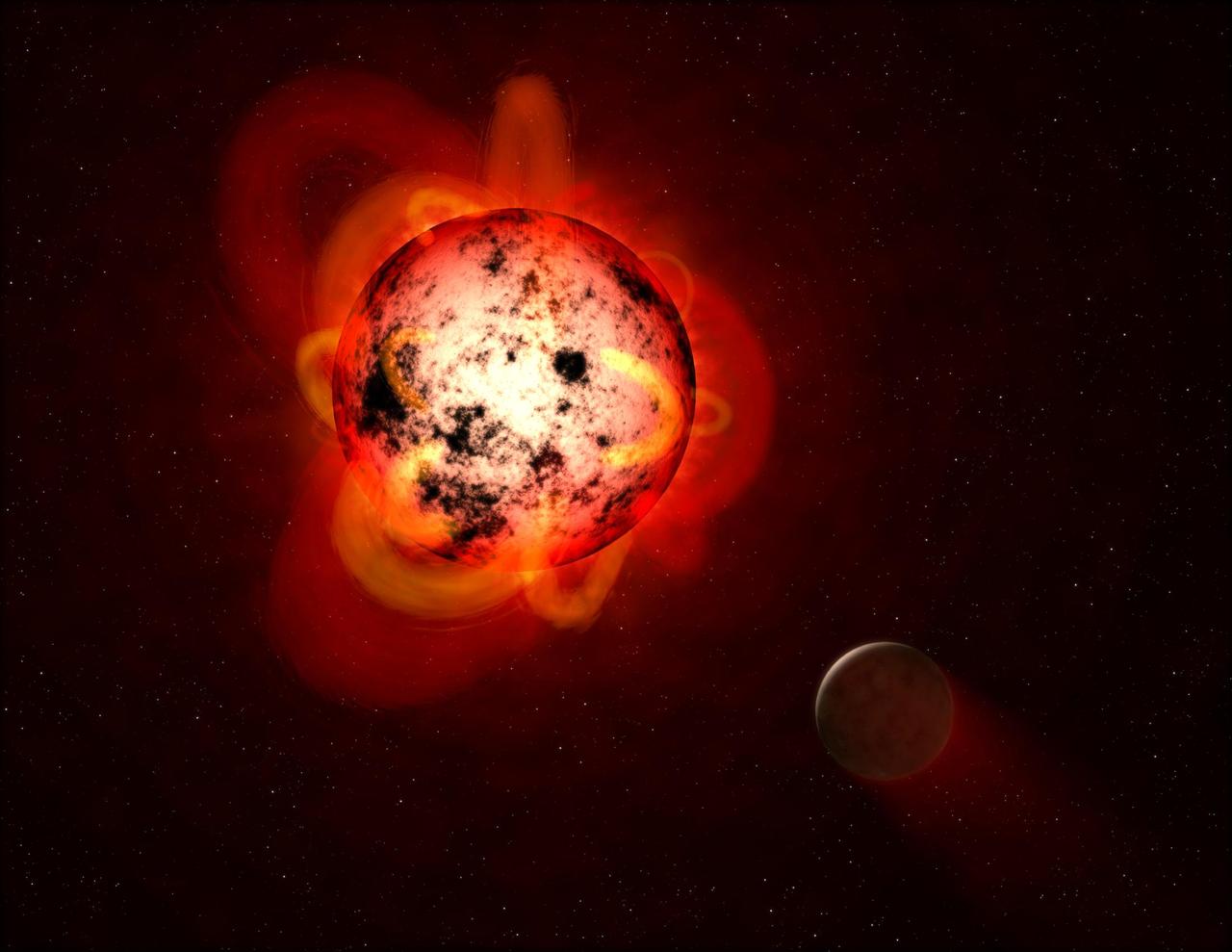
This illustration shows a red dwarf star orbited by a hypothetical exoplanet. Red dwarfs tend to be magnetically active, displaying gigantic arcing prominences and a wealth of dark sunspots. Red dwarfs also erupt with intense flares that could strip a nearby planet's atmosphere over time, or make the surface inhospitable to life as we know it. By mining data from the Galaxy Evolution Explorer (GALEX) spacecraft, a team of astronomers identified dozens of flares at a range of durations and strengths. The team measured events with less total energy than many previously detected flares from red dwarfs. This is important because, although individually less energetic and therefore less hostile to life, smaller flares might be much more frequent and add up over time to produce a cumulative effect on an orbiting planet. https://photojournal.jpl.nasa.gov/catalog/PIA21473
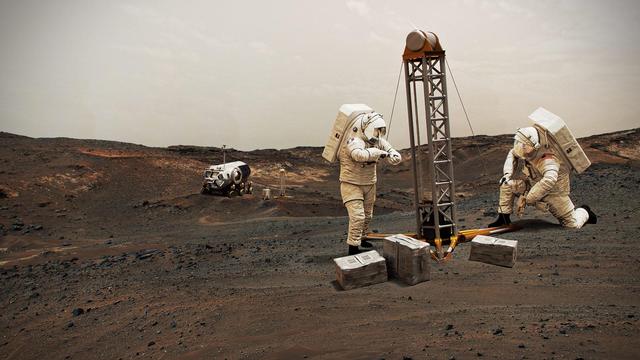
NASA astronauts on Mars in this illustration. https://photojournal.jpl.nasa.gov/catalog/PIA24031
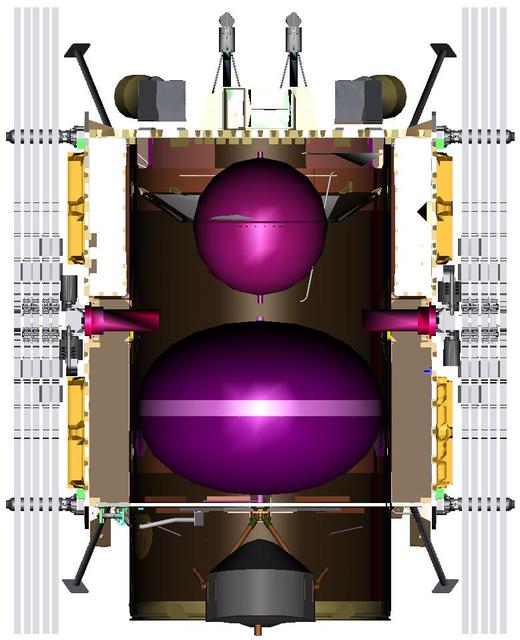
This illustration shows an inside view of the NASA Dawn spacecraft.

Illustration Preliminary Volcanic Terrain Map of Mars Regional Chart
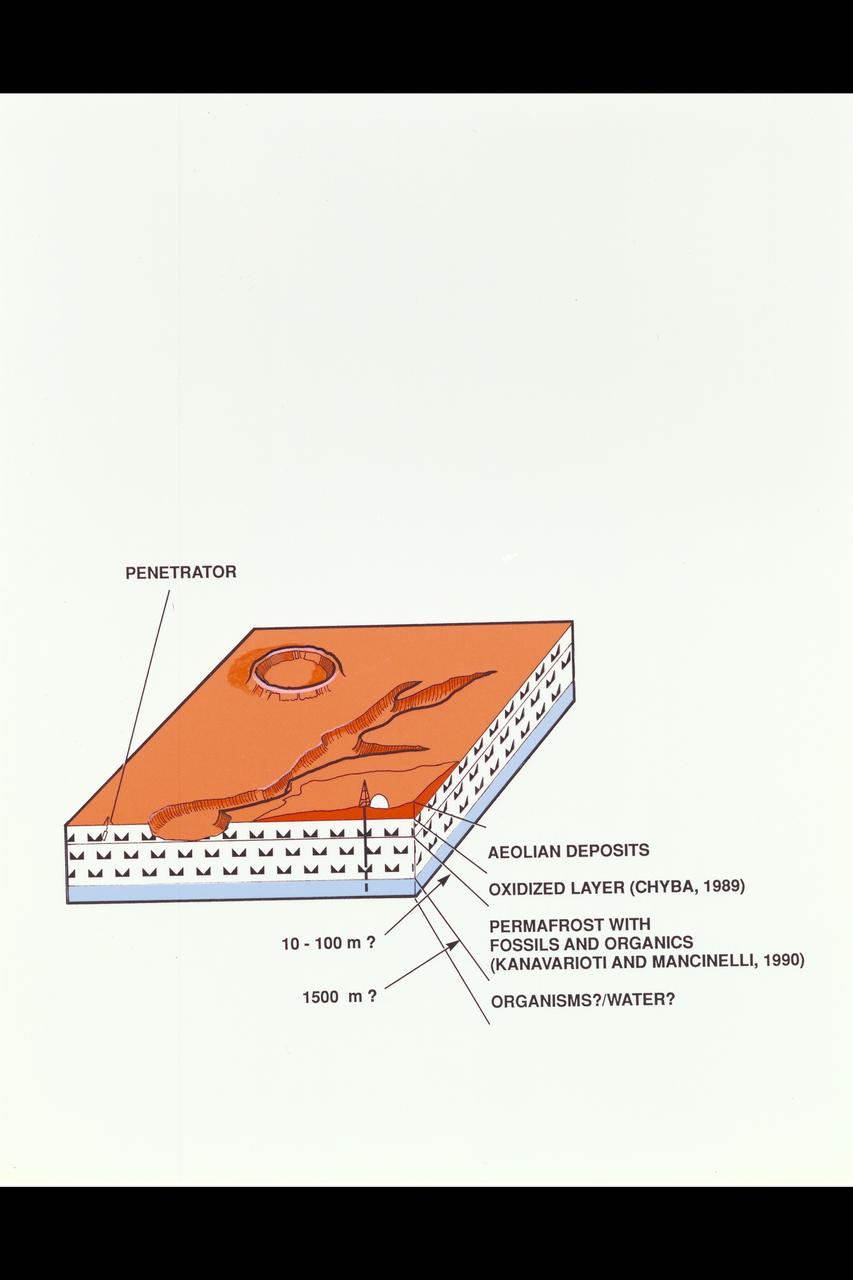
Illustration Origin of Life, Chemical Evolution on Mars: Mars Evolution Layers
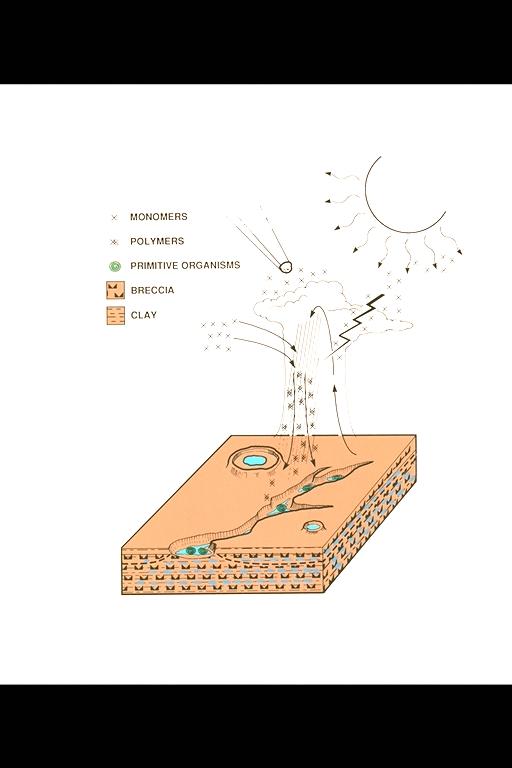
Illustration Origin of Life: Oberbeck, Marshall and Schwartz Theory for Chemical Evolution
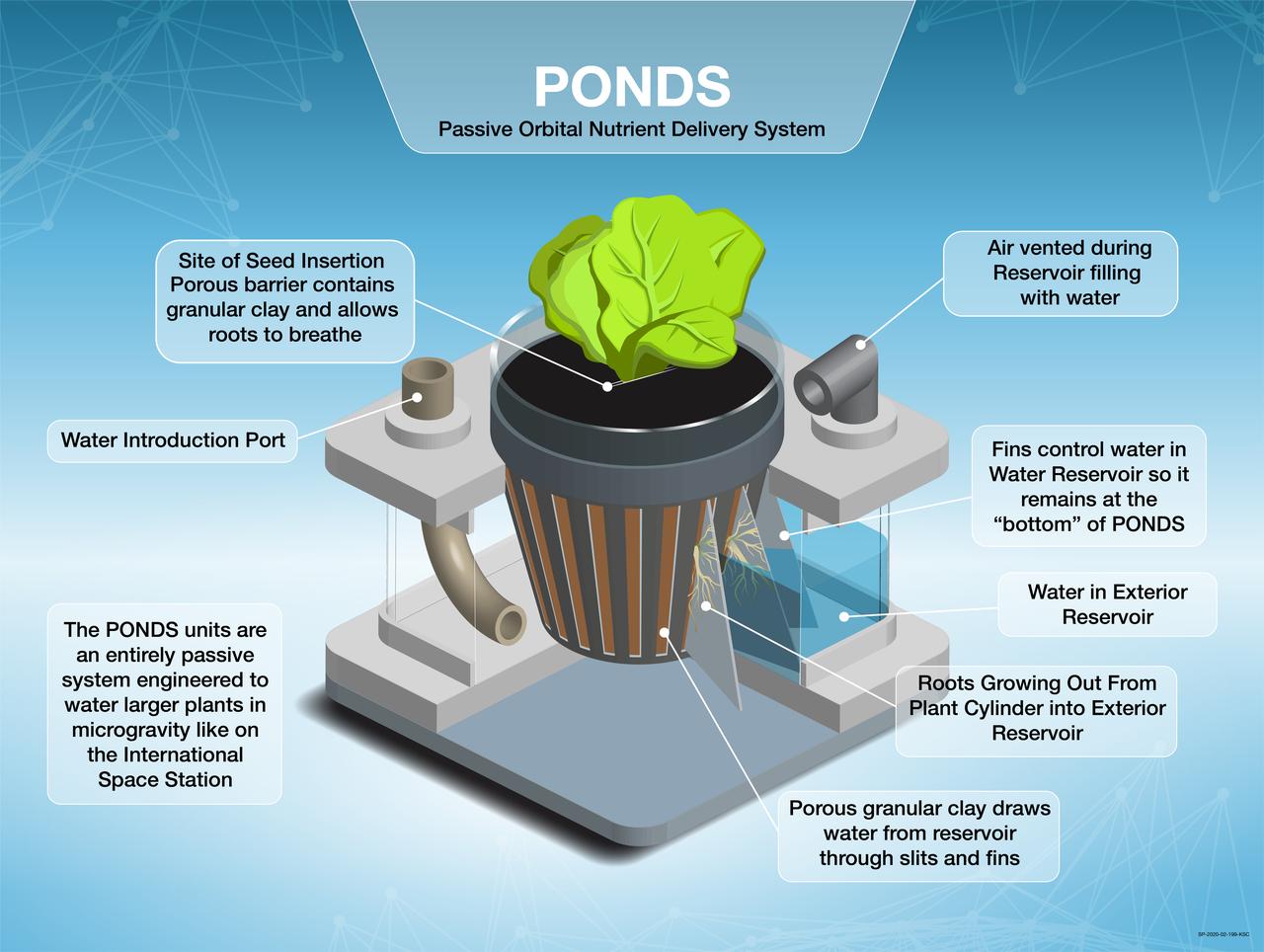
Infographic illustrating the Passive Orbital Nutrient Delivery System (PONDS) plant growth unit. The PONDS units are an entirely passive system – meaning no electricity, no pumps and no moving parts – and the basic concept involves using a free-standing reservoir of water that plants can draw from when needed, cutting down on time astronauts would spend watering plants during the growth interval.

An illustration of NASA's Perseverance rover landing on Mars. Hundreds of critical events must execute perfectly and exactly on time for the rover to land safely on Feb. 18, 2021. https://photojournal.jpl.nasa.gov/catalog/PIA24342

Illustration NASA Ames Research Center developed Icing Protection System: Electro-Expuisive Deicing System. (P.I. Dr Lenord Haslim)
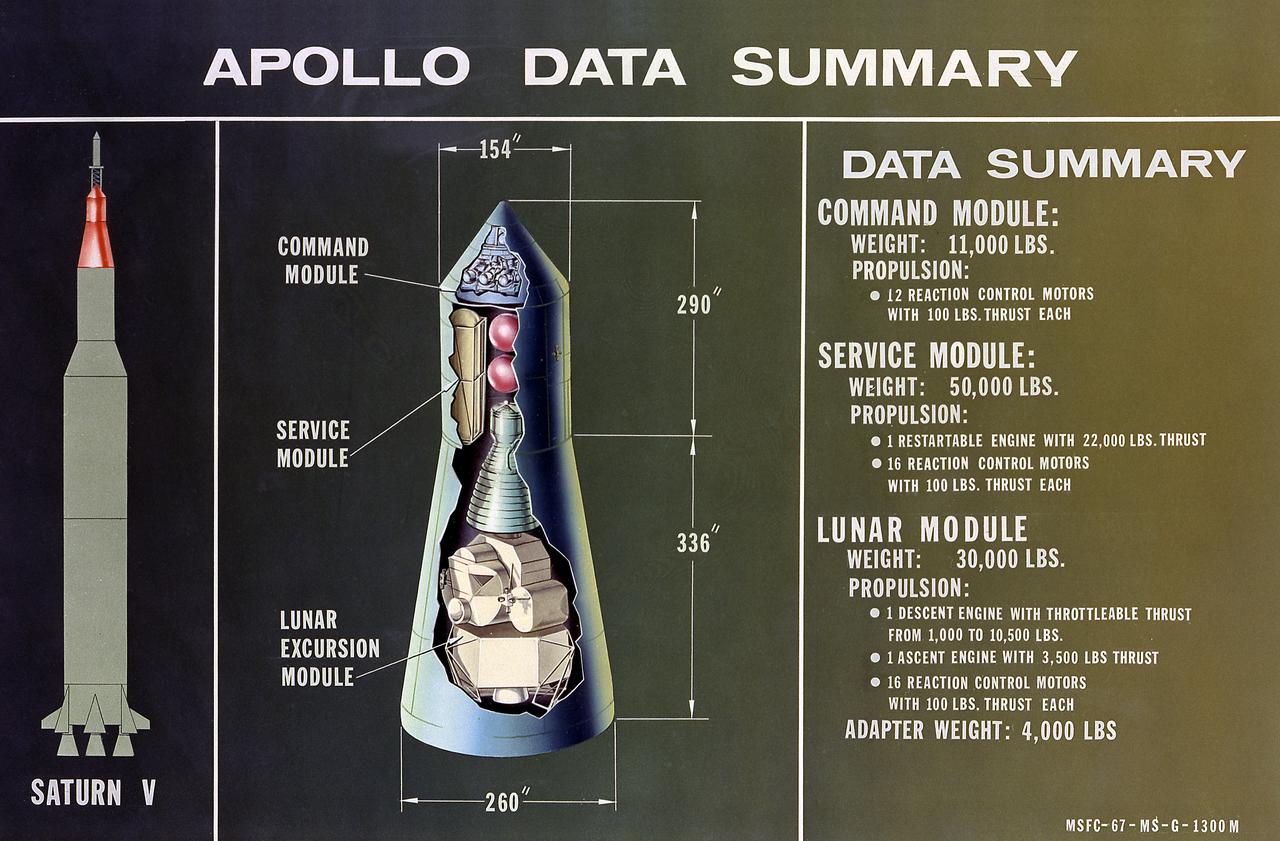
This is a cutaway illustration of the Apollo Spacecraft configuration and data summary.
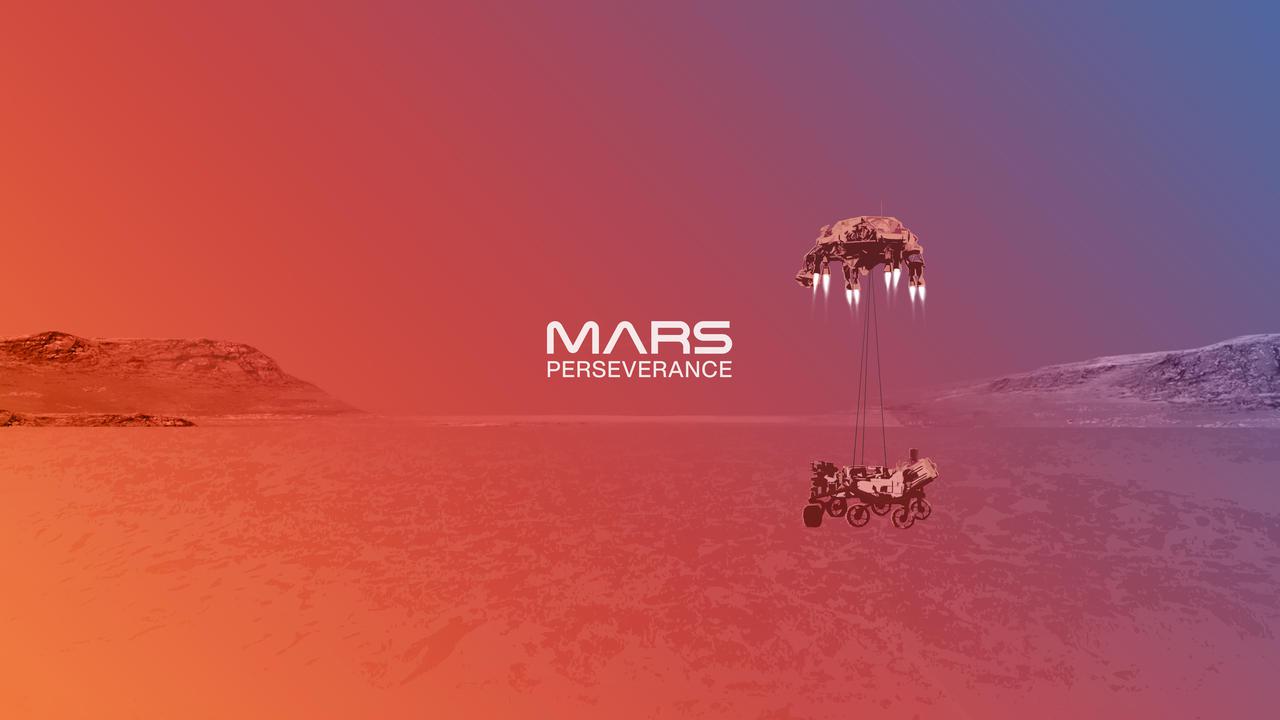
An illustration of NASA's Perseverance rover landing on Mars. Hundreds of critical events must execute perfectly and exactly on time for the rover to land safely on Feb. 18, 2021. https://photojournal.jpl.nasa.gov/catalog/PIA24345
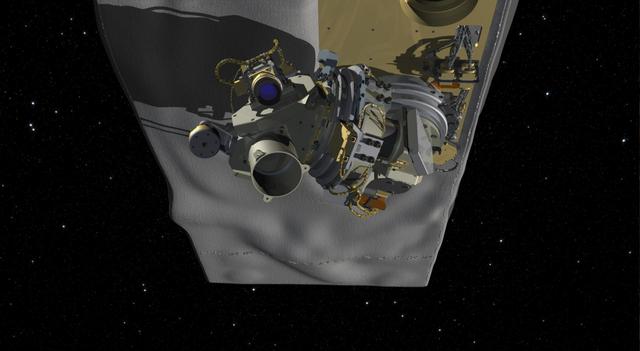
Illustration of NASA's OCO-3 mounted on the underside of the International Space Station. https://photojournal.jpl.nasa.gov/catalog/PIA22837

An illustration of the planet Mars, highlighting NASA's Mars Perseverance rover mission. https://photojournal.jpl.nasa.gov/catalog/PIA24348
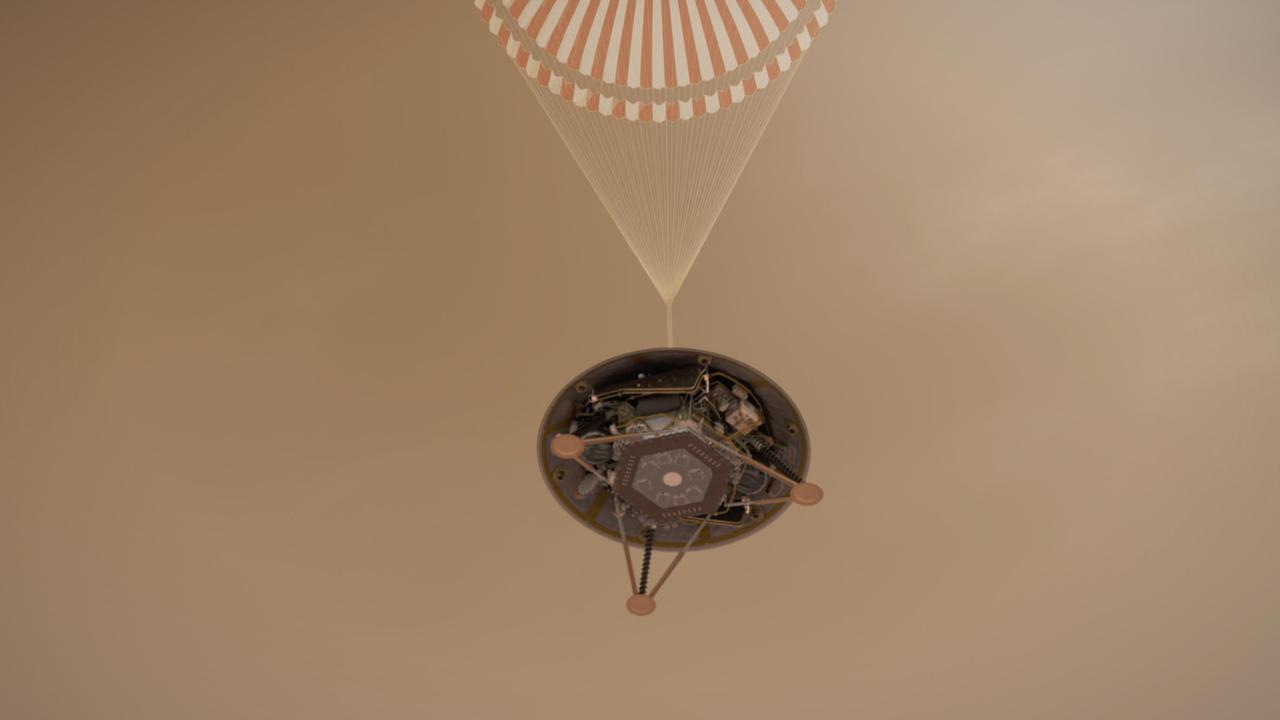
This illustration shows a simulated view of NASA's InSight lander descending towards the surface of Mars on its parachute. https://photojournal.jpl.nasa.gov/catalog/PIA22809
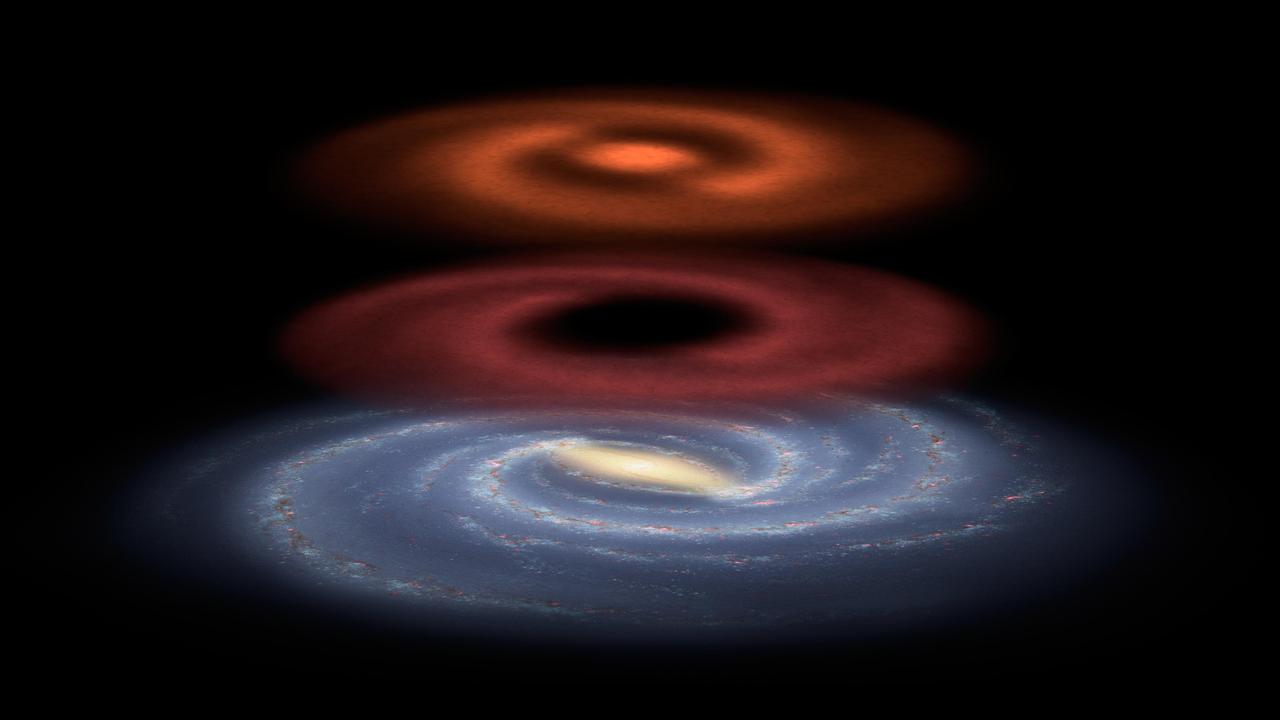
This illustration shows a newfound reservoir of stellar fuel discovered by the Herschel space observatory.
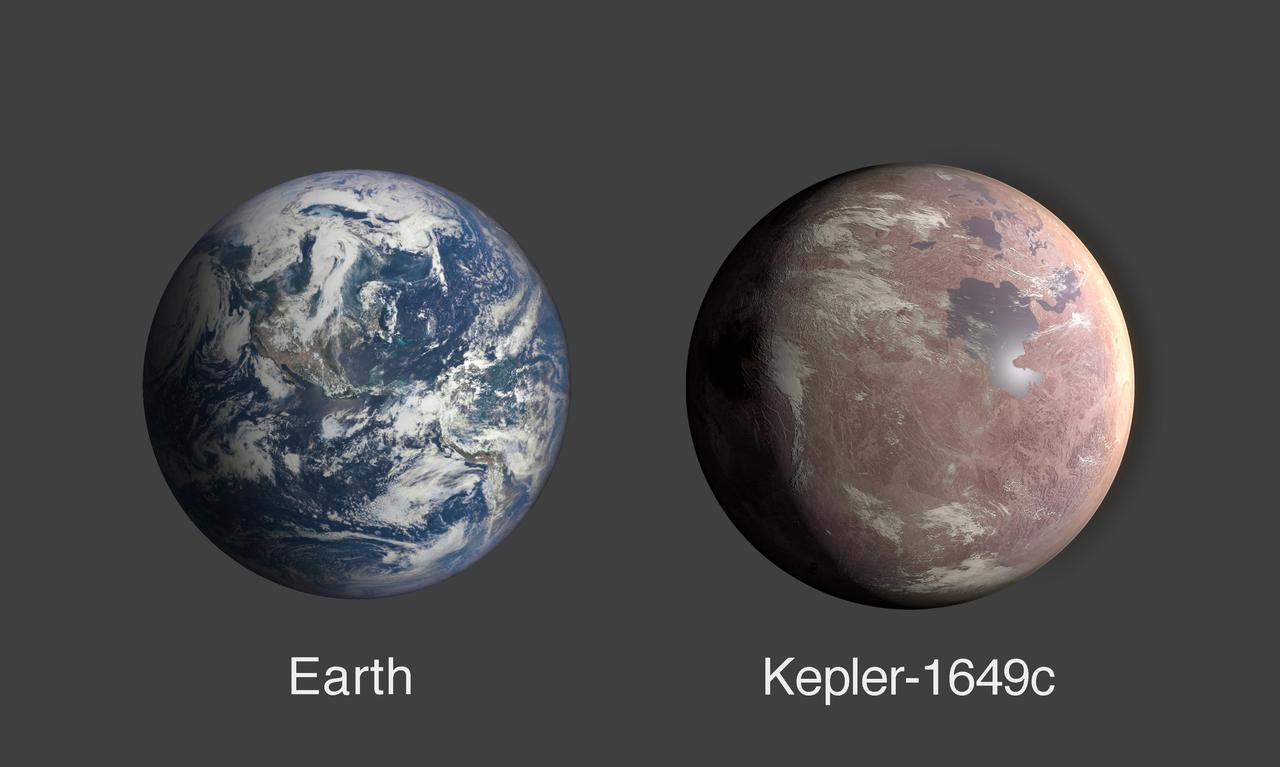
This graphic compares the size of Earth and Kepler-1649c, an exoplanet only 1.06 times larger than Earth by radius. https://photojournal.jpl.nasa.gov/catalog/PIA23774
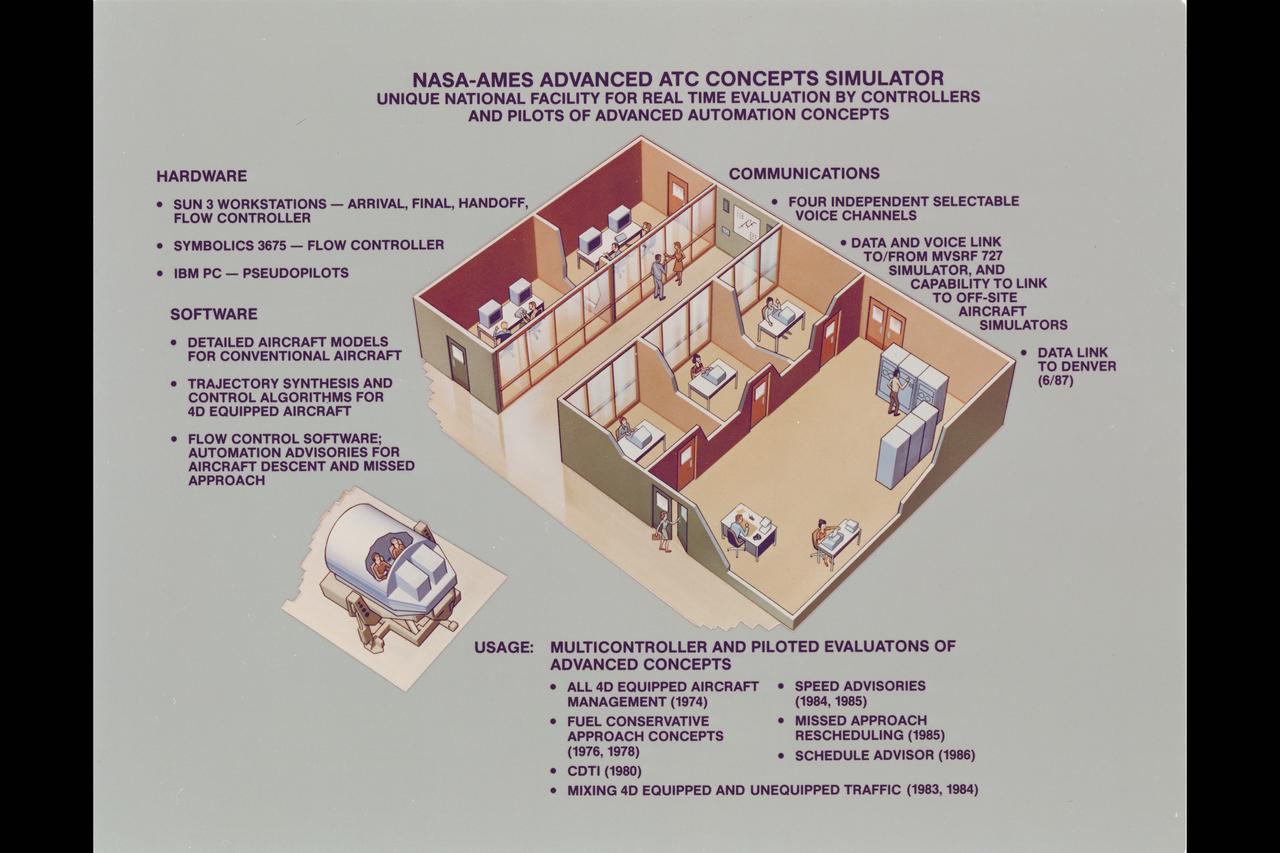
Illustration N-257 Advanced ATC Concepts simulator: unicqu national facility for treal time evalation by controllers and pilots of advanced automation concepts (Cutaway artwork)
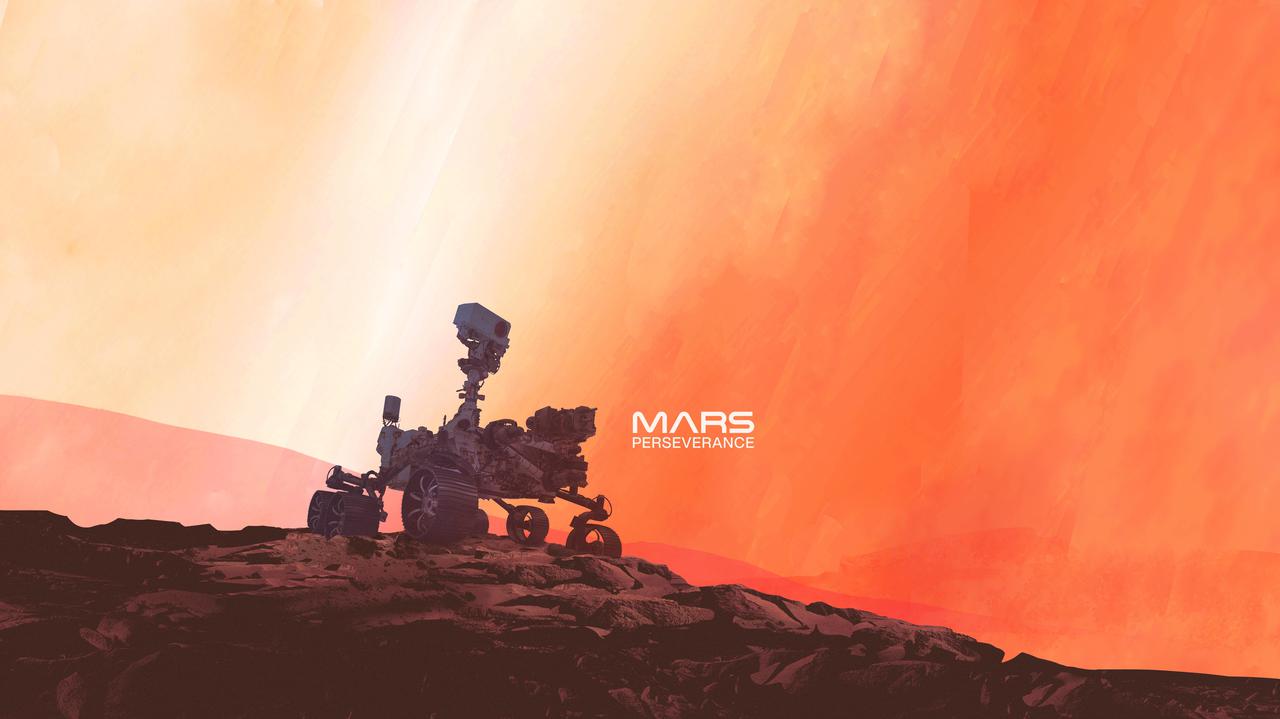
This illustration shows NASA's Mars Perseverance rover on the surface of the Red Planet. Perseverance will search for signs of ancient microbial life. It will also characterize the planet's climate and geology, collect samples for future return to Earth and pave the way for human exploration of the Red Planet. https://photojournal.jpl.nasa.gov/catalog/PIA24343
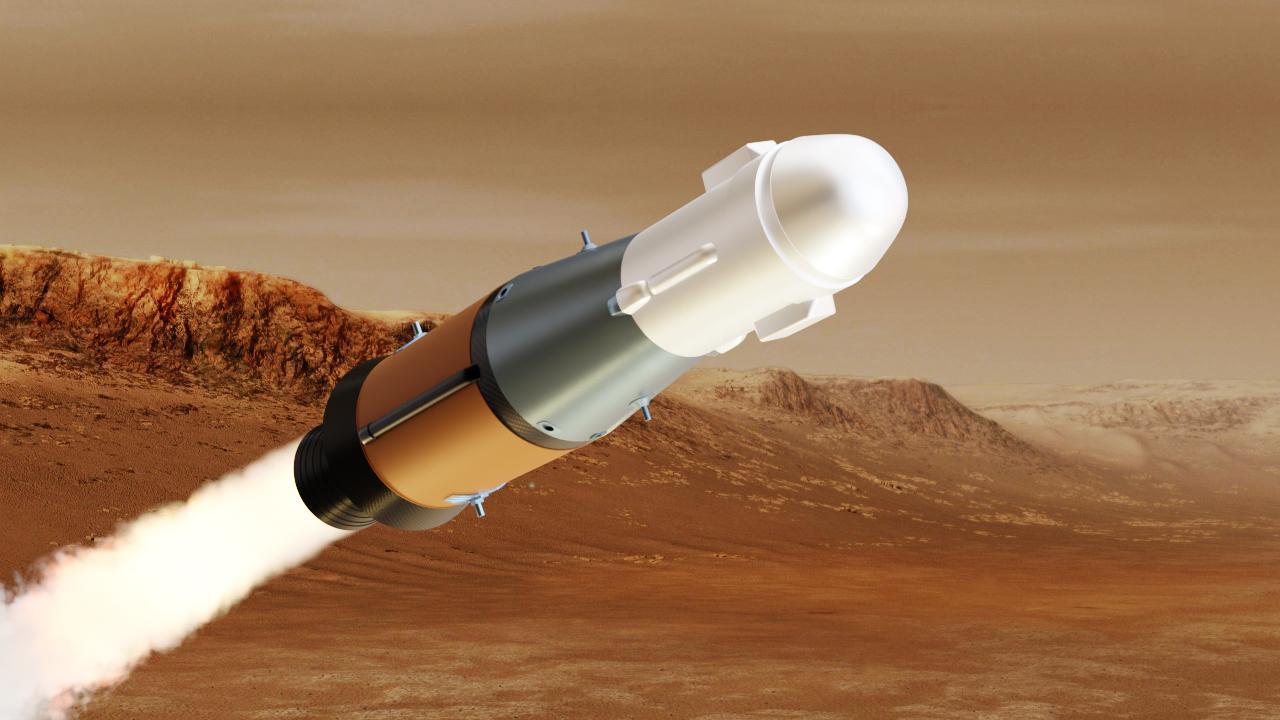
This illustration shows NASA's Mars Ascent Vehicle (MAV) in powered flight. The MAV will carry tubes containing Martian rock and soil samples into orbit around Mars, where ESA's Earth Return Orbiter spacecraft will enclose them in a highly secure containment capsule and deliver them to Earth. https://photojournal.jpl.nasa.gov/catalog/PIA25076
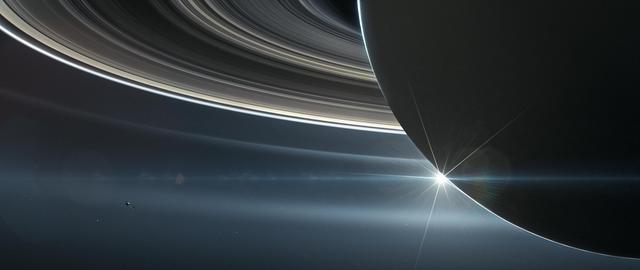
This illustration shows NASA's Cassini spacecraft in orbit around Saturn. Cassini made 22 orbits that swooped between the rings and the planet before ending its mission on Sept. 15, 2017, with a final plunge into Saturn. https://photojournal.jpl.nasa.gov/catalog/PIA22766
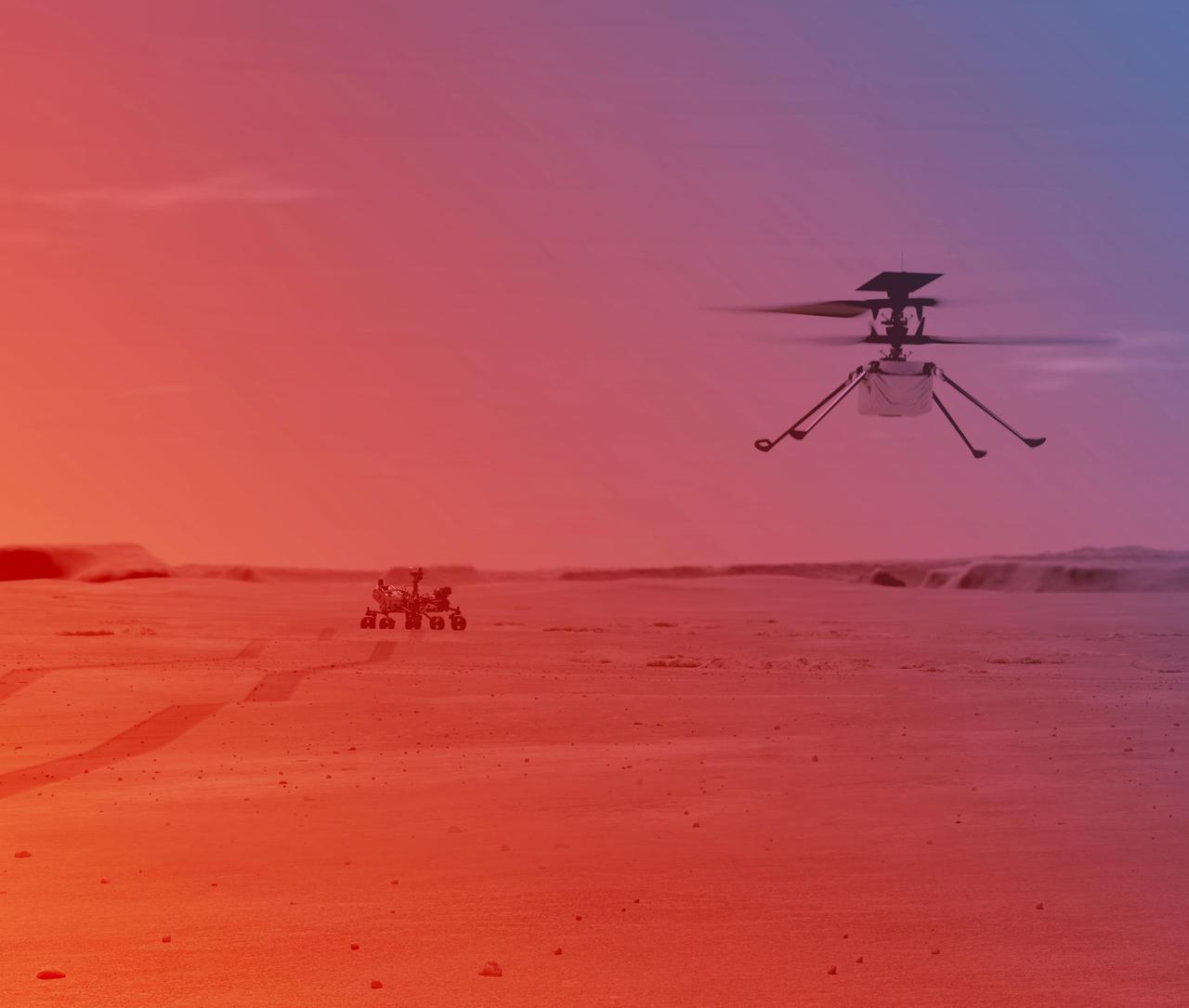
An illustration of NASA's Ingenuity Helicopter flying on Mars. Ingenuity, a technology demonstration experiment, will be the first aircraft to attempt powered, controlled flight on another planet. Ingenuity arrived at Mars on Feb. 18, 2021, attached to the belly of NASA's Mars 2020 Perseverance rover. Ingenuity is expected to attempt its first flight test in spring 2021. https://photojournal.jpl.nasa.gov/catalog/PIA24466
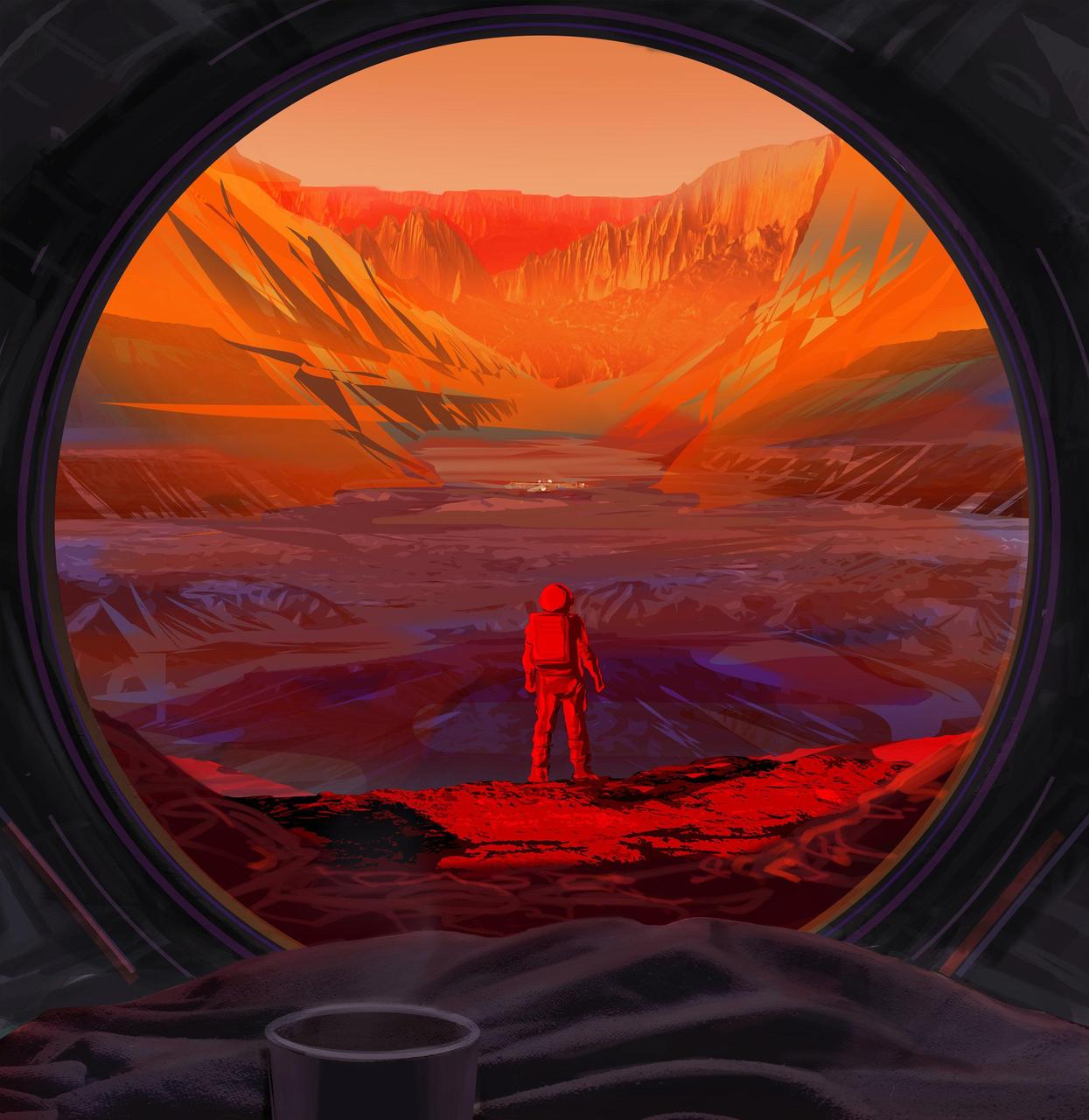
This illustration shows an astronaut on Mars, as viewed through the window of a spacecraft. NASA hopes to return astronauts to the Moon and test technology there that will be useful for sending the first astronauts to Mars. https://photojournal.jpl.nasa.gov/catalog/PIA23900

This illustration shows the core structure with ion propulsion system installed aboard NASA Dawn spacecraft.

This illustration depicts NASA's Juno spacecraft in orbit above Jupiter's Great Red Spot. https://photojournal.jpl.nasa.gov/catalog/PIA21770
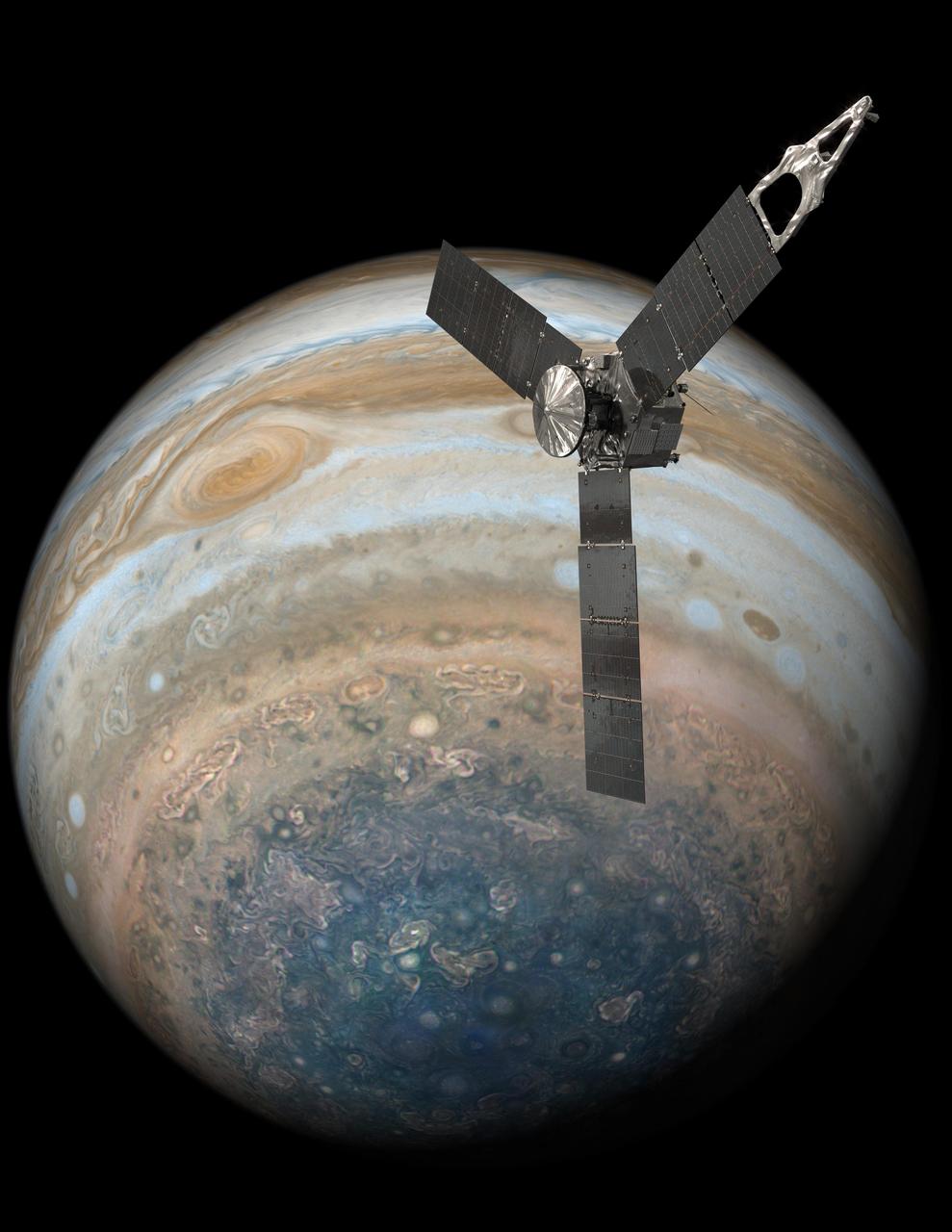
This illustration depicts NASA's Juno spacecraft soaring over Jupiter's south pole. https://photojournal.jpl.nasa.gov/catalog/PIA21771
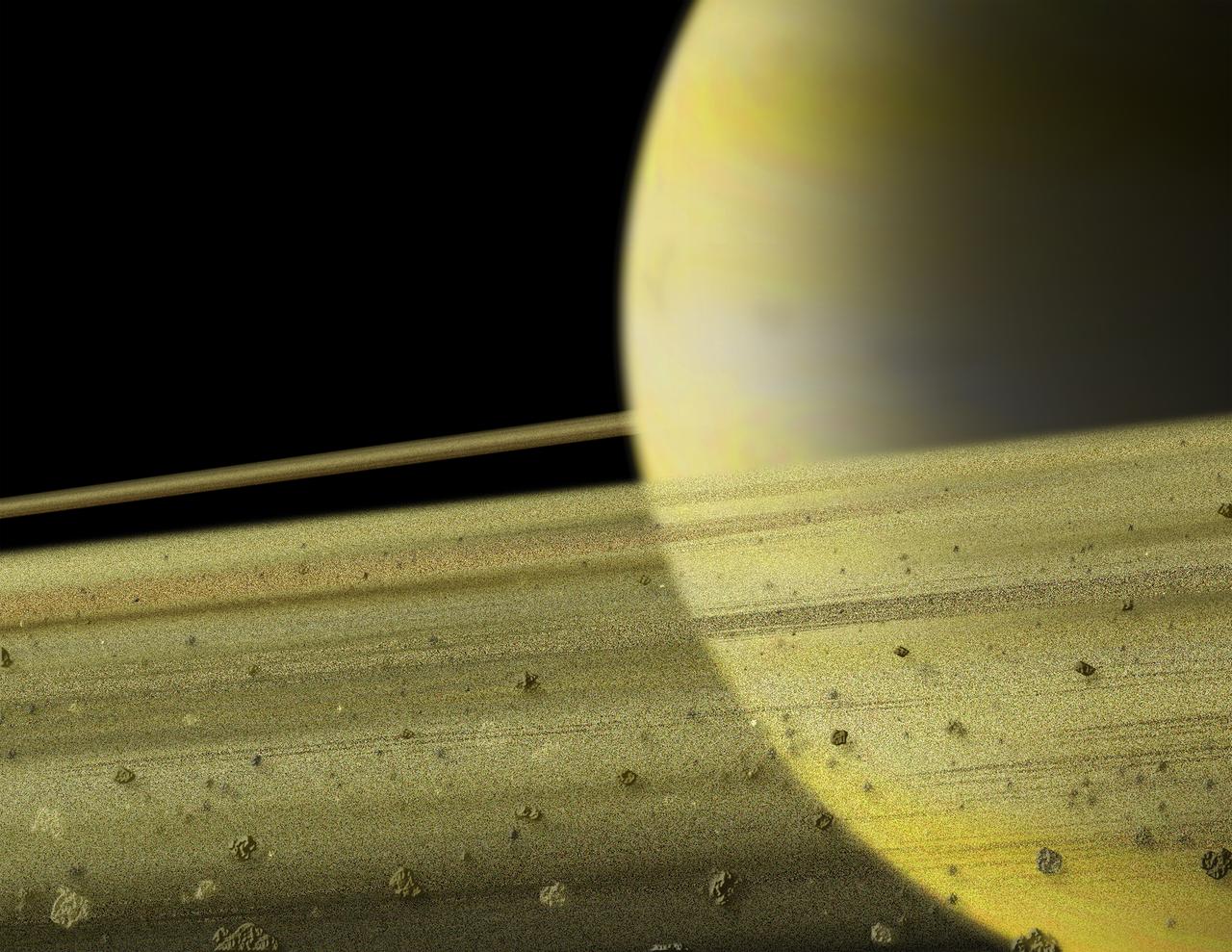
This illustration shows a close-up of Saturn's rings. These rings are thought to have formed from material that was unable to form into a Moon because of tidal forces from Saturn, or from a Moon that was broken up by Saturn's tidal forces.
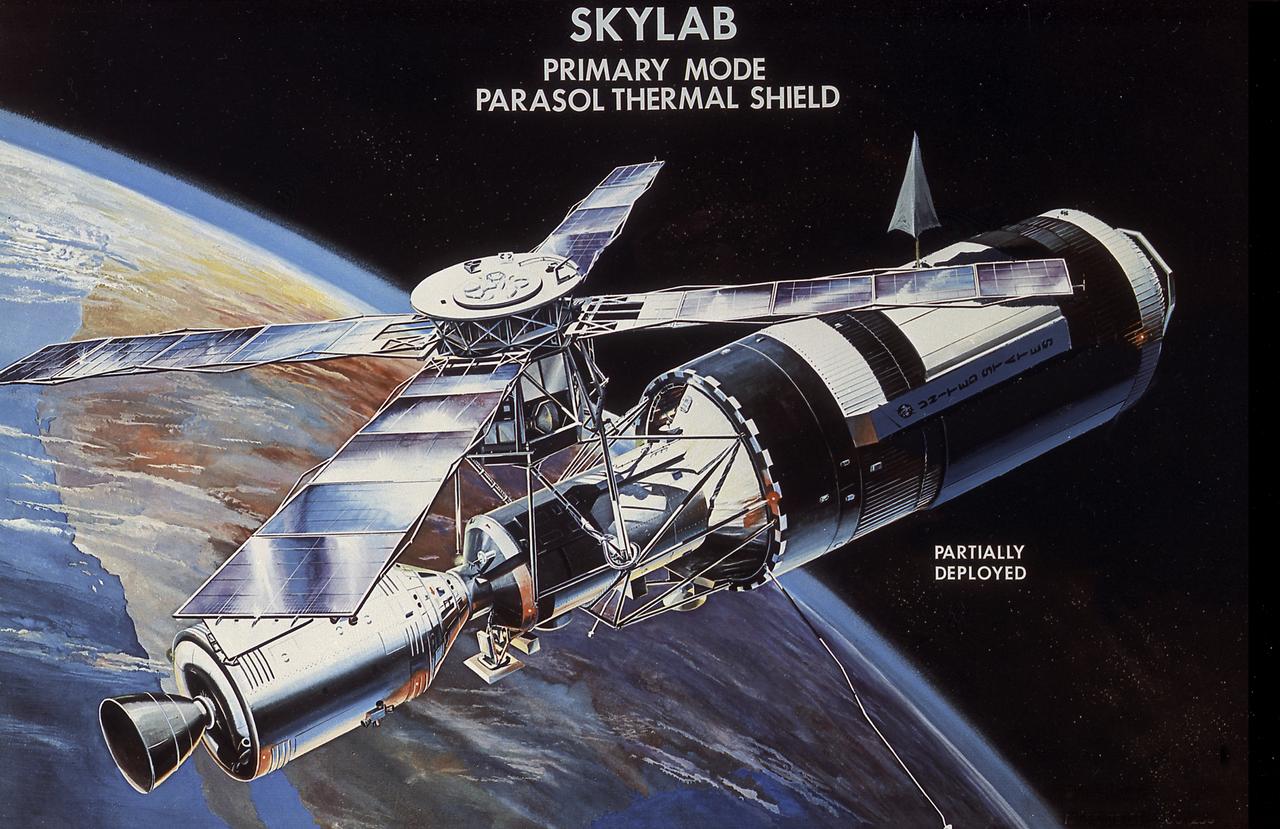
This image illustrates the deployment of the Skylab parasol thermal shield. Skylab lost its thermal protection shield during its launch on May 14, 1973. The Skylab-2 crew deployed a parasol thermal shield to protect the workshop from overheating. The crew attached the canister containing the parasol to the scientific airlock and extended the folded shield through the opening and into space. Slowly, the struts extended and the sunshade took shape and was in place over the workshop's outer surface. This illustration shows the parasol at partial extension. Emergency procedures to repair and salvage the damaged Skylab were a joint effort of the Marshall Space Flight Center, other NASA centers, and contractors.
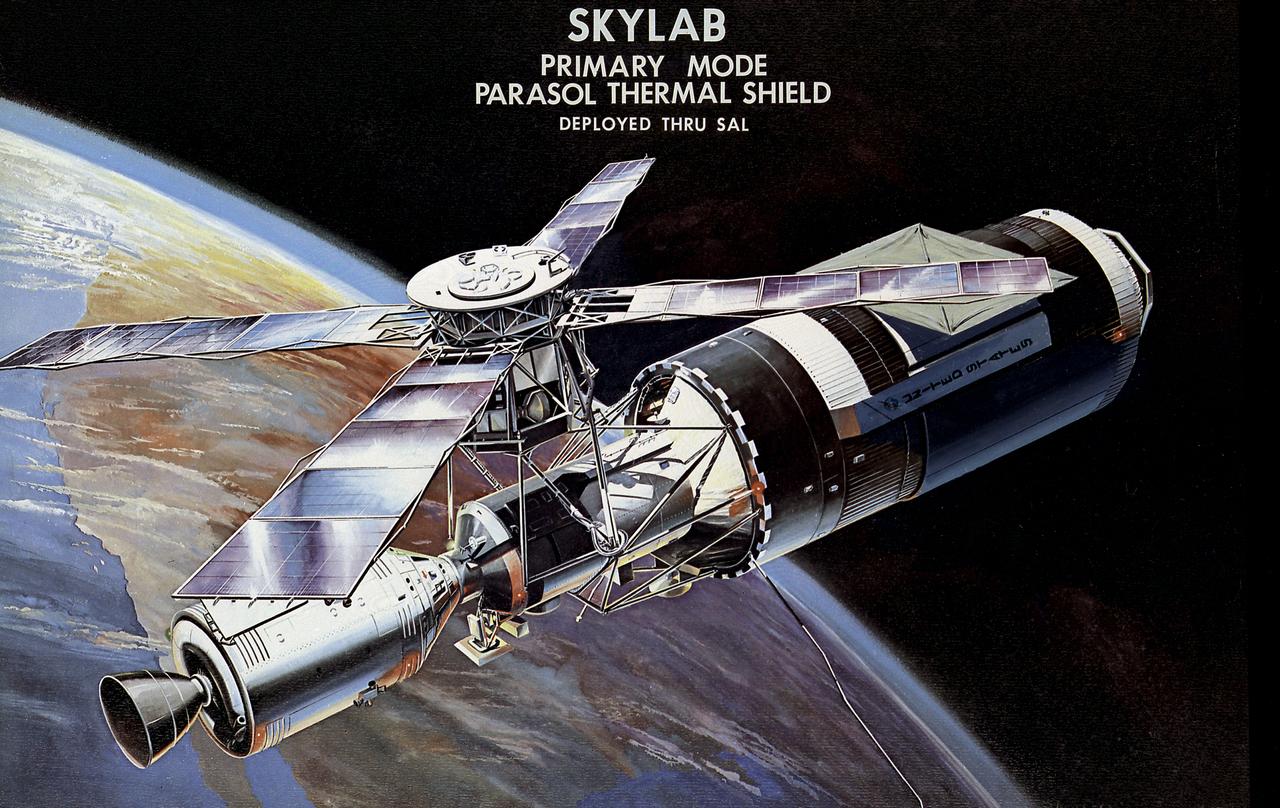
This image illustrates the deployment of the Skylab parasol thermal shield. Skylab lost its thermal protection shield during its launch on May 14, 1973. The Skylab-2 crew deployed a parasol thermal shield to protect the workshop from overheating. The crew attached the canister containing the parasol to the scientific airlock and extended the folded shield through the opening and into space. Slowly, the struts extended, the sunshade took shape, and was in place over the workshop's outer surface. This illustration shows the parasol being fully deployed and retracted for service. Emergency procedures to repair and salvage the damaged Skylab were a joint effort of the Marshall Space Flight Center, other NASA centers, and contractors.
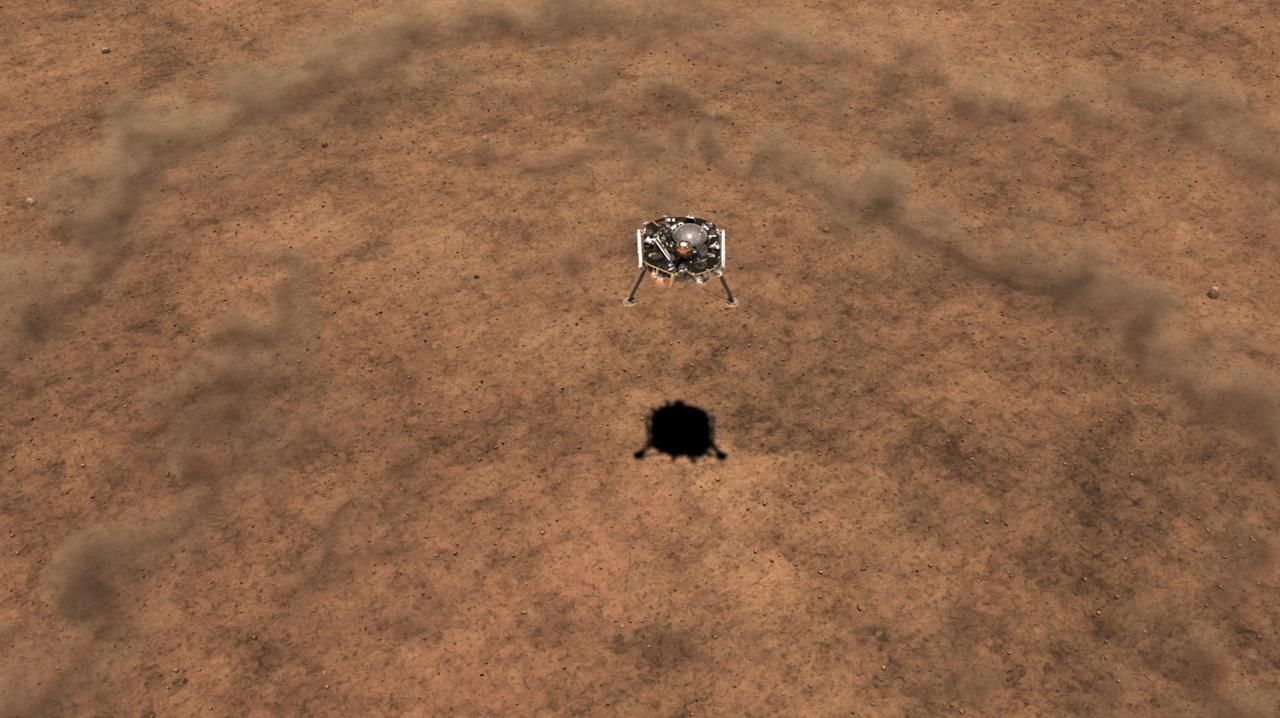
This illustration shows a simulated view of NASA's InSight lander kicking up dust as it lands on the Martian surface. https://photojournal.jpl.nasa.gov/catalog/PIA22811
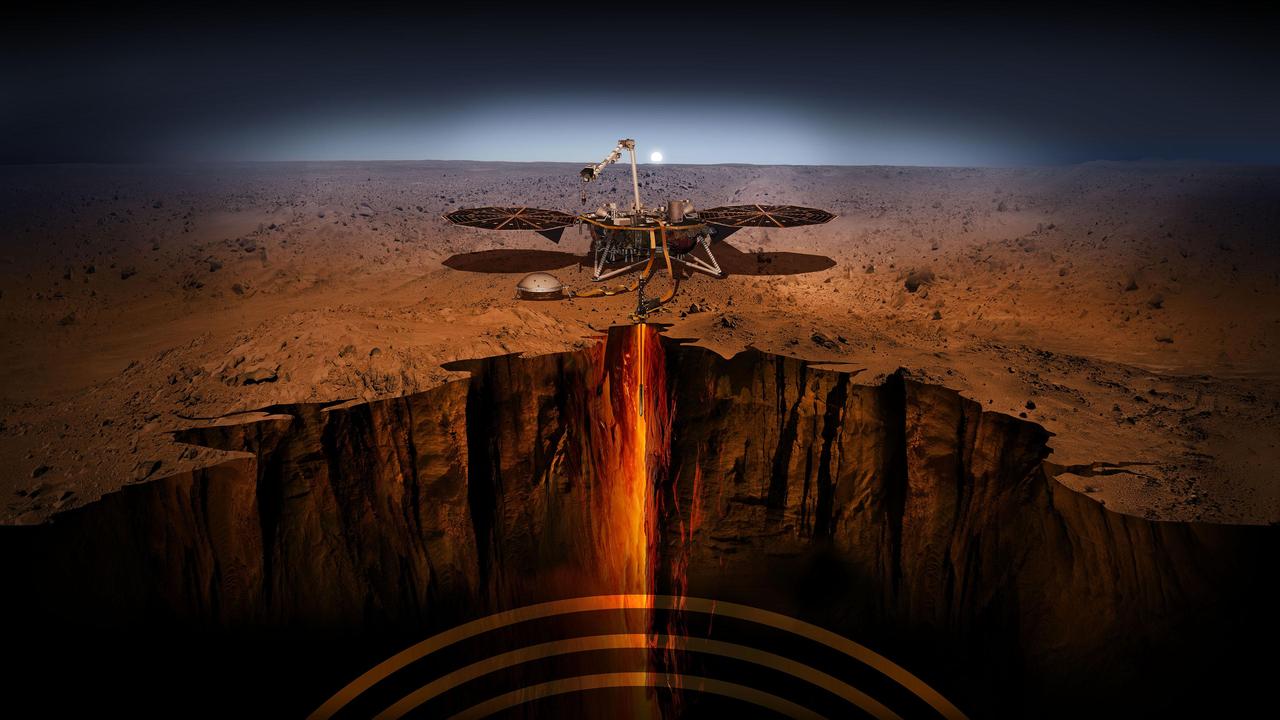
An artist illustration of the InSight lander on Mars. InSight, short for Interior Exploration using Seismic Investigations, Geodesy and Heat Transport, is designed to give the Red Planet its first thorough check up since it formed 4.5 billion years ago. The mission will look for tectonic activity and meteorite impacts, study how much heat is still flowing through the planet, and track Mars' wobble as it orbits the sun. While InSight is a Mars mission, it's more than a Mars mission. InSight will help answer key questions about the formation of the rocky planets of the solar system. https://photojournal.jpl.nasa.gov/catalog/PIA22745
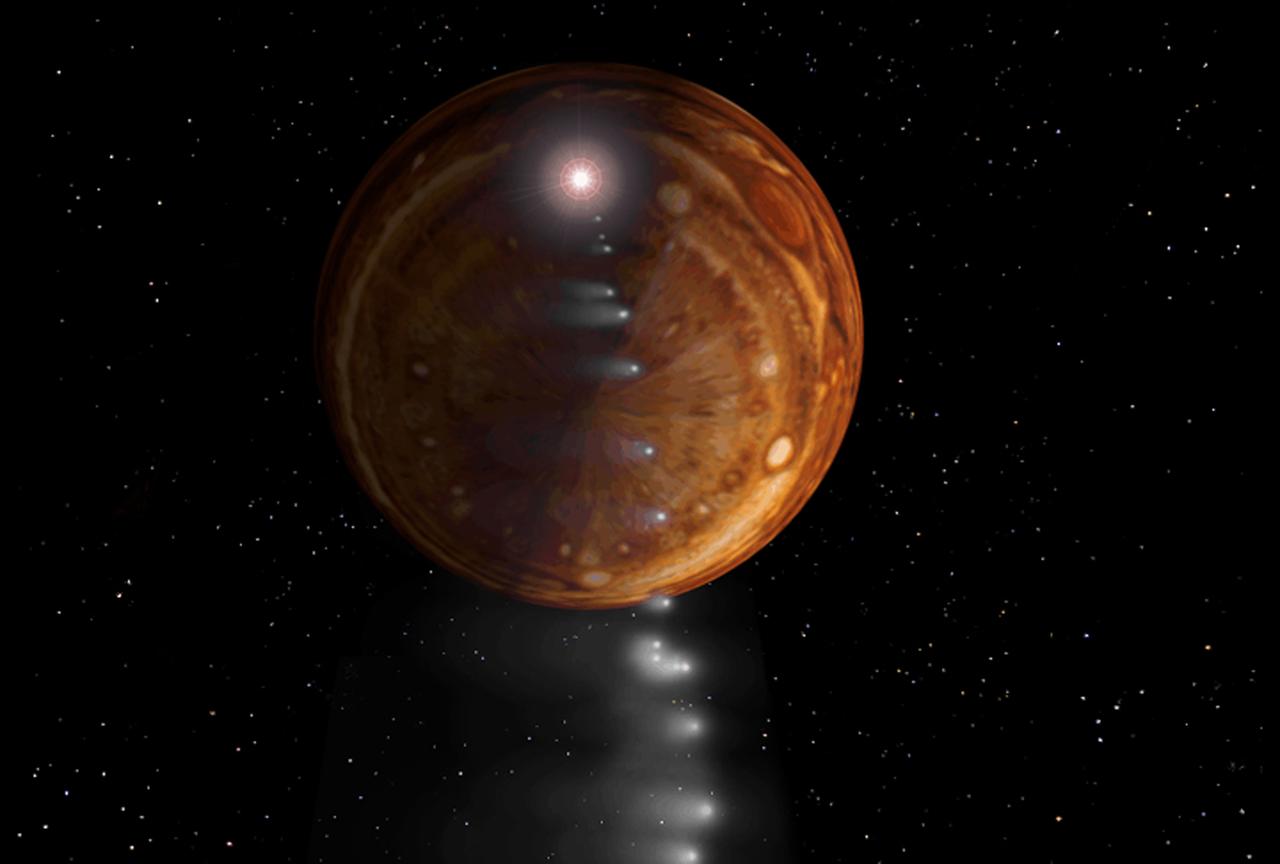
This illustration of the Comet-Shoemaker/Levy collision shows the first piece of the remains of the comet crashing into Jupiter. This event occurred in 1994 after tidal forces from Jupiter caused the comet to break up into 21 separate pieces. Although on a very different scale, the physical mechanism for the breakup of Shoemaker/Levy also caused the tidal disruption of the star in RX J1242-11. (Illustration: SEDS/D. Seal (edited by CXC/M. Weiss)

This illustration depicts five major components of the Mars 2020 spacecraft. Top to bottom: cruise stage, backshell, descent stage, Perseverance rover and heat shield. The various components perform critical roles during the vehicle's cruise to Mars and its dramatic entry, descent, and landing. https://photojournal.jpl.nasa.gov/catalog/PIA24128
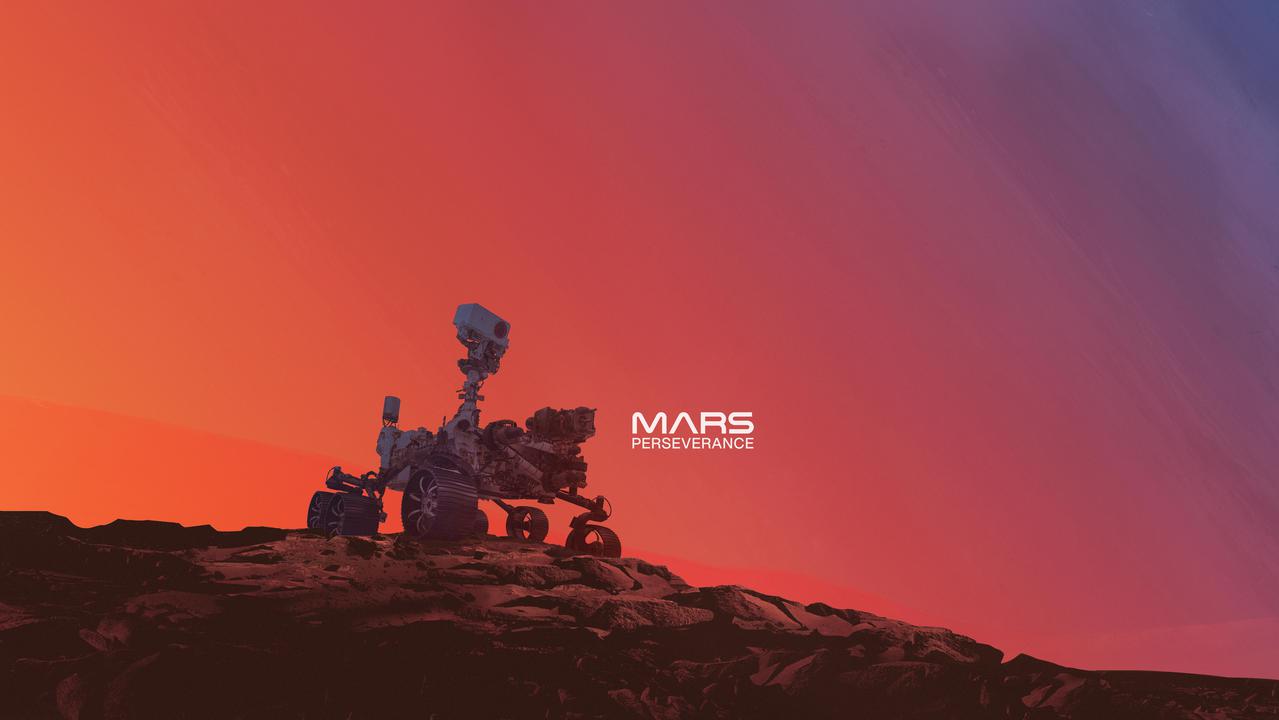
This illustration shows NASA's Mars Perseverance rover on the surface of the Red Planet. Perseverance will search for signs of ancient microbial life. It will also characterize the planet's climate and geology, collect samples for future return to Earth and pave the way for human exploration of the Red Planet. https://photojournal.jpl.nasa.gov/catalog/PIA24346
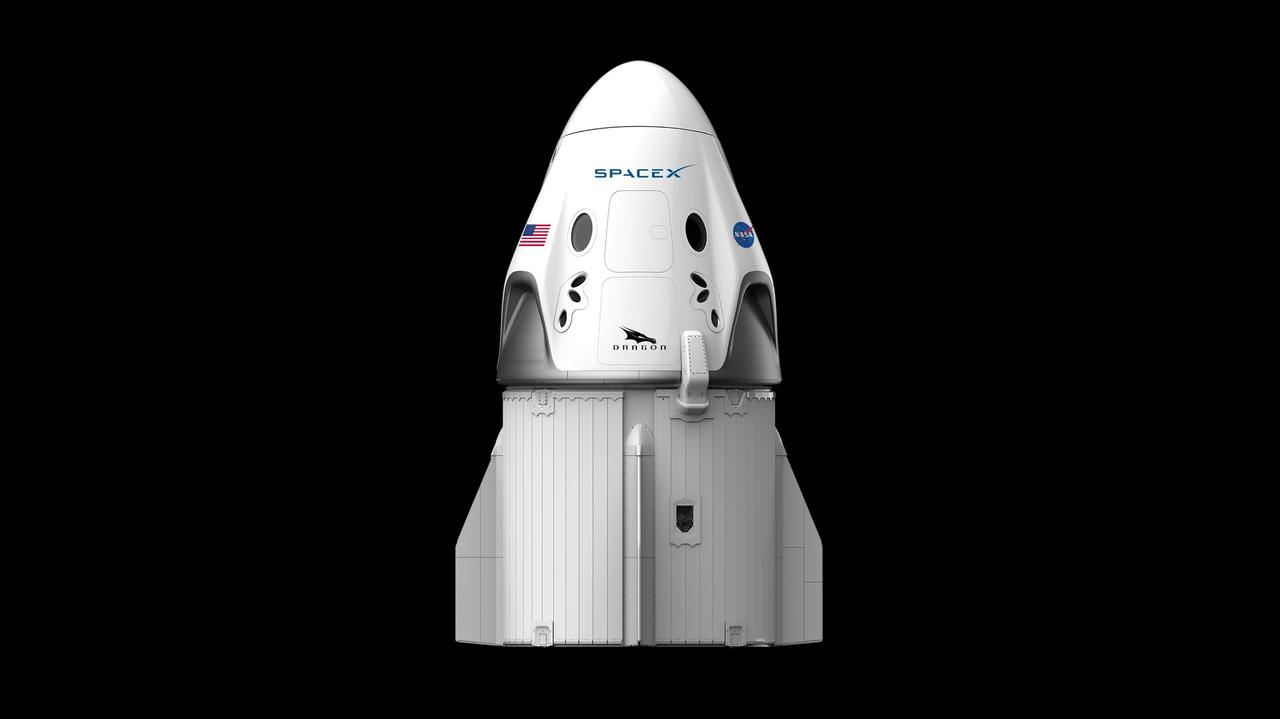
An illustration of the SpaceX Crew Dragon.
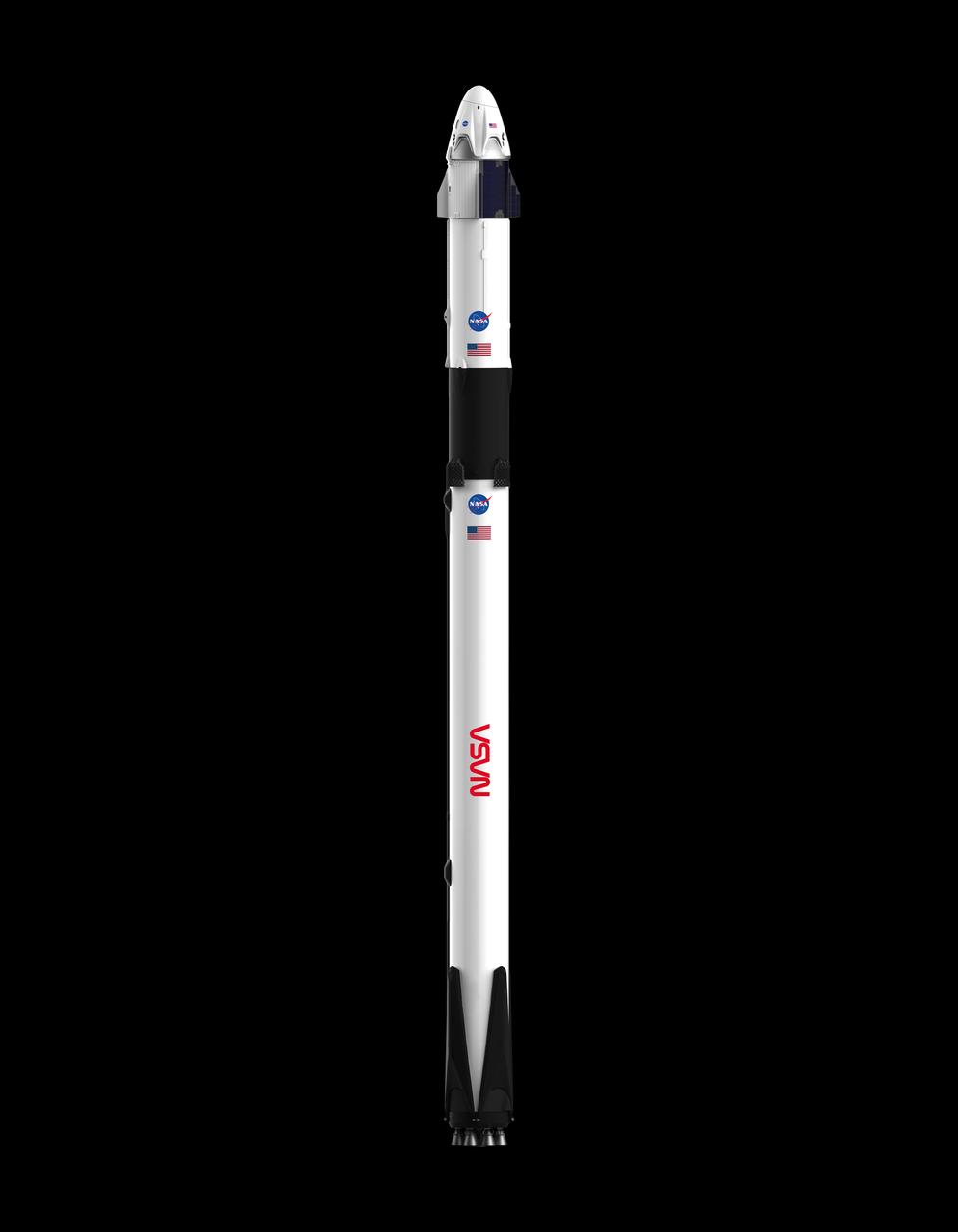
An illustration of the SpaceX Falcon 9.

The newfound planet K2-288Bb, illustrated here, is slightly smaller than Neptune. Located about 226 light-years away, it orbits the fainter member of a pair of cool M-type stars every 31.3 days. https://photojournal.jpl.nasa.gov/catalog/PIA23004
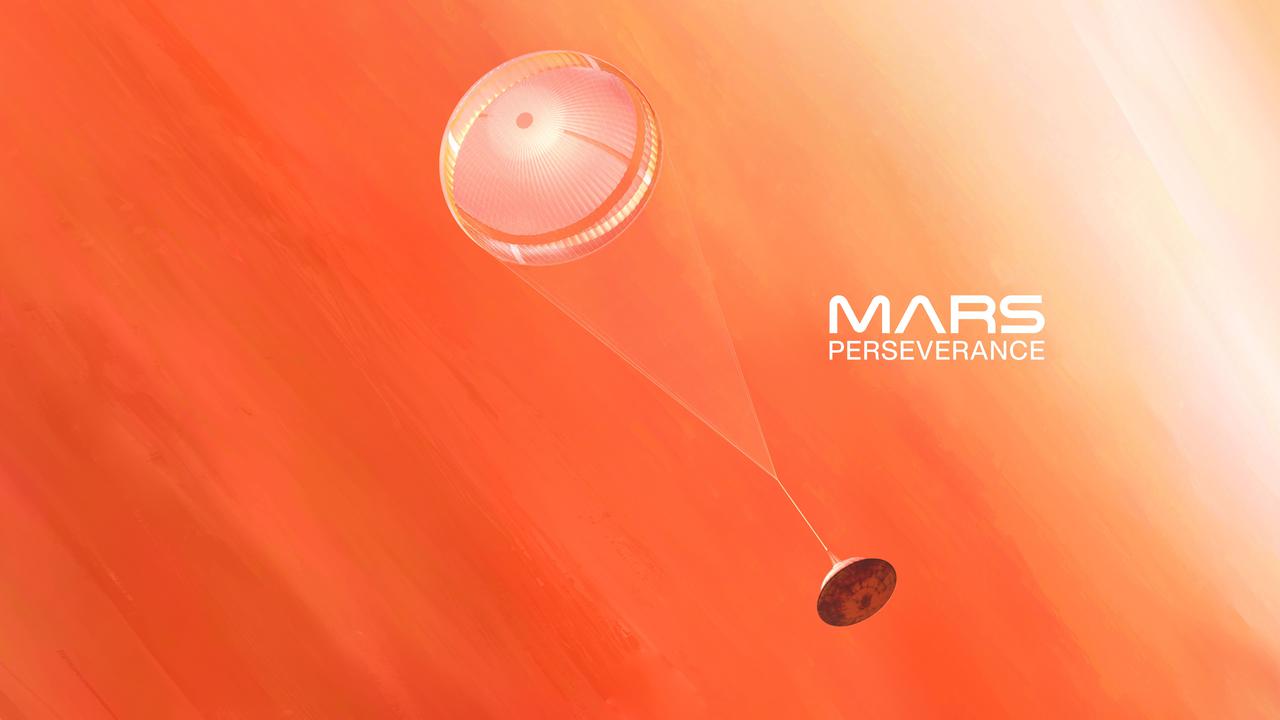
An illustration of NASA's Mars Perseverance rover deploying its supersonic parachute from its aeroshell as it slows down before landing. Hundreds of critical events must execute perfectly and exactly on time for the rover to land safely on Feb. 18, 2021. https://photojournal.jpl.nasa.gov/catalog/PIA24341
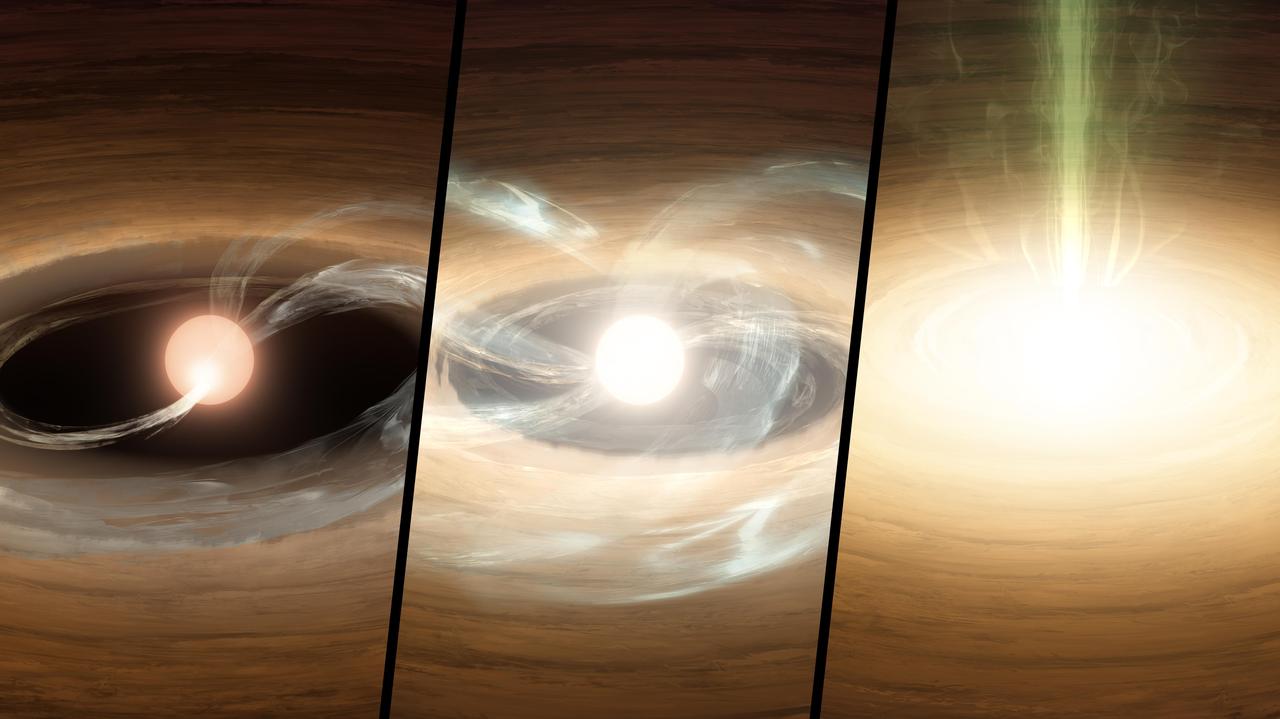
This illustration shows a young star undergoing a type of growth spurt. Left panel: Material from the dusty and gas-rich disk (orange) plus hot gas (blue) mildly flows onto the star, creating a hot spot. Middle panel: The outburst begins - the inner disk is heated, more material flows to the star, and the disk creeps inward. Right panel: The outburst is in full throttle, with the inner disk merging into the star and gas flowing outward (green). https://photojournal.jpl.nasa.gov/catalog/PIA22917
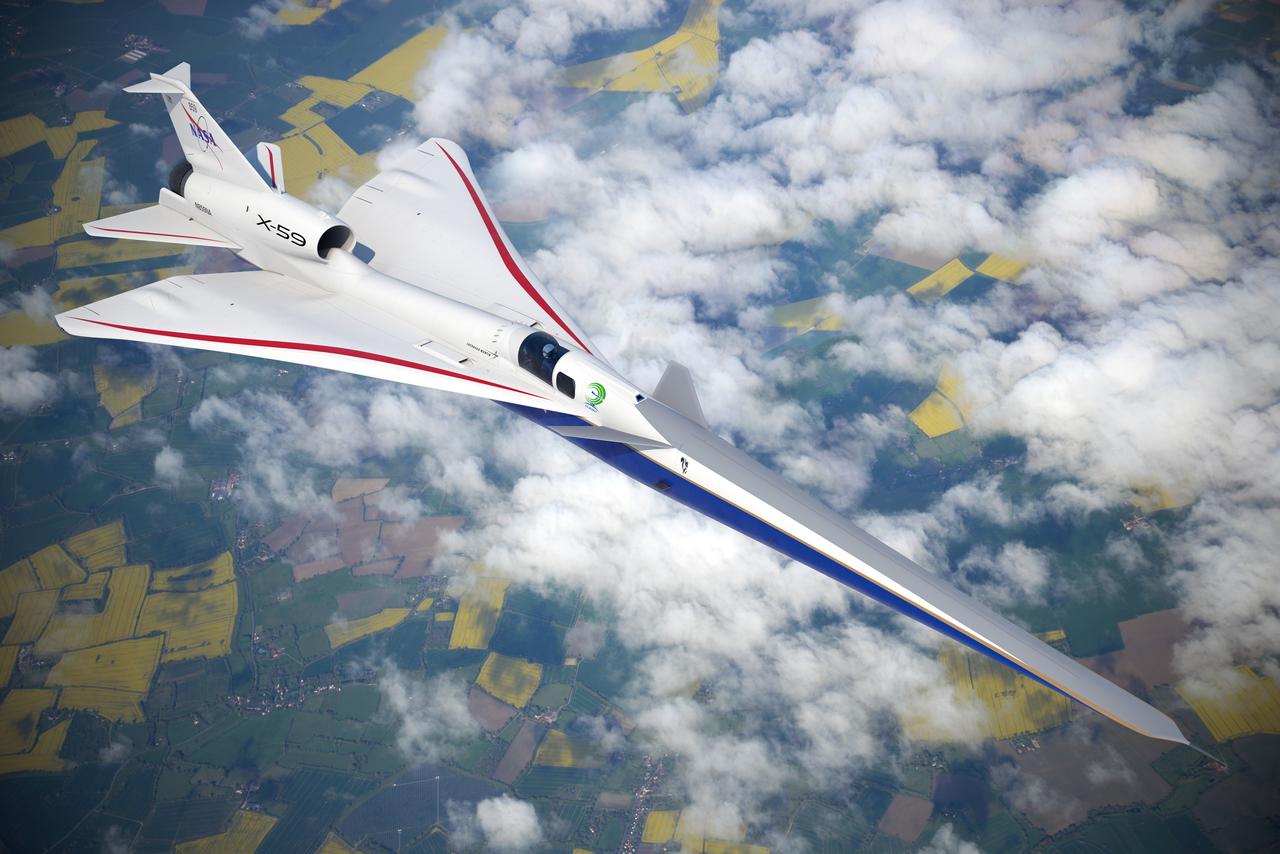
Artist illustration of the X-59 in flight over land.
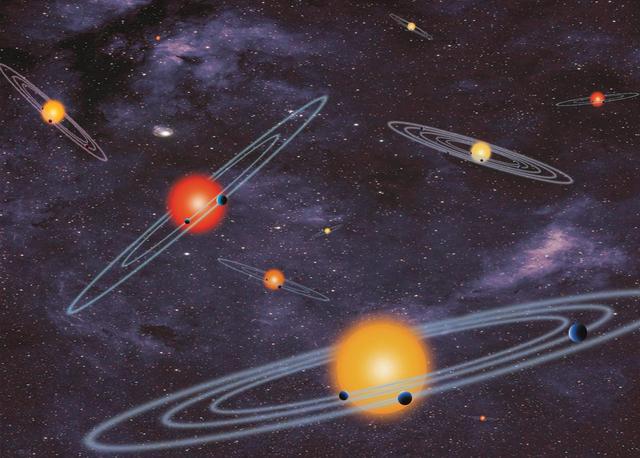
This illustration shows the unusual orbit of planet Kepler-413b around a close pair of orange and red dwarf stars. The planet 66-day orbit is tilted 2.5 degrees with respect to the plane of the binary stars orbit.
An illustration of the planet Mars, highlighting NASA's Mars Perseverance rover and future human explorers. https://photojournal.jpl.nasa.gov/catalog/PIA24347
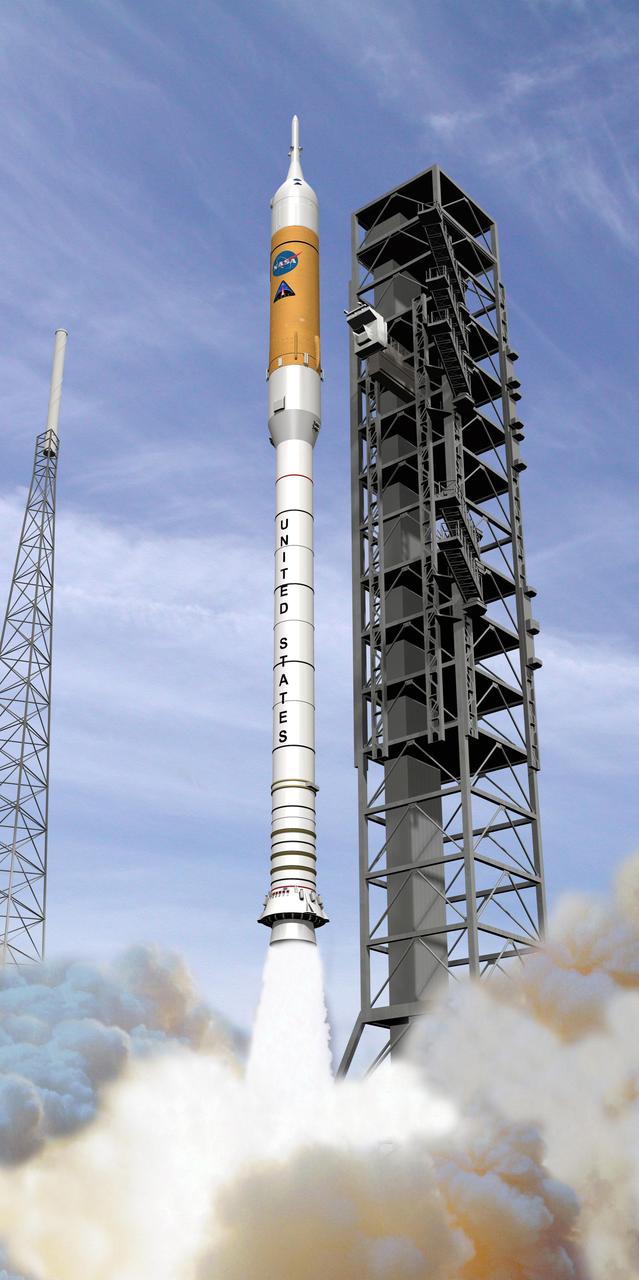
Shown is an illustration of the Ares I crew launch vehicle on the launch pad at NASA's Kennedy Space Center, Florida.
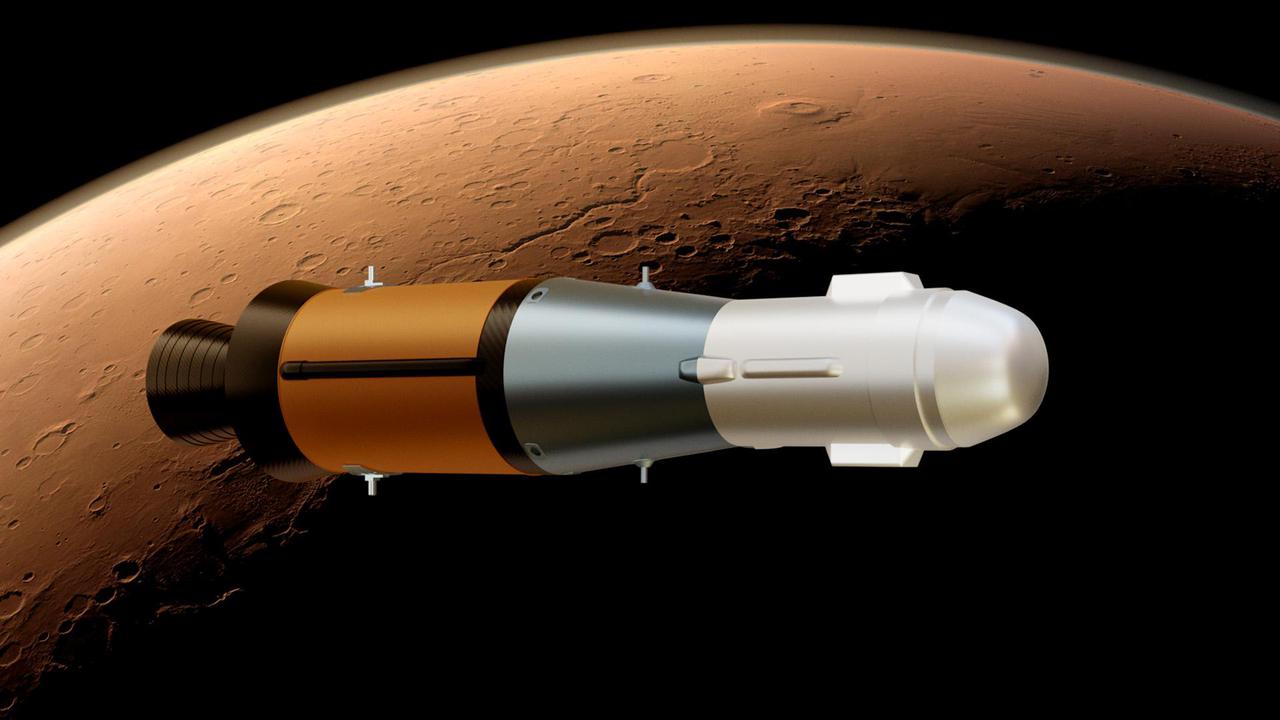
This illustration shows NASA's Mars Ascent Vehicle (MAV), which will carry tubes containing Martian rock and soil samples into orbit around Mars, where ESA's Earth Return Orbiter spacecraft will enclose them in a highly secure containment capsule and deliver them to Earth. https://photojournal.jpl.nasa.gov/catalog/PIA25078
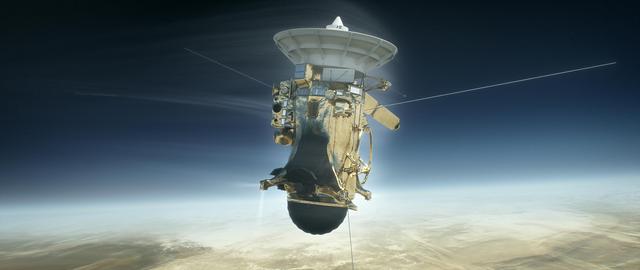
As depicted in this illustration, Cassini will plunge into Saturn's atmosphere on Sept. 15, 2017. Using its attitude control thrusters, the spacecraft will work to keep its antenna pointed at Earth while it sends its final data, including the composition of Saturn's upper atmosphere. The atmospheric torque will quickly become stronger than what the thrusters can compensate for, and after that point, Cassini will begin to tumble. When this happens, its radio connection to Earth will be severed, ending the mission. Following loss of signal, the spacecraft will burn up like a meteor in Saturn's upper atmosphere. https://photojournal.jpl.nasa.gov/catalog/PIA21440
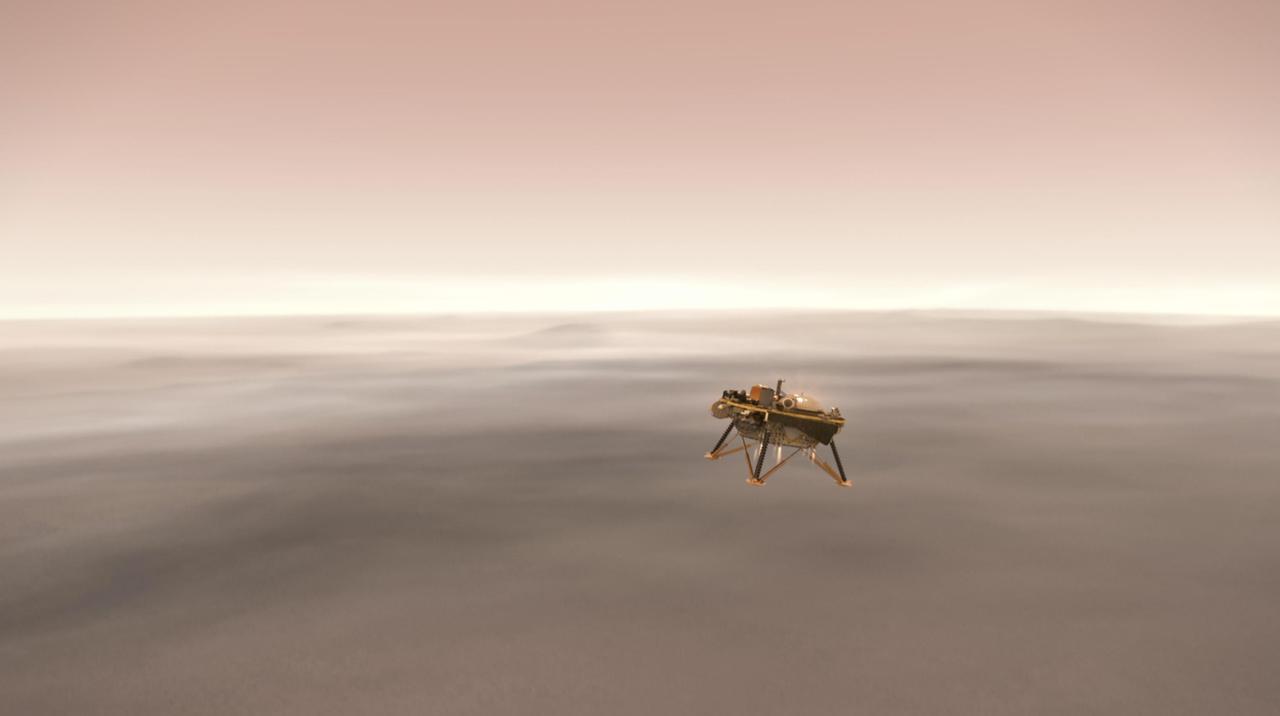
This illustration shows a simulated view of NASA's InSight lander firing retrorockets to slow down as it descends toward the surface of Mars. https://photojournal.jpl.nasa.gov/catalog/PIA22810
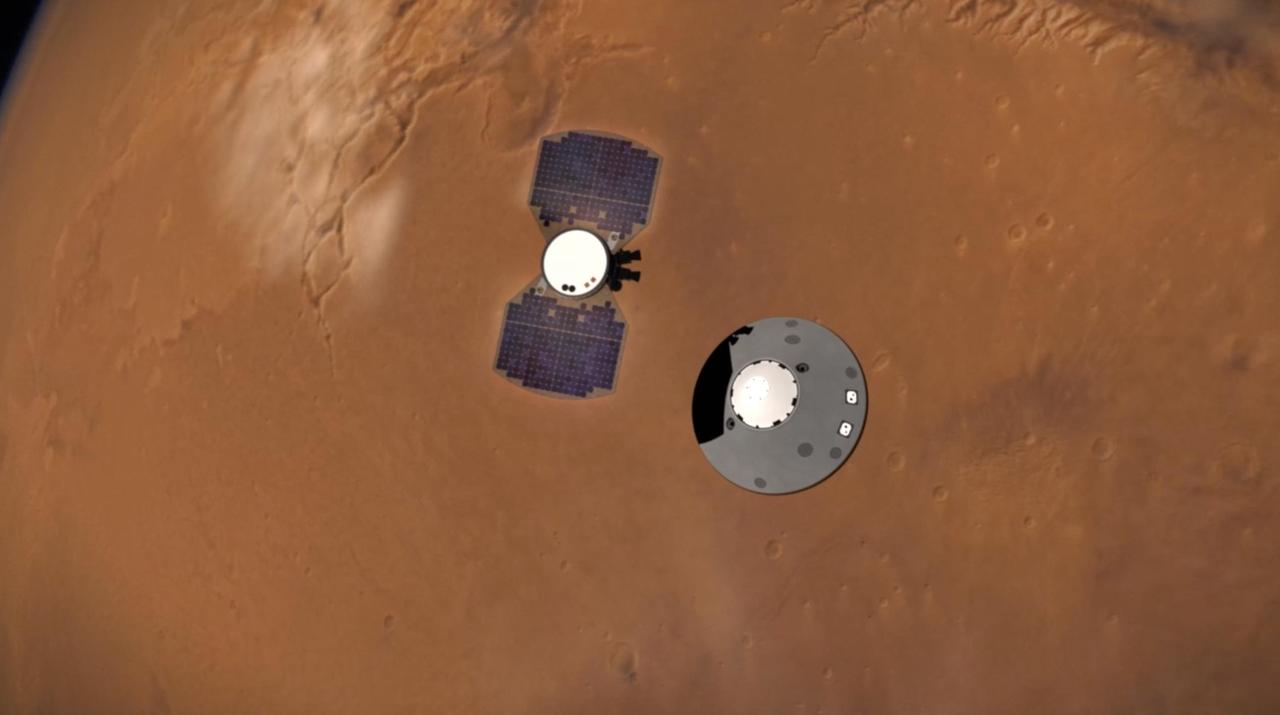
This illustration shows NASA's InSight lander separating from its cruise stage as it prepares to enter Mars' atmosphere. The InSight lander is on the right, tucked inside a protective heat shield and back shell. The cruise stage with solar panels is on the left. https://photojournal.jpl.nasa.gov/catalog/PIA22828
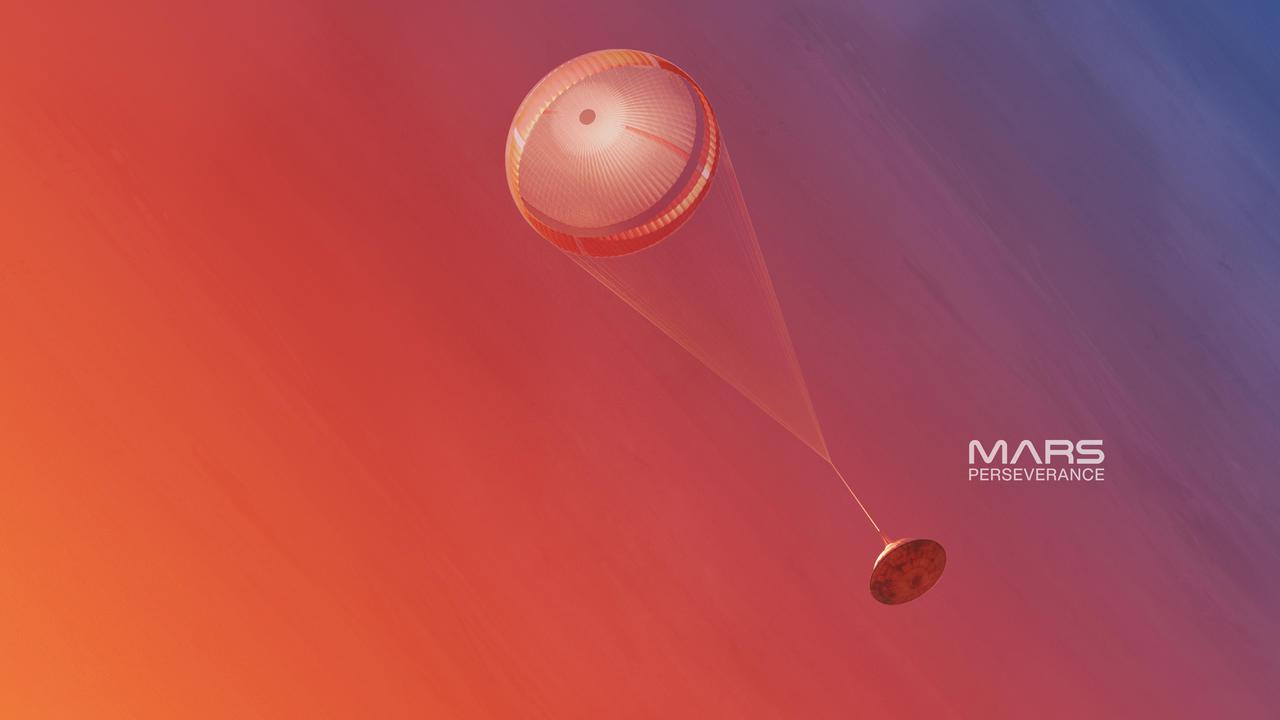
An illustration of NASA's Mars Perseverance rover deploying its supersonic parachute from its aeroshell as it slows down before landing. Hundreds of critical events must execute perfectly and exactly on time for the rover to land safely on Feb. 18, 2021. https://photojournal.jpl.nasa.gov/catalog/PIA24344
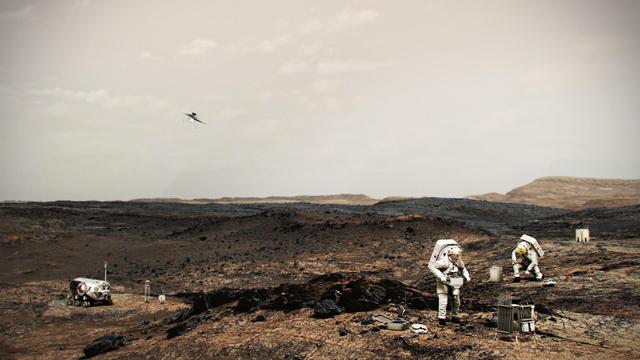
This illustration shows NASA astronauts working on the surface of Mars. A helicopter similar to the Ingenuity Mars Helicopter is airborne at left. Ingenuity is being carried aboard the Perseverance rover; it will be deployed to the Martian surface in the weeks after landing to test whether future helicopters could accompany robotic and human missions. https://photojournal.jpl.nasa.gov/catalog/PIA24032

The faster a brown dwarf spins, the narrower the different-colored atmospheric bands on it likely become, as shown in this illustration. Some brown dwarfs glow in visible light, but they are typically brightest in infrared wavelengths, which are longer than what human eyes can see. https://photojournal.jpl.nasa.gov/catalog/PIA24380
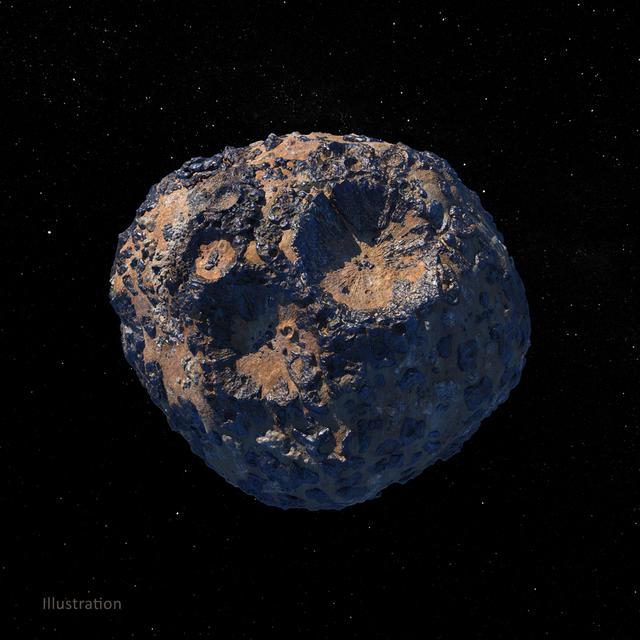
This illustration, created in March 2021, depicts the 140-mile-wide (226-kilometer-wide) asteroid Psyche, which lies in the main asteroid belt between Mars and Jupiter. Psyche is the focal point of NASA's mission of the same name. The Psyche spacecraft is set to launch in August 2022 and arrive at the asteroid in 2026, where it will orbit for 21 months and investigate its composition. Based on data obtained from Earth, scientists believe Psyche is a mixture of metal and rock. The rock and metal may be in large provinces, or areas, on the asteroid — as illustrated in this rendering. Another possibility is that rock and metal may be intimately mixed on a scale too small to detect from orbit — as depicted in an illustration here: PIA24472. Observing and measuring how the metal and rock are mixed will help scientists determine how Psyche formed. Exploring the asteroid could also give valuable insight into how our own planet and others formed. The Psyche team will use a magnetometer to measure the asteroid's magnetic field. A multispectral imager will capture images of the surface, as well as data about the Psyche's composition and topography. Spectrometers will analyze the neutrons and gamma rays coming from the surface to reveal the elements that make up the asteroid itself. The image was created by Peter Rubin. https://photojournal.jpl.nasa.gov/catalog/PIA24471
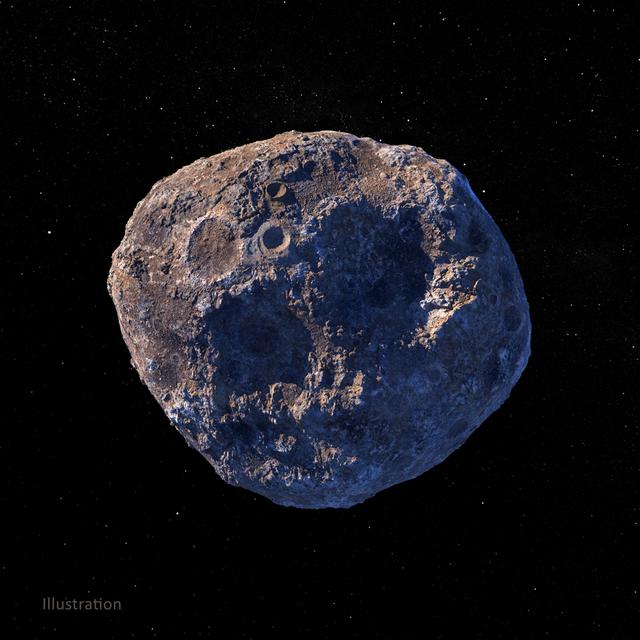
This illustration, created in March 2021, depicts the 140-mile-wide (226-kilometer-wide) asteroid Psyche, which lies in the main asteroid belt between Mars and Jupiter. Psyche is the focal point of NASA's mission of the same name. The Psyche spacecraft is set to launch in August 2022 and arrive at the asteroid in 2026, where it will orbit for 21 months and investigate its composition. Based on data obtained from Earth, scientists believe Psyche is a mixture of metal and rock. The rock and metal may be in large provinces, or areas, on the asteroid — as depicted in an illustration here: PIA24471. Another possibility is that rock and metal may be intimately mixed on a scale too small to detect from orbit — as depicted in the illustration above. Observing and measuring how the metal and rock are mixed will help scientists determine how Psyche formed. Exploring the asteroid could also give valuable insight into how our own planet and others formed. The Psyche team will use a magnetometer to measure the asteroid's magnetic field. A multispectral imager will capture images of the surface, as well as data about the Psyche's composition and topography. Spectrometers will analyze the neutrons and gamma rays coming from the surface to reveal the elements that make up the asteroid itself. The image was created by Peter Rubin. https://photojournal.jpl.nasa.gov/catalog/PIA24472
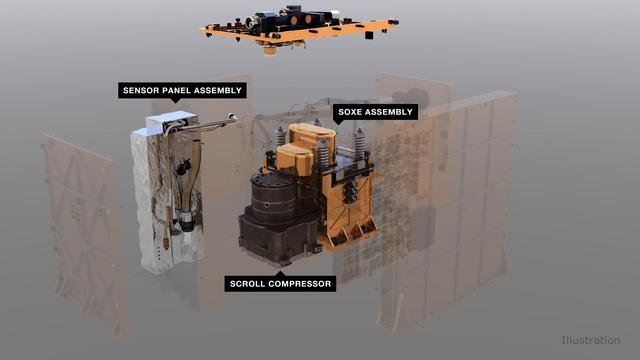
An illustration of MOXIE (Mars Oxygen ISRU Experiment) and its components. An air pump pulls in carbon dioxide gas from the Martian atmosphere, which is then regulated and fed to the Solid OXide Electrolyzer (SOXE), where it is electrochemically split to produce pure oxygen. https://photojournal.jpl.nasa.gov/catalog/PIA24177
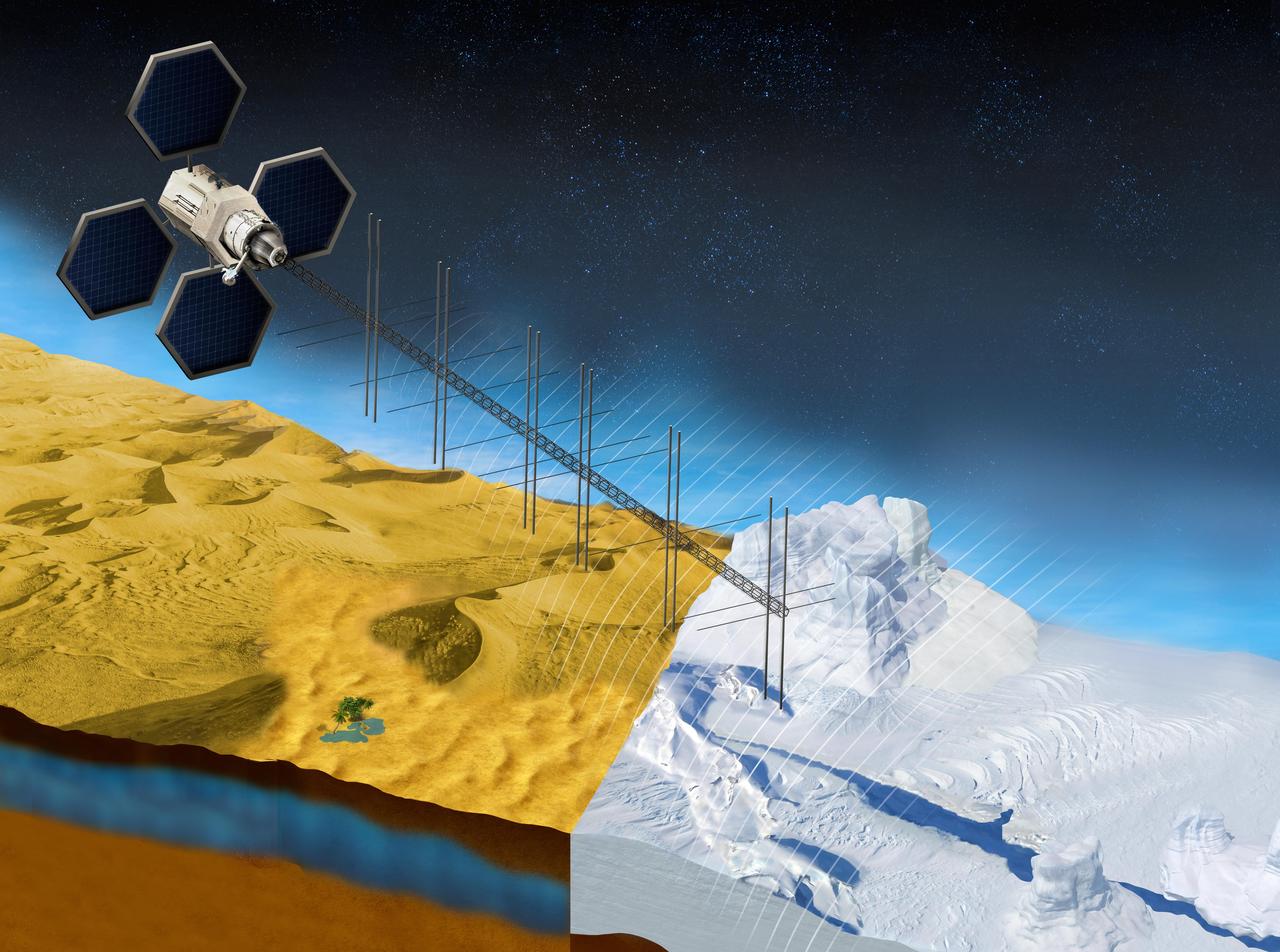
The OASIS project seeks to study fresh water aquifers in the desert as well as ice sheets in places like Greenland. This illustration shows what a satellite with a proposed radar instrument for the mission could look like. https://photojournal.jpl.nasa.gov/catalog/PIA23790
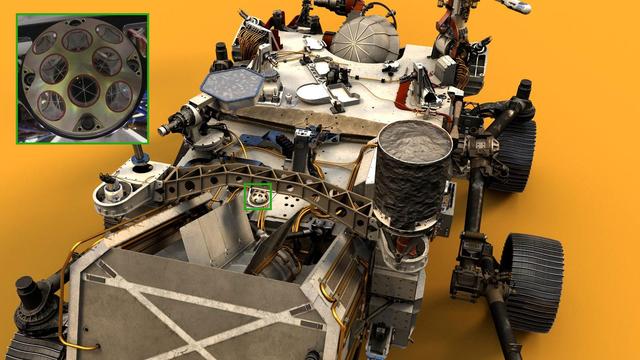
Visible near the center of NASA's Perseverance Mars rover in this illustration is the palm-size dome called the Laser Retroreflector Array (LaRA). In the distant future, laser-equipped Mars orbiters could use such a reflector for scientific studies. https://photojournal.jpl.nasa.gov/catalog/PIA24097

Illustration of the SLS Exploration Upper Stage, or EUS. This configuration of the rocket, with the Exploration Upper Stage, will provide in-space propulsion to send astronauts in NASA’s Orion spacecraft and heavy cargo on a precise trajectory to the Moon. The evolution of the rocket to SLS Block 1B configuration with EUS enables SLS to launch 40% more cargo to the Moon along with the crew. Manufacturing both the core stage and Exploration Upper Stage is a collaborative effort between NASA and Boeing, the lead contractor for EUS and the SLS core stage. SLS is the only rocket that can send Orion, astronauts, and supplies to the Moon in a single mission. The SLS rocket, NASA’s Orion spacecraft, Gateway, and human landing system are part of NASA’s backbone for deep space exploration. Under the Artemis program, NASA is working to land the first woman and the next man on the Moon to pave the way for sustainable exploration at the Moon and future missions to Mars. (NASA)

Illustration of the SLS Exploration Upper Stage, or EUS. The Exploration Upper Stage will be used on the second configuration of the SLS rocket, known as Block 1B, and will provide in-space propulsion to send astronauts in NASA’s Orion spacecraft and heavy cargo on a precise trajectory to the Moon. The evolution of the rocket to SLS Block 1B configuration with EUS enables SLS to launch 40% more cargo to the Moon along with the crew. Manufacturing both the core stage and Exploration Upper Stage is a collaborative effort between NASA and Boeing, the lead contractor for EUS and the SLS core stage. SLS is the only rocket that can send Orion, astronauts, and supplies to the Moon in a single mission. The SLS rocket, NASA’s Orion spacecraft, Gateway, and human landing system are part of NASA’s backbone for deep space exploration. Under the Artemis program, NASA is working to land the first woman and the next man on the Moon to pave the way for sustainable exploration at the Moon and future missions to Mars. (NASA)
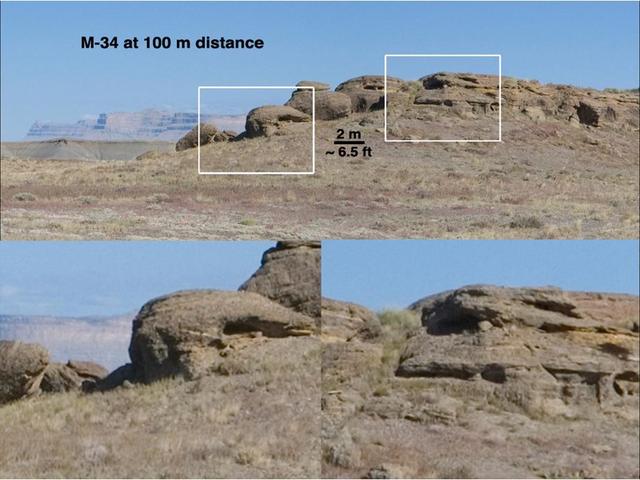
This set of views illustrates capabilities of the Mast Camera MastCam instrument on NASA Mars Science Laboratory Curiosity rover, using a scene on Earth as an example of what MastCam two cameras can see from different distances.

This illustration shows the unusual orbit of planet Kepler-413b around a close pair of orange and red dwarf stars. The planet 66-day orbit is tilted 2.5 degrees with respect to the plane of the binary stars orbit.
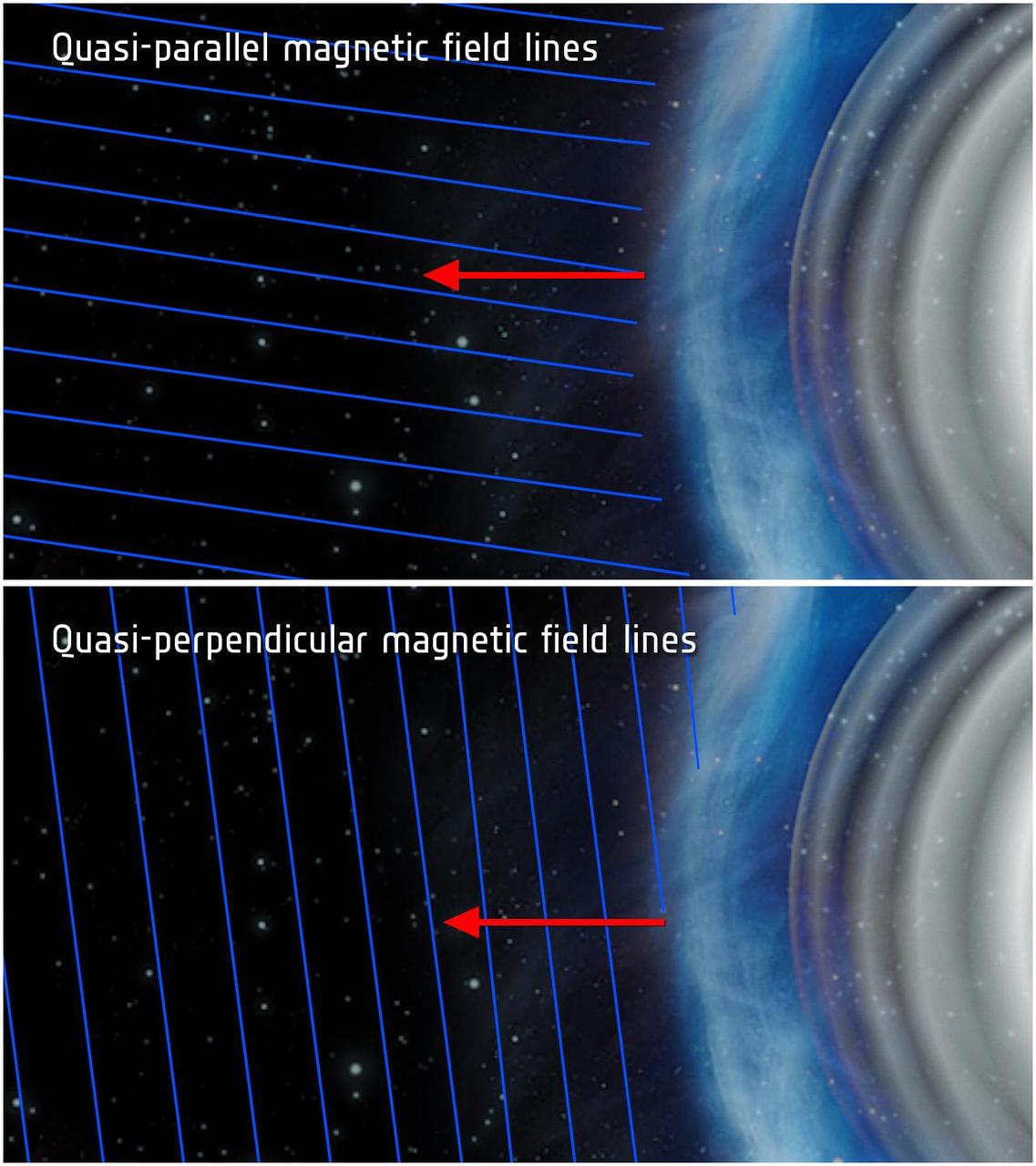
This illustration shows quasi-parallel top and quasi-perpendicular bottom magnetic field conditions at a planetary bow shock. Bow shocks are shockwaves created when the solar wind blows on a planet magnetic field.
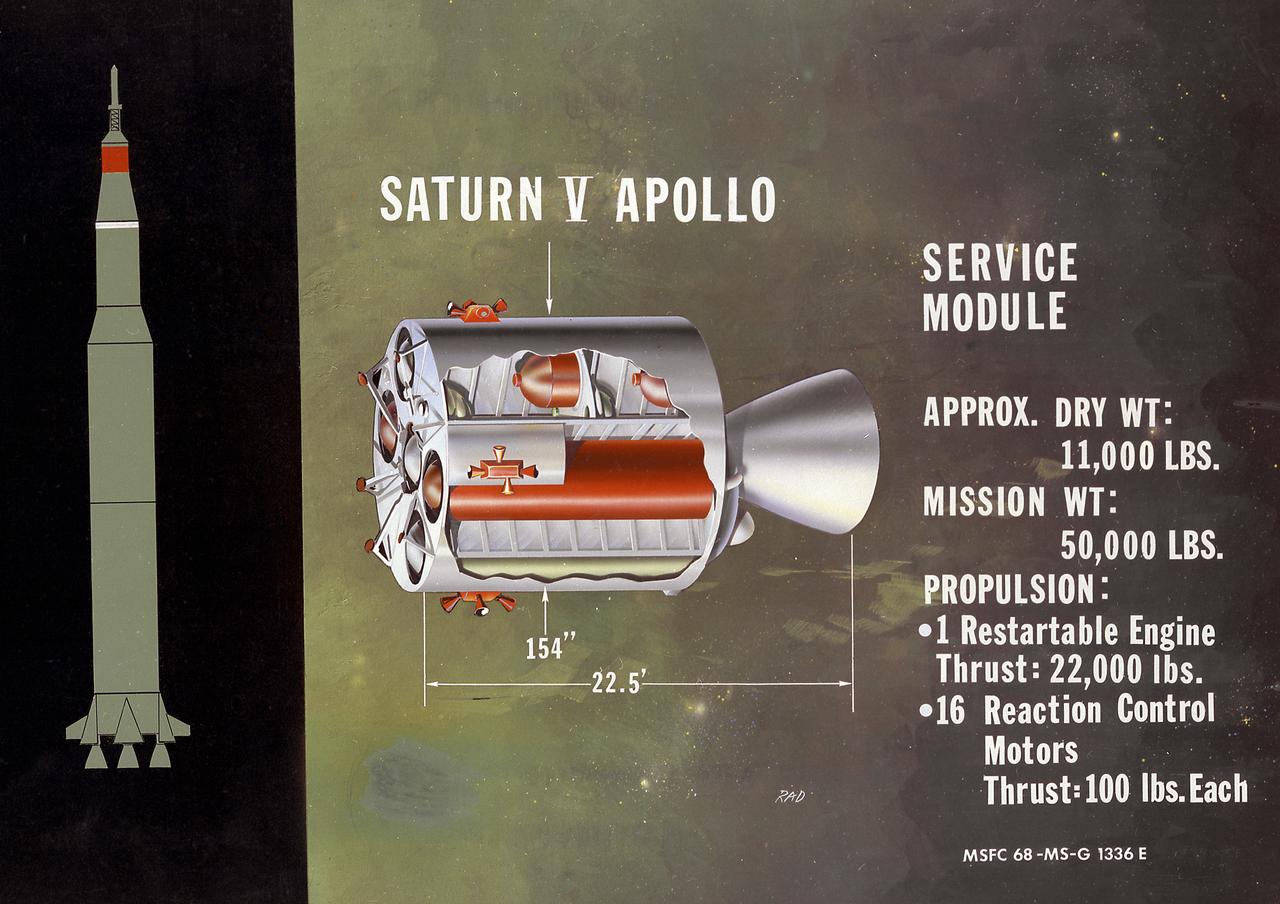
This is a cutaway illustration of the Saturn V service module configuration. Packed with plumbing and tanks, the service module was the command module's constant companion until just before reentry. All components not needed during the last few minutes of flight, and therefore requiring no protection against reentry heat, were transported in this module. It carried oxygen for most of the trip, fuel cells to generate electricity (along with the oxygen and hydrogen to run them); small engines to control pitch, roll, and yaw; and a large engine to propel the spacecraft into, and out of, lunar orbit.
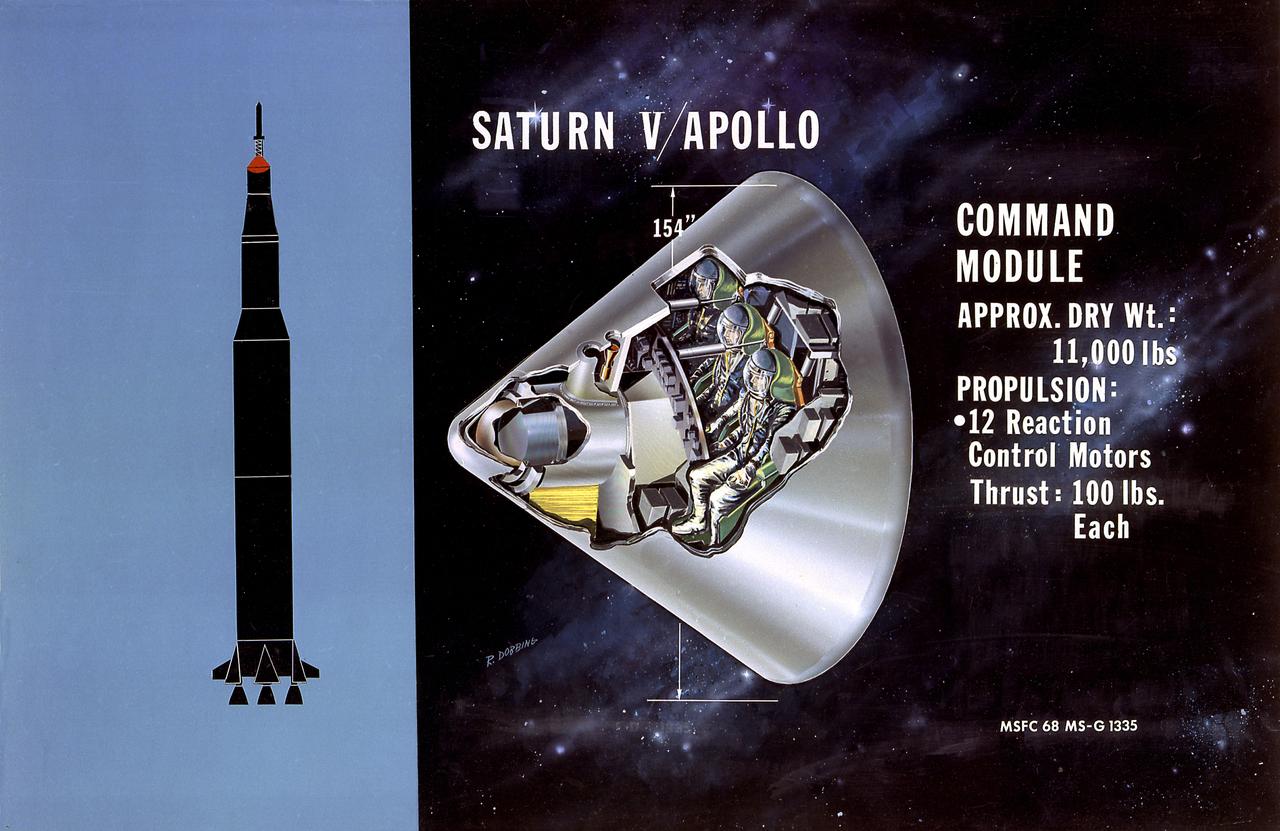
This is a cutaway illustration of the Saturn V command module (CM) configuration. The CM was crammed with some of the most complex equipment ever sent into space at the time. The three astronaut couches were surrounded by instrument panels, navigation gear, radios, life-support systems, and small engines to keep it stable during reentry. The entire cone, 11 feet long and 13 feet in diameter, was protected by a charring heat shield. The 6.5 ton CM was all that was finally left of the 3,000-ton Saturn V vehicle that lifted off on the journey to the Moon.
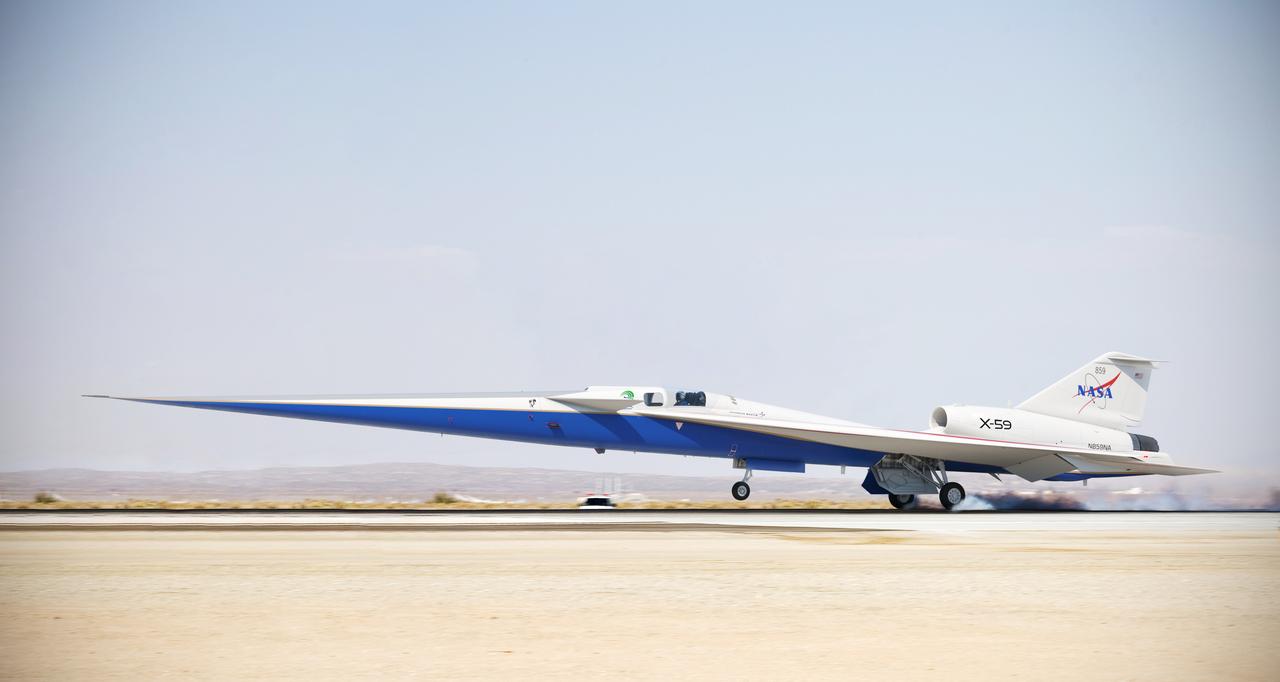
Artist illustration of the X-59 landing on the runway.
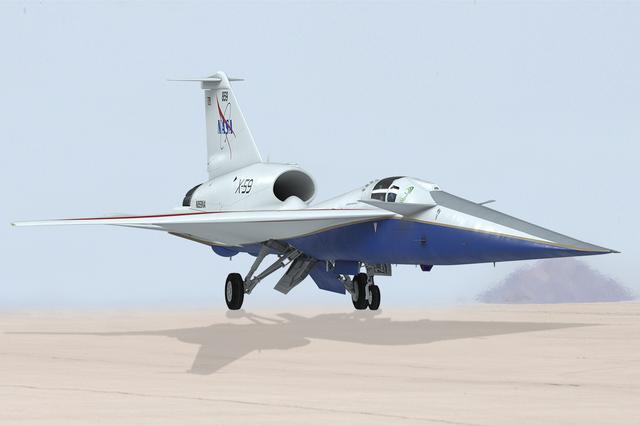
Artist illustration of the X-59 taxiing on the runway.
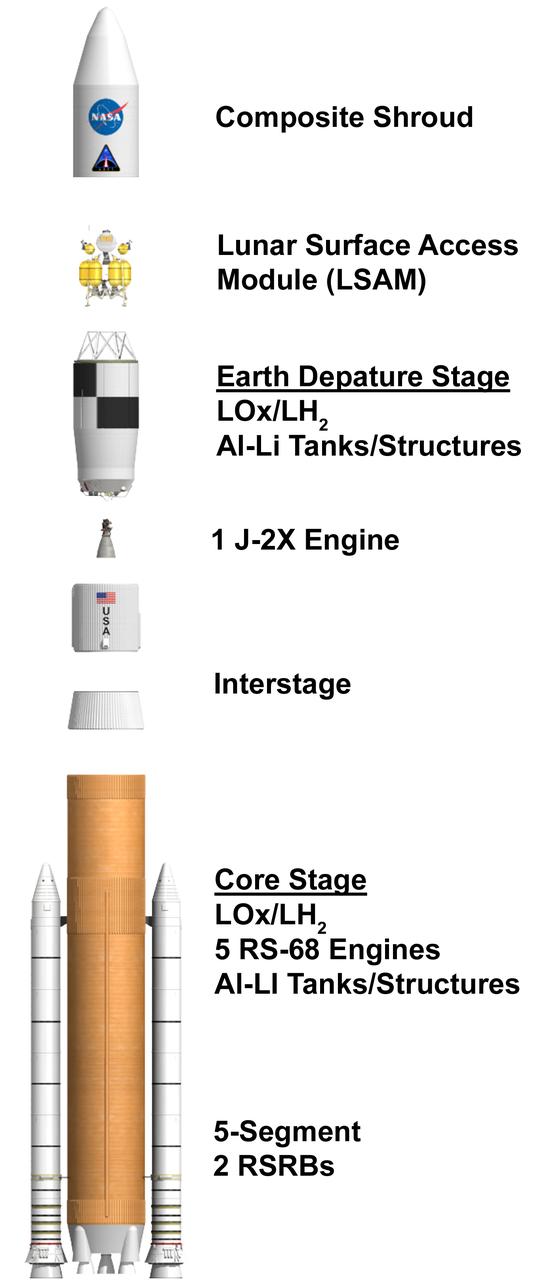
The NASA developed Ares rockets, named for the Greek god associated with Mars, will return humans to the moon and later take them to Mars and other destinations. This is an illustration of the Ares V with call outs. The Ares V is a heavy lift launch vehicle that will use five RS-68 liquid oxygen/liquid hydrogen engines mounted below a larger version of the space shuttle external tank, and two five-segment solid propellant rocket boosters for the first stage. The upper stage will use the same J-2X engine as the Ares I and past Apollo vehicles. The Ares V can lift more than 286,000 pounds to low Earth orbit and stands approximately 360 feet tall. This versatile system will be used to carry cargo and the components into orbit needed to go to the moon and later to Mars. Ares V is subject to configuration changes before it is actually launched. This illustration reflects the latest configuration as of January 2007.
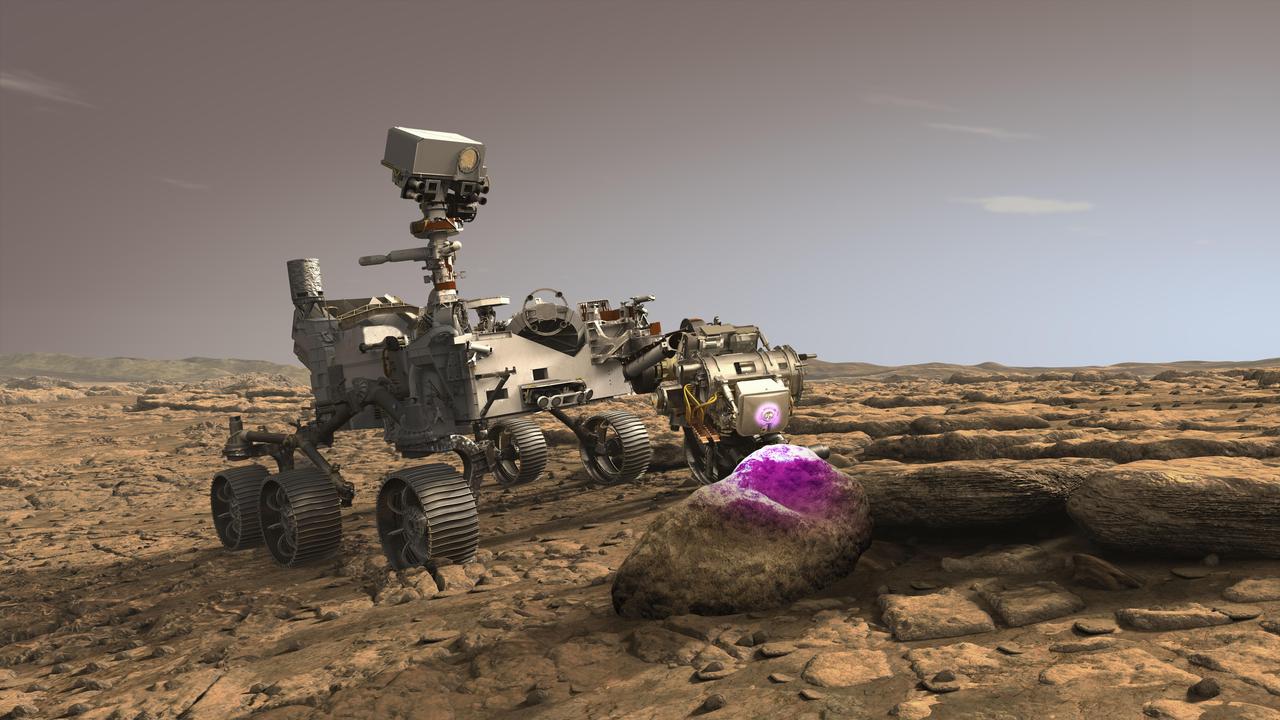
In this illustration, NASA's Perseverance Mars rover uses the Planetary Instrument for X-ray Lithochemistry (PIXL). Located on the turret at the end of the rover's robotic arm, the X-ray spectrometer will help search for signs of ancient microbial life in rocks. https://photojournal.jpl.nasa.gov/catalog/PIA24092
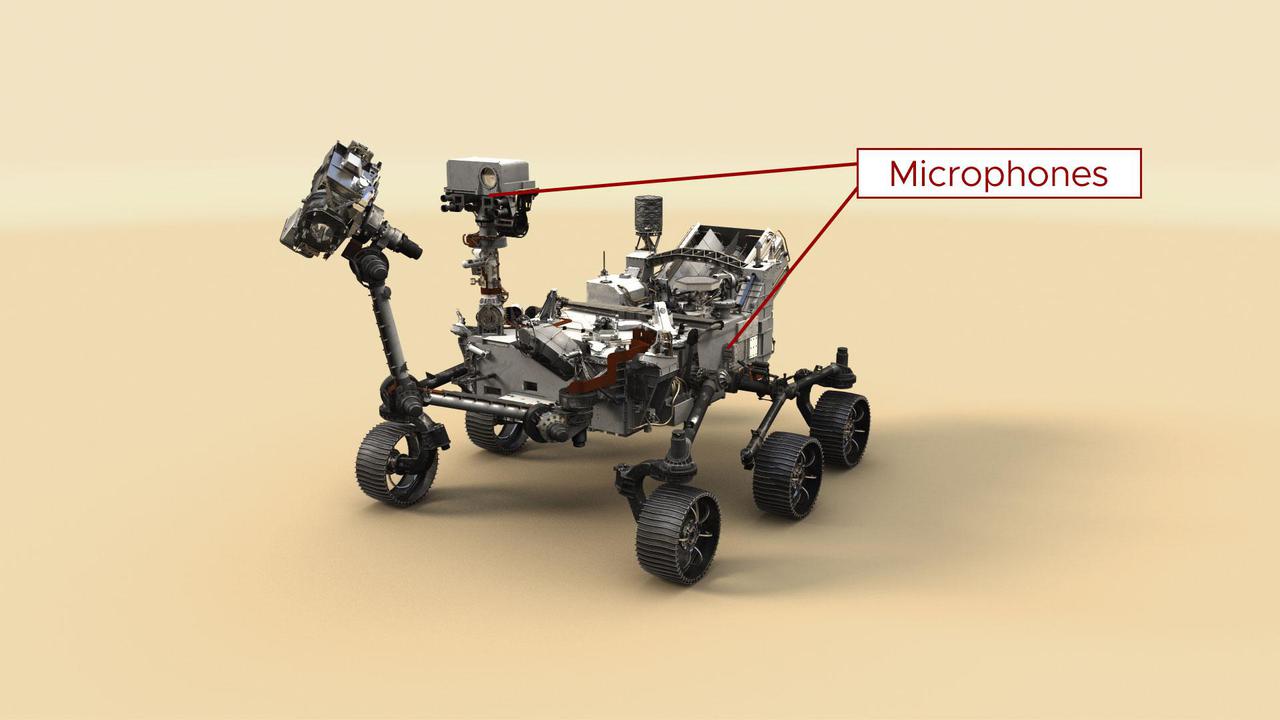
This illustration of NASA's Perseverance Mars rover indicates the placement of the spacecraft's two microphones. The microphone on the mast is part of the SuperCam science instrument. The microphone on the side of the rover was intended to capture the sounds of entry, descent, and landing for public engagement. A key objective for Perseverance's mission on Mars is astrobiology, including the search for signs of ancient microbial life. The rover will characterize the planet's geology and past climate, pave the way for human exploration of the Red Planet, and be the first mission to collect and cache Martian rock and regolith (broken rock and dust). Subsequent NASA missions, in cooperation with ESA (European Space Agency), would send spacecraft to Mars to collect these sealed samples from the surface and return them to Earth for in-depth analysis. The Mars 2020 Perseverance mission is part of NASA's Moon to Mars exploration approach, which includes Artemis missions to the Moon that will help prepare for human exploration of the Red Planet. https://photojournal.jpl.nasa.gov/catalog/PIA24931

This illustration shows one possible scenario for the hot, rocky exoplanet called 55 Cancri e, which is nearly two times as wide as Earth. New data from NASA Spitzer Space Telescope show that the planet has extreme temperature swings.

This colorful illustration depicts NASA's Perseverance Rover on Mars, where it landed in February 2021. The Perseverance team faced numerous technical and logistical challenges, including those presented by the COVID-19 pandemic, before and after launch and landing. Because they know how hard it can be to overcome obstacles, they're celebrating students who have persevered in the face of academic challenges. Awardees will receive a personal message beamed back from Mars by the rover. Find out how to nominate a student for "You've Got Perseverance!" at: go.nasa.gov/gotperseverance Animation available at https://photojournal.jpl.nasa.gov/catalog/PIA24948
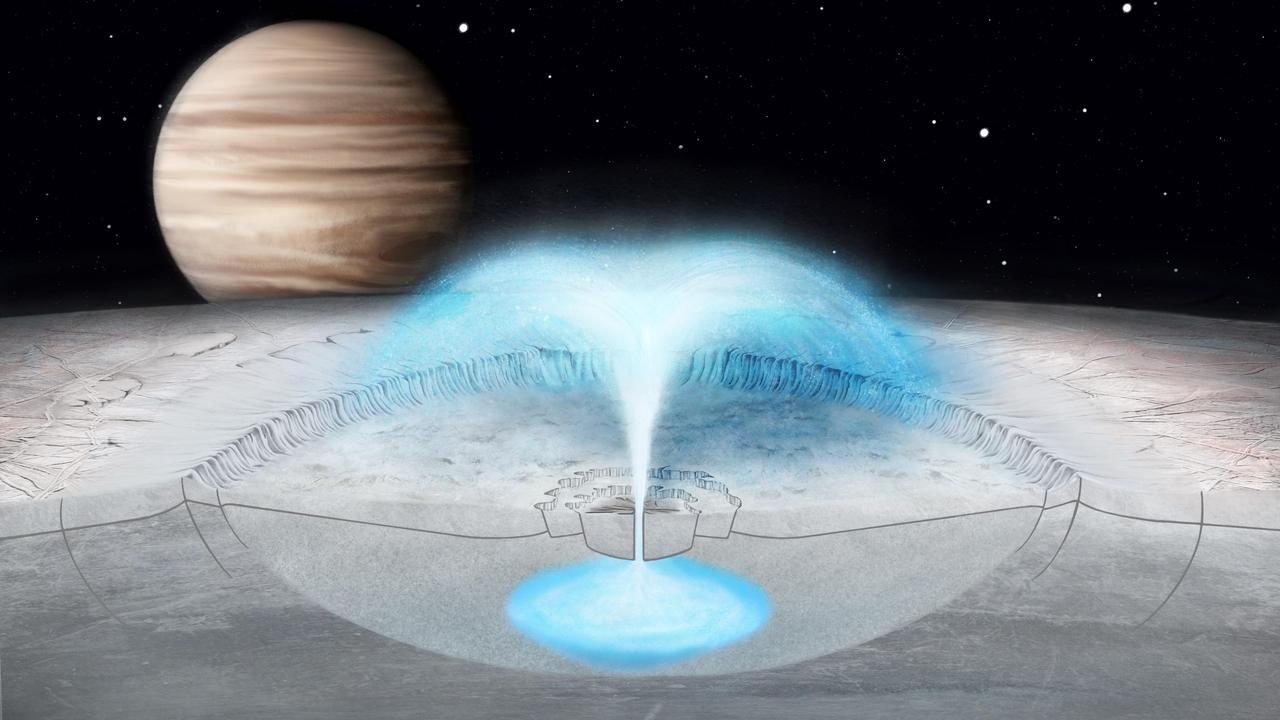
Scientists have theorized on the origin of water plumes that are possibly erupting from Jupiter's moon Europa. This illustration depicts a scenario modeled in new research that proposes some plumes could come from an eruption of brine, or salt-enriched water, from a pocket of water within the moon's crust. If Europa is venting plumes of liquid, they could possibly be observed by NASA's upcoming Europa Clipper mission, set to launch in the mid-2020's. The research on eruptions of briny water from Europa's crust used images collected by NASA's Galileo spacecraft. The model shows how a combination of freezing and pressurization could lead to a cryovolcanic eruption, or a burst of frigid water, like the one illustrated here. The model could also shed light on cryovolcanic eruptions on other icy bodies in the solar system. https://photojournal.jpl.nasa.gov/catalog/PIA24029
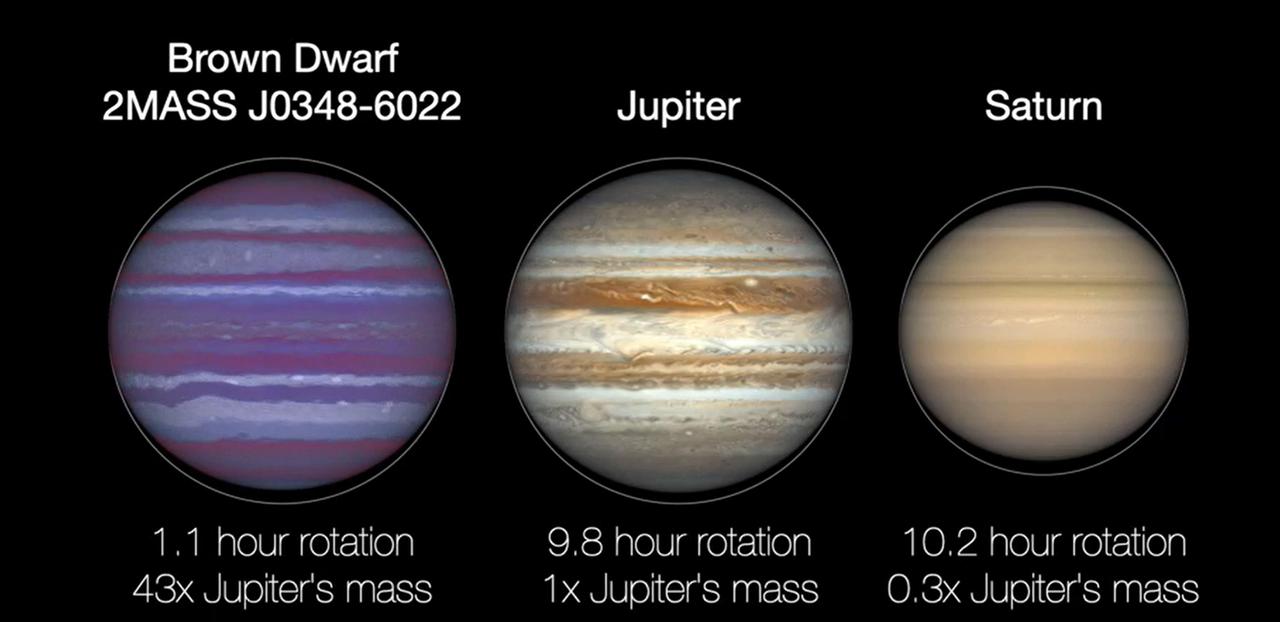
All spinning objects, from carousels to planets, generate centripetal force. If a planet rotates too fast, that force can pull it apart. Before that happens, the planet will experience "flattening," or bulging around its midsection, as seen in this animated illustration of a brown dwarf, Jupiter, and Saturn. Animation available at https://photojournal.jpl.nasa.gov/catalog/PIA24376
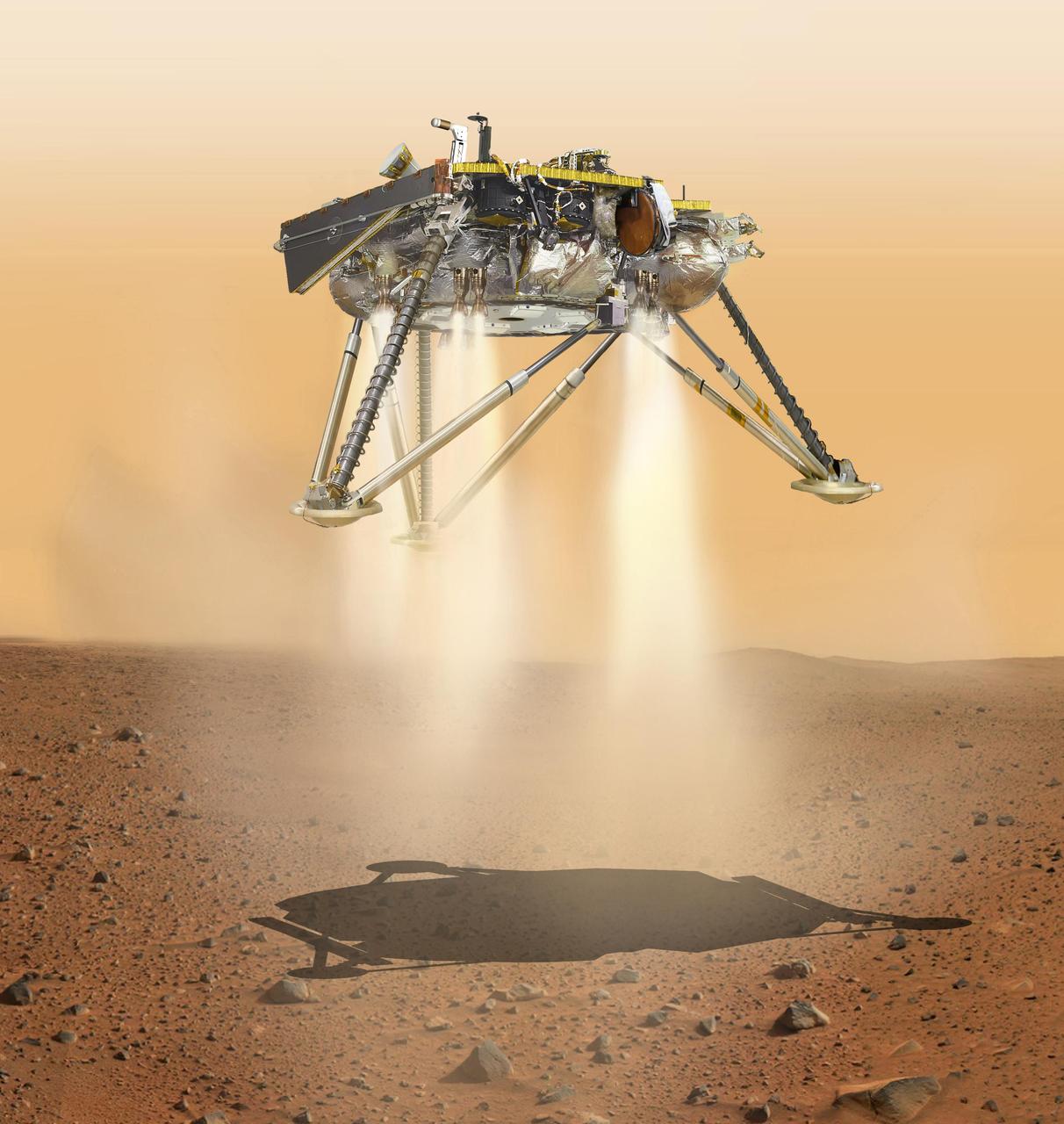
This is an illustration showing a simulated view of NASA's InSight lander about to land on the surface of Mars. This view shows the underside of the spacecraft. https://photojournal.jpl.nasa.gov/catalog/PIA22812
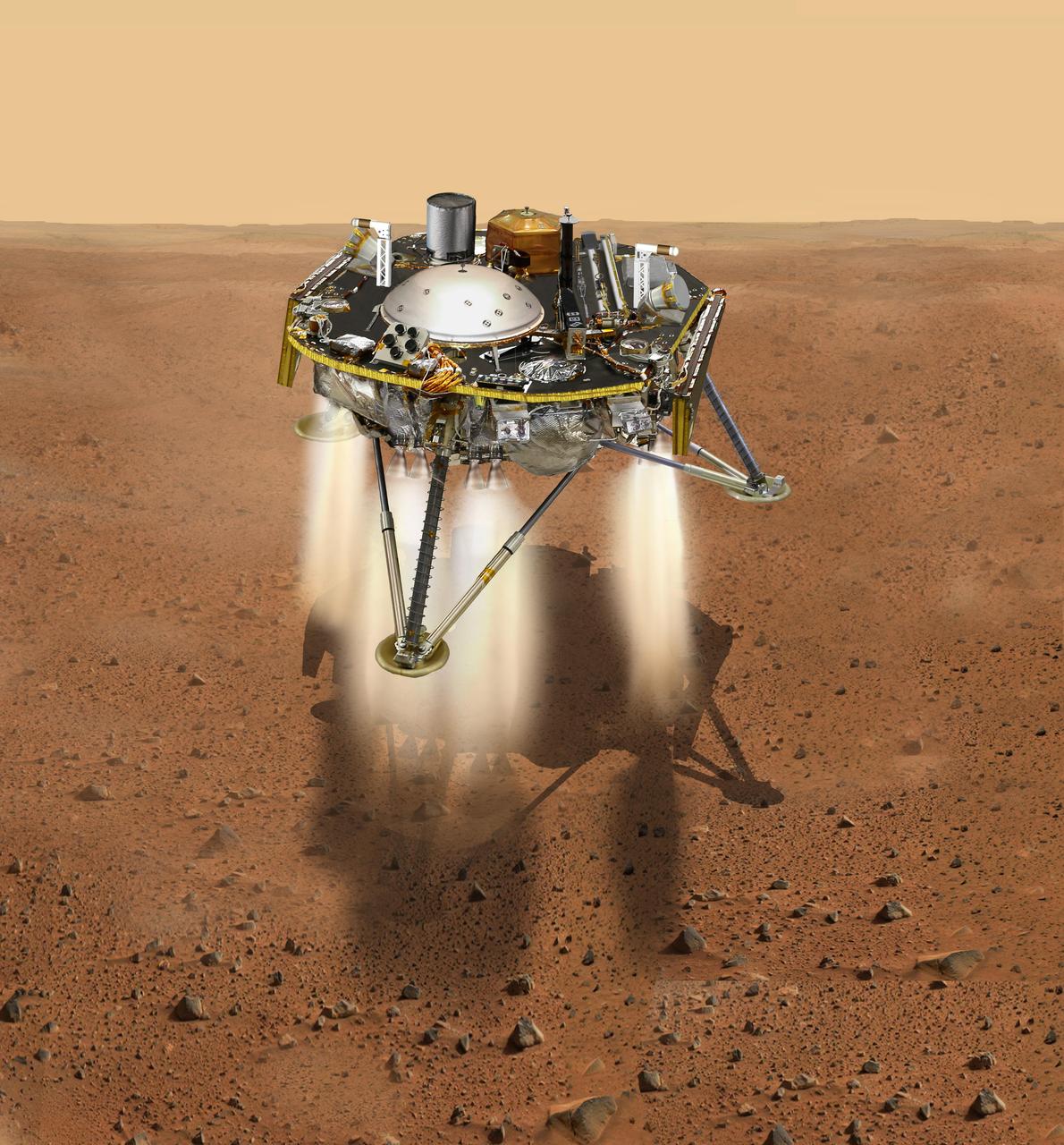
This is an illustration showing a simulated view of NASA's InSight about to land on the surface of Mars. This view shows the top of the spacecraft. https://photojournal.jpl.nasa.gov/catalog/PIA22813

This illustration shows what a sprite could look like in Jupiter's atmosphere. Named after a mischievous, quick-witted character in English folklore, sprites last for only a few milliseconds. They feature a central blob of light with long tendrils of light extending down toward the ground and upward. In Earth's upper atmosphere, their interaction with nitrogen give sprites a reddish hue. At Jupiter, where the predominance of hydrogen in the upper atmosphere would likely give them a blue hue. https://photojournal.jpl.nasa.gov/catalog/PIA23990
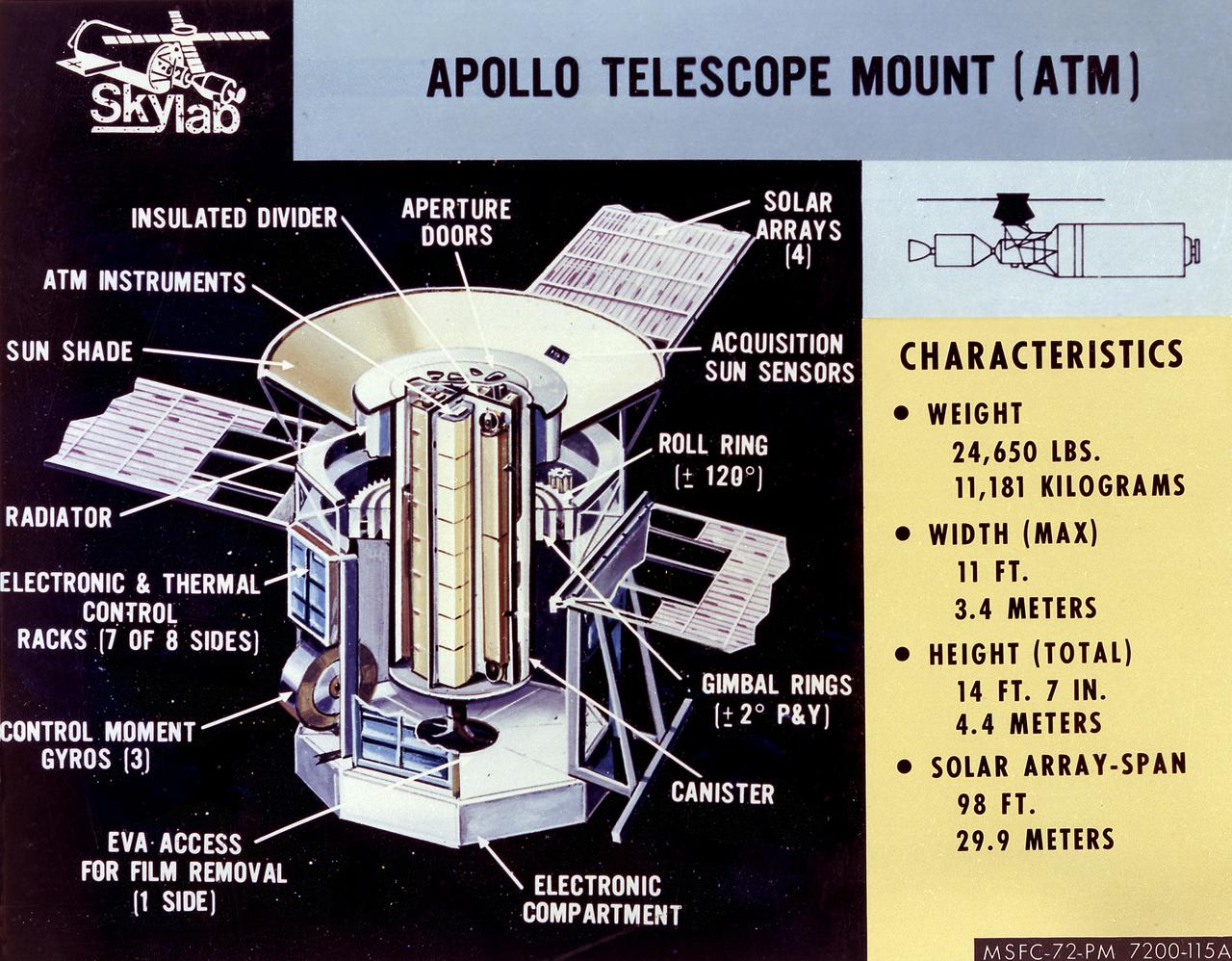
The Apollo Telescope Mount (ATM) served as the first marned astronomical observatory in space. It was designed for solar research from Earth orbit aboard the Skylab. This image is a cutaway illustration of the ATM canister with callouts and characteristics. The ATM was designed and developed by the Marshall Space Flight Center.
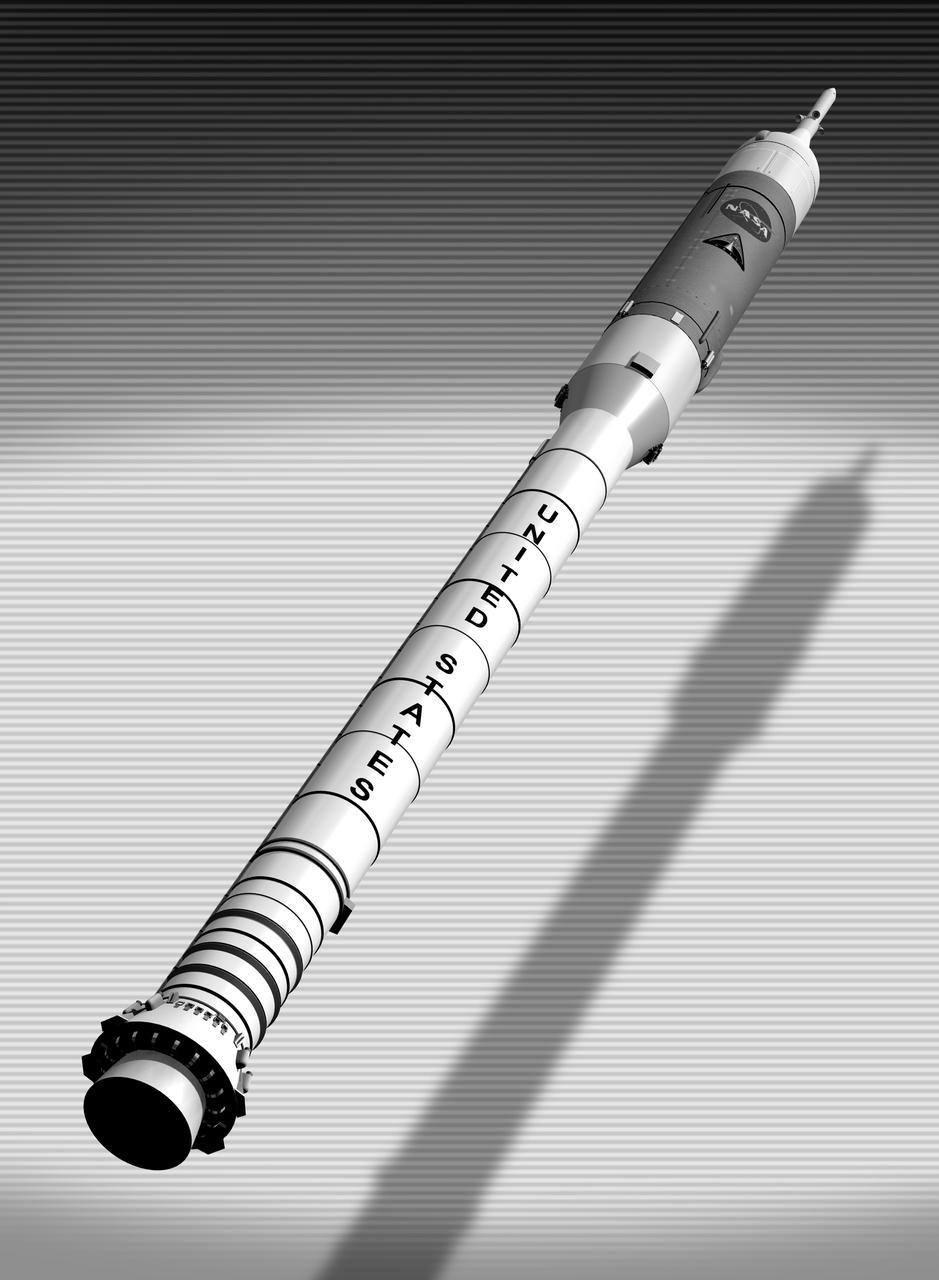
Shown is a concept illustration of Ares I which is an in-line, two-stage rocket that will transport the Orion Crew Exploration Vehicle to low earth orbit. Orion will accommodate as many as six astronauts. The first stage will consist of the five-segment solid rocket booster.
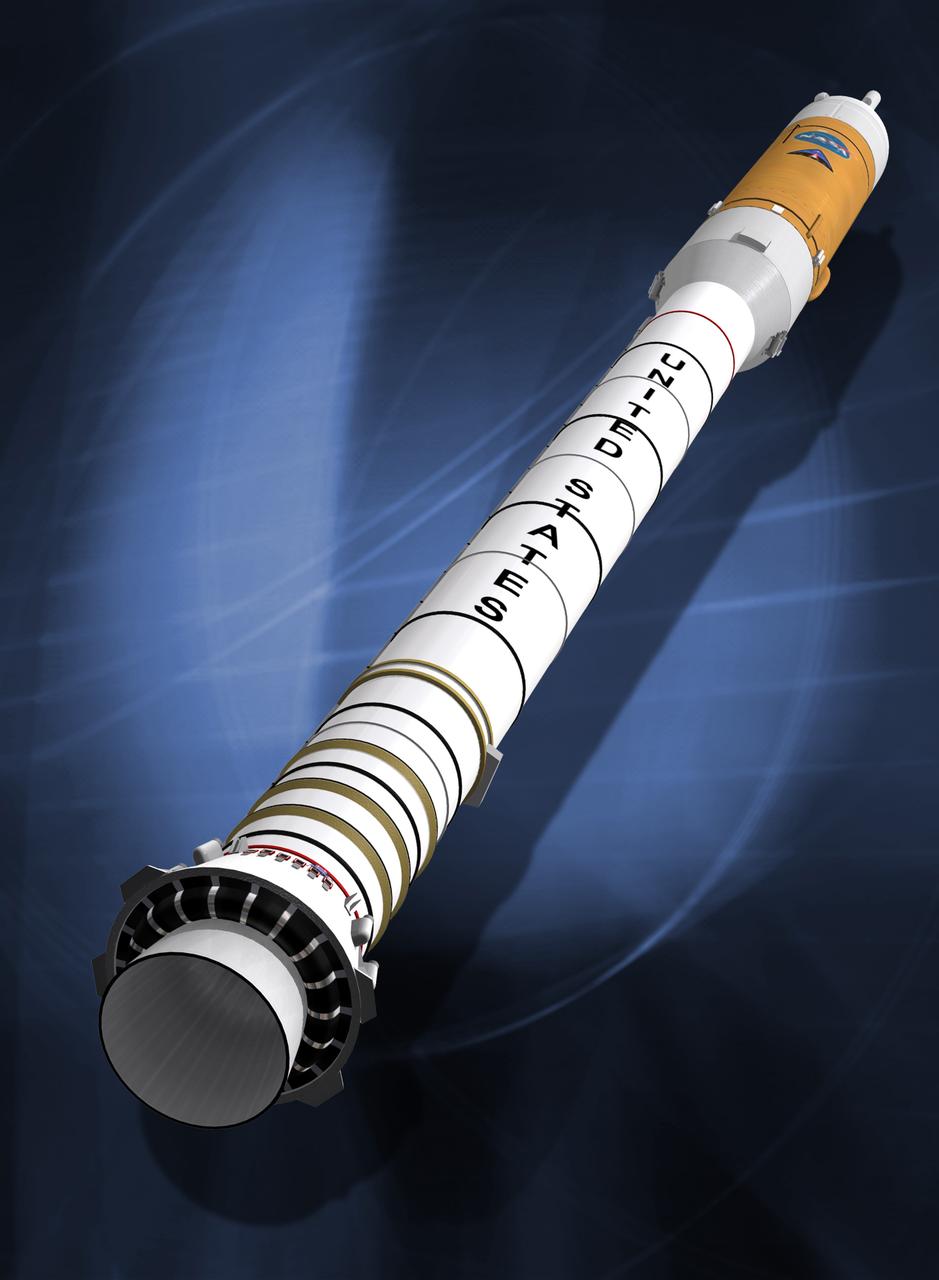
Shown is an illustration of the Ares I concept. The first stage will be a single, five-segment solid rocket booster derived from the space shuttle programs reusable solid rocket motor. The first stage is managed by NASA's Marshall Space Flight Center in Huntsville, Alabama for NASA's Constellation program.
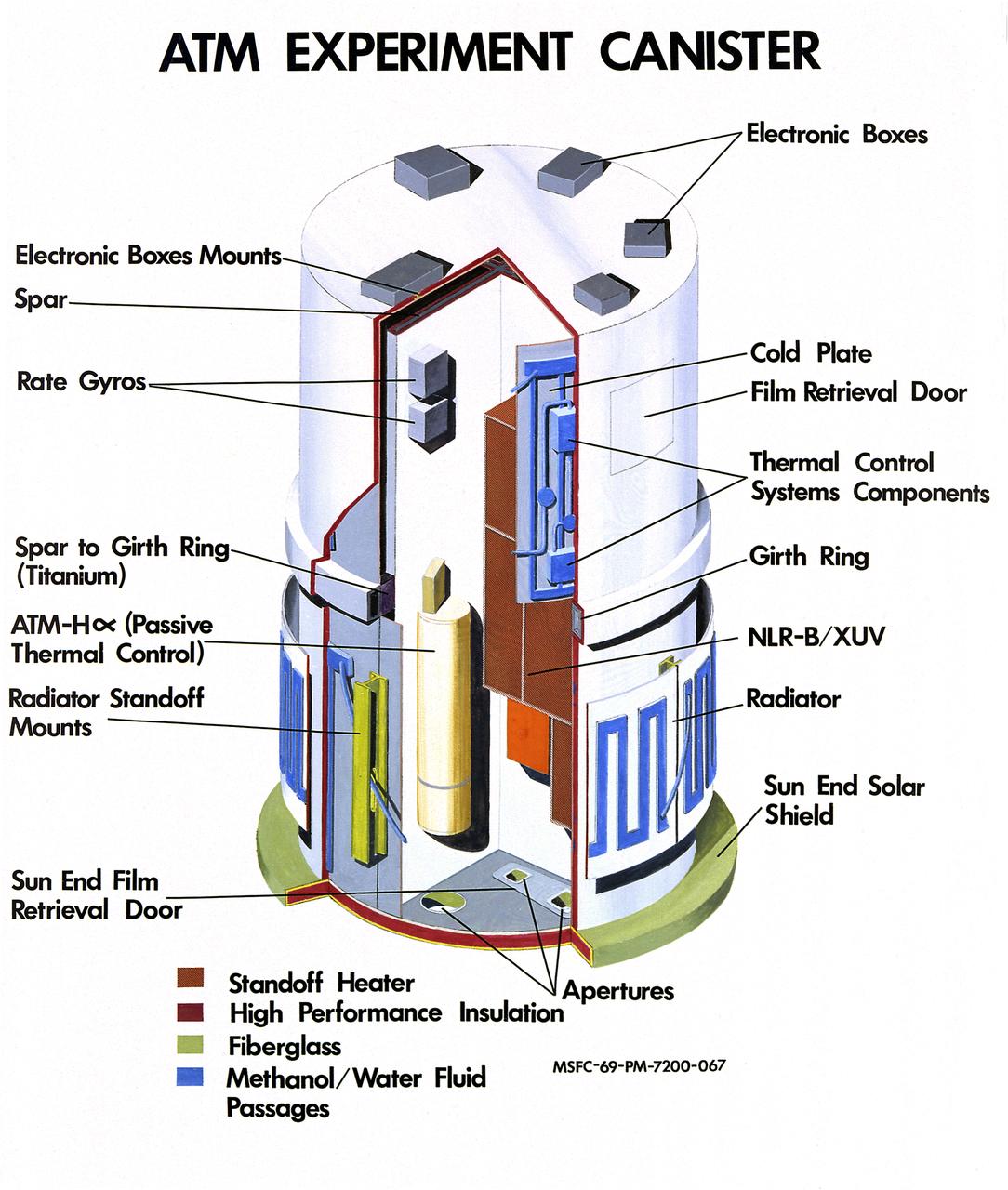
The Apollo Telescope Mount (ATM) served as the first marned astronomical observatory in space. It was designed for solar research from Earth orbit aboard the Skylab. This image is a cutaway illustration of the ATM canister with callouts. The ATM was designed and developed by the Marshall Space Flight Center.
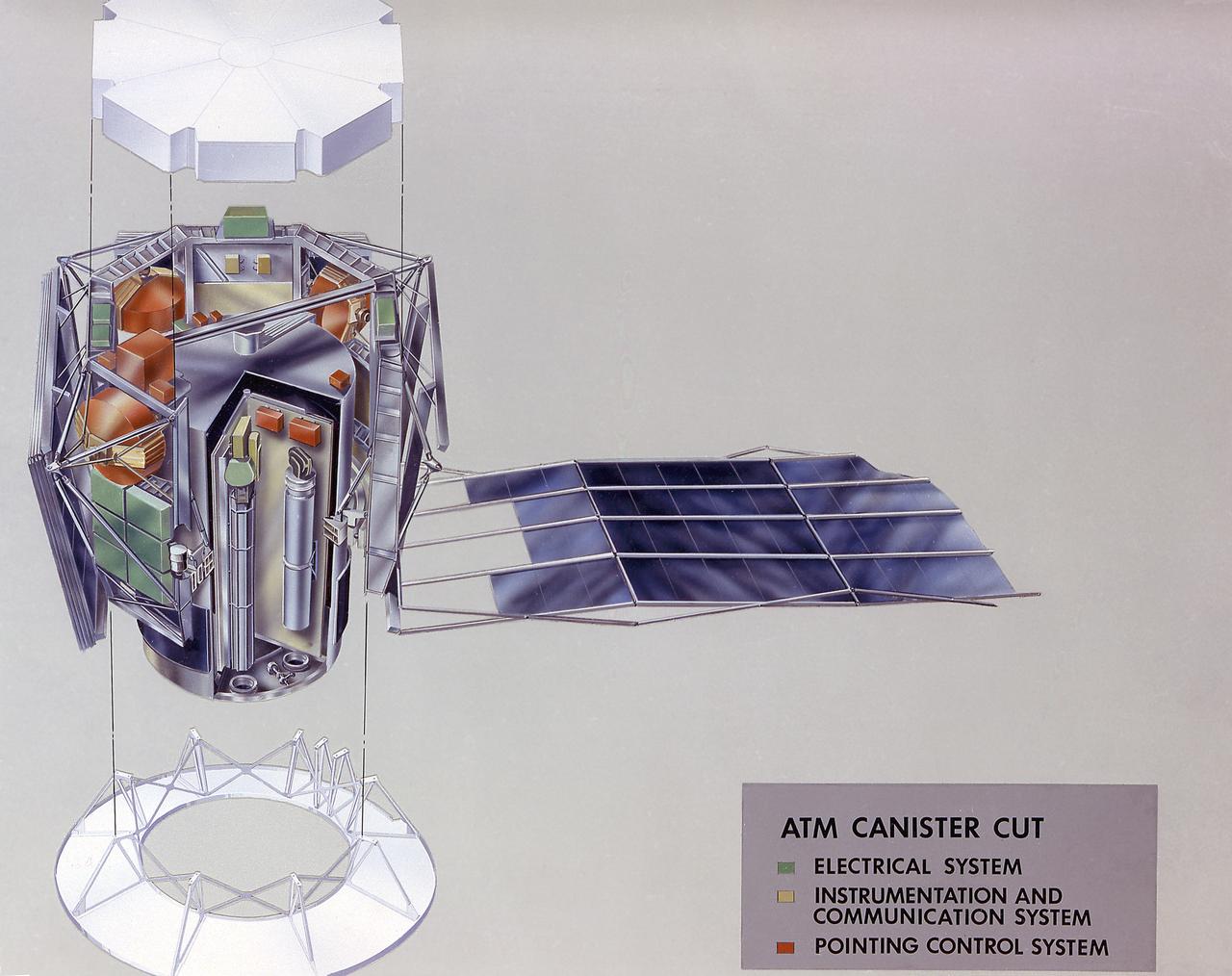
The Apollo Telescope Mount (ATM) served as the first marned astronomical observatory in space. It was designed for solar research from Earth orbit aboard the Skylab. This image is a cutaway illustration of the ATM canister. The ATM was designed and developed by the Marshall Space Flight Center.
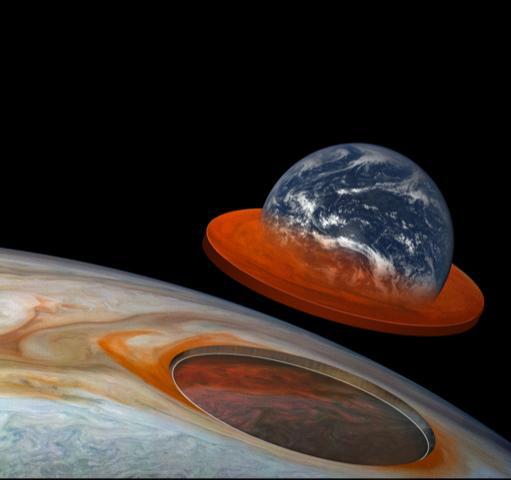
This illustration combines an image of Jupiter from the JunoCam instrument aboard NASA's Juno spacecraft with a composite image of Earth to depict the size and depth of Jupiter's Great Red Spot. https://photojournal.jpl.nasa.gov/catalog/PIA24817
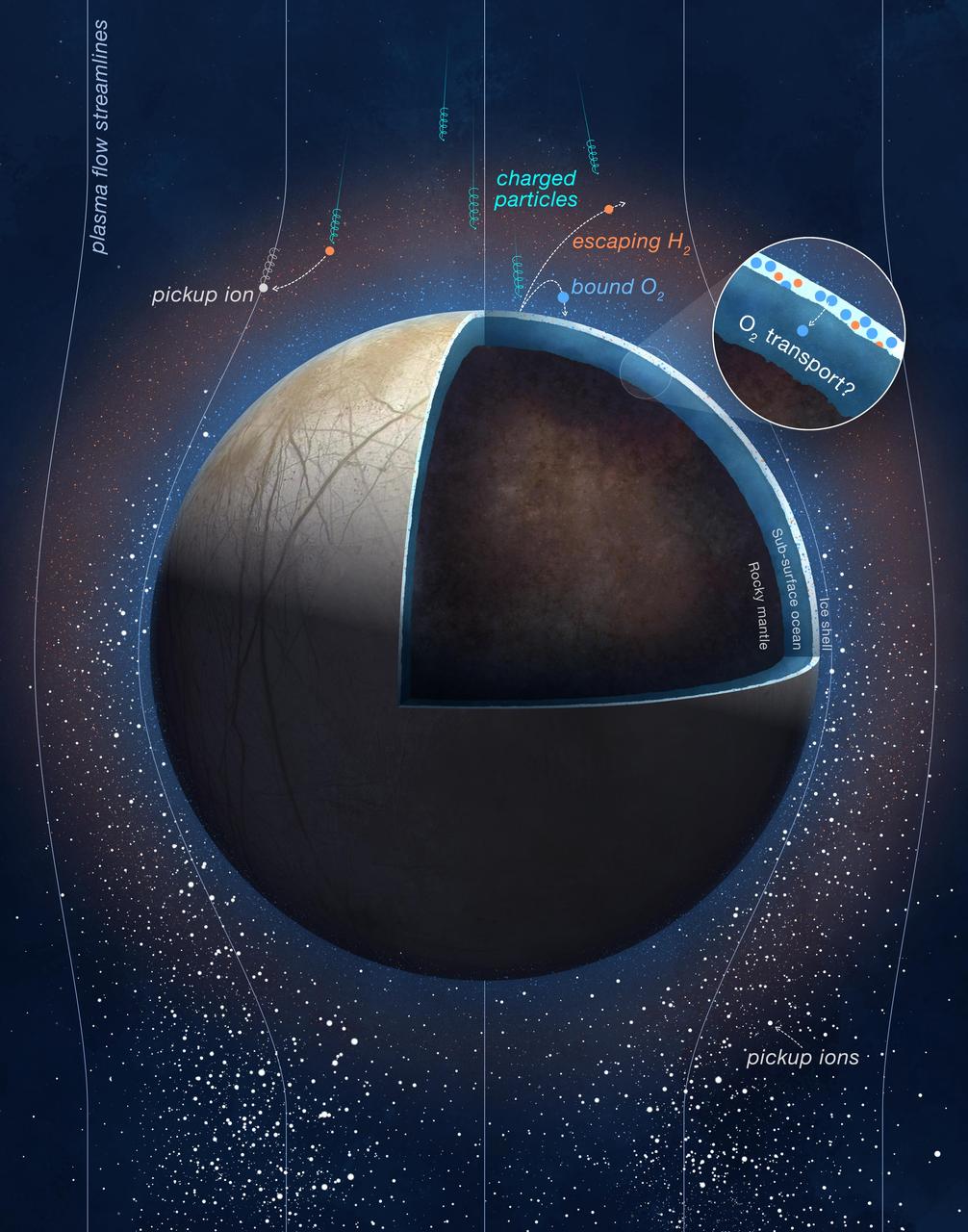
This illustration shows how oxygen is generated at Europa as a result of interaction between the Jovian moon's icy surface and Jupiter's plasma environment. A segment of Europa is cut away in the graphic to show its three layers – the icy shell, the ocean thought to be beneath the shell, and the moon's rocky mantle. Vertical "plasma flow streamlines" depict the flow of these charged particles in the vicinity of the moon. Some of the streamlines are oriented in such a way that their charged particles impact the moon's surface and split frozen water molecules present there into individual oxygen and hydrogen molecules. The newly created hydrogen molecules rise and form Europa's tenuous atmosphere. Because the newly created oxygen molecules are heavier than hydrogen, they remain closer to the surface. Scientists believe these "bound" oxygen gases could migrate inward toward the moon's subsurface ocean, as depicted in the inset image in the upper right of the illustration. The white specks surrounding Europa represent "pickup ions" – ionized particles that have been shed from Europa's atmosphere. When molecules in the atmosphere become charged, they are "picked up," or swept, into the stream of charged material flowing around Europa. Measurements of the composition and quantity of these pickup ions by NASA's Juno mission provided the data necessary to determine the oxygen and hydrogen generation processes at the surface of Europa. https://photojournal.jpl.nasa.gov/catalog/PIA26239
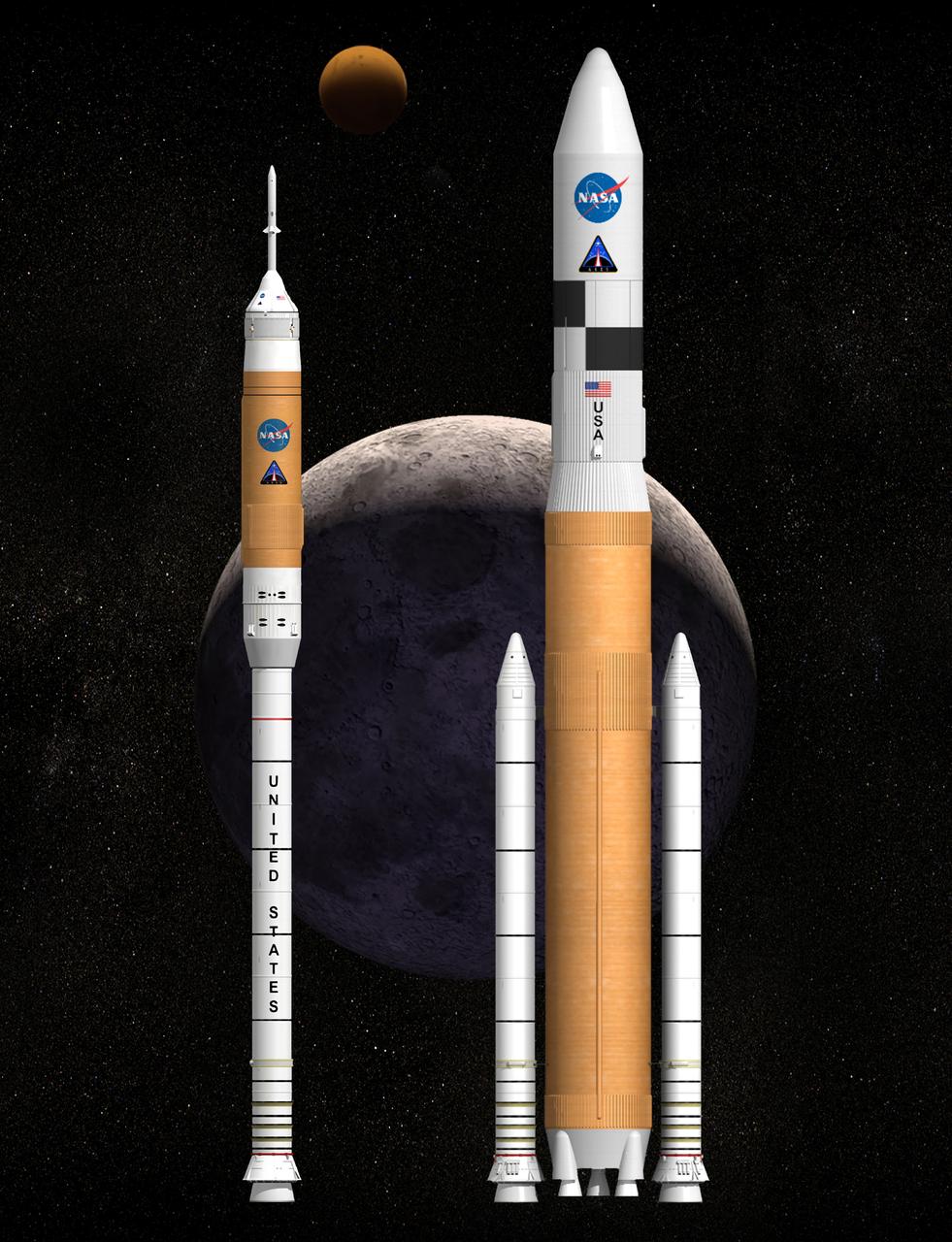
Named for the Greek god associated with Mars, the NASA developed Ares launch vehicles will return humans to the moon and later take them to Mars and other destinations. In this early illustration, the vehicle depicted on the left is the Ares I. Ares I is an inline, two-stage rocket configuration topped by the Orion crew vehicle and its launch abort system. In addition to its primary mission of carrying four to six member crews to Earth orbit, Ares I may also use its 25-ton payload capacity to deliver resources and supplies to the International Space Station (ISS), or to "park" payloads in orbit for retrieval by other spacecraft bound for the moon or other destinations. The Ares I employs a single five-segment solid rocket booster, a derivative of the space shuttle solid rocket booster, for the first stage. A liquid oxygen/liquid hydrogen J-2X engine derived from the J-2 engine used on the second stage of the Apollo vehicle will power the Ares V second stage. The Ares I can lift more than 55,000 pounds to low Earth orbit. The vehicle illustrated on the right is the Ares V, a heavy lift launch vehicle that will use five RS-68 liquid oxygen/liquid hydrogen engines mounted below a larger version of the space shuttle external tank, and two five-segment solid propellant rocket boosters for the first stage. The upper stage will use the same J-2X engine as the Ares I. The Ares V can lift more than 286,000 pounds to low Earth orbit and stands approximately 360 feet tall. This versatile system will be used to carry cargo and the components into orbit needed to go to the moon and later to Mars. Both vehicles are subject to configuration changes before they are actually launched. This illustration reflects the latest configuration as of September 2006.
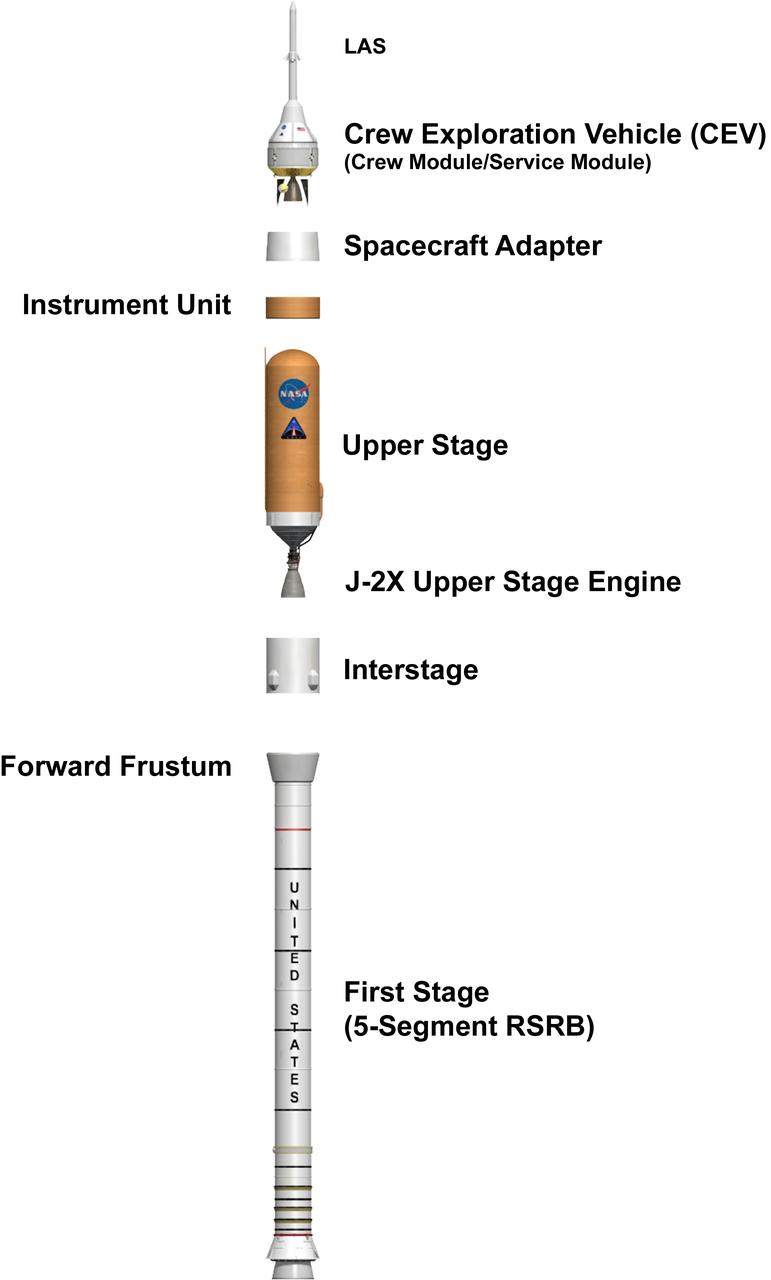
Named for the Greek god associated with Mars, the NASA developed Ares launch vehicles will return humans to the moon and later take them to Mars and other destinations. This is an illustration of the Ares I with call outs. Ares I is an inline, two-stage rocket configuration topped by the Orion crew vehicle and its launch abort system. In addition to the primary mission of carrying crews of four to six astronauts to Earth orbit, Ares I may also use its 25-ton payload capacity to deliver resources and supplies to the International Space Station, or to "park" payloads in orbit for retrieval by other spacecraft bound for the moon or other destinations. Ares I employs a single five-segment solid rocket booster, a derivative of the space shuttle solid rocket booster, for the first stage. A liquid oxygen/liquid hydrogen J-2X engine derived from the J-2 engine used on the Apollo second stage will power the Ares I second stage. The Ares I can lift more than 55,000 pounds to low Earth orbit. Ares I is subject to configuration changes before it is actually launched. This illustration reflects the latest configuration as of January 2007.
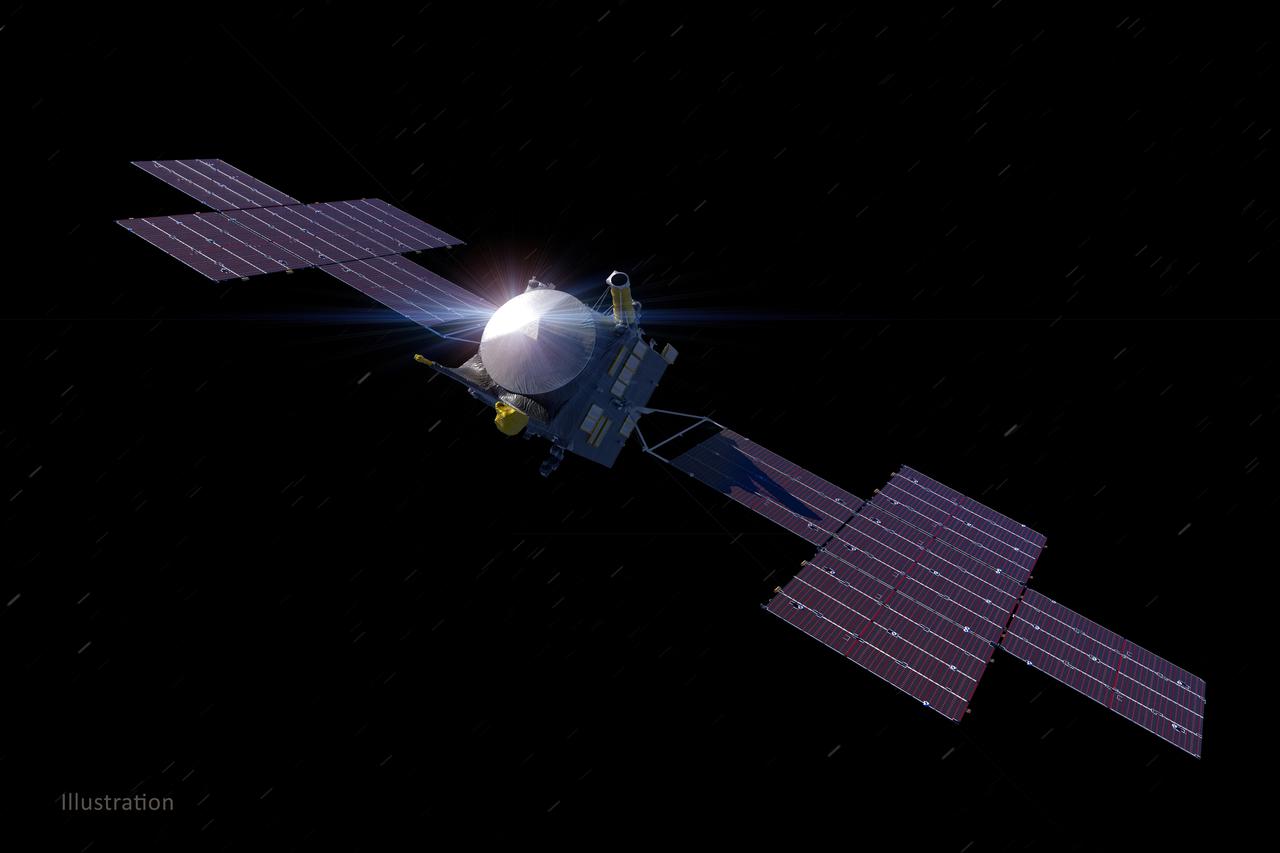
This illustration, updated as of March 2021, depicts NASA's Psyche spacecraft. Set to launch in August 2022, the Psyche mission will explore a metal-rich asteroid of the same name that lies in the main asteroid belt between Mars and Jupiter. The spacecraft will arrive in early 2026 and orbit the asteroid for nearly two years to investigate its composition. Scientists think that Psyche, unlike most other asteroids that are rocky or icy bodies, is made up of mostly iron and nickel — similar to Earth's core. The Psyche team will use a magnetometer to measure the asteroid's magnetic field. A multispectral imager will capture images of the surface, as well as data about Psyche's composition and topography. Spectrometers will analyze the neutrons and gamma rays coming from the surface to reveal the elements that make up the asteroid. Maxar Technologies in Palo Alto, California, built the main body of the spacecraft, called the Solar Electric Propulsion (SEP) Chassis. Maxar also will deliver the five-panel solar arrays, shown here, that will provide the power for the spacecraft systems. The image was created by Peter Rubin. https://photojournal.jpl.nasa.gov/catalog/PIA24473
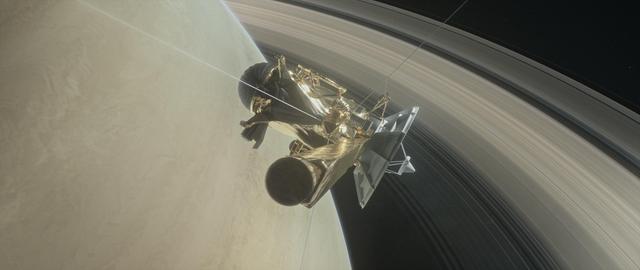
This illustration shows NASA's Cassini spacecraft about to make one of its dives between Saturn and its innermost rings as part of the mission's Grand Finale. Cassini will make 22 orbits that swoop between the rings and the planet before ending its mission on Sept. 15, 2017, with a final plunge into Saturn. https://photojournal.jpl.nasa.gov/catalog/PIA21439
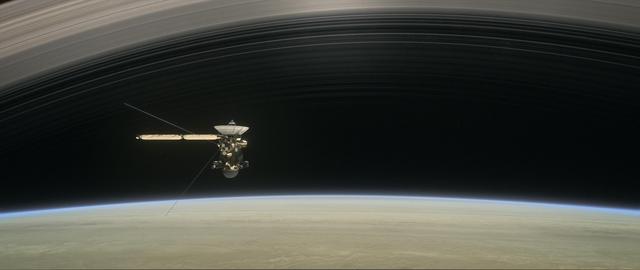
This illustration shows NASA's Cassini spacecraft about to make one of its dives between Saturn and its innermost rings as part of the mission's Grand Finale. Cassini made 22 orbits that swooped between the rings and the planet before ending its mission on Sept. 15, 2017, with a final plunge into Saturn. https://photojournal.jpl.nasa.gov/catalog/PIA22767
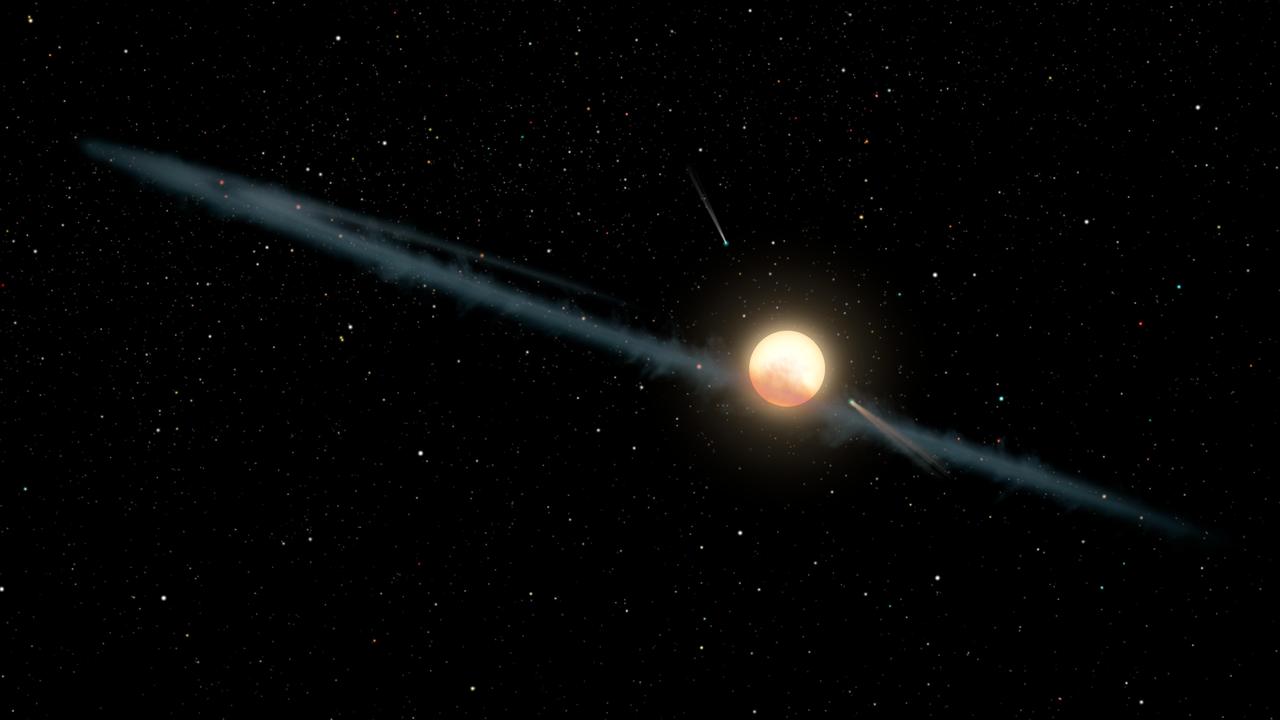
This illustration depicts a hypothetical uneven ring of dust orbiting KIC 8462852, also known as Boyajian's Star or Tabby's Star. Astronomers have found the dimming of the star over long periods appears to be weaker at longer infrared wavelengths of light and stronger at shorter ultraviolet wavelengths. Such reddening is characteristic of dust particles and inconsistent with more fanciful "alien megastructure" concepts, which would evenly dim all wavelengths of light. By studying observations from NASA's Spitzer and Swift telescopes, as well as the Belgian AstroLAB IRIS observatory, the researchers have been able to better constrain the size of the dust particles. This places them within the range found in dust disks orbiting stars, and larger than the particles typically found in interstellar dust. The system is portrayed with a couple of comets, consistent with previous studies that have found evidence for cometary activity within the system. https://photojournal.jpl.nasa.gov/catalog/PIA22081
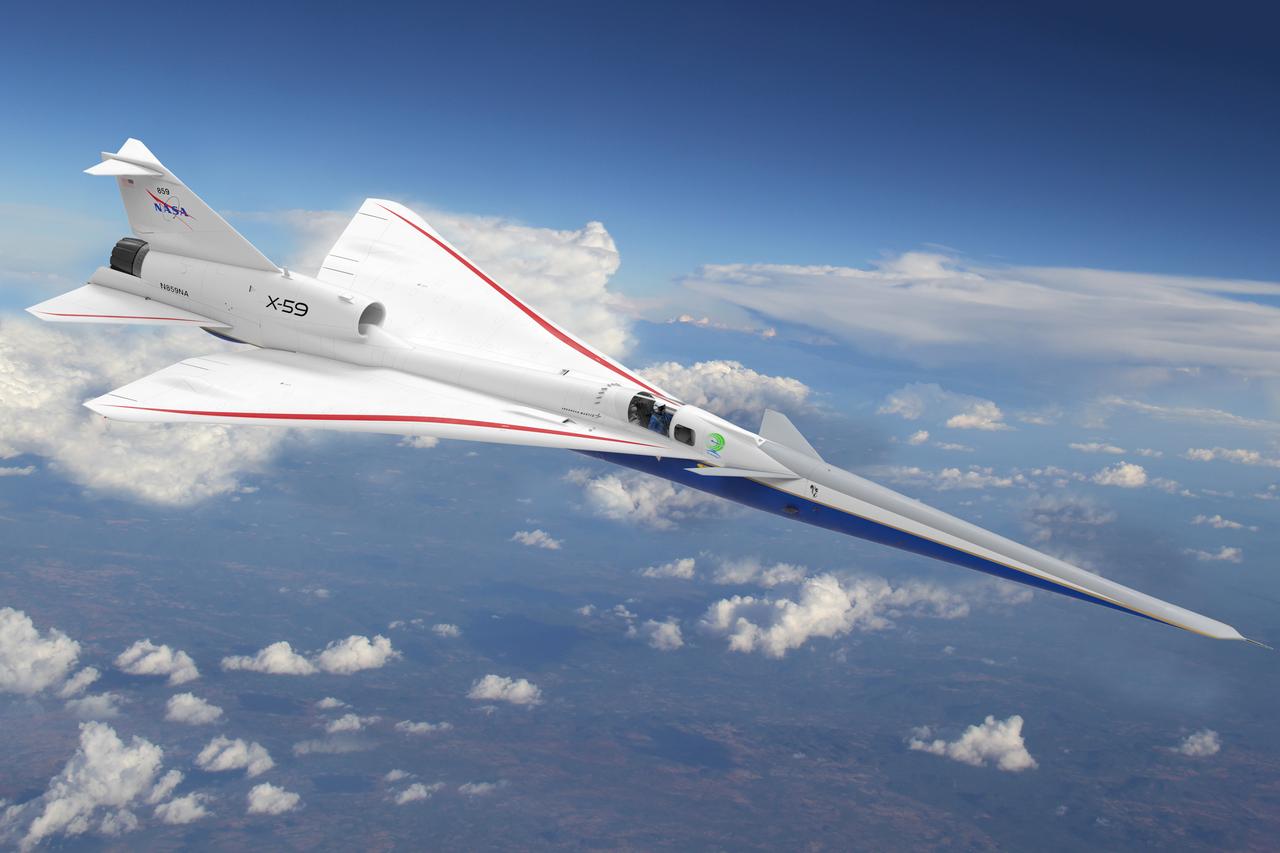
Artist illustration of the X-59 in flight above land and clouds.
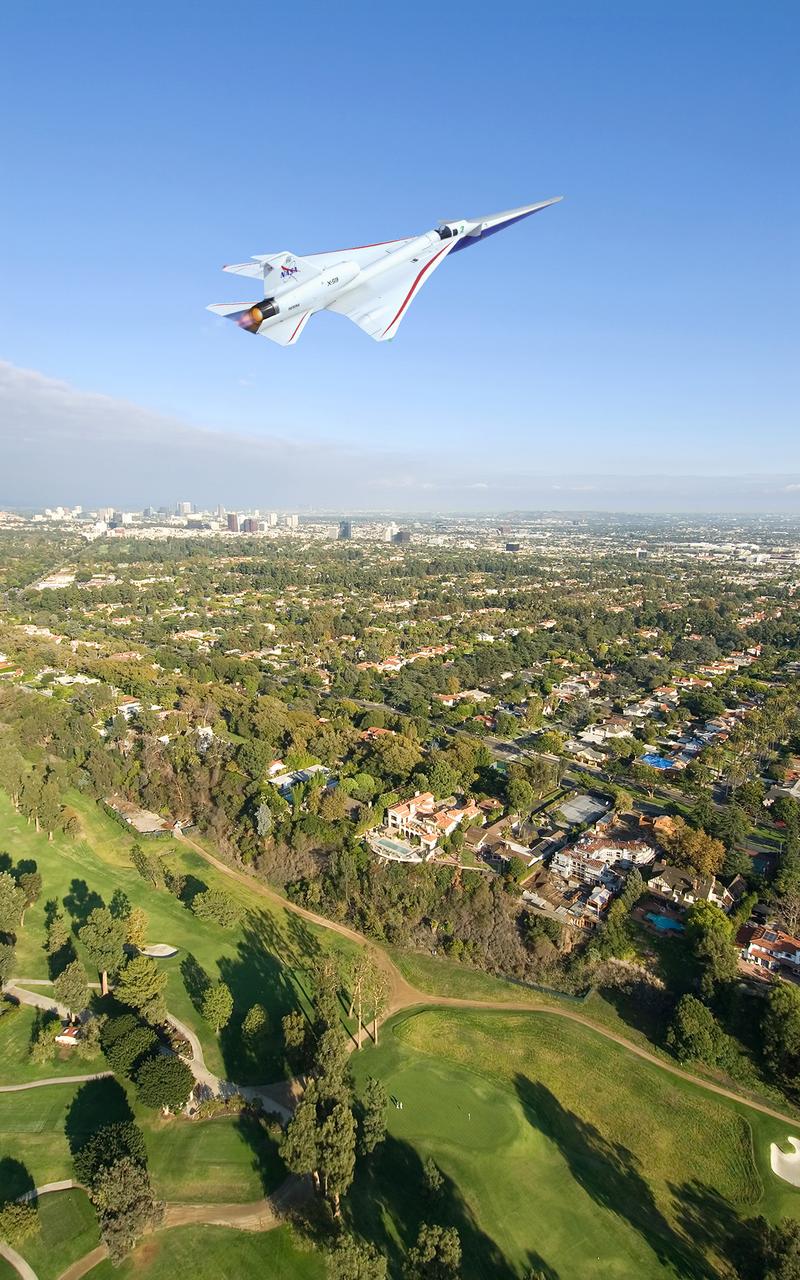
An artist illustration of the Low-Boom Flight Demonstration vehicle flying over a community.
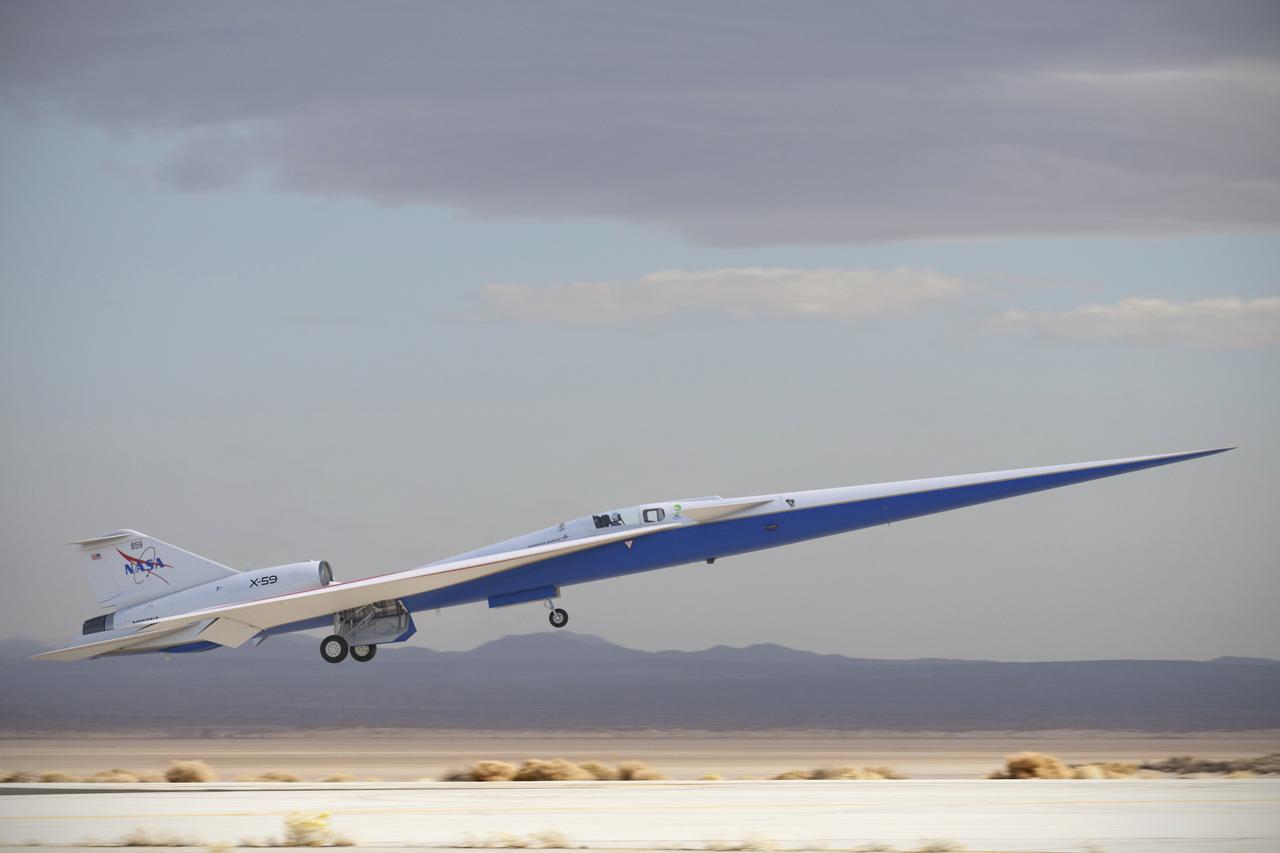
Artist illustration of the X-59 taking off from the runway.

Artist illustration of the X-59 in flight in blue skies and white clouds.
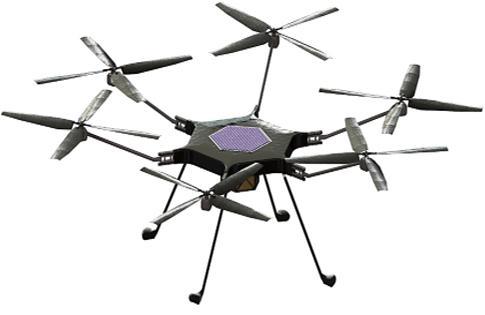
This illustration shows a conceptual design of a Mars Science Helicopter, a proposed follow-on to NASA's Ingenuity Mars Helicopter. Researchers are considering how helicopters could be used in future missions. In addition to scouting, such a helicopter could carry science instruments to study terrain rovers can't reach. The proposed design is the product of collaboration between NASA's Jet Propulsion Laboratory in Southern California, NASA's Ames Research Center in Silicon Valley, and AeroVironment, Inc. A helicopter with this particular design could carry 4.5 to 11 pounds (2-5 kilograms) of science payload. https://photojournal.jpl.nasa.gov/catalog/PIA24729
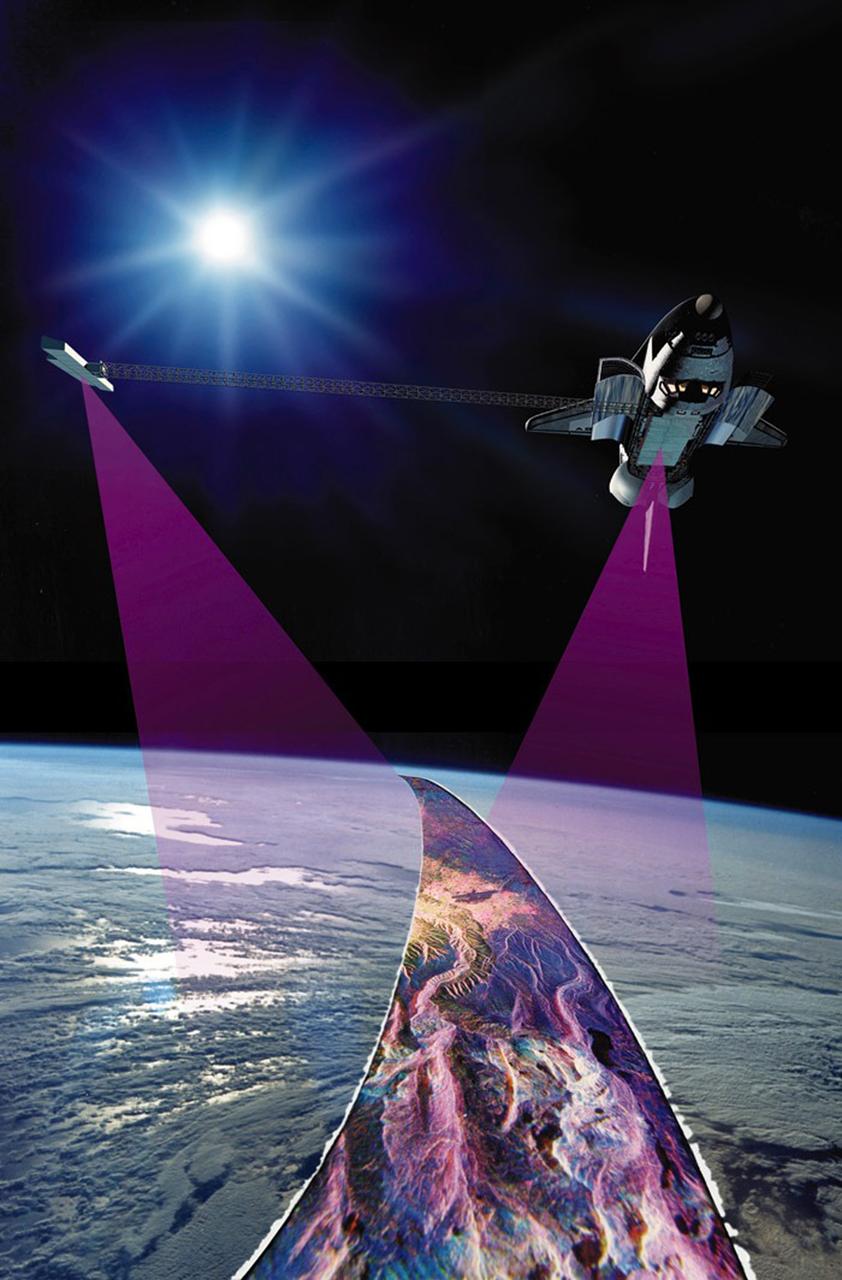
Launched February 11, 2000, the STS-99 Shuttle Radar Topographic Mission (SRTM) was the most ambitious Earth mapping mission to date. This illustration shows the Space Shuttle Endeavour orbiting some 145 miles (233 kilometers) above Earth. With C-band and X-band outboard anternae at work, one located in the Shuttle bay and the other located on the end of a 60-meter deployable mast, the SRTM radar was able to penetrate clouds as well as provide its own illumination, independent of daylight, obtaining 3-dimentional topographic images of the world's surface up to the Arctic and Antarctic Circles. The mission completed 222 hours of around the clock radar mapping, gathering enough information to fill more than 20,000 CDs.
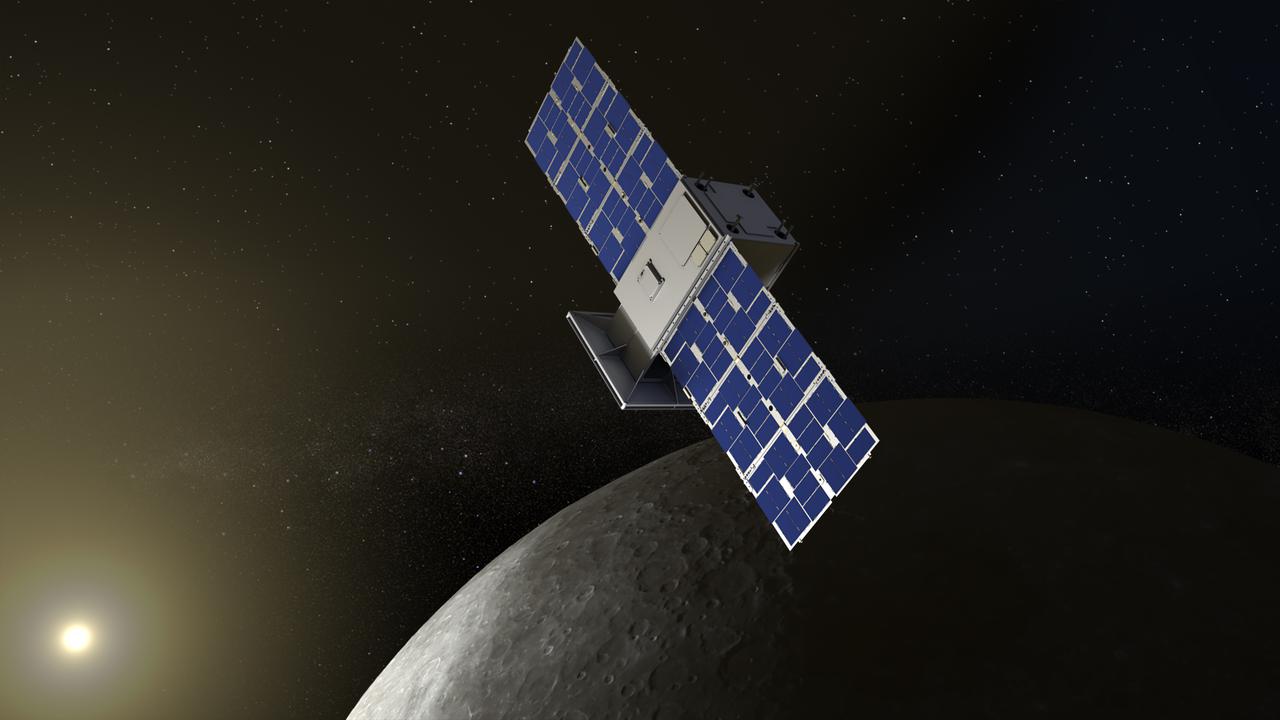
CAPSTONE, a microwave oven-sized CubeSat, will fly in cislunar space – the orbital space near and around the Moon. The mission will demonstrate an innovative spacecraft-to-spacecraft navigation solution at the Moon from a near rectilinear halo orbit slated for Artemis’ Gateway. Illustration by Daniel Rutter.
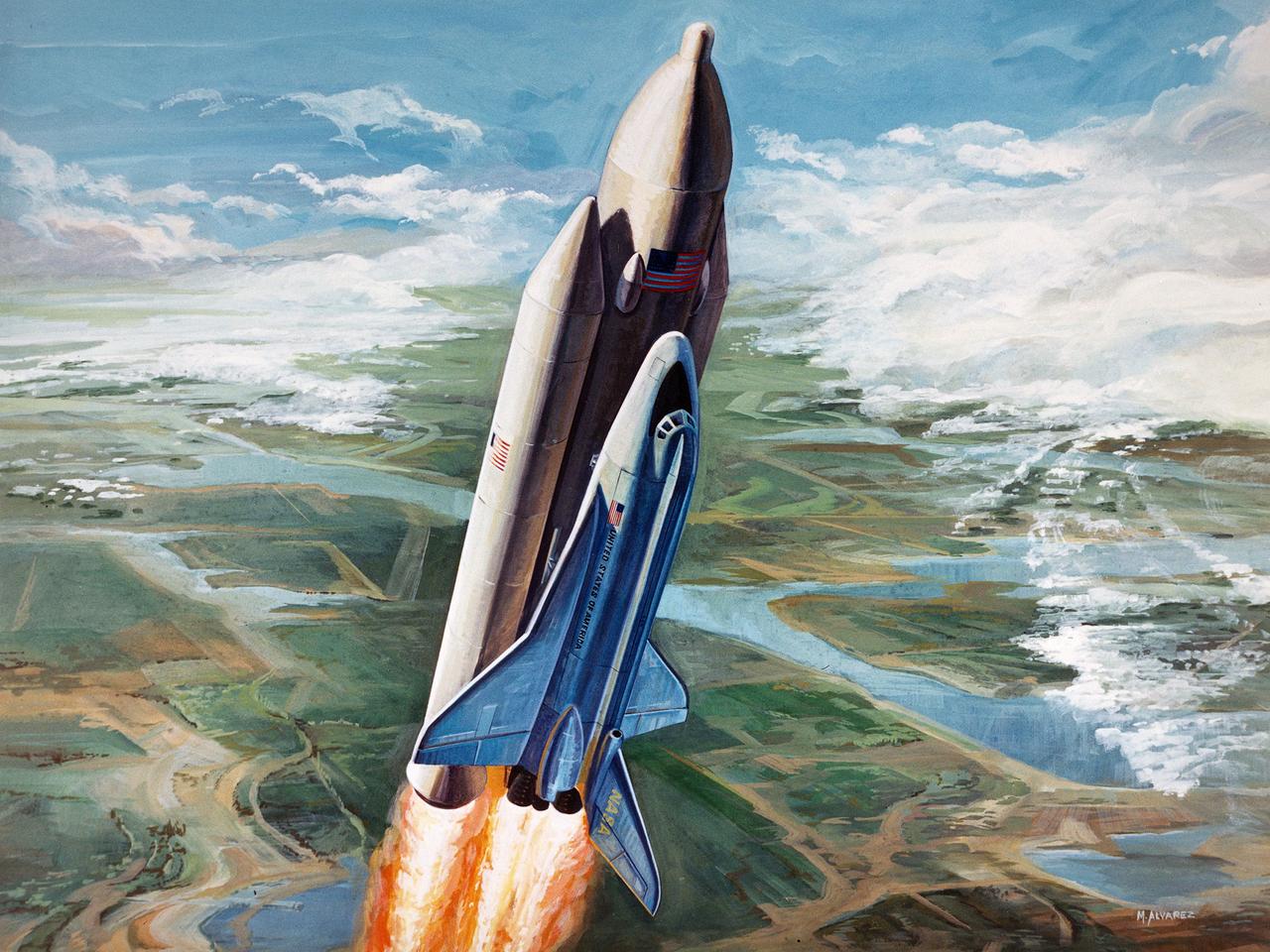
An unidentified illustration of the National Aeronautics and Space Administration’s (NASA) space shuttle. The space shuttle fleet flew 135 missions and helped construct the International Space Station between the first launch on April 12, 1981 and the final landing on July 21, 2011. There were five orbiters: Columbia, Challenger, Discovery, Atlantis and Endeavour.
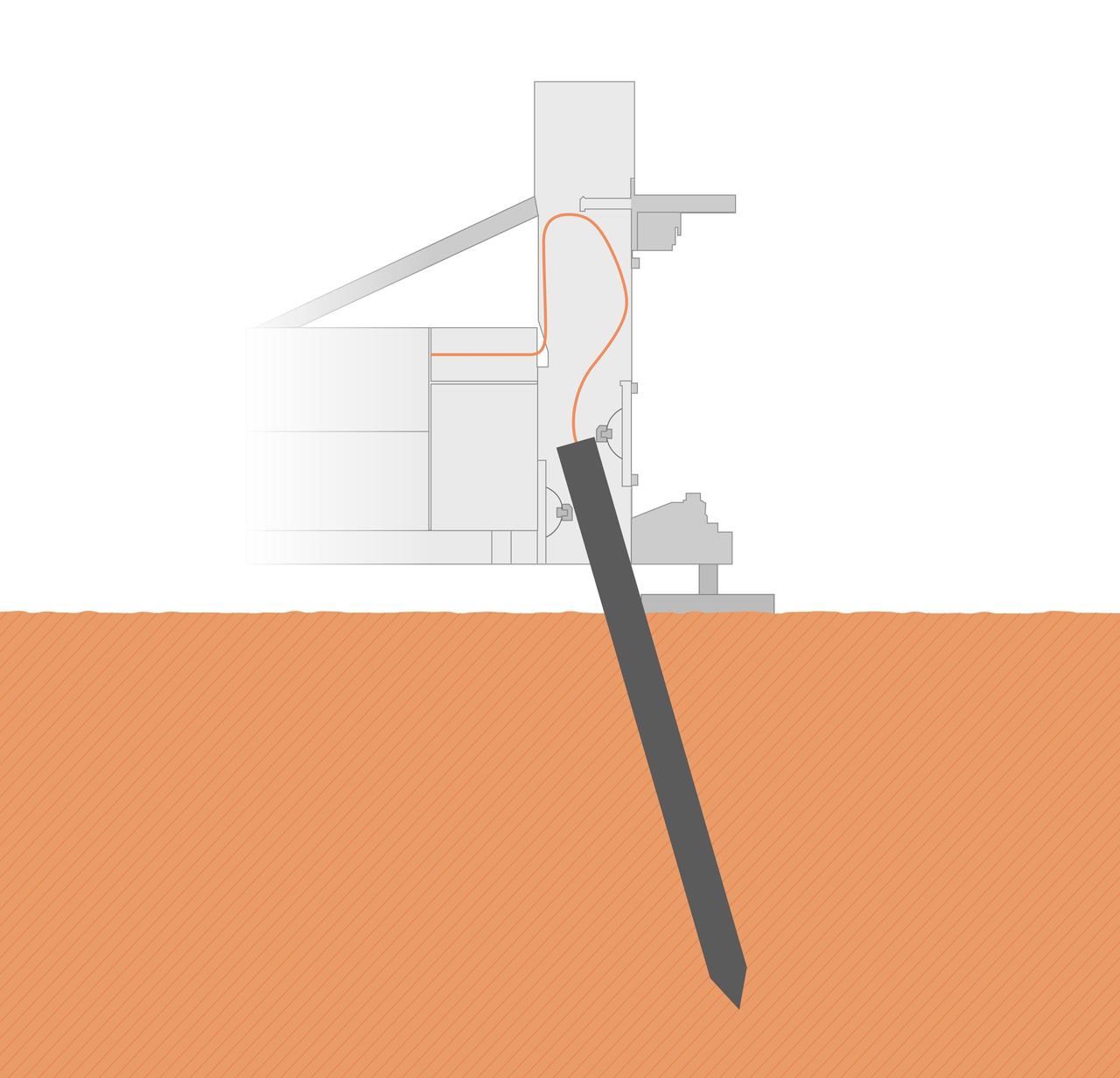
The self-hammering "mole," part of the Heat Flow and Physical Properties Package (HP3) on NASA's InSight lander, was only partially buried in the soil of Mars as of early June 2019, as shown in this illustration. Engineering analysis has determined that the bottom of the mole is currently about 12-14 inches (30-35 centimeters) deep into Martian ground, with a bit of its top still inside the HP3 support structure. The mole is tilted about 19 degrees. https://photojournal.jpl.nasa.gov/catalog/PIA23274

The annotated area of Mars in this illustration holds near-surface water ice that would be easily accessible for astronauts to dig up. The water ice was identified as part of a map using data from NASA orbiters. Animation available at https://photojournal.jpl.nasa.gov/catalog/PIA23515

An illustration of the small robots that form Shapeshifter. Dubbed "cobots," they each have a propeller for flying and can combine to form a sphere, rolling on the ground to save energy. Shapeshifter is a developing concept for a transformational vehicle to explore treacherous, distant worlds. The flying amphibious robot is part of the early-stage research program NASA Innovative Advanced Concepts (NIAC), which offers several phases of funding to visionary concepts, helping turn ideas that sound like science fiction into science fact. JPL Principle Investigator Ali Agha envisions Shapeshifter as a mission to Saturn's moon Titan, the only other world in the solar system known to have liquid in the form of methane lakes, rivers and seas on its surface. https://photojournal.jpl.nasa.gov/catalog/PIA23435
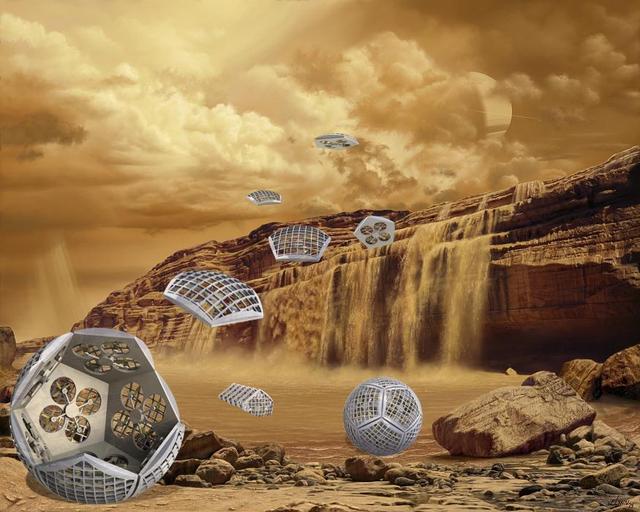
An illustration of an early concept of Shapeshifter imagines the robots on Saturn's moon Titan. In the picture, the Shapeshifter breaks into smaller pieces that can investigate a methane waterfall from the sky. Shapeshifter is a developing concept for a transformational vehicle to explore treacherous, distant worlds. The flying amphibious robot is part of the early-stage research program NASA Innovative Advanced Concepts (NIAC), which offers several phases of funding to visionary concepts, helping turn ideas that sound like science fiction into science fact. JPL Principle Investigator Ali Agha envisions Shapeshifter as a mission to Saturn's moon Titan, the only other world in the solar system known to have liquid in the form of methane lakes, rivers and seas on its surface. https://photojournal.jpl.nasa.gov/catalog/PIA23434
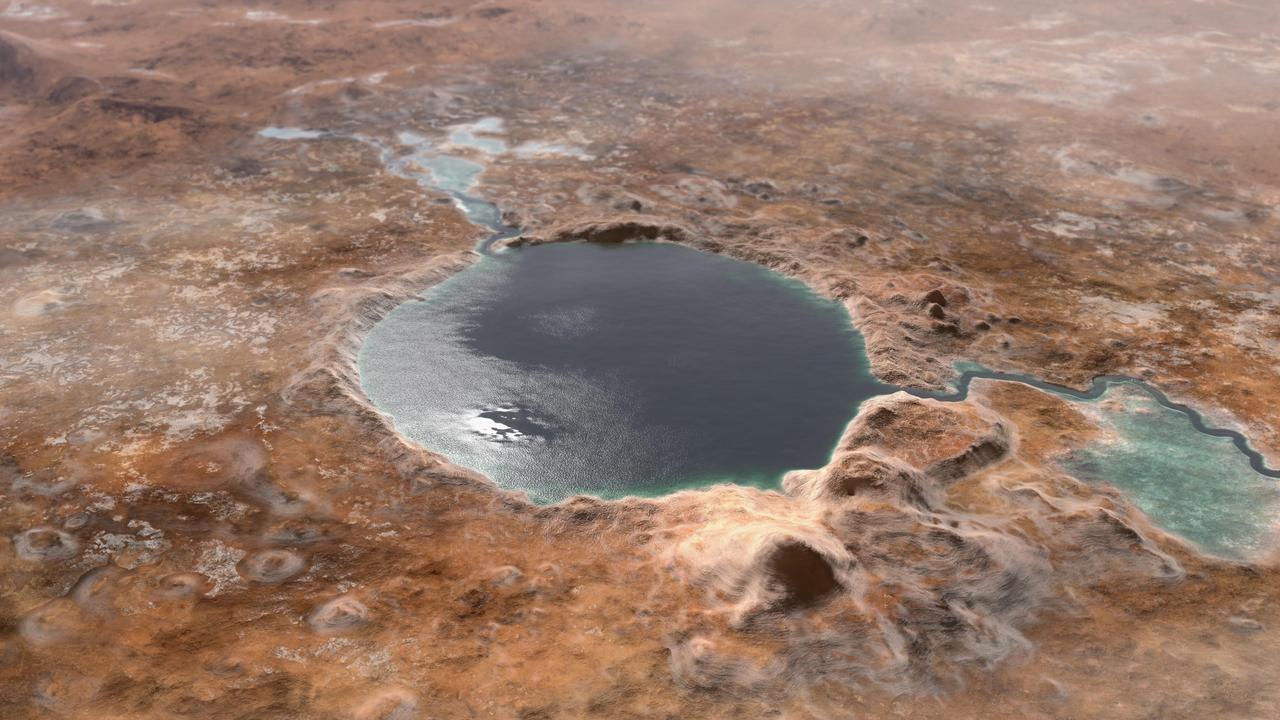
This illustration shows Jezero Crater — the landing site of the Mars 2020 Perseverance rover — as it may have looked billions of years go on Mars, when it was a lake. An inlet and outlet are also visible on either side of the lake. A key objective for Perseverance's mission on Mars is astrobiology, including the search for signs of ancient microbial life. The rover will characterize the planet's geology and past climate, pave the way for human exploration of the Red Planet, and be the first mission to collect and cache Martian rock and regolith (broken rock and dust). Subsequent missions, currently under consideration by NASA in cooperation with the European Space Agency, would send spacecraft to Mars to collect these cached samples from the surface and return them to Earth for in-depth analysis. https://photojournal.jpl.nasa.gov/catalog/PIA24172