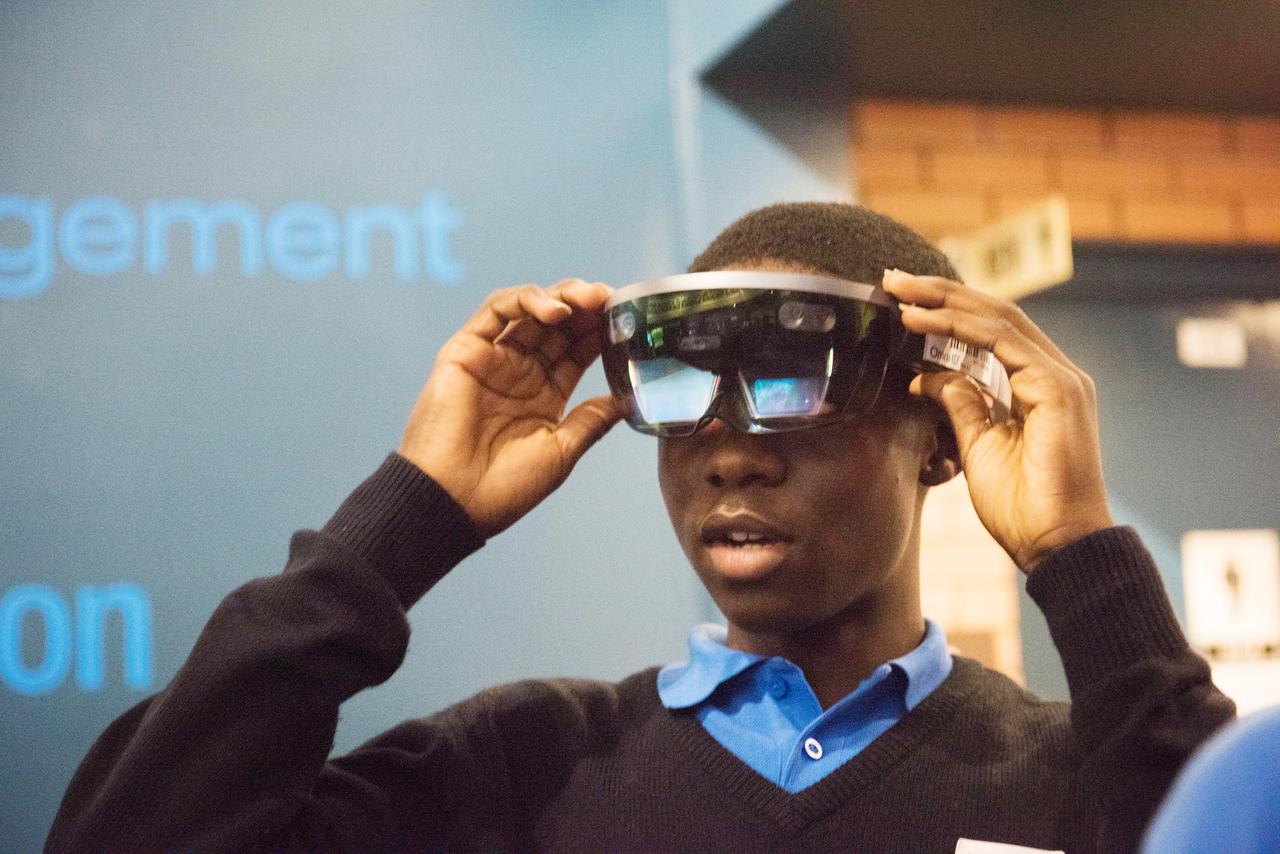
During Avaiation Day, 2018, a Participant uses a Microsoft HoloLens Virtual Reality Headset to view a NASA Created Immersive Visualization
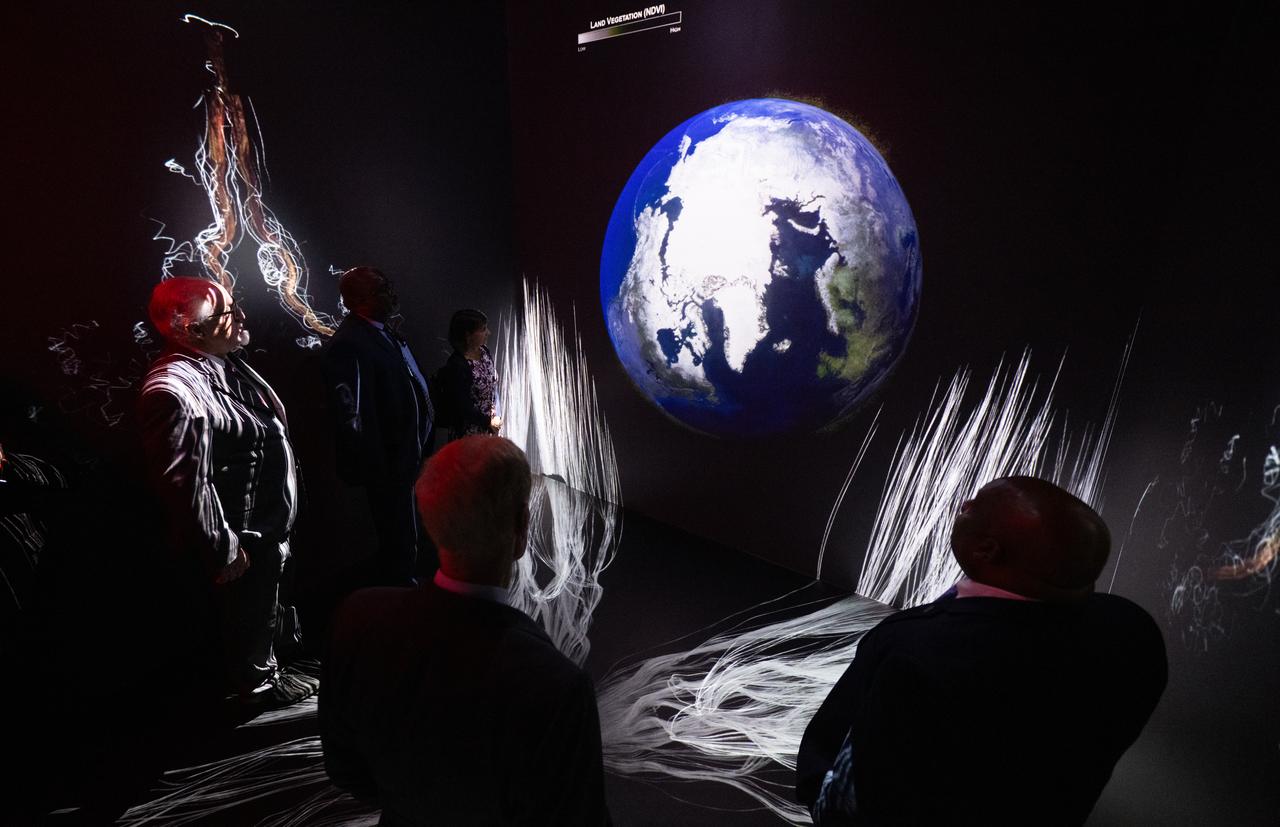
NASA Administrator Bill Nelson, Michael Morgan, Assistant Secretary of Commerce for Environmental Observation and Prediction at the National Oceanic and Atmospheric Administration (NOAA), Marlen Eve, Deputy Administrator for the Agricultural Research Service at the U.S. Department of Agriculture (USDA), and Eric Hooks, Deputy Administrator of the Federal Emergency Management Agency (FEMA), are seen as they watch “Space for Earth,” the immersive audio-visual installation in NASA’s Earth Information Center, following the ribbon cutting ceremony, Wednesday, June 21, 2023, at the Mary W. Jackson NASA Headquarters building in Washington. The Earth Information Center is new immersive experience that combines live data sets with cutting-edge data visualization and storytelling to allow visitors to see how our planet is changing. Photo Credit: (NASA/Joel Kowsky)
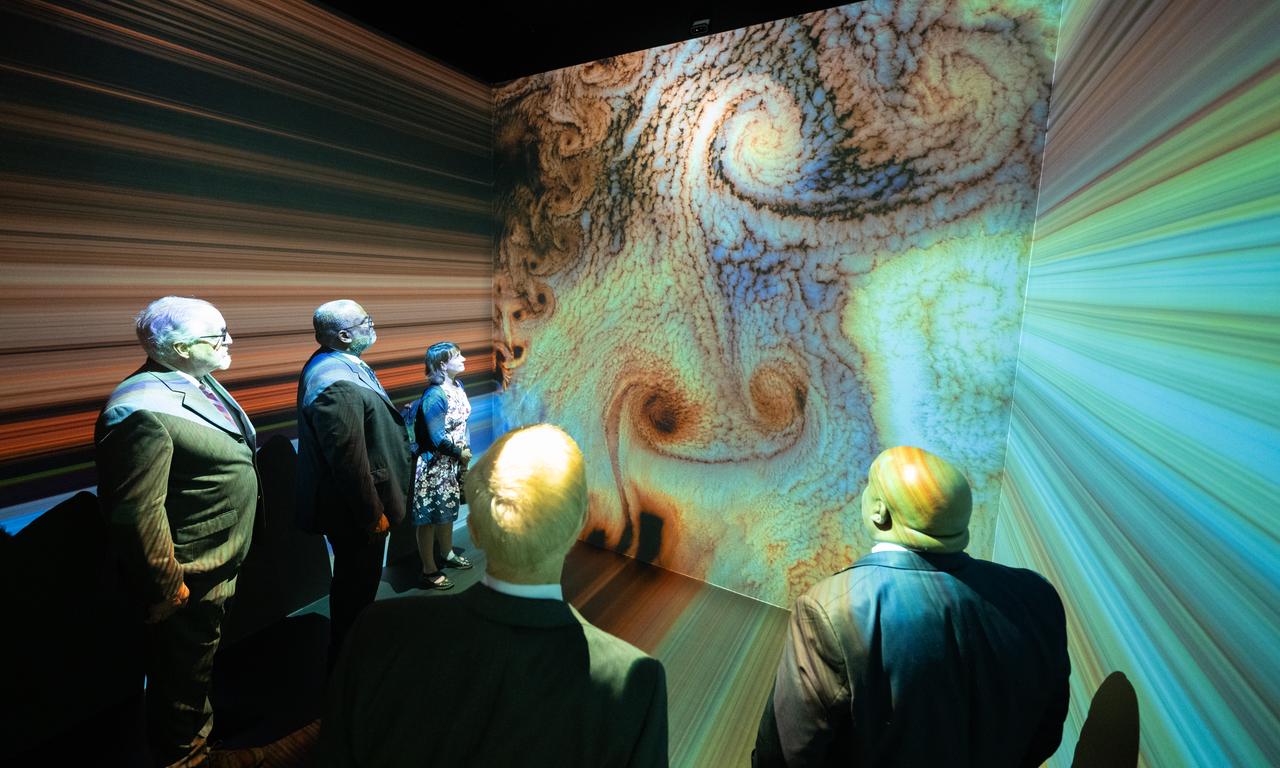
NASA Administrator Bill Nelson, Michael Morgan, Assistant Secretary of Commerce for Environmental Observation and Prediction at the National Oceanic and Atmospheric Administration (NOAA), Marlen Eve, Deputy Administrator for the Agricultural Research Service at the U.S. Department of Agriculture (USDA), and Eric Hooks, Deputy Administrator of the Federal Emergency Management Agency (FEMA), are seen as they watch “Space for Earth,” the immersive audio-visual installation in NASA’s Earth Information Center, following the ribbon cutting ceremony, Wednesday, June 21, 2023, at the Mary W. Jackson NASA Headquarters building in Washington. The Earth Information Center is new immersive experience that combines live data sets with cutting-edge data visualization and storytelling to allow visitors to see how our planet is changing. Photo Credit: (NASA/Joel Kowsky)
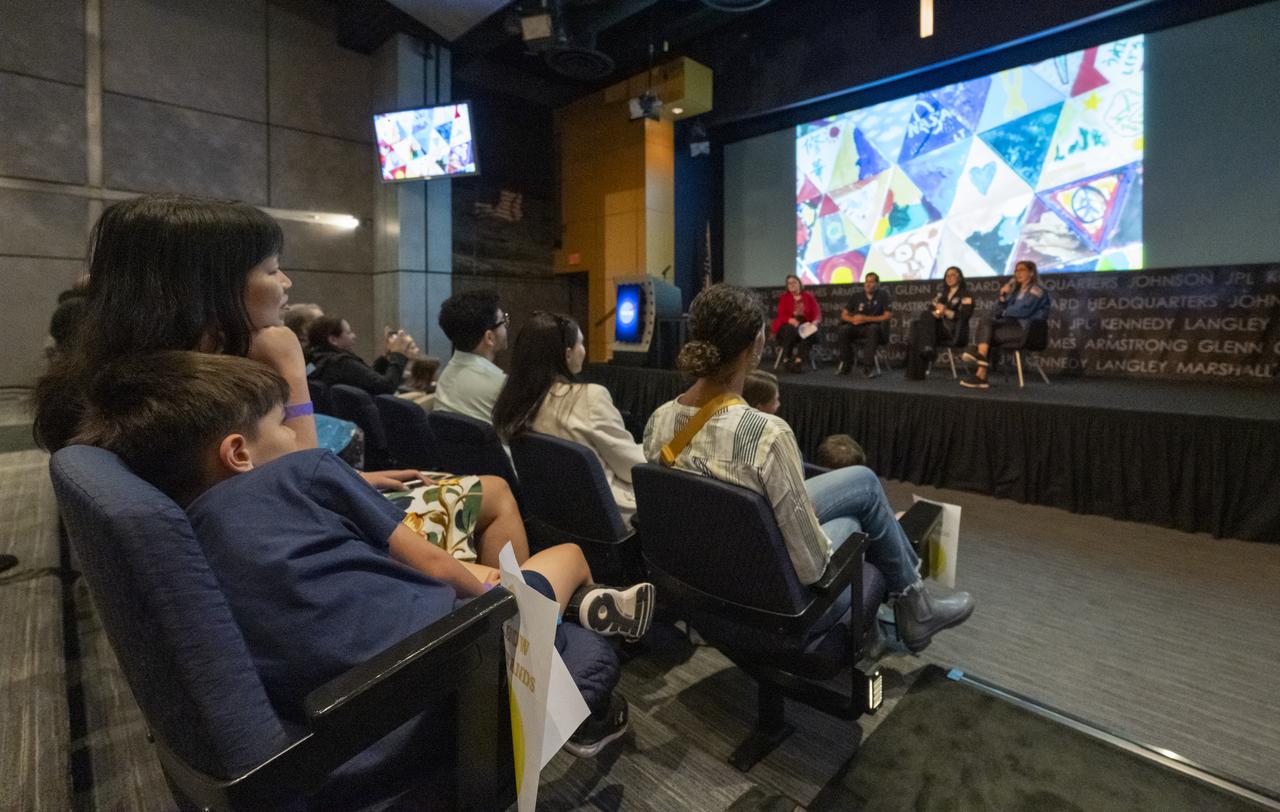
From left to right, NASA Earth Science Division Deputy Director Julie Robinson, NASA Scientific Visualization Studio Lead Mark Subbarao, NASA Jet Propulsion Laboratory (JPL) Art Director Erica Bernhard, and Former NASA Astronaut Nicole Stott participate in a fireside chat during an Earth Information Center (EIC) student engagement event, Friday, June 23, 2023, at the Mary W. Jackson NASA Headquarters building in Washington. The EIC is a new immersive experience that combines live data sets with cutting-edge data visualization and storytelling to allow visitors to see how our planet is changing. Photo Credit: (NASA/Keegan Barber)
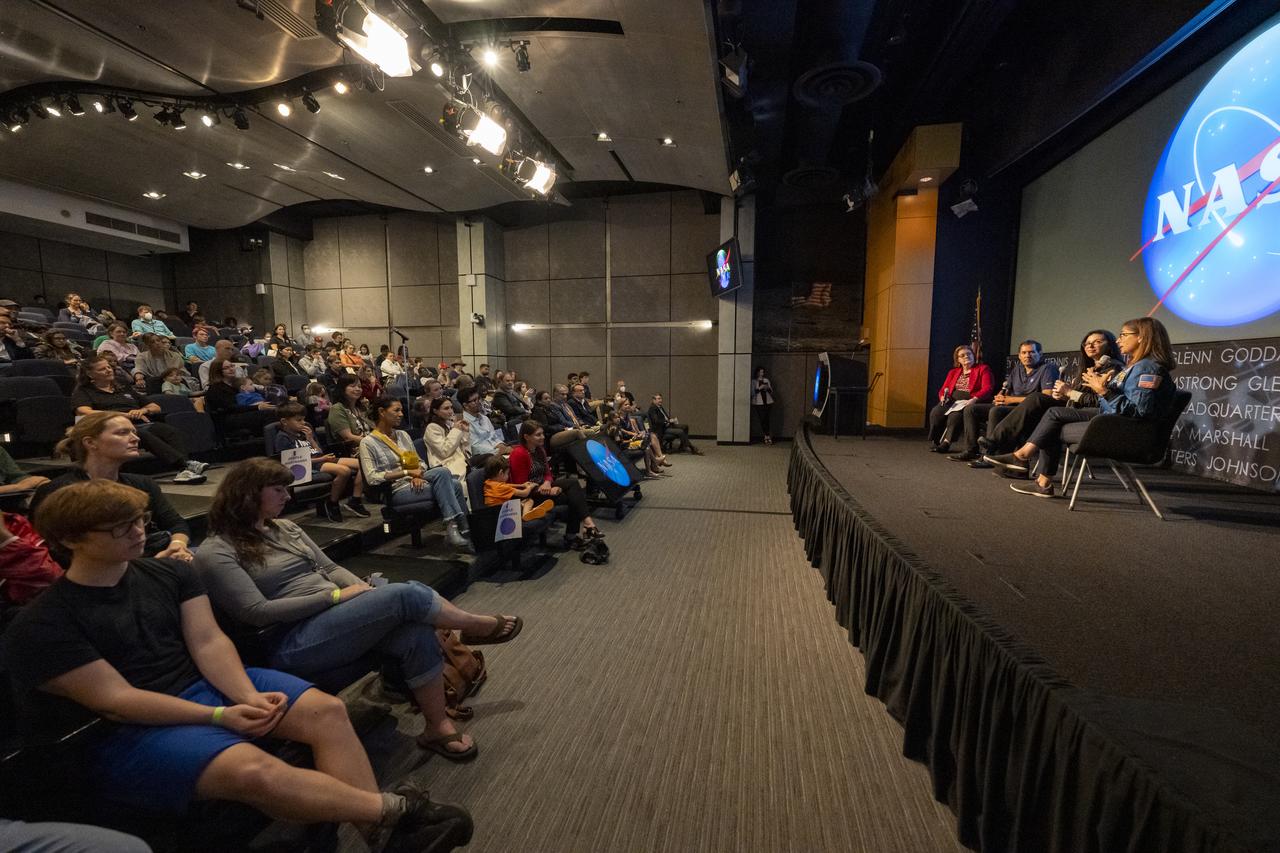
From left to right, NASA Earth Science Division Deputy Director Julie Robinson, NASA Scientific Visualization Studio Lead Mark Subbarao, NASA Jet Propulsion Laboratory (JPL) Art Director Erica Bernhard, and Former NASA Astronaut Nicole Stott participate in a fireside chat during an Earth Information Center (EIC) student engagement event, Friday, June 23, 2023, at the Mary W. Jackson NASA Headquarters building in Washington. The EIC is a new immersive experience that combines live data sets with cutting-edge data visualization and storytelling to allow visitors to see how our planet is changing. Photo Credit: (NASA/Keegan Barber)

The dedication ceremony of the University of Southern Mississippi Center of Higher Learning (CHL) High-Performance Visualization Center at SSC was held Oct. 17. The center's RAVE II 3-D visualization system, available to both on- and off-site scientists, turns data into a fully immersive environment for the user. Cutting the ribbon are, from left, Rear Adm. Thomas Donaldson, commander of the Naval Meteorology and Oceanography Command; Jim Meredith, former director of the CHL; USM President Dr. Shelby Thames; Lt. Gov. Amy Tuck; Dr. Peter Ranelli, director of the CHL; Dewey Herring, chairman of the policy board for the CHL; and former Sen. Cecil Burge.
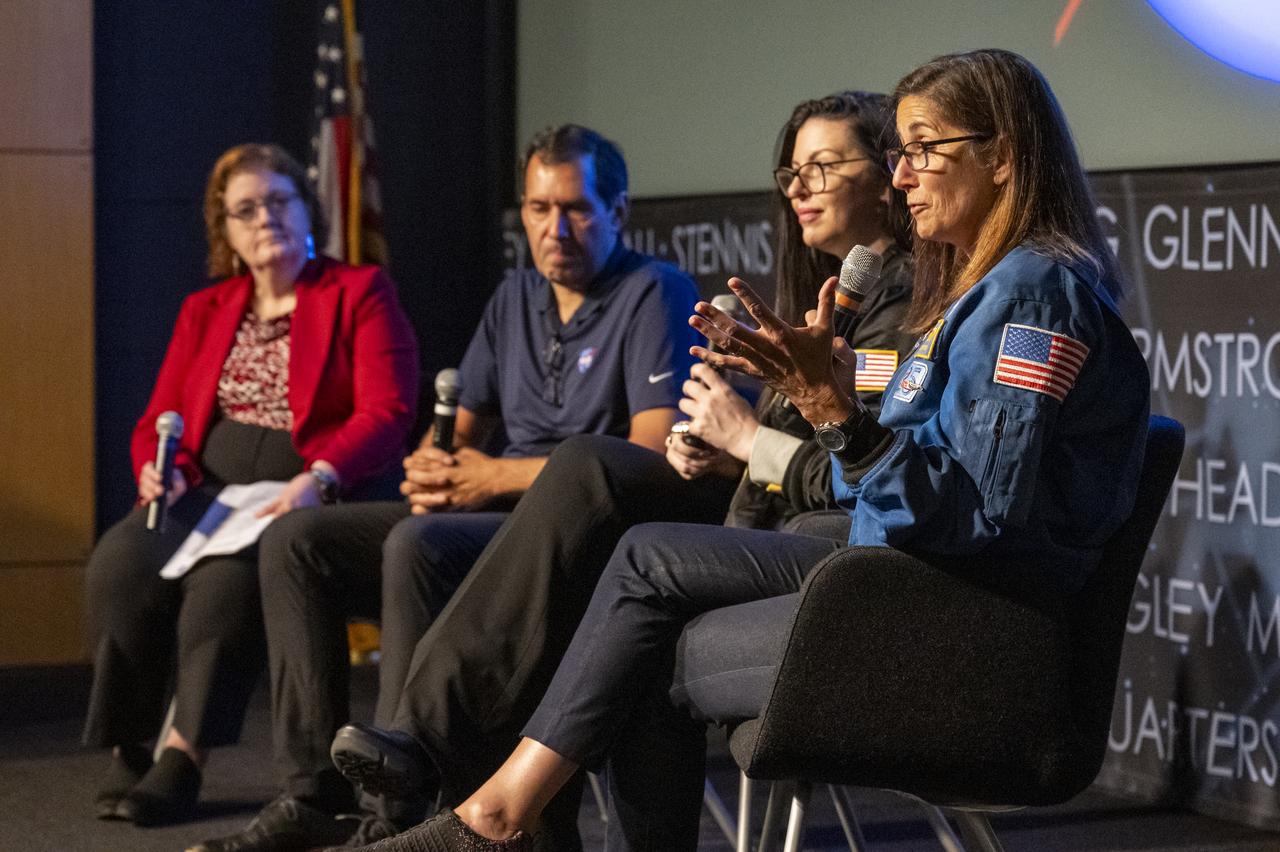
From left to right, NASA Earth Science Division Deputy Director Julie Robinson, NASA Scientific Visualization Studio Lead Mark Subbarao, NASA Jet Propulsion Laboratory (JPL) Art Director Erica Bernhard, and Former NASA Astronaut Nicole Stott participate in a fireside chat during an Earth Information Center (EIC) student engagement event, Friday, June 23, 2023, at the Mary W. Jackson NASA Headquarters building in Washington. The EIC is a new immersive experience that combines live data sets with cutting-edge data visualization and storytelling to allow visitors to see how our planet is changing. Photo Credit: (NASA/Keegan Barber)
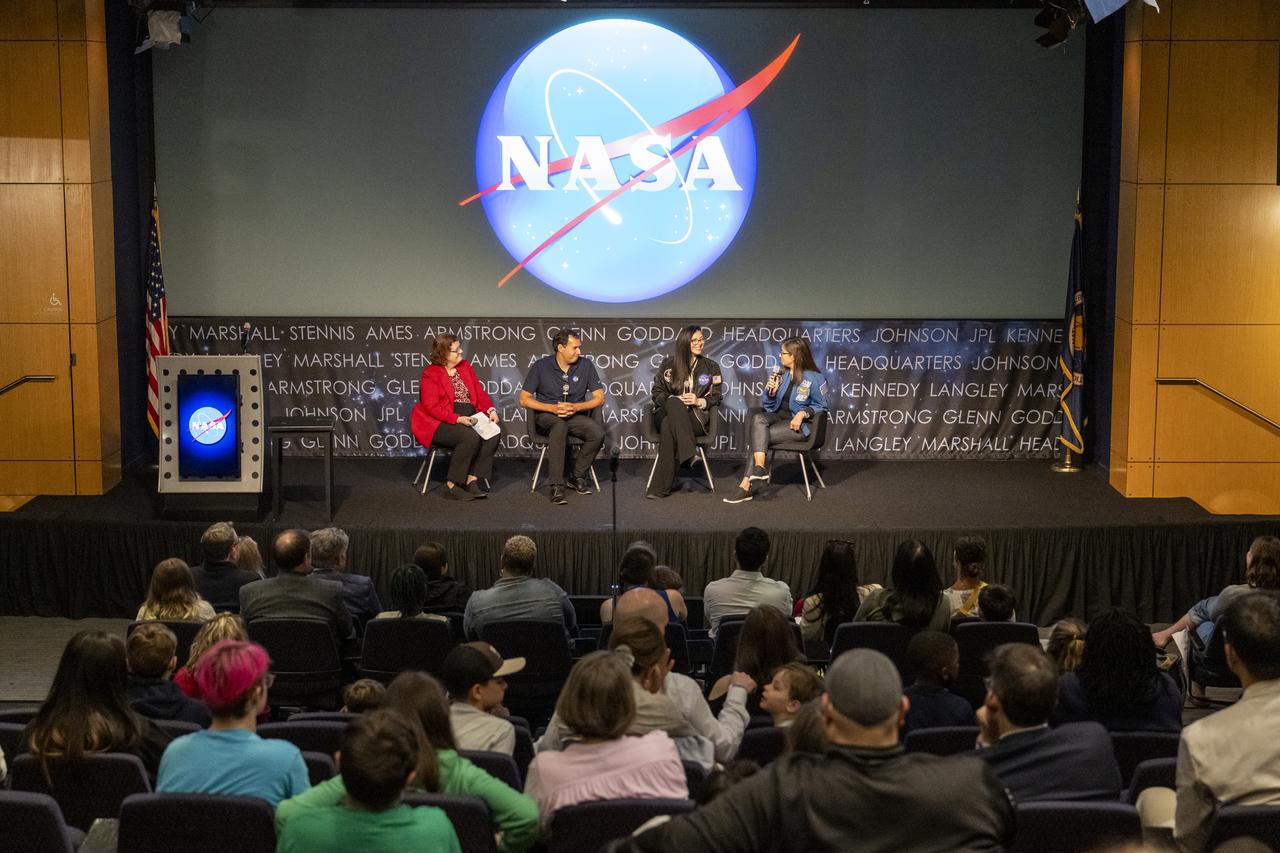
From left to right, NASA Earth Science Division Deputy Director Julie Robinson, NASA Scientific Visualization Studio Lead Mark Subbarao, NASA Jet Propulsion Laboratory (JPL) Art Director Erica Bernhard, and Former NASA Astronaut Nicole Stott participate in a fireside chat during an Earth Information Center (EIC) student engagement event, Friday, June 23, 2023, at the Mary W. Jackson NASA Headquarters building in Washington. The EIC is a new immersive experience that combines live data sets with cutting-edge data visualization and storytelling to allow visitors to see how our planet is changing. Photo Credit: (NASA/Keegan Barber)
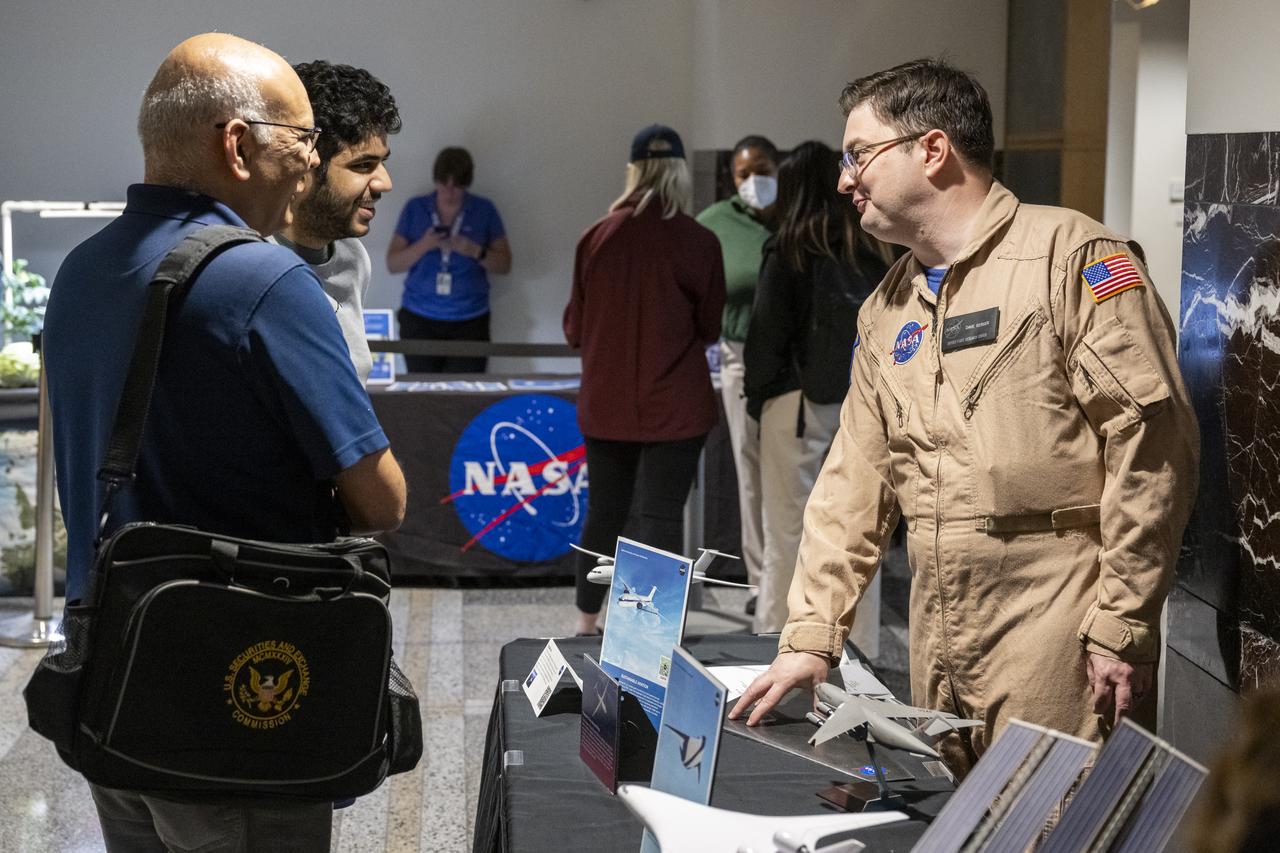
Local students participate in STEM activities prior to an Earth Information Center (EIC) student engagement event, Friday, June 23, 2023, at the Mary W. Jackson NASA Headquarters building in Washington. The EIC is a new immersive experience that combines live data sets with cutting-edge data visualization and storytelling to allow visitors to see how our planet is changing. Photo Credit: (NASA/Keegan Barber)
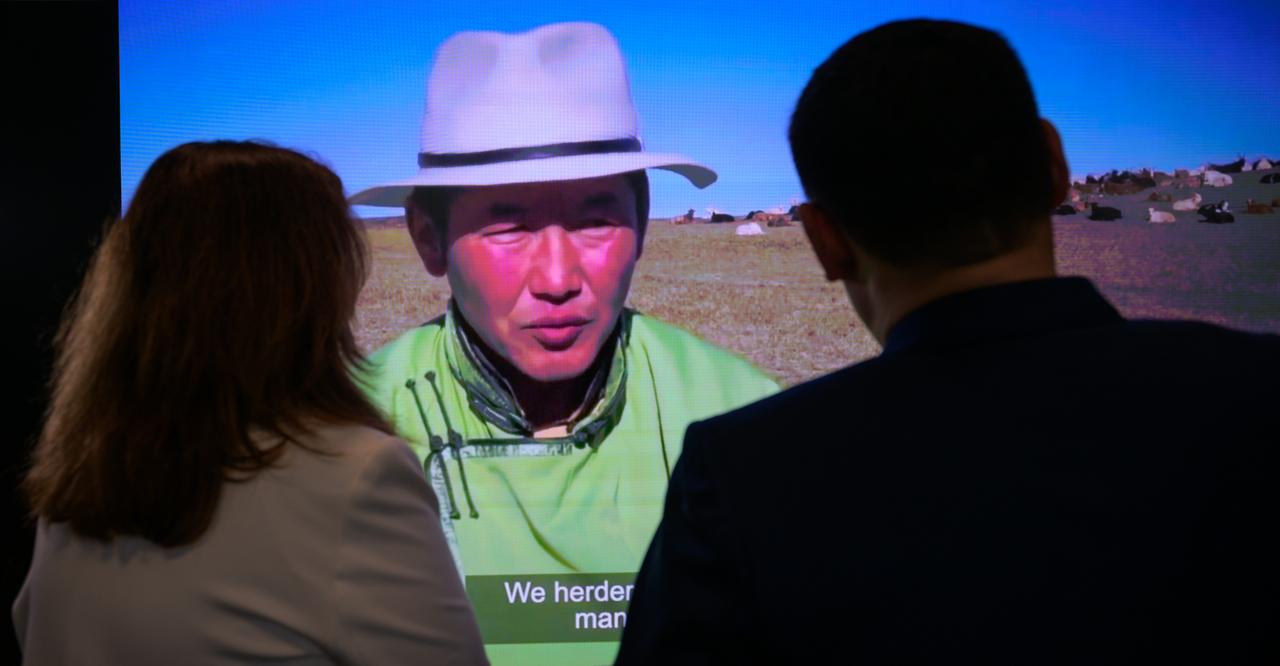
NASA Earth Science Division Director Karen St. Germain, left, talks with Prime Minister Oyun-Erdene Luvsannamsrai of Mongolia, as they tour NASA’s Earth Information Center, Friday, Aug. 4, 2023, at the NASA Headquarters Mary W. Jackson Building in Washington. The Earth Information Center is a new immersive experience that combines live data sets with cutting-edge data visualization to show NASA data can improve lives in the face of disasters, environmental challenges, and our changing world. Photo Credit: (NASA/Bill Ingalls)
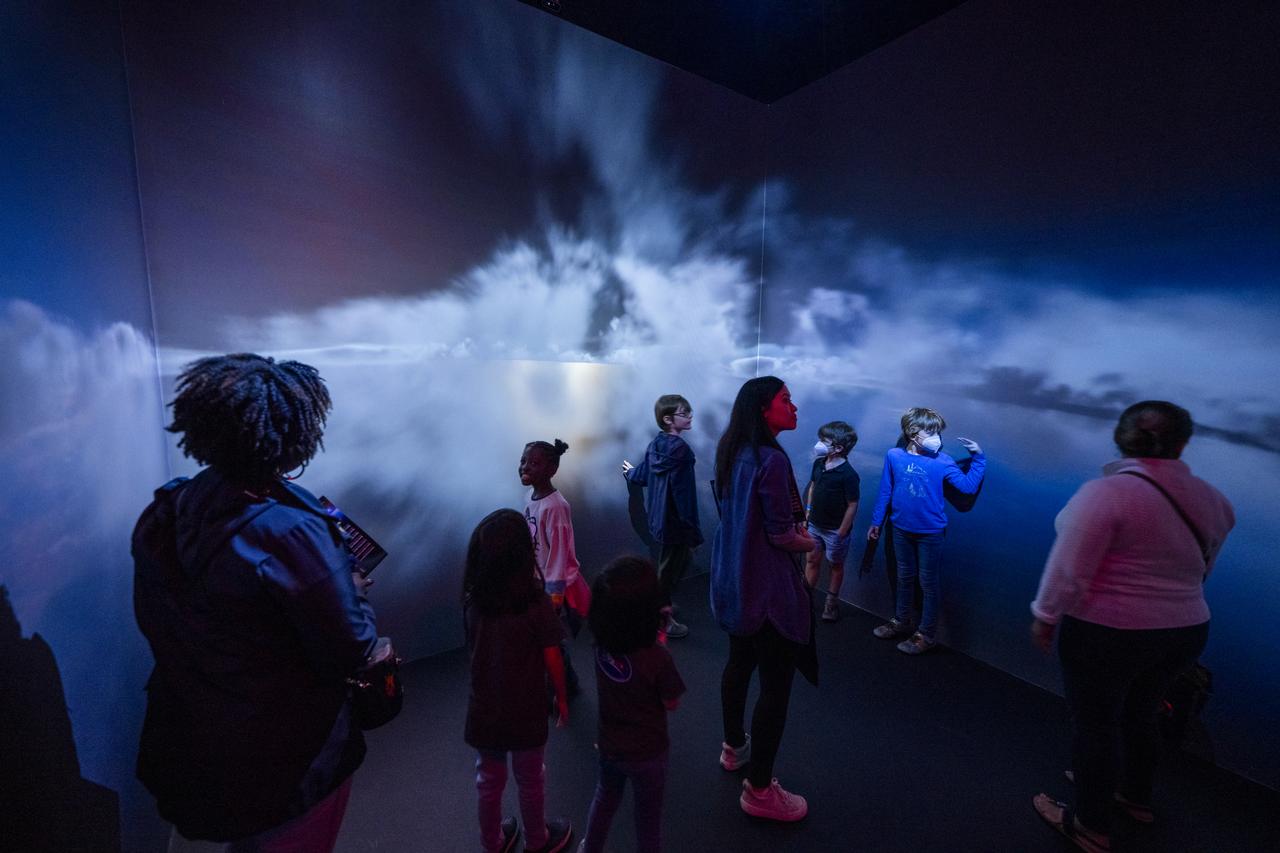
Local students participate in an Earth Information Center (EIC) student engagement event, Friday, June 23, 2023, at the Mary W. Jackson NASA Headquarters building in Washington. The EIC is a new immersive experience that combines live data sets with cutting-edge data visualization and storytelling to allow visitors to see how our planet is changing. Photo Credit: (NASA/Keegan Barber)
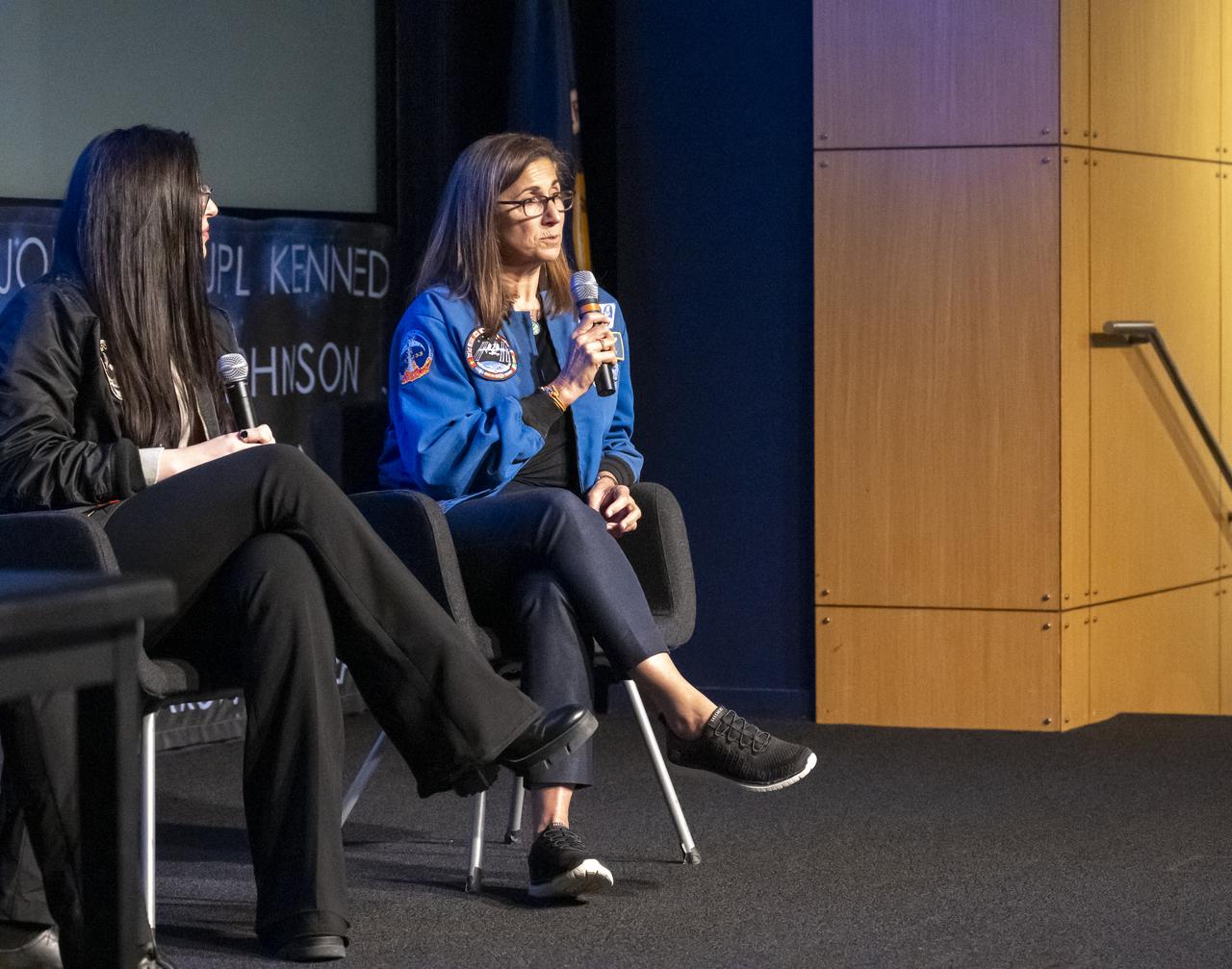
Former NASA Astronaut Nicole Stott, right, delivers remarks during an Earth Information Center (EIC) student engagement event, Friday, June 23, 2023, at the Mary W. Jackson NASA Headquarters building in Washington. The EIC is a new immersive experience that combines live data sets with cutting-edge data visualization and storytelling to allow visitors to see how our planet is changing. Photo Credit: (NASA/Keegan Barber)

Kate Calvin, NASA’s Chief Scientist, speaks before the ribbon cutting ceremony to open NASA’s Earth Information Center, Wednesday, June 21, 2023, at the Mary W. Jackson NASA Headquarters building in Washington. The Earth Information Center is new immersive experience that combines live data sets with cutting-edge data visualization and storytelling to allow visitors to see how our planet is changing. Photo Credit: (NASA/Joel Kowsky)
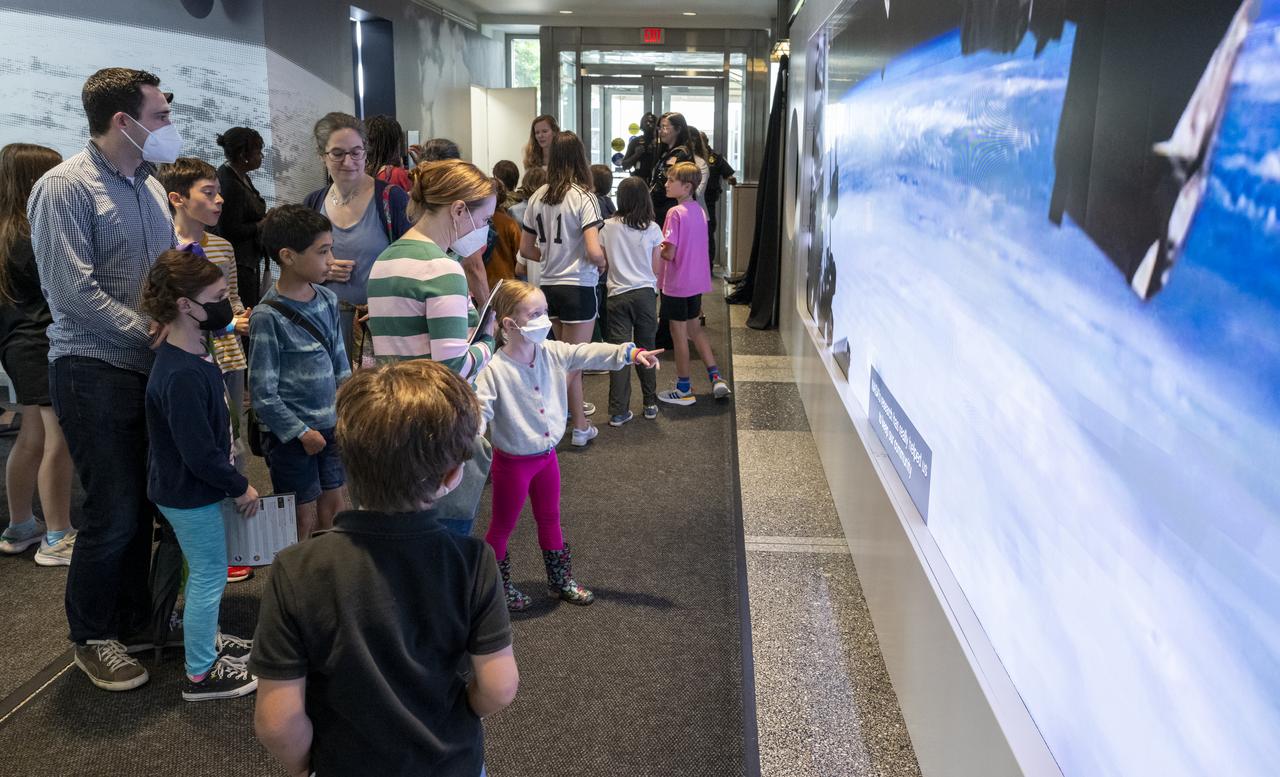
Local students participate in an Earth Information Center (EIC) student engagement event, Friday, June 23, 2023, at the Mary W. Jackson NASA Headquarters building in Washington. The EIC is a new immersive experience that combines live data sets with cutting-edge data visualization and storytelling to allow visitors to see how our planet is changing. Photo Credit: (NASA/Keegan Barber)
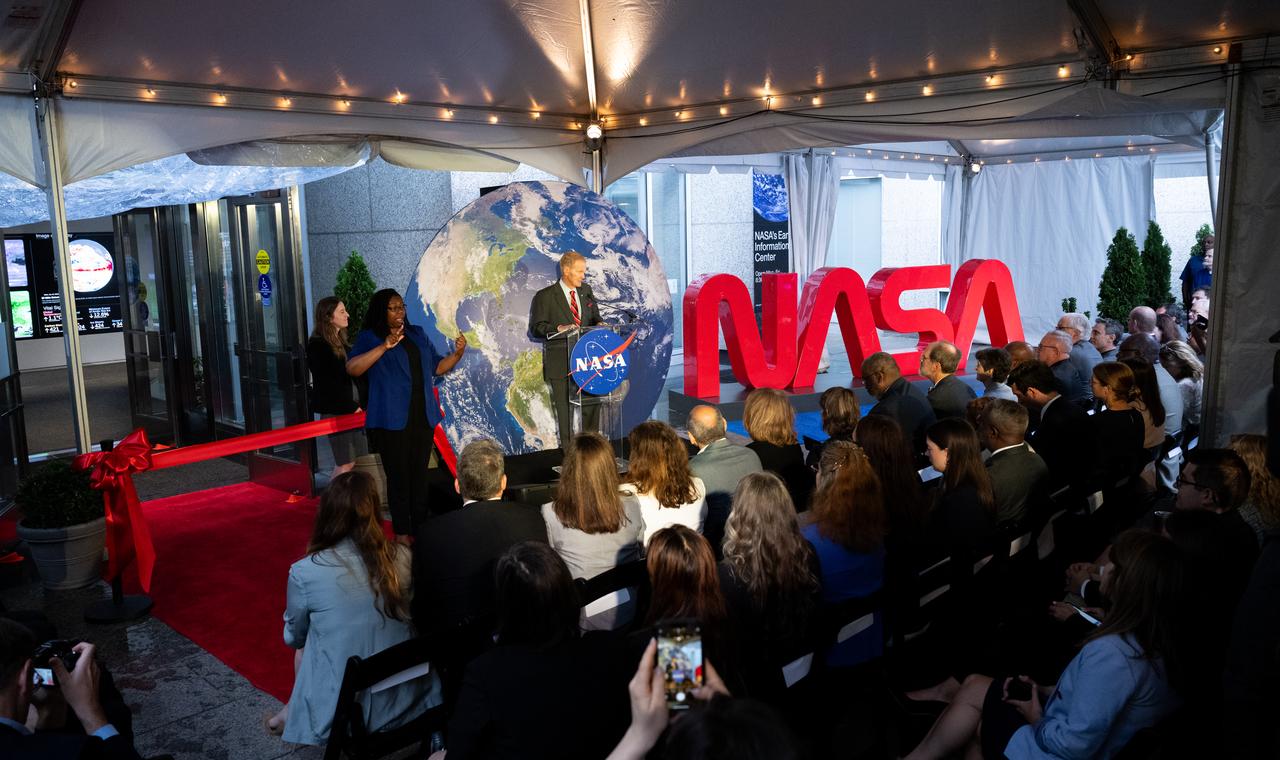
NASA Administrator Bill Nelson delivers remarks before the ribbon cutting ceremony to open NASA’s Earth Information Center, Wednesday, June 21, 2023, at the Mary W. Jackson NASA Headquarters building in Washington. The Earth Information Center is new immersive experience that combines live data sets with cutting-edge data visualization and storytelling to allow visitors to see how our planet is changing. Photo Credit: (NASA/Joel Kowsky)
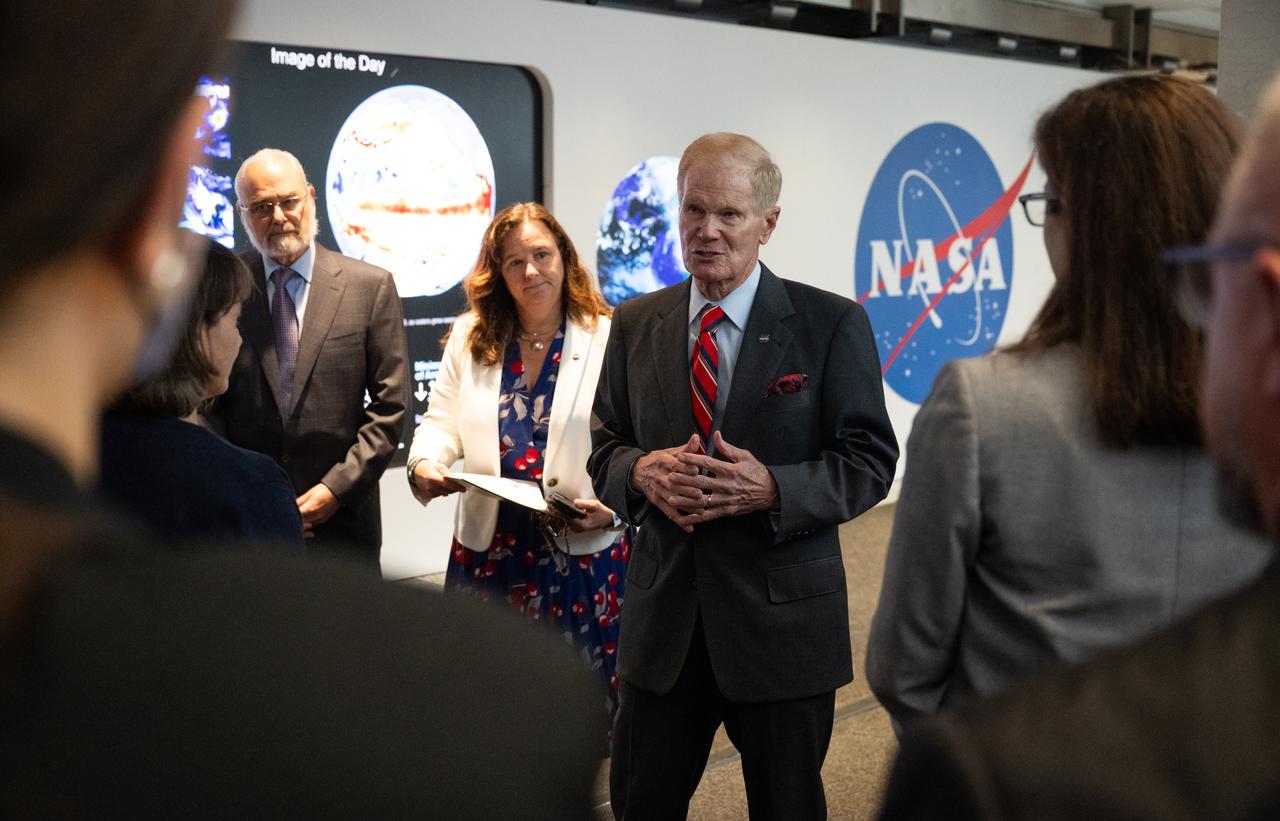
NASA Administrator Bill Nelson speaks to leadership from NOAA, USGS, USDA, USAID, EPA, and FEMA at the opening of NASA’s Earth Information Center, Wednesday, June 21, 2023, at the Mary W. Jackson NASA Headquarters building in Washington. The Earth Information Center is new immersive experience that combines live data sets with cutting-edge data visualization and storytelling to allow visitors to see how our planet is changing. Photo Credit: (NASA/Joel Kowsky)

NASA Administrator Bill Nelson, center, cuts the ribbon to open NASA’s Earth Information Center alongside agency leadership and leadership from NOAA, USGS, USDA, USAID, EPA, and FEMA, Wednesday, June 21, 2023, at the Mary W. Jackson NASA Headquarters building in Washington. The Earth Information Center is new immersive experience that combines live data sets with cutting-edge data visualization and storytelling to allow visitors to see how our planet is changing. Photo Credit: (NASA/Joel Kowsky)
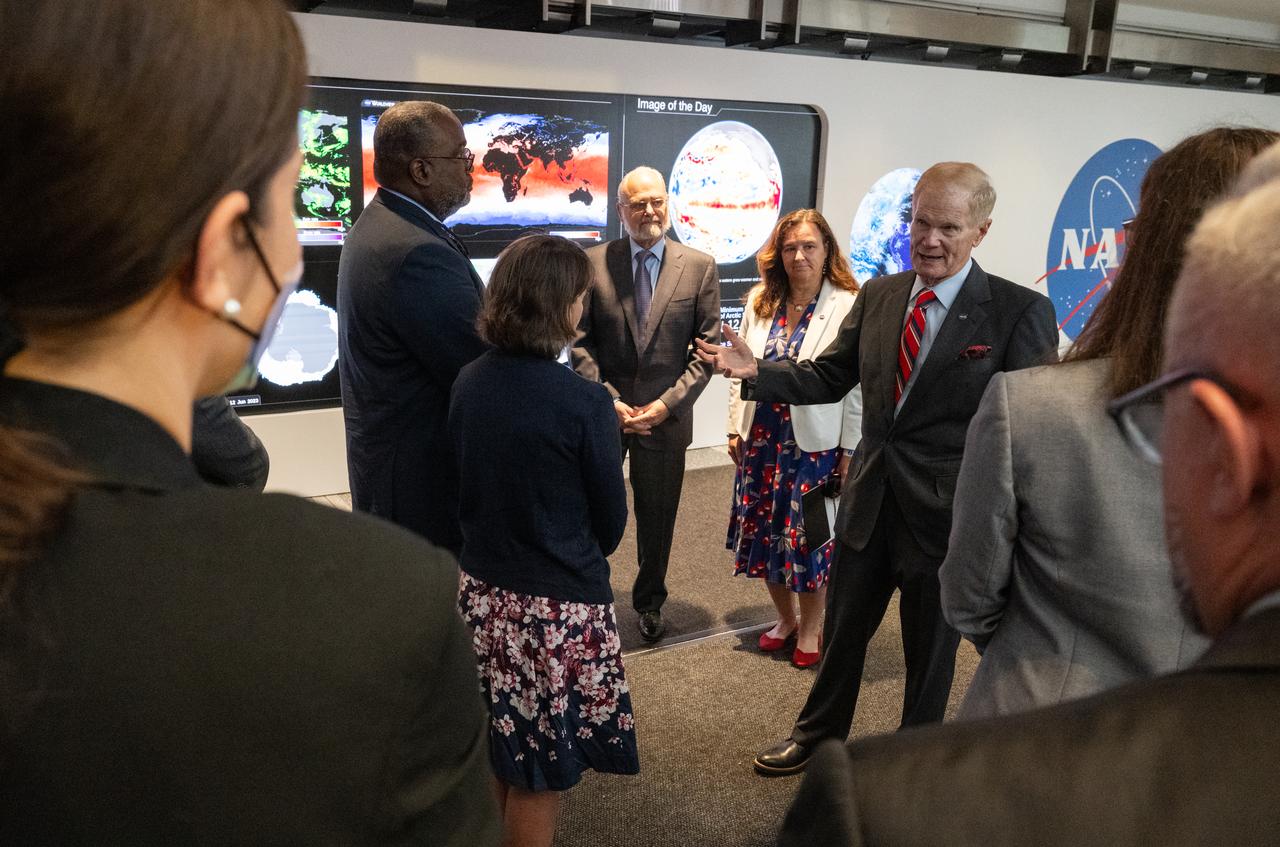
NASA Administrator Bill Nelson speaks to leadership from NOAA, USGS, USDA, USAID, EPA, and FEMA at the opening of NASA’s Earth Information Center, Wednesday, June 21, 2023, at the Mary W. Jackson NASA Headquarters building in Washington. The Earth Information Center is new immersive experience that combines live data sets with cutting-edge data visualization and storytelling to allow visitors to see how our planet is changing. Photo Credit: (NASA/Joel Kowsky)
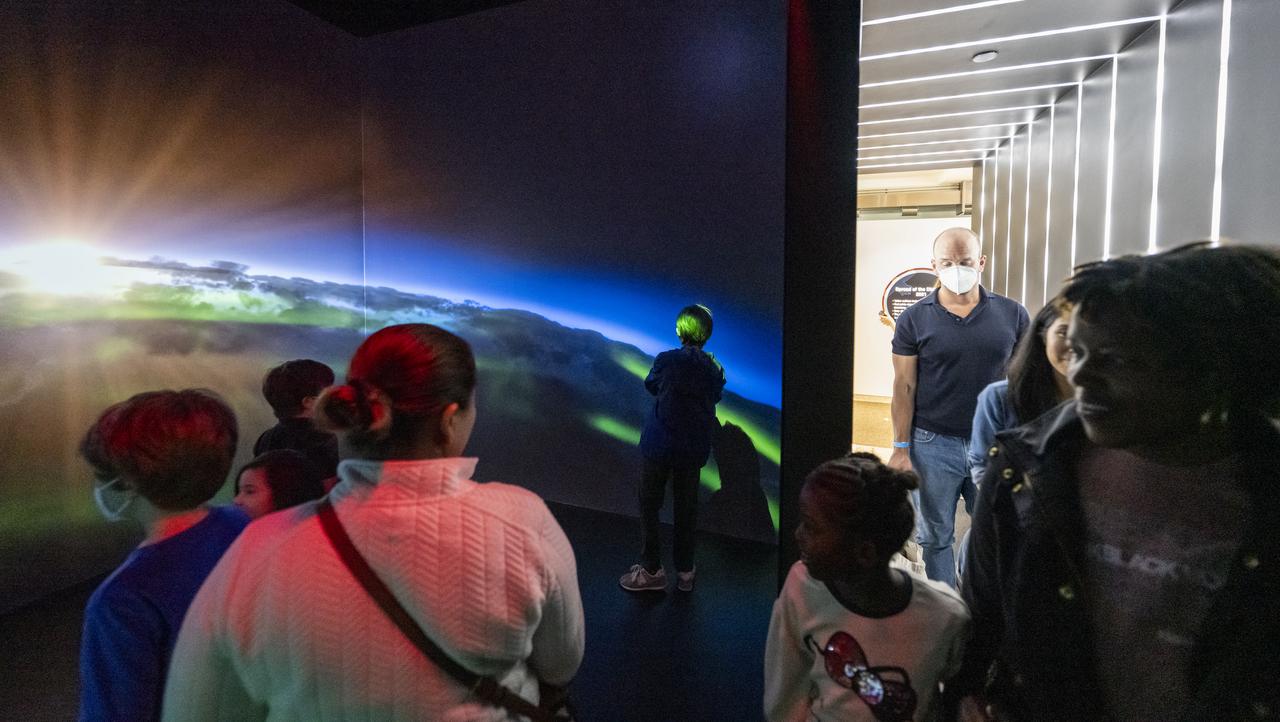
Local students participate in an Earth Information Center (EIC) student engagement event, Friday, June 23, 2023, at the Mary W. Jackson NASA Headquarters building in Washington. The EIC is a new immersive experience that combines live data sets with cutting-edge data visualization and storytelling to allow visitors to see how our planet is changing. Photo Credit: (NASA/Keegan Barber)
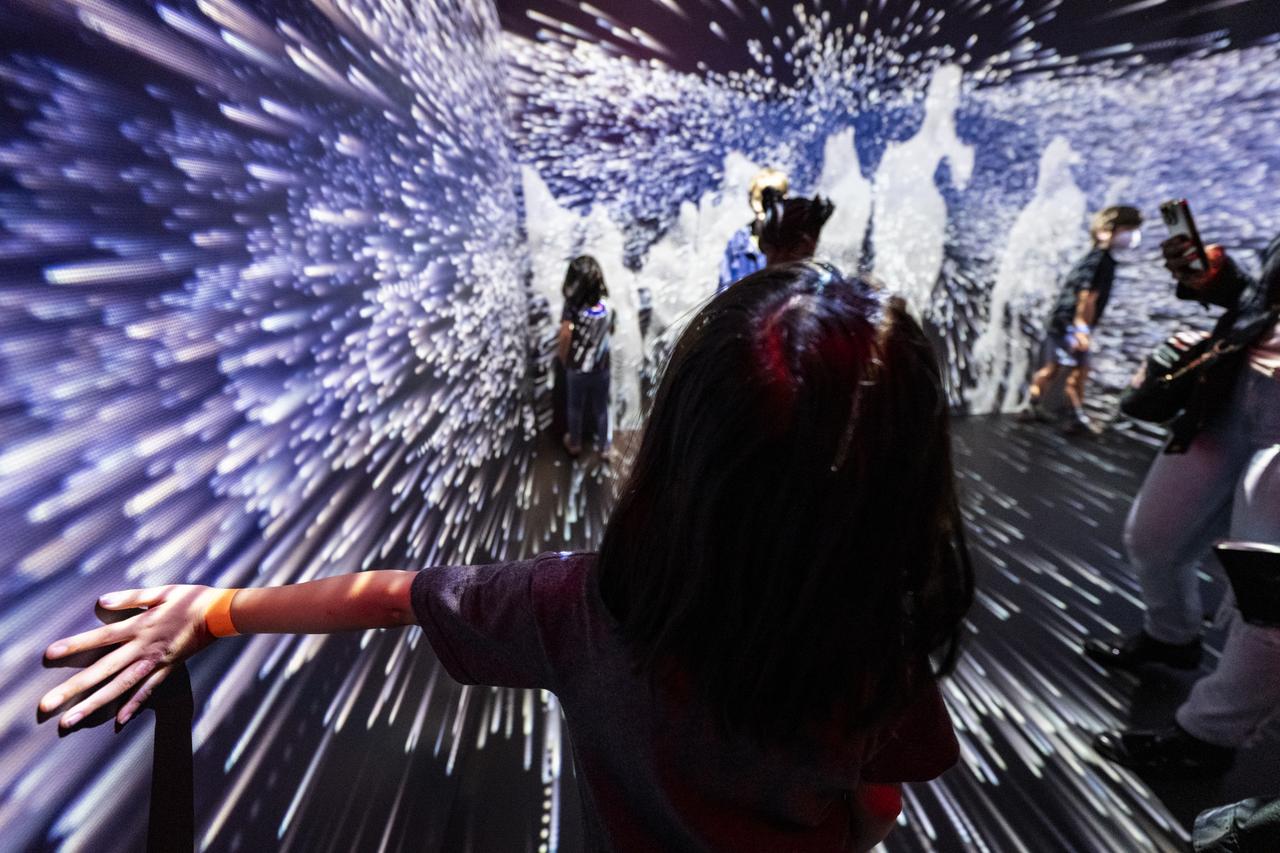
Local students participate in an Earth Information Center (EIC) student engagement event, Friday, June 23, 2023, at the Mary W. Jackson NASA Headquarters building in Washington. The EIC is a new immersive experience that combines live data sets with cutting-edge data visualization and storytelling to allow visitors to see how our planet is changing. Photo Credit: (NASA/Keegan Barber)
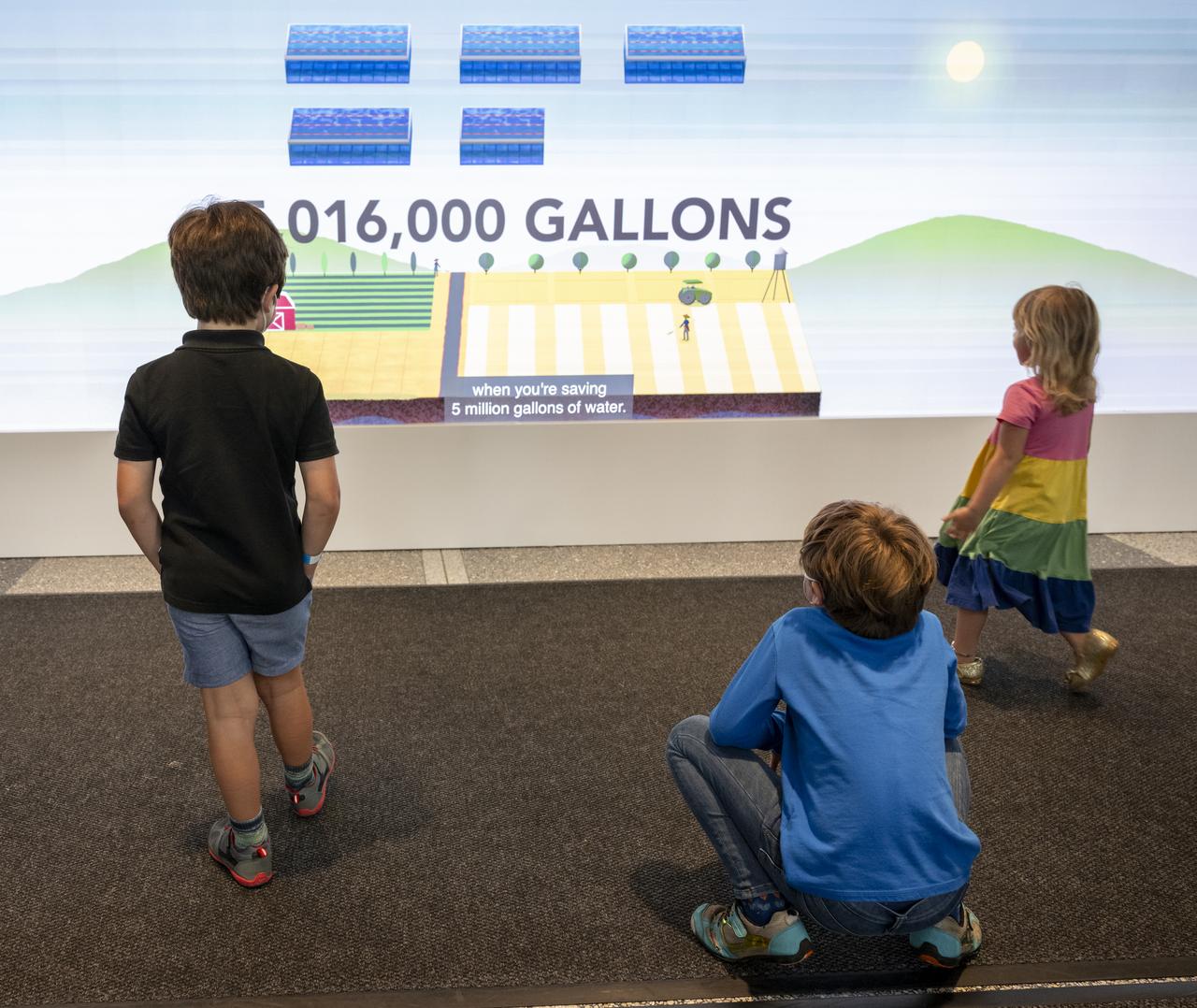
Local students participate in an Earth Information Center (EIC) student engagement event, Friday, June 23, 2023, at the Mary W. Jackson NASA Headquarters building in Washington. The EIC is a new immersive experience that combines live data sets with cutting-edge data visualization and storytelling to allow visitors to see how our planet is changing. Photo Credit: (NASA/Keegan Barber)
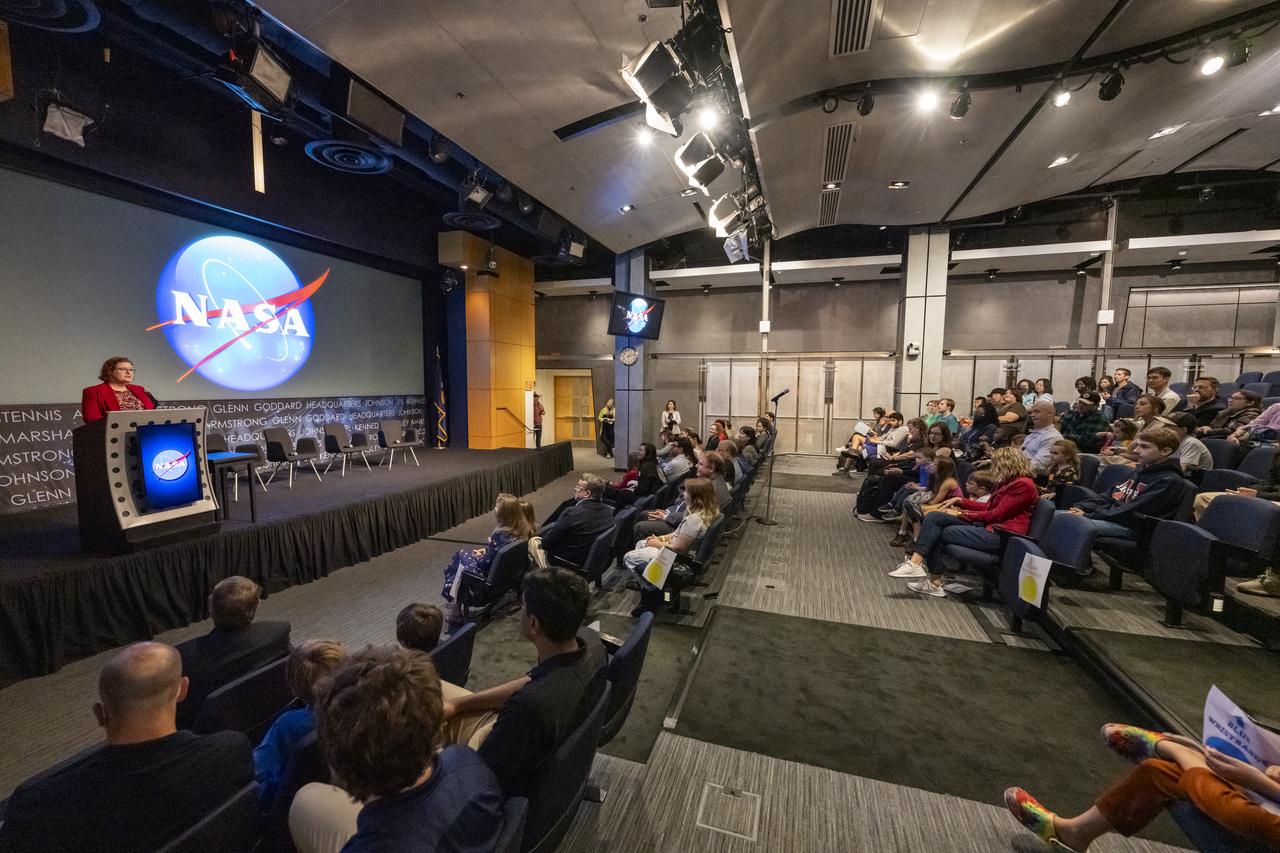
NASA Earth Science Division Deputy Director Julie Robinson delivers remarks during an Earth Information Center (EIC) student engagement event, Friday, June 23, 2023, at the Mary W. Jackson NASA Headquarters building in Washington. The EIC is a new immersive experience that combines live data sets with cutting-edge data visualization and storytelling to allow visitors to see how our planet is changing. Photo Credit: (NASA/Keegan Barber)
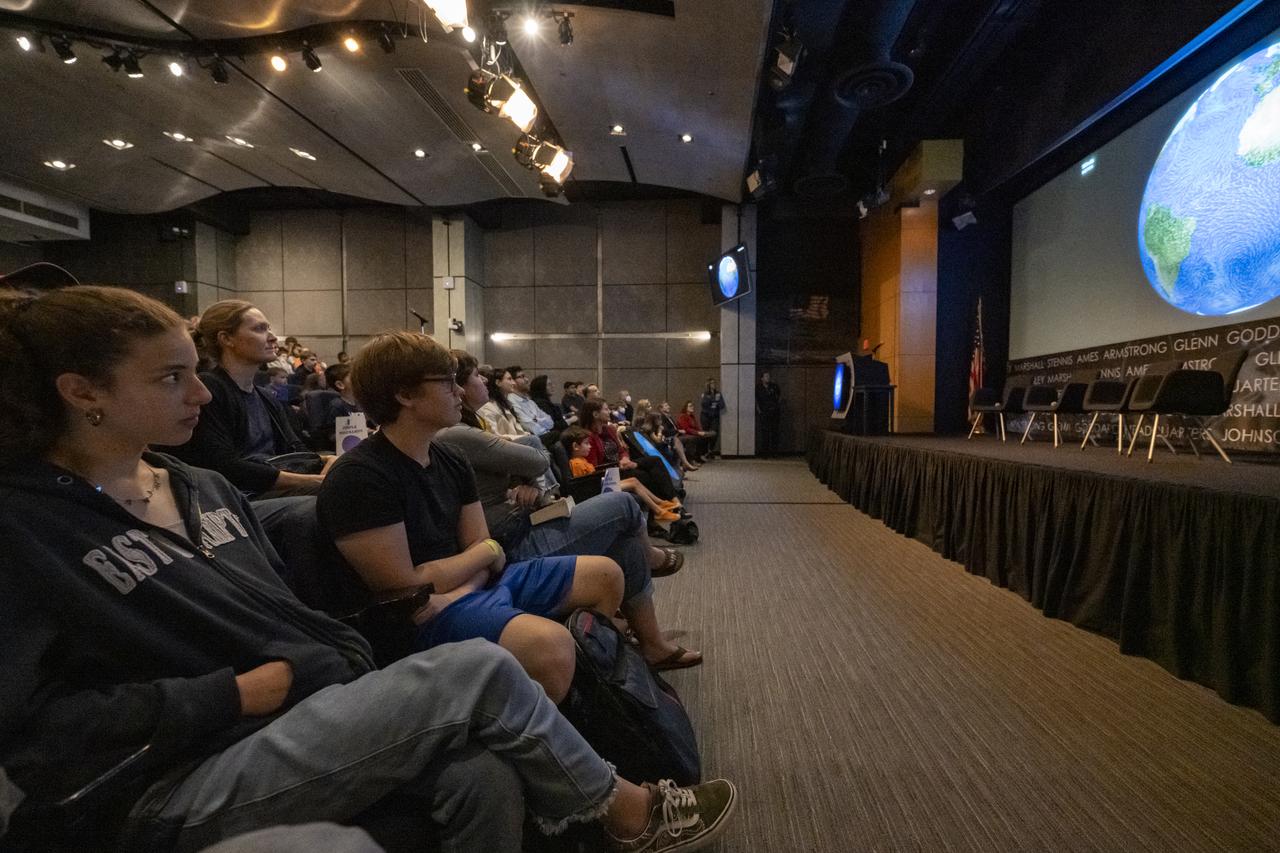
Local students view a video presentation during an Earth Information Center (EIC) student engagement event, Friday, June 23, 2023, at the Mary W. Jackson NASA Headquarters building in Washington. The EIC is a new immersive experience that combines live data sets with cutting-edge data visualization and storytelling to allow visitors to see how our planet is changing. Photo Credit: (NASA/Keegan Barber)
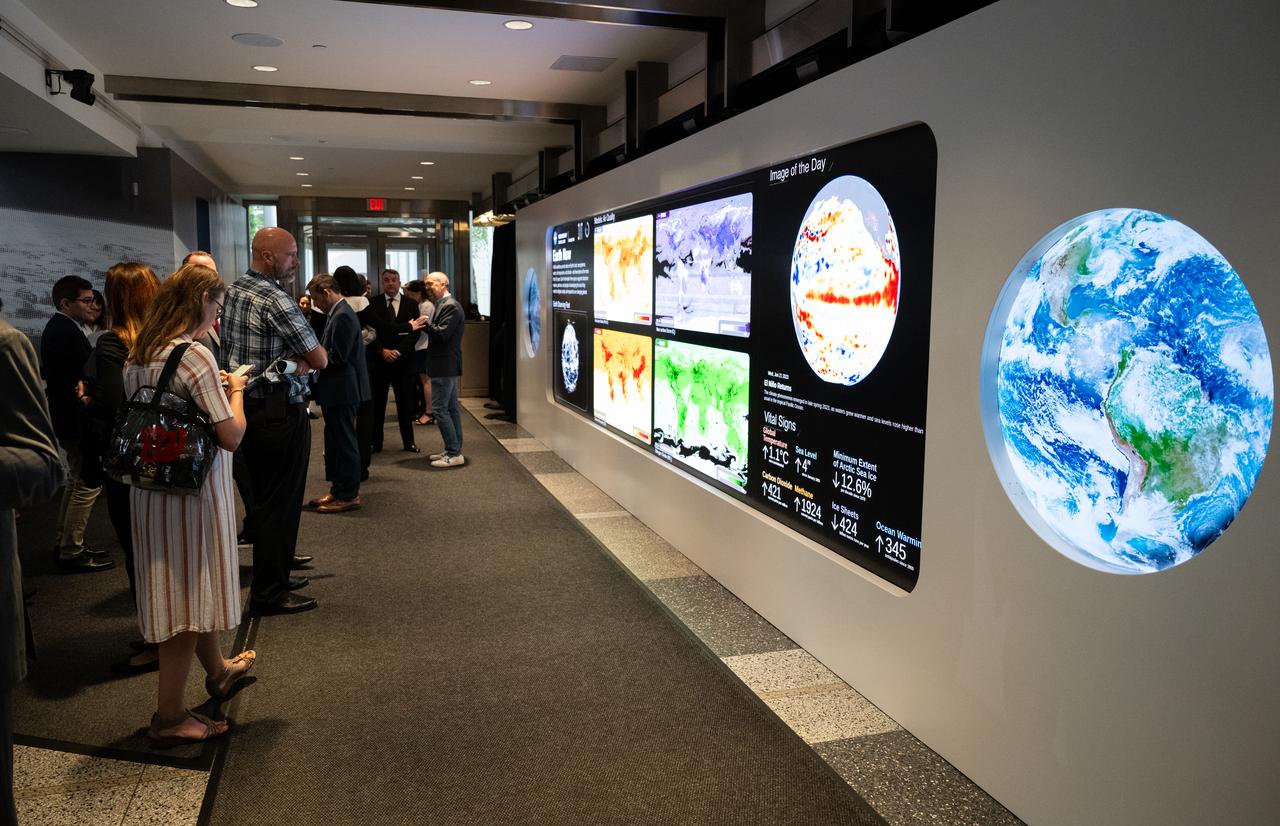
The hyperwall of NASA’s Earth Information Center is seen, Wednesday, June 21, 2023, at the Mary W. Jackson NASA Headquarters building in Washington. The Earth Information Center is new immersive experience that combines live data sets with cutting-edge data visualization and storytelling to allow visitors to see how our planet is changing. Photo Credit: (NASA/Joel Kowsky)
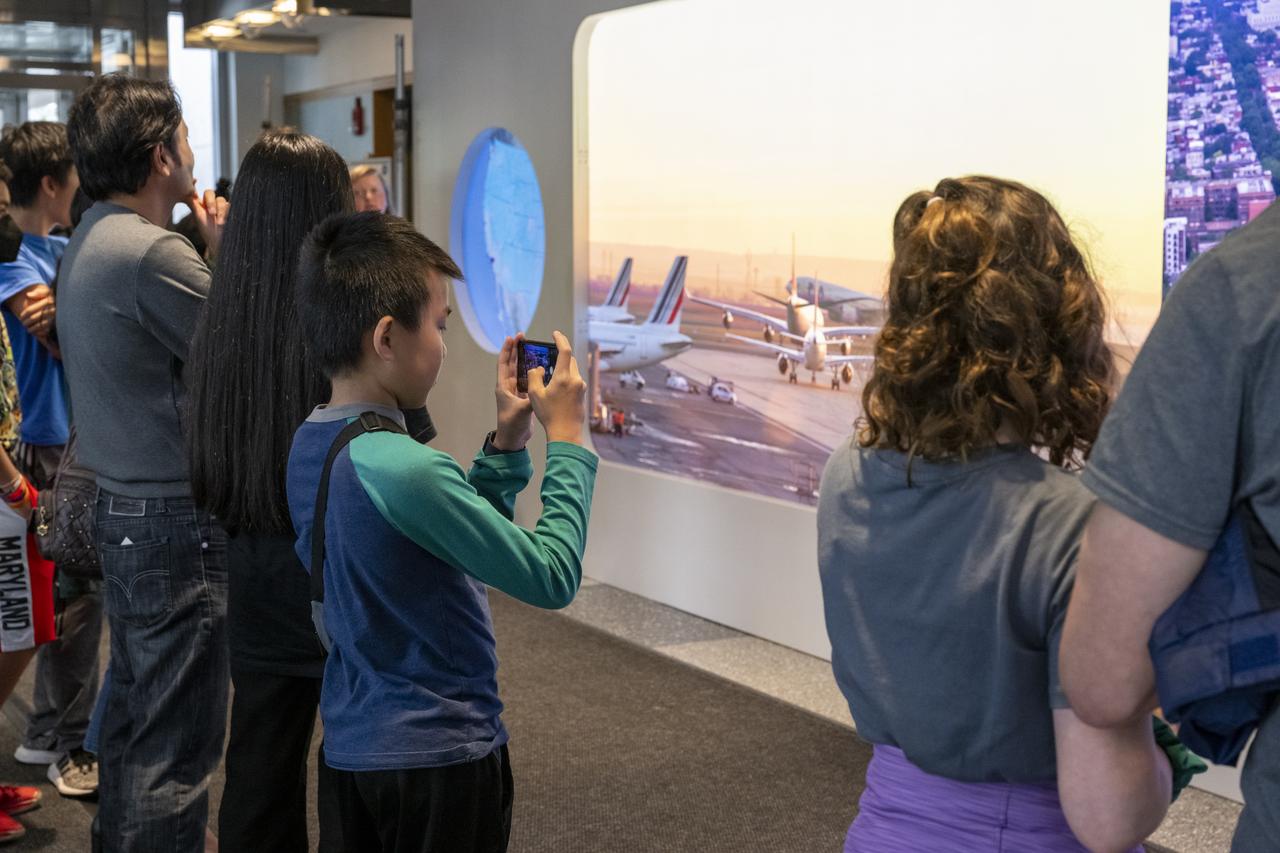
Local students participate in an Earth Information Center (EIC) student engagement event, Friday, June 23, 2023, at the Mary W. Jackson NASA Headquarters building in Washington. The EIC is a new immersive experience that combines live data sets with cutting-edge data visualization and storytelling to allow visitors to see how our planet is changing. Photo Credit: (NASA/Keegan Barber)
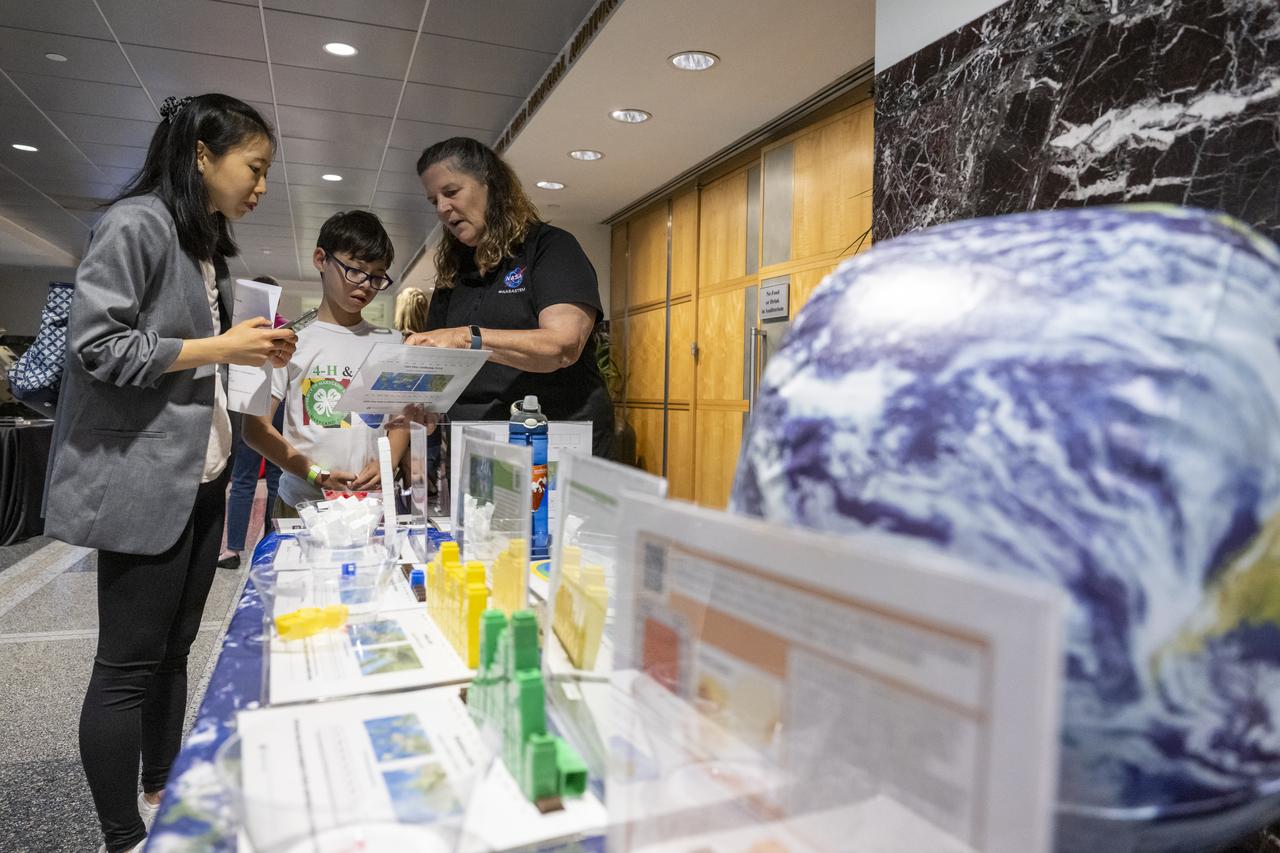
Local students participate in STEM activities prior to an Earth Information Center (EIC) student engagement event, Friday, June 23, 2023, at the Mary W. Jackson NASA Headquarters building in Washington. The EIC is a new immersive experience that combines live data sets with cutting-edge data visualization and storytelling to allow visitors to see how our planet is changing. Photo Credit: (NASA/Keegan Barber)
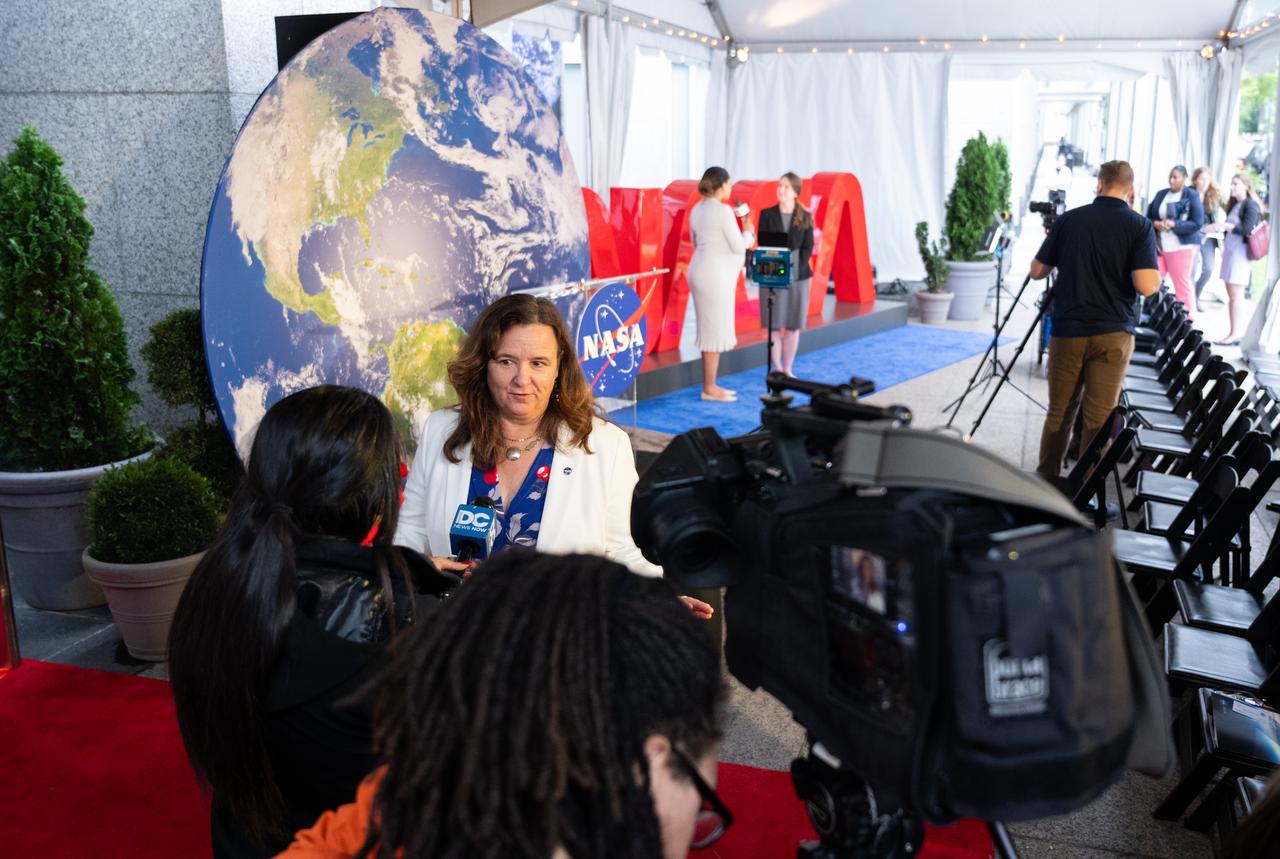
Karen St. Germain, Director of the Earth Science Division of NASA’s Science Mission Directorate, gives and interview following the ribbon cutting ceremony to open NASA’s Earth Information Center, Wednesday, June 21, 2023, at the Mary W. Jackson NASA Headquarters building in Washington. The Earth Information Center is new immersive experience that combines live data sets with cutting-edge data visualization and storytelling to allow visitors to see how our planet is changing. Photo Credit: (NASA/Joel Kowsky)
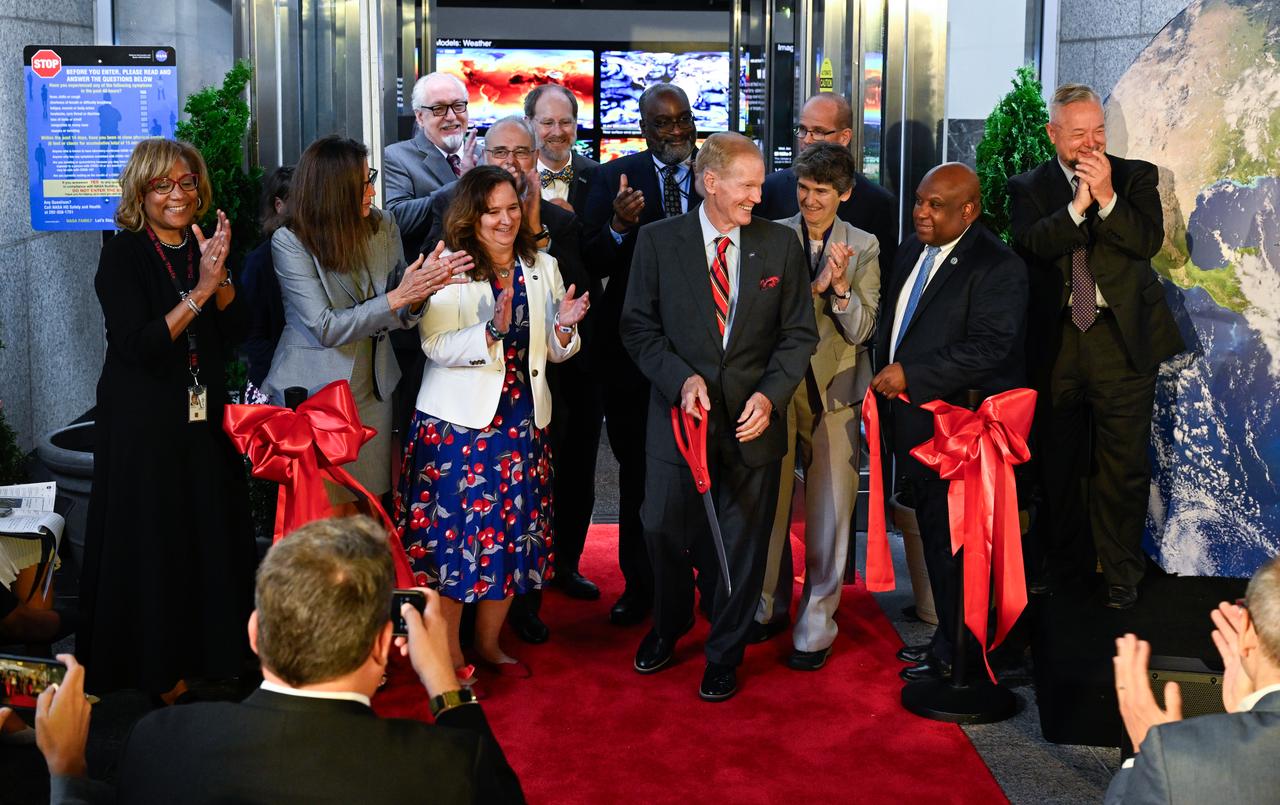
NASA Administrator Bill Nelson, center, cuts the ribbon to open NASA’s Earth Information Center alongside agency leadership and leadership from NOAA, USGS, USDA, USAID, EPA, and FEMA, Wednesday, June 21, 2023, at the Mary W. Jackson NASA Headquarters building in Washington. The Earth Information Center is new immersive experience that combines live data sets with cutting-edge data visualization and storytelling to allow visitors to see how our planet is changing. Photo Credit: (NASA/Joel Kowsky)
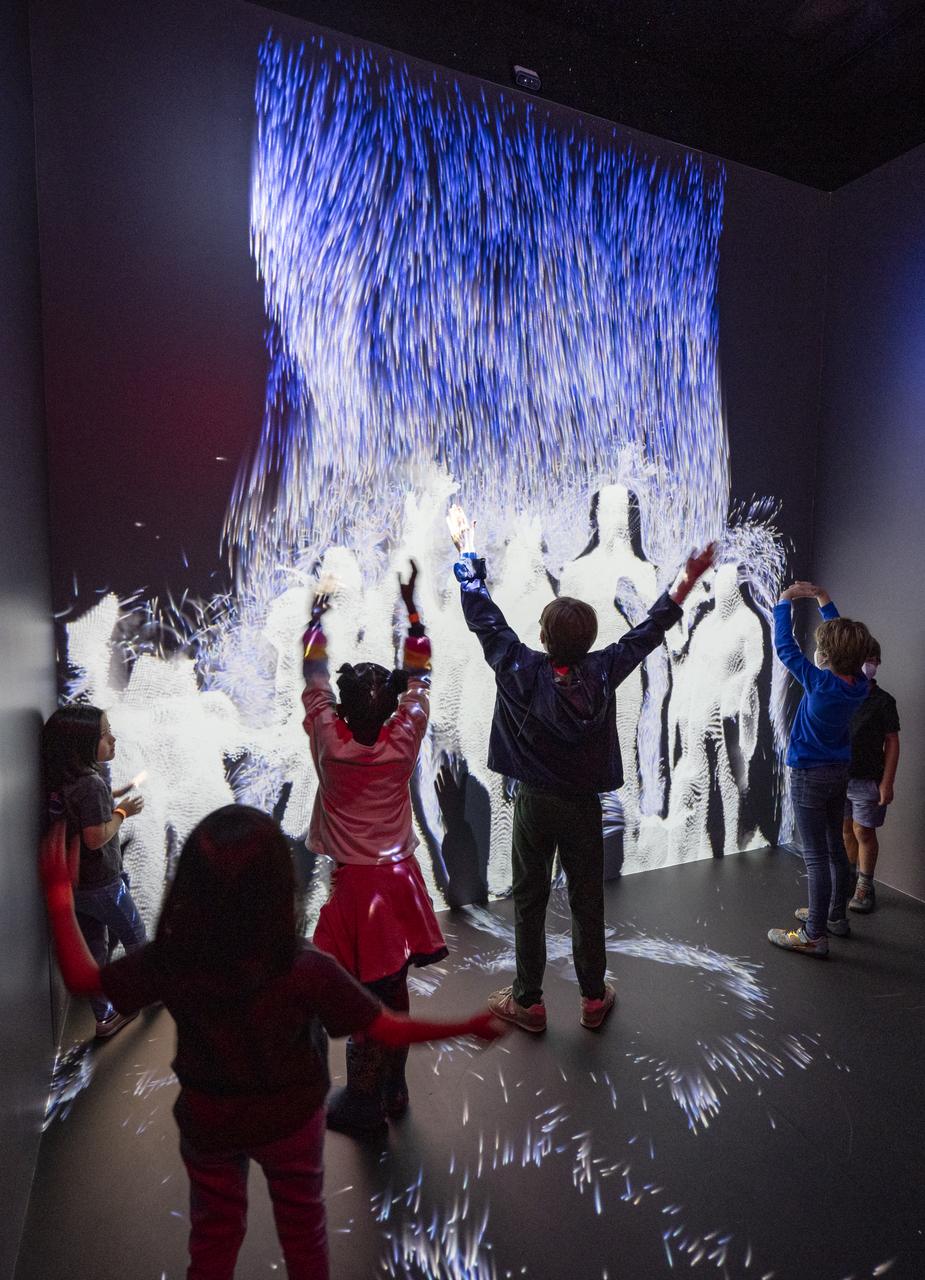
Local students participate in an Earth Information Center (EIC) student engagement event, Friday, June 23, 2023, at the Mary W. Jackson NASA Headquarters building in Washington. The EIC is a new immersive experience that combines live data sets with cutting-edge data visualization and storytelling to allow visitors to see how our planet is changing. Photo Credit: (NASA/Keegan Barber)

Dave Applegate, Director of the U.S. Geologic Survey (USGS), speaks before the ribbon cutting ceremony to open NASA’s Earth Information Center, Wednesday, June 21, 2023, at the Mary W. Jackson NASA Headquarters building in Washington. The Earth Information Center is new immersive experience that combines live data sets with cutting-edge data visualization and storytelling to allow visitors to see how our planet is changing. Photo Credit: (NASA/Joel Kowsky)
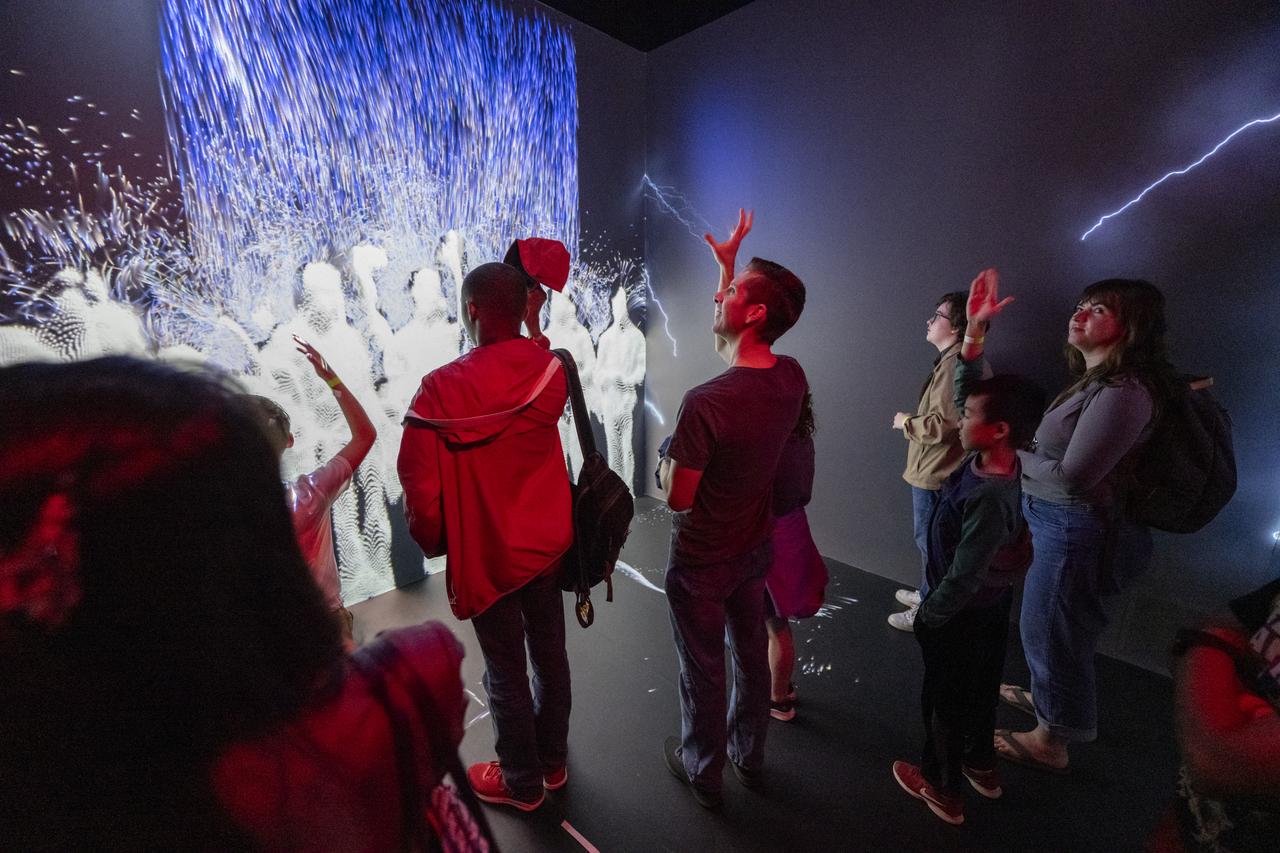
Local students participate in an Earth Information Center (EIC) student engagement event, Friday, June 23, 2023, at the Mary W. Jackson NASA Headquarters building in Washington. The EIC is a new immersive experience that combines live data sets with cutting-edge data visualization and storytelling to allow visitors to see how our planet is changing. Photo Credit: (NASA/Keegan Barber)
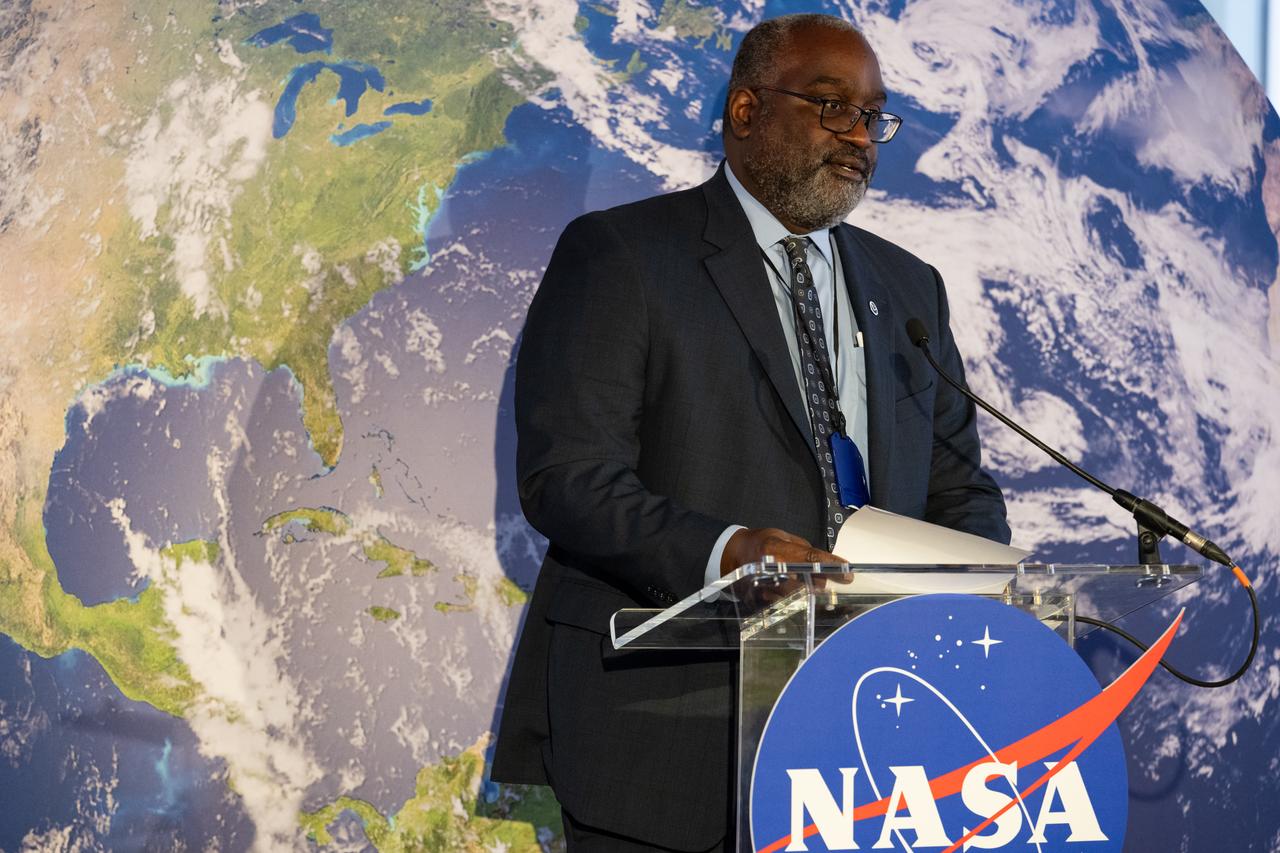
Michael Morgan, Assistant Secretary of Commerce for Environmental Observation and Prediction at the National Oceanic and Atmospheric Administration (NOAA), speaks before the ribbon cutting ceremony to open NASA’s Earth Information Center, Wednesday, June 21, 2023, at the Mary W. Jackson NASA Headquarters building in Washington. The Earth Information Center is new immersive experience that combines live data sets with cutting-edge data visualization and storytelling to allow visitors to see how our planet is changing. Photo Credit: (NASA/Joel Kowsky)
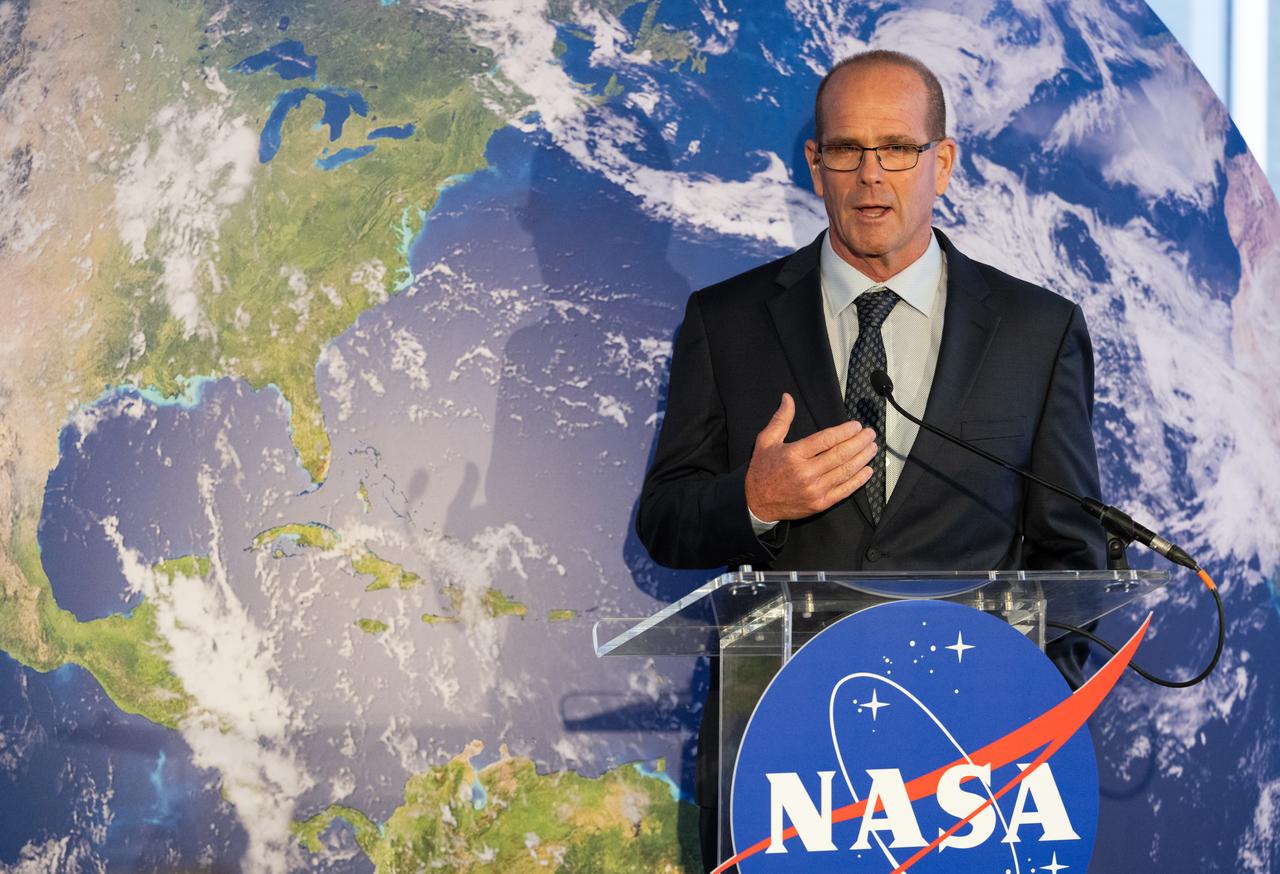
Dwane Roth of Big D Farms in Kansas, speaks before the ribbon cutting ceremony to open NASA’s Earth Information Center, Wednesday, June 21, 2023, at the Mary W. Jackson NASA Headquarters building in Washington. The Earth Information Center is new immersive experience that combines live data sets with cutting-edge data visualization and storytelling to allow visitors to see how our planet is changing. Photo Credit: (NASA/Joel Kowsky)
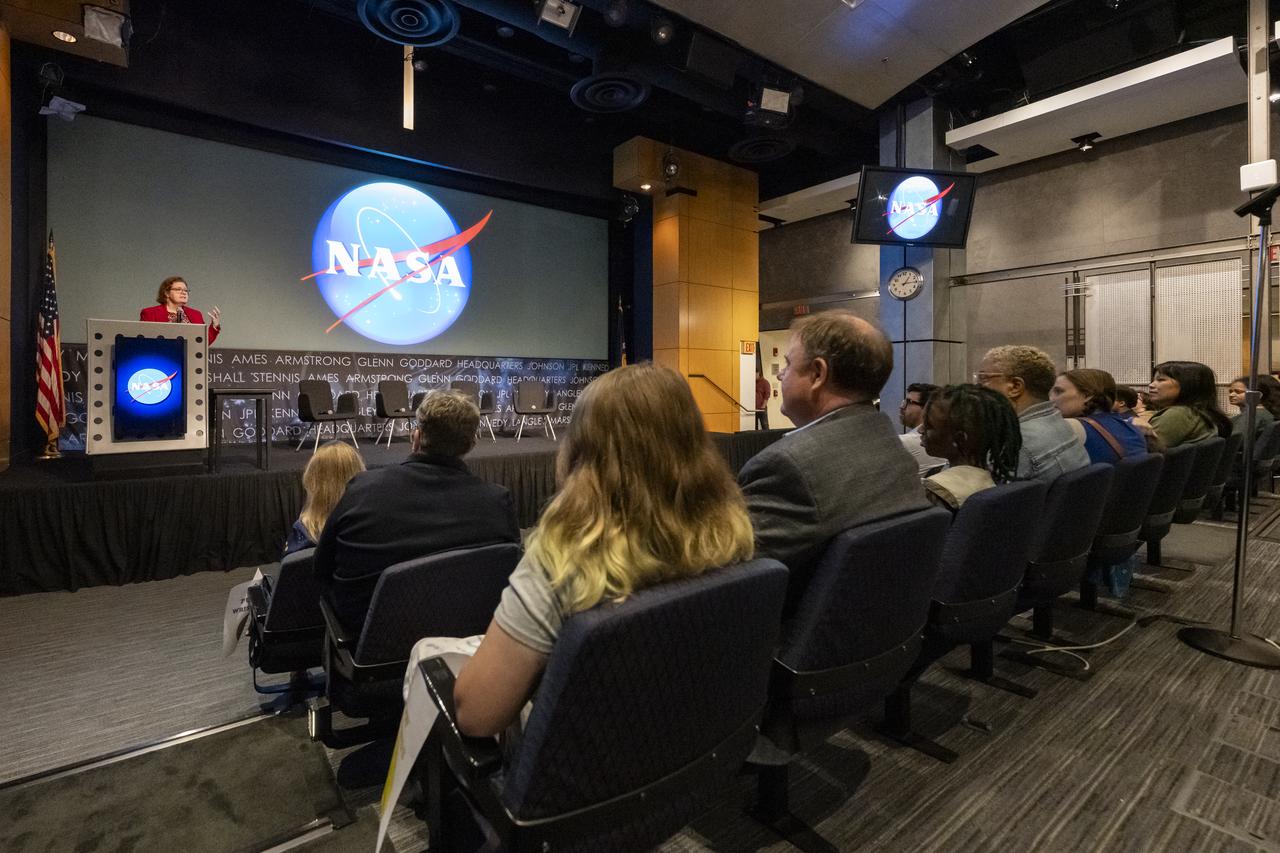
NASA Earth Science Division Deputy Director Julie Robinson delivers remarks during an Earth Information Center (EIC) student engagement event, Friday, June 23, 2023, at the Mary W. Jackson NASA Headquarters building in Washington. The EIC is a new immersive experience that combines live data sets with cutting-edge data visualization and storytelling to allow visitors to see how our planet is changing. Photo Credit: (NASA/Keegan Barber)
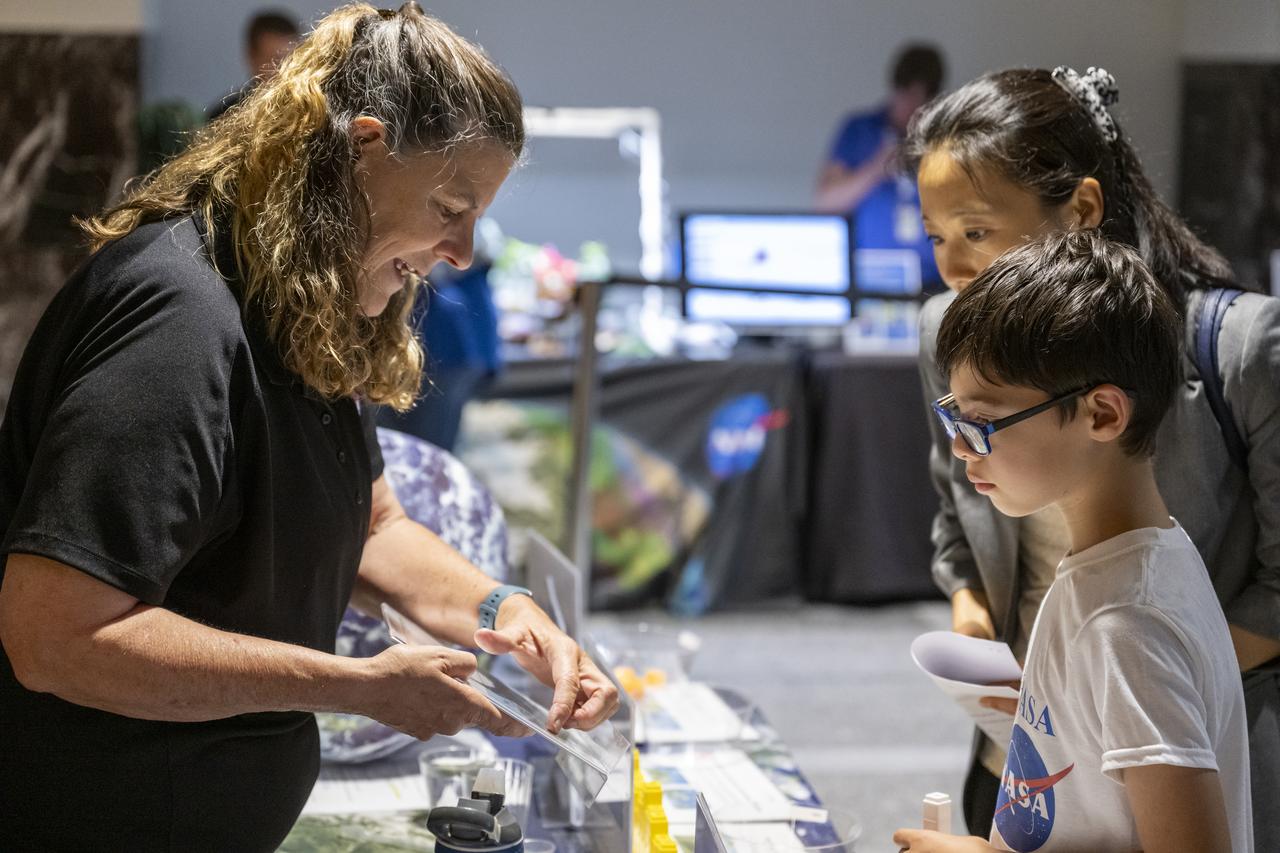
Local students participate in STEM activities prior to an Earth Information Center (EIC) student engagement event, Friday, June 23, 2023, at the Mary W. Jackson NASA Headquarters building in Washington. The EIC is a new immersive experience that combines live data sets with cutting-edge data visualization and storytelling to allow visitors to see how our planet is changing. Photo Credit: (NASA/Keegan Barber)
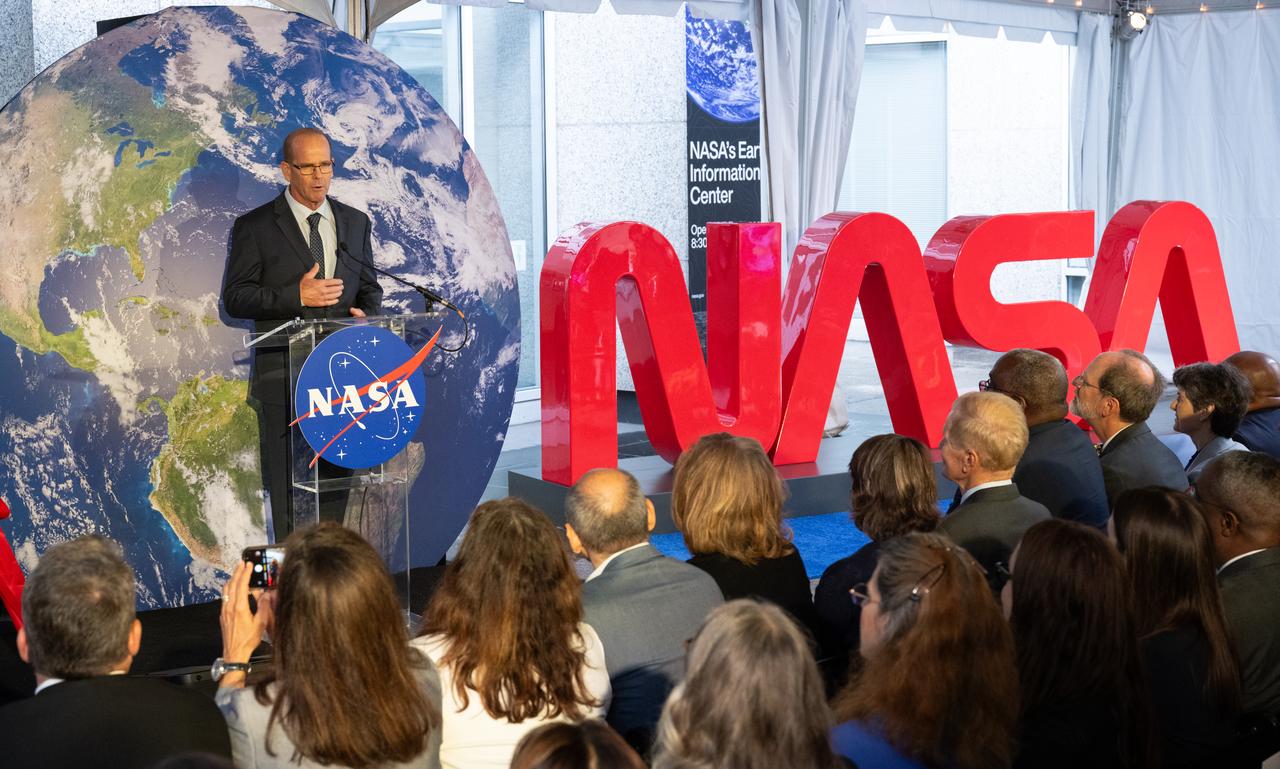
Dwane Roth of Big D Farms in Kansas, speaks before the ribbon cutting ceremony to open NASA’s Earth Information Center, Wednesday, June 21, 2023, at the Mary W. Jackson NASA Headquarters building in Washington. The Earth Information Center is new immersive experience that combines live data sets with cutting-edge data visualization and storytelling to allow visitors to see how our planet is changing. Photo Credit: (NASA/Joel Kowsky)
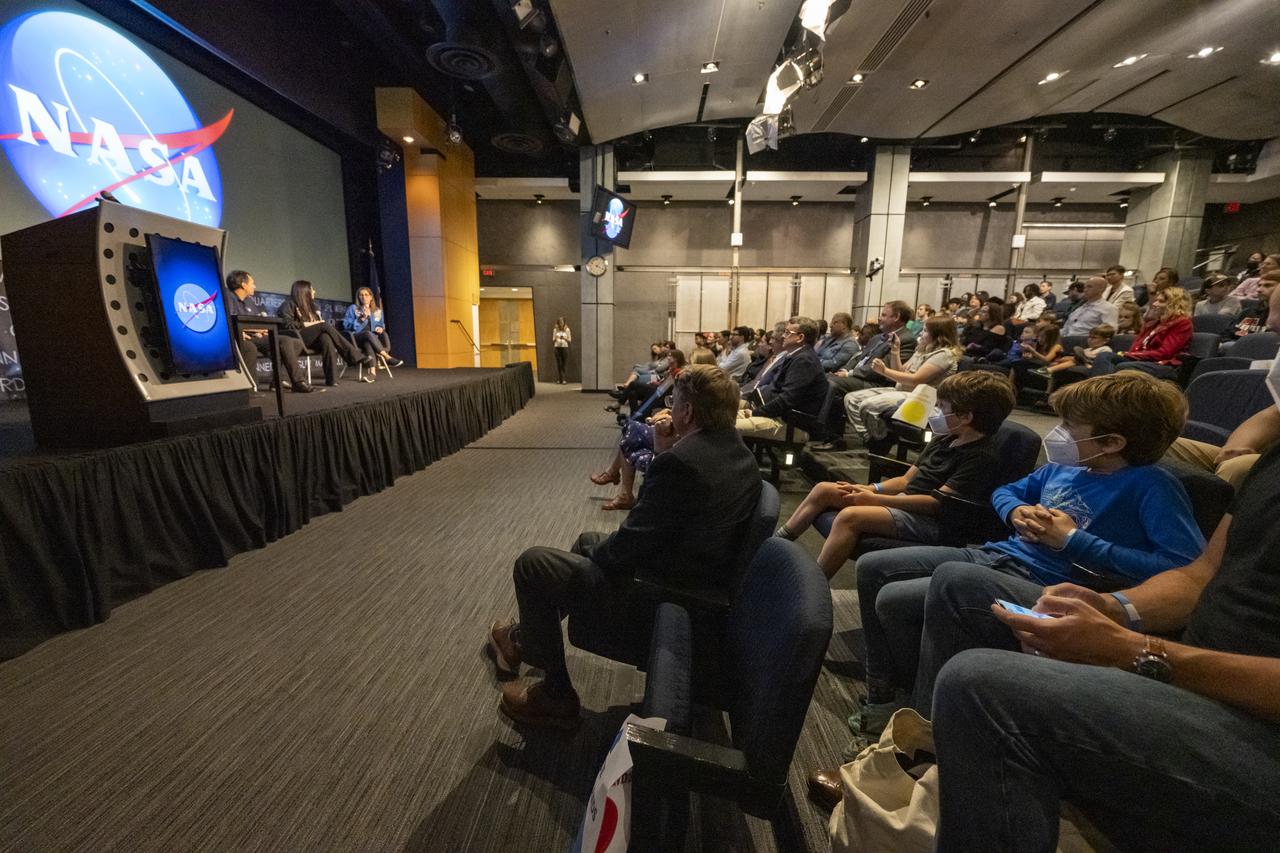
Former NASA Astronaut Nicole Stott delivers remarks during an Earth Information Center (EIC) student engagement event, Friday, June 23, 2023, at the Mary W. Jackson NASA Headquarters building in Washington. The EIC is a new immersive experience that combines live data sets with cutting-edge data visualization and storytelling to allow visitors to see how our planet is changing. Photo Credit: (NASA/Keegan Barber)
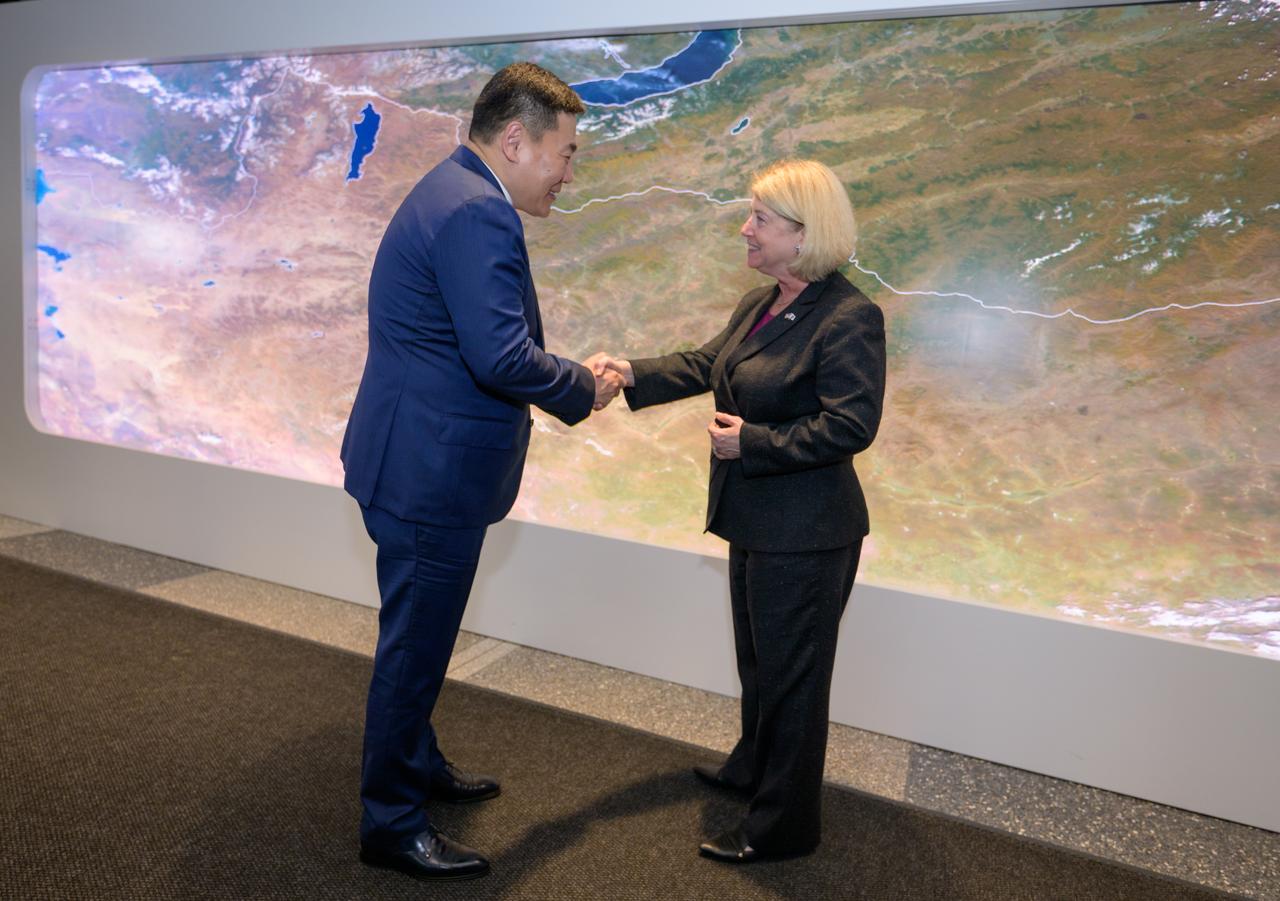
Prime Minister Oyun-Erdene Luvsannamsrai of Mongolia, left, and NASA Deputy Administrator Pam Melroy shake hands at the conclusion of meeting and touring NASA’s Earth Information Center, Friday, Aug. 4, 2023, at the NASA Headquarters Mary W. Jackson Building in Washington. The Earth Information Center is a new immersive experience that combines live data sets with cutting-edge data visualization to show NASA data can improve lives in the face of disasters, environmental challenges, and our changing world. Photo Credit: (NASA/Bill Ingalls)
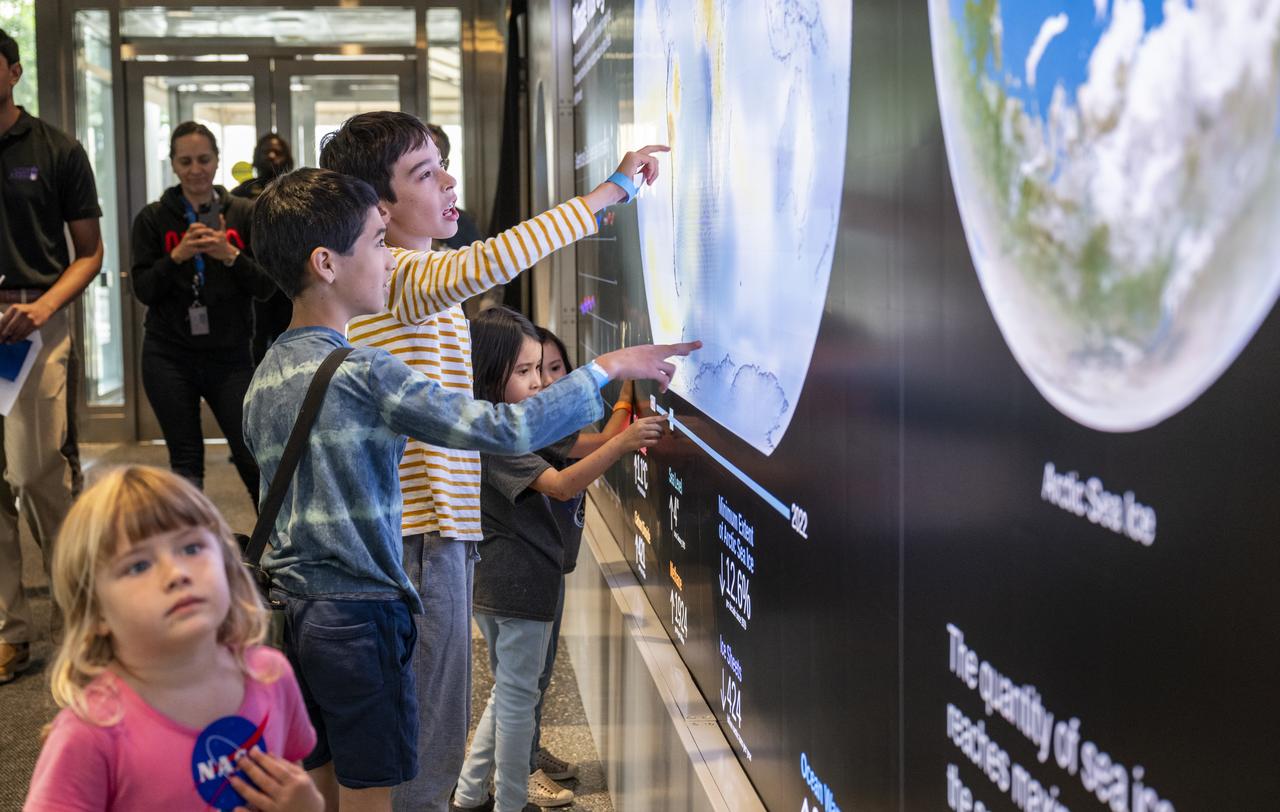
Local students participate in an Earth Information Center (EIC) student engagement event, Friday, June 23, 2023, at the Mary W. Jackson NASA Headquarters building in Washington. The EIC is a new immersive experience that combines live data sets with cutting-edge data visualization and storytelling to allow visitors to see how our planet is changing. Photo Credit: (NASA/Keegan Barber)
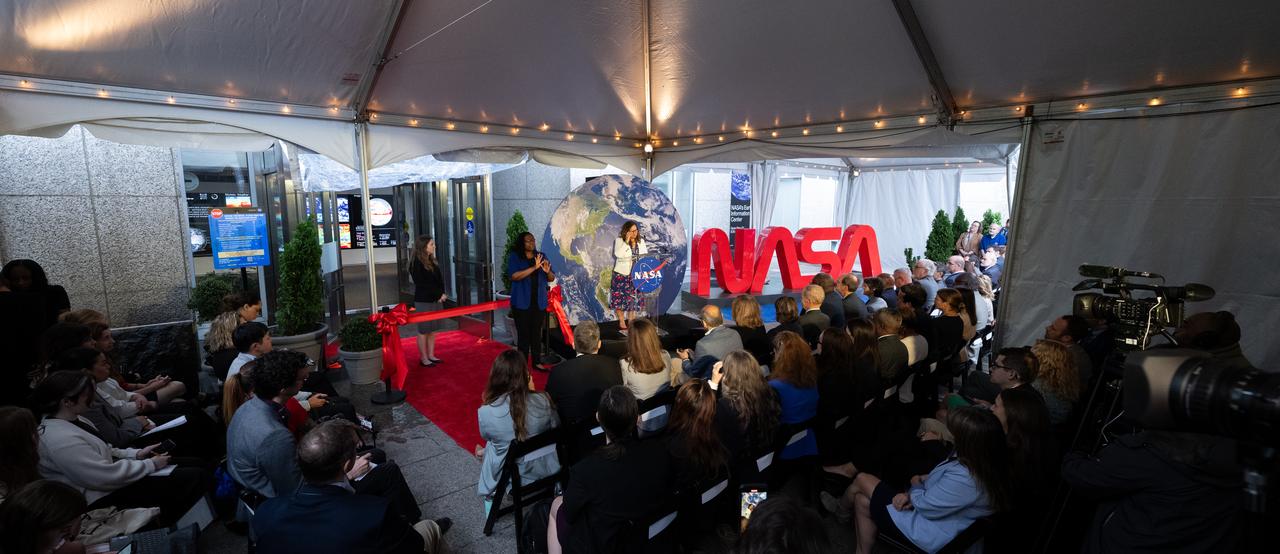
Karen St. Germain, Director of the Earth Science Division of NASA’s Science Mission Directorate, before the ribbon cutting ceremony to open NASA’s Earth Information Center, Wednesday, June 21, 2023, at the Mary W. Jackson NASA Headquarters building in Washington. The Earth Information Center is new immersive experience that combines live data sets with cutting-edge data visualization and storytelling to allow visitors to see how our planet is changing. Photo Credit: (NASA/Joel Kowsky)
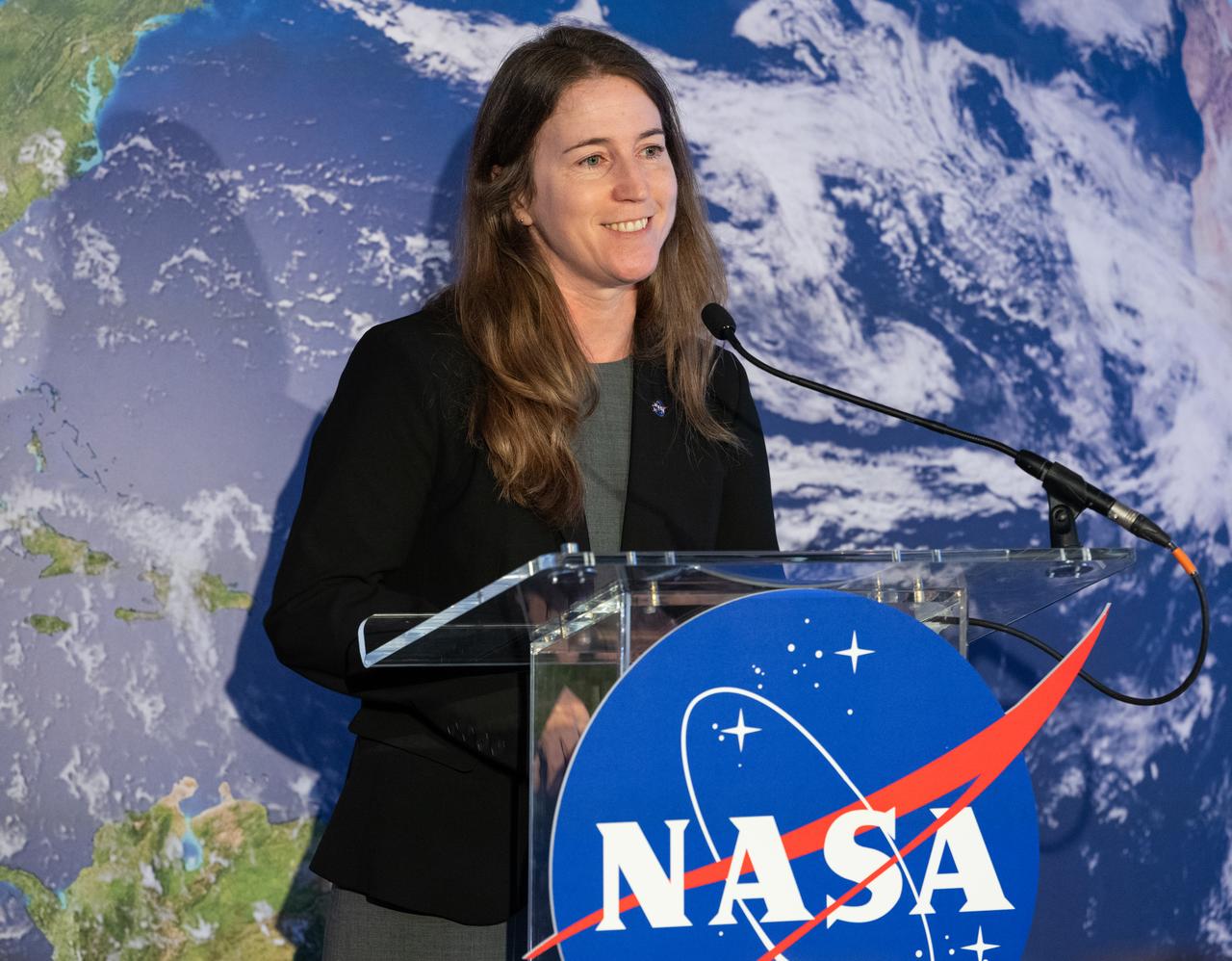
Kate Calvin, NASA’s Chief Scientist, speaks before the ribbon cutting ceremony to open NASA’s Earth Information Center, Wednesday, June 21, 2023, at the Mary W. Jackson NASA Headquarters building in Washington. The Earth Information Center is new immersive experience that combines live data sets with cutting-edge data visualization and storytelling to allow visitors to see how our planet is changing. Photo Credit: (NASA/Joel Kowsky)
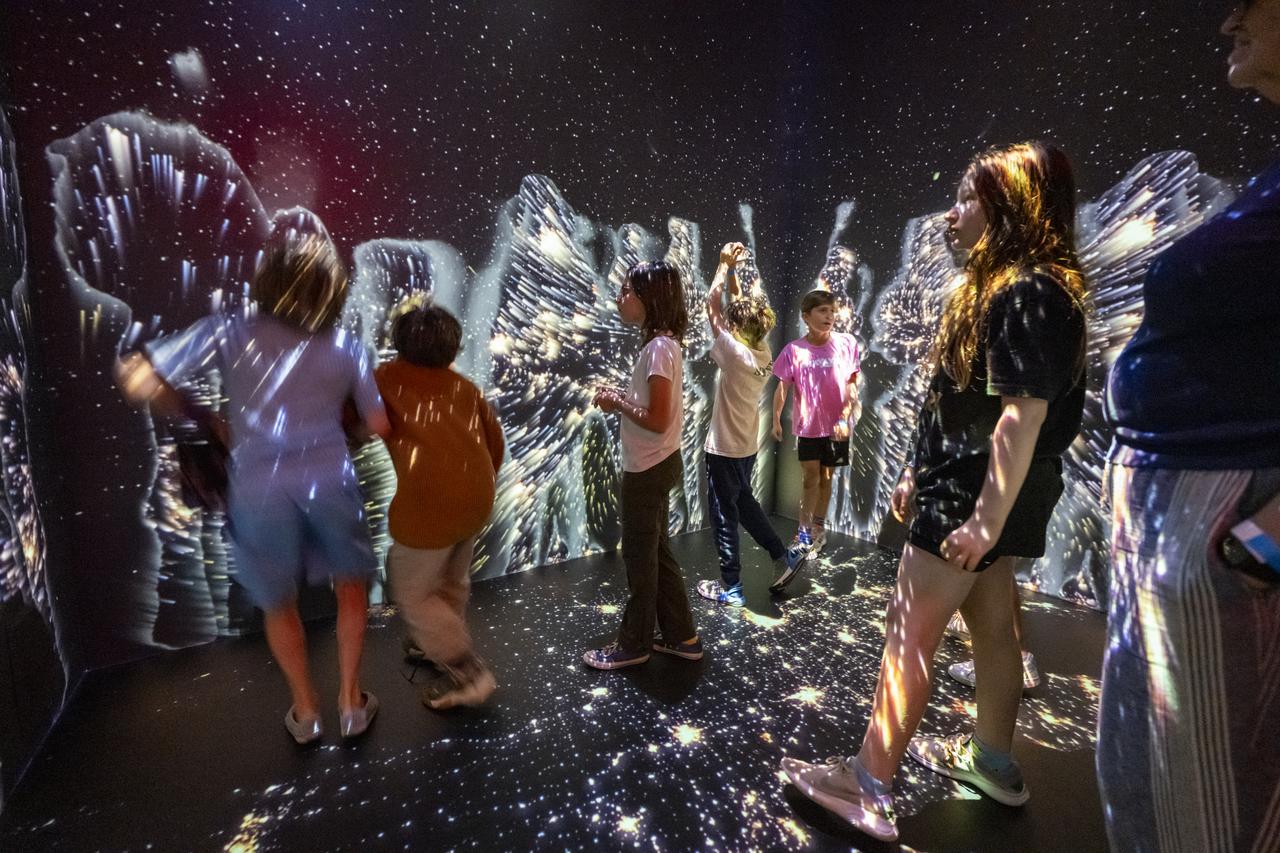
Local students participate in an Earth Information Center (EIC) student engagement event, Friday, June 23, 2023, at the Mary W. Jackson NASA Headquarters building in Washington. The EIC is a new immersive experience that combines live data sets with cutting-edge data visualization and storytelling to allow visitors to see how our planet is changing. Photo Credit: (NASA/Keegan Barber)

NASA Administrator Bill Nelson delivers remarks before the ribbon cutting ceremony to open NASA’s Earth Information Center, Wednesday, June 21, 2023, at the Mary W. Jackson NASA Headquarters building in Washington. The Earth Information Center is new immersive experience that combines live data sets with cutting-edge data visualization and storytelling to allow visitors to see how our planet is changing. Photo Credit: (NASA/Joel Kowsky)
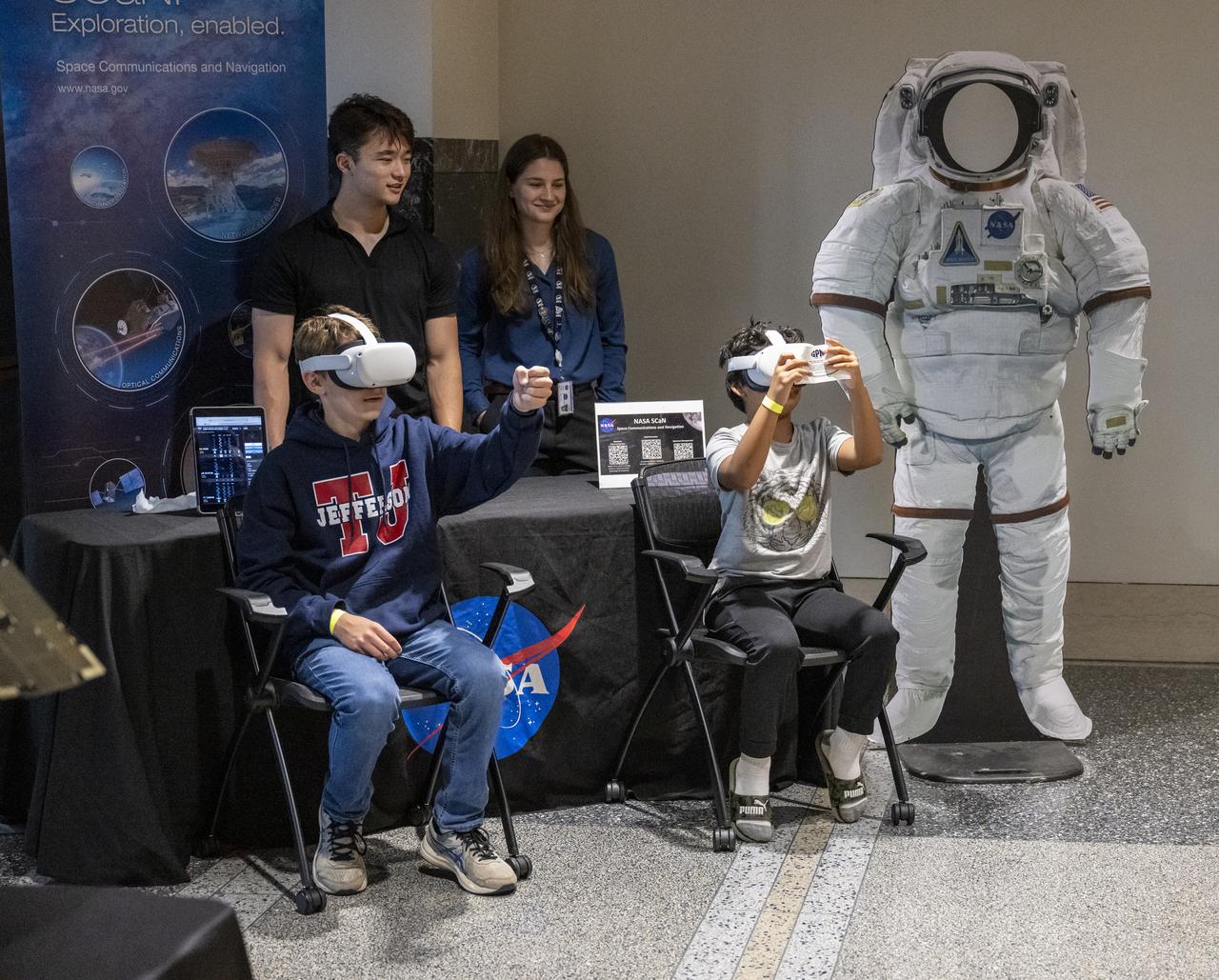
Local students participate in an Earth Information Center (EIC) student engagement event, Friday, June 23, 2023, at the Mary W. Jackson NASA Headquarters building in Washington. The EIC is a new immersive experience that combines live data sets with cutting-edge data visualization and storytelling to allow visitors to see how our planet is changing. Photo Credit: (NASA/Keegan Barber)
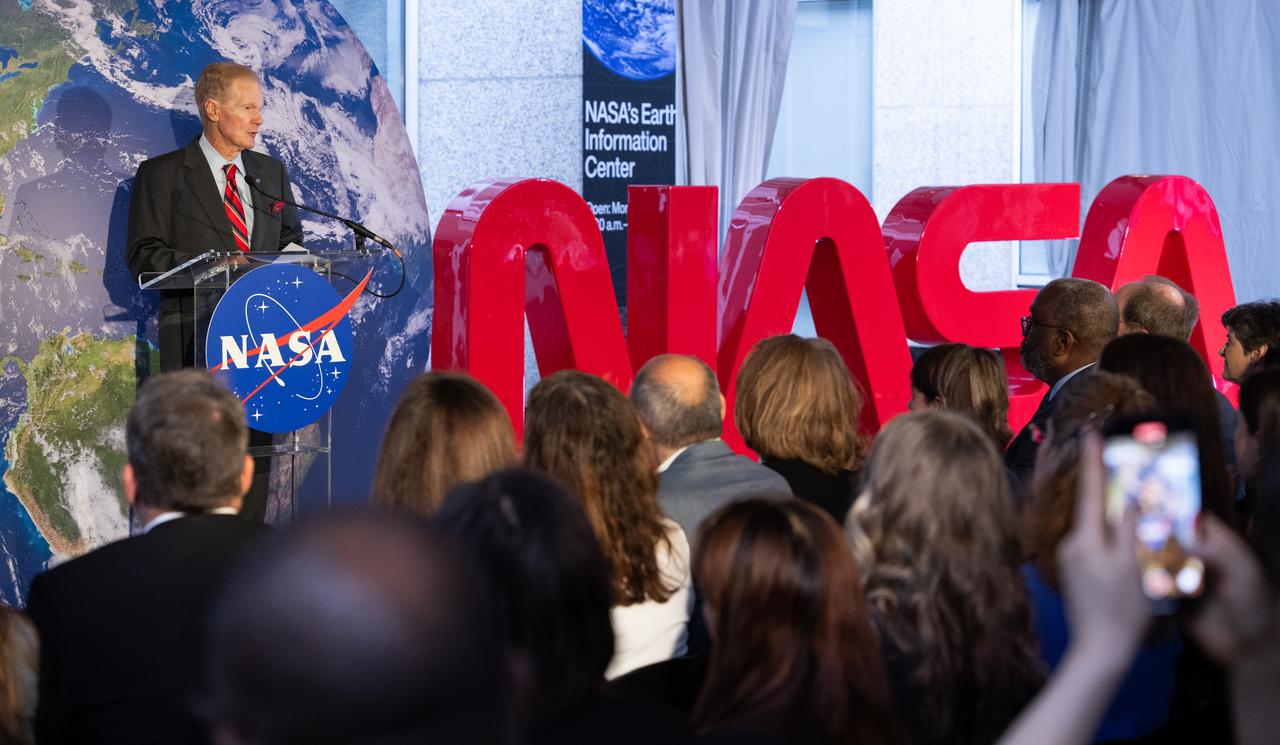
NASA Administrator Bill Nelson delivers remarks before the ribbon cutting ceremony to open NASA’s Earth Information Center, Wednesday, June 21, 2023, at the Mary W. Jackson NASA Headquarters building in Washington. The Earth Information Center is new immersive experience that combines live data sets with cutting-edge data visualization and storytelling to allow visitors to see how our planet is changing. Photo Credit: (NASA/Joel Kowsky)
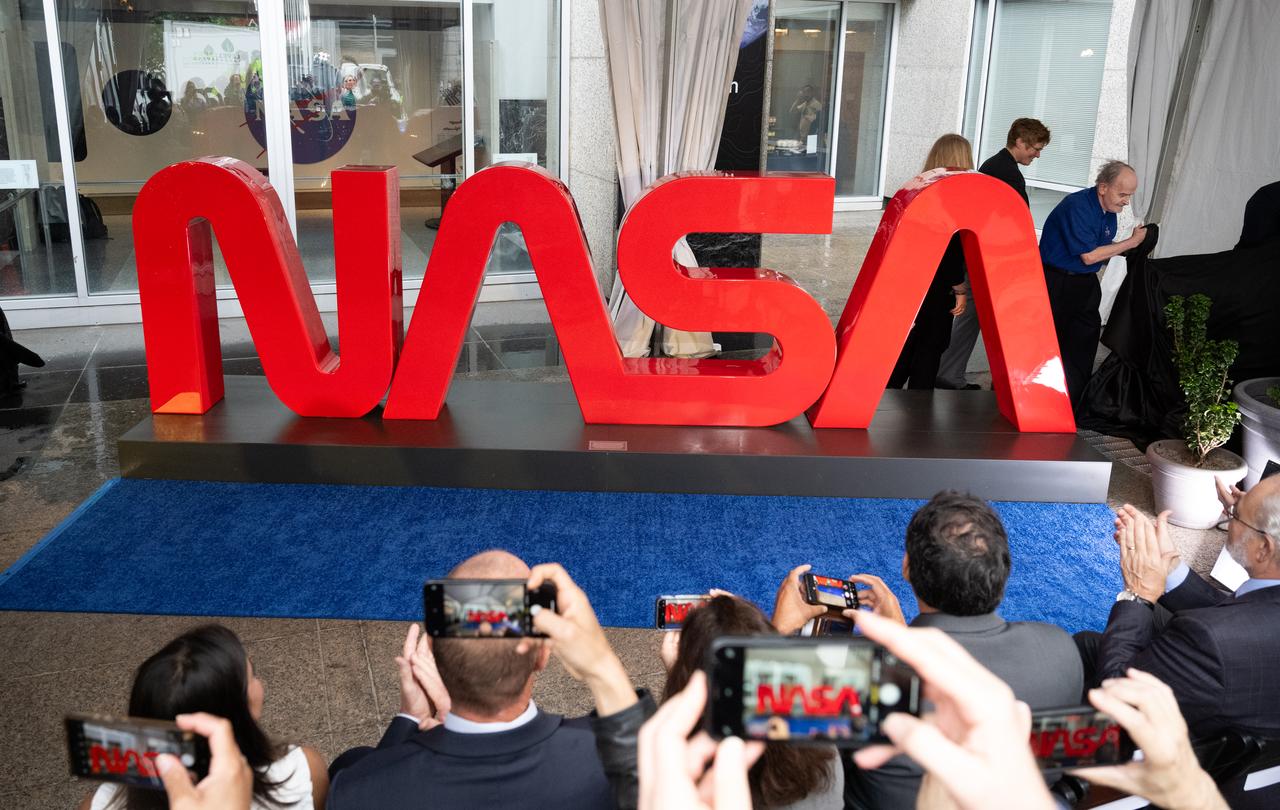
The NASA Worm Logo sign is unveiled before the ribbon cutting ceremony to open NASA’s Earth Information Center, Wednesday, June 21, 2023, at the Mary W. Jackson NASA Headquarters building in Washington. The Earth Information Center is new immersive experience that combines live data sets with cutting-edge data visualization and storytelling to allow visitors to see how our planet is changing. Photo Credit: (NASA/Joel Kowsky)
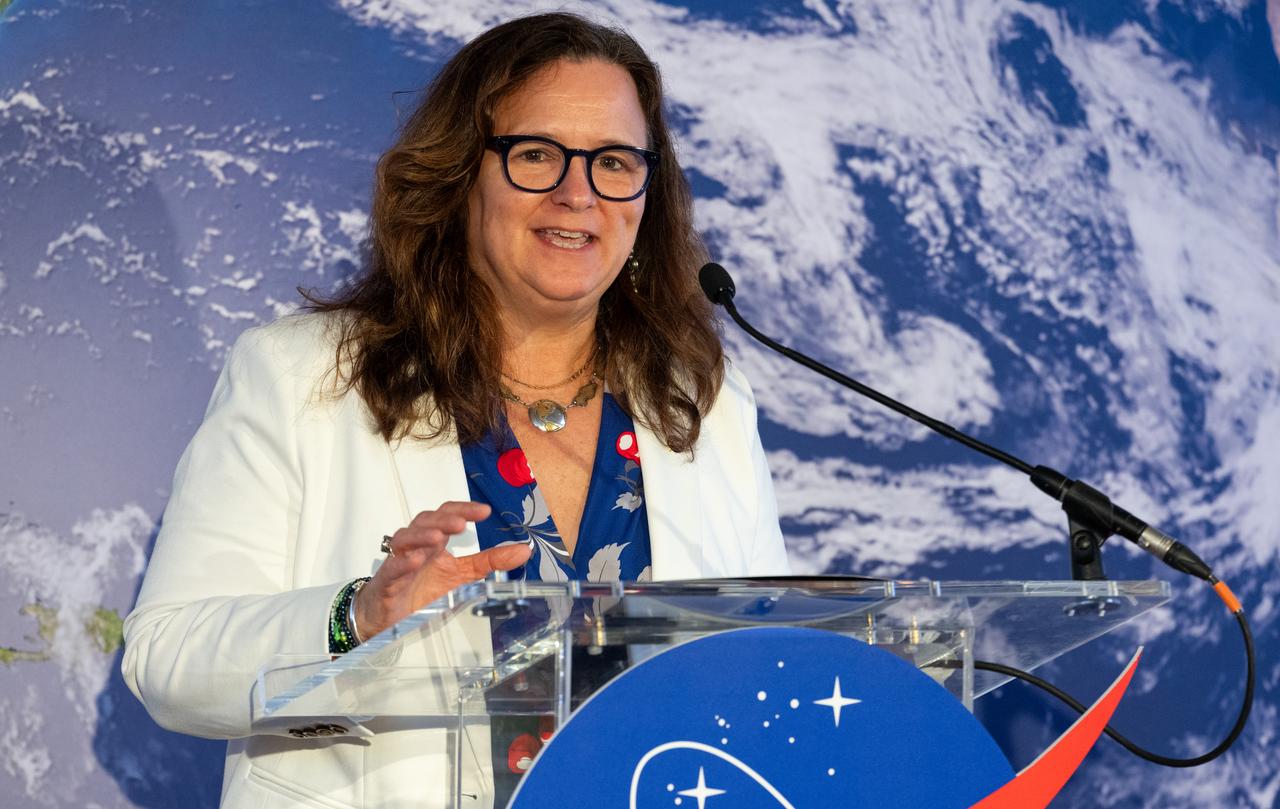
Karen St. Germain, Director of the Earth Science Division of NASA’s Science Mission Directorate, before the ribbon cutting ceremony to open NASA’s Earth Information Center, Wednesday, June 21, 2023, at the Mary W. Jackson NASA Headquarters building in Washington. The Earth Information Center is new immersive experience that combines live data sets with cutting-edge data visualization and storytelling to allow visitors to see how our planet is changing. Photo Credit: (NASA/Joel Kowsky)
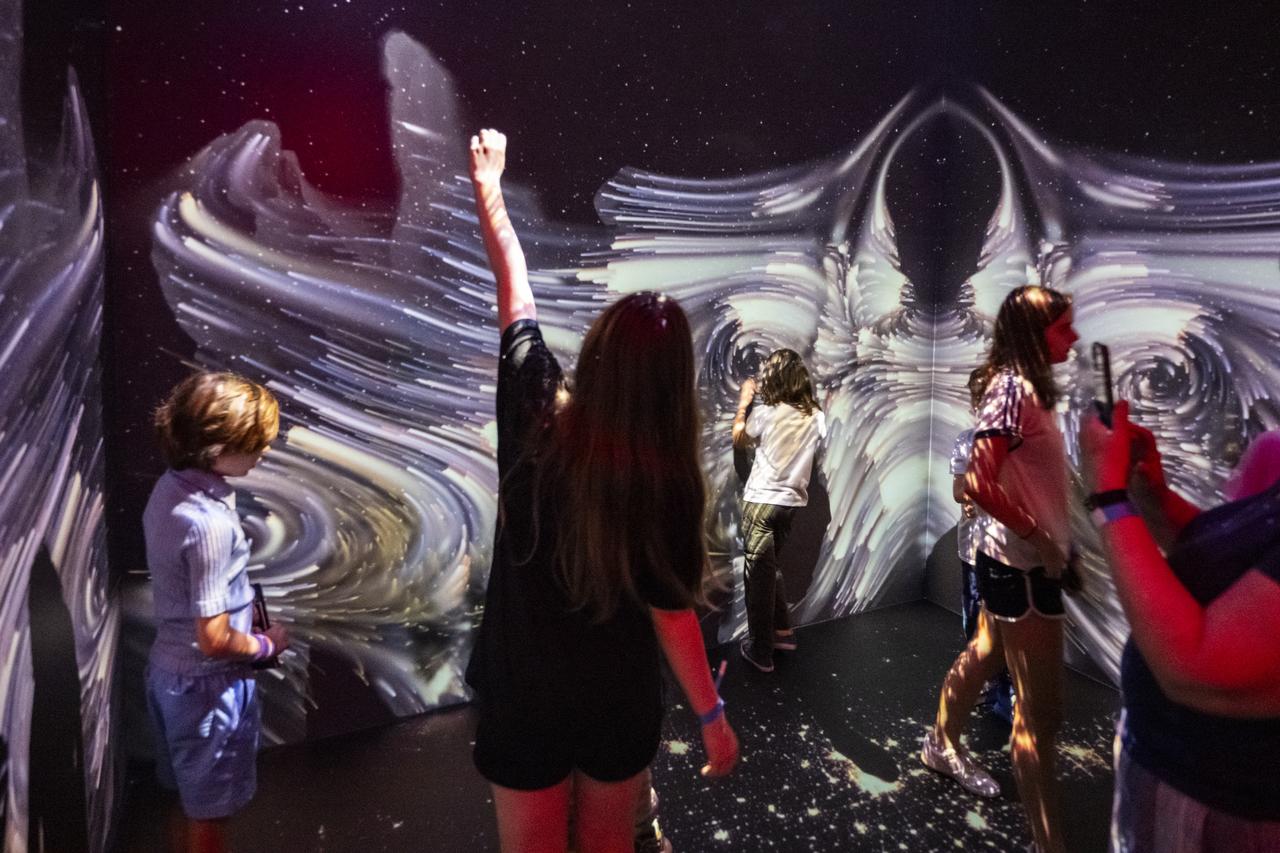
Local students participate in an Earth Information Center (EIC) student engagement event, Friday, June 23, 2023, at the Mary W. Jackson NASA Headquarters building in Washington. The EIC is a new immersive experience that combines live data sets with cutting-edge data visualization and storytelling to allow visitors to see how our planet is changing. Photo Credit: (NASA/Keegan Barber)
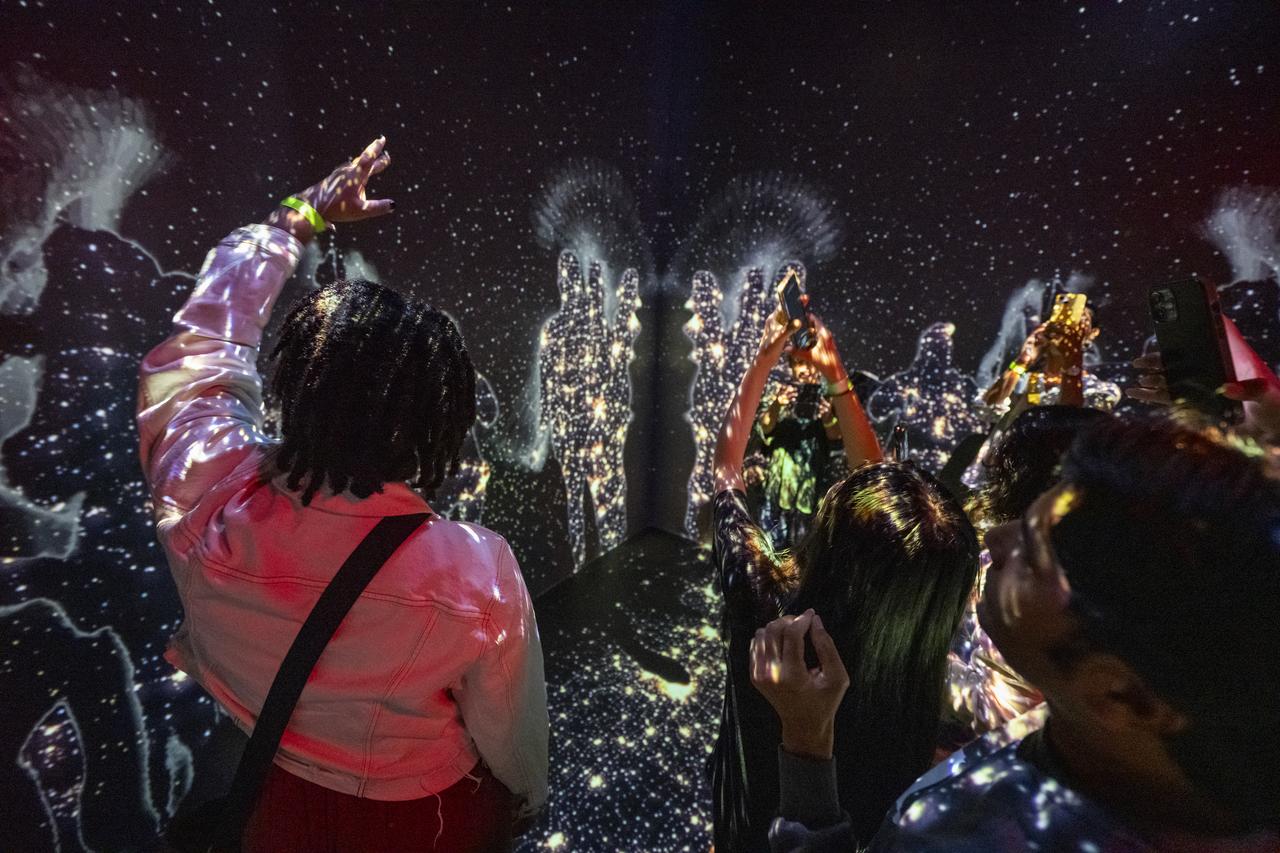
Local students participate in an Earth Information Center (EIC) student engagement event, Friday, June 23, 2023, at the Mary W. Jackson NASA Headquarters building in Washington. The EIC is a new immersive experience that combines live data sets with cutting-edge data visualization and storytelling to allow visitors to see how our planet is changing. Photo Credit: (NASA/Keegan Barber)
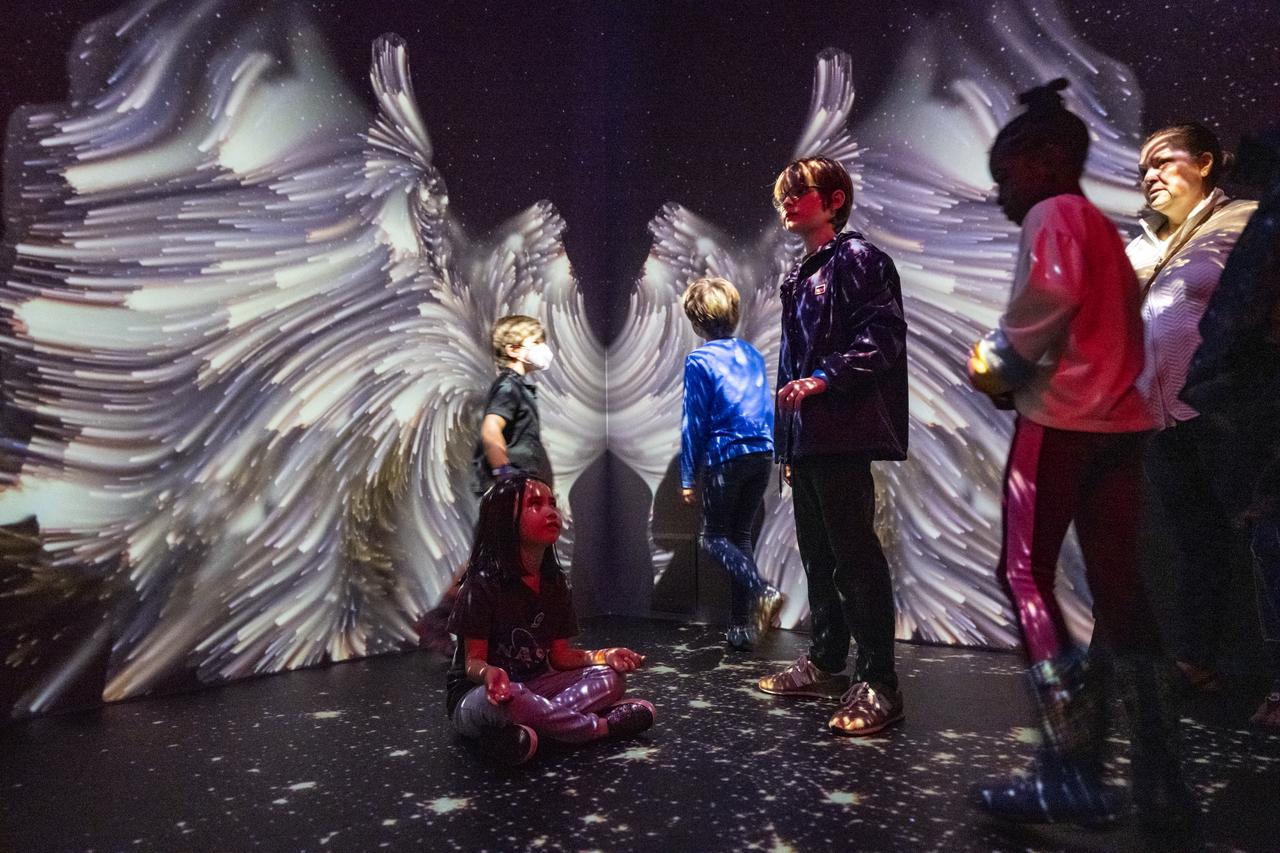
Local students participate in an Earth Information Center (EIC) student engagement event, Friday, June 23, 2023, at the Mary W. Jackson NASA Headquarters building in Washington. The EIC is a new immersive experience that combines live data sets with cutting-edge data visualization and storytelling to allow visitors to see how our planet is changing. Photo Credit: (NASA/Keegan Barber)
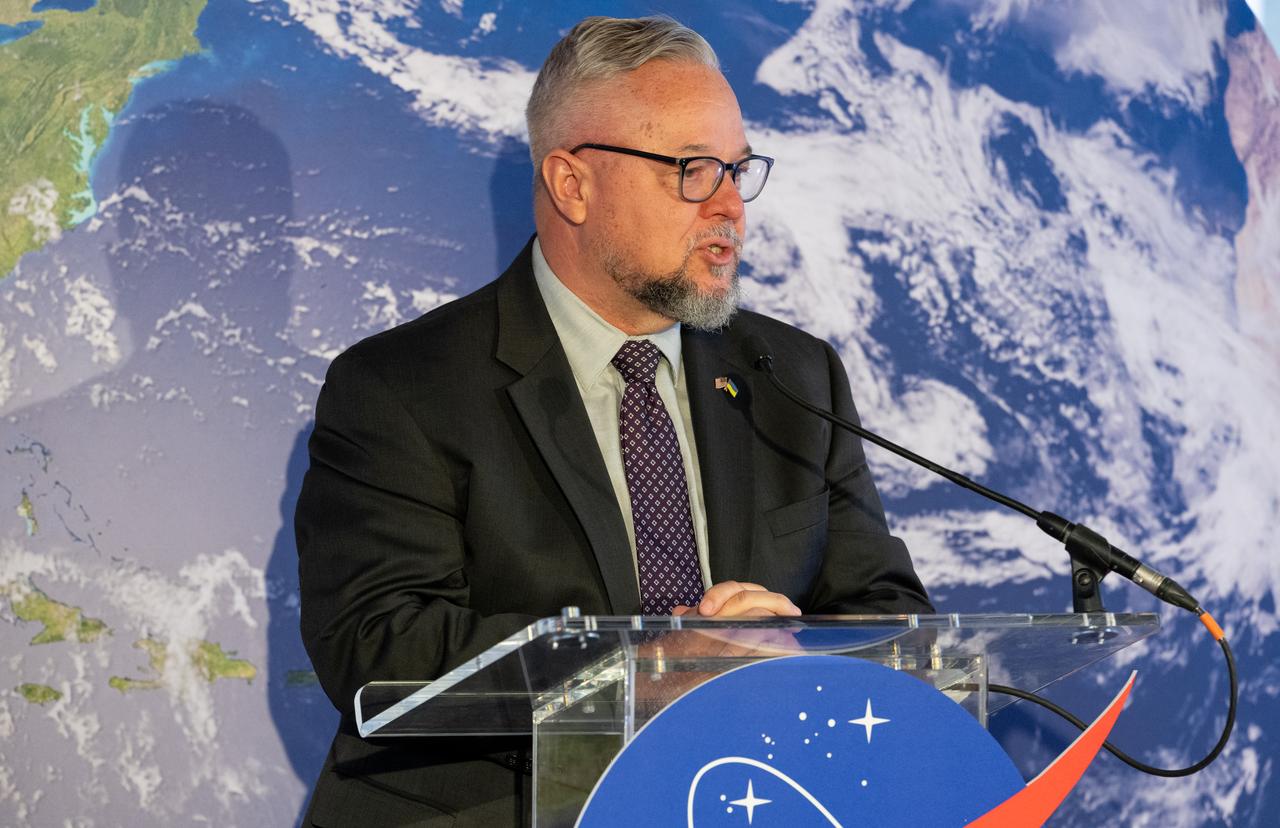
Mike Michener, Deputy Assistant Administrator for the Bureau for Resilience and Food Security at the United States Agency for International Development (USAID), speaks before the ribbon cutting ceremony to open NASA’s Earth Information Center, Wednesday, June 21, 2023, at the Mary W. Jackson NASA Headquarters building in Washington. The Earth Information Center is new immersive experience that combines live data sets with cutting-edge data visualization and storytelling to allow visitors to see how our planet is changing. Photo Credit: (NASA/Joel Kowsky)
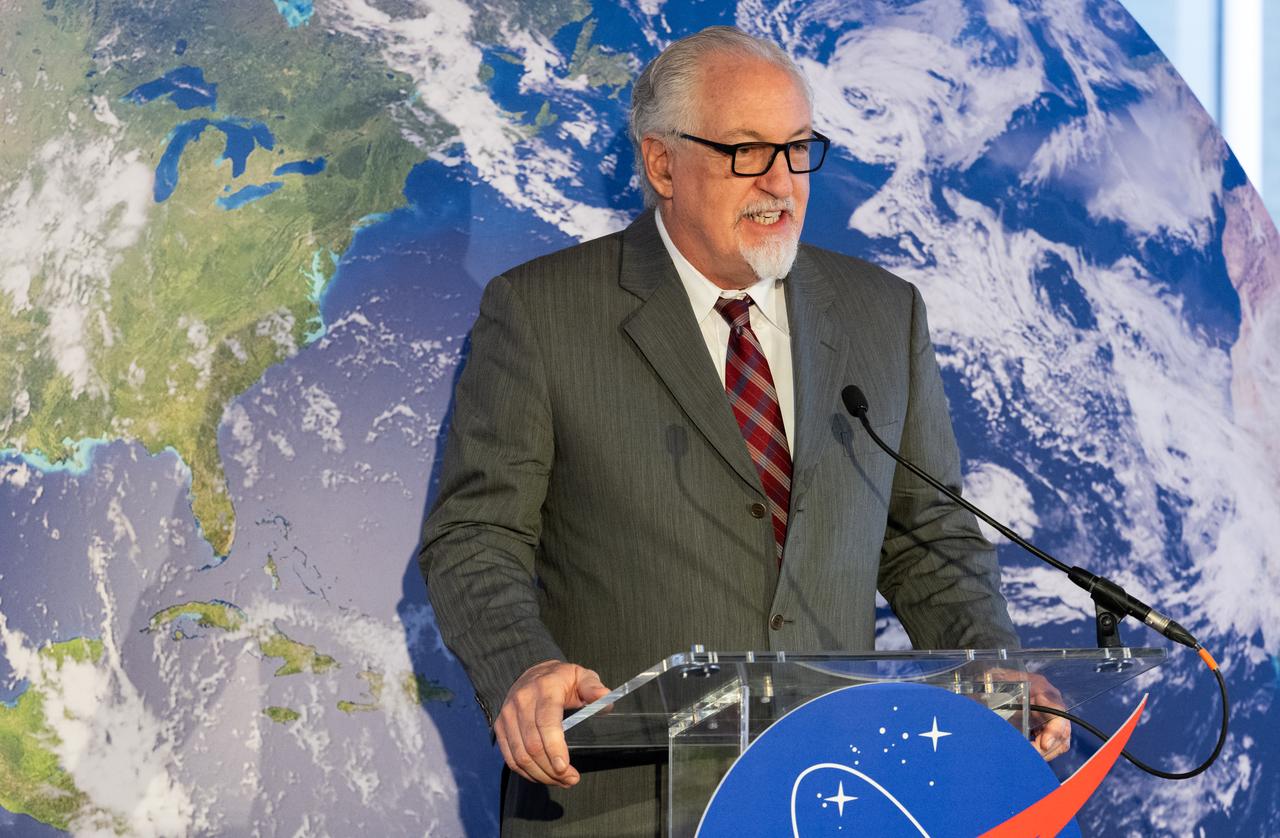
Marlen Eve, Deputy Administrator for the Agricultural Research Service at the U.S. Department of Agriculture (USDA), speaks before the ribbon cutting ceremony to open NASA’s Earth Information Center, Wednesday, June 21, 2023, at the Mary W. Jackson NASA Headquarters building in Washington. The Earth Information Center is new immersive experience that combines live data sets with cutting-edge data visualization and storytelling to allow visitors to see how our planet is changing. Photo Credit: (NASA/Joel Kowsky)
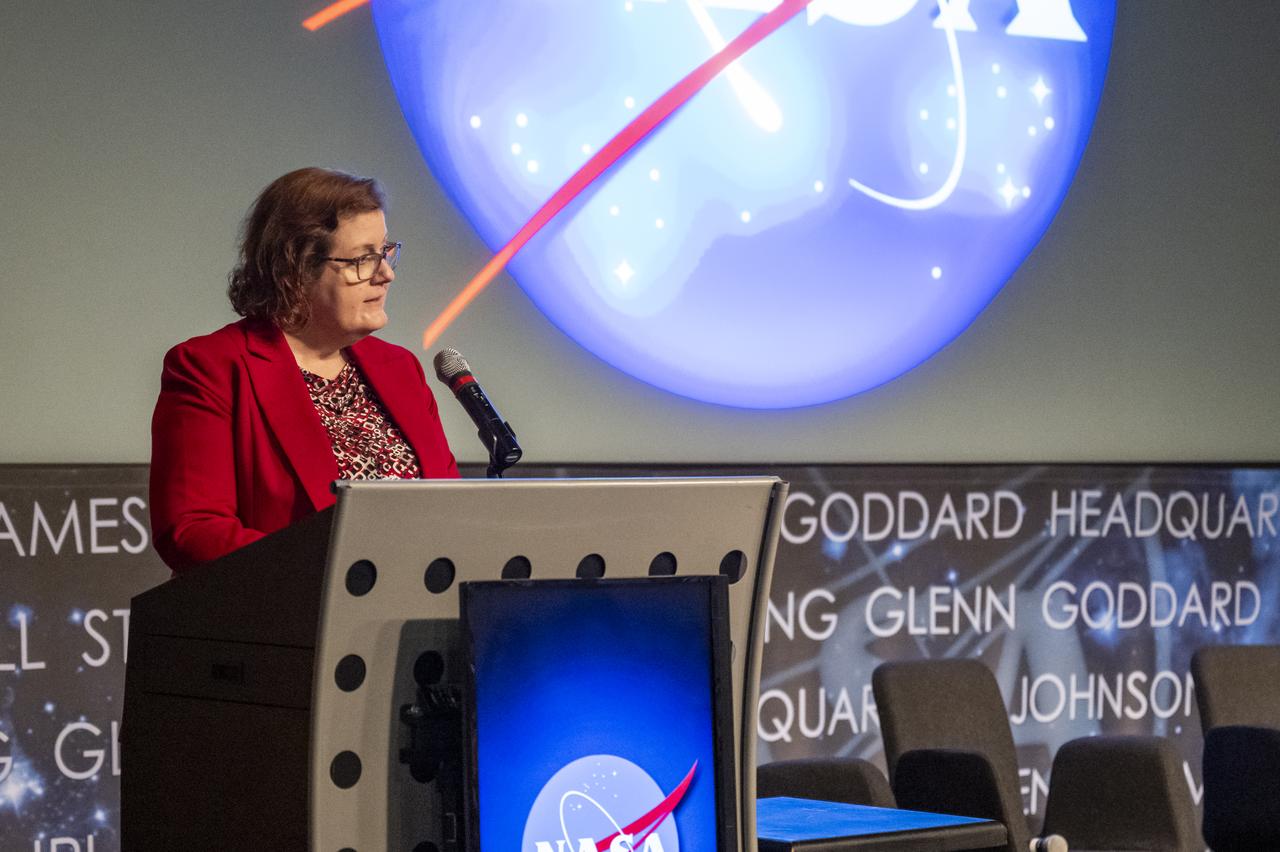
NASA Earth Science Division Deputy Director Julie Robinson delivers remarks during an Earth Information Center (EIC) student engagement event, Friday, June 23, 2023, at the Mary W. Jackson NASA Headquarters building in Washington. The EIC is a new immersive experience that combines live data sets with cutting-edge data visualization and storytelling to allow visitors to see how our planet is changing. Photo Credit: (NASA/Keegan Barber)

The NASA Worm Logo sign is unveiled before the ribbon cutting ceremony to open NASA’s Earth Information Center, Wednesday, June 21, 2023, at the Mary W. Jackson NASA Headquarters building in Washington. The Earth Information Center is new immersive experience that combines live data sets with cutting-edge data visualization and storytelling to allow visitors to see how our planet is changing. Photo Credit: (NASA/Joel Kowsky)
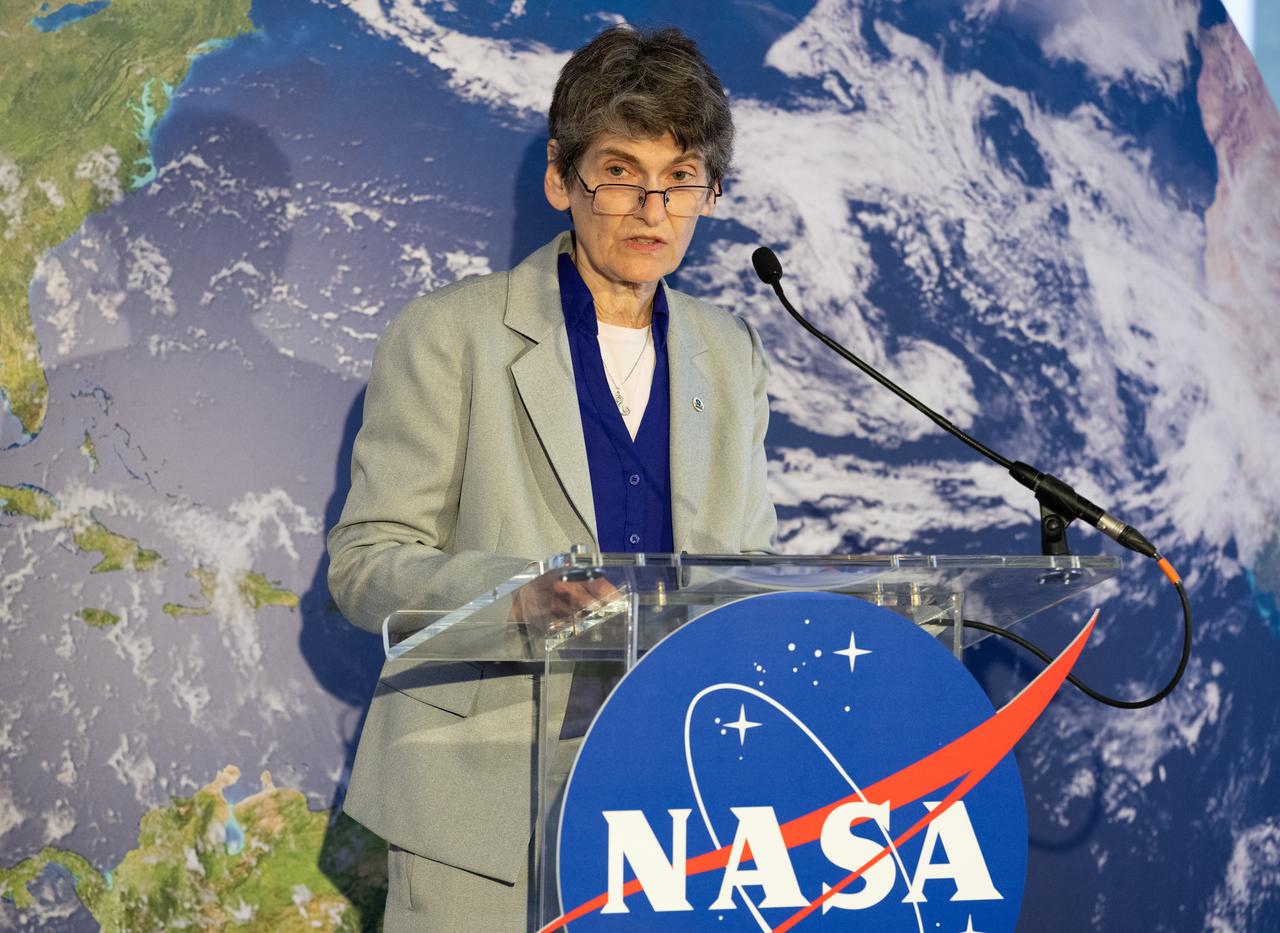
Janet McCabe, Deputy Administrator of the Environmental Protection Agency (EPA), speaks before the ribbon cutting ceremony to open NASA’s Earth Information Center, Wednesday, June 21, 2023, at the Mary W. Jackson NASA Headquarters building in Washington. The Earth Information Center is new immersive experience that combines live data sets with cutting-edge data visualization and storytelling to allow visitors to see how our planet is changing. Photo Credit: (NASA/Joel Kowsky)
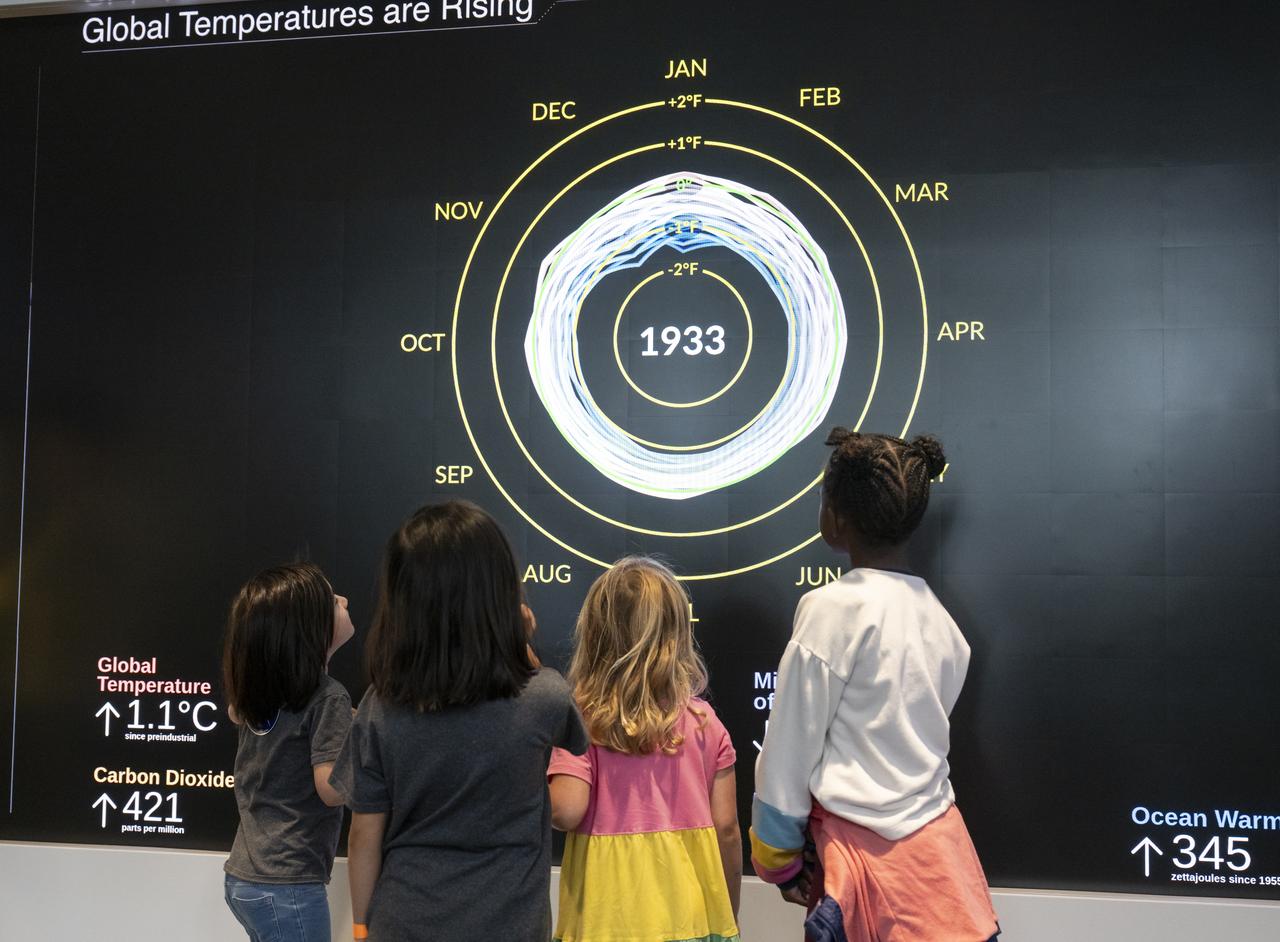
Local students participate in an Earth Information Center (EIC) student engagement event, Friday, June 23, 2023, at the Mary W. Jackson NASA Headquarters building in Washington. The EIC is a new immersive experience that combines live data sets with cutting-edge data visualization and storytelling to allow visitors to see how our planet is changing. Photo Credit: (NASA/Keegan Barber)
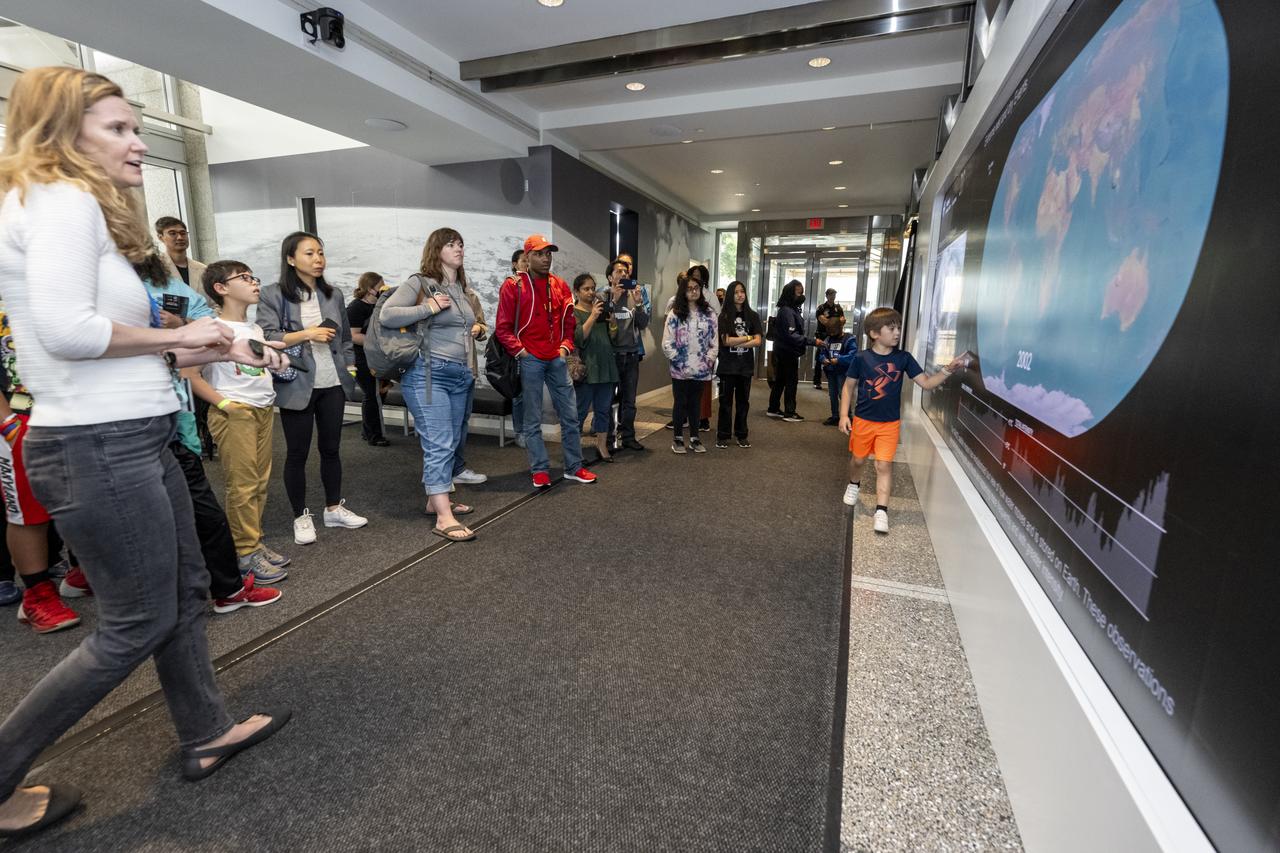
Local students participate in an Earth Information Center (EIC) student engagement event, Friday, June 23, 2023, at the Mary W. Jackson NASA Headquarters building in Washington. The EIC is a new immersive experience that combines live data sets with cutting-edge data visualization and storytelling to allow visitors to see how our planet is changing. Photo Credit: (NASA/Keegan Barber)

Eric Hooks, Deputy Administrator of the Federal Emergency Management Agency (FEMA), speaks before the ribbon cutting ceremony to open NASA’s Earth Information Center, Wednesday, June 21, 2023, at the Mary W. Jackson NASA Headquarters building in Washington. The Earth Information Center is new immersive experience that combines live data sets with cutting-edge data visualization and storytelling to allow visitors to see how our planet is changing. Photo Credit: (NASA/Joel Kowsky)
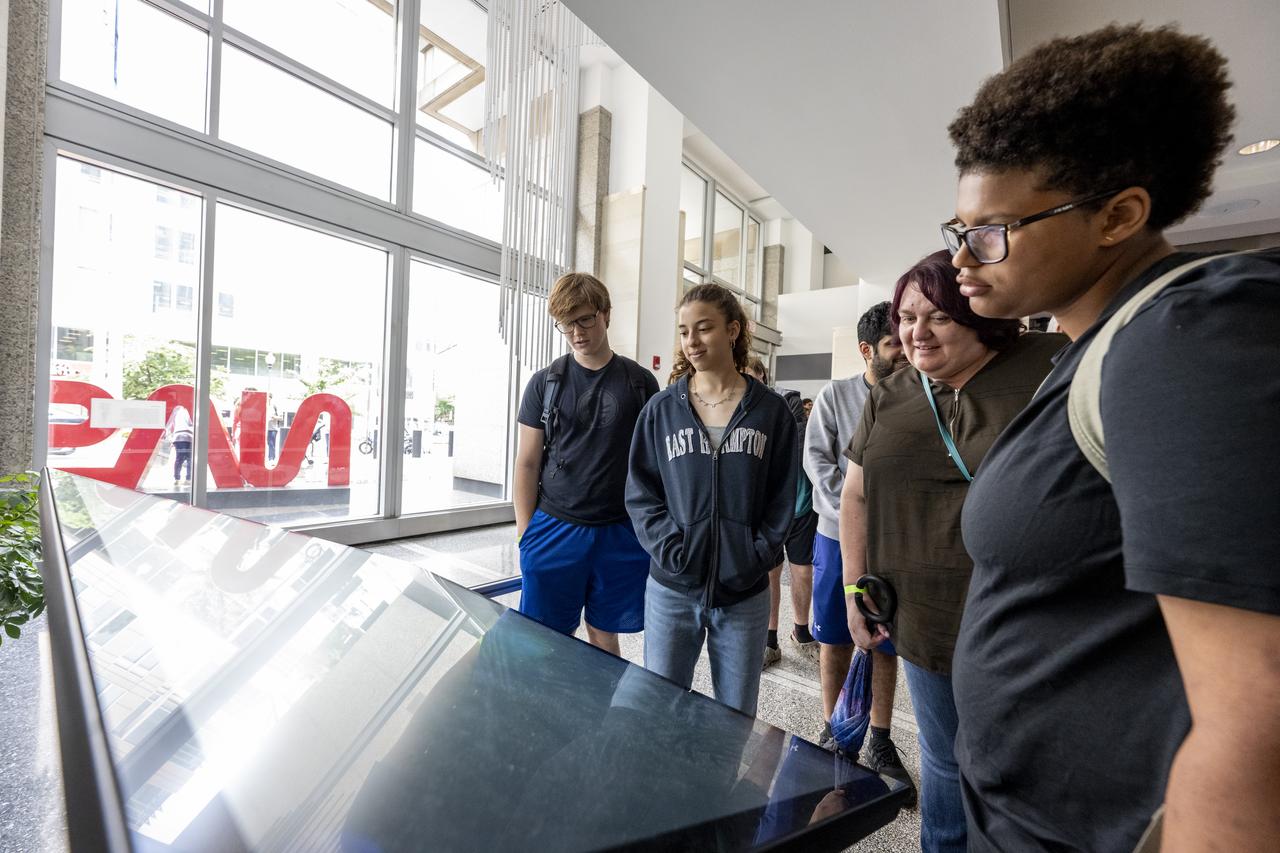
Local students participate in an Earth Information Center (EIC) student engagement event, Friday, June 23, 2023, at the Mary W. Jackson NASA Headquarters building in Washington. The EIC is a new immersive experience that combines live data sets with cutting-edge data visualization and storytelling to allow visitors to see how our planet is changing. Photo Credit: (NASA/Keegan Barber)
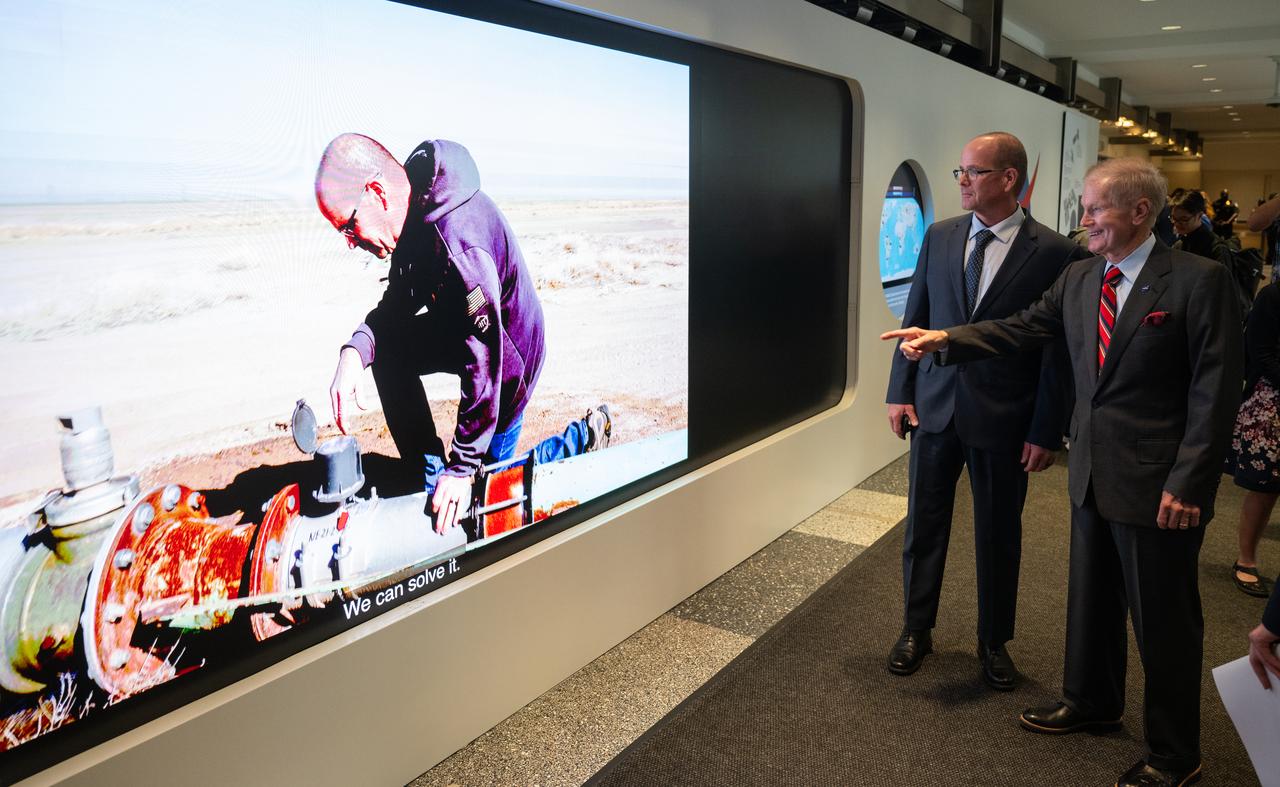
NASA Administrator Bill Nelson, right, and Dwane Roth of Big D Farms in Kansas are seen watching a video on the hyperwall that shows Roth’s farm following a ribbon cutting ceremony to open NASA’s Earth Information Center, Wednesday, June 21, 2023, at the Mary W. Jackson NASA Headquarters building in Washington. The Earth Information Center is new immersive experience that combines live data sets with cutting-edge data visualization and storytelling to allow visitors to see how our planet is changing. Photo Credit: (NASA/Joel Kowsky)
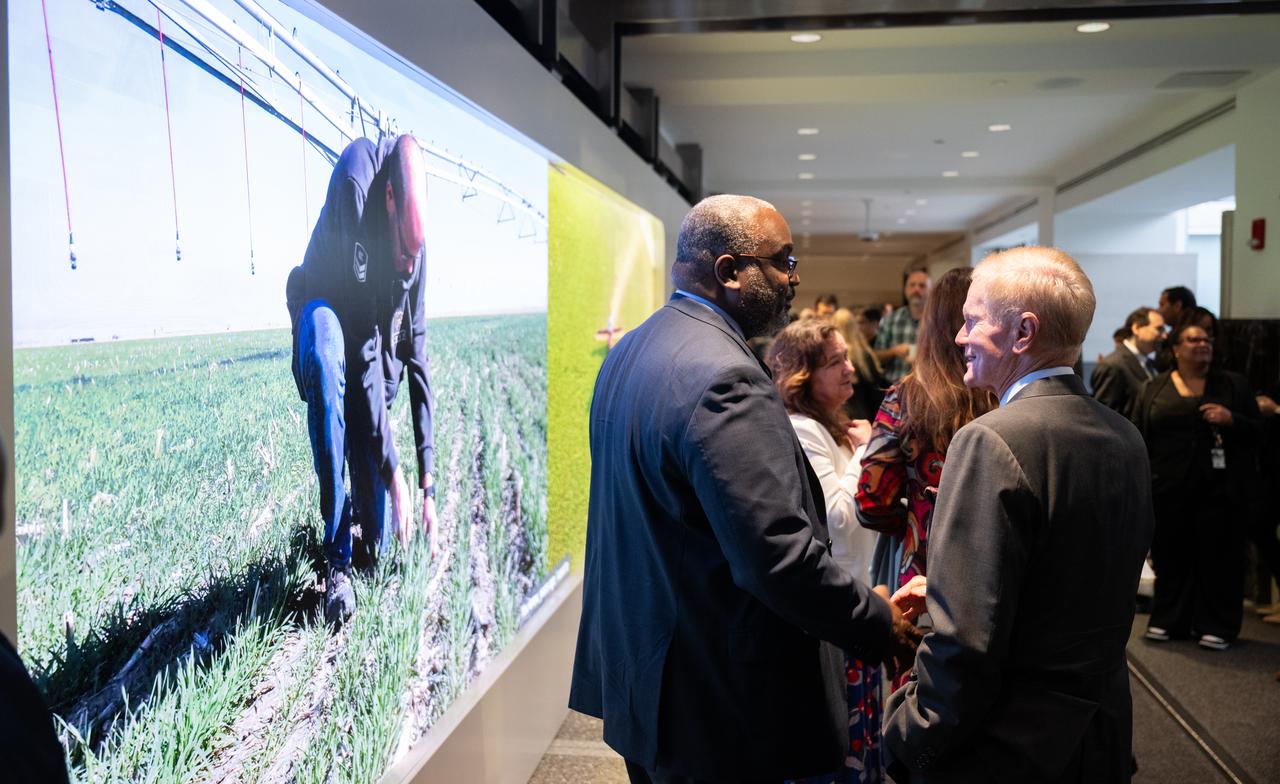
NASA Administrator Bill Nelson, right, and Michael Morgan, Assistant Secretary of Commerce for Environmental Observation and Prediction at the National Oceanic and Atmospheric Administration (NOAA), are seen in front of the hyperwall following the ribbon cutting ceremony to open NASA’s Earth Information Center, Wednesday, June 21, 2023, at the Mary W. Jackson NASA Headquarters building in Washington. The Earth Information Center is new immersive experience that combines live data sets with cutting-edge data visualization and storytelling to allow visitors to see how our planet is changing. Photo Credit: (NASA/Joel Kowsky)
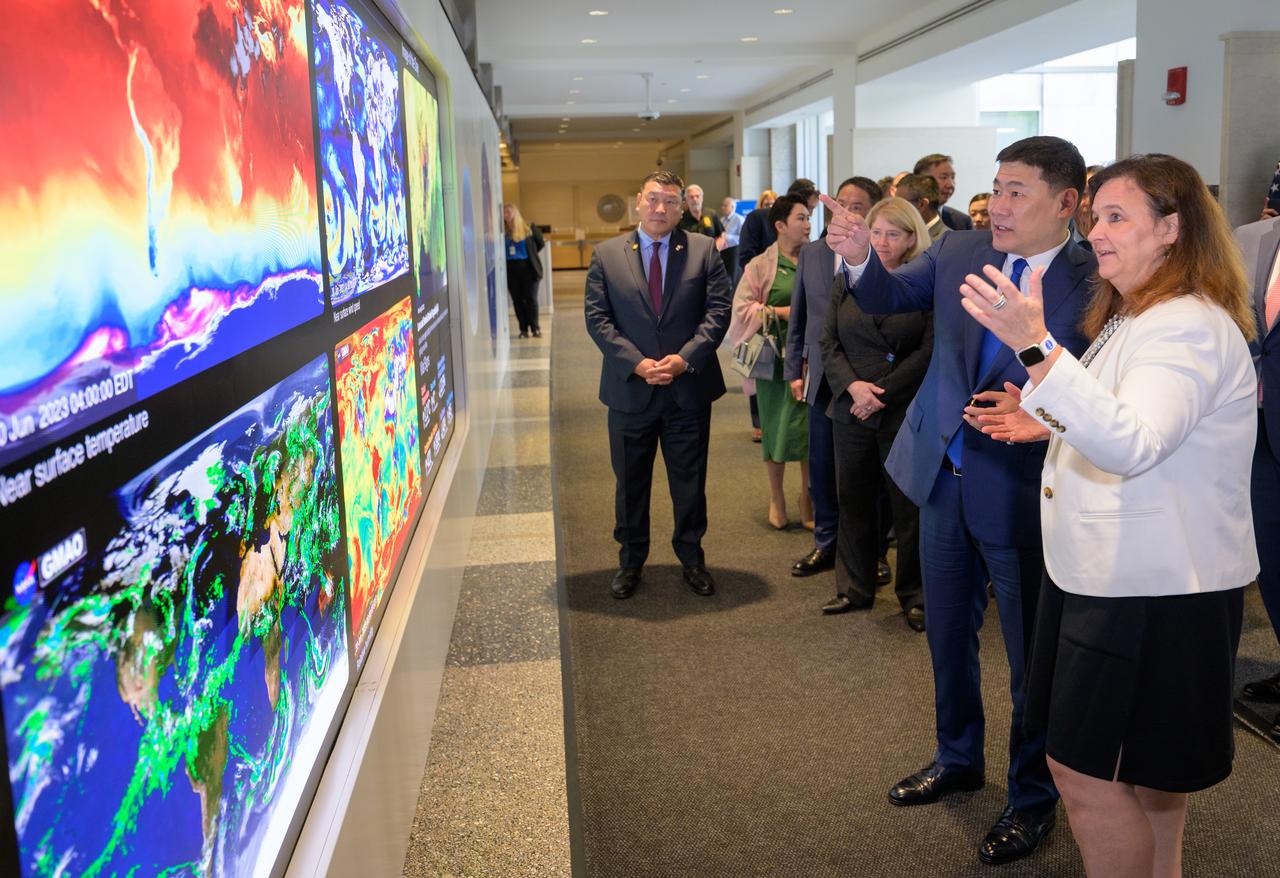
NASA Earth Science Division Director Karen St. Germain, far right, talks with Prime Minister Oyun-Erdene Luvsannamsrai of Mongolia, as they along with NASA Deputy Administrator Pam Melroy tour NASA’s Earth Information Center, Friday, Aug. 4, 2023, at the NASA Headquarters Mary W. Jackson Building in Washington. The Earth Information Center is a new immersive experience that combines live data sets with cutting-edge data visualization to show NASA data can improve lives in the face of disasters, environmental challenges, and our changing world. Photo Credit: (NASA/Bill Ingalls)

NASA Earth Science Division Director Karen St. Germain, far right, talks with Prime Minister Oyun-Erdene Luvsannamsrai of Mongolia, as they along with NASA Deputy Administrator Pam Melroy, left, tour NASA’s Earth Information Center, Friday, Aug. 4, 2023, at the NASA Headquarters Mary W. Jackson Building in Washington. The Earth Information Center is a new immersive experience that combines live data sets with cutting-edge data visualization to show NASA data can improve lives in the face of disasters, environmental challenges, and our changing world. Photo Credit: (NASA/Bill Ingalls)
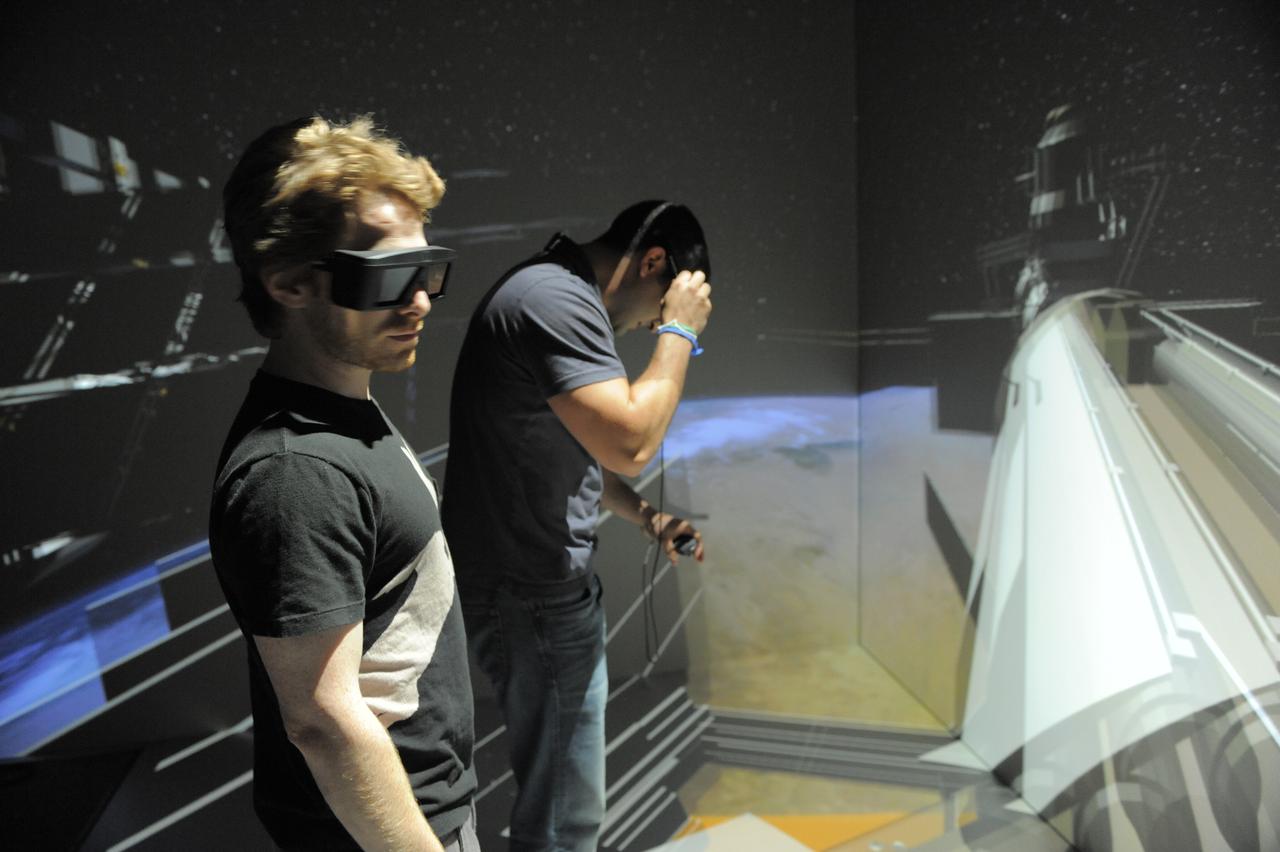
Seth Green in NASA Goddard’s CAVE – an immersive stereographic (3-D) visualization environment. Seth and his wife, Clare Grant visited Goddard Space Flight Center on Tuesday, May 24, 2011. Credit: NASA/GSFC/Pat Izzo <b><a href="http://www.nasa.gov/centers/goddard/home/index.html" rel="nofollow">NASA Goddard Space Flight Center</a></b> enables NASA’s mission through four scientific endeavors: Earth Science, Heliophysics, Solar System Exploration, and Astrophysics. Goddard plays a leading role in NASA’s accomplishments by contributing compelling scientific knowledge to advance the Agency’s mission. <b>Follow us on <a href="http://twitter.com/NASA_GoddardPix" rel="nofollow">Twitter</a></b> <b>Join us on <a href="http://www.facebook.com/pages/Greenbelt-MD/NASA-Goddard/395013845897?ref=tsd" rel="nofollow">Facebook</a></b>
![Test subject wearing jet-shoe apparatus and resting in sling support. The cables are not attached. From A.W. Vogeley, "Piloted Space-Flight Simulation at Langley Research Center," Paper presented at the American Society of Mechanical Engineers, 1966 Winter Meeting, New York, NY, November 27 - December 1, 1966. "As mentioned previously, Langley is conducting in-house and contract studies of extra-vehicular activities wherein zero gravity is simulated by the water-immersion technique. ... Water immersion is a very useful technique where motions are slow. When more rapid motion is required, as in studying one-man propulsion systems, other approaches are required. For these studies Langley has been using the RDS [Rendezvous Docking Simulator] in a manner similar to the LLRF [Lunar Landing Research Facility] technique. The test subjects are suspended in a sling support from a single RDS cable. As they translate about, the RDS tracks them, keeping the cable vertical. The test subjects operate in an effectively zero g environment in the horizontal plane. Tracking was originally done visually using closed-circuit TV, but recently a fast-response servo system using cable angle sensors has provided better operation. Some results of tests where subjects moved about merely by jumping and also where propulsion in the form of simple "jet-shoes" was provided are given in reference 20. Both methods, within limits, appear feasible. Full six-degree-of-freedom equipment for studies of more sophisticated one-man propulsion systems is now being procured. Called OMPRA (One-Man Propulsion Research Apparatus), the device will provide a gimbal system for rotational freedom, a quick response vertical servo for this translational freedom that is not now feasible with the RDS, and a versatile maneuvering unit."](https://images-assets.nasa.gov/image/LRC-1967-B701_P-01373/LRC-1967-B701_P-01373~medium.jpg)
Test subject wearing jet-shoe apparatus and resting in sling support. The cables are not attached. From A.W. Vogeley, "Piloted Space-Flight Simulation at Langley Research Center," Paper presented at the American Society of Mechanical Engineers, 1966 Winter Meeting, New York, NY, November 27 - December 1, 1966. "As mentioned previously, Langley is conducting in-house and contract studies of extra-vehicular activities wherein zero gravity is simulated by the water-immersion technique. ... Water immersion is a very useful technique where motions are slow. When more rapid motion is required, as in studying one-man propulsion systems, other approaches are required. For these studies Langley has been using the RDS [Rendezvous Docking Simulator] in a manner similar to the LLRF [Lunar Landing Research Facility] technique. The test subjects are suspended in a sling support from a single RDS cable. As they translate about, the RDS tracks them, keeping the cable vertical. The test subjects operate in an effectively zero g environment in the horizontal plane. Tracking was originally done visually using closed-circuit TV, but recently a fast-response servo system using cable angle sensors has provided better operation. Some results of tests where subjects moved about merely by jumping and also where propulsion in the form of simple "jet-shoes" was provided are given in reference 20. Both methods, within limits, appear feasible. Full six-degree-of-freedom equipment for studies of more sophisticated one-man propulsion systems is now being procured. Called OMPRA (One-Man Propulsion Research Apparatus), the device will provide a gimbal system for rotational freedom, a quick response vertical servo for this translational freedom that is not now feasible with the RDS, and a versatile maneuvering unit."
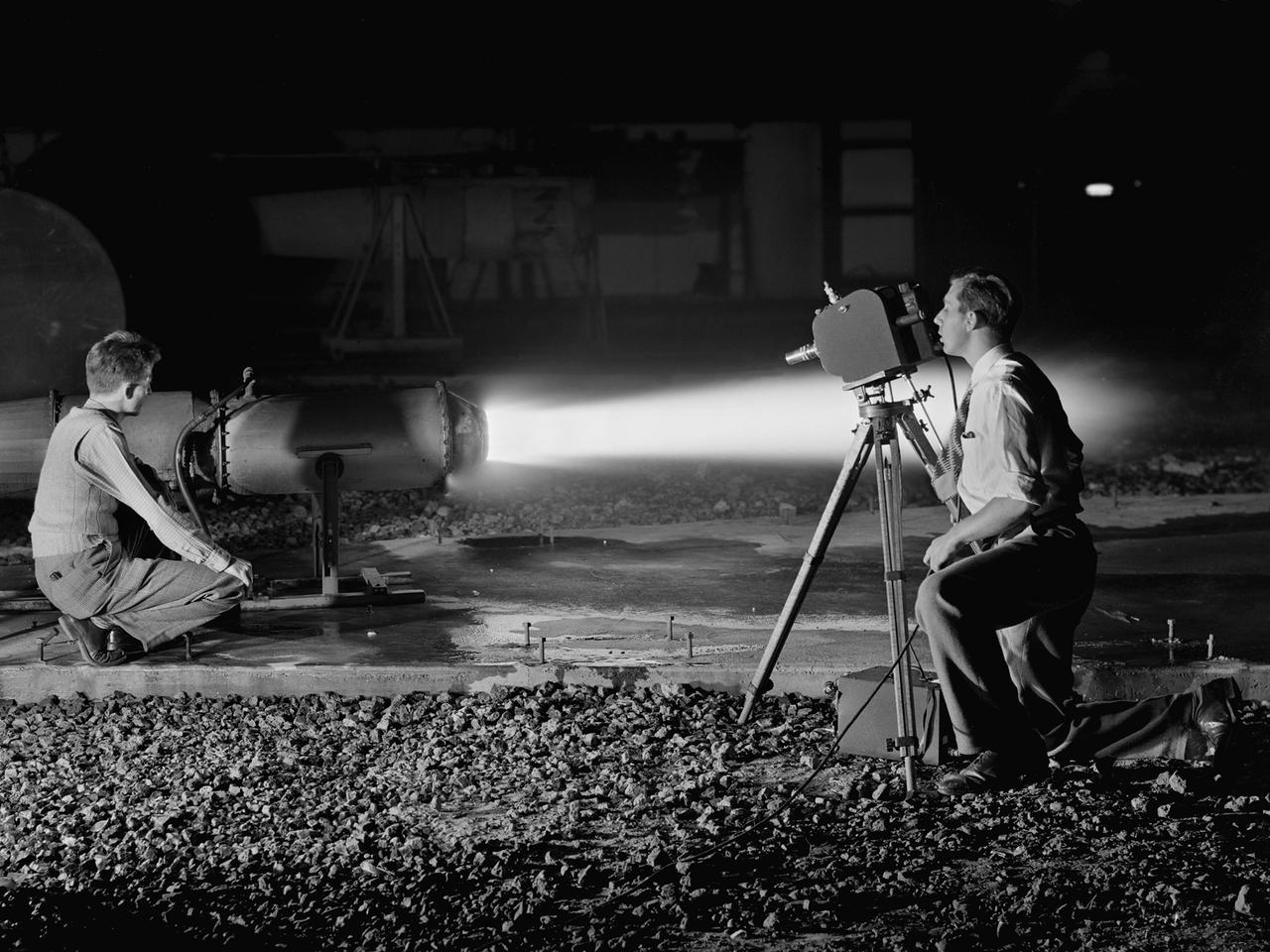
A National Advisory Committee for Aeronautics (NACA) photographer films the test of a ramjet engine at the Lewis Flight Propulsion Laboratory. The laboratory had an arsenal of facilities to test the engines and their components, and immersed itself in the study of turbojet and ramjet engines during the mid-1940s. Combustion, fuel injection, flameouts, and performance at high altitudes were of particular interest to researchers. They devised elaborate schemes to instrument the engines in order to record temperature, pressure, and other data. Many of the tests were also filmed so Lewis researchers could visually review the combustion performance along with the data. The photographer in this image was using high-speed film to document a thrust augmentation study at Lewis’ Jet Static Propulsion Laboratory. The ramjet in this photograph was equipped with a special afterburner as part of a general effort to improve engine performance. Lewis’ Photo Lab was established in 1942. The staff was expanded over the next few years as more test facilities became operational. The Photo Lab’s staff and specialized equipment have been key research tools for decades. They accompany pilots on test flights, use high-speed cameras to capture fleeting processes like combustion, and work with technology, such as the Schlieren camera, to capture supersonic aerodynamics. In addition, the group has documented construction projects, performed publicity work, created images for reports, and photographed data recording equipment.
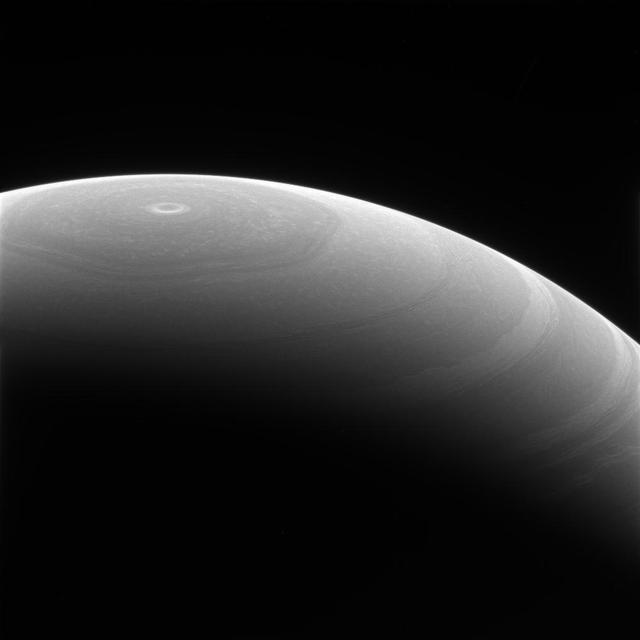
Saturn's cloud belts generally move around the planet in a circular path, but one feature is slightly different. The planet's wandering, hexagon-shaped polar jet stream breaks the mold -- a reminder that surprises lurk everywhere in the solar system. This atmospheric feature was first observed by the Voyager mission in the early 1980s, and was dubbed "the hexagon." Cassini's visual and infrared mapping spectrometer was first to spy the hexagon during the mission, since it could see the feature's outline while the pole was still immersed in wintry darkness. The hexagon became visible to Cassini's imaging cameras as sunlight returned to the northern hemisphere. This view looks toward the northern hemisphere of Saturn -- in summer when this view was acquired -- from above 65 degrees north latitude. The image was taken with the Cassini spacecraft wide-angle camera on June 28, 2017 using a spectral filter which preferentially admits wavelengths of near-infrared light centered at 752 nanometers. The view was acquired at a distance of approximately 536,000 miles (862,000 kilometers) from Saturn. Image scale is 32 miles (52 kilometers) per pixel. The Cassini spacecraft ended its mission on Sept. 15, 2017. https://photojournal.jpl.nasa.gov/catalog/PIA21348

This image depicts a vast canyon of dust and gas in the Orion Nebula from a 3-D computer model based on observations by NASA's Hubble Space Telescope and created by science visualization specialists at the Space Telescope Science Institute (STScI) in Baltimore, Md. A 3-D visualization of this model takes viewers on an amazing four-minute voyage through the 15-light-year-wide canyon. Credit: NASA, G. Bacon, L. Frattare, Z. Levay, and F. Summers (STScI/AURA) Go here to learn more about Hubble 3D: <a href="http://www.nasa.gov/topics/universe/features/hubble_imax_premiere.html" rel="nofollow">www.nasa.gov/topics/universe/features/hubble_imax_premier...</a> or <a href="http://www.imax.com/hubble/" rel="nofollow">www.imax.com/hubble/</a> Take an exhilarating ride through the Orion Nebula, a vast star-making factory 1,500 light-years away. Swoop through Orion's giant canyon of gas and dust. Fly past behemoth stars whose brilliant light illuminates and energizes the entire cloudy region. Zoom by dusty tadpole-shaped objects that are fledgling solar systems. This virtual space journey isn't the latest video game but one of several groundbreaking astronomy visualizations created by specialists at the Space Telescope Science Institute (STScI) in Baltimore, the science operations center for NASA's Hubble Space Telescope. The cinematic space odysseys are part of the new Imax film "Hubble 3D," which opens today at select Imax theaters worldwide. The 43-minute movie chronicles the 20-year life of Hubble and includes highlights from the May 2009 servicing mission to the Earth-orbiting observatory, with footage taken by the astronauts. The giant-screen film showcases some of Hubble's breathtaking iconic pictures, such as the Eagle Nebula's "Pillars of Creation," as well as stunning views taken by the newly installed Wide Field Camera 3. While Hubble pictures of celestial objects are awe-inspiring, they are flat 2-D photographs. For this film, those 2-D images have been converted into 3-D environments, giving the audience the impression they are space travelers taking a tour of Hubble's most popular targets. "A large-format movie is a truly immersive experience," says Frank Summers, an STScI astronomer and science visualization specialist who led the team that developed the movie visualizations. The team labored for nine months, working on four visualization sequences that comprise about 12 minutes of the movie. "Seeing these Hubble images in 3-D, you feel like you are flying through space and not just looking at picture postcards," Summers continued. "The spacescapes are all based on Hubble images and data, though some artistic license is necessary to produce the full depth of field needed for 3-D." The most ambitious sequence is a four-minute voyage through the Orion Nebula's gas-and-dust canyon, about 15 light-years across. During the ride, viewers will see bright and dark, gaseous clouds; thousands of stars, including a grouping of bright, hefty stars called the Trapezium; and embryonic planetary systems. The tour ends with a detailed look at a young circumstellar disk, which is much like the structure from which our solar system formed 4.5 billion years ago. Based on a Hubble image of Orion released in 2006, the visualization was a collaborative effort between science visualization specialists at STScI, including Greg Bacon, who sculpted the Orion Nebula digital model, with input from STScI astronomer Massimo Roberto; the National Center for Supercomputing Applications at the University of Illinois at Urbana-Champaign; and the Spitzer Science Center at the California Institute of Technology in Pasadena. For some of the sequences, STScI imaging specialists developed new techniques for transforming the 2-D Hubble images into 3-D. STScI image processing specialists Lisa Frattare and Zolt Levay, for example, created methods of splitting a giant gaseous pillar in the Carina Nebula into multiple layers to produce a 3-D effect, giving the structure depth. The Carina Nebula is a nursery for baby stars. Frattare painstakingly removed the thousands of stars in the image so that Levay could separate the gaseous layers on the isolated Carina pillar. Frattare then replaced the stars into both foreground and background layers to complete the 3-D model. For added effect, the same separation was done for both visible and infrared Hubble images, allowing the film to cross-fade between wavelength views in 3-D. In another sequence viewers fly into a field of 170,000 stars in the giant star cluster Omega Centauri. STScI astronomer Jay Anderson used his stellar database to create a synthetic star field in 3-D that matches recent razor-sharp Hubble photos. The film's final four-minute sequence takes viewers on a voyage from our Milky Way Galaxy past many of Hubble's best galaxy shots and deep into space. Some 15,000 galaxies from Hubble's deepest surveys stretch billions of light-years across the universe in a 3-D sequence created by STScI astronomers and visualizers. The view dissolves into a cobweb that traces the universe's large-scale structure, the backbone from which galaxies were born. In addition to creating visualizations, STScI's education group also provided guidance on the "Hubble 3D" Educator Guide, which includes standards-based lesson plans and activities about Hubble and its mission. Students will use the guide before or after seeing the movie. "The guide will enhance the movie experience for students and extend the movie into classrooms," says Bonnie Eisenhamer, STScI's Hubble Formal Education manager. The Hubble Space Telescope is a project of international cooperation between NASA and the European Space Agency (ESA) and is managed by NASA’s Goddard Space Flight Center (GSFC) in Greenbelt, Md. The Space Telescope Science Institute (STScI) conducts Hubble science operations. The institute is operated for NASA by the Association of Universities for Research in Astronomy, Inc., Washington, D.C.