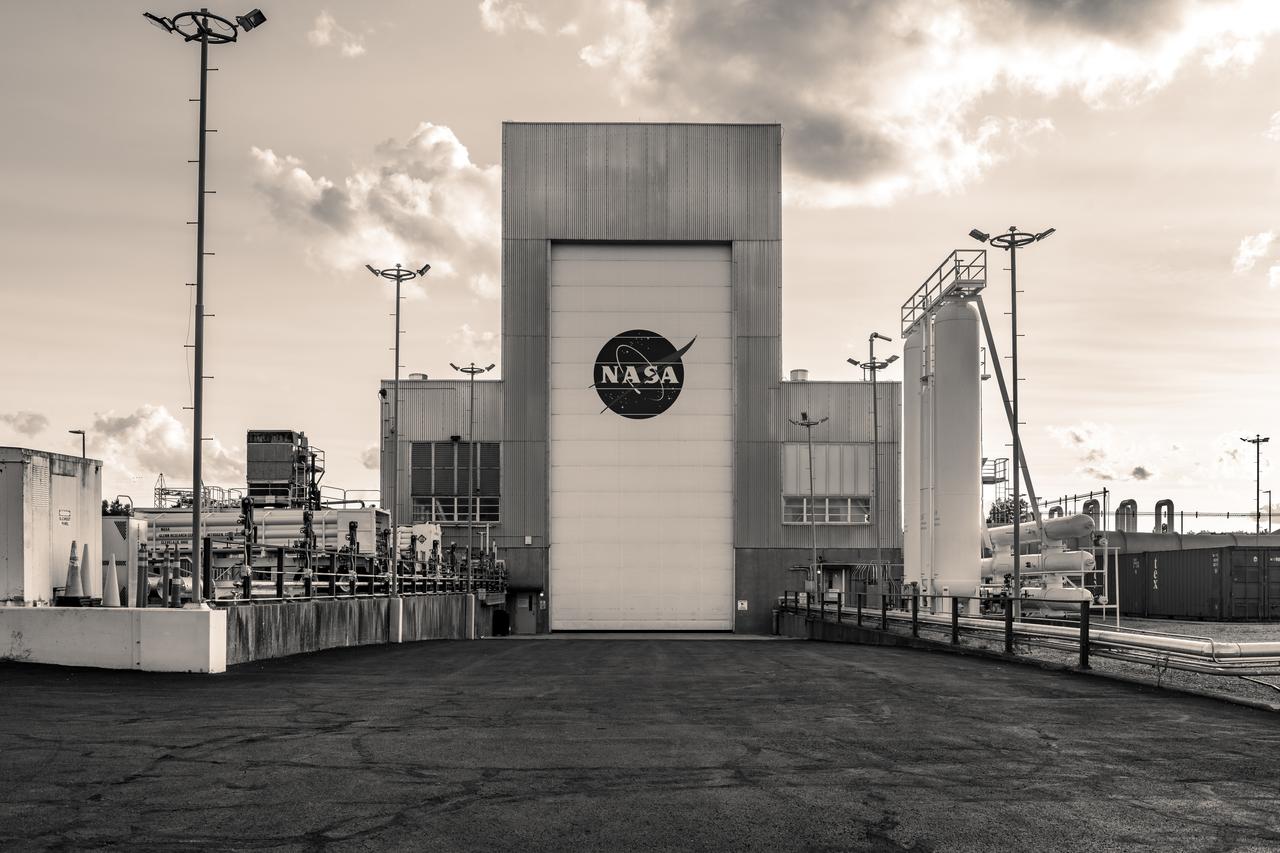
NASA’s In-Space Propulsion Facility located at Neil Armstrong Test Facility in Sandusky Ohio is the world’s only high altitude test facility capable of full-scale rocket engine and launch vehicle system level tests. The facility supports mission profile thermal vacuum simulation and engine firing. The engine or vehicle can be exposed for indefinite periods to low ambient pressures, low-background temperatures, and dynamic solar heating, simulating the environment the hardware will encounter during orbital or interplanetary travel. Photo Credit: (NASA/Jordan Salkin)
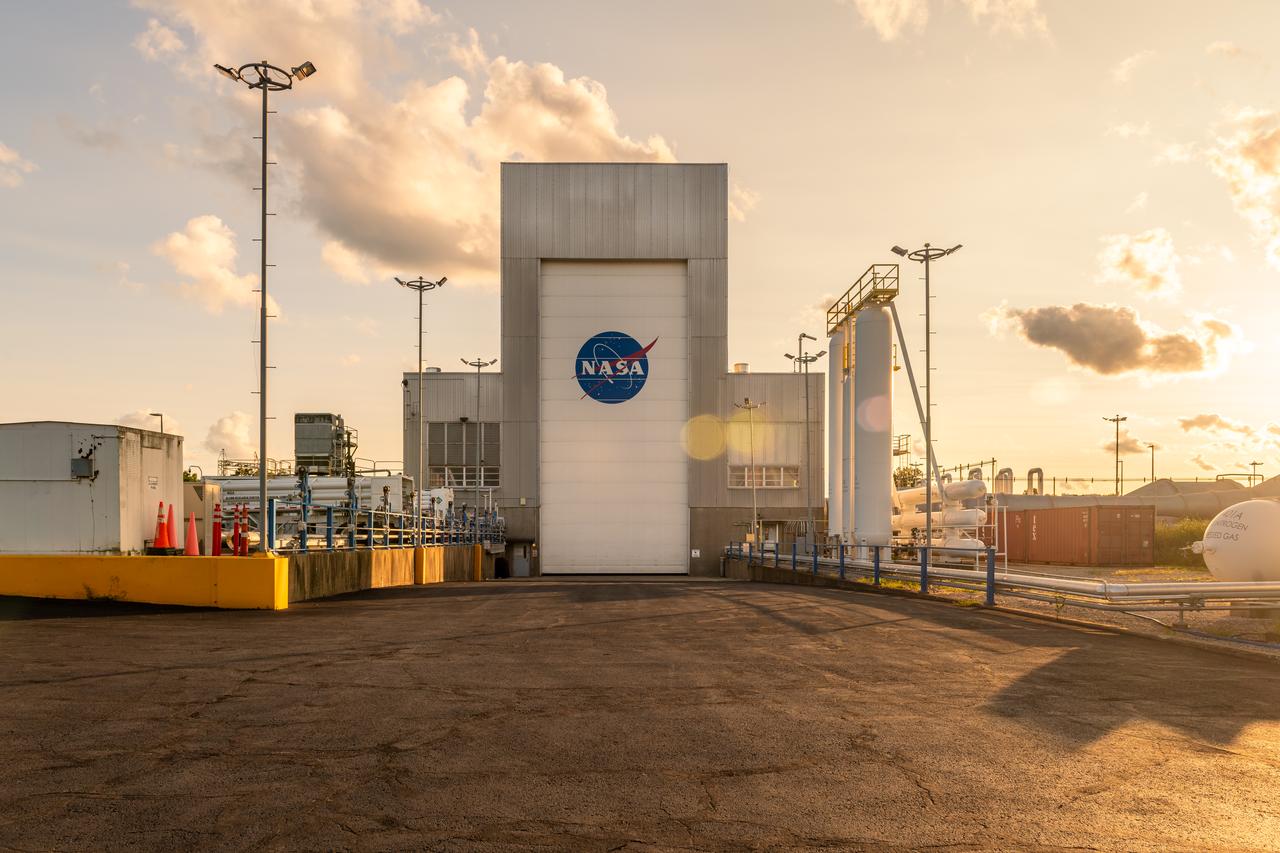
NASA’s In-Space Propulsion Facility located at Neil Armstrong Test Facility in Sandusky Ohio is the world’s only high altitude test facility capable of full-scale rocket engine and launch vehicle system level tests. The facility supports mission profile thermal vacuum simulation and engine firing. The engine or vehicle can be exposed for indefinite periods to low ambient pressures, low-background temperatures, and dynamic solar heating, simulating the environment the hardware will encounter during orbital or interplanetary travel. Photo Credit: (NASA/Jordan Salkin)
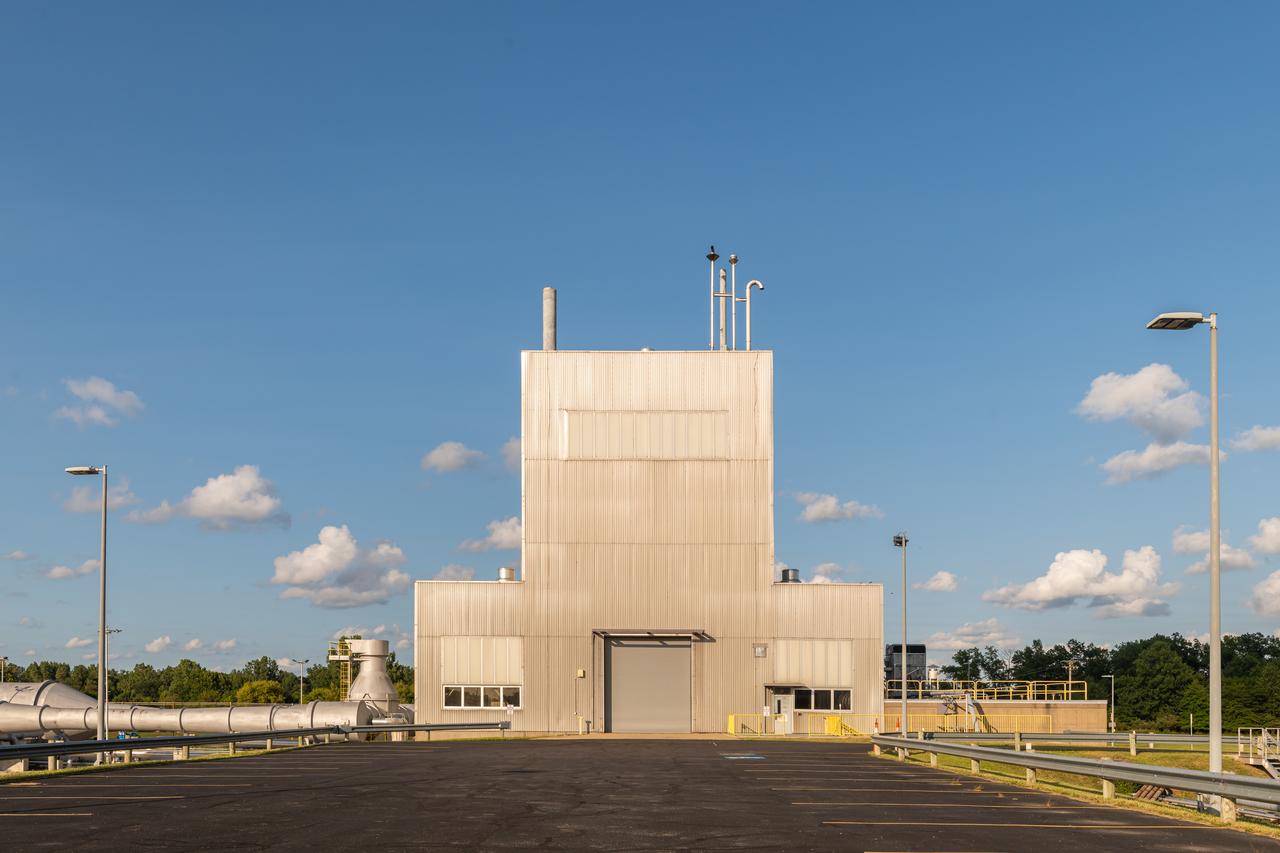
NASA’s In-Space Propulsion Facility located at Neil Armstrong Test Facility in Sandusky Ohio is the world’s only high altitude test facility capable of full-scale rocket engine and launch vehicle system level tests. The facility supports mission profile thermal vacuum simulation and engine firing. The engine or vehicle can be exposed for indefinite periods to low ambient pressures, low-background temperatures, and dynamic solar heating, simulating the environment the hardware will encounter during orbital or interplanetary travel. Photo Credit: (NASA/Jordan Salkin)
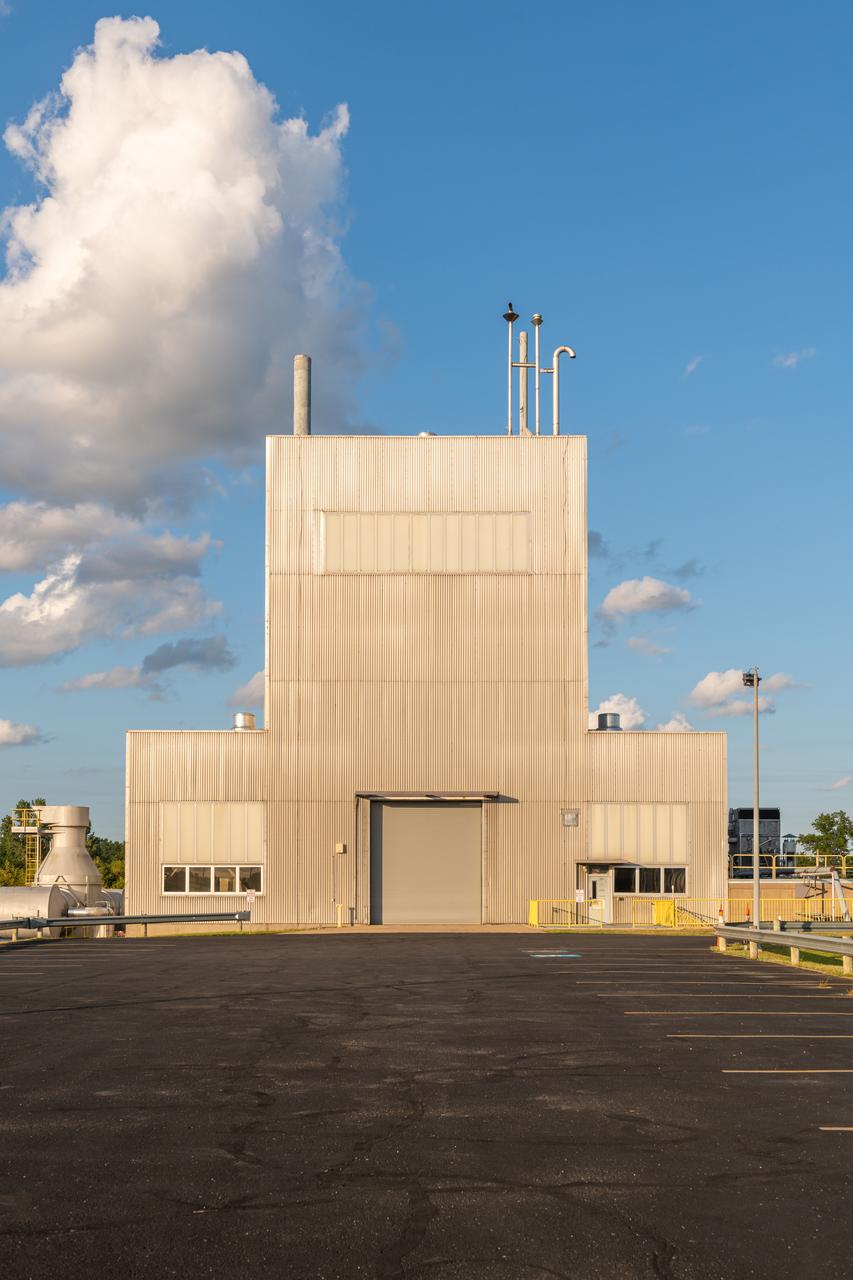
NASA’s In-Space Propulsion Facility located at Neil Armstrong Test Facility in Sandusky Ohio is the world’s only high altitude test facility capable of full-scale rocket engine and launch vehicle system level tests. The facility supports mission profile thermal vacuum simulation and engine firing. The engine or vehicle can be exposed for indefinite periods to low ambient pressures, low-background temperatures, and dynamic solar heating, simulating the environment the hardware will encounter during orbital or interplanetary travel. Photo Credit: (NASA/Jordan Salkin)
NASA’s In-Space Propulsion Facility located at Neil Armstrong Test Facility in Sandusky Ohio is the world’s only high altitude test facility capable of full-scale rocket engine and launch vehicle system level tests. The facility supports mission profile thermal vacuum simulation and engine firing. The engine or vehicle can be exposed for indefinite periods to low ambient pressures, low-background temperatures, and dynamic solar heating, simulating the environment the hardware will encounter during orbital or interplanetary travel. Photo Credit: (NASA/Jordan Salkin)
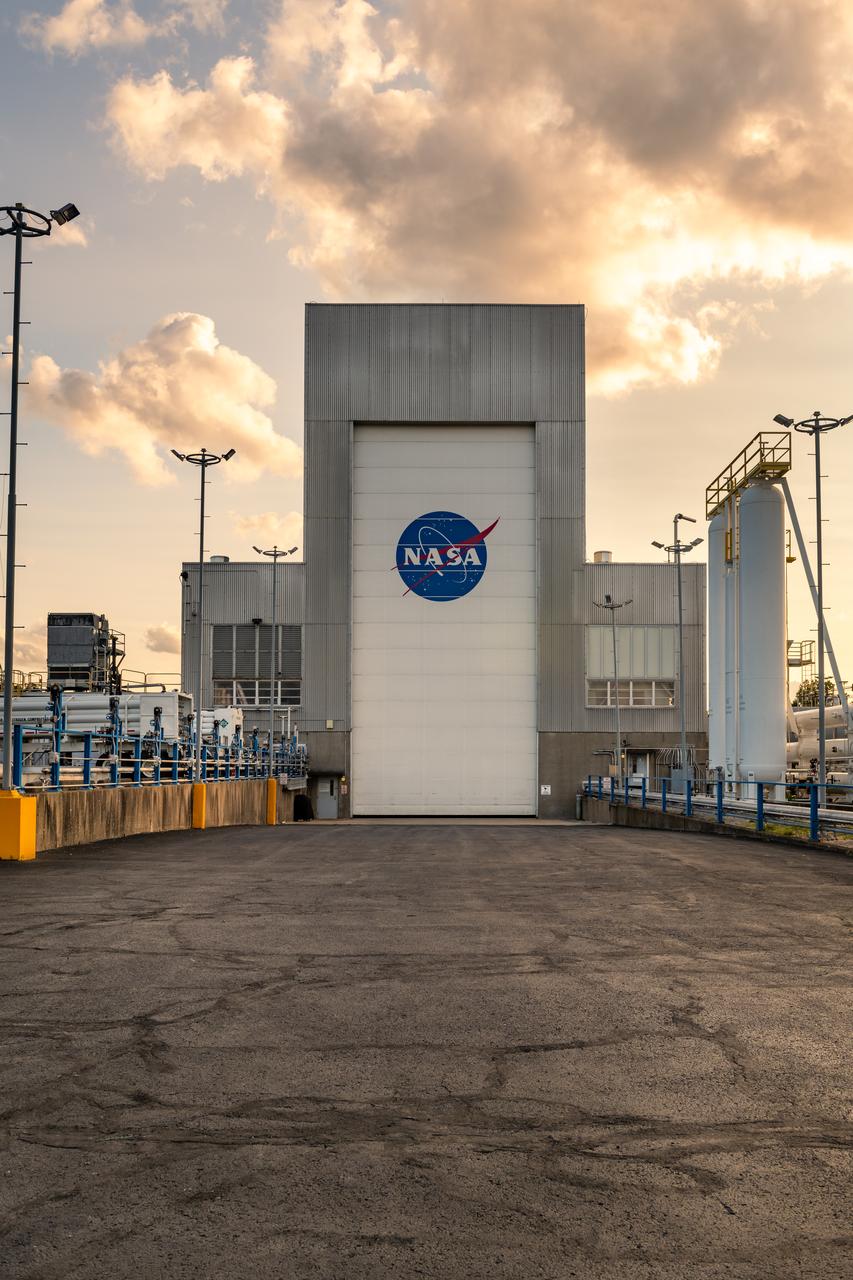
NASA’s In-Space Propulsion Facility located at Neil Armstrong Test Facility in Sandusky Ohio is the world’s only high altitude test facility capable of full-scale rocket engine and launch vehicle system level tests. The facility supports mission profile thermal vacuum simulation and engine firing. The engine or vehicle can be exposed for indefinite periods to low ambient pressures, low-background temperatures, and dynamic solar heating, simulating the environment the hardware will encounter during orbital or interplanetary travel. Photo Credit: (NASA/Jordan Salkin)
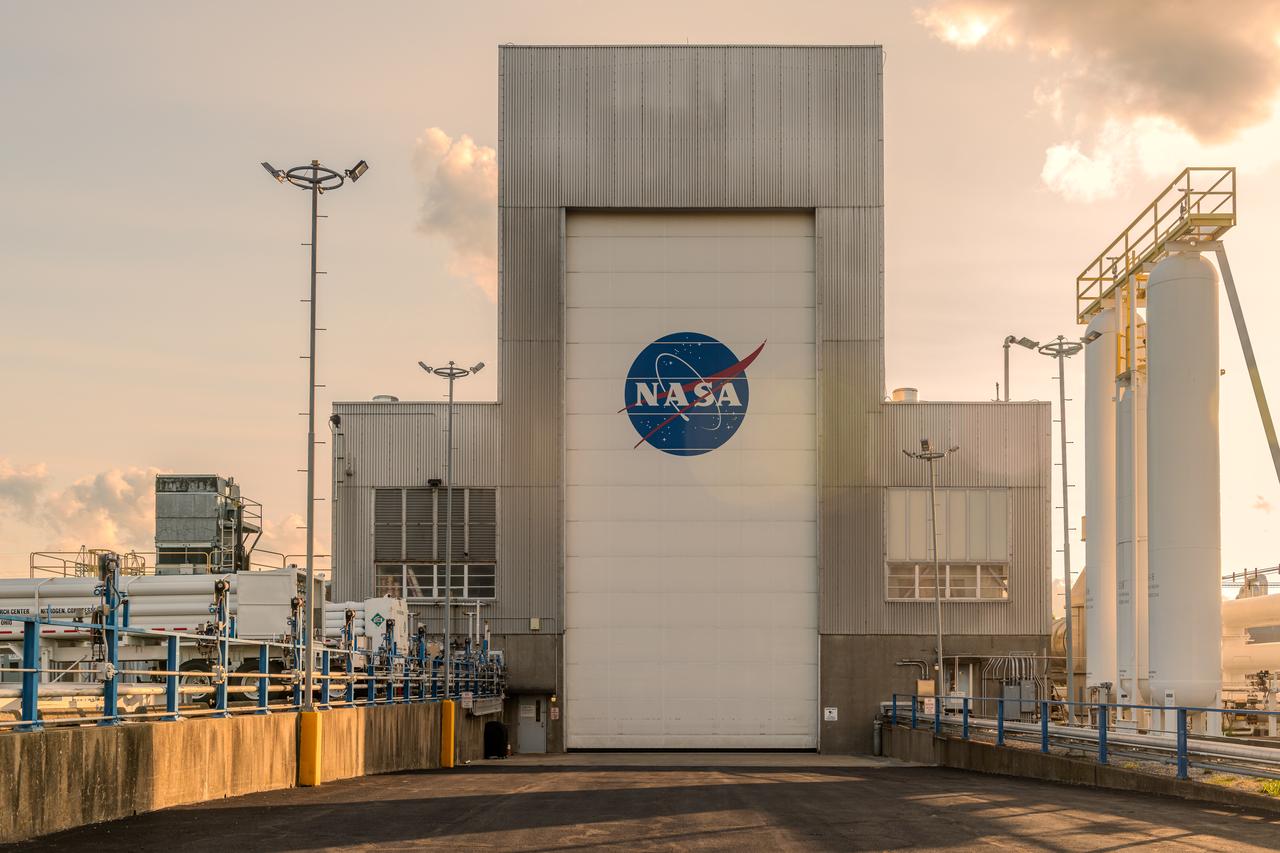
NASA’s In-Space Propulsion Facility located at Neil Armstrong Test Facility in Sandusky Ohio is the world’s only high altitude test facility capable of full-scale rocket engine and launch vehicle system level tests. The facility supports mission profile thermal vacuum simulation and engine firing. The engine or vehicle can be exposed for indefinite periods to low ambient pressures, low-background temperatures, and dynamic solar heating, simulating the environment the hardware will encounter during orbital or interplanetary travel. Photo Credit: (NASA/Jordan Salkin)
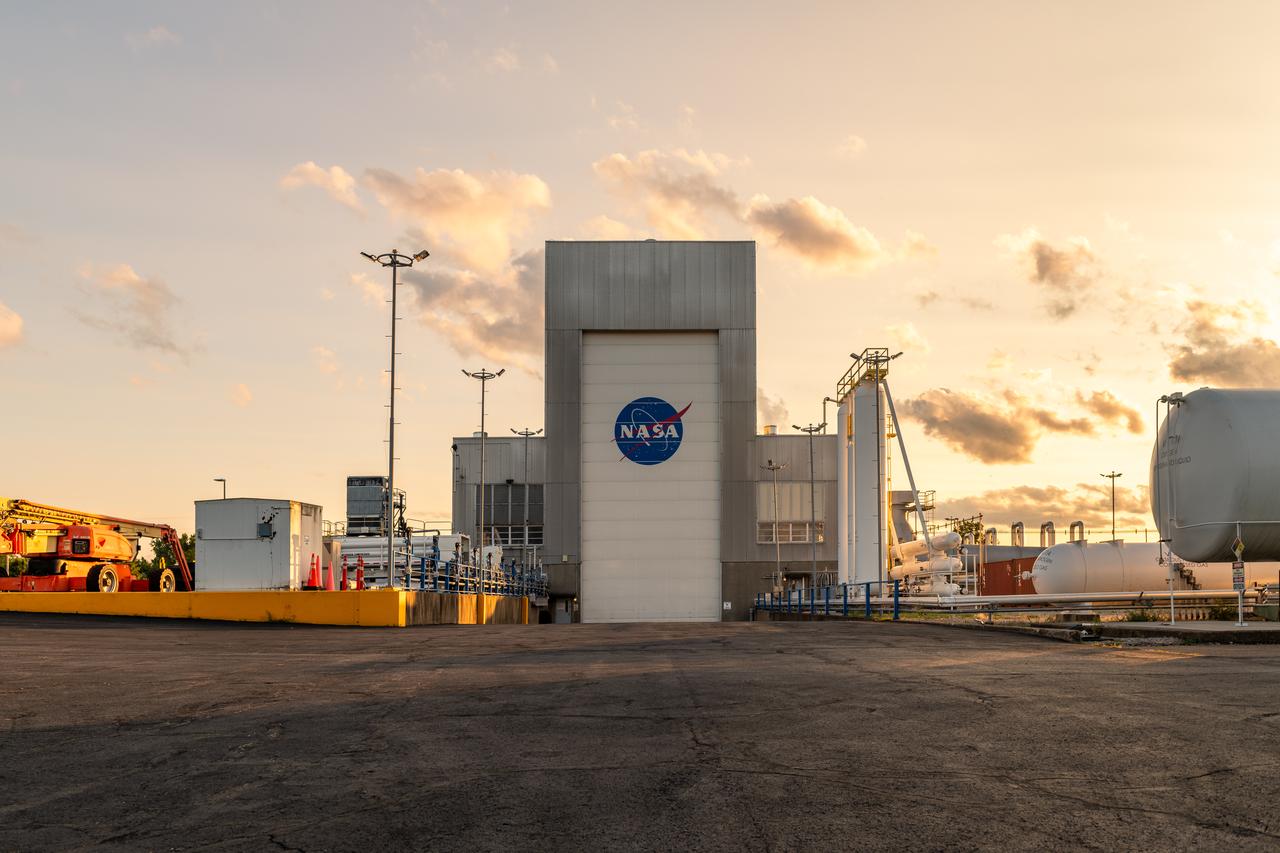
NASA’s In-Space Propulsion Facility located at Neil Armstrong Test Facility in Sandusky Ohio is the world’s only high altitude test facility capable of full-scale rocket engine and launch vehicle system level tests. The facility supports mission profile thermal vacuum simulation and engine firing. The engine or vehicle can be exposed for indefinite periods to low ambient pressures, low-background temperatures, and dynamic solar heating, simulating the environment the hardware will encounter during orbital or interplanetary travel. Photo Credit: (NASA/Jordan Salkin)
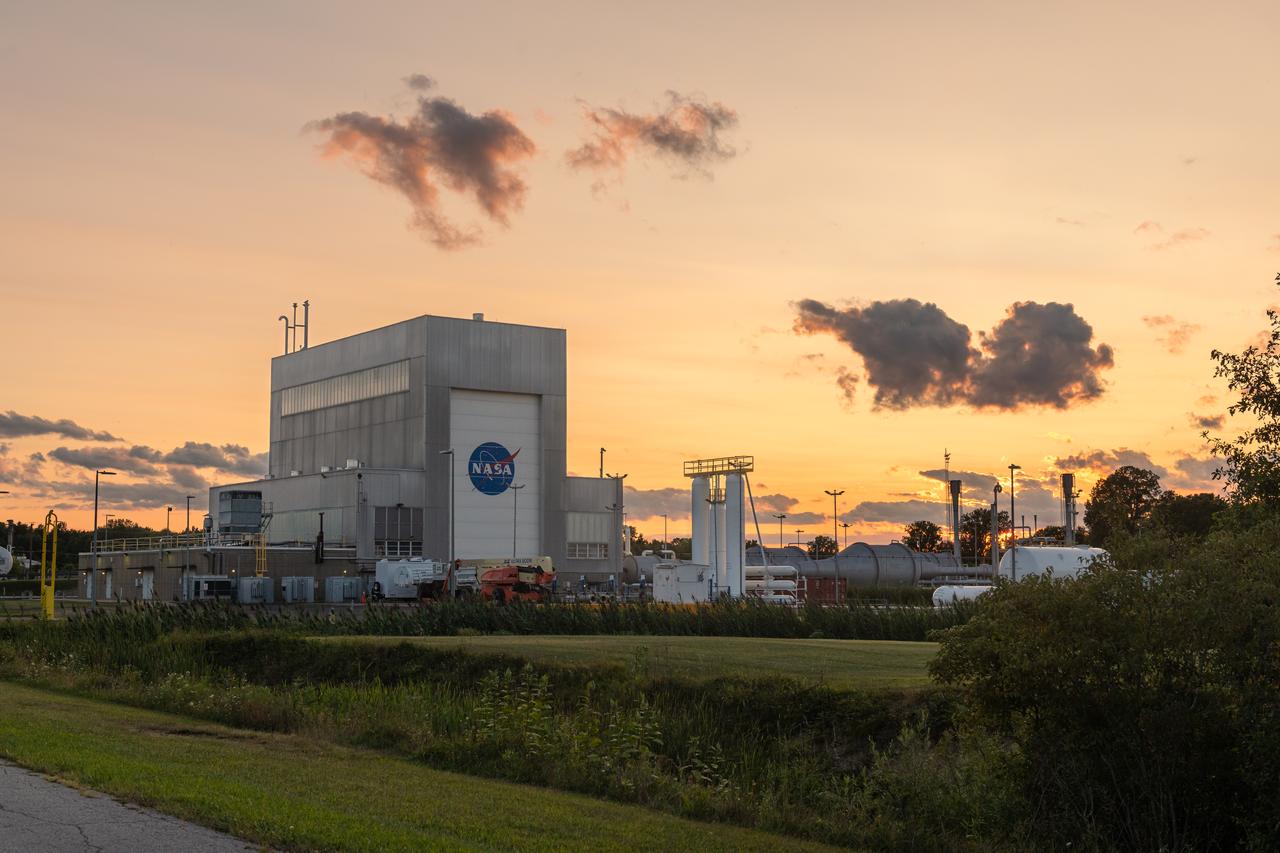
NASA’s In-Space Propulsion Facility located at Neil Armstrong Test Facility in Sandusky Ohio is the world’s only high altitude test facility capable of full-scale rocket engine and launch vehicle system level tests. The facility supports mission profile thermal vacuum simulation and engine firing. The engine or vehicle can be exposed for indefinite periods to low ambient pressures, low-background temperatures, and dynamic solar heating, simulating the environment the hardware will encounter during orbital or interplanetary travel. Photo Credit: (NASA/Jordan Salkin)
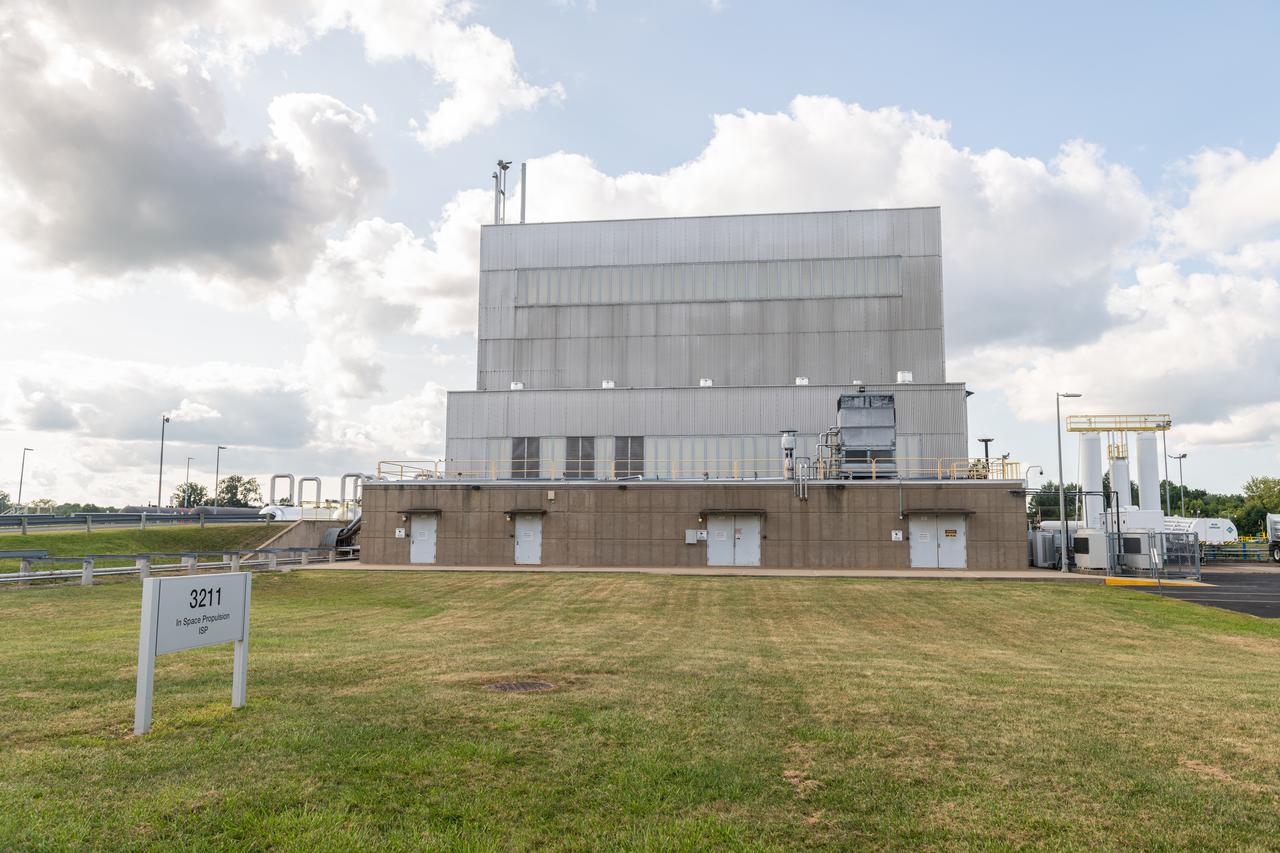
NASA’s In-Space Propulsion Facility located at Neil Armstrong Test Facility in Sandusky Ohio is the world’s only high altitude test facility capable of full-scale rocket engine and launch vehicle system level tests. The facility supports mission profile thermal vacuum simulation and engine firing. The engine or vehicle can be exposed for indefinite periods to low ambient pressures, low-background temperatures, and dynamic solar heating, simulating the environment the hardware will encounter during orbital or interplanetary travel. Photo Credit: (NASA/Jordan Salkin)
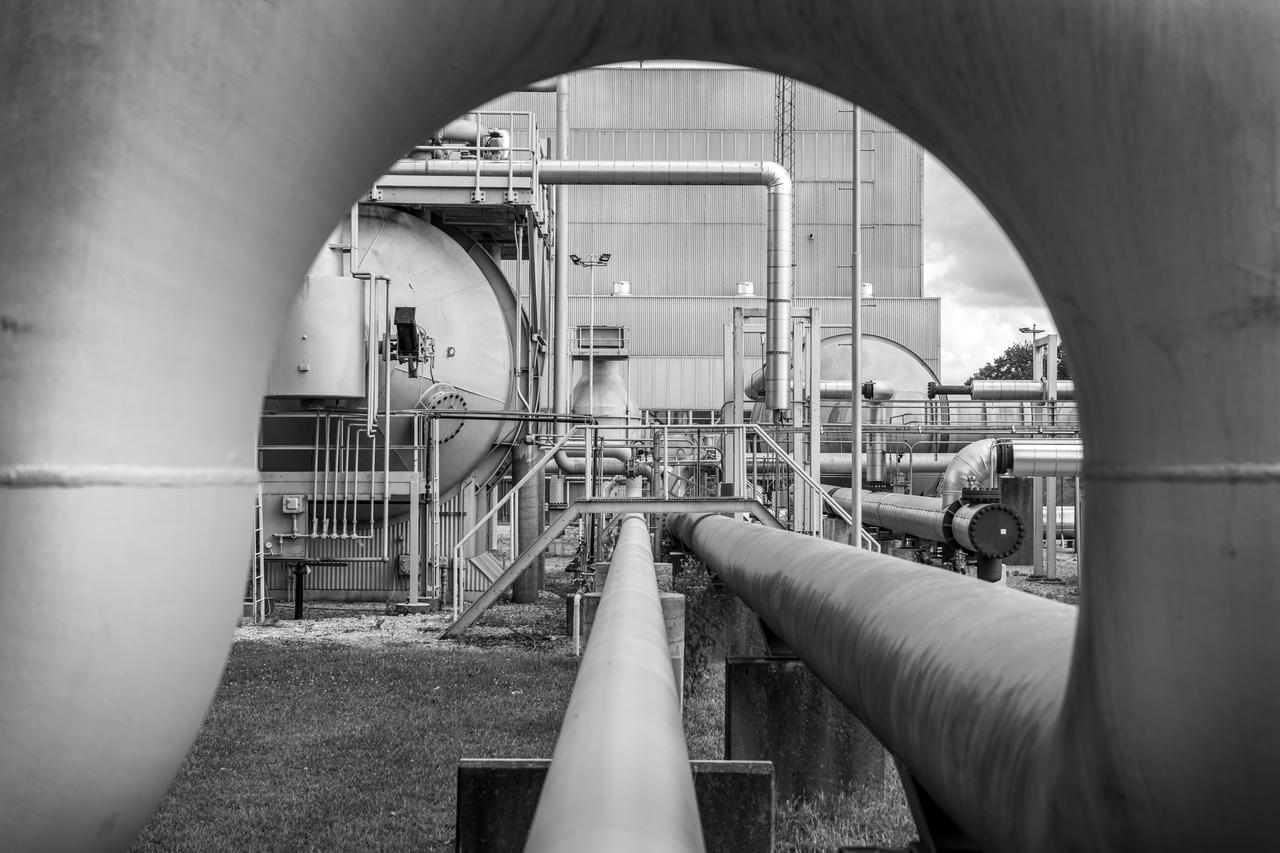
The In-Space Propulsion Facility (ISP) is shown at NASA’s Neil Armstrong Test Facility in Sandusky, Ohio. ISP is the world’s only facility capable of full-scale rocket engine and launch vehicle system level tests. Photo Credit: (NASA/Jordan Salkin)
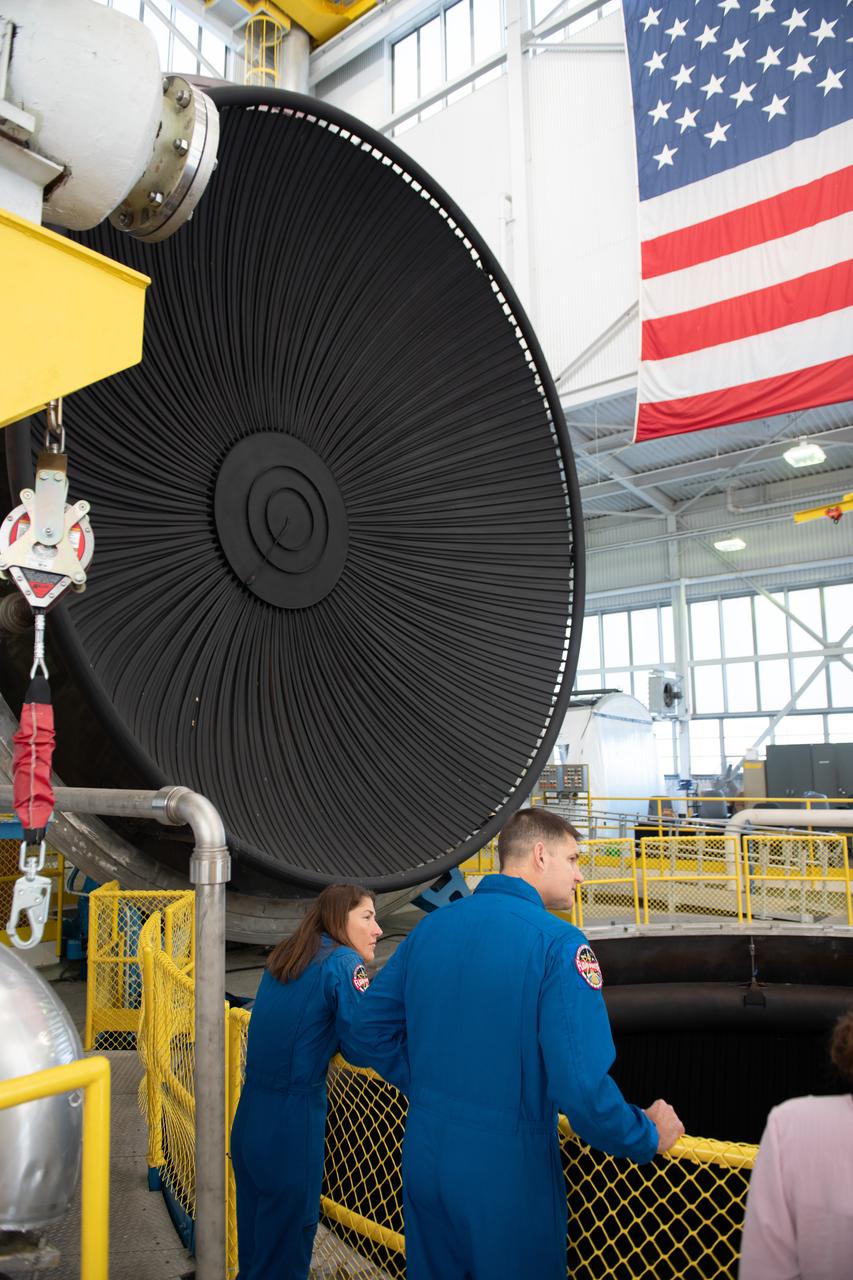
Tours were given of the In Space Propulsion Facility (ISP). NASA’s Facility is the world’s only high altitude test facility capable of full-scale rocket engine and launch vehicle system level tests. The facility supports mission profile thermal vacuum simulation and engine firing. Pictured are Mission Specialists Christina Koch and Jeremy Hansen. Employees meet three of the four astronauts who will venture around the Moon on Artemis II, the first crewed flight paving the way for future lunar surface missions. Commander Reid Wiseman and Mission Specialists Christina Koch and Jeremy Hansen will be on hand to discuss their upcoming mission and participate in a Question and Answer session with employees afterward. Hansen is an astronaut with the Canadian Space Agency. Victor Glover, the pilot and fourth crew member, was not present. Photo Credit: (NASA/Sara Lowthian-Hanna)
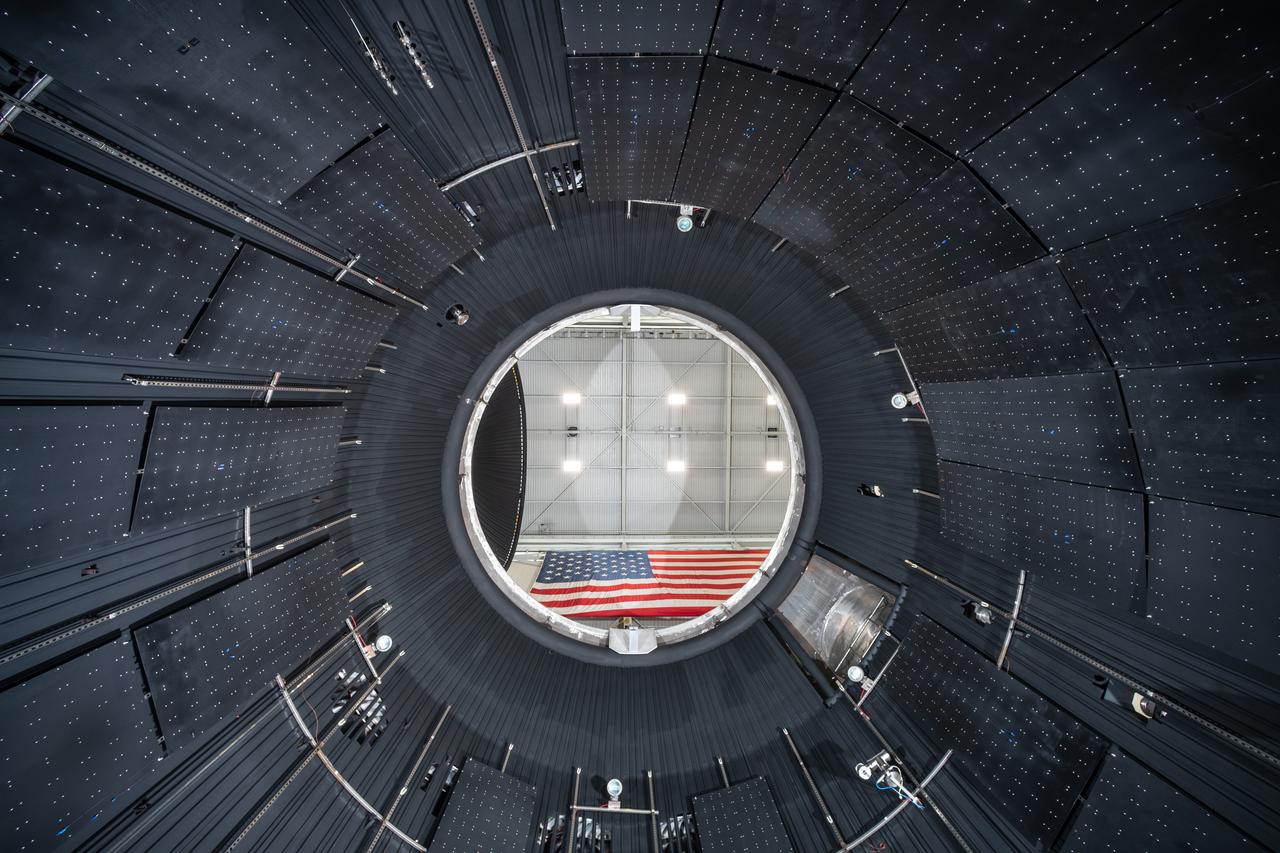
The vacuum chamber of the In-Space Propulsion (ISP) facility at the Neil Armstrong Test Facility spans 38ft in diameter and is 62ft tall. ISP is the world’s only facility capable of full-scale rocket engine and launch vehicle system level tests. ISP also has a vacuum range of up to 100 statute miles in altitude. This is a view from inside the chamber. Photo Credit: (NASA/Jordan Salkin)
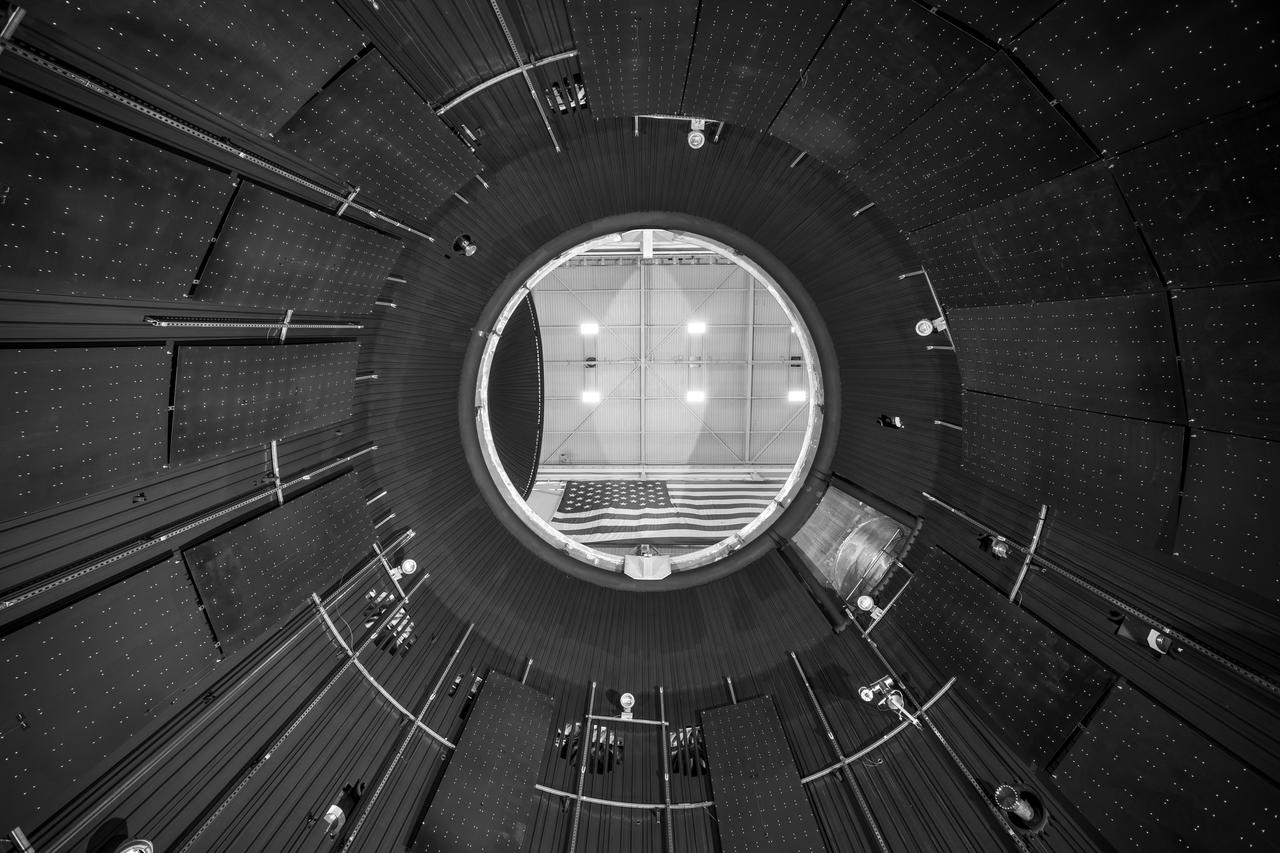
NASA’s In-Space Propulsion Facility located at Neil Armstrong Test Facility in Sandusky Ohio is the world’s only high altitude test facility capable of full-scale rocket engine and launch vehicle system level tests. The facility supports mission profile thermal vacuum simulation and engine firing. The engine or vehicle can be exposed for indefinite periods to low ambient pressures, low-background temperatures, and dynamic solar heating, simulating the environment the hardware will encounter during orbital or interplanetary travel. This is a view from inside the chamber looking up toward the American flag. Photo Credit: (NASA/Jordan Salkin)
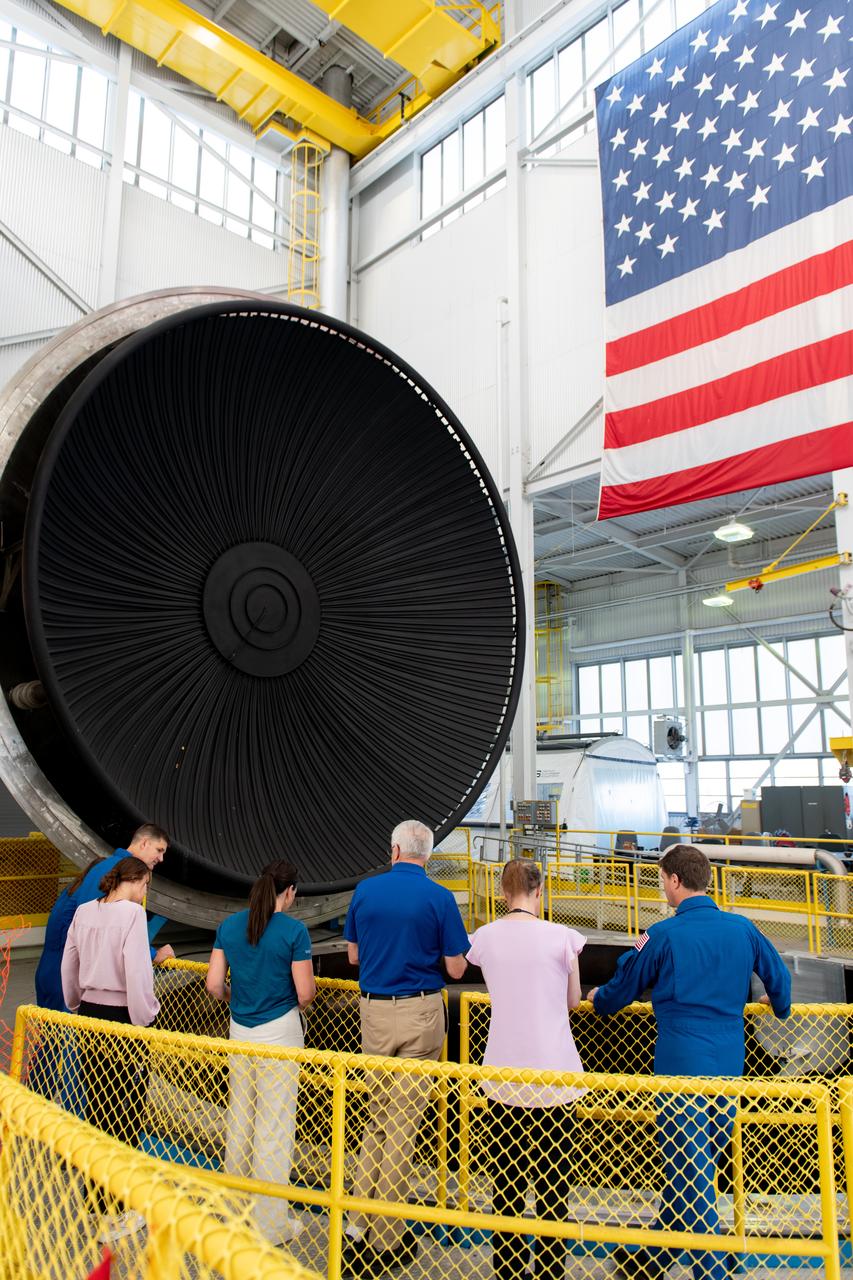
Tours were given of the In Space Propulsion Facility (ISP). NASA’s Facility is the world’s only high altitude test facility capable of full-scale rocket engine and launch vehicle system level tests. The facility supports mission profile thermal vacuum simulation and engine firing. Pictured are Mission Specialists Christina Koch and Jeremy Hansen, Penelope Garcia-Galan, Kathryn Oriti, General David Stringer, Tiffany O'Rourke and Commander Reid Wiseman. Employees meet three of the four astronauts who will venture around the Moon on Artemis II, the first crewed flight paving the way for future lunar surface missions. Commander Reid Wiseman and Mission Specialists Christina Koch and Jeremy Hansen will be on hand to discuss their upcoming mission and participate in a Question and Answer session with employees afterward. Hansen is an astronaut with the Canadian Space Agency. Victor Glover, the pilot and fourth crew member, will not be present.
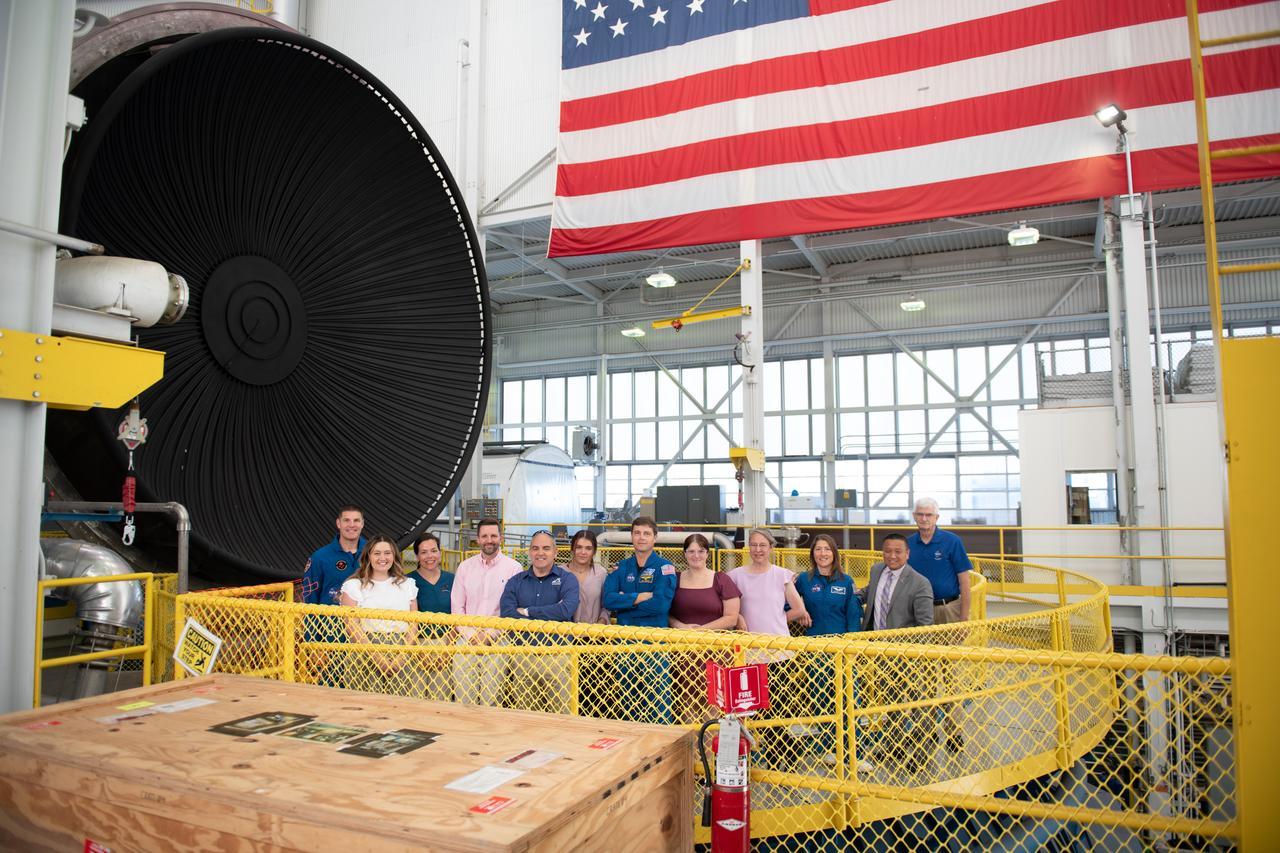
Tours were given of the In Space Propulsion Facility (ISP) in Sandusky, OH at Neil Armstrong Test Facility. NASA’s Facility is the world’s only high altitude test facility capable of full-scale rocket engine and launch vehicle system level tests. The facility supports mission profile thermal vacuum simulation and engine firing. From Left to Right: Jeremy Hansen, Allison Tankersley, Kathryn Oriti, Jan-Henrik Horstmann, Carlos Garcia-Galan, Penelope Garcia-Galan, Reid Wiseman, Jessica Isabell, Tiffany O'Rourke, Howard Hu, General David Stringer. Commander Reid Wiseman and Mission Specialists Christina Koch and Jeremy Hansen will be on hand to discuss their upcoming mission and participate in a Question and Answer session with employees afterward. Hansen is an astronaut with the Canadian Space Agency. Victor Glover, the pilot and fourth crew member, will not be present. Photo Credit: (NASA/Sara Lowthian-Hanna)
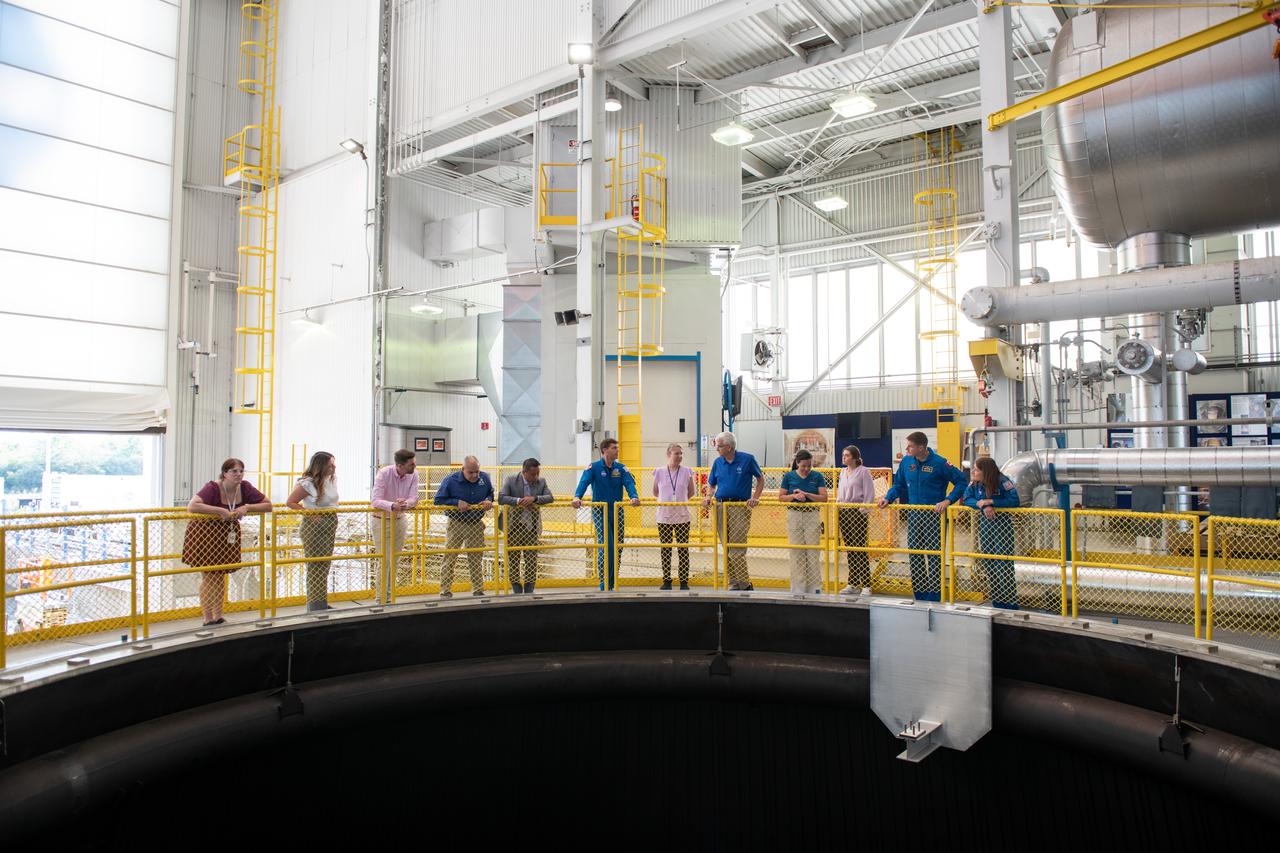
Tours were given of the In Space Propulsion Facility (ISP) in Sandusky, OH at Neil Armstrong Test Facility. NASA’s Facility is the world’s only high altitude test facility capable of full-scale rocket engine and launch vehicle system level tests. The facility supports mission profile thermal vacuum simulation and engine firing. Pictured are Jessica Isabell, Allison Tankersley, Jan-Henrik Horstmann, Carlos Garcia-Galan, Howard Hu, Commader Reid Wiseman, Tiffany O'Rourke, General David Stringer, Kathryn Oriti, Penelope Garcia-Galan, Mission Specialists Christina Koch and Jeremy Hansen. Employees meet three of the four astronauts who will venture around the Moon on Artemis II, the first crewed flight paving the way for future lunar surface missions. Commander Reid Wiseman and Mission Specialists Christina Koch and Jeremy Hansen will be on hand to discuss their upcoming mission and participate in a Question and Answer session with employees afterward. Hansen is an astronaut with the Canadian Space Agency. Victor Glover, the pilot and fourth crew member, will not be present.
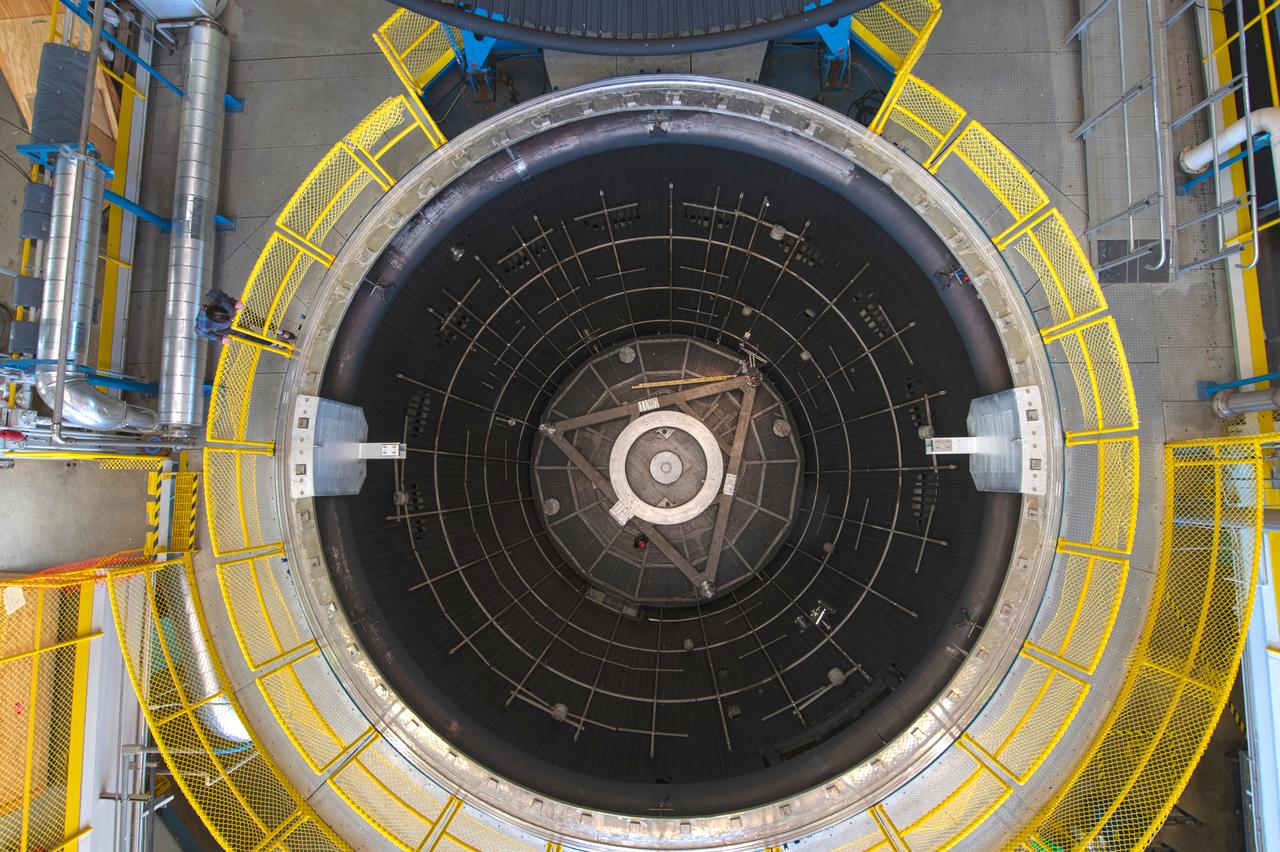
The test chamber is 38 ft in diameter by 62 ft deep amd made of stainless steel. It is vacuum rated at 10-7 torr long duration (Local atmospheric pressure to 100 statute miles altitude). The vacuum chamber surfaces are lined with a liquid nitrogen cold wall, capable of maintaining -320 °F. A quartz infrared heating system can be programmed to radiate a sinusoidal distribution, simulating rotational solar heating. Photo Credit: (NASA/Quentin Schwinn)

Structural Heat Intercept-Insulation-Vibration Evaluation Rig, SHIVER
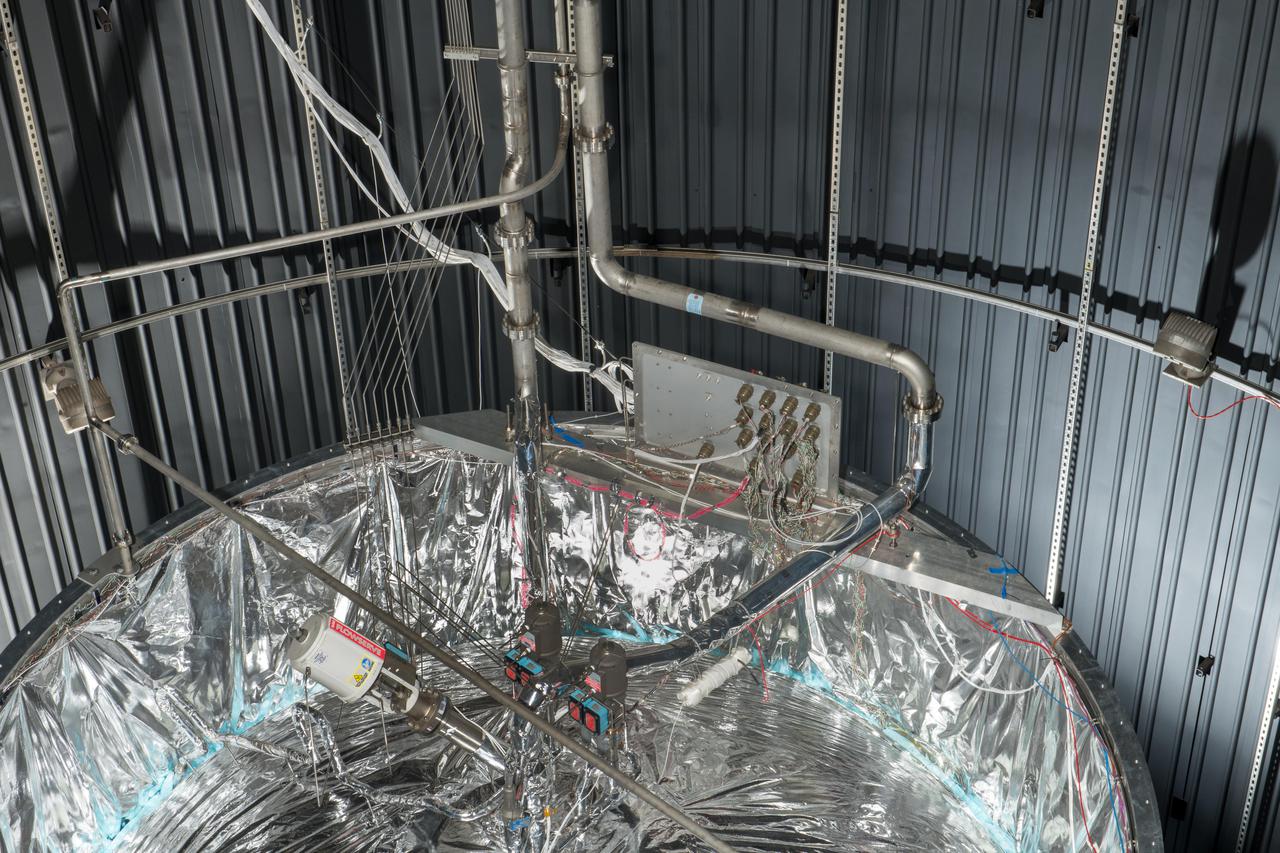
Structural Heat Intercept-Insulation-Vibration Evaluation Rig, SHIVER
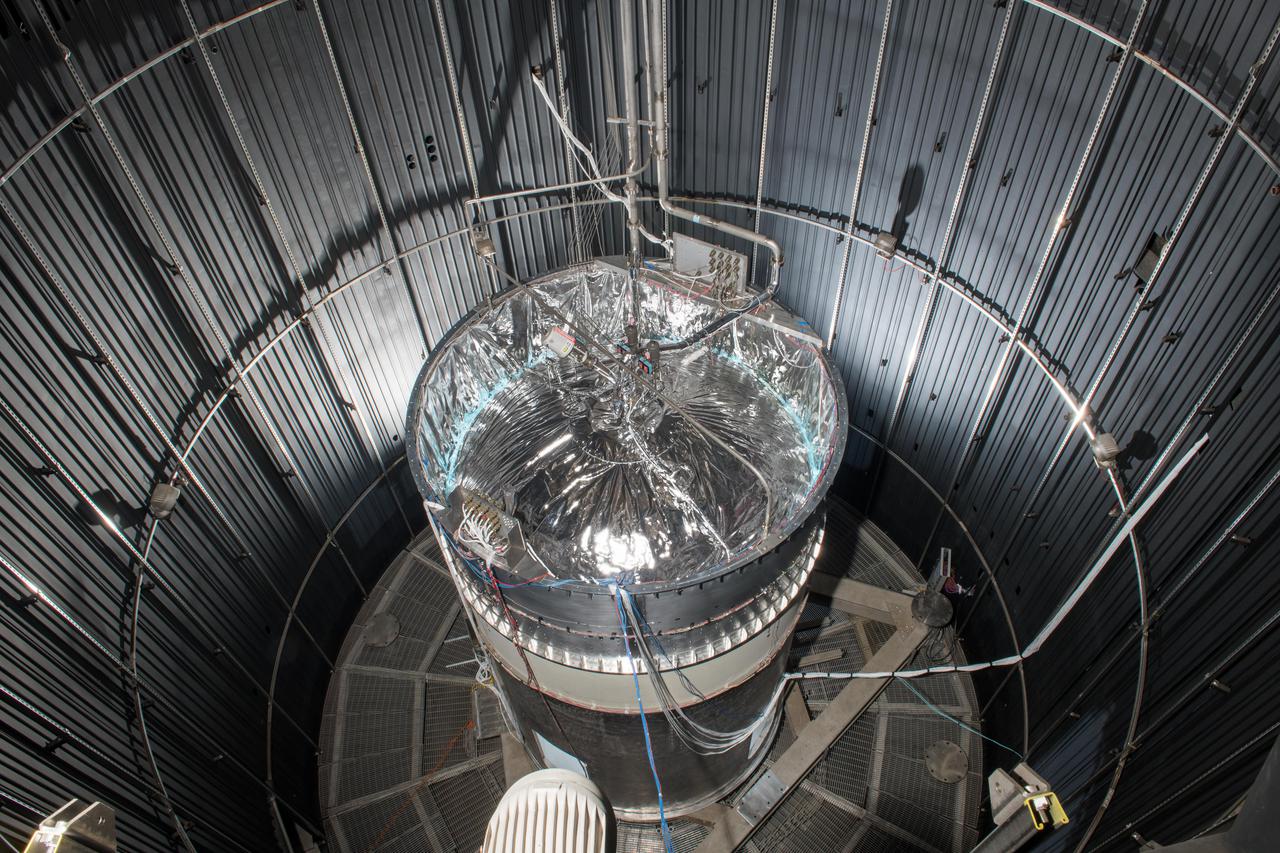
Structural Heat Intercept-Insulation-Vibration Evaluation Rig, SHIVER
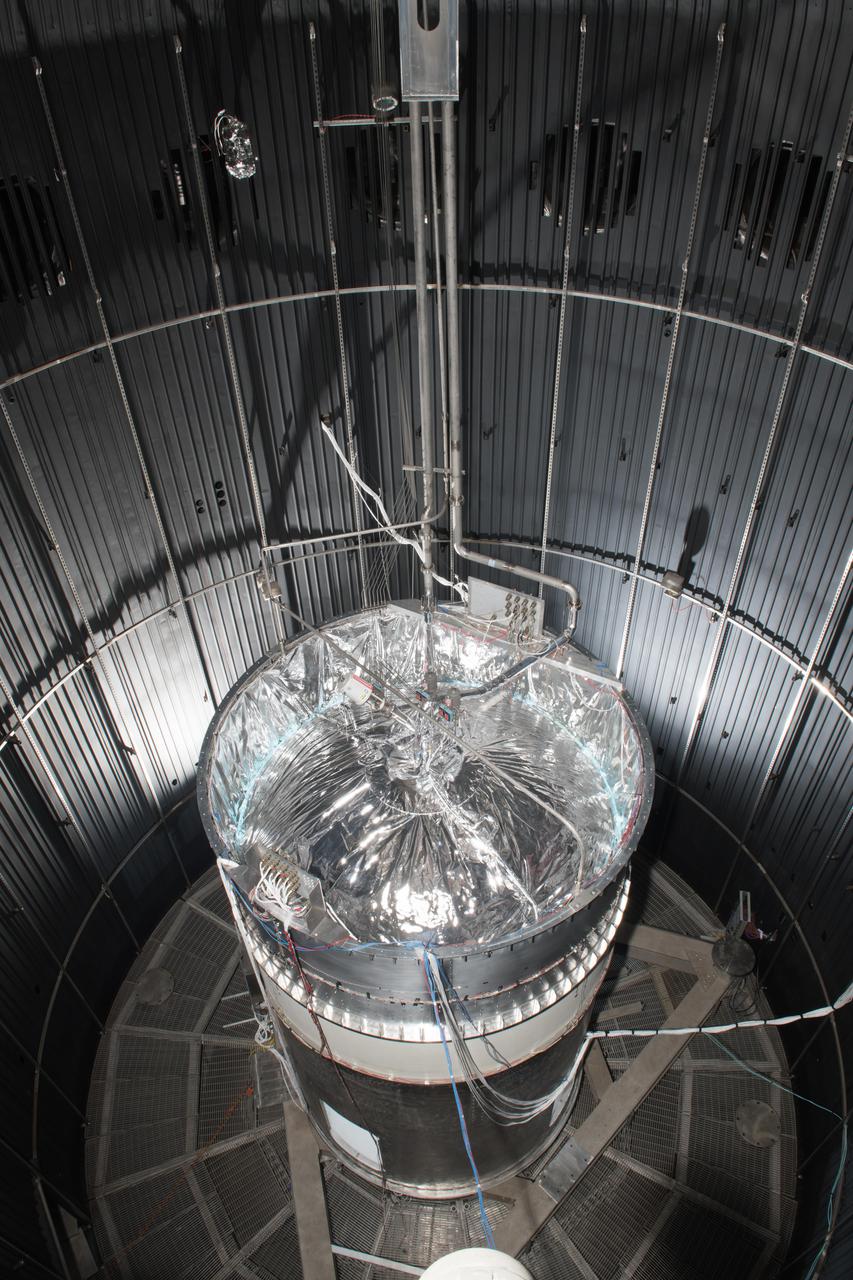
Structural Heat Intercept-Insulation-Vibration Evaluation Rig, SHIVER
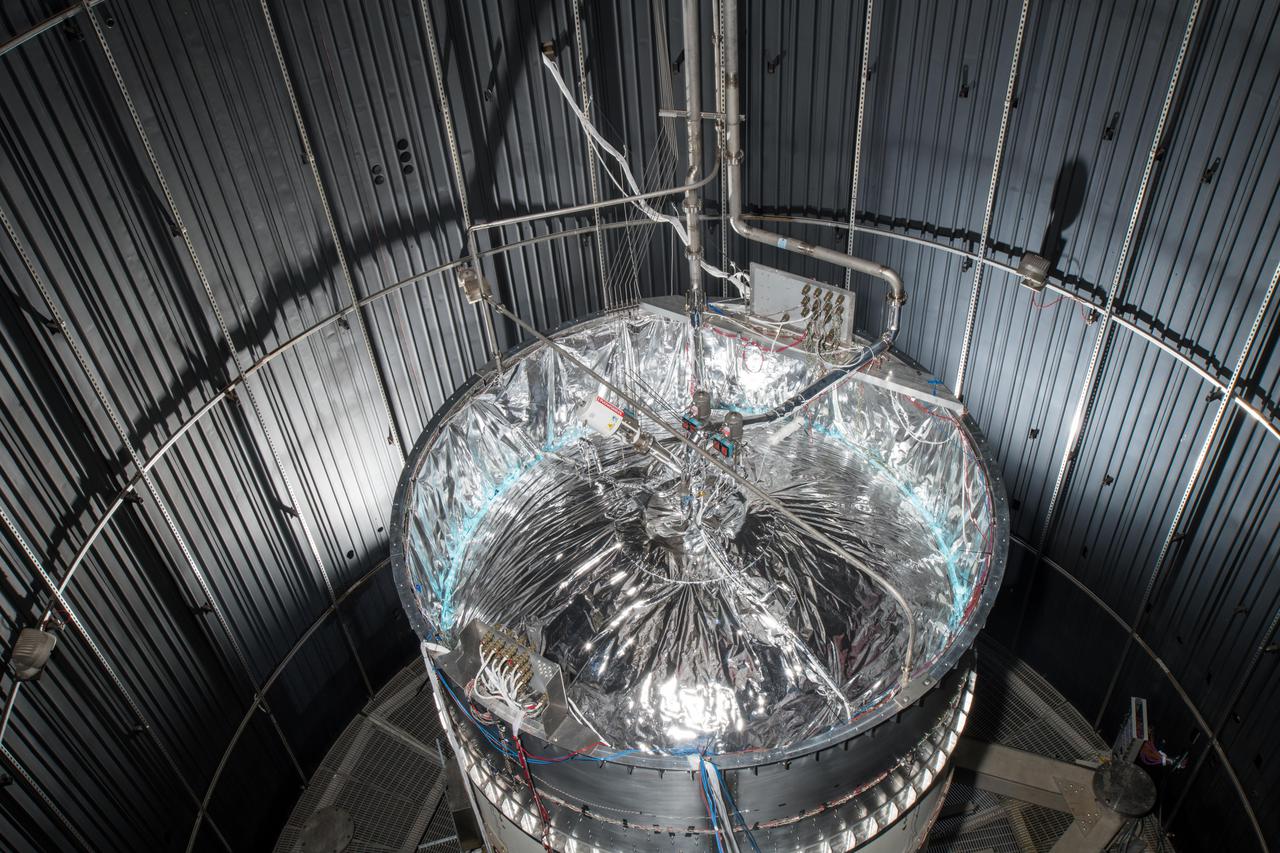
Structural Heat Intercept-Insulation-Vibration Evaluation Rig, SHIVER
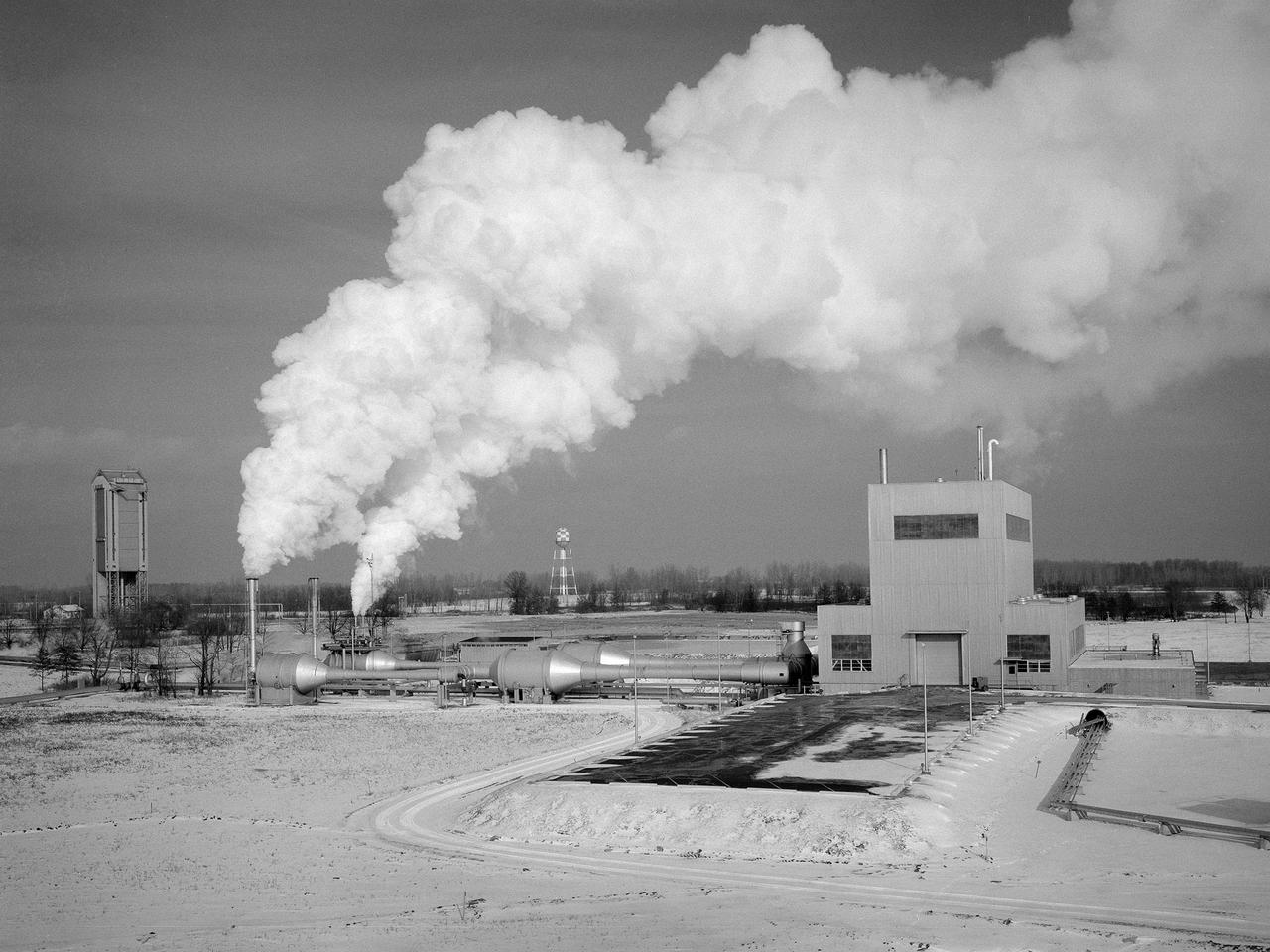
The Space Propulsion Research Facility, better known as B-2, operating at the National Aeronautics and Space Administration’s (NASA) Plum Brook Station in Sandusky, Ohio. B-2 is the world's only high altitude test facility capable of full-scale rocket engine and launch vehicle system level tests. It was created to test rocket propulsion systems with up to 100,000 pounds of thrust in a simulated space environment. The facility has the unique ability to maintain a vacuum at the rocket’s nozzle while the engine is firing. The rocket fires into a 120-foot deep spray chamber which cools the exhaust before it is ejected outside the facility. B-2 simulated space using giant diffusion pumps to reduce chamber pressure, nitrogen-filled cold walls create cryogenic temperatures, and quartz lamps replicate the radiation of the sun. This photograph shows the facility undergoing check-out runs prior to its first test in late 1969.The 38-foot diameter and 62-foot tall vacuum chamber is inside the high-bay on the right. Below that is a 67-foot diameter and 120-foot deep spray chamber. The hot rocket exhaust is cooled in the chamber by a spray of 250,000 gallons of water per minute. B-2’s first test was a hot firing of Centaur D-1A rocket on December 18, 1969. Since then the facility has fired more than 100 Pratt and Whitney RL-10 engines during the Centaur development, 80 current RL-10B-2 engines for Delta-3 development, and another 12 RL-10B-2s for the Delta 3 Upper Stage.
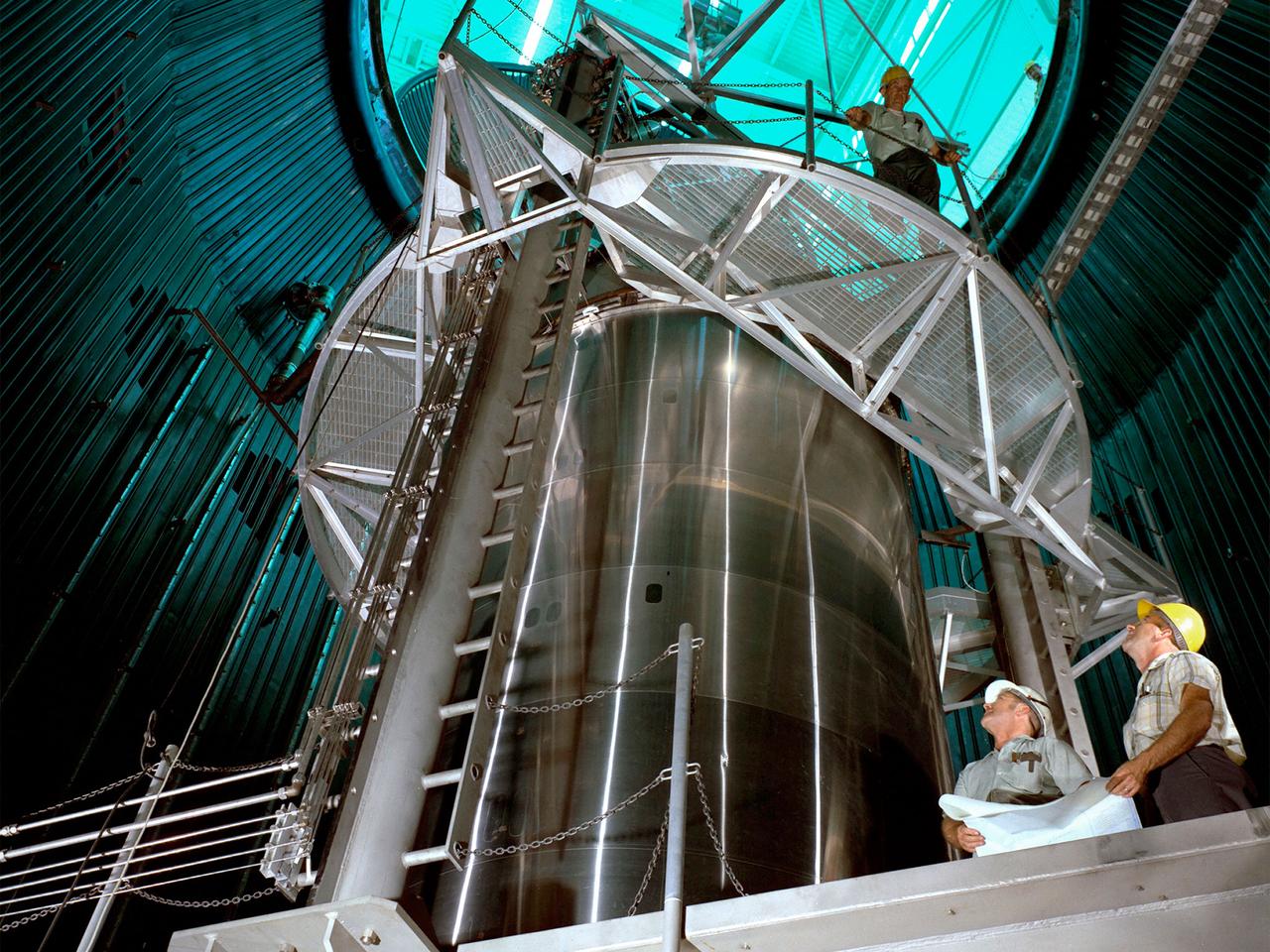
A Centaur second-stage rocket in the Space Propulsion Research Facility, better known as B‒2, operating at NASA’s Plum Brook Station in Sandusky, Ohio. Centaur was designed to be used with an Atlas booster to send the Surveyor spacecraft to the moon in the mid-1960s. After those missions, the rocket was modified to launch a series of astronomical observation satellites into orbit and send space probes to other planets. Researchers conducted a series of systems tests at the Plum Brook test stands to improve the Centaur fuel pumping system. Follow up full-scale tests in the B-2 facility led to the eventual removal of the boost pumps from the design. This reduced the system’s complexity and significantly reduced the cost of a Centaur rocket. The Centaur tests were the first use of the new B-2 facility. B‒2 was the world's only high altitude test facility capable of full-scale rocket engine and launch vehicle system level tests. It was created to test rocket propulsion systems with up to 100,000 pounds of thrust in a simulated space environment. The facility has the unique ability to maintain a vacuum at the rocket’s nozzle while the engine is firing. The rocket fires into a 120-foot deep spray chamber which cools the exhaust before it is ejected outside the facility. B‒2 simulated space using giant diffusion pumps to reduce chamber pressure 10-6 torr, nitrogen-filled cold walls create cryogenic temperatures, and quartz lamps replicate the radiation of the sun.
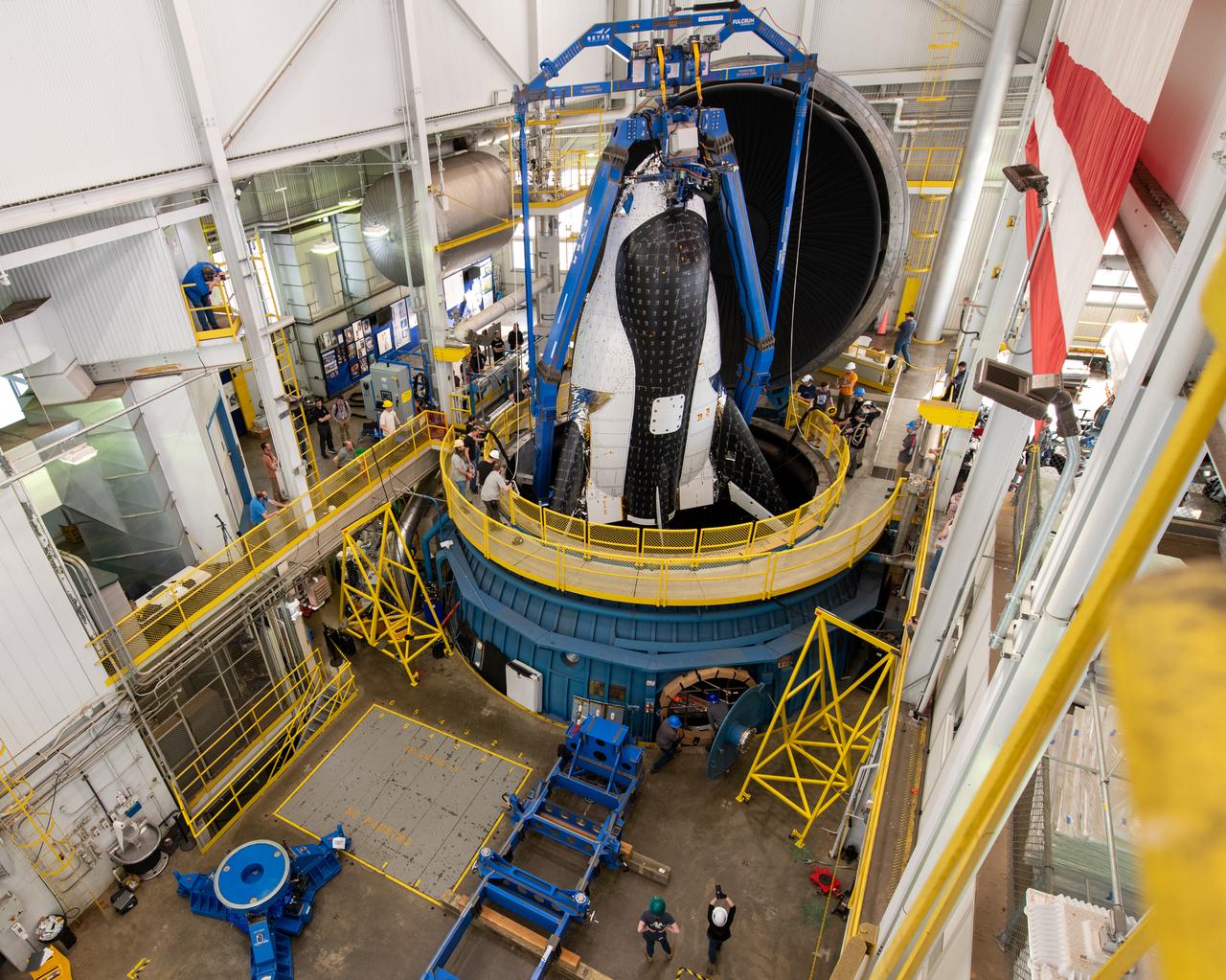
Sierra Space Dream Chaser space plane is lifted into the chamber at ISP (In Space Propulsion) facility, building 3211 at ATF (Armstrong Test Facility) for environmental testing. Once lowered into the test chamber, it will be exposed to the harsh cold conditions of space for extended periods of time.

The Sierra Space Plane, Dream Chaser, suspended by a crane sits just inside the overhead door of the ISP (In Space Propulsion) test facility at NASA GRC-ATF. Once lifted and lowered into the test chamber, it will be exposed to the harsh cold conditions of space for testing in extended periods of time.
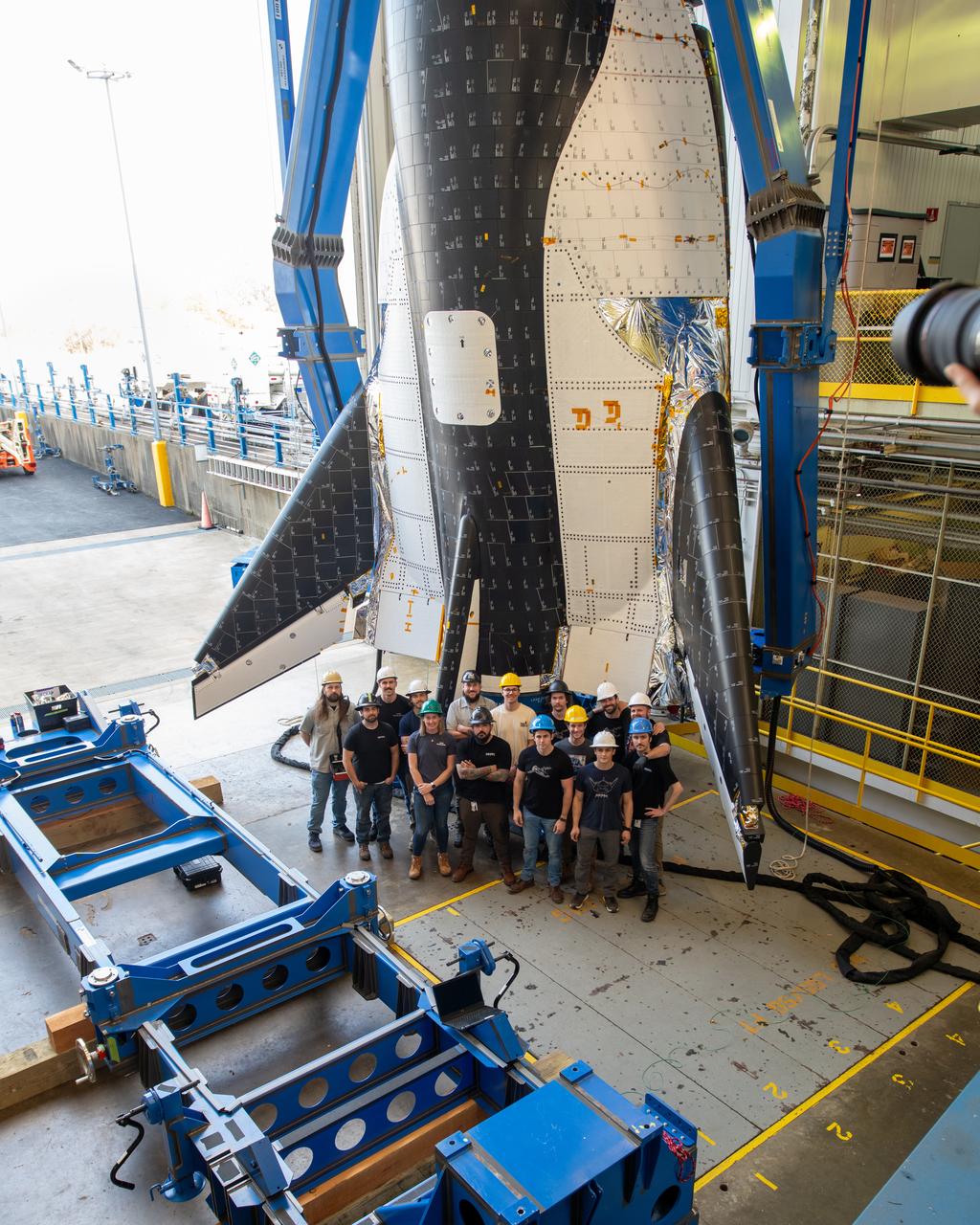
Group photo of the crew just before the critical lift of Dream Chaser into the chamber at ISP (In Space Propulsion) NASA GRC-ATF. Once lifted and lowered into the test chamber, it will be exposed to the harsh cold conditions of space for extended periods of time. Sierra Space Dream Chaser space plane will be lifted into the chamber at ISP (In Space Propulsion) facility, building 3211 at ATF (Armstrong Test Facility) for environmental testing
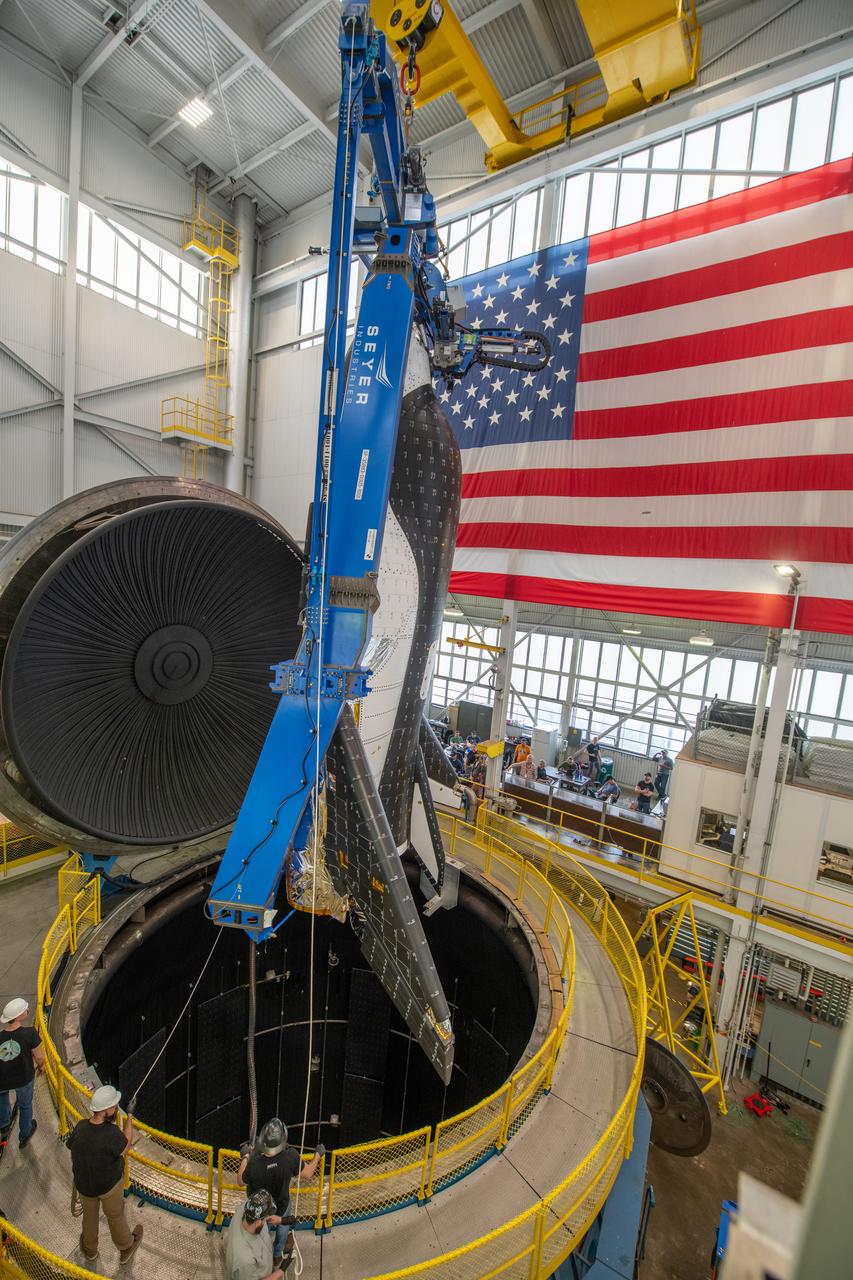
Sierra Space Dream Chaser space plane is lifted into the chamber at ISP (In Space Propulsion) facility, building 3211 at ATF (Armstrong Test Facility) for environmental testing. Once lowered into the test chamber, it will be exposed to the harsh cold conditions of space for extended periods of time.
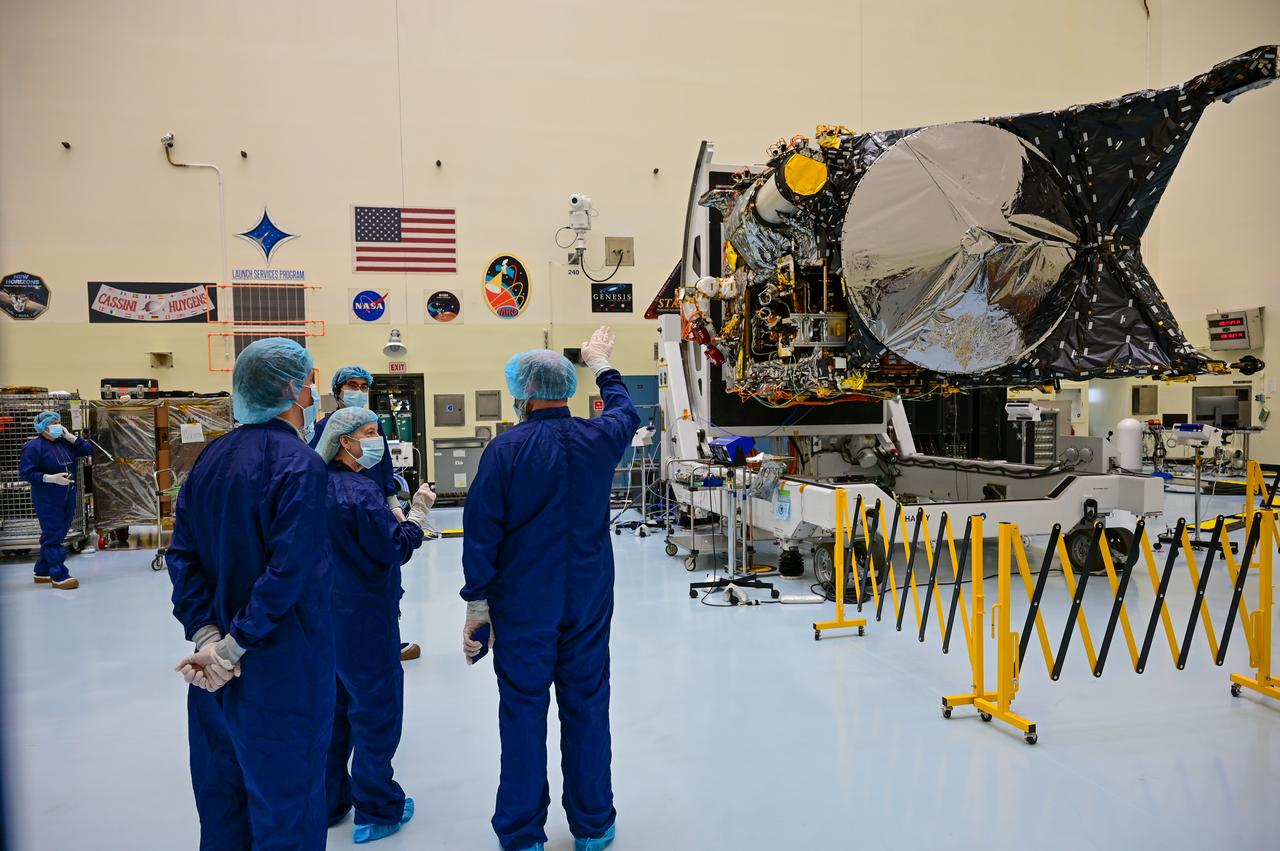
NASA Deputy Administrator Pam Melroy visits Kennedy Space Center in Florida and receives a briefing by team members from the Jet Propulsion Laboratory on the agency’s Psyche spacecraft inside the Payload Hazardous Servicing Facility on May 19, 2022. Melroy is in view second from right. The mission is targeting an Aug. 1 launch atop a SpaceX Falcon Heavy rocket from Launch Complex 39A at Kennedy. The spacecraft will use solar-electric propulsion to travel approximately 1.5 billion miles to rendezvous with its namesake asteroid in 2026. The Psyche mission is led by Arizona State University. NASA’s Jet Propulsion Laboratory, which is managed for the agency by Caltech in Pasadena, California, is responsible for the mission’s overall management, system engineering, integration and testing, and mission operations. Maxar Technologies in Palo Alto, California, provided the high-power solar electric propulsion spacecraft chassis. NASA’s Launch Services Program (LSP), based at Kennedy, is managing the launch.
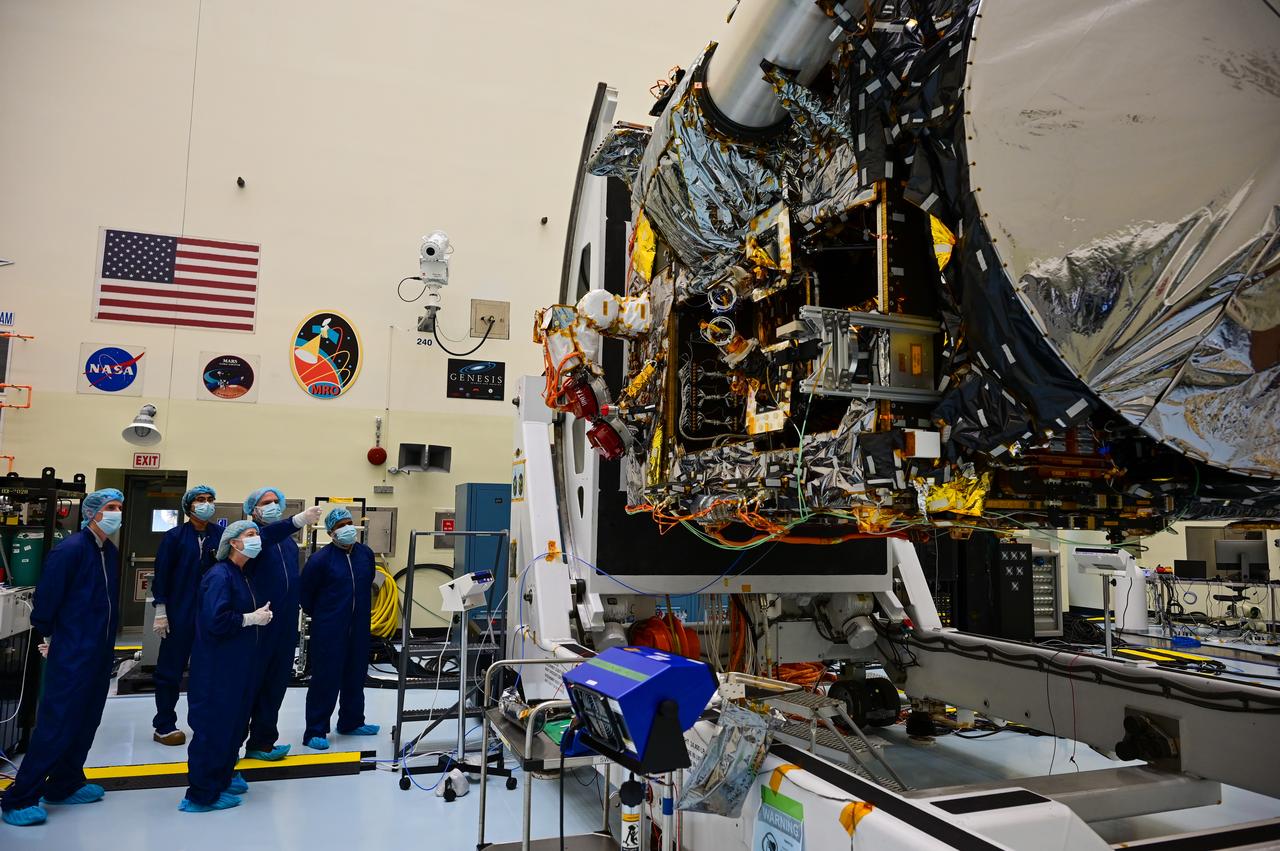
NASA Deputy Administrator Pam Melroy visits Kennedy Space Center in Florida and receives a briefing by team members from the Jet Propulsion Laboratory on the agency’s Psyche spacecraft inside the Payload Hazardous Servicing Facility on May 19, 2022. Melroy is standing in front of the group. The mission is targeting an Aug. 1 launch atop a SpaceX Falcon Heavy rocket from Launch Complex 39A at Kennedy. The spacecraft will use solar-electric propulsion to travel approximately 1.5 billion miles to rendezvous with its namesake asteroid in 2026. The Psyche mission is led by Arizona State University. NASA’s Jet Propulsion Laboratory, which is managed for the agency by Caltech in Pasadena, California, is responsible for the mission’s overall management, system engineering, integration and testing, and mission operations. Maxar Technologies in Palo Alto, California, provided the high-power solar electric propulsion spacecraft chassis. NASA’s Launch Services Program (LSP), based at Kennedy, is managing the launch.
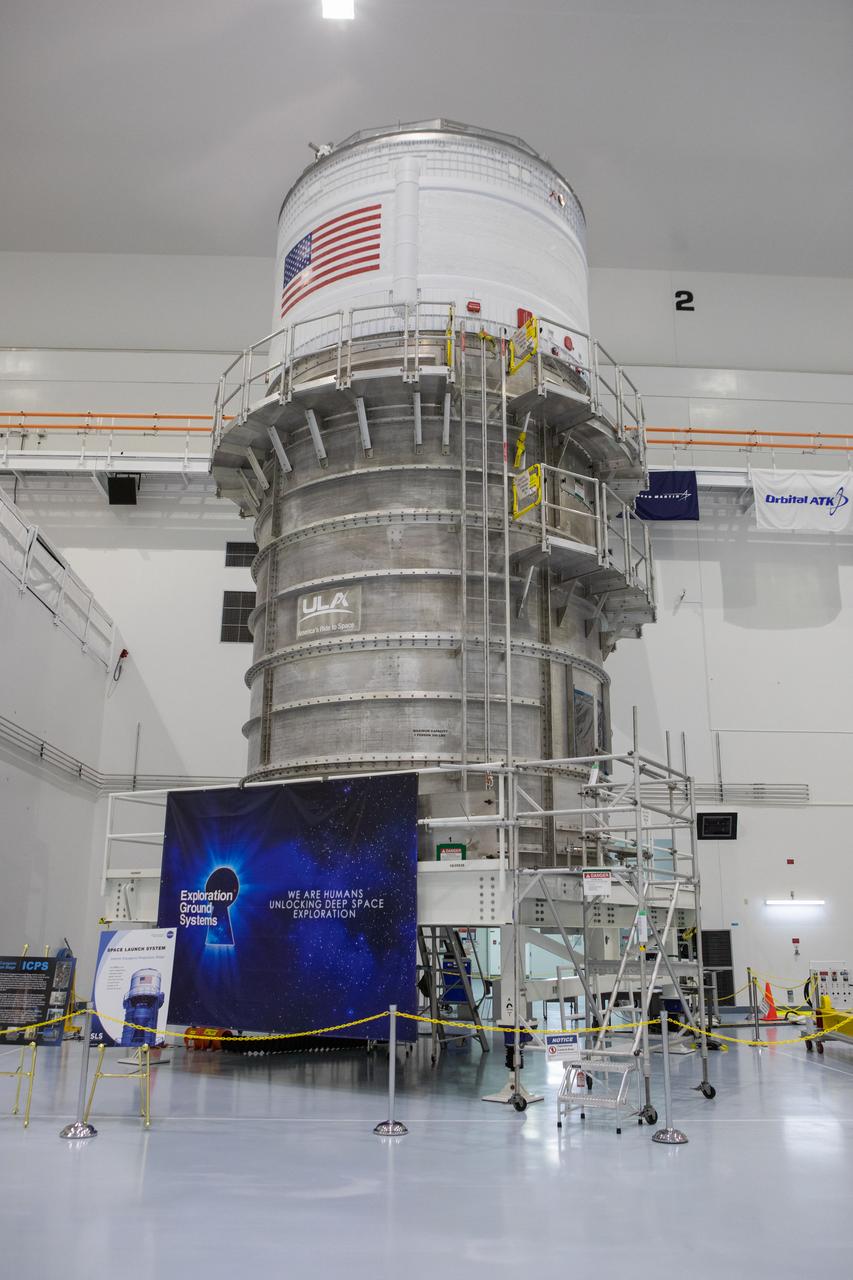
The Interim Cryogenic Propulsion Stage for Orion’s Artemis 1 mission is in view inside the high bay in the Space Station Processing Facility (SSPF) at NASA's Kennedy Space Center in Florida, on May 16, 2019. The center is celebrating the SSPF’s 25th anniversary. The facility was built to process elements for the International Space Station. Now it is providing support for current and future NASA and commercial provider programs, including Commercial Resupply Services, Artemis 1, sending the first woman and next man to the Moon, and deep space destinations including Mars.
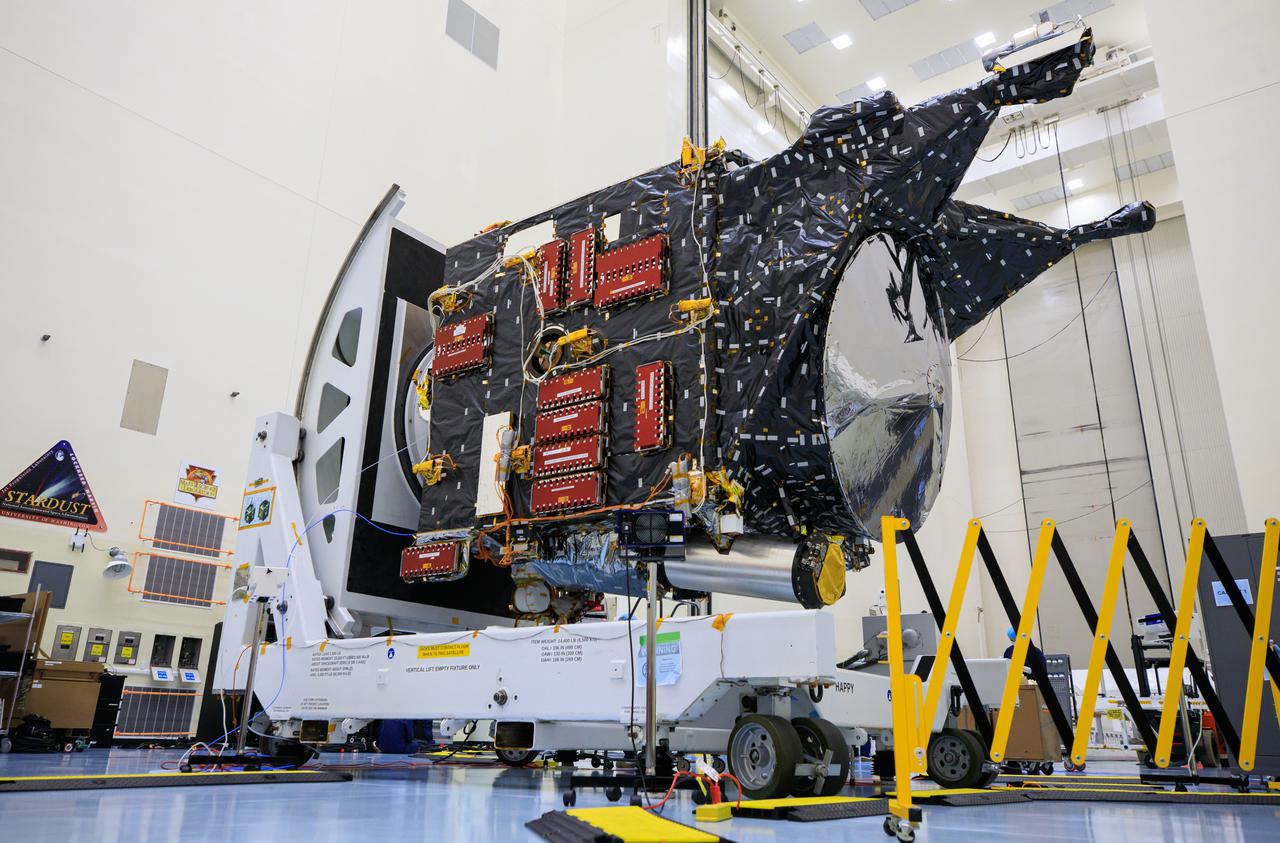
NASA’s Psyche spacecraft undergoes processing and servicing ahead of launch atop a work stand inside the Payload Hazardous Servicing Facility at NASA’s Kennedy Space Center in Florida on May 3, 2022. Psyche is targeting to lift off aboard a SpaceX Falcon Heavy rocket on Aug. 1, 2022. The spacecraft will use solar-electric propulsion to travel approximately 1.5 billion miles to rendezvous with its namesake asteroid in 2026. The Psyche mission is led by Arizona State University. NASA’s Jet Propulsion Laboratory, which is managed for the agency by Caltech in Pasadena, California, is responsible for the mission’s overall management, system engineering, integration and testing, and mission operations. Maxar Technologies in Palo Alto, California, provided the high-power solar electric propulsion spacecraft chassis. NASA’s Launch Services Program (LSP), based at Kennedy, is managing the launch. Psyche will be the 14th mission in the agency's Discovery program and LSP’s 100th primary mission.
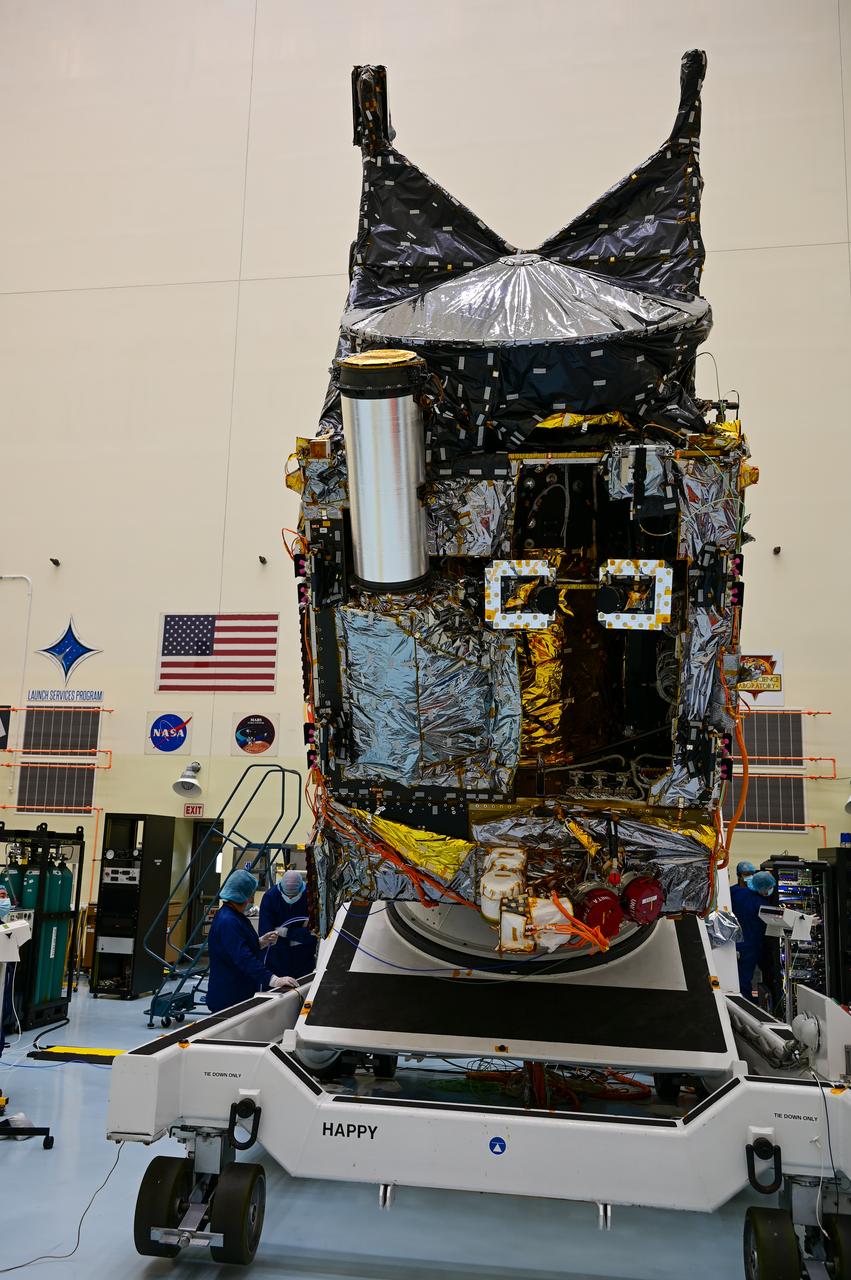
A team working on NASA’s Psyche spacecraft transitioning it from a vertical to horizontal test configuration during prelaunch processing inside the Payload Hazardous Servicing Facility at NASA’s Kennedy Space Center in Florida on May 9, 2022. The mission is targeting an Aug. 1 launch atop a SpaceX Falcon Heavy rocket from Launch Complex 39A at Kennedy. The spacecraft will use solar-electric propulsion to travel approximately 1.5 billion miles to rendezvous with its namesake asteroid in 2026. The Psyche mission is led by Arizona State University. NASA’s Jet Propulsion Laboratory, which is managed for the agency by Caltech in Pasadena, California, is responsible for the mission’s overall management, system engineering, integration and testing, and mission operations. Maxar Technologies in Palo Alto, California, provided the high-power solar electric propulsion spacecraft chassis. NASA’s Launch Services Program (LSP), based at Kennedy, is managing the launch.
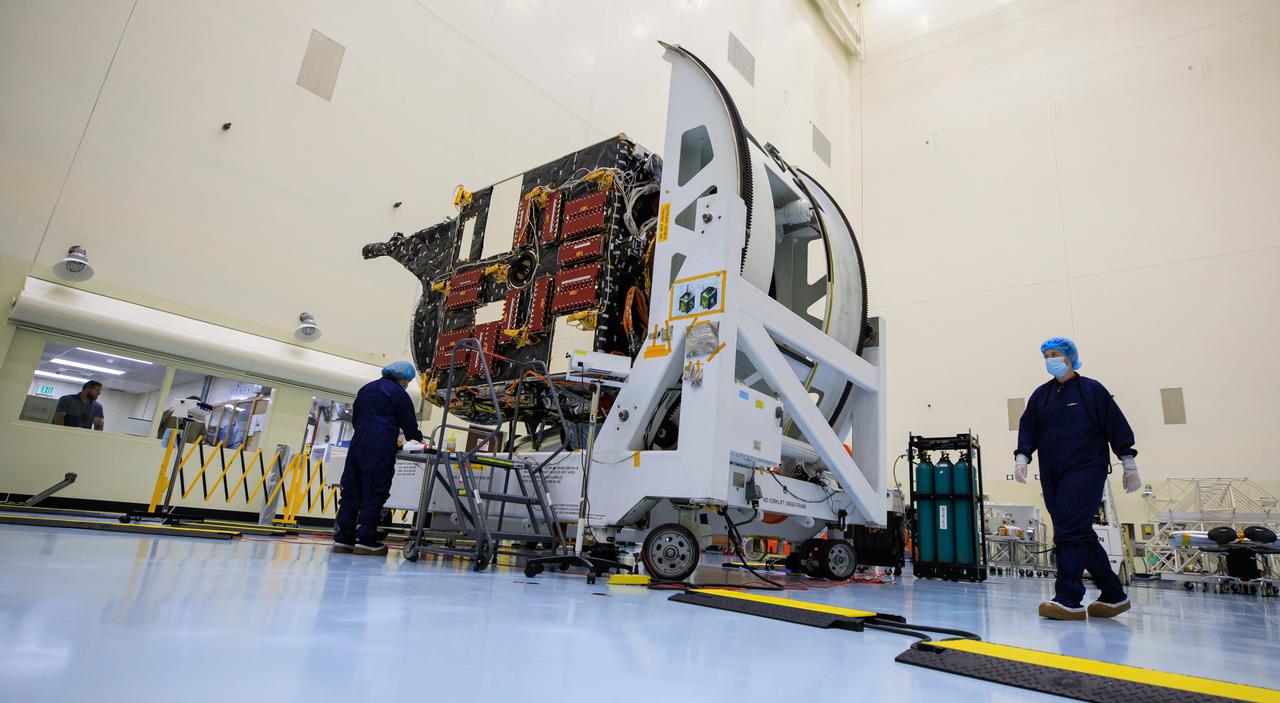
NASA’s Psyche spacecraft undergoes processing and servicing ahead of launch atop a work stand inside the Payload Hazardous Servicing Facility at NASA’s Kennedy Space Center in Florida on May 3, 2022. Psyche is targeting to lift off aboard a SpaceX Falcon Heavy rocket on Aug. 1, 2022. The spacecraft will use solar-electric propulsion to travel approximately 1.5 billion miles to rendezvous with its namesake asteroid in 2026. The Psyche mission is led by Arizona State University. NASA’s Jet Propulsion Laboratory, which is managed for the agency by Caltech in Pasadena, California, is responsible for the mission’s overall management, system engineering, integration and testing, and mission operations. Maxar Technologies in Palo Alto, California, provided the high-power solar electric propulsion spacecraft chassis. NASA’s Launch Services Program (LSP), based at Kennedy, is managing the launch. Psyche will be the 14th mission in the agency's Discovery program and LSP’s 100th primary mission.

NASA’s Psyche spacecraft undergoes processing and servicing ahead of launch atop a work stand inside the Payload Hazardous Servicing Facility at NASA’s Kennedy Space Center in Florida on May 3, 2022. Psyche is targeting to lift off aboard a SpaceX Falcon Heavy rocket on Aug. 1, 2022. The spacecraft will use solar-electric propulsion to travel approximately 1.5 billion miles to rendezvous with its namesake asteroid in 2026. The Psyche mission is led by Arizona State University. NASA’s Jet Propulsion Laboratory, which is managed for the agency by Caltech in Pasadena, California, is responsible for the mission’s overall management, system engineering, integration and testing, and mission operations. Maxar Technologies in Palo Alto, California, provided the high-power solar electric propulsion spacecraft chassis. NASA’s Launch Services Program (LSP), based at Kennedy, is managing the launch. Psyche will be the 14th mission in the agency's Discovery program and LSP’s 100th primary mission.
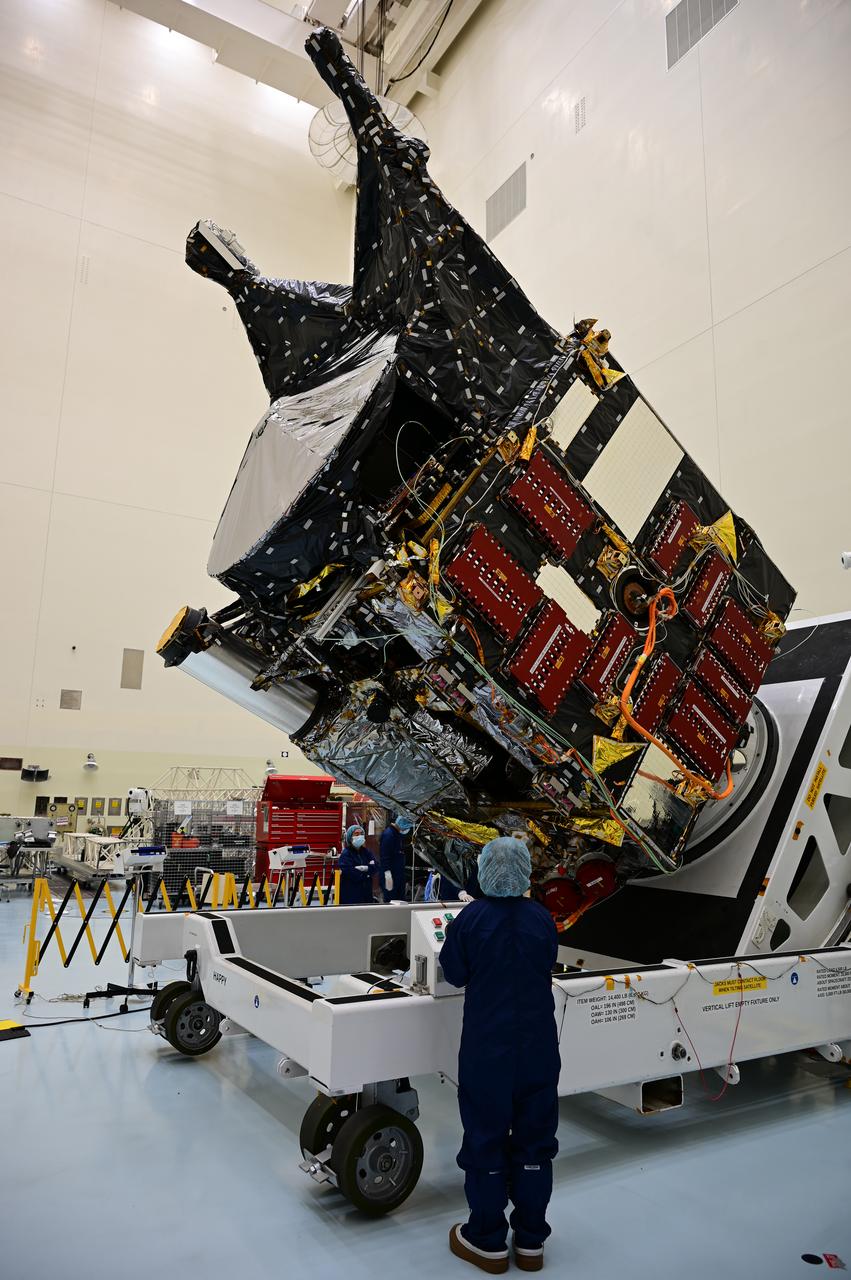
A team working on NASA’s Psyche spacecraft transitioned it from a vertical to a horizontal test configuration during prelaunch processing inside the Payload Hazardous Servicing Facility at NASA’s Kennedy Space Center in Florida on May 9, 2022. The mission is targeting an Aug. 1 launch atop a SpaceX Falcon Heavy rocket from Launch Complex 39A at Kennedy. The spacecraft will use solar-electric propulsion to travel approximately 1.5 billion miles to rendezvous with its namesake asteroid in 2026. The Psyche mission is led by Arizona State University. NASA’s Jet Propulsion Laboratory, which is managed for the agency by Caltech in Pasadena, California, is responsible for the mission’s overall management, system engineering, integration and testing, and mission operations. Maxar Technologies in Palo Alto, California, provided the high-power solar electric propulsion spacecraft chassis. NASA’s Launch Services Program (LSP), based at Kennedy, is managing the launch.
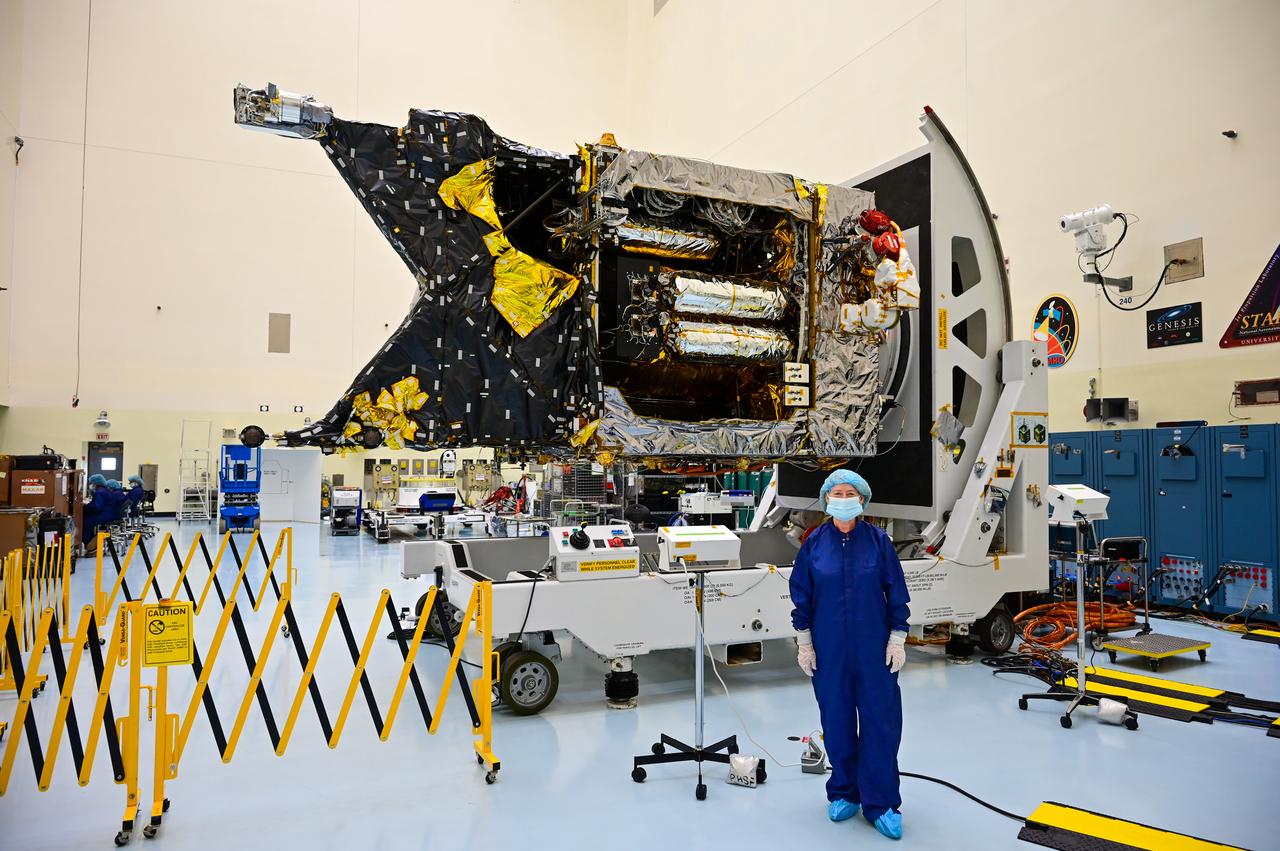
NASA Deputy Administrator Pam Melroy visits Kennedy Space Center in Florida and views the agency’s Psyche spacecraft inside the Payload Hazardous Servicing Facility on May 19, 2022. The mission is targeting an Aug. 1 launch atop a SpaceX Falcon Heavy rocket from Launch Complex 39A at Kennedy. The spacecraft will use solar-electric propulsion to travel approximately 1.5 billion miles to rendezvous with its namesake asteroid in 2026. The Psyche mission is led by Arizona State University. NASA’s Jet Propulsion Laboratory, which is managed for the agency by Caltech in Pasadena, California, is responsible for the mission’s overall management, system engineering, integration and testing, and mission operations. Maxar Technologies in Palo Alto, California, provided the high-power solar electric propulsion spacecraft chassis. NASA’s Launch Services Program (LSP), based at Kennedy, is managing the launch.
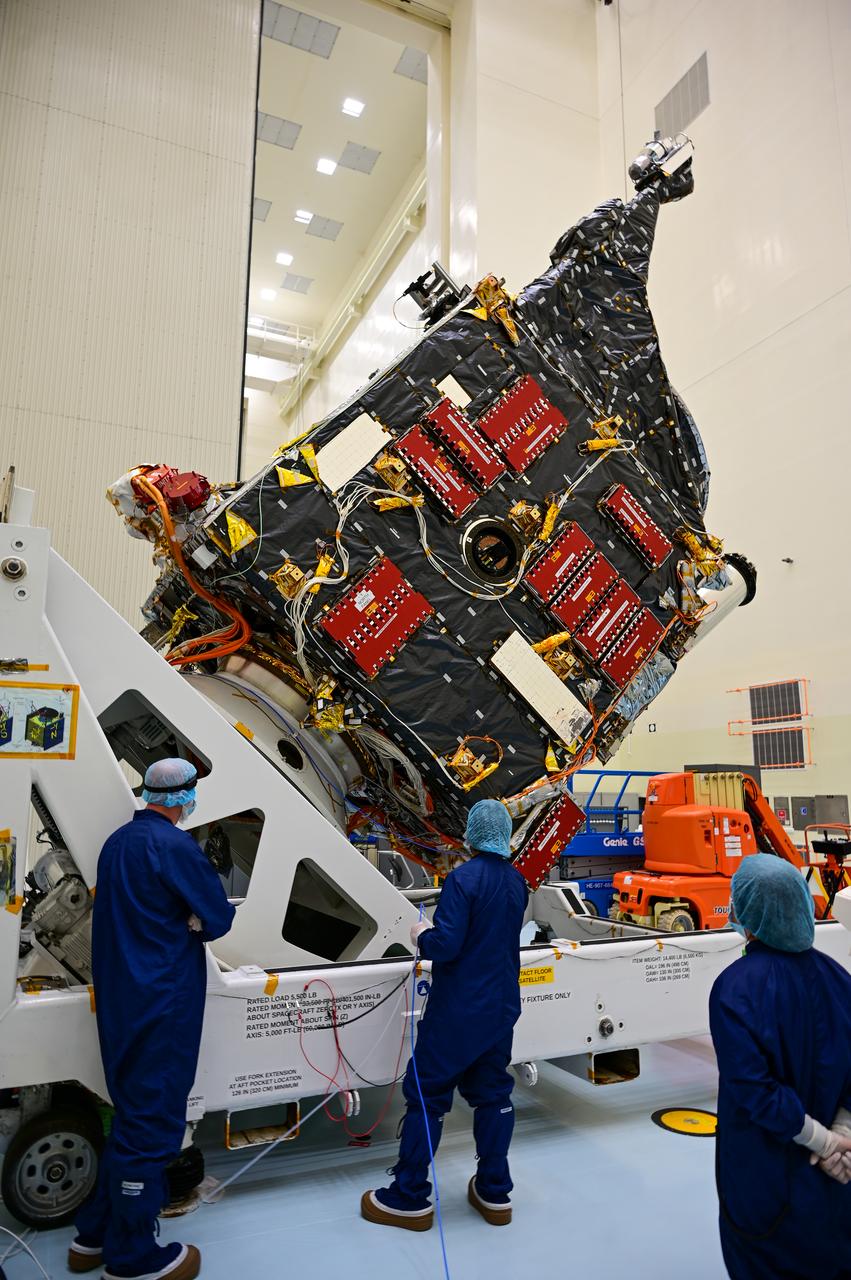
A team working on NASA’s Psyche spacecraft transitioned it from a vertical to horizontal test configuration during prelaunch processing inside the Payload Hazardous Servicing Facility at NASA’s Kennedy Space Center in Florida on May 9, 2022. The mission is targeting an Aug. 1 launch atop a SpaceX Falcon Heavy rocket from Launch Complex 39A at Kennedy. The spacecraft will use solar-electric propulsion to travel approximately 1.5 billion miles to rendezvous with its namesake asteroid in 2026. The Psyche mission is led by Arizona State University. NASA’s Jet Propulsion Laboratory, which is managed for the agency by Caltech in Pasadena, California, is responsible for the mission’s overall management, system engineering, integration and testing, and mission operations. Maxar Technologies in Palo Alto, California, provided the high-power solar electric propulsion spacecraft chassis. NASA’s Launch Services Program (LSP), based at Kennedy, is managing the launch.
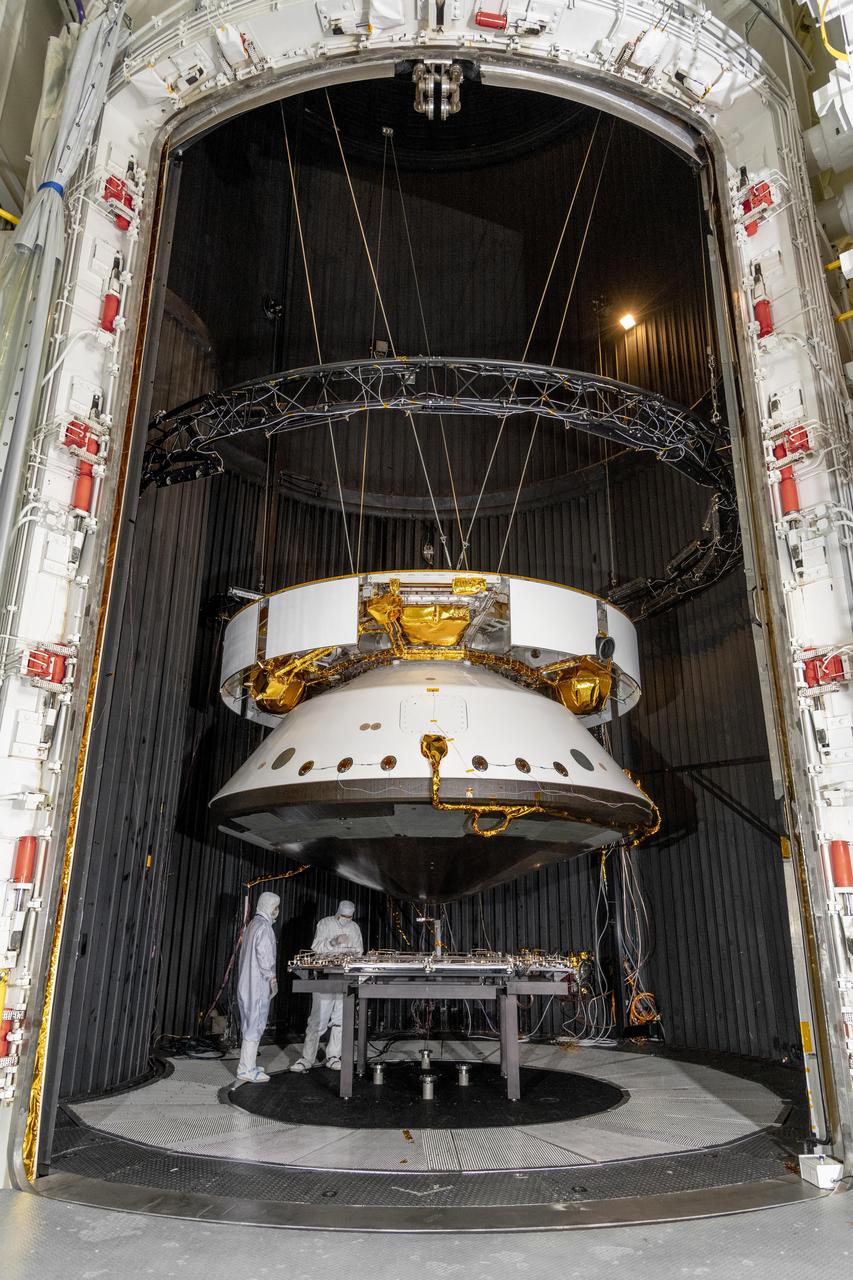
Engineers prepare the Mars 2020 spacecraft for a thermal vacuum (TVAC) test in the Space Simulator Facility at NASA's Jet Propulsion Laboratory in Pasadena, California. The image was taken on May 9, 2019. https://photojournal.jpl.nasa.gov/catalog/PIA23263
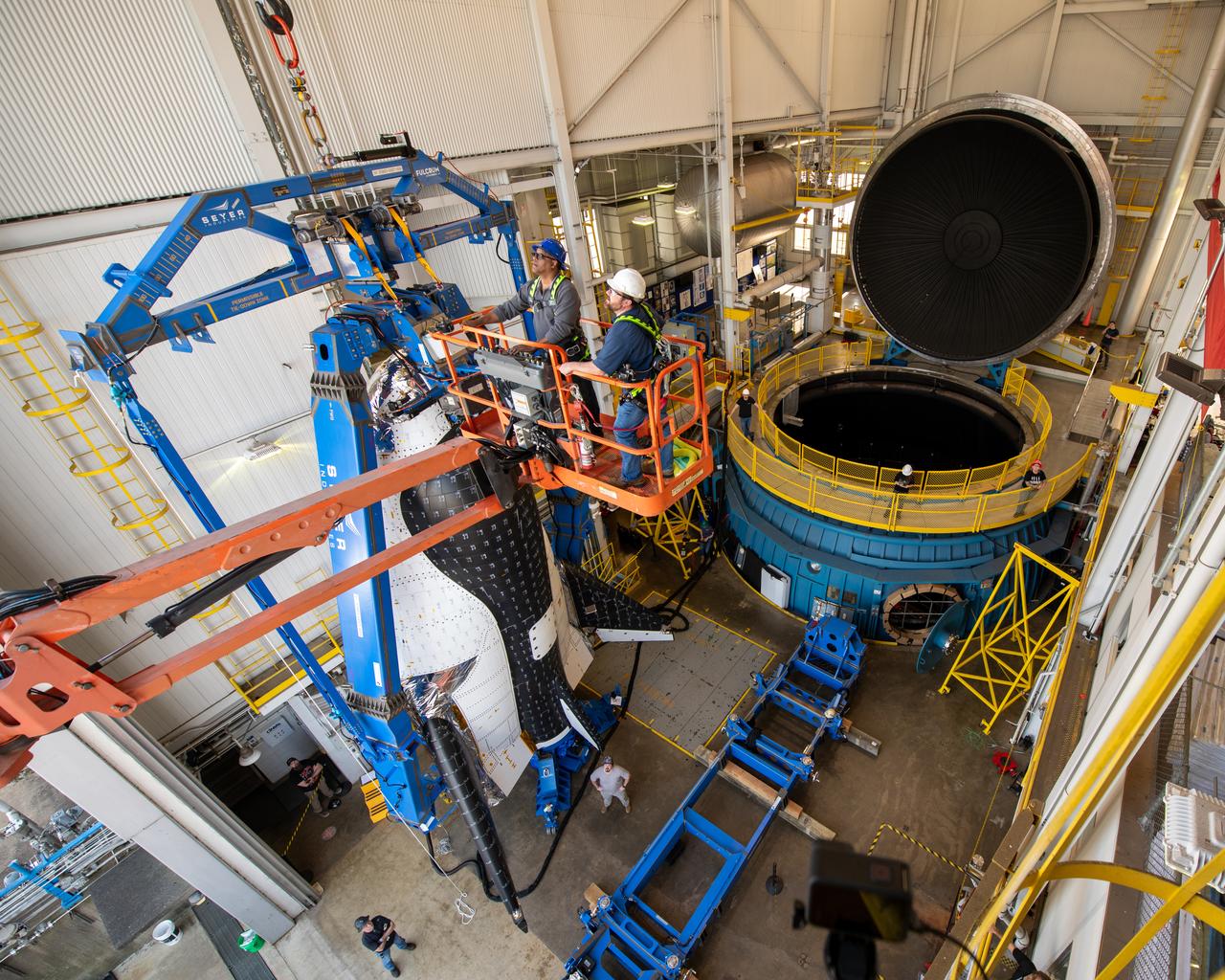
Final inspection of the crane operation just before the critical lift of the Sierra Space Plane, Dream Chaser. It will go into the chamber at ISP (In Space Propulsion) NASA GRC-ATF. Once lowered into the test chamber, it will be exposed to the harsh cold conditions of space for extended periods of time at building 3211 at ATF (Armstrong Test Facility) for environmental testing.
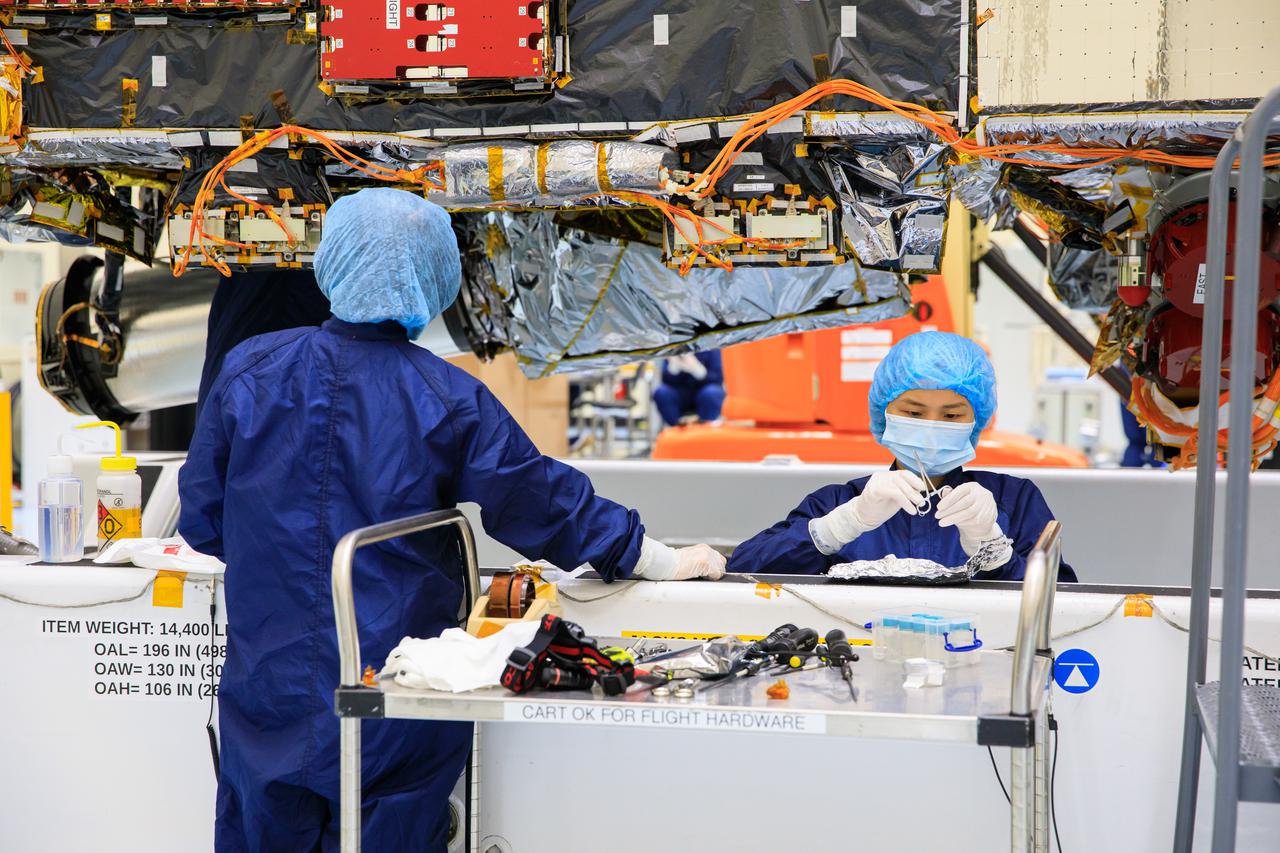
Technicians at NASA’s Kennedy Space Center in Florida perform work on the agency’s Psyche spacecraft inside the Payload Hazardous Servicing Facility (PHSF) on May 3, 2022. While inside the PHSF, the spacecraft will undergo routine processing and servicing ahead of launch. Psyche is targeting to lift off aboard a SpaceX Falcon Heavy rocket on Aug. 1, 2022. The spacecraft will use solar-electric propulsion to travel approximately 1.5 billion miles to rendezvous with its namesake asteroid in 2026. The Psyche mission is led by Arizona State University. NASA’s Jet Propulsion Laboratory, which is managed for the agency by Caltech in Pasadena, California, is responsible for the mission’s overall management, system engineering, integration and testing, and mission operations. Maxar Technologies in Palo Alto, California, provided the high-power solar electric propulsion spacecraft chassis. NASA’s Launch Services Program (LSP), based at Kennedy, is managing the launch. Psyche will be the 14th mission in the agency's Discovery program and LSP’s 100th primary mission.

Technicians at NASA’s Kennedy Space Center in Florida perform work on the agency’s Psyche spacecraft inside the Payload Hazardous Servicing Facility (PHSF) on May 3, 2022. While inside the PHSF, the spacecraft will undergo routine processing and servicing ahead of launch. Psyche is targeting to lift off aboard a SpaceX Falcon Heavy rocket on Aug. 1, 2022. The spacecraft will use solar-electric propulsion to travel approximately 1.5 billion miles to rendezvous with its namesake asteroid in 2026. The Psyche mission is led by Arizona State University. NASA’s Jet Propulsion Laboratory, which is managed for the agency by Caltech in Pasadena, California, is responsible for the mission’s overall management, system engineering, integration and testing, and mission operations. Maxar Technologies in Palo Alto, California, provided the high-power solar electric propulsion spacecraft chassis. NASA’s Launch Services Program (LSP), based at Kennedy, is managing the launch. Psyche will be the 14th mission in the agency's Discovery program and LSP’s 100th primary mission.
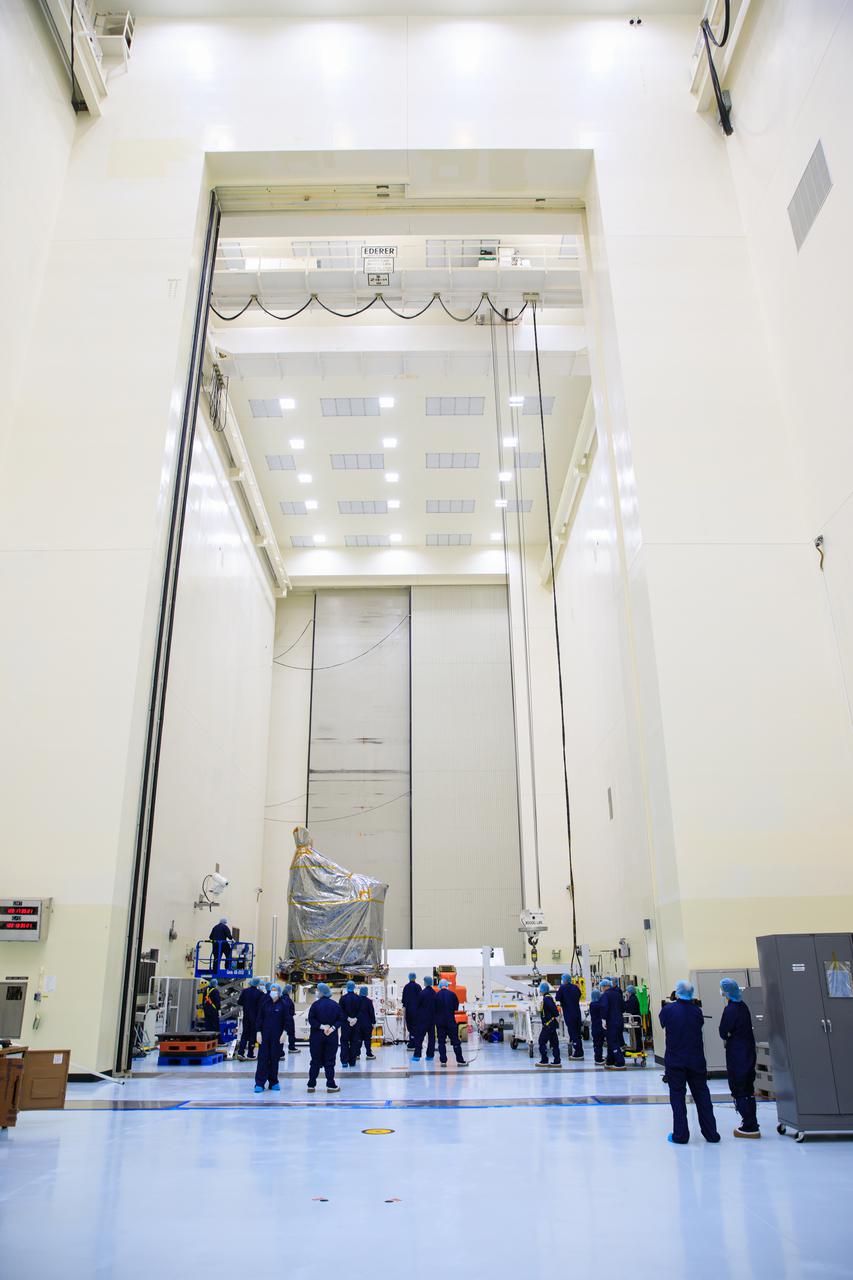
Inside the Payload Hazardous Servicing Facility (PHSF) at NASA's Kennedy Space Center, technicians prepare to move the agency’s Psyche spacecraft – recently removed from its shipping container and inside a protective covering – to a work stand on May 2, 2022. Psyche is scheduled to launch aboard a SpaceX Falcon Heavy rocket on Aug. 1, 2022. The spacecraft will use solar-electric propulsion to travel approximately 1.5 billion miles to rendezvous with its namesake asteroid in 2026. The Psyche mission is led by Arizona State University. NASA’s Jet Propulsion Laboratory, which is managed for the agency by Caltech in Pasadena, California, is responsible for the mission’s overall management, system engineering, integration and testing, and mission operations. Maxar Technologies in Palo Alto, California, provided the high-power solar electric propulsion spacecraft chassis. NASA’s Launch Services Program (LSP), based at Kennedy, is managing the launch. Psyche will be the 14th mission in the agency's Discovery program and LSP’s 100th primary mission.
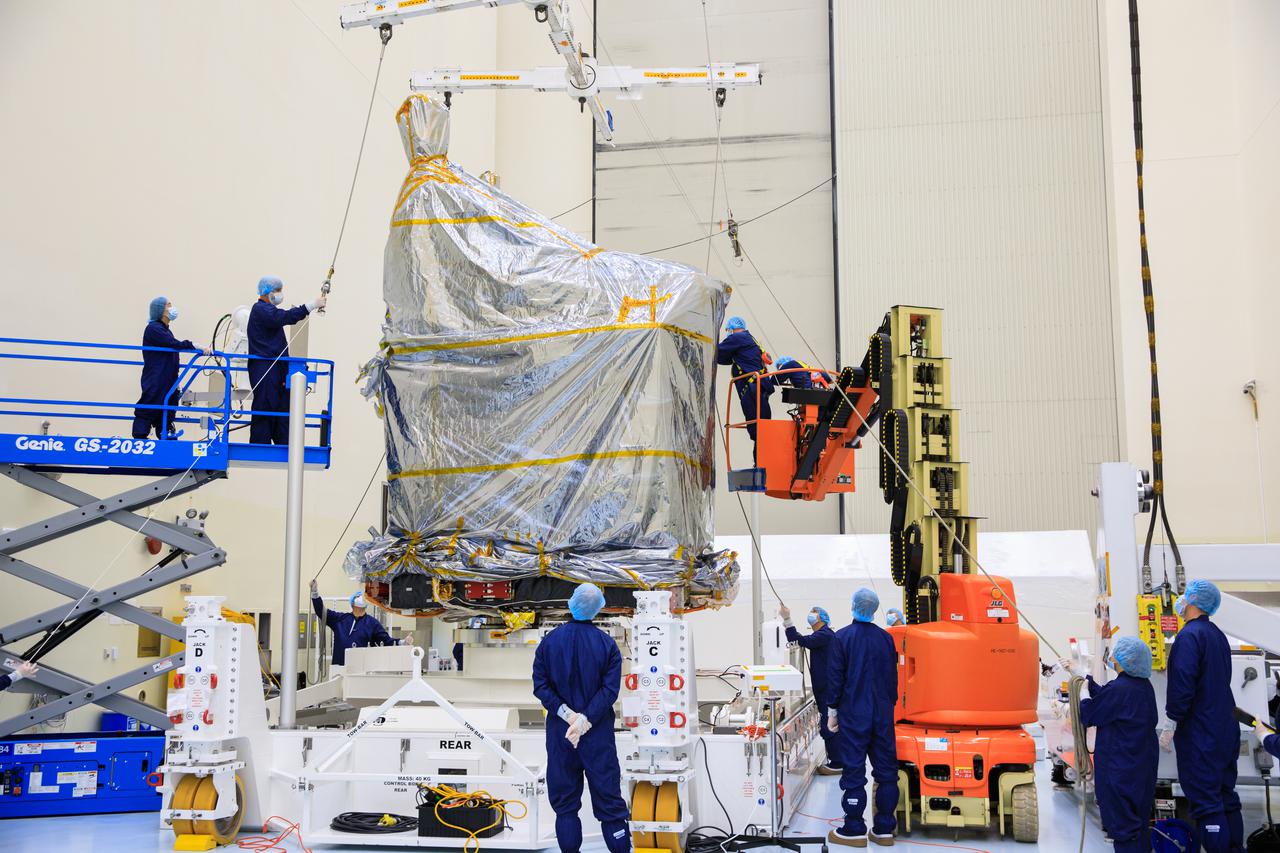
Inside the Payload Hazardous Servicing Facility (PHSF) at NASA's Kennedy Space Center, the agency’s Psyche spacecraft – recently removed from its shipping container and inside a protective covering – is moved by crane to a work stand on Monday, May 2, 2022. Psyche is scheduled to launch aboard a SpaceX Falcon Heavy rocket on Aug. 1, 2022. The spacecraft will use solar-electric propulsion to travel approximately 1.5 billion miles to rendezvous with its namesake asteroid in 2026. The Psyche mission is led by Arizona State University. NASA’s Jet Propulsion Laboratory, which is managed for the agency by Caltech in Pasadena, California, is responsible for the mission’s overall management, system engineering, integration and testing, and mission operations. Maxar Technologies in Palo Alto, California, provided the high-power solar electric propulsion spacecraft chassis. NASA’s Launch Services Program (LSP), based at Kennedy, is managing the launch. Psyche will be the 14th mission in the agency's Discovery program and LSP’s 100th primary mission.
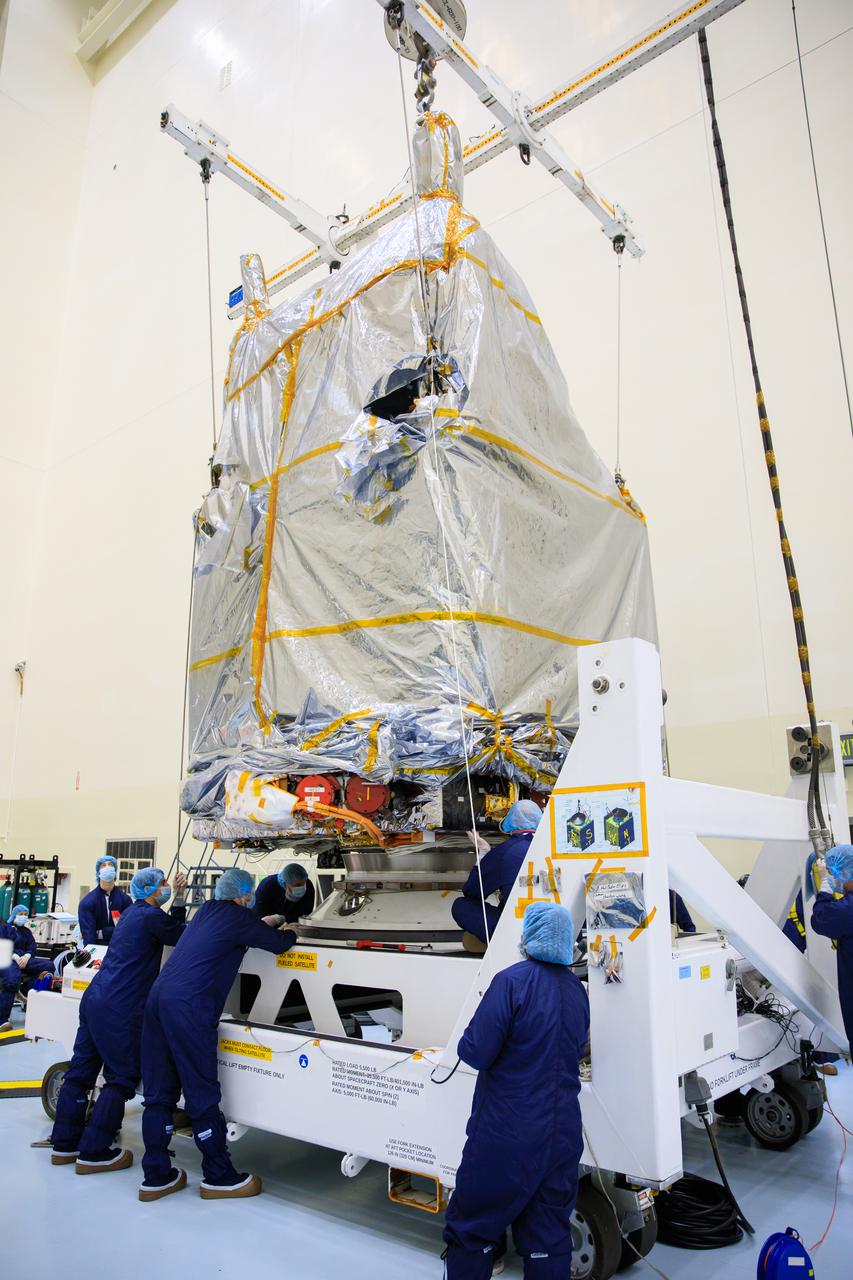
Inside the Payload Hazardous Servicing Facility (PHSF) at NASA's Kennedy Space Center, the agency’s Psyche spacecraft – recently removed from its shipping container and inside a protective covering – is moved by crane to a work stand on Monday, May 2, 2022. Psyche is scheduled to launch aboard a SpaceX Falcon Heavy rocket on Aug. 1, 2022. The spacecraft will use solar-electric propulsion to travel approximately 1.5 billion miles to rendezvous with its namesake asteroid in 2026. The Psyche mission is led by Arizona State University. NASA’s Jet Propulsion Laboratory, which is managed for the agency by Caltech in Pasadena, California, is responsible for the mission’s overall management, system engineering, integration and testing, and mission operations. Maxar Technologies in Palo Alto, California, provided the high-power solar electric propulsion spacecraft chassis. NASA’s Launch Services Program (LSP), based at Kennedy, is managing the launch. Psyche will be the 14th mission in the agency's Discovery program and LSP’s 100th primary mission.
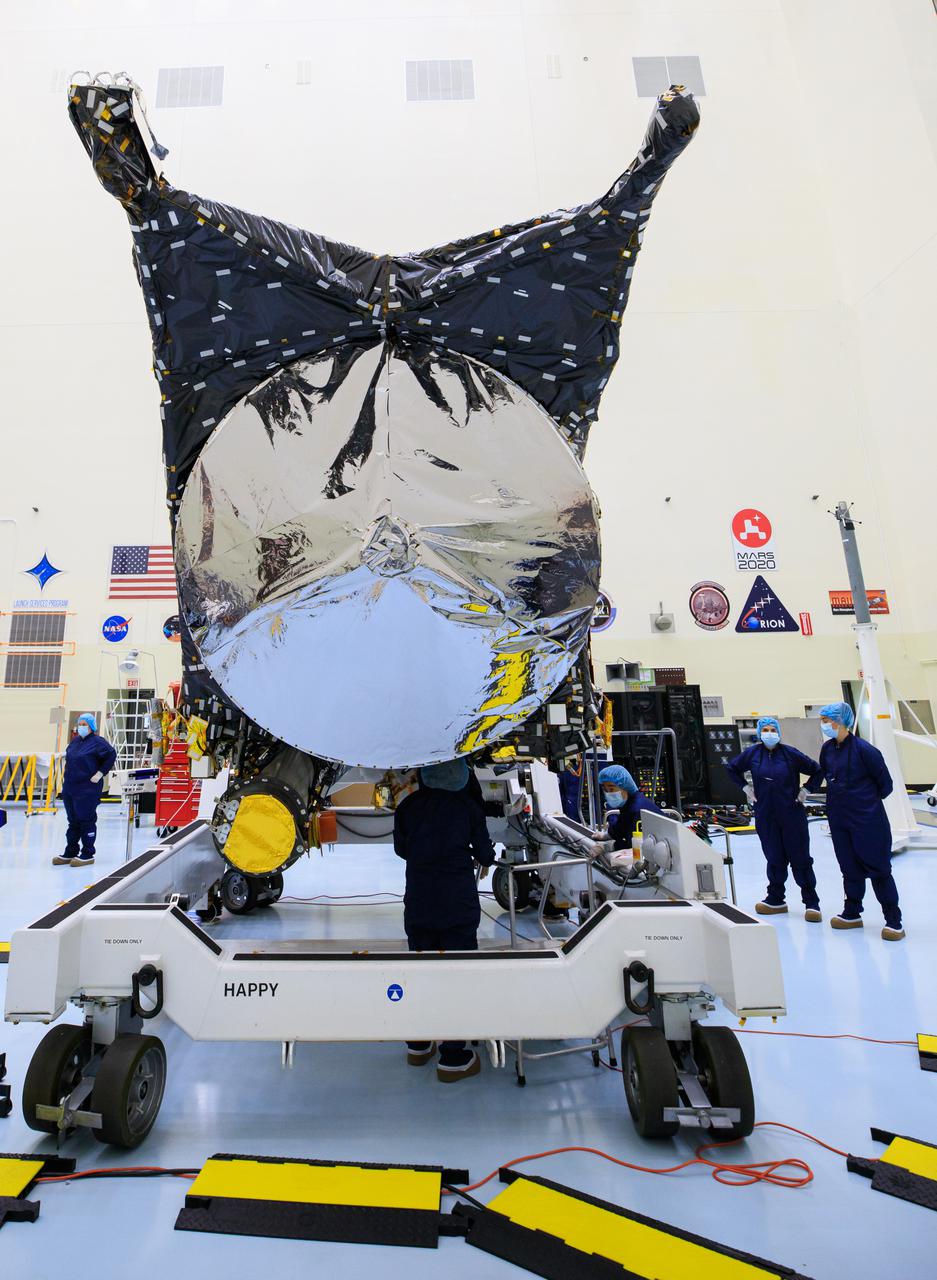
Technicians at NASA’s Kennedy Space Center in Florida perform work on the agency’s Psyche spacecraft inside the Payload Hazardous Servicing Facility (PHSF) on May 3, 2022. While inside the PHSF, the spacecraft will undergo routine processing and servicing ahead of launch. Psyche is targeting to lift off aboard a SpaceX Falcon Heavy rocket on Aug. 1, 2022. The spacecraft will use solar-electric propulsion to travel approximately 1.5 billion miles to rendezvous with its namesake asteroid in 2026. The Psyche mission is led by Arizona State University. NASA’s Jet Propulsion Laboratory, which is managed for the agency by Caltech in Pasadena, California, is responsible for the mission’s overall management, system engineering, integration and testing, and mission operations. Maxar Technologies in Palo Alto, California, provided the high-power solar electric propulsion spacecraft chassis. NASA’s Launch Services Program (LSP), based at Kennedy, is managing the launch. Psyche will be the 14th mission in the agency's Discovery program and LSP’s 100th primary mission.
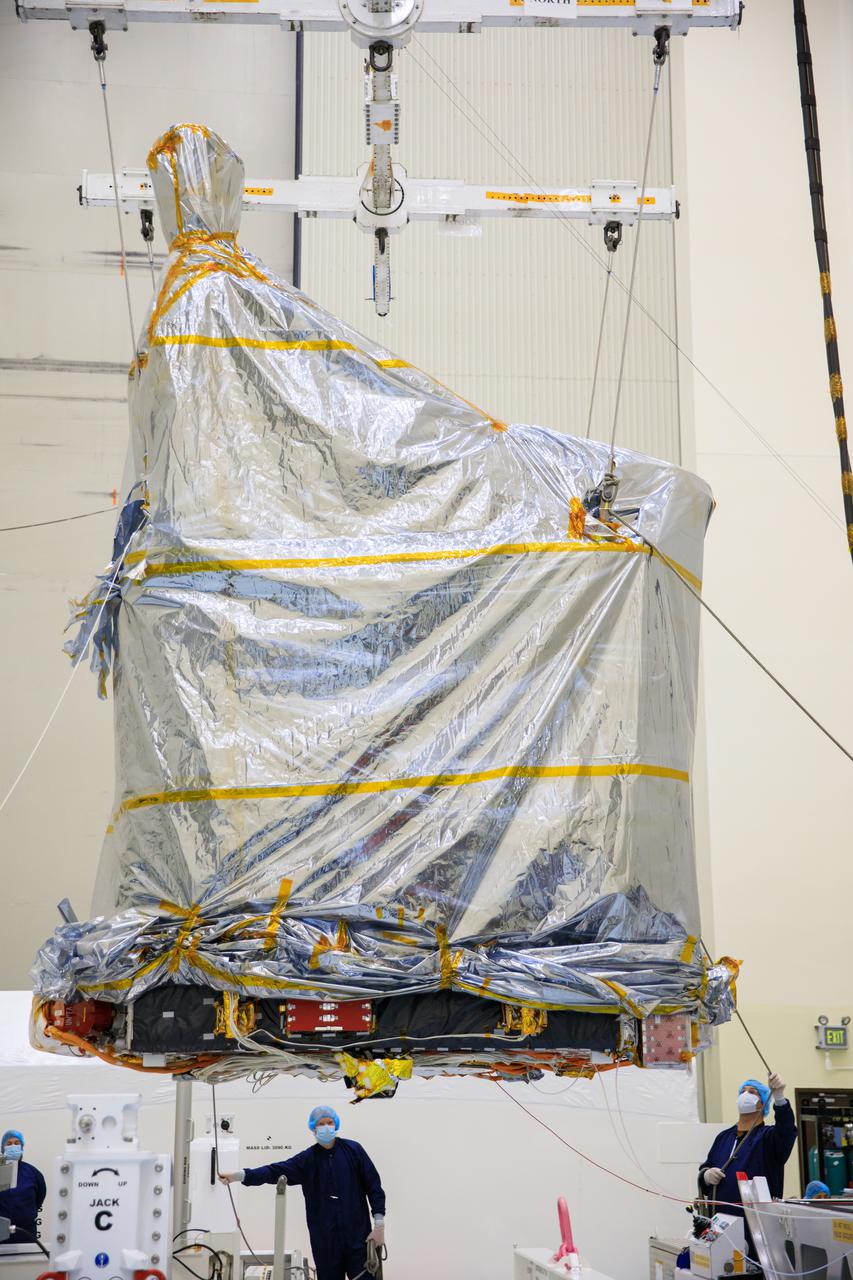
Inside the Payload Hazardous Servicing Facility (PHSF) at NASA's Kennedy Space Center, the agency’s Psyche spacecraft – recently removed from its shipping container and inside a protective covering – is moved by crane to a work stand on Monday, May 2, 2022. Psyche is scheduled to launch aboard a SpaceX Falcon Heavy rocket on Aug. 1, 2022. The spacecraft will use solar-electric propulsion to travel approximately 1.5 billion miles to rendezvous with its namesake asteroid in 2026. The Psyche mission is led by Arizona State University. NASA’s Jet Propulsion Laboratory, which is managed for the agency by Caltech in Pasadena, California, is responsible for the mission’s overall management, system engineering, integration and testing, and mission operations. Maxar Technologies in Palo Alto, California, provided the high-power solar electric propulsion spacecraft chassis. NASA’s Launch Services Program (LSP), based at Kennedy, is managing the launch. Psyche will be the 14th mission in the agency's Discovery program and LSP’s 100th primary mission.
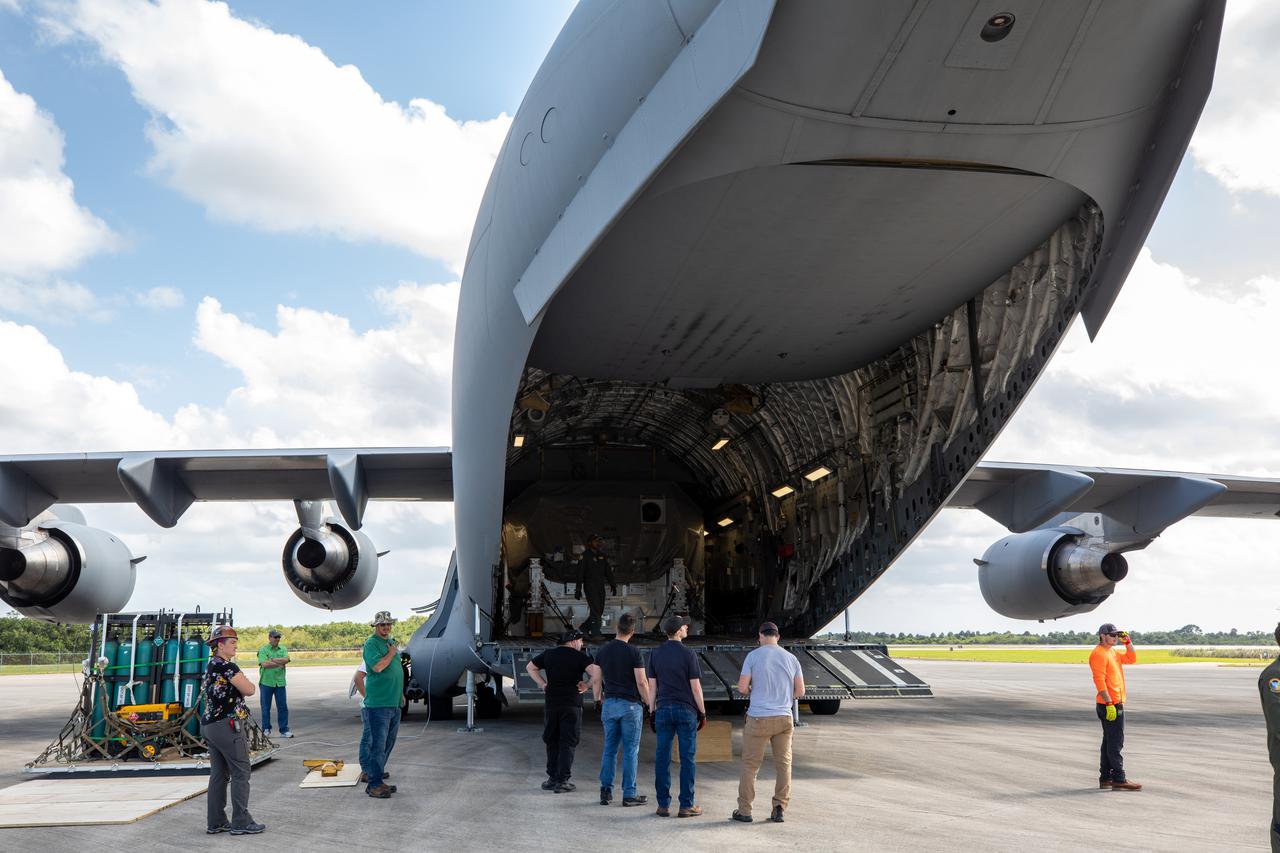
Preparations are underway to offload NASA’s Psyche spacecraft from the C-17 aircraft it arrived aboard at Kennedy Space Center’s Launch and Landing Facility in Florida on April 29, 2022. Psyche arrived from NASA’s Jet Propulsion Laboratory (JPL) in Southern California. Psyche is scheduled to launch aboard a SpaceX Falcon Heavy rocket on Aug. 1, 2022. The spacecraft will use its solar-electric propulsion to travel approximately 1.5 billion miles to rendezvous with its namesake asteroid in 2026. The Psyche mission is led by Arizona State University. JPL, which is managed for NASA by Caltech in Pasadena, California, is responsible for the mission’s overall management, system engineering, integration and testing, and mission operations. Maxar Technologies in Palo Alto, California, provided the high-power solar electric propulsion spacecraft chassis. NASA’s Launch Services Program (LSP), based at Kennedy, is managing the launch. Psyche will be the 14th mission in the agency's Discovery program and LSP’s 100th primary mission.
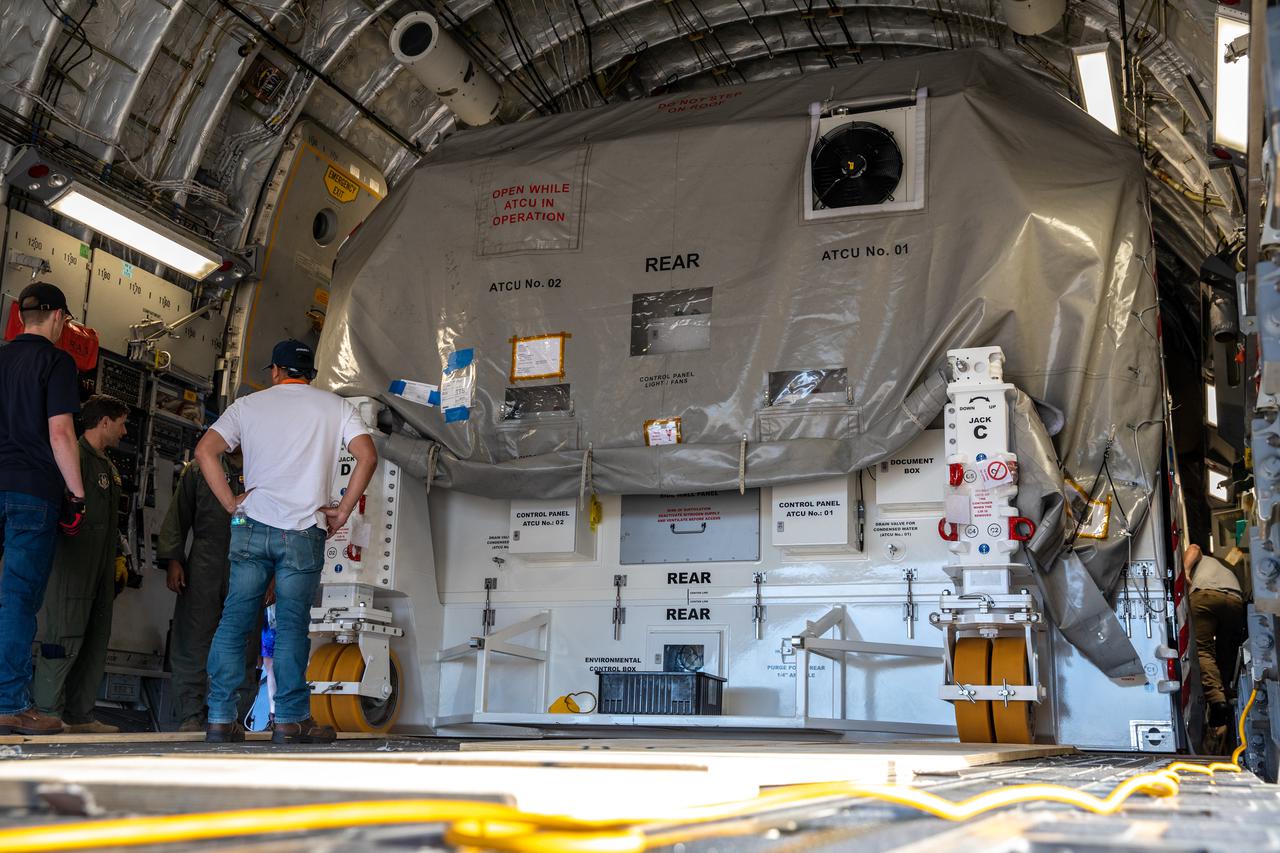
Preparations are underway to offload NASA’s Psyche spacecraft from the C-17 aircraft it arrived aboard at Kennedy Space Center’s Launch and Landing Facility in Florida on April 29, 2022. Psyche arrived from NASA’s Jet Propulsion Laboratory (JPL) in Southern California. Psyche is scheduled to launch aboard a SpaceX Falcon Heavy rocket on Aug. 1, 2022. The spacecraft will use its solar-electric propulsion to travel approximately 1.5 billion miles to rendezvous with its namesake asteroid in 2026. The Psyche mission is led by Arizona State University. JPL, which is managed for NASA by Caltech in Pasadena, California, is responsible for the mission’s overall management, system engineering, integration and testing, and mission operations. Maxar Technologies in Palo Alto, California, provided the high-power solar electric propulsion spacecraft chassis. NASA’s Launch Services Program (LSP), based at Kennedy, is managing the launch. Psyche will be the 14th mission in the agency's Discovery program and LSP’s 100th primary mission.
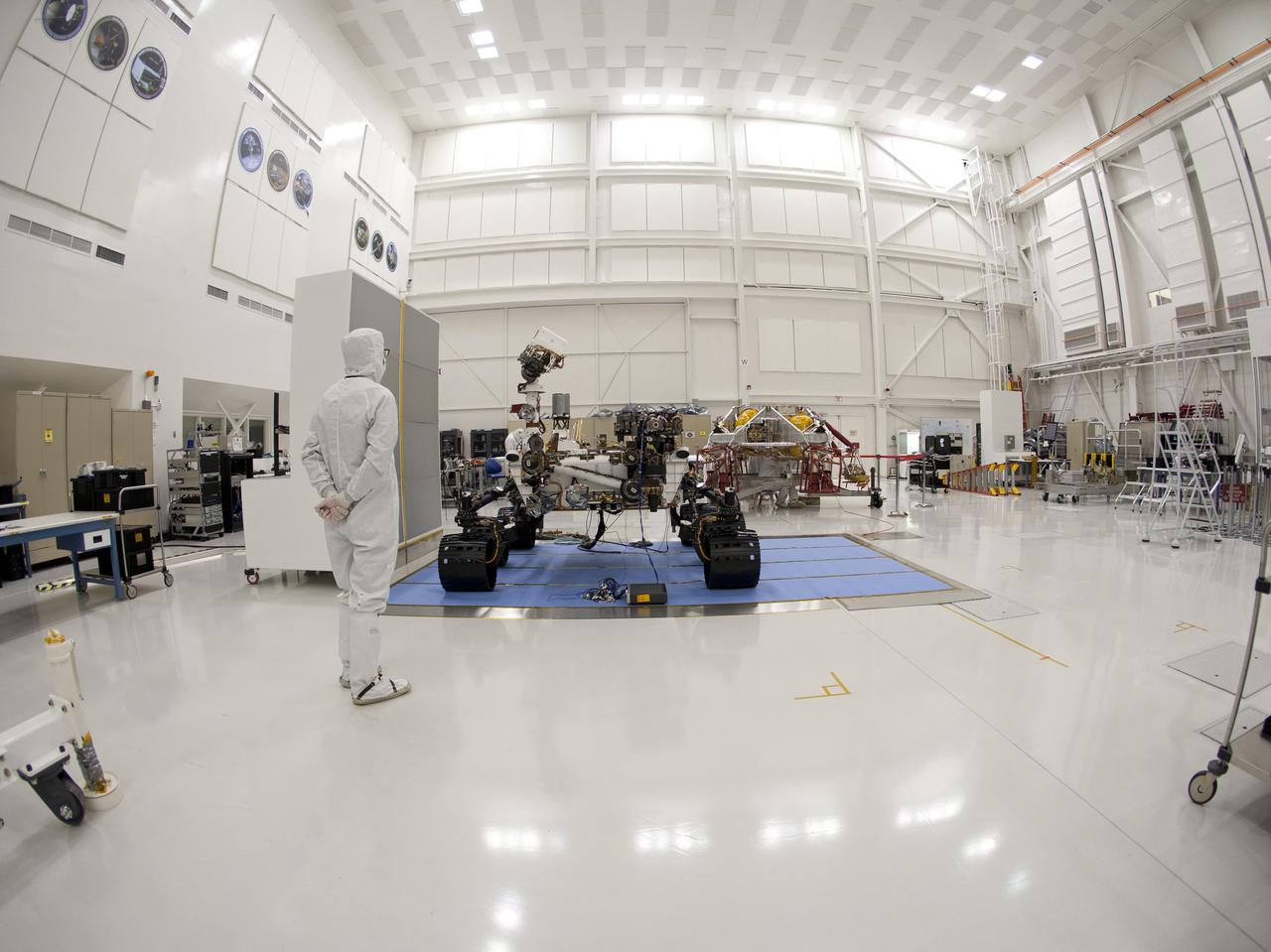
An engineer says goodbye to the Curiosity rover and its powered descent vehicle in the Jet Propulsion Laboratory Spacecraft Assembly Facility shortly before the spacecraft was readied for shipment to Kennedy Space Center for launch.
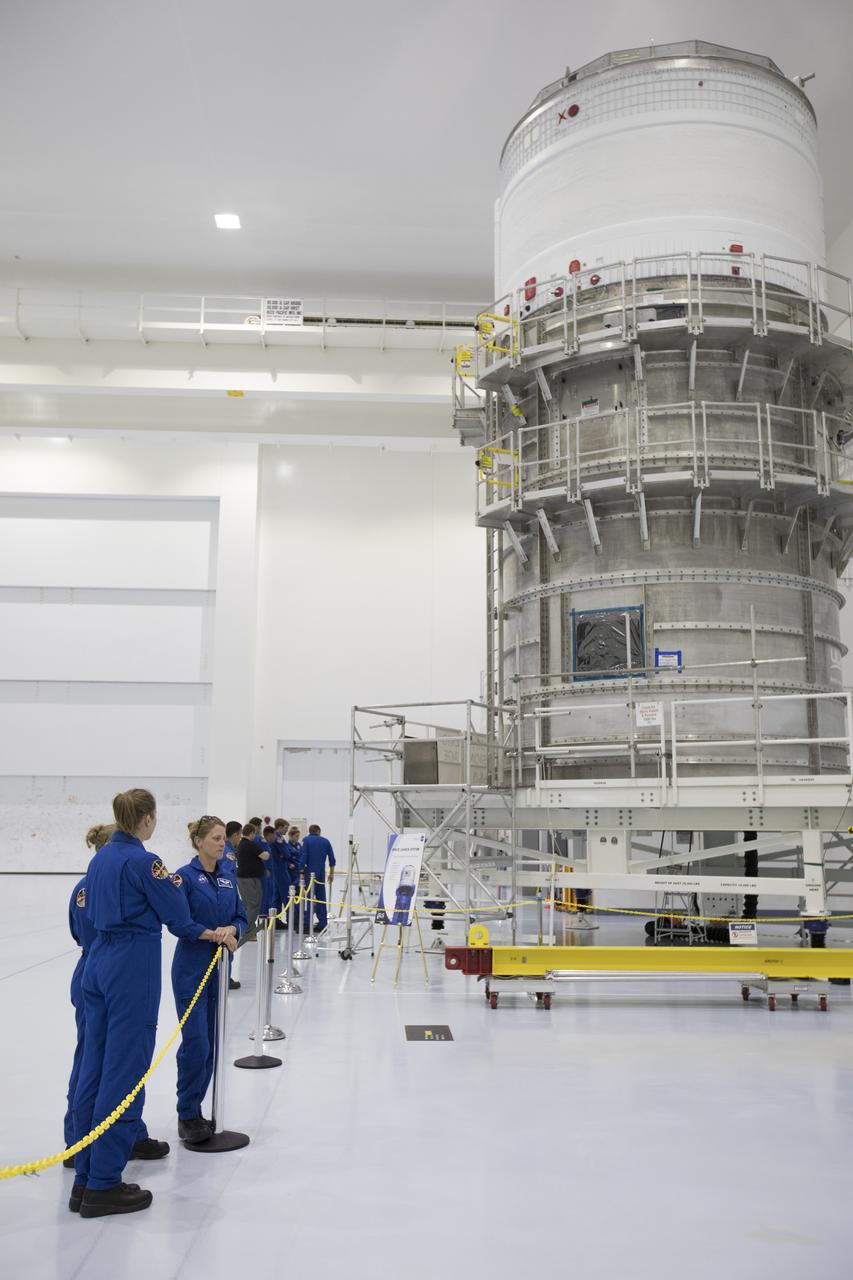
The 2017 class of astronaut candidates are inside the Space Station Processing Facility high bay during a familiarization tour of facilities at NASA's Kennedy Space Center in Florida. They are viewing the Interim Cryogenic Propulsion System for NASA's Space Launch System rocket. The candidates toured center facilities, including the Neil Armstrong Operations and Checkout Building high bay; the Launch Control Center, Launch Pad 39B, and the Vehicle Assembly Building. They also toured Boeing's Commercial Crew and Cargo Facility, United Launch Alliance's Space Launch Complex 41 at Cape Canaveral Air Force Station, and SpaceX's Launch Pad 39A at Kennedy. The candidates will spend about two years getting to know the space station systems and learning how to spacewalk, speak Russian, control the International Space Station's robotic arm and fly T-38s, before they're eligible to be assigned to a mission.
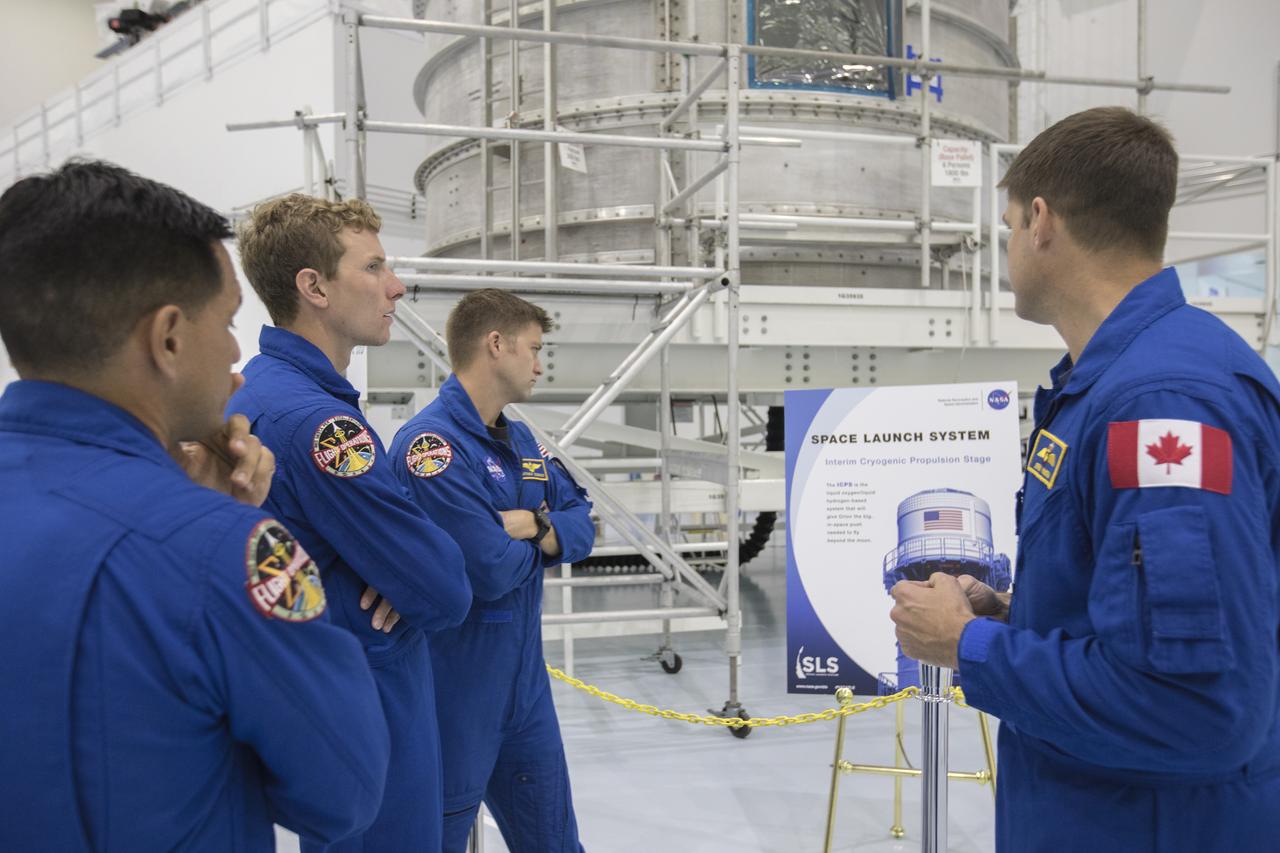
The 2017 class of astronaut candidates are inside the Space Station Processing Facility high bay during a familiarization tour of facilities at NASA's Kennedy Space Center in Florida. They are viewing the Interim Cryogenic Propulsion System for NASA's Space Launch System rocket. The candidates toured center facilities, including the Neil Armstrong Operations and Checkout Building high bay; the Launch Control Center, Launch Pad 39B, and the Vehicle Assembly Building. They also toured Boeing's Commercial Crew and Cargo Facility, United Launch Alliance's Space Launch Complex 41 at Cape Canaveral Air Force Station, and SpaceX's Launch Pad 39A at Kennedy. The candidates will spend about two years getting to know the space station systems and learning how to spacewalk, speak Russian, control the International Space Station's robotic arm and fly T-38s, before they're eligible to be assigned to a mission.
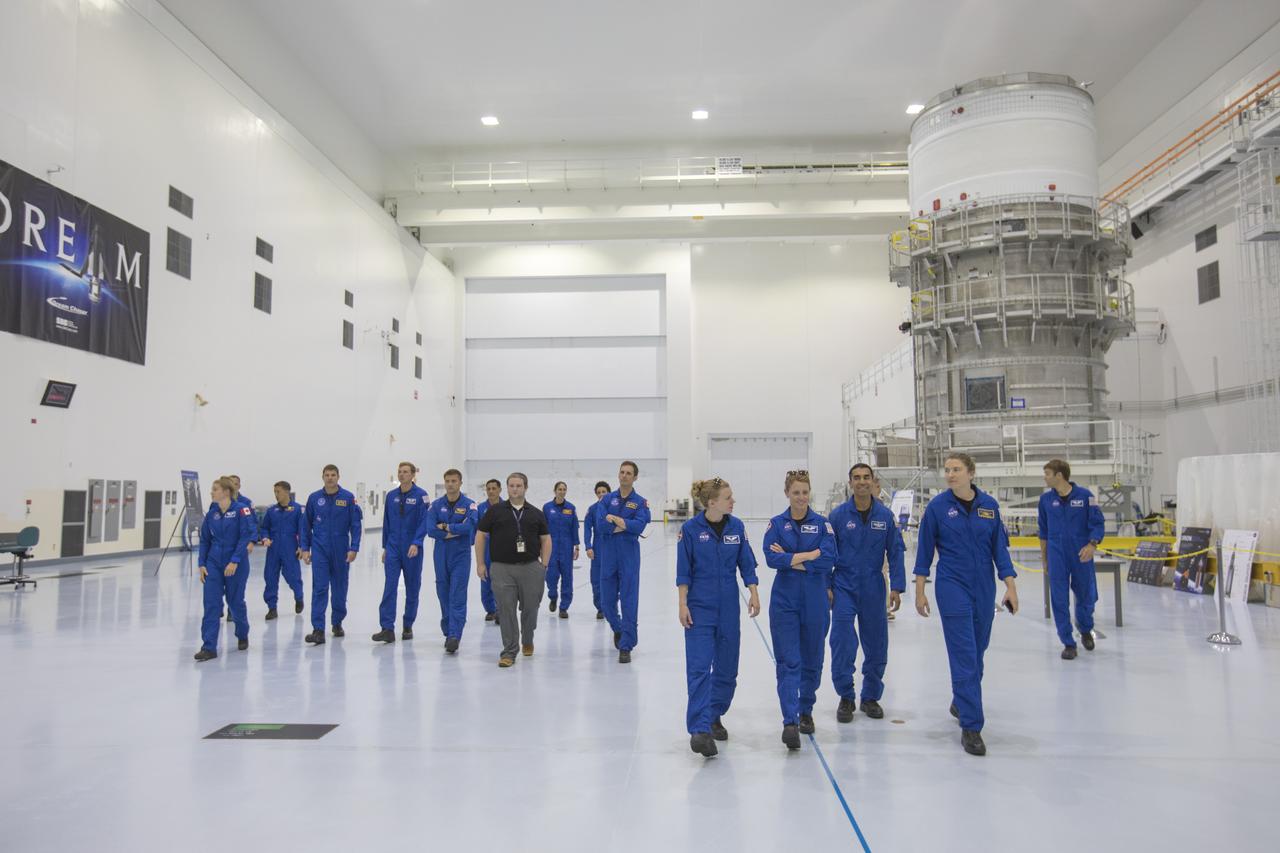
The 2017 class of astronaut candidates are inside the Space Station Processing Facility high bay during a familiarization tour of facilities at NASA's Kennedy Space Center in Florida. Behind them is the Interim Cryogenic Propulsion System for NASA's Space Launch System rocket. The candidates toured center facilities, including the Neil Armstrong Operations and Checkout Building high bay; the Launch Control Center, Launch Pad 39B, and the Vehicle Assembly Building. They also toured Boeing's Commercial Crew and Cargo Facility, United Launch Alliance's Space Launch Complex 41 at Cape Canaveral Air Force Station, and SpaceX's Launch Pad 39A at Kennedy. The candidates will spend about two years getting to know the space station systems and learning how to spacewalk, speak Russian, control the International Space Station's robotic arm and fly T-38s, before they're eligible to be assigned to a mission.
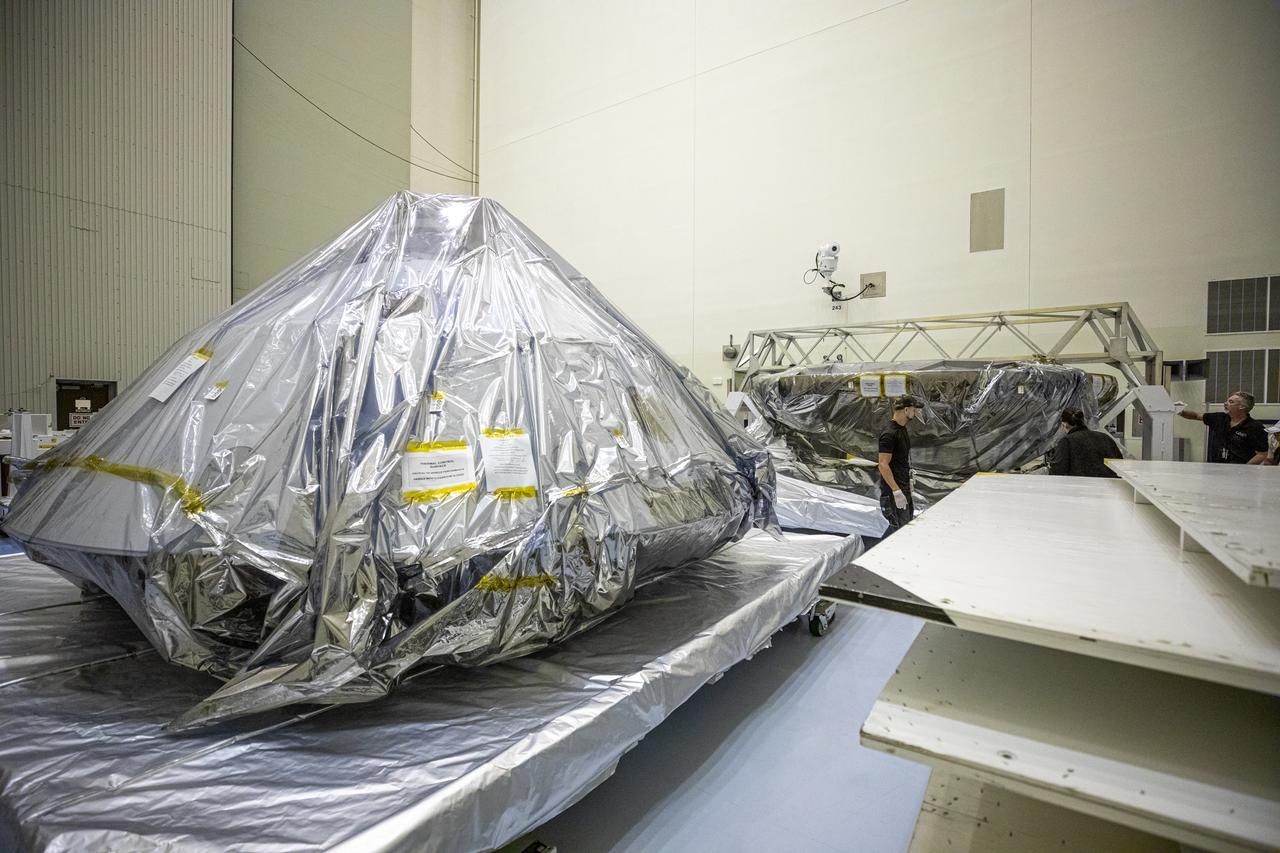
The heat shield and back shell for the Mars 2020 rover are unboxed inside the Payload Hazardous Servicing Facility at NASA’s Kennedy Space Center on Dec. 13, 2019. The two integral pieces of equipment, which were flown to the Florida spaceport from Lockheed Martin Space in Denver, Colorado, will protect the rover during its passage to Mars. The Mars 2020 rover is being manufactured at NASA’s Jet Propulsion Laboratory in California. When completed, the rover will be delivered to Kennedy in mid-February, 2020, with the mission scheduled to launch in the summer of 2020.
The heat shield and back shell for the Mars 2020 rover are unboxed inside the Payload Hazardous Servicing Facility at NASA’s Kennedy Space Center on Dec. 13, 2019. The two integral pieces of equipment, which were flown to the Florida spaceport from Lockheed Martin Space in Denver, Colorado, will protect the rover during its passage to Mars. The Mars 2020 rover is being manufactured at NASA’s Jet Propulsion Laboratory in California. When completed, the rover will be delivered to Kennedy in mid-February, 2020, with the mission scheduled to launch in the summer of 2020.
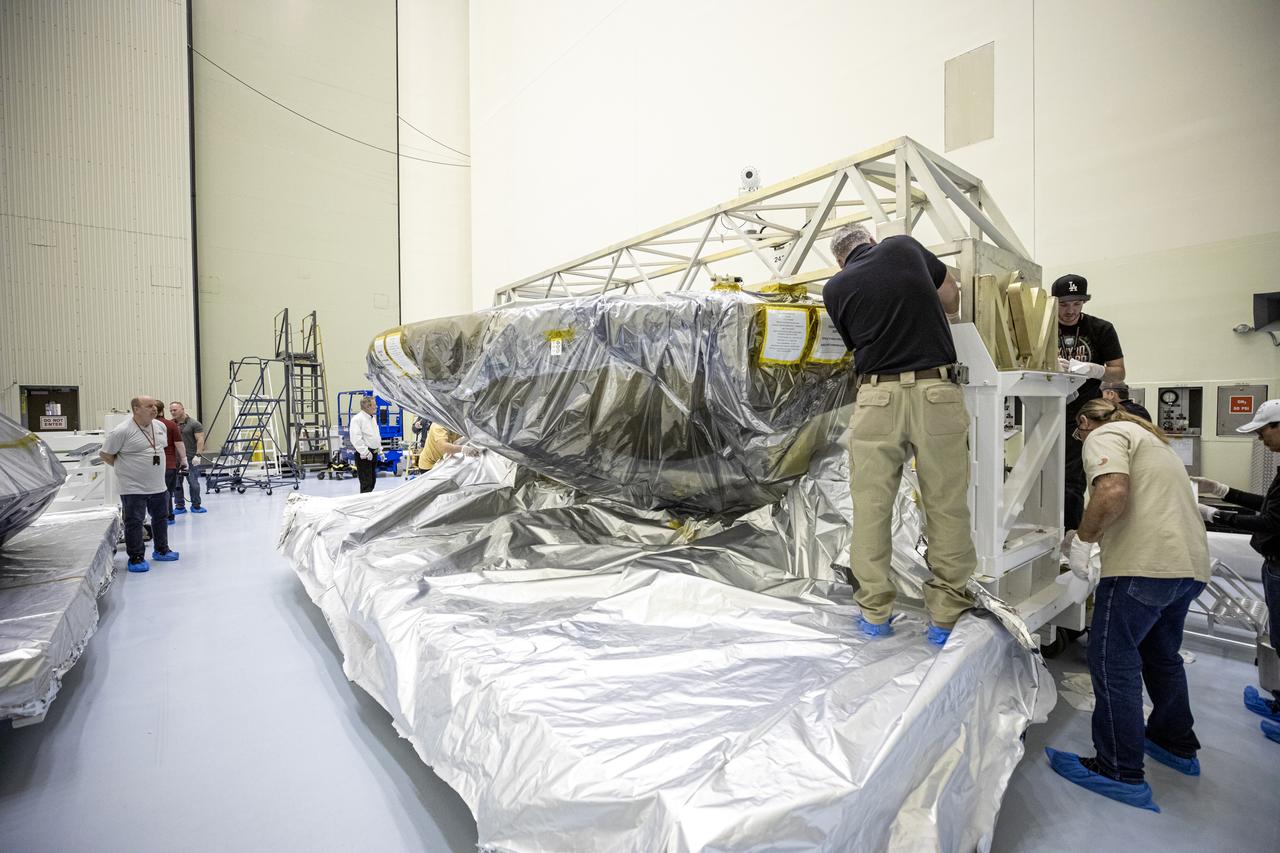
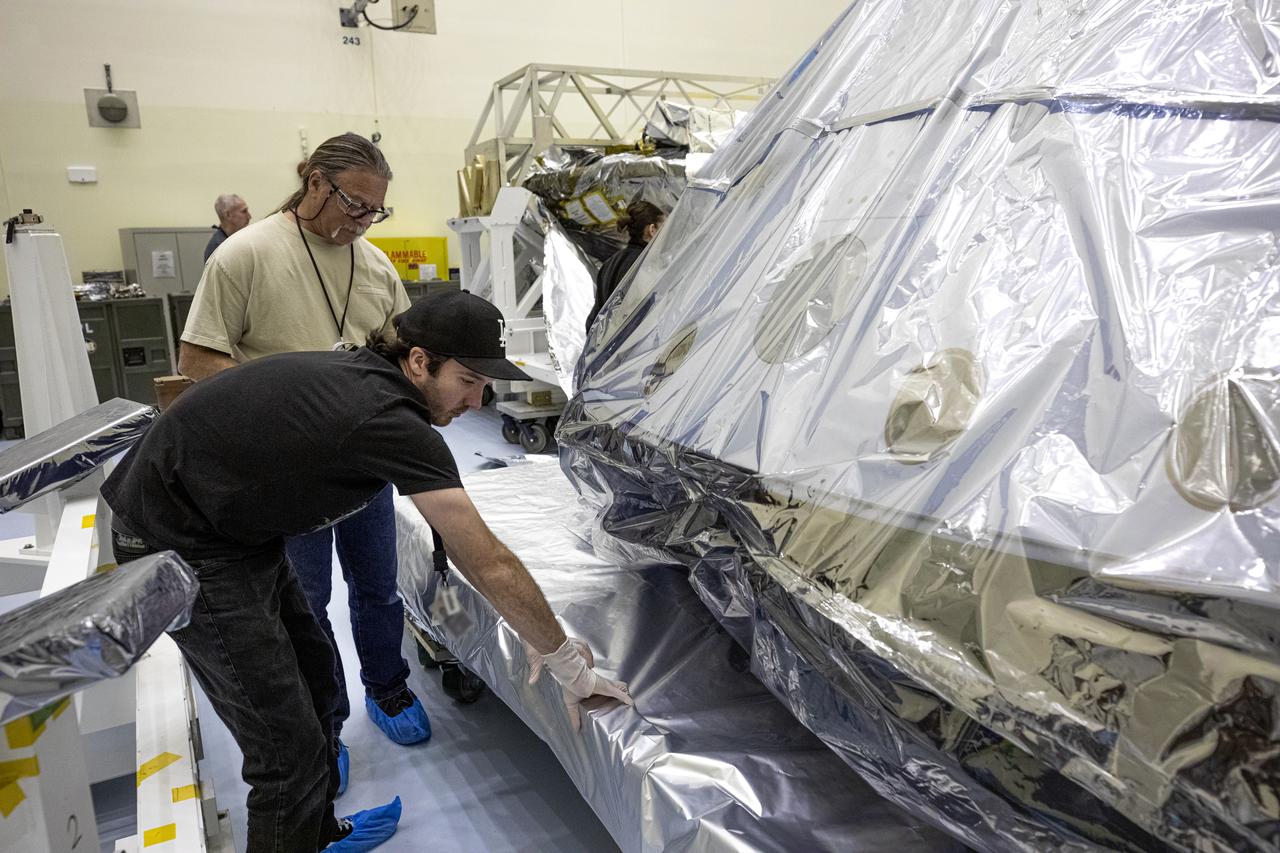
The heat shield and back shell for the Mars 2020 rover are unboxed inside the Payload Hazardous Servicing Facility at NASA’s Kennedy Space Center on Dec. 13, 2019. The two integral pieces of equipment, which were flown to the Florida spaceport from Lockheed Martin Space in Denver, Colorado, will protect the rover during its passage to Mars. The Mars 2020 rover is being manufactured at NASA’s Jet Propulsion Laboratory in California. When completed, the rover will be delivered to Kennedy in mid-February, 2020, with the mission scheduled to launch in the summer of 2020.
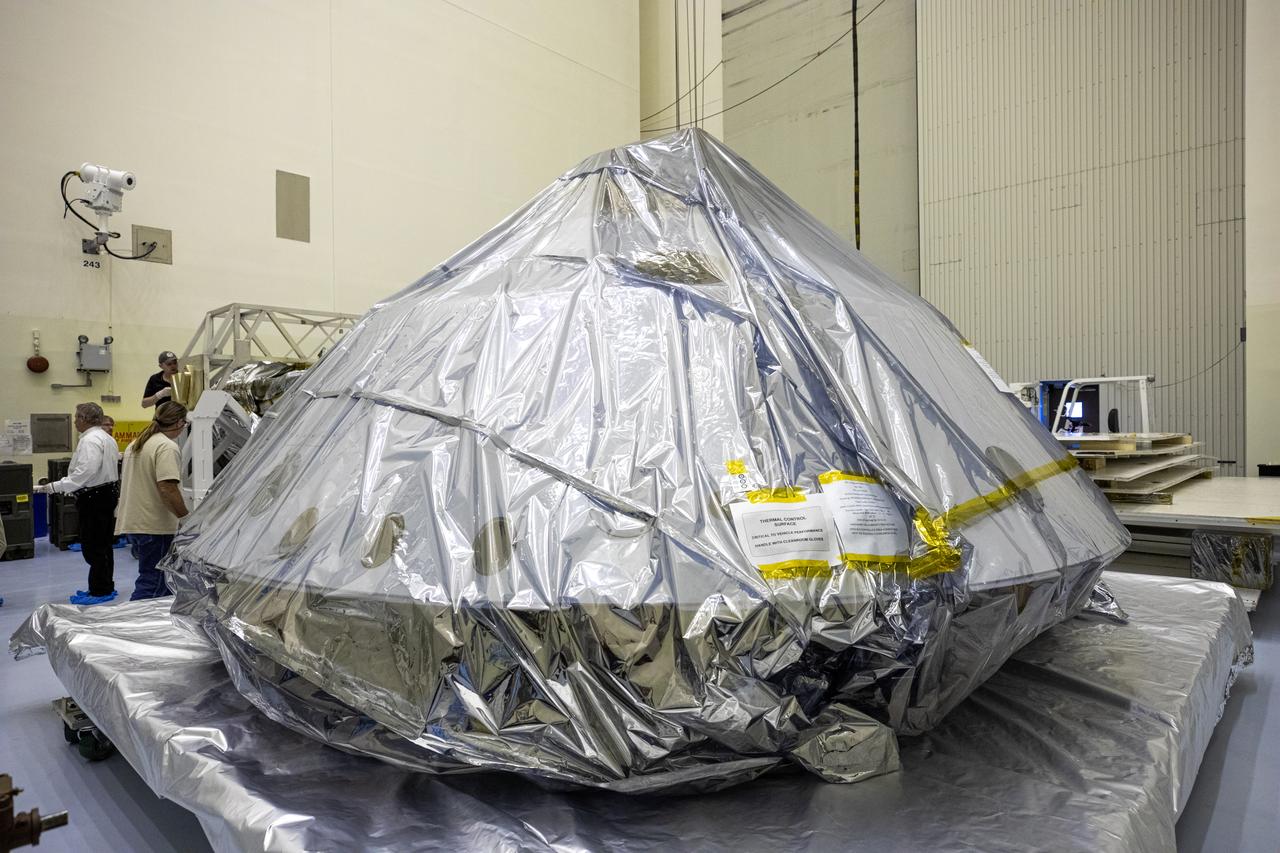
The heat shield and back shell for the Mars 2020 rover are unboxed inside the Payload Hazardous Servicing Facility at NASA’s Kennedy Space Center on Dec. 13, 2019. The two integral pieces of equipment, which were flown to the Florida spaceport from Lockheed Martin Space in Denver, Colorado, will protect the rover during its passage to Mars. The Mars 2020 rover is being manufactured at NASA’s Jet Propulsion Laboratory in California. When completed, the rover will be delivered to Kennedy in mid-February, 2020, with the mission scheduled to launch in the summer of 2020.
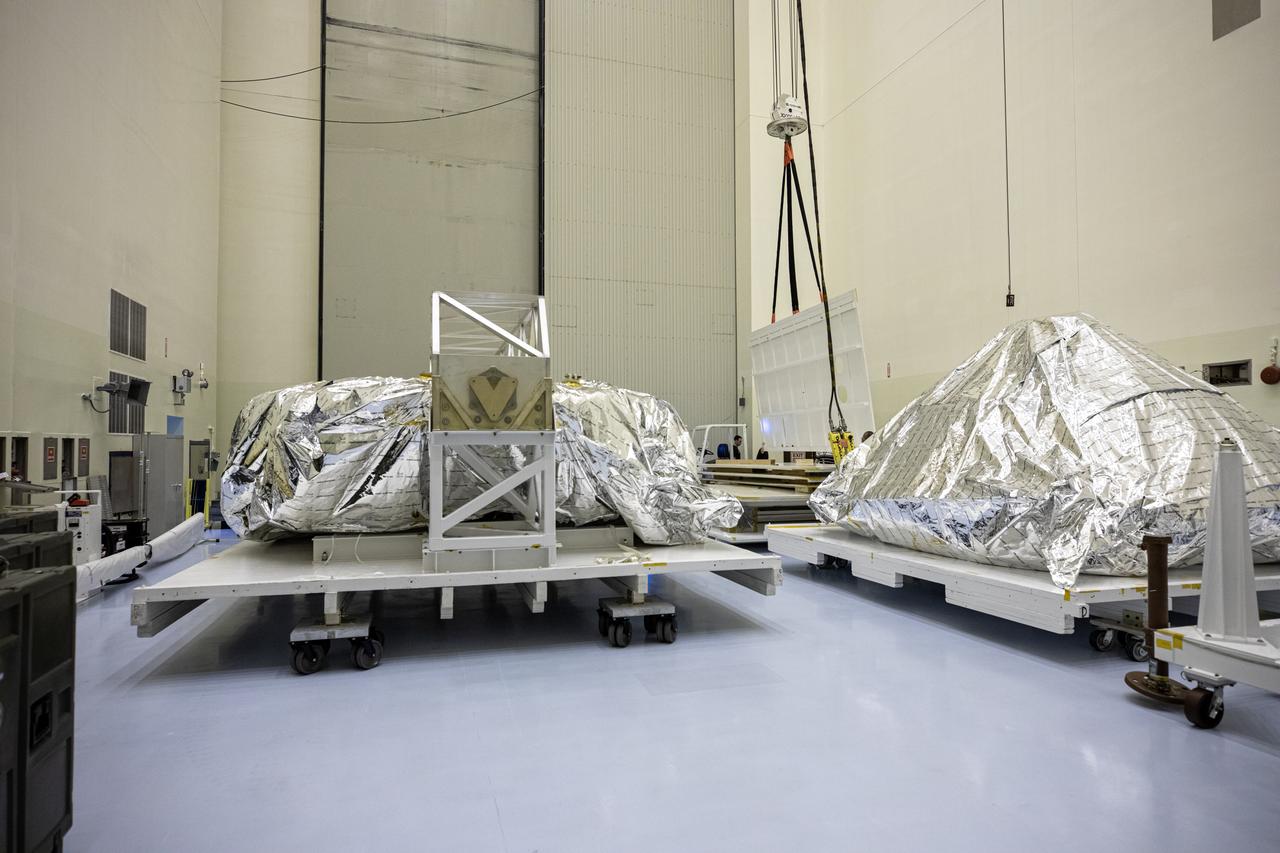
The heat shield and back shell for the Mars 2020 rover are unboxed inside the Payload Hazardous Servicing Facility at NASA’s Kennedy Space Center on Dec. 13, 2019. The two integral pieces of equipment, which were flown to the Florida spaceport from Lockheed Martin Space in Denver, Colorado, will protect the rover during its passage to Mars. The Mars 2020 rover is being manufactured at NASA’s Jet Propulsion Laboratory in California. When completed, the rover will be delivered to Kennedy in mid-February, 2020, with the mission scheduled to launch in the summer of 2020.
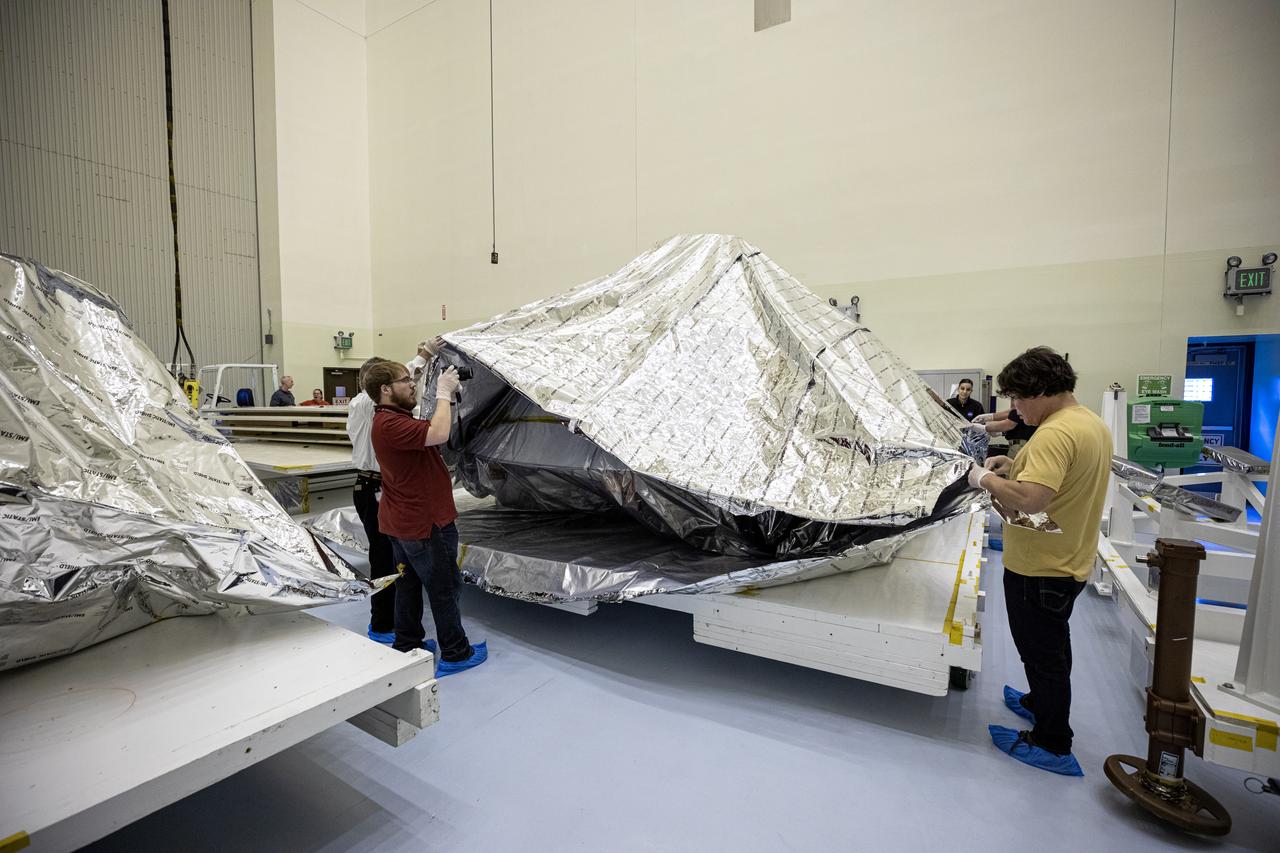
The heat shield and back shell for the Mars 2020 rover are unboxed inside the Payload Hazardous Servicing Facility at NASA’s Kennedy Space Center on Dec. 13, 2019. The two integral pieces of equipment, which were flown to the Florida spaceport from Lockheed Martin Space in Denver, Colorado, will protect the rover during its passage to Mars. The Mars 2020 rover is being manufactured at NASA’s Jet Propulsion Laboratory in California. When completed, the rover will be delivered to Kennedy in mid-February, 2020, with the mission scheduled to launch in the summer of 2020.
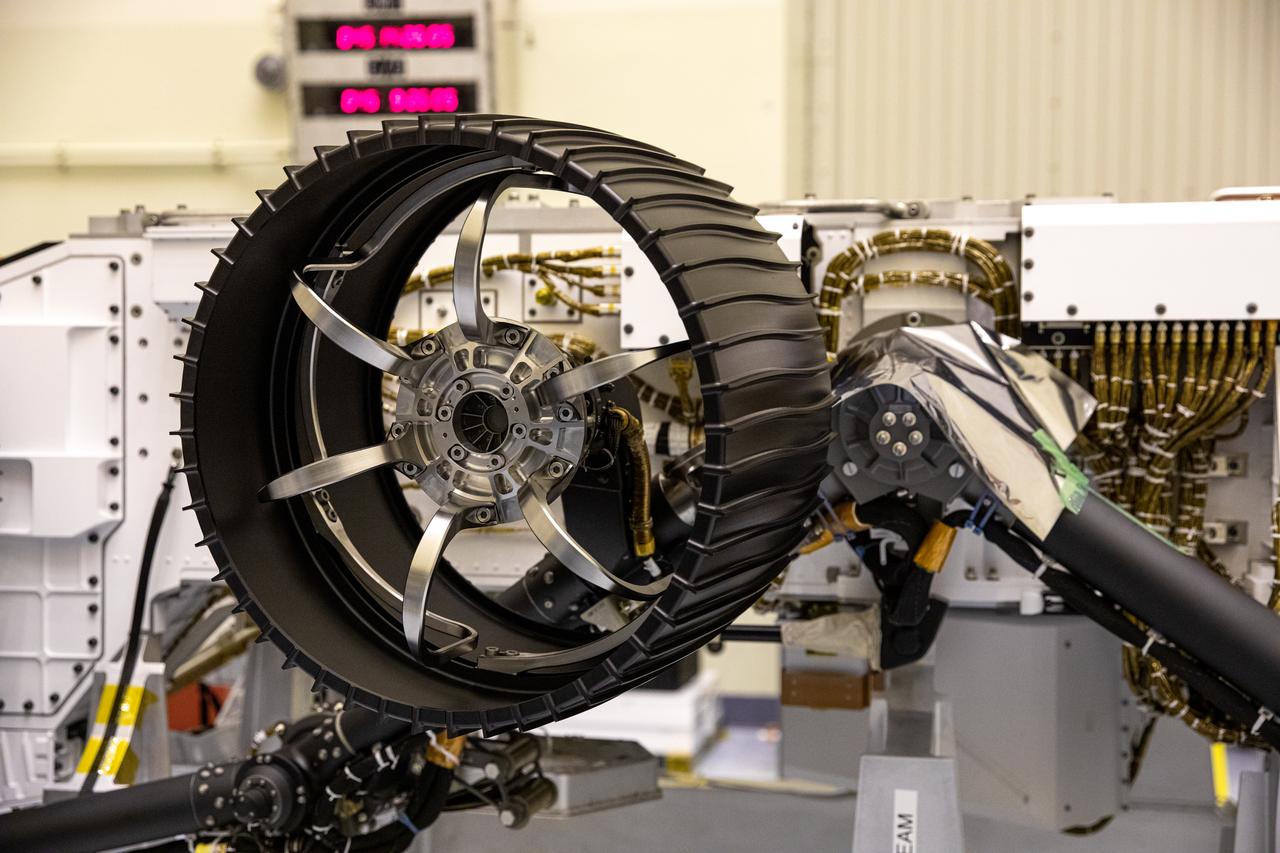
The Mars 2020 rover undergoes processing inside the Payload Hazardous Servicing Facility at NASA’s Kennedy Space Center in Florida on Feb. 14, 2020. Initial processing took place on Feb. 13, one day after a C-17 aircraft, with the rover aboard, touched down at the Launch and Landing Facility at Kennedy. The cross-country trip began at NASA’s Jet Propulsion Laboratory, where the rover was manufactured. The mission, targeted for mid-July 2020, will launch aboard an Atlas V 541 rocket from Cape Canaveral Air Force Station. NASA’s Launch Services Program based at Kennedy is managing the launch. Click here for more information on the Mars 2020 rover mission.
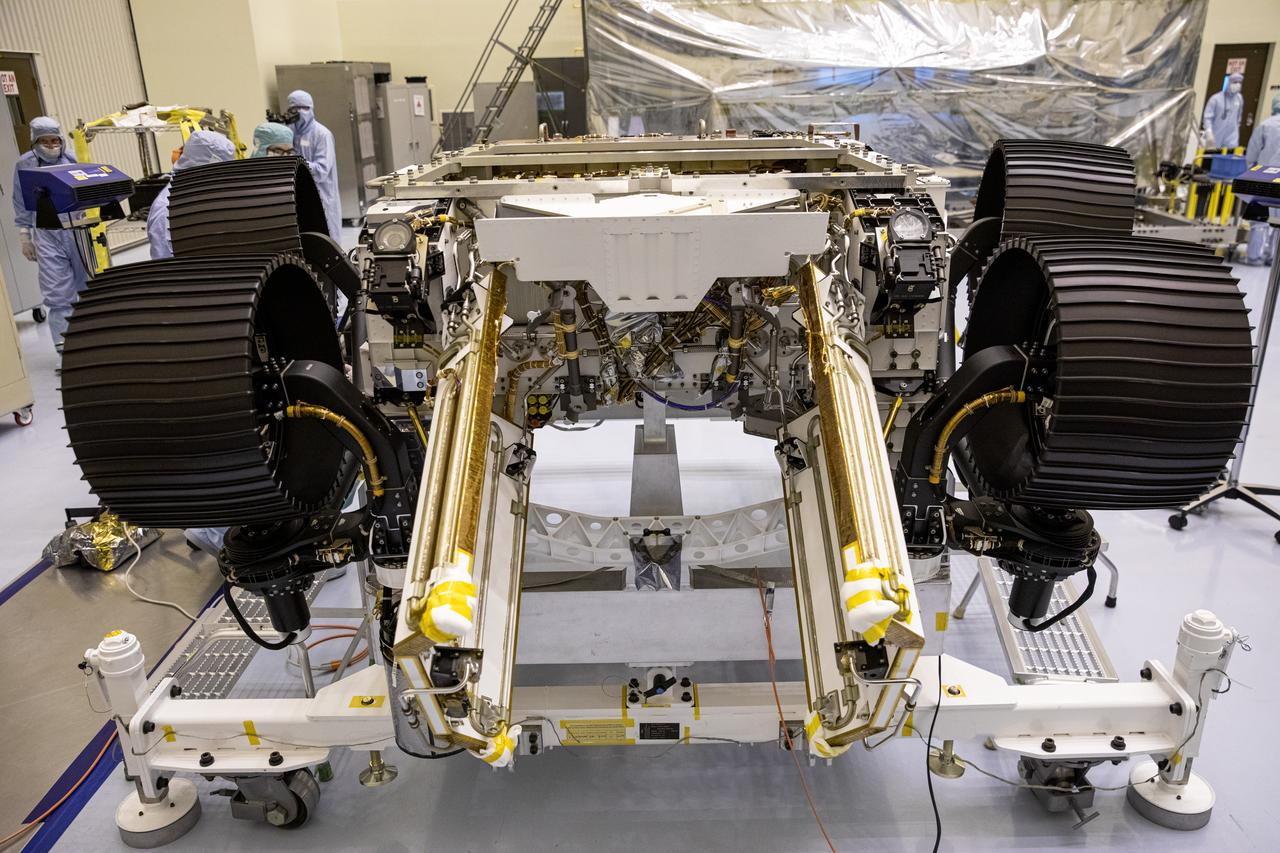
The Mars 2020 rover undergoes processing inside the Payload Hazardous Servicing Facility at NASA’s Kennedy Space Center in Florida on Feb. 14, 2020. Initial processing took place on Feb. 13, one day after a C-17 aircraft, with the rover aboard, touched down at the Launch and Landing Facility at Kennedy. The cross-country trip began at NASA’s Jet Propulsion Laboratory, where the rover was manufactured. The mission, targeted for mid-July 2020, will launch aboard an Atlas V 541 rocket from Cape Canaveral Air Force Station. NASA’s Launch Services Program based at Kennedy is managing the launch. Click here for more information on the Mars 2020 rover mission.
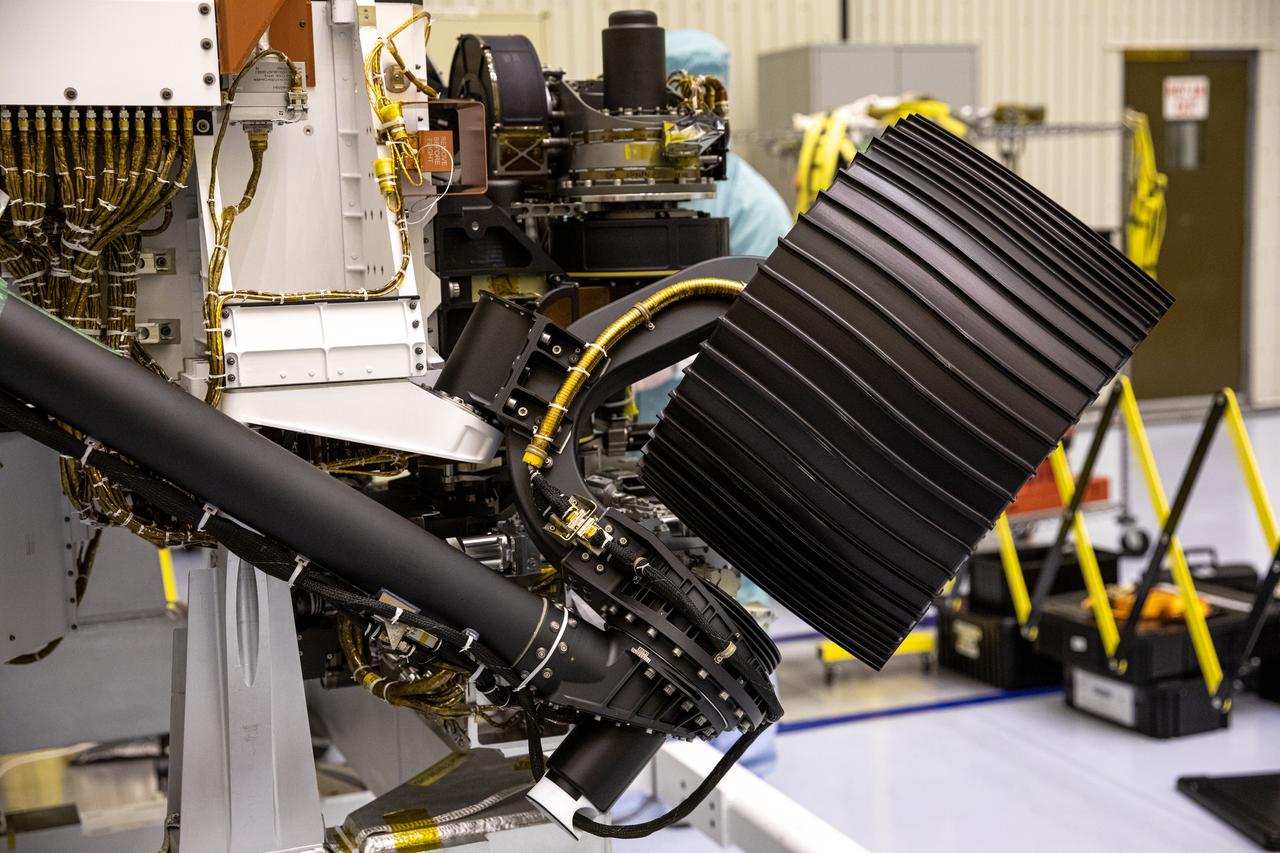
The Mars 2020 rover undergoes processing inside the Payload Hazardous Servicing Facility at NASA’s Kennedy Space Center in Florida on Feb. 14, 2020. Initial processing took place on Feb. 13, one day after a C-17 aircraft, with the rover aboard, touched down at the Launch and Landing Facility at Kennedy. The cross-country trip began at NASA’s Jet Propulsion Laboratory, where the rover was manufactured. The mission, targeted for mid-July 2020, will launch aboard an Atlas V 541 rocket from Cape Canaveral Air Force Station. NASA’s Launch Services Program based at Kennedy is managing the launch. Click here for more information on the Mars 2020 rover mission.
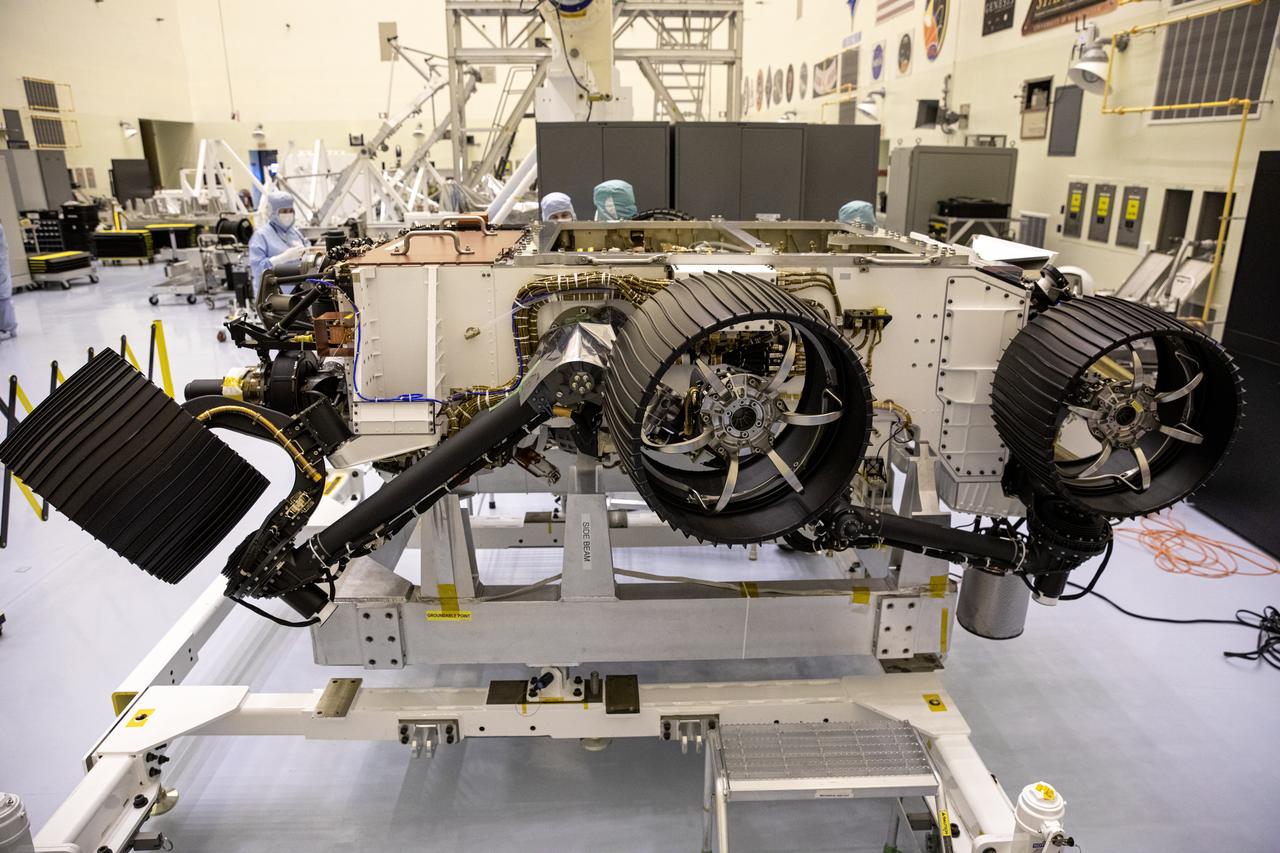
The Mars 2020 rover undergoes processing inside the Payload Hazardous Servicing Facility at NASA’s Kennedy Space Center in Florida on Feb. 14, 2020. Initial processing took place on Feb. 13, one day after a C-17 aircraft, with the rover aboard, touched down at the Launch and Landing Facility at Kennedy. The cross-country trip began at NASA’s Jet Propulsion Laboratory, where the rover was manufactured. The mission, targeted for mid-July 2020, will launch aboard an Atlas V 541 rocket from Cape Canaveral Air Force Station. NASA’s Launch Services Program based at Kennedy is managing the launch. Click here for more information on the Mars 2020 rover mission.
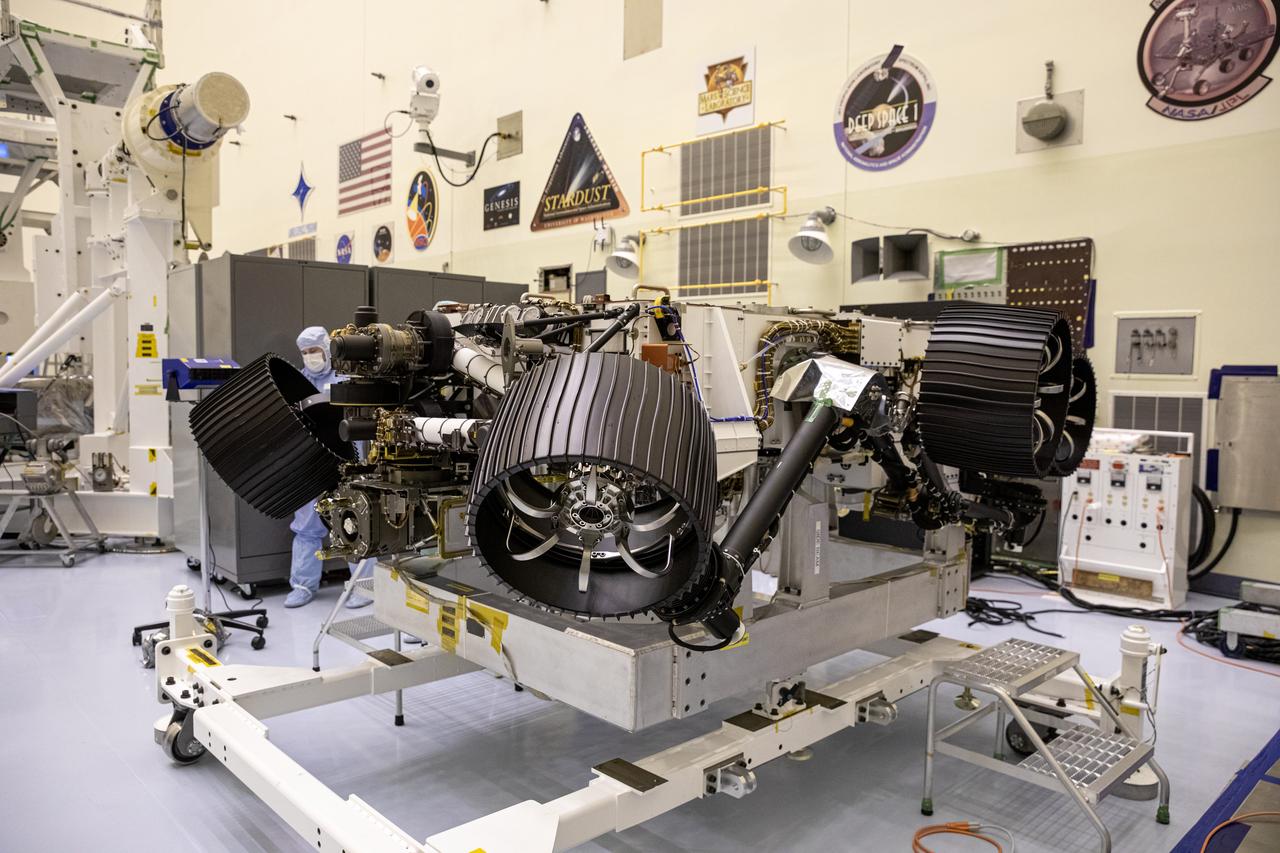
The Mars 2020 rover undergoes processing inside the Payload Hazardous Servicing Facility at NASA’s Kennedy Space Center in Florida on Feb. 14, 2020. Initial processing took place on Feb. 13, one day after a C-17 aircraft, with the rover aboard, touched down at the Launch and Landing Facility at Kennedy. The cross-country trip began at NASA’s Jet Propulsion Laboratory, where the rover was manufactured. The mission, targeted for mid-July 2020, will launch aboard an Atlas V 541 rocket from Cape Canaveral Air Force Station. NASA’s Launch Services Program based at Kennedy is managing the launch. Click here for more information on the Mars 2020 rover mission.
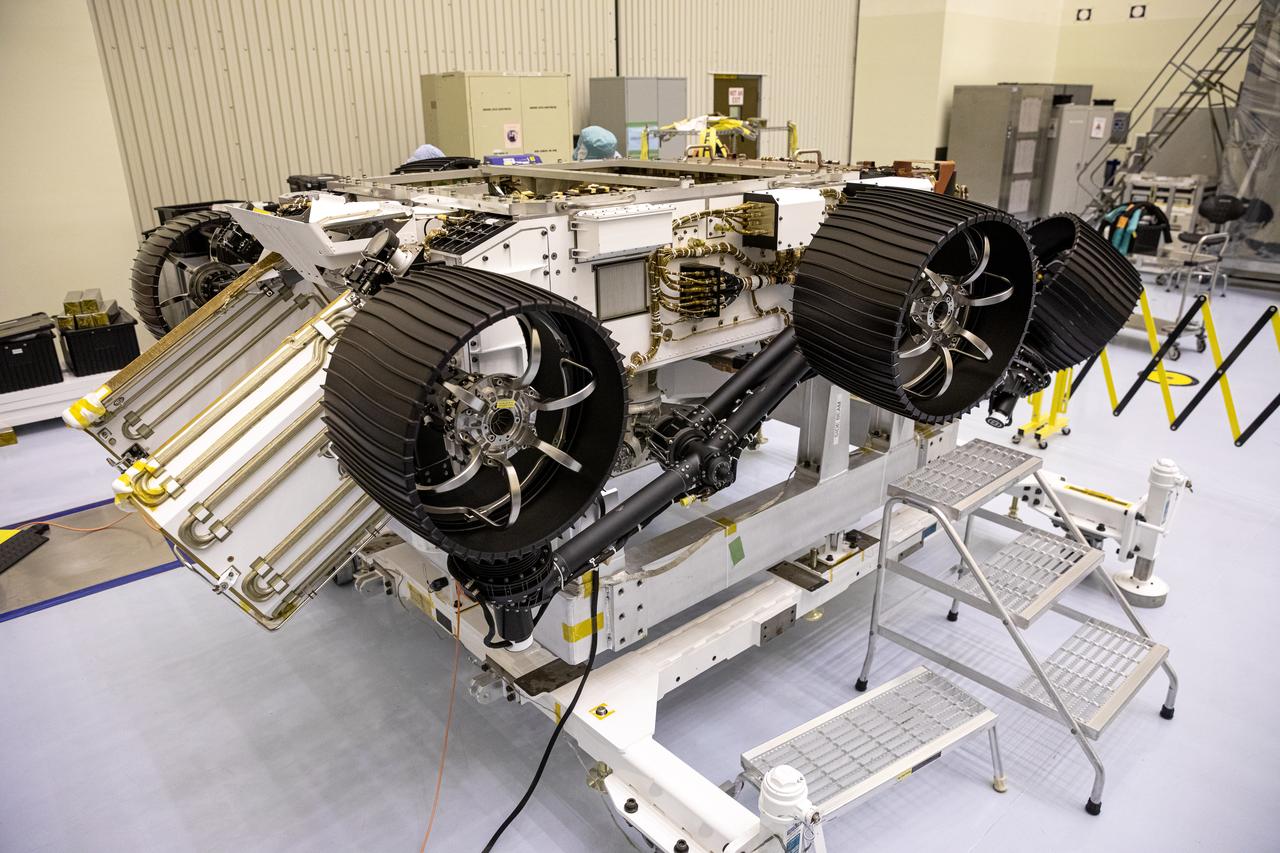
The Mars 2020 rover undergoes processing inside the Payload Hazardous Servicing Facility at NASA’s Kennedy Space Center in Florida on Feb. 14, 2020. Initial processing took place on Feb. 13, one day after a C-17 aircraft, with the rover aboard, touched down at the Launch and Landing Facility at Kennedy. The cross-country trip began at NASA’s Jet Propulsion Laboratory, where the rover was manufactured. The mission, targeted for mid-July 2020, will launch aboard an Atlas V 541 rocket from Cape Canaveral Air Force Station. NASA’s Launch Services Program based at Kennedy is managing the launch. Click here for more information on the Mars 2020 rover mission.
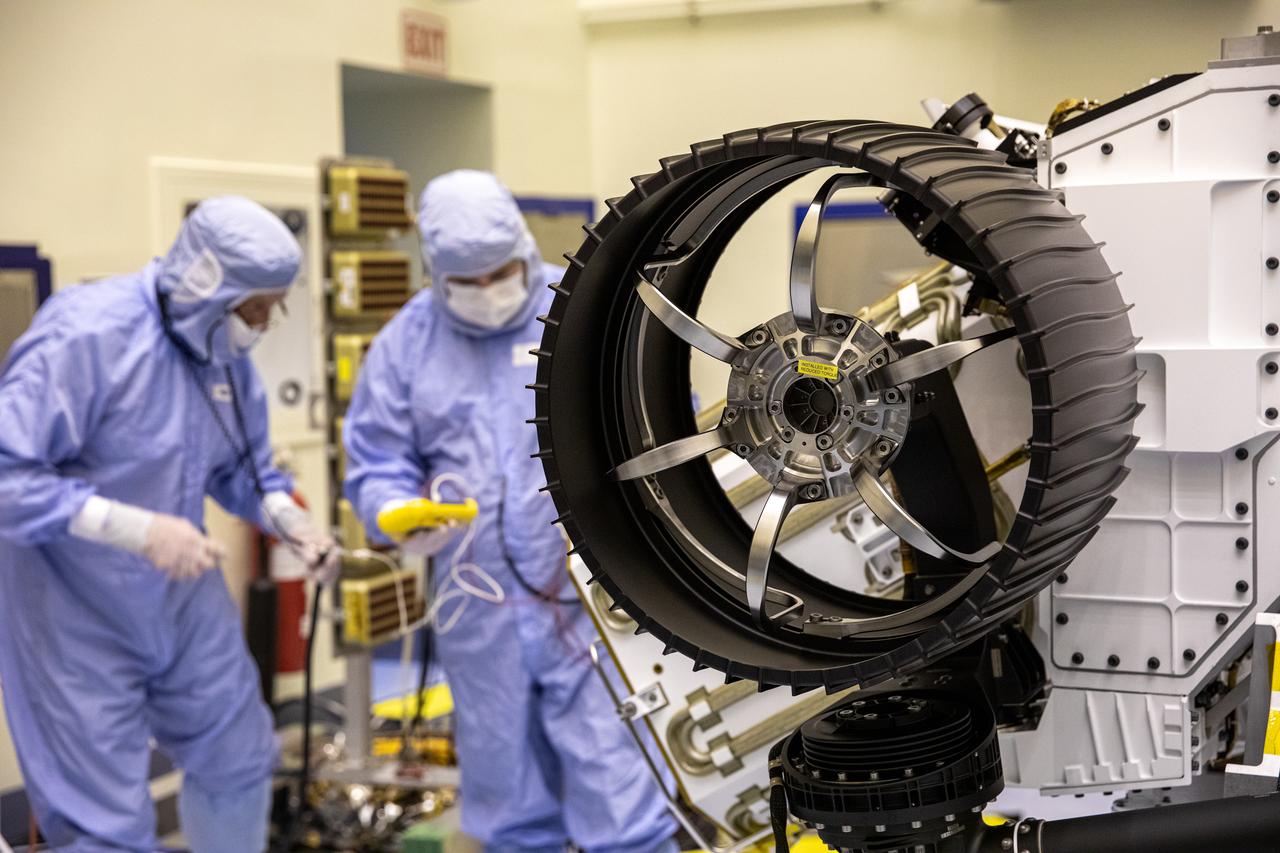
The Mars 2020 rover undergoes processing inside the Payload Hazardous Servicing Facility at NASA’s Kennedy Space Center in Florida on Feb. 14, 2020. Initial processing took place on Feb. 13, one day after a C-17 aircraft, with the rover aboard, touched down at the Launch and Landing Facility at Kennedy. The cross-country trip began at NASA’s Jet Propulsion Laboratory, where the rover was manufactured. The mission, targeted for mid-July 2020, will launch aboard an Atlas V 541 rocket from Cape Canaveral Air Force Station. NASA’s Launch Services Program based at Kennedy is managing the launch. Click here for more information on the Mars 2020 rover mission.
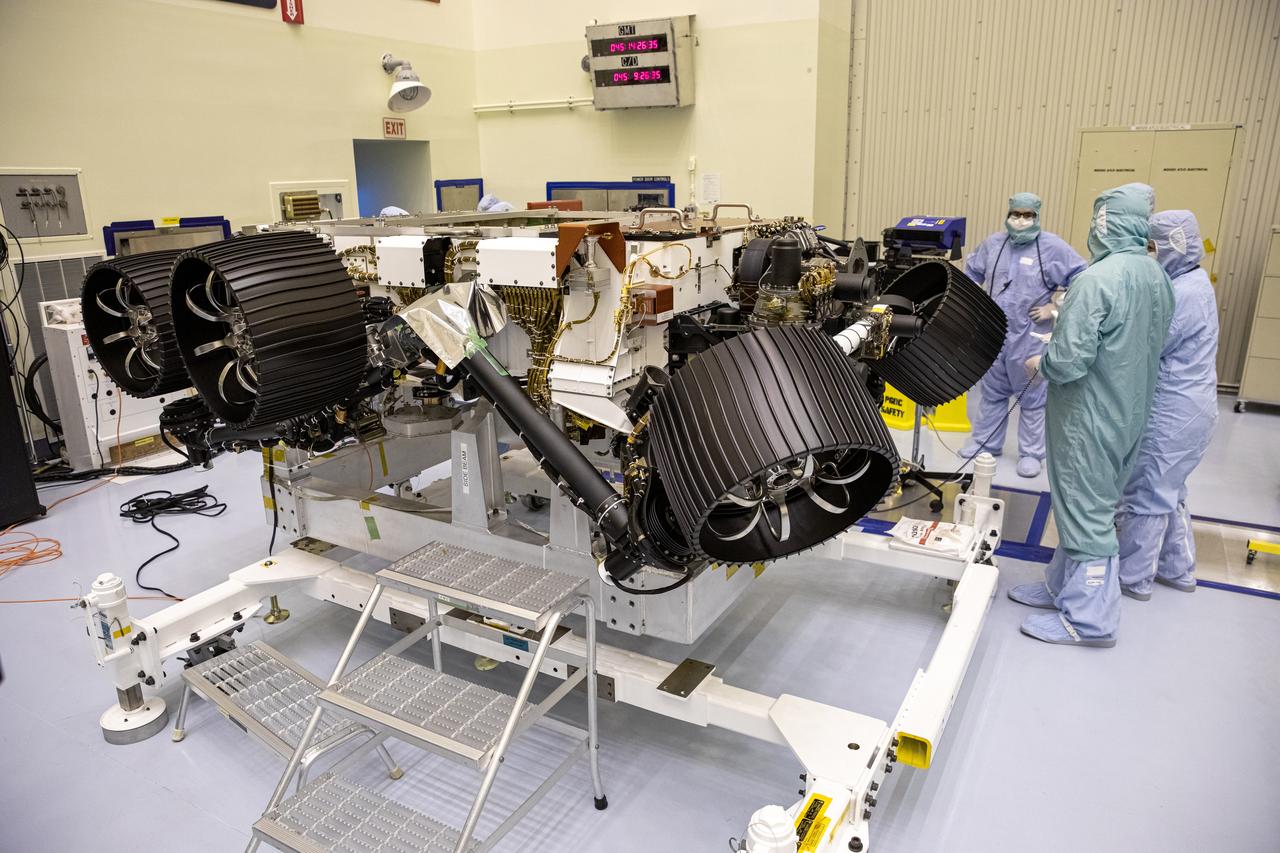
The Mars 2020 rover undergoes processing inside the Payload Hazardous Servicing Facility at NASA’s Kennedy Space Center in Florida on Feb. 14, 2020. Initial processing took place on Feb. 13, one day after a C-17 aircraft, with the rover aboard, touched down at the Launch and Landing Facility at Kennedy. The cross-country trip began at NASA’s Jet Propulsion Laboratory, where the rover was manufactured. The mission, targeted for mid-July 2020, will launch aboard an Atlas V 541 rocket from Cape Canaveral Air Force Station. NASA’s Launch Services Program based at Kennedy is managing the launch. Click here for more information on the Mars 2020 rover mission.
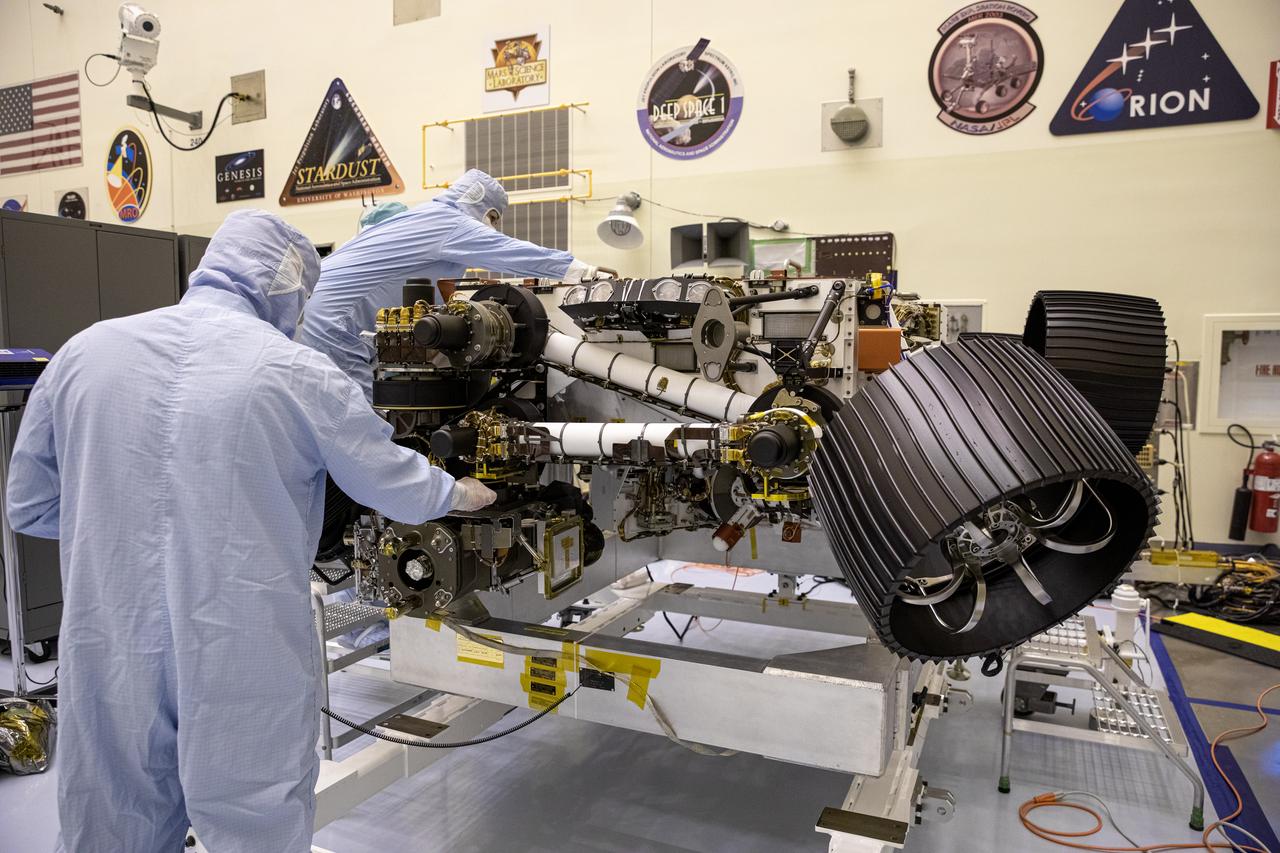
The Mars 2020 rover undergoes processing inside the Payload Hazardous Servicing Facility at NASA’s Kennedy Space Center in Florida on Feb. 14, 2020. Initial processing took place on Feb. 13, one day after a C-17 aircraft, with the rover aboard, touched down at the Launch and Landing Facility at Kennedy. The cross-country trip began at NASA’s Jet Propulsion Laboratory, where the rover was manufactured. The mission, targeted for mid-July 2020, will launch aboard an Atlas V 541 rocket from Cape Canaveral Air Force Station. NASA’s Launch Services Program based at Kennedy is managing the launch. Click here for more information on the Mars 2020 rover mission.
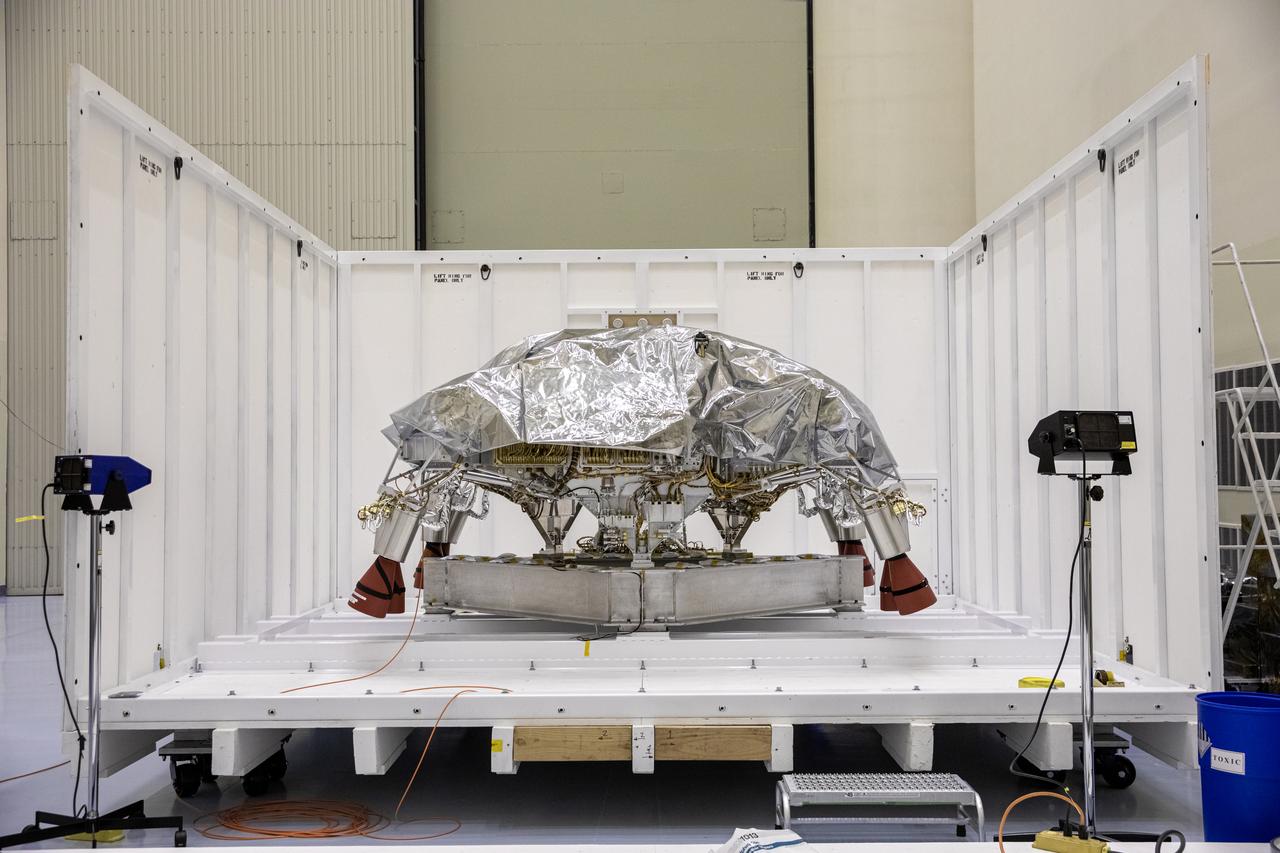
The Mars 2020 rover undergoes processing inside the Payload Hazardous Servicing Facility at NASA’s Kennedy Space Center in Florida on Feb. 14, 2020. Initial processing took place on Feb. 13, one day after a C-17 aircraft, with the rover aboard, touched down at the Launch and Landing Facility at Kennedy. The cross-country trip began at NASA’s Jet Propulsion Laboratory, where the rover was manufactured. The mission, targeted for mid-July 2020, will launch aboard an Atlas V 541 rocket from Cape Canaveral Air Force Station. NASA’s Launch Services Program based at Kennedy is managing the launch. Click here for more information on the Mars 2020 rover mission.
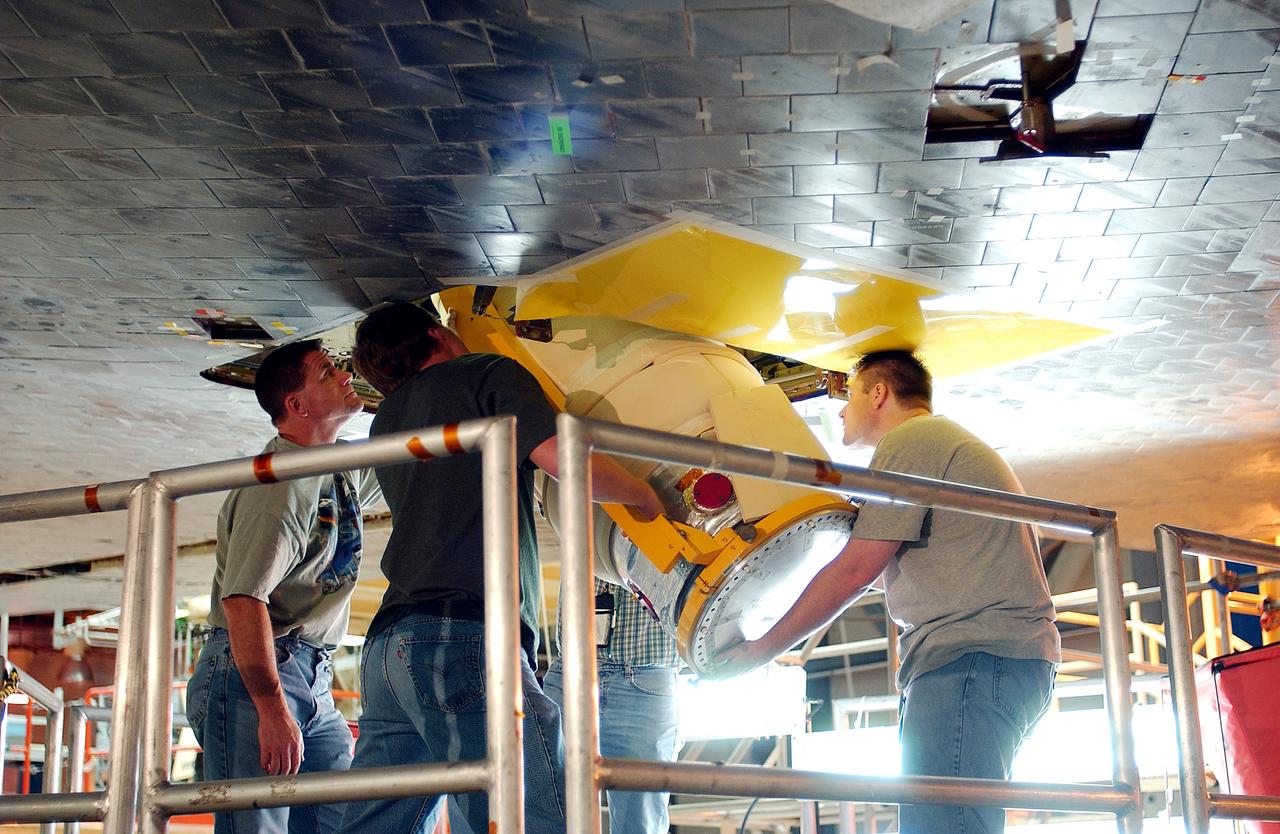
KENNEDY SPACE CENTER, FLA. - Workers in the Orbiter Processing Facility insert the liquid oxygen feedline for the 17-inch disconnect in the orbiter Discovery. The 17-inch liquid oxygen and liquid hydrogen disconnects provide the propellant feed interface from the external tank to the orbiter main propulsion system and the three Shuttle main engines.
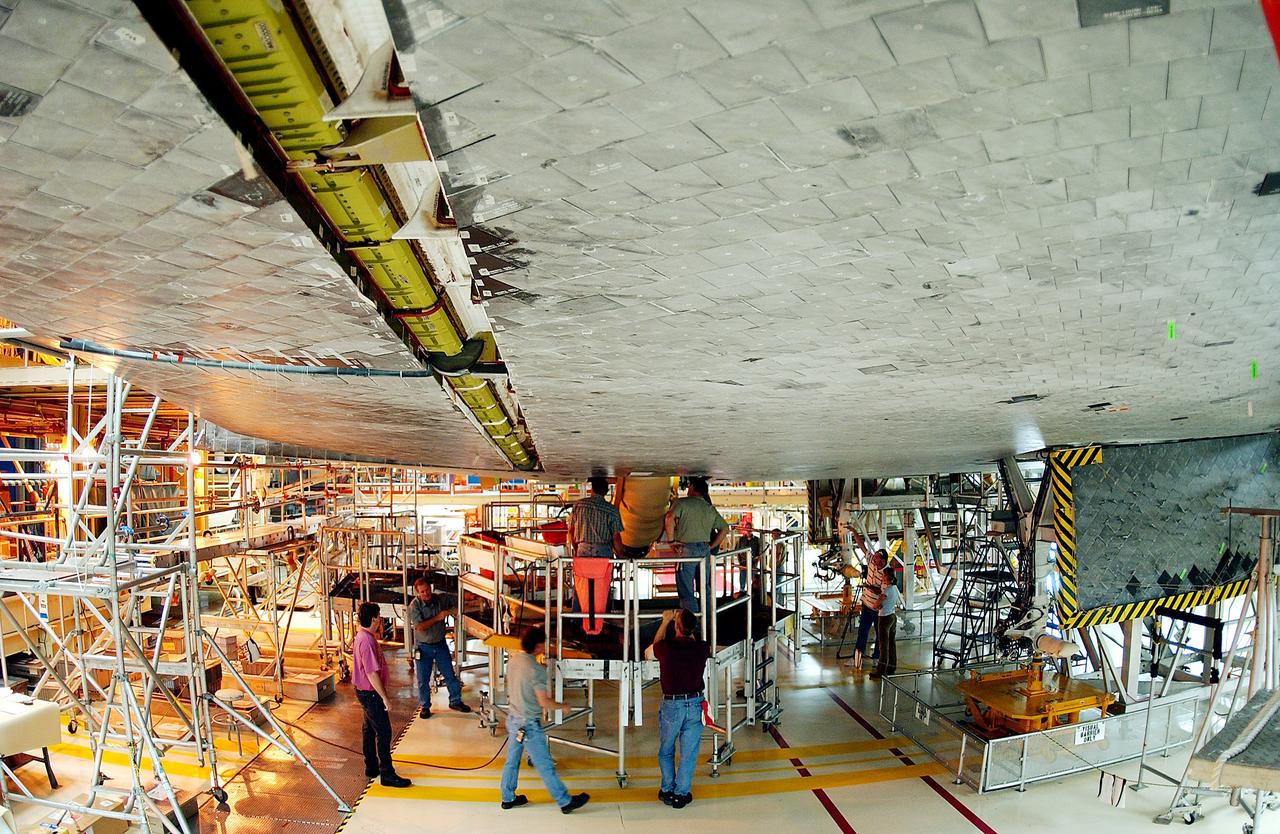
KENNEDY SPACE CENTER, FLA. - Workers in the Orbiter Processing Facility oversee installation of the liquid oxygen feedline for the 17-inch disconnect on the orbiter Discovery. The 17-inch liquid oxygen and liquid hydrogen disconnects provide the propellant feed interface from the external tank to the orbiter main propulsion system and the three Shuttle main engines.
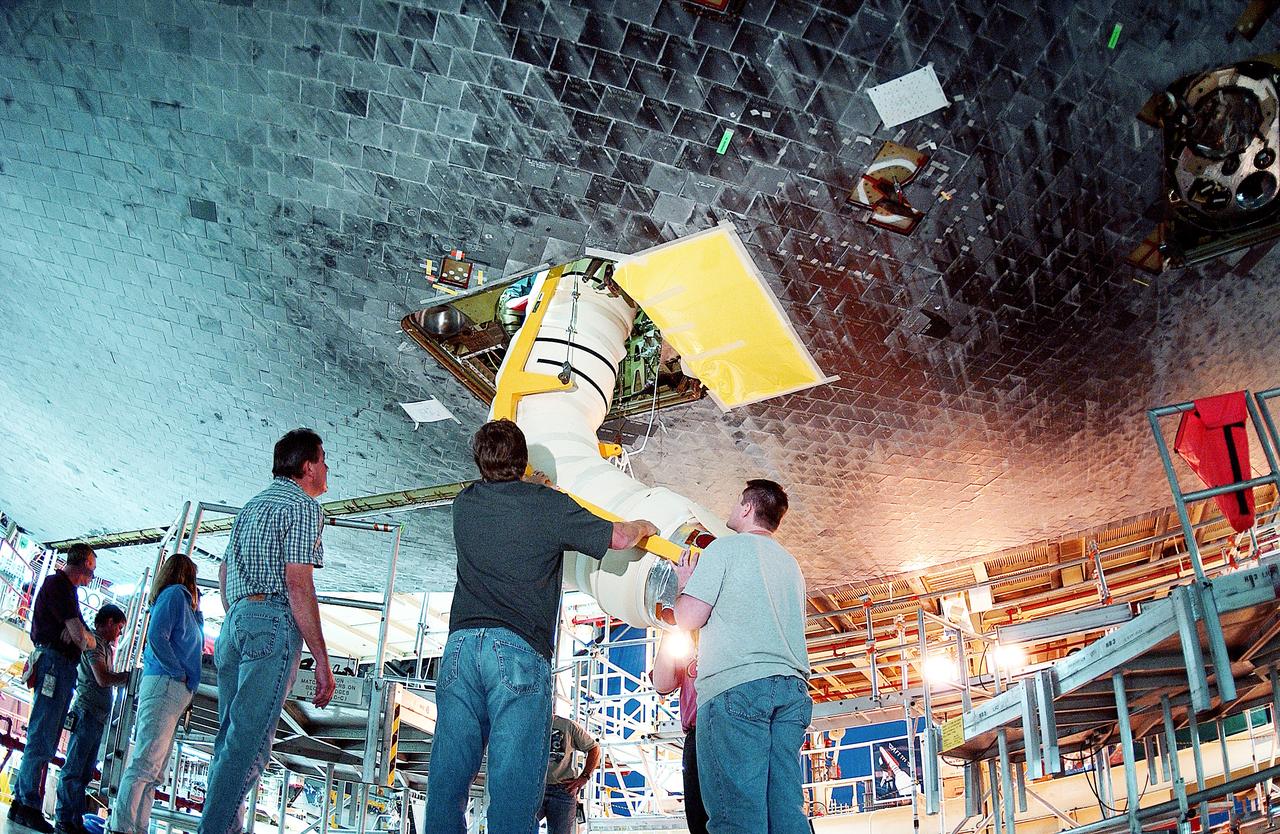
KENNEDY SPACE CENTER, FLA. - In the Orbiter Processing Facility, workers install the liquid oxygen feedline for the 17-inch disconnect on orbiter Discovery. The 17-inch liquid oxygen and liquid hydrogen disconnects provide the propellant feed interface from the external tank to the orbiter main propulsion system and the three Shuttle main engines.

KENNEDY SPACE CENTER, FLA. - Workers in the Orbiter Processing Facility insert the liquid oxygen feedline for the 17-inch disconnect in the orbiter Discovery. The 17-inch liquid oxygen and liquid hydrogen disconnects provide the propellant feed interface from the external tank to the orbiter main propulsion system and the three Shuttle main engines.
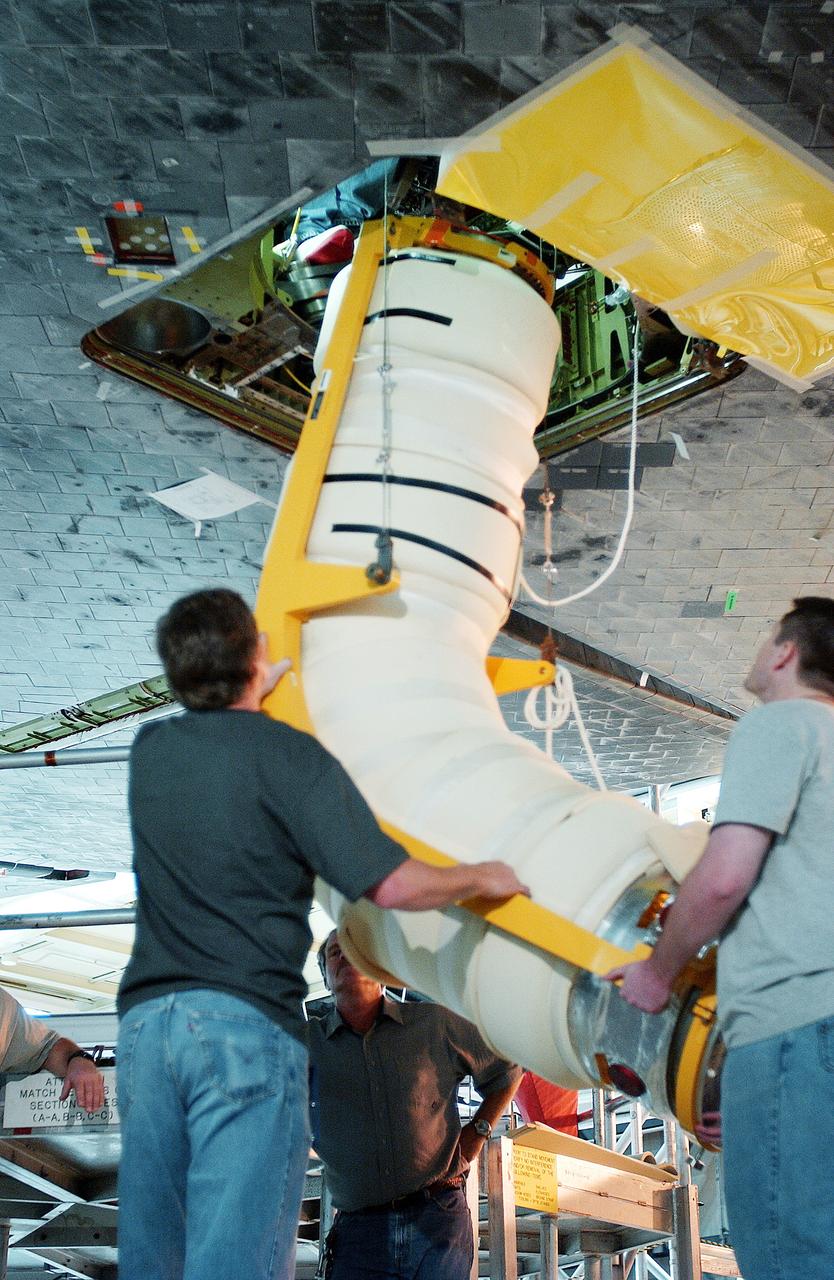
KENNEDY SPACE CENTER, FLA. - In the Orbiter Processing Facility, workers install the liquid oxygen feedline for the 17-inch disconnect on orbiter Discovery. The 17-inch liquid oxygen and liquid hydrogen disconnects provide the propellant feed interface from the external tank to the orbiter main propulsion system and the three Shuttle main engines.
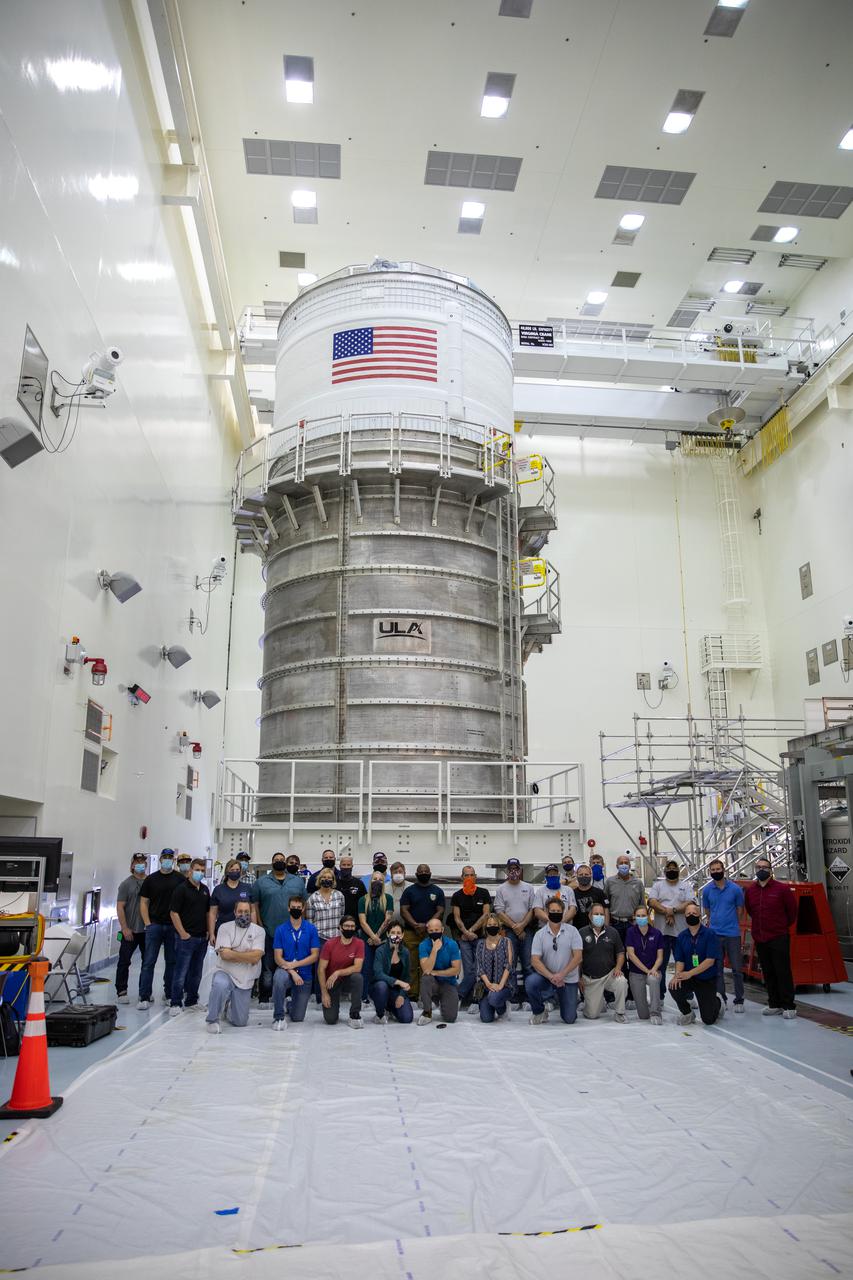
The Space Launch System (SLS) rocket’s interim cryogenic propulsion stage (ICPS) moved into the Multi-Payload Processing Facility February 18, 2021, at NASA’s Kennedy Space Center in Florida for the Artemis I mission. It will undergo fueling and servicing in the facility ahead of launch by teams from NASA’s Exploration Ground Systems and their primary contractor, Jacobs Technology. Artemis I will be an integrated flight test of the SLS rocket and Orion spacecraft ahead of the crewed flights to the Moon. Under the Artemis program, NASA will land the first woman and the next man on the lunar surface and establish a sustainable presence at the Moon to prepare for human missions to Mars.
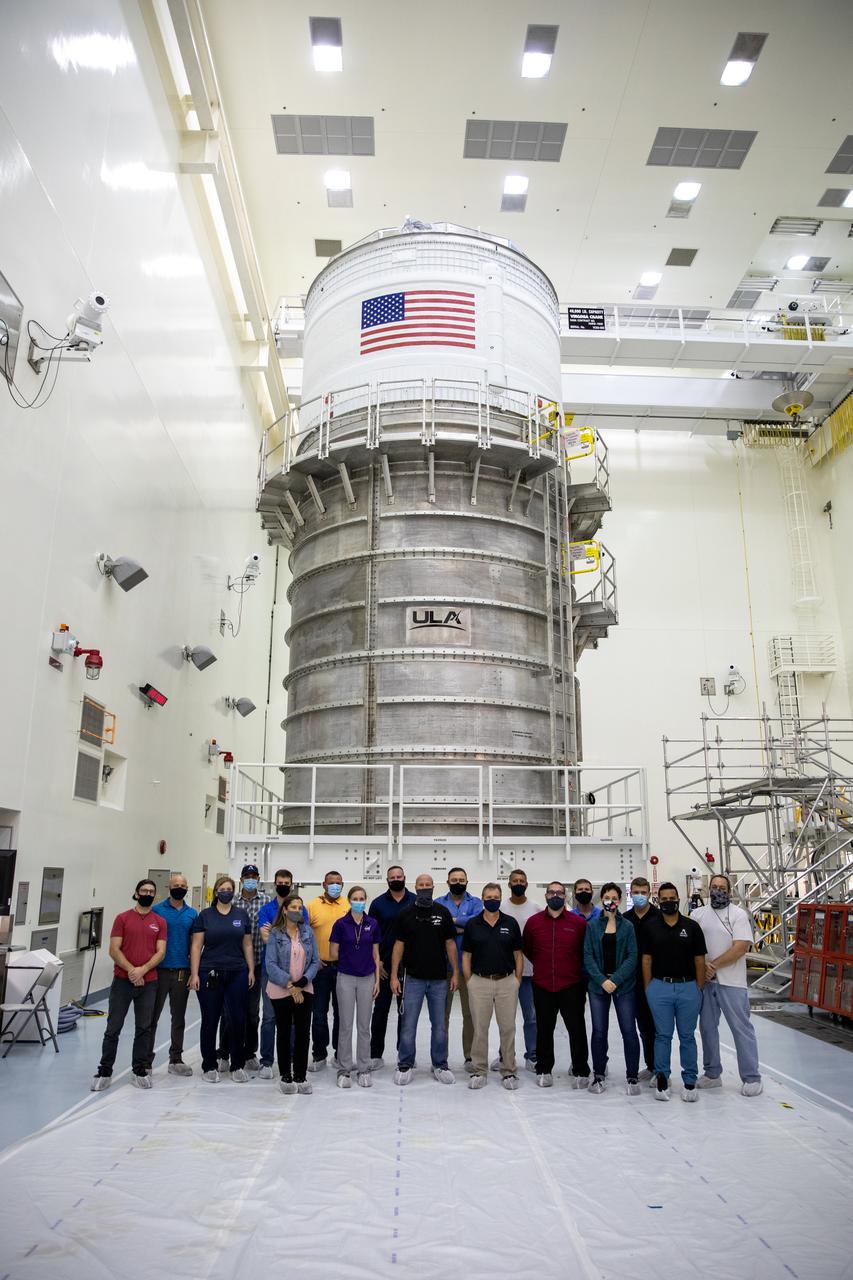
The Space Launch System (SLS) rocket’s interim cryogenic propulsion stage (ICPS) moved into the Multi-Payload Processing Facility February 18, 2021, at NASA’s Kennedy Space Center in Florida for the Artemis I mission. It will undergo fueling and servicing in the facility ahead of launch by teams from NASA’s Exploration Ground Systems and their primary contractor, Jacobs Technology. Artemis I will be an integrated flight test of the SLS rocket and Orion spacecraft ahead of the crewed flights to the Moon. Under the Artemis program, NASA will land the first woman and the next man on the lunar surface and establish a sustainable presence at the Moon to prepare for human missions to Mars.
The Space Launch System (SLS) rocket’s interim cryogenic propulsion stage (ICPS) moved into the Multi-Payload Processing Facility February 18, 2021, at NASA’s Kennedy Space Center in Florida for the Artemis I mission. It will undergo fueling and servicing in the facility ahead of launch by teams from NASA’s Exploration Ground Systems and their primary contractor, Jacobs Technology. Artemis I will be an integrated flight test of the SLS rocket and Orion spacecraft ahead of the crewed flights to the Moon. Under the Artemis program, NASA will land the first woman and the next man on the lunar surface and establish a sustainable presence at the Moon to prepare for human missions to Mars.
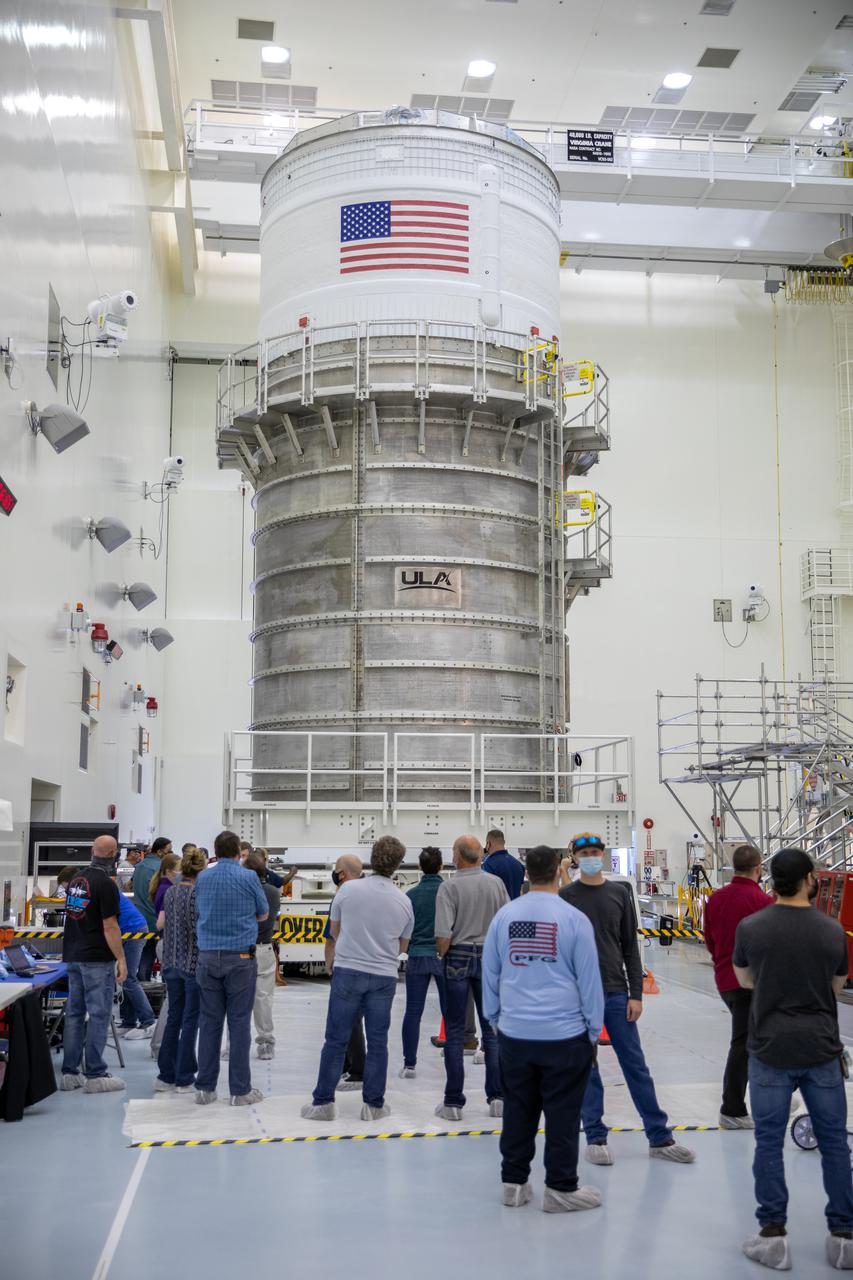
The Space Launch System (SLS) rocket’s interim cryogenic propulsion stage (ICPS) moved into the Multi-Payload Processing Facility February 18, 2021, at NASA’s Kennedy Space Center in Florida for the Artemis I mission. It will undergo fueling and servicing in the facility ahead of launch by teams from NASA’s Exploration Ground Systems and their primary contractor, Jacobs Technology. Artemis I will be an integrated flight test of the SLS rocket and Orion spacecraft ahead of the crewed flights to the Moon. Under the Artemis program, NASA will land the first woman and the next man on the lunar surface and establish a sustainable presence at the Moon to prepare for human missions to Mars.
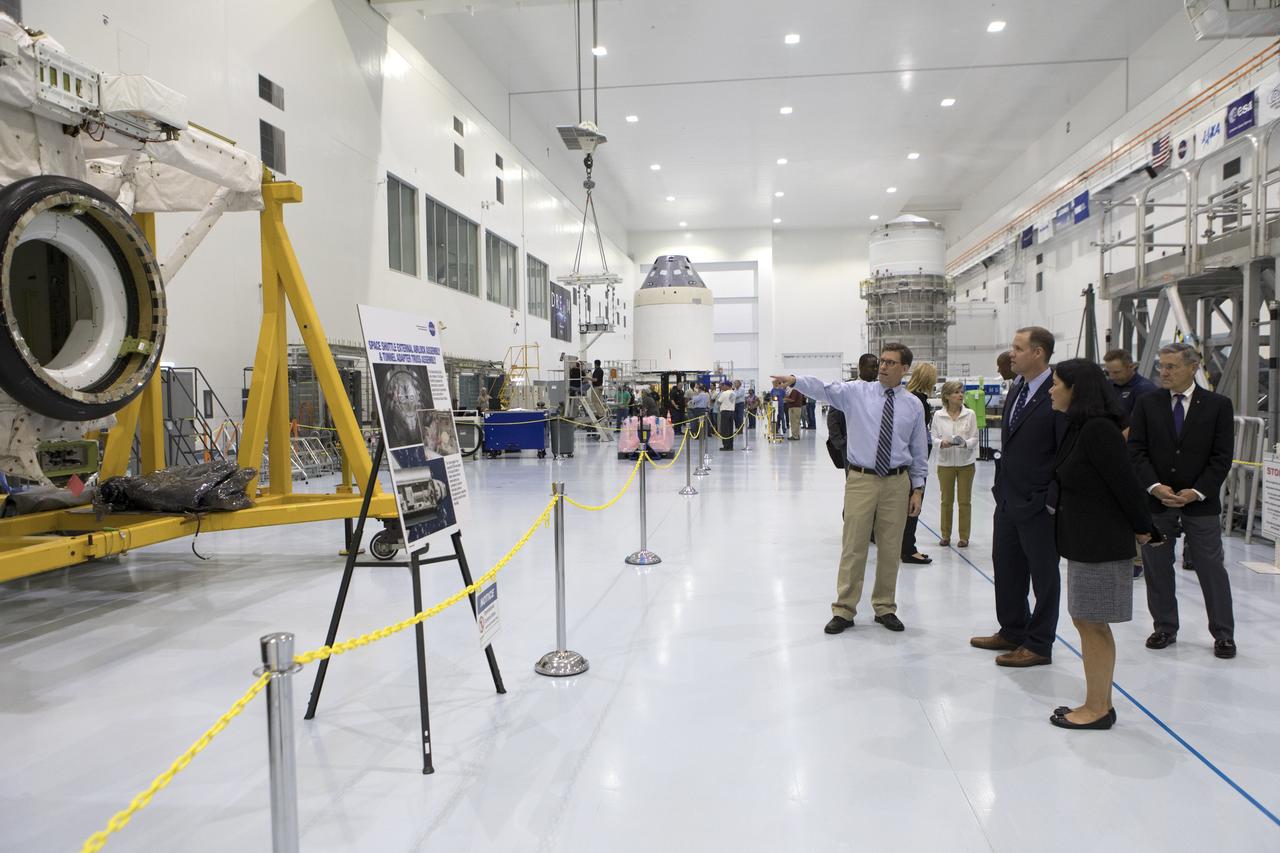
NASA Administrator Jim Bridenstine, second from right, views space hardware in the high bay inside the Space Station Processing Facility (SSPF), on Aug. 7, 2018, at NASA's Kennedy Space Center in Florida. To his right is Josie Burnett, director of Exploration Research and Technology. Behind them, at right is the Interim Cryogenic Propulsion Stage, which will connect between the Orion spacecraft and the upper part of NASA's Space Launch System. In the center is a mockup of the Orion spacecraft. Bridenstine received updates on research and technology accomplishments during his visit to the SSPF.
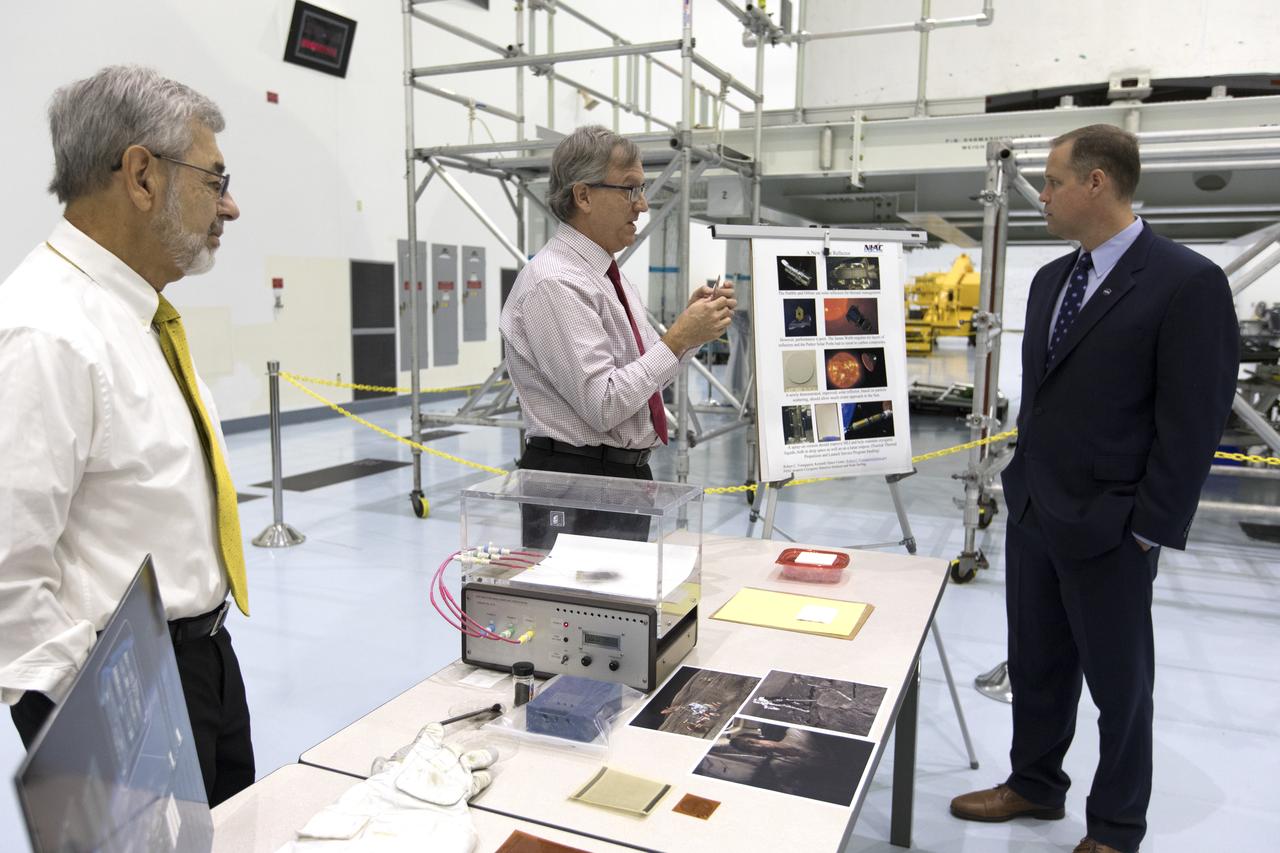
NASA Administrator Jim Bridenstine, center, tours the high bay inside the Space Station Processing Facility (SSPF) at NASA's Kennedy Space Center in Florida, on Aug. 7, 2018. To his left is Josie Burnett, director of Exploration Research and Technology. To his right is Ronnie Lawson, deputy director of Exploration Research and Technology. Behind them is the Interim Cryogenic Propulsion Stage, which will connect between the Orion spacecraft and the upper part of NASA's Space Launch System. It is being stored in the SSPF. Bridenstine also received updates on research and technology accomplishments during his visit to the SSPF.
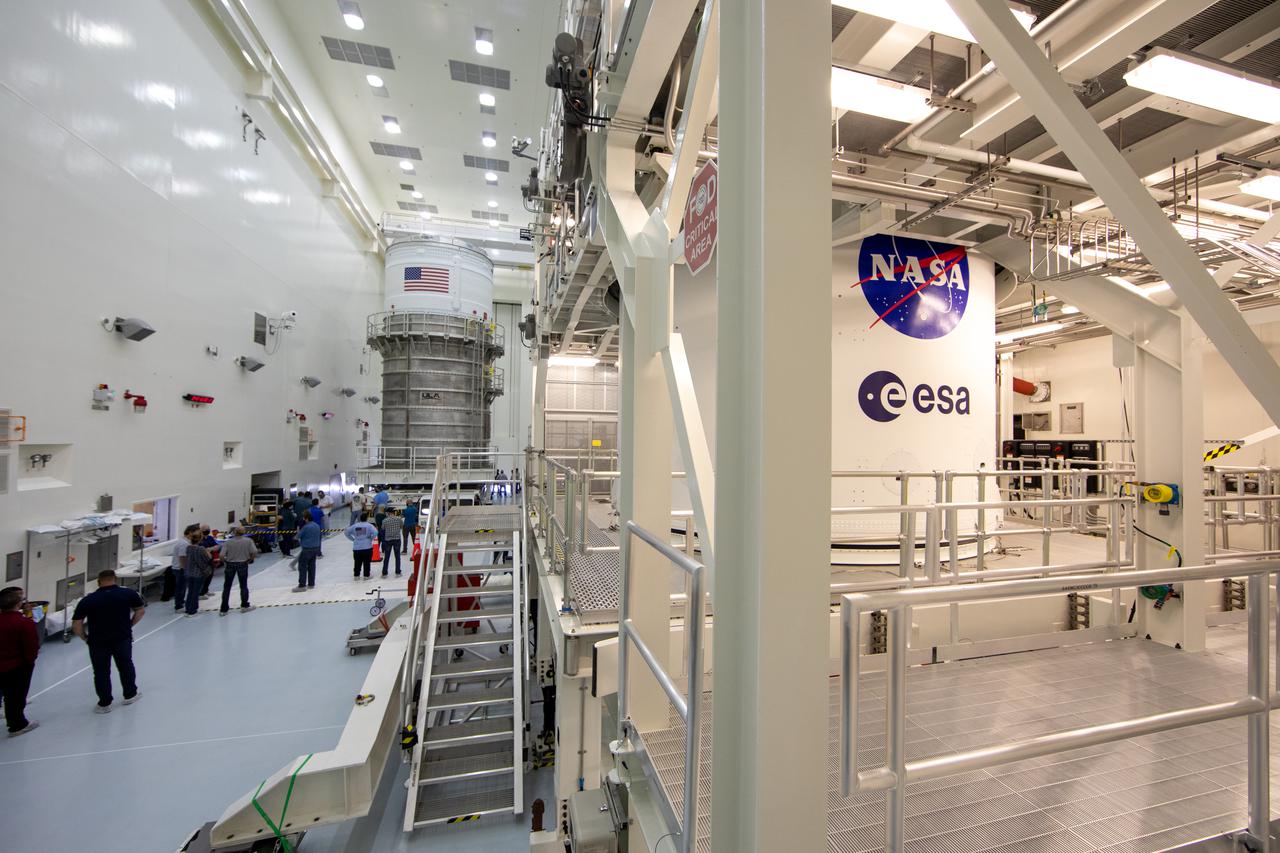
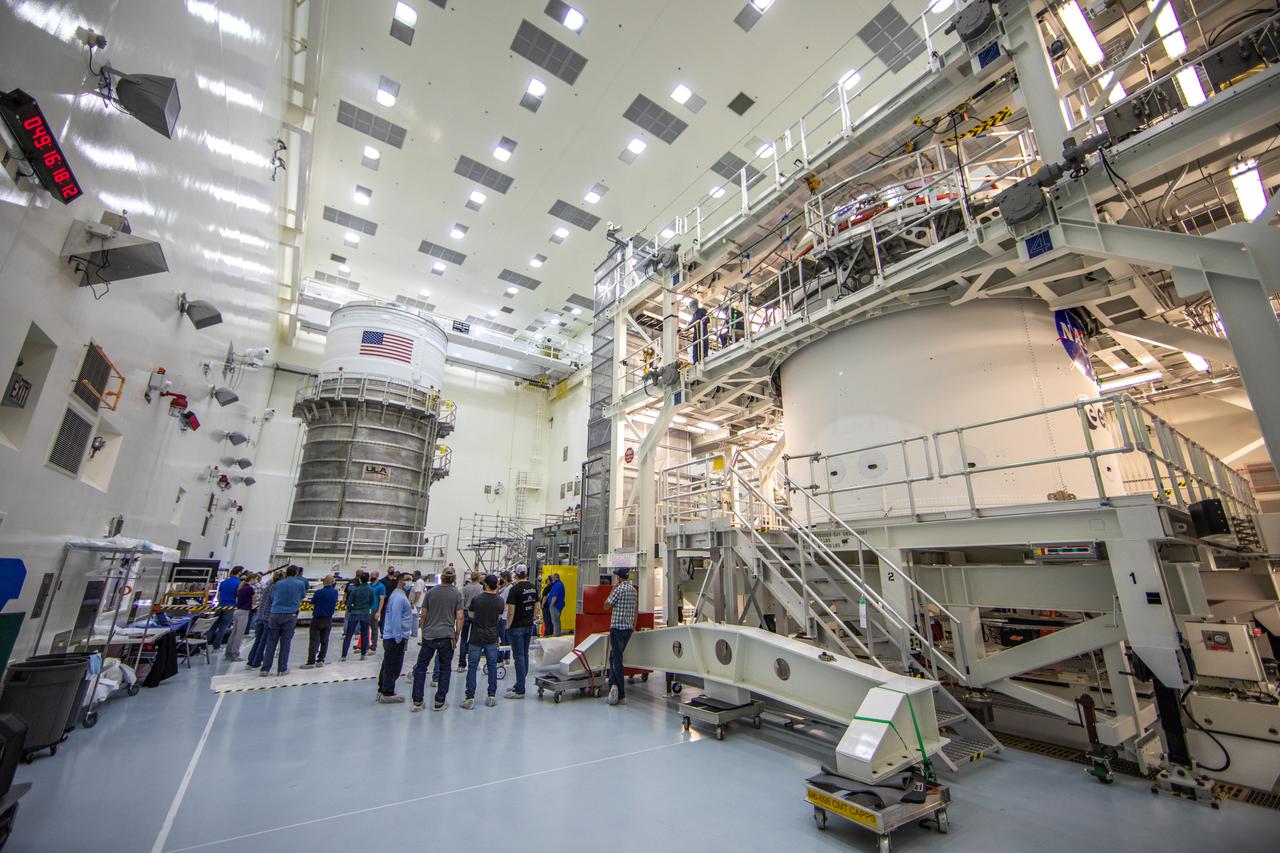
The Space Launch System (SLS) rocket’s interim cryogenic propulsion stage (ICPS) moved into the Multi-Payload Processing Facility February 18, 2021, at NASA’s Kennedy Space Center in Florida alongside one of its flight partners for the Artemis I mission, the Orion spacecraft. Both pieces of hardware will undergo fueling and servicing in the facility ahead of launch by teams from NASA’s Exploration Ground Systems and their primary contractor, Jacobs Technology. In view, at right, are the NASA insignia and ESA (European Space Agency) logos on the European-built service module. Artemis I will be an integrated flight test of the SLS rocket and Orion spacecraft ahead of the crewed flights to the Moon. Under the Artemis program, NASA will land the first woman and the next man on the lunar surface and establish a sustainable presence at the Moon to prepare for human missions to Mars.
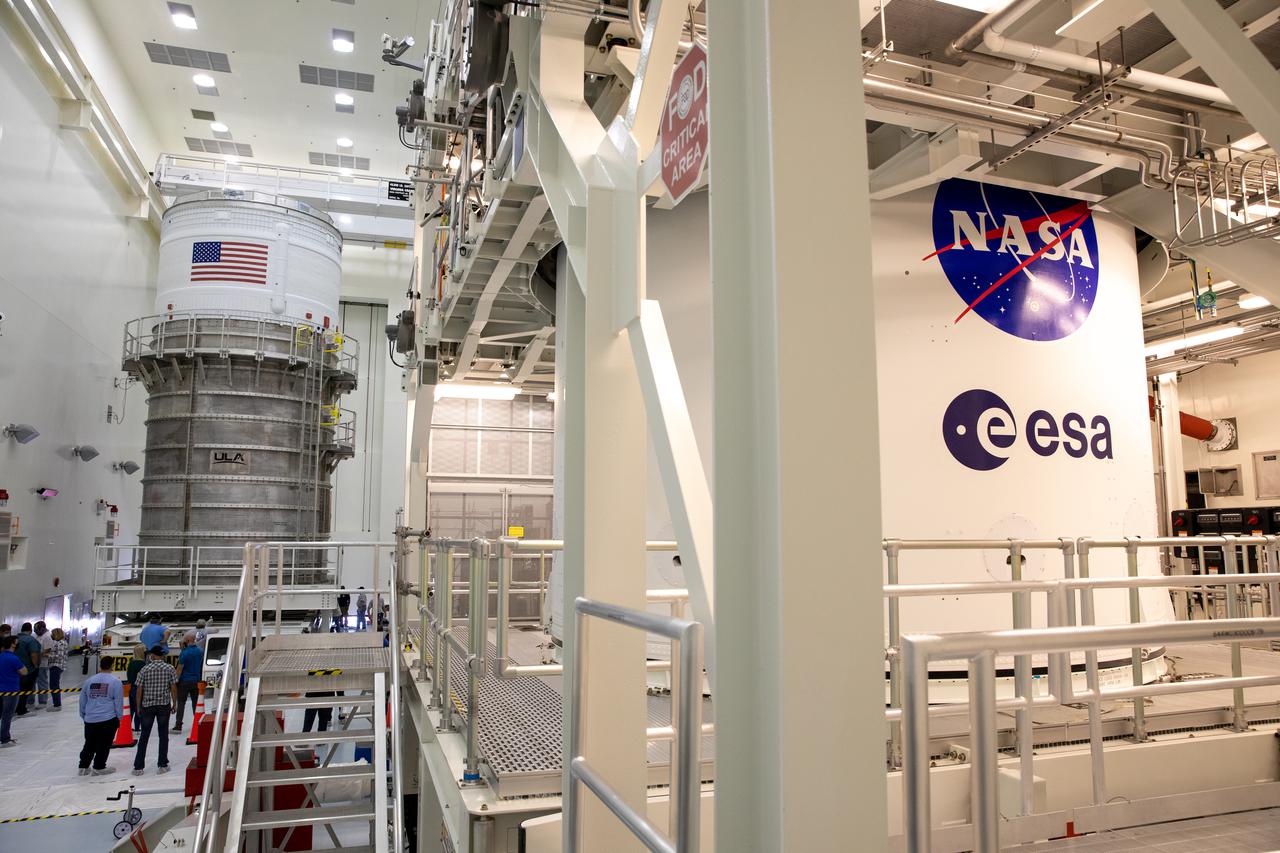
The Space Launch System (SLS) rocket’s interim cryogenic propulsion stage (ICPS) moved into the Multi-Payload Processing Facility February 18, 2021, at NASA’s Kennedy Space Center in Florida alongside one of its flight partners for the Artemis I mission, the Orion spacecraft. Both pieces of hardware will undergo fueling and servicing in the facility ahead of launch by teams from NASA’s Exploration Ground Systems and their primary contractor, Jacobs Technology. In view, at right, are the NASA insignia and ESA (European Space Agency) logos on the European-built service module. Artemis I will be an integrated flight test of the SLS rocket and Orion spacecraft ahead of the crewed flights to the Moon. Under the Artemis program, NASA will land the first woman and the next man on the lunar surface and establish a sustainable presence at the Moon to prepare for human missions to Mars.
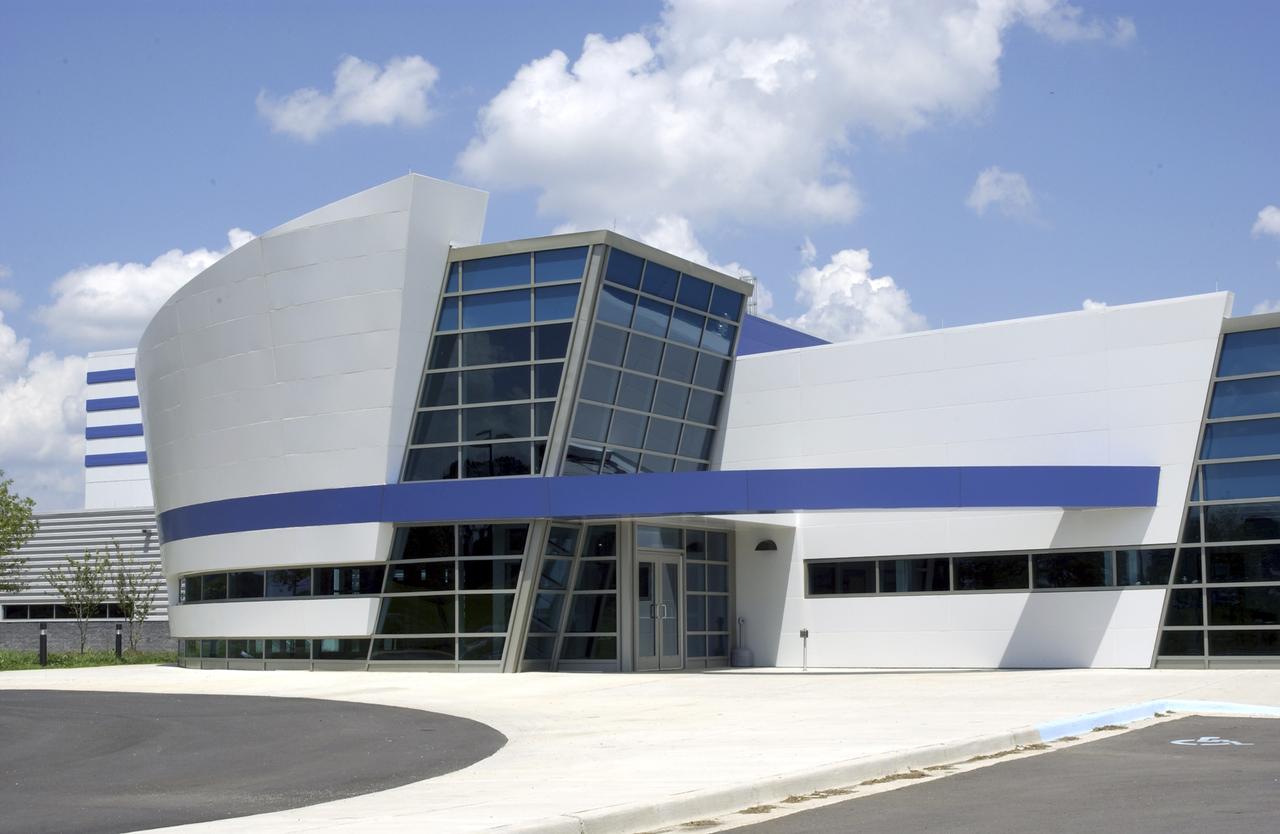
The grand opening of NASA’s new, world-class laboratory for research into future space transportation technologies located at the Marshall Space Flight Center (MSFC) in Huntsville, Alabama, took place in July 2004. The state-of-the-art Propulsion Research Laboratory (PRL) serves as a leading national resource for advanced space propulsion research. Its purpose is to conduct research that will lead to the creation and development of innovative propulsion technologies for space exploration. The facility is the epicenter of the effort to move the U.S. space program beyond the confines of conventional chemical propulsion into an era of greatly improved access to space and rapid transit throughout the solar system. The laboratory is designed to accommodate researchers from across the United States, including scientists and engineers from NASA, the Department of Defense, the Department of Energy, universities, and industry. The facility, with 66,000 square feet of useable laboratory space, features a high degree of experimental capability. Its flexibility allows it to address a broad range of propulsion technologies and concepts, such as plasma, electromagnetic, thermodynamic, and propellant propulsion. An important area of emphasis is the development and utilization of advanced energy sources, including highly energetic chemical reactions, solar energy, and processes based on fission, fusion, and antimatter. The Propulsion Research Laboratory is vital for developing the advanced propulsion technologies needed to open up the space frontier, and sets the stage of research that could revolutionize space transportation for a broad range of applications.
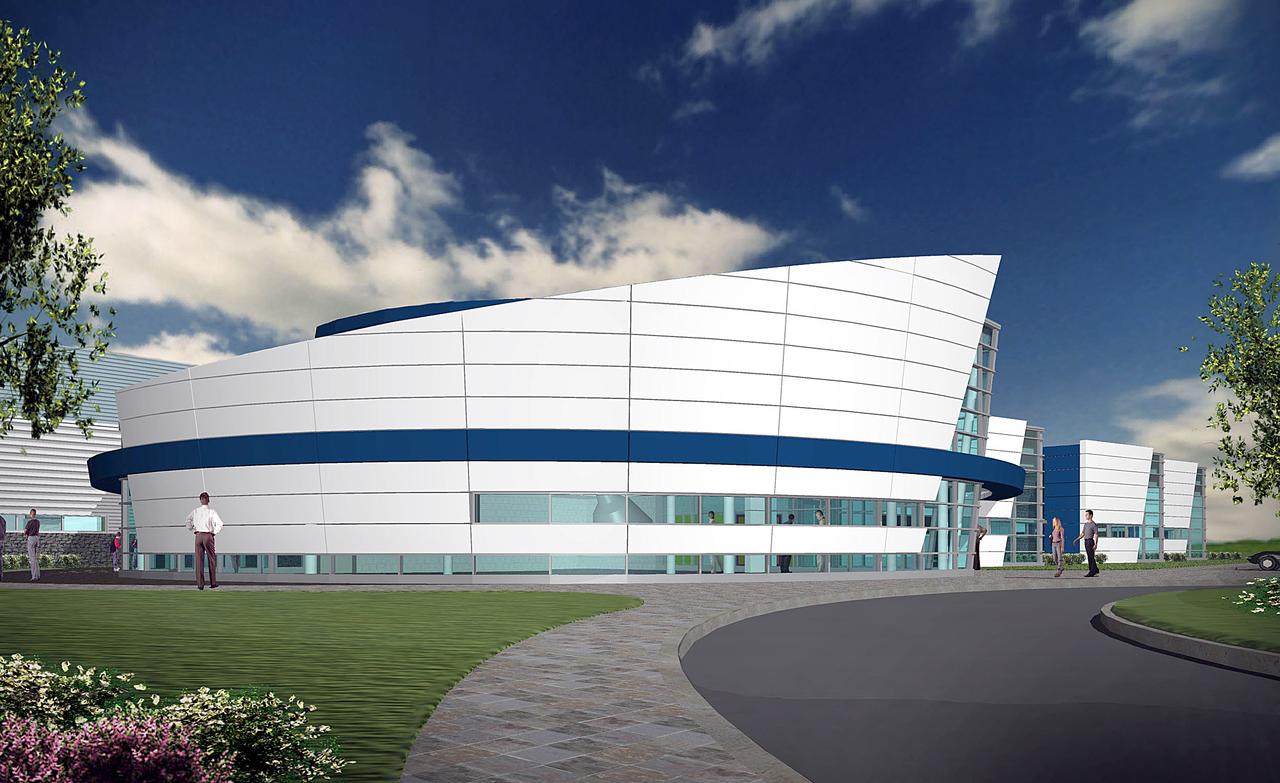
A new, world-class laboratory for research into future space transportation technologies is under construction at the Marshall Space Flight Center (MSFC) in Huntsville, AL. The state-of-the-art Propulsion Research Laboratory will serve as a leading national resource for advanced space propulsion research. Its purpose is to conduct research that will lead to the creation and development of irnovative propulsion technologies for space exploration. The facility will be the epicenter of the effort to move the U.S. space program beyond the confines of conventional chemical propulsion into an era of greatly improved access to space and rapid transit throughout the solar system. The Laboratory is designed to accommodate researchers from across the United States, including scientists and engineers from NASA, the Department of Defense, the Department of Energy, universities, and industry. The facility, with 66,000 square feet of useable laboratory space, will feature a high degree of experimental capability. Its flexibility will allow it to address a broad range of propulsion technologies and concepts, such as plasma, electromagnetic, thermodynamic, and propellantless propulsion. An important area of emphasis will be development and utilization of advanced energy sources, including highly energetic chemical reactions, solar energy, and processes based on fission, fusion, and antimatter. The Propulsion Research Laboratory is vital for developing the advanced propulsion technologies needed to open up the space frontier, and will set the stage of research that could revolutionize space transportation for a broad range of applications.
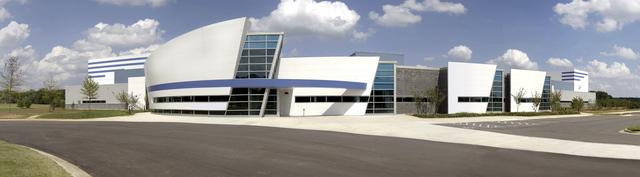
The grand opening of NASA’s new, world-class laboratory for research into future space transportation technologies located at the Marshall Space Flight Center (MSFC) in Huntsville, Alabama, took place in July 2004. The state-of-the-art Propulsion Research Laboratory (PRL) serves as a leading national resource for advanced space propulsion research. Its purpose is to conduct research that will lead to the creation and development of innovative propulsion technologies for space exploration. The facility is the epicenter of the effort to move the U.S. space program beyond the confines of conventional chemical propulsion into an era of greatly improved access to space and rapid transit throughout the solar system. The laboratory is designed to accommodate researchers from across the United States, including scientists and engineers from NASA, the Department of Defense, the Department of Energy, universities, and industry. The facility, with 66,000 square feet of useable laboratory space, features a high degree of experimental capability. Its flexibility allows it to address a broad range of propulsion technologies and concepts, such as plasma, electromagnetic, thermodynamic, and propellant propulsion. An important area of emphasis is the development and utilization of advanced energy sources, including highly energetic chemical reactions, solar energy, and processes based on fission, fusion, and antimatter. The Propulsion Research Laboratory is vital for developing the advanced propulsion technologies needed to open up the space frontier, and sets the stage of research that could revolutionize space transportation for a broad range of applications.
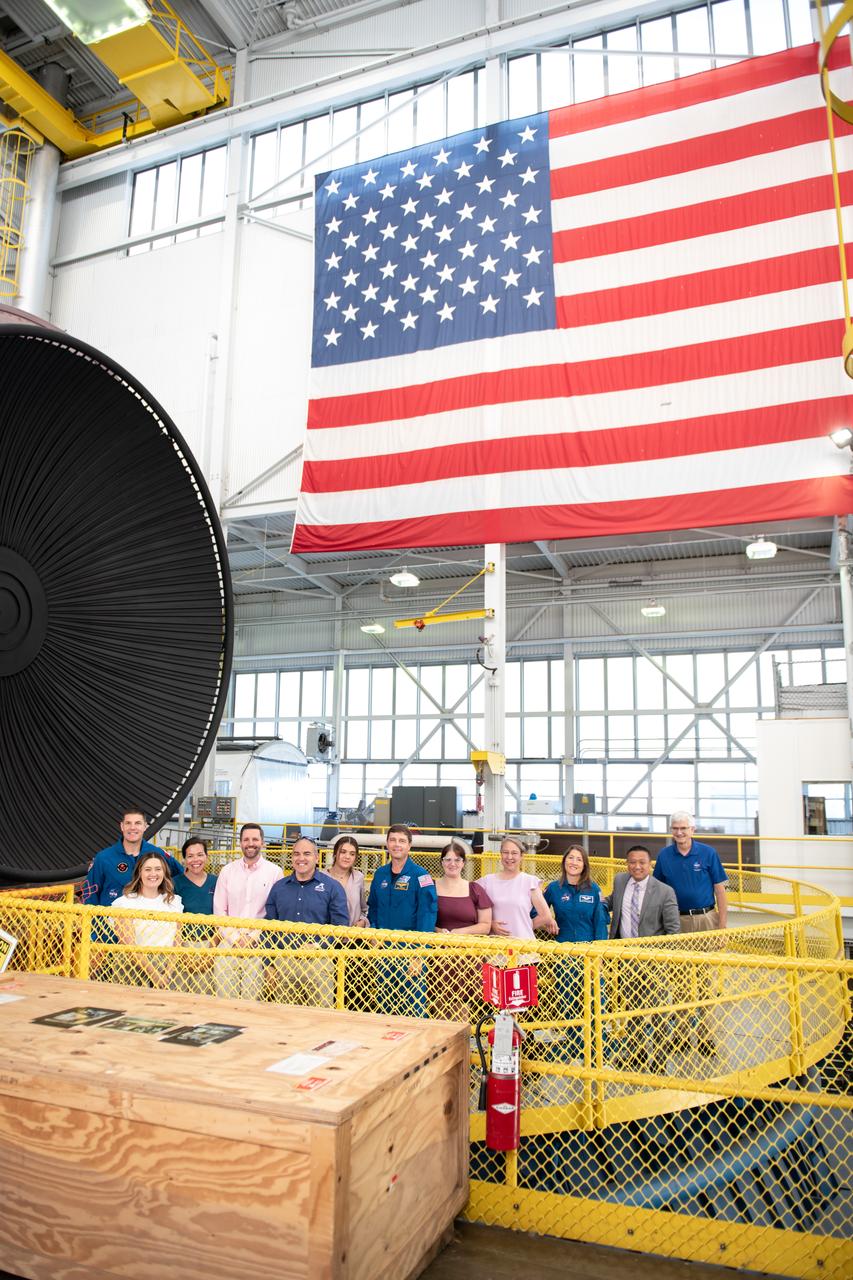
Tours were given of the In Space Propulsion Facility (ISP) in Sandusky, OH at Neil Armstrong Test Facility. NASA’s Facility is the world’s only high altitude test facility capable of full-scale rocket engine and launch vehicle system level tests. The facility supports mission profile thermal vacuum simulation and engine firing. From Left to Right: Jeremy Hansen, Allison Tankersley, Kathryn Oriti, Jan-Henrik Horstmann, Carlos Garcia-Galan, Penelope Garcia-Galan, Reid Wiseman, Jessica Isabell, Tiffany O'Rourke, Howard Hu, General David Stringer. Commander Reid Wiseman and Mission Specialists Christina Koch and Jeremy Hansen will be on hand to discuss their upcoming mission and participate in a Question and Answer session with employees afterward. Hansen is an astronaut with the Canadian Space Agency. Victor Glover, the pilot and fourth crew member, will not be present. Photo Credit: (NASA/Sara Lowthian-Hanna)
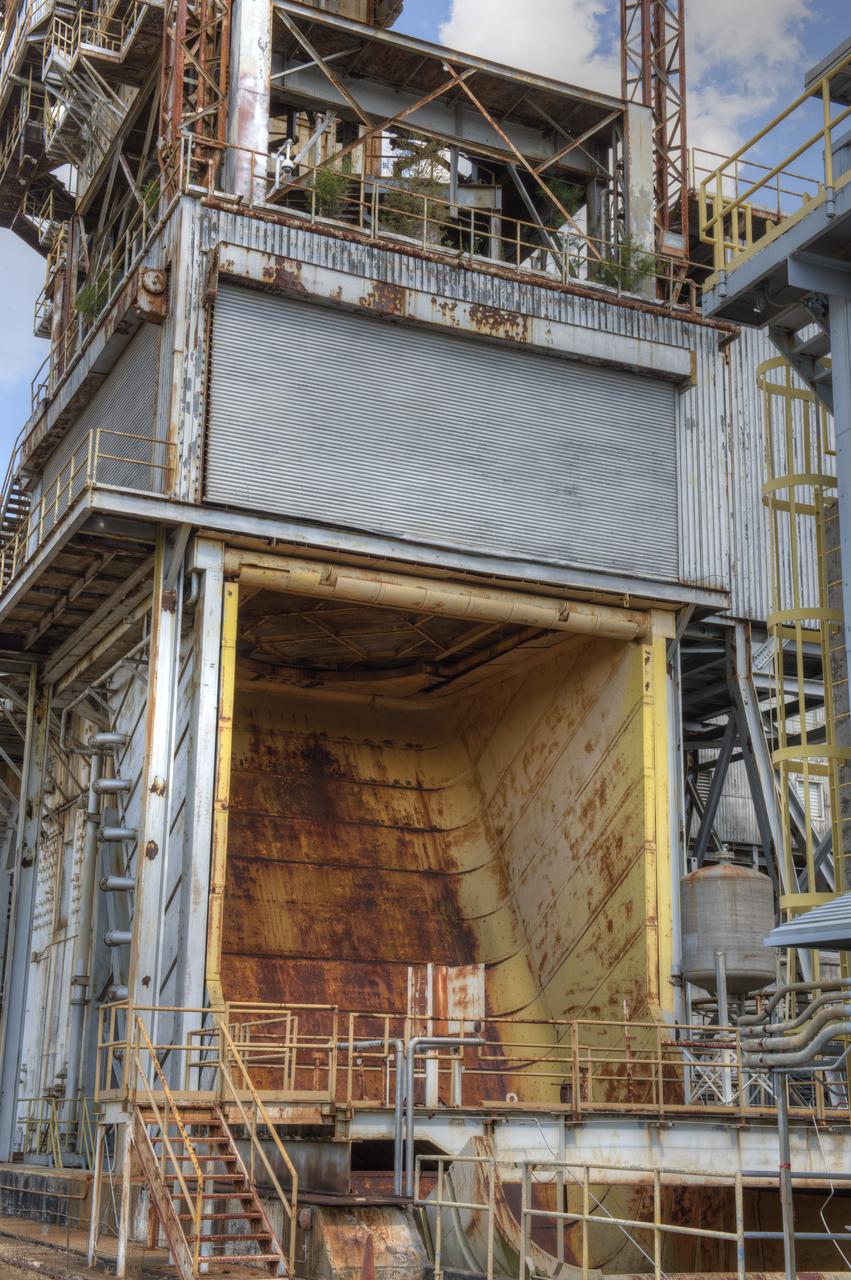
PROPULSION AND STRUCTURAL TEST FACILITY (BUILDING 4572) AT THE GEORGE C. MARSHALL SPACE FLIGHT CENTER IN HUNTSVILLE, ALABAMA
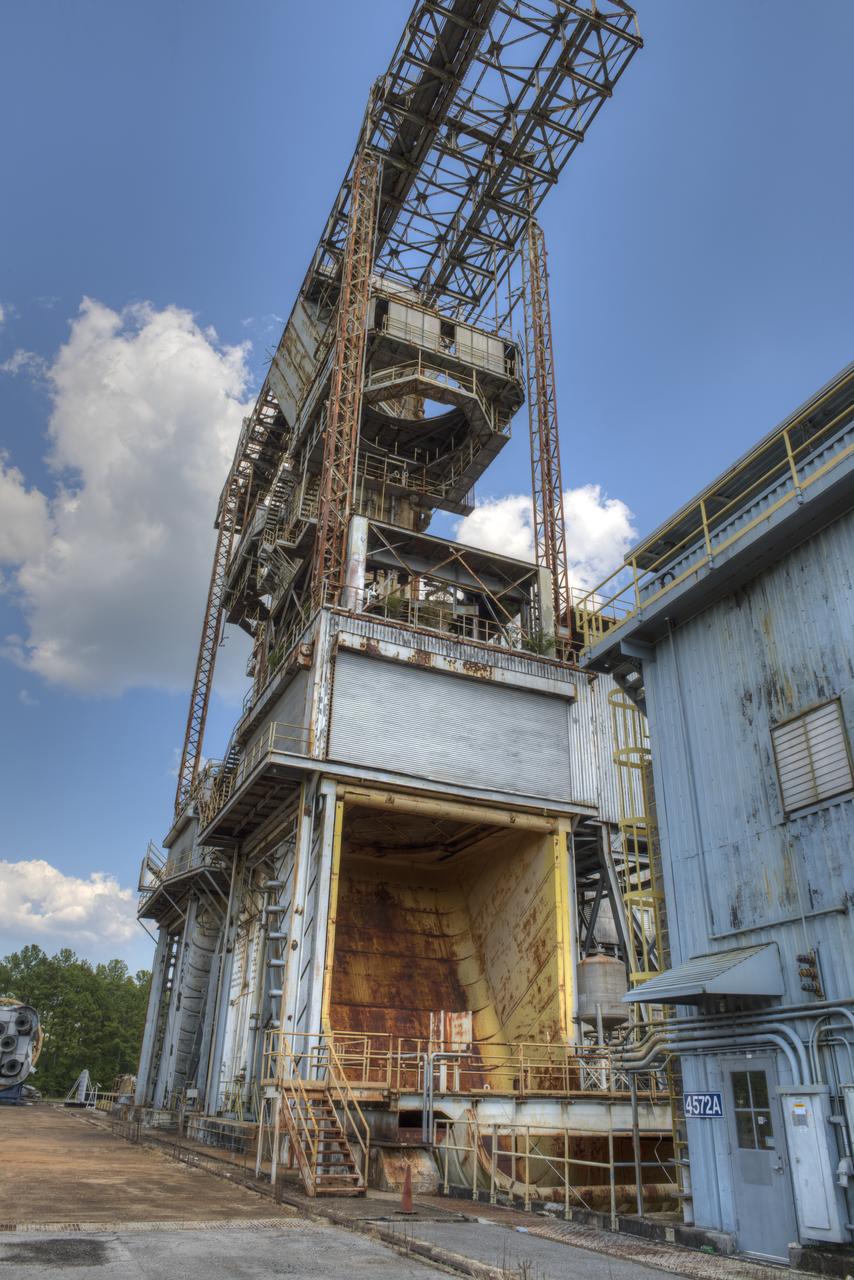
PROPULSION AND STRUCTURAL TEST FACILITY (BUILDING 4572) AT THE GEORGE C. MARSHALL SPACE FLIGHT CENTER IN HUNTSVILLE, ALABAMA
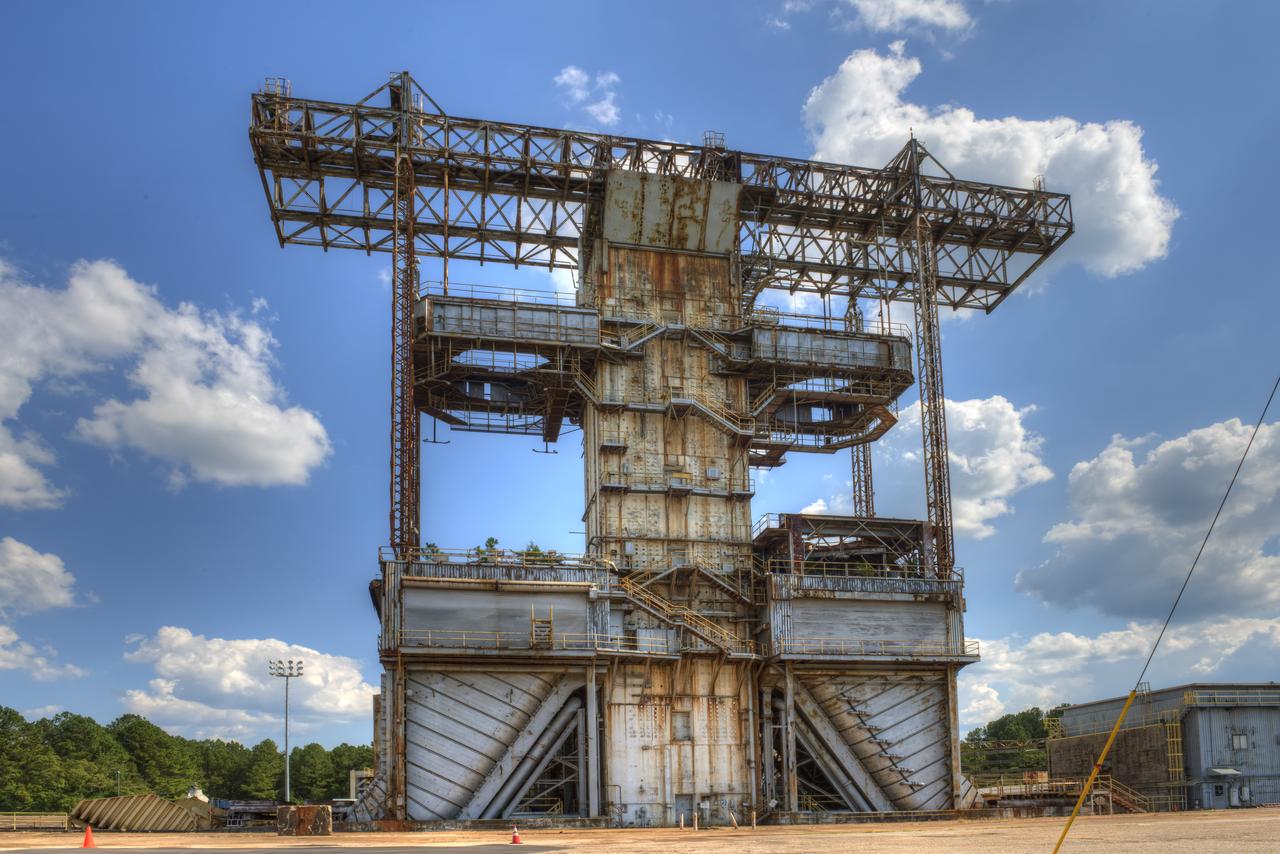
PROPULSION AND STRUCTURAL TEST FACILITY (BUILDING 4572) AT THE GEORGE C. MARSHALL SPACE FLIGHT CENTER IN HUNTSVILLE, ALABAMA
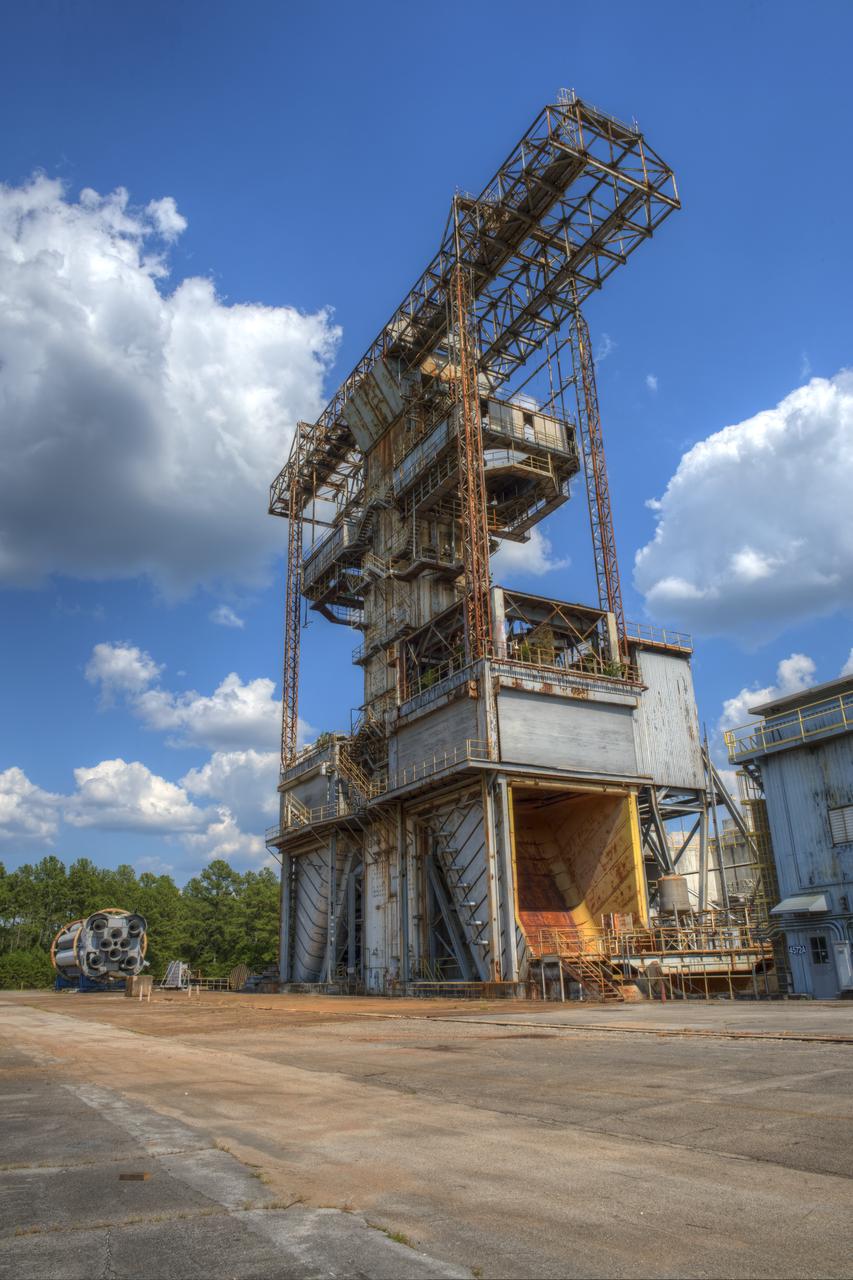
PROPULSION AND STRUCTURAL TEST FACILITY (BUILDING 4572) AT THE GEORGE C. MARSHALL SPACE FLIGHT CENTER IN HUNTSVILLE, ALABAMA
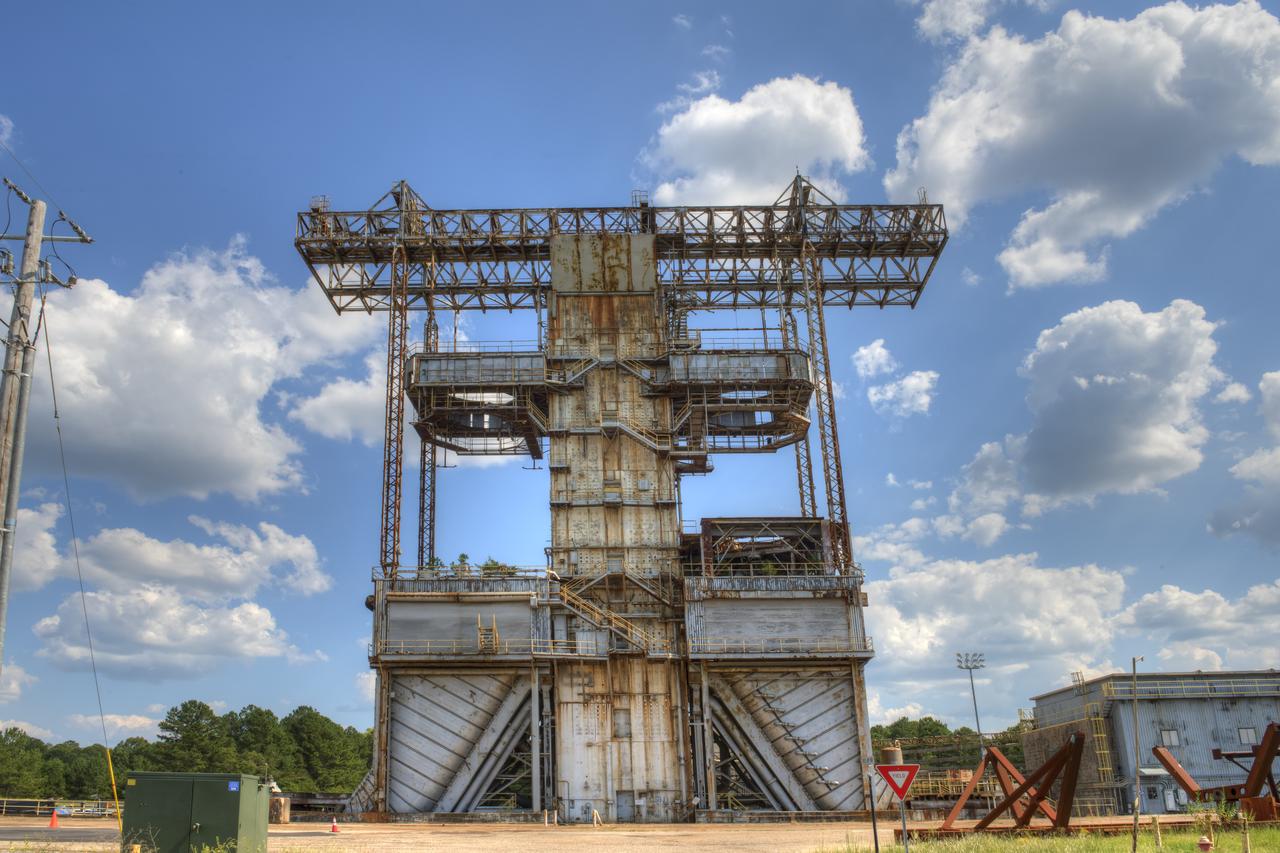
PROPULSION AND STRUCTURAL TEST FACILITY (BUILDING 4572) AT THE GEORGE C. MARSHALL SPACE FLIGHT CENTER IN HUNTSVILLE, ALABAMA
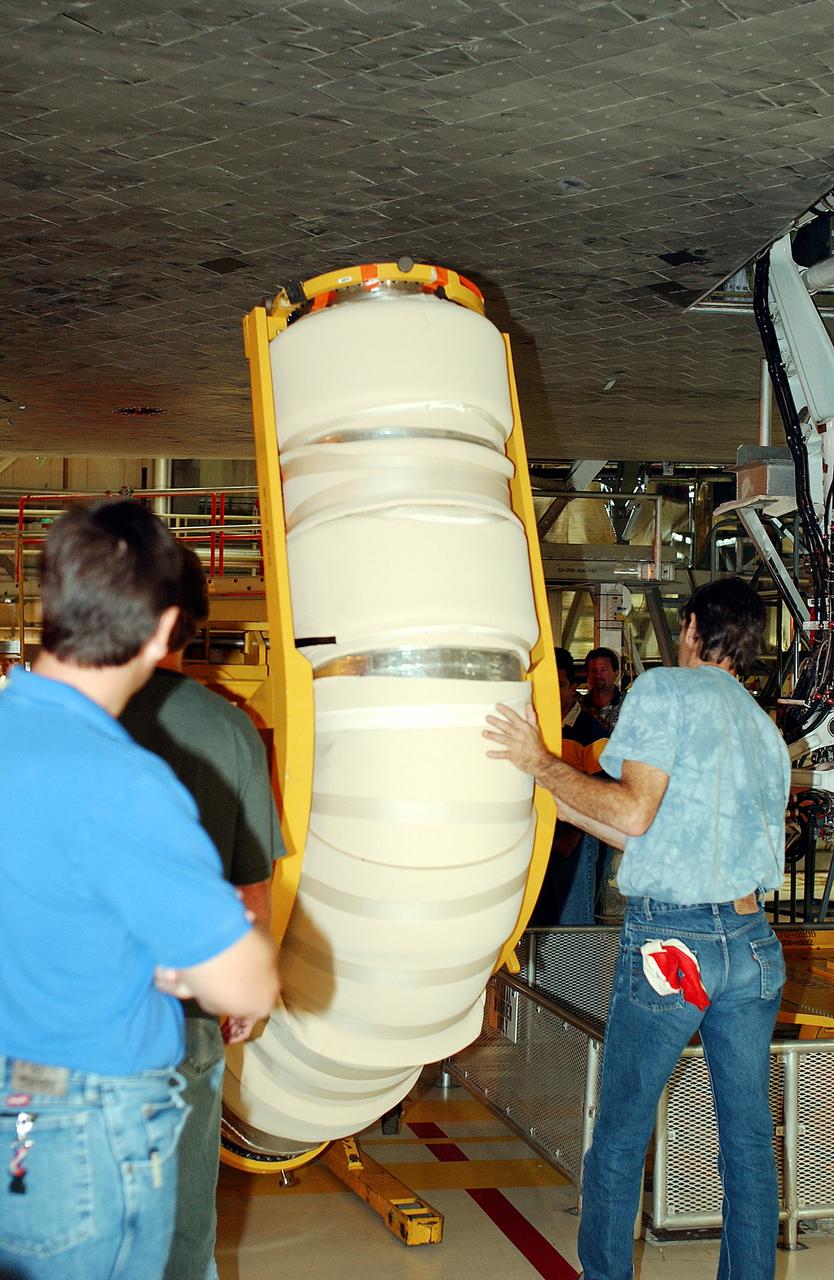
KENNEDY SPACE CENTER, FLA. - In the Orbiter Processing Facility, workers move the liquid oxygen feedline for the 17-inch disconnect toward orbiter Discovery for installation. The 17-inch liquid oxygen and liquid hydrogen disconnects provide the propellant feed interface from the external tank to the orbiter main propulsion system and the three Shuttle main engines.
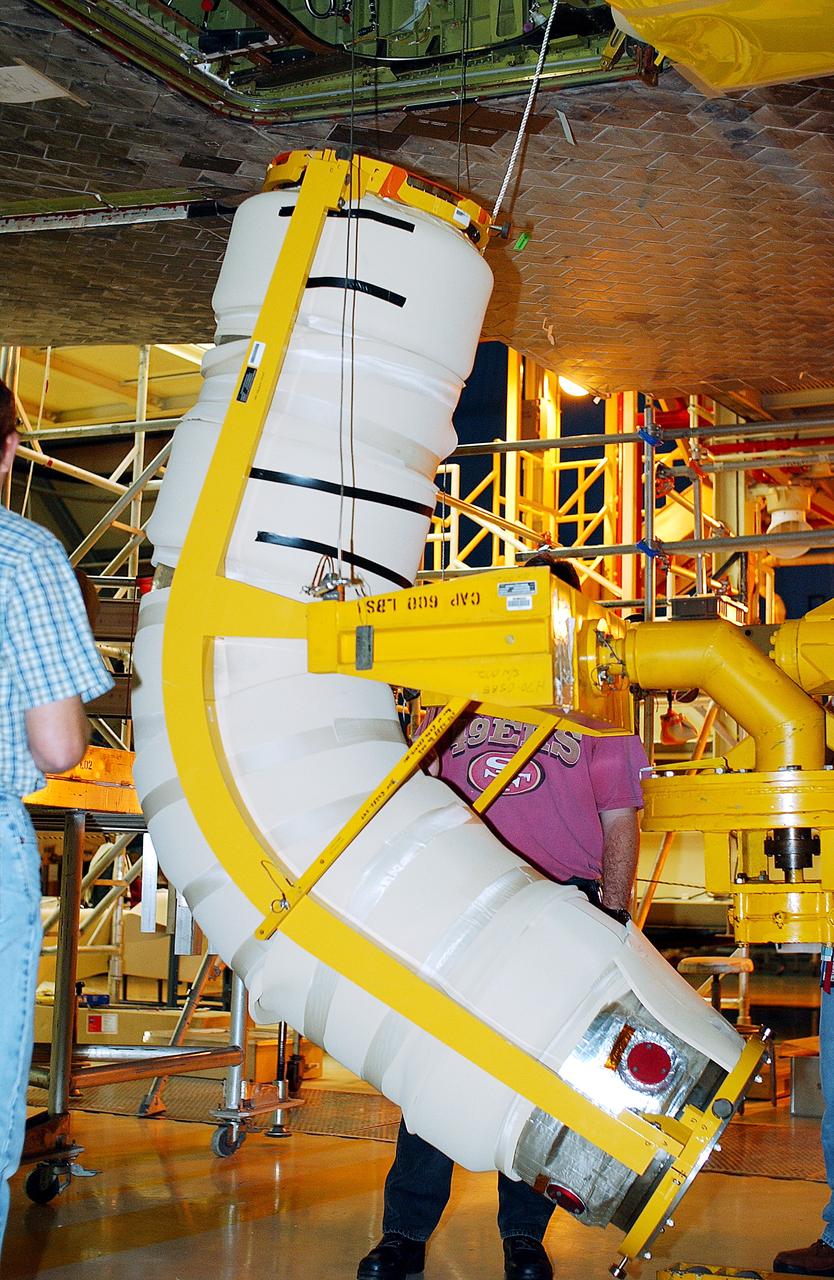
KENNEDY SPACE CENTER, FLA. - In the Orbiter Processing Facility, workers raise the liquid oxygen feedline for the 17-inch disconnect toward orbiter Discovery for installation. The 17-inch liquid oxygen and liquid hydrogen disconnects provide the propellant feed interface from the external tank to the orbiter main propulsion system and the three Shuttle main engines.
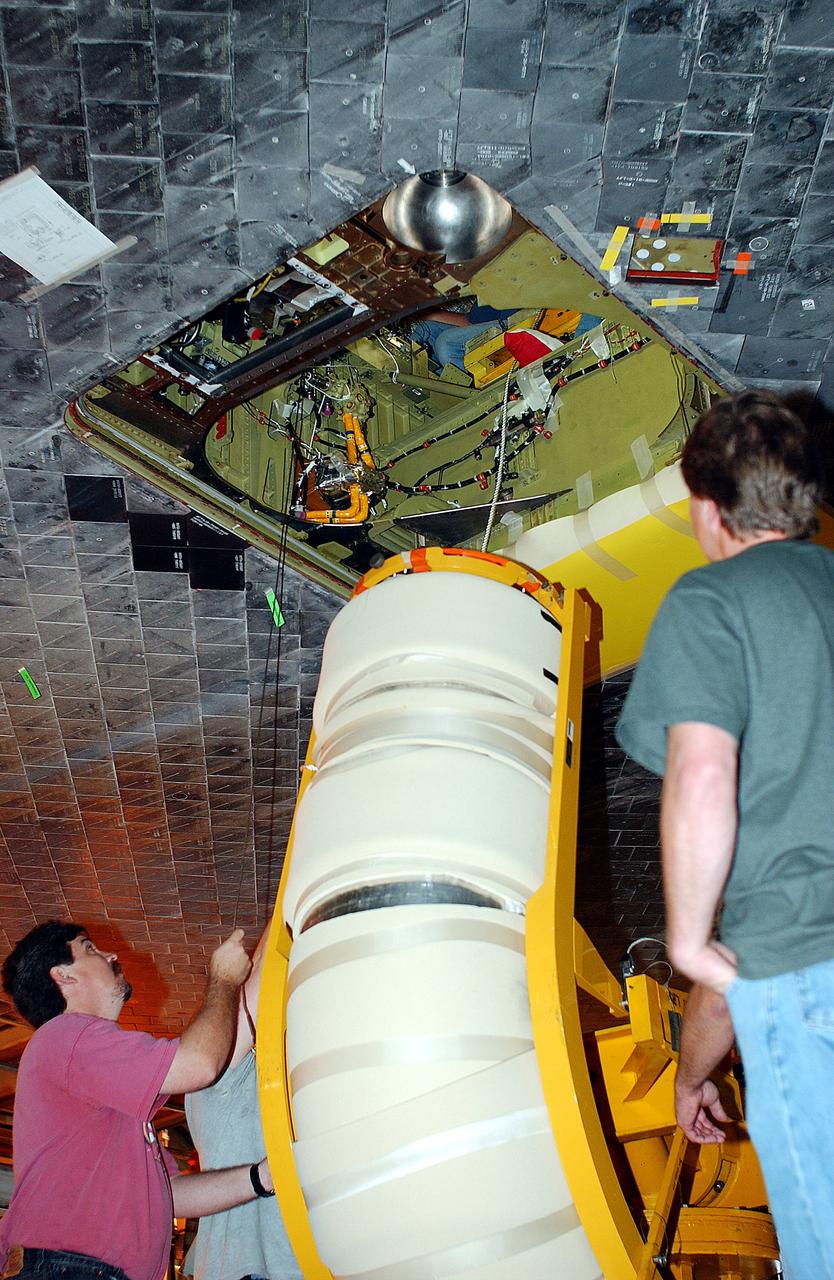
KENNEDY SPACE CENTER, FLA. - In the Orbiter Processing Facility, workers raise the liquid oxygen feedline for the 17-inch disconnect toward orbiter Discovery for installation. The 17-inch liquid oxygen and liquid hydrogen disconnects provide the propellant feed interface from the external tank to the orbiter main propulsion system and the three Shuttle main engines.
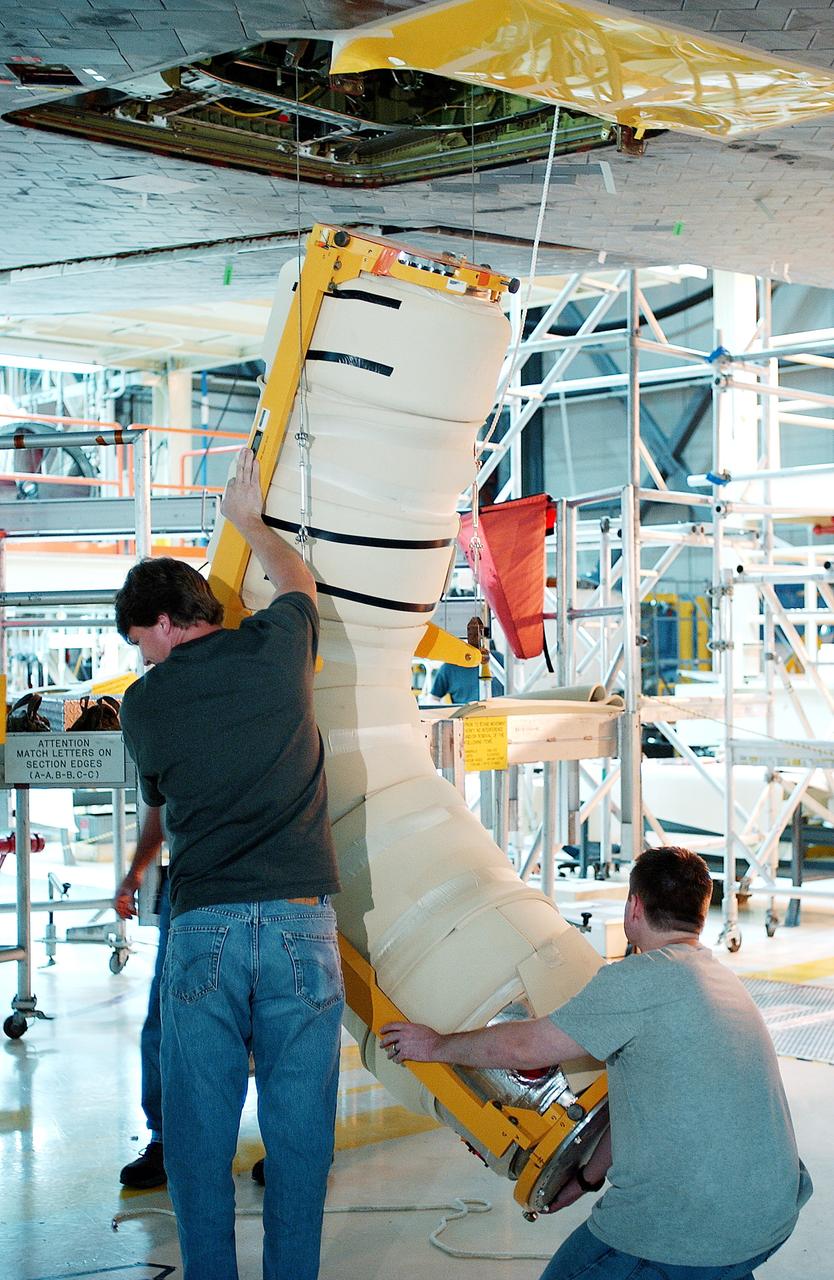
KENNEDY SPACE CENTER, FLA. - In the Orbiter Processing Facility, workers lift the liquid oxygen feedline for the 17-inch disconnect toward orbiter Discovery for installation. The 17-inch liquid oxygen and liquid hydrogen disconnects provide the propellant feed interface from the external tank to the orbiter main propulsion system and the three Shuttle main engines.
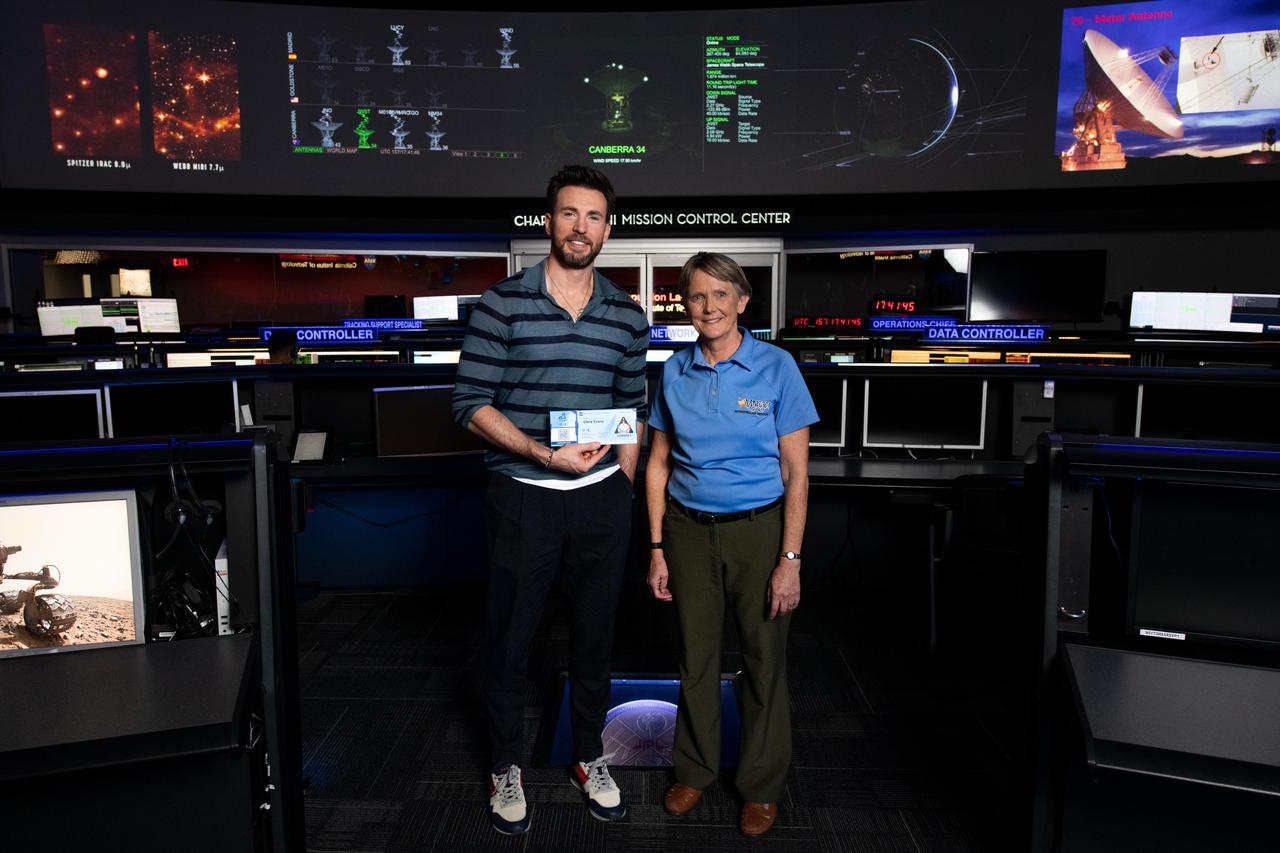
Actor Chris Evans (left) receives a "boarding pass" to the Moon from Suzanne Dodd, director of the Interplanetary Network Directorate at NASA's Jet Propulsion Laboratory in Southern California. The pair are seen in the Space Flight Operations Facility at JPL on June 6, 2022. Evans visited JPL to learn more about space missions after starring as the lead voice in the space-themed movie "Lightyear." More than 3 million names, including Evans', were submitted online and will be included on a flash drive that will fly on the Orion spacecraft during NASA's Artemis I mission to the Moon. Artemis I will be the first uncrewed flight test of the Space Launch System rocket and the Orion spacecraft launching from NASA's Kennedy Space Center in Florida. NASA's Artemis program aims to establish a sustained human presence on the Moon that will serve as a launching pad for exploring Mars and beyond. https://photojournal.jpl.nasa.gov/catalog/PIA25311
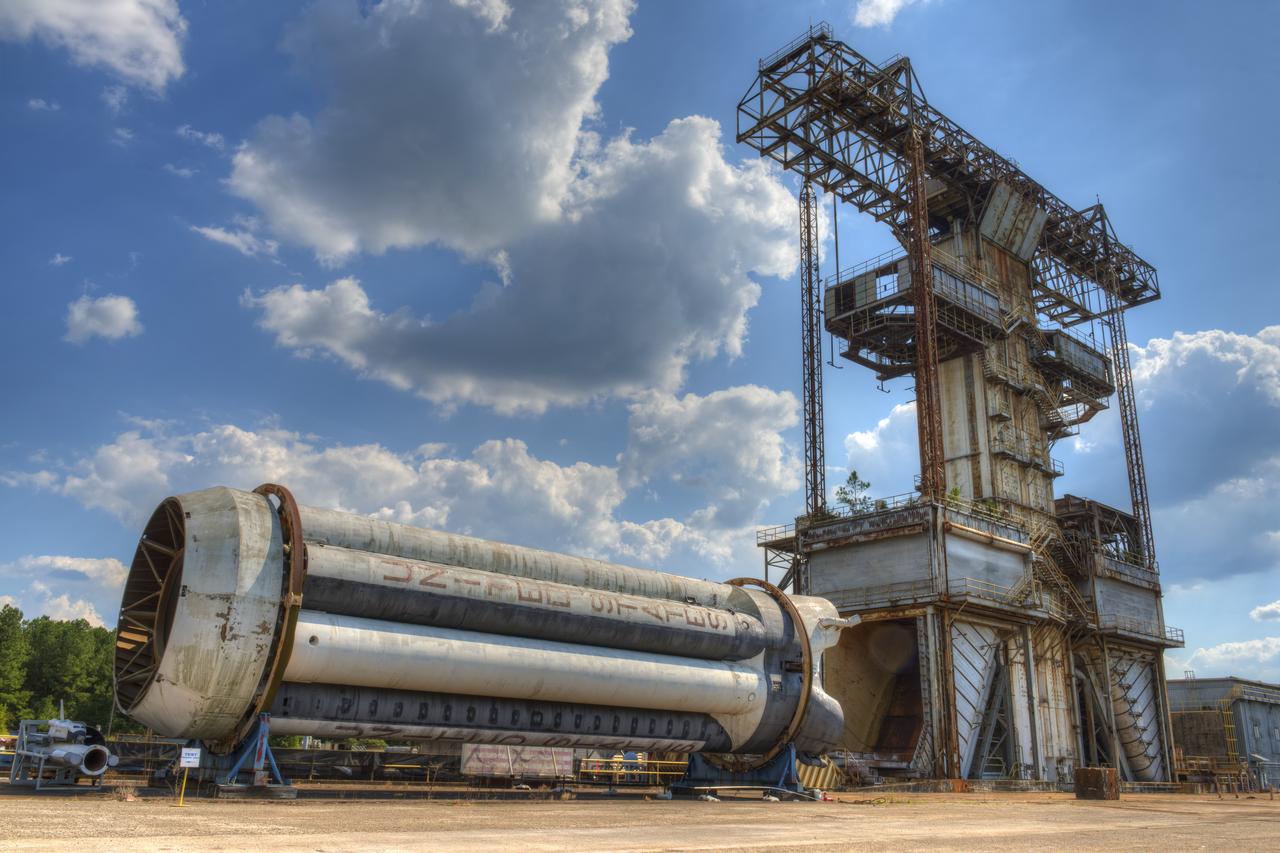
PROPULSION AND STRUCTURAL TEST FACILITY (BUILDING 4572) AT THE GEORGE C. MARSHALL SPACE FLIGHT CENTER IN HUNTSVILLE, ALABAMA WITH THE SATURN S-1B STAGE (SA-) IN FOREGROUND
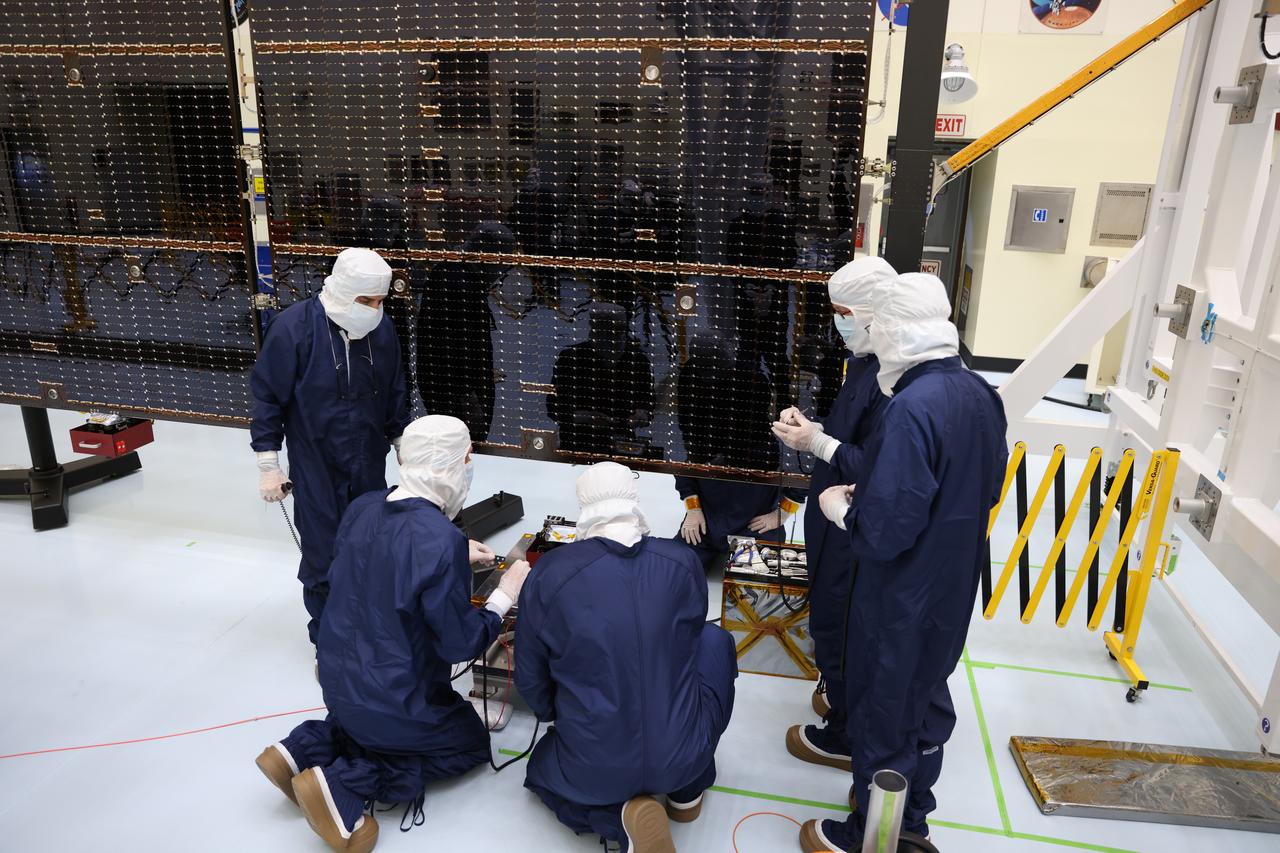
On March 20, technicians working inside the Payload Hazardous Servicing Facility at the agency’s Kennedy Space Center in Florida installed and began to test antennas on a solar array for NASA’s Europa Clipper spacecraft. The spacecraft will ship to Florida later this year from NASA’s Jet Propulsion Lab in Southern California in preparation for launch aboard a SpaceX Falcon Heavy rocket from Kennedy’s Launch Complex 39A. Europa Clipper is the largest spacecraft NASA has ever developed for a planetary mission, and it will seek to determine whether there are places below the surface of Jupiter’s icy moon, Europa, that could support life.
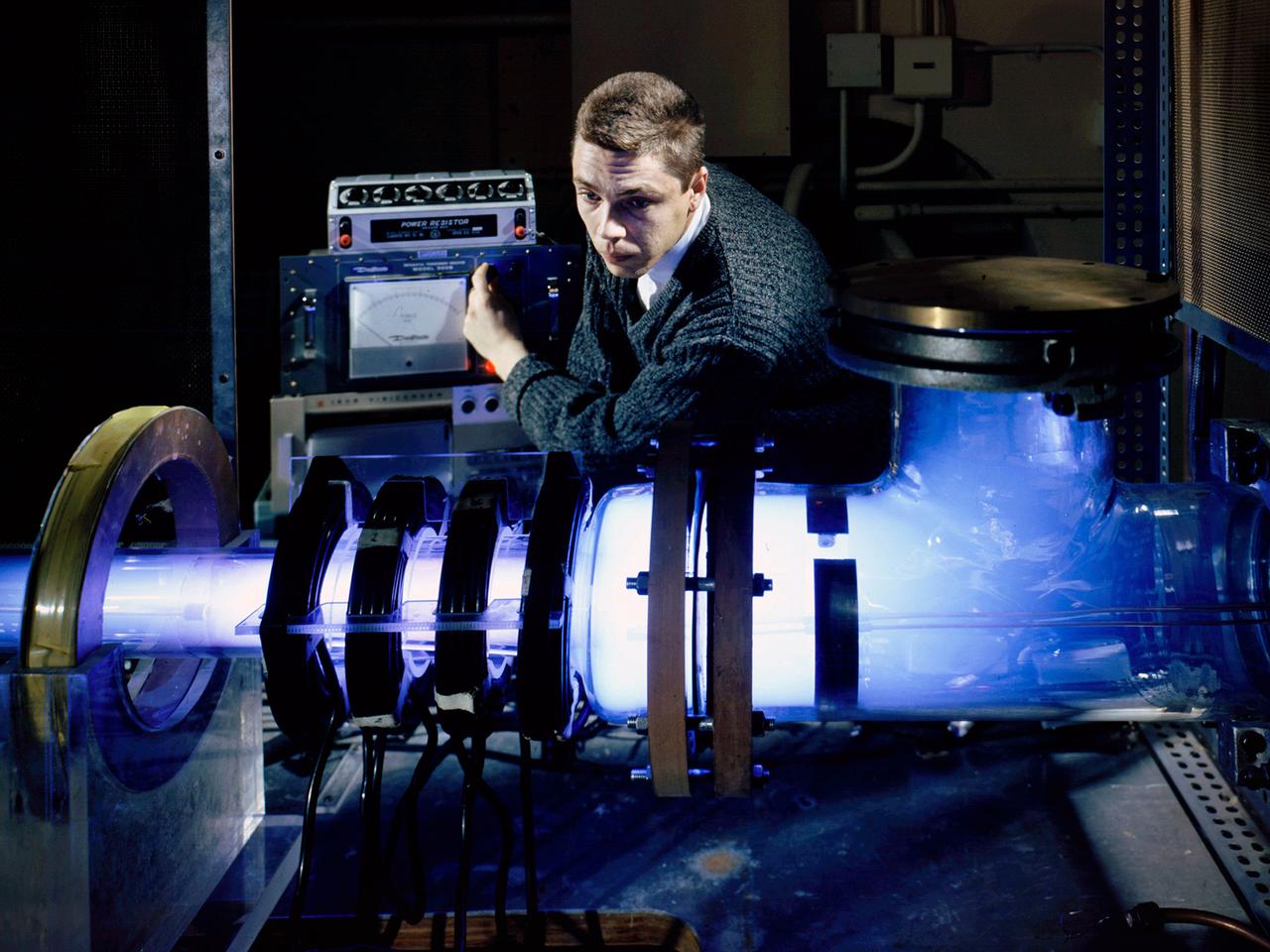
Raymond Palmer, of the Electromagnetic Propulsion Division’s Plasma Flow Section, adjusts the traveling magnetic wave plasma engine being operated in the Electric Power Conversion at the National Aeronautics and Space Administration (NASA) Lewis Research Center. During the 1960s Lewis researchers were exploring several different methods of creating electric propulsion systems, including the traveling magnetic wave plasma engine. The device operated similarly to alternating-current motors, except that a gas, not a solid, was used to conduct the electricity. A magnetic wave induced a current as it passed through the plasma. The current and magnetic field pushed the plasma in one direction. Palmer and colleague Robert Jones explored a variety of engine configurations in the Electric Propulsion Research Building. The engine is seen here mounted externally on the facility’s 5-foot diameter and 16-foot long vacuum tank. The four magnetic coils are seen on the left end of the engine. The researchers conducted two-minute test runs with varying configurations and used of both argon and xenon as the propellant. The Electric Propulsion Research Building was built in 1942 as the Engine Propeller Research Building, often called the Prop House. It contained four test cells to study large reciprocating engines with their propellers. After World War II, the facility was modified to study turbojet engines. By the 1960s, the facility was modified again for electric propulsion research and given its current name.