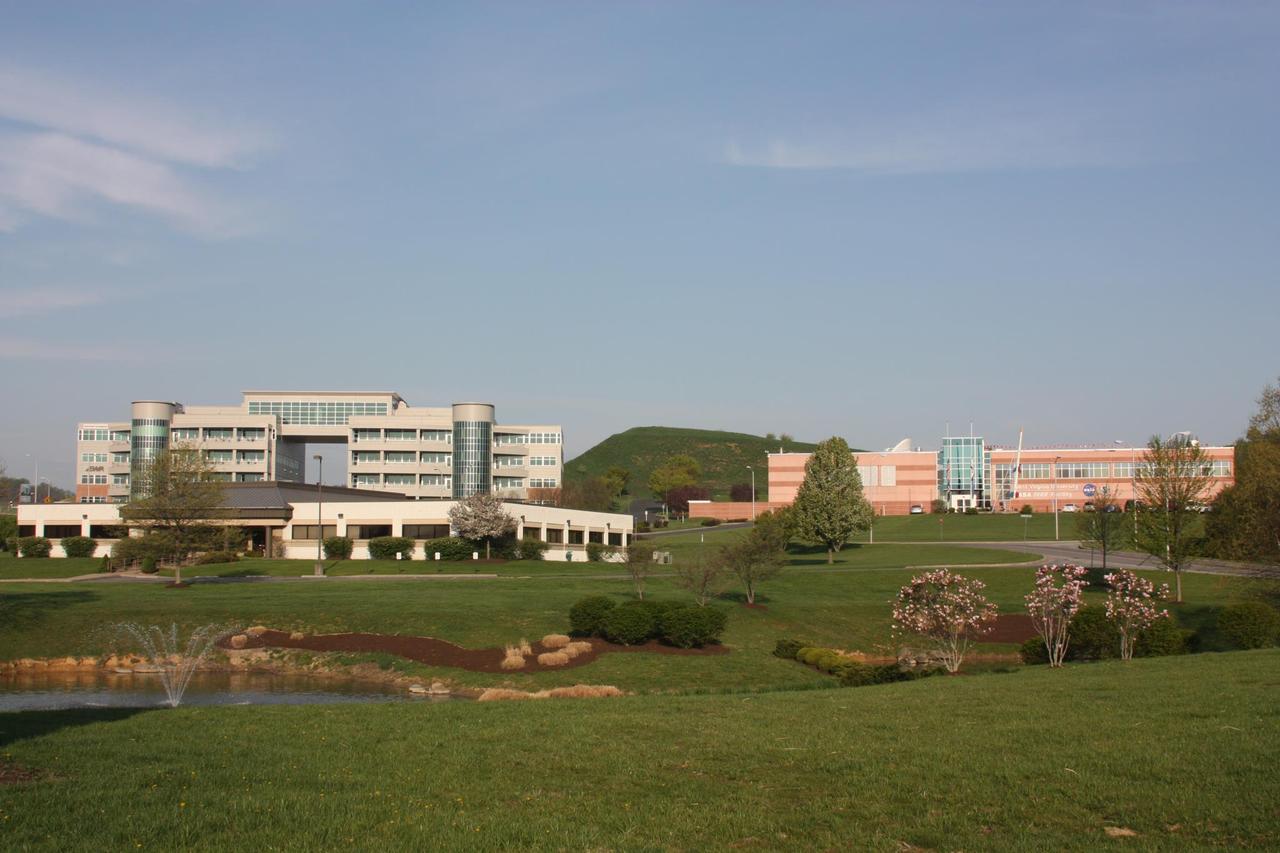
NASA's Katherine Johnson Independent Verification and Validation Facility in Fairmont, West Virginia.  Credit: NASA
NASA Renames Facility in Honor of ‘Hidden Figure’ Katherine Johnson
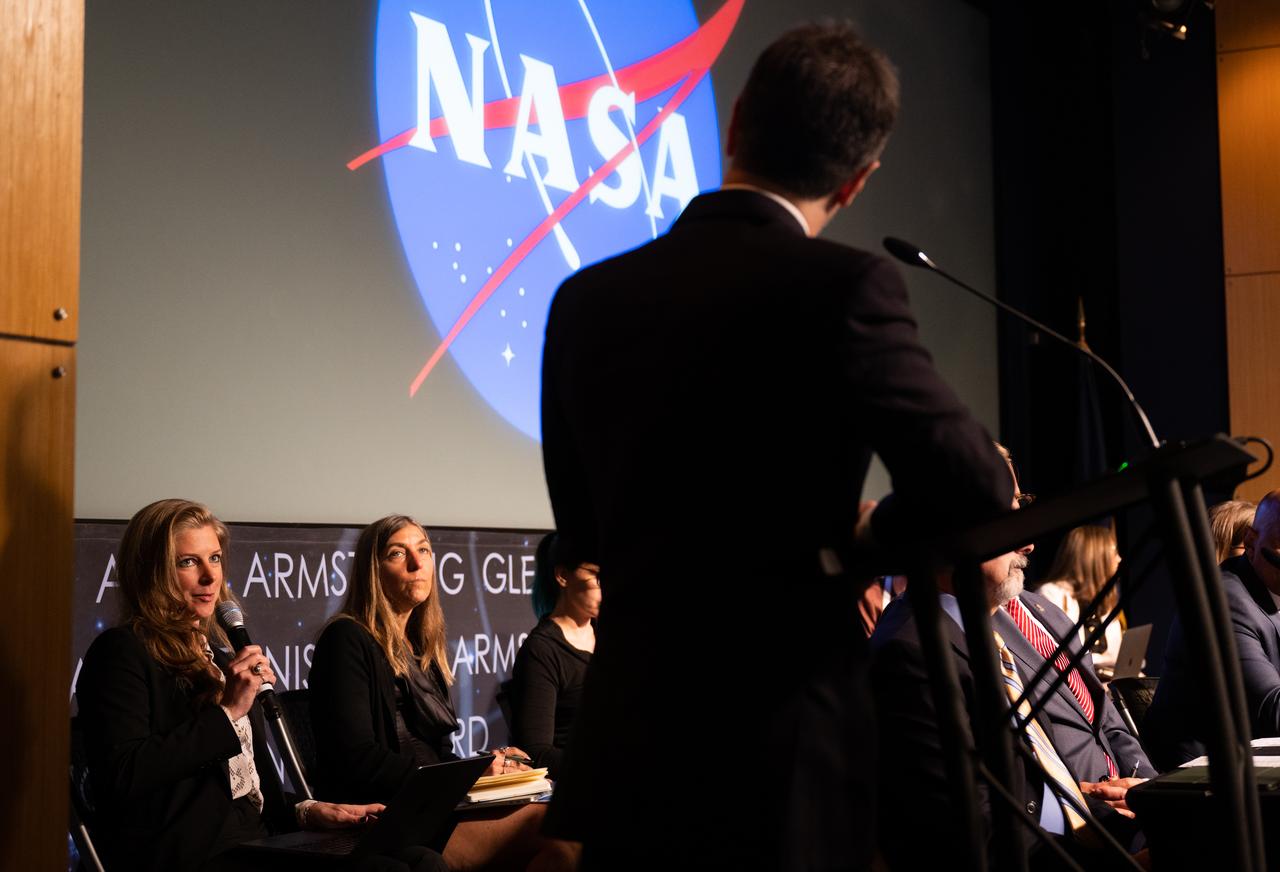
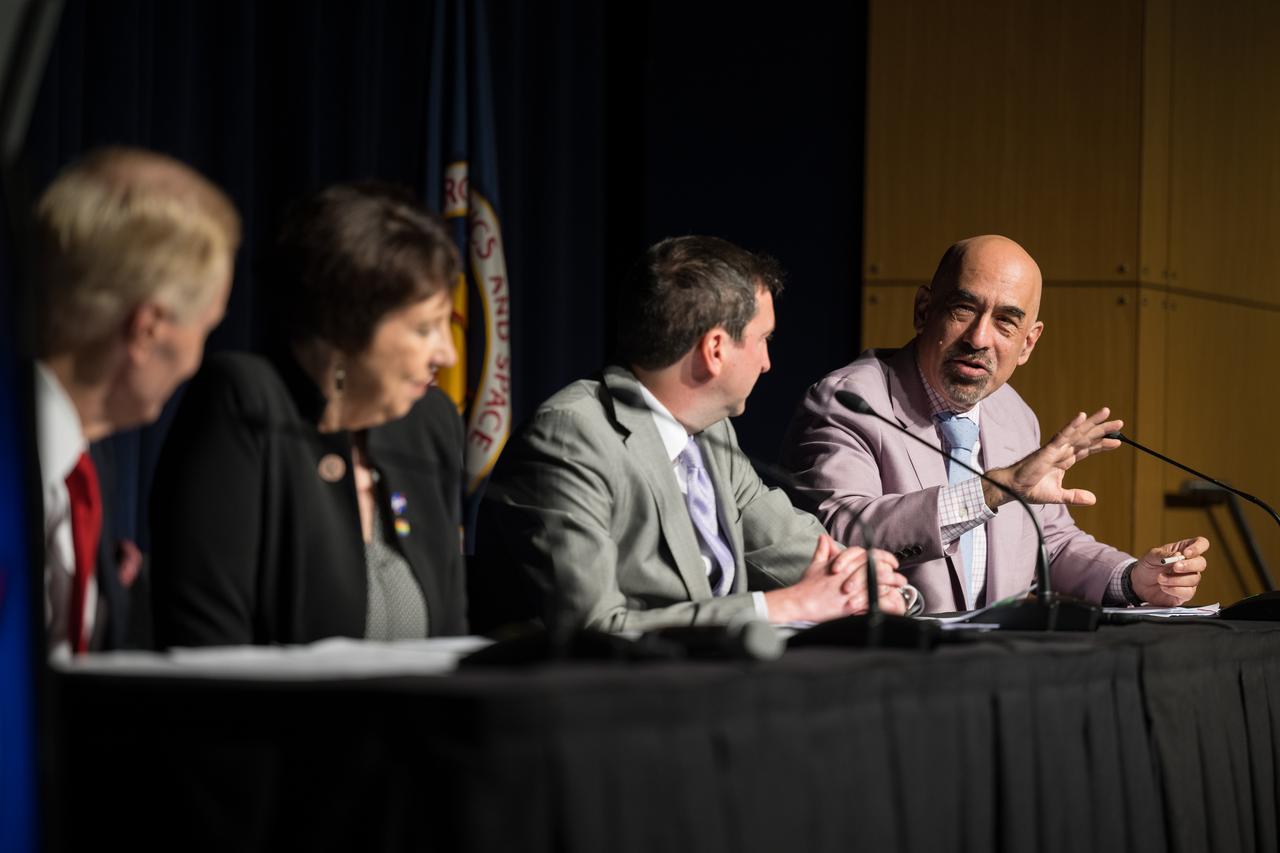
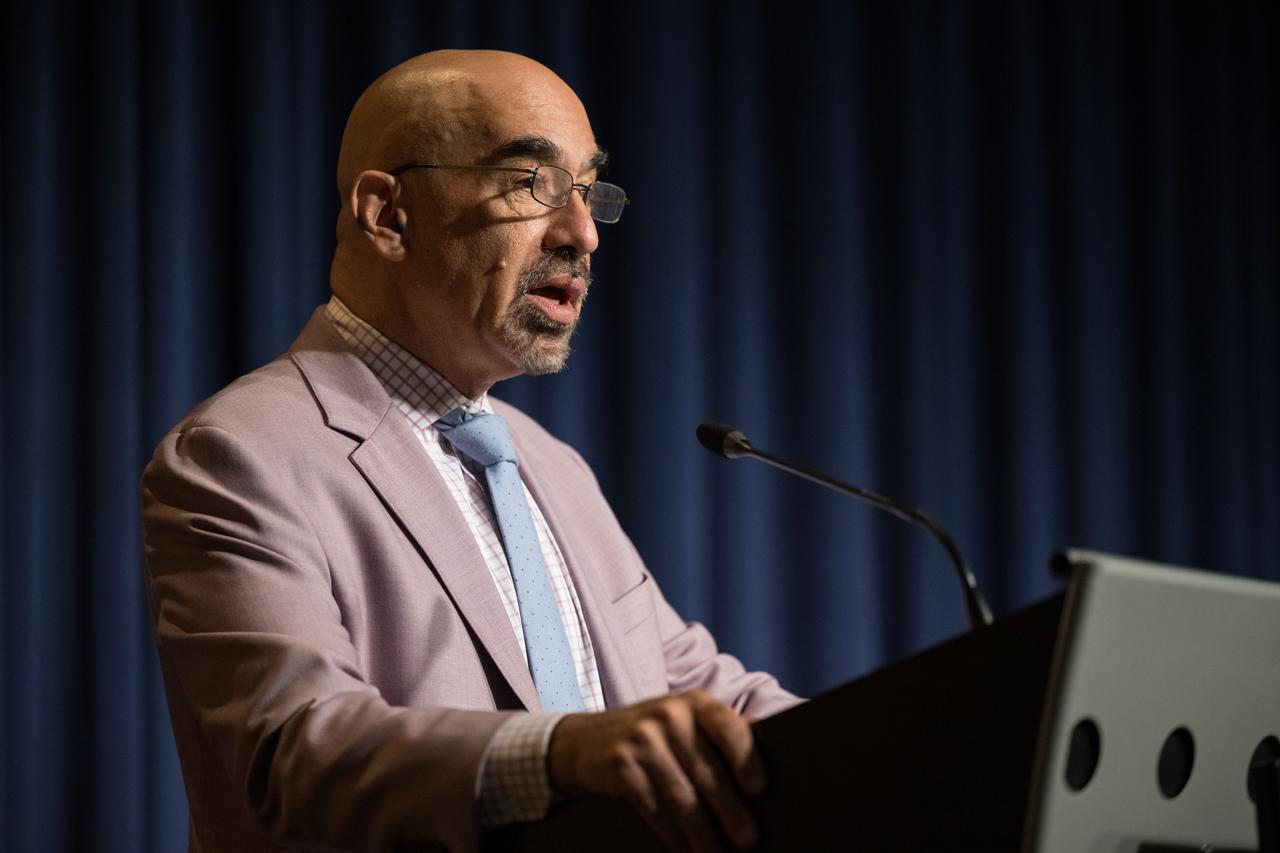
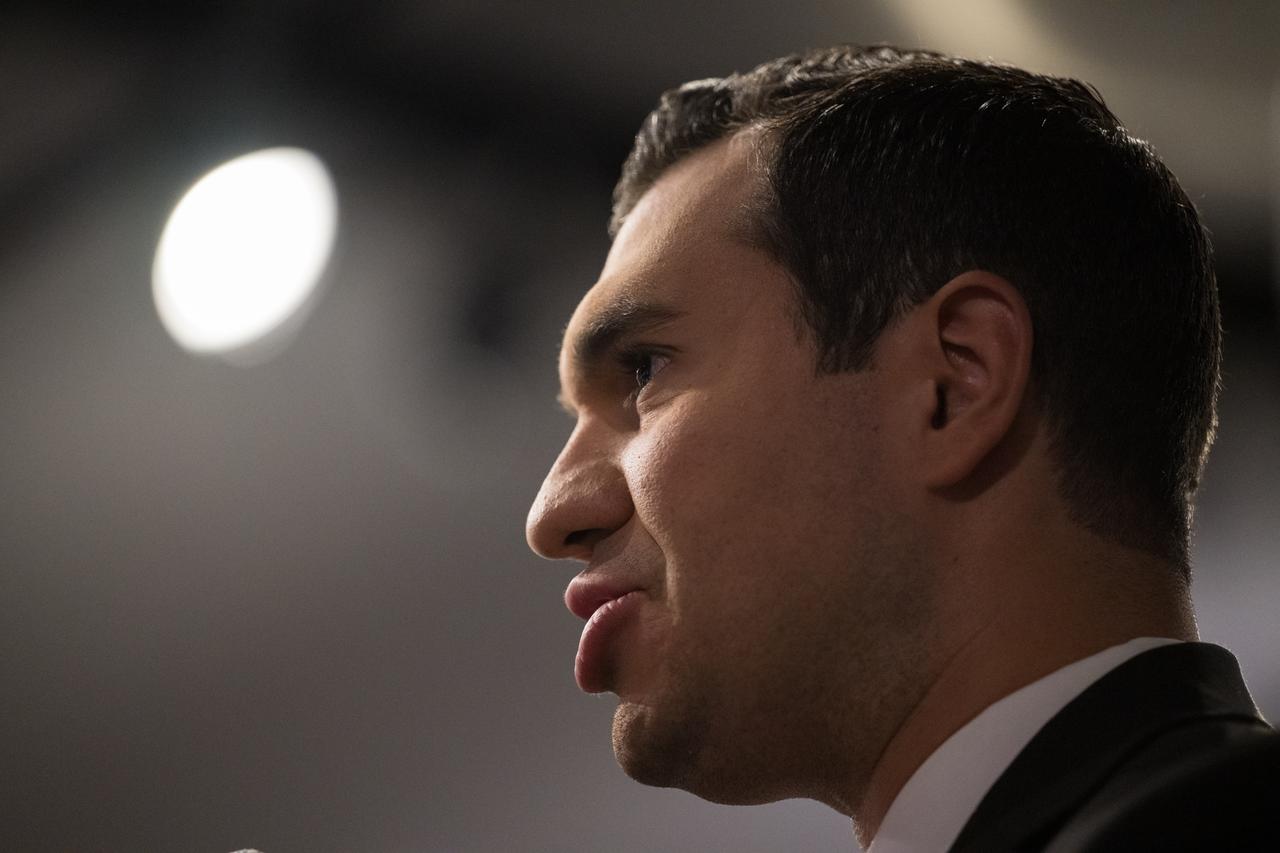
David Spergel, chair of NASA's independent study on unidentified anomalous phenomena and President of the Simons Foundation, speaks during a public meeting of NASA’s unidentified anomalous phenomena (UAP) independent study team, Wednesday, May 31, 2023 at the Mary W. Jackson NASA Headquarters building in Washington. The UAP independent study team is a counsel of 16 community experts across diverse areas on matters relevant to potential methods of study for unidentified anomalous phenomena. NASA commissioned the nine-month study to examine UAP from a scientific perspective and create a roadmap for how to use data and the tools of science to move our understanding of UAP forward. Photo Credit: (NASA/Joel Kowsky)
NASA’s UAP Independent Study Team Meeting
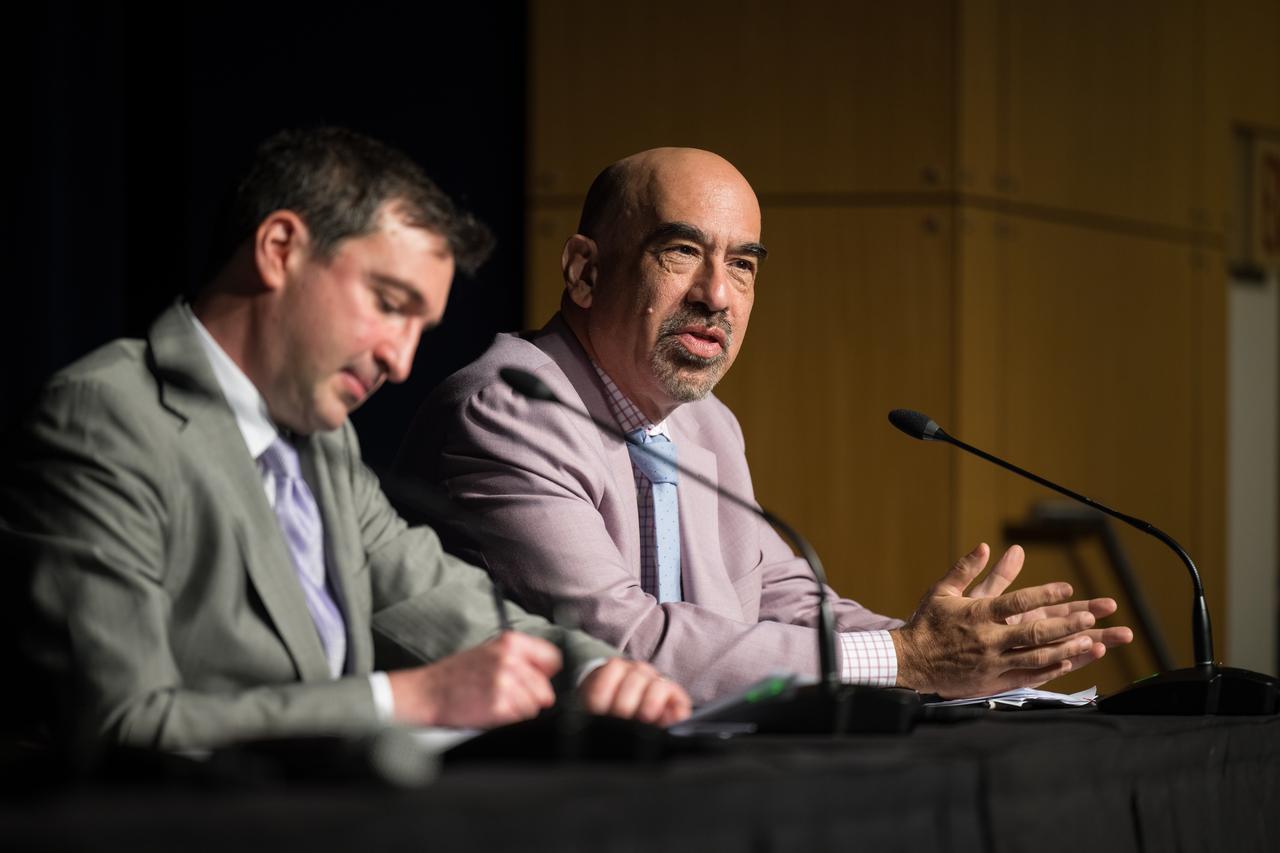
David Spergel, chair of NASA's independent study on unidentified anomalous phenomena and President of the Simons Foundation, answers a question during a public meeting of NASA’s unidentified anomalous phenomena (UAP) independent study team, Wednesday, May 31, 2023 at the Mary W. Jackson NASA Headquarters building in Washington. The UAP independent study team is a counsel of 16 community experts across diverse areas on matters relevant to potential methods of study for unidentified anomalous phenomena. NASA commissioned the nine-month study to examine UAP from a scientific perspective and create a roadmap for how to use data and the tools of science to move our understanding of UAP forward. Photo Credit: (NASA/Joel Kowsky)
NASA’s UAP Independent Study Team Meeting
David Spergel, chair of NASA's independent study on unidentified anomalous phenomena and President of the Simons Foundation, speaks during a public meeting of NASA’s unidentified anomalous phenomena (UAP) independent study team, Wednesday, May 31, 2023 at the Mary W. Jackson NASA Headquarters building in Washington. The UAP independent study team is a counsel of 16 community experts across diverse areas on matters relevant to potential methods of study for unidentified anomalous phenomena. NASA commissioned the nine-month study to examine UAP from a scientific perspective and create a roadmap for how to use data and the tools of science to move our understanding of UAP forward. Photo Credit: (NASA/Joel Kowsky)
NASA’s UAP Independent Study Team Meeting
David Spergel, chair of NASA's independent study on unidentified anomalous phenomena and President of the Simons Foundation, speaks during a public meeting of NASA’s unidentified anomalous phenomena (UAP) independent study team, Wednesday, May 31, 2023 at the Mary W. Jackson NASA Headquarters building in Washington. The UAP independent study team is a counsel of 16 community experts across diverse areas on matters relevant to potential methods of study for unidentified anomalous phenomena. NASA commissioned the nine-month study to examine UAP from a scientific perspective and create a roadmap for how to use data and the tools of science to move our understanding of UAP forward. Photo Credit: (NASA/Joel Kowsky)
NASA’s UAP Independent Study Team Meeting
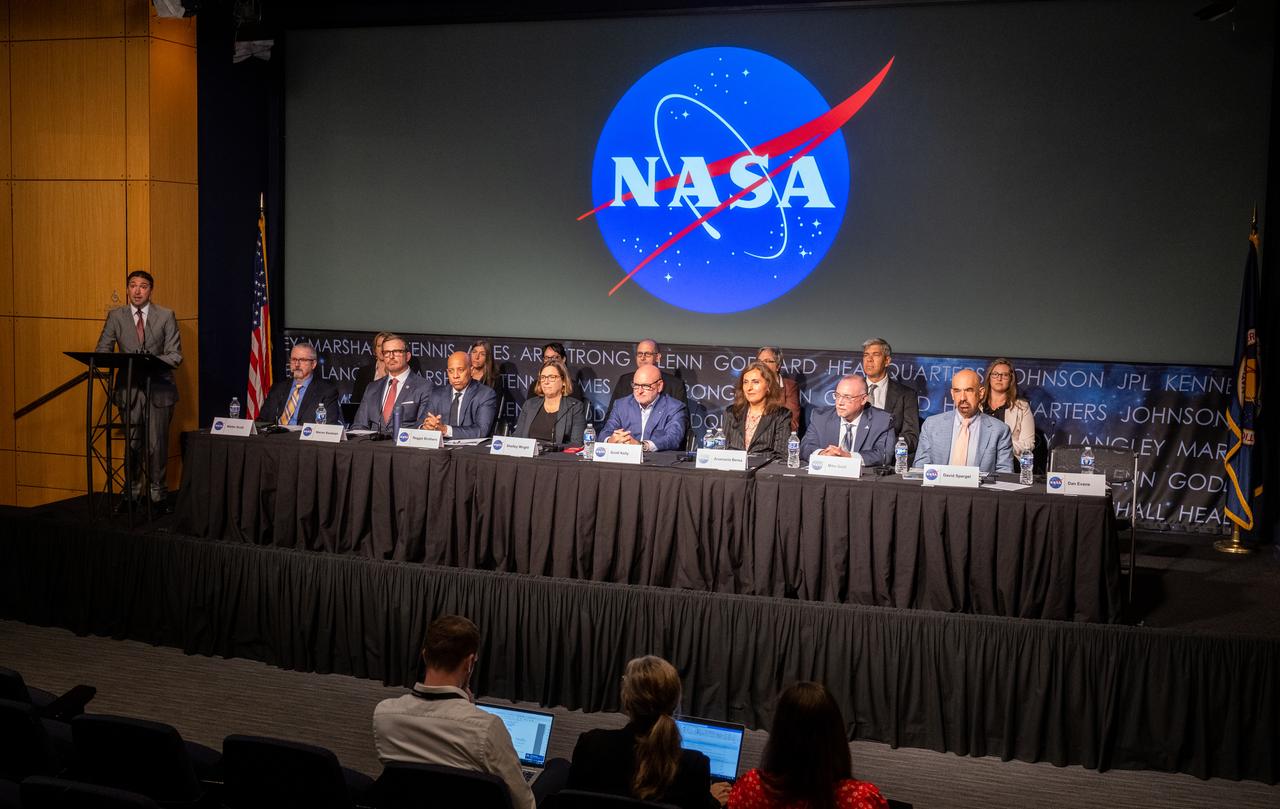
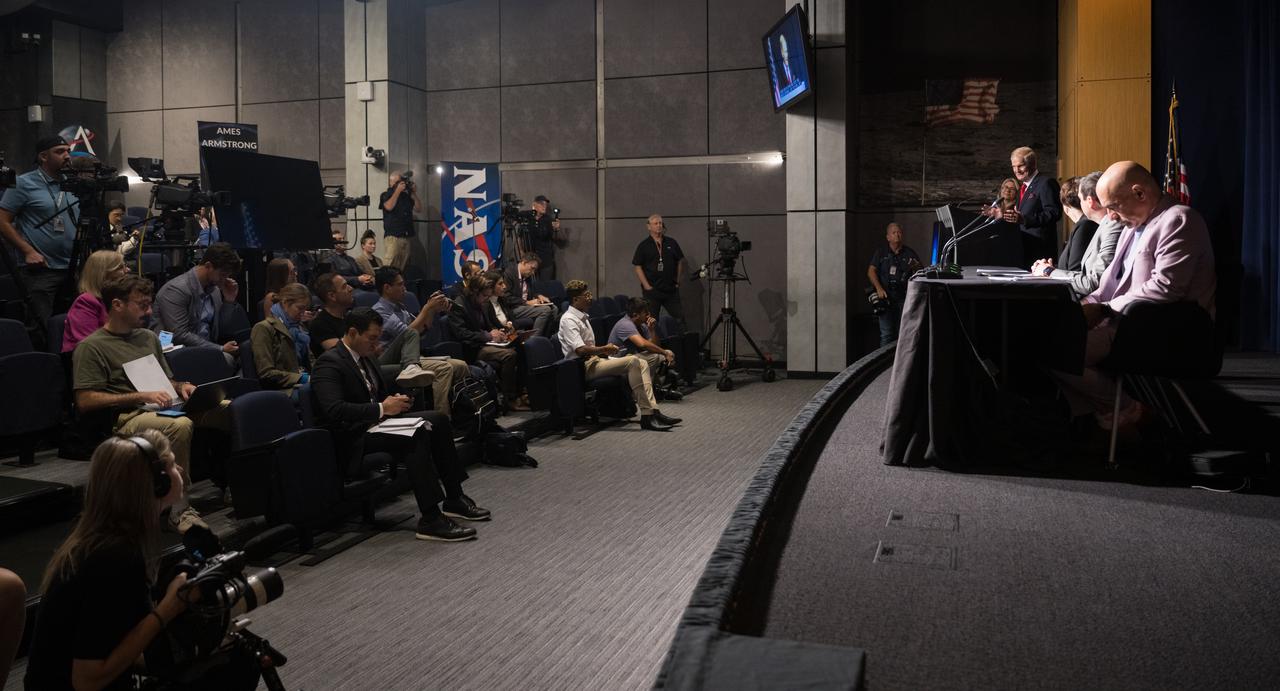
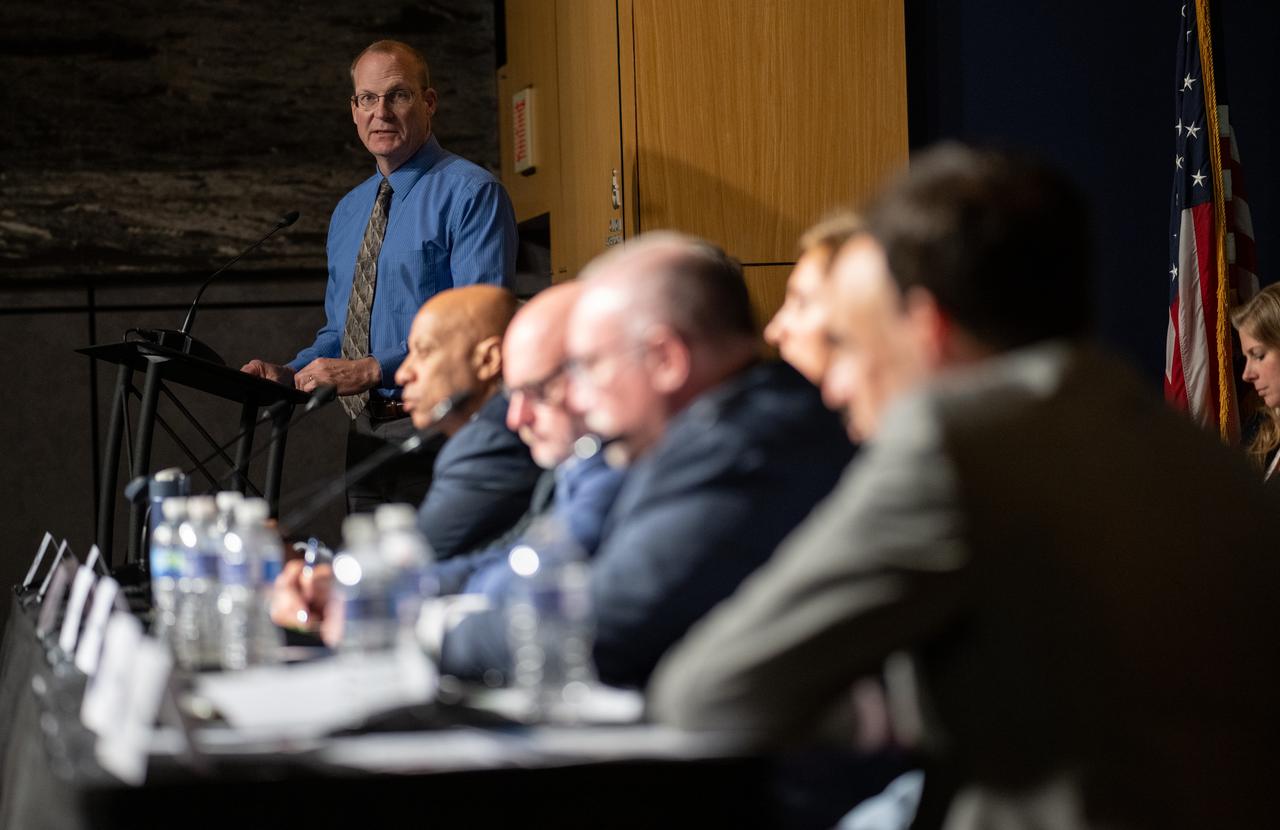
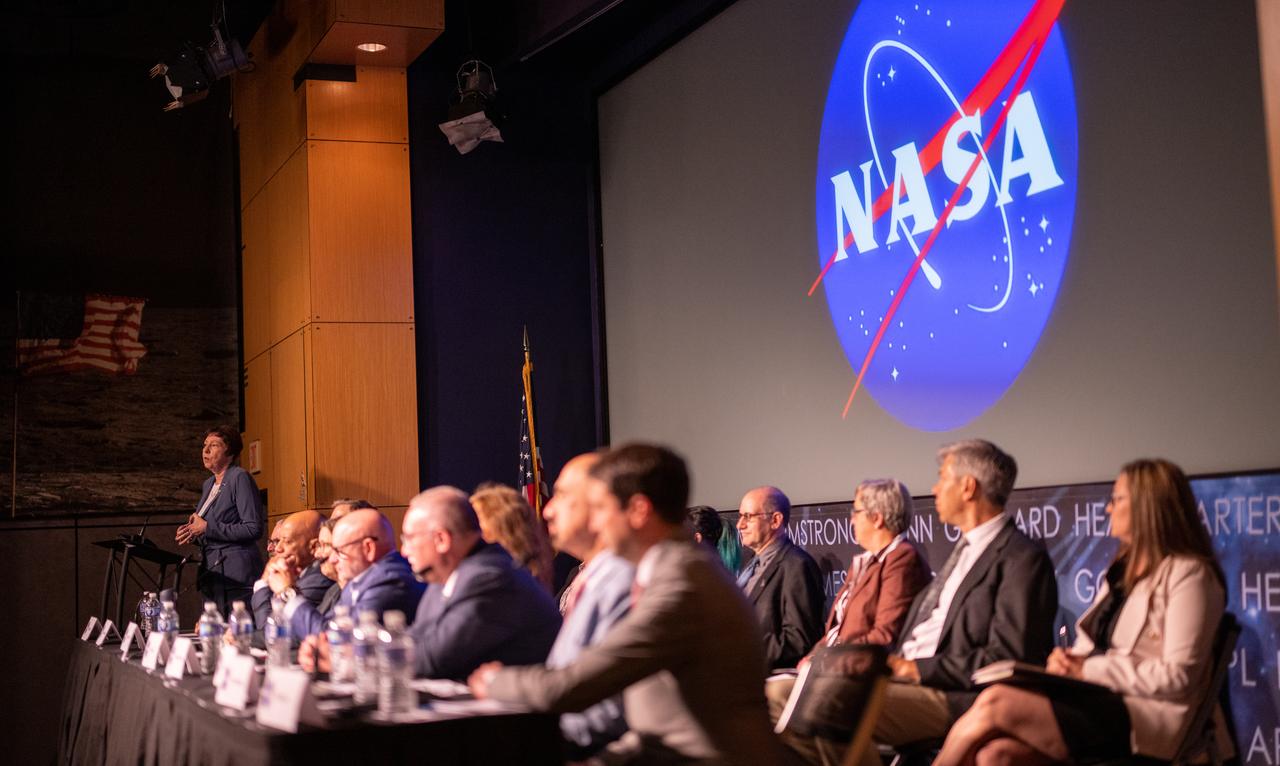
Members of NASA’s unidentified anomalous phenomena (UAP) independent study team are seen during a public meeting, Wednesday, May 31, 2023 at the Mary W. Jackson NASA Headquarters building in Washington. The UAP independent study team is a counsel of 16 community experts across diverse areas on matters relevant to potential methods of study for unidentified anomalous phenomena. NASA commissioned the nine-month study to examine UAP from a scientific perspective and create a roadmap for how to use data and the tools of science to move our understanding of UAP forward. Photo Credit: (NASA/Joel Kowsky)
NASA’s UAP Independent Study Team Meeting
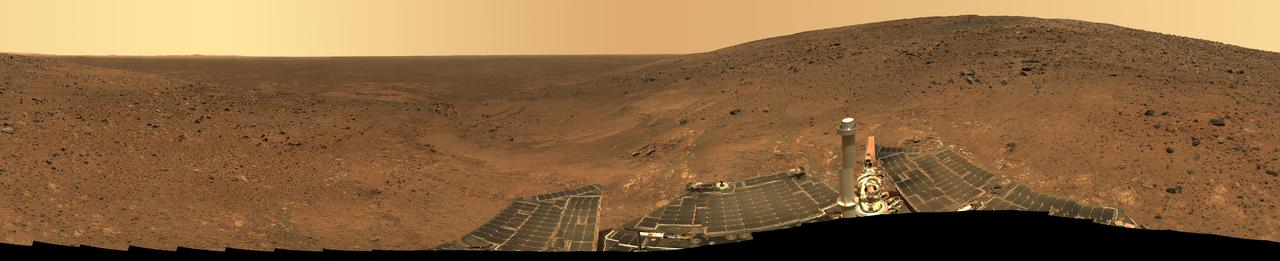
Independence Panorama
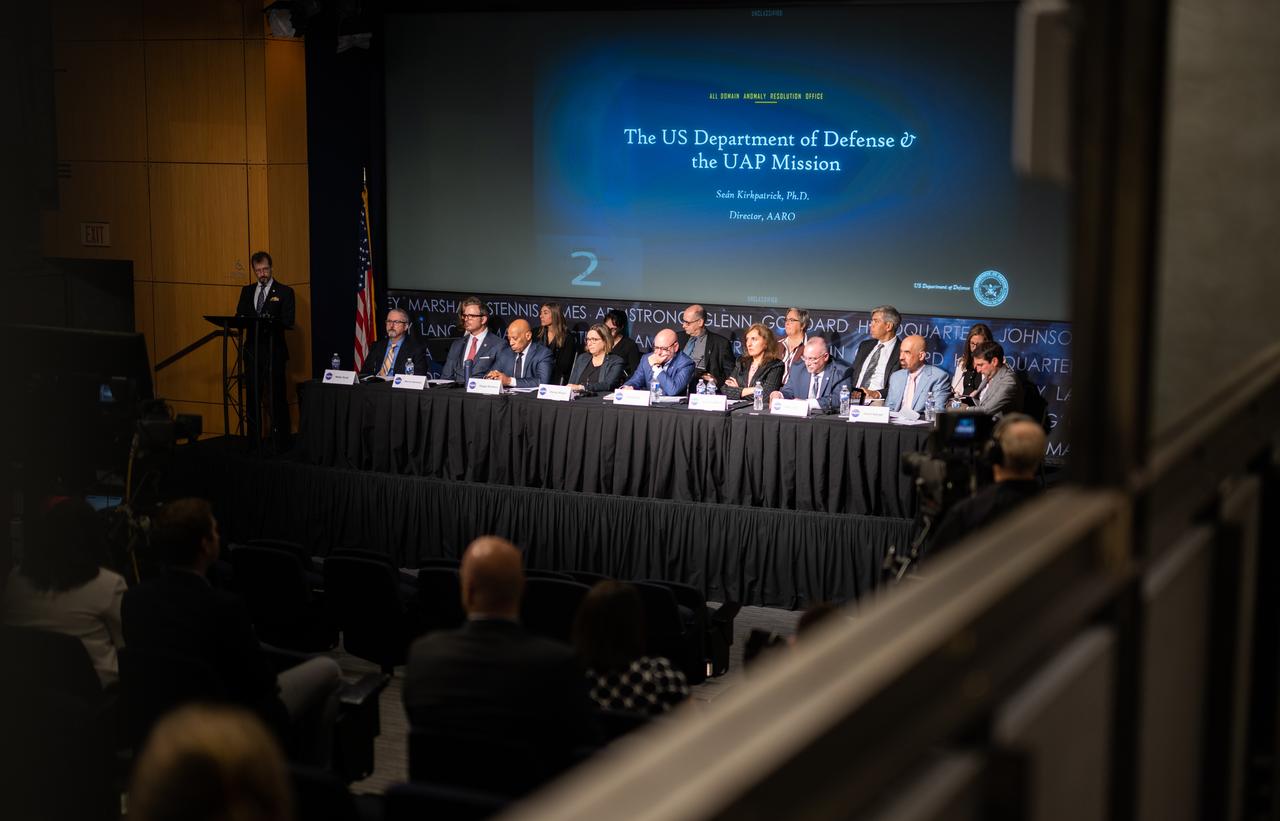
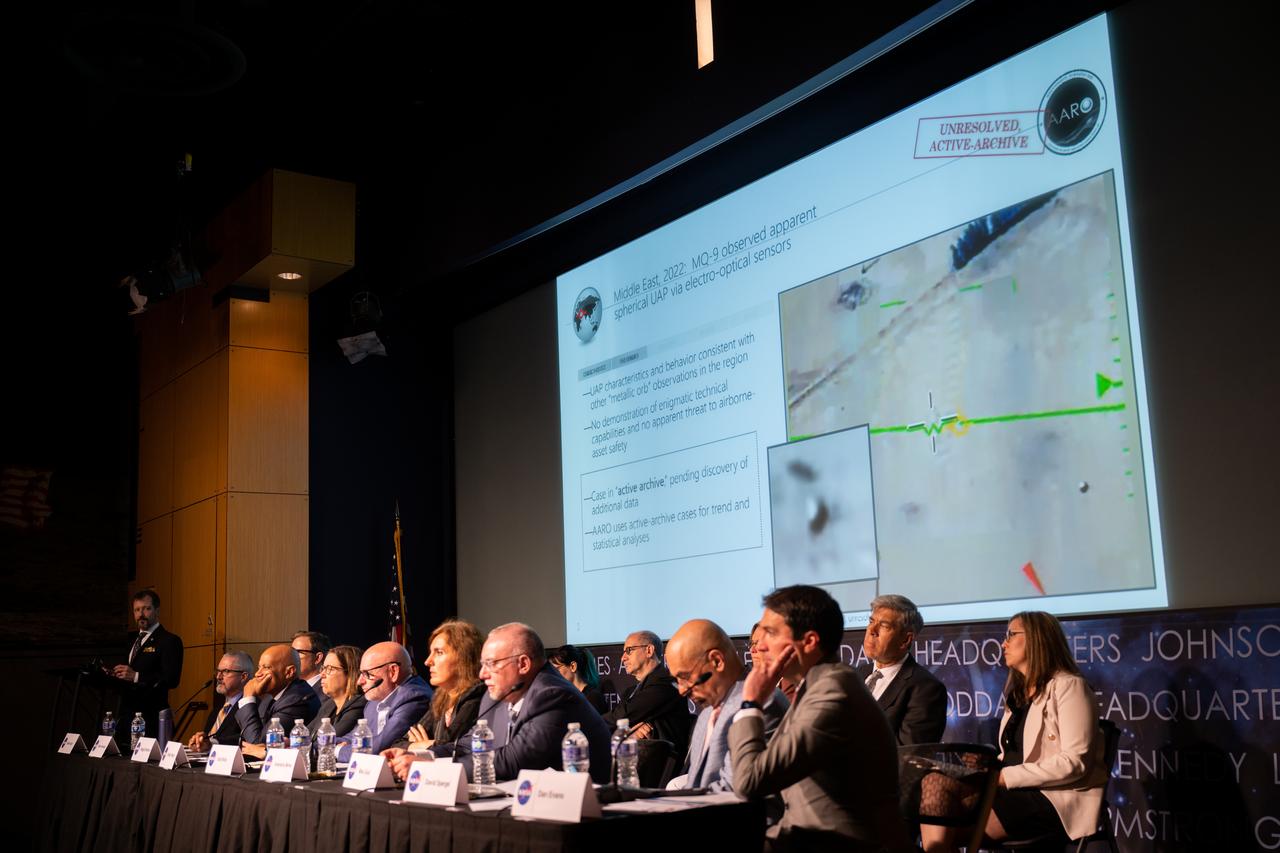
Dr. Sean Kirkpatrick, director of All-domain Anomaly Resolution Office at the Department of Defense, gives a presentation during a public meeting of NASA’s unidentified anomalous phenomena (UAP) independent study team, Wednesday, May 31, 2023 at the Mary W. Jackson NASA Headquarters building in Washington. The UAP independent study team is a counsel of 16 community experts across diverse areas on matters relevant to potential methods of study for unidentified anomalous phenomena. NASA commissioned the nine-month study to examine UAP from a scientific perspective and create a roadmap for how to use data and the tools of science to move our understanding of UAP forward. Photo Credit: (NASA/Joel Kowsky)
NASA’s UAP Independent Study Team Meeting
Shelley Wright, professor of Physics at the University of California San Diego's Center for Astrophysics and Space Studies, is seen during a public meeting of NASA’s unidentified anomalous phenomena (UAP) independent study team, Wednesday, May 31, 2023 at the Mary W. Jackson NASA Headquarters building in Washington. The UAP independent study team is a counsel of 16 community experts across diverse areas on matters relevant to potential methods of study for unidentified anomalous phenomena. NASA commissioned the nine-month study to examine UAP from a scientific perspective and create a roadmap for how to use data and the tools of science to move our understanding of UAP forward. Photo Credit: (NASA/Joel Kowsky)
NASA’s UAP Independent Study Team Meeting
Dr. Sean Kirkpatrick, director of All-domain Anomaly Resolution Office at the Department of Defense, left, gives a presentation during a public meeting of NASA’s unidentified anomalous phenomena (UAP) independent study team, Wednesday, May 31, 2023 at the Mary W. Jackson NASA Headquarters building in Washington. The UAP independent study team is a counsel of 16 community experts across diverse areas on matters relevant to potential methods of study for unidentified anomalous phenomena. NASA commissioned the nine-month study to examine UAP from a scientific perspective and create a roadmap for how to use data and the tools of science to move our understanding of UAP forward. Photo Credit: (NASA/Joel Kowsky)
NASA’s UAP Independent Study Team Meeting
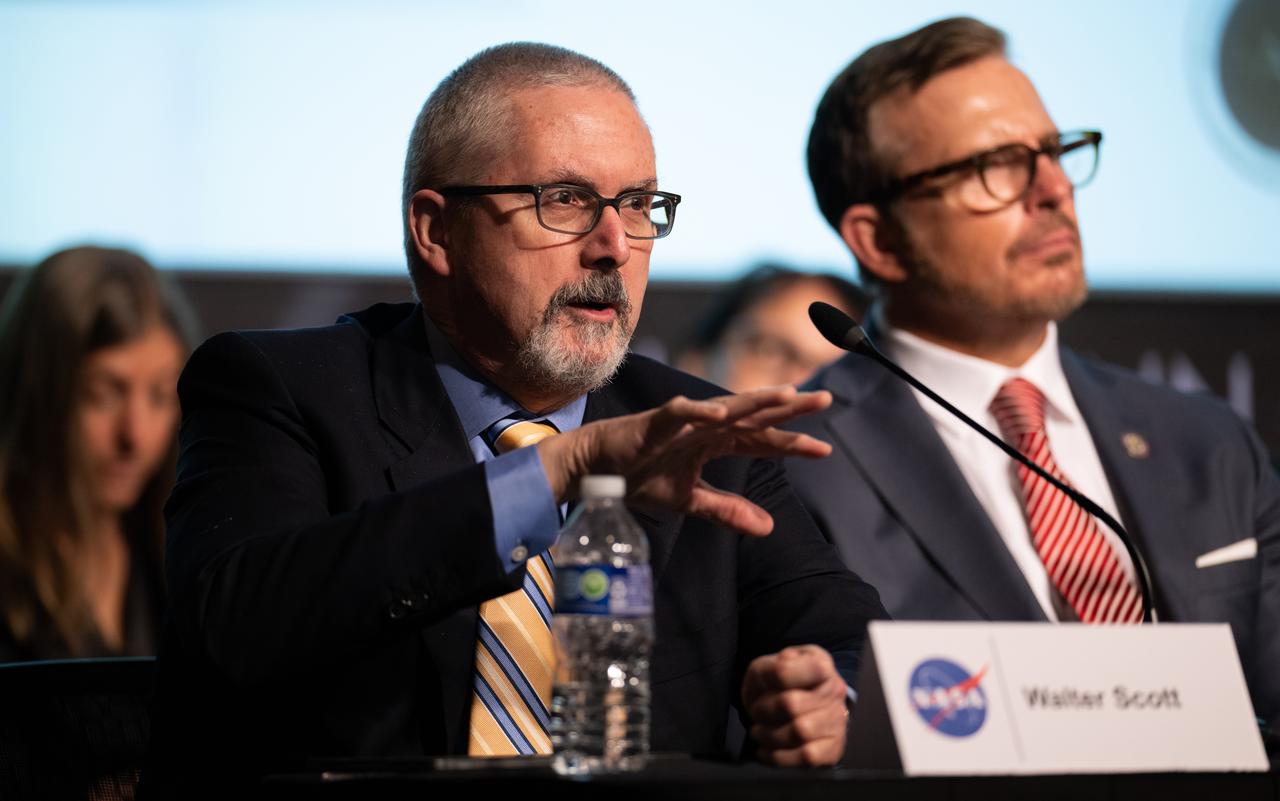
Walter Scott, executive vice president and chief technology officer of Maxar, is seen during a public meeting of NASA’s unidentified anomalous phenomena (UAP) independent study team, Wednesday, May 31, 2023 at the Mary W. Jackson NASA Headquarters building in Washington. The UAP independent study team is a counsel of 16 community experts across diverse areas on matters relevant to potential methods of study for unidentified anomalous phenomena. NASA commissioned the nine-month study to examine UAP from a scientific perspective and create a roadmap for how to use data and the tools of science to move our understanding of UAP forward. Photo Credit: (NASA/Joel Kowsky)
NASA’s UAP Independent Study Team Meeting
Daniel Evans, assistant deputy associate administrator for Research in NASA's Science Mission Directorate, gives opening remarks are seen during a public meeting of NASA’s unidentified anomalous phenomena (UAP) independent study team, Wednesday, May 31, 2023 at the Mary W. Jackson NASA Headquarters building in Washington. The UAP independent study team is a counsel of 16 community experts across diverse areas on matters relevant to potential methods of study for unidentified anomalous phenomena. NASA commissioned the nine-month study to examine UAP from a scientific perspective and create a roadmap for how to use data and the tools of science to move our understanding of UAP forward. Photo Credit: (NASA/Joel Kowsky)
NASA’s UAP Independent Study Team Meeting
Jennifer Buss, CEO of the Potomac Institute of Policy Studies, asks a question during a public meeting of NASA’s unidentified anomalous phenomena (UAP) independent study team, Wednesday, May 31, 2023 at the Mary W. Jackson NASA Headquarters building in Washington. The UAP independent study team is a counsel of 16 community experts across diverse areas on matters relevant to potential methods of study for unidentified anomalous phenomena. NASA commissioned the nine-month study to examine UAP from a scientific perspective and create a roadmap for how to use data and the tools of science to move our understanding of UAP forward. Photo Credit: (NASA/Joel Kowsky)
NASA’s UAP Independent Study Team Meeting
Dr. Sean Kirkpatrick, director of All-domain Anomaly Resolution Office at the Department of Defense, left, gives a presentation during a public meeting of NASA’s unidentified anomalous phenomena (UAP) independent study team, Wednesday, May 31, 2023 at the Mary W. Jackson NASA Headquarters building in Washington. The UAP independent study team is a counsel of 16 community experts across diverse areas on matters relevant to potential methods of study for unidentified anomalous phenomena. NASA commissioned the nine-month study to examine UAP from a scientific perspective and create a roadmap for how to use data and the tools of science to move our understanding of UAP forward. Photo Credit: (NASA/Joel Kowsky)
NASA’s UAP Independent Study Team Meeting
Daniel Evans, assistant deputy associate administrator for Research in NASA's Science Mission Directorate, gives opening remarks are seen during a public meeting of NASA’s unidentified anomalous phenomena (UAP) independent study team, Wednesday, May 31, 2023 at the Mary W. Jackson NASA Headquarters building in Washington. The UAP independent study team is a counsel of 16 community experts across diverse areas on matters relevant to potential methods of study for unidentified anomalous phenomena. NASA commissioned the nine-month study to examine UAP from a scientific perspective and create a roadmap for how to use data and the tools of science to move our understanding of UAP forward. Photo Credit: (NASA/Joel Kowsky)
NASA’s UAP Independent Study Team Meeting
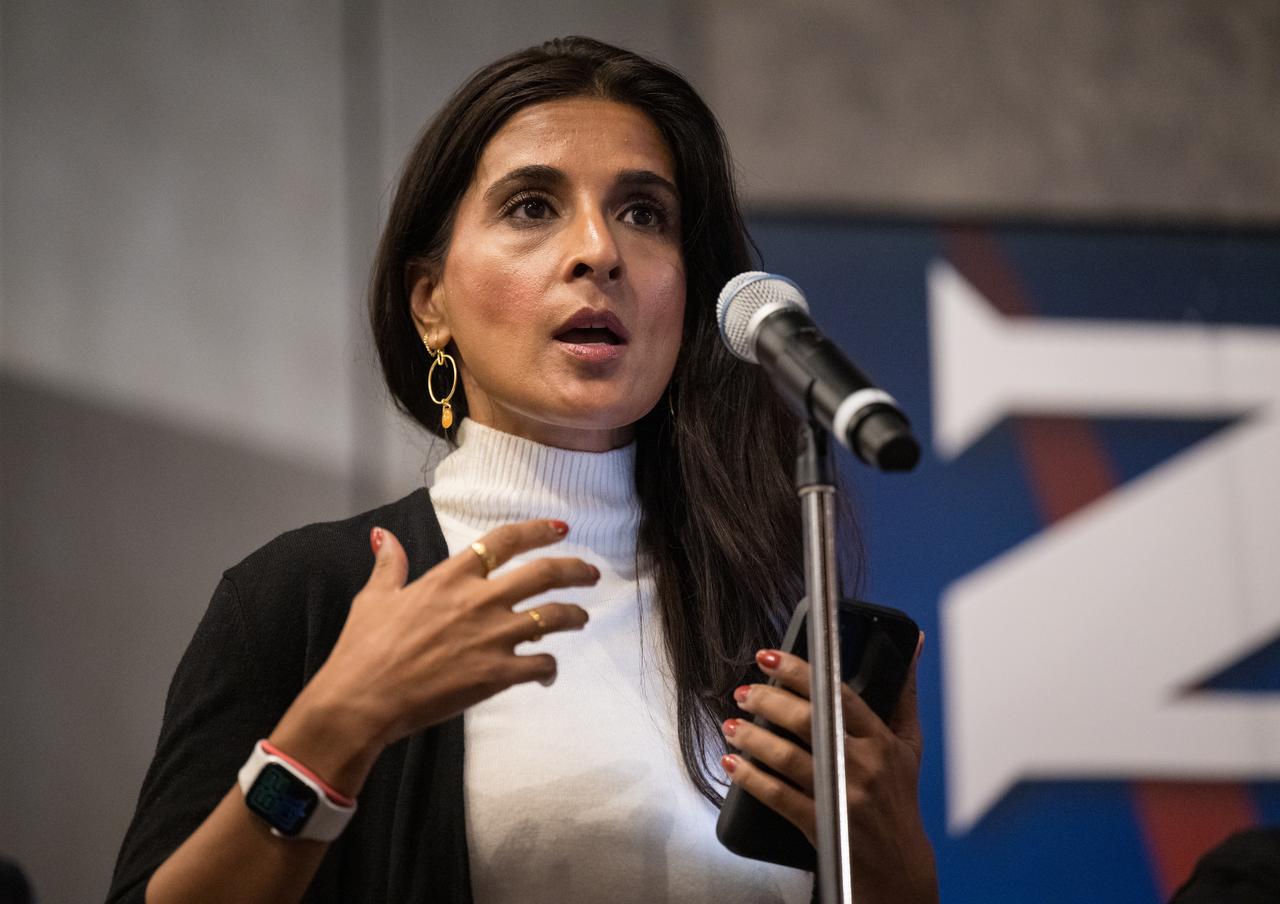
Anamaria Berea, associate professor of Computational and Data Science at George Mason University, left, asks a question during a public meeting of NASA’s unidentified anomalous phenomena (UAP) independent study team, Wednesday, May 31, 2023 at the Mary W. Jackson NASA Headquarters building in Washington. The UAP independent study team is a counsel of 16 community experts across diverse areas on matters relevant to potential methods of study for unidentified anomalous phenomena. NASA commissioned the nine-month study to examine UAP from a scientific perspective and create a roadmap for how to use data and the tools of science to move our understanding of UAP forward. Photo Credit: (NASA/Joel Kowsky)
NASA’s UAP Independent Study Team Meeting
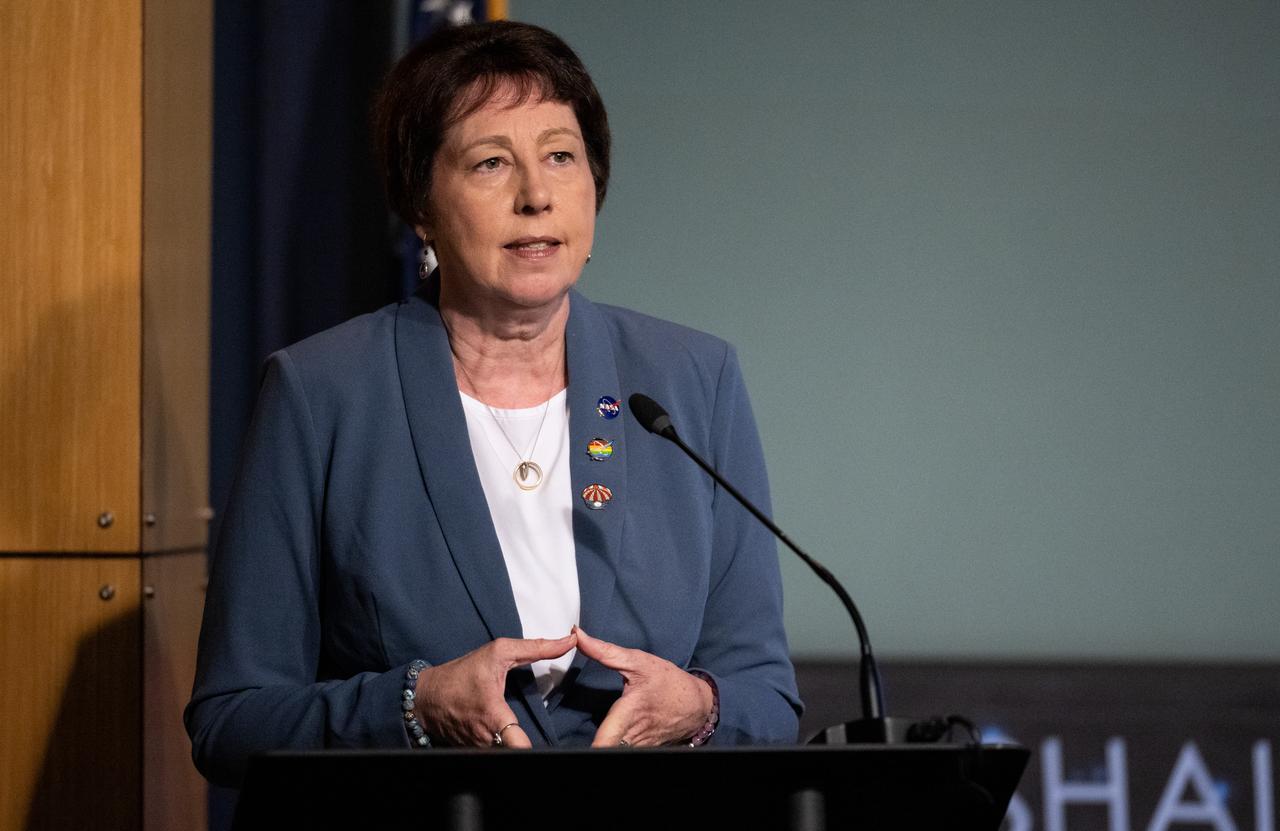
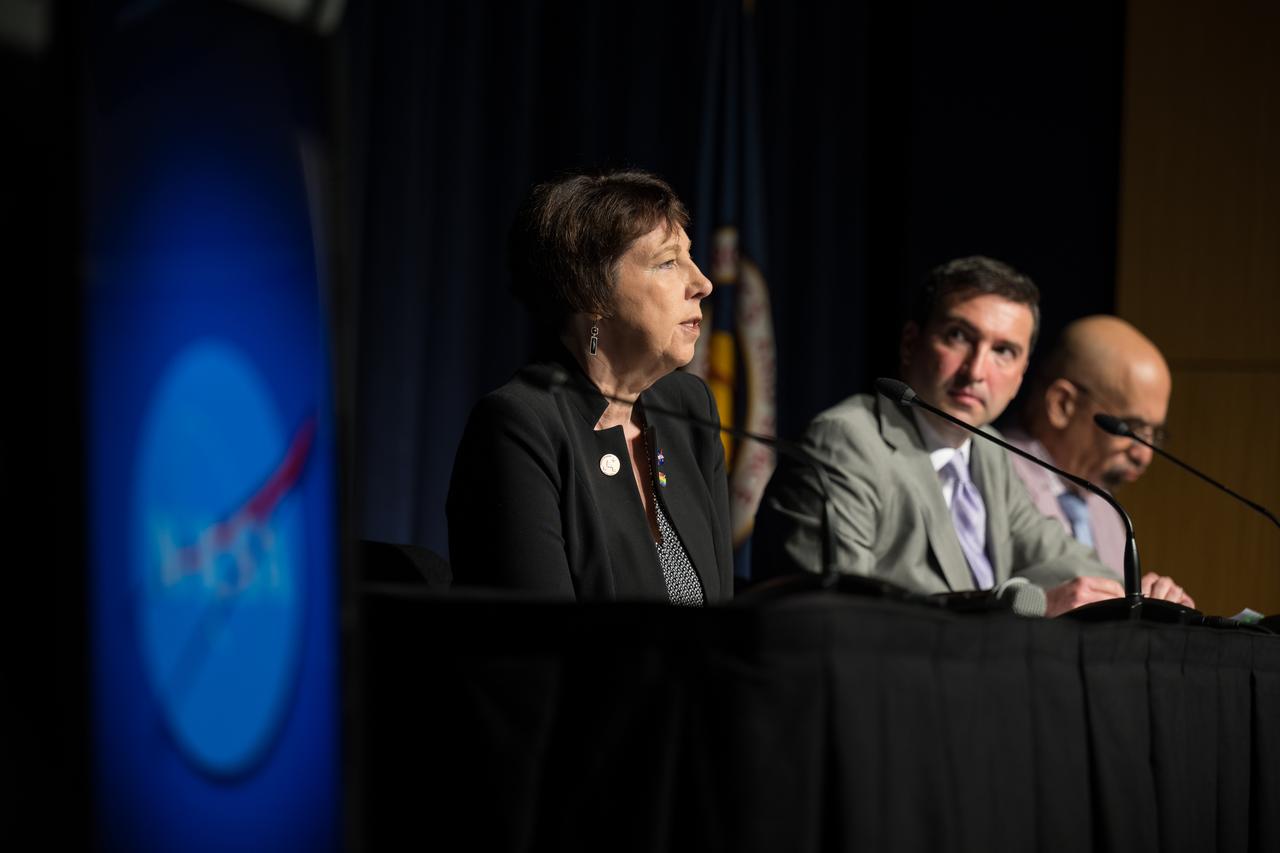
Nicola Fox, associate administrator for NASA's Science Mission Directorate, speaks during a public meeting of NASA’s unidentified anomalous phenomena (UAP) independent study team, Wednesday, May 31, 2023 at the Mary W. Jackson NASA Headquarters building in Washington. The UAP independent study team is a counsel of 16 community experts across diverse areas on matters relevant to potential methods of study for unidentified anomalous phenomena. NASA commissioned the nine-month study to examine UAP from a scientific perspective and create a roadmap for how to use data and the tools of science to move our understanding of UAP forward. Photo Credit: (NASA/Joel Kowsky)
NASA’s UAP Independent Study Team Meeting
Mike Freie, technical advisor in the Air Traffic Surveillance Service Office at the FAA, gives a presentation during a public meeting of NASA’s unidentified anomalous phenomena (UAP) independent study team, Wednesday, May 31, 2023 at the Mary W. Jackson NASA Headquarters building in Washington. The UAP independent study team is a counsel of 16 community experts across diverse areas on matters relevant to potential methods of study for unidentified anomalous phenomena. NASA commissioned the nine-month study to examine UAP from a scientific perspective and create a roadmap for how to use data and the tools of science to move our understanding of UAP forward. Photo Credit: (NASA/Joel Kowsky)
NASA’s UAP Independent Study Team Meeting
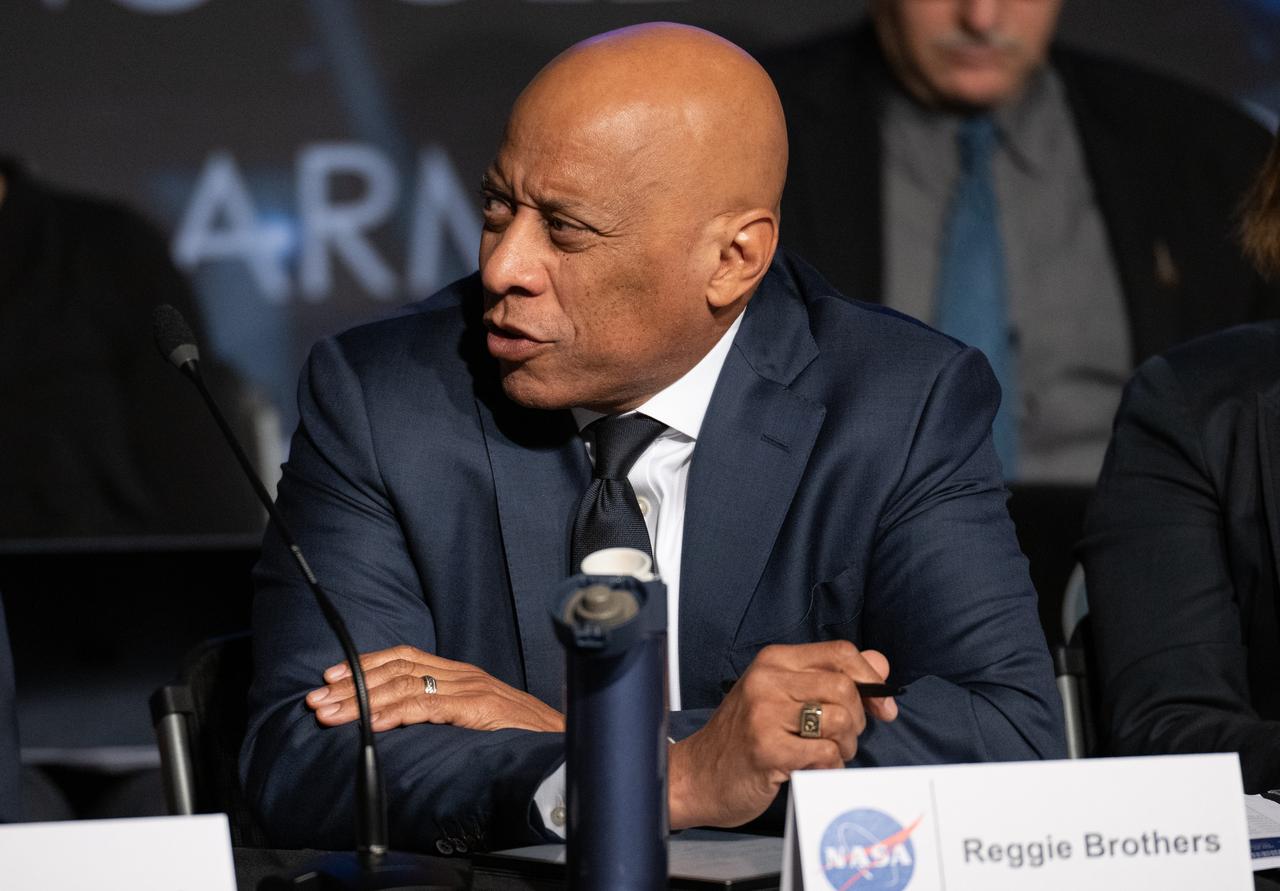
Reggie Brothers, operating partner at AE Industrial Partners, asks a question during a public meeting of NASA’s unidentified anomalous phenomena (UAP) independent study team, Wednesday, May 31, 2023 at the Mary W. Jackson NASA Headquarters building in Washington. The UAP independent study team is a counsel of 16 community experts across diverse areas on matters relevant to potential methods of study for unidentified anomalous phenomena. NASA commissioned the nine-month study to examine UAP from a scientific perspective and create a roadmap for how to use data and the tools of science to move our understanding of UAP forward. Photo Credit: (NASA/Joel Kowsky)
NASA’s UAP Independent Study Team Meeting
Nicola Fox, associate administrator for NASA's Science Mission Directorate, speaks during a public meeting of NASA’s unidentified anomalous phenomena (UAP) independent study team, Wednesday, May 31, 2023 at the Mary W. Jackson NASA Headquarters building in Washington. The UAP independent study team is a counsel of 16 community experts across diverse areas on matters relevant to potential methods of study for unidentified anomalous phenomena. NASA commissioned the nine-month study to examine UAP from a scientific perspective and create a roadmap for how to use data and the tools of science to move our understanding of UAP forward. Photo Credit: (NASA/Joel Kowsky)
NASA’s UAP Independent Study Team Meeting
Nicola Fox, associate administrator for NASA's Science Mission Directorate, speaks during a public meeting of NASA’s unidentified anomalous phenomena (UAP) independent study team, Wednesday, May 31, 2023 at the Mary W. Jackson NASA Headquarters building in Washington. The UAP independent study team is a counsel of 16 community experts across diverse areas on matters relevant to potential methods of study for unidentified anomalous phenomena. NASA commissioned the nine-month study to examine UAP from a scientific perspective and create a roadmap for how to use data and the tools of science to move our understanding of UAP forward. Photo Credit: (NASA/Joel Kowsky)
NASA’s UAP Independent Study Team Meeting
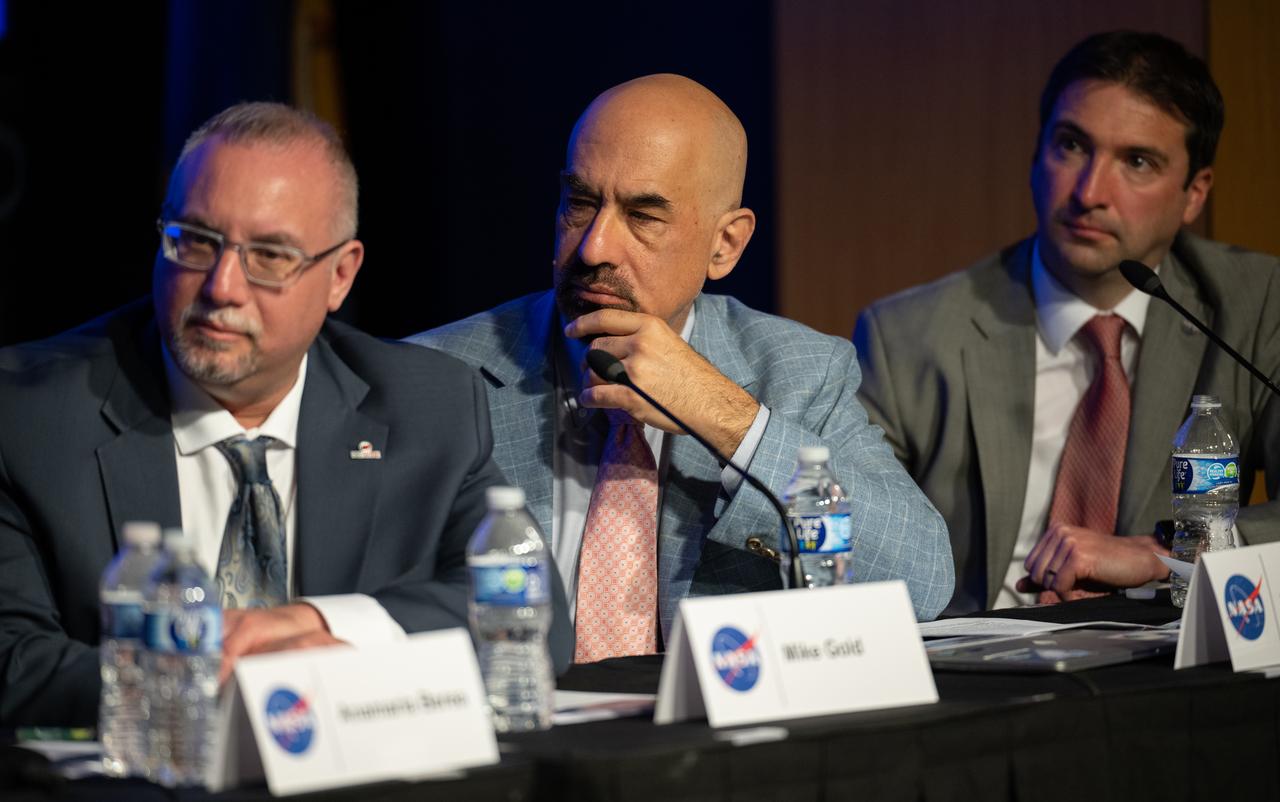
Mike Gold, chief growth officer at Redwire, left, David Spergel, chair of NASA's independent study on unidentified anomalous phenomena and President of the Simons Foundation, center, and Daniel Evans, assistant deputy associate administrator for Research in NASA's Science Mission Directorate, right, are seen during a public meeting of NASA’s unidentified anomalous phenomena (UAP) independent study team, Wednesday, May 31, 2023 at the Mary W. Jackson NASA Headquarters building in Washington. The UAP independent study team is a counsel of 16 community experts across diverse areas on matters relevant to potential methods of study for unidentified anomalous phenomena. NASA commissioned the nine-month study to examine UAP from a scientific perspective and create a roadmap for how to use data and the tools of science to move our understanding of UAP forward. Photo Credit: (NASA/Joel Kowsky)
NASA’s UAP Independent Study Team Meeting
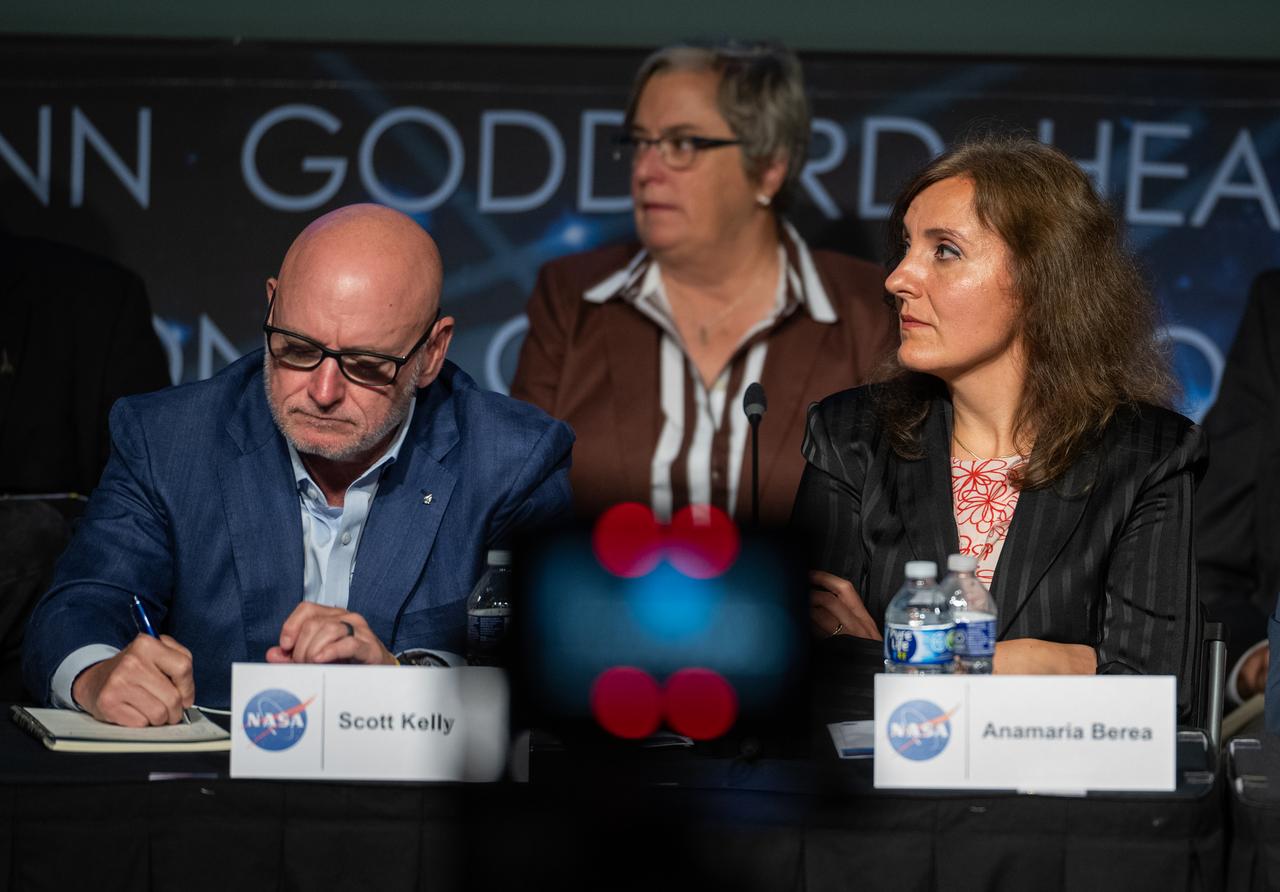
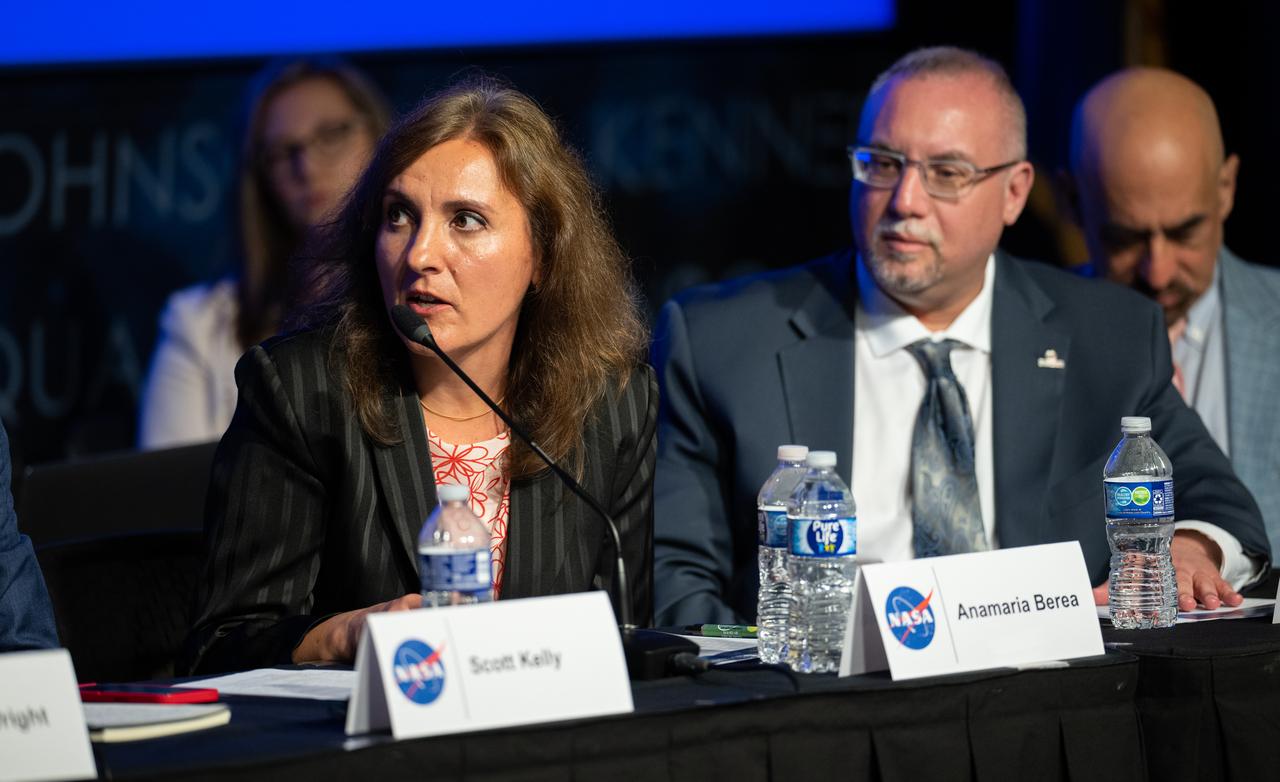
Scott Kelly, former NASA astronaut, left, and Anamaria Berea, associate professor of Computational and Data Science at George Mason University, are seen during a public meeting of NASA’s unidentified anomalous phenomena (UAP) independent study team, Wednesday, May 31, 2023 at the Mary W. Jackson NASA Headquarters building in Washington. The UAP independent study team is a counsel of 16 community experts across diverse areas on matters relevant to potential methods of study for unidentified anomalous phenomena. NASA commissioned the nine-month study to examine UAP from a scientific perspective and create a roadmap for how to use data and the tools of science to move our understanding of UAP forward. Photo Credit: (NASA/Joel Kowsky)
NASA’s UAP Independent Study Team Meeting
Daniel Evans, assistant deputy associate administrator for Research in NASA's Science Mission Directorate, left, gives opening remarks are seen during a public meeting of NASA’s unidentified anomalous phenomena (UAP) independent study team, Wednesday, May 31, 2023 at the Mary W. Jackson NASA Headquarters building in Washington. The UAP independent study team is a counsel of 16 community experts across diverse areas on matters relevant to potential methods of study for unidentified anomalous phenomena. NASA commissioned the nine-month study to examine UAP from a scientific perspective and create a roadmap for how to use data and the tools of science to move our understanding of UAP forward. Photo Credit: (NASA/Joel Kowsky)
NASA’s UAP Independent Study Team Meeting
Nadia Drake, science journalist, left, asks a question of Dr. Sean Kirkpatrick, director of All-domain Anomaly Resolution Office at the Department of Defense, during a public meeting of NASA’s unidentified anomalous phenomena (UAP) independent study team, Wednesday, May 31, 2023 at the Mary W. Jackson NASA Headquarters building in Washington. The UAP independent study team is a counsel of 16 community experts across diverse areas on matters relevant to potential methods of study for unidentified anomalous phenomena. NASA commissioned the nine-month study to examine UAP from a scientific perspective and create a roadmap for how to use data and the tools of science to move our understanding of UAP forward. Photo Credit: (NASA/Joel Kowsky)
NASA’s UAP Independent Study Team Meeting
Warren Randolph, deputy executive director of the Accident Investigation and Prevention for Aviation Safety at the FAA, left, Reggie Brothers, operating partner at AE Industrial Partners, center, and Shelley Wright, professor of Physics at the University of California San Diego's Center for Astrophysics and Space Studies, right, are seen during a public meeting of NASA’s unidentified anomalous phenomena (UAP) independent study team, Wednesday, May 31, 2023 at the Mary W. Jackson NASA Headquarters building in Washington. The UAP independent study team is a counsel of 16 community experts across diverse areas on matters relevant to potential methods of study for unidentified anomalous phenomena. NASA commissioned the nine-month study to examine UAP from a scientific perspective and create a roadmap for how to use data and the tools of science to move our understanding of UAP forward. Photo Credit: (NASA/Joel Kowsky)
NASA’s UAP Independent Study Team Meeting
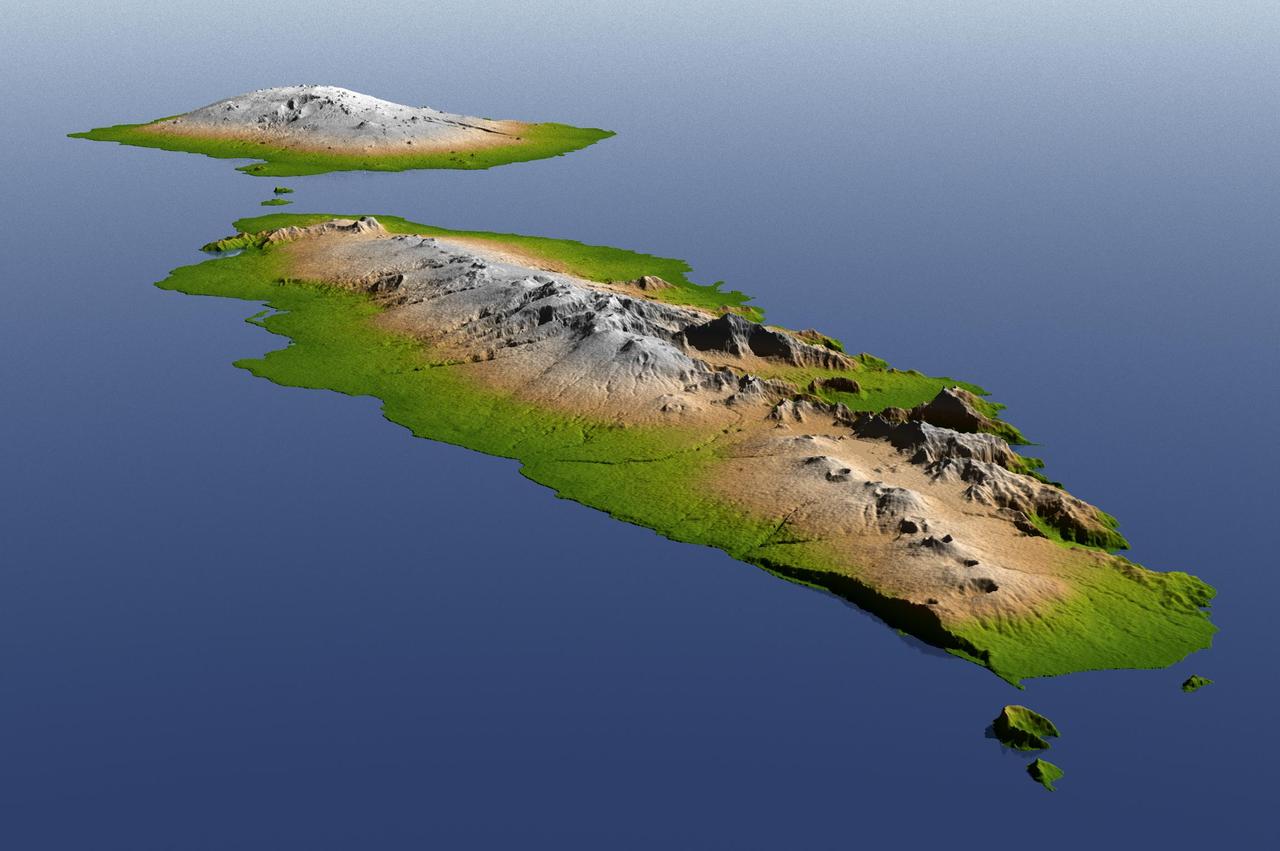
The topography of Savai’i and Upolu, the two large islands of the Independent State of Samoa, is well shown in this color-coded perspective view from NASA Shuttle Radar Topography Mission.
Independent State of Samoa, Shaded Relief and Colored Height
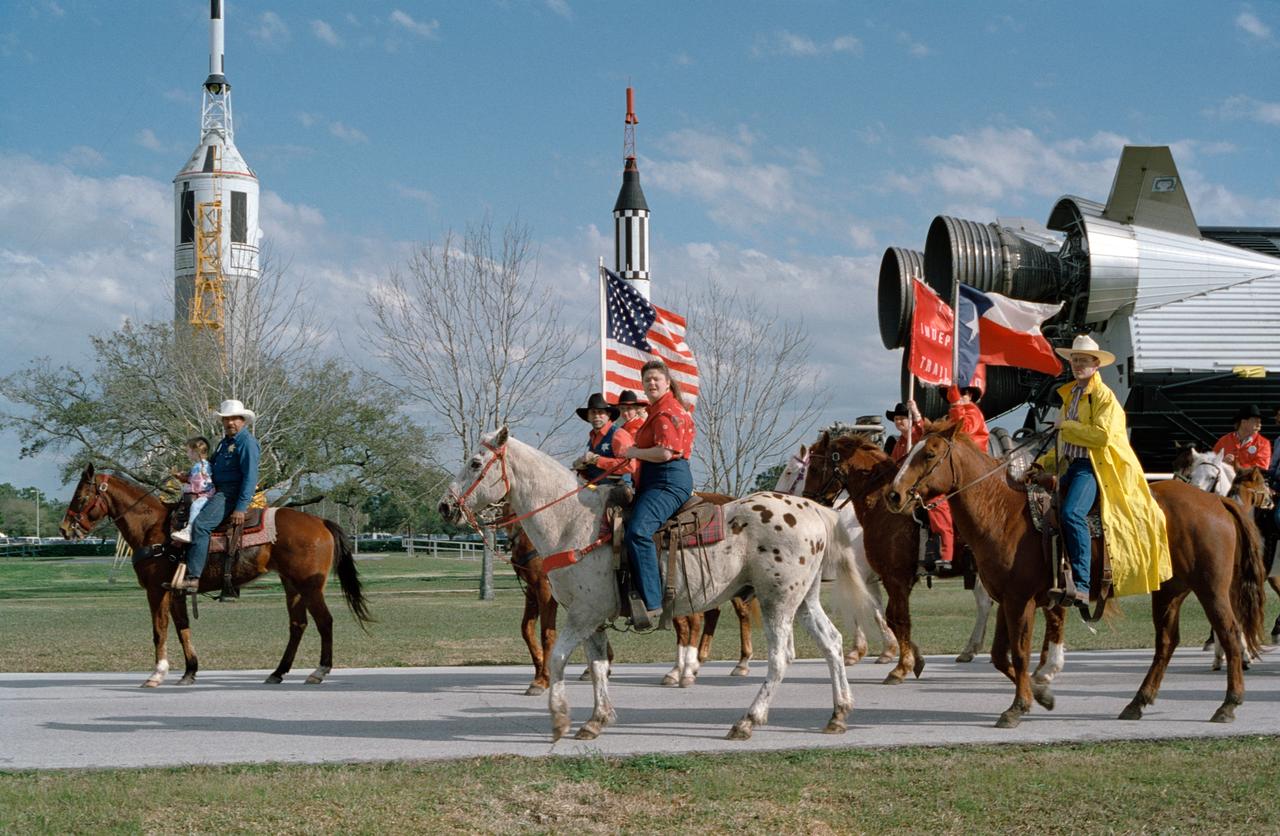
Rose Gardner of the JSC Travel Office, center, rides with the Independence Trail Riders as they enter JSC at Rocket Park.
Texas Independence Trail Riders ride through JSC prior to 1998 Rodeo
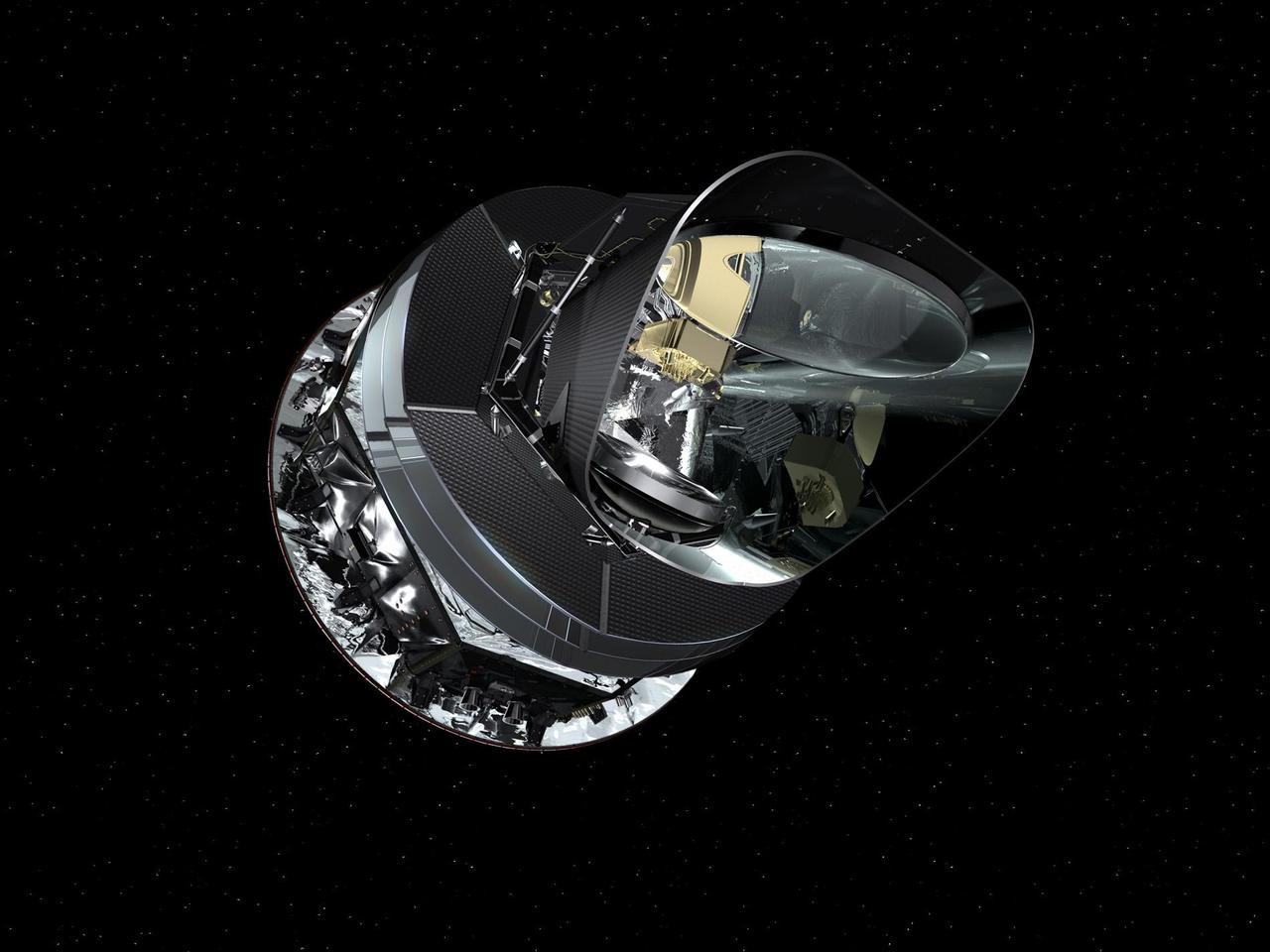
This is an artist concept of the Planck spacecraft. Planck was launched with the Herschel spacecraft, though the two missions separated shortly after launch and operate independently from each other.
Planck Spacecraft Artist Concept
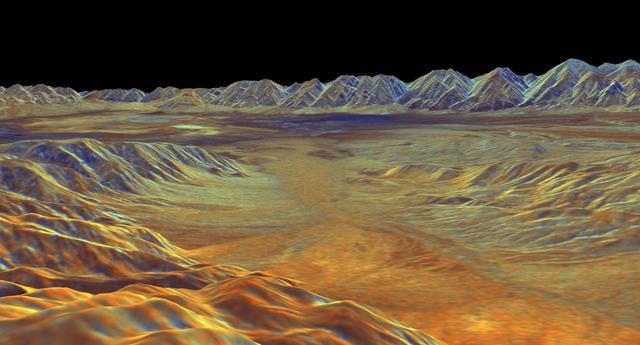
This is a three-dimensional perspective view of Saline Valley, about 30 km 19 miles east of the town of Independence, California created by combining two spaceborne radar images using a technique known as interferometry.
Space Radar Image of Saline Valley, California
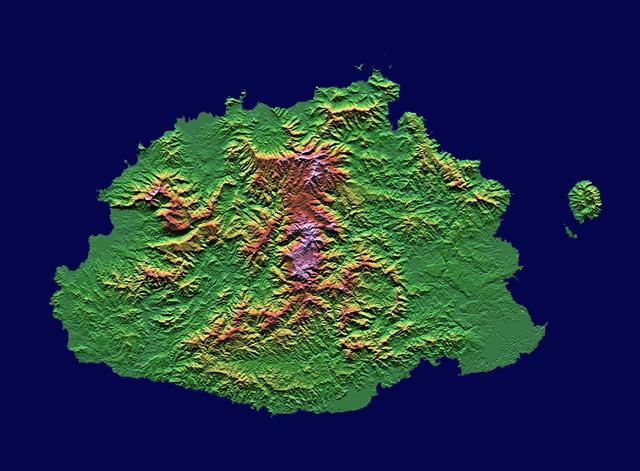
The Sovereign Democratic Republic of the Fiji Islands, commonly known as Fiji, is an independent nation consisting of some 332 islands surrounding the Koro Sea in the South Pacific Ocean. This image shows Viti Levu, the largest island in the group.
Shaded relief, color as height, Fiji
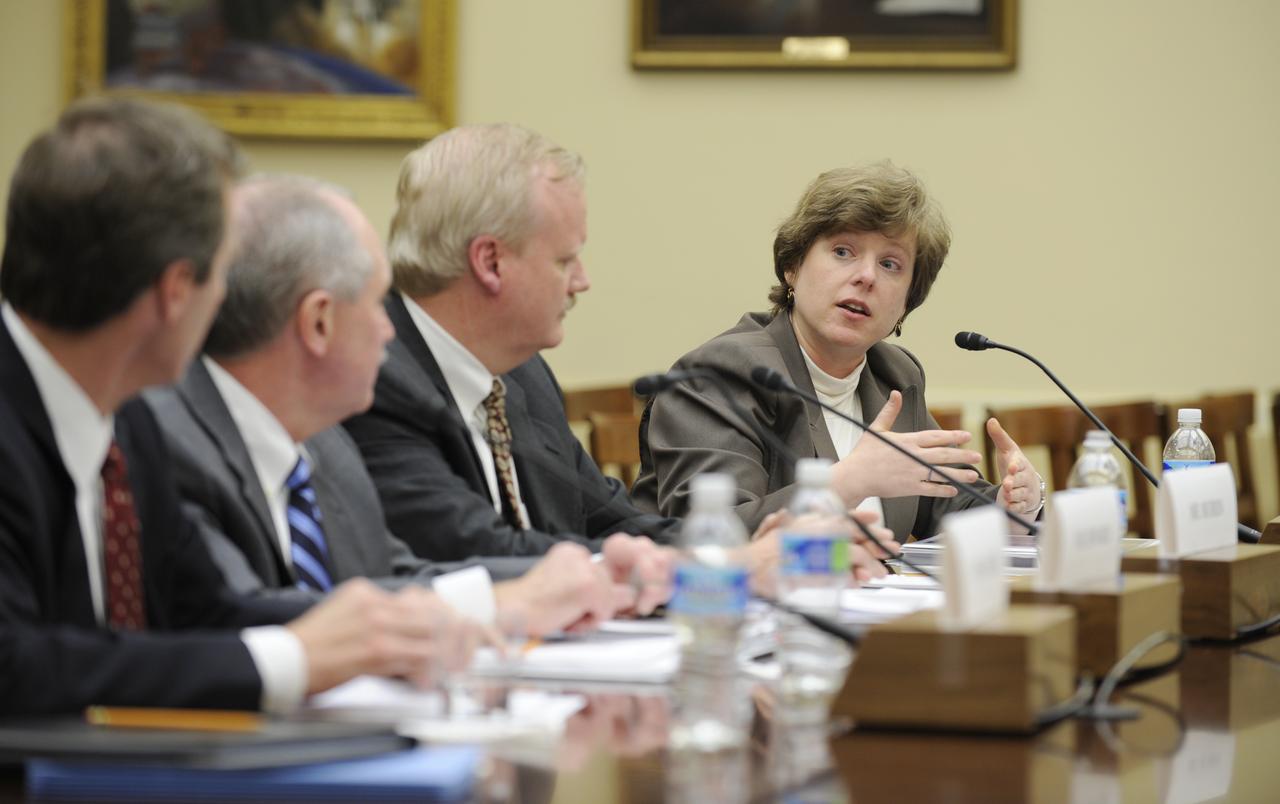
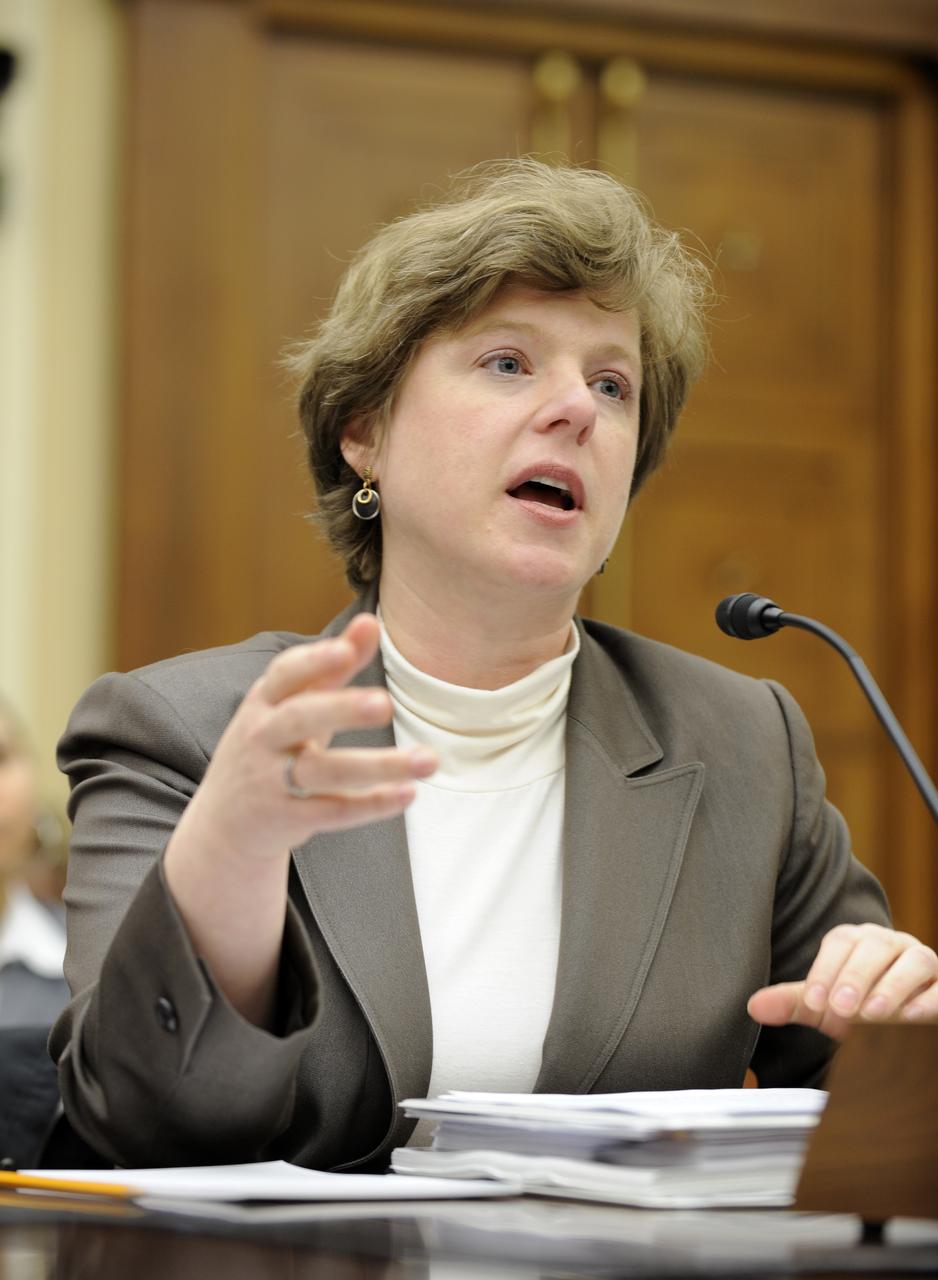
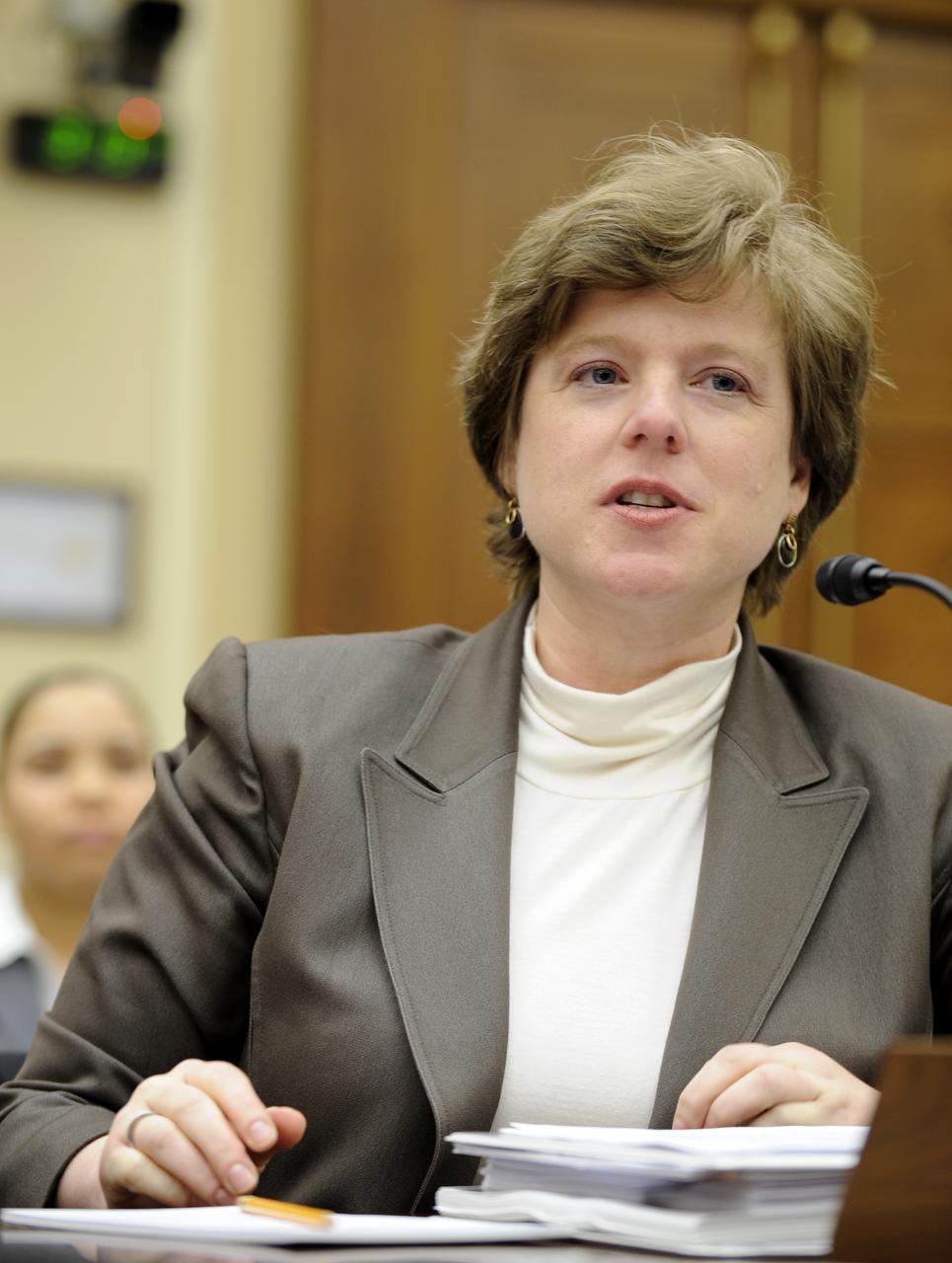
Elizabeth Robinson, NASA Chief Finiancial Officer, testifies during a Joint Hearing before the House Committee on Science and Technology, Transportation and Infrastructure Committee, Subcommittee on Investigations and Oversight, Thursday, Dec. 3, 2009, on Capitol Hill in Washington. Photo Credit: (NASA/Bill Ingalls)
House Hearing Independent Audit
Elizabeth Robinson, NASA Chief Financial Officer, testifies during a Joint Hearing before the House Committee on Science and Technology, Transportation and Infrastructure Committee, Subcommittee on Investigations and Oversight, Thursday, Dec. 3, 2009, on Capitol Hill in Washington. Photo Credit: (NASA/Bill Ingalls)
Independent Audit House Hearing
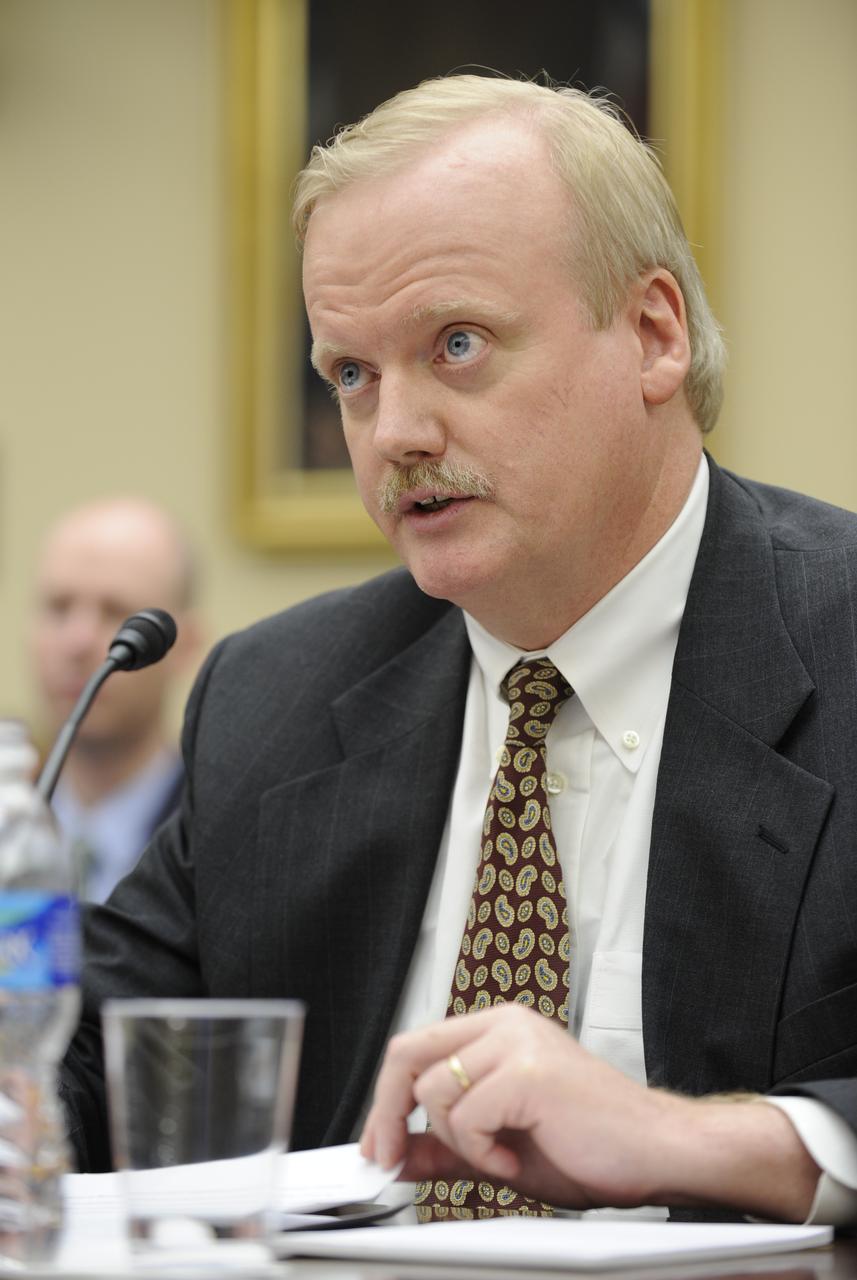
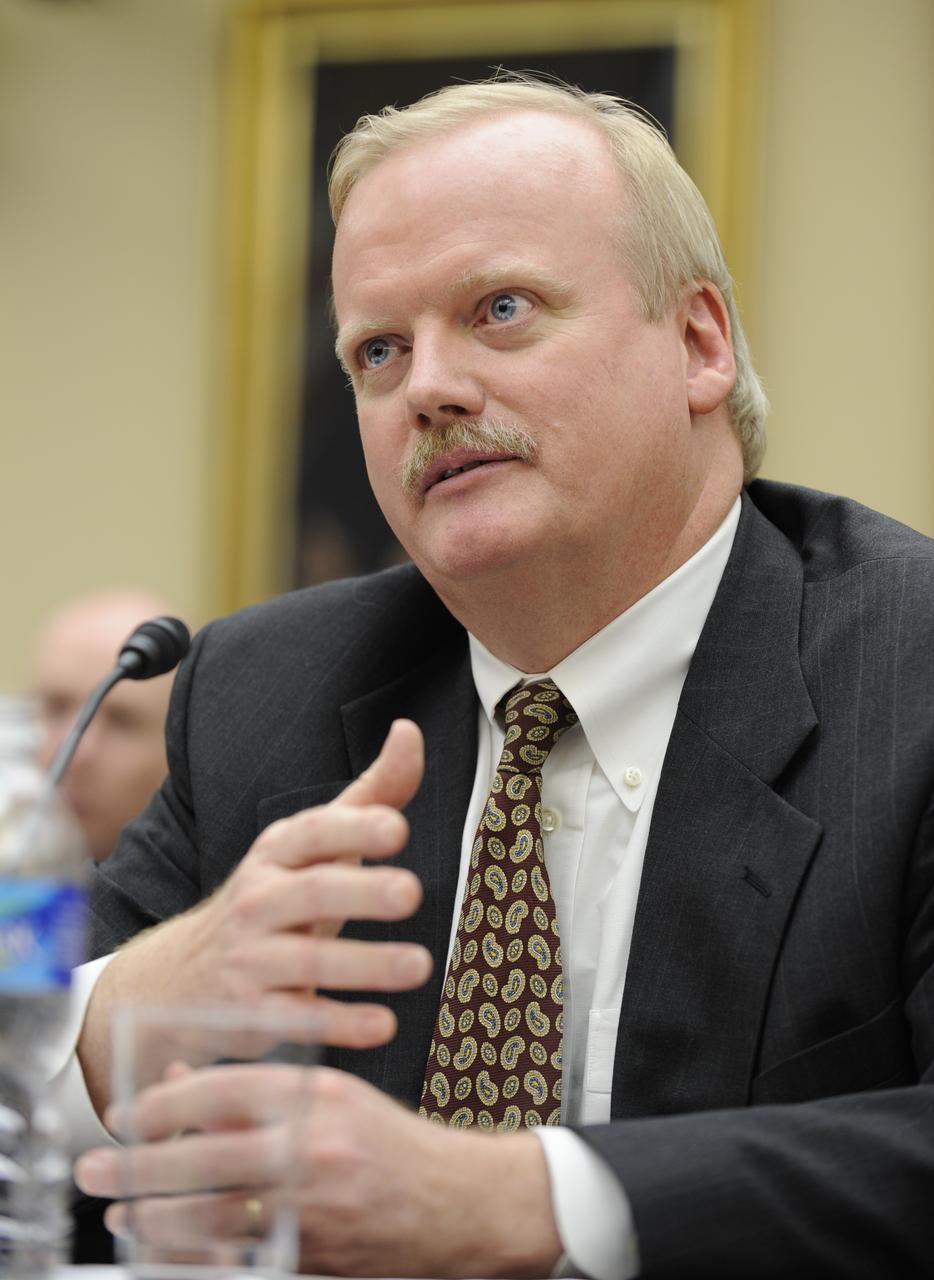
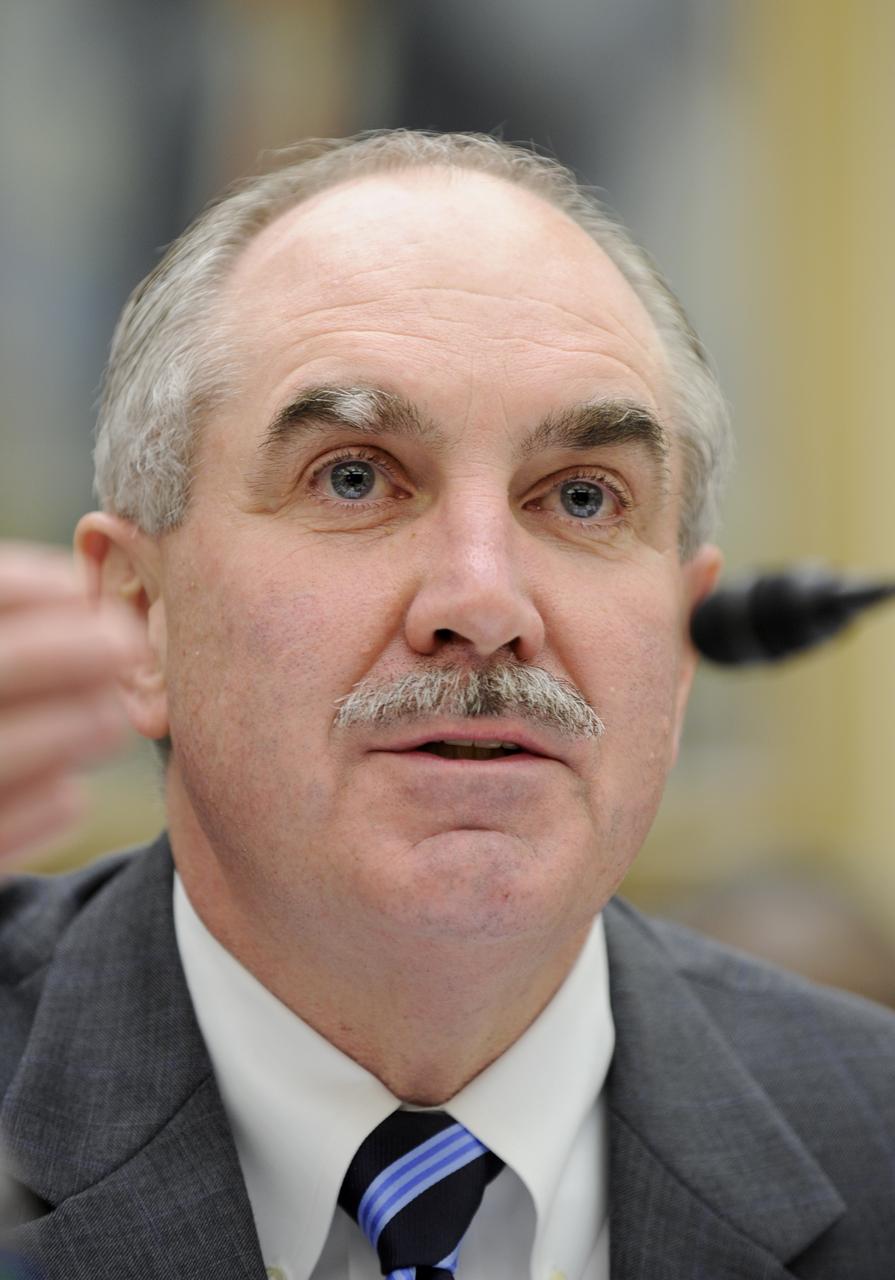
Thomas Howard, NASA Deputy Inspector General, testifies during a Joint Hearing before the House Committee on Science and Technology, Transportation and Infrastructure Committee, Subcommittee on Investigations and Oversight, Thursday, Dec. 3, 2009, on Capitol Hill in Washington. Photo Credit: (NASA/Bill Ingalls)
House Hearing Independent Audit
Daniel Murrin, Partner, Assurance and Advisory Business Services, Ernst & Young LLP, testifies during a Joint Hearing before the House Committee on Science and Technology, Transportation and Infrastructure Committee, Subcommittee on Investigations and Oversight, Thursday, Dec. 3, 2009, on Capitol Hill in Washington. Photo Credit: (NASA/Bill Ingalls)
House Hearing Independent Audit
Elizabeth Robinson, NASA Chief Financial Officer, far right, testifies during a Joint Hearing before the House Committee on Science and Technology, Transportation and Infrastructure Committee, Subcommittee on Investigations and Oversight, Thursday, Dec. 3, 2009, on Capitol Hill in Washington. Photo Credit: (NASA/Bill Ingalls)
House Hearing Independent Audit
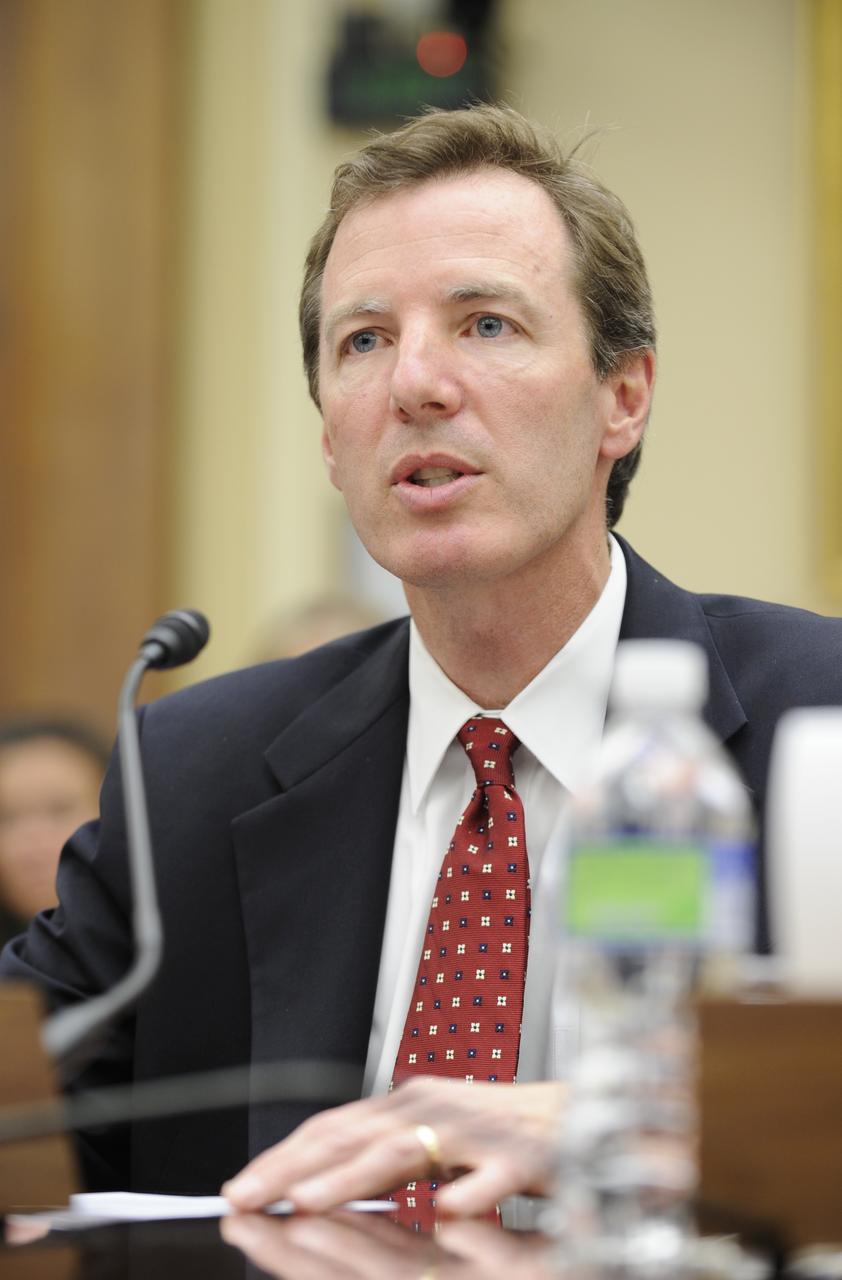
Paul Martin, Inspector General for NASA, testifies during a Joint Hearing before the House Committee on Science and Technology, Transportation and Infrastructure Committee, Subcommittee on Investigations and Oversight, Thursday, Dec. 3, 2009, on Capitol Hill in Washington. Photo Credit: (NASA/Bill Ingalls)
House Hearing Independent Audit
Daniel Murrin, Partner, Assurance and Advisory Business Service, Ernst & Young LLP, testifies during a Joint Hearing before the House Committee on Science and Technology, Transportation and Infrastructure Committee, Subcommittee on Investigations and Oversight, Thursday, Dec. 3, 2009, on Capitol Hill in Washington. Photo Credit: (NASA/Bill Ingalls)
House Hearing Independent Audit
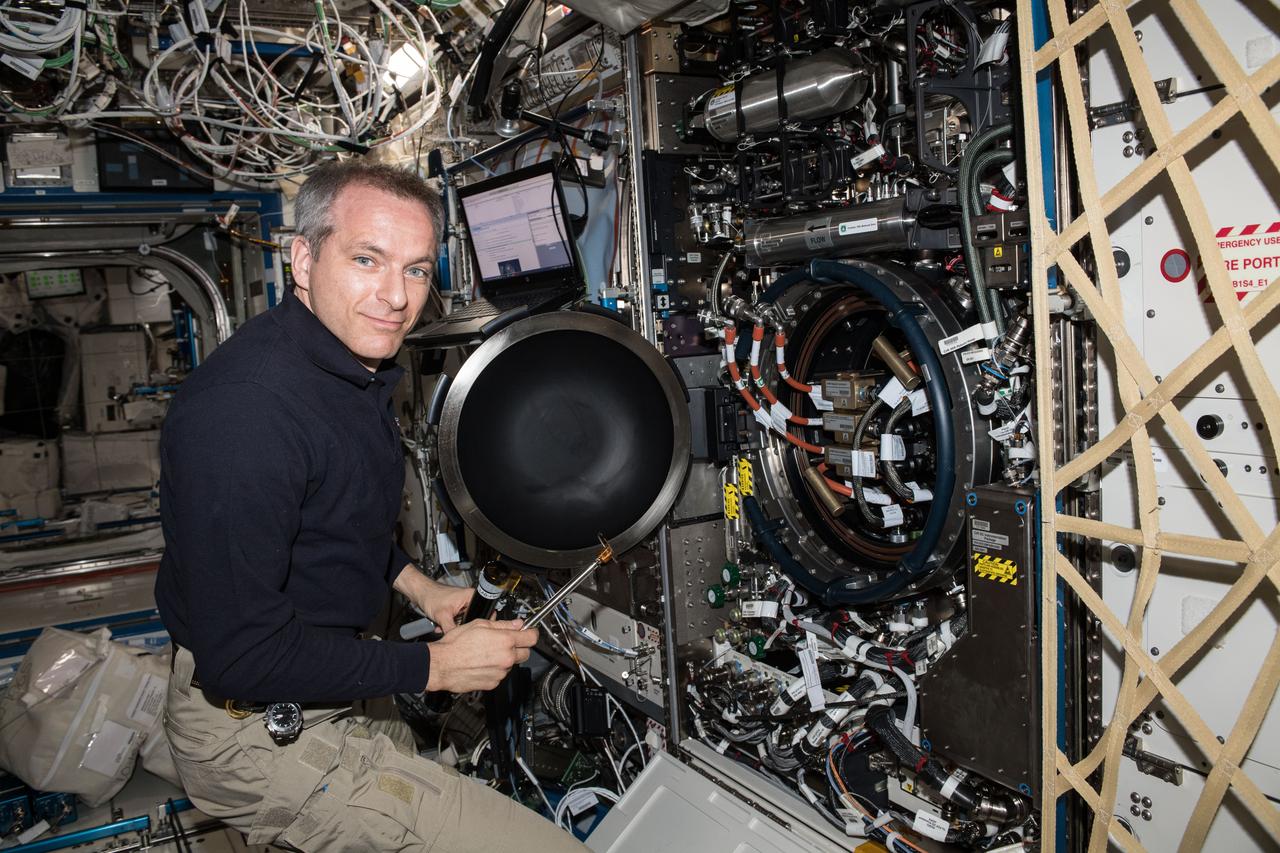
iss058e026380 (Feb. 26, 2019) --- Astronaut David Saint-Jacques of the Canadian Space Agency is inside the U.S. Destiny laboratory module working on the Combustion Integrated Rack. Saint-Jacques replaced fuel flow controllers inside the device for the Advanced Combustion via Microgravity Experiments which are a set of five independent studies of gaseous flames.
Astronaut David Saint-Jacques works on the Combustion Integrated Rack
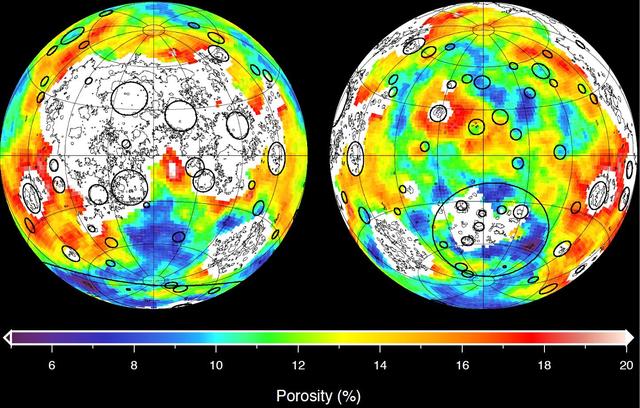
This image depicting the porosity of the lunar highland crust was derived using bulk density data from NASA GRAIL mission and independent grain density measurements from NASA Apollo moon mission samples as well as orbital remote-sensing data.
Closer Look at Lunar Highland Crust
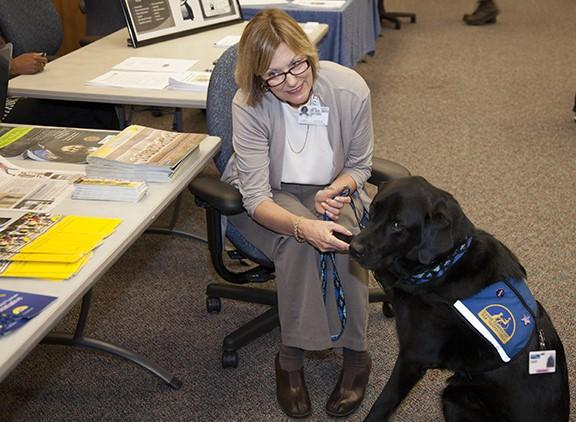
CAPE CANAVERAL, Fla. – Karen Herrsing, of Canine Companions for Independence, educates Kennedy Space Center workers on how Canine Companions for Independence can enhance the lives of others along with her furry friend, Dart, during the National Employee Health and Fitness Day event in the Operations and Checkout Building's Mission Briefing Room. Photo credit: NASA/Daniel Casper
KSC-2013-3103
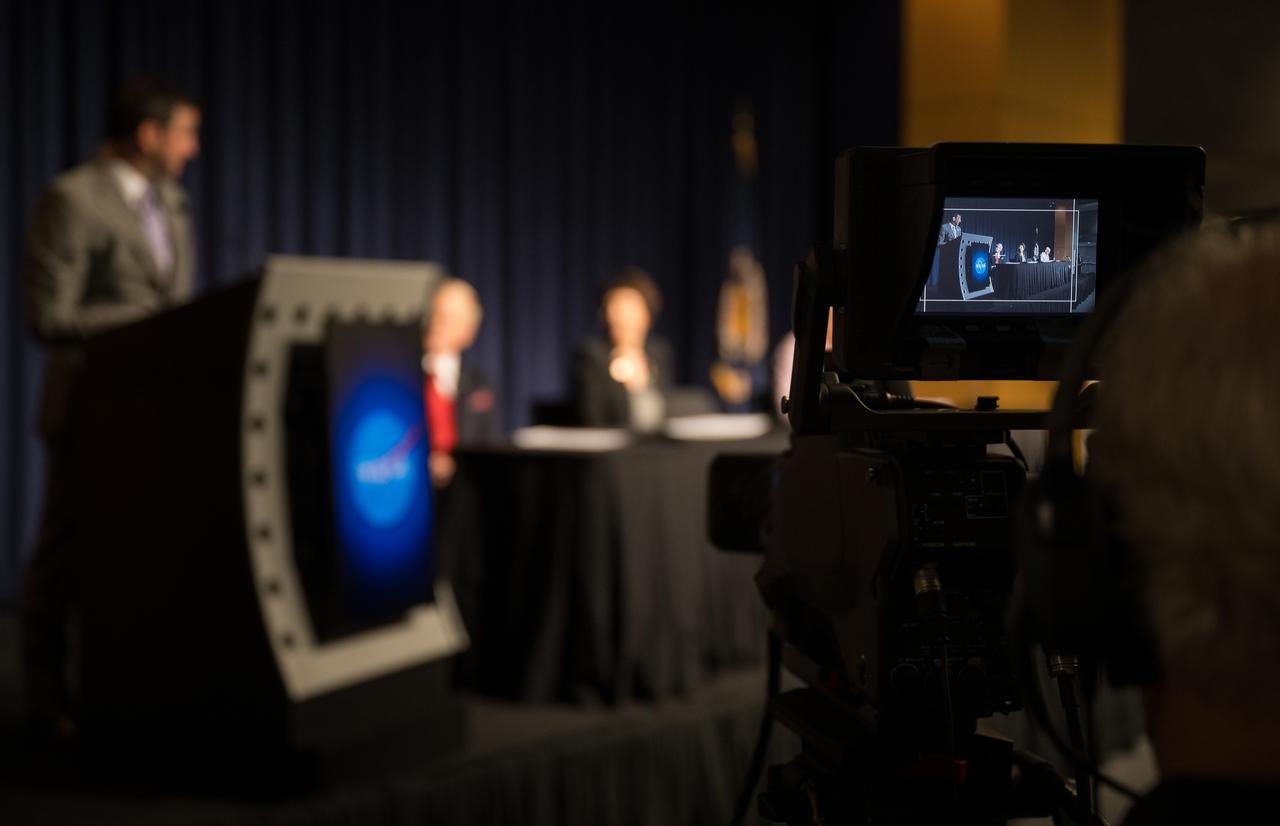
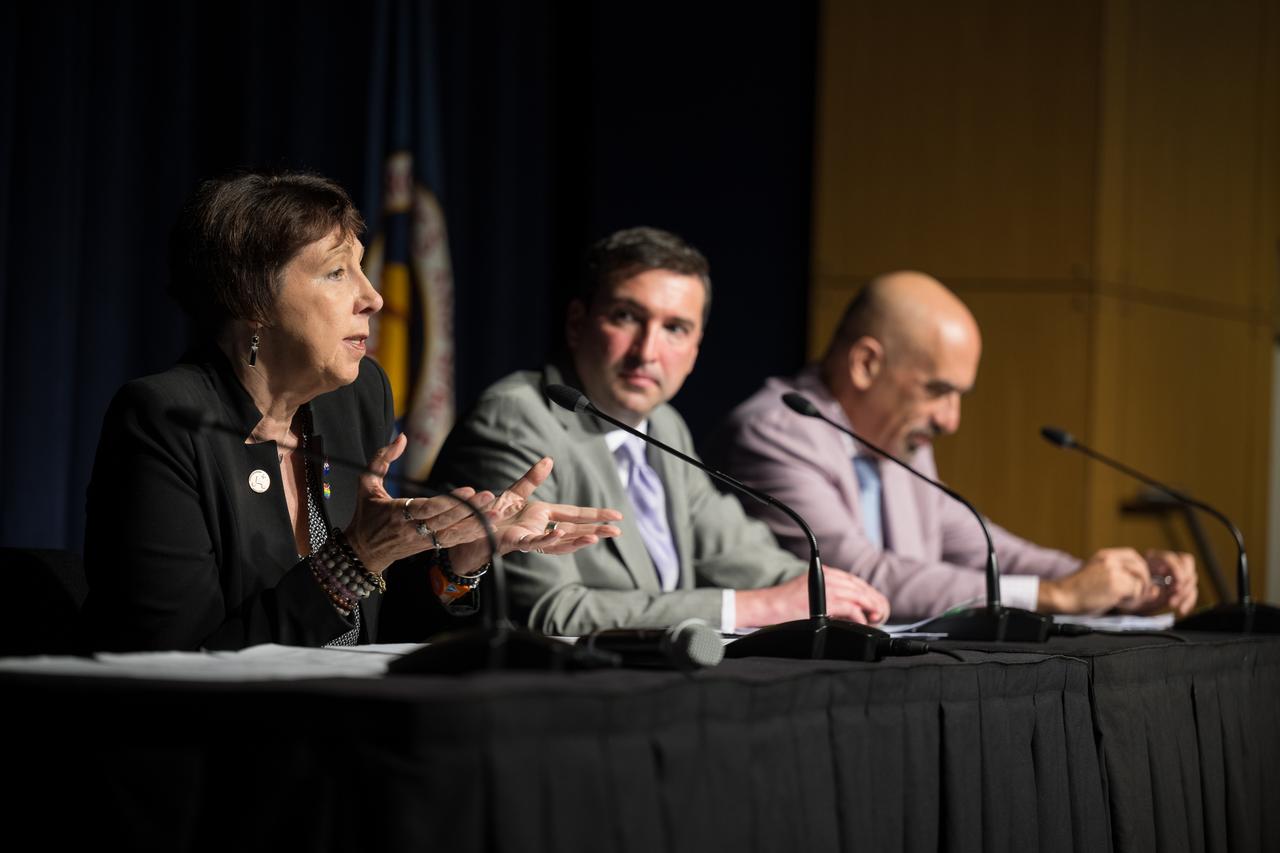
Panelists, from left to right, NASA Assistant Deputy Associate Administrator for Research, Science Mission Directorate, Daniel Evans; NASA Administrator Bill Nelson; NASA Associate Administrator for the Science Mission Directorate, Nicola Fox; and President of the Simons Foundation and Chair of NASA's UAP Independent Study Team, David Spergel, are seen in a video camera during a media briefing to discuss the findings from an unidentified anomalous phenomena (UAP) independent study team, Thursday, Sept. 14, 2023, at the Mary W. Jackson NASA Headquarters building in Washington. The UAP independent study team, commissioned in 2022, is a counsel of 16 community experts across diverse areas on matters relevant to potential methods of study for unidentified anomalous phenomena. NASA published the team’s full report online, which aims to inform about what possible data could be collected in the future to shed light on the nature and origin of UAP. Photo Credit: (NASA/Aubrey Gemignani)
UAP Media Briefing
President of the Simons Foundation and Chair of NASA's UAP Independent Study Team, David Spergel, answers a question during a media briefing to discuss the findings from an unidentified anomalous phenomena (UAP) independent study team, Thursday, Sept. 14, 2023, at the Mary W. Jackson NASA Headquarters building in Washington. The UAP independent study team, commissioned in 2022, is a counsel of 16 community experts across diverse areas on matters relevant to potential methods of study for unidentified anomalous phenomena. NASA published the team’s full report online, which aims to inform about what possible data could be collected in the future to shed light on the nature and origin of UAP. Photo Credit: (NASA/Aubrey Gemignani)
UAP Media Briefing
President of the Simons Foundation and Chair of NASA's UAP Independent Study Team, David Spergel, answers a question during a media briefing to discuss the findings from an unidentified anomalous phenomena (UAP) independent study team, Thursday, Sept. 14, 2023, at the Mary W. Jackson NASA Headquarters building in Washington. The UAP independent study team, commissioned in 2022, is a counsel of 16 community experts across diverse areas on matters relevant to potential methods of study for unidentified anomalous phenomena. NASA published the team’s full report online, which aims to inform about what possible data could be collected in the future to shed light on the nature and origin of UAP. Photo Credit: (NASA/Aubrey Gemignani)
UAP Media Briefing
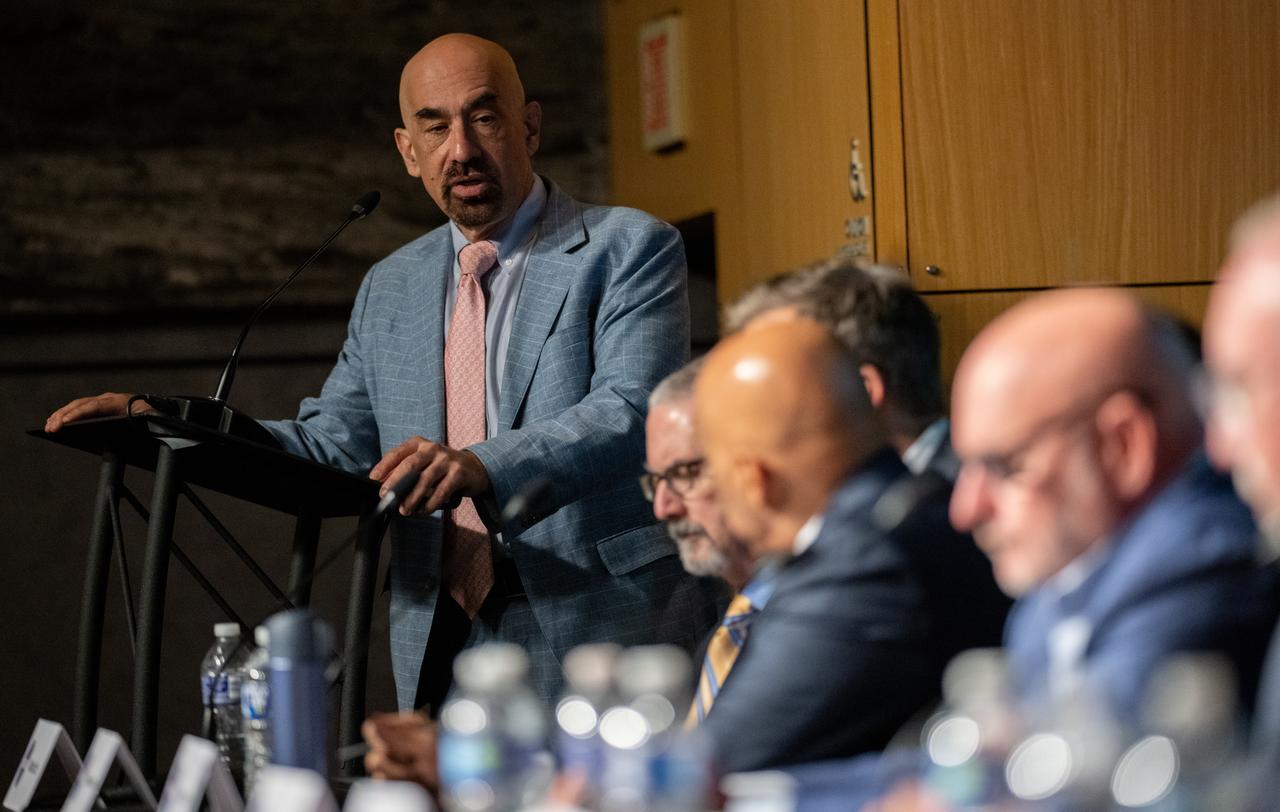
President of the Simons Foundation and Chair of NASA's UAP Independent Study Team, David Spergel answers a question during a media briefing to discuss the findings from an unidentified anomalous phenomena (UAP) independent study team, Thursday, Sept. 14, 2023, at the Mary W. Jackson NASA Headquarters building in Washington. The UAP independent study team, commissioned in 2022, is a counsel of 16 community experts across diverse areas on matters relevant to potential methods of study for unidentified anomalous phenomena. NASA published the team’s full report online, which aims to inform about what possible data could be collected in the future to shed light on the nature and origin of UAP. Photo Credit: (NASA/Aubrey Gemignani)
UAP Media Briefing
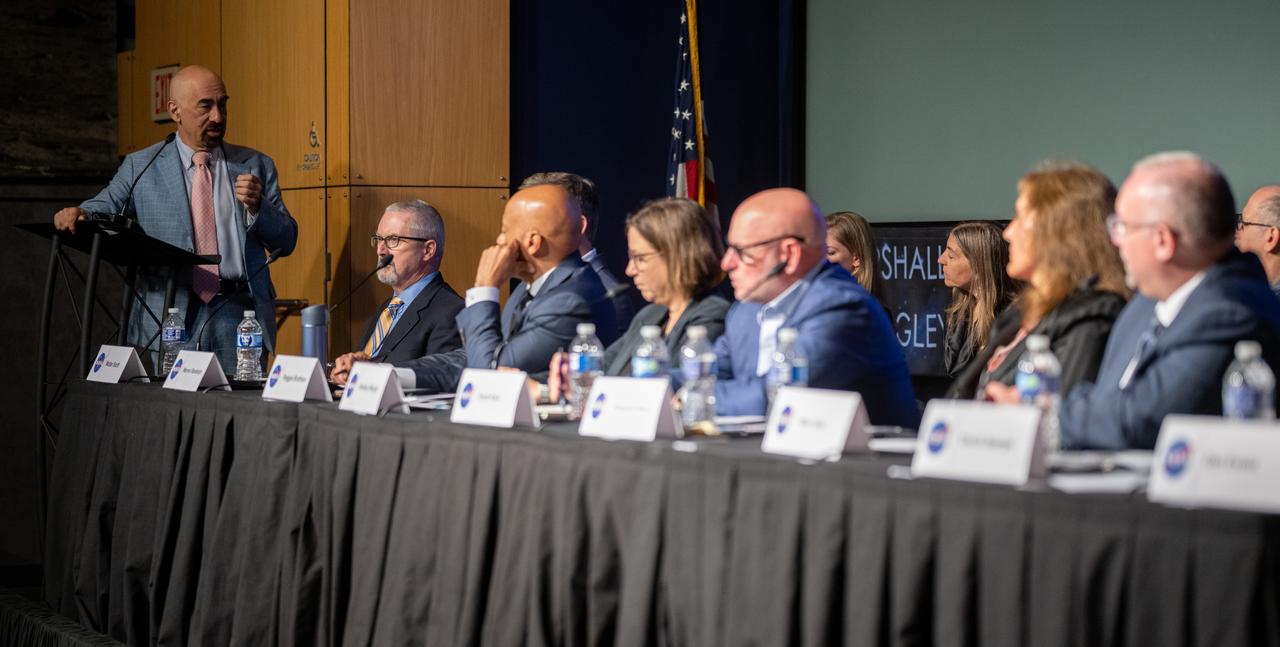
President of the Simons Foundation and Chair of NASA's UAP Independent Study Team, David Spergel, provides remarks during a media briefing to discuss the findings from an unidentified anomalous phenomena (UAP) independent study team, Thursday, Sept. 14, 2023, at the Mary W. Jackson NASA Headquarters building in Washington. The UAP independent study team, commissioned in 2022, is a counsel of 16 community experts across diverse areas on matters relevant to potential methods of study for unidentified anomalous phenomena. NASA published the team’s full report online, which aims to inform about what possible data could be collected in the future to shed light on the nature and origin of UAP. Photo Credit: (NASA/Aubrey Gemignani)
UAP Media Briefing
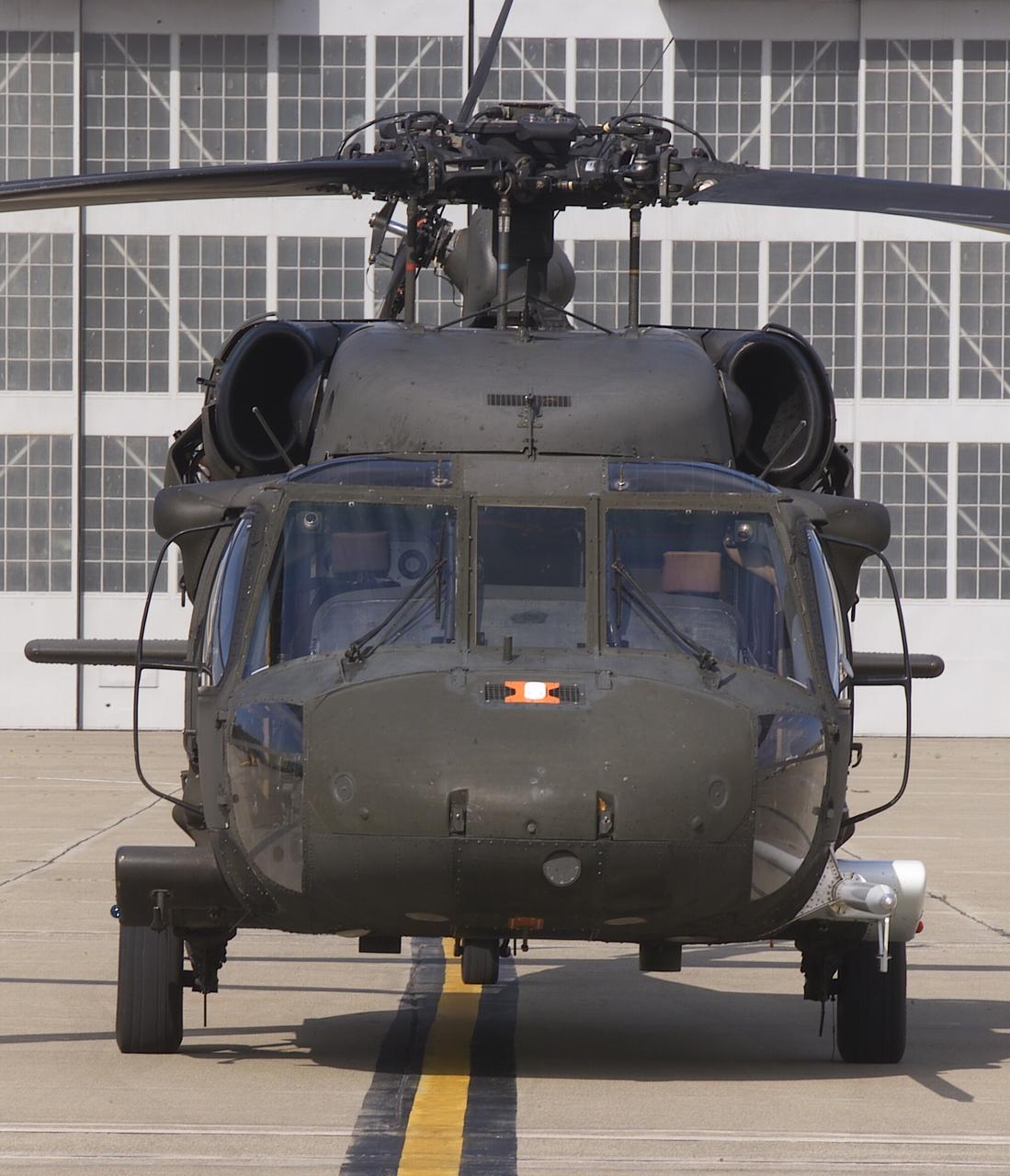
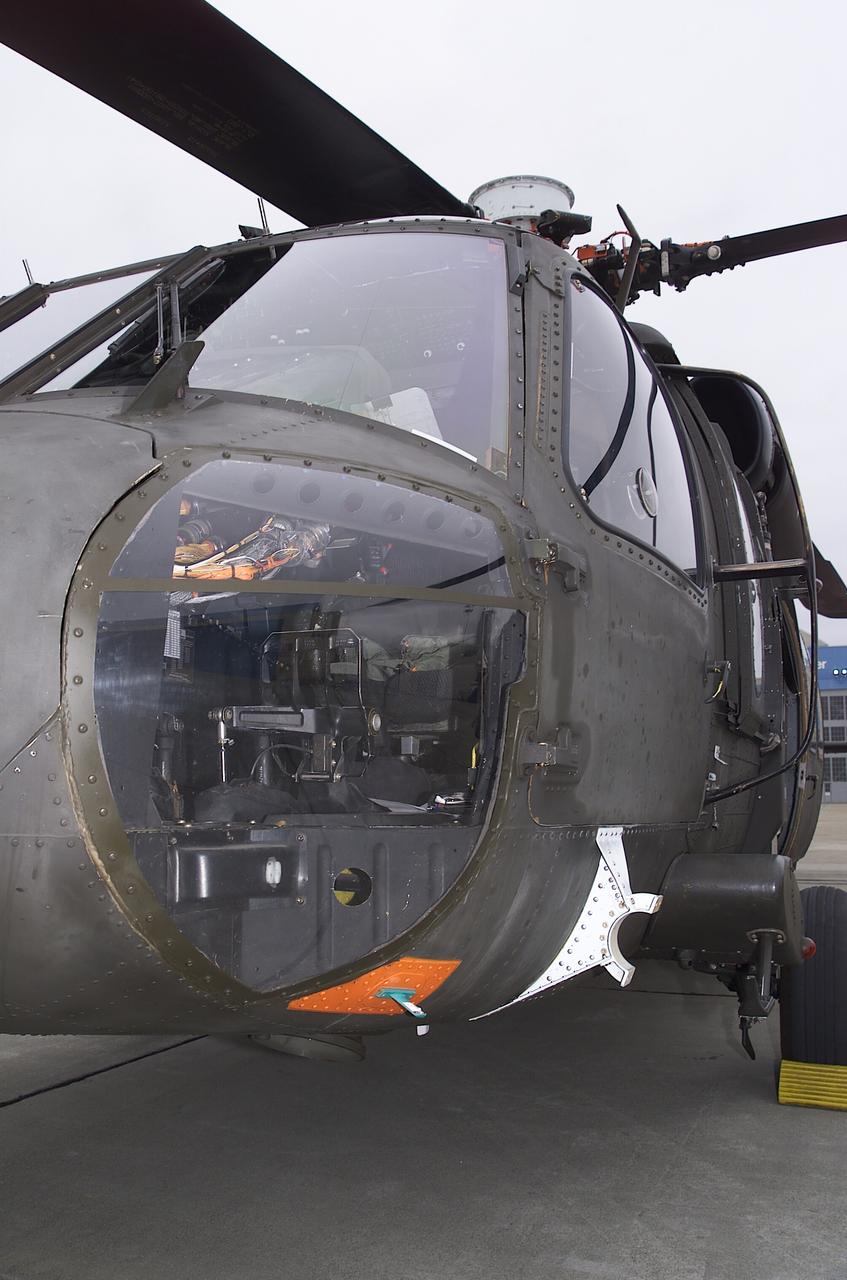
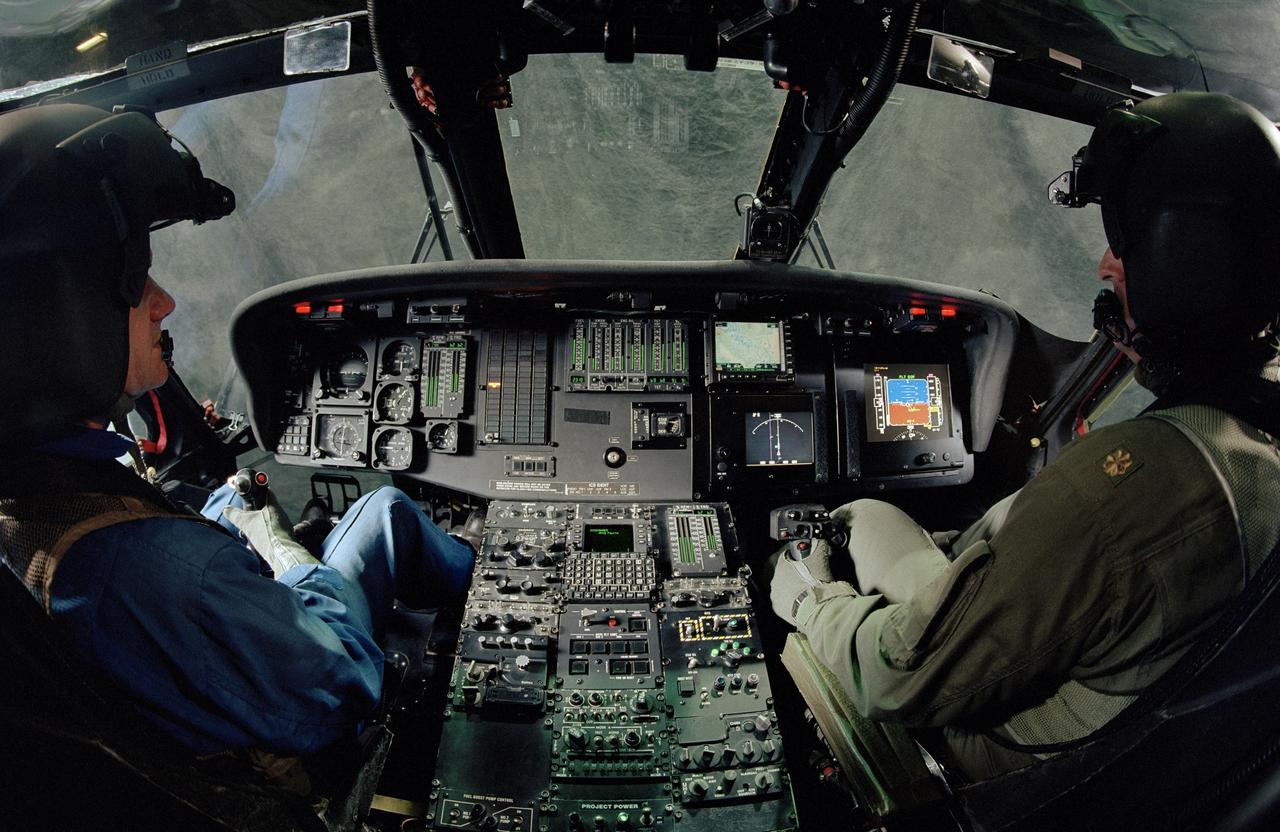
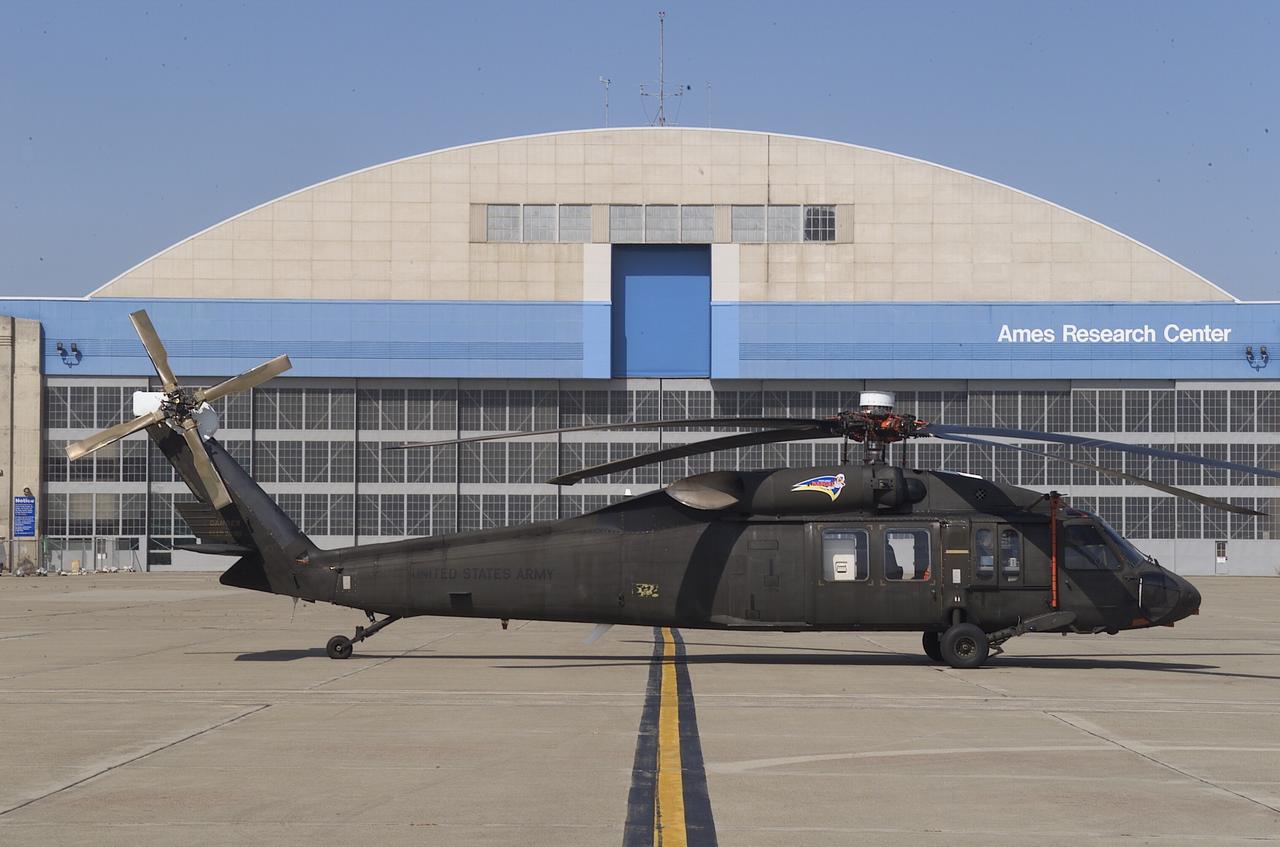
NRTC/RITA RIA precision pathway terminal Guidance: UN-60 RASCAL (#012)  cockpit (National Rotorcraft Technology Center/Rotorcraft Industry Technology Association Runway Independent Aircraft)
ARC-2003-AC03-0112-11
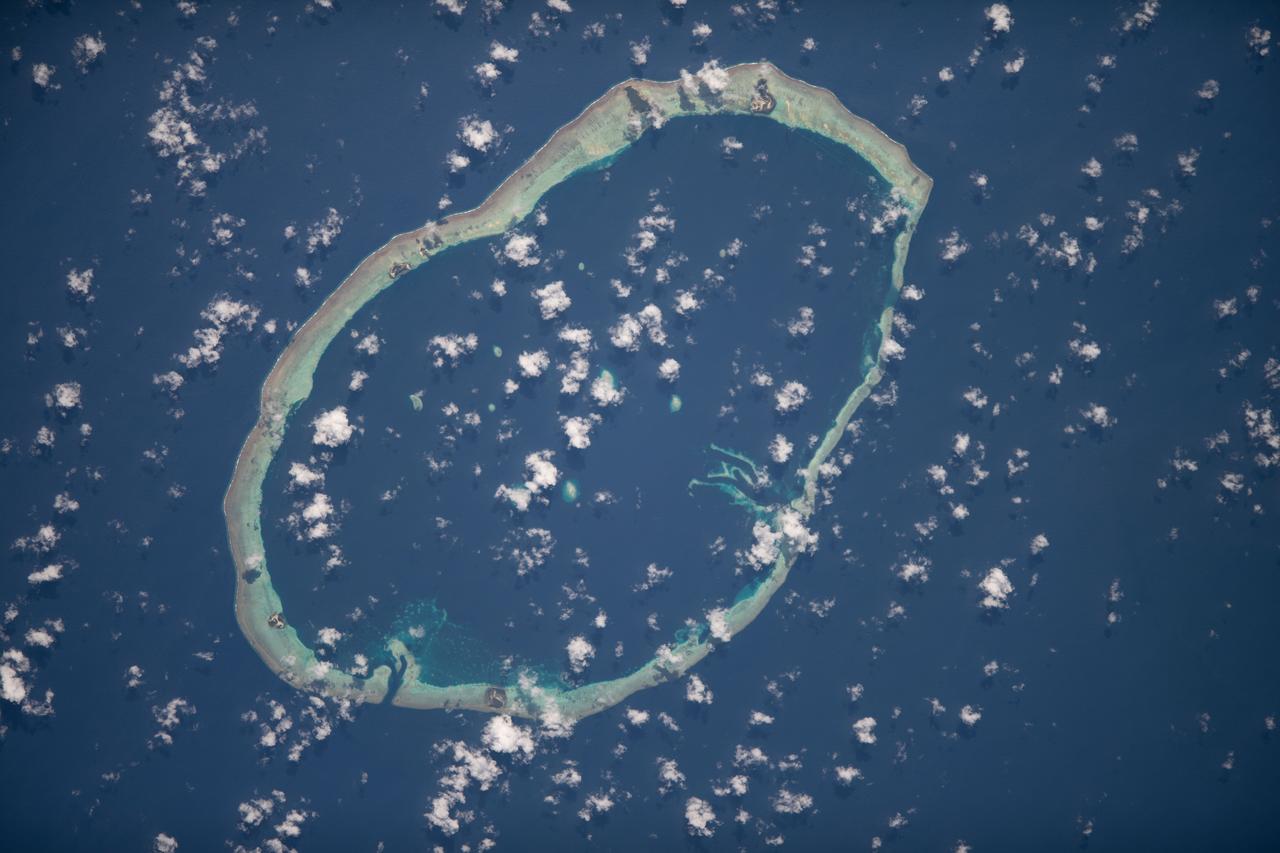
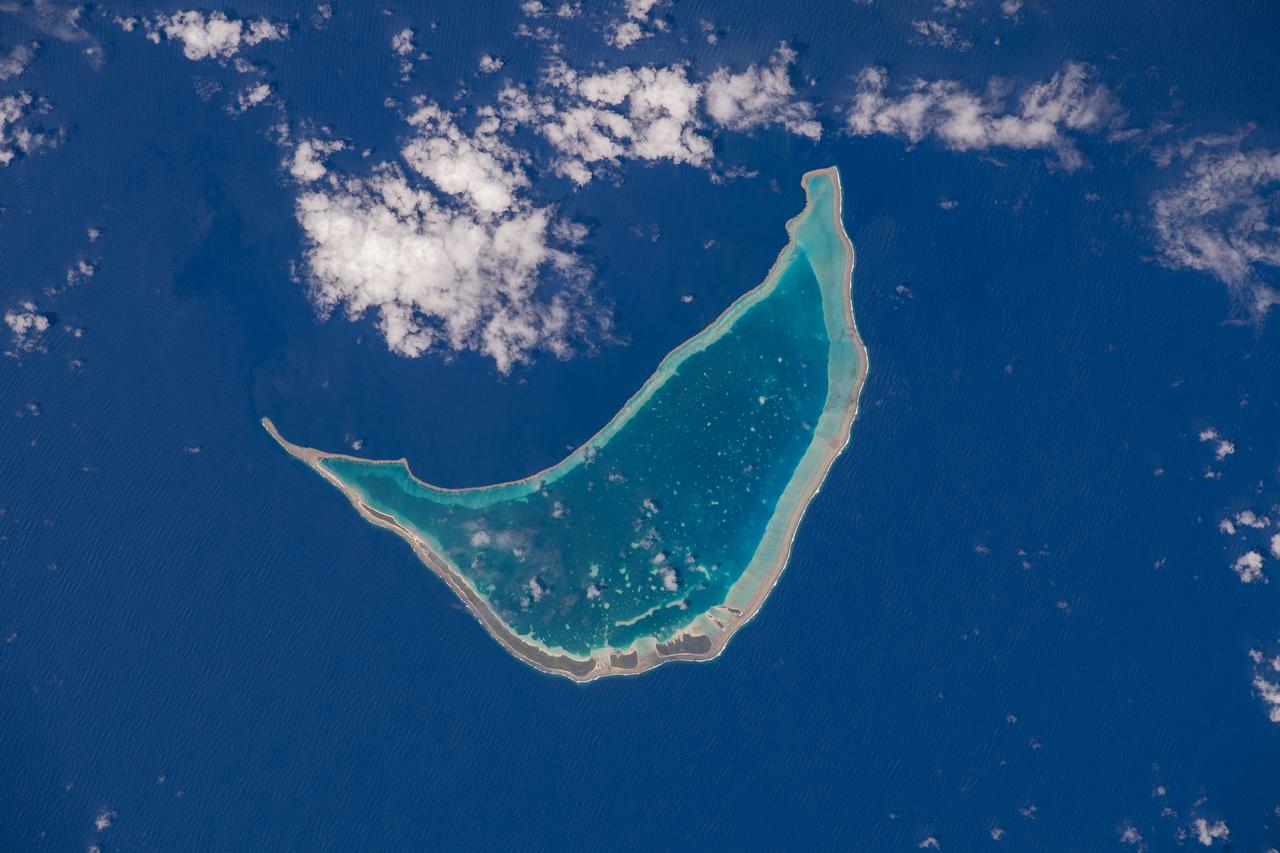
iss068e007434 (Oct. 2, 2022) --- Carteret Atoll, part of the independent nation of Papua New Guinea, is pictured from the International Space Station as it orbited 260 miles above the southwestern Pacific Ocean. Credit: ESA/Samantha Cristoforetti
Earth observation taken by Expedition 68 crew
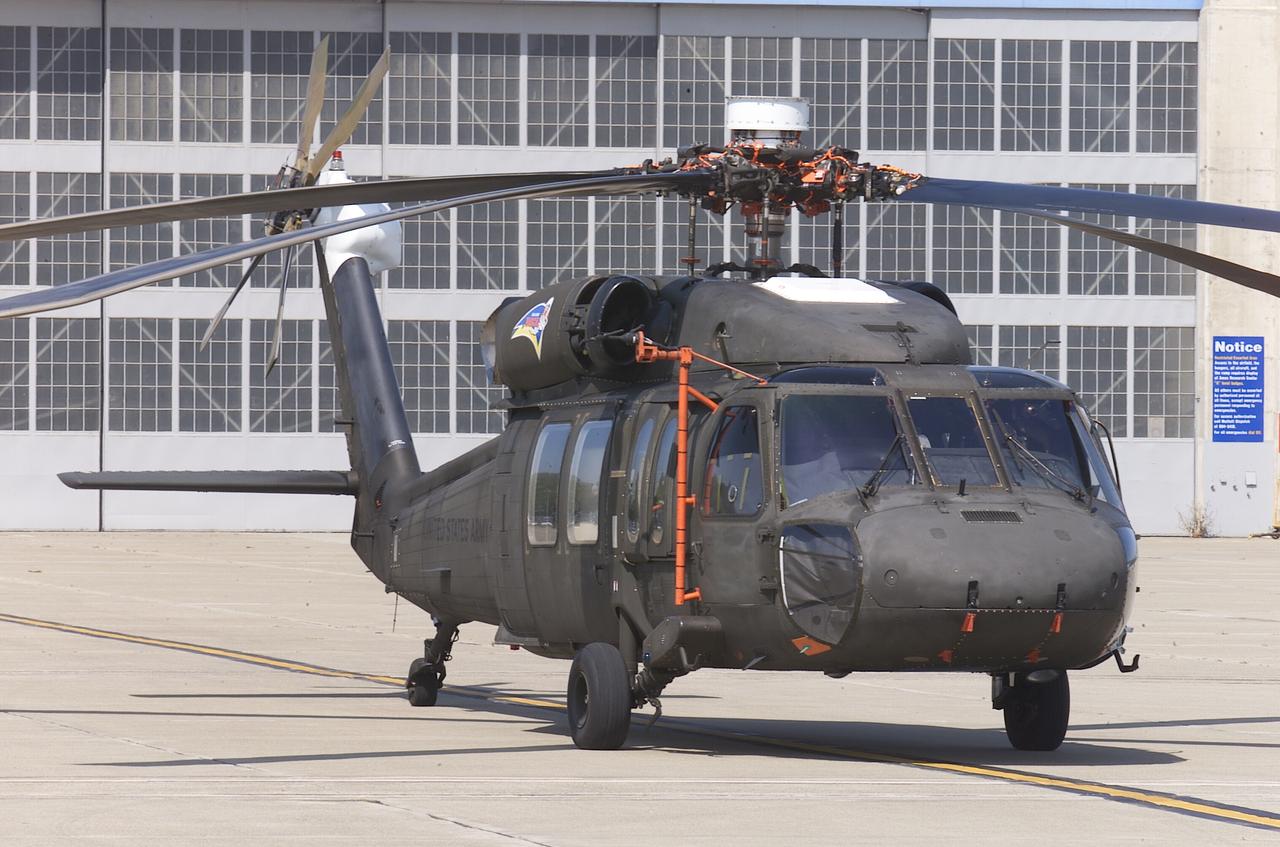
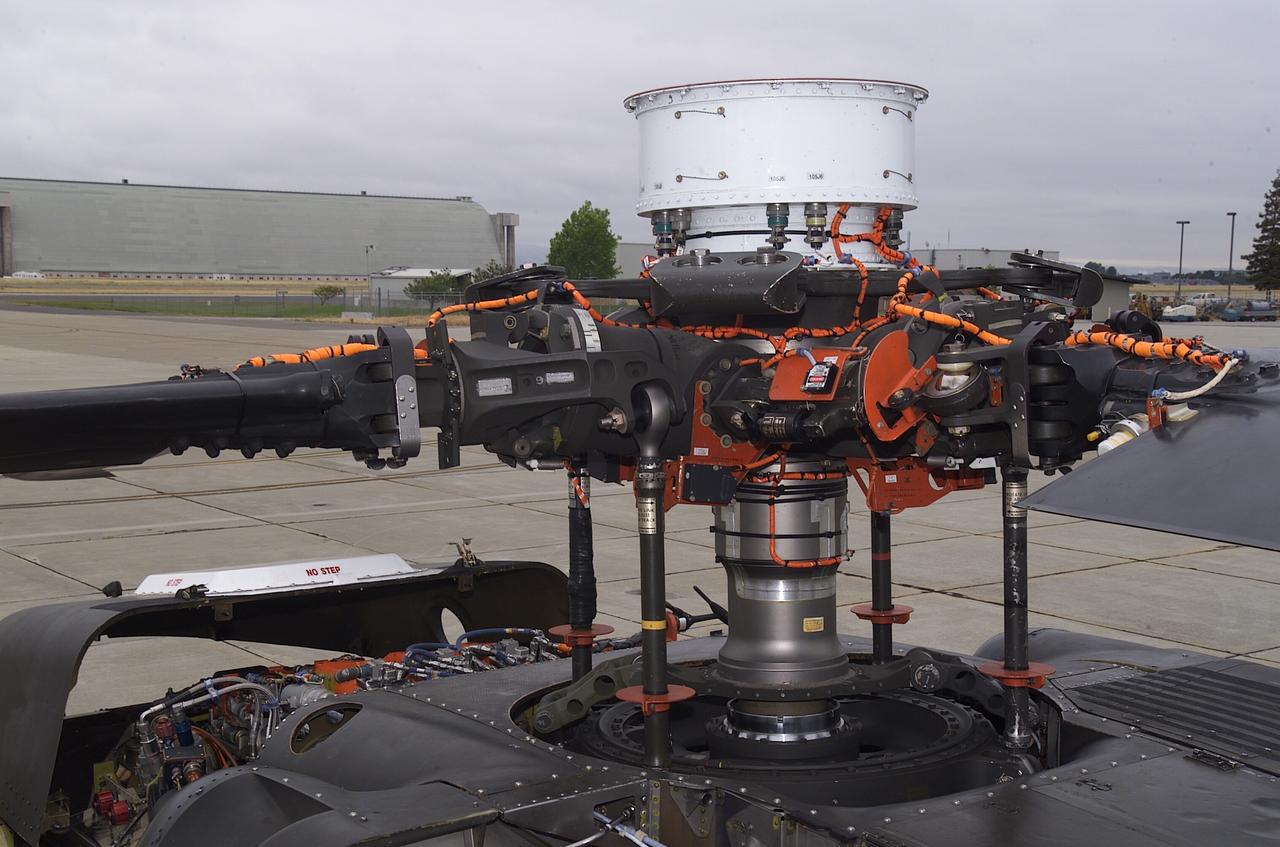
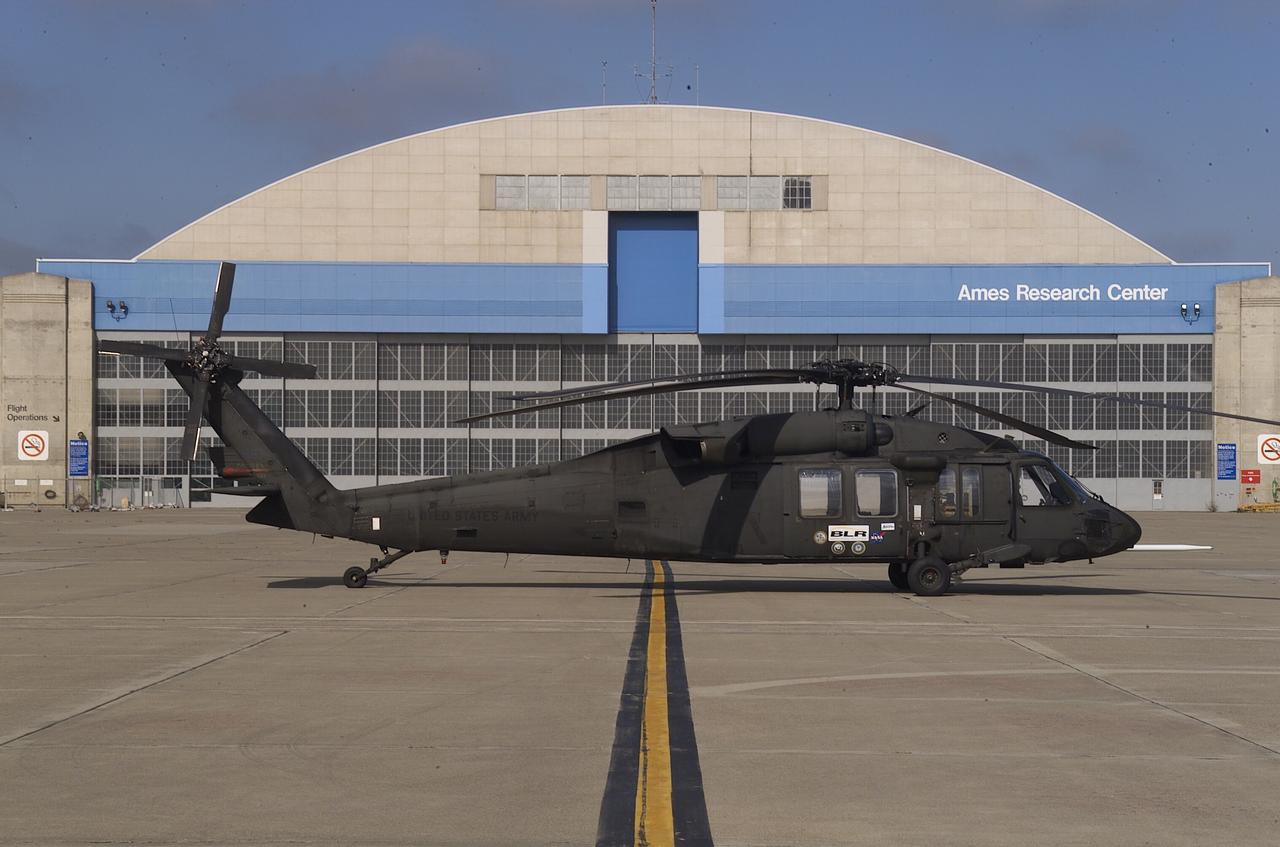
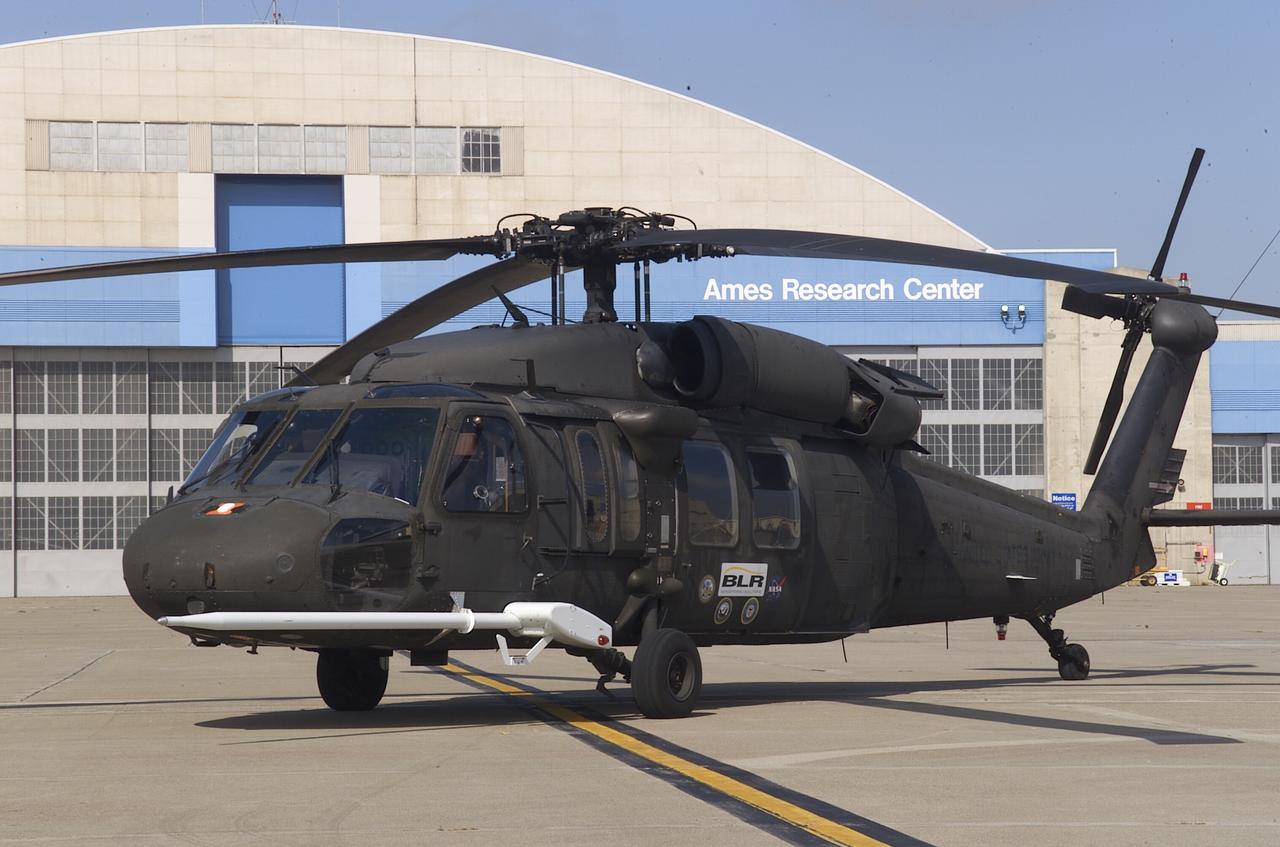
NRTC/RITA Precision Pathway Terminal Guidance: UH-60 RASCAL (#012)  (National Rotocraft Technology Center/Rotorcraft Industry Technology Association) runway independent aircraft
ARC-2003-ACD03-0112-051
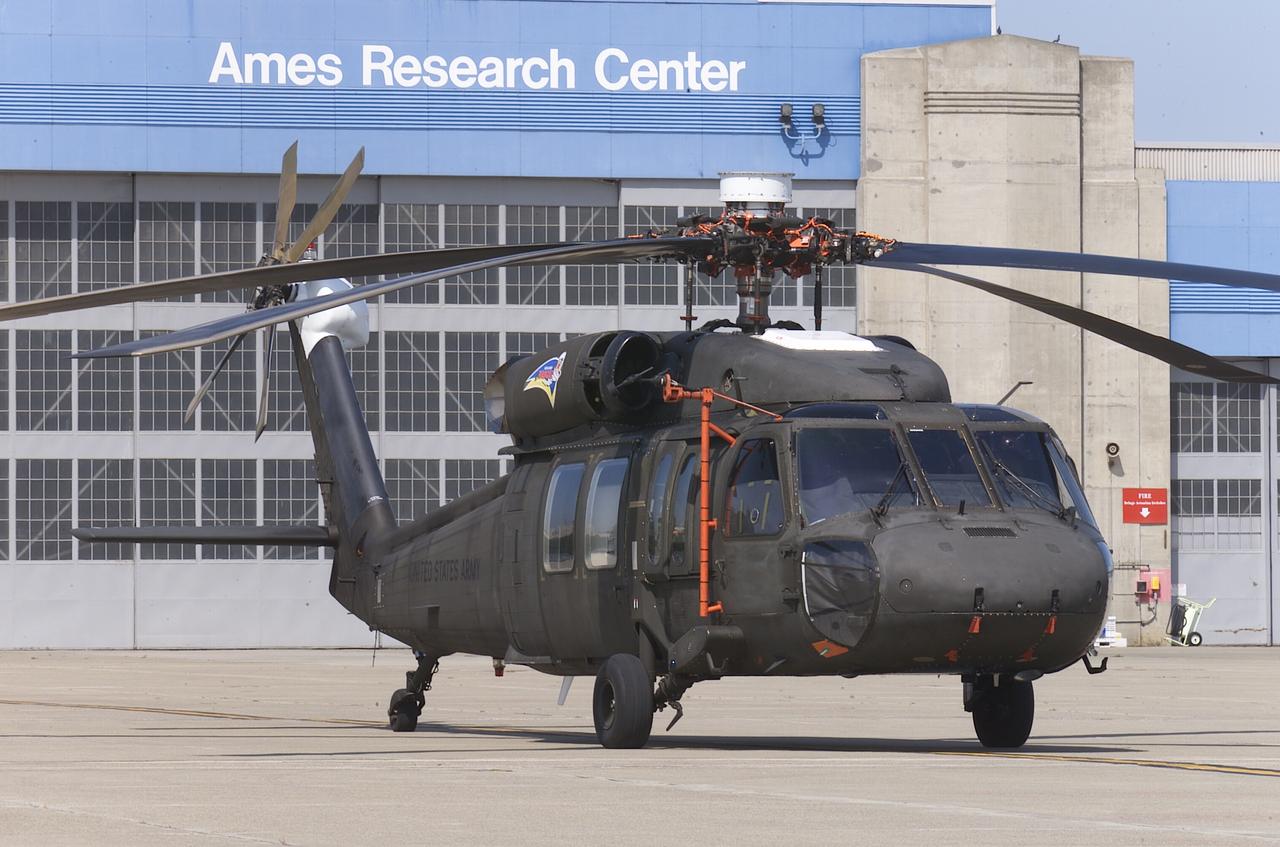
NRTC/RITA Precision Pathway Terminal Guidance: UH-60 RASCAL (#012)  (National Rotocraft Technology Center/Rotorcraft Industry Technology Association) runway independent aircraft
ARC-2003-ACD03-0112-040
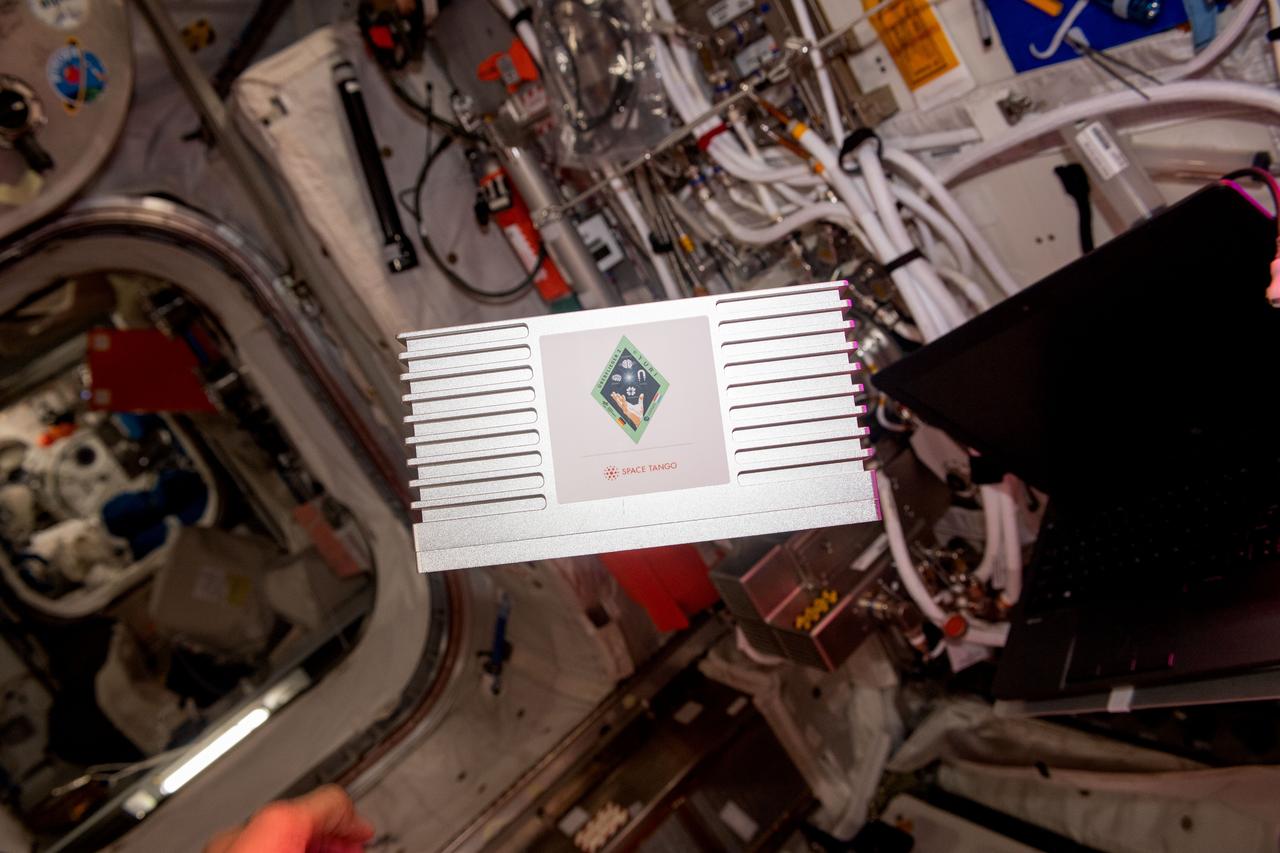
iss069e003201 (4/13/2023) --- A view of the Yuri investigation aboard the International Space Station (ISS). Yuri uses Space Tango CubeLab hardware to host four independent investigations developed by research teams in Germany and Luxembourg.
iss069e003201
iss068e000304 (Sept. 29, 2022) --- Taongi Atoll, in the independent country of the Marshall Islands, is pictured from the International Space Station as it orbited 258 miles above the Pacific Ocean.
Earth observation taken by Expedition 68 crew
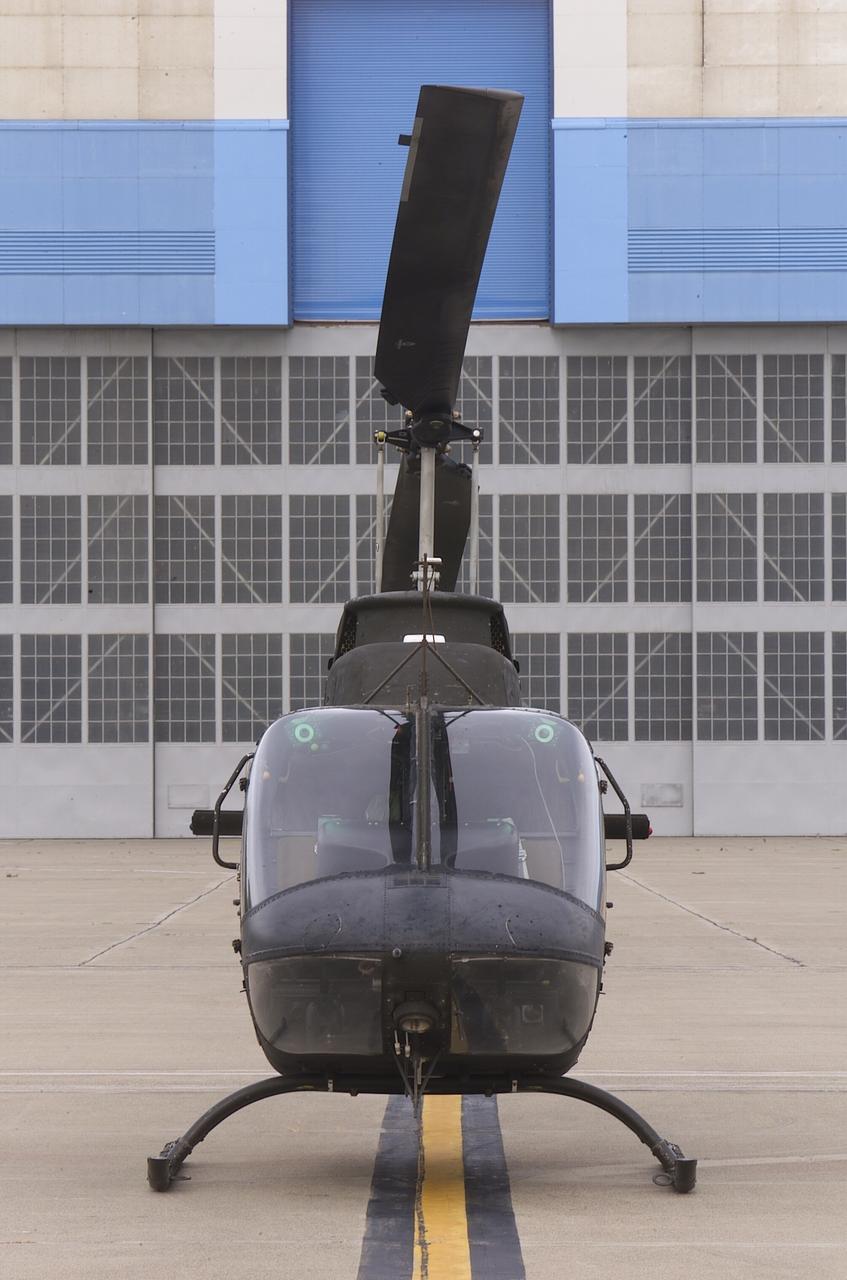
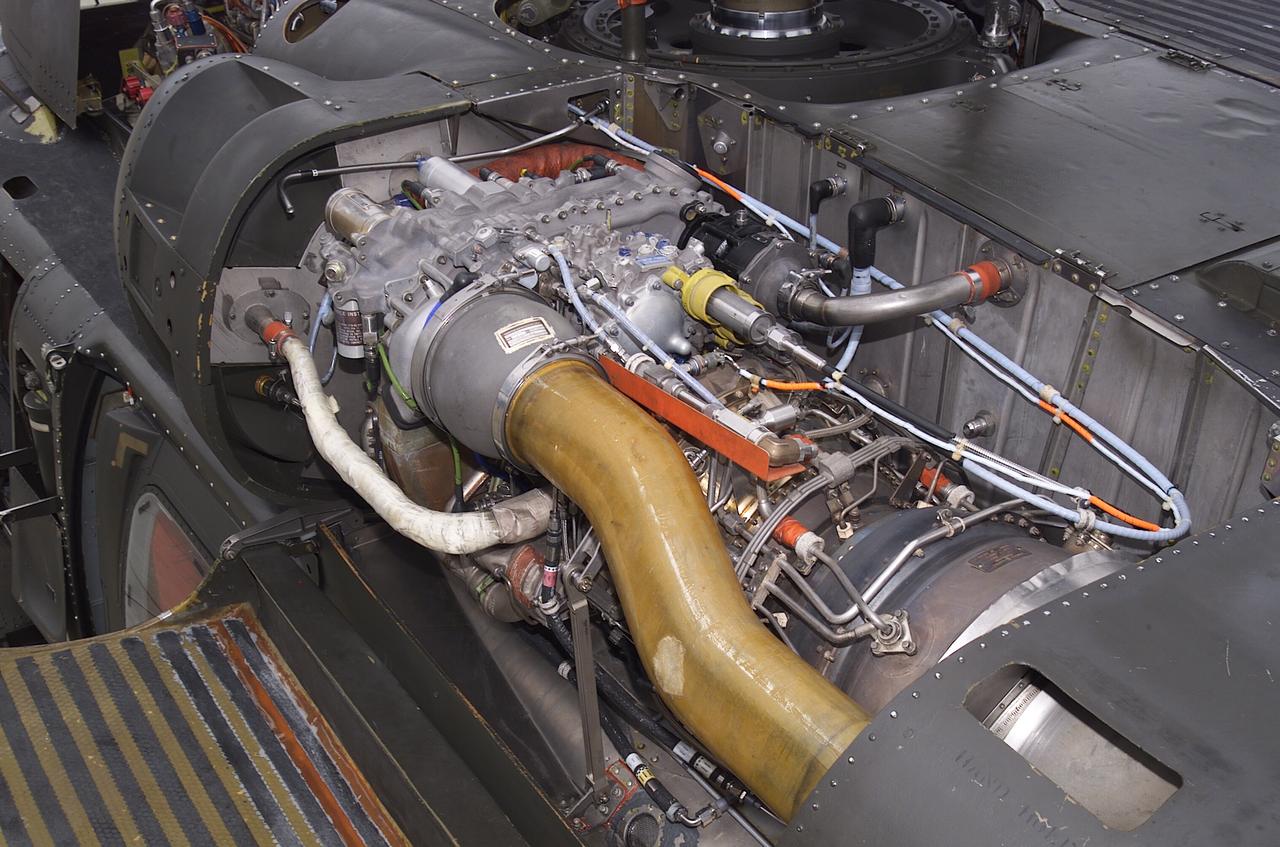
NRTC/RITA Precision Pathway Terminal Guidance: UH-60 RASCAL (#012)  (National Rotocraft Technology Center/Rotorcraft Industry Technology Association) runway independent aircraft
ARC-2003-ACD03-0112-054
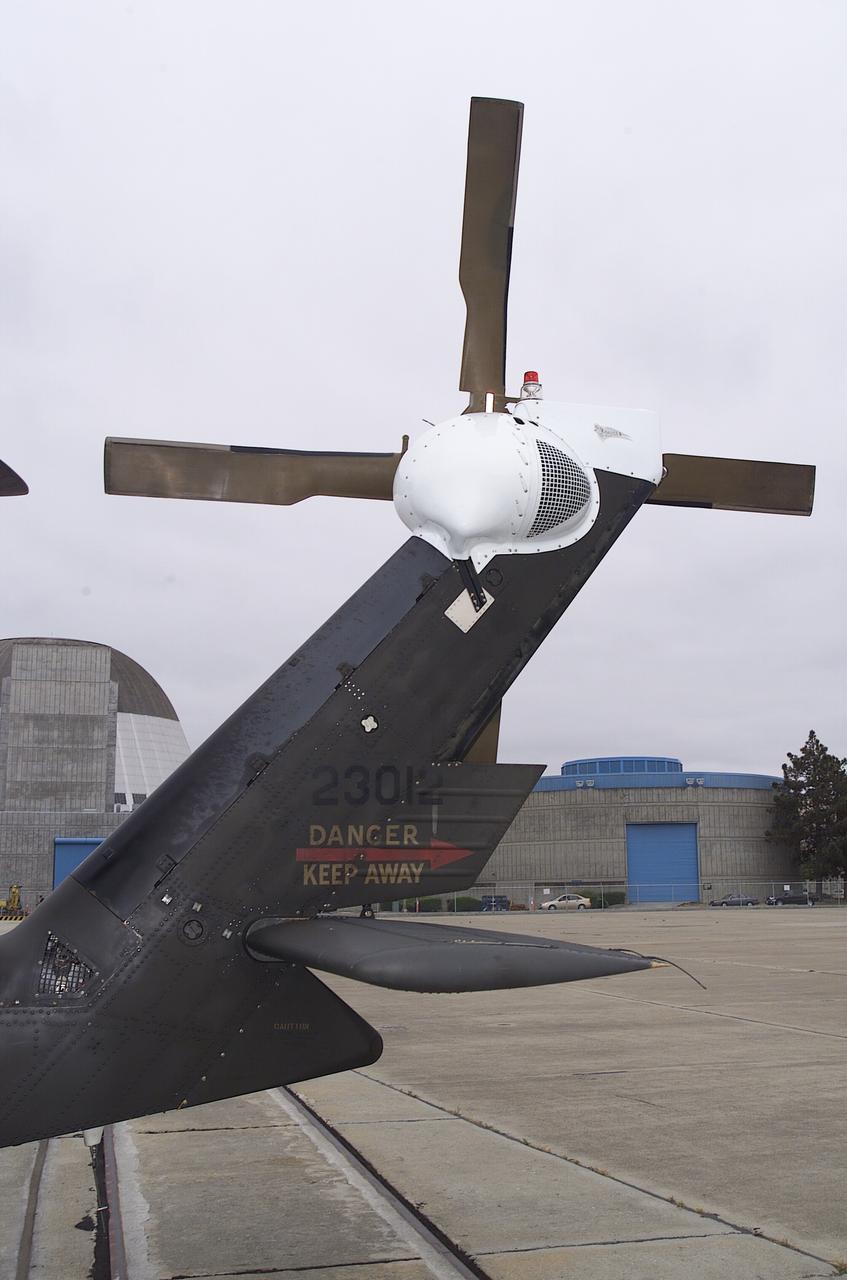
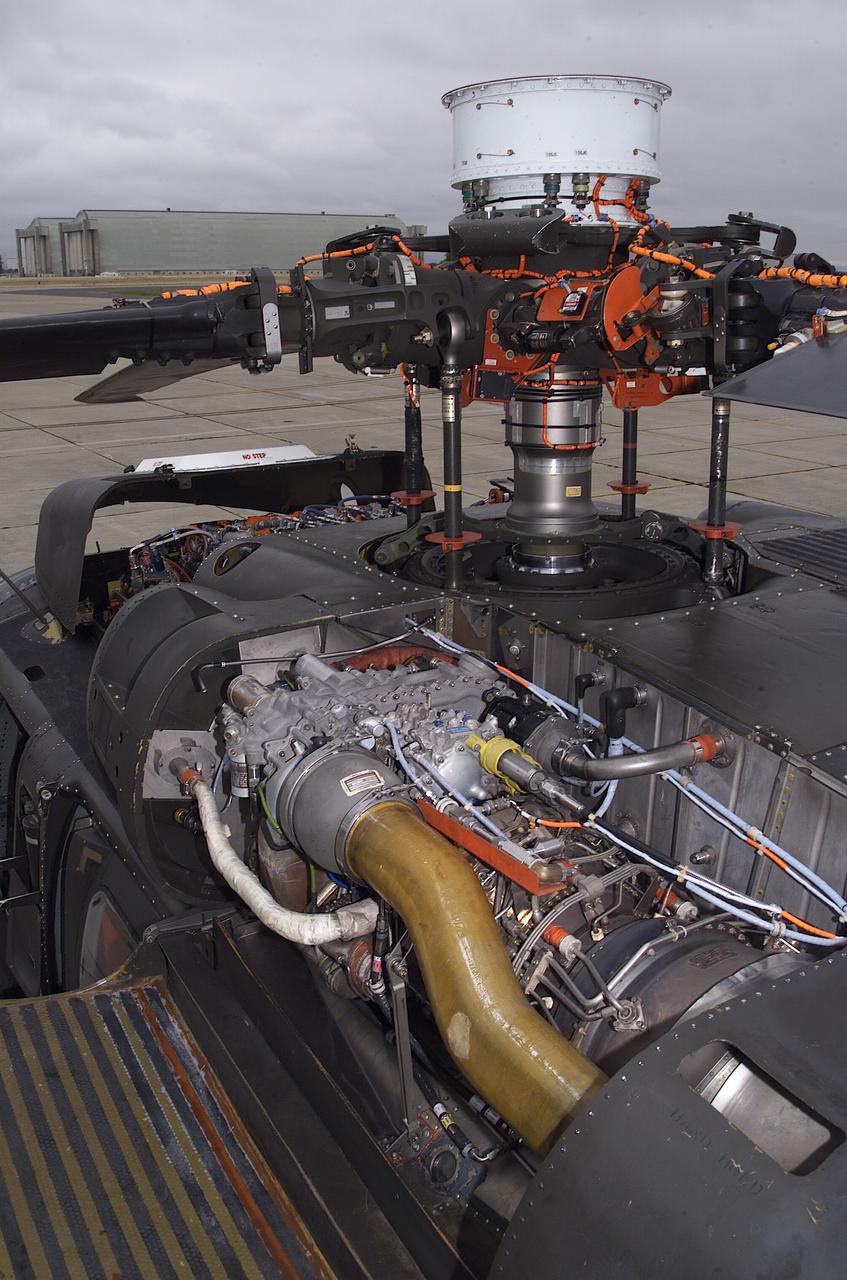
NRTC/RITA Precision Pathway Terminal Guidance: UH-60 RASCAL (#012)  (National Rotocraft Technology Center/Rotorcraft Industry Technology Association) runway independent aircraft
ARC-2003-ACD03-0112-070
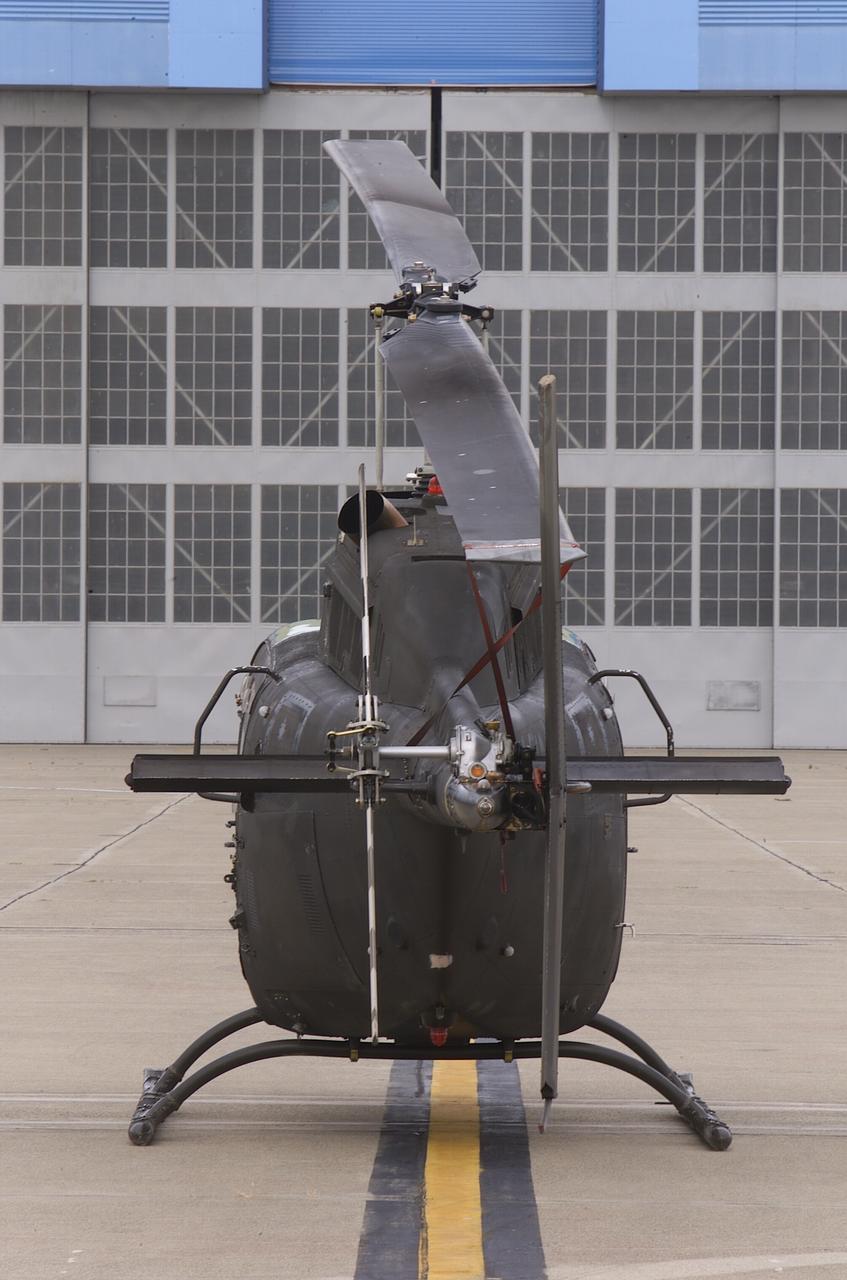
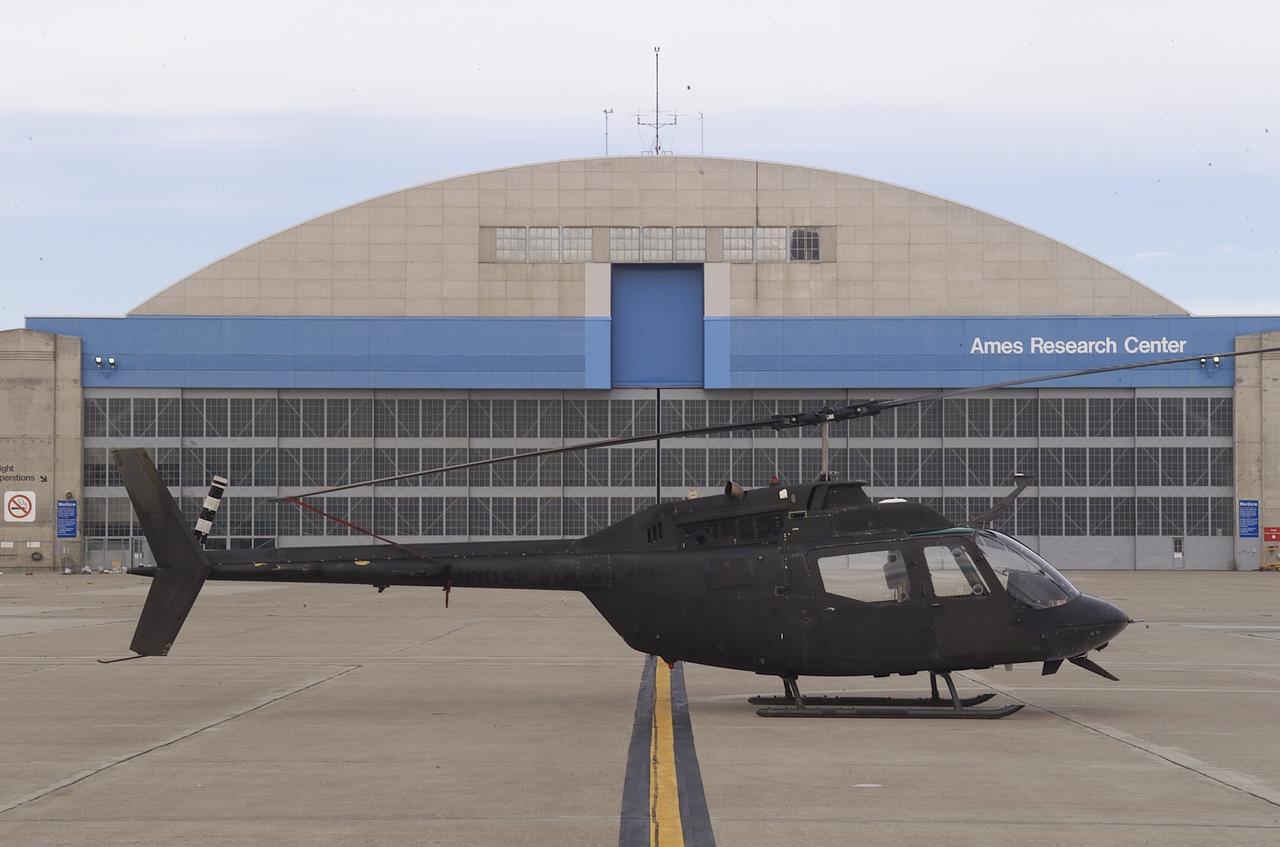
NRTC/RITA Precision Pathway Terminal Guidance: UH-60 RASCAL (#012)  (National Rotocraft Technology Center/Rotorcraft Industry Technology Association) runway independent aircraft
ARC-2003-ACD03-0112-037
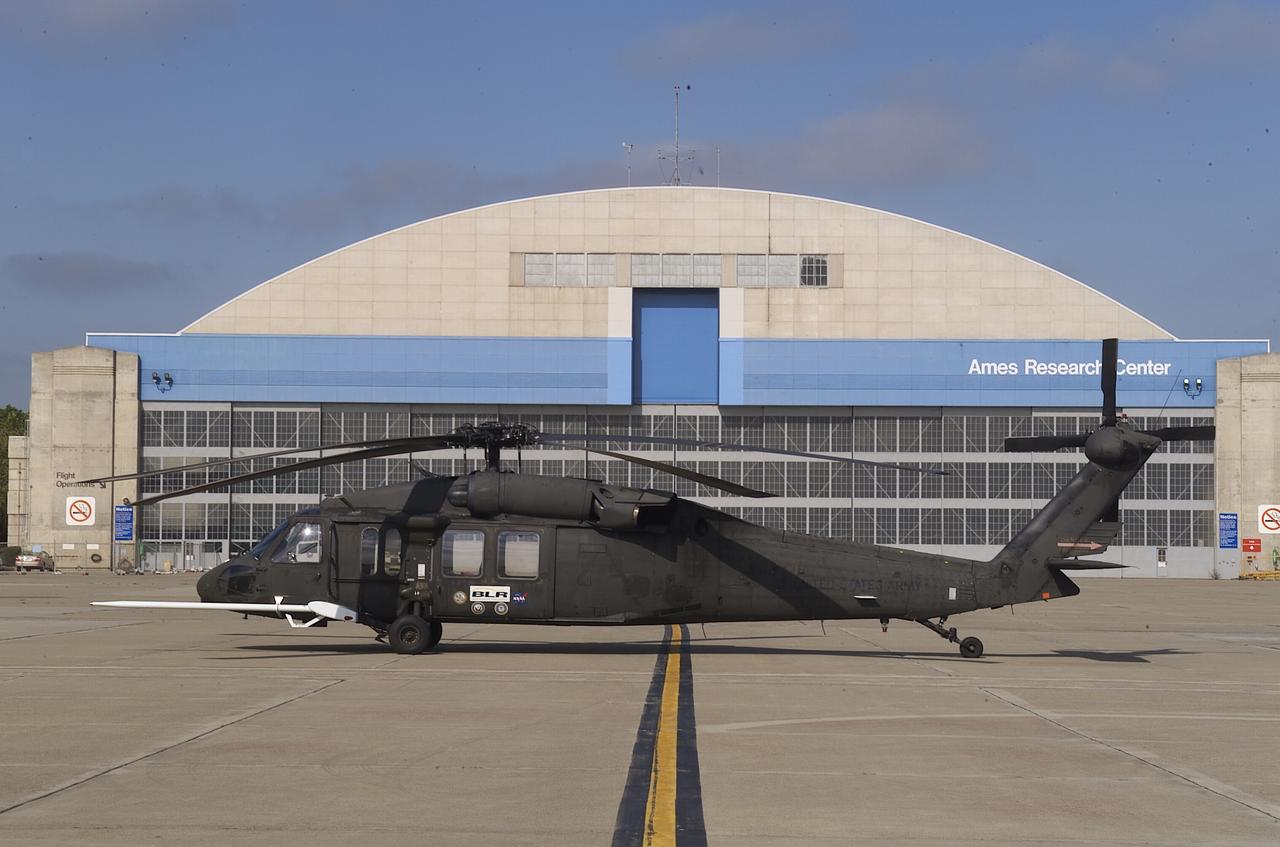
NRTC/RITA Precision Pathway Terminal Guidance: UH-60 RASCAL (#012)  (National Rotocraft Technology Center/Rotorcraft Industry Technology Association) runway independent aircraft
ARC-2003-ACD03-0112-067
NRTC/RITA Precision Pathway Terminal Guidance: UH-60 RASCAL (#012)  (National Rotocraft Technology Center/Rotorcraft Industry Technology Association) runway independent aircraft
ARC-2003-ACD03-0112-034
NRTC/RITA Precision Pathway Terminal Guidance: UH-60 RASCAL (#012)  (National Rotocraft Technology Center/Rotorcraft Industry Technology Association) runway independent aircraft
ARC-2003-ACD03-0112-035
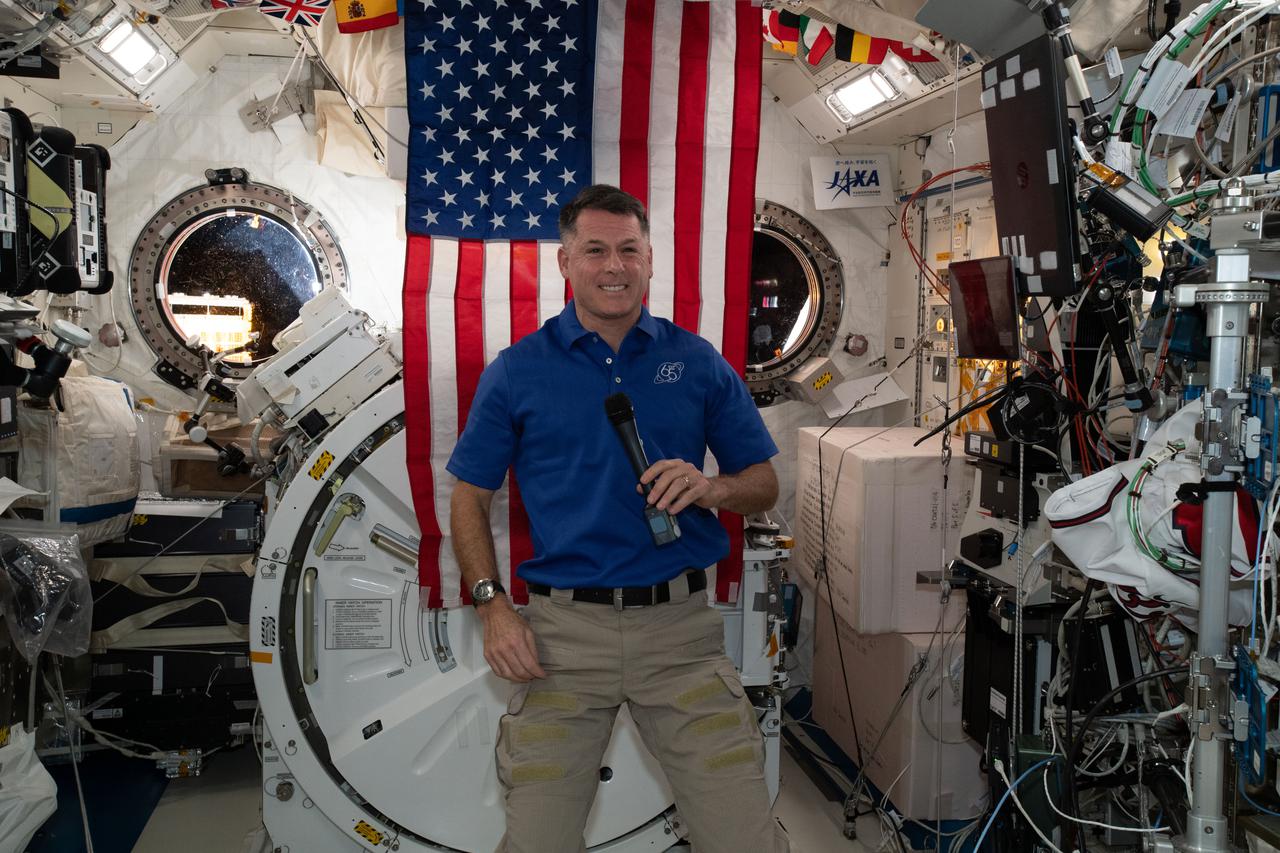
iss065e156102 (July 4, 2021) --- NASA astronaut and Expedition 65 Flight Engineer Shane Kimbrough is pictured inside the Kibo laboratory module with the U.S. flag behind him on the July the 4th Independence Day holiday.
iss065e156102
NRTC/RITA Precision Pathway Terminal Guidance: UH-60 RASCAL (#012)  (National Rotocraft Technology Center/Rotorcraft Industry Technology Association) runway independent aircraft
ARC-2003-ACD03-0112-065
NRTC/RITA Precision Pathway Terminal Guidance: UH-60 RASCAL (#012)  (National Rotocraft Technology Center/Rotorcraft Industry Technology Association) runway independent aircraft
ARC-2003-ACD03-0112-072
NRTC/RITA Precision Pathway Terminal Guidance: UH-60 RASCAL (#012)  (National Rotocraft Technology Center/Rotorcraft Industry Technology Association) runway independent aircraft
ARC-2003-ACD03-0112-033
NRTC/RITA Precision Pathway Terminal Guidance: UH-60 RASCAL (#012)  (National Rotocraft Technology Center/Rotorcraft Industry Technology Association) runway independent aircraft
ARC-2003-ACD03-0112-060
NRTC/RITA Precision Pathway Terminal Guidance: UH-60 RASCAL (#012)  (National Rotocraft Technology Center/Rotorcraft Industry Technology Association) runway independent aircraft
ARC-2003-ACD03-0112-066
NRTC/RITA Precision Pathway Terminal Guidance: UH-60 RASCAL (#012)  (National Rotocraft Technology Center/Rotorcraft Industry Technology Association) runway independent aircraft
ARC-2003-ACD03-0112-069
NRTC/RITA Precision Pathway Terminal Guidance: UH-60 RASCAL (#012)  (National Rotocraft Technology Center/Rotorcraft Industry Technology Association) runway independent aircraft
ARC-2003-ACD03-0112-052
NRTC/RITA Precision Pathway Terminal Guidance: UH-60 RASCAL (#012)  (National Rotocraft Technology Center/Rotorcraft Industry Technology Association) runway independent aircraft
ARC-2003-ACD03-0112-068
NRTC/RITA Precision Pathway Terminal Guidance: UH-60 RASCAL (#012)  (National Rotocraft Technology Center/Rotorcraft Industry Technology Association) runway independent aircraft
ARC-2003-ACD03-0112-056
NRTC/RITA Precision Pathway Terminal Guidance: UH-60 RASCAL (#012)  (National Rotocraft Technology Center/Rotorcraft Industry Technology Association) runway independent aircraft
ARC-2003-ACD03-0112-059
NRTC/RITA Precision Pathway Terminal Guidance: UH-60 RASCAL (#012)  (National Rotocraft Technology Center/Rotorcraft Industry Technology Association) runway independent aircraft
ARC-2003-ACD03-0112-071
NRTC/RITA Precision Pathway Terminal Guidance: UH-60 RASCAL (#012)  (National Rotocraft Technology Center/Rotorcraft Industry Technology Association) runway independent aircraft
ARC-2003-ACD03-0112-041
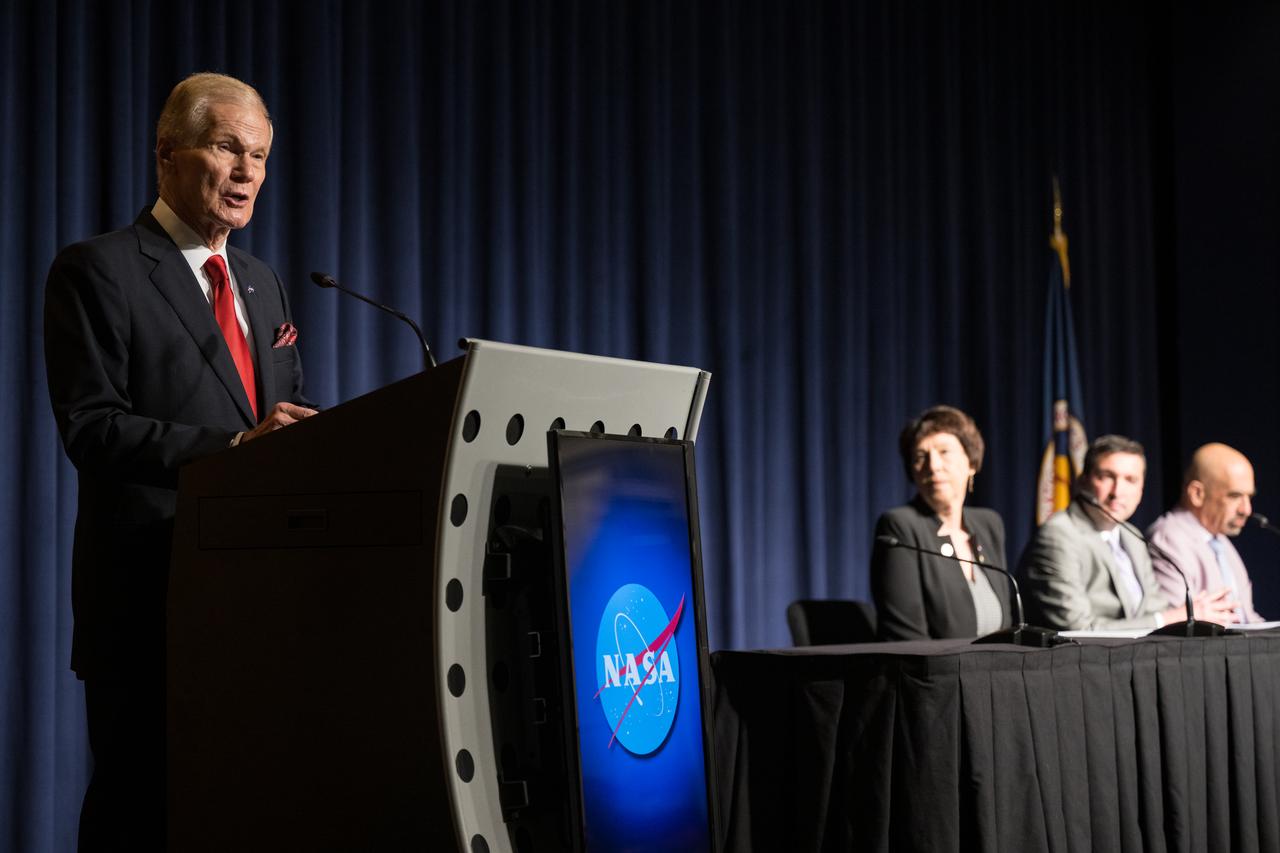
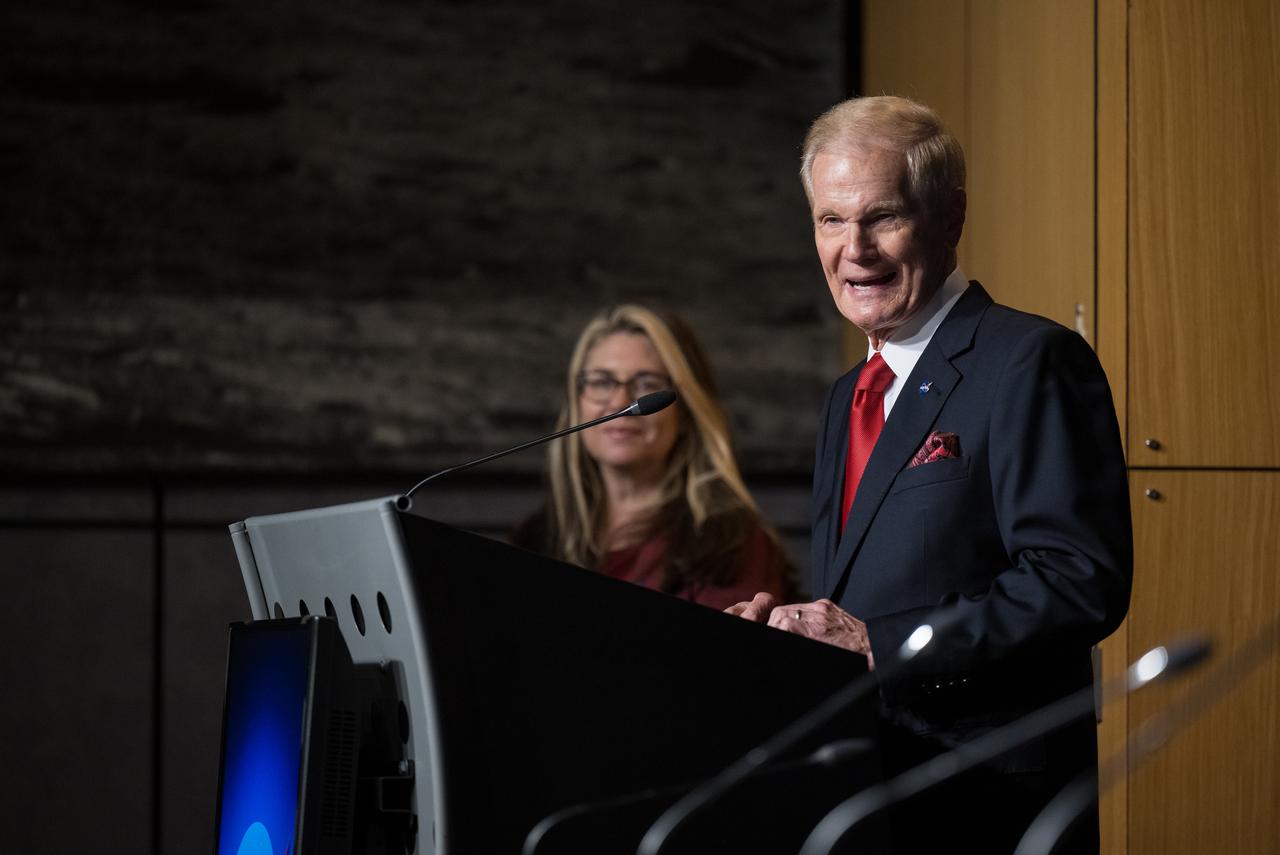
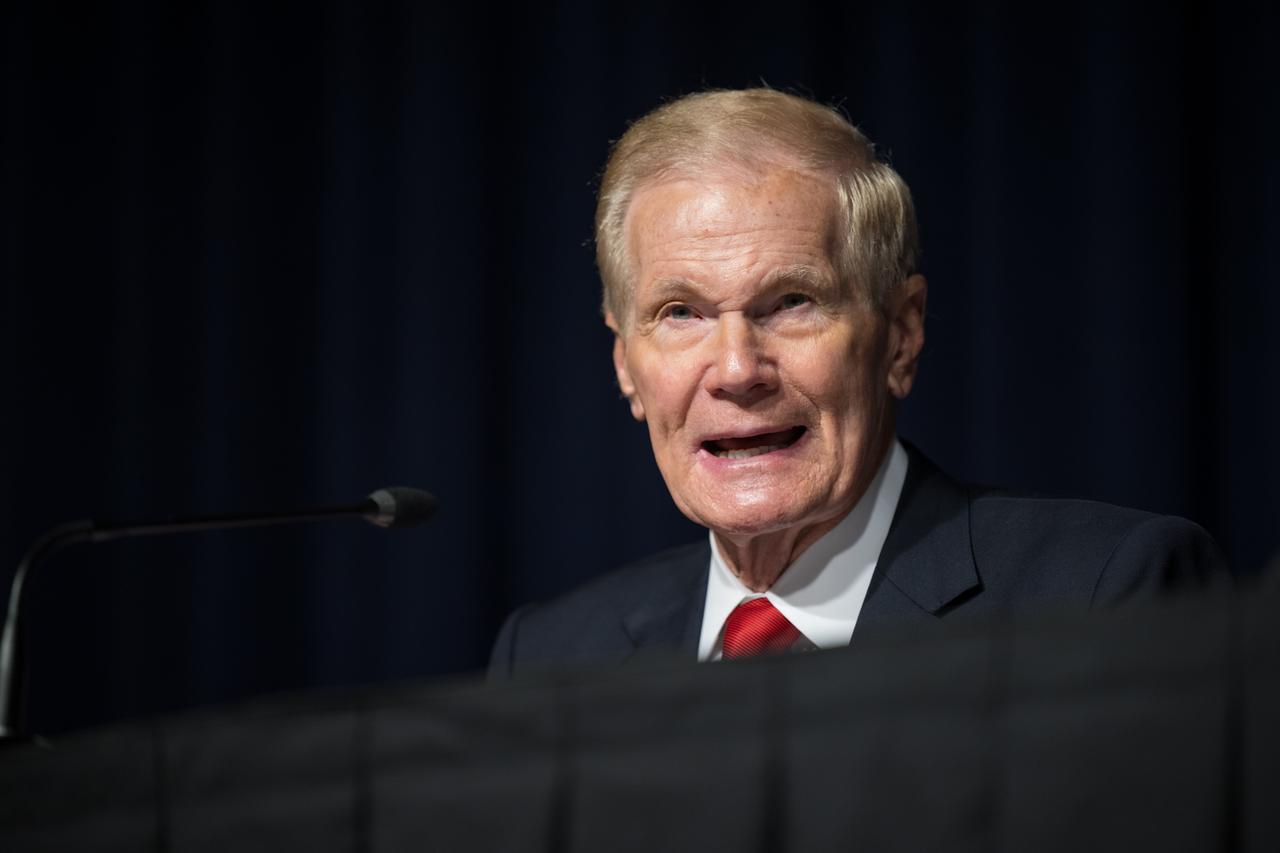
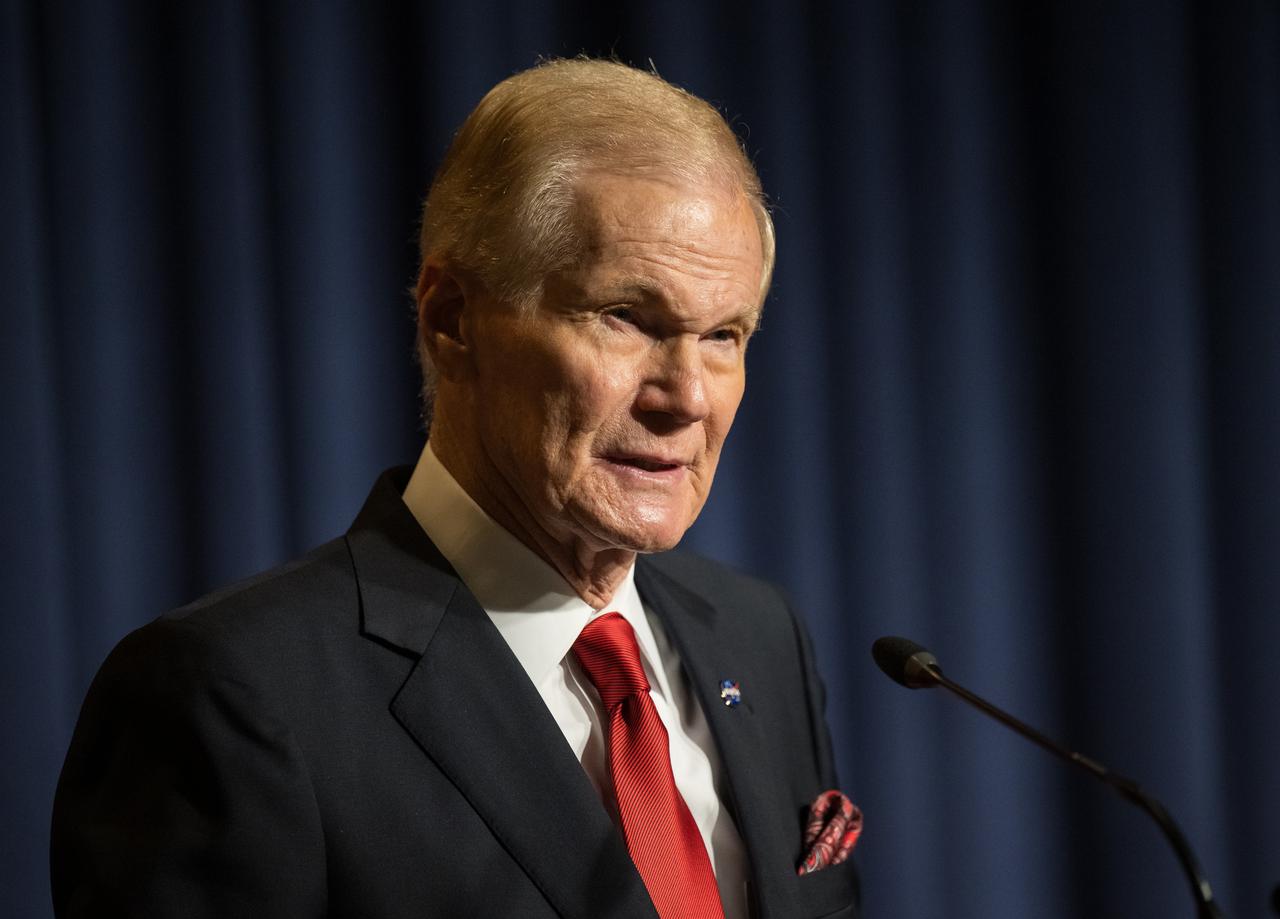
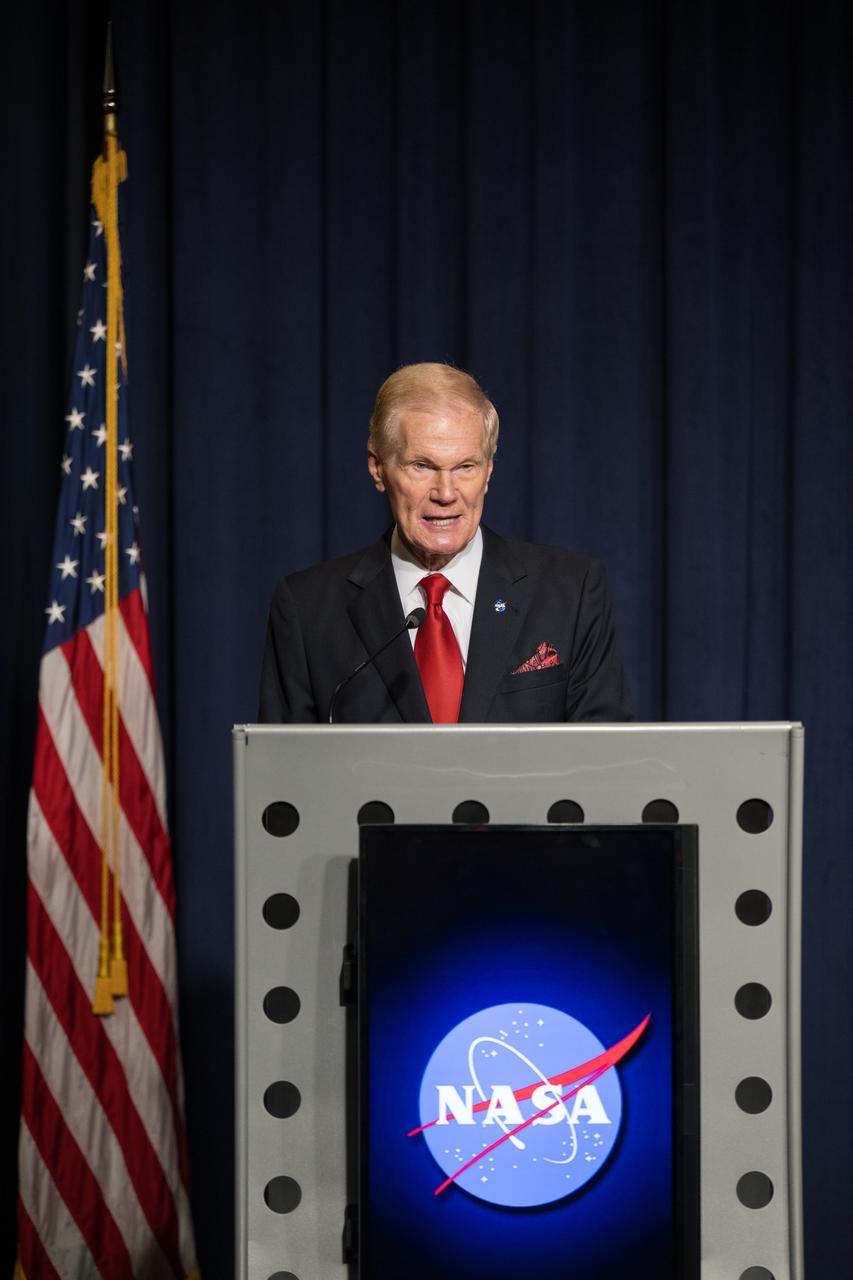
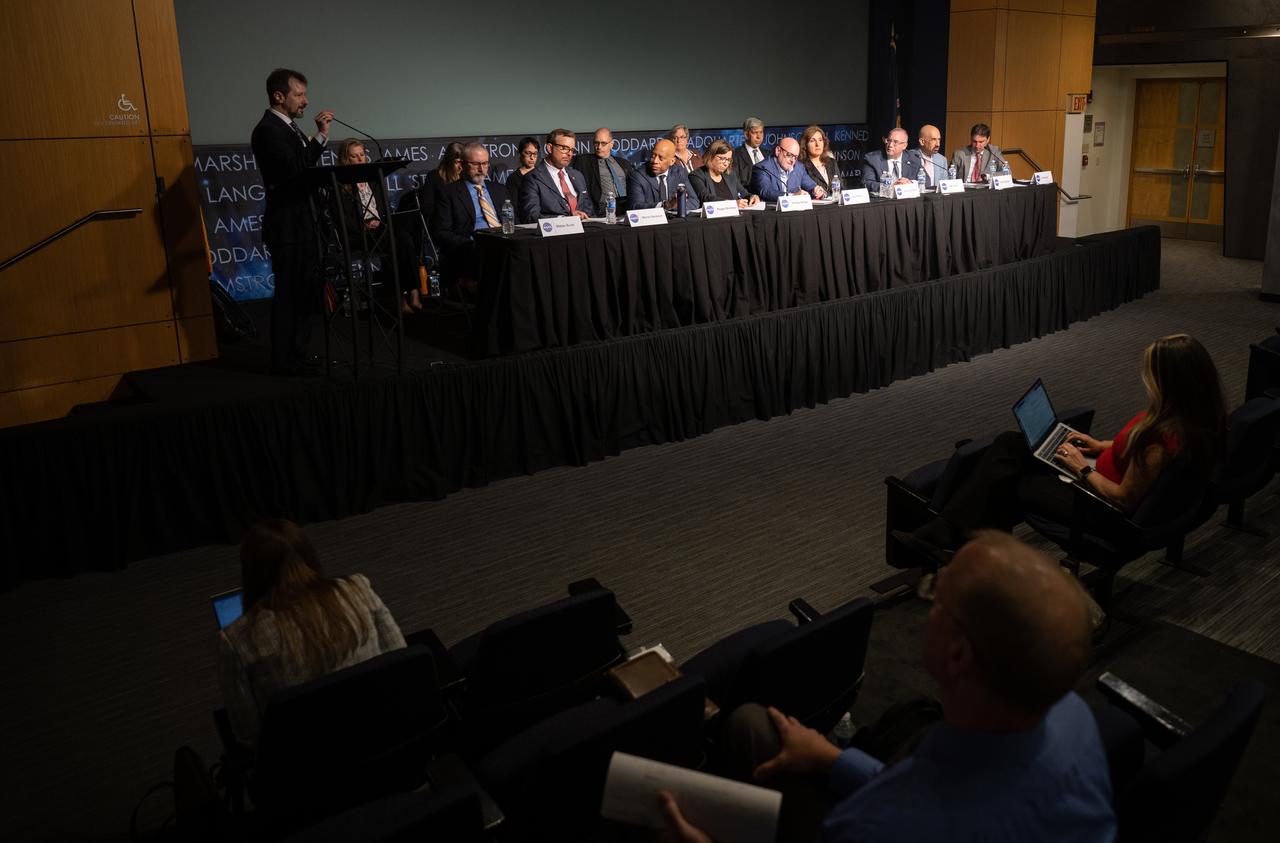
NASA Administrator Bill Nelson provides remarks during a media briefing to discuss the findings from an unidentified anomalous phenomena (UAP) independent study team, Thursday, Sept. 14, 2023, at the Mary W. Jackson NASA Headquarters building in Washington. The UAP independent study team, commissioned in 2022, is a counsel of 16 community experts across diverse areas on matters relevant to potential methods of study for unidentified anomalous phenomena. NASA published the team’s full report online, which aims to inform about what possible data could be collected in the future to shed light on the nature and origin of UAP. Photo Credit: (NASA/Aubrey Gemignani)
UAP Media Briefing
NASA Administrator Bill Nelson provides remarks during a media briefing to discuss the findings from an unidentified anomalous phenomena (UAP) independent study team, Thursday, Sept. 14, 2023, at the Mary W. Jackson NASA Headquarters building in Washington. The UAP independent study team, commissioned in 2022, is a counsel of 16 community experts across diverse areas on matters relevant to potential methods of study for unidentified anomalous phenomena. NASA published the team’s full report online, which aims to inform about what possible data could be collected in the future to shed light on the nature and origin of UAP. Photo Credit: (NASA/Aubrey Gemignani)
UAP Media Briefing
A member of the media asks a question during a media briefing to discuss the findings from an unidentified anomalous phenomena (UAP) independent study team, Thursday, Sept. 14, 2023, at the Mary W. Jackson NASA Headquarters building in Washington. The UAP independent study team, commissioned in 2022, is a counsel of 16 community experts across diverse areas on matters relevant to potential methods of study for unidentified anomalous phenomena. NASA published the team’s full report online, which aims to inform about what possible data could be collected in the future to shed light on the nature and origin of UAP. Photo Credit: (NASA/Aubrey Gemignani)
UAP Media Briefing
NASA Administrator Bill Nelson provides remarks during a media briefing to discuss the findings from an unidentified anomalous phenomena (UAP) independent study team, Thursday, Sept. 14, 2023, at the Mary W. Jackson NASA Headquarters building in Washington. The UAP independent study team, commissioned in 2022, is a counsel of 16 community experts across diverse areas on matters relevant to potential methods of study for unidentified anomalous phenomena. NASA published the team’s full report online, which aims to inform about what possible data could be collected in the future to shed light on the nature and origin of UAP. Photo Credit: (NASA/Aubrey Gemignani)
UAP Media Briefing
A member of the media asks a question during a media briefing to discuss the findings from an unidentified anomalous phenomena (UAP) independent study team, Thursday, Sept. 14, 2023, at the Mary W. Jackson NASA Headquarters building in Washington. The UAP independent study team, commissioned in 2022, is a counsel of 16 community experts across diverse areas on matters relevant to potential methods of study for unidentified anomalous phenomena. NASA published the team’s full report online, which aims to inform about what possible data could be collected in the future to shed light on the nature and origin of UAP. Photo Credit: (NASA/Aubrey Gemignani)
UAP Media Briefing
NASA Administrator Bill Nelson answers a question during a media briefing to discuss the findings from an unidentified anomalous phenomena (UAP) independent study team, Thursday, Sept. 14, 2023, at the Mary W. Jackson NASA Headquarters building in Washington. The UAP independent study team, commissioned in 2022, is a counsel of 16 community experts across diverse areas on matters relevant to potential methods of study for unidentified anomalous phenomena. NASA published the team’s full report online, which aims to inform about what possible data could be collected in the future to shed light on the nature and origin of UAP. Photo Credit: (NASA/Aubrey Gemignani)
UAP Media Briefing
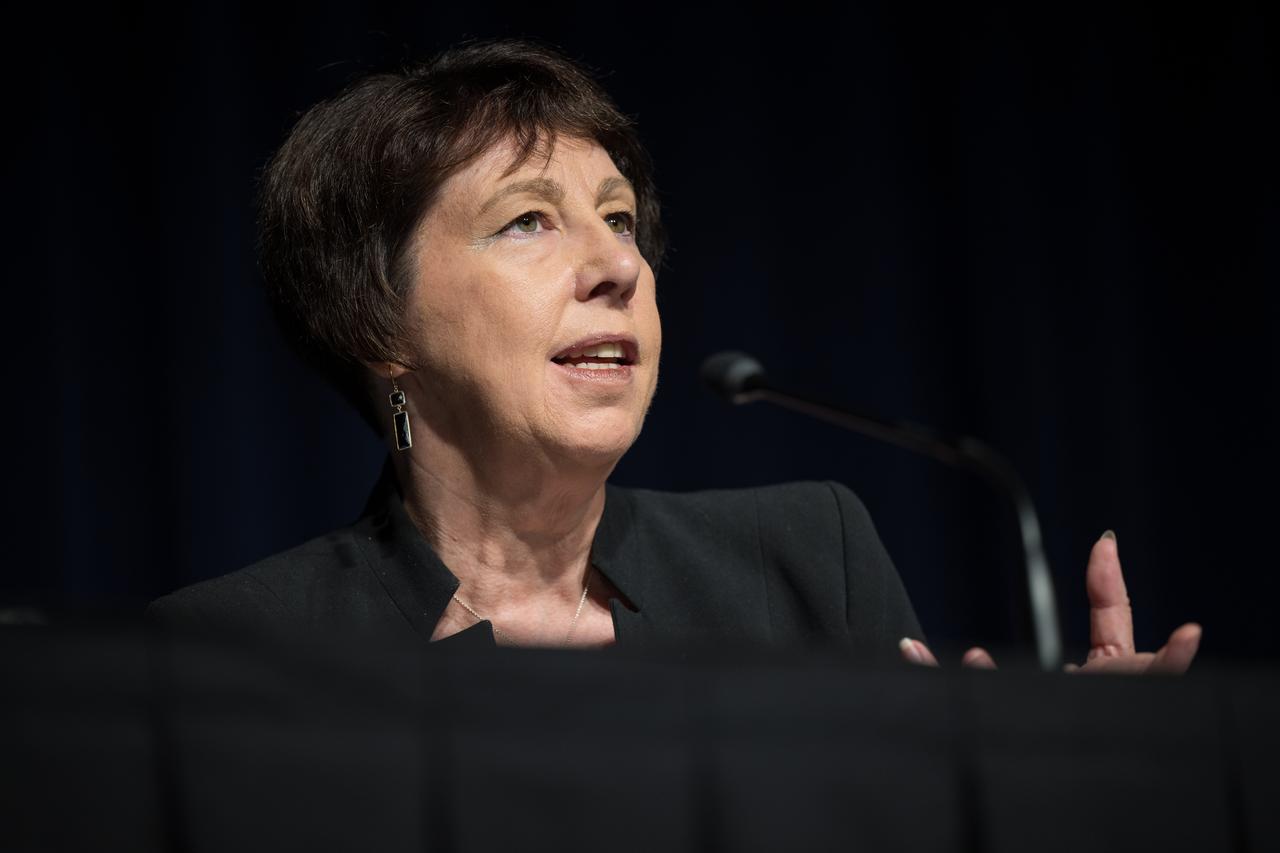
Nicola Fox, associate administrator for NASA's Science Mission Directorate, answers a question during a media briefing to discuss the findings from an unidentified anomalous phenomena (UAP) independent study team, Thursday, Sept. 14, 2023, at the Mary W. Jackson NASA Headquarters building in Washington. The UAP independent study team, commissioned in 2022, is a counsel of 16 community experts across diverse areas on matters relevant to potential methods of study for unidentified anomalous phenomena. NASA published the team’s full report online, which aims to inform about what possible data could be collected in the future to shed light on the nature and origin of UAP. Photo Credit: (NASA/Aubrey Gemignani)
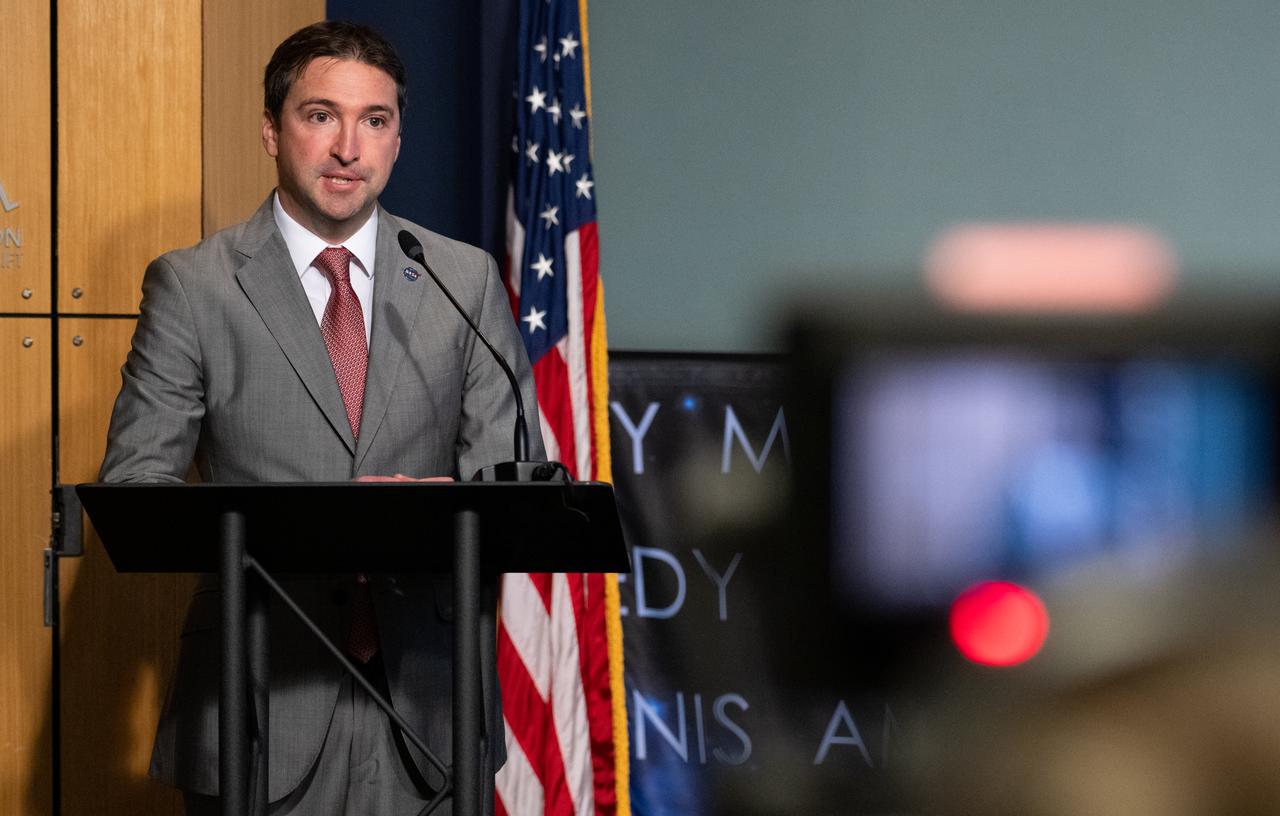
UAP Media Briefing
Nicola Fox, associate administrator for NASA's Science Mission Directorate, answers a question during a media briefing to discuss the findings from an unidentified anomalous phenomena (UAP) independent study team, Thursday, Sept. 14, 2023, at the Mary W. Jackson NASA Headquarters building in Washington. The UAP independent study team, commissioned in 2022, is a counsel of 16 community experts across diverse areas on matters relevant to potential methods of study for unidentified anomalous phenomena. NASA published the team’s full report online, which aims to inform about what possible data could be collected in the future to shed light on the nature and origin of UAP. Photo Credit: (NASA/Aubrey Gemignani)
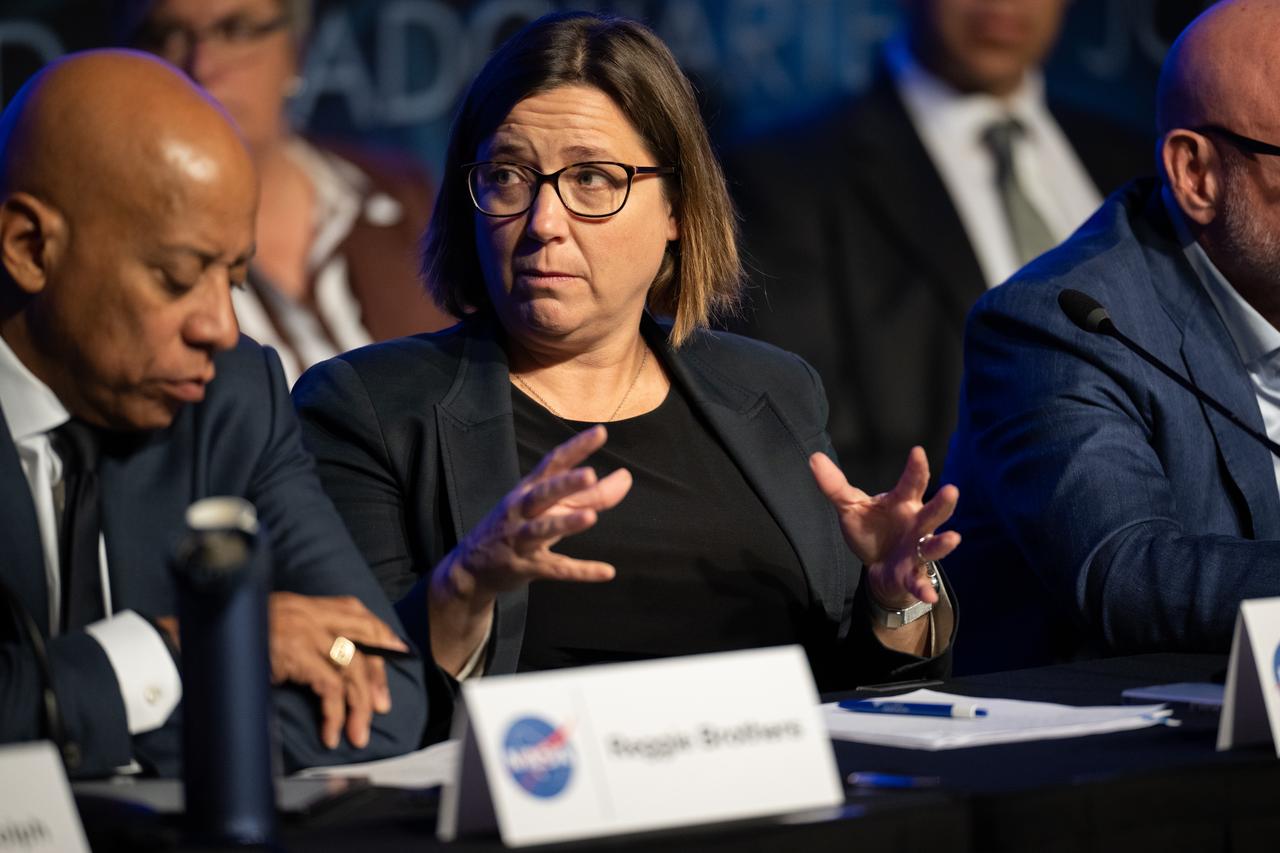
UAP Media Briefing
NASA Administrator Bill Nelson provides remarks during a media briefing to discuss the findings from an unidentified anomalous phenomena (UAP) independent study team, Thursday, Sept. 14, 2023, at the Mary W. Jackson NASA Headquarters building in Washington. The UAP independent study team, commissioned in 2022, is a counsel of 16 community experts across diverse areas on matters relevant to potential methods of study for unidentified anomalous phenomena. NASA published the team’s full report online, which aims to inform about what possible data could be collected in the future to shed light on the nature and origin of UAP. Photo Credit: (NASA/Aubrey Gemignani)
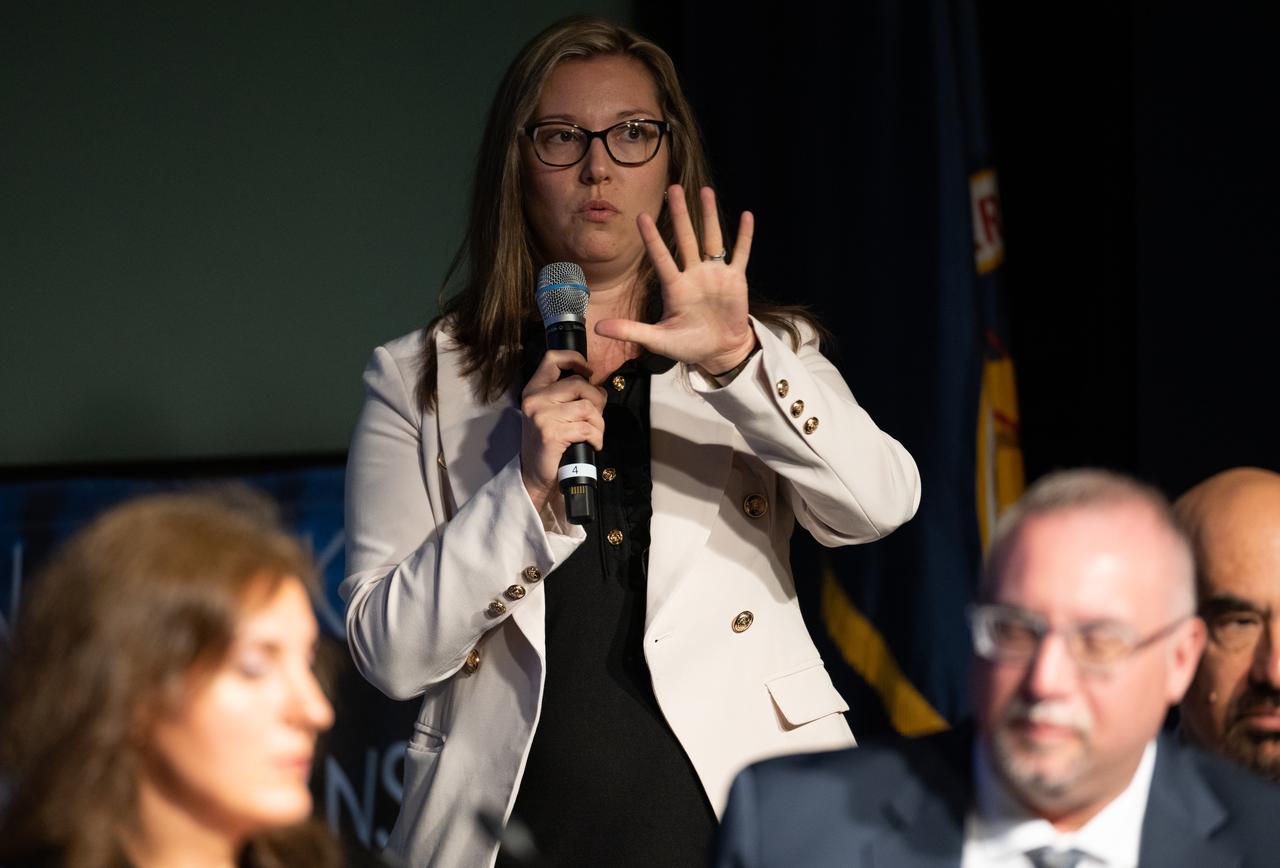
UAP Media Briefing
Nicola Fox, associate administrator for NASA's Science Mission Directorate, answers a question during a media briefing to discuss the findings from an unidentified anomalous phenomena (UAP) independent study team, Thursday, Sept. 14, 2023, at the Mary W. Jackson NASA Headquarters building in Washington. The UAP independent study team, commissioned in 2022, is a counsel of 16 community experts across diverse areas on matters relevant to potential methods of study for unidentified anomalous phenomena. NASA published the team’s full report online, which aims to inform about what possible data could be collected in the future to shed light on the nature and origin of UAP. Photo Credit: (NASA/Aubrey Gemignani)
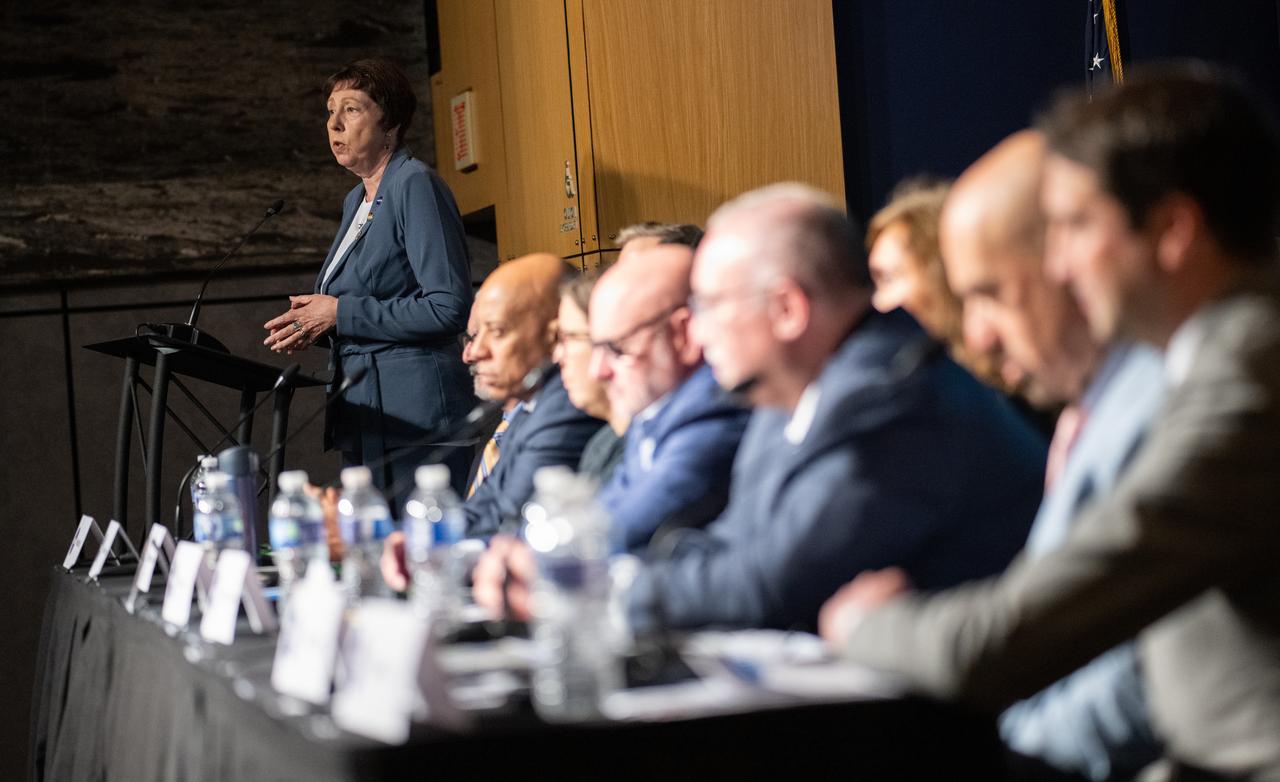
UAP Media Briefing
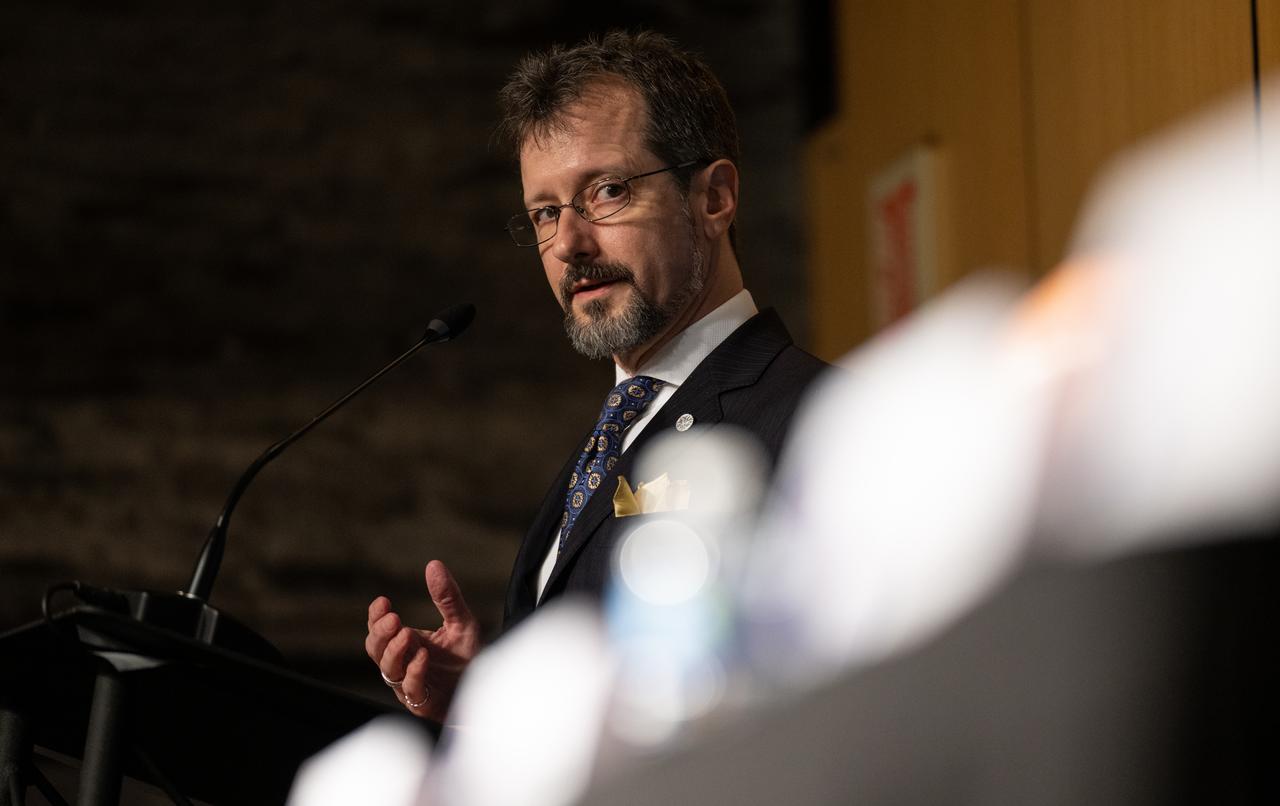
NASA Administrator Bill Nelson provides remarks during a media briefing to discuss the findings from an unidentified anomalous phenomena (UAP) independent study team, Thursday, Sept. 14, 2023, at the Mary W. Jackson NASA Headquarters building in Washington. The UAP independent study team, commissioned in 2022, is a counsel of 16 community experts across diverse areas on matters relevant to potential methods of study for unidentified anomalous phenomena. NASA published the team’s full report online, which aims to inform about what possible data could be collected in the future to shed light on the nature and origin of UAP. Photo Credit: (NASA/Aubrey Gemignani)
UAP Media Briefing
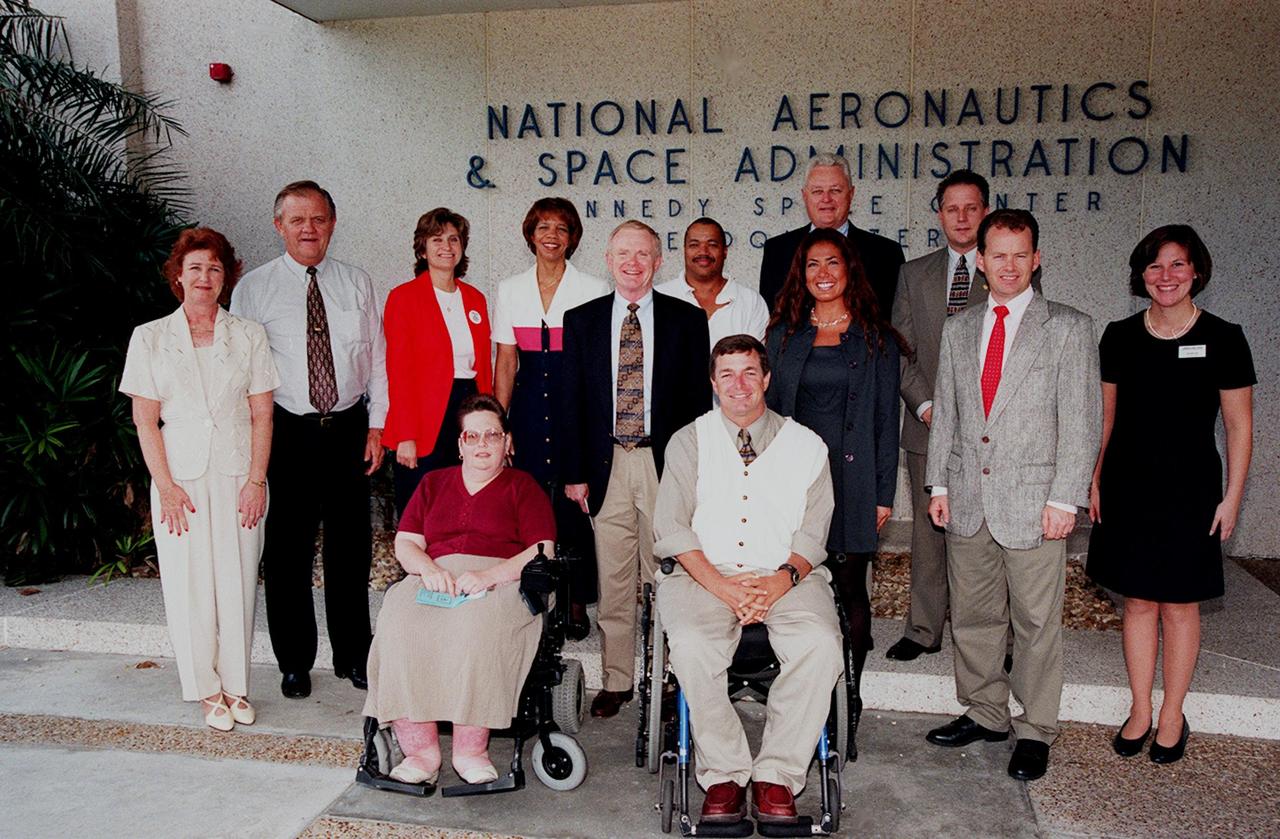
Center Director Roy Bridges (standing, center) poses with members of the Disability Awareness and Action Working Group (DAAWG), which is holding the 1999 Technology Fair Oct. 20-21 at Kennedy Space Center. The Fair is highlighting vendors demonstrating mobility, hearing, vision and silent disability assistive technology. The purpose is to create an awareness of the types of technology currently available to assist people with various disabilities in the workplace. The theme is that of this year's National Disability Employment Awareness Month, "Opening Doors to Ability." Some of the vendors participating are Canine Companions for Independence, Goodwill Industries, Accessible Structures, Division of Blind Services, Space Coast Center for Independent Living, KSC Fitness Center and Delaware North Parks Services
KSC-99pp1231
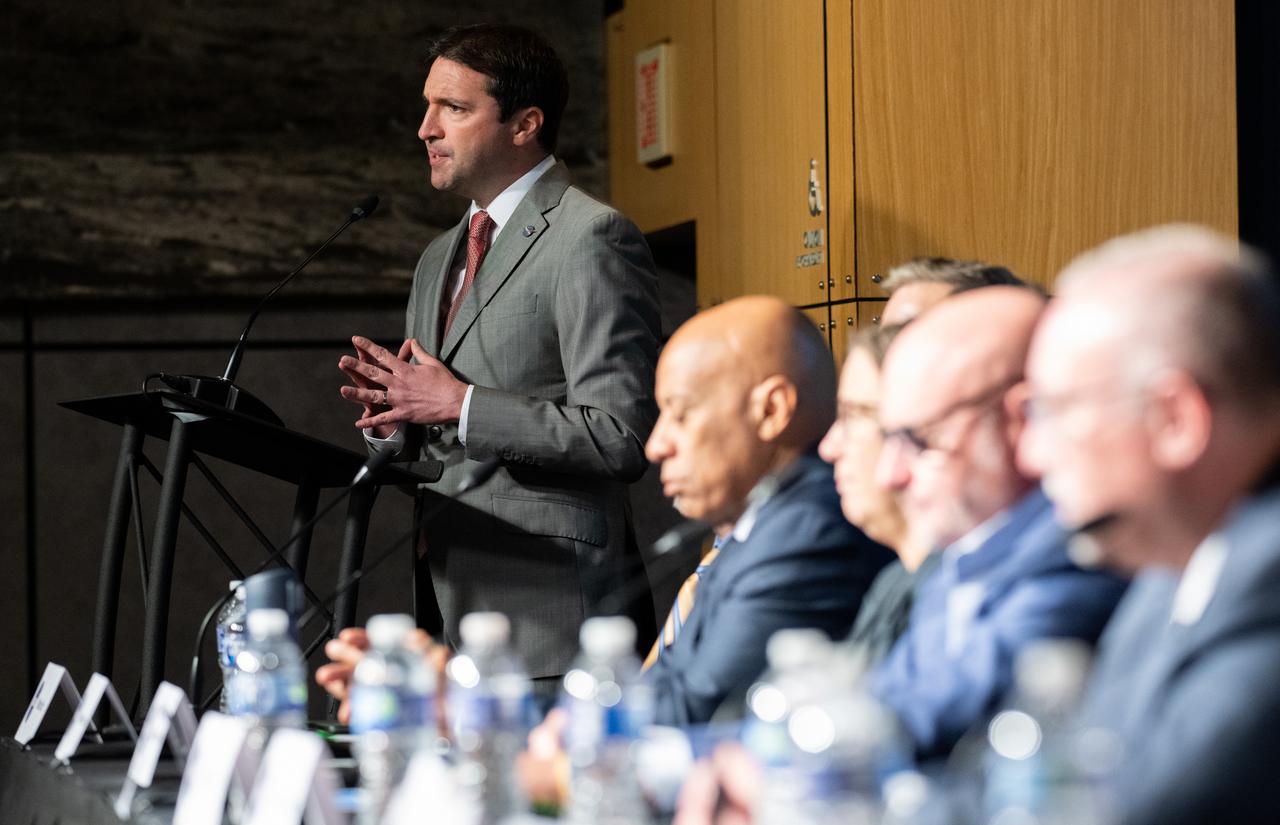
NASA Administrator Bill Nelson provides remarks during a media briefing to discuss the findings from an unidentified anomalous phenomena (UAP) independent study team, Thursday, Sept. 14, 2023, at the Mary W. Jackson NASA Headquarters building in Washington. The UAP independent study team, commissioned in 2022, is a counsel of 16 community experts across diverse areas on matters relevant to potential methods of study for unidentified anomalous phenomena. NASA published the team’s full report online, which aims to inform about what possible data could be collected in the future to shed light on the nature and origin of UAP. Photo Credit: (NASA/Aubrey Gemignani)
UAP Media Briefing
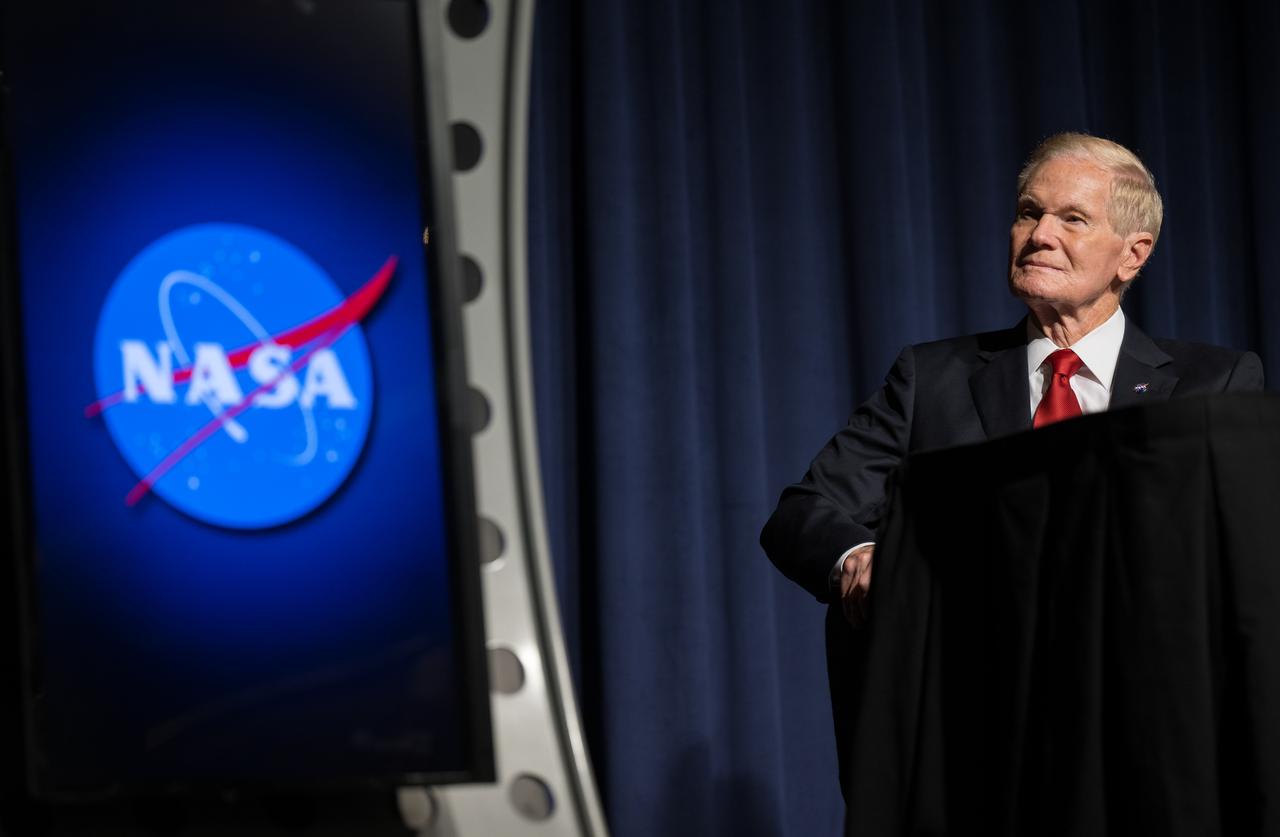
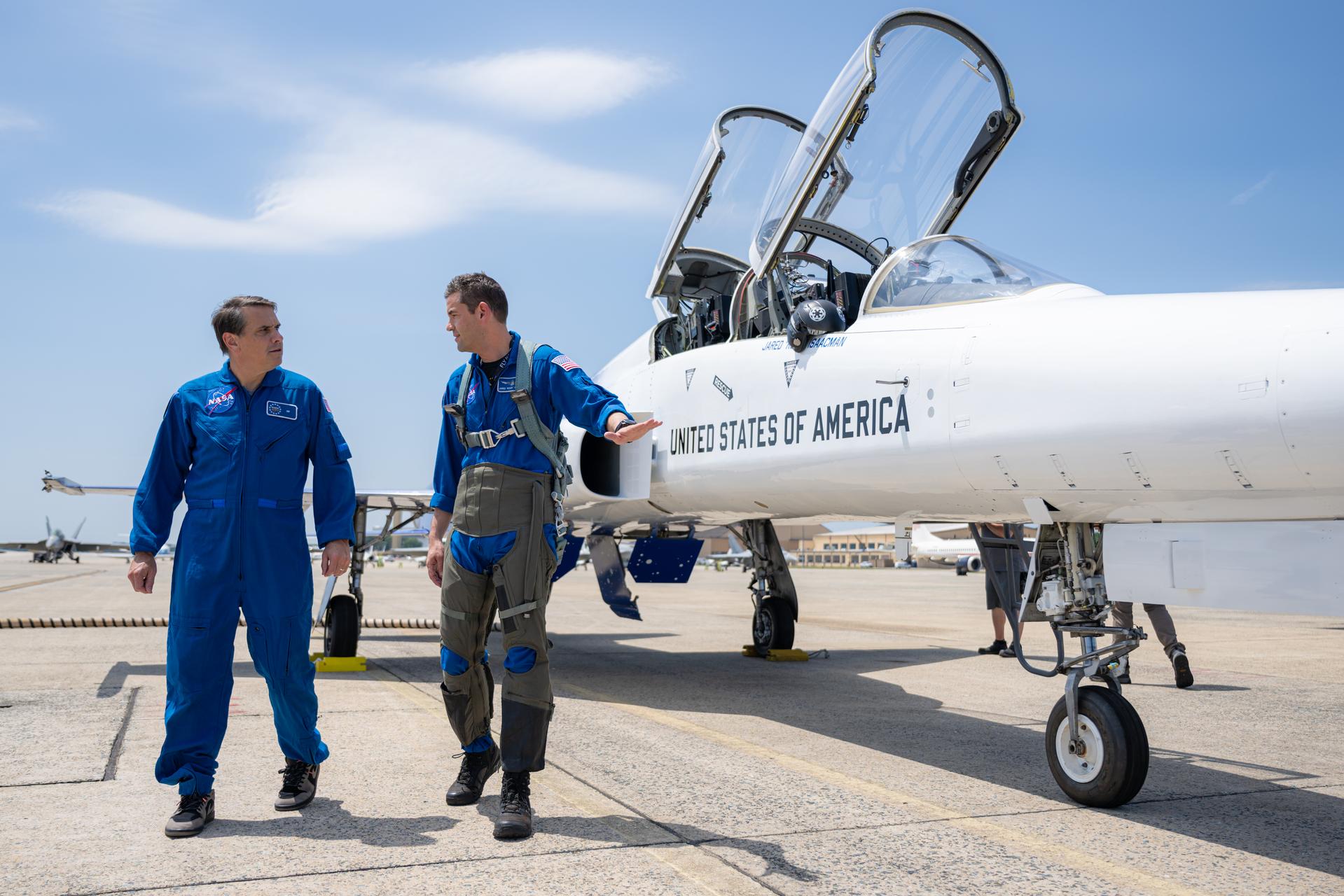
NASA Administrator Bill Nelson is seen during a media briefing to discuss the findings from an unidentified anomalous phenomena (UAP) independent study team, Thursday, Sept. 14, 2023, at the Mary W. Jackson NASA Headquarters building in Washington. The UAP independent study team, commissioned in 2022, is a counsel of 16 community experts across diverse areas on matters relevant to potential methods of study for unidentified anomalous phenomena. NASA published the team’s full report online, which aims to inform about what possible data could be collected in the future to shed light on the nature and origin of UAP. Photo Credit: (NASA/Aubrey Gemignani)
UAP Media Briefing
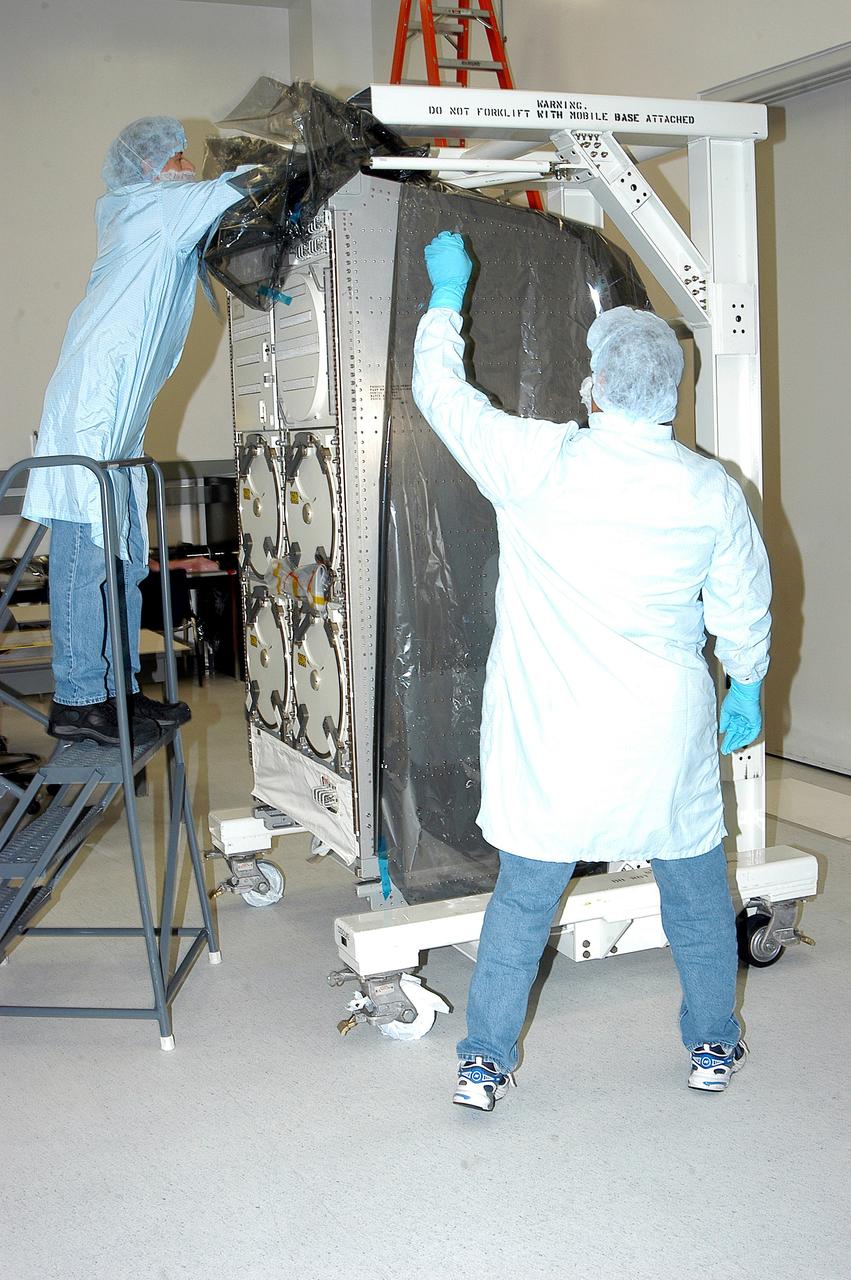
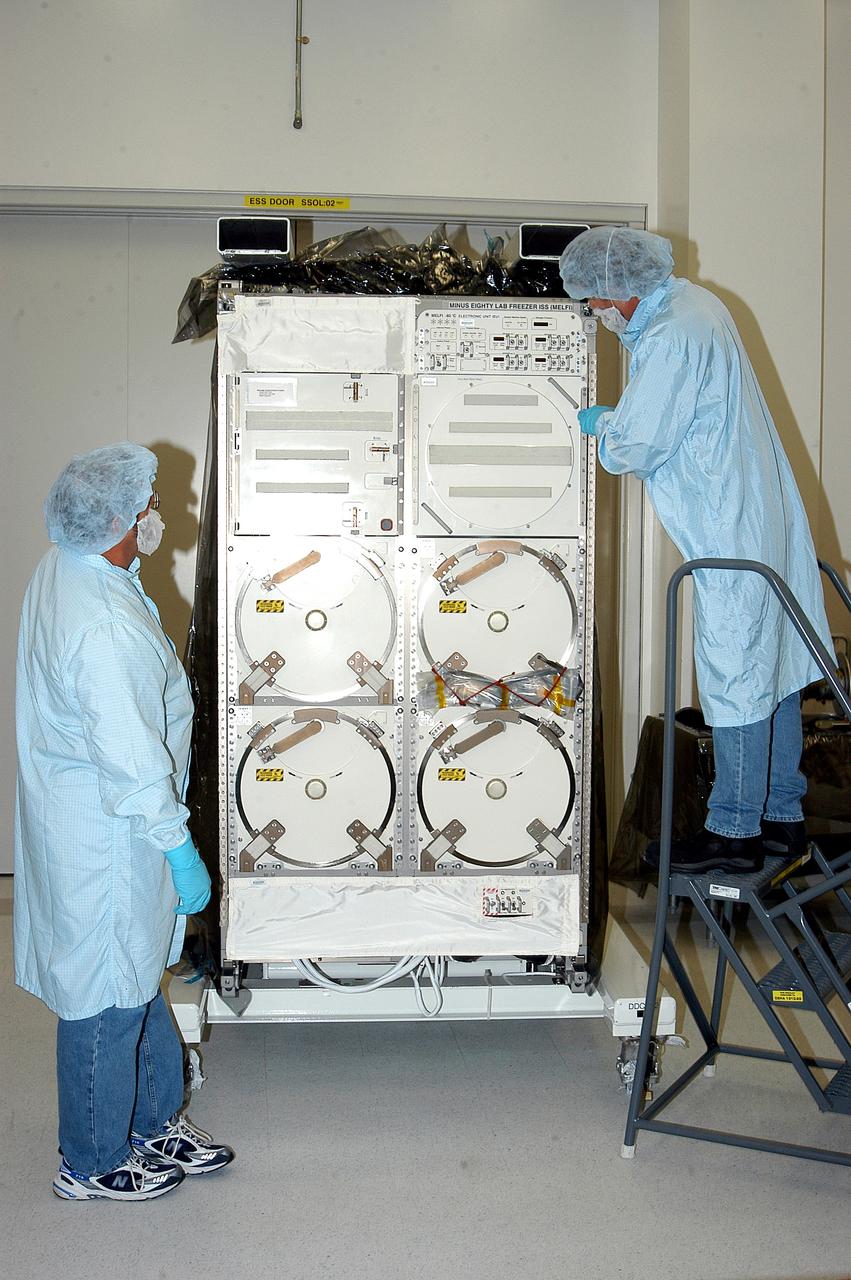
KENNEDY SPACE CENTER, FLA. -  After removing its cover, technicians look over the Minus Eighty Lab Freezer for ISS (MELFI),  provided as Laboratory Support Equipment by the European Space Agency for the International Space Station.  The lab will provide cooling and storage for reagents, samples and perishable materials in four insulated containers called dewars with independently selectable temperatures of -80°C, -26°C, and +4°C. It also will be used to transport samples to and from the station.   The MELFI is planned for launch on the ULF-1 mission.
KENNEDY SPACE CENTER, FLA. - After removing its cover, technicians look over the Minus Eighty Lab Freezer for ISS (MELFI), provided as Laboratory Support Equipment by the European Space Agency for the International Space Station. The lab will provide cooling and storage for reagents, samples and perishable materials in four insulated containers called dewars with independently selectable temperatures of -80°C, -26°C, and +4°C. It also will be used to transport samples to and from the station. The MELFI is planned for launch on the ULF-1 mission.
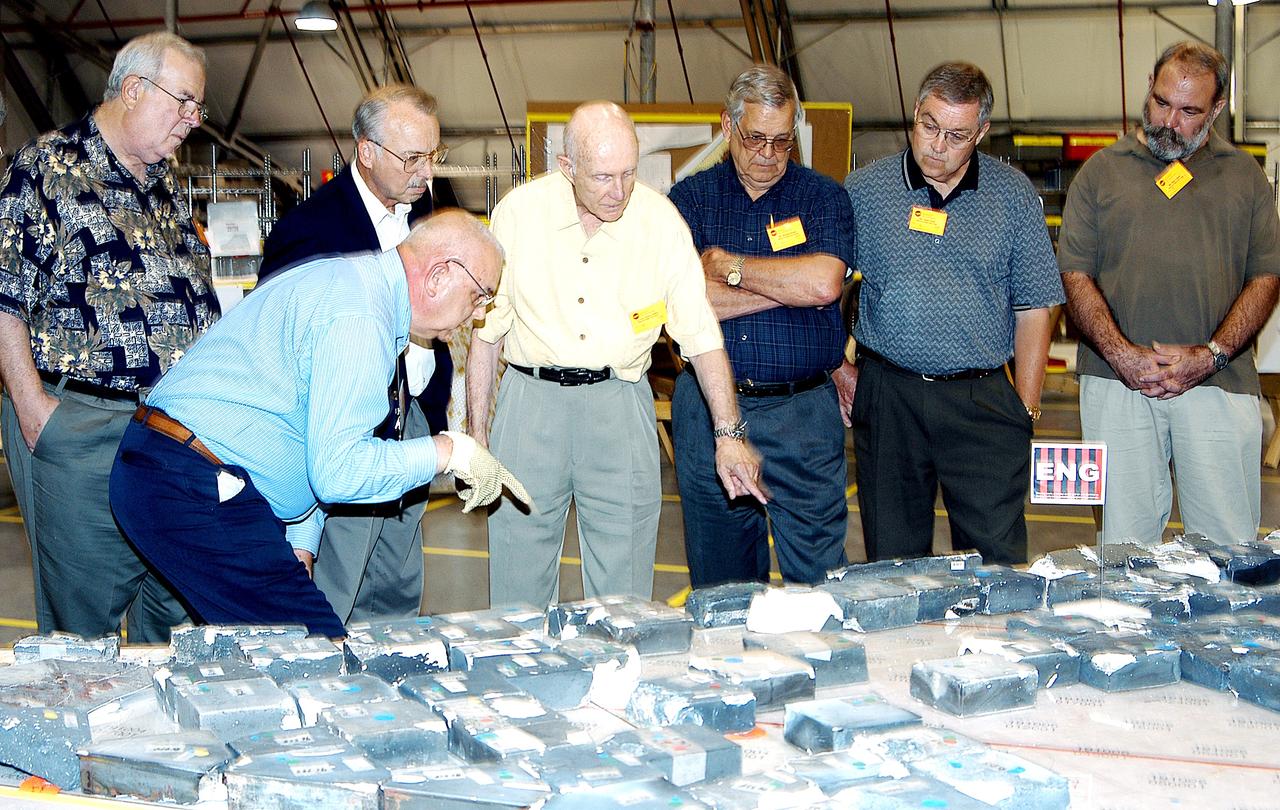
KENNEDY SPACE CENTER, FLA.  -  The Stafford-Covey Return to Flight Task Group (SCTG) inspects debris in the Columbia Debris Hangar.   At right is the model of the left wing that has been used during recovery operations.  Chairing the task group are Richard O. Covey, former Space Shuttle commander, and Thomas P. Stafford (third from right, foreground), Apollo commander.  Chartered by NASA Administrator Sean O’Keefe, the task group will perform an independent assessment of NASA’s implementation of the final recommendations by the Columbia Accident Investigation Board.
KENNEDY SPACE CENTER, FLA. - The Stafford-Covey Return to Flight Task Group (SCTG) inspects debris in the Columbia Debris Hangar. At right is the model of the left wing that has been used during recovery operations. Chairing the task group are Richard O. Covey, former Space Shuttle commander, and Thomas P. Stafford (third from right, foreground), Apollo commander. Chartered by NASA Administrator Sean O’Keefe, the task group will perform an independent assessment of NASA’s implementation of the final recommendations by the Columbia Accident Investigation Board.
KENNEDY SPACE CENTER, FLA.  -  In the Columbia Debris Hangar, members of the  Stafford-Covey Return to Flight Task Group (SCTG) look at tiles recovered.  Chairing the task group are Richard O. Covey, former Space Shuttle commander, and Thomas P. Stafford (center), Apollo commander.  Chartered by NASA Administrator Sean O’Keefe, the task group will perform an independent assessment of NASA’s implementation of the final recommendations by the Columbia Accident Investigation Board.
KENNEDY SPACE CENTER, FLA. - In the Columbia Debris Hangar, members of the Stafford-Covey Return to Flight Task Group (SCTG) look at tiles recovered. Chairing the task group are Richard O. Covey, former Space Shuttle commander, and Thomas P. Stafford (center), Apollo commander. Chartered by NASA Administrator Sean O’Keefe, the task group will perform an independent assessment of NASA’s implementation of the final recommendations by the Columbia Accident Investigation Board.
KENNEDY SPACE CENTER, FLA.  - As the Stafford-Covey Return to Flight Task Group (SCTG) tours the Orbiter Processing Facility, Richard O. Covey (second from left), former Space Shuttle commander, points to equipment.  Covey is co-chair of the SCTG along with Thomas P. Stafford, Apollo commander. Others in the photo are William Wegner, James Adamson and Joe Engle.  Chartered by NASA Administrator Sean O’Keefe, the task group will perform an independent assessment of NASA’s implementation of the final recommendations by the Columbia Accident Investigation Board.
KENNEDY SPACE CENTER, FLA. - As the Stafford-Covey Return to Flight Task Group (SCTG) tours the Orbiter Processing Facility, Richard O. Covey (second from left), former Space Shuttle commander, points to equipment. Covey is co-chair of the SCTG along with Thomas P. Stafford, Apollo commander. Others in the photo are William Wegner, James Adamson and Joe Engle. Chartered by NASA Administrator Sean O’Keefe, the task group will perform an independent assessment of NASA’s implementation of the final recommendations by the Columbia Accident Investigation Board.
KENNEDY SPACE CENTER, FLA.  -   The Stafford-Covey Return to Flight Task Group (SCTG) visits the Columbia Debris Hangar .  Chairing the task group are Richard O. Covey (third from right), former Space Shuttle commander, and Thomas P. Stafford (fourth from right), Apollo commander.  Chartered by NASA Administrator Sean O’Keefe, the task group will perform an independent assessment of NASA’s implementation of the final recommendations by the Columbia Accident Investigation Board.
KENNEDY SPACE CENTER, FLA. - The Stafford-Covey Return to Flight Task Group (SCTG) visits the Columbia Debris Hangar . Chairing the task group are Richard O. Covey (third from right), former Space Shuttle commander, and Thomas P. Stafford (fourth from right), Apollo commander. Chartered by NASA Administrator Sean O’Keefe, the task group will perform an independent assessment of NASA’s implementation of the final recommendations by the Columbia Accident Investigation Board.
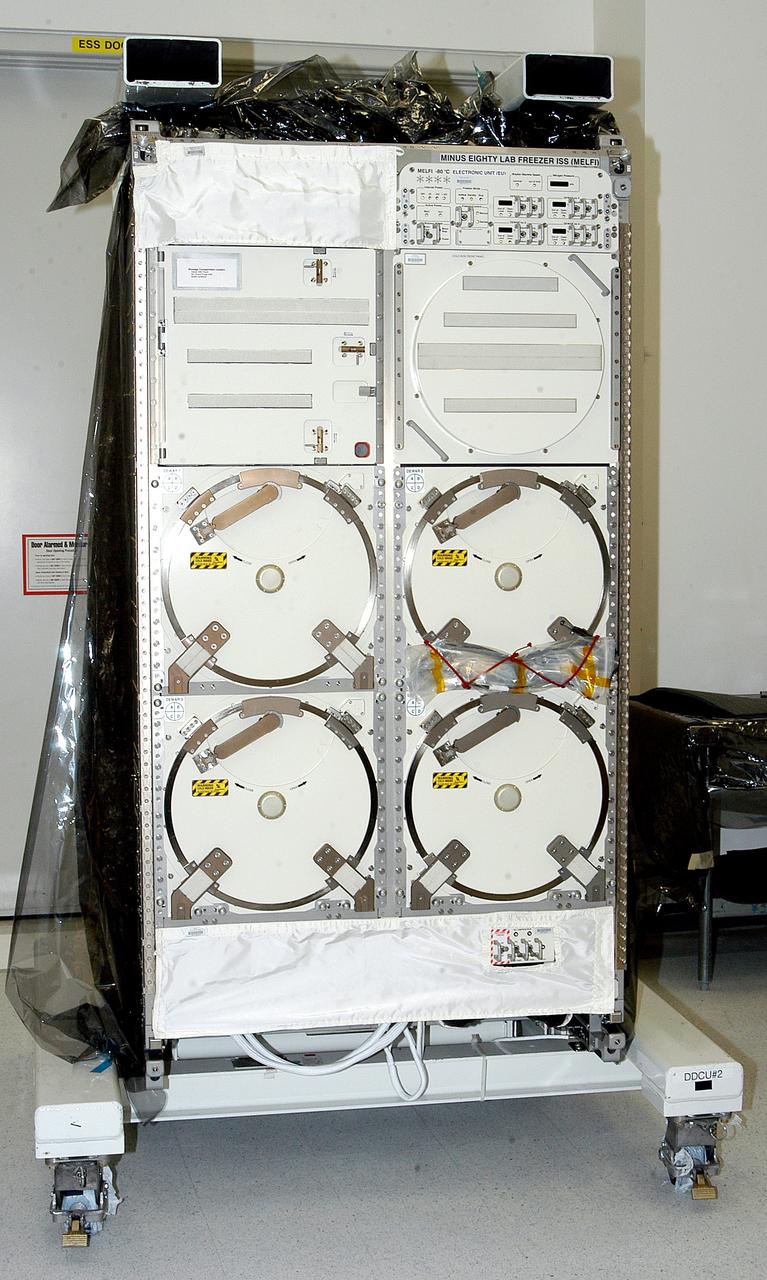
KENNEDY SPACE CENTER, FLA. -  The Minus Eighty Lab Freezer for ISS (MELFI), provided as Laboratory Support Equipment by the European Space Agency for the International Space Station, is seen in the Space Station Processing Facility.  The lab will provide cooling and storage for reagents, samples and perishable materials in four insulated containers called dewars with independently selectable temperatures of -80°C, -26°C, and +4°C. It also will be used to transport samples to and from the station.   The MELFI is planned for launch on the ULF-1 mission.
KENNEDY SPACE CENTER, FLA. - The Minus Eighty Lab Freezer for ISS (MELFI), provided as Laboratory Support Equipment by the European Space Agency for the International Space Station, is seen in the Space Station Processing Facility. The lab will provide cooling and storage for reagents, samples and perishable materials in four insulated containers called dewars with independently selectable temperatures of -80°C, -26°C, and +4°C. It also will be used to transport samples to and from the station. The MELFI is planned for launch on the ULF-1 mission.
KENNEDY SPACE CENTER, FLA.  -  In the Columbia Debris Hangar, Shuttle Launch Director Mike Leinbach (left) talks to members of the  Stafford-Covey Return to Flight Task Group (SCTG) about reconstruction efforts.   Chairing the task group are Richard O. Covey (second from right), former Space Shuttle commander, and Thomas P. Stafford, Apollo commander.  Chartered by NASA Administrator Sean O’Keefe, the task group will perform an independent assessment of NASA’s implementation of the final recommendations by the Columbia Accident Investigation Board.
KENNEDY SPACE CENTER, FLA. - In the Columbia Debris Hangar, Shuttle Launch Director Mike Leinbach (left) talks to members of the Stafford-Covey Return to Flight Task Group (SCTG) about reconstruction efforts. Chairing the task group are Richard O. Covey (second from right), former Space Shuttle commander, and Thomas P. Stafford, Apollo commander. Chartered by NASA Administrator Sean O’Keefe, the task group will perform an independent assessment of NASA’s implementation of the final recommendations by the Columbia Accident Investigation Board.
KENNEDY SPACE CENTER, FLA.  - In the Columbia Debris Hangar, Shuttle Launch Director Mike Leinbach answers questions from the Stafford-Covey Return to Flight Task Group (SCTG).  Chairing the task group are Richard O. Covey (fifth from left), former Space Shuttle commander, and Thomas P. Stafford, Apollo commander.  Chartered by NASA Administrator Sean O’Keefe, the task group will perform an independent assessment of NASA’s implementation of the final recommendations by the Columbia Accident Investigation Board.
KENNEDY SPACE CENTER, FLA. - In the Columbia Debris Hangar, Shuttle Launch Director Mike Leinbach answers questions from the Stafford-Covey Return to Flight Task Group (SCTG). Chairing the task group are Richard O. Covey (fifth from left), former Space Shuttle commander, and Thomas P. Stafford, Apollo commander. Chartered by NASA Administrator Sean O’Keefe, the task group will perform an independent assessment of NASA’s implementation of the final recommendations by the Columbia Accident Investigation Board.
KENNEDY SPACE CENTER, FLA. -  In the Space Station Processing Facility, technicians remove the cover from the Minus Eighty Lab Freezer for ISS(MELFI) provided as Laboratory Support Equipment by the European Space Agency for the International Space Station.  The lab will provide cooling and storage for reagents, samples and perishable materials in four insulated containers called dewars with independently selectable temperatures of -80°C, -26°C, and +4°C. It also will be used to transport samples to and from the station.   The MELFI is planned for launch on the ULF-1 mission.
KENNEDY SPACE CENTER, FLA. - In the Space Station Processing Facility, technicians remove the cover from the Minus Eighty Lab Freezer for ISS(MELFI) provided as Laboratory Support Equipment by the European Space Agency for the International Space Station. The lab will provide cooling and storage for reagents, samples and perishable materials in four insulated containers called dewars with independently selectable temperatures of -80°C, -26°C, and +4°C. It also will be used to transport samples to and from the station. The MELFI is planned for launch on the ULF-1 mission.
KENNEDY SPACE CENTER, FLA.  -  In the Columbia Debris Hangar, members of the  Stafford-Covey Return to Flight Task Group (SCTG) inspect some of the debris.   Chairing the task group are Richard O. Covey, former Space Shuttle commander, and Thomas P. Stafford (fourth from left), Apollo commander.  Chartered by NASA Administrator Sean O’Keefe, the task group will perform an independent assessment of NASA’s implementation of the final recommendations by the Columbia Accident Investigation Board.
KENNEDY SPACE CENTER, FLA. - In the Columbia Debris Hangar, members of the Stafford-Covey Return to Flight Task Group (SCTG) inspect some of the debris. Chairing the task group are Richard O. Covey, former Space Shuttle commander, and Thomas P. Stafford (fourth from left), Apollo commander. Chartered by NASA Administrator Sean O’Keefe, the task group will perform an independent assessment of NASA’s implementation of the final recommendations by the Columbia Accident Investigation Board.
TODD MAY, LEFT, MANAGER OF THE SLS PROGRAM AT THE MARSHALL CENTER, DISCUSSES THE ROCKET'S SPECIFICATIONS WITH LEROY CAIN, WHO HEADS THE INDEPENDENT STANDING REVIEW BOARD FOR SLS, DURING THE SLS PROGRAM'S PRELIMINARY DESIGN REVIEW. THE REVIEW KICKED OFF JUNE 18-19
1300479
NRTC/RITA Precision Pathway Terminal Guidance: UH-60 RASCAL (#012)  (National Rotocraft Technology Center/Rotorcraft Industry Technology Association) runway independent aircraft; Sikorsky Helicopter pilot Kevin Bredenbeck preparing for flight in RASCAL with Dave Arterburn
ARC-2003-ACD03-0112-050
iss056e021157 (June 19, 2018) --- Expedition 56 Flight Engineer Ricky Arnold of NASA (foreground) performs maintenance inside the Combustion Integrated Rack to set up the Advanced Combustion via Microgravity Experiments (ACME), a series of five independent studies of gaseous flames. Expedition 56 Commander Drew Feustel of NASA is seen in the background.
CIR Troubleshooting Operations
An Independent Crew Egress Exercise (ICEE) / Houston Operations Theater (HOT) engineering test is conducted at JSC's Neutral Buoyancy Lab (NBL), Sonny Carter Training Facility (SCTF) in Houston on June 29, 2017. Part of Batch images transfer from Flickr.
Orion crew egress exercise
iss073e0420732 (July 4, 2025) --- NASA astronaut and Expedition 73 Flight Engineer Jonnny Kim poses for a portrait with the American flag on the Fourth of July, or Independence Day, inside the International Space Station's "window to the world," the cupola. The orbital outpost was soaring 268 miles above a cloudy Atlantic Ocean at the time of this photograph.
NASA astronaut Jonnny Kim poses for a portrait with the American flag on the Fourth of July