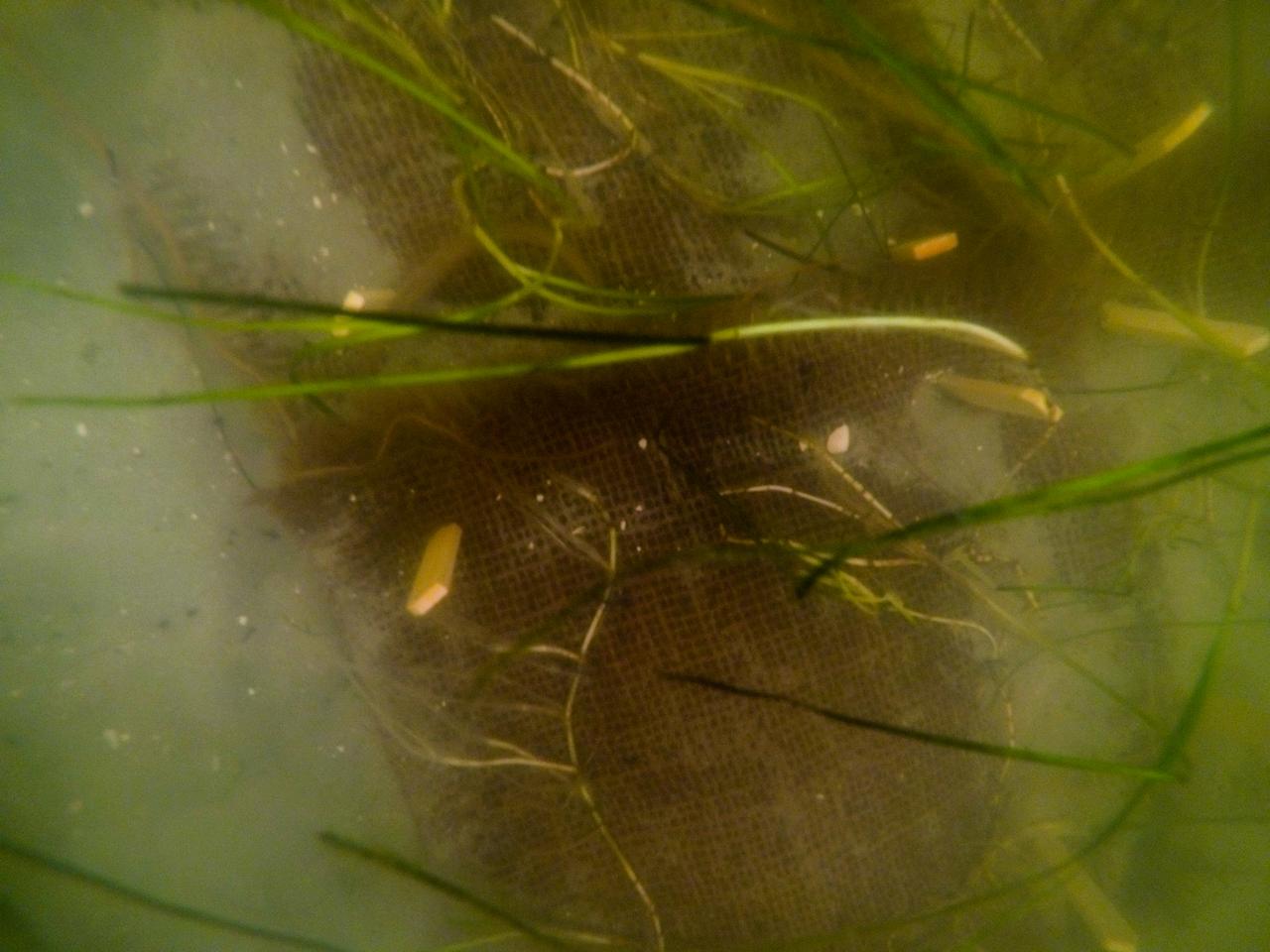
Seen here is a close-up view of newly planted seagrass in the Banana River – one of three bodies of water that make up the Indian River Lagoon (IRL) – at NASA’s Kennedy Space Center in Florida on March 29, 2023. Kennedy’s Environmental Management Branch is working to plant a minimum of 28,000 shoots of seagrass divided into 18 sites across three areas at the Florida spaceport as part of a pilot project for seagrass restoration efforts. Each “plot” of seagrass contains 16 shoots tied to a burlap mesh square with floral ties and has bamboo skewers at each corner that are staked into the sediment. The project, which involves using all biodegradable materials, will look at the feasibility of replanting seagrass in Kennedy waters and, if successful, could lead to the spaceport becoming a donor site where shoots of grass can be broken off and relocated to other areas within Kennedy or along the Indian River Lagoon to promote growth.
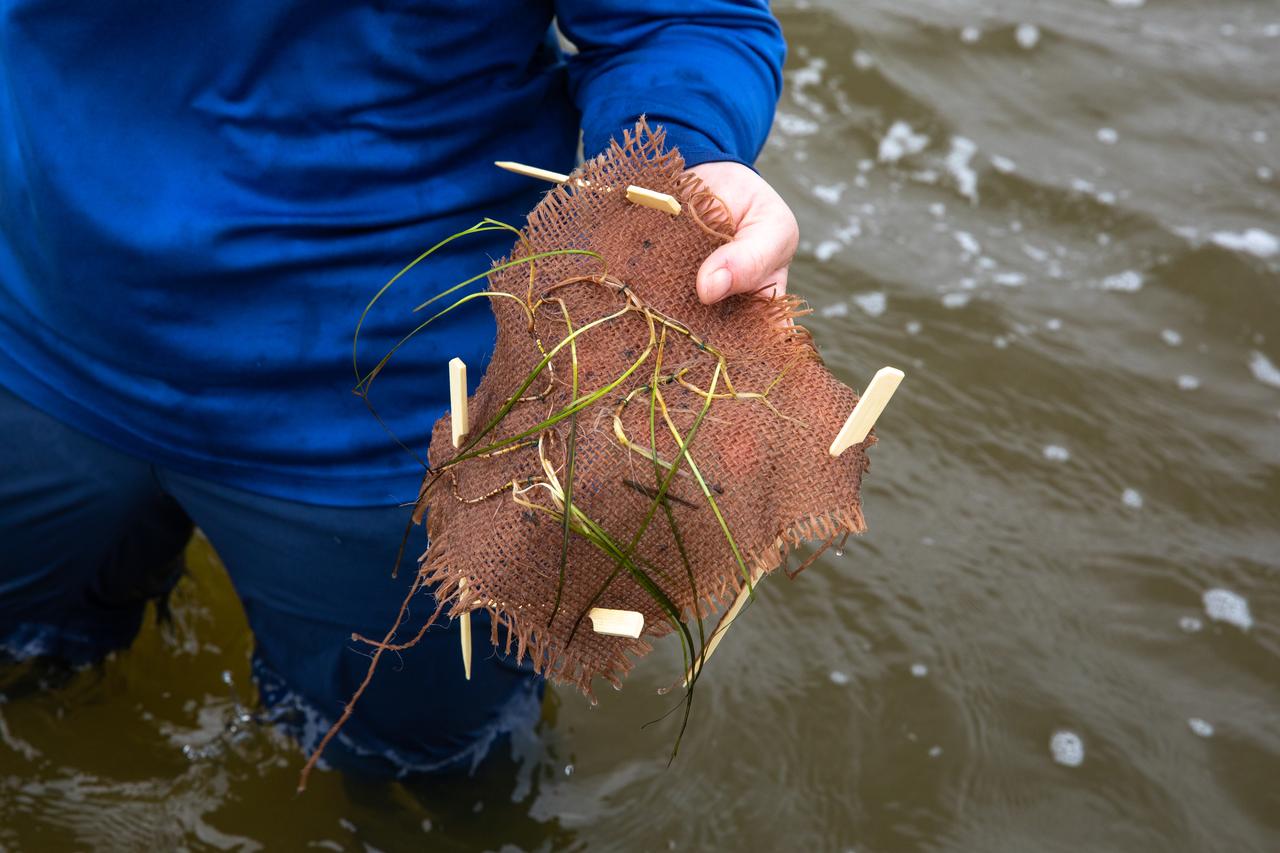
Seen here is a close-up view of one “plot” of seagrass being planted in the Banana River – one of three bodies of water that make up the Indian River Lagoon (IRL) – at NASA’s Kennedy Space Center in Florida on March 29, 2023. Kennedy’s Environmental Management Branch is working to plant a minimum of 28,000 shoots of seagrass divided into 18 sites across three areas at the Florida spaceport as part of a pilot project for seagrass restoration efforts. Each “plot” of seagrass contains 16 shoots tied to a burlap mesh square with floral ties and has bamboo skewers at each corner that are staked into the sediment. The project, which involves using all biodegradable materials, will look at the feasibility of replanting seagrass in Kennedy waters and, if successful, could lead to the spaceport becoming a donor site where shoots of grass can be broken off and relocated to other areas within Kennedy or along the Indian River Lagoon to promote growth.

Seen here is a close-up view of one “plot” of seagrass being planted in the Banana River – one of three bodies of water that make up the Indian River Lagoon (IRL) – at NASA’s Kennedy Space Center in Florida on March 29, 2023. Kennedy’s Environmental Management Branch is working to plant a minimum of 28,000 shoots of seagrass divided into 18 sites across three areas at the Florida spaceport as part of a pilot project for seagrass restoration efforts. Each “plot” of seagrass contains 16 shoots tied to a burlap mesh square with floral ties and has bamboo skewers at each corner that are staked into the sediment. The project, which involves using all biodegradable materials, will look at the feasibility of replanting seagrass in Kennedy waters and, if successful, could lead to the spaceport becoming a donor site where shoots of grass can be broken off and relocated to other areas within Kennedy or along the Indian River Lagoon to promote growth.

Lorae Simpson, director of research and conservation with the Florida Oceanographic Society, prepares to plant seagrass in the Banana River – one of three bodies of water that make up the Indian River Lagoon (IRL) – at NASA’s Kennedy Space Center in Florida on March 29, 2023. Kennedy’s Environmental Management Branch is working to plant a minimum of 28,000 shoots of seagrass divided into 18 sites across three areas at the Florida spaceport as part of a pilot project for seagrass restoration efforts. Each “plot” of seagrass contains 16 shoots tied to a burlap mesh square with floral ties and has bamboo skewers at each corner that are staked into the sediment. The project, which involves using all biodegradable materials, will look at the feasibility of replanting seagrass in Kennedy waters and, if successful, could lead to the spaceport becoming a donor site where shoots of grass can be broken off and relocated to other areas within Kennedy or along the Indian River Lagoon to promote growth.
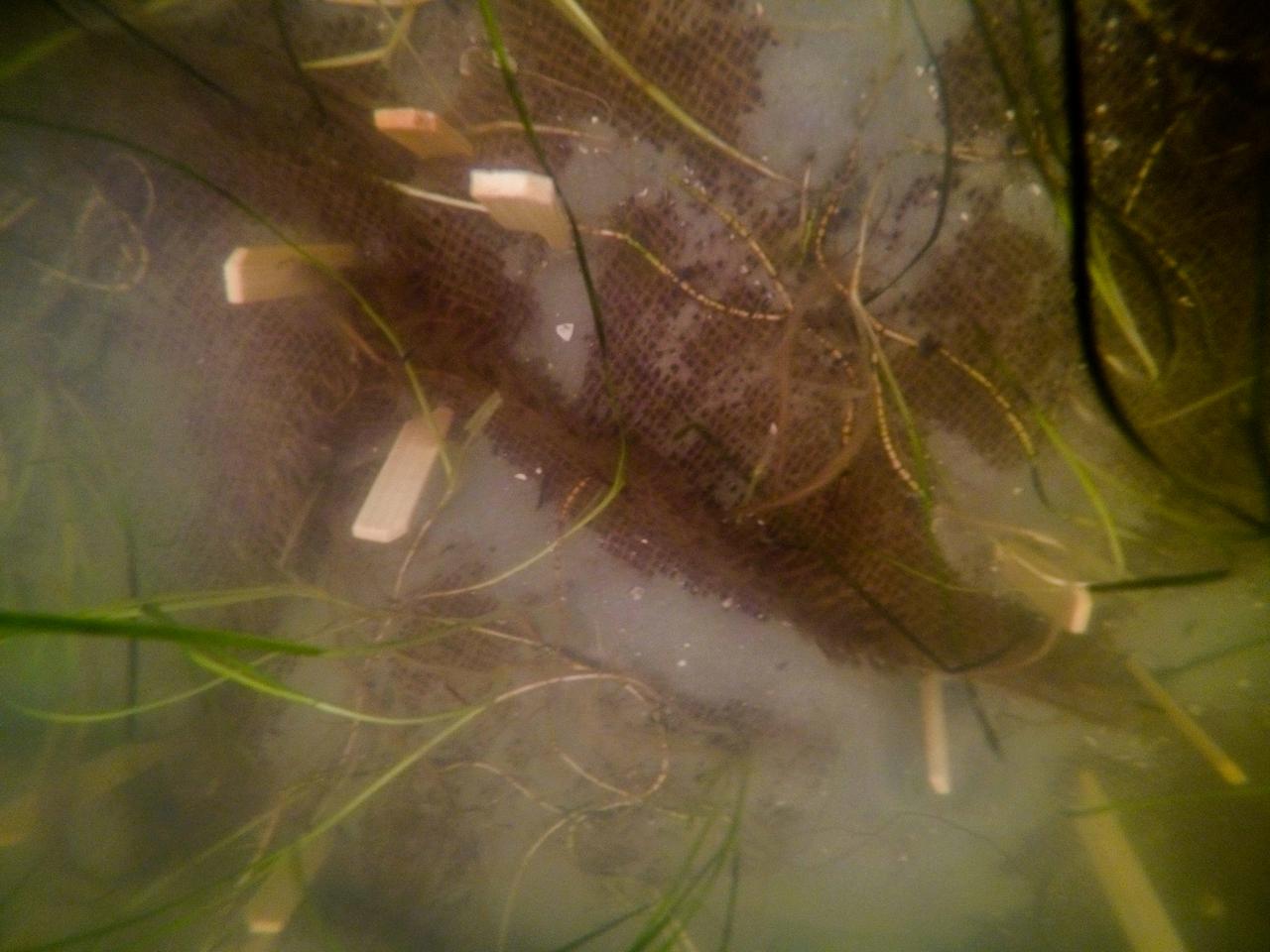
Seen here is a close-up view of newly planted seagrass in the Banana River – one of three bodies of water that make up the Indian River Lagoon (IRL) – at NASA’s Kennedy Space Center in Florida on March 29, 2023. Kennedy’s Environmental Management Branch is working to plant a minimum of 28,000 shoots of seagrass divided into 18 sites across three areas at the Florida spaceport as part of a pilot project for seagrass restoration efforts. Each “plot” of seagrass contains 16 shoots tied to a burlap mesh square with floral ties and has bamboo skewers at each corner that are staked into the sediment. The project, which involves using all biodegradable materials, will look at the feasibility of replanting seagrass in Kennedy waters and, if successful, could lead to the spaceport becoming a donor site where shoots of grass can be broken off and relocated to other areas within Kennedy or along the Indian River Lagoon to promote growth.
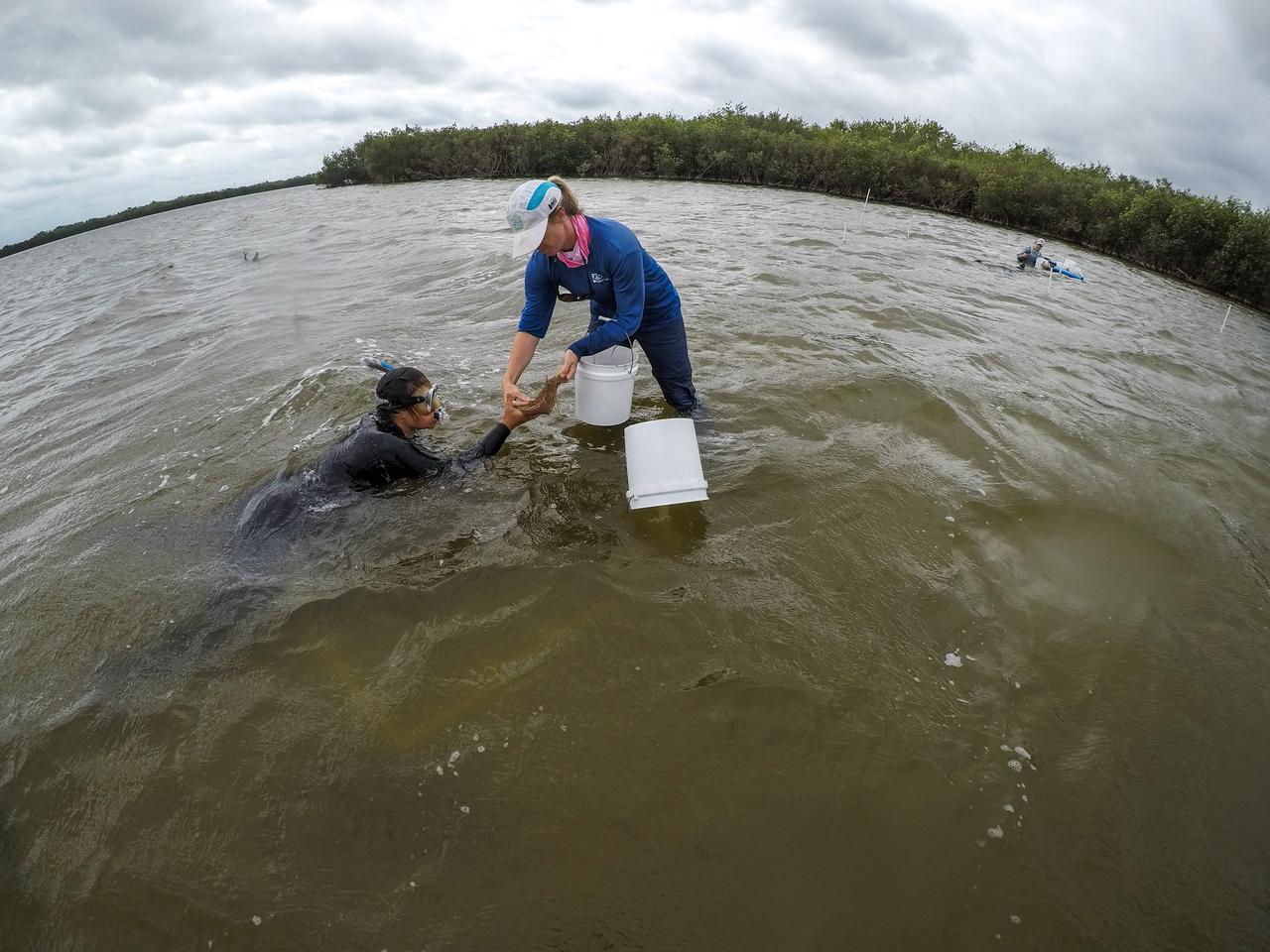
Members of the Florida Oceanographic Society plant seagrass in the Banana River – one of three bodies of water that make up the Indian River Lagoon (IRL) – at NASA’s Kennedy Space Center in Florida on March 29, 2023. Kennedy’s Environmental Management Branch is working to plant a minimum of 28,000 shoots of seagrass divided into 18 sites across three areas at the Florida spaceport as part of a pilot project for seagrass restoration efforts. The project will look at the feasibility of replanting seagrass in Kennedy waters and, if successful, could lead to the spaceport becoming a donor site where shoots of grass can be broken off and relocated to other areas within Kennedy or along the IRL to promote growth.
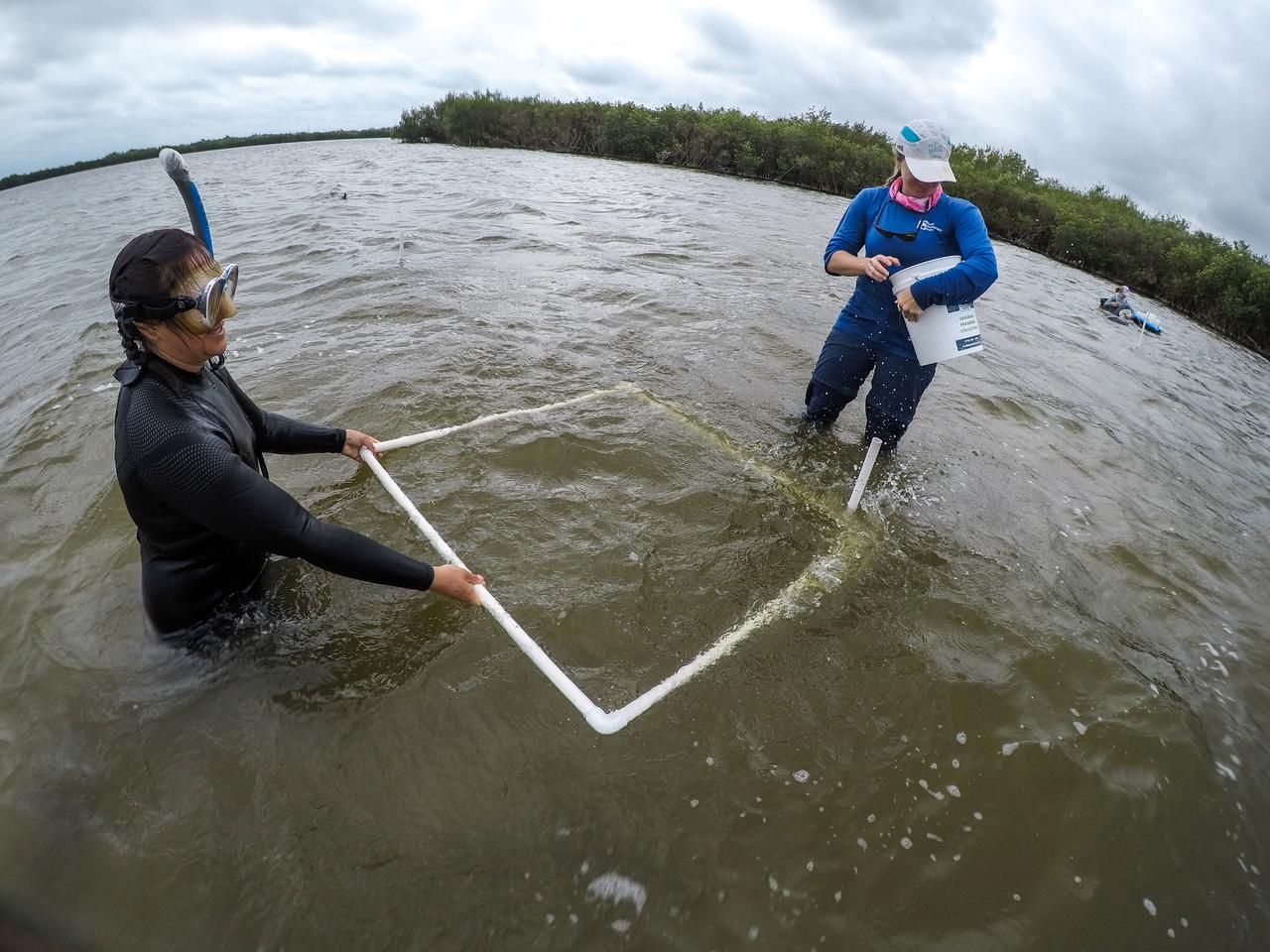
Members of the Florida Oceanographic Society prepare to plant seagrass in the Banana River – one of three bodies of water that make up the Indian River Lagoon (IRL) – at NASA’s Kennedy Space Center in Florida on March 29, 2023. Kennedy’s Environmental Management Branch is working to plant a minimum of 28,000 shoots of seagrass divided into 18 sites across three areas at the Florida spaceport as part of a pilot project for seagrass restoration efforts. The project will look at the feasibility of replanting seagrass in Kennedy waters and, if successful, could lead to the spaceport becoming a donor site where shoots of grass can be broken off and relocated to other areas within Kennedy or along the IRL to promote growth.
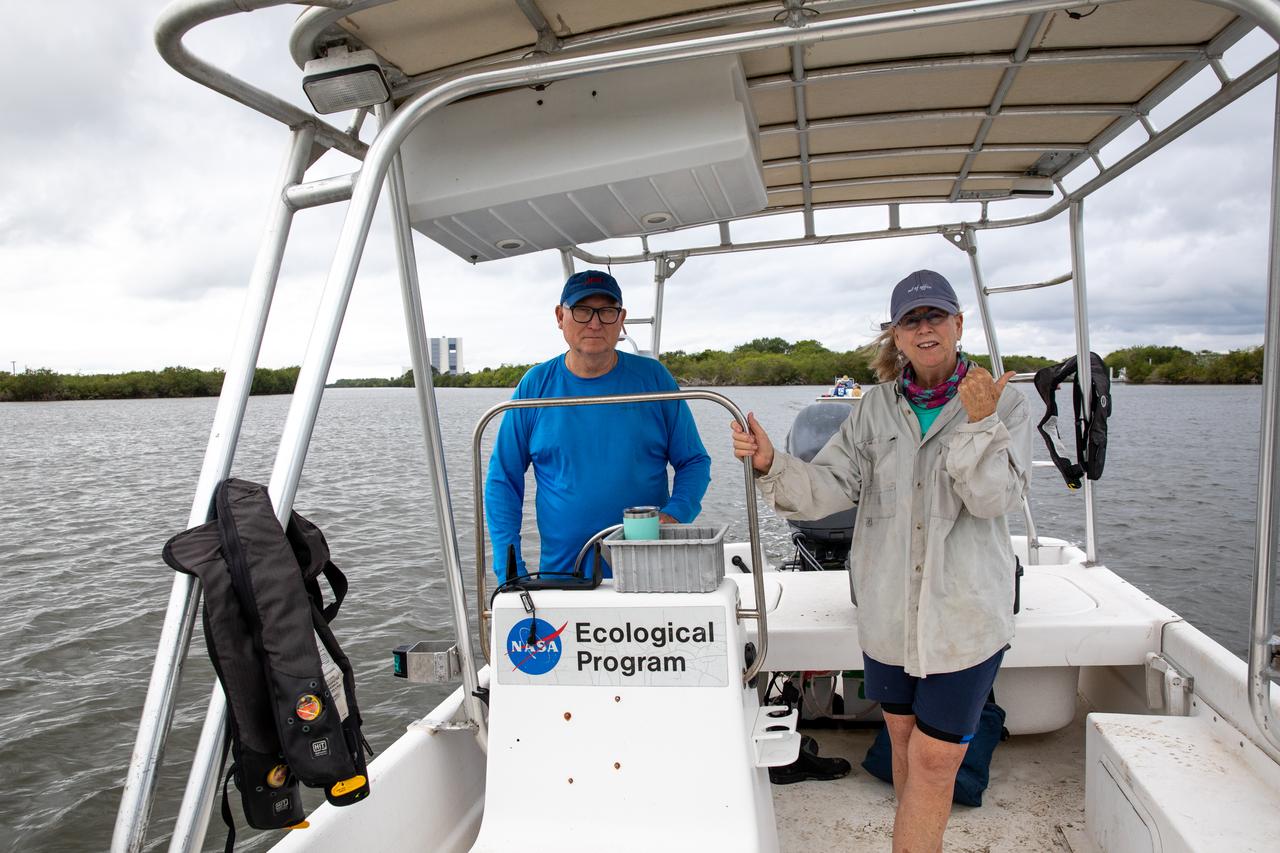
Kennedy Space Center’s Doug Scheidt (left), an ecologist working on NASA’s Environmental and Medical Contract (NEMCON), and Jane Provancha, manager of the ecological group for NEMCON, oversee seagrass restoration efforts at the Florida spaceport on March 29, 2023. Kennedy’s Environmental Management Branch is working to plant a minimum of 28,000 shoots of seagrass divided into 18 sites across three areas at the Florida spaceport as part of a pilot project for seagrass restoration efforts. The project will look at the feasibility of replanting seagrass in Kennedy waters and, if successful, could lead to the spaceport becoming a donor site where shoots of grass can be broken off and relocated to other areas within Kennedy or along the Indian River Lagoon to promote growth.
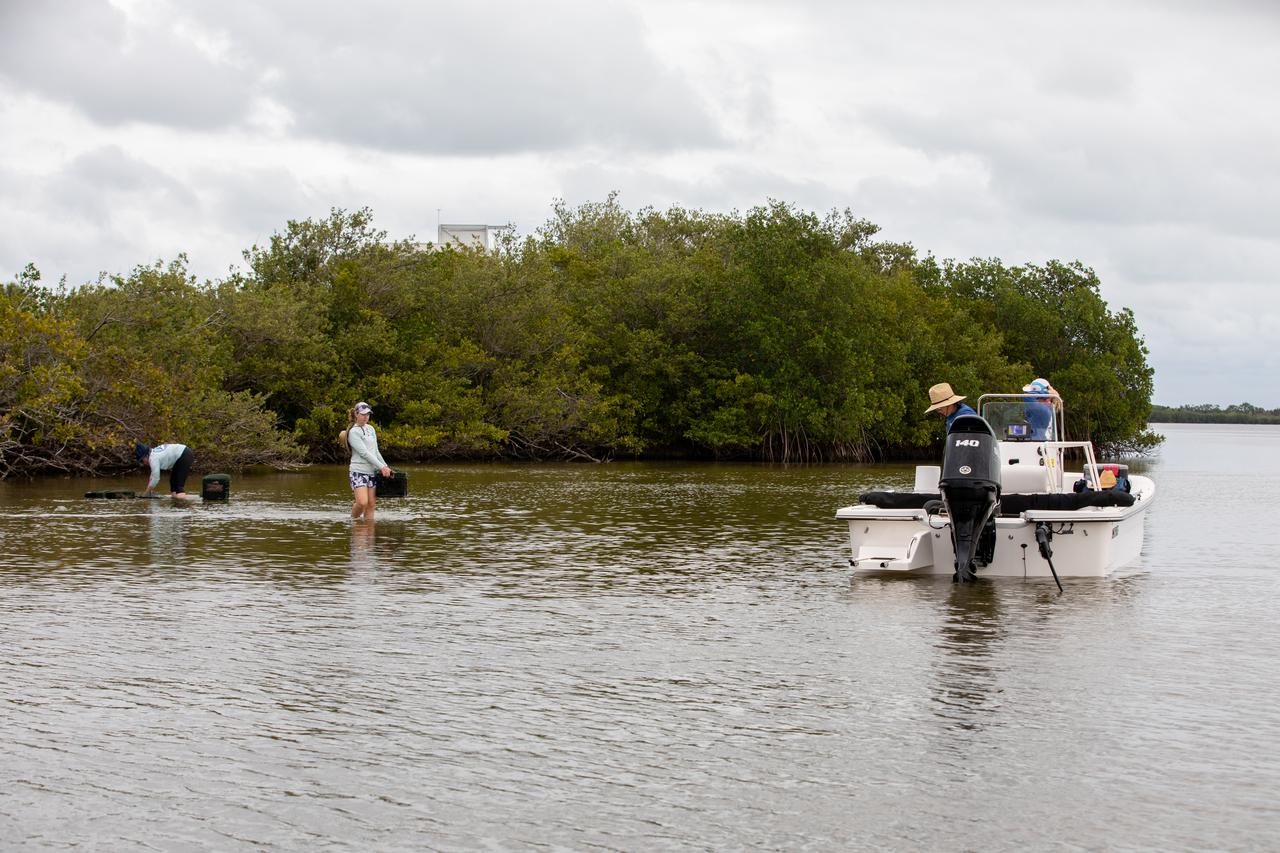
Members of the Florida Oceanographic Society collect mats of seagrass from their storage site at NASA’s Kennedy Space Center in Florida as they prepare to plant them in the Banana River – one of three bodies of water that make up the Indian River Lagoon (IRL) – on March 29, 2023. Kennedy’s Environmental Management Branch is working to plant a minimum of 28,000 shoots of seagrass divided into 18 sites across three areas at the Florida spaceport as part of a pilot project for seagrass restoration efforts. The project will look at the feasibility of replanting seagrass in Kennedy waters and, if successful, could lead to the spaceport becoming a donor site where shoots of grass can be broken off and relocated to other areas within Kennedy or along the IRL to promote growth.
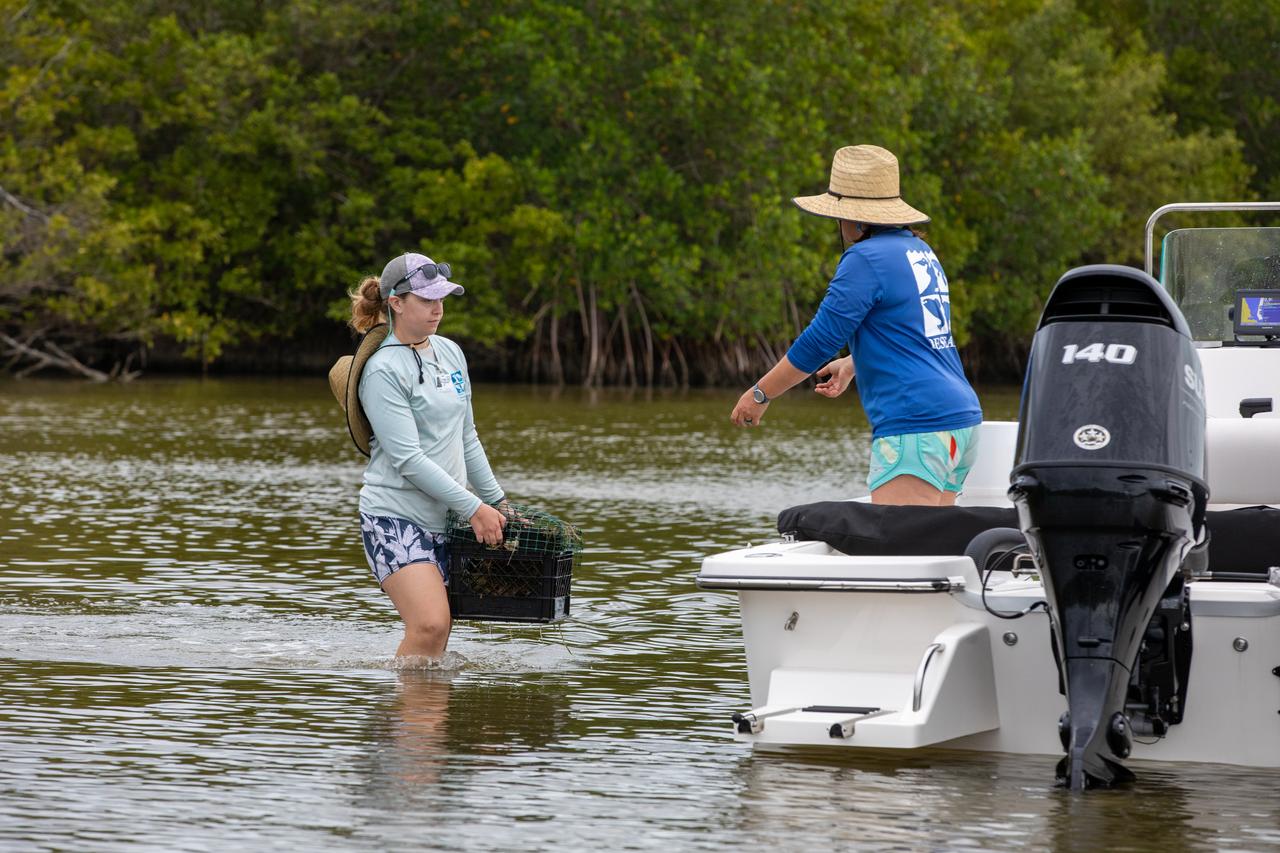
Members of the Florida Oceanographic Society collect mats of seagrass from their storage site at NASA’s Kennedy Space Center in Florida as they prepare to plant them in the Banana River – one of three bodies of water that make up the Indian River Lagoon (IRL) – on March 29, 2023. Kennedy’s Environmental Management Branch is working to plant a minimum of 28,000 shoots of seagrass divided into 18 sites across three areas at the Florida spaceport as part of a pilot project for seagrass restoration efforts. The project will look at the feasibility of replanting seagrass in Kennedy waters and, if successful, could lead to the spaceport becoming a donor site where shoots of grass can be broken off and relocated to other areas within Kennedy or along the IRL to promote growth.
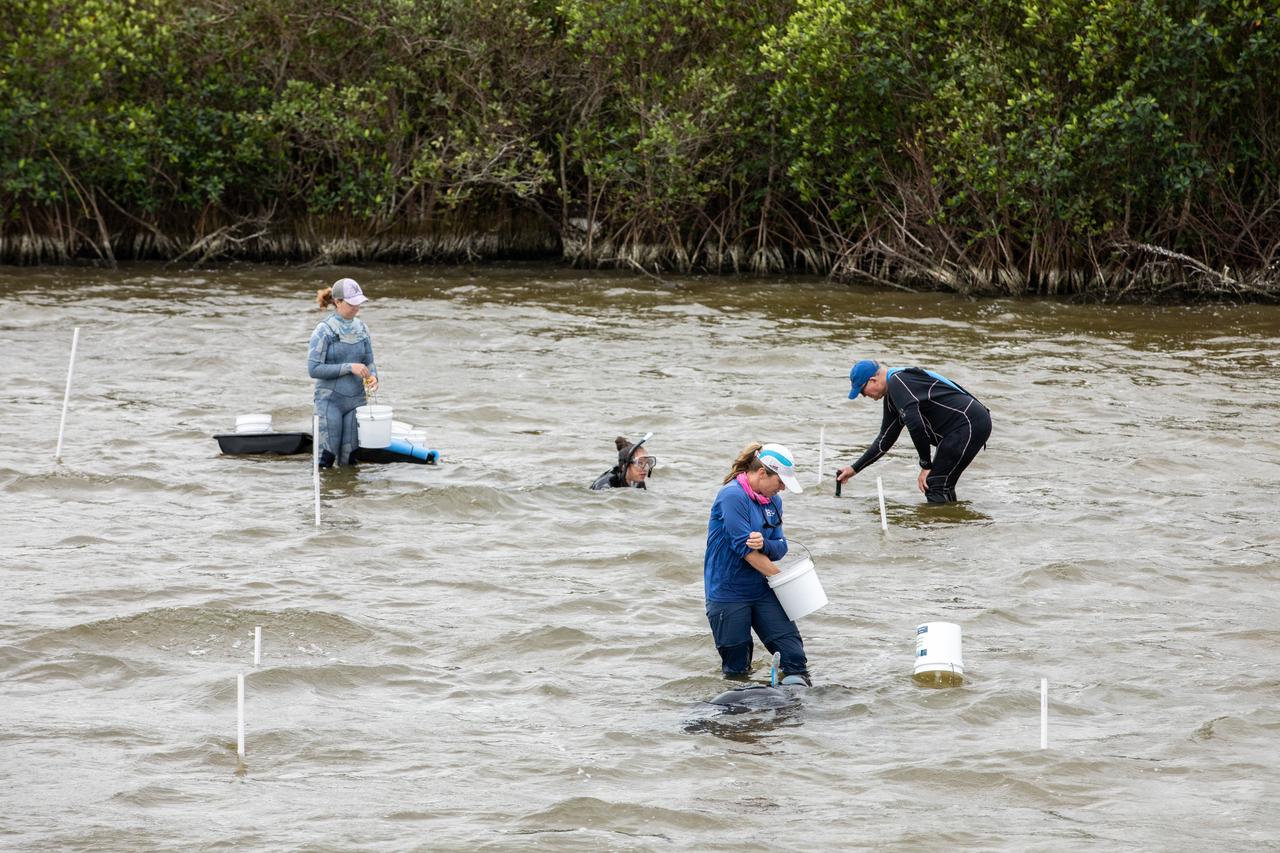
Members of the Florida Oceanographic Society begin planting seagrass in the Banana River – one of three bodies of water that make up the Indian River Lagoon (IRL) – at NASA’s Kennedy Space Center in Florida on March 29, 2023. At the top right is Doug Scheidt, an ecologist working on NASA’s Environmental and Medical Contract at Kennedy. Kennedy’s Environmental Management Branch is working to plant a minimum of 28,000 shoots of seagrass divided into 18 sites across three areas at the Florida spaceport as part of a pilot project for seagrass restoration efforts. The project will look at the feasibility of replanting seagrass in Kennedy waters and, if successful, could lead to the spaceport becoming a donor site where shoots of grass can be broken off and relocated to other areas within Kennedy or along the IRL to promote growth.
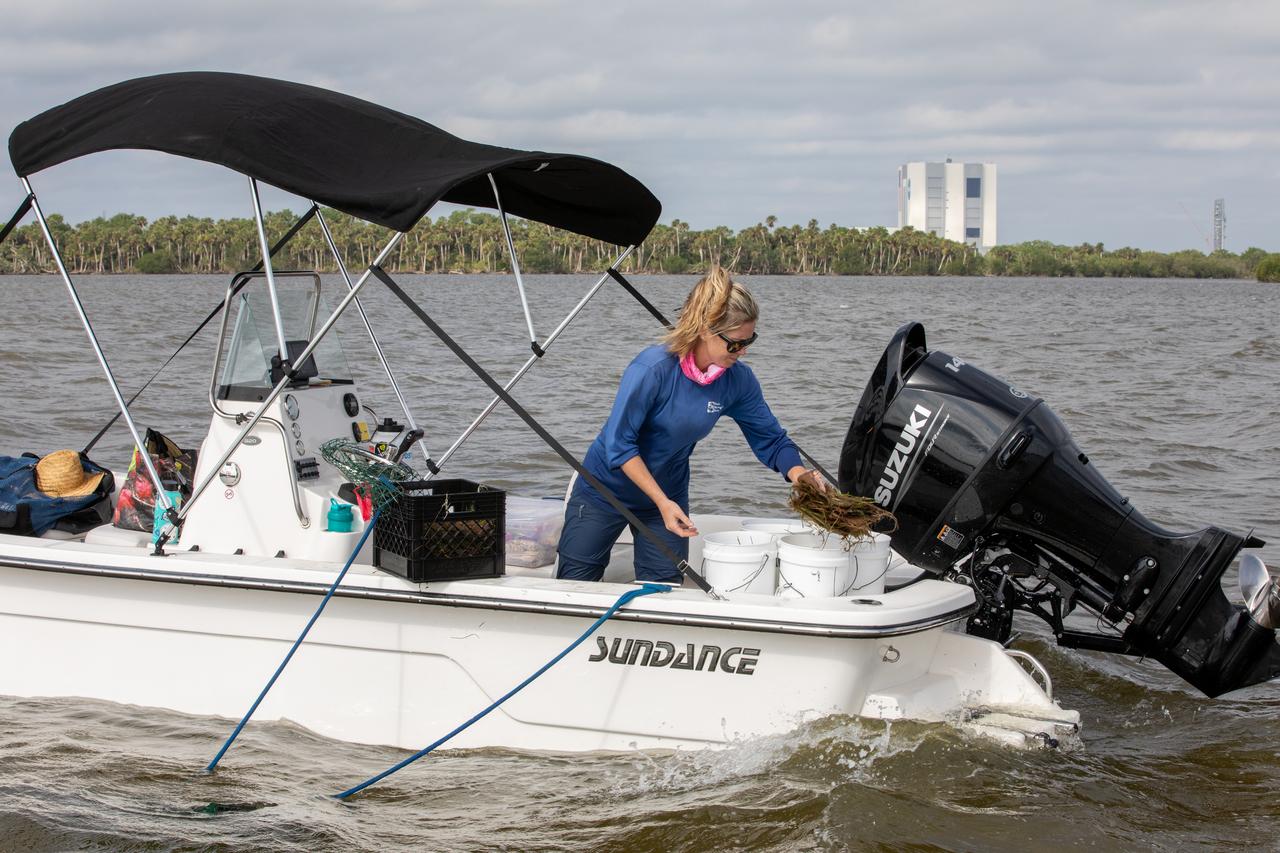
Lorae Simpson, director of research and conservation with the Florida Oceanographic Society, gathers “plots” of seagrass as her team prepares to plant them in the Banana River – one of three bodies of water that make up the Indian River Lagoon (IRL) – at NASA’s Kennedy Space Center in Florida on March 29, 2023. Kennedy’s Environmental Management Branch is working to plant a minimum of 28,000 shoots of seagrass divided into 18 sites across three areas at the Florida spaceport as part of a pilot project for seagrass restoration efforts. The project will look at the feasibility of replanting seagrass in Kennedy waters and, if successful, could lead to the spaceport becoming a donor site where shoots of grass can be broken off and relocated to other areas within Kennedy or along the IRL to promote growth.
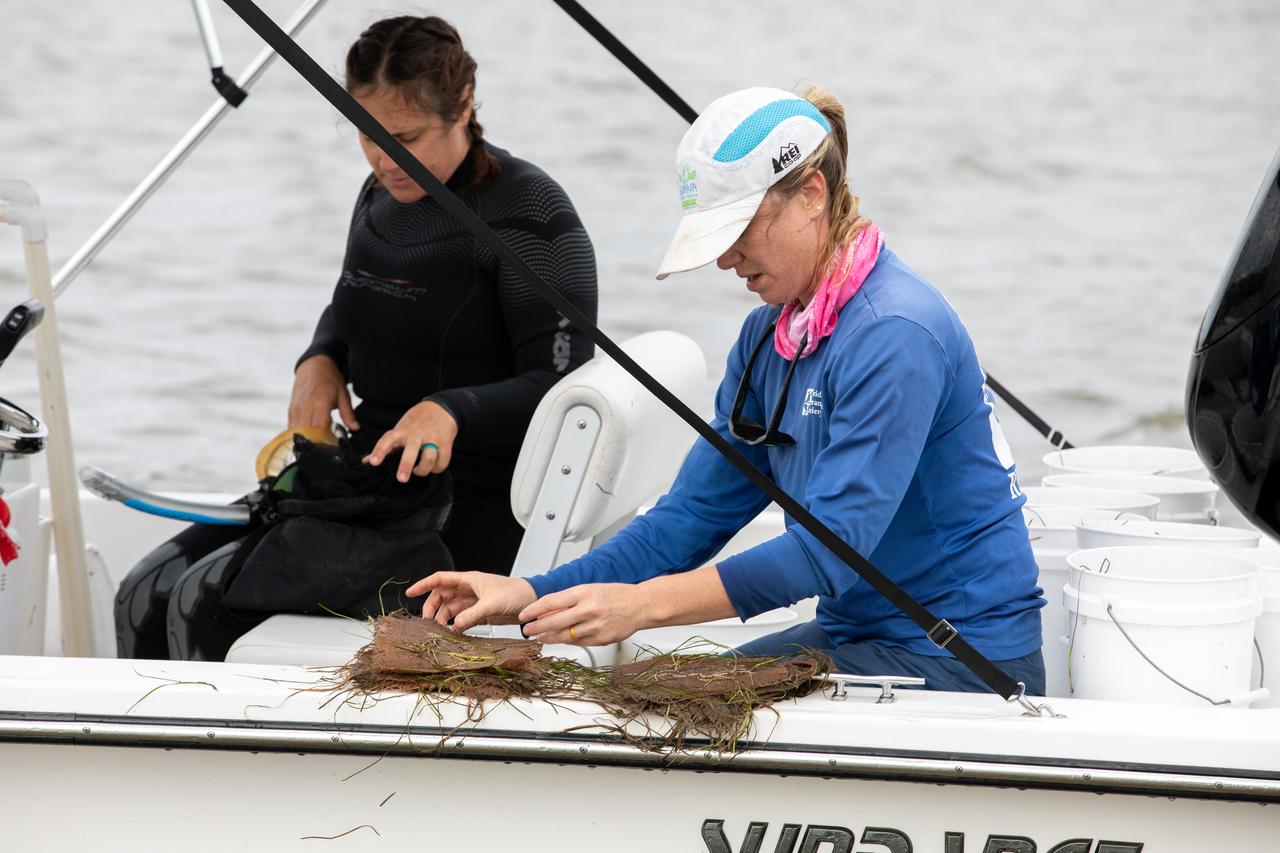
Lorae Simpson, director of research and conservation with the Florida Oceanographic Society, gathers “plots” of seagrass as her team prepares to plant them in the Banana River – one of three bodies of water that make up the Indian River Lagoon (IRL) – at NASA’s Kennedy Space Center in Florida on March 29, 2023. Kennedy’s Environmental Management Branch is working to plant a minimum of 28,000 shoots of seagrass divided into 18 sites across three areas at the Florida spaceport as part of a pilot project for seagrass restoration efforts. The project will look at the feasibility of replanting seagrass in Kennedy waters and, if successful, could lead to the spaceport becoming a donor site where shoots of grass can be broken off and relocated to other areas within Kennedy or along the IRL to promote growth.
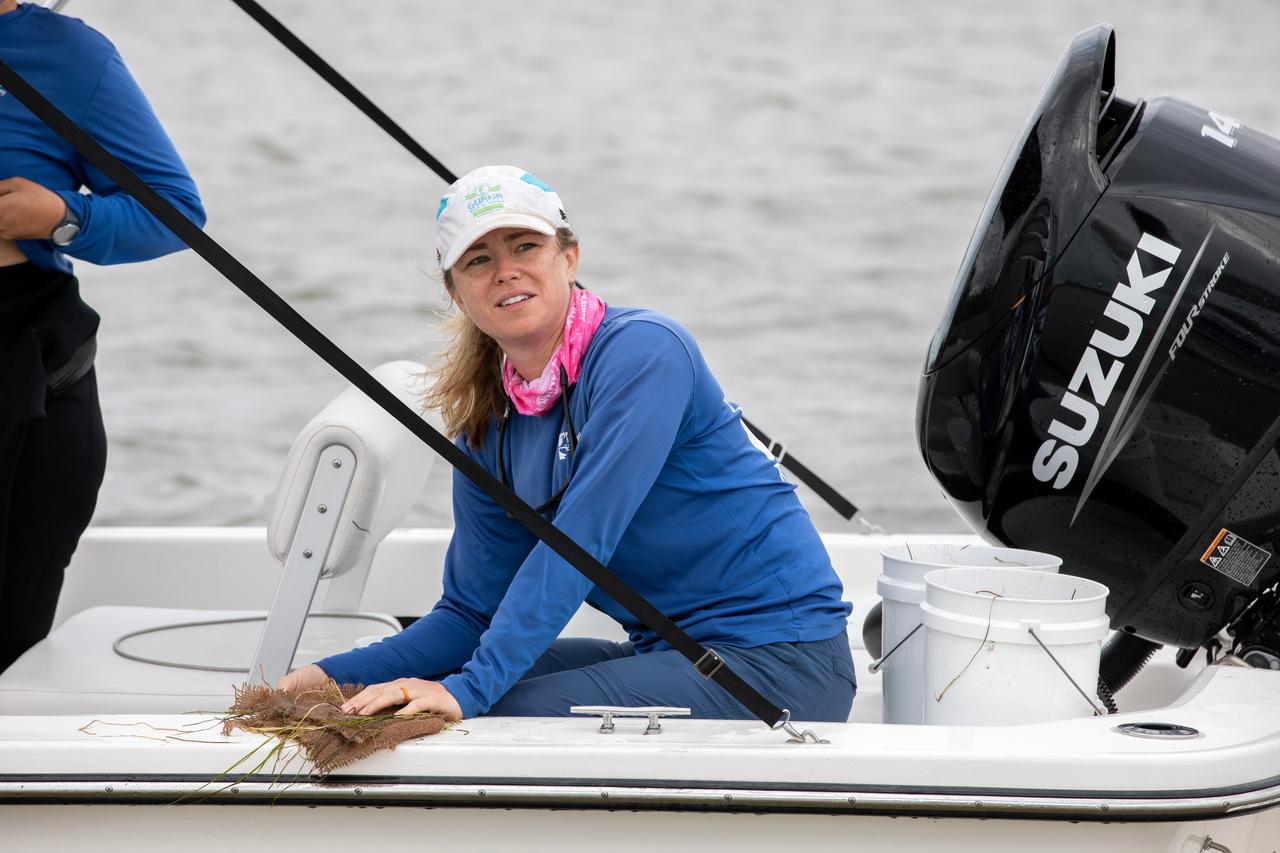
Lorae Simpson, director of research and conservation with the Florida Oceanographic Society, gathers “plots” of seagrass as her team prepares to plant them in the Banana River – one of three bodies of water that make up the Indian River Lagoon (IRL) – at NASA’s Kennedy Space Center in Florida on March 29, 2023. Kennedy’s Environmental Management Branch is working to plant a minimum of 28,000 shoots of seagrass divided into 18 sites across three areas at the Florida spaceport as part of a pilot project for seagrass restoration efforts. The project will look at the feasibility of replanting seagrass in Kennedy waters and, if successful, could lead to the spaceport becoming a donor site where shoots of grass can be broken off and relocated to other areas within Kennedy or along the IRL to promote growth.
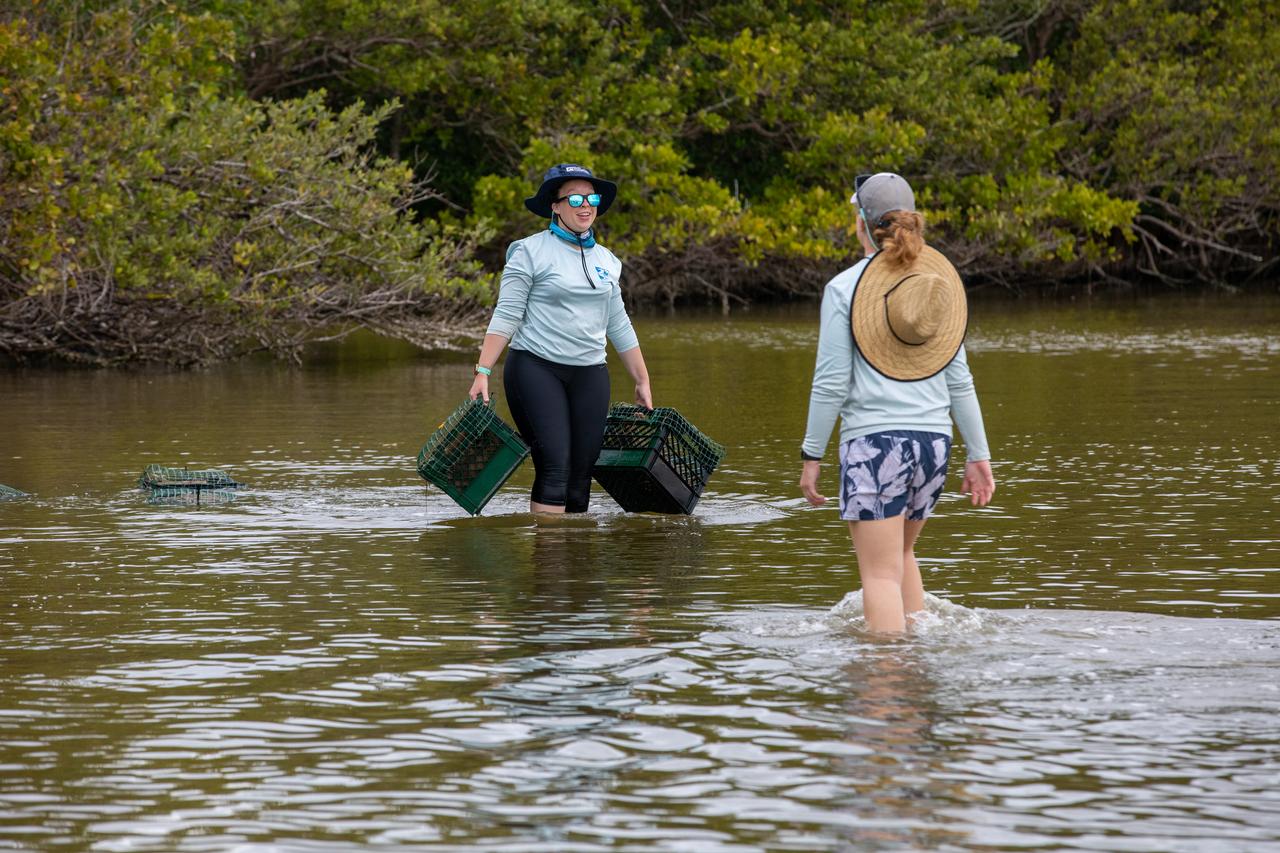
Members of the Florida Oceanographic Society collect mats of seagrass from their storage site at NASA’s Kennedy Space Center in Florida as they prepare to plant them in the Banana River – one of three bodies of water that make up the Indian River Lagoon (IRL) – on March 29, 2023. Kennedy’s Environmental Management Branch is working to plant a minimum of 28,000 shoots of seagrass divided into 18 sites across three areas at the Florida spaceport as part of a pilot project for seagrass restoration efforts. The project will look at the feasibility of replanting seagrass in Kennedy waters and, if successful, could lead to the spaceport becoming a donor site where shoots of grass can be broken off and relocated to other areas within Kennedy or along the IRL to promote growth.
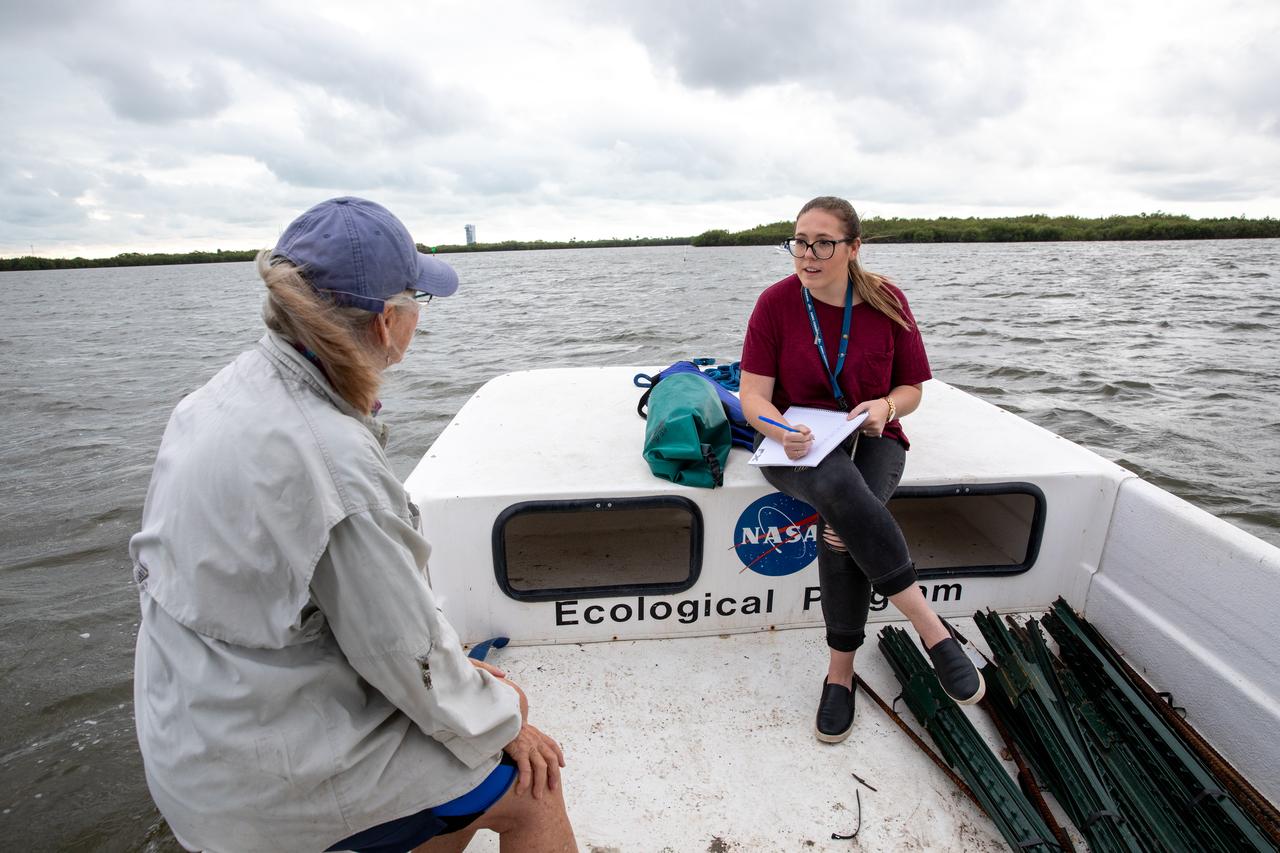
Kennedy Space Center Public Affairs Writer Danielle Sempsrott (right) interviews Jane Provancha, manager of the ecological group for NASA’s Environmental and Medical Contract (NEMCON) at Kennedy, for a web feature highlighting seagrass restoration efforts taking place at the Florida spaceport on March 29, 2023. Kennedy’s Environmental Management Branch is working to plant a minimum of 28,000 shoots of seagrass divided into 18 sites across three areas at the Florida spaceport as part of a pilot project for seagrass restoration efforts. The project will look at the feasibility of replanting seagrass in Kennedy waters and, if successful, could lead to the spaceport becoming a donor site where shoots of grass can be broken off and relocated to other areas within Kennedy or along the Indian River Lagoon to promote growth.
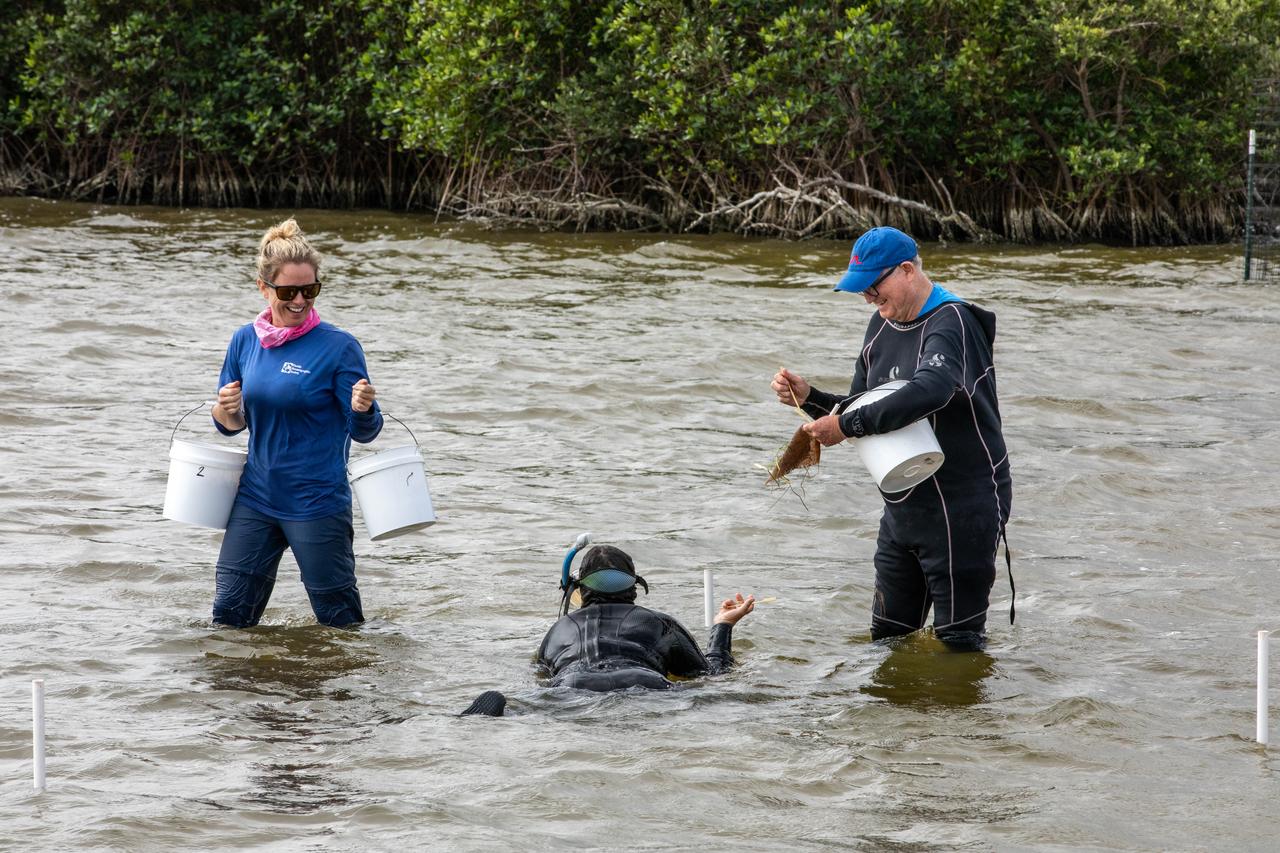
Lorae Simpson (left), director of research and conservation with the Florida Oceanographic Society, and Doug Scheidt (right), an ecologist working on NASA’s Environmental and Medical Contract (NEMCON), begin planting seagrass in the Banana River – one of three bodies of water that make up the Indian River Lagoon (IRL) – at NASA’s Kennedy Space Center in Florida on March 29, 2023. Scheidt is handing each “plot” of seagrass to another Florida Oceanographic Society member in the water, who then uses bamboo skewers to stake each one into the sediment. Kennedy’s Environmental Management Branch is working to plant a minimum of 28,000 shoots of seagrass divided into 18 sites across three areas at the Florida spaceport as part of a pilot project for seagrass restoration efforts. The project will look at the feasibility of replanting seagrass in Kennedy waters and, if successful, could lead to the spaceport becoming a donor site where shoots of grass can be broken off and relocated to other areas within Kennedy or along the IRL to promote growth.
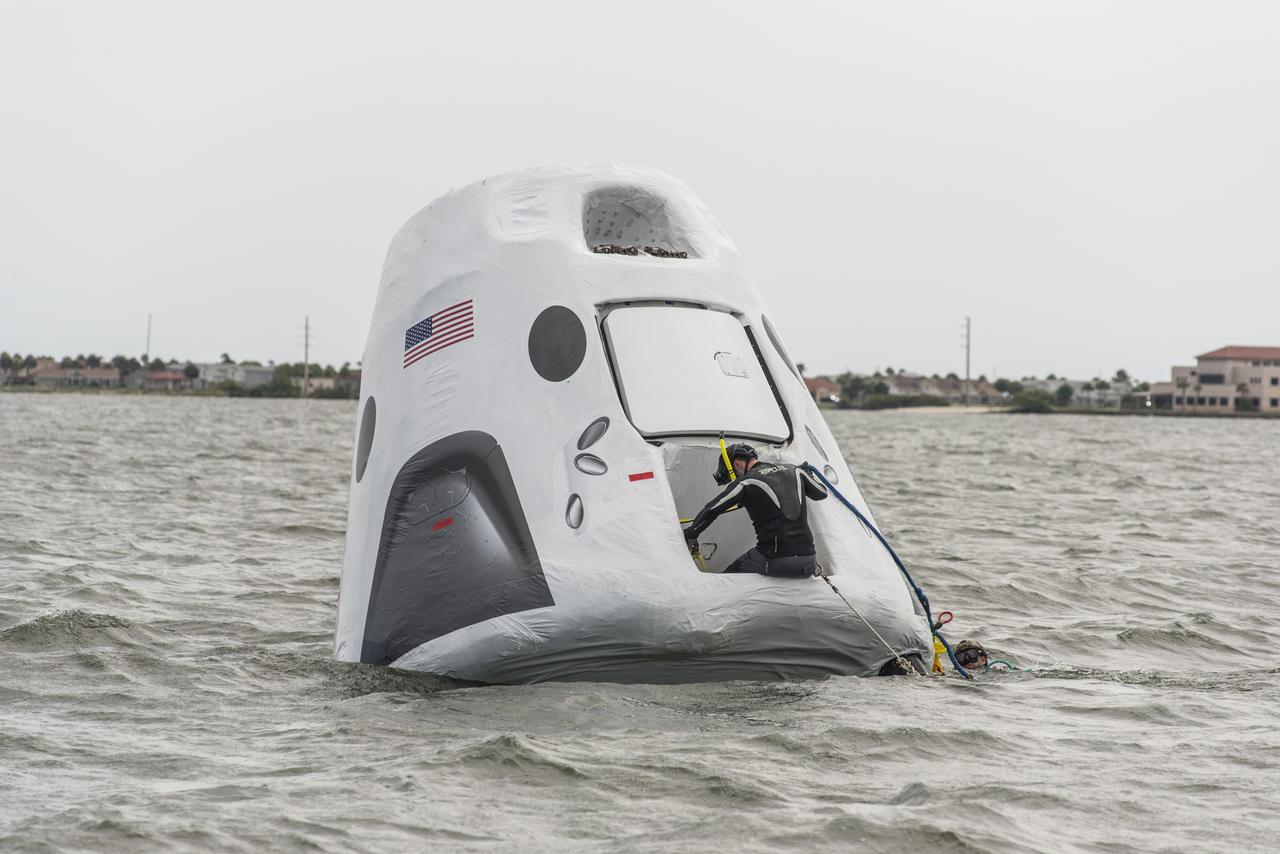
Personnel from NASA, SpaceX and the U.S. Air Force have begun practicing recovery operations for the SpaceX Crew Dragon. Using a full-size model of the spacecraft that will take astronauts to the International Space Station, Air Force parajumpers practice helping astronauts out of the SpaceX Crew Dragon following a mission. In certain unusual recovery situations, SpaceX may need to work with Air Force for parajumpers to recover astronauts from the capsule following a water landing. The recovery trainer was recently lowered into the Indian River Lagoon near NASA’s Kennedy Space Center allowing Air Force pararescue and others to refine recovery procedures. SpaceX is developing the Crew Dragon in partnership with NASA’s Commercial Crew Program to carry astronauts to and from the International Space Station.
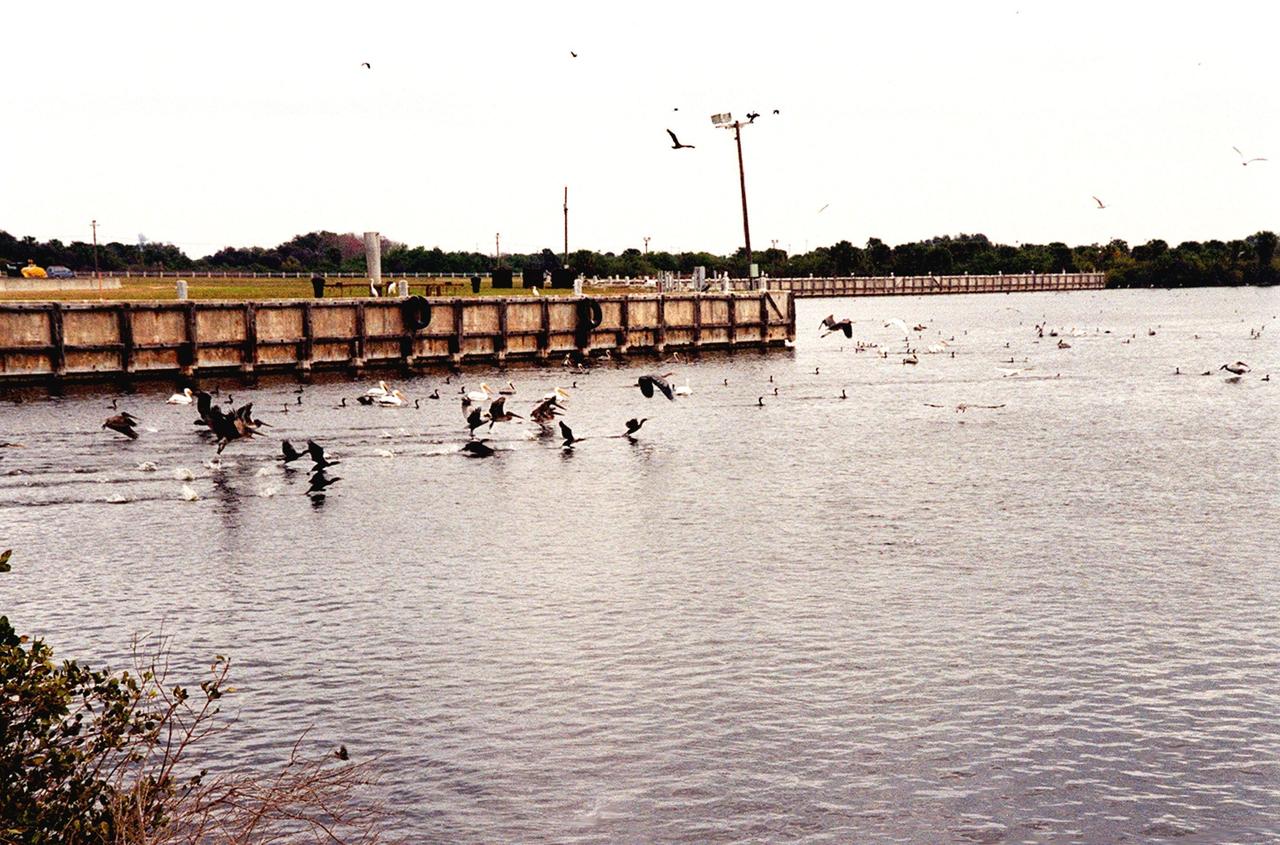
KENNEDY SPACE CENTER, FLA. -- The water in the turn basin, east of the Vehicle Assembly Building and next to the crawlerway, teems with fish and draws white pelicans, gray pelicans, cormorants, sea gulls and more looking for a meal. The turn basin is part of the Indian River Lagoon, composed of Mosquito Lagoon to the north, Banana River and Creek to the south and the Indian River to the west. The Indian River Lagoon has one of the most diverse bird populations anywhere in America. Also, nearly one-third of the nation's manatee population lives here or migrates through the lagoon seasonally. The lagoon varies in width from ½ mile to 5 miles and averages only 3 feet in depth
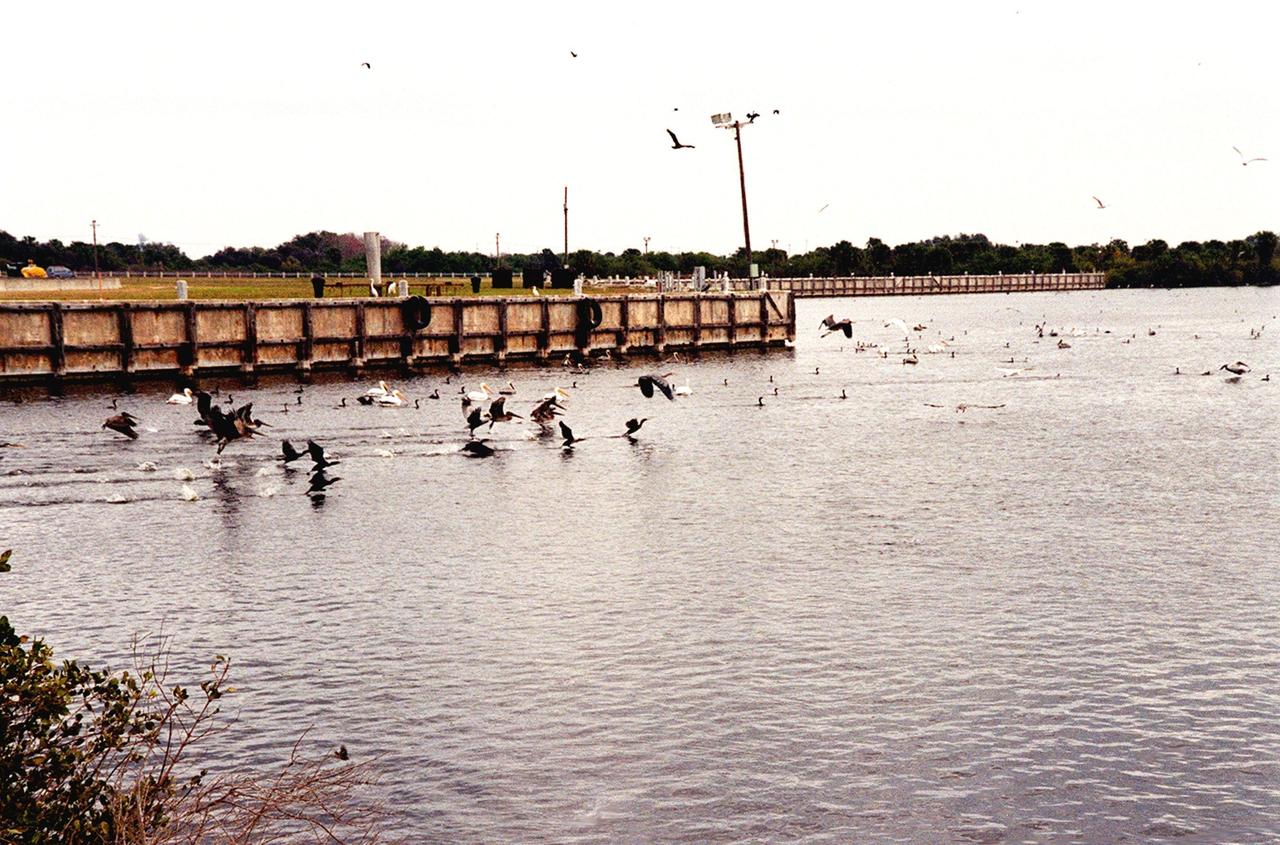
KENNEDY SPACE CENTER, FLA. -- The water in the turn basin, east of the Vehicle Assembly Building and next to the crawlerway, teems with fish and draws white pelicans, gray pelicans, cormorants, sea gulls and more looking for a meal. The turn basin is part of the Indian River Lagoon, composed of Mosquito Lagoon to the north, Banana River and Creek to the south and the Indian River to the west. The Indian River Lagoon has one of the most diverse bird populations anywhere in America. Also, nearly one-third of the nation's manatee population lives here or migrates through the lagoon seasonally. The lagoon varies in width from ½ mile to 5 miles and averages only 3 feet in depth
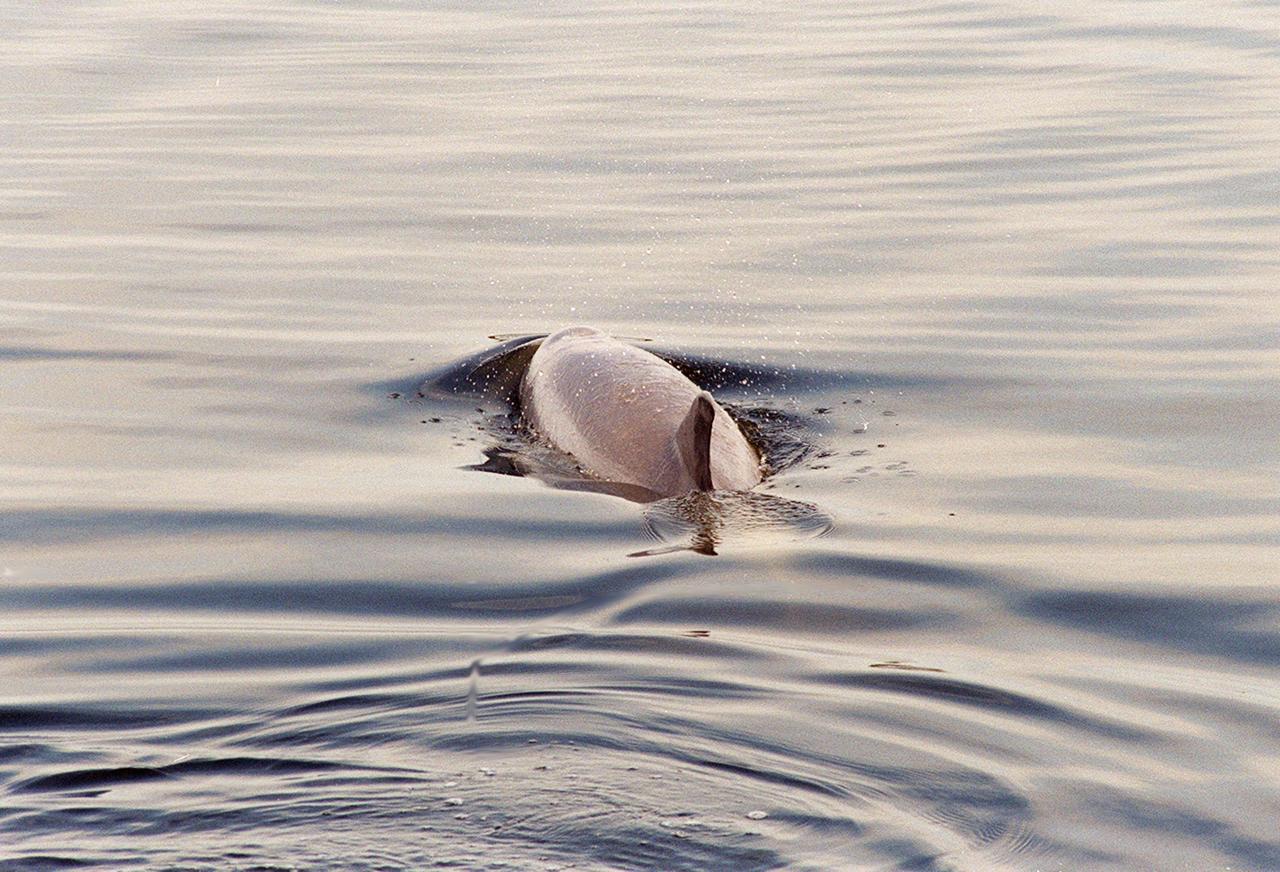
KENNEDY SPACE CENTER, FLA. -- A dolphin glides through the water looking for fish in the turn basin, which is located east of the Vehicle Assembly Building and next to the crawlerway. Dolphins inhabit the waters, known as the Indian River Lagoon, around Kennedy Space Center, along with many different species of oceanic and lagoon fish and shellfish. Mosquito Lagoon to the north, Banana River and Creek to the south and the Indian River to the west make up a special type of estuary called a lagoon, a body of water separated from the ocean by barrier islands, with limited exchange with the ocean through inlets. The Indian River Lagoon has one of the most diverse bird populations anywhere in America. Also, nearly one-third of the nation's manatee population lives here or migrates through the lagoon seasonally. The lagoon varies in width from ½ mile to 5 miles and averages only 3 feet in depth
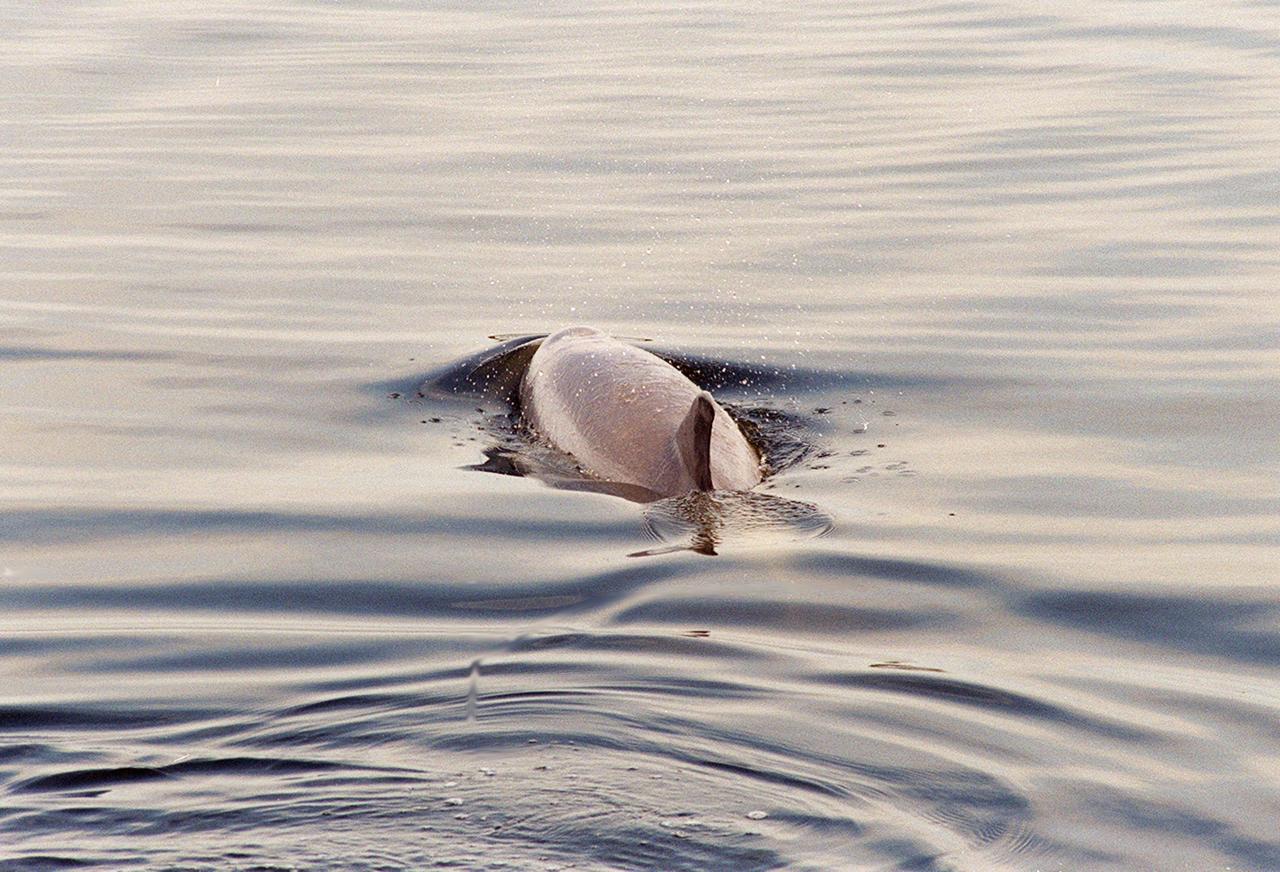
KENNEDY SPACE CENTER, FLA. -- A dolphin glides through the water looking for fish in the turn basin, which is located east of the Vehicle Assembly Building and next to the crawlerway. Dolphins inhabit the waters, known as the Indian River Lagoon, around Kennedy Space Center, along with many different species of oceanic and lagoon fish and shellfish. Mosquito Lagoon to the north, Banana River and Creek to the south and the Indian River to the west make up a special type of estuary called a lagoon, a body of water separated from the ocean by barrier islands, with limited exchange with the ocean through inlets. The Indian River Lagoon has one of the most diverse bird populations anywhere in America. Also, nearly one-third of the nation's manatee population lives here or migrates through the lagoon seasonally. The lagoon varies in width from ½ mile to 5 miles and averages only 3 feet in depth
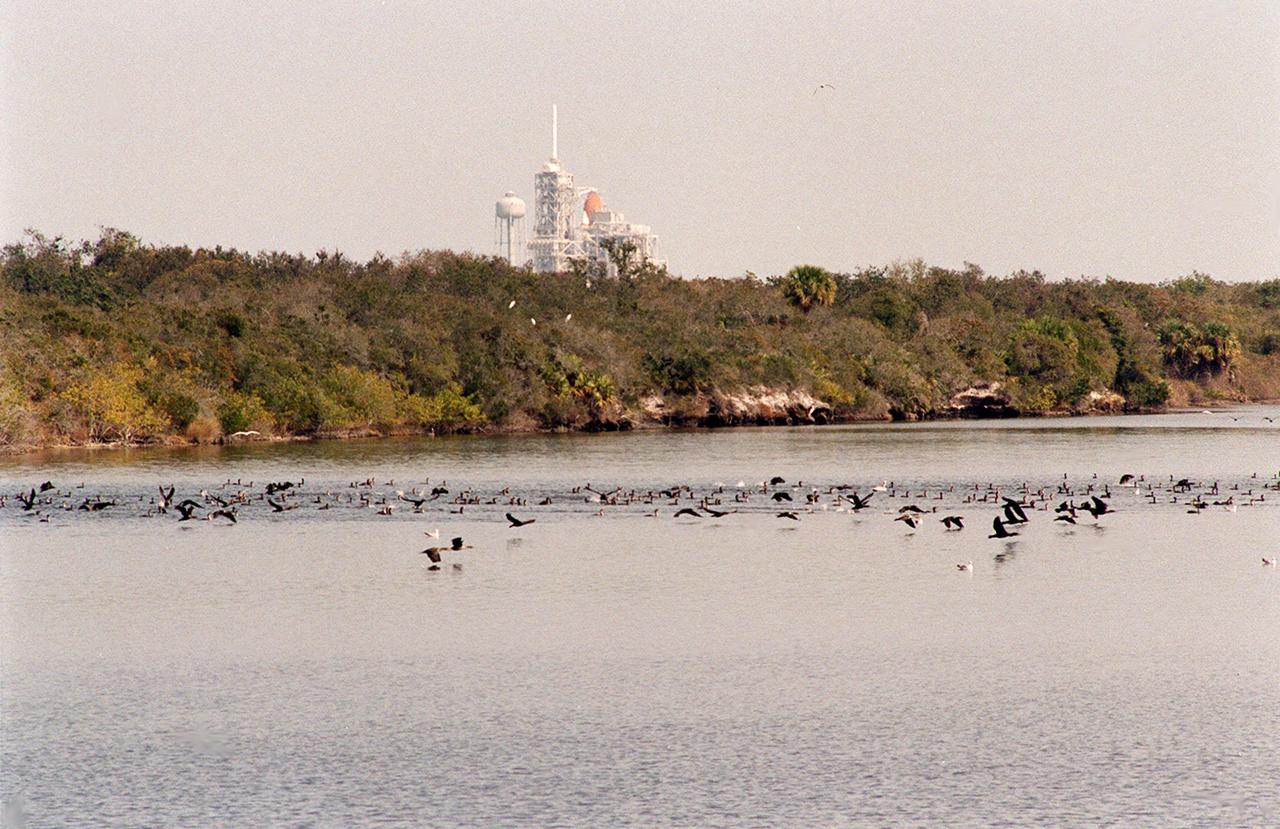
KENNEDY SPACE CENTER, FLA. -- Birds by the score, especially gray and white pelicans, cormorants, sea gulls, herons and ospreys, flock to the turn basin east of the Vehicle Assembly Building in a feeding frenzy as schools of fish fill the waters. In the background is Launch Pad A with Space Shuttle Endeavour waiting for launch on Friday, Feb. 11 for mission STS-99. The basin is part of the Indian River Lagoon, which is made up of Mosquito Lagoon to the north, Banana River and Creek to the south and the Indian River to the west. It is called a lagoon because it is a body of water separated from the ocean by barrier islands, with limited exchange with the ocean through inlets. The Indian River Lagoon has one of the most diverse bird populations anywhere in America. Also, nearly one-third of the nation's manatee population lives here or migrates through the lagoon seasonally. The lagoon varies in width from ½ mile to 5 miles and averages only 3 feet in depth
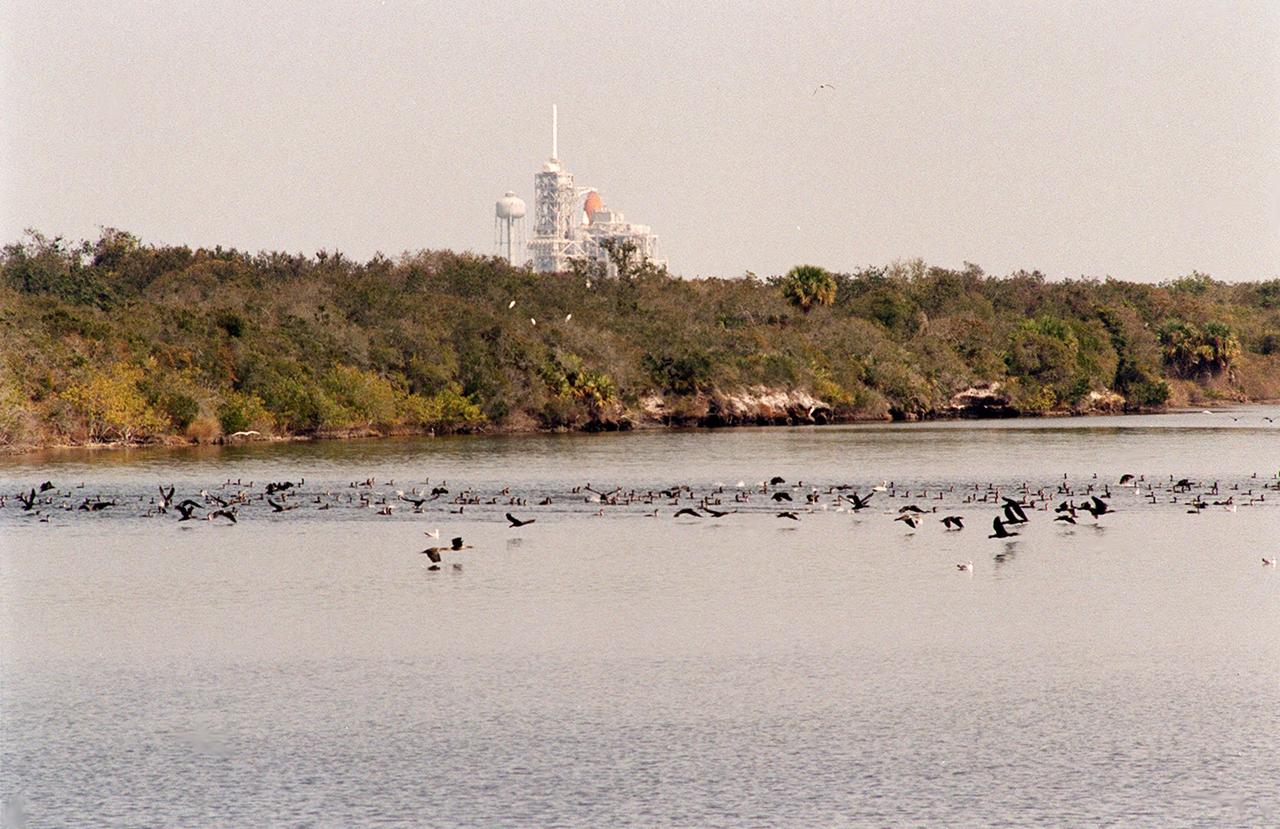
KENNEDY SPACE CENTER, FLA. -- Birds by the score, especially gray and white pelicans, cormorants, sea gulls, herons and ospreys, flock to the turn basin east of the Vehicle Assembly Building in a feeding frenzy as schools of fish fill the waters. In the background is Launch Pad A with Space Shuttle Endeavour waiting for launch on Friday, Feb. 11 for mission STS-99. The basin is part of the Indian River Lagoon, which is made up of Mosquito Lagoon to the north, Banana River and Creek to the south and the Indian River to the west. It is called a lagoon because it is a body of water separated from the ocean by barrier islands, with limited exchange with the ocean through inlets. The Indian River Lagoon has one of the most diverse bird populations anywhere in America. Also, nearly one-third of the nation's manatee population lives here or migrates through the lagoon seasonally. The lagoon varies in width from ½ mile to 5 miles and averages only 3 feet in depth
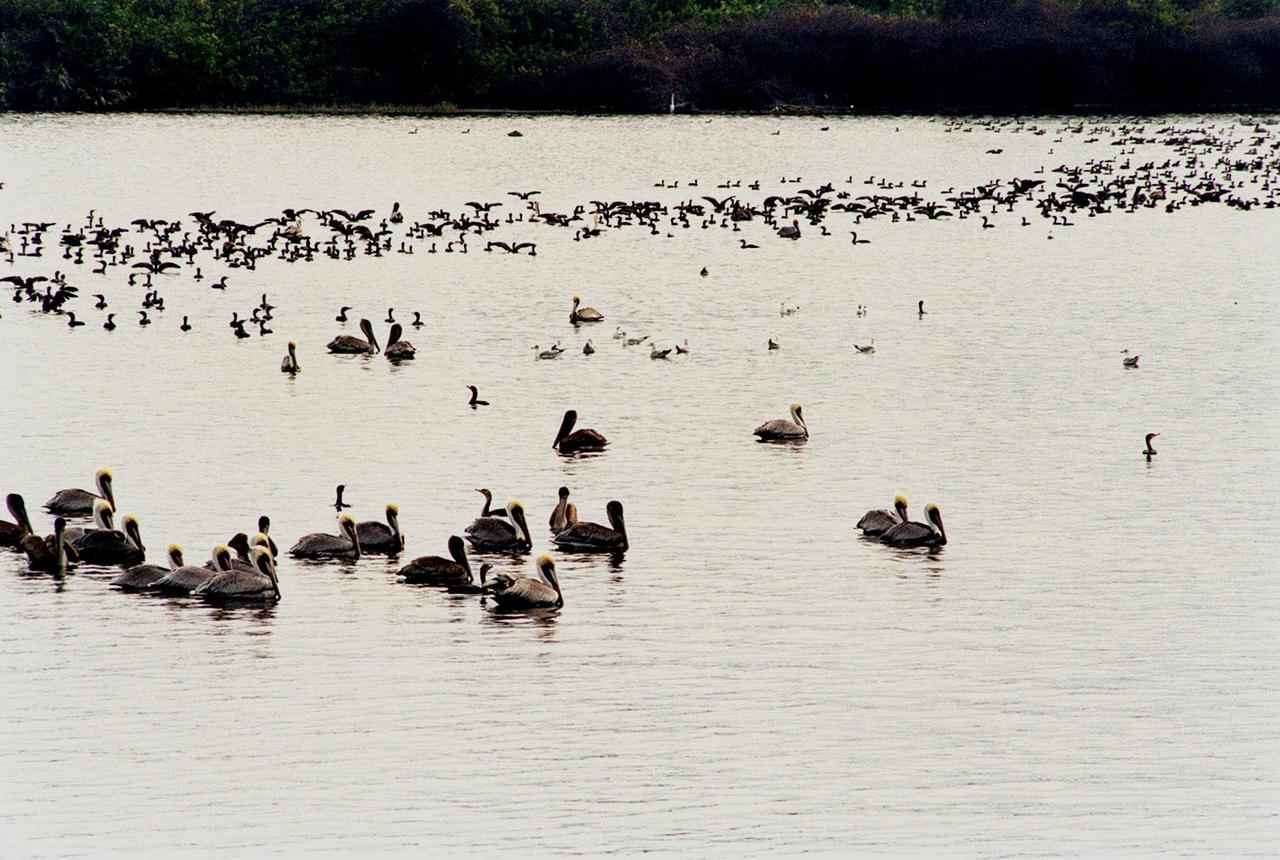
KENNEDY SPACE CENTER, FLA. -- Hundreds of birds, especially gray and white pelicans and cormorants, cover the water in the turn basin, located east of the Vehicle Assembly Building and next to the crawlerway. The basin is teeming with fish, attracting the crowd for a meal. The turn basin is part of the Indian River Lagoon, composed of Mosquito Lagoon to the north, Banana River and Creek to the south and the Indian River to the west. The lagoon has one of the most diverse bird populations anywhere in America, plus many different species of oceanic and lagoon fish, shellfish and dolphins. Also, nearly one-third of the nation's manatee population lives here or migrates through the Lagoon seasonally. The Lagoon varies in width from ½ mile to 5 miles and averages only 3 feet in depth
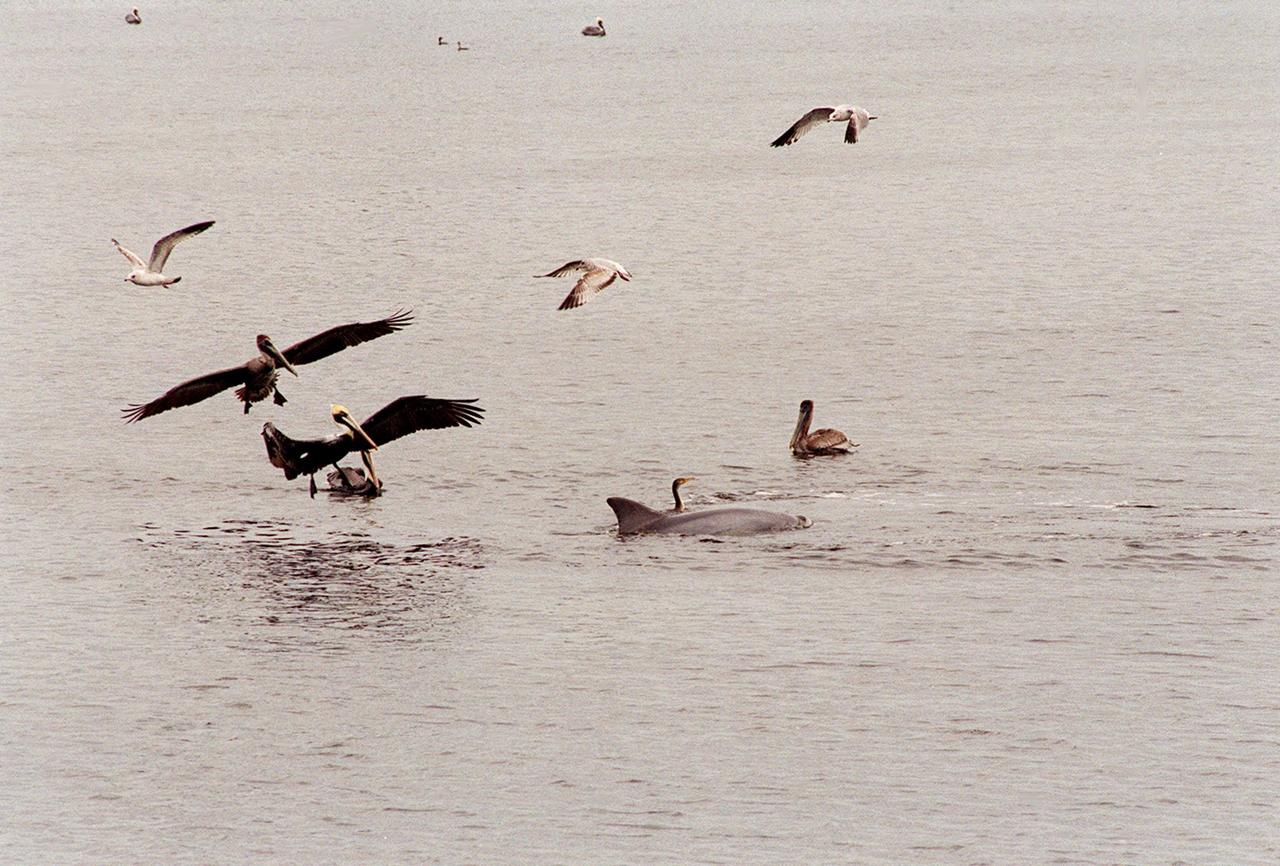
KENNEDY SPACE CENTER, FLA. -- A gray and a white pelican glide down to the water near a dolphin and cormorant in the turn basin to search for a meal in the fish-teeming water. Sea gulls also approach. The turn basin, which is east of the Vehicle Assembly Building and next to the crawlerway, is part of the Indian River Lagoon, composed of Mosquito Lagoon to the north, Banana River and Creek to the south and the Indian River to the west. The lagoon has one of the most diverse bird populations anywhere in America, plus many different species of oceanic and lagoon fish, shellfish and dolphins. Also, nearly one-third of the nation's manatee population lives here or migrates through the Lagoon seasonally. The Lagoon varies in width from ½ mile to 5 miles and averages only 3 feet in depth

KENNEDY SPACE CENTER, FLA. -- A gray and a white pelican glide down to the water near a dolphin and cormorant in the turn basin to search for a meal in the fish-teeming water. Sea gulls also approach. The turn basin, which is east of the Vehicle Assembly Building and next to the crawlerway, is part of the Indian River Lagoon, composed of Mosquito Lagoon to the north, Banana River and Creek to the south and the Indian River to the west. The lagoon has one of the most diverse bird populations anywhere in America, plus many different species of oceanic and lagoon fish, shellfish and dolphins. Also, nearly one-third of the nation's manatee population lives here or migrates through the Lagoon seasonally. The Lagoon varies in width from ½ mile to 5 miles and averages only 3 feet in depth
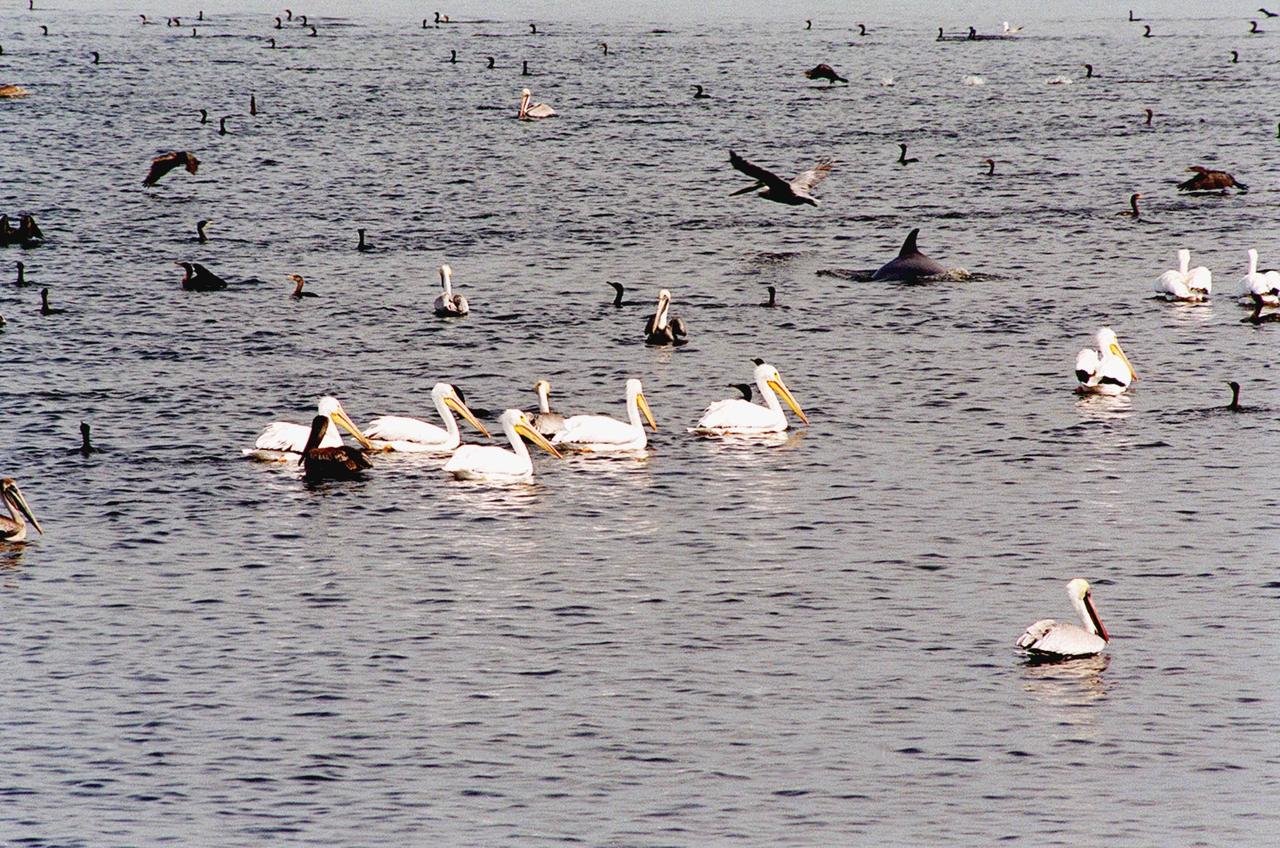
KENNEDY SPACE CENTER, FLA. -- The water in the turn basin, located east of the Vehicle Assembly Building and next to the crawlerway, teems with fish and draws white pelicans, gray pelicans, cormorants, sea gulls and one of several dolphins looking for a meal. The turn basin is part of the Indian River Lagoon, composed of Mosquito Lagoon to the north, Banana River and Creek to the south and the Indian River to the west. The lagoon has one of the most diverse bird populations anywhere in America, plus many different species of oceanic and lagoon fish, shellfish and dolphins. Also, nearly one-third of the nation's manatee population lives here or migrates through the lagoon seasonally. The lagoon varies in width from ½ mile to 5 miles and averages only 3 feet in depth
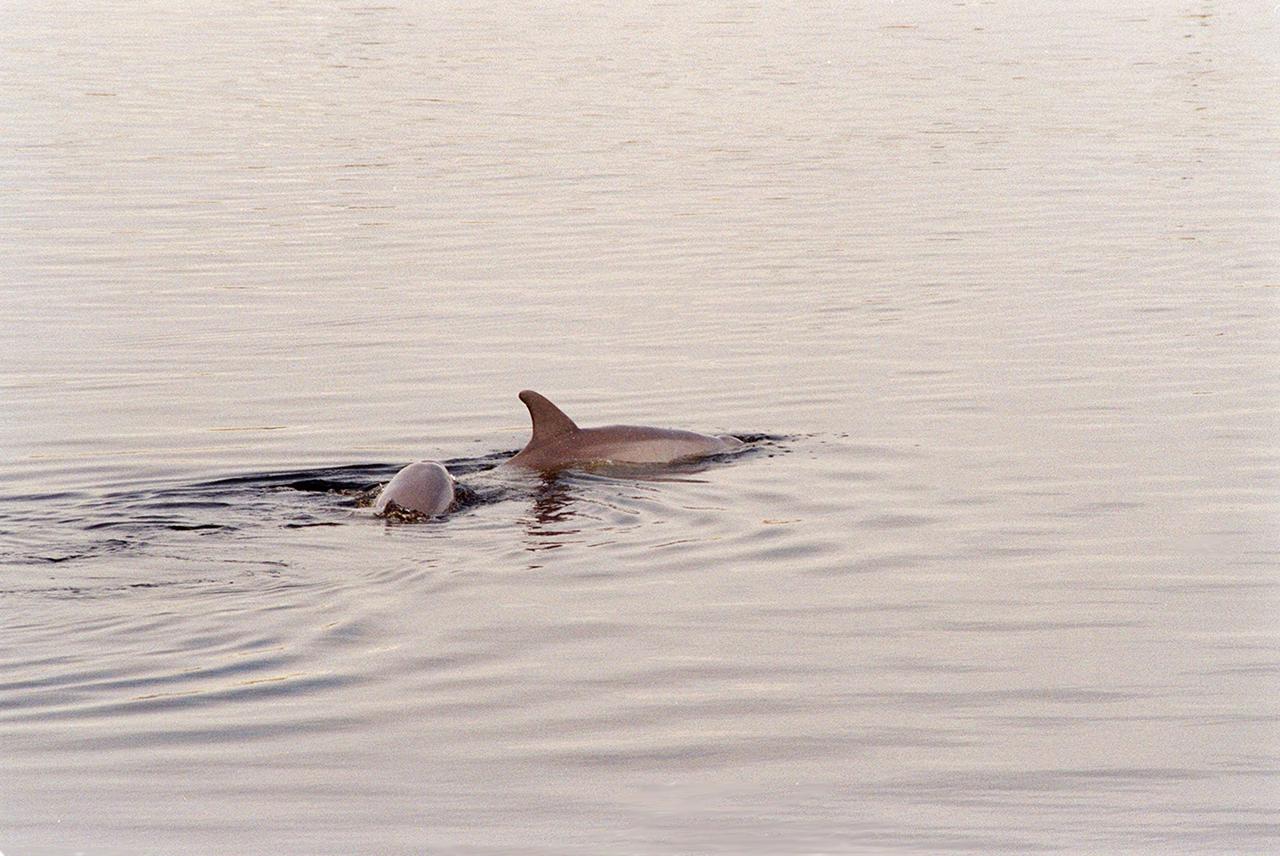
KENNEDY SPACE CENTER, FLA. -- In the turn basin east of the Vehicle Assembly Building and next to the crawlerway, a mother dolphin guides her baby through the water to search for food. Dolphins inhabit the waters around Kennedy Space Center, along with many different species of oceanic and lagoon fish and shellfish. Mosquito Lagoon to the north, Banana River and Creek to the south and the Indian River to the west make up a special type of estuary called a lagoon, a body of water separated from the ocean by barrier islands, with limited exchange with the ocean through inlets. The Indian River Lagoon has one of the most diverse bird populations anywhere in America. Also, nearly one-third of the nation's manatee population lives here or migrates through the lagoon seasonally. The lagoon varies in width from ½ mile to 5 miles and averages only 3 feet in depth
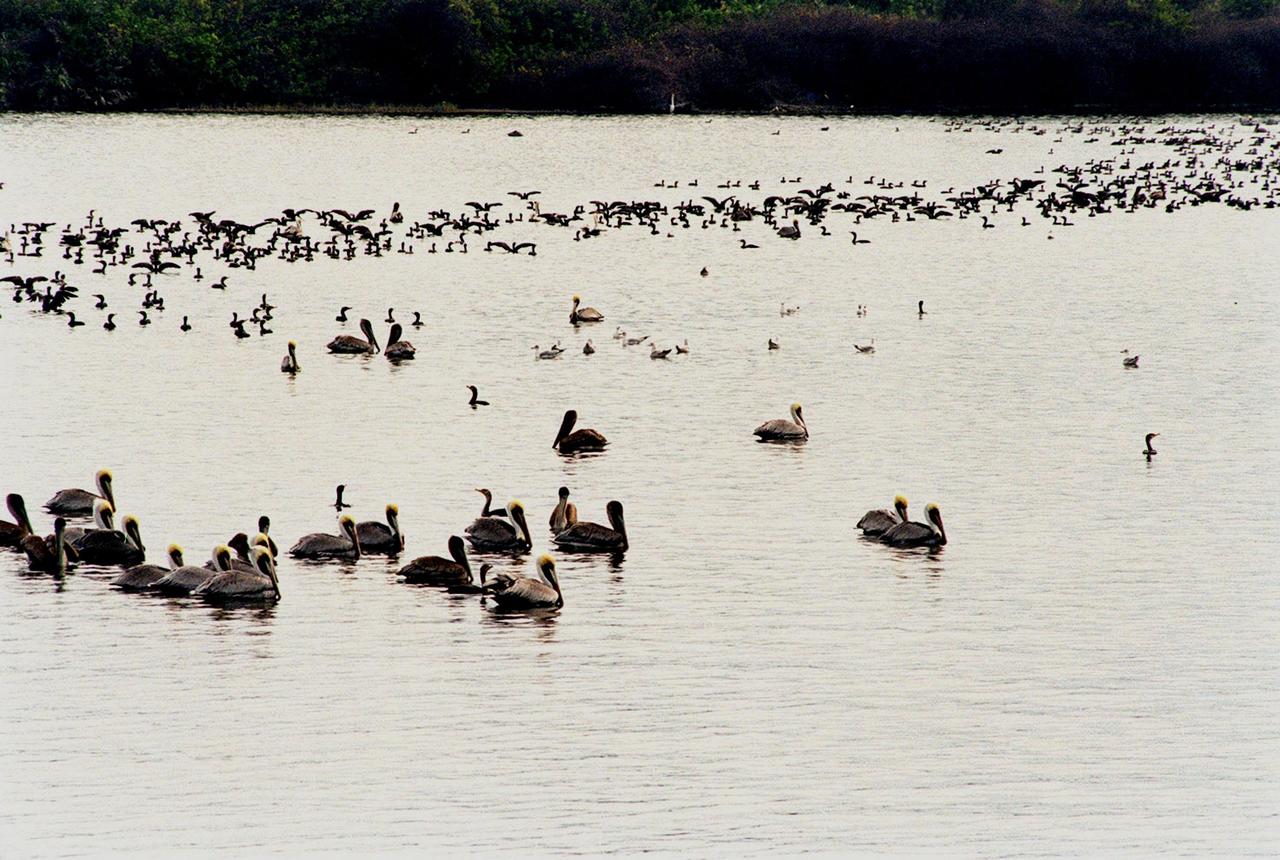
KENNEDY SPACE CENTER, FLA. -- Hundreds of birds, especially gray and white pelicans and cormorants, cover the water in the turn basin, located east of the Vehicle Assembly Building and next to the crawlerway. The basin is teeming with fish, attracting the crowd for a meal. The turn basin is part of the Indian River Lagoon, composed of Mosquito Lagoon to the north, Banana River and Creek to the south and the Indian River to the west. The lagoon has one of the most diverse bird populations anywhere in America, plus many different species of oceanic and lagoon fish, shellfish and dolphins. Also, nearly one-third of the nation's manatee population lives here or migrates through the Lagoon seasonally. The Lagoon varies in width from ½ mile to 5 miles and averages only 3 feet in depth
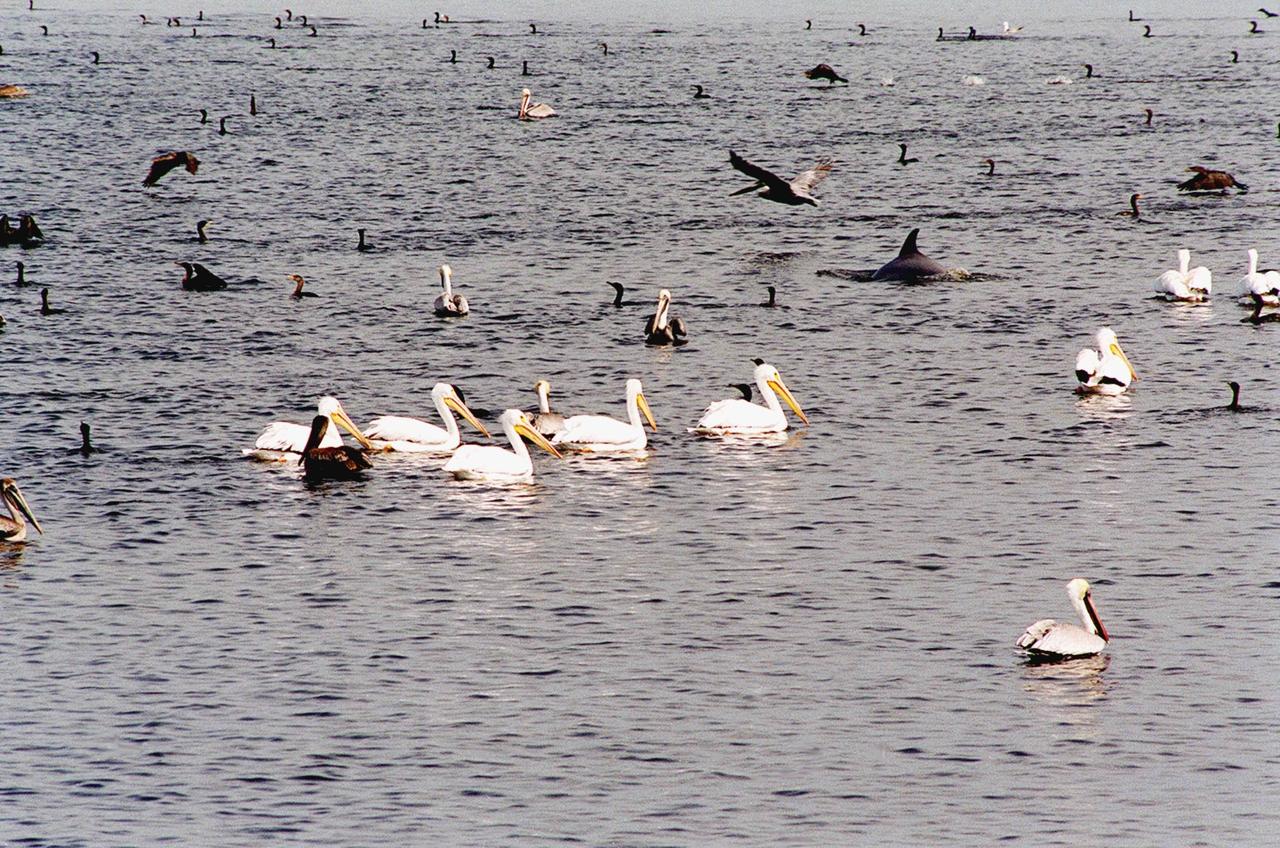
KENNEDY SPACE CENTER, FLA. -- The water in the turn basin, located east of the Vehicle Assembly Building and next to the crawlerway, teems with fish and draws white pelicans, gray pelicans, cormorants, sea gulls and one of several dolphins looking for a meal. The turn basin is part of the Indian River Lagoon, composed of Mosquito Lagoon to the north, Banana River and Creek to the south and the Indian River to the west. The lagoon has one of the most diverse bird populations anywhere in America, plus many different species of oceanic and lagoon fish, shellfish and dolphins. Also, nearly one-third of the nation's manatee population lives here or migrates through the lagoon seasonally. The lagoon varies in width from ½ mile to 5 miles and averages only 3 feet in depth
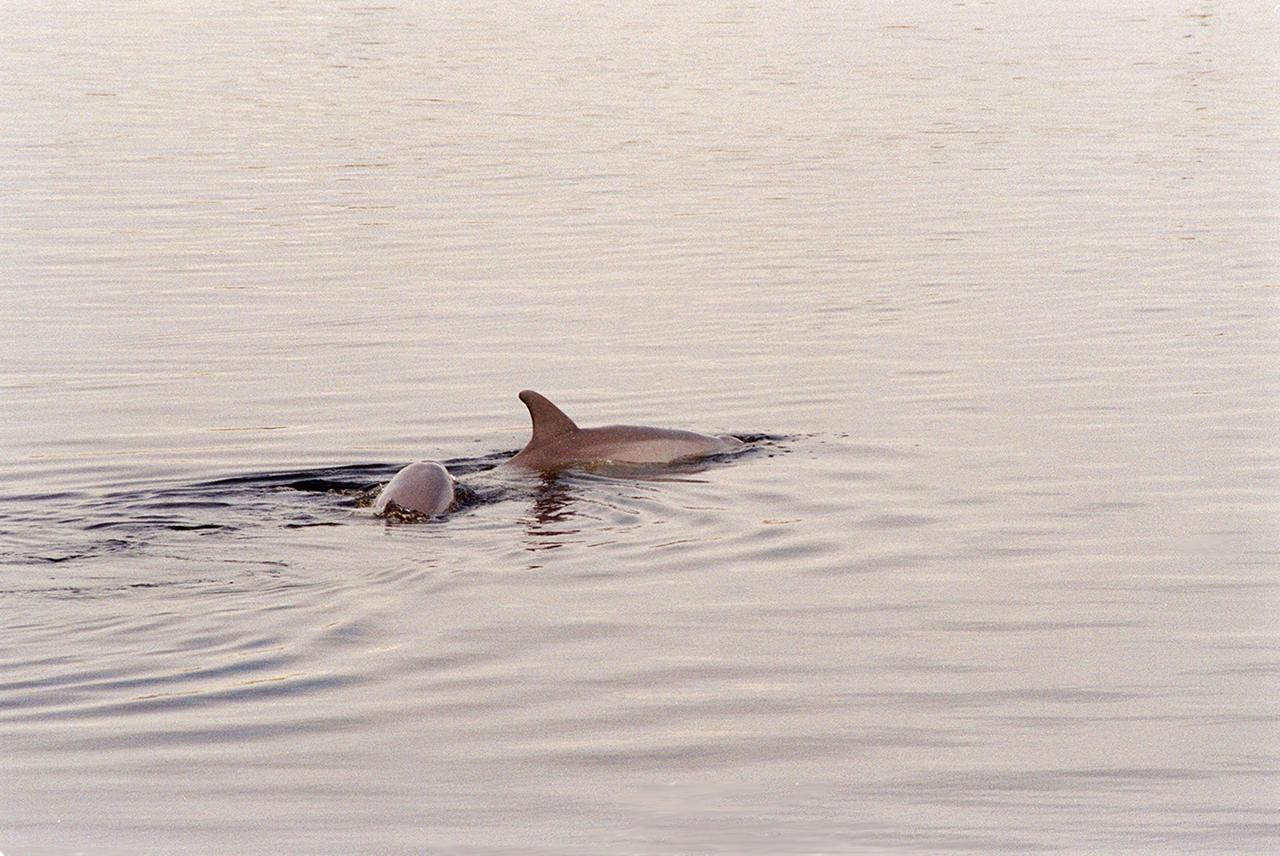
KENNEDY SPACE CENTER, FLA. -- In the turn basin east of the Vehicle Assembly Building and next to the crawlerway, a mother dolphin guides her baby through the water to search for food. Dolphins inhabit the waters around Kennedy Space Center, along with many different species of oceanic and lagoon fish and shellfish. Mosquito Lagoon to the north, Banana River and Creek to the south and the Indian River to the west make up a special type of estuary called a lagoon, a body of water separated from the ocean by barrier islands, with limited exchange with the ocean through inlets. The Indian River Lagoon has one of the most diverse bird populations anywhere in America. Also, nearly one-third of the nation's manatee population lives here or migrates through the lagoon seasonally. The lagoon varies in width from ½ mile to 5 miles and averages only 3 feet in depth
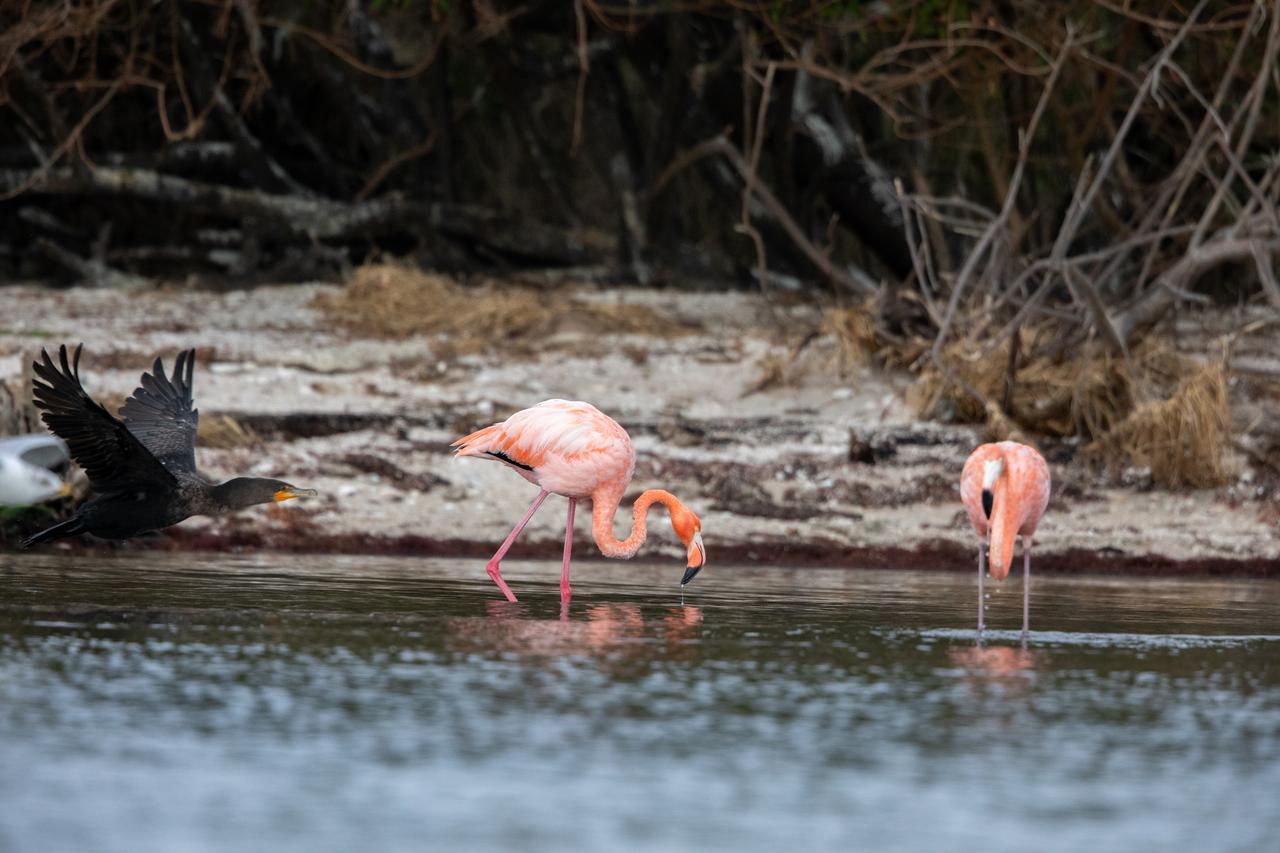
American Flamingos cool off in the Indian River at Haulover Canal on Merritt Island on Thursday, Jan. 11, 2024. The American Flamingos are more common in Mexico and Cuba but the winds from Hurricane Idalia relocated them to Florida in September 2023. Kennedy Space Center in Florida shares a border with the Merritt Island National Wildlife Refuge where more than 310 species of birds inhabit the refuge.
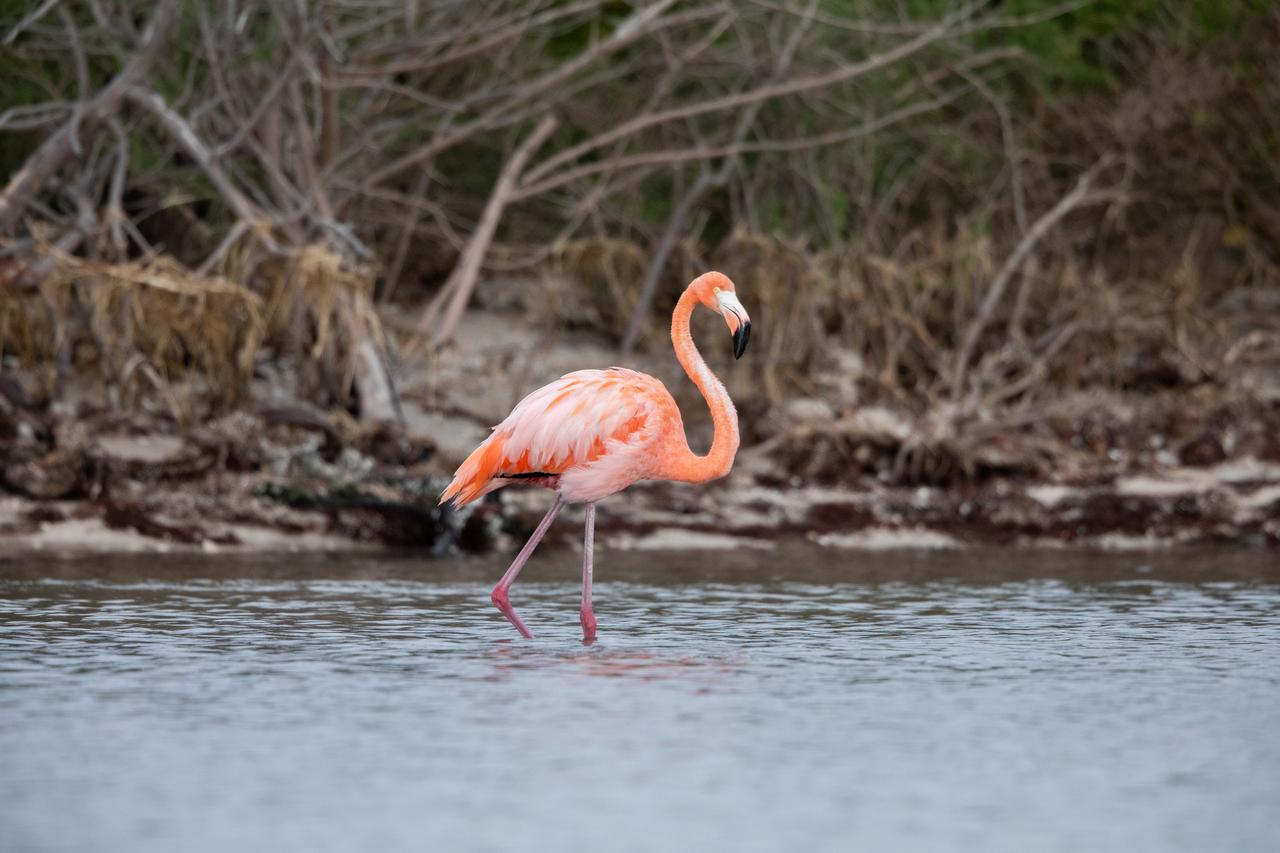
An American Flamingo cools off in the Indian River at Haulover Canal on Merritt Island on Thursday, Jan. 11, 2024. The American Flamingos are more common in Mexico and Cuba but the winds from Hurricane Idalia relocated them to Florida in September 2023. Kennedy Space Center in Florida shares a border with the Merritt Island National Wildlife Refuge where more than 310 species of birds inhabit the refuge.
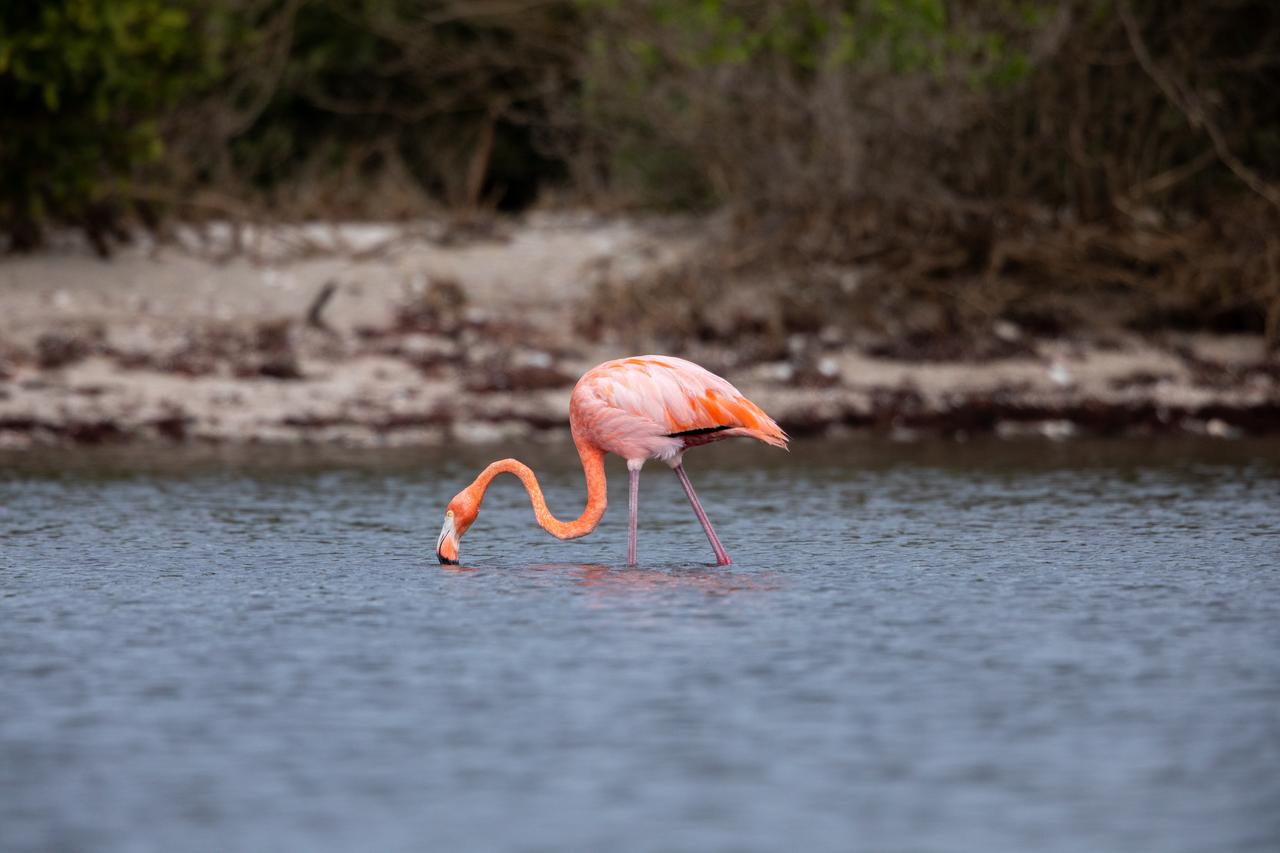
An American Flamingo takes a sip of water in the Indian River at Haulover Canal on Merritt Island on Thursday, Jan. 11, 2024. The American Flamingos are more common in Mexico and Cuba but the winds from Hurricane Idalia relocated them to Florida in September 2023. Kennedy Space Center in Florida shares a border with the Merritt Island National Wildlife Refuge where more than 310 species of birds inhabit the refuge.
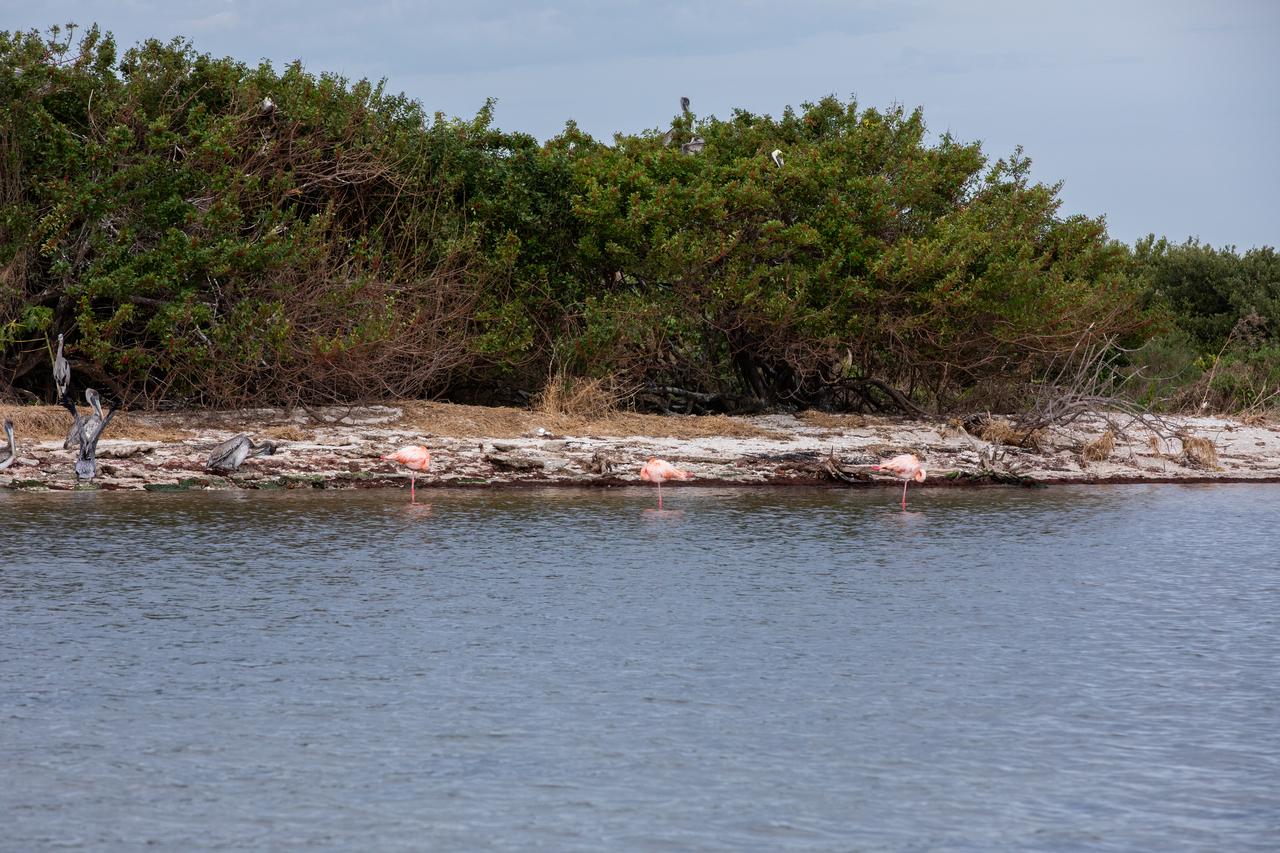
Three American Flamingos cool off in the Indian River at Haulover Canal on Merritt Island on Thursday, Jan. 11, 2024. The American Flamingos are more common in Mexico and Cuba but the winds from Hurricane Idalia relocated them to Florida in September 2023. Kennedy Space Center in Florida shares a border with the Merritt Island National Wildlife Refuge where more than 310 species of birds inhabit the refuge.
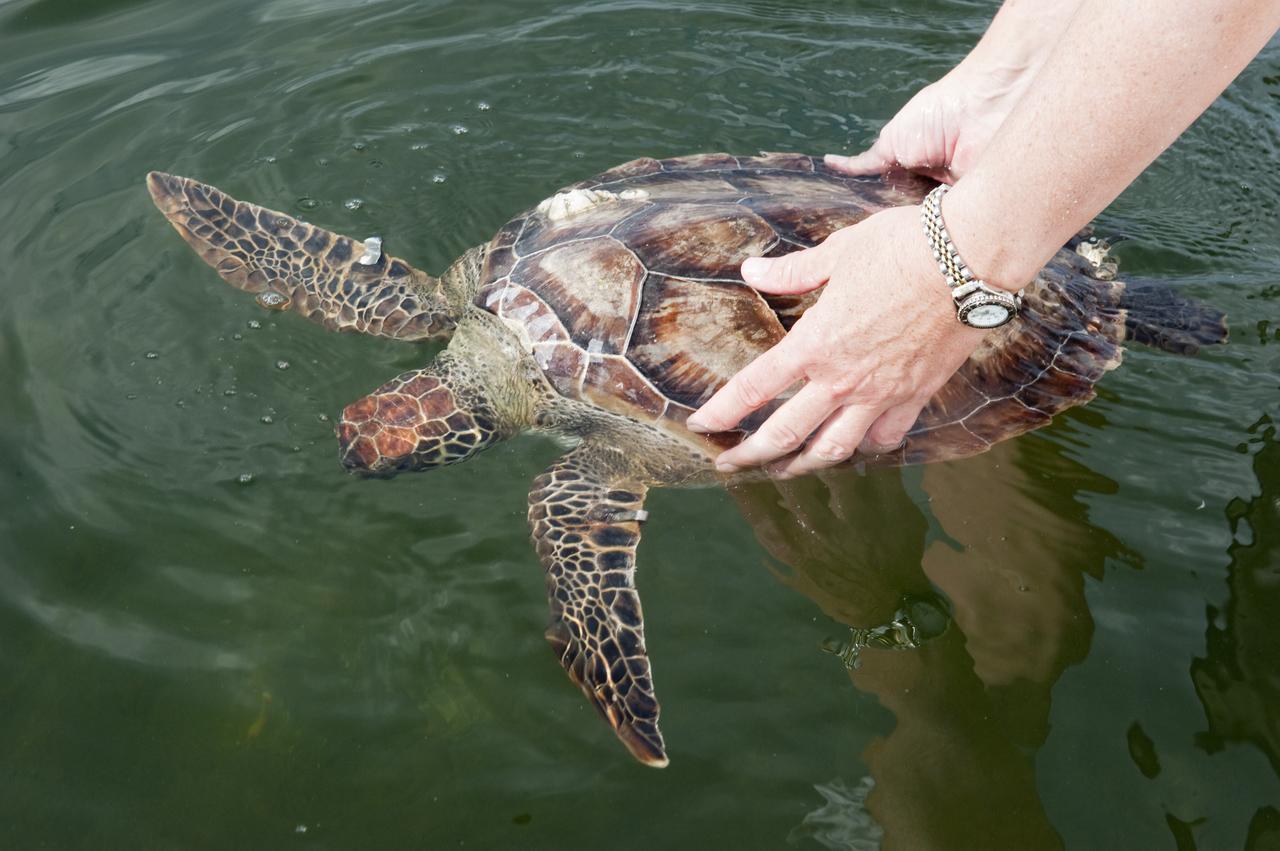
CAPE CANAVERAL, Fla. -- An endangered green sea turtle is released into the Mosquito Lagoon, which is part of Florida's Indian River. Workers with NASA's Kennedy Space Center, Innovative Health Applications and the Fish and Wildlife Conservation Commission rescued more than 300 turtles during this winter's frigid temperatures. Turtles that were stunned multiple times will be released in the Sebastian area of the Indian River, which often offers warmer water and could help prevent future stuns as winter progresses. NASA/Kim Shiflett
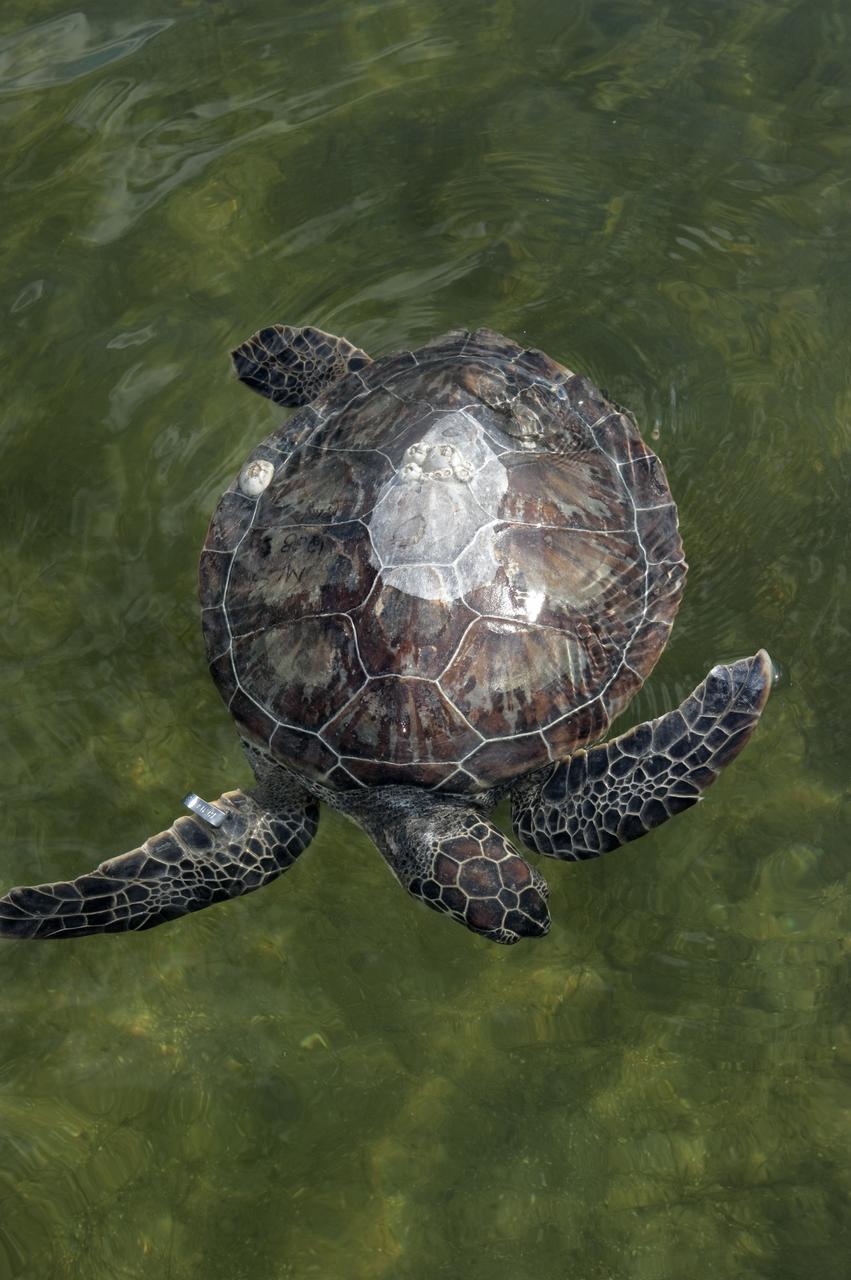
CAPE CANAVERAL, Fla. -- An endangered green sea turtle is released into the Mosquito Lagoon, which is part of Florida's Indian River. Workers with NASA's Kennedy Space Center, Innovative Health Applications and the Fish and Wildlife Conservation Commission rescued more than 300 turtles during this winter's frigid temperatures. Turtles that were stunned multiple times will be released in the Sebastian area of the Indian River, which often offers warmer water and could help prevent future stuns as winter progresses. NASA/Kim Shiflett
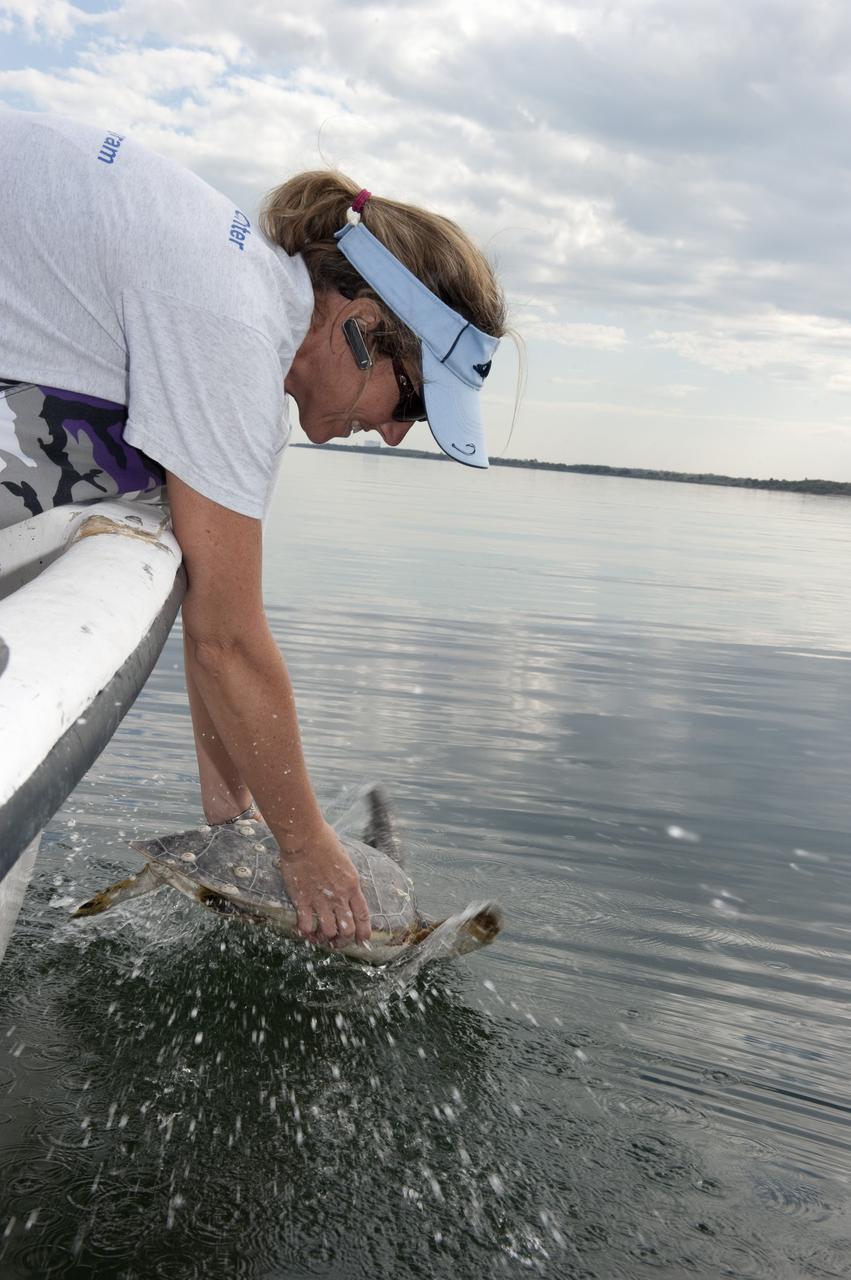
CAPE CANAVERAL, Fla. -- Karen Holloway, a biologist with Innovative Health Applications at NASA's Kennedy Space Center in Florida, releases an endangered green sea turtle into the Mosquito Lagoon, which is part of Florida's Indian River. The turtle was one of more than 300 that were "stunned" during two cold snaps in December 2010. Turtles that were stunned multiple times will be released in the Sebastian area of the Indian River, which often offers warmer water and could help prevent future stuns as winter progresses. NASA/Kim Shiflett
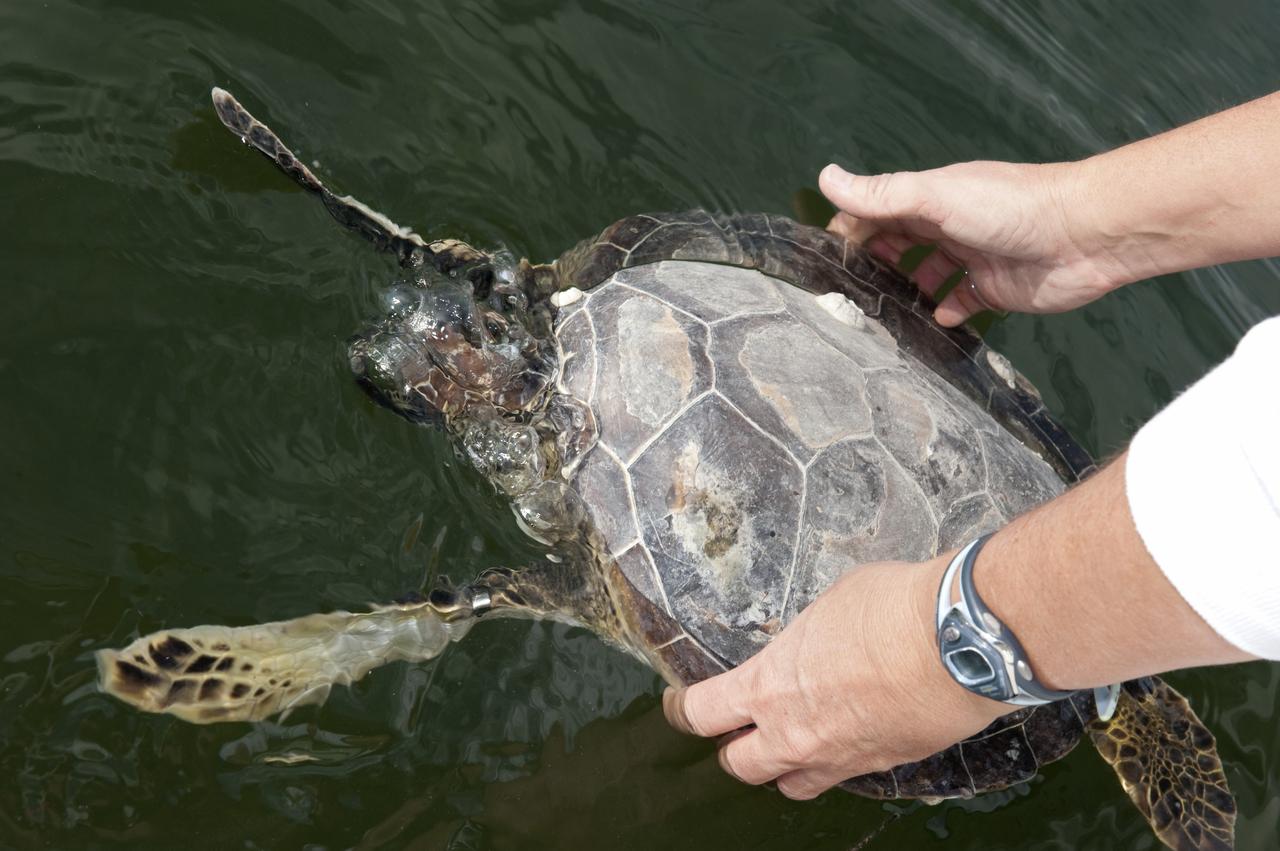
CAPE CANAVERAL, Fla. -- An endangered green sea turtle is released into the Mosquito Lagoon, which is part of Florida's Indian River. Workers with NASA's Kennedy Space Center, Innovative Health Applications and the Fish and Wildlife Conservation Commission rescued more than 300 turtles during this winter's frigid temperatures. Turtles that were stunned multiple times will be released in the Sebastian area of the Indian River, which often offers warmer water and could help prevent future stuns as winter progresses. NASA/Kim Shiflett
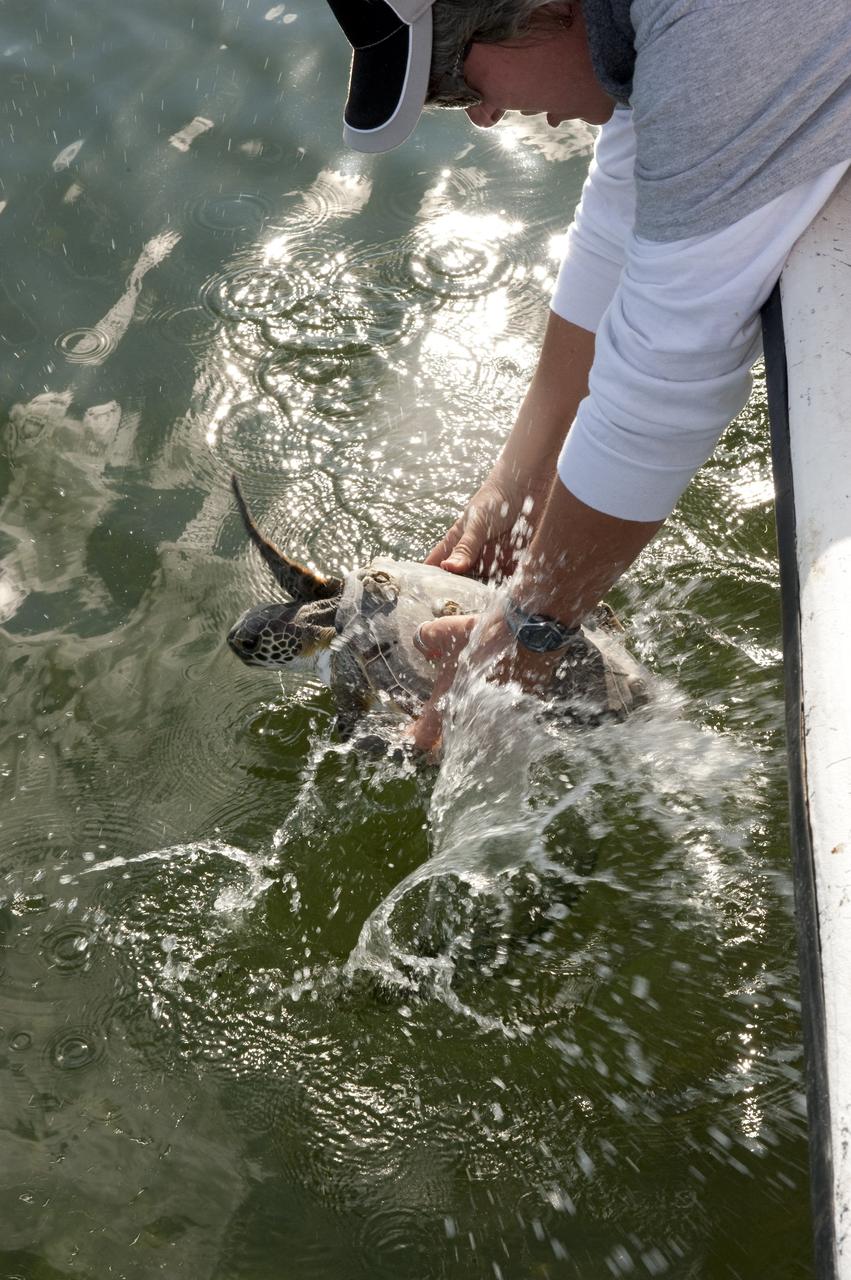
CAPE CANAVERAL, Fla. -- Donna Oddy, a biologist with Innovative Health Applications at NASA's Kennedy Space Center in Florida, releases an endangered green sea turtle into the Mosquito Lagoon, which is part of Florida's Indian River. The turtle was one of more than 300 that were "stunned" during two cold snaps in December 2010. Turtles that were stunned multiple times will be released in the Sebastian area of the Indian River, which often offers warmer water and could help prevent future stuns as winter progresses. NASA/Kim Shiflett
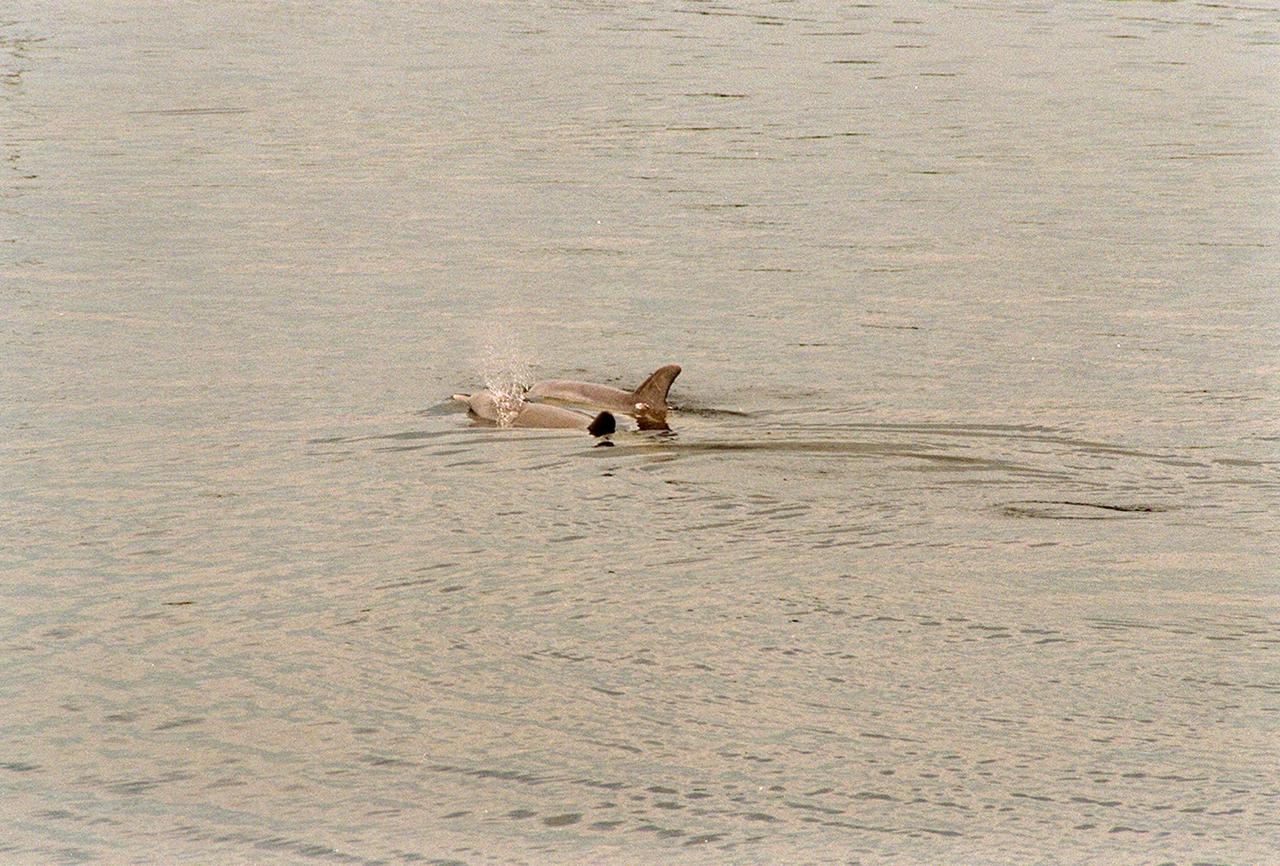
KENNEDY SPACE CENTER, FLA. -- In the turn basin east of the Vehicle Assembly Building and next to the crawlerway, a mother dolphin guides her baby through the water to search for food. Next to them on a rock is an osprey eating a fish. Dolphins inhabit the waters around Kennedy Space Center, along with many different species of oceanic and lagoon fish and shellfish. Mosquito Lagoon to the north, Banana River and Creek to the south and the Indian River to the west make up a special type of estuary called a lagoon, a body of water separated from the ocean by barrier islands, with limited exchange with the ocean through inlets. The Lagoon varies in width from ½ mile to 5 miles and averages only 3 feet in depth. Nearly one-third of the nation's manatee population lives here or migrates through the Lagoon seasonally. The lagoon also has one of the most diverse bird populations anywhere in America
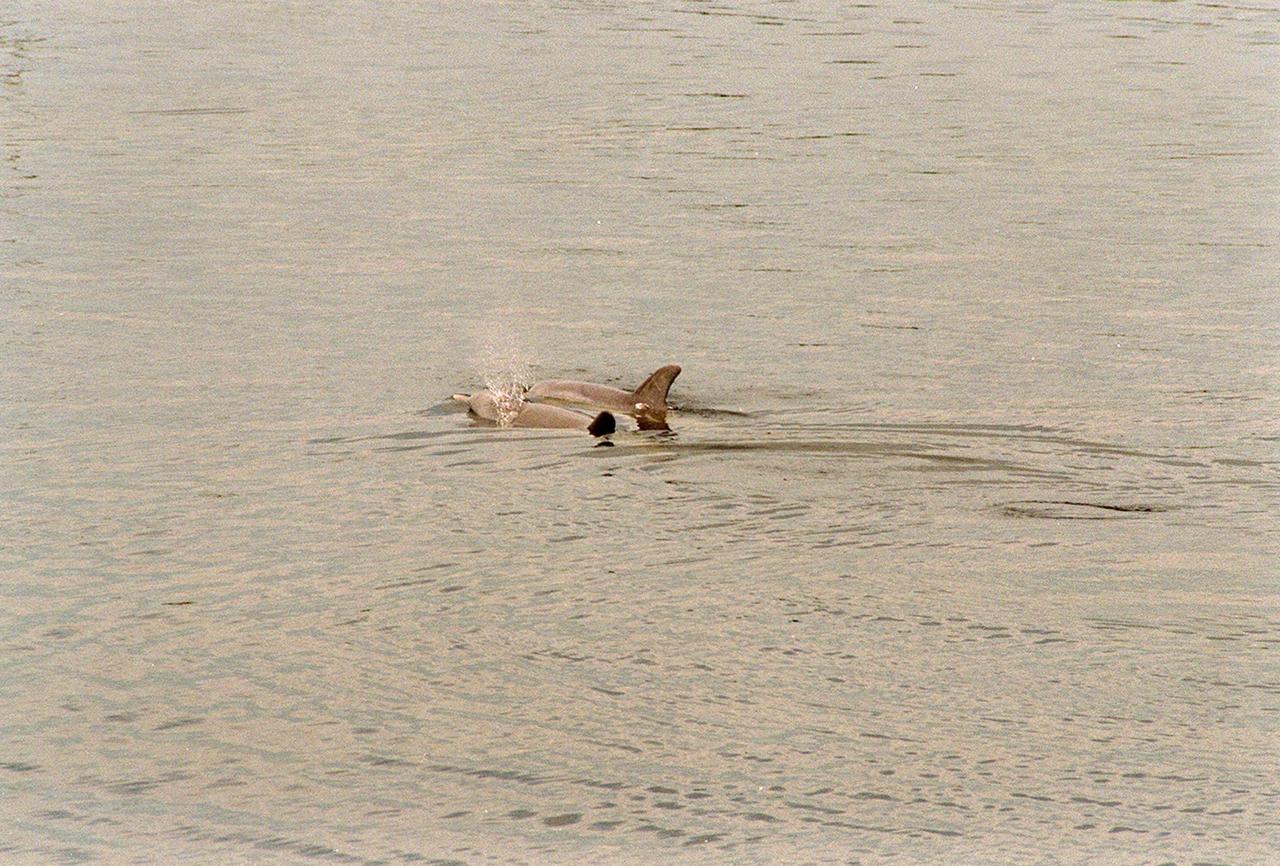
KENNEDY SPACE CENTER, FLA. -- In the turn basin east of the Vehicle Assembly Building and next to the crawlerway, a mother dolphin guides her baby through the water to search for food. Next to them on a rock is an osprey eating a fish. Dolphins inhabit the waters around Kennedy Space Center, along with many different species of oceanic and lagoon fish and shellfish. Mosquito Lagoon to the north, Banana River and Creek to the south and the Indian River to the west make up a special type of estuary called a lagoon, a body of water separated from the ocean by barrier islands, with limited exchange with the ocean through inlets. The Lagoon varies in width from ½ mile to 5 miles and averages only 3 feet in depth. Nearly one-third of the nation's manatee population lives here or migrates through the Lagoon seasonally. The lagoon also has one of the most diverse bird populations anywhere in America
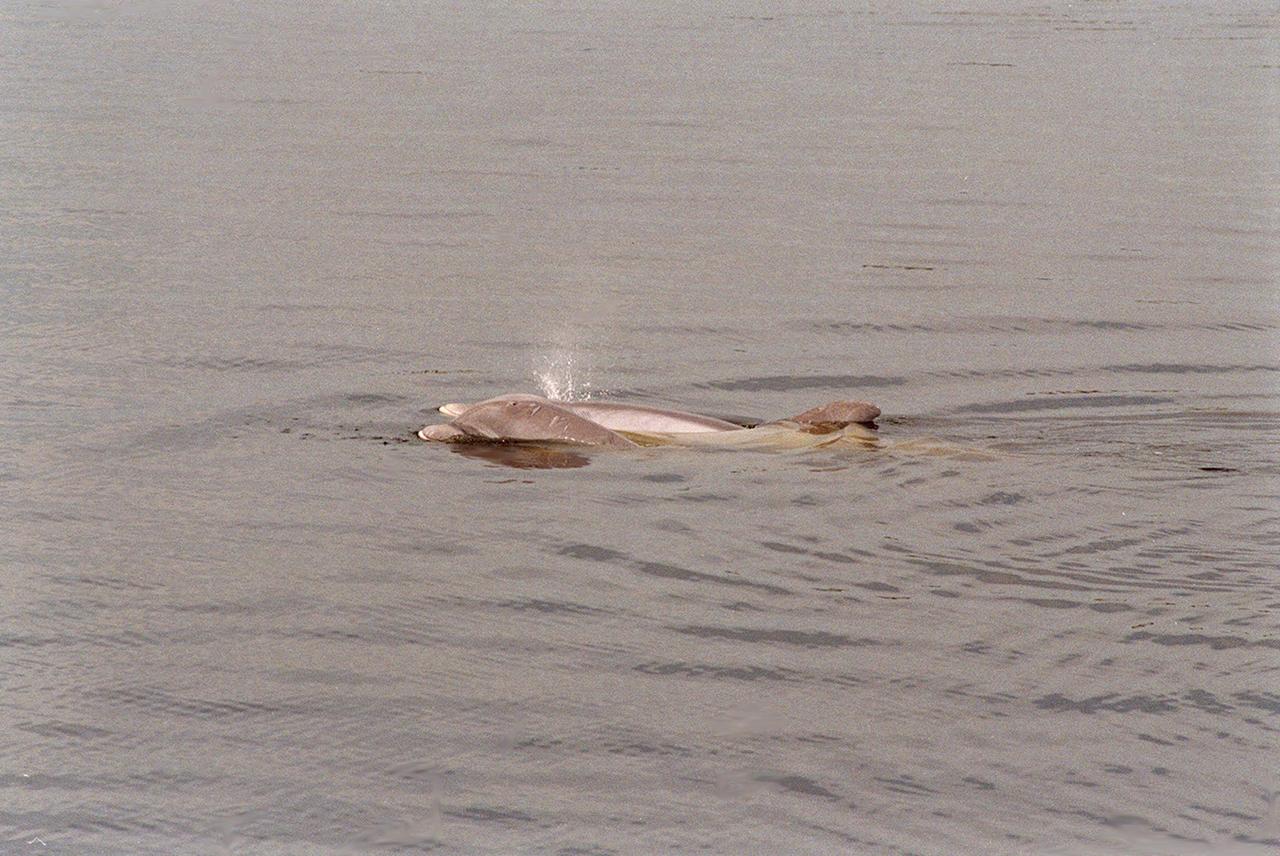
KENNEDY SPACE CENTER, FLA. -- In the turn basin east of the Vehicle Assembly Building and next to the crawlerway, a mother dolphin guides her baby through the water to search for food. Dolphins inhabit the waters around Kennedy Space Center, along with many different species of oceanic and lagoon fish and shellfish. Mosquito Lagoon to the north, Banana River and Creek to the south and the Indian River to the west make up a special type of estuary called a lagoon, a body of water separated from the ocean by barrier islands, with limited exchange with the ocean through inlets. The Lagoon varies in width from ½ mile to 5 miles and averages only 3 feet in depth. Nearly one-third of the nation's manatee population lives here or migrates through the Lagoon seasonally
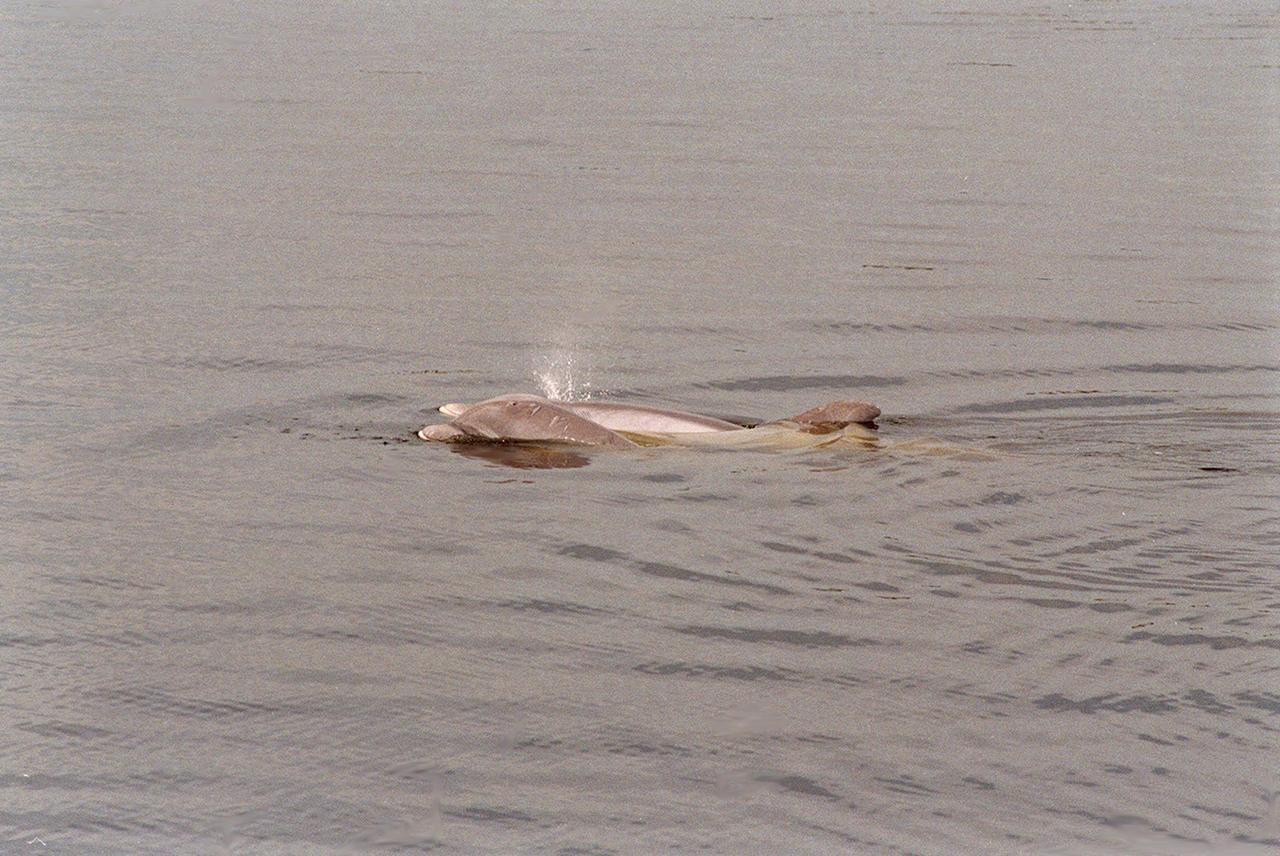
KENNEDY SPACE CENTER, FLA. -- In the turn basin east of the Vehicle Assembly Building and next to the crawlerway, a mother dolphin guides her baby through the water to search for food. Dolphins inhabit the waters around Kennedy Space Center, along with many different species of oceanic and lagoon fish and shellfish. Mosquito Lagoon to the north, Banana River and Creek to the south and the Indian River to the west make up a special type of estuary called a lagoon, a body of water separated from the ocean by barrier islands, with limited exchange with the ocean through inlets. The Lagoon varies in width from ½ mile to 5 miles and averages only 3 feet in depth. Nearly one-third of the nation's manatee population lives here or migrates through the Lagoon seasonally
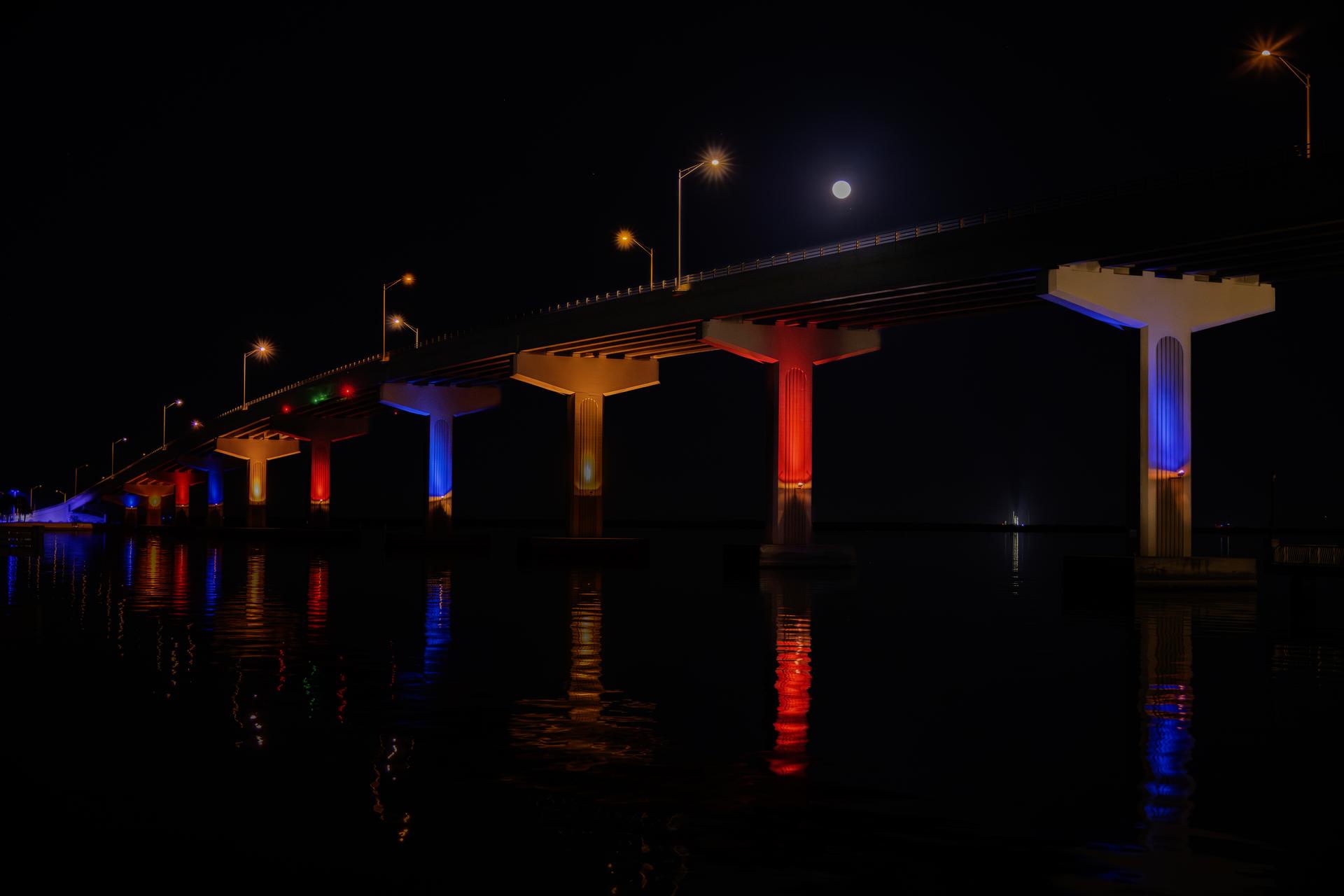
The Moon shines over the Max Brewer Bridge during the Artemis II wet dress rehearsal on Monday, Feb. 2, 2026, in Titusville, Florida. The bridge spanning the Indian River Lagoon is a popular launch viewing location for Kennedy Space Center and Cape Canaveral Space Force Station.

CAPE CANAVERAL, Fla. – A few of the green sea turtles are seen inside the headquarters building of the Merritt Island Wildlife Refuge located on NASA's Kennedy Space Center in Florida. The turtles were some of many "stunned" by the recent drop in temperatures in Florida. Many of the turtles were rescued from the Mosquito Lagoon, with others coming from the Indian River Lagoon and Cocoa Beach. Photo credit: NASA/Amanda Diller
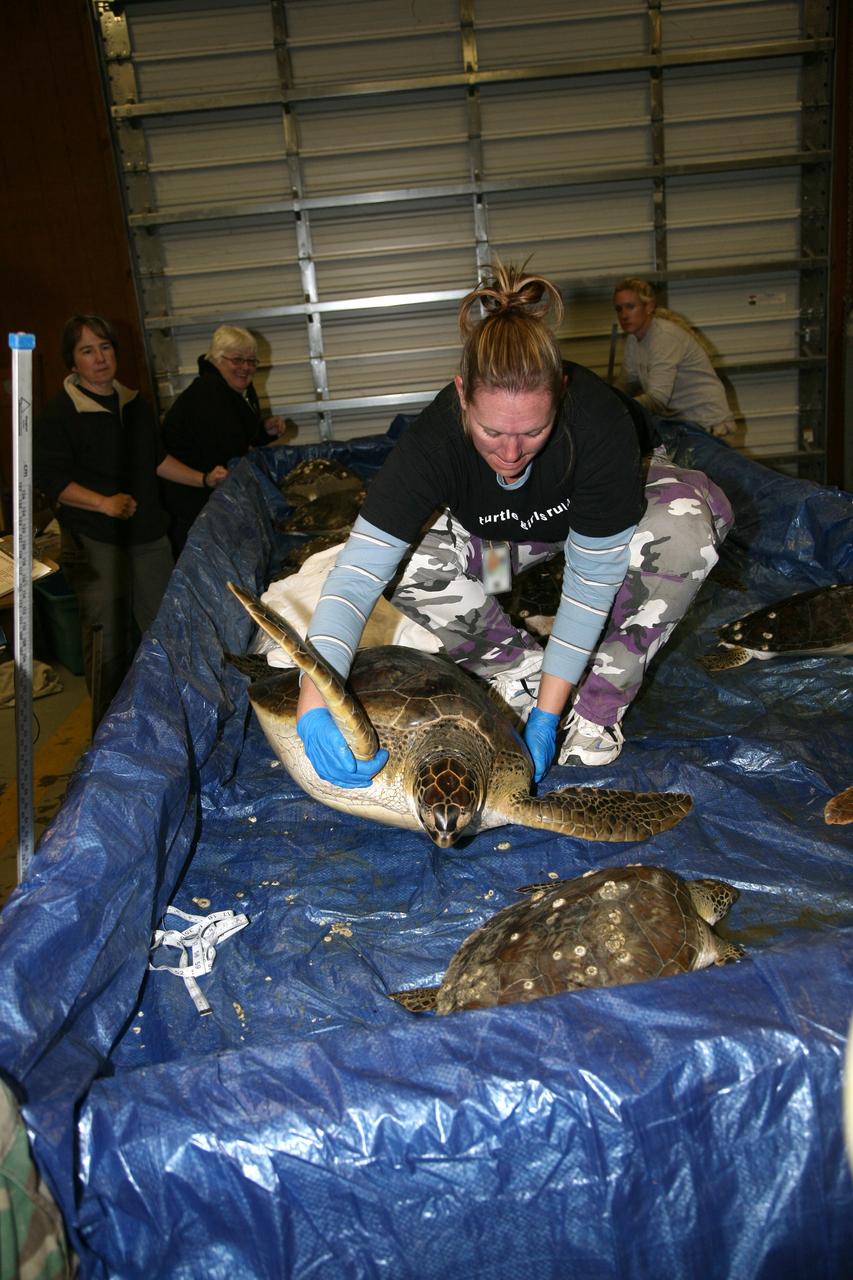
CAPE CANAVERAL, Fla. – A Fish and Wildlife Conservation Commission worker moves a green sea turtle inside the headquarters building of the Merritt Island Wildlife Refuge located on NASA's Kennedy Space Center in Florida. The turtle was one of many "stunned" by the recent drop in temperatures in Florida. Many of the turtles were rescued from the Mosquito Lagoon, with others coming from the Indian River Lagoon and Cocoa Beach. Photo credit: NASA/Amanda Diller
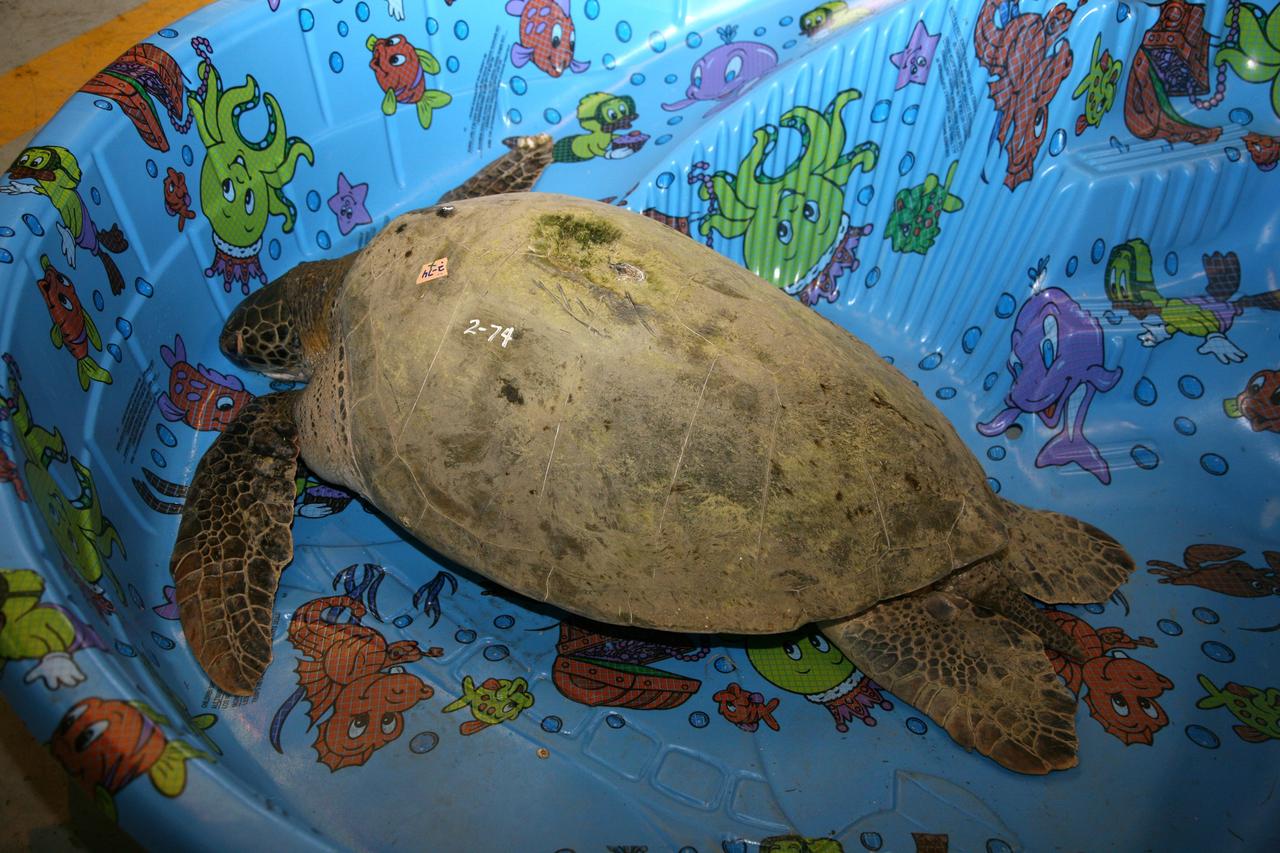
CAPE CANAVERAL, Fla. – On Friday, this sea turtle affected by the cold temperatures in Florida was among those taken inside the Merritt Island Wildlife Refuge headquarters building at NASA's Kennedy Space Center. The turtle was one of many "stunned" by the recent drop in temperatures in Florida. Many of the turtles were rescued from the Mosquito Lagoon, with others coming from the Indian River Lagoon and Cocoa Beach. Photo credit: NASA/Amanda Diller
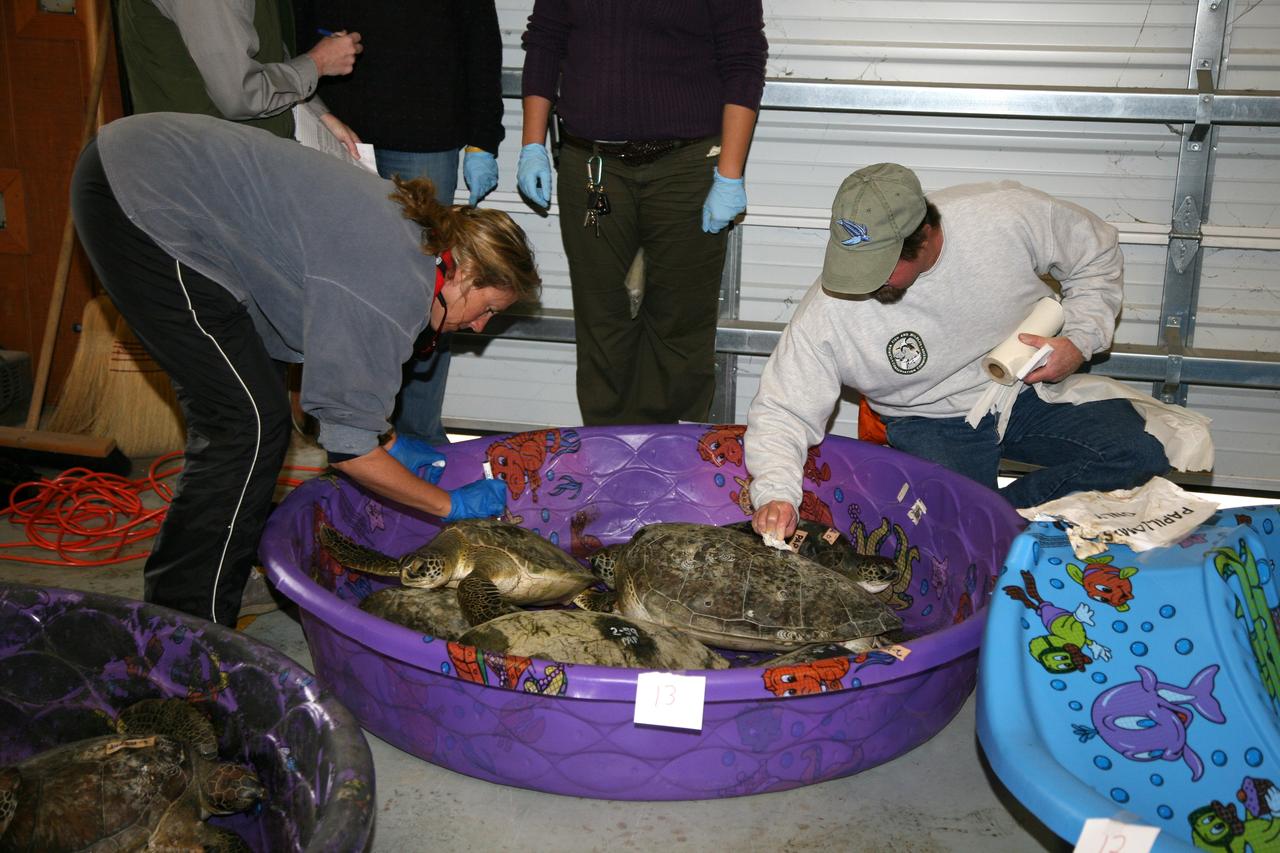
CAPE CANAVERAL, Fla. – Fish and Wildlife Conservation Commission workers evaluate a green sea turtle at the headquarters building of the Merritt Island Wildlife Refuge located on NASA's Kennedy Space Center in Florida. The turtle was one of many "stunned" by the recent drop in temperatures in Florida. Many of the turtles were rescued from the Mosquito Lagoon, with others coming from the Indian River Lagoon and Cocoa Beach. Photo credit: NASA/Amanda Diller
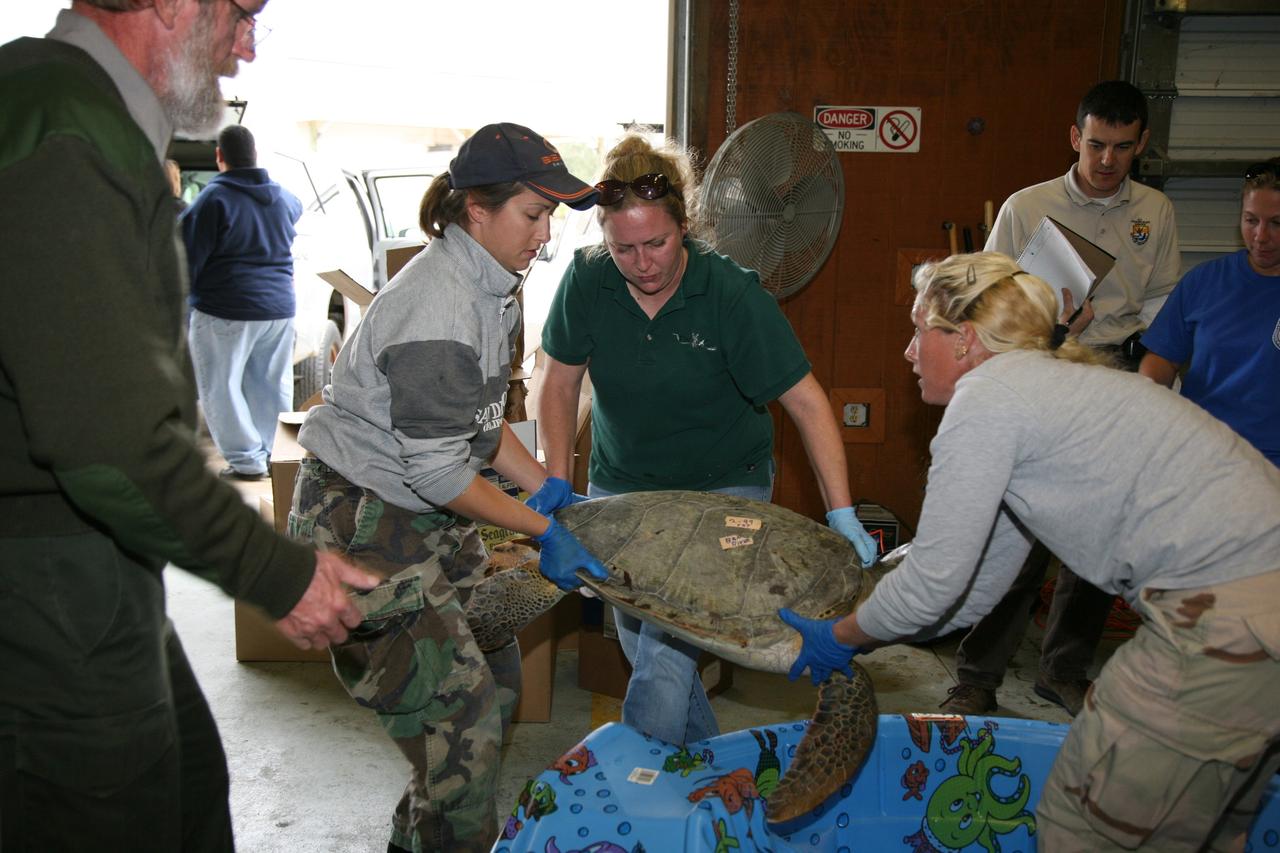
CAPE CANAVERAL, Fla. – Fish and Wildlife Conservation Commission workers move a green sea turtle into the headquarters building of the Merritt Island Wildlife Refuge located on NASA's Kennedy Space Center in Florida. The turtle was one of many "stunned" by the recent drop in temperatures in Florida. Many of the turtles were rescued from the Mosquito Lagoon, with others coming from the Indian River Lagoon and Cocoa Beach. Photo credit: NASA/Amanda Diller
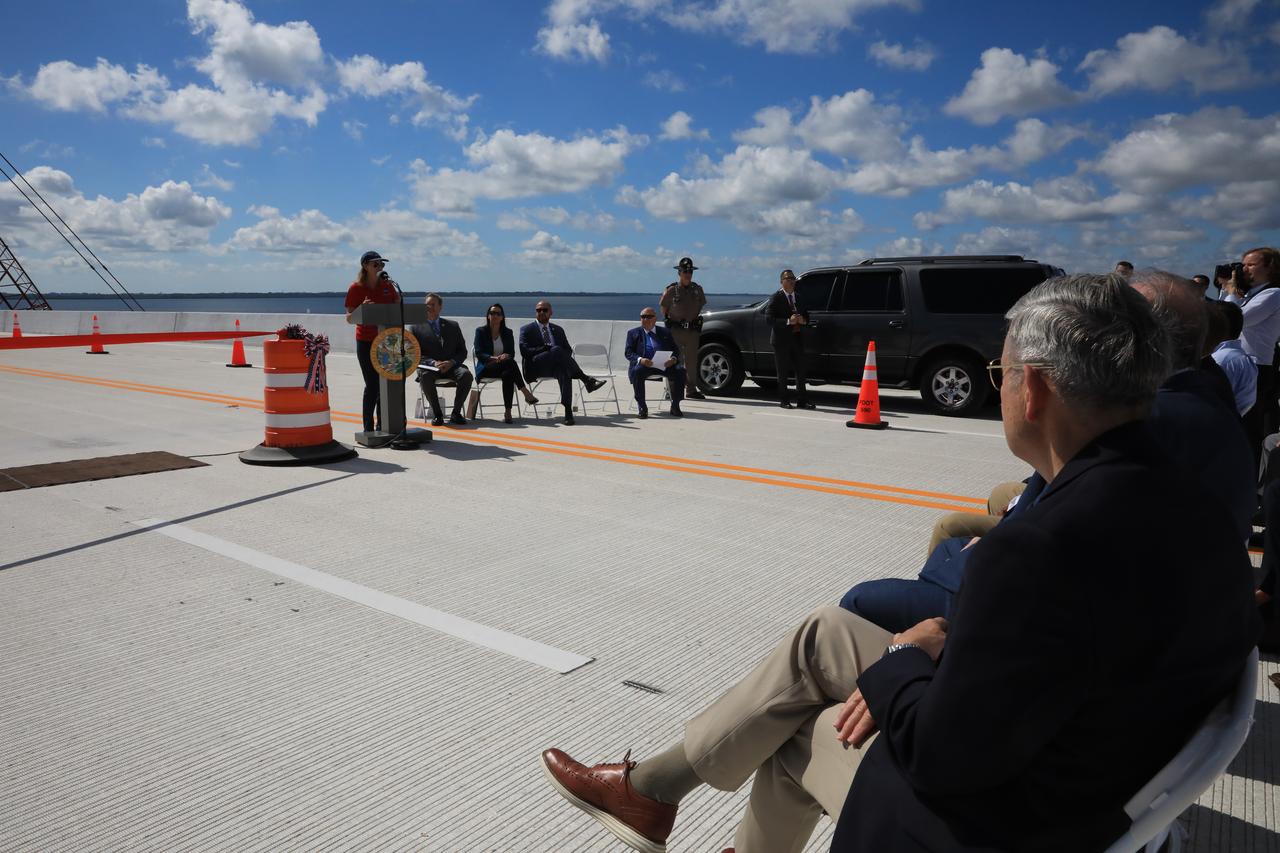
NASA Kennedy Space Center Director Janet Petro speaks during the grand opening ceremony for the upgraded eastbound span of the Indian River Bridge near Kennedy Space Center on June 9, 2023. The new high-rise bridge serves as the primary entrance and exit to the space center for employees and visitors. The bridge spans the Indian River Lagoon and connects Kennedy and the Cape Canaveral Space Force Station to the mainland via State Road 405/NASA Causeway in Titusville. This first section of the bridge replaces the two-lane drawbridge which was built in the mid-1960s to support the Apollo program.
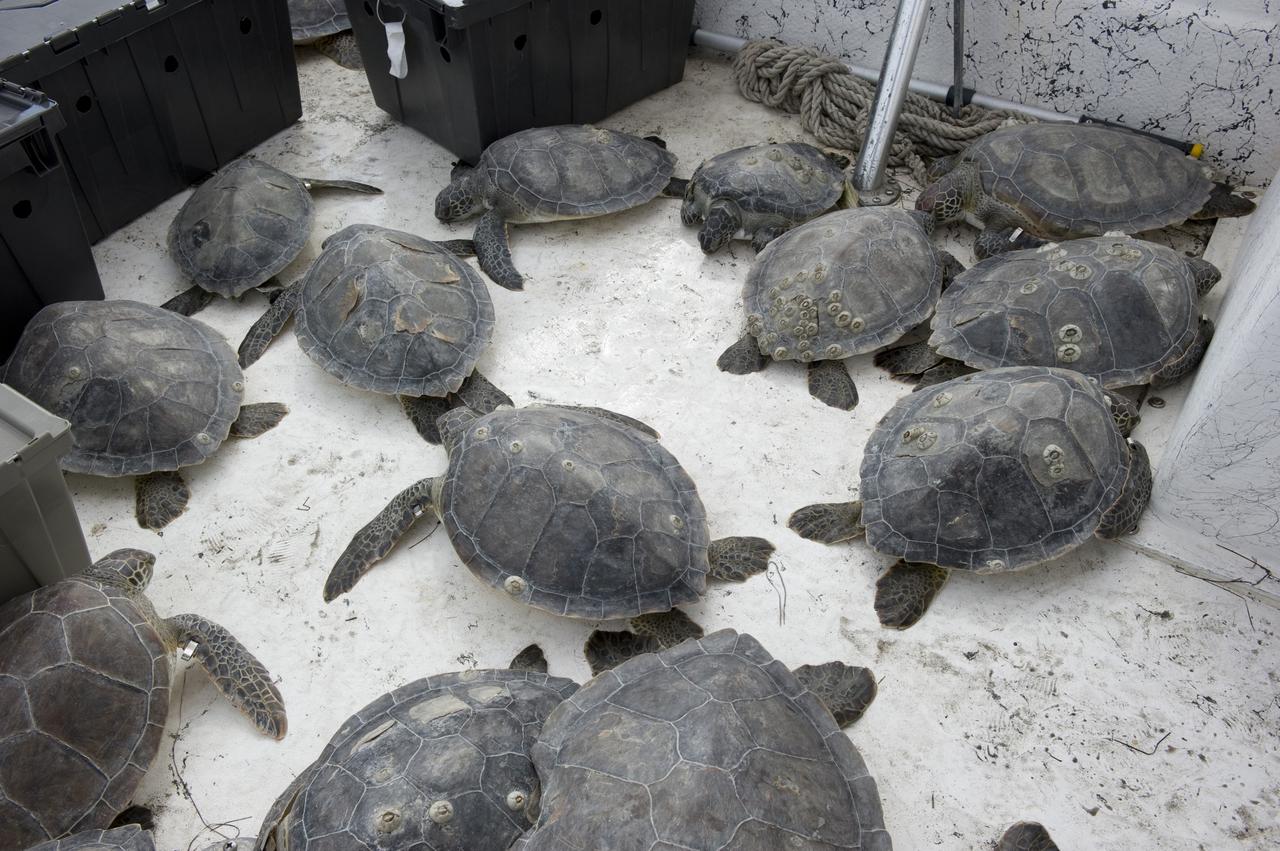
CAPE CANAVERAL, Fla. -- Several endangered green sea turtles that were "stunned" during two cold snaps in December 2010 are ready for release into the Mosquito Lagoon, which is part of Florida's Indian River. Workers with NASA's Kennedy Space Center, Innovative Health Applications and the Fish and Wildlife Conservation Commission rescued more than 300 turtles during this winter's frigid temperatures. Turtles that were stunned multiple times will be released in the Sebastian area of the Indian River, which often offers warmer water and could help prevent future stuns as winter progresses. NASA/Kim Shiflett
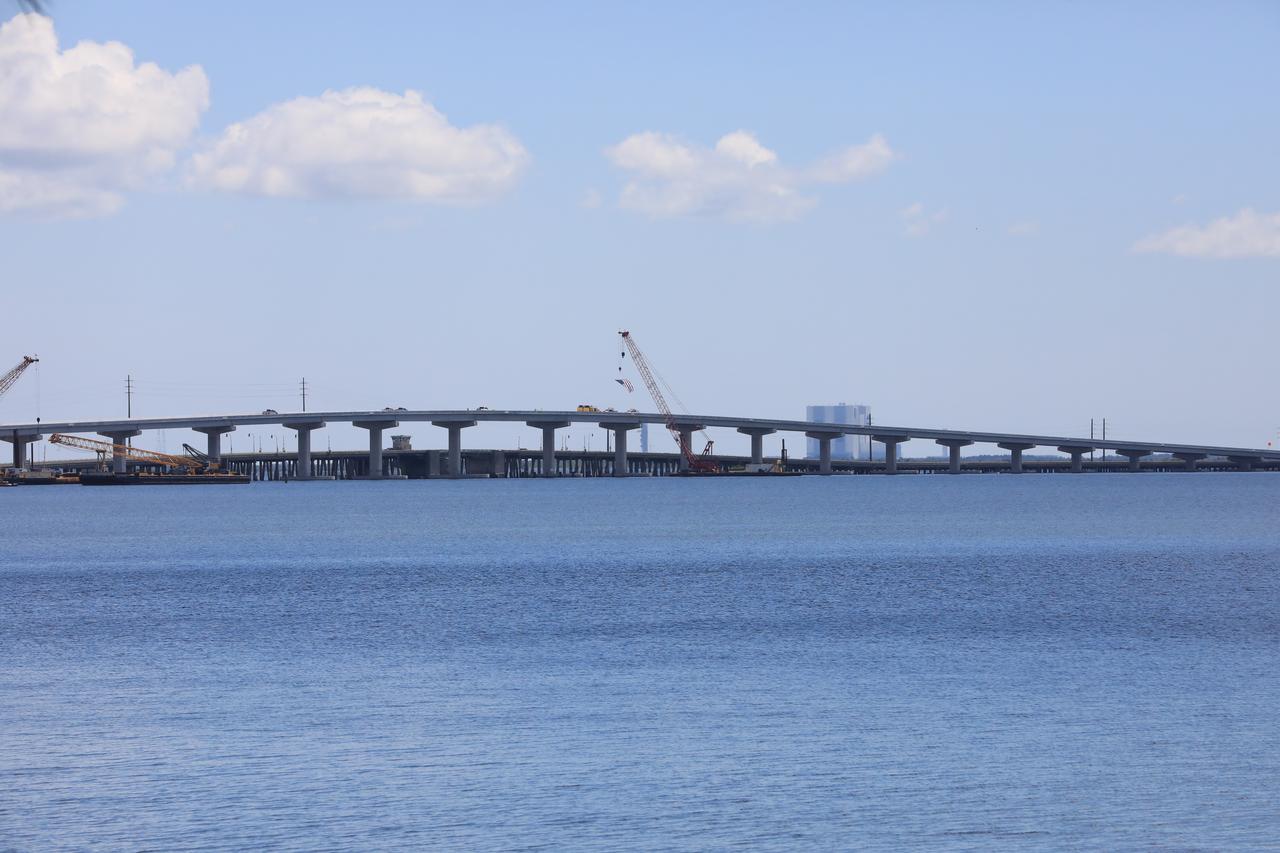
In view is the upgraded eastbound span of the Indian River Bridge leading to NASA’s Kennedy Space Center in Florida. A ribbon cutting ceremony was held June 9, 2023 to officially open the East part of the bridge. The new high-rise bridge serves as the primary entrance and exit to the space center for employees and visitors. The bridge spans the Indian River Lagoon and connects Kennedy and the Cape Canaveral Space Force Station to the mainland via State Road 405/NASA Causeway in Titusville. This first section of the bridge replaces the two-lane drawbridge which was built in the mid-1960s to support the Apollo program.
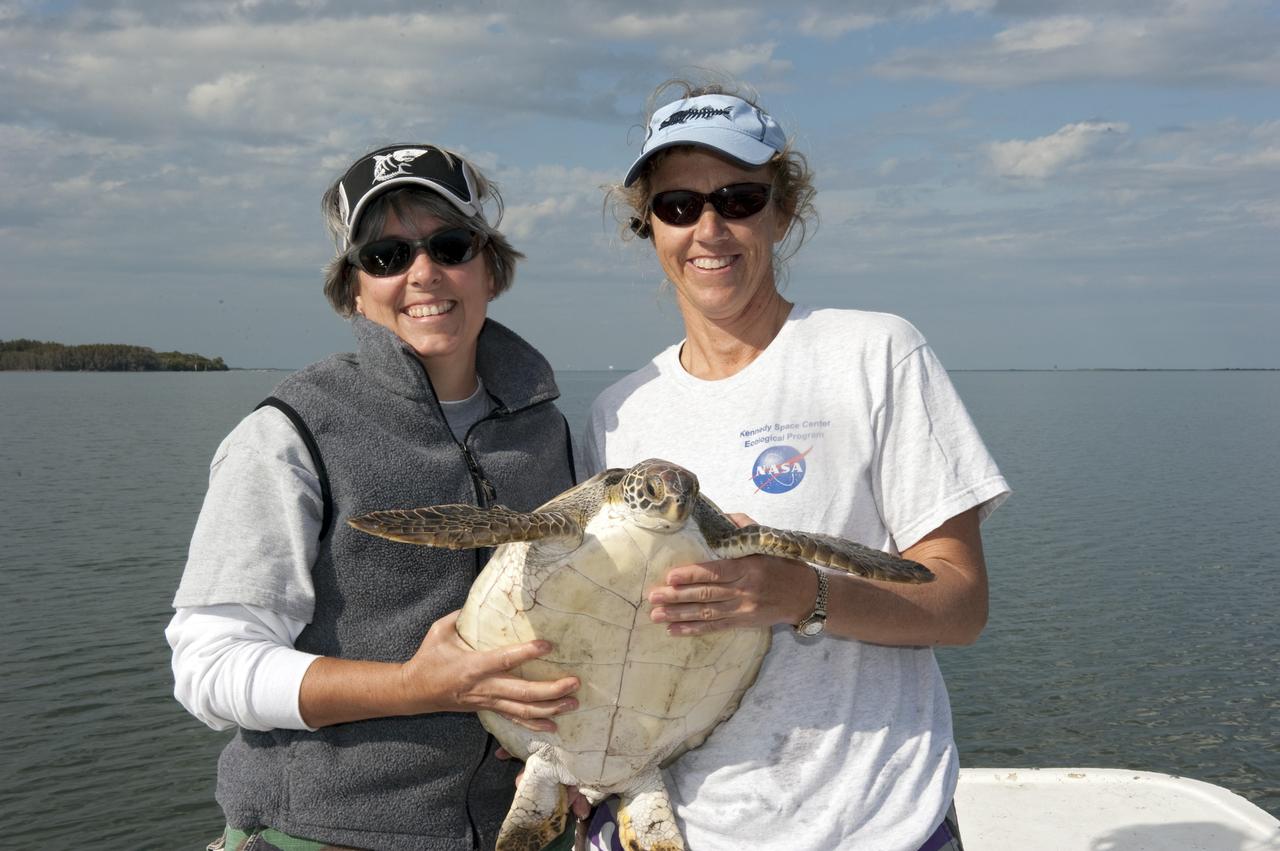
CAPE CANAVERAL, Fla. -- Donna Oddy, left, and Karen Holloway, biologists with Innovative Health Applications at NASA's Kennedy Space Center in Florida, are ready to release an endangered green sea turtle into the Mosquito Lagoon, which is part of Florida's Indian River. The turtle was one of more than 300 that were "stunned" during two cold snaps in December 2010. Turtles that were stunned multiple times will be released in the Sebastian area of the Indian River, which often offers warmer water and could help prevent future stuns as winter progresses. NASA/Kim Shiflett
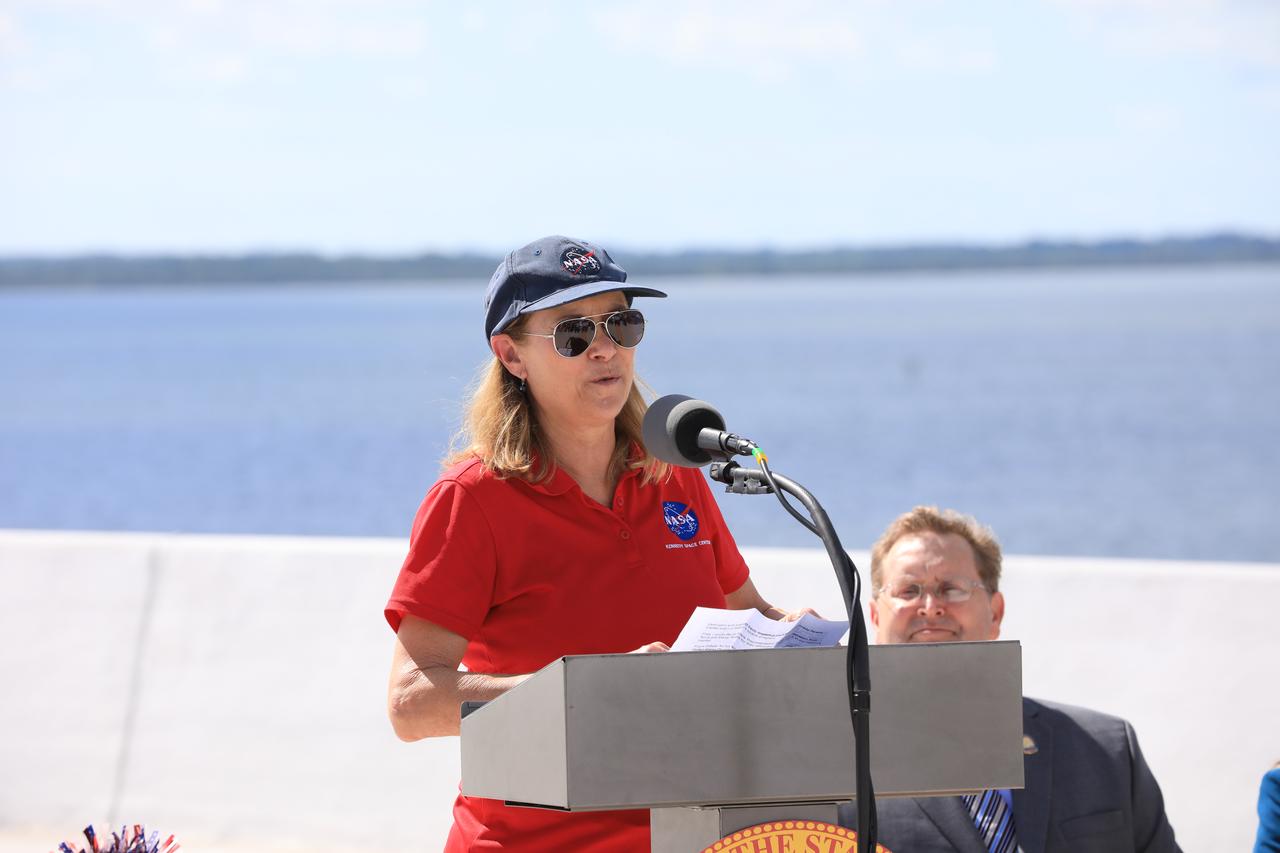
NASA Kennedy Space Center Director Janet Petro speaks during the grand opening ceremony for the upgraded eastbound span of the Indian River Bridge near the center on June 9, 2023. The new high-rise bridge serves as the primary entrance and exit to the space center for employees and visitors. The bridge spans the Indian River Lagoon and connects Kennedy and the Cape Canaveral Space Force Station to the mainland via State Road 405/NASA Causeway in Titusville. This first section of the bridge replaces the two-lane drawbridge which was built in the mid-1960s to support the Apollo program.

CAPE CANAVERAL, Fla. – The fog clears from the turn basin as the morning sky turns blue over NASA's Kennedy Space Center in Florida. A pelican has a front row seat for the spectacle. Kennedy is surrounded by water: the Banana River, Banana Creek, Indian River Lagoon and the Atlantic Ocean, all of which provide scenes of beauty and nature that contrast with the high technology and power of the center. Photo credit: NASA/Ben Smegelsky
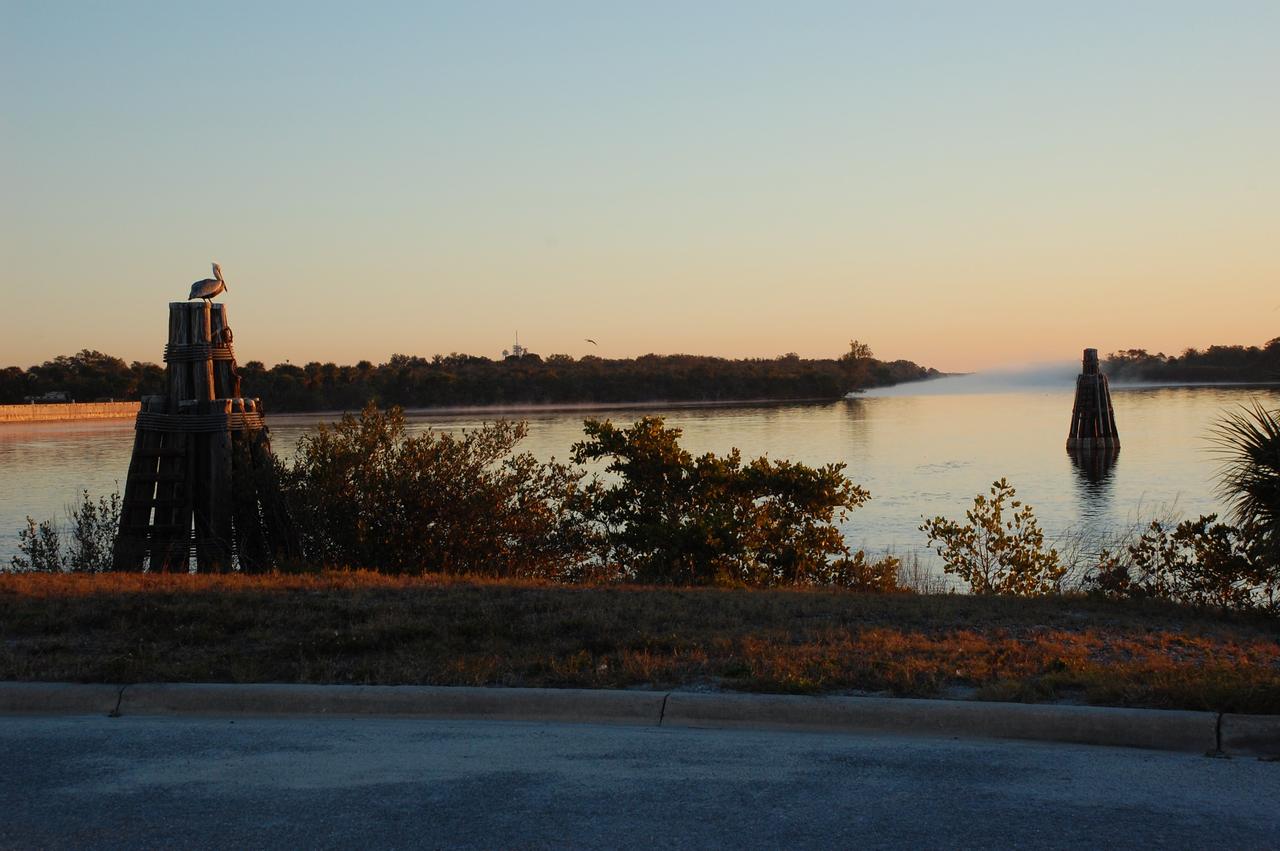
CAPE CANAVERAL, Fla. – Rising higher in the morning sky, the sun puts a glow on the fog rising from the turn basin at NASA's Kennedy Space Center in Florida. A pelican has a front row seat for the spectacle. Kennedy is surrounded by water: the Banana River, Banana Creek, Indian River Lagoon and the Atlantic Ocean, all of which provide scenes of beauty and nature that contrast with the high technology and power of the center. Photo credit: NASA/Ben Smegelsky
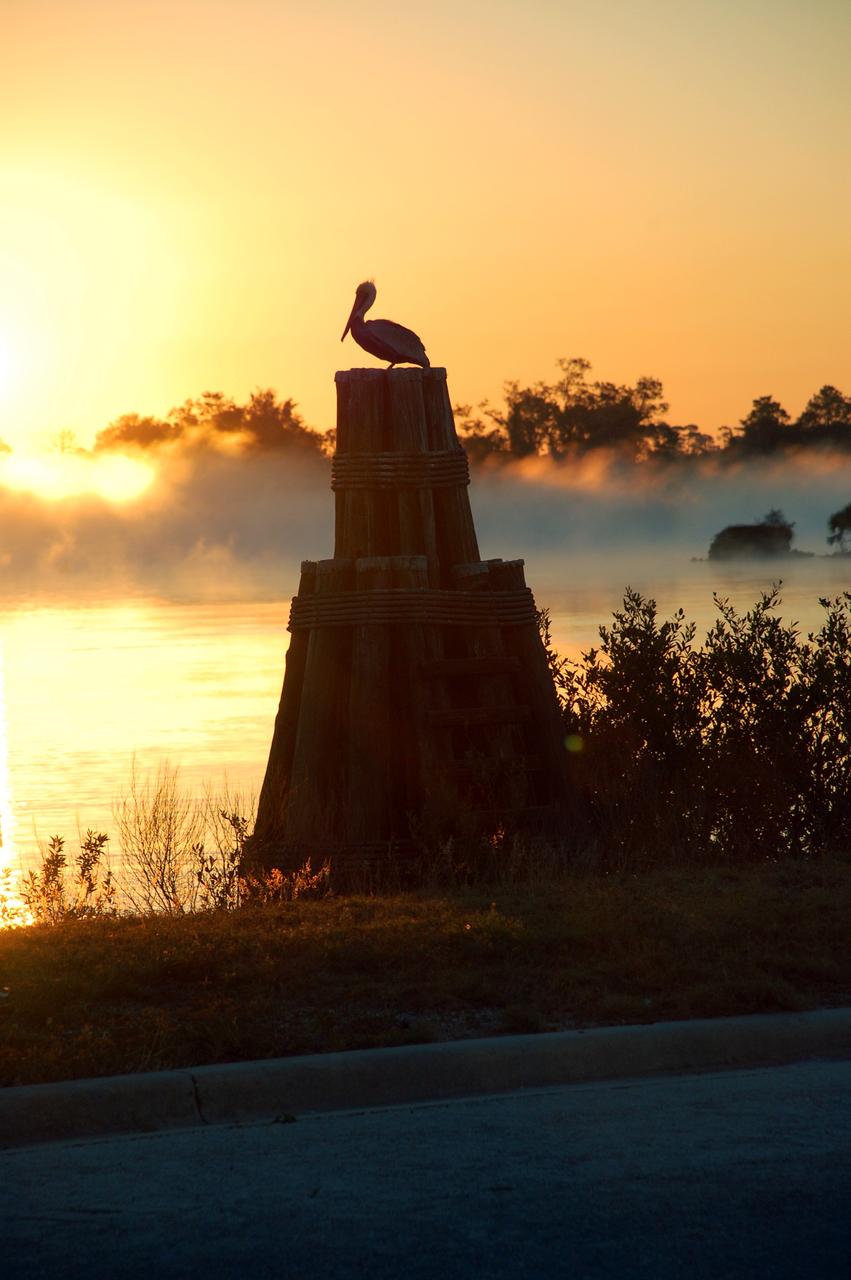
CAPE CANAVERAL, Fla. – The sun rising over the Launch Complex 39 Area turn basin at NASA's Kennedy Space Center in Florida casts a brilliant flame in the water. At right is the U.S. flag on the grounds of the NASA News Center. Kennedy is surrounded by water: the Banana River, Banana Creek, Indian River Lagoon and the Atlantic Ocean, all of which provide scenes of beauty and nature that contrast with the high technology and power of the center. Photo credit: NASA/Ben Smegelsky

CAPE CANAVERAL, Fla. – A pelican is silhouetted against the rosy dawn sky as morning fog floats over the turn basin at NASA's Kennedy Space Center in Florida. Kennedy is surrounded by water: the Banana River, Banana Creek, Indian River Lagoon and the Atlantic Ocean, all of which provide scenes of beauty and nature that contrast with the high technology and power of the center. Photo credit: NASA/Ben Smegelsky
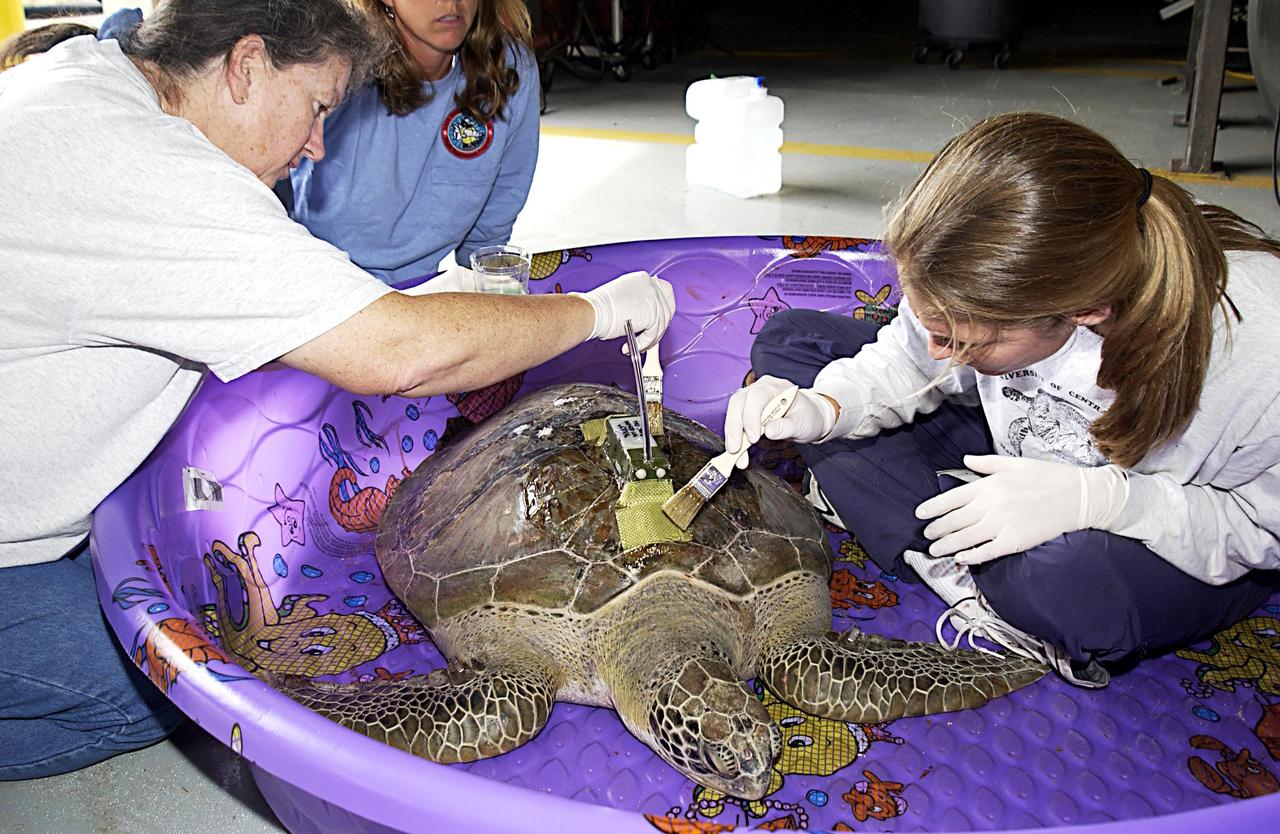
KENNEDY SPACE CENTER, FLA. -- A sea turtle rescued from the Mosquito Lagoon is prepared to receive a transmitter on its back. Several turtles were found stunned, impacted by the unseasonal cold temperatures experienced in Central Florida. The cooperative effort of KSC contractor Dynamac Corporation's Aquatics Program and the Merritt Island National Wildlife Refuge warmed the turtles and evaluated them for release. Most were tagged and one received the transmitter, provided by the University of Central Florida, for satellite tracking. The turtles were then transported in a skiff through the Haulover Canal to a location away from the main channel and released into the Indian River Lagoon.
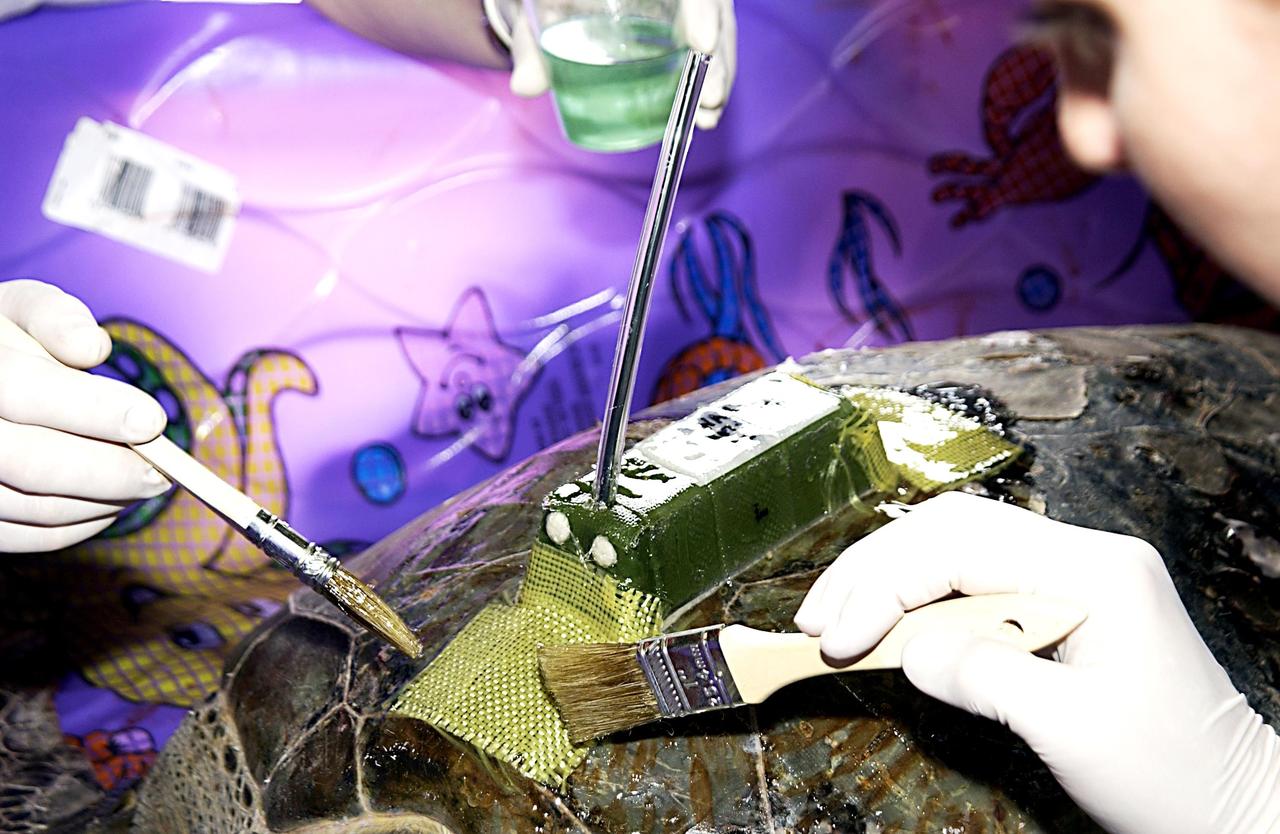
KENNEDY SPACE CENTER, FLA. -- This closeup shows the transmitter being attached to a sea turtle rescued from the Mosquito Lagoon. Several turtles were found stunned, impacted by the unseasonal cold temperatures experienced in Central Florida. The cooperative effort of KSC contractor Dynamac Corporation's Aquatics Program and the Merritt Island National Wildlife Refuge warmed the turtles and evaluated them for release. Most were tagged and one received the transmitter, provided by the University of Central Florida, for satellite tracking. The turtles were then transported in a skiff through the Haulover Canal to a location away from the main channel and released into the Indian River Lagoon.
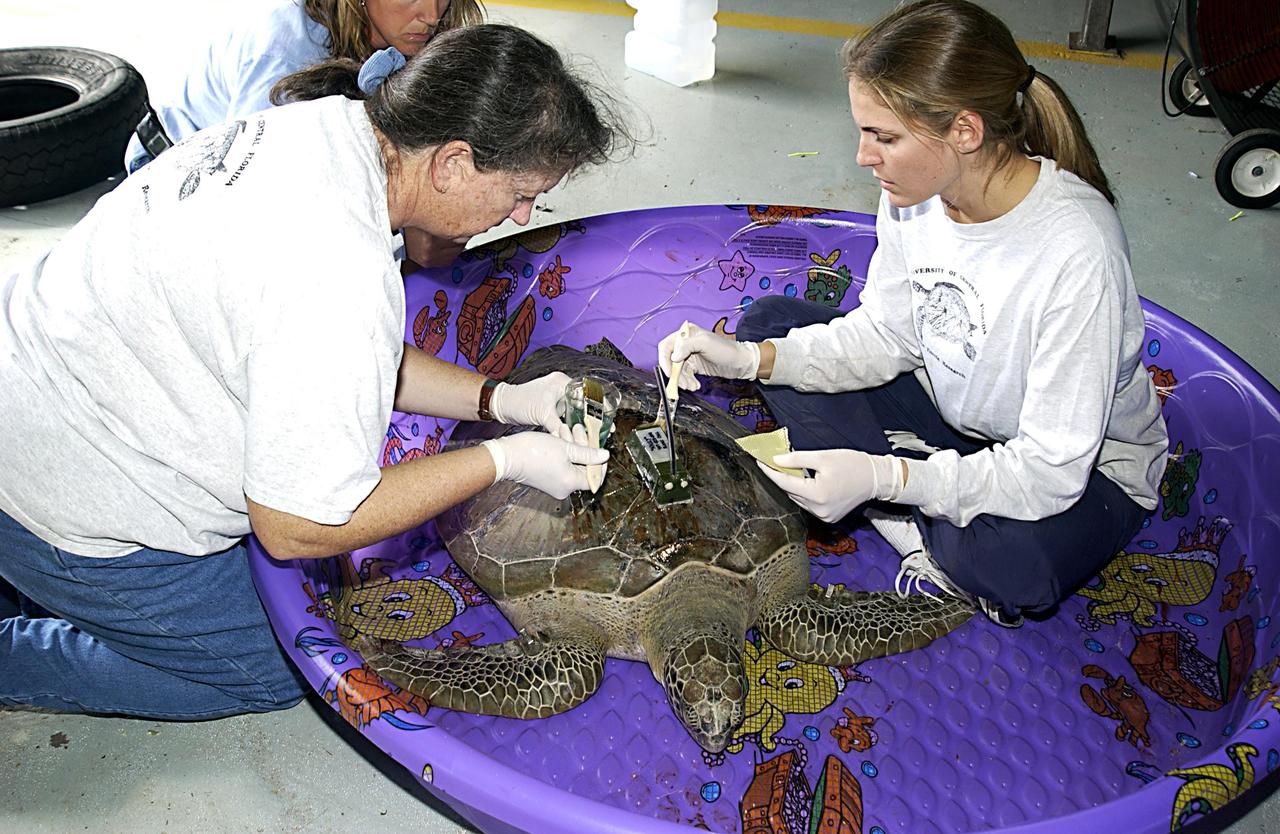
KENNEDY SPACE CENTER, FLA. - A sea turtle rescued from the Mosquito Lagoon is prepared to receive a transmitter on its back. Several turtles were found stunned, impacted by the unseasonal cold temperatures experienced in Central Florida. The cooperative effort of KSC contractor Dynamac Corporation's Aquatics Program and the Merritt Island National Wildlife Refuge warmed the turtles and evaluated them for release. Most were tagged and one received the transmitter, provided by the University of Central Florida, for satellite tracking. The turtles were then transported in a skiff through the Haulover Canal to a location away from the main channel and released into the Indian River Lagoon.
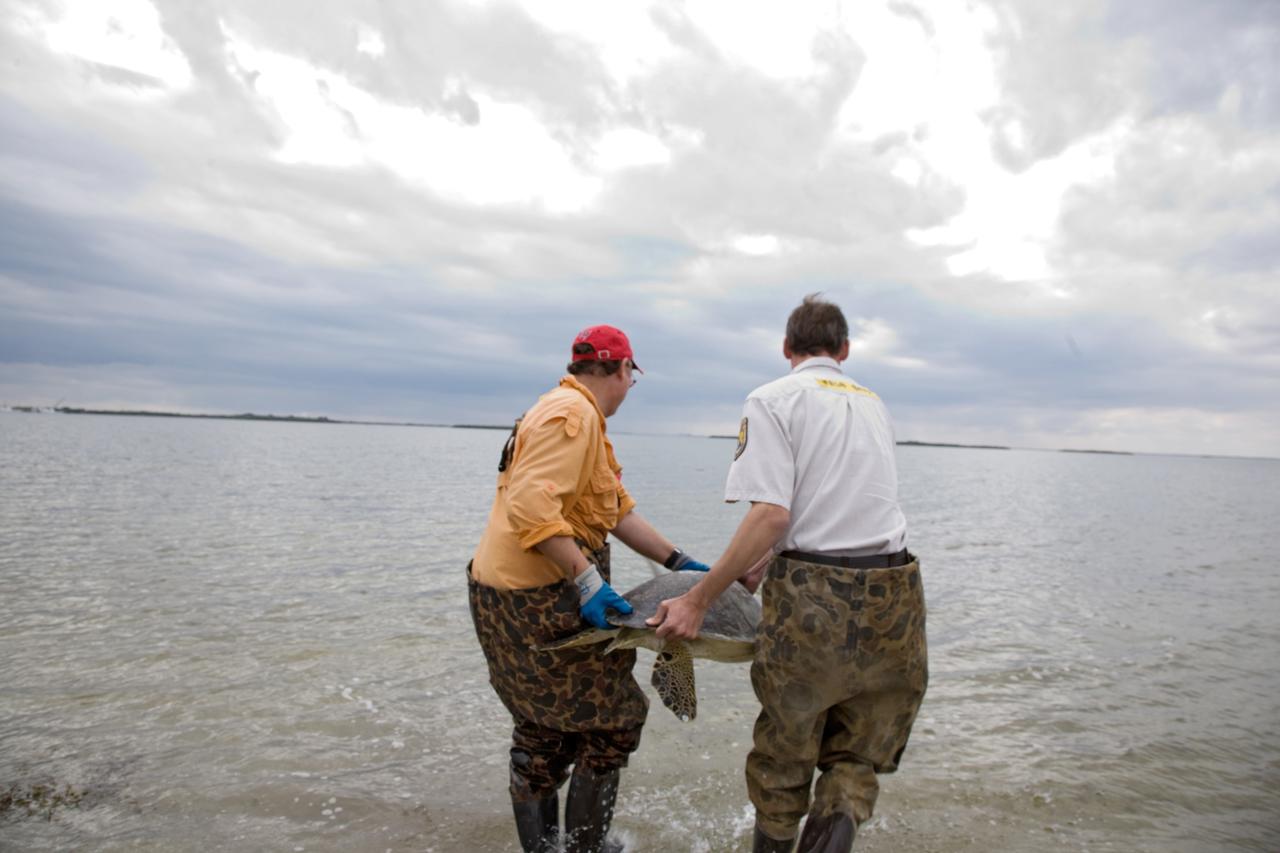
CAPE CANAVERAL, Fla. - Wildlife personnel carry an endangered green sea turtle toward the Banana River at NASA's Kennedy Space Center in Florida, ready to release the animal back into its usual environment. A recent cold snap left this turtle and nearly 2,000 others "stunned" and in need of help. Many of the turtles were rescued from the Mosquito Lagoon, with others coming from the Indian River Lagoon and Cocoa Beach. Biologists, environmentalists, wildlife experts and other volunteers joined forces with a massive rescue effort at the Merritt Island National Wildlife Refuge, where the turtles were identified, examined and transported to rehabilitation facilities throughout Florida and South Georgia. The animals stayed at these facilities until local waters warmed up to safe temperatures. Photo credit: NASA/Troy Cryder
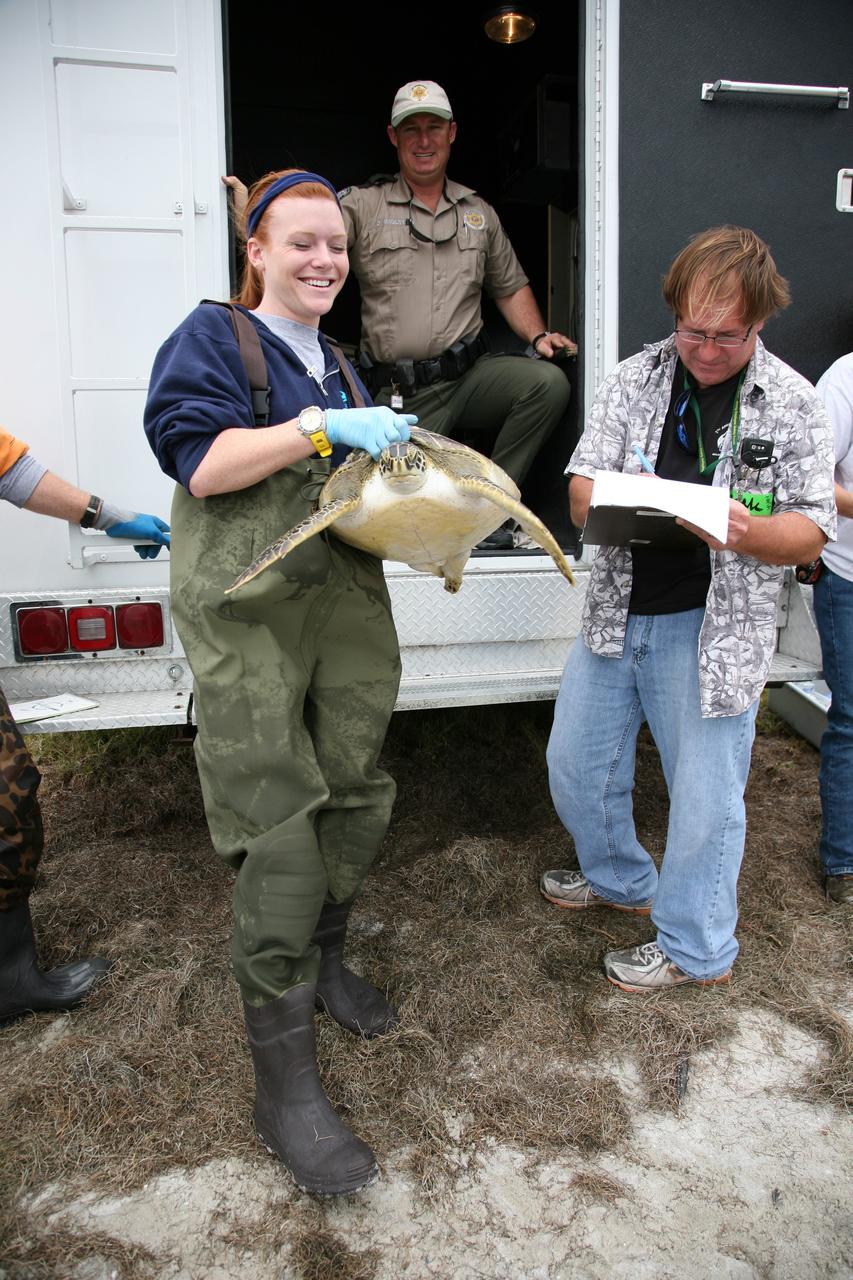
CAPE CANAVERAL, Fla. - Wildlife personnel carry an endangered green sea turtle away from a transport van prior to the animal's release into the Banana River at NASA's Kennedy Space Center in Florida. The turtle was one of nearly 2,000 that were "stunned" by a recent drop in temperatures. Many of the turtles were rescued from the Mosquito Lagoon, with others coming from the Indian River Lagoon and Cocoa Beach. Biologists, environmentalists, wildlife experts and other volunteers joined forces with a massive rescue effort at the Merritt Island National Wildlife Refuge, where the turtles were identified, examined and transported to rehabilitation facilities throughout Florida and South Georgia. The animals stayed at these facilities until local waters warmed up to safe temperatures. Photo credit: NASA/Troy Cryder
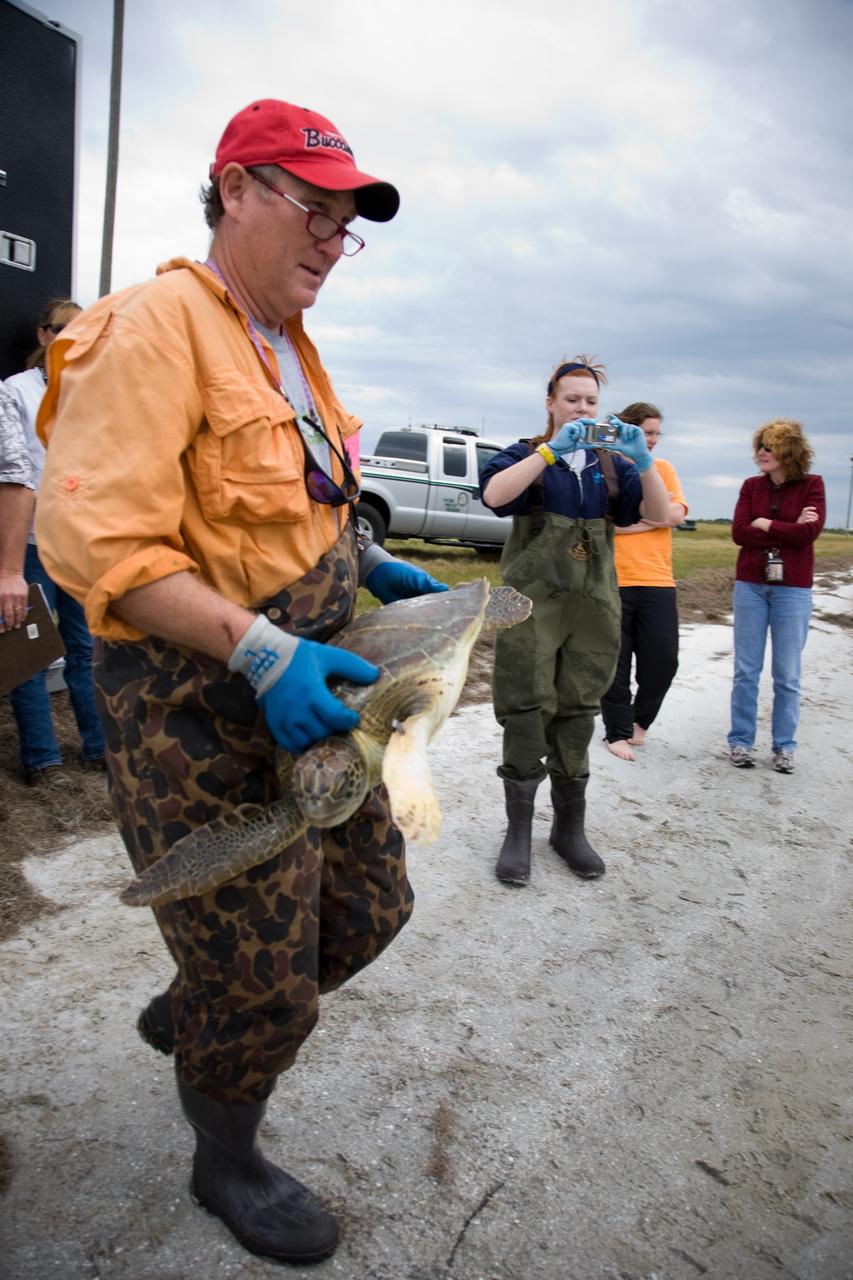
CAPE CANAVERAL, Fla. - Doug Scheidt, an employee of Innovative Health Applications at NASA's Kennedy Space Center in Florida, carries a green sea turtle to be released into the Banana River. The turtle was one of nearly 2,000 that were "stunned" by a recent drop in temperatures. Many of the turtles were rescued from the Mosquito Lagoon, with others coming from the Indian River Lagoon and Cocoa Beach. Biologists, environmentalists, wildlife experts and other volunteers joined forces with a massive rescue effort at the Merritt Island National Wildlife Refuge, where the turtles were identified, examined and transported to rehabilitation facilities throughout Florida and South Georgia. The animals stayed at these facilities until local waters warmed up to safe temperatures. Photo credit: NASA/Troy Cryder
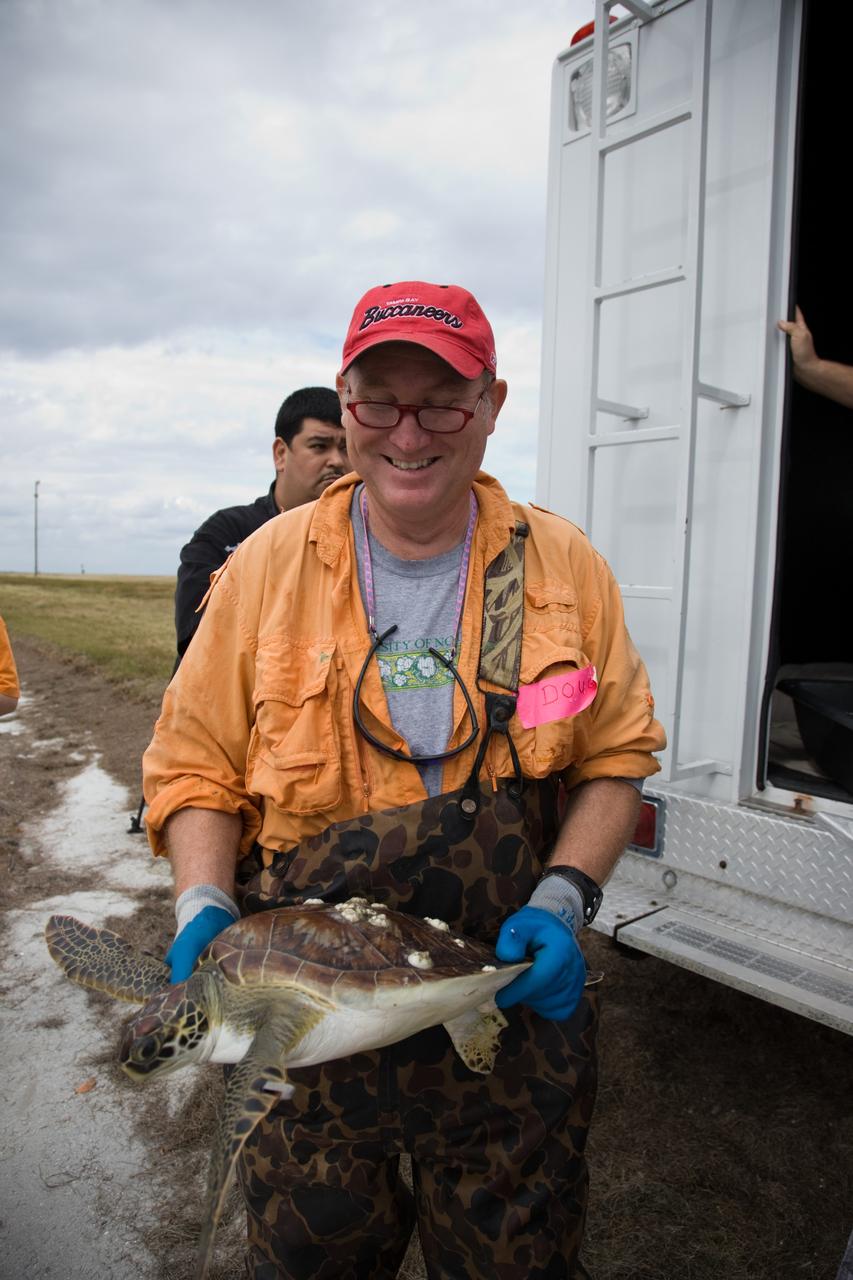
CAPE CANAVERAL, Fla. - Doug Scheidt, an employee of Innovative Health Applications at NASA's Kennedy Space Center in Florida, holds a juvenile green sea turtle prior to its release into the Banana River. The turtle was one of nearly 2,000 that were "stunned" by a recent drop in temperatures. Many of the turtles were rescued from the Mosquito Lagoon, with others coming from the Indian River Lagoon and Cocoa Beach. Biologists, environmentalists, wildlife experts and other volunteers joined forces with a massive rescue effort at the Merritt Island National Wildlife Refuge, where the turtles were identified, examined and transported to rehabilitation facilities throughout Florida and South Georgia. The animals stayed at these facilities until local waters warmed up to safe temperatures. Photo credit: NASA/Troy Cryder
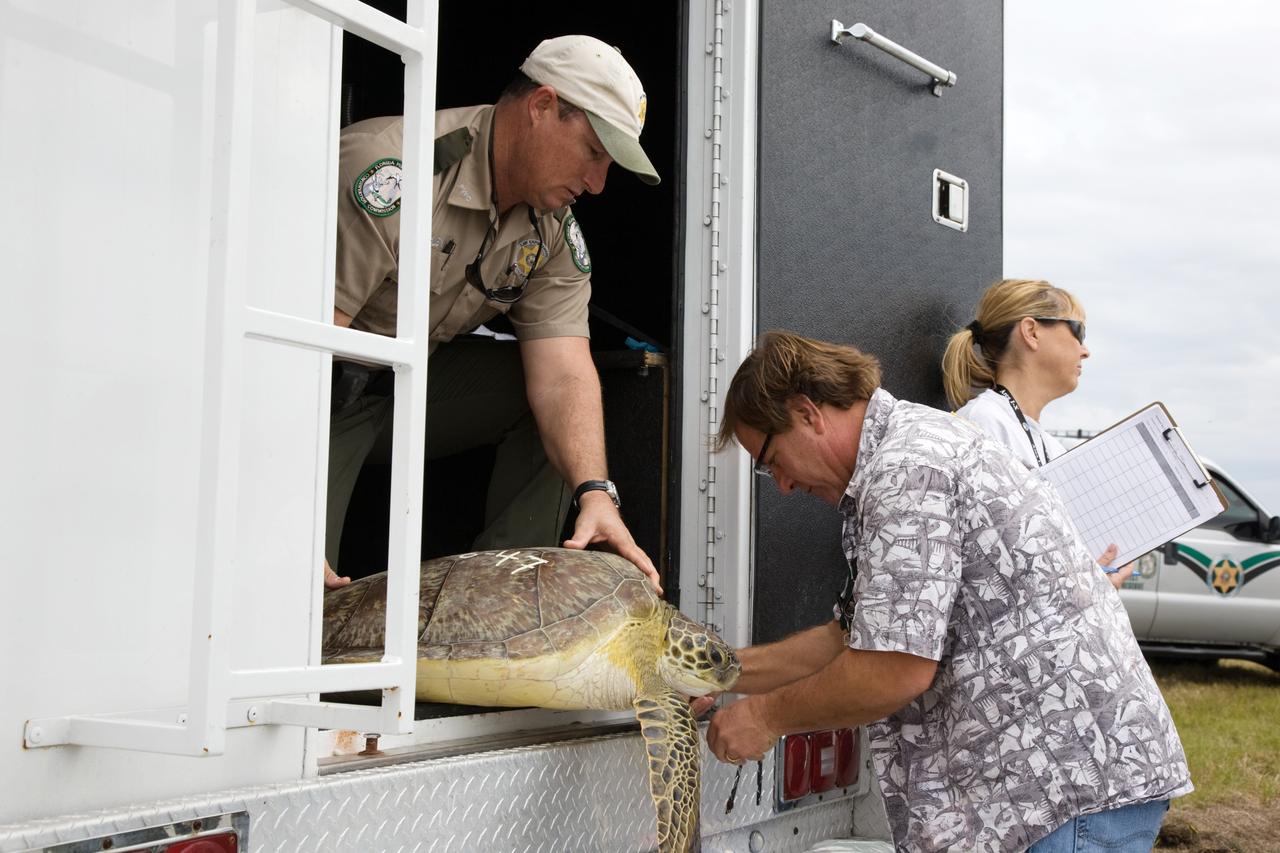
CAPE CANAVERAL, Fla. - An endangered green sea turtle is unloaded from a truck prior to its release into the waters of the Banana River at NASA's Kennedy Space Center in Florida. Wildlife personnel and volunteers are releasing groups of the federally protected turtles after nearly 2,000 of the animals were "stunned" by prolonged cold temperatures. Many of the turtles were rescued from the Mosquito Lagoon, with others coming from the Indian River Lagoon and Cocoa Beach. Biologists, environmentalists, wildlife experts and other volunteers joined forces with a massive rescue effort at the Merritt Island National Wildlife Refuge, where the turtles were identified, examined and transported to rehabilitation facilities throughout Florida and South Georgia. The animals stayed at these facilities until local waters warmed up to safe temperatures. Photo credit: NASA/Troy Cryder
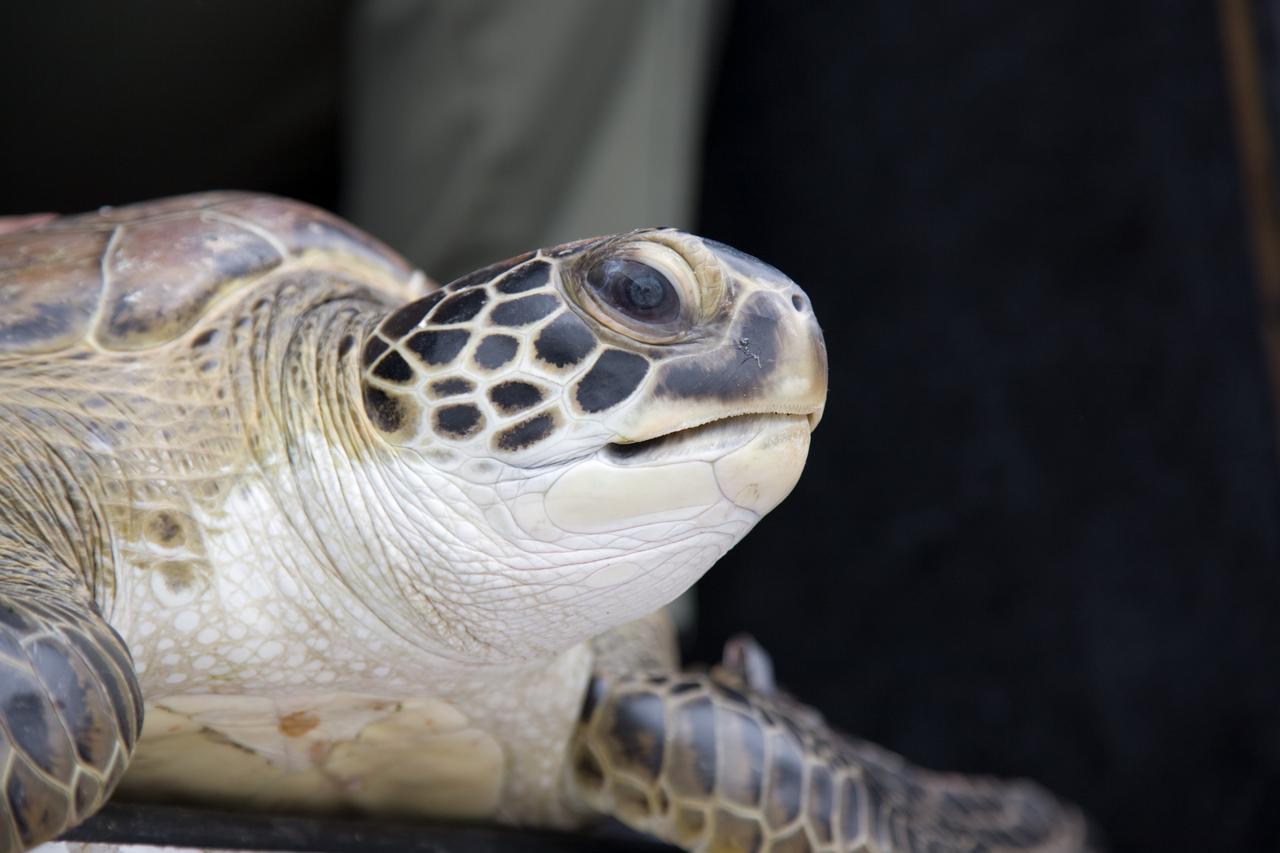
CAPE CANAVERAL, Fla. - This juvenile green sea turtle is ready to swim off into the waters of the Banana River at NASA's Kennedy Space Center in Florida. A recent cold snap left this turtle and nearly 2,000 others "stunned" and in need of help. Many of the turtles were rescued from the Mosquito Lagoon, with others coming from the Indian River Lagoon and Cocoa Beach. Biologists, environmentalists, wildlife experts and other volunteers joined forces with a massive rescue effort at the Merritt Island National Wildlife Refuge, where the turtles were identified, examined and transported to rehabilitation facilities throughout Florida and South Georgia. The animals stayed at these facilities until local waters warmed up to safe temperatures. Photo credit: NASA/Troy Cryder
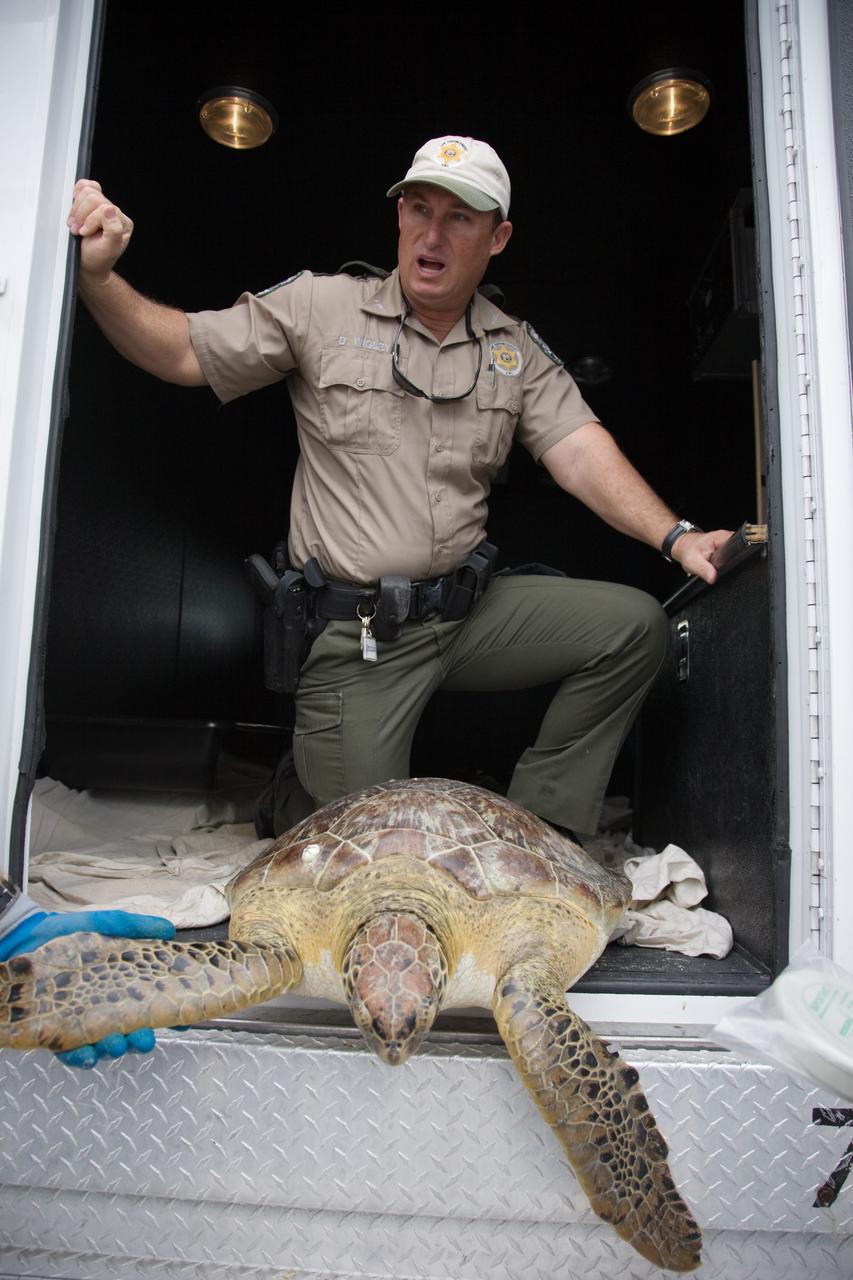
CAPE CANAVERAL, Fla. - A wildlife officer offers assistance as an endangered green sea turtle is prepared for release into the waters of the Banana River at NASA's Kennedy Space Center in Florida. The turtle was one of nearly 2,000 that were "stunned" by a recent drop in temperatures. Many of the turtles were rescued from the Mosquito Lagoon, with others coming from the Indian River Lagoon and Cocoa Beach. Biologists, environmentalists, wildlife experts and other volunteers joined forces with a massive rescue effort at the Merritt Island National Wildlife Refuge, where the turtles were identified, examined and transported to rehabilitation facilities throughout Florida and South Georgia. The animals stayed at these facilities until local waters warmed up to safe temperatures. Photo credit: NASA/Troy Cryder
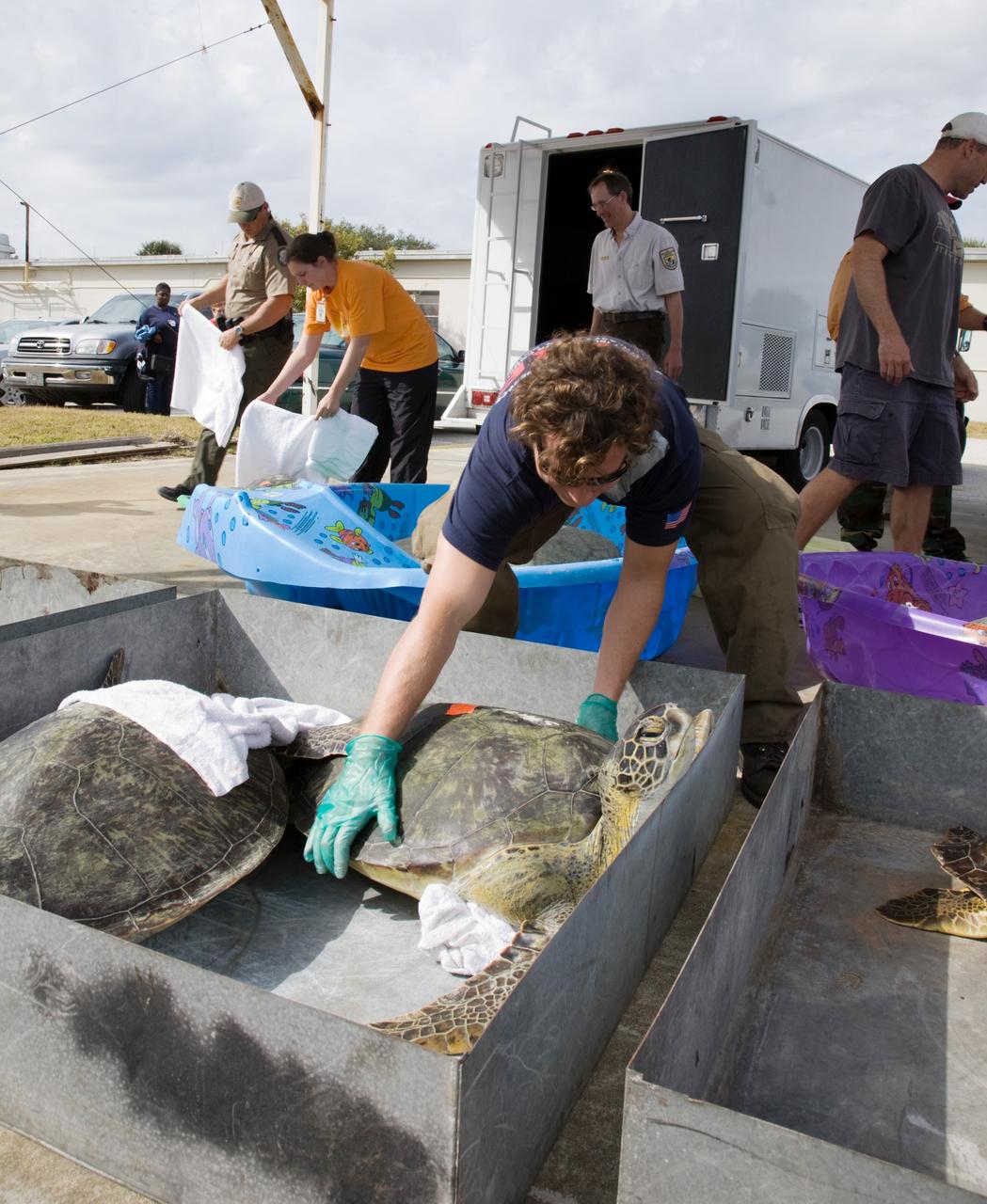
CAPE CANAVERAL, Fla. - Wildlife personnel prepare to release several endangered green sea turtles into the waters of the Banana River at NASA's Kennedy Space Center in Florida. The turtles were some of nearly 2,000 that were "stunned" by the recent drop in temperatures. Many of the turtles were rescued from the Mosquito Lagoon, with others coming from the Indian River Lagoon and Cocoa Beach. Biologists, environmentalists, wildlife experts and other volunteers joined forces with a massive rescue effort at the Merritt Island National Wildlife Refuge, where the turtles were identified, examined and transported to rehabilitation facilities throughout Florida and South Georgia. The animals stayed at these facilities until local waters warmed up to safe temperatures. Photo credit: NASA/Troy Cryder
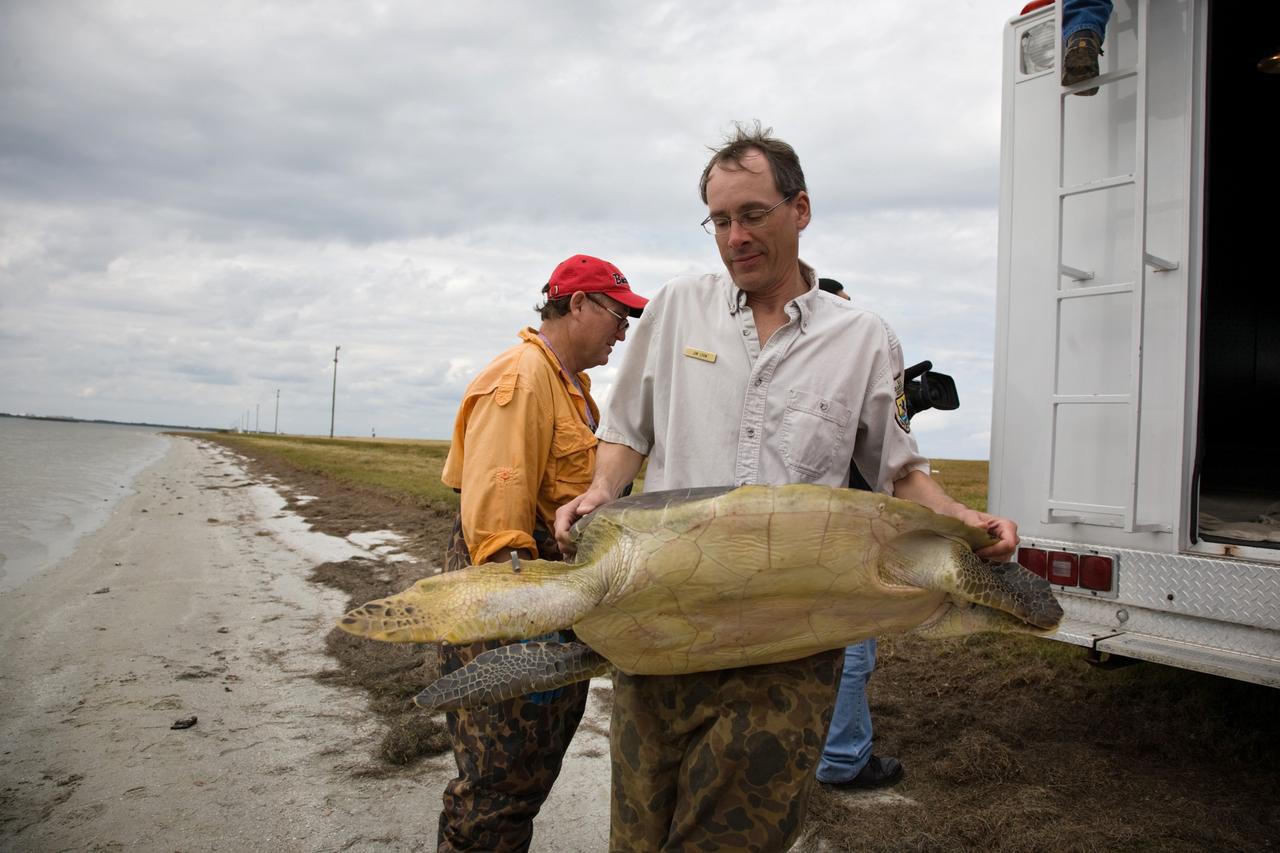
CAPE CANAVERAL, Fla. - Jim Lyon, biological science technician with the Merritt Island National Wildlife Refuge, carries a green sea turtle toward the waterline of the Banana River at NASA's Kennedy Space Center in Florida. A recent cold snap left this turtle and nearly 2,000 others "stunned" and in need of help. Many of the turtles were rescued from the Mosquito Lagoon, with others coming from the Indian River Lagoon and Cocoa Beach. Biologists, environmentalists, wildlife experts and other volunteers joined forces with a massive rescue effort at the Merritt Island National Wildlife Refuge, where the turtles were identified, examined and transported to rehabilitation facilities throughout Florida and South Georgia. The animals stayed at these facilities until local waters warmed up to safe temperatures. Photo credit: NASA/Troy Cryder
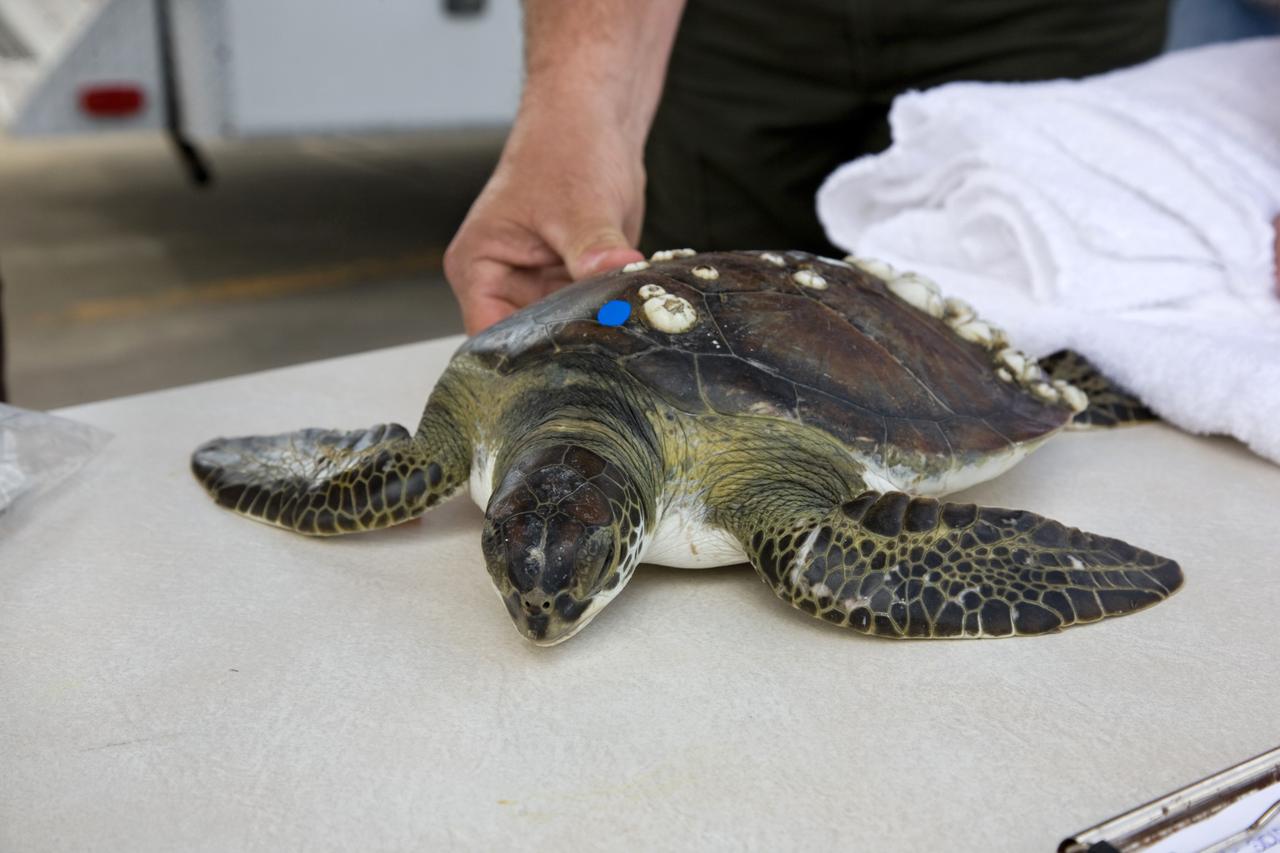
CAPE CANAVERAL, Fla. - A juvenile green sea turtle is prepared for its release into the waters of the Banana River at NASA's Kennedy Space Center in Florida. The turtle was one of nearly 2,000 that were "stunned" by the recent drop in temperatures. Many of the turtles were rescued from the Mosquito Lagoon, with others coming from the Indian River Lagoon and Cocoa Beach. Biologists, environmentalists, wildlife experts and other volunteers joined forces with a massive rescue effort at the Merritt Island National Wildlife Refuge, where the turtles were identified, examined and transported to rehabilitation facilities throughout Florida and South Georgia. The animals stayed at these facilities until local waters warmed up to safe temperatures. Photo credit: NASA/Troy Cryder
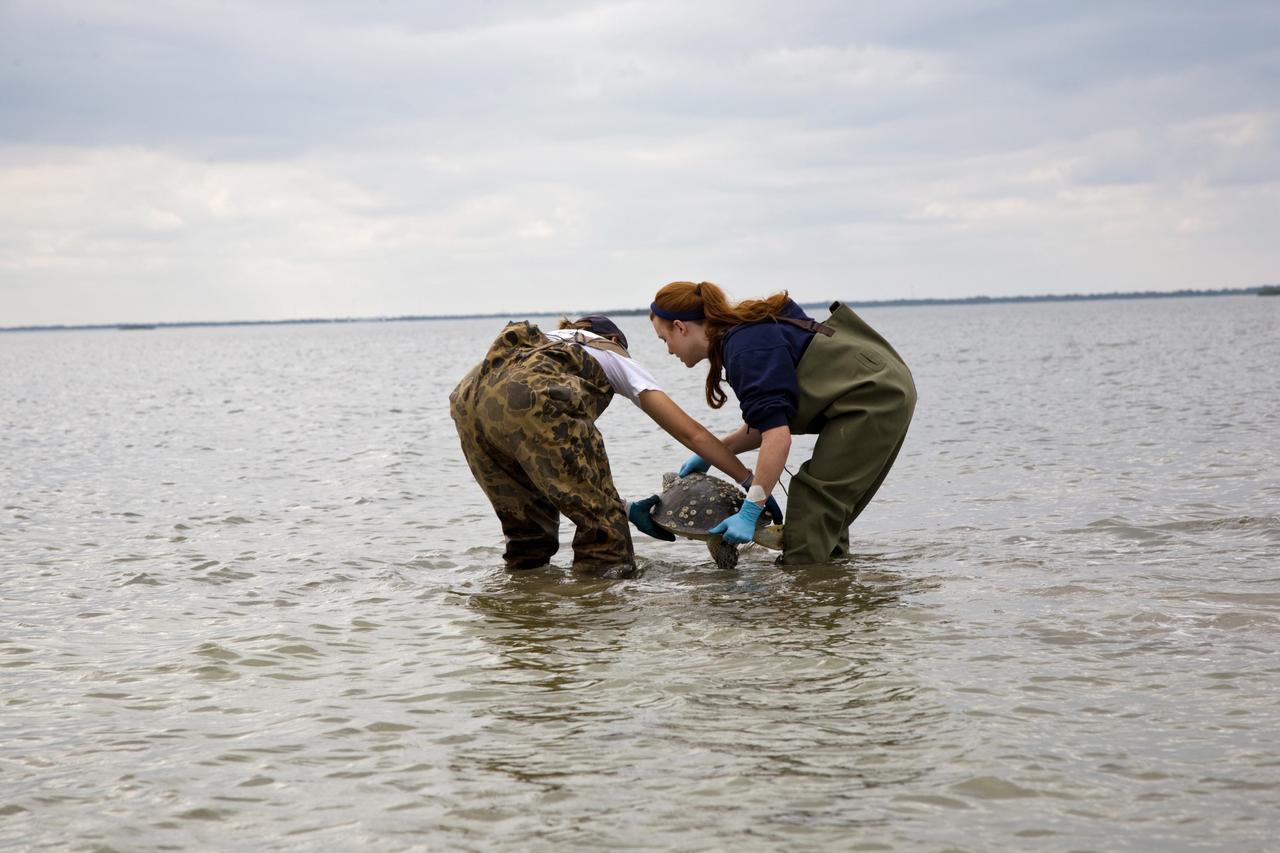
CAPE CANAVERAL, Fla. - An endangered green sea turtle is headed toward freedom as wildlife personnel carry it toward the Banana River at NASA's Kennedy Space Center in Florida. The turtle was one of nearly 2,000 that were "stunned" by a recent drop in temperatures. Many of the turtles were rescued from the Mosquito Lagoon, with others coming from the Indian River Lagoon and Cocoa Beach. Biologists, environmentalists, wildlife experts and other volunteers joined forces with a massive rescue effort at the Merritt Island National Wildlife Refuge, where the turtles were identified, examined and transported to rehabilitation facilities throughout Florida and South Georgia. The animals stayed at these facilities until local waters warmed up to safe temperatures. Photo credit: NASA/Troy Cryder
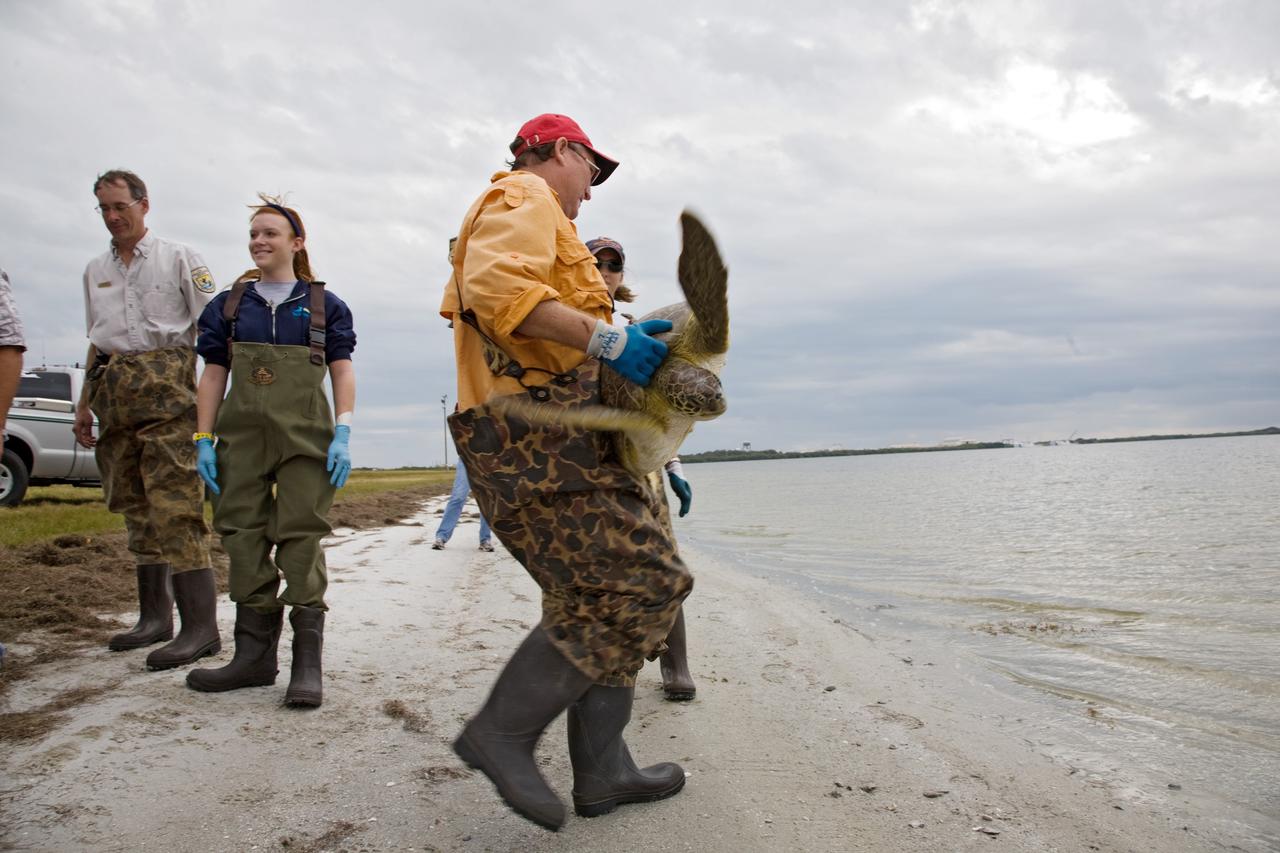
CAPE CANAVERAL, Fla. - A green sea turtle is carried toward the water's edge prior to the animal's release into the waters of the Banana River at NASA's Kennedy Space Center in Florida. The turtle was one of nearly 2,000 that were "stunned" by a recent drop in temperatures. Many of the turtles were rescued from the Mosquito Lagoon, with others coming from the Indian River Lagoon and Cocoa Beach. Biologists, environmentalists, wildlife experts and other volunteers joined forces with a massive rescue effort at the Merritt Island National Wildlife Refuge, where the turtles were identified, examined and transported to rehabilitation facilities throughout Florida and South Georgia. The animals stayed at these facilities until local waters warmed up to safe temperatures. Photo credit: NASA/Troy Cryder
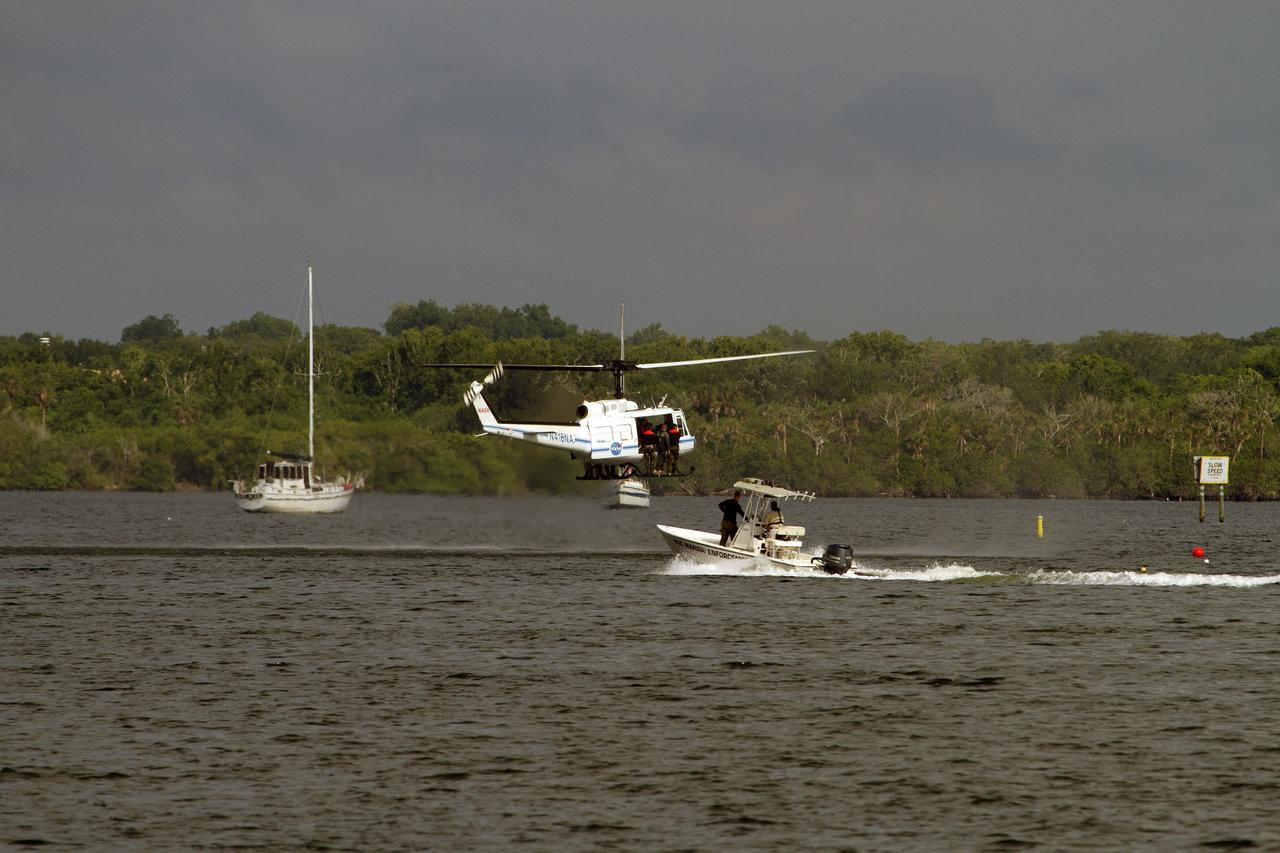
CAPE CANAVERAL, Fla. – Emergency Response Team officers from the Protective Services branch NASA's Kennedy Space Center in Florida prepare enter the Indian River Lagoon from a Huey helicopter from the Aircraft Operations branch at the center during a training exercise. The training session focused on safely entering the water, something the ERT could be required to perform in certain situations at the center. Photo credit: NASA/ Dan Casper
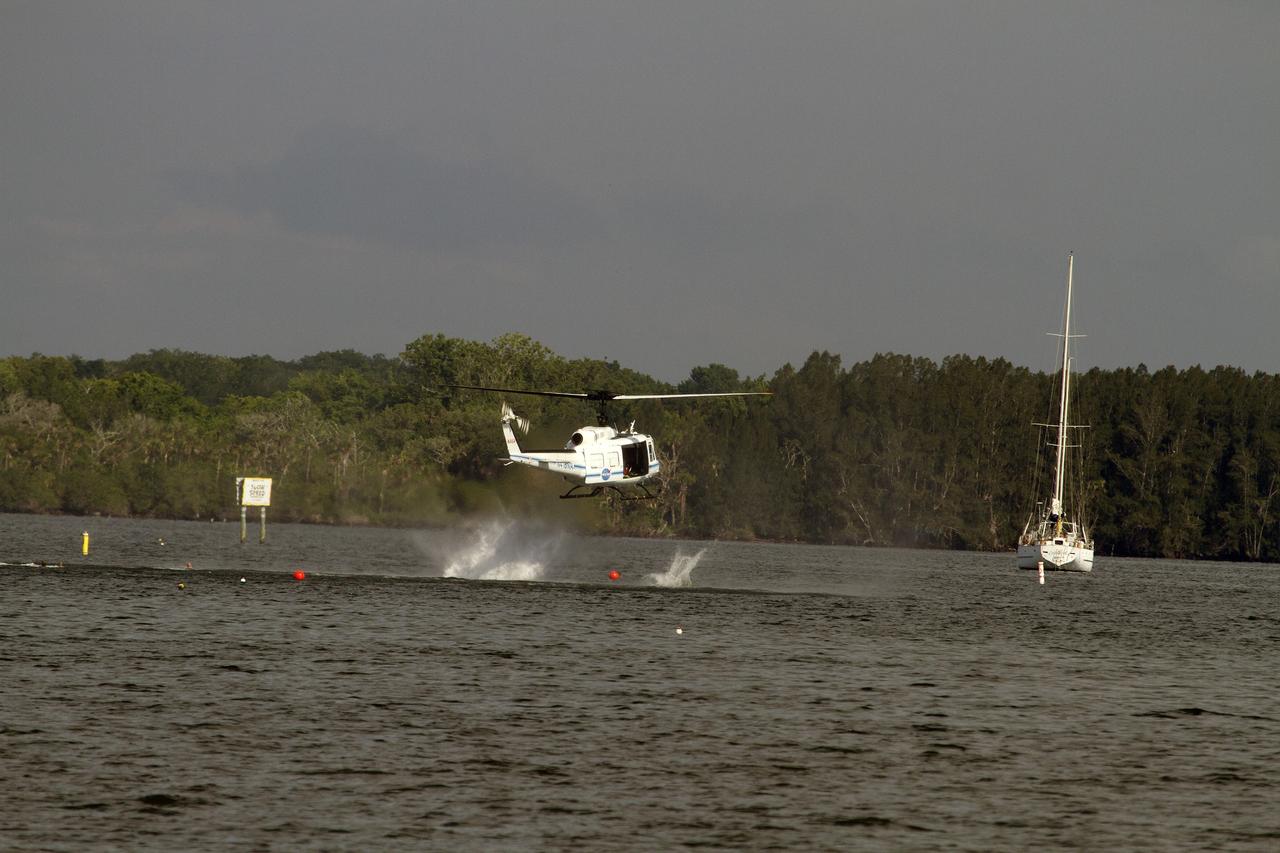
CAPE CANAVERAL, Fla. – Emergency Response Team officers from the Protective Services branch NASA's Kennedy Space Center in Florida enter the Indian River Lagoon from a Huey helicopter from the Aircraft Operations branch at the center during a training exercise. The training session focused on safely entering the water, something the ERT could be required to perform in certain situations at the center. Photo credit: NASA/ Dan Casper
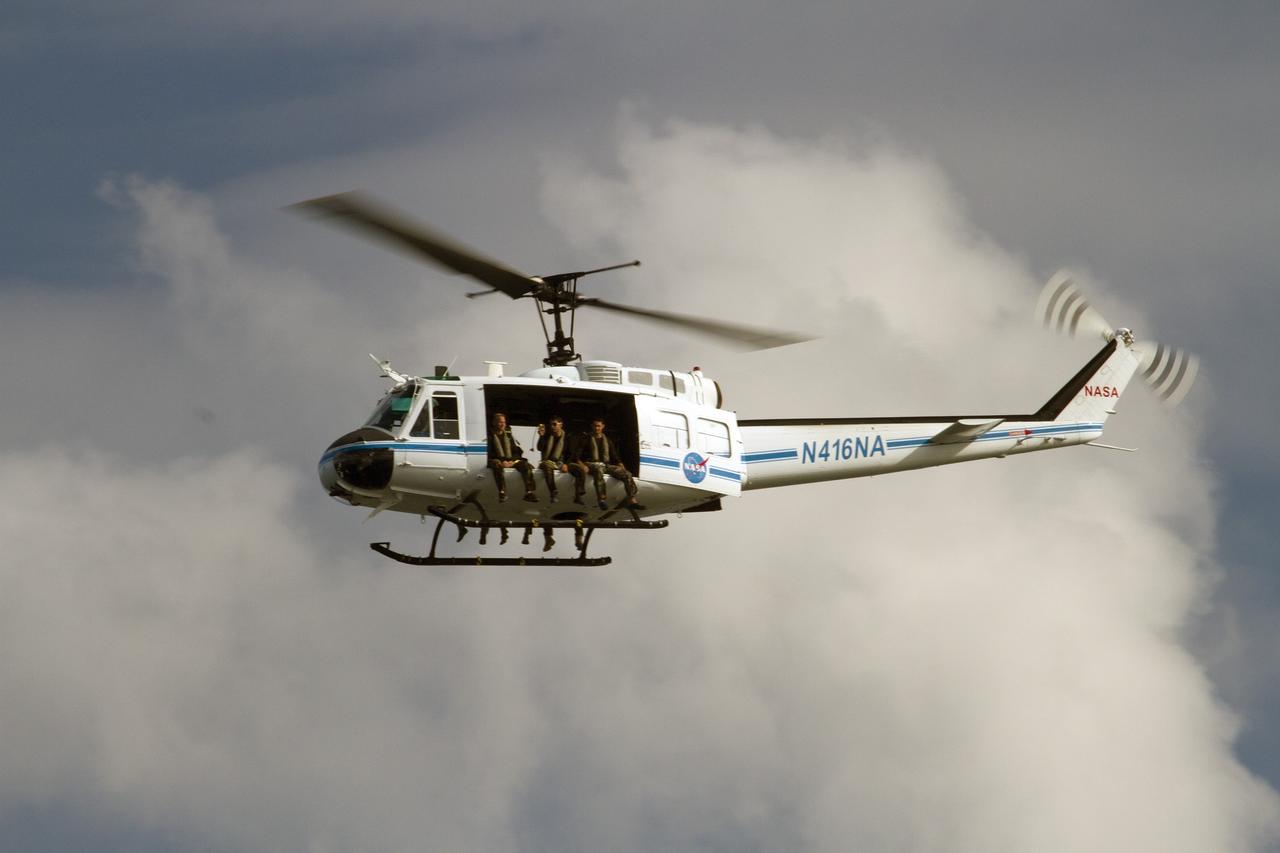
CAPE CANAVERAL, Fla. – A Huey helicopter from the Aircraft Operations branch at NASA's Kennedy Space Center in Florida flies over the Indian River Lagoon with a group of Emergency Response Team officers from the center's Protective Services branch during a training exercise. The training session focused on safely entering the water, something the ERT could be required to perform in certain situations at the center. Photo credit: NASA/ Dan Casper
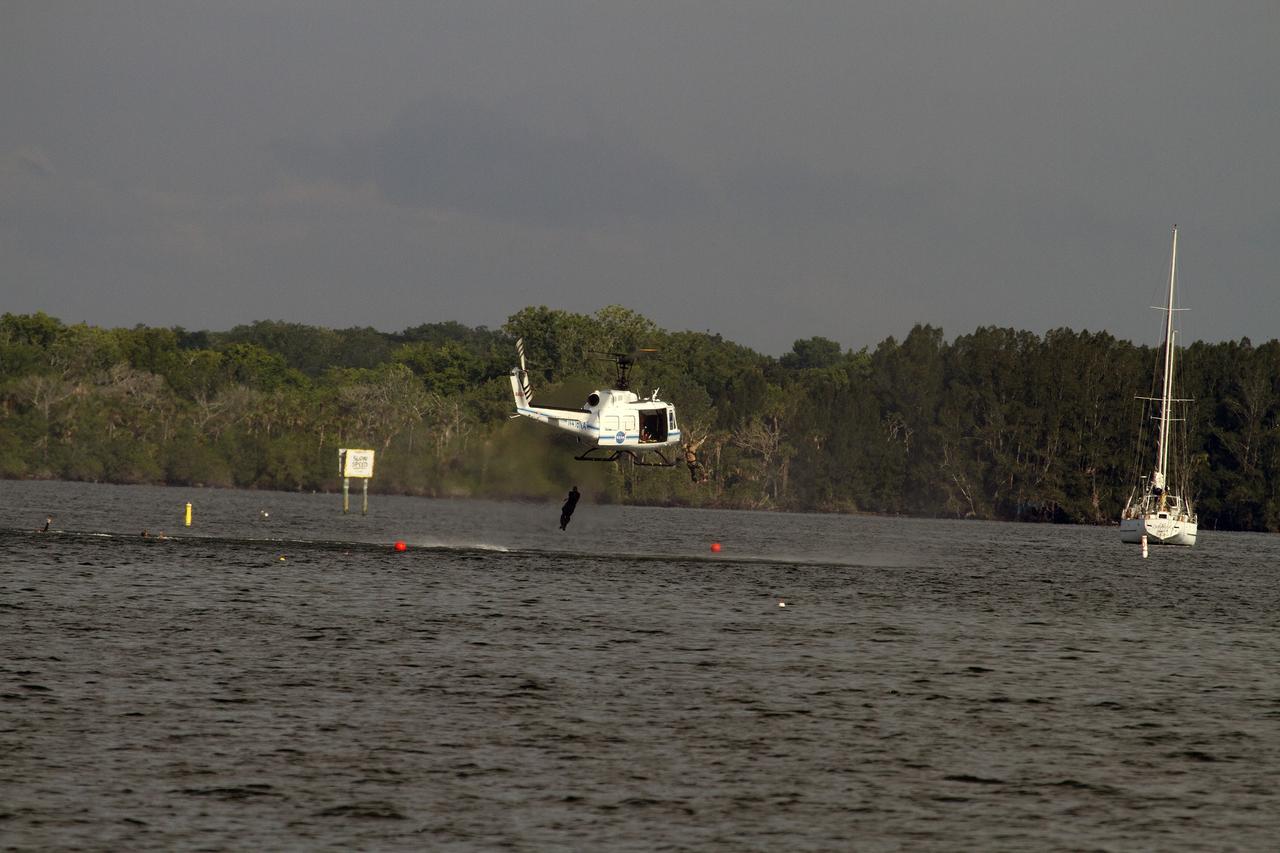
CAPE CANAVERAL, Fla. – Emergency Response Team officers from the Protective Services branch NASA's Kennedy Space Center in Florida enter the Indian River Lagoon from a Huey helicopter from the Aircraft Operations branch at the center during a training exercise. The training session focused on safely entering the water, something the ERT could be required to perform in certain situations at the center. Photo credit: NASA/ Dan Casper

CAPE CANAVERAL, Fla. – A Huey helicopter from the Aircraft Operations branch at NASA's Kennedy Space Center in Florida hovers then descends over the Indian River Lagoon with a group of Emergency Response Team officers from the center's Protective Services branch during a training exercise. The training session focused on safely entering the water, something the ERT could be required to perform in certain situations at the center. Photo credit: NASA/ Dan Casper
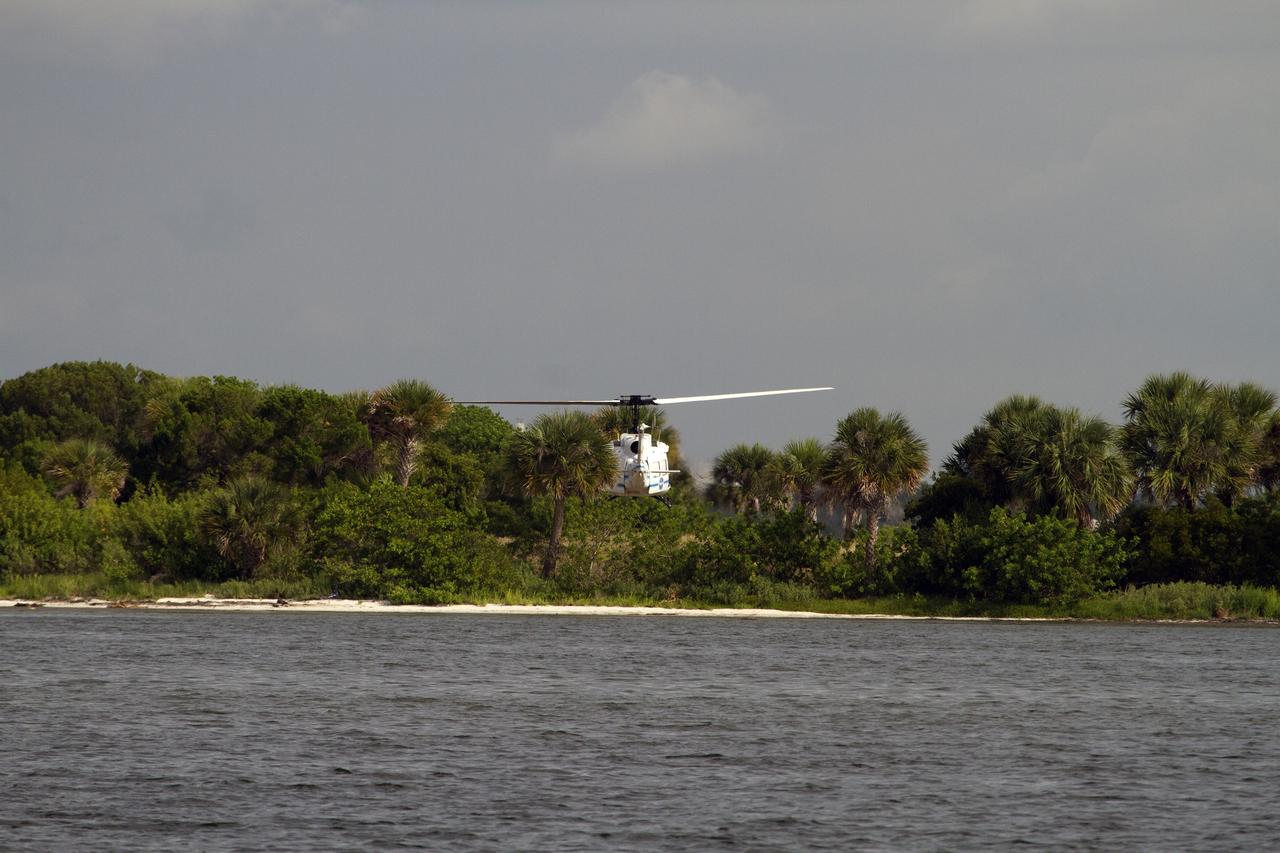
CAPE CANAVERAL, Fla. – A Huey helicopter from the Aircraft Operations branch at NASA's Kennedy Space Center in Florida flies over the Indian River Lagoon with a group of Emergency Response Team officers from the center's Protective Services branch during a training exercise. The training session focused on safely entering the water, something the ERT could be required to perform in certain situations at the center. Photo credit: NASA/ Dan Casper
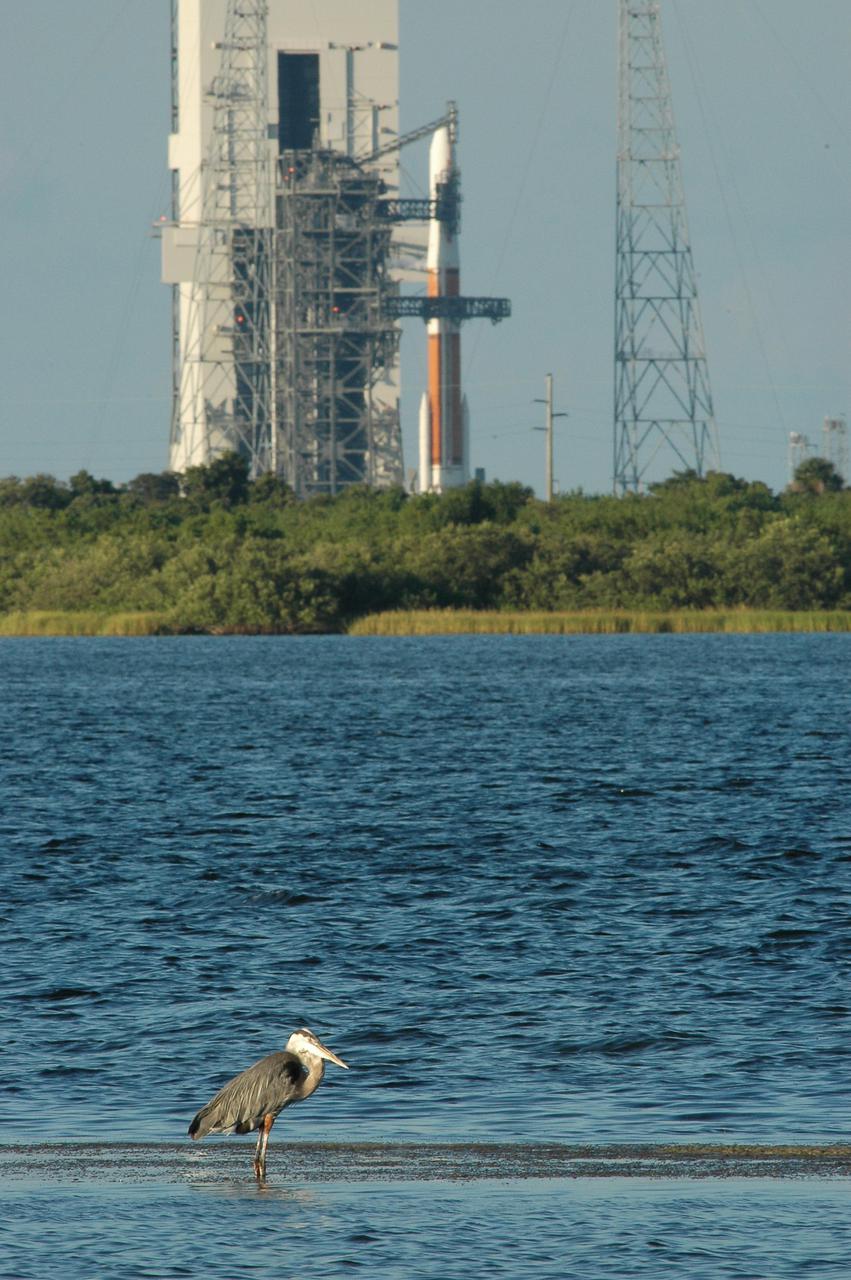
KENNEDY SPACE CENTER, FLA. - On Launch Complex 37 at Cape Canaveral Air Force Station in Florida, the Delta IV rocket and GOES-N satellite are being safed after the launch was scrubbed due to technical issues and postponed to a later date. In the foreground is a heron, wading in shallow water in the Indian River Lagoon. GOES-N is the latest in a series of Geostationary Operational Environmental Satellites providing continuous monitoring necessary for intensive data analysis.
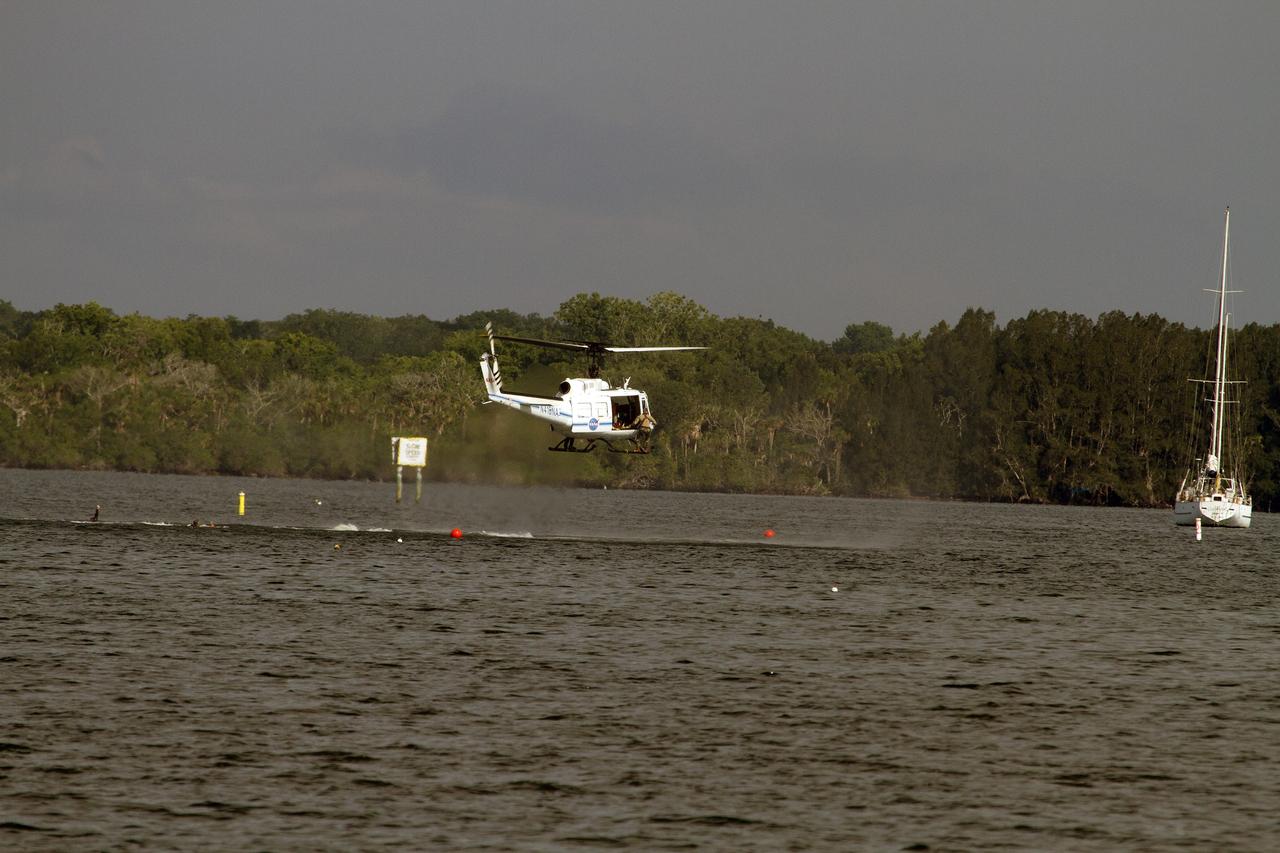
CAPE CANAVERAL, Fla. – A Huey helicopter from the Aircraft Operations branch at NASA's Kennedy Space Center in Florida hovers over the Indian River Lagoon after a group of Emergency Response Team officers from the center's Protective Services branch dropped from the helicopter during a training exercise. The training session focused on safely entering the water, something the ERT could be required to perform in certain situations at the center. Photo credit: NASA/ Dan Casper
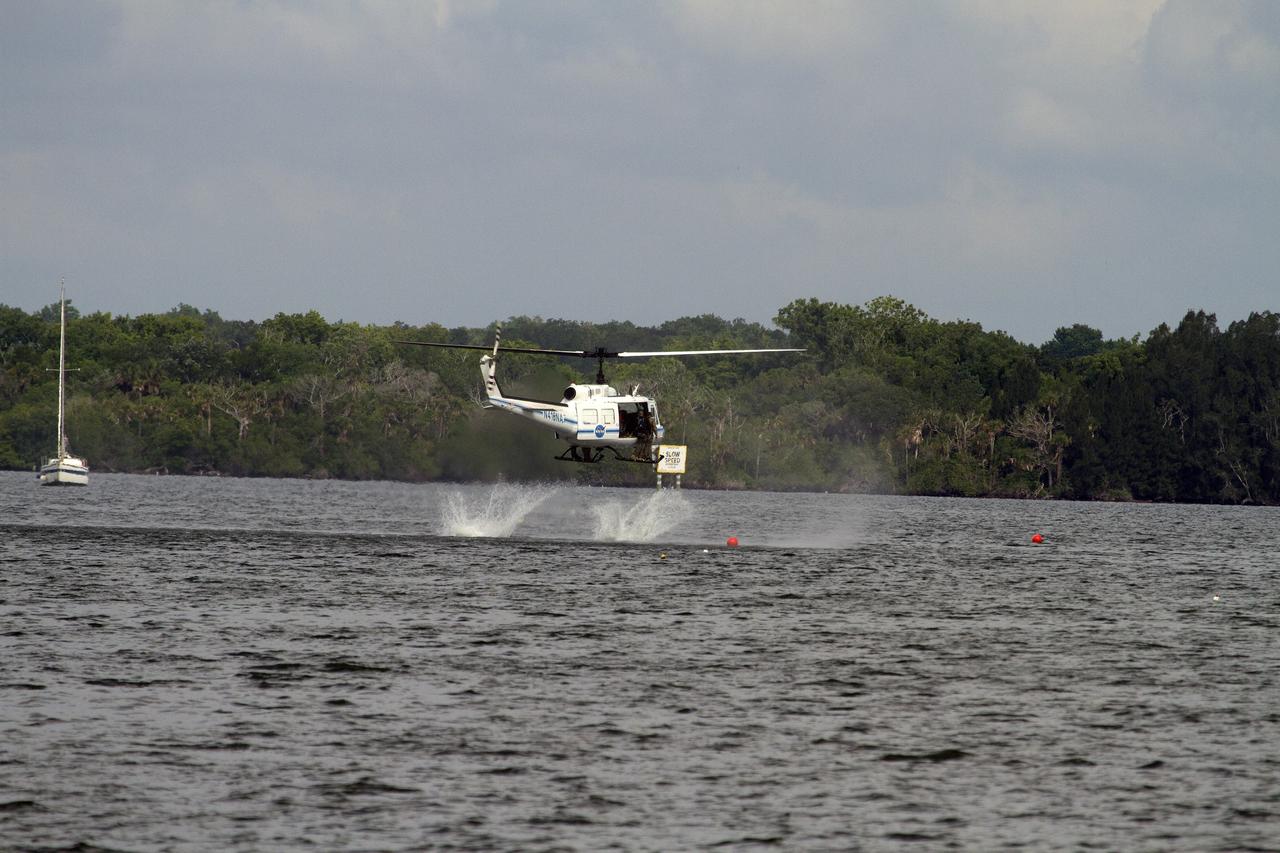
CAPE CANAVERAL, Fla. – Emergency Response Team officers from the Protective Services branch NASA's Kennedy Space Center in Florida enter the Indian River Lagoon from a Huey helicopter from the Aircraft Operations branch at the center during a training exercise. The training session focused on safely entering the water, something the ERT could be required to perform in certain situations at the center. Photo credit: NASA/ Dan Casper
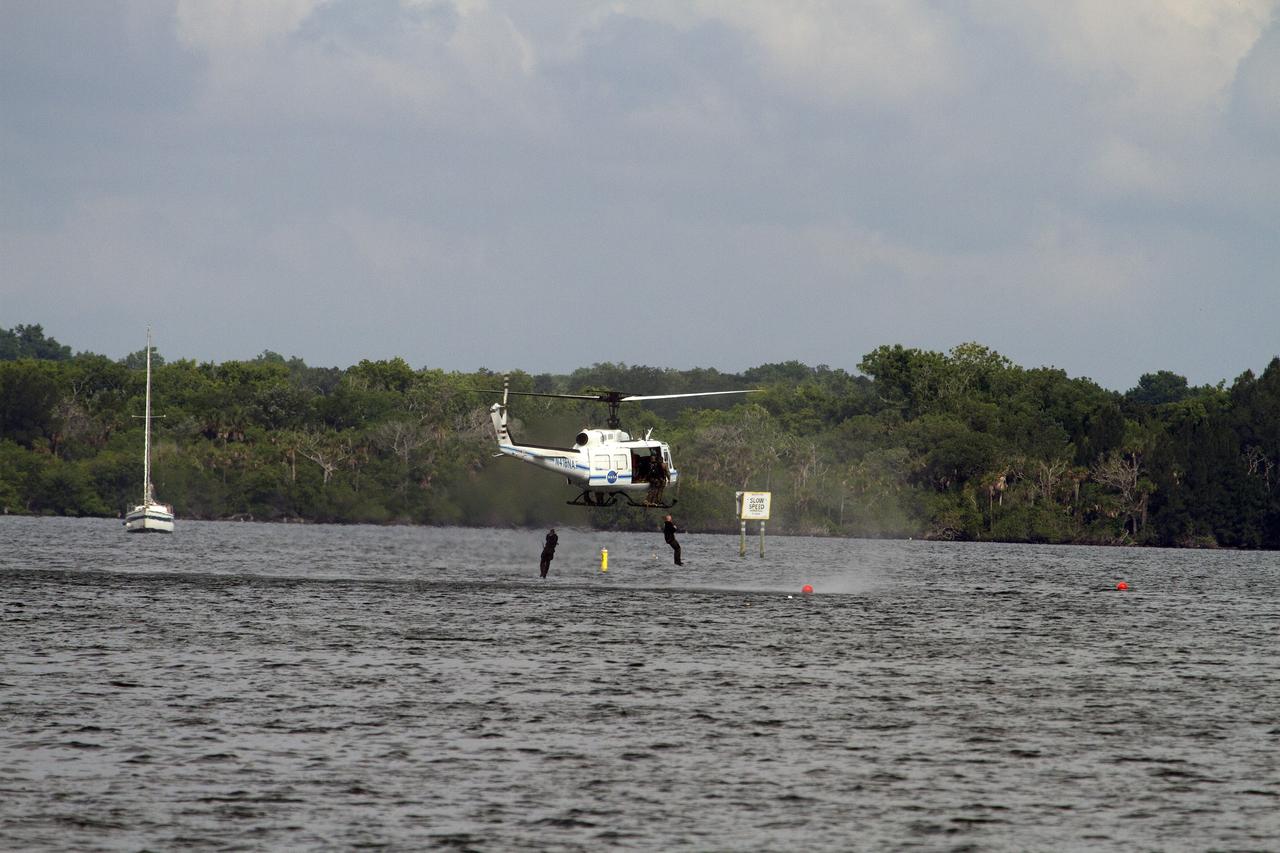
CAPE CANAVERAL, Fla. – Emergency Response Team officers from the Protective Services branch NASA's Kennedy Space Center in Florida enter the Indian River Lagoon from a Huey helicopter from the Aircraft Operations branch at the center during a training exercise. The training session focused on safely entering the water, something the ERT could be required to perform in certain situations at the center. Photo credit: NASA/ Dan Casper

CAPE CANAVERAL, Fla. – A Huey helicopter from the Aircraft Operations branch at NASA's Kennedy Space Center in Florida flies over the Indian River Lagoon with a group of Emergency Response Team officers from the center's Protective Services branch during a training exercise. The training session focused on safely entering the water, something the ERT could be required to perform in certain situations at the center. Photo credit: NASA/ Dan Casper
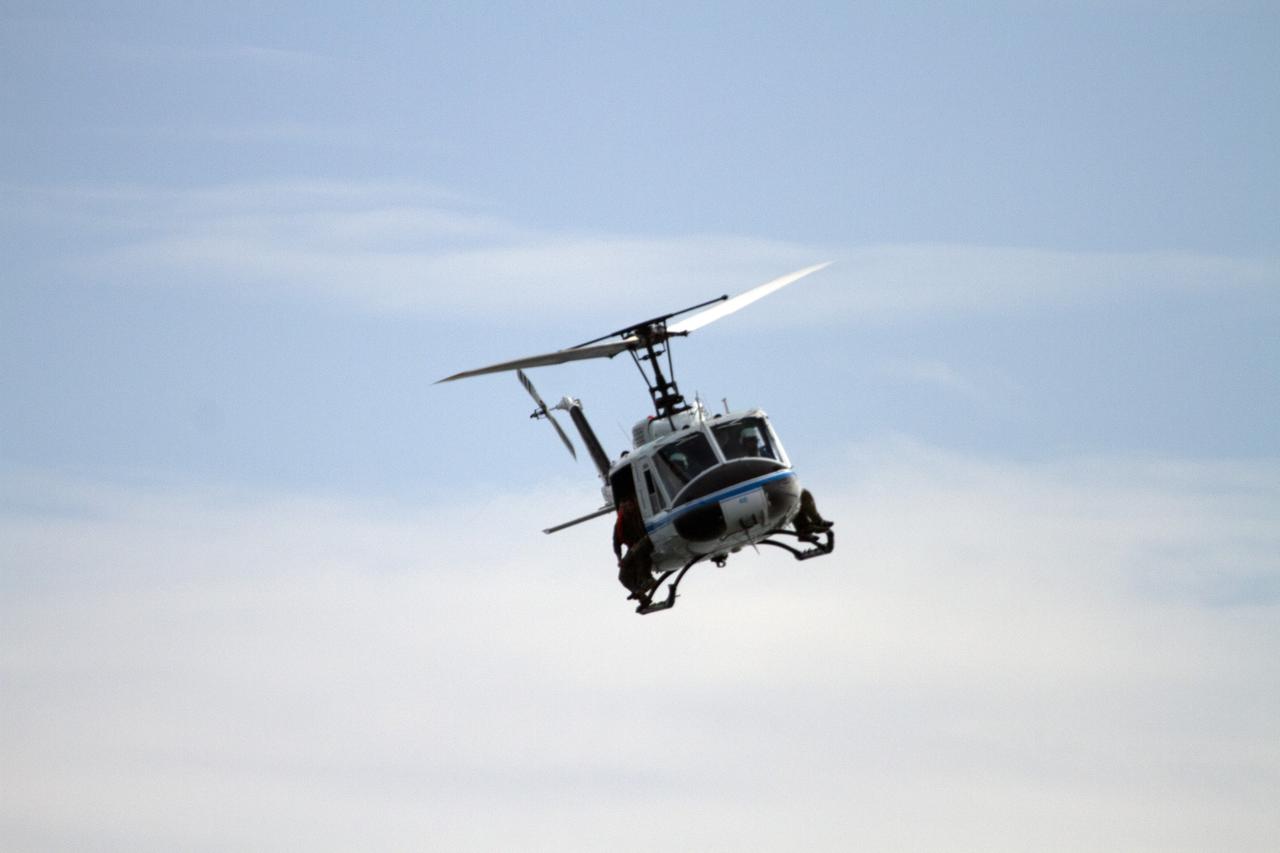
CAPE CANAVERAL, Fla. – A Huey helicopter from the Aircraft Operations branch at NASA's Kennedy Space Center in Florida flies over the Indian River Lagoon with a group of Emergency Response Team officers from the center's Protective Services branch during a training exercise. The training session focused on safely entering the water, something the ERT could be required to perform in certain situations at the center. Photo credit: NASA/ Dan Casper
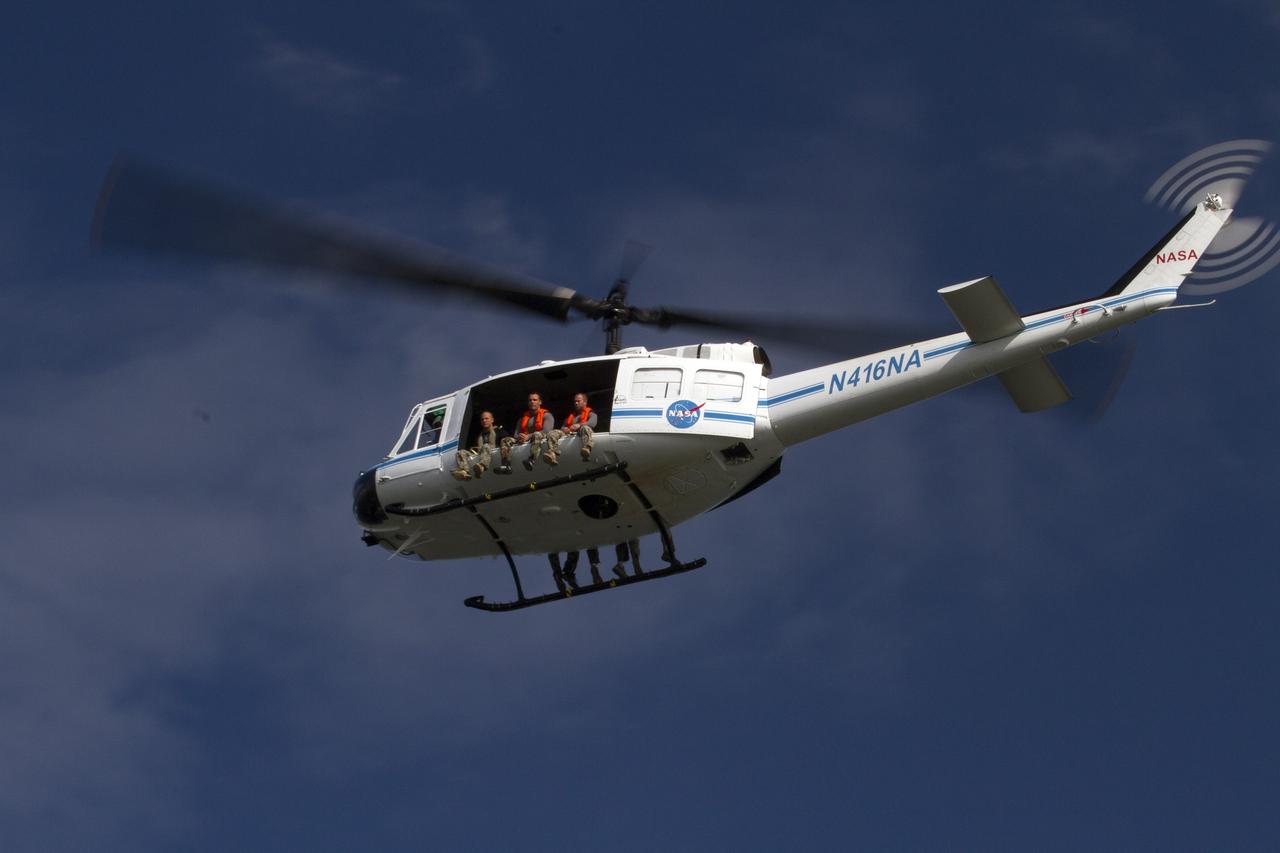
CAPE CANAVERAL, Fla. – A Huey helicopter from the Aircraft Operations branch at NASA's Kennedy Space Center in Florida flies over the Indian River Lagoon with a group of Emergency Response Team officers from the center's Protective Services branch during a training exercise. The training session focused on safely entering the water, something the ERT could be required to perform in certain situations at the center. Photo credit: NASA/ Dan Casper
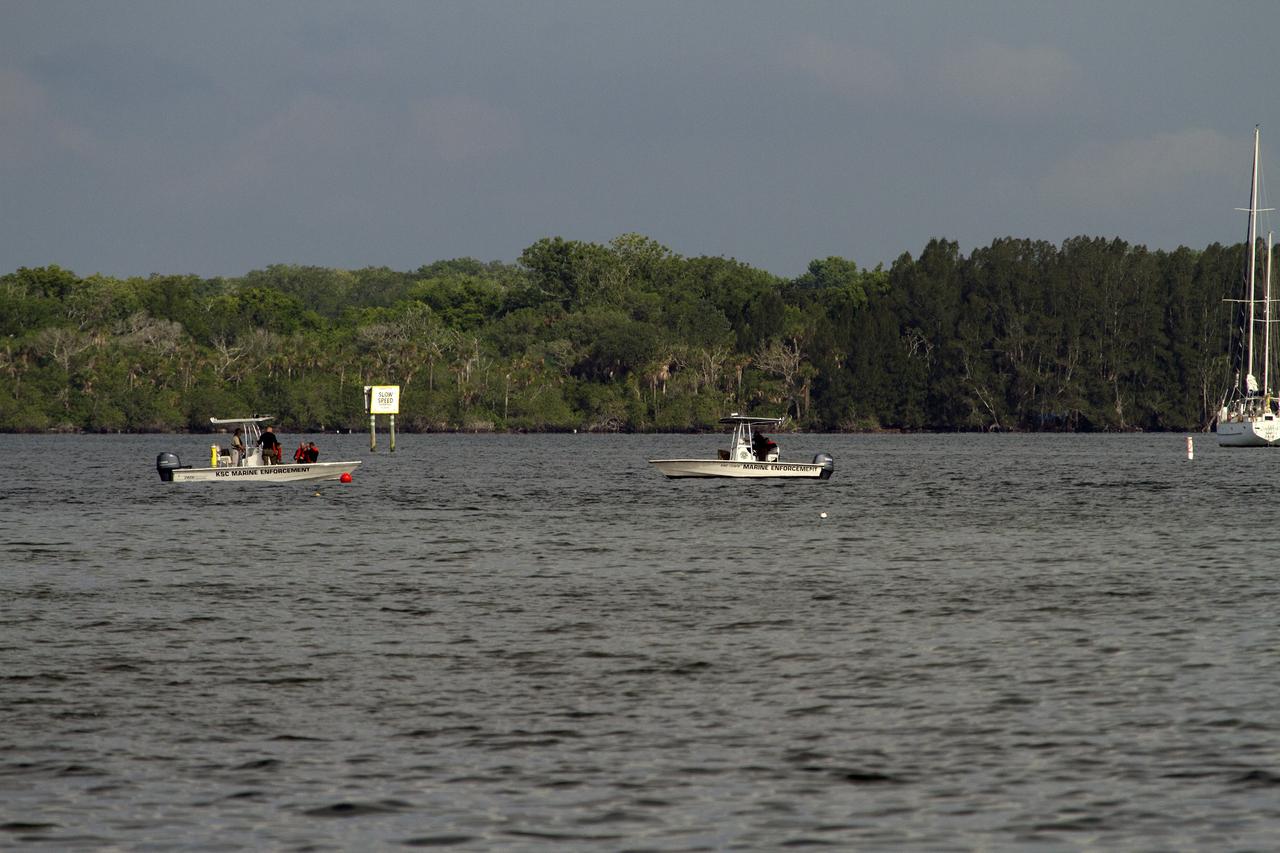
CAPE CANAVERAL, Fla. – Patrol boats from the Protective Services branch NASA's Kennedy Space Center in Florida operate in the Indian River Lagoon during a training exercise. The training session focused on safely entering the water, something the Emergency Response Team and security branch could be required to perform in certain situations at the center. Photo credit: NASA/ Dan Casper
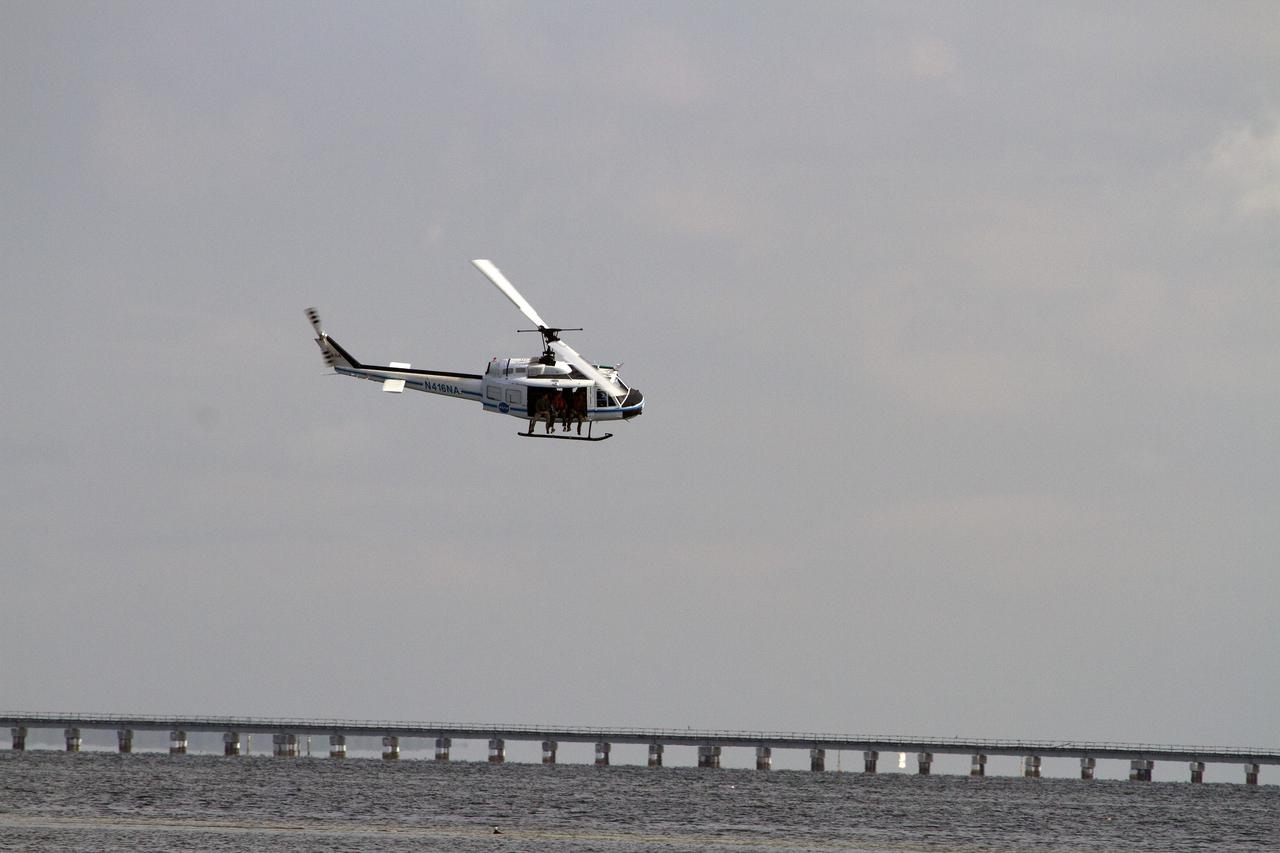
CAPE CANAVERAL, Fla. – A Huey helicopter from the Aircraft Operations branch at NASA's Kennedy Space Center in Florida flies over the Indian River Lagoon with a group of Emergency Response Team officers from the center's Protective Services branch during a training exercise. The training session focused on safely entering the water, something the ERT could be required to perform in certain situations at the center. Photo credit: NASA/ Dan Casper
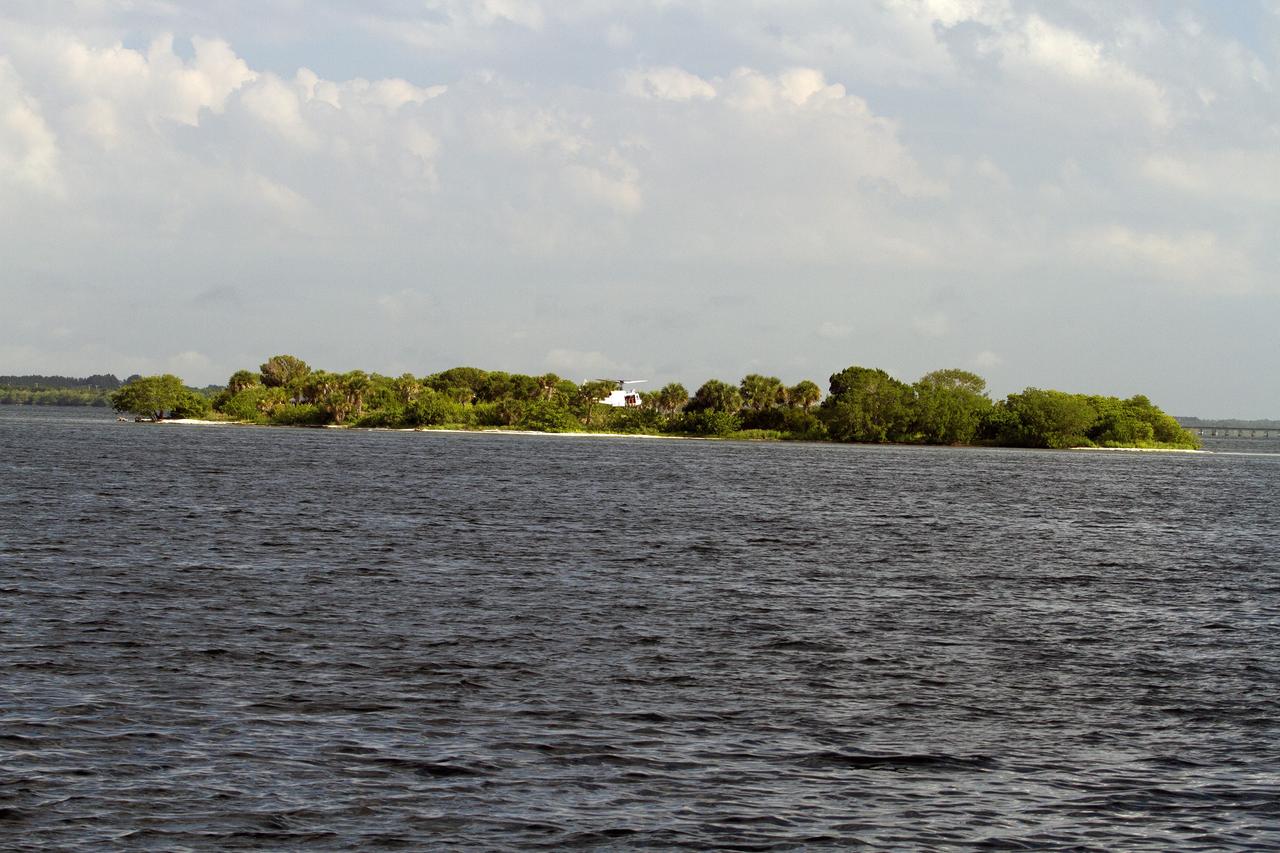
CAPE CANAVERAL, Fla. – A Huey helicopter from the Aircraft Operations branch at NASA's Kennedy Space Center in Florida flies over the Indian River Lagoon with a group of Emergency Response Team officers from the center's Protective Services branch during a training exercise. The training session focused on safely entering the water, something the ERT could be required to perform in certain situations at the center. Photo credit: NASA/ Dan Casper
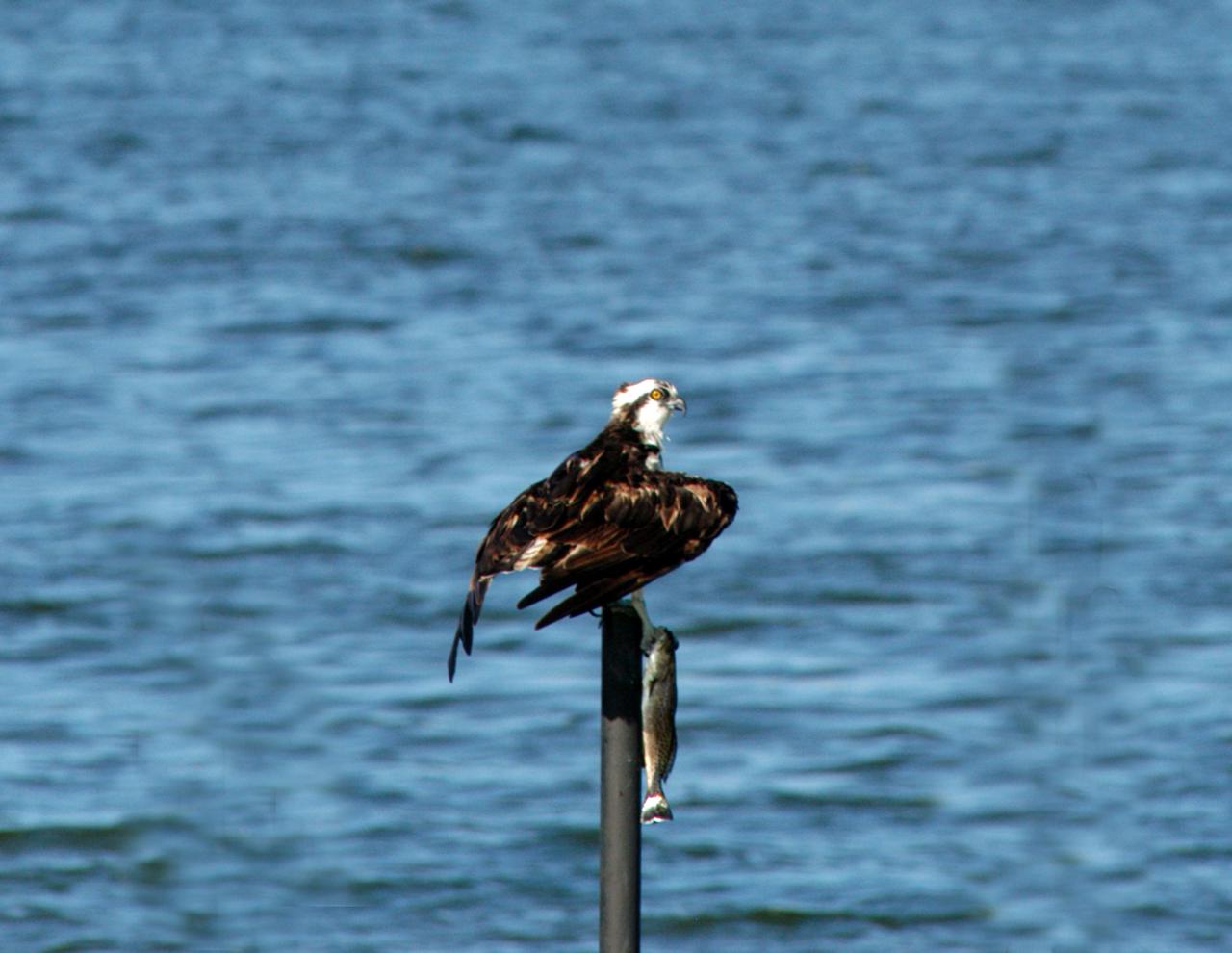
KENNEDY SPACE CENTER, FLA. - Perching on a pole in the Indian River Lagoon, an osprey clutches his most recent catch. The site is near Launch Complex 37 at Cape Canaveral Air Force Station in Florida, where the Delta IV rocket with the GOES-N satellite was poised for launch. The GOES-N is the latest in a series of Geostationary Operational Environmental Satellites providing continuous monitoring necessary for intensive data analysis. The GOES-N launch was delayed due to last minute technical issues and postponed to a later date.
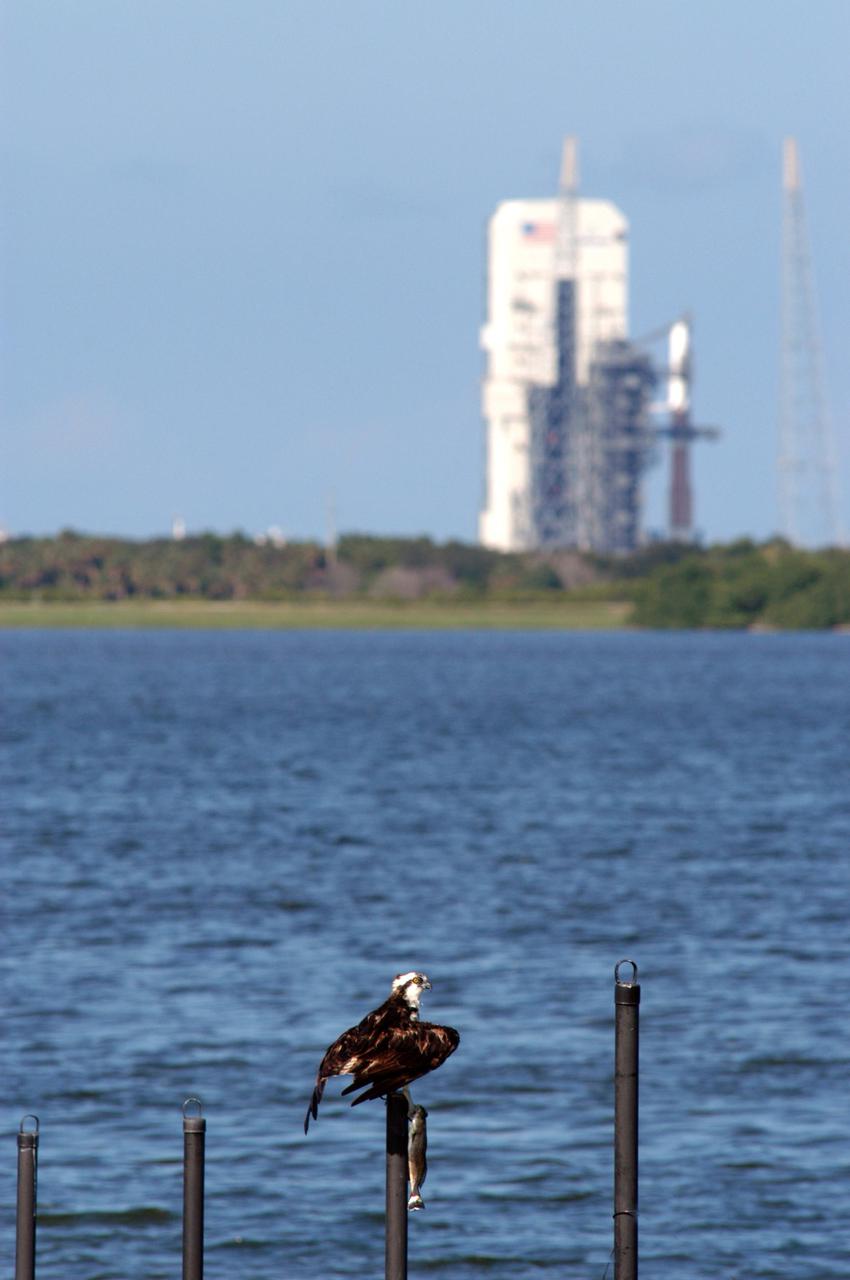
KENNEDY SPACE CENTER, FLA. - Perching on a pole in the Indian River Lagoon, an osprey clutches his most recent catch. In the background is Launch Complex 37 at Cape Canaveral Air Force Station in Florida, where the Delta IV rocket with the GOES-N satellite is poised for launch. The GOES-N is the latest in a series of Geostationary Operational Environmental Satellites providing continuous monitoring necessary for intensive data analysis. The GOES-N launch was delayed due to last minute technical issues and postponed to a later date.

A mangrove seedling grows amidst the rocks on the shoreline of Kennedy Athletic, Recreation, and Social (KARS) Park at Kennedy Space Center in Florida on April 12, 2023. Employees from Kennedy’s Environmental Management Branch removed over 100 mangrove seedlings from the shoreline and repotted them for protection during the final stages of a shoreline restoration project inside KARS Park. The mangrove seedlings will be replanted upon completion of the project to create a living shoreline better able to counter the effects of erosion caused by storm waves and rising sea levels.
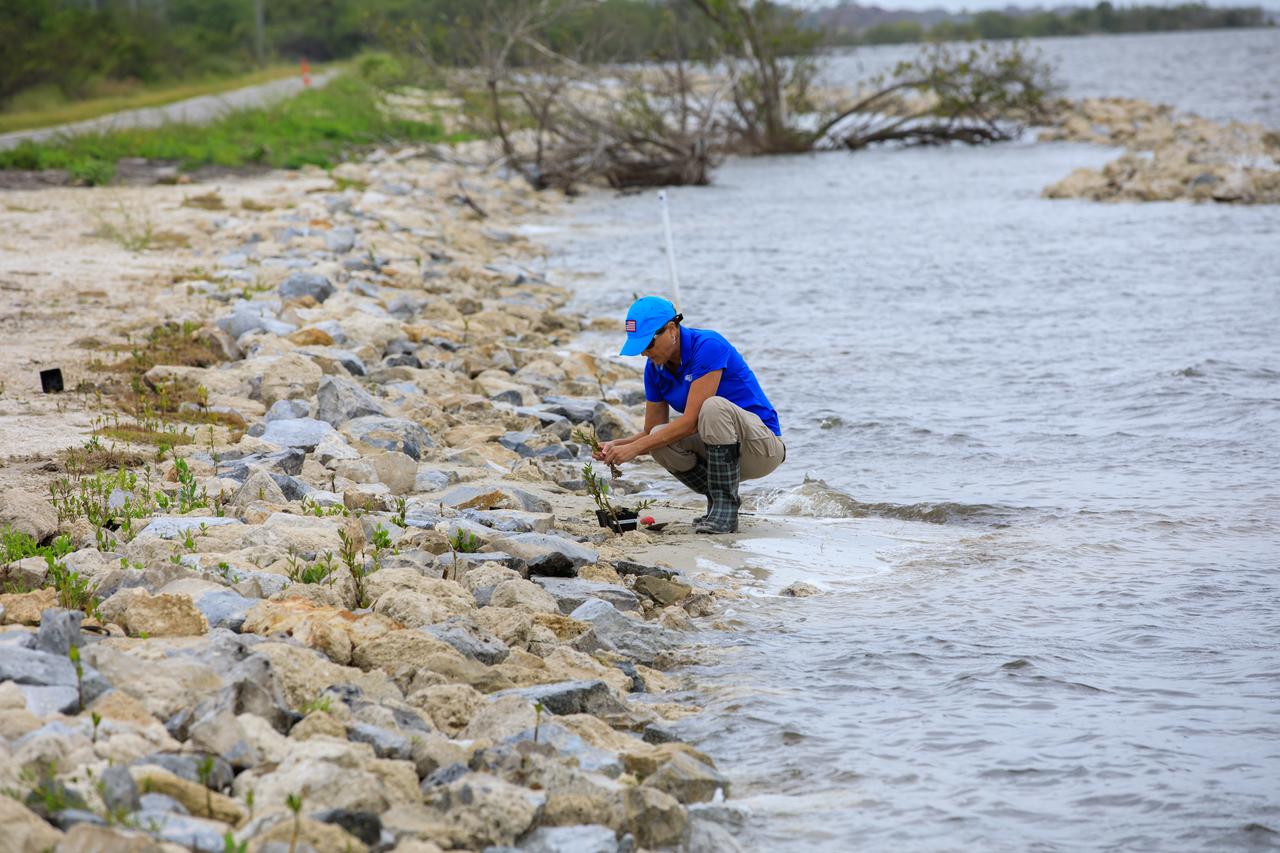
A team member from Kennedy’s Environmental Management Branch works to remove a mangrove seedling on the shoreline of Kennedy Athletic, Recreation, and Social (KARS) Park at Kennedy Space Center in Florida on April 12, 2023. Employees from Kennedy’s Environmental Management Branch removed over 100 mangrove seedlings from the shoreline and repotted them for protection during the final stages of a shoreline restoration project inside KARS Park. The mangrove seedlings will be replanted upon completion of the project to create a living shoreline better able to counter the effects of erosion caused by storm waves and rising sea levels.
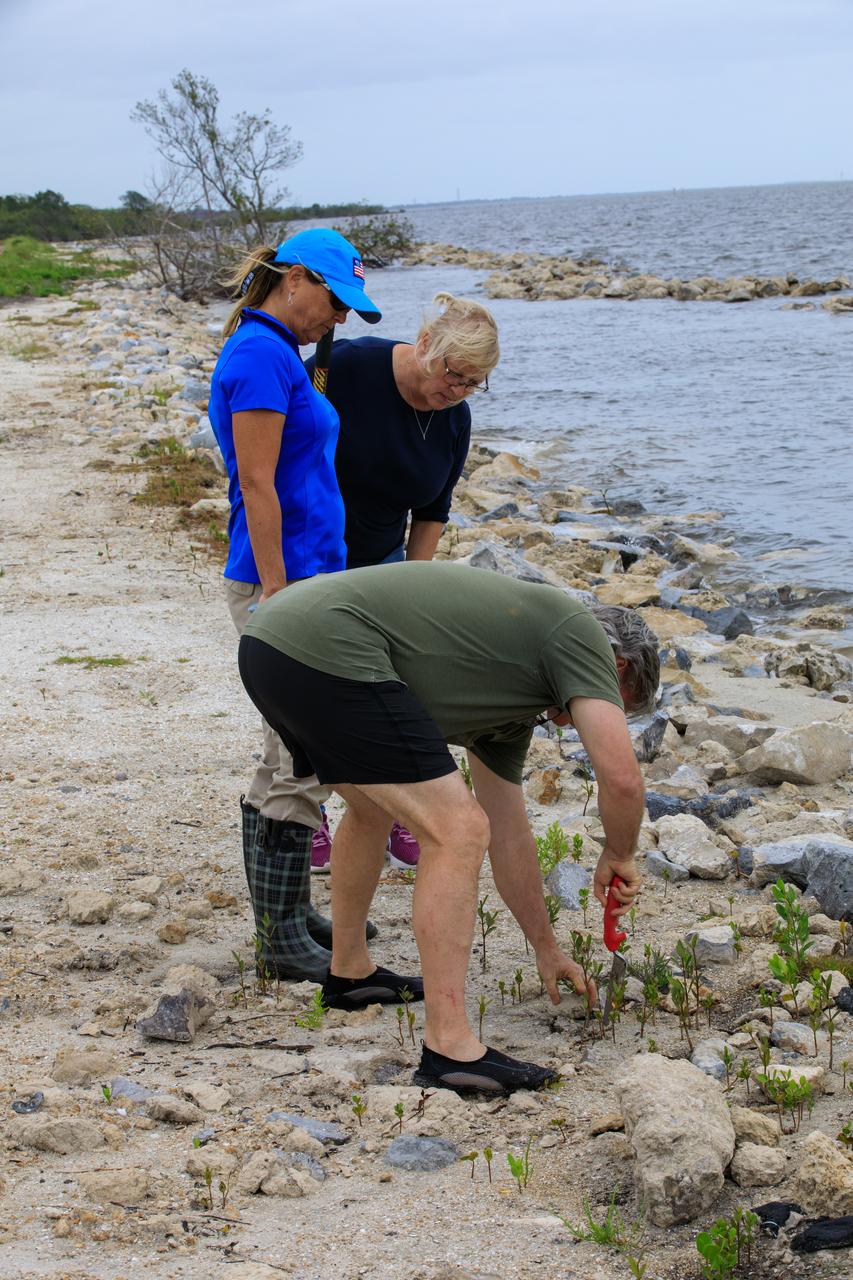
A team from Kennedy’s Environmental Management Branch works to remove a mangrove seedling on the shoreline of Kennedy Athletic, Recreation, and Social (KARS) Park at Kennedy Space Center in Florida on April 12, 2023. Employees from Kennedy’s Environmental Management Branch removed over 100 mangrove seedlings from the shoreline and repotted them for protection during the final stages of a shoreline restoration project inside KARS Park. The mangrove seedlings will be replanted upon completion of the project to create a living shoreline better able to counter the effects of erosion caused by storm waves and rising sea levels.
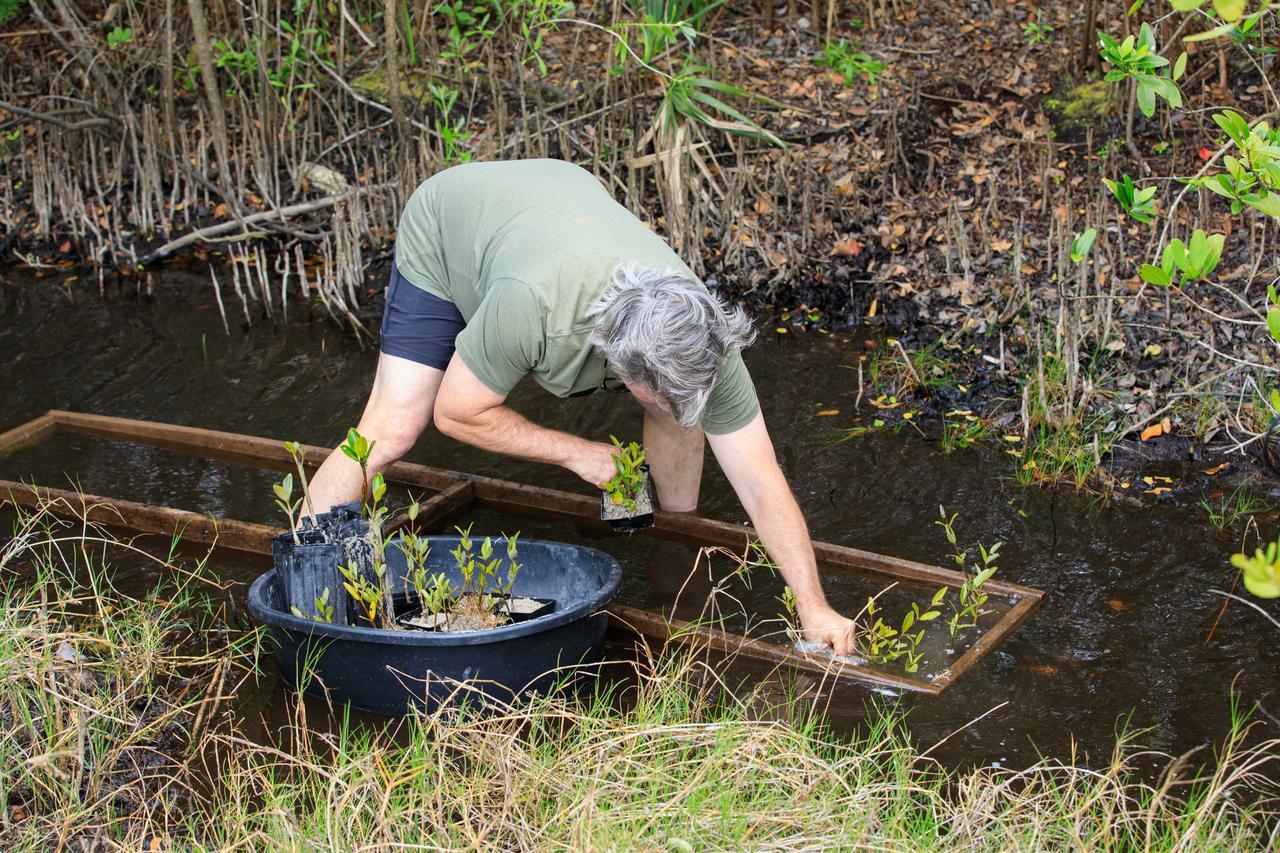
A team member from Kennedy’s Environmental Management Branch deposits repotted mangrove seedlings into a marshy channel near the shoreline of Kennedy Athletic, Recreation, and Social (KARS) Park at Kennedy Space Center in Florida on April 12, 2023. Employees from Kennedy’s Environmental Management Branch removed over 100 mangrove seedlings from the shoreline and repotted them for protection during the final stages of a shoreline restoration project inside KARS Park. The mangrove seedlings will be replanted upon completion of the project to create a living shoreline better able to counter the effects of erosion caused by storm waves and rising sea levels.
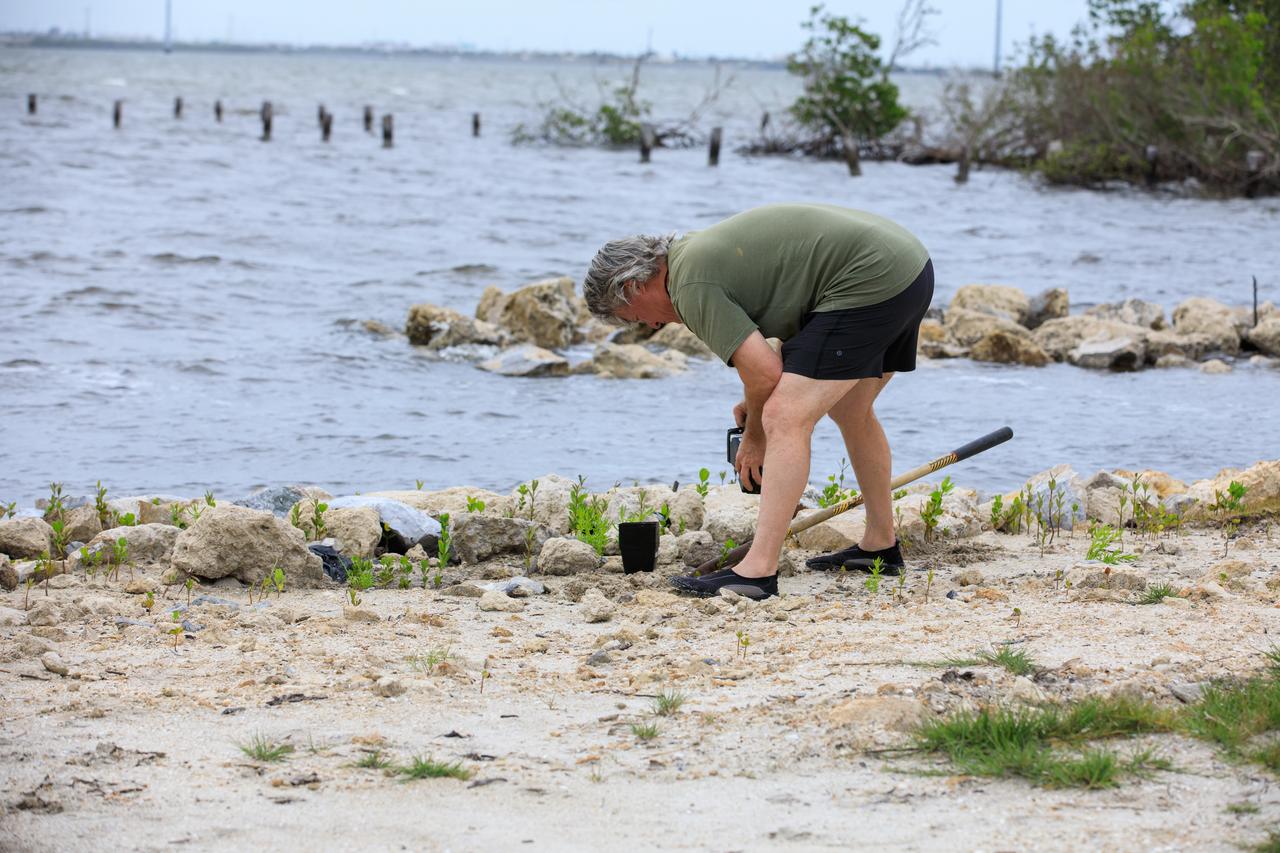
A team member from Kennedy’s Environmental Management Branch works to remove a mangrove seedling on the shoreline of Kennedy Athletic, Recreation, and Social (KARS) Park at Kennedy Space Center in Florida on April 12, 2023. Employees from Kennedy’s Environmental Management Branch removed over 100 mangrove seedlings from the shoreline and repotted them for protection during the final stages of a shoreline restoration project inside KARS Park. The mangrove seedlings will be replanted upon completion of the project to create a living shoreline better able to counter the effects of erosion caused by storm waves and rising sea levels.
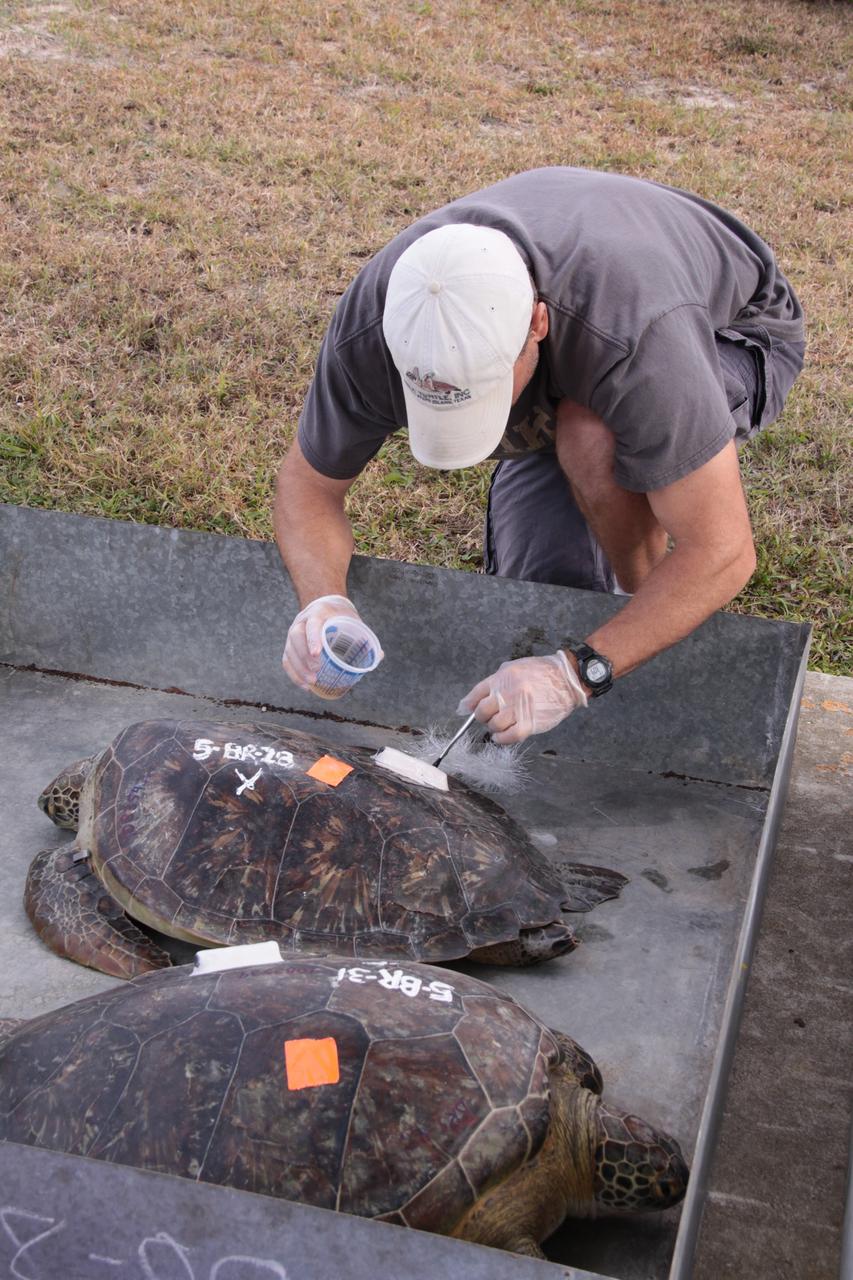
CAPE CANAVERAL, Fla. - A tracking transmitter is installed on the shell of an endangered green sea turtle at Cape Canaveral Air Force Station in Florida. A recent cold snap left this turtle and nearly 2,000 others "stunned" and in need of help. Many of the turtles were rescued from the Mosquito Lagoon, with others coming from the Indian River Lagoon and Cocoa Beach. Biologists, environmentalists, wildlife experts and other volunteers joined forces with a massive rescue effort at the Merritt Island National Wildlife Refuge, where the turtles were identified, examined and transported to rehabilitation facilities throughout Florida and South Georgia. The animals stayed at these facilities until local waters warmed up to safe temperatures. Photo credit: NASA/Jack Pfaller
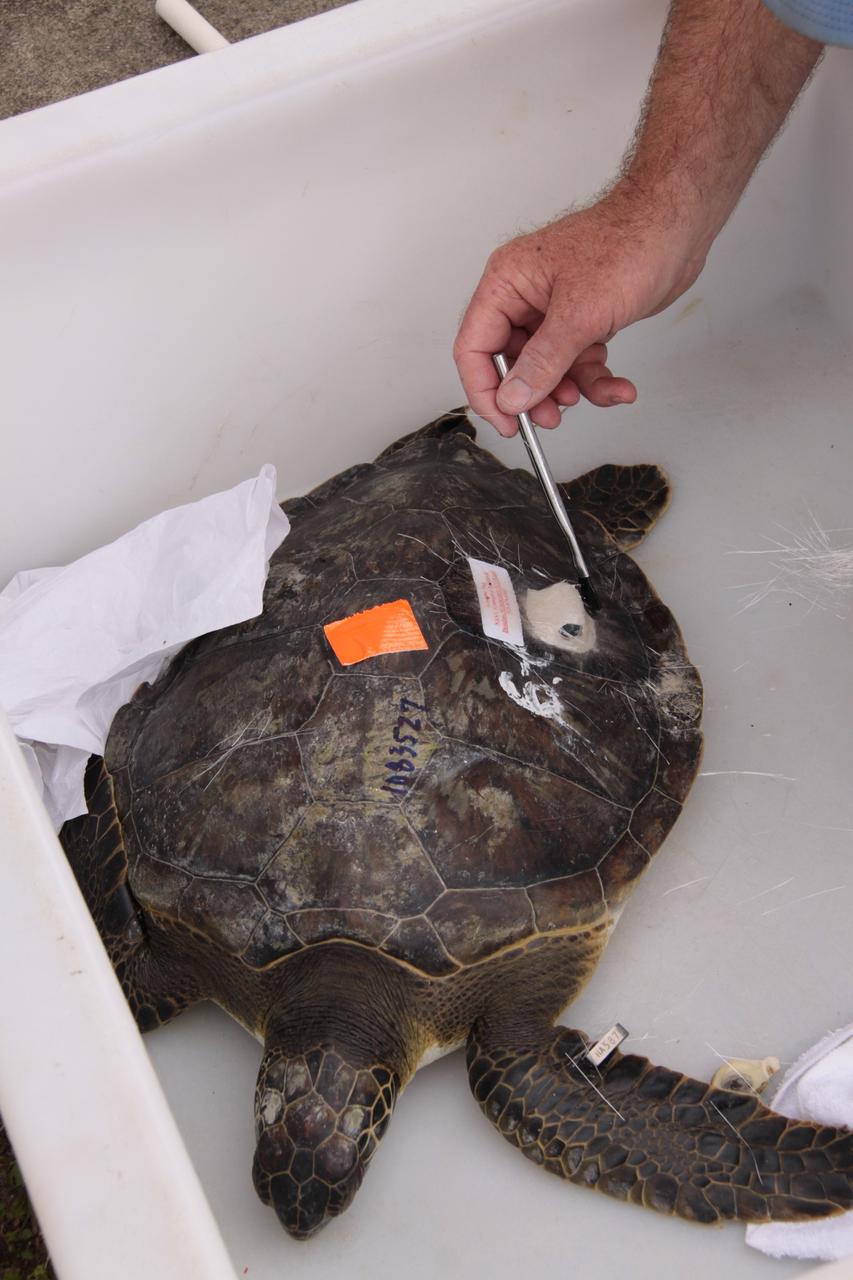
CAPE CANAVERAL, Fla. - An endangered green sea turtle awaits release as its shell is tagged with a tracking transmitter at Cape Canaveral Air Force Station in Florida. A recent cold snap left this turtle and nearly 2,000 others "stunned" and in need of help. Many of the turtles were rescued from the Mosquito Lagoon, with others coming from the Indian River Lagoon and Cocoa Beach. Biologists, environmentalists, wildlife experts and other volunteers joined forces with a massive rescue effort at the Merritt Island National Wildlife Refuge, where the turtles were identified, examined and transported to rehabilitation facilities throughout Florida and South Georgia. The animals stayed at these facilities until local waters warmed up to safe temperatures. Photo credit: NASA/Jack Pfaller