
Goddard's Ritsko Wins 2011 SAVE Award The winner of the 2011 SAVE Award is Matthew Ritsko, a Goddard financial manager. His tool lending library would track and enable sharing of expensive space-flight tools and hardware after projects no longer need them. This set of images represents the types of tools used at NASA. To read more go to: <a href="http://www.nasa.gov/topics/people/features/ritsko-save.html" rel="nofollow">www.nasa.gov/topics/people/features/ritsko-save.html</a> Dr. Doug Rabin (Code 671) and PI La Vida Cooper (Code 564) inspect engineering samples of the HAS-2 imager which will be tested and readout using a custom ASIC with a 16-bit ADC (analog to digital converter) and CDS (correlated double sampling) circuit designed by the Code 564 ASIC group as a part of an FY10 IRAD. The purpose of the IRAD was to develop and high resolution digitizer for Heliophysics applications such as imaging. Future goals for the collaboration include characterization testing and eventually a sounding rocket flight of the integrated system. *ASIC= Application Specific Integrated Circuit NASA/GSFC/Chris Gunn
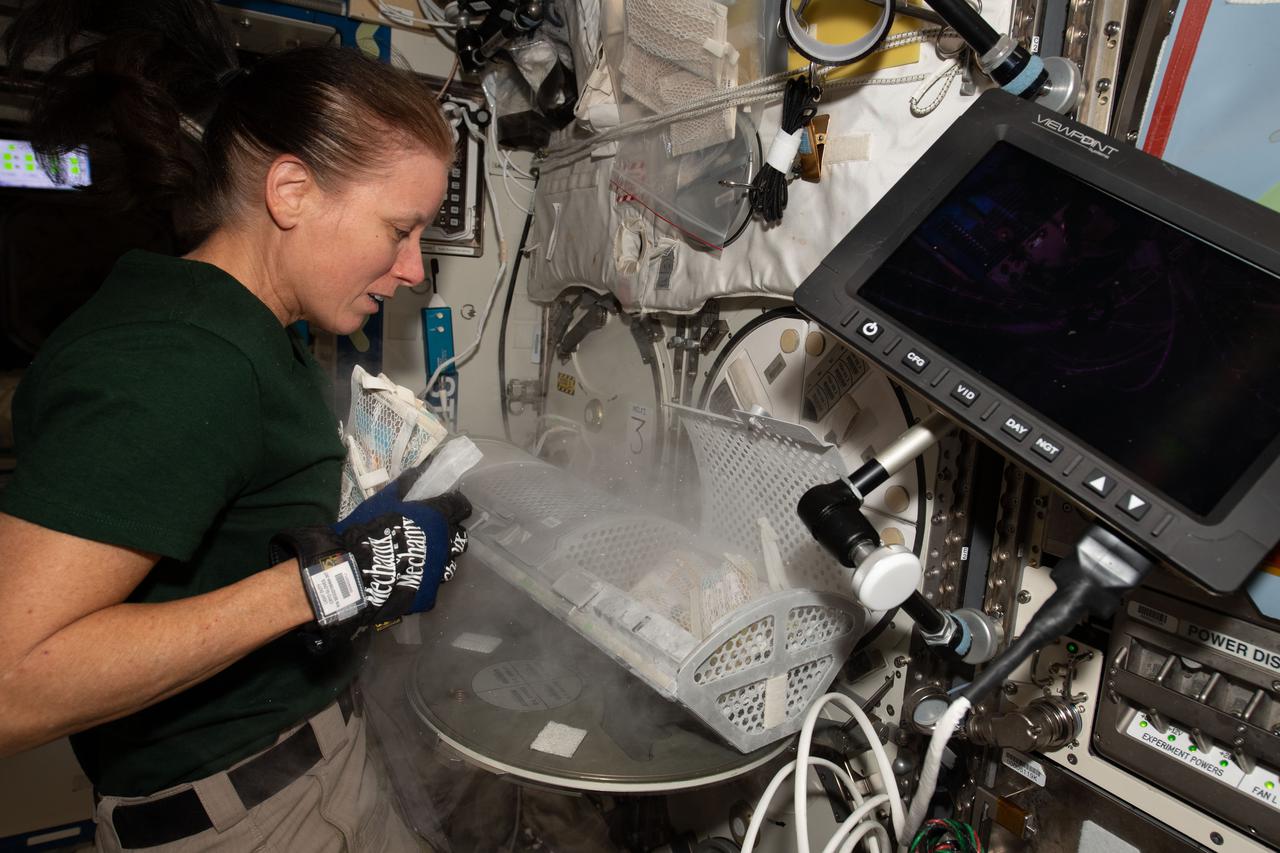
iss064e024596 (Jan. 21, 2021) --- NASA astronaut and Expedition 64 Flight Engineer Shannon Walker inspects a science freezer that preserves biological samples for later analysis on Earth and on the International Space Station.
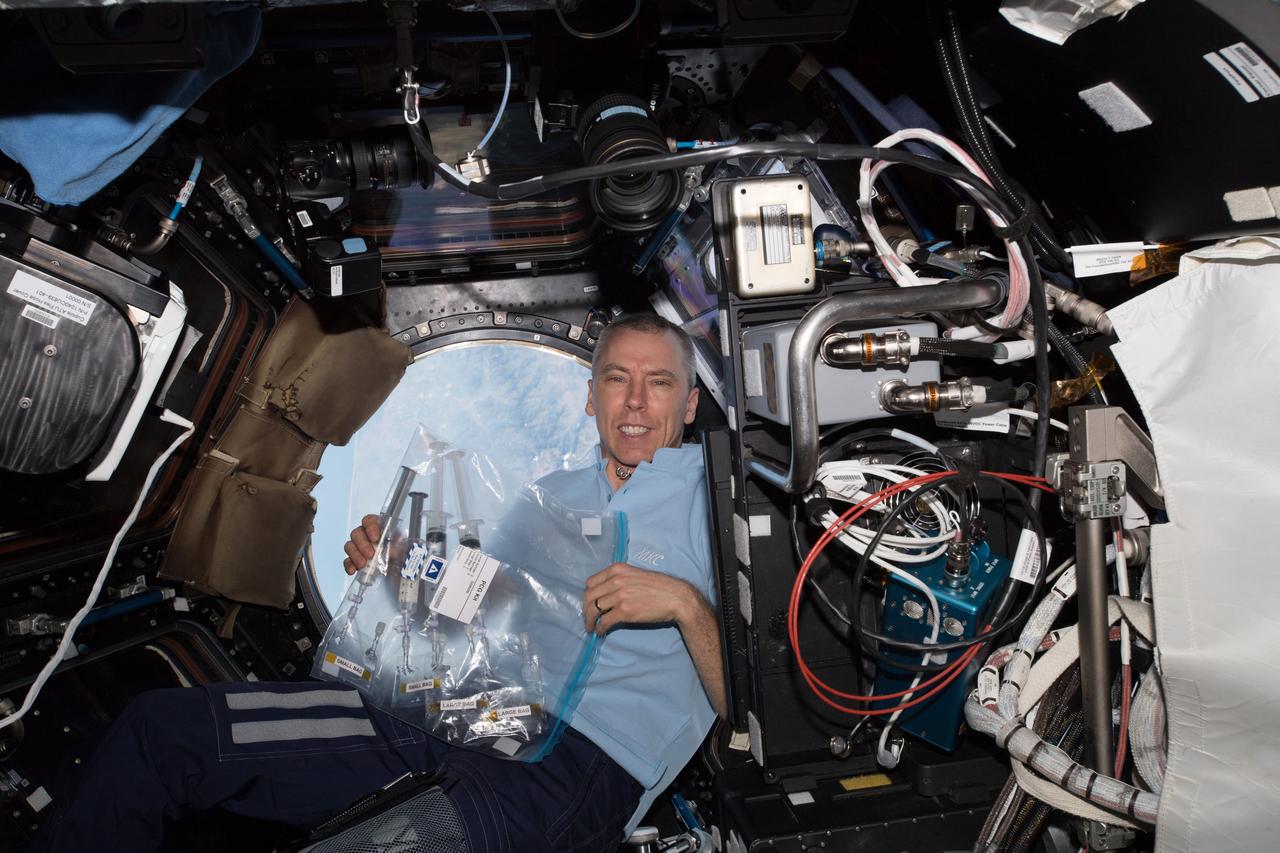
iss055e024521 (April 18, 2018) --- Flight Engineer Drew Feustel holds a bag containing samples that had been collected, documented and inspected for the Protein Crystal Growth-9 experiment. Feustel was in the Cupola as the International Space Station was orbiting over southern Mexico near the Guatemalan border.
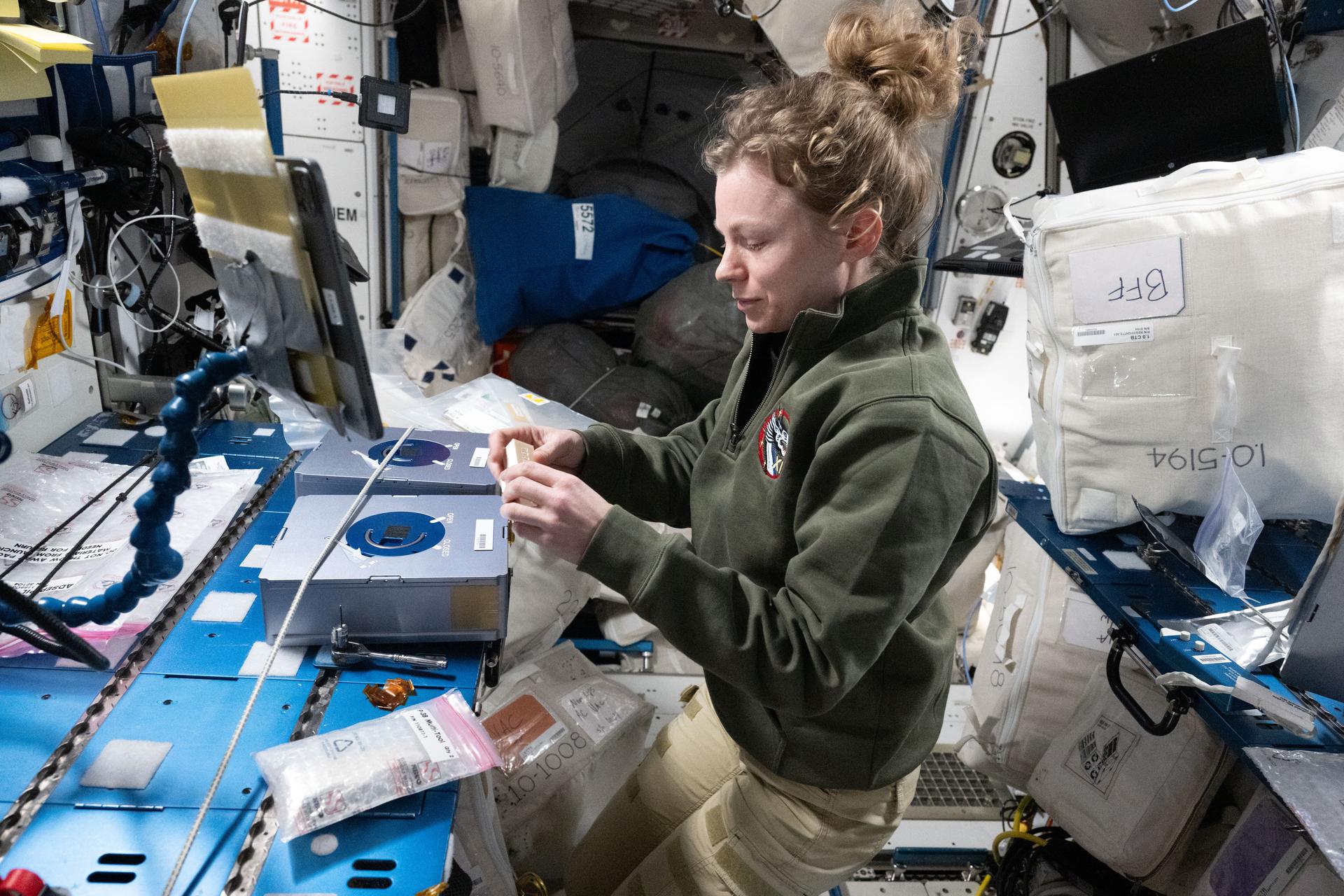
iss073e0865452 (Oct. 7, 2025) --- NASA astronaut and Expedition 73 Flight Engineer Zena Cardman inspects sample cassettes for installation into the Advanced Space Experiment Processor-4 (ADSEP-4) at the maintenance work area inside the International Space Station's Harmony module. She was conducting research operations for the Pharmaceutical In-space Laboratory biotechnology experiment, which is investigating methods to advance pharmaceutical manufacturing in microgravity.
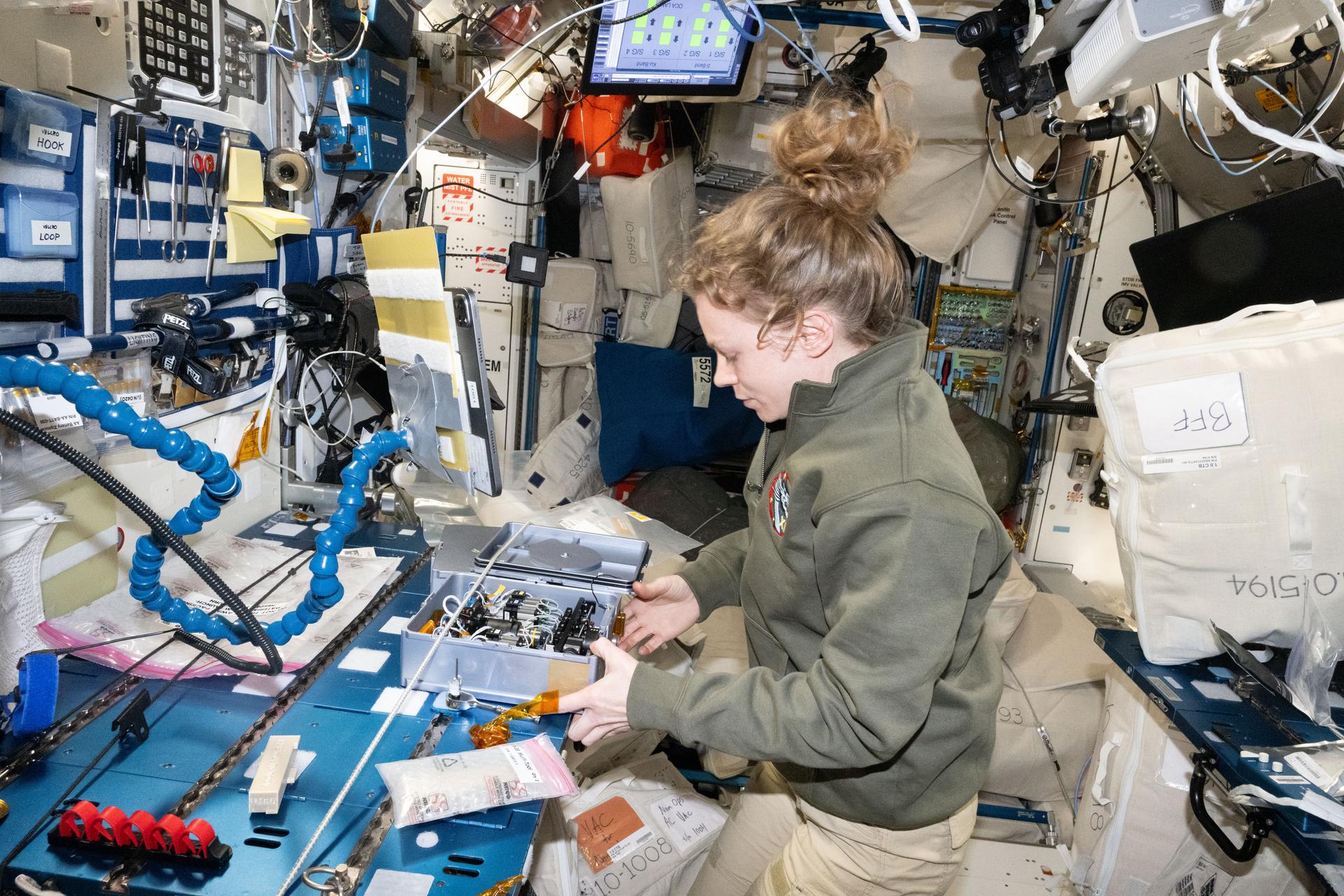
iss073e0865458 (Oct. 7, 2025) --- NASA astronaut and Expedition 73 Flight Engineer Zena Cardman inspects sample cassettes for installation into the Advanced Space Experiment Processor-4 (ADSEP-4) at the maintenance work area inside the International Space Station's Harmony module. She was conducting research operations for the Pharmaceutical In-space Laboratory biotechnology experiment, which is investigating methods to advance pharmaceutical manufacturing in microgravity.
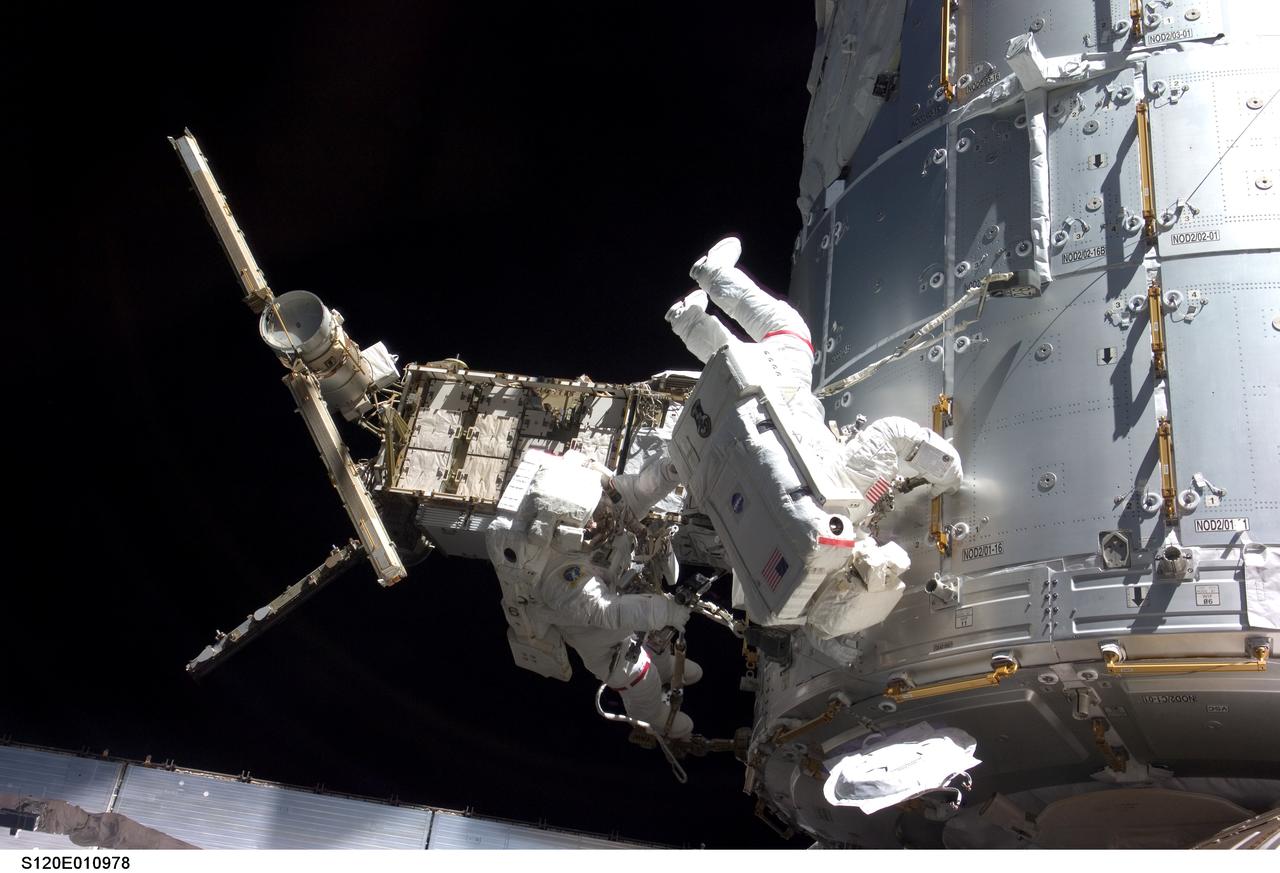
S120-E-010978 (28 Oct. 2007) --- Astronauts Daniel Tani (left), Expedition 16 flight engineer, and Scott Parazynski, STS-120 mission specialist, participate in the second scheduled session of extravehicular activity (EVA) as construction continues on the International Space Station. During the 6-hour, 33-minute spacewalk Tani and Parazynski outfitted the Harmony module, mated the power and data grapple fixture and reconfigured connectors on the starboard 1 (S1) truss that will allow the radiator on S1 to be deployed from the ground later. Also the spacewalkers worked in tandem to disconnect cables from the P6 truss, allowing it to be removed from the Z1 truss. Tani also visually inspected the station's starboard Solar Alpha Rotary Joint (SARJ) and gathered samples of "shavings" he found under the joint's multi-layer insulation covers.
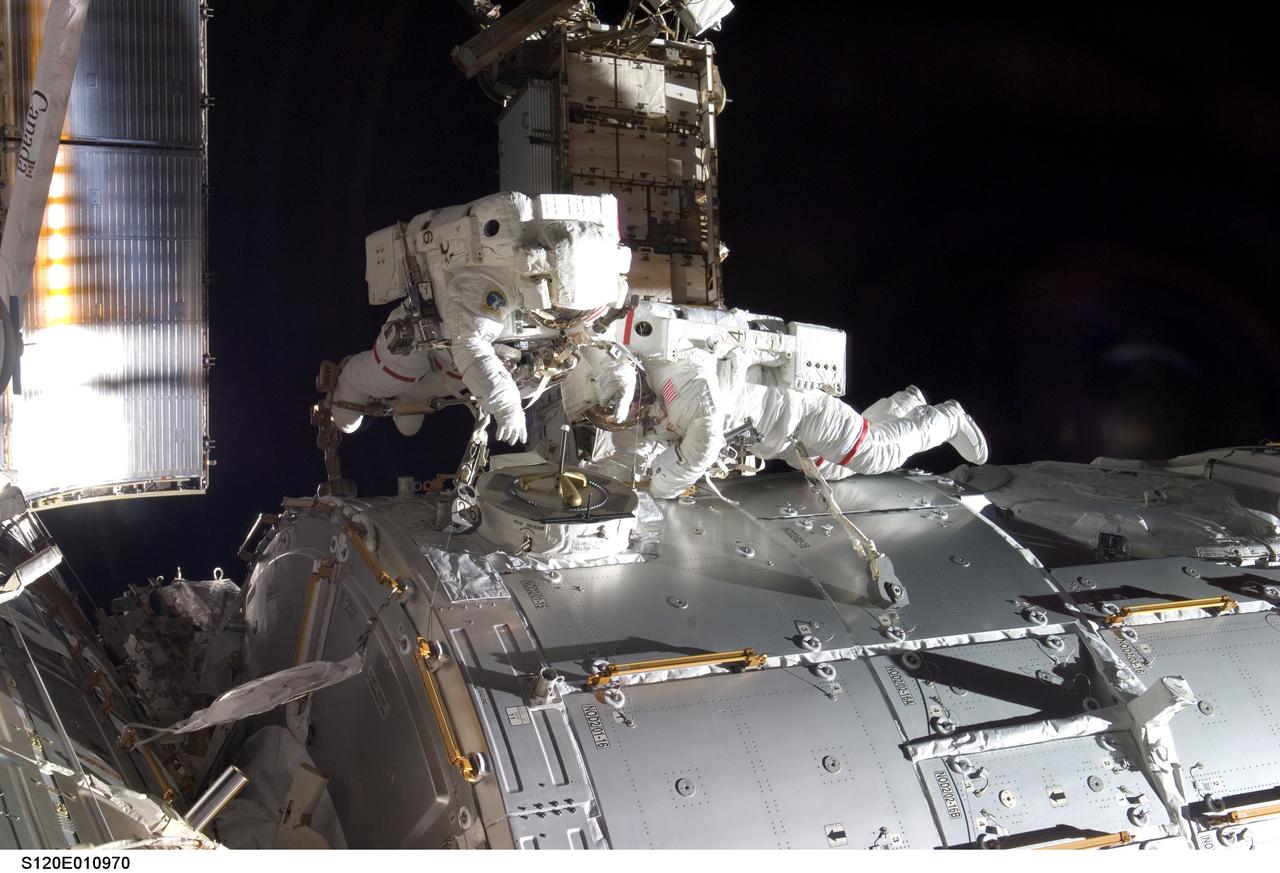
S120-E-010970 (28 Oct. 2007) --- Astronauts Daniel Tani (left), Expedition 16 flight engineer, and Scott Parazynski, STS-120 mission specialist, participate in the second scheduled session of extravehicular activity (EVA) as construction continues on the International Space Station. During the 6-hour, 33-minute spacewalk Tani and Parazynski outfitted the Harmony module, mated the power and data grapple fixture and reconfigured connectors on the starboard 1 (S1) truss that will allow the radiator on S1 to be deployed from the ground later. Also the spacewalkers worked in tandem to disconnect cables from the P6 truss, allowing it to be removed from the Z1 truss. Tani also visually inspected the station's starboard Solar Alpha Rotary Joint (SARJ) and gathered samples of "shavings" he found under the joint's multi-layer insulation covers.
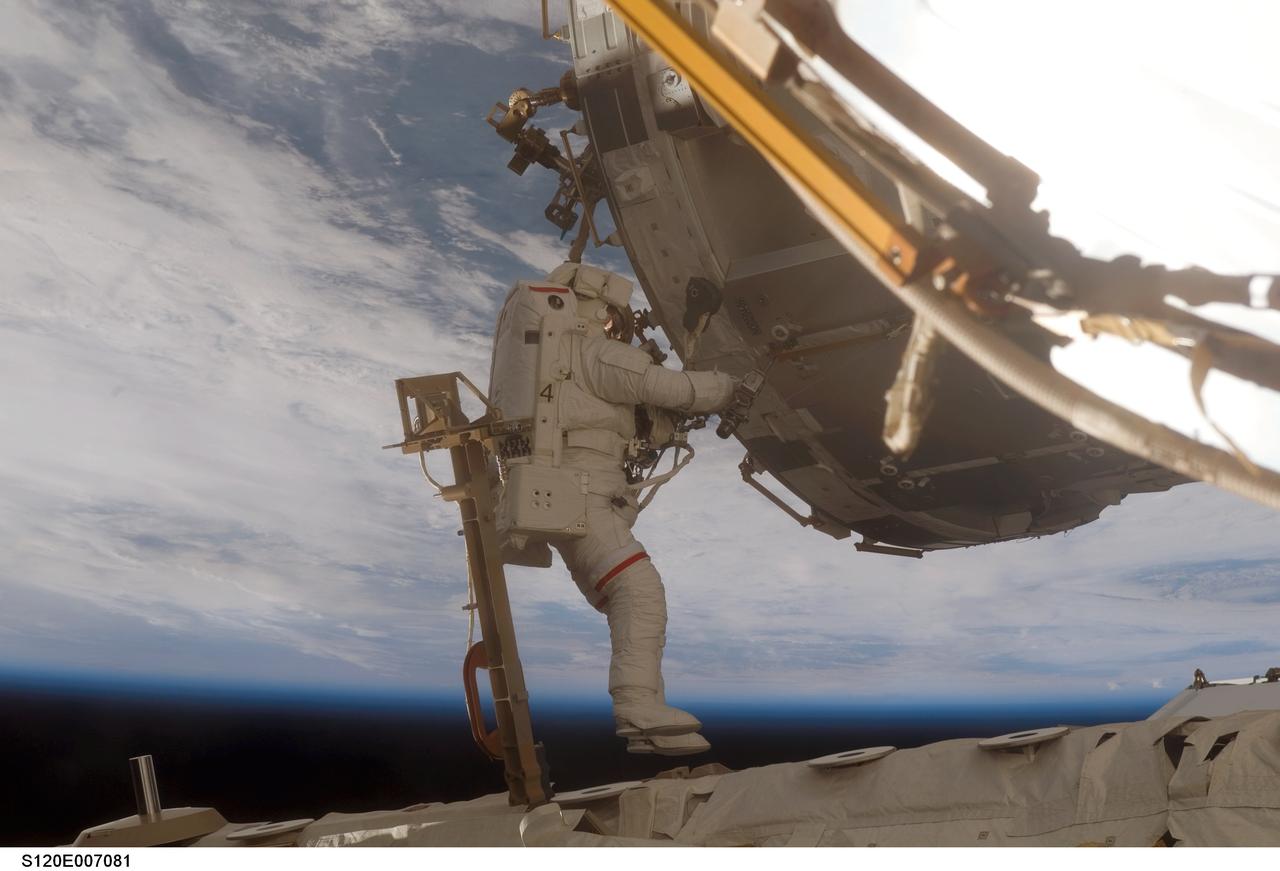
S120-E-007081 (28 Oct. 2007) --- Astronaut Scott Parazynski, STS-120 mission specialist, participates in the second of five scheduled sessions of extravehicular activity (EVA) as construction continues on the International Space Station. During the 6-hour, 33-minute spacewalk Parazynski and astronaut Daniel Tani (out of frame), Expedition 16 flight engineer, worked in tandem to disconnect cables from the P6 truss, allowing it to be removed from the Z1 truss. Tani also visually inspected the station's starboard Solar Alpha Rotary Joint (SARJ) and gathered samples of "shavings" he found under the joint's multi-layer insulation covers. Also the spacewalkers outfitted the Harmony module, mated the power and data grapple fixture and reconfigured connectors on the starboard 1 (S1) truss that will allow the radiator on S1 to be deployed from the ground later.
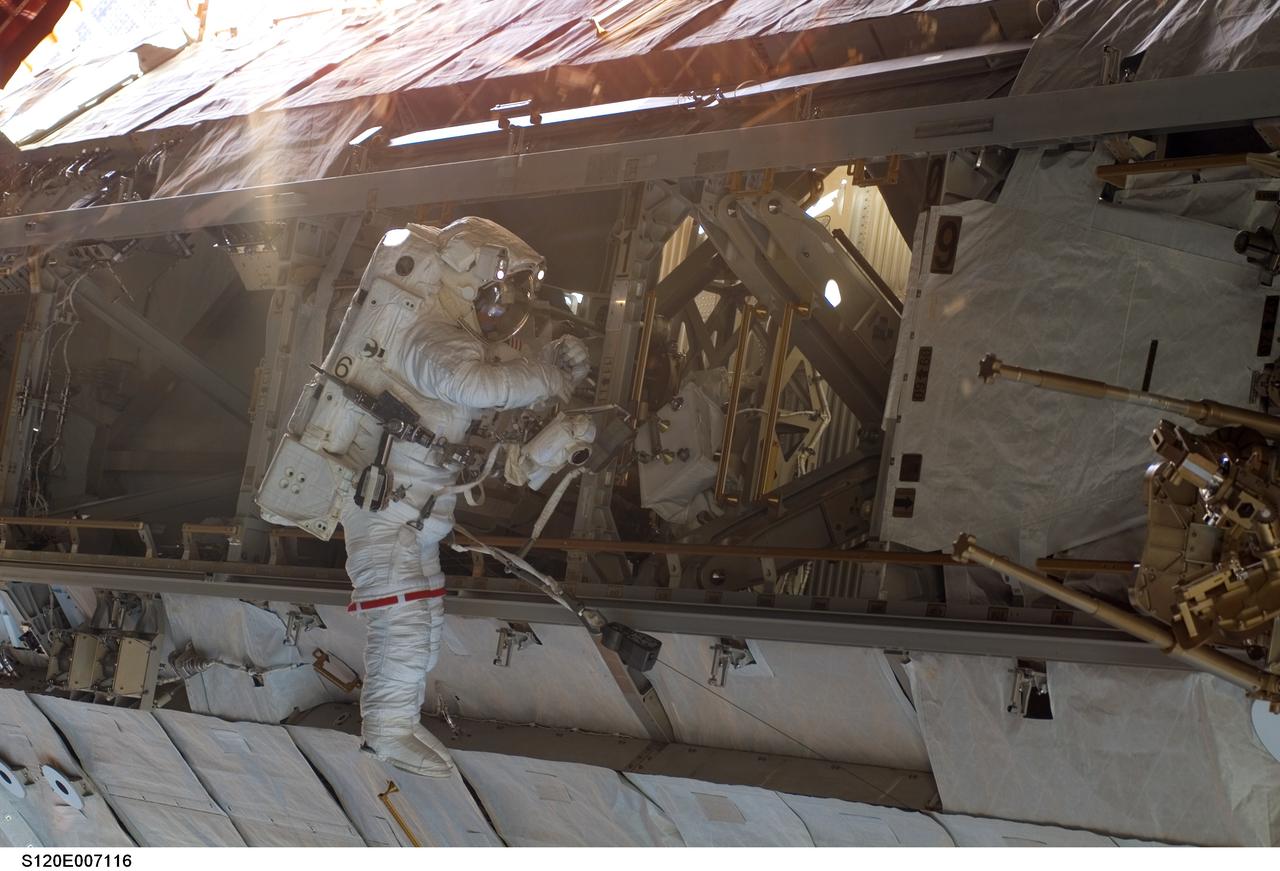
S120-E-007116 (28 Oct. 2007) --- Astronaut Daniel Tani, Expedition 16 flight engineer, participates in the second of five scheduled sessions of extravehicular activity (EVA) as construction continues on the International Space Station. During the 6-hour, 33-minute spacewalk Tani and astronaut Scott Parazynski (out of frame), STS-120 mission specialist, worked in tandem to disconnect cables from the P6 truss, allowing it to be removed from the Z1 truss. Tani also visually inspected the station's starboard Solar Alpha Rotary Joint (SARJ) and gathered samples of "shavings" he found under the joint's multi-layer insulation covers. Also the spacewalkers outfitted the Harmony module, mated the power and data grapple fixture and reconfigured connectors on the starboard 1 (S1) truss that will allow the radiator on S1 to be deployed from the ground later.
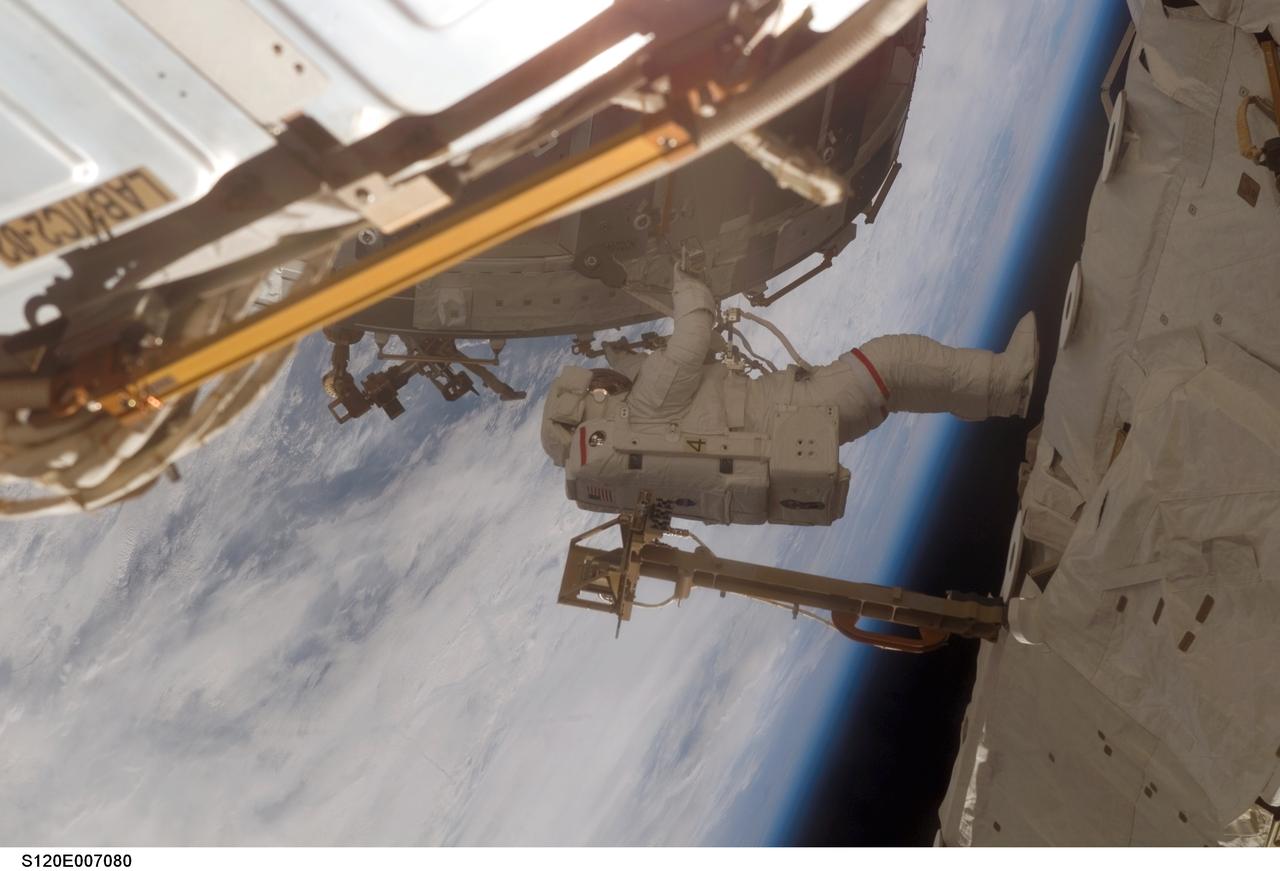
S120-E-007080 (28 Oct. 2007) --- Astronaut Scott Parazynski, STS-120 mission specialist, participates in the second of five scheduled sessions of extravehicular activity (EVA) as construction continues on the International Space Station. During the 6-hour, 33-minute spacewalk Parazynski and astronaut Daniel Tani (out of frame), Expedition 16 flight engineer, worked in tandem to disconnect cables from the P6 truss, allowing it to be removed from the Z1 truss. Tani also visually inspected the station's starboard Solar Alpha Rotary Joint (SARJ) and gathered samples of "shavings" he found under the joint's multi-layer insulation covers. Also the spacewalkers outfitted the Harmony module, mated the power and data grapple fixture and reconfigured connectors on the starboard 1 (S1) truss that will allow the radiator on S1 to be deployed from the ground later.
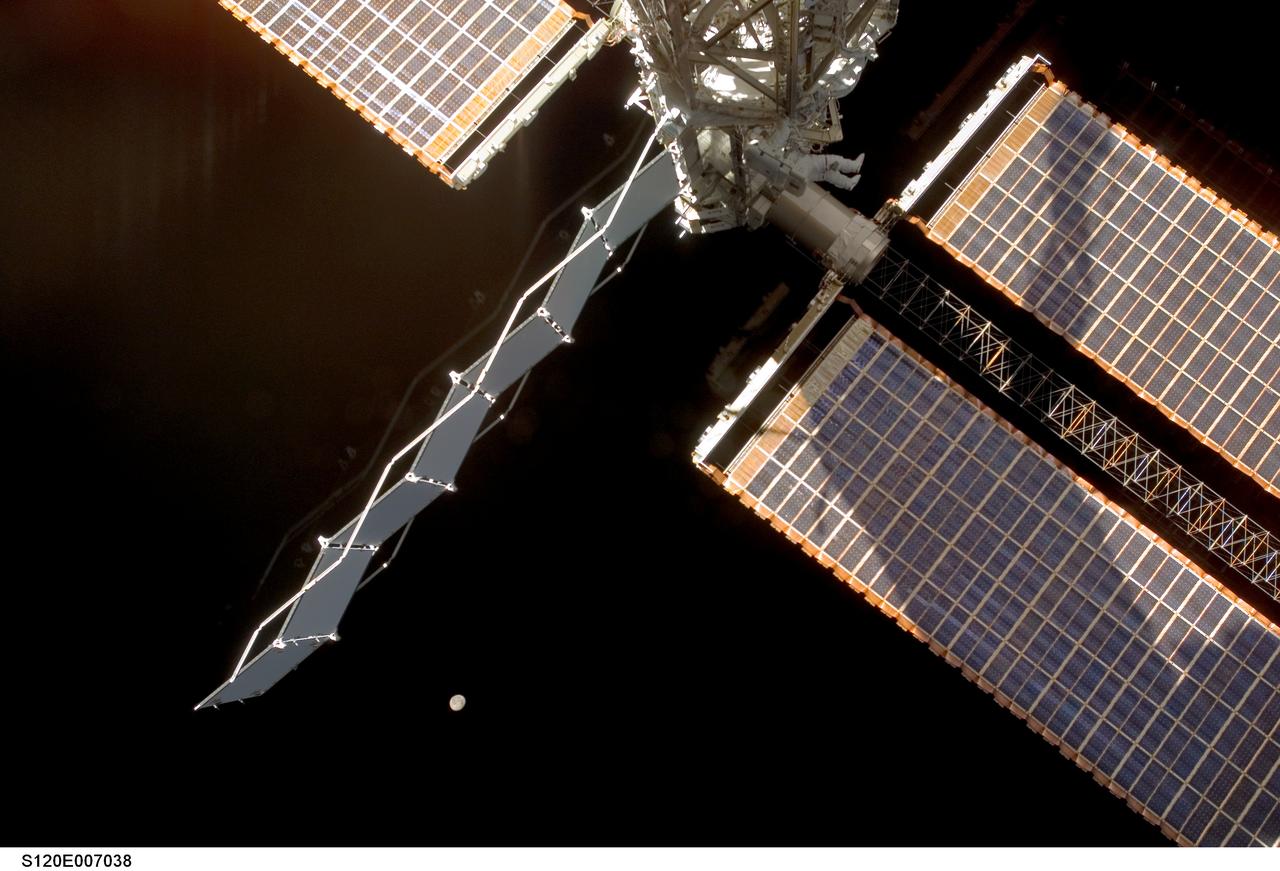
S120-E-007038 (28 Oct. 2007) --- Astronaut Daniel Tani (top center), Expedition 16 flight engineer, participates in the second of five scheduled sessions of extravehicular activity (EVA) as construction continues on the International Space Station. During the 6-hour, 33-minute spacewalk Tani and astronaut Scott Parazynski (out of frame), STS-120 mission specialist, worked in tandem to disconnect cables from the P6 truss, allowing it to be removed from the Z1 truss. Tani also visually inspected the station's starboard Solar Alpha Rotary Joint (SARJ) and gathered samples of "shavings" he found under the joint's multi-layer insulation covers. Also the spacewalkers outfitted the Harmony module, mated the power and data grapple fixture and reconfigured connectors on the starboard 1 (S1) truss that will allow the radiator on S1 to be deployed from the ground later. The moon is visible at lower center.
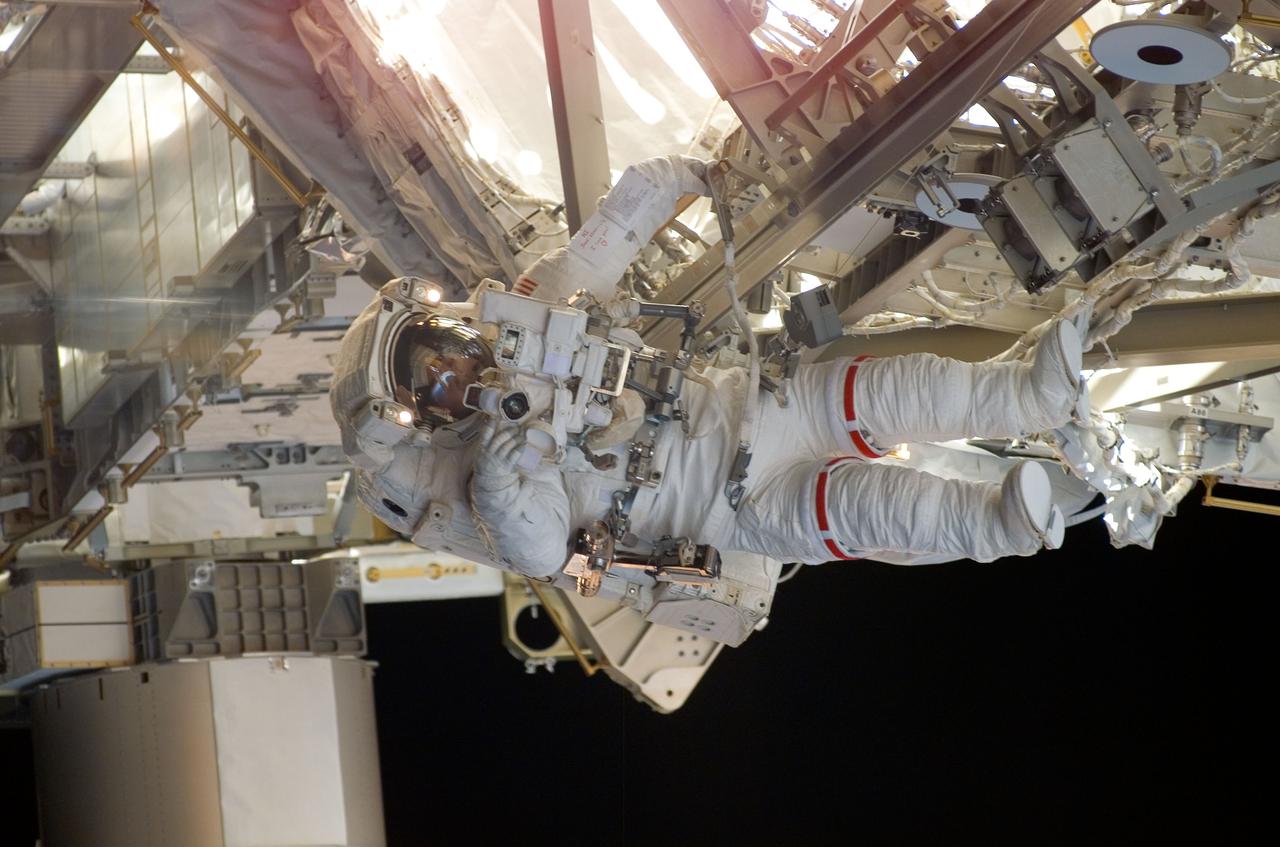
S120-E-007100 (28 Oct. 2007) --- Astronaut Daniel Tani, Expedition 16 flight engineer, participates in the second of five scheduled sessions of extravehicular activity (EVA) as construction continues on the International Space Station. During the 6-hour, 33-minute spacewalk Tani and astronaut Scott Parazynski (out of frame), STS-120 mission specialist, worked in tandem to disconnect cables from the P6 truss, allowing it to be removed from the Z1 truss. Tani also visually inspected the station's starboard Solar Alpha Rotary Joint (SARJ) and gathered samples of "shavings" he found under the joint's multi-layer insulation covers. Also the spacewalkers outfitted the Harmony module, mated the power and data grapple fixture and reconfigured connectors on the starboard 1 (S1) truss that will allow the radiator on S1 to be deployed from the ground later.
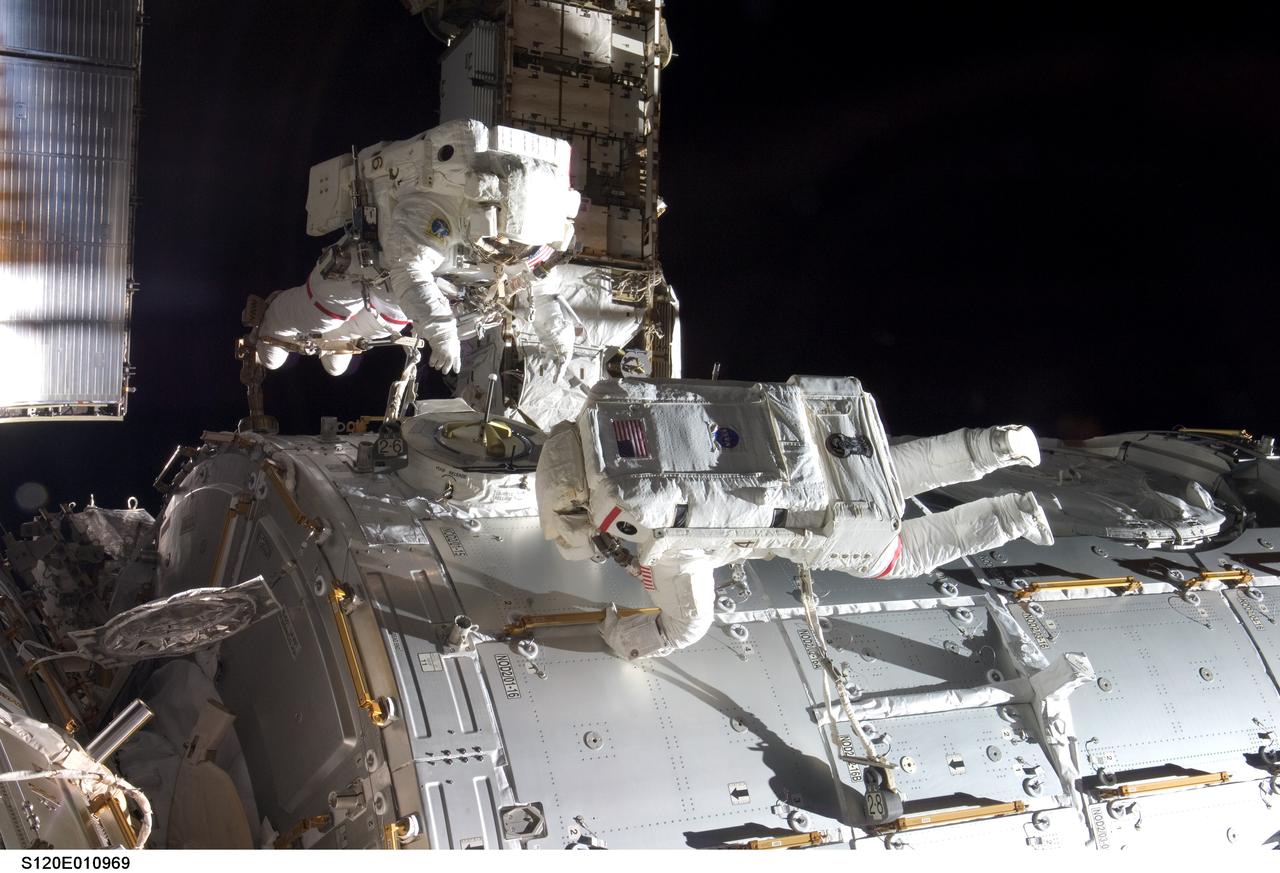
S120-E-010969 (28 Oct. 2007) --- Astronauts Daniel Tani (left), Expedition 16 flight engineer, and Scott Parazynski, STS-120 mission specialist, participate in the second scheduled session of extravehicular activity (EVA) as construction continues on the International Space Station. During the 6-hour, 33-minute spacewalk Tani and Parazynski outfitted the Harmony module, mated the power and data grapple fixture and reconfigured connectors on the starboard 1 (S1) truss that will allow the radiator on S1 to be deployed from the ground later. Also the spacewalkers worked in tandem to disconnect cables from the P6 truss, allowing it to be removed from the Z1 truss. Tani also visually inspected the station's starboard Solar Alpha Rotary Joint (SARJ) and gathered samples of "shavings" he found under the joint's multi-layer insulation covers.
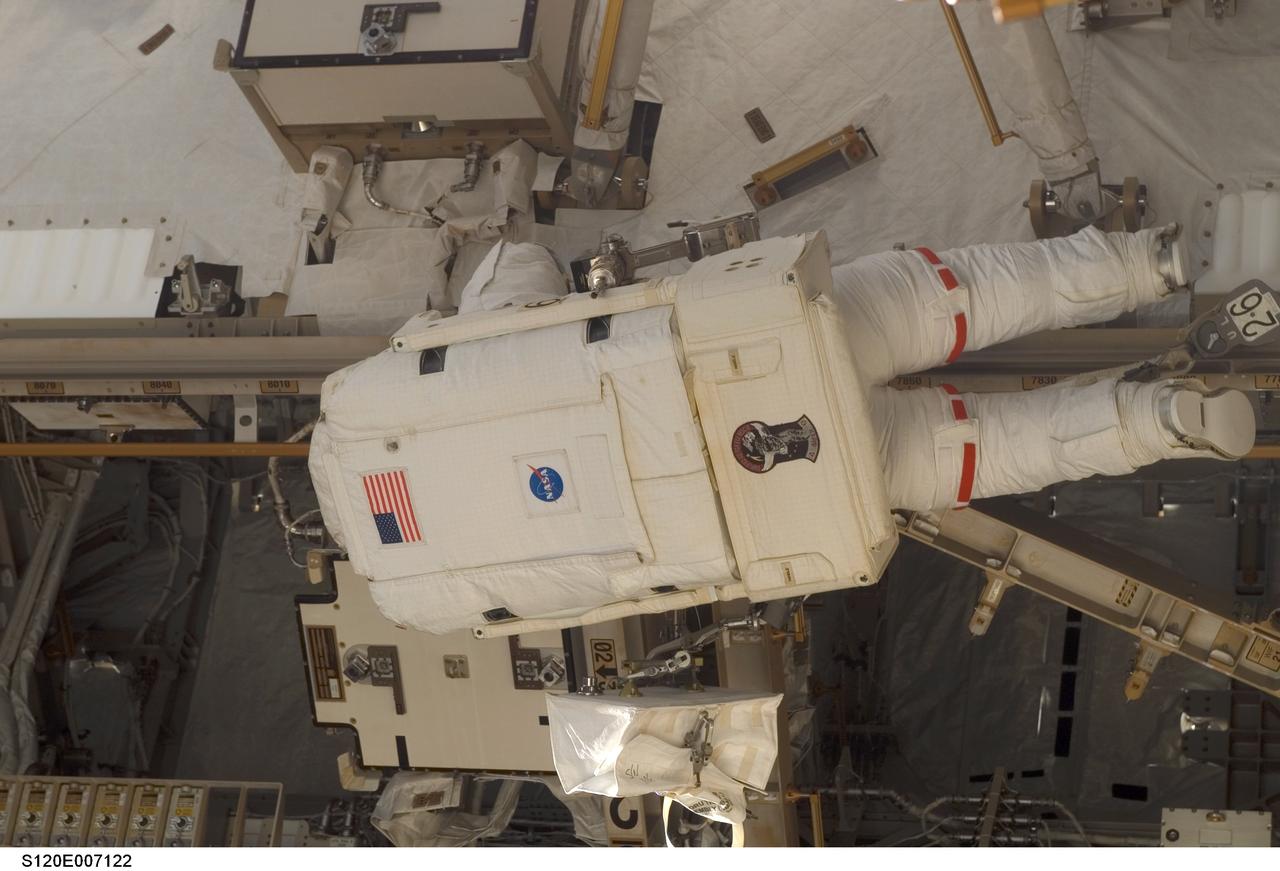
S120-E-007122 (28 Oct. 2007) --- Astronaut Daniel Tani, Expedition 16 flight engineer, participates in the second of five scheduled sessions of extravehicular activity (EVA) as construction continues on the International Space Station. During the 6-hour, 33-minute spacewalk Tani and astronaut Scott Parazynski (out of frame), STS-120 mission specialist, worked in tandem to disconnect cables from the P6 truss, allowing it to be removed from the Z1 truss. Tani also visually inspected the station's starboard Solar Alpha Rotary Joint (SARJ) and gathered samples of "shavings" he found under the joint's multi-layer insulation covers. Also the spacewalkers outfitted the Harmony module, mated the power and data grapple fixture and reconfigured connectors on the starboard 1 (S1) truss that will allow the radiator on S1 to be deployed from the ground later.
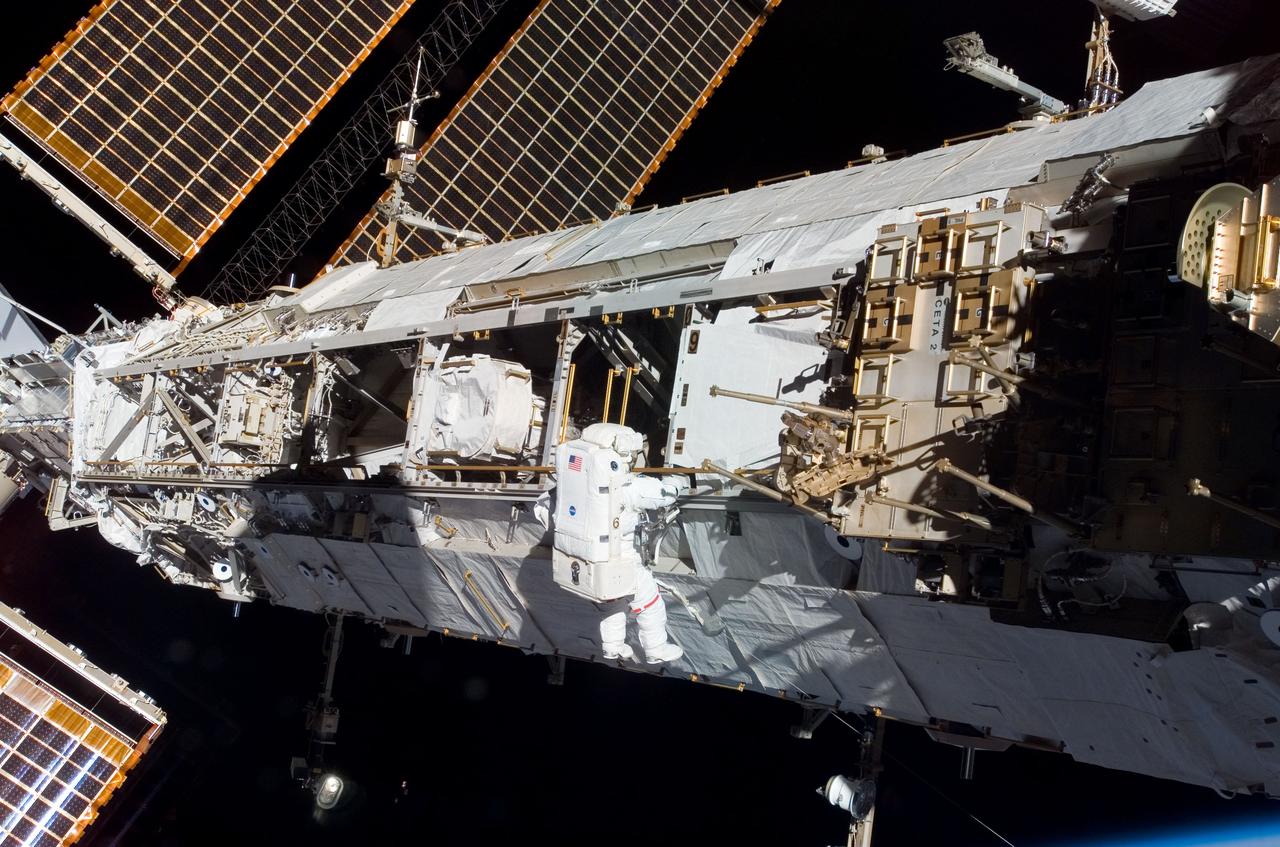
S120-E-007003 (28 Oct. 2007) --- Astronaut Daniel Tani, Expedition 16 flight engineer, participates in the second of five scheduled sessions of extravehicular activity (EVA) as construction continues on the International Space Station. During the 6-hour, 33-minute spacewalk Tani and astronaut Scott Parazynski (out of frame), STS-120 mission specialist, worked in tandem to disconnect cables from the P6 truss, allowing it to be removed from the Z1 truss. Tani also visually inspected the station's starboard Solar Alpha Rotary Joint (SARJ) and gathered samples of "shavings" he found under the joint's multi-layer insulation covers. Also the spacewalkers outfitted the Harmony module, mated the power and data grapple fixture and reconfigured connectors on the starboard 1 (S1) truss that will allow the radiator on S1 to be deployed from the ground later.
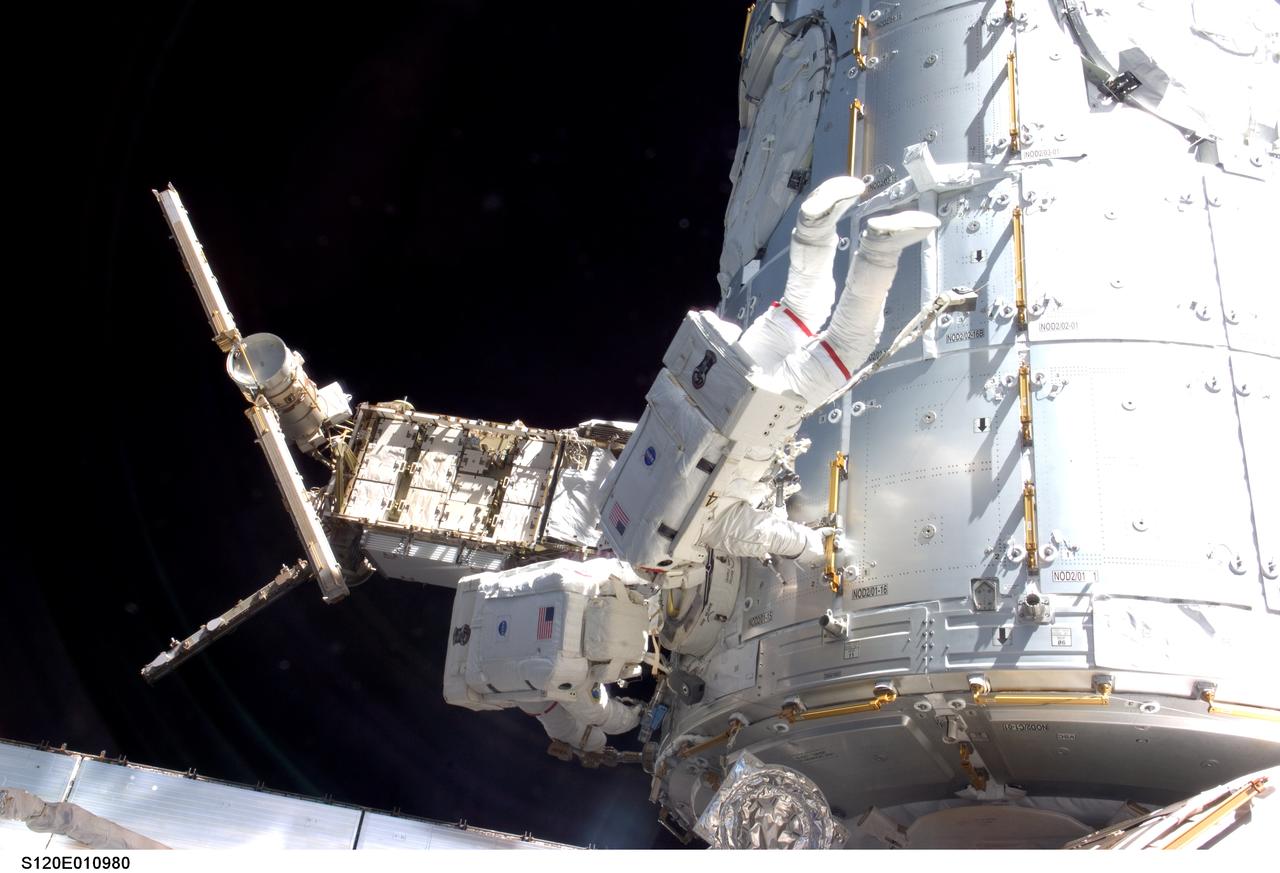
S120-E-010980 (28 Oct. 2007) --- Astronauts Daniel Tani (left), Expedition 16 flight engineer, and Scott Parazynski, STS-120 mission specialist, participate in the second scheduled session of extravehicular activity (EVA) as construction continues on the International Space Station. During the 6-hour, 33-minute spacewalk Tani and Parazynski outfitted the Harmony module, mated the power and data grapple fixture and reconfigured connectors on the starboard 1 (S1) truss that will allow the radiator on S1 to be deployed from the ground later. Also the spacewalkers worked in tandem to disconnect cables from the P6 truss, allowing it to be removed from the Z1 truss. Tani also visually inspected the station's starboard Solar Alpha Rotary Joint (SARJ) and gathered samples of "shavings" he found under the joint's multi-layer insulation covers.
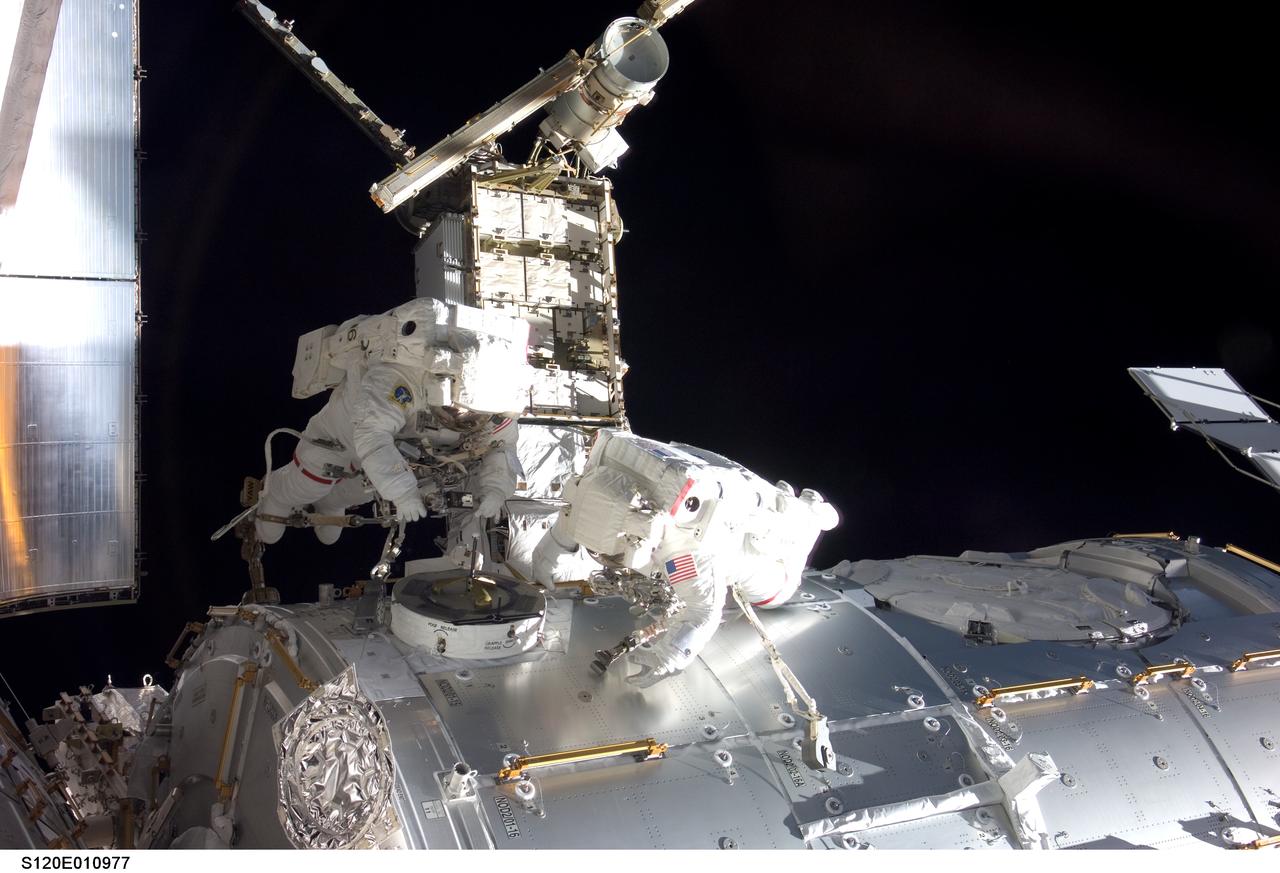
S120-E-010977 (28 Oct. 2007) --- Astronauts Daniel Tani (left), Expedition 16 flight engineer, and Scott Parazynski, STS-120 mission specialist, participate in the second scheduled session of extravehicular activity (EVA) as construction continues on the International Space Station. During the 6-hour, 33-minute spacewalk Tani and Parazynski outfitted the Harmony module, mated the power and data grapple fixture and reconfigured connectors on the starboard 1 (S1) truss that will allow the radiator on S1 to be deployed from the ground later. Also the spacewalkers worked in tandem to disconnect cables from the P6 truss, allowing it to be removed from the Z1 truss. Tani also visually inspected the station's starboard Solar Alpha Rotary Joint (SARJ) and gathered samples of "shavings" he found under the joint's multi-layer insulation covers.
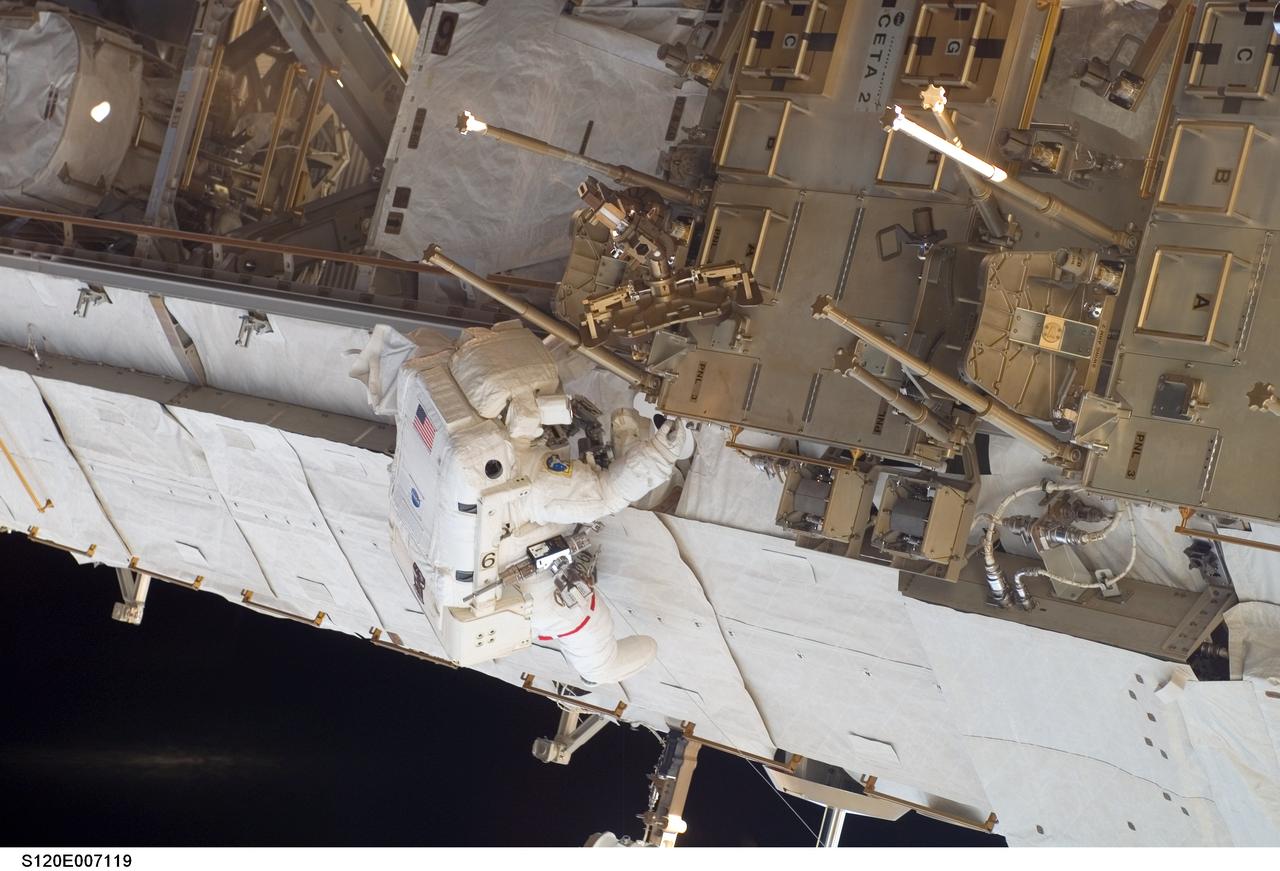
S120-E-007119 (28 Oct. 2007) --- Astronaut Daniel Tani, Expedition 16 flight engineer, participates in the second of five scheduled sessions of extravehicular activity (EVA) as construction continues on the International Space Station. During the 6-hour, 33-minute spacewalk Tani and astronaut Scott Parazynski (out of frame), STS-120 mission specialist, worked in tandem to disconnect cables from the P6 truss, allowing it to be removed from the Z1 truss. Tani also visually inspected the station's starboard Solar Alpha Rotary Joint (SARJ) and gathered samples of "shavings" he found under the joint's multi-layer insulation covers. Also the spacewalkers outfitted the Harmony module, mated the power and data grapple fixture and reconfigured connectors on the starboard 1 (S1) truss that will allow the radiator on S1 to be deployed from the ground later.
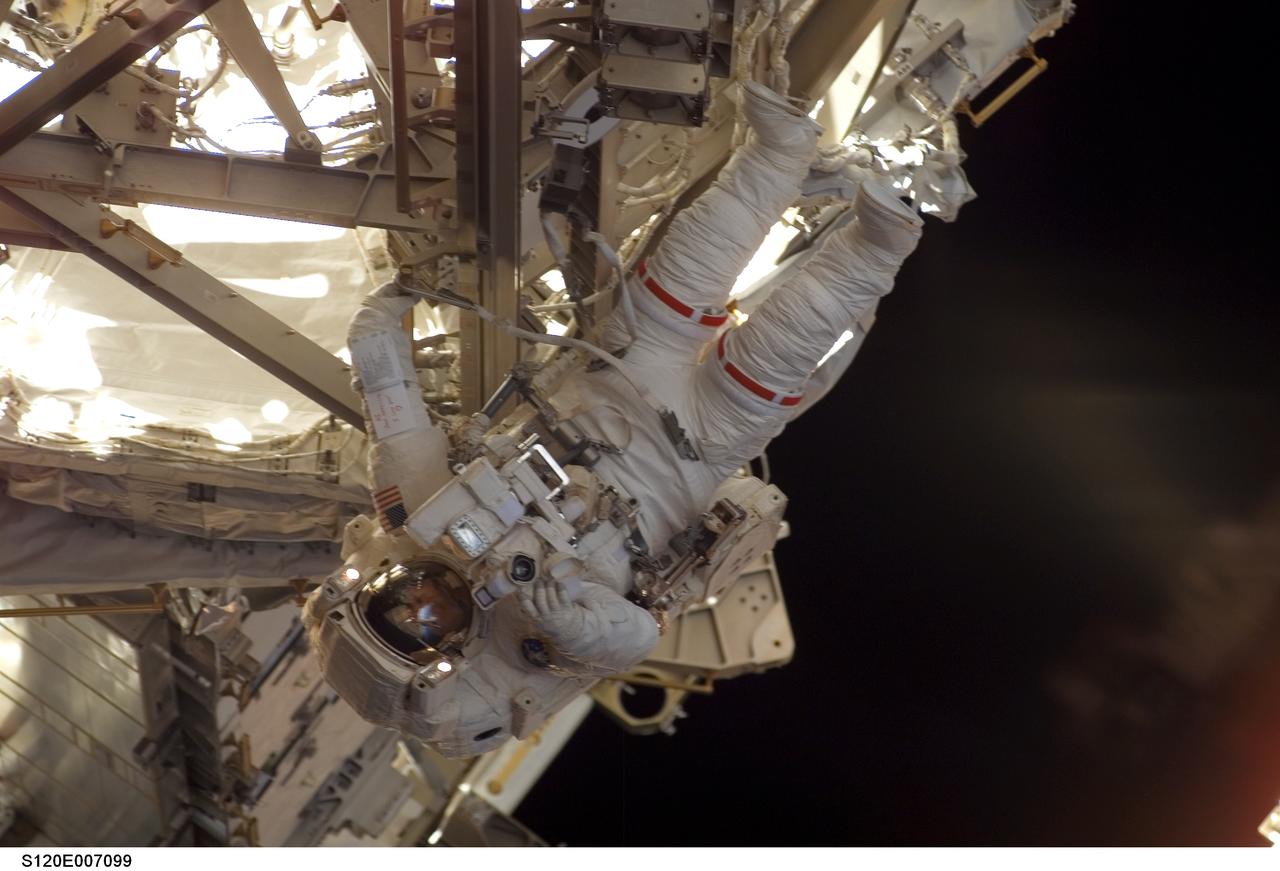
S120-E-007099 (28 Oct. 2007) --- Astronaut Daniel Tani, Expedition 16 flight engineer, participates in the second of five scheduled sessions of extravehicular activity (EVA) as construction continues on the International Space Station. During the 6-hour, 33-minute spacewalk Tani and astronaut Scott Parazynski (out of frame), STS-120 mission specialist, worked in tandem to disconnect cables from the P6 truss, allowing it to be removed from the Z1 truss. Tani also visually inspected the station's starboard Solar Alpha Rotary Joint (SARJ) and gathered samples of "shavings" he found under the joint's multi-layer insulation covers. Also the spacewalkers outfitted the Harmony module, mated the power and data grapple fixture and reconfigured connectors on the starboard 1 (S1) truss that will allow the radiator on S1 to be deployed from the ground later.
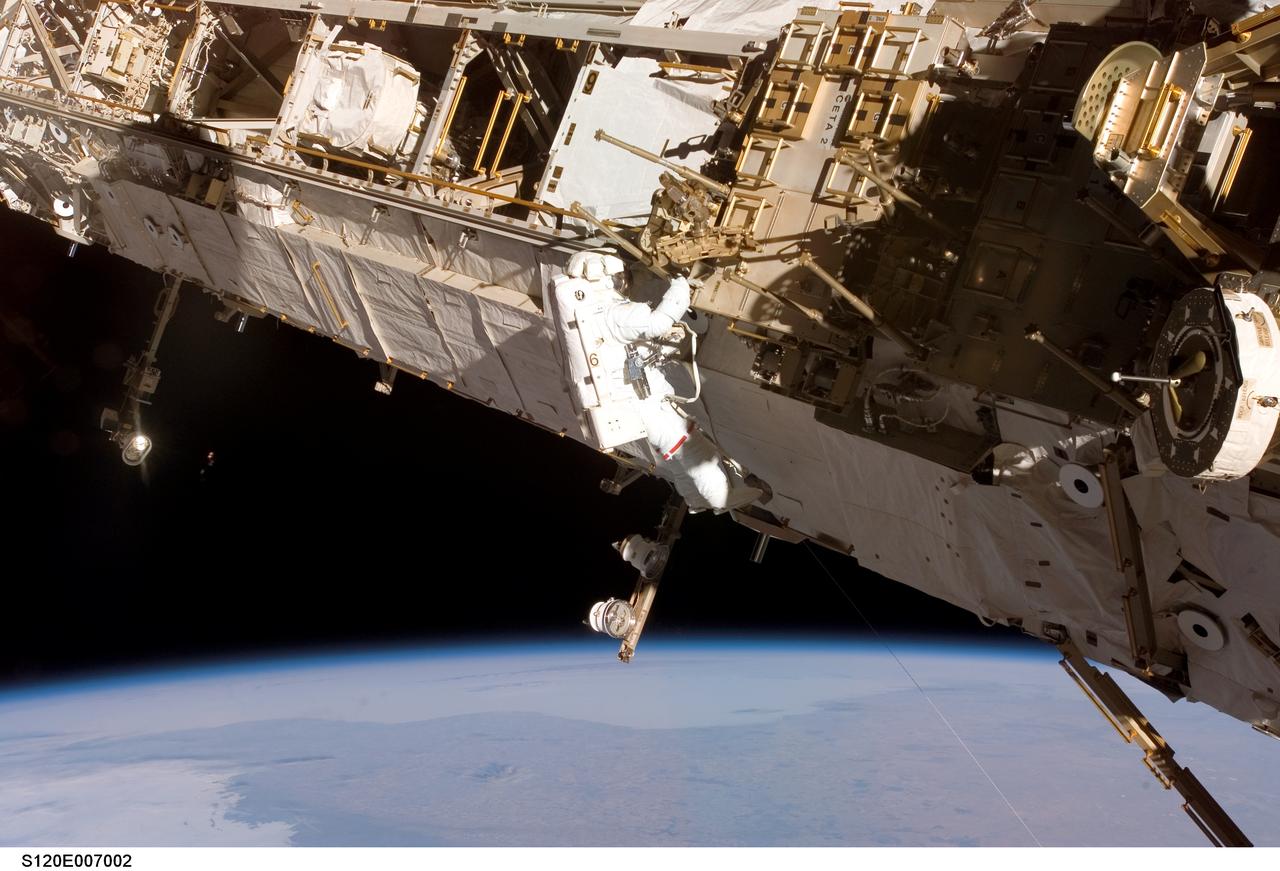
S120-E-007002 (28 Oct. 2007) --- Astronaut Daniel Tani, Expedition 16 flight engineer, participates in the second of five scheduled sessions of extravehicular activity (EVA) as construction continues on the International Space Station. During the 6-hour, 33-minute spacewalk Tani and astronaut Scott Parazynski (out of frame), STS-120 mission specialist, worked in tandem to disconnect cables from the P6 truss, allowing it to be removed from the Z1 truss. Tani also visually inspected the station's starboard Solar Alpha Rotary Joint (SARJ) and gathered samples of "shavings" he found under the joint's multi-layer insulation covers. Also the spacewalkers outfitted the Harmony module, mated the power and data grapple fixture and reconfigured connectors on the starboard 1 (S1) truss that will allow the radiator on S1 to be deployed from the ground later.
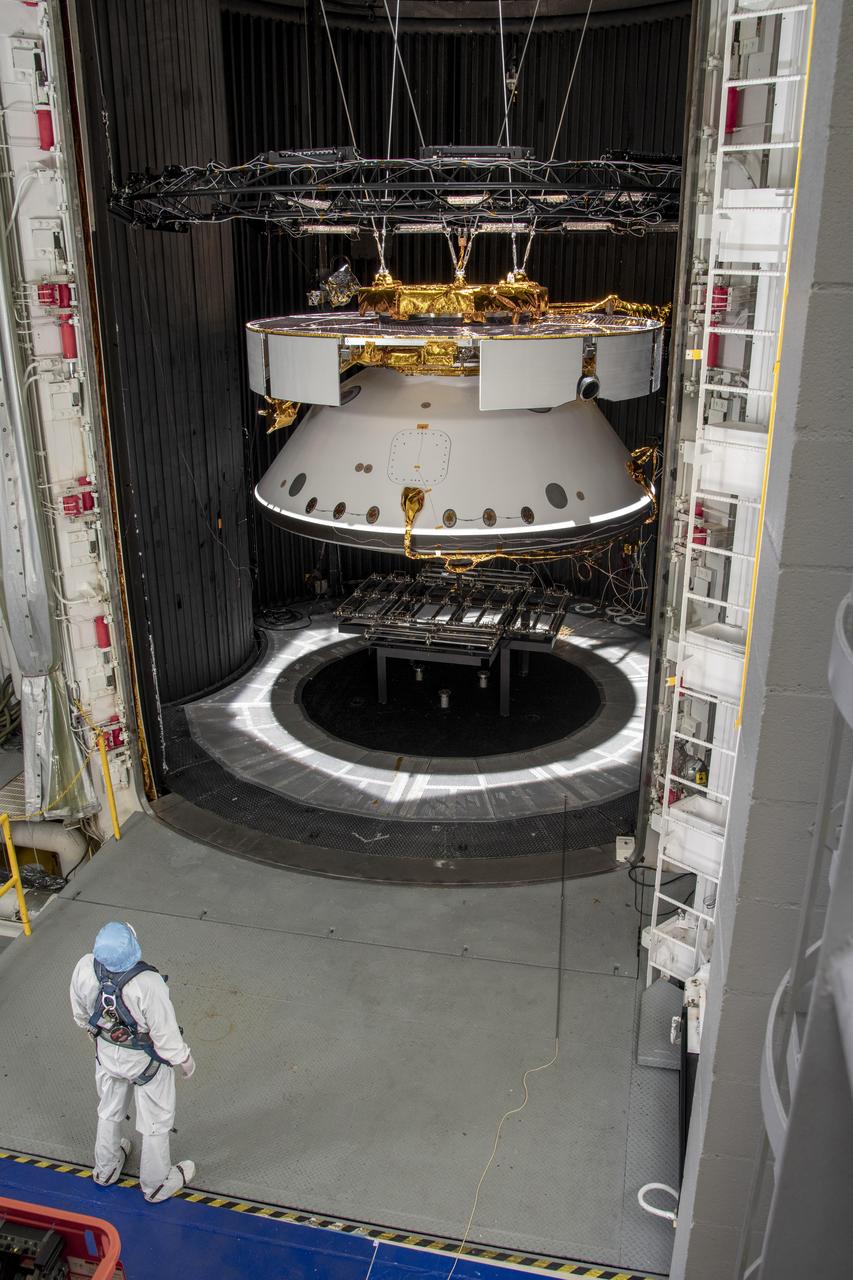
An engineer inspects the completed spacecraft that will carry NASA's next Mars rover to the Red Planet, prior to a test in the Space Simulator Facility at NASA's Jet Propulsion Laboratory in Pasadena, California. From the top down, and suspended by cables, is the complete cruise stage, which will power and guide the Mars 2020 spacecraft on its seven-month voyage to the Red Planet. Directly below that is the aeroshell (white back shell and barely visible black heat shield), which will protect the vehicle during cruise as well as during its fiery descent into the Martian atmosphere. Not visible (because it's cocooned inside the aeroshell) is the completed rocket-powered descent stage and the surrogate rover (a stand-in for the real rover, which is undergoing final assembly in JPL's High Bay 1 cleanroom). The Mars 2020 spacecraft was tested in the 25-foot-wide, 85-foot-tall (8-meter-by-26-meter) chamber in the same configuration it will be in while flying through interplanetary space. The 2020 rover carries an entirely new suite of instruments, including a sample-caching system that will collect samples of Mars for return to Earth on subsequent missions. The mission will launch from Cape Canaveral Air Force Station in Florida in July of 2020 and land at Jezero Crater on Feb. 18, 2021. The image was taken on May 9, 2019. https://photojournal.jpl.nasa.gov/catalog/PIA23228
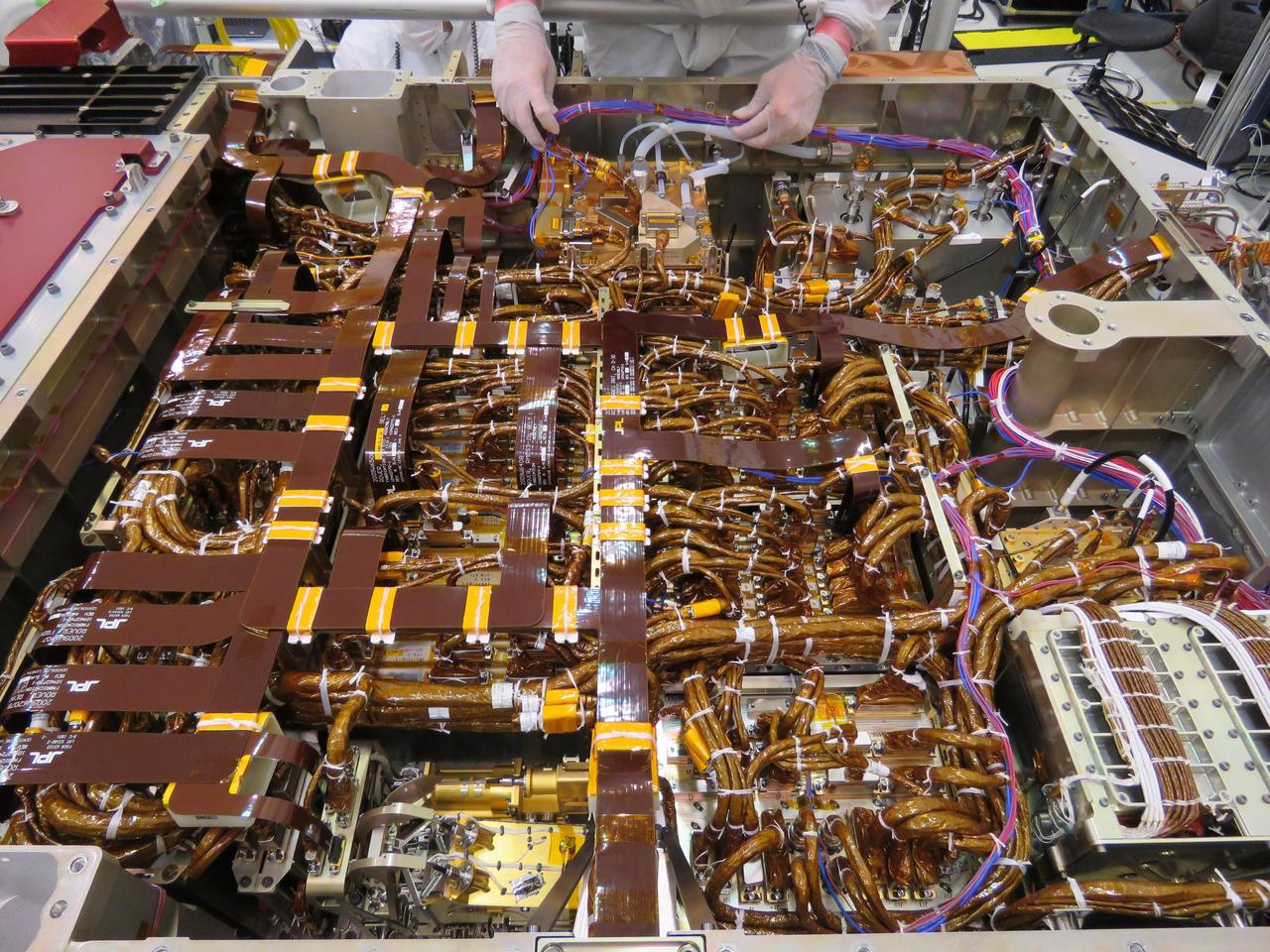
In the image, taken on June 1, 2019, an engineer in the Spacecraft Assembly Facility's High Bay 1 at NASA's Jet Propulsion Laboratory in Pasadena, California, can be seen working on the exposed belly of the Mars 2020 rover. It has been inverted to allow the 2020 engineers and technicians easier access. The front of the rover is on camera left. The engineer is inspecting wiring directly above the Mars Oxygen In-Situ Resource Utilization Experiment (MOXIE) instrument. MOXIE will demonstrate a way that future explorers might produce oxygen from the Martian atmosphere for propellant and for breathing. In the foreground, just to the left of center and distinctive because of the relative lack of wiring, is the body unit for the SuperCam instrument. The mast unit for SuperCam instrument, which will provide imaging, chemical composition analysis, and mineralogy from its high perch at the top of the rover's remote sensing mast was installed June 25. To the far left, covered by a red-colored shield, is the bay where the Adaptive Caching Assembly (ACA) will document, analyze and process for storage samples of Mars rock and soil for future return to Earth. https://photojournal.jpl.nasa.gov/catalog/PIA23312
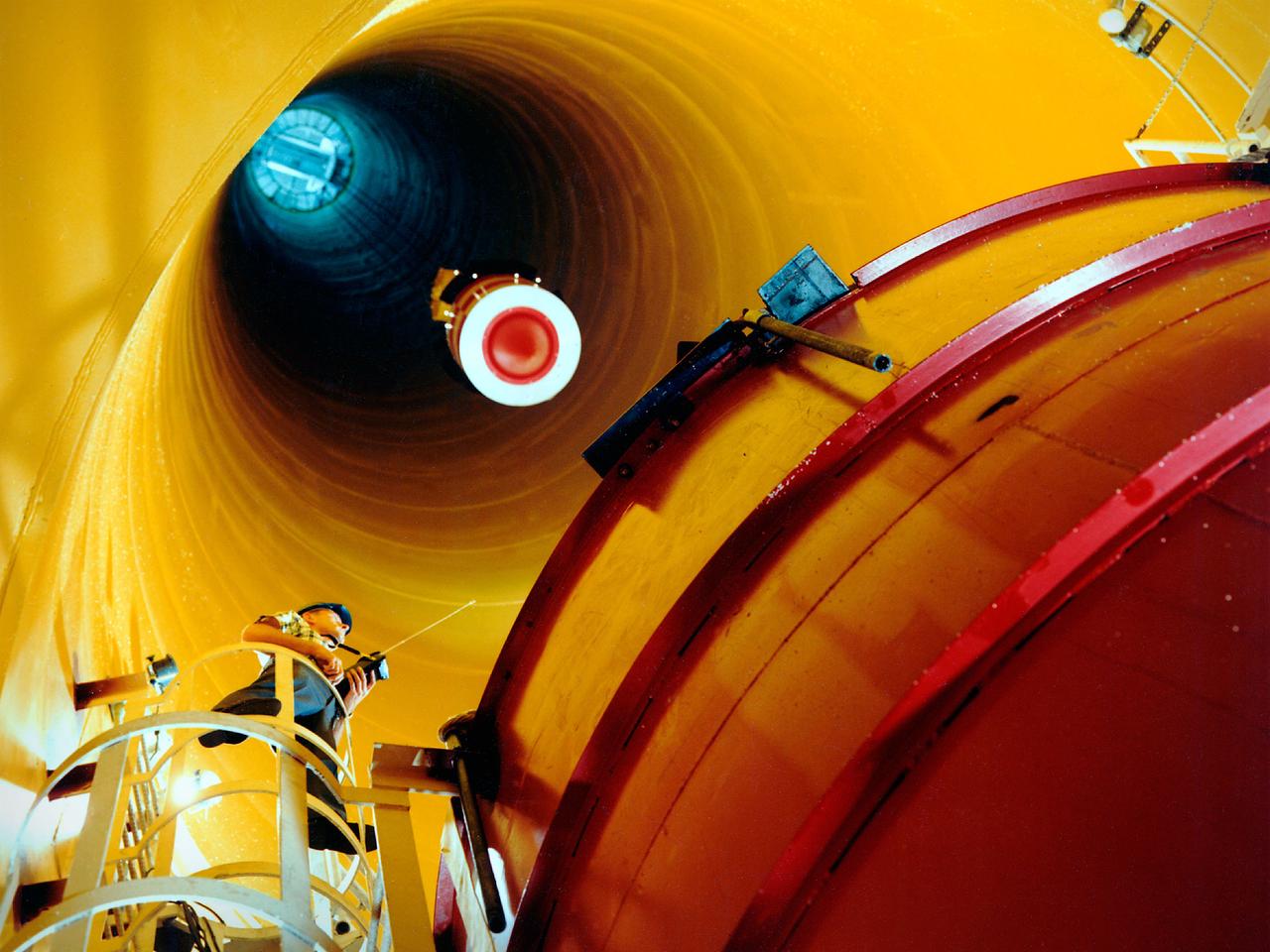
National Aeronautics and Space Administration (NASA) Lewis Research Center. Lewis researchers had been studying the behavior of liquid in microgravity for several years using ballistic rocket flights, aircraft flying series of parabolas, and in the 2.2-Second Drop Tower. It was easier to control experiments and repeat tests based on almost instantaneous test results in the Zero Gravity Research Facility than missiles or aircraft. It also more than doubled the microgravity time of the original drop tower. The experiments were enclosed in a large experiment package that was suspended inside the chamber. A vacuum was introduced to the chamber before the package was released. The test equipment allowed researchers to film and take measurements of the experiment as it was falling. The 2500‐pound package was slowed by special Styrofoam‐like pellets in a decelerator cart. An experiment, traveling 176 feet per second, was stopped in about 15 feet of deceleration material. The facility’s designers struggled to determine the correct type of deceleration pellets to use. For several years Lewis engineers tested various samples from manufacturers. The final selection was not made until the facility’s completion in May 1966, just before the facility made its public debut at the 1966 Inspection of the Center.
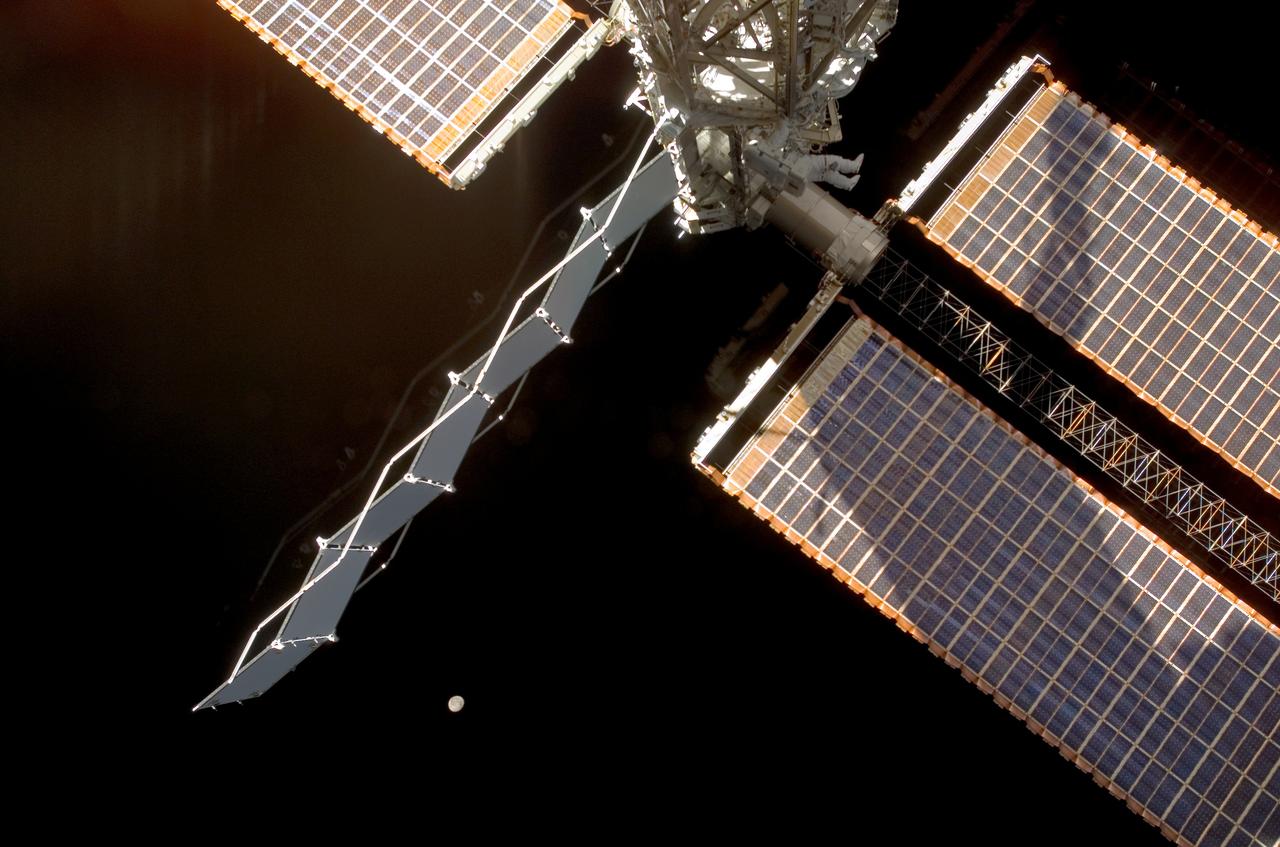
Astronaut Daniel Tani (top center), Expedition 16 flight engineer, participates in the second of five scheduled sessions of extravehicular activity (EVA) as construction continues on the International Space Station (ISS). During the 6-hour and 33-minute space walk, Tani and STS-120 mission specialist Scott Parazynski (out of frame), worked in tandem to disconnect cables from the P6 truss, allowing it to be removed from the Z1 truss. Tani also visually inspected the station's starboard Solar Alpha Rotary Joint (SARJ) and gathered samples of "shavings" he found under the joint's multilayer insulation covers. The space walkers also outfitted the Harmony module, mated the power and data grapple fixture and reconfigured connectors on the starboard 1 (S1) truss that will allow the radiator on S1 to be deployed from the ground later. The moon is visible at lower center. The STS-120 mission launched from Kennedy Space Center's launch pad 39A at 11:38:19 a.m. (EDT) on October 23, 2007.
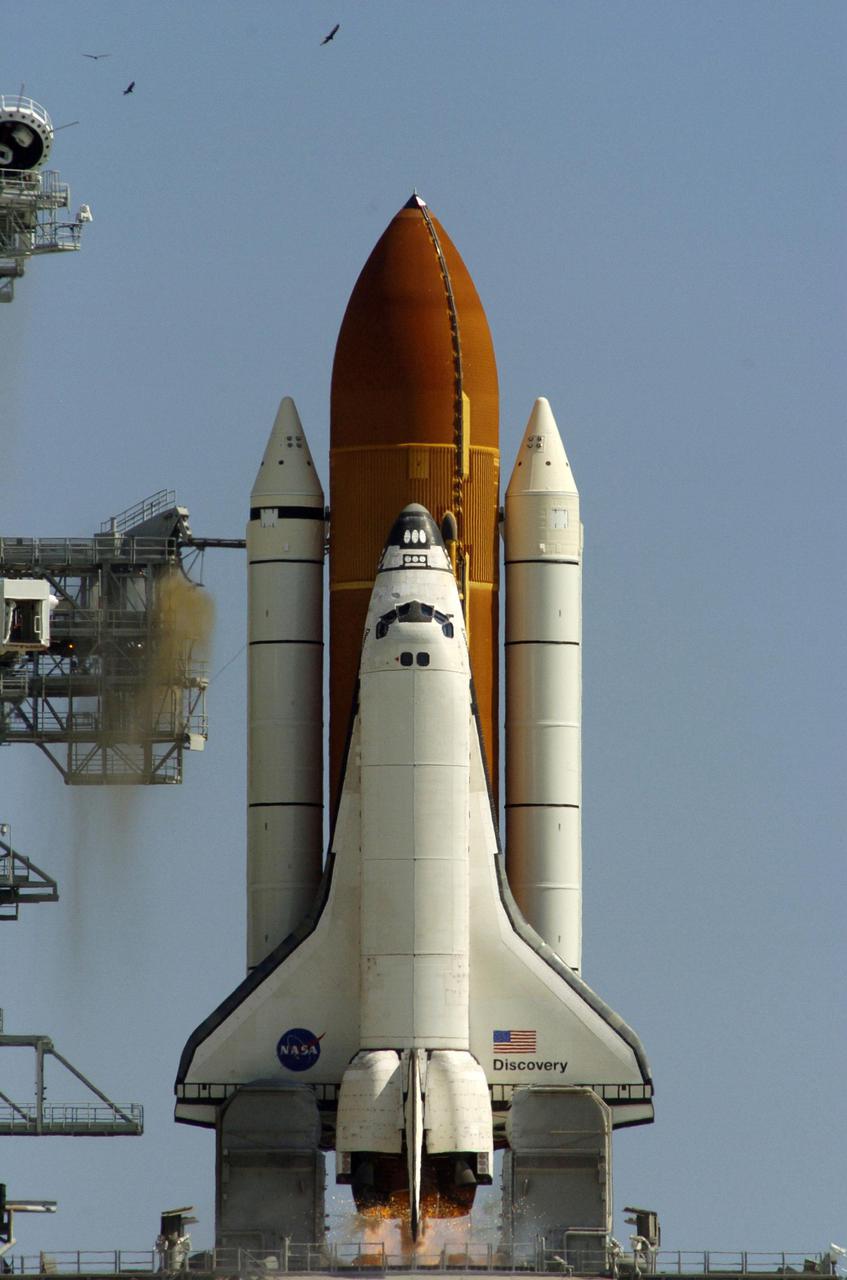
KENNEDY SPACE CENTER, FLA. - On Launch Pad 39B at NASA Kennedy Space Center, Space Shuttle Discovery fires its engines for liftoff on Return to Flight mission STS-114 to the International Space Station. Liftoff was at 10:39 EDT. It is the 114th flight in the Space Shuttle Program and the 31st for Discovery. The 12-day mission is expected to end with touchdown at the Shuttle Landing Facility on Aug. 7. On this mission to the International Space Station the crew will perform inspections on-orbit for the first time of all of the Reinforced Carbon-Carbon (RCC) panels on the leading edge of the wings and the Thermal Protection System tiles using the new Canadian-built Orbiter Boom Sensor System and the data from 176 impact and temperature sensors. Mission Specialists will also practice repair techniques on RCC and tile samples during a spacewalk in the payload bay. During two additional spacewalks, the crew will install the External Stowage Platform-2, equipped with spare part assemblies, and a replacement Control Moment Gyroscope contained in the Lightweight Multi-Purpose Experiment Support Structure. (Photo Credit: Scott Andrews)
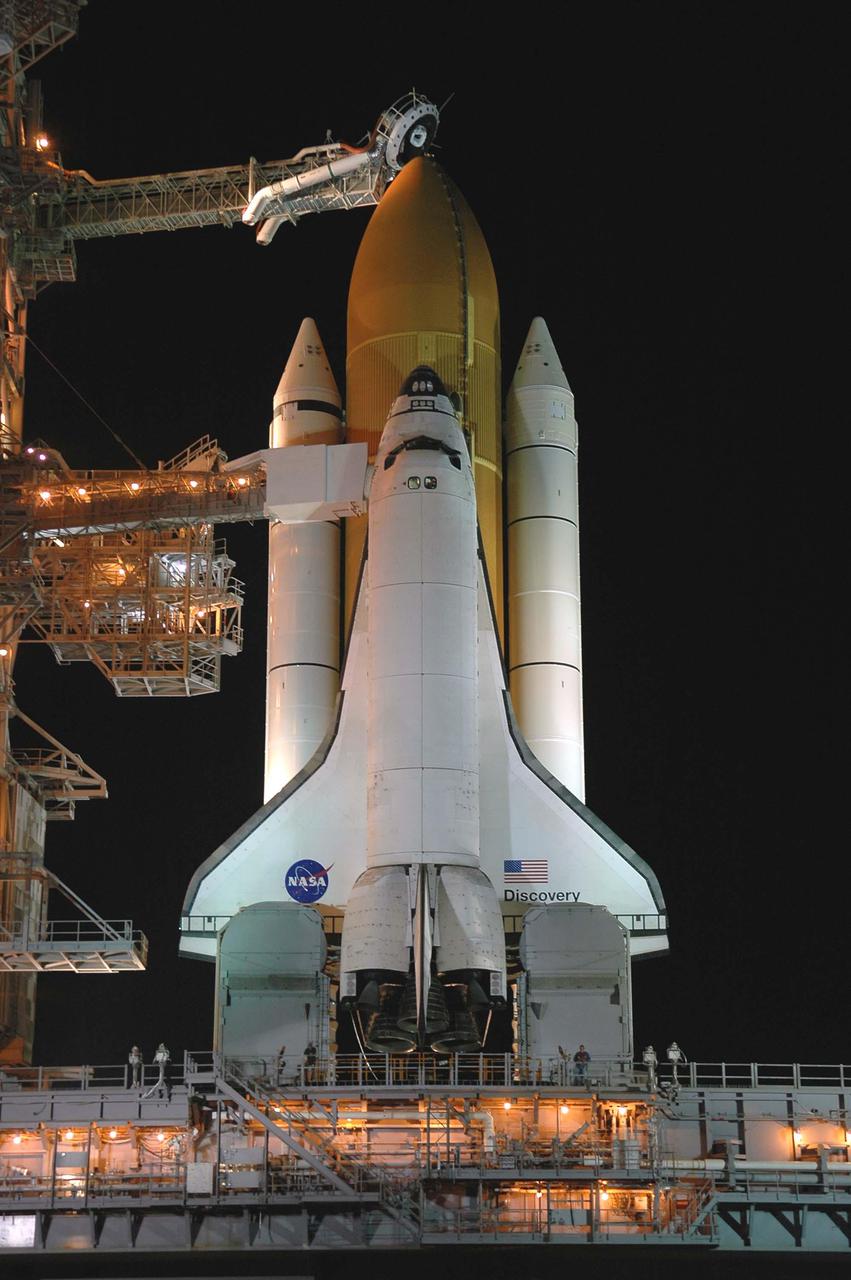
KENNEDY SPACE CENTER, FLA. - Lights on Launch Pad 39B put Space Shuttle Discovery in the spotlight after the rollback of the Rotating Service Structure. The Space Shuttle sits on the Mobile Launcher Platform (MLP), which is 25 ft. high, 160 ft. long and 135 ft. wide. An MLP weighs 8,230,000 pounds. At the launch pad, with a fueled Shuttle on the 6-inch-thick decks, it weighs approximately12,700,000 pounds. There are three exhaust openings in the main deck of an MLP. Two are for the exhaust of the SRBs at launch and the third, a center opening, is for the exhaust from the main engines. SRB exhaust holes are 42 ft. long and 20 ft. wide. The main engine hole is 34 ft. long and 31 ft. wide. Discovery is scheduled to launch on the historic Return to Flight mission STS-114 at 3:51 p.m. July 13 with a crew of seven. On the mission to the International Space Station the crew will perform inspections on orbit for the first time of all of the Reinforced Carbon-Carbon (RCC) panels on the leading edge of the wings and the Thermal Protection System tiles using the new Canadian-built Orbiter Boom Sensor System and the data from 176 impact and temperature sensors. Mission Specialists will also practice repair techniques on RCC and tile samples during a spacewalk in the payload bay. During two additional spacewalks, the crew will install the External Stowage Platform-2, equipped with spare part assemblies, and a replacement Control Moment Gyroscope contained in the Lightweight Multi-Purpose Experiment Support Structure.
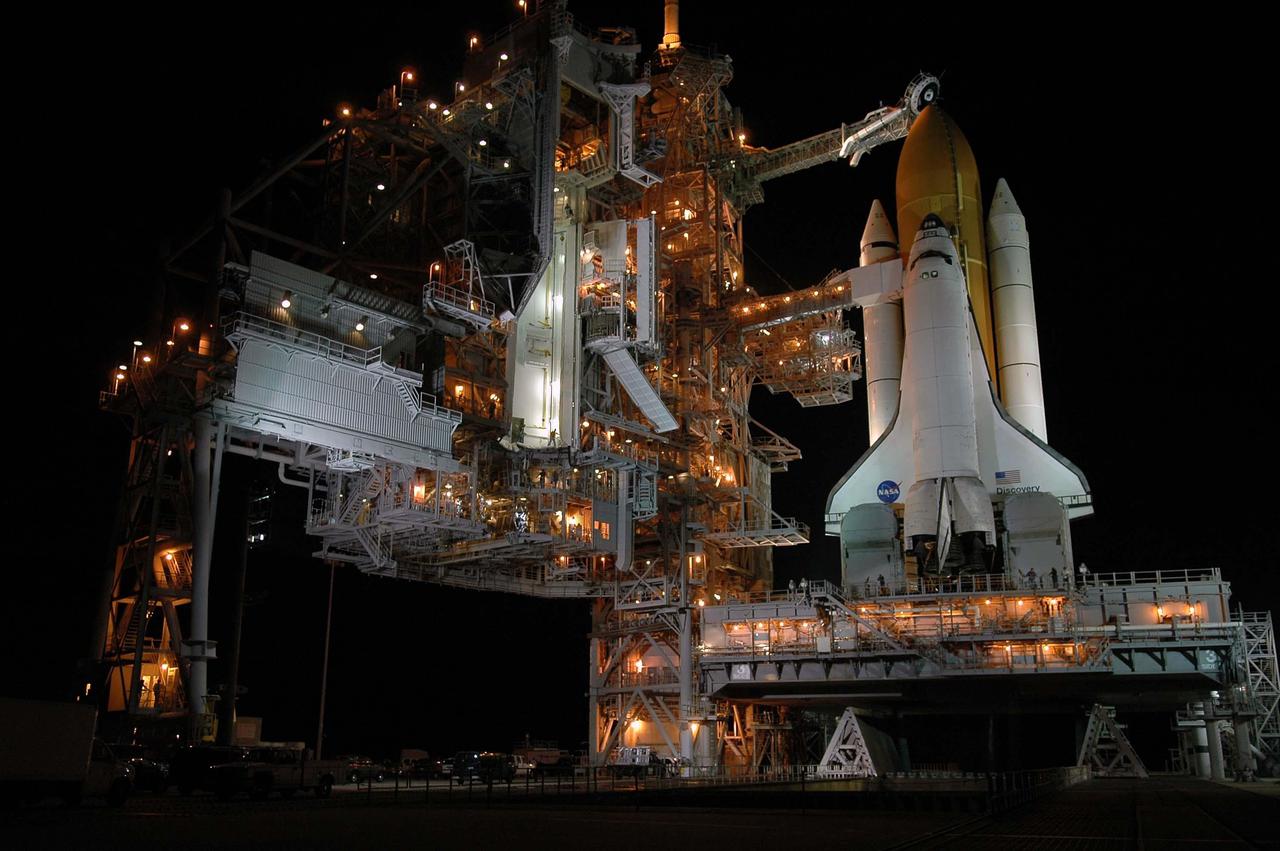
KENNEDY SPACE CENTER, FLA. - Lights on Launch Pad 39B put Space Shuttle Discovery in the spotlight after the rollback of the Rotating Service Structure (at left). The Space Shuttle sits on the Mobile Launcher Platform (MLP), which is 25 ft. high, 160 ft. long and 135 ft. wide. An MLP weighs 8,230,000 pounds. At the launch pad, with a fueled Shuttle on the 6-inch-thick decks, it weighs approximately12,700,000 pounds. There are three exhaust openings in the main deck of an MLP. Two are for the exhaust of the SRBs at launch and the third, a center opening, is for the exhaust from the main engines. SRB exhaust holes are 42 ft. long and 20 ft. wide. The main engine hole is 34 ft. long and 31 ft. wide. Discovery is scheduled to launch on the historic Return to Flight mission STS-114 at 3:51 p.m. July 13 with a crew of seven. On the mission to the International Space Station the crew will perform inspections on orbit for the first time of all of the Reinforced Carbon-Carbon (RCC) panels on the leading edge of the wings and the Thermal Protection System tiles using the new Canadian-built Orbiter Boom Sensor System and the data from 176 impact and temperature sensors. Mission Specialists will also practice repair techniques on RCC and tile samples during a spacewalk in the payload bay. During two additional spacewalks, the crew will install the External Stowage Platform-2, equipped with spare part assemblies, and a replacement Control Moment Gyroscope contained in the Lightweight Multi-Purpose Experiment Support Structure.