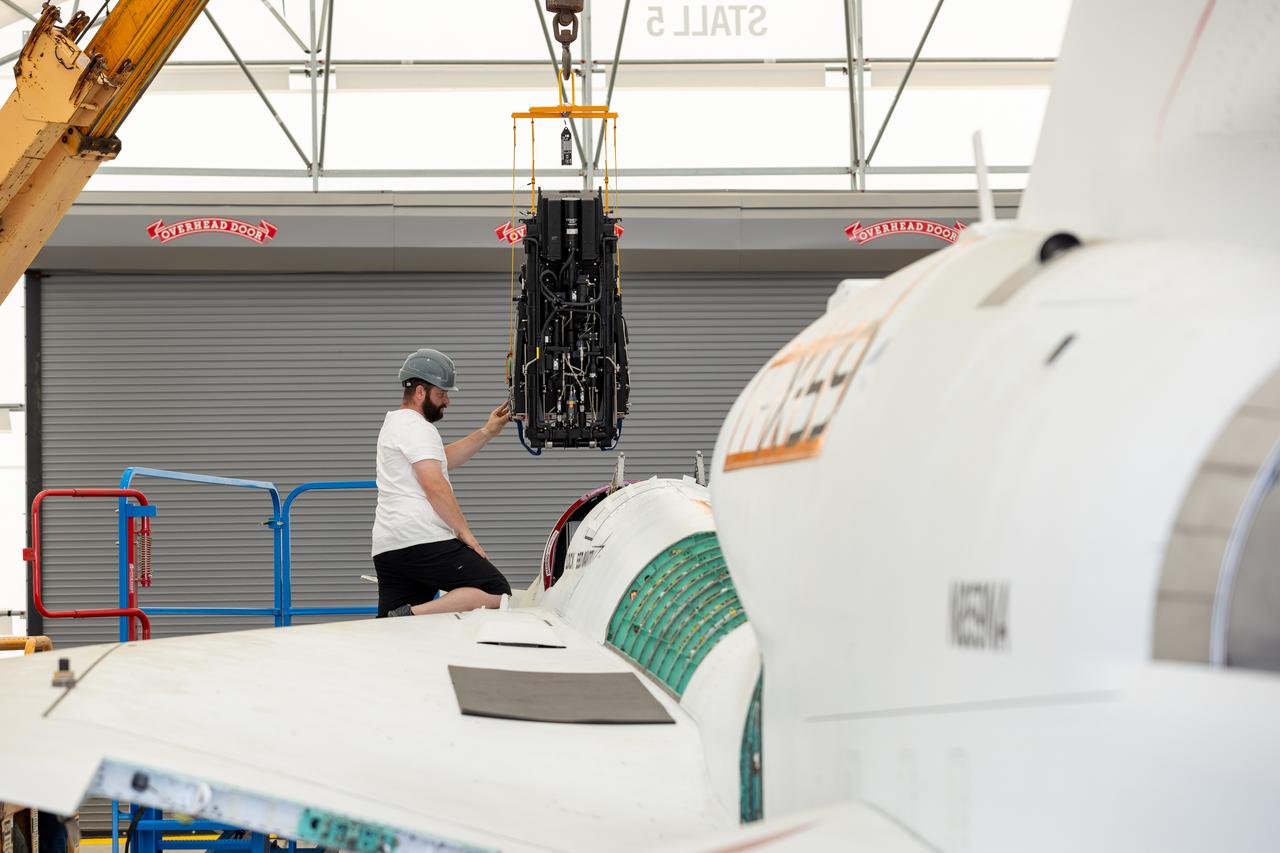
NASA Life Support Technician Mathew Sechler provides support as the X-59’s ejection seat is installed into the aircraft at Lockheed Martin Skunk Works’ facilities in Palmdale, California. Completion of the seat’s installation marks an integration milestone for the aircraft as it prepares for final ground tests.
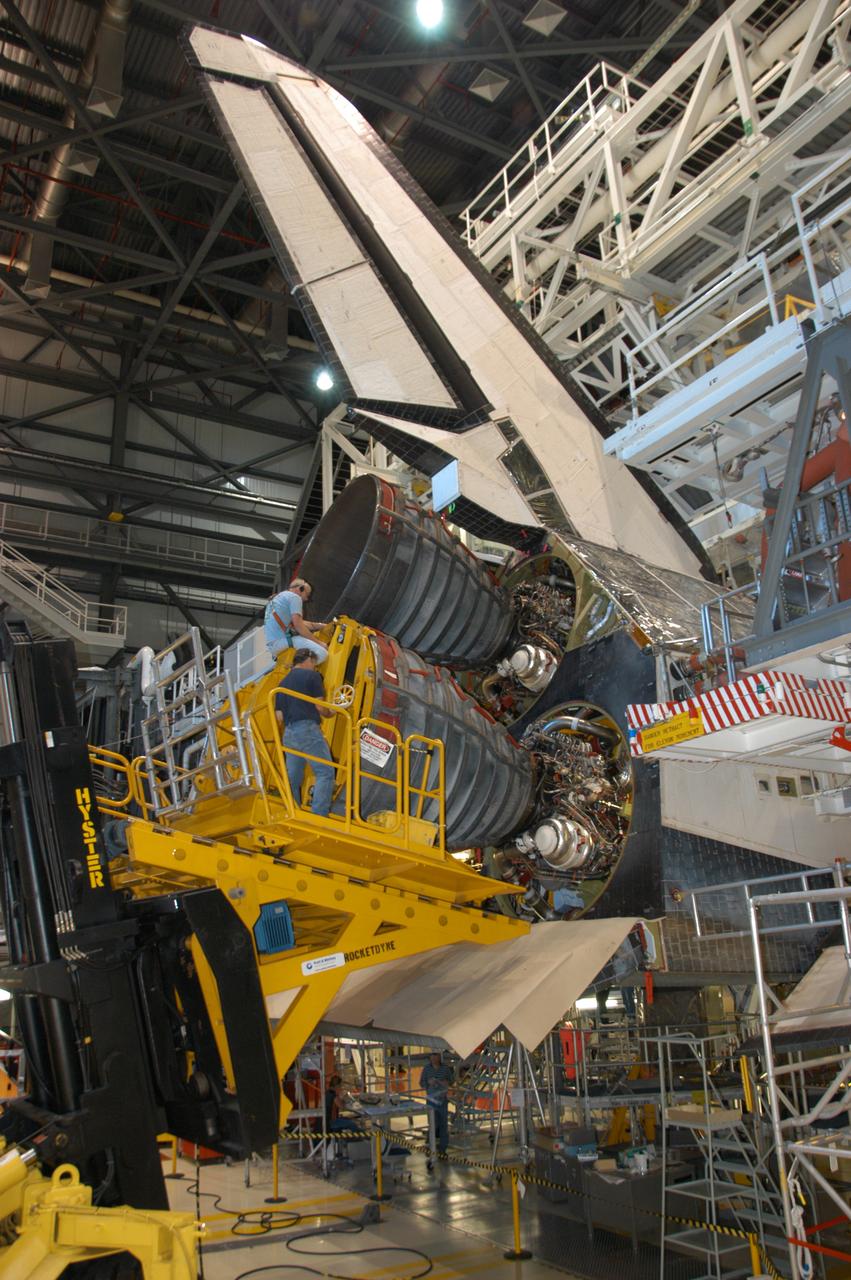
In Orbiter Processing Facility bay 2, technicians on a Hyster forklift install space shuttle main engine no. 3 into Endeavour. Each space shuttle main engine is 14 feet long, weighs about 6,700 pounds, and is 7.5 feet in diameter at the end of the nozzle. The orbiter is scheduled for mission STS-118, targeted for launch on June 28. The mission will be the 22nd flight to the International Space Station, carrying another starboard array, S5, for installation.
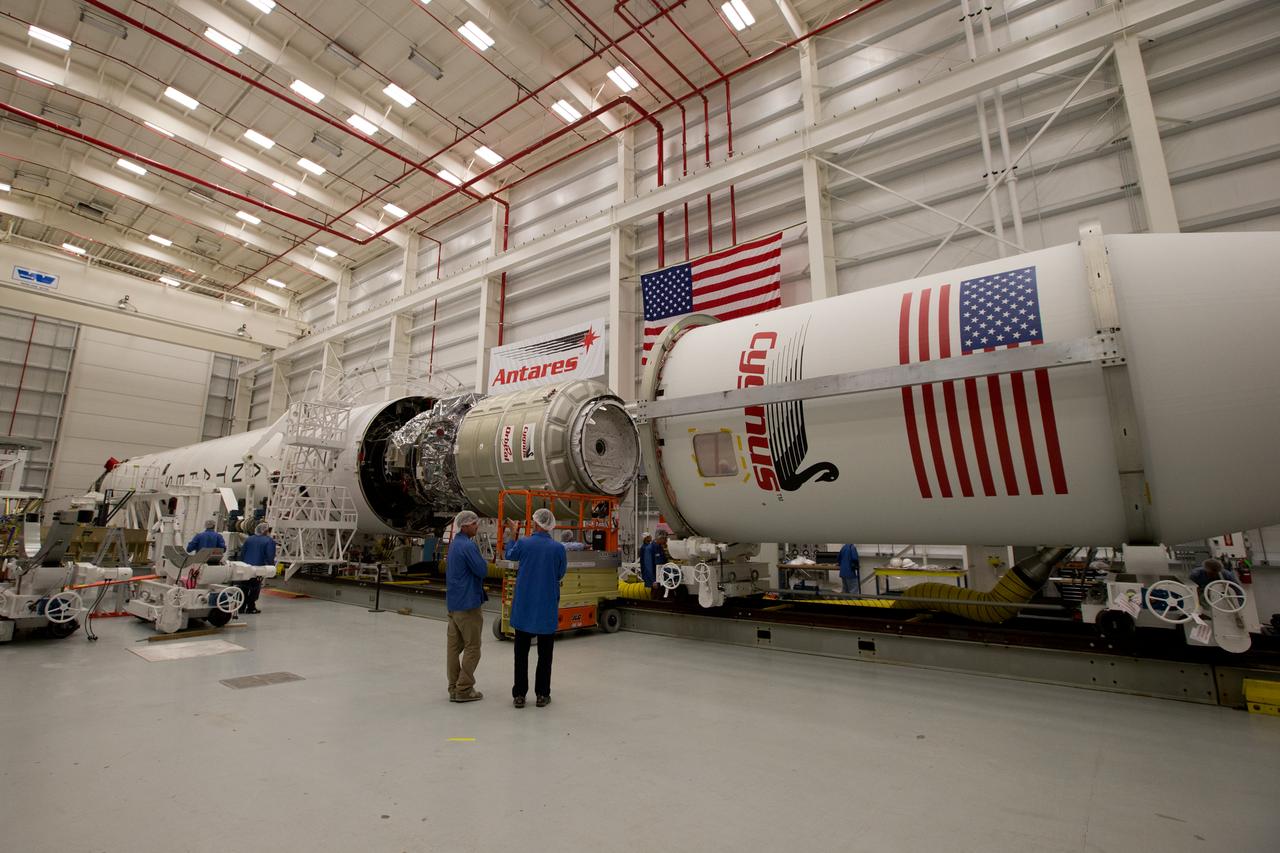
The payload fairing is installed on the Orbital Sciences Antares rocket at the Horizontal Integration Facility at NASA's Wallops Flight Facility on Virginia's Eastern Shore, Tuesday, July 8, 2014. The Antares rocket is scheduled to roll-out to Virginia's Mid-Atlantic Regional Spaceport Pad 0A Wednesday, July 9, ahead of its scheduled launch July 11. The Antares rocket will carry Orbital's unmanned Cygnus spacecraft to the International Space Station. This Orbital-2 mission's cargo is more than 3,000 pounds of supplies for the station, including science experiments to expand the research capability of the Expedition 40 crew members aboard the orbiting laboratory, crew provisions, spare parts and experiment hardware. Credit: NASA's Wallops Flight Facility <b><a href="http://www.nasa.gov/audience/formedia/features/MP_Photo_Guidelines.html" rel="nofollow">NASA image use policy.</a></b> <b><a href="http://www.nasa.gov/centers/goddard/home/index.html" rel="nofollow">NASA Goddard Space Flight Center</a></b> enables NASA’s mission through four scientific endeavors: Earth Science, Heliophysics, Solar System Exploration, and Astrophysics. Goddard plays a leading role in NASA’s accomplishments by contributing compelling scientific knowledge to advance the Agency’s mission. <b>Follow us on <a href="http://twitter.com/NASAGoddardPix" rel="nofollow">Twitter</a></b> <b>Like us on <a href="http://www.facebook.com/pages/Greenbelt-MD/NASA-Goddard/395013845897?ref=tsd" rel="nofollow">Facebook</a></b> <b>Find us on <a href="http://instagram.com/nasagoddard?vm=grid" rel="nofollow">Instagram</a></b>
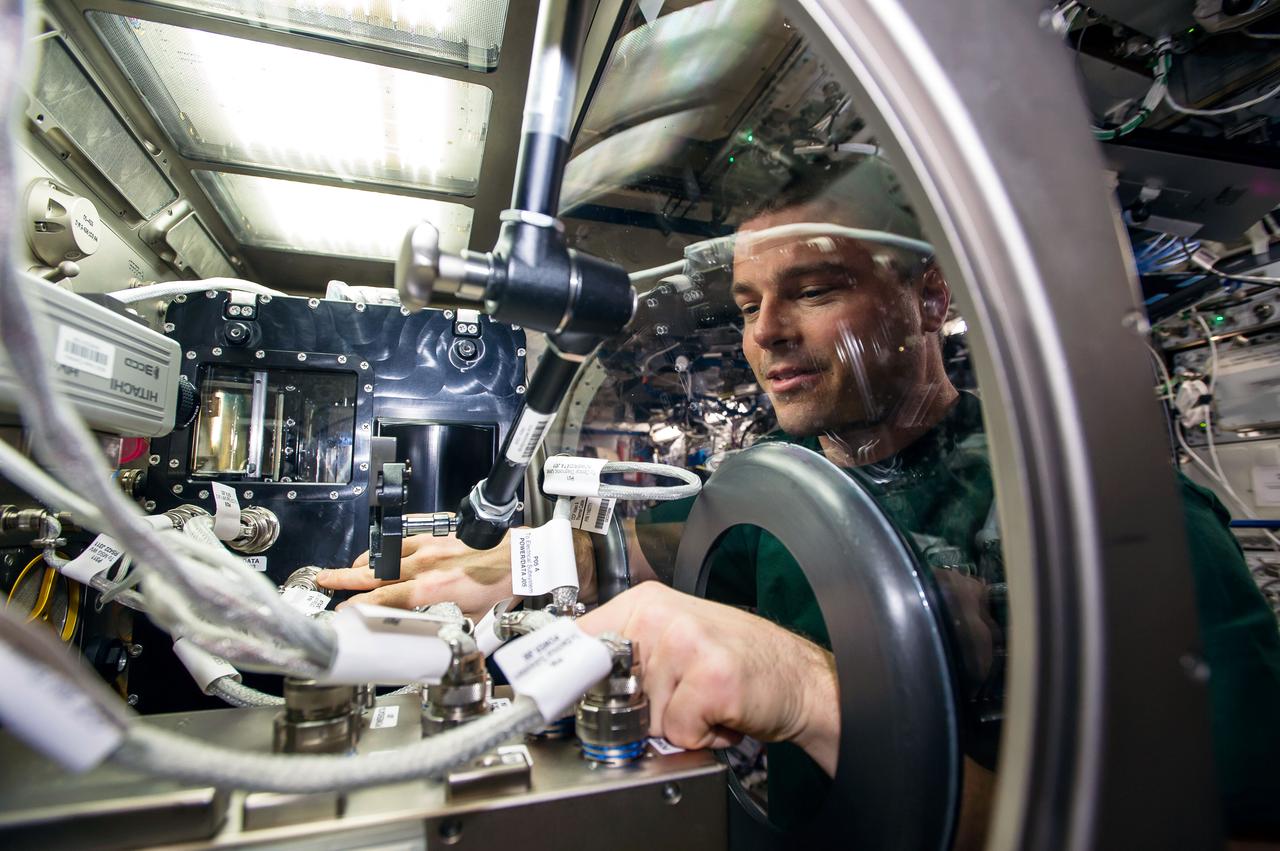
ISS040-E-088856 (5 Aug. 2014) --- NASA astronaut Reid Wiseman, Expedition 40 flight engineer, installs Capillary Channel Flow (CCF) experiment hardware in the Microgravity Science Glovebox (MSG) located in the Destiny laboratory of the International Space Station. CCF is a versatile experiment for studying a critical variety of inertial-capillary dominated flows key to spacecraft systems that cannot be studied on the ground.
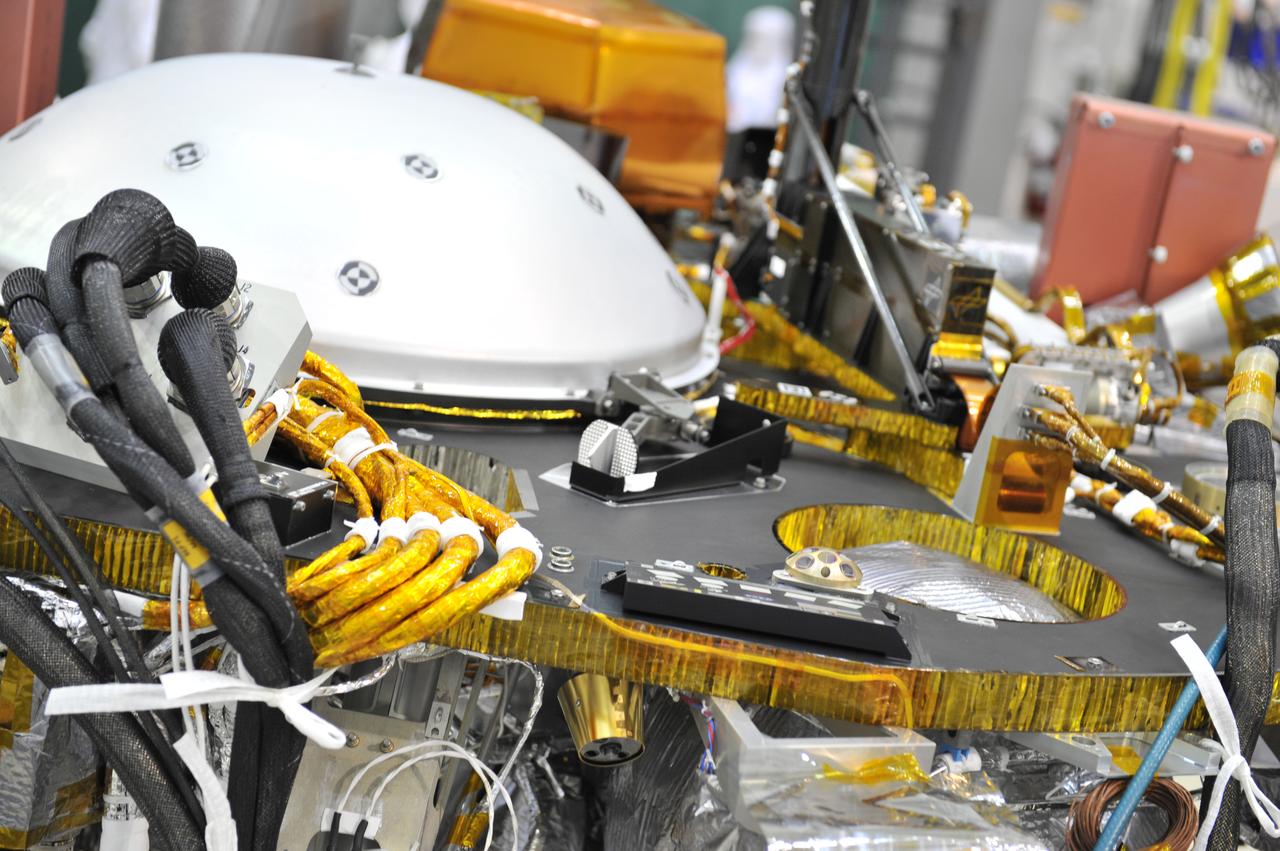
Technicians at Lockheed Martin Space in Littleton, Colorado installed a microchip with 1.6 million names submitted by the public to ride along with NASA's InSight mission to Mars. The chip was installed on Jan. 23, 2018. This joins another microchip that was previously installed that included 800,000 names for a grand total of 2.4 million names going to Mars as early as May 5, 2018. The microchip including names from the NASA InSight mission's "Send Your Name to Mars" campaign was affixed to the spacecraft with a special glue. https://photojournal.jpl.nasa.gov/catalog/PIA22206
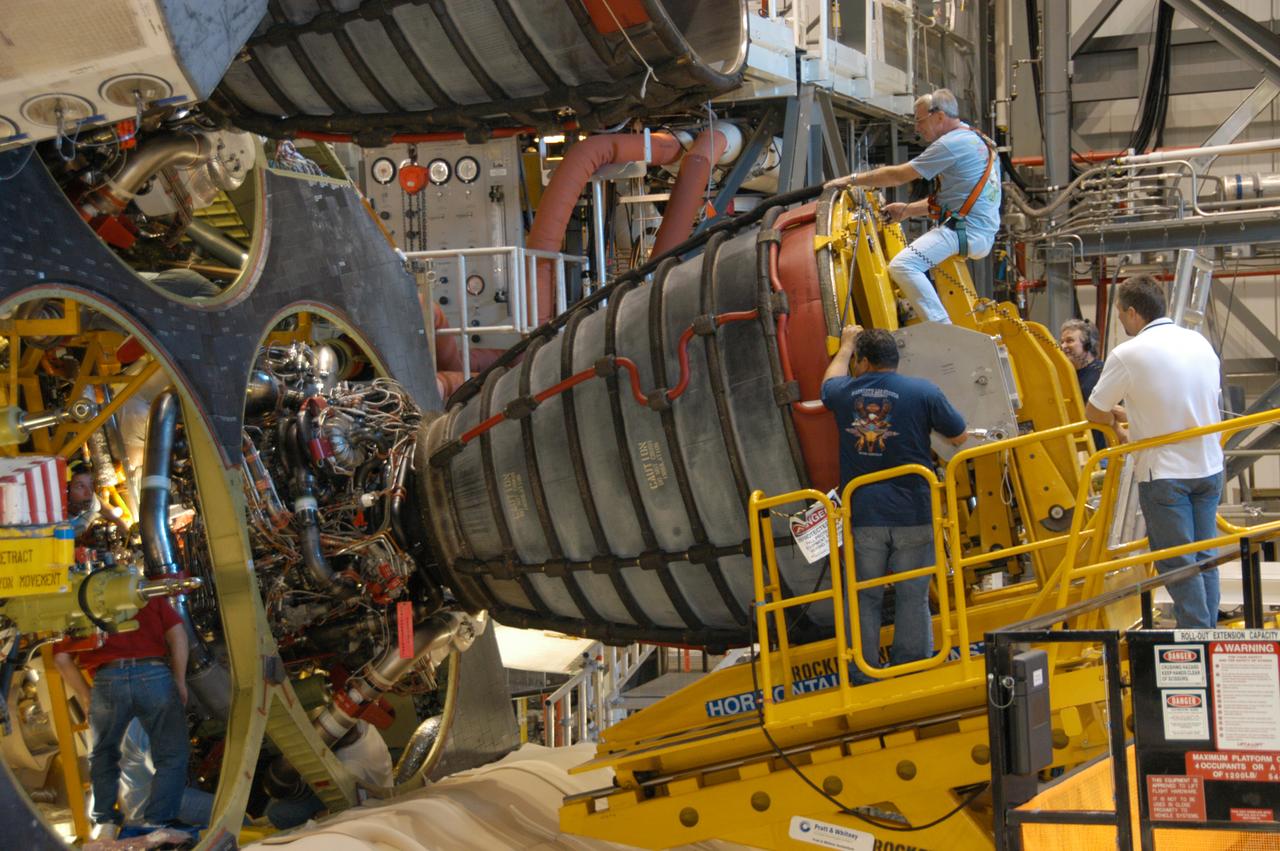
In Orbiter Processing Facility bay 2, technicians on a Hyster forklift maneuver space shuttle main engine no. 3 into place on Endeavour. Each space shuttle main engine is 14 feet long, weighs about 6,700 pounds, and is 7.5 feet in diameter at the end of the nozzle. The orbiter is scheduled for mission STS-118, targeted for launch on June 28. The mission will be the 22nd flight to the International Space Station, carrying another starboard array, S5, for installation.

In Orbiter Processing Facility bay 2, technicians on a Hyster forklift maneuver space shuttle main engine no. 3 into place on Endeavour. Each space shuttle main engine is 14 feet long, weighs about 6,700 pounds, and is 7.5 feet in diameter at the end of the nozzle. The orbiter is scheduled for mission STS-118, targeted for launch on June 28. The mission will be the 22nd flight to the International Space Station, carrying another starboard array, S5, for installation.
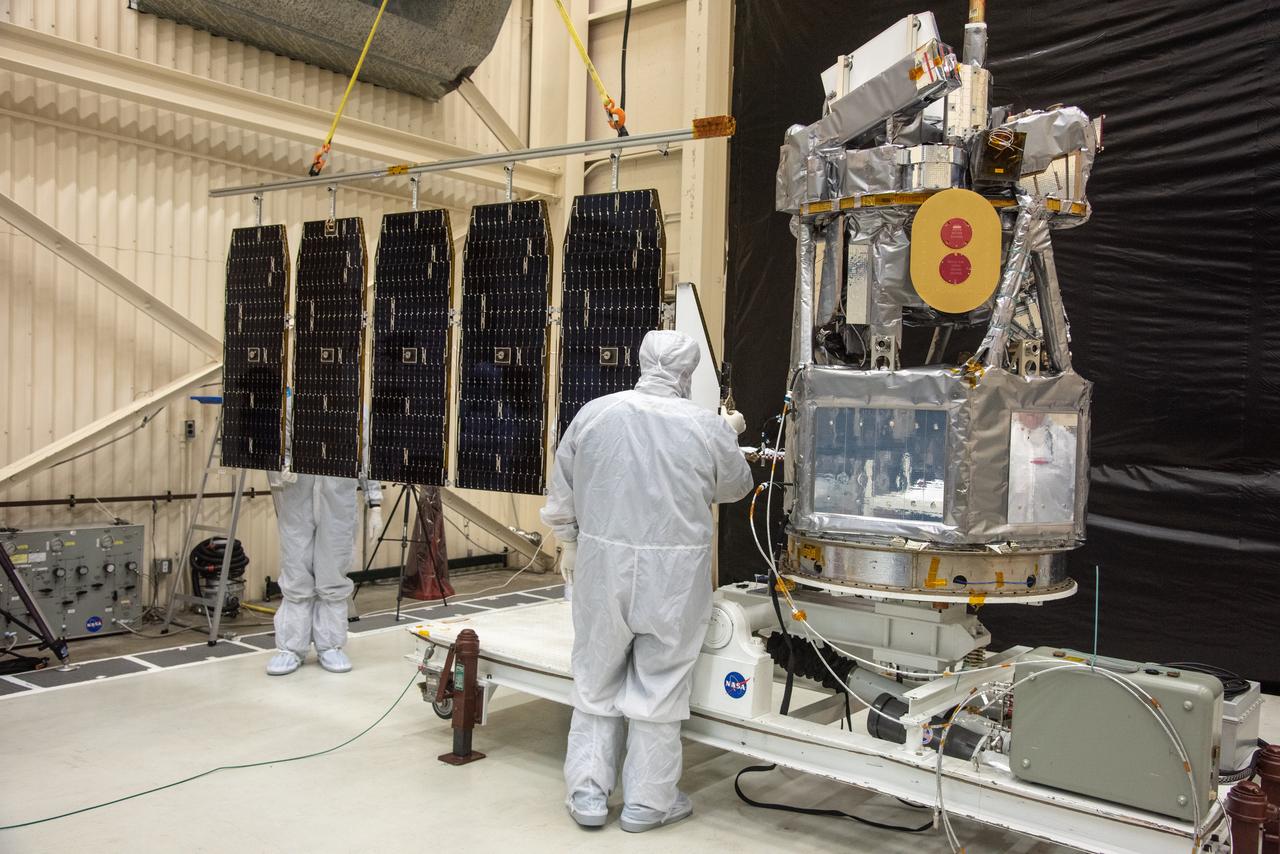
Technicians install the solar array for NASA's Ionospheric Connection Explorer (ICON) inside Building 1555 at Vandenberg Air Force Base in California on Aug. 28, 2019. ICON launched on a Northrop Grumman Pegasus XL rocket, attached beneath the company's L-1011 Stargazer aircraft, on Oct. 10, 2019, after takeoff from the Skid Strip at Cape Canaveral Air Force Station in Florida. ICON will study the frontier of space - the dynamic zone high in Earth's atmosphere where terrestrial weather from below meets space weather above. The explorer will help determine the physics of Earth's space environment and pave the way for mitigating its effects on our technology, communications systems and society.
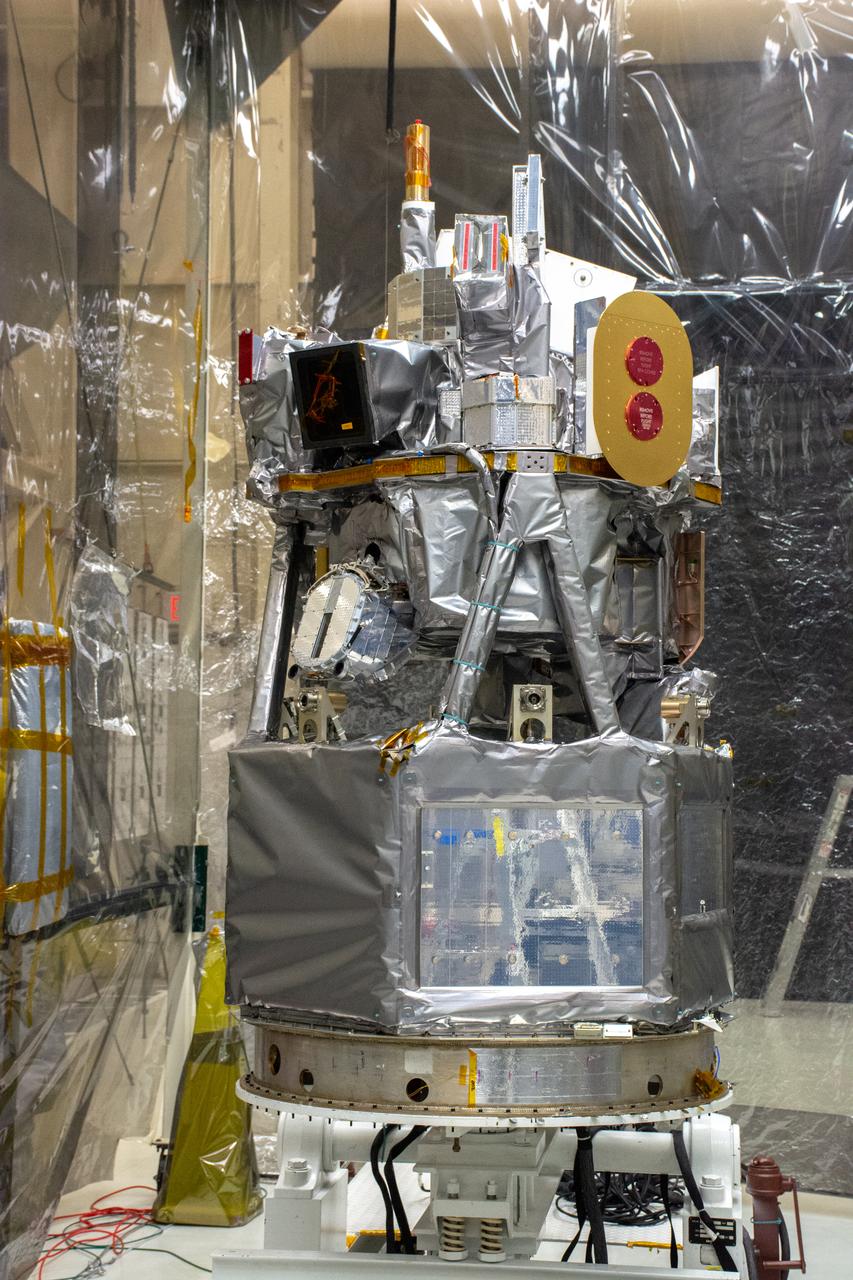
NASA's Ionospheric Connection Explorer (ICON) is ready for solar array installation inside Building 1555 at Vandenberg Air Force Base in California on Aug. 28, 2019. ICON launched on a Northrop Grumman Pegasus XL rocket, attached beneath the company's L-1011 Stargazer aircraft, on Oct. 10, 2019, after takeoff from the Skid Strip at Cape Canaveral Air Force Station in Florida. ICON will study the frontier of space - the dynamic zone high in Earth's atmosphere where terrestrial weather from below meets space weather above. The explorer will help determine the physics of Earth's space environment and pave the way for mitigating its effects on our technology, communications systems and society.
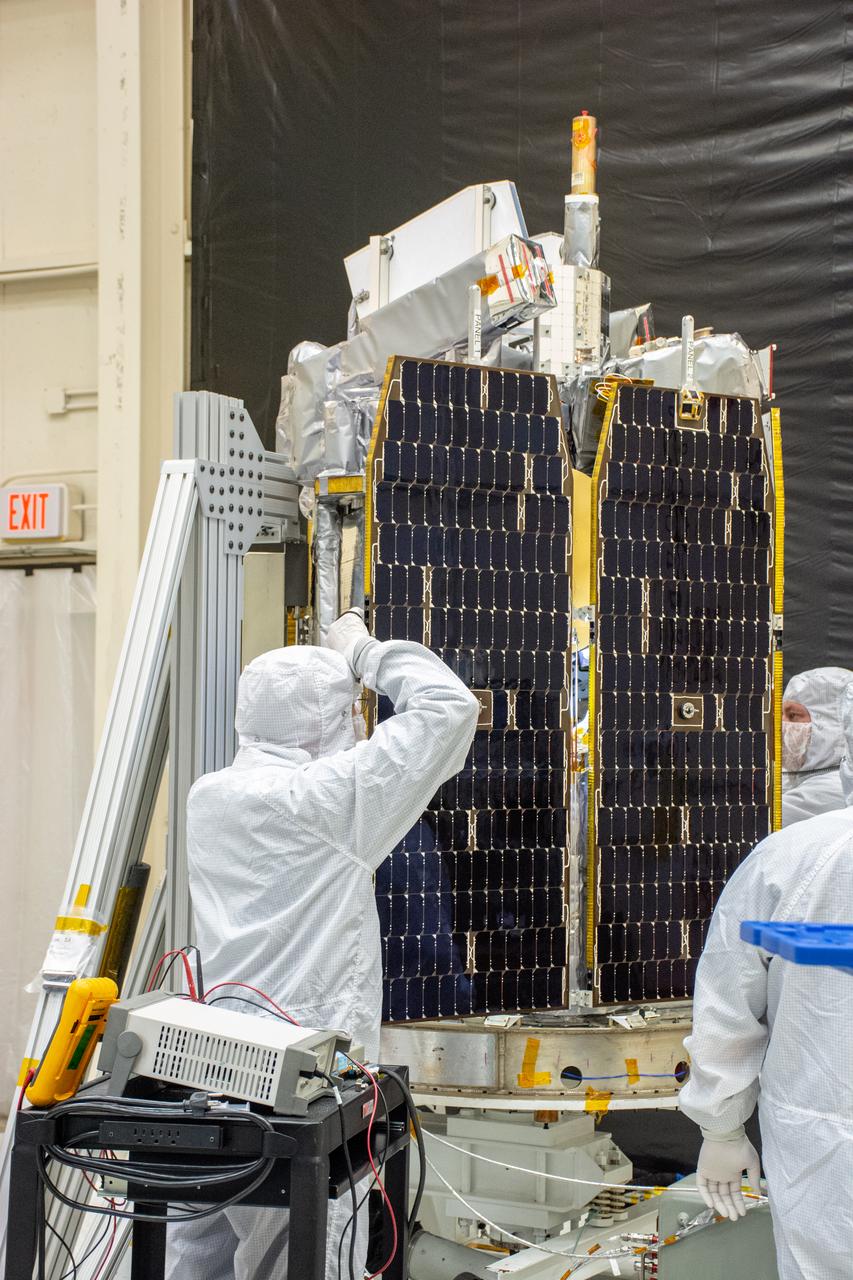
Technicians install the solar array for NASA's Ionospheric Connection Explorer (ICON) inside Building 1555 at Vandenberg Air Force Base in California on Aug. 28, 2019. ICON launched on a Northrop Grumman Pegasus XL rocket, attached beneath the company's L-1011 Stargazer aircraft, on Oct. 10, 2019, after takeoff from the Skid Strip at Cape Canaveral Air Force Station in Florida. ICON will study the frontier of space - the dynamic zone high in Earth's atmosphere where terrestrial weather from below meets space weather above. The explorer will help determine the physics of Earth's space environment and pave the way for mitigating its effects on our technology, communications systems and society.
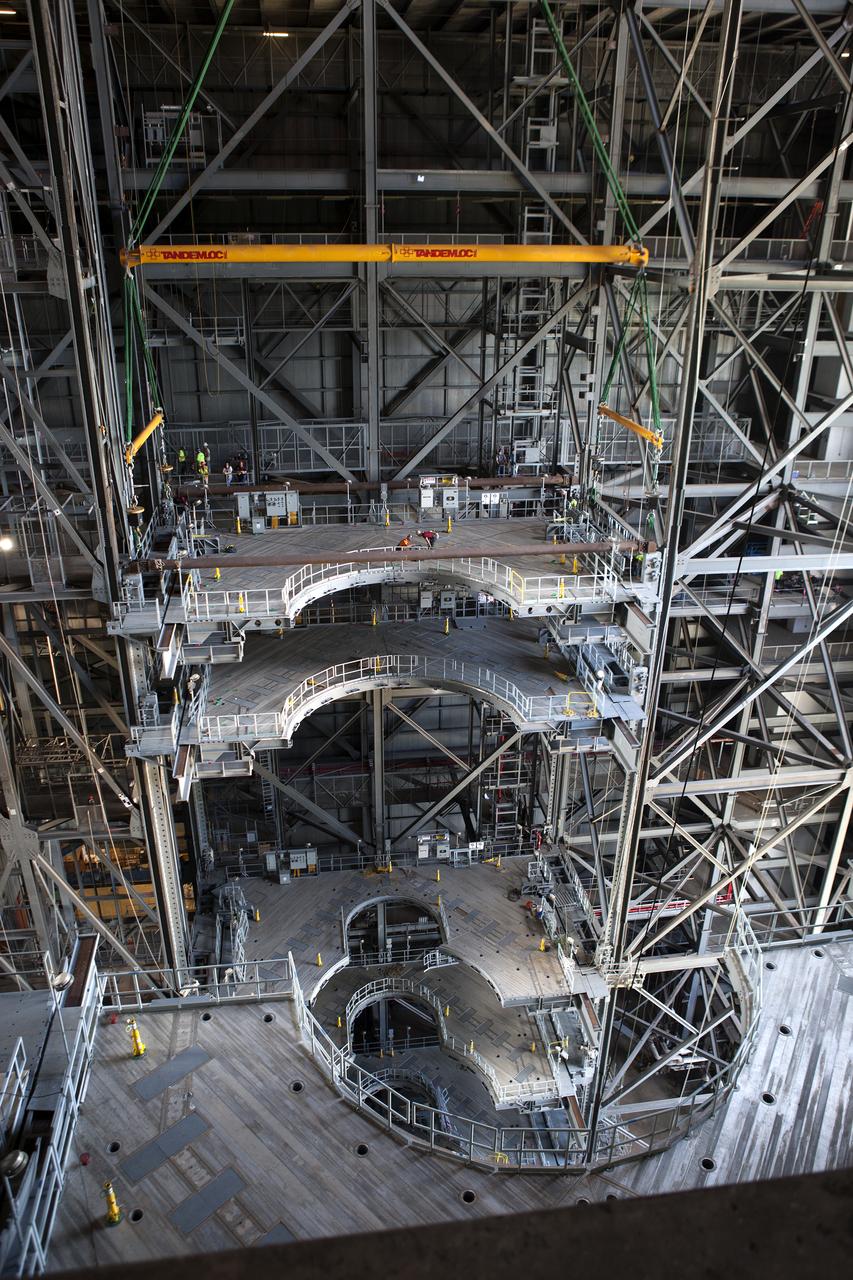
A heavy-lift crane lowers the second half of the D-level work platforms, D north, for NASA’s Space Launch System (SLS) rocket, into position for installation in High Bay 3 in the Vehicle Assembly Building (VAB) at the agency’s Kennedy Space Center in Florida. The platform will be installed on the north side of the high bay. The D platforms are the seventh of 10 levels of work platforms that will surround and provide access to the SLS rocket and Orion spacecraft for Exploration Mission 1. The Ground Systems Development and Operations Program is overseeing upgrades and modifications to VAB High Bay 3, including installation of the new work platforms, to prepare for NASA’s journey to Mars.
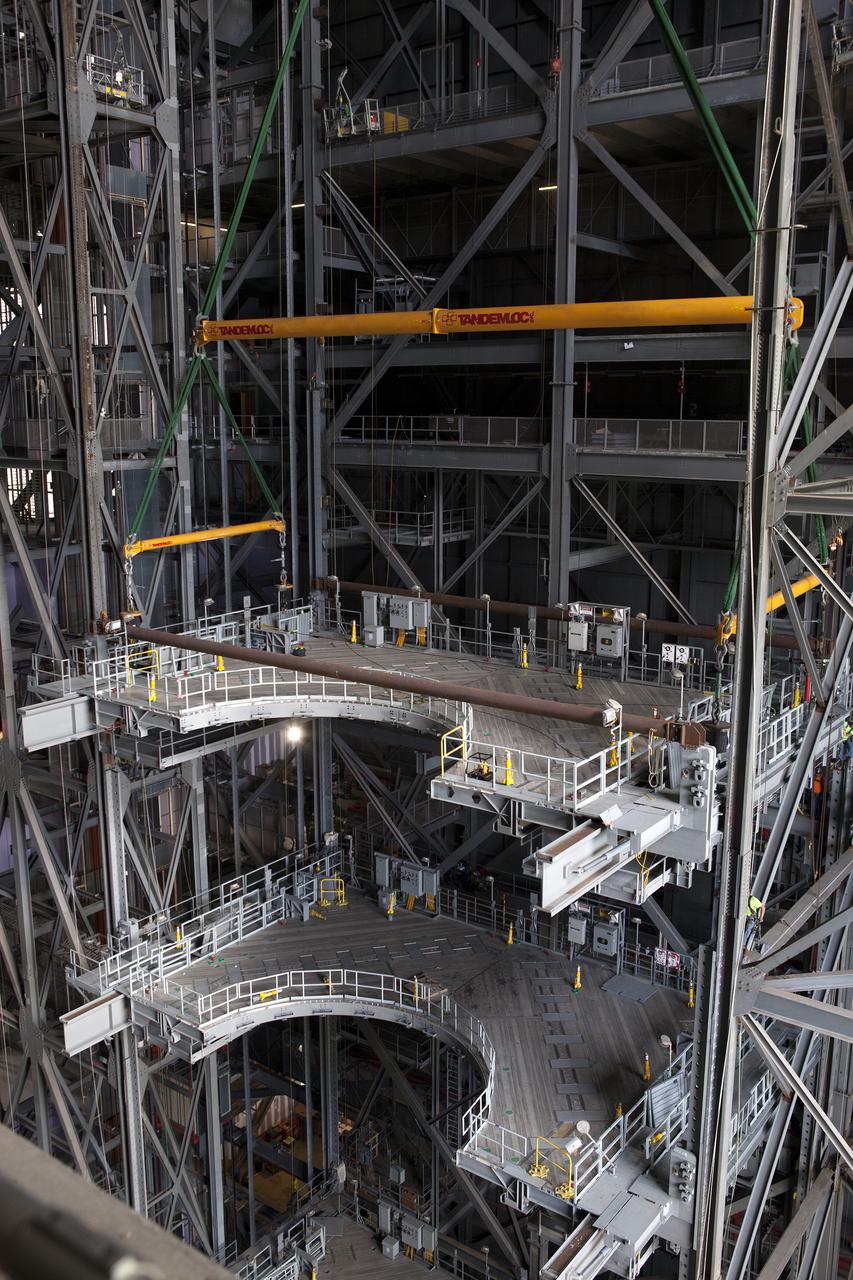
A heavy-lift crane lowers the second half of the D-level work platforms, D north, for NASA’s Space Launch System (SLS) rocket, into position for installation in High Bay 3 in the Vehicle Assembly Building at the agency’s Kennedy Space Center in Florida. The platform will be installed on the north side of the high bay. The D platforms are the seventh of 10 levels of work platforms that will surround and provide access to the SLS rocket and Orion spacecraft for Exploration Mission 1. The Ground Systems Development and Operations Program is overseeing upgrades and modifications to VAB High Bay 3, including installation of the new work platforms, to prepare for NASA’s journey to Mars.
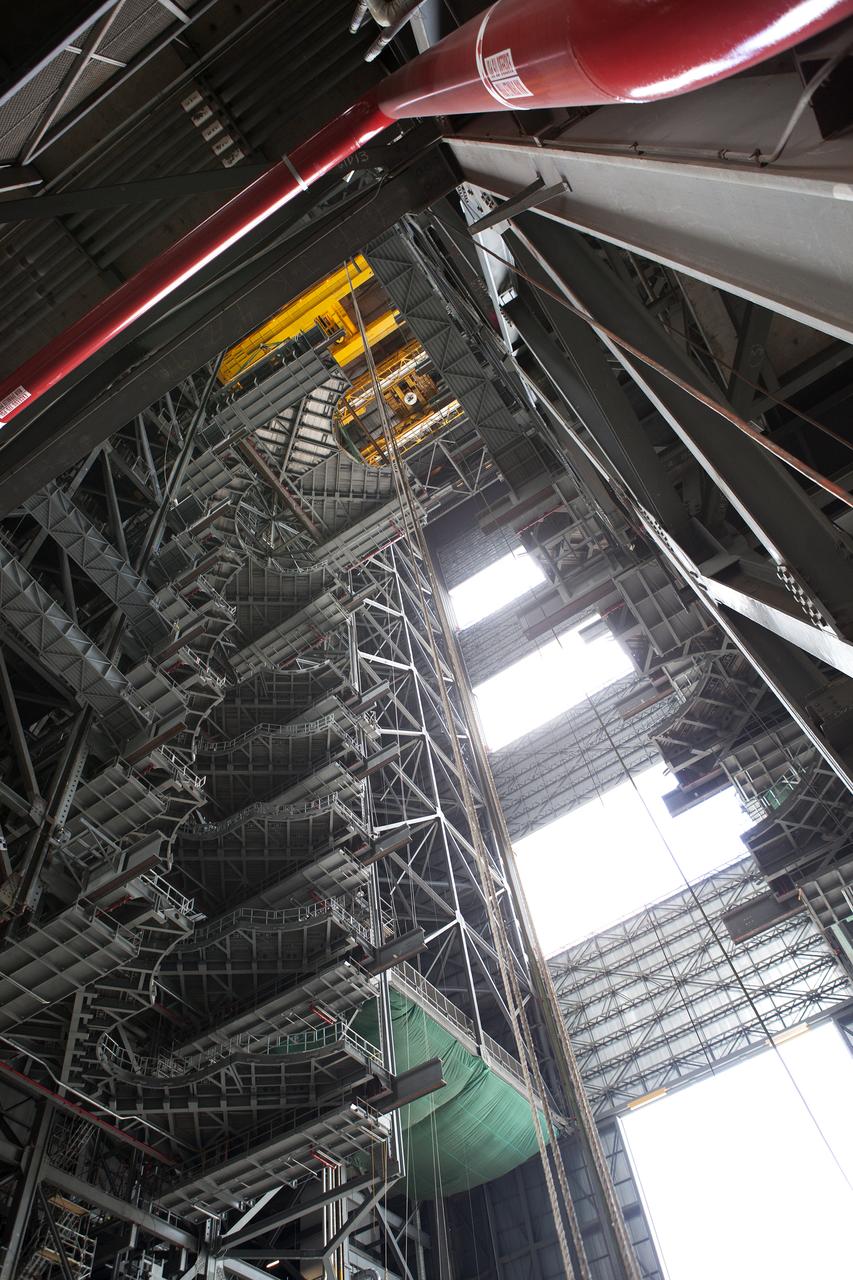
In this view looking up in the Vehicle Assembly Building at NASA’s Kennedy Space Center in Florida, a heavy-lift crane lowers the second half of the D-level work platforms, D north, for NASA’s Space Launch System (SLS) rocket, into position for installation in High Bay 3. The platform will be installed on the north side of the high bay. The D platforms are the seventh of 10 levels of work platforms that will surround and provide access to the SLS rocket and Orion spacecraft for Exploration Mission 1. The Ground Systems Development and Operations Program is overseeing upgrades and modifications to VAB High Bay 3, including installation of the new work platforms, to prepare for NASA’s journey to Mars.
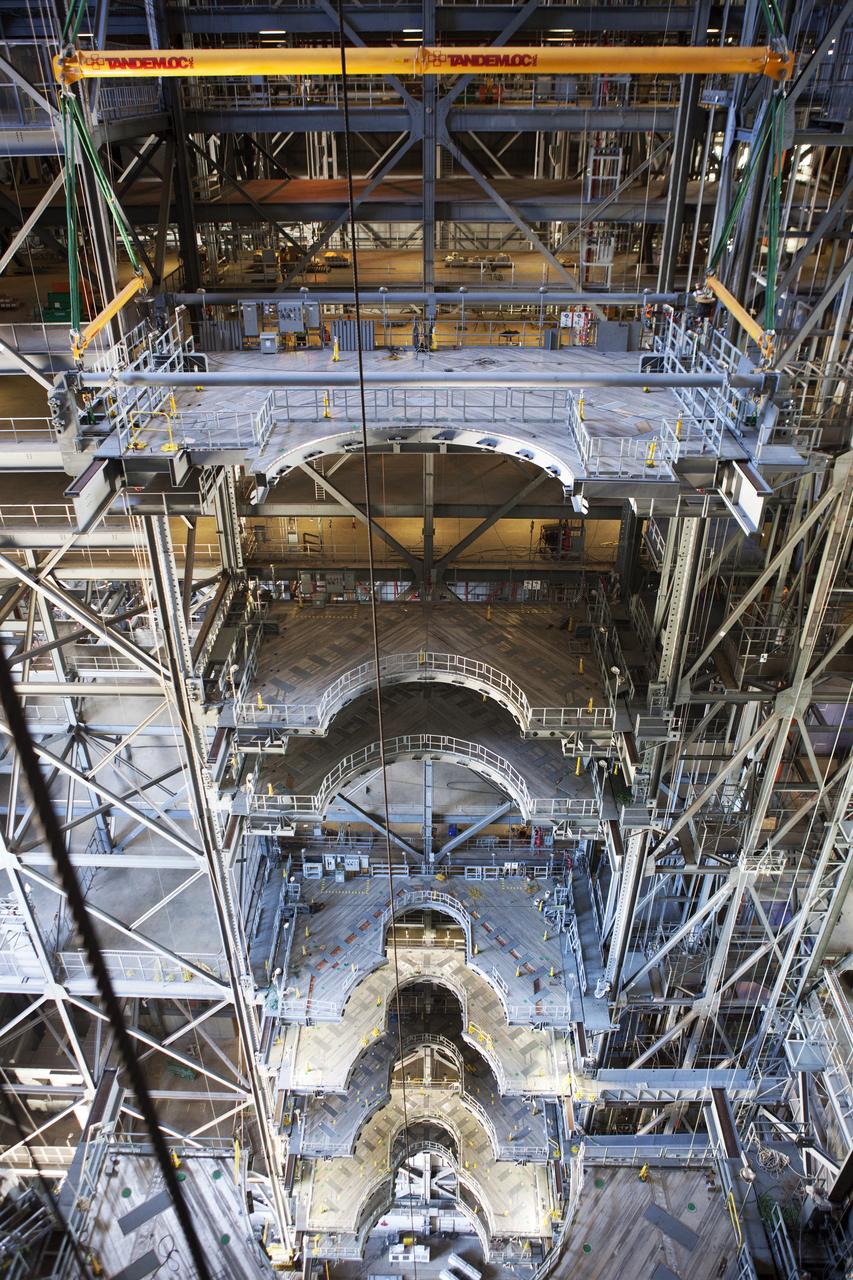
A heavy-lift crane lowers the first half of the C-level work platforms, C south, for NASA’s Space Launch System (SLS) rocket, for installation on the south side of High Bay 3 in the Vehicle Assembly Building (VAB) at NASA’s Kennedy Space Center in Florida. The C platforms are the eighth of 10 levels of work platforms that will surround and provide access to the SLS rocket and Orion spacecraft for Exploration Mission 1. In view below Platform C are several of the previously installed platforms. The Ground Systems Development and Operations Program is overseeing upgrades and modifications to VAB High Bay 3, including installation of the new work platforms, to prepare for NASA’s Journey to Mars.
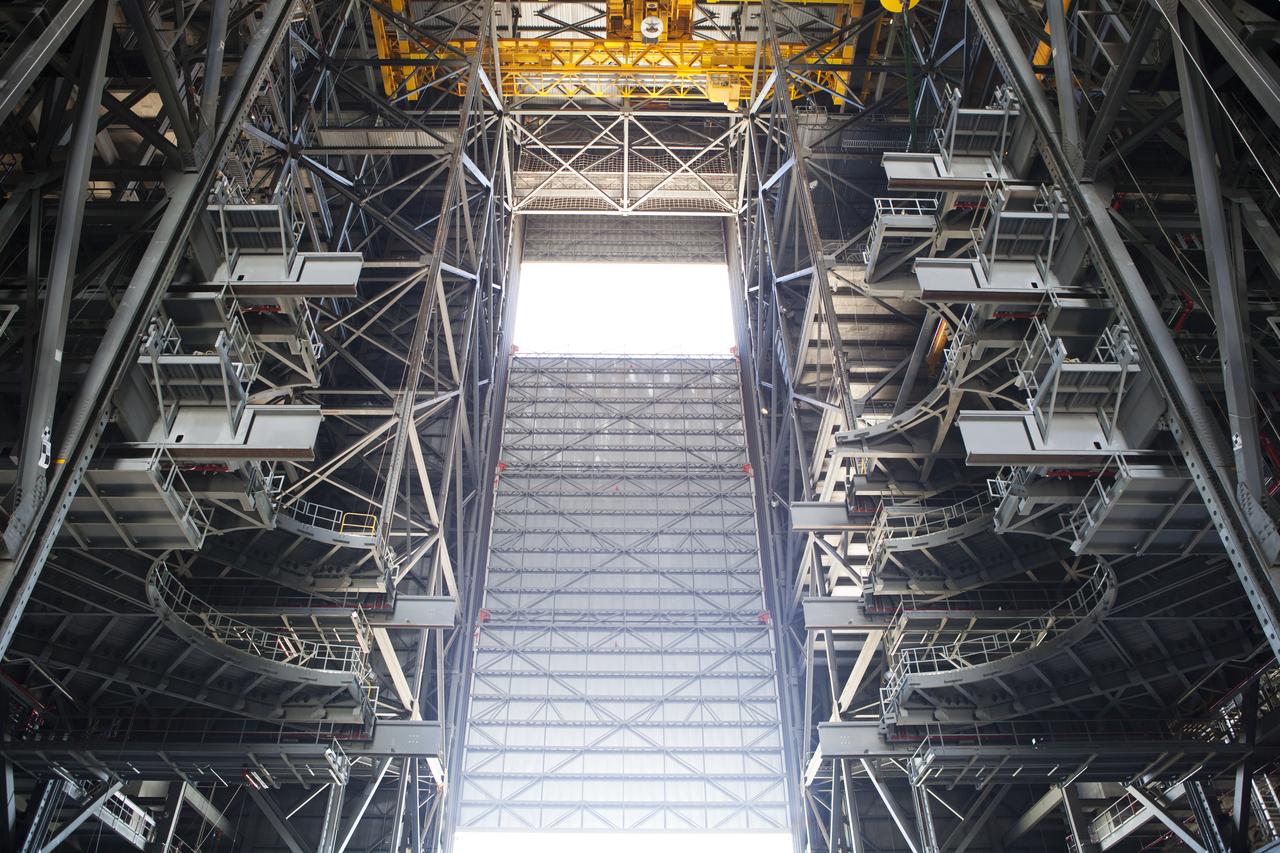
Inside the Vehicle Assembly Building at NASA’s Kennedy Space Center in Florida, the first half of the C-level work platforms, C south, for NASA’s Space Launch System (SLS) rocket, has been installed on the south side of the high bay. In view below are several levels of previously installed platforms. The C platforms are the eighth of 10 levels of work platforms that will surround and provide access to the SLS rocket and Orion spacecraft for Exploration Mission 1. The Ground Systems Development and Operations Program is overseeing upgrades and modifications to VAB High Bay 3, including installation of the new work platforms, to prepare for NASA’s Journey to Mars.
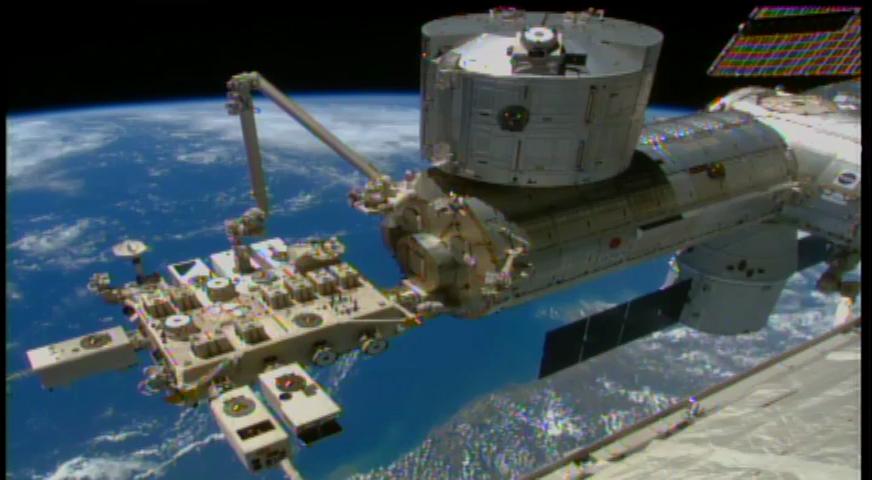
On Jan. 22, 2015, robotic flight controllers successfully installed NASA’s Cloud Aerosol Transport System (CATS) onboard the International Space Station. CATS will collect data about clouds, volcanic ash plumes and tiny airborne particles that can help improve our understanding of aerosol and cloud interactions, and improve the accuracy of climate change models. CATS had been mounted inside the SpaceX Dragon cargo craft’s unpressurized trunk since it docked at the station on Jan. 12. Ground controllers at NASA’s Johnson Space Center in Houston, Texas, used one of the space station’s robotic arms, called the Special Purpose Dexterous Manipulator, to extract the instrument from the capsule. The NASA-controlled arm passed the instrument to a second robotic arm— like passing a baton in a relay race. This second arm, called the Japanese Experiment Module Remote Manipulator System, is controlled by the Japanese Aerospace Exploration Agency. The Japanese-controlled arm installed the instrument to the Space Station’s Japanese Experiment Module, making CATS the first NASA-developed payload to fly on the Japanese module. CATS is a lidar remote-sensing instrument designed to last from six months to three years. It is specifically intended to demonstrate a low-cost, streamlined approach to developing science payloads on the space station. CATS launched aboard the SpaceX Dragon spacecraft on Jan. 10 at Cape Canaveral Air Force Station in Florida. To learn more about the impact of CATS data, visit: <a href="http://www.nasa.gov/cats/" rel="nofollow">www.nasa.gov/cats/</a> <b><a href="http://www.nasa.gov/audience/formedia/features/MP_Photo_Guidelines.html" rel="nofollow">NASA image use policy.</a></b> <b><a href="http://www.nasa.gov/centers/goddard/home/index.html" rel="nofollow">NASA Goddard Space Flight Center</a></b> enables NASA’s mission through four scientific endeavors: Earth Science, Heliophysics, Solar System Exploration, and Astrophysics. Goddard plays a leading role in NASA’s accomplishments by contributing compelling scientific knowledge to advance the Agency’s mission. <b>Follow us on <a href="http://twitter.com/NASAGoddardPix" rel="nofollow">Twitter</a></b> <b>Like us on <a href="http://www.facebook.com/pages/Greenbelt-MD/NASA-Goddard/395013845897?ref=tsd" rel="nofollow">Facebook</a></b> <b>Find us on <a href="http://instagram.com/nasagoddard?vm=grid" rel="nofollow">Instagram</a></b>
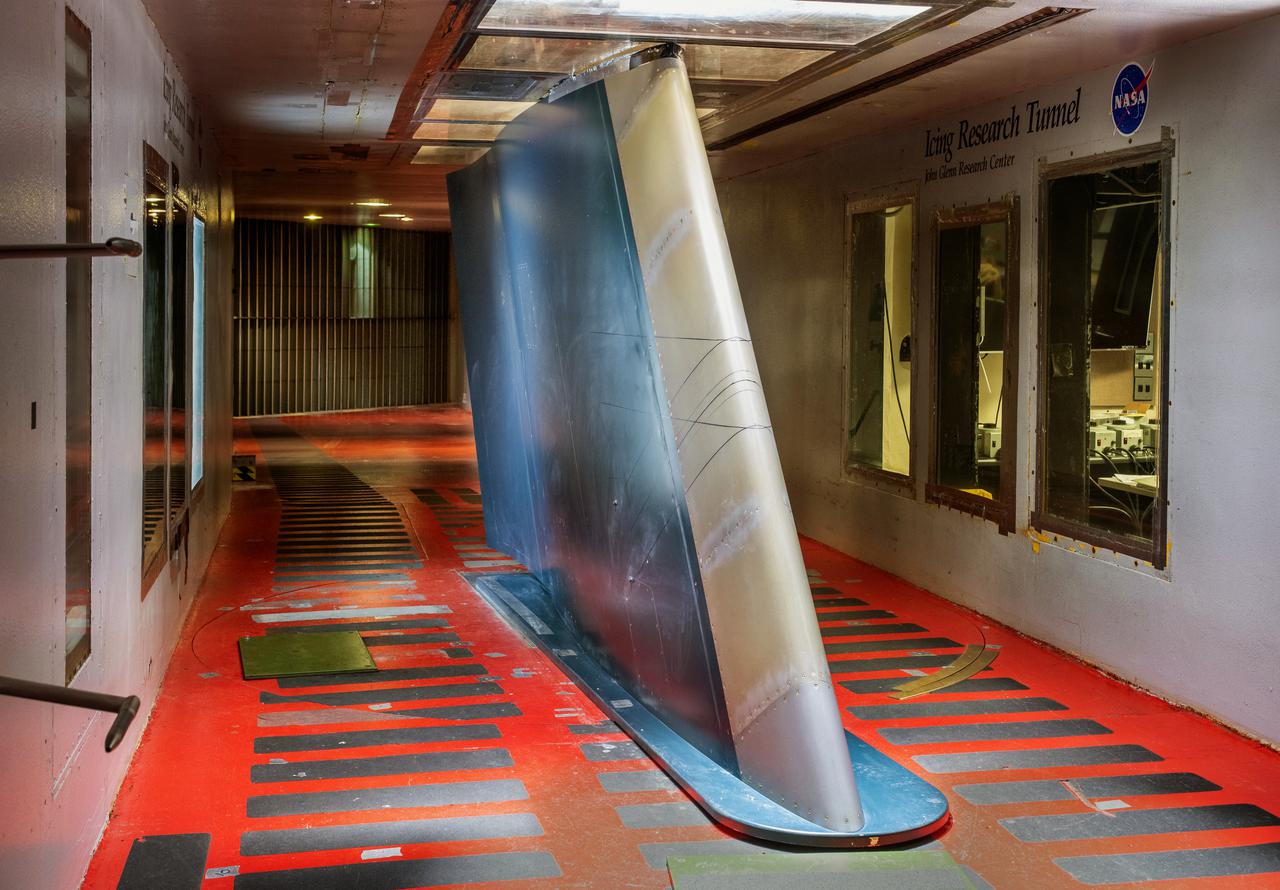
CRM Full Chord Installation and Test Documentation Photos, Icing Research Tunnel
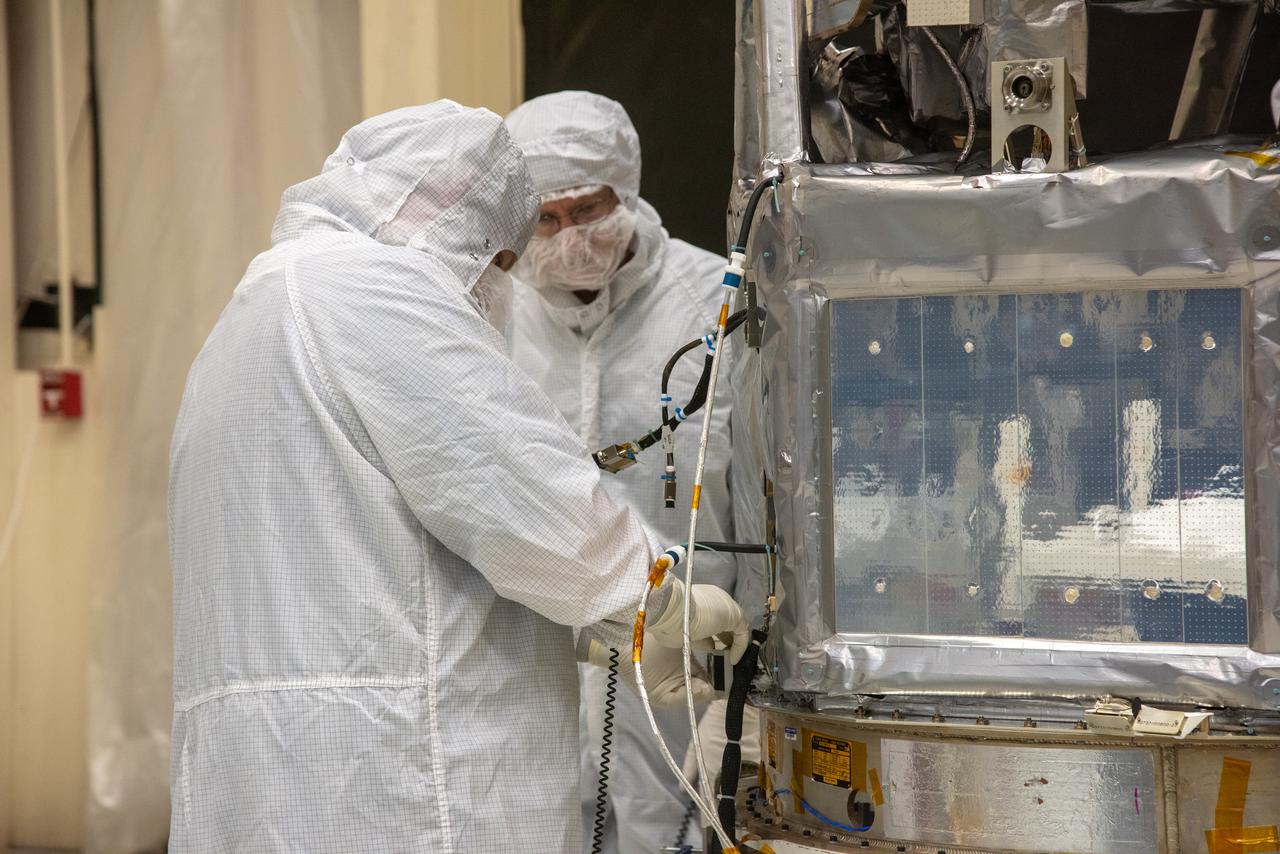
Technicians prepare to install the solar array for NASA's Ionospheric Connection Explorer (ICON) inside Building 1555 at Vandenberg Air Force Base in California on Aug. 28, 2019. ICON launched on a Northrop Grumman Pegasus XL rocket, attached beneath the company's L-1011 Stargazer aircraft, on Oct. 10, 2019, after takeoff from the Skid Strip at Cape Canaveral Air Force Station in Florida. ICON will study the frontier of space - the dynamic zone high in Earth's atmosphere where terrestrial weather from below meets space weather above. The explorer will help determine the physics of Earth's space environment and pave the way for mitigating its effects on our technology, communications systems and society.
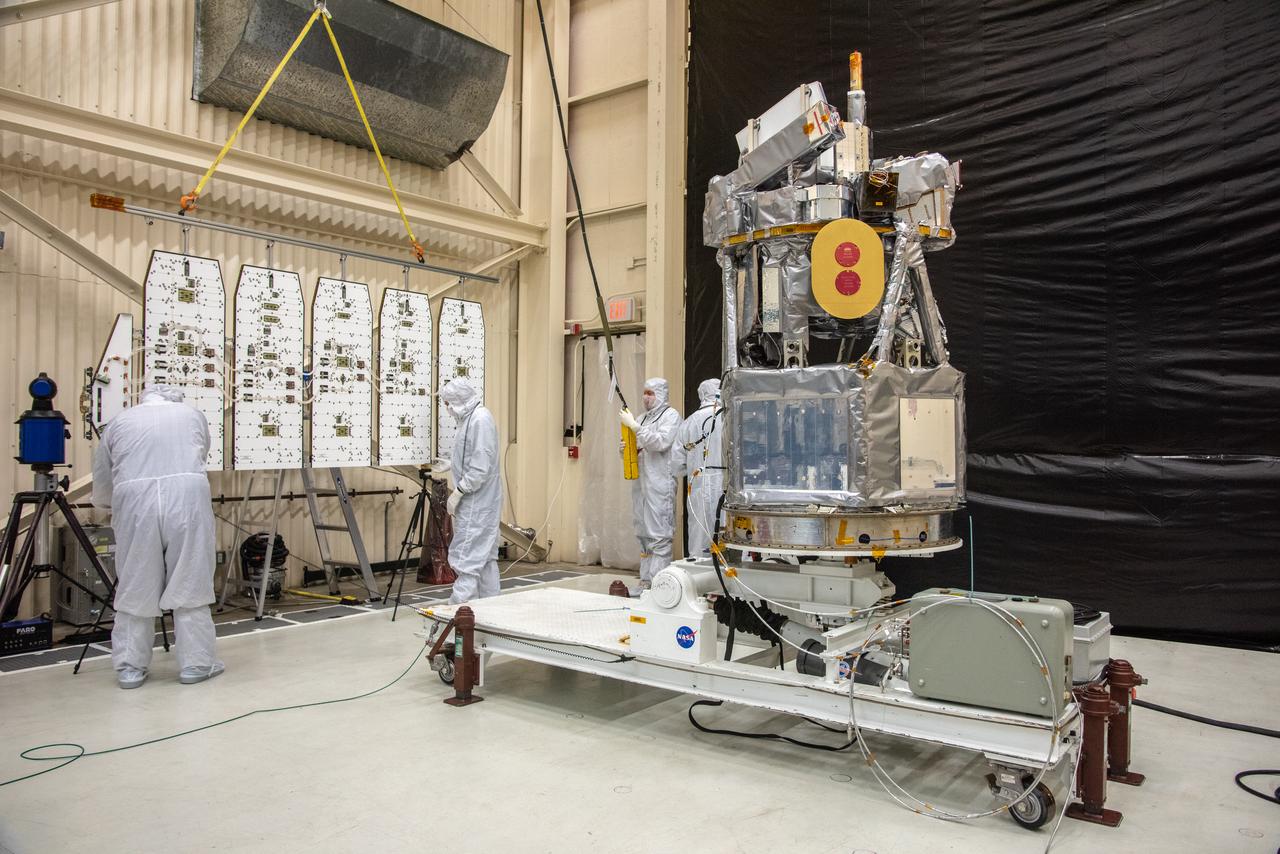
Technicians prepare to install the solar array for NASA's Ionospheric Connection Explorer (ICON) inside Building 1555 at Vandenberg Air Force Base in California on Aug. 28, 2019. ICON launched on a Northrop Grumman Pegasus XL rocket, attached beneath the company's L-1011 Stargazer aircraft, on Oct. 10, 2019, after takeoff from the Skid Strip at Cape Canaveral Air Force Station in Florida. ICON will study the frontier of space - the dynamic zone high in Earth's atmosphere where terrestrial weather from below meets space weather above. The explorer will help determine the physics of Earth's space environment and pave the way for mitigating its effects on our technology, communications systems and society.
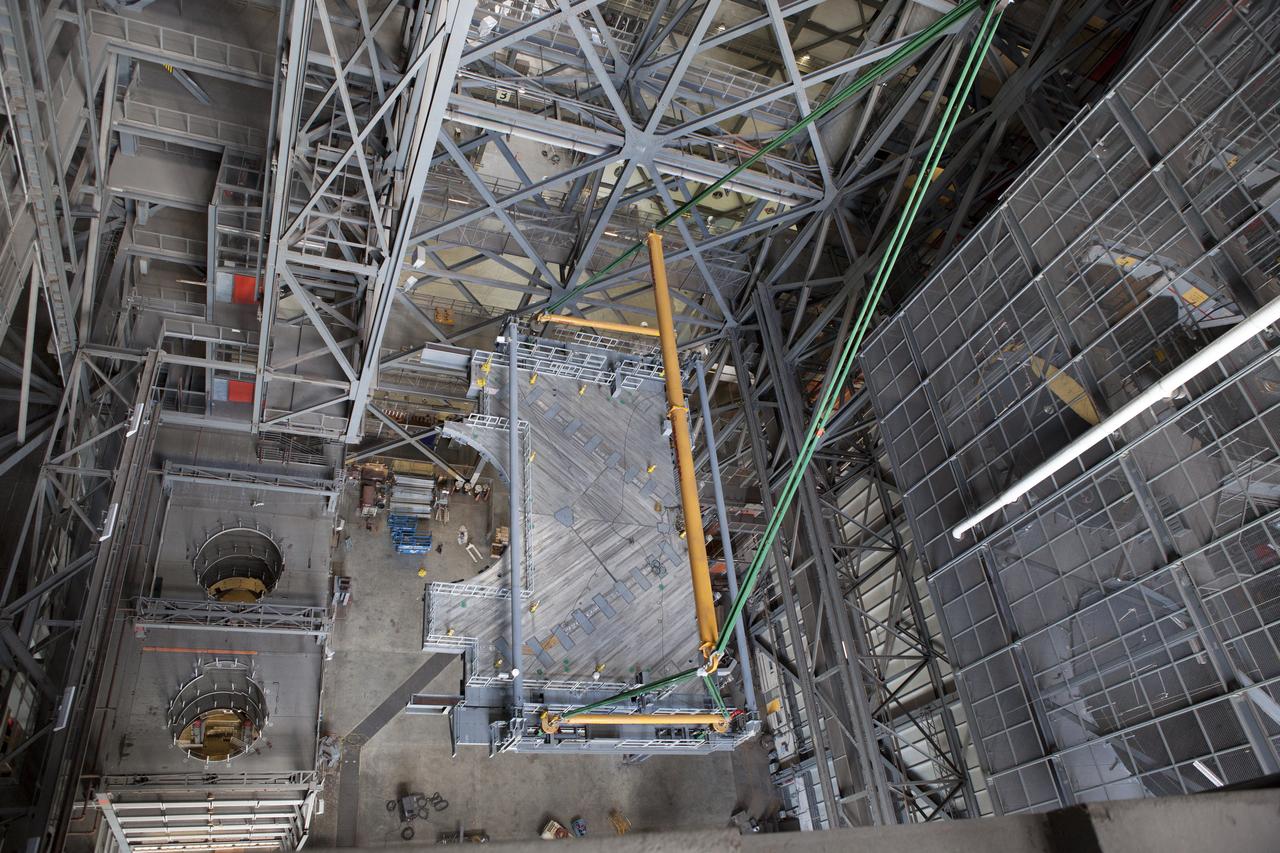
A heavy-lift crane lifts the first half of the C-level work platforms, C south, for NASA’s Space Launch System (SLS) rocket, up from the transfer aisle floor of the Vehicle Assembly Building (VAB) at NASA’s Kennedy Space Center in Florida. Large Tandemloc bars have been attached to the platform to keep it level during lifting and installation. The C platform will be installed on the south side of High Bay 3. The C platforms are the eighth of 10 levels of work platforms that will surround and provide access to the SLS rocket and Orion spacecraft for Exploration Mission 1. The Ground Systems Development and Operations Program is overseeing upgrades and modifications to VAB High Bay 3, including installation of the new work platforms, to prepare for NASA’s Journey to Mars.

This photo shows the second RS-25 engine attached to the core stage for NASA’s Space Launch System rocket for the agency’s Artemis I mission to the Moon. Engineers and technicians at NASA’s Michoud Assembly Facility in New Orleans structurally mated the second of four engines to the stage on Oct. 30 and are currently integrating the propulsion and electrical systems within the structure to complete the installation. Integration of the RS-25 engines to the recently completed core stage structure is a collaborative, multistep process for NASA and its partners Boeing, the core stage lead contractor, and Aerojet Rocketdyne, the RS-25 engines lead contractor. The four RS-25 engines for Artemis I are modified heritage flight hardware from the Space Shuttle Program, ensuring high performance and reliability to power NASA’s next generation lunar missions. Each engine also has a special identification number, and NASA keeps a history of which engines are used on each mission. The second engine, Engine 2045, has flown on several shuttle missions, including the mission that returned NASA astronaut John Glenn to space in 1998 as well as the first and only shuttle launch to occur on Independence Day in 2006.
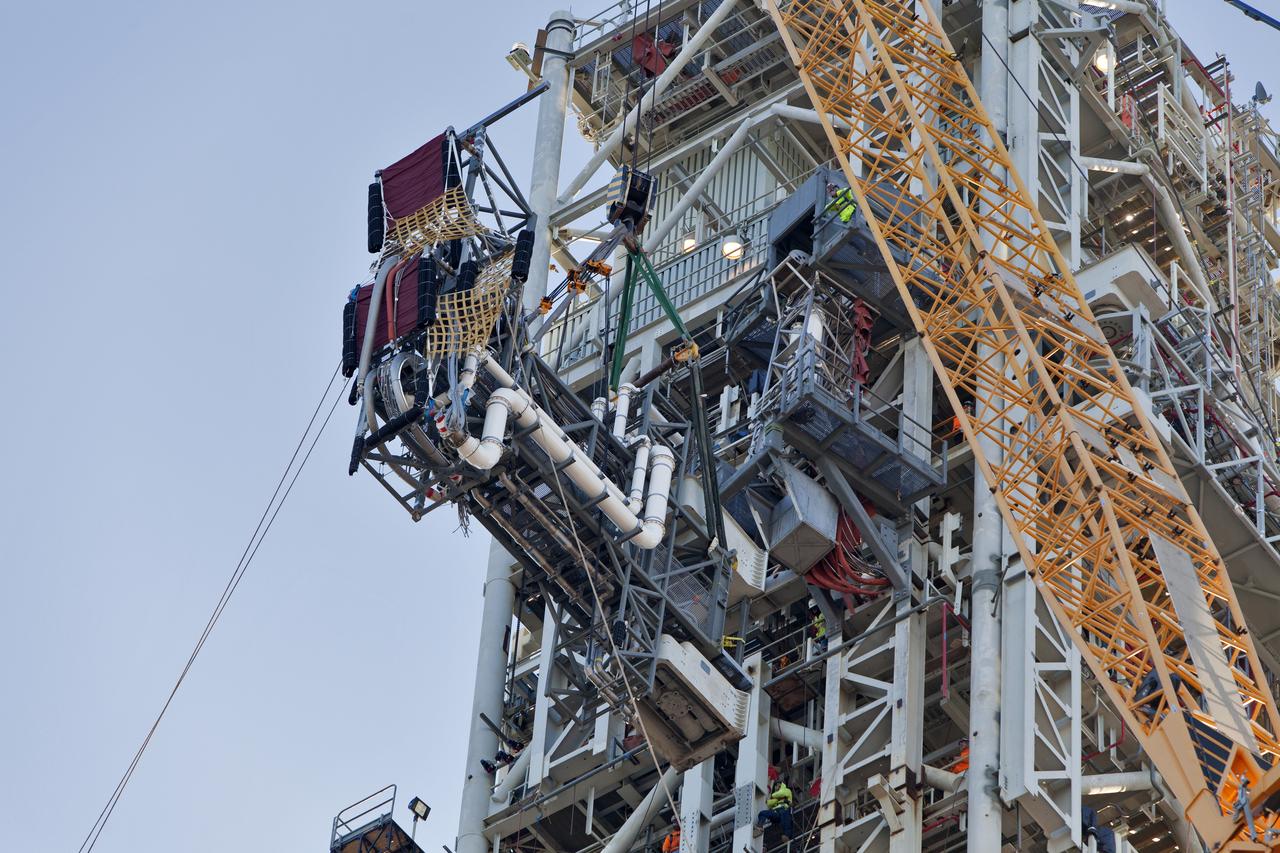
A crane and rigging lines are used to install the Interim Cryogenic Propulsion Stage Umbilical (ICPSU) high up on the mobile launcher (ML) at NASA's Kennedy Space Center in Florida. The last of the large umbilicals to be installed, the ICPSU will provide super-cooled hydrogen and liquid oxygen to the Space Launch System (SLS) rocket's interim cryogenic propulsion stage, or upper stage, at T-0 for Exploration Mission-1. The umbilical is located at about the 240-foot-level of the mobile launcher and will supply fuel, oxidizer, gaseous helium, hazardous gas leak detection, electrical commodities and environment control systems to the upper stage of the SLS rocket during launch. Exploration Ground Systems is overseeing installation of the umbilicals on the ML.

A crane and rigging lines are used to install the Interim Cryogenic Propulsion Stage Umbilical (ICPSU) high up on the mobile launcher (ML) at NASA's Kennedy Space Center in Florida. The last of the large umbilicals to be installed, the ICPSU will provide super-cooled hydrogen and liquid oxygen to the Space Launch System (SLS) rocket's interim cryogenic propulsion stage, or upper stage, at T-0 for Exploration Mission-1. The umbilical is located at about the 240-foot-level of the mobile launcher and will supply fuel, oxidizer, gaseous helium, hazardous gas leak detection, electrical commodities and environment control systems to the upper stage of the SLS rocket during launch. Exploration Ground Systems is overseeing installation of the umbilicals on the ML.
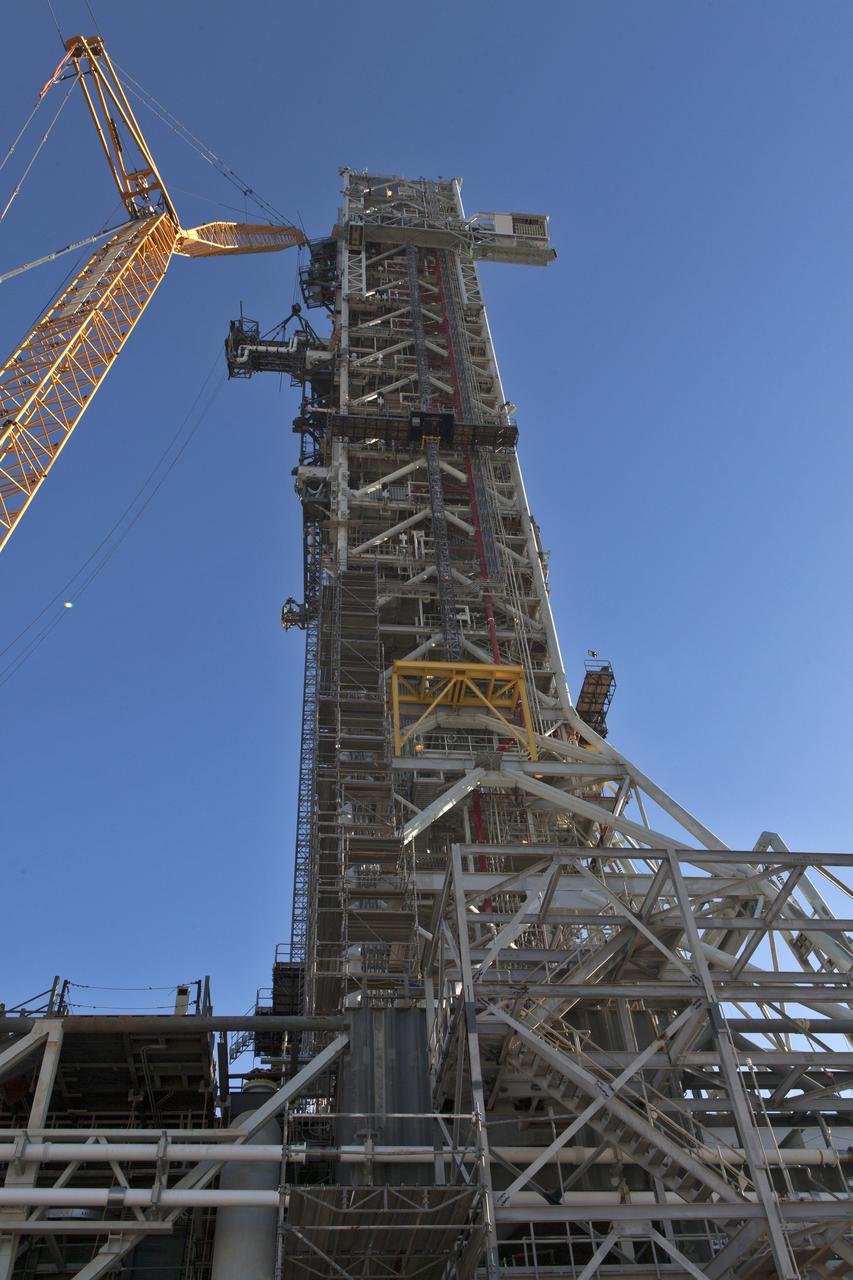
A crane and rigging lines are used to install the Interim Cryogenic Propulsion Stage Umbilical (ICPSU) high up on the mobile launcher (ML) at NASA's Kennedy Space Center in Florida. The last of the large umbilicals to be installed, the ICPSU will provide super-cooled hydrogen and liquid oxygen to the Space Launch System (SLS) rocket's interim cryogenic propulsion stage, or upper stage, at T-0 for Exploration Mission-1. The umbilical is located at about the 240-foot-level of the mobile launcher and will supply fuel, oxidizer, gaseous helium, hazardous gas leak detection, electrical commodities and environment control systems to the upper stage of the SLS rocket during launch. Exploration Ground Systems is overseeing installation of the umbilicals on the ML.
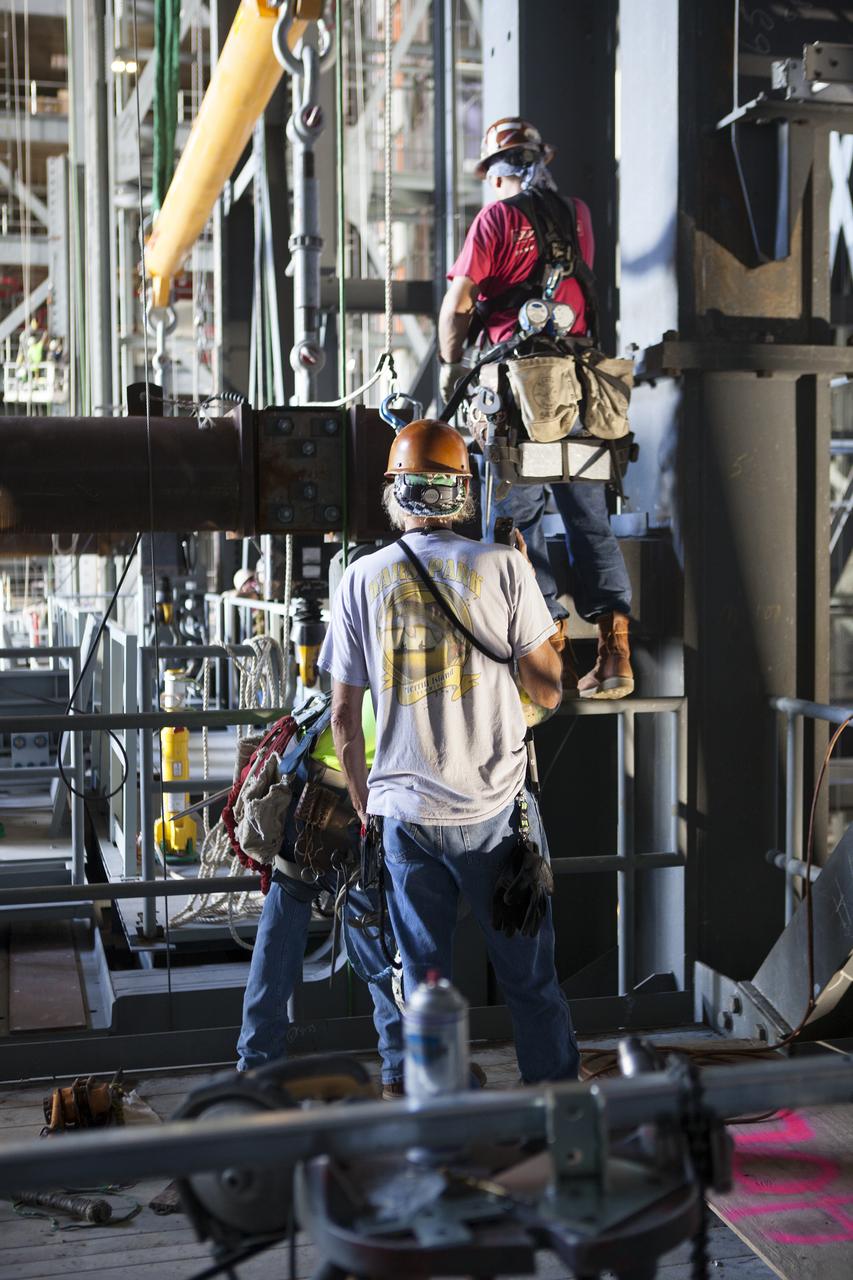
Construction workers use specialized tools to help secure the second half of the D-level work platforms, D north, for NASA’s Space Launch System (SLS) rocket, into position in High Bay 3 in the Vehicle Assembly Building (VAB) at the agency’s Kennedy Space Center in Florida. The D platform is being installed on the north side of the high bay. The D platforms are the seventh of 10 levels of work platforms that will surround and provide access to the SLS rocket and Orion spacecraft for Exploration Mission 1. The Ground Systems Development and Operations Program is overseeing upgrades and modifications to VAB High Bay 3, including installation of the new work platforms, to prepare for NASA’s journey to Mars.
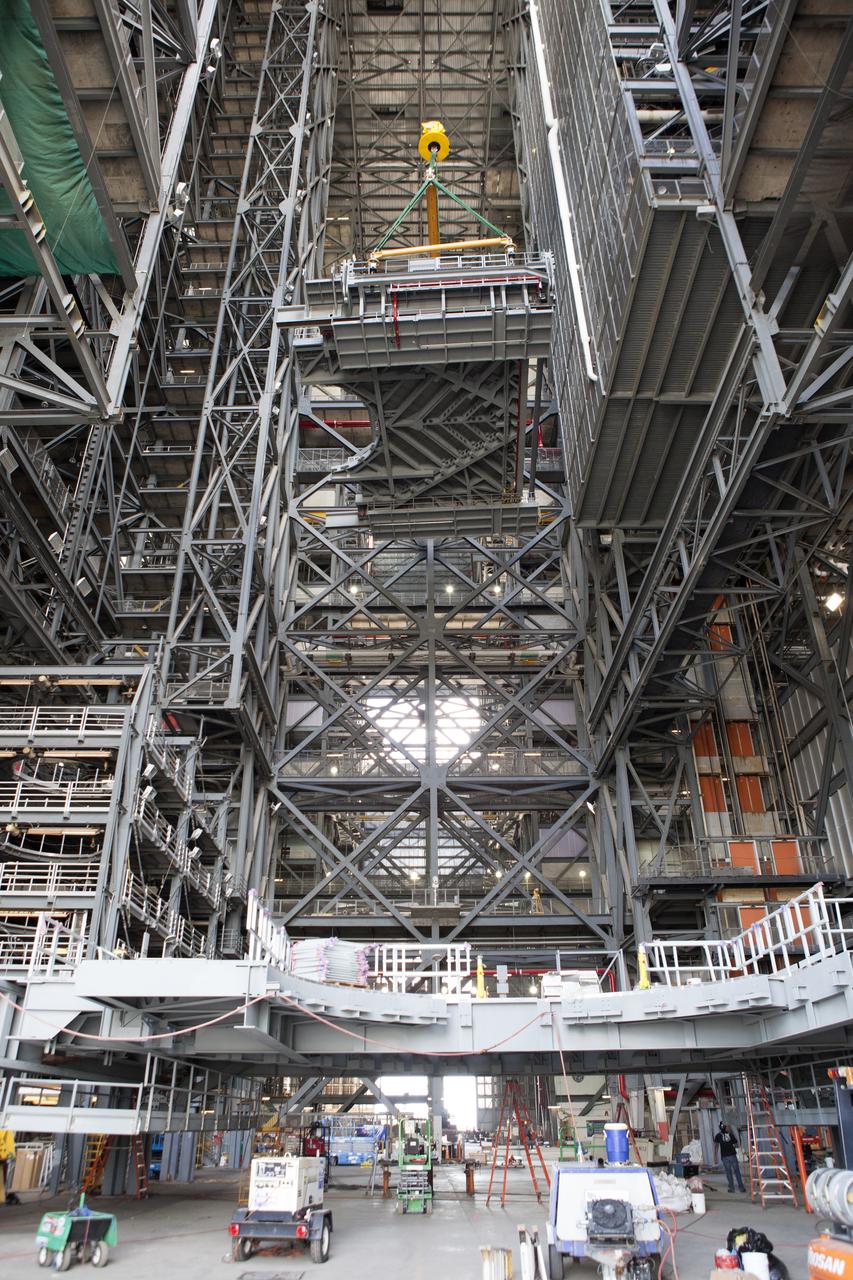
A heavy-lift crane lifts the first half of the C-level work platforms, C south, for NASA’s Space Launch System (SLS) rocket, high up from the transfer aisle floor of the Vehicle Assembly Building (VAB) at NASA’s Kennedy Space Center in Florida. The C platform will be installed on the south side of High Bay 3. The C platforms are the eighth of 10 levels of work platforms that will surround and provide access to the SLS rocket and Orion spacecraft for Exploration Mission 1. The Ground Systems Development and Operations Program is overseeing upgrades and modifications to VAB High Bay 3, including installation of the new work platforms, to prepare for NASA’s Journey to Mars.
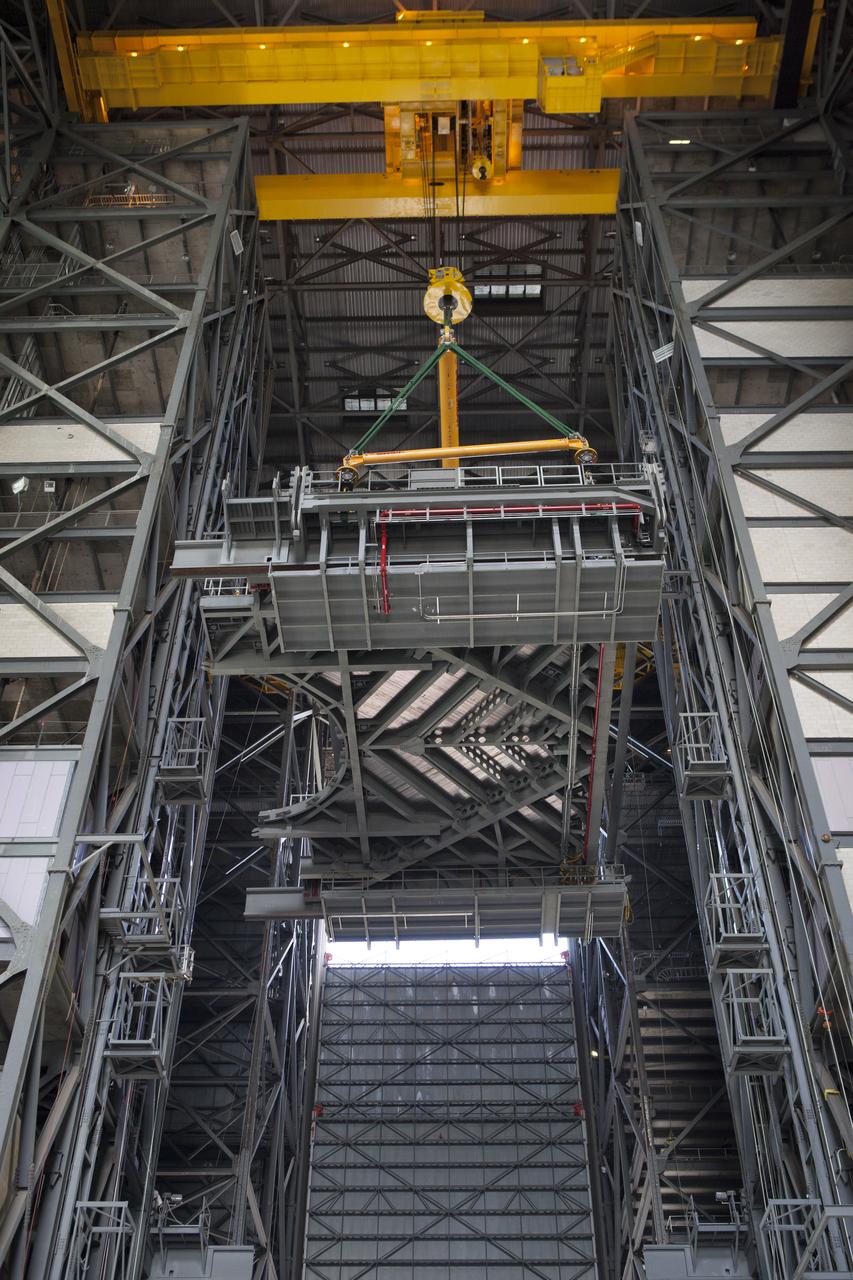
A heavy-lift crane lifts the first half of the C-level work platforms, C south, for NASA’s Space Launch System (SLS) rocket, high up from the transfer aisle floor of the Vehicle Assembly Building (VAB) at NASA’s Kennedy Space Center in Florida. The C platform will be moved into High Bay 3 for installation on the south wall. The C platforms are the eighth of 10 levels of work platforms that will surround and provide access to the SLS rocket and Orion spacecraft for Exploration Mission 1. The Ground Systems Development and Operations Program is overseeing upgrades and modifications to VAB High Bay 3, including installation of the new work platforms, to prepare for NASA’s Journey to Mars.
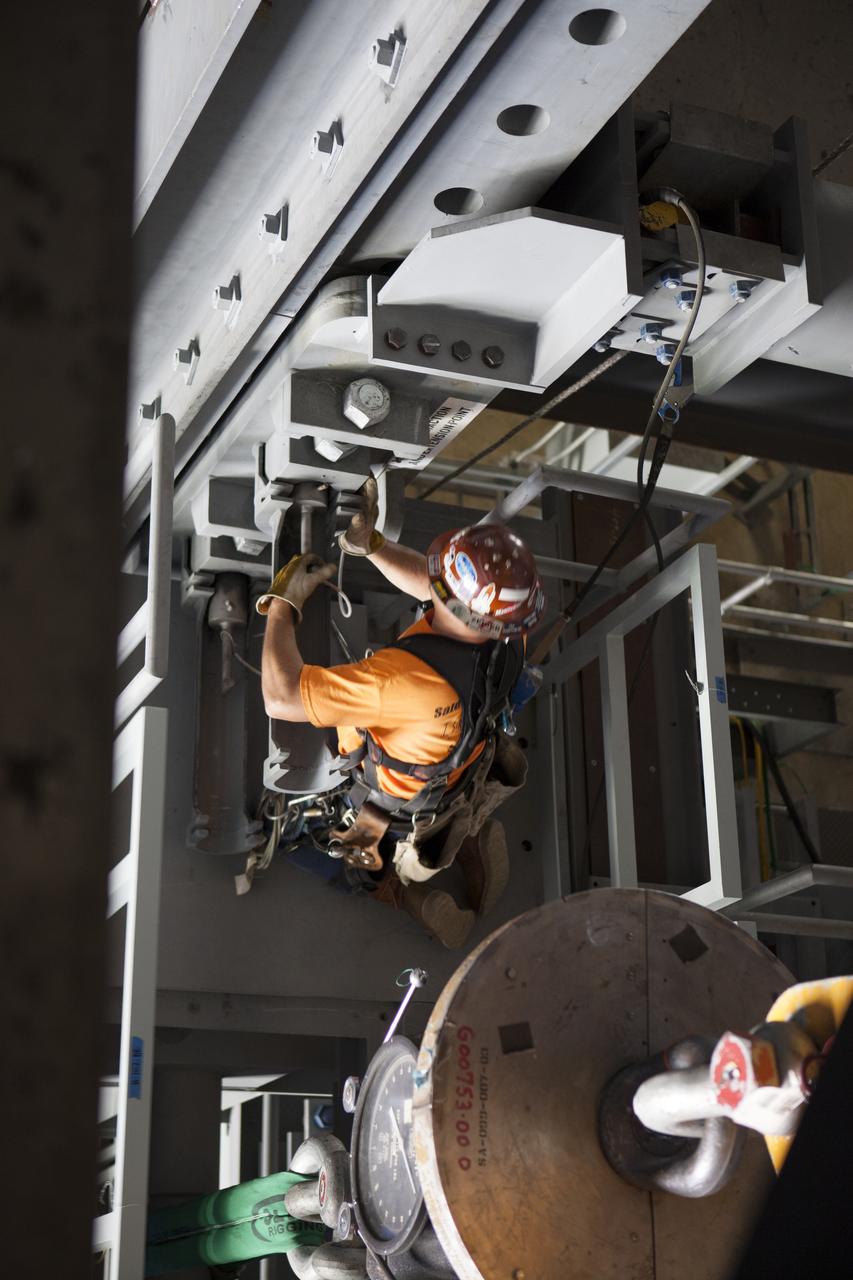
Inside the Vehicle Assembly Building at NASA’s Kennedy Space Center in Florida, a construction worker assist with the installation of the first half of the C-level work platforms, C south, for NASA’s Space Launch System (SLS) rocket. The large bolts that hold the platform in place on the south wall are being secured. The C platforms are the eighth of 10 levels of work platforms that will surround and provide access to the SLS rocket and Orion spacecraft for Exploration Mission 1. The Ground Systems Development and Operations Program is overseeing upgrades and modifications to VAB High Bay 3, including installation of the new work platforms, to prepare for NASA’s Journey to Mars.
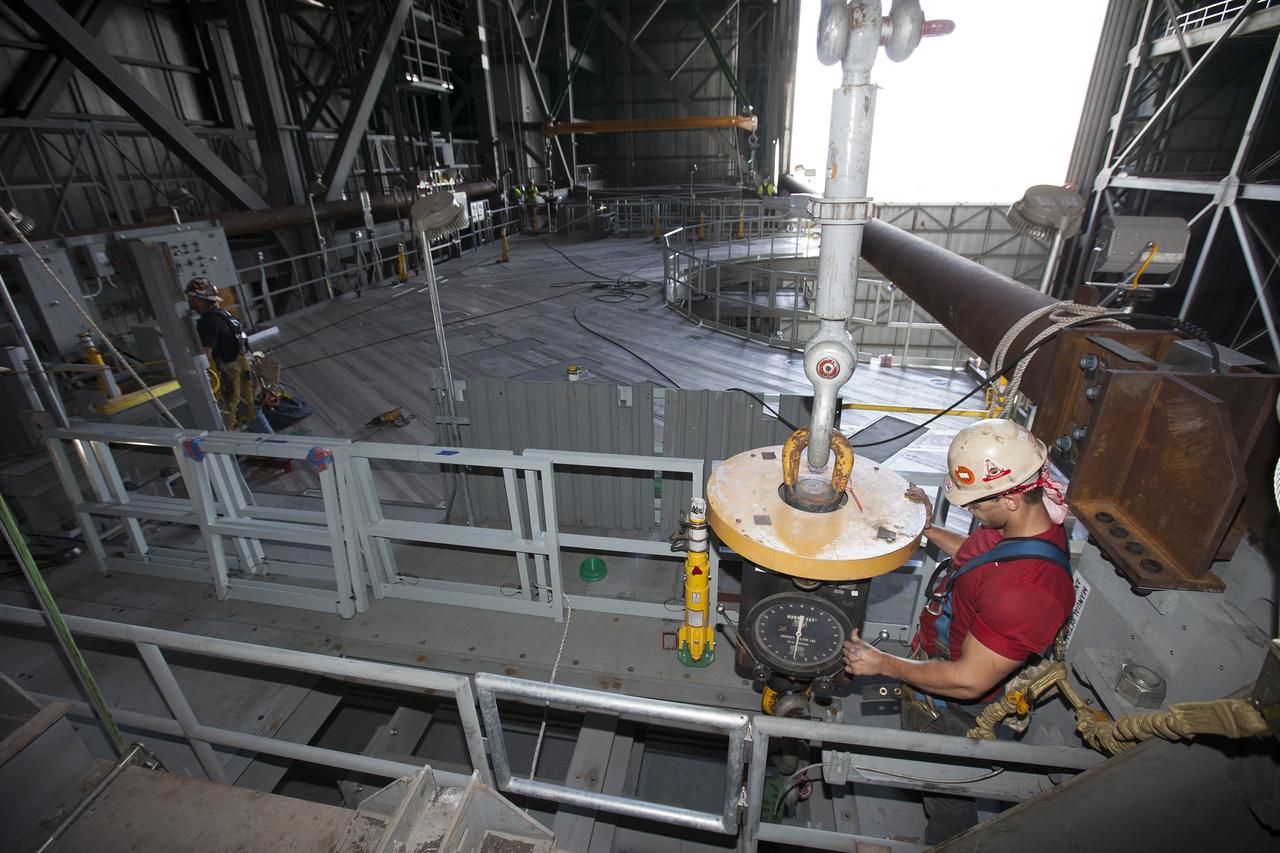
In High Bay 3 inside the Vehicle Assembly Building at NASA’s Kennedy Space Center in Florida, construction workers assist during installation of the second half of the D-level work platforms, D north, for NASA’s Space Launch System (SLS) rocket. The D platforms are the seventh of 10 levels of work platforms that will surround and provide access to the SLS rocket and Orion spacecraft for Exploration Mission 1. The Ground Systems Development and Operations Program is overseeing upgrades and modifications to VAB High Bay 3, including installation of the new work platforms, to prepare for NASA’s journey to Mars.
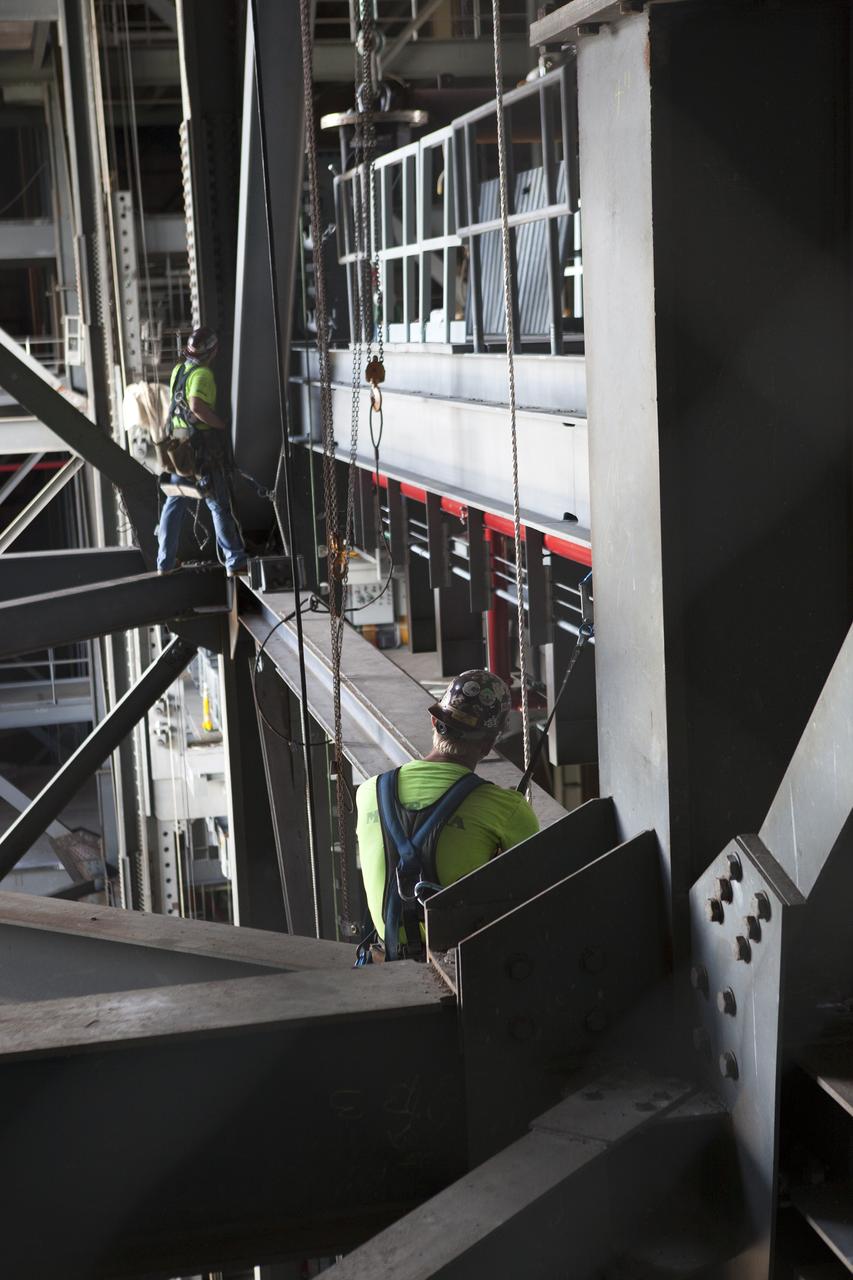
Construction workers help to secure the second half of the D-level work platforms, D north, for NASA’s Space Launch System (SLS) rocket, into position in High Bay 3 in the Vehicle Assembly Building (VAB) at the agency’s Kennedy Space Center in Florida. The D platform is being installed on the north side of the high bay. The D platforms are the seventh of 10 levels of work platforms that will surround and provide access to the SLS rocket and Orion spacecraft for Exploration Mission 1. The Ground Systems Development and Operations Program is overseeing upgrades and modifications to VAB High Bay 3, including installation of the new work platforms, to prepare for NASA’s journey to Mars.
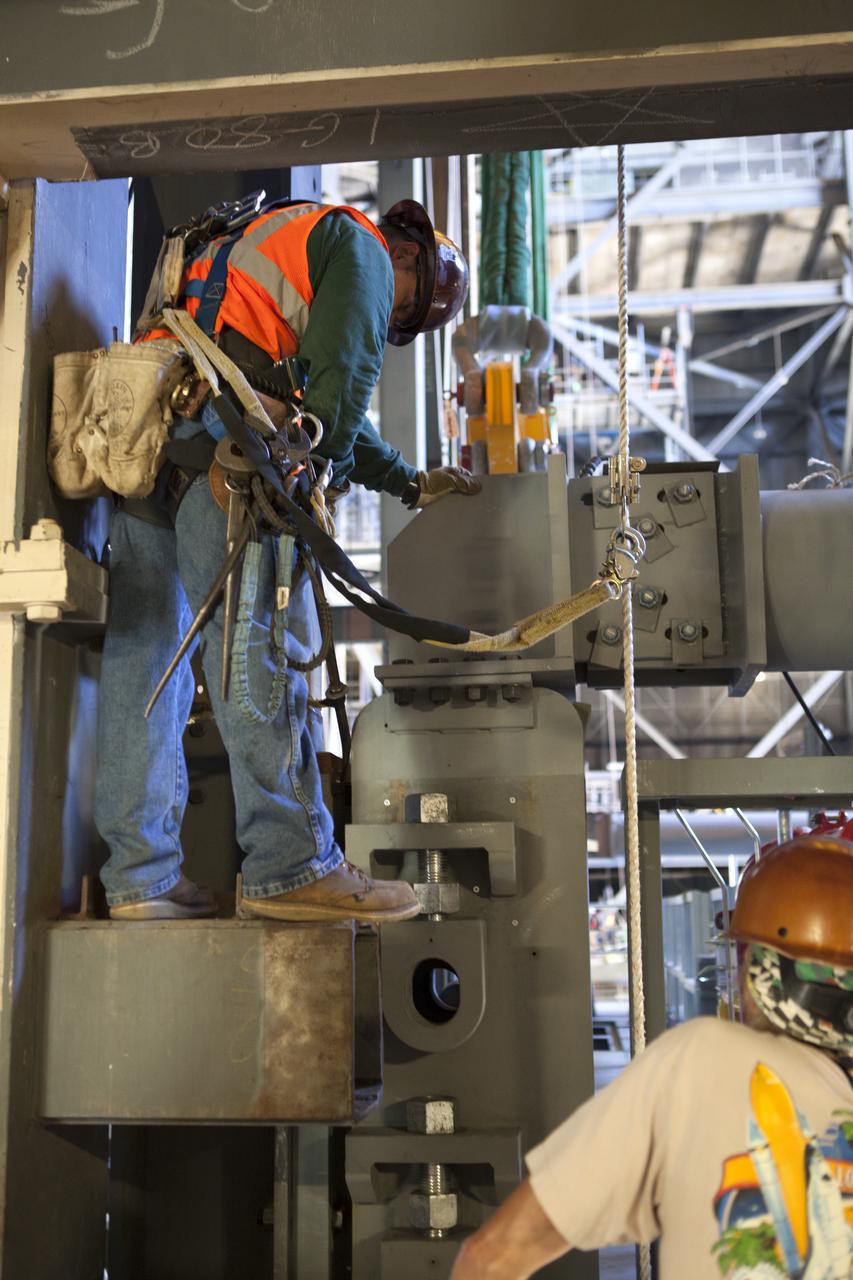
Inside the Vehicle Assembly Building at NASA’s Kennedy Space Center in Florida, construction workers assist with the installation of the first half of the C-level work platforms, C south, for NASA’s Space Launch System (SLS) rocket. The large bolts that hold the platform in place on the south wall are being secured. The C platforms are the eighth of 10 levels of work platforms that will surround and provide access to the SLS rocket and Orion spacecraft for Exploration Mission 1. The Ground Systems Development and Operations Program is overseeing upgrades and modifications to VAB High Bay 3, including installation of the new work platforms, to prepare for NASA’s Journey to Mars.
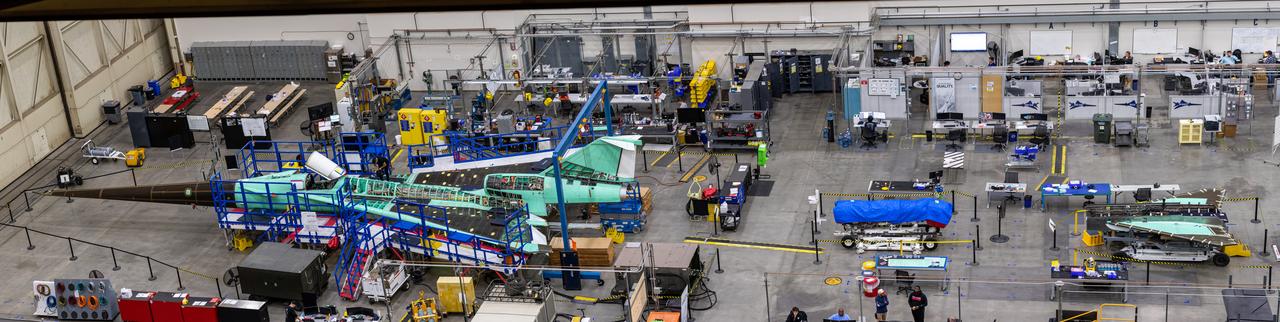
Here is an overhead view of the X-59 aircraft (left) prior to the installation of the General Electric F414 engine (center, located under the blue cover). After the engine is installed, the lower empennage (right), the last remaining major aircraft component, will be installed in preparation for integrated system checkouts. The X-59 is the centerpiece of the Quesst mission which plans to help enable commercial supersonic air travel over land.
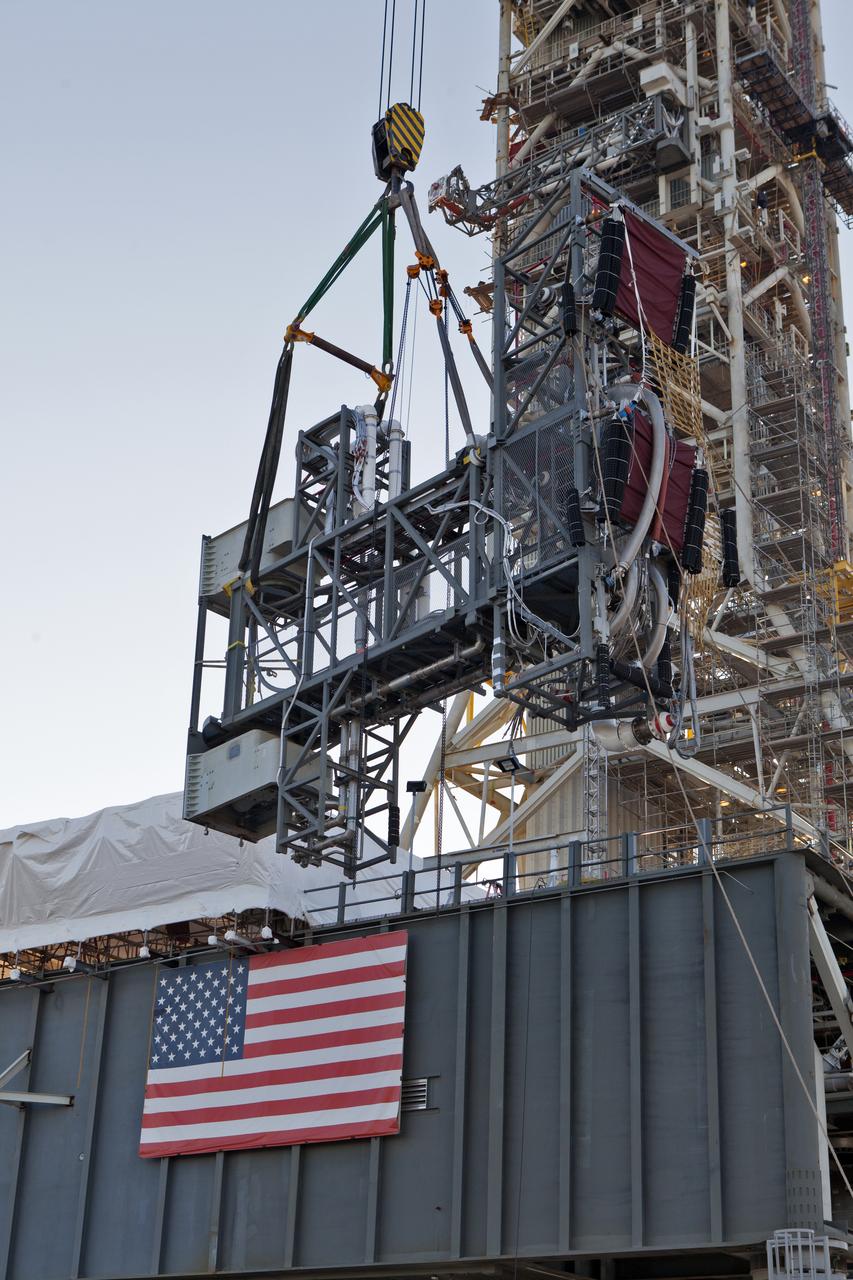
A heavy-lift crane slowly lifts the Interim Cryogenic Propulsion Stage Umbilical (ICPSU) up for installation on the tower of the mobile launcher (ML) at NASA's Kennedy Space Center in Florida. The last of the large umbilicals to be installed, the ICPSU will provide super-cooled hydrogen and liquid oxygen to the Space Launch System (SLS) rocket's interim cryogenic propulsion stage, or upper stage, at T-0 for Exploration Mission-1. The umbilical is located at about the 240-foot-level of the mobile launcher and will supply fuel, oxidizer, gaseous helium, hazardous gas leak detection, electrical commodities and environment control systems to the upper stage of the SLS rocket during launch. Exploration Ground Systems is overseeing installation of the umbilicals on the ML.
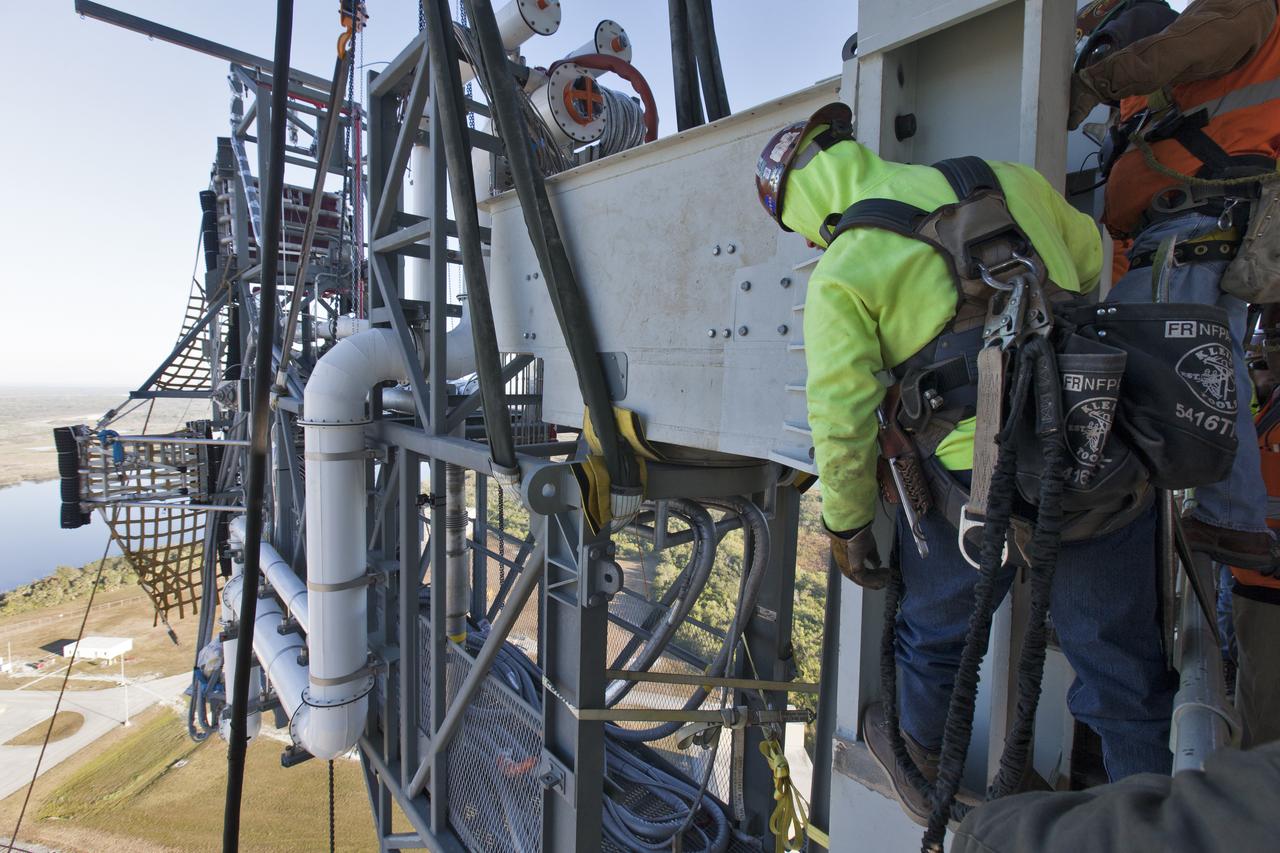
Construction workers with JP Donovan install the Interim Cryogenic Propulsion Stage Umbilical (ICPSU) at about the 240-foot-level of the mobile launcher (ML) tower at NASA's Kennedy Space Center in Florida. The last of the large umbilicals to be installed, the ICPSU will provide super-cooled hydrogen and liquid oxygen to the Space Launch System (SLS) rocket's interim cryogenic propulsion stage, or upper stage, at T-0 for Exploration Mission-1. The umbilical is located at about the 240-foot-level of the mobile launcher and will supply fuel, oxidizer, gaseous helium, hazardous gas leak detection, electrical commodities and environment control systems to the upper stage of the SLS rocket during launch. Exploration Ground Systems is overseeing installation of the umbilicals on the ML.
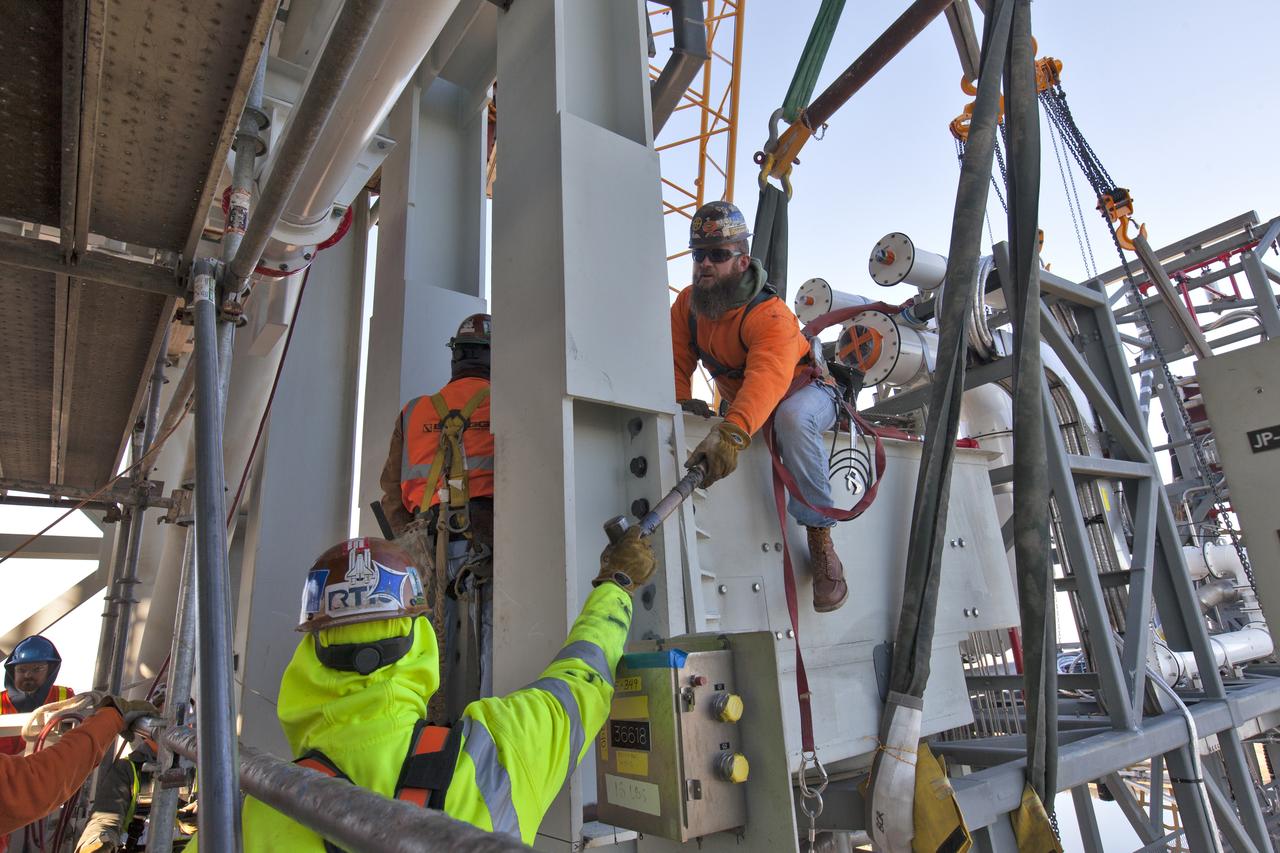
Construction workers with JP Donovan install the Interim Cryogenic Propulsion Stage Umbilical (ICPSU) at about the 240-foot-level of the mobile launcher (ML) tower at NASA's Kennedy Space Center in Florida. The last of the large umbilicals to be installed, the ICPSU will provide super-cooled hydrogen and liquid oxygen to the Space Launch System (SLS) rocket's interim cryogenic propulsion stage, or upper stage, at T-0 for Exploration Mission-1. The umbilical is located at about the 240-foot-level of the mobile launcher and will supply fuel, oxidizer, gaseous helium, hazardous gas leak detection, electrical commodities and environment control systems to the upper stage of the SLS rocket during launch. Exploration Ground Systems is overseeing installation of the umbilicals on the ML.
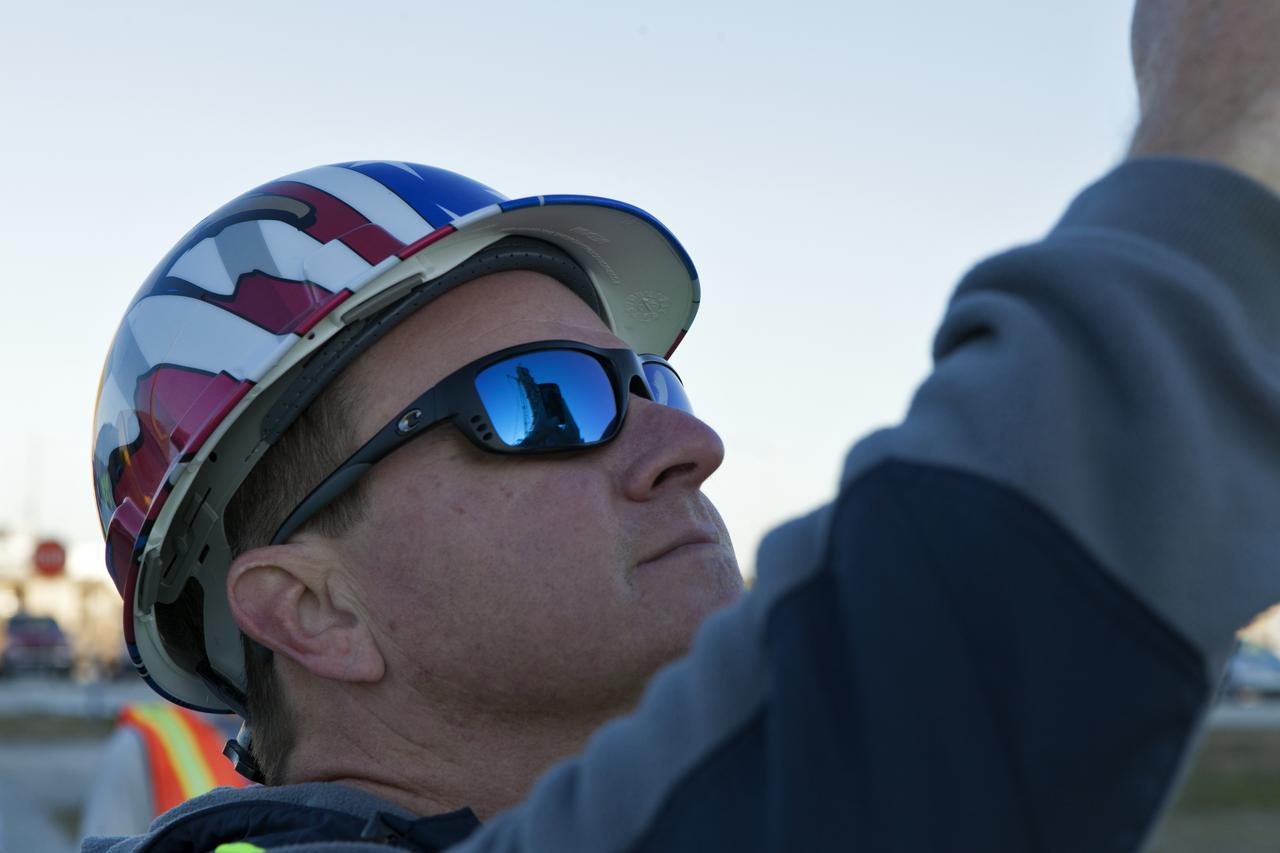
The mobile launcher (ML) is reflected in the sunglasses of a construction worker with JP Donovan at NASA's Kennedy Space Center in Florida. A crane is lifting the Interim Cryogenic Propulsion Stage Umbilical (ICPSU) up for installation on the tower of the ML. The last of the large umbilicals to be installed, the ICPSU will provide super-cooled hydrogen and liquid oxygen to the Space Launch System (SLS) rocket's interim cryogenic propulsion stage, or upper stage, at T-0 for Exploration Mission-1. The umbilical is located at about the 240-foot-level of the mobile launcher and will supply fuel, oxidizer, gaseous helium, hazardous gas leak detection, electrical commodities and environment control systems to the upper stage of the SLS rocket during launch. Exploration Ground Systems is overseeing installation of the umbilicals on the ML.
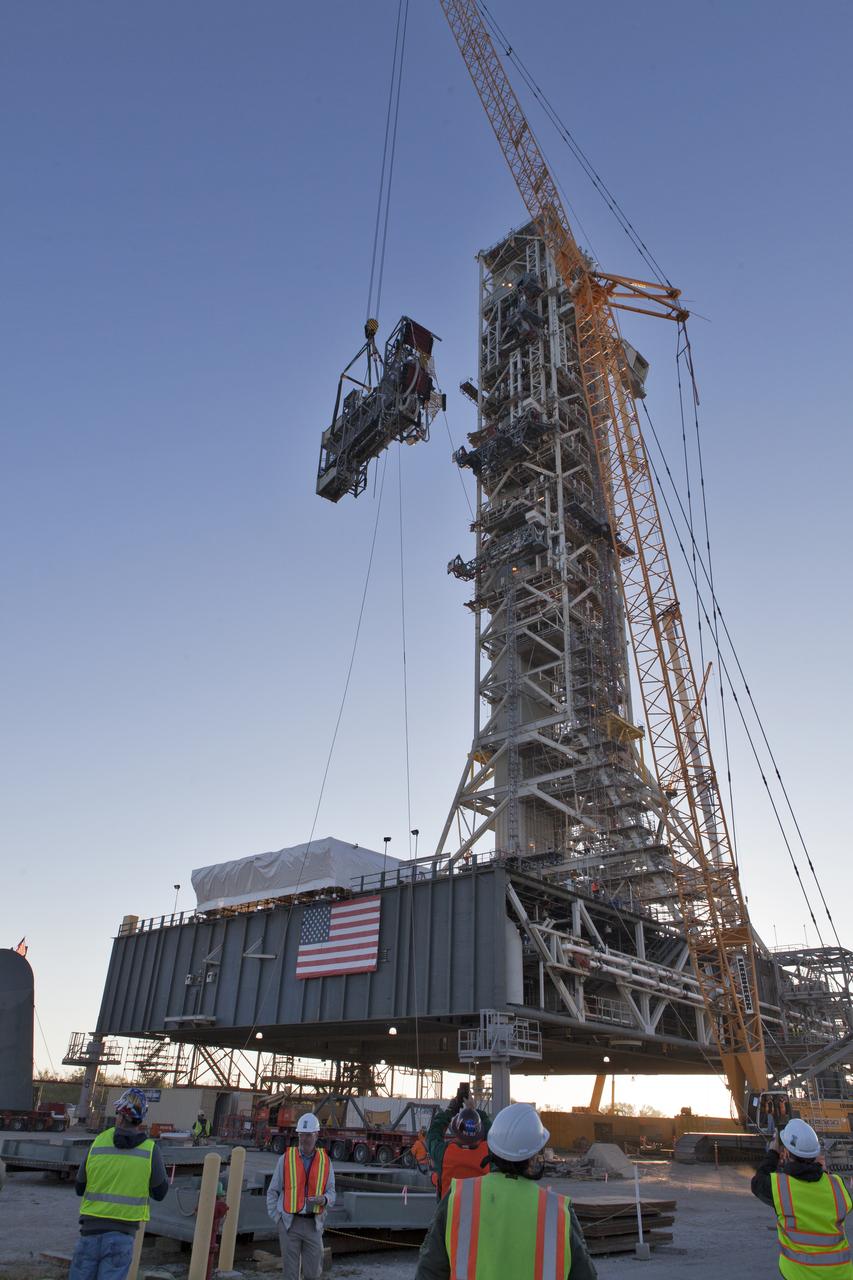
A heavy-lift crane slowly lifts the Interim Cryogenic Propulsion Stage Umbilical (ICPSU) high up for installation on the tower of the mobile launcher (ML) at NASA's Kennedy Space Center in Florida. The last of the large umbilicals to be installed, the ICPSU will provide super-cooled hydrogen and liquid oxygen to the Space Launch System (SLS) rocket's interim cryogenic propulsion stage, or upper stage, at T-0 for Exploration Mission-1. The umbilical is located at about the 240-foot-level of the mobile launcher and will supply fuel, oxidizer, gaseous helium, hazardous gas leak detection, electrical commodities and environment control systems to the upper stage of the SLS rocket during launch. Exploration Ground Systems is overseeing installation of the umbilicals on the ML.
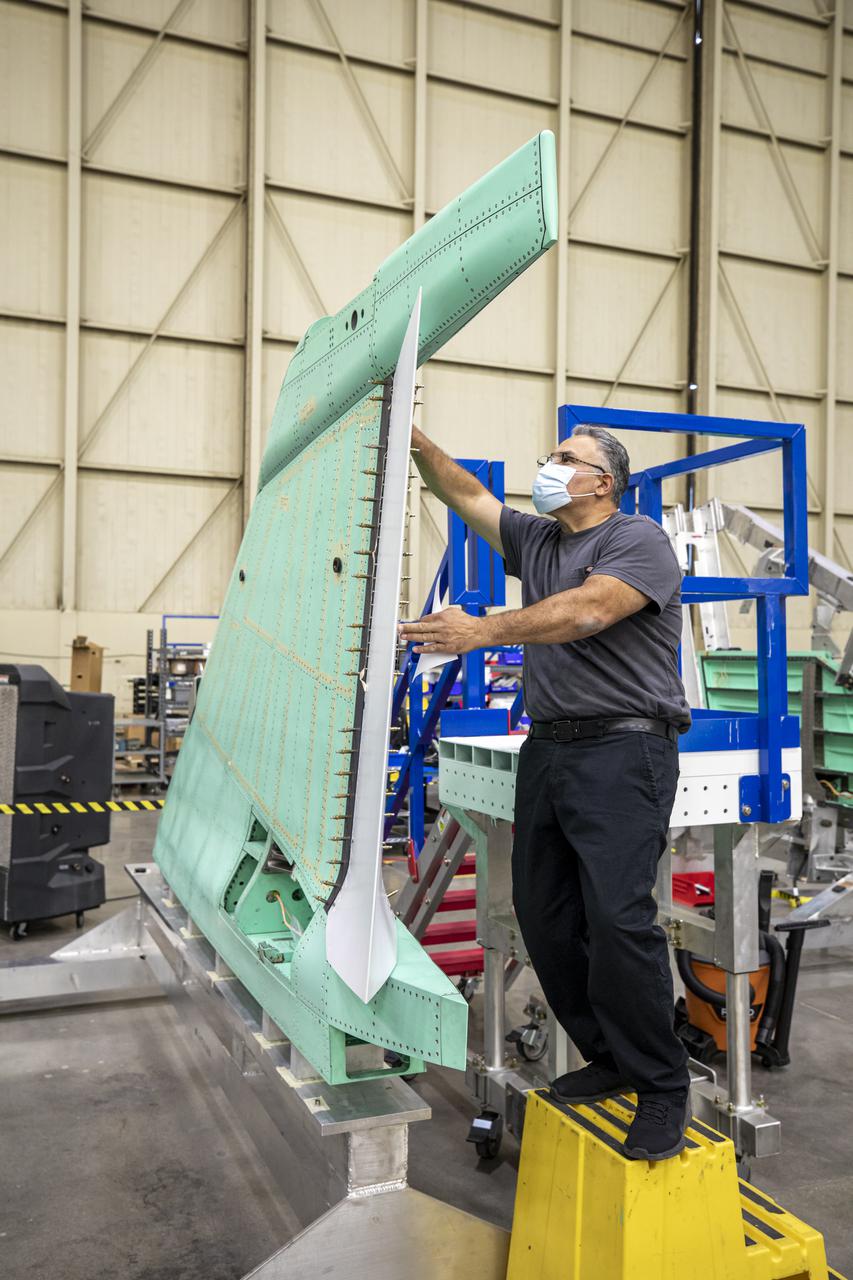
A technician is shown working on the X-59 vertical tail prior to installation. The aircraft, under construction at Lockheed Martin Skunk Works in Palmdale, California, will fly to demonstrate the ability to fly supersonic while reducing the loud sonic boom to a quiet sonic thump. Lockheed Martin Photography By Garry Tice 1011 Lockheed Way, Palmdale, Ca. 93599 Event: SEG 530 Vertical Tail - Rudder Installed Date: 5/12/2021
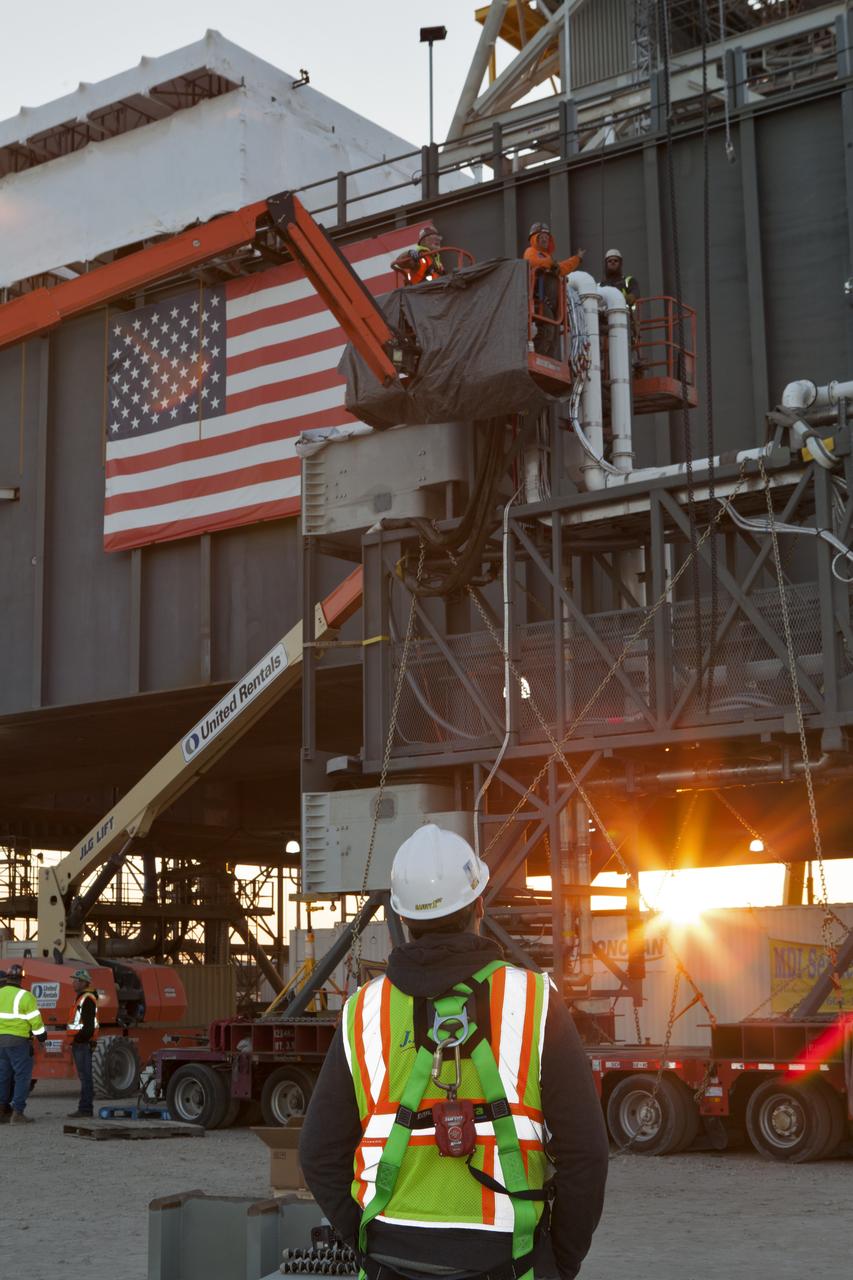
Construction workers with JP Donovan assist with preparations to lift and install the Interim Cryogenic Propulsion Stage Umbilical on the tower of the mobile launcher at NASA's Kennedy Space Center in Florida. The last of the large umbilicals to be installed, the ICPSU will provide super-cooled hydrogen and liquid oxygen to the Space Launch System (SLS) rocket's interim cryogenic propulsion stage, or upper stage, at T-0 for Exploration Mission-1. The umbilical is located at about the 240-foot-level of the mobile launcher and will supply fuel, oxidizer, gaseous helium, hazardous gas leak detection, electrical commodities and environment control systems to the upper stage of the SLS rocket during launch. Exploration Ground Systems is overseeing installation of the umbilicals on the ML.
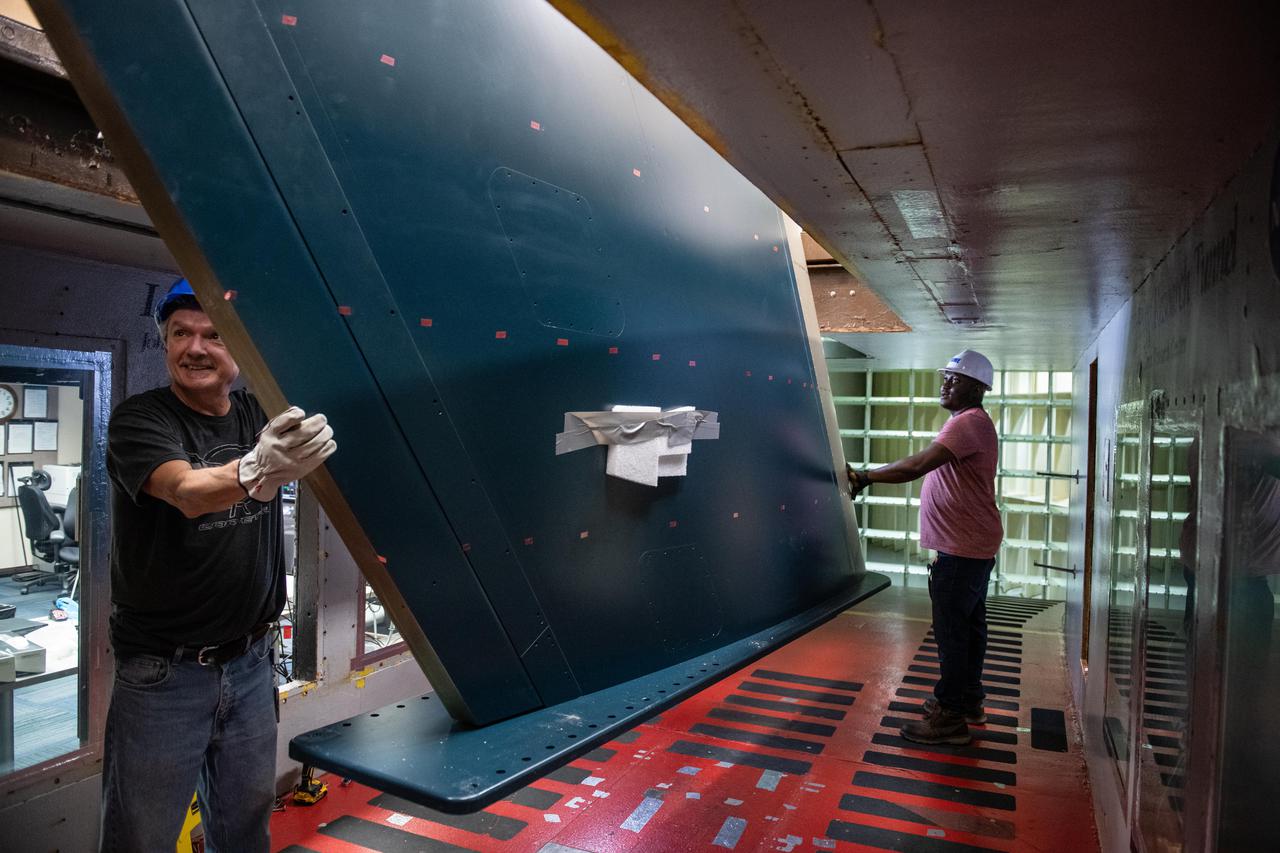
CRM Full Chord Installation and Test Documentation Photos, Icing Research Tunnel
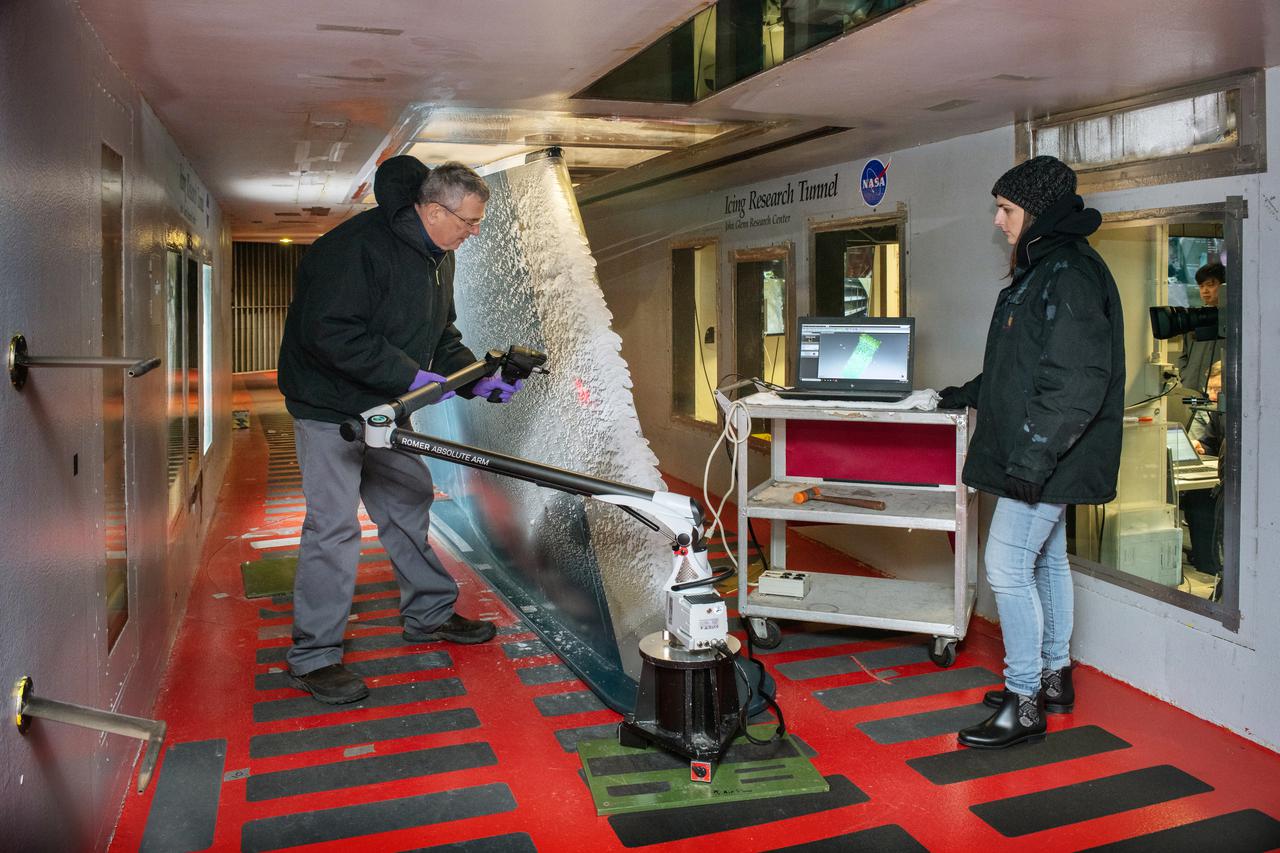
CRM Full Chord Installation and Test Documentation Photos, Icing Research Tunnel
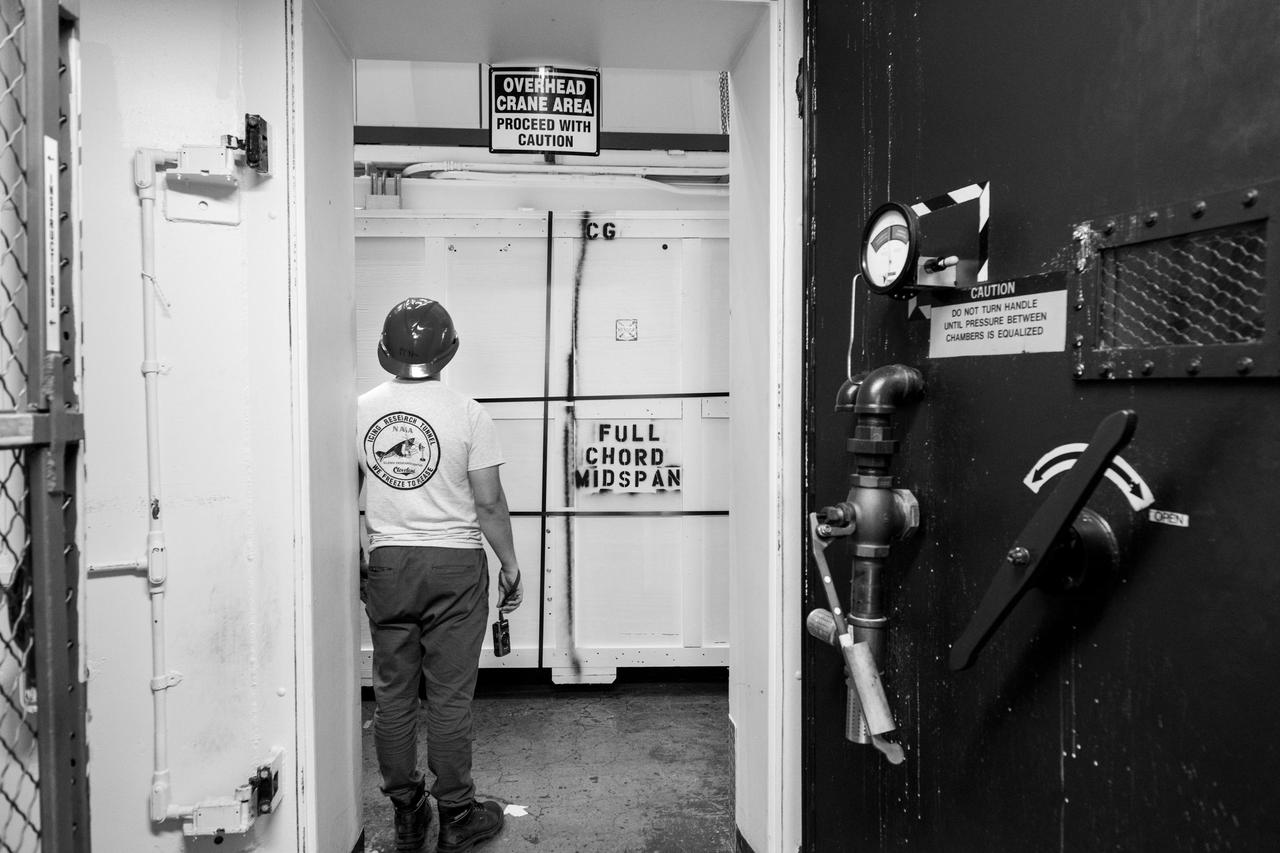
CRM Full Chord Installation and Test Documentation Photos, Icing Research Tunnel
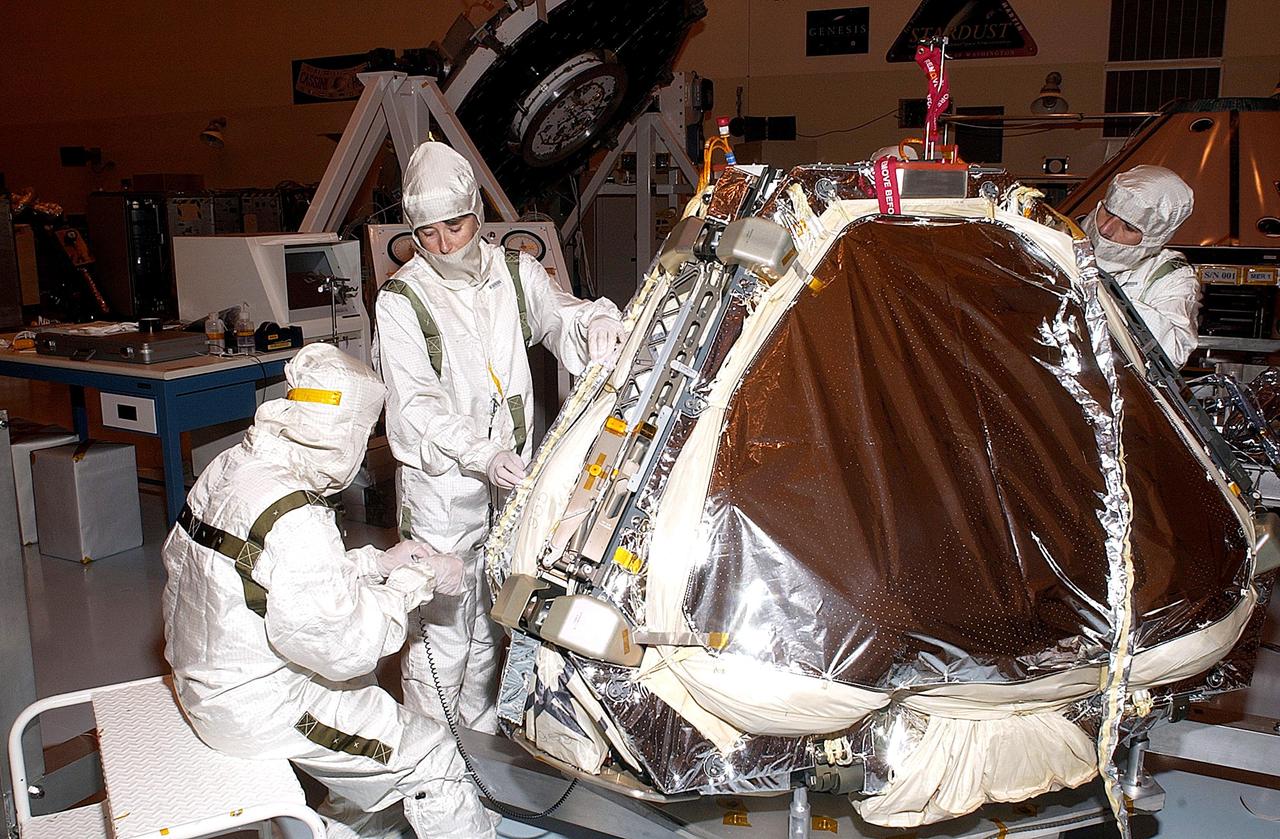
Air bags are installed on the lander on Mars Exploration Rover 1 MER-1.

This photo shows the second RS-25 engine attached to the core stage for NASA’s Space Launch System rocket for the agency’s Artemis I mission to the Moon. Engineers and technicians at NASA’s Michoud Assembly Facility in New Orleans structurally mated the second of four engines to the stage on Oct. 30 and are currently integrating the propulsion and electrical systems within the structure to complete the installation. Integration of the RS-25 engines to the recently completed core stage structure is a collaborative, multistep process for NASA and its partners Boeing, the core stage lead contractor, and Aerojet Rocketdyne, the RS-25 engines lead contractor. The four RS-25 engines for Artemis I are modified heritage flight hardware from the Space Shuttle Program, ensuring high performance and reliability to power NASA’s next generation lunar missions. Each engine also has a special identification number, and NASA keeps a history of which engines are used on each mission. The second engine, Engine 2045, has flown on several shuttle missions, including the mission that returned NASA astronaut John Glenn to space in 1998 as well as the first and only shuttle launch to occur on Independence Day in 2006. Offering more payload mass, volume capability and energy to speed missions through space, the SLS rocket, along with NASA’s Gateway in lunar orbit and Orion, is part of NASA’s backbone for deep space exploration and the Artemis lunar program. No other rocket is capable of carrying astronauts in Orion around the Moon in a single mission.

This photo shows the second RS-25 engine attached to the core stage for NASA’s Space Launch System rocket for the agency’s Artemis I mission to the Moon. Engineers and technicians at NASA’s Michoud Assembly Facility in New Orleans structurally mated the second of four engines to the stage on Oct. 30 and are currently integrating the propulsion and electrical systems within the structure to complete the installation. Integration of the RS-25 engines to the recently completed core stage structure is a collaborative, multistep process for NASA and its partners Boeing, the core stage lead contractor, and Aerojet Rocketdyne, the RS-25 engines lead contractor. The four RS-25 engines for Artemis I are modified heritage flight hardware from the Space Shuttle Program, ensuring high performance and reliability to power NASA’s next generation lunar missions. Each engine also has a special identification number, and NASA keeps a history of which engines are used on each mission. The second engine, Engine 2045, has flown on several shuttle missions, including the mission that returned NASA astronaut John Glenn to space in 1998 as well as the first and only shuttle launch to occur on Independence Day in 2006. Offering more payload mass, volume capability and energy to speed missions through space, the SLS rocket, along with NASA’s Gateway in lunar orbit and Orion, is part of NASA’s backbone for deep space exploration and the Artemis lunar program. No other rocket is capable of carrying astronauts in Orion around the Moon in a single mission.
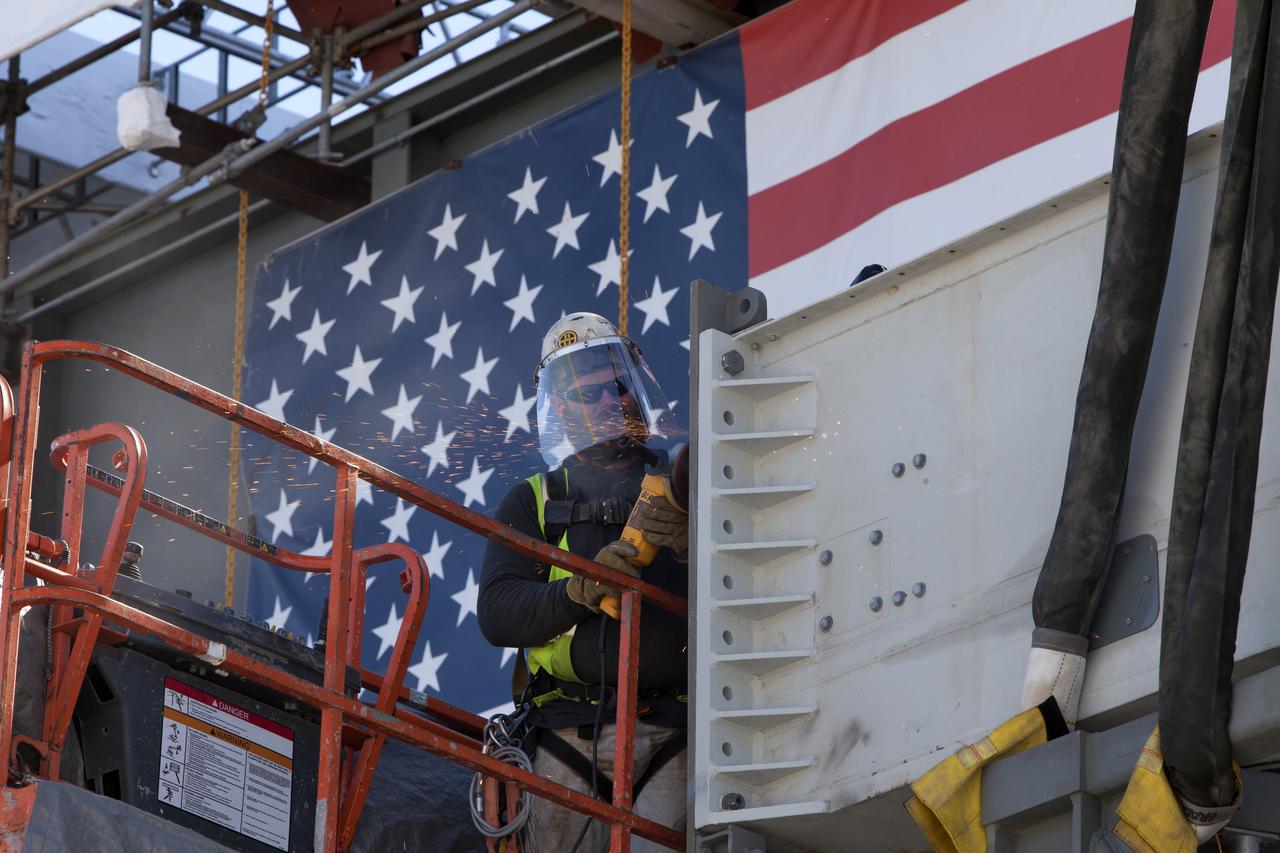
A construction worker with JP Donovan helps prepare the Interim Cryogenic Propulsion Stage Umbilical (ICPSU) for installation high up on the tower of the mobile launcher (ML) at NASA's Kennedy Space Center in Florida. The last of the large umbilicals to be installed, the ICPSU will provide super-cooled hydrogen and liquid oxygen to the Space Launch System (SLS) rocket's interim cryogenic propulsion stage, or upper stage, at T-0 for Exploration Mission-1. The umbilical will be located at about the 240-foot-level of the mobile launcher and will supply fuel, oxidizer, gaseous helium, hazardous gas leak detection, electrical commodities and environment control systems to the upper stage of the SLS rocket during launch. Exploration Ground Systems is overseeing installation of the umbilicals on the ML.
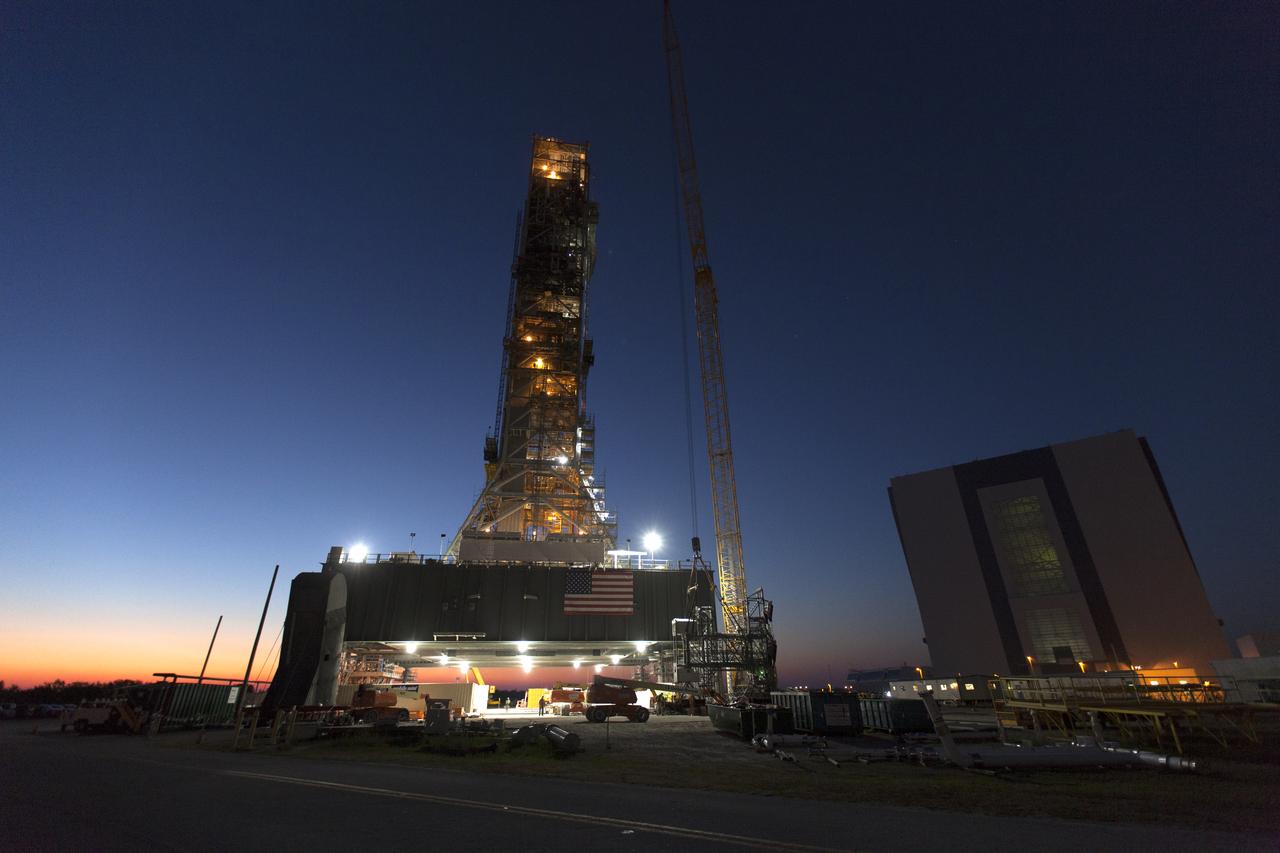
The mobile launcher (ML) tower is lit up before early morning sunrise at NASA's Kennedy Space Center in Florida. Preparations are underway to lift and install the Interim Cryogenic Propulsion Stage Umbilical (ICPSU) at about the 240-foot-level on the tower. The last of the large umbilicals to be installed, the ICPSU will provide super-cooled hydrogen and liquid oxygen to the Space Launch System (SLS) rocket's interim cryogenic propulsion stage, or upper stage, at T-0 for Exploration Mission-1. The umbilical will supply fuel, oxidizer, gaseous helium, hazardous gas leak detection, electrical commodities and environment control systems to the upper stage of the SLS rocket during launch. Exploration Ground Systems is overseeing installation of the umbilicals on the ML.
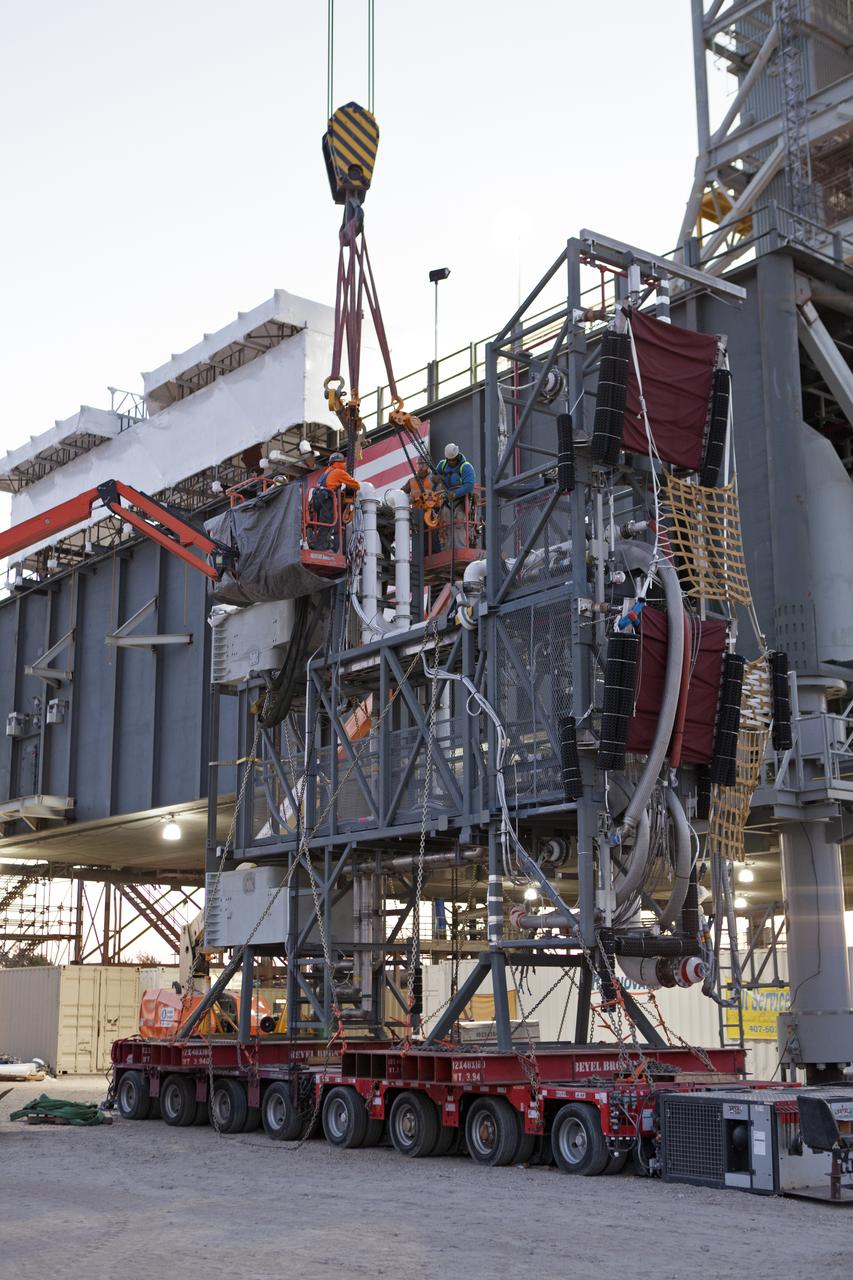
Construction workers with JP Donovan attach a heavy-lift crane to the Interim Cryogenic Propulsion Stage Umbilical (ICPSU) to prepare for lifting and installation on the mobile launcher (ML) tower at NASA's Kennedy Space Center in Florida. The last of the large umbilicals to be installed, the ICPSU will provide super-cooled hydrogen and liquid oxygen to the Space Launch System (SLS) rocket's interim cryogenic propulsion stage, or upper stage, at T-0 for Exploration Mission-1. The umbilical will be located at about the 240-foot-level of the ML and will supply fuel, oxidizer, gaseous helium, hazardous gas leak detection, electrical commodities and environment control systems to the upper stage of the SLS rocket during launch. Exploration Ground Systems is overseeing installation of the umbilicals on the ML.
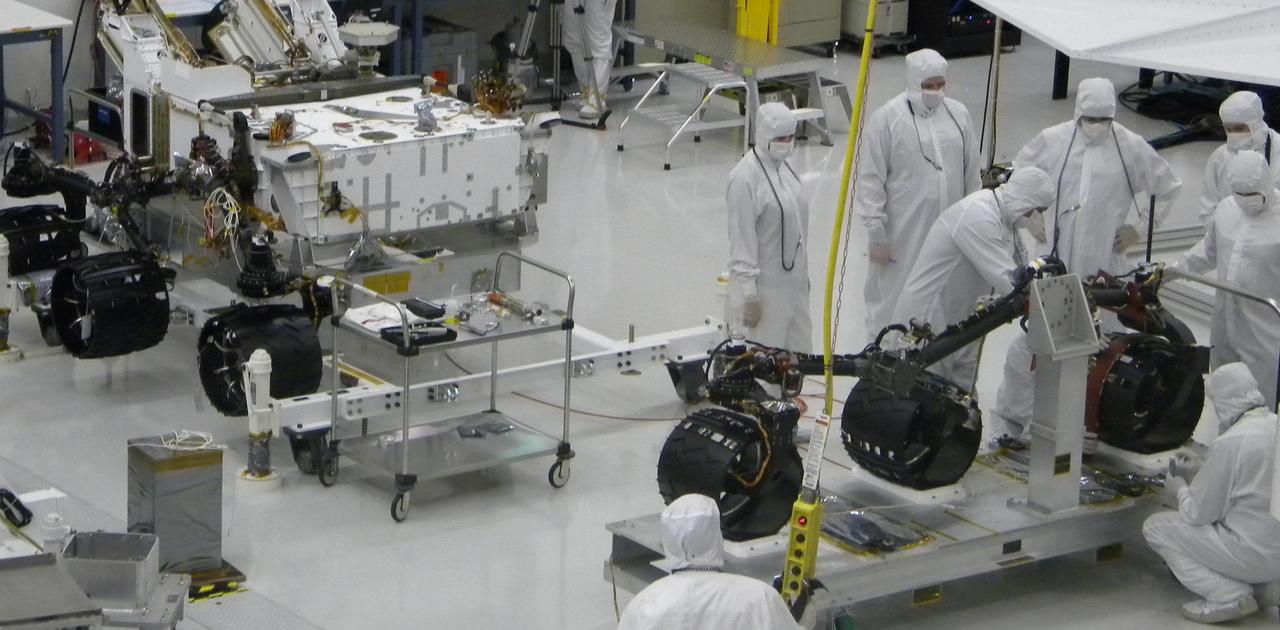
With the wheels and suspension system already installed onto one side of NASA Mars rover Curiosity the previous day, spacecraft engineers and technicians prepare the other side mobility subsystem for installation on June 29, 2010.
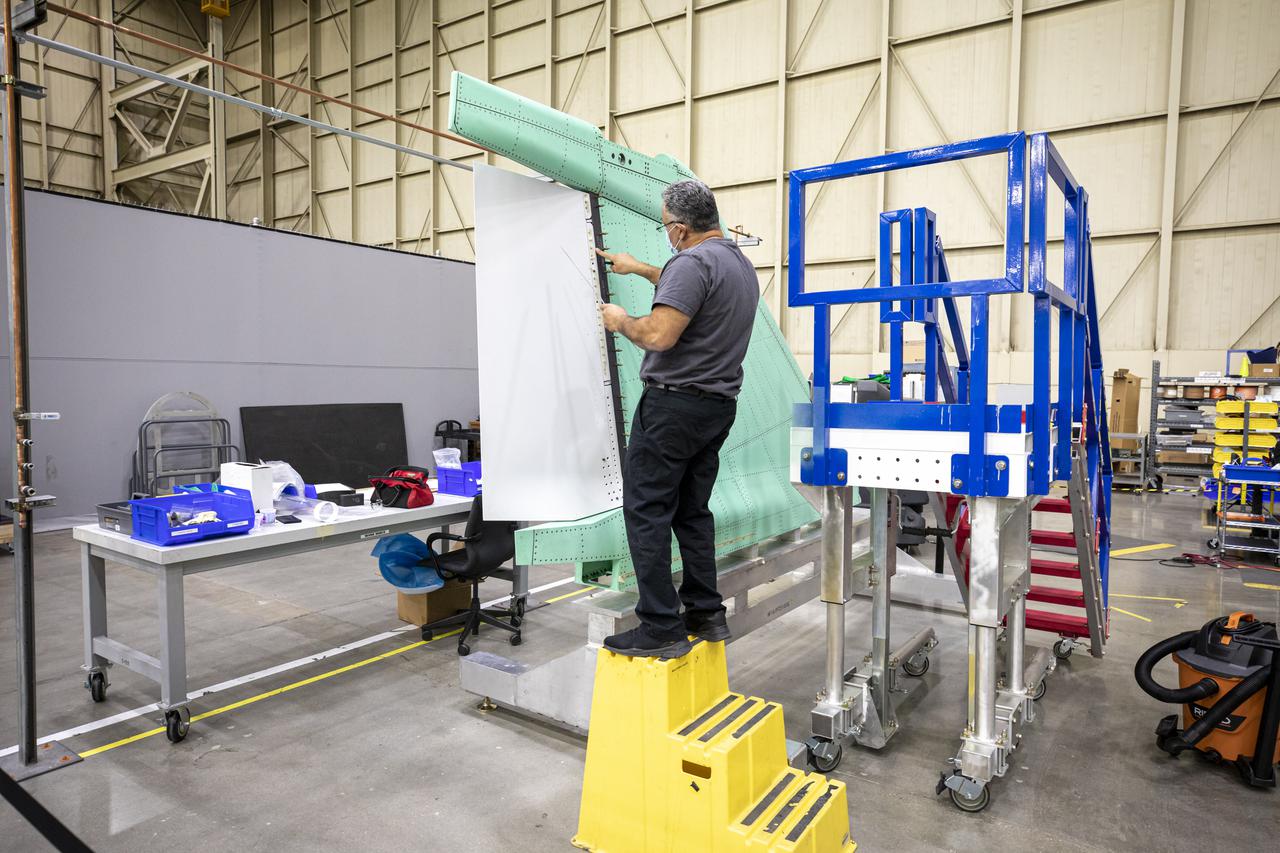
A technician is shown working on the X-59 Quiet SuperSonic Technology or QueSST aircraft’s vertical tail prior to installation. Lockheed Martin Photography By Garry Tice 1011 Lockheed Way, Palmdale, Ca. 93599 Event: SEG 530 Vertical Tail - Rudder Installed Date: 5/12/2021
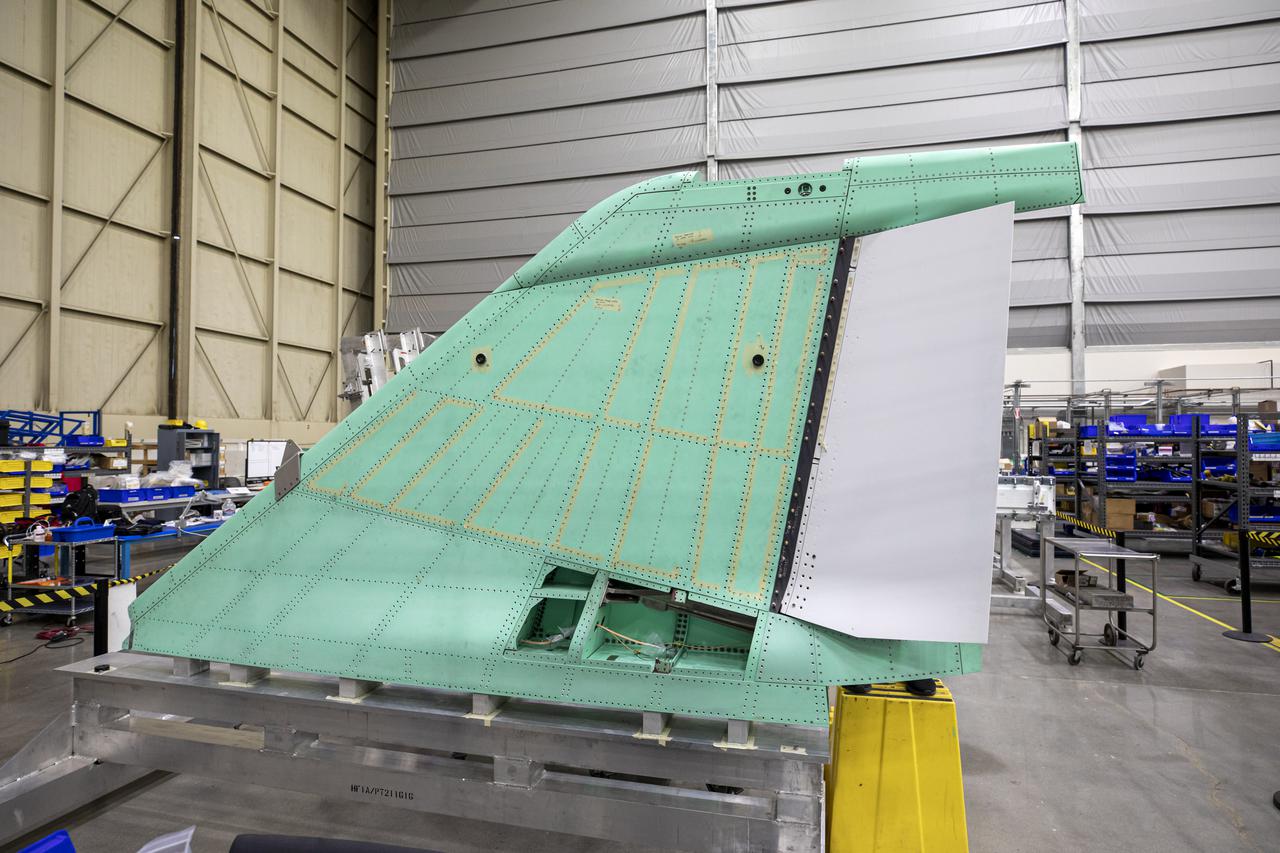
Pictured here is a close up view of the X-59 Quiet SuperSonic Technology or QueSST aircraft’s vertical tail prior to installation. Lockheed Martin Photography By Garry Tice 1011 Lockheed Way, Palmdale, Ca. 93599 Event: SEG 530 Vertical Tail - Rudder Installed Date: 5/12/2021
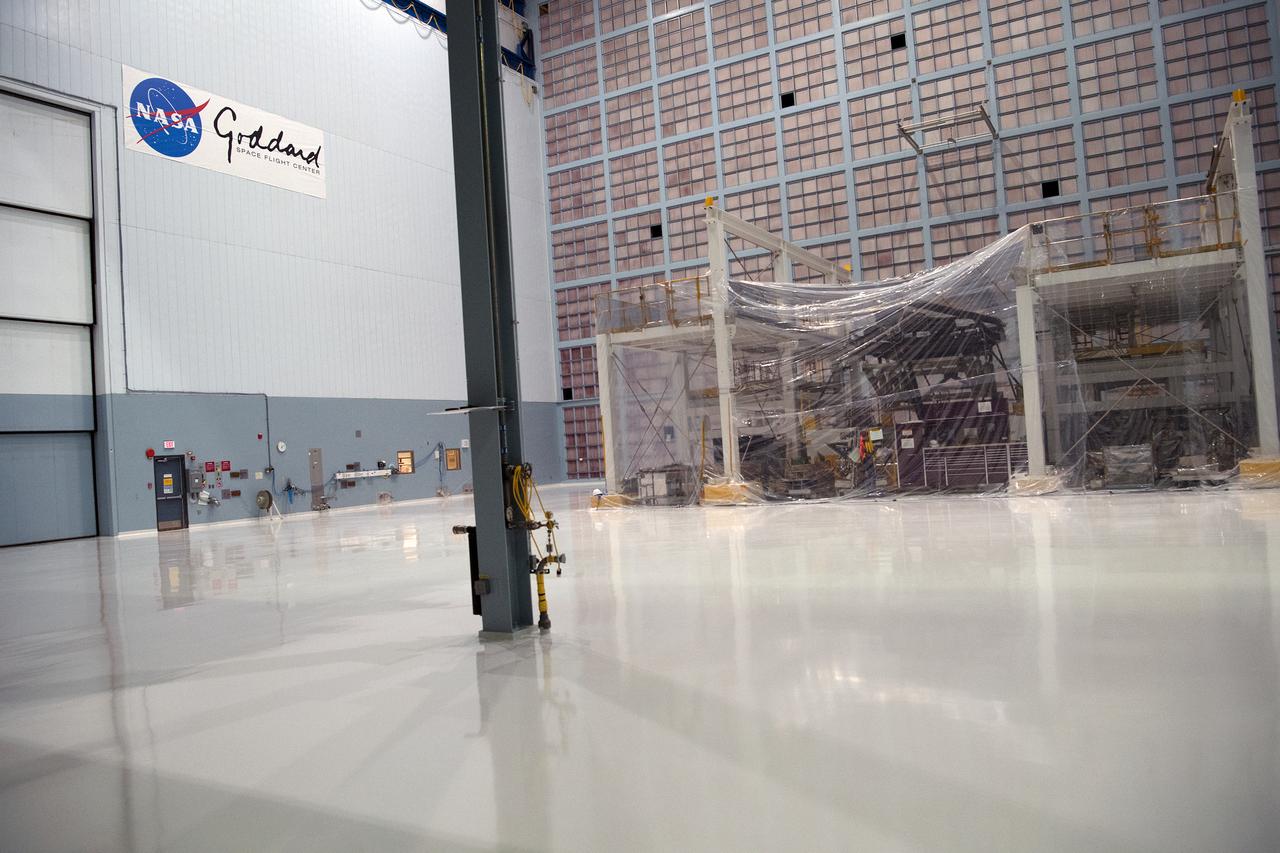
Clean room B 29 SSDIF facility floor was installed in January 2019 by Stonhard
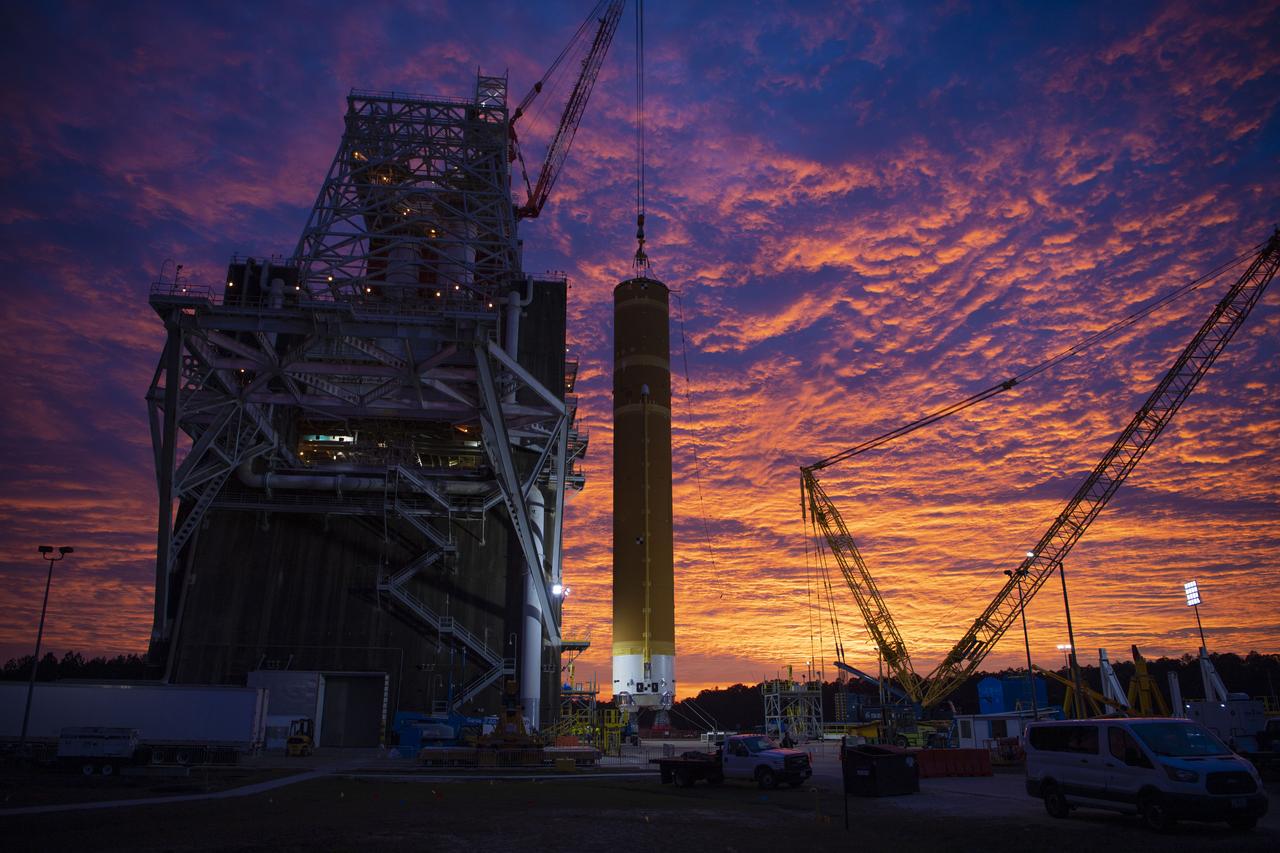
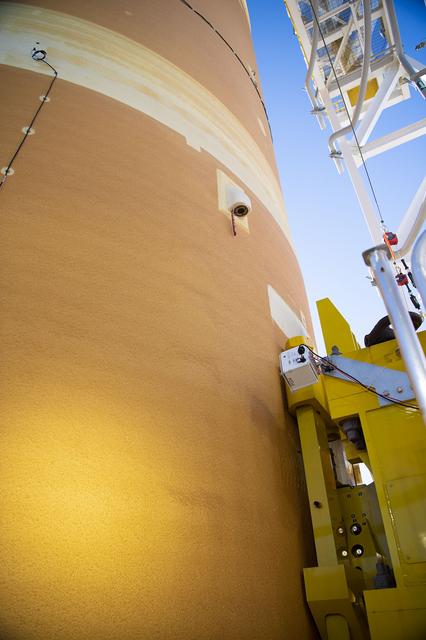
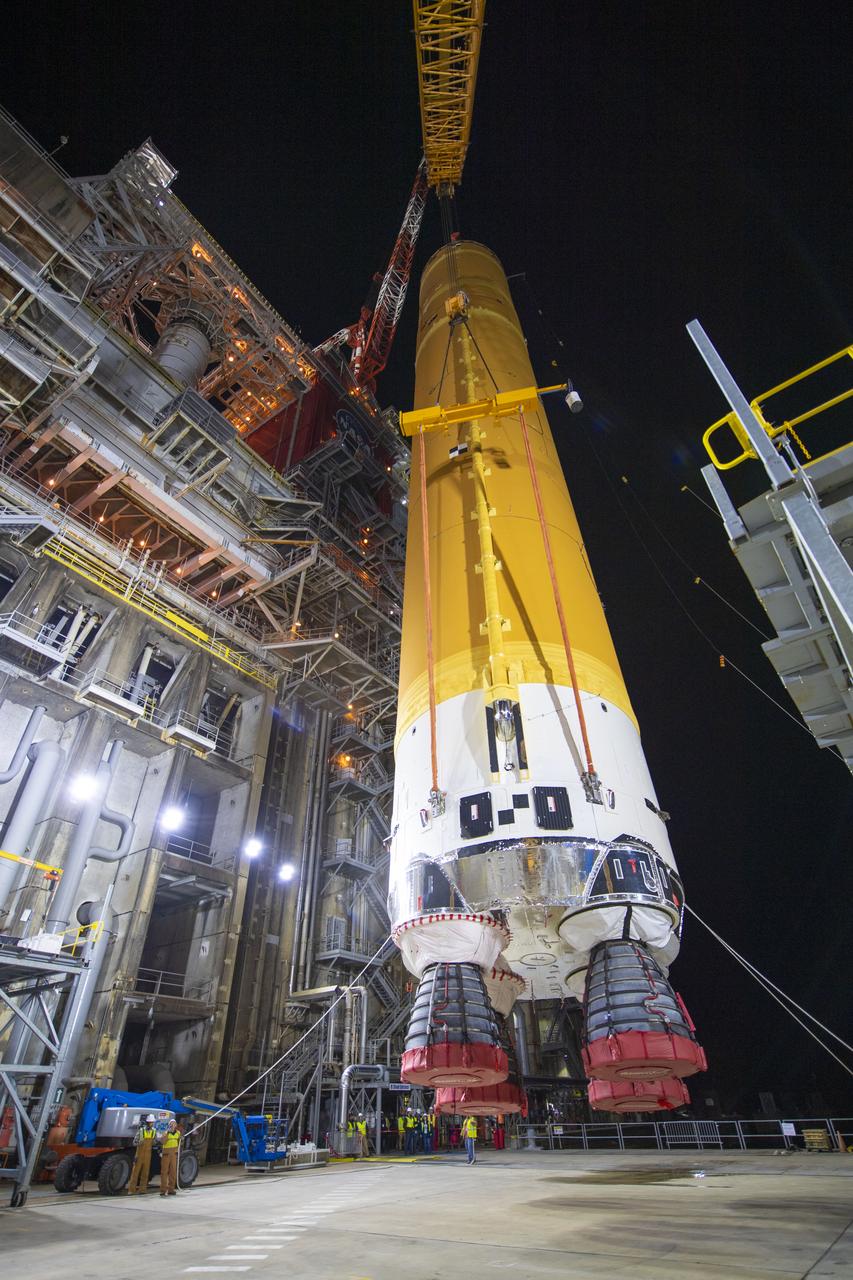
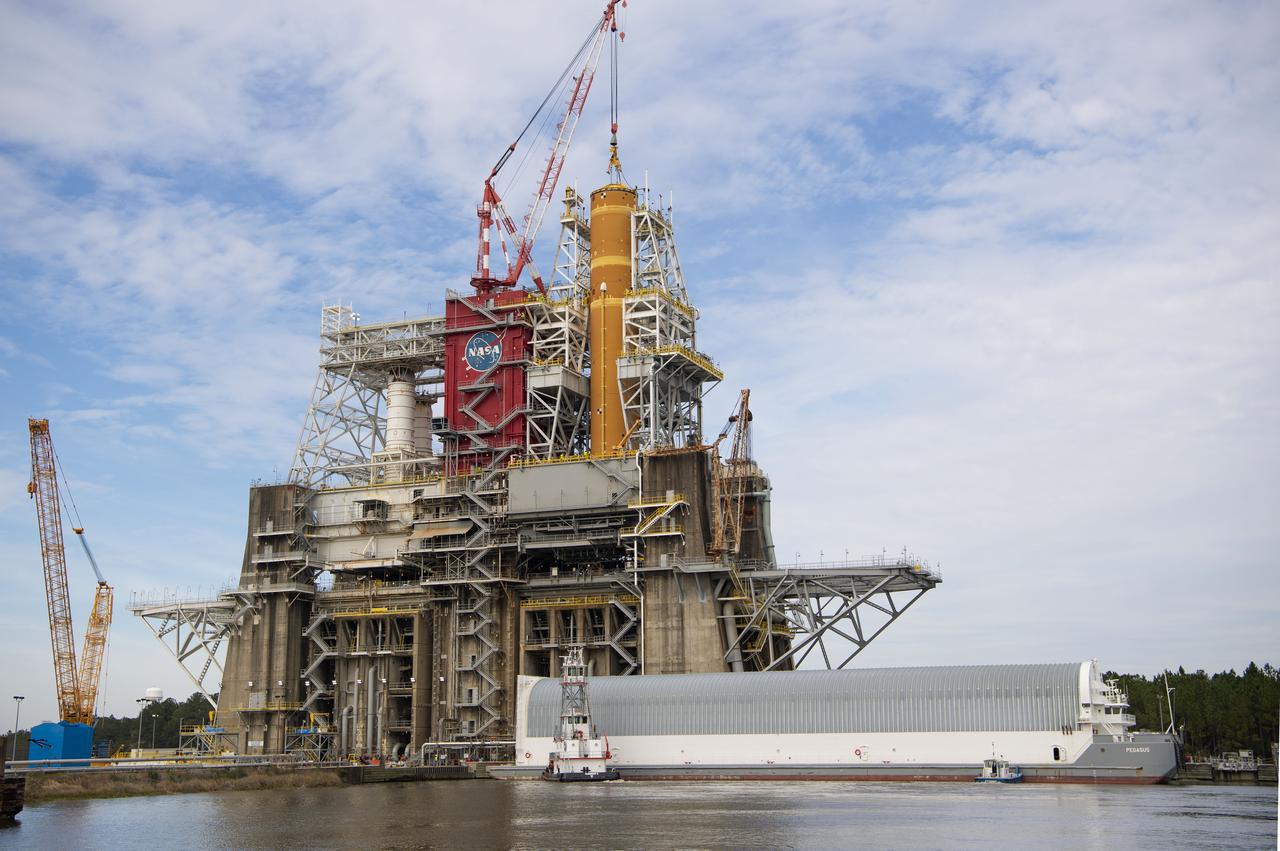
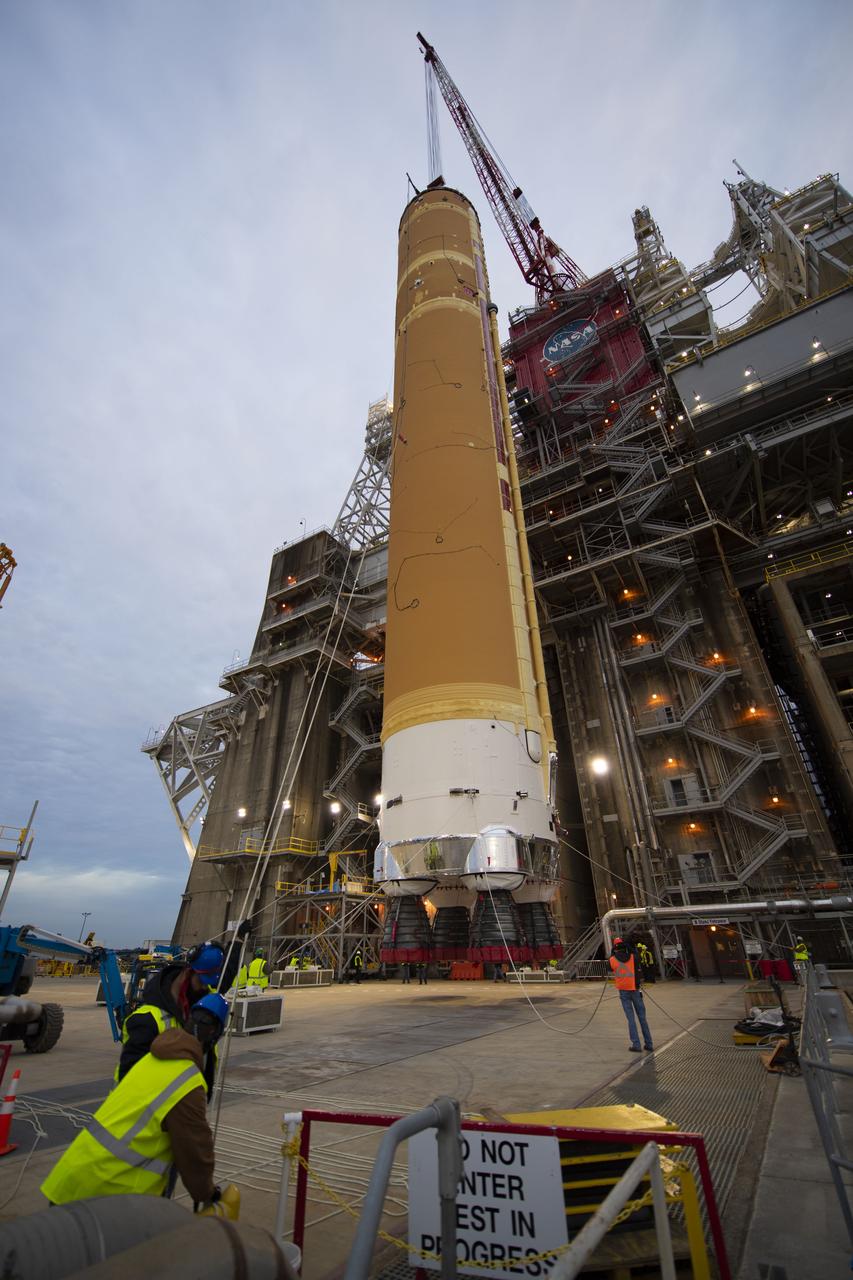
On Jan. 21-22, 2020, crews at Stennis Space Center lifted and installed the first core stage of NASA’s new Space Launch System (SLS) rocket onto the B-2 Test Stand. In upcoming months, a top-to-bottom, integrated series of Green Run tests will be conducted on the stage and its sophisticated systems. Following testing, the stage will be used to help launch the maiden Artemis I test mission of SLS and the Orion spacecraft. Through the Artemis program, NASA will send humans, including the first woman and next man, to the Moon to establish a sustainable presence.
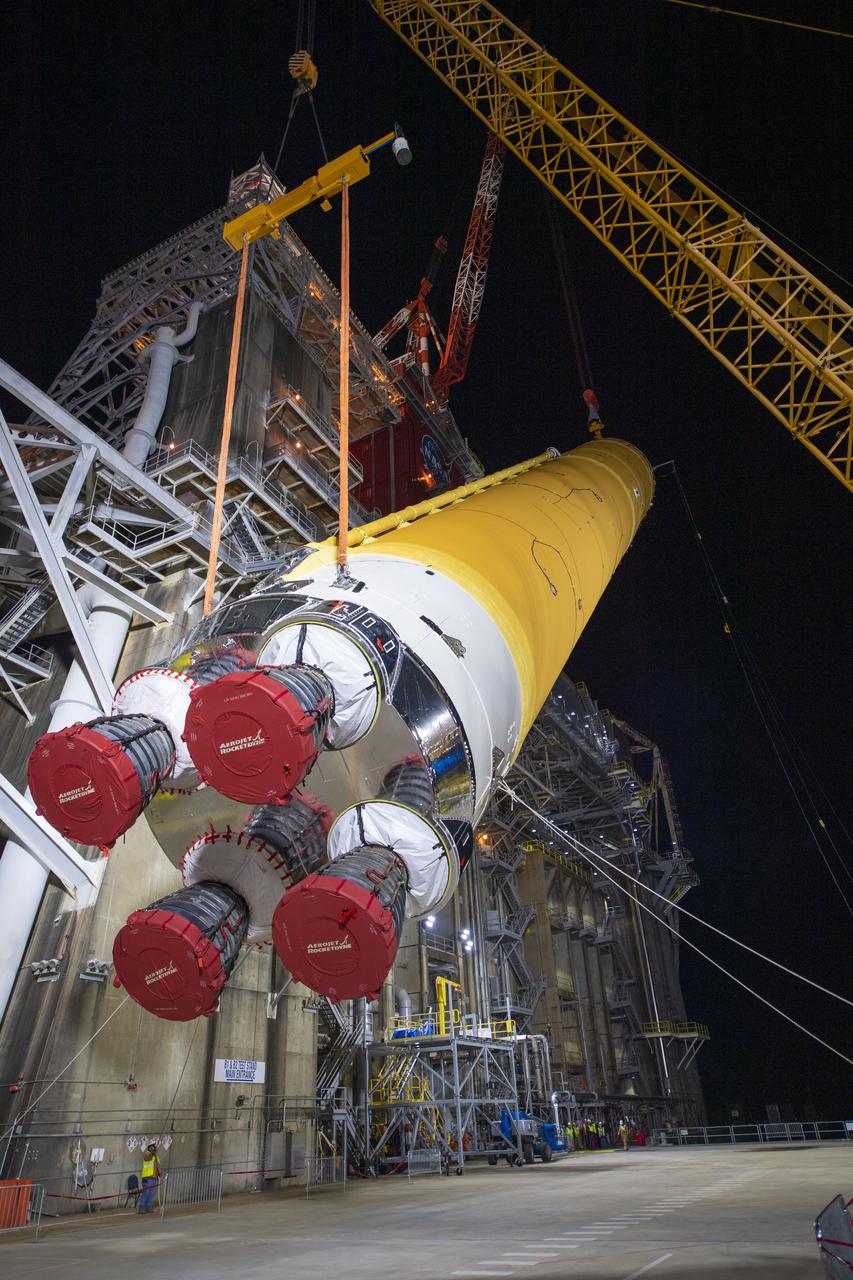
On Jan. 21-22, 2020, crews at Stennis Space Center lifted and installed the first core stage of NASA’s new Space Launch System (SLS) rocket onto the B-2 Test Stand. In upcoming months, a top-to-bottom, integrated series of Green Run tests will be conducted on the stage and its sophisticated systems. Following testing, the stage will be used to help launch the maiden Artemis I test mission of SLS and the Orion spacecraft. Through the Artemis program, NASA will send humans, including the first woman and next man, to the Moon to establish a sustainable presence.
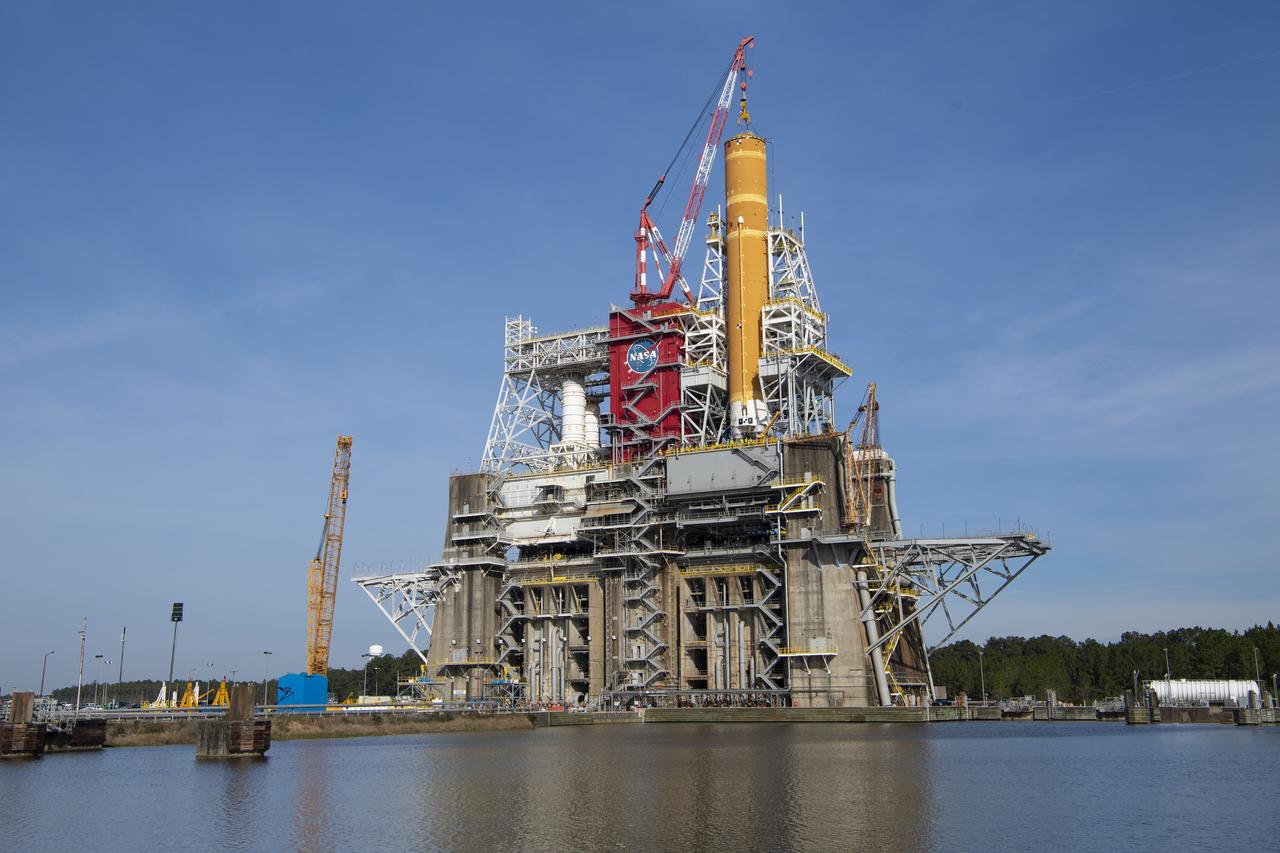
On Jan. 21-22, 2020, crews at Stennis Space Center lifted and installed the first core stage of NASA’s new Space Launch System (SLS) rocket onto the B-2 Test Stand. In upcoming months, a top-to-bottom, integrated series of Green Run tests will be conducted on the stage and its sophisticated systems. Following testing, the stage will be used to help launch the maiden Artemis I test mission of SLS and the Orion spacecraft. Through the Artemis program, NASA will send humans, including the first woman and next man, to the Moon to establish a sustainable presence.
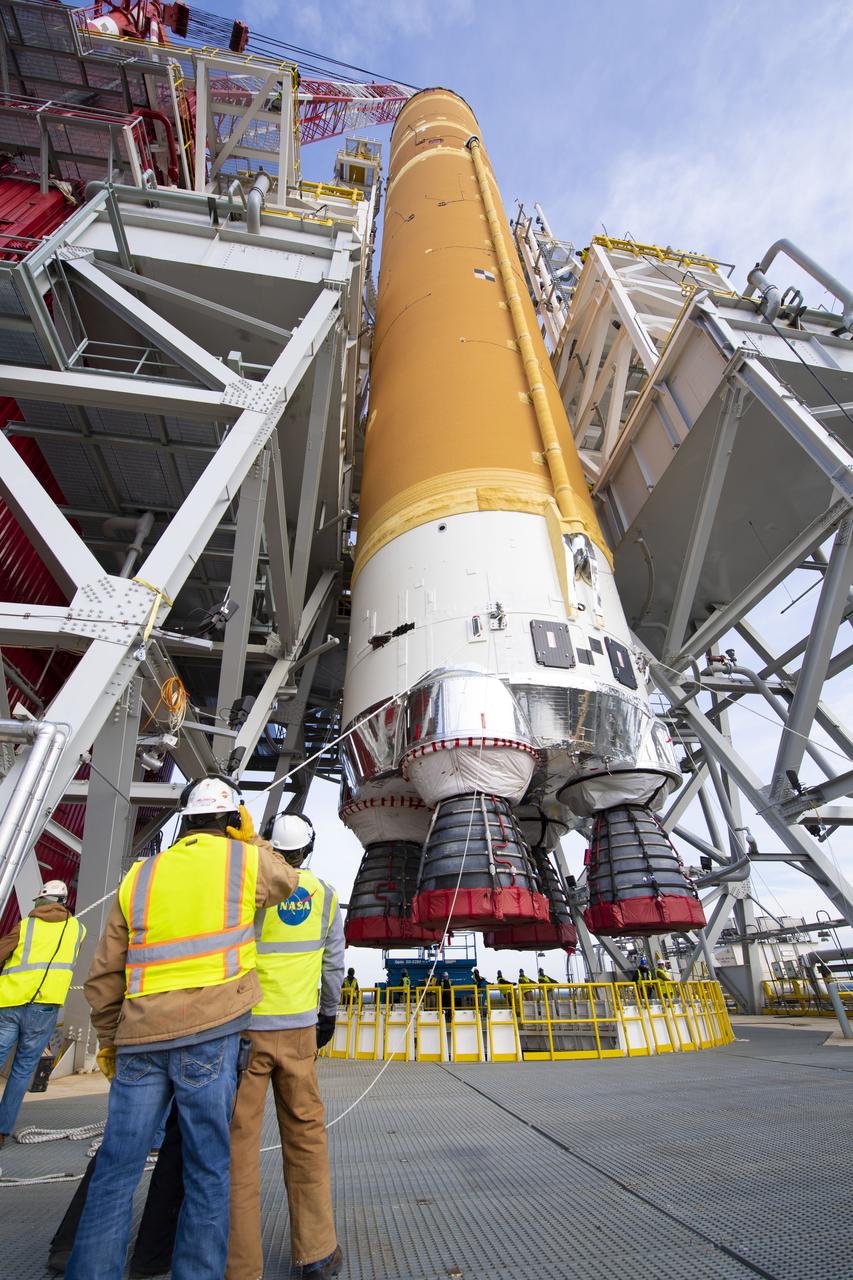
On Jan. 21-22, 2020, crews at Stennis Space Center lifted and installed the first core stage of NASA’s new Space Launch System (SLS) rocket onto the B-2 Test Stand. In upcoming months, a top-to-bottom, integrated series of Green Run tests will be conducted on the stage and its sophisticated systems. Following testing, the stage will be used to help launch the maiden Artemis I test mission of SLS and the Orion spacecraft. Through the Artemis program, NASA will send humans, including the first woman and next man, to the Moon to establish a sustainable presence.
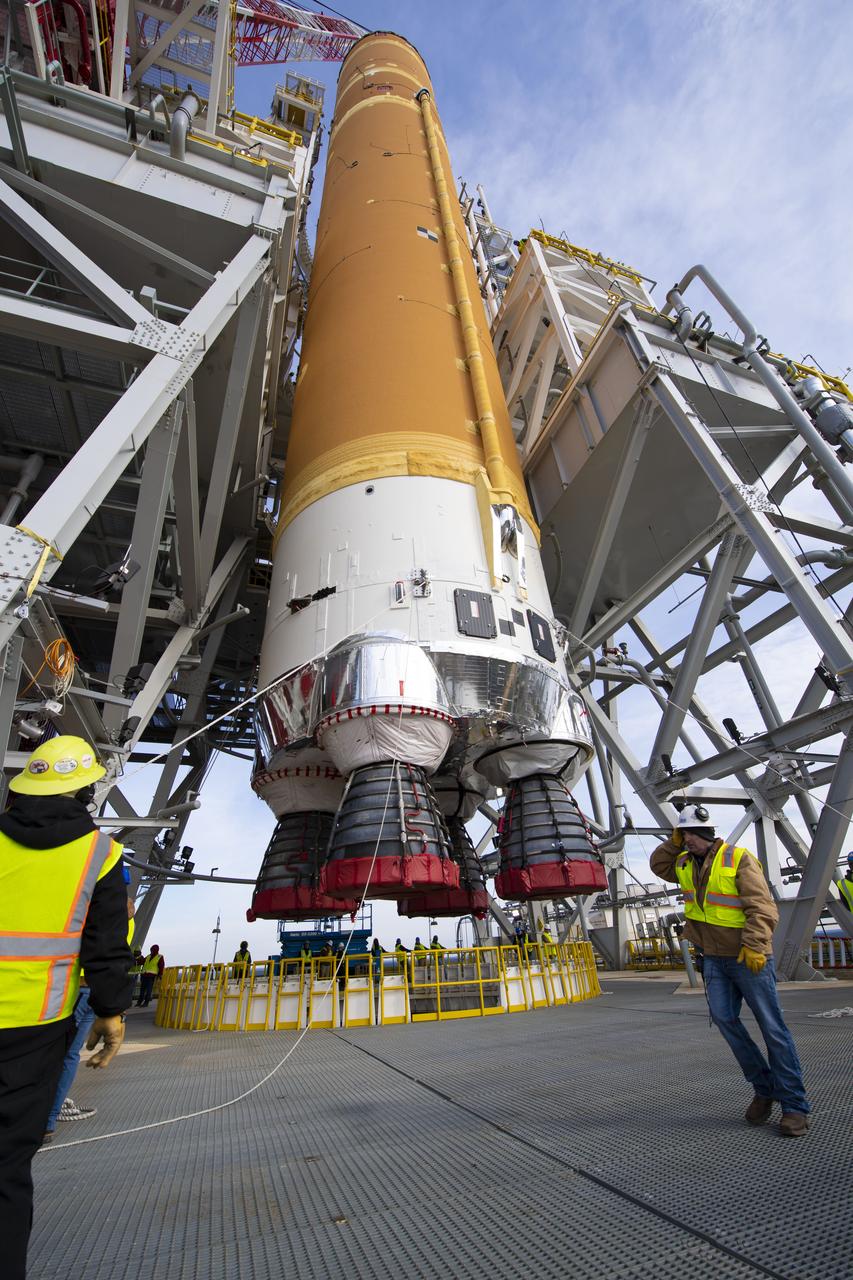
On Jan. 21-22, 2020, crews at Stennis Space Center lifted and installed the first core stage of NASA’s new Space Launch System (SLS) rocket onto the B-2 Test Stand. In upcoming months, a top-to-bottom, integrated series of Green Run tests will be conducted on the stage and its sophisticated systems. Following testing, the stage will be used to help launch the maiden Artemis I test mission of SLS and the Orion spacecraft. Through the Artemis program, NASA will send humans, including the first woman and next man, to the Moon to establish a sustainable presence.
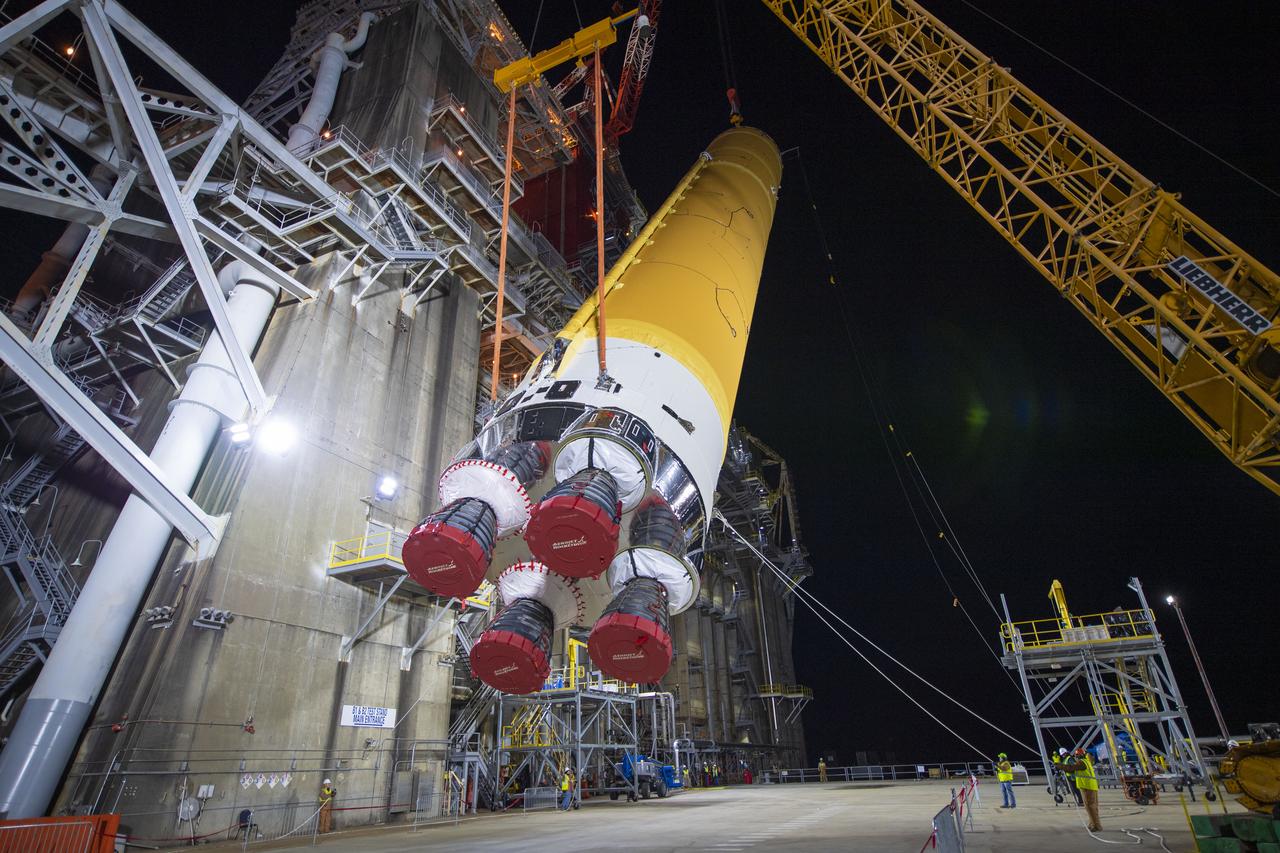
On Jan. 21-22, 2020, crews at Stennis Space Center lifted and installed the first core stage of NASA’s new Space Launch System (SLS) rocket onto the B-2 Test Stand. In upcoming months, a top-to-bottom, integrated series of Green Run tests will be conducted on the stage and its sophisticated systems. Following testing, the stage will be used to help launch the maiden Artemis I test mission of SLS and the Orion spacecraft. Through the Artemis program, NASA will send humans, including the first woman and next man, to the Moon to establish a sustainable presence.
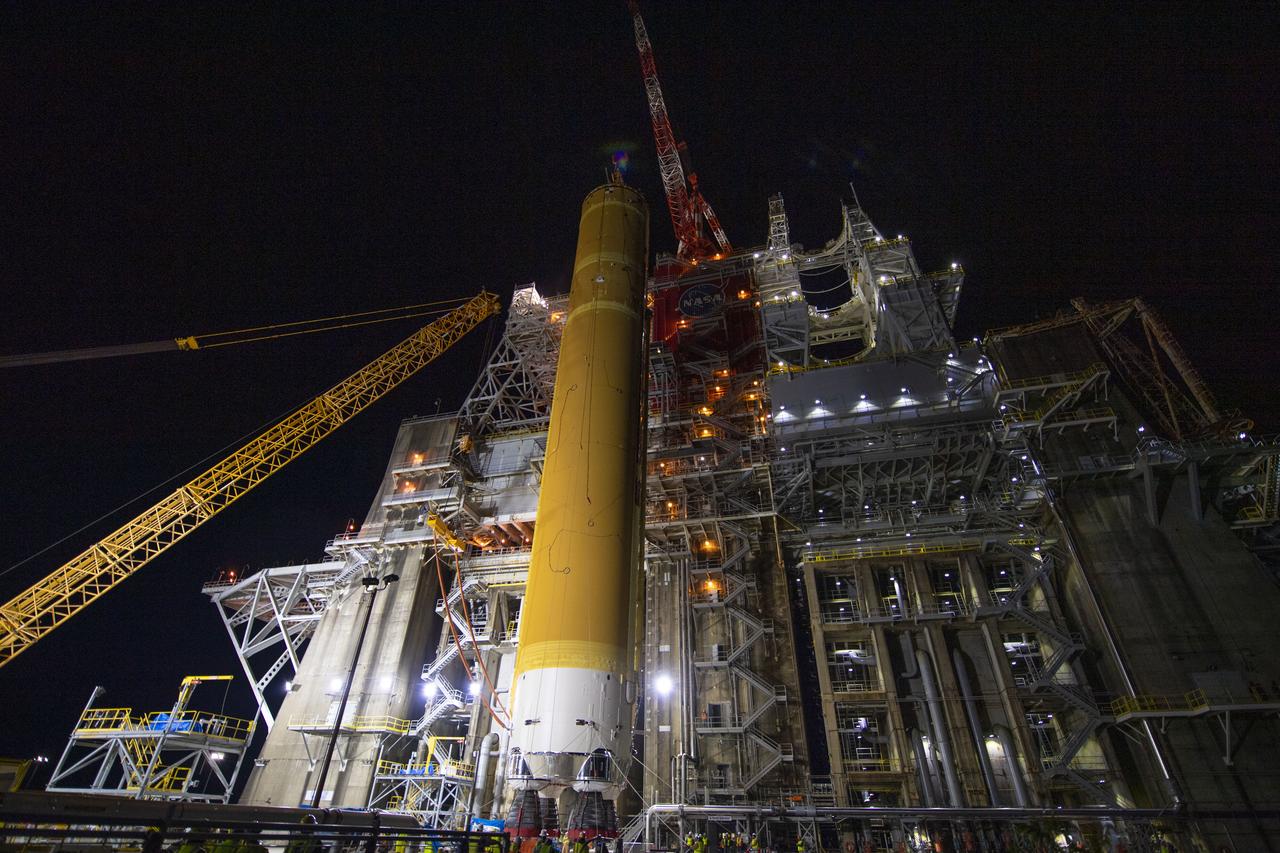
On Jan. 21-22, 2020, crews at Stennis Space Center lifted and installed the first core stage of NASA’s new Space Launch System (SLS) rocket onto the B-2 Test Stand. In upcoming months, a top-to-bottom, integrated series of Green Run tests will be conducted on the stage and its sophisticated systems. Following testing, the stage will be used to help launch the maiden Artemis I test mission of SLS and the Orion spacecraft. Through the Artemis program, NASA will send humans, including the first woman and next man, to the Moon to establish a sustainable presence.
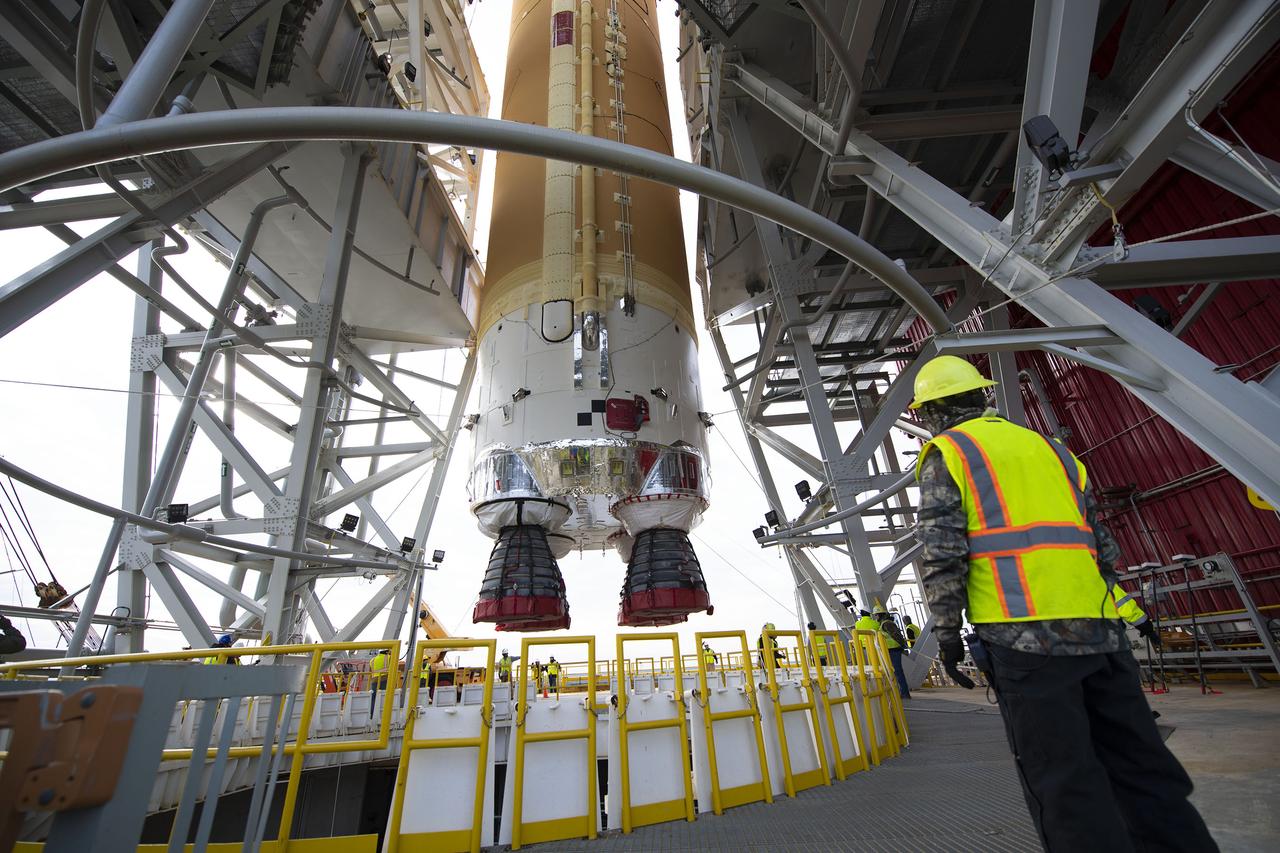
On Jan. 21-22, 2020, crews at Stennis Space Center lifted and installed the first core stage of NASA’s new Space Launch System (SLS) rocket onto the B-2 Test Stand. In upcoming months, a top-to-bottom, integrated series of Green Run tests will be conducted on the stage and its sophisticated systems. Following testing, the stage will be used to help launch the maiden Artemis I test mission of SLS and the Orion spacecraft. Through the Artemis program, NASA will send humans, including the first woman and next man, to the Moon to establish a sustainable presence.
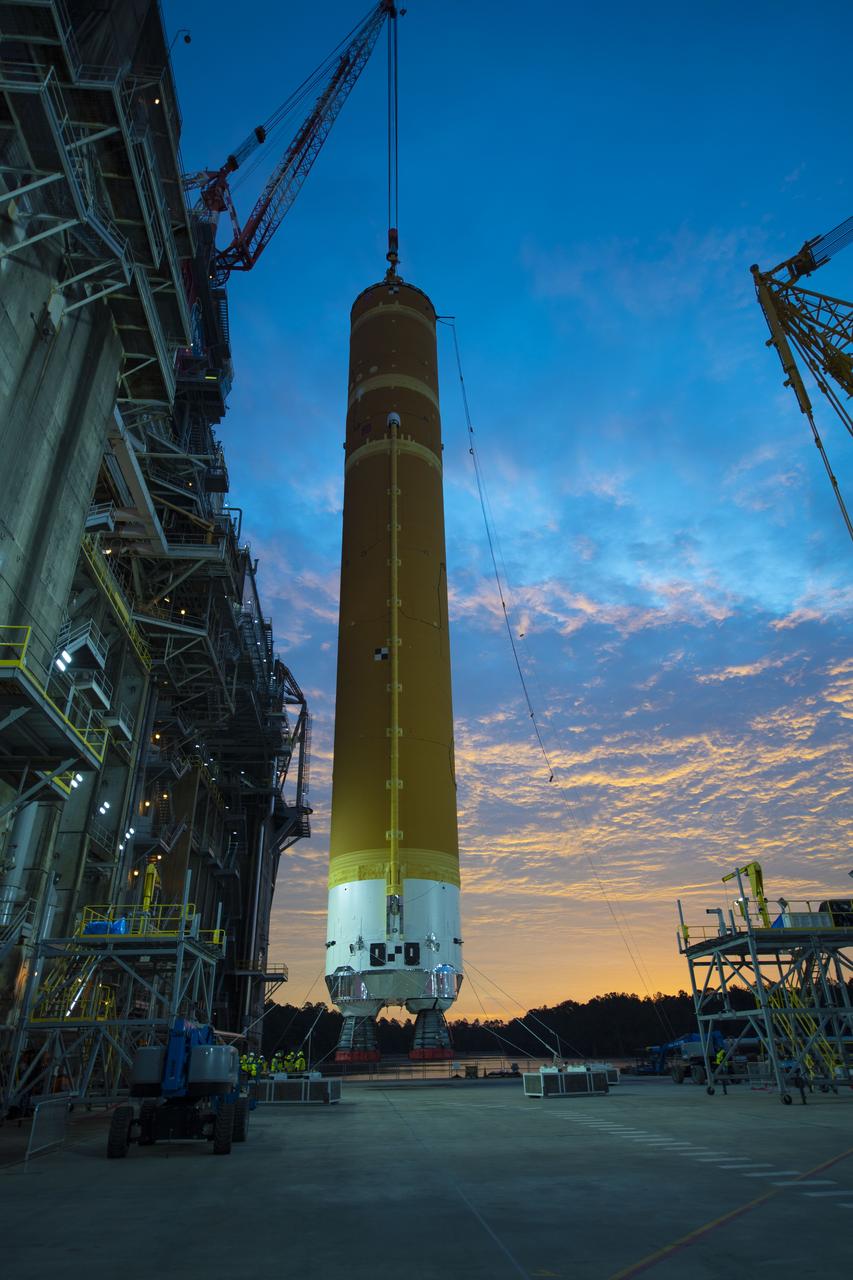
On Jan. 21-22, 2020, crews at Stennis Space Center lifted and installed the first core stage of NASA’s new Space Launch System (SLS) rocket onto the B-2 Test Stand. In upcoming months, a top-to-bottom, integrated series of Green Run tests will be conducted on the stage and its sophisticated systems. Following testing, the stage will be used to help launch the maiden Artemis I test mission of SLS and the Orion spacecraft. Through the Artemis program, NASA will send humans, including the first woman and next man, to the Moon to establish a sustainable presence.
On Jan. 21-22, 2020, crews at Stennis Space Center lifted and installed the first core stage of NASA’s new Space Launch System (SLS) rocket onto the B-2 Test Stand. In upcoming months, a top-to-bottom, integrated series of Green Run tests will be conducted on the stage and its sophisticated systems. Following testing, the stage will be used to help launch the maiden Artemis I test mission of SLS and the Orion spacecraft. Through the Artemis program, NASA will send humans, including the first woman and next man, to the Moon to establish a sustainable presence.
On Jan. 21-22, 2020, crews at Stennis Space Center lifted and installed the first core stage of NASA’s new Space Launch System (SLS) rocket onto the B-2 Test Stand. In upcoming months, a top-to-bottom, integrated series of Green Run tests will be conducted on the stage and its sophisticated systems. Following testing, the stage will be used to help launch the maiden Artemis I test mission of SLS and the Orion spacecraft. Through the Artemis program, NASA will send humans, including the first woman and next man, to the Moon to establish a sustainable presence.
On Jan. 21-22, 2020, crews at Stennis Space Center lifted and installed the first core stage of NASA’s new Space Launch System (SLS) rocket onto the B-2 Test Stand. In upcoming months, a top-to-bottom, integrated series of Green Run tests will be conducted on the stage and its sophisticated systems. Following testing, the stage will be used to help launch the maiden Artemis I test mission of SLS and the Orion spacecraft. Through the Artemis program, NASA will send humans, including the first woman and next man, to the Moon to establish a sustainable presence.
On Jan. 21-22, 2020, crews at Stennis Space Center lifted and installed the first core stage of NASA’s new Space Launch System (SLS) rocket onto the B-2 Test Stand. In upcoming months, a top-to-bottom, integrated series of Green Run tests will be conducted on the stage and its sophisticated systems. Following testing, the stage will be used to help launch the maiden Artemis I test mission of SLS and the Orion spacecraft. Through the Artemis program, NASA will send humans, including the first woman and next man, to the Moon to establish a sustainable presence.
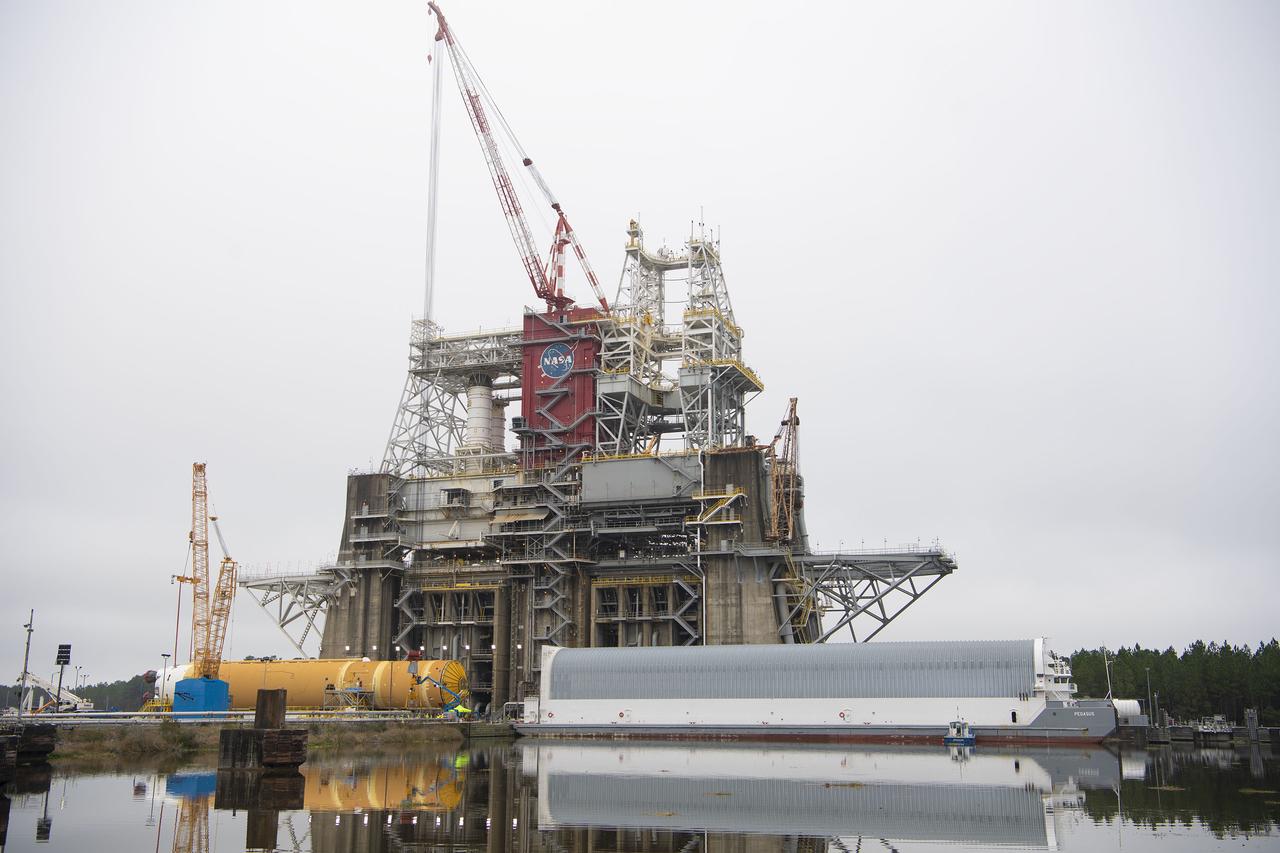
On Jan. 21-22, 2020, crews at Stennis Space Center lifted and installed the first core stage of NASA’s new Space Launch System (SLS) rocket onto the B-2 Test Stand. In upcoming months, a top-to-bottom, integrated series of Green Run tests will be conducted on the stage and its sophisticated systems. Following testing, the stage will be used to help launch the maiden Artemis I test mission of SLS and the Orion spacecraft. Through the Artemis program, NASA will send humans, including the first woman and next man, to the Moon to establish a sustainable presence.
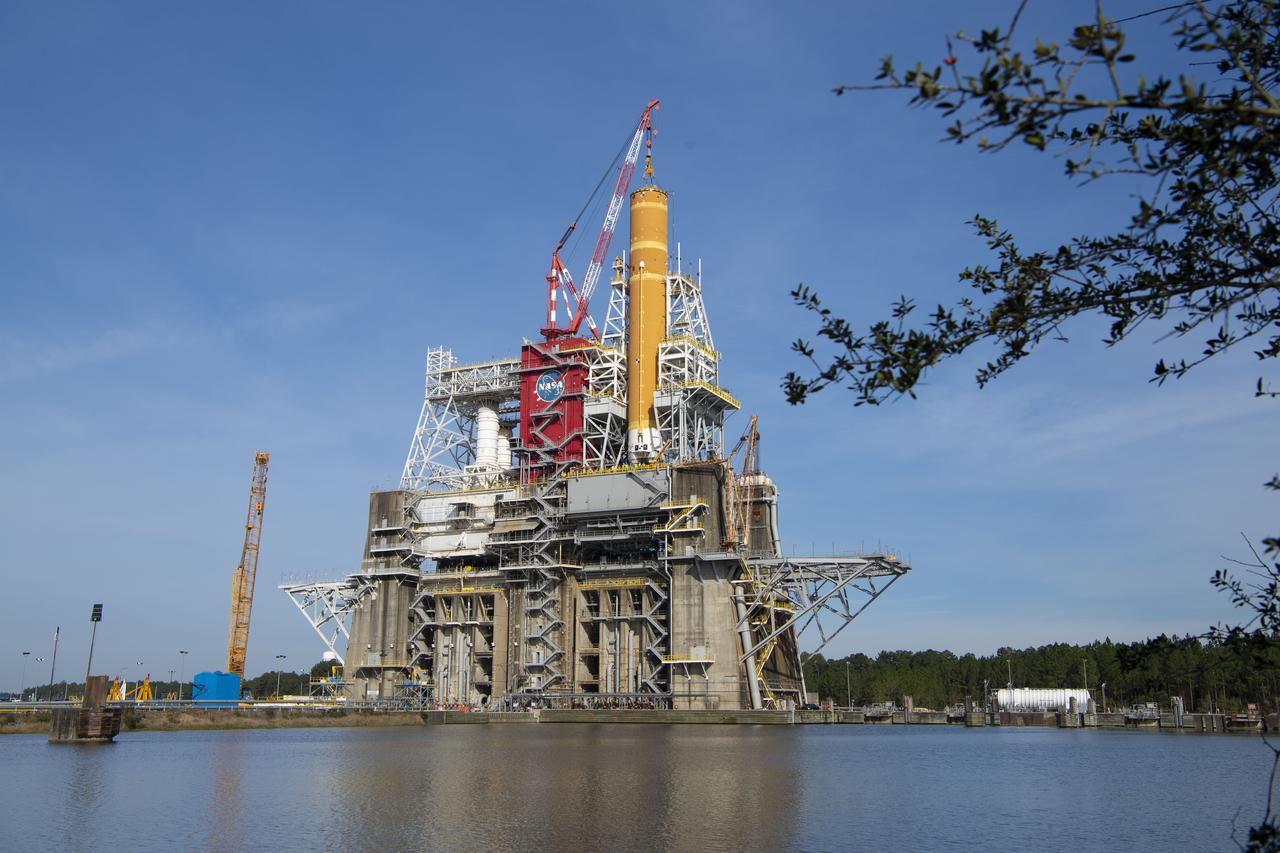
On Jan. 21-22, 2020, crews at Stennis Space Center lifted and installed the first core stage of NASA’s new Space Launch System (SLS) rocket onto the B-2 Test Stand. In upcoming months, a top-to-bottom, integrated series of Green Run tests will be conducted on the stage and its sophisticated systems. Following testing, the stage will be used to help launch the maiden Artemis I test mission of SLS and the Orion spacecraft. Through the Artemis program, NASA will send humans, including the first woman and next man, to the Moon to establish a sustainable presence.
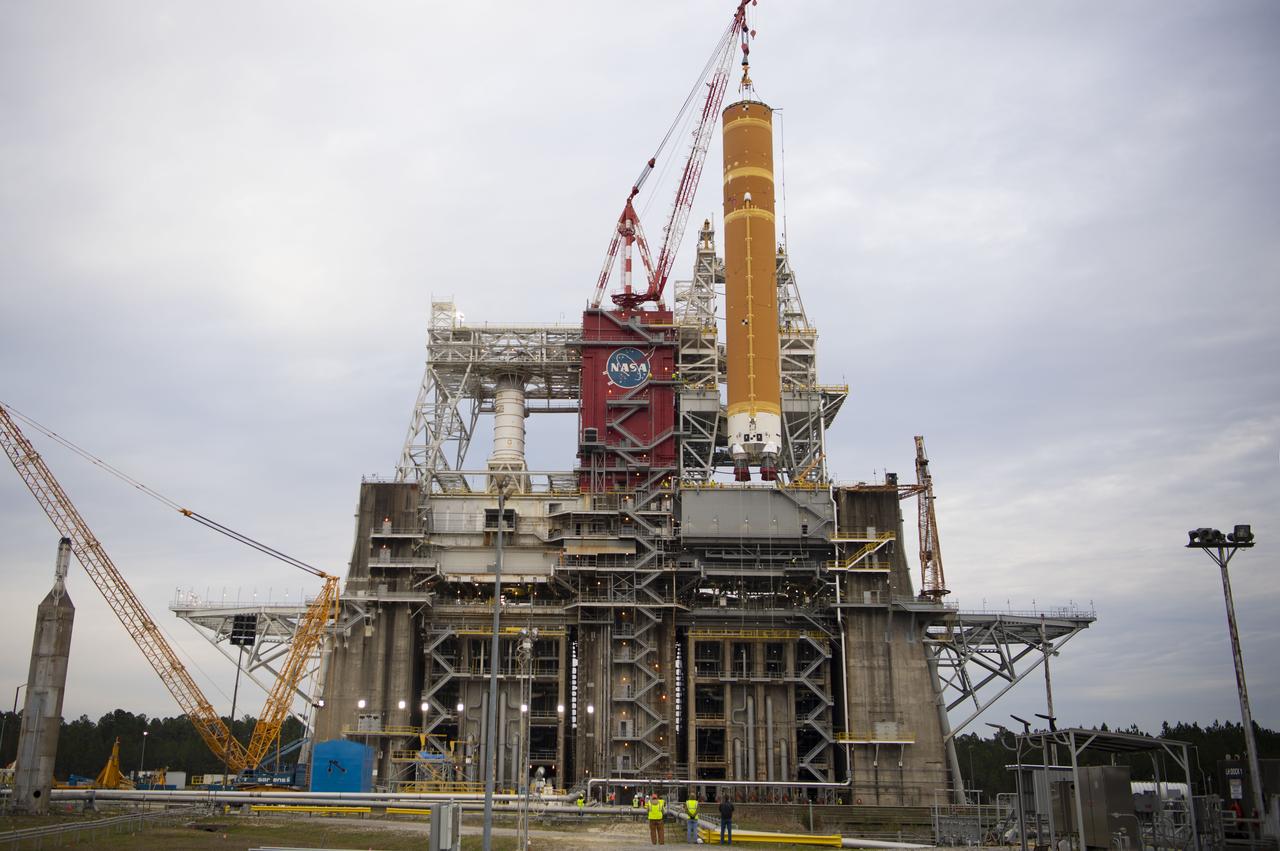
On Jan. 21-22, 2020, crews at Stennis Space Center lifted and installed the first core stage of NASA’s new Space Launch System (SLS) rocket onto the B-2 Test Stand. In upcoming months, a top-to-bottom, integrated series of Green Run tests will be conducted on the stage and its sophisticated systems. Following testing, the stage will be used to help launch the maiden Artemis I test mission of SLS and the Orion spacecraft. Through the Artemis program, NASA will send humans, including the first woman and next man, to the Moon to establish a sustainable presence.
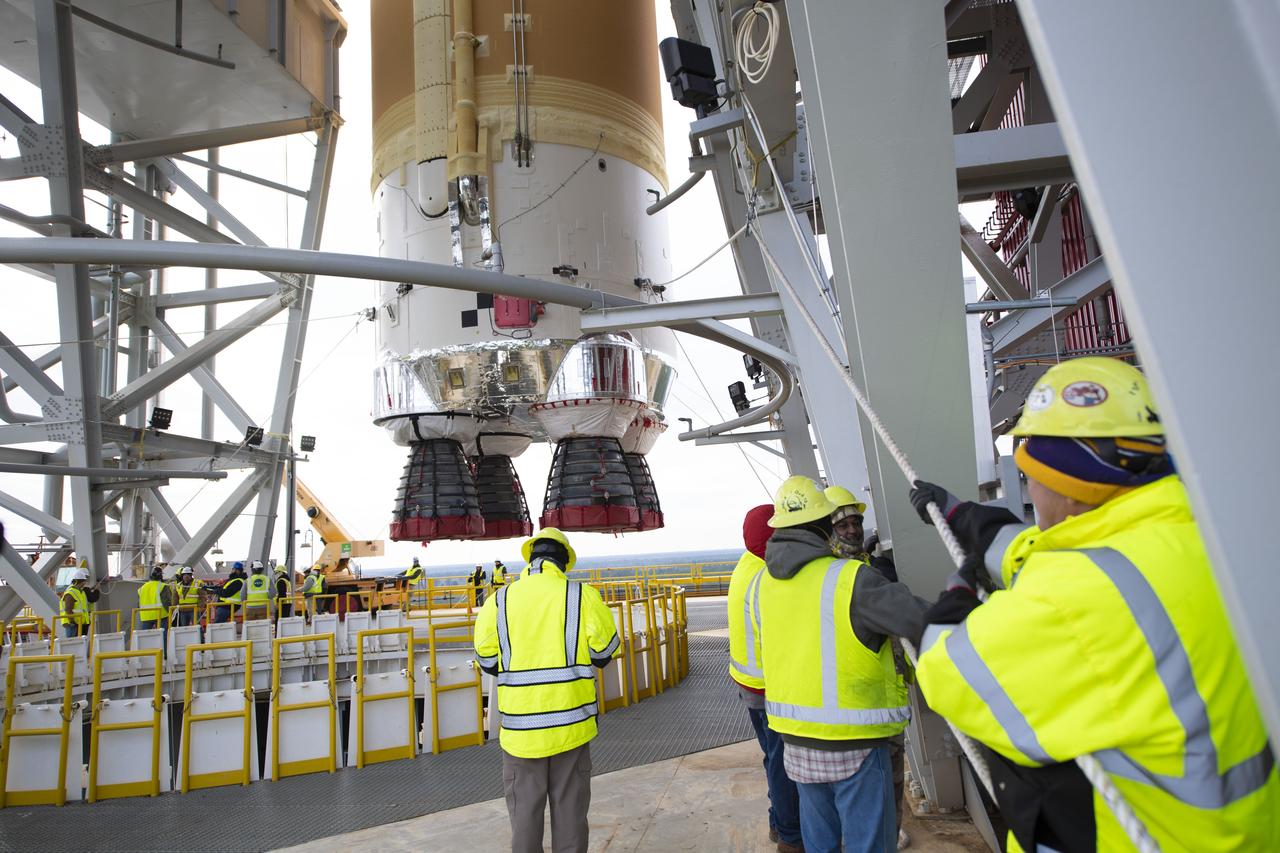
On Jan. 21-22, 2020, crews at Stennis Space Center lifted and installed the first core stage of NASA’s new Space Launch System (SLS) rocket onto the B-2 Test Stand. In upcoming months, a top-to-bottom, integrated series of Green Run tests will be conducted on the stage and its sophisticated systems. Following testing, the stage will be used to help launch the maiden Artemis I test mission of SLS and the Orion spacecraft. Through the Artemis program, NASA will send humans, including the first woman and next man, to the Moon to establish a sustainable presence.

On Jan. 21-22, 2020, crews at Stennis Space Center lifted and installed the first core stage of NASA’s new Space Launch System (SLS) rocket onto the B-2 Test Stand. In upcoming months, a top-to-bottom, integrated series of Green Run tests will be conducted on the stage and its sophisticated systems. Following testing, the stage will be used to help launch the maiden Artemis I test mission of SLS and the Orion spacecraft. Through the Artemis program, NASA will send humans, including the first woman and next man, to the Moon to establish a sustainable presence.
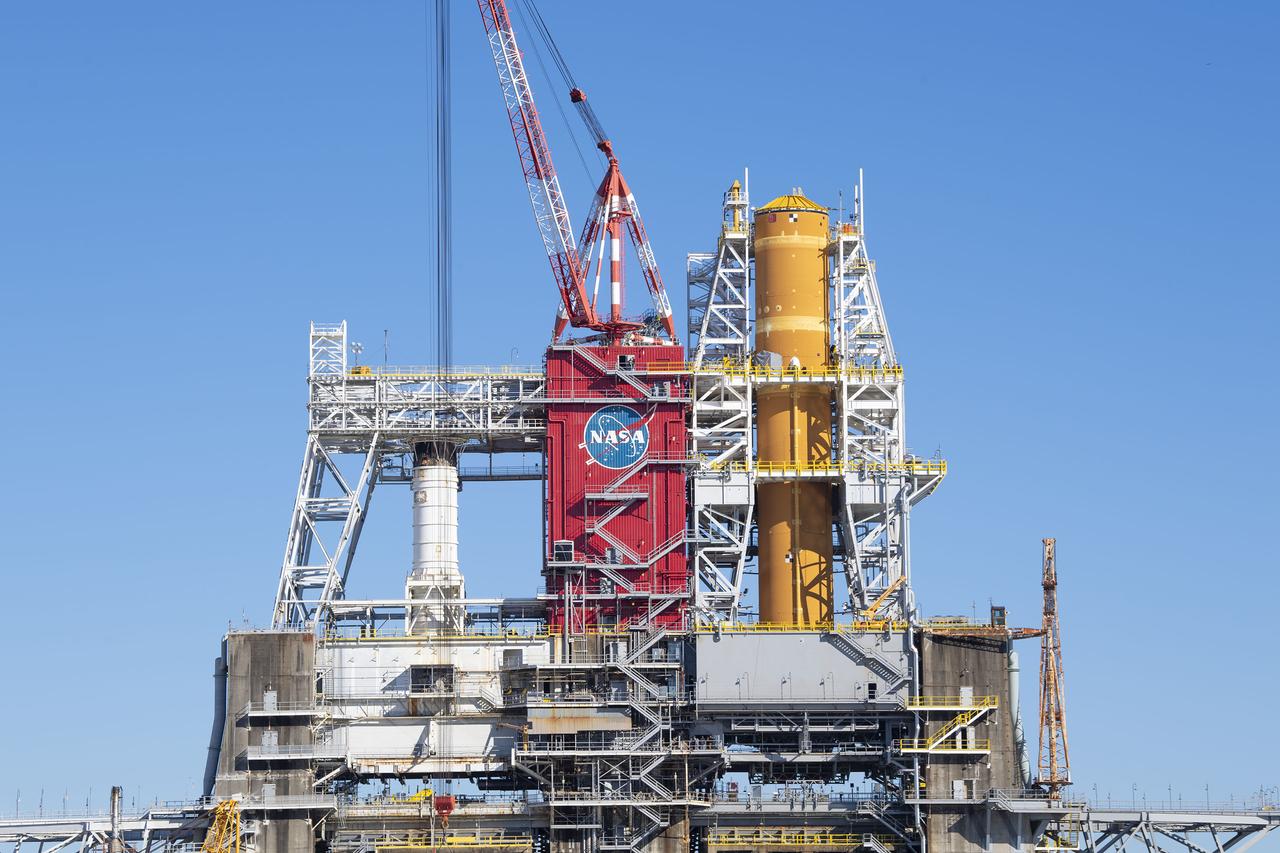
On Jan. 21-22, 2020, crews at Stennis Space Center lifted and installed the first core stage of NASA’s new Space Launch System (SLS) rocket onto the B-2 Test Stand. In upcoming months, a top-to-bottom, integrated series of Green Run tests will be conducted on the stage and its sophisticated systems. Following testing, the stage will be used to help launch the maiden Artemis I test mission of SLS and the Orion spacecraft. Through the Artemis program, NASA will send humans, including the first woman and next man, to the Moon to establish a sustainable presence.
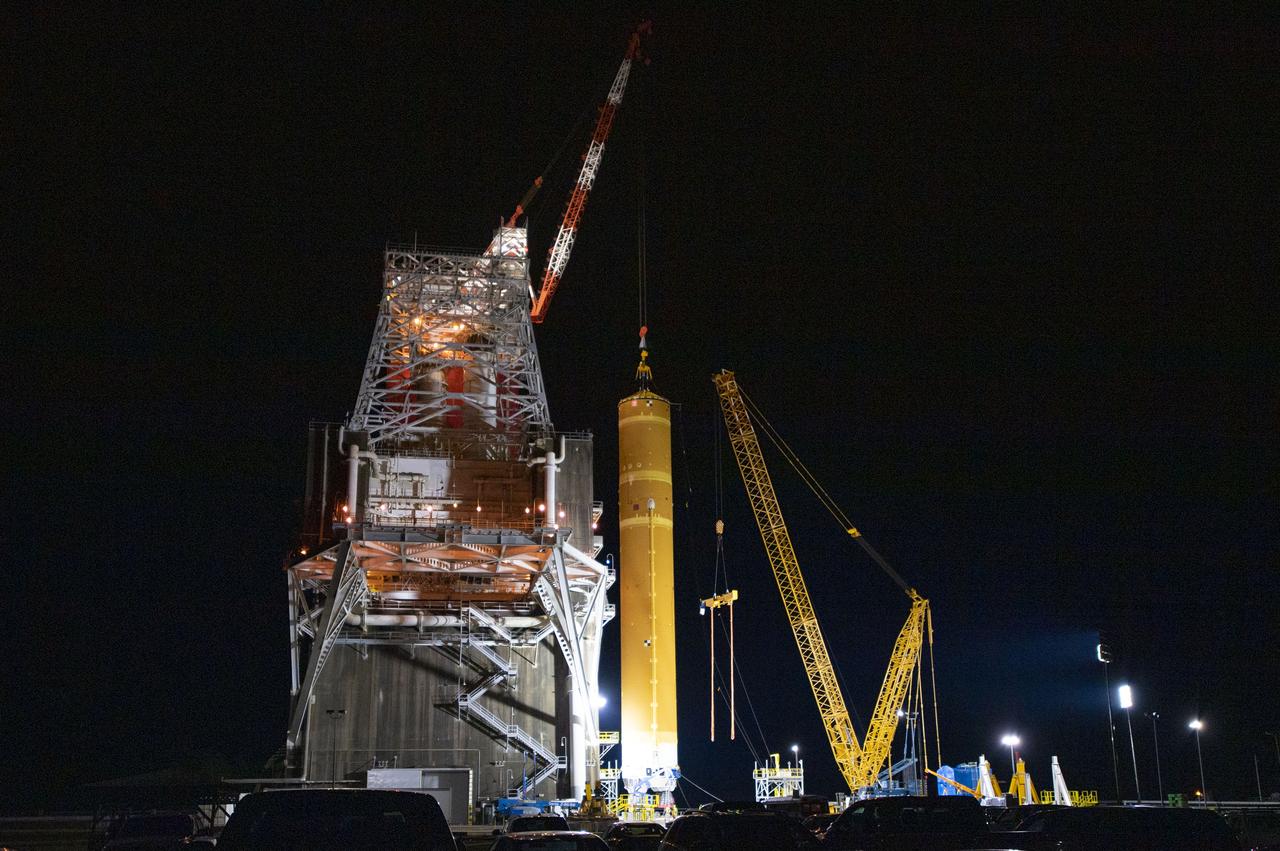
On Jan. 21-22, 2020, crews at Stennis Space Center lifted and installed the first core stage of NASA’s new Space Launch System (SLS) rocket onto the B-2 Test Stand. In upcoming months, a top-to-bottom, integrated series of Green Run tests will be conducted on the stage and its sophisticated systems. Following testing, the stage will be used to help launch the maiden Artemis I test mission of SLS and the Orion spacecraft. Through the Artemis program, NASA will send humans, including the first woman and next man, to the Moon to establish a sustainable presence.
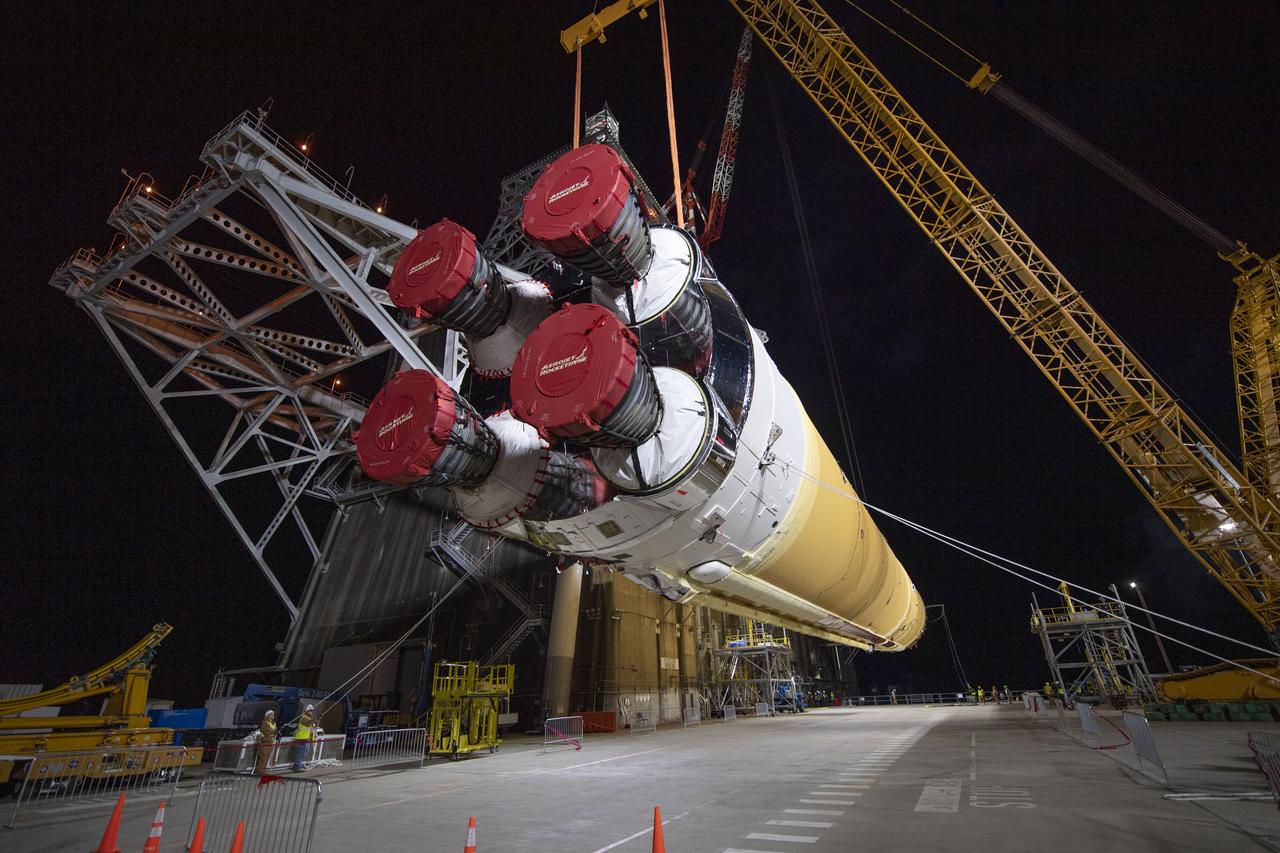
On Jan. 21-22, 2020, crews at Stennis Space Center lifted and installed the first core stage of NASA’s new Space Launch System (SLS) rocket onto the B-2 Test Stand. In upcoming months, a top-to-bottom, integrated series of Green Run tests will be conducted on the stage and its sophisticated systems. Following testing, the stage will be used to help launch the maiden Artemis I test mission of SLS and the Orion spacecraft. Through the Artemis program, NASA will send humans, including the first woman and next man, to the Moon to establish a sustainable presence.
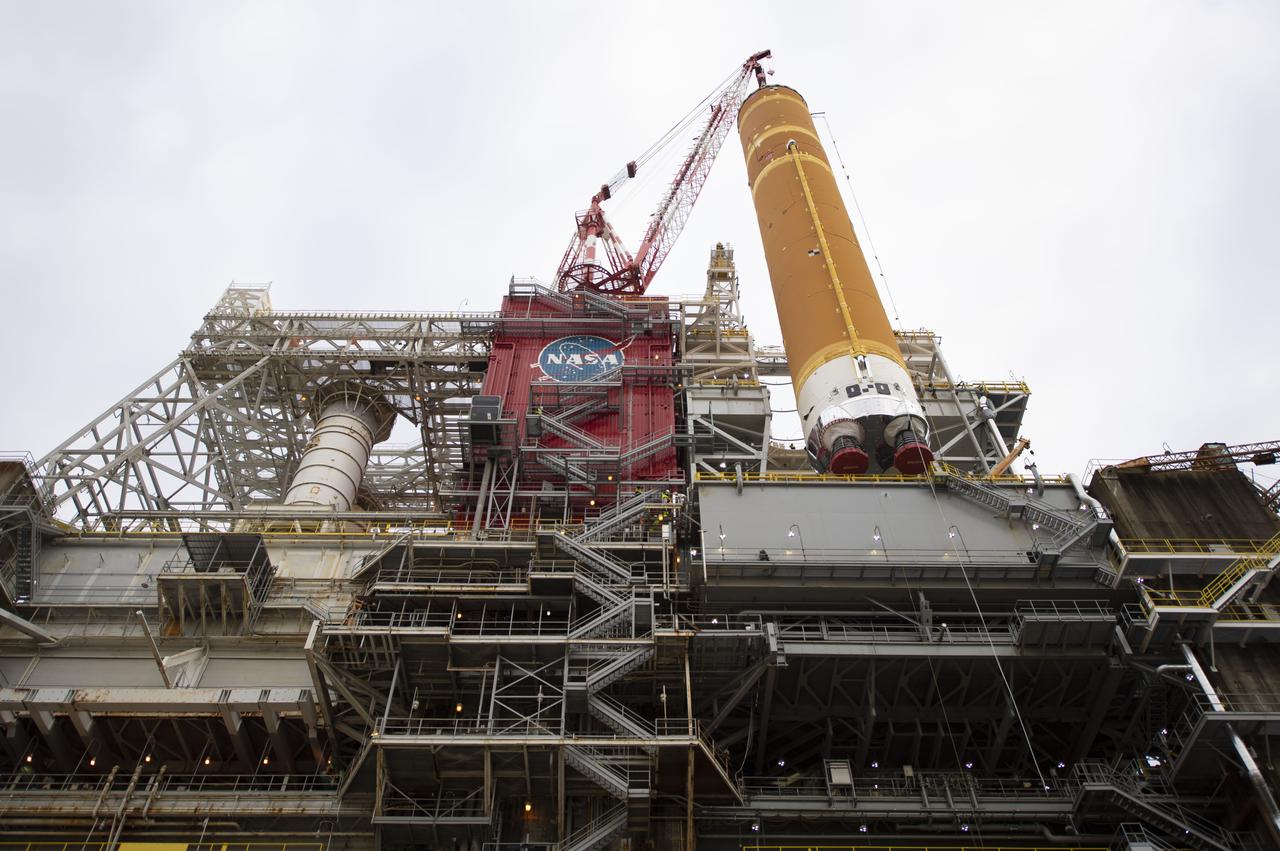
On Jan. 21-22, 2020, crews at Stennis Space Center lifted and installed the first core stage of NASA’s new Space Launch System (SLS) rocket onto the B-2 Test Stand. In upcoming months, a top-to-bottom, integrated series of Green Run tests will be conducted on the stage and its sophisticated systems. Following testing, the stage will be used to help launch the maiden Artemis I test mission of SLS and the Orion spacecraft. Through the Artemis program, NASA will send humans, including the first woman and next man, to the Moon to establish a sustainable presence.
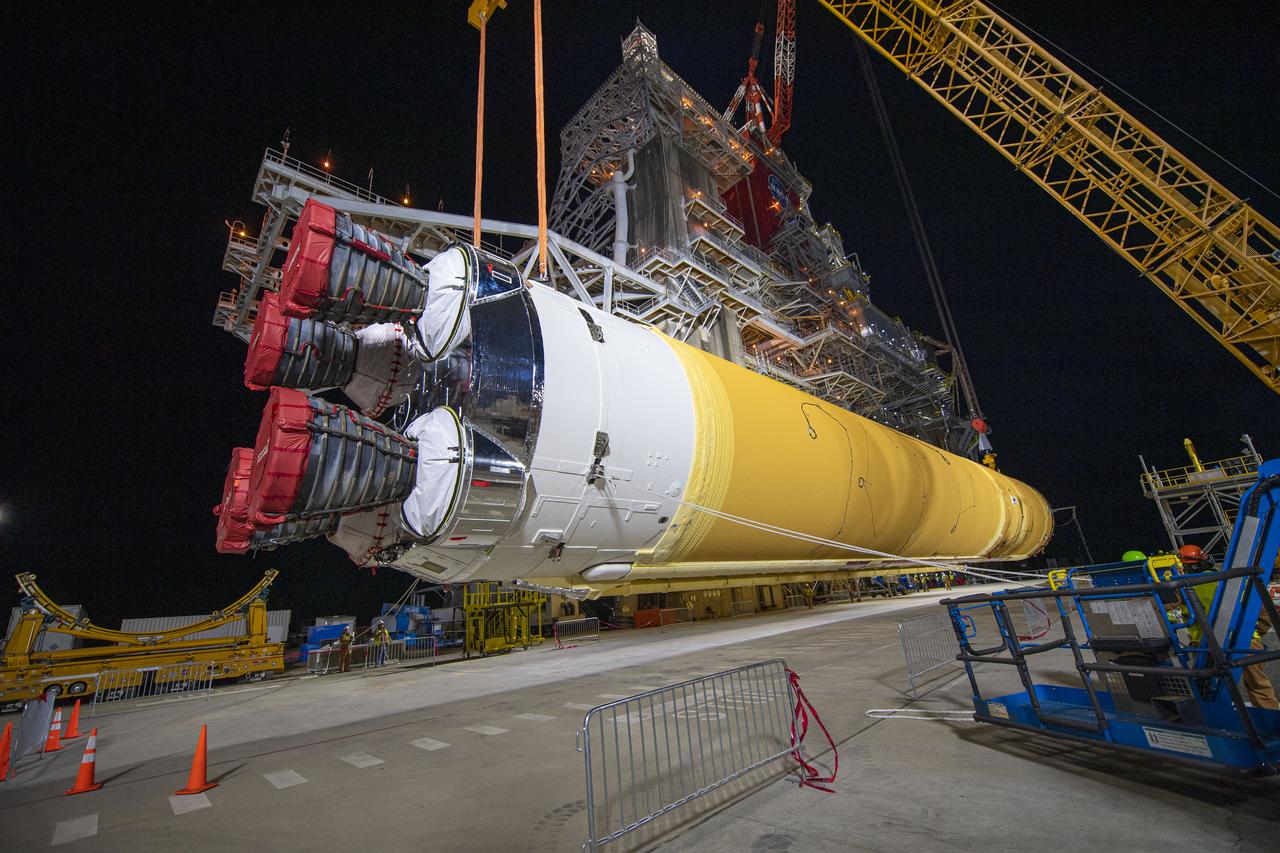
On Jan. 21-22, 2020, crews at Stennis Space Center lifted and installed the first core stage of NASA’s new Space Launch System (SLS) rocket onto the B-2 Test Stand. In upcoming months, a top-to-bottom, integrated series of Green Run tests will be conducted on the stage and its sophisticated systems. Following testing, the stage will be used to help launch the maiden Artemis I test mission of SLS and the Orion spacecraft. Through the Artemis program, NASA will send humans, including the first woman and next man, to the Moon to establish a sustainable presence.
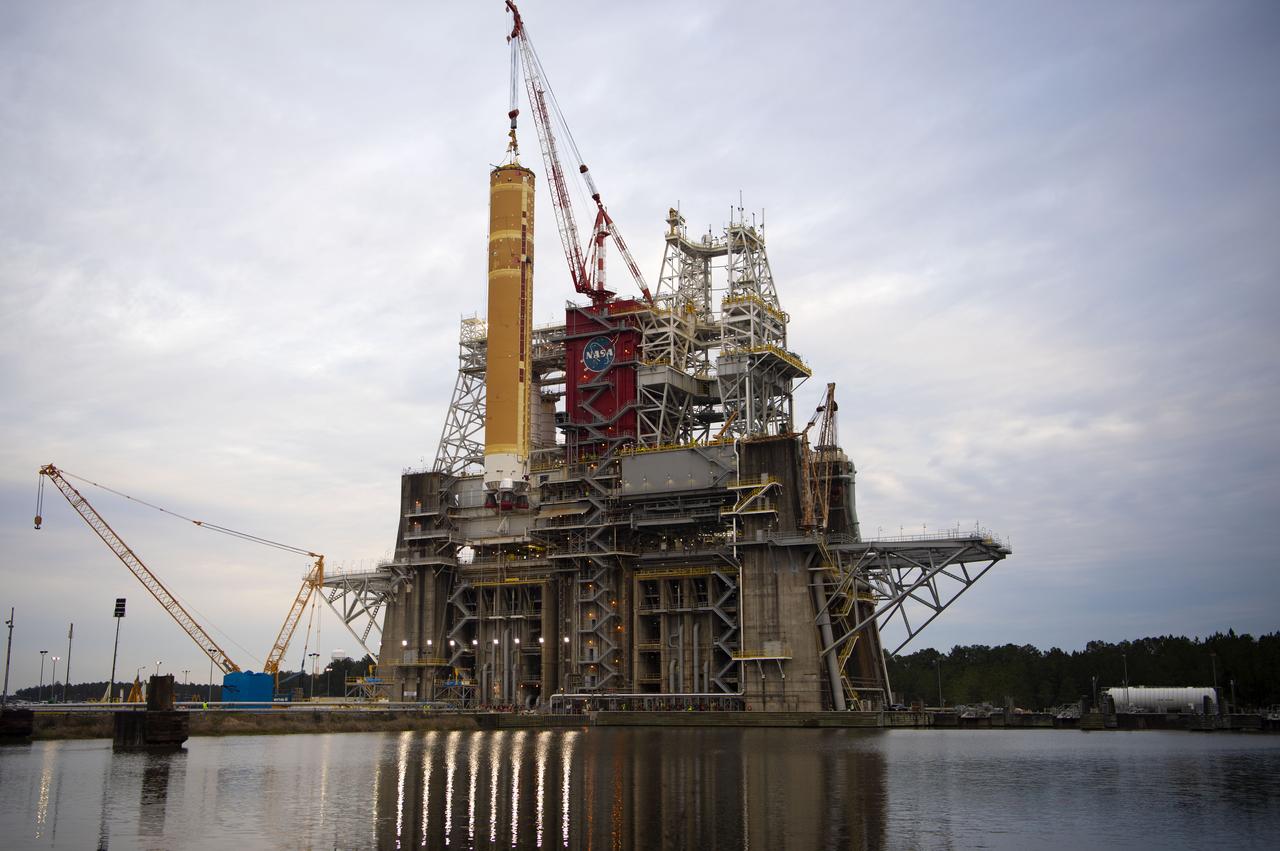
On Jan. 21-22, 2020, crews at Stennis Space Center lifted and installed the first core stage of NASA’s new Space Launch System (SLS) rocket onto the B-2 Test Stand. In upcoming months, a top-to-bottom, integrated series of Green Run tests will be conducted on the stage and its sophisticated systems. Following testing, the stage will be used to help launch the maiden Artemis I test mission of SLS and the Orion spacecraft. Through the Artemis program, NASA will send humans, including the first woman and next man, to the Moon to establish a sustainable presence.
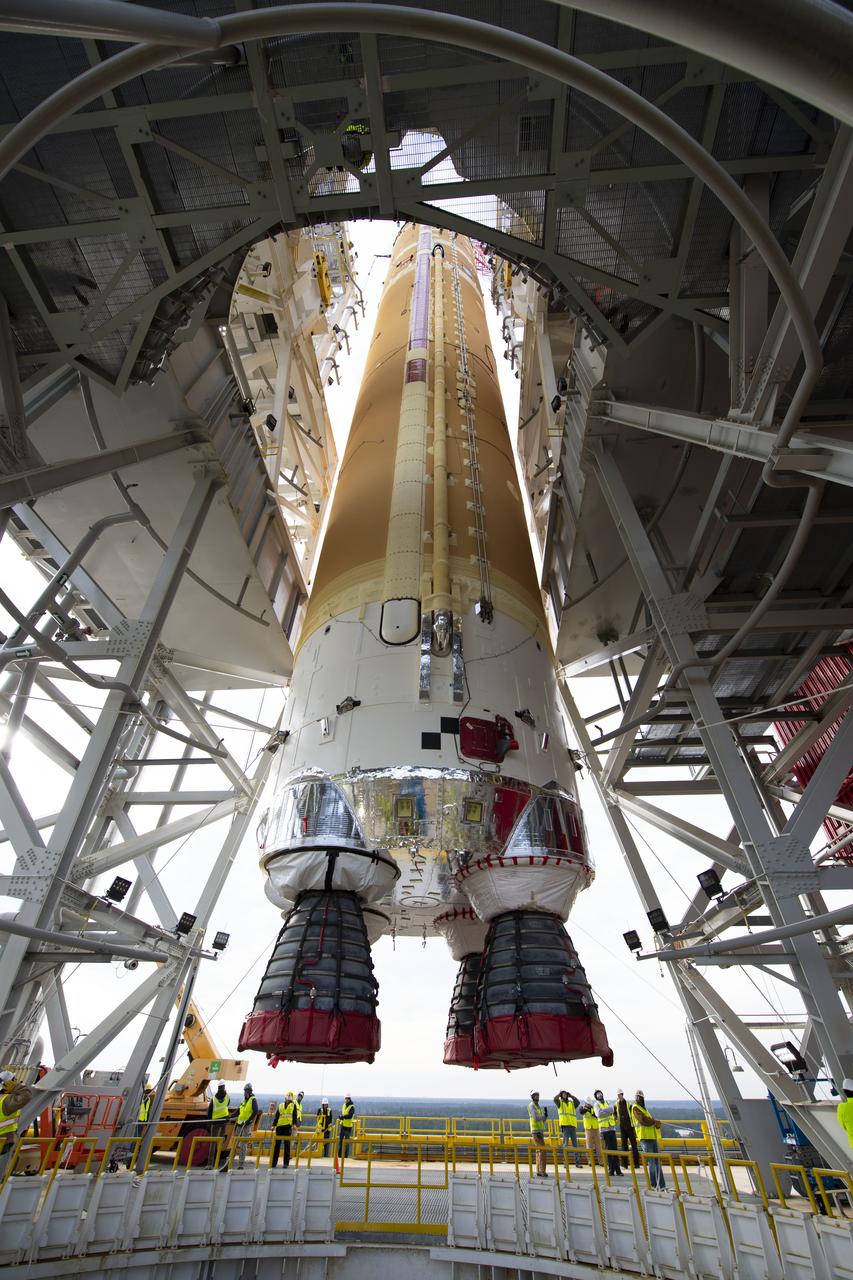
On Jan. 21-22, 2020, crews at Stennis Space Center lifted and installed the first core stage of NASA’s new Space Launch System (SLS) rocket onto the B-2 Test Stand. In upcoming months, a top-to-bottom, integrated series of Green Run tests will be conducted on the stage and its sophisticated systems. Following testing, the stage will be used to help launch the maiden Artemis I test mission of SLS and the Orion spacecraft. Through the Artemis program, NASA will send humans, including the first woman and next man, to the Moon to establish a sustainable presence.

On Jan. 21-22, 2020, crews at Stennis Space Center lifted and installed the first core stage of NASA’s new Space Launch System (SLS) rocket onto the B-2 Test Stand. In upcoming months, a top-to-bottom, integrated series of Green Run tests will be conducted on the stage and its sophisticated systems. Following testing, the stage will be used to help launch the maiden Artemis I test mission of SLS and the Orion spacecraft. Through the Artemis program, NASA will send humans, including the first woman and next man, to the Moon to establish a sustainable presence.
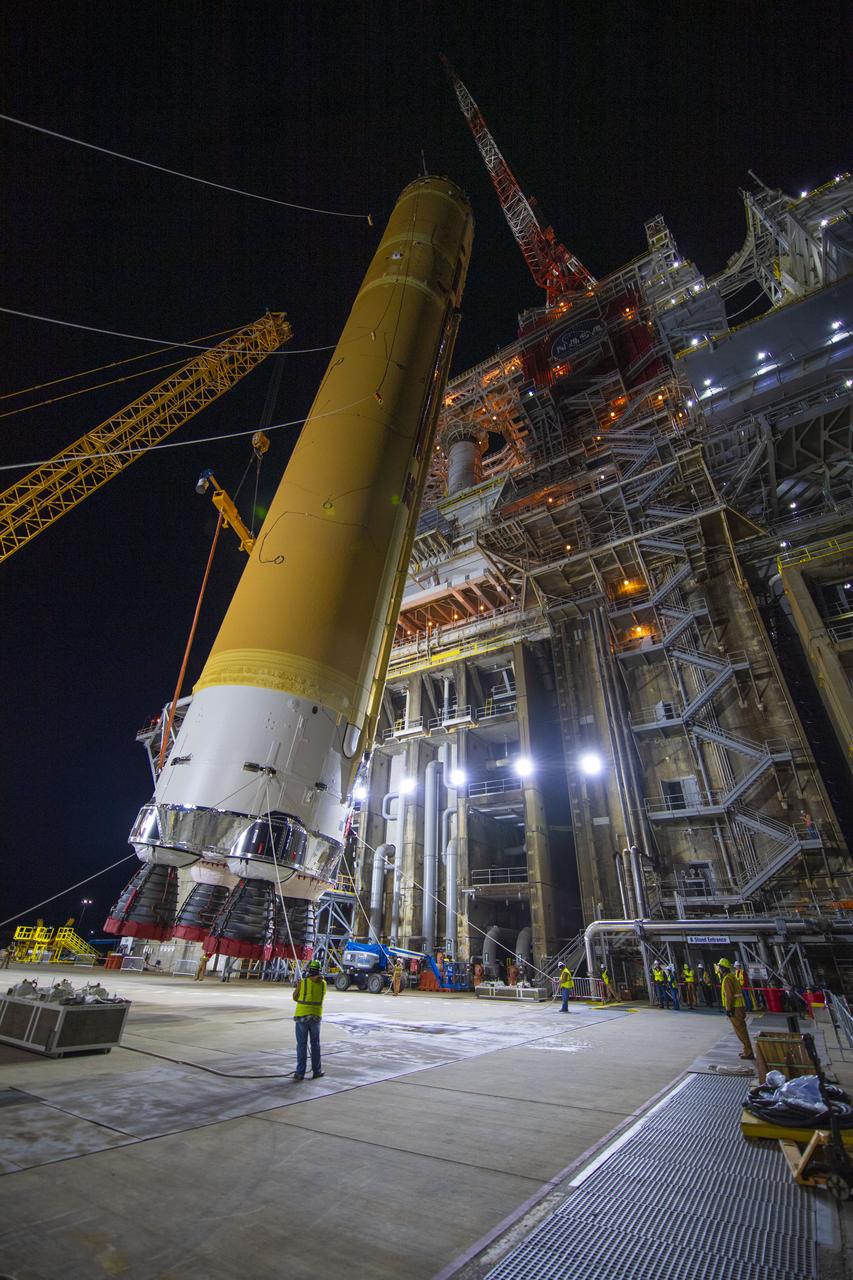
On Jan. 21-22, 2020, crews at Stennis Space Center lifted and installed the first core stage of NASA’s new Space Launch System (SLS) rocket onto the B-2 Test Stand. In upcoming months, a top-to-bottom, integrated series of Green Run tests will be conducted on the stage and its sophisticated systems. Following testing, the stage will be used to help launch the maiden Artemis I test mission of SLS and the Orion spacecraft. Through the Artemis program, NASA will send humans, including the first woman and next man, to the Moon to establish a sustainable presence.
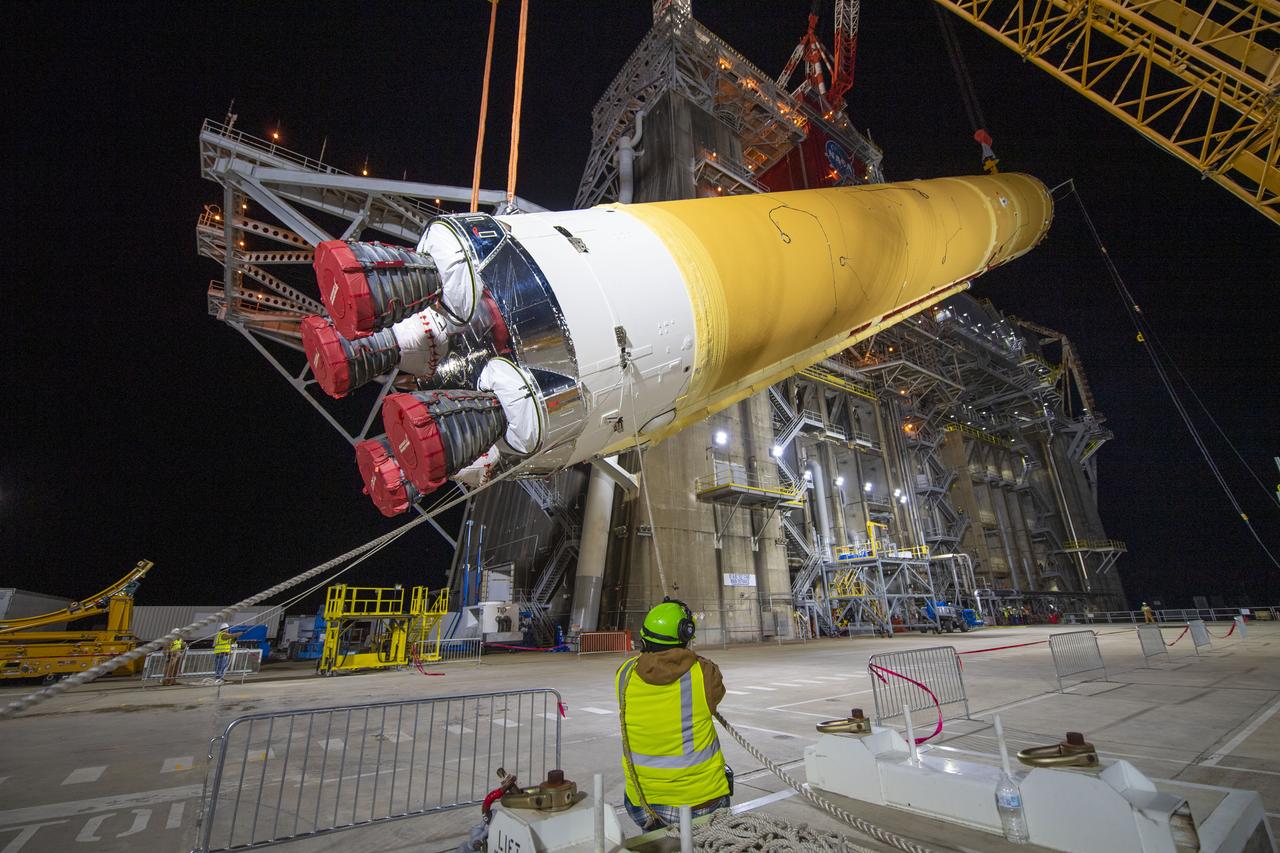
On Jan. 21-22, 2020, crews at Stennis Space Center lifted and installed the first core stage of NASA’s new Space Launch System (SLS) rocket onto the B-2 Test Stand. In upcoming months, a top-to-bottom, integrated series of Green Run tests will be conducted on the stage and its sophisticated systems. Following testing, the stage will be used to help launch the maiden Artemis I test mission of SLS and the Orion spacecraft. Through the Artemis program, NASA will send humans, including the first woman and next man, to the Moon to establish a sustainable presence.
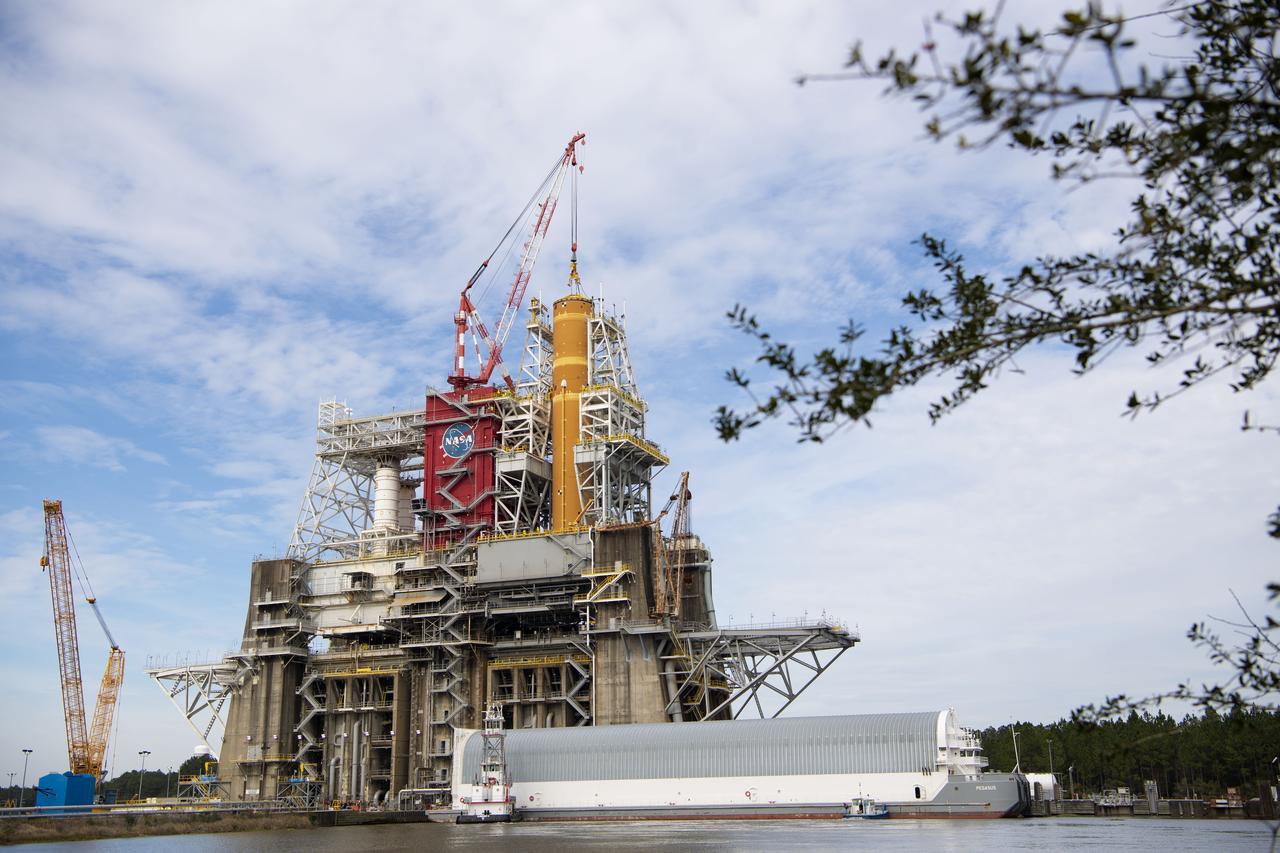
On Jan. 21-22, 2020, crews at Stennis Space Center lifted and installed the first core stage of NASA’s new Space Launch System (SLS) rocket onto the B-2 Test Stand. In upcoming months, a top-to-bottom, integrated series of Green Run tests will be conducted on the stage and its sophisticated systems. Following testing, the stage will be used to help launch the maiden Artemis I test mission of SLS and the Orion spacecraft. Through the Artemis program, NASA will send humans, including the first woman and next man, to the Moon to establish a sustainable presence.
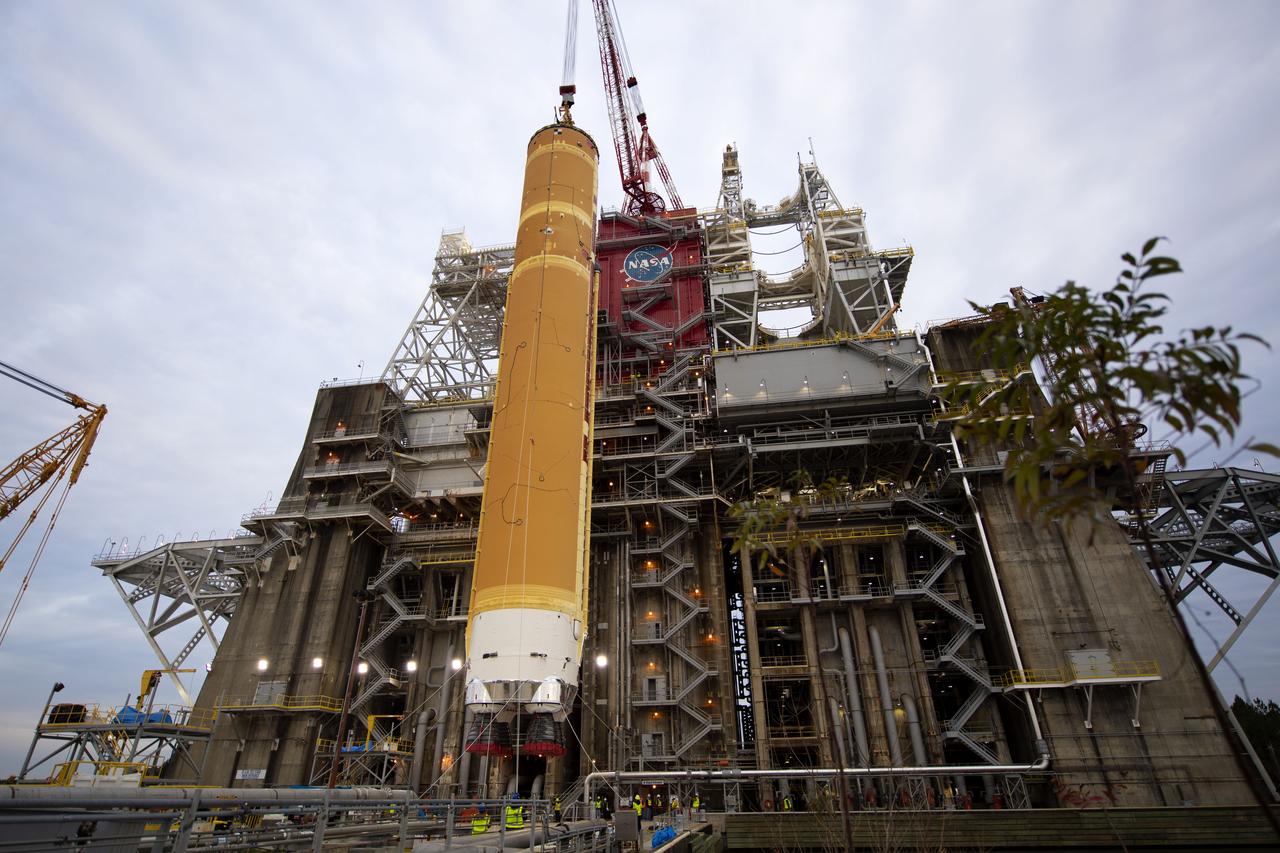
On Jan. 21-22, 2020, crews at Stennis Space Center lifted and installed the first core stage of NASA’s new Space Launch System (SLS) rocket onto the B-2 Test Stand. In upcoming months, a top-to-bottom, integrated series of Green Run tests will be conducted on the stage and its sophisticated systems. Following testing, the stage will be used to help launch the maiden Artemis I test mission of SLS and the Orion spacecraft. Through the Artemis program, NASA will send humans, including the first woman and next man, to the Moon to establish a sustainable presence.
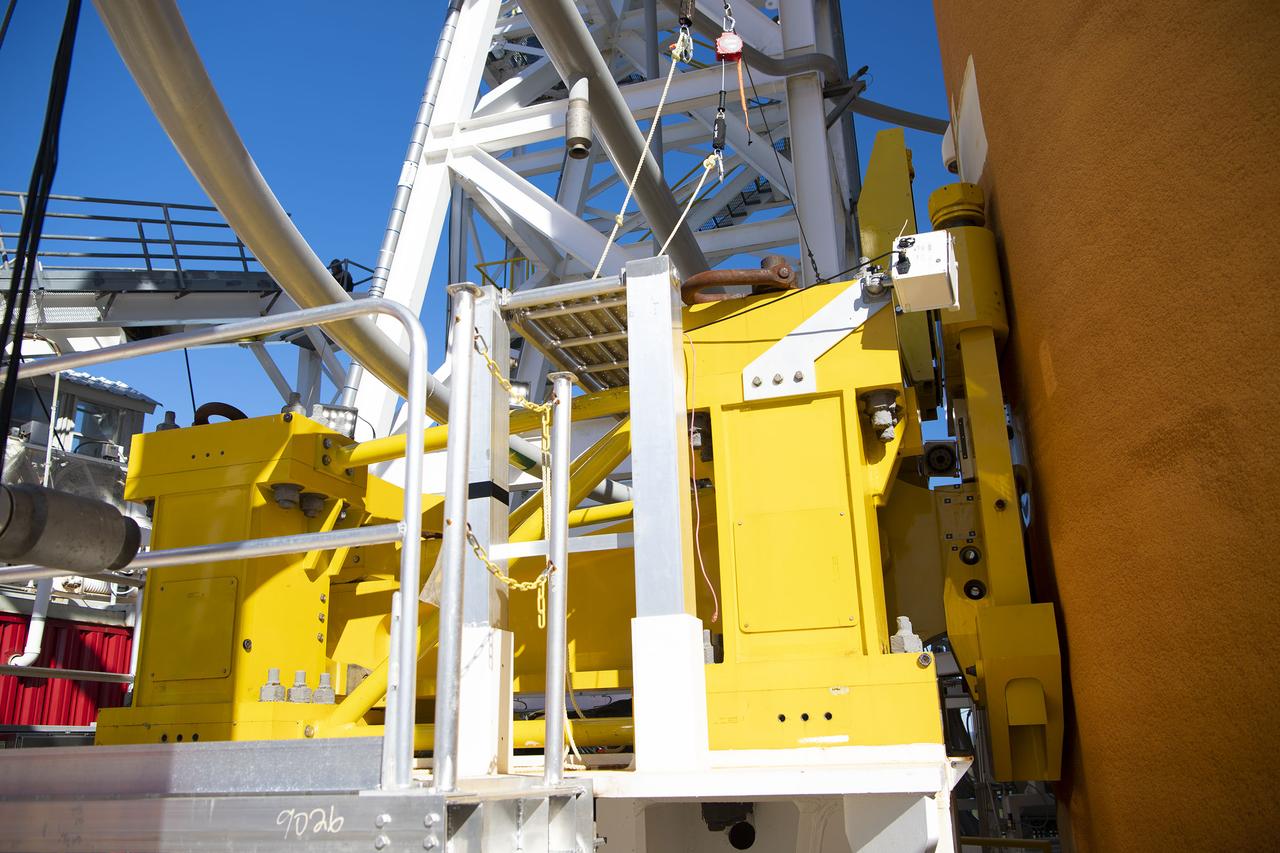
On Jan. 21-22, 2020, crews at Stennis Space Center lifted and installed the first core stage of NASA’s new Space Launch System (SLS) rocket onto the B-2 Test Stand. In upcoming months, a top-to-bottom, integrated series of Green Run tests will be conducted on the stage and its sophisticated systems. Following testing, the stage will be used to help launch the maiden Artemis I test mission of SLS and the Orion spacecraft. Through the Artemis program, NASA will send humans, including the first woman and next man, to the Moon to establish a sustainable presence.

On Jan. 21-22, 2020, crews at Stennis Space Center lifted and installed the first core stage of NASA’s new Space Launch System (SLS) rocket onto the B-2 Test Stand. In upcoming months, a top-to-bottom, integrated series of Green Run tests will be conducted on the stage and its sophisticated systems. Following testing, the stage will be used to help launch the maiden Artemis I test mission of SLS and the Orion spacecraft. Through the Artemis program, NASA will send humans, including the first woman and next man, to the Moon to establish a sustainable presence.
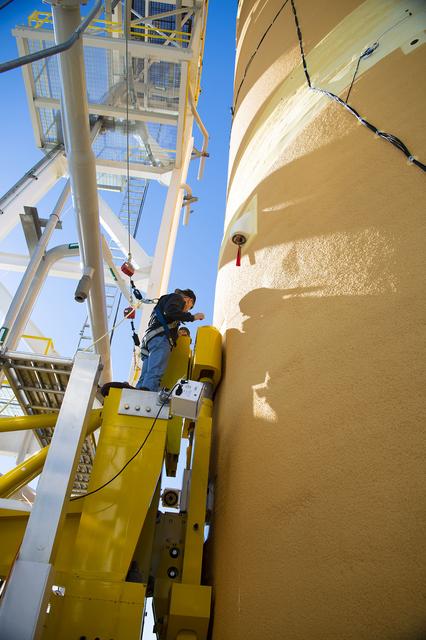
On Jan. 21-22, 2020, crews at Stennis Space Center lifted and installed the first core stage of NASA’s new Space Launch System (SLS) rocket onto the B-2 Test Stand. In upcoming months, a top-to-bottom, integrated series of Green Run tests will be conducted on the stage and its sophisticated systems. Following testing, the stage will be used to help launch the maiden Artemis I test mission of SLS and the Orion spacecraft. Through the Artemis program, NASA will send humans, including the first woman and next man, to the Moon to establish a sustainable presence.
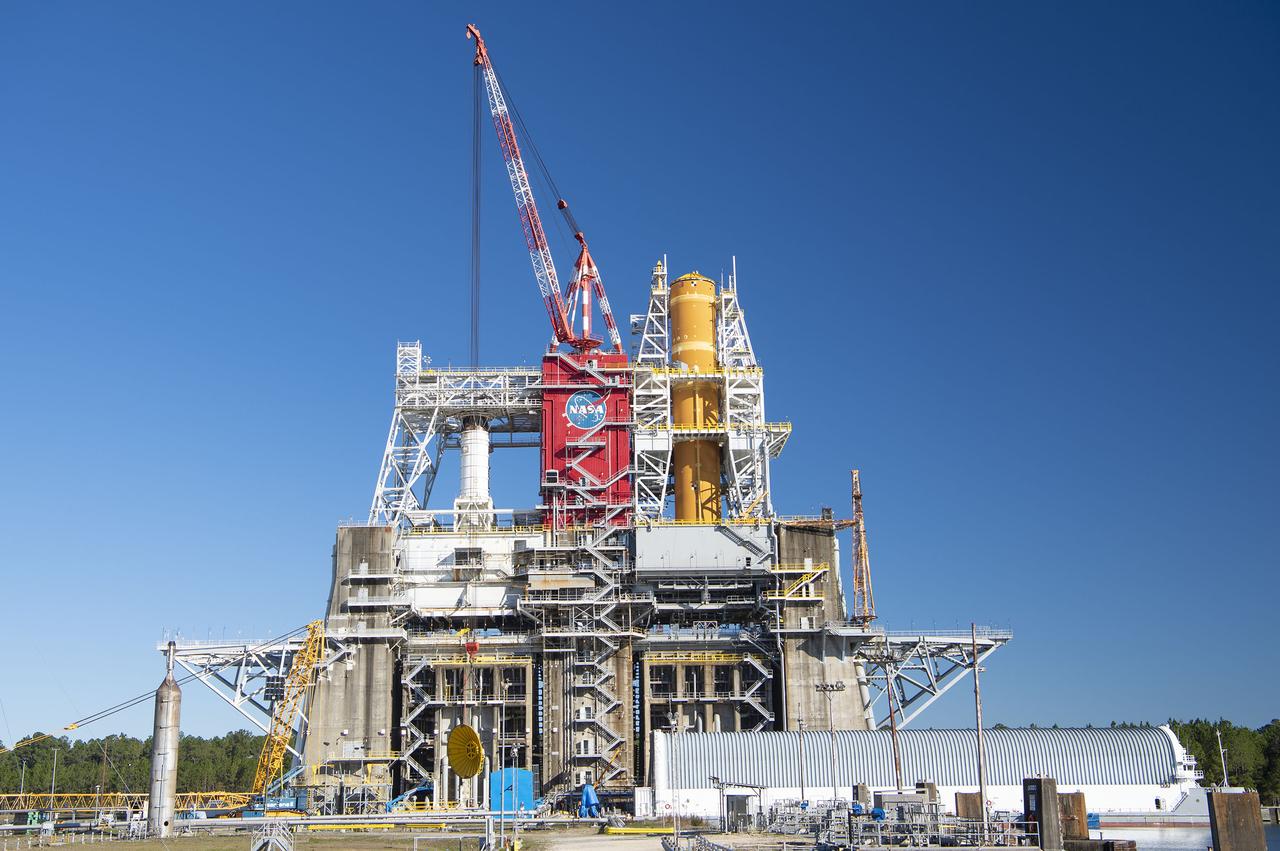
On Jan. 21-22, 2020, crews at Stennis Space Center lifted and installed the first core stage of NASA’s new Space Launch System (SLS) rocket onto the B-2 Test Stand. In upcoming months, a top-to-bottom, integrated series of Green Run tests will be conducted on the stage and its sophisticated systems. Following testing, the stage will be used to help launch the maiden Artemis I test mission of SLS and the Orion spacecraft. Through the Artemis program, NASA will send humans, including the first woman and next man, to the Moon to establish a sustainable presence.
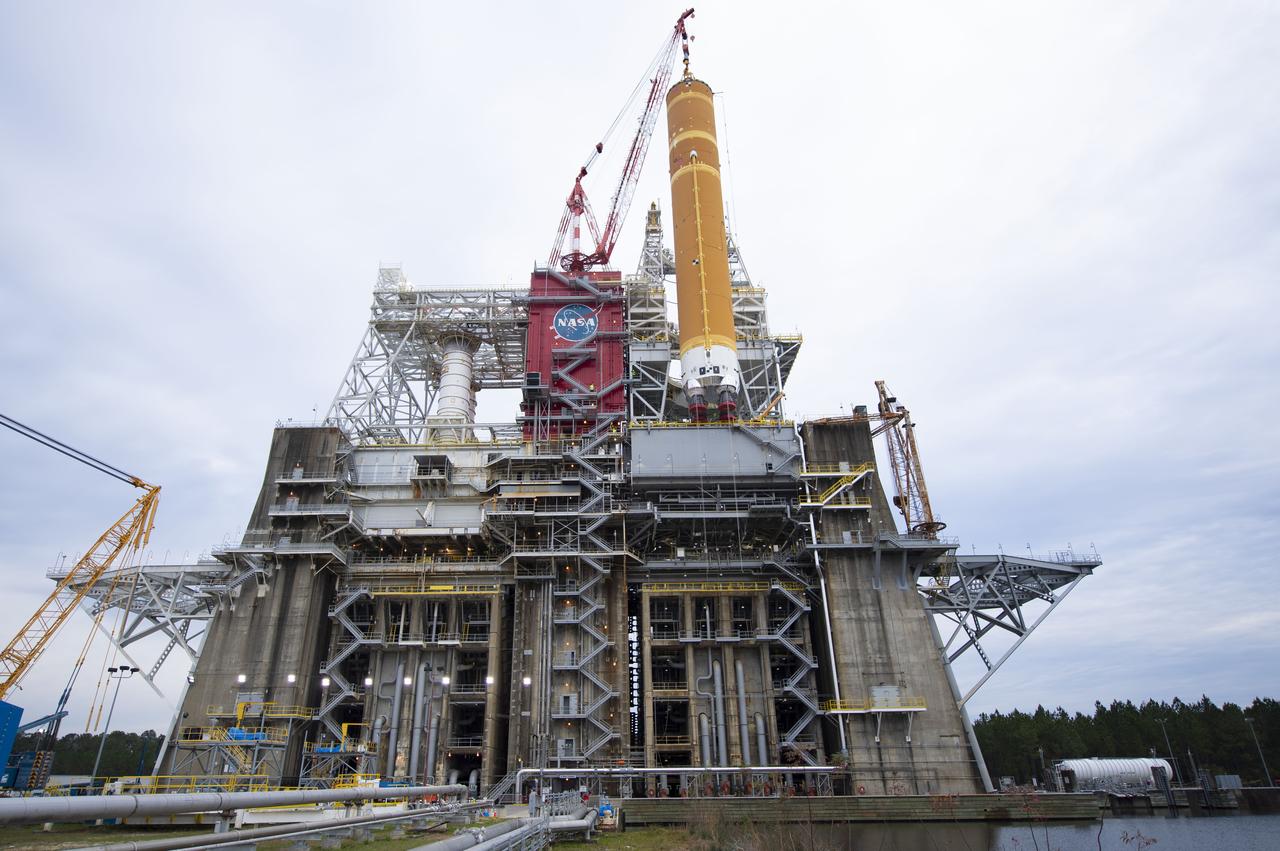
On Jan. 21-22, 2020, crews at Stennis Space Center lifted and installed the first core stage of NASA’s new Space Launch System (SLS) rocket onto the B-2 Test Stand. In upcoming months, a top-to-bottom, integrated series of Green Run tests will be conducted on the stage and its sophisticated systems. Following testing, the stage will be used to help launch the maiden Artemis I test mission of SLS and the Orion spacecraft. Through the Artemis program, NASA will send humans, including the first woman and next man, to the Moon to establish a sustainable presence.
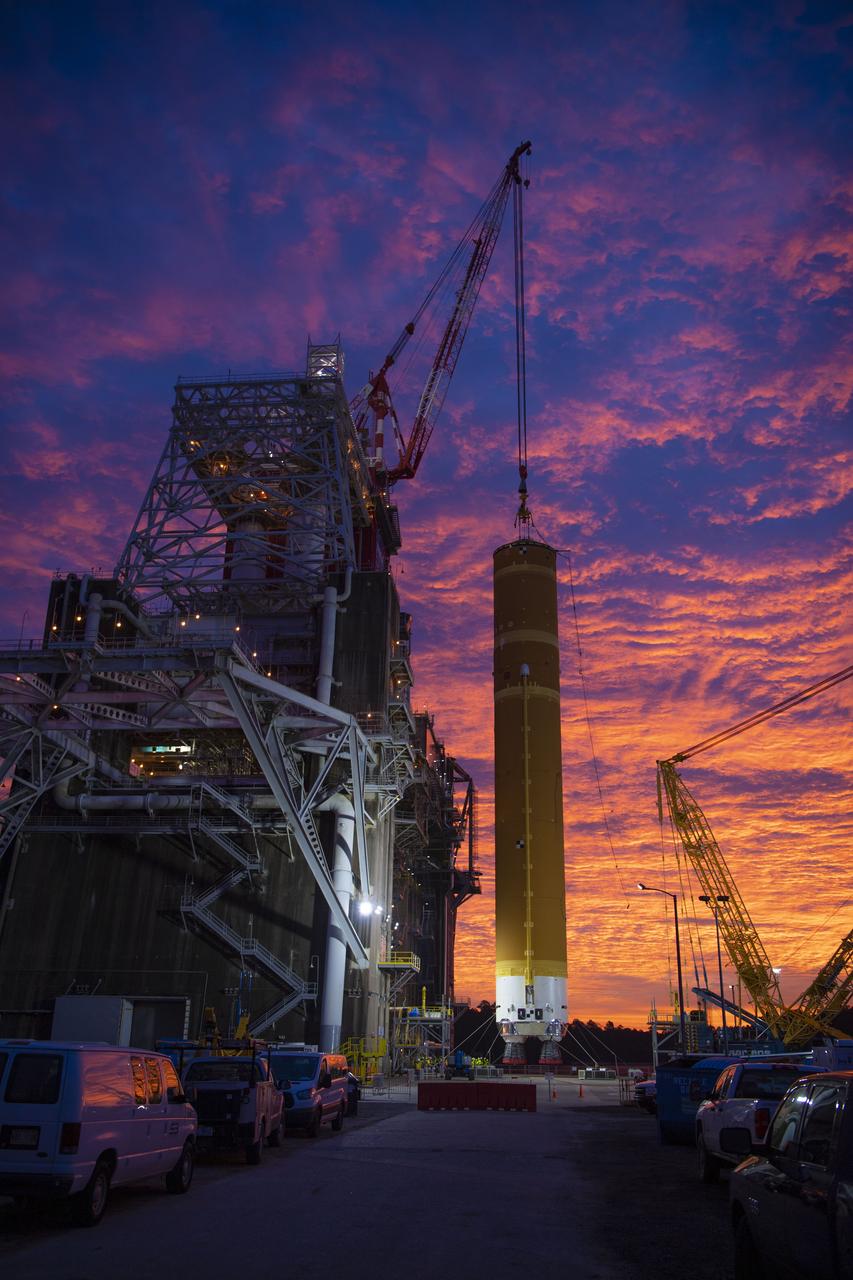
On Jan. 21-22, 2020, crews at Stennis Space Center lifted and installed the first core stage of NASA’s new Space Launch System (SLS) rocket onto the B-2 Test Stand. In upcoming months, a top-to-bottom, integrated series of Green Run tests will be conducted on the stage and its sophisticated systems. Following testing, the stage will be used to help launch the maiden Artemis I test mission of SLS and the Orion spacecraft. Through the Artemis program, NASA will send humans, including the first woman and next man, to the Moon to establish a sustainable presence.
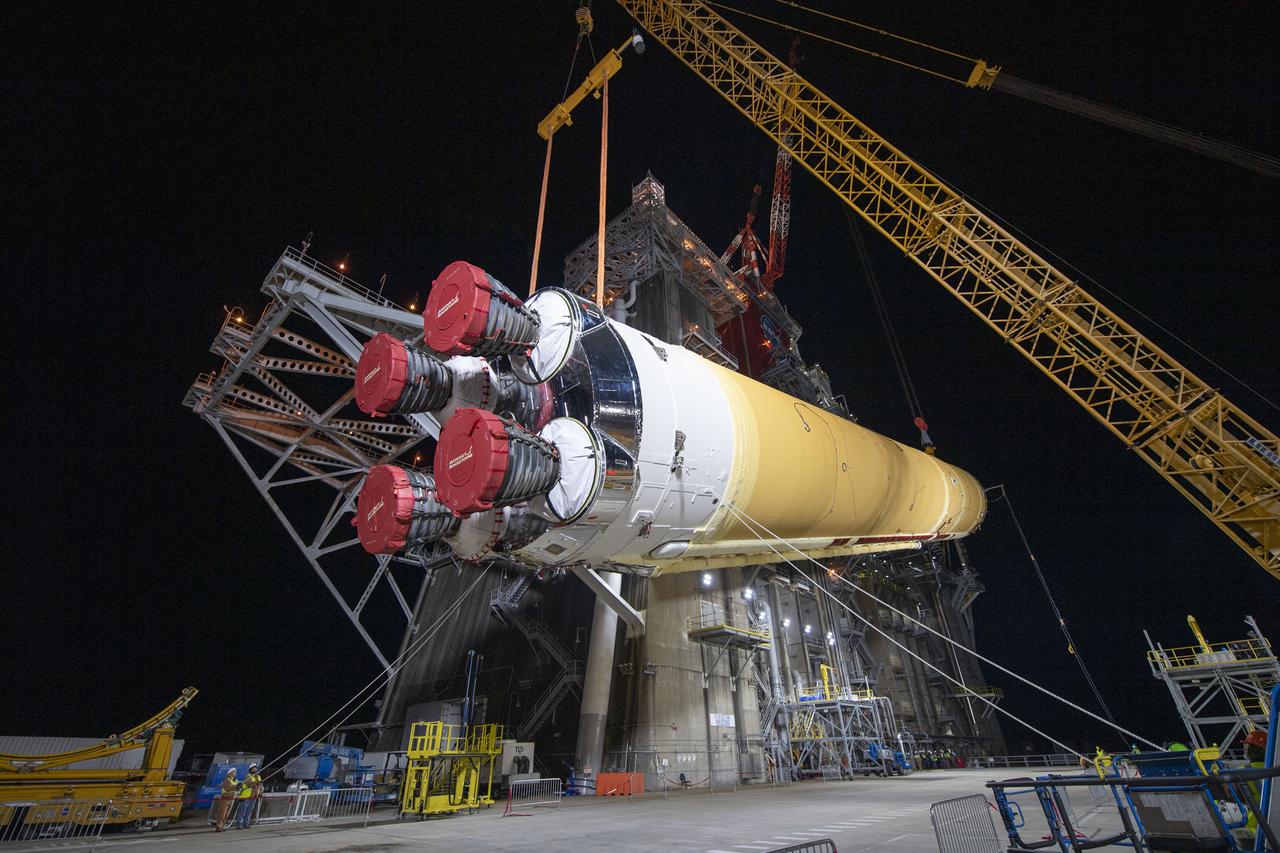
On Jan. 21-22, 2020, crews at Stennis Space Center lifted and installed the first core stage of NASA’s new Space Launch System (SLS) rocket onto the B-2 Test Stand. In upcoming months, a top-to-bottom, integrated series of Green Run tests will be conducted on the stage and its sophisticated systems. Following testing, the stage will be used to help launch the maiden Artemis I test mission of SLS and the Orion spacecraft. Through the Artemis program, NASA will send humans, including the first woman and next man, to the Moon to establish a sustainable presence.
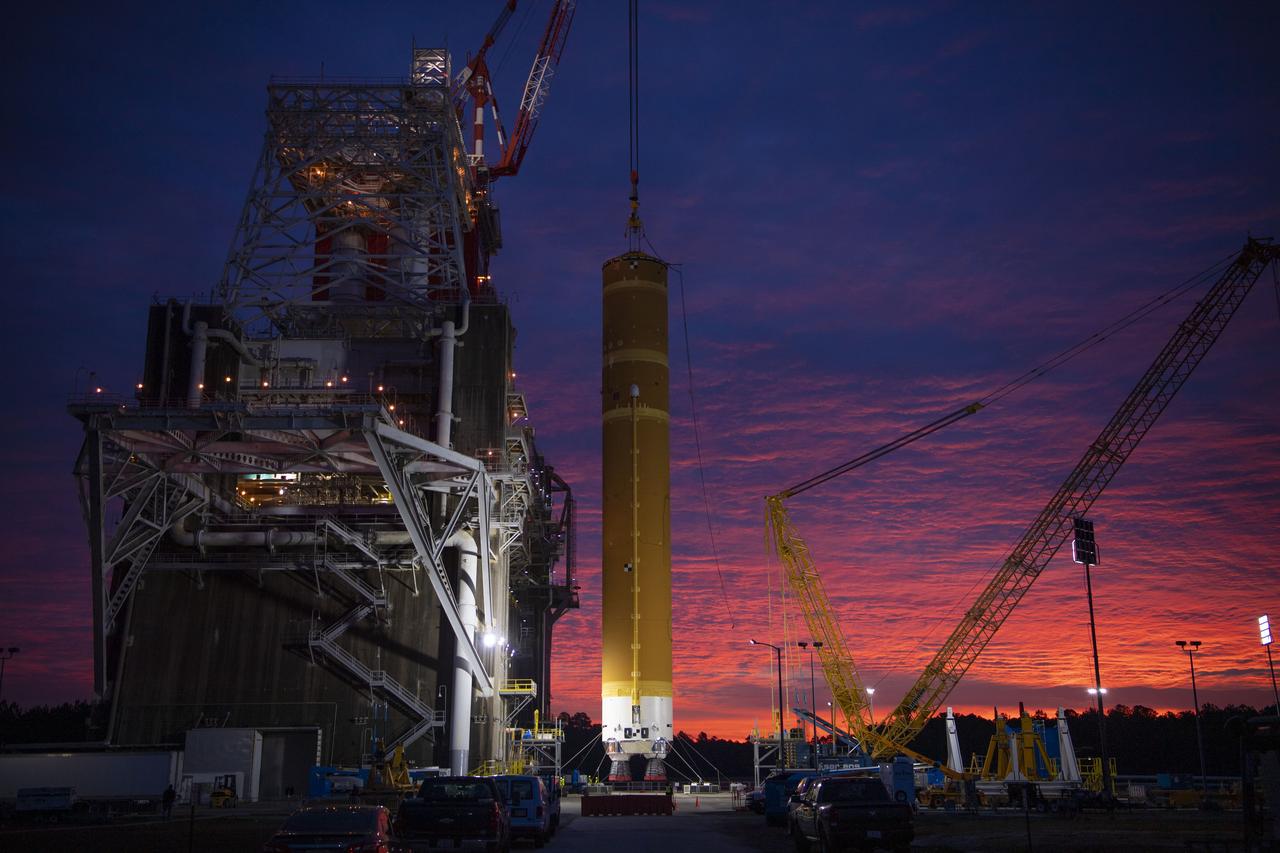
On Jan. 21-22, 2020, crews at Stennis Space Center lifted and installed the first core stage of NASA’s new Space Launch System (SLS) rocket onto the B-2 Test Stand. In upcoming months, a top-to-bottom, integrated series of Green Run tests will be conducted on the stage and its sophisticated systems. Following testing, the stage will be used to help launch the maiden Artemis I test mission of SLS and the Orion spacecraft. Through the Artemis program, NASA will send humans, including the first woman and next man, to the Moon to establish a sustainable presence.
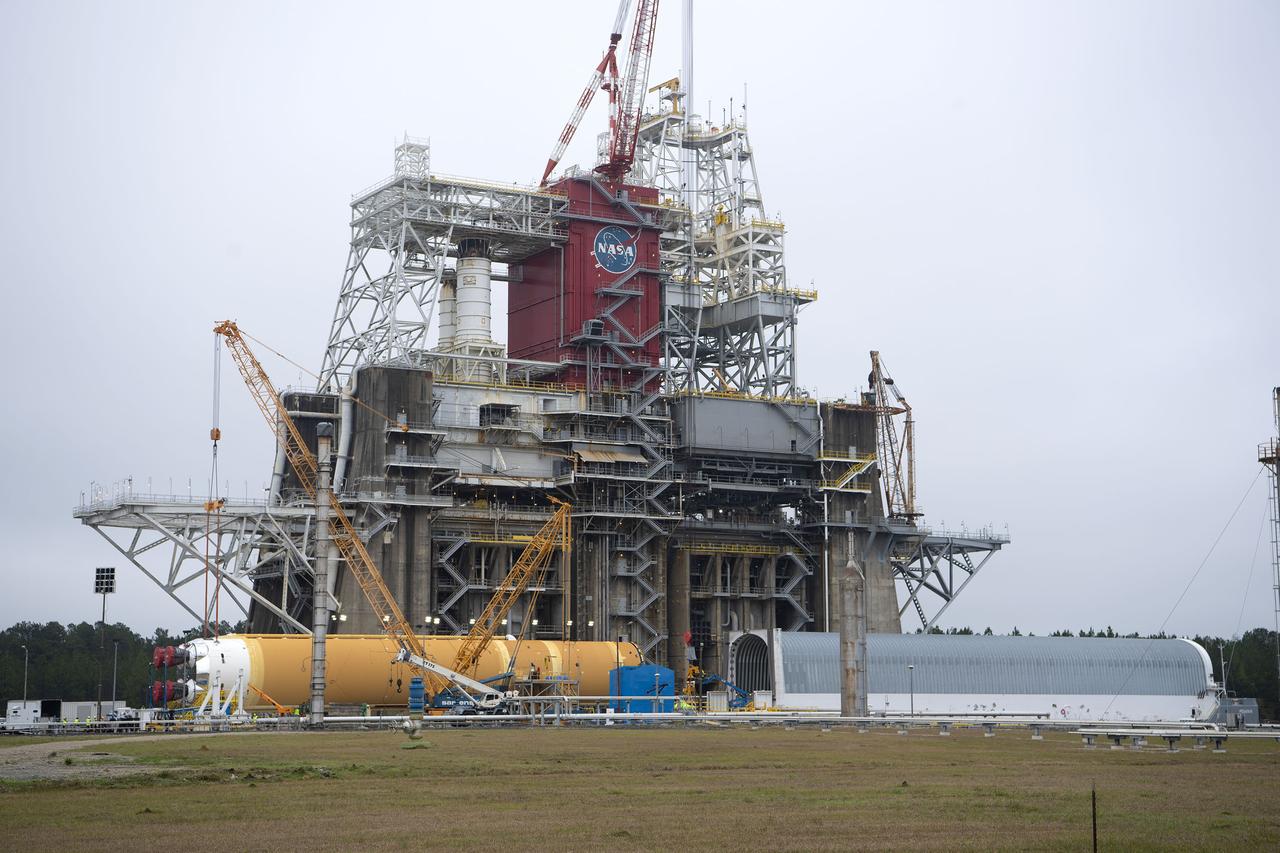
On Jan. 21-22, 2020, crews at Stennis Space Center lifted and installed the first core stage of NASA’s new Space Launch System (SLS) rocket onto the B-2 Test Stand. In upcoming months, a top-to-bottom, integrated series of Green Run tests will be conducted on the stage and its sophisticated systems. Following testing, the stage will be used to help launch the maiden Artemis I test mission of SLS and the Orion spacecraft. Through the Artemis program, NASA will send humans, including the first woman and next man, to the Moon to establish a sustainable presence.
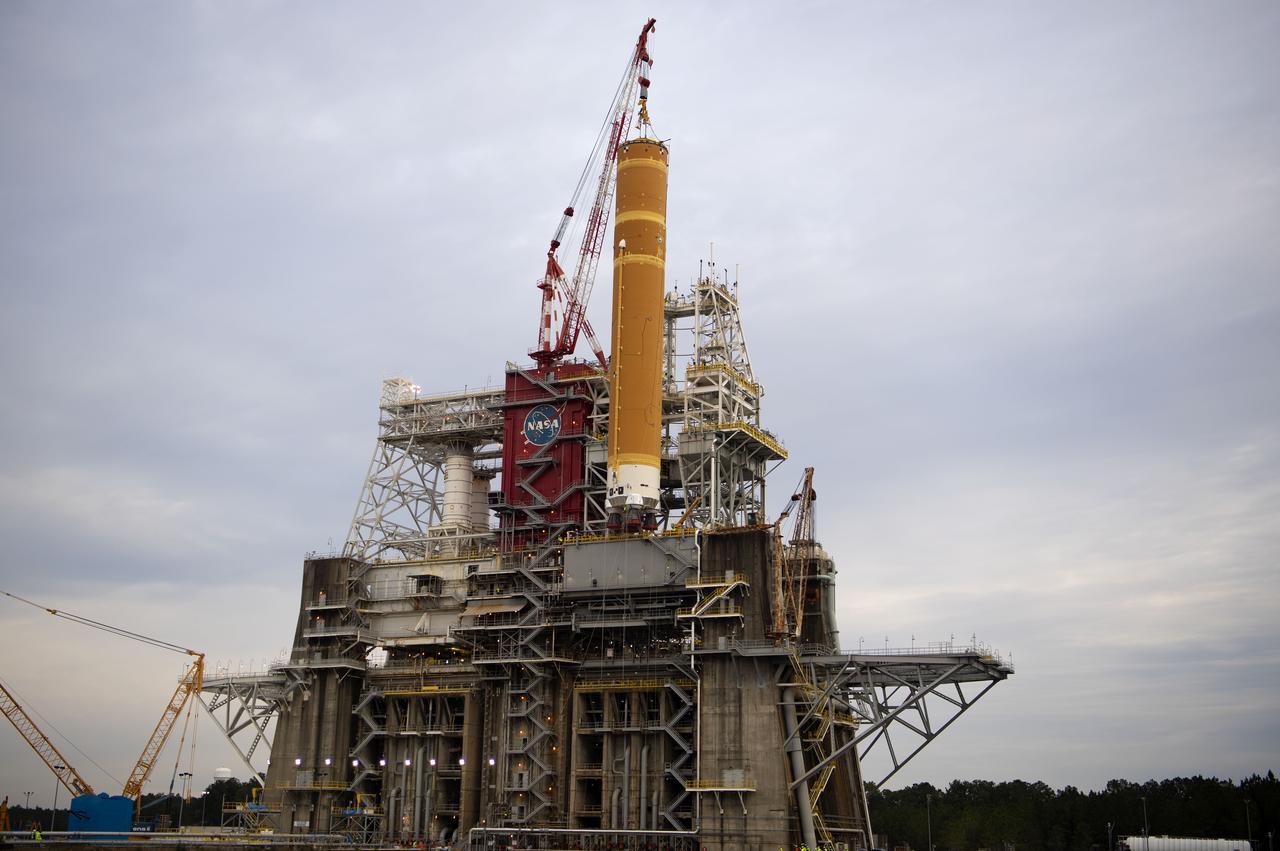
On Jan. 21-22, 2020, crews at Stennis Space Center lifted and installed the first core stage of NASA’s new Space Launch System (SLS) rocket onto the B-2 Test Stand. In upcoming months, a top-to-bottom, integrated series of Green Run tests will be conducted on the stage and its sophisticated systems. Following testing, the stage will be used to help launch the maiden Artemis I test mission of SLS and the Orion spacecraft. Through the Artemis program, NASA will send humans, including the first woman and next man, to the Moon to establish a sustainable presence.
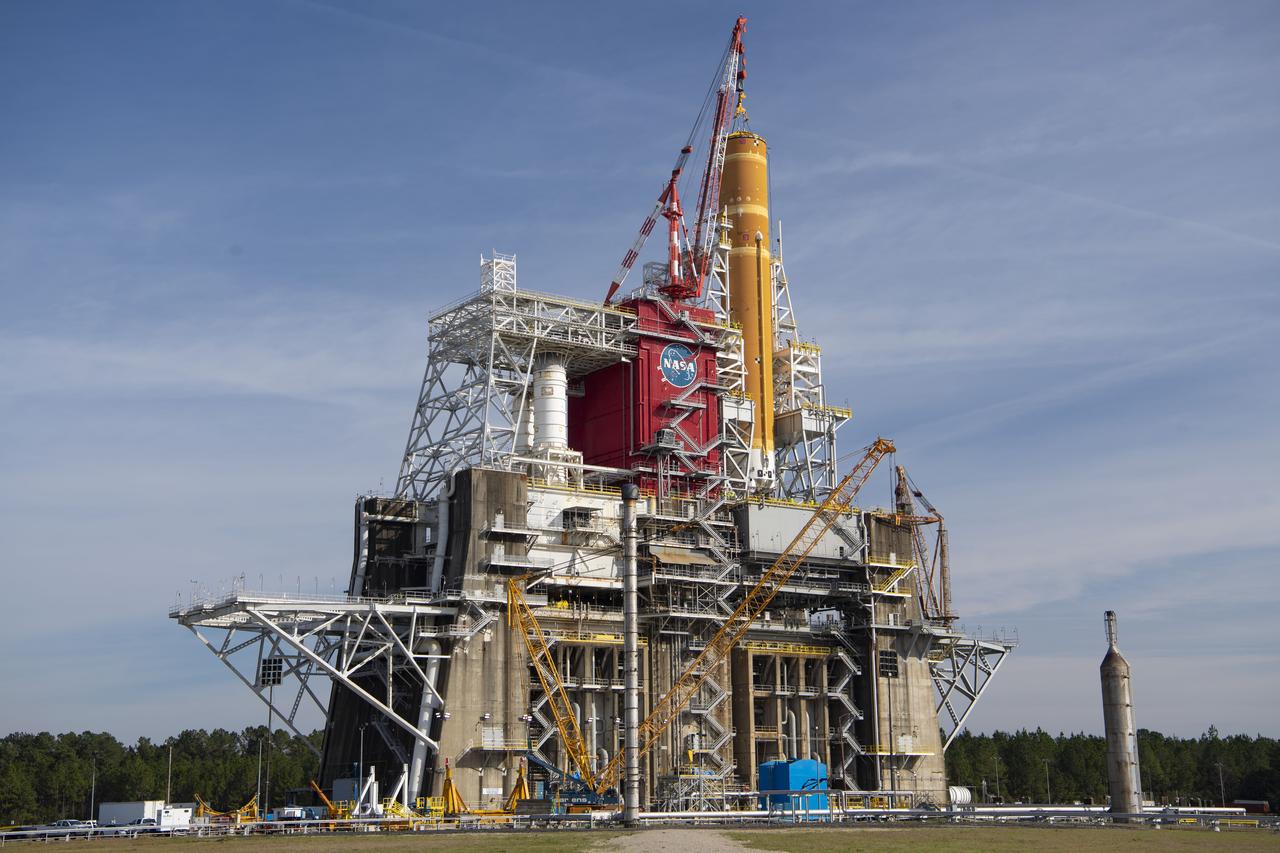
On Jan. 21-22, 2020, crews at Stennis Space Center lifted and installed the first core stage of NASA’s new Space Launch System (SLS) rocket onto the B-2 Test Stand. In upcoming months, a top-to-bottom, integrated series of Green Run tests will be conducted on the stage and its sophisticated systems. Following testing, the stage will be used to help launch the maiden Artemis I test mission of SLS and the Orion spacecraft. Through the Artemis program, NASA will send humans, including the first woman and next man, to the Moon to establish a sustainable presence.
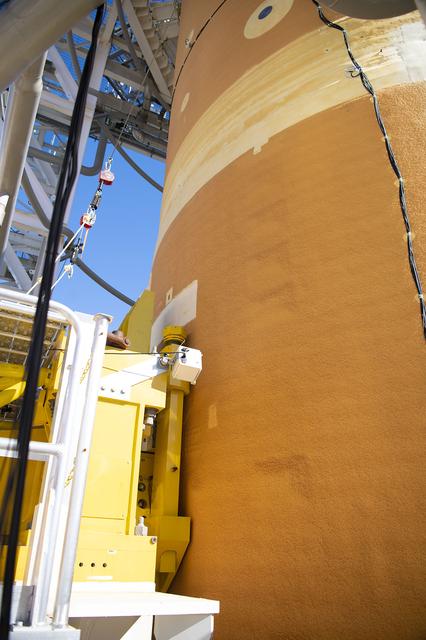
On Jan. 21-22, 2020, crews at Stennis Space Center lifted and installed the first core stage of NASA’s new Space Launch System (SLS) rocket onto the B-2 Test Stand. In upcoming months, a top-to-bottom, integrated series of Green Run tests will be conducted on the stage and its sophisticated systems. Following testing, the stage will be used to help launch the maiden Artemis I test mission of SLS and the Orion spacecraft. Through the Artemis program, NASA will send humans, including the first woman and next man, to the Moon to establish a sustainable presence.
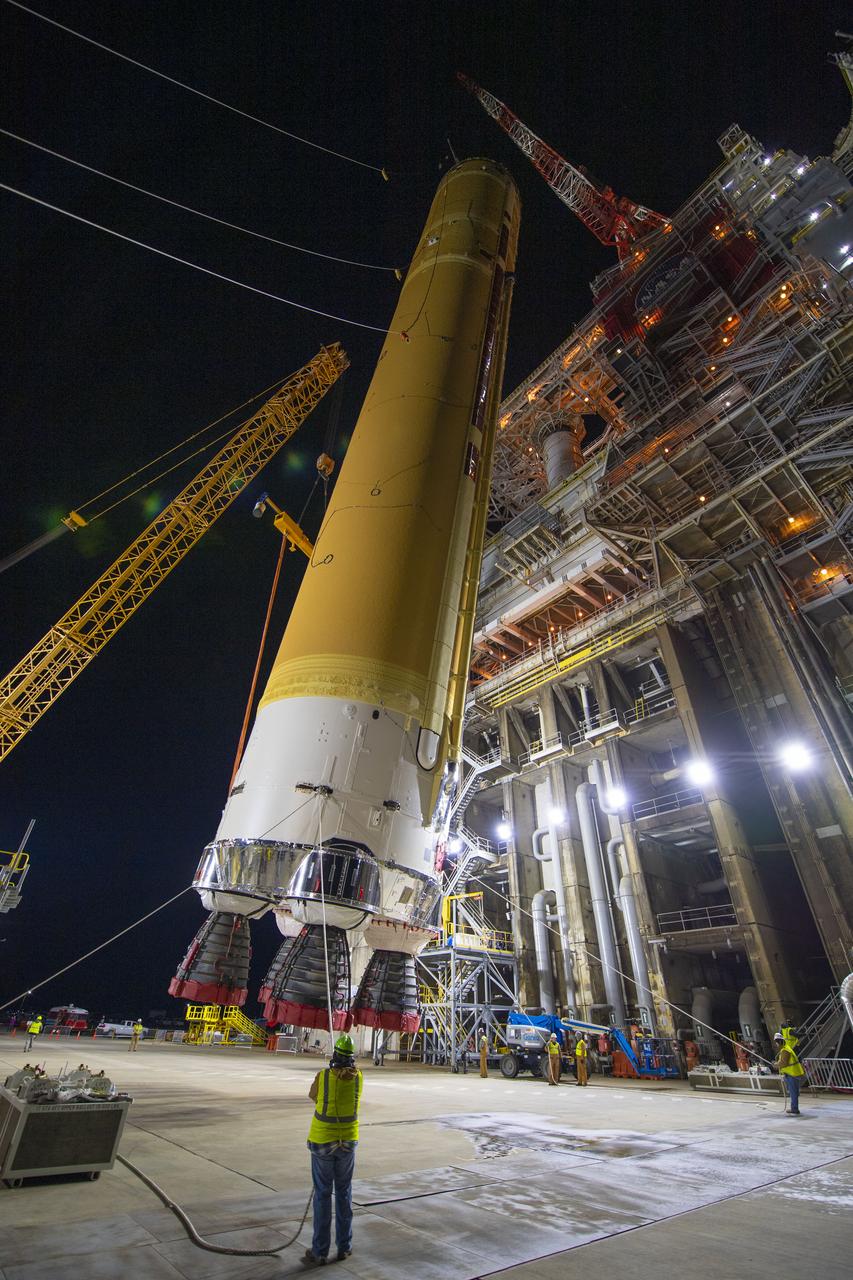
On Jan. 21-22, 2020, crews at Stennis Space Center lifted and installed the first core stage of NASA’s new Space Launch System (SLS) rocket onto the B-2 Test Stand. In upcoming months, a top-to-bottom, integrated series of Green Run tests will be conducted on the stage and its sophisticated systems. Following testing, the stage will be used to help launch the maiden Artemis I test mission of SLS and the Orion spacecraft. Through the Artemis program, NASA will send humans, including the first woman and next man, to the Moon to establish a sustainable presence.

Event: Horizontal Stabilator Install The Low Boom Flight Demonstrator manufacturing team installed the horizontal stabilizers to the aircraft. These are used along with the flight control computers to keep the airplane flying safely and providing the pitch control so that the pilot can fly the missions envisioned for the X-59

Event: Horizontal Stabilator Install The Low Boom Flight Demonstrator manufacturing team installed the horizontal stabilizers to the aircraft. These are used along with the flight control computers to keep the airplane flying safely and providing the pitch control so that the pilot can fly the missions envisioned for the X-59.

Event: Horizontal Stabilator Install The Low Boom Flight Demonstrator manufacturing team installed the horizontal stabilizers to the aircraft. These are used along with the flight control computers to keep the airplane flying safely and providing the pitch control so that the pilot can fly the missions envisioned for the X-59.

Event: Horizontal Stabilator Install The Low Boom Flight Demonstrator manufacturing team installed the horizontal stabilizers to the aircraft. These are used along with the flight control computers to keep the airplane flying safely and providing the pitch control so that the pilot can fly the missions envisioned for the X-59.
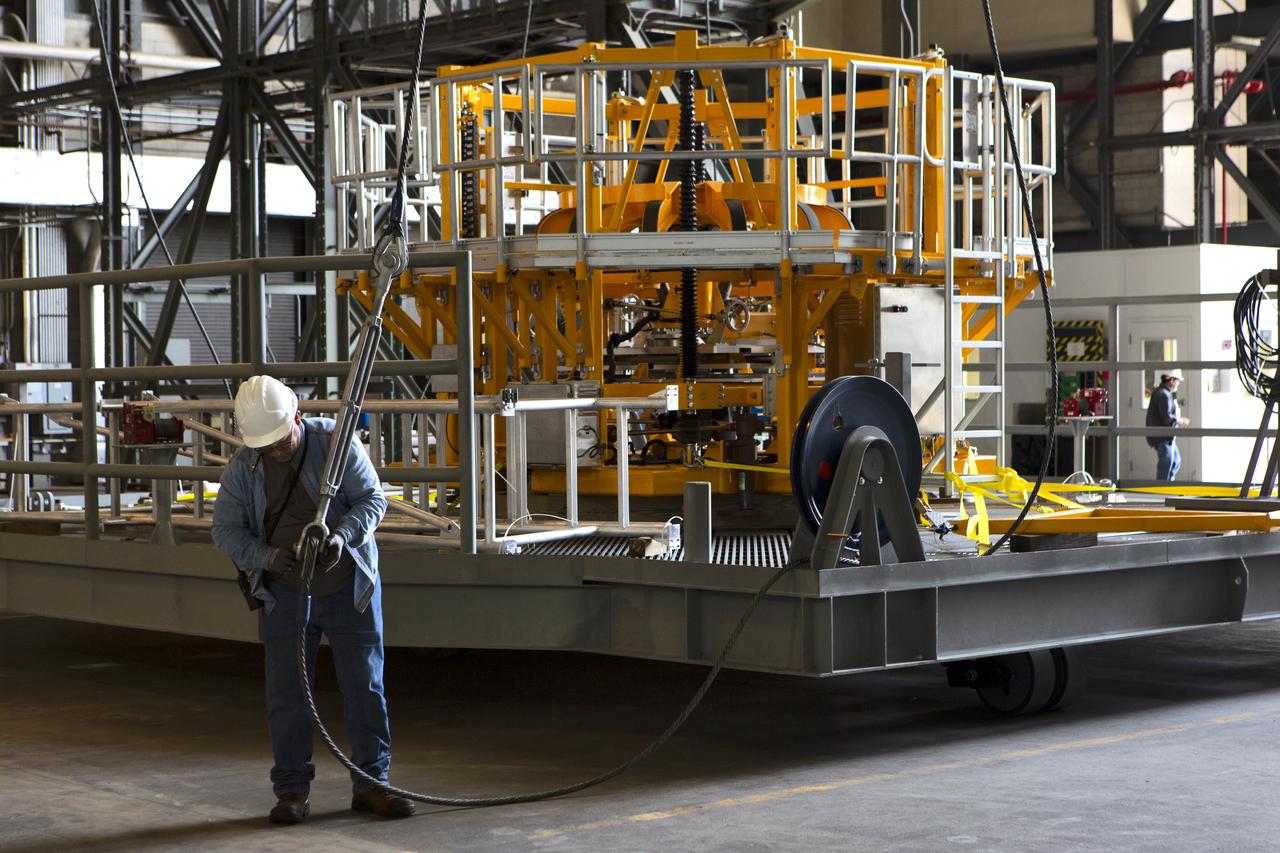
The engine vertical installer for NASA’s Space Launch System (SLS) is inside the Vehicle Assembly at NASA’s Kennedy Space Center in Florida on April 25, 2019. Preparations are underway to lift the engine installer up and into High Bay 3. The engine installer arrived from the manufacturer, Precision Fabrication and Cleaning in Canaveral Groves, Florida. The new ground support equipment will be ready for preflight processing in the event one of the four RS-25 engines on the core stage of the SLS rocket needs to be replaced. During launch of the SLS and Orion spacecraft, the four core stage engines will provide the thrust needed to lift the rocket and Orion spacecraft off Launch Pad 39B at Kennedy for Exploration Mission-1. The uncrewed Orion will travel on a three-week test mission thousands of miles beyond the Moon and back to Earth for a splashdown in the Pacific Ocean.