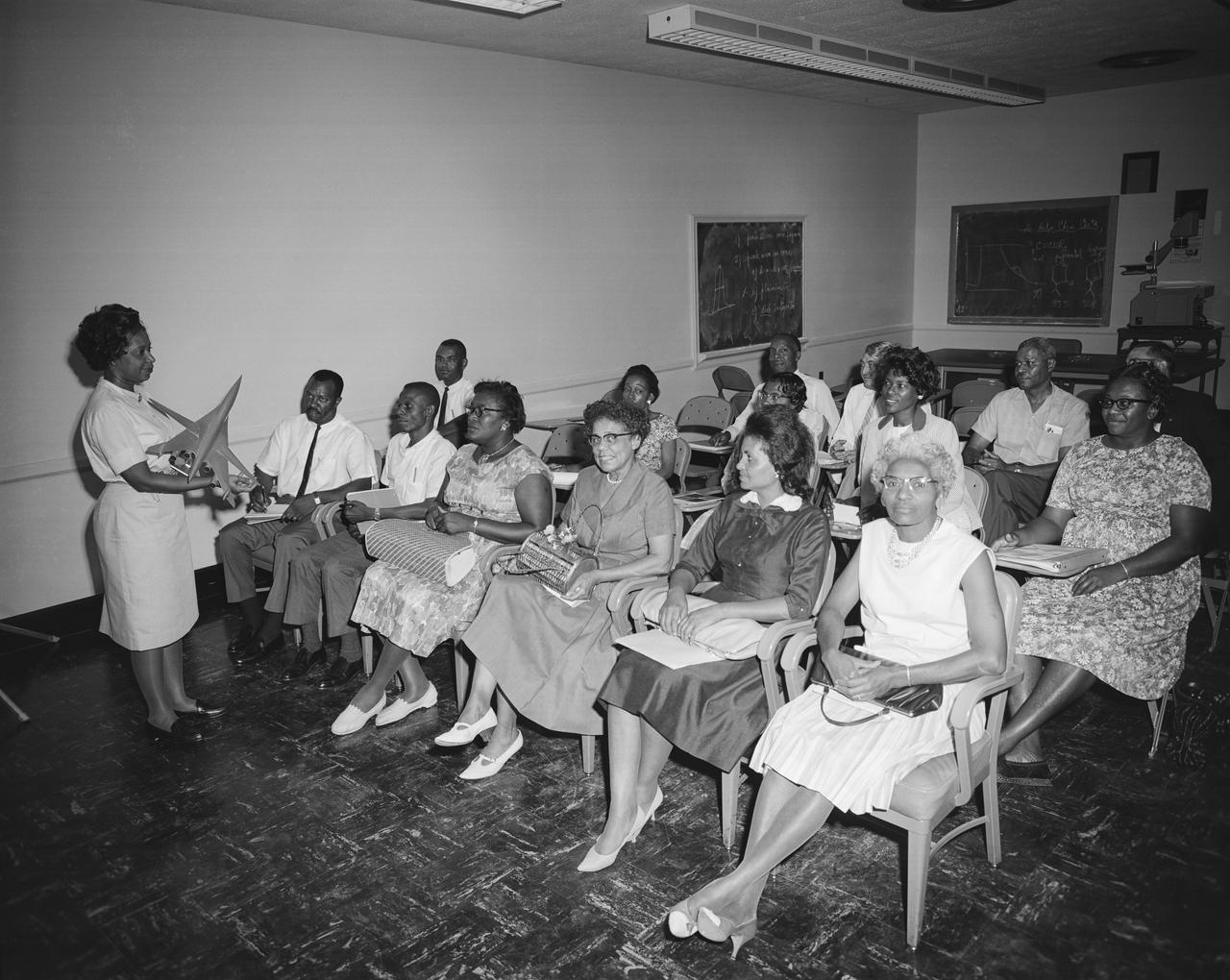
Photograph taken July 30, 1964. Mary W Jackson, Aerospace Engineer in the Large Supersonic Tunnels Branch of Full-Scale Research Division, explains the facilities used in testing research models such as SCAT. The Guidance Counseling Class from Hampton Institute visited the center on July 30 and toured a number of facilities. The purpose of the visit was to provide the counselors an opportunity to see areas of work representing fields in which their students might be employed. The group, under the direction of Professor Fissell Jones (Left, back row) of Hampton Institute, represented the states of Virginia, North Carolina, South Carolina, and Georgia. In 1958 Mary Jackson became NASA's first black female engineer. The Hampton Institute (now Hampton University) is a Historically Black College. NASA started its EEO office in 1964 and the NASA Administrator at the time, James Webb, was very enthusiastic about reaching out to universities (including HBCUs) to partner with them and to encourage students to become NASA engineers.
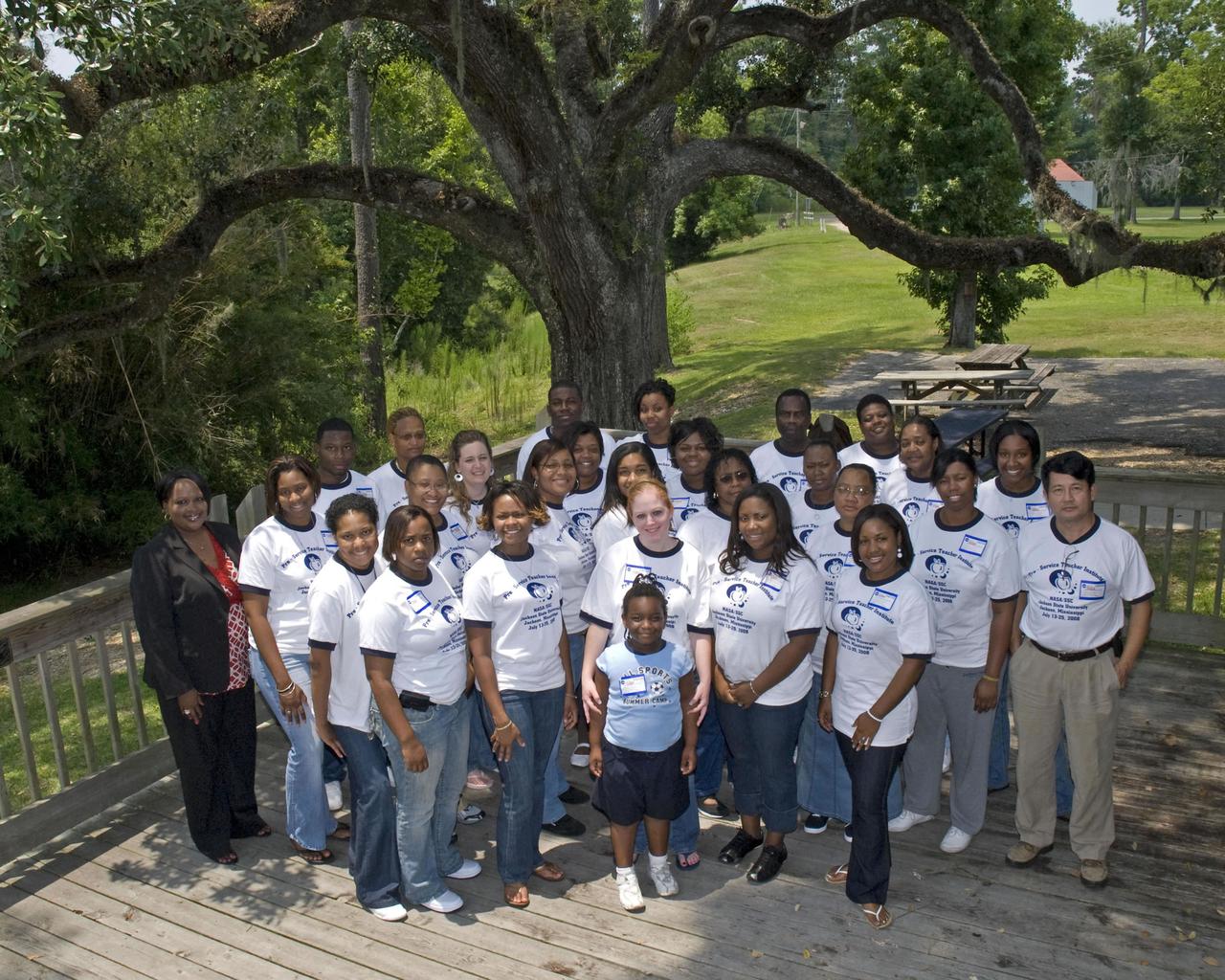
The Pre-Service Teachers Institute sponsored by Jackson (Miss.) State University participated in an agencywide Hubble Space Telescope workshop at Stennis Space Center on July 18. Twenty-five JSU junior education majors participated in the workshop, a site tour and educational presentations by Karma Snyder of the NASA SSC Engineering & Safety Center and Anne Peek of the NASA SSC Deputy Science & Technology Division.

Norman Augustine, chair of the Human Space Flight Review Committee, makes a point during the first of several public meetings at different U.S. locations, Wednesday, June 17, 2009, at the Carnegie Institution in Washington. The panel will examine ongoing and planned NASA development activities and potential alternatives in order to present options for advancing a safe, innovative, affordable and sustainable human space flight program following the space shuttle's retirement. The committee wil present its results by August 2009. Photo Credit: (NASA/Paul E. Alers)
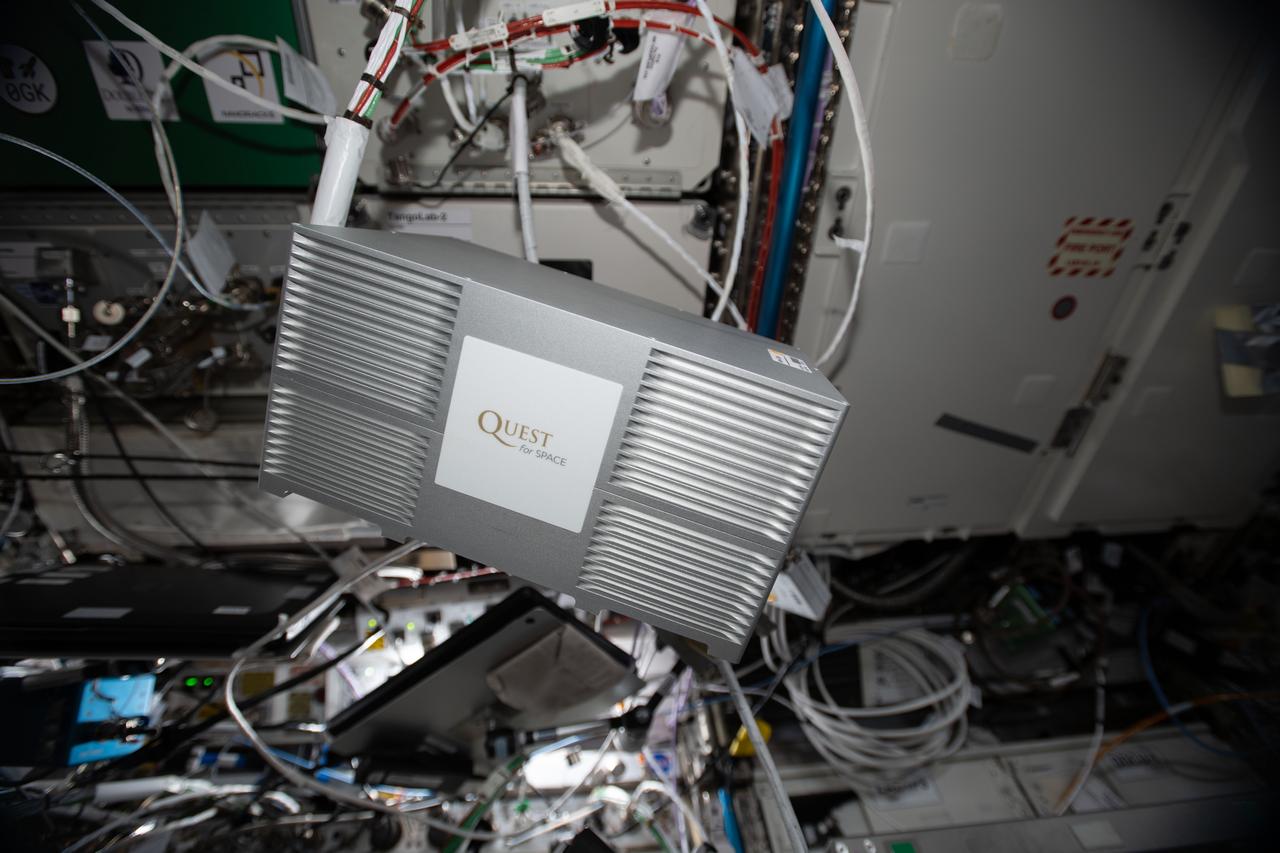
iss062e102749 (3/19/2020) --- A view of the Quest Institute-NanoLab Unit 3 investigation aboard the International Space Station (ISS). Quest Institute-NanoLab Unit 3 contains 15 Nano-Lab experiments from students in the United States and Singapore. Student-developed spaceflight experiments empower students with real-world science experience.

Norman Augustine, chair of the Human Space Flight Review Committee, listens to a comment from the audience during the first of several public meetings at different U.S. locations, Wednesday, June 17, 2009, at the Carnegie Institution in Washington. The panel will examine ongoing and planned NASA development activities and potential alternatives in order to present options for advancing a safe, innovative, affordable and sustainable human space flight program following the space shuttle's retirement. The committee wil present its results by August 2009. Photo Credit: (NASA/Paul E. Alers)
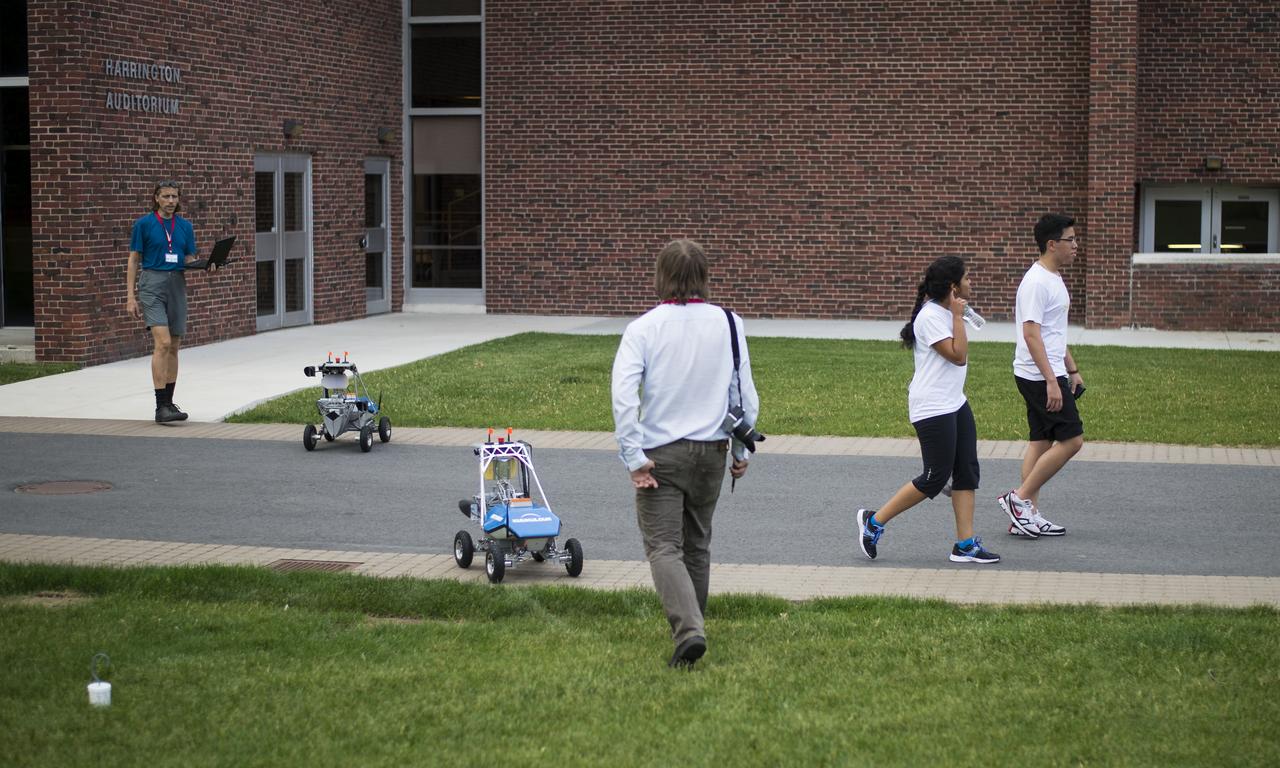
A pair of Worcester Polytechnic Institute (WPI) students walk past a pair of team KuuKulgur's robots on the campus quad, during a final tuneup before the start of competition at the 2014 NASA Centennial Challenges Sample Return Robot Challenge, Tuesday, June 10, 2014, at the Worcester Polytechnic Institute (WPI) in Worcester, Mass. Team KuuKulgur is one of eighteen teams competing for a $1.5 million NASA prize purse. Teams will be required to demonstrate autonomous robots that can locate and collect samples from a wide and varied terrain, operating without human control. The objective of this NASA-WPI Centennial Challenge is to encourage innovations in autonomous navigation and robotics technologies. Innovations stemming from the challenge may improve NASA's capability to explore a variety of destinations in space, as well as enhance the nation's robotic technology for use in industries and applications on Earth. Photo Credit: (NASA/Joel Kowsky)
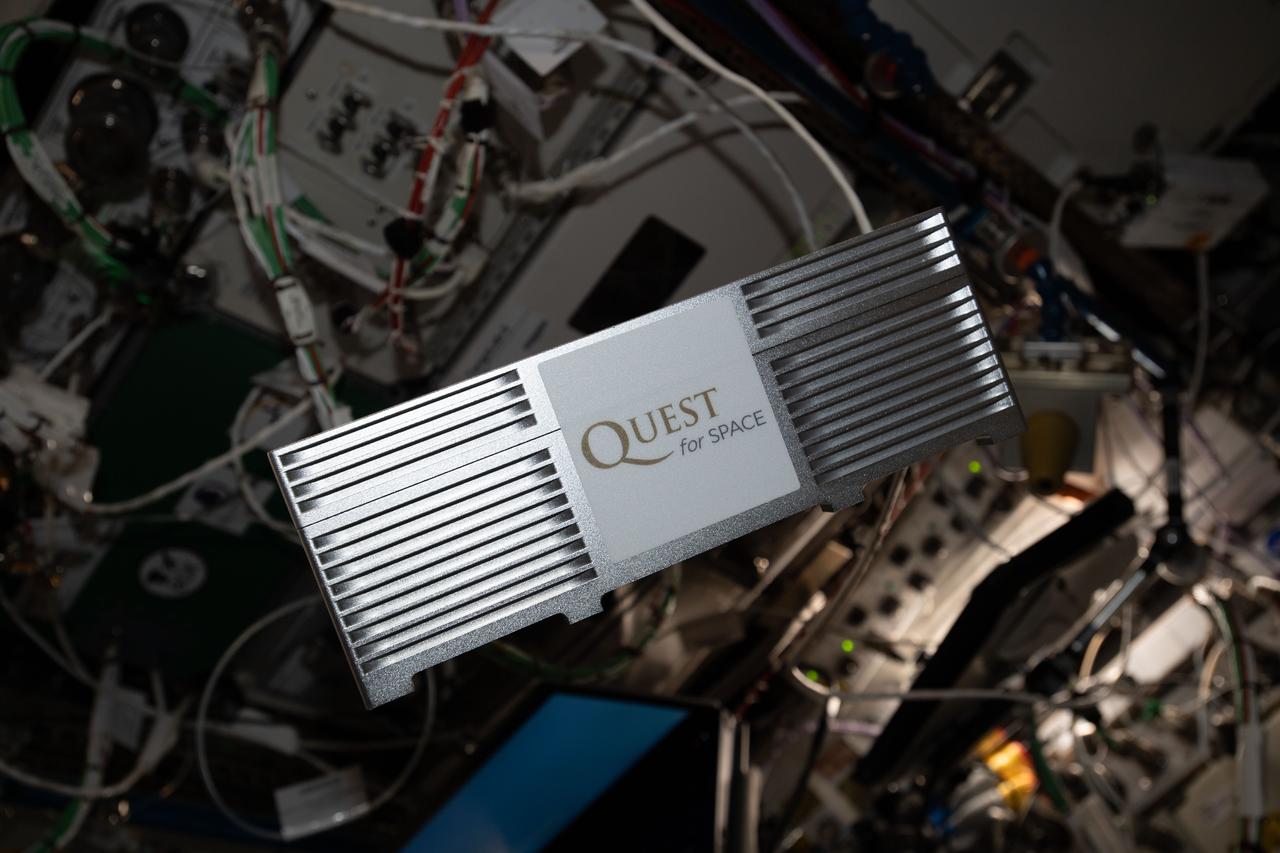
iss062e034557 (2/19/2020) --- A view of the Quest Institute-NanoLab Unit 3 investigation aboard the International Space Station (ISS). Quest Institute-NanoLab Unit 3 contains 15 Nano-Lab experiments from students in the United States and Singapore. Student-developed spaceflight experiments empower students with real-world science experience.
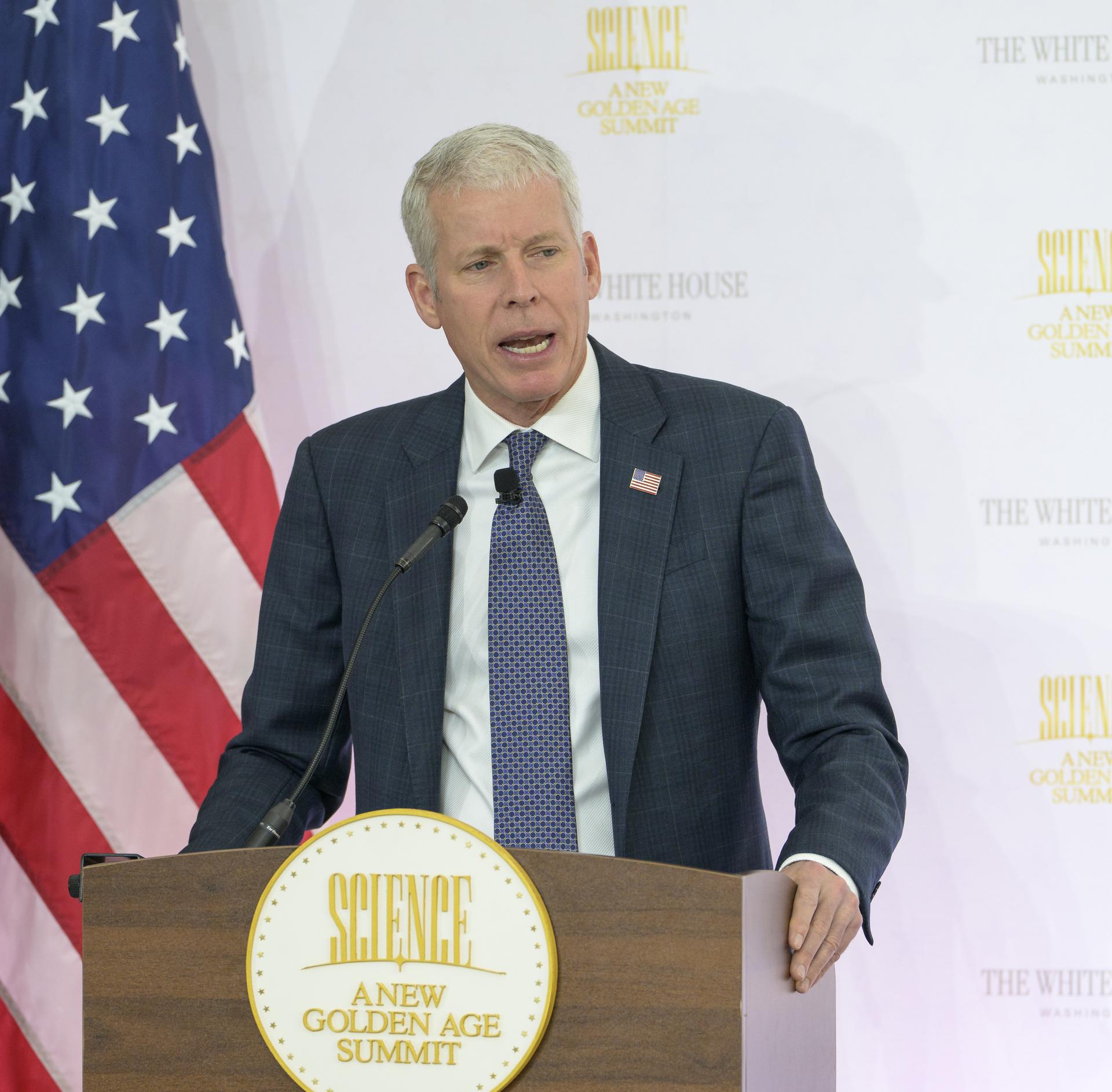
U.S. Secretary of Energy Chris Wright gives remarks ahead of NASA and DOE signing a new Memorandum of Understanding, “Accelerating American Leadership in Space Nuclear Power and Propulsion”, during the Golden Age Summit, Thursday, Oct. 8, 2026, at the Donald J. Trump Institute of Peace in Washington. Photo Credit: (NASA/Bill Ingalls)
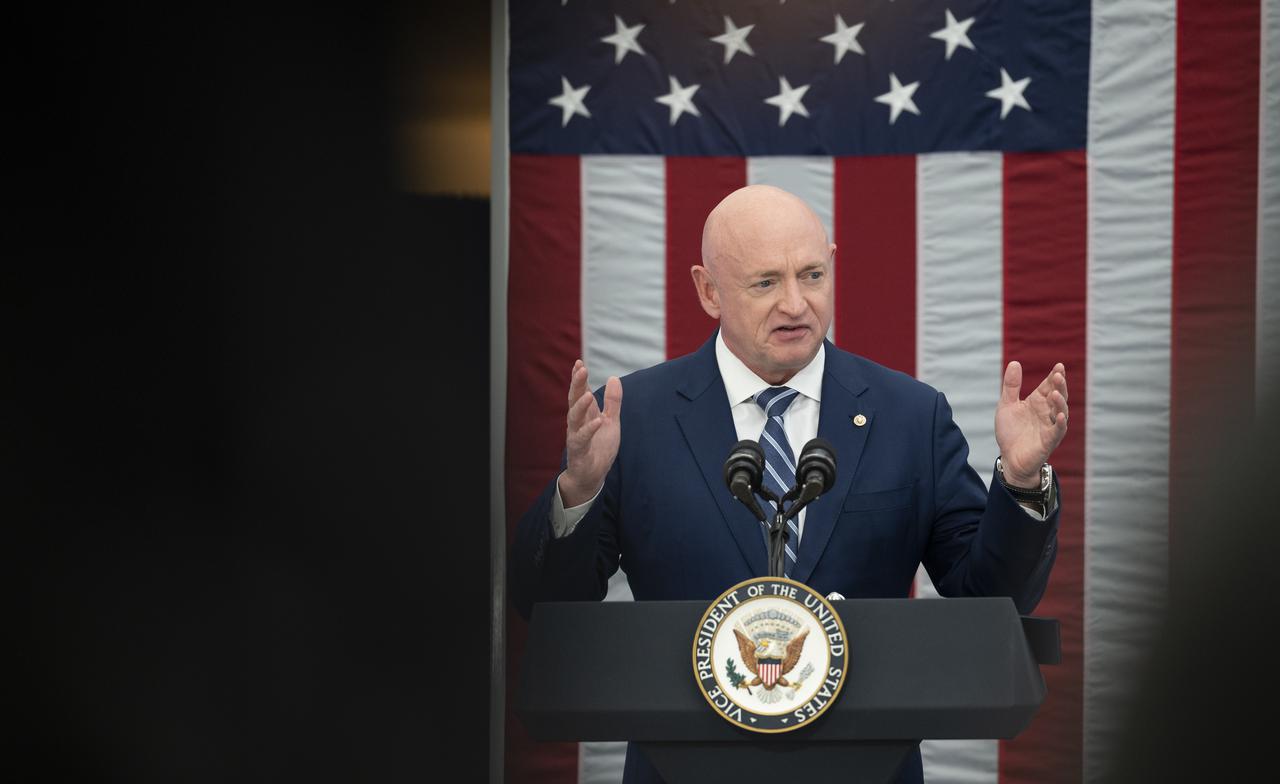
Sen. Mark Kelly, D-Ariz., introduces Vice President Kamala Harris, at the first meeting of the National Space Council, Wednesday, Dec. 1, 2021, at the United States Institute of Peace in Washington. Chaired by Vice President Harris, the council's role is to advise the President regarding national space policy and strategy, and ensuring the United States capitalizes on the opportunities presented by the country’s space activities. Photo Credit: (NASA/Joel Kowsky)
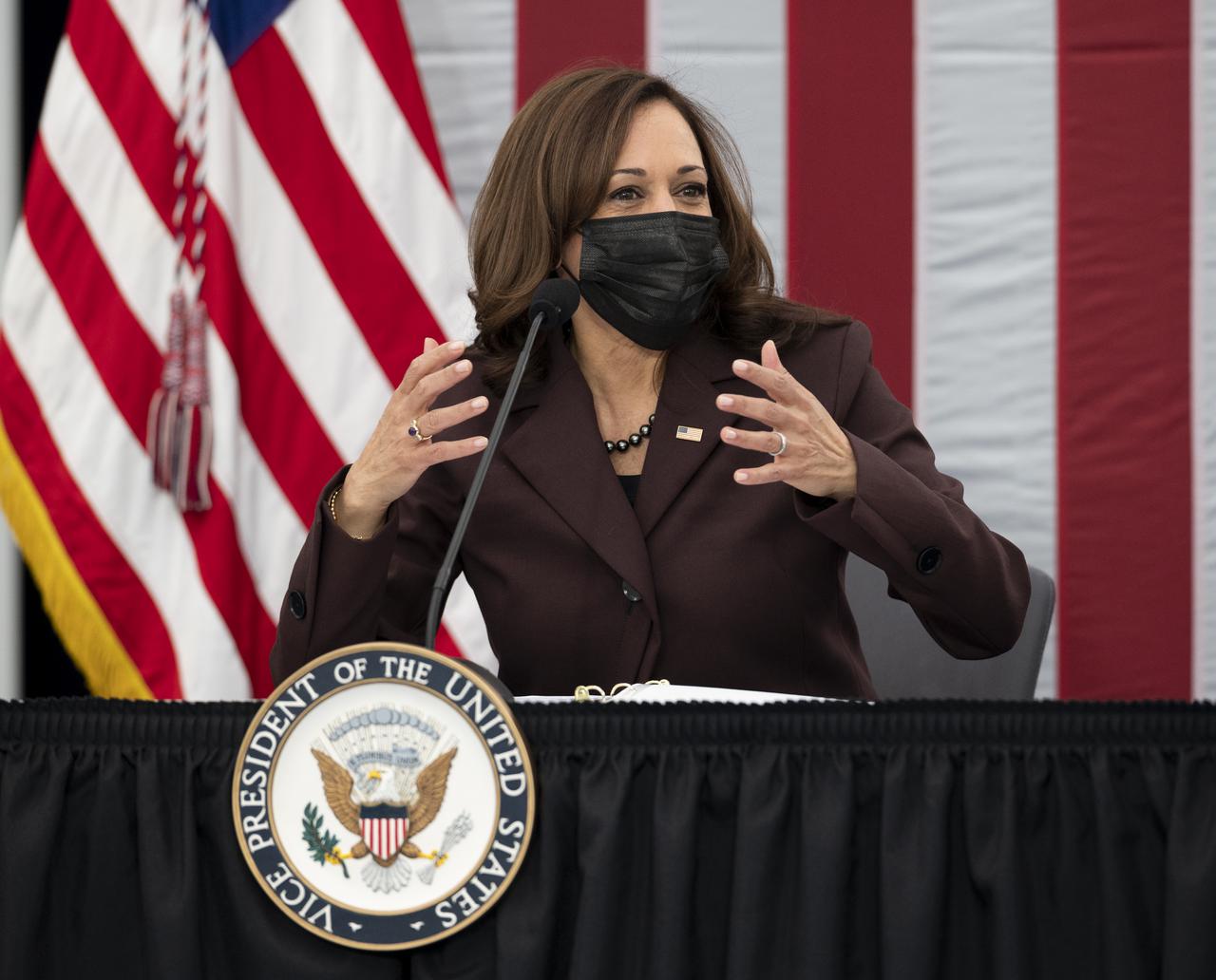
Vice President Kamala Harris is seen during the National Space Council’s first meeting, Wednesday, Dec. 1, 2021 at the United States Institute of Peace in Washington. Chaired by Vice President Harris, the council's role is to advise the President regarding national space policy and strategy, and ensuring the United States capitalizes on the opportunities presented by the country’s space activities. Photo Credit: (NASA/Joel Kowsky)
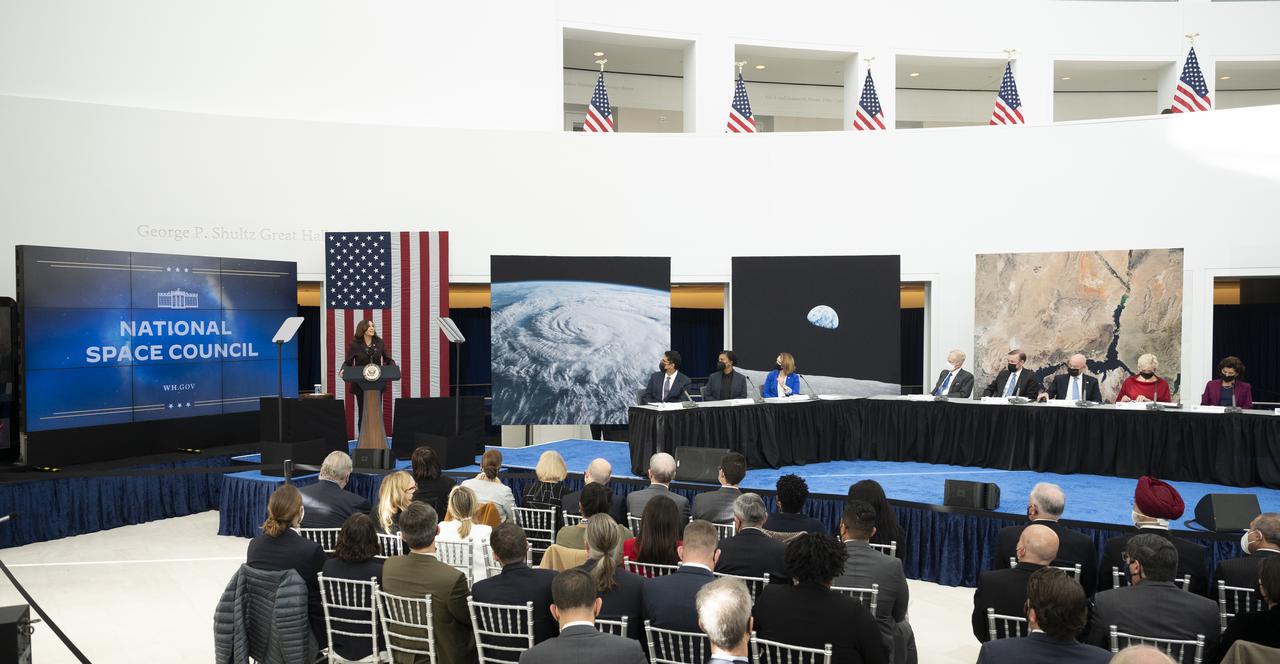
Vice President Kamala Harris delivers opening remarks at the first meeting of the National Space Council, Wednesday, Dec. 1, 2021, at the United States Institute of Peace in Washington. Chaired by Vice President Harris, the council's role is to advise the President regarding national space policy and strategy, and ensuring the United States capitalizes on the opportunities presented by the country’s space activities. Photo Credit: (NASA/Joel Kowsky)
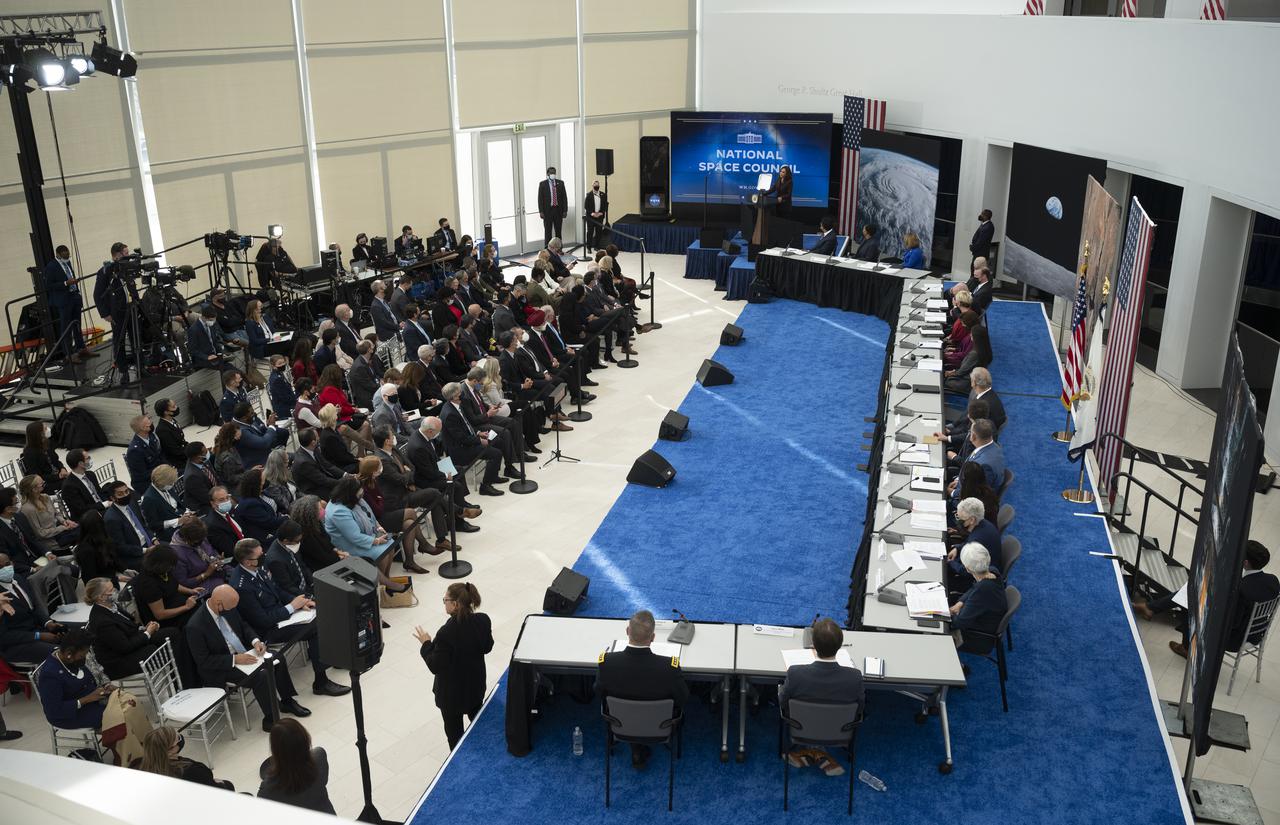
Vice President Kamala Harris delivers opening remarks at the first meeting of the National Space Council, Wednesday, Dec. 1, 2021, at the United States Institute of Peace in Washington. Chaired by Vice President Harris, the council's role is to advise the President regarding national space policy and strategy, and ensuring the United States capitalizes on the opportunities presented by the country’s space activities. Photo Credit: (NASA/Joel Kowsky)
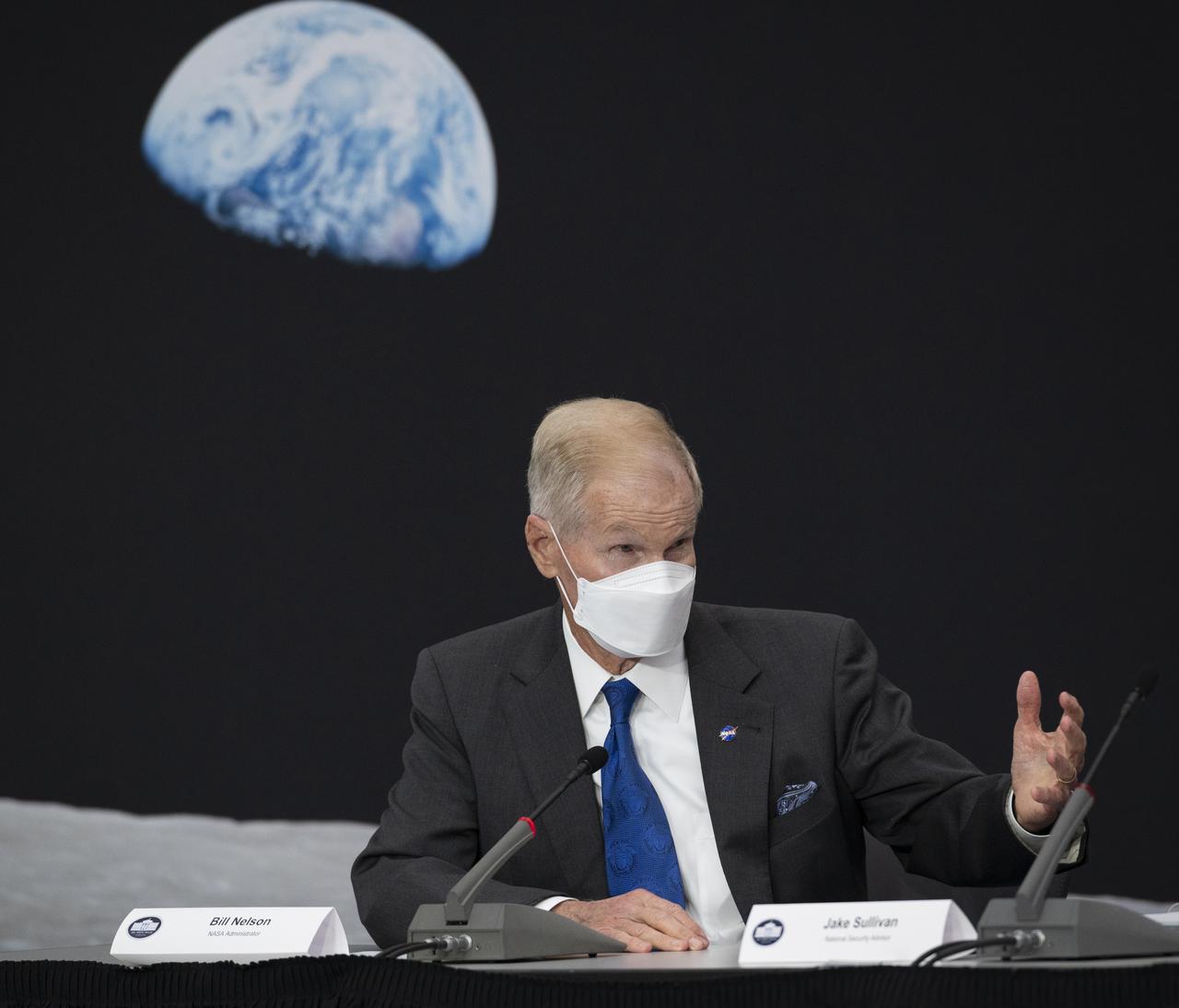
NASA Administrator Bill Nelson speaks during the first meeting of the National Space Council, Wednesday, Dec. 1, 2021, at the United States Institute of Peace in Washington. Chaired by Vice President Kamala Harris, the council's role is to advise the President regarding national space policy and strategy, and ensuring the United States capitalizes on the opportunities presented by the country’s space activities. Photo Credit: (NASA/Joel Kowsky)
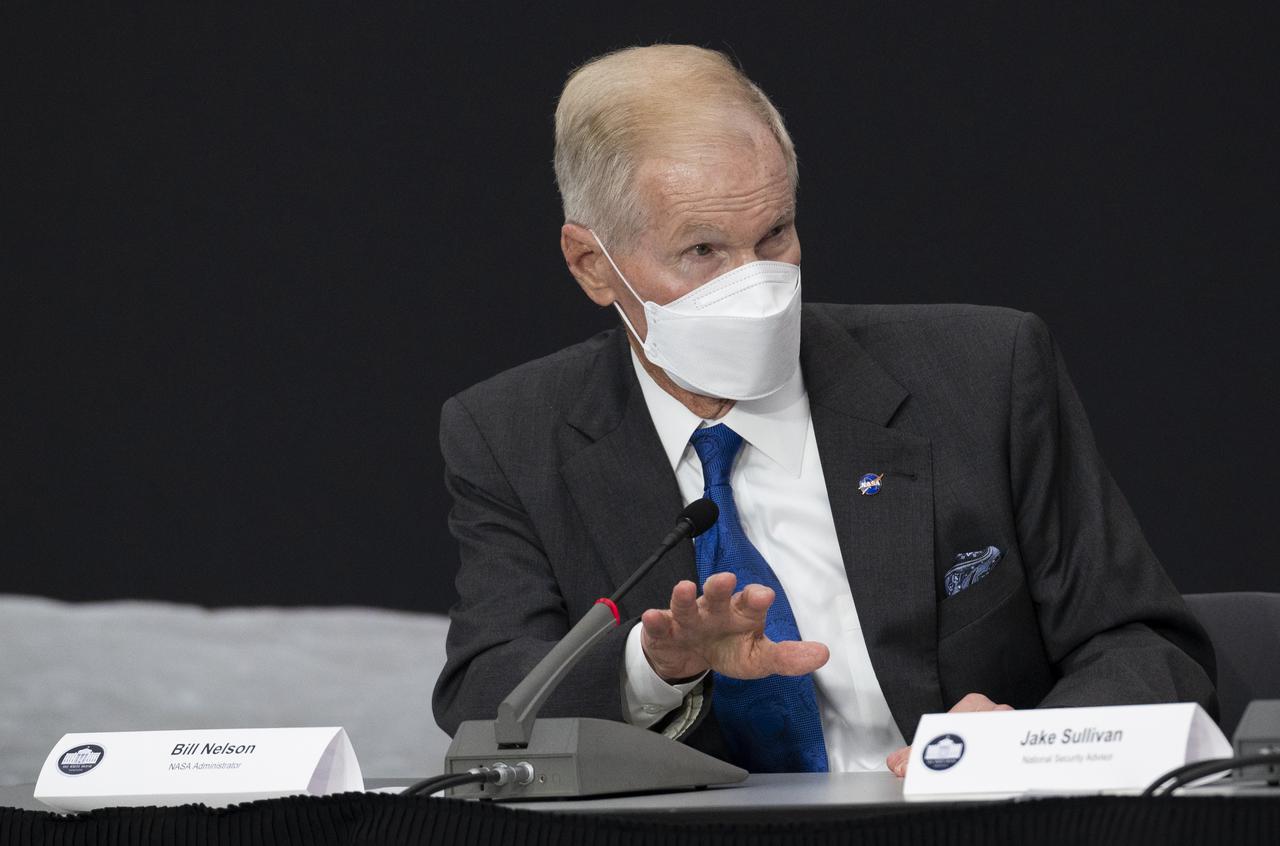
NASA Administrator Bill Nelson speaks during the first meeting of the National Space Council, Wednesday, Dec. 1, 2021, at the United States Institute of Peace in Washington. Chaired by Vice President Kamala Harris, the council's role is to advise the President regarding national space policy and strategy, and ensuring the United States capitalizes on the opportunities presented by the country’s space activities. Photo Credit: (NASA/Joel Kowsky)
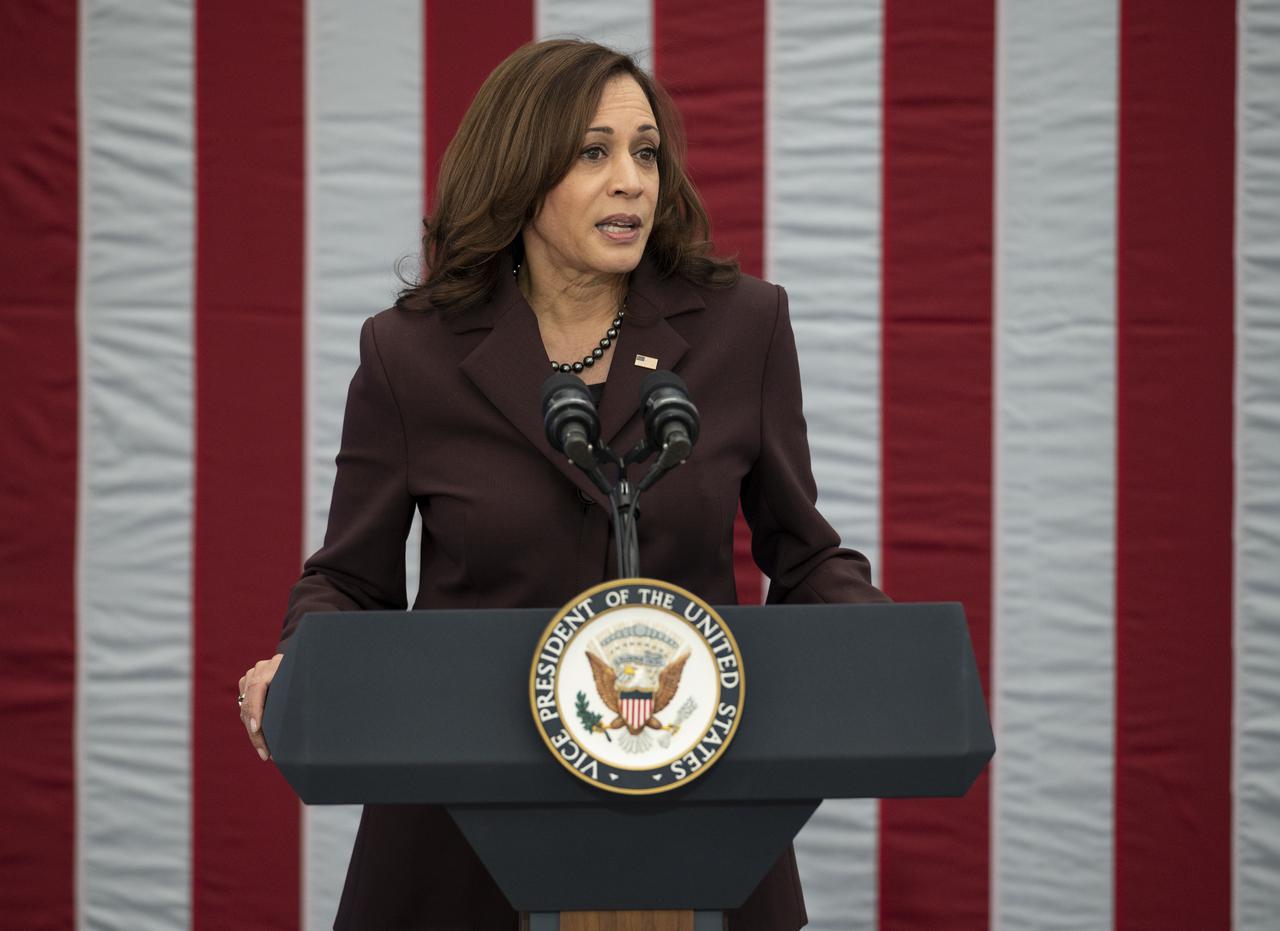
Vice President Kamala Harris delivers opening remarks at the first meeting of the National Space Council, Wednesday, Dec. 1, 2021, at the United States Institute of Peace in Washington. Chaired by Vice President Harris, the council's role is to advise the President regarding national space policy and strategy, and ensuring the United States capitalizes on the opportunities presented by the country’s space activities. Photo Credit: (NASA/Joel Kowsky)
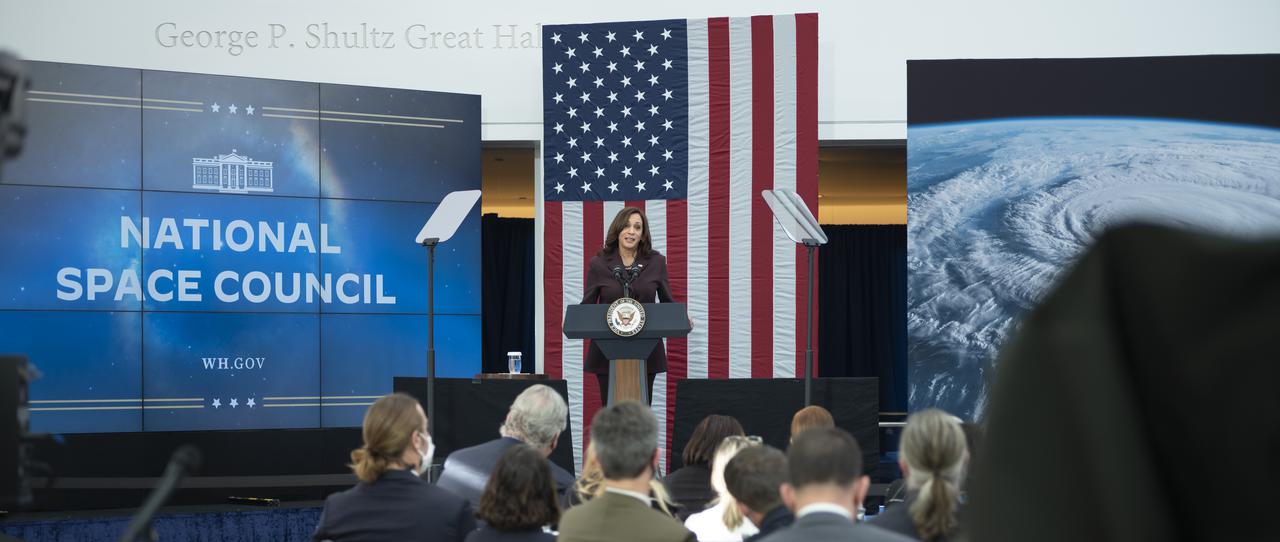
Vice President Kamala Harris delivers opening remarks at the first meeting of the National Space Council, Wednesday, Dec. 1, 2021, at the United States Institute of Peace in Washington. Chaired by Vice President Harris, the council's role is to advise the President regarding national space policy and strategy, and ensuring the United States capitalizes on the opportunities presented by the country’s space activities. Photo Credit: (NASA/Joel Kowsky)
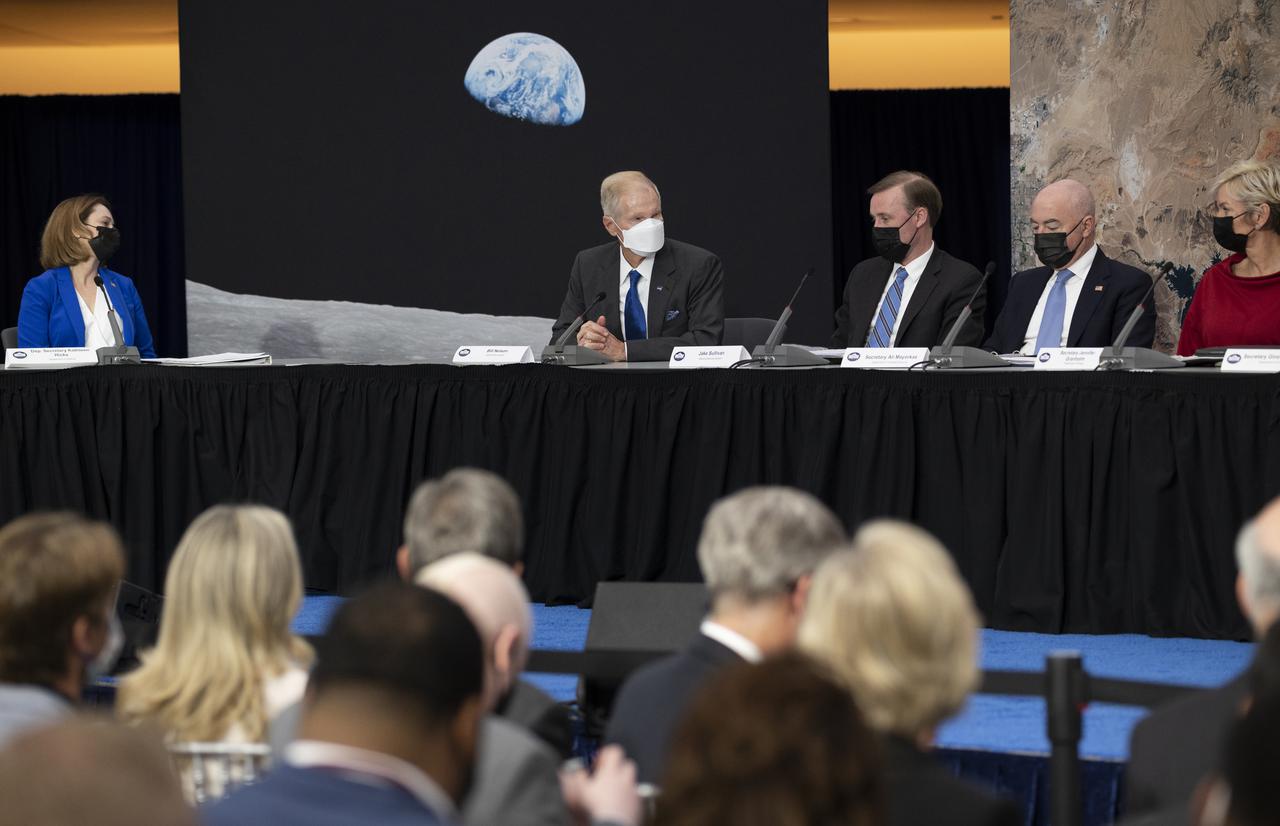
NASA Administrator Bill Nelson speaks during the first meeting of the National Space Council, Wednesday, Dec. 1, 2021, at the United States Institute of Peace in Washington. Chaired by Vice President Kamala Harris, the council's role is to advise the President regarding national space policy and strategy, and ensuring the United States capitalizes on the opportunities presented by the country’s space activities. Photo Credit: (NASA/Joel Kowsky)
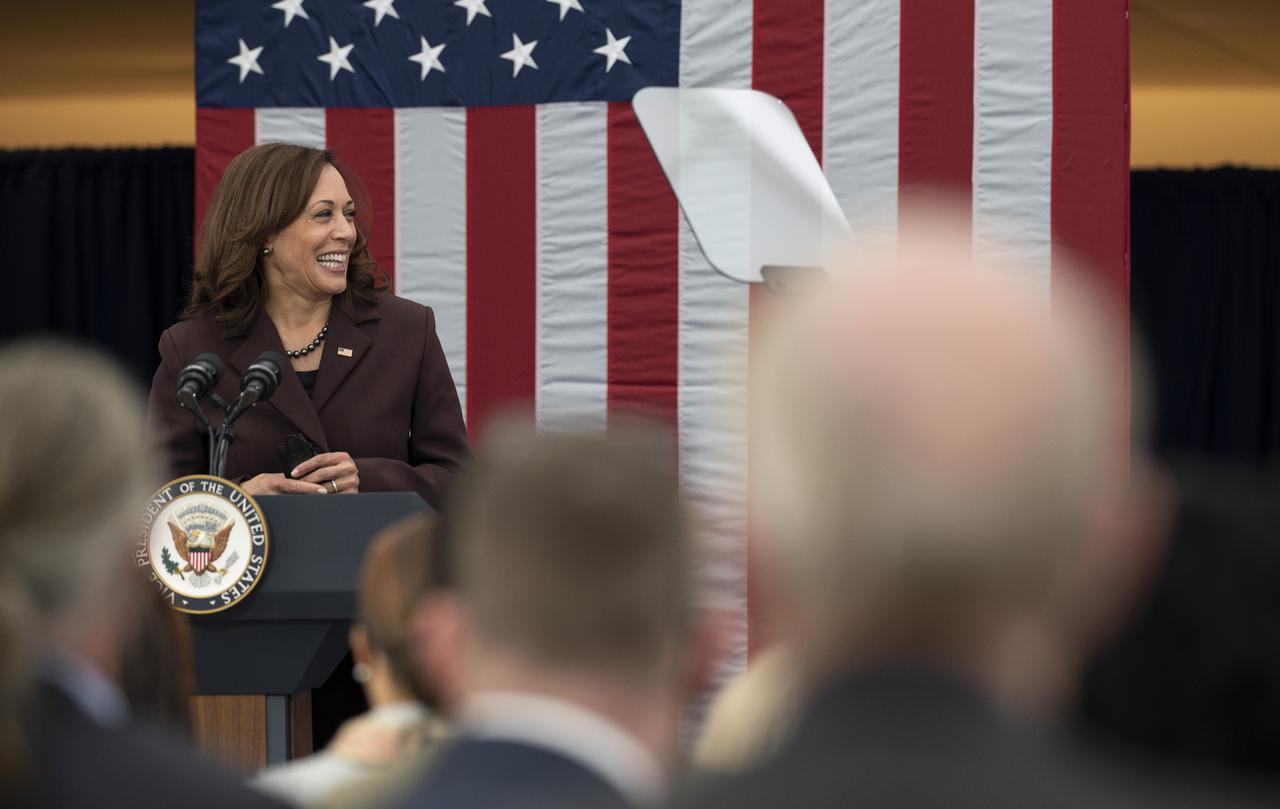
Vice President Kamala Harris delivers opening remarks at the first meeting of the National Space Council, Wednesday, Dec. 1, 2021, at the United States Institute of Peace in Washington. Chaired by Vice President Harris, the council's role is to advise the President regarding national space policy and strategy, and ensuring the United States capitalizes on the opportunities presented by the country’s space activities. Photo Credit: (NASA/Joel Kowsky)
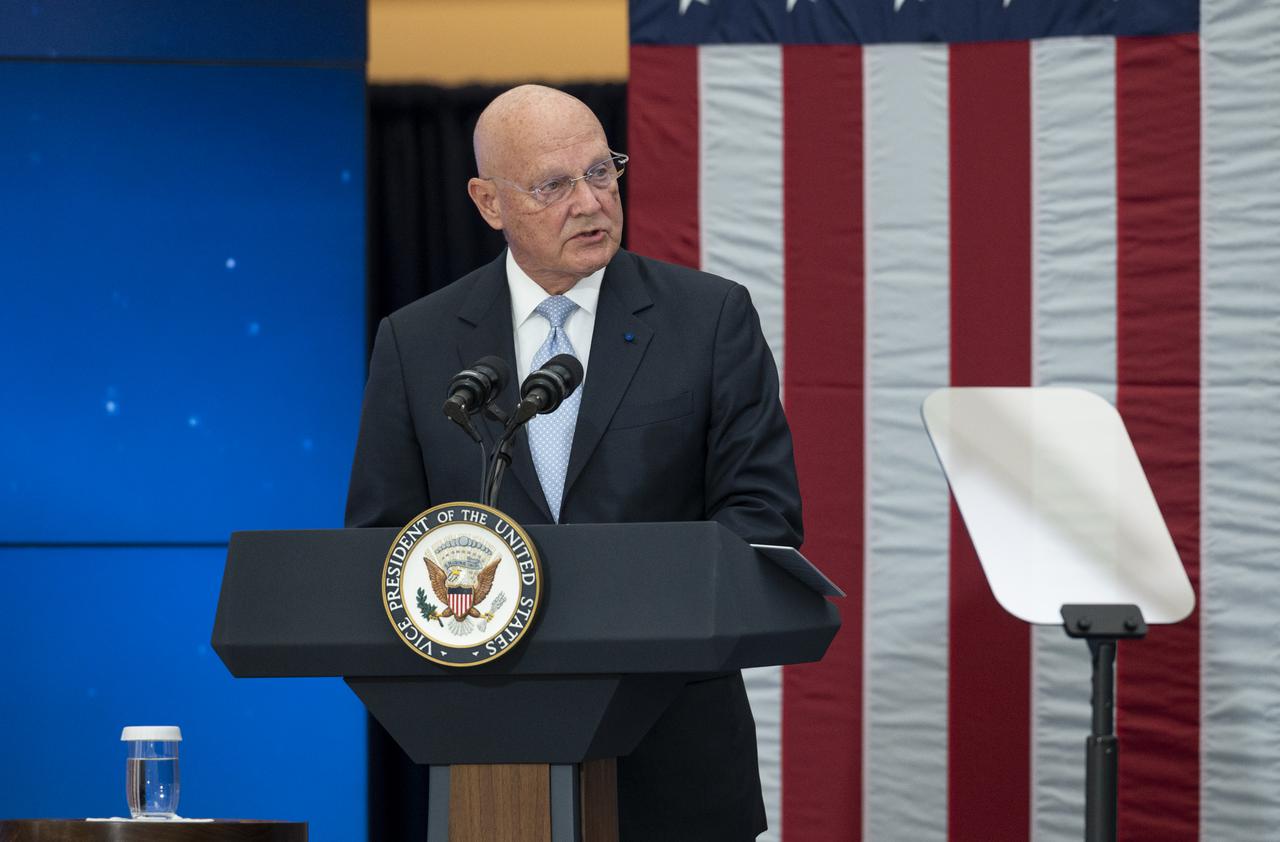
Adm. Jim Ellis, USN (Ret.), Chairman of the National Space Council’s Users' Advisory Group, speaks at the first meeting of the National Space Council, Wednesday, Dec. 1, 2021, at the United States Institute of Peace in Washington. Chaired by Vice President Kamala Harris, the council's role is to advise the President regarding national space policy and strategy, and ensuring the United States capitalizes on the opportunities presented by the country’s space activities. Photo Credit: (NASA/Joel Kowsky)
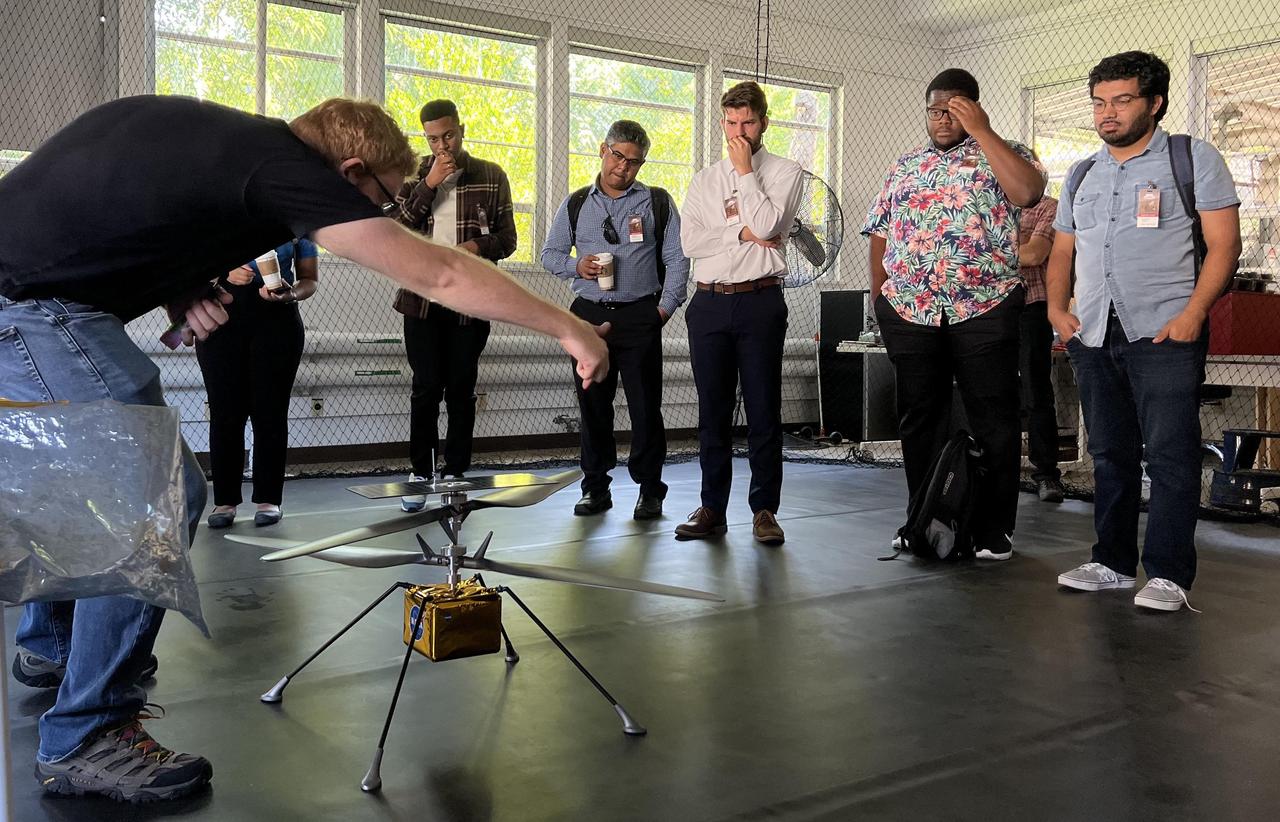
Participants in NASA's Minority Serving Institutions Space Accelerator program surround a full-scale model of NASA's Mars Ingenuity Helicopter as engineer Michael Starch discusses the mission. The group was visiting NASA's Jet Propulsion Laboratory on Aug. 18, 2022. These participants were members of three teams named as awardees in the first-of-its-kind accelerator program, a competition to advance the NASA's goals and meet its needs in the areas of machine learning, artificial intelligence, and development of autonomous systems while also engaging underrepresented academic institutions and reducing barriers for them to submit ideas to the agency. The program provides funding, business training through a 10-week accelerator course, and mentorship to help the teams develop ideas for systems that can operate without human oversight for future science missions in space and on Earth. The teams were made up of professors and students from Fayetteville State University in North Carolina, University of Massachusetts Boston, and California State University, Northridge. At the conclusion of the accelerator, participants arrived in Southern California for a variety of events, including two days at JPL. The program is a partnership between NASA's Science Mission Directorate, its Earth Science Technology Office, the Minority University Research Education Project within the agency's Office of STEM Engagement, JPL, and Starburst, a global aerospace accelerator company based in Los Angeles. https://photojournal.jpl.nasa.gov/catalog/PIA25315
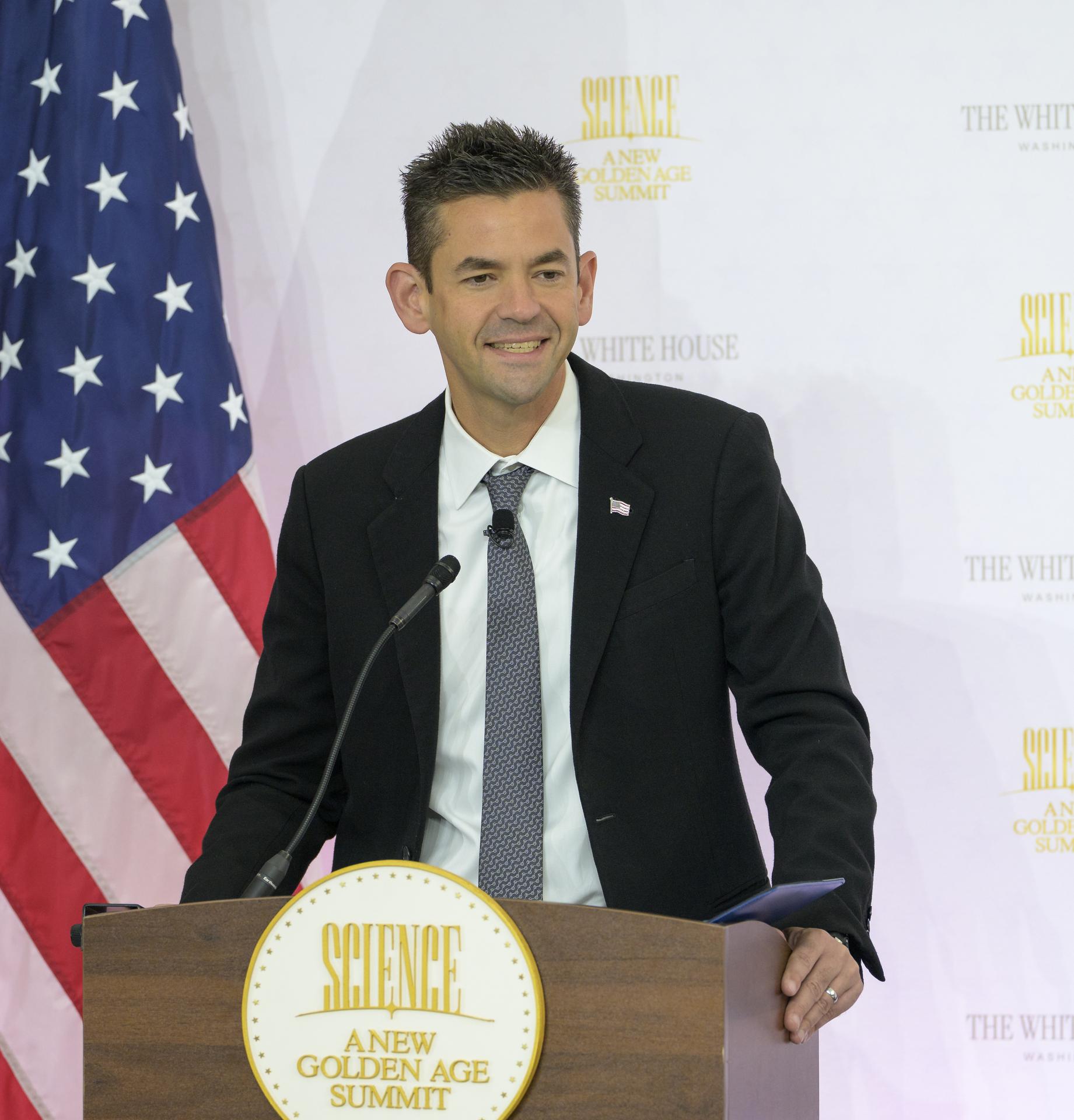
NASA Administrator Jared Isaacman gives remarks ahead of NASA and Department of Energy signing a new Memorandum of Understanding, “Accelerating American Leadership in Space Nuclear Power and Propulsion”, during the Golden Age Summit, Thursday, Oct. 8, 2026, at the Donald J. Trump Institute of Peace in Washington. Photo Credit: (NASA/Bill Ingalls)
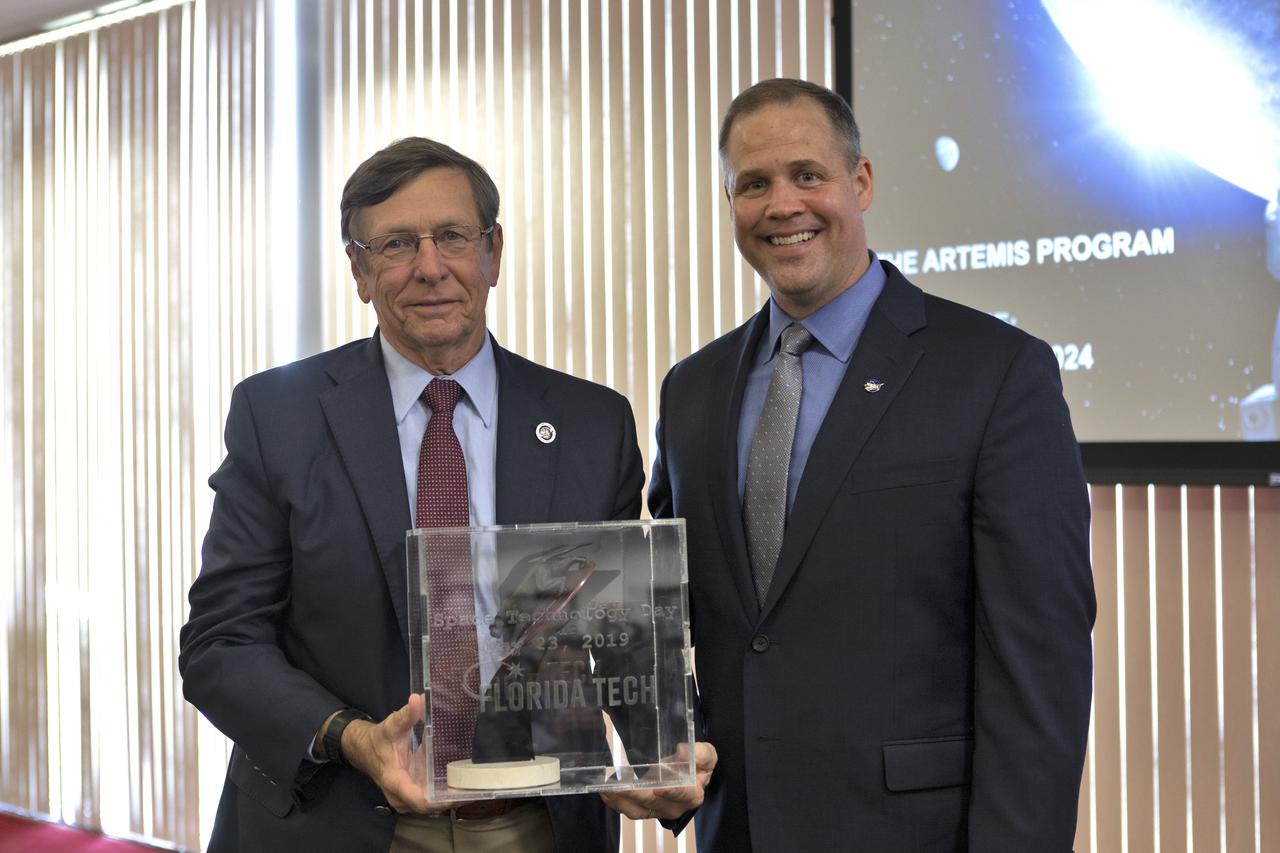
NASA Administrator Jim Bridenstine, right, poses with Florida Institute of Technology President T. Dwayne McCay on Thursday, May 23, 2019 at the Melbourne, FL campus. Bridenstine delivered the keynote address during the university’s Space Technology Day. Among the key topics Bridenstine discussed was NASA’s Artemis missions to the Moon, including the lunar Gateway, which will serve as an orbiting outpost for astronauts.
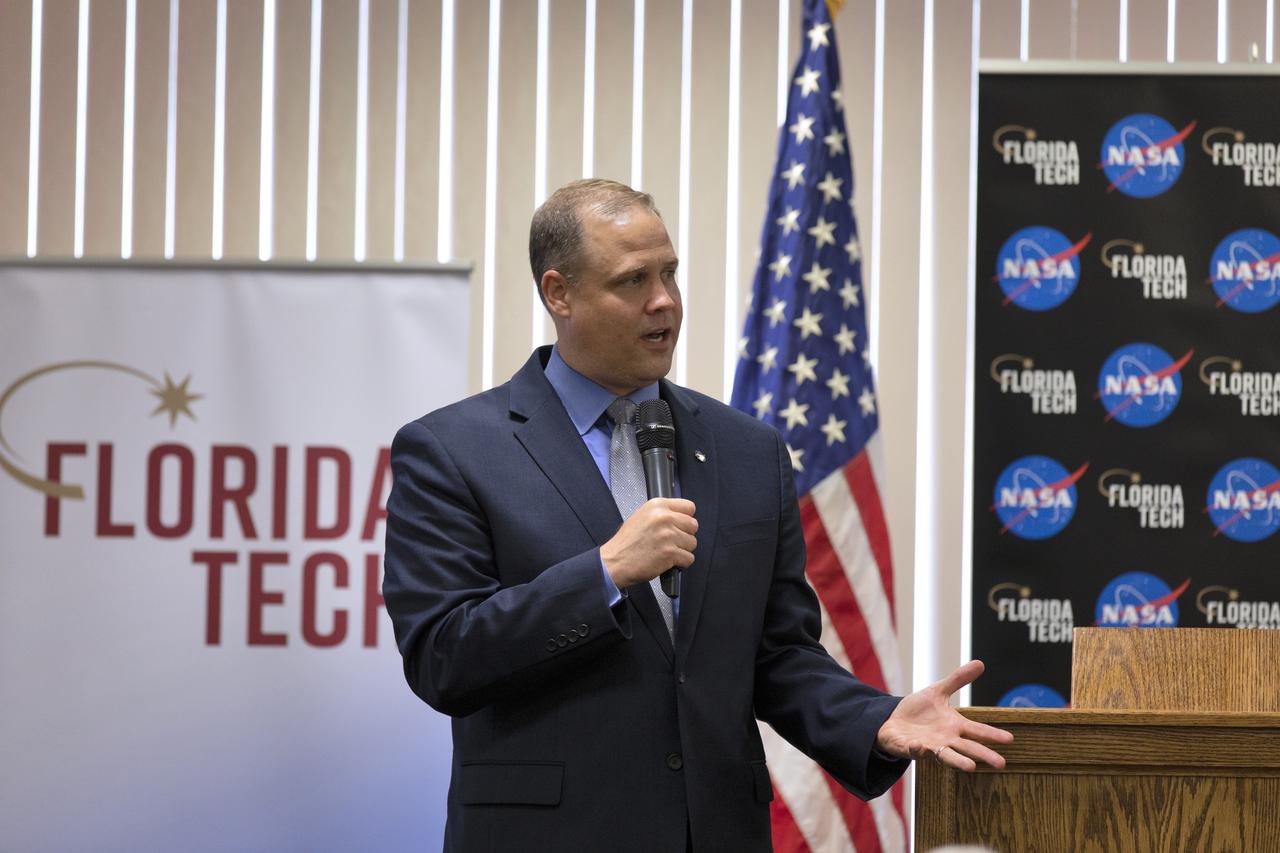
NASA Administrator Jim Bridenstine speaks to students, faculty, engineers and area business leaders at Florida Institute of Technology on Thursday, May 23, 2019. Bridenstine delivered the keynote address at the Melbourne, FL campus during the university’s Space Technology Day. Among the key topics Bridenstine discussed was NASA’s Artemis missions to the Moon, including the lunar Gateway, which will serve as an orbiting outpost for astronauts.
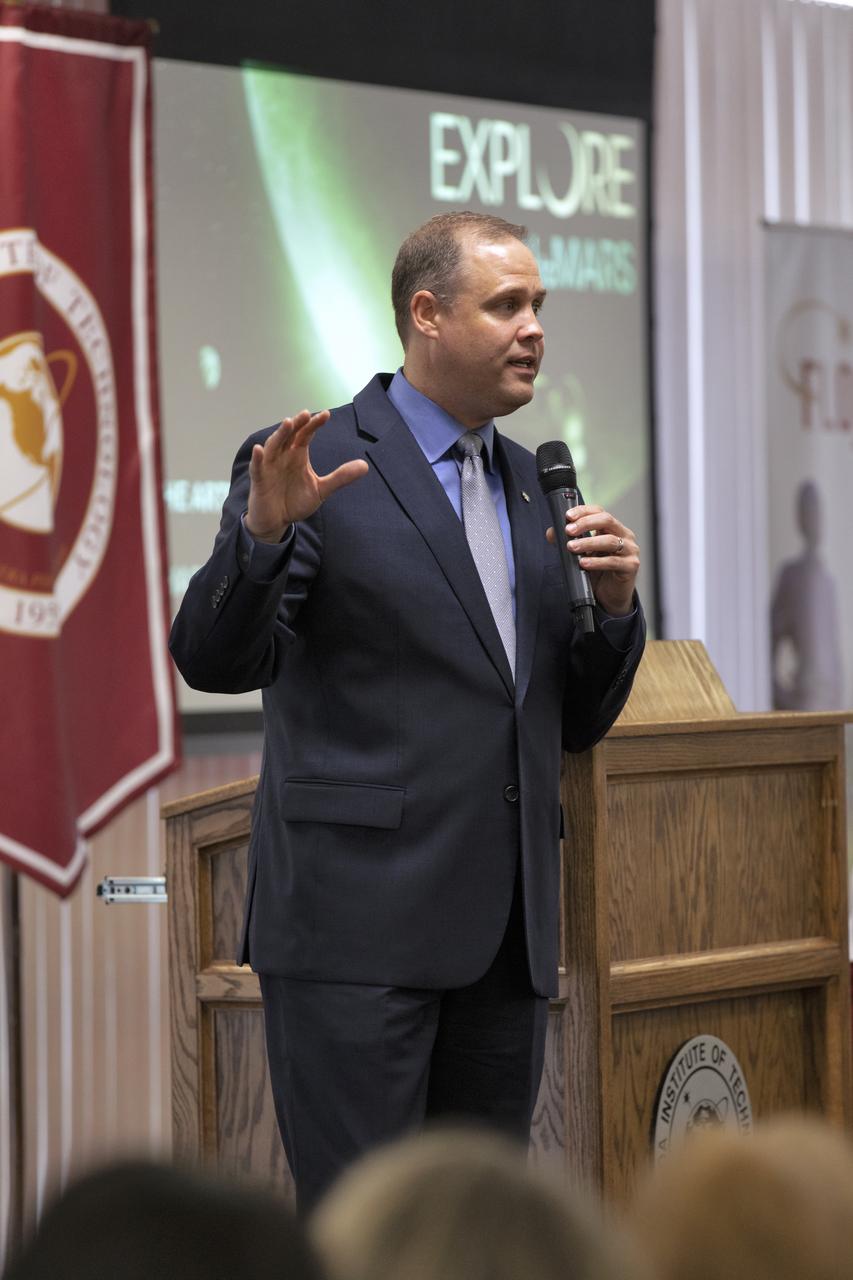
NASA Administrator Jim Bridenstine speaks to students, faculty, engineers and area business leaders at Florida Institute of Technology on Thursday, May 23, 2019. Bridenstine delivered the keynote address at the Melbourne, FL campus during the university’s Space Technology Day. Among the key topics Bridenstine discussed was NASA’s Artemis missions to the Moon, including the lunar Gateway, which will serve as an orbiting outpost for astronauts.
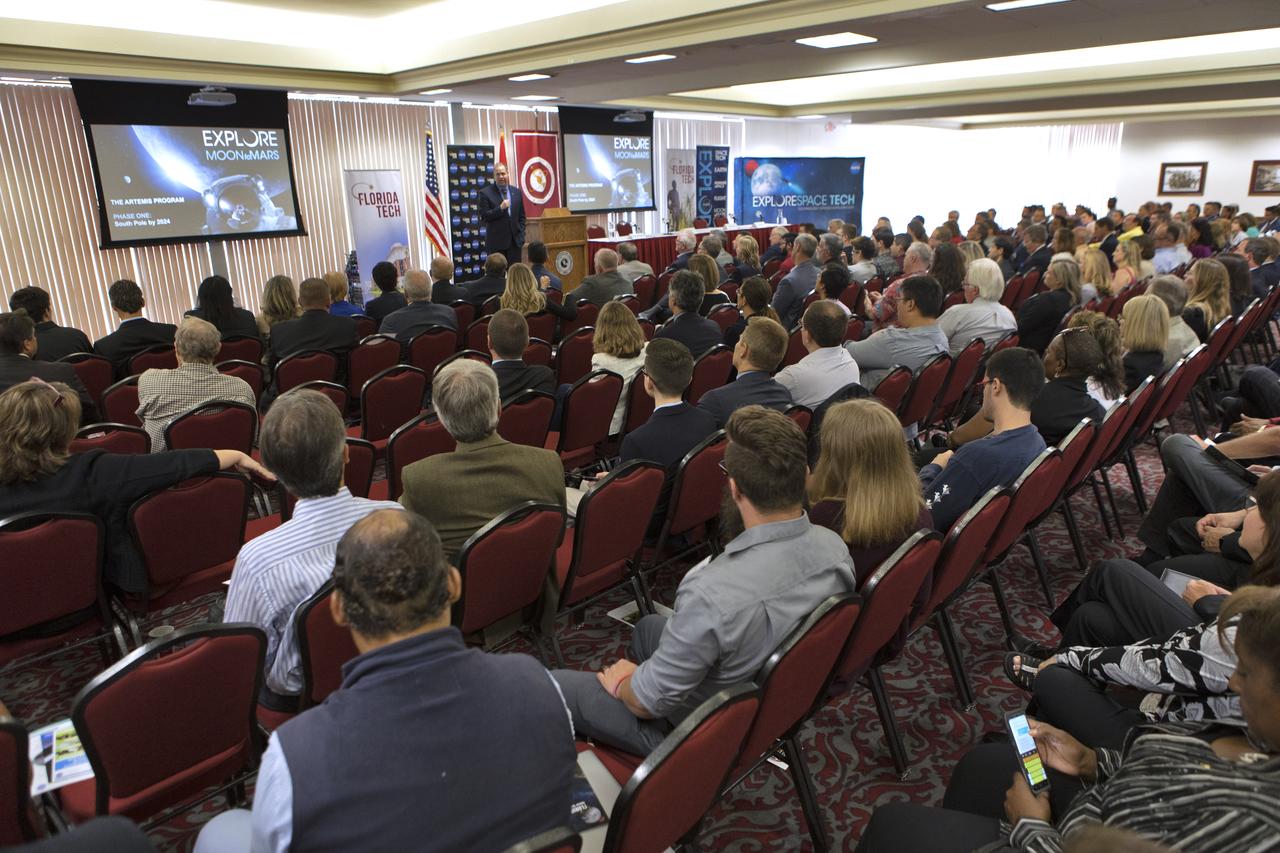
NASA Administrator Jim Bridenstine speaks to students, faculty, engineers and area business leaders at Florida Institute of Technology on Thursday, May 23, 2019. Bridenstine delivered the keynote address at the Melbourne, FL campus during the university’s Space Technology Day. Among the key topics Bridenstine discussed was NASA’s Artemis missions to the Moon, including the lunar Gateway, which will serve as an orbiting outpost for astronauts.
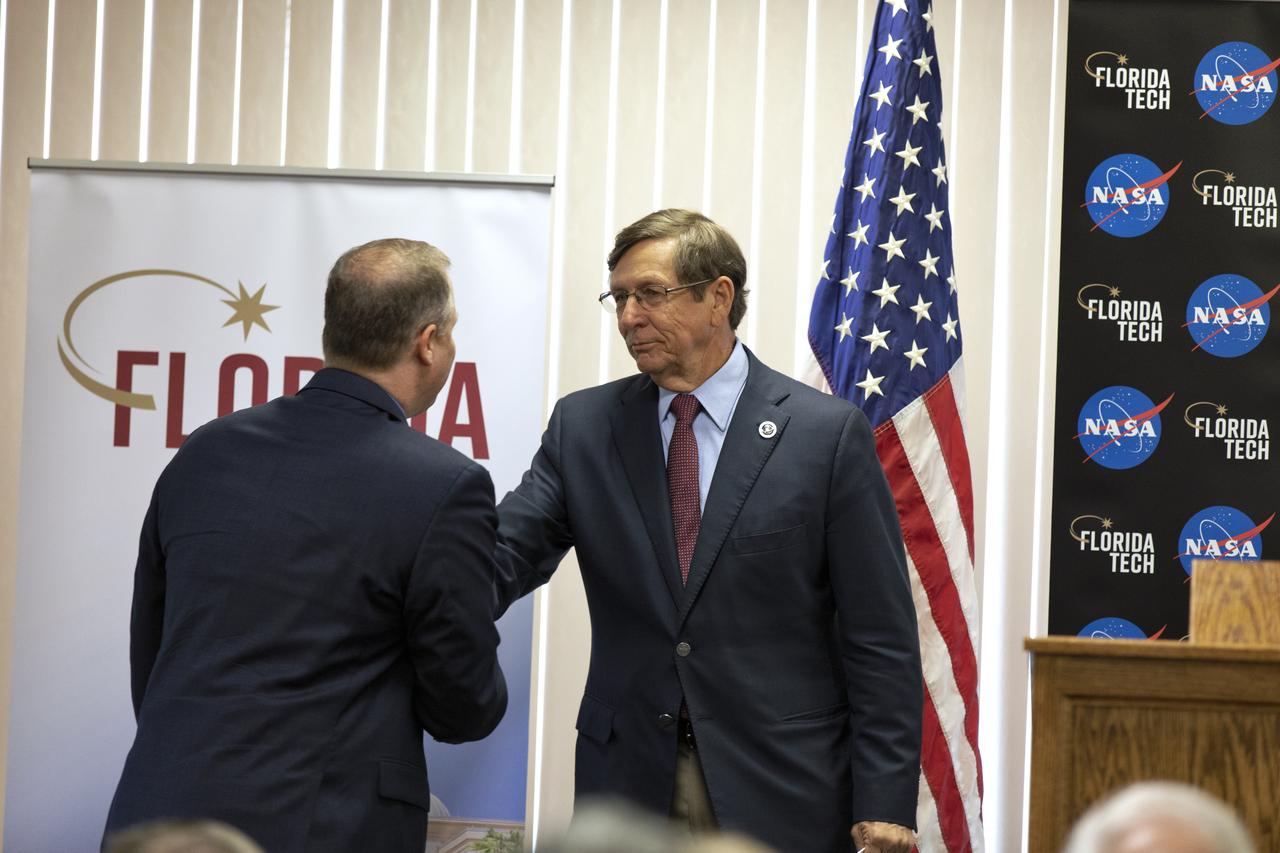
NASA Administrator Jim Bridenstine, left, shakes hands with Florida Institute of Technology President T. Dwayne McCay on Thursday, May 23, 2019 at the Melbourne, FL campus. Bridenstine delivered the keynote address during the university’s Space Technology Day. Among the key topics Bridenstine discussed was NASA’s Artemis missions to the Moon, including the lunar Gateway, which will serve as an orbiting outpost for astronauts.
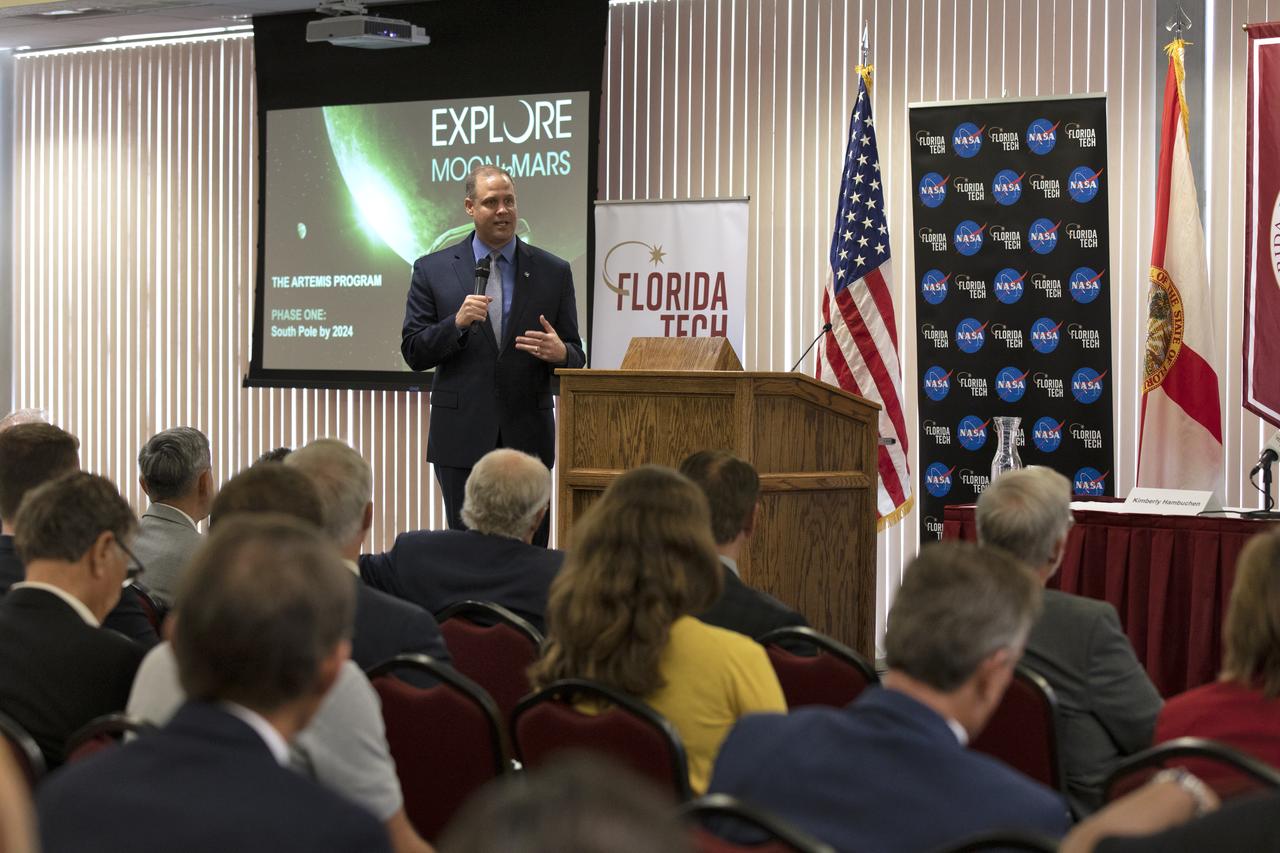
NASA Administrator Jim Bridenstine speaks to students, faculty, engineers and area business leaders at Florida Institute of Technology on Thursday, May 23, 2019. Bridenstine delivered the keynote address at the Melbourne, FL campus during the university’s Space Technology Day. Among the key topics Bridenstine discussed was NASA’s Artemis missions to the Moon, including the lunar Gateway, which will serve as an orbiting outpost for astronauts.
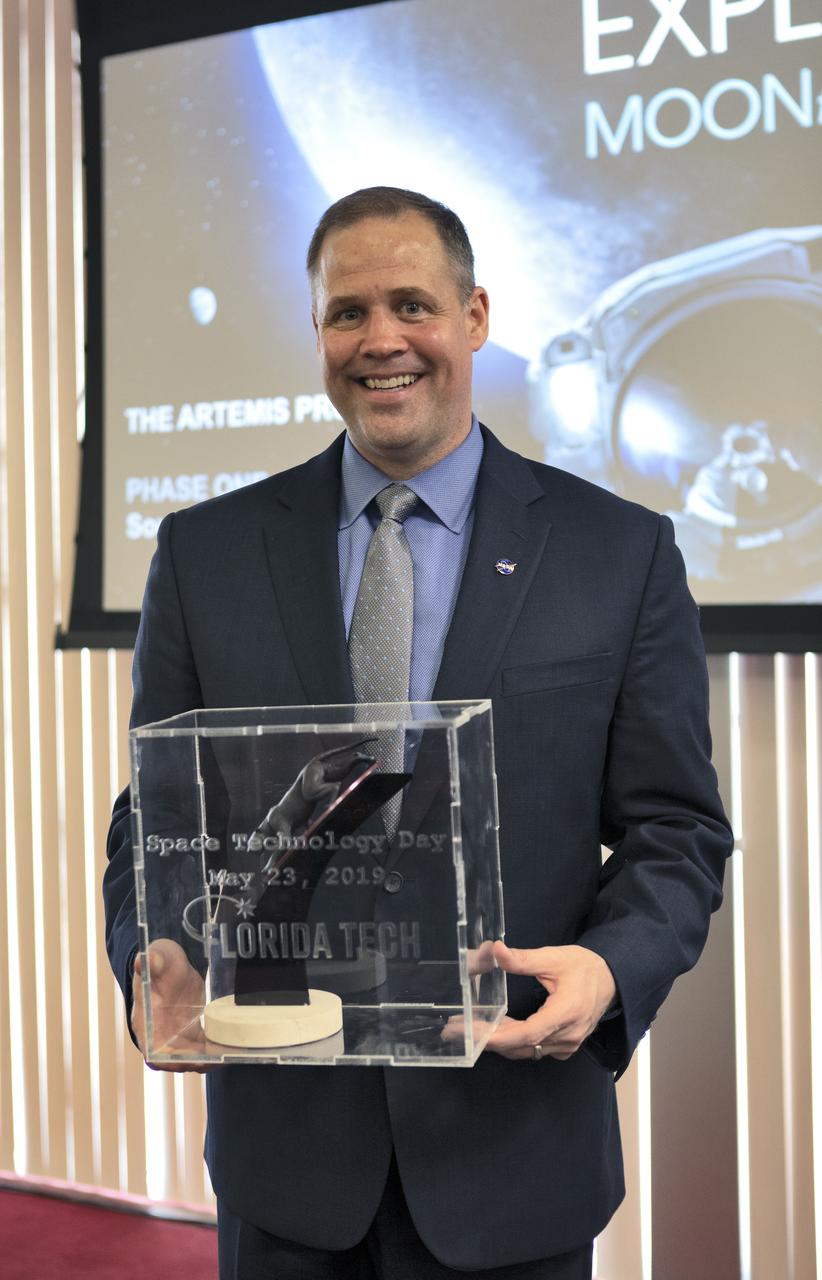
NASA Administrator Jim Bridenstine poses at Florida Institute of Technology on Thursday, May 23, 2019. Bridenstine delivered the keynote address at the Melbourne, FL campus during the university’s Space Technology Day. Among the key topics Bridenstine discussed was NASA’s Artemis missions to the Moon, including the lunar Gateway, which will serve as an orbiting outpost for astronauts.
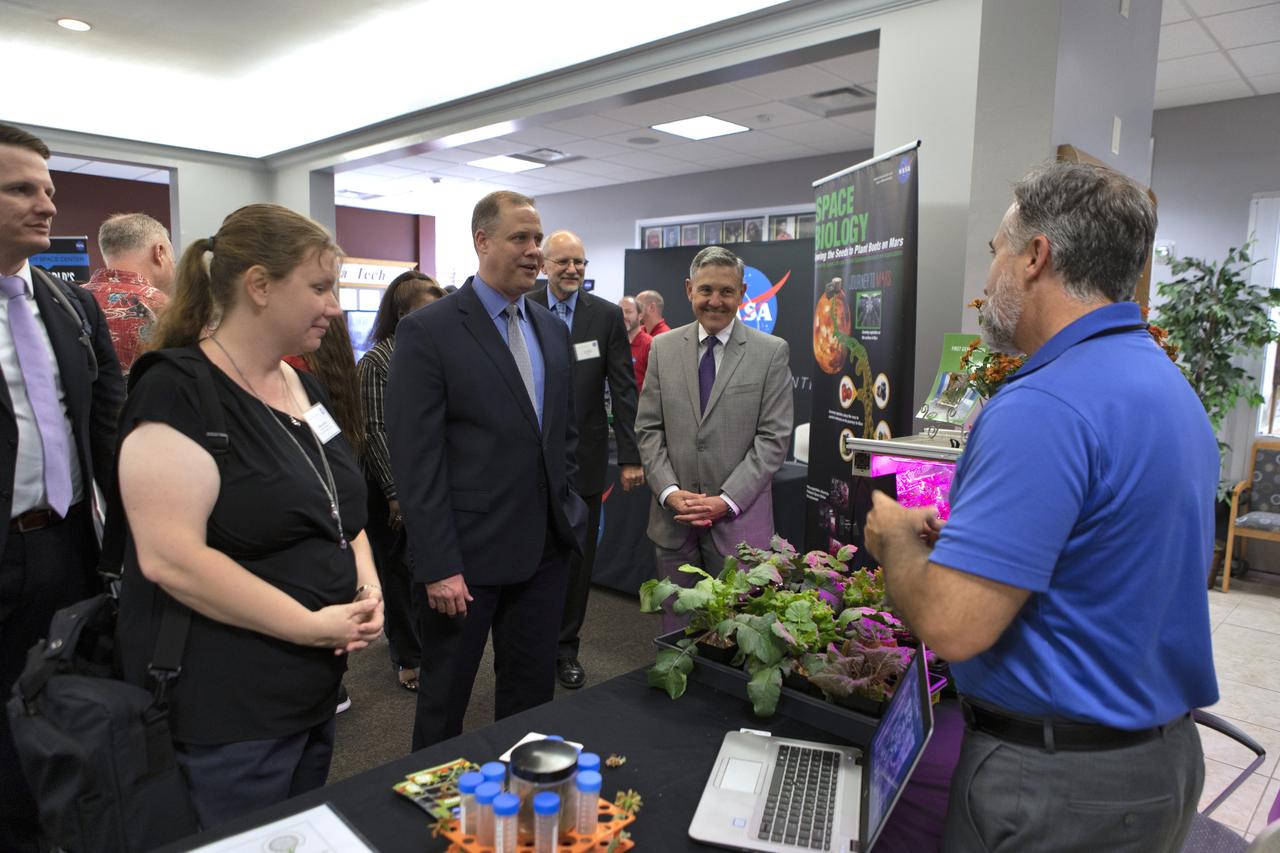
NASA Administrator Jim Bridenstine, center, and Kennedy Space Center Director Bob Cabana, right, visit Florida Institute of Technology on Thursday, May 23, 2019. Bridenstine delivered the keynote address at the Melbourne, FL campus during the university’s Space Technology Day. Among the key topics Bridenstine discussed was NASA’s Artemis missions to the Moon, including the lunar Gateway, which will serve as an orbiting outpost for astronauts.
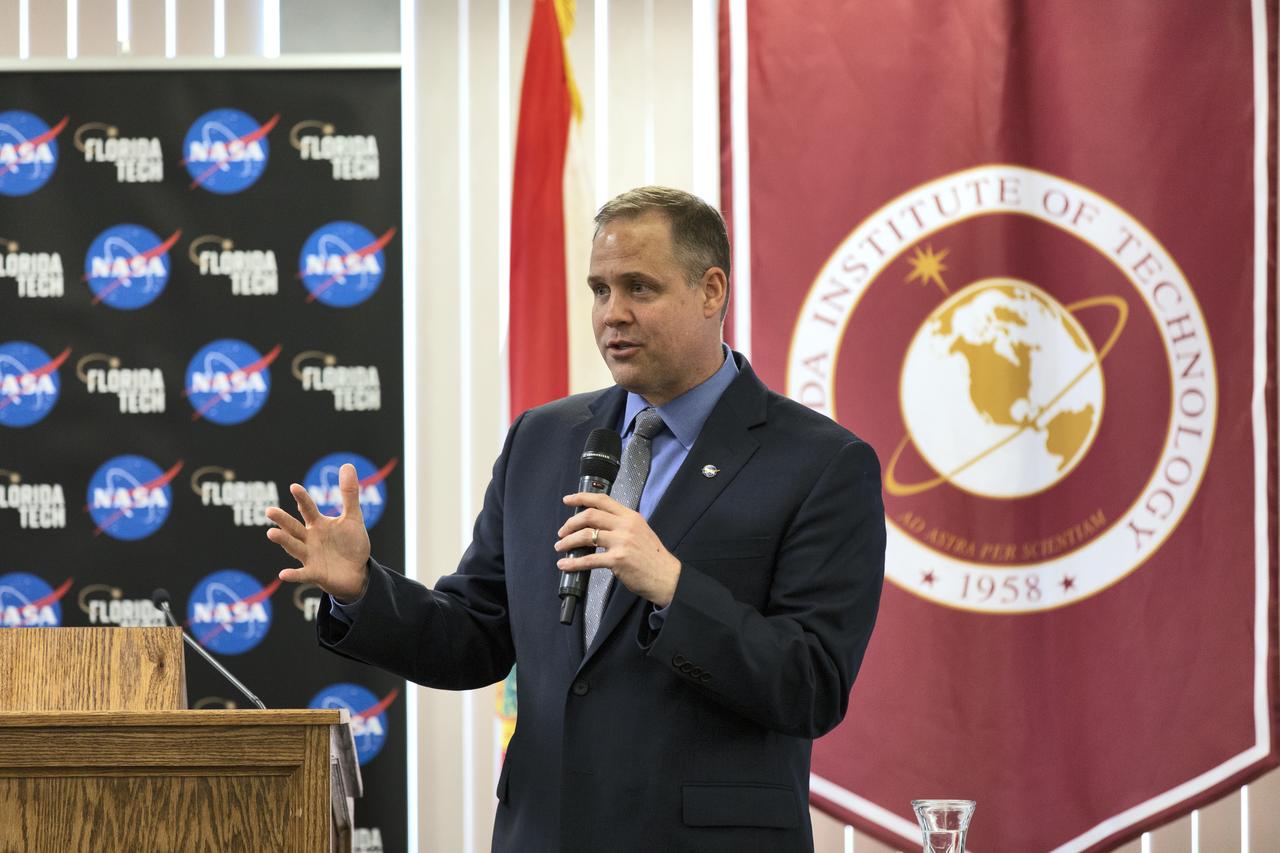
NASA Administrator Jim Bridenstine speaks to students, faculty, engineers and area business leaders at Florida Institute of Technology on Thursday, May 23, 2019. Bridenstine delivered the keynote address at the Melbourne, FL campus during the university’s Space Technology Day. Among the key topics Bridenstine discussed was NASA’s Artemis missions to the Moon, including the lunar Gateway, which will serve as an orbiting outpost for astronauts.
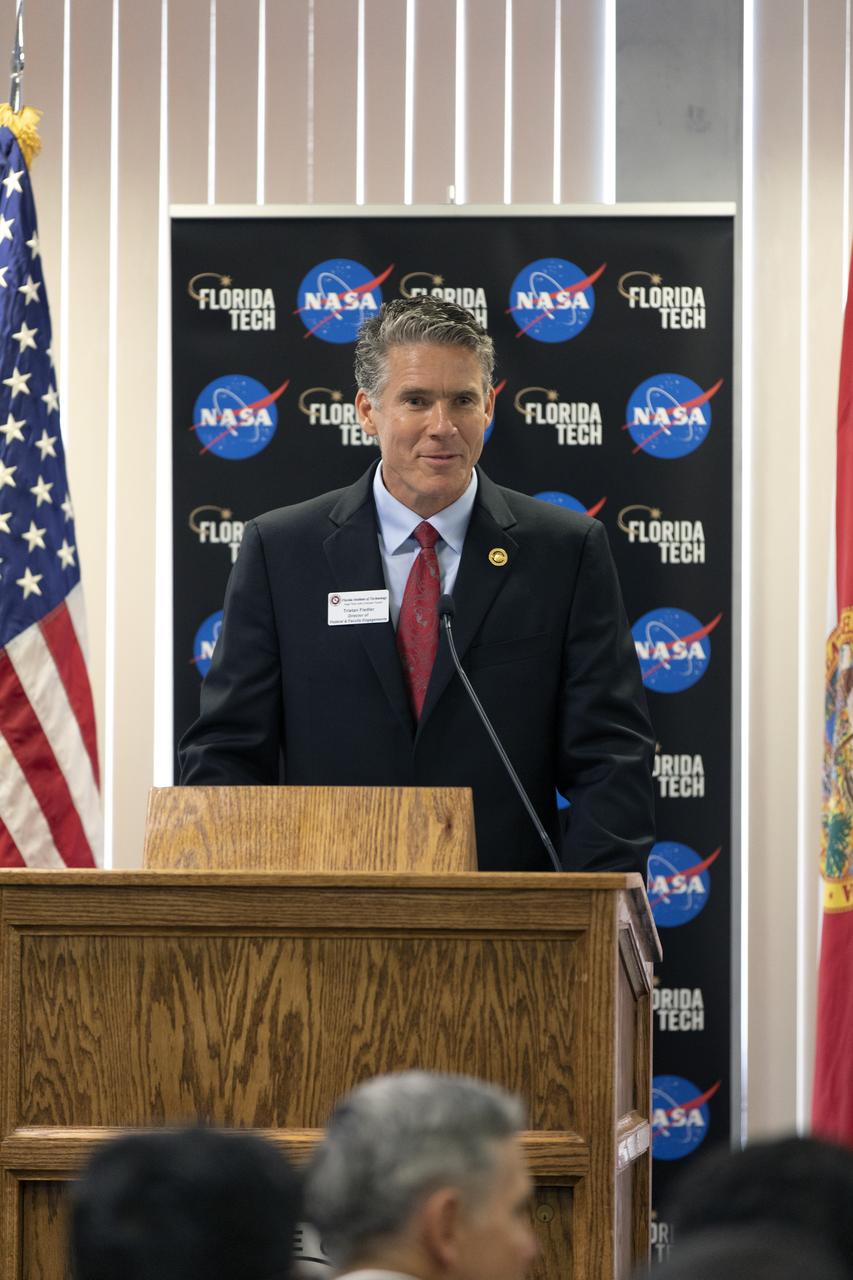
Tristan Fiedler, director of federal and faculty engagements at Florida Institute of Technology, speaks during the university’s Space Technology Day on Thursday, May 23, 2019. NASA Administrator Jim Bridenstine delivered the keynote address at the Melbourne, FL campus, which included students, faculty, engineers and area business leaders in attendance. Among the key topics Bridenstine discussed was NASA’s Artemis missions to the Moon, including the lunar Gateway, which will serve as an orbiting outpost for astronauts.
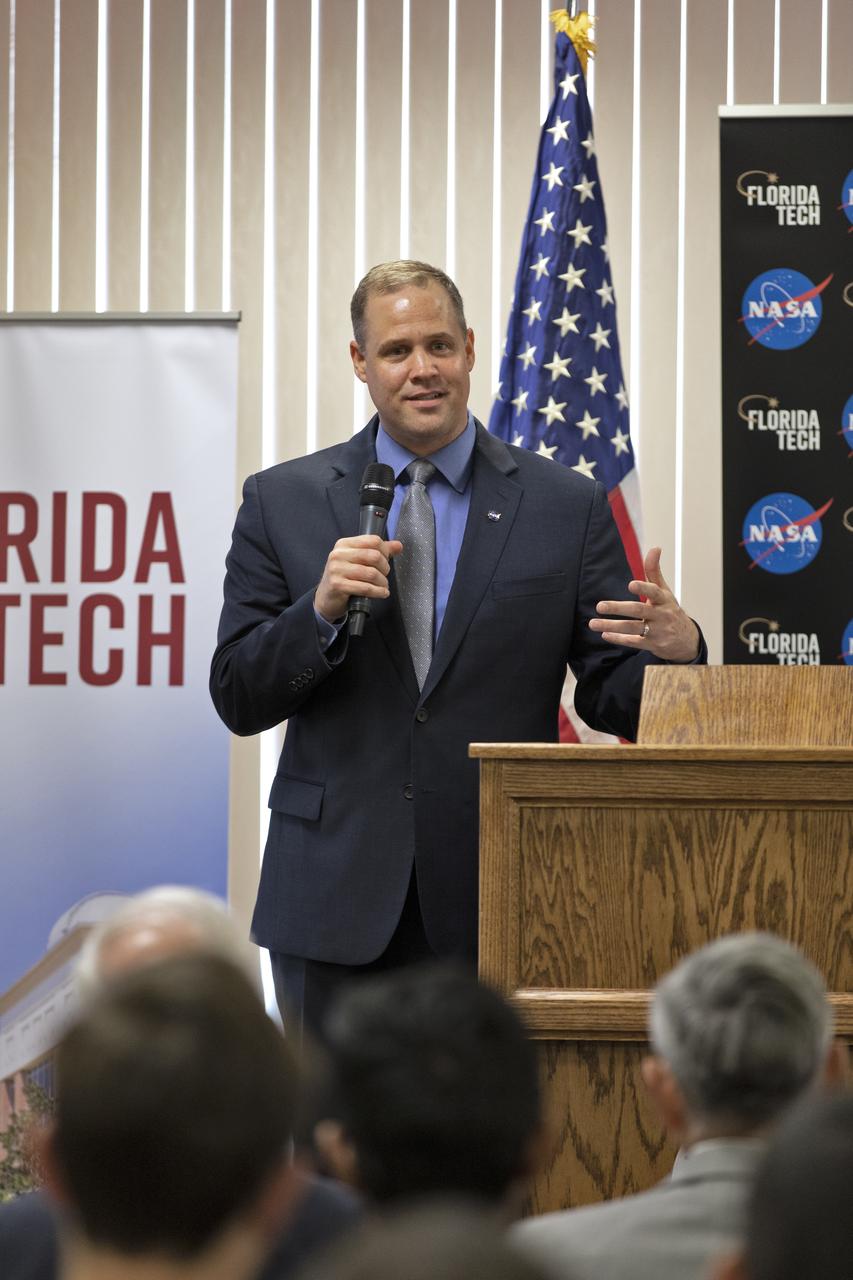
NASA Administrator Jim Bridenstine speaks to students, faculty, engineers and area business leaders at Florida Institute of Technology on Thursday, May 23, 2019. Bridenstine delivered the keynote address at the Melbourne, FL campus during the university’s Space Technology Day. Among the key topics Bridenstine discussed was NASA’s Artemis missions to the Moon, including the lunar Gateway, which will serve as an orbiting outpost for astronauts.
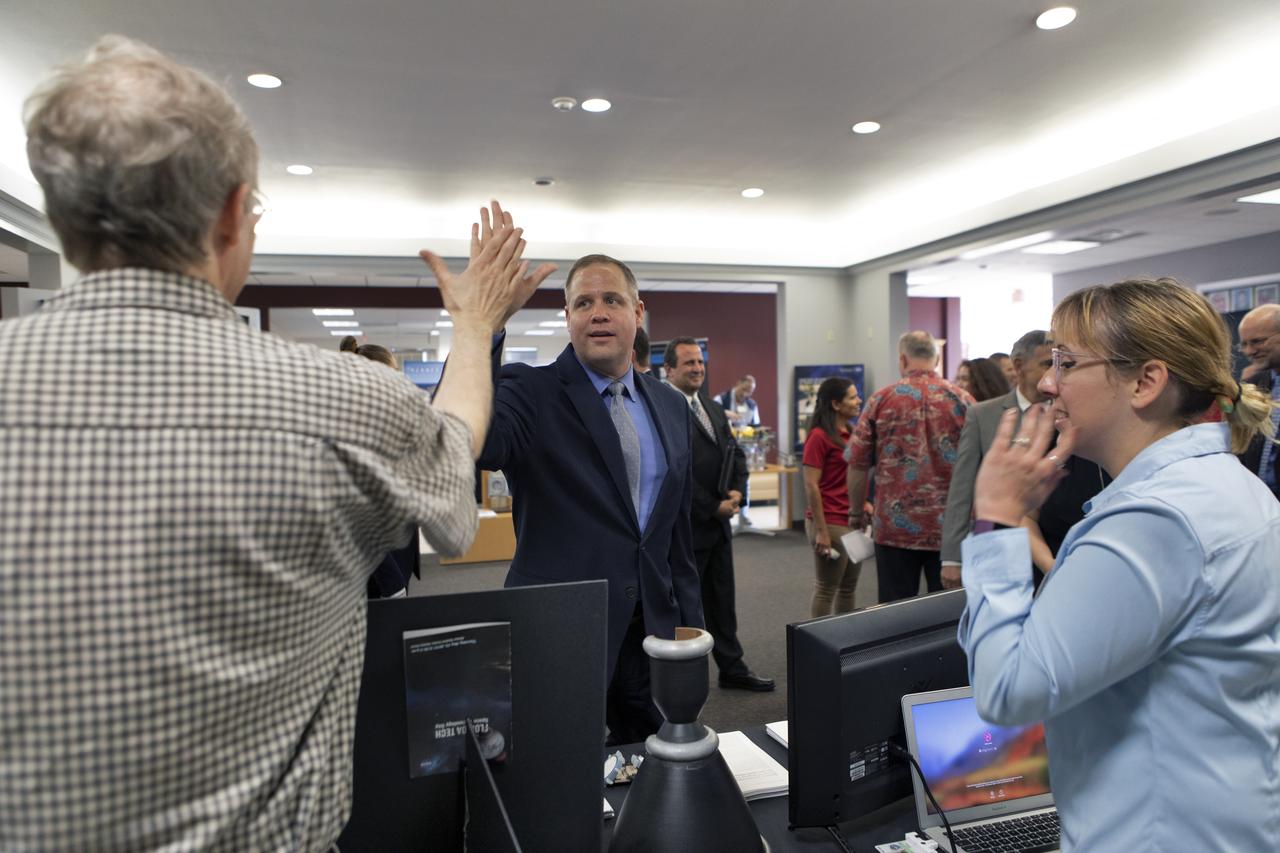
NASA Administrator Jim Bridenstine, center, speaks to students, faculty, engineers and area business leaders at Florida Institute of Technology on Thursday, May 23, 2019. Bridenstine delivered the keynote address at the Melbourne, FL campus during the university’s Space Technology Day. Among the key topics Bridenstine discussed was NASA’s Artemis missions to the Moon, including the lunar Gateway, which will serve as an orbiting outpost for astronauts.
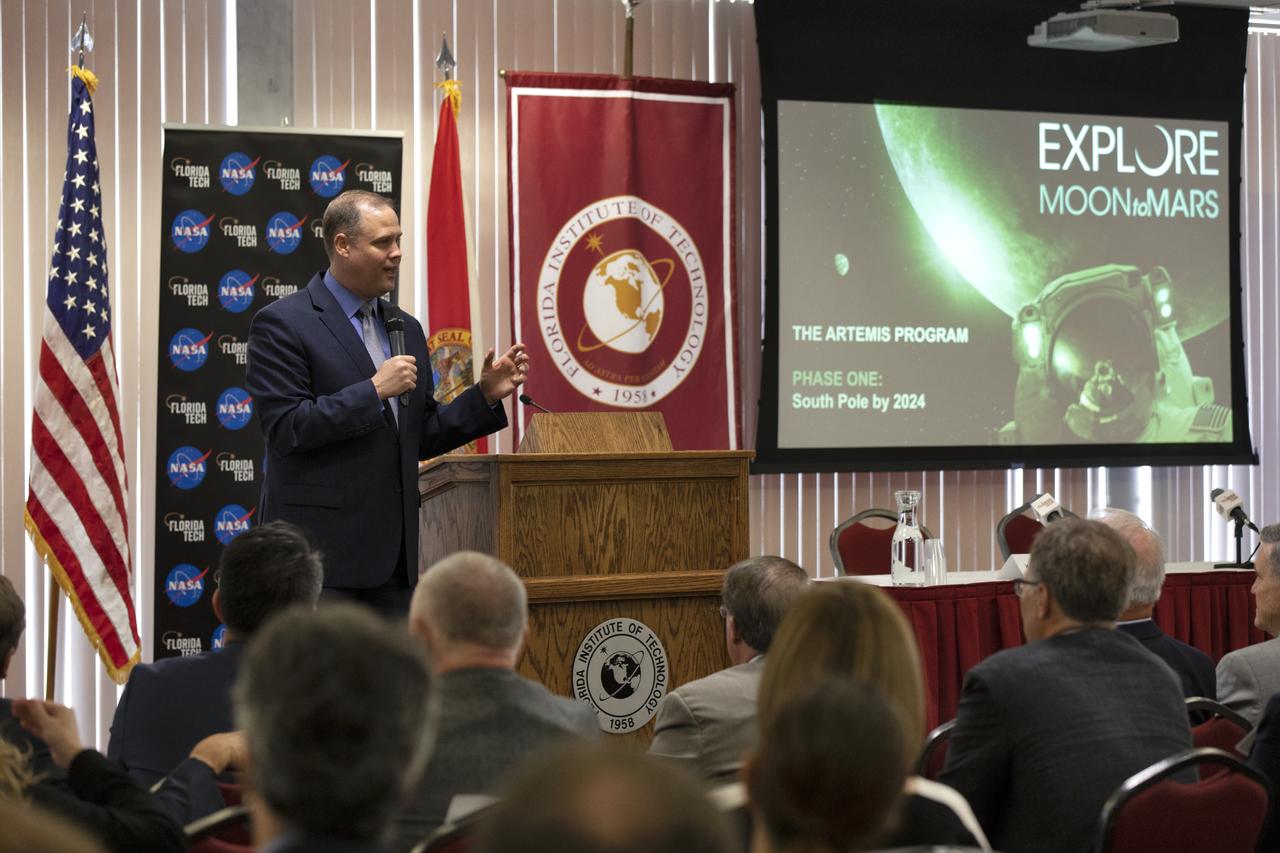
NASA Administrator Jim Bridenstine speaks to students, faculty, engineers and area business leaders at Florida Institute of Technology on Thursday, May 23, 2019. Bridenstine delivered the keynote address at the Melbourne, FL campus during the university’s Space Technology Day. Among the key topics Bridenstine discussed was NASA’s Artemis missions to the Moon, including the lunar Gateway, which will serve as an orbiting outpost for astronauts.
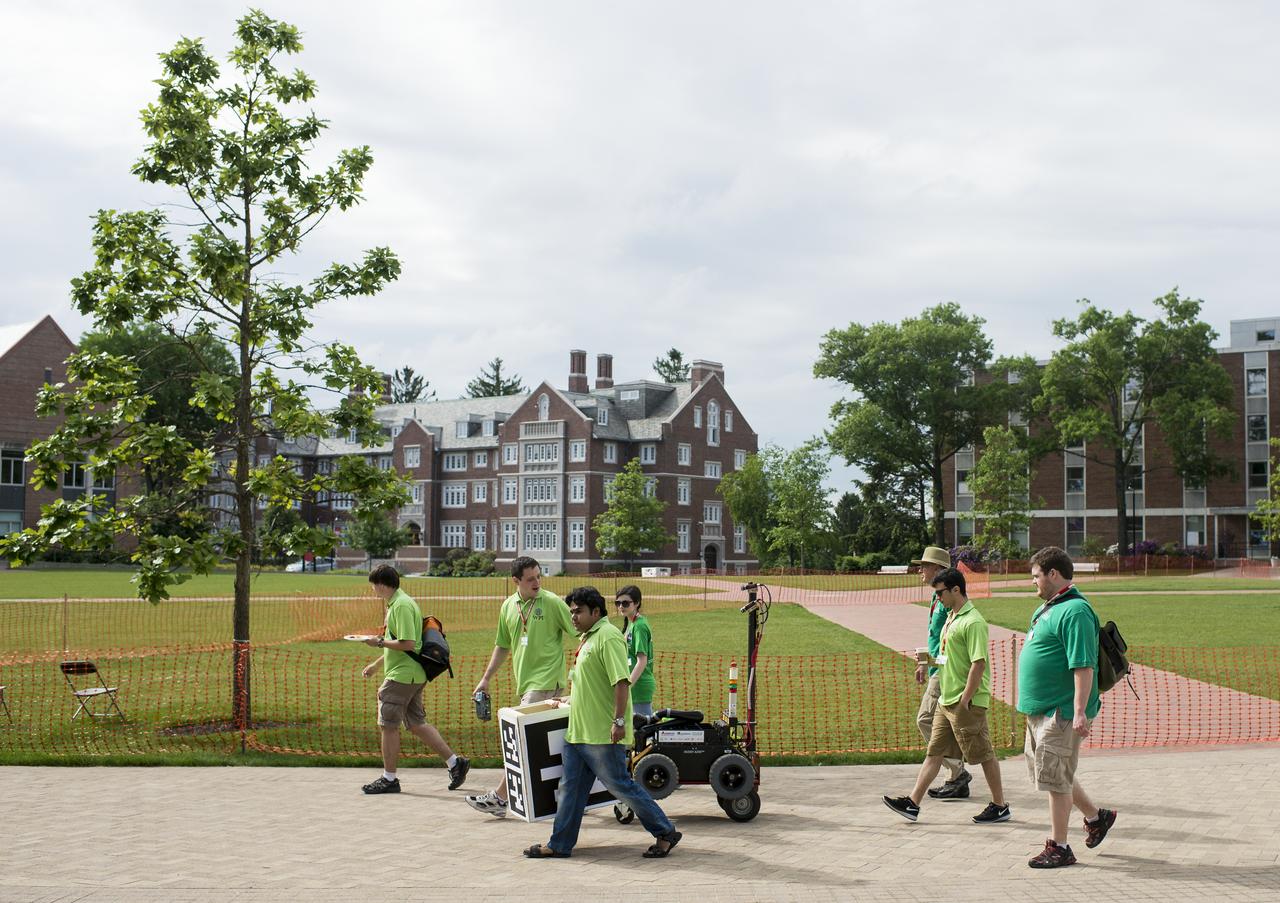
Team AERO, from the Worcester Polytechnic Institute (WPI) transports their robot to the competition field for the level one of the competition during the 2014 NASA Centennial Challenges Sample Return Robot Challenge, Wednesday, June 11, 2014, at the Worcester Polytechnic Institute (WPI) in Worcester, Mass. Eighteen teams are competing for a $1.5 million NASA prize purse. Teams will be required to demonstrate autonomous robots that can locate and collect samples from a wide and varied terrain, operating without human control. The objective of this NASA-WPI Centennial Challenge is to encourage innovations in autonomous navigation and robotics technologies. Innovations stemming from the challenge may improve NASA's capability to explore a variety of destinations in space, as well as enhance the nation's robotic technology for use in industries and applications on Earth. Photo Credit: (NASA/Joel Kowsky)
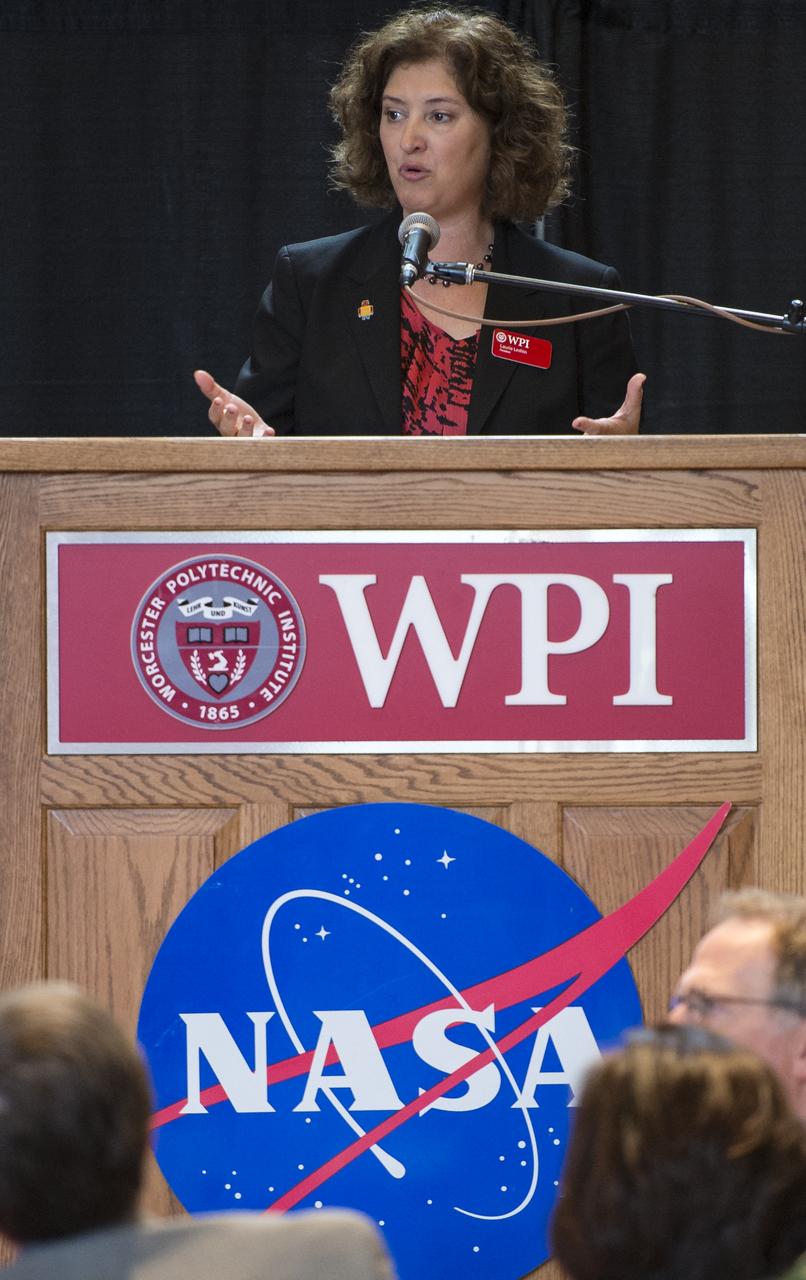
Worcester Polytechnic Institute (WPI) President Laurie Leshin, speaks at a breakfast opening the TouchTomorrow Festival, held in conjunction with the 2014 NASA Centennial Challenges Sample Return Robot Challenge, Saturday, June 14, 2014, at the Worcester Polytechnic Institute (WPI) in Worcester, Mass. Eighteen teams are competing for a $1.5 million NASA prize purse. Teams will be required to demonstrate autonomous robots that can locate and collect samples from a wide and varied terrain, operating without human control. The objective of this NASA-WPI Centennial Challenge is to encourage innovations in autonomous navigation and robotics technologies. Innovations stemming from the challenge may improve NASA's capability to explore a variety of destinations in space, as well as enhance the nation's robotic technology for use in industries and applications on Earth. Photo Credit: (NASA/Joel Kowsky)
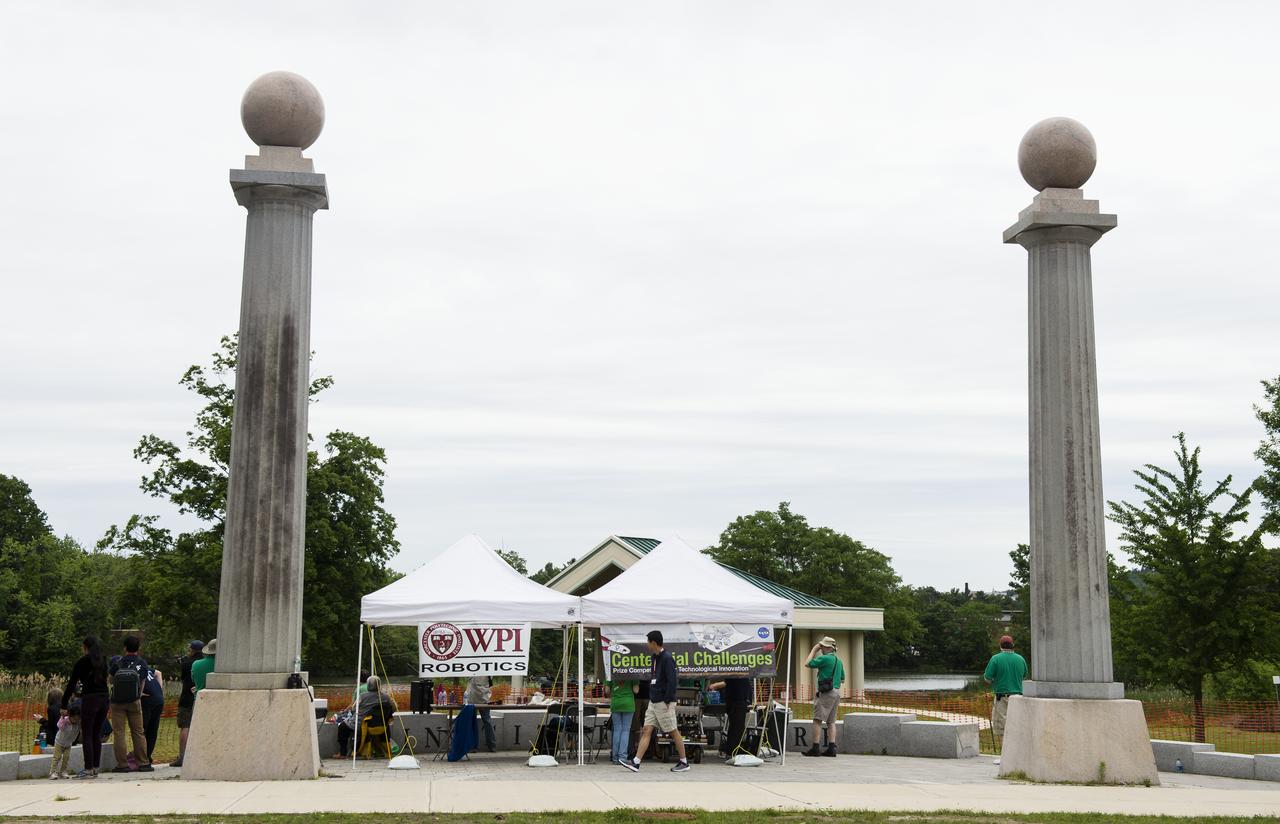
The entrance to Institute Park is seen during the level one challenge as during the 2014 NASA Centennial Challenges Sample Return Robot Challenge, Wednesday, June 11, 2014, at the Worcester Polytechnic Institute (WPI) in Worcester, Mass. Eighteen teams are competing for a $1.5 million NASA prize purse. Teams will be required to demonstrate autonomous robots that can locate and collect samples from a wide and varied terrain, operating without human control. The objective of this NASA-WPI Centennial Challenge is to encourage innovations in autonomous navigation and robotics technologies. Innovations stemming from the challenge may improve NASA's capability to explore a variety of destinations in space, as well as enhance the nation's robotic technology for use in industries and applications on Earth. Photo Credit: (NASA/Joel Kowsky)
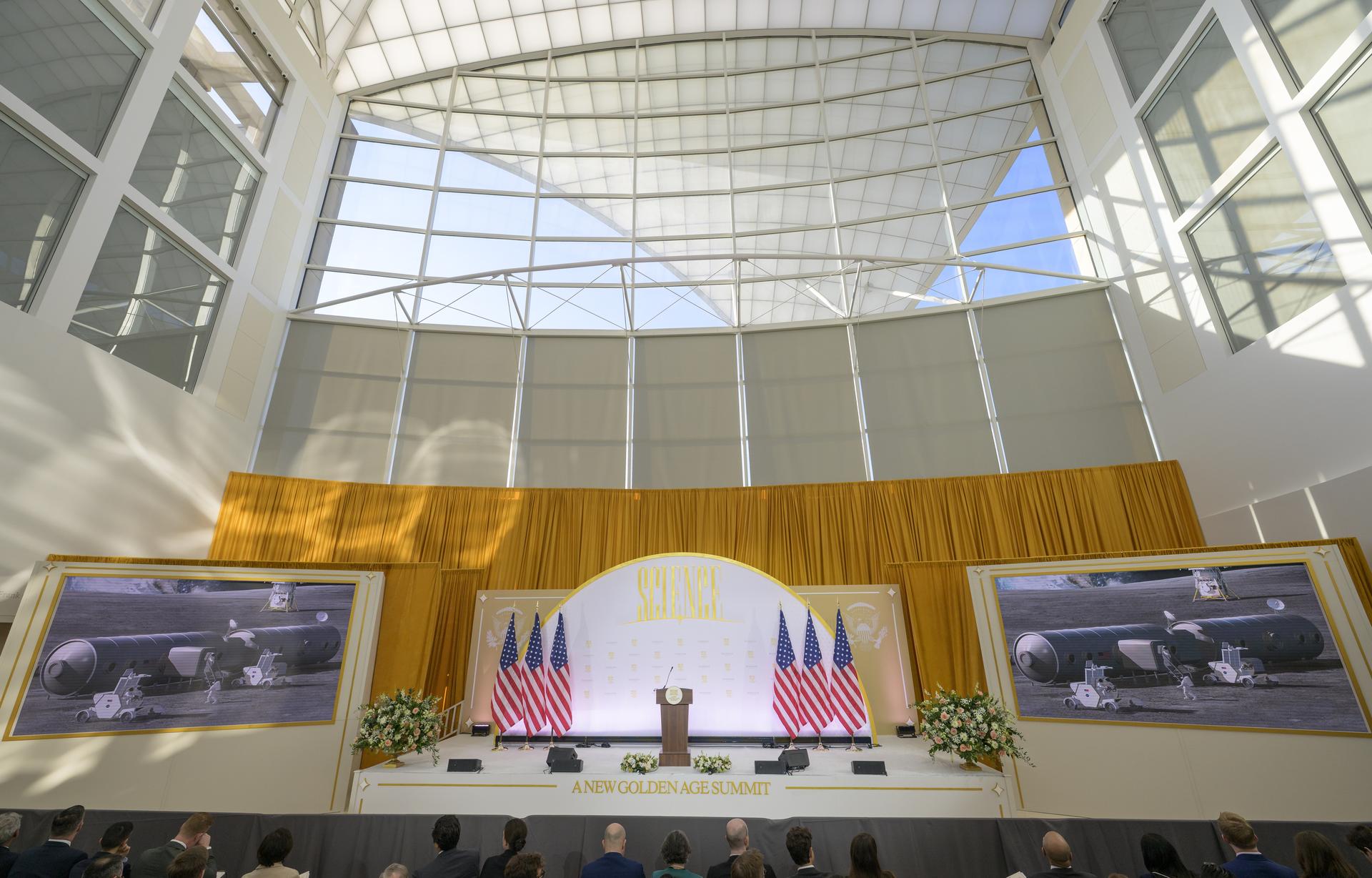
An introductory video, showing an artist concept of a Moon Base, is seen at the start of the the Golden Age Summit and the signing of a new Memorandum of Understanding between NASA and the Department of Energy, “Accelerating American Leadership in Space Nuclear Power and Propulsion”, Thursday, Oct. 8, 2026, at the Donald J. Trump Institute of Peace in Washington. Photo Credit: (NASA/Bill Ingalls)
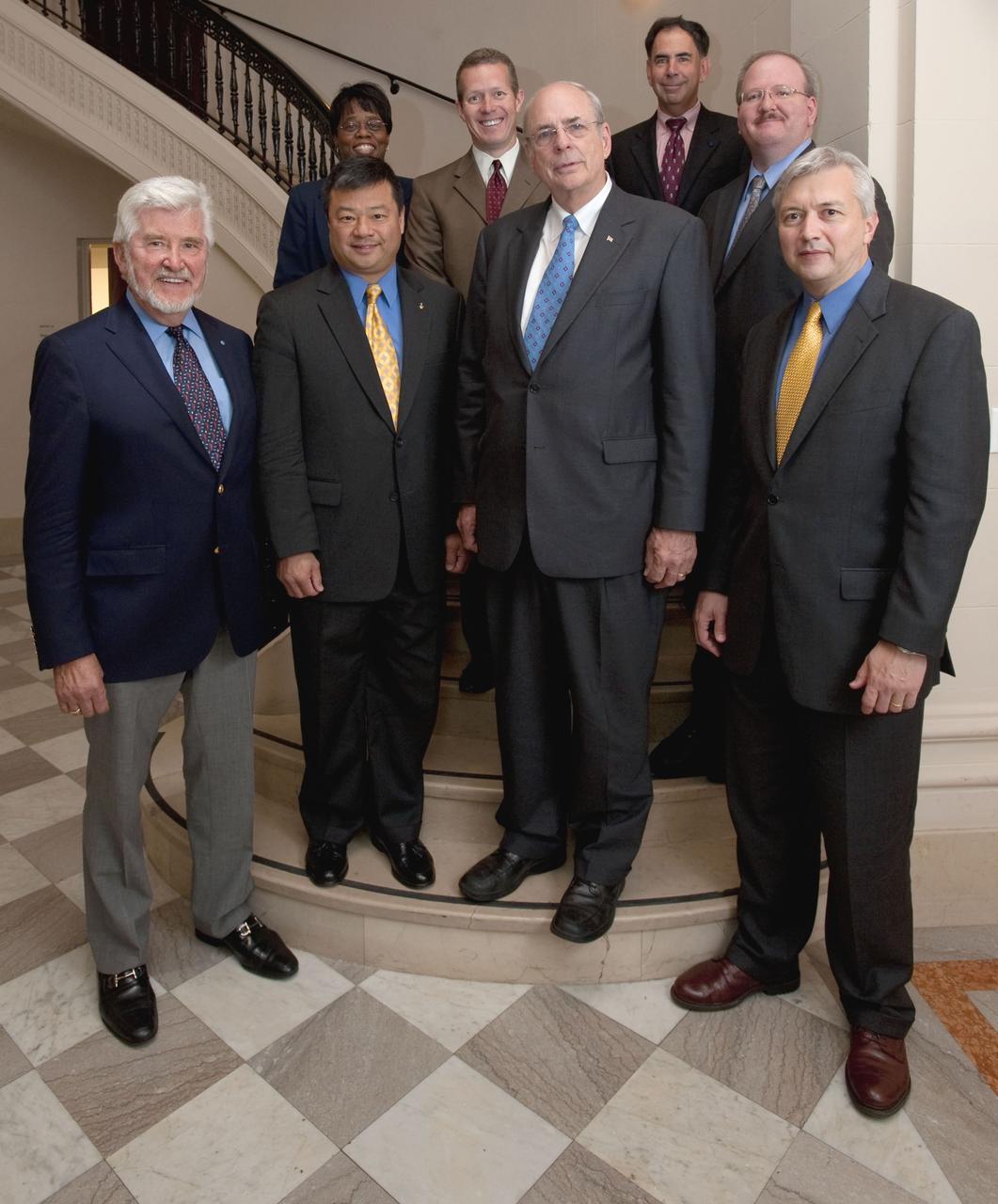
Norman Augustine, chair of the Human Space Flight Review Committee, front center, is joined by other members of the committee, clockwise from left, Bohdan Bejmuk, Leroy Chiao, Dr. Wanda Austin, Philip McAlister, Dr. Edward Crawley, Jeffrey Greason and Dr. Christopher Chyba prior to the start of the first of several public meetings at different U.S. locations, Wednesday, June 17, 2009, at the Carnegie Institution in Washington. The panel will examine ongoing and planned NASA development activities and potential alternatives in order to present options for advancing a safe, innovative, affordable and sustainable human space flight program following the space shuttle's retirement. The committee wil present its results by August 2009. Members of the committee that were not in attendance and are not pictured are Dr. Charles Kennel, Retired Air Force Gen. Lester Lyles and former astronaut Sally Ride. Photo Credit: (NASA/Paul E. Alers)
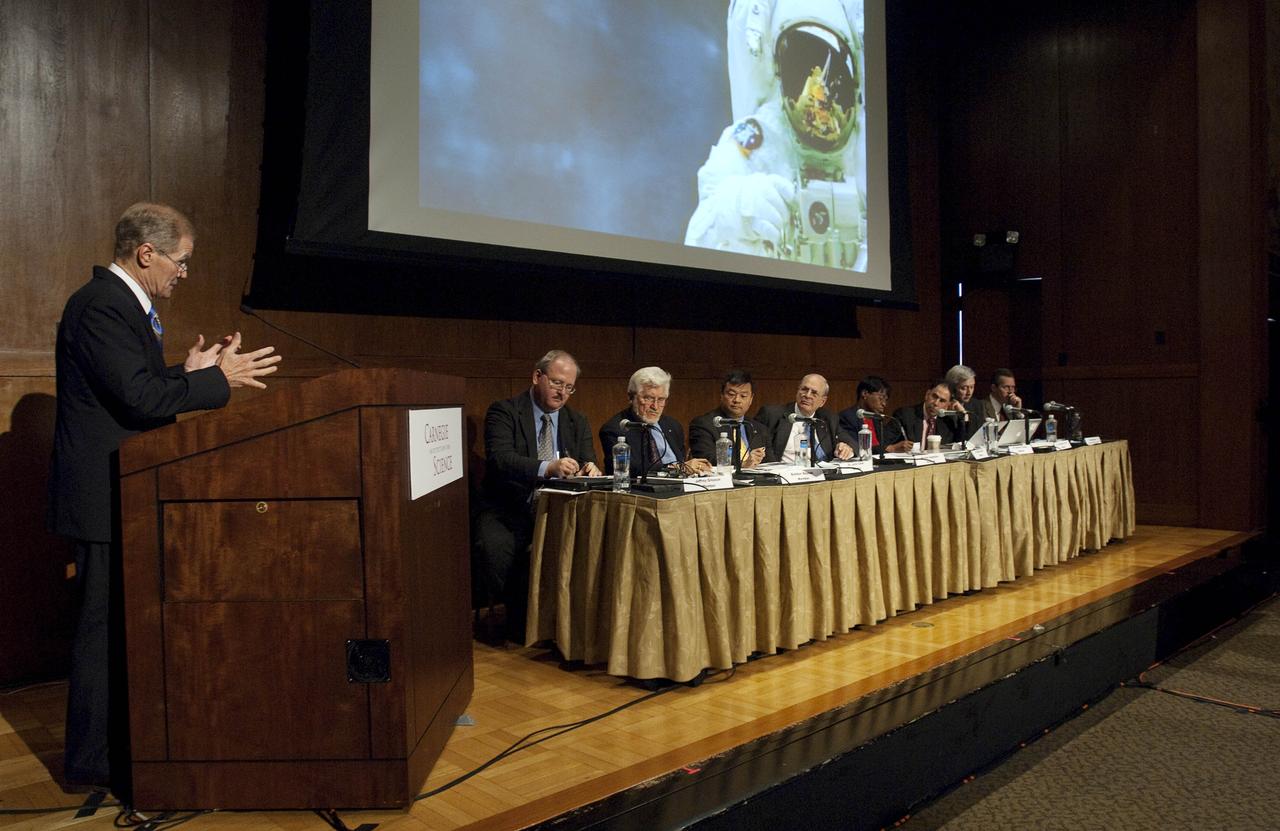
U.S. Sen. Bill Nelson, D-Fla., at podium, addresses members of the Human Space Flight Review Committee, Wednesday, June 17, 2009, at the Carnegie Institution in Washington. Seated from left are Jeffrey Greason, Bohdan Bejmuk, Dr. Leroy Chiao, Norman Augustine (chair), Dr. Wanda Austin, Dr. Edward Crawley, Dr. Christopher Chyba and Philip McAlister. The panel will examine ongoing and planned NASA development activities and potential alternatives in order to present options for advancing a safe, innovative, affordable and sustainable human space flight program following the space shuttle's retirement. The committee wil present its results by August 2009. Photo Credit: (NASA/Paul E. Alers)
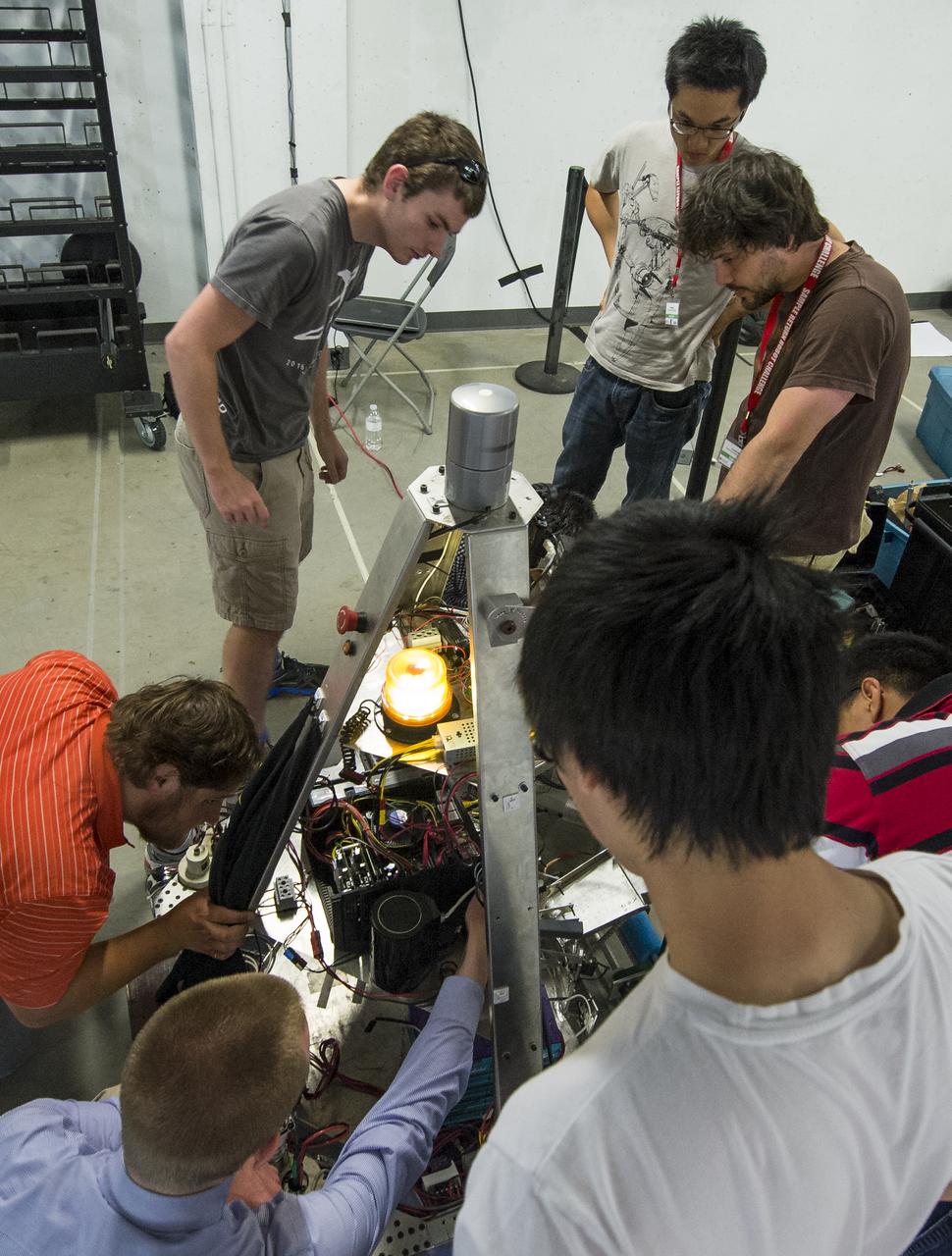
The University of Waterloo Robotics Team, from Ontario, Canada, prepares their robot for the 2014 NASA Centennial Challenges Sample Return Robot Challenge, Tuesday, June 10, 2014, at the Worcester Polytechnic Institute (WPI) in Worcester, Mass. The team from the University of Waterloo is one of eighteen teams competing for a $1.5 million NASA prize purse. Teams will be required to demonstrate autonomous robots that can locate and collect samples from a wide and varied terrain, operating without human control. The objective of this NASA-WPI Centennial Challenge is to encourage innovations in autonomous navigation and robotics technologies. Innovations stemming from the challenge may improve NASA's capability to explore a variety of destinations in space, as well as enhance the nation's robotic technology for use in industries and applications on Earth. Photo Credit: (NASA/Joel Kowsky)
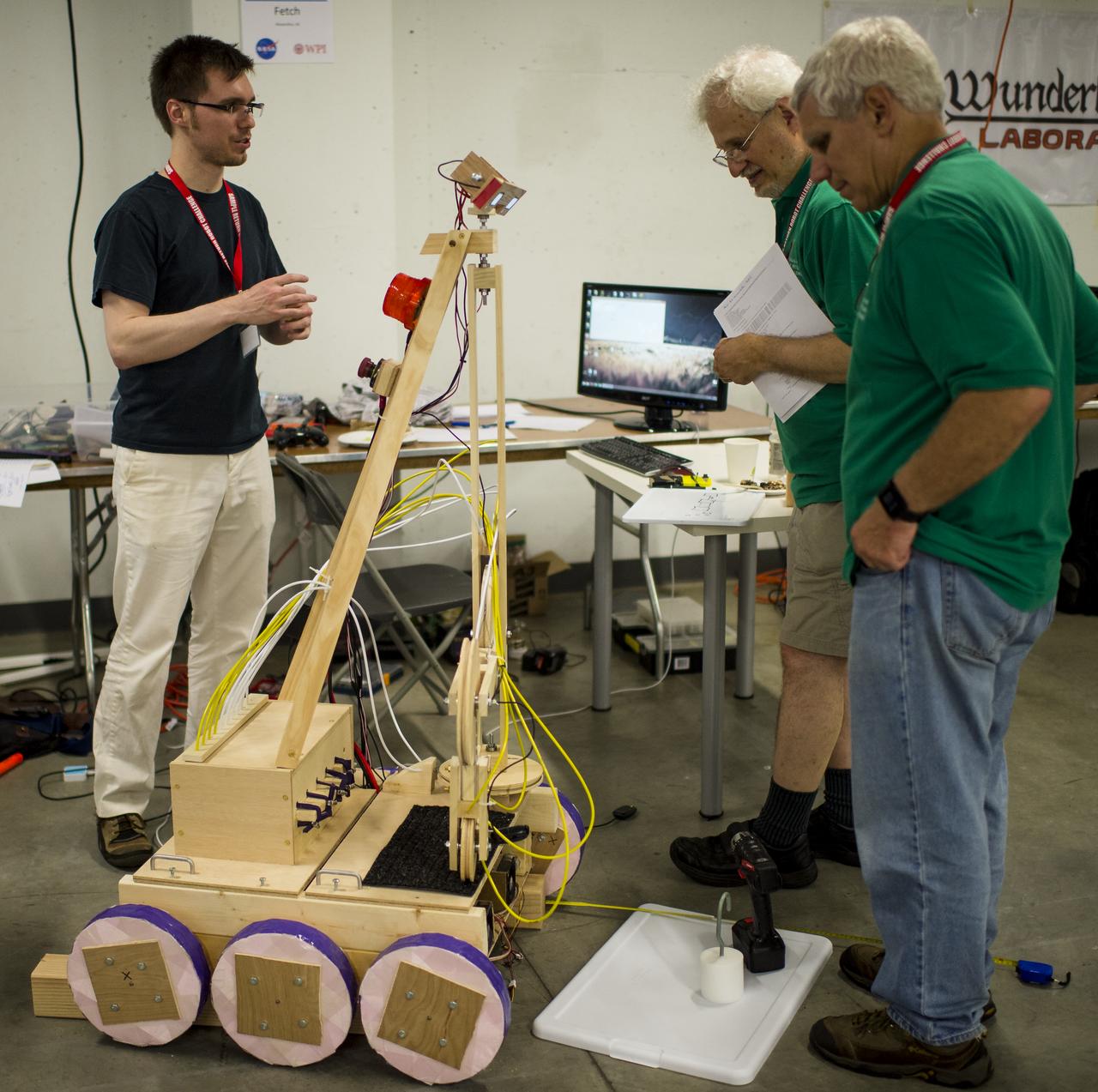
James Leopore, of team Fetch, from Alexandria, Virginia, speaks with judges as he prepares for the NASA 2014 Sample Return Robot Challenge, Tuesday, June 10, 2014, at the Worcester Polytechnic Institute (WPI) in Worcester, Mass. Team Fetch is one of eighteen teams competing for a $1.5 million NASA prize purse. Teams will be required to demonstrate autonomous robots that can locate and collect samples from a wide and varied terrain, operating without human control. The objective of this NASA-WPI Centennial Challenge is to encourage innovations in autonomous navigation and robotics technologies. Innovations stemming from the challenge may improve NASA's capability to explore a variety of destinations in space, as well as enhance the nation's robotic technology for use in industries and applications on Earth. Photo Credit: (NASA/Joel Kowsky)
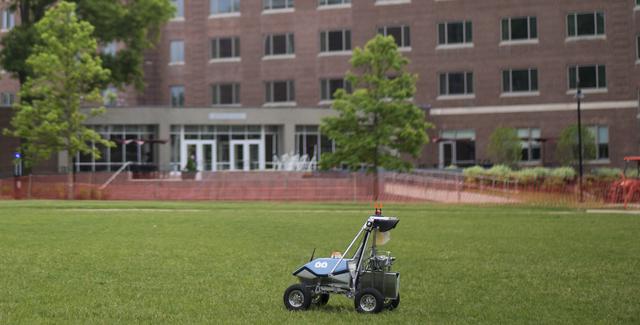
A team KuuKulgur Robot from Estonia is seen on the practice field during the 2014 NASA Centennial Challenges Sample Return Robot Challenge, Tuesday, June 10, 2014, at the Worcester Polytechnic Institute (WPI) in Worcester, Mass. Team KuuKulgur is one of eighteen teams competing for a $1.5 million NASA prize purse. Teams will be required to demonstrate autonomous robots that can locate and collect samples from a wide and varied terrain, operating without human control. The objective of this NASA-WPI Centennial Challenge is to encourage innovations in autonomous navigation and robotics technologies. Innovations stemming from the challenge may improve NASA's capability to explore a variety of destinations in space, as well as enhance the nation's robotic technology for use in industries and applications on Earth. Photo Credit: (NASA/Joel Kowsky)

The Stellar Automation Systems team poses for a picture with their robot after attempting the level one challenge during the 2014 NASA Centennial Challenges Sample Return Robot Challenge, Wednesday, June 11, 2014, at the Worcester Polytechnic Institute (WPI) in Worcester, Mass. Eighteen teams are competing for a $1.5 million NASA prize purse. Teams will be required to demonstrate autonomous robots that can locate and collect samples from a wide and varied terrain, operating without human control. The objective of this NASA-WPI Centennial Challenge is to encourage innovations in autonomous navigation and robotics technologies. Innovations stemming from the challenge may improve NASA's capability to explore a variety of destinations in space, as well as enhance the nation's robotic technology for use in industries and applications on Earth. Photo Credit: (NASA/Joel Kowsky)
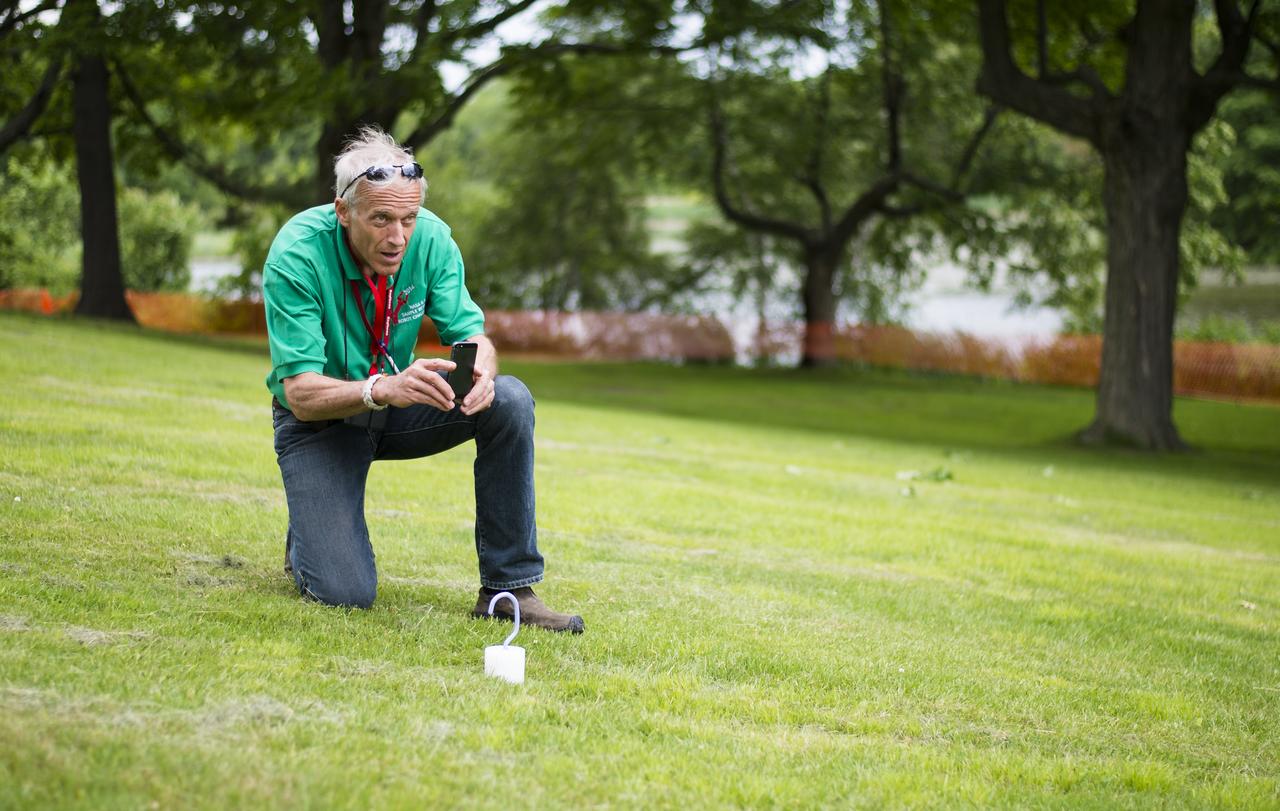
Kenneth Stafford, Assistant Director of Robotics Engineering and Director of the Robotics Resource Center at the Worcester Polytechnic Institute (WPI), verifies the location of the target sample during the level one challenge during the 2014 NASA Centennial Challenges Sample Return Robot Challenge, Wednesday, June 11, 2014, at the Worcester Polytechnic Institute (WPI) in Worcester, Mass. Eighteen teams are competing for a $1.5 million NASA prize purse. Teams will be required to demonstrate autonomous robots that can locate and collect samples from a wide and varied terrain, operating without human control. The objective of this NASA-WPI Centennial Challenge is to encourage innovations in autonomous navigation and robotics technologies. Innovations stemming from the challenge may improve NASA's capability to explore a variety of destinations in space, as well as enhance the nation's robotic technology for use in industries and applications on Earth. Photo Credit: (NASA/Joel Kowsky)
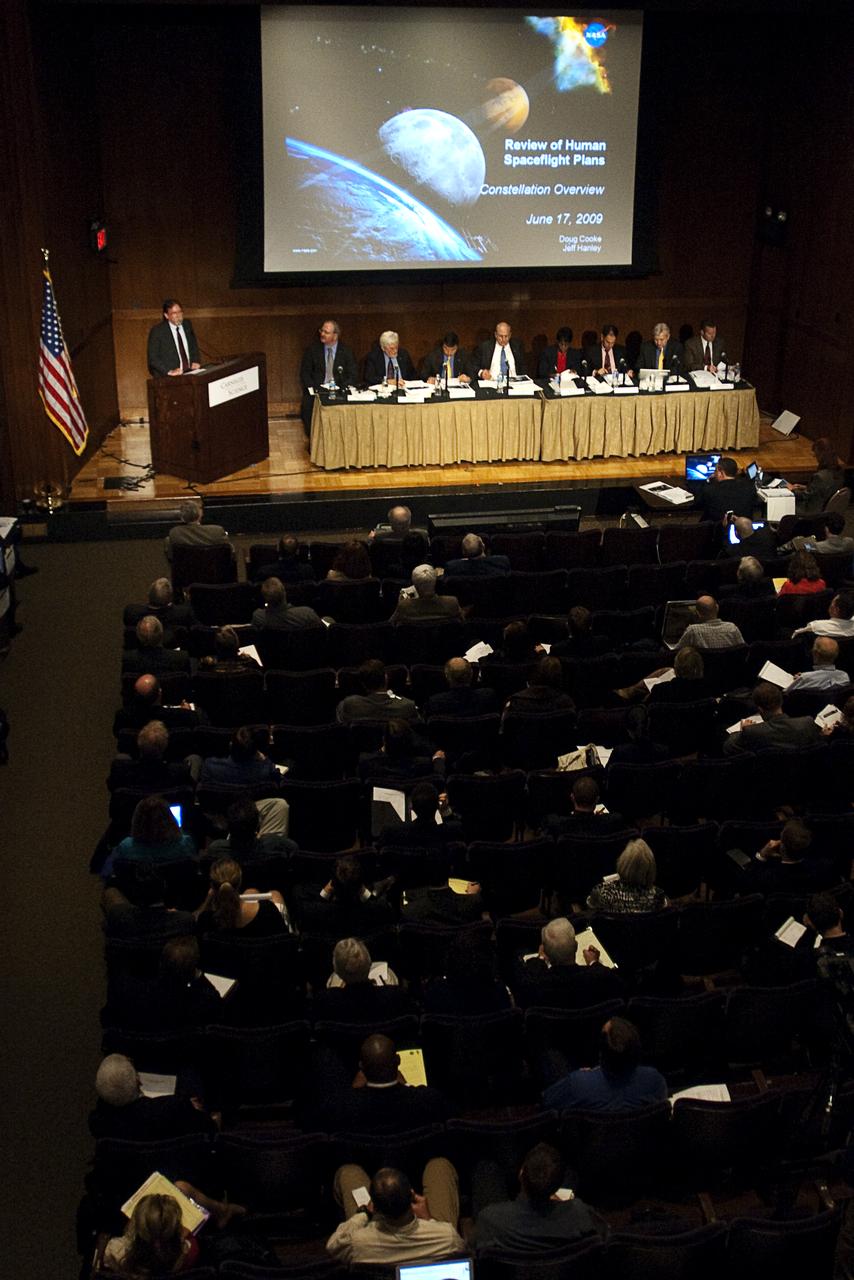
Douglas R. Cooke, Associate Administrator for Exploration Systems Mission Directorate, at podium, addresses the Human Space Flight Review Committee, Wednesday, June 17, 2009, at the Carnegie Institution in Washington. The panel will examine ongoing and planned NASA development activities and potential alternatives in order to present options for advancing a safe, innovative, affordable and sustainable human space flight program following the space shuttle's retirement. The committee wil present its results by August 2009. Seated from left on the panel is Jeffrey Greason, Bohdan Bejmuk, Dr. Leroy Chiao, Norman Augustine (chair), Dr. Wanda Austin, Dr. Edward Crawley, Dr. Christopher Chyba and Philip McAlister. Photo Credit: (NASA/Paul E. Alers)

The Oregon State University Mars Rover Team poses for a picture with their robot following their attempt at the level one challenge during the 2014 NASA Centennial Challenges Sample Return Robot Challenge, Wednesday, June 11, 2014, at the Worcester Polytechnic Institute (WPI) in Worcester, Mass. is one of eighteen teams competing for a $1.5 million NASA prize purse. Teams will be required to demonstrate autonomous robots that can locate and collect samples from a wide and varied terrain, operating without human control. The objective of this NASA-WPI Centennial Challenge is to encourage innovations in autonomous navigation and robotics technologies. Innovations stemming from the challenge may improve NASA's capability to explore a variety of destinations in space, as well as enhance the nation's robotic technology for use in industries and applications on Earth. Photo Credit: (NASA/Joel Kowsky)
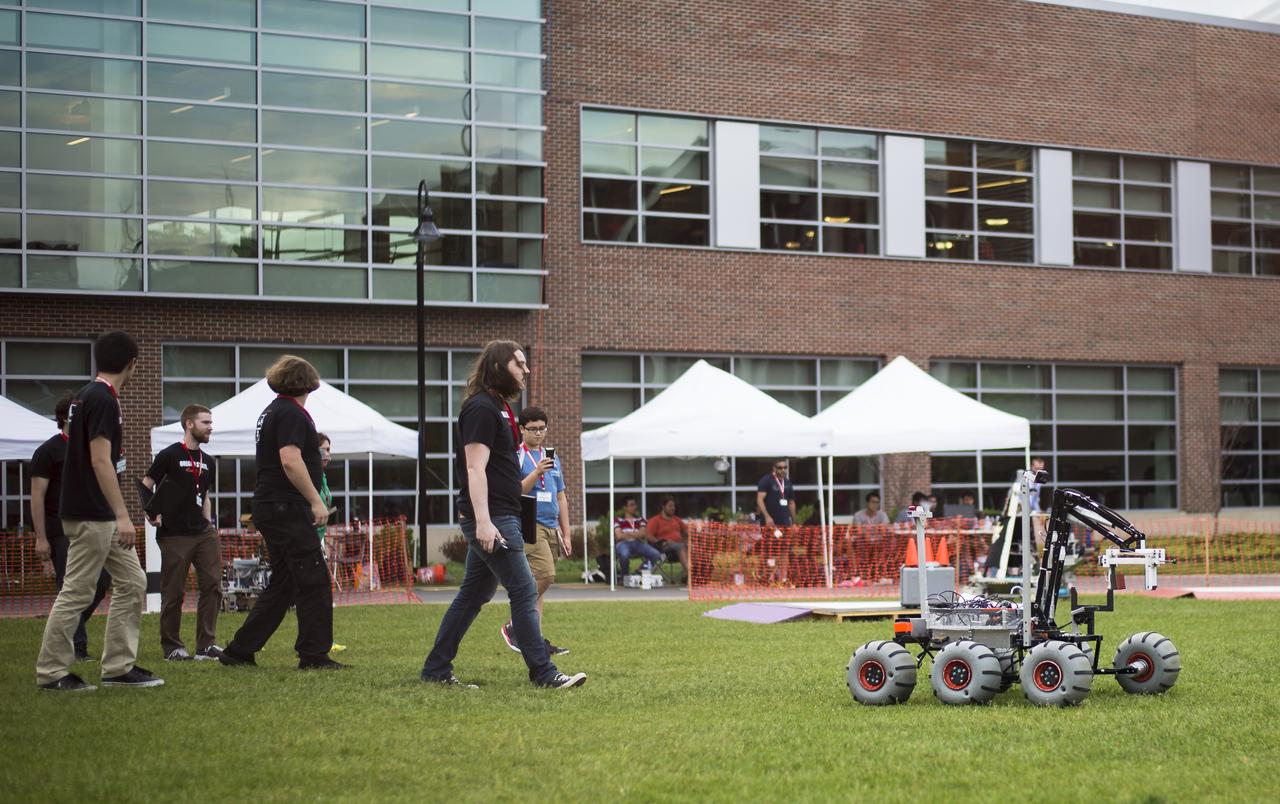
The Oregon State University Mars Rover Team, from Corvallis, Oregon, follows their robot on the practice field during the 2014 NASA Centennial Challenges Sample Return Robot Challenge, Tuesday, June 10, 2014, at the Worcester Polytechnic Institute (WPI) in Worcester, Mass. The Oregon State University Mars Rover Team is one of eighteen teams competing for a $1.5 million NASA prize purse. Teams will be required to demonstrate autonomous robots that can locate and collect samples from a wide and varied terrain, operating without human control. The objective of this NASA-WPI Centennial Challenge is to encourage innovations in autonomous navigation and robotics technologies. Innovations stemming from the challenge may improve NASA's capability to explore a variety of destinations in space, as well as enhance the nation's robotic technology for use in industries and applications on Earth. Photo Credit: (NASA/Joel Kowsky)
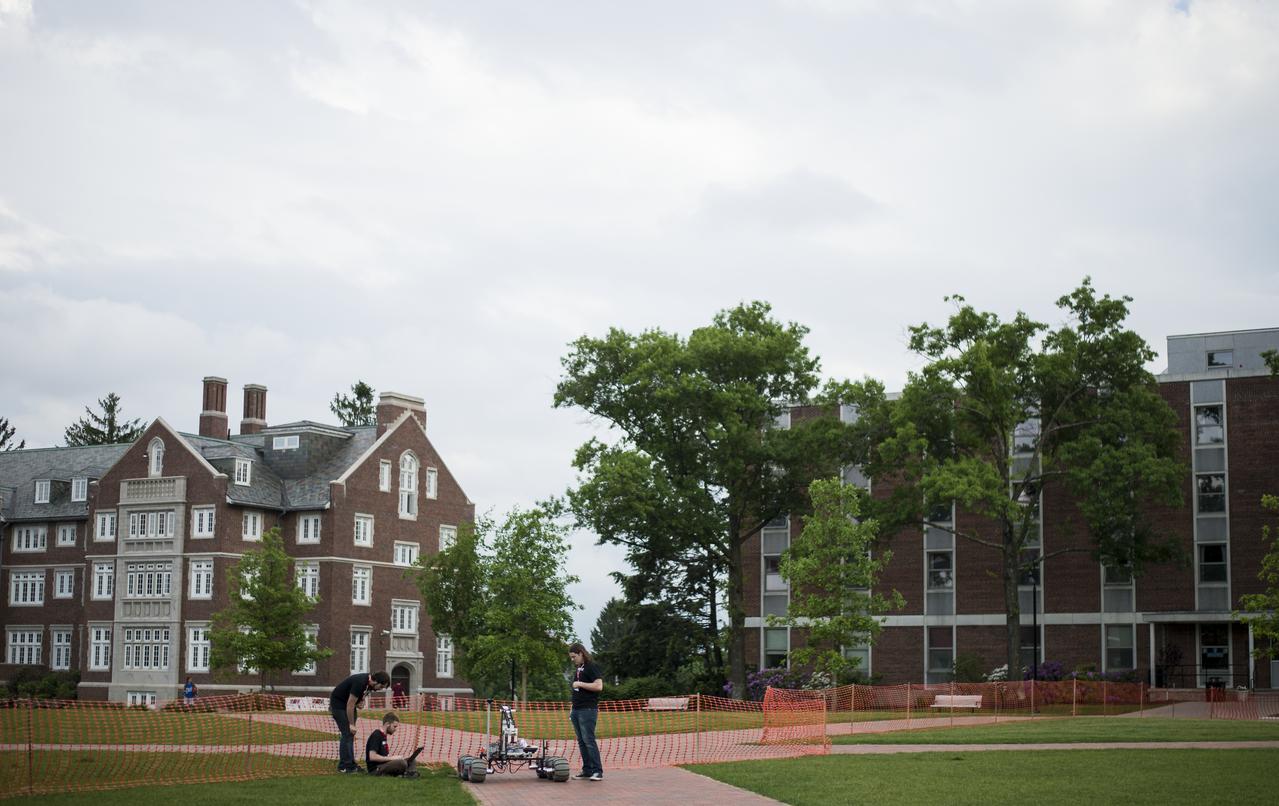
The Oregon State University Mars Rover Team follows their robot on the practice field during the 2014 NASA Centennial Challenges Sample Return Robot Challenge, Tuesday, June 10, 2014, at the Worcester Polytechnic Institute (WPI) in Worcester, Mass. The Oregon State University Mars Rover Team is one of eighteen teams competing for a $1.5 million NASA prize purse. Teams will be required to demonstrate autonomous robots that can locate and collect samples from a wide and varied terrain, operating without human control. The objective of this NASA-WPI Centennial Challenge is to encourage innovations in autonomous navigation and robotics technologies. Innovations stemming from the challenge may improve NASA's capability to explore a variety of destinations in space, as well as enhance the nation's robotic technology for use in industries and applications on Earth. Photo Credit: (NASA/Joel Kowsky)
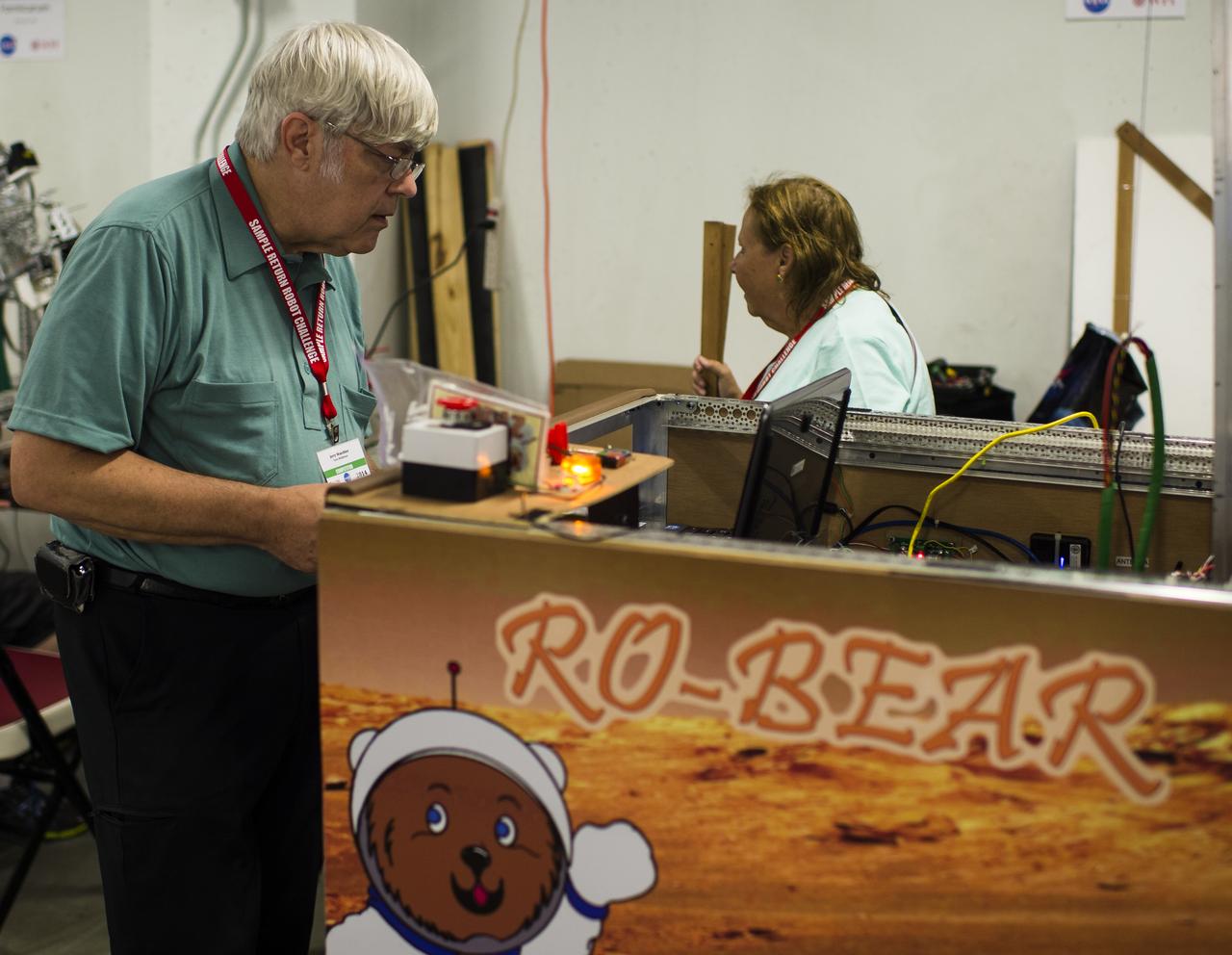
Jerry Waechter of team Middleman from Dunedin, Florida, works on their robot named Ro-Bear during the 2014 NASA Centennial Challenges Sample Return Robot Challenge, Tuesday, June 10, 2014, at the Worcester Polytechnic Institute (WPI) in Worcester, Mass. Team Middleman is one of eighteen teams competing for a $1.5 million NASA prize purse. Teams will be required to demonstrate autonomous robots that can locate and collect samples from a wide and varied terrain, operating without human control. The objective of this NASA-WPI Centennial Challenge is to encourage innovations in autonomous navigation and robotics technologies. Innovations stemming from the challenge may improve NASA's capability to explore a variety of destinations in space, as well as enhance the nation's robotic technology for use in industries and applications on Earth. Photo Credit: (NASA/Joel Kowsky)

The University of California Santa Cruz Rover Team poses for a picture with their robot after attempting the level one challenge during the 2014 NASA Centennial Challenges Sample Return Robot Challenge, Wednesday, June 11, 2014, at the Worcester Polytechnic Institute (WPI) in Worcester, Mass. is one of eighteen teams competing for a $1.5 million NASA prize purse. Teams will be required to demonstrate autonomous robots that can locate and collect samples from a wide and varied terrain, operating without human control. The objective of this NASA-WPI Centennial Challenge is to encourage innovations in autonomous navigation and robotics technologies. Innovations stemming from the challenge may improve NASA's capability to explore a variety of destinations in space, as well as enhance the nation's robotic technology for use in industries and applications on Earth. Photo Credit: (NASA/Joel Kowsky)
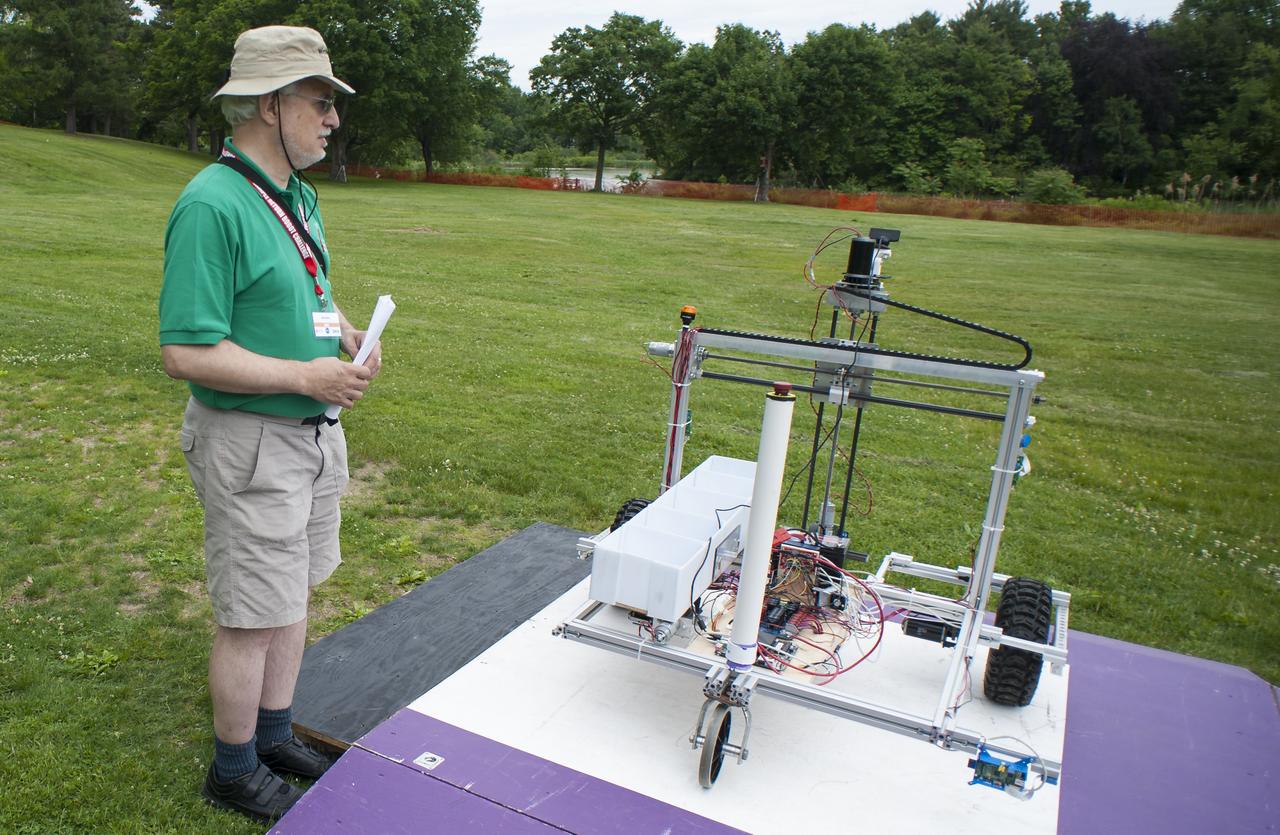
during the 2014 NASA Centennial Challenges Sample Return Robot Challenge, Wednesday, June 11, 2014, at the Worcester Polytechnic Institute (WPI) in Worcester, Mass. Eighteen teams are competing for a $1.5 million NASA prize purse. Teams will be required to demonstrate autonomous robots that can locate and collect samples from a wide and varied terrain, operating without human control. The objective of this NASA-WPI Centennial Challenge is to encourage innovations in autonomous navigation and robotics technologies. Innovations stemming from the challenge may improve NASA's capability to explore a variety of destinations in space, as well as enhance the nation's robotic technology for use in industries and applications on Earth. Photo Credit: (NASA/Joel Kowsky)

during the 2014 NASA Centennial Challenges Sample Return Robot Challenge, Thursday, June 12, 2014, at the Worcester Polytechnic Institute (WPI) in Worcester, Mass. Eighteen teams are competing for a $1.5 million NASA prize purse. Teams will be required to demonstrate autonomous robots that can locate and collect samples from a wide and varied terrain, operating without human control. The objective of this NASA-WPI Centennial Challenge is to encourage innovations in autonomous navigation and robotics technologies. Innovations stemming from the challenge may improve NASA's capability to explore a variety of destinations in space, as well as enhance the nation's robotic technology for use in industries and applications on Earth. Photo Credit: (NASA/Joel Kowsky)
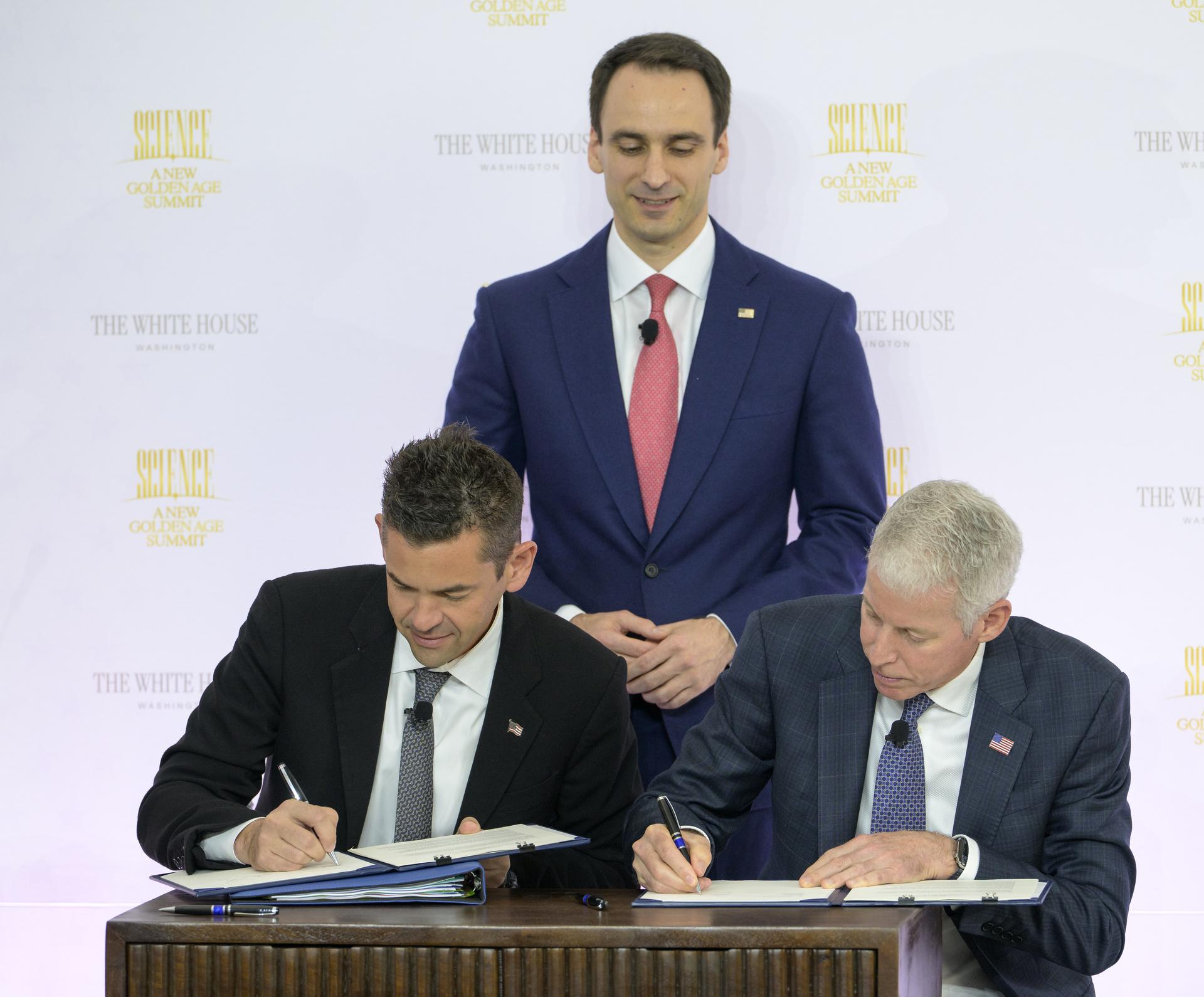
NASA Administrator Jared Isaacman, seated left, and U.S. Secretary of Energy Chris Wright, seated right, sign a new Memorandum of Understanding, “Accelerating American Leadership in Space Nuclear Power and Propulsion”, as Director of the White House Office of Science and Technology Policy (OSTP) Michael Kratsios, looks on, during the Golden Age Summit, Thursday, Oct. 8, 2026, at the Donald J. Trump Institute of Peace in Washington. Photo Credit: (NASA/Bill Ingalls)
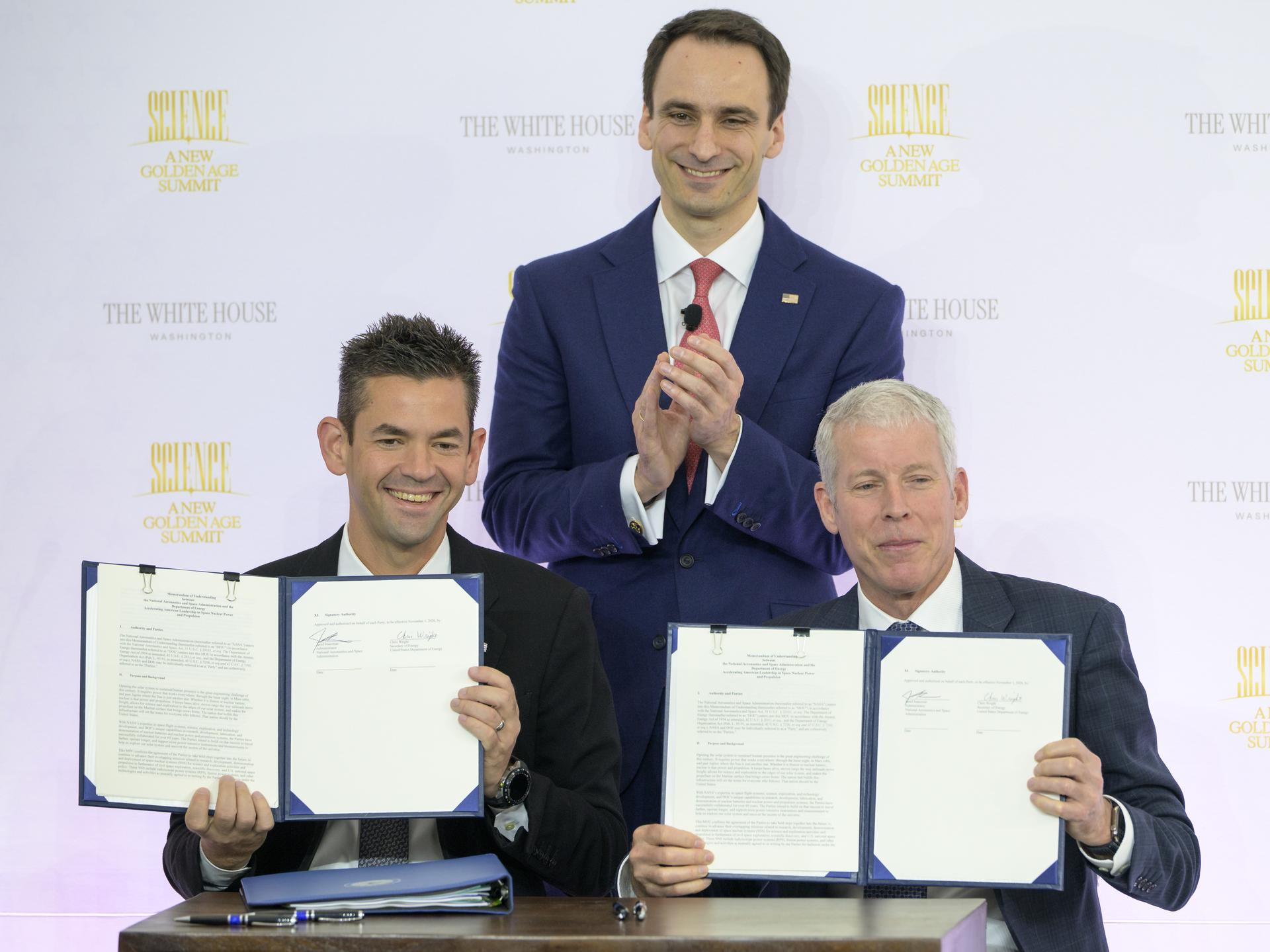
NASA Administrator Jared Isaacman, seated left, and U.S. Secretary of Energy Chris Wright, seated right, hold the signed Memorandum of Understanding, “Accelerating American Leadership in Space Nuclear Power and Propulsion”, as Director of the White House Office of Science and Technology Policy (OSTP) Michael Kratsios, looks on, during the Golden Age Summit, Thursday, Oct. 8, 2026, at the Donald J. Trump Institute of Peace in Washington. Photo Credit: (NASA/Bill Ingalls)
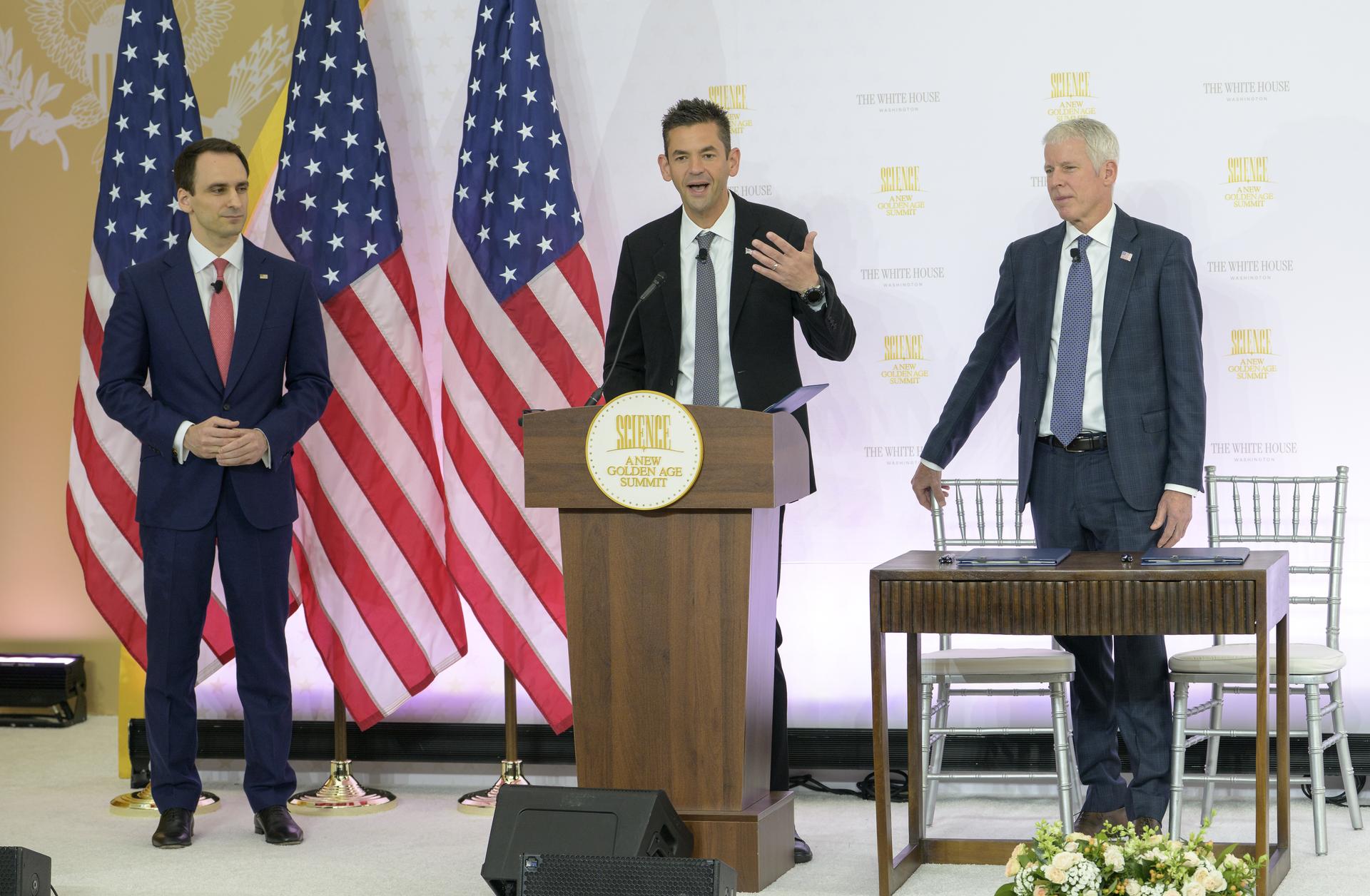
NASA Administrator Jared Isaacman, center, gives remarks with Director of the White House Office of Science and Technology Policy (OSTP) Michael Kratsios, left, and U.S. Secretary of Energy Chris Wright, ahead of NASA and DOE signing a new Memorandum of Understanding, “Accelerating American Leadership in Space Nuclear Power and Propulsion”, during the Golden Age Summit, Thursday, Oct. 8, 2026, at the Donald J. Trump Institute of Peace in Washington. Photo Credit: (NASA/Bill Ingalls)
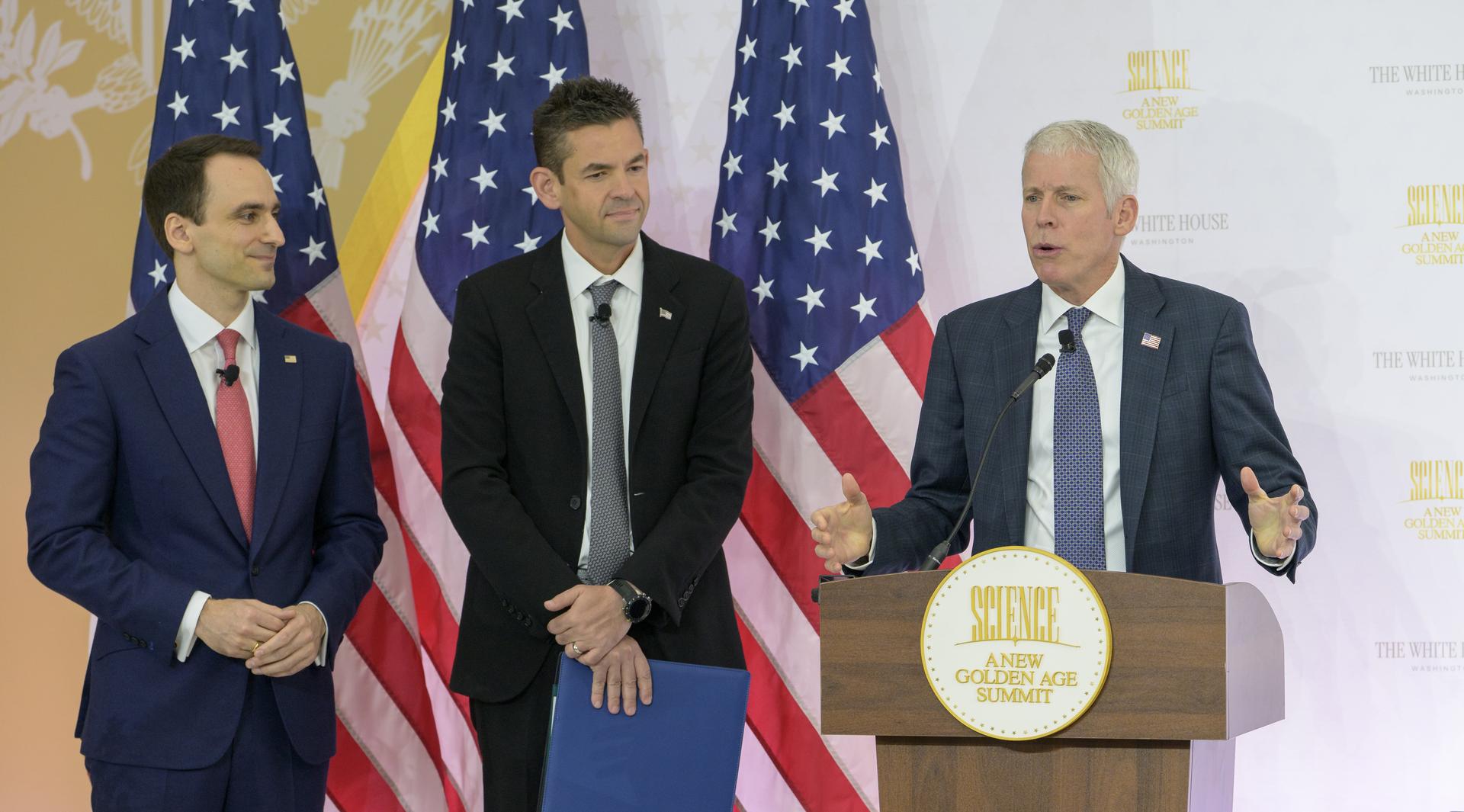
U.S. Secretary of Energy Chris Wright, right, gives remarks with Director of the White House Office of Science and Technology Policy (OSTP) Michael Kratsios, left, and NASA Administrator Jared Isaacman, ahead of NASA and DOE signing a new Memorandum of Understanding, “Accelerating American Leadership in Space Nuclear Power and Propulsion”, during the Golden Age Summit, Thursday, Oct. 8, 2026, at the Donald J. Trump Institute of Peace in Washington. Photo Credit: (NASA/Bill Ingalls)
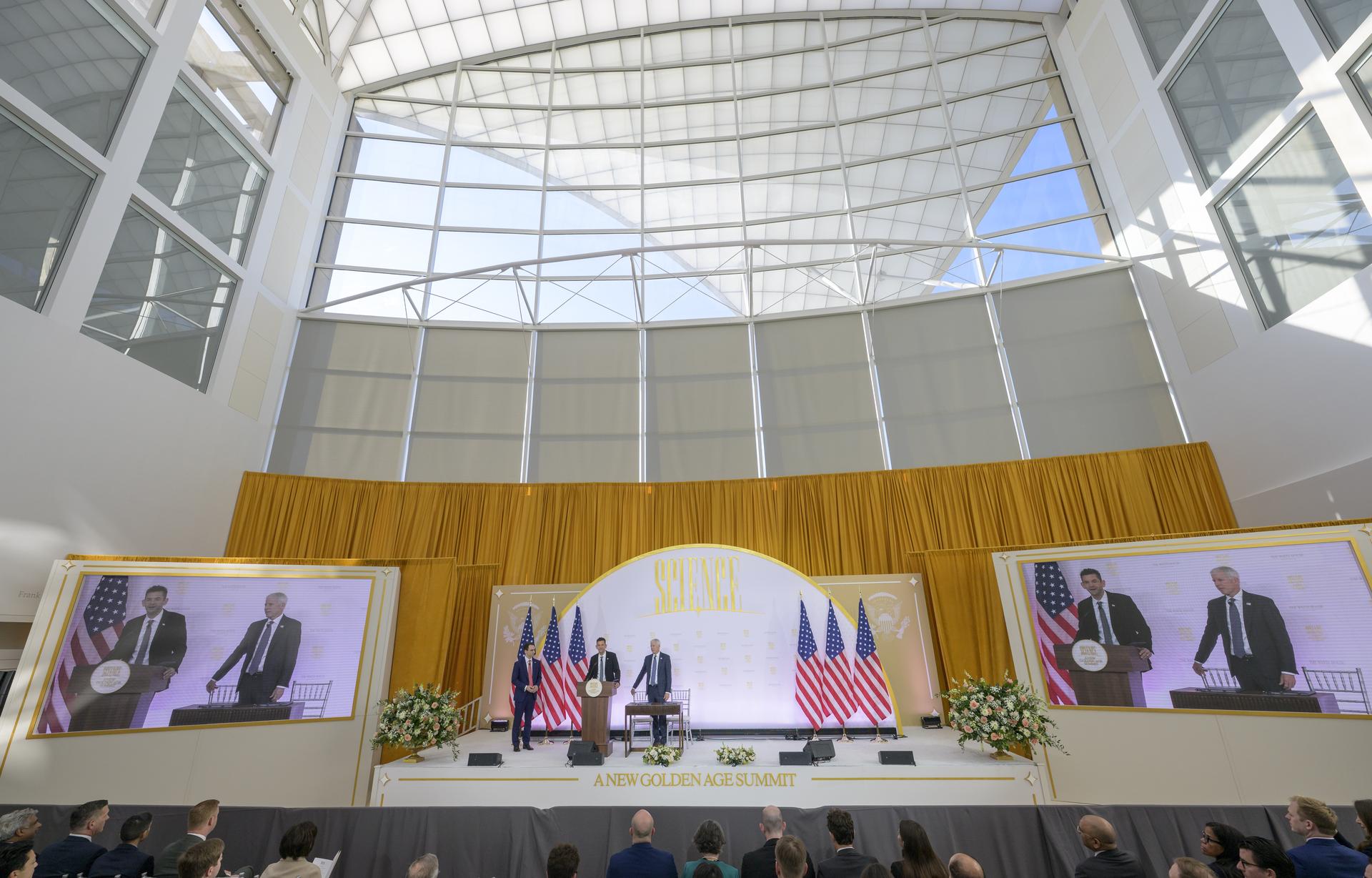
NASA Administrator Jared Isaacman, center, gives remarks with Director of the White House Office of Science and Technology Policy (OSTP) Michael Kratsios, left, and U.S. Secretary of Energy Chris Wright, ahead of NASA and DOE signing a new Memorandum of Understanding, “Accelerating American Leadership in Space Nuclear Power and Propulsion”, during the Golden Age Summit, Thursday, Oct. 8, 2026, at the Donald J. Trump Institute of Peace in Washington. Photo Credit: (NASA/Bill Ingalls)
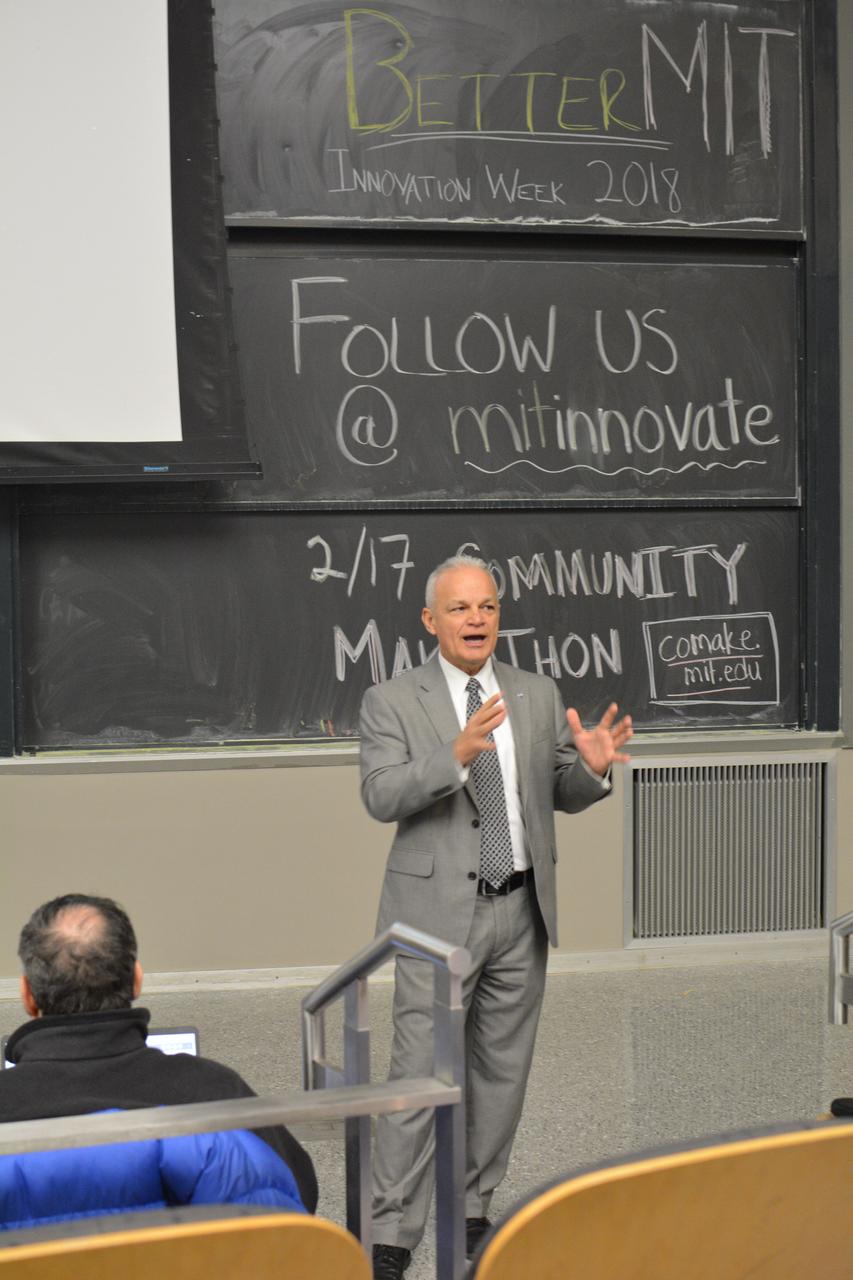
NASA Chief Technologist Douglas Terrier joined students, faculty and experts in Boston as part of MIT's "Better MIT Innovation Week 2018," a week-long program promoting leadership, entrepreneurship and action for a better future. During the February event, Terrier spoke about a culture of innovation at America's Space Program. (Photo: Damian Barabonkov/MIT Technique)
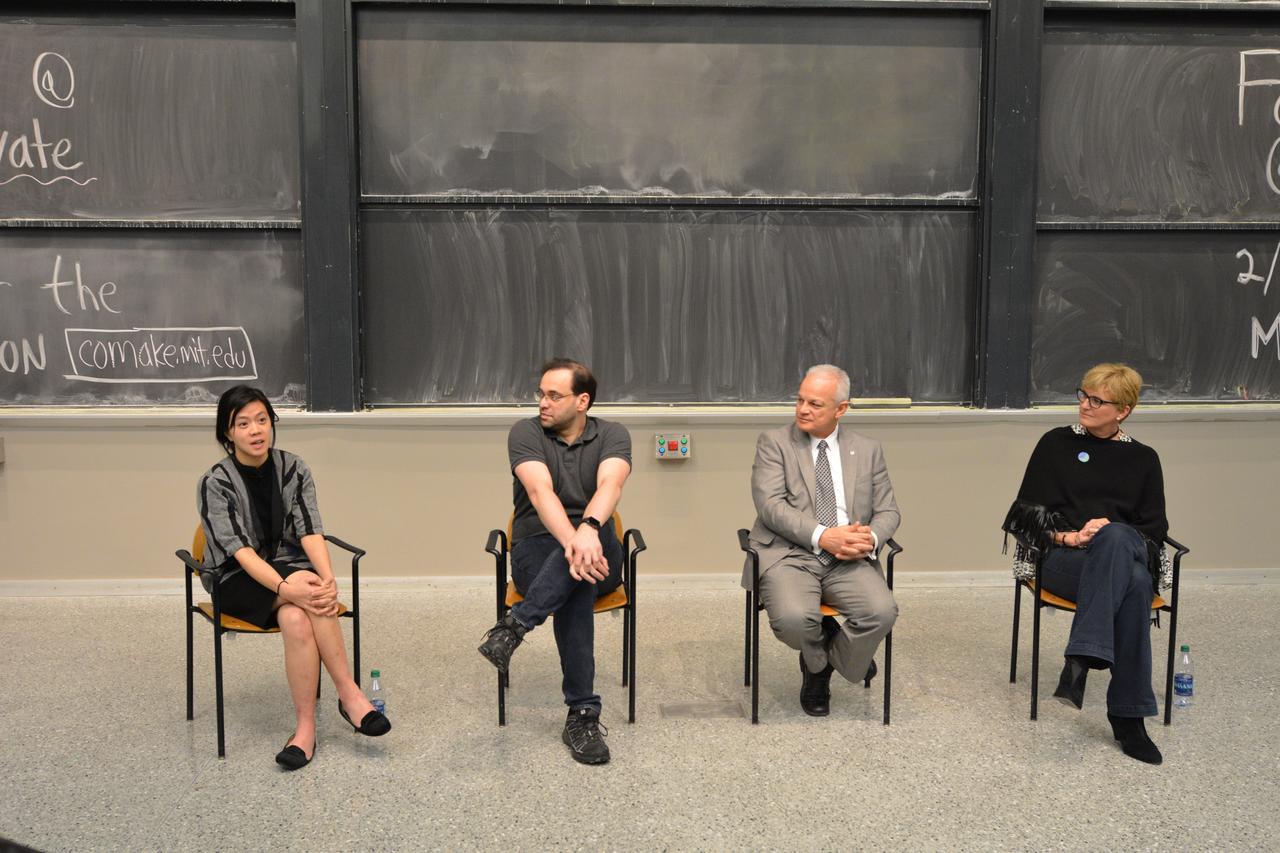
During MIT's "Better MIT Innovation Week 2018," a group of experts discussed innovation as a critical component to and professional accomplishment. From left: Rebecca Chui, founder, RootsStudio; Reinaldo Normand, entrepreneur in residence, MIT; Douglas Terrier, NASA chief technologist; Linda Foster, chief technologist, Lockheed Martin. (Photo: Damian Barabonkov/MIT Technique)

Director General of JAXA Institute of Space and Astronautical Science
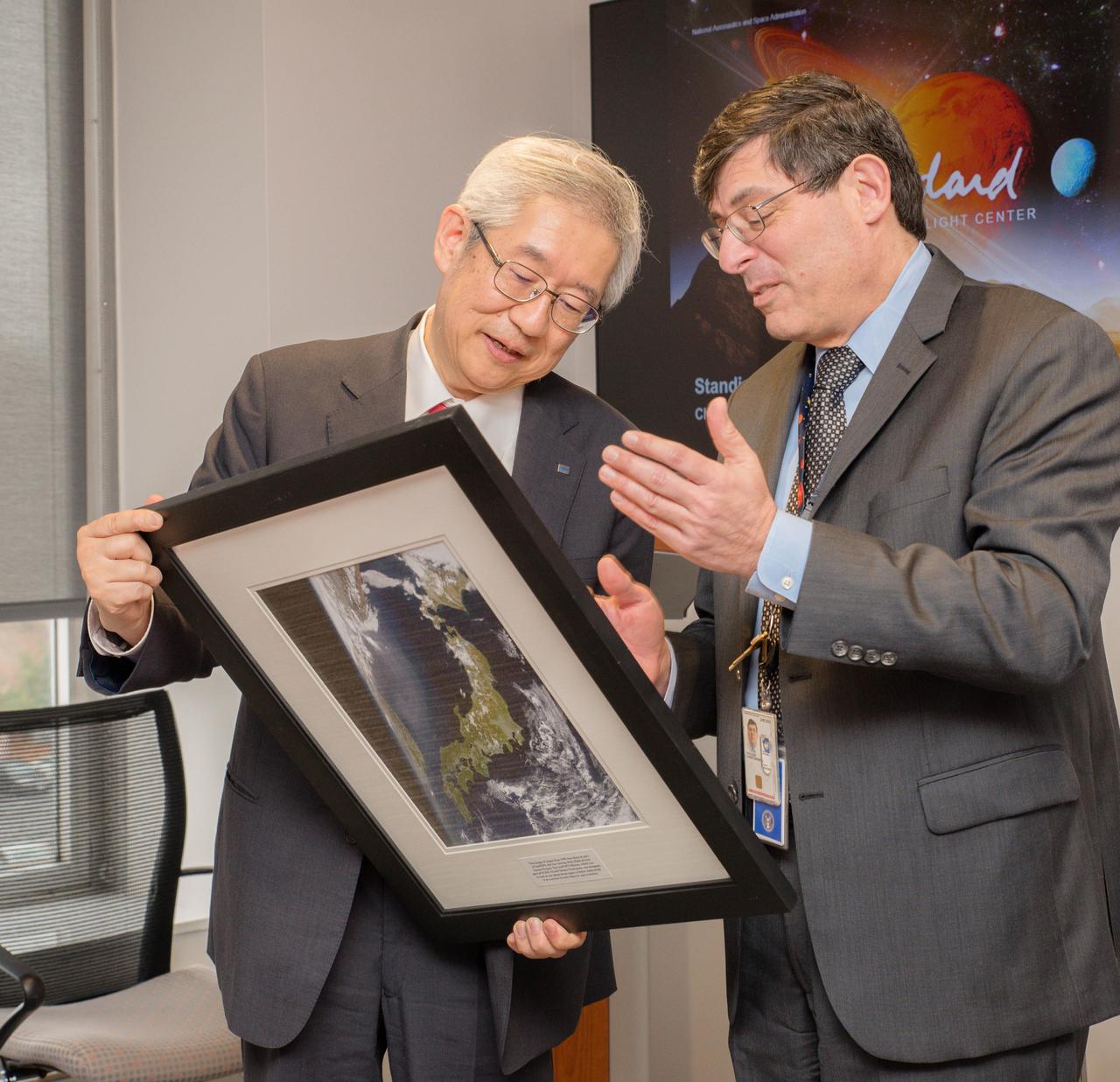
Director General of JAXA Institute of Space and Astronautical Science
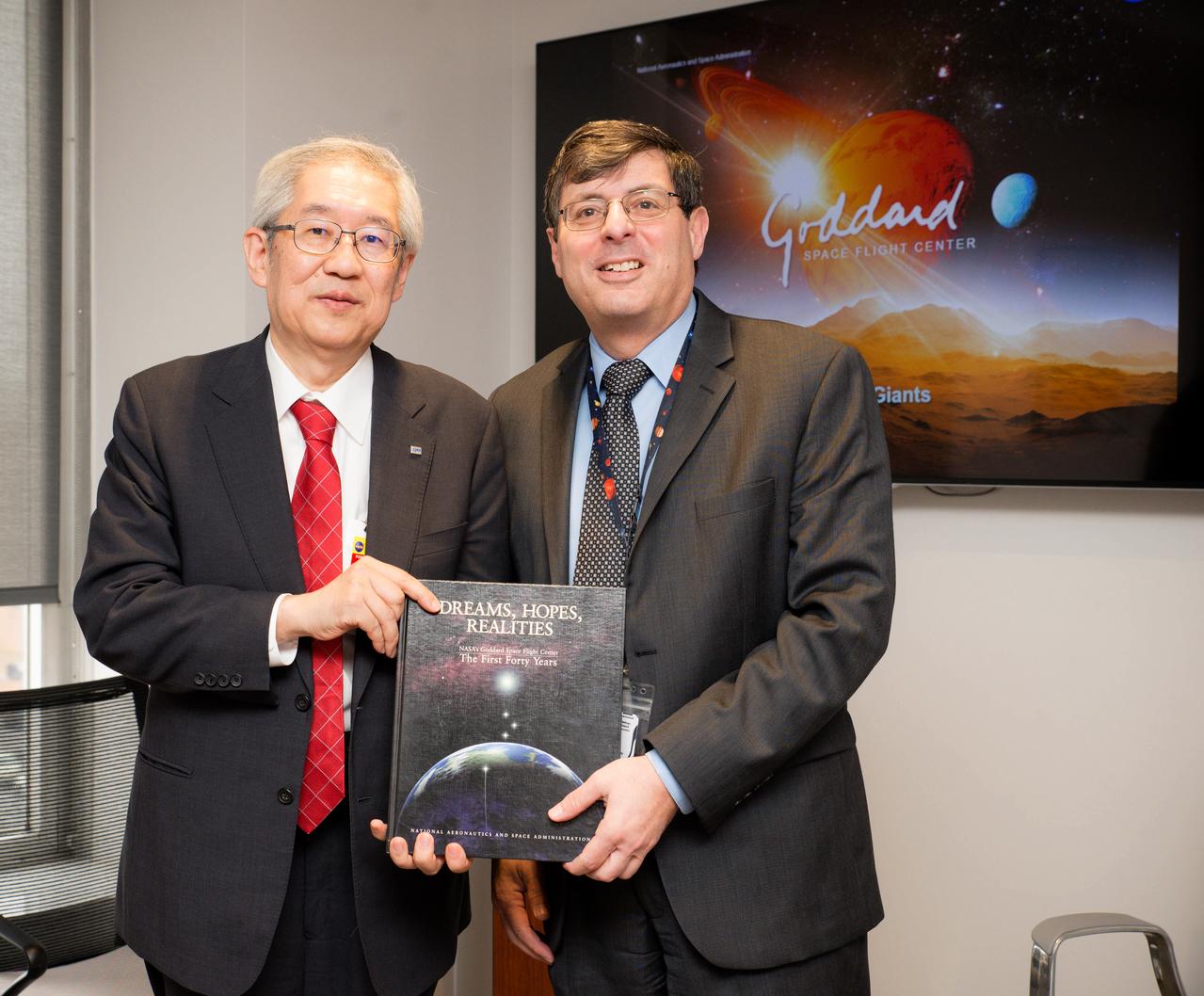
Director General of JAXA Institute of Space and Astronautical Science
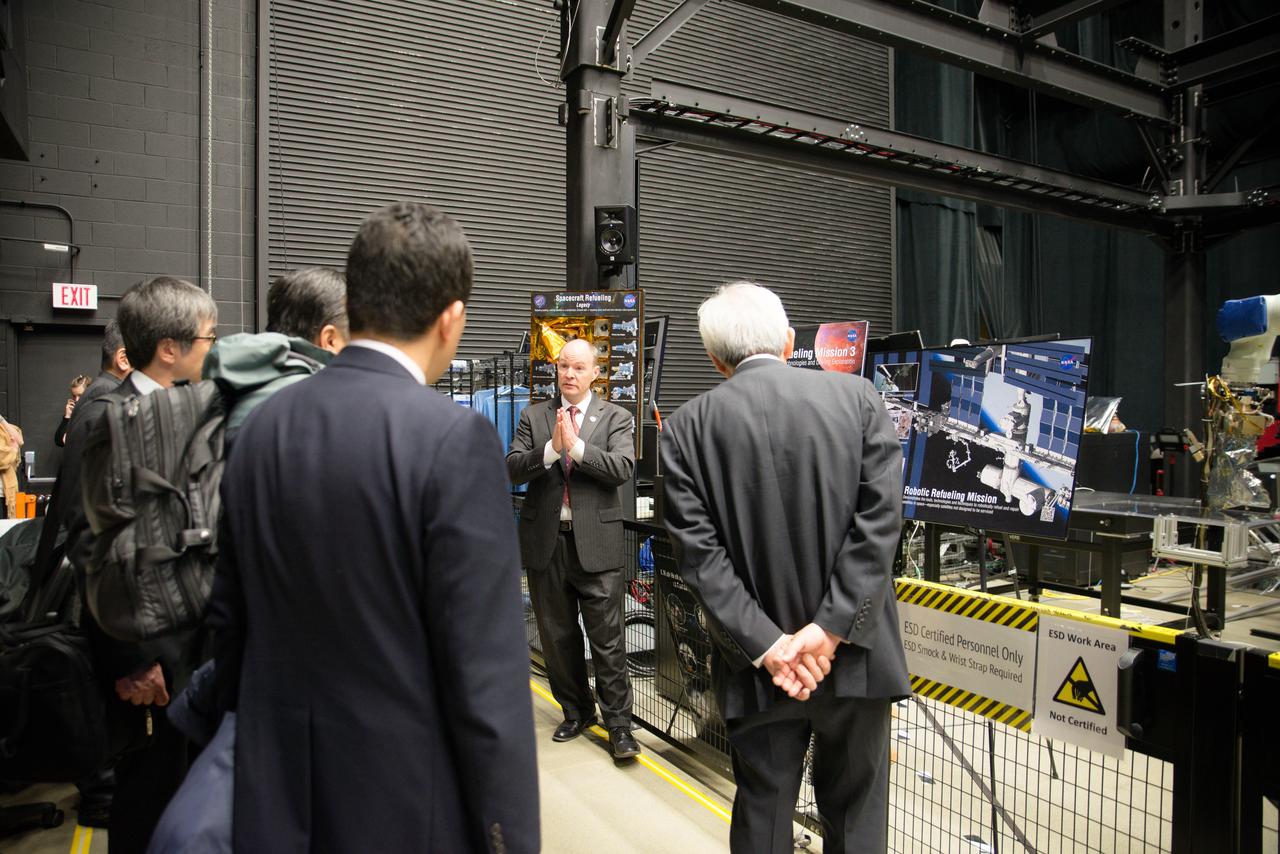
Director General of JAXA Institute of Space and Astronautical Science

Director General of JAXA Institute of Space and Astronautical Science
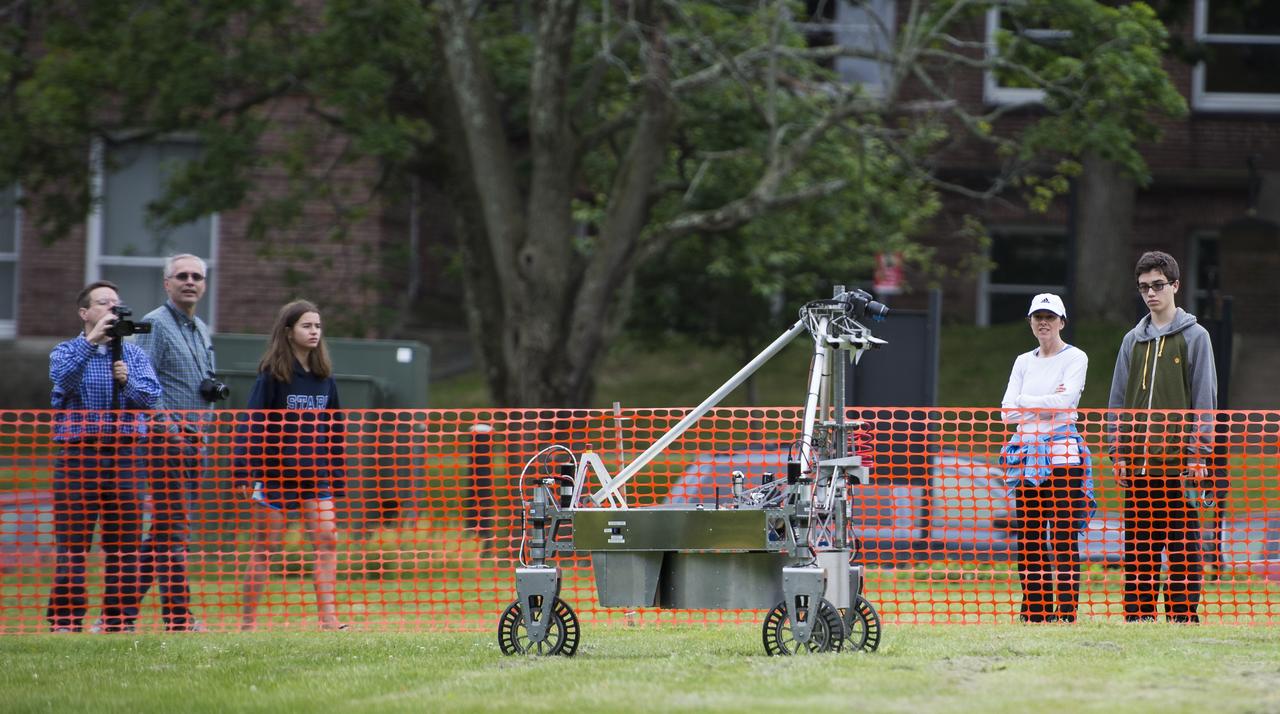
The team Survey robot is seen as it conducts a demonstration of the level two challenge during the 2014 NASA Centennial Challenges Sample Return Robot Challenge, Thursday, June 12, 2014, at the Worcester Polytechnic Institute (WPI) in Worcester, Mass. Eighteen teams are competing for a $1.5 million NASA prize purse. Teams will be required to demonstrate autonomous robots that can locate and collect samples from a wide and varied terrain, operating without human control. The objective of this NASA-WPI Centennial Challenge is to encourage innovations in autonomous navigation and robotics technologies. Innovations stemming from the challenge may improve NASA's capability to explore a variety of destinations in space, as well as enhance the nation's robotic technology for use in industries and applications on Earth. Photo Credit: (NASA/Joel Kowsky)
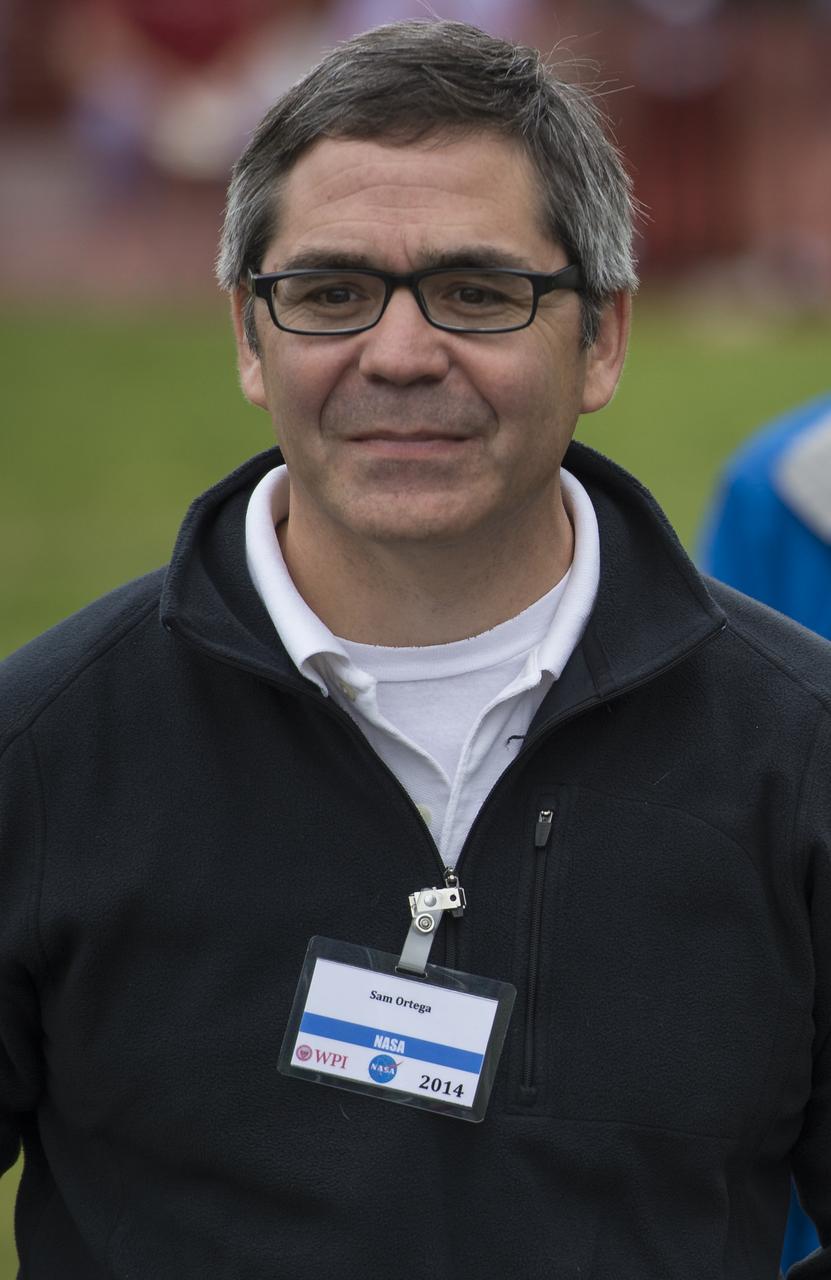
Sam Ortega, NASA program manager for Centennial Challenges, is seen during the 2014 NASA Centennial Challenges Sample Return Robot Challenge, Thursday, June 12, 2014, at the Worcester Polytechnic Institute (WPI) in Worcester, Mass. Eighteen teams are competing for a $1.5 million NASA prize purse. Teams will be required to demonstrate autonomous robots that can locate and collect samples from a wide and varied terrain, operating without human control. The objective of this NASA-WPI Centennial Challenge is to encourage innovations in autonomous navigation and robotics technologies. Innovations stemming from the challenge may improve NASA's capability to explore a variety of destinations in space, as well as enhance the nation's robotic technology for use in industries and applications on Earth. Photo Credit: (NASA/Joel Kowsky)
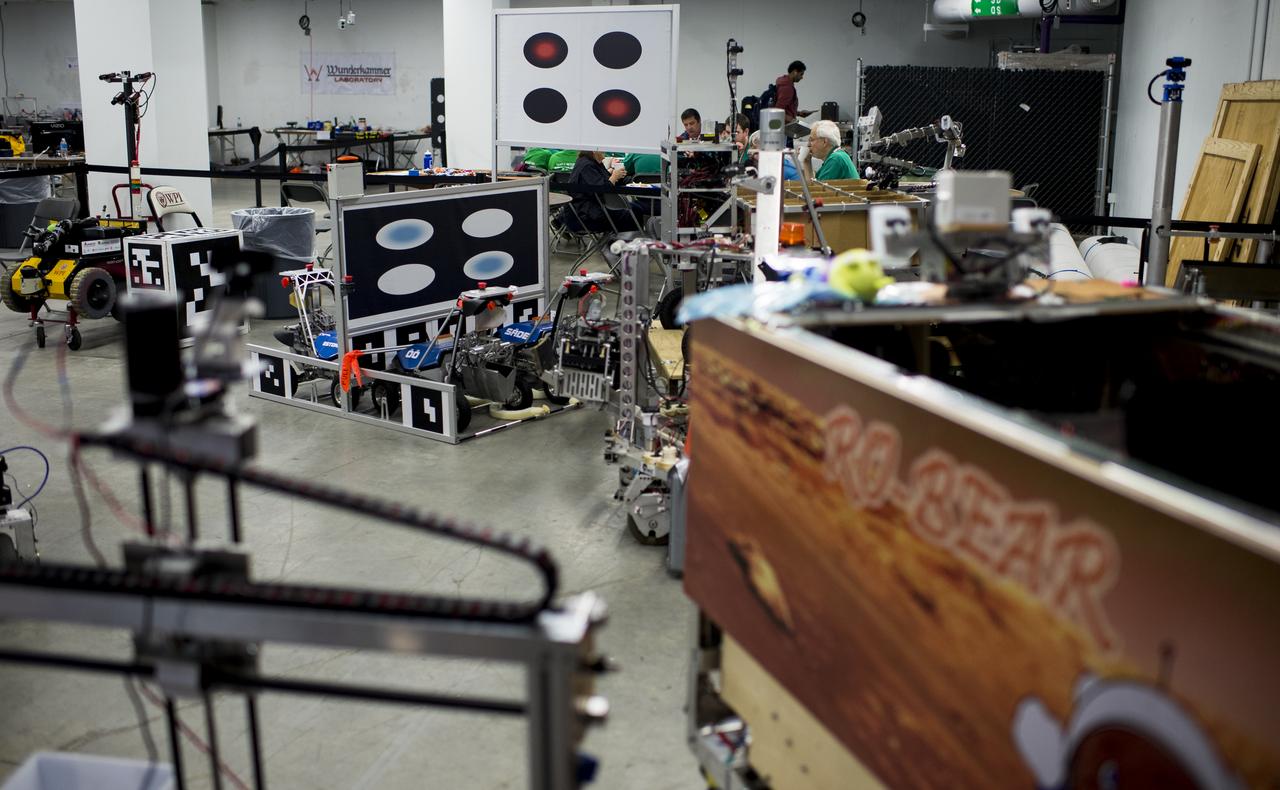
Robots that will be competing in the Level one competition are seen as they sit in impound prior to the start of competition at the 2014 NASA Centennial Challenges Sample Return Robot Challenge, Wednesday, June 11, 2014, at the Worcester Polytechnic Institute (WPI) in Worcester, Mass. Eighteen teams competing for a $1.5 million NASA prize purse. Teams will be required to demonstrate autonomous robots that can locate and collect samples from a wide and varied terrain, operating without human control. The objective of this NASA-WPI Centennial Challenge is to encourage innovations in autonomous navigation and robotics technologies. Innovations stemming from the challenge may improve NASA's capability to explore a variety of destinations in space, as well as enhance the nation's robotic technology for use in industries and applications on Earth. Photo Credit: (NASA/Joel Kowsky)

Sam Ortega, NASA program manager of Centennial Challenges, watches as robots attempt the rerun of the level one challenge during the 2014 NASA Centennial Challenges Sample Return Robot Challenge, Saturday, June 14, 2014, at the Worcester Polytechnic Institute (WPI) in Worcester, Mass. Eighteen teams are competing for a $1.5 million NASA prize purse. Teams will be required to demonstrate autonomous robots that can locate and collect samples from a wide and varied terrain, operating without human control. The objective of this NASA-WPI Centennial Challenge is to encourage innovations in autonomous navigation and robotics technologies. Innovations stemming from the challenge may improve NASA's capability to explore a variety of destinations in space, as well as enhance the nation's robotic technology for use in industries and applications on Earth. Photo Credit: (NASA/Joel Kowsky)
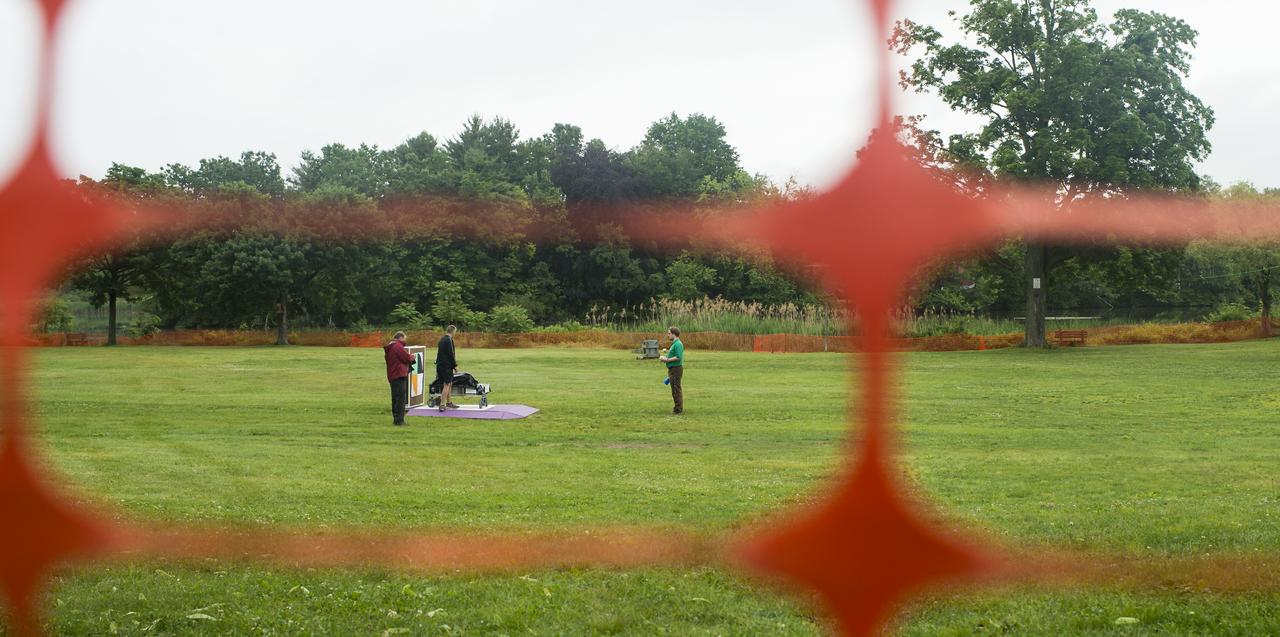
The University of California Santa Cruz Rover Team's robot is seen prior to starting it's second attempt at the level one challenge during the 2014 NASA Centennial Challenges Sample Return Robot Challenge, Saturday, June 14, 2014, at the Worcester Polytechnic Institute (WPI) in Worcester, Mass. Eighteen teams are competing for a $1.5 million NASA prize purse. Teams will be required to demonstrate autonomous robots that can locate and collect samples from a wide and varied terrain, operating without human control. The objective of this NASA-WPI Centennial Challenge is to encourage innovations in autonomous navigation and robotics technologies. Innovations stemming from the challenge may improve NASA's capability to explore a variety of destinations in space, as well as enhance the nation's robotic technology for use in industries and applications on Earth. Photo Credit: (NASA/Joel Kowsky)
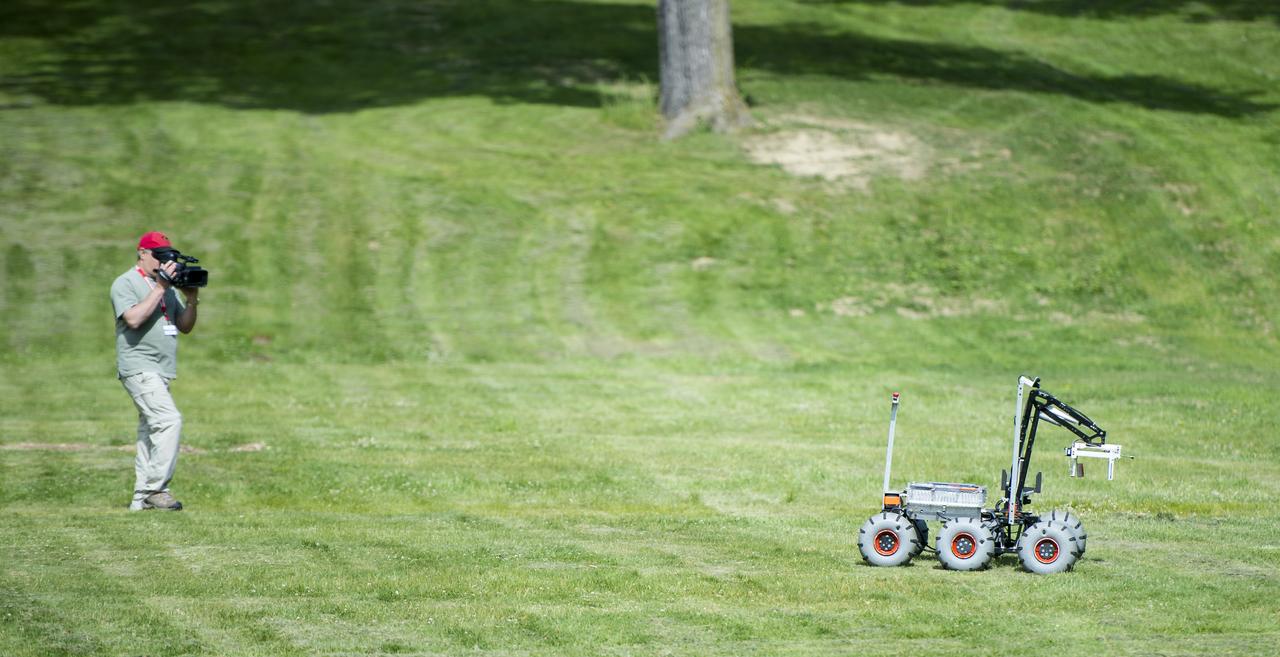
The Oregon State University Mars Rover Team's robot is seen during level one competition at the 2014 NASA Centennial Challenges Sample Return Robot Challenge, Wednesday, June 11, 2014, at the Worcester Polytechnic Institute (WPI) in Worcester, Mass. Eighteen teams are competing for a $1.5 million NASA prize purse. Teams will be required to demonstrate autonomous robots that can locate and collect samples from a wide and varied terrain, operating without human control. The objective of this NASA-WPI Centennial Challenge is to encourage innovations in autonomous navigation and robotics technologies. Innovations stemming from the challenge may improve NASA's capability to explore a variety of destinations in space, as well as enhance the nation's robotic technology for use in industries and applications on Earth. Photo Credit: (NASA/Joel Kowsky)
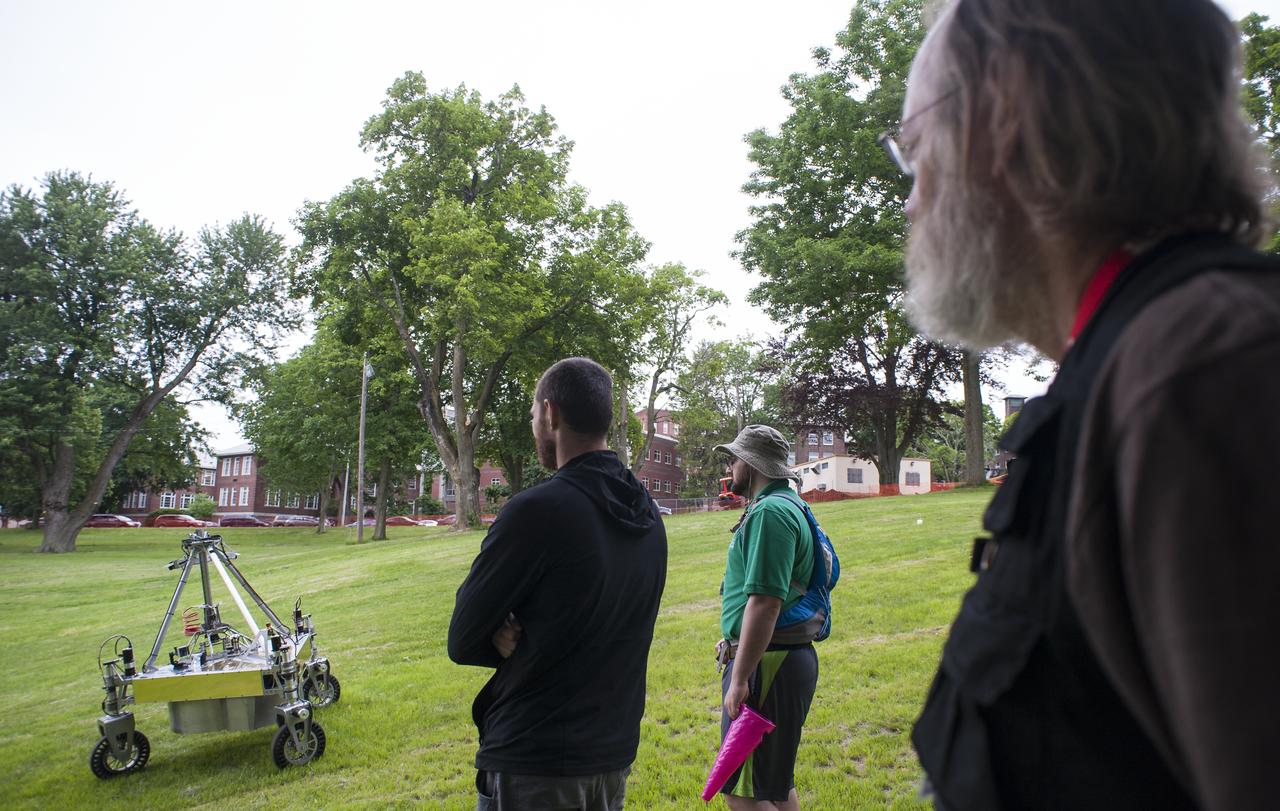
Members of team Survey follow their robot as it conducts a demonstration of the level two challenge during the 2014 NASA Centennial Challenges Sample Return Robot Challenge, Thursday, June 12, 2014, at the Worcester Polytechnic Institute (WPI) in Worcester, Mass. Eighteen teams are competing for a $1.5 million NASA prize purse. Teams will be required to demonstrate autonomous robots that can locate and collect samples from a wide and varied terrain, operating without human control. The objective of this NASA-WPI Centennial Challenge is to encourage innovations in autonomous navigation and robotics technologies. Innovations stemming from the challenge may improve NASA's capability to explore a variety of destinations in space, as well as enhance the nation's robotic technology for use in industries and applications on Earth. Photo Credit: (NASA/Joel Kowsky)
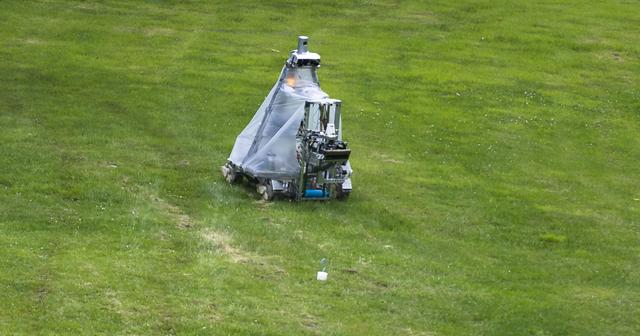
A robot from the University of Waterloo Robotics Team is seen during the rerun of the level one challenge during the 2014 NASA Centennial Challenges Sample Return Robot Challenge, Saturday, June 14, 2014, at the Worcester Polytechnic Institute (WPI) in Worcester, Mass. Eighteen teams are competing for a $1.5 million NASA prize purse. Teams will be required to demonstrate autonomous robots that can locate and collect samples from a wide and varied terrain, operating without human control. The objective of this NASA-WPI Centennial Challenge is to encourage innovations in autonomous navigation and robotics technologies. Innovations stemming from the challenge may improve NASA's capability to explore a variety of destinations in space, as well as enhance the nation's robotic technology for use in industries and applications on Earth. Photo Credit: (NASA/Joel Kowsky)
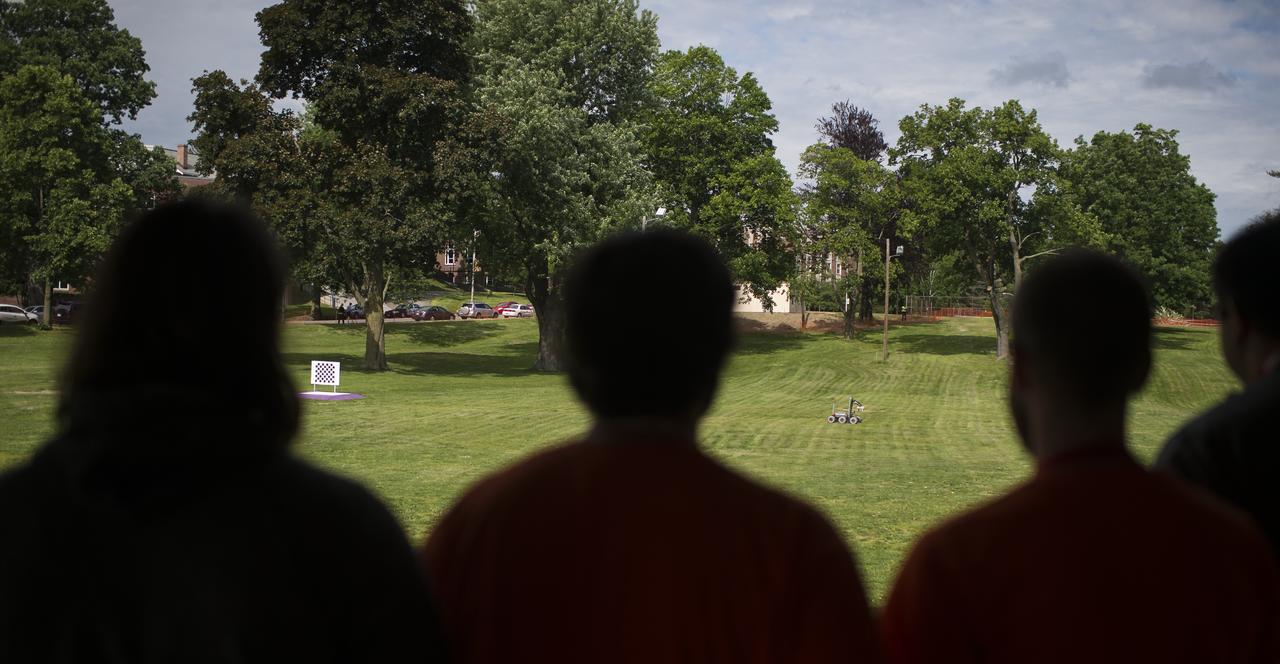
The Oregon State University Mars Rover Team's robot is seen during level one competition at the 2014 NASA Centennial Challenges Sample Return Robot Challenge, Wednesday, June 11, 2014, at the Worcester Polytechnic Institute (WPI) in Worcester, Mass. Eighteen teams are competing for a $1.5 million NASA prize purse. Teams will be required to demonstrate autonomous robots that can locate and collect samples from a wide and varied terrain, operating without human control. The objective of this NASA-WPI Centennial Challenge is to encourage innovations in autonomous navigation and robotics technologies. Innovations stemming from the challenge may improve NASA's capability to explore a variety of destinations in space, as well as enhance the nation's robotic technology for use in industries and applications on Earth. Photo Credit: (NASA/Joel Kowsky)
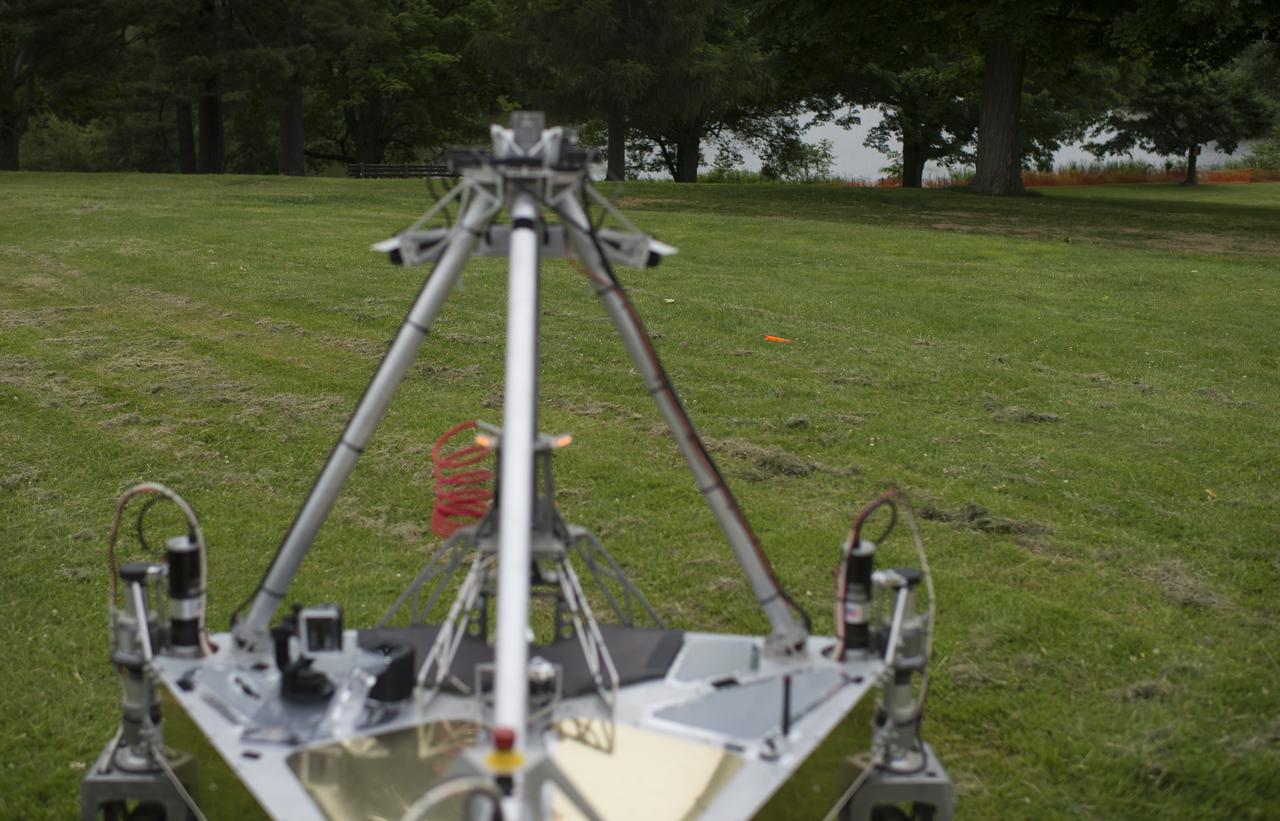
A sample can be seen on the competition field as the team Survey robot conducts a demonstration of the level two challenge during the 2014 NASA Centennial Challenges Sample Return Robot Challenge, Thursday, June 12, 2014, at the Worcester Polytechnic Institute (WPI) in Worcester, Mass. Eighteen teams are competing for a $1.5 million NASA prize purse. Teams will be required to demonstrate autonomous robots that can locate and collect samples from a wide and varied terrain, operating without human control. The objective of this NASA-WPI Centennial Challenge is to encourage innovations in autonomous navigation and robotics technologies. Innovations stemming from the challenge may improve NASA's capability to explore a variety of destinations in space, as well as enhance the nation's robotic technology for use in industries and applications on Earth. Photo Credit: (NASA/Joel Kowsky)
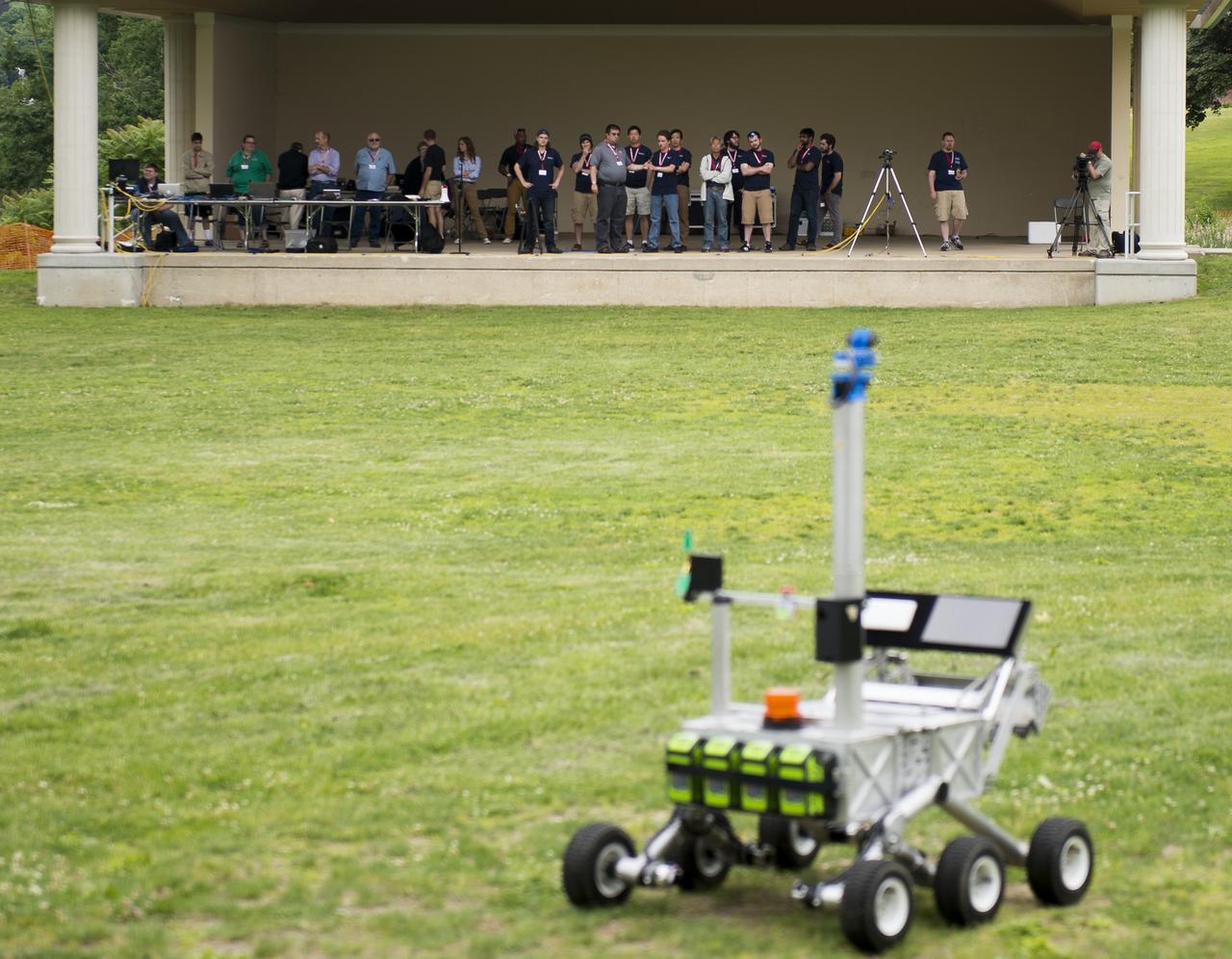
The Mountaineers team from West Virginia University, watches as their robot attempts the level one challenge during the 2014 NASA Centennial Challenges Sample Return Robot Challenge, Wednesday, June 11, 2014, at the Worcester Polytechnic Institute (WPI) in Worcester, Mass. Eighteen teams are competing for a $1.5 million NASA prize purse. Teams will be required to demonstrate autonomous robots that can locate and collect samples from a wide and varied terrain, operating without human control. The objective of this NASA-WPI Centennial Challenge is to encourage innovations in autonomous navigation and robotics technologies. Innovations stemming from the challenge may improve NASA's capability to explore a variety of destinations in space, as well as enhance the nation's robotic technology for use in industries and applications on Earth. Photo Credit: (NASA/Joel Kowsky)
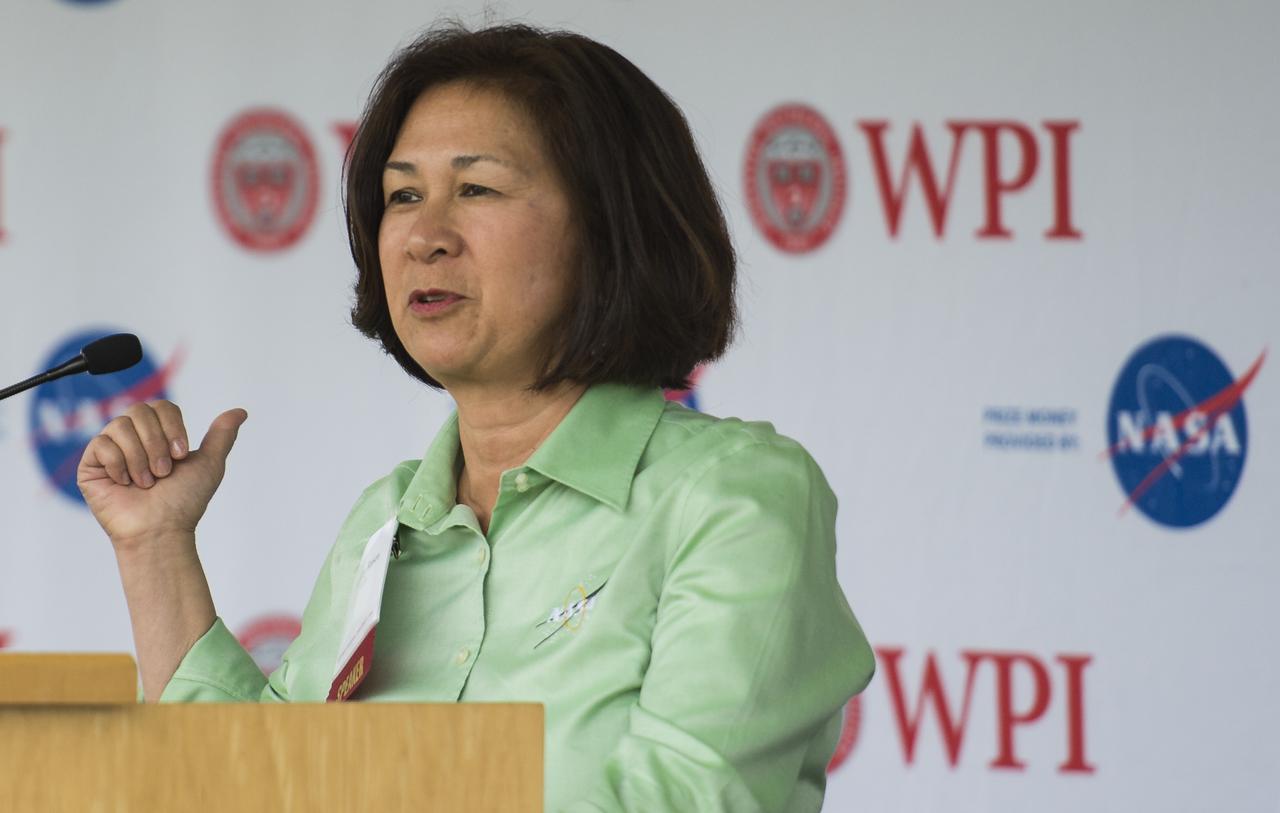
Dorothy Rasco, NASA Deputy Associate Administrator for the Space Technology Mission Directorate, speaks at the TouchTomorrow Festival, held in conjunction with the 2014 NASA Centennial Challenges Sample Return Robot Challenge, Saturday, June 14, 2014, at the Worcester Polytechnic Institute (WPI) in Worcester, Mass. Eighteen teams are competing for a $1.5 million NASA prize purse. Teams will be required to demonstrate autonomous robots that can locate and collect samples from a wide and varied terrain, operating without human control. The objective of this NASA-WPI Centennial Challenge is to encourage innovations in autonomous navigation and robotics technologies. Innovations stemming from the challenge may improve NASA's capability to explore a variety of destinations in space, as well as enhance the nation's robotic technology for use in industries and applications on Earth. Photo Credit: (NASA/Joel Kowsky)
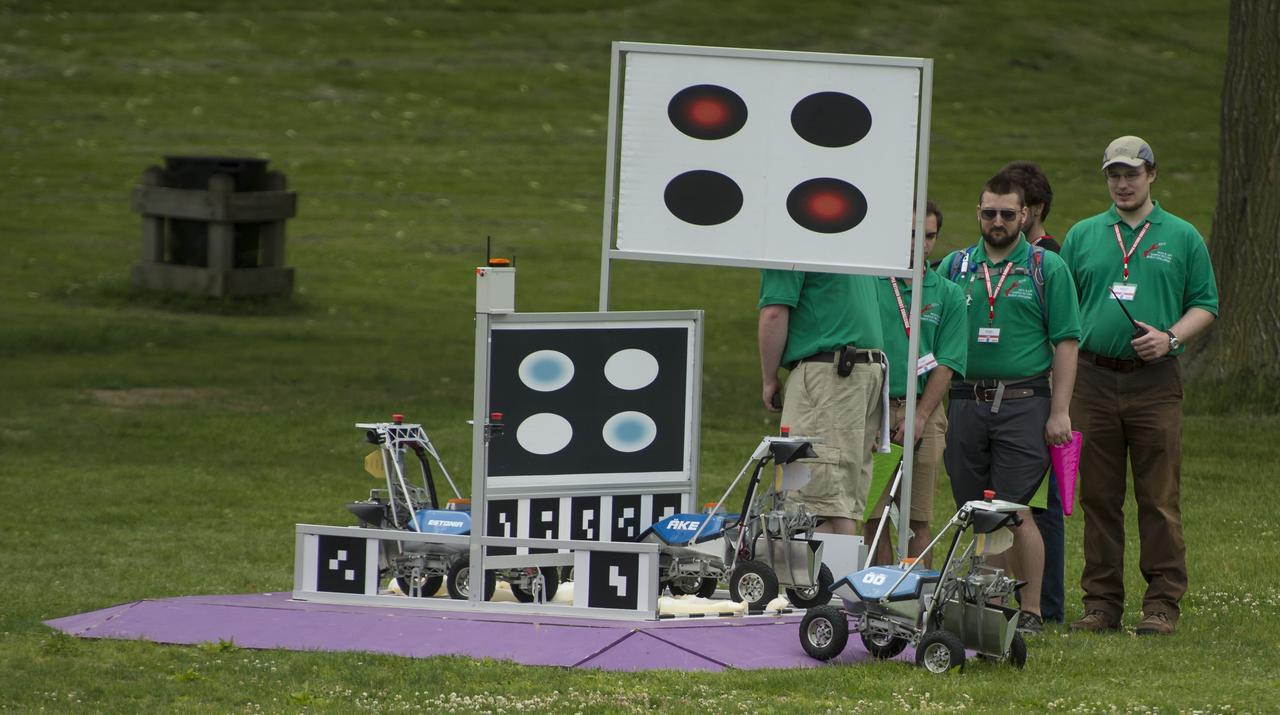
A team KuuKulgur robot is seen as it begins the level one challenge during the 2014 NASA Centennial Challenges Sample Return Robot Challenge, Wednesday, June 11, 2014, at the Worcester Polytechnic Institute (WPI) in Worcester, Mass. Eighteen teams are competing for a $1.5 million NASA prize purse. Teams will be required to demonstrate autonomous robots that can locate and collect samples from a wide and varied terrain, operating without human control. The objective of this NASA-WPI Centennial Challenge is to encourage innovations in autonomous navigation and robotics technologies. Innovations stemming from the challenge may improve NASA's capability to explore a variety of destinations in space, as well as enhance the nation's robotic technology for use in industries and applications on Earth. Photo Credit: (NASA/Joel Kowsky)
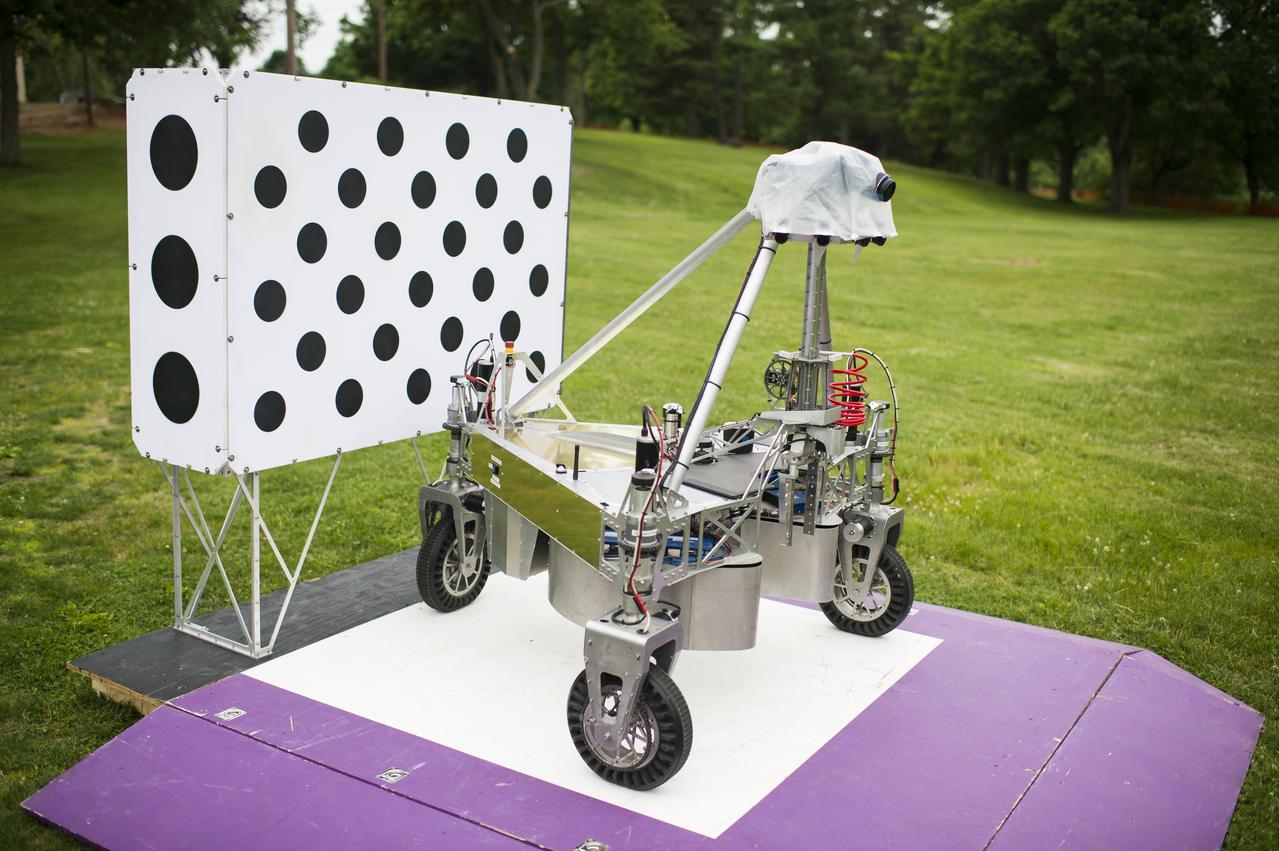
The team survey robot is seen on the starting platform before begging it's attempt at the level two challenge during the 2014 NASA Centennial Challenges Sample Return Robot Challenge, Thursday, June 12, 2014, at the Worcester Polytechnic Institute (WPI) in Worcester, Mass. Eighteen teams are competing for a $1.5 million NASA prize purse. Teams will be required to demonstrate autonomous robots that can locate and collect samples from a wide and varied terrain, operating without human control. The objective of this NASA-WPI Centennial Challenge is to encourage innovations in autonomous navigation and robotics technologies. Innovations stemming from the challenge may improve NASA's capability to explore a variety of destinations in space, as well as enhance the nation's robotic technology for use in industries and applications on Earth. Photo Credit: (NASA/Joel Kowsky)
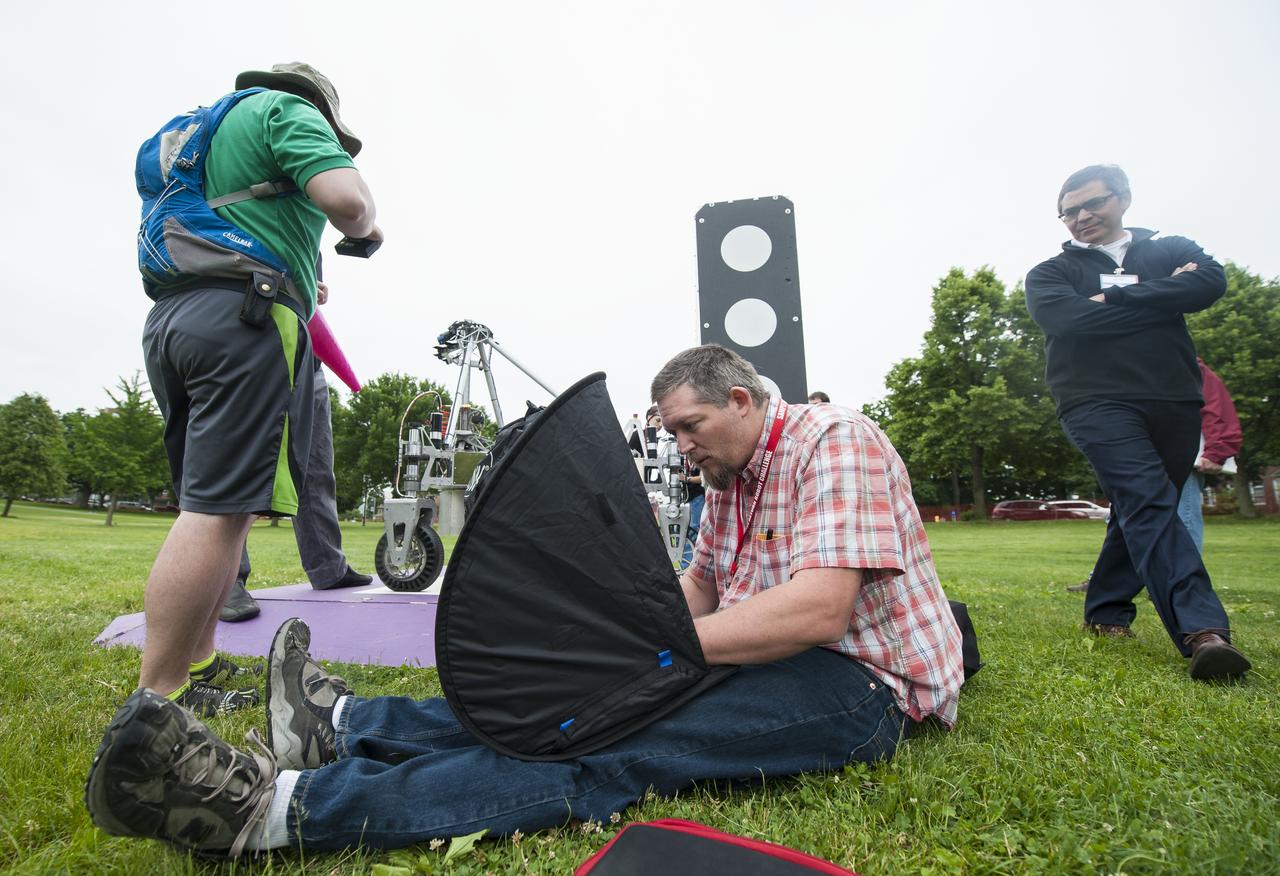
Russel Howe of team Survey, center, works on a laptop to prepare the team's robot for a demonstration run after the team's robot failed to leave the starting platform during it's attempt at the level two challenge at the 2014 NASA Centennial Challenges Sample Return Robot Challenge, Thursday, June 12, 2014, at the Worcester Polytechnic Institute (WPI) in Worcester, Mass. Eighteen teams are competing for a $1.5 million NASA prize purse. Teams will be required to demonstrate autonomous robots that can locate and collect samples from a wide and varied terrain, operating without human control. The objective of this NASA-WPI Centennial Challenge is to encourage innovations in autonomous navigation and robotics technologies. Innovations stemming from the challenge may improve NASA's capability to explore a variety of destinations in space, as well as enhance the nation's robotic technology for use in industries and applications on Earth. Photo Credit: (NASA/Joel Kowsky)
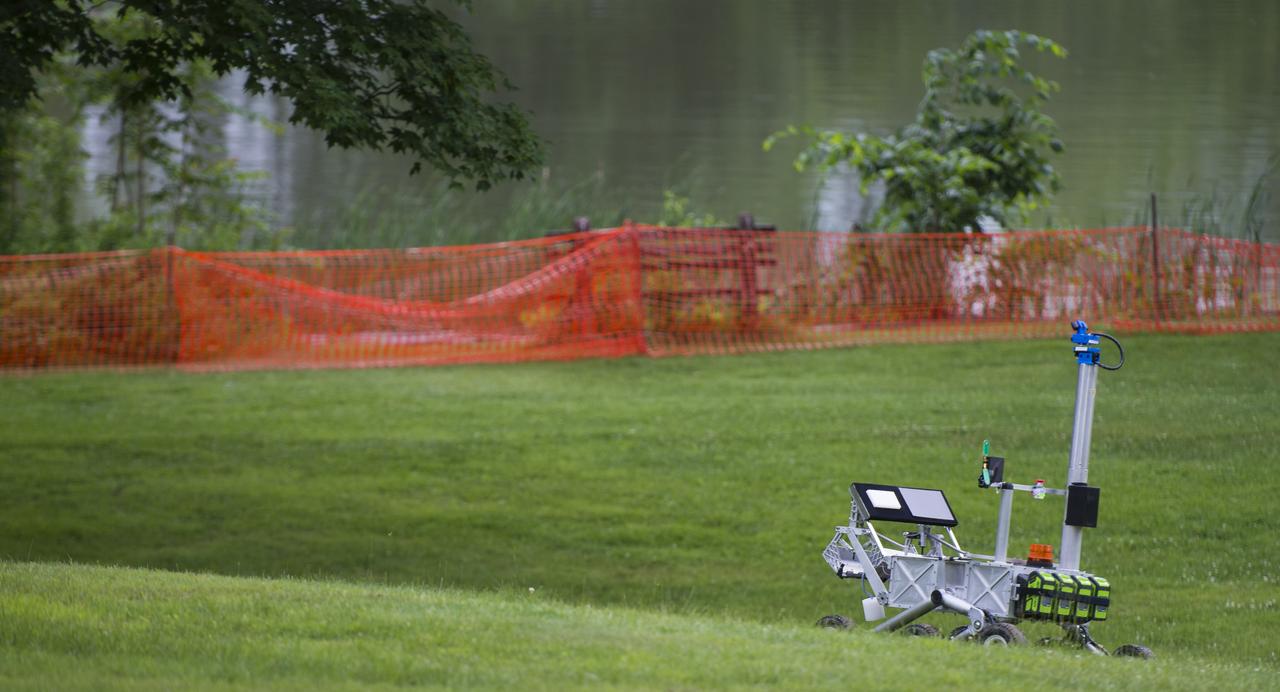
The team Mountaineers robot is seen after picking up the sample during a rerun of the level one challenge at the 2014 NASA Centennial Challenges Sample Return Robot Challenge, Saturday, June 14, 2014, at the Worcester Polytechnic Institute (WPI) in Worcester, Mass. Eighteen teams are competing for a $1.5 million NASA prize purse. Teams will be required to demonstrate autonomous robots that can locate and collect samples from a wide and varied terrain, operating without human control. The objective of this NASA-WPI Centennial Challenge is to encourage innovations in autonomous navigation and robotics technologies. Innovations stemming from the challenge may improve NASA's capability to explore a variety of destinations in space, as well as enhance the nation's robotic technology for use in industries and applications on Earth. Photo Credit: (NASA/Joel Kowsky)
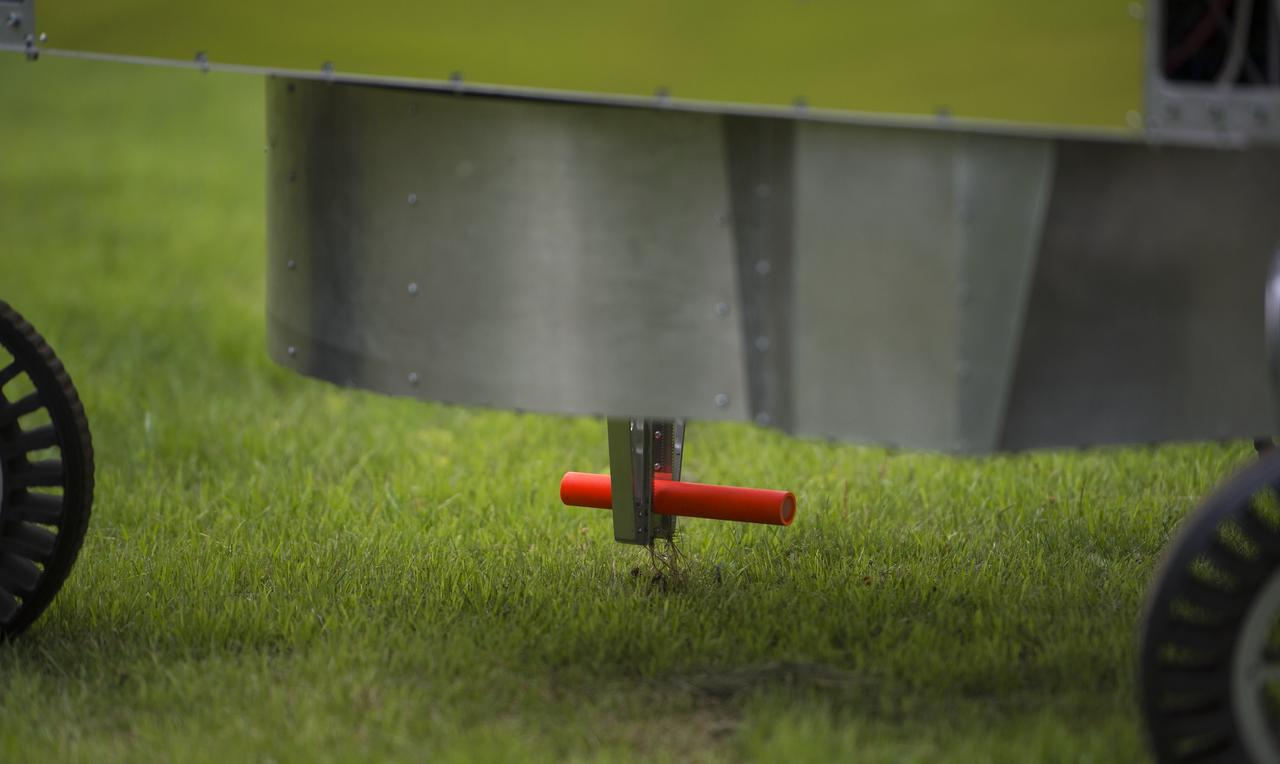
The team Survey robot retrieves a sample during a demonstration of the level two challenge at the 2014 NASA Centennial Challenges Sample Return Robot Challenge, Thursday, June 12, 2014, at the Worcester Polytechnic Institute (WPI) in Worcester, Mass. Eighteen teams are competing for a $1.5 million NASA prize purse. Teams will be required to demonstrate autonomous robots that can locate and collect samples from a wide and varied terrain, operating without human control. The objective of this NASA-WPI Centennial Challenge is to encourage innovations in autonomous navigation and robotics technologies. Innovations stemming from the challenge may improve NASA's capability to explore a variety of destinations in space, as well as enhance the nation's robotic technology for use in industries and applications on Earth. Photo Credit: (NASA/Joel Kowsky)
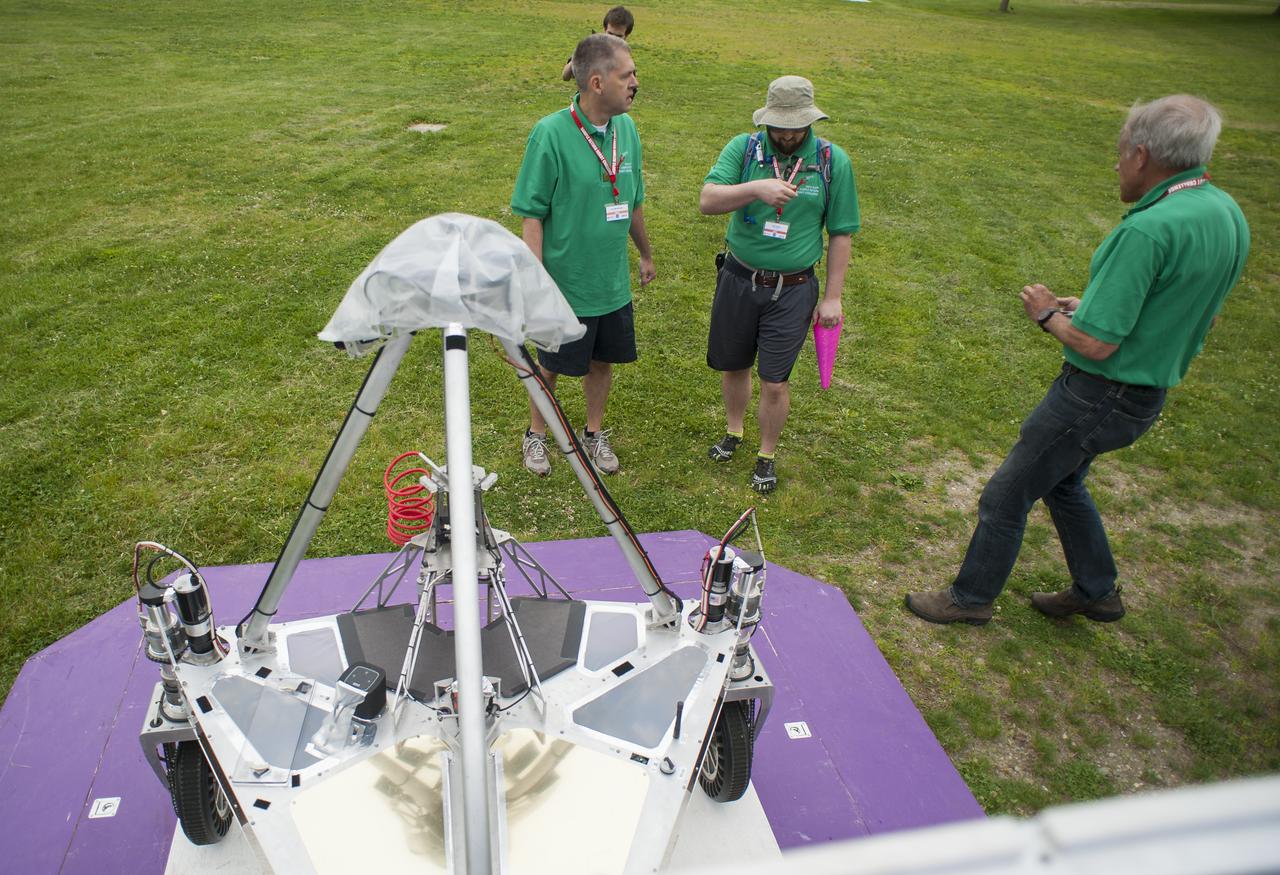
Sample Return Robot Challenge staff members confer before the team Survey robots makes it's attempt at the level two challenge during the 2014 NASA Centennial Challenges Sample Return Robot Challenge, Thursday, June 12, 2014, at the Worcester Polytechnic Institute (WPI) in Worcester, Mass. Eighteen teams are competing for a $1.5 million NASA prize purse. Teams will be required to demonstrate autonomous robots that can locate and collect samples from a wide and varied terrain, operating without human control. The objective of this NASA-WPI Centennial Challenge is to encourage innovations in autonomous navigation and robotics technologies. Innovations stemming from the challenge may improve NASA's capability to explore a variety of destinations in space, as well as enhance the nation's robotic technology for use in industries and applications on Earth. Photo Credit: (NASA/Joel Kowsky)
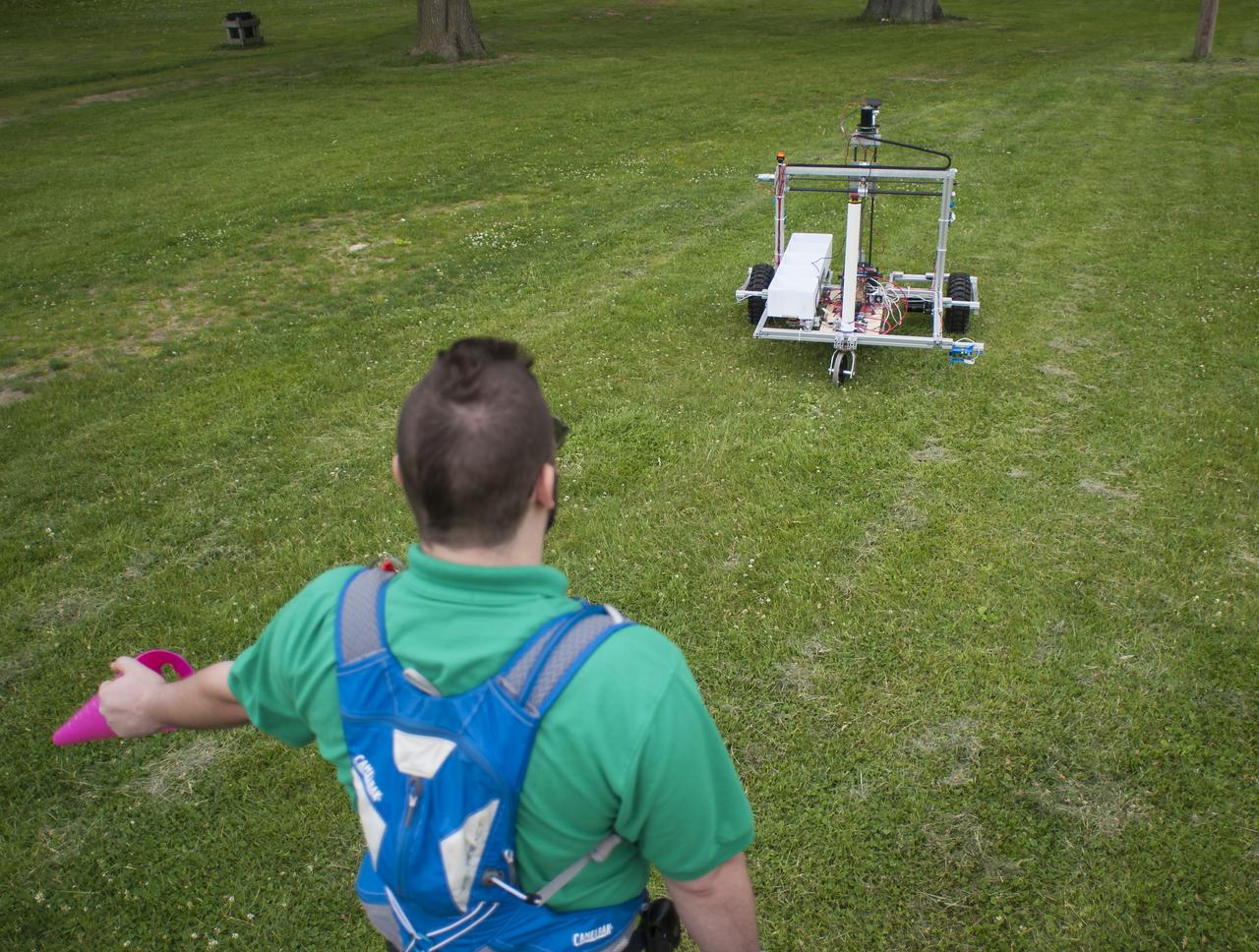
The Retrievers team robot is seen as it attempts the level one challenge the 2014 NASA Centennial Challenges Sample Return Robot Challenge, Wednesday, June 11, 2014, at the Worcester Polytechnic Institute (WPI) in Worcester, Mass. Eighteen teams are competing for a $1.5 million NASA prize purse. Teams will be required to demonstrate autonomous robots that can locate and collect samples from a wide and varied terrain, operating without human control. The objective of this NASA-WPI Centennial Challenge is to encourage innovations in autonomous navigation and robotics technologies. Innovations stemming from the challenge may improve NASA's capability to explore a variety of destinations in space, as well as enhance the nation's robotic technology for use in industries and applications on Earth. Photo Credit: (NASA/Joel Kowsky)
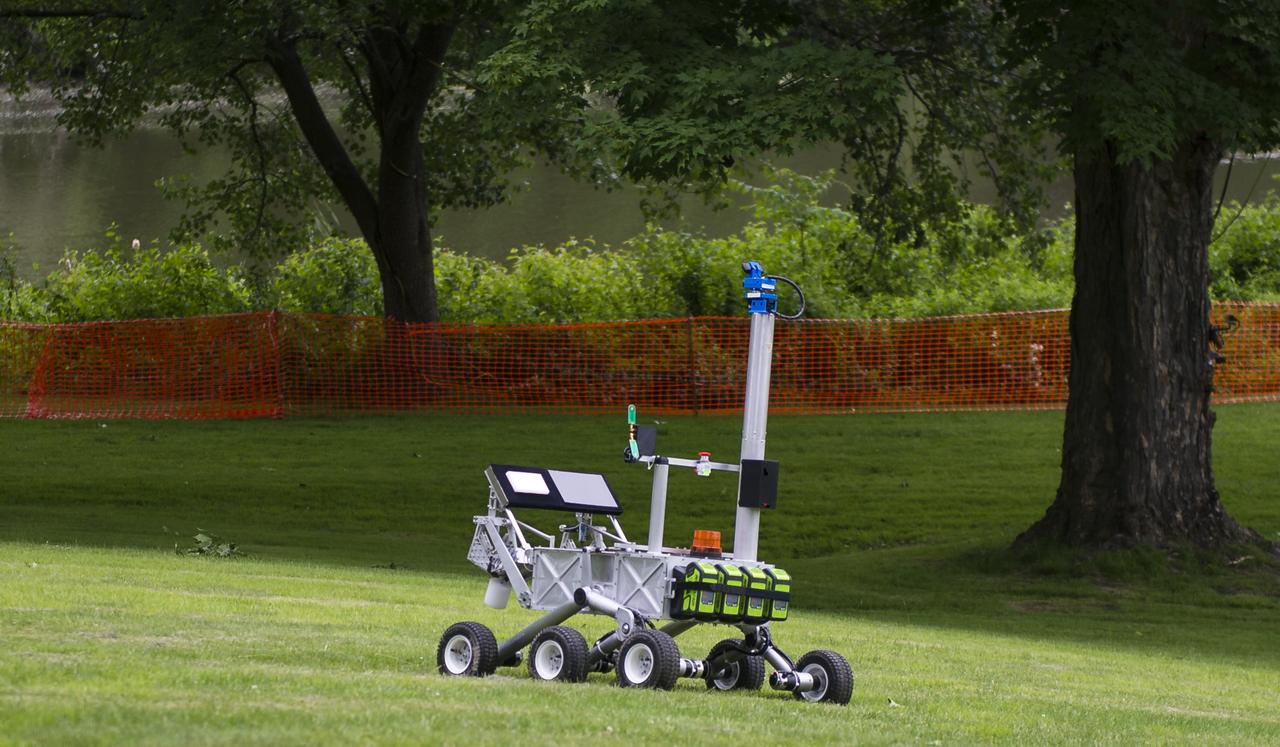
The team Mountaineers robot is seen as it attempts the level one challenge during the 2014 NASA Centennial Challenges Sample Return Robot Challenge, Wednesday, June 11, 2014, at the Worcester Polytechnic Institute (WPI) in Worcester, Mass. Eighteen teams are competing for a $1.5 million NASA prize purse. Teams will be required to demonstrate autonomous robots that can locate and collect samples from a wide and varied terrain, operating without human control. The objective of this NASA-WPI Centennial Challenge is to encourage innovations in autonomous navigation and robotics technologies. Innovations stemming from the challenge may improve NASA's capability to explore a variety of destinations in space, as well as enhance the nation's robotic technology for use in industries and applications on Earth. Photo Credit: (NASA/Joel Kowsky)
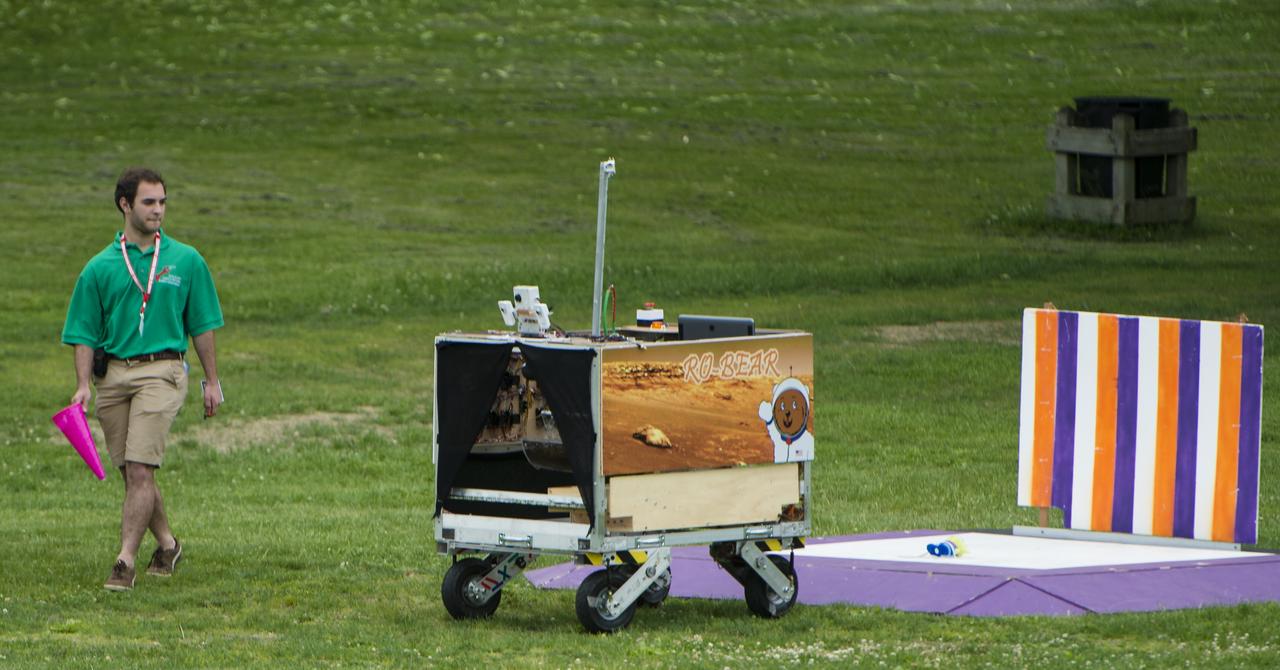
Team Middleman's robot, Ro-Bear, is seen as it starts the level one challenge during the 2014 NASA Centennial Challenges Sample Return Robot Challenge, Wednesday, June 11, 2014, at the Worcester Polytechnic Institute (WPI) in Worcester, Mass. Eighteen teams are competing for a $1.5 million NASA prize purse. Teams will be required to demonstrate autonomous robots that can locate and collect samples from a wide and varied terrain, operating without human control. The objective of this NASA-WPI Centennial Challenge is to encourage innovations in autonomous navigation and robotics technologies. Innovations stemming from the challenge may improve NASA's capability to explore a variety of destinations in space, as well as enhance the nation's robotic technology for use in industries and applications on Earth. Photo Credit: (NASA/Joel Kowsky)
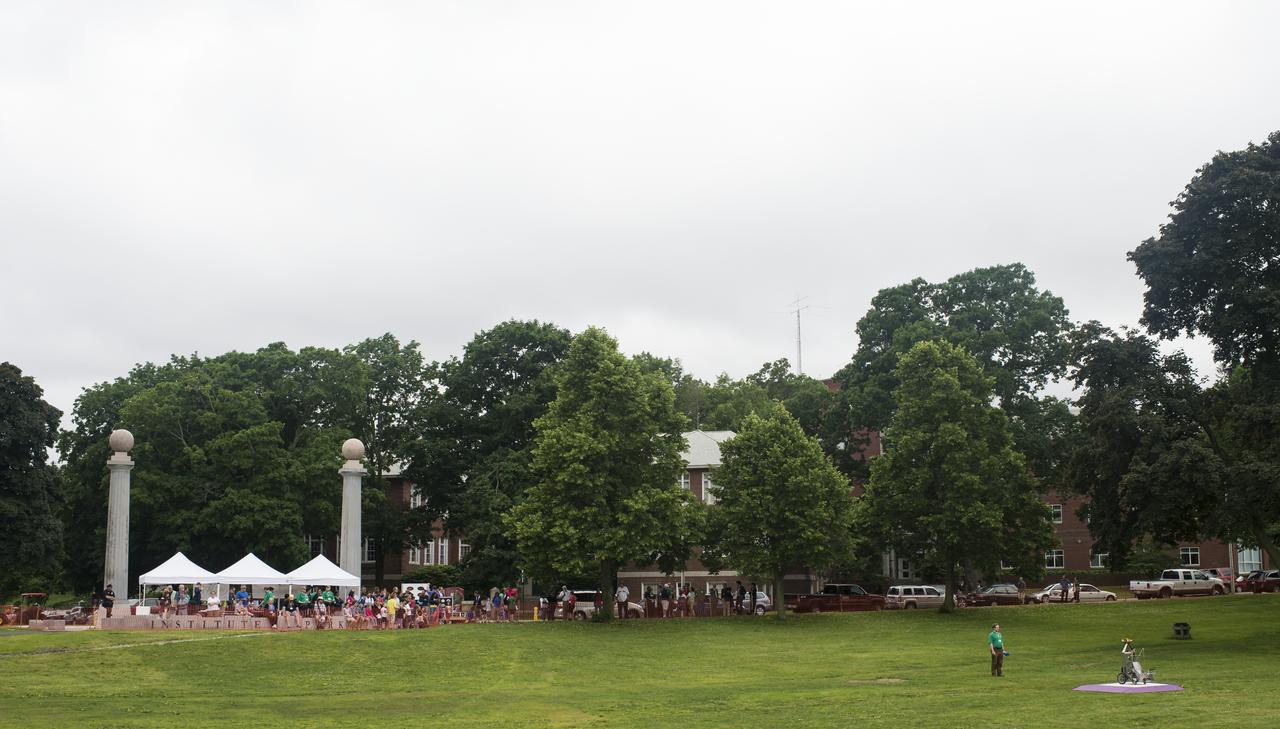
Team Cephal's robot is seen on the starting platform during a rerun of the level one challenge at the 2014 NASA Centennial Challenges Sample Return Robot Challenge, Saturday, June 14, 2014, at the Worcester Polytechnic Institute (WPI) in Worcester, Mass. Eighteen teams are competing for a $1.5 million NASA prize purse. Teams will be required to demonstrate autonomous robots that can locate and collect samples from a wide and varied terrain, operating without human control. The objective of this NASA-WPI Centennial Challenge is to encourage innovations in autonomous navigation and robotics technologies. Innovations stemming from the challenge may improve NASA's capability to explore a variety of destinations in space, as well as enhance the nation's robotic technology for use in industries and applications on Earth. Photo Credit: (NASA/Joel Kowsky)
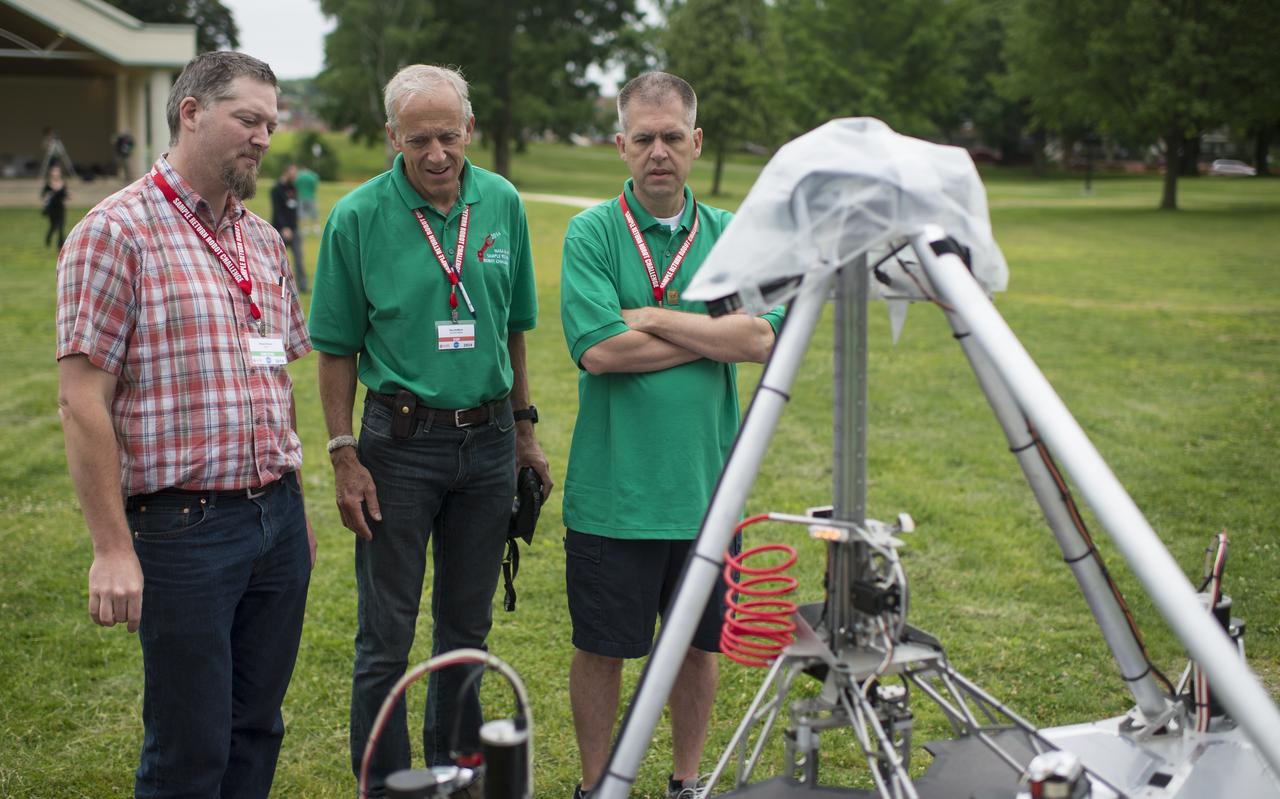
Russel Howe of team Survey speaks with Sample Return Robot Challenge staff members after the team's robot failed to leave the starting platform during it's attempt at the level two challenge during the 2014 NASA Centennial Challenges Sample Return Robot Challenge, Thursday, June 12, 2014, at the Worcester Polytechnic Institute (WPI) in Worcester, Mass. Eighteen teams are competing for a $1.5 million NASA prize purse. Teams will be required to demonstrate autonomous robots that can locate and collect samples from a wide and varied terrain, operating without human control. The objective of this NASA-WPI Centennial Challenge is to encourage innovations in autonomous navigation and robotics technologies. Innovations stemming from the challenge may improve NASA's capability to explore a variety of destinations in space, as well as enhance the nation's robotic technology for use in industries and applications on Earth. Photo Credit: (NASA/Joel Kowsky)

Sam Ortega, NASA program manager for Centennial Challenges, is interviewed by a member of the media before the start of level two competition at the 2014 NASA Centennial Challenges Sample Return Robot Challenge, Thursday, June 12, 2014, at the Worcester Polytechnic Institute (WPI) in Worcester, Mass. Eighteen teams are competing for a $1.5 million NASA prize purse. Teams will be required to demonstrate autonomous robots that can locate and collect samples from a wide and varied terrain, operating without human control. The objective of this NASA-WPI Centennial Challenge is to encourage innovations in autonomous navigation and robotics technologies. Innovations stemming from the challenge may improve NASA's capability to explore a variety of destinations in space, as well as enhance the nation's robotic technology for use in industries and applications on Earth. Photo Credit: (NASA/Joel Kowsky)
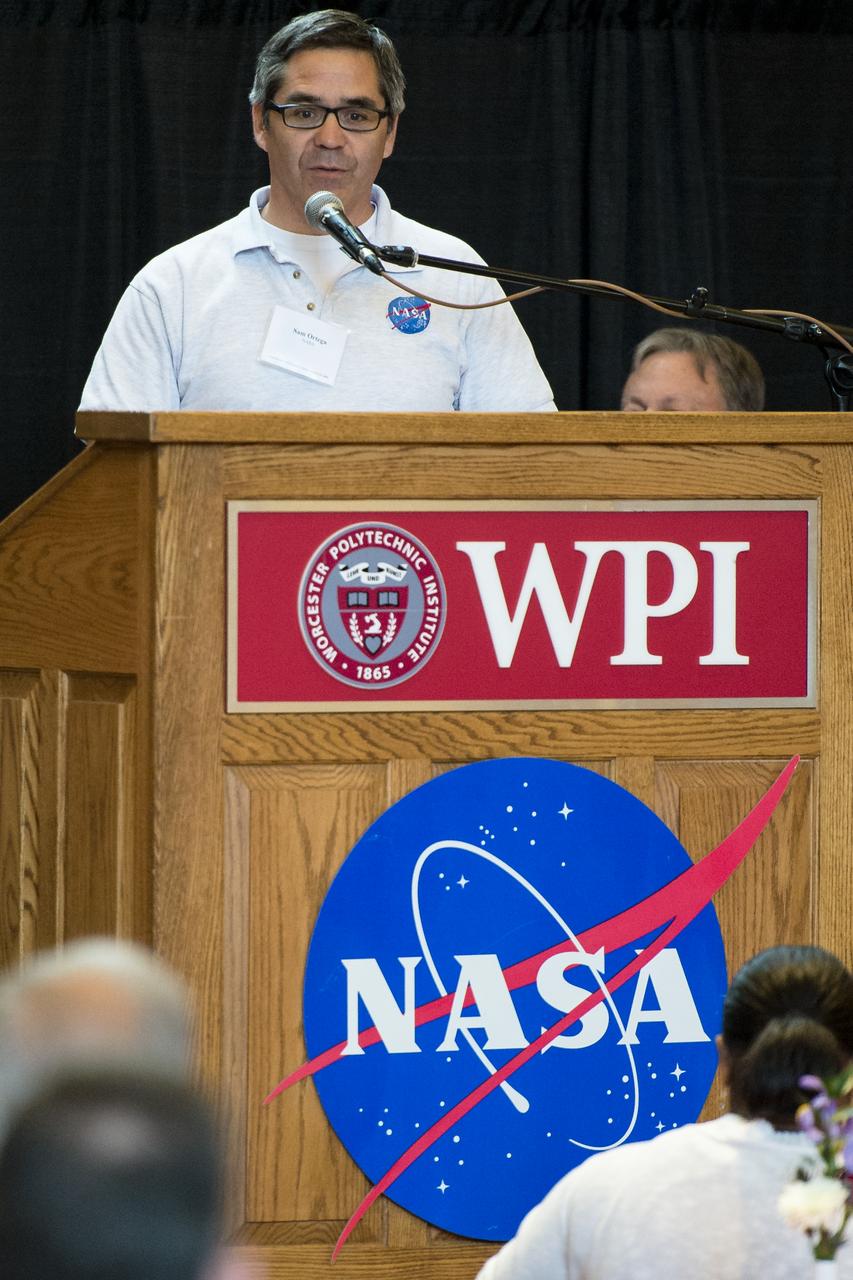
Sam Ortega, NASA Centennial Challenges Program Manager, speaks at a breakfast opening the TouchTomorrow Festival, held in conjunction with the 2014 NASA Centennial Challenges Sample Return Robot Challenge, Saturday, June 14, 2014, at the Worcester Polytechnic Institute (WPI) in Worcester, Mass. Eighteen teams are competing for a $1.5 million NASA prize purse. Teams will be required to demonstrate autonomous robots that can locate and collect samples from a wide and varied terrain, operating without human control. The objective of this NASA-WPI Centennial Challenge is to encourage innovations in autonomous navigation and robotics technologies. Innovations stemming from the challenge may improve NASA's capability to explore a variety of destinations in space, as well as enhance the nation's robotic technology for use in industries and applications on Earth. Photo Credit: (NASA/Joel Kowsky)
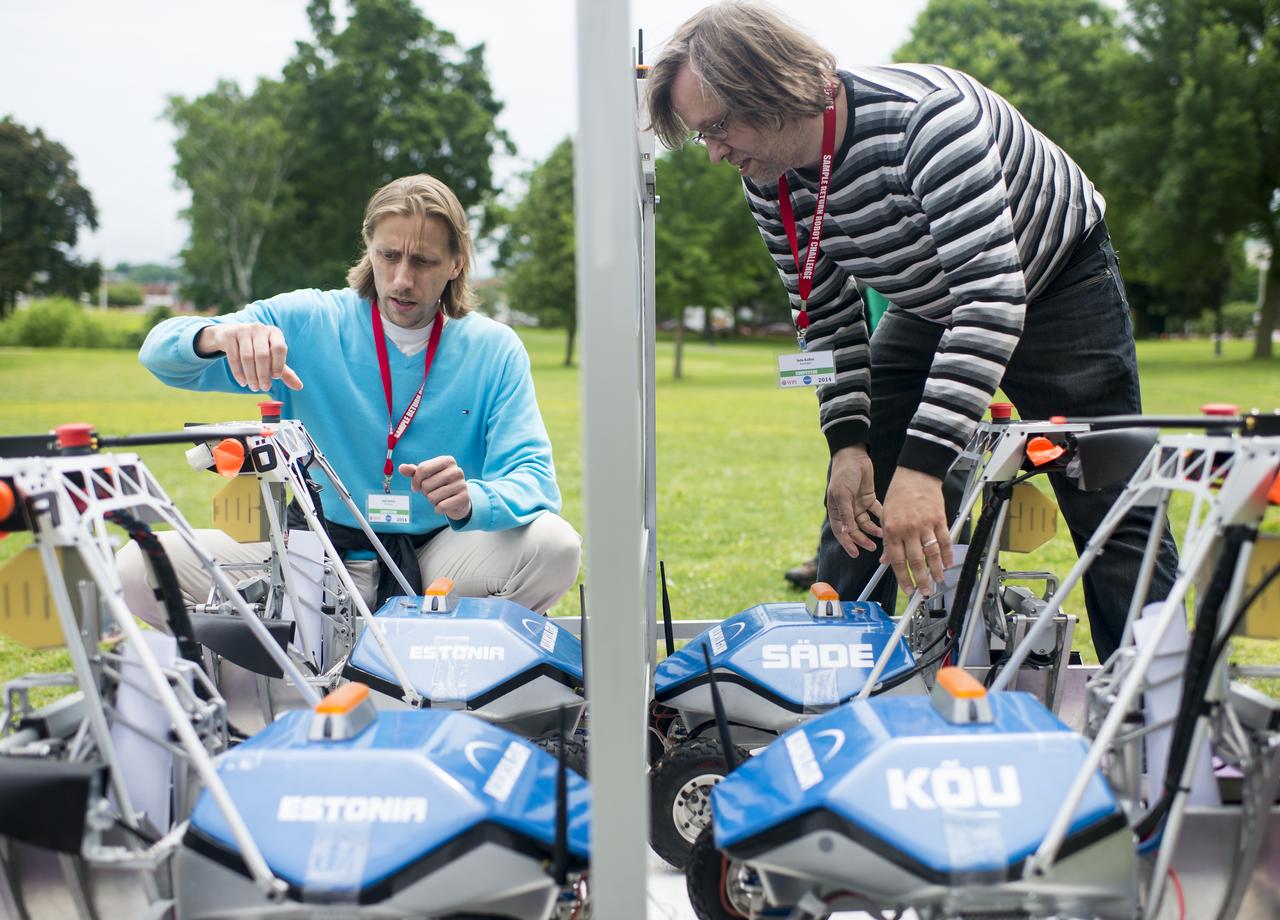
Ahti Heinla, left, and Sulo Kallas, right, from Estonia, prepare team KuuKulgur's robot for the rerun of the level one challenge during the 2014 NASA Centennial Challenges Sample Return Robot Challenge, Saturday, June 14, 2014, at the Worcester Polytechnic Institute (WPI) in Worcester, Mass. Eighteen teams are competing for a $1.5 million NASA prize purse. Teams will be required to demonstrate autonomous robots that can locate and collect samples from a wide and varied terrain, operating without human control. The objective of this NASA-WPI Centennial Challenge is to encourage innovations in autonomous navigation and robotics technologies. Innovations stemming from the challenge may improve NASA's capability to explore a variety of destinations in space, as well as enhance the nation's robotic technology for use in industries and applications on Earth. Photo Credit: (NASA/Joel Kowsky)
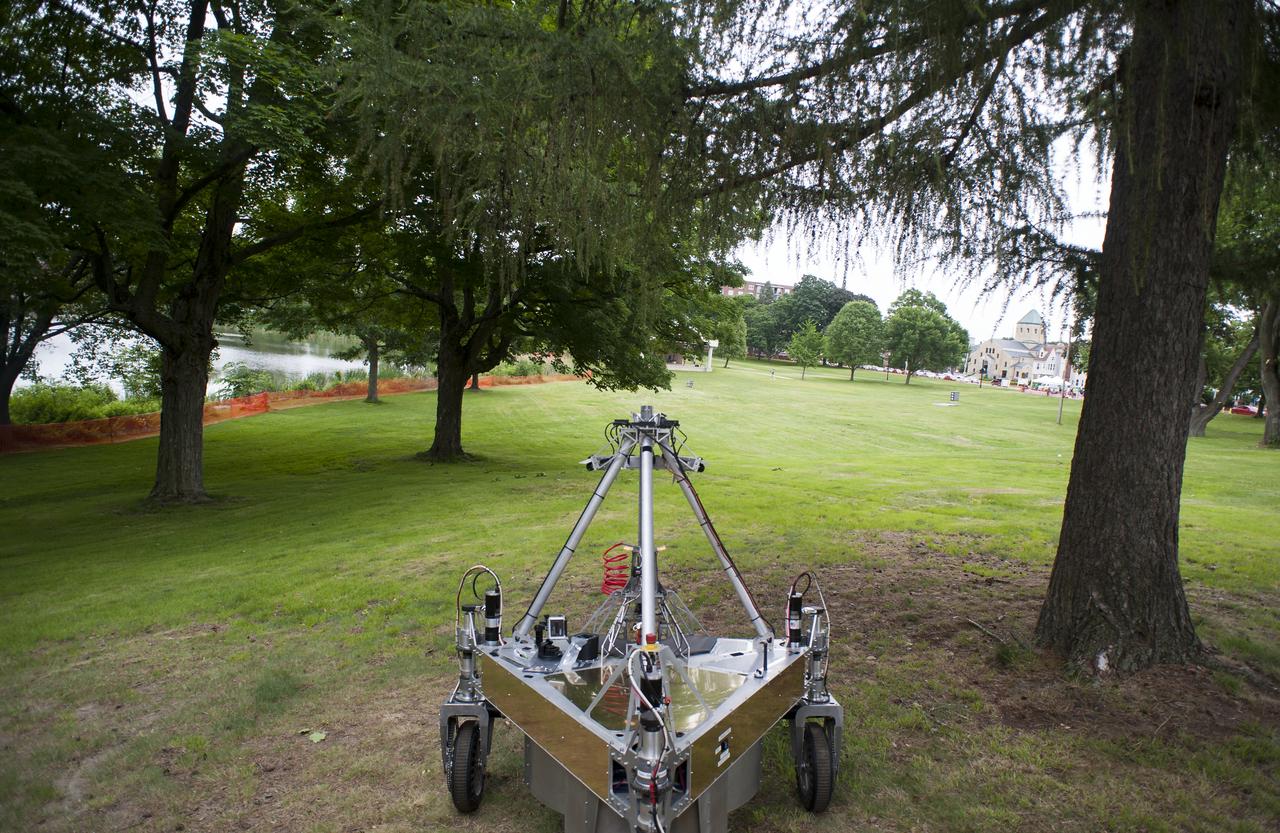
Team Survey's robot is seen as it conducts a demonstration of the level two challenge during the 2014 NASA Centennial Challenges Sample Return Robot Challenge, Thursday, June 12, 2014, at the Worcester Polytechnic Institute (WPI) in Worcester, Mass. Eighteen teams are competing for a $1.5 million NASA prize purse. Teams will be required to demonstrate autonomous robots that can locate and collect samples from a wide and varied terrain, operating without human control. The objective of this NASA-WPI Centennial Challenge is to encourage innovations in autonomous navigation and robotics technologies. Innovations stemming from the challenge may improve NASA's capability to explore a variety of destinations in space, as well as enhance the nation's robotic technology for use in industries and applications on Earth. Photo Credit: (NASA/Joel Kowsky)
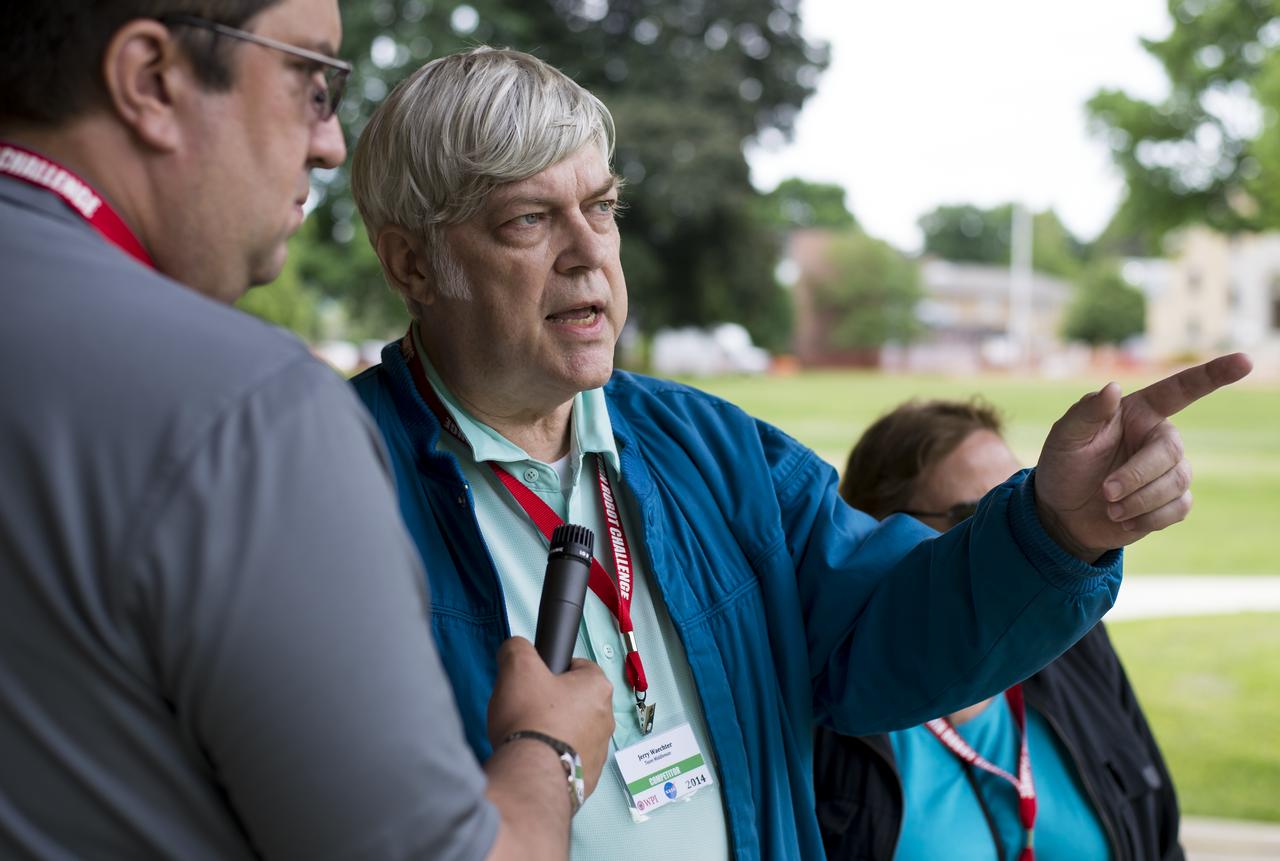
Jerry Waechter of team Middleman from Dunedin, Florida, speaks about his team's robot, Ro-Bear, as it makes it attempt at the level one challenge during the 2014 NASA Centennial Challenges Sample Return Robot Challenge, Wednesday, June 11, 2014, at the Worcester Polytechnic Institute (WPI) in Worcester, Mass. Eighteen teams are competing for a $1.5 million NASA prize purse. Teams will be required to demonstrate autonomous robots that can locate and collect samples from a wide and varied terrain, operating without human control. The objective of this NASA-WPI Centennial Challenge is to encourage innovations in autonomous navigation and robotics technologies. Innovations stemming from the challenge may improve NASA's capability to explore a variety of destinations in space, as well as enhance the nation's robotic technology for use in industries and applications on Earth. Photo Credit: (NASA/Joel Kowsky)
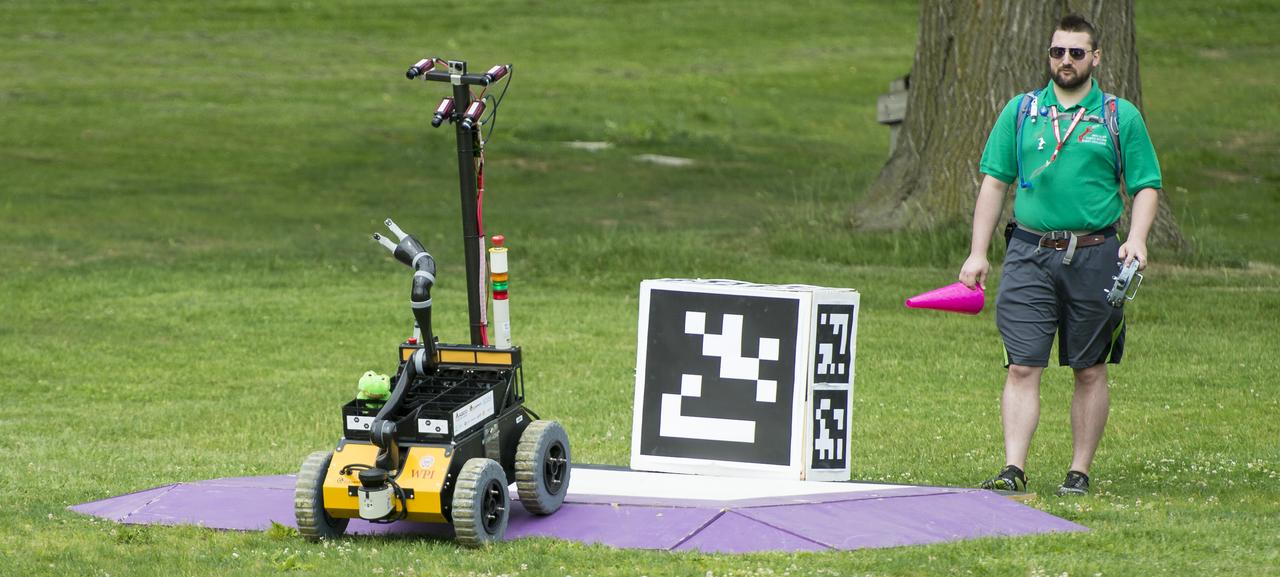
The team AERO robot drives off the starting platform during the level one competition at the 2014 NASA Centennial Challenges Sample Return Robot Challenge, Wednesday, June 11, 2014, at the Worcester Polytechnic Institute (WPI) in Worcester, Mass. Eighteen teams are competing for a $1.5 million NASA prize purse. Teams will be required to demonstrate autonomous robots that can locate and collect samples from a wide and varied terrain, operating without human control. The objective of this NASA-WPI Centennial Challenge is to encourage innovations in autonomous navigation and robotics technologies. Innovations stemming from the challenge may improve NASA's capability to explore a variety of destinations in space, as well as enhance the nation's robotic technology for use in industries and applications on Earth. Photo Credit: (NASA/Joel Kowsky)
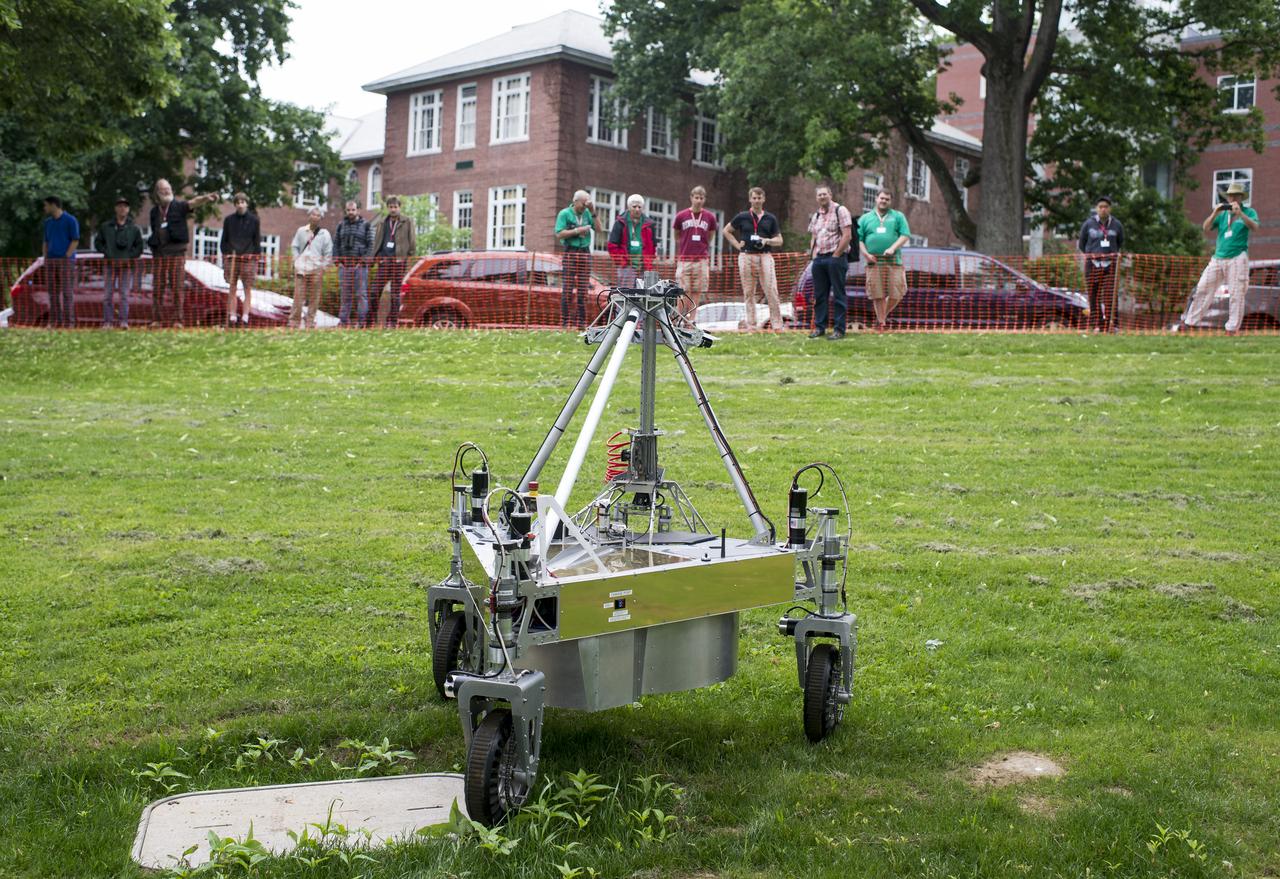
Spectators watch as the team Survey robot conducts a demonstration of the level two challenge during the 2014 NASA Centennial Challenges Sample Return Robot Challenge, Thursday, June 12, 2014, at the Worcester Polytechnic Institute (WPI) in Worcester, Mass. Eighteen teams are competing for a $1.5 million NASA prize purse. Teams will be required to demonstrate autonomous robots that can locate and collect samples from a wide and varied terrain, operating without human control. The objective of this NASA-WPI Centennial Challenge is to encourage innovations in autonomous navigation and robotics technologies. Innovations stemming from the challenge may improve NASA's capability to explore a variety of destinations in space, as well as enhance the nation's robotic technology for use in industries and applications on Earth. Photo Credit: (NASA/Joel Kowsky)
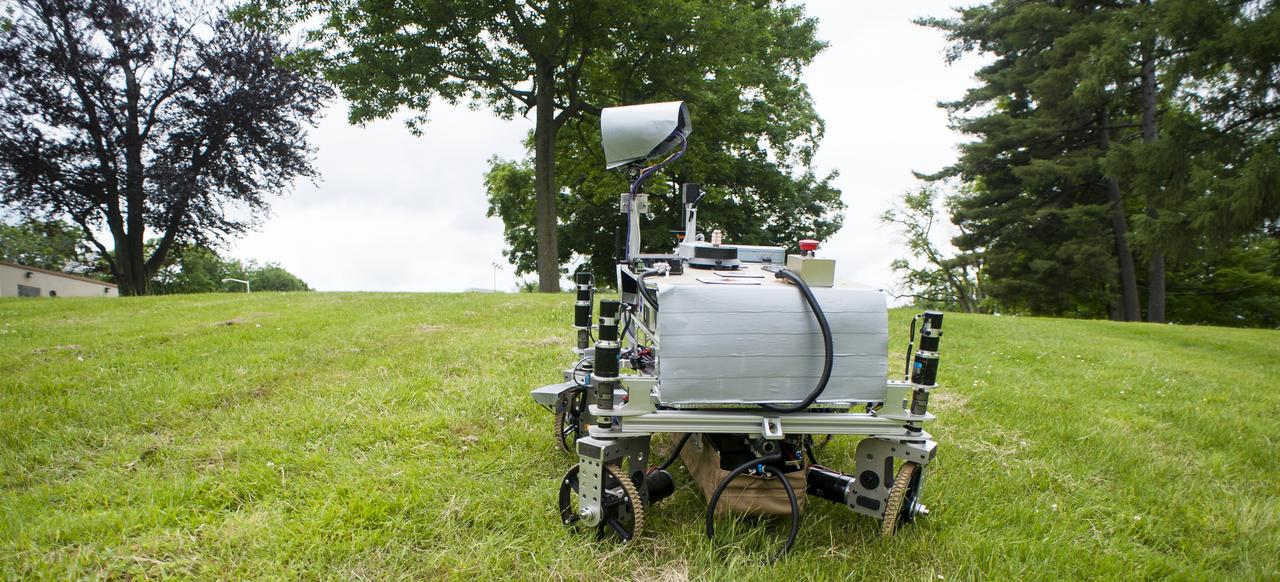
A robot from the Intrepid Systems team is seen during the rerun of the level one challenge during the 2014 NASA Centennial Challenges Sample Return Robot Challenge, Saturday, June 14, 2014, at the Worcester Polytechnic Institute (WPI) in Worcester, Mass. Eighteen teams are competing for a $1.5 million NASA prize purse. Teams will be required to demonstrate autonomous robots that can locate and collect samples from a wide and varied terrain, operating without human control. The objective of this NASA-WPI Centennial Challenge is to encourage innovations in autonomous navigation and robotics technologies. Innovations stemming from the challenge may improve NASA's capability to explore a variety of destinations in space, as well as enhance the nation's robotic technology for use in industries and applications on Earth. Photo Credit: (NASA/Joel Kowsky)
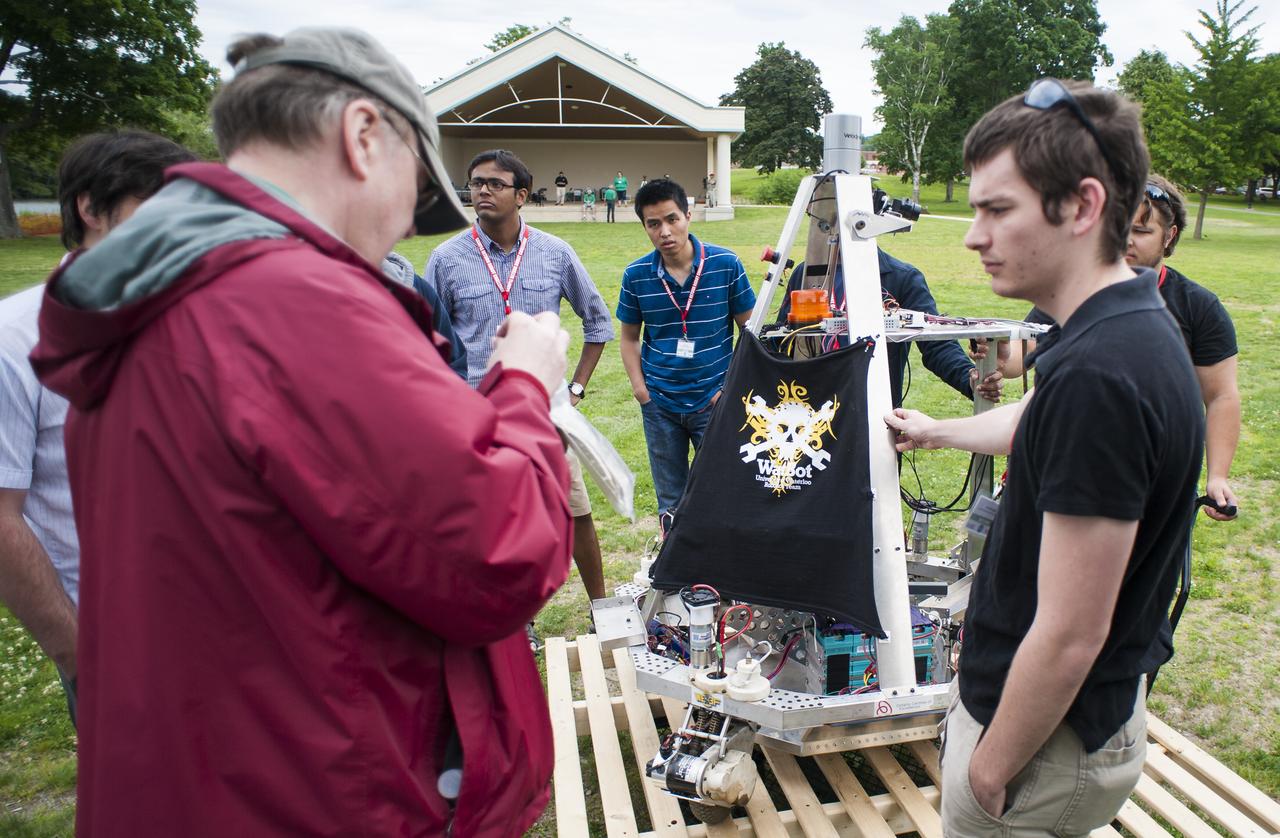
The University of Waterloo Robotics Team, from Canada, prepares to place their robot on the start platform during the level one challenge at the 2014 NASA Centennial Challenges Sample Return Robot Challenge, Wednesday, June 11, 2014, at the Worcester Polytechnic Institute (WPI) in Worcester, Mass. Eighteen teams are competing for a $1.5 million NASA prize purse. Teams will be required to demonstrate autonomous robots that can locate and collect samples from a wide and varied terrain, operating without human control. The objective of this NASA-WPI Centennial Challenge is to encourage innovations in autonomous navigation and robotics technologies. Innovations stemming from the challenge may improve NASA's capability to explore a variety of destinations in space, as well as enhance the nation's robotic technology for use in industries and applications on Earth. Photo Credit: (NASA/Joel Kowsky)
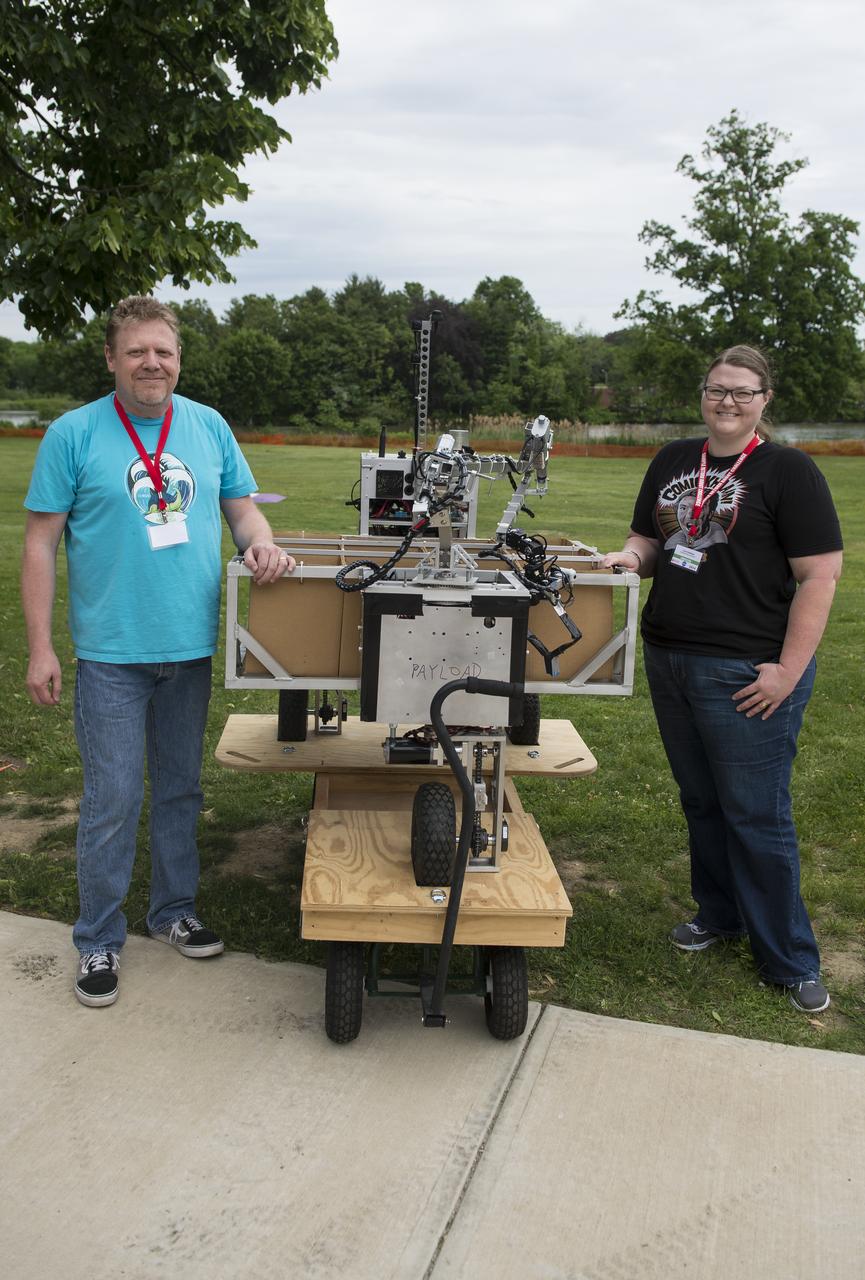
Jim Rothrock, left, and Carrie Johnson, right, of the Wunderkammer Laboratory team pose for a picture with their robot after attempting the level one competition during the 2014 NASA Centennial Challenges Sample Return Robot Challenge, Wednesday, June 11, 2014, at the Worcester Polytechnic Institute (WPI) in Worcester, Mass. Eighteen teams are competing for a $1.5 million NASA prize purse. Teams will be required to demonstrate autonomous robots that can locate and collect samples from a wide and varied terrain, operating without human control. The objective of this NASA-WPI Centennial Challenge is to encourage innovations in autonomous navigation and robotics technologies. Innovations stemming from the challenge may improve NASA's capability to explore a variety of destinations in space, as well as enhance the nation's robotic technology for use in industries and applications on Earth. Photo Credit: (NASA/Joel Kowsky)
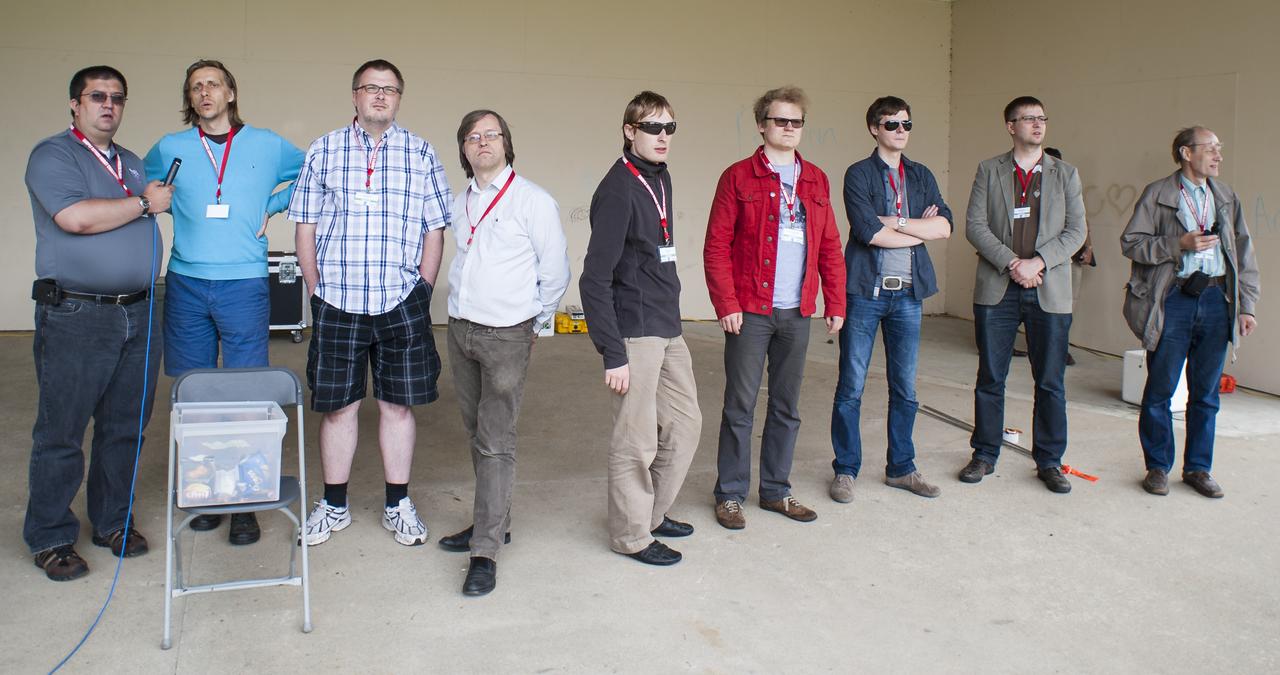
Team KuuKulgur watches as their robots attempt the level one competition during the 2014 NASA Centennial Challenges Sample Return Robot Challenge, Wednesday, June 11, 2014, at the Worcester Polytechnic Institute (WPI) in Worcester, Mass. Eighteen teams are competing for a $1.5 million NASA prize purse. Teams will be required to demonstrate autonomous robots that can locate and collect samples from a wide and varied terrain, operating without human control. The objective of this NASA-WPI Centennial Challenge is to encourage innovations in autonomous navigation and robotics technologies. Innovations stemming from the challenge may improve NASA's capability to explore a variety of destinations in space, as well as enhance the nation's robotic technology for use in industries and applications on Earth. Photo Credit: (NASA/Joel Kowsky)
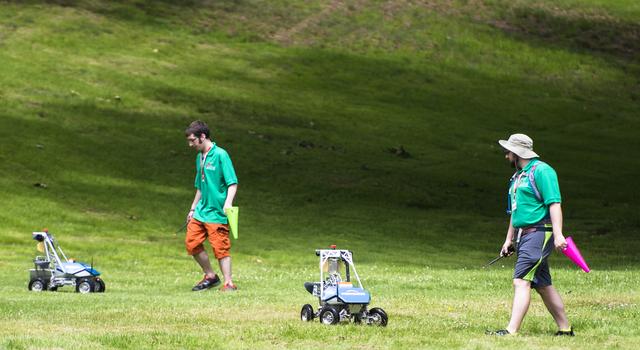
Two of team KuuKulgur's robots are seen as they attempt a rerun of the level one challenge during the 2014 NASA Centennial Challenges Sample Return Robot Challenge, Saturday, June 14, 2014, at the Worcester Polytechnic Institute (WPI) in Worcester, Mass. Eighteen teams are competing for a $1.5 million NASA prize purse. Teams will be required to demonstrate autonomous robots that can locate and collect samples from a wide and varied terrain, operating without human control. The objective of this NASA-WPI Centennial Challenge is to encourage innovations in autonomous navigation and robotics technologies. Innovations stemming from the challenge may improve NASA's capability to explore a variety of destinations in space, as well as enhance the nation's robotic technology for use in industries and applications on Earth. Photo Credit: (NASA/Joel Kowsky)