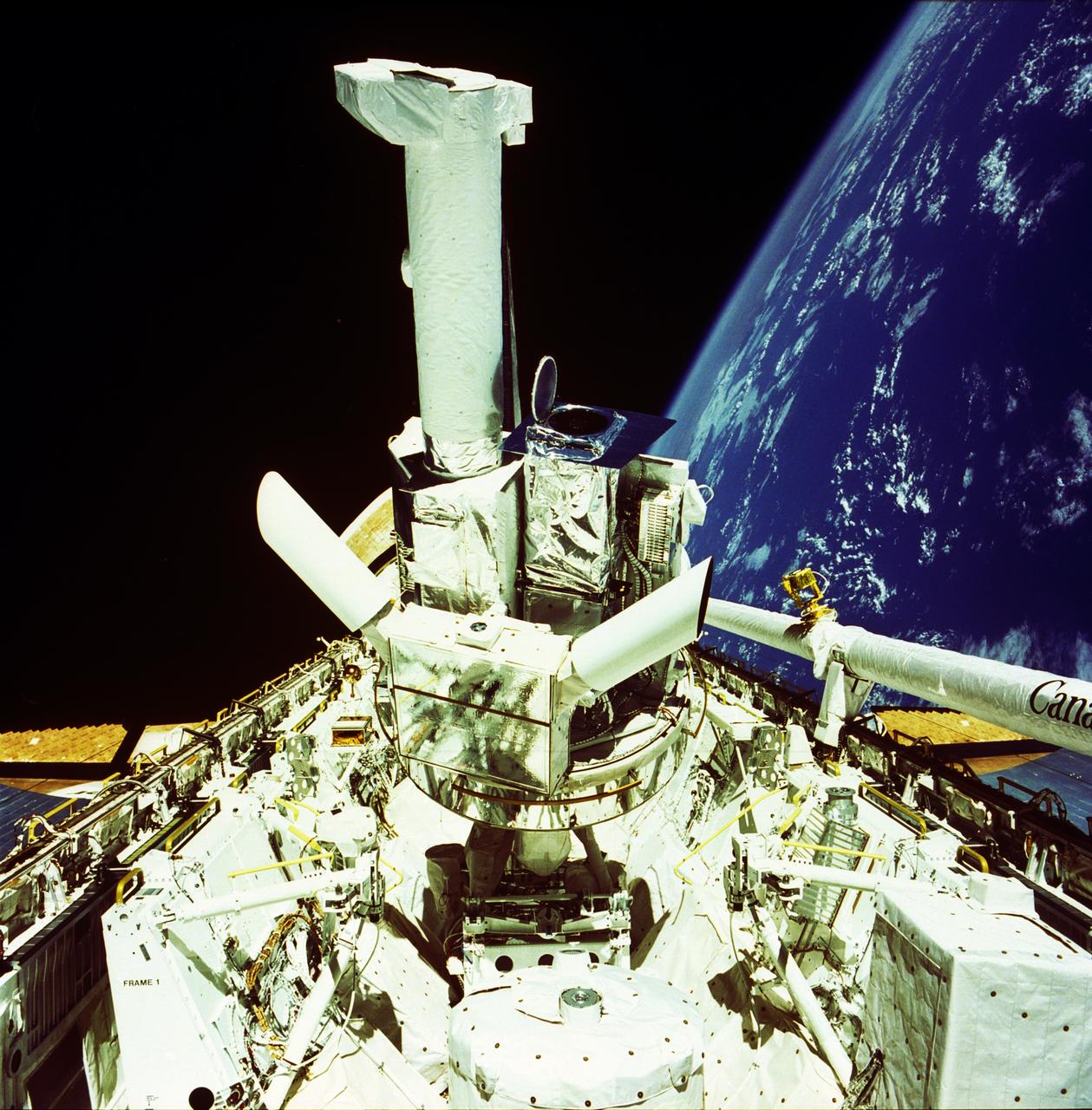
This photograph shows the Instrument Pointing System (IPS) for Spacelab-2 being deployed in the cargo bay of the Space Shuttle Orbiter Challenger. The European Space Agency (ESA) developed this irnovative pointing system for the Spacelab program. Previously, instruments were pointed toward particular celestial objects or areas by maneuvering the Shuttle to an appropriate attitude. The IPS could aim instruments more accurately than the Shuttle and kept them fixed on a target as the Shuttle moved. On the first pallet, three solar instruments and one atmospheric instrument were mounted on the IPS. Spacelab-2 was the first pallet-only mission. One of the goals of the mission was to verify that the pallets' configuration was satisfactory for observations and research. Except for two biological experiments and an experiment that uses ground-based instruments, the Spacelab-2 scientific instruments needed direct exposure to space. The Spacelab-2 mission was designed to capitalize on the Shuttle-Spacelab capabilities to carry very large instruments, launch and retrieve satellites, and point several instruments independently with accuracy and stability. Spacelab-2 (STS-51F, 19th Shuttle mission) was launched on July 29, 1985 aboard the Space Shuttle Orbiter Challenger. The Marshall Space Flight Center had overall management responsibilities of the Spacelab missions.
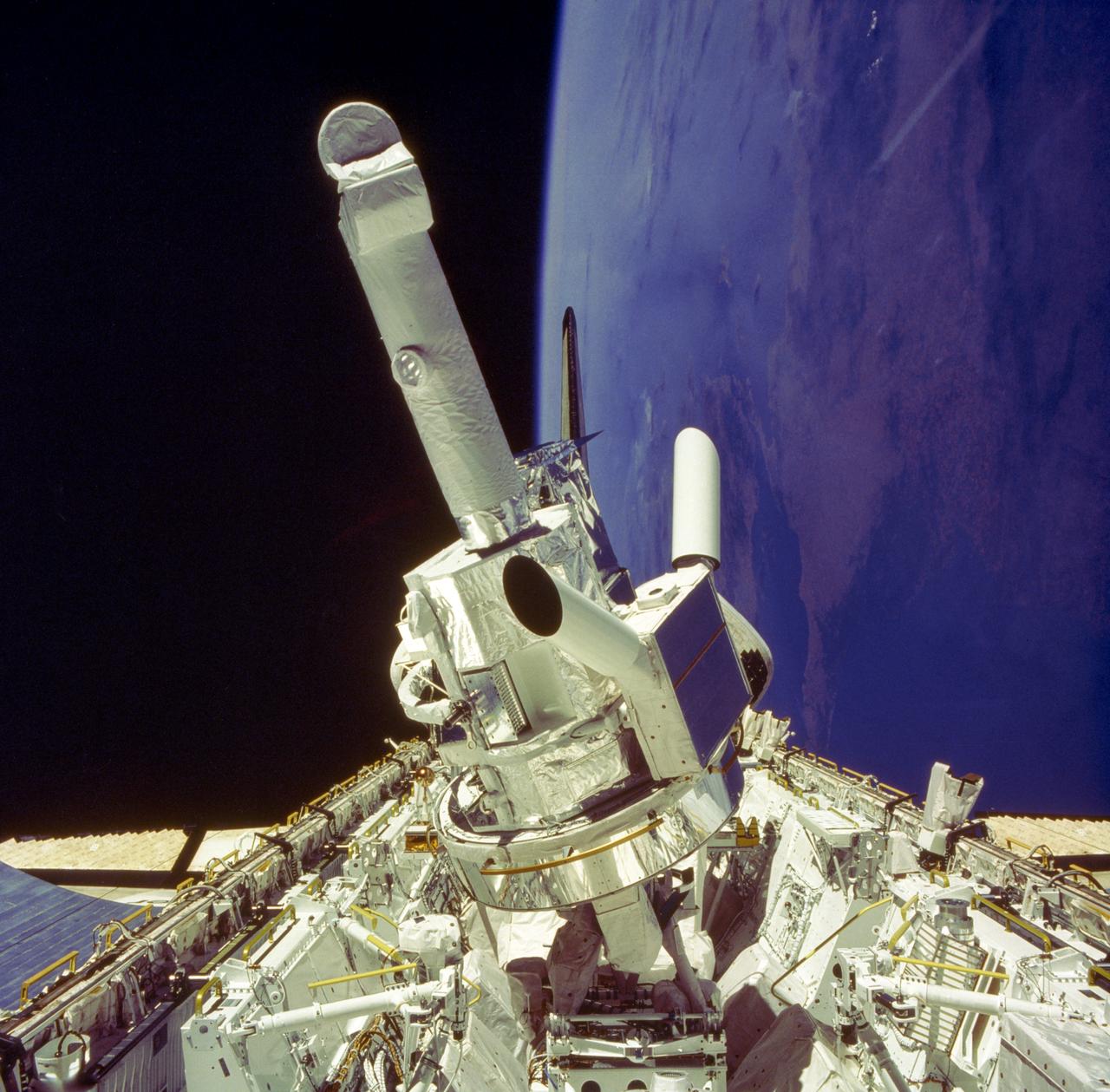
This photograph shows the Instrument Pointing System (IPS) for Spacelab-2 being deployed in the cargo bay of the Space Shuttle Orbiter Challenger. The European Space Agency (ESA) developed this irnovative pointing system for the Spacelab program. Previously, instruments were pointed toward particular celestial objects or areas by maneuvering the Shuttle to an appropriate attitude. The IPS could aim instruments more accurately than the Shuttle and kept them fixed on a target as the Shuttle moved. On the first pallet, three solar instruments and one atmospheric instrument were mounted on the IPS. Spacelab-2 was the first pallet-only mission. One of the goals of the mission was to verify that the pallets' configuration was satisfactory for observations and research. Except for two biological experiments and an experiment that used ground-based instruments, the Spacelab-2 scientific instruments needed direct exposure to space. The Spacelab-2 mission was designed to capitalize on the Shuttle-Spacelab capabilities to carry very large instruments, launch and retrieve satellites, and point several instruments independently with accuracy and stability. Spacelab-2 (STS-51F, 19th Shuttle mission) was launched on July 29, 1985 aboard the Space Shuttle Orbiter Challenger. The Marshall Space Flight Center had overall management responsibilities of the Spacelab missions.
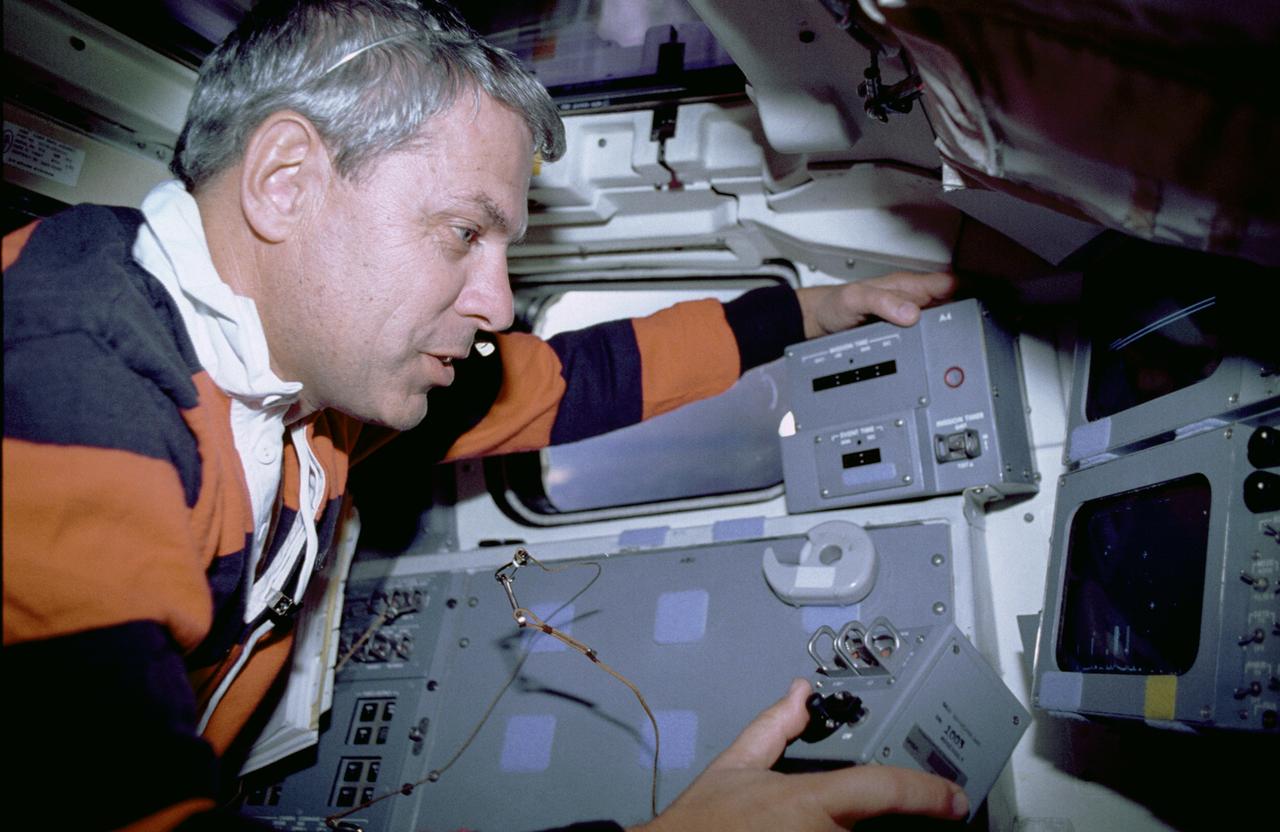
The primary objective of the STS-35 mission was round the clock observation of the celestial sphere in ultraviolet and X-Ray astronomy with the Astro-1 observatory which consisted of four telescopes: the Hopkins Ultraviolet Telescope (HUT); the Wisconsin Ultraviolet Photo-Polarimeter Experiment (WUPPE); the Ultraviolet Imaging Telescope (UIT); and the Broad Band X-Ray Telescope (BBXRT). The Huntsville Operations Support Center (HOSC) Spacelab Payload Operations Control Center (SL POCC) at the Marshall Space Flight Center (MSFC) was the air/ground communication channel used between the astronauts and ground control teams during the Spacelab missions. Teams of controllers and researchers directed on-orbit science operations, sent commands to the spacecraft, received data from experiments aboard the Space Shuttle, adjusted mission schedules to take advantage of unexpected science opportunities or unexpected results, and worked with crew members to resolve problems with their experiments. Due to loss of data used for pointing and operating the ultraviolet telescopes, MSFC ground teams were forced to aim the telescopes with fine tuning by the flight crew. Pictured onboard the shuttle is astronaut Robert Parker using a Manual Pointing Controller (MPC) for the ASTRO-1 mission Instrument Pointing System (IPS).
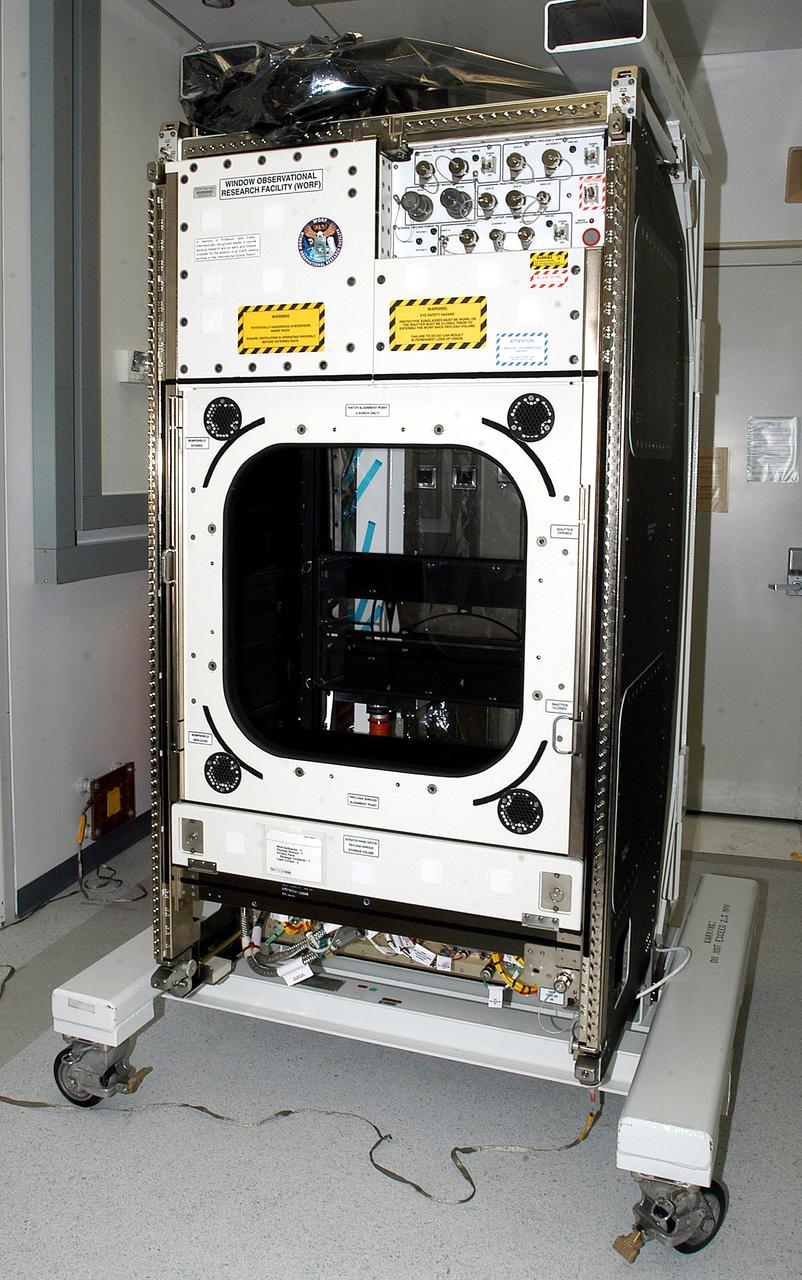
KENNEDY SPACE CENTER, FLA. - The Window Observational Research Facility (WORF), seen in the Space Station Processing Facility, was designed and built by the Boeing Co. at NASA’s Marshall Space Flight Center in Huntsville, Ala. WORF will be delivered to the International Space Station and placed in the rack position in front of the Destiny lab window, providing locations for attaching cameras, multi-spectral scanners and other instruments. WORF will support a variety of scientific and commercial experiments in areas of Earth systems and processes, global ecological changes in Earth’s biosphere, lithosphere, hydrosphere and climate system, Earth resources, natural hazards, and education. After installation, it will become a permanent focal point for Earth Science research aboard the space station.
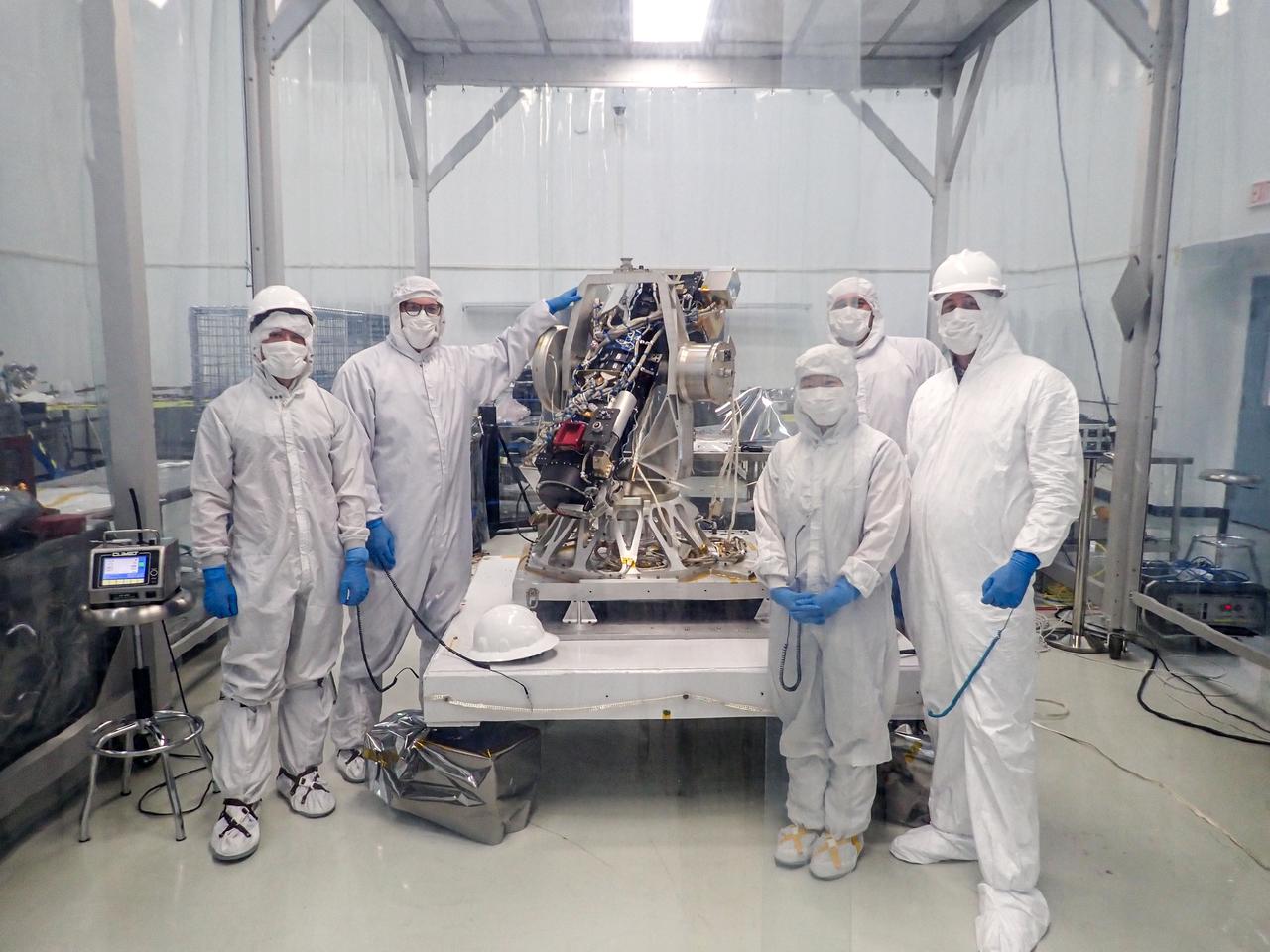
jsc2024e061939 (5/2/2023) --- Team members pose with the COronal Diagnostic EXperiment (CODEX) instrument in a clean facility during initial integration of the coronagraph with the pointing system. Credit: CODEX team / NASA
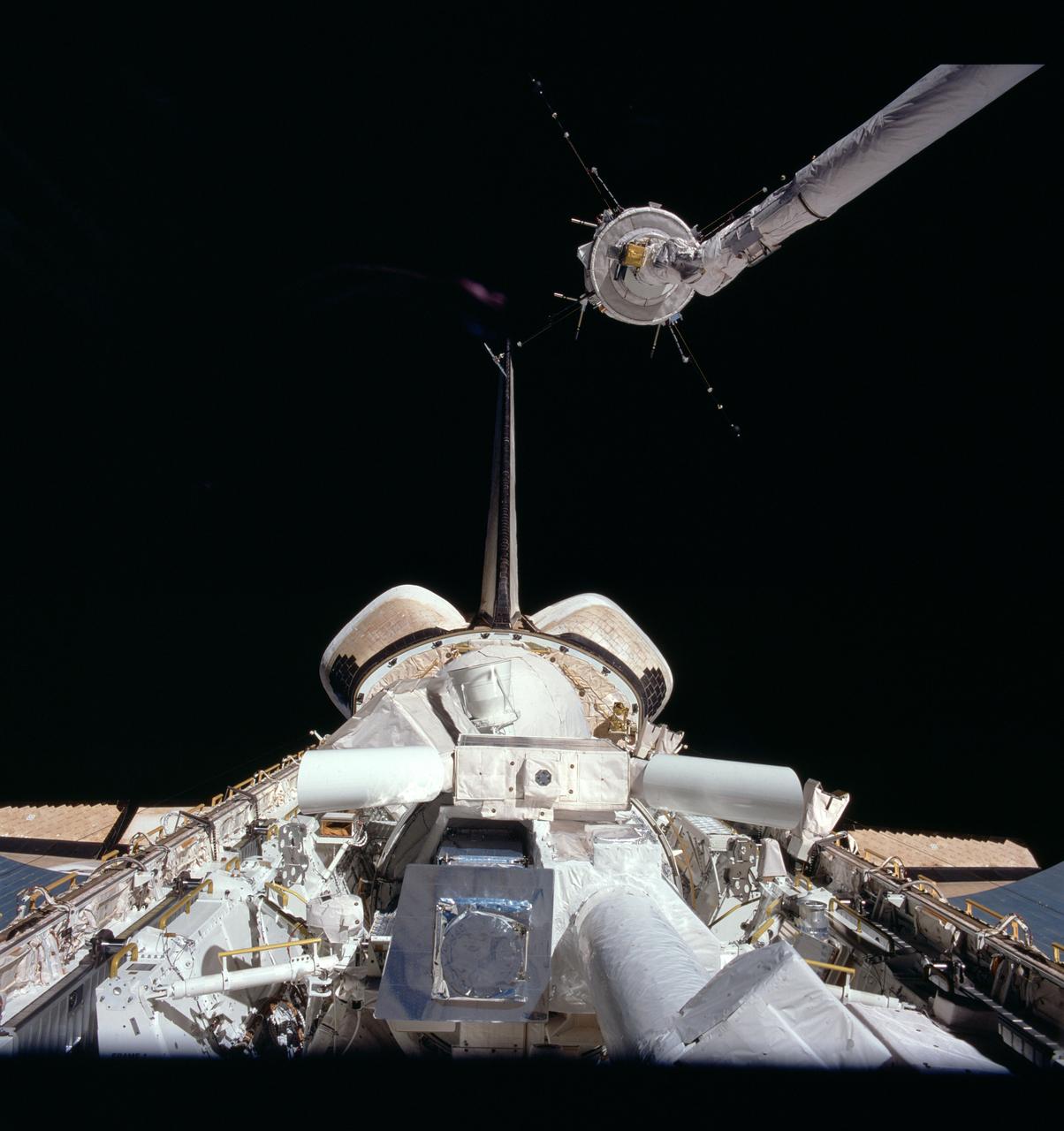
51F-33-024 (29 July-6 Aug 1985) --- The Challenger's remote manipulator system (RMS) arm grasps the plasma diagnostics package (PDP) over the experiment-laden cargo bay of the earth orbiting spacecraft. The instrument pointing system, in a resting mode here, is prominent in the bay.
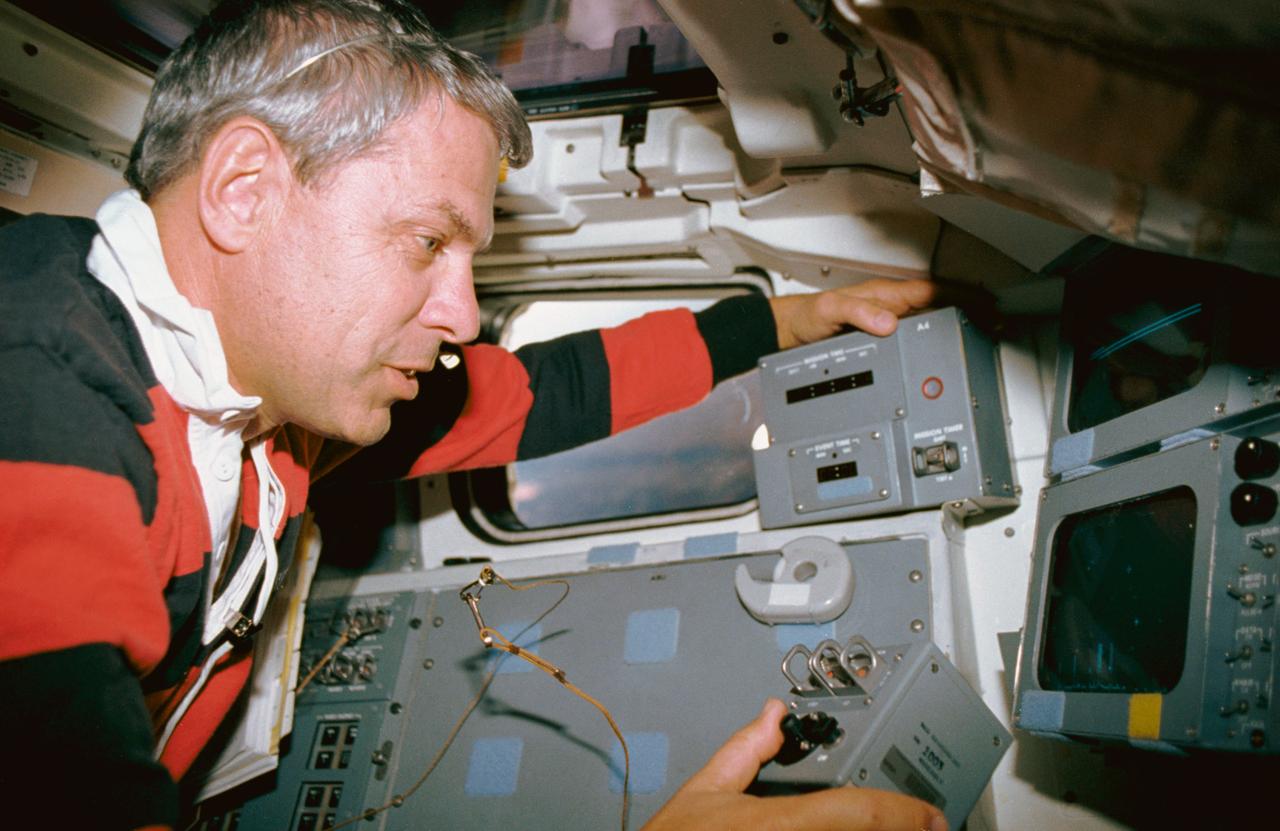
STS035-10-011 (2-10 Dec 1990) --- STS-35 Mission Specialist (MS) Robert A.R. Parker operates Astronomy Laboratory 1 (ASTRO-1) manual pointing controller (MPC) on the aft flight deck of Columbia, Orbiter Vehicle (OV) 102. Parker monitors a closed circuit television (CCTV) screen at the payload station as he uses the MPC to send data collection instructions to the ASTRO-1 instrument pointing system (IPS).
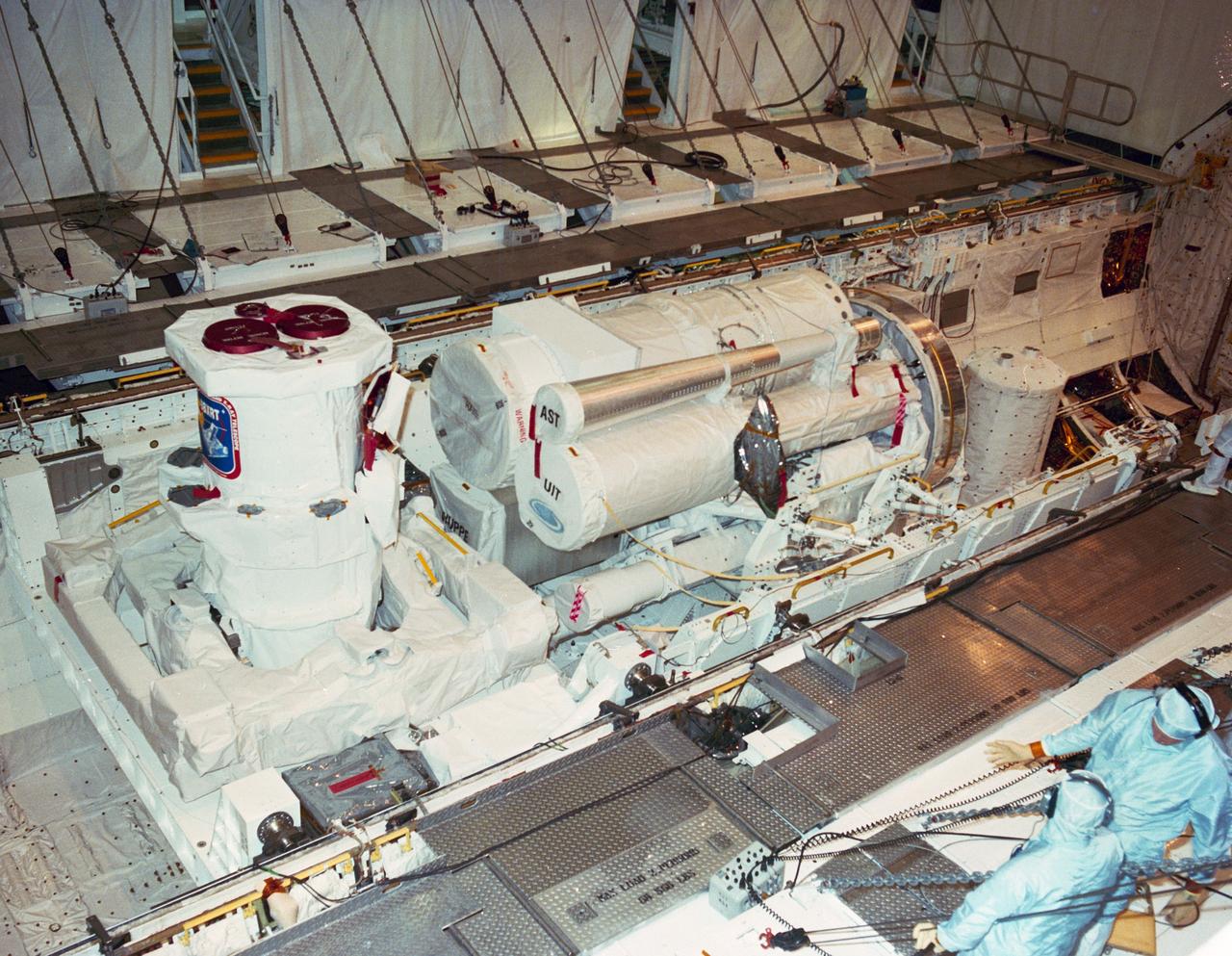
STS-35 Astronomy Laboratory 1 (ASTRO-1) is installed in Columbia's, Orbiter Vehicle (OV) 102's, payload bay (PLB) at the Kennedy Space Center (KSC) Orbiter Processing Facility (OPF). On the left, in the aft PLB is the Broad Band X Ray Telescope (BBXRT) mounted on the two axis pointing system (TAPS). In the center, the three ultraviolet telescopes - Wisconsin Ultraviolet Photo-Polarimeter Experiment (WUPPE), the Hopkins Ultraviolet Telescope (HUT), and the Ultraviolet Imaging Telescope (UIT) - are mounted on the instrument pointing system (IPS) and are in stowed position. At the far right is the Spacelab Pallet System (SPS) igloo. View provided by KSC with alternate number KSSC-90PC-421.
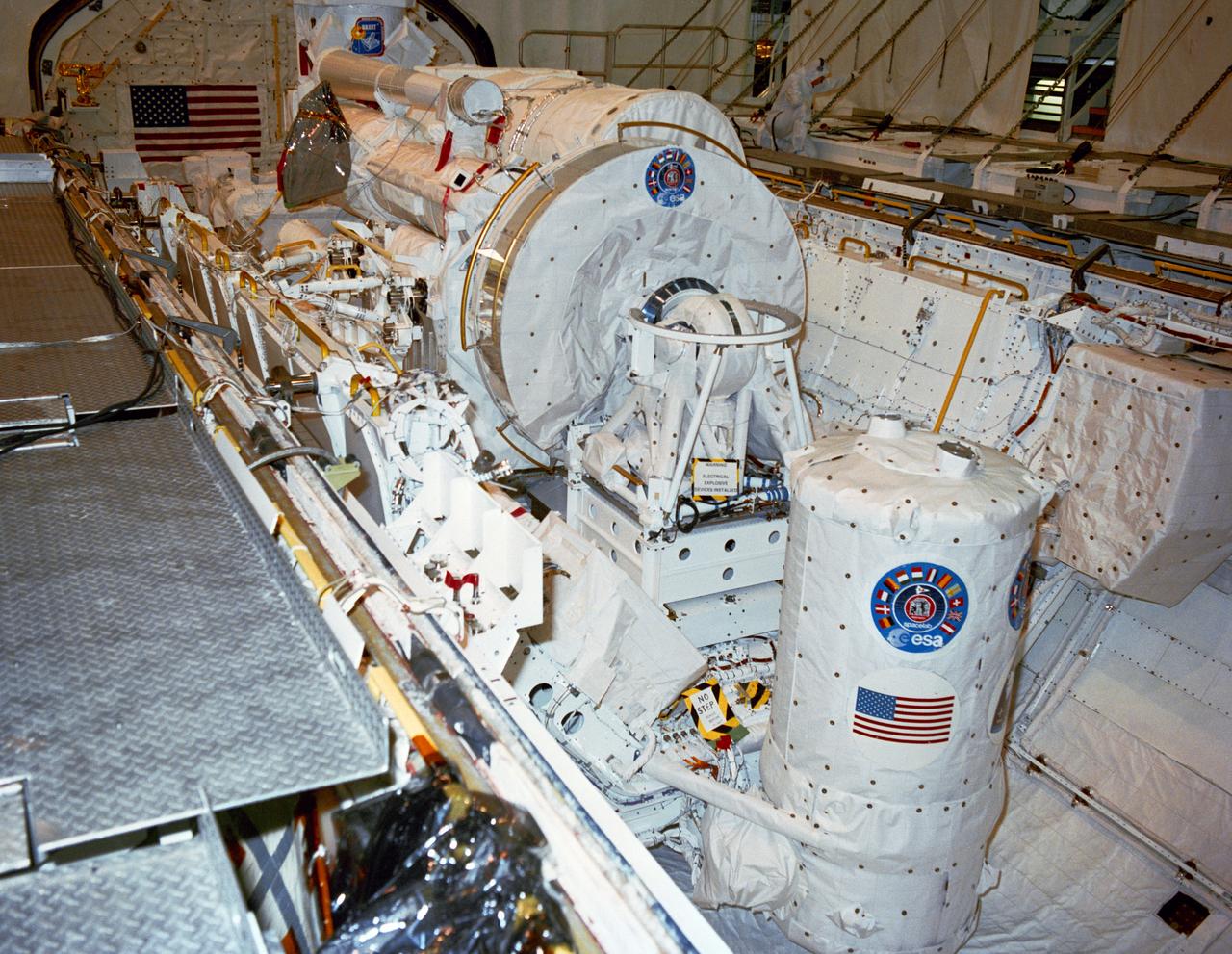
S90-36708 (7 May 1990) --- STS-35 Astronomy Laboratory 1 (ASTRO-1) view shows its telescopes, instrument pointing system (IPS), and support equipment installed in Columbia's, Orbiter Vehicle (OV) 102's, payload bay (PLB) at the Kennedy Space Center (KSC) Orbiter Processing Facility (OPF). In the foreground is the Spacelab Pallet System (SPS) igloo. The stowed IPS with its three ultraviolet telescopes appears in the center of the picture. In the background, the Broad Band X Ray Telescope (BBXRT) two axis pointing system (TAPS) is barely visible. View provided by KSC with alternate number KSC-90PC-423.
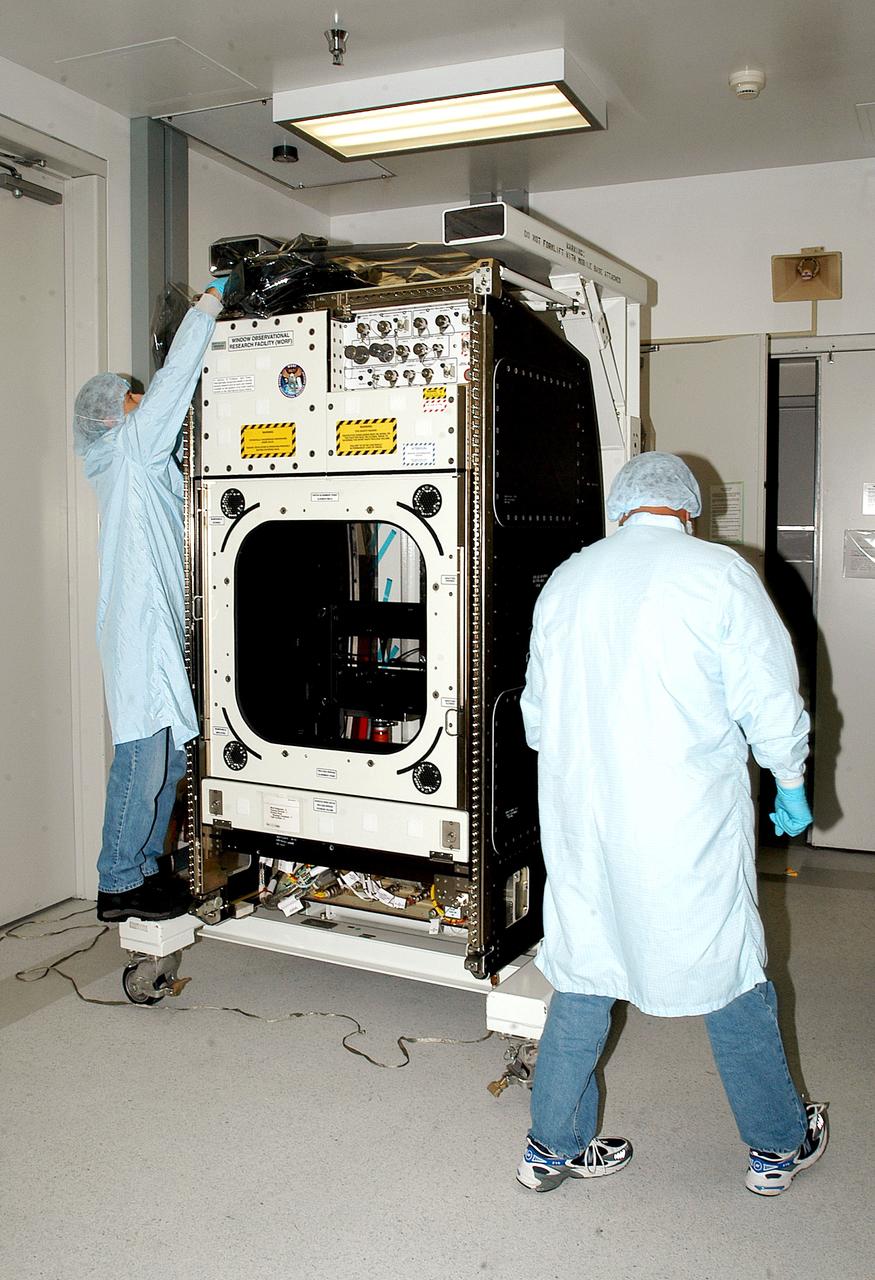
KENNEDY SPACE CENTER, FLA. - Workers in the Space Station Processing Facility check out the Window Observational Research Facility (WORF), designed and built by the Boeing Co. at NASA’s Marshall Space Flight Center in Huntsville, Ala. WORF will be delivered to the International Space Station and placed in the rack position in front of the Destiny lab window, providing locations for attaching cameras, multi-spectral scanners and other instruments. WORF will support a variety of scientific and commercial experiments in areas of Earth systems and processes, global ecological changes in Earth’s biosphere, lithosphere, hydrosphere and climate system, Earth resources, natural hazards, and education. After installation, it will become a permanent focal point for Earth Science research aboard the space station.
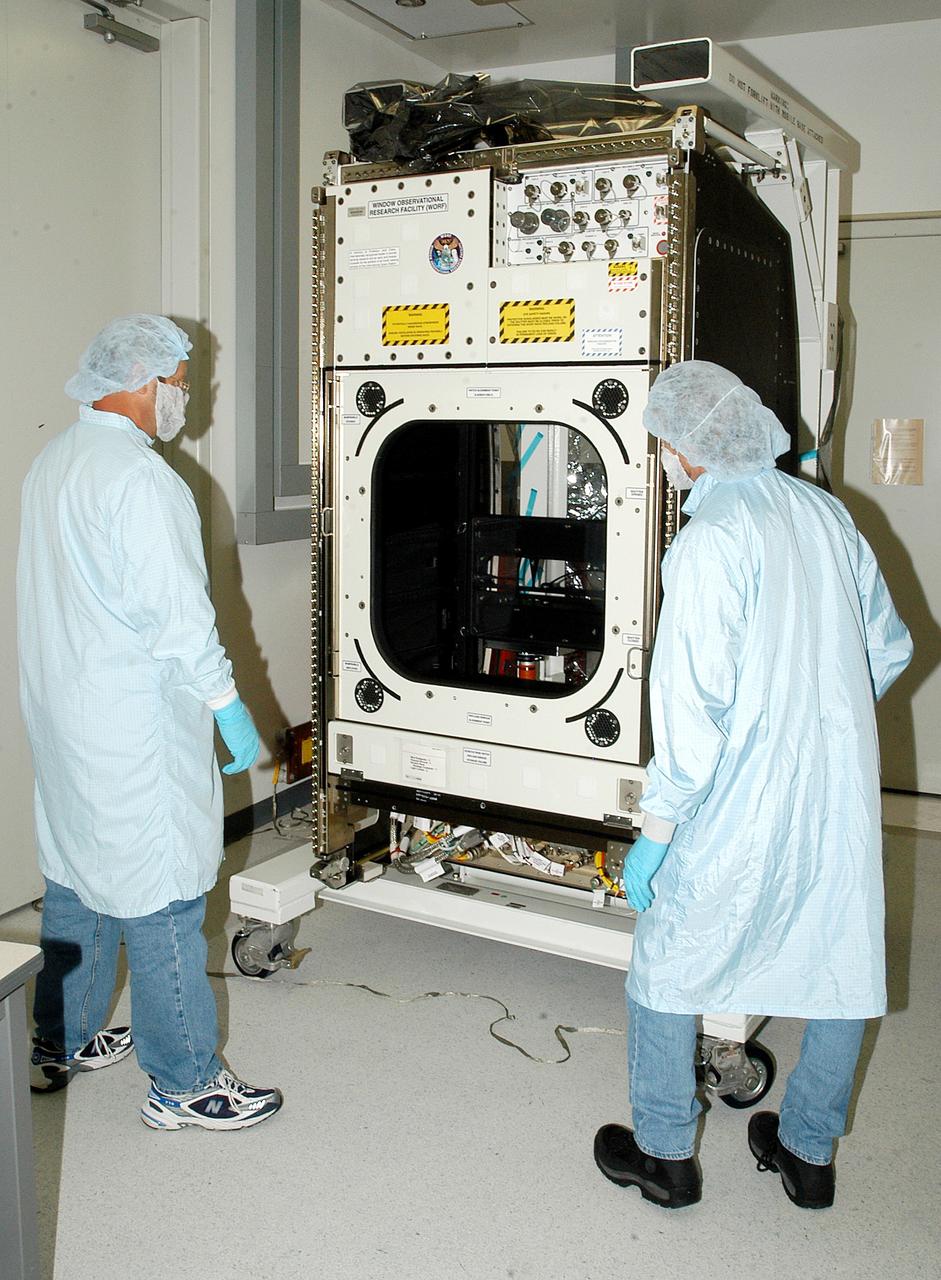
KENNEDY SPACE CENTER, FLA. - Workers in the Space Station Processing Facility check out the Window Observational Research Facility (WORF), designed and built by the Boeing Co. at NASA’s Marshall Space Flight Center in Huntsville, Ala. WORF will be delivered to the International Space Station and placed in the rack position in front of the Destiny lab window, providing locations for attaching cameras, multi-spectral scanners and other instruments. WORF will support a variety of scientific and commercial experiments in areas of Earth systems and processes, global ecological changes in Earth’s biosphere, lithosphere, hydrosphere and climate system, Earth resources, natural hazards, and education. After installation, it will become a permanent focal point for Earth Science research aboard the space station.
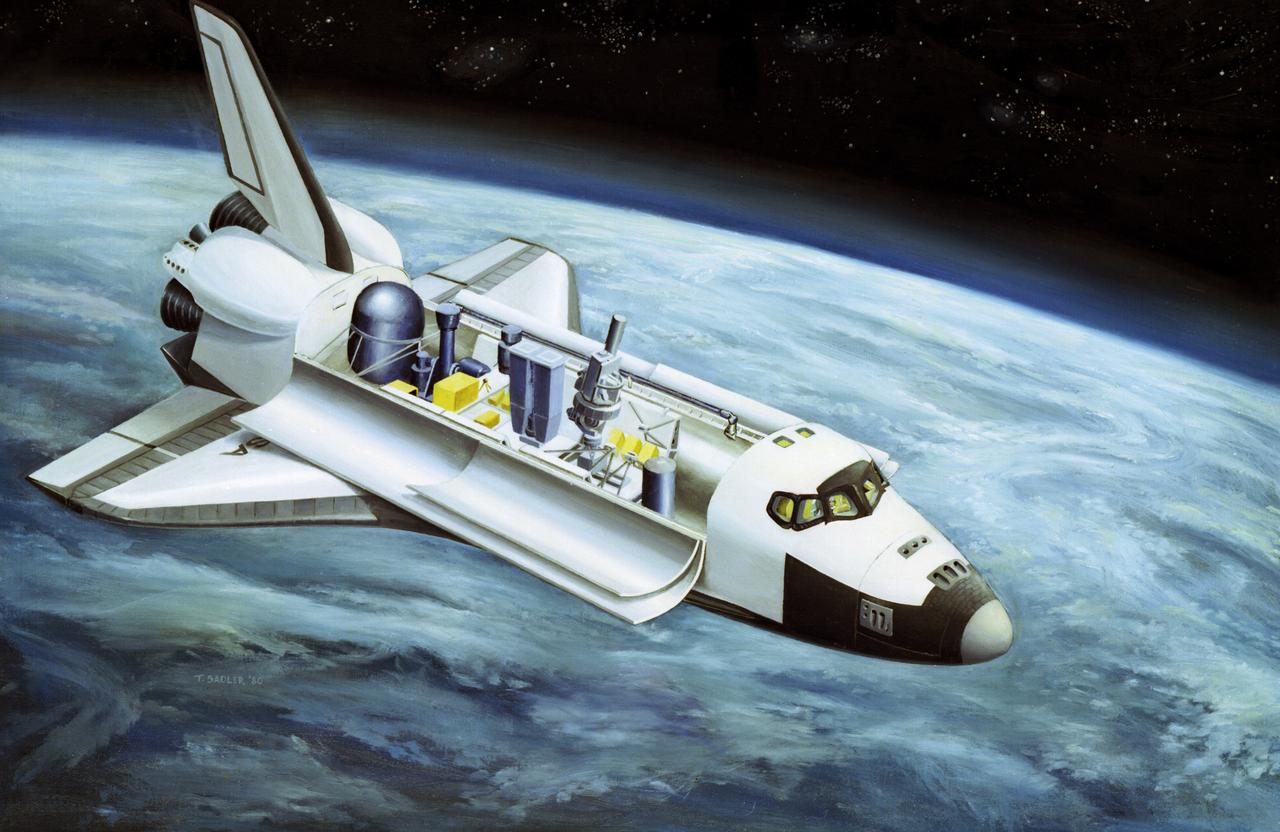
This illustration depicts the configuration of the Spacelab-2 in the cargo bay of the orbiter. Spacelab was a versatile laboratory carried in the Space Shuttle's cargo bay for scientific research flights. Each Spacelab mission had a unique design appropriate to the mission's goals. A number of Spacelab configurations could be assembled from pressurized habitation modules and exposed platforms called pallets. Spacelab-2 was the first pallet-only mission. One of the goals of the mission was to verify that the pallets' configuration was satisfactory for observations and research. Except for two biological experiments and an experiment that used ground-based instruments, the Spacelab-2 scientific instruments needed direct exposure to space. On the first pallet, three solar instruments and one atmospheric instrument were mounted on the Instrument Pointing System, which was being tested on its first flight. The second Spacelab pallet held a large double x-ray telescope and three plasma physics detectors. The last pallet supported an infrared telescope, a superfluid helium technology experiment, and a small plasma diagnostics satellite. The Spacelab-2 mission was designed to capitalize on the Shuttle-Spacelab capabilities, to launch and retrieve satellites, and to point several instruments independently with accuracy and stability. Spacelab-2 (STS-51F, 19th Shuttle mission) was launched aboard Space Shuttle Orbiter Challenger on July 29, 1985. The Marshall Space Flight Center had overall management responsibilities of the Spacelab missions.
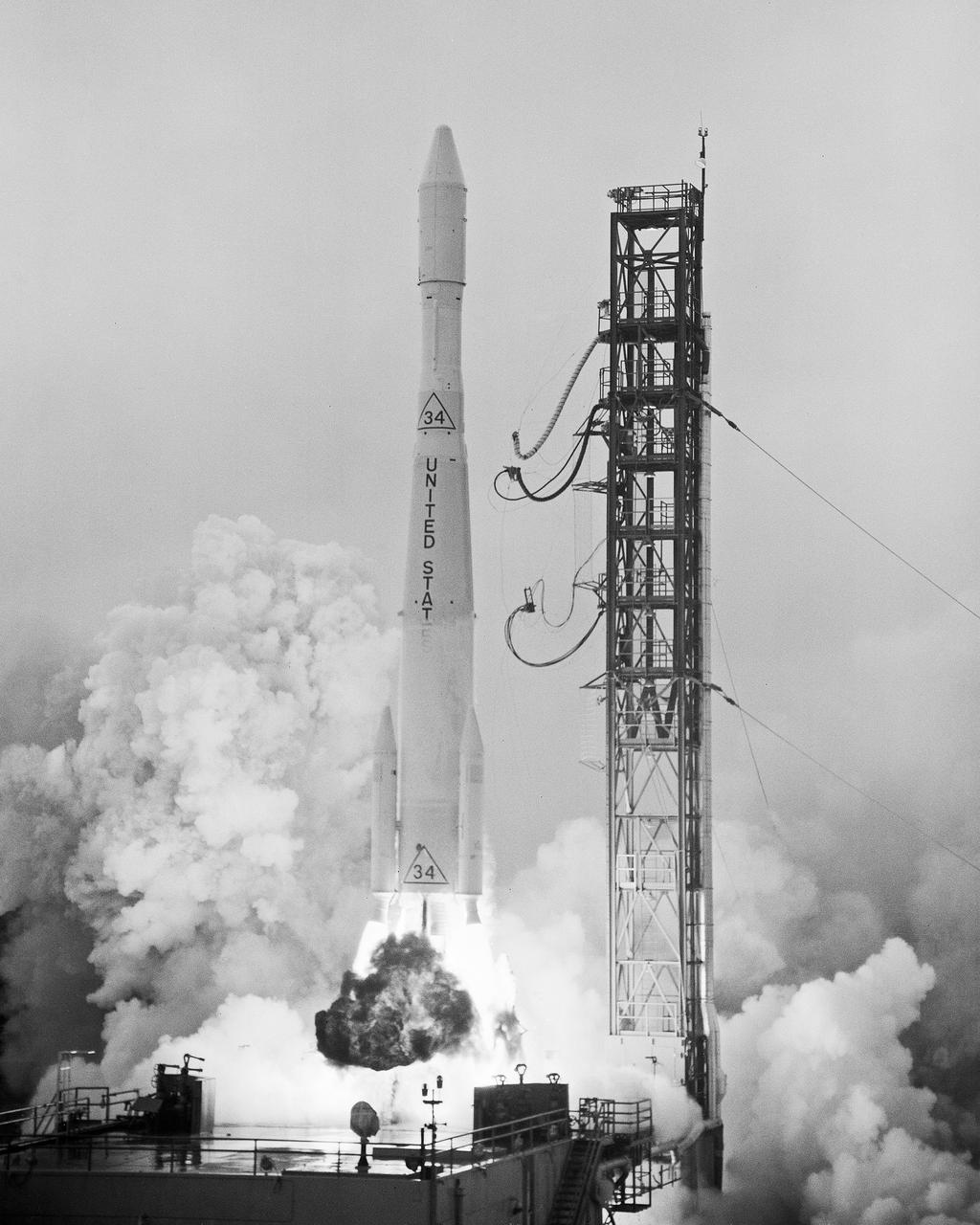
CAPE KENNEDY, Fla. -- At Cape Kennedy Air Force Station in Florida, a thrust augmented improved Delta lifts off with a three hundred eighty five pound geodetic Explorer spacecraft, designated GEOS-A. The spacecraft contains five geodetic instrumentation systems to provide simultaneous measurements that scientists require to establish a more precise model of the Earth's gravitational field, and to map a world coordinate system relating points on, or near the surface to the common center of mass. This will be the first launch for the improved Delta second stage. Photo Credit: NASA
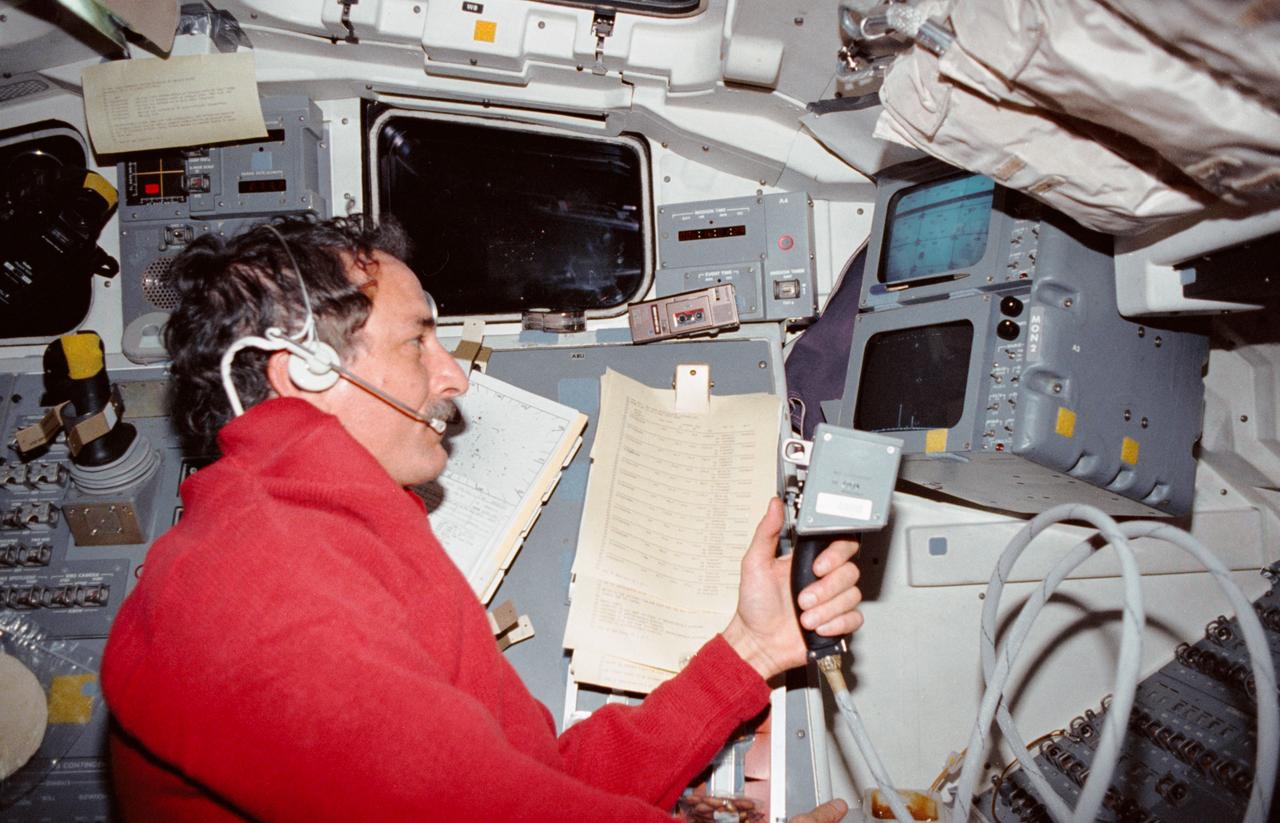
STS035-12-015 (2-11 Dec 1990) --- Astronaut Jeffrey A. Hoffman, STS 35 mission specialist, uses a manual pointing controller (MPC) for the Astro-1 mission's Instrument Pointing System (IPS). By using the MPC, Hoffman and other crewmembers on Columbia's aft flight deck, were able to command the IPS, located in the cargo bay, to record astronomical data. Hoffman is serving the "Blue" shift which complemented the currently sleeping "Red" shift of crewmembers as the mission collected scientific data on a 24-hour basis. The scene was photographed with a 35mm camera.
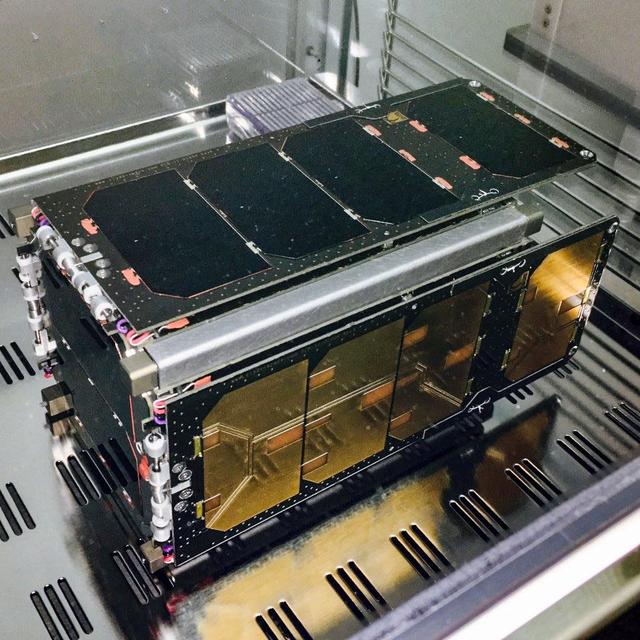
Jsc2020e004942(2/7/2020) — A preflight view of the CryoCube BUS. CryoCube demonstrates on-orbit thermal management technology. Such technology has a variety of potential applications, including storing rocket propellants in space, cooling instruments to improve their signal-to-noise ratios, and supporting future cryogenic experiments in microgravity. The small satellite uses a deployable shield to block radiation from the Sun and Earth and an attitude control system to point its experiment into deep space. Image courtesy of: Sierra Lobo Inc.
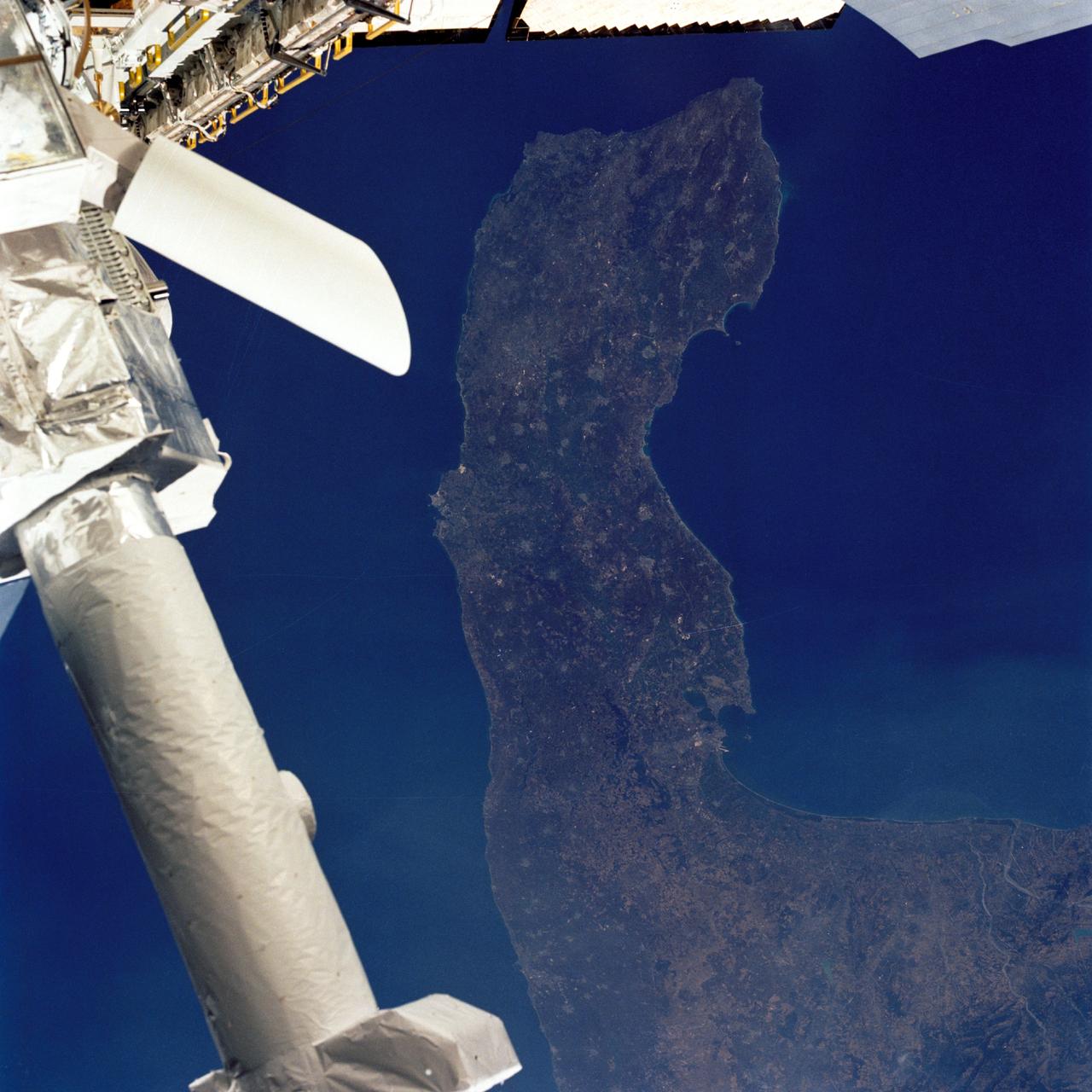
51F-32-024 (29 July - 6 August 1985) --- Italy's “boot heel" surrounded by waters of the Ionian Sea/Golfo di Taranto and the Adriatic Sea is very clearly visible in this scene made with a handheld 70mm camera. Spacelab 2's versatile instrument pointing system (IPS) protrudes from the cargo bay.
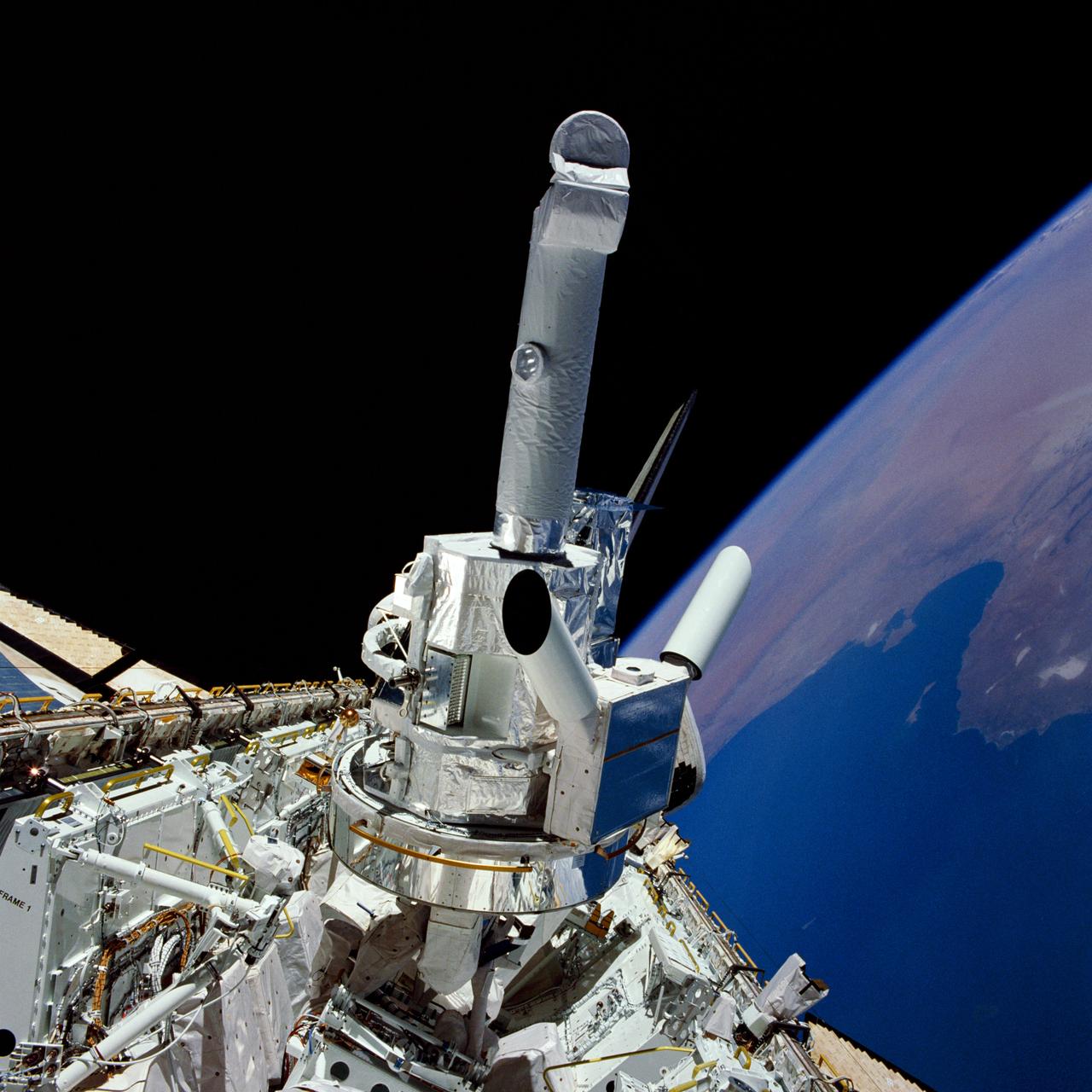
51F-33-005 (29 July - 6 August 1985) --- Experiments and the instrument pointing system (IPS) for Spacelab 2 are backdropped against the Libya/Tunisia Mediterranean coast and black space in this 70mm view photographed through the aft flight deck windows of the Space Shuttle Challenger. Also partially visible among the cluster of Spacelab 2 hardware are the solar optical universal polarimeter (SOUP) experiment and the coronal helium abundance experiment (CHASE).
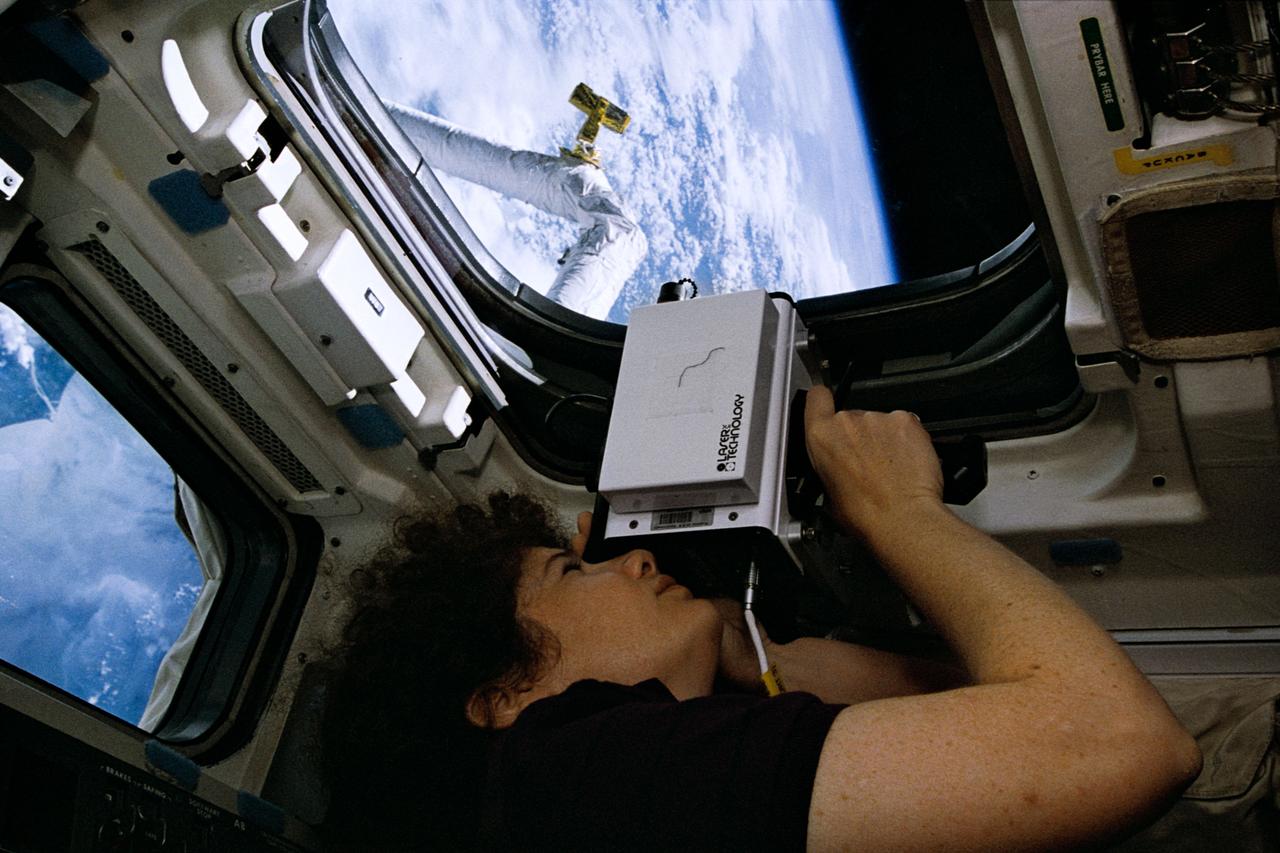
STS064-33-003 (9-20 Sept. 1994) --- Astronaut Susan J. Helms, STS-64 mission specialist, uses a laser instrument during operations with the Shuttle Pointed Autonomous Research Tool for Astronomy 201 (SPARTAN 201). Helms, who spent many mission hours at the controls of the Remote Manipulator System (RMS), joined five other NASA astronauts for almost 11 days in Earth orbit aboard the space shuttle Discovery. Photo credit: NASA or National Aeronautics and Space Administration
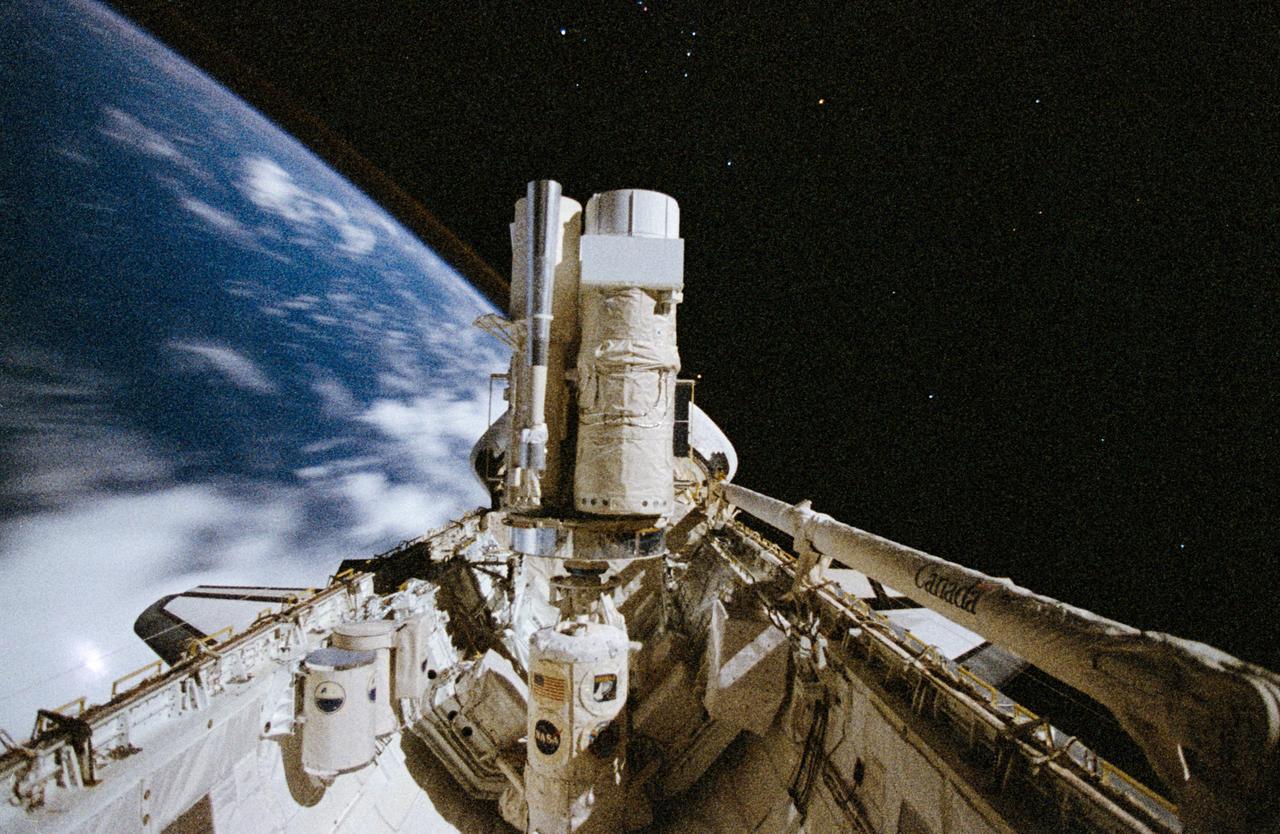
STS067-371-028 (2-18 March 1995) --- This 35mm lunar-illuminated scene of the Astro-2 payload in the Space Shuttle Endeavour's cargo bay was recorded by one of by the seven crew members during one of the many night passes of the almost 17-day mission. The cluster of telescopes and the Instrument Pointing System (IPS) are backdropped against the blue and white Earth and the darkness of space. What is believed to be the Constellation Orion is visible at upper center.
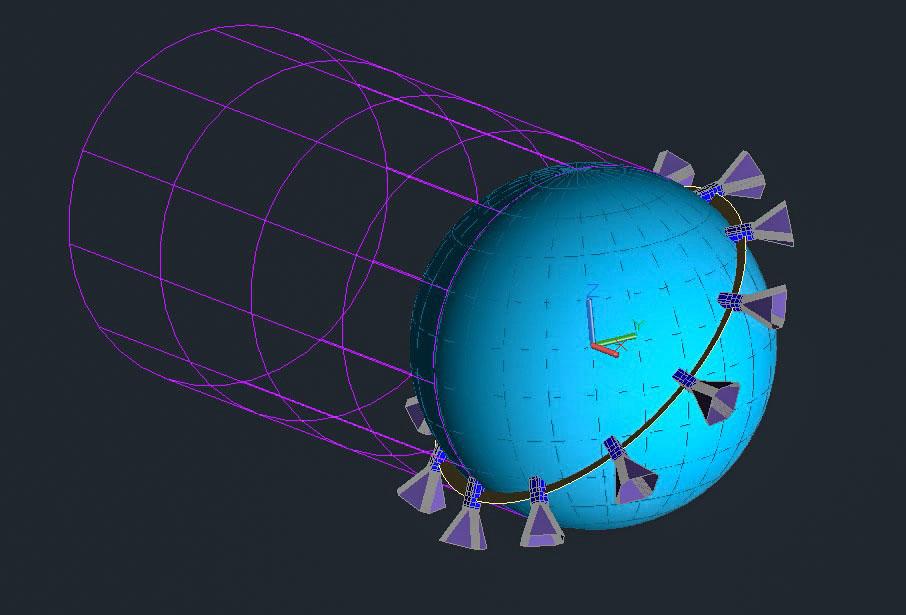
Jsc2020e004943 (2/7/2020) — A computer model showing CryoCube’s orbital orientation. CryoCube demonstrates on-orbit thermal management technology. Such technology has a variety of potential applications, including storing rocket propellants in space, cooling instruments to improve their signal-to-noise ratios, and supporting future cryogenic experiments in microgravity. The small satellite uses a deployable shield to block radiation from the Sun and Earth and an attitude control system to point its experiment into deep space. Image courtesy of : Kennedy Space Center
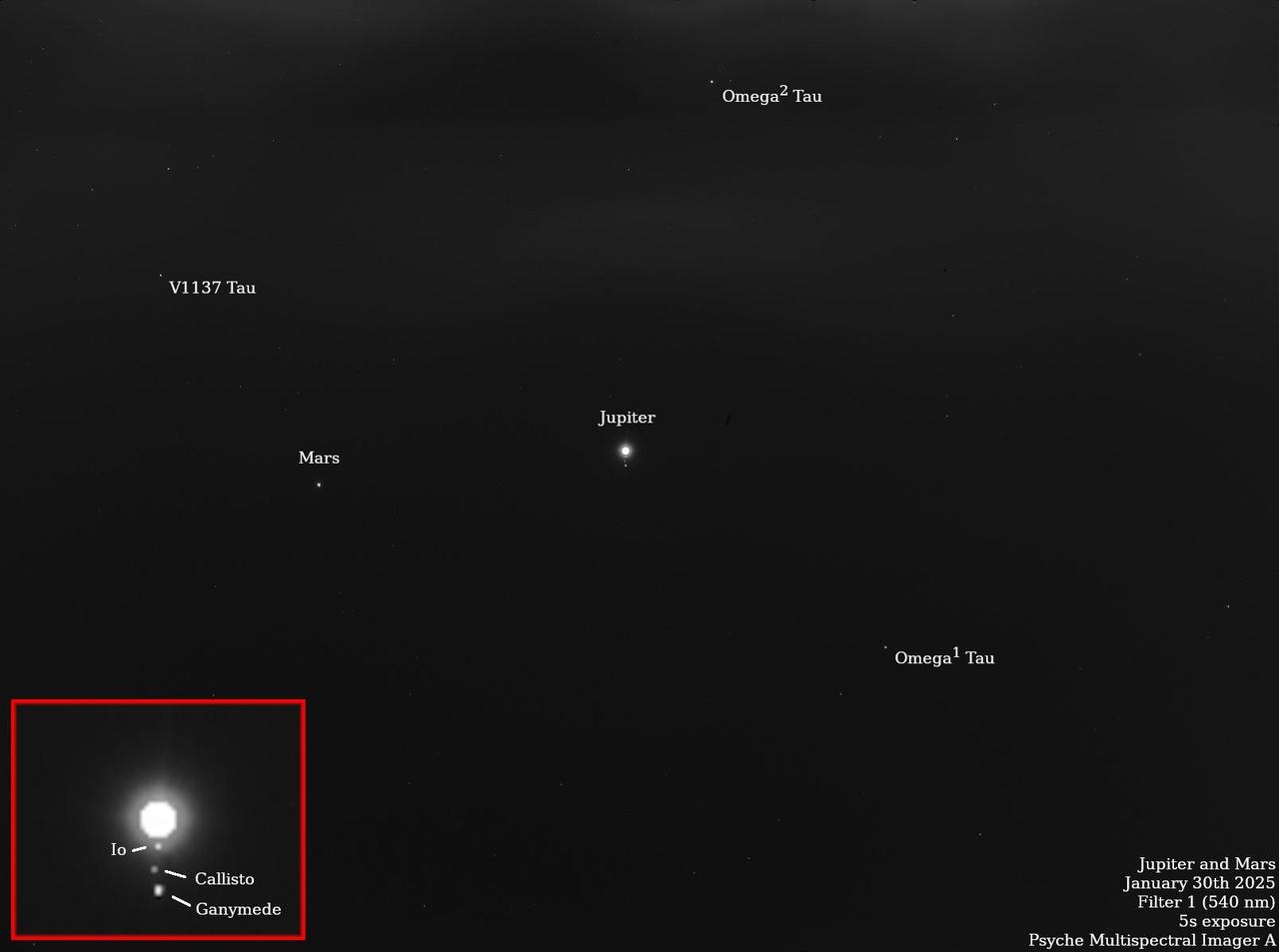
NASA's Psyche spacecraft captured multiple star and planet images in late January 2025 that include notable appearances by Mars, Jupiter, and the Jovian moons Io, Ganymede, Callisto, and Europa. The planned observation by Psyche's imaging instrument was part of a periodic maintenance and calibration test for the twin cameras that make up the imager instrument. Scientists on the imaging team, led by Arizona State University, also took images of the bright stars Vega and Canopus, which have served as standard calibration sources for astronomers for decades. The team is also using the data to assess the effects of minor wiggles or "jitter" in the spacecraft's pointing system as it points the cameras to different places in the sky. The observations of Jupiter and Mars also help the team determine how the cameras respond to solar system objects that shine by reflected sunlight, just like the Psyche asteroid. The starfield pictures shown here are long-exposure (five-second) images captured by each camera. By over-exposing Jupiter to bring out some of the background stars in the Taurus constellation, the imagers were able to capture Jupiter's fainter Galilean moons as well. The image was captured by the Psyche mission's primary camera, Imager-A, on Jan. 30. The image was obtained using the camera's "clear" filter, to provide maximum sensitivity for both bright and faint stars and solar system objects. https://photojournal.jpl.nasa.gov/catalog/PIA26563
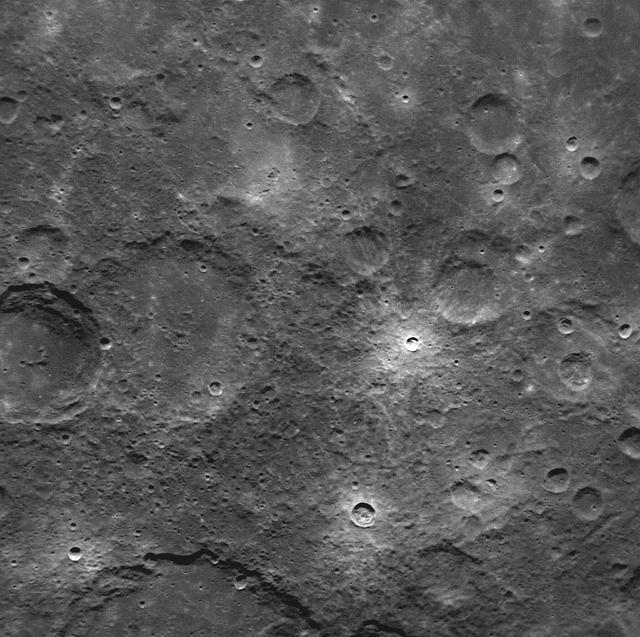
NASA image acquired: March 29, 2011 This is the first image of Mercury taken from orbit with MESSENGER’s Narrow Angle Camera (NAC). MESSENGER’s camera system, the Mercury Dual Imaging System (MDIS), has two cameras: the Narrow Angle Camera and the Wide Angle Camera (WAC). Comparison of this image with MESSENGER’s first WAC image of the same region shows the substantial difference between the fields of view of the two cameras. At 1.5°, the field of view of the NAC is seven times smaller than the 10.5° field of view of the WAC. This image was taken using MDIS’s pivot. MDIS is mounted on a pivoting platform and is the only instrument in MESSENGER’s payload capable of movement independent of the spacecraft. The other instruments are fixed in place, and most point down the spacecraft’s boresight at all times, relying solely on the guidance and control system for pointing. The 90° range of motion of the pivot gives MDIS a much-needed extra degree of freedom, allowing MDIS to image the planet’s surface at times when spacecraft geometry would normally prevent it from doing so. The pivot also gives MDIS additional imaging opportunities by allowing it to view more of the surface than that at which the boresight-aligned instruments are pointed at any given time. On March 17, 2011 (March 18, 2011, UTC), MESSENGER became the first spacecraft ever to orbit the planet Mercury. The mission is currently in the commissioning phase, during which spacecraft and instrument performance are verified through a series of specially designed checkout activities. In the course of the one-year primary mission, the spacecraft's seven scientific instruments and radio science investigation will unravel the history and evolution of the Solar System's innermost planet. Visit the Why Mercury? section of this website to learn more about the science questions that the MESSENGER mission has set out to answer. Credit: NASA/Johns Hopkins University Applied Physics Laboratory/Carnegie Institution of Washington <b><a href="http://www.nasa.gov/centers/goddard/home/index.html" rel="nofollow">NASA Goddard Space Flight Center</a></b> enables NASA’s mission through four scientific endeavors: Earth Science, Heliophysics, Solar System Exploration, and Astrophysics. Goddard plays a leading role in NASA’s accomplishments by contributing compelling scientific knowledge to advance the Agency’s mission. <b>Follow us on <a href="http://twitter.com/NASA_GoddardPix" rel="nofollow">Twitter</a></b> <b>Join us on <a href="http://www.facebook.com/pages/Greenbelt-MD/NASA-Goddard/395013845897?ref=tsd" rel="nofollow">Facebook</a></b>
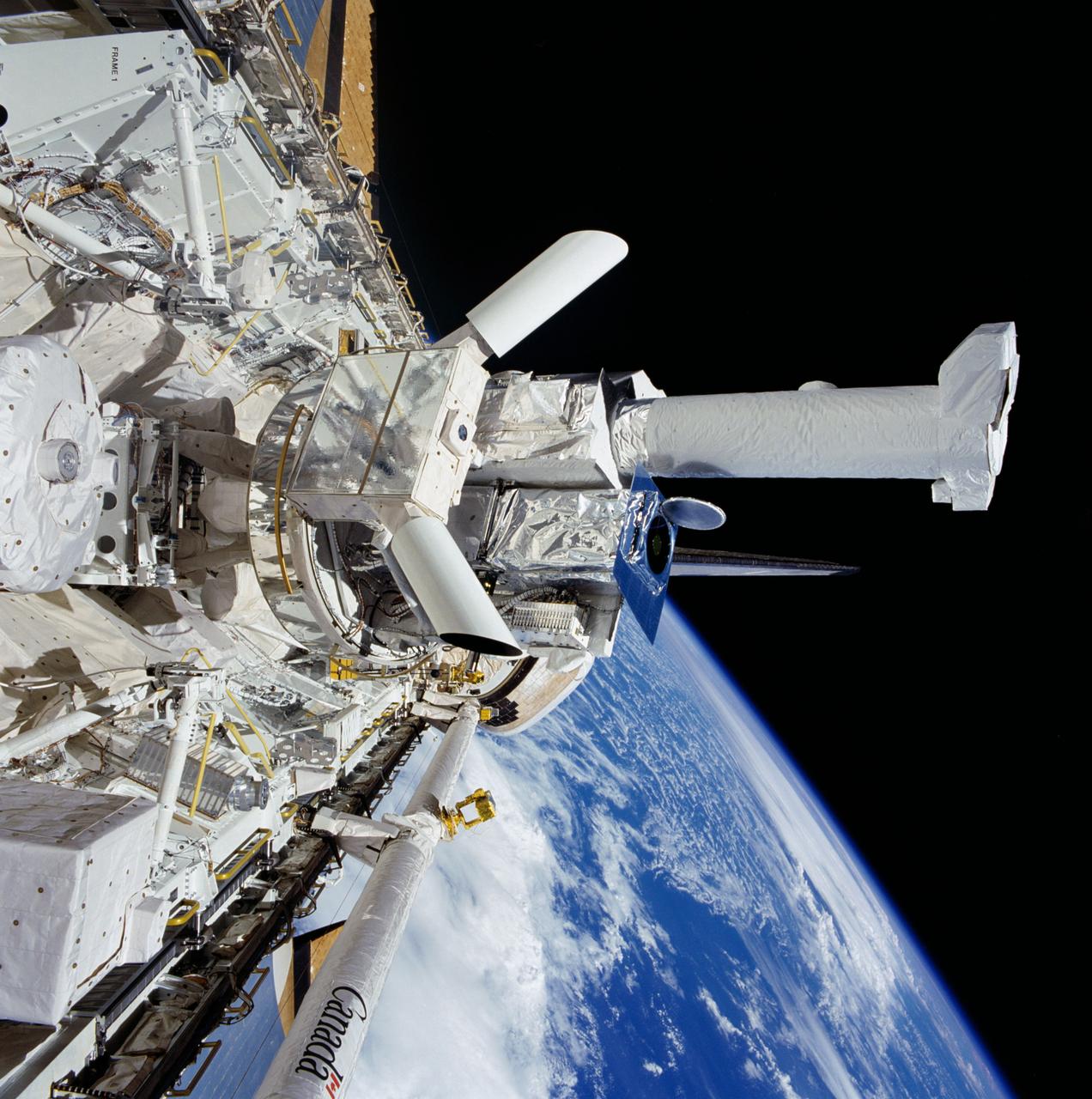
51F-42-069 (29 July-6 Aug 1985) --- The solar optical universal polarimeter (SOUP) experiment is visible among the cluster of Spacelab 2 hardware in the cargo bay of the Earth-orbiting Space Shuttle Challenger, backdropped against a curtain of white clouds over ocean waters. Various components of the instrument positioning system (IPS) are conspicuous at the center of the frame. Now resting, the remote manipulator system (RMS) was used at various points during the mission with the plasma diagnostics package (PDP) and as a support service structure for television cameras covering various activities of the busy science-oriented Spacelab 2 mission.
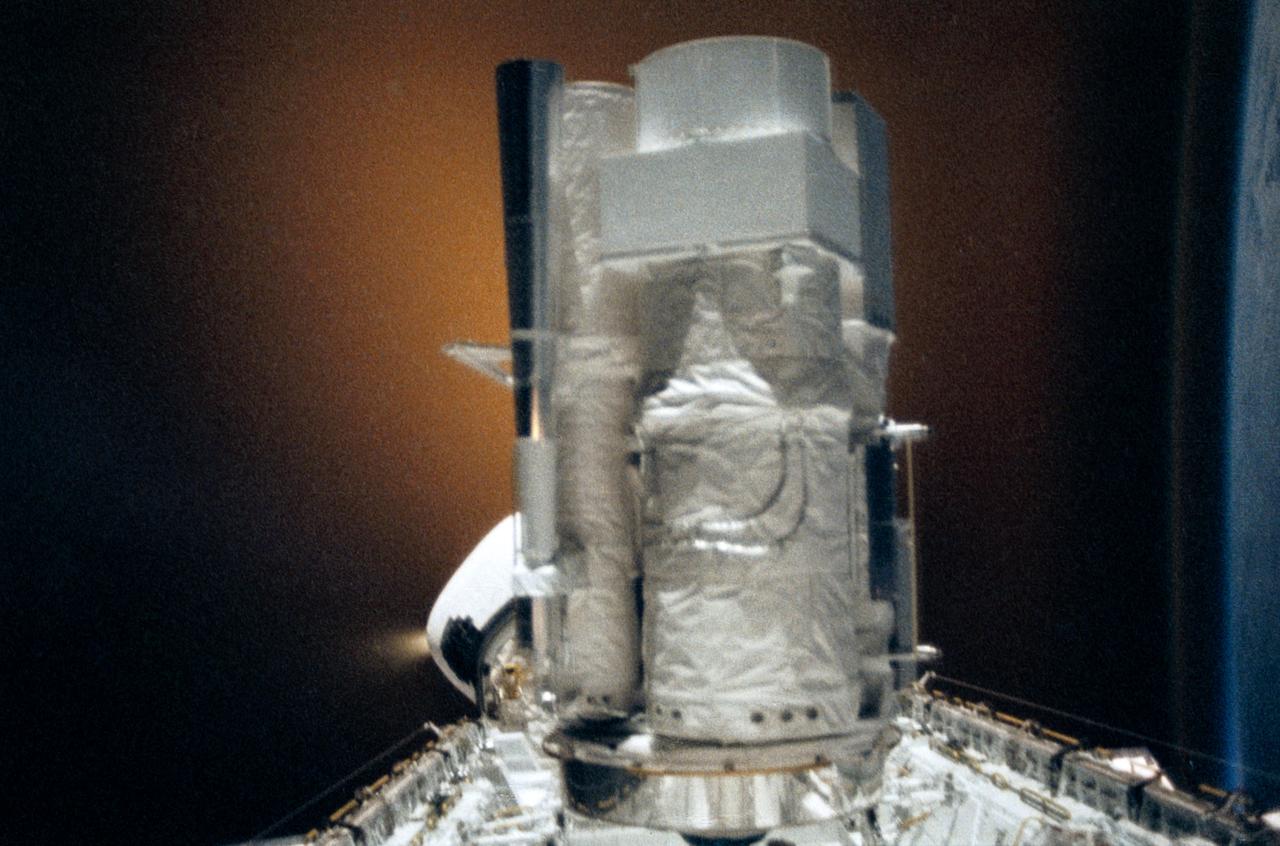
STS035-28-006 (2-10 Dec 1990) --- STS-35 Astronomy Laboratory 1 (ASTRO-1) telescopes, in on-orbit operating position in the payload bay (PLB), are silhouetted against an reaction control system (RCS) right thruster firing. Three ultraviolet telescopes are mounted and precisely co-aligned on a common structure, called the cruciform, that is attached to the instrument pointing system (IPS). Here the IPS holds the telescopes in a position that is parallel to the Earth's limb below. Visible on the cruciform are the star tracker (S TRK) (silver cone at the top), the Ultraviolet Imaging Telescope (UIT) (behind S TRK), and the Hopkins Ultraviolet Telescope(HUT).
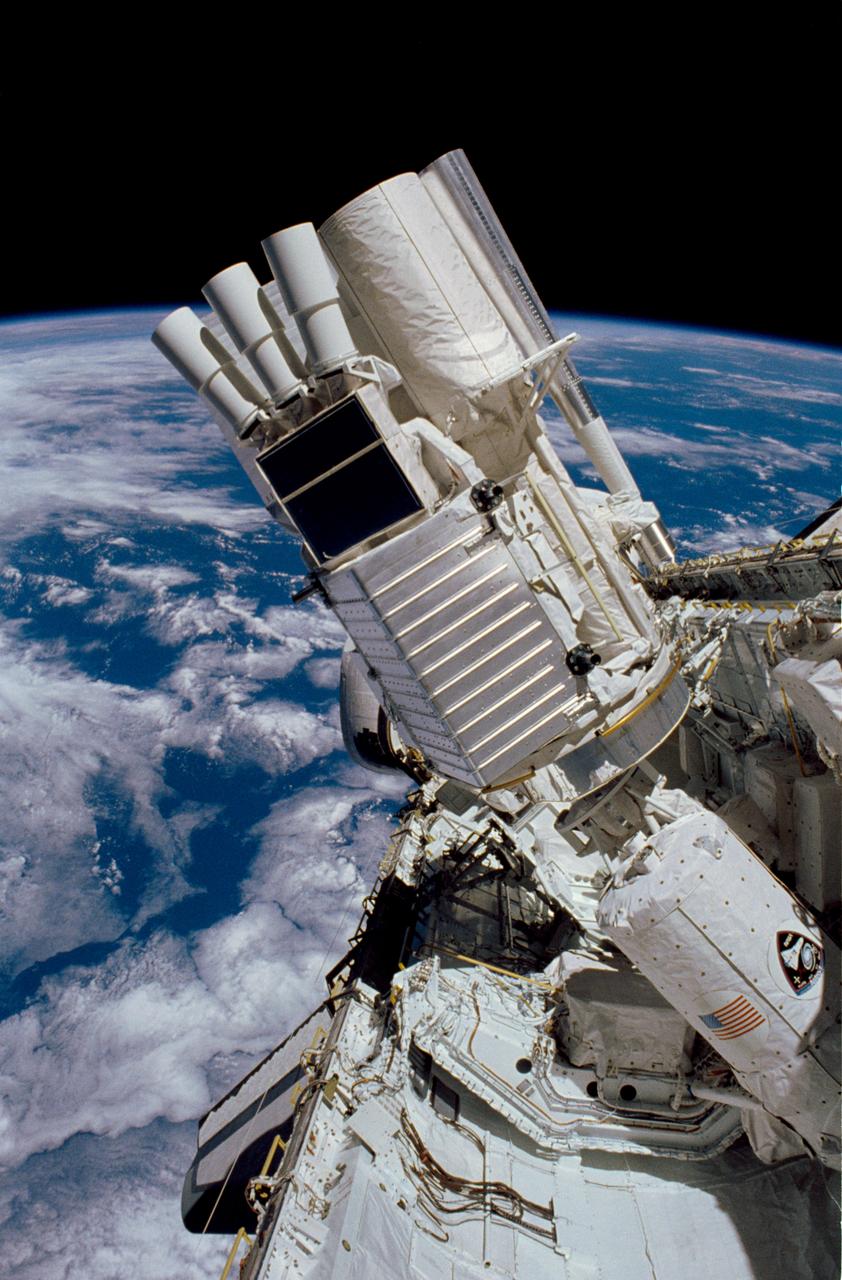
STS035-13-008 (2-10 Dec. 1990) --- The various components of the Astro-1 payload are seen backdropped against the blue and white Earth in this 35mm scene photographed through Columbia's aft flight deck windows. Parts of the Hopkins Ultraviolet Telescope (HUT), Ultraviolet Imaging Telescope (UIT) and the Wisconsin Ultraviolet Photo-Polarimeter Experiment (WUPPE) are visible on the Spacelab Pallet in the foreground. The Broad Band X-Ray Telescope (BBXRT) is behind this pallet and is not visible in this scene. The smaller cylinder in the foreground is the "Igloo," which is a pressurized container housing the Command and Data Management System, which interfaces with the in-cabin controllers to control the Instrument Pointing System (IPS) and the telescopes.

In 1986, NASA introduced a Shuttle-borne ultraviolet observatory called Astro. The Astro Observatory was designed to explore the universe by observing and measuring the ultraviolet radiation from celestial objects. Astronomical targets of observation selected for Astro missions included planets, stars, star clusters, galaxies, clusters of galaxies, quasars, remnants of exploded stars (supernovae), clouds of gas and dust (nebulae), and the interstellar medium. Astro-1 used a Spacelab pallet system with an instrument pointing system and a cruciform structure for bearing the three ultraviolet instruments mounted in a parallel configuration. The three instruments were: The Hopkins Ultraviolet Telescope (HUT), which was designed to obtain far-ultraviolet spectroscopic data from white dwarfs, emission nebulae, active galaxies, and quasars; the Wisconsin Ultraviolet Photo-Polarimeter Experiment (WUPPE) which was to study polarized ultraviolet light from magnetic white dwarfs, binary stars, reflection nebulae, and active galaxies; and the Ultraviolet Imaging Telescope (UIT) which was to record photographic images in ultraviolet light of galaxies, star clusters, and nebulae. The star trackers that supported the instrument pointing system were also mounted on the cruciform. Also in the payload bay was the Broad Band X-Ray Telescope (BBXRT), which was designed to obtain high-resolution x-ray spectra from stellar corona, x-ray binary stars, active galactic nuclei, and galaxy clusters. Managed by the Marshall Space Flight Center, the Astro-1 observatory was launched aboard the Space Shuttle Orbiter Columbia (STS-35) on December 2, 1990.

This photograph was taken during the integration of the Astro-1 mission payloads at the Kennedy Space Center on March 20, 1990, showing the Broad Band X-Ray Telescope (BBXRT) at the left, as three telescopes for the Astro-1 Observatory are settled into the Orbiter Columbia payload bay. Above Earth's atmospheric interference, Astro-1 would make precise measurements of objects such as planets, stars, and galaxies in relatively small fields of view and would observe and measure ultraviolet radiation from celestial objects. The Astro-1 used a Spacelab pallet system with an instrument pointing system and a cruciform structure for bearing the three ultraviolet instruments mounted in a parallel configuration. The three instruments were: The Hopkins Ultraviolet Telescope (HUT), which was designed to obtain far-ultraviolet spectroscopic data from white dwarfs, emission nebulae, active galaxies, and quasars; the Wisconsin Ultraviolet Photo-Polarimeter Experiment (WUPPE) which was to study polarized ultraviolet light from magnetic white dwarfs, binary stars, reflection nebulae, and active galaxies; and the Ultraviolet Imaging Telescope (UIT), which was to record photographic images in ultraviolet light of galaxies, star clusters, and nebulae. The star trackers that supported the instrument pointing system, were also mounted on the cruciform. Also in the payload bay was the Broad Band X-Ray Telescope (BBXRT), which was designed to obtain high-resolution x-ray spectra from stellar corona, x-ray binary stars, active galactic nuclei, and galaxy clusters. Managed by the Marshall Space Flight Center, the Astro-1 observatory was launched aboard the Space Shuttle Orbiter Columbia (STS-35) on December 2, 1990.
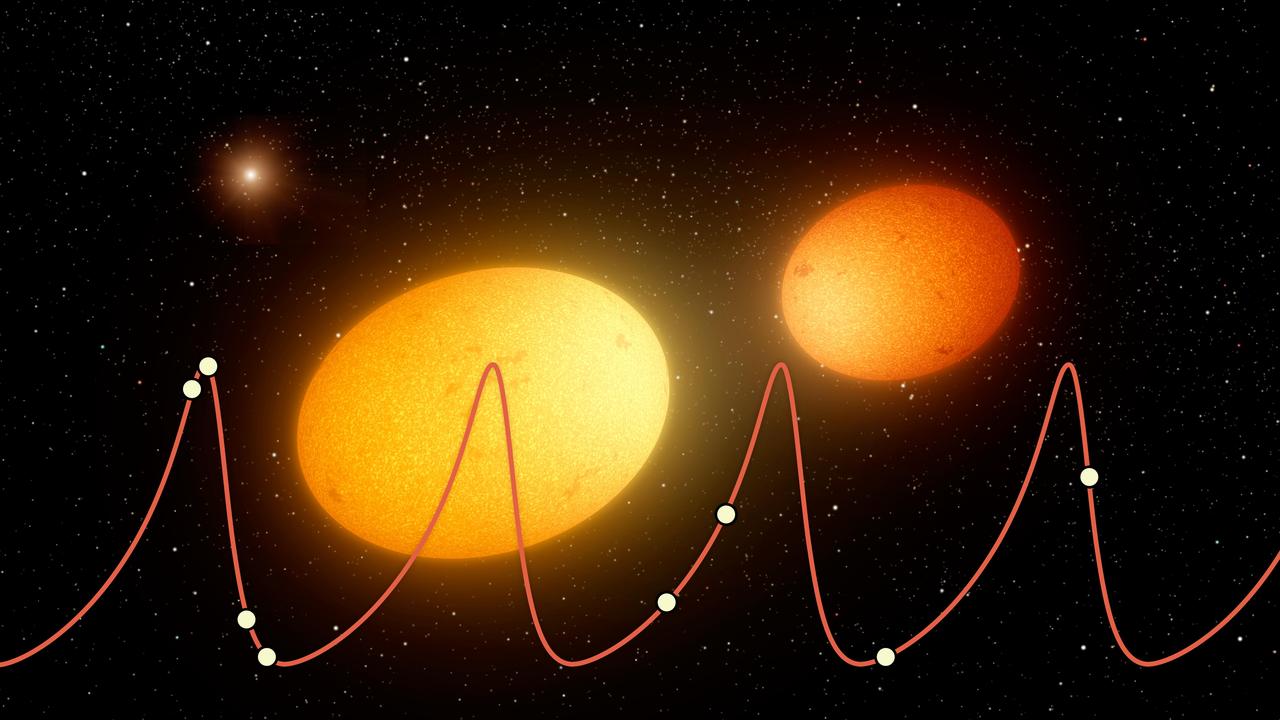
This artist's concept depicts "heartbeat stars," which have been detected by NASA's Kepler Space Telescope and others. The illustration shows two heartbeat stars swerving close to one another in their closest approach along their highly elongated orbits around one another. The mutual gravitation of the two stars would cause the stars themselves to become slightly ellipsoidal in shape. A third, more distant star in the system is shown in the upper left. Astronomers speculate that such unseen companions may exist in some of these heartbeat star systems, and could be responsible for maintaining these oddly stretched-out orbits. The overlaid curve depicts the inferred cyclic change in velocities in one such system, called KIC 9965691, looking something like the graph of an electrocardiogram (hence the name "heartbeat stars"). The solid points represent measurements made by the HIRES instrument at the W.M. Keck Observatory, and the curve is the best fit model for the motions of this system. http://photojournal.jpl.nasa.gov/catalog/PIA21075
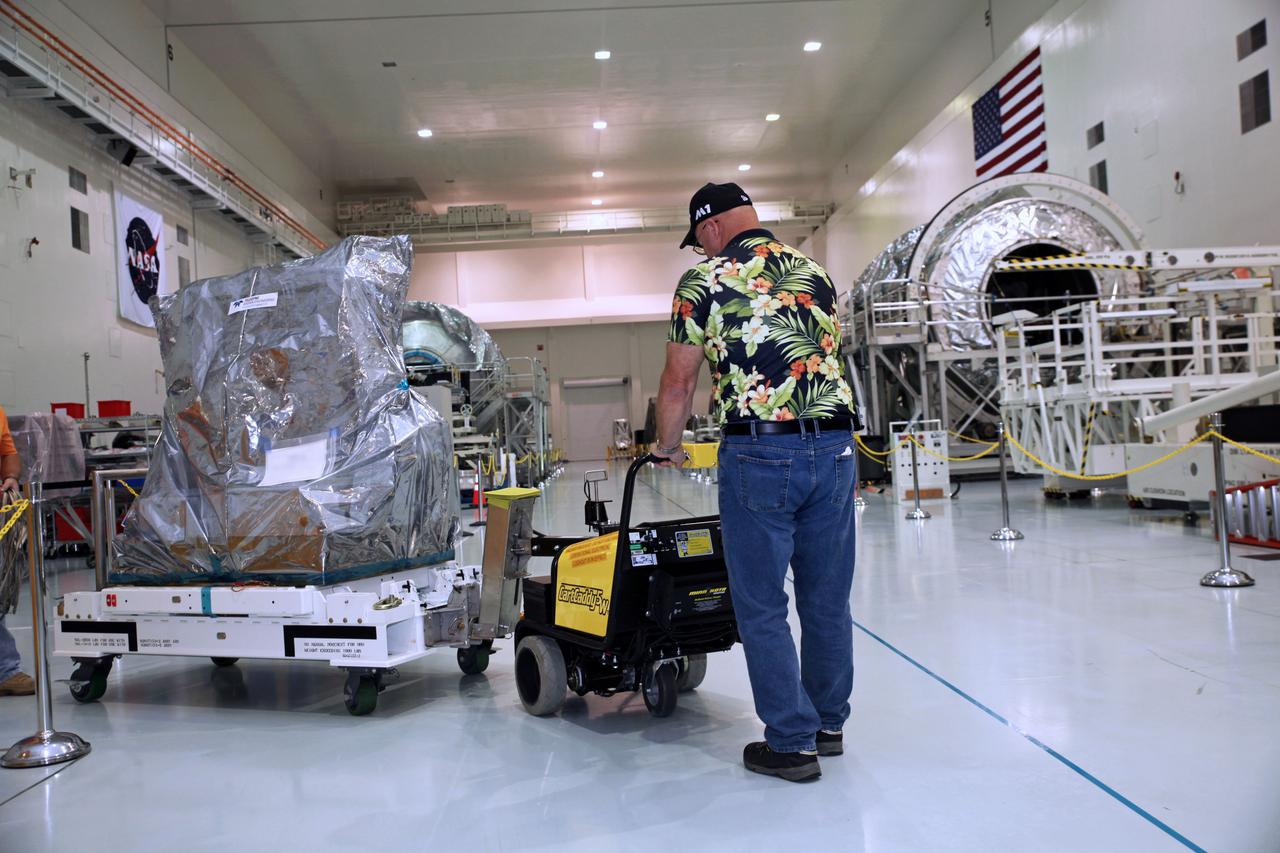
Inside the Space Station Processing Facility high bay at NASA's Kennedy Space Center in Florida, the Multiple User System for Earth Sensing, or MUSES, payload is being prepared for transfer out of the high bay. MUSES will be delivered to the International Space Station aboard the SpaceX Dragon cargo carrier on the company’s 11th commercial resupply services mission to the space station. MUSES, developed by Teledyne Brown, is part of the company's new commercial space-based digital imaging business. MUSES hosts earth-viewing instruments, such as high-resolution digital cameras, hyperspectral imagers, and provides precision pointing and other accommodations.
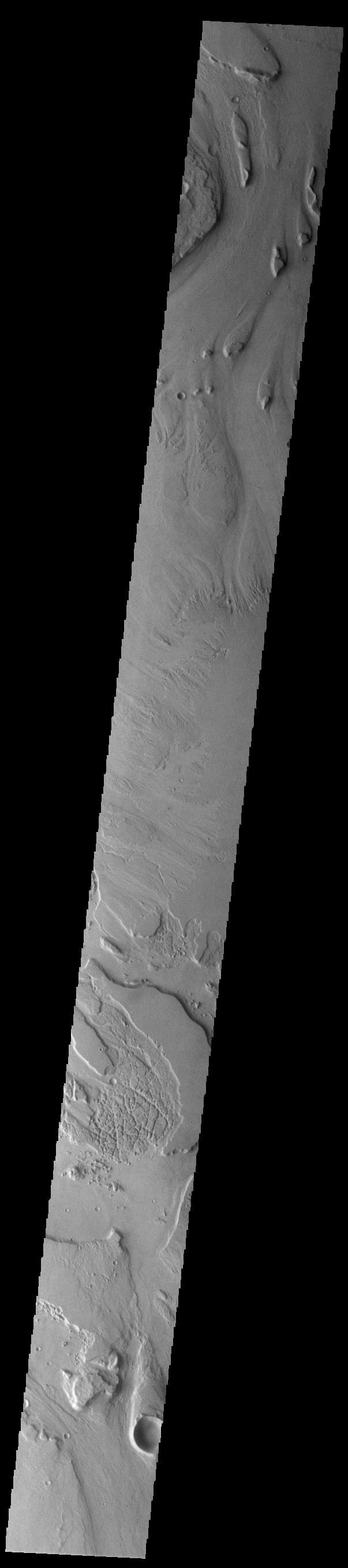
Today's VIS image shows a small section of Mangala Valles. Mangala Valles is a complex channel more than 900km long (560 miles). The channel system starts near Mangala Fossae, a large tectonic feature that intersects the volcanic plains of Daedalia Planum. Like other channels in the region, Mangala Valles flows northward, eventually emptying into southern Amazonis Planitia. Visible at the top of the image are tear-drop shaped hills within the channel. These features are called streamlined islands and the narrow "tail" points down stream. Orbit Number: 84304 Latitude: -16.0319 Longitude: 210.534 Instrument: VIS Captured: 2020-12-15 20:48 https://photojournal.jpl.nasa.gov/catalog/PIA24411
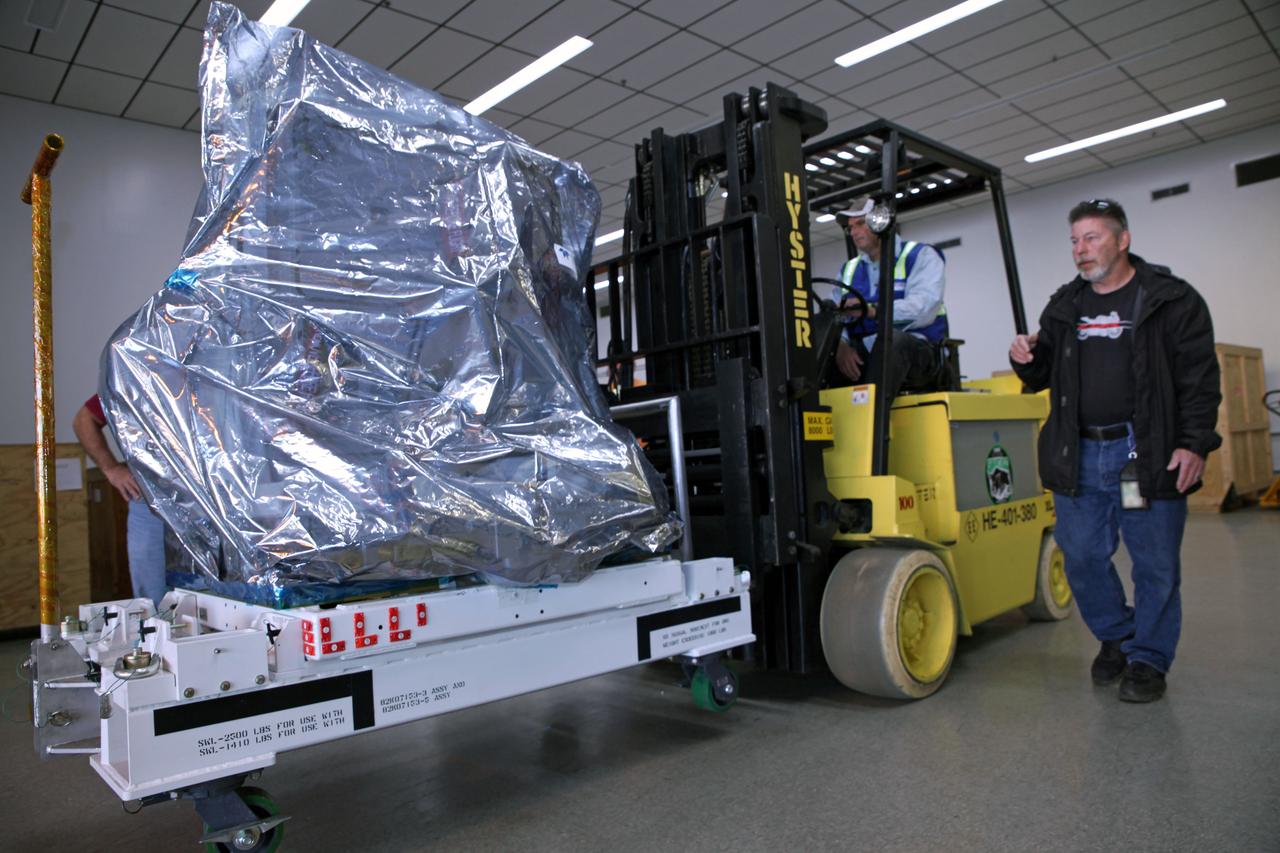
Technicians use a Hyster forklift to move the Multiple User System for Earth Sensing, or MUSES, payload out of the Space Station Processing Facility high bay at NASA's Kennedy Space Center in Florida. MUSES will be delivered to the International Space Station aboard the SpaceX Dragon cargo carrier on the company’s 11th commercial resupply services mission to the space station. MUSES, developed by Teledyne Brown, is part of the company's new commercial space-based digital imaging business. MUSES hosts earth-viewing instruments, such as high-resolution digital cameras, hyperspectral imagers, and provides precision pointing and other accommodations.
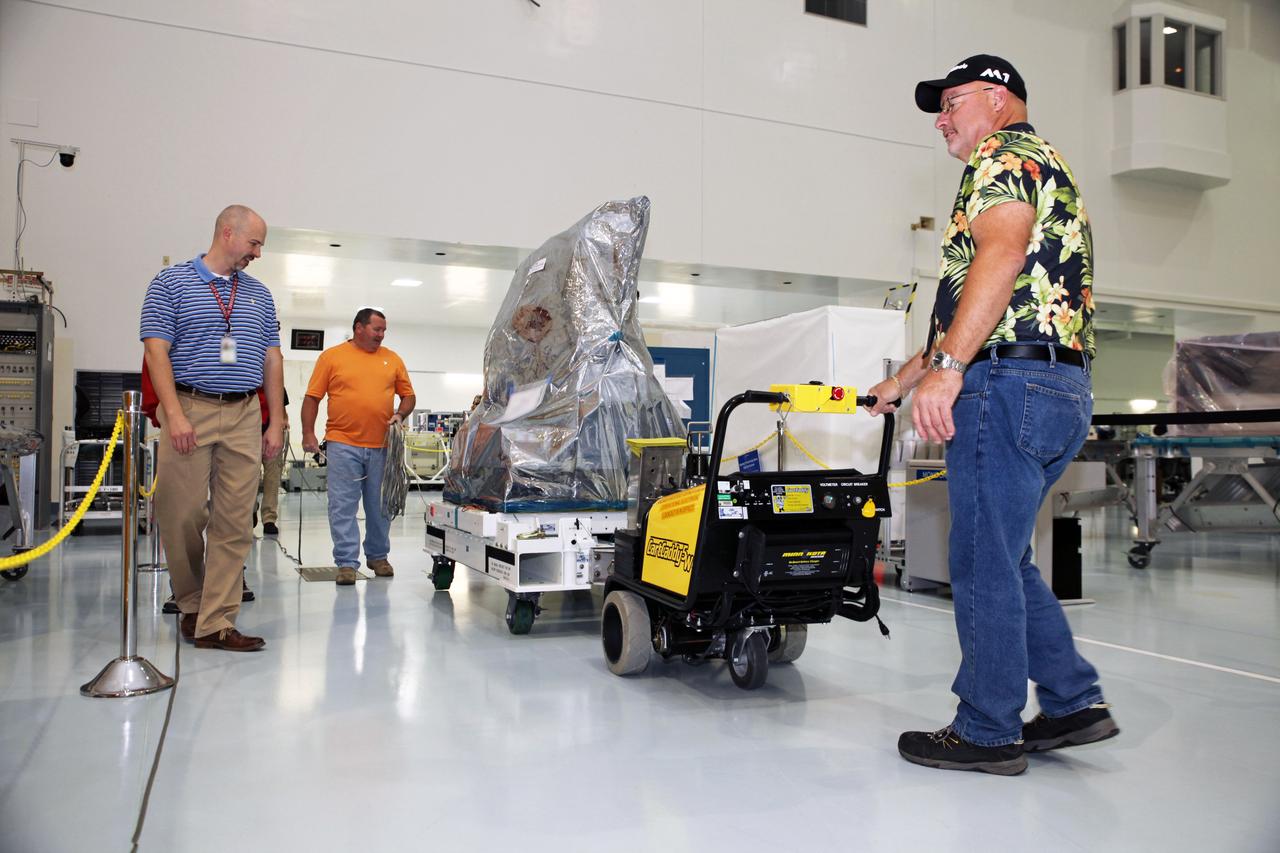
Inside the Space Station Processing Facility high bay at NASA's Kennedy Space Center in Florida, the Multiple User System for Earth Sensing, or MUSES, payload is being prepared for transfer out of the high bay. MUSES will be delivered to the International Space Station aboard the SpaceX Dragon cargo carrier on the company’s 11th commercial resupply services mission to the space station. MUSES, developed by Teledyne Brown, is part of the company's new commercial space-based digital imaging business. MUSES hosts earth-viewing instruments, such as high-resolution digital cameras, hyperspectral imagers, and provides precision pointing and other accommodations.
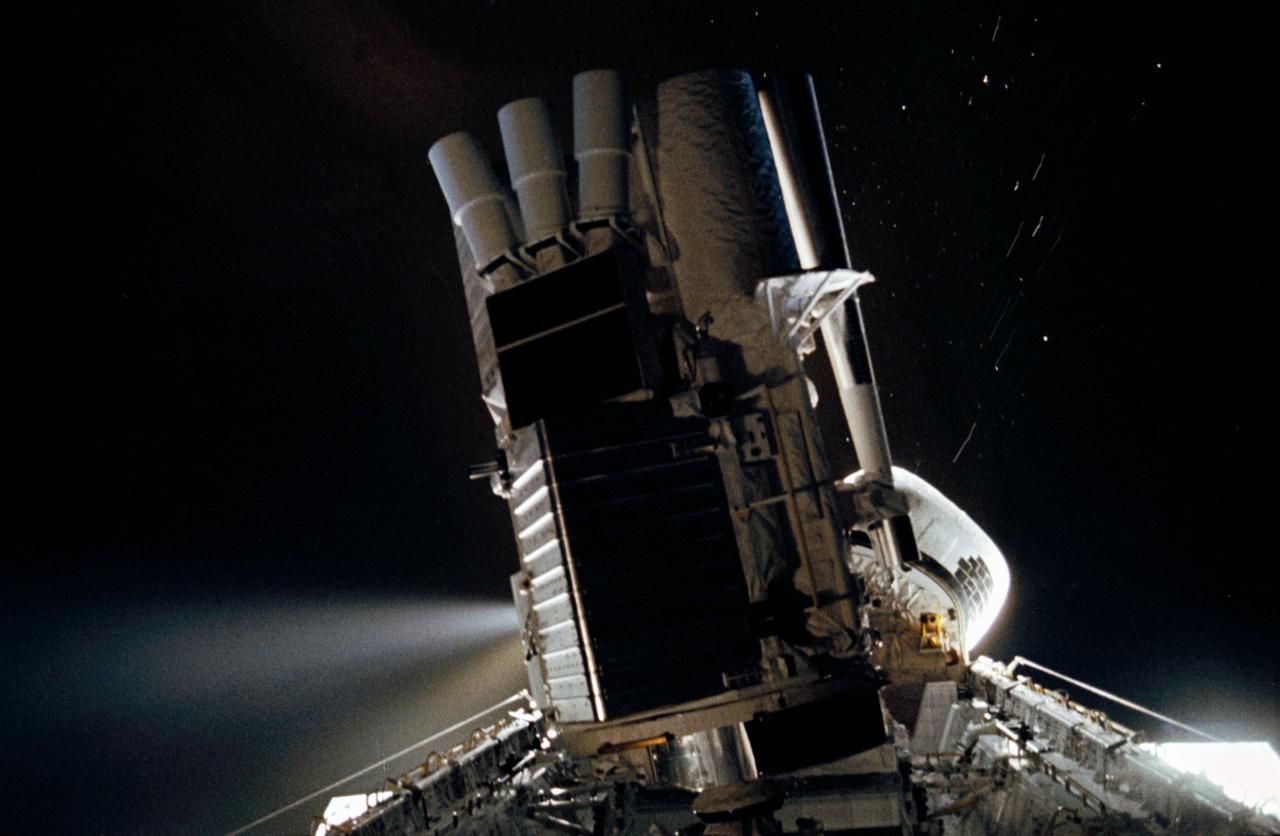
STS035-35-007 (2-10 Dec 1990) --- During the STS-35 mission, the Astronomy Laboratory 1 (ASTRO-1) payload, in its on-orbit operating configuration in the payload bay (PLB), is silhouetted against the firing of a reaction control system (RCS) jet. In the center of the frame, three ultraviolet telescopes are mounted and precisely co-aligned on a common structure, called the cruciform, that is attached to the instrument pointing system (IPS). Visible on the cruciform are Integrated Radiator System (IRS) (silver box on left), the Optical Sensor Package (OSP) (above IRS), the Ultraviolet Imaging Telescope (UIT), and the star tracker (S TRK) (far right). A right RCS jet is fired during this maneuver of Columbia, Orbiter Vehicle (OV) 102.
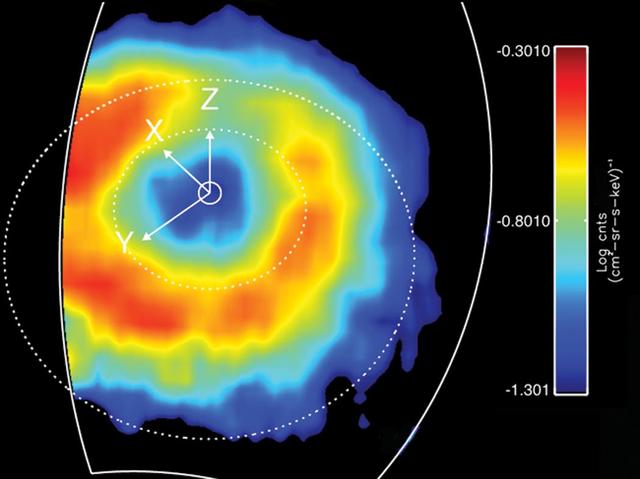
Like Earth, Saturn has an invisible ring of energetic ions trapped in its magnetic field. This feature is known as a "ring current." This ring current has been imaged with a special camera on Cassini sensitive to energetic neutral atoms. This is a false color map of the intensity of the energetic neutral atoms emitted from the ring current through a processed called charged exchange. In this process a trapped energetic ion steals and electron from cold gas atoms and becomes neutral and escapes the magnetic field. The Cassini Magnetospheric Imaging Instrument's ion and neutral camera records the intensity of the escaping particles, which provides a map of the ring current. In this image, the colors represent the intensity of the neutral emission, which is a reflection of the trapped ions. This "ring" is much farther from Saturn (roughly five times farther) than Saturn's famous icy rings. Red in the image represents the higher intensity of the particles, while blue is less intense. Saturn's ring current had not been mapped before on a global scale, only "snippets" or areas were mapped previously but not in this detail. This instrument allows scientists to produce movies (see PIA10083) that show how this ring changes over time. These movies reveal a dynamic system, which is usually not as uniform as depicted in this image. The ring current is doughnut shaped but in some instances it appears as if someone took a bite out of it. This image was obtained on March 19, 2007, at a latitude of about 54.5 degrees and radial distance 1.5 million kilometres (920,000 miles). Saturn is at the center, and the dotted circles represent the orbits of the moon's Rhea and Titan. The Z axis points parallel to Saturn's spin axis, the X axis points roughly sunward in the sun-spin axis plane, and the Y axis completes the system, pointing roughly toward dusk. The ion and neutral camera's field of view is marked by the white line and accounts for the cut-off of the image on the left. The image is an average of the activity over a (roughly) 3-hour period. http://photojournal.jpl.nasa.gov/catalog/PIA10094
CAPE CANAVERAL, Fla. – At the Astrotech payload processing facility in Titusville, Fla., the GOES-O satellite is lowered toward a stand. The satellite will undergo final testing of the imaging system, instrumentation, communications and power systems. The latest Geostationary Operational Environmental Satellite, GOES-O was developed by NASA for the National Oceanic and Atmospheric Administration, or NOAA. The GOES-O satellite is targeted to launch April 28 onboard a United Launch Alliance Delta IV expendable launch vehicle. Once in orbit, GOES-O will be designated GOES-14, and NASA will provide on-orbit checkout and then transfer operational responsibility to NOAA. GOES-O will be placed in on-orbit storage as a replacement for an older GOES satellite. GOES-O carries an advanced attitude control system using star trackers with spacecraft optical bench Imager and Sounder mountings that provide enhanced instrument pointing performance for improved image navigation and registration to better locate severe storms and other events important to the NOAA National Weather Service. Photo credit: NASA/Kim Shiflett
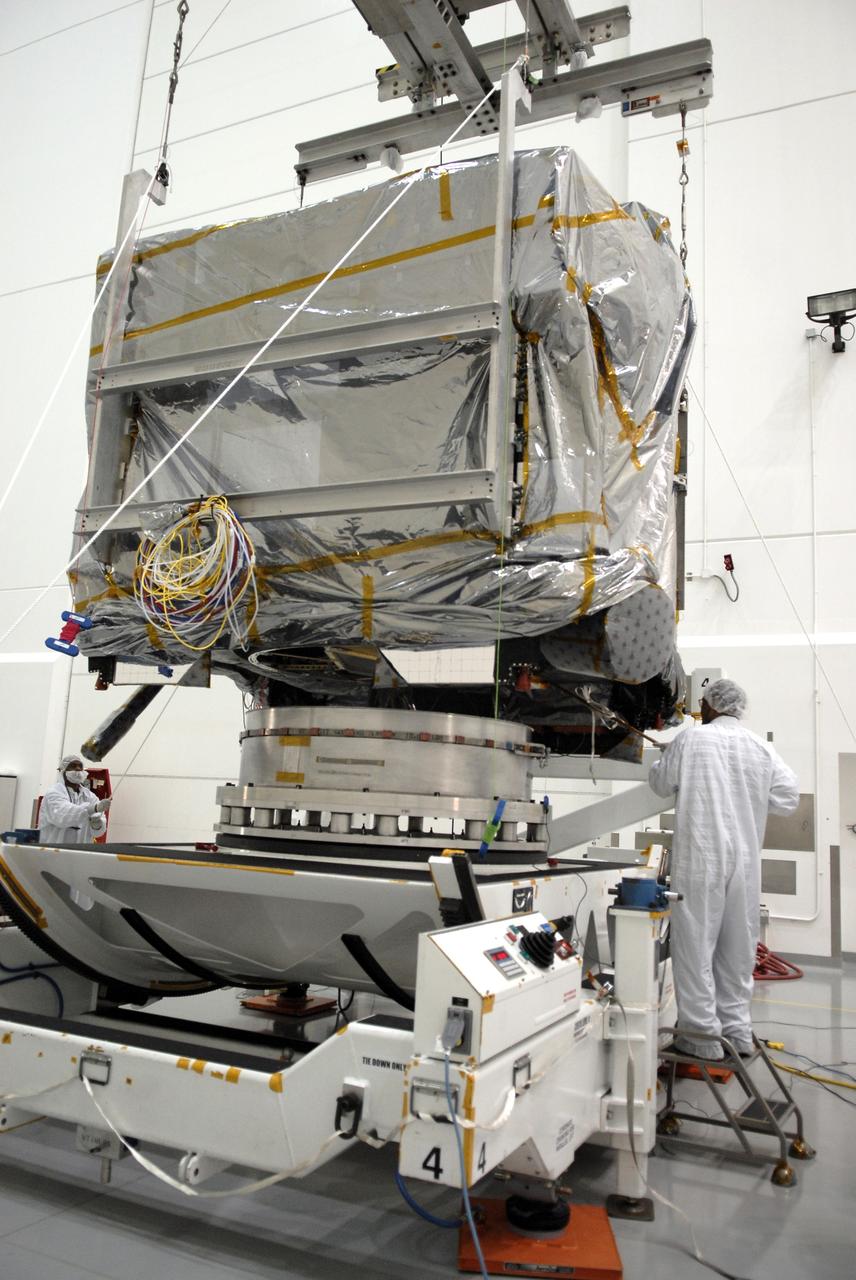
CAPE CANAVERAL, Fla. – At the Astrotech payload processing facility in Titusville, Fla., the GOES-O satellite is lowered toward a test stand. The satellite will undergo final testing of the imaging system, instrumentation, communications and power systems. The latest Geostationary Operational Environmental Satellite, GOES-O was developed by NASA for the National Oceanic and Atmospheric Administration, or NOAA. The GOES-O satellite is targeted to launch April 28 onboard a United Launch Alliance Delta IV expendable launch vehicle. Once in orbit, GOES-O will be designated GOES-14, and NASA will provide on-orbit checkout and then transfer operational responsibility to NOAA. GOES-O will be placed in on-orbit storage as a replacement for an older GOES satellite. GOES-O carries an advanced attitude control system using star trackers with spacecraft optical bench Imager and Sounder mountings that provide enhanced instrument pointing performance for improved image navigation and registration to better locate severe storms and other events important to the NOAA National Weather Service. Photo credit: NASA/Kim Shiflett
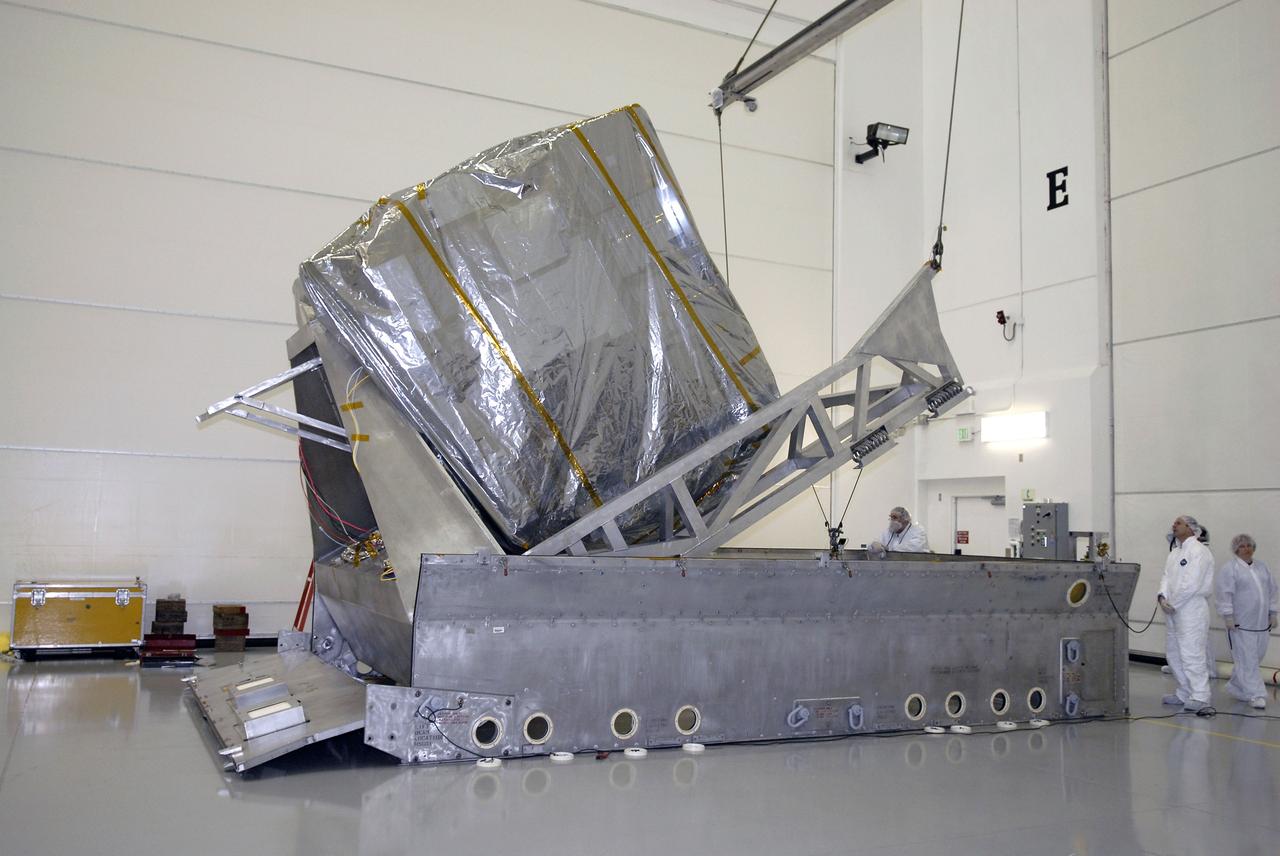
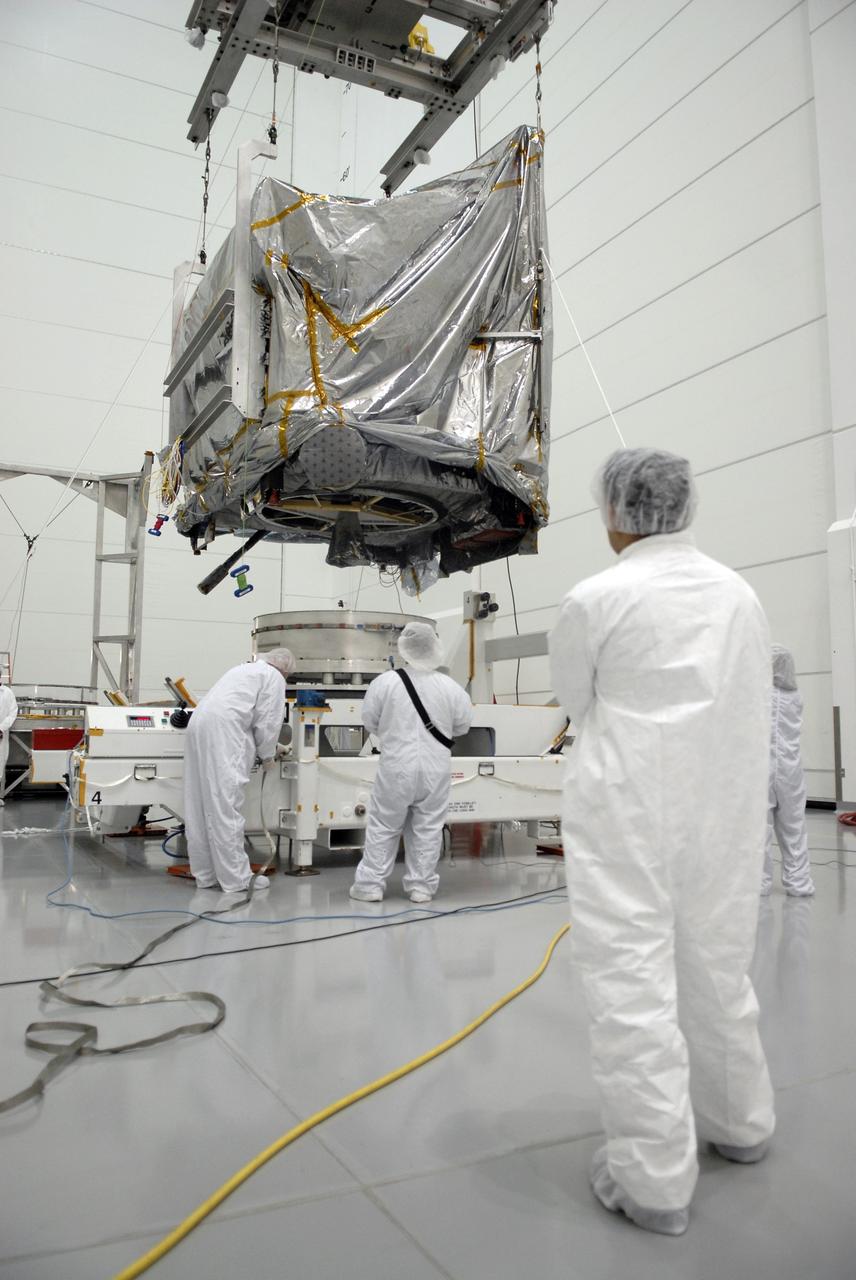
CAPE CANAVERAL, Fla. – At the Astrotech payload processing facility in Titusville, Fla., the GOES-O satellite is lifted out of its shipping container. It will be placed on a stand for final testing of the imaging system, instrumentation, communications and power systems. The latest Geostationary Operational Environmental Satellite, GOES-O was developed by NASA for the National Oceanic and Atmospheric Administration, or NOAA. The GOES-O satellite is targeted to launch April 28 onboard a United Launch Alliance Delta IV expendable launch vehicle. Once in orbit, GOES-O will be designated GOES-14, and NASA will provide on-orbit checkout and then transfer operational responsibility to NOAA. GOES-O will be placed in on-orbit storage as a replacement for an older GOES satellite. GOES-O carries an advanced attitude control system using star trackers with spacecraft optical bench Imager and Sounder mountings that provide enhanced instrument pointing performance for improved image navigation and registration to better locate severe storms and other events important to the NOAA National Weather Service. Photo credit: NASA/Kim Shiflett
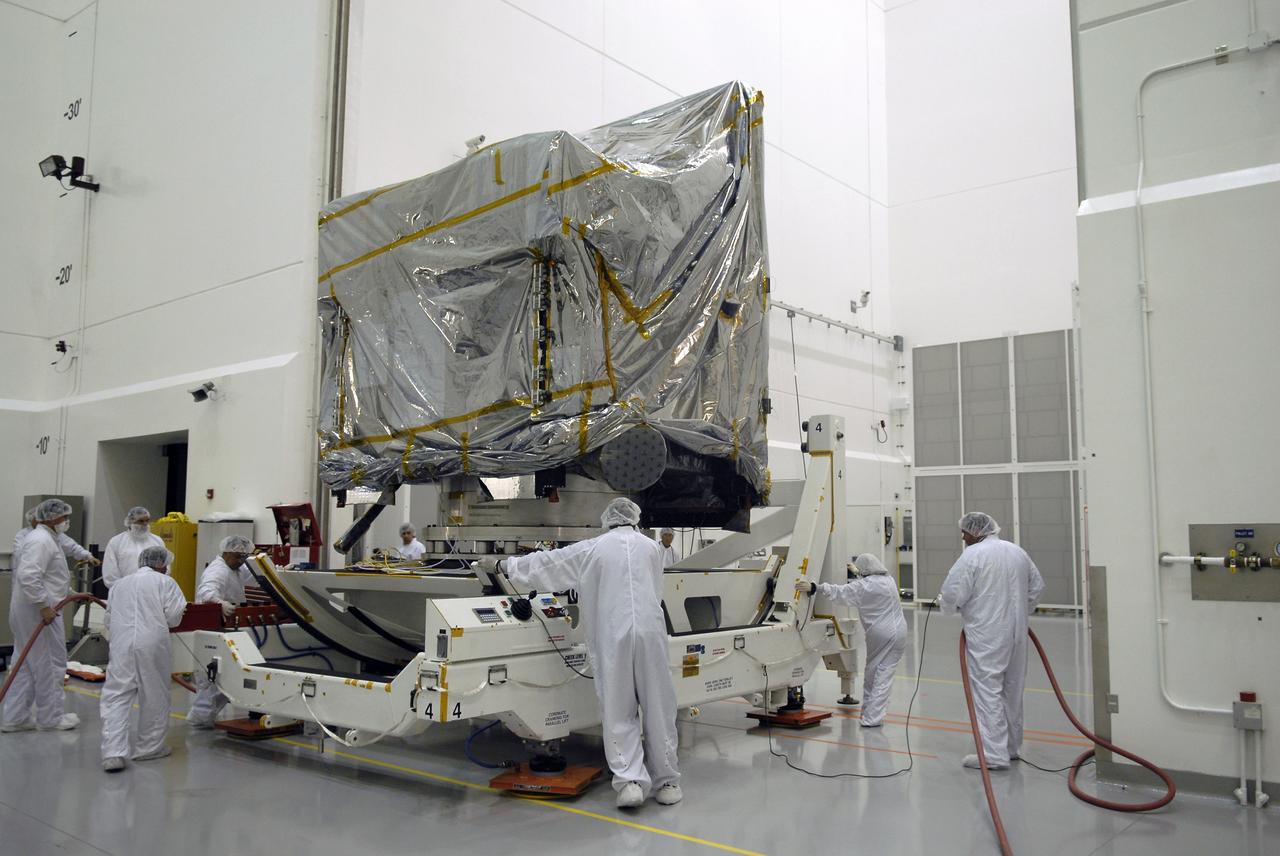
CAPE CANAVERAL, Fla. – At the Astrotech payload processing facility in Titusville, Fla., technicians move the test stand with the GOES-O satellite. The satellite will undergo final testing of the imaging system, instrumentation, communications and power systems. The latest Geostationary Operational Environmental Satellite, GOES-O was developed by NASA for the National Oceanic and Atmospheric Administration, or NOAA. The GOES-O satellite is targeted to launch April 28 onboard a United Launch Alliance Delta IV expendable launch vehicle. Once in orbit, GOES-O will be designated GOES-14, and NASA will provide on-orbit checkout and then transfer operational responsibility to NOAA. GOES-O will be placed in on-orbit storage as a replacement for an older GOES satellite. GOES-O carries an advanced attitude control system using star trackers with spacecraft optical bench Imager and Sounder mountings that provide enhanced instrument pointing performance for improved image navigation and registration to better locate severe storms and other events important to the NOAA National Weather Service. Photo credit: NASA/Kim Shiflett
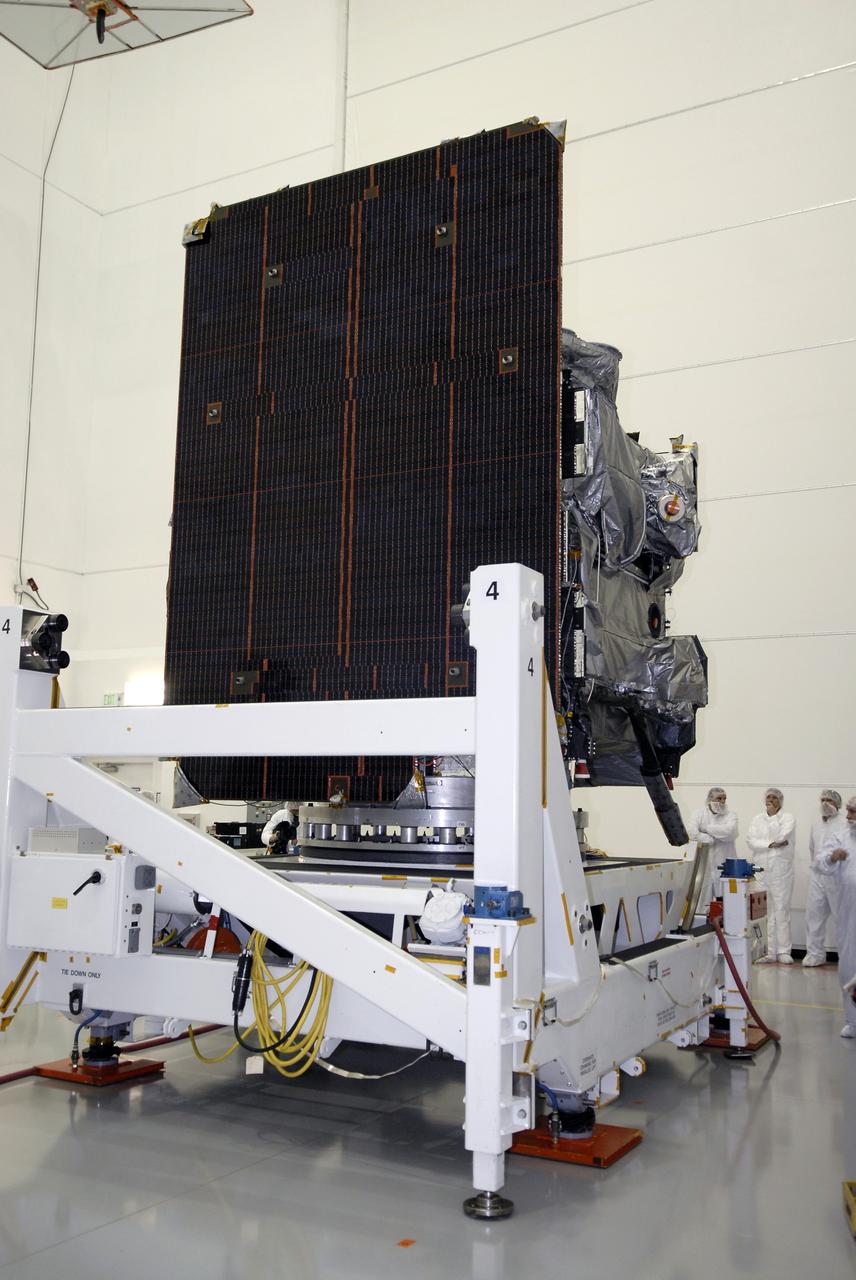
CAPE CANAVERAL, Fla. – At the Astrotech payload processing facility in Titusville, Fla., the GOES-O satellite will undergo final testing of the imaging system, instrumentation, communications and power systems. The latest Geostationary Operational Environmental Satellite, GOES-O was developed by NASA for the National Oceanic and Atmospheric Administration, or NOAA. The GOES-O satellite is targeted to launch April 28 onboard a United Launch Alliance Delta IV expendable launch vehicle. Once in orbit, GOES-O will be designated GOES-14, and NASA will provide on-orbit checkout and then transfer operational responsibility to NOAA. GOES-O will be placed in on-orbit storage as a replacement for an older GOES satellite. GOES-O carries an advanced attitude control system using star trackers with spacecraft optical bench Imager and Sounder mountings that provide enhanced instrument pointing performance for improved image navigation and registration to better locate severe storms and other events important to the NOAA National Weather Service. Photo credit: NASA/Kim Shiflett
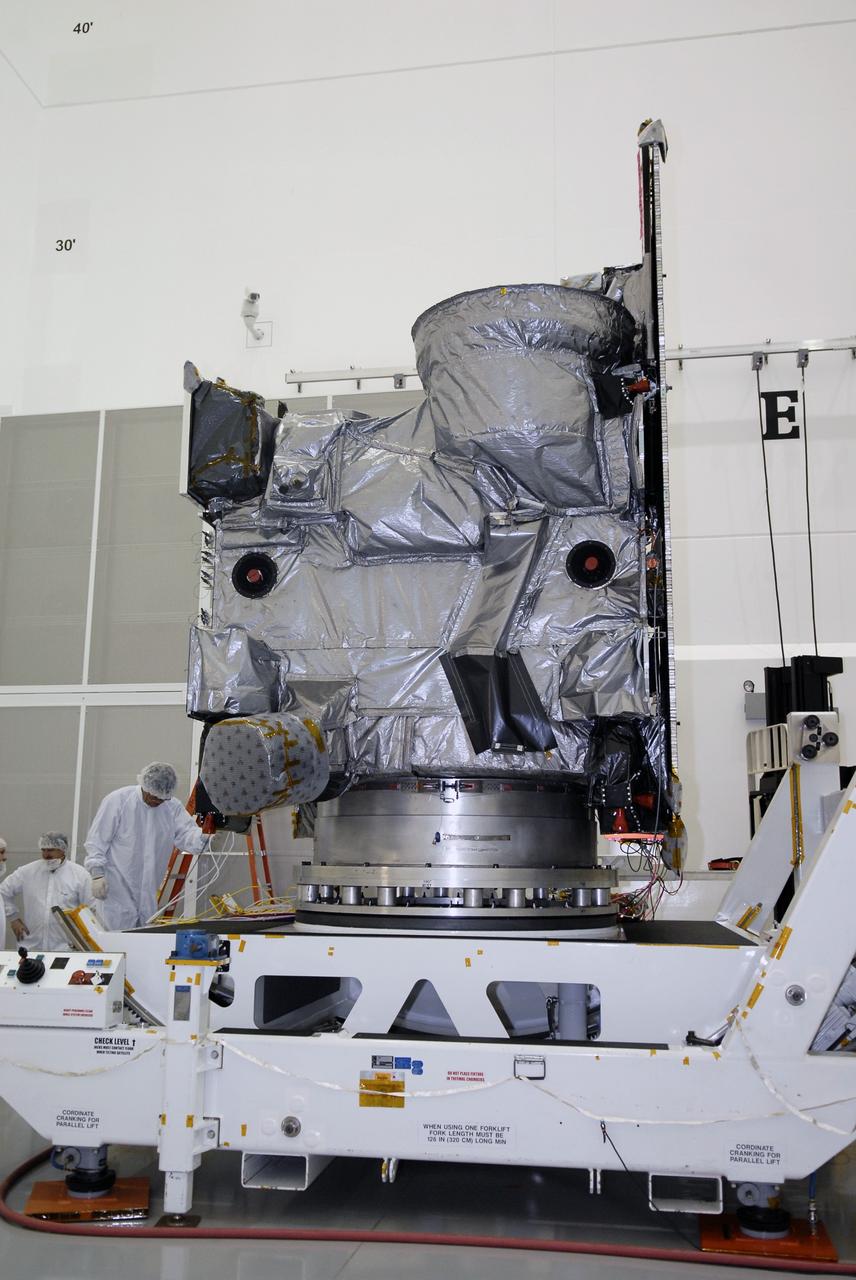
CAPE CANAVERAL, Fla. – At the Astrotech payload processing facility in Titusville, Fla., the protective shipping cover has been removed from the GOES-O satellite. GOES-O will undergo final testing of the imaging system, instrumentation, communications and power systems. The latest Geostationary Operational Environmental Satellite, GOES-O was developed by NASA for the National Oceanic and Atmospheric Administration, or NOAA. The GOES-O satellite is targeted to launch April 28 onboard a United Launch Alliance Delta IV expendable launch vehicle. Once in orbit, GOES-O will be designated GOES-14, and NASA will provide on-orbit checkout and then transfer operational responsibility to NOAA. GOES-O will be placed in on-orbit storage as a replacement for an older GOES satellite. GOES-O carries an advanced attitude control system using star trackers with spacecraft optical bench Imager and Sounder mountings that provide enhanced instrument pointing performance for improved image navigation and registration to better locate severe storms and other events important to the NOAA National Weather Service. Photo credit: NASA/Kim Shiflett
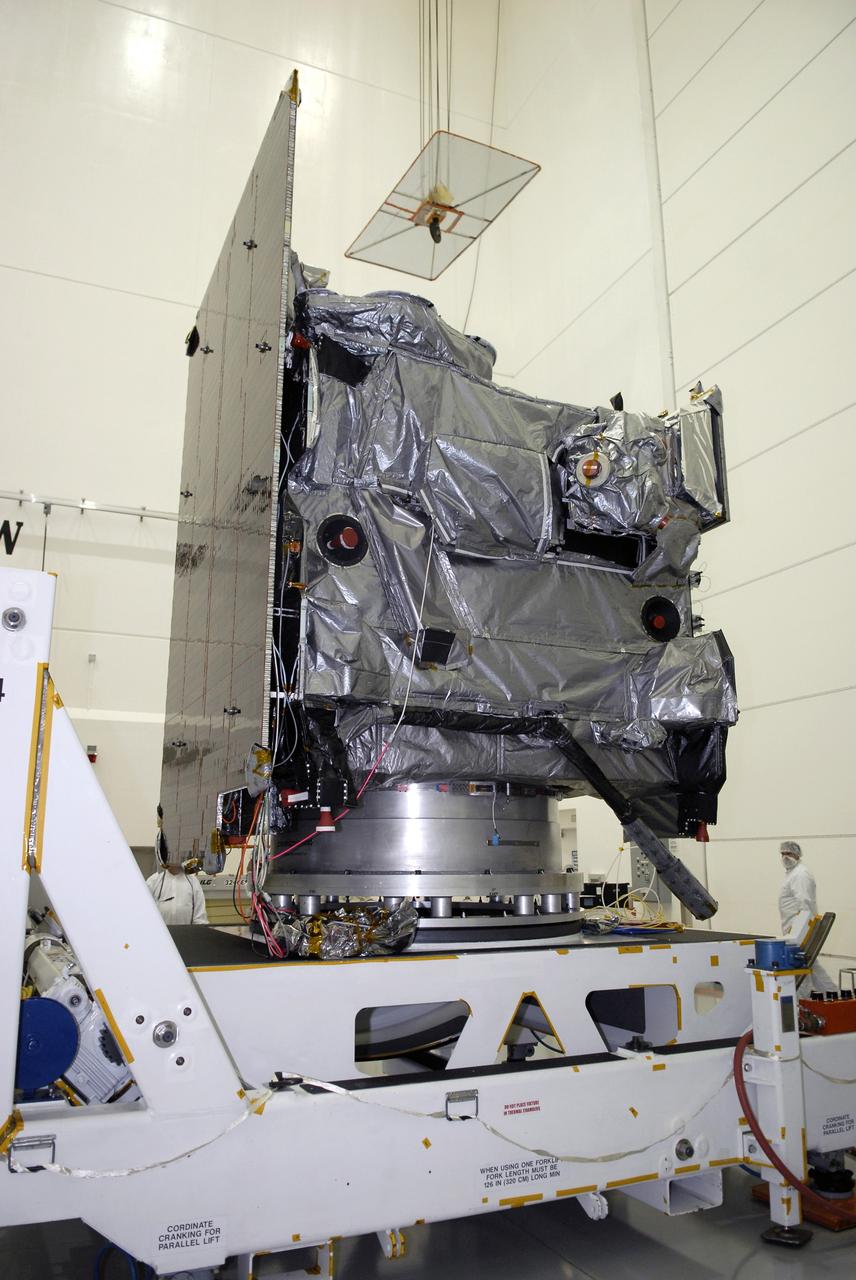
CAPE CANAVERAL, Fla. – At the Astrotech payload processing facility in Titusville, Fla., the solar arrays on the GOES-O satellite are revealed. GOES-O will undergo final testing of the imaging system, instrumentation, communications and power systems. The latest Geostationary Operational Environmental Satellite, GOES-O was developed by NASA for the National Oceanic and Atmospheric Administration, or NOAA. The GOES-O satellite is targeted to launch April 28 onboard a United Launch Alliance Delta IV expendable launch vehicle. Once in orbit, GOES-O will be designated GOES-14, and NASA will provide on-orbit checkout and then transfer operational responsibility to NOAA. GOES-O will be placed in on-orbit storage as a replacement for an older GOES satellite. GOES-O carries an advanced attitude control system using star trackers with spacecraft optical bench Imager and Sounder mountings that provide enhanced instrument pointing performance for improved image navigation and registration to better locate severe storms and other events important to the NOAA National Weather Service. Photo credit: NASA/Kim Shiflett
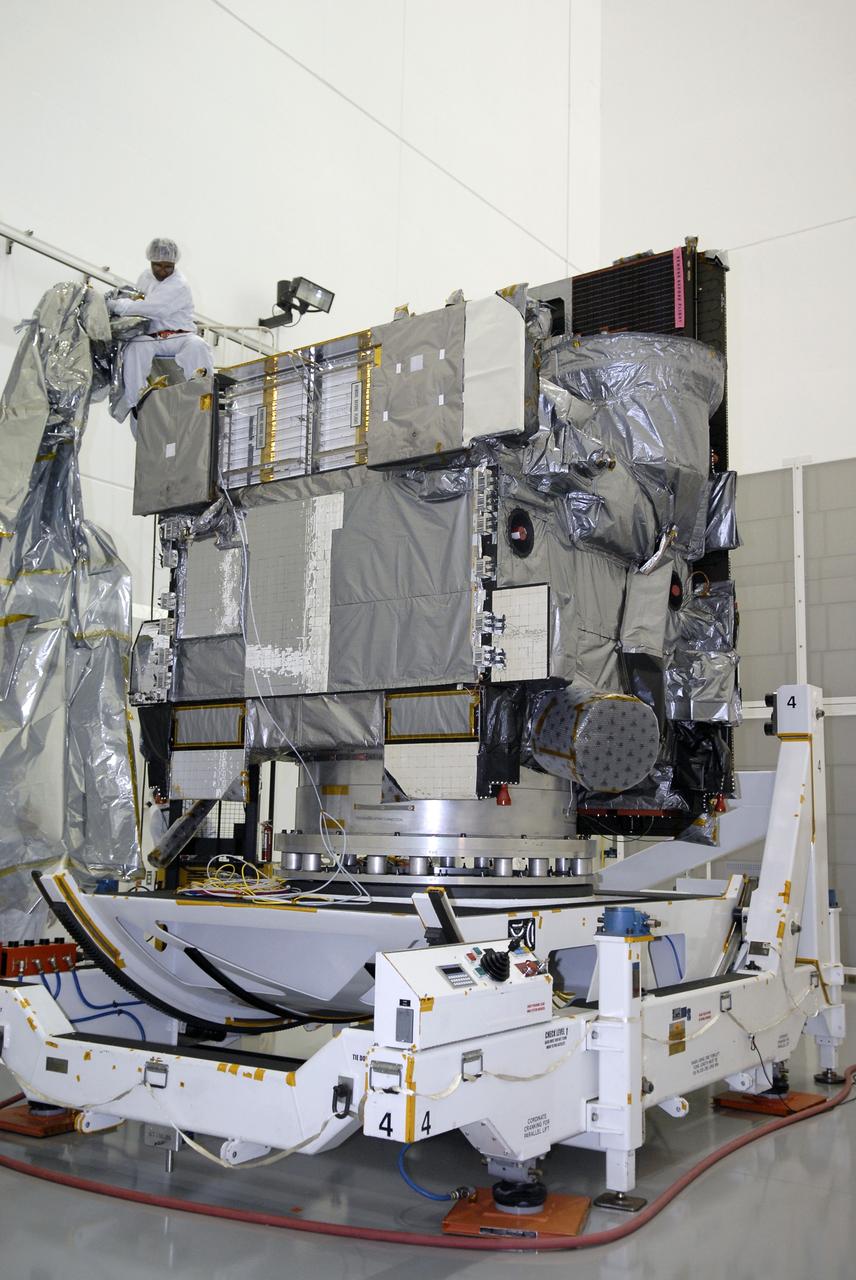
CAPE CANAVERAL, Fla. – At the Astrotech payload processing facility in Titusville, Fla., technicians remove the protective cover wrapped around the GOES-O satellite. The satellite will undergo final testing of the imaging system, instrumentation, communications and power systems. The latest Geostationary Operational Environmental Satellite, GOES-O was developed by NASA for the National Oceanic and Atmospheric Administration, or NOAA. The GOES-O satellite is targeted to launch April 28 onboard a United Launch Alliance Delta IV expendable launch vehicle. Once in orbit, GOES-O will be designated GOES-14, and NASA will provide on-orbit checkout and then transfer operational responsibility to NOAA. GOES-O will be placed in on-orbit storage as a replacement for an older GOES satellite. GOES-O carries an advanced attitude control system using star trackers with spacecraft optical bench Imager and Sounder mountings that provide enhanced instrument pointing performance for improved image navigation and registration to better locate severe storms and other events important to the NOAA National Weather Service. Photo credit: NASA/Kim Shiflett
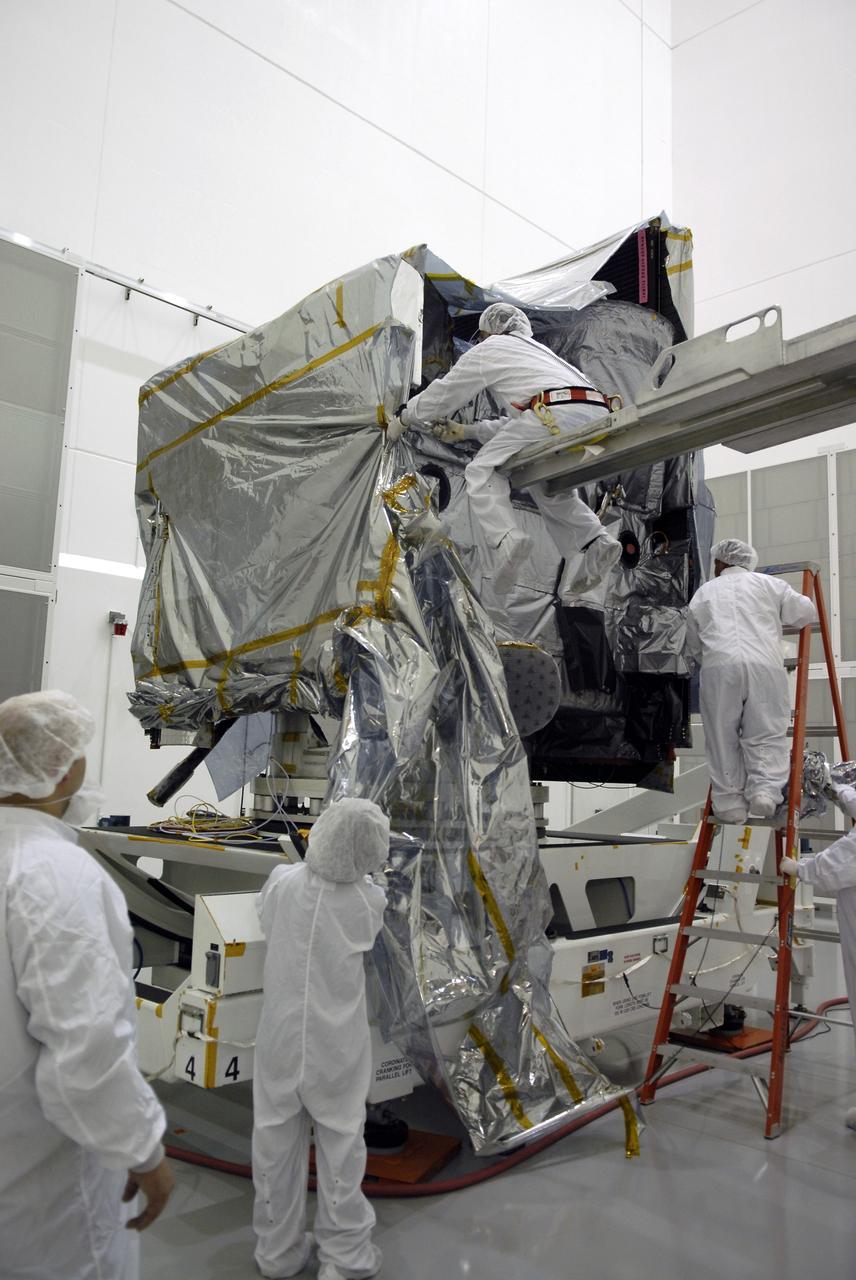
CAPE CANAVERAL, Fla. – At the Astrotech payload processing facility in Titusville, Fla., technicians remove the protective cover wrapped around the GOES-O satellite. The satellite will undergo final testing of the imaging system, instrumentation, communications and power systems. The latest Geostationary Operational Environmental Satellite, GOES-O was developed by NASA for the National Oceanic and Atmospheric Administration, or NOAA. The GOES-O satellite is targeted to launch April 28 onboard a United Launch Alliance Delta IV expendable launch vehicle. Once in orbit, GOES-O will be designated GOES-14, and NASA will provide on-orbit checkout and then transfer operational responsibility to NOAA. GOES-O will be placed in on-orbit storage as a replacement for an older GOES satellite. GOES-O carries an advanced attitude control system using star trackers with spacecraft optical bench Imager and Sounder mountings that provide enhanced instrument pointing performance for improved image navigation and registration to better locate severe storms and other events important to the NOAA National Weather Service. Photo credit: NASA/Kim Shiflett
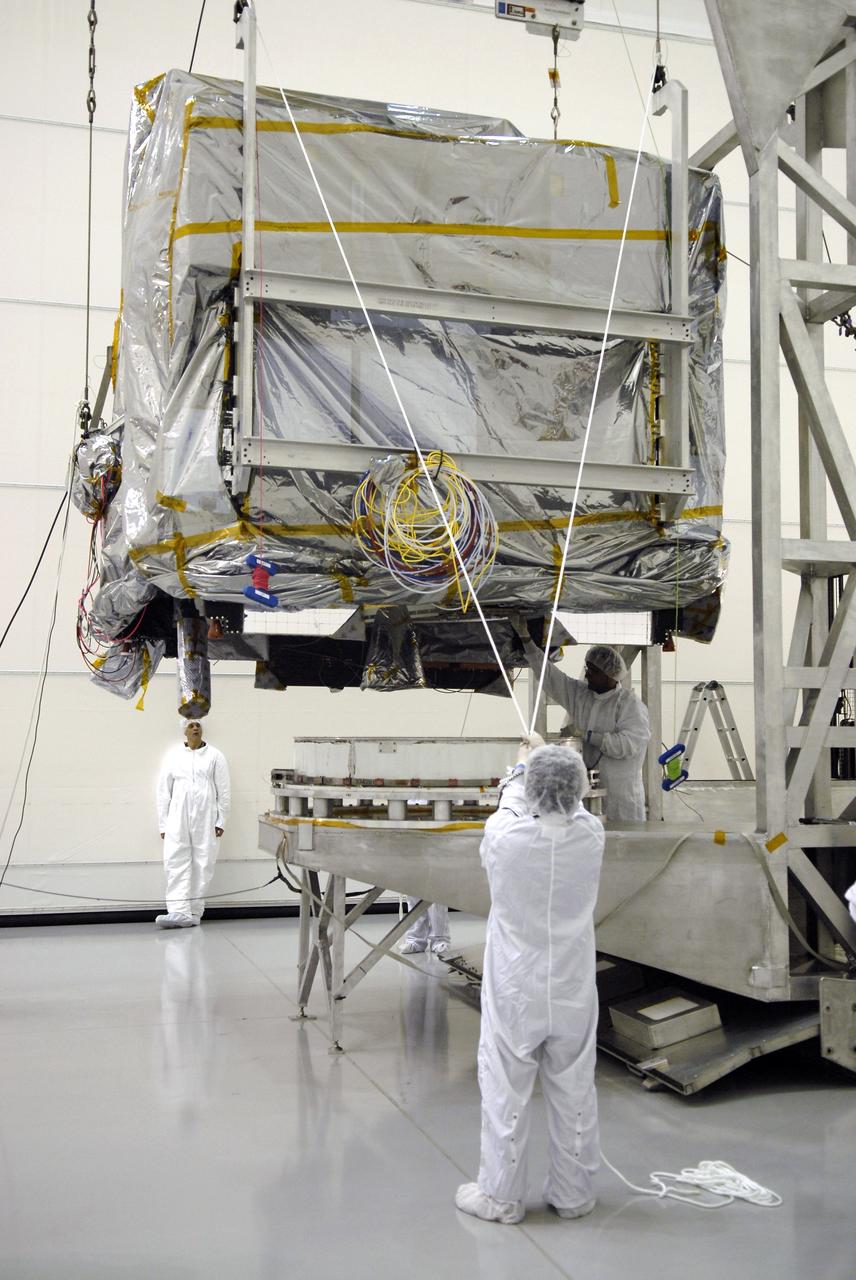
CAPE CANAVERAL, Fla. – At the Astrotech payload processing facility in Titusville, Fla., technicians help guide the cables lifting the GOES-O satellite away from its shipping container. The satellite will be placed on a stand for final testing of the imaging system, instrumentation, communications and power systems. The latest Geostationary Operational Environmental Satellite, GOES-O was developed by NASA for the National Oceanic and Atmospheric Administration, or NOAA. The GOES-O satellite is targeted to launch April 28 onboard a United Launch Alliance Delta IV expendable launch vehicle. Once in orbit, GOES-O will be designated GOES-14, and NASA will provide on-orbit checkout and then transfer operational responsibility to NOAA. GOES-O will be placed in on-orbit storage as a replacement for an older GOES satellite. GOES-O carries an advanced attitude control system using star trackers with spacecraft optical bench Imager and Sounder mountings that provide enhanced instrument pointing performance for improved image navigation and registration to better locate severe storms and other events important to the NOAA National Weather Service. Photo credit: NASA/Kim Shiflett
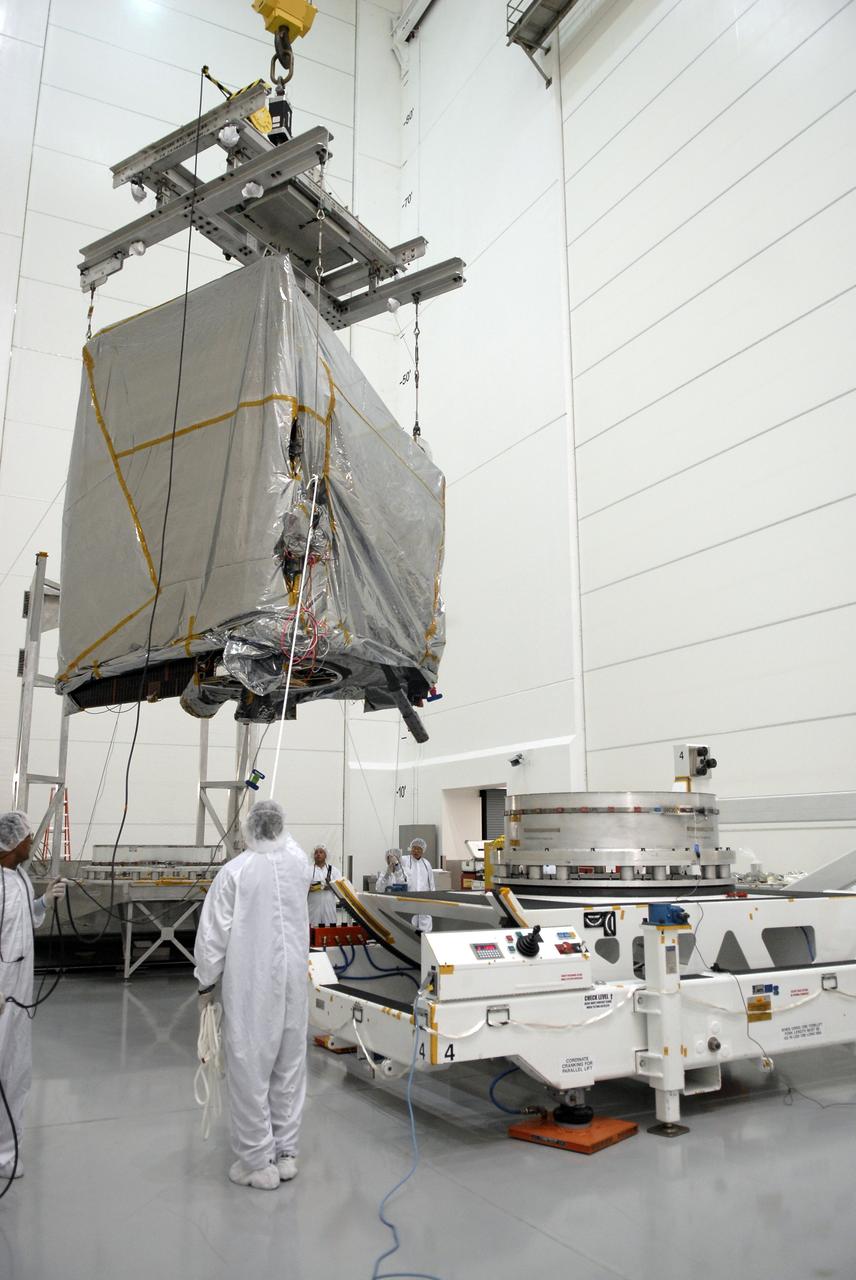
CAPE CANAVERAL, Fla. – At the Astrotech payload processing facility in Titusville, Fla., technicians help guide the cables lifting the GOES-O satellite toward the stand at right. The satellite will undergo final testing of the imaging system, instrumentation, communications and power systems. The latest Geostationary Operational Environmental Satellite, GOES-O was developed by NASA for the National Oceanic and Atmospheric Administration, or NOAA. The GOES-O satellite is targeted to launch April 28 onboard a United Launch Alliance Delta IV expendable launch vehicle. Once in orbit, GOES-O will be designated GOES-14, and NASA will provide on-orbit checkout and then transfer operational responsibility to NOAA. GOES-O will be placed in on-orbit storage as a replacement for an older GOES satellite. GOES-O carries an advanced attitude control system using star trackers with spacecraft optical bench Imager and Sounder mountings that provide enhanced instrument pointing performance for improved image navigation and registration to better locate severe storms and other events important to the NOAA National Weather Service. Photo credit: NASA/Kim Shiflett
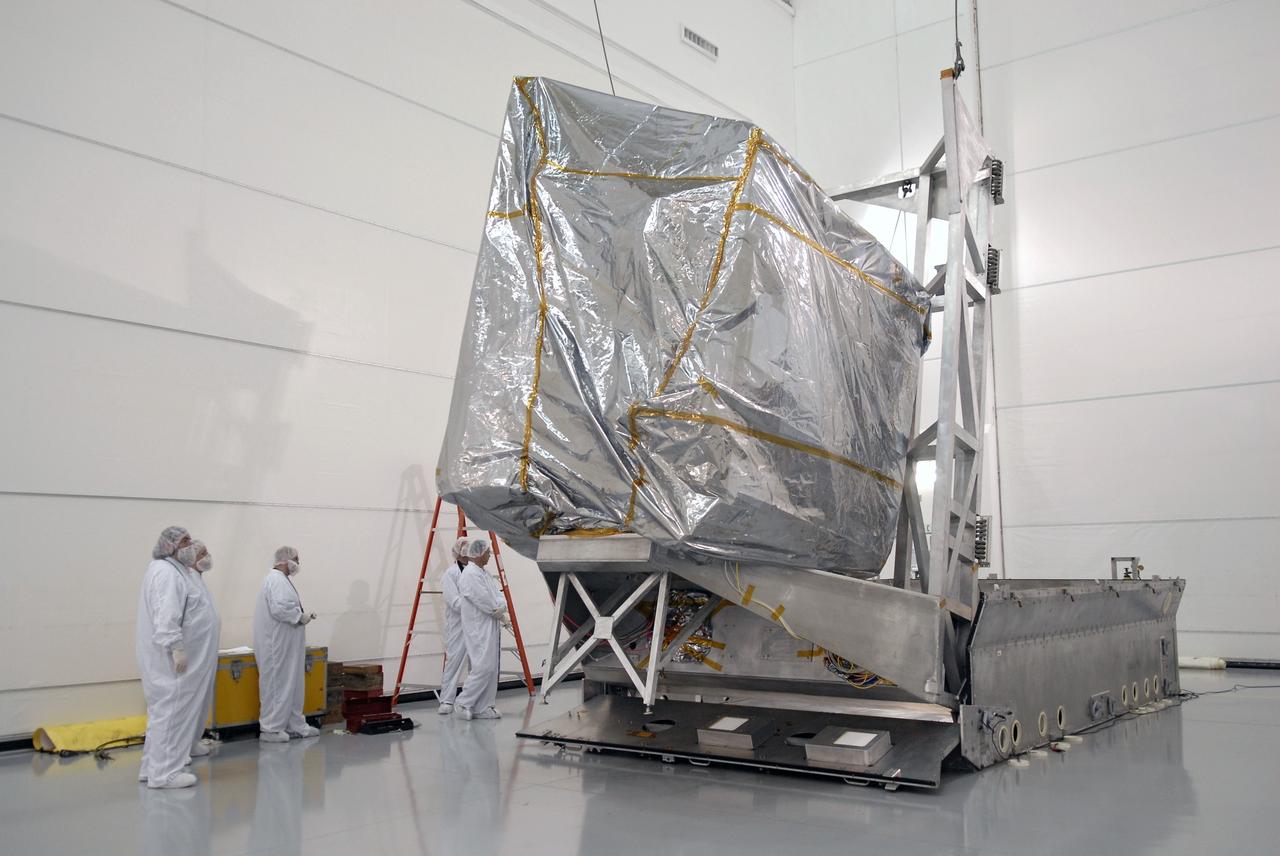
CAPE CANAVERAL, Fla. – At the Astrotech payload processing facility in Titusville, Fla., the GOES-O satellite is lifted out of its shipping container to a vertical position. It will be placed on a stand for final testing of the imaging system, instrumentation, communications and power systems. The latest Geostationary Operational Environmental Satellite, GOES-O was developed by NASA for the National Oceanic and Atmospheric Administration, or NOAA. The GOES-O satellite is targeted to launch April 28 onboard a United Launch Alliance Delta IV expendable launch vehicle. Once in orbit, GOES-O will be designated GOES-14, and NASA will provide on-orbit checkout and then transfer operational responsibility to NOAA. GOES-O will be placed in on-orbit storage as a replacement for an older GOES satellite. GOES-O carries an advanced attitude control system using star trackers with spacecraft optical bench Imager and Sounder mountings that provide enhanced instrument pointing performance for improved image navigation and registration to better locate severe storms and other events important to the NOAA National Weather Service. Photo credit: NASA/Kim Shiflett
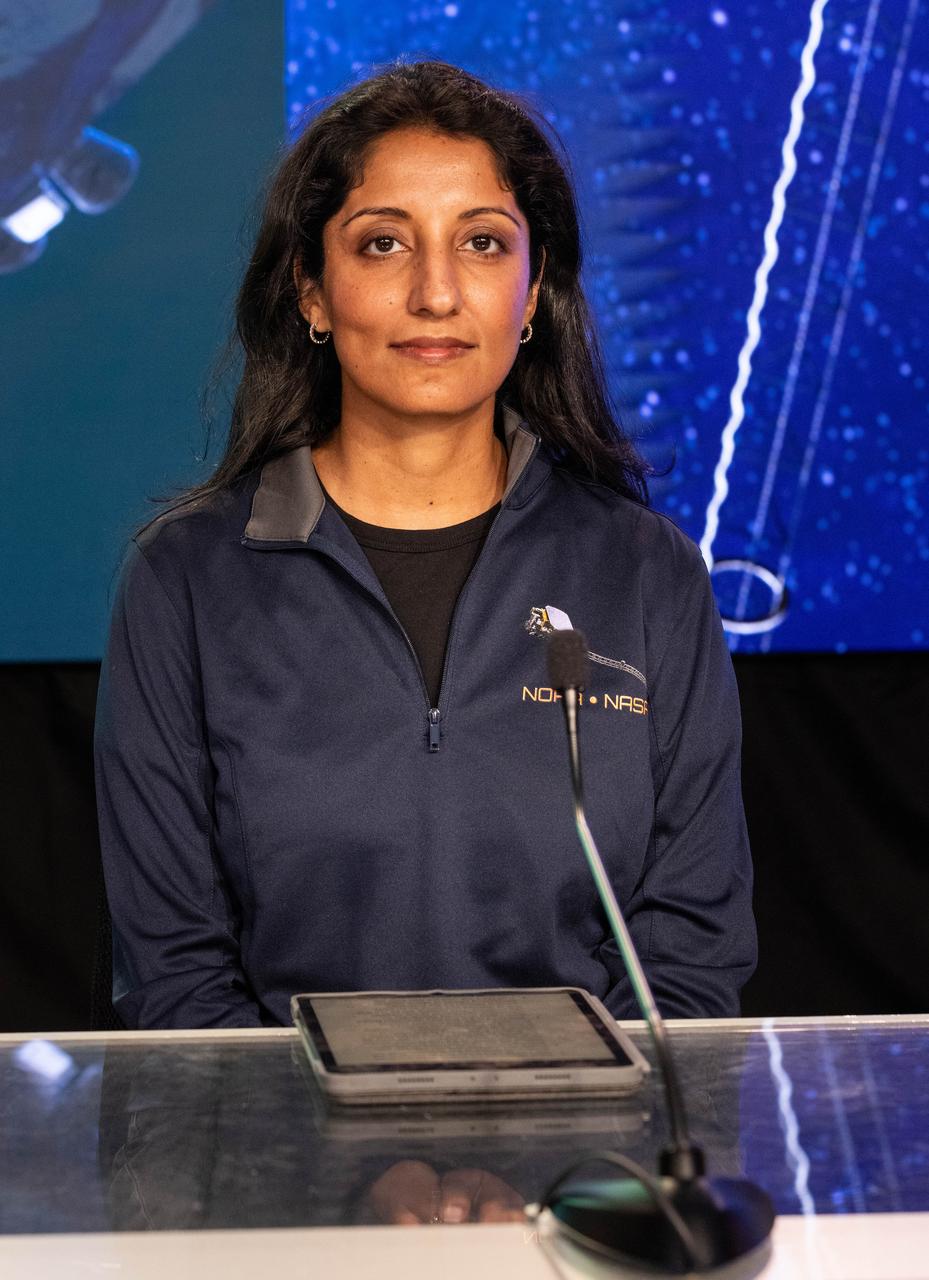
Irene Parker, deputy assistant administrator for Systems for NOAA’s National Environmental Satellite, Data, and Information Service, participates in a prelaunch news conference on Sunday, Sept. 21, 2025, at the agency’s Kennedy Space Center in Florida for NASA's IMAP (Interstellar Mapping and Acceleration Probe) mission. NASA’s IMAP will use 10 science instruments to study and map the heliosphere, a vast magnetic bubble surrounding the Sun protecting our solar system from radiation incoming from interstellar space. This mission and its two rideshares – NASA’s exosphere-studying Carruthers Geocorona Observatory and National Oceanic and Atmospheric Administration’s (NOAA) Space Weather Follow On–Lagrange 1 (SWFO-L1) observatory – will orbit the Sun near Lagrange point 1, about one million miles from Earth. Launch is targeting 7:32 a.m. EDT, Tuesday, Sept. 23, from Launch Complex 39A at NASA Kennedy.
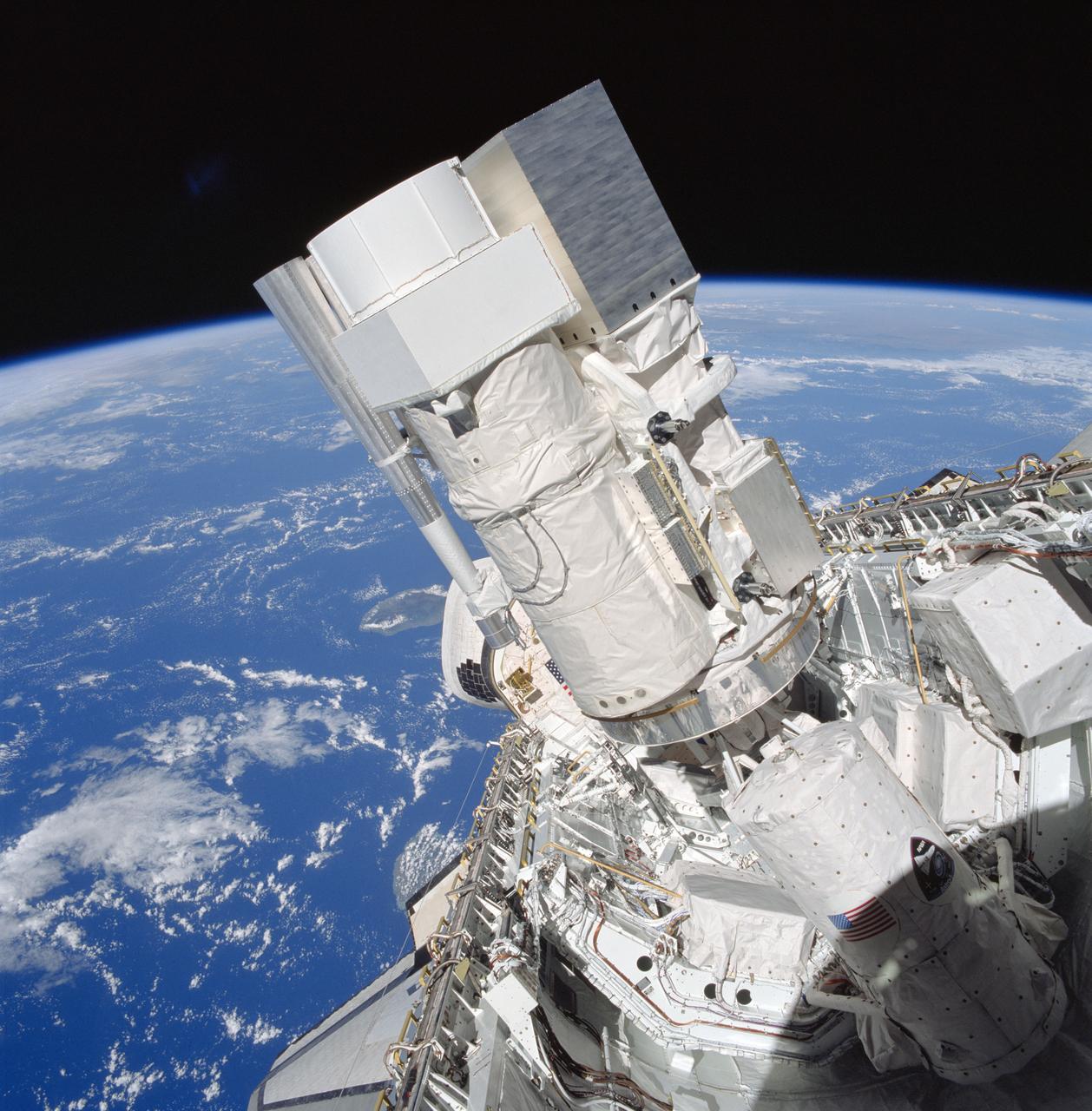
STS035-604-058 (2-10 Dec 1990) --- The various components of the Astro-1 payload are seen backdropped against the blue and white Earth in this scene photographed through Columbia's aft flight deck windows. Parts of the Hopkins Ultraviolet Telescope (HUT), Ultraviolet Imaging Telescope (UIT) and the Wisconsin Ultraviolet Photopolarimetry Experiment (WUPPE) are visible on the Spacelab pallet in the foreground. The Broad Band X-ray Telescope (BBXRT) is behind this pallet and is not visible in this scene. The smaller cylinder in the foreground is the "Igloo," which is a pressurized container housing the Command and Data Management System, which interfaces with the in-cabin controllers to control the Instrument Pointing System (IPS) and the telescopes. The photograph was made with a handheld Rolleiflex camera aimed through Columbia's aft flight deck windows.
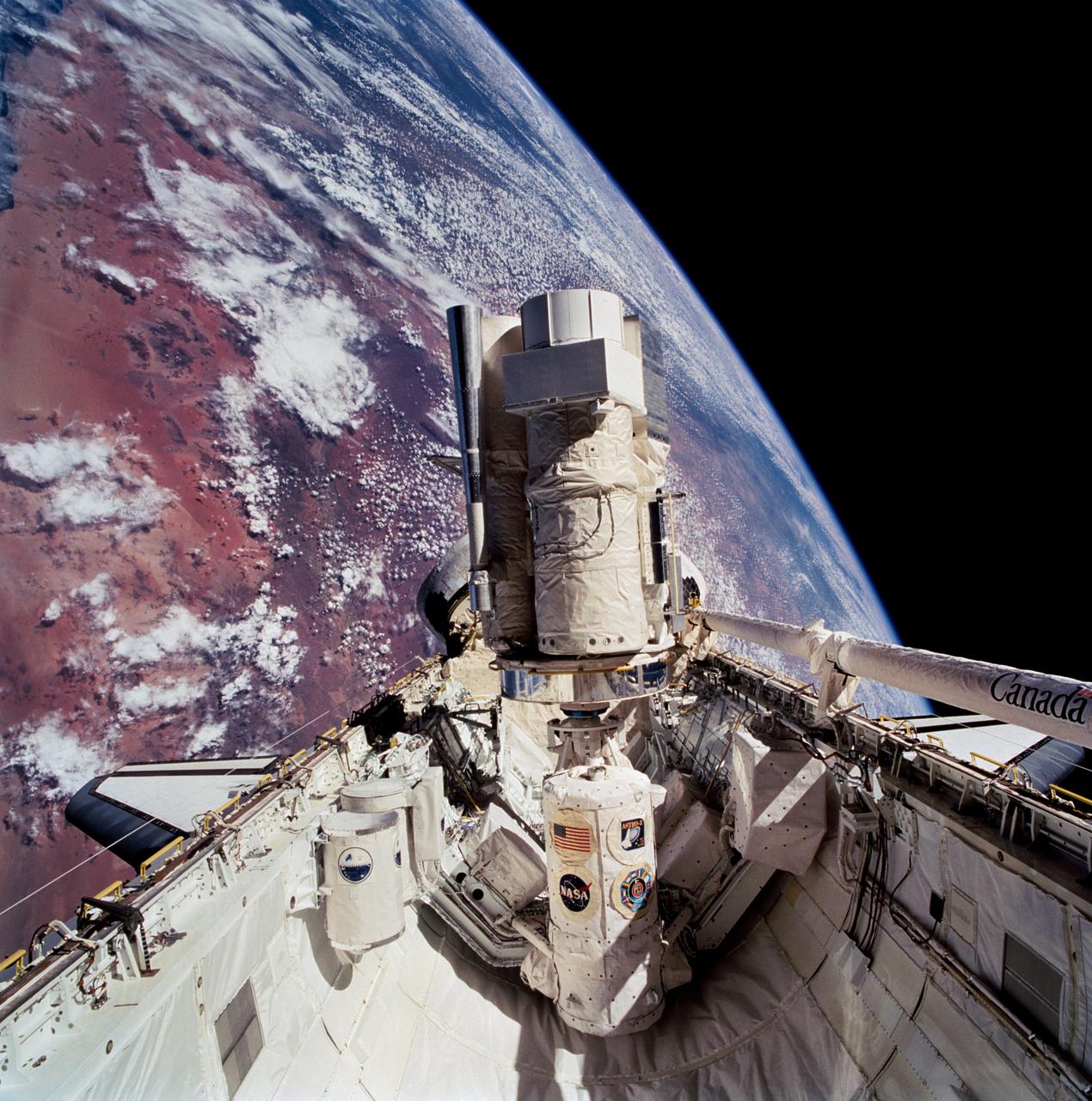
STS067-713-072 (2-18 March 1995) --- This 70mm cargo bay scene, backdropped against a desert area of Namibia, typifies the view that daily greeted the Astro-2 crew members during their almost 17-days aboard the Space Shuttle Endeavour. Positioned on the Spacelab pallet amidst other hardware, the Astro-2 payload is in its operational mode. Visible here are the Instrument Pointing System (IPS), Hopkins Ultraviolet Telescope (HUT), Star Tracker (ST), Ultraviolet Imaging Telescope (UIT), Wisconsin Ultraviolet Photo-Polarimeter Experiment (WUPPE), and Integrated Radiator System (IRS). At this angle, the Optical Sensor Package (OPS) is not seen. The Igloo, which supports the package of experiments, is in center foreground. Two Get-Away Special (GAS) canisters are in lower left foreground. The Extended Duration Orbiter (EDO) pallet, located aft of the cargo bay, is obscured by the Astro-2 payload. The Endeavour was 190 nautical miles above Earth.
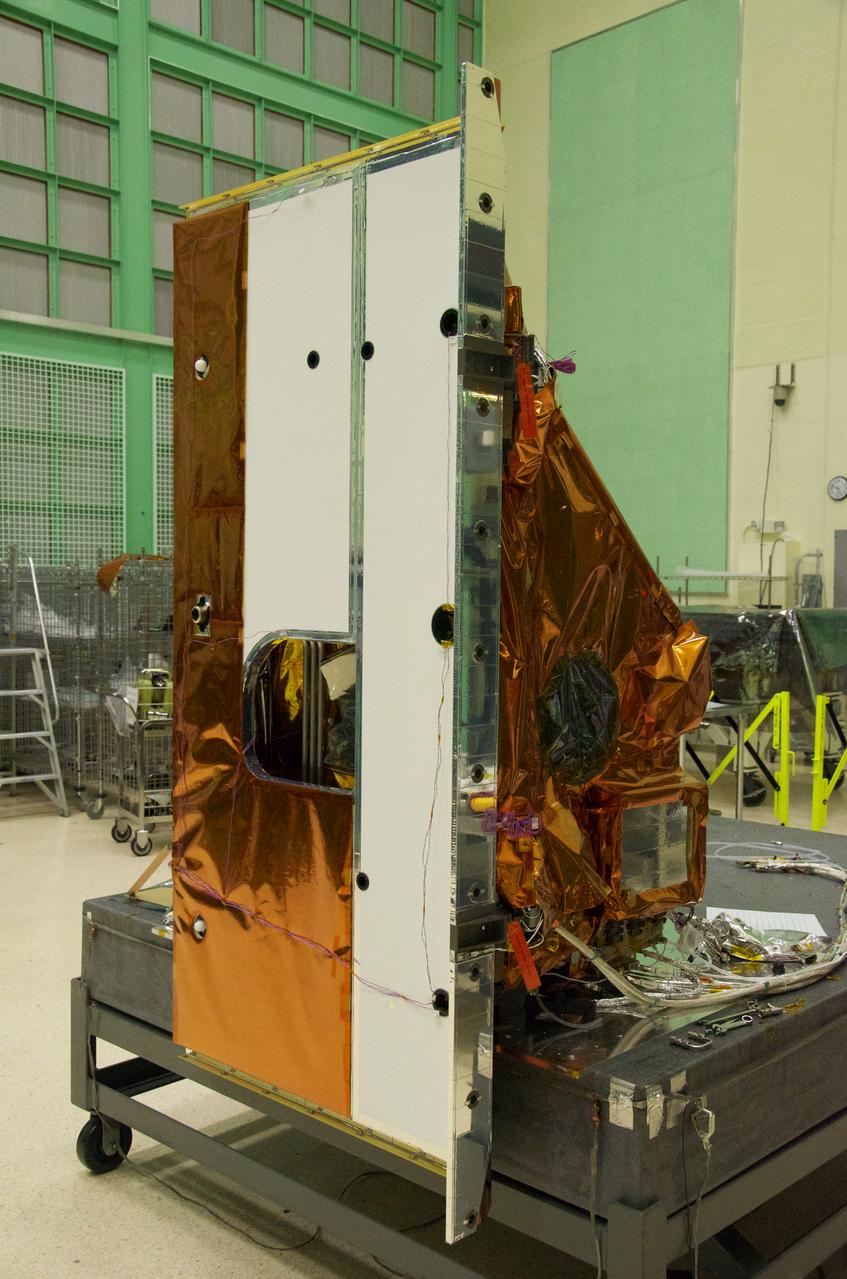
The Thermal Infrared Sensor (TIRS) will fly on the next Landsat satellite, the Landsat Data Continuity Mission (LDCM). The right side of the instrument is what's called the 'nadir side,' that's the side that points toward Earth when the instrument is in space. The black circle visible on the right side is where the optics for the instrument are located. In that area are the lens and the detectors. The white area is a radiator that radiates heat to keep the telescope and the detector cool. The black hole on the white area on the left is what the satellite operators point to deep space when they calibrate the instrument to the cold temperatures of space. TIRS was built on an accelerated schedule at NASA's Goddard Space Flight Center, Greenbelt, Md. and will now be integrated into the LDCM spacecraft at Orbital Science Corp. in Gilbert, Ariz. The Landsat Program is a series of Earth observing satellite missions jointly managed by NASA and the U.S. Geological Survey. Landsat satellites have been consistently gathering data about our planet since 1972. They continue to improve and expand this unparalleled record of Earth's changing landscapes for the benefit of all. For more information on Landsat, visit: <a href="http://www.nasa.gov/landsat" rel="nofollow">www.nasa.gov/landsat</a> Credit: NASA/GSFC/Rebecca Roth <b><a href="http://www.nasa.gov/audience/formedia/features/MP_Photo_Guidelines.html" rel="nofollow">NASA image use policy.</a></b> <b><a href="http://www.nasa.gov/centers/goddard/home/index.html" rel="nofollow">NASA Goddard Space Flight Center</a></b> enables NASA’s mission through four scientific endeavors: Earth Science, Heliophysics, Solar System Exploration, and Astrophysics. Goddard plays a leading role in NASA’s accomplishments by contributing compelling scientific knowledge to advance the Agency’s mission. <b>Follow us on <a href="http://twitter.com/NASA_GoddardPix" rel="nofollow">Twitter</a></b> <b>Like us on <a href="http://www.facebook.com/pages/Greenbelt-MD/NASA-Goddard/395013845897?ref=tsd" rel="nofollow">Facebook</a></b> <b>Find us on <a href="http://instagrid.me/nasagoddard/?vm=grid" rel="nofollow">Instagram</a></b>
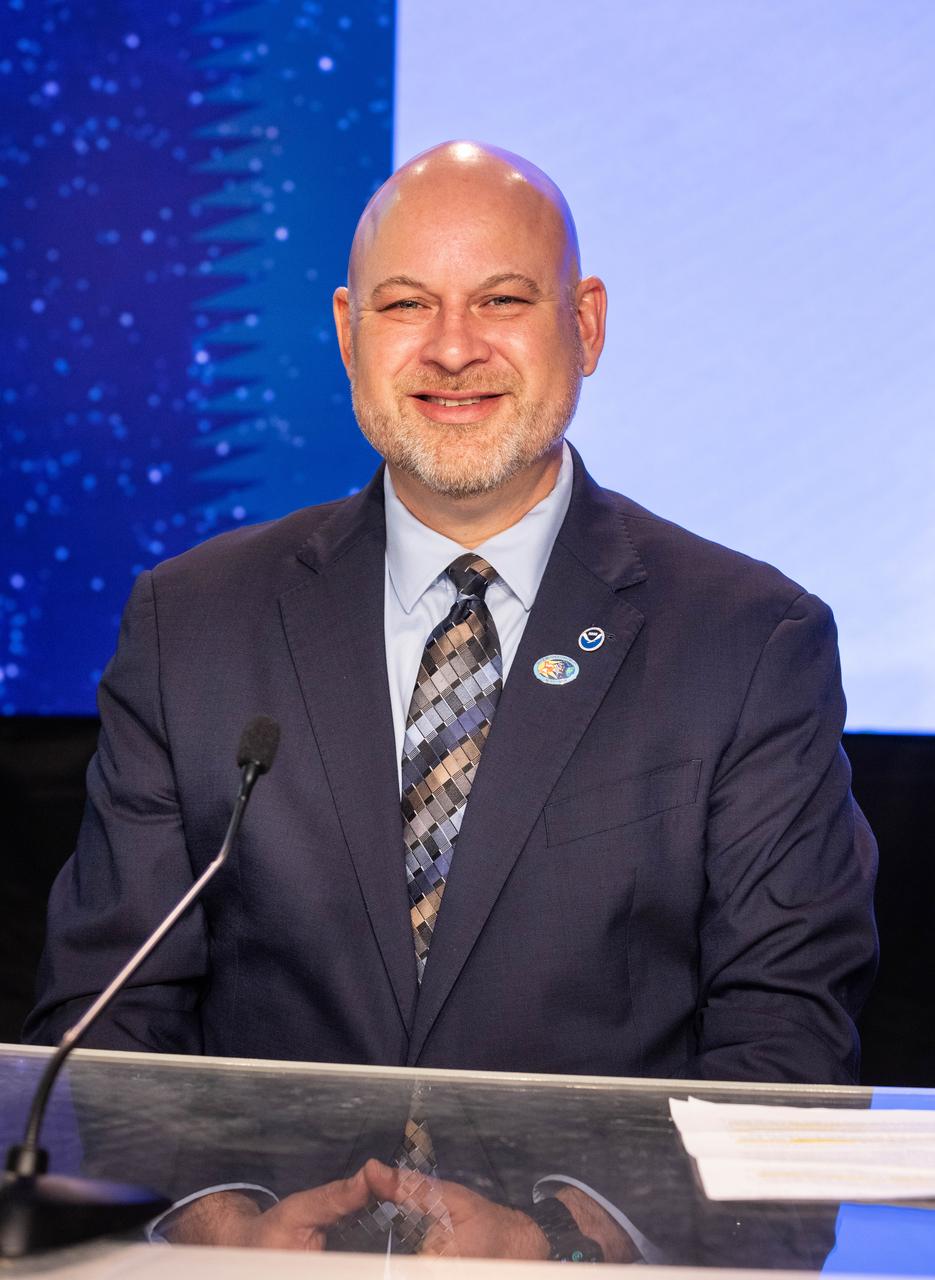
Clinton Wallace, director, National Oceanic and Atmospheric Administration (NOAA) Space Weather Prediction Center, participates in a science briefing on NASA’s IMAP (Interstellar Mapping and Acceleration Probe) mission and its two rideshares – NASA’s exosphere-studying Carruthers Geocorona Observatory and NOAA’s Space Weather Follow On–Lagrange 1 (SWFO-L1) observatory – at the agency’s Kennedy Space Center in Florida on Sunday, Sept. 21, 2025. NASA’s IMAP will use 10 science instruments to study and map the heliosphere, a vast magnetic bubble surrounding the Sun protecting our solar system from radiation incoming from interstellar space. The three missions will orbit the Sun near Lagrange point 1, about one million miles from Earth. Launch is targeted for 7:32 a.m. EDT, Tuesday, Sept. 23, from Launch Complex 39A at NASA Kennedy.

Arlena Moses, launch weather officer, 45th Weather Squadron, U.S. Space Force, participates in a prelaunch news conference on Sunday, Sept. 21, 2025, at the agency’s Kennedy Space Center in Florida for NASA's IMAP (Interstellar Mapping and Acceleration Probe) mission. NASA’s IMAP will use 10 science instruments to study and map the heliosphere, a vast magnetic bubble surrounding the Sun protecting our solar system from radiation incoming from interstellar space. This mission and its two rideshares – NASA’s exosphere-studying Carruthers Geocorona Observatory and National Oceanic and Atmospheric Administration’s (NOAA) Space Weather Follow On–Lagrange 1 (SWFO-L1) observatory – will orbit the Sun near Lagrange point 1, about one million miles from Earth. Launch is targeting 7:32 a.m. EDT, Tuesday, Sept. 23, from Launch Complex 39A at NASA Kennedy.

Derrol Nail, NASA Communications, participates in a prelaunch news conference on Sunday, Sept. 21, 2025, at the agency’s Kennedy Space Center in Florida for NASA’s IMAP (Interstellar Mapping and Acceleration Probe) mission. NASA’s IMAP will use 10 science instruments to study and map the heliosphere, a vast magnetic bubble surrounding the Sun protecting our solar system from radiation incoming from interstellar space. This mission and its two rideshares – NASA’s exosphere-studying Carruthers Geocorona Observatory and National Oceanic and Atmospheric Administration’s (NOAA) Space Weather Follow On–Lagrange 1 (SWFO-L1) observatory – will orbit the Sun near Lagrange point 1, about one million miles from Earth. Launch is targeting 7:32 a.m. EDT, Tuesday, Sept. 23, from Launch Complex 39A at NASA Kennedy.

James Spann, senior scientist, National Oceanic and Atmospheric Administration (NOAA) Office of Space Weather Observations, participates in a science briefing on NASA’s IMAP (Interstellar Mapping and Acceleration Probe) mission and its two rideshares – NASA’s exosphere-studying Carruthers Geocorona Observatory and NOAA’s Space Weather Follow On–Lagrange 1 (SWFO-L1) observatory – at the agency’s Kennedy Space Center in Florida on Sunday, Sept. 21, 2025. NASA’s IMAP will use 10 science instruments to study and map the heliosphere, a vast magnetic bubble surrounding the Sun protecting our solar system from radiation incoming from interstellar space. The three missions will orbit the Sun near Lagrange point 1, about one million miles from Earth. Launch is targeted for 7:32 a.m. EDT, Tuesday, Sept. 23, from Launch Complex 39A at NASA Kennedy.
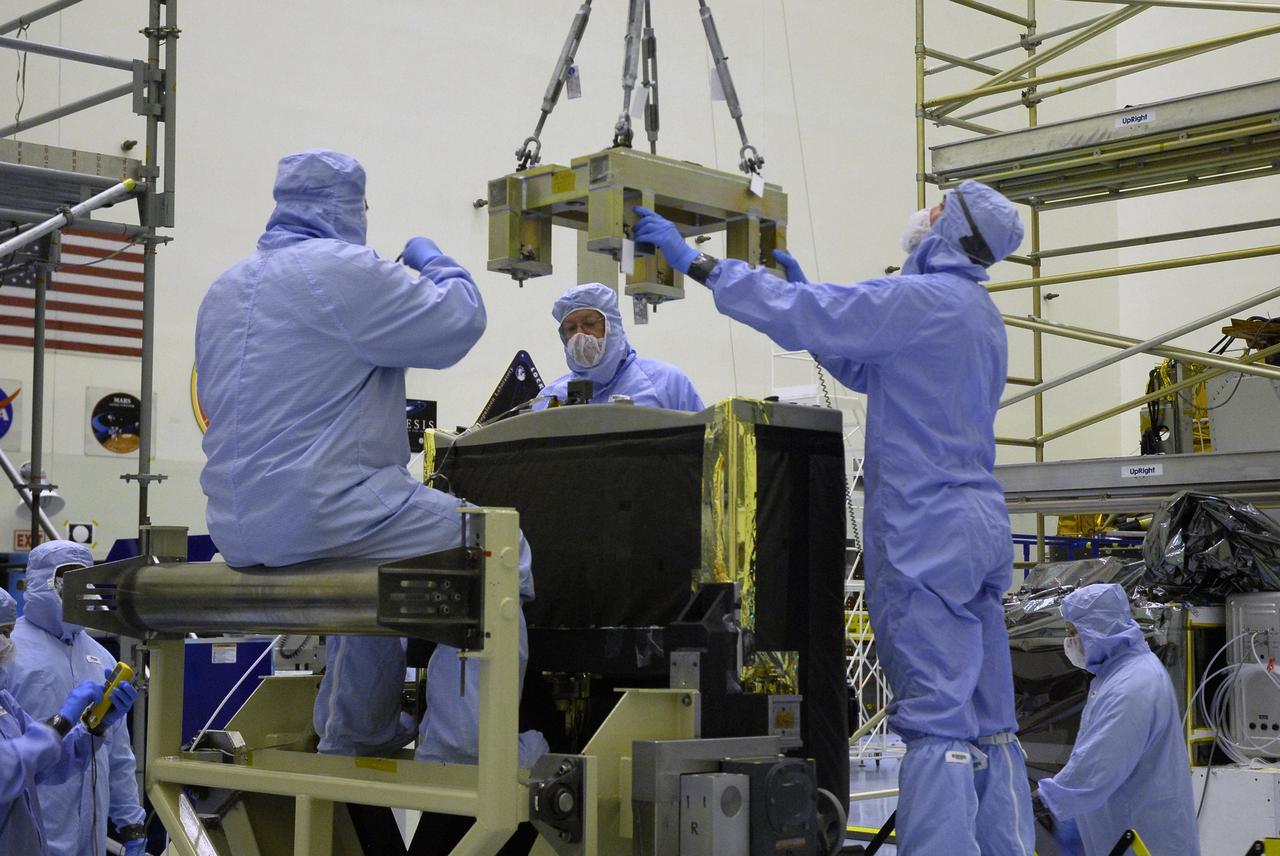
CAPE CANAVERAL, Fla. – Technicians in the Payload Hazardous Servicing Facility at NASA's Kennedy Space Center help guide a specialized overhead crane toward the Fine Guidance Sensor, or FGS. The sensor will be lifted and moved to the Orbital Replacement Unit Carrier or ORUC, for installation. An FGS consists of a large structure housing a collection of mirrors, lenses, servos, prisms, beam splitters and photomultiplier tubes. There are three fine guidance sensors on Hubble located at 90-degree intervals around the circumference of the telescope. Along with the gyroscopes, the optical sensors are a key component of Hubble’s highly complex but extraordinarily effective “pointing control system.” The ORUC is one of three carriers that are being prepared for the integration of telescope science instruments, both internal and external replacement components, as well as the flight support equipment to be used by the astronauts during the fifth and final Hubble servicing mission, STS-125, on space shuttle Atlantis. Launch is targeted for Oct. 8. Photo credit: NASA/Jim Grossmann
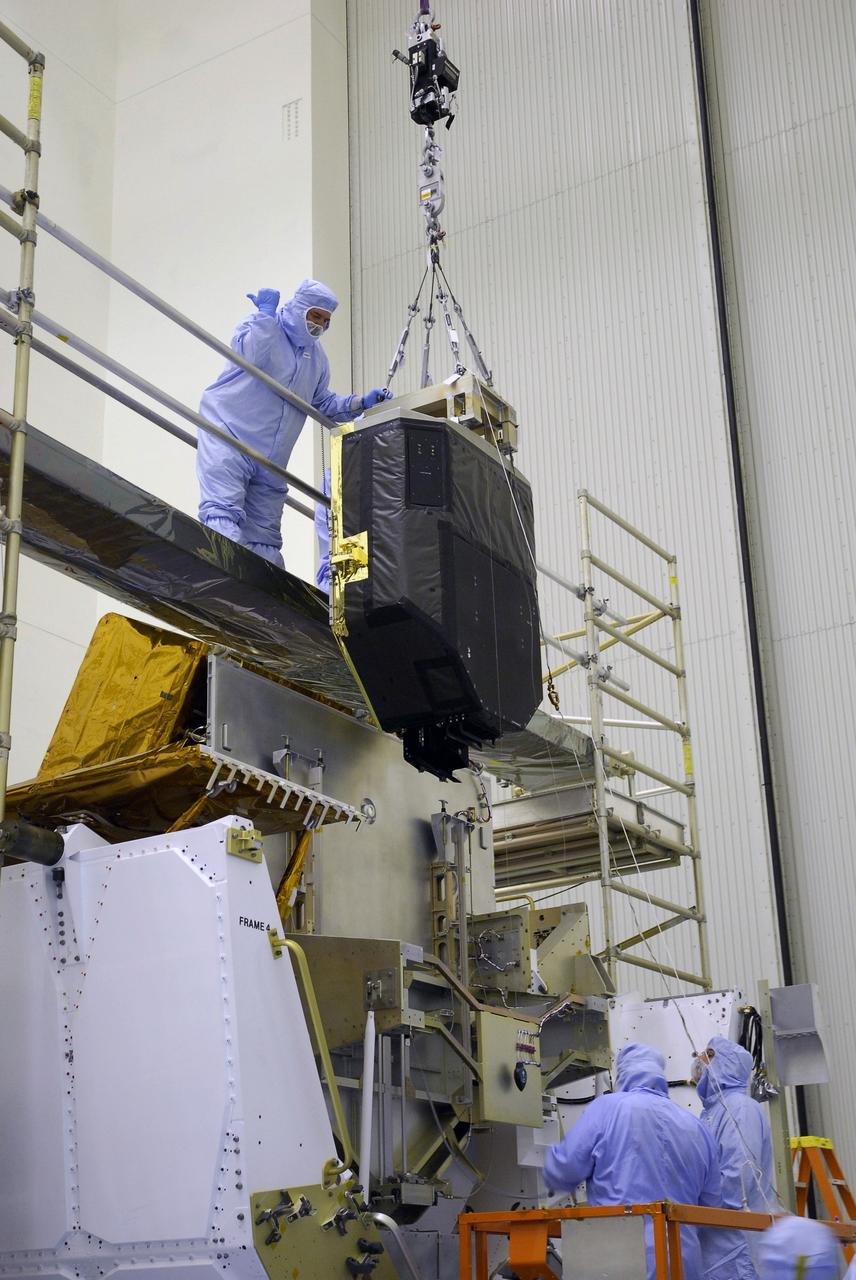
CAPE CANAVERAL, Fla. – In the Payload Hazardous Servicing Facility at NASA's Kennedy Space Center, the Fine Guidance Sensor, or FGS, is lifted over the crossbar of the stand. The sensor will be installed on the Orbital Replacement Unit Carrier or ORUC, below. An FGS consists of a large structure housing a collection of mirrors, lenses, servos, prisms, beam splitters and photomultiplier tubes. There are three fine guidance sensors on Hubble located at 90-degree intervals around the circumference of the telescope. Along with the gyroscopes, the optical sensors are a key component of Hubble’s highly complex but extraordinarily effective “pointing control system.” The ORUC is one of three carriers that are being prepared for the integration of telescope science instruments, both internal and external replacement components, as well as the flight support equipment to be used by the astronauts during the fifth and final Hubble servicing mission, STS-125, on space shuttle Atlantis. Launch is targeted for Oct. 8. Photo credit: NASA/Jim Grossmann
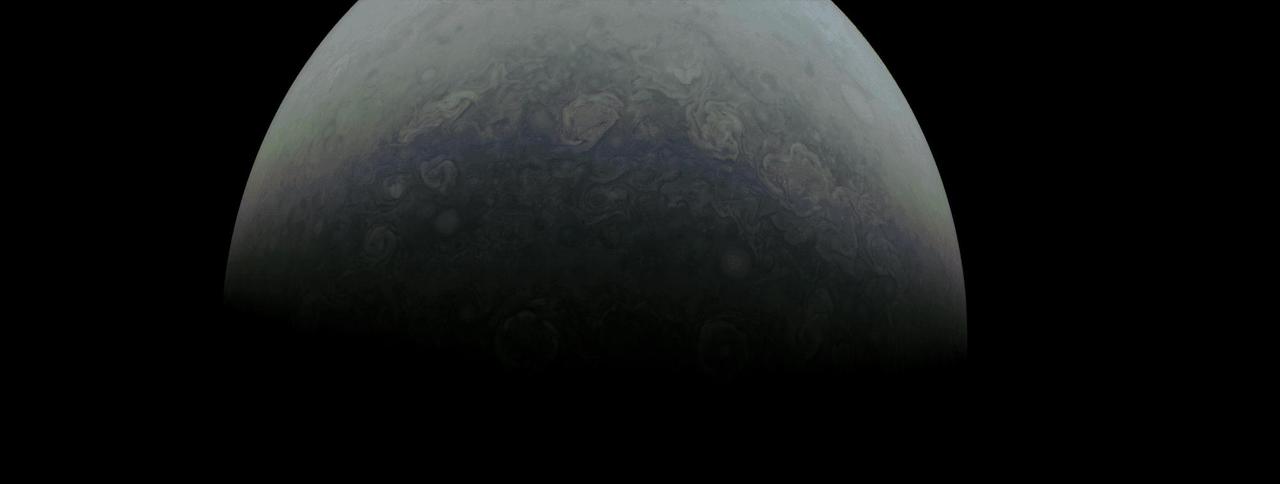
On April 9, 2022, as NASA's Juno mission completed its 41st close flyby of Jupiter, its JunoCam instrument captured what it would look like to ride along with the spacecraft. Citizen scientist Andrea Luck created this animated sequence using raw JunoCam image data. At about 87,000 miles (140,000 kilometers) in diameter, Jupiter is the largest planet in the solar system. At the point of closest approach on April 9, Juno was just over 2,050 miles (3,300 kilometers) above Jupiter's colorful cloud tops. At that moment, it was traveling at about 131,000 MPH (210,000 kilometers per hour) relative to the planet. By comparison, at closest approach Juno was more than 10 times closer to Jupiter than satellites in geosynchronous orbit are to Earth, traveling at a speed about five times faster than the Apollo missions did when they left Earth for the Moon. Movie available at https://photojournal.jpl.nasa.gov/catalog/PIA25016
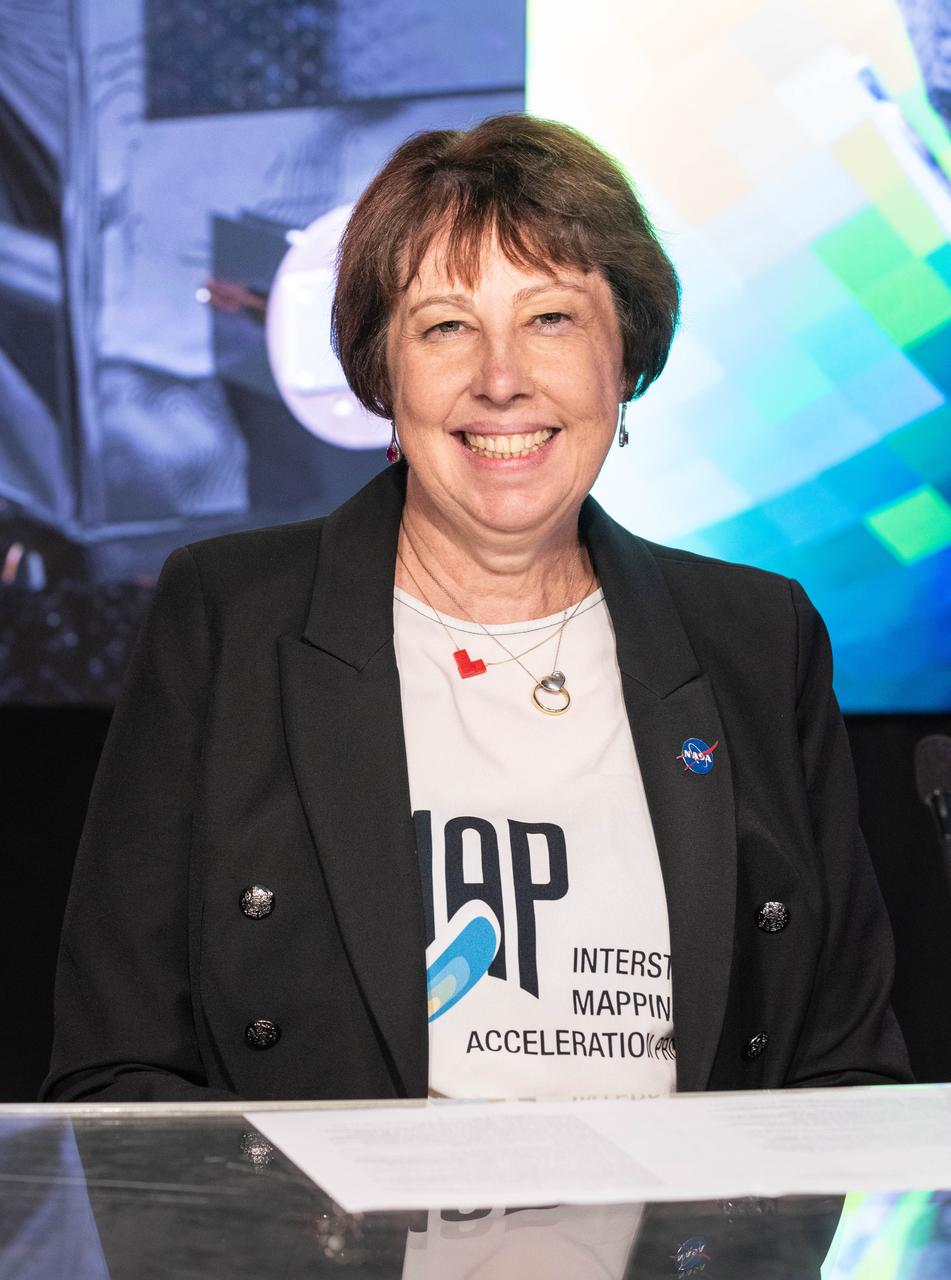
Nicky Fox, associate administrator, Science Mission Directorate, NASA Headquarters, participates in a prelaunch news conference on Sunday, Sept. 21, 2025, at the agency’s Kennedy Space Center in Florida for NASA’s IMAP (Interstellar Mapping and Acceleration Probe) mission. NASA’s IMAP will use 10 science instruments to study and map the heliosphere, a vast magnetic bubble surrounding the Sun protecting our solar system from radiation incoming from interstellar space. This mission and its two rideshares – NASA’s exosphere-studying Carruthers Geocorona Observatory and National Oceanic and Atmospheric Administration’s (NOAA) Space Weather Follow On–Lagrange 1 (SWFO-L1) observatory – will orbit the Sun near Lagrange point 1, about one million miles from Earth. Launch is targeting 7:32 a.m. EDT, Tuesday, Sept. 23, from Launch Complex 39A at NASA Kennedy.

Dr. Denton Gibson, launch director, NASA’s Launch Services Program, participates in a prelaunch news conference on Sunday, Sept. 21, 2025, at the agency’s Kennedy Space Center in Florida for NASA's IMAP (Interstellar Mapping and Acceleration Probe) mission. NASA’s IMAP will use 10 science instruments to study and map the heliosphere, a vast magnetic bubble surrounding the Sun protecting our solar system from radiation incoming from interstellar space. This mission and its two rideshares – NASA’s exosphere-studying Carruthers Geocorona Observatory and National Oceanic and Atmospheric Administration’s (NOAA) Space Weather Follow On–Lagrange 1 (SWFO-L1) observatory – will orbit the Sun near Lagrange point 1, about one million miles from Earth. Launch is targeting 7:32 a.m. EDT, Tuesday, Sept. 23, from Launch Complex 39A at NASA Kennedy.
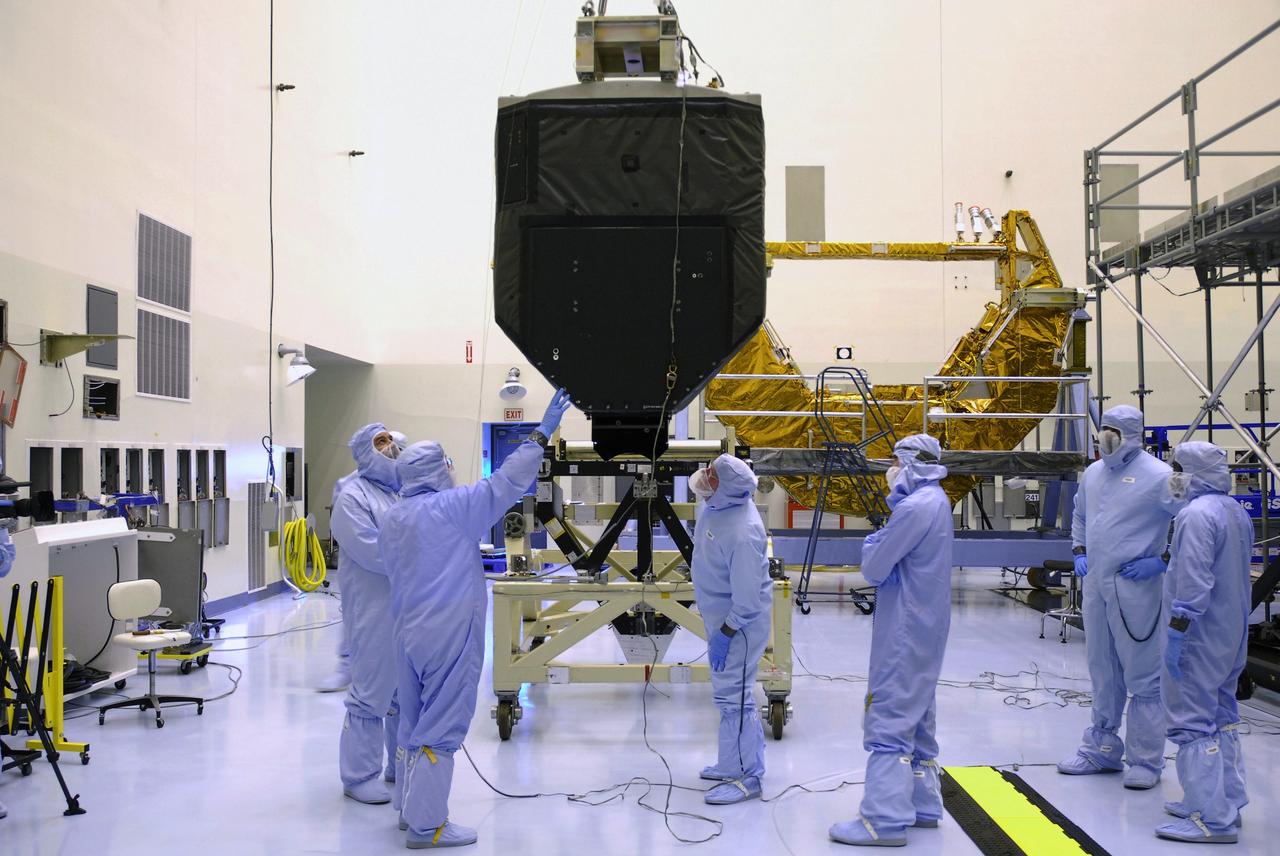
CAPE CANAVERAL, Fla. – Technicians in the Payload Hazardous Servicing Facility at NASA's Kennedy Space Center check the Fine Guidance Sensor, or FGS, as it is lifted from its stand. The sensor will be moved to the Orbital Replacement Unit Carrier or ORUC, for installation. An FGS consists of a large structure housing a collection of mirrors, lenses, servos, prisms, beam splitters and photomultiplier tubes. There are three fine guidance sensors on Hubble located at 90-degree intervals around the circumference of the telescope. Along with the gyroscopes, the optical sensors are a key component of Hubble’s highly complex but extraordinarily effective “pointing control system.” The ORUC is one of three carriers that are being prepared for the integration of telescope science instruments, both internal and external replacement components, as well as the flight support equipment to be used by the astronauts during the fifth and final Hubble servicing mission, STS-125, on space shuttle Atlantis. Launch is targeted for Oct. 8. Photo credit: NASA/Jim Grossmann
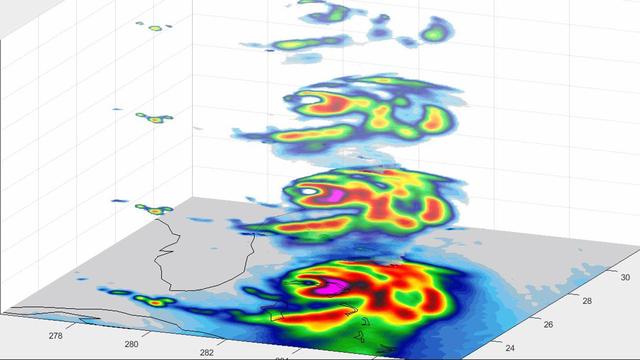
In this animation, TEMPEST-D — a weather-observing satellite the size of a cereal box — captured imagery of Hurricane Dorian off the coast of Florida at 2 a.m. EDT on Sep. 3, 2019 (11 p.m. PDT on Sept. 2, 2019). At a vantage point 250 miles (400 kilometers) above the storm, the CubeSat used its miniaturized radio-wave-based instrument to see through the clouds, revealing different depths of the hurricane with areas with heavy rainfall and moisture being pulled into the storm. The green colors indicate moisture spiraling into the storm's center, and the yellow, red and pink areas correspond to the most intense rainfall. TEMPEST-D — short for Temporal Experiment for Storms and Tropical Systems Demonstration — is an experiment in shrinking weather satellites to a size that makes them inexpensive enough to produce in multiples. The goal is eventual real-time storm coverage with many small satellites that can track storms around the world. Movie available at https://photojournal.jpl.nasa.gov/catalog/PIA23431
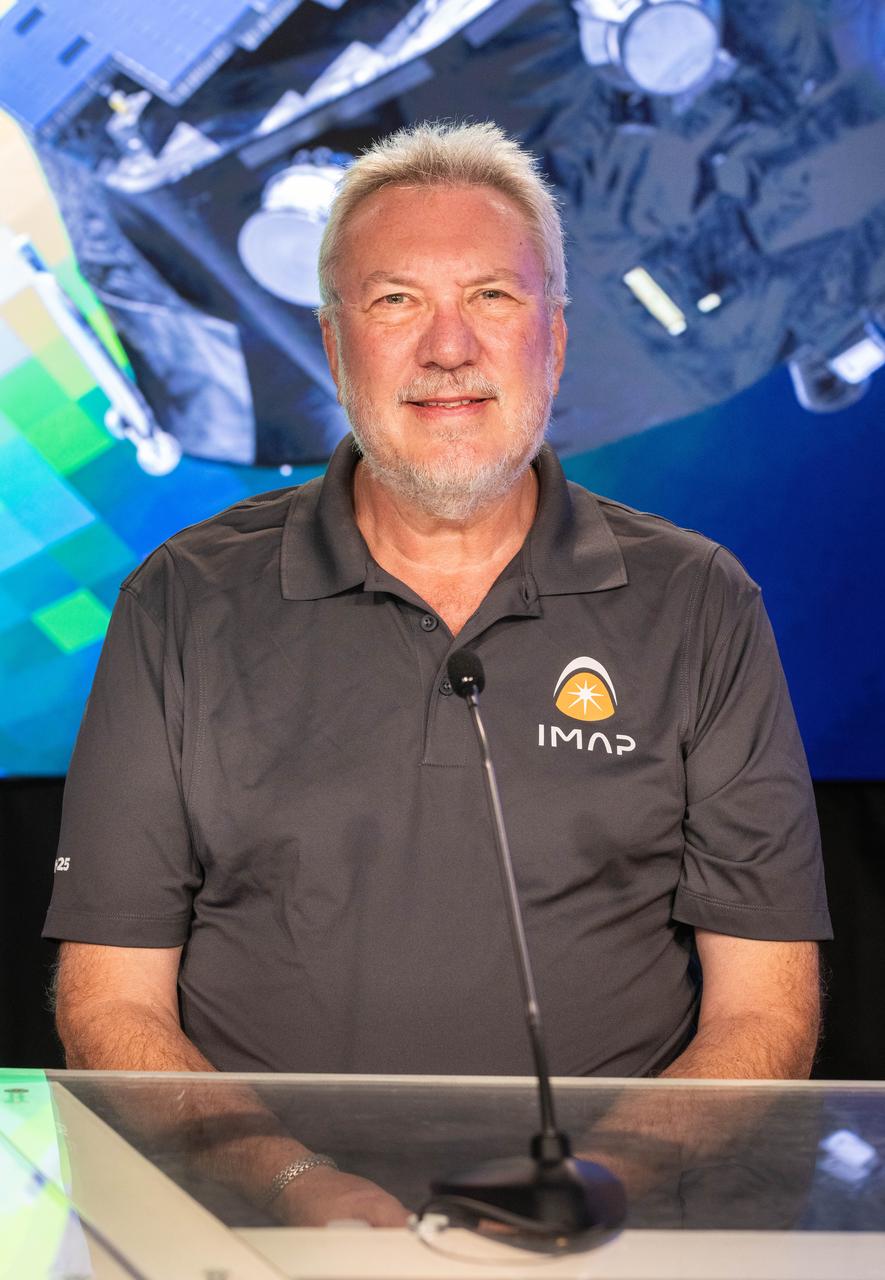
David McComas, IMAP principal investigator, Princeton University, participates in a science briefing on NASA’s IMAP (Interstellar Mapping and Acceleration Probe) mission and its two rideshares – NASA’s exosphere-studying Carruthers Geocorona Observatory and National Oceanic and Atmospheric Administration’s (NOAA) Space Weather Follow On–Lagrange 1 (SWFO-L1) observatory – at the agency’s Kennedy Space Center in Florida on Sunday, Sept. 21, 2025. NASA’s IMAP will use 10 science instruments to study and map the heliosphere, a vast magnetic bubble surrounding the Sun protecting our solar system from radiation incoming from interstellar space. The three missions will orbit the Sun near Lagrange point 1, about one million miles from Earth. Launch is targeted for 7:32 a.m. EDT, Tuesday, Sept. 23, from Launch Complex 39A at NASA Kennedy.
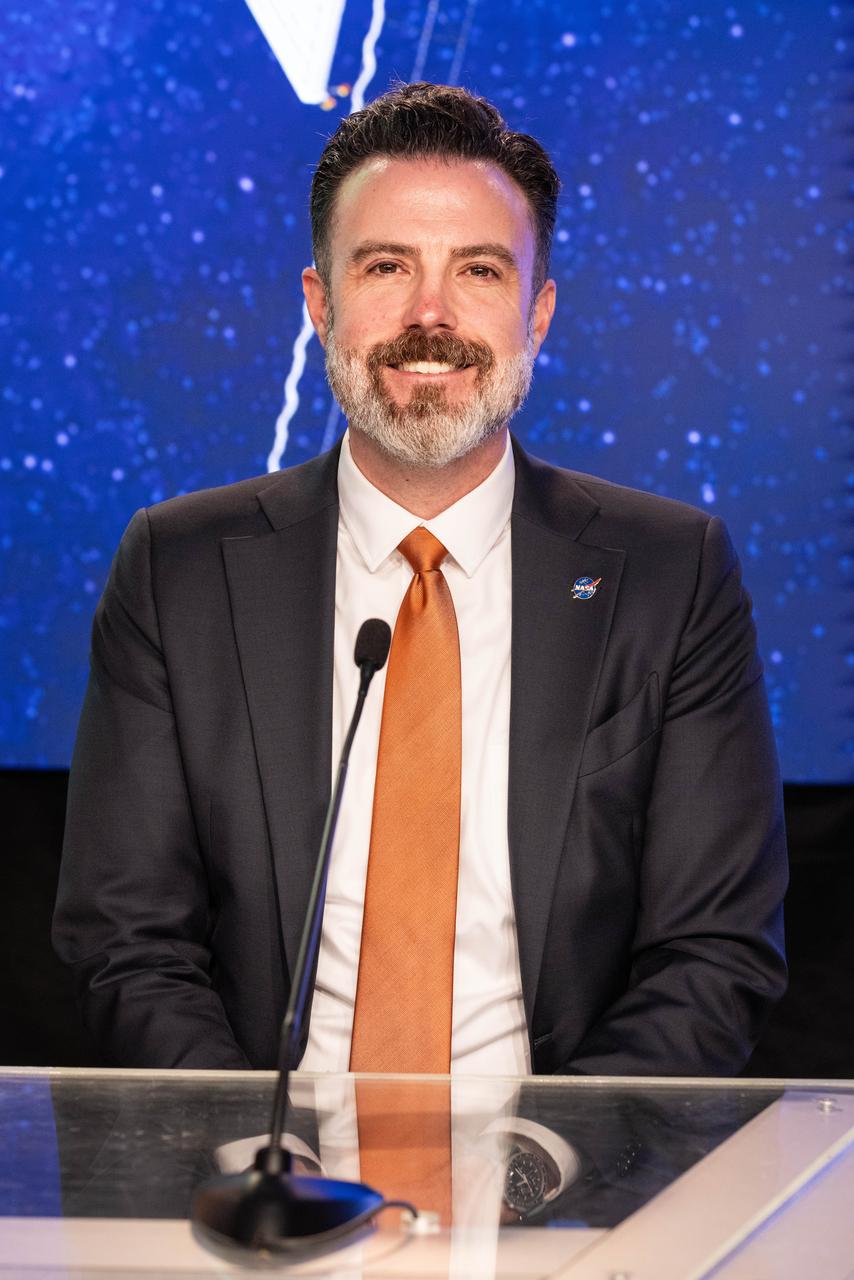
Jamie Favors, director, Space Weather Program, Heliophysics Division, NASA Headquarters in Washington, participates in a science briefing on NASA’s IMAP (Interstellar Mapping and Acceleration Probe) mission and its two rideshares – NASA’s exosphere-studying Carruthers Geocorona Observatory and National Oceanic and Atmospheric Administration’s (NOAA) Space Weather Follow On–Lagrange 1 (SWFO-L1) observatory – at the agency’s Kennedy Space Center in Florida on Sunday, Sept. 21, 2025. NASA’s IMAP will use 10 science instruments to study and map the heliosphere, a vast magnetic bubble surrounding the Sun protecting our solar system from radiation incoming from interstellar space. The three missions will orbit the Sun near Lagrange point 1, about one million miles from Earth. Launch is targeted for 7:32 a.m. EDT, Tuesday, Sept. 23, from Launch Complex 39A at NASA Kennedy.
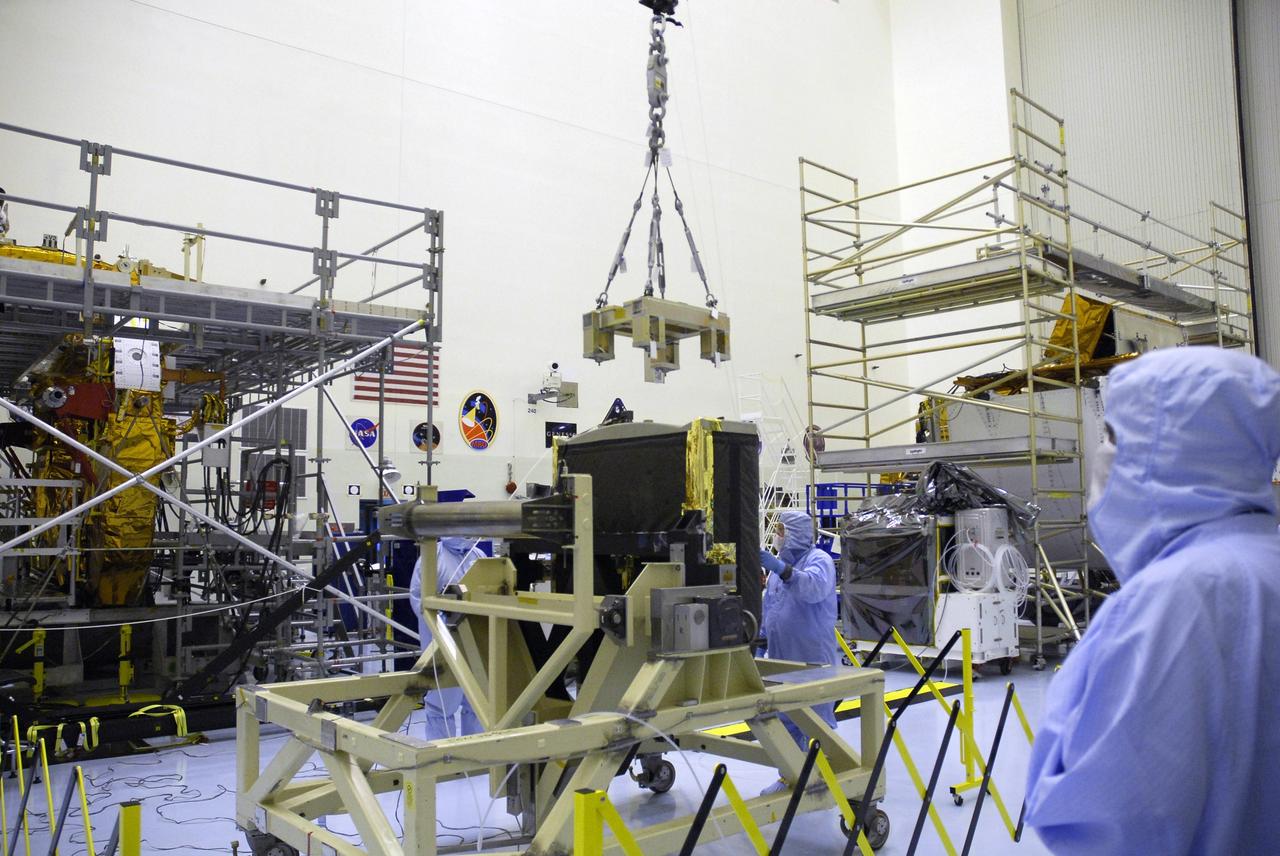
CAPE CANAVERAL, Fla. – A specialized crane is moved toward the Fine Guidance Sensor in the Payload Hazardous Servicing Facility at NASA's Kennedy Space Center. The sensor will be lifted and moved to the Orbital Replacement Unit Carrier or ORUC, for installation. An FGS consists of a large structure housing a collection of mirrors, lenses, servos, prisms, beam splitters and photomultiplier tubes. There are three fine guidance sensors on Hubble located at 90-degree intervals around the circumference of the telescope. Along with the gyroscopes, the optical sensors are a key component of Hubble’s highly complex but extraordinarily effective “pointing control system.” The ORUC is one of three carriers that are being prepared for the integration of telescope science instruments, both internal and external replacement components, as well as the flight support equipment to be used by the astronauts during the fifth and final Hubble servicing mission, STS-125, on space shuttle Atlantis. Launch is targeted for Oct. 8. Photo credit: NASA/Jim Grossmann
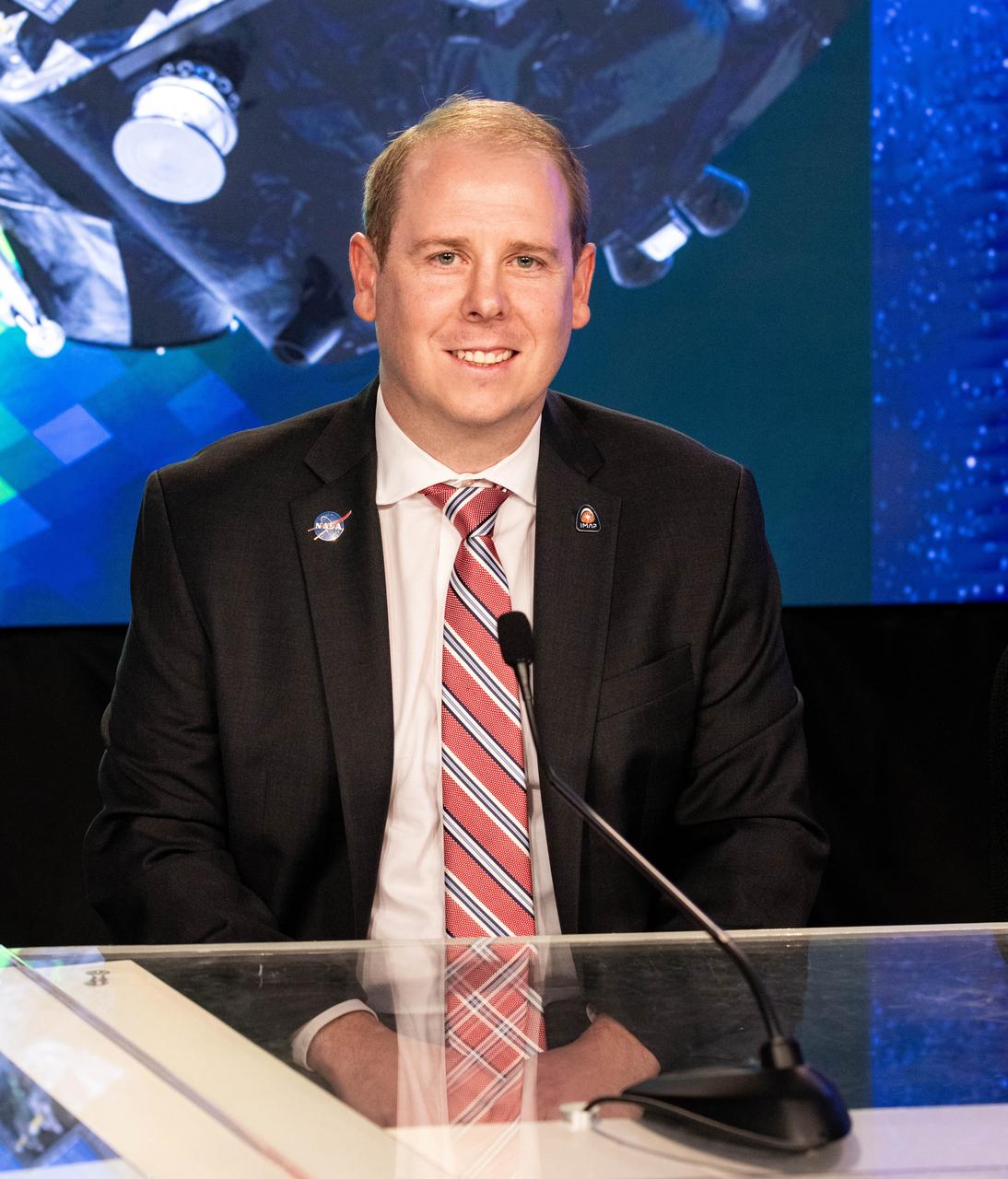
Brad Williams, IMAP (Interstellar Mapping and Acceleration Probe) program executive, NASA Headquarters, participates in a prelaunch news conference on Sunday, Sept. 21, 2025, at the agency’s Kennedy Space Center in Florida for IMAP mission. NASA’s IMAP will use 10 science instruments to study and map the heliosphere, a vast magnetic bubble surrounding the Sun protecting our solar system from radiation incoming from interstellar space. This mission and its two rideshares – NASA’s exosphere-studying Carruthers Geocorona Observatory and National Oceanic and Atmospheric Administration’s (NOAA) Space Weather Follow On–Lagrange 1 (SWFO-L1) observatory – will orbit the Sun near Lagrange point 1, about one million miles from Earth. Launch is targeting 7:32 a.m. EDT, Tuesday, Sept. 23, from Launch Complex 39A at NASA Kennedy.
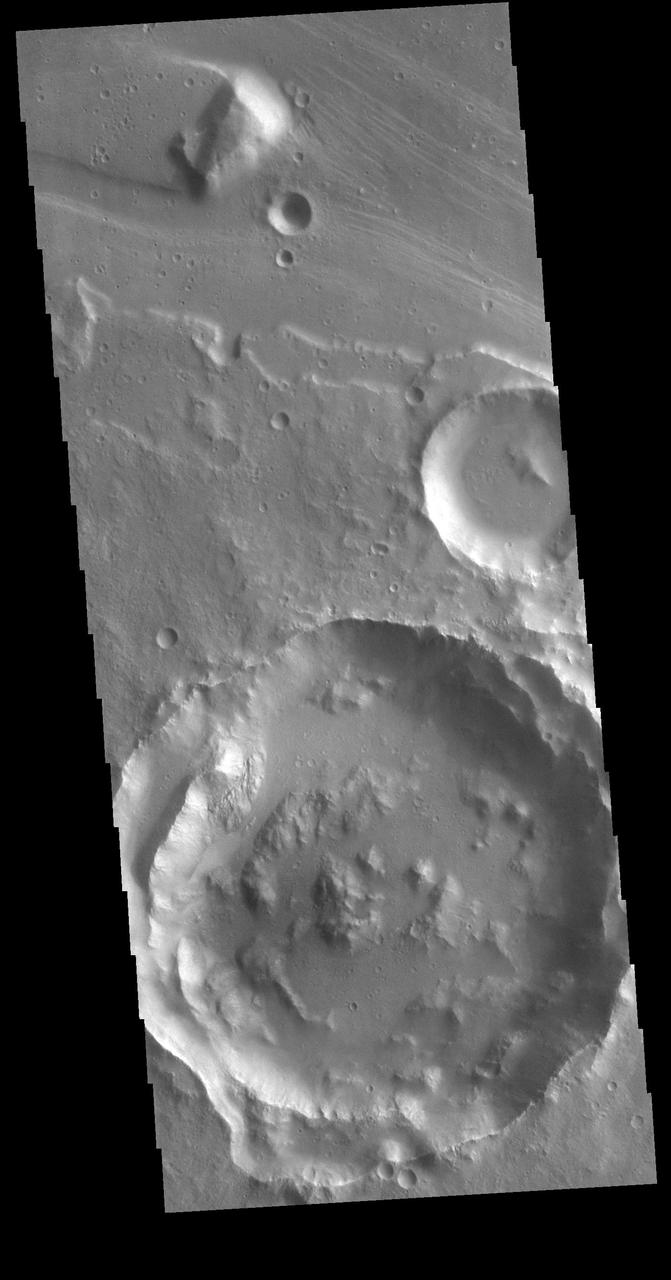
The channel form at the top of this VIS image is part of Tiu Valles. The impact crater has affected the course of the channel, as has the small hill at the top of the image. This type of feature, a hill with a teardrop shaped section, is called a streamline island. The hill interrupts the fluid flow, creating eddies on the downstream side where the flow velocity lessens and it is unable to erode as easily as in the main part of the channel. The teardrop points downstream. Located in Margaritifer Terra, Tiu Valles is part of a large system of channels that arise from Vallis Marineris and flow northward to empty into Chryse Planitia. Orbit Number: 86527 Latitude: 16.6616 Longitude: 325.954 Instrument: VIS Captured: 2021-06-16 22:38 https://photojournal.jpl.nasa.gov/catalog/PIA24998
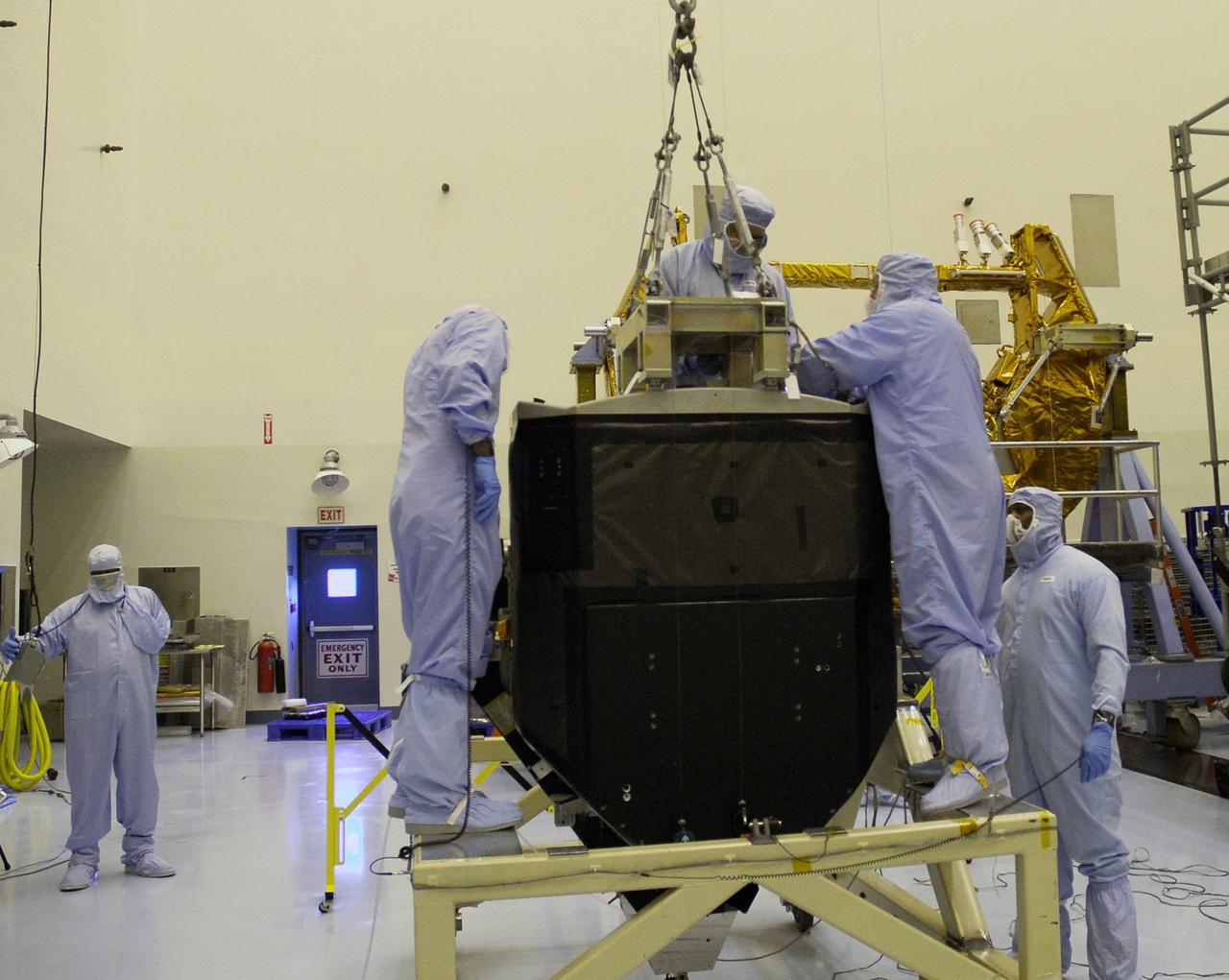
CAPE CANAVERAL, Fla. – Technicians in the Payload Hazardous Servicing Facility at NASA's Kennedy Space Center install a specialized overhead crane onto the Fine Guidance Sensor, or FGS. The sensor will be lifted and moved to the Orbital Replacement Unit Carrier or ORUC, for installation. An FGS consists of a large structure housing a collection of mirrors, lenses, servos, prisms, beam splitters and photomultiplier tubes. There are three fine guidance sensors on Hubble located at 90-degree intervals around the circumference of the telescope. Along with the gyroscopes, the optical sensors are a key component of Hubble’s highly complex but extraordinarily effective “pointing control system.” The ORUC is one of three carriers that are being prepared for the integration of telescope science instruments, both internal and external replacement components, as well as the flight support equipment to be used by the astronauts during the fifth and final Hubble servicing mission, STS-125, on space shuttle Atlantis. Launch is targeted for Oct. 8. Photo credit: NASA/Jim Grossmann

CAPE CANAVERAL, Fla. – An overhead crane in the Payload Hazardous Servicing Facility at NASA's Kennedy Space Center lowers the Fine Guidance Sensor, or FGS, onto the Orbital Replacement Unit Carrier or ORUC, below for installation. An FGS consists of a large structure housing a collection of mirrors, lenses, servos, prisms, beam splitters and photomultiplier tubes. There are three fine guidance sensors on Hubble located at 90-degree intervals around the circumference of the telescope. Along with the gyroscopes, the optical sensors are a key component of Hubble’s highly complex but extraordinarily effective “pointing control system.” The ORUC is one of three carriers that are being prepared for the integration of telescope science instruments, both internal and external replacement components, as well as the flight support equipment to be used by the astronauts during the fifth and final Hubble servicing mission, STS-125, on space shuttle Atlantis. Launch is targeted for Oct. 8. Photo credit: NASA/Jim Grossmann
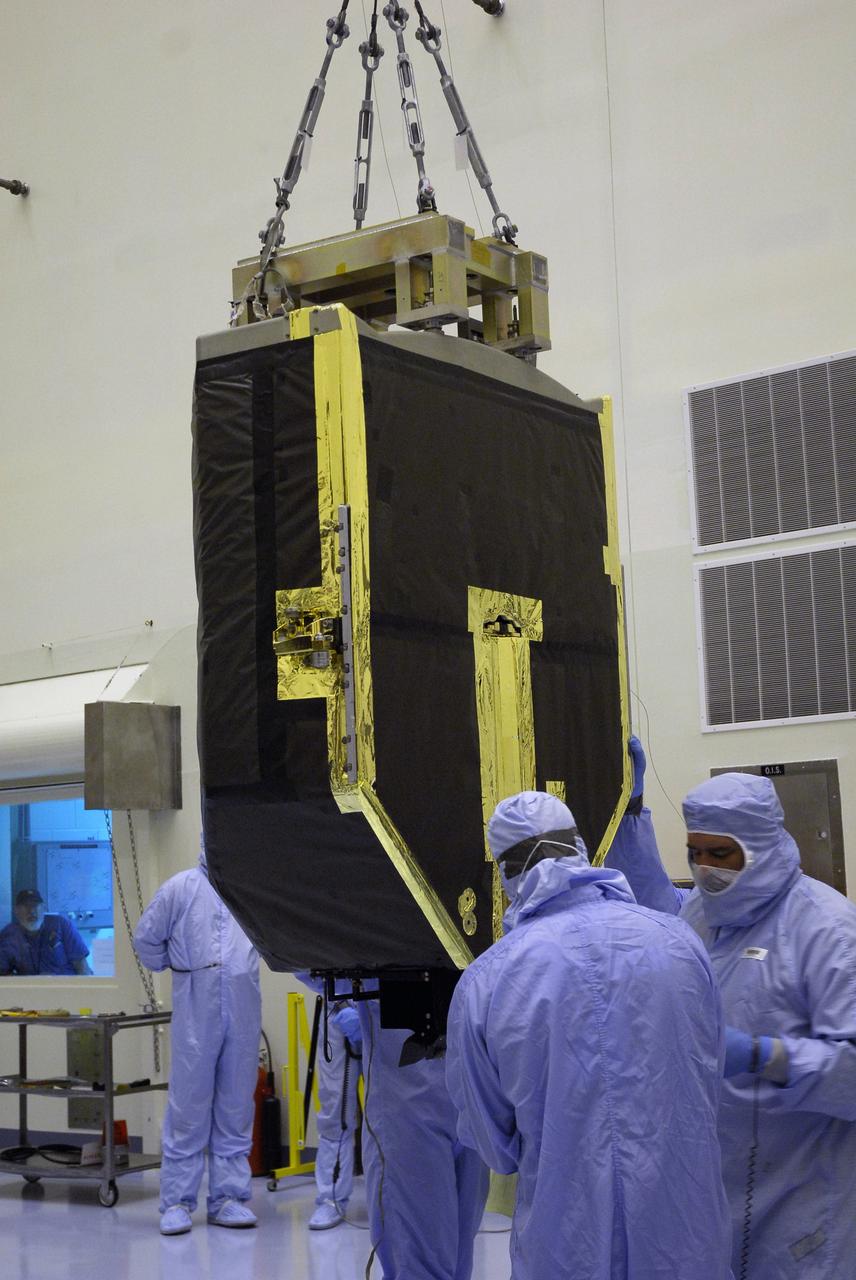
CAPE CANAVERAL, Fla. – A specialized overhead crane lifts the Fine Guidance Sensor, or FGS, in the Payload Hazardous Servicing Facility at NASA's Kennedy Space Center. The sensor will be moved to the Orbital Replacement Unit Carrier, or ORUC, for installation. An FGS consists of a large structure housing a collection of mirrors, lenses, servos, prisms, beam splitters and photomultiplier tubes. There are three fine guidance sensors on Hubble located at 90-degree intervals around the circumference of the telescope. Along with the gyroscopes, the optical sensors are a key component of Hubble’s highly complex but extraordinarily effective “pointing control system.” The ORUC is one of three carriers that are being prepared for the integration of telescope science instruments, both internal and external replacement components, as well as the flight support equipment to be used by the astronauts during the fifth and final Hubble servicing mission, STS-125, on space shuttle Atlantis. Launch is targeted for Oct. 8. Photo credit: NASA/Jim Grossmann
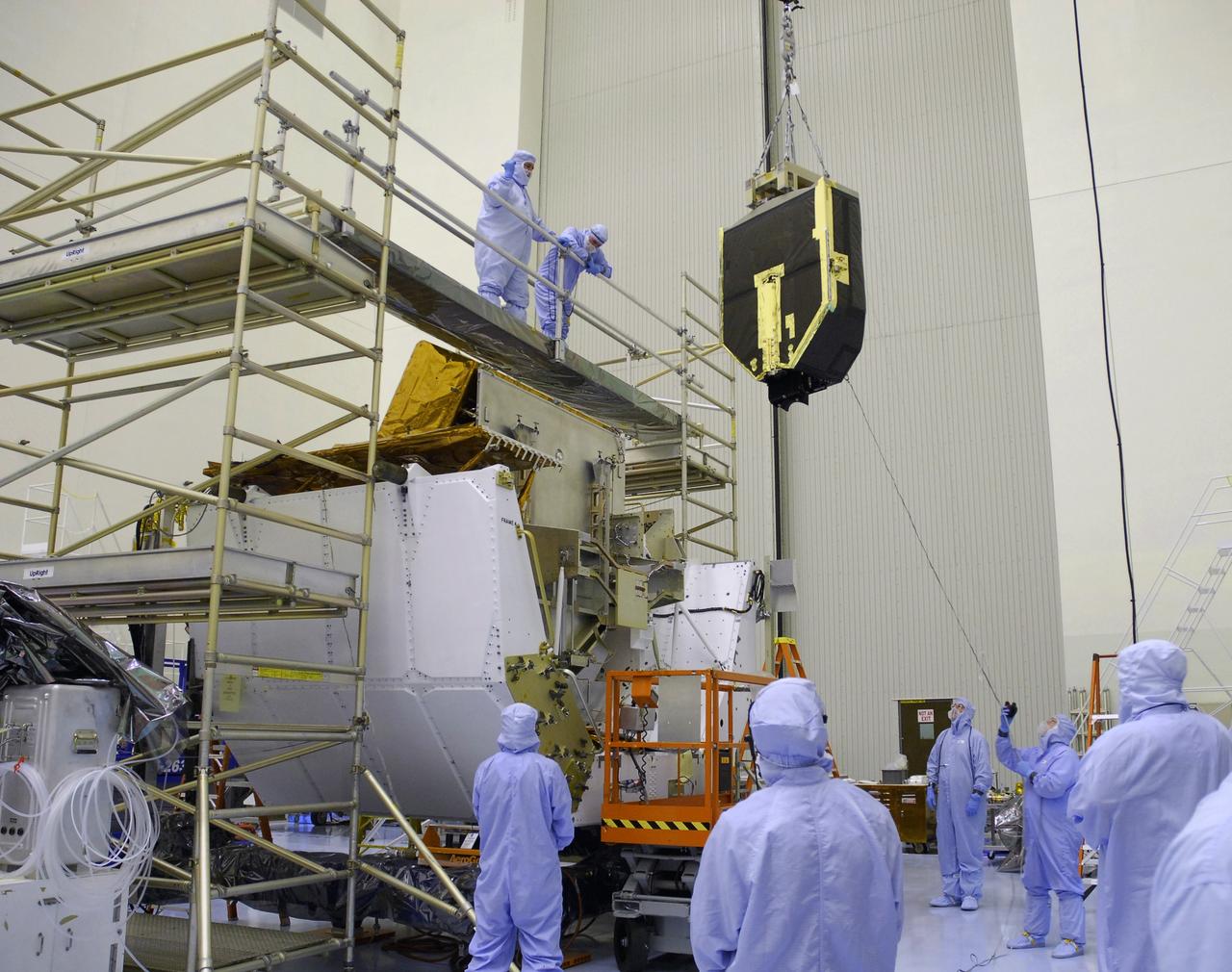
CAPE CANAVERAL, Fla. – Technicians in the Payload Hazardous Servicing Facility at NASA's Kennedy Space Center help guide the Fine Guidance Sensor, or FGS, as it is lifted over the crossbar of the stand at right. The sensor will be installed on the Orbital Replacement Unit Carrier or ORUC, below. An FGS consists of a large structure housing a collection of mirrors, lenses, servos, prisms, beam splitters and photomultiplier tubes. There are three fine guidance sensors on Hubble located at 90-degree intervals around the circumference of the telescope. Along with the gyroscopes, the optical sensors are a key component of Hubble’s highly complex but extraordinarily effective “pointing control system.” The ORUC is one of three carriers that are being prepared for the integration of telescope science instruments, both internal and external replacement components, as well as the flight support equipment to be used by the astronauts during the fifth and final Hubble servicing mission, STS-125, on space shuttle Atlantis. Launch is targeted for Oct. 8. Photo credit: NASA/Jim Grossmann
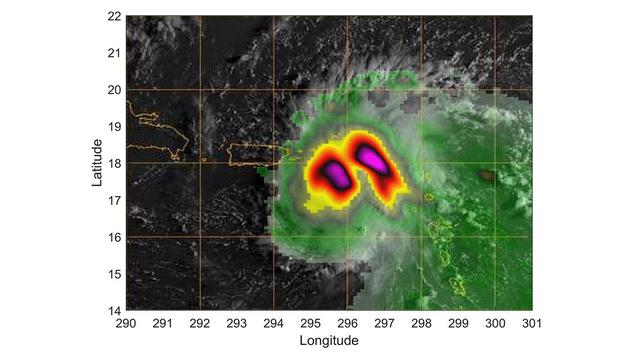
TEMPEST-D — a weather-observing satellite the size of a cereal box — captured imagery of Hurricane Dorian off the coast of Puerto Rico in the early morning hours (local time) of Aug. 28, 2019. At a vantage point 250 miles (400 kilometers) above the storm, the CubeSat used its miniaturized radio-wave-based instrument to see through the clouds, revealing areas with strong rain and moisture being pulled into the storm. The green colors show moisture spiraling into the storm's center, and the yellow to pink colors correspond to the most intense rainfall. TEMPEST-D — short for Temporal Experiment for Storms and Tropical Systems Demonstration — is an experiment in shrinking weather satellites to a size that makes them inexpensive enough to produce in multiples. The goal is eventual real-time storm coverage with many small satellites that can track storms around the world. https://photojournal.jpl.nasa.gov/catalog/PIA23414
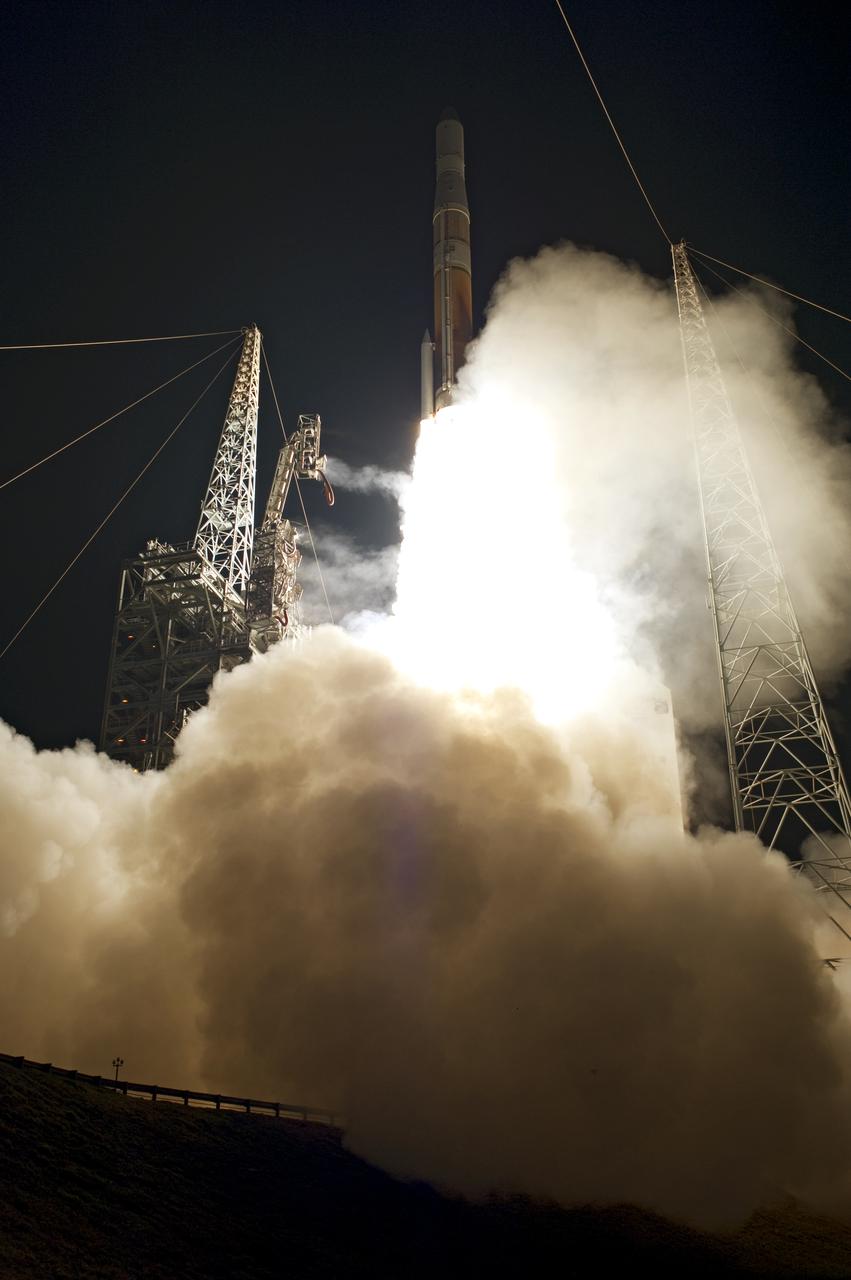
CAPE CANAVERAL, Fla. – A United Launch Alliance Delta IV rocket lifts off between the towers of the lightning protection system at Launch Complex 37 on Cape Canaveral Air Force Station at 6:57 p.m. EST carrying the GOES-P satellite to orbit. GOES-P, the latest Geostationary Operational Environmental Satellite, was developed by NASA for the National Oceanic and Atmospheric Administration, or NOAA. The GOES-P spacecraft will be placed in a 22,300-mile-high geosynchronous orbit where it will appear to hover over a single point on Earth. The spacecraft is outfitted with a complex suite of observation instruments and cameras so it can accurately report on weather and climate conditions on Earth. For information on GOES-P, visit http:__www.nasa.gov_mission_pages_GOES-P_main_index.html. Photo credit: NASA_Sandra Joseph and Tony Gray
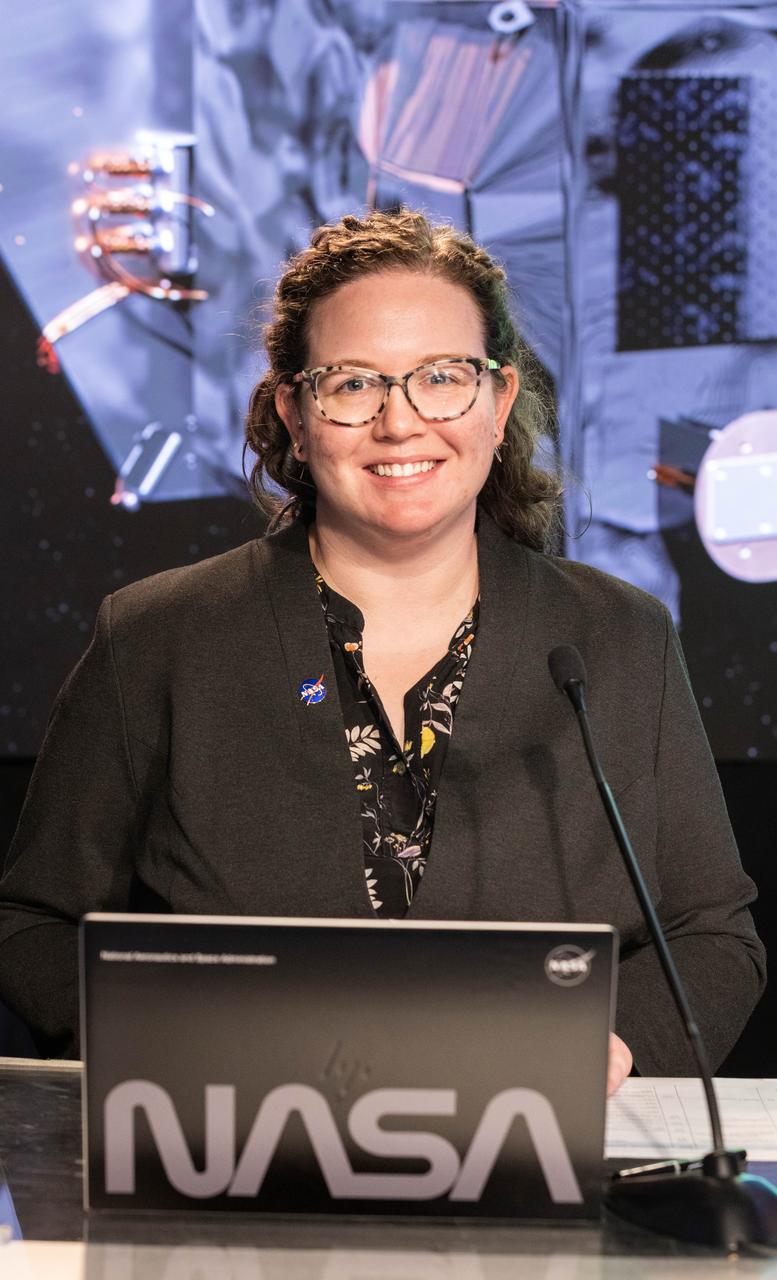
Sarah Frazier, NASA Communications, participates in a science briefing on NASA’s IMAP (Interstellar Mapping and Acceleration Probe) mission and its two rideshares – NASA’s exosphere-studying Carruthers Geocorona Observatory and National Oceanic and Atmospheric Administration’s (NOAA) Space Weather Follow On–Lagrange 1 (SWFO-L1) observatory – at the agency’s Kennedy Space Center in Florida on Sunday, Sept. 21, 2025. NASA’s IMAP will use 10 science instruments to study and map the heliosphere, a vast magnetic bubble surrounding the Sun protecting our solar system from radiation incoming from interstellar space. The three missions will orbit the Sun near Lagrange point 1, about one million miles from Earth. Launch is targeted for 7:32 a.m. EDT, Tuesday, Sept. 23, from Launch Complex 39A at NASA Kennedy.

Julianna Scheiman, director, NASA Science Missions, SpaceX, participates in a prelaunch news conference on Sunday, Sept. 21, 2025, at the agency’s Kennedy Space Center in Florida for NASA's IMAP (Interstellar Mapping and Acceleration Probe) mission. NASA’s IMAP will use 10 science instruments to study and map the heliosphere, a vast magnetic bubble surrounding the Sun protecting our solar system from radiation incoming from interstellar space. This mission and its two rideshares – NASA’s exosphere-studying Carruthers Geocorona Observatory and National Oceanic and Atmospheric Administration’s (NOAA) Space Weather Follow On–Lagrange 1 (SWFO-L1) observatory – will orbit the Sun near Lagrange point 1, about one million miles from Earth. Launch is targeting 7:32 a.m. EDT, Tuesday, Sept. 23, from Launch Complex 39A at NASA Kennedy.
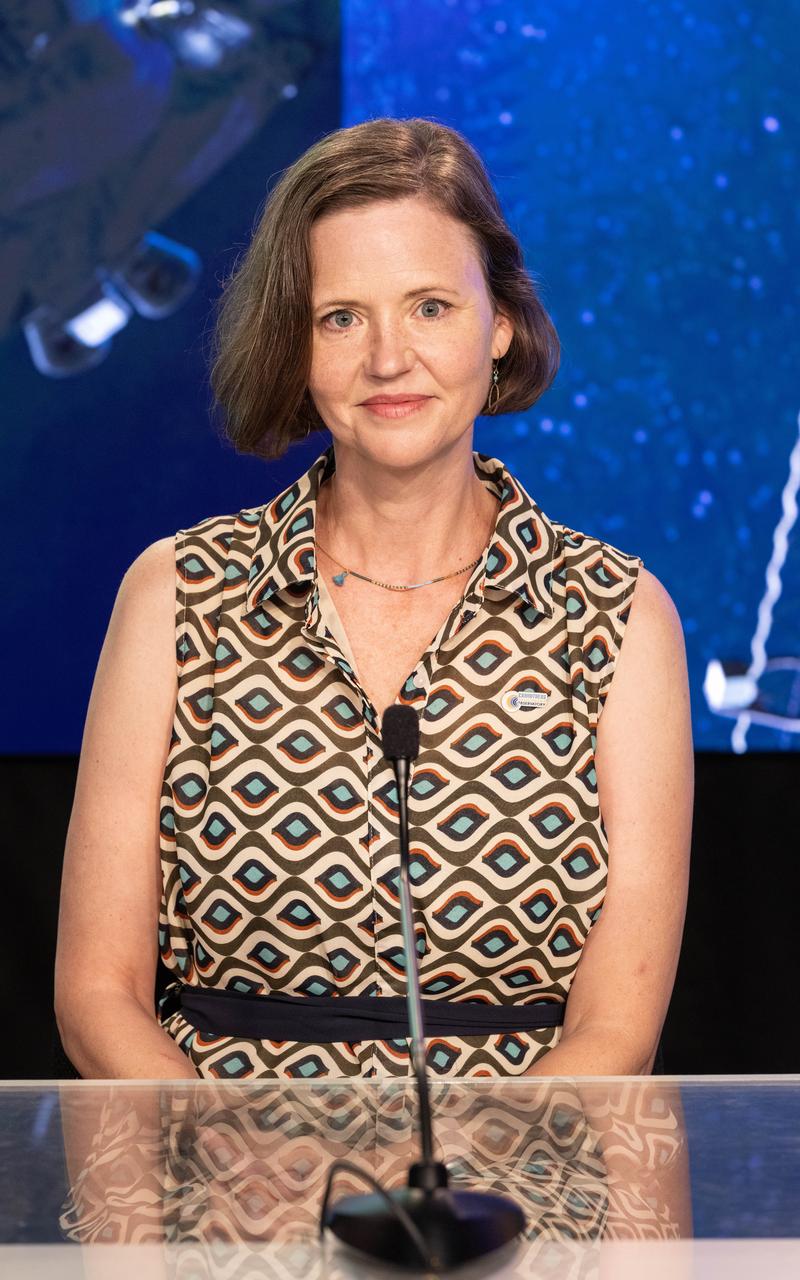
Lara Waldrop, Carruthers Geocorona Observatory principal investigator, University of Illinois Urbana-Champaign, participates in a science briefing on NASA’s IMAP (Interstellar Mapping and Acceleration Probe) mission and its two rideshares – NASA’s exosphere-studying Carruthers Geocorona Observatory and National Oceanic and Atmospheric Administration’s (NOAA) Space Weather Follow On–Lagrange 1 (SWFO-L1) observatory – at the agency’s Kennedy Space Center in Florida on Sunday, Sept. 21, 2025. NASA’s IMAP will use 10 science instruments to study and map the heliosphere, a vast magnetic bubble surrounding the Sun protecting our solar system from radiation incoming from interstellar space. The three missions will orbit the Sun near Lagrange point 1, about one million miles from Earth. Launch is targeted for 7:32 a.m. EDT, Tuesday, Sept. 23, from Launch Complex 39A at NASA Kennedy.
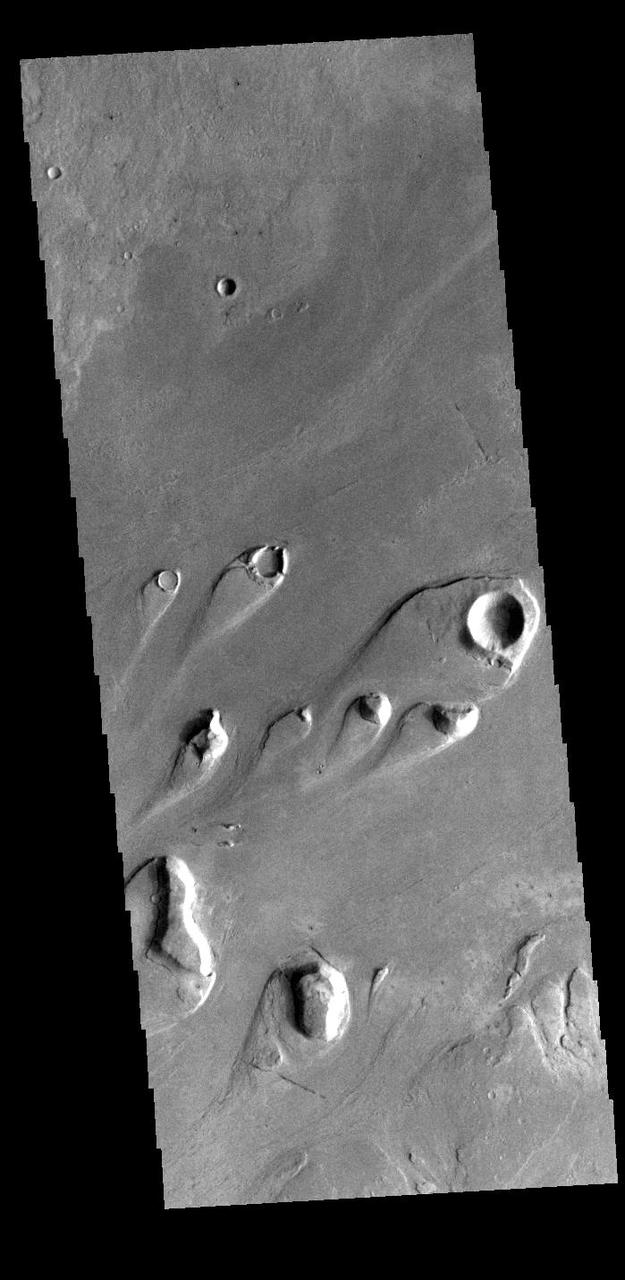
Today's VIS image shows part of Athabasca Valles. Multiple streamlined islands are seen in this image. The teardrop shaped features were formed by liquid flow deflected around features such as craters and hills. The 'tail' of the island points downstream. The source of the fluid was likely an outburst of groundwater, perhaps related to the Elysium volcanic complex located to the northwest of this image. Arising from Cerberus Fossae, the formation mode of this channel is still being debated. While the channel features are similar to water flow, other features are similar to lava flows, and yet other features have an appearance of slabs of material that floated on an underlying fluid. It is thought that Athabasca Valles is the youngest outflow channel system on Mars. Athabasca Valles is just one of the complex channel formations in the Elysium Planitia region. Orbit Number: 89977 Latitude: 9.44823 Longitude: 156.138 Instrument: VIS Captured: 2022-03-28 00:21 https://photojournal.jpl.nasa.gov/catalog/PIA25466

Joe Westlake, director, Heliophysics Division, NASA Headquarters in Washington, participates in a science briefing on NASA’s IMAP (Interstellar Mapping and Acceleration Probe) mission and its two rideshares – NASA’s exosphere-studying Carruthers Geocorona Observatory and National Oceanic and Atmospheric Administration’s (NOAA) Space Weather Follow On–Lagrange 1 (SWFO-L1) observatory – at the agency’s Kennedy Space Center in Florida on Sunday, Sept. 21, 2025. NASA’s IMAP will use 10 science instruments to study and map the heliosphere, a vast magnetic bubble surrounding the Sun protecting our solar system from radiation incoming from interstellar space. The three missions will orbit the Sun near Lagrange point 1, about one million miles from Earth. Launch is targeted for 7:32 a.m. EDT, Tuesday, Sept. 23, from Launch Complex 39A at NASA Kennedy.
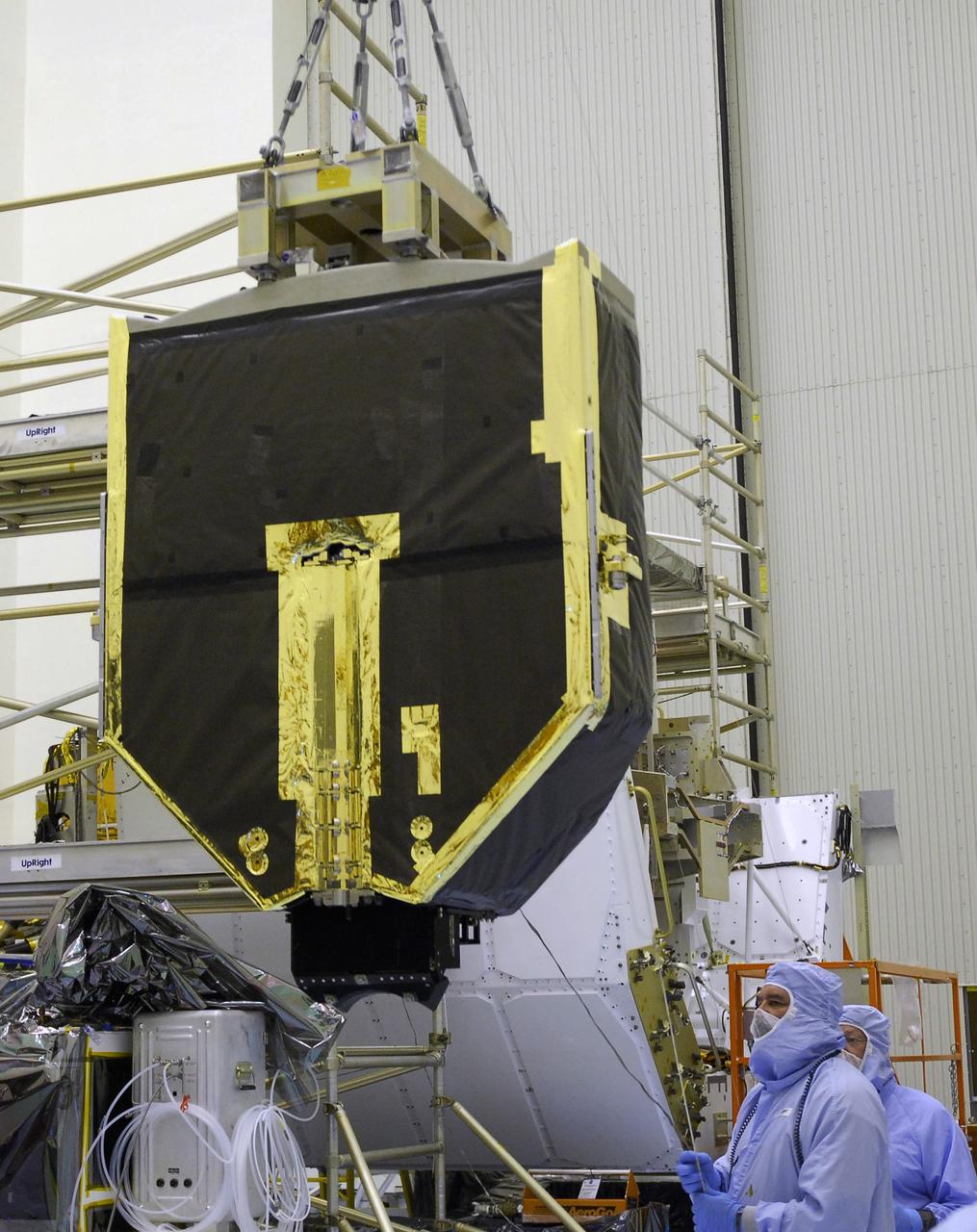
CAPE CANAVERAL, Fla. – Technicians in the Payload Hazardous Servicing Facility at NASA's Kennedy Space Center help guide the Fine Guidance Sensor, or FGS, as it moves toward the Orbital Replacement Unit Carrier or ORUC, for installation. An FGS consists of a large structure housing a collection of mirrors, lenses, servos, prisms, beam splitters and photomultiplier tubes. There are three fine guidance sensors on Hubble located at 90-degree intervals around the circumference of the telescope. Along with the gyroscopes, the optical sensors are a key component of Hubble’s highly complex but extraordinarily effective “pointing control system.” The ORUC is one of three carriers that are being prepared for the integration of telescope science instruments, both internal and external replacement components, as well as the flight support equipment to be used by the astronauts during the fifth and final Hubble servicing mission, STS-125, on space shuttle Atlantis. Launch is targeted for Oct. 8. Photo credit: NASA/Jim Grossmann
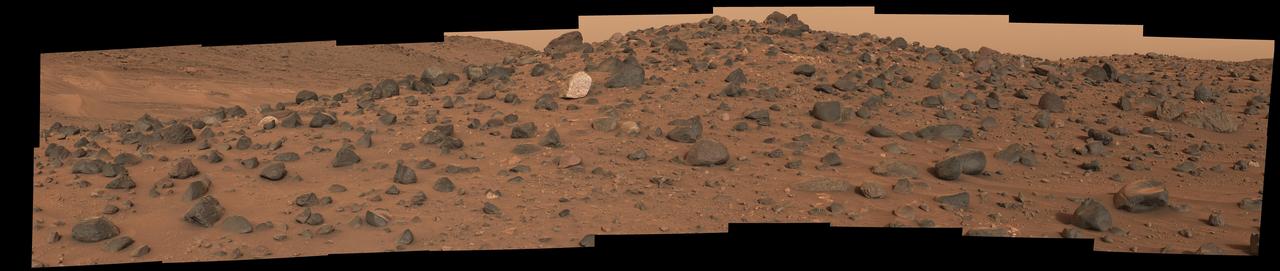
Composed of 18 images, this natural-color mosaic shows a boulder field on "Mount Washburn" (named after a mountain in Wyoming) in Mars' Jezero Crater. The Perseverance science team nicknamed the light-toned boulder with dark speckles near the center of the mosaic "Atoko Point" (after a feature in the eastern Grand Canyon). The images were acquired by NASA's Perseverance Mars rover on May 27, 2024, the 1,162nd Martian day, or sol, of the mission. Analysis by the rover's SuperCam and Mastcam-Z instruments indicate Atoko Point is composed of the mineral pyroxene, similar to some boulders the rover has encountered elsewhere in Jezero Crater. In terms of the size, shape, and arrangement of its mineral grains and crystals – and potentially its chemical composition – Atoko Point is different from any of the rocks the rover has encountered before. Some Perseverance scientists speculate the minerals that make up Atoko Point were produced in a subsurface body of magma that is possibly exposed now on the crater rim. Others on the team wonder if the boulder, which stands about 18 inches (45 centimeters) wide and 14 inches (35 centimeters) tall, had been created far beyond the walls of Jezero and transported there by swift Martian waters eons ago. Arizona State University leads the operations of the Mastcam-Z instrument, working in collaboration with Malin Space Science Systems in San Diego, on the design, fabrication, testing, and operation of the cameras, and in collaboration with the Niels Bohr Institute of the University of Copenhagen on the design, fabrication, and testing of the calibration targets. A key objective for Perseverance's mission on Mars is astrobiology, including the search for signs of ancient microbial life. The rover will characterize the planet's geology and past climate, pave the way for human exploration of the Red Planet, and be the first mission to collect and cache Martian rock and regolith (broken rock and dust). Subsequent NASA missions, in cooperation with ESA (European Space Agency), would send spacecraft to Mars to collect these sealed samples from the surface and return them to Earth for in-depth analysis. The Mars 2020 Perseverance mission is part of NASA's Moon to Mars exploration approach, which includes Artemis missions to the Moon that will help prepare for human exploration of the Red Planet. https://photojournal.jpl.nasa.gov/catalog/PIA26333

In this photograph, the instruments of the Astro-1 Observatory are erected in the cargo bay of the Columbia orbiter. Astro-1 was launched aboard the the Space Shuttle Orbiter Columbia (STS-35) mission on December 2, 1990. The Astro Observatory was designed to explore the universe by observing and measuring the ultraviolet radiation from celestial objects. Astronomical targets of observation selected for Astro missions included planets, stars, star clusters, galaxies, clusters of galaxies, quasars, remnants of exploded stars (supernovae), clouds of gas and dust (nebulae), and the interstellar medium. Astro-1 used a Spacelab pallet system with an instrument pointing system and a cruciform structure for bearing the three ultraviolet instruments mounted in a parallel configuration. The three instruments were:The Hopkins Ultraviolet Telescope (HUT), the Wisconsin Ultraviolet Photo-Polarimeter Experiment (WUPPE), and the Ultraviolet Imaging Telescope (UIT). Also in the payload bay was the Broad Band X-Ray Telescope (BBXRT). Scientific return included approximately 1,000 photographs of the ultraviolet sky in the most extensive ultraviolet imagery ever attempted, the longest ultraviolet spectral observation of a comet ever made, and data never before seen on types of active galaxies called Seyfert galaxies. The mission also provided data on a massive supergiant star captured in outburst and confirmed that a spectral feature observed in the interstellar medium was due to graphite. In addition, Astro-1 acquired superb observations of the Jupiter magnetic interaction with one of its satellites.
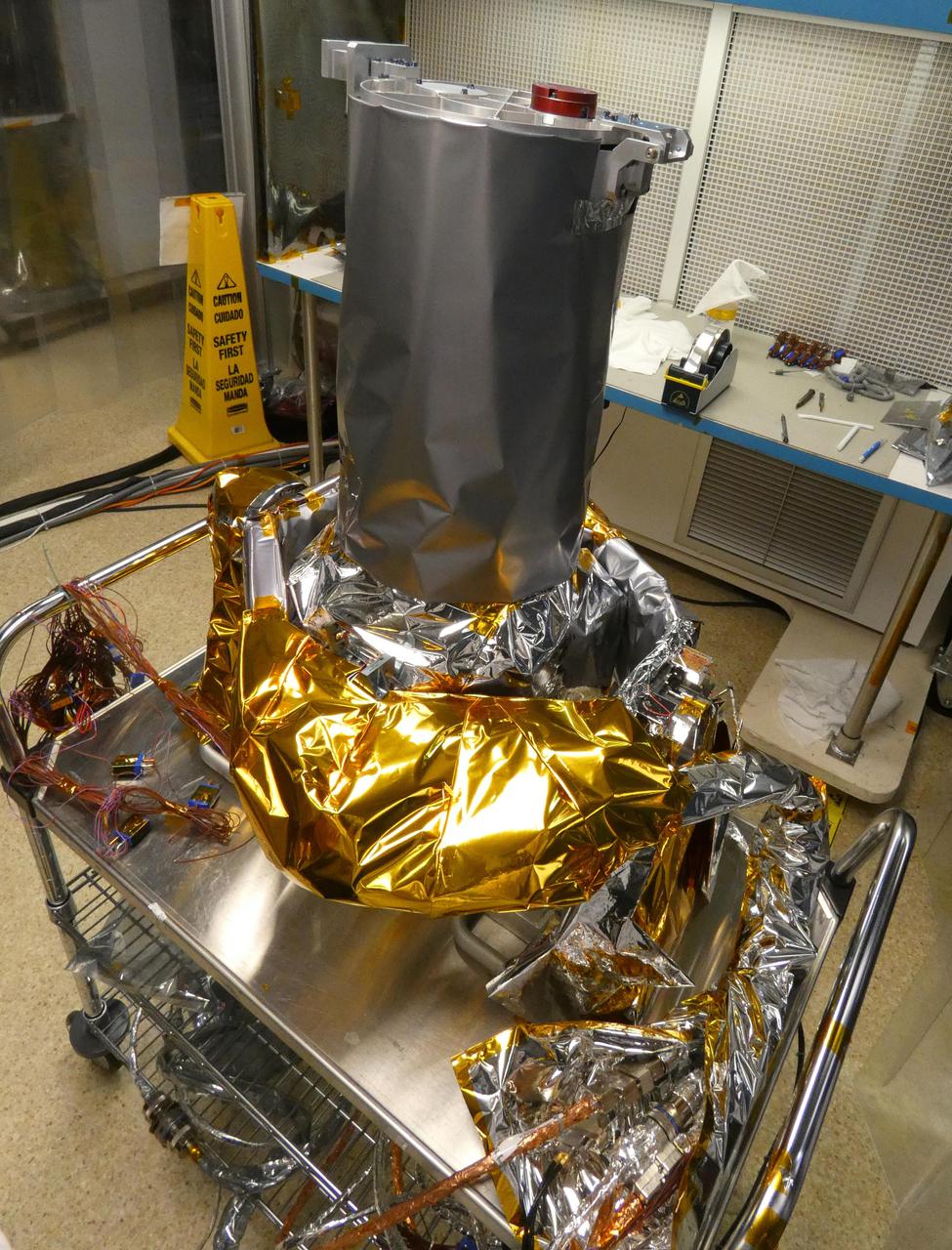
Included in the payload of science instruments for NASA's Europa Clipper is the Europa Imaging System (EIS) Narrow Angle Camera (NAC). Shown here at the Johns Hopkins Applied Physics Laboratory (APL) in Laurel, Maryland, the engineering model, which is used to test the instrument, is mounted on the two-axis gimbal mechanism that allows the NAC telescope to be pointed independently. The model consists of the NAC telescope, electronics, gimbal, and cables, covered in thermal blankets. EIS will allow groundbreaking measurements and map most of Europa, an icy moon of Jupiter with an ocean under its crust, at resolutions previous missions could only achieve in small areas. EIS data will offer fresh insights into Europa's geological structure and processes and will be used to search for evidence of recent or current geologic activity, including potential erupting plumes. With an internal global ocean twice the size of Earth's oceans combined, Europa may have the potential to harbor life. NASA's Europa Clipper spacecraft will swoop around Jupiter on an elliptical path, dipping close to the moon on each flyby to collect data. Understanding Europa's habitability will help scientists better understand how life developed on Earth and the potential for finding life beyond our planet. https://photojournal.jpl.nasa.gov/catalog/PIA24328
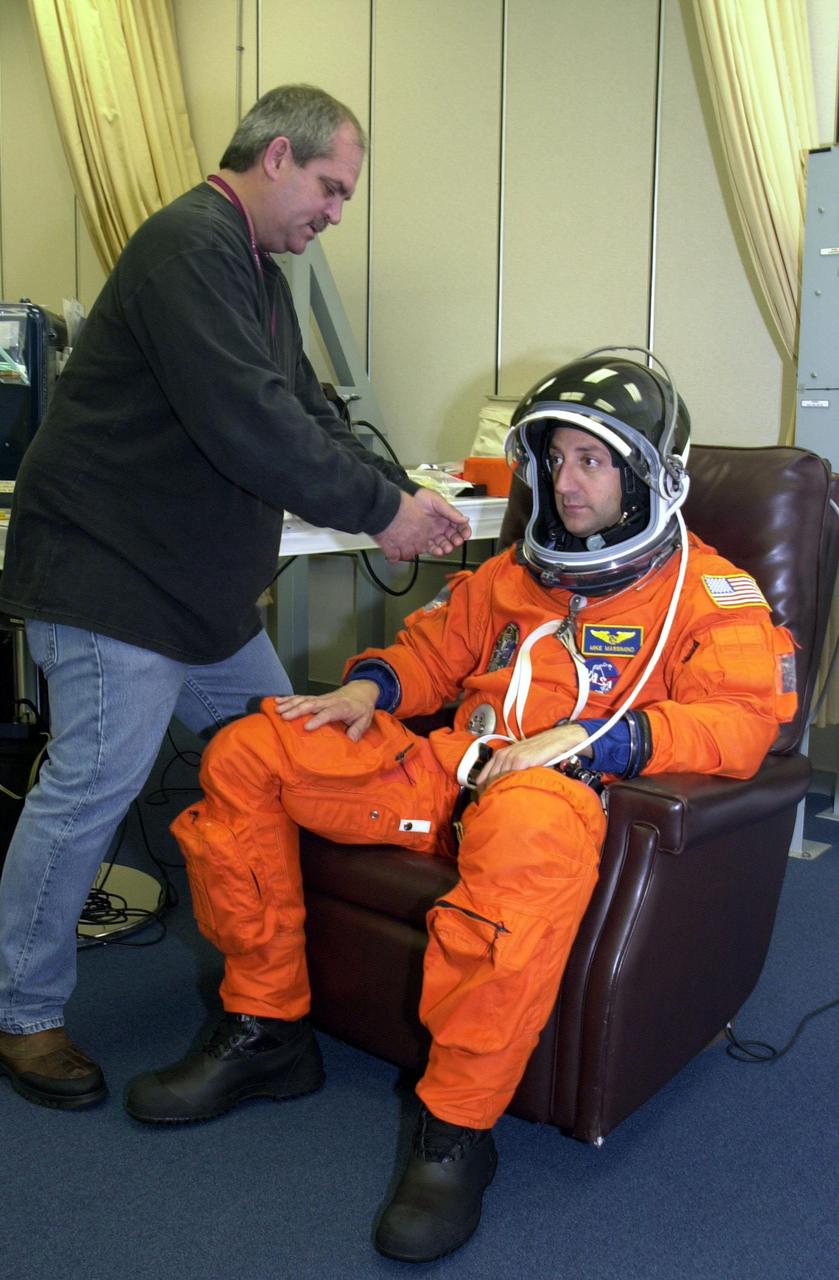
KENNEDY SPACE CENTER, Fla. - STS-109 Mission Specialist Michael J. Massimino gets a final fitting on his launch and entry suit two days before launch. On mission STS-109, the seven-member crew will capture the Hubble Space Telescope using the Shuttle's robotic arm and secure it on a workstand in Columbia's payload bay. Four mission specialists will perform five scheduled spacewalks to complete system upgrades to the telescope. More durable solar arrays, a large gyroscopic assembly to help point the telescope properly, a new telescope power control unit, and a cooling system to restore the use of a key infrared camera and spectrometer unit, which has been dormant since 1999, will all be installed. In addition, the telescope’s view of the Universe will be improved with the addition of the Advanced Camera for Surveys (ACS), which replaces the Faint Object Camera, the last of Hubble's original instruments. The STS-109 crew also includes Commander Scott D. Altman, Pilot Duane G. Carey, and Mission Specialists John M. Grunsfeld, James H. Newman, Nancy J. Currie and Richard M. Linnehan. Launch is scheduled for Feb. 28, 2002, at 6:48 a.m. EST (11:48 GMT)
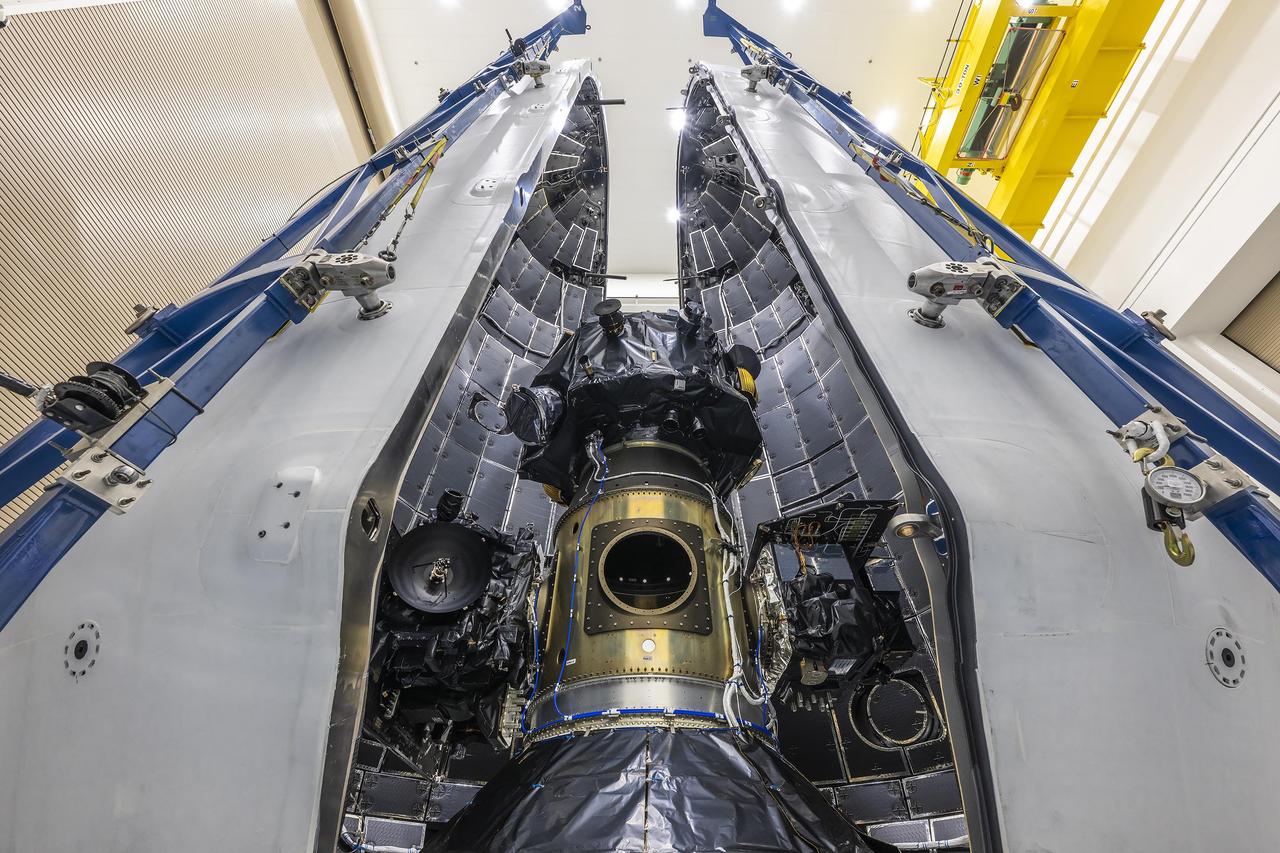
Technicians at Astrotech Space Operations Facility near NASA’s Kennedy Space Center in Florida encapsulate NASA’s IMAP (Interstellar Mapping and Acceleration Probe) spacecraft on Tuesday, Sept. 16, 2025, inside SpaceX’s Falcon 9 payload fairings to protect the spacecraft during launch. NASA’s IMAP will use 10 science instruments to study and map the heliosphere, a vast magnetic bubble surrounding the Sun protecting our solar system from radiation incoming from interstellar space. This mission and its two rideshares – NASA’s exosphere-studying Carruthers Geocorona Observatory and National Oceanic and Atmospheric Administration’s (NOAA) Space Weather Follow On–Lagrange 1 (SWFO-L1) observatory – will orbit the Sun near Lagrange point 1, about one million miles from Earth, where it will scan the heliosphere, analyze the composition of charged particles, and investigate how those particles move through the solar system. Launch is targeted for no earlier than Tuesday, Sept. 23, 2025, from Launch Complex 39A at NASA Kennedy.
KENNEDY SPACE CENTER, Fla. - STS-109 Mission Specialist Michael J. Massimino gets help suiting up for launch, scheduled for 6:22 a.m. EST March 1. On mission STS-109, the crew will capture the Hubble Space Telescope using the Shuttle's robotic arm and secure it on a workstand in Columbia's payload bay. Four mission specialists will perform five scheduled spacewalks to complete system upgrades to the telescope. More durable solar arrays, a large gyroscopic assembly to help point the telescope properly, a new telescope power control unit, and a cooling system to restore the use of a key infrared camera and spectrometer unit, which has been dormant since 1999, will all be installed. In addition, the telescope's view of the Universe will be improved with the addition of the Advanced Camera for Surveys (ACS), which replaces the Faint Object Camera, the last of Hubble's original instruments. Mission STS-109 is the 27th flight of the orbiter Columbia and the 108th flight overall in NASA's Space Shuttle program. After the 11-day mission, Columbia is scheduled to land about 4:35 a.m. EST March 12
KENNEDY SPACE CENTER, FLA. -- STS-109 Mission Specialist James H. Newman gets a final fitting on his launch and entry suit two days before launch. On mission STS-109, the seven-member crew will capture the Hubble Space Telescope using the Shuttle's robotic arm and secure it on a workstand in Columbia's payload bay. Four mission specialists will perform five scheduled spacewalks to complete system upgrades to the telescope. More durable solar arrays, a large gyroscopic assembly to help point the telescope properly, a new telescope power control unit, and a cooling system to restore the use of a key infrared camera and spectrometer unit, which has been dormant since 1999, will all be installed. In addition, the telescope’s view of the Universe will be improved with the addition of the Advanced Camera for Surveys (ACS), which replaces the Faint Object Camera, the last of Hubble's original instruments. The STS-109 crew also includes Commander Scott D. Altman, Pilot Duane G. Carey, and Mission Specialists John M. Grunsfeld, Nancy J. Currie, Richard M. Linnehan and Michael J. Massimino. Launch is scheduled for Feb. 28, 2002, at 6:48 a.m. EST (11:48 GMT)
KENNEDY SPACE CENTER, Fla. - STS-109 Payload Commander John M. Grunsfeld gets a final fitting on his launch and entry suit two days before launch. On mission STS-109, the seven-member crew will capture the Hubble Space Telescope using the Shuttle's robotic arm and secure it on a workstand in Columbia's payload bay. Four mission specialists will perform five scheduled spacewalks to complete system upgrades to the telescope. More durable solar arrays, a large gyroscopic assembly to help point the telescope properly, a new telescope power control unit, and a cooling system to restore the use of a key infrared camera and spectrometer unit, which has been dormant since 1999, will all be installed. In addition, the telescope’s view of the Universe will be improved with the addition of the Advanced Camera for Surveys (ACS), which replaces the Faint Object Camera, the last of Hubble's original instruments. The STS-109 crew also includes Commander Scott D. Altman, Pilot Duane G. Carey, and Mission Specialists James H. Newman, Nancy J. Currie, Richard M. Linnehan and Michael J. Massimino. Launch is scheduled for Feb. 28, 2002, at 6:48 a.m. EST (11:48 GMT)
KENNEDY SPACE CENTER, Fla. -- The STS-109 crew enjoys an early morning snack that includes a symbolic cake with the mission logo, part of a ritual before a launch. Seated, left to right, are MIssion Specialists Michael Massimino and James Newman; Pilot Duane Carey; Commander Scott Altman; and Mission Specialists Nancy Currie, John Grunsfeld and Richard Linnehan. On mission STS-109, the crew will capture the Hubble Space Telescope using the Shuttle’s robotic arm and secure it on a workstand in Columbia's payload bay. Four mission specialists will perform five scheduled spacewalks to complete system upgrades to the telescope. More durable solar arrays, a large gyroscopic assembly to help point the telescope properly, a new telescope power control unit, and a cooling system to restore the use of a key infrared camera and spectrometer unit, which has been dormant since 1999, will all be installed. In addition, the telescope's view of the Universe will be improved with the addition of the Advanced Camera for Surveys (ACS), which replaces the Faint Object Camera, the last of Hubble's original instruments. Mission STS-109 is the 27th flight of the orbiter Columbia and the 108th flight overall in NASA’s Space Shuttle program. After the 11-day mission, STS-109 is scheduled to land about 4:35 a.m. EST on March 12
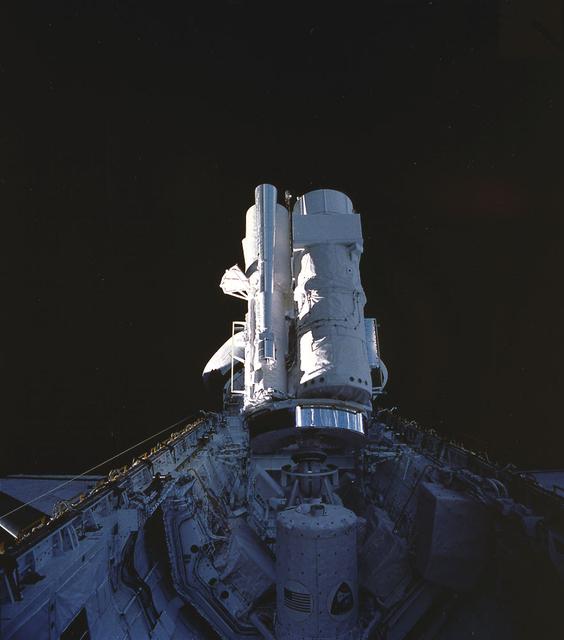
Onboard the Space Shuttle Orbiter Columbia (STS-35), the various components of the Astro-1 payload are seen backdropped against dark space. Parts of the Hopkins Ultraviolet Telescope (HUT), Ultraviolet Imaging Telescope (UIT), and the Wisconsin Ultraviolet Photo-Polarimetry Experiment (WUPPE) are visible on the Spacelab pallet. The Broad-Band X-Ray Telescope (BBXRT) is behind the pallet and is not visible in this scene. The smaller cylinder in the foreground is the igloo. The igloo was a pressurized container housing the Command Data Management System, that interfaced with the in-cabin controllers to control the Instrument Pointing System (IPS) and the telescopes. The Astro Observatory was designed to explore the universe by observing and measuring the ultraviolet radiation from celestial objects. Astronomical targets of observation selected for Astro missions included planets, stars, star clusters, galaxies, clusters of galaxies, quasars, remnants of exploded stars (supernovae), clouds of gas and dust (nebulae), and the interstellar medium. Managed by the Marshall Space Flight Center, the Astro-1 was launched aboard the Space Shuttle Orbiter Columbia (STS-35) on December 2, 1990.
KENNEDY SPACE CENTER, Fla. - STS-109 Mission Specialist Nancy J. Currie gets a final fitting on her launch and entry suit two days before launch. On mission STS-109, the seven-member crew will capture the Hubble Space Telescope using the Shuttle's robotic arm and secure it on a workstand in Columbia's payload bay. Four mission specialists will perform five scheduled spacewalks to complete system upgrades to the telescope. More durable solar arrays, a large gyroscopic assembly to help point the telescope properly, a new telescope power control unit, and a cooling system to restore the use of a key infrared camera and spectrometer unit, which has been dormant since 1999, will all be installed. In addition, the telescope’s view of the Universe will be improved with the addition of the Advanced Camera for Surveys (ACS), which replaces the Faint Object Camera, the last of Hubble's original instruments. The STS-109 crew also includes Commander Scott D. Altman, Pilot Duane G. Carey, and Mission Specialists John M. Grunsfeld, James H. Newman, Richard M. Linnehan and Michael J. Massimino. Launch is scheduled for Feb. 28, 2002, at 6:48 a.m. EST (11:48 GMT)
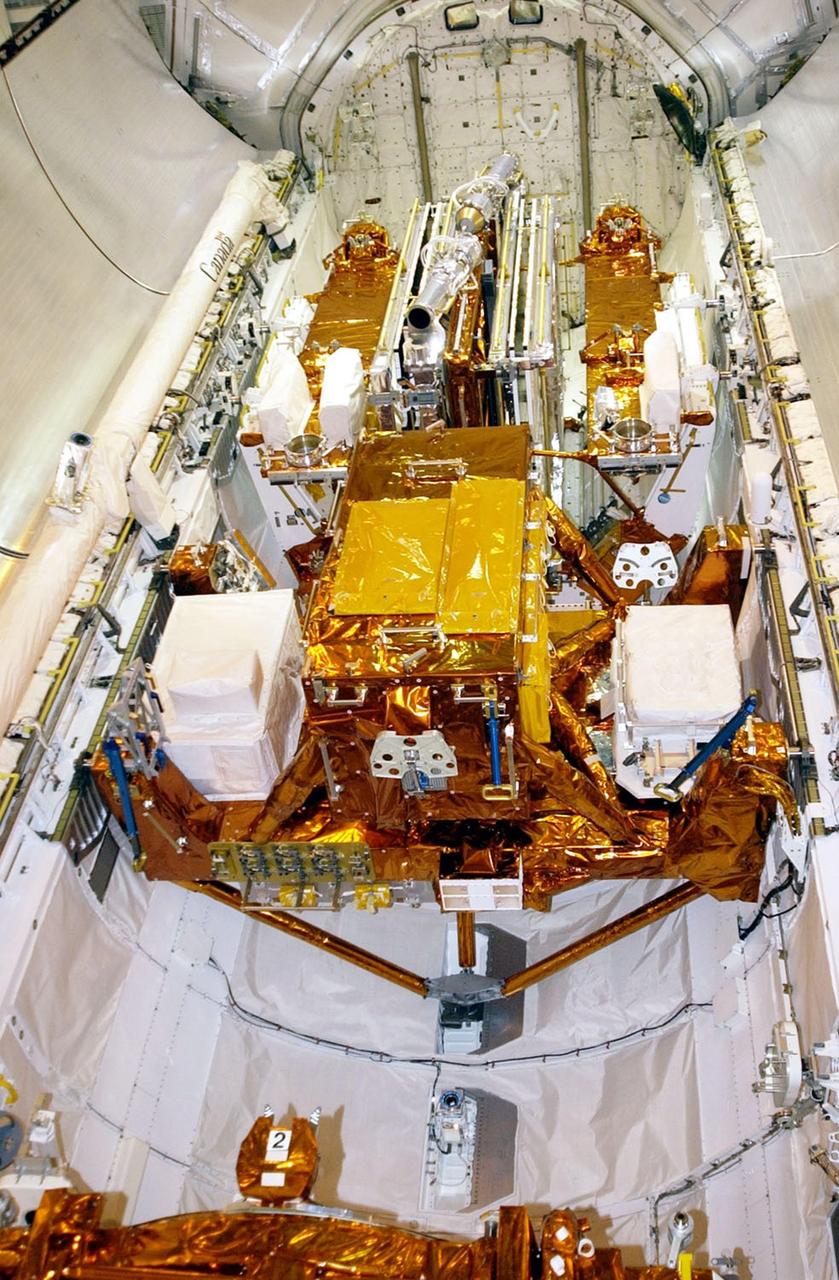
KENNEDY SPACE CENTER, FLA. -- The STS-109 payload sits in place inside Columbia’s payload bay. On mission STS-109, the seven-member crew will capture the Hubble Space Telescope using the Shuttle's robotic arm and secure it on a workstand in Columbia’s payload bay. Four mission specialists will perform five scheduled spacewalks to complete system upgrades to the telescope. More durable solar arrays, a large gyroscopic assembly to help point the telescope properly, a new telescope power control unit, and a cooling system to restore the use of a key infrared camera and spectrometer unit, which has been dormant since 1999, will all be installed. In addition, the telescope's view of the Universe will be improved with the addition of the Advanced Camera for Surveys (ACS), which replaces the Faint Object Camera, the last of Hubble's original instruments. The STS-109 crew includes Commander Scott D. Altman, Pilot Duane G. Carey, and Mission Specialists John M. Grunsfeld, Nancy J. Currie, James H. Newman, Richard M. Linnehan and Michael J. Massimino. Launch is scheduled for Feb. 28, 2002, at 6:48 a.m. EST (11:48 GMT).
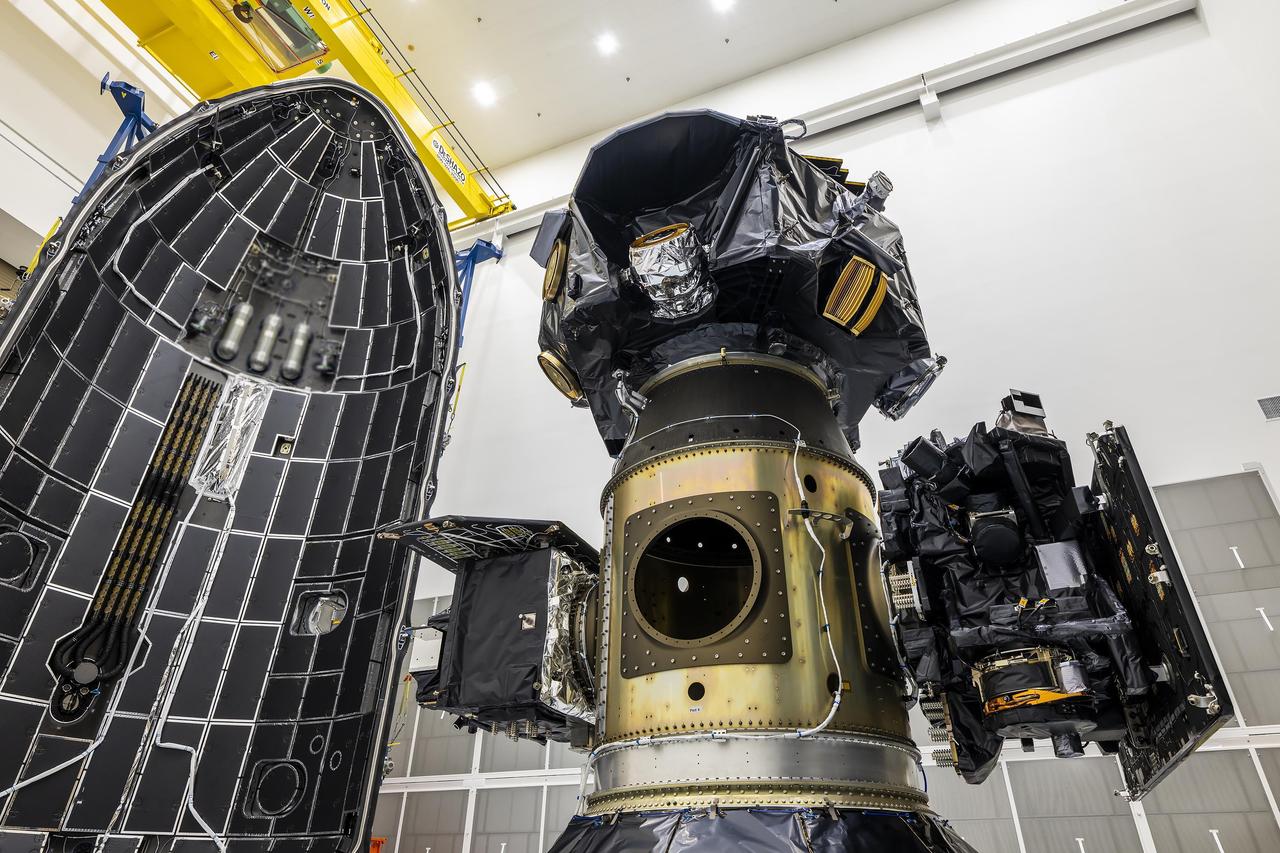
Technicians at Astrotech Space Operations Facility near NASA’s Kennedy Space Center in Florida encapsulate NASA’s IMAP (Interstellar Mapping and Acceleration Probe) spacecraft on Tuesday, Sept. 16, 2025, inside SpaceX’s Falcon 9 payload fairings to protect the spacecraft during launch. NASA’s IMAP will use 10 science instruments to study and map the heliosphere, a vast magnetic bubble surrounding the Sun protecting our solar system from radiation incoming from interstellar space. This mission and its two rideshares – NASA’s exosphere-studying Carruthers Geocorona Observatory and National Oceanic and Atmospheric Administration’s (NOAA) Space Weather Follow On–Lagrange 1 (SWFO-L1) observatory – will orbit the Sun near Lagrange point 1, about one million miles from Earth, where it will scan the heliosphere, analyze the composition of charged particles, and investigate how those particles move through the solar system. Launch is targeted for no earlier than Tuesday, Sept. 23, 2025, from Launch Complex 39A at NASA Kennedy.
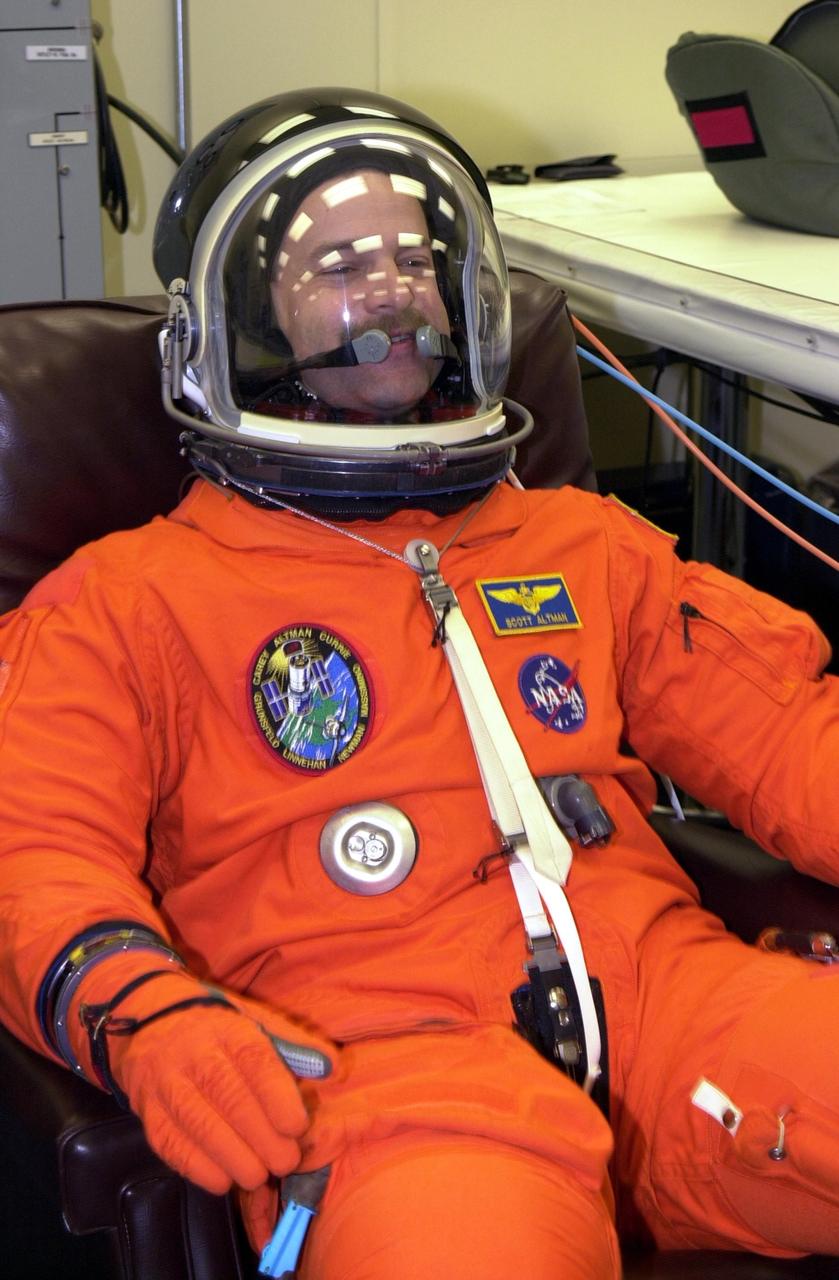
KENNEDY SPACE CENTER, Fla. - During suitup, STS-109 Commander Scott D. Altman gives a thumbs up for launch. Liftoff of Space Shuttle Columbia is scheduled for 6:22 a.m. EST March 1. On mission STS-109, the crew will capture the Hubble Space Telescope using the Shuttle's robotic arm and secure it on a workstand in Columbia's payload bay. Four mission specialists will perform five scheduled spacewalks to complete system upgrades to the telescope. More durable solar arrays, a large gyroscopic assembly to help point the telescope properly, a new telescope power control unit, and a cooling system to restore the use of a key infrared camera and spectrometer unit, which has been dormant since 1999, will all be installed. In addition, the telescope's view of the Universe will be improved with the addition of the Advanced Camera for Surveys (ACS), which replaces the Faint Object Camera, the last of Hubble's original instruments. Mission STS-109 is the 27th flight of the orbiter Columbia and the 108th flight overall in NASA's Space Shuttle program. After the 11-day mission, Columbia is scheduled to land about 4:35 a.m. EST March 12
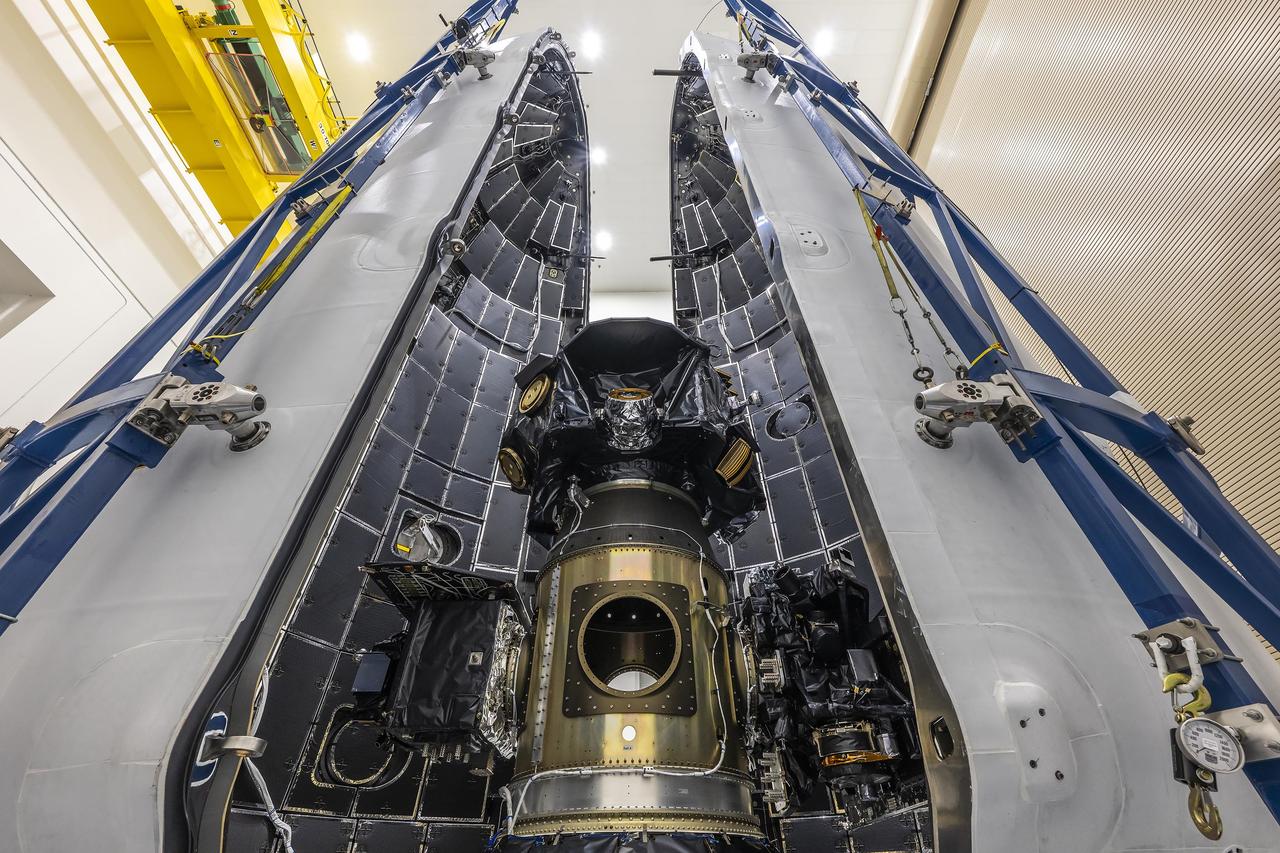
Technicians at Astrotech Space Operations Facility near NASA’s Kennedy Space Center in Florida encapsulate NASA’s IMAP (Interstellar Mapping and Acceleration Probe) spacecraft on Tuesday, Sept. 16, 2025, inside SpaceX’s Falcon 9 payload fairings to protect the spacecraft during launch. NASA’s IMAP will use 10 science instruments to study and map the heliosphere, a vast magnetic bubble surrounding the Sun protecting our solar system from radiation incoming from interstellar space. This mission and its two rideshares – NASA’s exosphere-studying Carruthers Geocorona Observatory and National Oceanic and Atmospheric Administration’s (NOAA) Space Weather Follow On–Lagrange 1 (SWFO-L1) observatory – will orbit the Sun near Lagrange point 1, about one million miles from Earth, where it will scan the heliosphere, analyze the composition of charged particles, and investigate how those particles move through the solar system. Launch is targeted for no earlier than Tuesday, Sept. 23, 2025, from Launch Complex 39A at NASA Kennedy.
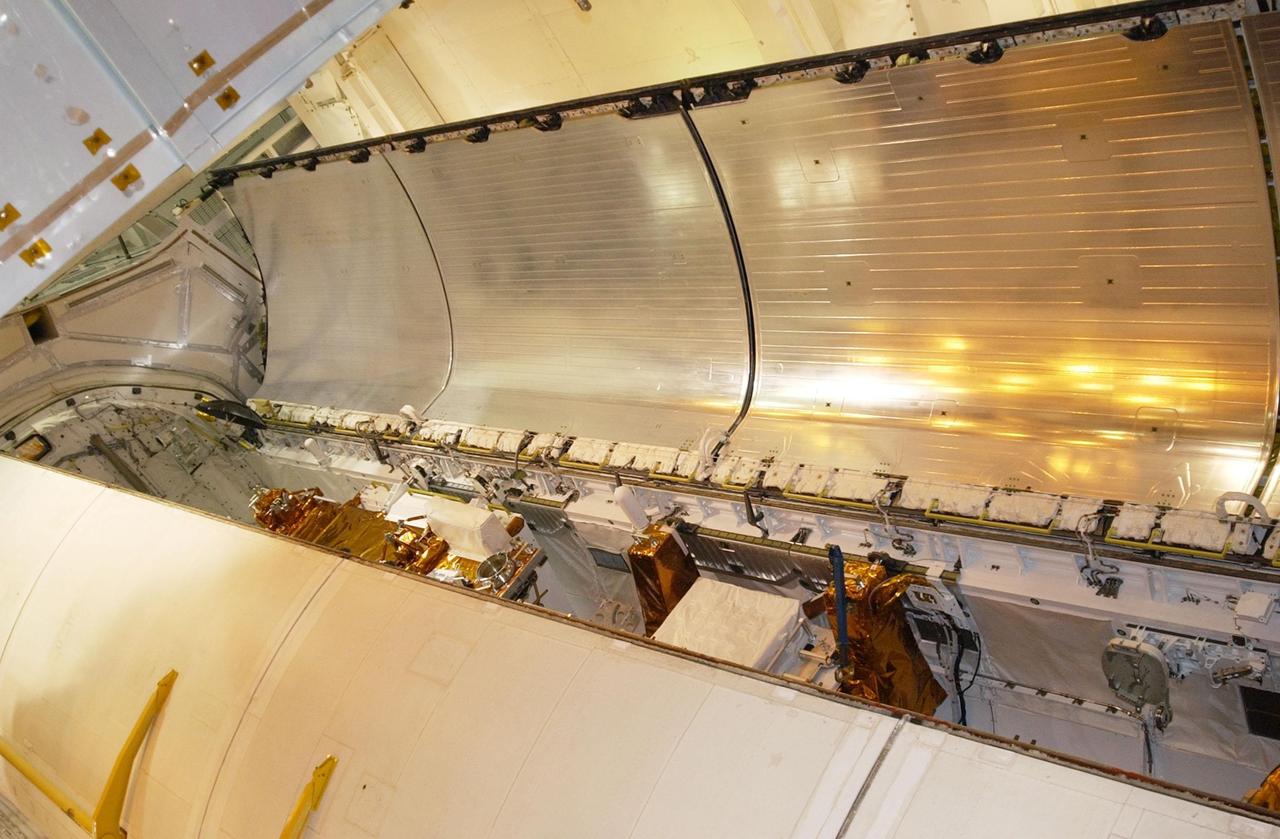
KENNEDY SPACE CENTER, Fla. - Columbia’s payload bay doors begin closing over the equipment inside to be used on mission STS-109. During their 11 days in space, the seven-member crew will capture the Hubble Space Telescope using the Shuttle's robotic arm and secure it on a workstand in Columbia’s payload bay. Four mission specialists will perform five scheduled spacewalks to complete system upgrades to the telescope. More durable solar arrays, a large gyroscopic assembly to help point the telescope properly, a new telescope power control unit, and a cooling system to restore the use of a key infrared camera and spectrometer unit, which has been dormant since 1999, will all be installed. In addition, the telescope's view of the Universe will be improved with the addition of the Advanced Camera for Surveys (ACS), which replaces the Faint Object Camera, the last of Hubble's original instruments. The STS-109 crew includes Commander Scott D. Altman, Pilot Duane G. Carey, and Mission Specialists John M. Grunsfeld, Nancy J. Currie, James H. Newman, Richard M. Linnehan and Michael J. Massimino. Launch is scheduled for Feb. 28, 2002, at 6:48 a.m. EST (11:48 GMT).
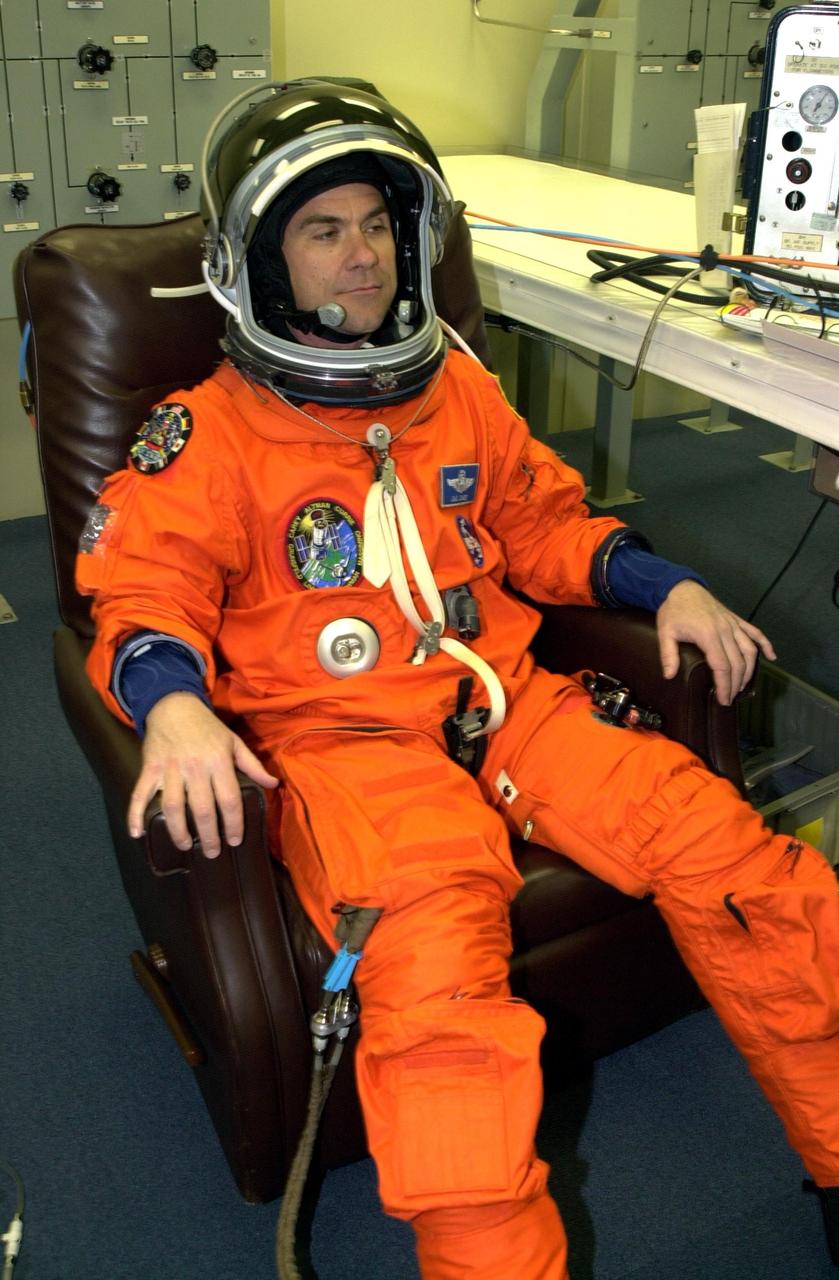
KENNEDY SPACE CENTER, FLA. - STS-109 Pilot Duane G. Carey suits up for launch, scheduled for 6:22 a.m. EST March 1. On mission STS-109, the crew will capture the Hubble Space Telescope using the Shuttle's robotic arm and secure it on a workstand in Columbia's payload bay. Four mission specialists will perform five scheduled spacewalks to complete system upgrades to the telescope. More durable solar arrays, a large gyroscopic assembly to help point the telescope properly, a new telescope power control unit, and a cooling system to restore the use of a key infrared camera and spectrometer unit, which has been dormant since 1999, will all be installed. In addition, the telescope's view of the Universe will be improved with the addition of the Advanced Camera for Surveys (ACS), which replaces the Faint Object Camera, the last of Hubble's original instruments. Mission STS-109 is the 27th flight of the orbiter Columbia and the 108th flight overall in NASA's Space Shuttle program. After the 11-day mission, Columbia is scheduled to land about 4:35 a.m. EST March 12
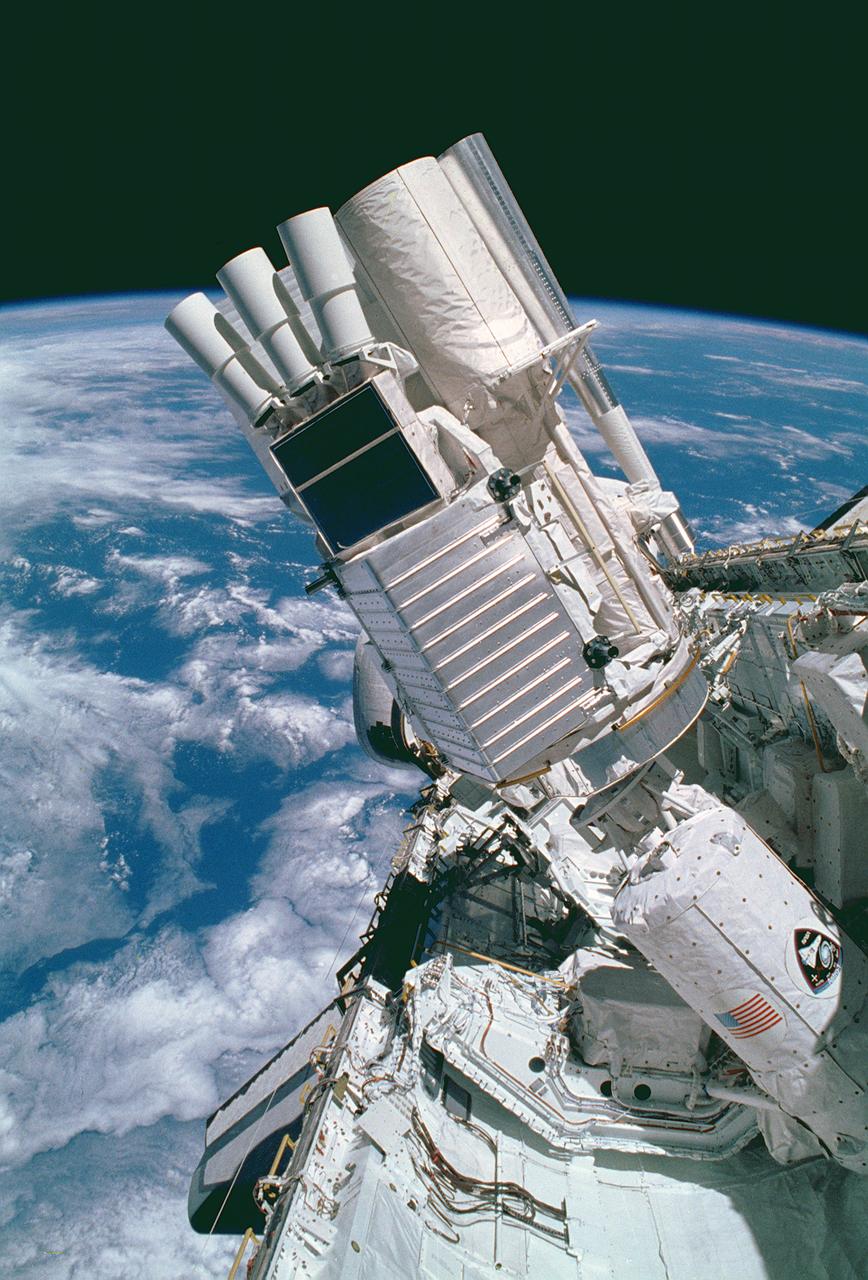
Onboard the Space Shuttle Orbiter Columbia (STS-35), the various components of the Astro-1 payload are seen backdropped against a blue and white Earth. Parts of the Hopkins Ultraviolet Telescope (HUT), the Ultraviolet Imaging Telescope (UIT), and the Wisconsin Ultraviolet Photo-Polarimetry Experiment (WUPPE) are visible on the Spacelab pallet. The Broad-Band X-Ray Telescope (BBXRT) is behind the pallet and is not visible in this scene. The smaller cylinder in the foreground is the igloo. The igloo was a pressurized container housing the Command Data Management System, that interfaced with the in-cabin controllers to control the Instrument Pointing System (IPS) and the telescopes. The Astro Observatory was designed to explore the universe by observing and measuring the ultraviolet radiation from celestial objects. Astronomical targets of observation selected for Astro missions included planets, stars, star clusters, galaxies, clusters of galaxies, quasars, remnants of exploded stars (supernovae), clouds of gas and dust (nebulae), and the interstellar medium. Managed by the Marshall Space Flight Center, the Astro-1 was launched aboard the Space Shuttle Orbiter Columbia (STS-35) on December 2, 1990.
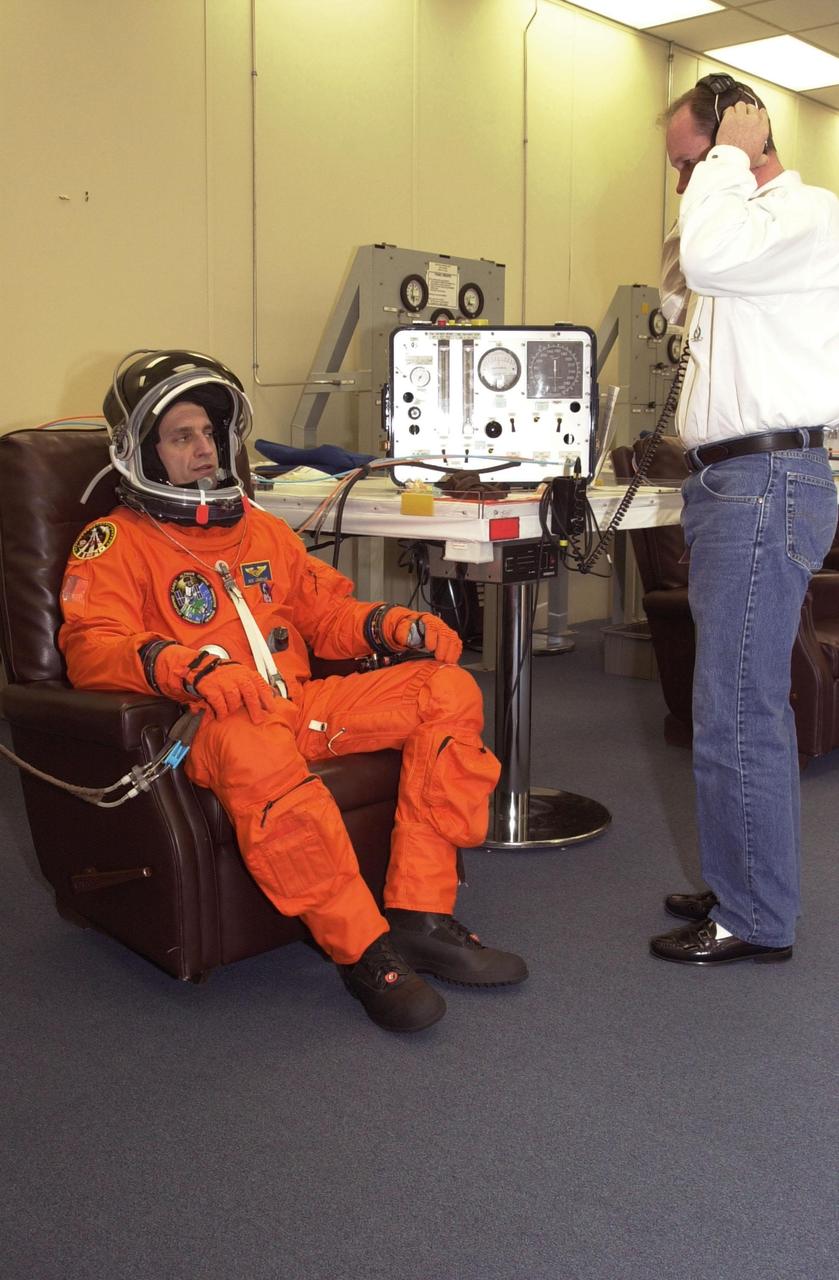
KENNEDY SPACE CENTER, Fla. - STS-109 Mission Specialist Richard M. Linnehan gets a final fitting on his launch and entry suit two days before launch. On mission STS-109, the seven-member crew will capture the Hubble Space Telescope using the Shuttle's robotic arm and secure it on a workstand in Columbia's payload bay. Four mission specialists will perform five scheduled spacewalks to complete system upgrades to the telescope. More durable solar arrays, a large gyroscopic assembly to help point the telescope properly, a new telescope power control unit, and a cooling system to restore the use of a key infrared camera and spectrometer unit, which has been dormant since 1999, will all be installed. In addition, the telescope’s view of the Universe will be improved with the addition of the Advanced Camera for Surveys (ACS), which replaces the Faint Object Camera, the last of Hubble's original instruments. The STS-109 crew also includes Commander Scott D. Altman, Pilot Duane G. Carey, and Mission Specialists John M. Grunsfeld, James H. Newman, Nancy J. Currie and Michael J. Massimino. Launch is scheduled for Feb. 28, 2002, at 6:48 a.m. EST (11:48 GMT)

KENNEDY SPACE CENTER, Fla. - During suitup, STS-109 Mission Specialist Richard M. Linnehan shows he is ready for launch. Liftoff of Space Shuttle Columbia is scheduled for 6:22 a.m. EST March 1. On mission STS-109, the crew will capture the Hubble Space Telescope using the Shuttle's robotic arm and secure it on a workstand in Columbia's payload bay. Four mission specialists will perform five scheduled spacewalks to complete system upgrades to the telescope. More durable solar arrays, a large gyroscopic assembly to help point the telescope properly, a new telescope power control unit, and a cooling system to restore the use of a key infrared camera and spectrometer unit, which has been dormant since 1999, will all be installed. In addition, the telescope's view of the Universe will be improved with the addition of the Advanced Camera for Surveys (ACS), which replaces the Faint Object Camera, the last of Hubble's original instruments. Mission STS-109 is the 27th flight of the orbiter Columbia and the 108th flight overall in NASA's Space Shuttle program. After the 11-day mission, Columbia is scheduled to land about 4:35 a.m. EST March 12
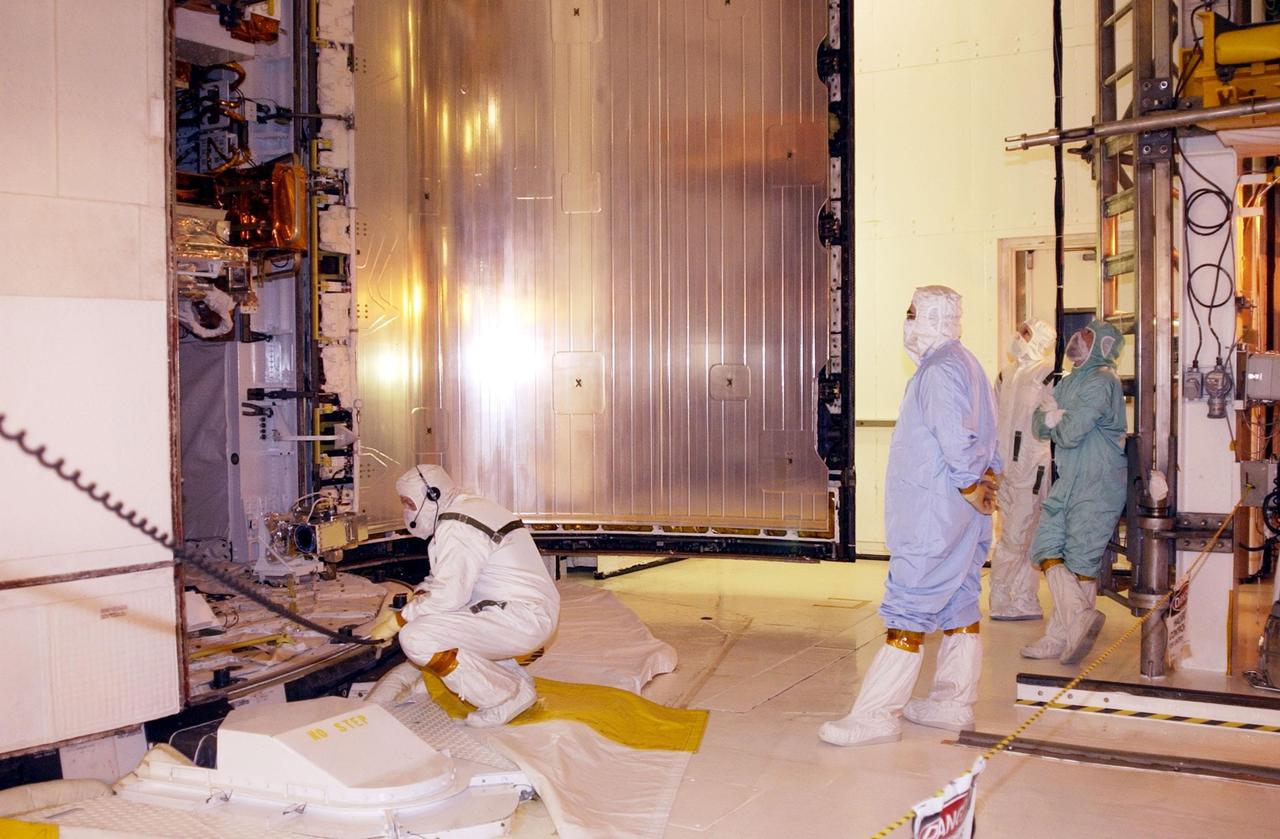
KENNEDY SPACE CENTER, Fla. - Workers in the Payload Changeout Room, Launch Pad 39A, check the progress of Columbia’s payload bay doors closing around the equipment inside to be used on mission STS-109. During their 11 days in space, the seven-member crew will capture the Hubble Space Telescope using the Shuttle's robotic arm and secure it on a workstand in Columbia’s payload bay. Four mission specialists will perform five scheduled spacewalks to complete system upgrades to the telescope. More durable solar arrays, a large gyroscopic assembly to help point the telescope properly, a new telescope power control unit, and a cooling system to restore the use of a key infrared camera and spectrometer unit, which has been dormant since 1999, will all be installed. In addition, the telescope's view of the Universe will be improved with the addition of the Advanced Camera for Surveys (ACS), which replaces the Faint Object Camera, the last of Hubble's original instruments. The STS-109 crew includes Commander Scott D. Altman, Pilot Duane G. Carey, and Mission Specialists John M. Grunsfeld, Nancy J. Currie, James H. Newman, Richard M. Linnehan and Michael J. Massimino. Launch is scheduled for Feb. 28, 2002, at 6:48 a.m. EST (11:48 GMT).
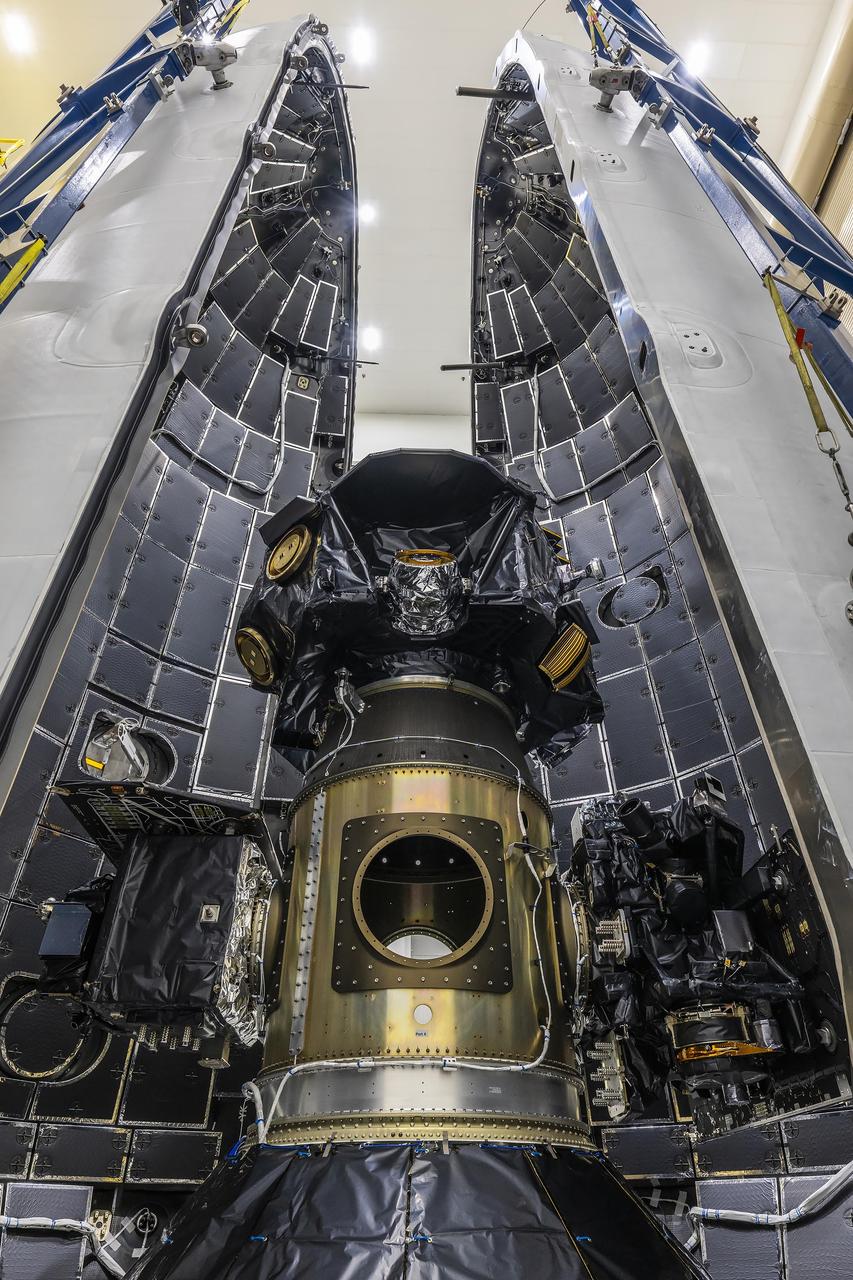
Technicians at Astrotech Space Operations Facility near NASA’s Kennedy Space Center in Florida encapsulate NASA’s IMAP (Interstellar Mapping and Acceleration Probe) spacecraft on Tuesday, Sept. 16, 2025, inside SpaceX’s Falcon 9 payload fairings to protect the spacecraft during launch. NASA’s IMAP will use 10 science instruments to study and map the heliosphere, a vast magnetic bubble surrounding the Sun protecting our solar system from radiation incoming from interstellar space. This mission and its two rideshares – NASA’s exosphere-studying Carruthers Geocorona Observatory and National Oceanic and Atmospheric Administration’s (NOAA) Space Weather Follow On–Lagrange 1 (SWFO-L1) observatory – will orbit the Sun near Lagrange point 1, about one million miles from Earth, where it will scan the heliosphere, analyze the composition of charged particles, and investigate how those particles move through the solar system. Launch is targeted for no earlier than Tuesday, Sept. 23, 2025, from Launch Complex 39A at NASA Kennedy.