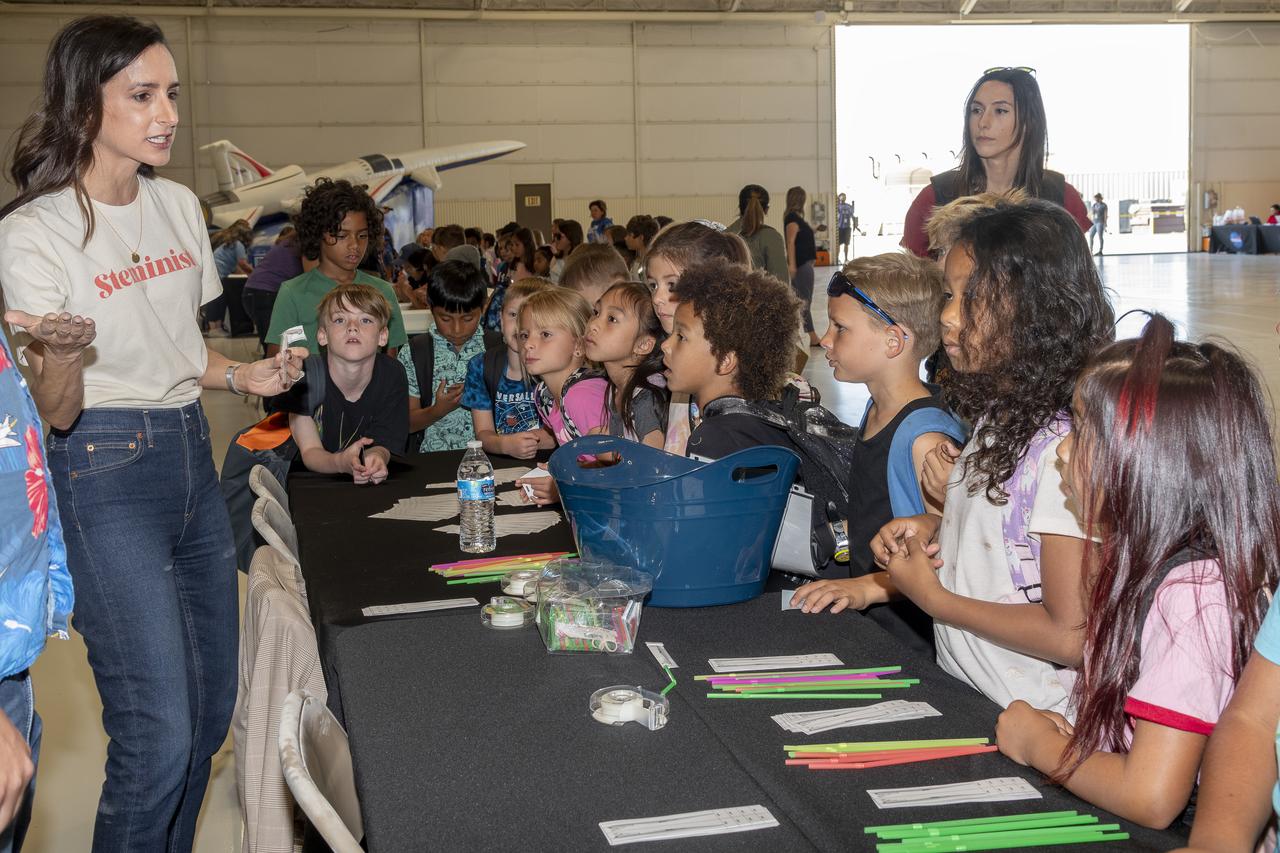
Kate M. McMurtry, deputy director of Integrated Aviation Systems Program shares with students how NASA is working to quiet the sonic boom with the development of the X-59 aircraft at NASA’s California Office of STEM Engagement event with Center of Science and Industry at NASA Armstrong Flight Research Center in Edwards, California.

Dr. Ed Waggoner, program director, Integrated Aviation Systems Program, NASA, speaks at a briefing on the Low Boom Flight Demonstrator, Tuesday, April 3, 2018 at NASA Headquarters in Washington. This new experimental aircraft will cut cross country travel times in half by flying faster than the speed of sound without creating a sonic boom, enabling travel from New York to Los Angeles in two hours. Photo Credit: (NASA/Aubrey Gemignani)
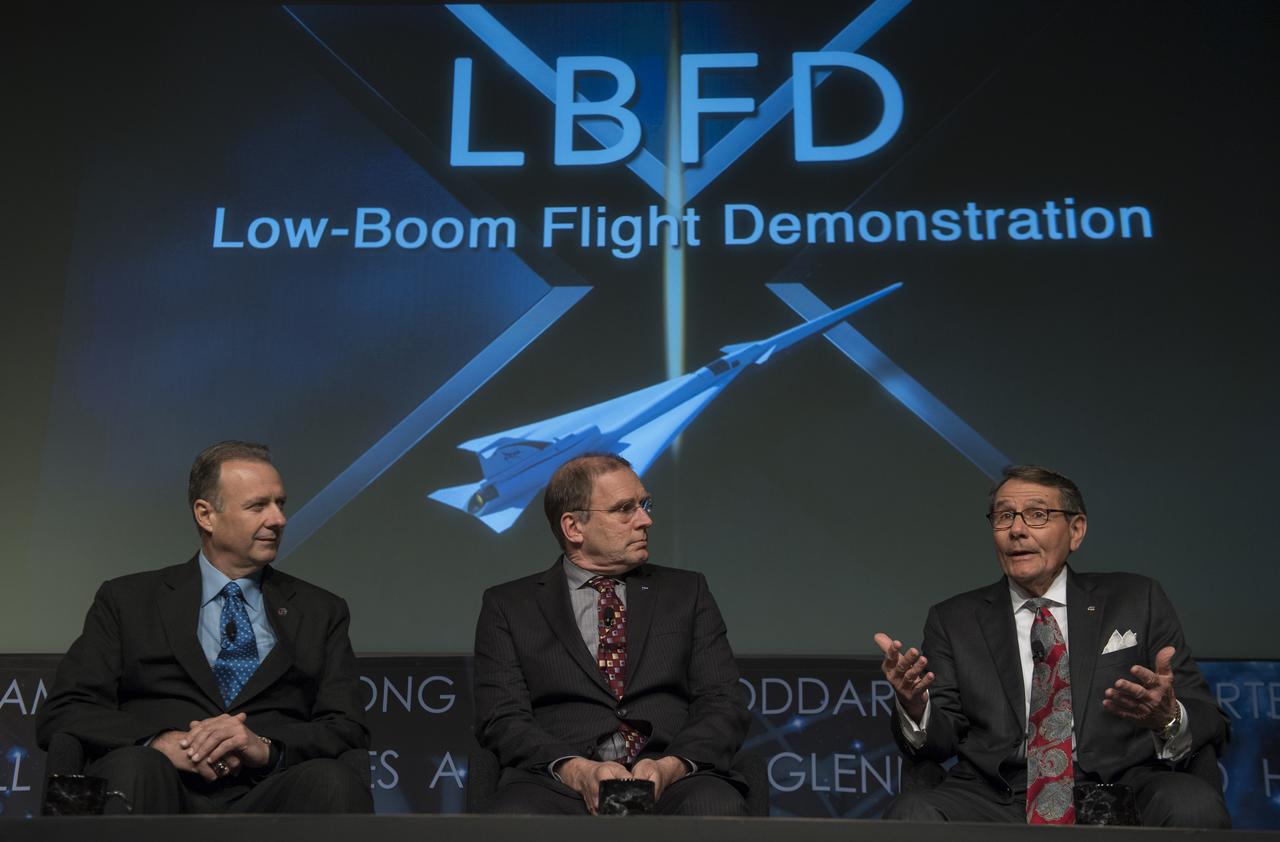
Dr. Ed Waggoner, program director, Integrated Aviation Systems Program, NASA, right, speaks on a panel with Peter Iosifidis, program manager, Low-Boom Flight Demonstrator, Lockheed Martin Skunk Works, left, and Peter Coen, project manager, Commercial Supersonics Technology Project, Langley Research Center, NASA, center, at a briefing on the Low Boom Flight Demonstrator, Tuesday, April 3, 2018 at NASA Headquarters in Washington. This new experimental aircraft will cut cross country travel times in half by flying faster than the speed of sound without creating a sonic boom, enabling travel from New York to Los Angeles in two hours. Photo Credit: (NASA/Aubrey Gemignani)
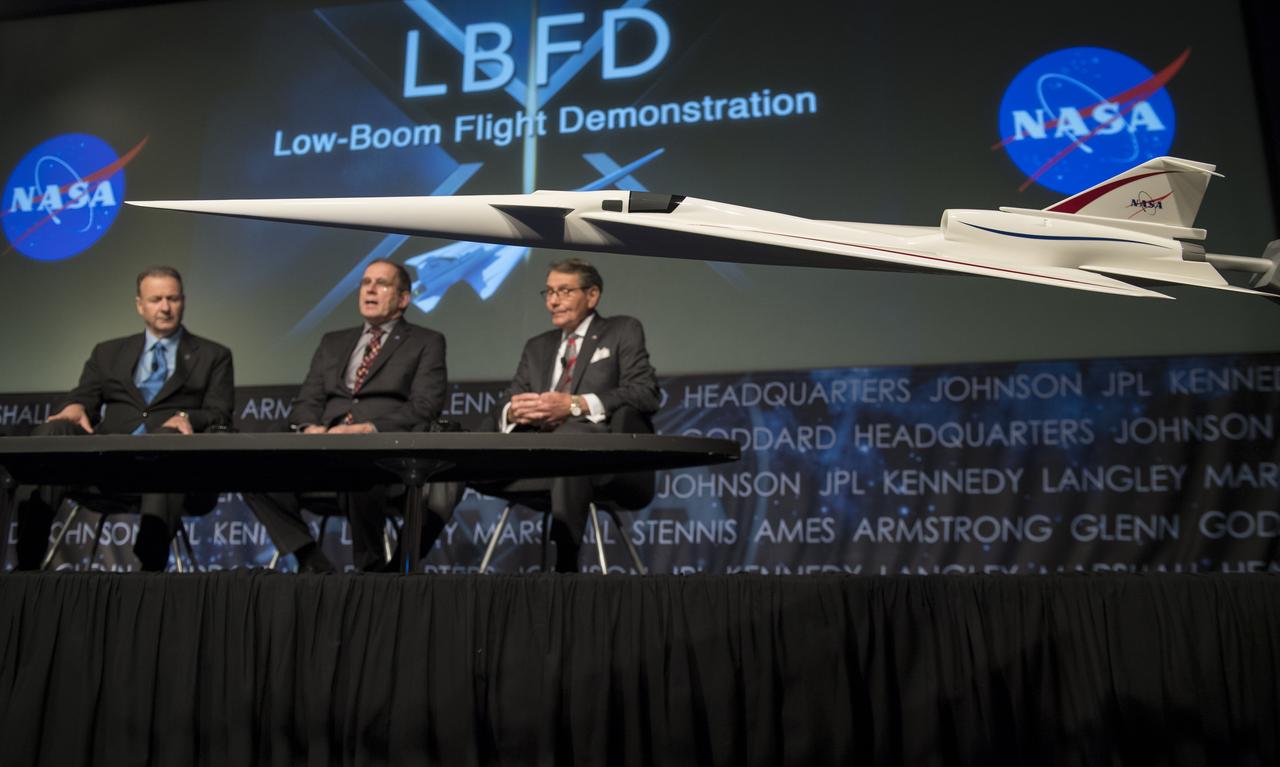
Panelists Peter Iosifidis, program manager, Low-Boom Flight Demonstrator, Lockheed Martin Skunk Works, left, Peter Coen, project manager, Commercial Supersonics Technology Project, Langley Research Center, NASA, center, and Dr. Ed Waggoner, program director, Integrated Aviation Systems Program, NASA, right, are seen behind a model of the Low Boom Flight Demonstrator at a briefing, Tuesday, April 3, 2018 at NASA Headquarters in Washington. This new experimental aircraft will cut cross country travel times in half by flying faster than the speed of sound without creating a sonic boom, enabling travel from New York to Los Angeles in two hours. Photo Credit: (NASA/Aubrey Gemignani)
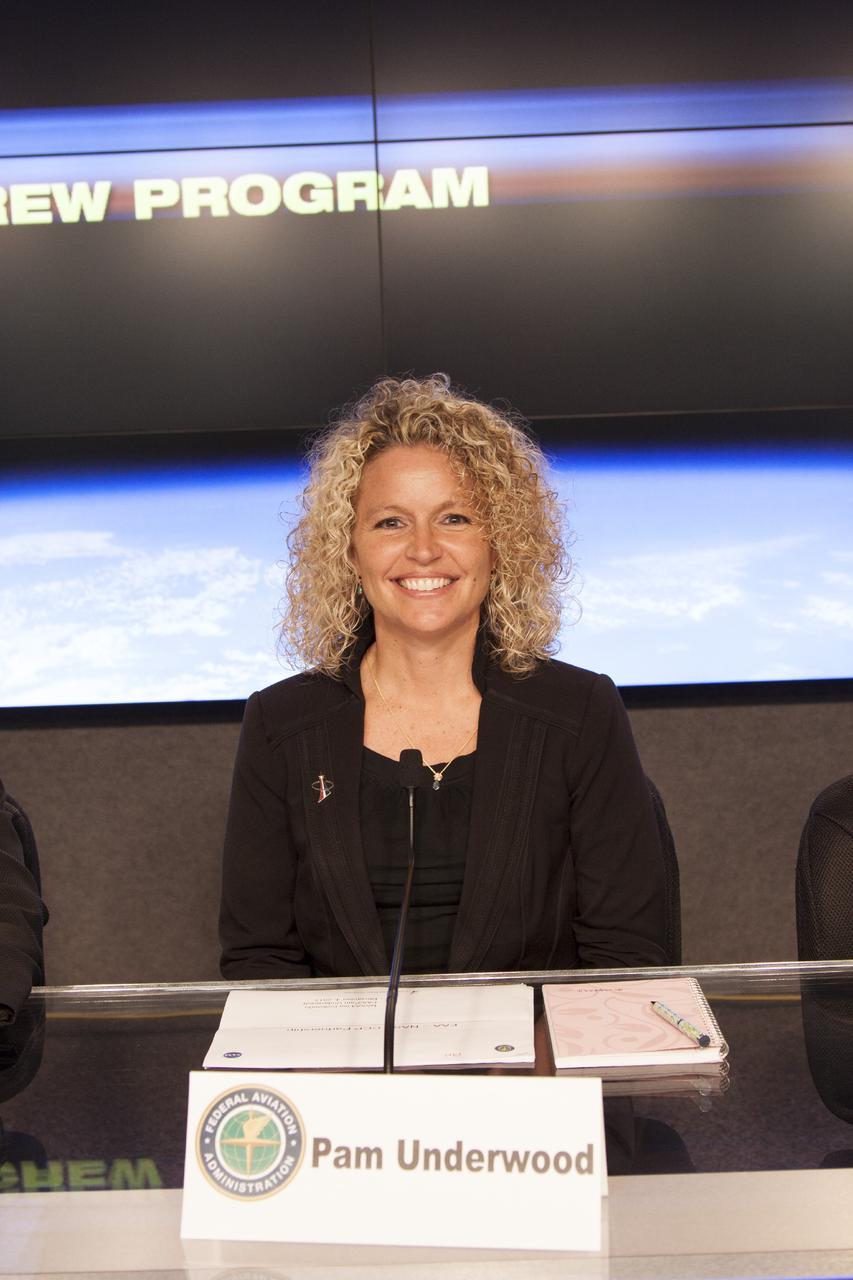
CAPE CANAVERAL, Fla. – Pam Underwood of the Federal Aviation Administration's Office of Commercial Transportation and a panelist of the Commercial Crew Transportation Capability, or CCtCap, Pre-Proposal Conference, is seen before the start of an industry conference inside the Television Auditorium at NASA's Kennedy Space Center in Florida. The conference was held following the Commercial Crew Program, or CCP, request for proposals from commercial companies for a development and certification contract under CCtCap. The contract will provide a finish line for the agency following more than four years of development work by CCP and American aerospace companies. CCtCap is the second phase of a two-phase certification plan for privately built and operated integrated crew transportation systems. CCP’s goal is to aid in the development of commercial capabilities for crew transportation and rescue services to and from the International Space Station and other low-Earth orbit destinations by the end of 2017. Photo credit: NASA/Jim Grossmann
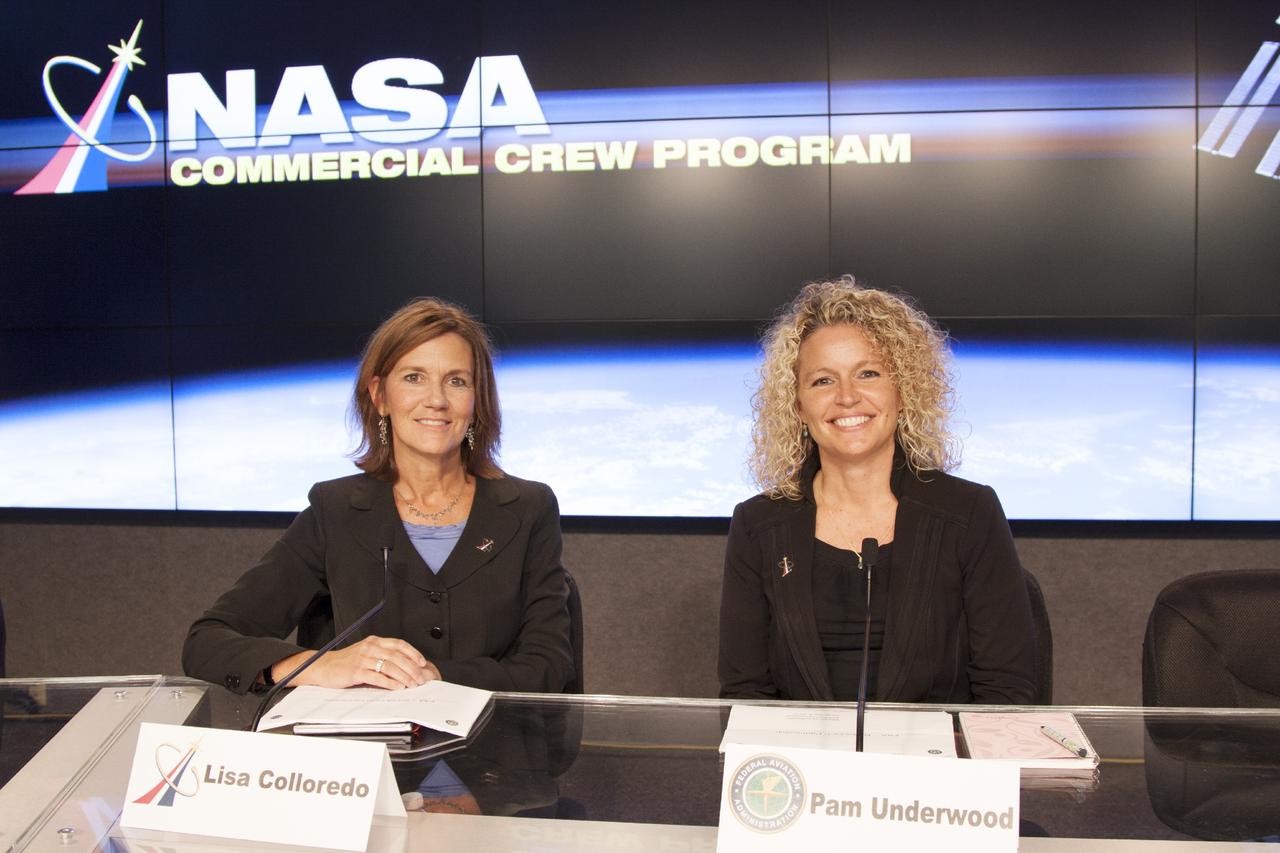
CAPE CANAVERAL, Fla. – Lisa Colloredo, left, associate program manager of NASA's Commercial Crew Program, and Pam Underwood of the Federal Aviation Administration's Office of Commercial Transportation, both panelists of the Commercial Crew Transportation Capability, or CCtCap, Pre-Proposal Conference, are seen before the start of an industry conference inside the Television Auditorium at NASA's Kennedy Space Center in Florida. The conference was held following the Commercial Crew Program, or CCP, request for proposals from commercial companies for a development and certification contract under CCtCap. The contract will provide a finish line for the agency following more than four years of development work by CCP and American aerospace companies. CCtCap is the second phase of a two-phase certification plan for privately built and operated integrated crew transportation systems. CCP’s goal is to aid in the development of commercial capabilities for crew transportation and rescue services to and from the International Space Station and other low-Earth orbit destinations by the end of 2017. Photo credit: NASA/Jim Grossmann
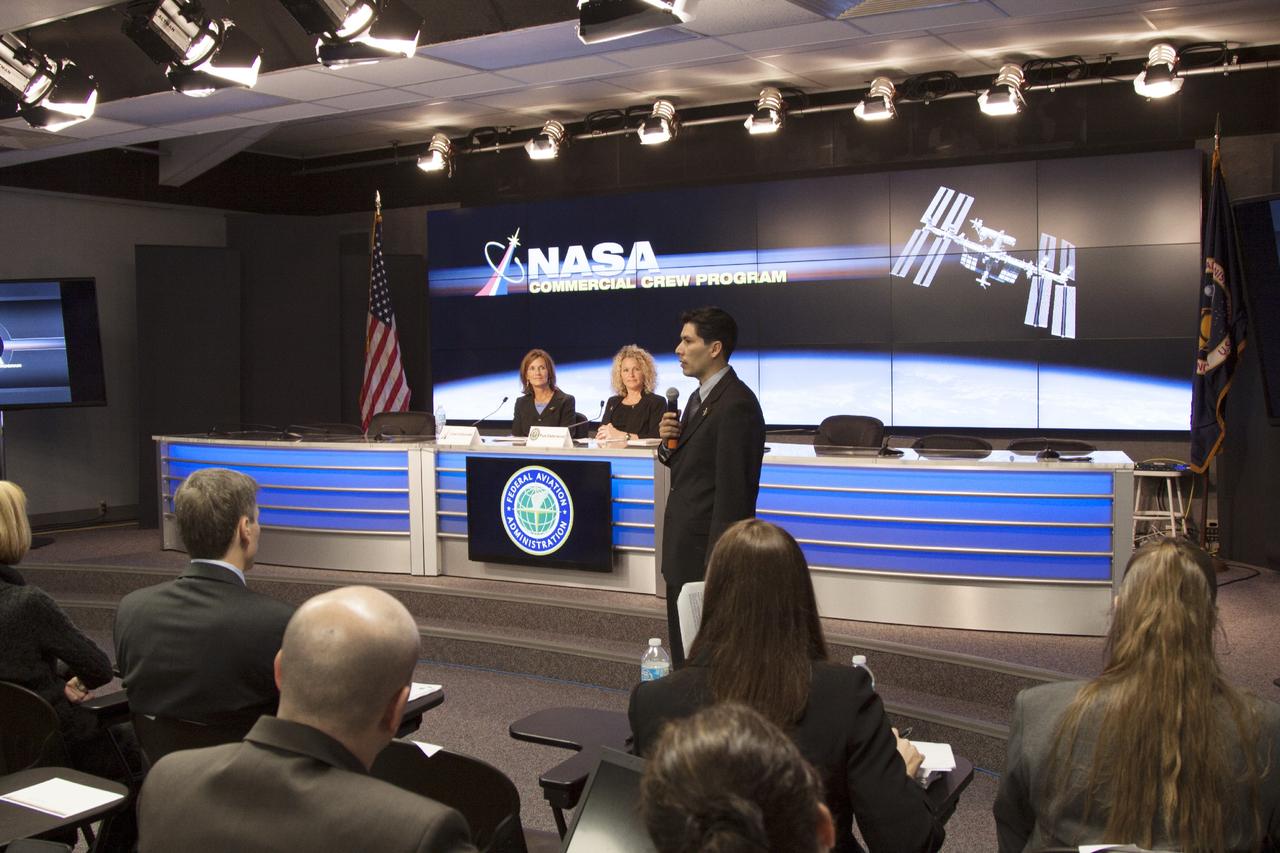
CAPE CANAVERAL, Fla. – Lisa Colloredo, left, associate program manager of NASA's Commercial Crew Program, and Pam Underwood of the Federal Aviation Administration's Office of Commercial Transportation, both panelists of the Commercial Crew Transportation Capability, or CCtCap, Pre-Proposal Conference, take questions during an industry conference inside the Television Auditorium at NASA's Kennedy Space Center in Florida. The conference was held following the Commercial Crew Program, or CCP, request for proposals from commercial companies for a development and certification contract under CCtCap. The contract will provide a finish line for the agency following more than four years of development work by CCP and American aerospace companies. CCtCap is the second phase of a two-phase certification plan for privately built and operated integrated crew transportation systems. CCP’s goal is to aid in the development of commercial capabilities for crew transportation and rescue services to and from the International Space Station and other low-Earth orbit destinations by the end of 2017. Photo credit: NASA/Jim Grossmann
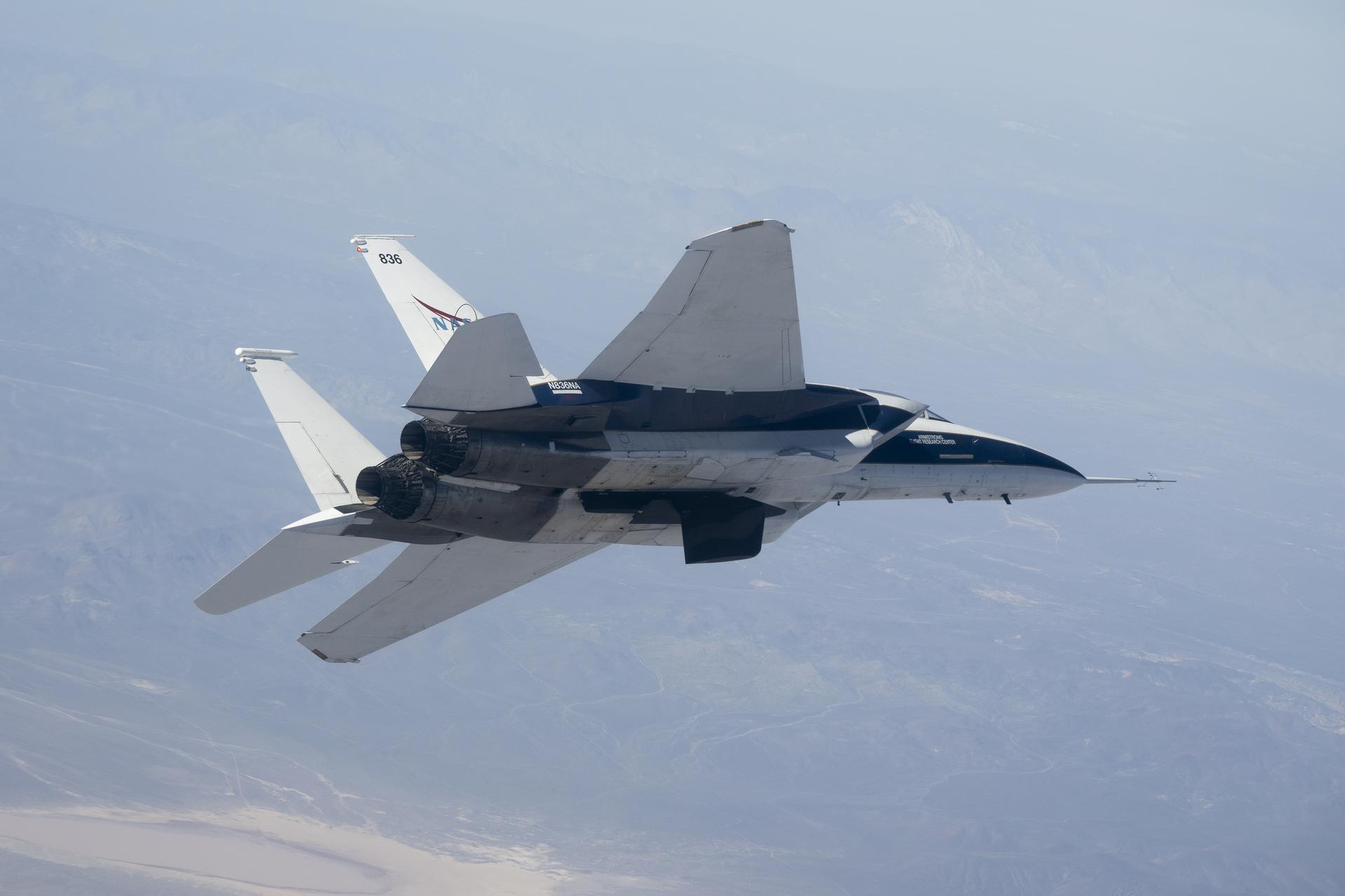
NASA’s Crossflow Attenuated Natural Laminar Flow (CATNLF) scale-model wing flies on a NASA F-15 research jet during a test flight from NASA’s Armstrong Flight Research Center in Edwards, California. The CATNLF technology is designed to maintain smooth airflow, known as laminar flow. NASA will continue flight tests to collect data that validates the CATNLF design and its potential to improve laminar flow, reducing drag and lowering fuel costs for future commercial aircraft.
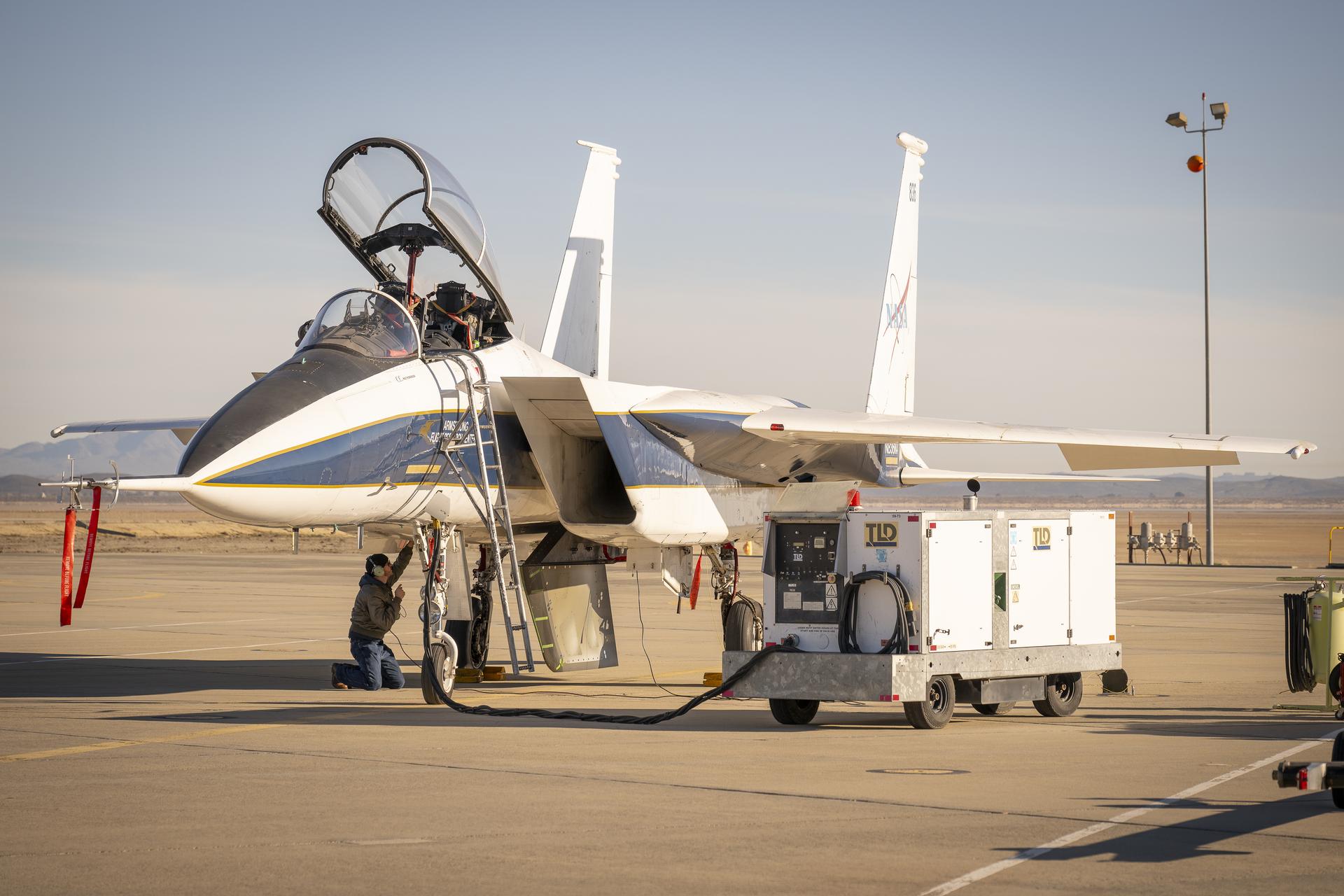
NASA ground crew prepares the agency’s F-15 research aircraft and Cross Flow Attenuated Natural Laminar Flow (CATNLF) test article ahead of its first high-speed taxi test on Tuesday, Jan. 12, 2026, at NASA’s Armstrong Flight Research Center in Edwards, California. The CATNLF design aims to reduce drag on wing surfaces to improve efficiency and, in turn, reduce fuel burn.
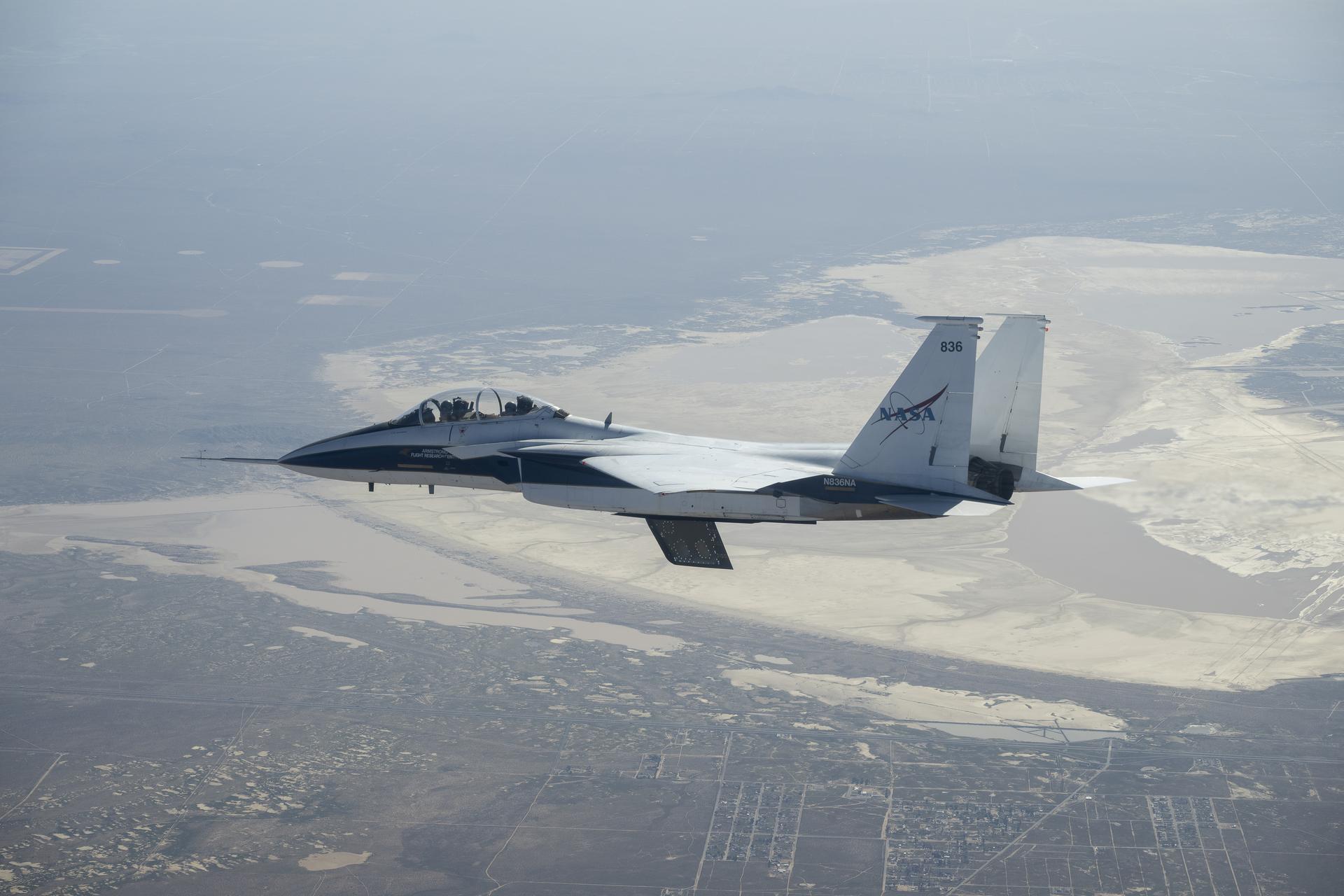
NASA’s Crossflow Attenuated Natural Laminar Flow (CATNLF) scale-model wing flies for the first time on a NASA F-15 research jet during a test flight from NASA’s Armstrong Flight Research Center in Edwards, California. The 75-minute flight confirmed the aircraft could maneuver safely with the approximately 3-foot-tall test article mounted beneath it. NASA will continue flight tests to collect data that validates the CATNLF design and its potential to improve laminar flow, reducing drag and lowering fuel costs for future commercial aircraft.
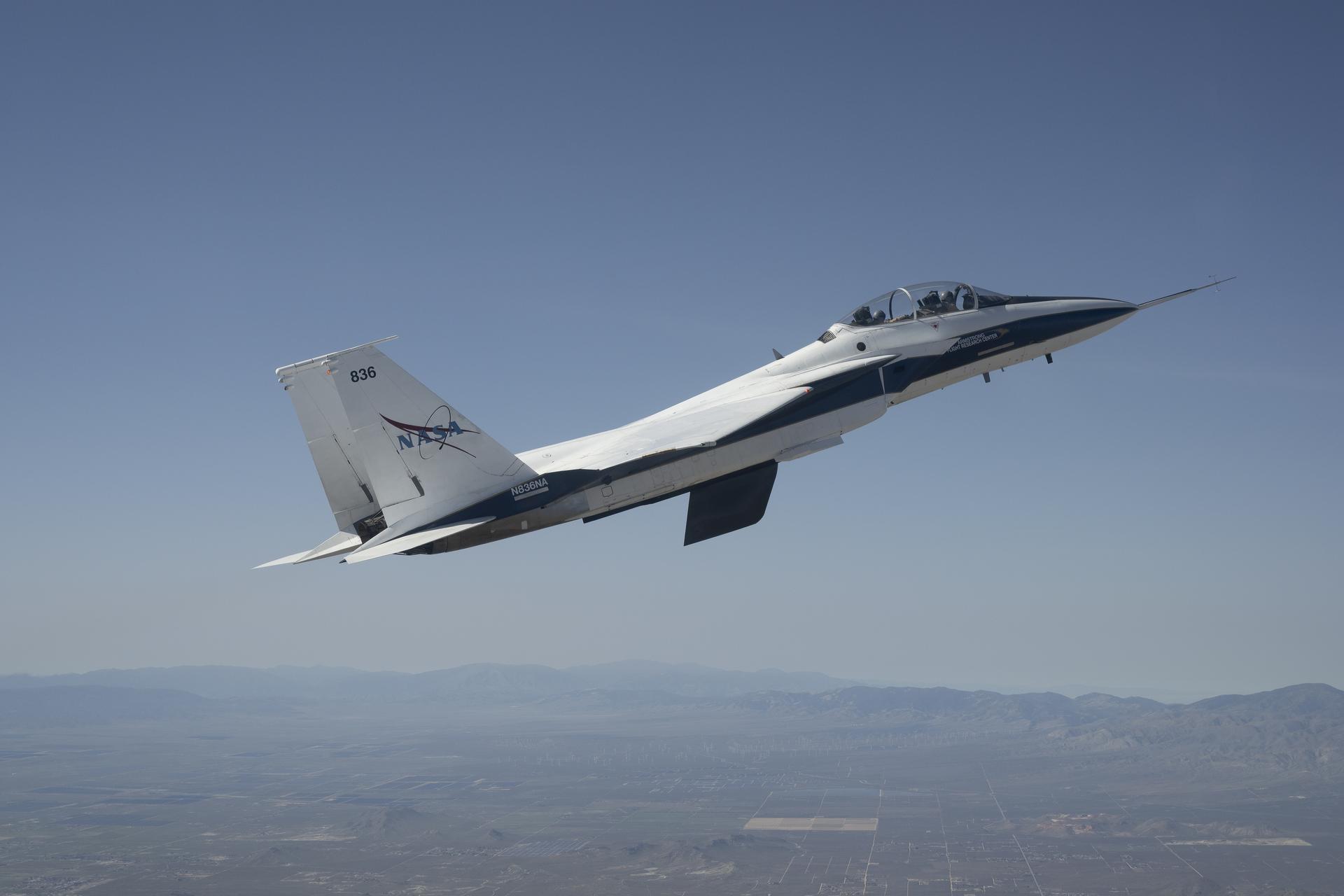
NASA’s Crossflow Attenuated Natural Laminar Flow (CATNLF) scale-model wing flies for the first time on a NASA F-15 research jet during a test flight from NASA’s Armstrong Flight Research Center in Edwards, California. The 75-minute flight confirmed the aircraft could maneuver safely with the approximately 3-foot-tall test article mounted beneath it. NASA will continue flight tests to collect data that validates the CATNLF design and its potential to improve laminar flow, reducing drag and lowering fuel costs for future commercial aircraft.
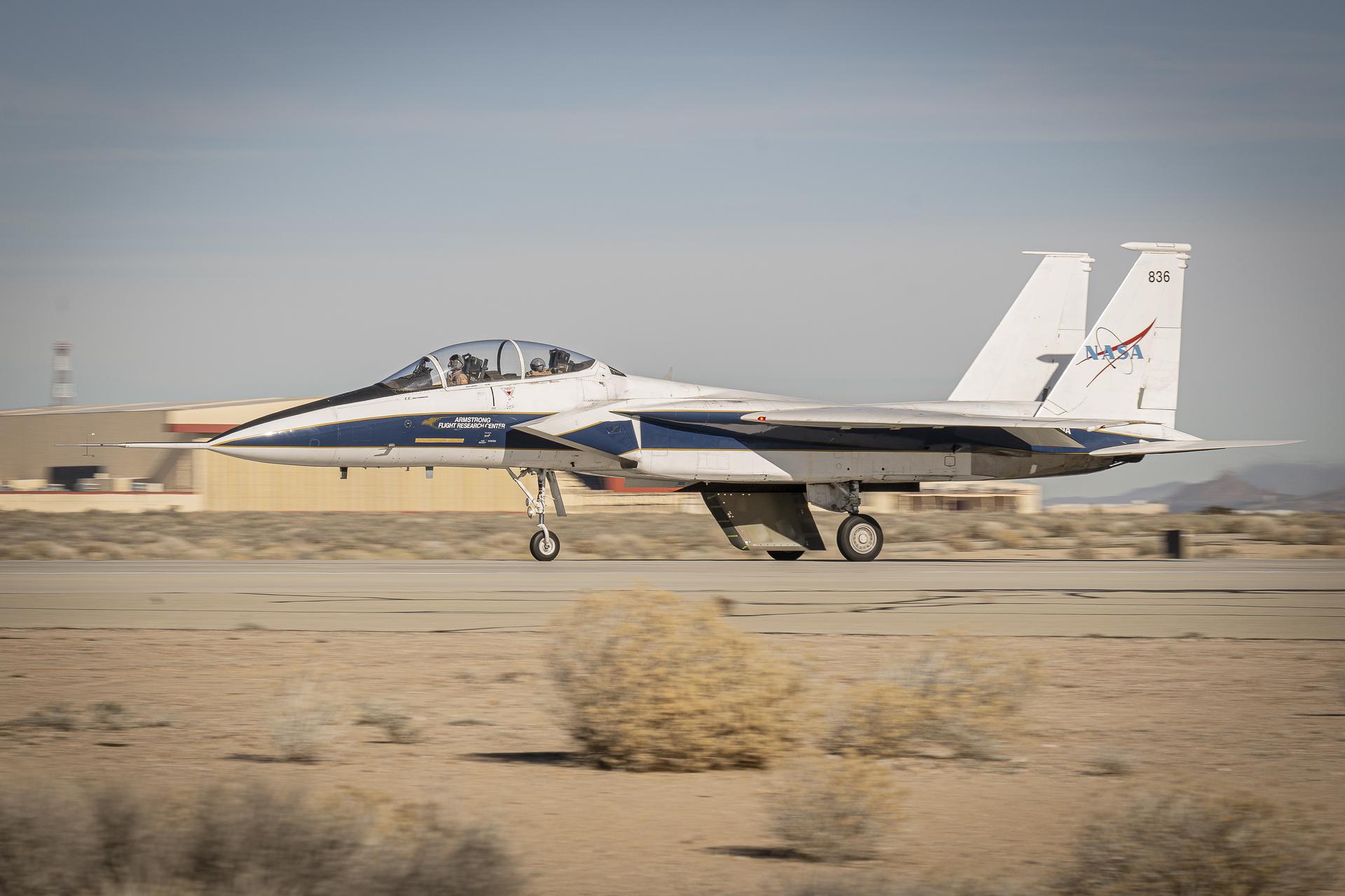
NASA’s Cross Flow Attenuated Natural Laminar Flow (CATNLF) scale model completes its first major milestone – high-speed taxi test – Tuesday, Jan. 12, 2026, at Edwards Air Force Base in California. NASA’s F-15 research aircraft, with the 3-foot-tall test article mounted on its underside, reached speeds of approximately 144 mph during testing. If successful, the technology could be applied to future commercial aircraft to improve efficiency and potentially reduce fuel consumption.
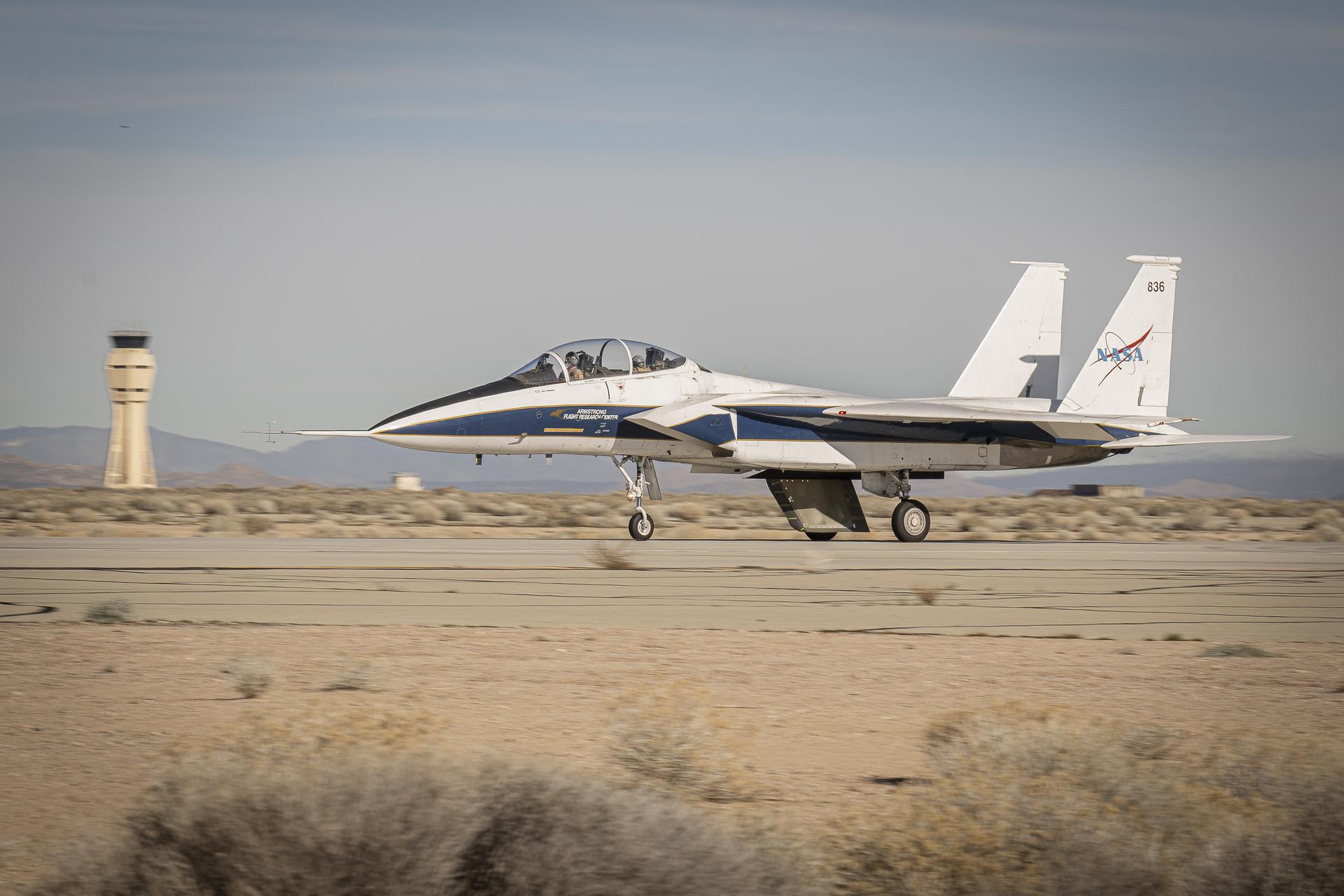
NASA’s Cross Flow Attenuated Natural Laminar Flow (CATNLF) scale model completes its first major milestone – high-speed taxi test – Tuesday, Jan. 12, 2026, at Edwards Air Force Base in California. NASA’s F-15 research aircraft, with the 3-foot-tall test article mounted on its underside, reached speeds of approximately 144 mph during testing. If successful, the technology could be applied to future commercial aircraft to improve efficiency and potentially reduce fuel consumption.
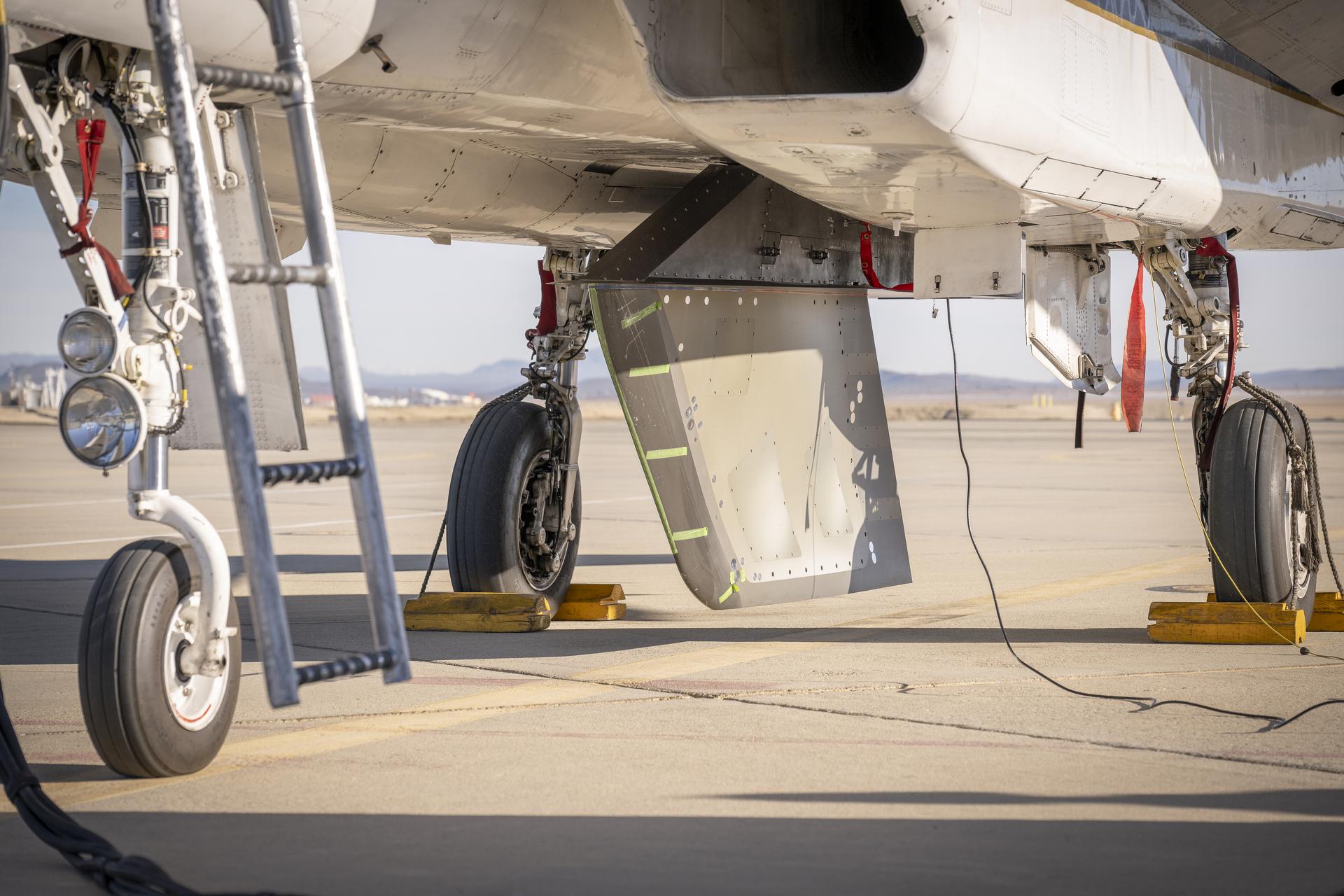
NASA’s Cross Flow Attenuated Natural Laminar Flow test article is mounted beneath the agency’s F-15 research aircraft ahead of the design’s high-speed taxi test on Tuesday, Jan. 12, 2026, at NASA’s Armstrong Flight Research Center in Edwards, California. The 3-foot-tall scale model is designed to increase a phenomenon known as laminar flow and reduce drag, improving efficiency in large, swept wings like those found on most commercial aircraft.
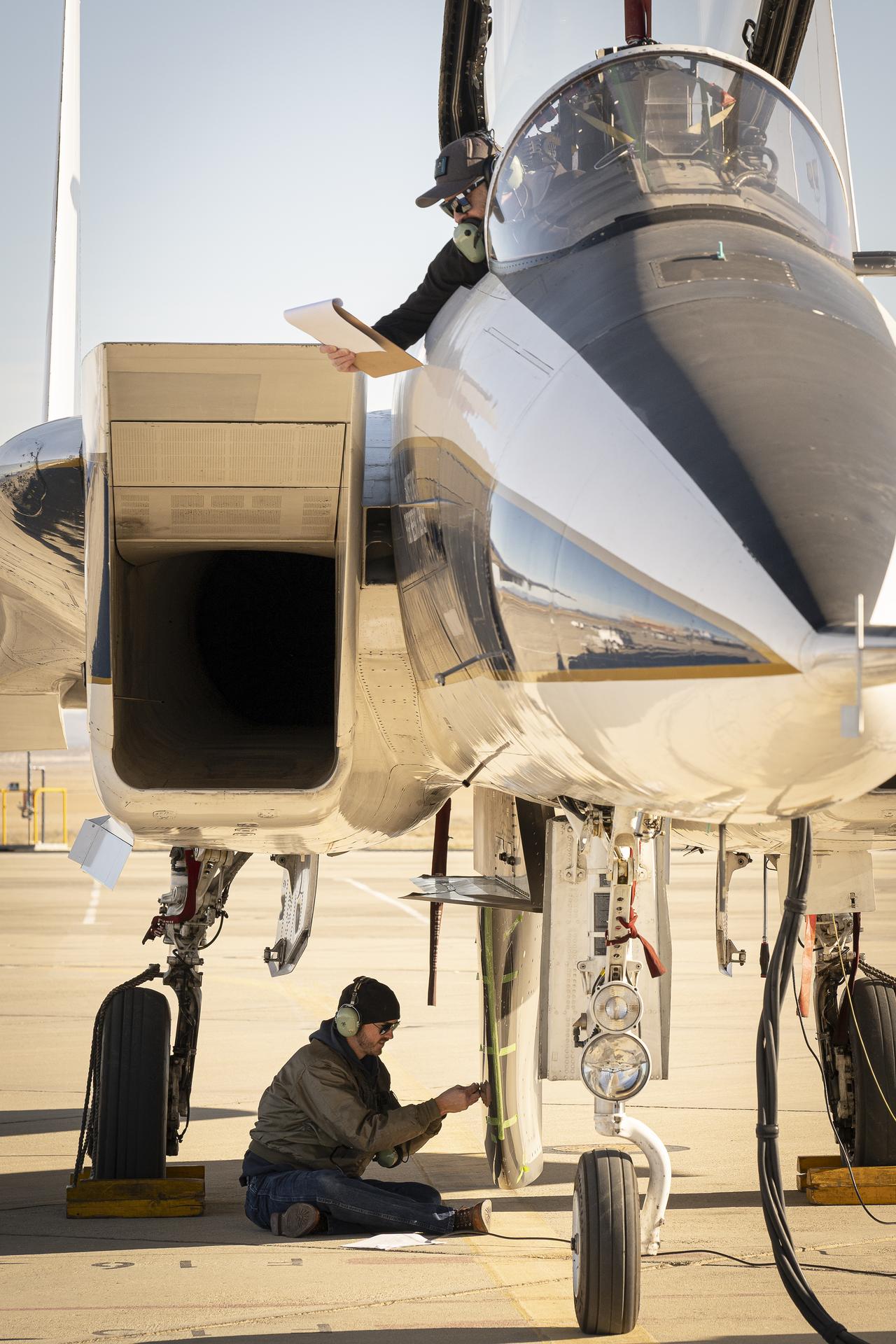
NASA ground crew prepares the agency’s F-15 research aircraft and Cross Flow Attenuated Natural Laminar Flow (CATNLF) test article ahead of its first high-speed taxi test on Tuesday, Jan. 12, 2026, at NASA’s Armstrong Flight Research Center in Edwards, California. The CATNLF design aims to reduce drag on wing surfaces to improve efficiency and, in turn, reduce fuel burn.
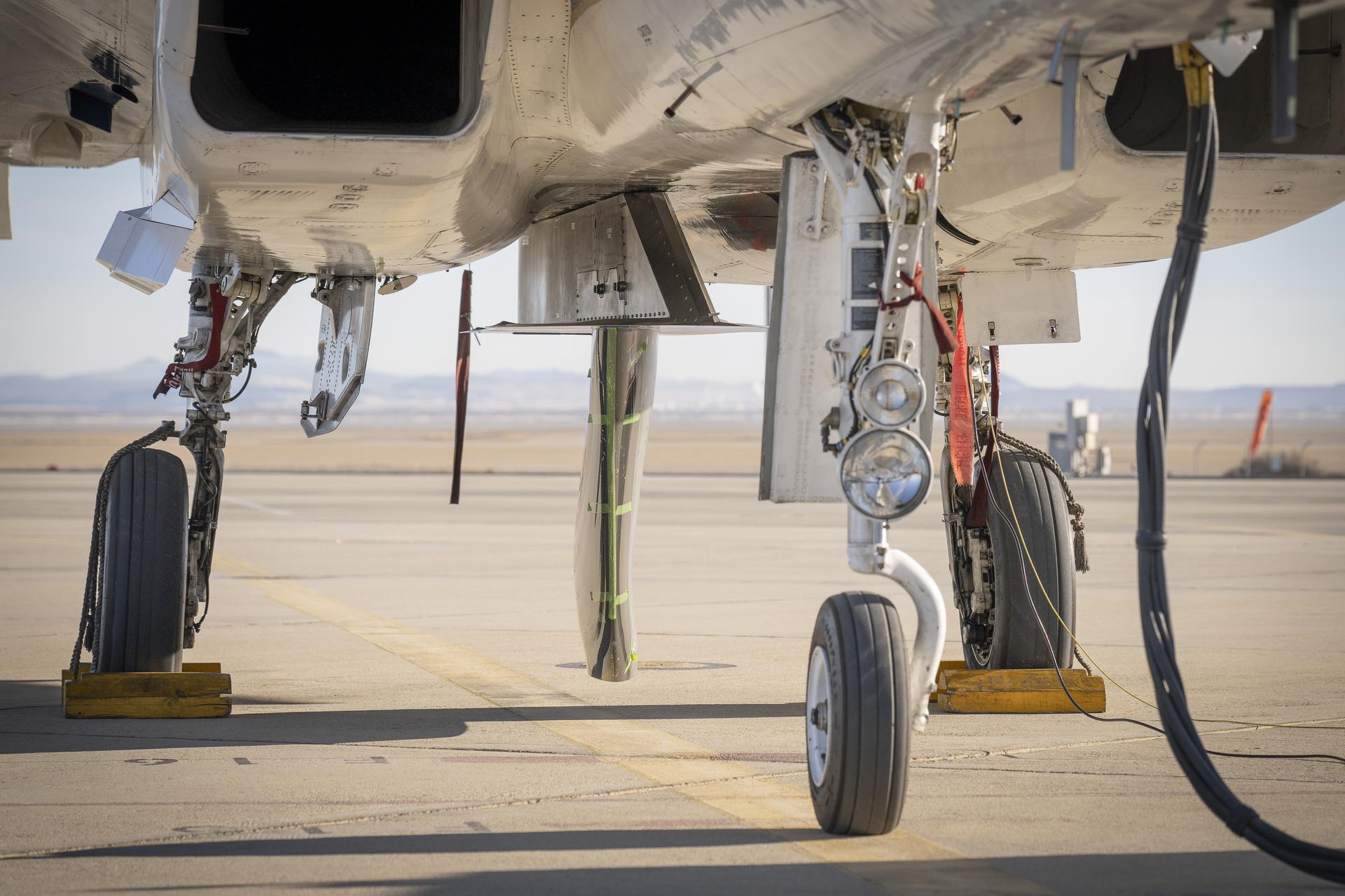
NASA’s Cross Flow Attenuated Natural Laminar Flow test article is mounted beneath the agency’s F-15 research aircraft ahead of the design’s high-speed taxi test on Tuesday, Jan. 12, 2026, at NASA’s Armstrong Flight Research Center in Edwards, California. The 3-foot-tall scale model is designed to increase a phenomenon known as laminar flow and reduce drag, improving efficiency in large, swept wings like those found on most commercial aircraft.
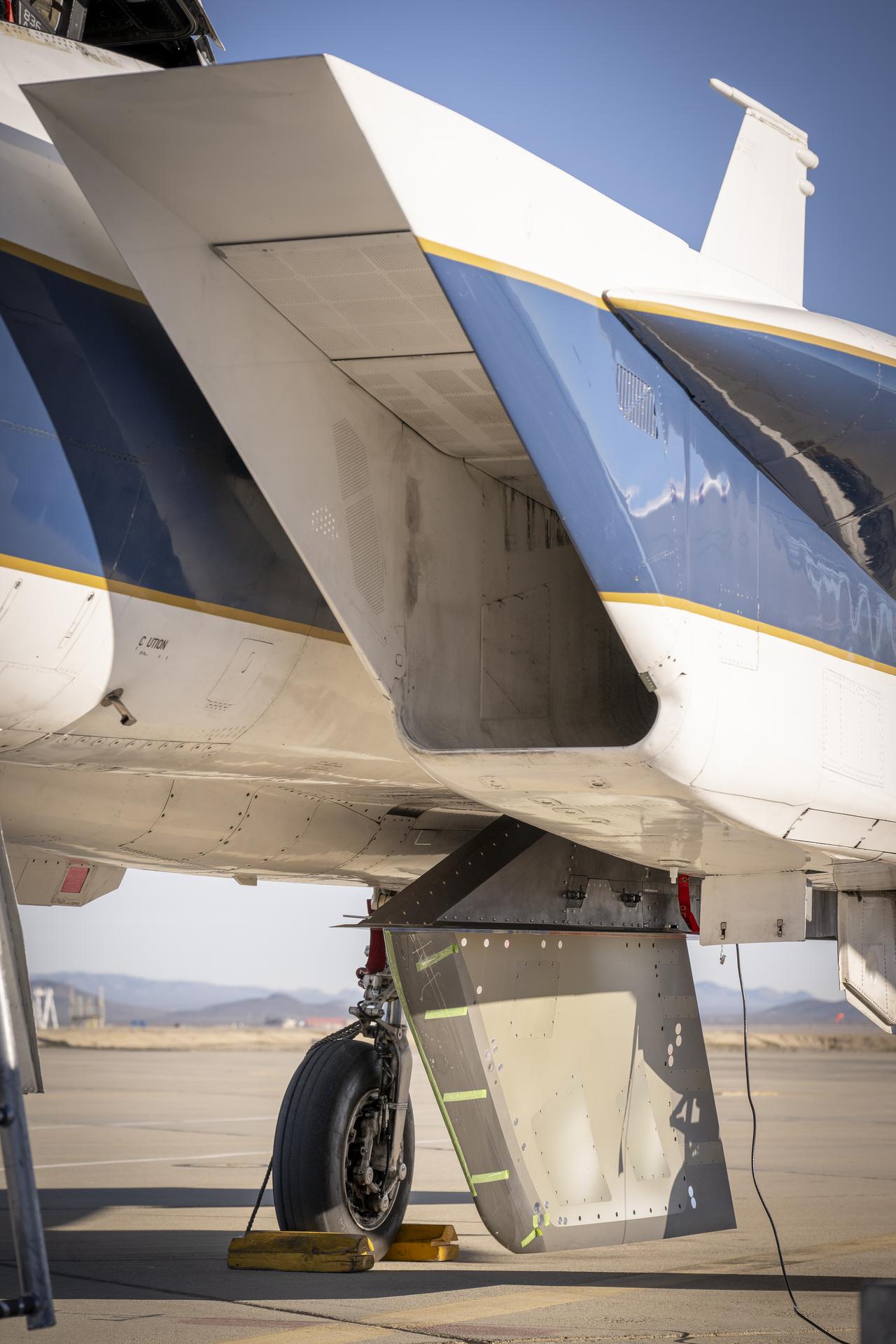
NASA’s Cross Flow Attenuated Natural Laminar Flow test article is mounted beneath the agency’s F-15 research aircraft ahead of the design’s high-speed taxi test on Tuesday, Jan. 12, 2026, at NASA’s Armstrong Flight Research Center in Edwards, California. The 3-foot-tall scale model is designed to increase a phenomenon known as laminar flow and reduce drag, improving efficiency in large, swept wings like those found on most commercial aircraft.