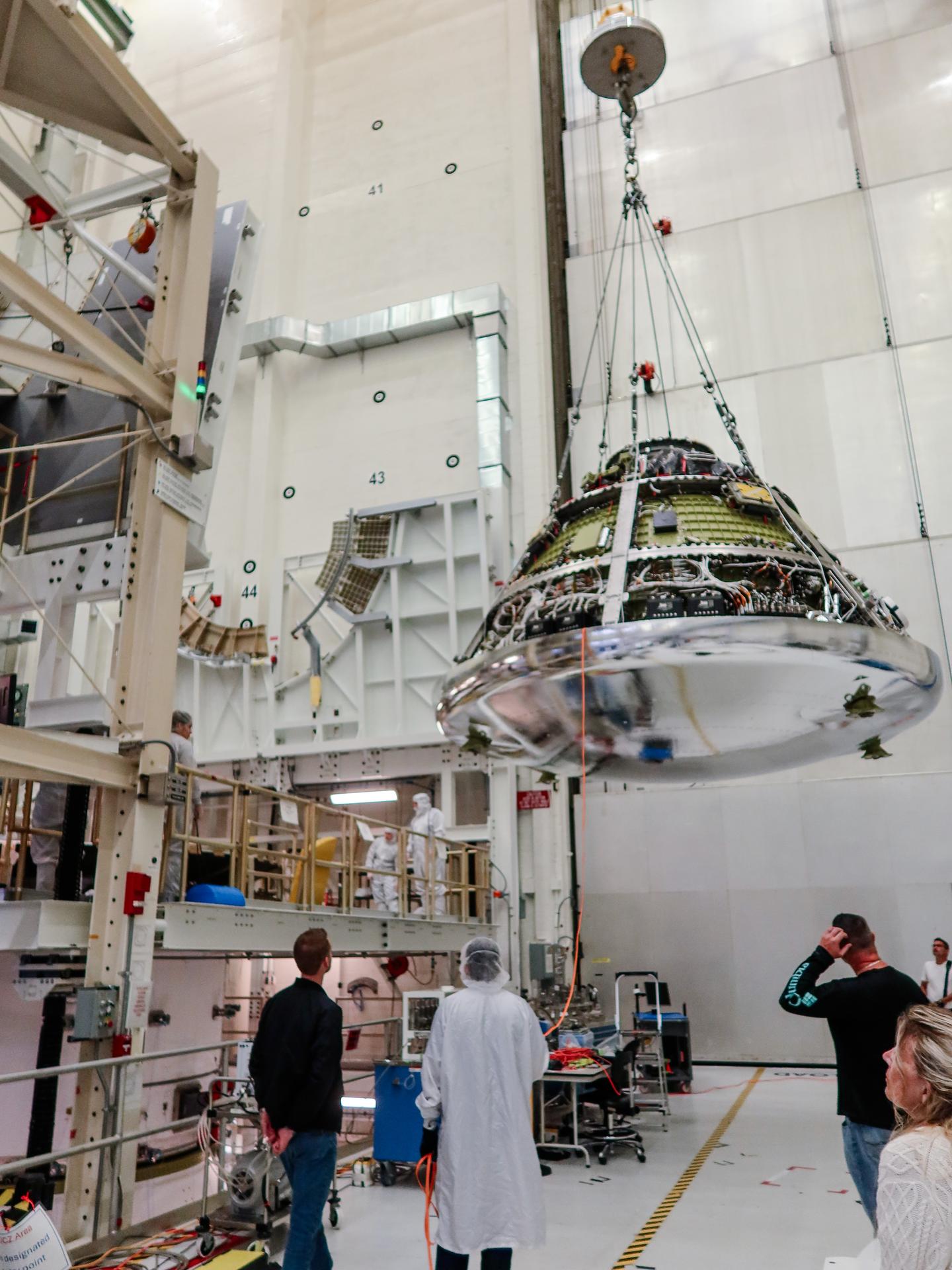
Engineers prepare to connect the Orion crew and service modules for the Artemis III mission on Thursday, July 30, 2026, inside the Neil A. Armstrong Operations and Checkout Building at NASA’s Kennedy Space Center in Florida. With the crew and service modules integrated, the team will power up the combined crew and service module for the first time then begin altitude chamber testing, which will put the spacecraft through conditions as close as possible to the environment it will experience in low Earth orbit. Artemis III and the four-person crew will carry out a series of objectives in low Earth orbit designed to demonstrate critical systems needed for future lunar landings, beginning with Artemis IV.
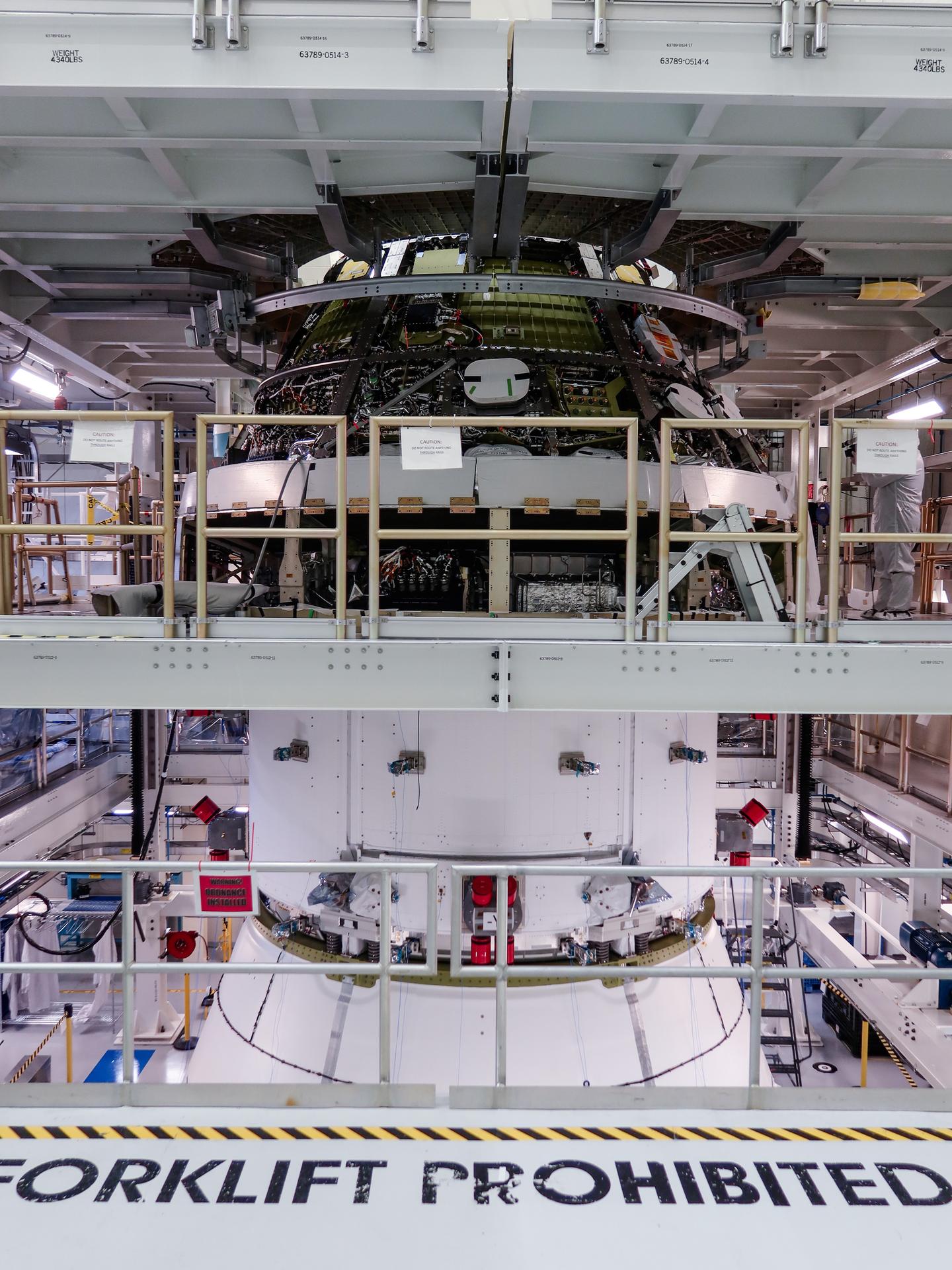
Engineers finish connecting the Artemis III Orion crew and service modules on Friday, July 31, 2026, inside the Neil A. Armstrong Operations and Checkout Building at NASA’s Kennedy Space Center in Florida. Now integrated, the team will power up the combined crew and service module for the first time then begin altitude chamber testing, which will put the spacecraft through conditions as close as possible to the environment it will experience in low Earth orbit. Artemis III and the four-person crew will carry out a series of objectives in low Earth orbit designed to demonstrate critical systems needed for future lunar landings, beginning with Artemis IV.
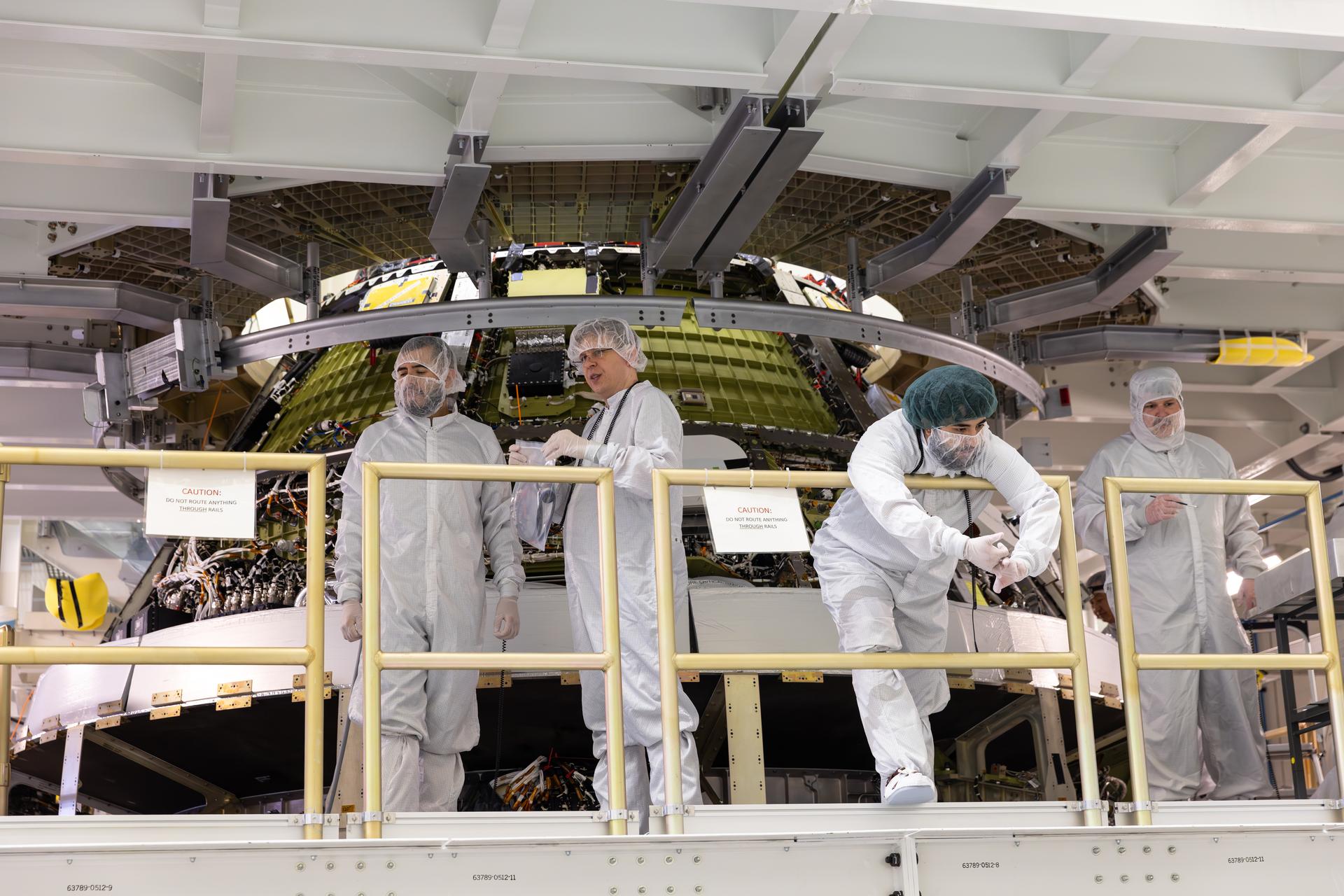
Engineers finish connecting the Artemis III Orion crew and service modules on Friday, July 31, 2026, inside the Neil A. Armstrong Operations and Checkout Building at NASA’s Kennedy Space Center in Florida. Now integrated, the team will power up the combined crew and service module for the first time then begin altitude chamber testing, which will put the spacecraft through conditions as close as possible to the environment it will experience in low Earth orbit. Artemis III and the four-person crew will carry out a series of objectives in low Earth orbit designed to demonstrate critical systems needed for future lunar landings, beginning with Artemis IV.
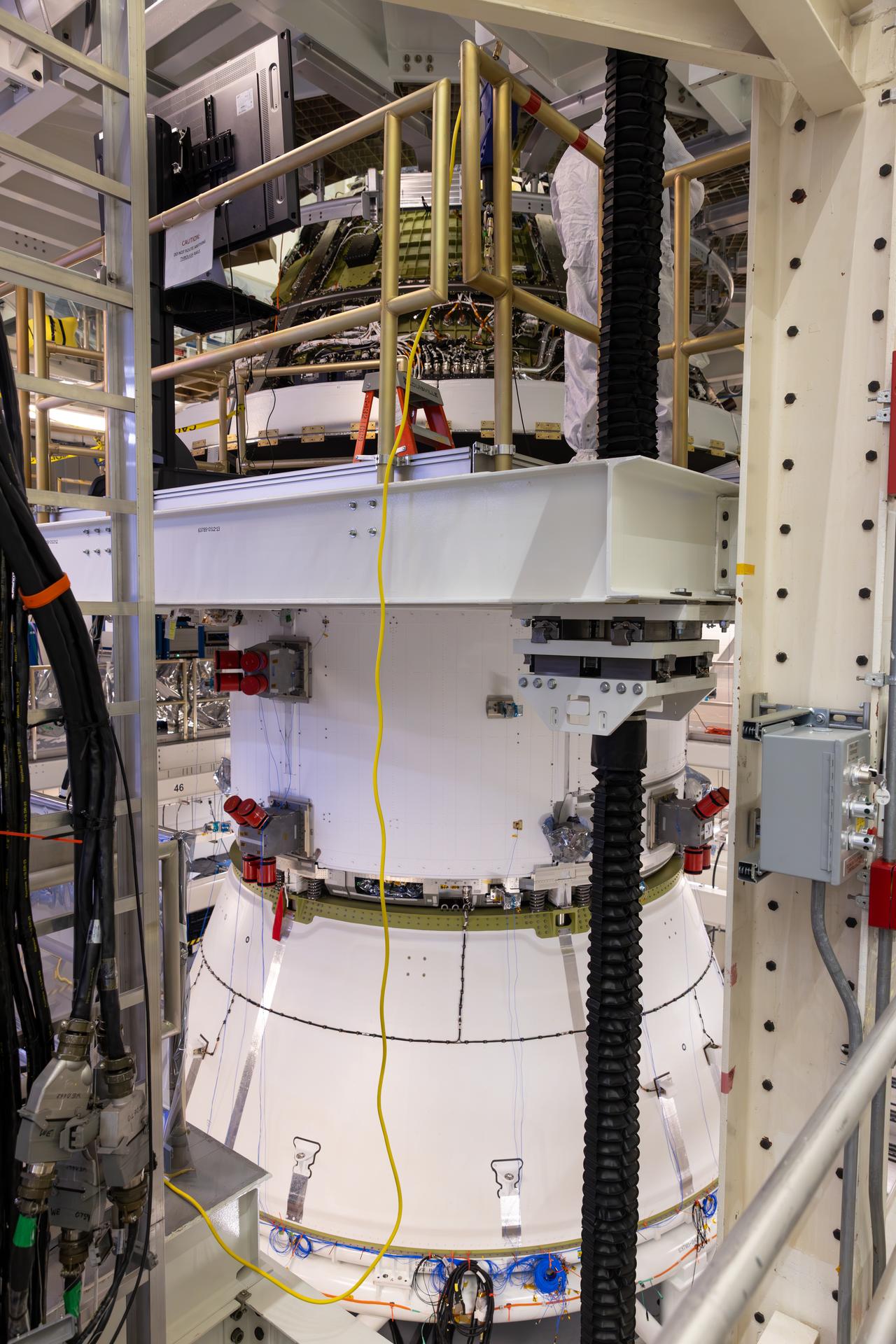
Engineers finish connecting the Artemis III Orion crew and service modules on Friday, July 31, 2026, inside the Neil A. Armstrong Operations and Checkout Building at NASA’s Kennedy Space Center in Florida. Now integrated, the team will power up the combined crew and service module for the first time then begin altitude chamber testing, which will put the spacecraft through conditions as close as possible to the environment it will experience in low Earth orbit. Artemis III and the four-person crew will carry out a series of objectives in low Earth orbit designed to demonstrate critical systems needed for future lunar landings, beginning with Artemis IV.
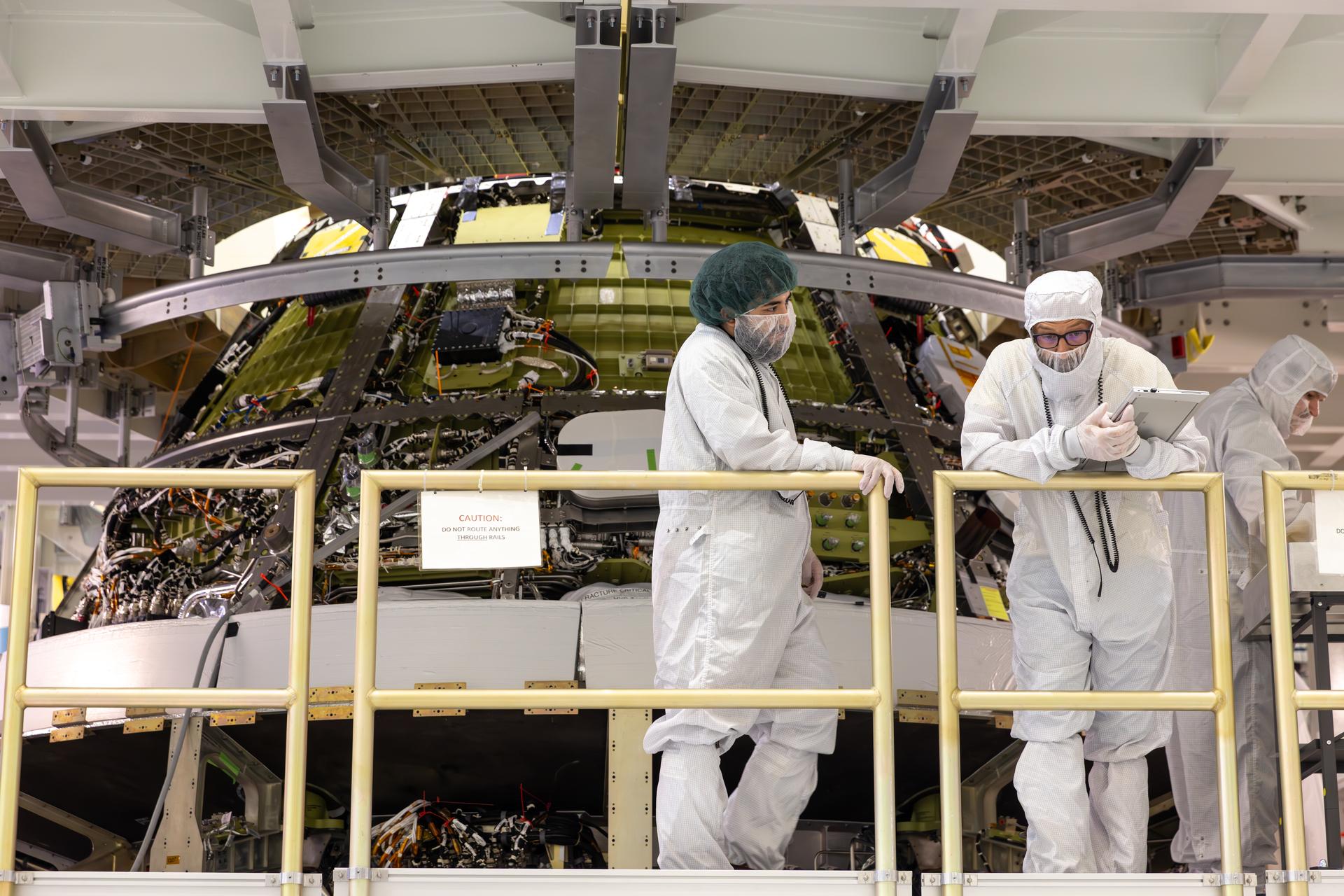
Engineers finish connecting the Artemis III Orion crew and service modules on Friday, July 31, 2026, inside the Neil A. Armstrong Operations and Checkout Building at NASA’s Kennedy Space Center in Florida. Now integrated, the team will power up the combined crew and service module for the first time then begin altitude chamber testing, which will put the spacecraft through conditions as close as possible to the environment it will experience in low Earth orbit. Artemis III and the four-person crew will carry out a series of objectives in low Earth orbit designed to demonstrate critical systems needed for future lunar landings, beginning with Artemis IV.
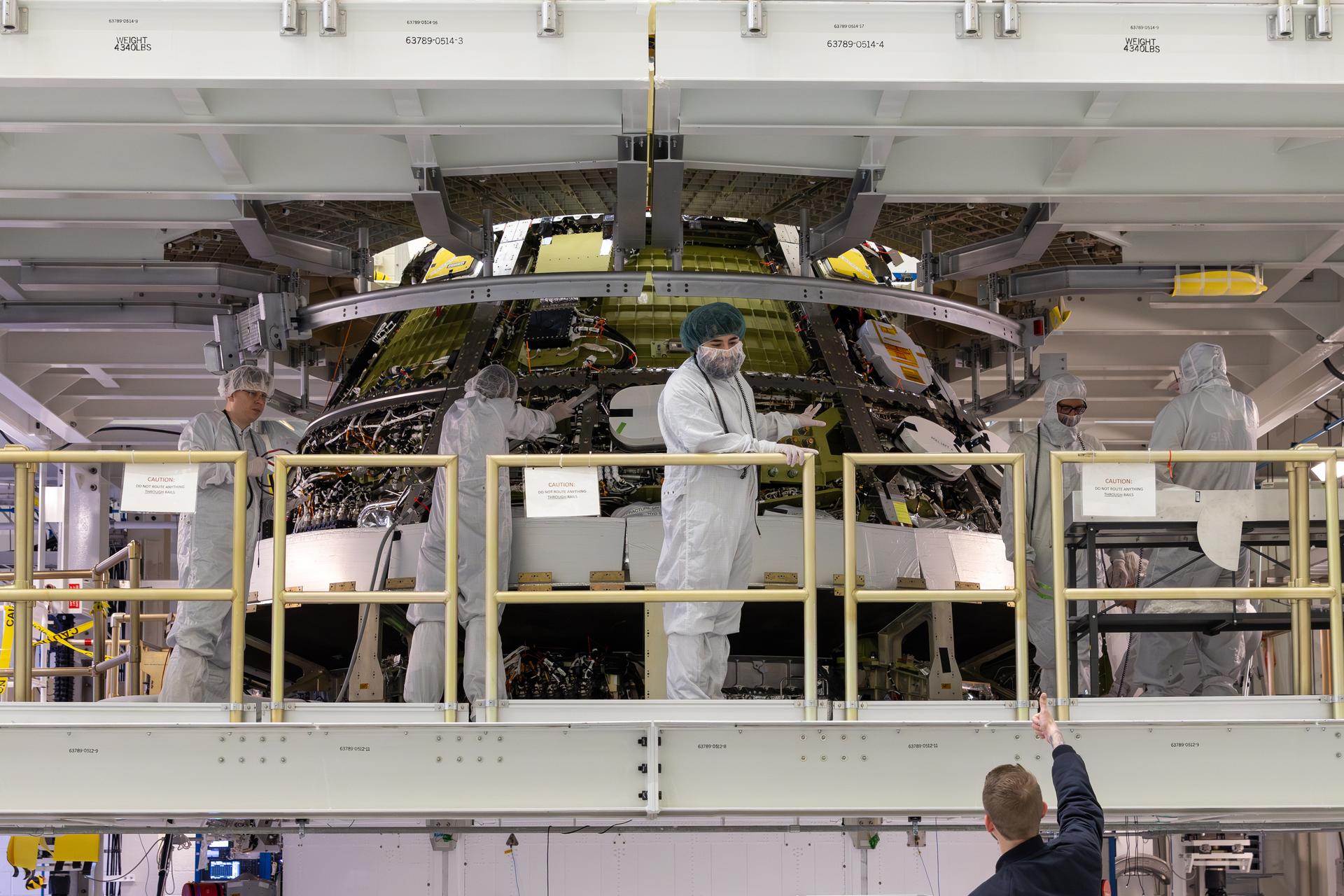
Engineers finish connecting the Artemis III Orion crew and service modules on Friday, July 31, 2026, inside the Neil A. Armstrong Operations and Checkout Building at NASA’s Kennedy Space Center in Florida. Now integrated, the team will power up the combined crew and service module for the first time then begin altitude chamber testing, which will put the spacecraft through conditions as close as possible to the environment it will experience in low Earth orbit. Artemis III and the four-person crew will carry out a series of objectives in low Earth orbit designed to demonstrate critical systems needed for future lunar landings, beginning with Artemis IV.
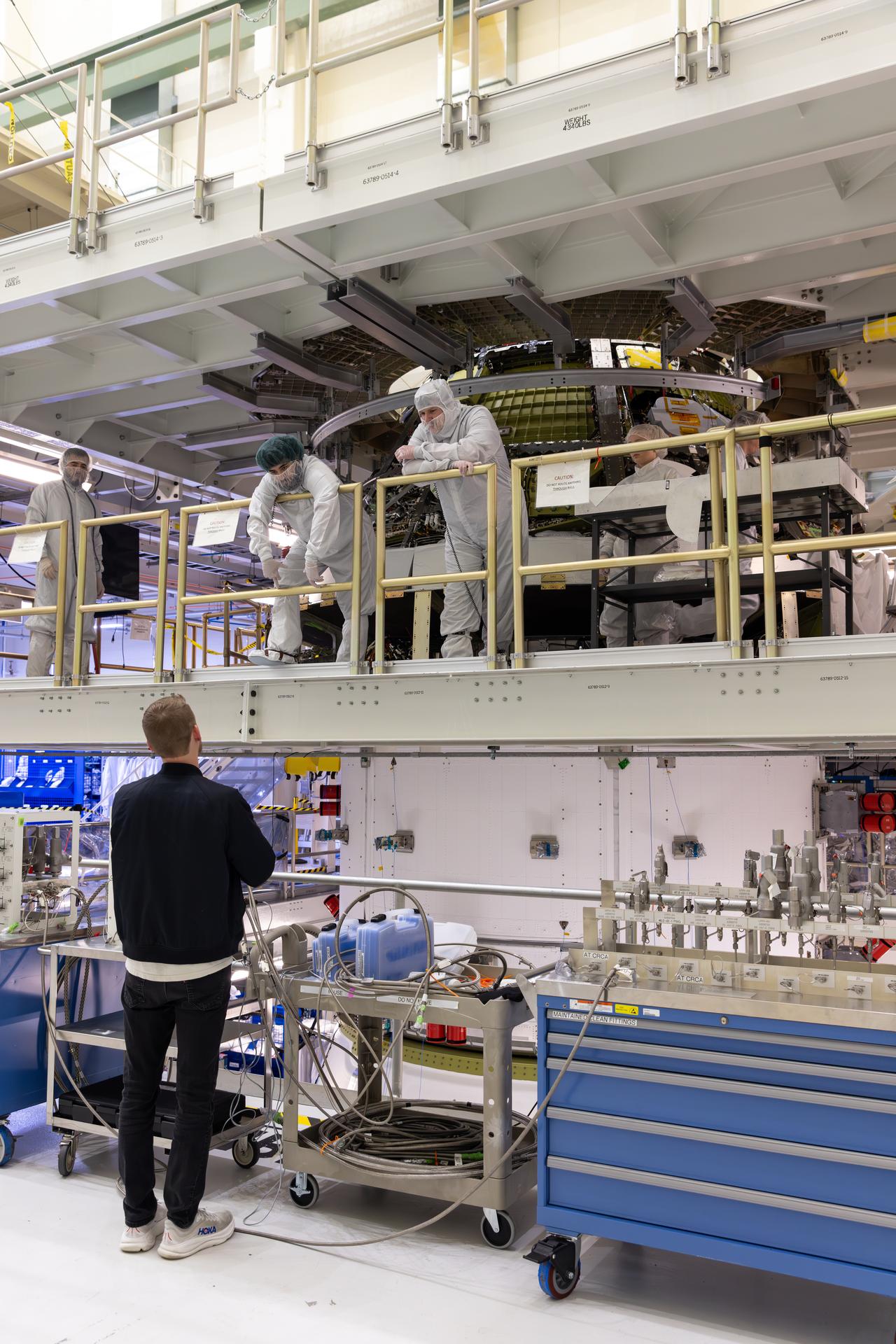
Engineers finish connecting the Artemis III Orion crew and service modules on Friday, July 31, 2026, inside the Neil A. Armstrong Operations and Checkout Building at NASA’s Kennedy Space Center in Florida. Now integrated, the team will power up the combined crew and service module for the first time then begin altitude chamber testing, which will put the spacecraft through conditions as close as possible to the environment it will experience in low Earth orbit. Artemis III and the four-person crew will carry out a series of objectives in low Earth orbit designed to demonstrate critical systems needed for future lunar landings, beginning with Artemis IV.
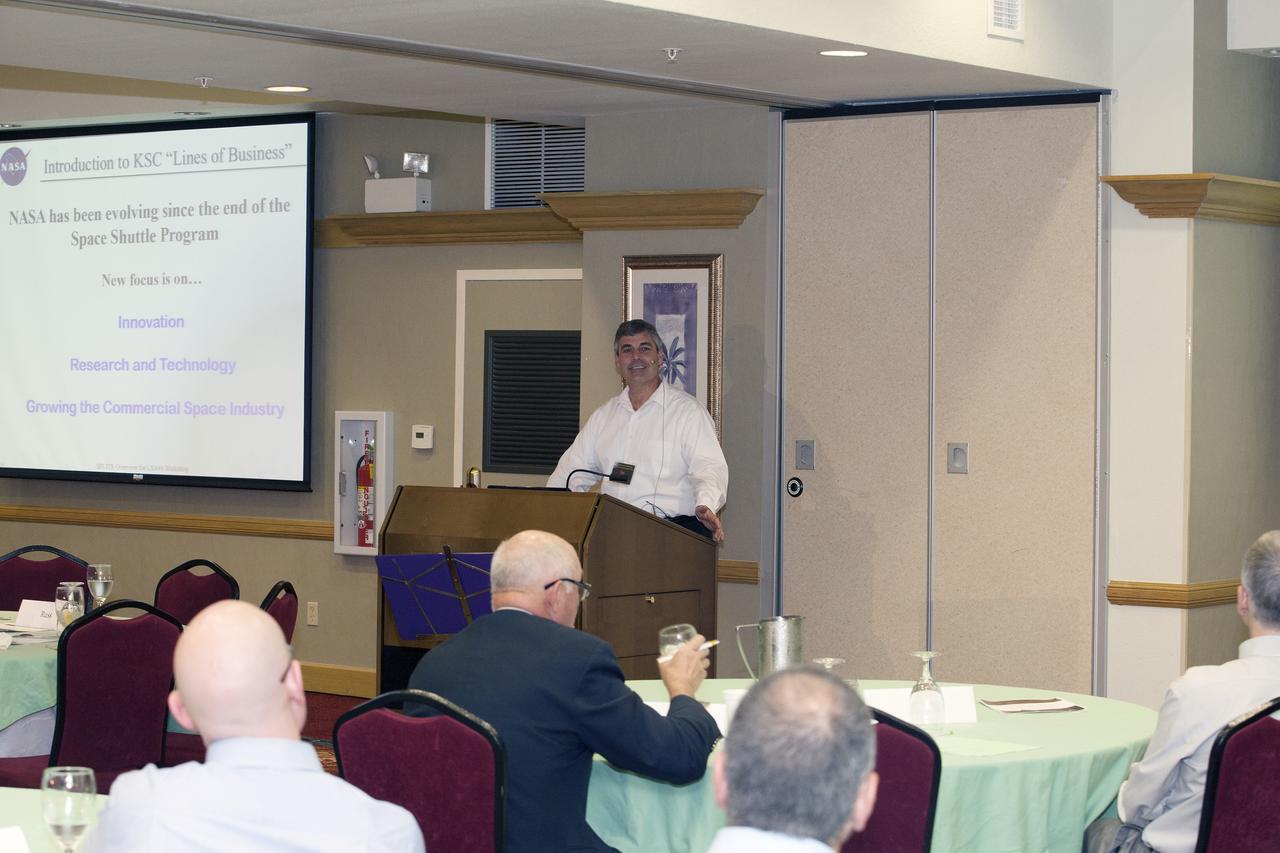
CAPE CANAVERAL, Fla. -- At the Marriott Courtyard Hotel in Cocoa Beach, Fla., Greg Clements, chief of Kennedy's Control and Data Systems Division and lead for the Engineering and Technology's Small Payload Integrated Testing Services, or SPLITS, line of business, speaks to participants in the 4th International Workshop on Lunar and Planetary Compact and Cryogenic Science and Technology Applications. Scientists, engineers and entrepreneurs interested in research on the moon and other planetary surfaces, recently participated in the Workshop. Taking place April 8-11, 2014, the event was designed to foster collaborative work among those interested in solving the challenges of building hardware, software and businesses interested in going back to the moon and exploring beyond. Photo credit: NASA/Daniel Casper
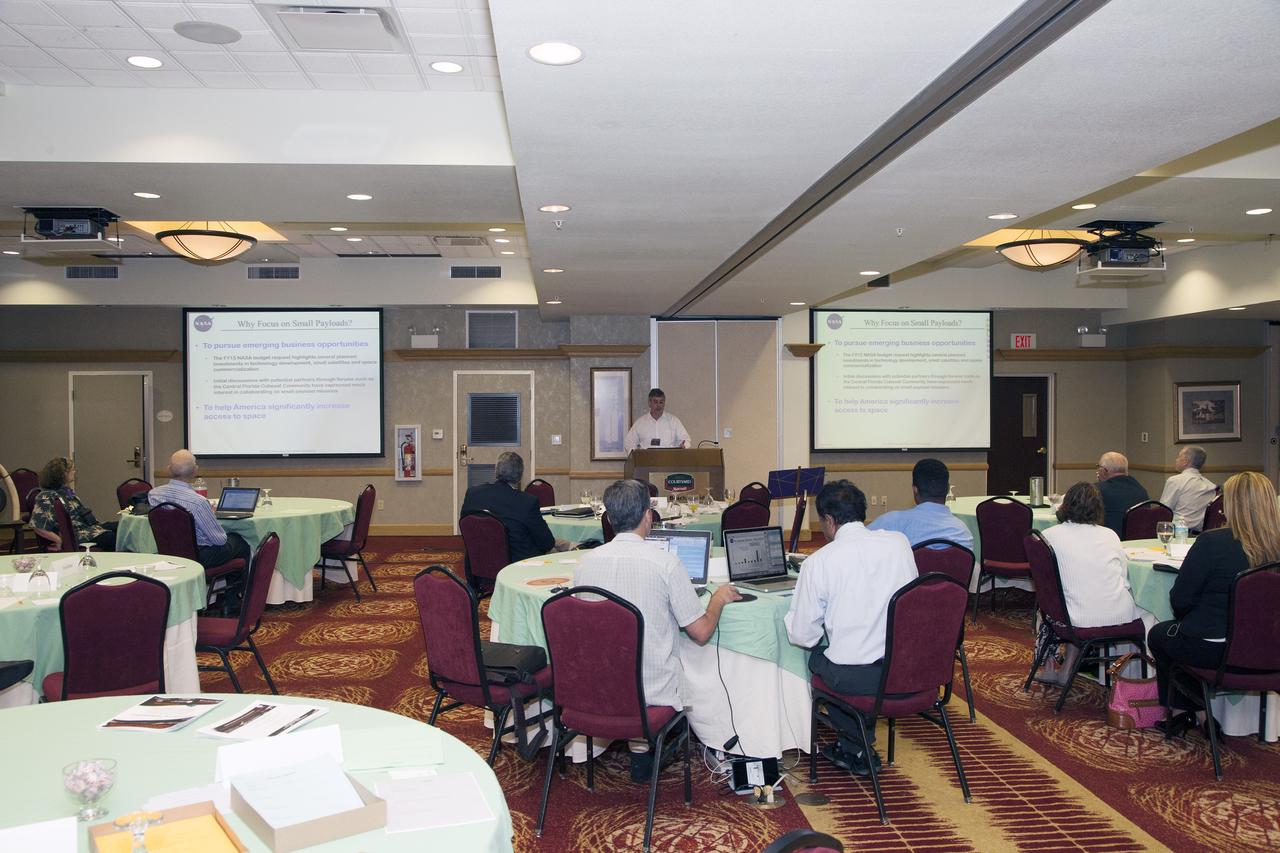
CAPE CANAVERAL, Fla. -- At the Marriott Courtyard Hotel in Cocoa Beach, Fla., Greg Clements, chief of Kennedy's Control and Data Systems Division and lead for the Engineering and Technology's Small Payload Integrated Testing Services, or SPLITS, line of business, speaks to participants in the 4th International Workshop on Lunar and Planetary Compact and Cryogenic Science and Technology Applications. Scientists, engineers and entrepreneurs interested in research on the moon and other planetary surfaces, recently participated in the Workshop. Taking place April 8-11, 2014, the event was designed to foster collaborative work among those interested in solving the challenges of building hardware, software and businesses interested in going back to the moon and exploring beyond. Photo credit: NASA/Daniel Casper
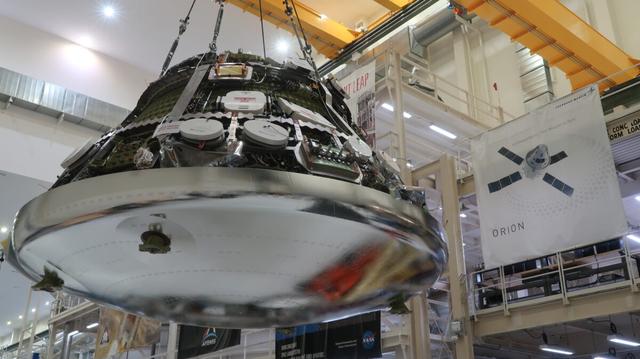
Engineers connect the Orion crew and service modules for the Artemis II mission on Oct. 19, 2023, inside the Neil Armstrong Operations and Checkout Building at NASA’s Kennedy Space Center in Florida. With the crew and service modules integrated, the team will power up the combined crew and service module for the first time. After power on tests are complete, Orion will begin altitude chamber testing, which will put the spacecraft through conditions as close as possible to the environment it will experience in the vacuum of deep space. The crew and service modules are the two major components of Orion that will fly NASA astronauts Reid Wiseman, Victor Glover, and Christina Koch, along with CSA (Canadian Space Agency) astronaut Jeremy Hansen on a mission around the Moon and bring them home safely.
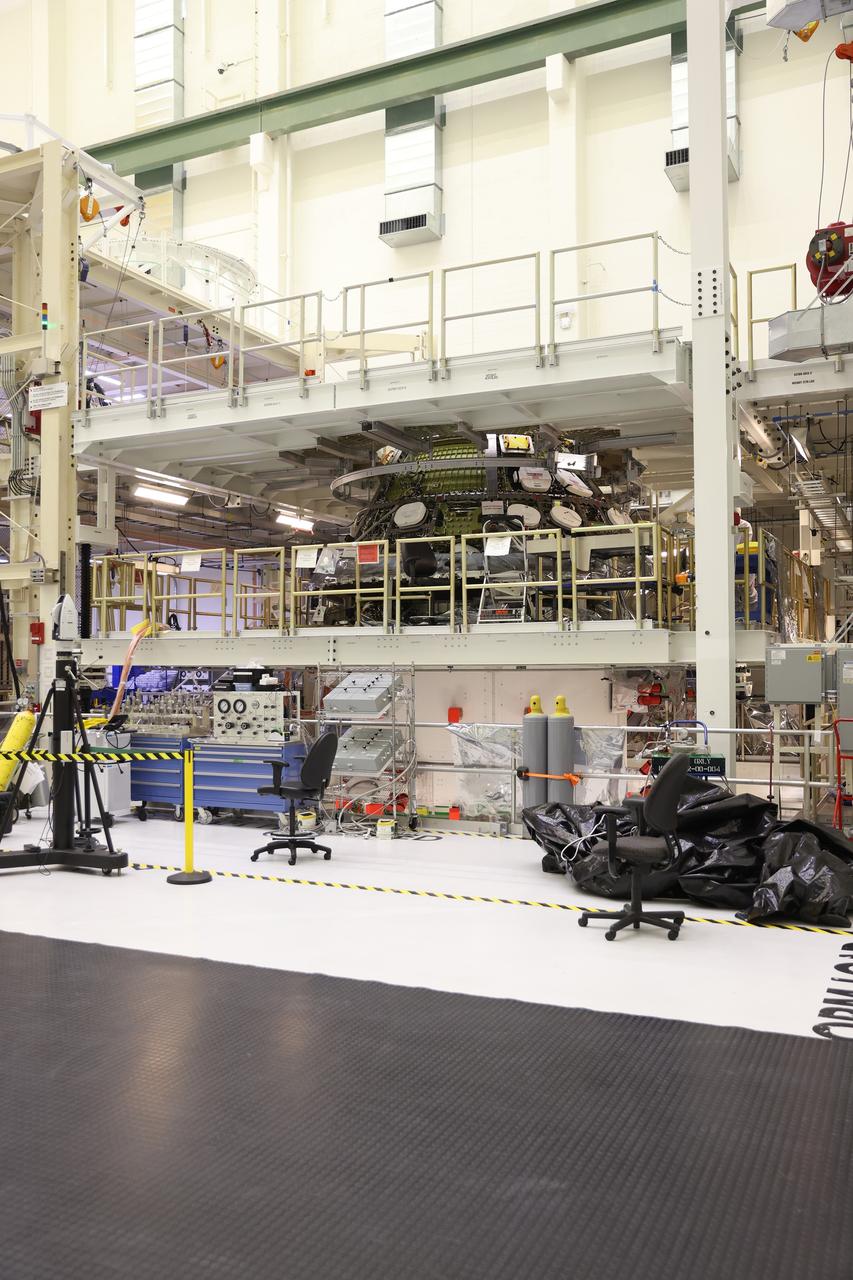
Engineers connect the Orion crew and service modules for the Artemis II mission on Oct. 19, 2023, inside the Neil Armstrong Operations and Checkout Building at NASA’s Kennedy Space Center in Florida. With the crew and service modules integrated, the team will power up the combined crew and service module for the first time. After power on tests are complete, Orion will begin altitude chamber testing, which will put the spacecraft through conditions as close as possible to the environment it will experience in the vacuum of deep space. The crew and service modules are the two major components of Orion that will fly NASA astronauts Reid Wiseman, Victor Glover, and Christina Koch, along with CSA (Canadian Space Agency) astronaut Jeremy Hansen on a mission around the Moon and bring them home safely.
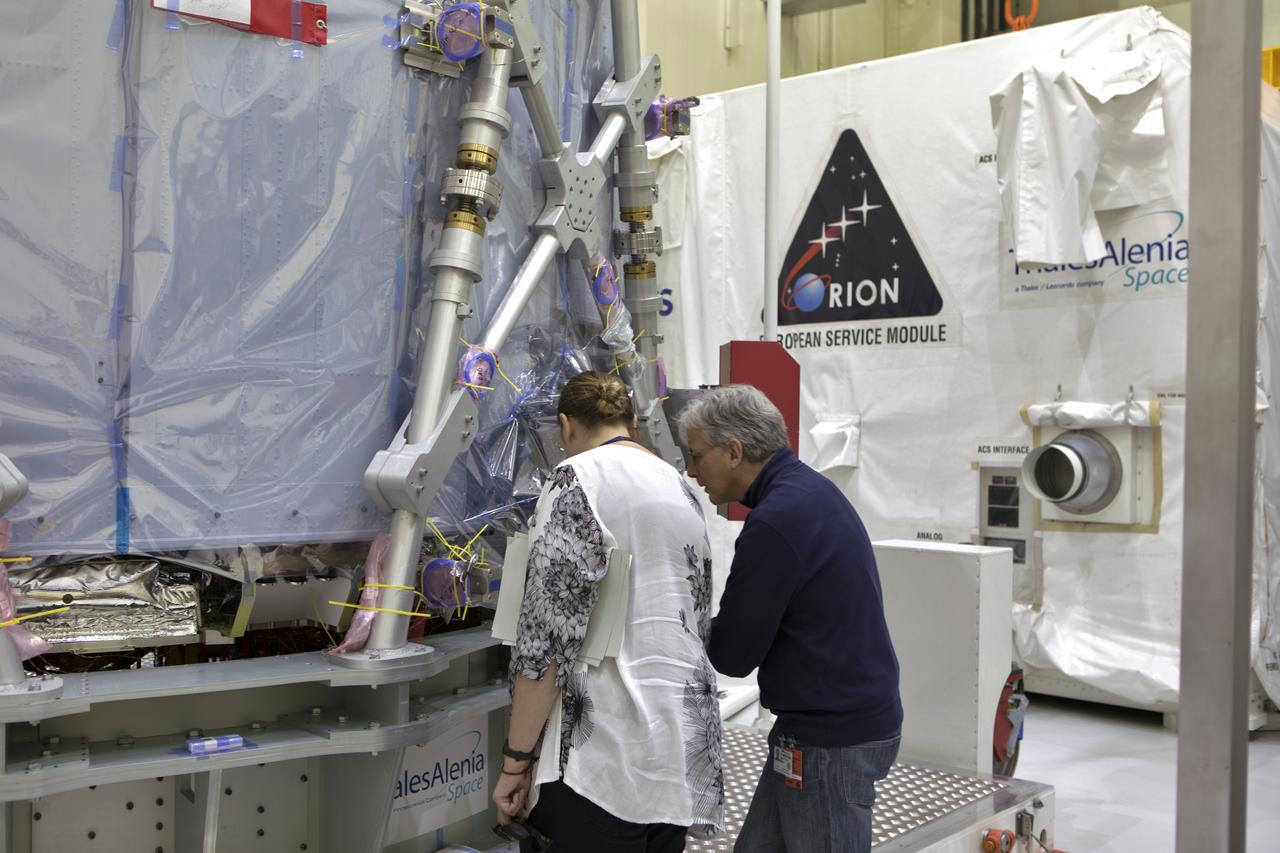
Inside the airlock in the Neil Armstrong Operations and Checkout Building high bay on Nov. 6, 2018, European Space Agency (ESA) and Airbus engineers check the ESA European Service Module (ESM) after it is uncrated at NASA's Kennedy Space Center in Florida. The ESM will supply the main propulsion system and power to the Orion spacecraft for Exploration Mission-1 (EM-1), a mission to the Moon. The ESM also will house air and water for astronauts on future missions. EM-1 will be an uncrewed flight test that will provide a foundation for human deep space exploration to destinations beyond Earth orbit. EM-1 will be the first integrated test of NASA's Space Launch System, Orion and the ground systems at Kennedy.
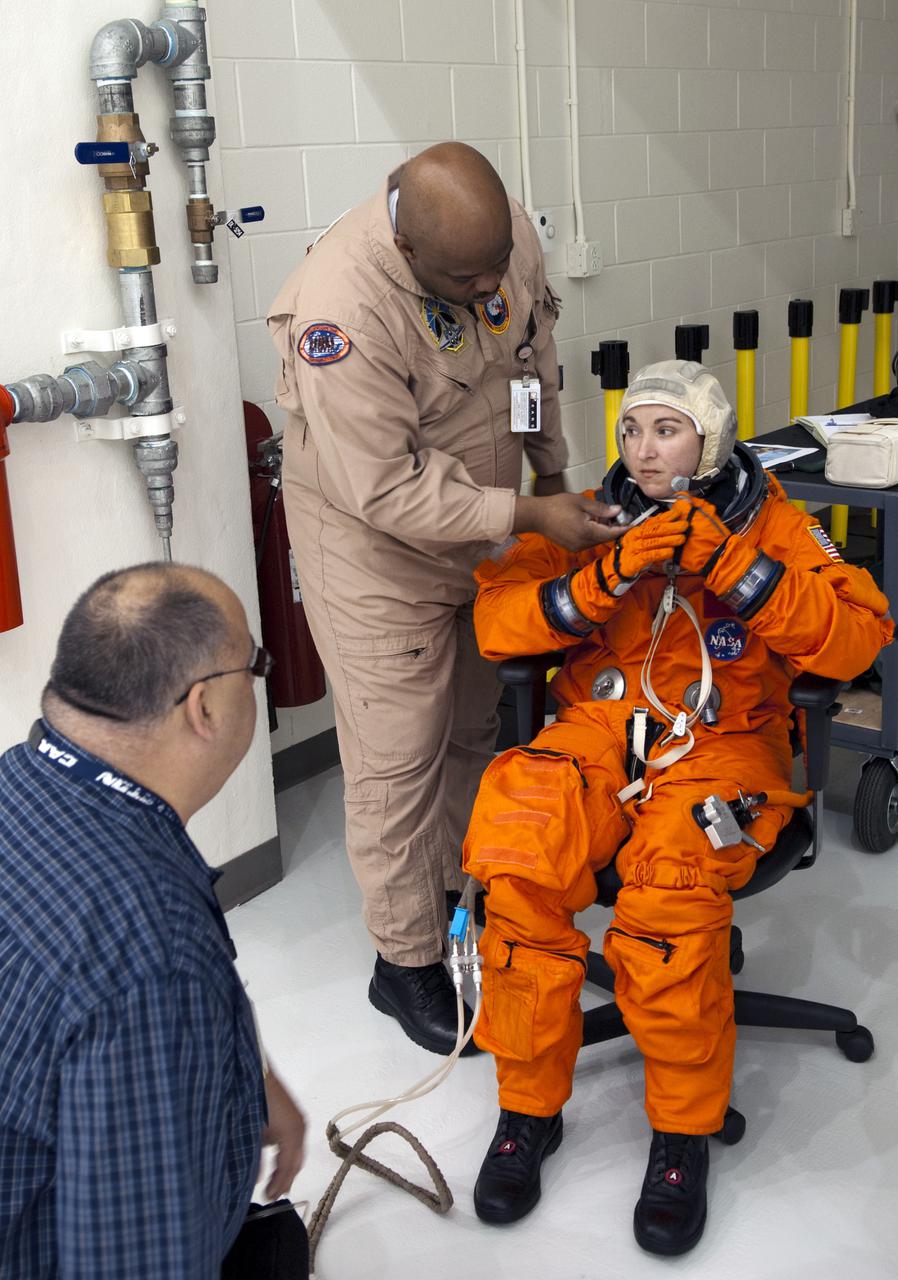
CAPE CANAVERAL, Fla. – In the Operations and Checkout Building at NASA's Kennedy Space Center in Florida, United Space Alliance space suit specialists prepare to demonstrate the placement of crew seats and equipment inside an Orion crew exploration vehicle mock-up. Crew escape equipment suit technician Andre Denard, the STS-132 crew chief, assists United Space Alliance EV_IV Integrated Operations work control specialist Jennifer Peterson, as she dresses in a flight-and-entry suit. Looking on is crew escape equipment suit engineer Thomas Carlton. The mock-up details the interior components of the vehicle including seat layout and the subsystem components on the outside of the pressure vessel. Orion mock-ups also have been used to verify accessibility of the servicing locations at the launch pad and in the Vehicle Assembly Building. For information on the development of the Orion capsule, visit www.nasa.gov_orion. Photo credit: NASA_Jim Grossmann
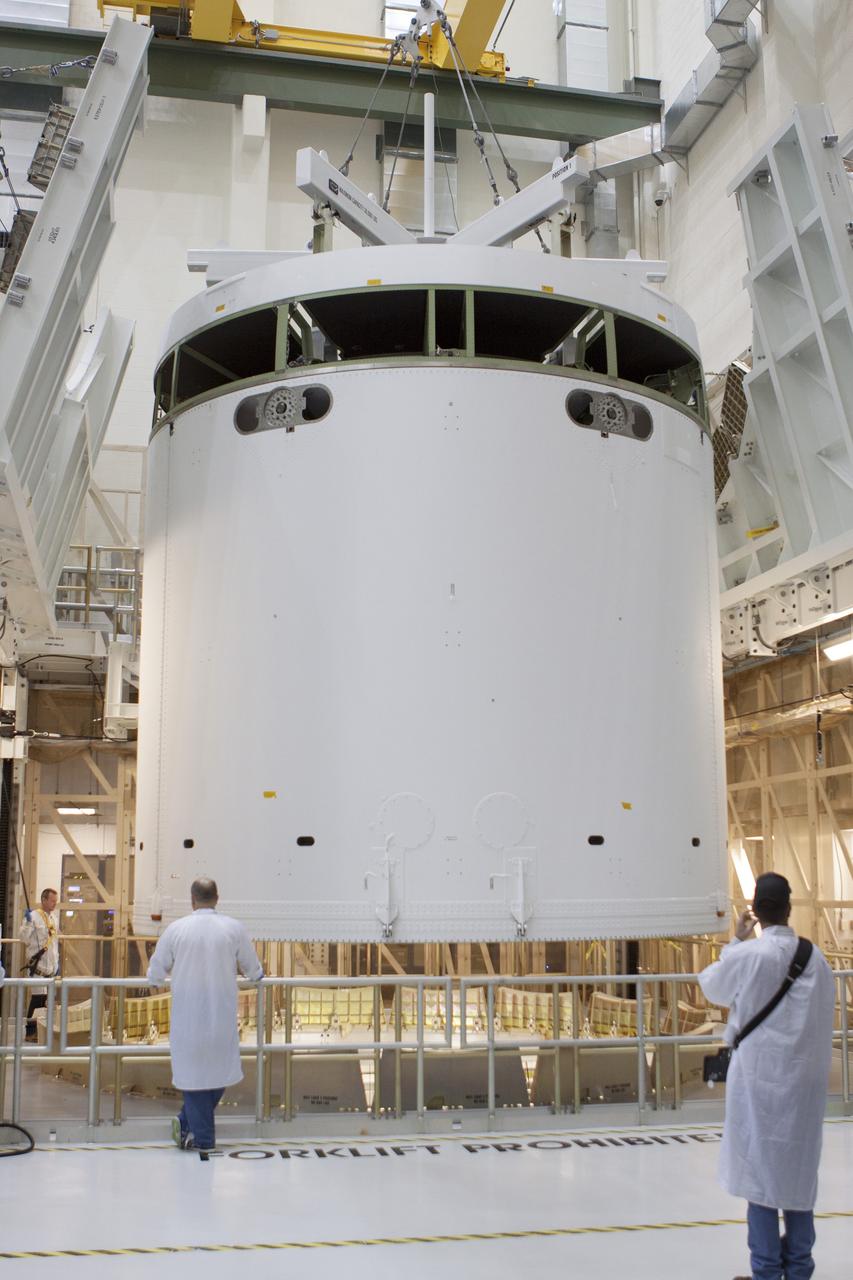
CAPE CANAVERAL, Fla. -- Inside the Operations and Checkout Building high bay at NASA's Kennedy Space Center in Florida, NASA and Lockheed Martin engineers and technicians monitor the progress as a crane lowers the Orion service module into the Final Assembly and System Testing, or FAST, cell. The Orion crew module will be stacked on the service module in the FAST cell and then both modules will be put through their final system tests for Exploration Flight Test-1, or EFT-1, before rolling out of the facility for integration with the United Launch Alliance Delta IV Heavy rocket. Orion is the exploration spacecraft designed to carry astronauts to destinations not yet explored by humans, including an asteroid and Mars. It will have emergency abort capability, sustain the crew during space travel and provide safe re-entry from deep space return velocities. The first unpiloted test flight of Orion, EFT-1, is scheduled to launch later this year atop a Delta IV rocket from Cape Canaveral Air Force Station in Florida to an altitude of 3,600 miles above the Earth's surface. The two-orbit, four-hour flight test will help engineers evaluate the systems critical to crew safety including the heat shield, parachute system and launch abort system. For more information, visit http://www.nasa.gov/orion. Photo credit: NASA/Glenn Benson
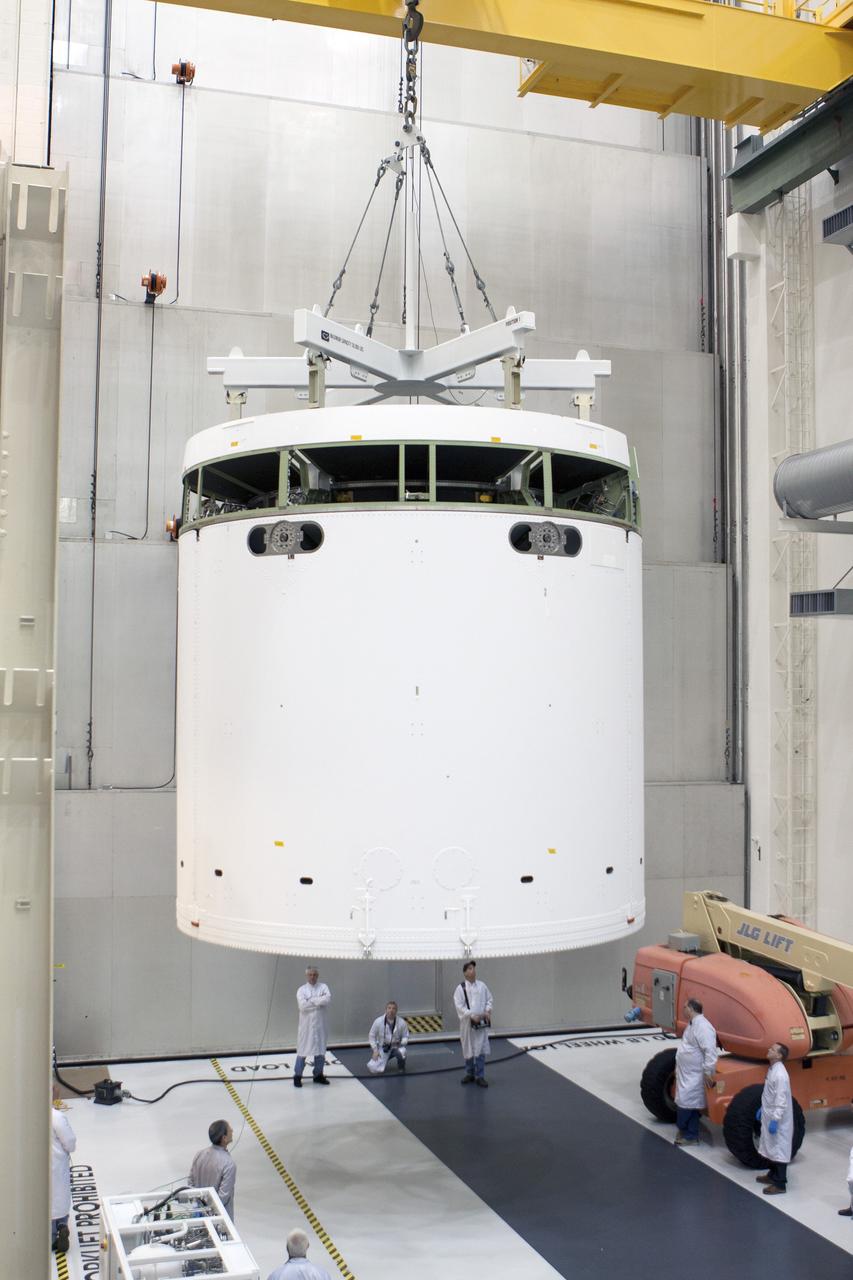
CAPE CANAVERAL, Fla. -- Inside the Operations and Checkout Building high bay at NASA's Kennedy Space Center in Florida, NASA and Lockheed Martin engineers and technicians monitor the progress as a crane is used to move the Orion service module to the Final Assembly and System Testing, or FAST, cell further down the aisle. The Orion crew module will be stacked on the service module in the FAST cell and then both modules will be put through their final system tests for Exploration Flight Test-1, or EFT-1, before rolling out of the facility for integration with the United Launch Alliance Delta IV Heavy rocket. Orion is the exploration spacecraft designed to carry astronauts to destinations not yet explored by humans, including an asteroid and Mars. It will have emergency abort capability, sustain the crew during space travel and provide safe re-entry from deep space return velocities. The first unpiloted test flight of Orion, EFT-1, is scheduled to launch later this year atop a Delta IV rocket from Cape Canaveral Air Force Station in Florida to an altitude of 3,600 miles above the Earth's surface. The two-orbit, four-hour flight test will help engineers evaluate the systems critical to crew safety including the heat shield, parachute system and launch abort system. For more information, visit http://www.nasa.gov/orion. Photo credit: NASA/Glenn Benson
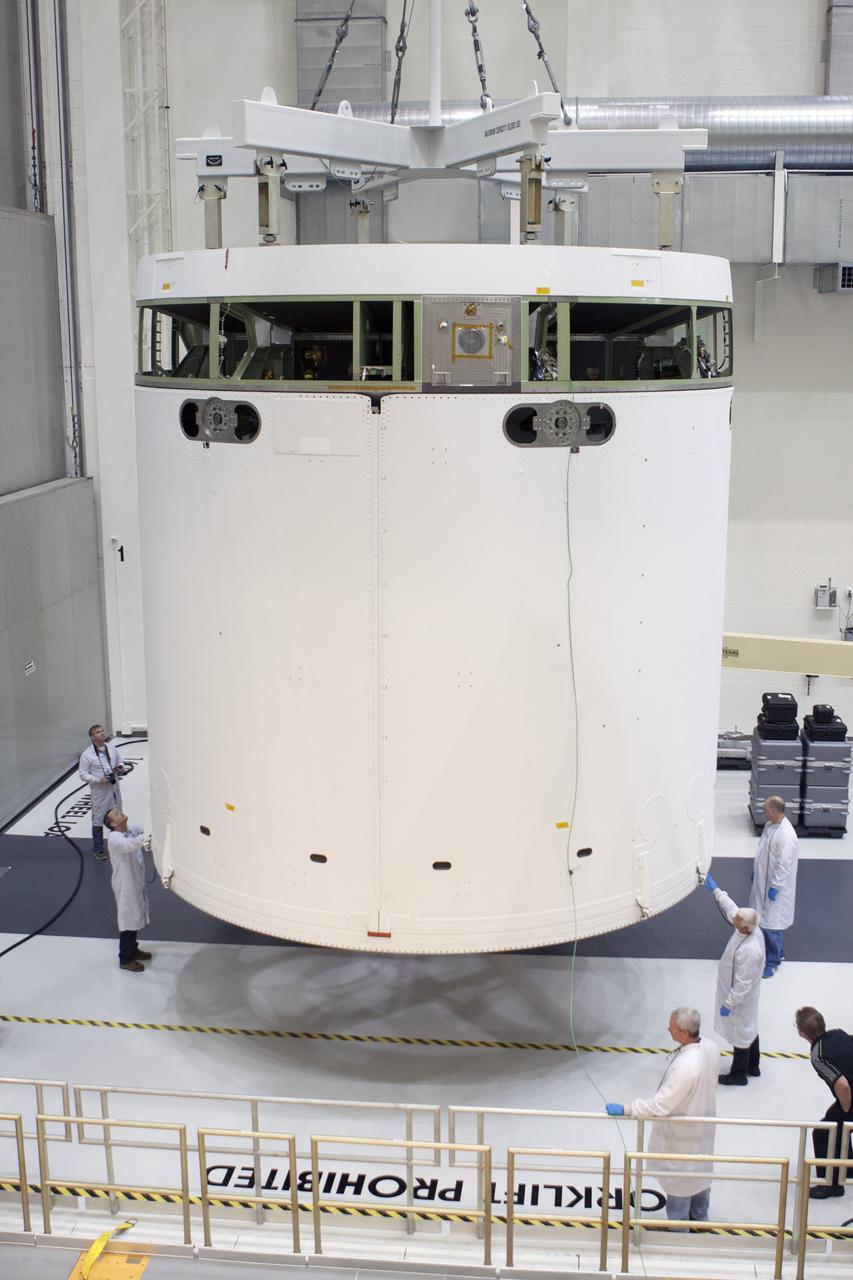
CAPE CANAVERAL, Fla. -- Inside the Operations and Checkout Building high bay at NASA's Kennedy Space Center in Florida, NASA and Lockheed Martin engineers and technicians help guide the Orion service module into the Final Assembly and System Testing, or FAST, cell. The Orion crew module will be stacked on the service module in the FAST cell and then both modules will be put through their final system tests for Exploration Flight Test-1, or EFT-1, before rolling out of the facility for integration with the United Launch Alliance Delta IV Heavy rocket. Orion is the exploration spacecraft designed to carry astronauts to destinations not yet explored by humans, including an asteroid and Mars. It will have emergency abort capability, sustain the crew during space travel and provide safe re-entry from deep space return velocities. The first unpiloted test flight of Orion, EFT-1, is scheduled to launch later this year atop a Delta IV rocket from Cape Canaveral Air Force Station in Florida to an altitude of 3,600 miles above the Earth's surface. The two-orbit, four-hour flight test will help engineers evaluate the systems critical to crew safety including the heat shield, parachute system and launch abort system. For more information, visit http://www.nasa.gov/orion. Photo credit: NASA/Glenn Benson
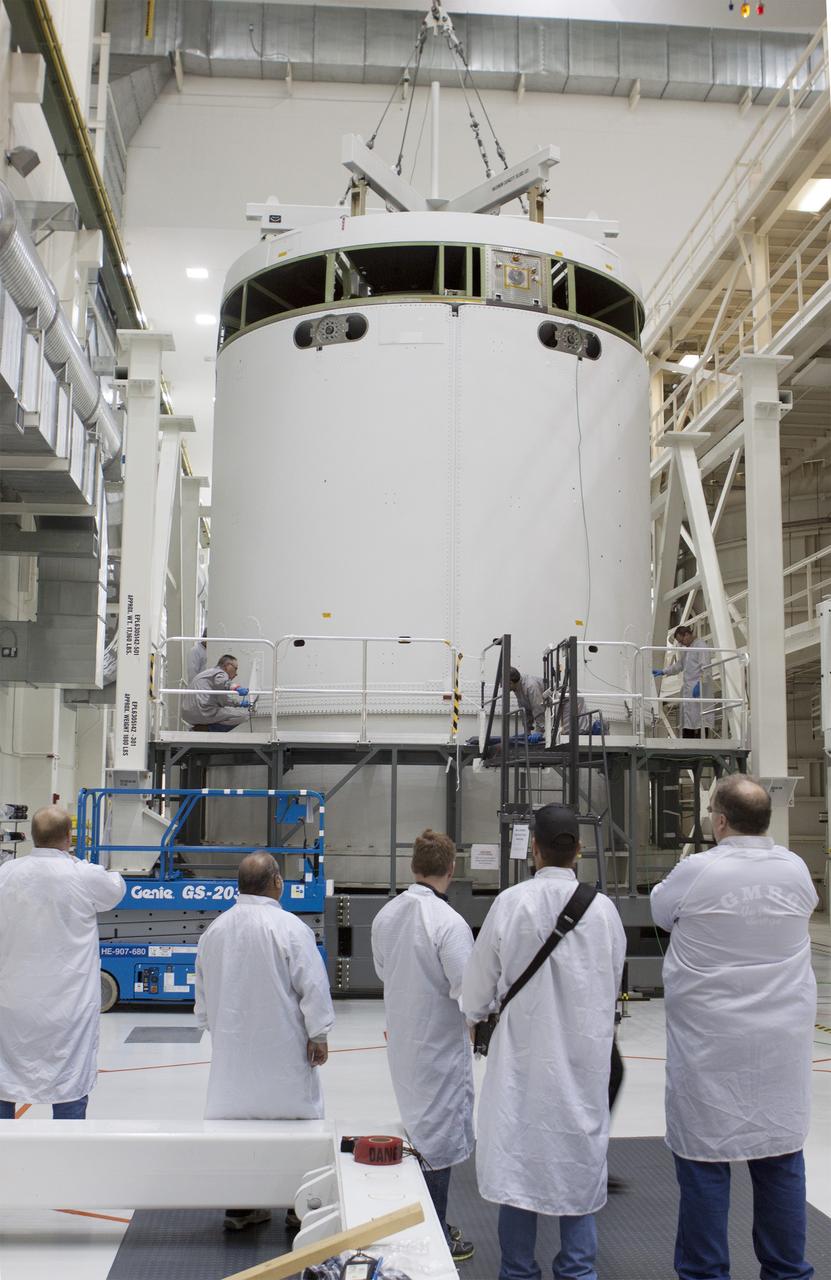
CAPE CANAVERAL, Fla. -- Inside the Operations and Checkout Building high bay at NASA's Kennedy Space Center in Florida, NASA and Lockheed Martin technicians and engineers prepare to move the Orion service module to the Final Assembly and System Testing, or FAST, cell further down the aisle. The Orion crew module will be stacked on the service module in the FAST cell and then both modules will be put through their final system tests for Exploration Flight Test-1, or EFT-1, prior to rolling out of the facility for integration with the United Launch Alliance Delta IV Heavy rocket. Orion is the exploration spacecraft designed to carry astronauts to destinations not yet explored by humans, including an asteroid and Mars. It will have emergency abort capability, sustain the crew during space travel and provide safe re-entry from deep space return velocities. The first unpiloted test flight of Orion, EFT-1, is scheduled to launch later this year atop a Delta IV rocket from Cape Canaveral Air Force Station in Florida to an altitude of 3,600 miles above the Earth's surface. The two-orbit, four-hour flight test will help engineers evaluate the systems critical to crew safety including the heat shield, parachute system and launch abort system. For more information, visit http://www.nasa.gov/orion. Photo credit: NASA/Glenn Benson
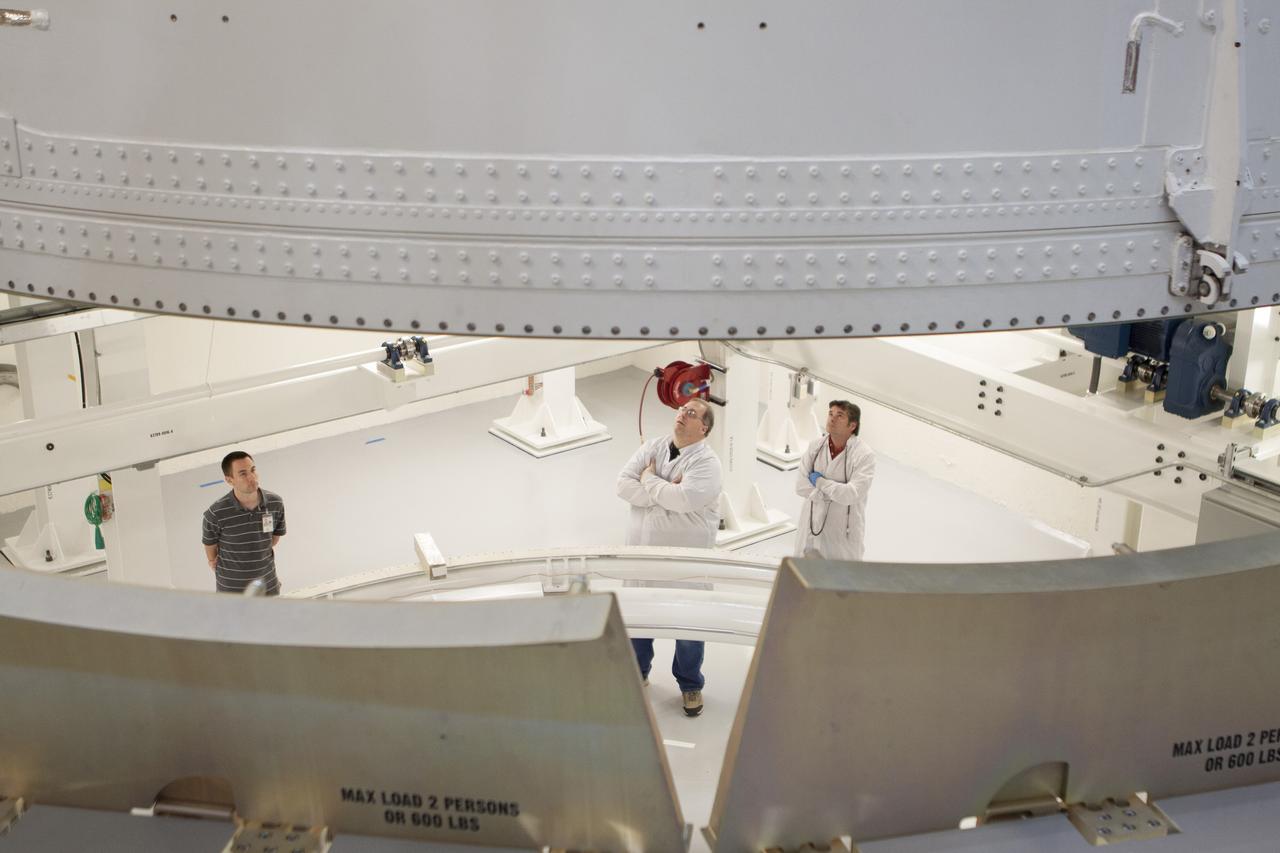
CAPE CANAVERAL, Fla. -- Inside the Operations and Checkout Building high bay at NASA's Kennedy Space Center in Florida, NASA and Lockheed Martin engineers and technicians monitor the progress as a crane is used to move the Orion service module to the Final Assembly and System Testing, or FAST, cell further down the aisle. The Orion crew module will be stacked on the service module in the FAST cell and then both modules will be put through their final system tests for Exploration Flight Test-1, or EFT-1, before rolling out of the facility for integration with the United Launch Alliance Delta IV Heavy rocket. Orion is the exploration spacecraft designed to carry astronauts to destinations not yet explored by humans, including an asteroid and Mars. It will have emergency abort capability, sustain the crew during space travel and provide safe re-entry from deep space return velocities. The first unpiloted test flight of Orion, EFT-1, is scheduled to launch later this year atop a Delta IV rocket from Cape Canaveral Air Force Station in Florida to an altitude of 3,600 miles above the Earth's surface. The two-orbit, four-hour flight test will help engineers evaluate the systems critical to crew safety including the heat shield, parachute system and launch abort system. For more information, visit http://www.nasa.gov/orion. Photo credit: NASA/Glenn Benson
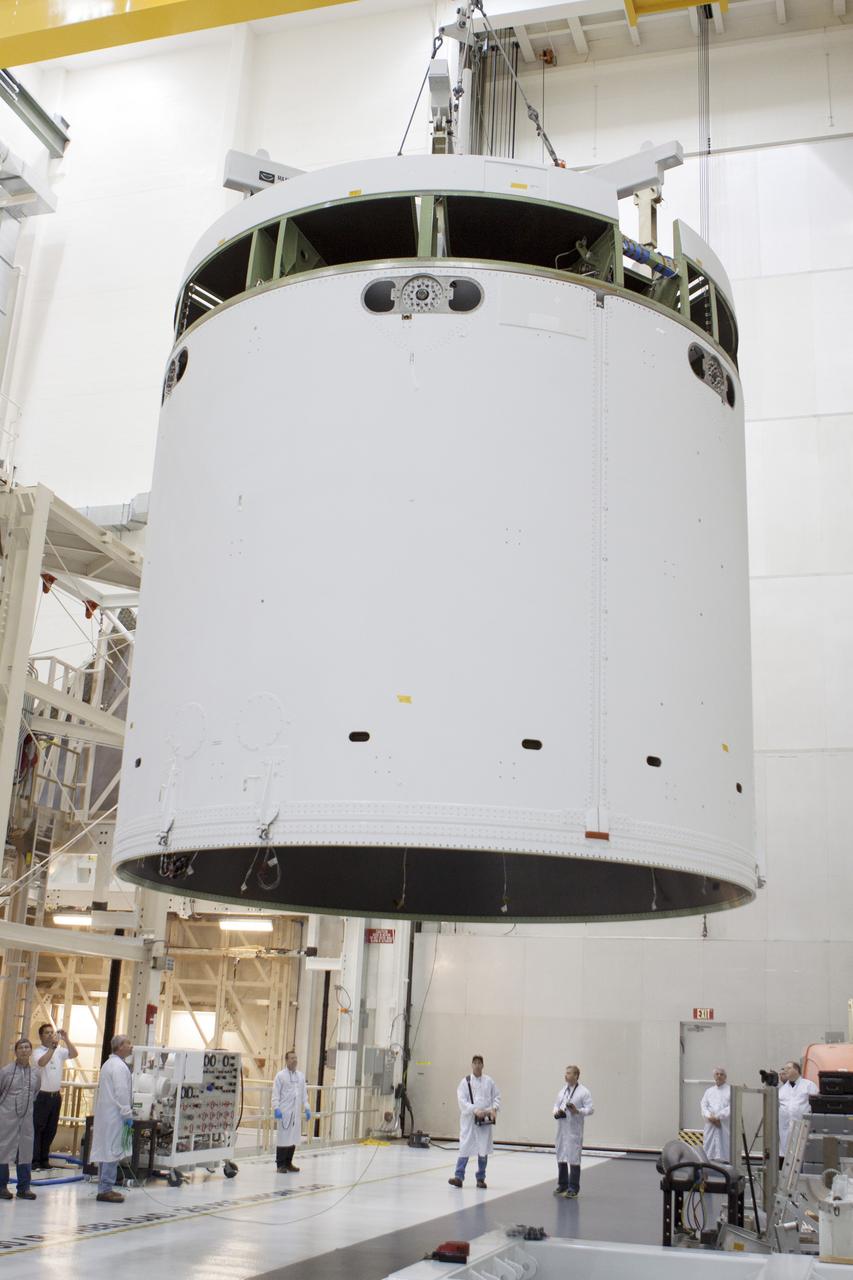
CAPE CANAVERAL, Fla. -- Inside the Operations and Checkout Building high bay at NASA's Kennedy Space Center in Florida, NASA and Lockheed Martin engineers and technicians monitor the progress as a crane lowers the Orion service module into the Final Assembly and System Testing, or FAST, cell. The Orion crew module will be stacked on the service module in the FAST cell and then both modules will be put through their final system tests for Exploration Flight Test-1, or EFT-1, before rolling out of the facility for integration with the United Launch Alliance Delta IV Heavy rocket. Orion is the exploration spacecraft designed to carry astronauts to destinations not yet explored by humans, including an asteroid and Mars. It will have emergency abort capability, sustain the crew during space travel and provide safe re-entry from deep space return velocities. The first unpiloted test flight of Orion, EFT-1, is scheduled to launch later this year atop a Delta IV rocket from Cape Canaveral Air Force Station in Florida to an altitude of 3,600 miles above the Earth's surface. The two-orbit, four-hour flight test will help engineers evaluate the systems critical to crew safety including the heat shield, parachute system and launch abort system. For more information, visit http://www.nasa.gov/orion. Photo credit: NASA/Glenn Benson
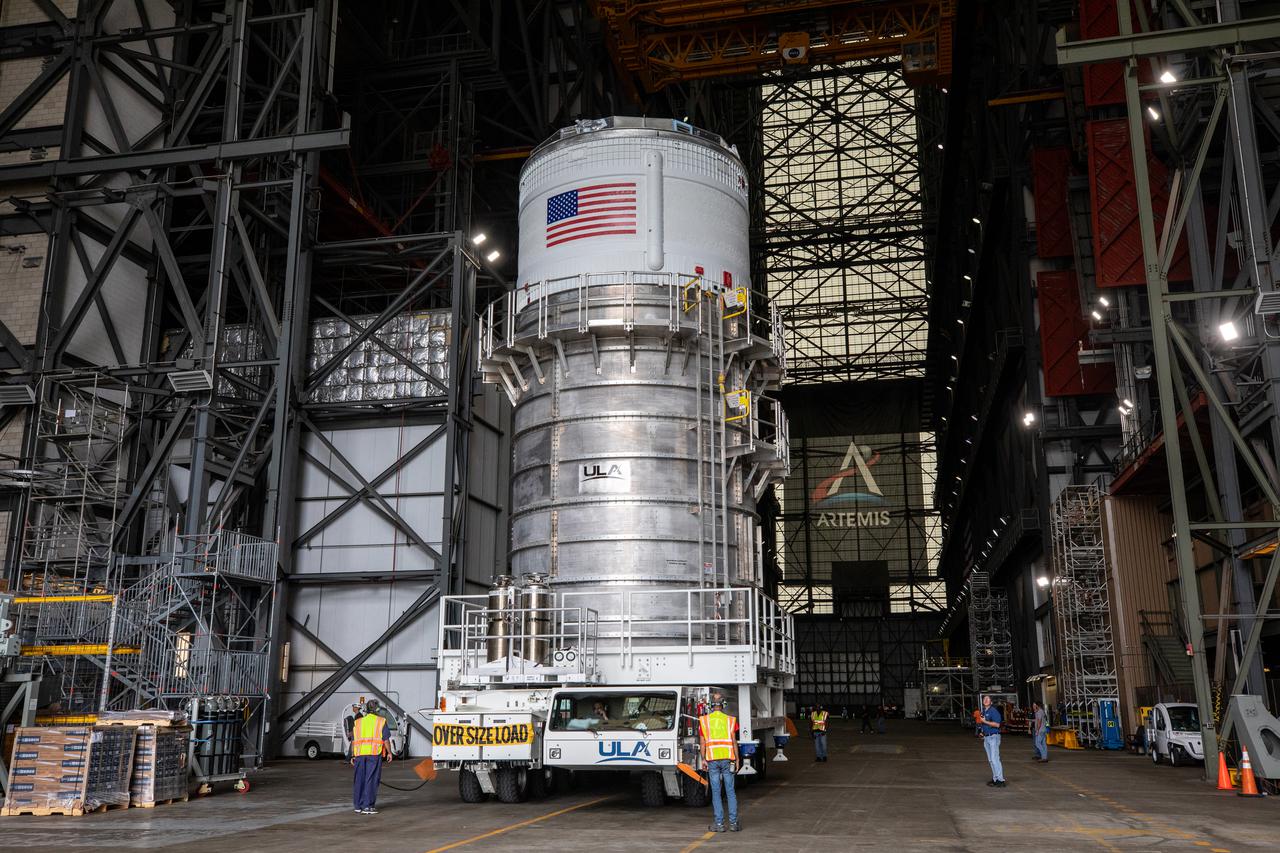
The Space Launch System (SLS) rocket’s interim cryogenic propulsion stage (ICPS) is moved into the transfer aisle of the Vehicle Assembly Building (VAB) by teams with NASA’s Exploration Ground Systems and contractor Jacobs at NASA’s Kennedy Space Center in Florida on Saturday, June 19, 2021. After being fueled and serviced inside the Multi-Payload Processing Facility (MPPF), the ICPS will be hoisted into place atop the SLS core stage while its Aerojet Rocketdyne-built RL-10 engine will be protected inside the launch vehicle stage adapter (LVSA) on the mobile launcher in preparation for the launch of Artemis I. The ICPS will provide Orion spacecraft with the push needed for its flight around the Moon. The first in a series of increasingly complex missions, Artemis I will test SLS and the Orion spacecraft as an integrated system prior to crewed flights in which NASA will land the first woman and person of color on the Moon.
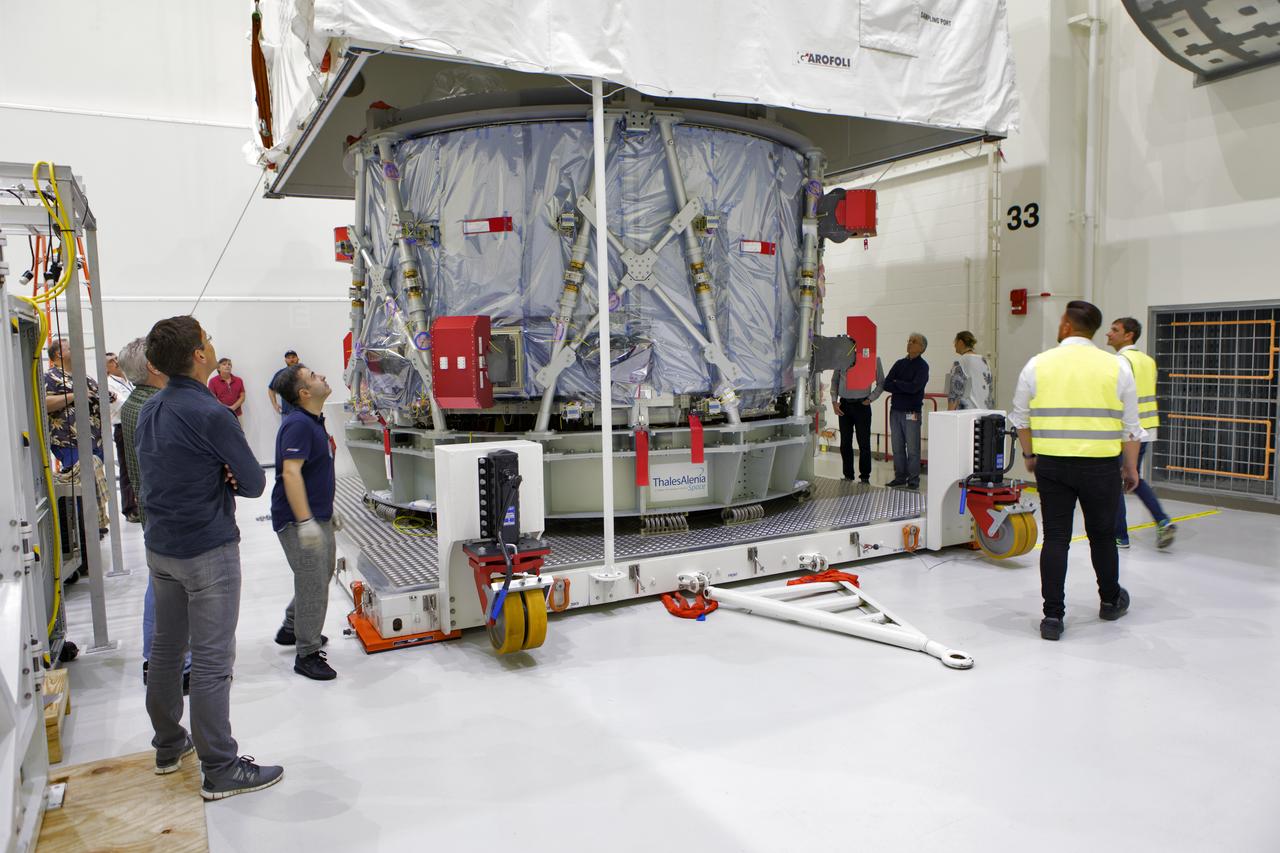
Inside the airlock in the Neil Armstrong Operations and Checkout Building high bay On Nov. 6, 2018, European Space Agency (ESA) and Airbus engineers and technicians watch as a crane is used to uncrate the ESA's European Service Module (ESM) at NASA's Kennedy Space Center in Florida. The ESM will supply the main propulsion system and power to the Orion spacecraft for Exploration Mission-1 (EM-1), a mission to the Moon. The ESM also will house air and water for astronauts on future missions. EM-1 will be an uncrewed flight test that will provide a foundation for human deep space exploration to destinations beyond Earth orbit. EM-1 will be the first integrated test of NASA's Space Launch System, Orion and the ground systems at Kennedy.
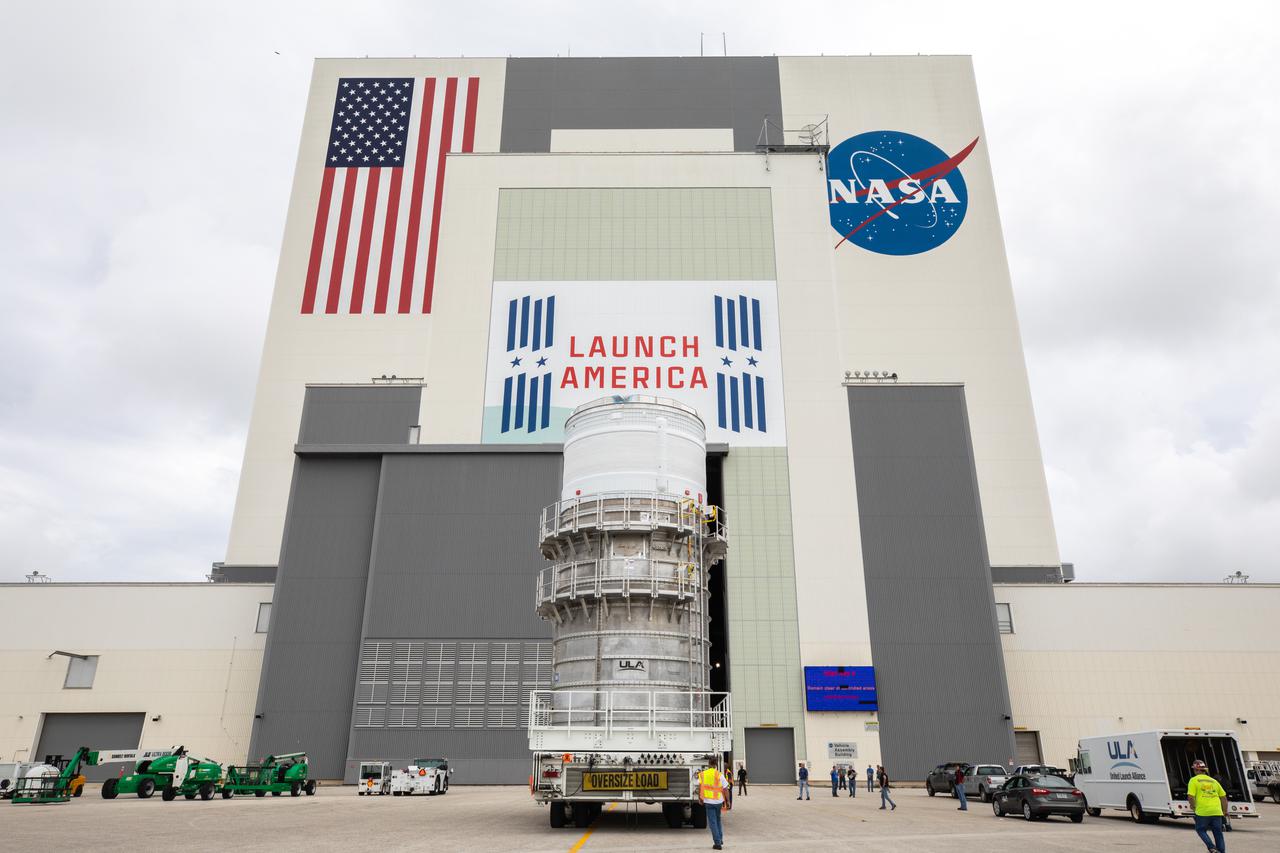
Teams with NASA’s Exploration Ground Systems and contractor Jacobs move the Space Launch System (SLS) rocket’s interim cryogenic propulsion stage (ICPS) into the Vehicle Assembly Building (VAB) at NASA’s Kennedy Space Center in Florida on Saturday, June 19, 2021. After being fueled and serviced inside the Multi-Payload Processing Facility (MPPF), the ICPS will be hoisted into place atop the SLS core stage while its Aerojet Rocketdyne-built RL-10 engine will be protected inside the launch vehicle stage adapter (LVSA) on the mobile launcher in preparation for the launch of Artemis I. The ICPS will provide Orion spacecraft with the push needed for its flight around the Moon. The first in a series of increasingly complex missions, Artemis I will test SLS and the Orion spacecraft as an integrated system prior to crewed flights in which NASA will land the first woman and person of color on the Moon.
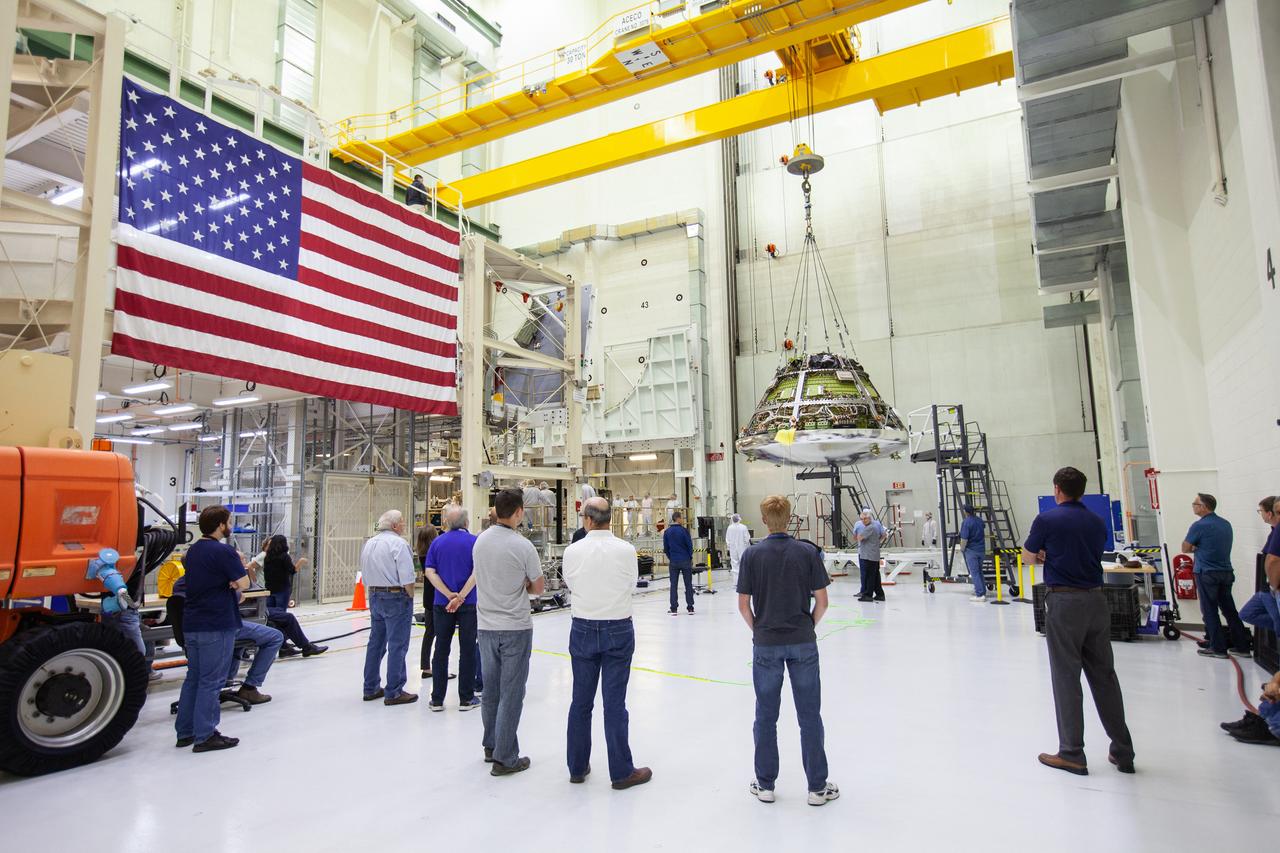
Engineers and technicians monitor the progress as the Orion crew module for Artemis 1 is moved by crane on July 16, 2019, in the high bay inside the Neil Armstrong Operations and Checkout Building high bay at NASA’s Kennedy Space Center in Florida. The crew module is being moved to the final assembly and test cell and work will begin to secure it atop the service module. The Orion spacecraft is being prepared for its uncrewed test flight atop NASA’s Space Launch System (SLS) rocket. Artemis 1 is the first test flight of the SLS and Orion spacecraft as an integrated system. Orion will travel thousands of miles beyond the Moon during a mission that will test its systems in space. The spacecraft will return to Earth and splashdown in the Pacific Ocean where it will be retrieved and transported back to Kennedy.
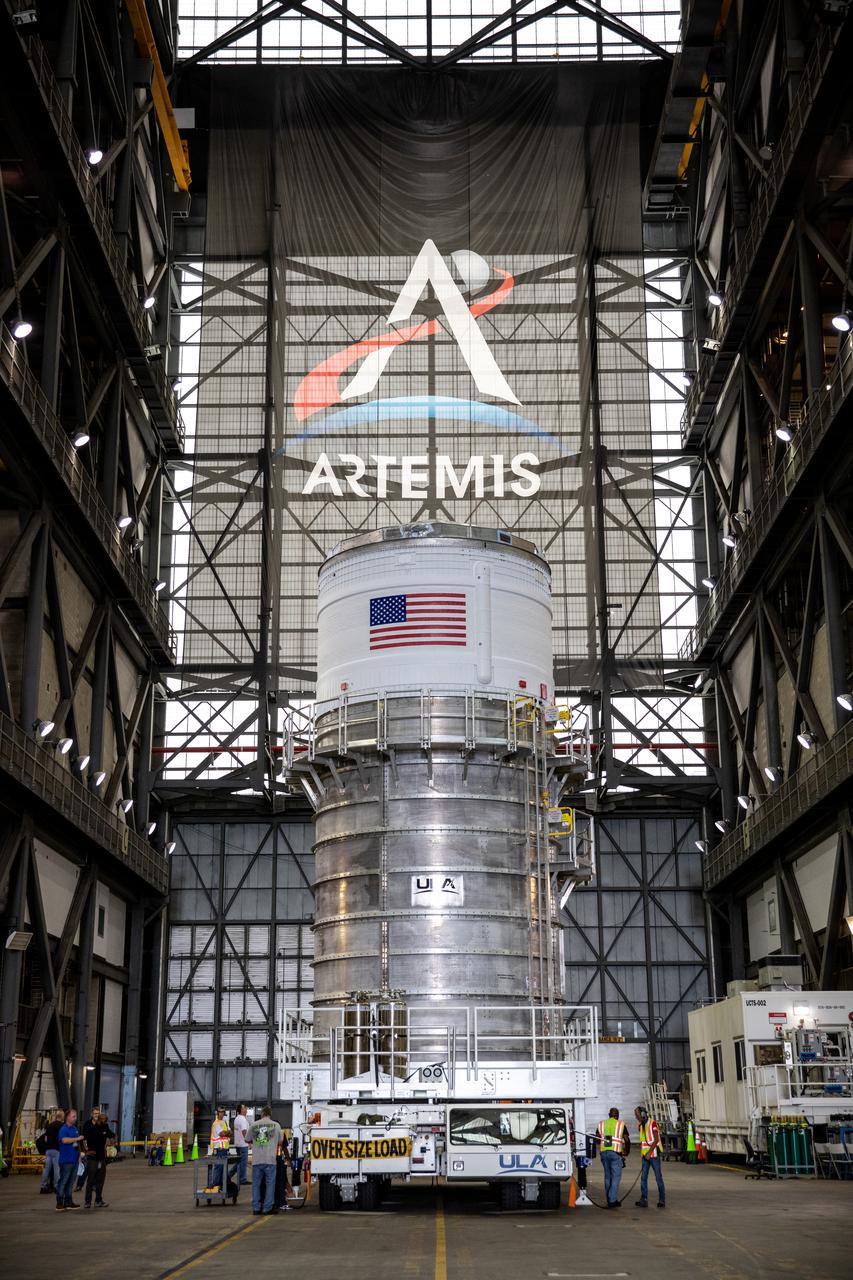
The Space Launch System (SLS) rocket’s interim cryogenic propulsion stage (ICPS) sits in the transfer aisle of the Vehicle Assembly Building (VAB), upon being moved by teams with NASA’s Exploration Ground Systems and contractor Jacobs at NASA’s Kennedy Space Center in Florida on Saturday, June 19, 2021. After being fueled and serviced inside the Multi-Payload Processing Facility (MPPF), the ICPS will be hoisted into place atop the SLS core stage while its Aerojet Rocketdyne-built RL-10 engine will be protected inside the launch vehicle stage adapter (LVSA) on the mobile launcher in preparation for the launch of Artemis I. The ICPS will provide Orion spacecraft with the push needed for its flight around the Moon. The first in a series of increasingly complex missions, Artemis I will test SLS and the Orion spacecraft as an integrated system prior to crewed flights in which NASA will land the first woman and person of color on the Moon.
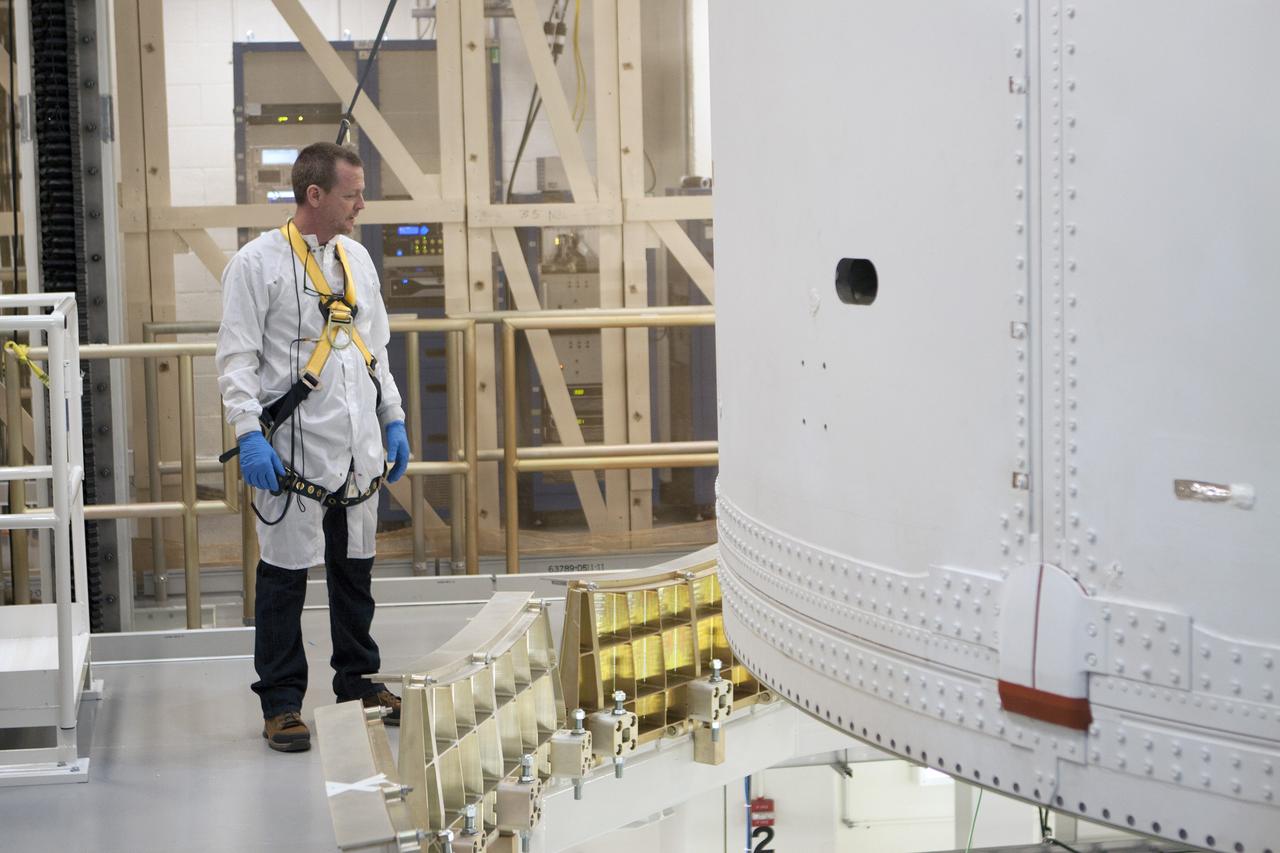
CAPE CANAVERAL, Fla. -- Inside the Operations and Checkout Building high bay at NASA's Kennedy Space Center in Florida, a Lockheed Martin technician monitors the progress as a crane lowers the Orion service module into the Final Assembly and System Testing, or FAST, cell further down the aisle. The Orion crew module will be stacked on the service module in the FAST cell and then both modules will be put through their final system tests for Exploration Flight Test-1, or EFT-1, before rolling out of the facility for integration with the United Launch Alliance Delta IV Heavy rocket. Orion is the exploration spacecraft designed to carry astronauts to destinations not yet explored by humans, including an asteroid and Mars. It will have emergency abort capability, sustain the crew during space travel and provide safe re-entry from deep space return velocities. The first unpiloted test flight of Orion, EFT-1, is scheduled to launch later this year atop a Delta IV rocket from Cape Canaveral Air Force Station in Florida to an altitude of 3,600 miles above the Earth's surface. The two-orbit, four-hour flight test will help engineers evaluate the systems critical to crew safety including the heat shield, parachute system and launch abort system. For more information, visit http://www.nasa.gov/orion. Photo credit: NASA/Glenn Benson
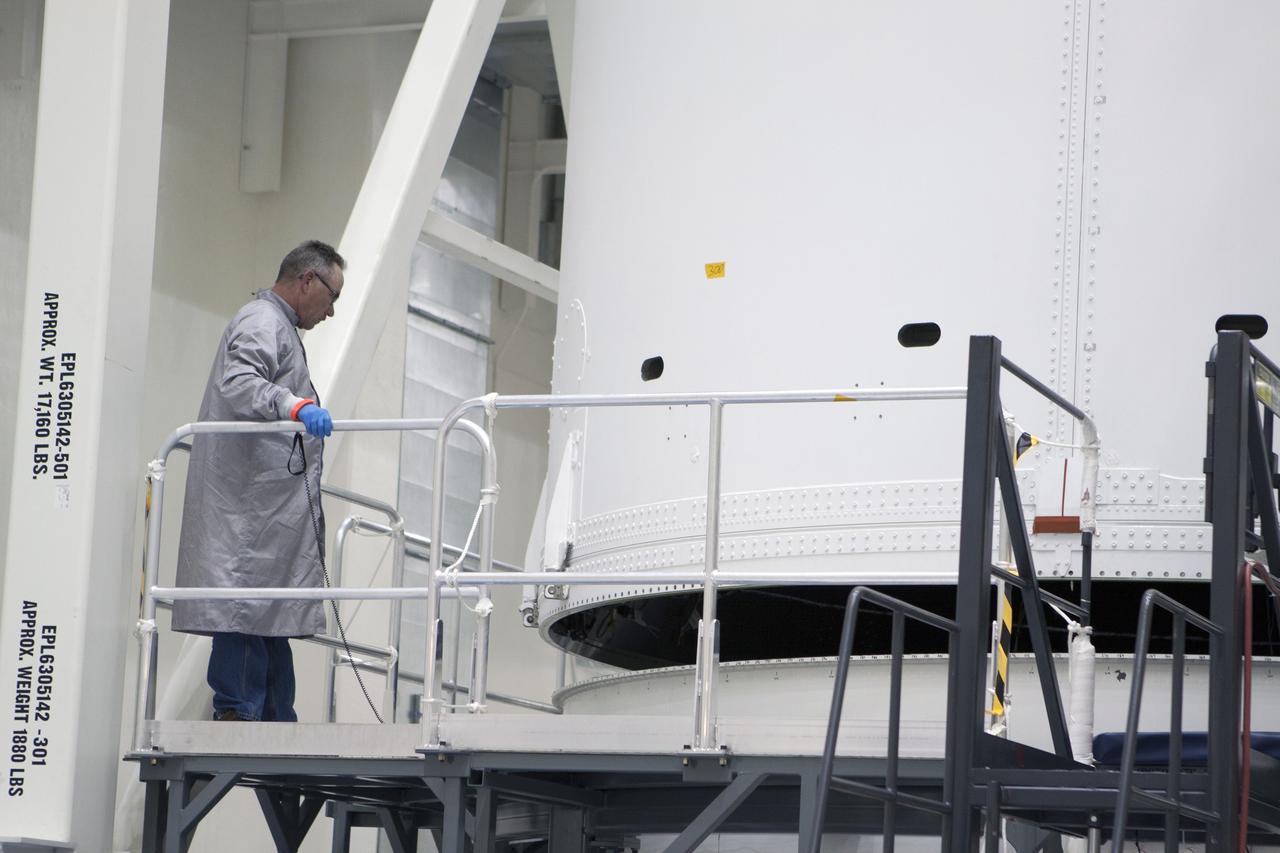
CAPE CANAVERAL, Fla. -- Inside the Operations and Checkout Building high bay at NASA's Kennedy Space Center in Florida, a Lockheed Martin technician monitors the progress as a crane is used to lift the Orion service module from a test stand and move it to the Final Assembly and System Testing, or FAST, cell further down the aisle. The Orion crew module will be stacked on the service module in the FAST cell and then both modules will be put through their final system tests for Exploration Flight Test-1, or EFT-1, prior to rolling out of the facility for integration with the United Launch Alliance Delta IV Heavy rocket. Orion is the exploration spacecraft designed to carry astronauts to destinations not yet explored by humans, including an asteroid and Mars. It will have emergency abort capability, sustain the crew during space travel and provide safe re-entry from deep space return velocities. The first unpiloted test flight of Orion, EFT-1, is scheduled to launch later this year atop a Delta IV rocket from Cape Canaveral Air Force Station in Florida to an altitude of 3,600 miles above the Earth's surface. The two-orbit, four-hour flight test will help engineers evaluate the systems critical to crew safety including the heat shield, parachute system and launch abort system. For more information, visit http://www.nasa.gov/orion. Photo credit: NASA/Glenn Benson
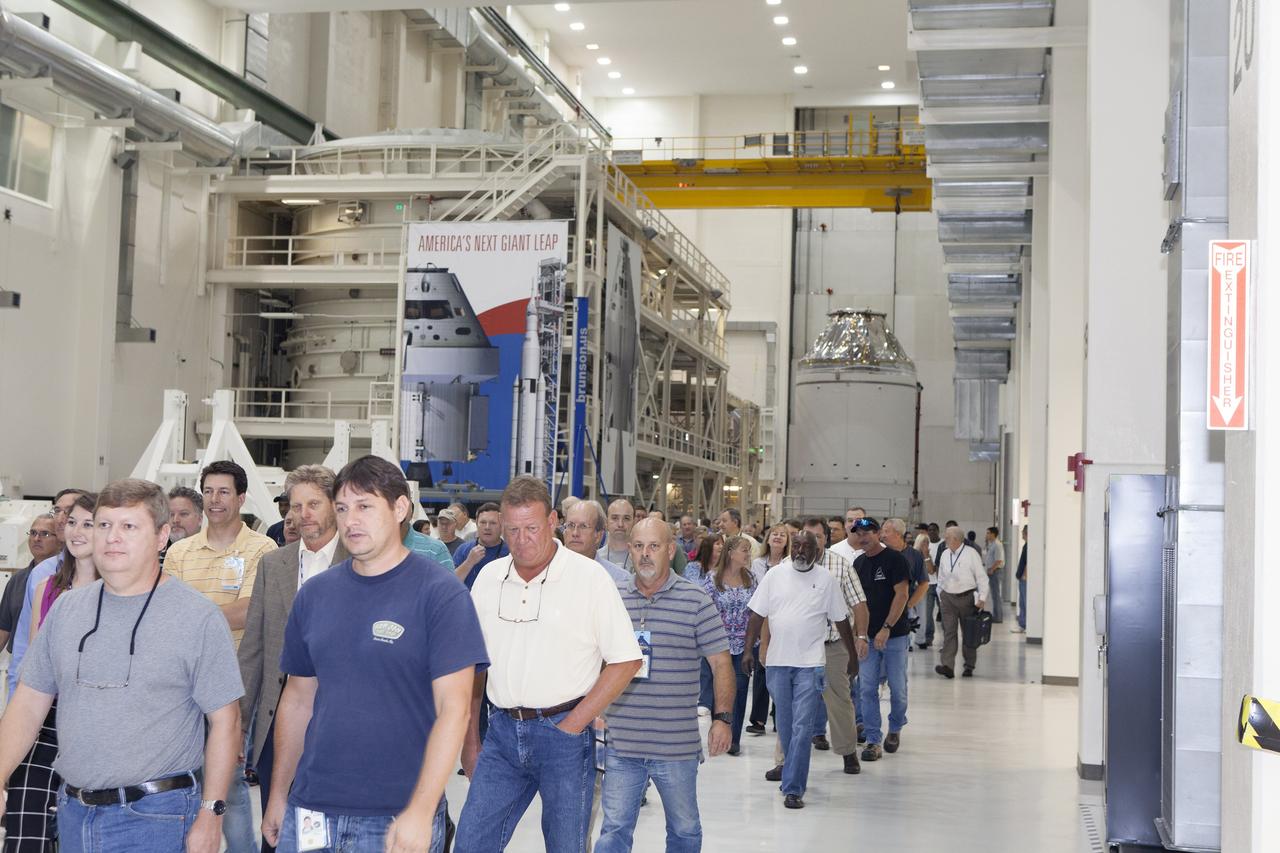
CAPE CANAVERAL, Fla. – Inside the Neil Armstrong Operations and Checkout Building high bay at NASA's Kennedy Space Center in Florida, NASA and Lockheed Martin workers leave the high bay after a ceremony to turn over the Orion spacecraft for Exploration Flight Test-1 to Lockheed Martin Ground Operations from Orion Assembly, Integration and Production. In the background is the Orion crew module stacked atop its service module. The spacecraft will be transported to the Payload Hazardous Servicing Facility where it will be fueled ahead of its December flight test. Orion is the exploration spacecraft designed to carry astronauts to destinations not yet explored by humans, including an asteroid and Mars. It will have emergency abort capability, sustain the crew during space travel and provide safe re-entry from deep space return velocities. The first unpiloted test flight of the Orion is scheduled to launch atop a United Launch Alliance Delta IV Heavy rocket from Cape Canaveral Air Force Station in Florida in December to an altitude of 3,600 miles above the Earth's surface. The two-orbit, four-hour flight test will help engineers evaluate the systems critical to crew safety including the heat shield, parachute system and launch abort system. For more information, visit http://www.nasa.gov/orion. Photo credit: NASA/Daniel Casper
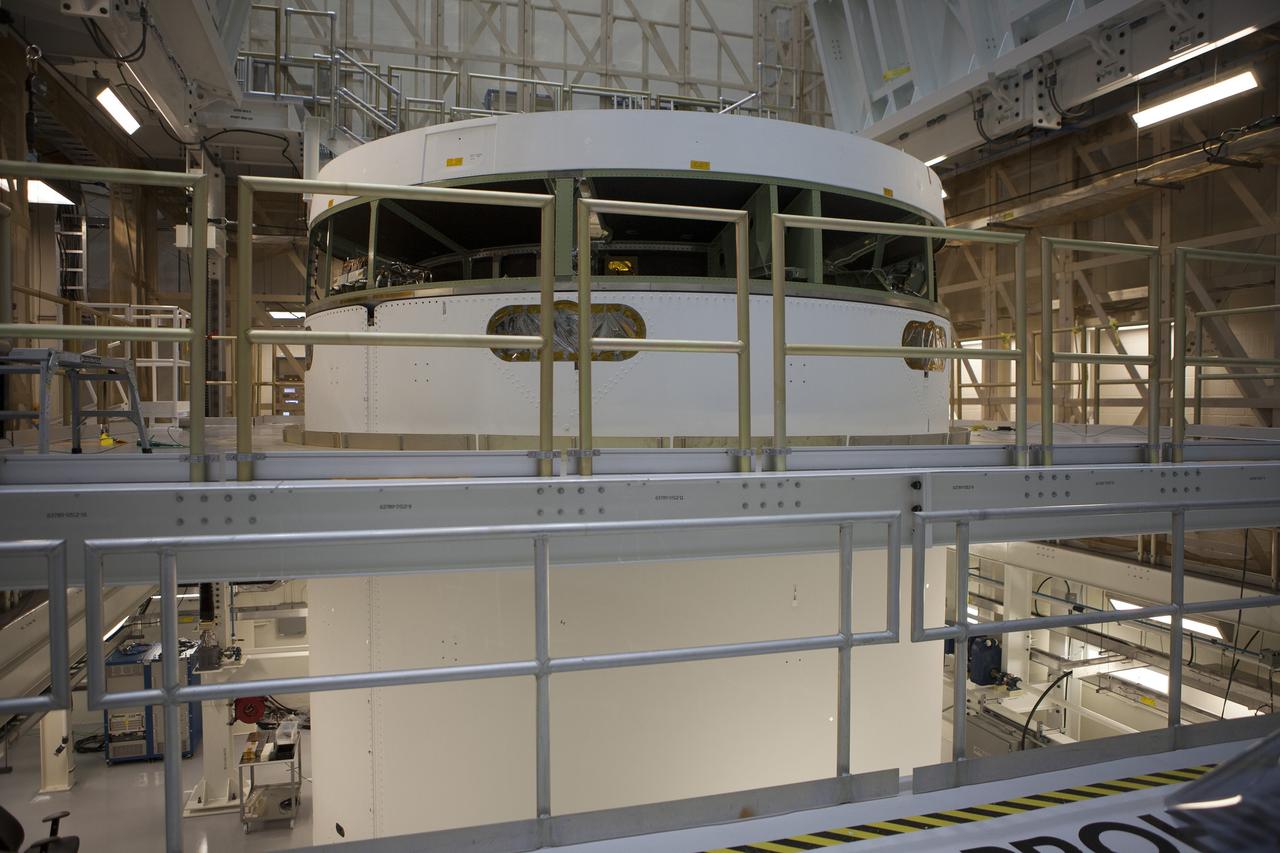
CAPE CANAVERAL, Fla. -- Inside the Operations and Checkout Building high bay at NASA's Kennedy Space Center in Florida, the Orion service module has been secured in the Final Assembly and System Testing, or FAST, cell. The Orion crew module will be stacked on the service module in the FAST cell and then both modules will be put through their final system tests for Exploration Flight Test-1, or EFT-1, before rolling out of the facility for integration with the United Launch Alliance Delta IV Heavy rocket. Orion is the exploration spacecraft designed to carry astronauts to destinations not yet explored by humans, including an asteroid and Mars. It will have emergency abort capability, sustain the crew during space travel and provide safe re-entry from deep space return velocities. The first unpiloted test flight of Orion, EFT-1, is scheduled to launch later this year atop a Delta IV rocket from Cape Canaveral Air Force Station in Florida to an altitude of 3,600 miles above the Earth's surface. The two-orbit, four-hour flight test will help engineers evaluate the systems critical to crew safety including the heat shield, parachute system and launch abort system. For more information, visit http://www.nasa.gov/orion. Photo credit: NASA/Glenn Benson
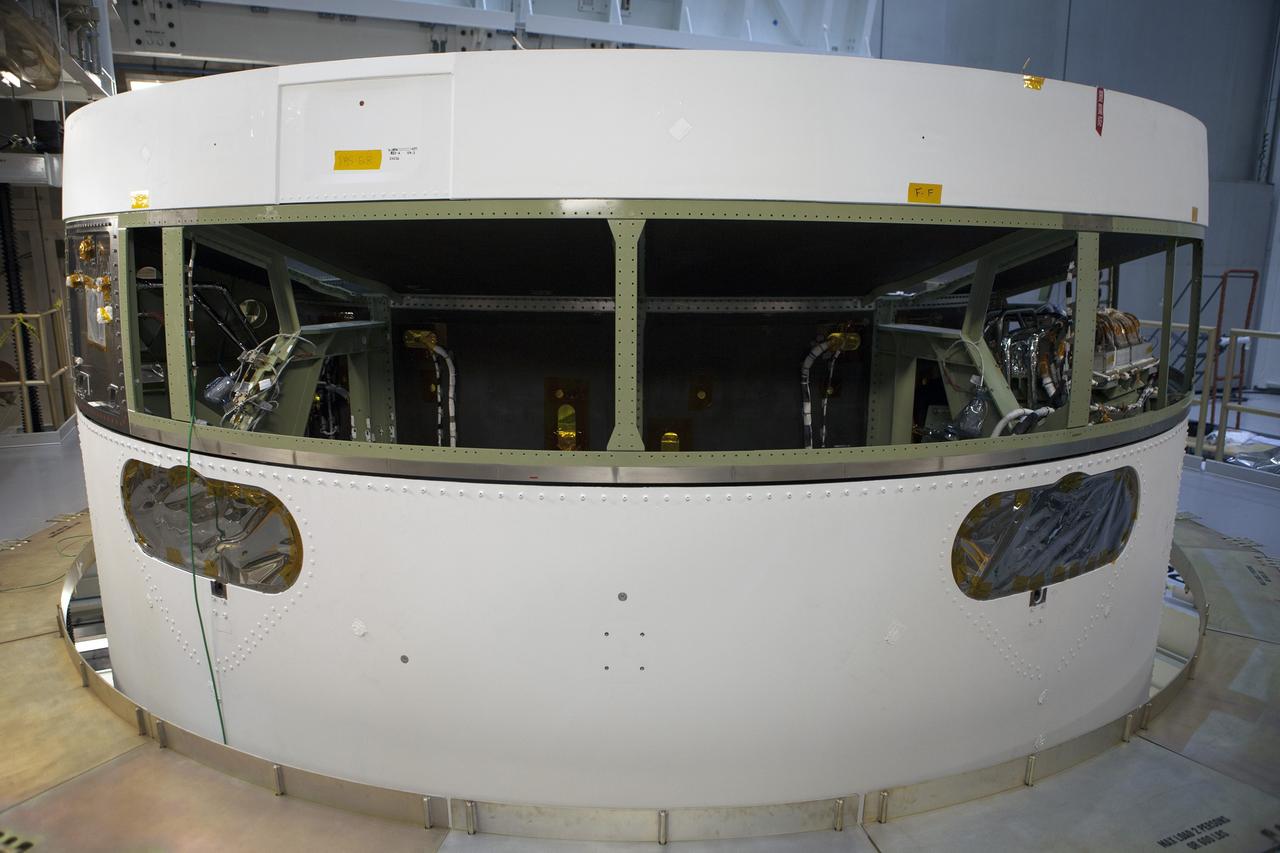
CAPE CANAVERAL, Fla. -- Inside the Operations and Checkout Building high bay at NASA's Kennedy Space Center in Florida, the Orion service module has been secured in the Final Assembly and System Testing, or FAST, cell. The Orion crew module will be stacked on the service module in the FAST cell and then both modules will be put through their final system tests for Exploration Flight Test-1, or EFT-1, before rolling out of the facility for integration with the United Launch Alliance Delta IV Heavy rocket. Orion is the exploration spacecraft designed to carry astronauts to destinations not yet explored by humans, including an asteroid and Mars. It will have emergency abort capability, sustain the crew during space travel and provide safe re-entry from deep space return velocities. The first unpiloted test flight of Orion, EFT-1, is scheduled to launch later this year atop a Delta IV rocket from Cape Canaveral Air Force Station in Florida to an altitude of 3,600 miles above the Earth's surface. The two-orbit, four-hour flight test will help engineers evaluate the systems critical to crew safety including the heat shield, parachute system and launch abort system. For more information, visit http://www.nasa.gov/orion. Photo credit: NASA/Glenn Benson
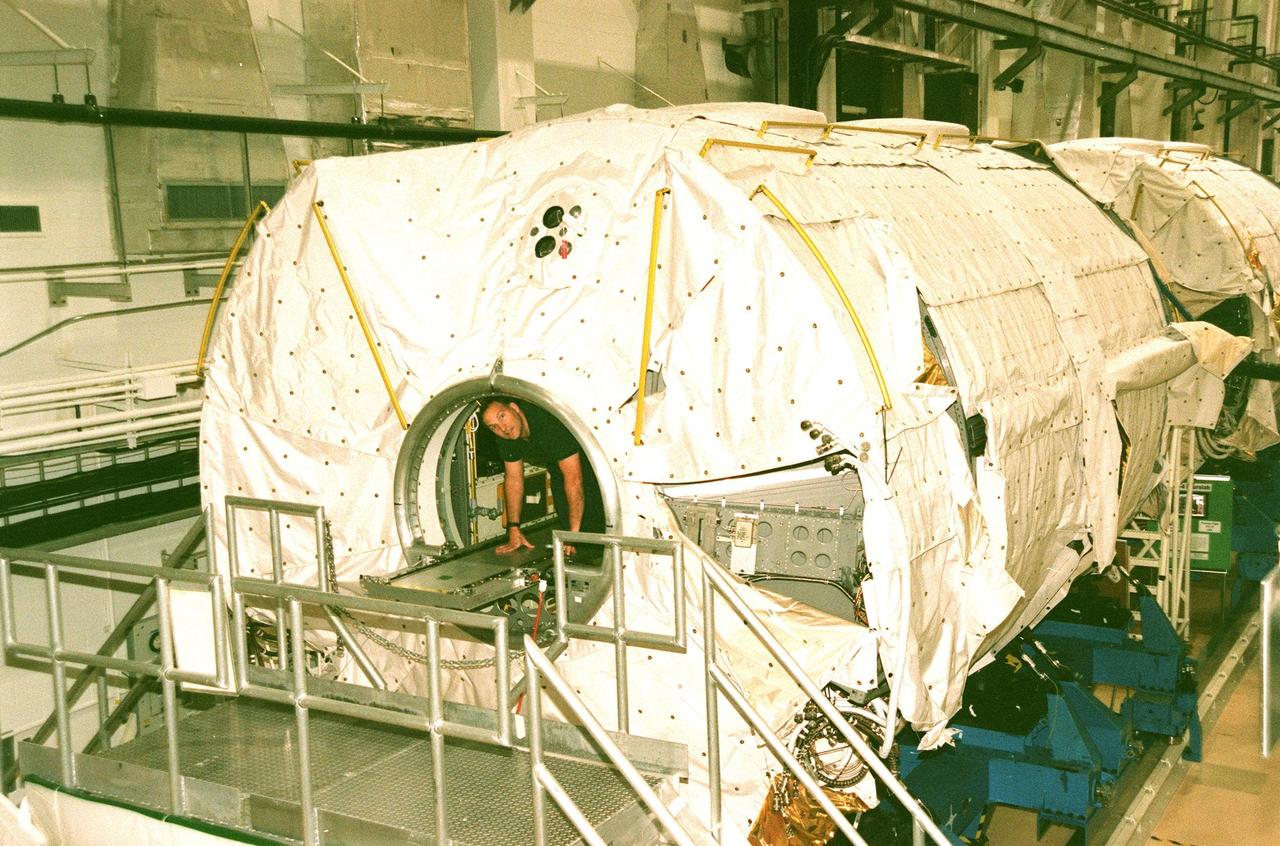
Jim Dumoulin, NASA Payload Electrical Systems engineer, crawls out of the Spacelab module for the last time after stowing some equipment for its final trip to the National Air and Space Museum in Washington, DC. He has worked on the Spacelab program since its first launch on STS-9 in November 1983 as part of the NASA Civil Service Level IV experiment integration team. Spacelab was designed by the European Space Agency (ESA) for the Space Shuttle program. Its final flight was the STS-90 Neurolab mission in April 1998. The Spacelab concept of modular experiment racks in a pressurized shirt-sleeve environment made it highly user-friendly and accessible. Numerous experiments conceived by hundreds of scientists on the ground were conducted by flight crews in orbit. Spacelab modules served as on-orbit homes for everything from squirrel monkeys to plant seeds. They supported astronomical as well as Earth observations, for servicing the Hubble Space Telescope and for research preparatory to the International Space Station. One of the greatest benefits afforded by the Spacelab missions was the opportunity to fly a mission more than once, with the second or third flight building on the experiences and data gathered from its predecessors

A team of engineers participates in simulation training for the Polar Resources Ice Mining Experiment-1 (PRIME-1) on Thursday, Nov. 2, 2023, inside the Neil Armstrong Operations and Checkout Building at NASA’s Kennedy Space Center in Florida. The purpose of the training is to get the integrated PRIME-1 team – engineers with PRIME-1’s MSOLO (Mass Spectrometer Observing Lunar Operations) and Honeybee Robotics’ TRIDENT (The Regolith and Ice Drill for Exploring New Terrain) drill – prepared to operate the instrument on the lunar surface. The team commanded the PRIME-1 hardware, located at Intuitive Machines in Houston, to operate MSOLO and TRIDENT. PRIME-1 is scheduled to launch through NASA’s CLPS (Commercial Lunar Payload Delivery Service) initiative and will be the first in-situ resource utilization demonstration on the Moon, with MSOLO and TRIDENT making up its two primary components. Through Artemis missions, CLPS deliveries will be used to perform science experiments, test technologies, and demonstrate capabilities to help NASA explore the Moon and prepare for human deep space exploration missions.

A team of engineers participates in simulation training for the Polar Resources Ice Mining Experiment-1 (PRIME-1) on Thursday, Nov. 2, 2023, inside the Neil Armstrong Operations and Checkout Building at NASA’s Kennedy Space Center in Florida. The purpose of the training is to get the integrated PRIME-1 team – engineers with PRIME-1’s MSOLO (Mass Spectrometer Observing Lunar Operations) and Honeybee Robotics’ TRIDENT (The Regolith and Ice Drill for Exploring New Terrain) drill – prepared to operate the instrument on the lunar surface. The team commanded the PRIME-1 hardware, located at Intuitive Machines in Houston, to operate MSOLO and TRIDENT. PRIME-1 is scheduled to launch through NASA’s CLPS (Commercial Lunar Payload Delivery Service) initiative and will be the first in-situ resource utilization demonstration on the Moon, with MSOLO and TRIDENT making up its two primary components. Through Artemis missions, CLPS deliveries will be used to perform science experiments, test technologies, and demonstrate capabilities to help NASA explore the Moon and prepare for human deep space exploration missions.
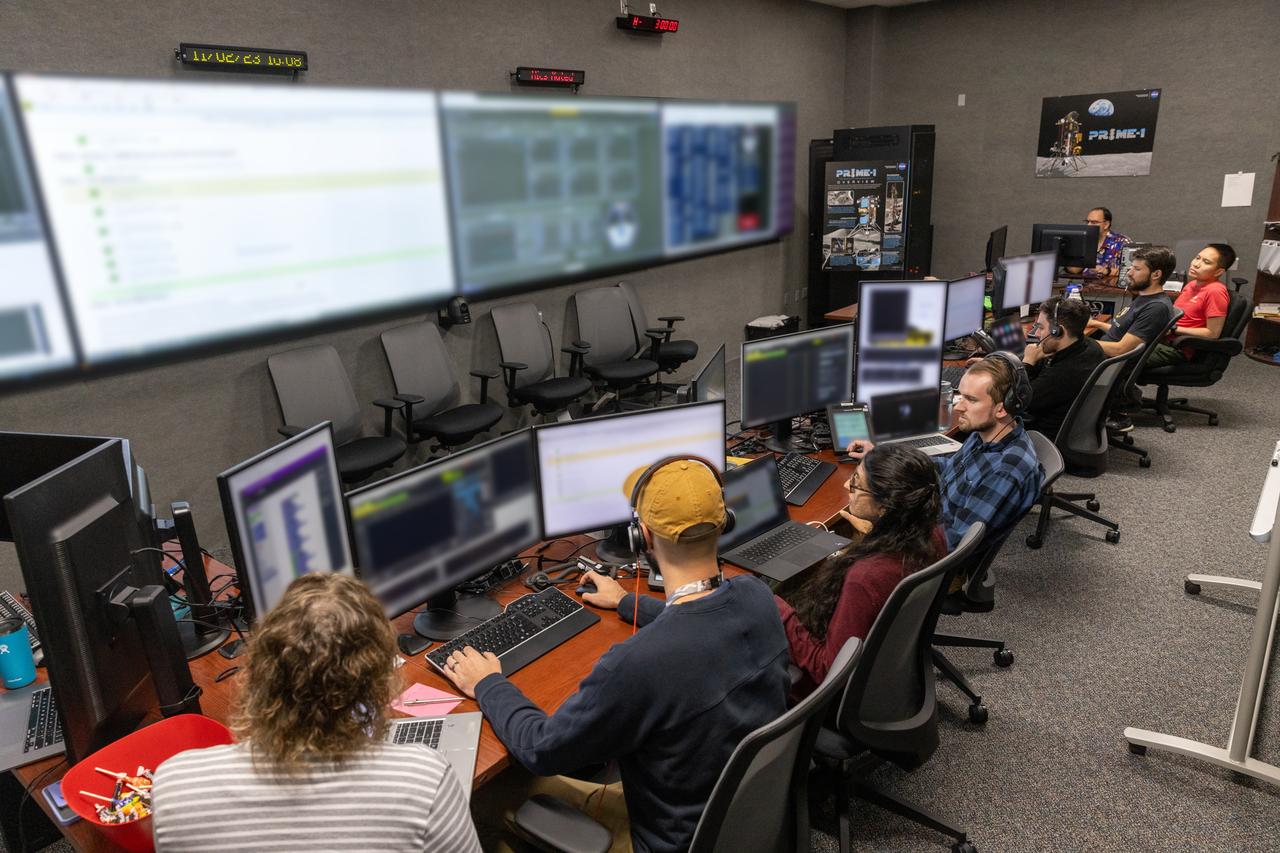
A team of engineers participates in simulation training for the Polar Resources Ice Mining Experiment-1 (PRIME-1) on Thursday, Nov. 2, 2023, inside the Neil Armstrong Operations and Checkout Building at NASA’s Kennedy Space Center in Florida. The purpose of the training is to get the integrated PRIME-1 team – engineers with PRIME-1’s MSOLO (Mass Spectrometer Observing Lunar Operations) and Honeybee Robotics’ TRIDENT (The Regolith and Ice Drill for Exploring New Terrain) drill – prepared to operate the instrument on the lunar surface. The team commanded the PRIME-1 hardware, located at Intuitive Machines in Houston, to operate MSOLO and TRIDENT. PRIME-1 is scheduled to launch through NASA’s CLPS (Commercial Lunar Payload Delivery Service) initiative and will be the first in-situ resource utilization demonstration on the Moon, with MSOLO and TRIDENT making up its two primary components. Through Artemis missions, CLPS deliveries will be used to perform science experiments, test technologies, and demonstrate capabilities to help NASA explore the Moon and prepare for human deep space exploration missions.
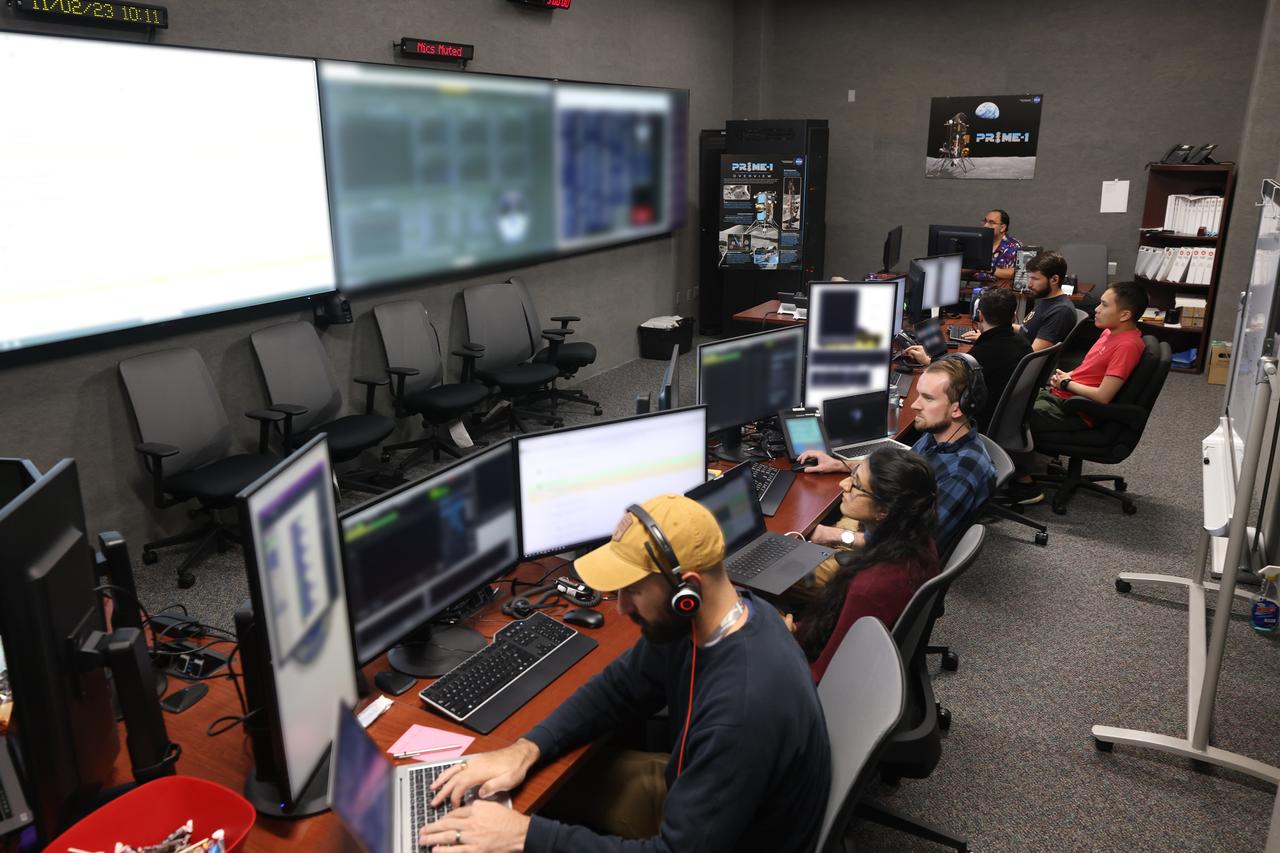
A team of engineers participates in simulation training for the Polar Resources Ice Mining Experiment-1 (PRIME-1) on Thursday, Nov. 2, 2023, inside the Neil Armstrong Operations and Checkout Building at NASA’s Kennedy Space Center in Florida. The purpose of the training is to get the integrated PRIME-1 team – engineers with PRIME-1’s MSOLO (Mass Spectrometer Observing Lunar Operations) and Honeybee Robotics’ TRIDENT (The Regolith and Ice Drill for Exploring New Terrain) drill – prepared to operate the instrument on the lunar surface. The team commanded the PRIME-1 hardware, located at Intuitive Machines in Houston, to operate MSOLO and TRIDENT. PRIME-1 is scheduled to launch through NASA’s CLPS (Commercial Lunar Payload Delivery Service) initiative and will be the first in-situ resource utilization demonstration on the Moon, with MSOLO and TRIDENT making up its two primary components. Through Artemis missions, CLPS deliveries will be used to perform science experiments, test technologies, and demonstrate capabilities to help NASA explore the Moon and prepare for human deep space exploration missions.
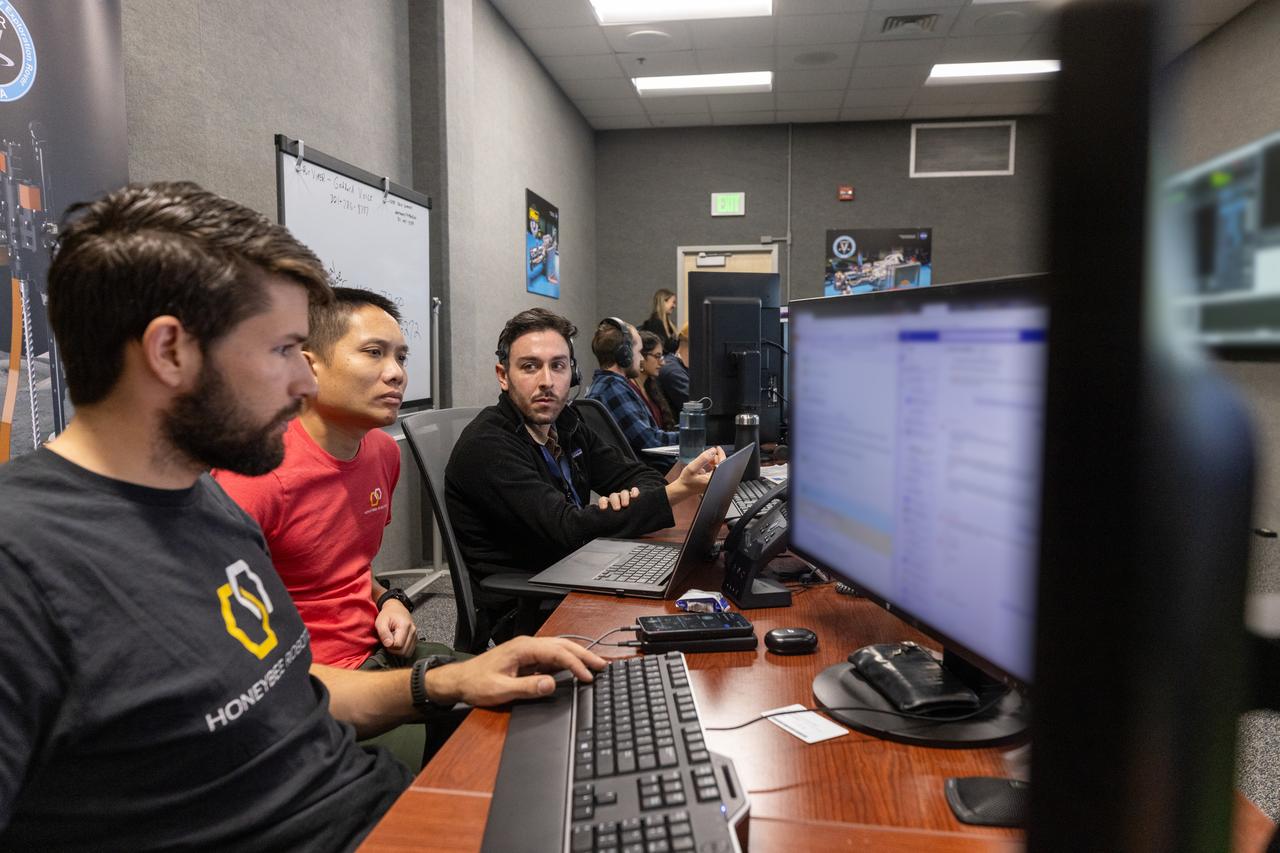
A team from Honeybee Robotics in Altadena, California participates in simulation training for the Polar Resources Ice Mining Experiment-1 (PRIME-1) on Thursday, Nov. 2, 2023, inside the Neil Armstrong Operations and Checkout Building at NASA’s Kennedy Space Center in Florida. The purpose of the training is to get the integrated PRIME-1 team – engineers with PRIME-1’s MSOLO (Mass Spectrometer Observing Lunar Operations) and Honeybee Robotics’ TRIDENT (The Regolith and Ice Drill for Exploring New Terrain) drill – prepared to operate the instrument on the lunar surface. The team commanded the PRIME-1 hardware, located at Intuitive Machines in Houston, to operate MSOLO and TRIDENT. PRIME-1 is scheduled to launch through NASA’s CLPS (Commercial Lunar Payload Delivery Service) initiative and will be the first in-situ resource utilization demonstration on the Moon, with MSOLO and TRIDENT making up its two primary components. Through Artemis missions, CLPS deliveries will be used to perform science experiments, test technologies, and demonstrate capabilities to help NASA explore the Moon and prepare for human deep space exploration missions.
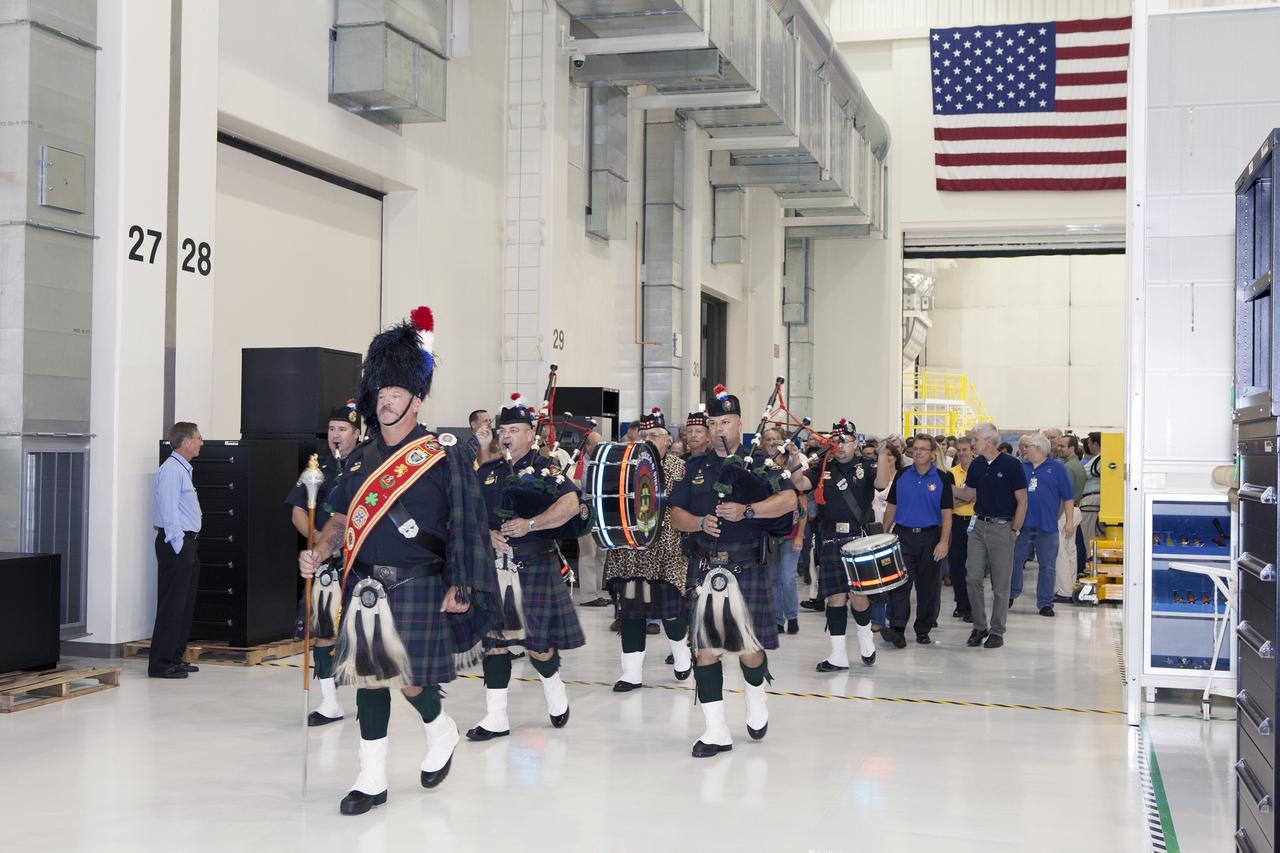
CAPE CANAVERAL, Fla. – Inside the Neil Armstrong Operations and Checkout Building high bay at NASA's Kennedy Space Center in Florida, members of the Brevard Police and Fire Pipes and Drums lead NASA and Lockheed Martin workers toward the Orion crew module, stacked atop its service module. A ceremony will begin to officially turn over the Orion spacecraft for Exploration Flight Test-1 to Lockheed Martin Ground Operations from Orion Assembly, Integration and Production. Orion is the exploration spacecraft designed to carry astronauts to destinations not yet explored by humans, including an asteroid and Mars. It will have emergency abort capability, sustain the crew during space travel and provide safe re-entry from deep space return velocities. The first unpiloted test flight of the Orion is scheduled to launch atop a United Launch Alliance Delta IV Heavy rocket from Cape Canaveral Air Force Station in Florida in December to an altitude of 3,600 miles above the Earth's surface. The two-orbit, four-hour flight test will help engineers evaluate the systems critical to crew safety including the heat shield, parachute system and launch abort system. For more information, visit http://www.nasa.gov/orion. Photo credit: NASA/Daniel Casper
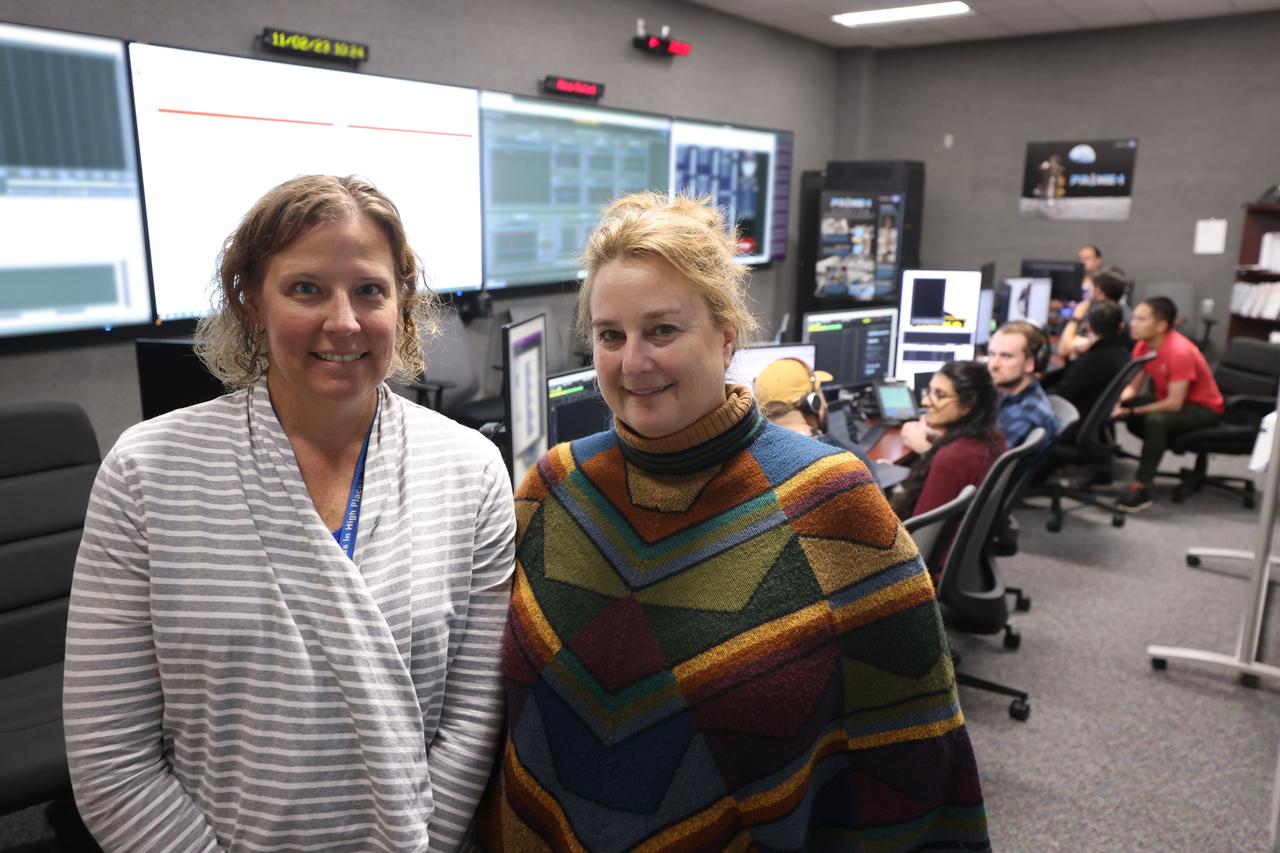
Janine Captain, left, and Jackie Quinn participate in simulation training for the Polar Resources Ice Mining Experiment-1 (PRIME-1) on Thursday, Nov. 2, 2023, inside the Neil Armstrong Operations and Checkout Building at NASA’s Kennedy Space Center in Florida. The purpose of the training is to get the integrated PRIME-1 team – engineers with PRIME-1’s MSOLO (Mass Spectrometer Observing Lunar Operations) and Honeybee Robotics’ TRIDENT (Regolith and Ice Drill for Exploring New Terrain) drill – prepared to operate the instrument on the lunar surface. The team commanded the PRIME-1 hardware, located at Intuitive Machines in Houston, to operate MSOLO and TRIDENT. PRIME-1 is scheduled to launch through NASA’s CLPS (Commercial Lunar Payload Delivery Service) initiative and will be the first in-situ resource utilization demonstration on the Moon, with MSOLO and TRIDENT making up its two primary components. Through Artemis missions, CLPS deliveries will be used to perform science experiments, test technologies, and demonstrate capabilities to help NASA explore the Moon and prepare for human deep space exploration missions.
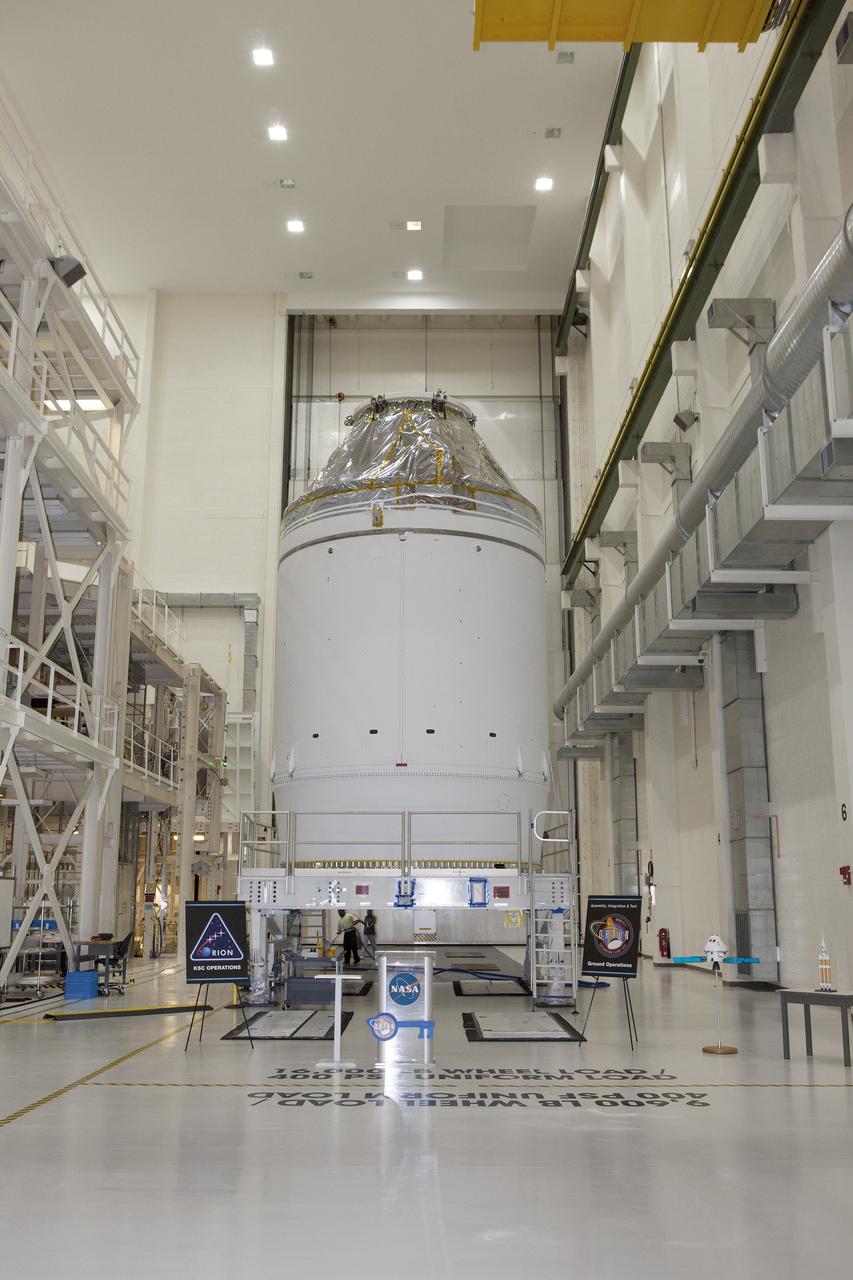
CAPE CANAVERAL, Fla. – The Orion crew module, stacked atop its service module, is positioned in the Neil Armstrong Operations and Checkout Building high bay at NASA's Kennedy Space Center in Florida. A ceremony will begin to officially turn over the Orion spacecraft for Exploration Flight Test-1 to Lockheed Martin Ground Operations from Orion Assembly, Integration and Production. Orion is the exploration spacecraft designed to carry astronauts to destinations not yet explored by humans, including an asteroid and Mars. It will have emergency abort capability, sustain the crew during space travel and provide safe re-entry from deep space return velocities. The first unpiloted test flight of the Orion is scheduled to launch atop a United Launch Alliance Delta IV Heavy rocket from Cape Canaveral Air Force Station in Florida in December to an altitude of 3,600 miles above the Earth's surface. The two-orbit, four-hour flight test will help engineers evaluate the systems critical to crew safety including the heat shield, parachute system and launch abort system. For more information, visit http://www.nasa.gov/orion. Photo credit: NASA/Daniel Casper
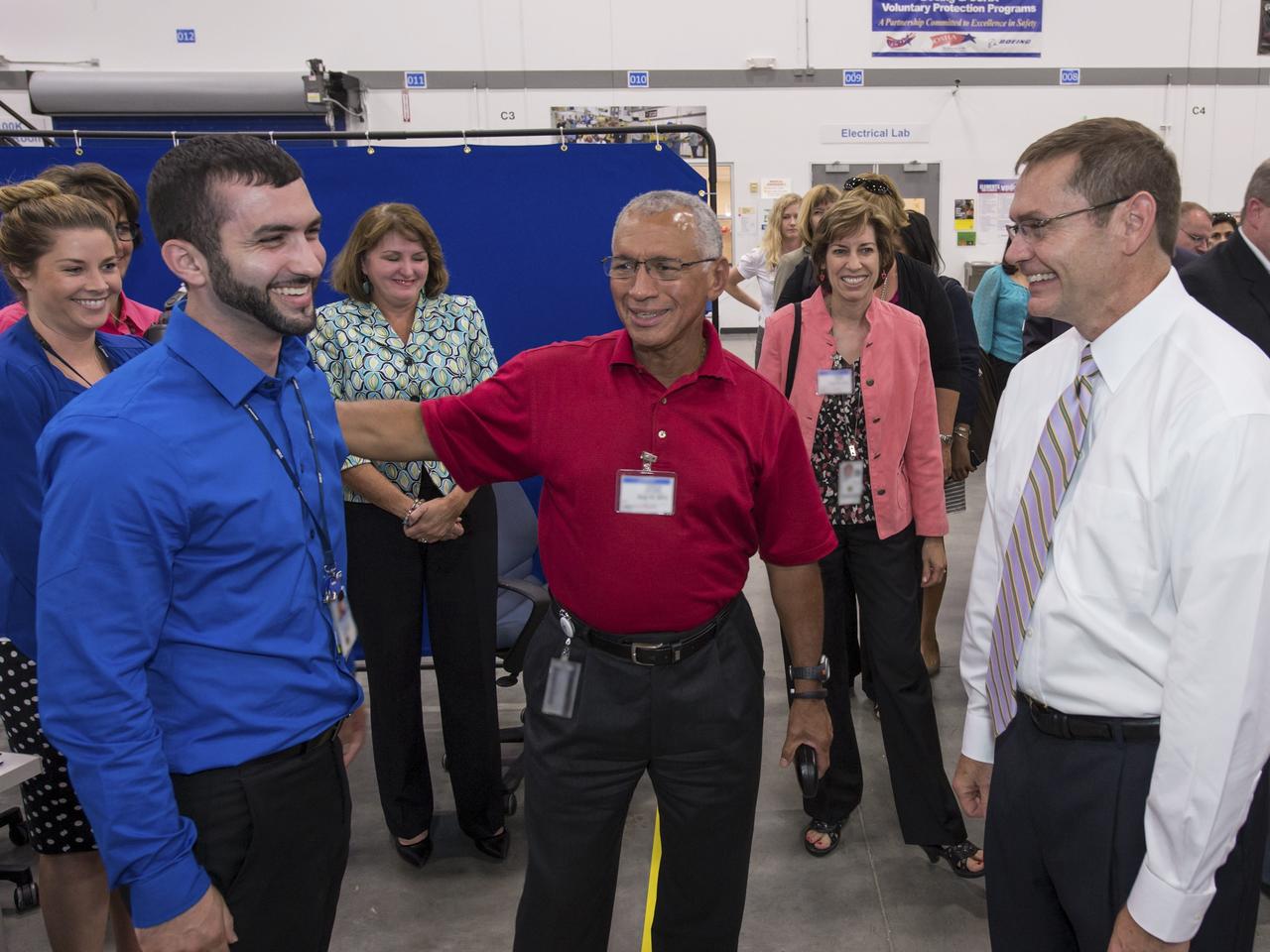
HOUSTON -- JSC-2013-E076038 -- NASA Administrator Charlie Bolden, center, talks to members of The Boeing Company's CST-100 team at the company's Houston Product Support Center near Johnson Space Center. At left is Brandon Setayesh, a mechanical engineer who helped build a fully outfitted test version of the CST-100. At right is John Elbon, vice president of Boeing's Space Exploration. Also joining Bolden during his tour of the CST-100 mock-up is Johnson Center Director Ellen Ochoa, behind Bolden at right, and other Johnson management. Boeing's CST-100 is designed to transport a mix of crew and cargo to low-Earth-orbit destinations. Boeing is one of three aerospace industry partners working with NASA's Commercial Crew Program, or CCP, during the Commercial Crew Integrated Capability, or CCiCap, initiative, which is intended to make commercial human spaceflight services available for government and commercial customers. To learn more about CCP, visit www.nasa.gov/commercialcrew. Photo credit: NASA/James Blair
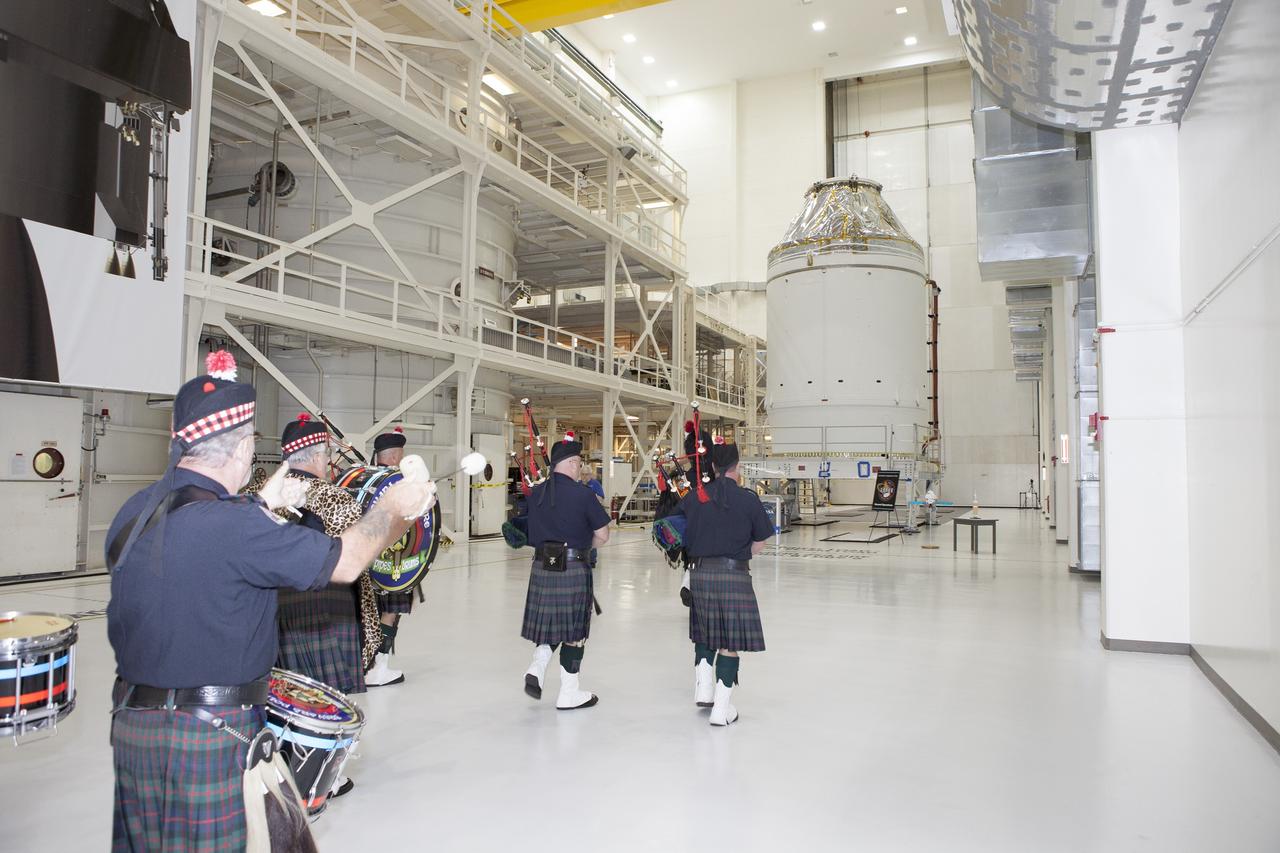
CAPE CANAVERAL, Fla. – Inside the Neil Armstrong Operations and Checkout Building high bay at NASA's Kennedy Space Center in Florida, members of the Brevard Police and Fire Pipes and Drums lead NASA and Lockheed Martin workers toward the Orion crew module, stacked atop its service module. A ceremony will begin to officially turn over the Orion spacecraft for Exploration Flight Test-1 to Lockheed Martin Ground Operations from Orion Assembly, Integration and Production. Orion is the exploration spacecraft designed to carry astronauts to destinations not yet explored by humans, including an asteroid and Mars. It will have emergency abort capability, sustain the crew during space travel and provide safe re-entry from deep space return velocities. The first unpiloted test flight of the Orion is scheduled to launch atop a United Launch Alliance Delta IV Heavy rocket from Cape Canaveral Air Force Station in Florida in December to an altitude of 3,600 miles above the Earth's surface. The two-orbit, four-hour flight test will help engineers evaluate the systems critical to crew safety including the heat shield, parachute system and launch abort system. For more information, visit http://www.nasa.gov/orion. Photo credit: NASA/Daniel Casper
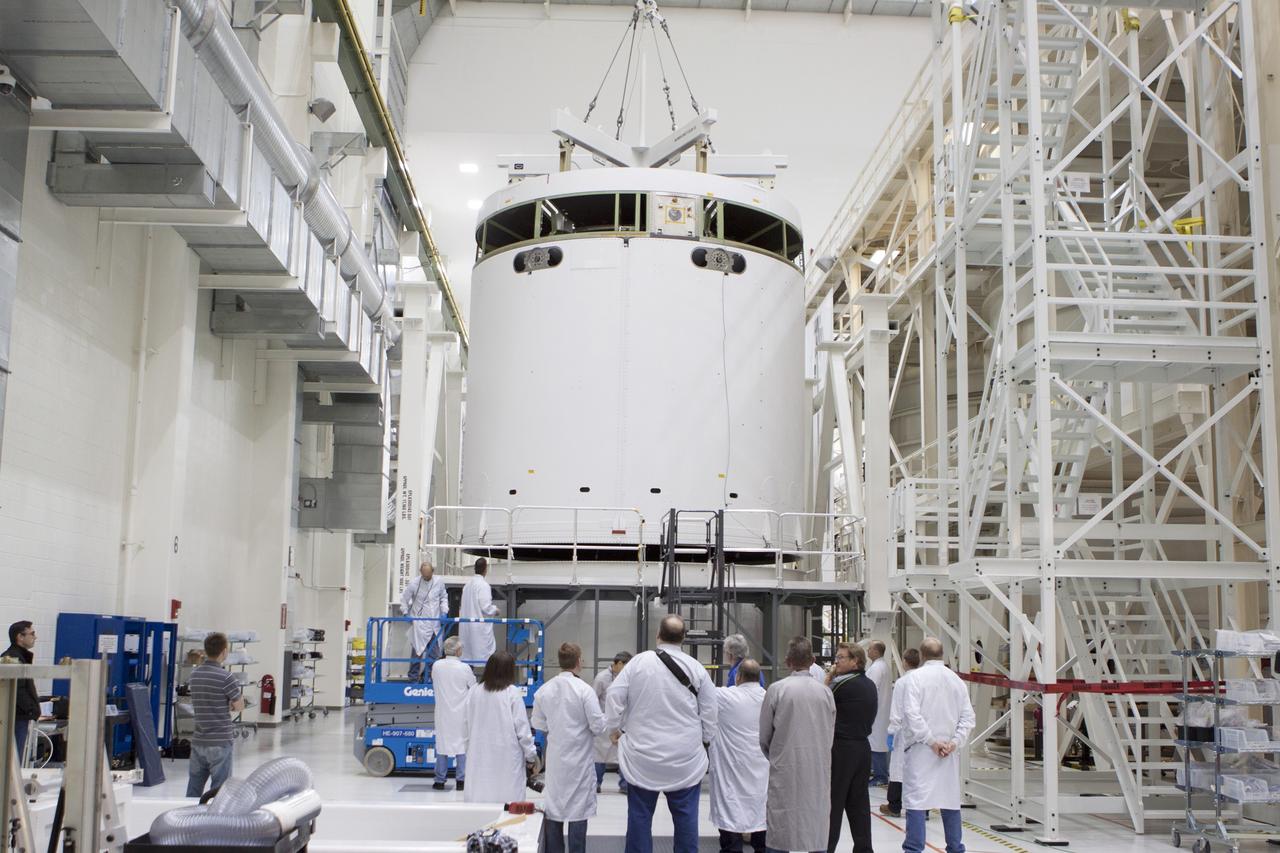
CAPE CANAVERAL, Fla. -- Inside the Operations and Checkout Building high bay at NASA's Kennedy Space Center in Florida, NASA and Lockheed Martin technicians and engineers monitor the progress as a crane is used to lift the Orion service module from a test stand and move it to the Final Assembly and System Testing, or FAST, cell further down the aisle. The Orion crew module will be stacked on the service module in the FAST cell and then both modules will be put through their final system tests for Exploration Flight Test-1, or EFT-1, before rolling out of the facility for integration with the United Launch Alliance Delta IV Heavy rocket. Orion is the exploration spacecraft designed to carry astronauts to destinations not yet explored by humans, including an asteroid and Mars. It will have emergency abort capability, sustain the crew during space travel and provide safe re-entry from deep space return velocities. The first unpiloted test flight of Orion, EFT-1, is scheduled to launch later this year atop a Delta IV rocket from Cape Canaveral Air Force Station in Florida to an altitude of 3,600 miles above the Earth's surface. The two-orbit, four-hour flight test will help engineers evaluate the systems critical to crew safety including the heat shield, parachute system and launch abort system. For more information, visit http://www.nasa.gov/orion. Photo credit: NASA/Glenn Benson
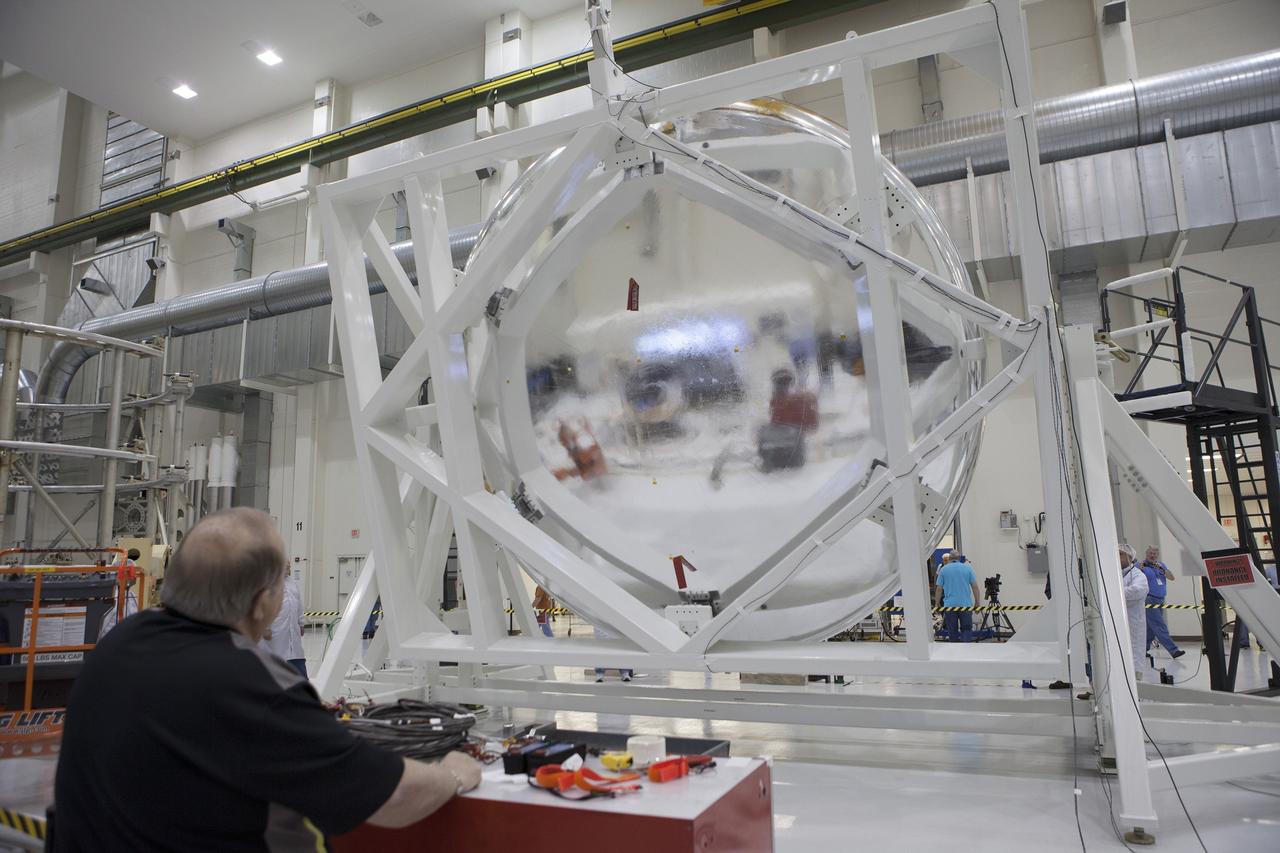
CAPE CANAVERAL, Fla. -- Inside the Operations and Checkout Building high bay at NASA's Kennedy Space Center in Florida, NASA and Lockheed Martin technicians and engineers conduct a center of gravity, or CG, test on the Orion crew module. The CG tool will measure the exact location of the vehicle's center of gravity. This test is important as it affects the handling and control characteristics of the vehicle. The Orion crew module will be stacked on the service module in the Final Assembly and System Testing, or FAST, cell and then both modules will be put through their final system tests for Exploration Flight Test-1, or EFT-1, before rolling out of the facility for integration with the United Launch Alliance Delta IV Heavy rocket. Orion is the exploration spacecraft designed to carry astronauts to destinations not yet explored by humans, including an asteroid and Mars. It will have emergency abort capability, sustain the crew during space travel and provide safe re-entry from deep space return velocities. The first unpiloted test flight of Orion, EFT-1, is scheduled to launch later this year atop a Delta IV rocket from Cape Canaveral Air Force Station in Florida to an altitude of 3,600 miles above the Earth's surface. The two-orbit, four-hour flight test will help engineers evaluate the systems critical to crew safety including the heat shield, parachute system and launch abort system. For more information, visit http://www.nasa.gov/orion. Photo credit: NASA/Glenn Benson
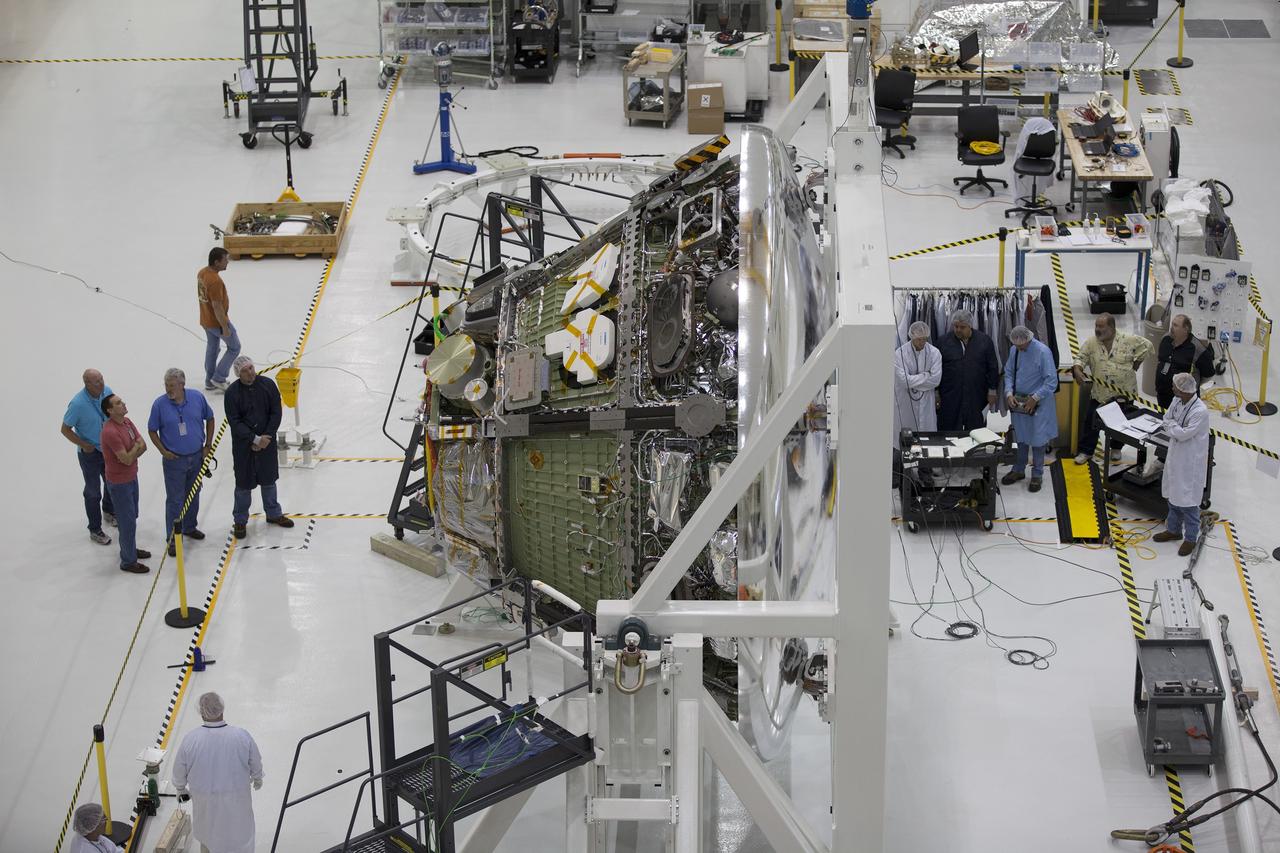
CAPE CANAVERAL, Fla. -- Inside the Operations and Checkout Building high bay at NASA's Kennedy Space Center in Florida, NASA and Lockheed Martin technicians and engineers conduct a center of gravity, or CG, test on the Orion crew module. The CG tool will measure the exact location of the vehicle's center of gravity. This test is important as it affects the handling and control characteristics of the vehicle. The Orion crew module will be stacked on the service module in the Final Assembly and System Testing, or FAST, cell and then both modules will be put through their final system tests for Exploration Flight Test-1, or EFT-1, before rolling out of the facility for integration with the United Launch Alliance Delta IV Heavy rocket. Orion is the exploration spacecraft designed to carry astronauts to destinations not yet explored by humans, including an asteroid and Mars. It will have emergency abort capability, sustain the crew during space travel and provide safe re-entry from deep space return velocities. The first unpiloted test flight of Orion, EFT-1, is scheduled to launch later this year atop a Delta IV rocket from Cape Canaveral Air Force Station in Florida to an altitude of 3,600 miles above the Earth's surface. The two-orbit, four-hour flight test will help engineers evaluate the systems critical to crew safety including the heat shield, parachute system and launch abort system. For more information, visit http://www.nasa.gov/orion. Photo credit: NASA/Glenn Benson
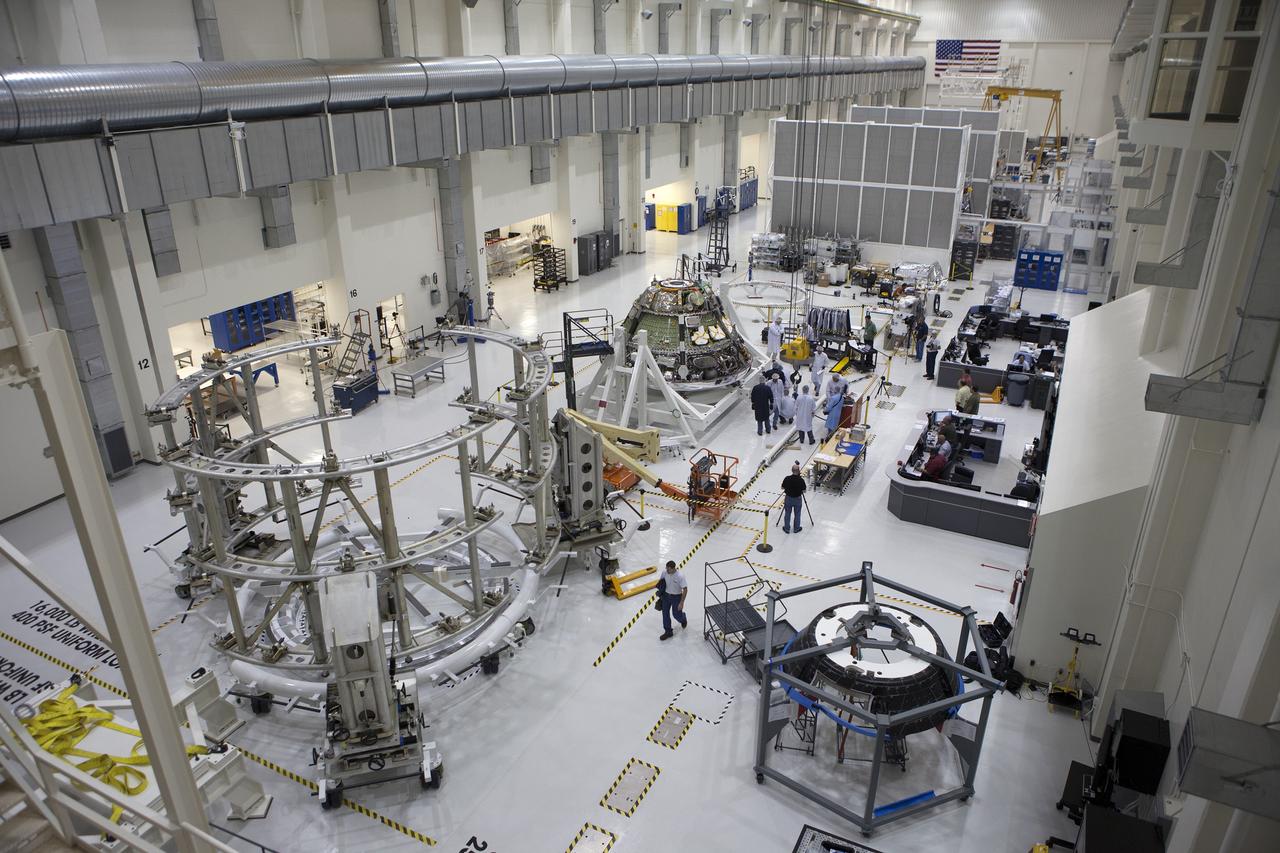
CAPE CANAVERAL, Fla. – Inside the Operations and Checkout Building high bay at NASA's Kennedy Space Center in Florida, NASA and Lockheed Martin technicians and engineers prepare to conduct a center of gravity, or CG, test on the Orion crew module. The CG tool will measure the exact location of the vehicle's center of gravity. This test is important as it affects the handling and control characteristics of the vehicle. The Orion crew module will be stacked on the service module in the Final Assembly and System Testing, or FAST, cell and then both modules will be put through their final system tests for Exploration Flight Test-1, or EFT-1, before rolling out of the facility for integration with the United Launch Alliance Delta IV Heavy rocket. Orion is the exploration spacecraft designed to carry astronauts to destinations not yet explored by humans, including an asteroid and Mars. It will have emergency abort capability, sustain the crew during space travel and provide safe re-entry from deep space return velocities. The first unpiloted test flight of Orion, EFT-1, is scheduled to launch later this year atop a Delta IV rocket from Cape Canaveral Air Force Station in Florida to an altitude of 3,600 miles above the Earth's surface. The two-orbit, four-hour flight test will help engineers evaluate the systems critical to crew safety including the heat shield, parachute system and launch abort system. For more information, visit http://www.nasa.gov/orion. Photo credit: NASA/Kim Shiflett
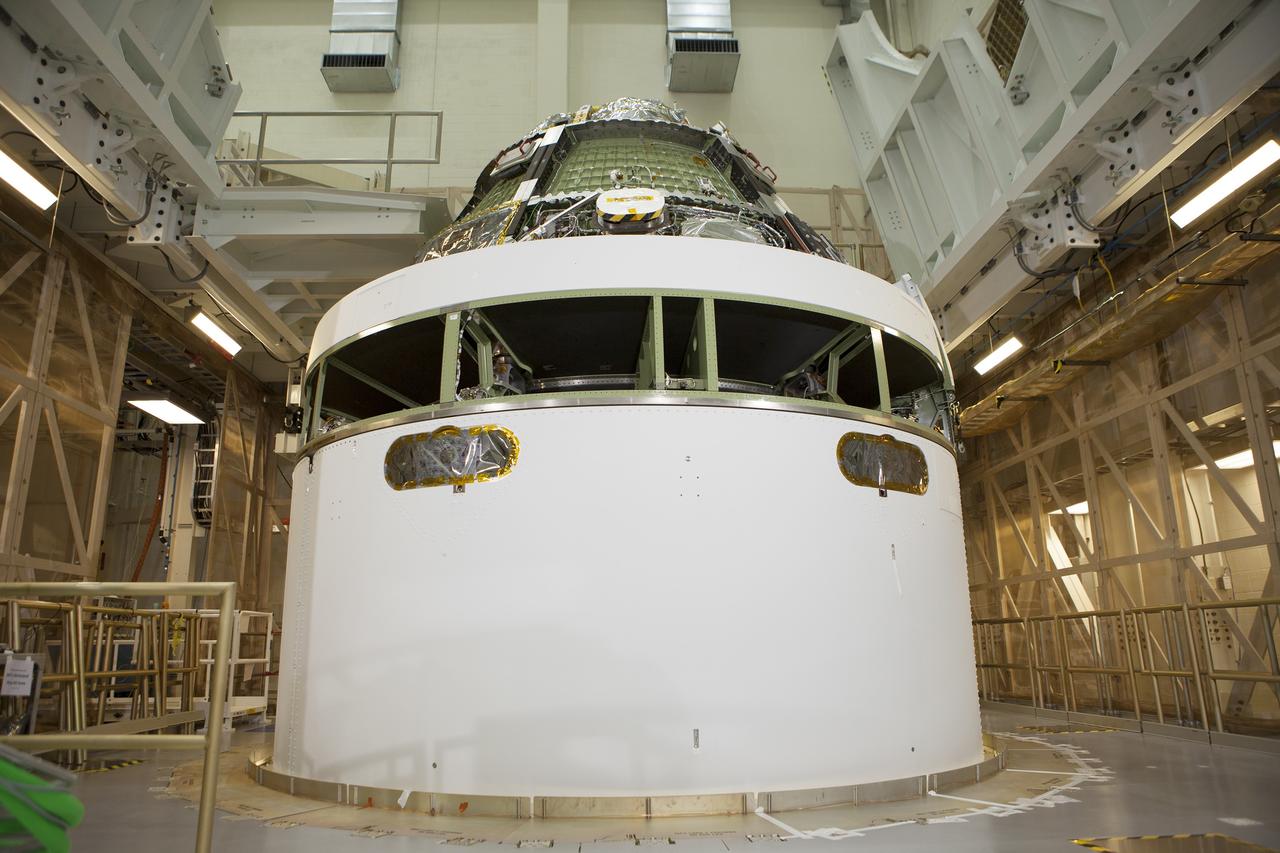
CAPE CANAVERAL, Fla. – Inside the Operations and Checkout Building high bay at NASA's Kennedy Space Center in Florida, the Orion crew module has been stacked on the service module in the Final Assembly and System Testing cell in preparation for final system tests for Exploration Flight Test-1, or EFT-1, prior to rolling out of the facility for integration with the United Launch Alliance Delta IV Heavy rocket. EFT-1 will provide engineers with data about the heat shield's ability to protect Orion and its future crews from the 4,000-degree heat of reentry and an ocean splashdown following the spacecraft’s 20,000-mph reentry from space. Data gathered during the flight will inform decisions about design improvements on the heat shield and other Orion systems, and authenticate existing computer models and new approaches to space systems design and development. This process is critical to reducing overall risks and costs of future Orion missions. Orion is the exploration spacecraft designed to carry astronauts to destinations not yet explored by humans, including an asteroid and Mars. It will have emergency abort capability, sustain the crew during space travel and provide safe re-entry from deep space return velocities. The first unpiloted test flight of the Orion is scheduled to launch later this year atop a Delta IV rocket from Cape Canaveral Air Force Station in Florida to an altitude of 3,600 miles above the Earth's surface. The two-orbit, four-hour flight test will help engineers evaluate the systems critical to crew safety including the heat shield, parachute system and launch abort system. For more information, visit http://www.nasa.gov/orion. Photo credit: NASA/Kim Shiflett

NASA Astronaut Joe Acaba addresses students and educators on a panel, during a aerospace technical field career day event held at Langley Research Center, Wednesday, April 29, 2026. Photo Credit (NASA/Ryan H. Hill)

High school and college students, and educators spent a day learning about careers in technical fields in aerospace. They engaged in hands-on activities, tours, and listening to keynote presentations and panels, interacting with NASA’s subject matter experts at Langley Research Center, Hampton Va, Wednesday, April 29, 2026. Photo Credit (NASA/Ryan H. Hill)

High school and college students, and educators spent a day learning about careers in technical fields in aerospace. They engaged in hands-on activities, tours, and listening to keynote presentations and panels, interacting with NASA’s subject matter experts at Langley Research Center, Hampton Va, Wednesday, April 29, 2026. Photo Credit (NASA/Ryan H. Hill)

High school and college students, and educators spent a day learning about careers in technical fields in aerospace. They engaged in hands-on activities, tours, and listening to keynote presentations and panels, interacting with NASA’s subject matter experts at Langley Research Center, Hampton Va, Wednesday, April 29, 2026. Photo Credit (NASA/Ryan H. Hill)

High school and college students, and educators spent a day learning about careers in technical fields in aerospace. They engaged in hands-on activities, tours, and listening to keynote presentations and panels, interacting with NASA’s subject matter experts at Langley Research Center, Hampton Va, Wednesday, April 29, 2026. Photo Credit (NASA/Ryan H. Hill)
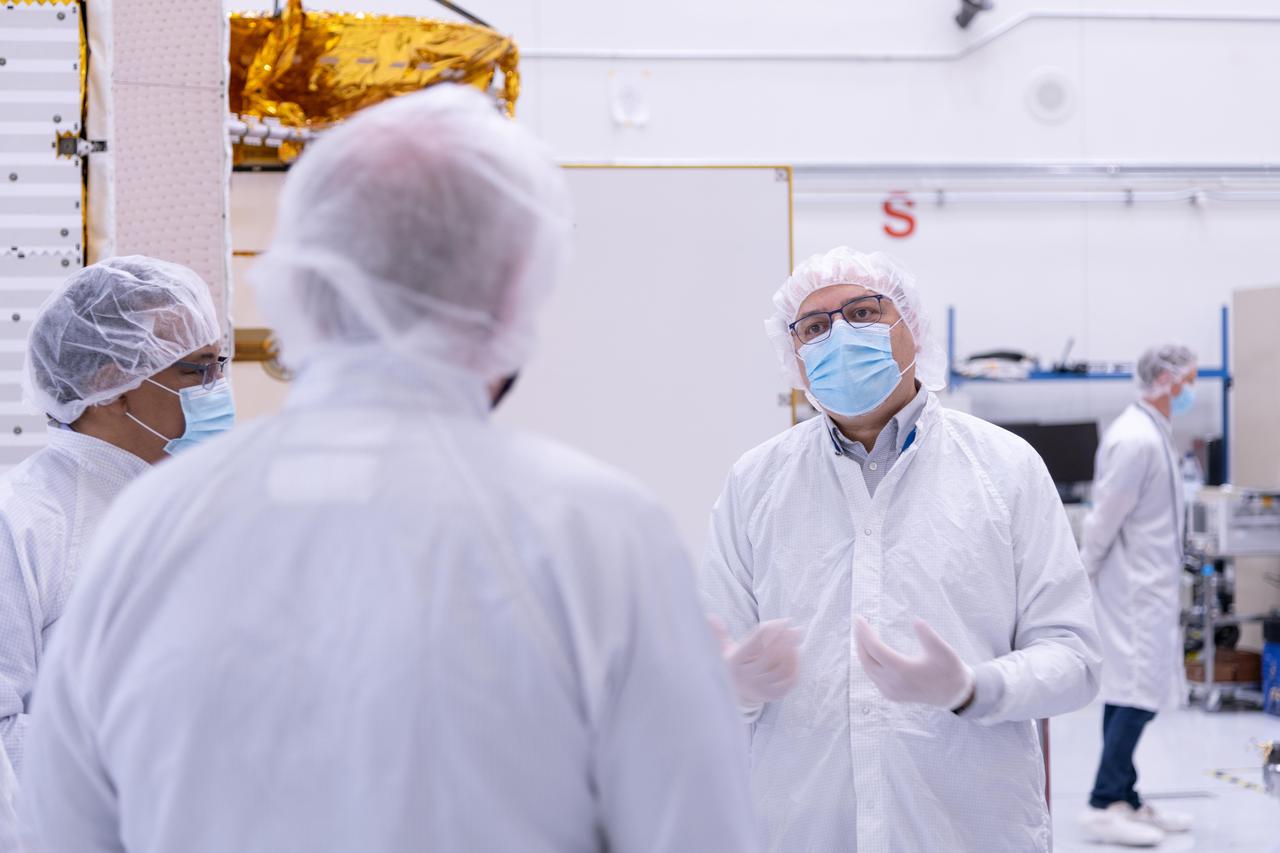
The new international satellite mission called Surface Water and Ocean Topography (SWOT) — slated for launch in late 2022 — will measure the height of Earth's surface water. The data the spacecraft will collect will help researchers understand and track the volume and location of water around the world. The satellite will assist with monitoring changes in floodplains and wetlands, measuring how much fresh water flows into and out of lakes and rivers and back to the ocean, and tracking regional shifts in sea level at scales never seen before. The satellite will also provide information on small-scale ocean currents that will support real-time marine operations affected by tides, currents, storm surge, sediment transport, and water quality issues. The payload is taking shape in a clean room at NASA's Jet Propulsion Laboratory in Southern California before being shipped to France. There, technicians and engineers from the French space agency Centre National d'Etudes Spatial (CNES), their prime contractor Thales Alenia Space, and JPL will complete the build and prepare the satellite for shipment to its California launch site at Vandenberg Air Force Base. JPL project manager Parag Vaze (pronounced vah-zay) is central to ensuring the handoff to his CNES counterpart Thierry Lafon goes smoothly. SWOT is being jointly developed by NASA and CNES, with contributions from the Canadian Space Agency (CSA) and United Kingdom Space Agency (UKSA). JPL, which is managed for NASA by Caltech in Pasadena, California, leads the U.S. component of the project. For the flight system, NASA is providing the Ka-band Radar Interferometer (KaRIn) instrument, a GPS science receiver, a laser retroreflector, and a two-beam microwave radiometer. CNES is providing the Doppler Orbitography and Radioposition Integrated by Satellite (DORIS) system, nadir altimeter, and the KaRIn RF subsystem (with support from the UKSA). CSA is providing the KaRIn high-power transmitter assembly. NASA is providing associated launch services. https://photojournal.jpl.nasa.gov/catalog/PIA24531