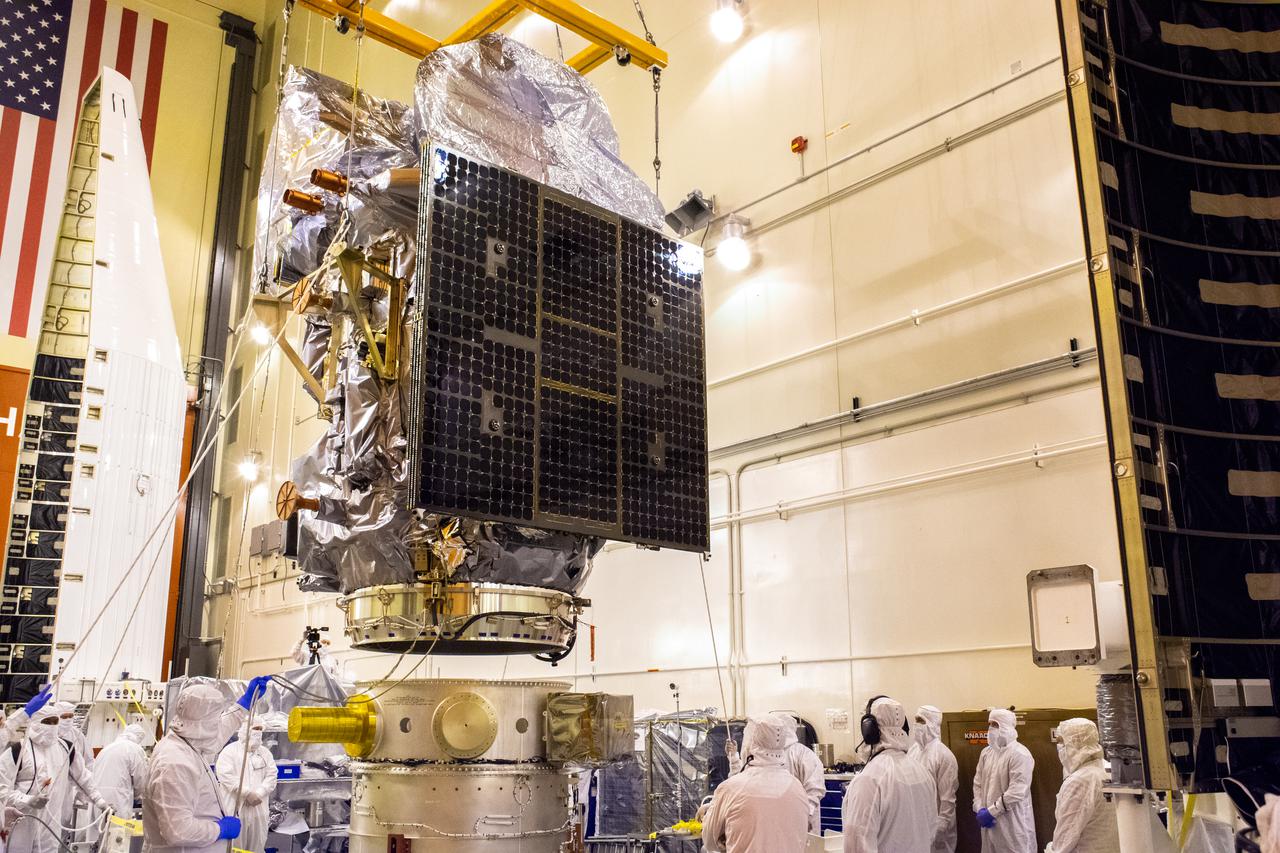
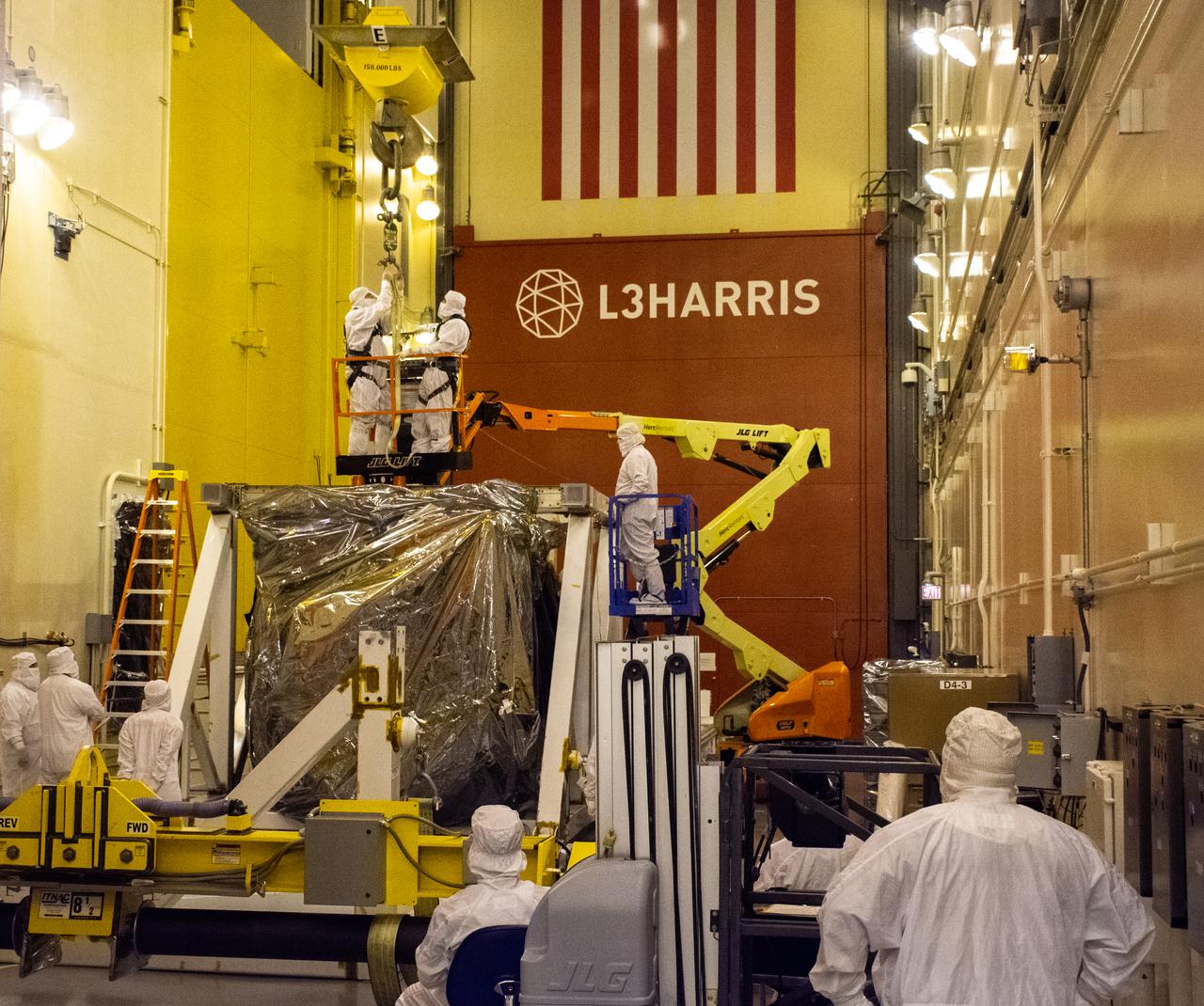
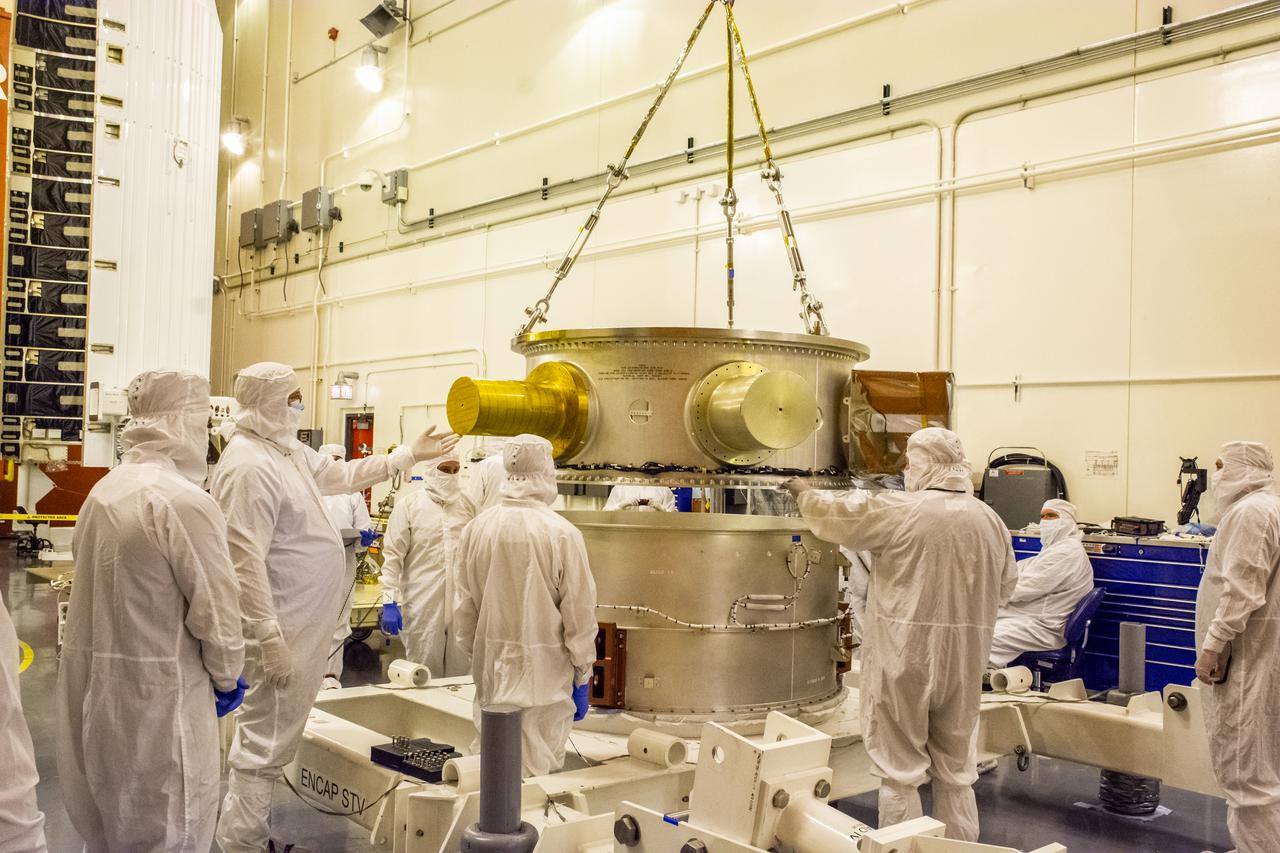
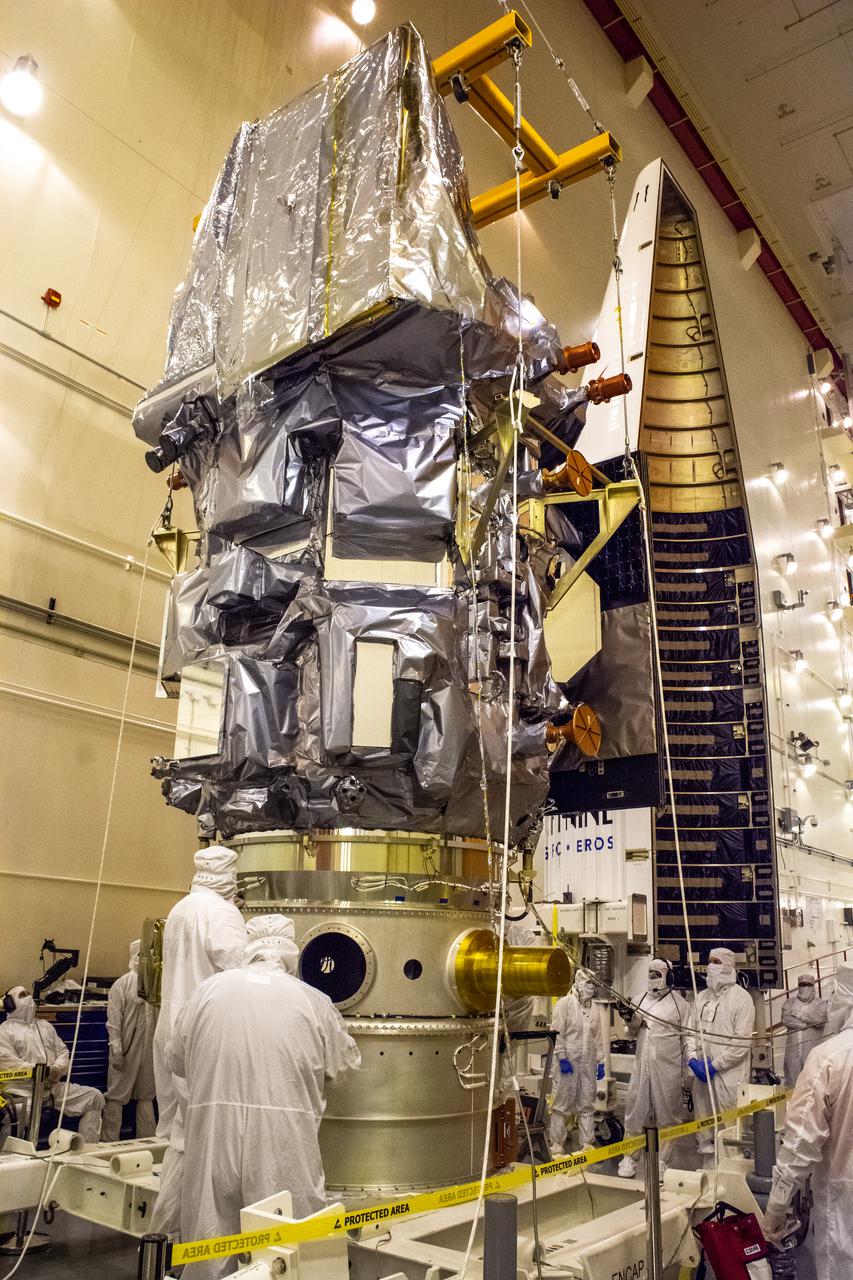
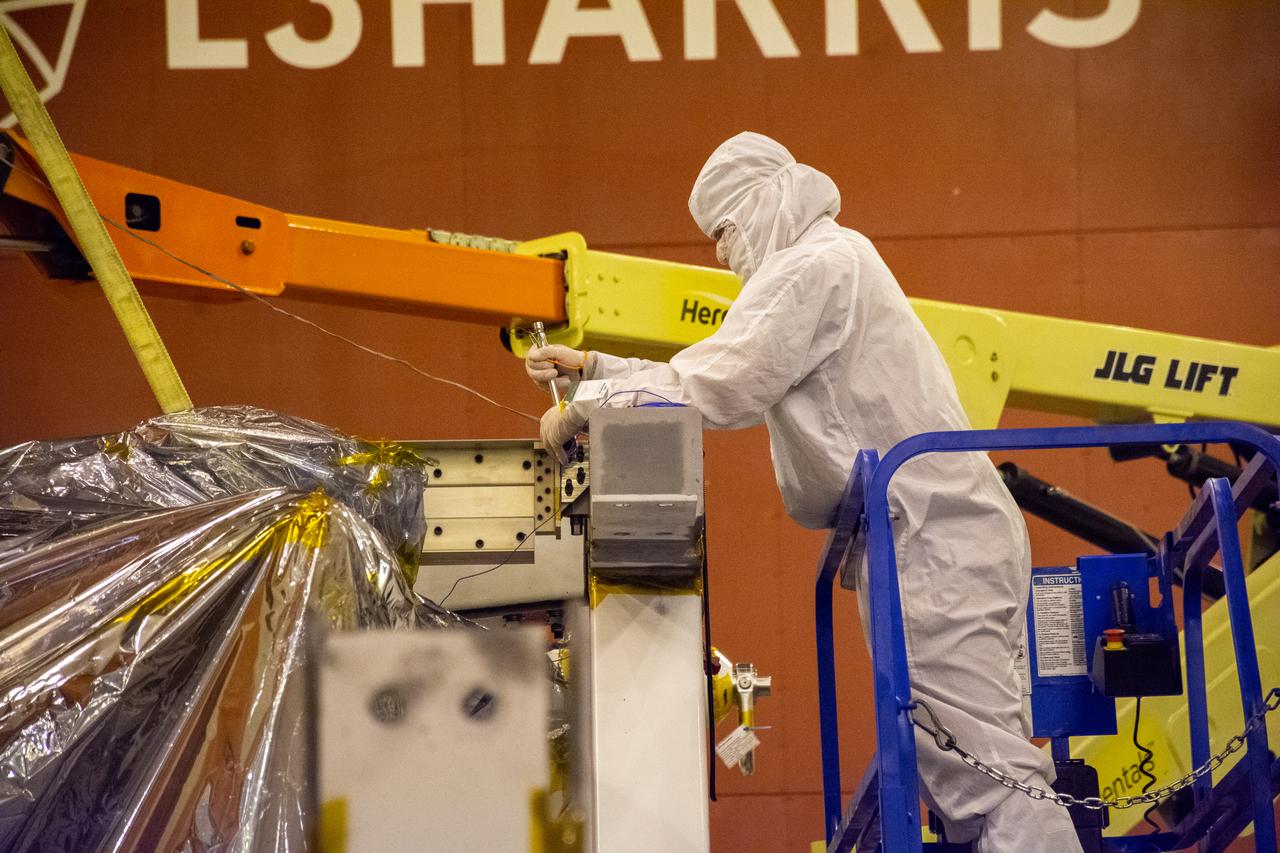
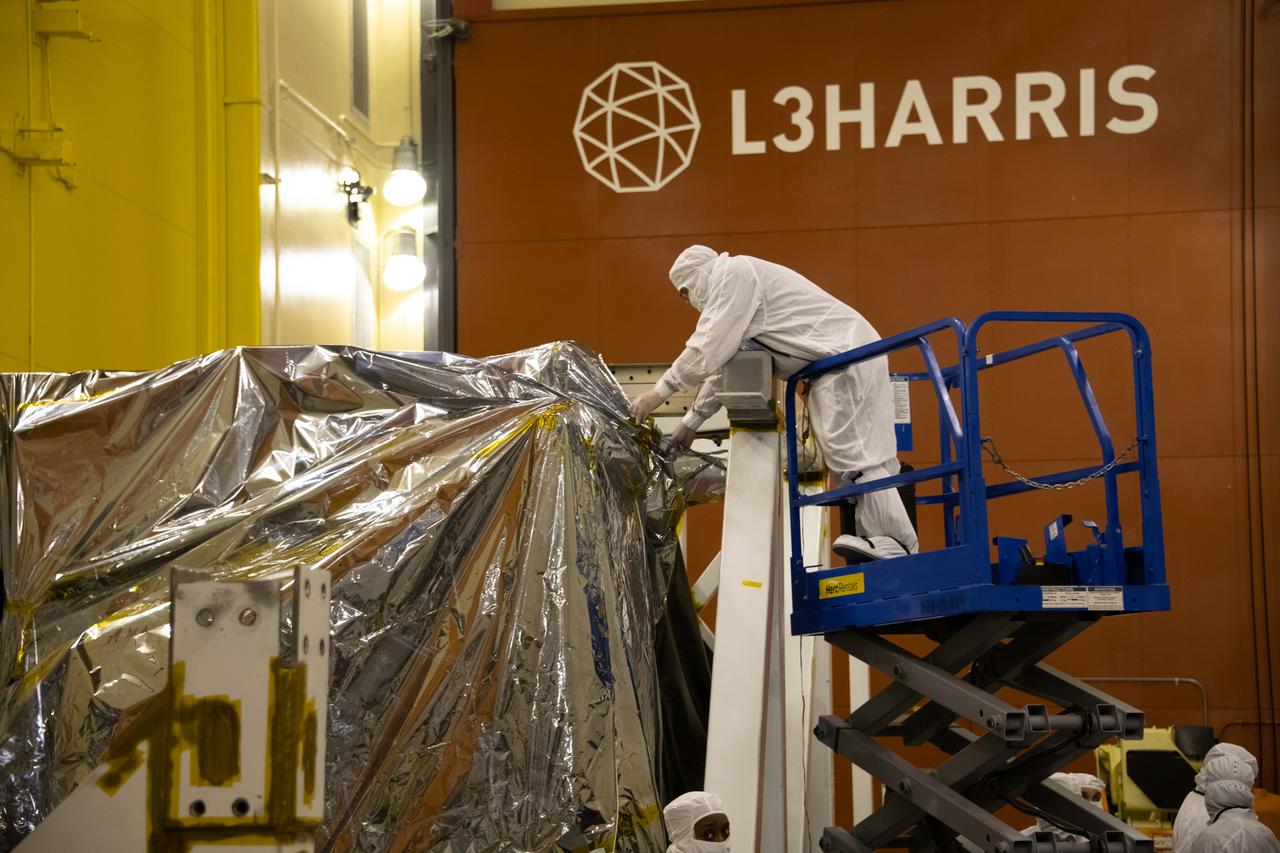
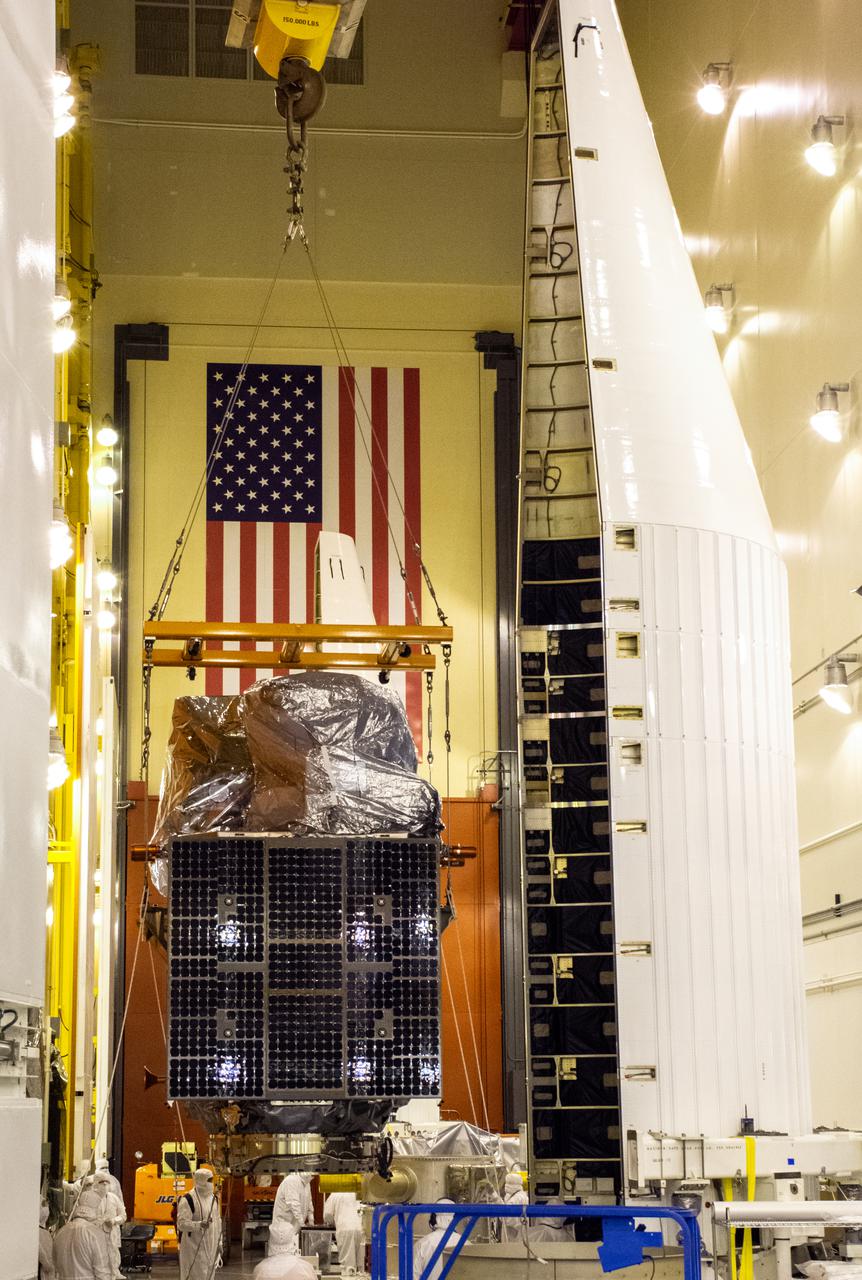
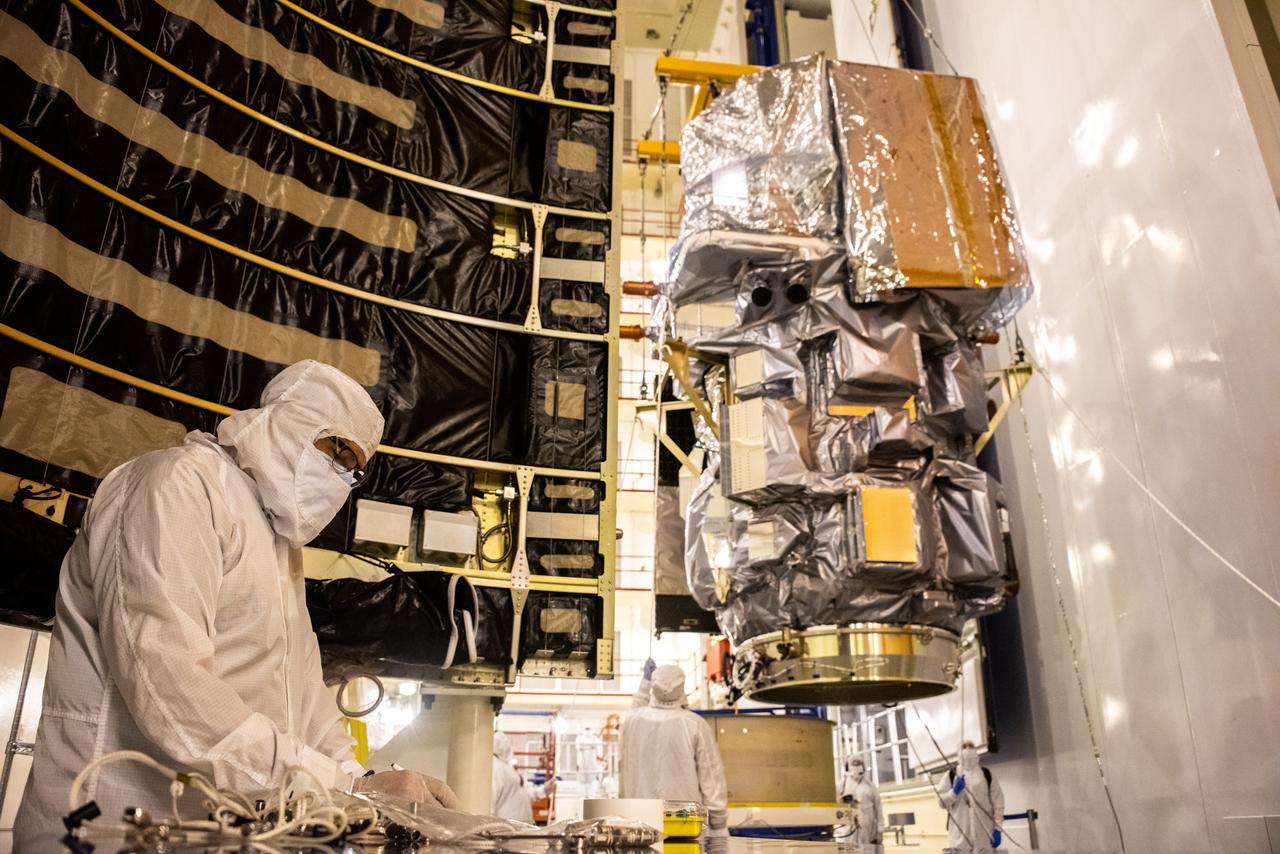
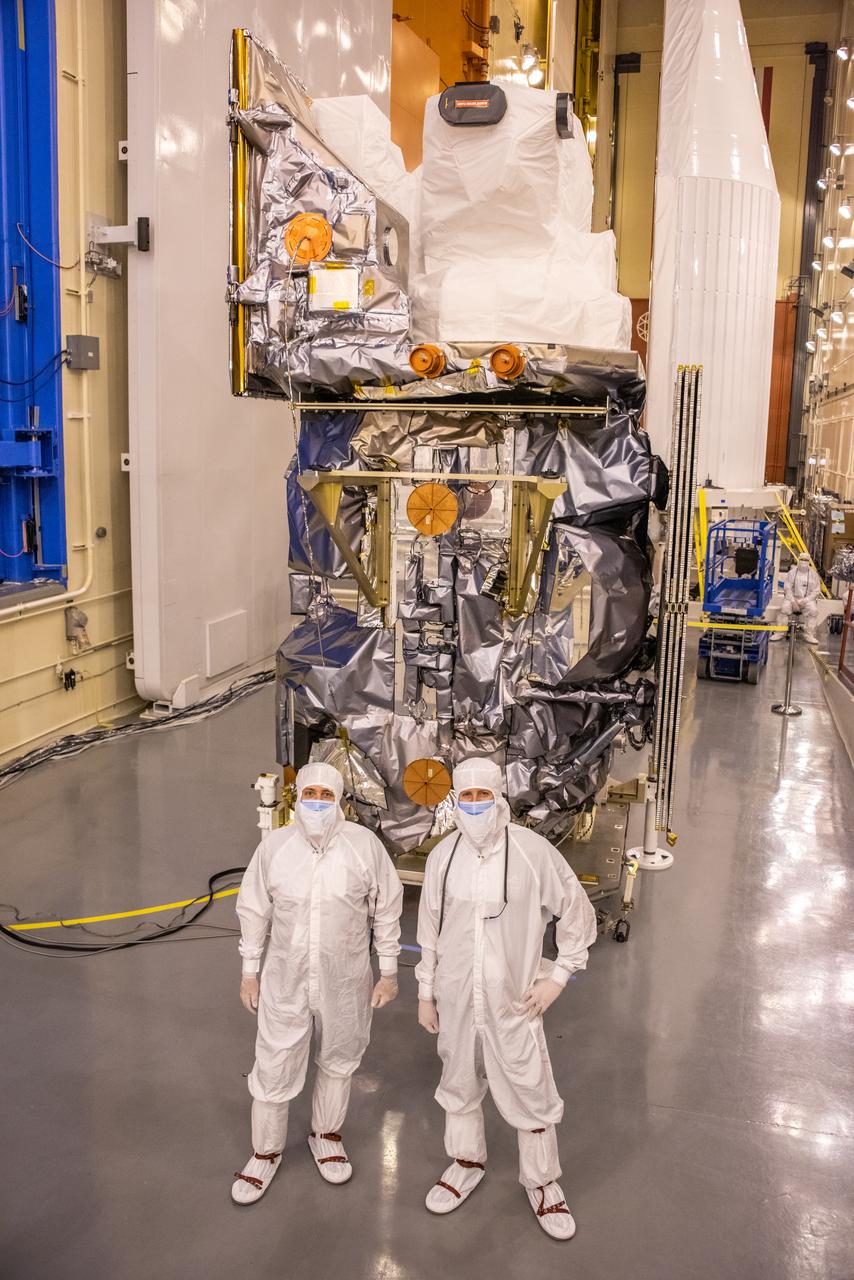
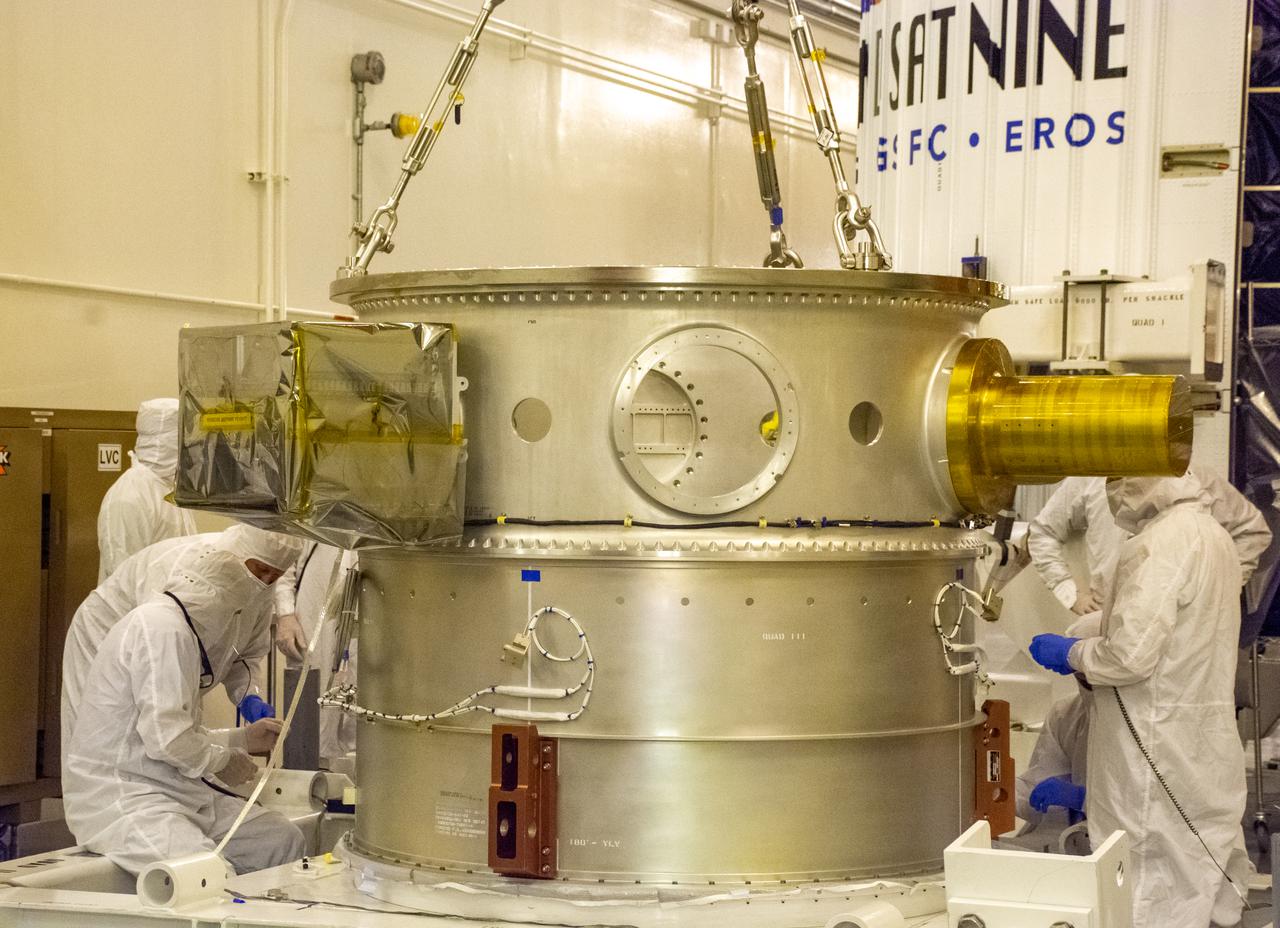
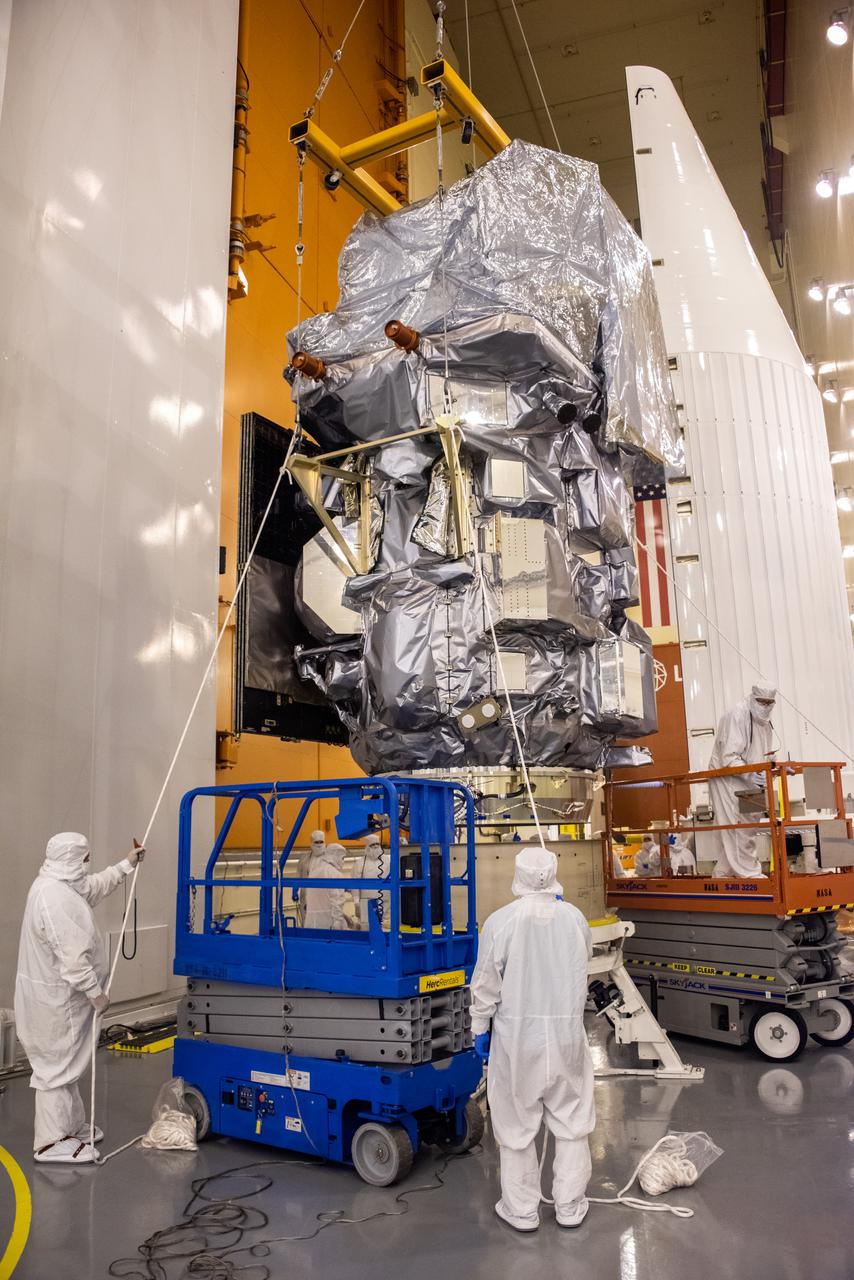
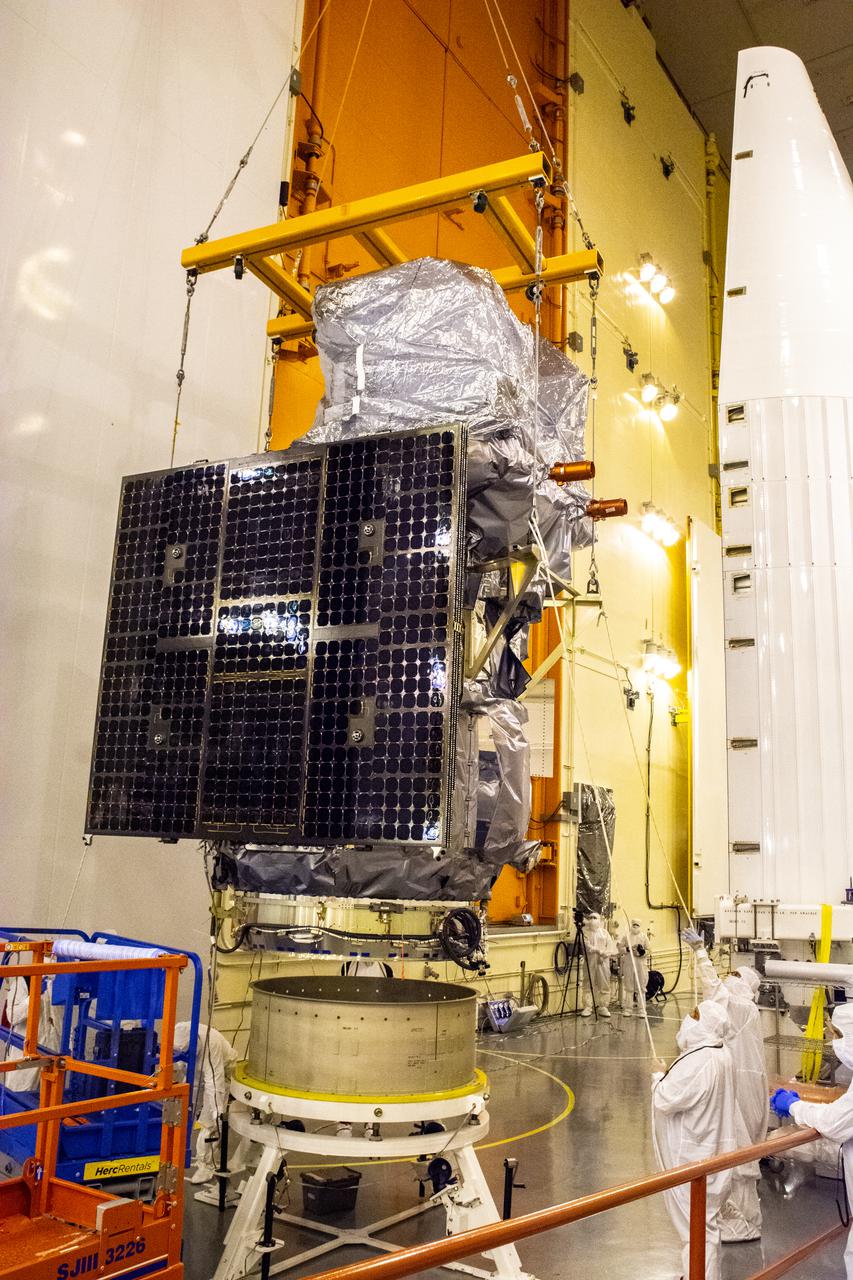
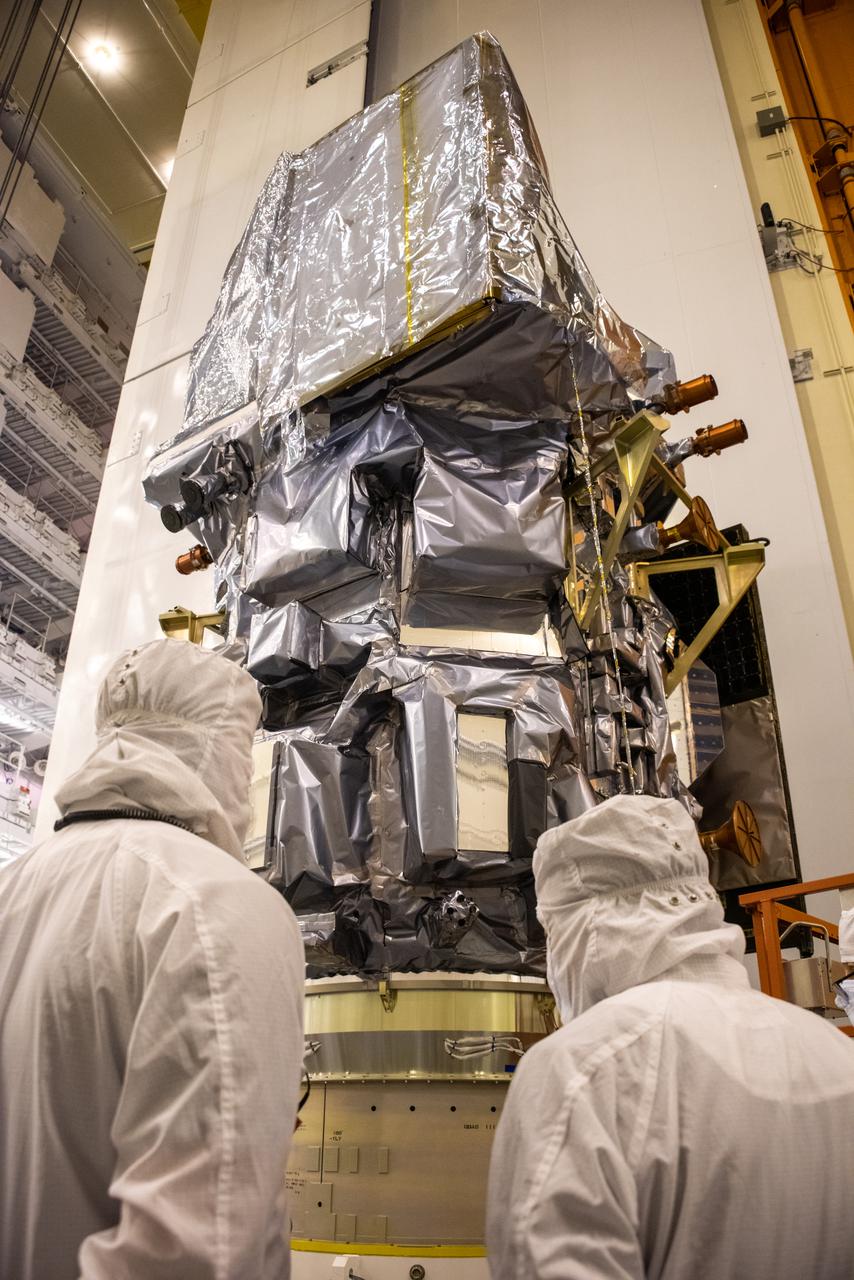
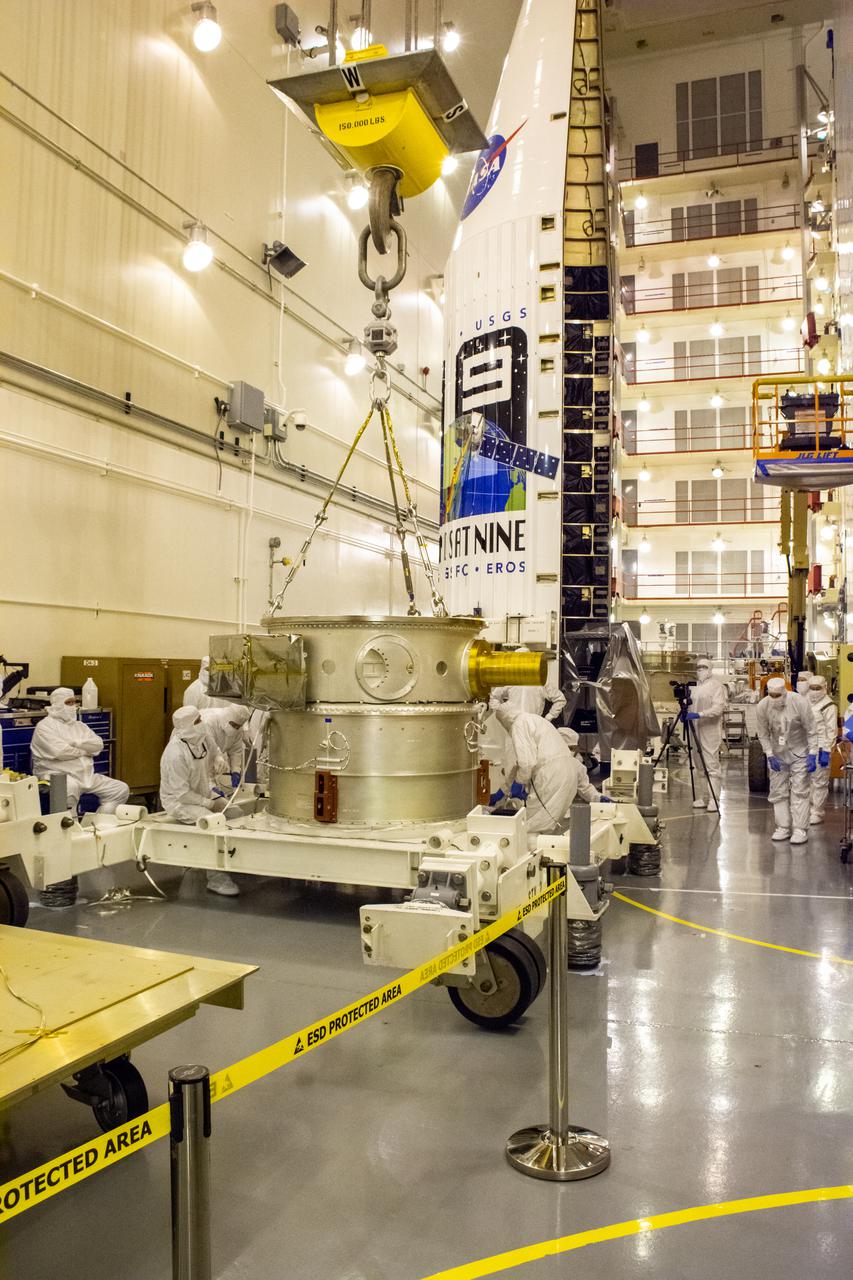
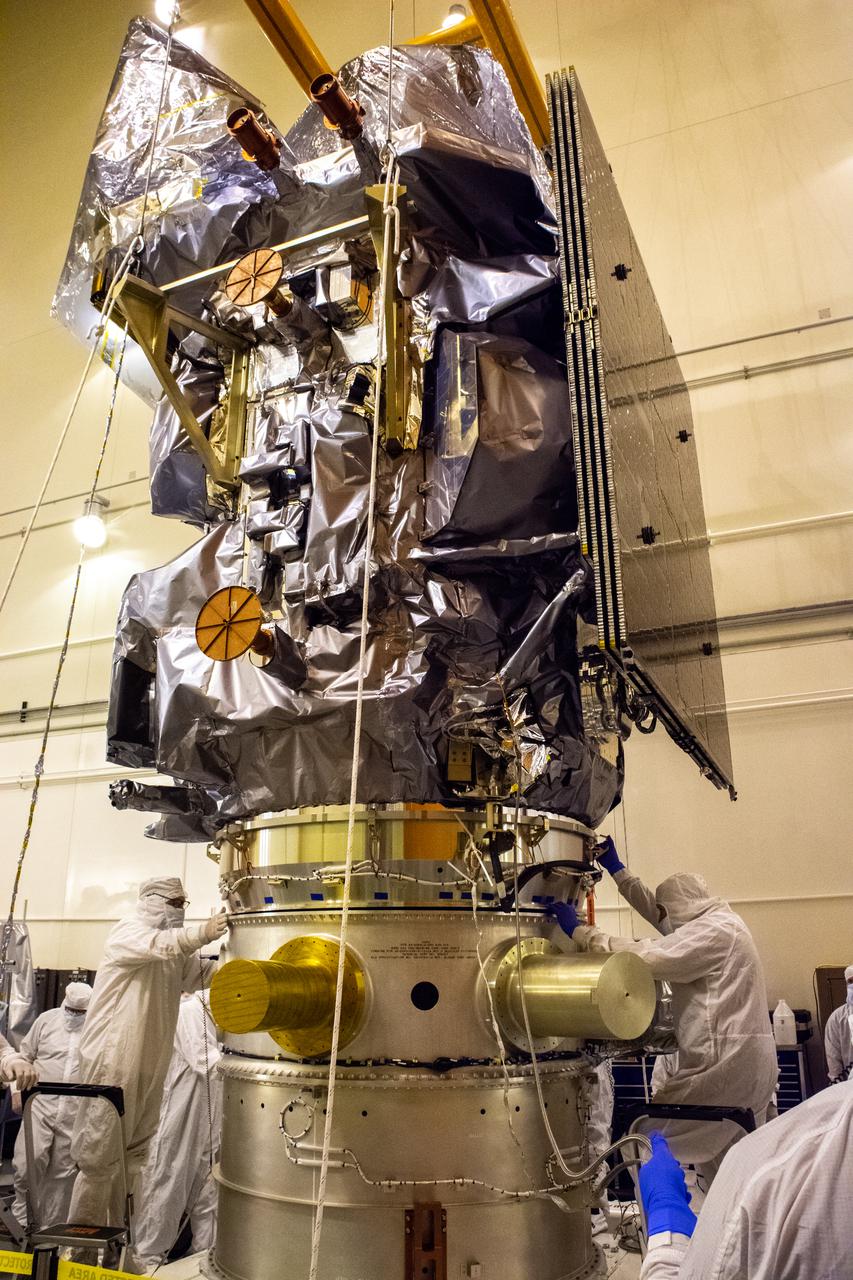
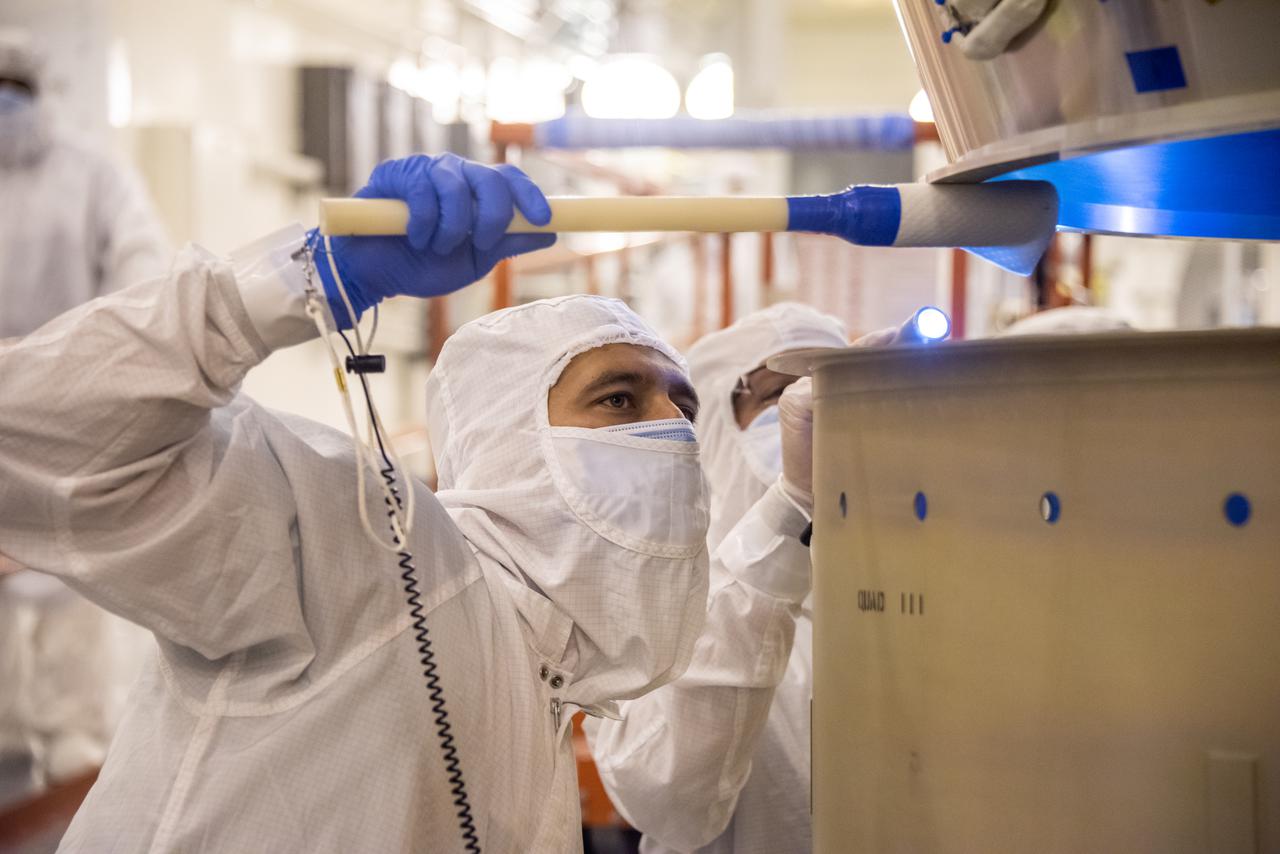
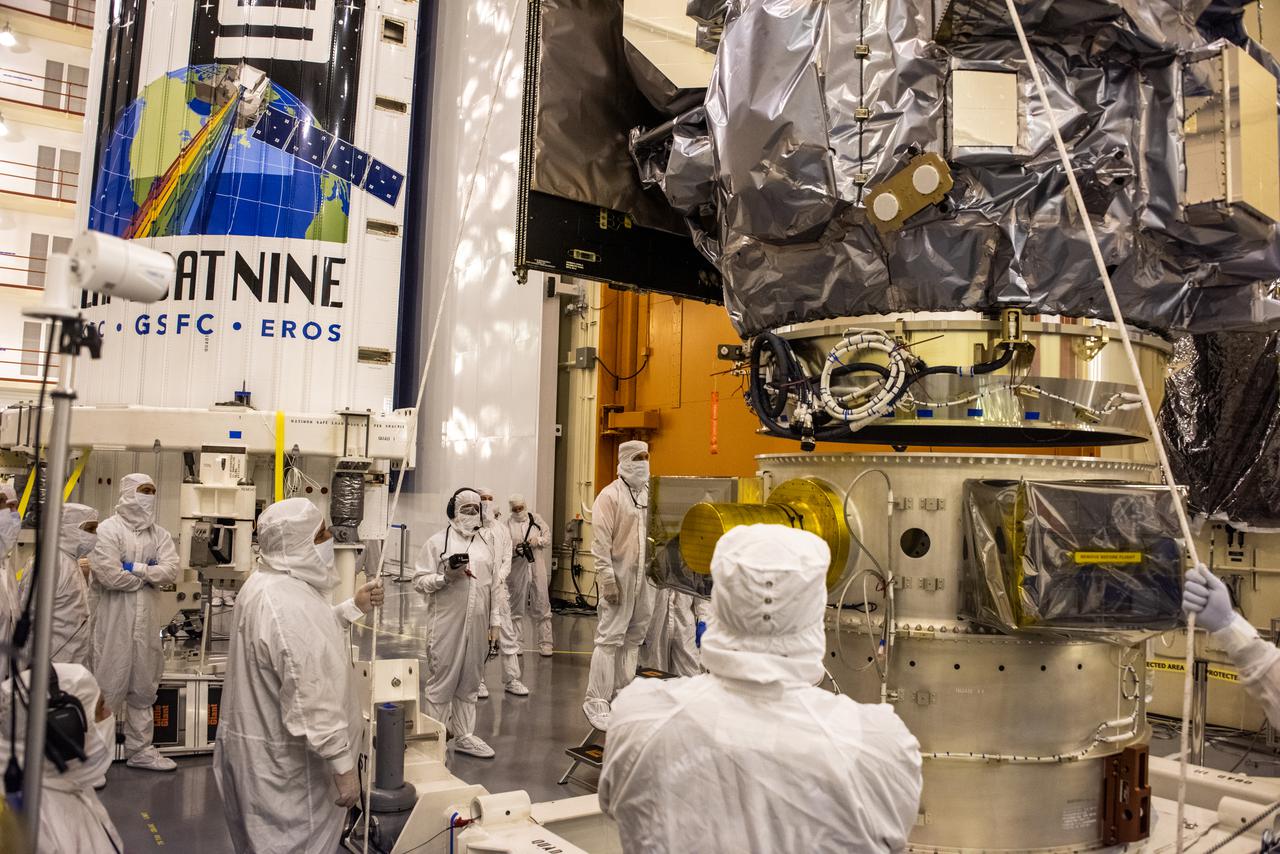
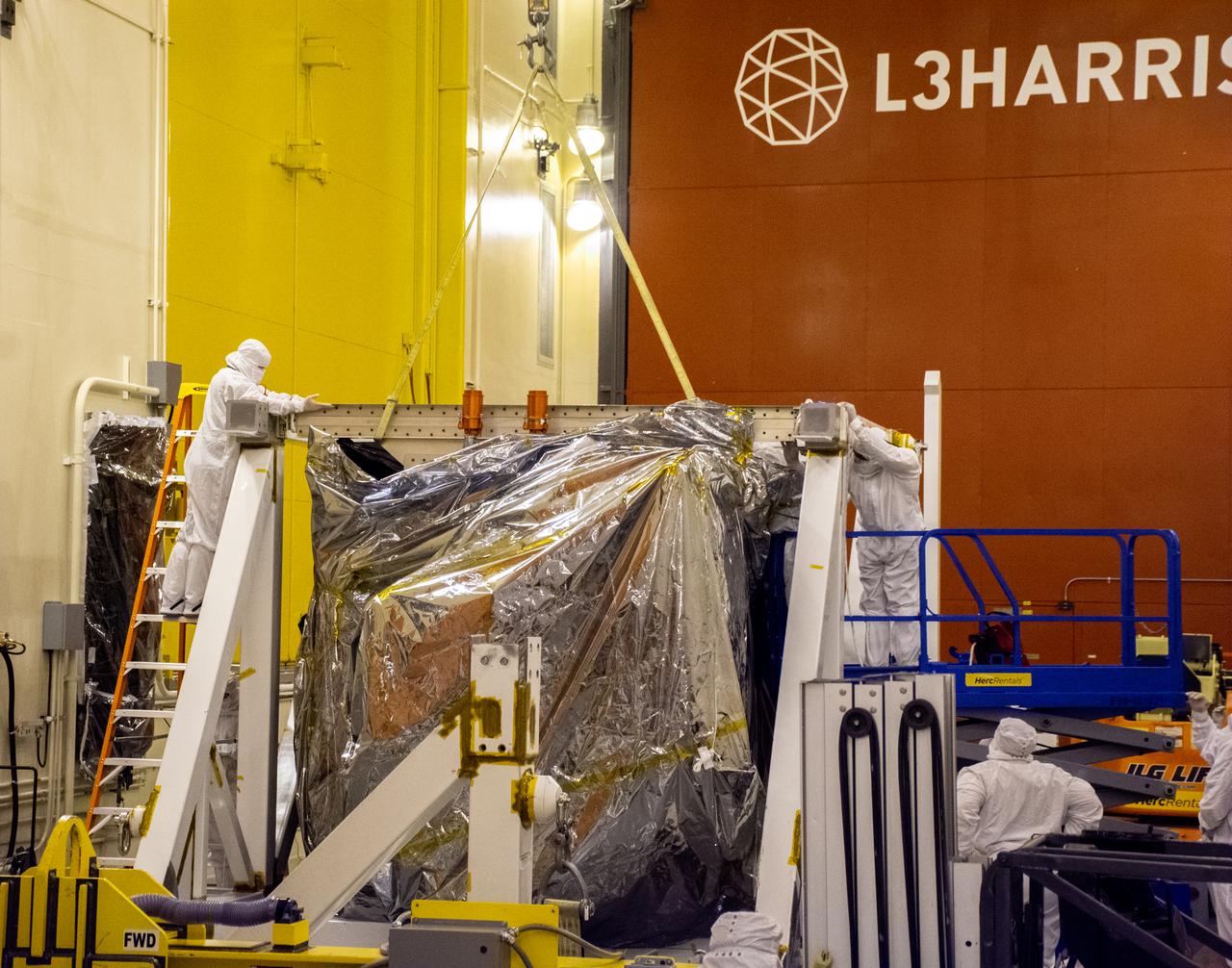
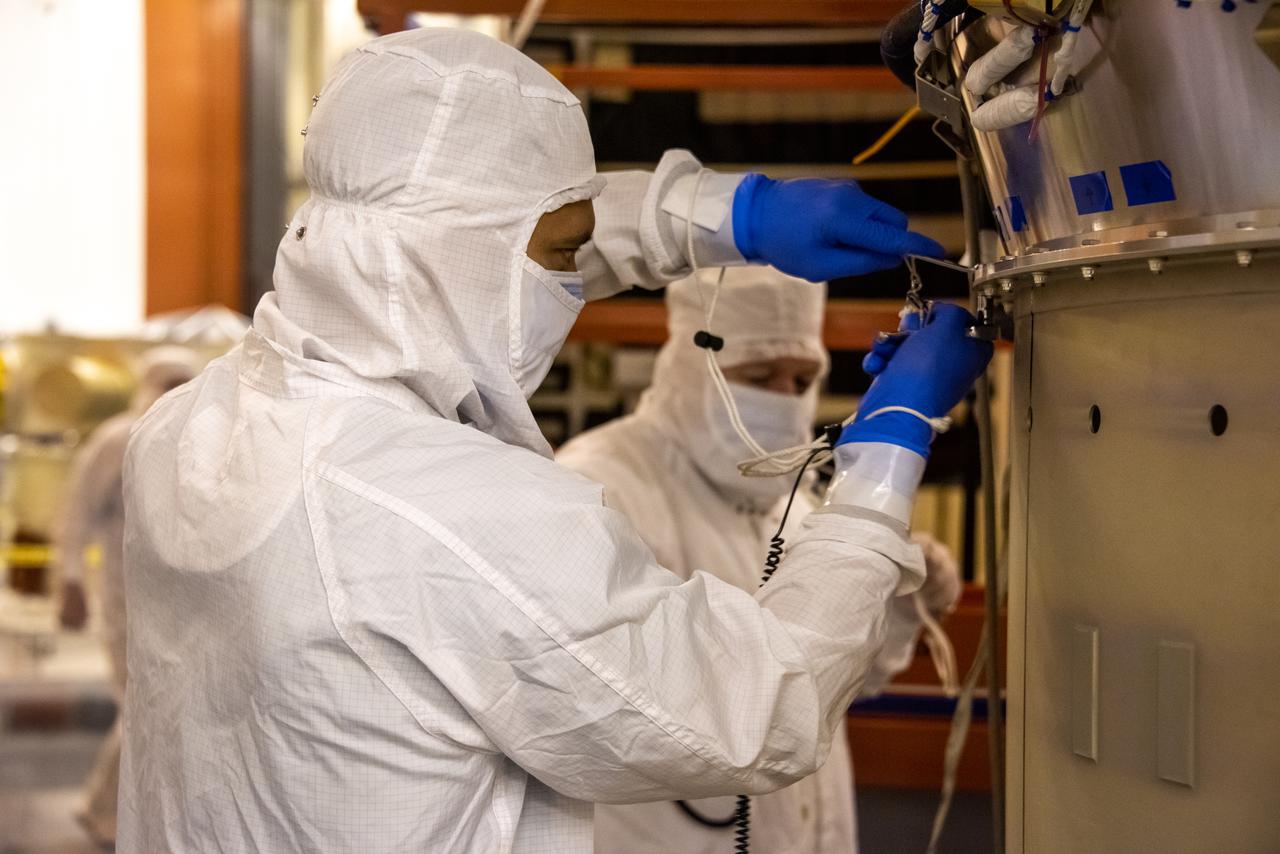
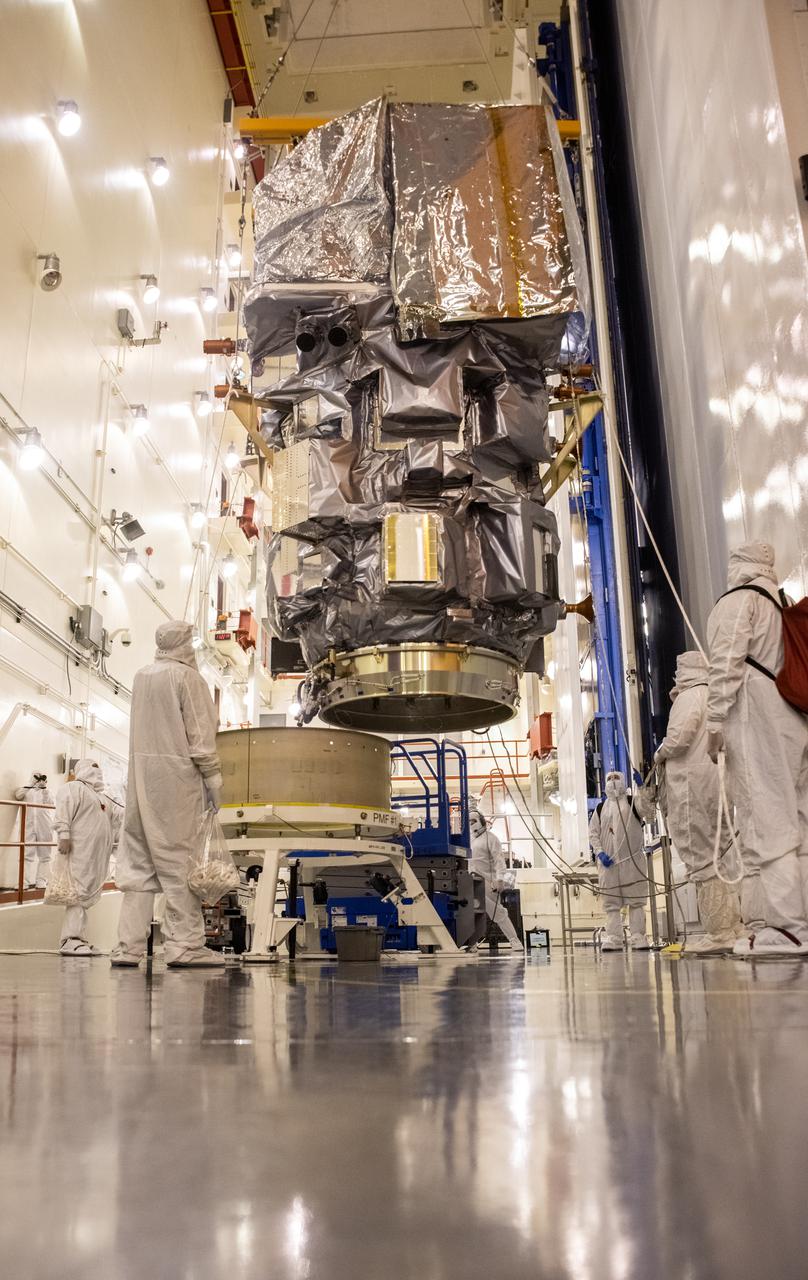
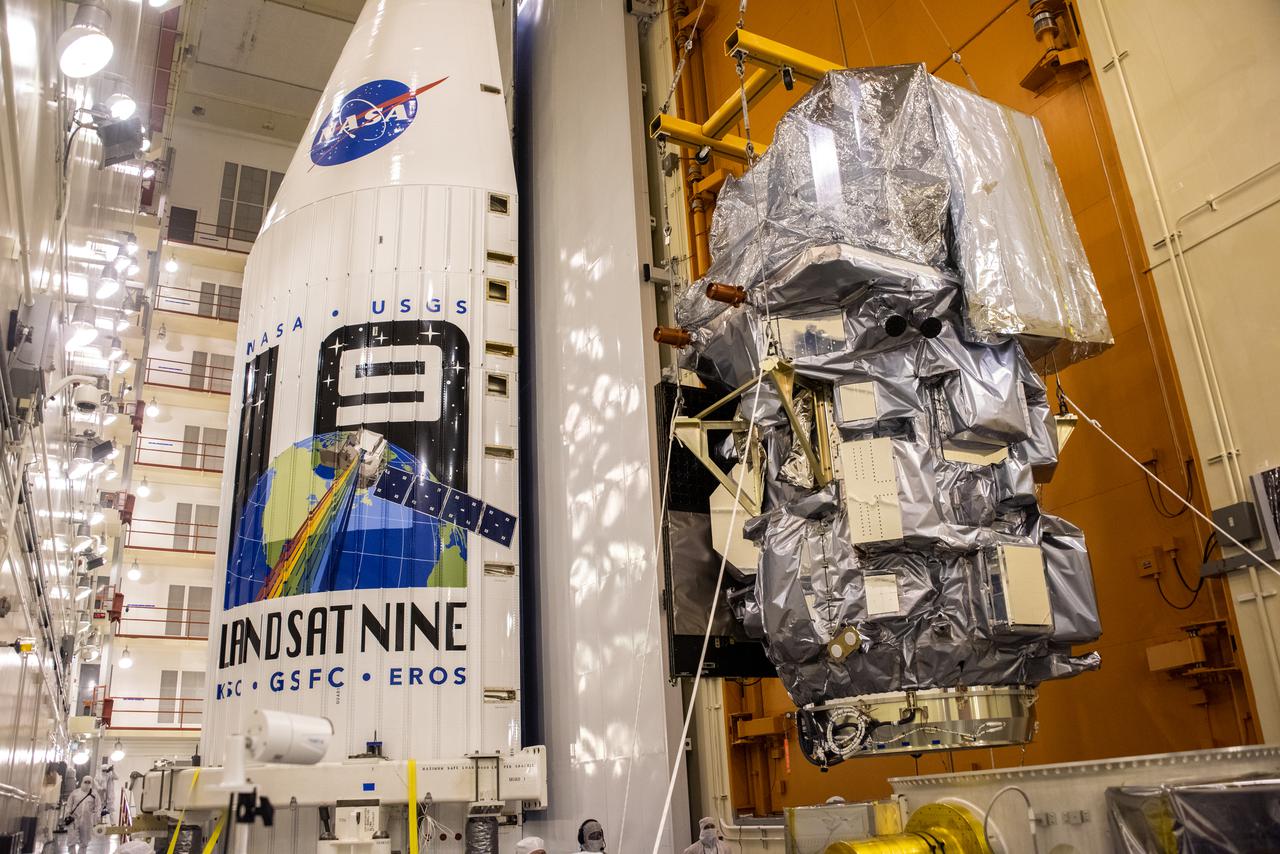
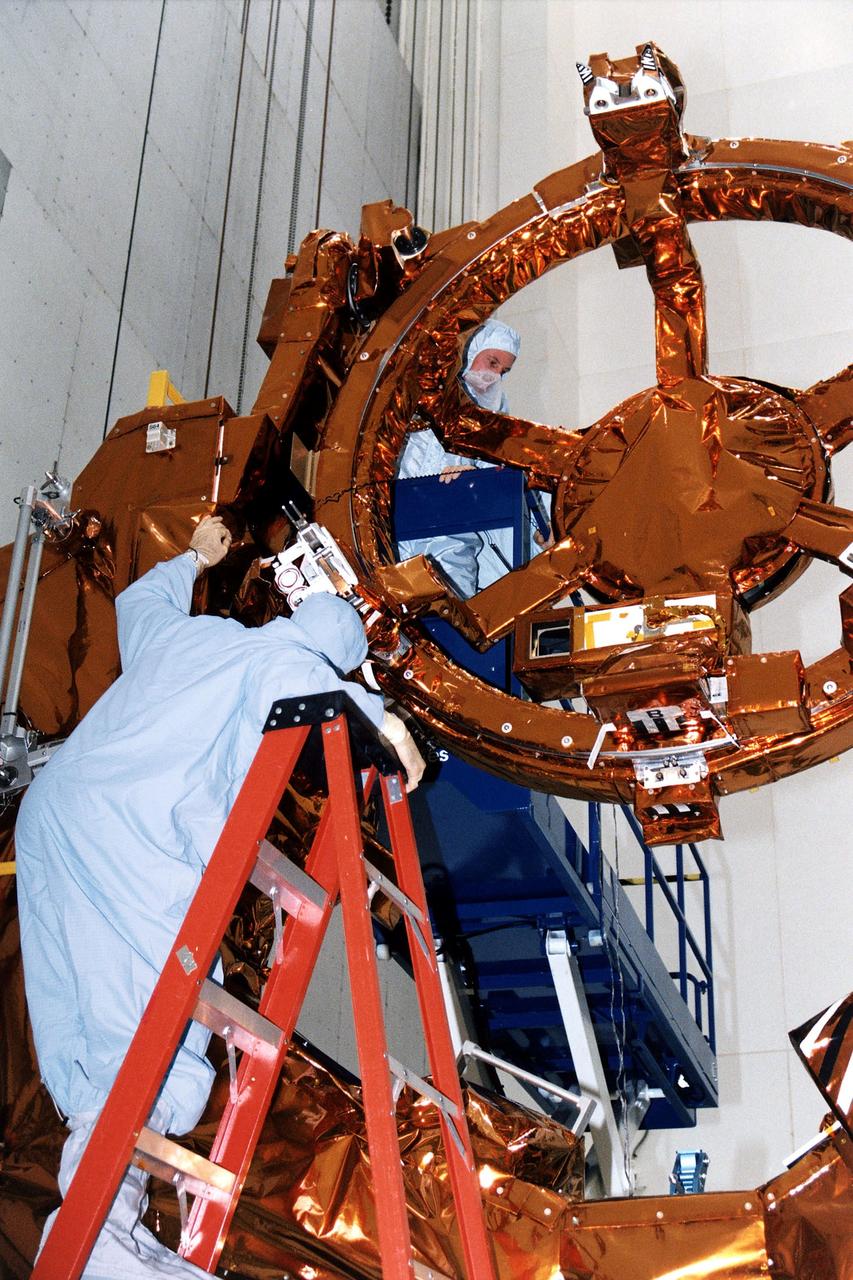
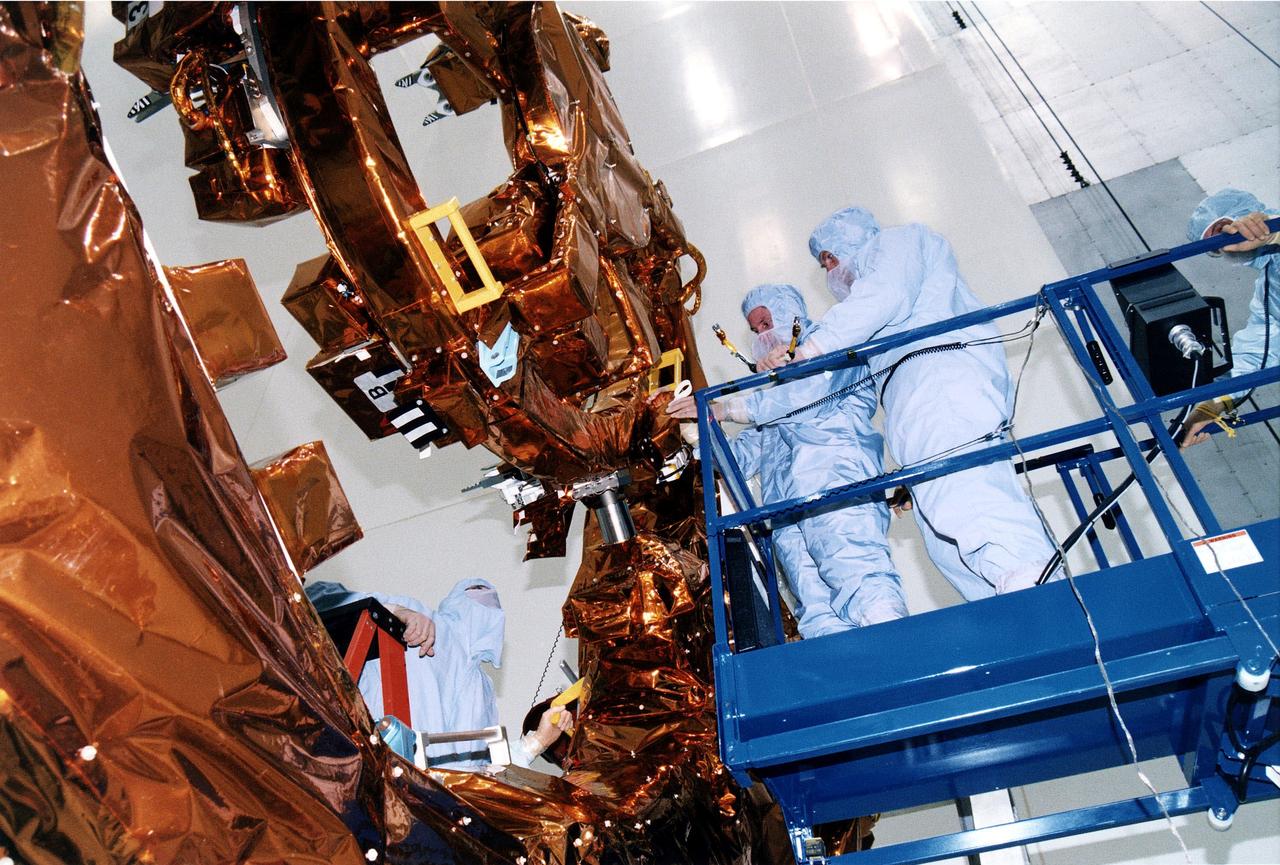
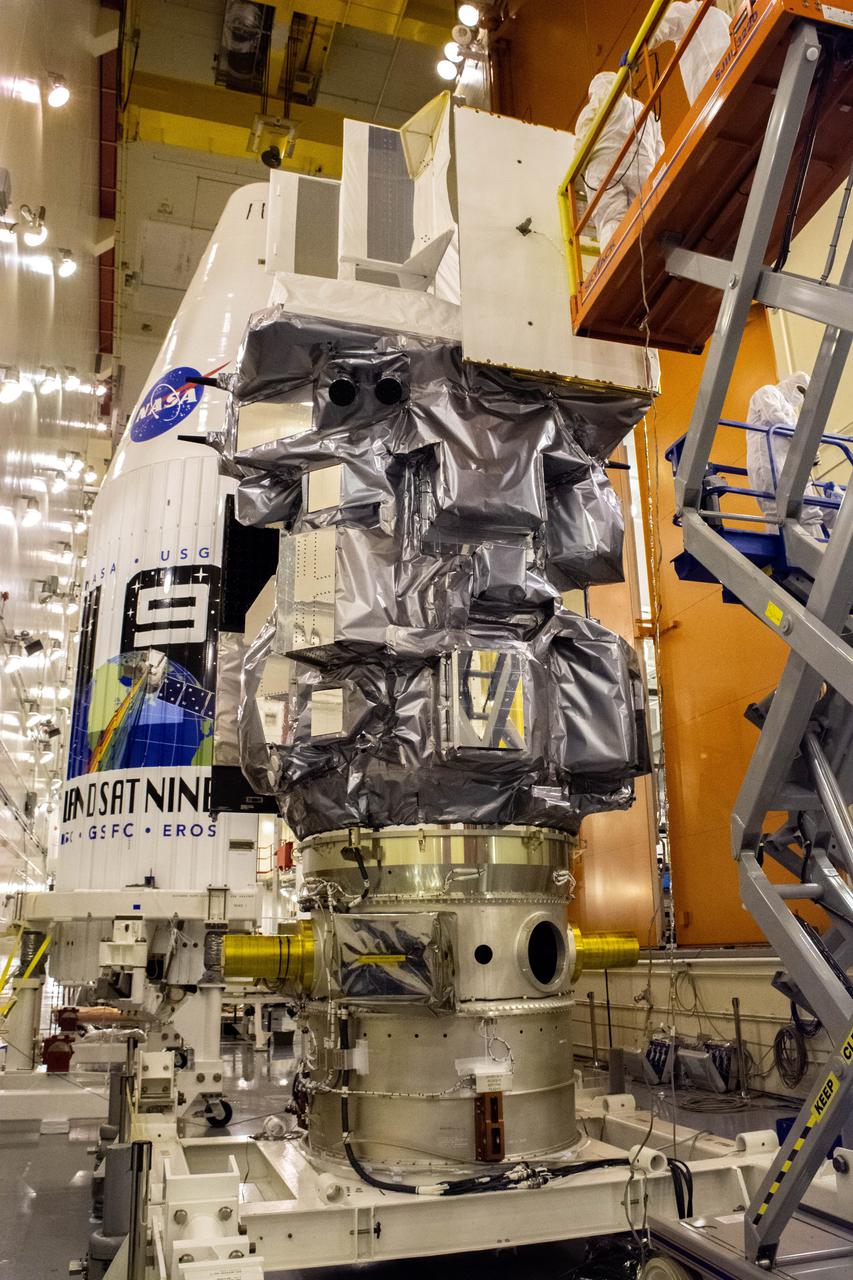
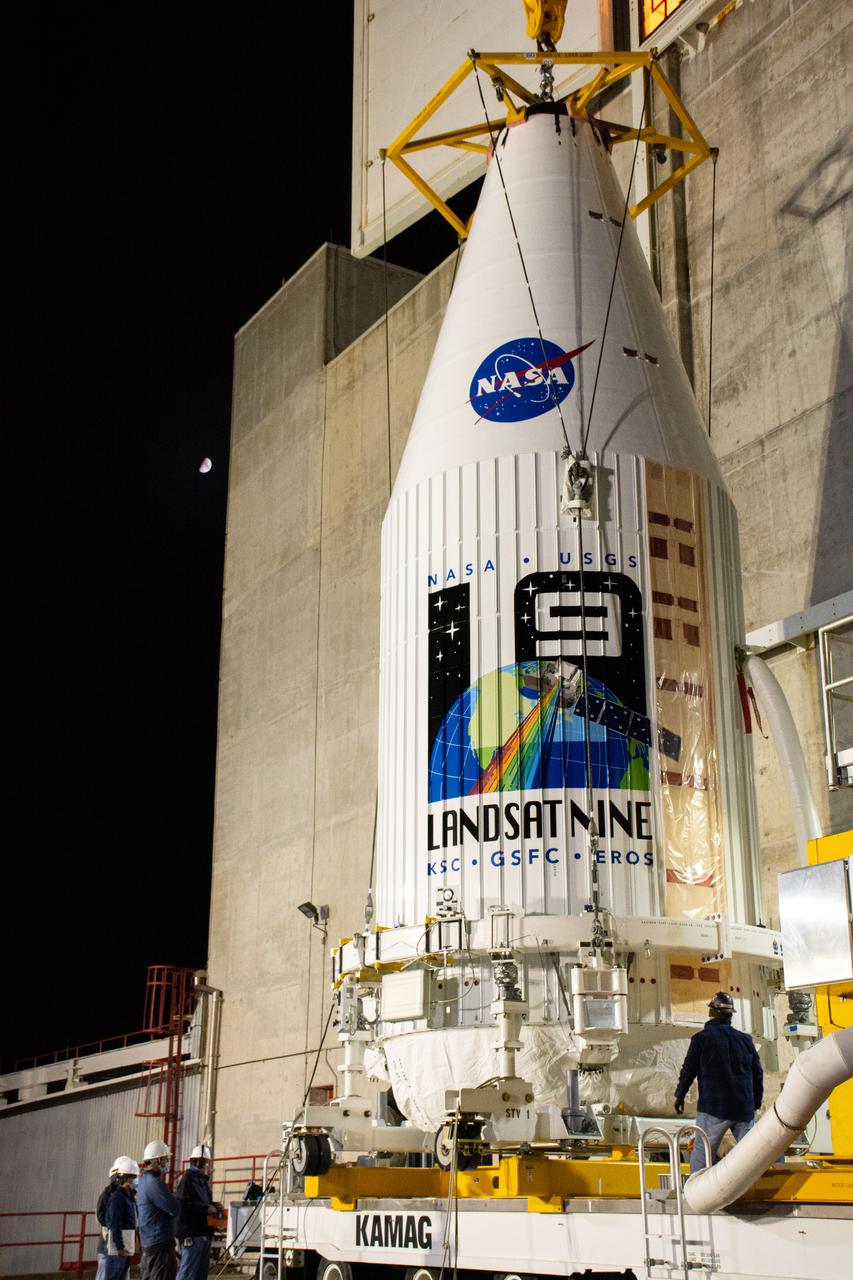
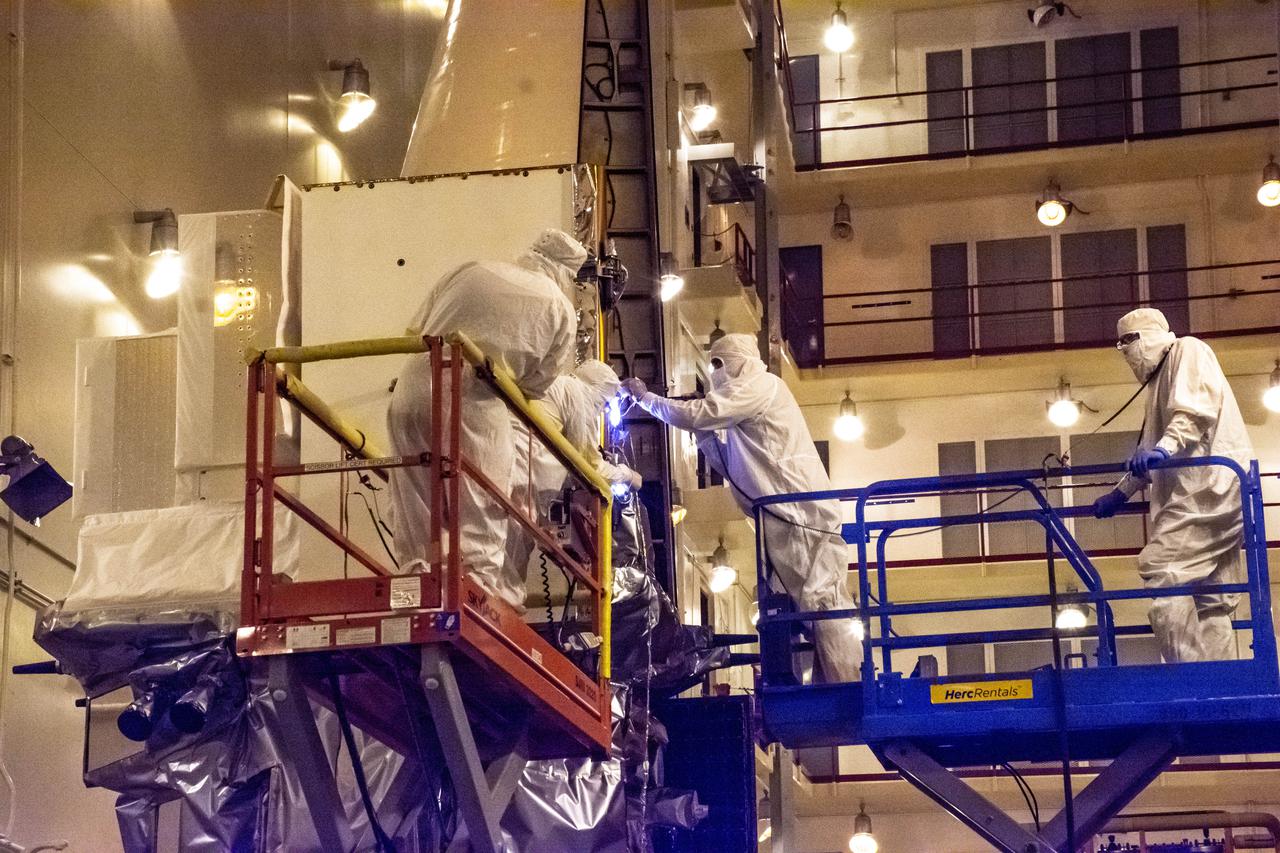
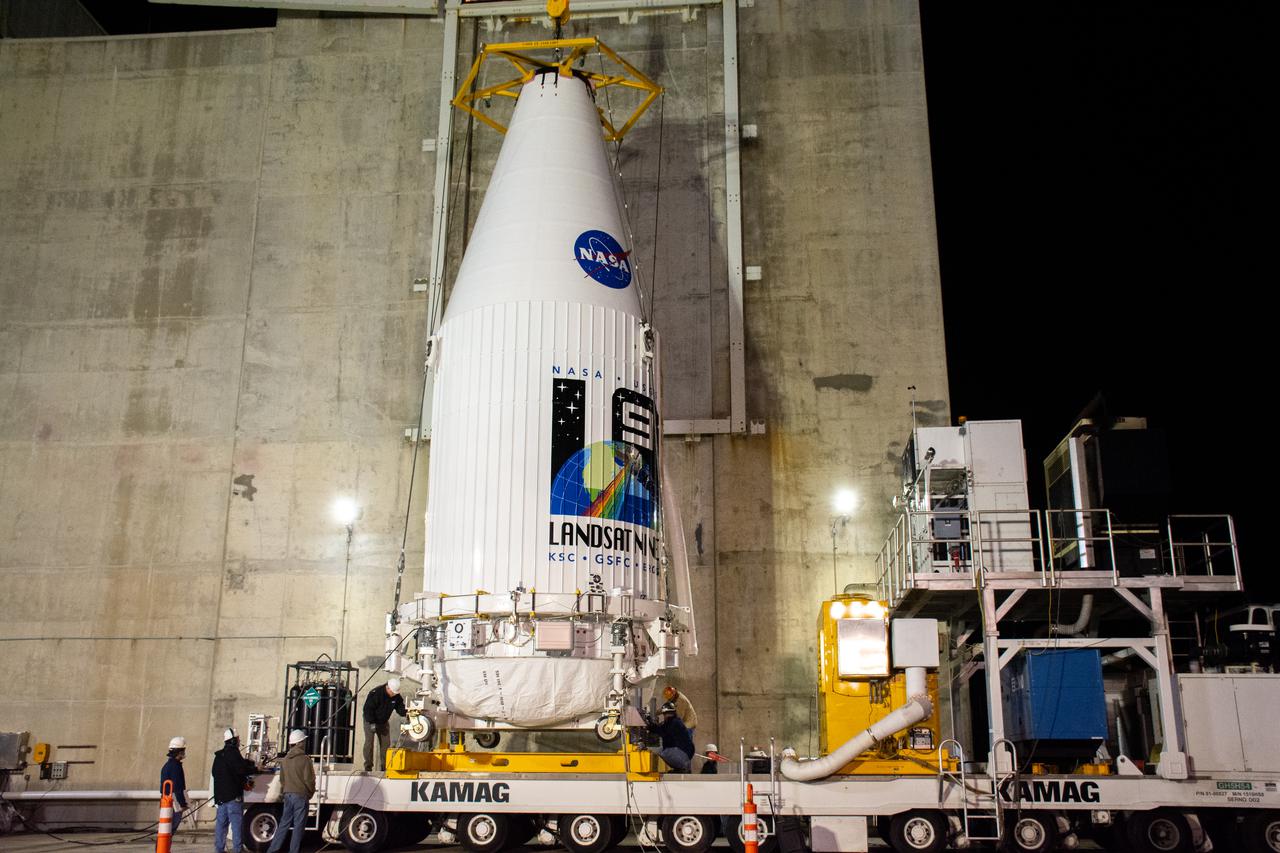
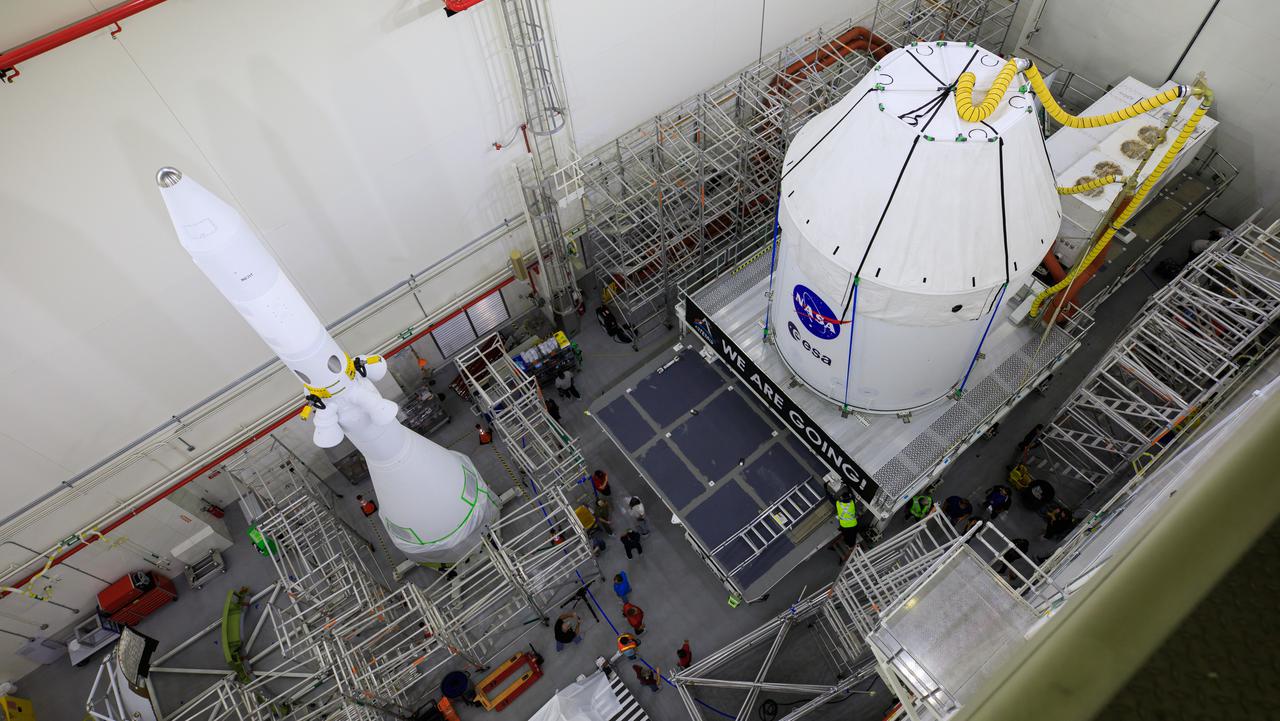
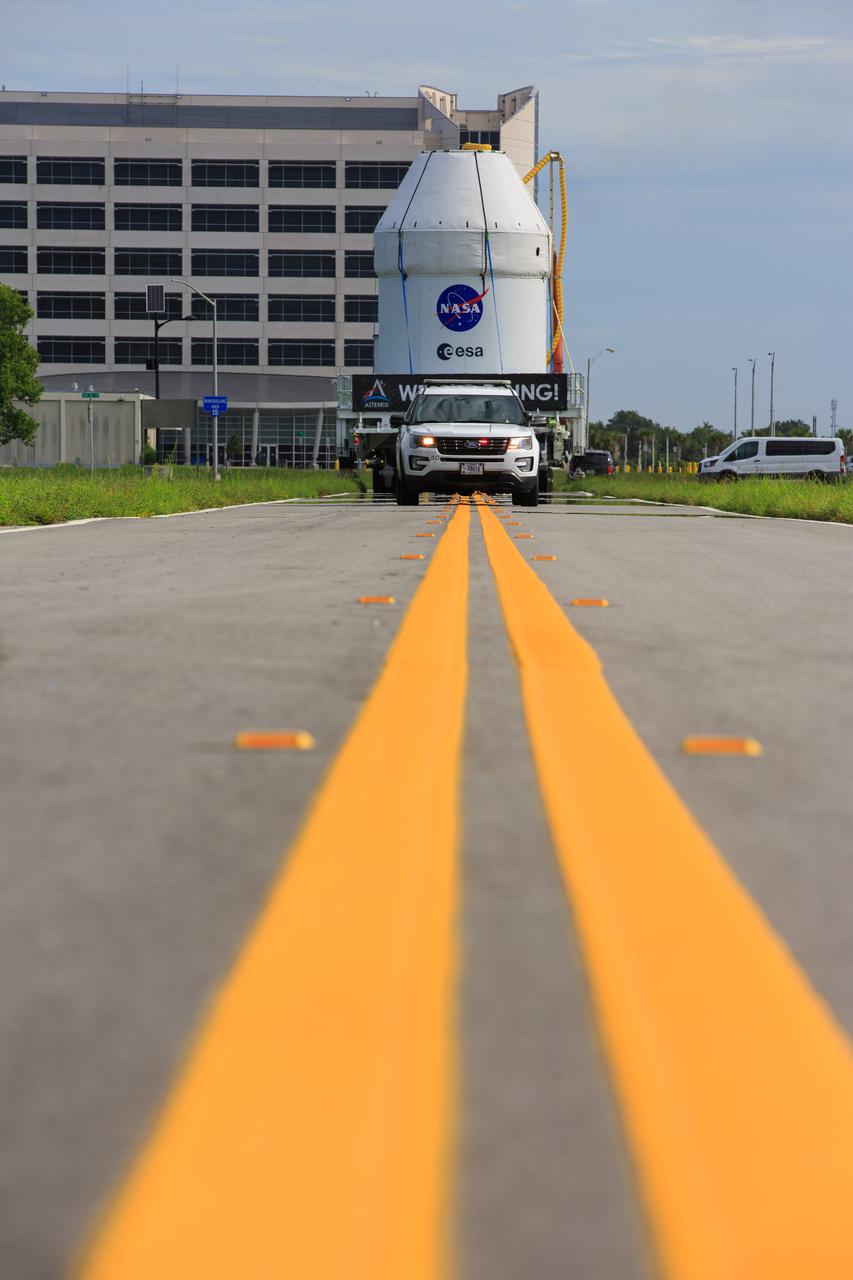
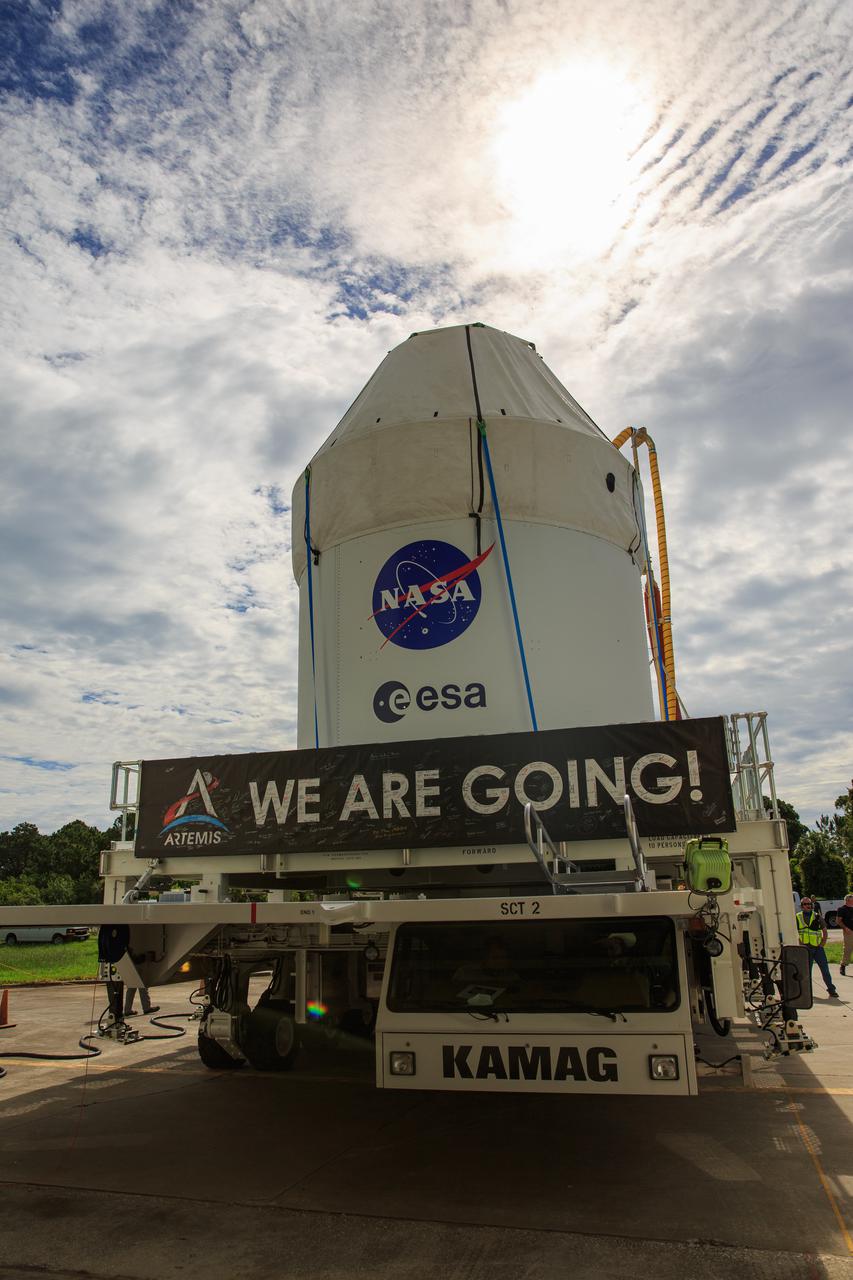
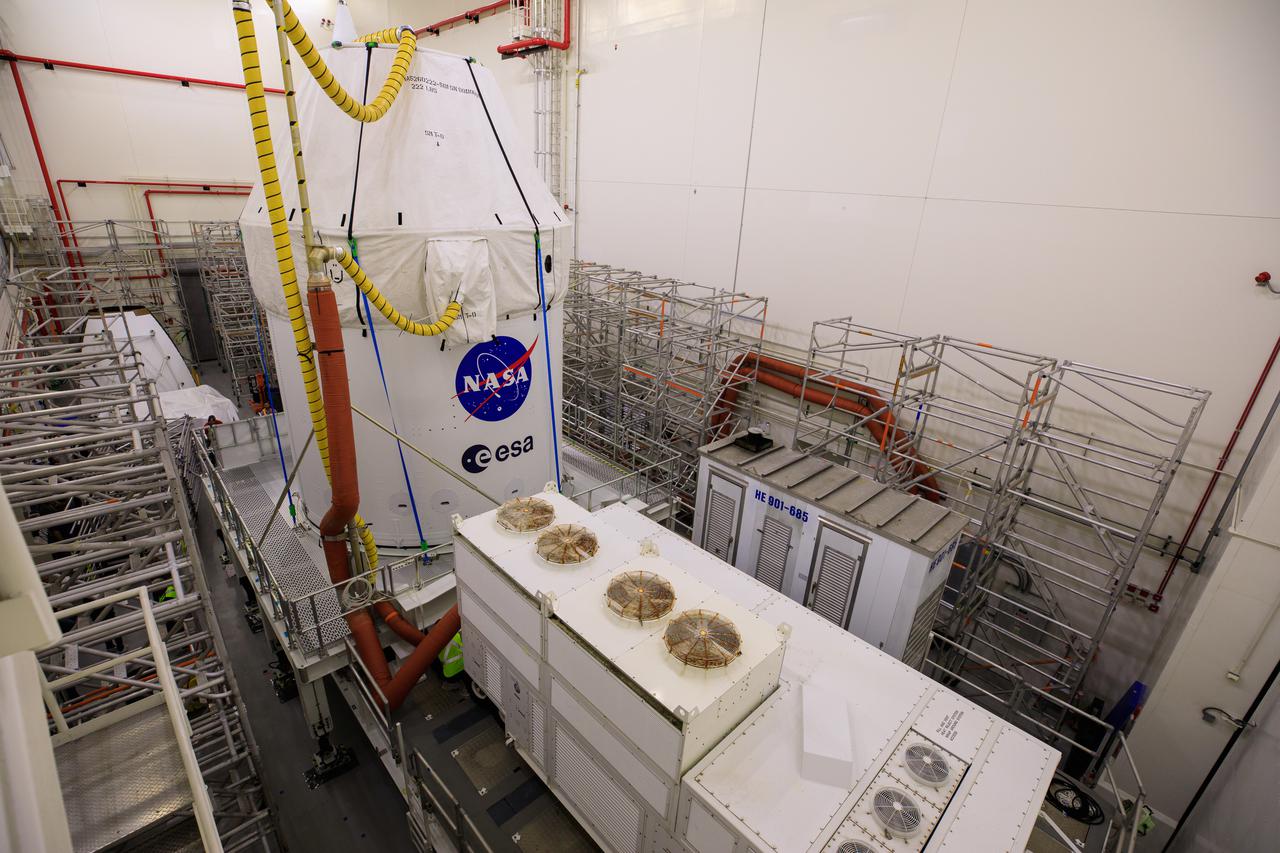
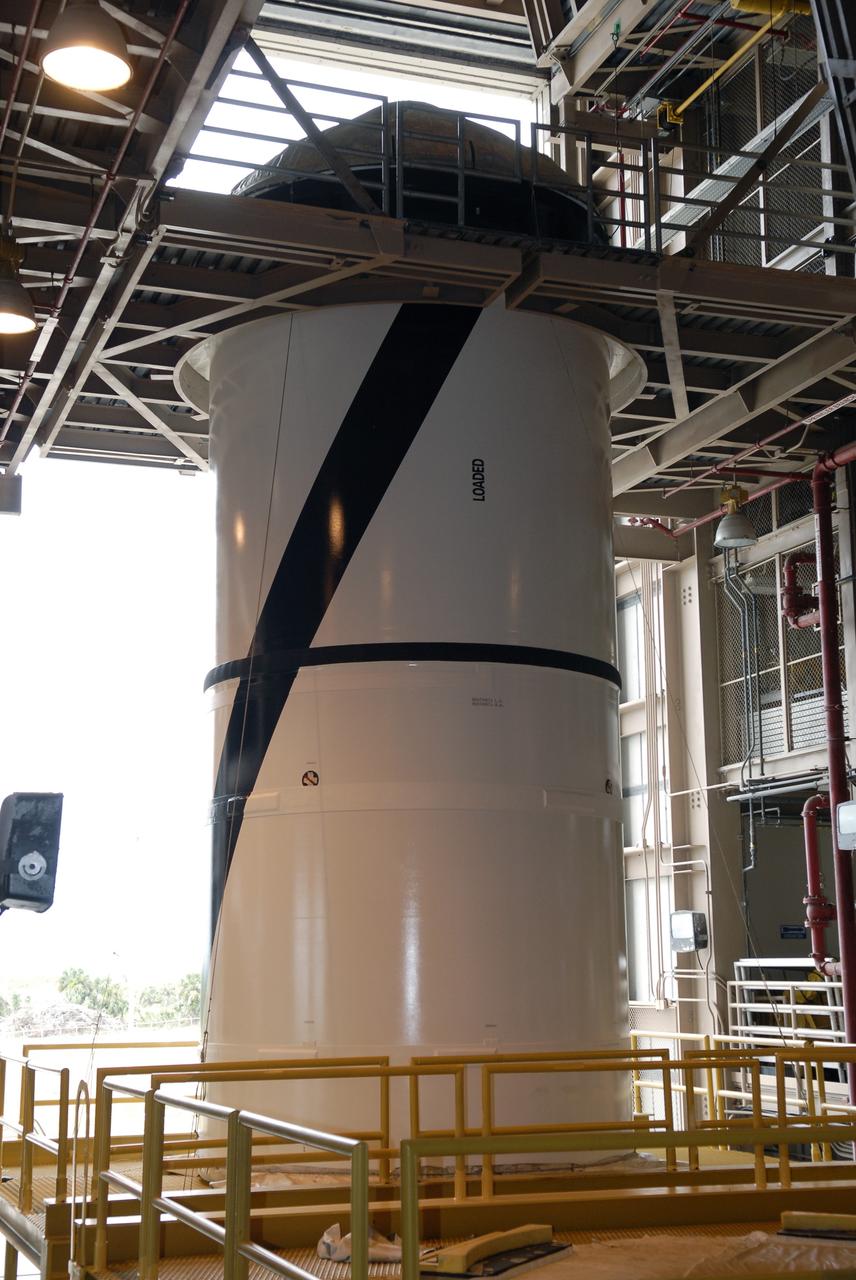
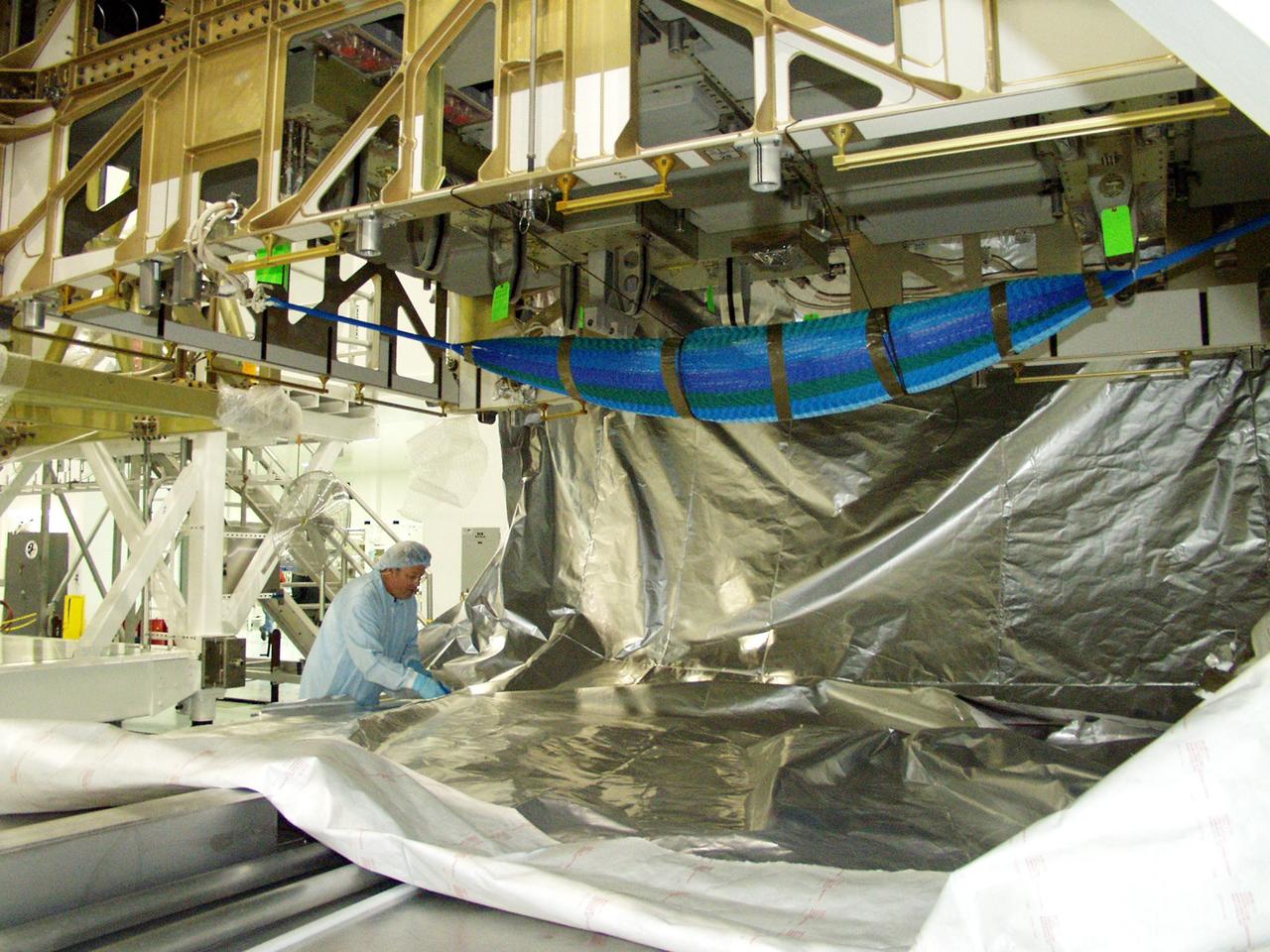
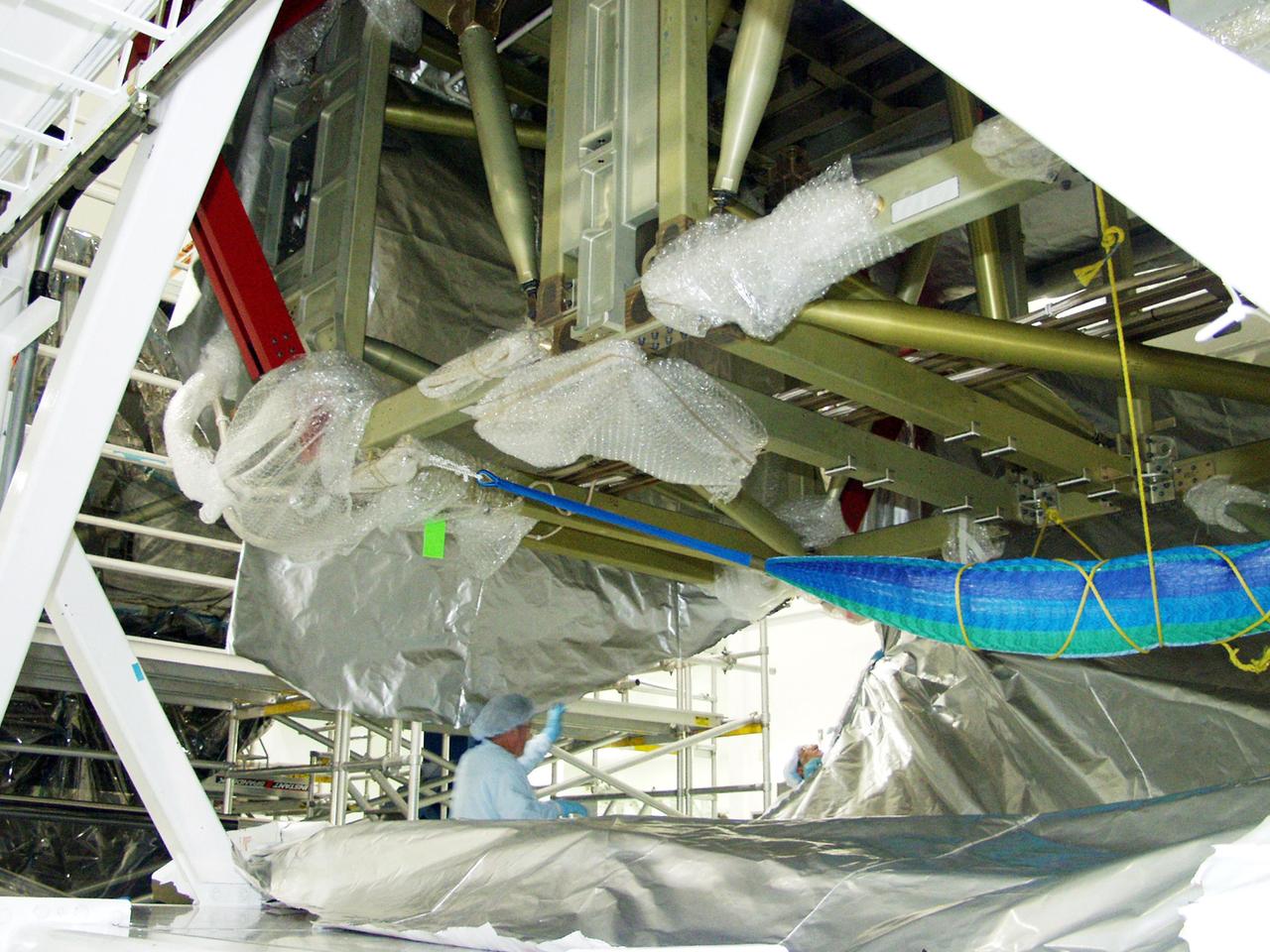
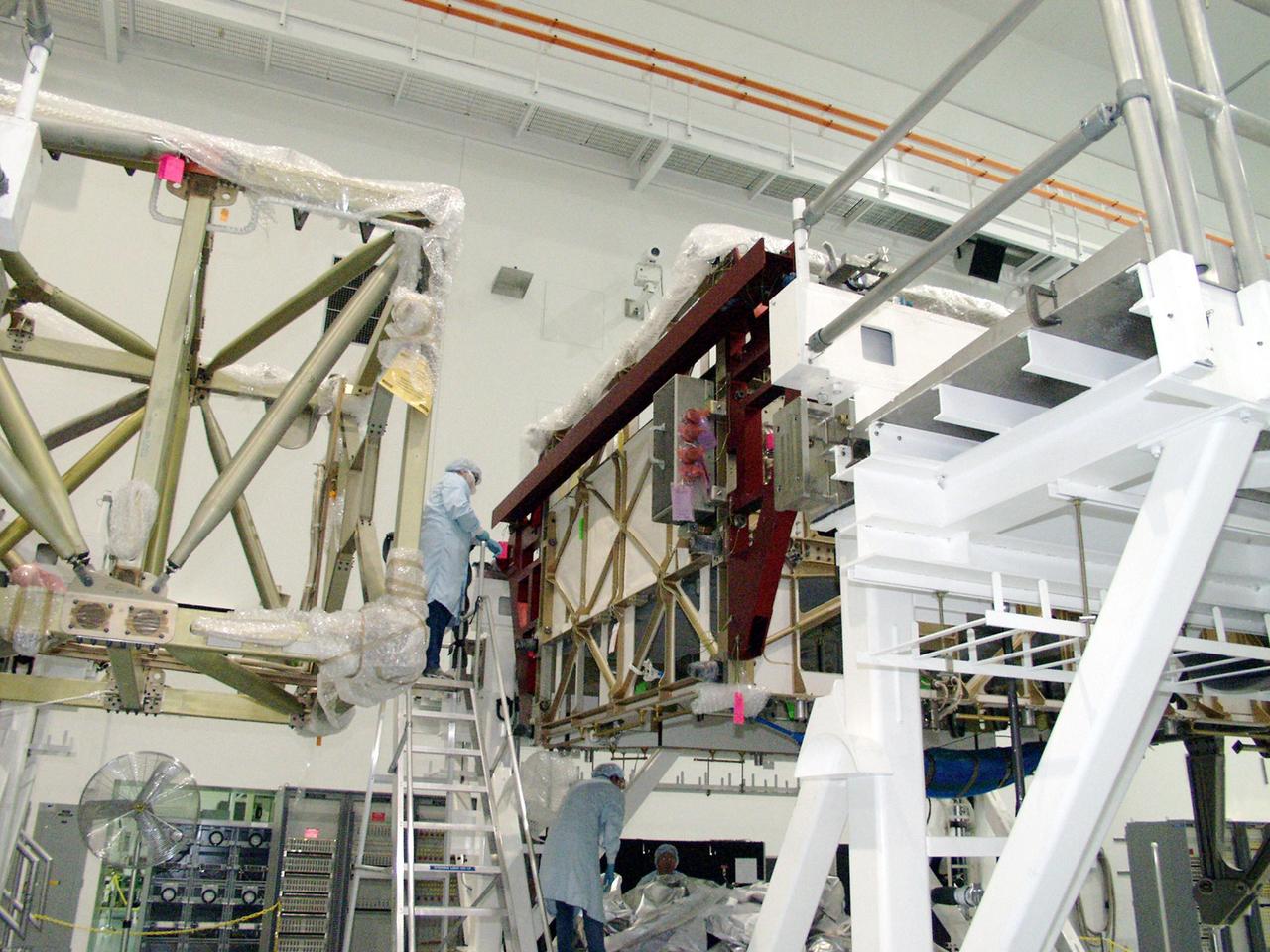
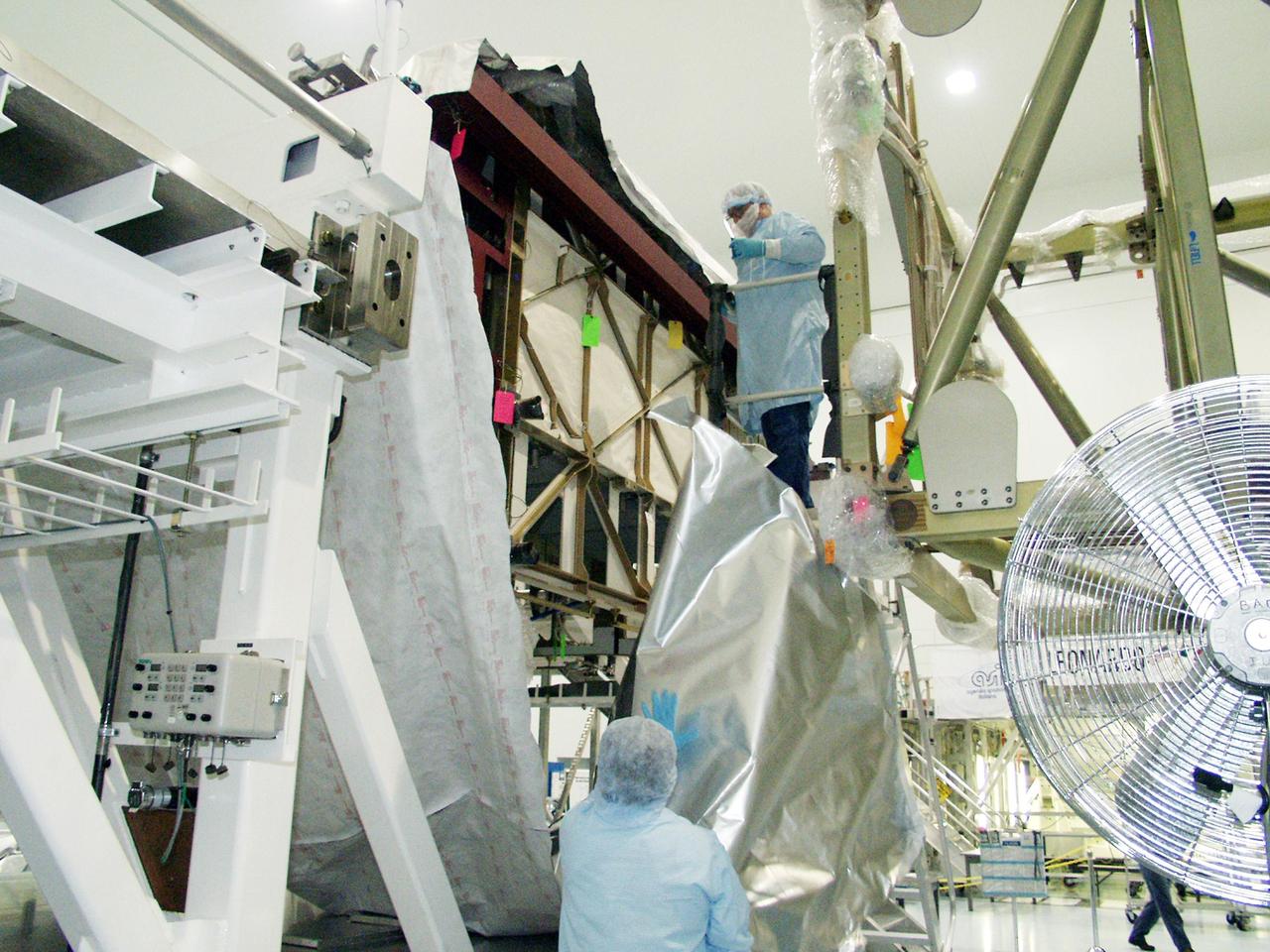
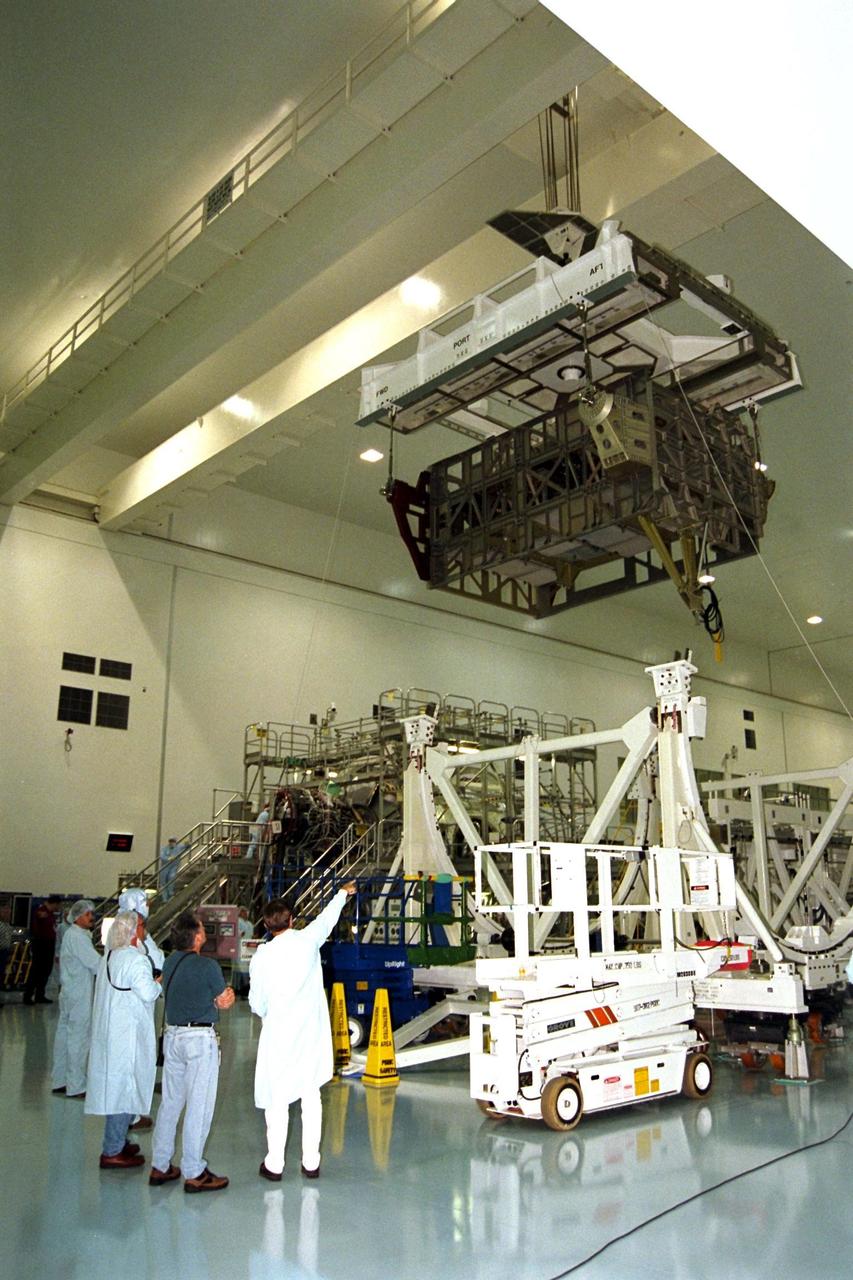
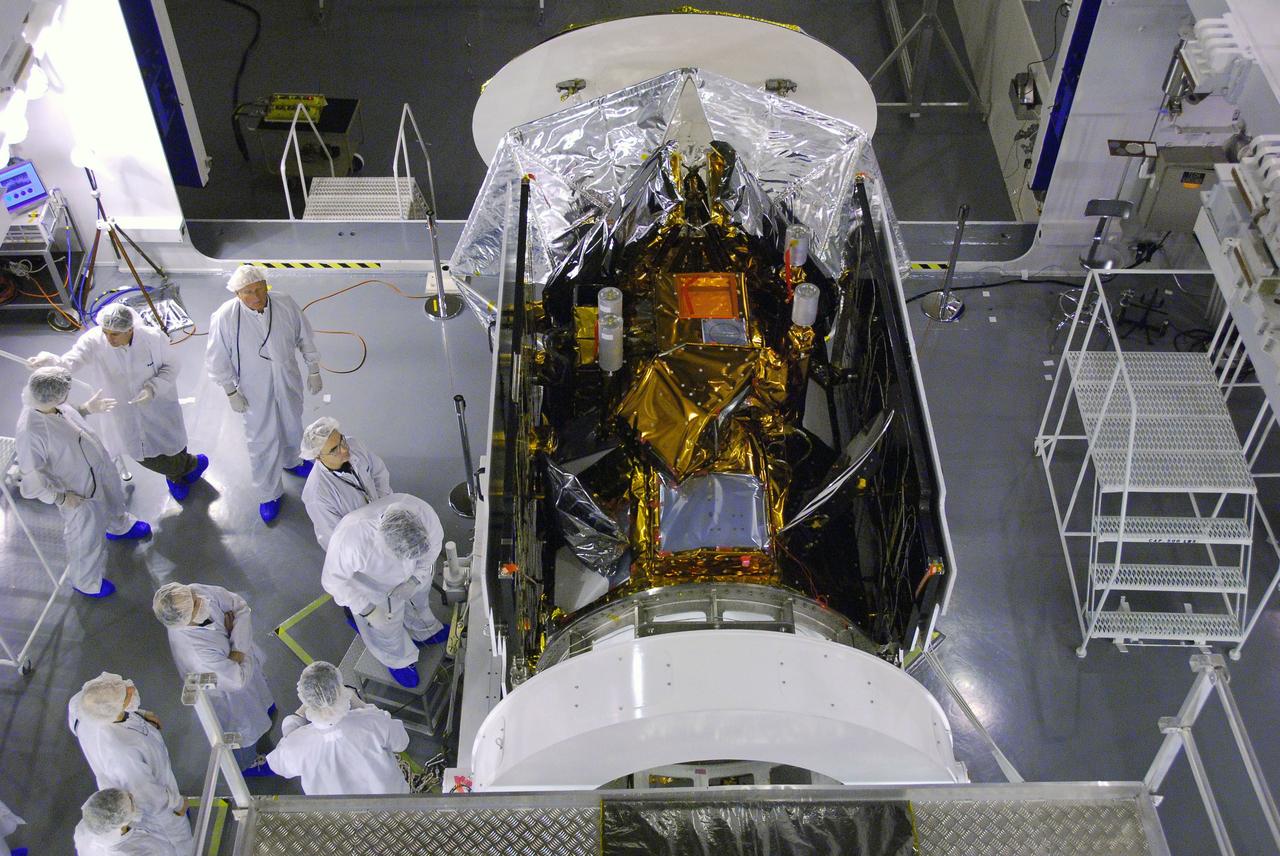
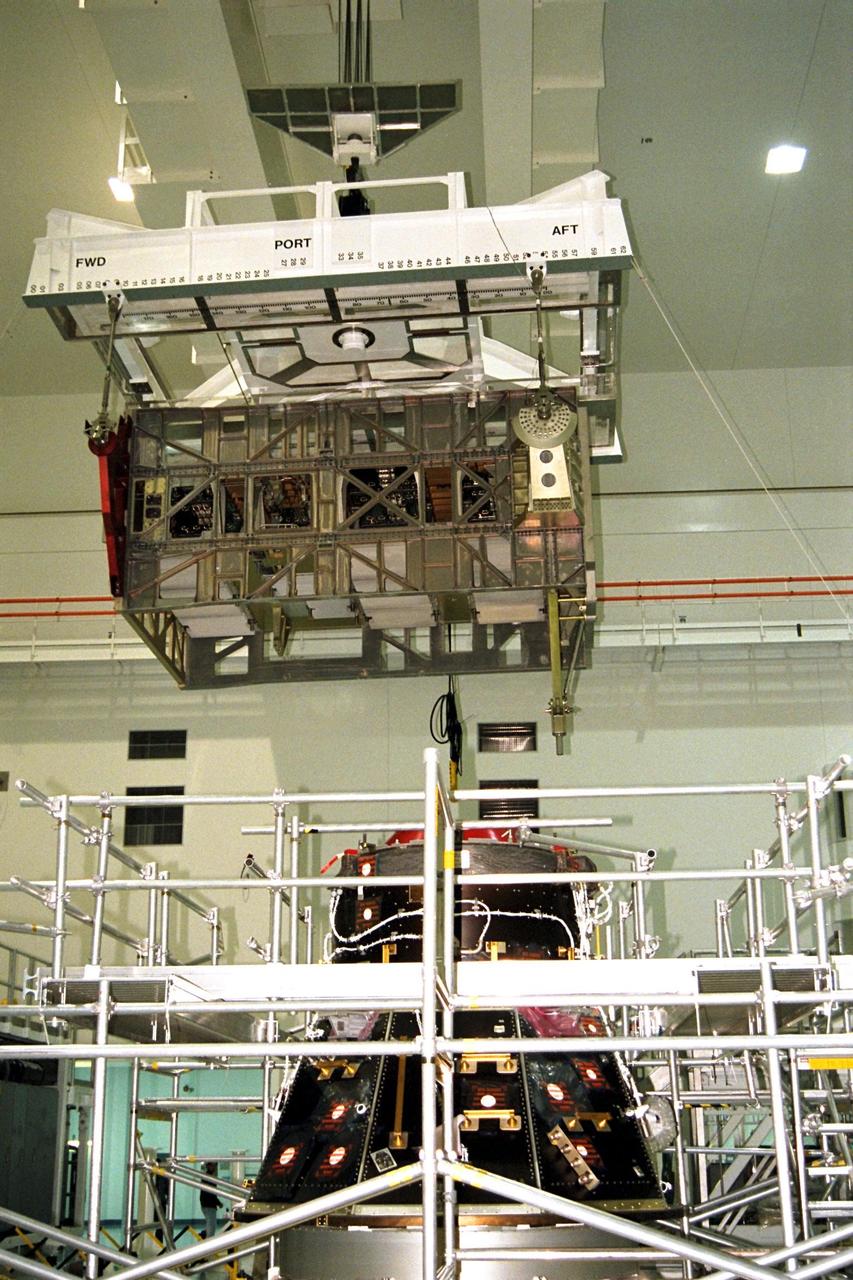
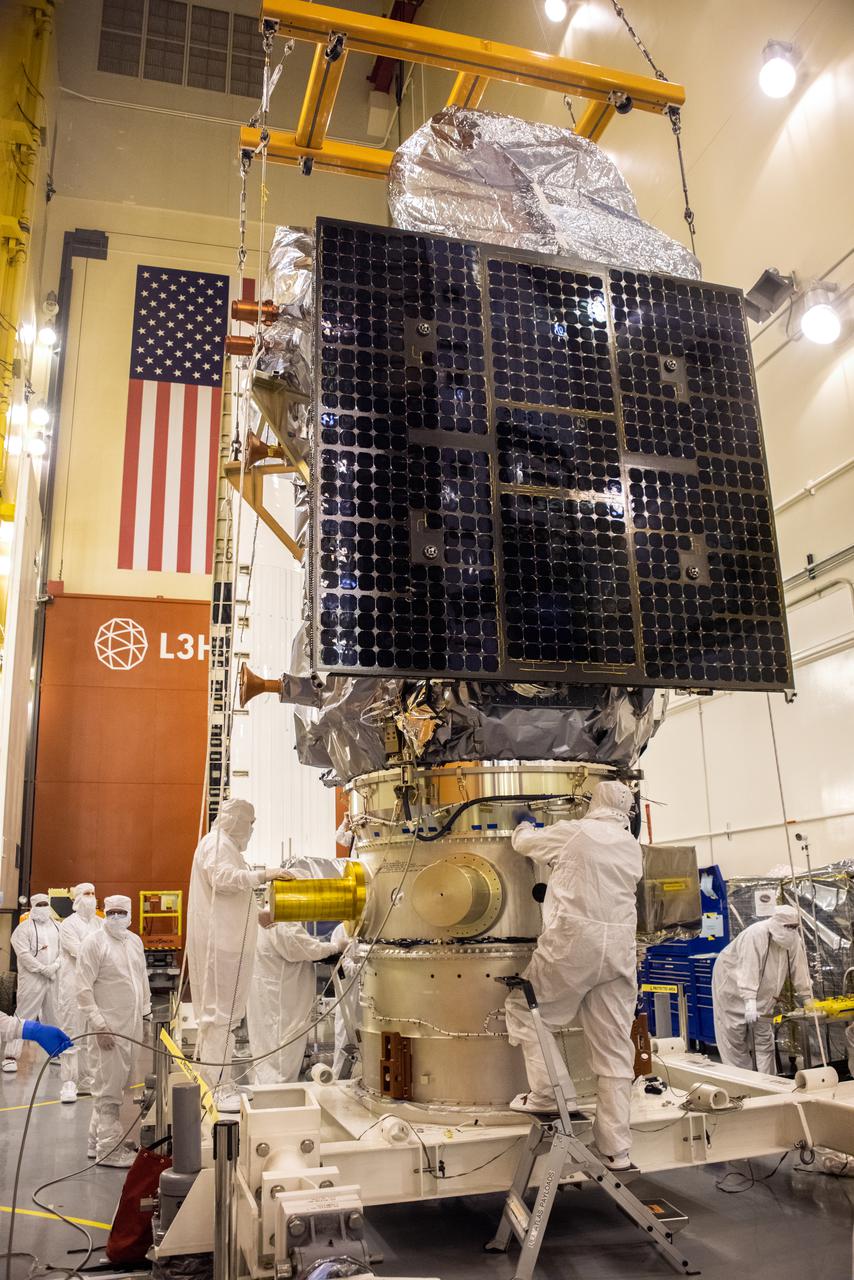
The Landsat 9 PSR to EFS C29 lift and mate inside the Integrated Processing Facility at Vandenberg Space Force Base in California.
Landsat 9 PSR to EFS C29 Lift and Mate
The Landsat 9 PSR to EFS C29 lift and mate inside the Integrated Processing Facility at Vandenberg Space Force Base in California.
Landsat 9 PSR to EFS C29 Lift and Mate
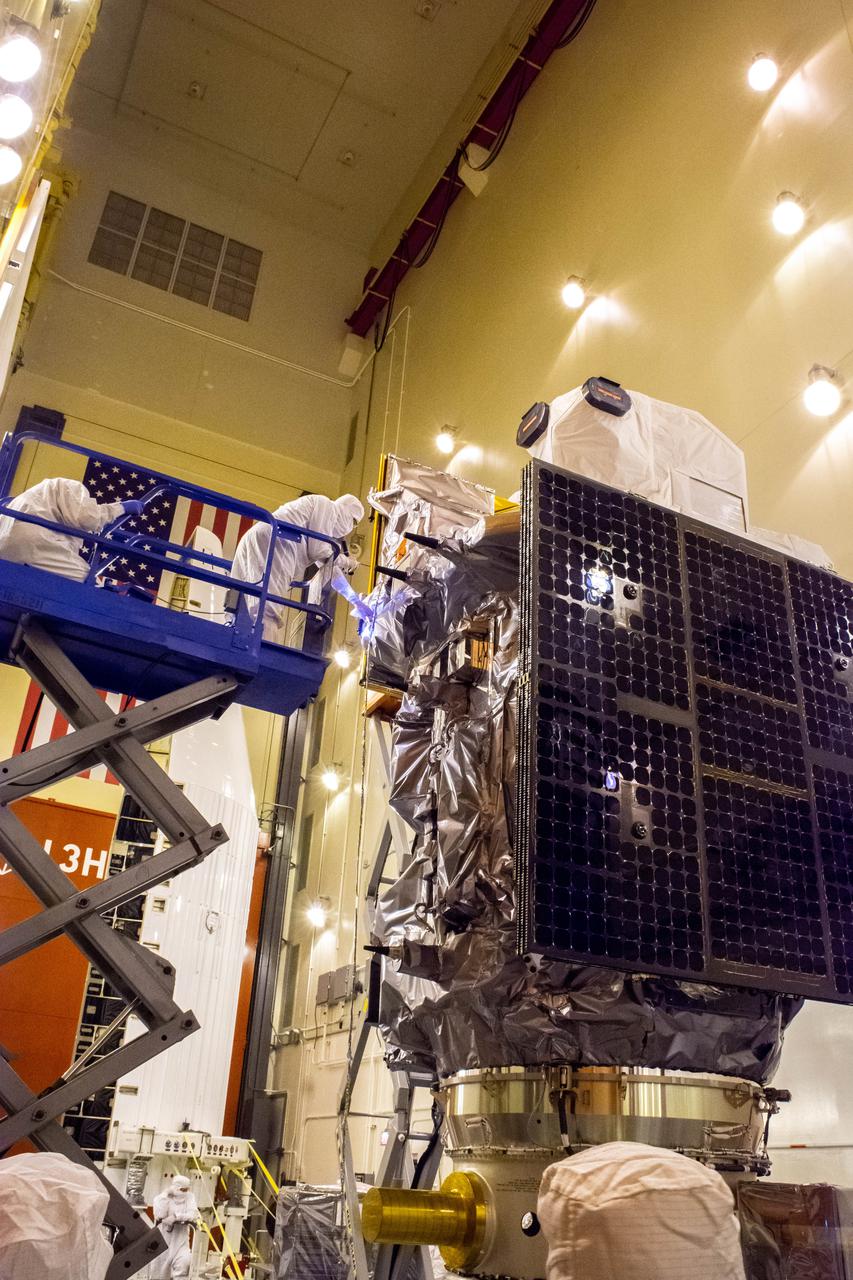
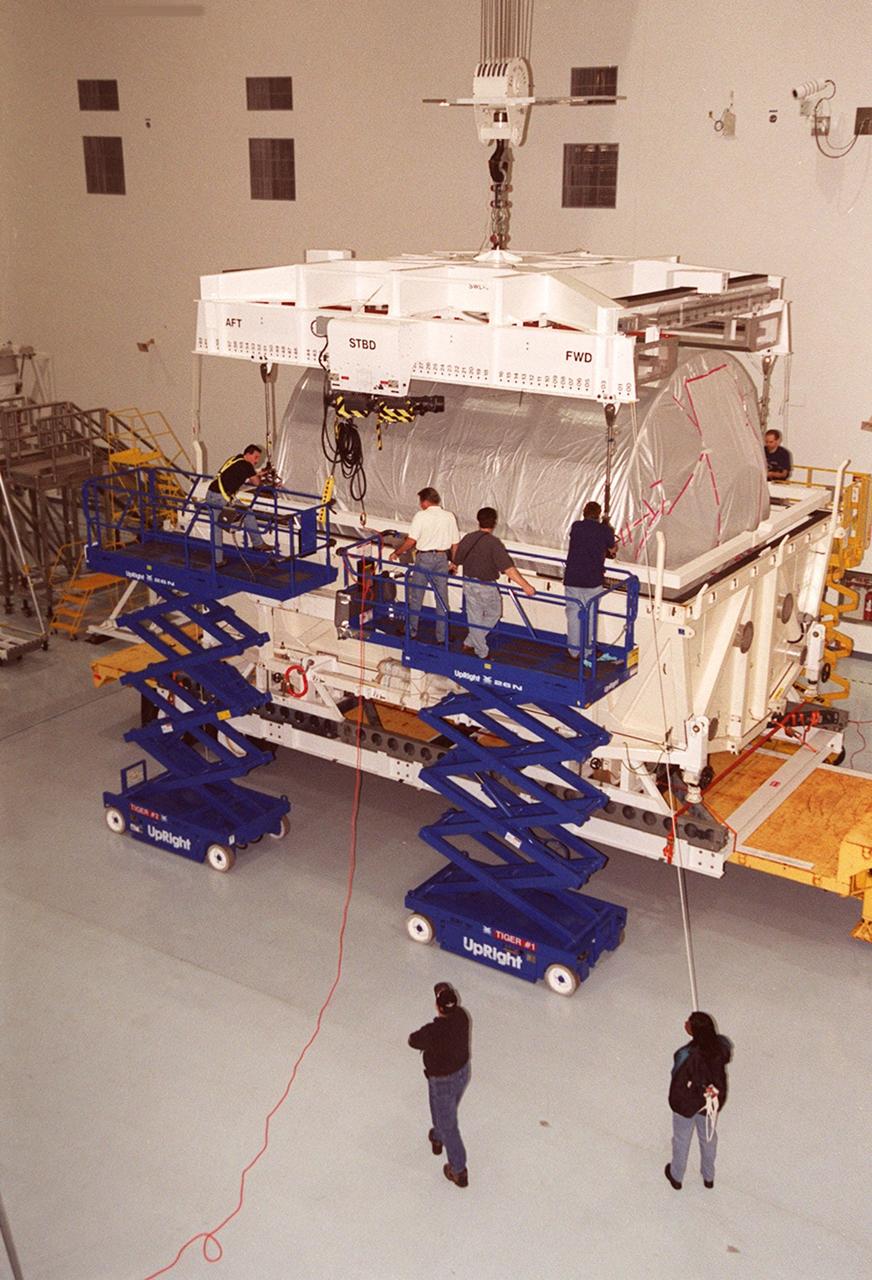
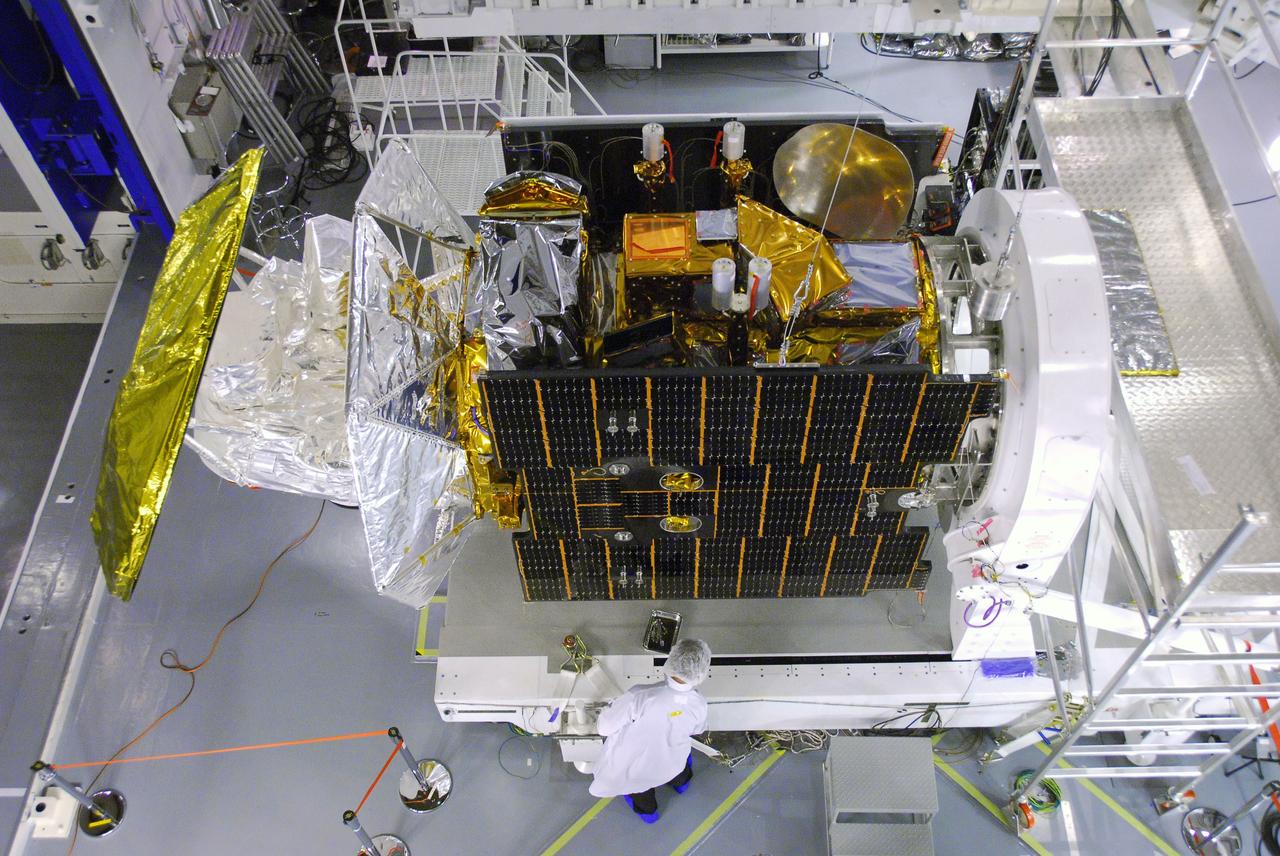
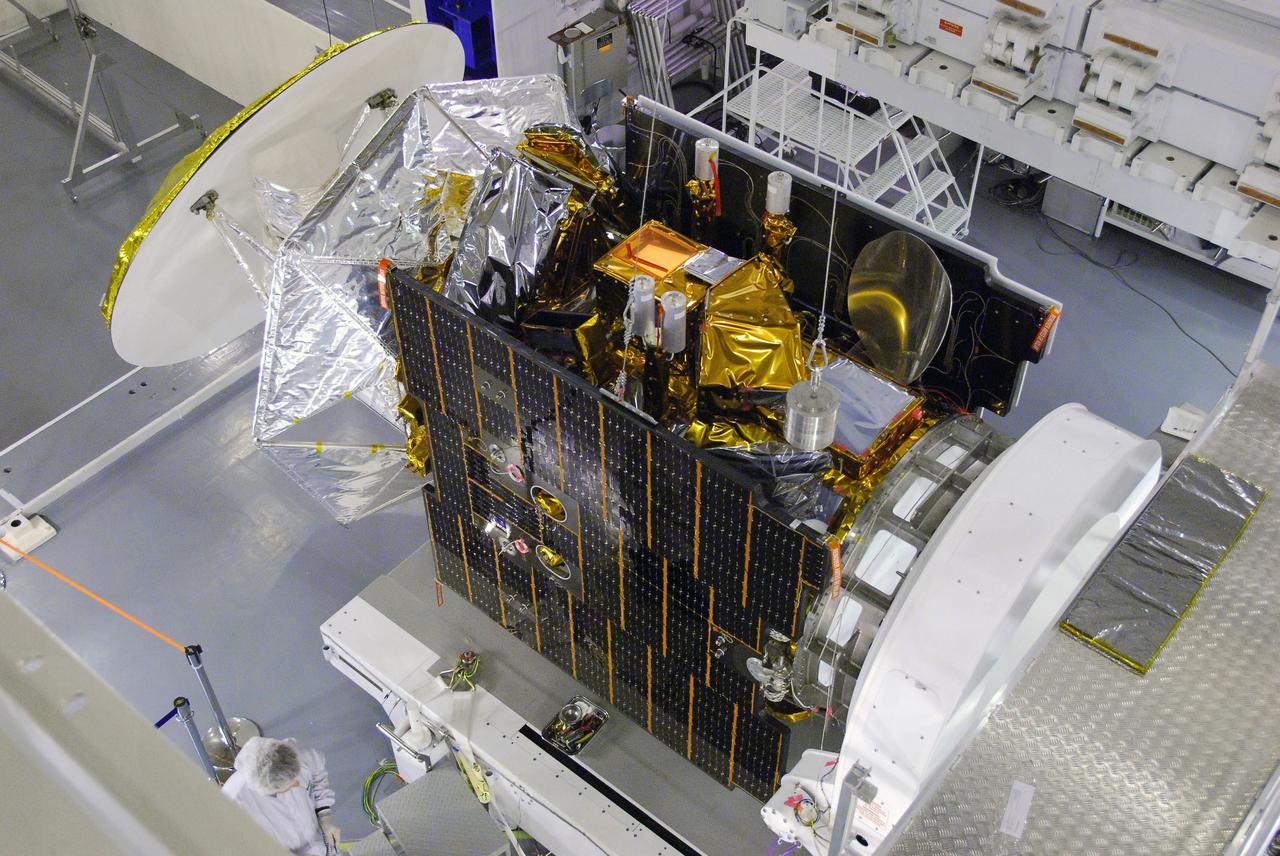
The Landsat 9 spacecraft (observatory) undergoes breakover operations inside the Integrated Processing Facility at Vandenberg Space Force Base in California.
Landsat 9 Spacecraft (Observatory) Breakover Operations
The Landsat 9 PSR to EFS C29 lift and mate inside the Integrated Processing Facility at Vandenberg Space Force Base in California.
Landsat 9 PSR to EFS C29 Lift and Mate
The Landsat 9 PSR to EFS C29 lift and mate inside the Integrated Processing Facility at Vandenberg Space Force Base in California.
Landsat 9 PSR to EFS C29 Lift and Mate
The Landsat 9 PSR to EFS C29 lift and mate inside the Integrated Processing Facility at Vandenberg Space Force Base in California.
Landsat 9 PSR to EFS C29 Lift and Mate
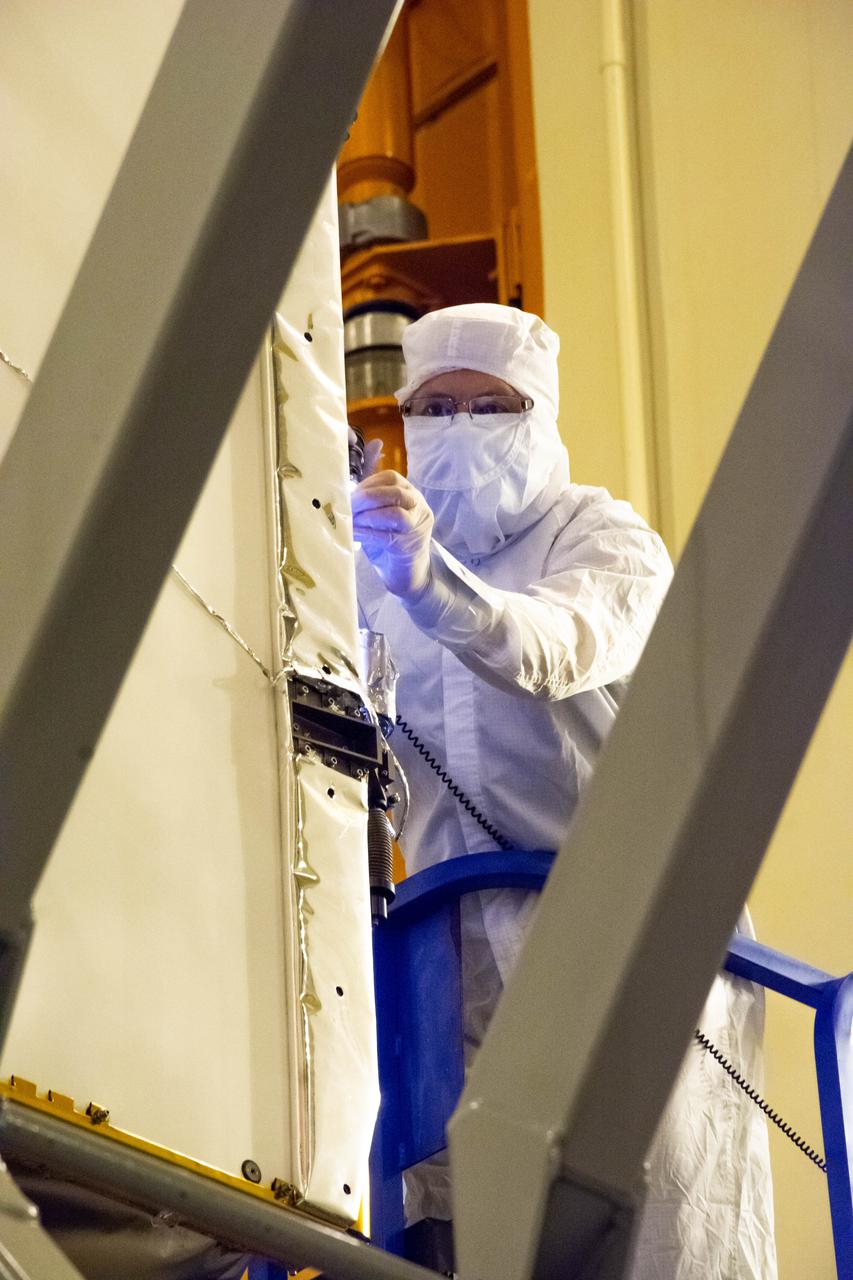
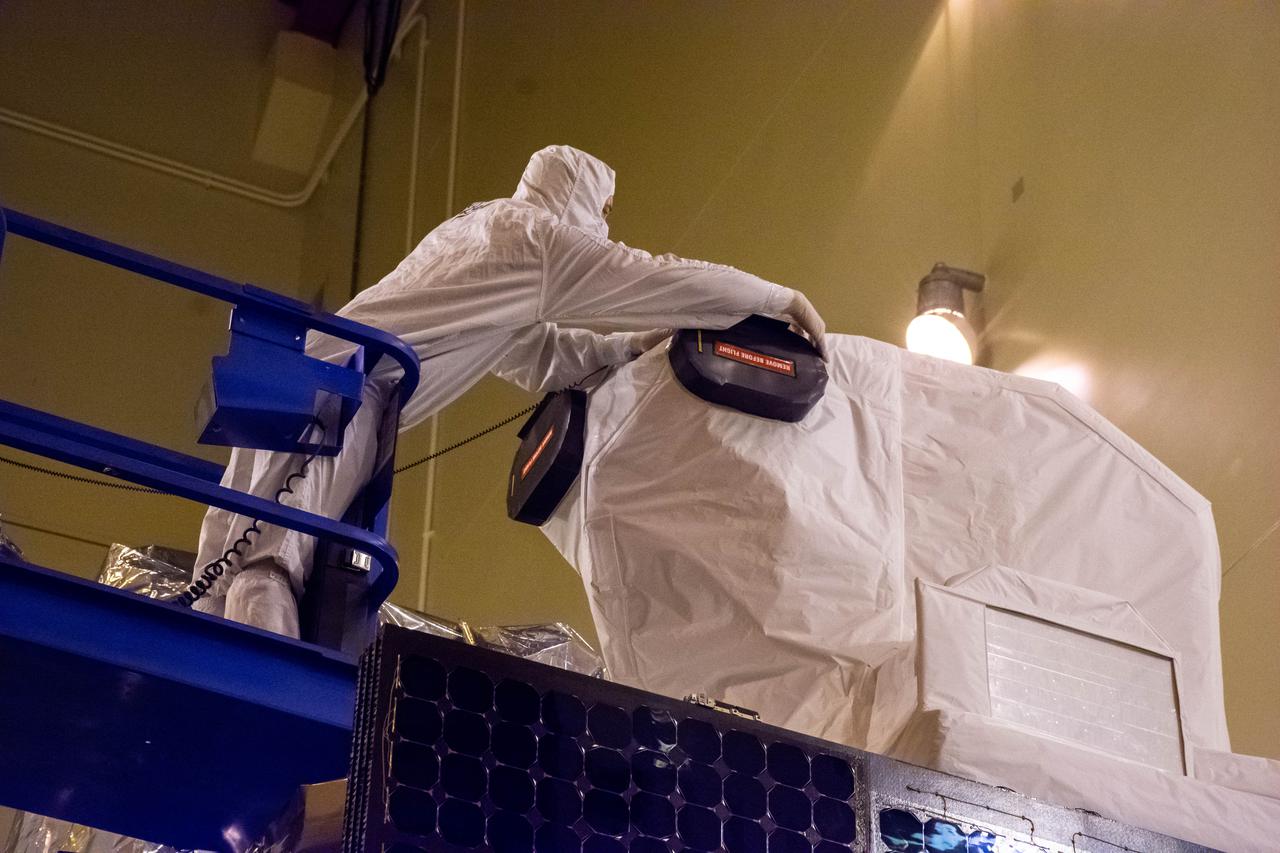
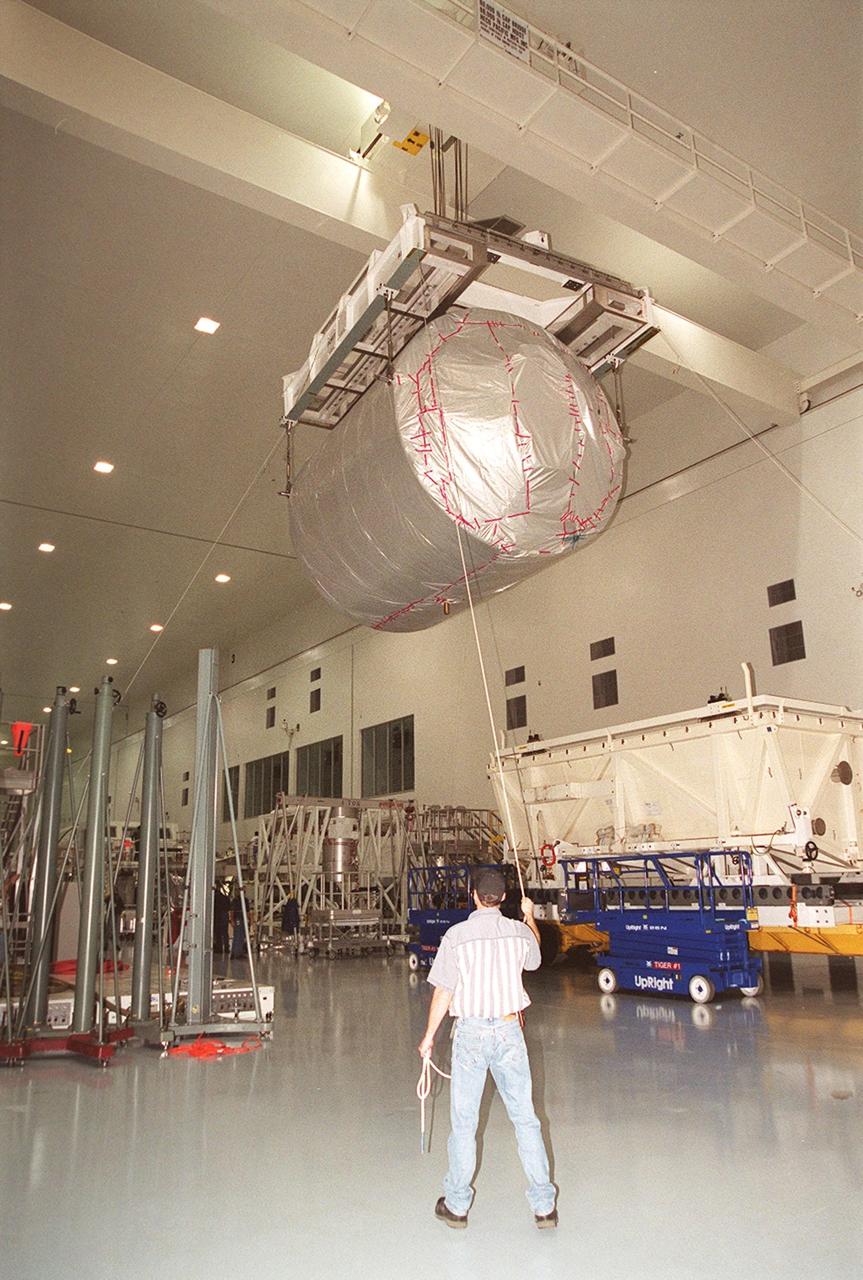
The Landsat 9 spacecraft (observatory) cover is removed inside the Integrated Processing Facility at Vandenberg Space Force Base in California.
Landsat 9 Spacecraft (Observatory) Cover Removal
The Landsat 9 EFS is mated to the C29 inside the Integrated Processing Facility at Vandenberg Space Force Base in California.
Landsat 9 EFS Mate to C29
The Landsat 9 PSR to EFS C29 lift and mate inside the Integrated Processing Facility at Vandenberg Space Force Base in California.
Landsat 9 PSR to EFS C29 Lift and Mate
The Landsat 9 EFS is mated to the C29 inside the Integrated Processing Facility at Vandenberg Space Force Base in California.
Landsat 9 EFS Mate to C29
The Landsat 9 PSR to EFS C29 lift and mate inside the Integrated Processing Facility at Vandenberg Space Force Base in California.
Landsat 9 PSR to EFS C29 Lift and Mate
The Landsat 9 PSR to EFS C29 lift and mate inside the Integrated Processing Facility at Vandenberg Space Force Base in California.
Landsat 9 PSR to EFS C29 Lift and Mate
The Landsat 9 EFS is mated to the C29 inside the Integrated Processing Facility at Vandenberg Space Force Base in California.
Landsat 9 EFS Mate to C29
The Landsat 9 PSR to EFS C29 lift and mate inside the Integrated Processing Facility at Vandenberg Space Force Base in California.
Landsat 9 PSR to EFS C29 Lift and Mate
The Landsat 9 spacecraft (observatory) undergoes breakover operations inside the Integrated Processing Facility at Vandenberg Space Force Base in California.
Landsat 9 Spacecraft (Observatory) Breakover Operations
The Landsat 9 EFS is mated to the C29 inside the Integrated Processing Facility at Vandenberg Space Force Base in California.
Landsat 9 EFS Mate to C29
The Landsat 9 PSR to EFS C29 lift and mate inside the Integrated Processing Facility at Vandenberg Space Force Base in California.
Landsat 9 PSR to EFS C29 Lift and Mate
The Landsat 9 PSR to EFS C29 lift and mate inside the Integrated Processing Facility at Vandenberg Space Force Base in California.
Landsat 9 PSR to EFS C29 Lift and Mate
The Landsat 9 spacecraft (observatory) undergoes breakover operations inside the Integrated Processing Facility at Vandenberg Space Force Base in California.
Landsat 9 Spacecraft (Observatory) Breakover Operations
The Landsat 9 PSR to EFS C29 lift and mate inside the Integrated Processing Facility at Vandenberg Space Force Base in California.
Landsat 9 PSR to EFS C29 Lift and Mate
The Landsat 9 PSR to EFS C29 lift and mate inside the Integrated Processing Facility at Vandenberg Space Force Base in California.
Landsat 9 PSR to EFS C29 Lift and Mate
The Landsat 9 spacecraft (observatory) undergoes breakover operations inside the Integrated Processing Facility at Vandenberg Space Force Base in California.
Landsat 9 Spacecraft (Observatory) Breakover Operations
The Landsat 9 PSR to EFS C29 lift and mate inside the Integrated Processing Facility at Vandenberg Space Force Base in California.
Landsat 9 PSR to EFS C29 Lift and Mate
The Landsat 9 spacecraft (observatory) undergoes breakover operations inside the Integrated Processing Facility at Vandenberg Space Force Base in California.
Landsat 9 Spacecraft (Observatory) Breakover Operations
The Landsat 9 PSR to EFS C29 lift and mate inside the Integrated Processing Facility at Vandenberg Space Force Base in California.
Landsat 9 PSR to EFS C29 Lift and Mate
The Landsat 9 PSR to EFS C29 lift and mate inside the Integrated Processing Facility at Vandenberg Space Force Base in California.
Landsat 9 PSR to EFS C29 Lift and Mate
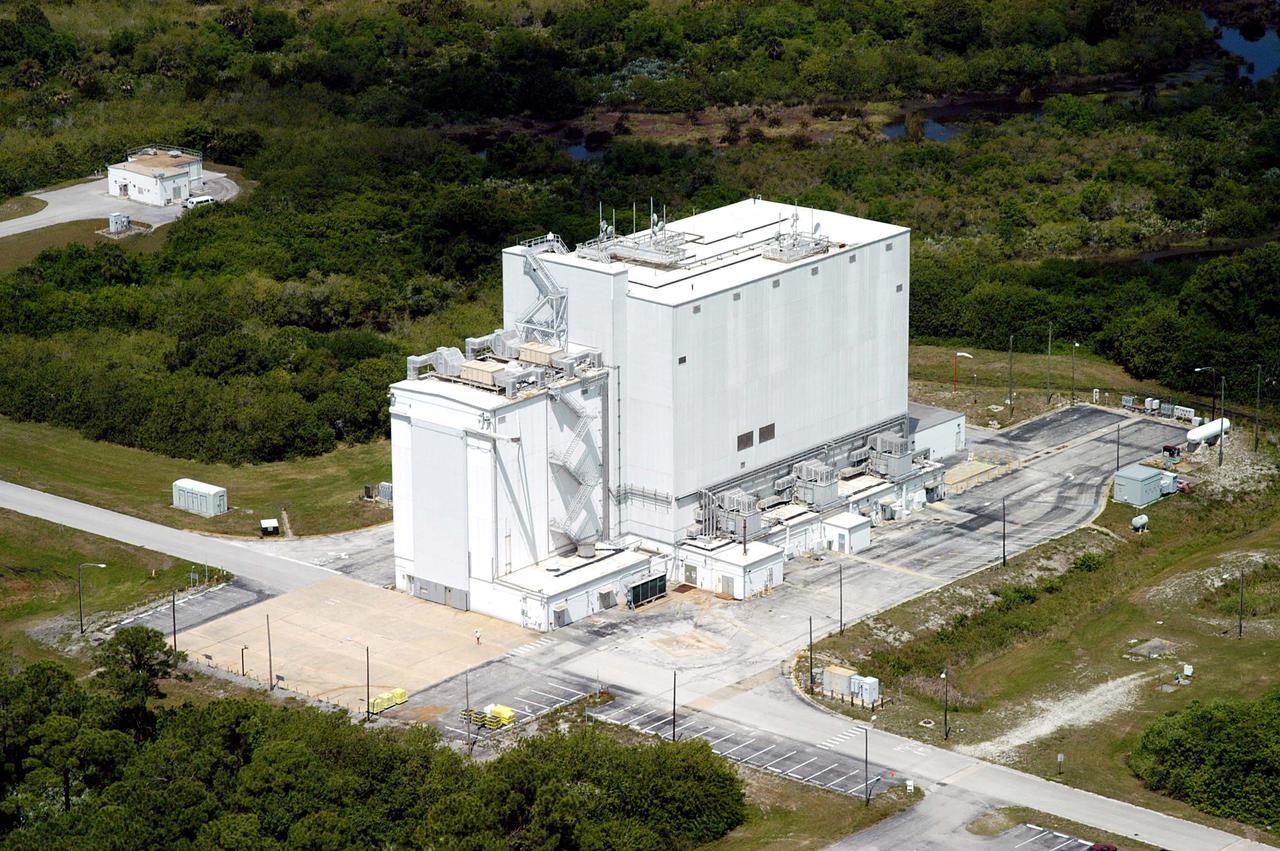
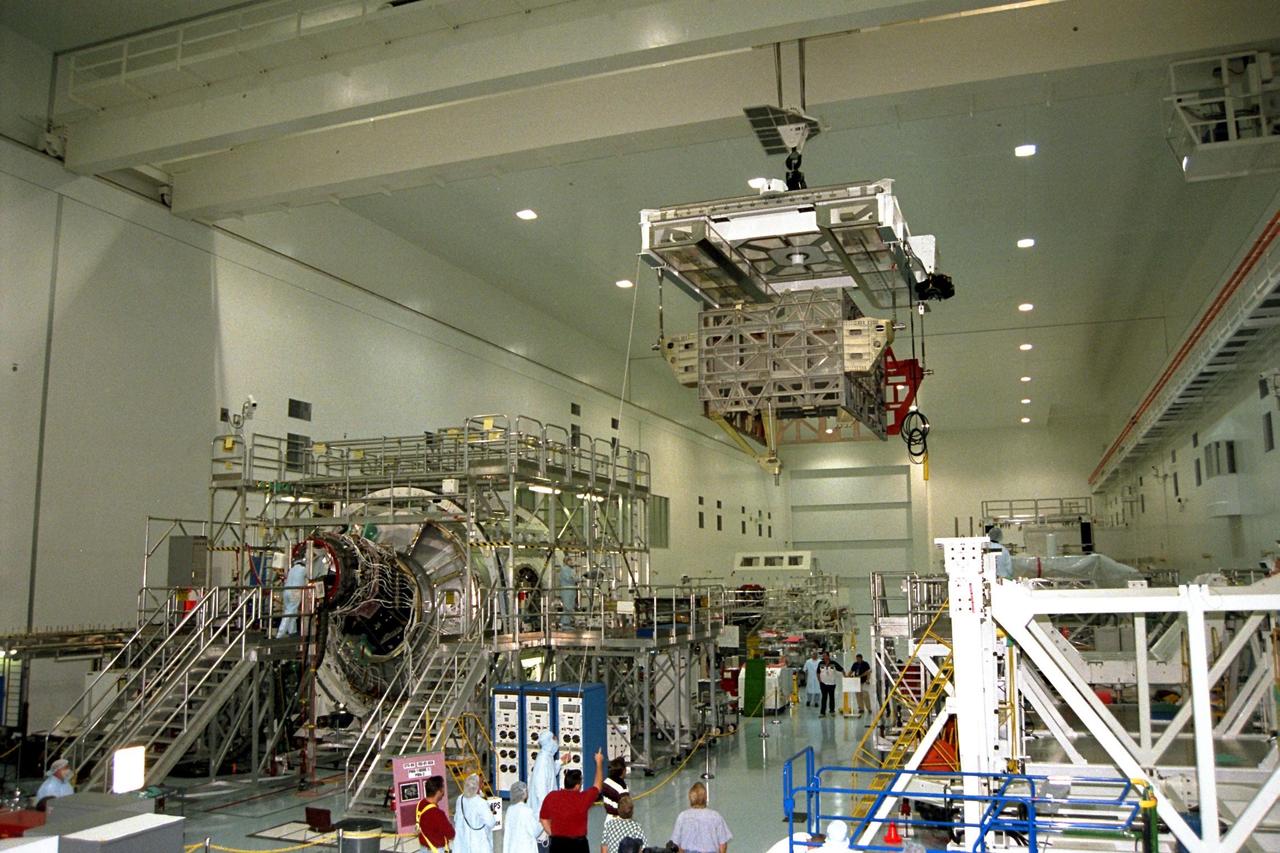
CAPE CANAVERAL, Fla. -- An aerial photo of the Vertical Processing Facility, which processes and integrates vertical payloads and upper stages before launch. It is located in the NASA Kennedy Space Center Industrial Area.
KSC-04pd0919
CAPE CANAVERAL, Fla. -- An aerial photo of the Vertical Processing Facility, which processes and integrates vertical payloads and upper stages before launch. It is located in the NASA Kennedy Space Center Industrial Area.
KSC-04pd0918
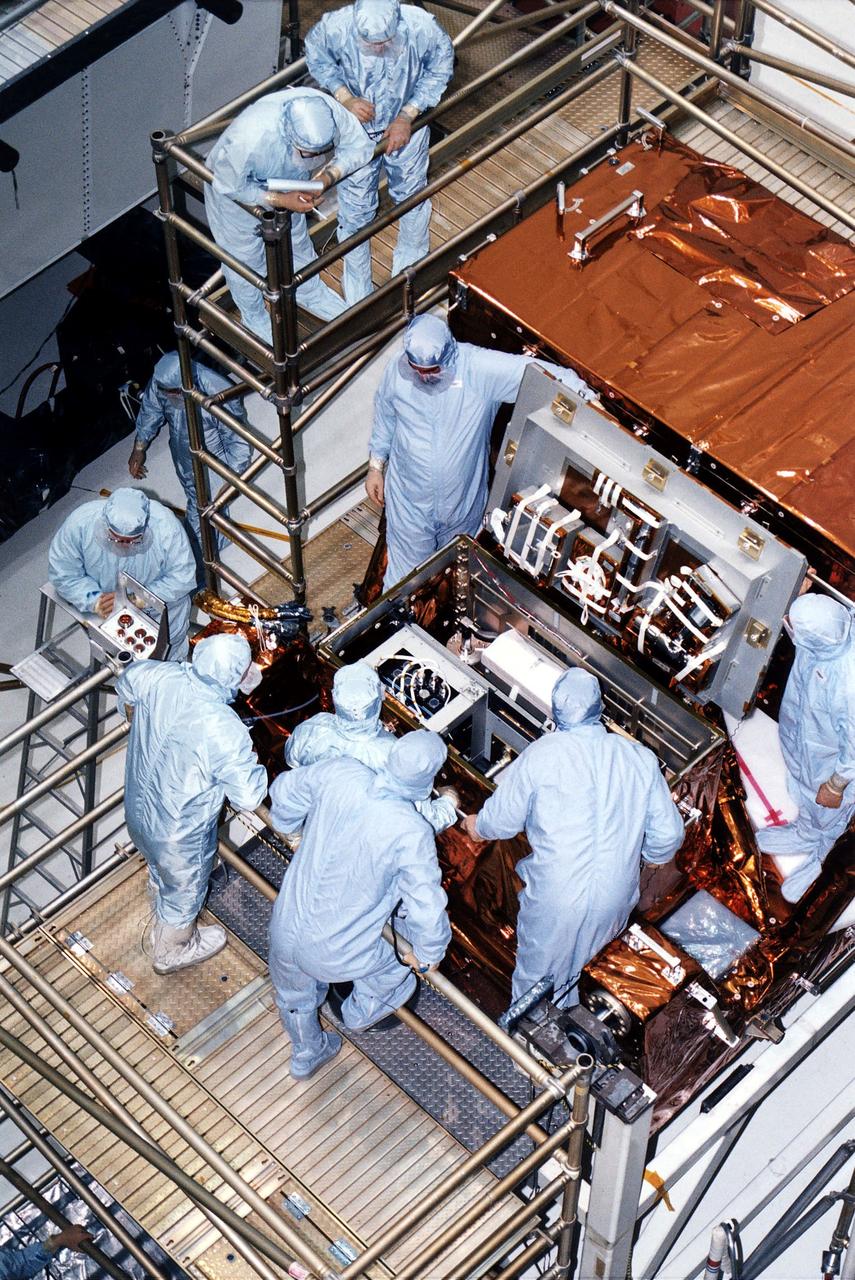
KENNEDY SPACE CENTER, FLA. -  STS-82 Mission Specialist Gregory J. Harbaugh, at top, inspects part of the Flight Support System during the Crew Equipment Integration Test (CEIT) at KSC's Vertical Processing Facility.  Harbaugh and the other six STS-82 crew members will conduct the second Hubble Space Telescope (HST) servicing mission aboard the Space Shuttle Discovery.  Harbaugh will be one of four spacewalkers.  Liftoff aboard Discovery is scheduled Feb. 11.
KENNEDY SPACE CENTER, FLA. - STS-82 Mission Specialist Gregory J. Harbaugh, at top, inspects part of the Flight Support System during the Crew Equipment Integration Test (CEIT) at KSC's Vertical Processing Facility. Harbaugh and the other six STS-82 crew members will conduct the second Hubble Space Telescope (HST) servicing mission aboard the Space Shuttle Discovery. Harbaugh will be one of four spacewalkers. Liftoff aboard Discovery is scheduled Feb. 11.
KENNEDY SPACE CENTER, FLA. -  STS-82 crew members and workers at KSC's Vertical Processing Facility look at hardware in the Multipurpose ORU (Orbital Replacement Unit) Protective Enclsoure, also called MOPE.  The crew is participating in the Crew Equipment Integration Test (CEIT).    Liftoff of STS-82, the second Hubble Space Telescope (HST) servicing mission, is scheduled Feb. 11 aboard Discovery with a crew of seven.
KENNEDY SPACE CENTER, FLA. - STS-82 crew members and workers at KSC's Vertical Processing Facility look at hardware in the Multipurpose ORU (Orbital Replacement Unit) Protective Enclsoure, also called MOPE. The crew is participating in the Crew Equipment Integration Test (CEIT). Liftoff of STS-82, the second Hubble Space Telescope (HST) servicing mission, is scheduled Feb. 11 aboard Discovery with a crew of seven.
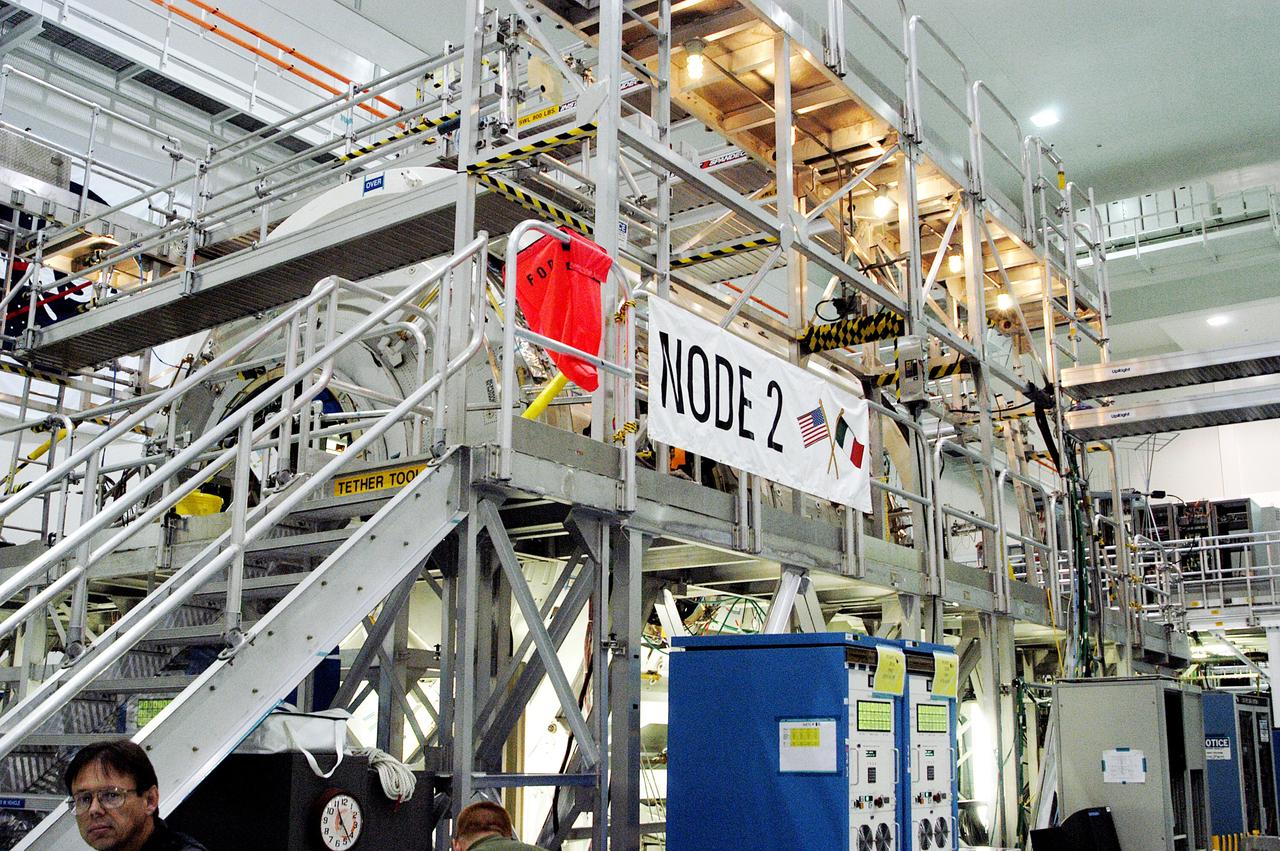
KENNEDY SPACE CENTER, FLA. - The  U.S. Node 2 is undergoing a Multi-Element Integrated Test (MEIT) in the Space Station Processing Facility.  Node 2 attaches to the end of the U.S. Lab on the ISS and provides attach locations for the Japanese laboratory, European laboratory, the Centrifuge Accommodation Module and, eventually, Multipurpose Logistics Modules. It will provide the primary docking location for the Shuttle when a pressurized mating adapter is attached to Node 2.  Installation of the module will complete the U.S. Core of the ISS.
KENNEDY SPACE CENTER, FLA. - The U.S. Node 2 is undergoing a Multi-Element Integrated Test (MEIT) in the Space Station Processing Facility. Node 2 attaches to the end of the U.S. Lab on the ISS and provides attach locations for the Japanese laboratory, European laboratory, the Centrifuge Accommodation Module and, eventually, Multipurpose Logistics Modules. It will provide the primary docking location for the Shuttle when a pressurized mating adapter is attached to Node 2. Installation of the module will complete the U.S. Core of the ISS.
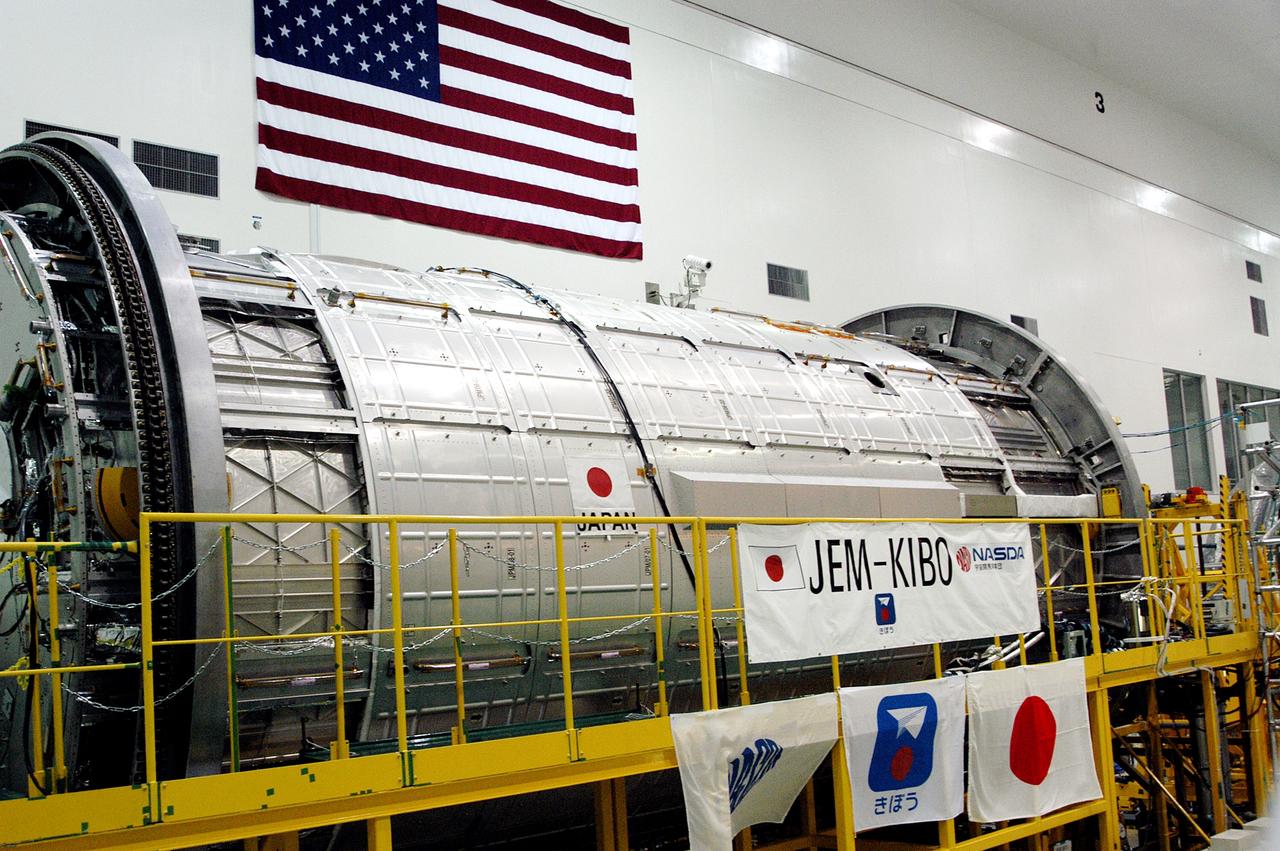
KENNEDY SPACE CENTER, FLA. - The Japanese Experiment Module (JEM), named Kibo (Hope), is undergoing a Multi-Element Integrated Test (MEIT) in the Space Station Processing Facility.  Developed by the National Space Development Agency of Japan (NASDA), the JEM is Japan's primary contribution to the Station. It will enhance the unique research capabilities of the orbiting complex by providing an additional environment for astronauts to conduct science experiments.
KENNEDY SPACE CENTER, FLA. - The Japanese Experiment Module (JEM), named Kibo (Hope), is undergoing a Multi-Element Integrated Test (MEIT) in the Space Station Processing Facility. Developed by the National Space Development Agency of Japan (NASDA), the JEM is Japan's primary contribution to the Station. It will enhance the unique research capabilities of the orbiting complex by providing an additional environment for astronauts to conduct science experiments.
KENNEDY SPACE CENTER, FLA. -  STS-82 crew members examine part of the Flight Support System during the Crew Equipment Integration Test (CEIT) in KSC's Vertical Processing Facility.  From left are Mission Specialists Steven L. Smith and Gregory J. Harbaugh and Payload Commander Mark C. Lee.  Liftoff of STS-82, the second Hubble Space Telescope (HST) servicing mission, is scheduled Feb. 11 aboard Discovery with a crew of seven.
KENNEDY SPACE CENTER, FLA. - STS-82 crew members examine part of the Flight Support System during the Crew Equipment Integration Test (CEIT) in KSC's Vertical Processing Facility. From left are Mission Specialists Steven L. Smith and Gregory J. Harbaugh and Payload Commander Mark C. Lee. Liftoff of STS-82, the second Hubble Space Telescope (HST) servicing mission, is scheduled Feb. 11 aboard Discovery with a crew of seven.
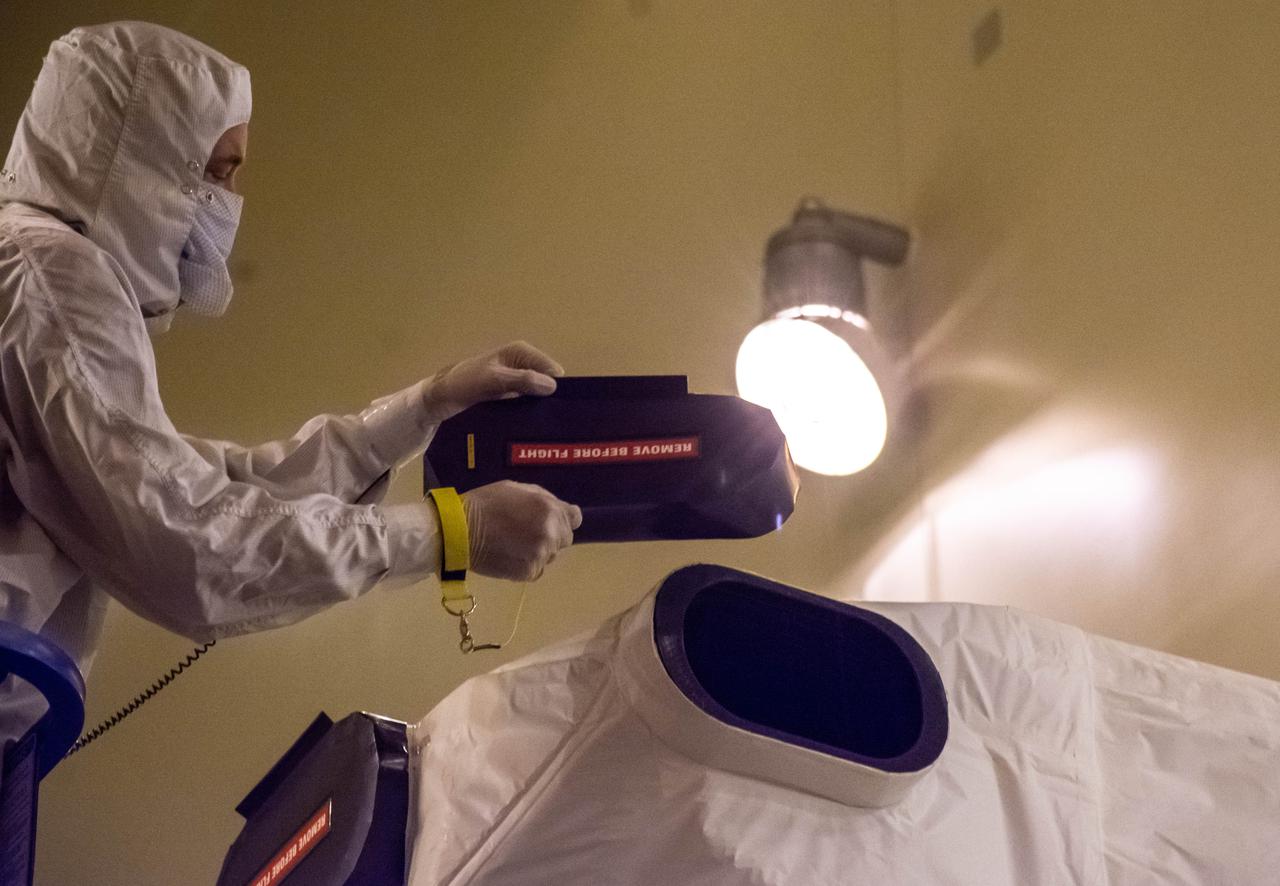
The Landsat 9 instrument cover is removed from the spacecraft inside the Integrated Processing Facility (IPF) at Vandenberg Space Force Base in California.
Landsat 9 Instrument Cover Removal
The Landsat 9 instrument cover is removed from the spacecraft inside the Integrated Processing Facility (IPF) at Vandenberg Space Force Base in California.
Landsat 9 Instrument Cover Removal
The Landsat 9 instrument cover is removed from the spacecraft inside the Integrated Processing Facility (IPF) at Vandenberg Space Force Base in California.
Landsat 9 Instrument Cover Removal
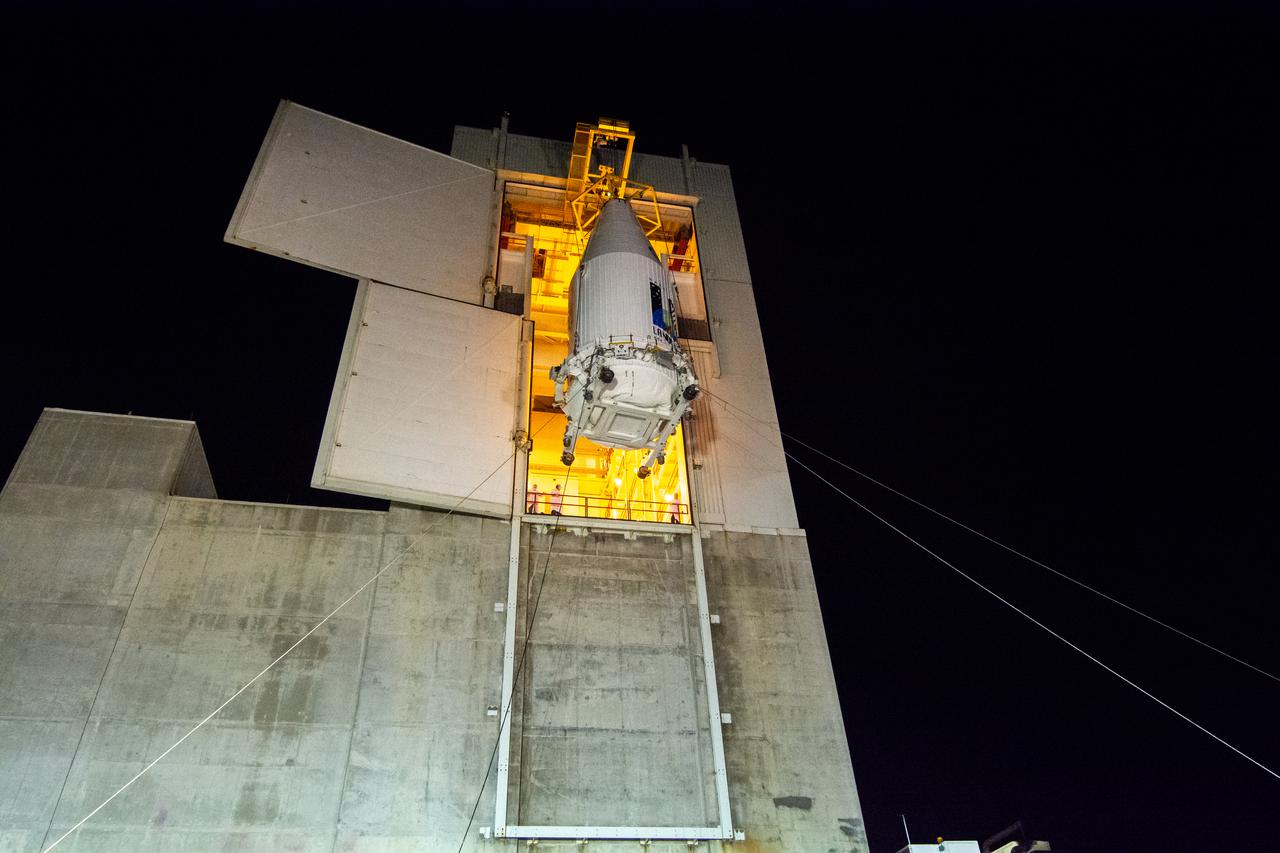
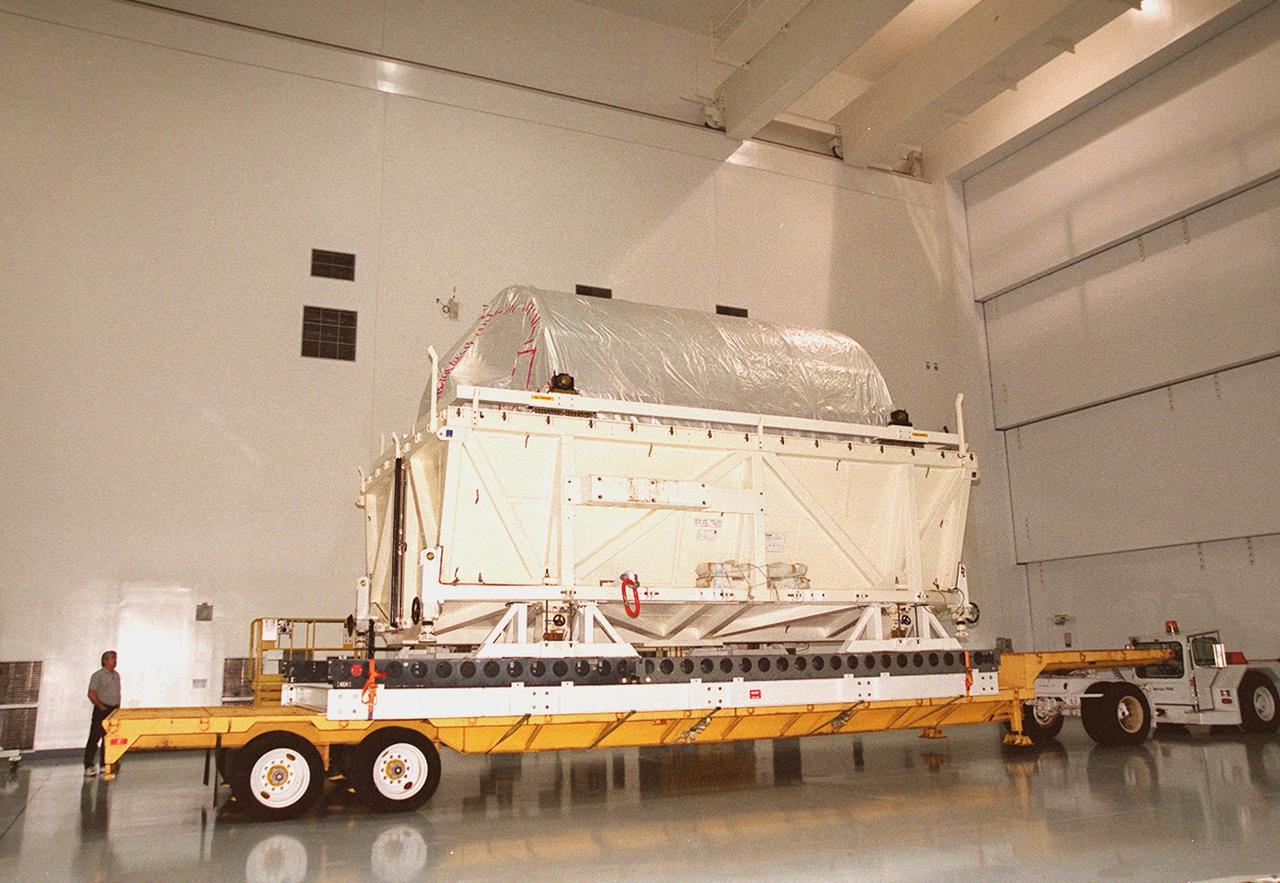
The Landsat 9 payload is hoisted out of the transfer tower at the Integration Processing Facility in preparation for transport to SLC-3 at Vandenberg Air Force Base in California.
Landsat 9 Hoist out of Transfer Tower at IPF
The Landsat 9 instrument cover is removed from the spacecraft inside the Integrated Processing Facility (IPF) at Vandenberg Space Force Base in California.
Landsat 9 Instrument Cover Removal
The Landsat 9 instrument cover is removed from the spacecraft inside the Integrated Processing Facility (IPF) at Vandenberg Space Force Base in California.
Landsat 9 Instrument Cover Removal
The Landsat 9 payload is hoisted out of the transfer tower at the Integration Processing Facility in preparation for transport to SLC-3 at Vandenberg Air Force Base in California.
Landsat 9 Hoist out of Transfer Tower at IPF
The Landsat 9 instrument cover is removed from the spacecraft inside the Integrated Processing Facility (IPF) at Vandenberg Space Force Base in California.
Landsat 9 Instrument Cover Removal
The Landsat 9 instrument cover is removed from the spacecraft inside the Integrated Processing Facility (IPF) at Vandenberg Space Force Base in California.
Landsat 9 Instrument Cover Removal
The Landsat 9 payload is hoisted out of the transfer tower at the Integration Processing Facility in preparation for transport to SLC-3 at Vandenberg Air Force Base in California.
Landsat 9 Hoist out of Transfer Tower at IPF
The Landsat 9 instrument cover is removed from the spacecraft inside the Integrated Processing Facility (IPF) at Vandenberg Space Force Base in California.
Landsat 9 Instrument Cover Removal
Engineers and technicians at NASA’s Michoud Assembly Facility in New Orleans have structurally mated the first of four RS-25 engines to the core stage for NASA’s Space Launch System rocket that will help power the first Artemis mission to the Moon. Integration of the RS-25 engine to the recently completed core stage structure is a collaborative, multistep process for NASA and its partners Boeing, the core stage lead contractor, and Aerojet Rocketdyne, the RS-25 engine lead contractor. To complete the installation, the technicians will now integrate the propulsion and electrical systems. The installation process will be repeated for each of the four RS-25 engines.  Offering more payload mass, volume capability and energy to speed missions through space, the SLS rocket, along with NASA’s Gateway in lunar orbit and Orion, is part of NASA’s backbone for deep space exploration and the Artemis lunar program. No other rocket is capable of carrying astronauts in Orion around the Moon in a single mission.
NASA Attaches First of 4 RS-25 Engines to Artemis I Rocket Stage
Engineers and technicians at NASA’s Michoud Assembly Facility in New Orleans have structurally mated the first of four RS-25 engines to the core stage for NASA’s Space Launch System rocket that will help power the first Artemis mission to the Moon. Integration of the RS-25 engine to the recently completed core stage structure is a collaborative, multistep process for NASA and its partners Boeing, the core stage lead contractor, and Aerojet Rocketdyne, the RS-25 engine lead contractor. To complete the installation, the technicians will now integrate the propulsion and electrical systems. The installation process will be repeated for each of the four RS-25 engines.  Offering more payload mass, volume capability and energy to speed missions through space, the SLS rocket, along with NASA’s Gateway in lunar orbit and Orion, is part of NASA’s backbone for deep space exploration and the Artemis lunar program. No other rocket is capable of carrying astronauts in Orion around the Moon in a single mission.
NASA Attaches First of 4 RS-25 Engines to Artemis I Rocket Stage
Engineers and technicians at NASA’s Michoud Assembly Facility in New Orleans have structurally mated the first of four RS-25 engines to the core stage for NASA’s Space Launch System rocket that will help power the first Artemis mission to the Moon. Integration of the RS-25 engine to the recently completed core stage structure is a collaborative, multistep process for NASA and its partners Boeing, the core stage lead contractor, and Aerojet Rocketdyne, the RS-25 engine lead contractor. To complete the installation, the technicians will now integrate the propulsion and electrical systems. The installation process will be repeated for each of the four RS-25 engines.  Offering more payload mass, volume capability and energy to speed missions through space, the SLS rocket, along with NASA’s Gateway in lunar orbit and Orion, is part of NASA’s backbone for deep space exploration and the Artemis lunar program. No other rocket is capable of carrying astronauts in Orion around the Moon in a single mission.
NASA Attaches First of 4 RS-25 Engines to Artemis I Rocket Stage
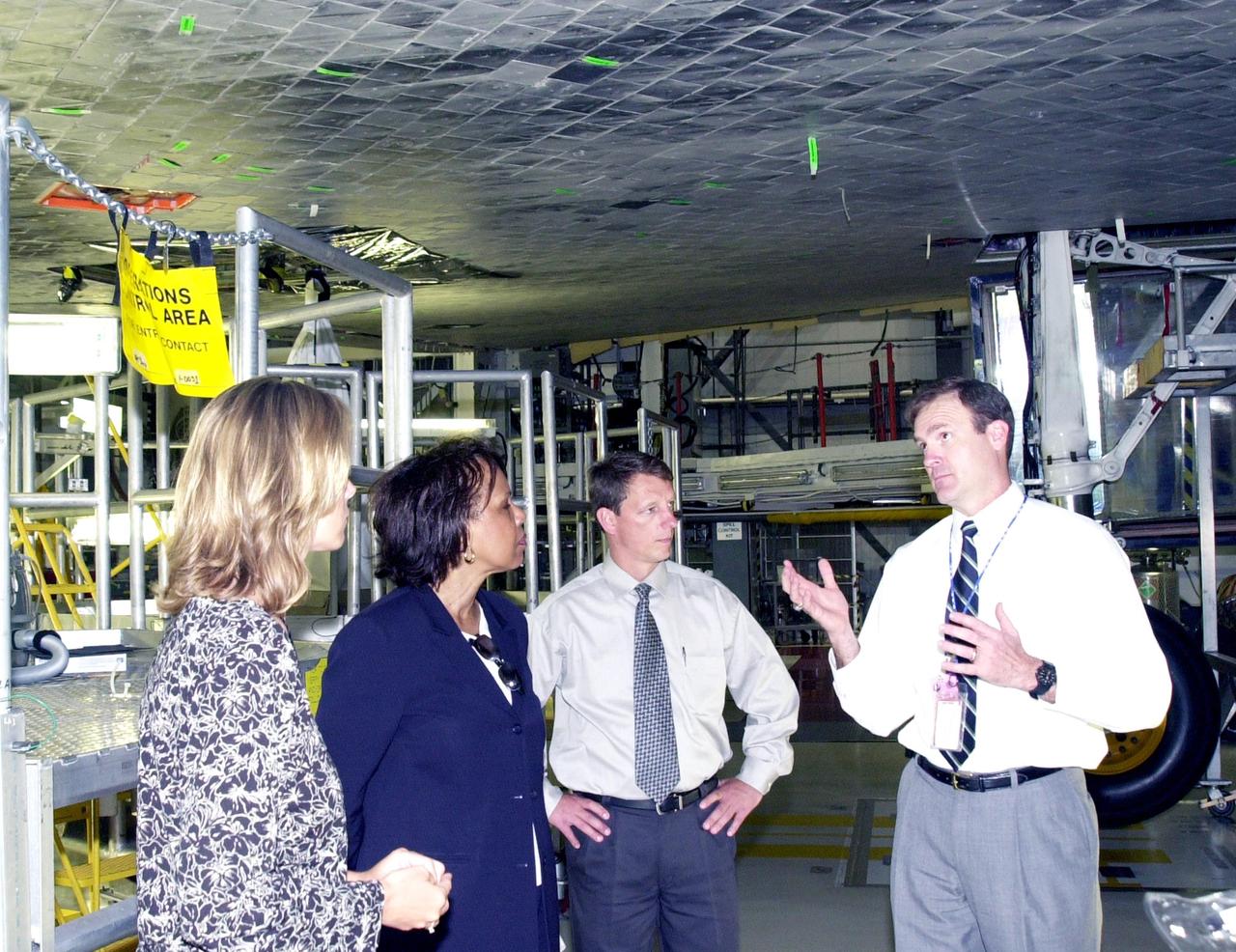
KENNEDY SPACE CENTER, FLA. - In the Orbiter Processing Facility, FAA Administrator Patti Smith (second from left) listens to Jim Halsell (right), manager of  KSC's Space Shuttle Program Launch Integration,  during a tour of KSC.
KSC-02pd0695
The Photovoltaic Module 1 Integrated Equipment Assembly (IEA) is moved through Kennedy Space Center’s Space Station Processing Facility (SSPF) toward the workstand where it will be processed for flight on STS-97, scheduled for launch in April 1999. The IEA is one of four integral units designed to generate, distribute, and store power for the International Space Station. It will carry solar arrays, power storage batteries, power control units, and a thermal control system. The 16-foot-long, 16,850-pound unit is now undergoing preflight preparations in the SSPF
KSC-98pc150
The Photovoltaic Module 1 Integrated Equipment Assembly (IEA) is lowered into its workstand at Kennedy Space Center’s Space Station Processing Facility (SSPF), where it will be processed for flight on STS-97, scheduled for launch in April 1999. The IEA is one of four integral units designed to generate, distribute, and store power for the International Space Station. It will carry solar arrays, power storage batteries, power control units, and a thermal control system. The 16-foot-long, 16,850-pound unit is now undergoing preflight preparations in the SSPF
KSC-98pc154
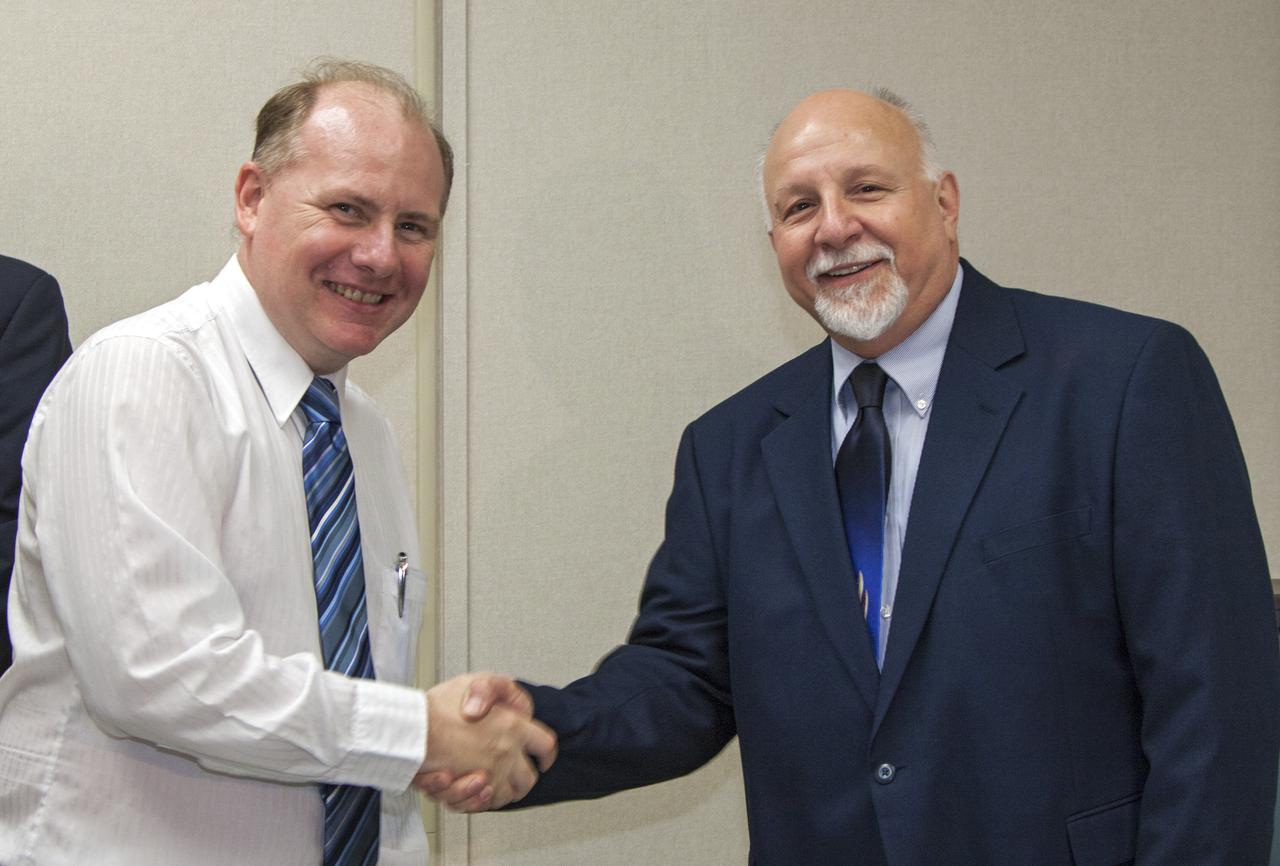
CAPE CANAVERAL, Fla. -- Inside the Space Station Processing Facility, or SSPF, at NASA’s Kennedy Space Center in Florida, Cliff Hausmann, a technical integration manager in the Center Planning and Development Directorate, greets new partner Donald Platt with Micro Aerospace Solutions of Melbourne, Fla., during an official welcome ceremony, April 1.  NASA signed an agreement with Micro Aerospace Solutions on March 22 for use of an offline hardware processing laboratory and office space at the processing facility. Photo credit: NASA_Kim Shiflett
KSC-2013-1944
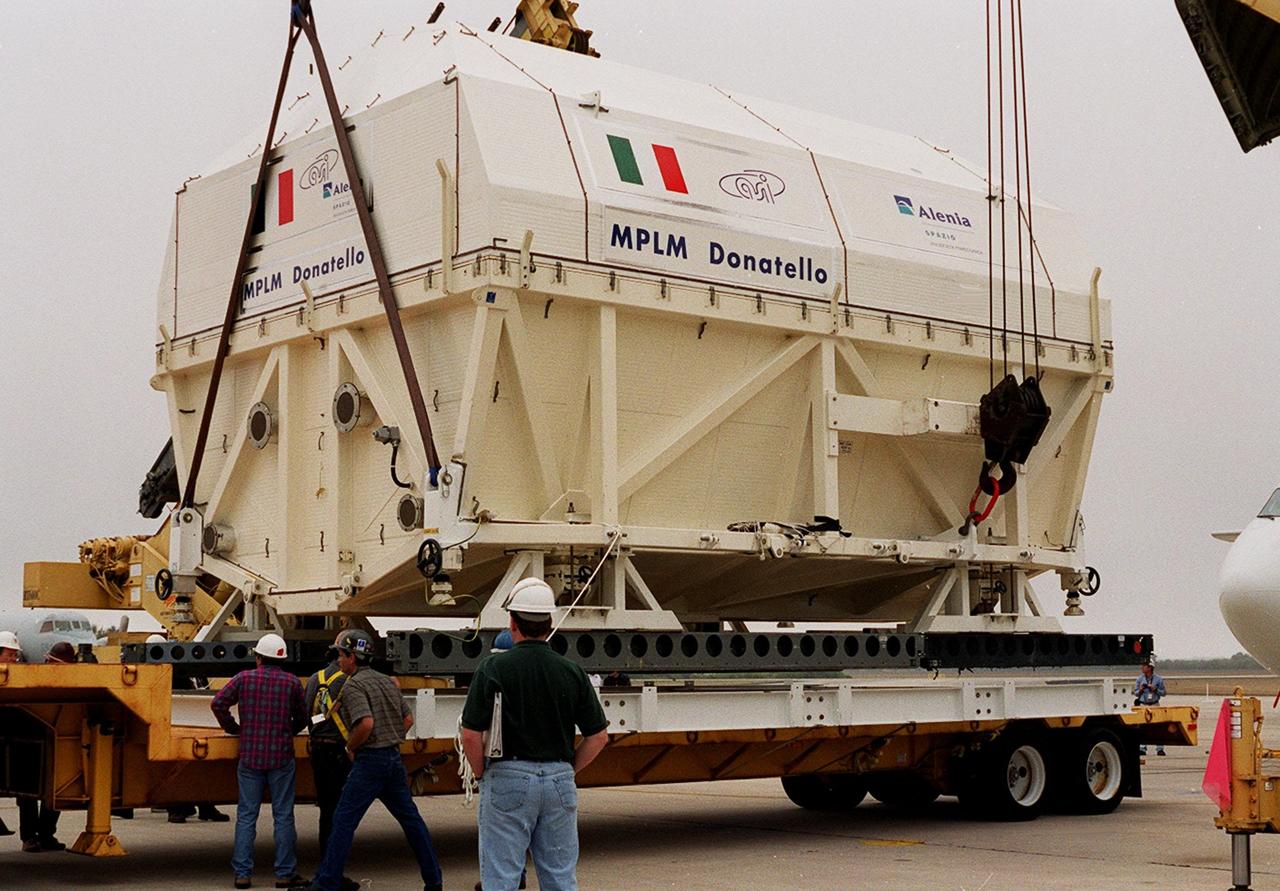
At the Shuttle Landing Facility, workers watch as cranes lower the Italian Space Agency’s Multi-Purpose Logistics Module Donatello onto a flat bed for transport to the Space Station Processing Facility for processing. Among the activities for the payload test team are integrated electrical tests with other Station elements in the SSPF, leak tests, electrical and software compatibility tests with the Space Shuttle (using the Cargo Integrated Test equipment) and an Interface Verification Test once the module is installed in the Space Shuttle’s payload bay at the launch pad. The most significant mechanical task to be performed on Donatello in the SSPF is the installation and outfitting of the racks for carrying the various experiments and cargo
KSC-01pp0243
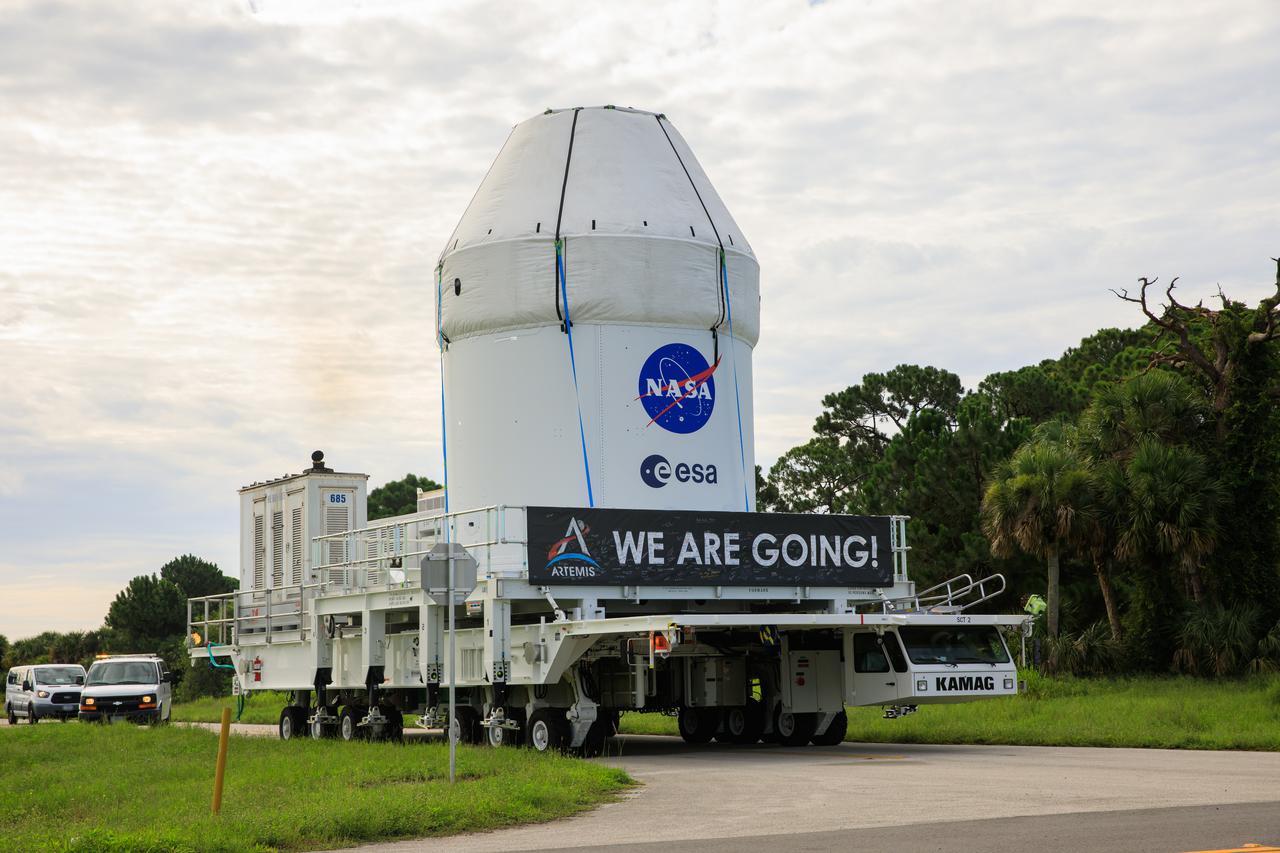
The Orion spacecraft for the Artemis I mission arrives at Kennedy Space Center’s Launch Abort System facility on July 10, 2021, after being transported from the Florida spaceport’s Multi-Payload Processing Facility earlier in the day. Teams with Exploration Ground Systems and contractor Jacobs will integrate components of the launch abort system onto the spacecraft. Launching later this year, Artemis I will be a test of the Orion spacecraft and SLS rocket as an integrated system ahead of crewed flights to the Moon.
Artemis I - Orion Moves to Launch Abort System Facility (LASF)
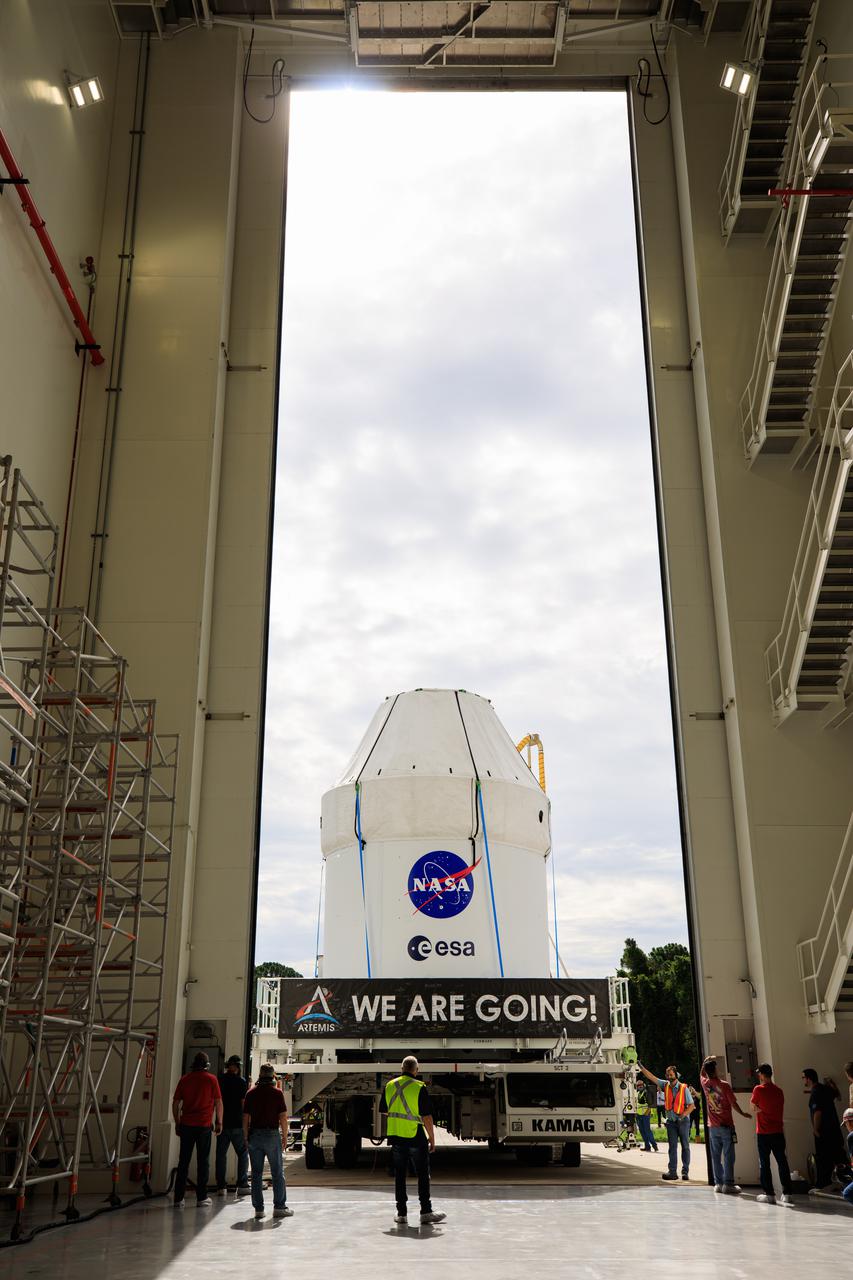
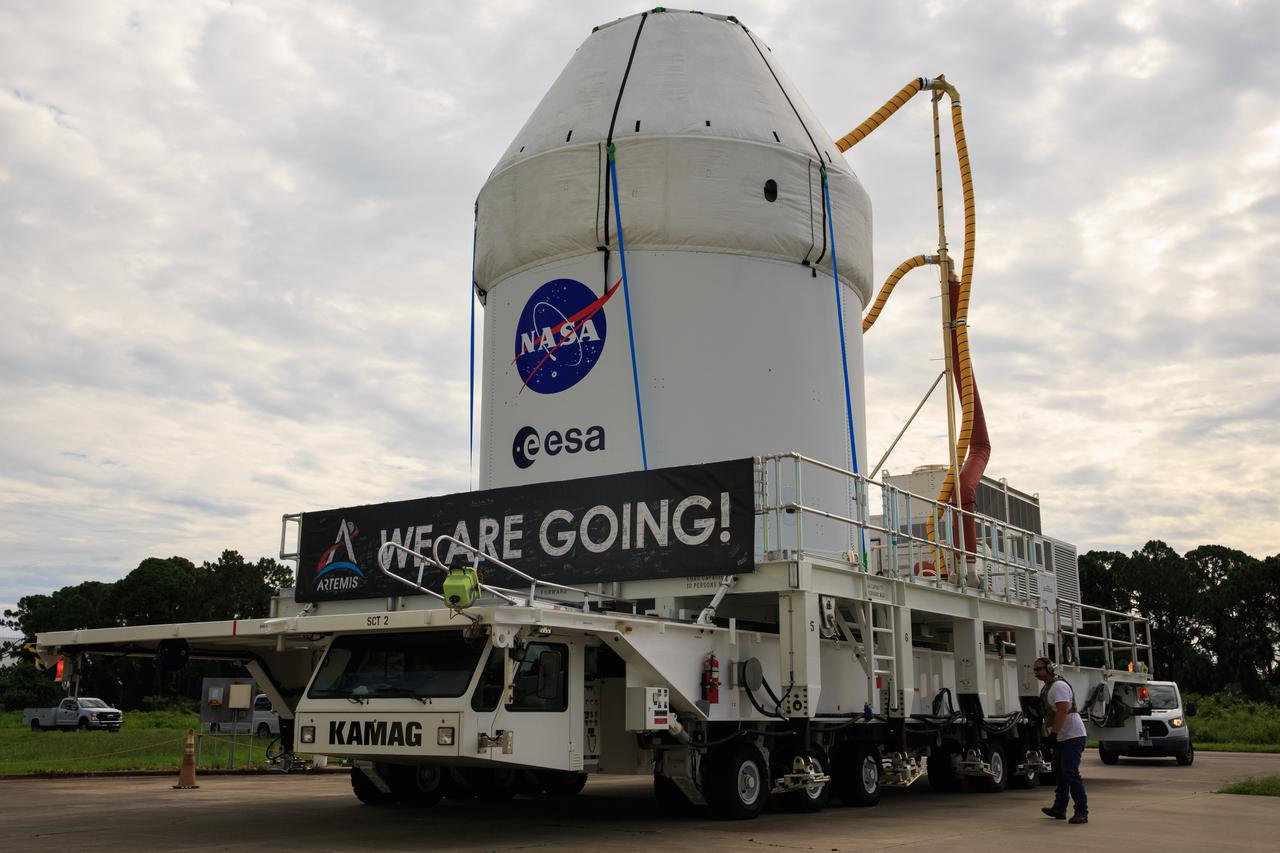
The Orion spacecraft for the Artemis I mission is transported from Kennedy Space Center’s Multi-Payload Processing Facility to the Florida spaceport’s Launch Abort System Facility on July 10, 2021. Teams with Exploration Ground Systems and contractor Jacobs will integrate components of the launch abort system onto the spacecraft. Launching later this year, Artemis I will be a test of the Orion spacecraft and SLS rocket as an integrated system ahead of crewed flights to the Moon.
Artemis I - Orion Moves to Launch Abort System Facility (LASF)
The Orion spacecraft for the Artemis I mission is transported from Kennedy Space Center’s Multi-Payload Processing Facility to the Florida spaceport’s Launch Abort System Facility on July 10, 2021. Teams with Exploration Ground Systems and contractor Jacobs will integrate components of the launch abort system onto the spacecraft. Launching later this year, Artemis I will be a test of the Orion spacecraft and SLS rocket as an integrated system ahead of crewed flights to the Moon.
Artemis I - Orion Moves to Launch Abort System Facility (LASF)
The Orion spacecraft for the Artemis I mission is transported from Kennedy Space Center’s Multi-Payload Processing Facility to the Florida spaceport’s Launch Abort System Facility on July 10, 2021. Teams with Exploration Ground Systems and contractor Jacobs will integrate components of the launch abort system onto the spacecraft. Launching later this year, Artemis I will be a test of the Orion spacecraft and SLS rocket as an integrated system ahead of crewed flights to the Moon.
Artemis I - Orion Move to Launch Abort System Facility (LASF)
The Orion spacecraft for the Artemis I mission arrives at Kennedy Space Center’s Launch Abort System facility on July 10, 2021, after being transported from the Florida spaceport’s Multi-Payload Processing Facility earlier in the day. Teams with Exploration Ground Systems and contractor Jacobs will integrate components of the launch abort system onto the spacecraft. Launching later this year, Artemis I will be a test of the Orion spacecraft and SLS rocket as an integrated system ahead of crewed flights to the Moon.
Artemis I - Orion Moves to Launch Abort System Facility (LASF)
The Orion spacecraft for the Artemis I mission is transported from Kennedy Space Center’s Multi-Payload Processing Facility to the Florida spaceport’s Launch Abort System Facility on July 10, 2021. Teams with Exploration Ground Systems and contractor Jacobs will integrate components of the launch abort system onto the spacecraft. Launching later this year, Artemis I will be a test of the Orion spacecraft and SLS rocket as an integrated system ahead of crewed flights to the Moon.
Artemis I - Orion Moves to Launch Abort System Facility (LASF)
The Orion spacecraft for the Artemis I mission arrives at Kennedy Space Center’s Launch Abort System facility on July 10, 2021, after being transported from the Florida spaceport’s Multi-Payload Processing Facility earlier in the day. Teams with Exploration Ground Systems and contractor Jacobs will integrate components of the launch abort system onto the spacecraft. Launching later this year, Artemis I will be a test of the Orion spacecraft and SLS rocket as an integrated system ahead of crewed flights to the Moon.
Artemis I - Orion Moves to Launch Abort System Facility (LASF)
The Orion spacecraft for the Artemis I mission is transported from Kennedy Space Center’s Multi-Payload Processing Facility to the Florida spaceport’s Launch Abort System Facility on July 10, 2021. Teams with Exploration Ground Systems and contractor Jacobs will integrate components of the launch abort system onto the spacecraft. Launching later this year, Artemis I will be a test of the Orion spacecraft and SLS rocket as an integrated system ahead of crewed flights to the Moon.
Artemis I - Orion Moves to Launch Abort System Facility (LASF)
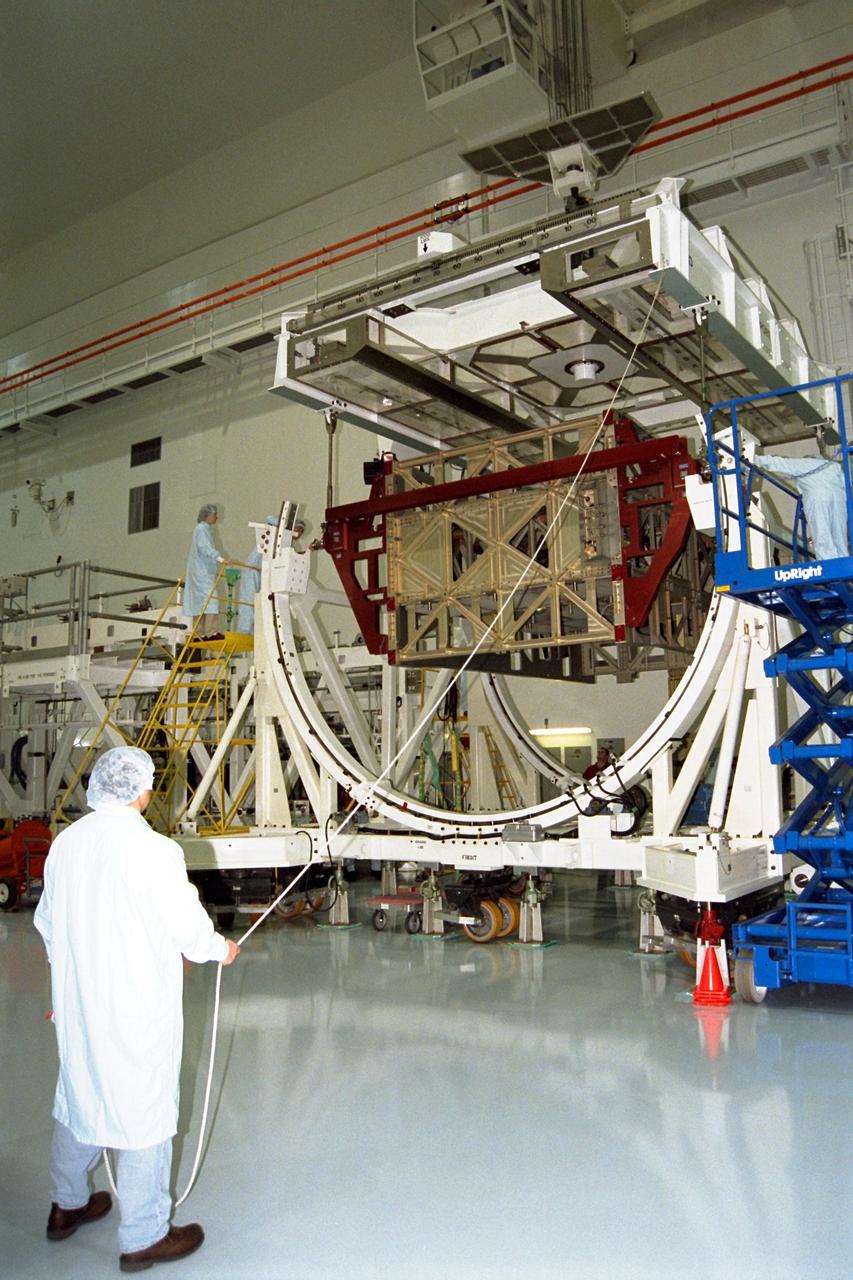
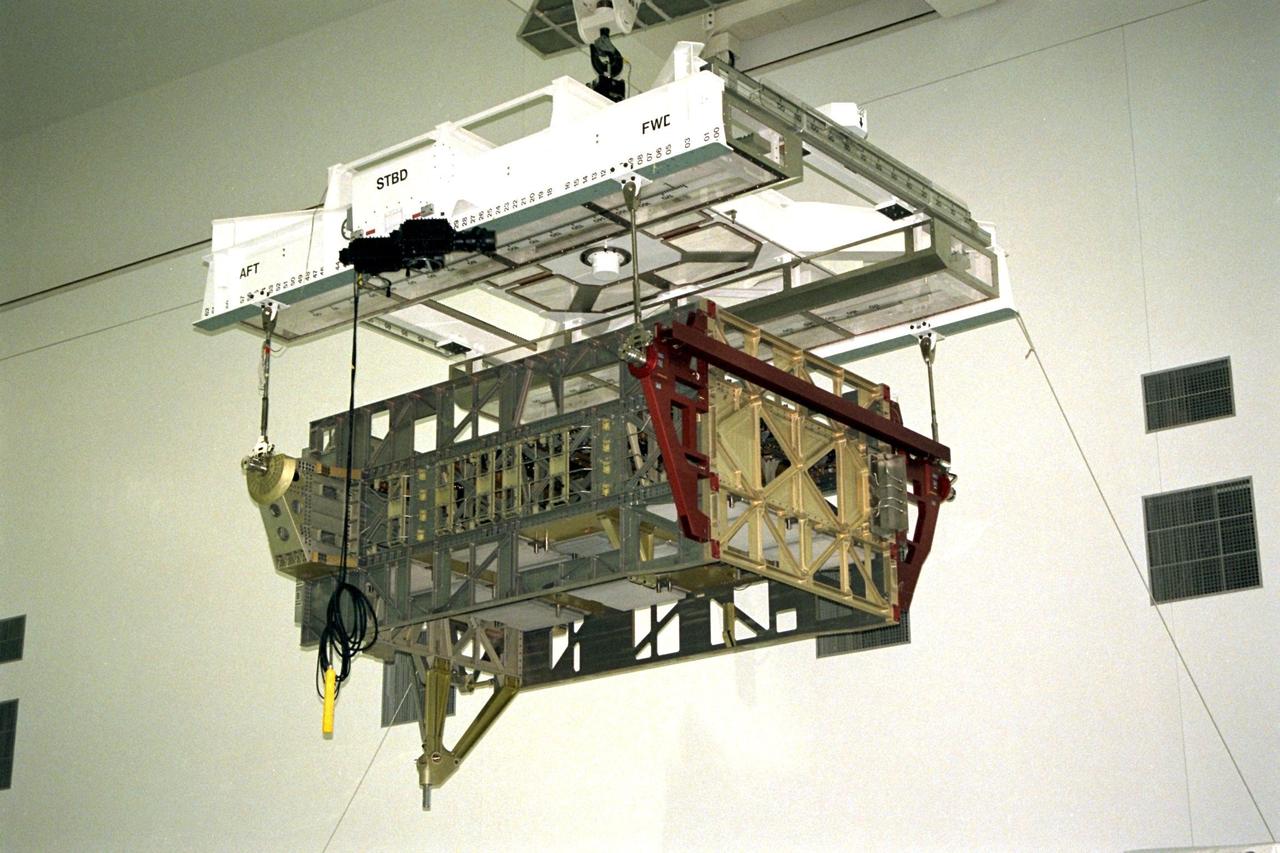
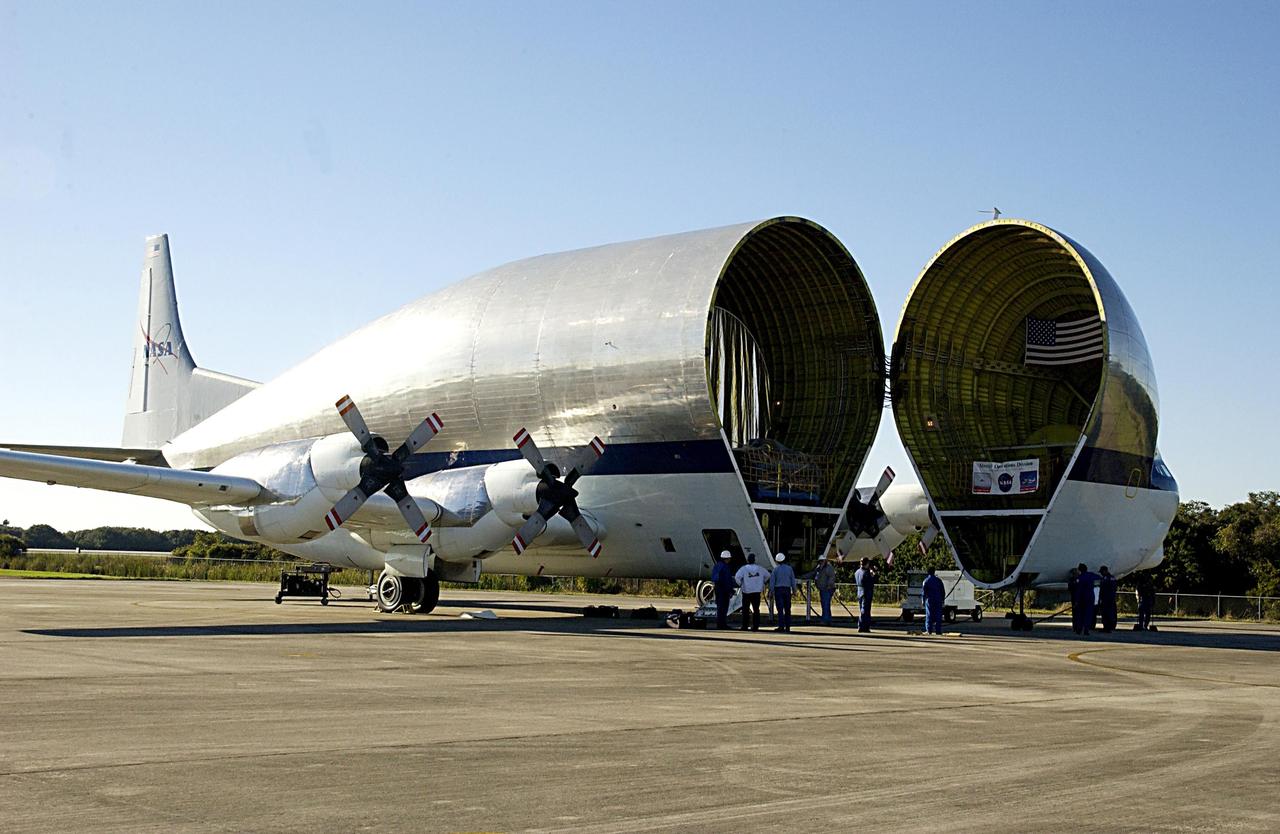
KENNEDY SPACE CENTER, FLA. -- The Long Spacer (LS), the second and final piece of the Starboard 6 (S6) Integrated Truss Segment, rolls out of NASA's Super Guppy cargo airplane.  The LS will be transported to the Space Station Processing Facility for inspections and verification tests.  Eventually the LS will be integrated with the S6 Integrated Equipment Assembly already at KSC and will fly as one segment to the International Space Station on Space Shuttle mission STS-119 in early 2004.  Together the segment pieces weigh 26,000 pounds and measure 45 feet long.         .
KSC-02pd1943
In the Space Station Processing Facility, the S3/S4 integrated truss segment is on display for the media. The starboard 3/4 truss segment will launch aboard Space Shuttle Atlantis on mission STS-117, targeted for March 15. The element will be added to the 11-segment integrated truss structure, the station's backbone. The integrated truss structure eventually will span more than 300 feet. The S3/S4 truss has two large solar arrays and will provide one-fourth of the total power generation for the completed station.
STS-117 Media Showcase
KENNEDY SPACE CENTER, FLA. -- The Long Spacer (LS), the second and final piece of the Starboard 6 (S6) Integrated Truss Segment, is secured on a flatbed truck for transport to the Space Station Processing Facility where it will undergo inspections and verification tests.  Eventually the LS will be integrated with the S6 Integrated Equipment Assembly already at KSC and will fly as one segment to the International Space Station on Space Shuttle mission STS-119 in early 2004.  Together the segment pieces weigh 26,000 pounds and measure 45 feet long.           .
KSC-02pd1945
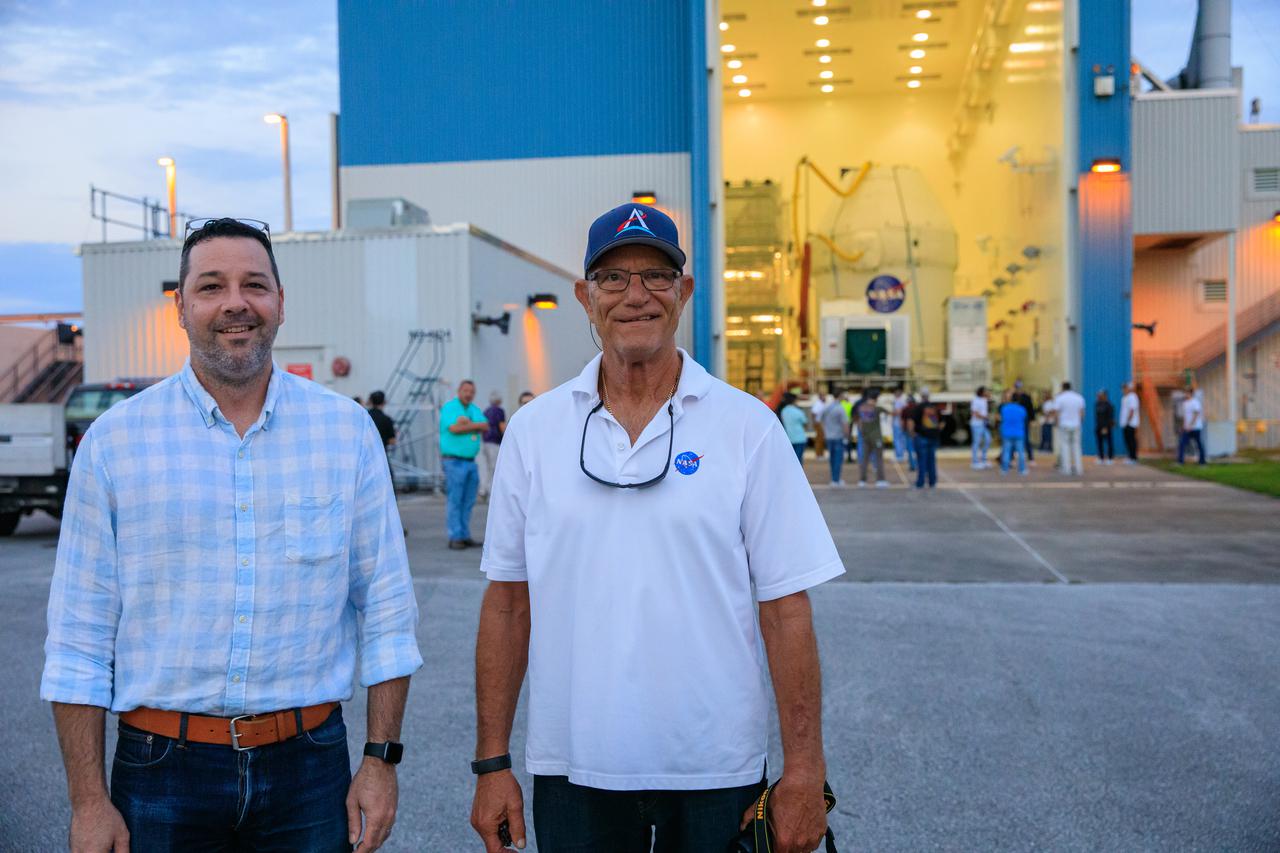
Mike Collins, NASA Operations manager for Spacecraft Offline Operations, left, and Skip Williams, operations manager for the Multi-Payload Processing Facility (MPPF) spacecraft offline element integration team, stand in front of the Orion spacecraft for the Artemis I mission, as the capsule moves out from Kennedy Space Center’s MFFP on July 10, 2021. Orion is being transported to the Florida spaceport’s Launch Abort System Facility, where teams with Exploration Ground Systems and contractor Jacobs will integrate components of the launch abort system onto the spacecraft. Launching later this year, Artemis I will be a test of the Orion spacecraft and SLS rocket as an integrated system ahead of crewed flights to the Moon.
Artemis I - Orion Move to Launch Abort System Facility (LASF)
KENNEDY SPACE CENTER, FLA. - After landing at the KSC Shuttle Landing Facility, NASA's Super Guppy cargo airplane opens to remove its cargo, the Long Spacer (LS), the second and final piece of the Starboard 6 (S6) Integrated Truss Segment.  The LS will be transported to the Space Station Processing Facility for inspections and verification tests.  Eventually the LS will be integrated with the S6 Integrated Equipment Assembly already at KSC and will fly as one segment to the International Space Station on Space Shuttle mission STS-119 in early 2004.  Together the segment pieces weigh 26,000 pounds and measure 45 feet long.        .
KSC-02pd1942
KENNEDY SPACE CENTER, FLA.  - NASA's Super Guppy cargo airplane parks on the Shuttle Landing Facility at KSC before offloading the Long Spacer (LS), the second and final piece of the Starboard 6 (S6) Integrated Truss Segment.  The LS will be transported to the Space Station Processing Facility for inspections and verification tests.  Eventually the LS will be integrated with the S6 Integrated Equipment Assembly already at KSC and will fly as one segment to the International Space Station on Space Shuttle mission STS-119 in early 2004.  Together the segment pieces weigh 26,000 pounds and measure 45 feet long.      .
KSC-02pd1941
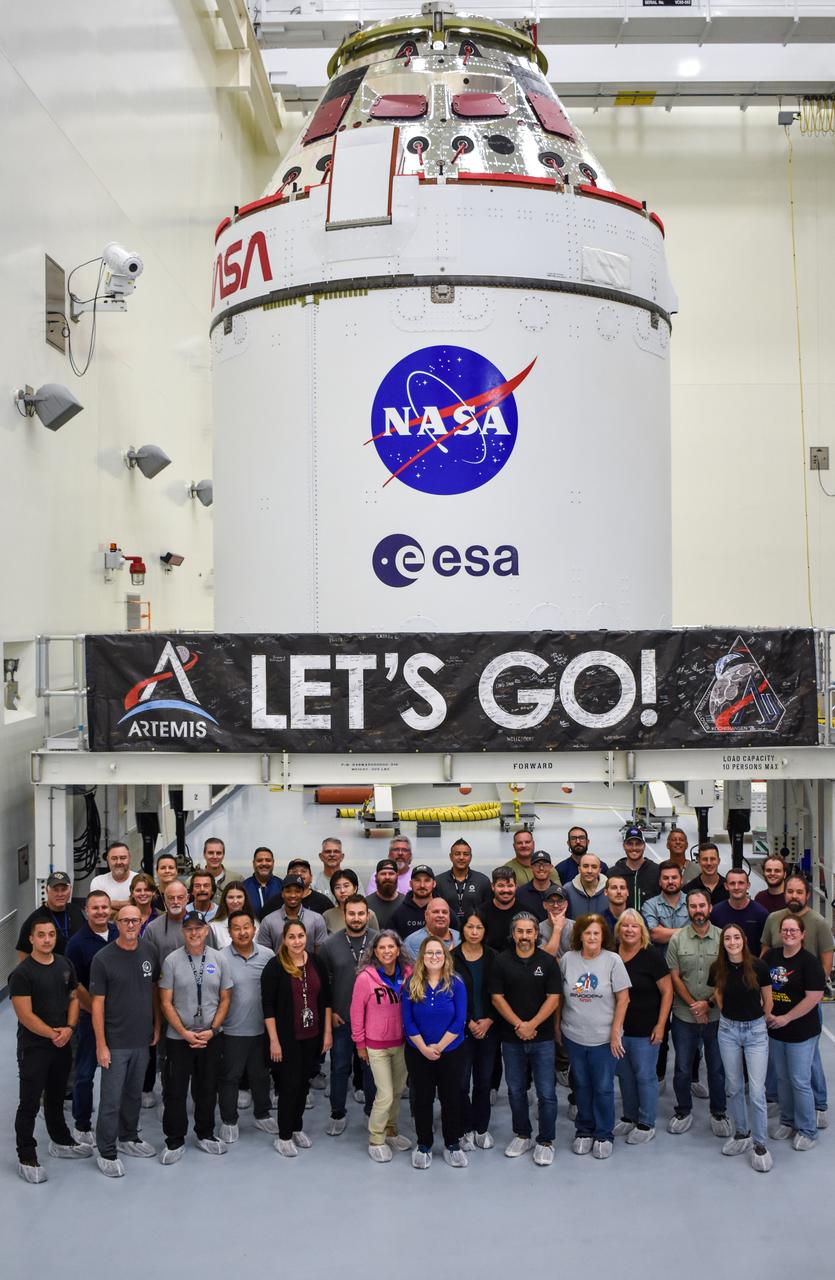
NASA engineers and technicians pose for a photograph in front of the agency’s Artemis II Orion spacecraft on Thursday, Aug. 7, 2025, inside the Multi-Payload Processing Facility (MPPF) at NASA’s Kennedy Space Center in Florida. Orion arrived at the MPPF in early May for fueling and processing and will next head to the spaceport’s Launch Abort System Facility to be integrated with its 44-foot-tall launch abort system. Once integration is complete, the stack will be transported to High Bay 3 inside NASA Kennedy’s Vehicle Assembly Building and integrated with the SLS (Space Launch System) rocket that will launch NASA’s Artemis II astronauts Reid Wiseman, Victor Glover, and Christina Koch, and CSA (Canadian Space Agency) astronaut Jeremy Hansen around the Moon and back.
Artemis II Pre-Roll of Orion from MPPF to LASF
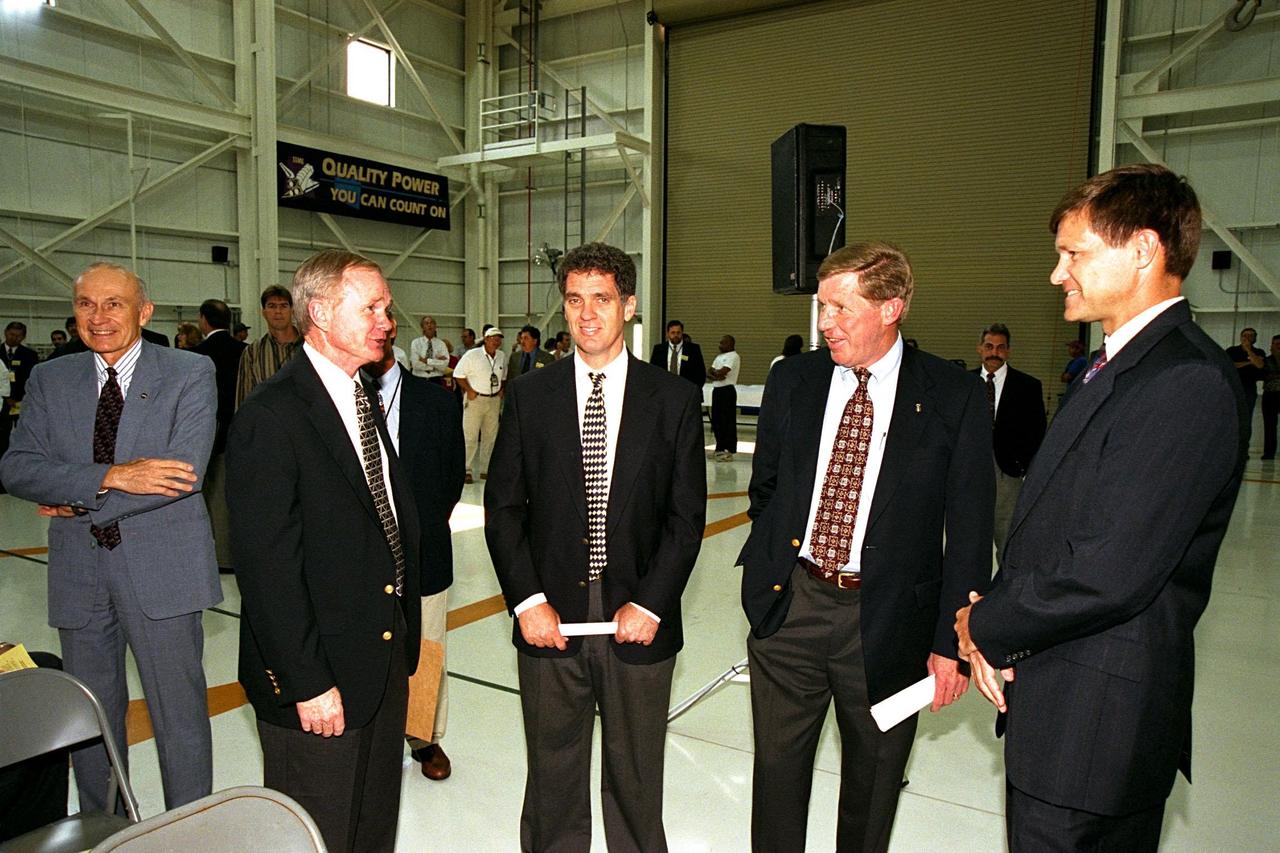
Participants in the ribbon cutting for KSC's new 34,600-square-foot Space Shuttle Main Engine Processing Facility (SSMEPF) gather to talk inside the facility following the ceremony. From left, they are Robert B. Sieck, director of Shuttle Processing; KSC Center Director Roy D. Bridges Jr.; U.S. Congressman Dave Weldon; John Plowden, vice president of Rocketdyne; and Donald R. McMonagle, manager of Launch Integration. A major addition to the existing Orbiter Processing Facility Bay 3, the SSMEPF replaces the Shuttle Main Engine Shop located in the Vehicle Assembly Building (VAB). The decision to move the shop out of the VAB was prompted by safety considerations and recent engine processing improvements. The first three main engines to be processed in the new facility will fly on Shuttle Endeavour's STS-88 mission in December 1998
KSC-98pc785
CAPE CANAVERAL, Fla. –  In the Rotation, Processing and Surge Facility at NASA's Kennedy Space Center in Florida, the second of four Ares I-X segments waits for transfer to a work stand for final processing and integration in the facility. The booster used for the Ares I-X launch is being modified by adding new forward structures and a fifth segment simulator. The stacking operations are scheduled to begin in the Vehicle Assembly Building in April. Launch of the Ares I-X test flight is targeted for July 2009.  Photo credit: NASA/Kim Shiflett
KSC-2009-2474
CAPE CANAVERAL, Fla. –  In the Rotation, Processing and Surge Facility at NASA's Kennedy Space Center in Florida, the second of four Ares I-X segments waits for transfer to a work stand for final processing and integration in the facility. The booster used for the Ares I-X launch is being modified by adding new forward structures and a fifth segment simulator. The stacking operations are scheduled to begin in the Vehicle Assembly Building in April. Launch of the Ares I-X test flight is targeted for July 2009.  Photo credit: NASA/Kim Shiflett
KSC-2009-2475
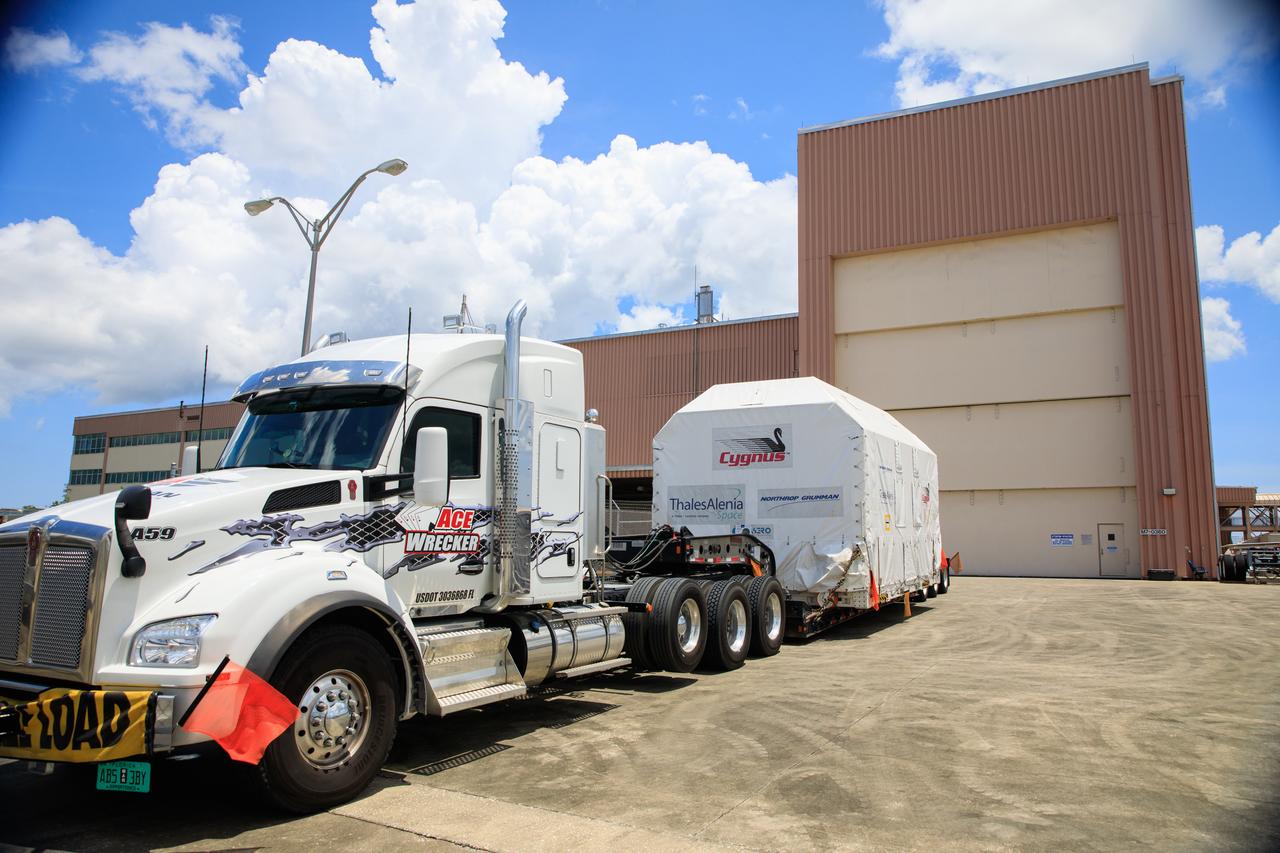
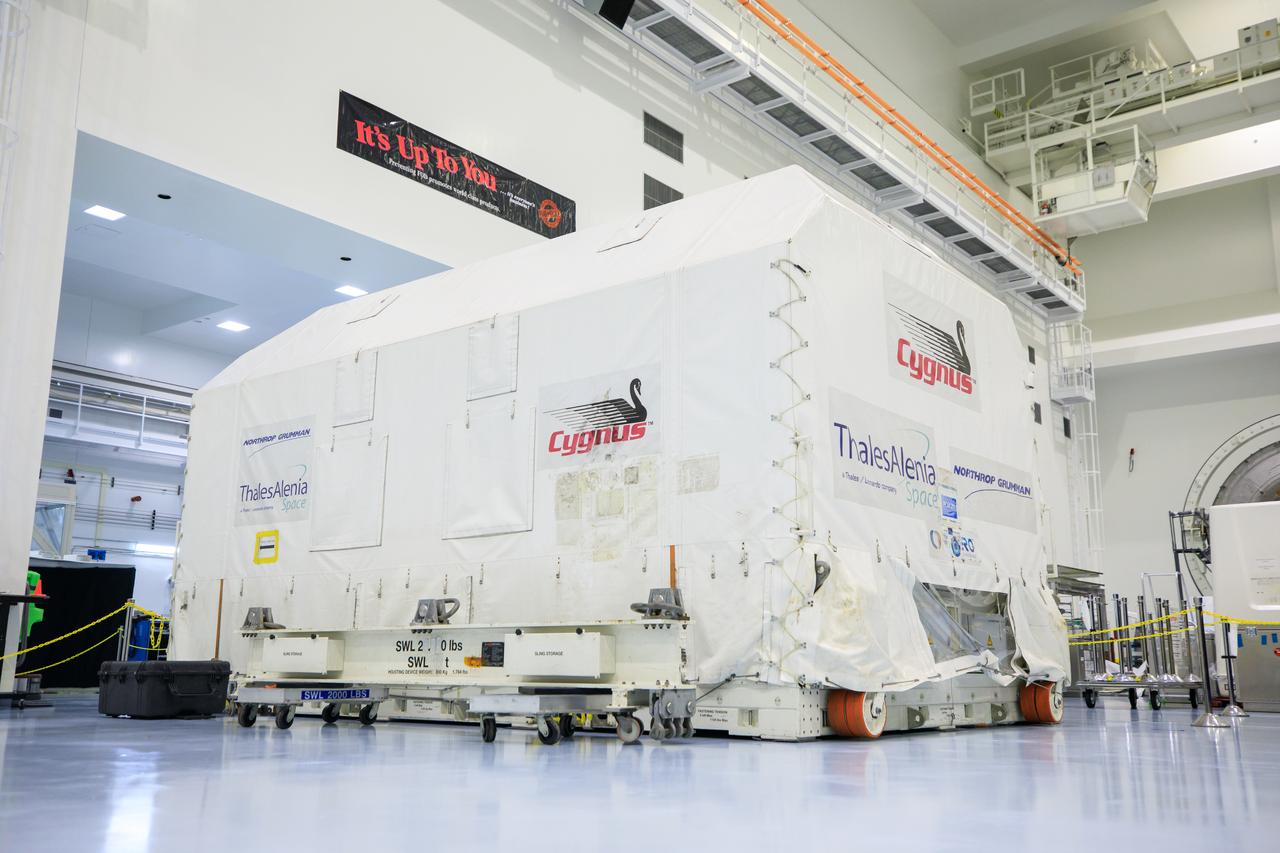
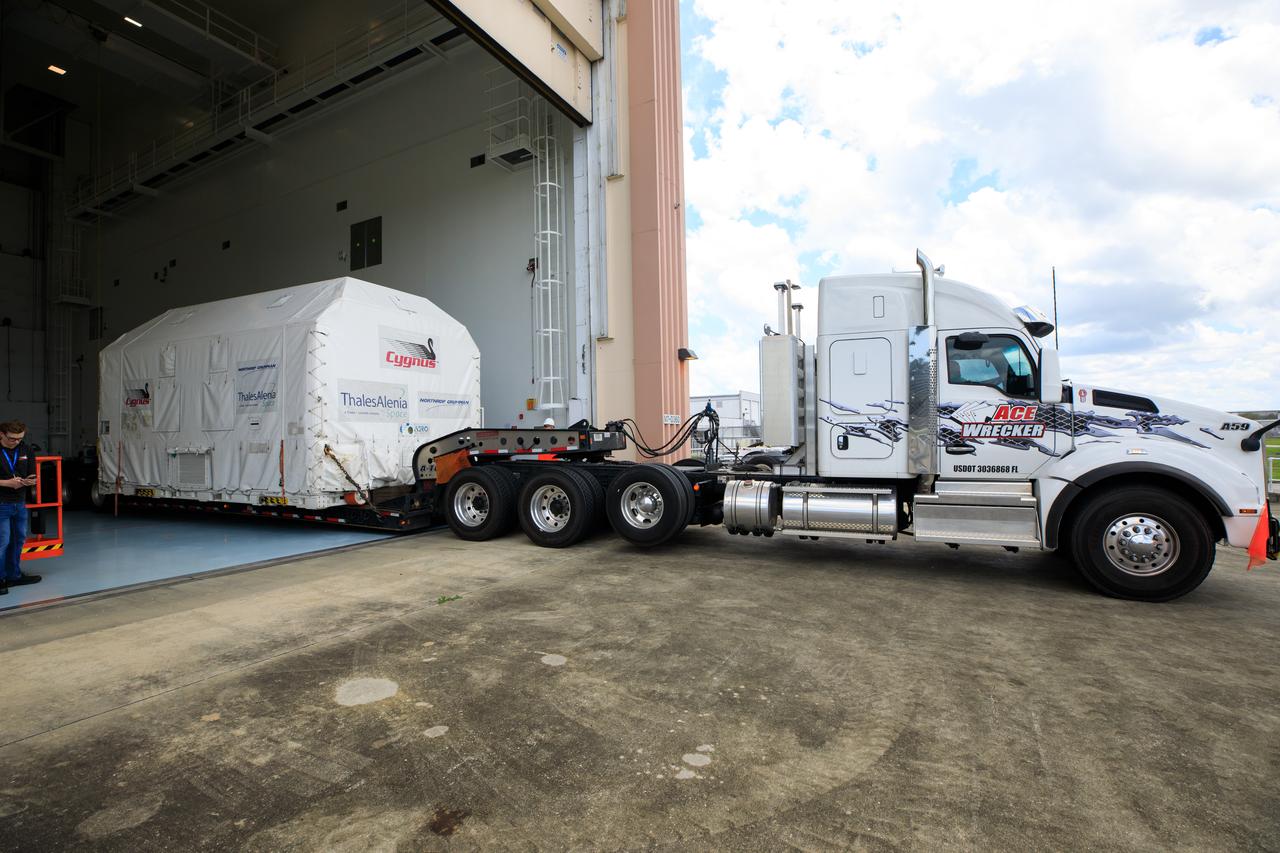
Northrop Grumman’s Cygnus pressurized cargo module for the company’s 20th commercial resupply mission arrives in its environmentally controlled shipping container inside the high bay in the Space Station Processing Facility at NASA's Kennedy Space Center in Florida on Aug. 2, 2023. Cygnus will launch later this year atop a SpaceX Falcon 9 rocket from Cape Canaveral Space Force Station’s Space Launch Complex 40 to the International Space Station. Cygnus will undergo prelaunch processing at Kennedy before it is transported to SpaceX’s integration facility.
NG-20 Cygnus Pressurized Cargo Module Arrival
The Northrop Grumman Cygnus spacecraft's pressurized cargo module (PCM) arrives at the Space Station Processing Facility of NASA's Kennedy Space Center in Florida on Aug. 2, 2023. The PCM is sealed in an environmentally controlled shipping container, pulled in by truck on a flatbed trailer. Cygnus will launch later this year atop a SpaceX Falcon 9 rocket from Cape Canaveral Space Force Station’s Space Launch Complex 40 to the International Space Station. Cygnus will undergo prelaunch processing at Kennedy before it is transported to SpaceX’s integration facility.
NG-20 Cygnus Pressurized Cargo Module Arrival
The Northrop Grumman Cygnus spacecraft's pressurized cargo module (PCM) arrives at the Space Station Processing Facility of NASA's Kennedy Space Center in Florida on Aug. 2, 2023. The PCM is sealed in an environmentally controlled shipping container, pulled in by truck on a flatbed trailer. Cygnus will launch later this year atop a SpaceX Falcon 9 rocket from Cape Canaveral Space Force Station’s Space Launch Complex 40 to the International Space Station. Cygnus will undergo prelaunch processing at Kennedy before it is transported to SpaceX’s integration facility.
NG-20 Cygnus Pressurized Cargo Module Arrival
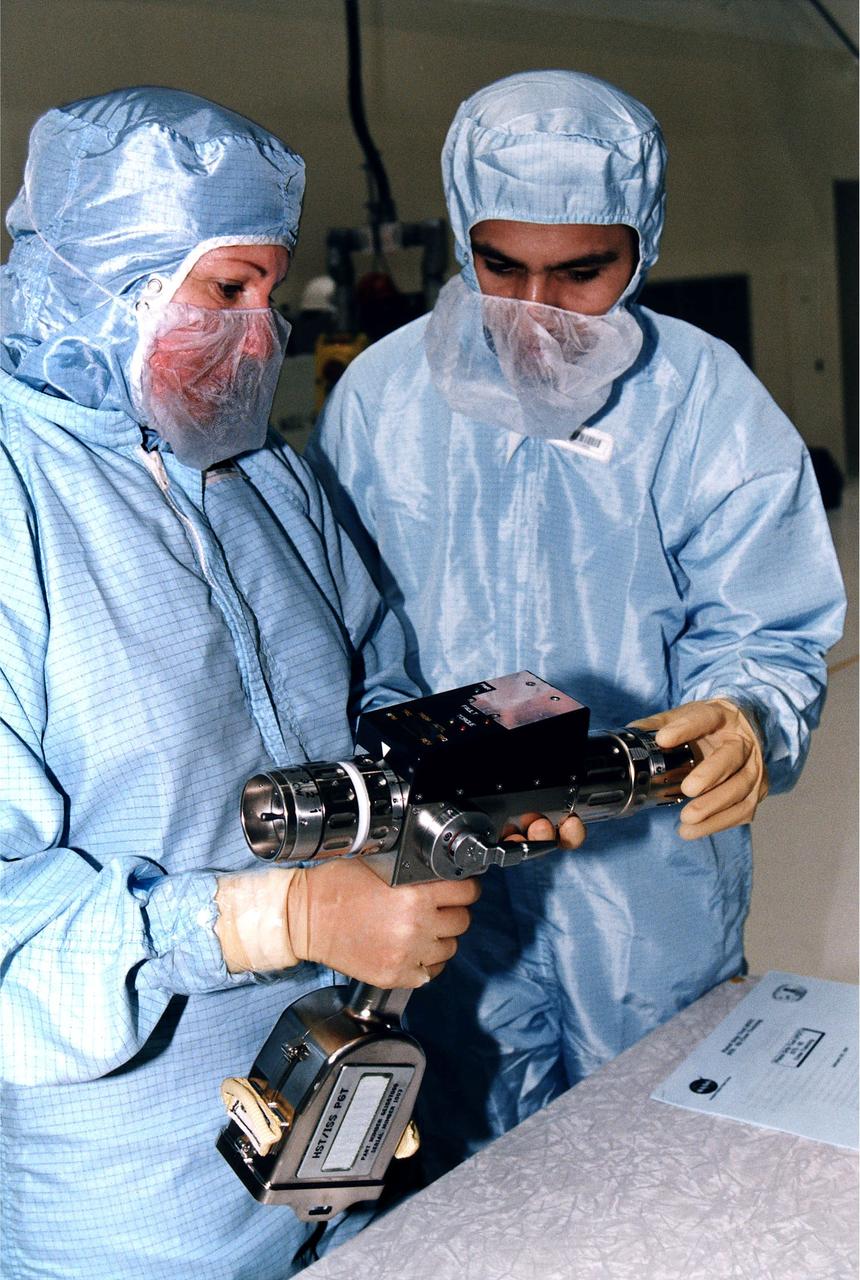
KENNEDY SPACE CENTER, FLA. -  In KSC's Vertical Processing Facility, Louise Kleba of the Vehicle Integration Test Team (VITT) and engineer Devin Tailor of Goddard Space Flight Center examine the Pistol Grip Tool (PGT), which was designed for use by astronauts during spacewalks.  The PGT is a self-contained, micro-processor controlled, battery-powered tool.  It also can be used as a nonpowered ratchet wrench.  The experiences of the astronauts on the first Hubble Space Telescope (HST) servicing mission led to recommendations for this smaller, more efficient tool for precision work during spacewalks.  The PGT will be used on the second HST servicing mission, STS-82.  Liftoff aboard Discovery is scheduled Feb. 11.
KENNEDY SPACE CENTER, FLA. - In KSC's Vertical Processing Facility, Louise Kleba of the Vehicle Integration Test Team (VITT) and engineer Devin Tailor of Goddard Space Flight Center examine the Pistol Grip Tool (PGT), which was designed for use by astronauts during spacewalks. The PGT is a self-contained, micro-processor controlled, battery-powered tool. It also can be used as a nonpowered ratchet wrench. The experiences of the astronauts on the first Hubble Space Telescope (HST) servicing mission led to recommendations for this smaller, more efficient tool for precision work during spacewalks. The PGT will be used on the second HST servicing mission, STS-82. Liftoff aboard Discovery is scheduled Feb. 11.
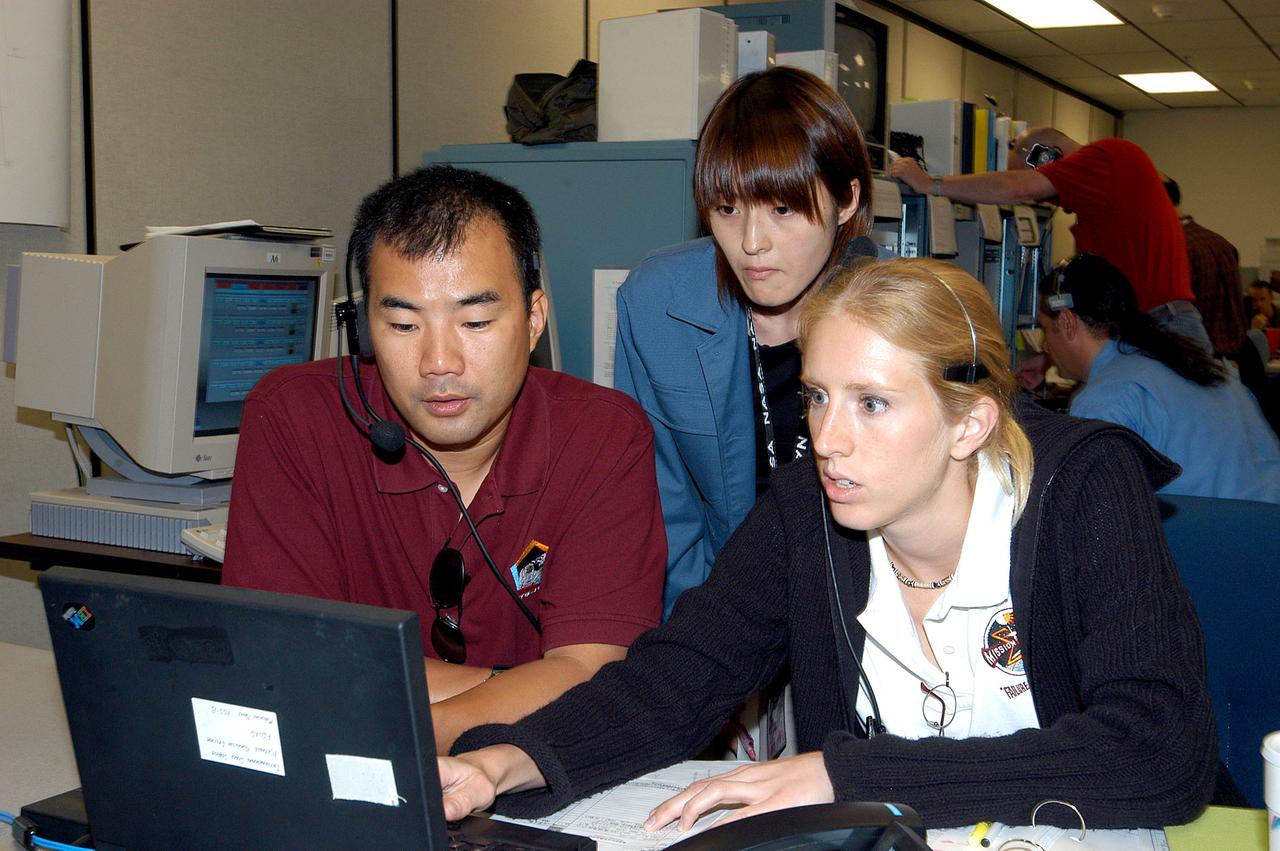
KENNEDY SPACE CENTER, FLA. -  Astronaut Soichi Noguchi (left), with the National Space Development Agency of Japan (NASDA), works at a console during a Multi-Element Integrated Test (MEIT) of the U.S. Node 2 and the Japanese Experiment Module (JEM) in the Space Station Processing Facility.  The JEM, developed by NASDA, is Japan's primary contribution to the Station. It will enhance the unique research capabilities of the orbiting complex by providing an additional environment for astronauts to conduct science experiments. Noguchi is assigned to mission STS-114 as a mission specialist.  Node 2 provides attach locations for the Japanese laboratory, as well as European laboratory, the Centrifuge Accommodation Module and, eventually, Multipurpose Logistics Modules.  Installation of the module will complete the U.S. Core of the ISS.
KENNEDY SPACE CENTER, FLA. - Astronaut Soichi Noguchi (left), with the National Space Development Agency of Japan (NASDA), works at a console during a Multi-Element Integrated Test (MEIT) of the U.S. Node 2 and the Japanese Experiment Module (JEM) in the Space Station Processing Facility. The JEM, developed by NASDA, is Japan's primary contribution to the Station. It will enhance the unique research capabilities of the orbiting complex by providing an additional environment for astronauts to conduct science experiments. Noguchi is assigned to mission STS-114 as a mission specialist. Node 2 provides attach locations for the Japanese laboratory, as well as European laboratory, the Centrifuge Accommodation Module and, eventually, Multipurpose Logistics Modules. Installation of the module will complete the U.S. Core of the ISS.
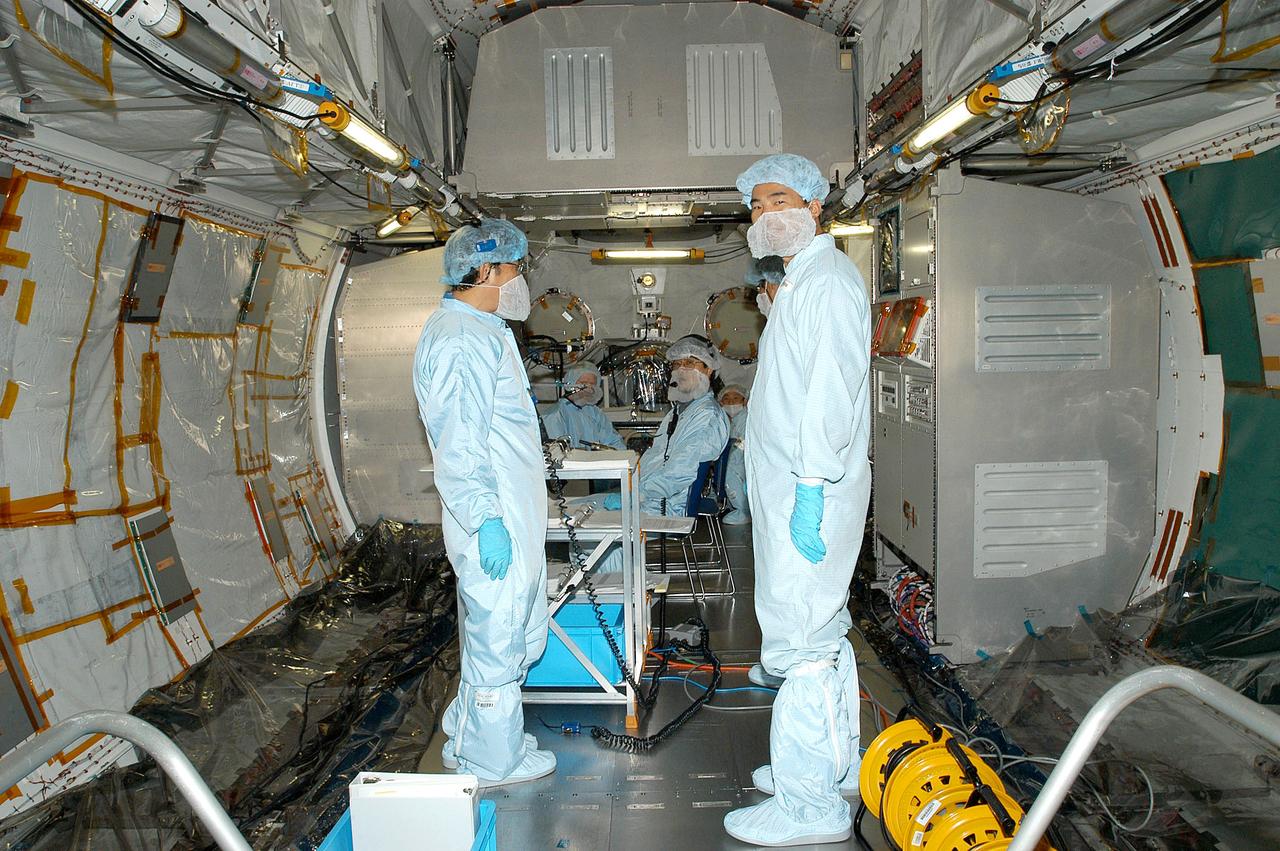
KENNEDY SPACE CENTER, FLA. -  In the Space Station Processing Facility, astronaut Soichi Noguchi (right), with the National Space Development Agency of Japan (NASDA), stands inside the Japanese Experiment Module (JEM) that is undergoing a Multi-Element Integrated Test (MEIT) with the U.S. Node 2.  The JEM, developed by NASDA, is Japan's primary contribution to the Station. It will enhance the unique research capabilities of the orbiting complex by providing an additional environment for astronauts to conduct science experiments. Noguchi is assigned to mission STS-114 as a mission specialist.  Node 2 provides attach locations for the Japanese laboratory, as well as European laboratory, the Centrifuge Accommodation Module and, eventually, Multipurpose Logistics Modules.  Installation of the module will complete the U.S. Core of the ISS.
KENNEDY SPACE CENTER, FLA. - In the Space Station Processing Facility, astronaut Soichi Noguchi (right), with the National Space Development Agency of Japan (NASDA), stands inside the Japanese Experiment Module (JEM) that is undergoing a Multi-Element Integrated Test (MEIT) with the U.S. Node 2. The JEM, developed by NASDA, is Japan's primary contribution to the Station. It will enhance the unique research capabilities of the orbiting complex by providing an additional environment for astronauts to conduct science experiments. Noguchi is assigned to mission STS-114 as a mission specialist. Node 2 provides attach locations for the Japanese laboratory, as well as European laboratory, the Centrifuge Accommodation Module and, eventually, Multipurpose Logistics Modules. Installation of the module will complete the U.S. Core of the ISS.
KENNEDY SPACE CENTER, FLA. -- In the Space Station Processing Facility,  workers begin uncovering the Long Spacer (LS), the second and final piece of the S6 Integrated Truss Segment. Both the LS and the S6 Integrated Equipment Assembly (IEA) will undergo inspections and verifications tests to prepare them for flight to the International Space Station in early 2004.  Although separate for now, the two segments will be integrated and fly as one on mission STS-119.  Together the two pieces weigh 26,000 pounds and measure 45 feet long.  The S6 is the 11th and final piece of the Station's Integrated Truss Structure, which will measure more than 300 feet in all.      .
KSC-02pd1971
KENNEDY SPACE CENTER, FLA. -- In the Space Station Processing Facility,  workers begin uncovering the Long Spacer (LS), the second and final piece of the S6 Integrated Truss Segment. Both the LS and the S6 Integrated Equipment Assembly (IEA) will undergo inspections and verifications tests to prepare them for flight to the International Space Station in early 2004.  Although separate for now, the two segments will be integrated and fly as one on mission STS-119.  Together the two pieces weigh 26,000 pounds and measure 45 feet long.  The S6 is the 11th and final piece of the Station's Integrated Truss Structure, which will measure more than 300 feet in all.      .
KSC-02pd1969
KENNEDY SPACE CENTER, FLA. -- In the Space Station Processing Facility,  workers finish uncovering the Long Spacer (LS), the second and final piece of the S6 Integrated Truss Segment. Both the LS and the S6 Integrated Equipment Assembly (IEA) will undergo inspections and verifications tests to prepare them for flight to the International Space Station in early 2004.  Although separate for now, the two segments will be integrated and fly as one on mission STS-119.  Together the two pieces weigh 26,000 pounds and measure 45 feet long.  The S6 is the 11th and final piece of the Station's Integrated Truss Structure, which will measure more than 300 feet in all.      .
KSC-02pd1972
KENNEDY SPACE CENTER, FLA. -- In the Space Station Processing Facility,  workers begin uncovering the Long Spacer (LS), the second and final piece of the S6 Integrated Truss Segment. Both the LS and the S6 Integrated Equipment Assembly (IEA) will undergo inspections and verifications tests to prepare them for flight to the International Space Station in early 2004.  Although separate for now, the two segments will be integrated and fly as one on mission STS-119.  Together the two pieces weigh 26,000 pounds and measure 45 feet long.  The S6 is the 11th and final piece of the Station's Integrated Truss Structure, which will measure more than 300 feet in all.      .
KSC-02pd1970
KENNEDY SPACE CENTER, FLA. --  In the Space Station Processing Facility, a worker begins uncovering the Long Spacer (LS), the second and final piece of the S6 Integrated Truss Segment. Both the LS and the S6 Integrated Equipment Assembly (IEA) will undergo inspections and verifications tests to prepare them for flight to the International Space Station in early 2004.  Although separate for now, the two segments will be integrated and fly as one on mission STS-119.  Together the two pieces weigh 26,000 pounds and measure 45 feet long.  The S6 is the 11th and final piece of the Station's Integrated Truss Structure, which will measure more than 300 feet in all.      .
KSC-02pd1968
The lid is off the shipping container with the Multi-Purpose Logistics Module Donatello inside. It sits on a transporter inside the Space Station Processing Facility. In the SSPF, Donatello will undergo processing by the payload test team, including integrated electrical tests with other Station elements in the SSPF, leak tests, electrical and software compatibility tests with the Space Shuttle (using the Cargo Integrated Test equipment) and an Interface Verification Test once the module is installed in the Space Shuttle’s payload bay at the launch pad. The most significant mechanical task to be performed on Donatello in the SSPF is the installation and outfitting of the racks for carrying the various experiments and cargo. Donatello will be launched on mission STS-130, currently planned for September 2004
KSC-01pp0244
VANDENBERG AIR FORCE BASE, Calif. --In Space Systems International's Payload Processing Facility at Vandenberg Air Force Base in California, technicians prepare to test the second solar array after integration to the Aquarius/SAC-D spacecraft.  Following final tests, the spacecraft will be integrated to a United Launch Alliance Delta II rocket in preparation for the targeted June launch. Aquarius, the NASA-built primary instrument on the SAC-D spacecraft, will provide new insights into how variations in ocean surface salinity relate to fundamental climate processes on its three-year mission. Photo credit: NASA/VAFB
KSC-2011-3245
The Photovoltaic Module 1 Integrated Equipment Assembly (IEA) is moved past a Pressurized Mating Adapter in Kennedy Space Center’s Space Station Processing Facility (SSPF) toward the workstand where it will be processed for flight on STS-97, scheduled for launch in April 1999. The IEA is one of four integral units designed to generate, distribute, and store power for the International Space Station. It will carry solar arrays, power storage batteries, power control units, and a thermal control system. The 16-foot-long, 16,850-pound unit is now undergoing preflight preparations in the SSPF
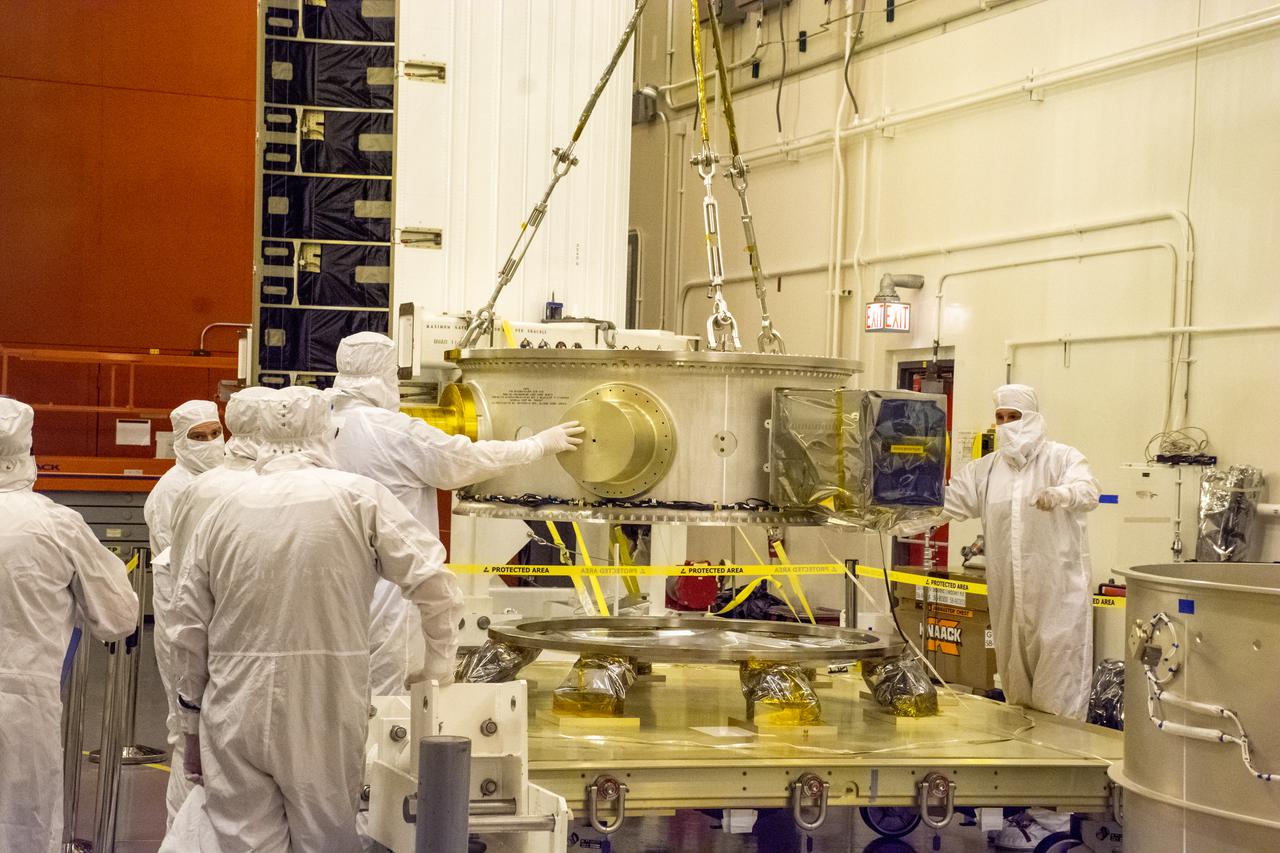
KSC-98pc151
The Photovoltaic Module 1 Integrated Equipment Assembly (IEA) is lifted from its container in Kennedy Space Center’s Space Station Processing Facility (SSPF) before it is moved into its workstand, where it will be processed for flight on STS-97, scheduled for launch in April 1999. The IEA is one of four integral units designed to generate, distribute, and store power for the International Space Station. It will carry solar arrays, power storage batteries, power control units, and a thermal control system. The 16-foot-long, 16,850-pound unit is now undergoing preflight preparations in the SSPF
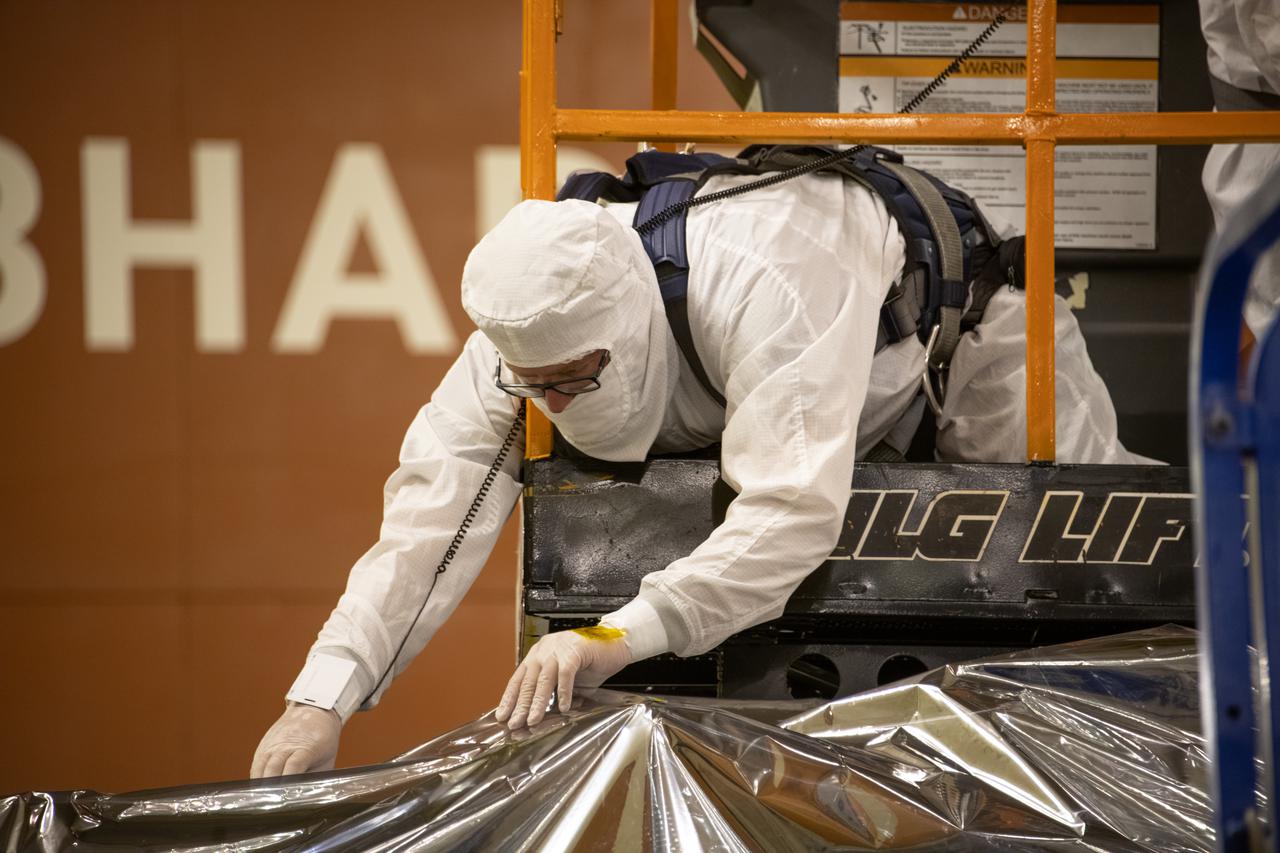
KSC-98pc155
VANDENBERG AIR FORCE BASE, Calif. -- In Space Systems International's Payload Processing Facility at Vandenberg Air Force Base in California, technicians prepare to test the solar array after its integration to the Aquarius/SAC-D spacecraft.   Following final tests, the spacecraft will be integrated to a United Launch Alliance Delta II rocket in preparation for the targeted June launch. Aquarius, the NASA-built primary instrument on the SAC-D spacecraft, will provide new insights into how variations in ocean surface salinity relate to fundamental climate processes on its three-year mission. Photo credit: NASA/VAFB
KSC-2011-3226
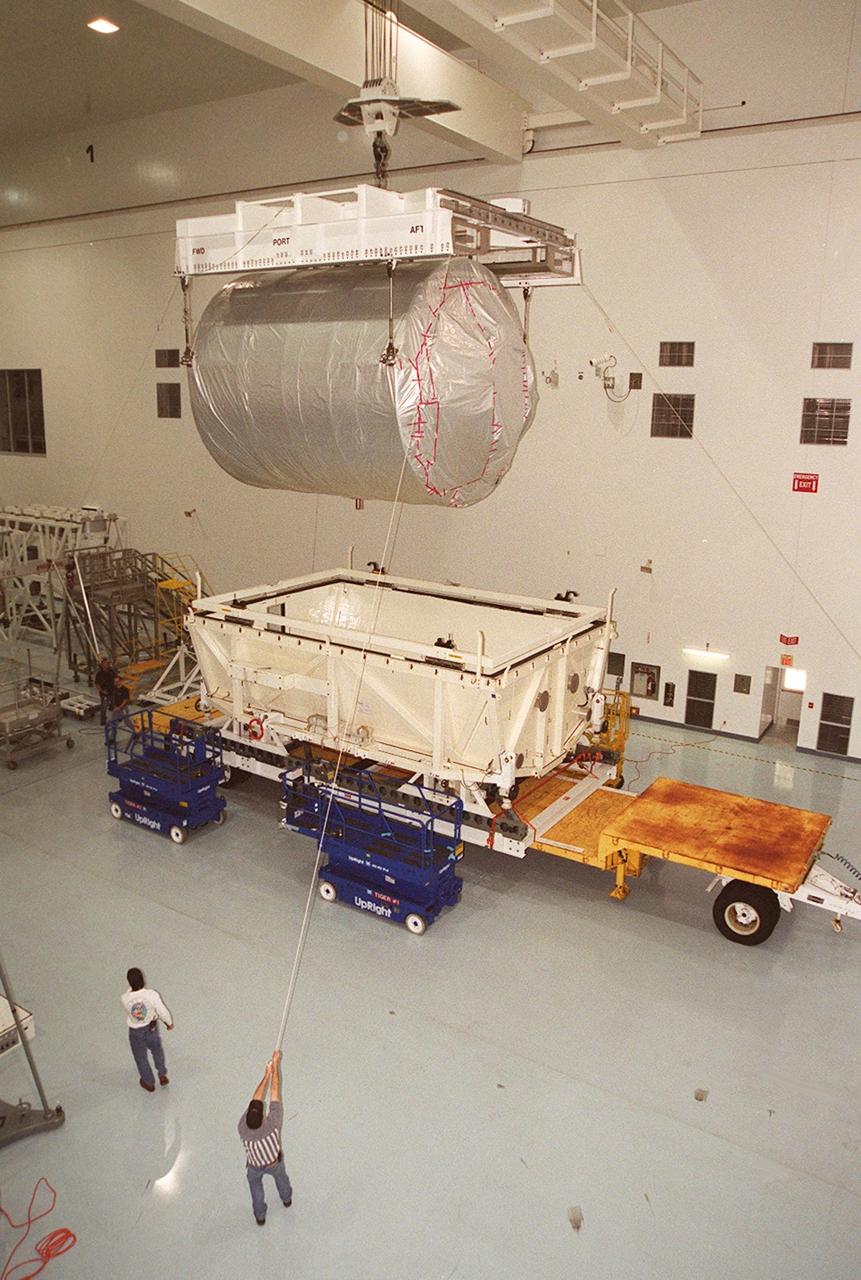
In the Space Station Processing Facility, workers help guide the overhead crane as it lifts the Multi-Purpose Logistics Module Donatello out of the shipping container. In the SSPF, Donatello will undergo processing by the payload test team, including integrated electrical tests with other Station elements in the SSPF, leak tests, electrical and software compatibility tests with the Space Shuttle (using the Cargo Integrated Test equipment) and an Interface Verification Test once the module is installed in the Space Shuttle’s payload bay at the launch pad. The most significant mechanical task to be performed on Donatello in the SSPF is the installation and outfitting of the racks for carrying the various experiments and cargo. Donatello will be launched on mission STS-130, currently planned for September 2004
KSC-01pp0246
Workers in the Space Station Processing Facility attach an overhead crane to the Multi-Purpose Logistics Module Donatello to lift it out of the shipping container. In the SSPF, Donatello will undergo processing by the payload test team, including integrated electrical tests with other Station elements in the SSPF, leak tests, electrical and software compatibility tests with the Space Shuttle (using the Cargo Integrated Test equipment) and an Interface Verification Test once the module is installed in the Space Shuttle’s payload bay at the launch pad. The most significant mechanical task to be performed on Donatello in the SSPF is the installation and outfitting of the racks for carrying the various experiments and cargo. Donatello will be launched on mission STS-130, currently planned for September 2004
KSC-01pp0245
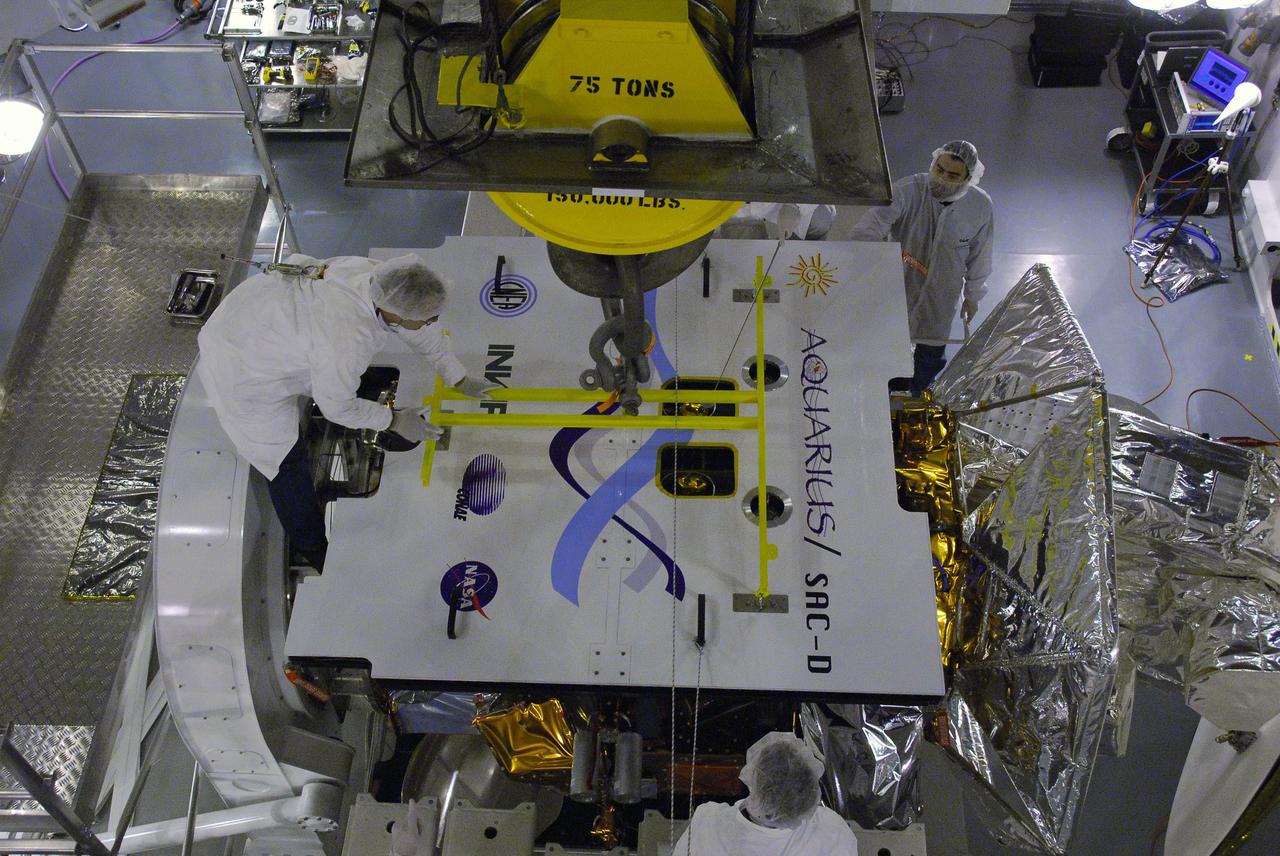
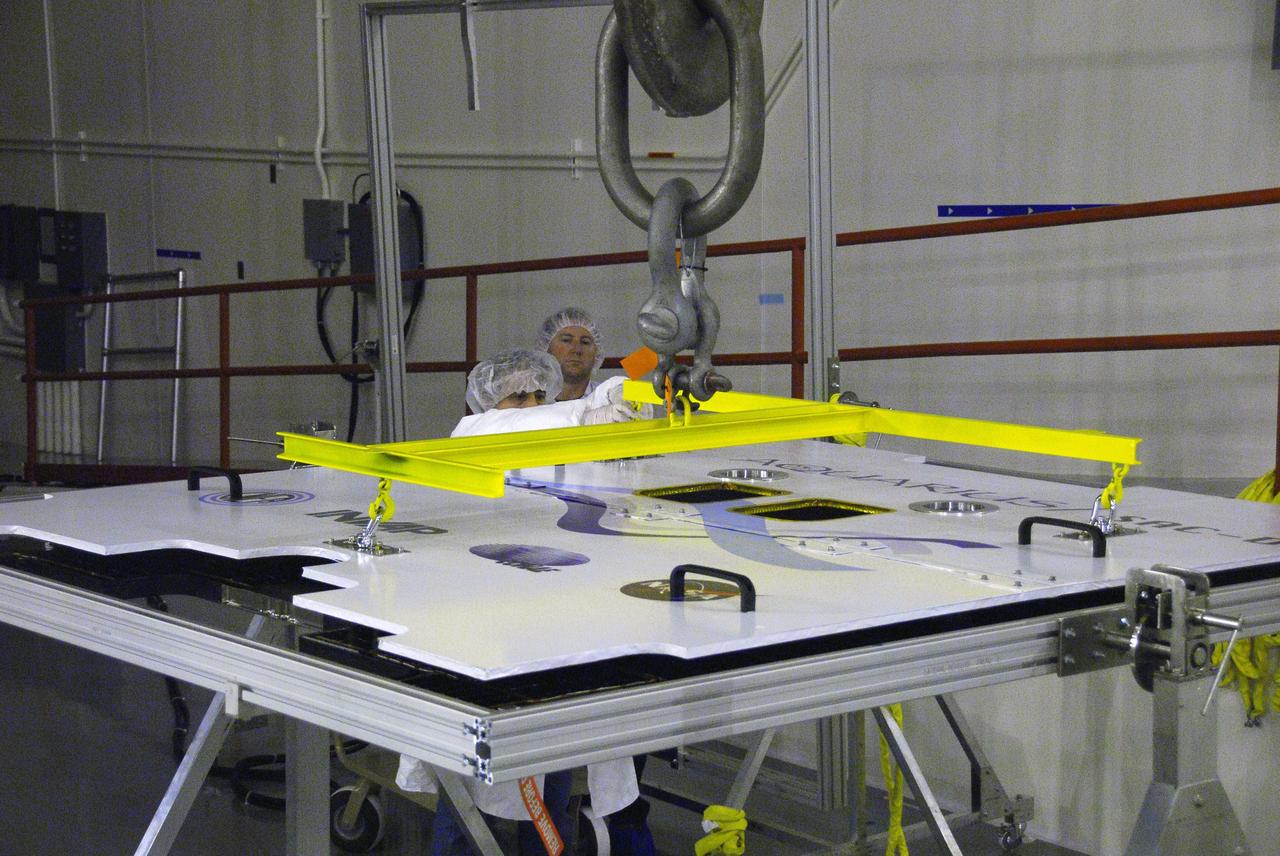
VANDENBERG AIR FORCE BASE, Calif. --In Space Systems International's Payload Processing Facility at Vandenberg Air Force Base in California, technicians attach an overhead crane to the second solar array that will be integrated to the Aquarius/SAC-D spacecraft.  Following final tests, the spacecraft will be integrated to a United Launch Alliance Delta II rocket in preparation for the targeted June launch. Aquarius, the NASA-built primary instrument on the SAC-D spacecraft, will provide new insights into how variations in ocean surface salinity relate to fundamental climate processes on its three-year mission. Photo credit: NASA/VAFB
KSC-2011-3238
VANDENBERG AIR FORCE BASE, Calif. -- In Space Systems International's Payload Processing Facility at Vandenberg Air Force Base in California, technicians prepare to test the solar array after it was integrated to the Aquarius/SAC-D spacecraft.   Following final tests, the spacecraft will be integrated to a United Launch Alliance Delta II rocket in preparation for the targeted June launch. Aquarius, the NASA-built primary instrument on the SAC-D spacecraft, will provide new insights into how variations in ocean surface salinity relate to fundamental climate processes on its three-year mission. Photo credit: NASA/VAFB
KSC-2011-3229
The Photovoltaic Module 1 Integrated Equipment Assembly (IEA) is moved past Node 1, seen at left, of the International Space Station (ISS) in Kennedy Space Center’s Space Station Processing Facility (SSPF). The IEA will be processed at the SSPF for flight on STS-97, scheduled for launch in April 1999. The IEA is one of four integral units designed to generate, distribute, and store power for the ISS. It will carry solar arrays, power storage batteries, power control units, and a thermal control system. The 16-foot-long, 16,850-pound unit is now undergoing preflight preparations in the SSPF
KSC-98pc152
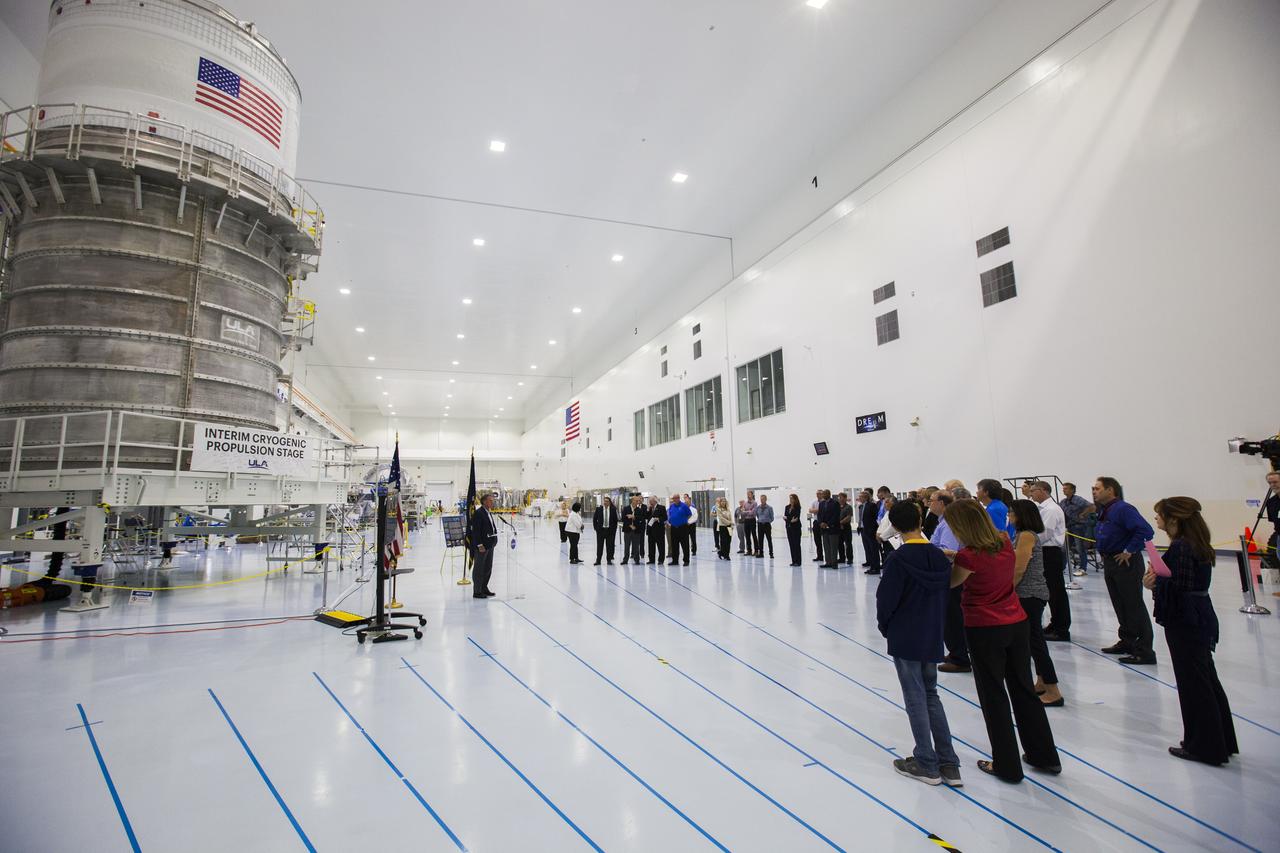
In the Space Station Processing Facility at NASA's Kennedy Space Center in Florida, a ceremony is underway marking the agency's Spacecraft/Payload Integration and Evolution (SPIE) organization formally turning over processing of the Space Launch System (SLS) rocket's Interim Cryogenic Propulsion Stage (ICPS), to the center's Ground Systems Development and Operations (GSDO) Directorate. The ICPS is seen on the left in its shipping container and is the first integrated piece of flight hardware to arrive in preparation for the uncrewed Exploration Mission-1. With the Orion attached, the ICPS sits atop the SLS rocket and will provide the spacecraft with the additional thrust needed to travel tens of thousands of miles beyond the Moon.
ICPS Turnover GSDO Employee Event
VANDENBERG AIR FORCE BASE, Calif. -- In Space Systems International's Payload Processing Facility at Vandenberg Air Force Base in California, technicians prepare to test the second solar array after integration to the Aquarius/SAC-D spacecraft.   Following final tests, the spacecraft will be integrated to a United Launch Alliance Delta II rocket in preparation for the targeted June launch. Aquarius, the NASA-built primary instrument on the SAC-D spacecraft, will provide new insights into how variations in ocean surface salinity relate to fundamental climate processes on its three-year mission. Photo credit: NASA/VAFB
KSC-2011-3246
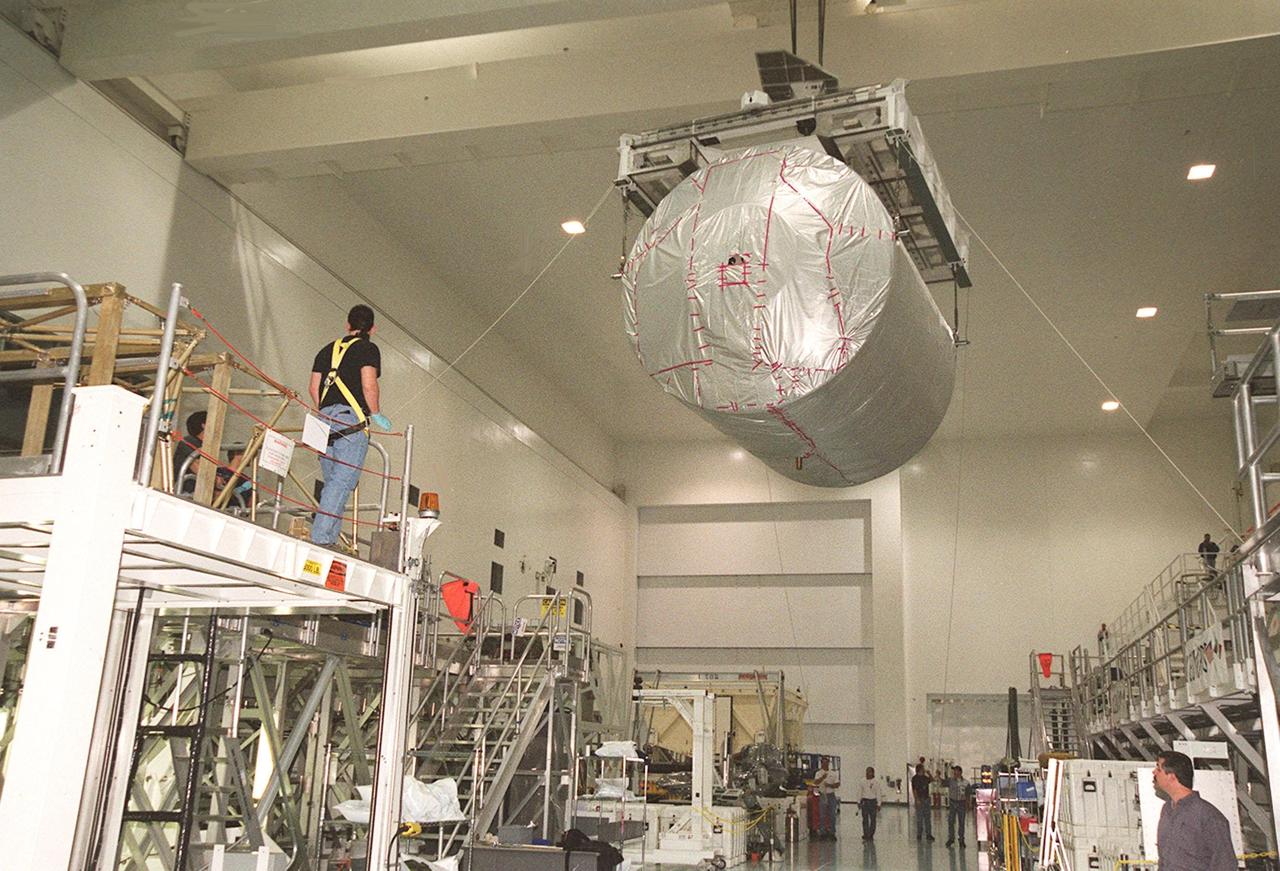
In the Space Station Processing Facility, workers help guide the Multi-Purpose Logistics Module Donatello as it moves the length of the SSPF toward a workstand. In the SSPF, Donatello will undergo processing by the payload test team, including integrated electrical tests with other Station elements in the SSPF, leak tests, electrical and software compatibility tests with the Space Shuttle (using the Cargo Integrated Test equipment) and an Interface Verification Test once the module is installed in the Space Shuttle’s payload bay at the launch pad. The most significant mechanical task to be performed on Donatello in the SSPF is the installation and outfitting of the racks for carrying the various experiments and cargo. Donatello will be launched on mission STS-130, currently planned for September 2004
KSC-01pp0247
VANDENBERG AIR FORCE BASE, Calif. -- In Space Systems International's Payload Processing Facility at Vandenberg Air Force Base in California, technicians detach the overhead crane that moved the second solar array for integration and testing to the Aquarius/SAC-D spacecraft.  Following final tests, the spacecraft will be integrated to a United Launch Alliance Delta II rocket in preparation for the targeted June launch. Aquarius, the NASA-built primary instrument on the SAC-D spacecraft, will provide new insights into how variations in ocean surface salinity relate to fundamental climate processes on its three-year mission. Photo credit: NASA/VAFB
KSC-2011-3243
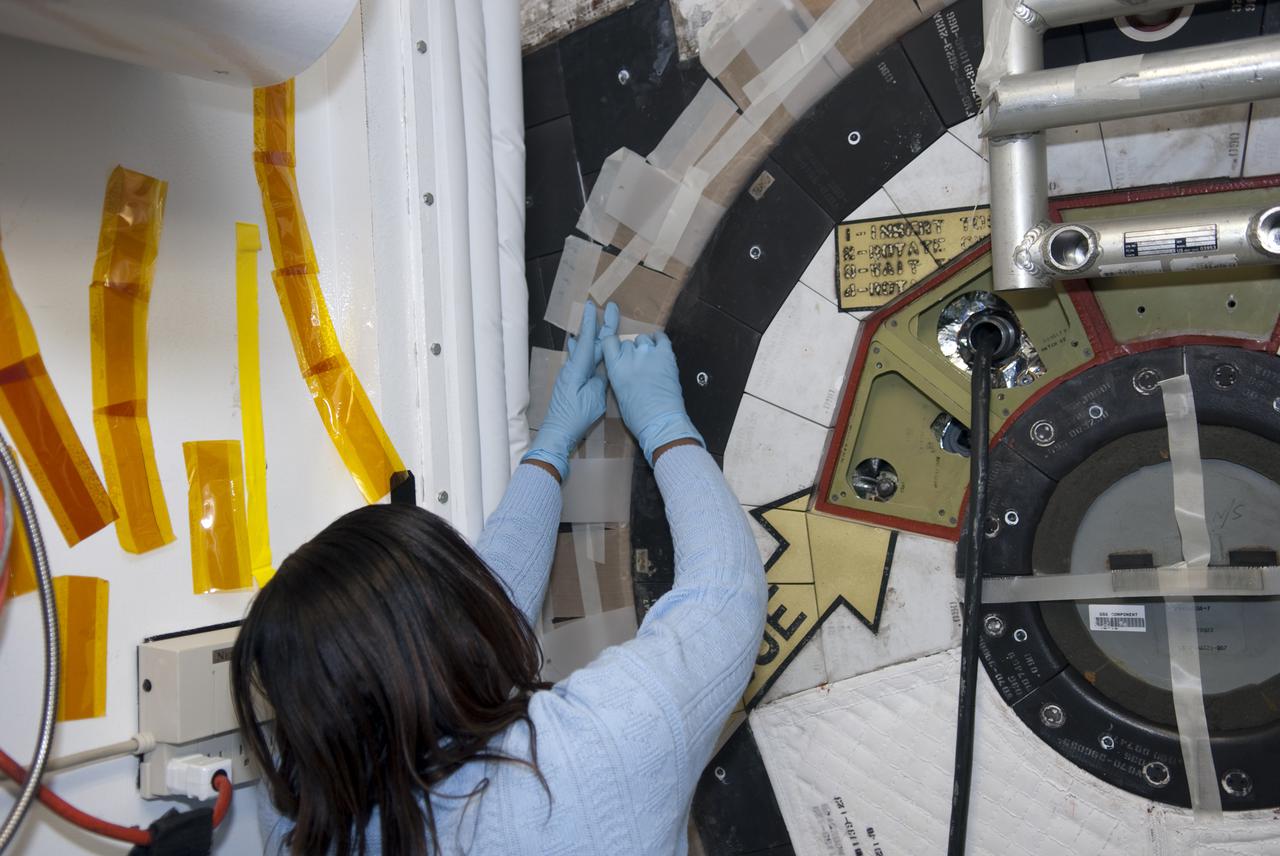
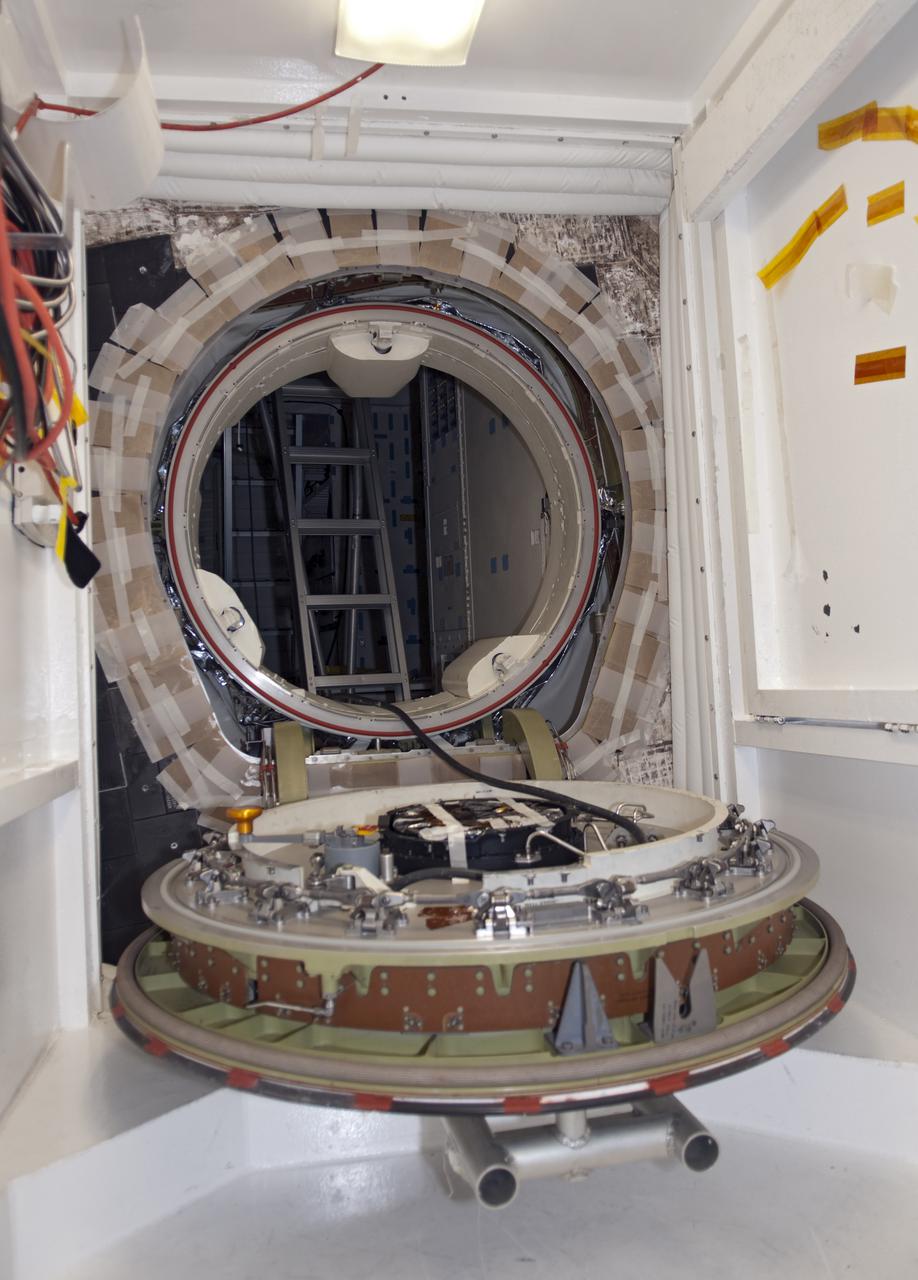
CAPE CANAVERAL, Fla. - Inside Orbiter Processing Facility-1 at Kennedy Space Center in Florida, shuttle Atlantis’ hatch closure is in the open position in preparation for the Mylar Pull Test. During the test, the hatch is closed and a scale is used to measure the force required to pull a piece of Mylar paper out from between the door and structural wall thermal barriers. The pull test is performed to ensure the integrity of the hatch and that it has closed properly. Atlantis is being processed for the STS-132 mission targeted for launch May 14. The six-member crew will deliver an Integrated Cargo Carrier and a Russian-built Mini Research Module to the International Space Station. Photo credit: NASA_Jim Grossmann
KSC-2010-2204
VANDENBERG AIR FORCE BASE, Calif. -- In Space Systems International's Payload Processing Facility at Vandenberg Air Force Base in California, technicians have removed the second solar array that will be integrated to the Aquarius/SAC-D spacecraft from its protective container.  Following final tests, the spacecraft will be integrated to a United Launch Alliance Delta II rocket in preparation for the targeted June launch. Aquarius, the NASA-built primary instrument on the SAC-D spacecraft, will provide new insights into how variations in ocean surface salinity relate to fundamental climate processes on its three-year mission. Photo credit: NASA/VAFB
KSC-2011-3239
CAPE CANAVERAL, Fla. - Inside Orbiter Processing Facility-1 at Kennedy Space Center in Florida, technicians secure and check shuttle Atlantis’ hatch in preparation for the Mylar Pull Test. During the test, a scale is used to measure the force required to pull a piece of Mylar paper out from between the door and structural wall thermal barriers. The pull test is performed to ensure the integrity of the hatch and that it has closed properly. Atlantis is being processed for the STS-132 mission targeted for launch May 14. The six-member crew will deliver an Integrated Cargo Carrier and a Russian-built Mini Research Module to the International Space Station. Photo credit: NASA_Jim Grossmann
KSC-2010-2207
VANDENBERG AIR FORCE BASE, Calif. -- In Space Systems International's Payload Processing Facility at Vandenberg Air Force Base in California, technicians have detached the overhead crane that moved the second solar array for integration and testing to the Aquarius/SAC-D spacecraft.  Following final tests, the spacecraft will be integrated to a United Launch Alliance Delta II rocket in preparation for the targeted June launch. Aquarius, the NASA-built primary instrument on the SAC-D spacecraft, will provide new insights into how variations in ocean surface salinity relate to fundamental climate processes on its three-year mission. Photo credit: NASA/VAFB
KSC-2011-3244
CAPE CANAVERAL, Fla. - Inside Orbiter Processing Facility-1 at Kennedy Space Center in Florida, a technician secures shuttle Atlantis’ hatch in preparation for the Mylar Pull Test. During the test, a scale is used to measure the force required to pull a piece of Mylar paper out from between the door and structural wall thermal barriers. The pull test is performed to ensure the integrity of the hatch and that it has closed properly. Atlantis is being processed for the STS-132 mission targeted for launch May 14. The six-member crew will deliver an Integrated Cargo Carrier and a Russian-built Mini Research Module to the International Space Station. Photo credit: NASA_Jim Grossmann
KSC-2010-2206