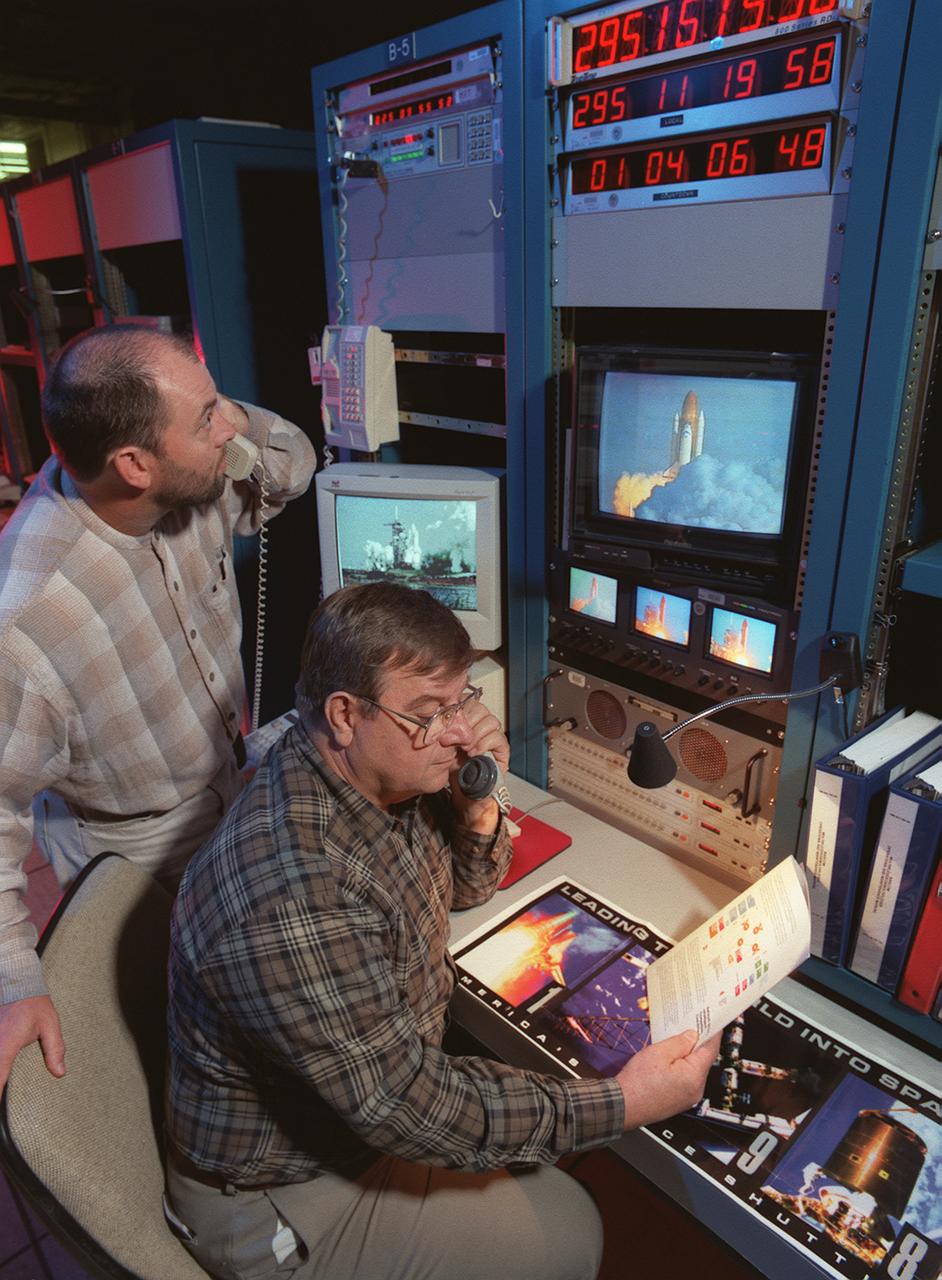
NISN at Marshall Space Flight Center (MSFC) provides Shuttle data information for the operation of MSFC's Huntsville Operation Support Center (HOSC) during Shuttle missions
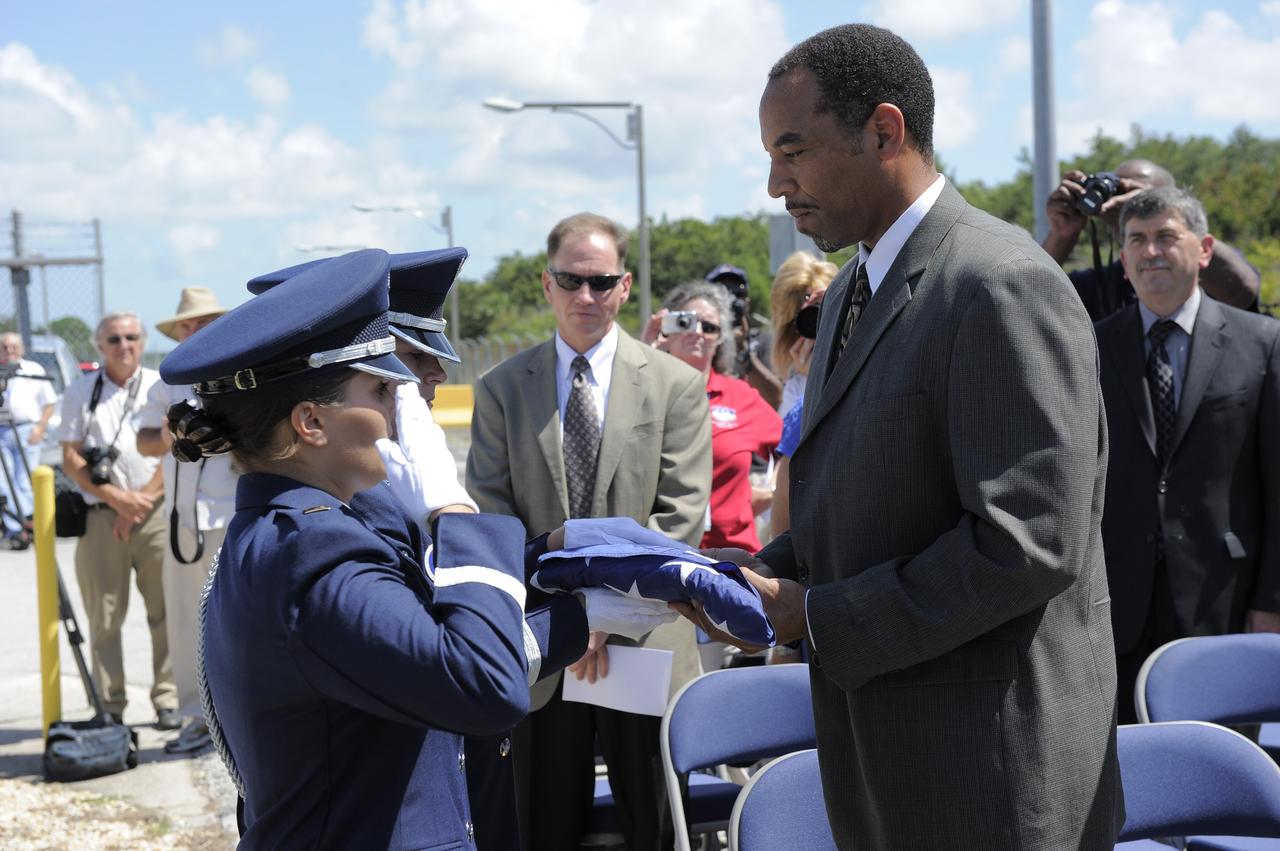
CAPE CANAVERAL, Fla. -- At the Merritt Island Launch Annex (MILA) Spaceflight Tracking and Data Network Station at NASA's Kennedy Space Center in Florida, the Patrick Air Force Base Color Guard presents the U.S. flag which flew over the station to David Carter, Near Earth Network project manager at Goddard Space Flight Center, during a closing ceremony recognizing the station's 45 years of service. The flag will be displayed in a Network Integration Center display cabinet at Goddard. The station was originally established by NASA's Goddard Space Flight Center as one of 17 Space Flight Tracking and Data Network stations around the world. Commissioned for the Apollo Program, the first launch it supported was the Apollo/Saturn 203 test flight from Launch Complex 37 on July 5, 1966. It also provided orbital support for low earth-orbiting scientific satellites. In recent history, the station has been used almost exclusively for space shuttle launch and landing support. Following the final launch and landing of the Space Shuttle Program in July 2011, the MILA station is officially decommissioned. For more information, visit http://www.nasa.gov/centers/kennedy/pdf/167424main_MILA-08C.pdf. Photo credit: NASA/Kim Shiflett
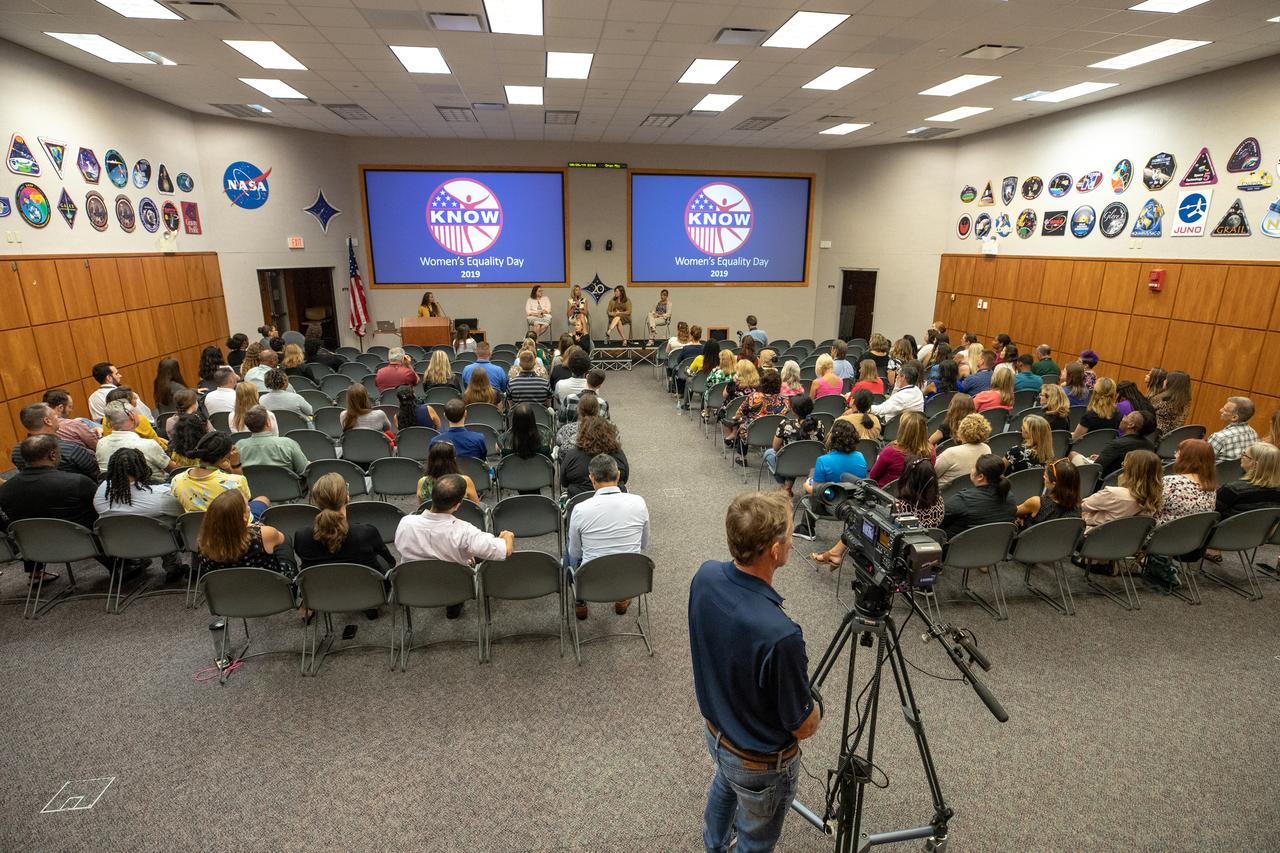
A panel discussion, featuring women in leadership roles at NASA’s Kennedy Space Center in Florida, is held on Aug. 26, 2019, to celebrate Women’s Equality Day. The event, sponsored by the Kennedy Networking Opportunities for Women (KNOW) employee resource group, honored the 100th anniversary of the passing of the 19th amendment guaranteeing all American women the right to vote. Seated in front from left, are Digna Carballosa, director of the Human Resources Office; Nancy Bray, director of Spaceport Integration and Services; Jennifer Kunz, director of Safety and Mission Assurance; and Amanda Mitskevich, Launch Services Program manager. At far left is Ashley Nelsen, Launch Service Program information manager and panel discussion moderator. The purpose of KNOW is to provide focus on issues such as employment, retention, promotion, training, career and personal development, education, and identify and eliminate barriers that hinder the advancement of women in the workforce.

A panel discussion, featuring women in leadership roles at NASA’s Kennedy Space Center in Florida, is held on Aug. 26, 2019, to celebrate Women’s Equality Day. The event, sponsored by the Kennedy Networking Opportunities for Women (KNOW) employee resource group, honored the 100th anniversary of the passing of the 19th amendment guaranteeing all American women the right to vote. Seated in front from left, are Digna Carballosa, director of the Human Resources Office; Nancy Bray, director of Spaceport Integration and Services; Jennifer Kunz, director of Safety and Mission Assurance; and Amanda Mitskevich, Launch Services Program manager. At far left, is Ashley Nelsen, Launch Service Program information manager and panel discussion moderator. The purpose of KNOW is to provide focus on issues such as employment, retention, promotion, training, career and personal development, education, and identify and eliminate barriers that hinder the advancement of women in the workforce.
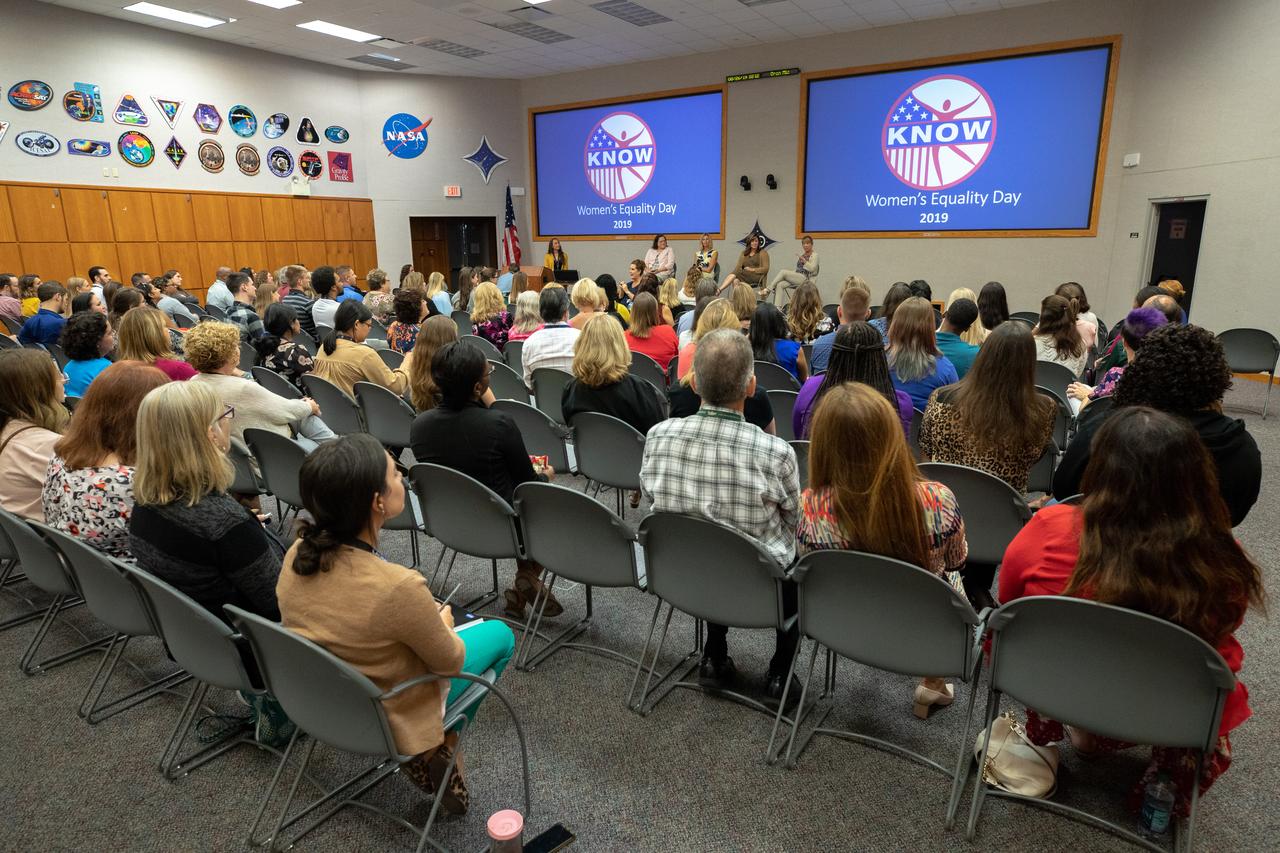
A panel discussion, featuring women in leadership roles at NASA’s Kennedy Space Center in Florida, is held on Aug. 26, 2019, to celebrate Women’s Equality Day. The event, sponsored by the Kennedy Networking Opportunities for Women (KNOW) employee resource group, honored the 100th anniversary of the passing of the 19th amendment guaranteeing all American women the right to vote. Seated in front from left, are Digna Carballosa, director of the Human Resources Office; Nancy Bray, director of Spaceport Integration and Services; Jennifer Kunz, director of Safety and Mission Assurance; and Amanda Mitskevich, Launch Services Program manager. At far left is Ashley Nelsen, Launch Service Program information manager and panel discussion moderator. The purpose of KNOW is to provide focus on issues such as employment, retention, promotion, training, career and personal development, education, and identify and eliminate barriers that hinder the advancement of women in the workforce.

A panel discussion, featuring women in leadership roles at NASA’s Kennedy Space Center in Florida, is held on Aug. 26, 2019, to celebrate Women’s Equality Day. The event, sponsored by the Kennedy Networking Opportunities for Women (KNOW) employee resource group, honored the 100th anniversary of the passing of the 19th amendment guaranteeing all American women the right to vote. Seated in front from left, are Digna Carballosa, director of the Human Resources Office; Nancy Bray, director of Spaceport Integration and Services; Jennifer Kunz, director of Safety and Mission Assurance; and Amanda Mitskevich, Launch Services Program manager. At far left is Ashley Nelsen, Launch Service Program information manager and panel discussion moderator. The purpose of KNOW is to provide focus on issues such as employment, retention, promotion, training, career and personal development, education, and identify and eliminate barriers that hinder the advancement of women in the workforce.

A panel discussion, featuring women in leadership roles at NASA’s Kennedy Space Center in Florida, is held on Aug. 26, 2019, to celebrate Women’s Equality Day. The event, sponsored by the Kennedy Networking Opportunities for Women (KNOW) employee resource group, honored the 100th anniversary of the passing of the 19th amendment guaranteeing all American women the right to vote. Nancy Bray, director of Spaceport Integration and Services, answers a question. At left is Digna Carballosa, director of the Human Resources Office. The purpose of KNOW is to provide focus on issues such as employment, retention, promotion, training, career and personal development, education, and identify and eliminate barriers that hinder the advancement of women in the workforce.

A panel discussion, featuring women in leadership roles at NASA’s Kennedy Space Center in Florida, is held on Aug. 26, 2019, to celebrate Women’s Equality Day. The event, sponsored by the Kennedy Networking Opportunities for Women (KNOW) employee resource group, honored the 100th anniversary of the passing of the 19th amendment guaranteeing all American women the right to vote. Seated from left, are Digna Carballosa, director of the Human Resources Office; Nancy Bray, director of Spaceport Integration and Services; Jennifer Kunz, director of Safety and Mission Assurance; and Amanda Mitskevich, Launch Services Program manager. The purpose of KNOW is to provide focus on issues such as employment, retention, promotion, training, career and personal development, education, and identify and eliminate barriers that hinder the advancement of women in the workforce.
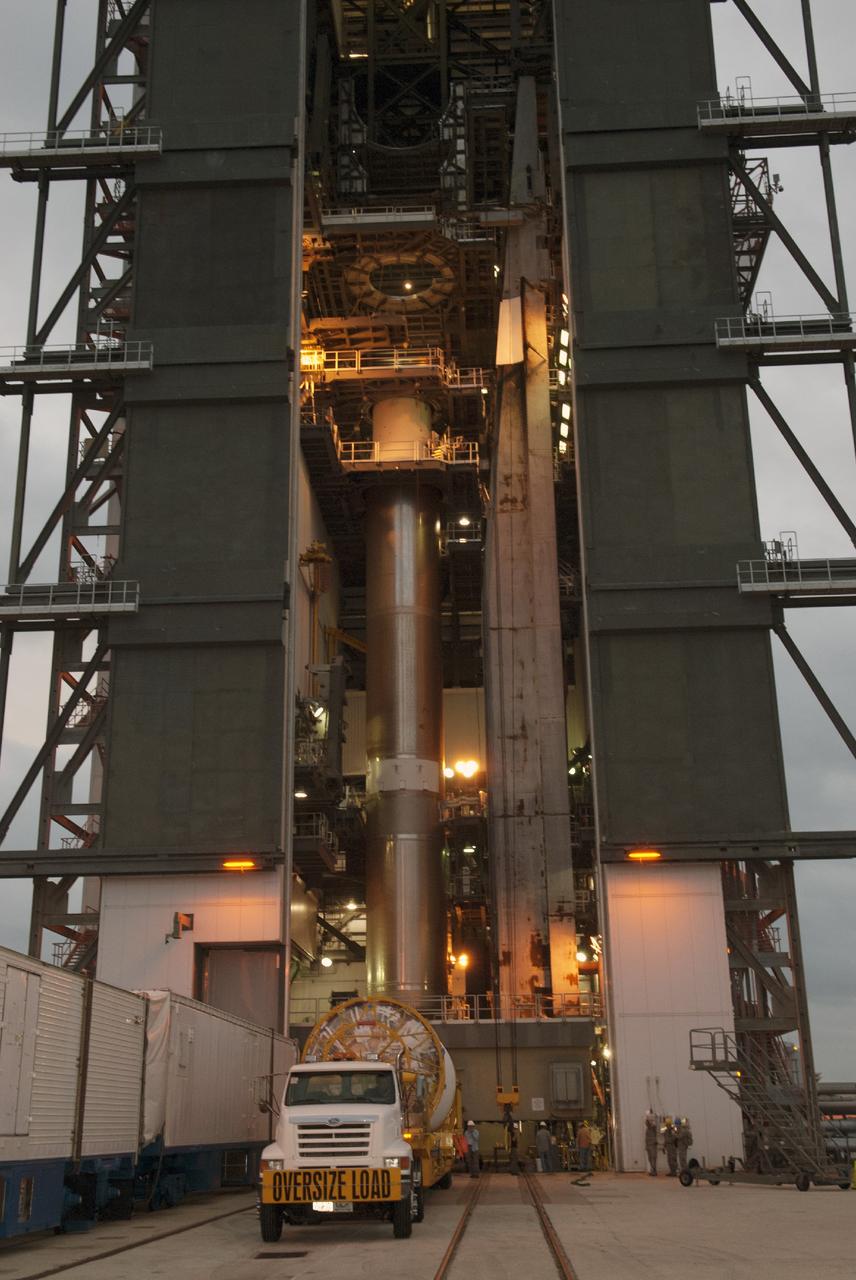
CAPE CANAVERAL, Fla. – The United Launch Alliance Centaur second stage that will help boost the Tracking and Data Relay Satellite, or TDRS-L, spacecraft into orbit arrives at Cape Canaveral Air Force Station's Launch Complex 41. It will be lifted and mounted atop the Atlas V first stage already in position inside the Vertical Integration Facility. TDRS-L is the second of three next-generation satellites designed to ensure vital operational continuity for the NASA Space Network. It is scheduled to launch from Cape Canaveral's Space Launch Complex 41 atop an Atlas V rocket in January 2014. The current Tracking and Data Relay Satellite system consists of eight in-orbit satellites distributed to provide near continuous information relay service to missions such as the Hubble Space Telescope and International Space Station. For more information, visit: http://www.nasa.gov/content/tracking-and-data-relay-satellite-tdrs/ Photo credit: NASA/Charisse Nahser
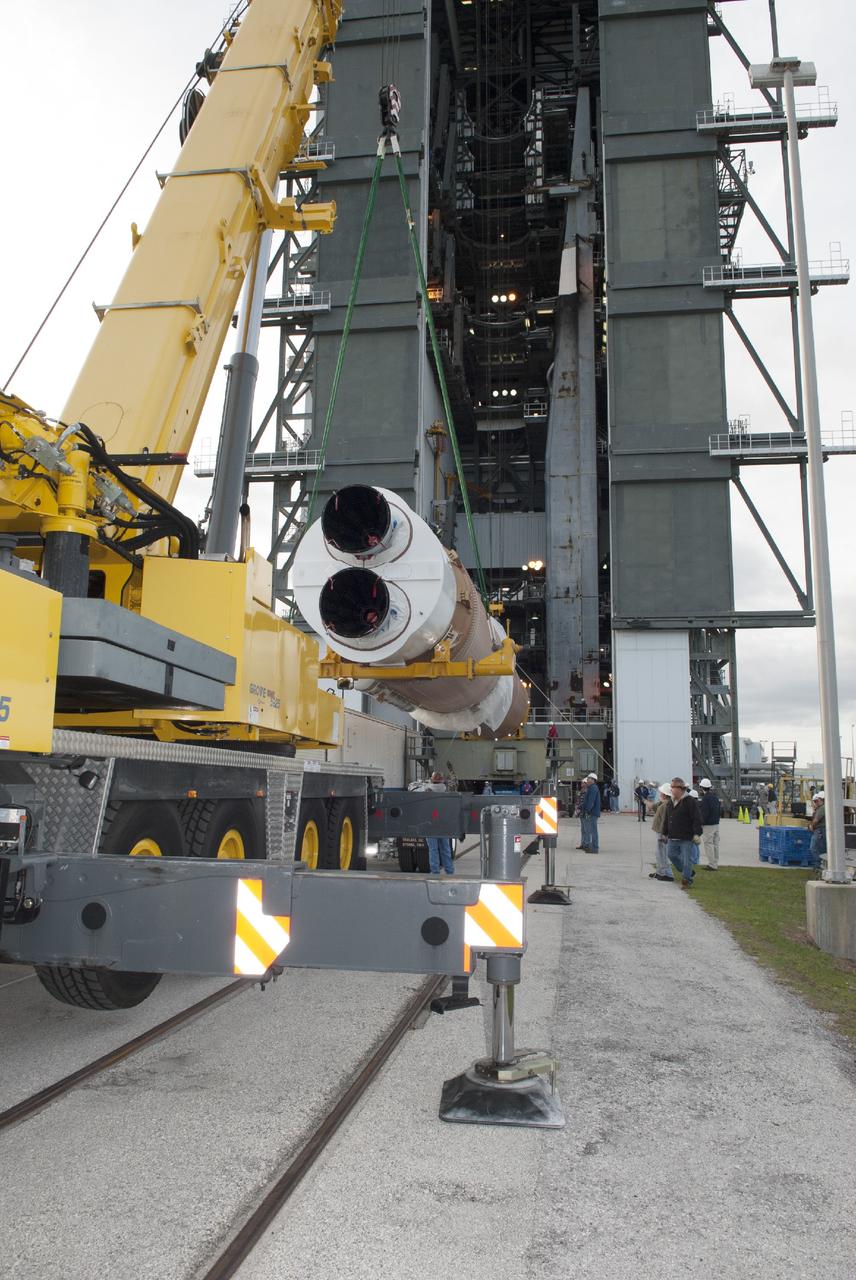
CAPE CANAVERAL, Fla. – At Cape Canaveral Air Force Station, the first stage of the United Launch Alliance Atlas V rocket is lifted for stacking in the Vertical Integration Facility at Launch Complex 41. The vehicle will be used to boost the Tracking and Data Relay Satellite, or TDRS-L, spacecraft to orbit. TDRS-L is the second of three next-generation satellites designed to ensure vital operational continuity for the NASA Space Network. It is scheduled to launch from Cape Canaveral's Space Launch Complex 41 atop an Atlas V rocket in January 2014. The current Tracking and Data Relay Satellite system consists of eight in-orbit satellites distributed to provide near continuous information relay service to missions such as the Hubble Space Telescope and International Space Station. For more information, visit: http://www.nasa.gov/content/tracking-and-data-relay-satellite-tdrs/ Photo credit: NASA/Charisse Nahser
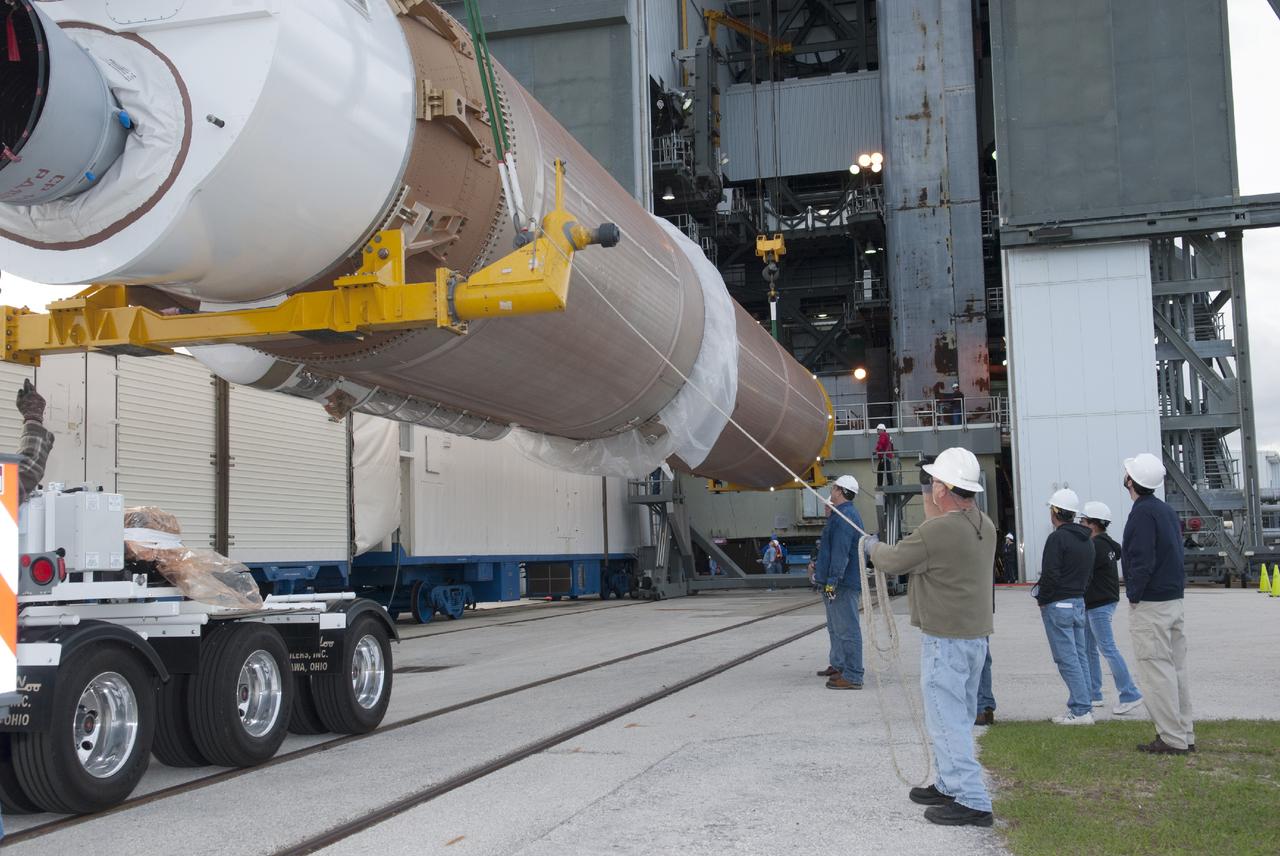
CAPE CANAVERAL, Fla. – At Cape Canaveral Air Force Station, engineers and technicians support lifting the first stage of the United Launch Alliance Atlas V rocket during stacking operations in the Vertical Integration Facility at Launch Complex 41. The vehicle will be used to boost the Tracking and Data Relay Satellite, or TDRS-L, spacecraft to orbit. TDRS-L is the second of three next-generation satellites designed to ensure vital operational continuity for the NASA Space Network. It is scheduled to launch from Cape Canaveral's Space Launch Complex 41 atop an Atlas V rocket in January 2014. The current Tracking and Data Relay Satellite system consists of eight in-orbit satellites distributed to provide near continuous information relay service to missions such as the Hubble Space Telescope and International Space Station. For more information, visit: http://www.nasa.gov/content/tracking-and-data-relay-satellite-tdrs/ Photo credit: NASA/Charisse Nahser
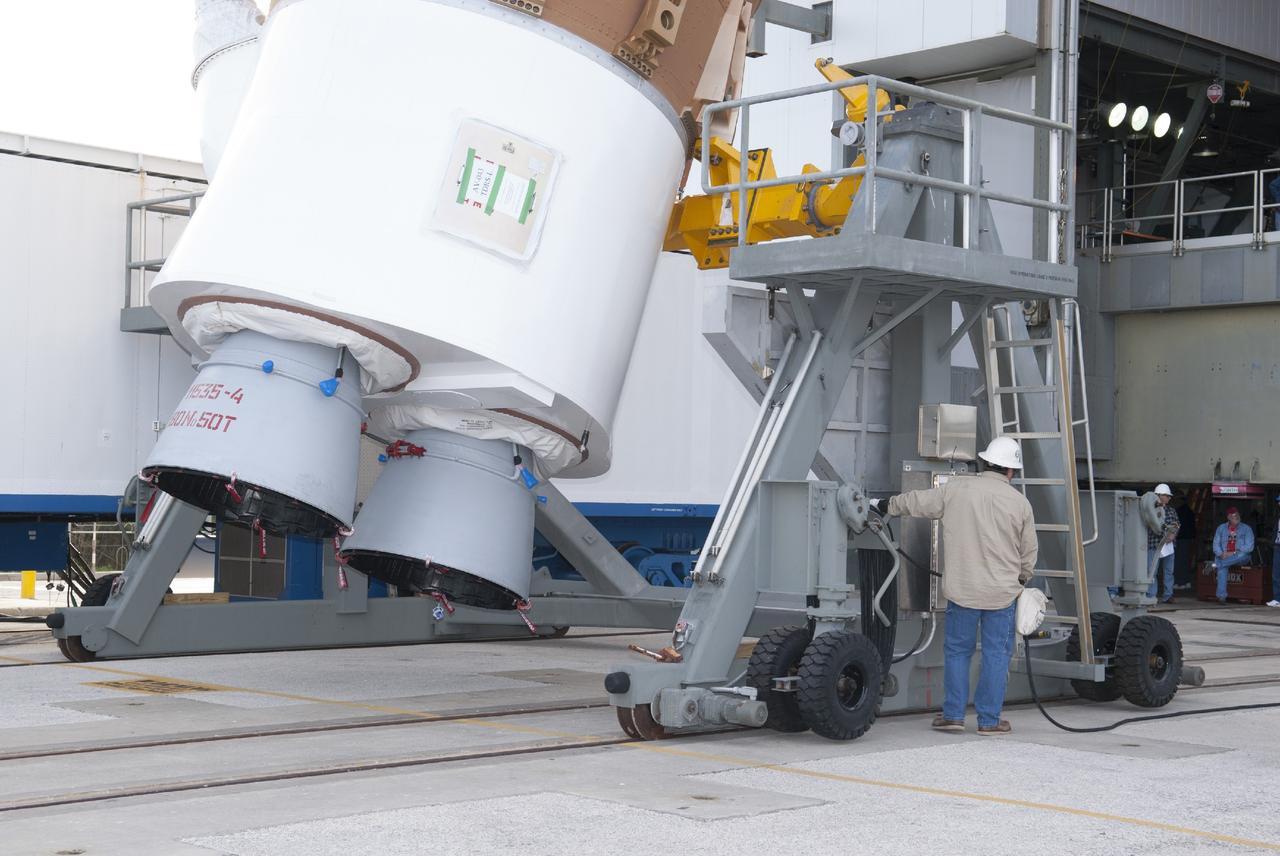
CAPE CANAVERAL, Fla. – At Cape Canaveral Air Force Station, a technician supports lifting of a United Launch Alliance Atlas V rocket in the Vertical Integration Facility at Launch Complex 41. The vehicle will be used to boost the Tracking and Data Relay Satellite, or TDRS-L, spacecraft to orbit. TDRS-L is the second of three next-generation satellites designed to ensure vital operational continuity for the NASA Space Network. It is scheduled to launch from Cape Canaveral's Space Launch Complex 41 atop an Atlas V rocket in January 2014. The current Tracking and Data Relay Satellite system consists of eight in-orbit satellites distributed to provide near continuous information relay service to missions such as the Hubble Space Telescope and International Space Station. For more information, visit: http://www.nasa.gov/content/tracking-and-data-relay-satellite-tdrs/ Photo credit: NASA/Charisse Nahser
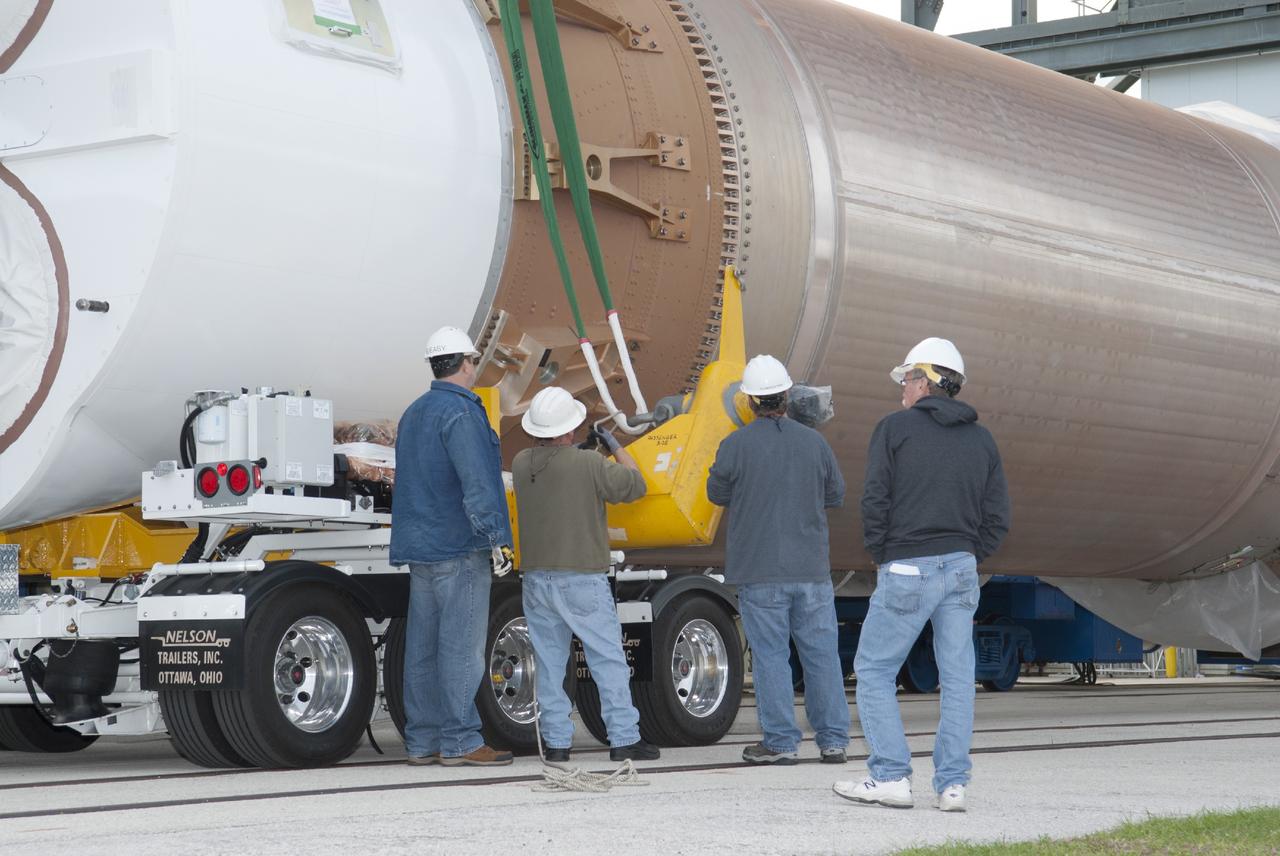
CAPE CANAVERAL, Fla. – At Cape Canaveral Air Force Station, engineers and technicians prepare the United Launch Alliance Atlas V rocket for stacking in the Vertical Integration Facility at Launch Complex 41. The vehicle will be used to boost the Tracking and Data Relay Satellite, or TDRS-L, spacecraft to orbit. TDRS-L is the second of three next-generation satellites designed to ensure vital operational continuity for the NASA Space Network. It is scheduled to launch from Cape Canaveral's Space Launch Complex 41 atop an Atlas V rocket in January 2014. The current Tracking and Data Relay Satellite system consists of eight in-orbit satellites distributed to provide near continuous information relay service to missions such as the Hubble Space Telescope and International Space Station. For more information, visit: http://www.nasa.gov/content/tracking-and-data-relay-satellite-tdrs/ Photo credit: NASA/Charisse Nahser
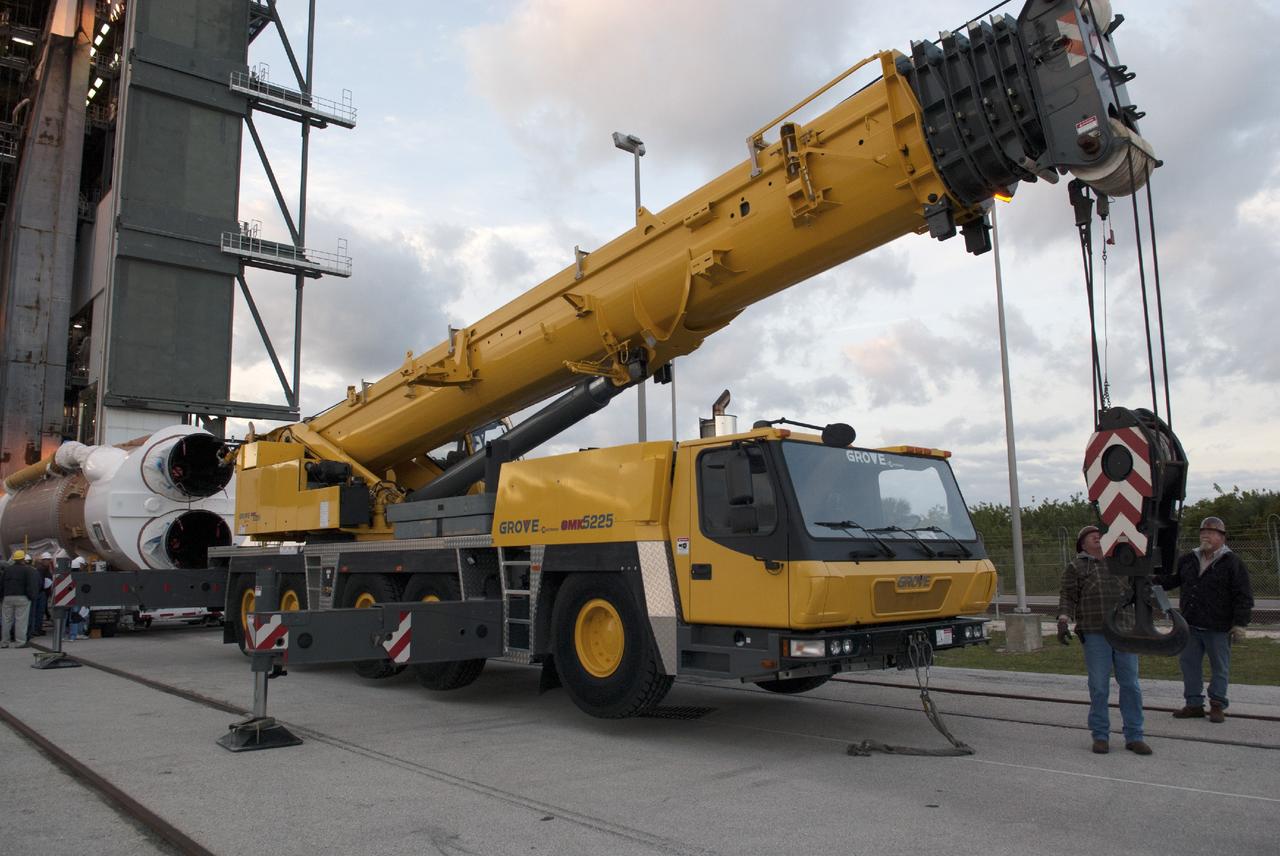
CAPE CANAVERAL, Fla. – At Cape Canaveral Air Force Station's Vertical Integration Facility at Launch Complex 41, a crane is positioned to support stacking of the United Launch Alliance Atlas V rocket that will boost the Tracking and Data Relay Satellite, or TDRS-L, spacecraft into orbit. TDRS-L is the second of three next-generation satellites designed to ensure vital operational continuity for the NASA Space Network. It is scheduled to launch from Cape Canaveral's Space Launch Complex 41 atop an Atlas V rocket in January 2014. The current Tracking and Data Relay Satellite system consists of eight in-orbit satellites distributed to provide near continuous information relay service to missions such as the Hubble Space Telescope and International Space Station. For more information, visit: http://www.nasa.gov/content/tracking-and-data-relay-satellite-tdrs/ Photo credit: NASA/Charisse Nahser
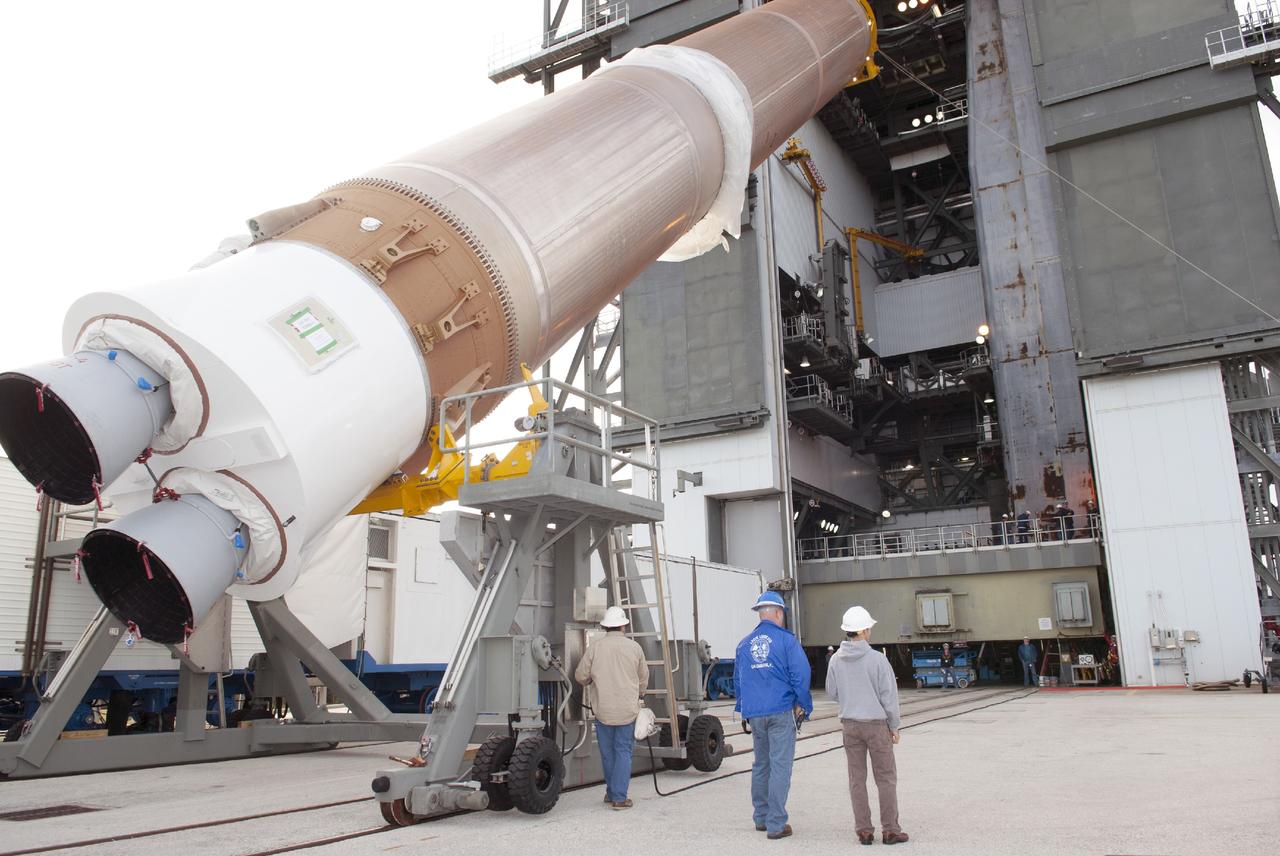
CAPE CANAVERAL, Fla. – At Cape Canaveral Air Force Station, the first stage of the United Launch Alliance Atlas V rocket is lifted for stacking in the Vertical Integration Facility at Launch Complex 41. The vehicle will be used to boost the Tracking and Data Relay Satellite, or TDRS-L, spacecraft to orbit. TDRS-L is the second of three next-generation satellites designed to ensure vital operational continuity for the NASA Space Network. It is scheduled to launch from Cape Canaveral's Space Launch Complex 41 atop an Atlas V rocket in January 2014. The current Tracking and Data Relay Satellite system consists of eight in-orbit satellites distributed to provide near continuous information relay service to missions such as the Hubble Space Telescope and International Space Station. For more information, visit: http://www.nasa.gov/content/tracking-and-data-relay-satellite-tdrs/ Photo credit: NASA/Charisse Nahser
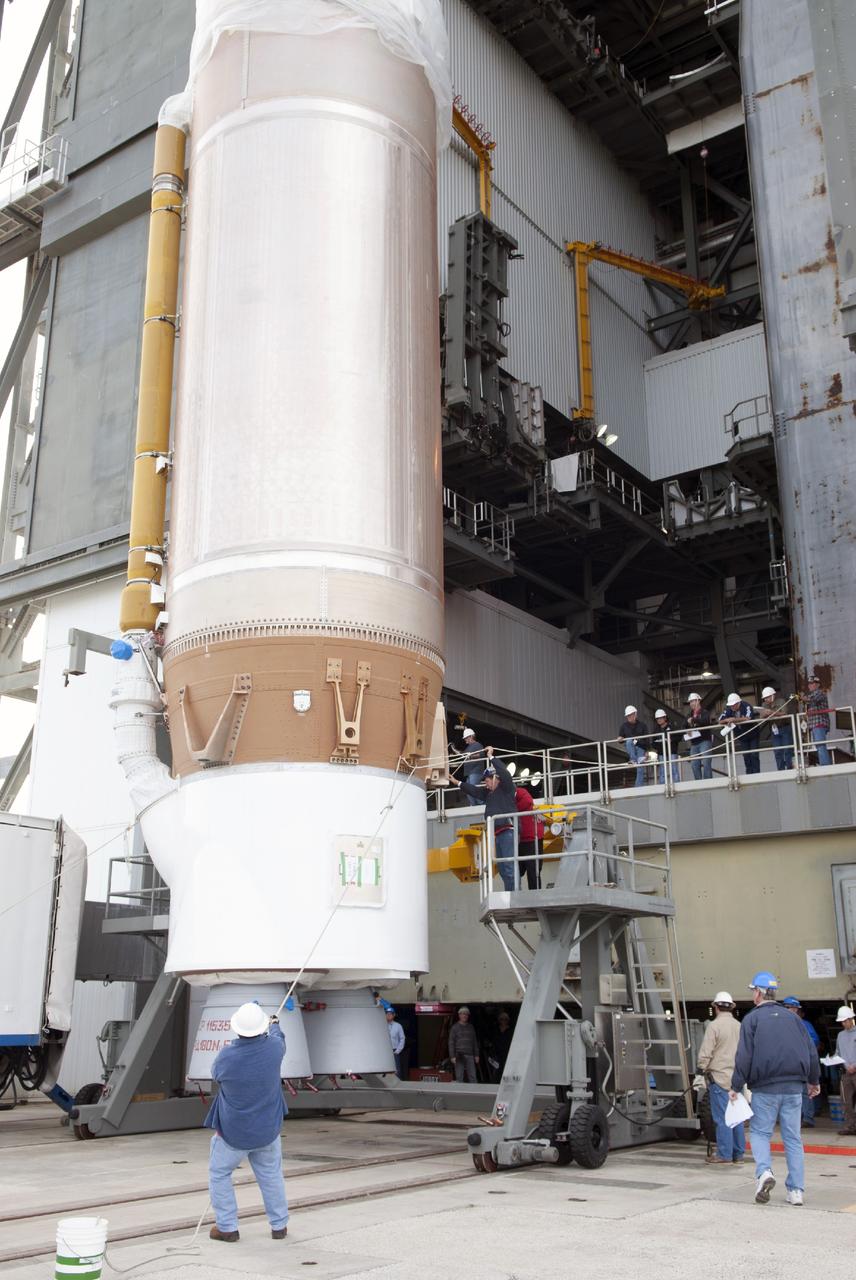
CAPE CANAVERAL, Fla. – At Cape Canaveral Air Force Station, engineers and technicians support lifting the first stage of the United Launch Alliance Atlas V rocket during stacking operations in the Vertical Integration Facility at Launch Complex 41. The vehicle will be used to boost the Tracking and Data Relay Satellite, or TDRS-L, spacecraft to orbit. TDRS-L is the second of three next-generation satellites designed to ensure vital operational continuity for the NASA Space Network. It is scheduled to launch from Cape Canaveral's Space Launch Complex 41 atop an Atlas V rocket in January 2014. The current Tracking and Data Relay Satellite system consists of eight in-orbit satellites distributed to provide near continuous information relay service to missions such as the Hubble Space Telescope and International Space Station. For more information, visit: http://www.nasa.gov/content/tracking-and-data-relay-satellite-tdrs/ Photo credit: NASA/Charisse Nahser
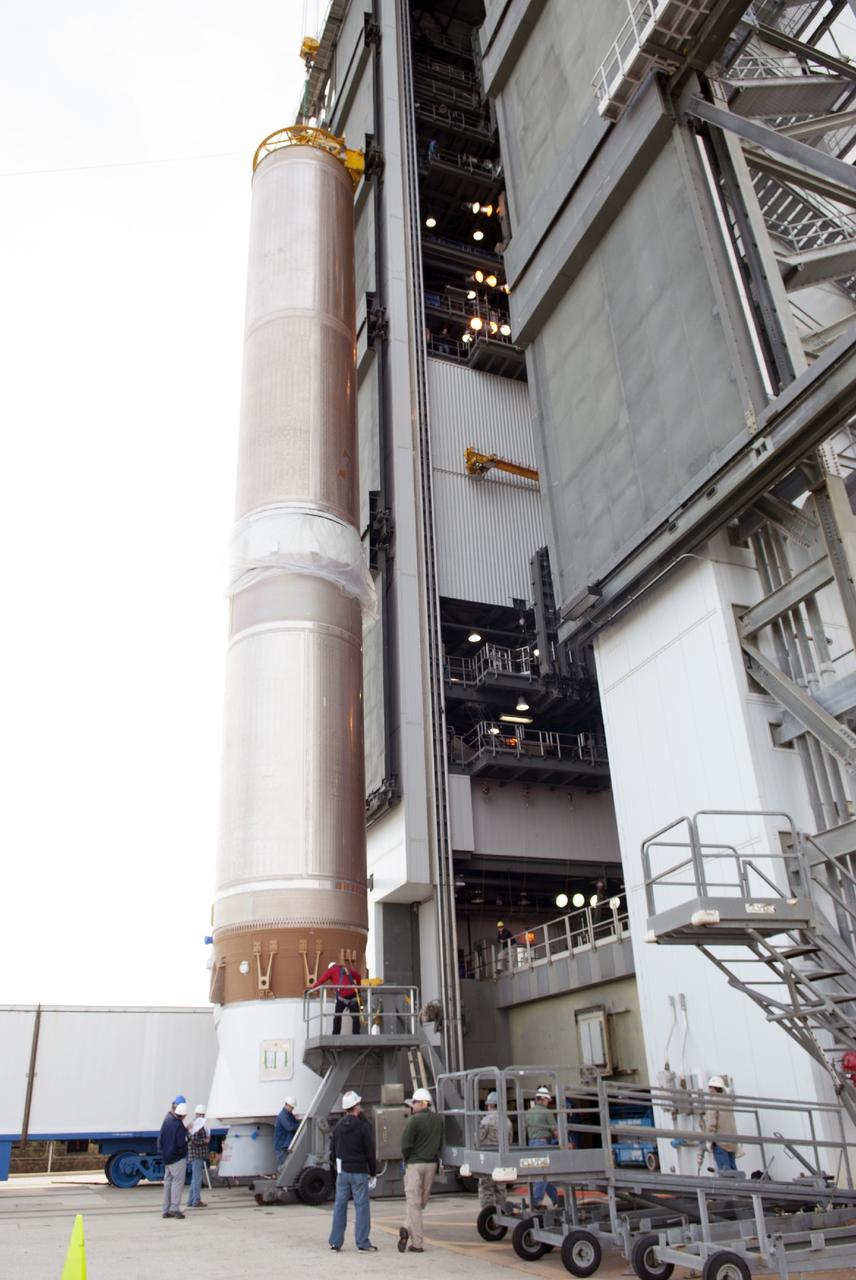
CAPE CANAVERAL, Fla. – At Cape Canaveral Air Force Station, the first stage of the United Launch Alliance Atlas V rocket is lifted for stacking in the Vertical Integration Facility at Launch Complex 41. The vehicle will be used to boost the Tracking and Data Relay Satellite, or TDRS-L, spacecraft to orbit. TDRS-L is the second of three next-generation satellites designed to ensure vital operational continuity for the NASA Space Network. It is scheduled to launch from Cape Canaveral's Space Launch Complex 41 atop an Atlas V rocket in January 2014. The current Tracking and Data Relay Satellite system consists of eight in-orbit satellites distributed to provide near continuous information relay service to missions such as the Hubble Space Telescope and International Space Station. For more information, visit: http://www.nasa.gov/content/tracking-and-data-relay-satellite-tdrs/ Photo credit: NASA/Charisse Nahser
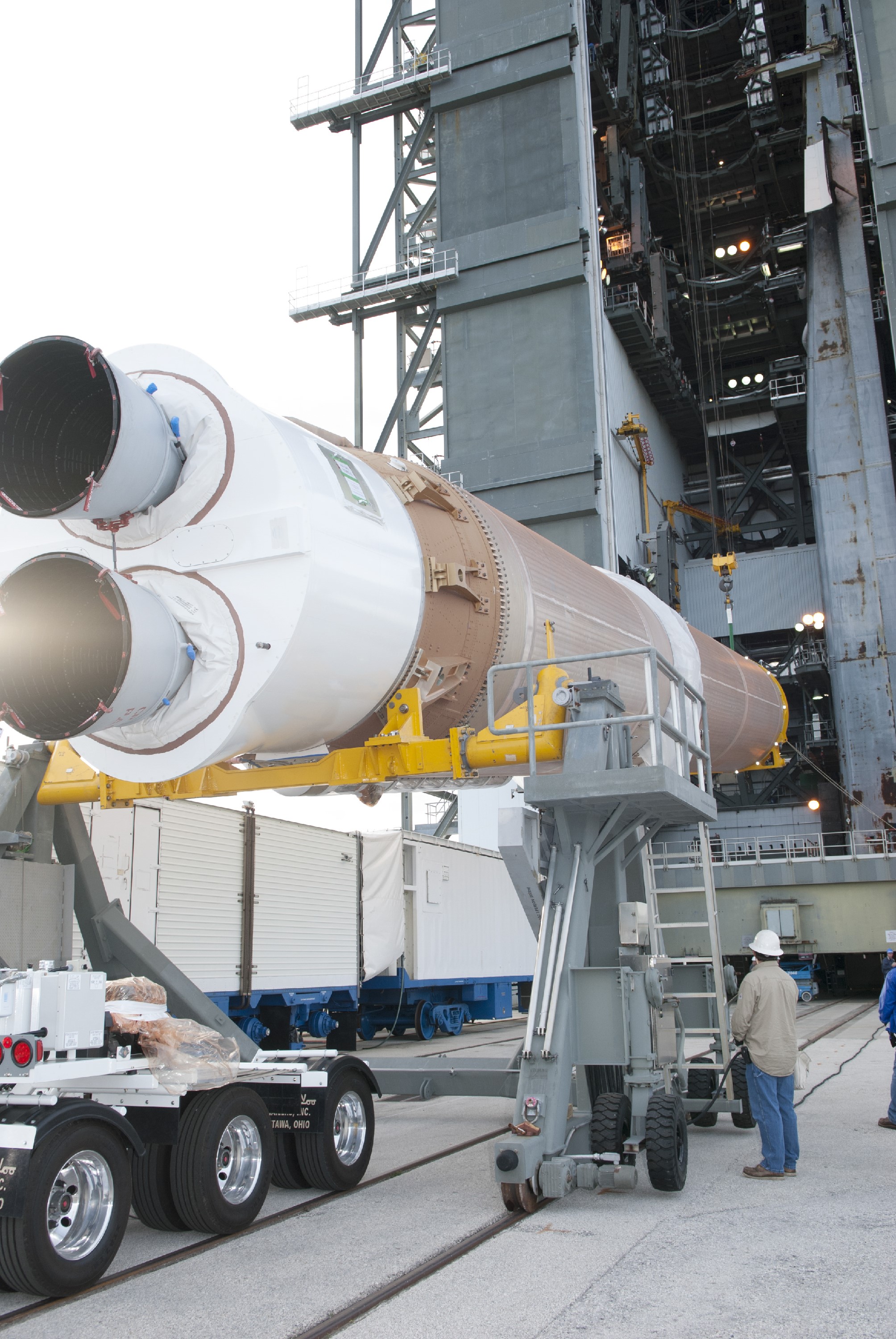
CAPE CANAVERAL, Fla. – At Cape Canaveral Air Force Station, the first stage of the United Launch Alliance Atlas V rocket is lifted for stacking in the Vertical Integration Facility at Launch Complex 41. The vehicle will be used to boost the Tracking and Data Relay Satellite, or TDRS-L, spacecraft to orbit. TDRS-L is the second of three next-generation satellites designed to ensure vital operational continuity for the NASA Space Network. It is scheduled to launch from Cape Canaveral's Space Launch Complex 41 atop an Atlas V rocket in January 2014. The current Tracking and Data Relay Satellite system consists of eight in-orbit satellites distributed to provide near continuous information relay service to missions such as the Hubble Space Telescope and International Space Station. For more information, visit: http://www.nasa.gov/content/tracking-and-data-relay-satellite-tdrs/ Photo credit: NASA/Charisse Nahser

CAPE CANAVERAL, Fla. – At Cape Canaveral Air Force Station, engineers and technicians prepare the United Launch Alliance Atlas V rocket for stacking in the Vertical Integration Facility at Launch Complex 41. The vehicle will be used to boost the Tracking and Data Relay Satellite, or TDRS-L, spacecraft to orbit. TDRS-L is the second of three next-generation satellites designed to ensure vital operational continuity for the NASA Space Network. It is scheduled to launch from Cape Canaveral's Space Launch Complex 41 atop an Atlas V rocket in January 2014. The current Tracking and Data Relay Satellite system consists of eight in-orbit satellites distributed to provide near continuous information relay service to missions such as the Hubble Space Telescope and International Space Station. For more information, visit: http://www.nasa.gov/content/tracking-and-data-relay-satellite-tdrs/ Photo credit: NASA/Charisse Nahser
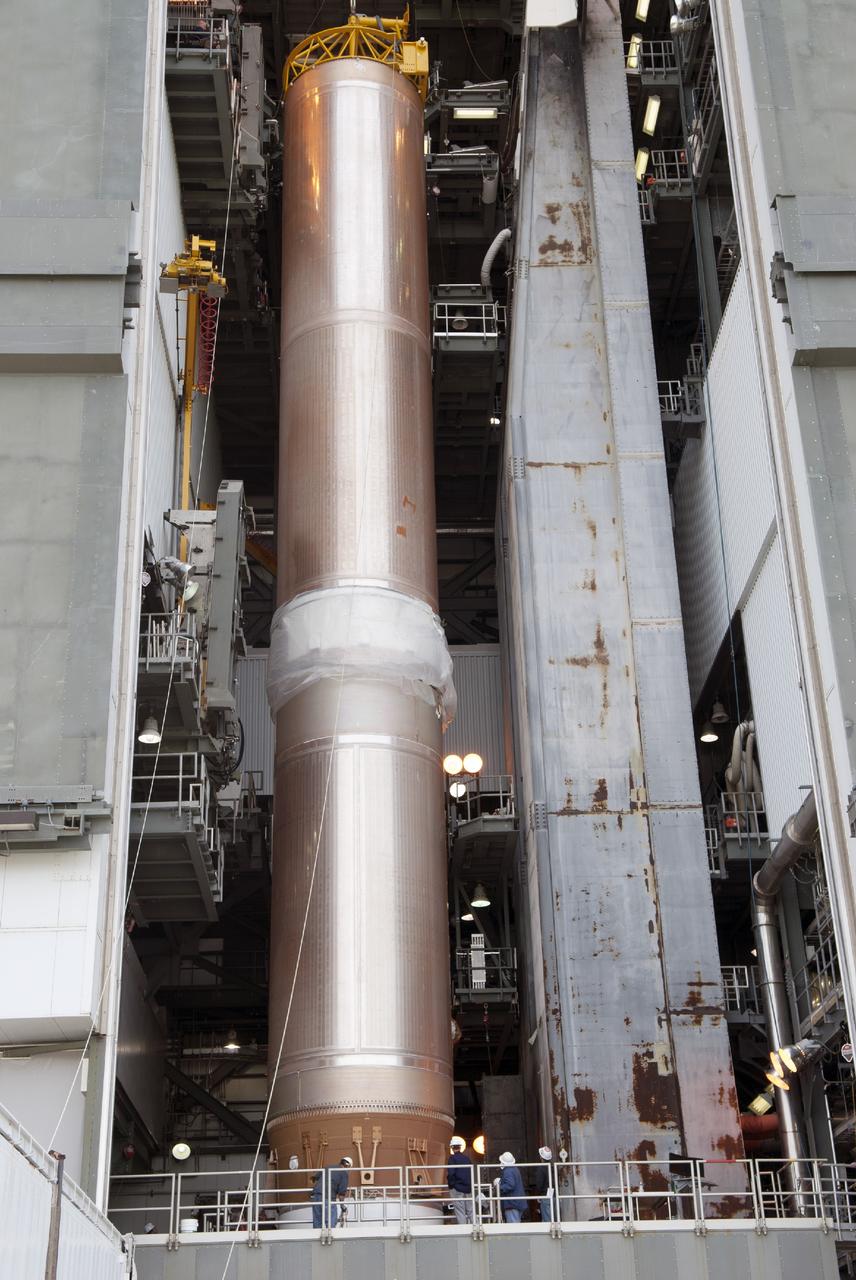
CAPE CANAVERAL, Fla. – At Cape Canaveral Air Force Station, the first stage of the United Launch Alliance Atlas V rocket positioned in the Vertical Integration Facility at Launch Complex 41. The vehicle will be used to boost the Tracking and Data Relay Satellite, or TDRS-L, spacecraft to orbit. TDRS-L is the second of three next-generation satellites designed to ensure vital operational continuity for the NASA Space Network. It is scheduled to launch from Cape Canaveral's Space Launch Complex 41 atop an Atlas V rocket in January 2014. The current Tracking and Data Relay Satellite system consists of eight in-orbit satellites distributed to provide near continuous information relay service to missions such as the Hubble Space Telescope and International Space Station. For more information, visit: http://www.nasa.gov/content/tracking-and-data-relay-satellite-tdrs/ Photo credit: NASA/Charisse Nahser
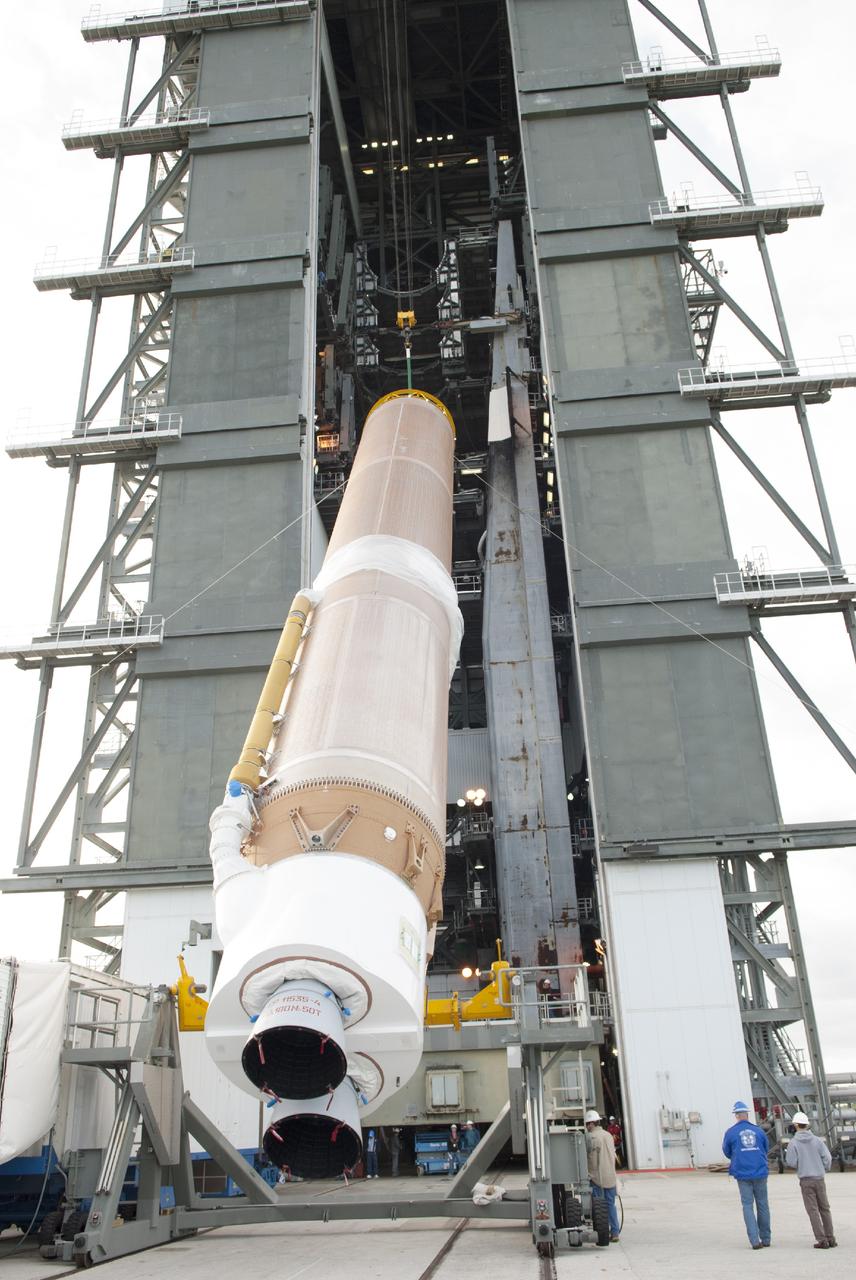
CAPE CANAVERAL, Fla. – At Cape Canaveral Air Force Station, the first stage of the United Launch Alliance Atlas V rocket is lifted for stacking in the Vertical Integration Facility at Launch Complex 41. The vehicle will be used to boost the Tracking and Data Relay Satellite, or TDRS-L, spacecraft to orbit. TDRS-L is the second of three next-generation satellites designed to ensure vital operational continuity for the NASA Space Network. It is scheduled to launch from Cape Canaveral's Space Launch Complex 41 atop an Atlas V rocket in January 2014. The current Tracking and Data Relay Satellite system consists of eight in-orbit satellites distributed to provide near continuous information relay service to missions such as the Hubble Space Telescope and International Space Station. For more information, visit: http://www.nasa.gov/content/tracking-and-data-relay-satellite-tdrs/ Photo credit: NASA/Charisse Nahser
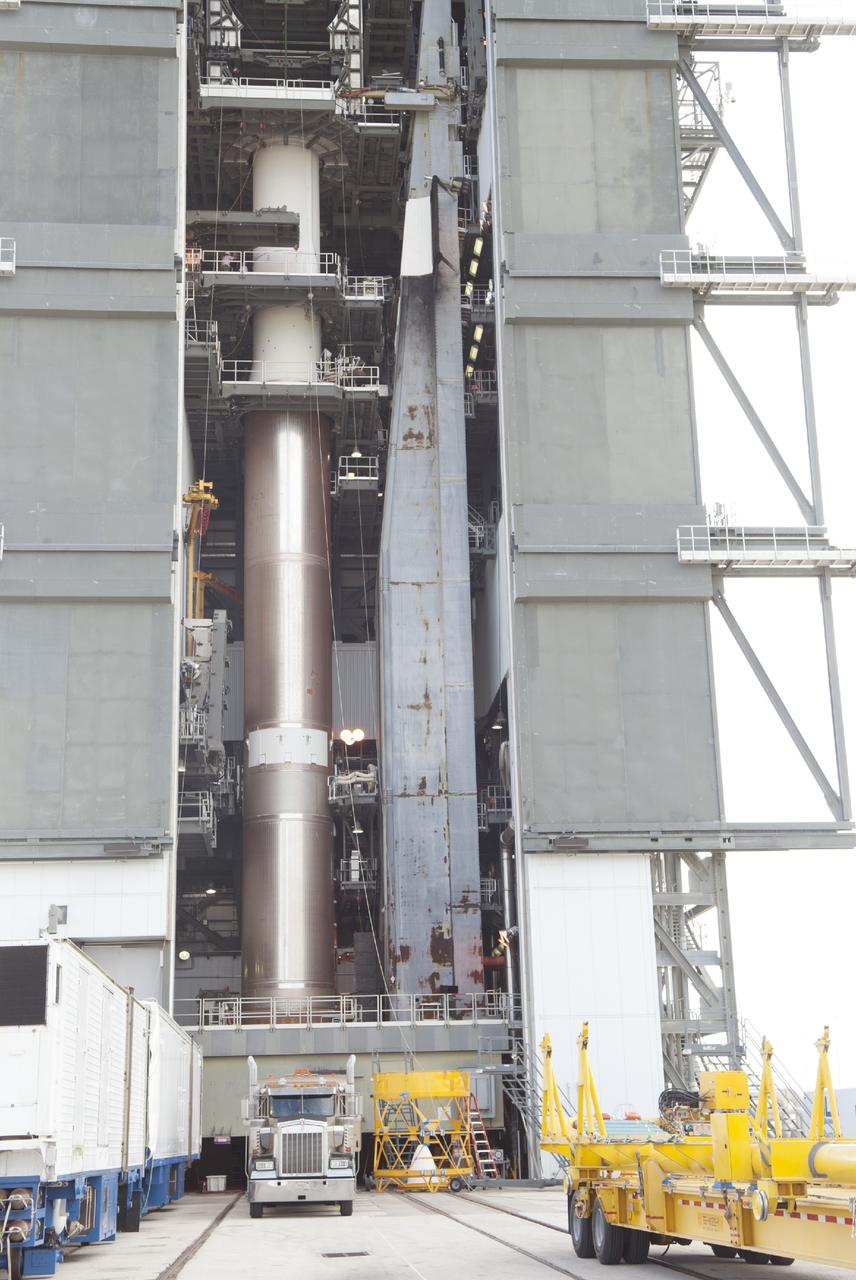
CAPE CANAVERAL, Fla. – At Cape Canaveral Air Force Station's Launch Complex 41, a United Launch Alliance Atlas V rocket, with its Centaur second stage atop, stands in the Vertical Integration Facility as preparations continue for lift off of the Tracking and Data Relay Satellite, or TDRS-L. TDRS-L is the second of three next-generation satellites designed to ensure vital operational continuity for the NASA Space Network. It is scheduled to launch from Cape Canaveral's Space Launch Complex 41 atop an Atlas V rocket in January 2014. The current Tracking and Data Relay Satellite system consists of eight in-orbit satellites distributed to provide near continuous information relay service to missions such as the Hubble Space Telescope and International Space Station. For more information, visit: http://www.nasa.gov/content/tracking-and-data-relay-satellite-tdrs/ Photo credit: NASA/Charisse Nahser

CAPE CANAVERAL, Fla. – At Cape Canaveral Air Force Station, engineers and technicians prepare the United Launch Alliance Atlas V rocket for stacking in the Vertical Integration Facility at Launch Complex 41. The vehicle will be used to boost the Tracking and Data Relay Satellite, or TDRS-L, spacecraft to orbit. TDRS-L is the second of three next-generation satellites designed to ensure vital operational continuity for the NASA Space Network. It is scheduled to launch from Cape Canaveral's Space Launch Complex 41 atop an Atlas V rocket in January 2014. The current Tracking and Data Relay Satellite system consists of eight in-orbit satellites distributed to provide near continuous information relay service to missions such as the Hubble Space Telescope and International Space Station. For more information, visit: http://www.nasa.gov/content/tracking-and-data-relay-satellite-tdrs/ Photo credit: NASA/Charisse Nahser
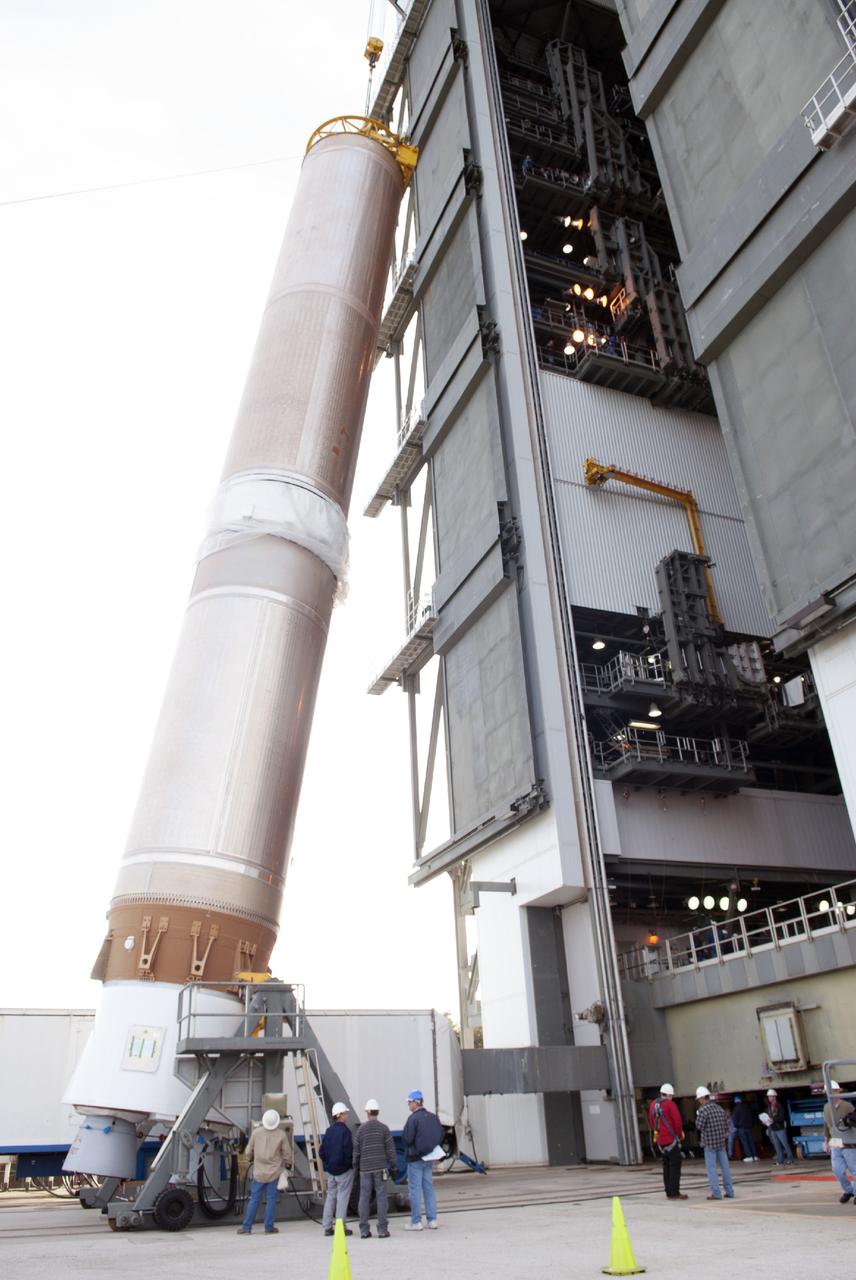
CAPE CANAVERAL, Fla. – At Cape Canaveral Air Force Station, the first stage of the United Launch Alliance Atlas V rocket is lifted for stacking in the Vertical Integration Facility at Launch Complex 41. The vehicle will be used to boost the Tracking and Data Relay Satellite, or TDRS-L, spacecraft to orbit. TDRS-L is the second of three next-generation satellites designed to ensure vital operational continuity for the NASA Space Network. It is scheduled to launch from Cape Canaveral's Space Launch Complex 41 atop an Atlas V rocket in January 2014. The current Tracking and Data Relay Satellite system consists of eight in-orbit satellites distributed to provide near continuous information relay service to missions such as the Hubble Space Telescope and International Space Station. For more information, visit: http://www.nasa.gov/content/tracking-and-data-relay-satellite-tdrs/ Photo credit: NASA/Charisse Nahser
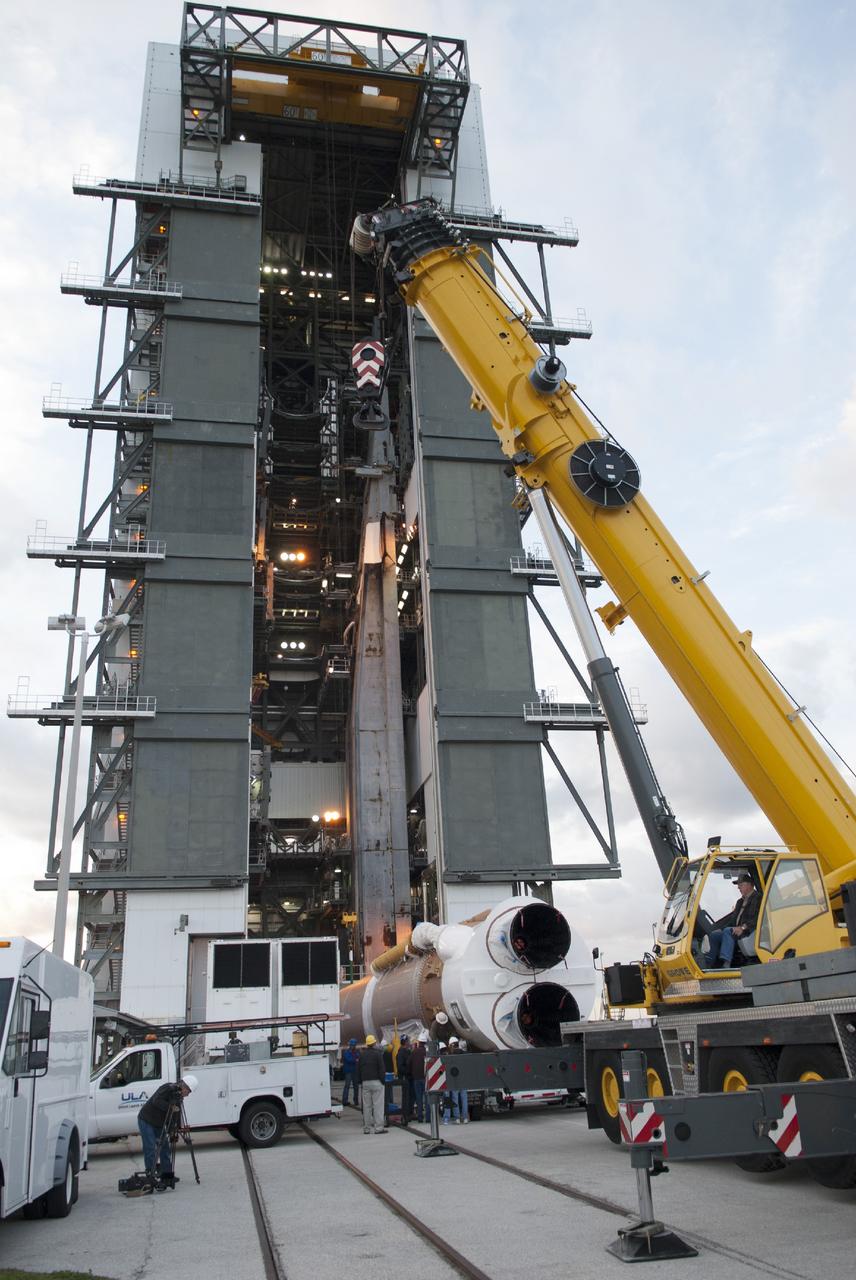
CAPE CANAVERAL, Fla. – At Cape Canaveral Air Force Station's Vertical Integration Facility at Launch Complex 41, a crane is positioned to support stacking of the United Launch Alliance Atlas V rocket that will boost the Tracking and Data Relay Satellite, or TDRS-L, spacecraft into orbit. TDRS-L is the second of three next-generation satellites designed to ensure vital operational continuity for the NASA Space Network. It is scheduled to launch from Cape Canaveral's Space Launch Complex 41 atop an Atlas V rocket in January 2014. The current Tracking and Data Relay Satellite system consists of eight in-orbit satellites distributed to provide near continuous information relay service to missions such as the Hubble Space Telescope and International Space Station. For more information, visit: http://www.nasa.gov/content/tracking-and-data-relay-satellite-tdrs/ Photo credit: NASA/Charisse Nahser
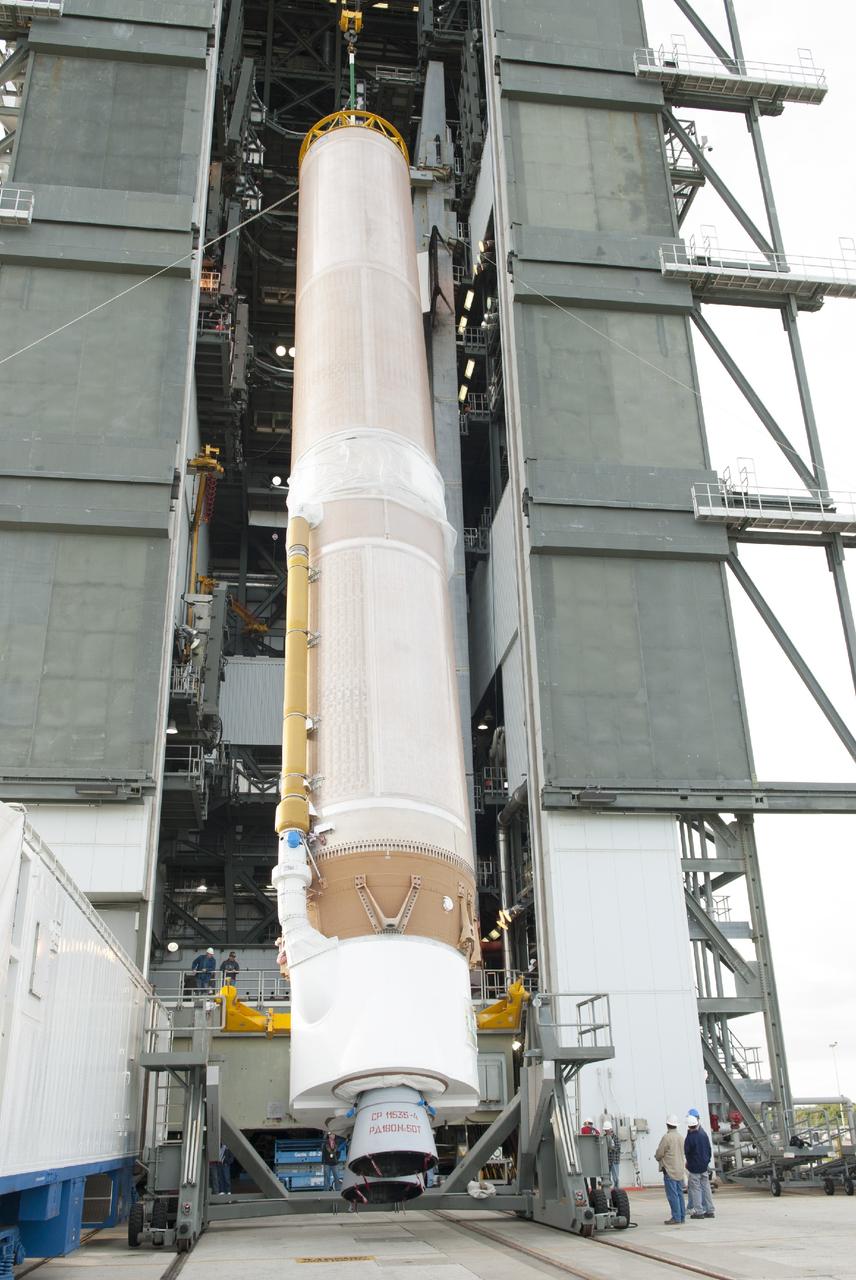
CAPE CANAVERAL, Fla. – At Cape Canaveral Air Force Station, the first stage of the United Launch Alliance Atlas V rocket is lifted for stacking in the Vertical Integration Facility at Launch Complex 41. The vehicle will be used to boost the Tracking and Data Relay Satellite, or TDRS-L, spacecraft to orbit. TDRS-L is the second of three next-generation satellites designed to ensure vital operational continuity for the NASA Space Network. It is scheduled to launch from Cape Canaveral's Space Launch Complex 41 atop an Atlas V rocket in January 2014. The current Tracking and Data Relay Satellite system consists of eight in-orbit satellites distributed to provide near continuous information relay service to missions such as the Hubble Space Telescope and International Space Station. For more information, visit: http://www.nasa.gov/content/tracking-and-data-relay-satellite-tdrs/ Photo credit: NASA/Charisse Nahser
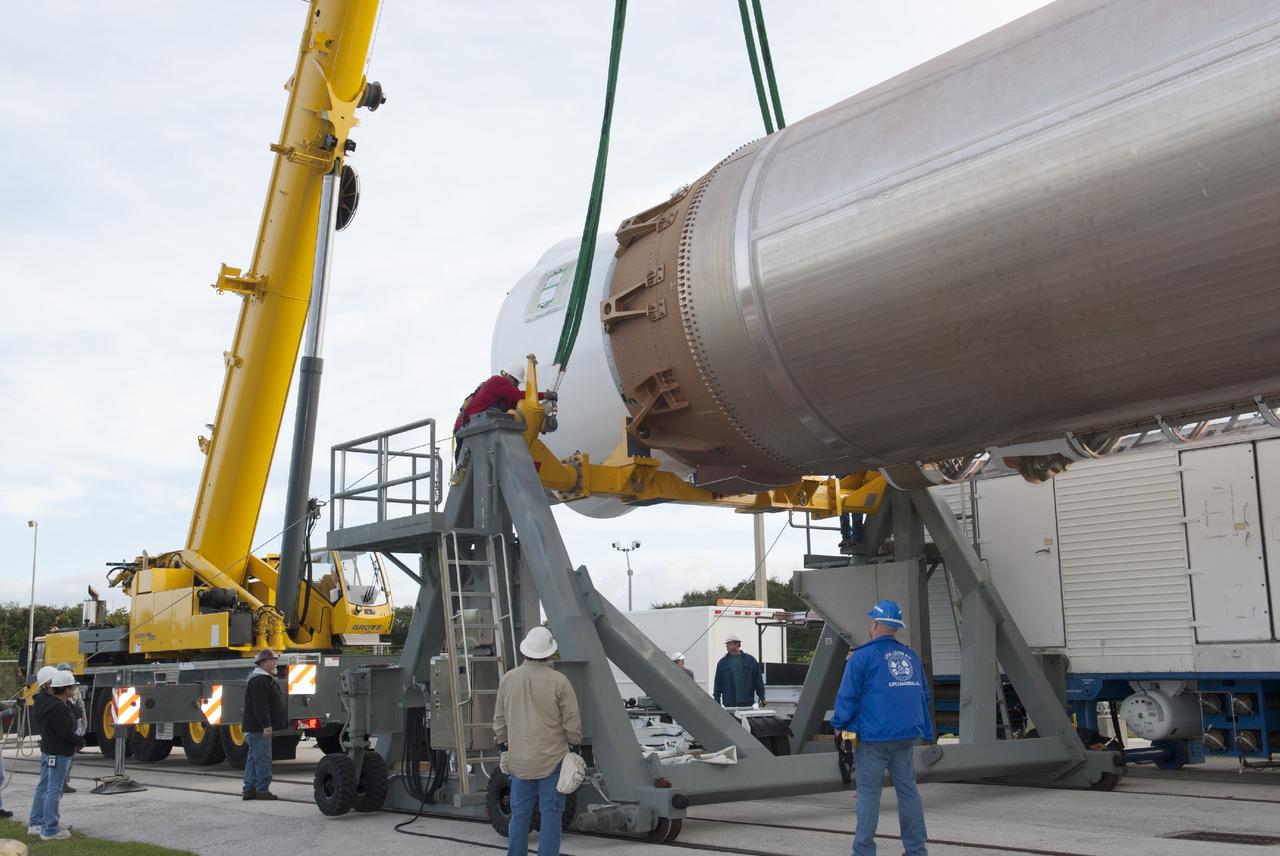
CAPE CANAVERAL, Fla. – At Cape Canaveral Air Force Station, engineers and technicians support lifting the first stage of the United Launch Alliance Atlas V rocket during stacking operations in the Vertical Integration Facility at Launch Complex 41. The vehicle will be used to boost the Tracking and Data Relay Satellite, or TDRS-L, spacecraft to orbit. TDRS-L is the second of three next-generation satellites designed to ensure vital operational continuity for the NASA Space Network. It is scheduled to launch from Cape Canaveral's Space Launch Complex 41 atop an Atlas V rocket in January 2014. The current Tracking and Data Relay Satellite system consists of eight in-orbit satellites distributed to provide near continuous information relay service to missions such as the Hubble Space Telescope and International Space Station. For more information, visit: http://www.nasa.gov/content/tracking-and-data-relay-satellite-tdrs/ Photo credit: NASA/Charisse Nahser
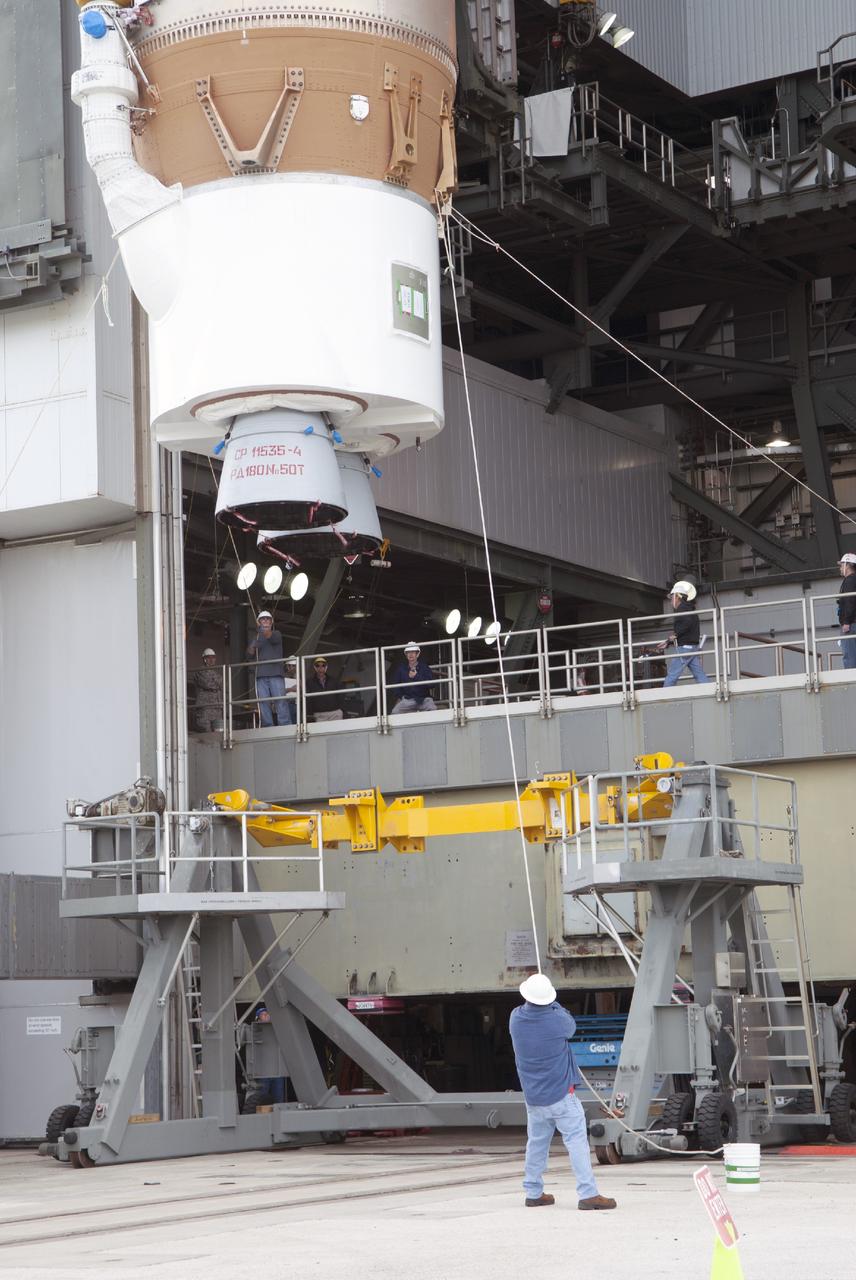
CAPE CANAVERAL, Fla. – At Cape Canaveral Air Force Station, a technician support lifting the first stage of the United Launch Alliance Atlas V rocket during stacking operations in the Vertical Integration Facility at Launch Complex 41. The vehicle will be used to boost the Tracking and Data Relay Satellite, or TDRS-L, spacecraft to orbit. TDRS-L is the second of three next-generation satellites designed to ensure vital operational continuity for the NASA Space Network. It is scheduled to launch from Cape Canaveral's Space Launch Complex 41 atop an Atlas V rocket in January 2014. The current Tracking and Data Relay Satellite system consists of eight in-orbit satellites distributed to provide near continuous information relay service to missions such as the Hubble Space Telescope and International Space Station. For more information, visit: http://www.nasa.gov/content/tracking-and-data-relay-satellite-tdrs/ Photo credit: NASA/Charisse Nahser
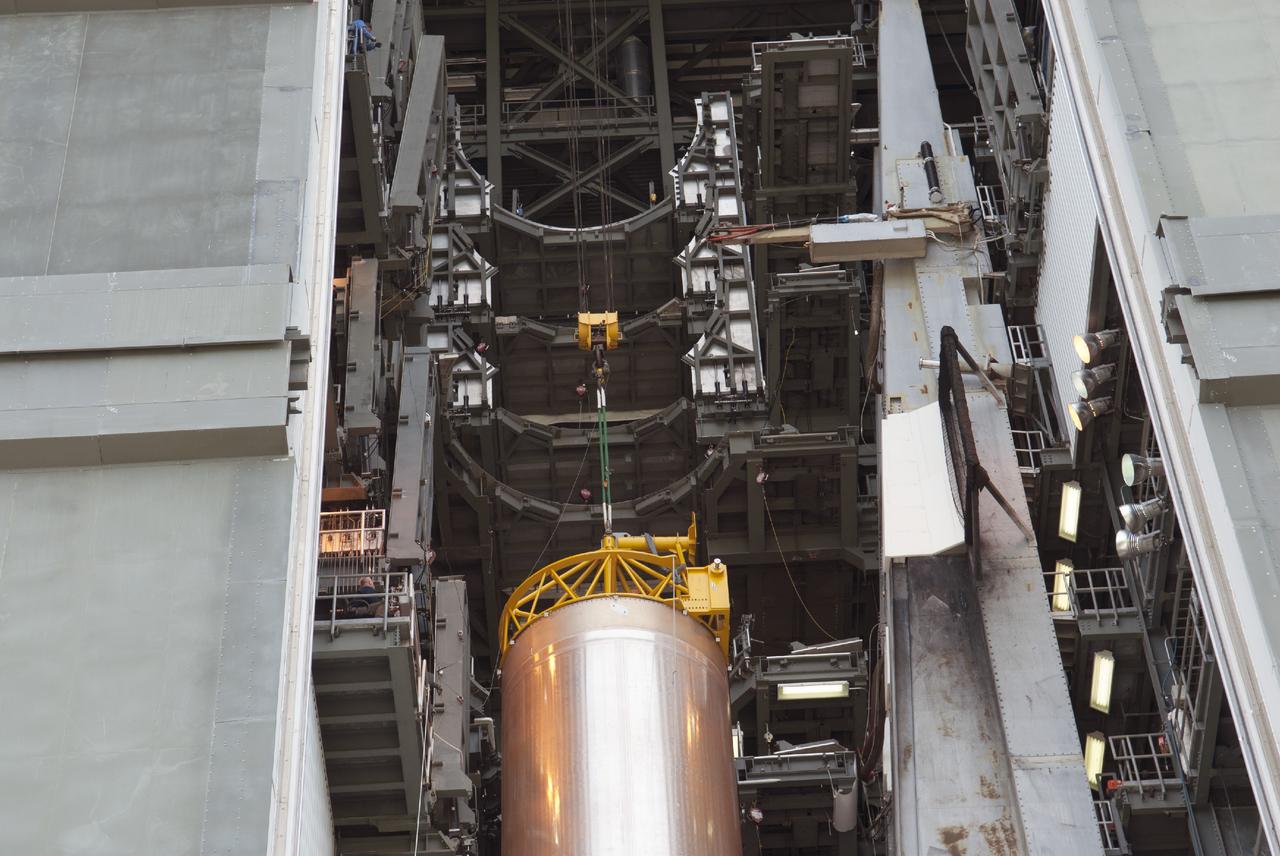
CAPE CANAVERAL, Fla. – At Cape Canaveral Air Force Station, the first stage of the United Launch Alliance Atlas V rocket positioned in the Vertical Integration Facility at Launch Complex 41. The vehicle will be used to boost the Tracking and Data Relay Satellite, or TDRS-L, spacecraft to orbit. TDRS-L is the second of three next-generation satellites designed to ensure vital operational continuity for the NASA Space Network. It is scheduled to launch from Cape Canaveral's Space Launch Complex 41 atop an Atlas V rocket in January 2014. The current Tracking and Data Relay Satellite system consists of eight in-orbit satellites distributed to provide near continuous information relay service to missions such as the Hubble Space Telescope and International Space Station. For more information, visit: http://www.nasa.gov/content/tracking-and-data-relay-satellite-tdrs/ Photo credit: NASA/Charisse Nahser

CAPE CANAVERAL, Fla. – At Cape Canaveral Air Force Station's Launch Complex 41, a United Launch Alliance Atlas V with NASA's Tracking and Data Relay Satellite, or TDRS-L, spacecraft atop, is being prepared for rollout from the Vertical Integration Facility to the launch pad. The TDRS-L spacecraft is the second of three new satellites designed to ensure vital operational continuity for NASA by expanding the lifespan of the Tracking and Data Relay Satellite System TDRSS fleet, which consists of eight satellites in geosynchronous orbit. The spacecraft provide tracking, telemetry, command and high bandwidth data return services for numerous science and human exploration missions orbiting Earth. These include NASA's Hubble Space Telescope and the International Space Station. TDRS-L has a high-performance solar panel designed for more spacecraft power to meet the growing S-band communications requirements. TDRSS is one of NASA Space Communication and Navigation’s SCaN three networks providing space communications to NASA’s missions. For more information more about TDRS-L, visit: http://www.nasa.gov/tdrs To learn more about SCaN, visit: www.nasa.gov/scan Photo credit: NASA/Daniel Casper
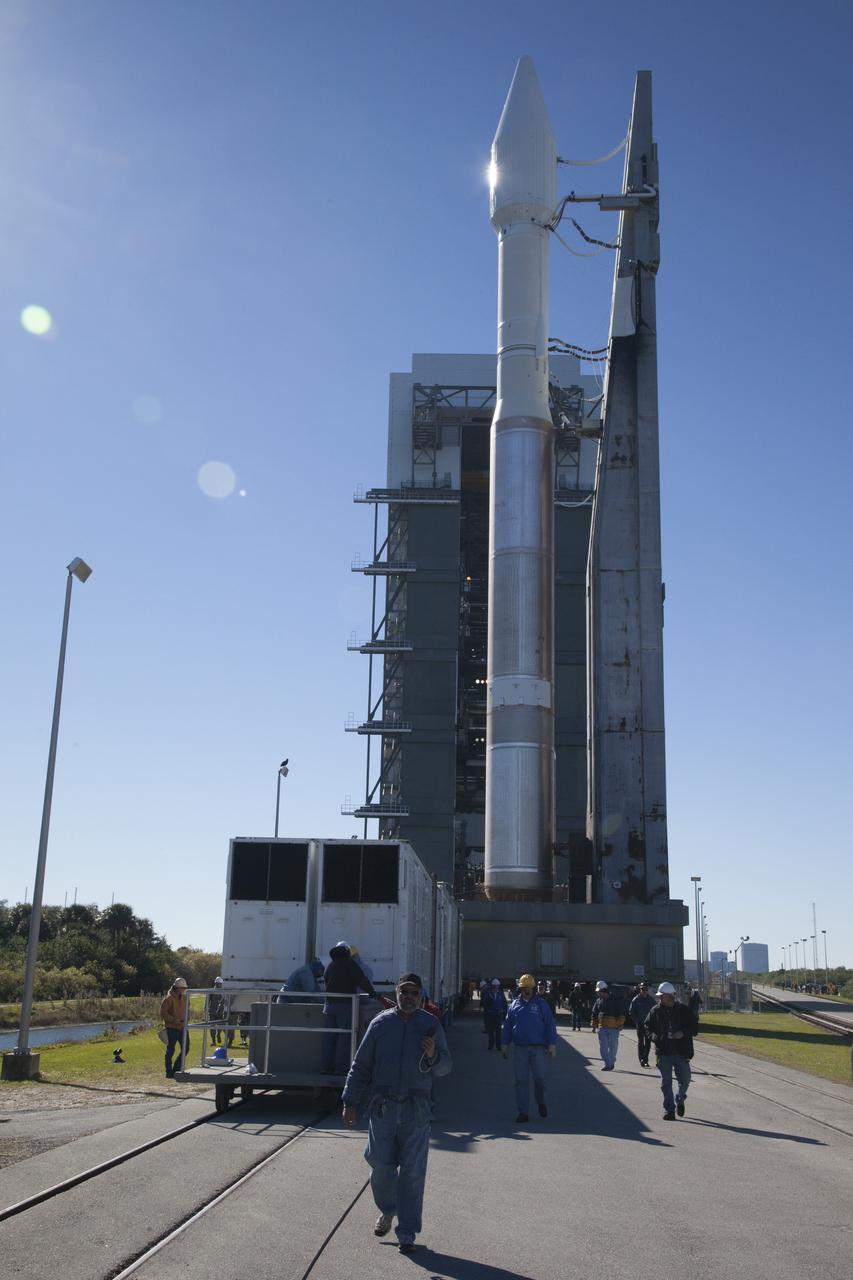
CAPE CANAVERAL, Fla. – At Cape Canaveral Air Force Station's Launch Complex 41, a United Launch Alliance Atlas V with NASA's Tracking and Data Relay Satellite, or TDRS-L, spacecraft atop, begins its rollout from the Vertical Integration Facility to the launch pad. The TDRS-L spacecraft is the second of three new satellites designed to ensure vital operational continuity for NASA by expanding the lifespan of the Tracking and Data Relay Satellite System TDRSS fleet, which consists of eight satellites in geosynchronous orbit. The spacecraft provide tracking, telemetry, command and high bandwidth data return services for numerous science and human exploration missions orbiting Earth. These include NASA's Hubble Space Telescope and the International Space Station. TDRS-L has a high-performance solar panel designed for more spacecraft power to meet the growing S-band communications requirements. TDRSS is one of NASA Space Communication and Navigation’s SCaN three networks providing space communications to NASA’s missions. For more information more about TDRS-L, visit: http://www.nasa.gov/tdrs To learn more about SCaN, visit: www.nasa.gov/scan Photo credit: NASA/Daniel Casper
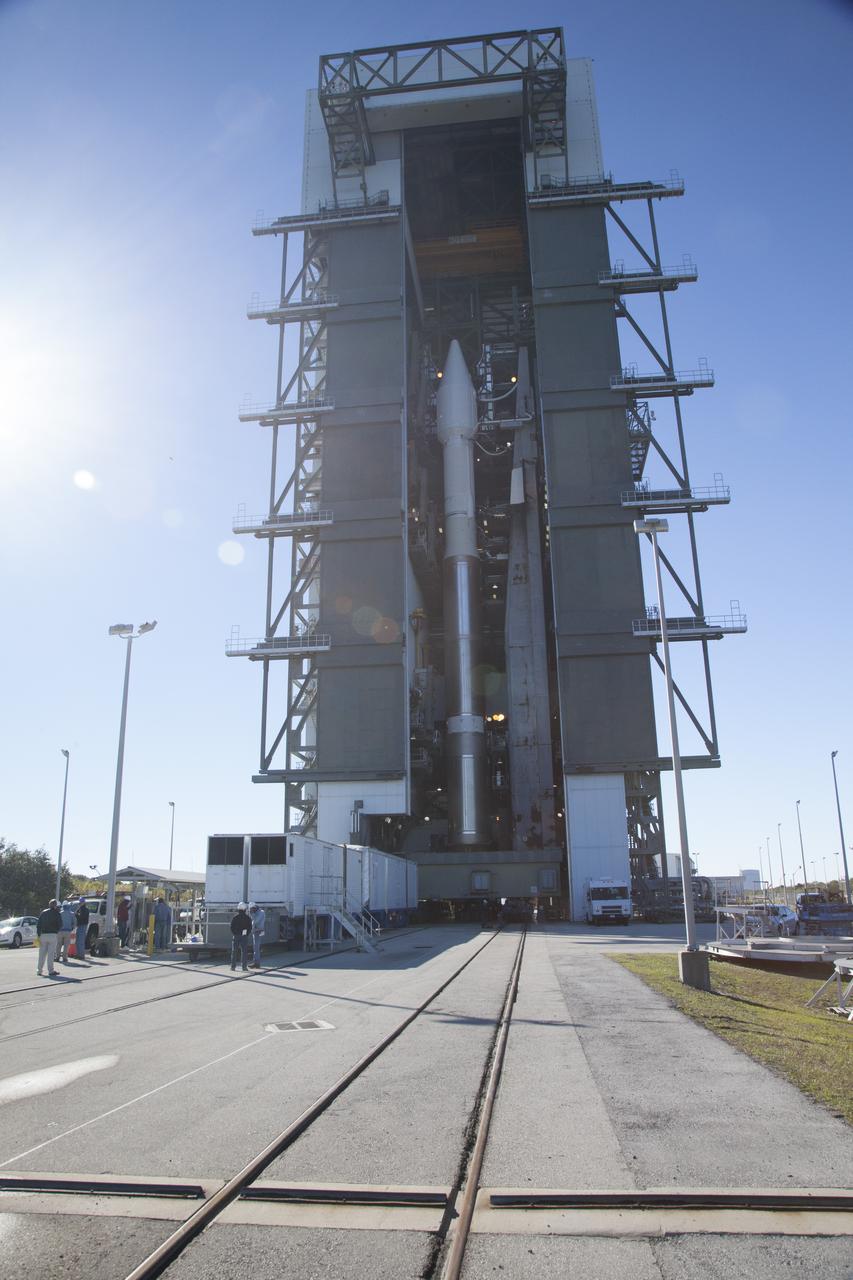
CAPE CANAVERAL, Fla. – At Cape Canaveral Air Force Station's Launch Complex 41, a United Launch Alliance Atlas V with NASA's Tracking and Data Relay Satellite, or TDRS-L, spacecraft atop, is being prepared for rollout from the Vertical Integration Facility to the launch pad. The TDRS-L spacecraft is the second of three new satellites designed to ensure vital operational continuity for NASA by expanding the lifespan of the Tracking and Data Relay Satellite System TDRSS fleet, which consists of eight satellites in geosynchronous orbit. The spacecraft provide tracking, telemetry, command and high bandwidth data return services for numerous science and human exploration missions orbiting Earth. These include NASA's Hubble Space Telescope and the International Space Station. TDRS-L has a high-performance solar panel designed for more spacecraft power to meet the growing S-band communications requirements. TDRSS is one of NASA Space Communication and Navigation’s SCaN three networks providing space communications to NASA’s missions. For more information more about TDRS-L, visit: http://www.nasa.gov/tdrs To learn more about SCaN, visit: www.nasa.gov/scan Photo credit: NASA/Daniel Casper
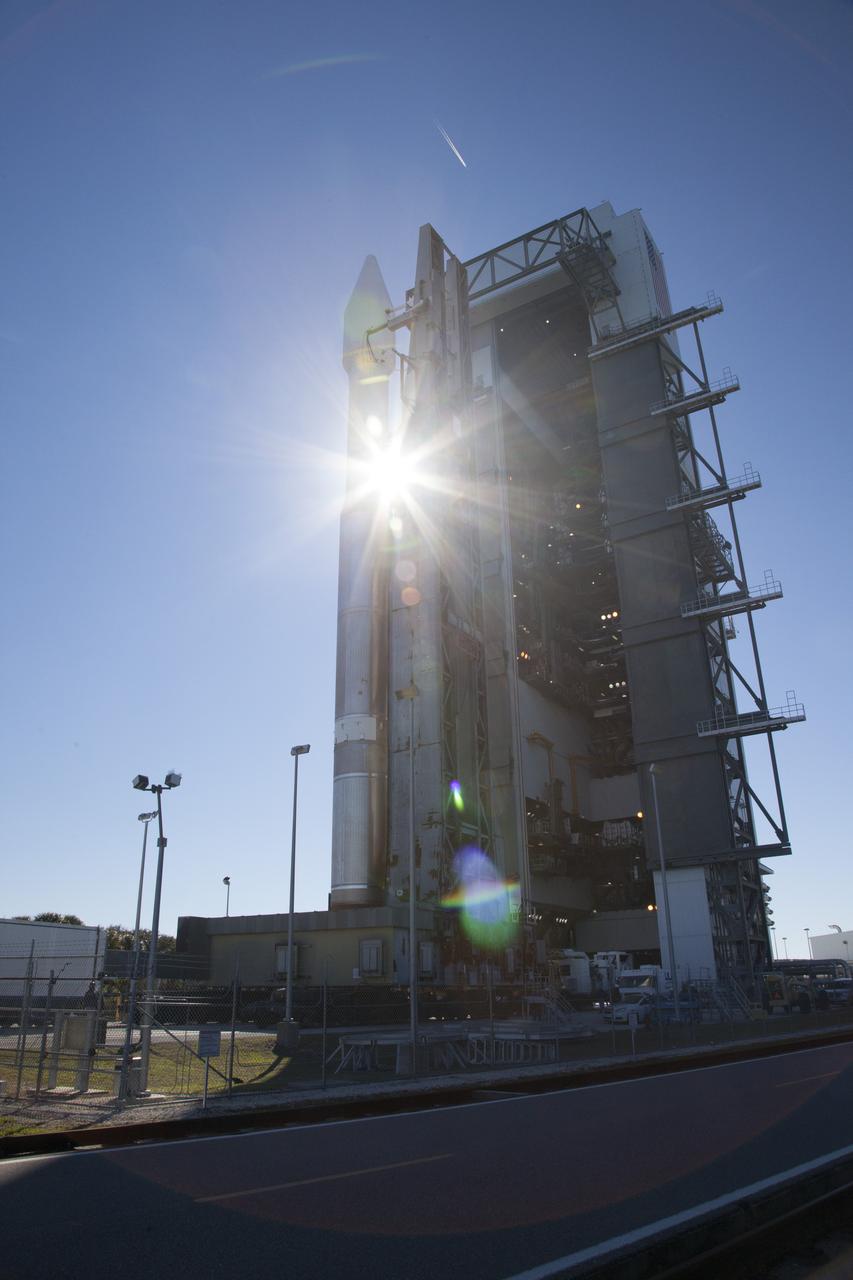
CAPE CANAVERAL, Fla. – At Cape Canaveral Air Force Station's Launch Complex 41, a United Launch Alliance Atlas V with NASA's Tracking and Data Relay Satellite, or TDRS-L, spacecraft atop, begins its rollout from the Vertical Integration Facility to the launch pad. The TDRS-L spacecraft is the second of three new satellites designed to ensure vital operational continuity for NASA by expanding the lifespan of the Tracking and Data Relay Satellite System TDRSS fleet, which consists of eight satellites in geosynchronous orbit. The spacecraft provide tracking, telemetry, command and high bandwidth data return services for numerous science and human exploration missions orbiting Earth. These include NASA's Hubble Space Telescope and the International Space Station. TDRS-L has a high-performance solar panel designed for more spacecraft power to meet the growing S-band communications requirements. TDRSS is one of NASA Space Communication and Navigation’s SCaN three networks providing space communications to NASA’s missions. For more information more about TDRS-L, visit: http://www.nasa.gov/tdrs To learn more about SCaN, visit: www.nasa.gov/scan Photo credit: NASA/Daniel Casper
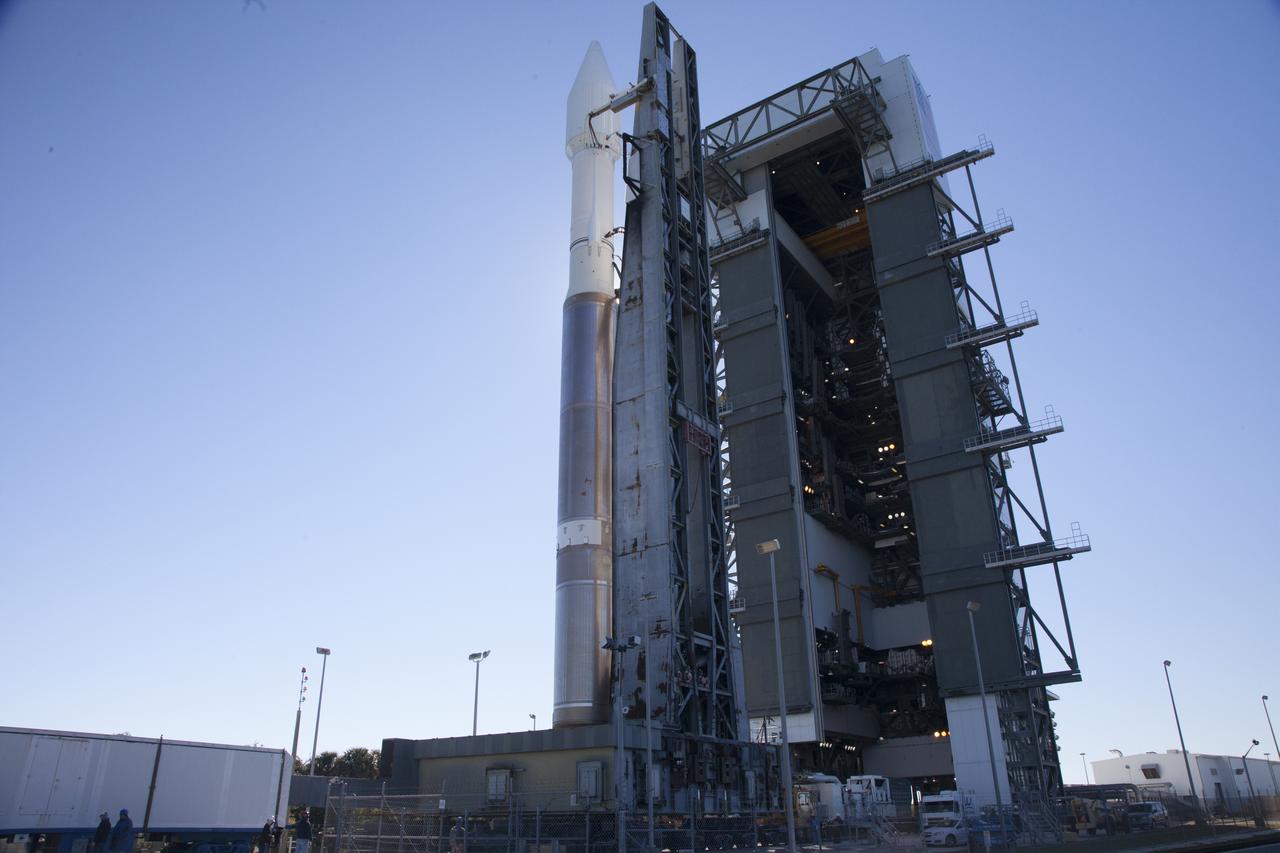
CAPE CANAVERAL, Fla. – At Cape Canaveral Air Force Station's Launch Complex 41, a United Launch Alliance Atlas V with NASA's Tracking and Data Relay Satellite, or TDRS-L, spacecraft atop, begins its rollout from the Vertical Integration Facility to the launch pad. The TDRS-L spacecraft is the second of three new satellites designed to ensure vital operational continuity for NASA by expanding the lifespan of the Tracking and Data Relay Satellite System TDRSS fleet, which consists of eight satellites in geosynchronous orbit. The spacecraft provide tracking, telemetry, command and high bandwidth data return services for numerous science and human exploration missions orbiting Earth. These include NASA's Hubble Space Telescope and the International Space Station. TDRS-L has a high-performance solar panel designed for more spacecraft power to meet the growing S-band communications requirements. TDRSS is one of NASA Space Communication and Navigation’s SCaN three networks providing space communications to NASA’s missions. For more information more about TDRS-L, visit: http://www.nasa.gov/tdrs To learn more about SCaN, visit: www.nasa.gov/scan Photo credit: NASA/Daniel Casper
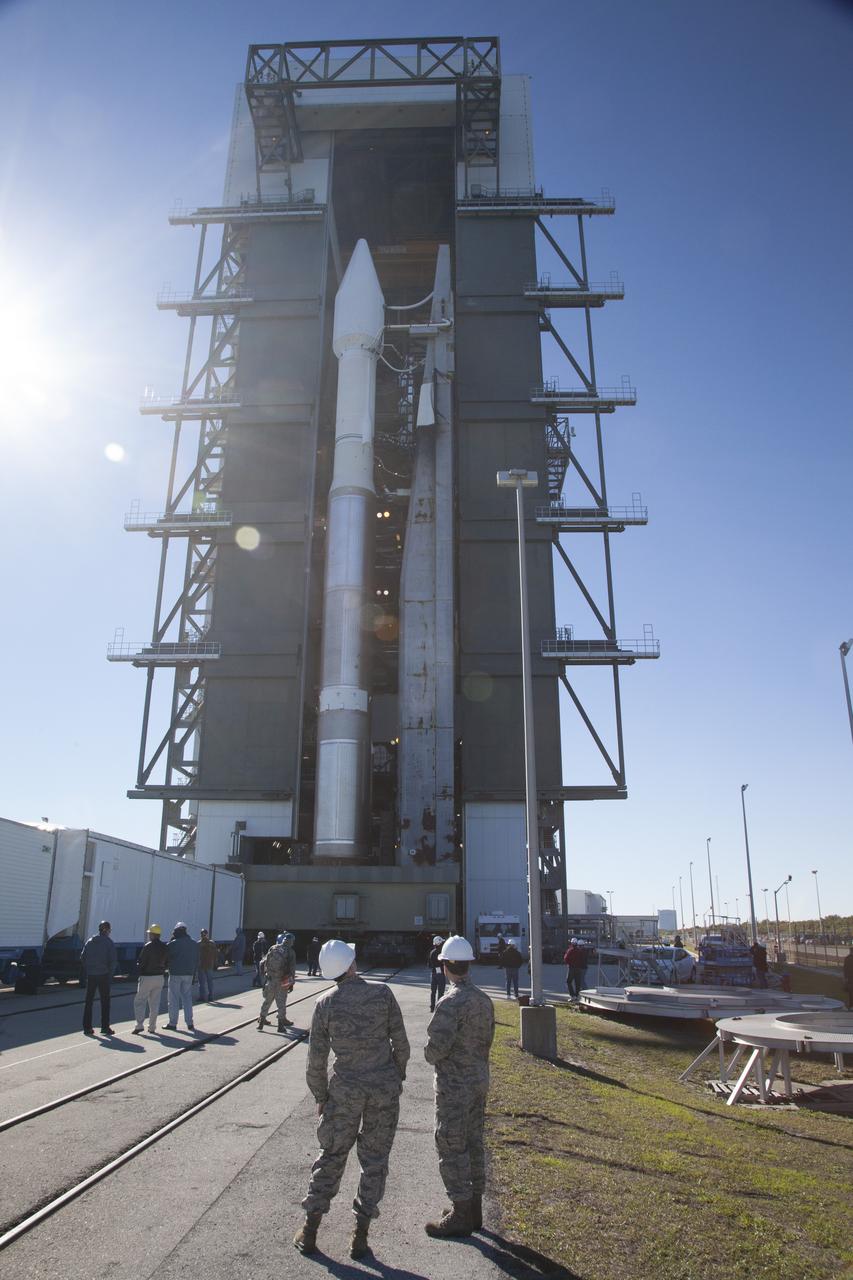
CAPE CANAVERAL, Fla. – At Cape Canaveral Air Force Station's Launch Complex 41, a United Launch Alliance Atlas V with NASA's Tracking and Data Relay Satellite, or TDRS-L, spacecraft atop, begins its rollout from the Vertical Integration Facility to the launch pad. The TDRS-L spacecraft is the second of three new satellites designed to ensure vital operational continuity for NASA by expanding the lifespan of the Tracking and Data Relay Satellite System TDRSS fleet, which consists of eight satellites in geosynchronous orbit. The spacecraft provide tracking, telemetry, command and high bandwidth data return services for numerous science and human exploration missions orbiting Earth. These include NASA's Hubble Space Telescope and the International Space Station. TDRS-L has a high-performance solar panel designed for more spacecraft power to meet the growing S-band communications requirements. TDRSS is one of NASA Space Communication and Navigation’s SCaN three networks providing space communications to NASA’s missions. For more information more about TDRS-L, visit: http://www.nasa.gov/tdrs To learn more about SCaN, visit: www.nasa.gov/scan Photo credit: NASA/Daniel Casper
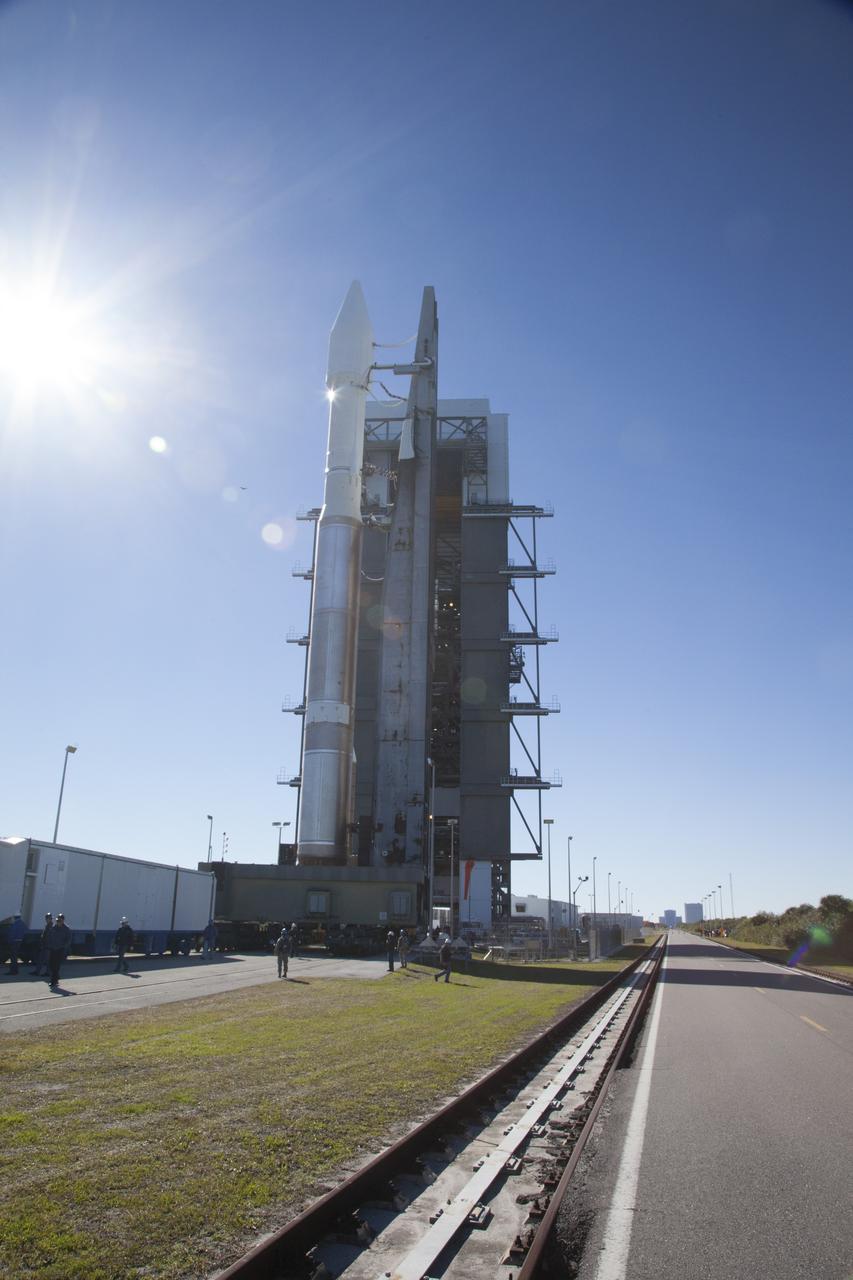
CAPE CANAVERAL, Fla. – At Cape Canaveral Air Force Station's Launch Complex 41, a United Launch Alliance Atlas V with NASA's Tracking and Data Relay Satellite, or TDRS-L, spacecraft atop, begins its rollout from the Vertical Integration Facility to the launch pad. The TDRS-L spacecraft is the second of three new satellites designed to ensure vital operational continuity for NASA by expanding the lifespan of the Tracking and Data Relay Satellite System TDRSS fleet, which consists of eight satellites in geosynchronous orbit. The spacecraft provide tracking, telemetry, command and high bandwidth data return services for numerous science and human exploration missions orbiting Earth. These include NASA's Hubble Space Telescope and the International Space Station. TDRS-L has a high-performance solar panel designed for more spacecraft power to meet the growing S-band communications requirements. TDRSS is one of NASA Space Communication and Navigation’s SCaN three networks providing space communications to NASA’s missions. For more information more about TDRS-L, visit: http://www.nasa.gov/tdrs To learn more about SCaN, visit: www.nasa.gov/scan Photo credit: NASA/Daniel Casper
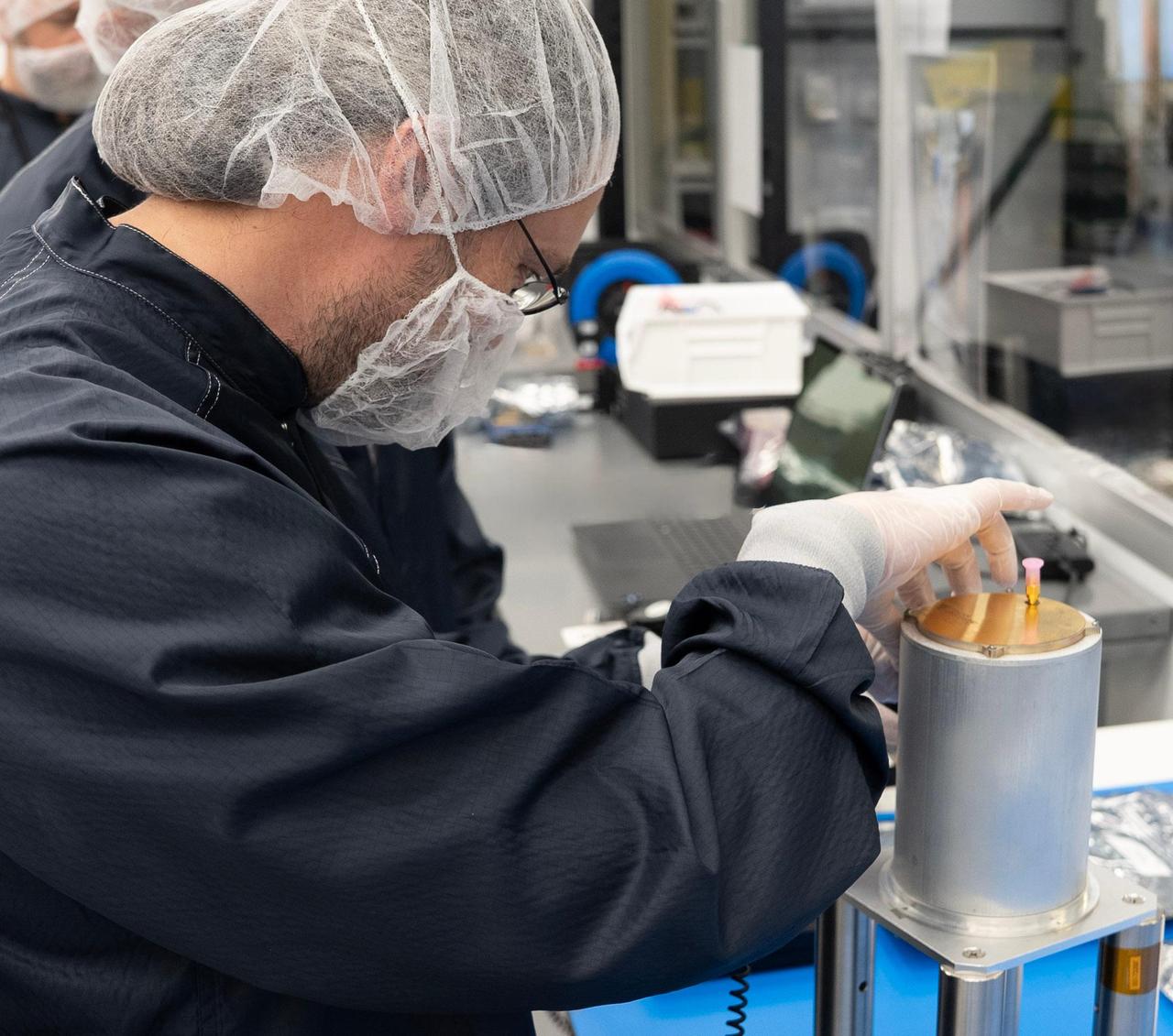
Engineer Emmanuel Decrossas of NASA's Jet Propulsion Laboratory in Southern California makes an adjustment to an antenna's connector, part of a NASA telecommunications payload called User Terminal, at Firefly Aerospace's facility in Cedar Park, Texas, in August 2025. Figure A (https://photojournal.jpl.nasa.gov/figures/PIA26596_figA.jpg) shows members of the team from JPL and NASA (dark blue) and Firefly (white) with the User Terminal antenna, radio, and other components on the bench behind them. Managed by JPL, the User Terminal will test a new, low-cost lunar communications system that future missions to the Moon's far side could use to transfer data to and from Earth via lunar relay satellite. The User Terminal payload will be installed atop Firefly's Blue Ghost Mission 2 lunar lander, which is slated to launch to the Moon's far side in 2026 under NASA's CLPS (Commercial Lunar Payload Services) initiative. NASA's Apollo missions brought large and powerful telecommunications systems to the lunar near-side surface to communicate directly with Earth. But spacecraft on the far side will not have that option because only the near side of the Moon is visible to Earth. Sending messages between the Moon and Earth via a relay orbiter enables communication with the lunar far side and improves it at the Moon's poles. The User Terminal will for the first time test such a setup for NASA by using a compact, lightweight software defined radio, antenna, and related hardware to communicate with a satellite that Blue Ghost Mission 2 is delivering to lunar orbit: ESA's (the European Space Agency's) Lunar Pathfinder. The User Terminal radio and antenna installed on the Blue Ghost lander will be used to commission Lunar Pathfinder, sending test data back and forth. After the lander ceases operations as planned at the end of a single lunar day (about 14 Earth days), a separate User Terminal radio and antenna installed on LuSEE-Night – another payload on the lander – will send LuSEE-Night's data to Lunar Pathfinder, which will relay the information to a commercial network of ground stations on Earth. LuSEE-Night is a radio telescope that expected to operate for at least 1½ years; it is a joint effort by NASA, the U.S. Department of Energy, and University of California, Berkeley's Space Sciences Laboratory. Additionally, User Terminal will be able to communicate with another satellite that's being delivered to lunar orbit by Blue Ghost Mission 2: Firefly's own Elytra Dark orbital vehicle. The hardware on the lander is only part of the User Terminal project, which was also designed to implement a new S-band two-way protocol, or standard, for short-range space communications between entities on the lunar surface (such as rovers and landers) and lunar orbiters, enabling reliable data transfer between them. The standard is a new version of a space communications protocol called Proximity-1 that was initially developed more than two decades ago for use at Mars by an international standard body called the Consultative Committee for Space Data Systems (CCSDS), of which NASA is a member agency. The User Terminal team made recommendations to CCSDS on the development of the new lunar S-band standard, which was specified in 2024. The new standard will enable lunar orbiters and surface spacecraft from various entities – NASA and other civil space agencies as well as industry and academia – to communicate with each other, a concept known as interoperability. At Mars, NASA rovers communicate with various Red Planet orbiters using the Ultra-High Frequency (UHF) radio band version of the Proximity-1 standard. On the Moon's far side, use of UHF is reserved for radio astronomy science; so a new lunar standard was needed using a different frequency range, S-band, as were more efficient modulation and coding schemes to better fit the available frequency spectrum specified by the new standard. User Terminal is funded by NASA's Exploration Science Strategy and Integration Office, part of the agency's Science Mission Directorate, which manages the CLPS initiative. JPL manages the project and supported development of the new S-band radio standard and the payload in coordination with Vulcan Wireless in Carlsbad, California, which built the radio. Caltech in Pasadena manages JPL for NASA. https://photojournal.jpl.nasa.gov/catalog/PIA26596