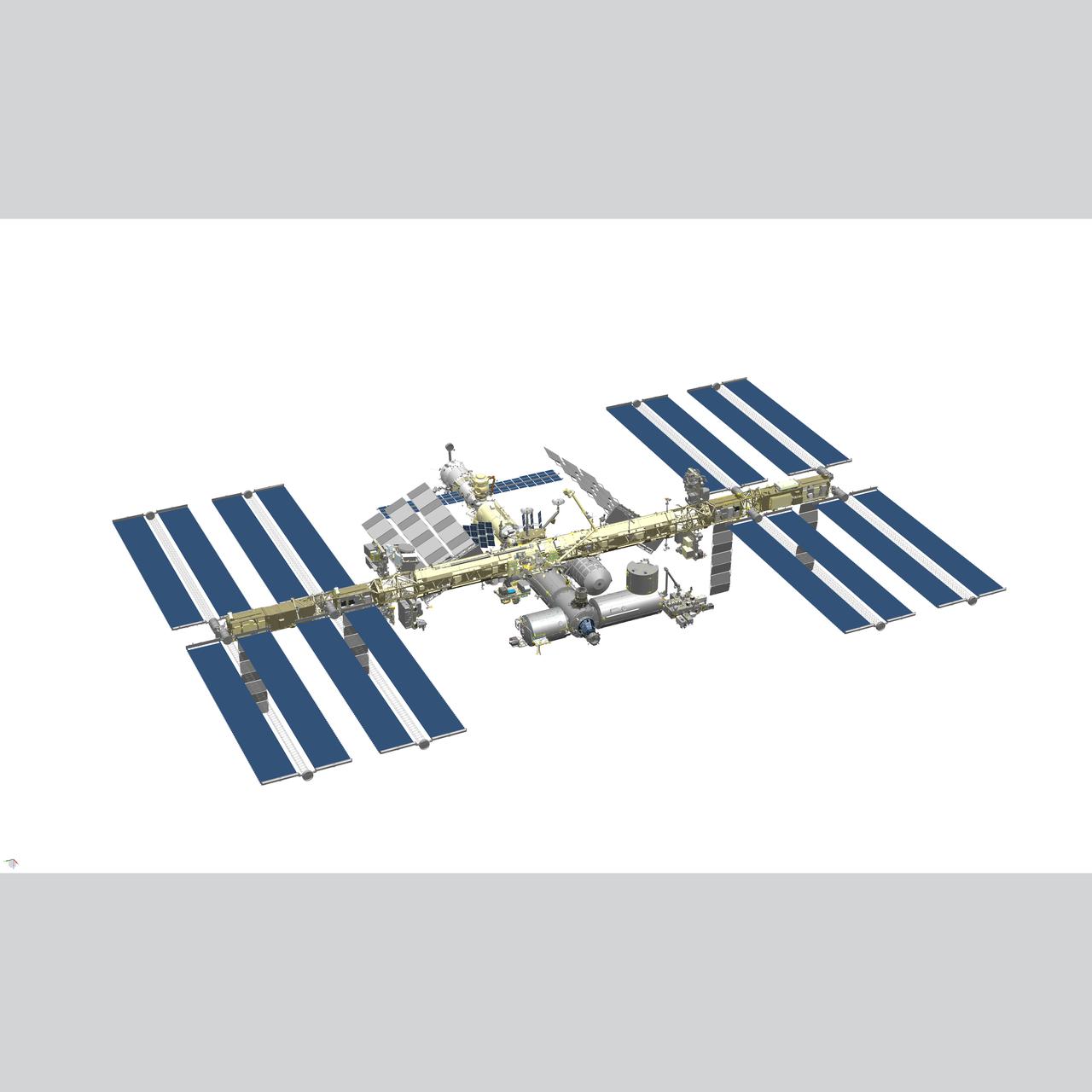
2020 International Space Station Configuration
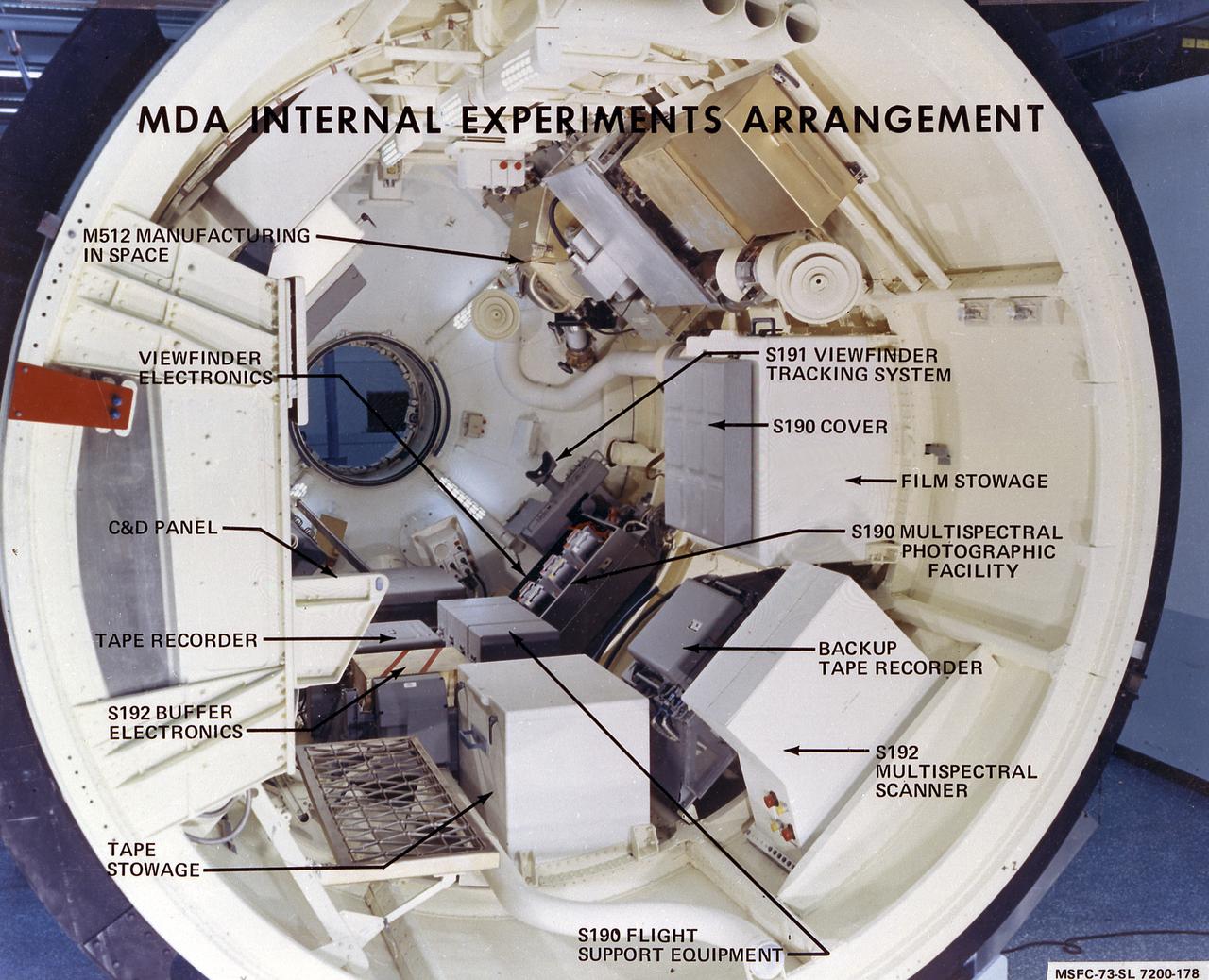
This photograph shows the internal configuration of Skylab's Multiple Docking Adapter (MDA), including callouts for its various internal experiments and facilities. Designed and manufactured by the Marshall Space Flight Center, the MDA housed a number of experiment control and stowage units and provided a docking port for the Apollo Command Module.
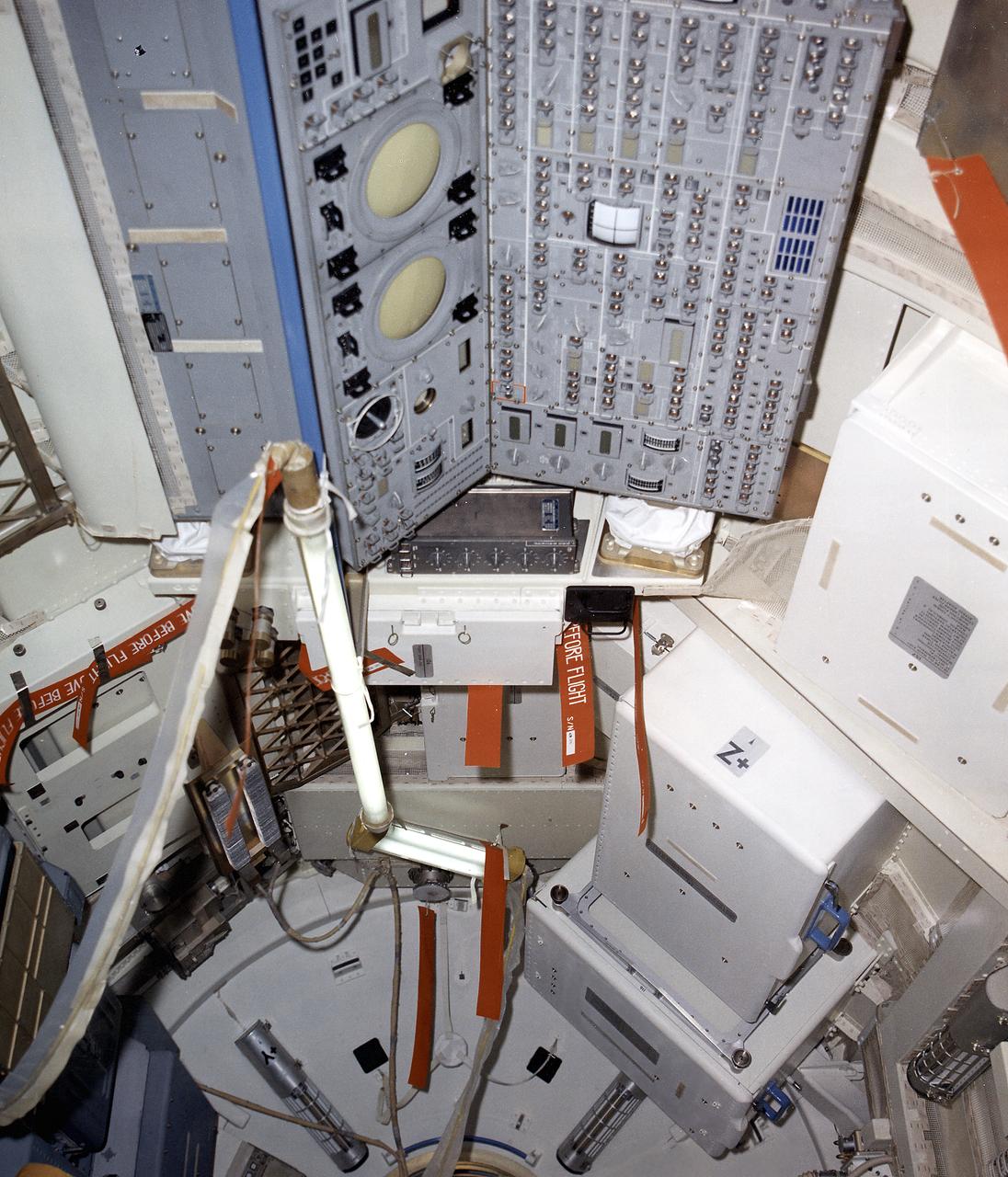
This December 1971 photograph shows the internal configuration of Skylab's Multiple Docking Adapter (MDA) as it appeared during the Crew Compartment and Function Review at the Martin-Marietta Corporation's Space Center facility in Denver, Colorado. At left is the control and display console for the Apollo Telescope Mount. Designed and manufactured by the Marshall Space Flight Center, the MDA housed a number of experiment control and stowage units and provided a docking port for the Apollo Command Module.
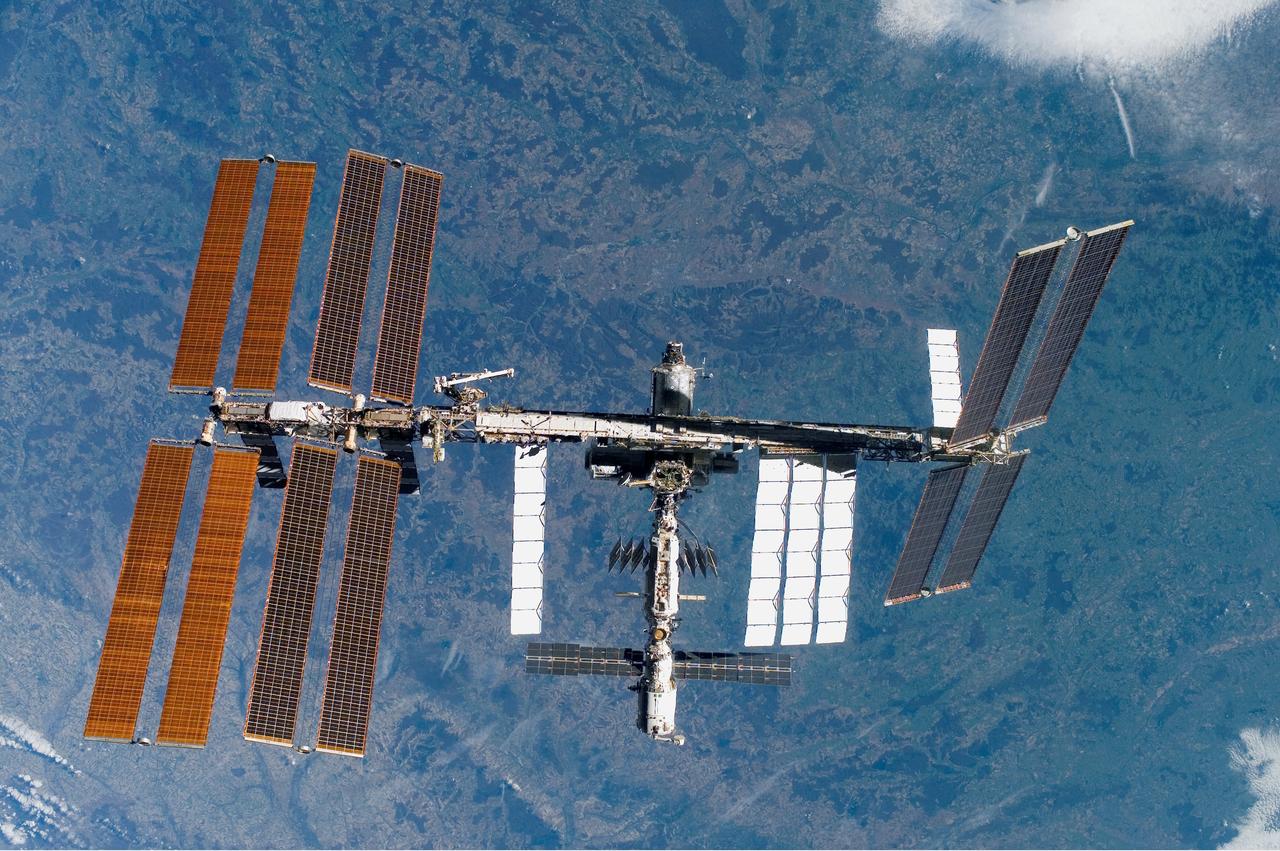
Back dropped by the blueness of Earth is the International Space Station (ISS) as seen from Space Shuttle Discovery as the two spacecraft begin their relative separation. The latest configuration of the ISS includes the Italian-built U.S. Node 2, named Harmony, and the P6 truss segment installed over 11 days of cooperative work onboard the shuttle and station by the STS-120 and Expedition 16 crews. Undocking of the two spacecraft occurred at 4:32 a.m. (CST) on Nov. 5, 2007.
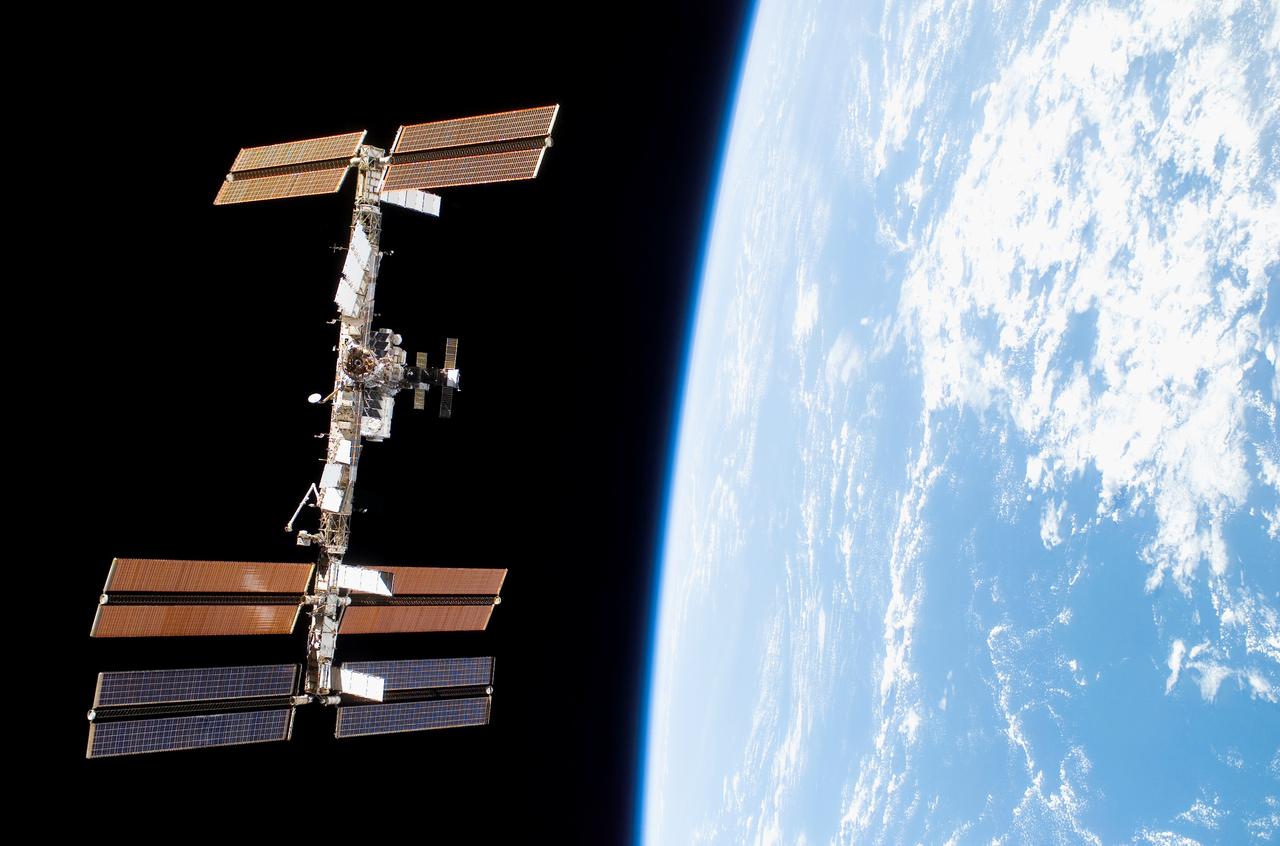
Back dropped by the blackness of space and Earth's horizon is the International Space Station (ISS) as seen from Space Shuttle Discovery as the two spacecraft begin their relative separation. The latest configuration of the ISS includes the Italian-built U.S. Node 2, named Harmony, and the P6 truss segment installed over 11 days of cooperative work onboard the shuttle and station by the STS-120 and Expedition 16 crews. Undocking of the two spacecraft occurred at 4:32 a.m. (CST) on Nov. 5, 2007.
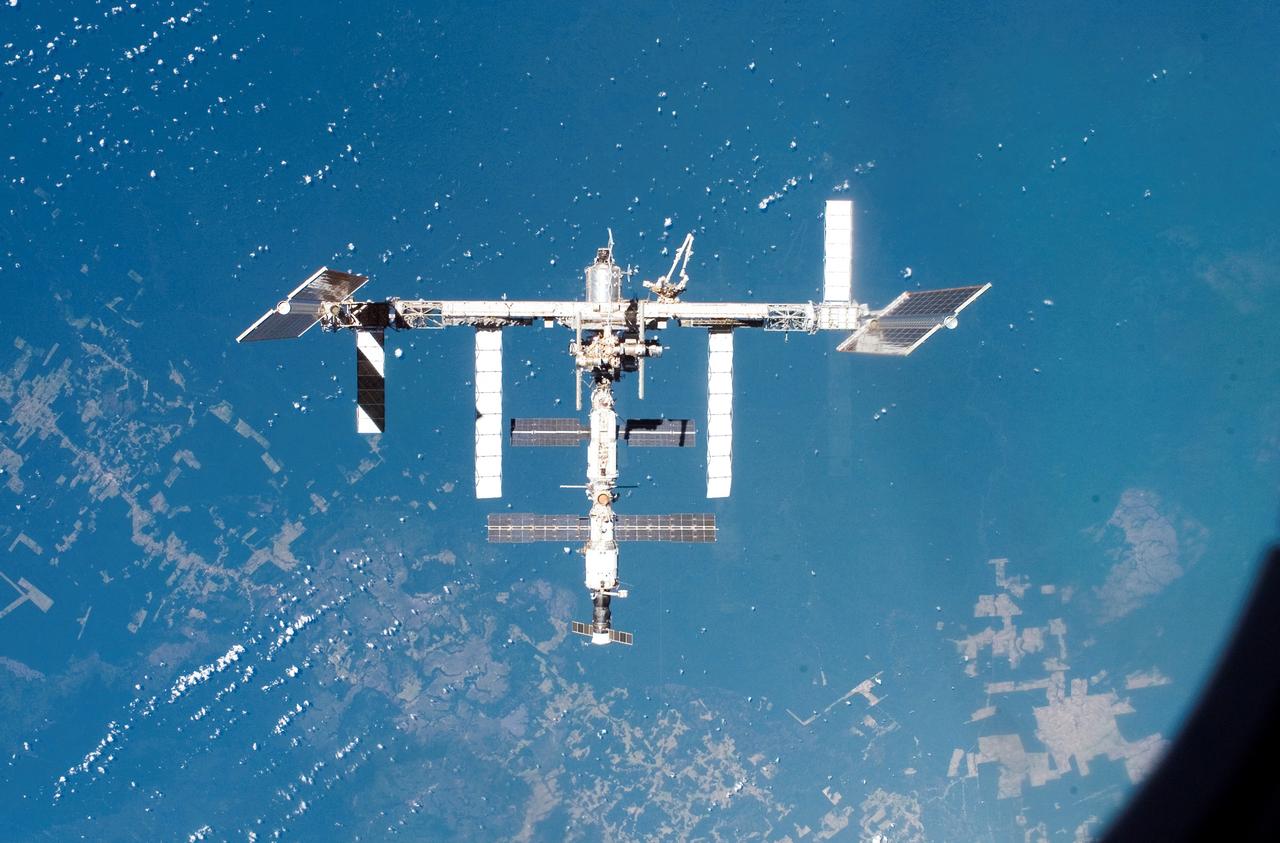
Eight days of construction resumed on the International Space Station (ISS), as STS-117 astronauts and mission specialists and the Expedition 15 crew completed installation of the second and third starboard truss segments (S3 and S4). Back dropped by our colorful Earth, its newly expanded configuration is revealed as pilot Lee Archambault conducts a fly around upon departure from the station on June 19, 2007.
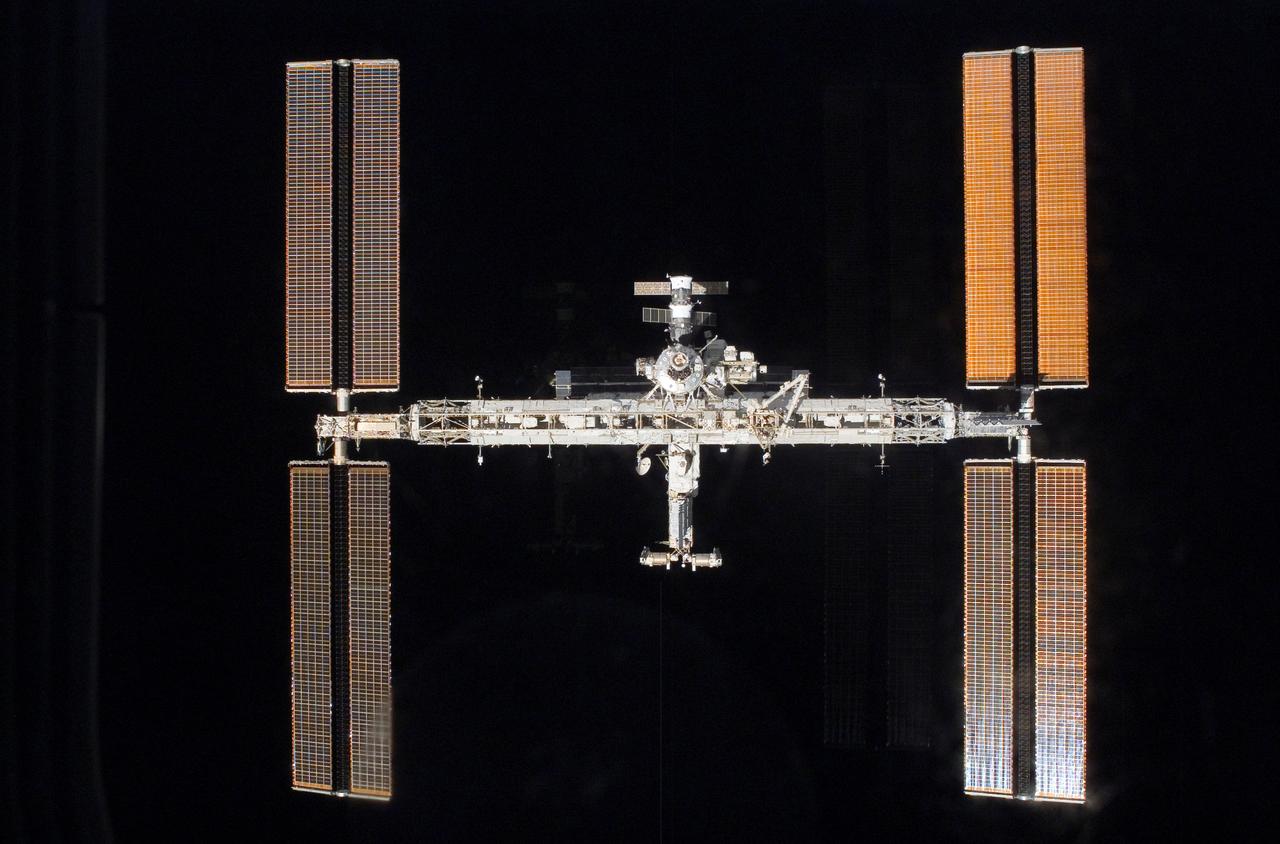
Eight days of construction resumed on the International Space Station (ISS), as STS-117 astronauts and mission specialists and the Expedition 15 crew completed installation of the second and third starboard truss segments (S3 and S4). Back dropped by the blackness of space, its newly expanded configuration is revealed as pilot Lee Archambault conducts a fly around upon departure from the station on June 19, 2007.
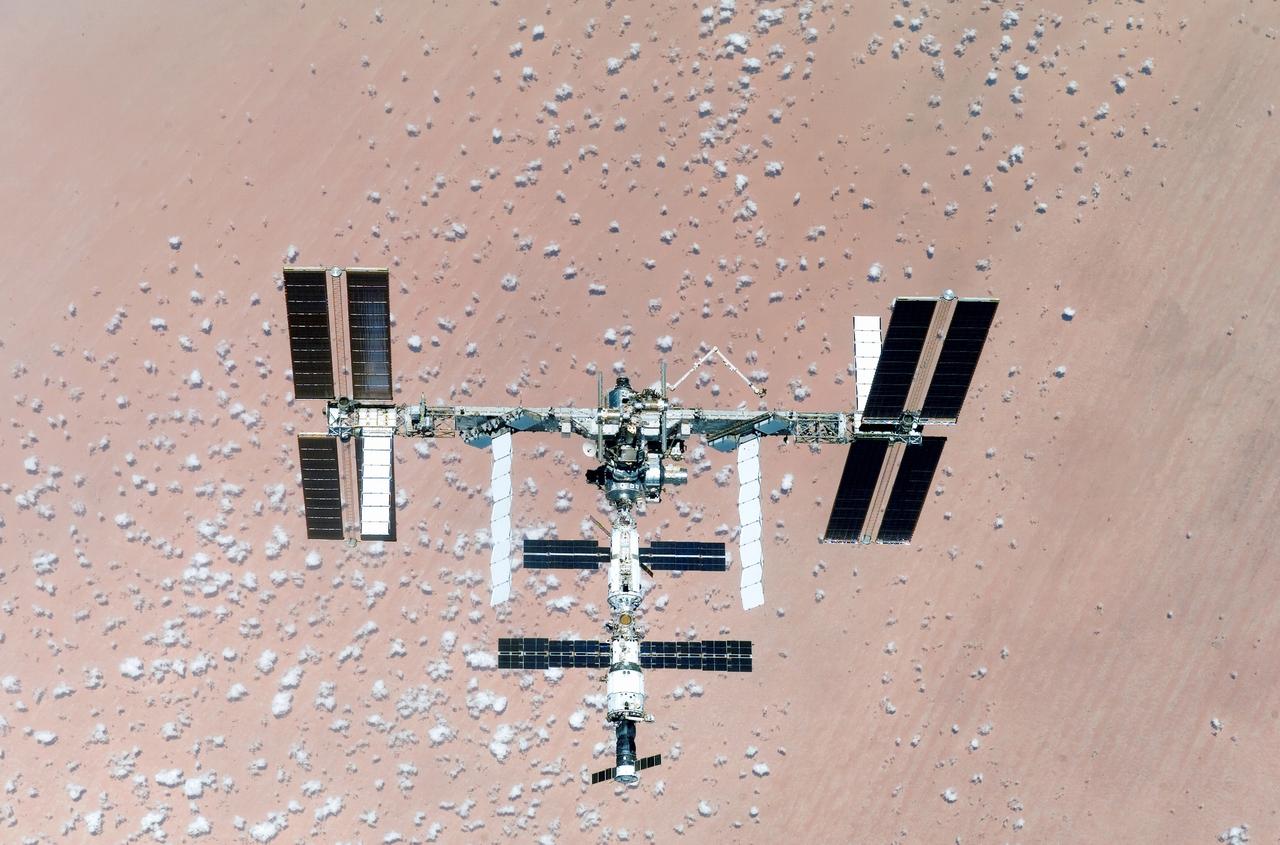
Back dropped by the colorful Earth, the International Space Station (ISS) boasts its newest configuration upon the departure of Space Shuttle Endeavor and STS-118 mission. Days earlier, construction resumed on the ISS as STS-118 mission specialists and the Expedition 15 crew completed installation of the Starboard 5 (S-5) truss segment, removed a faulty Control Moment Gyroscope (CMG-3), installed a new CMG into the Z1 truss, relocated the S-band Antenna Sub-Assembly from the Port 6 (P6) to Port 1 (P1) truss, installed a new transponder on P1, retrieved the P6 transponder, and delivered roughly 5,000 pounds of supplies.
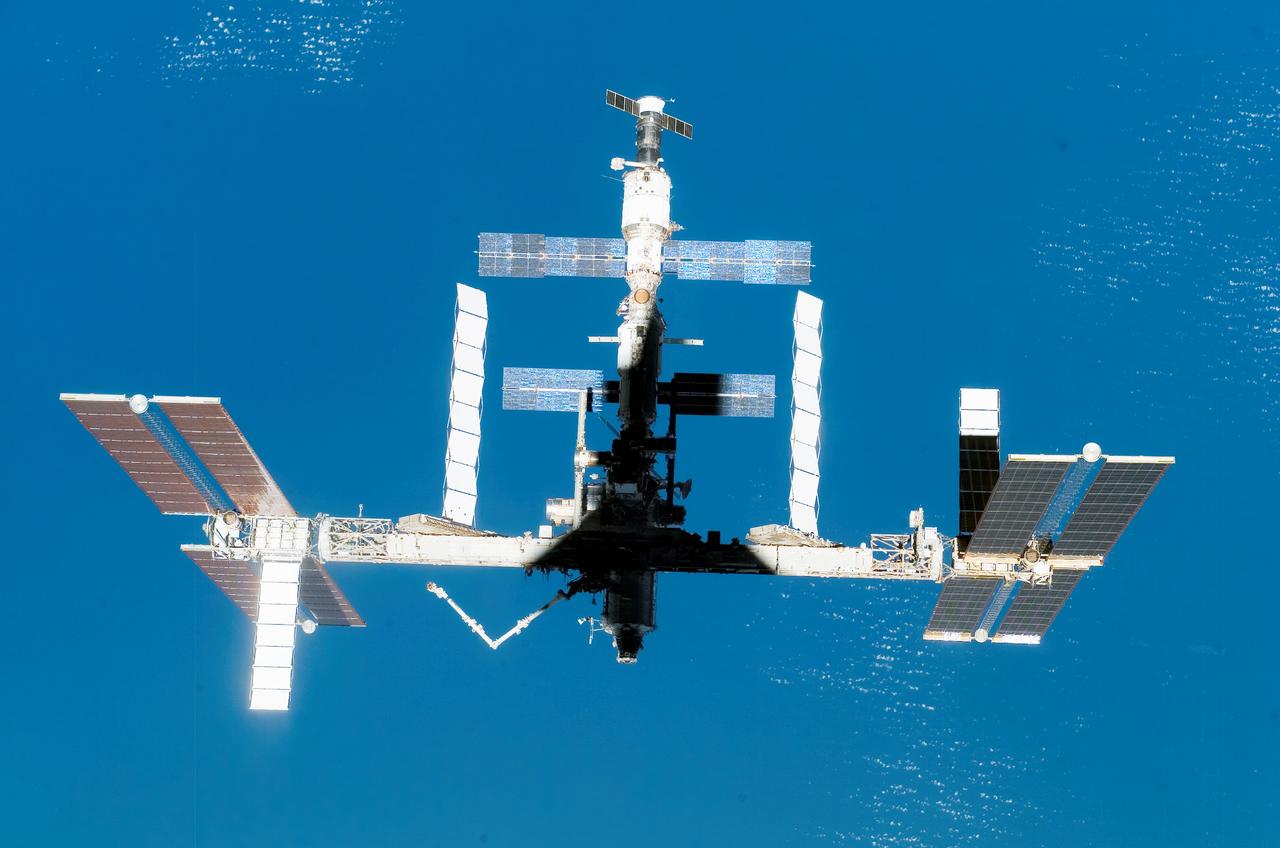
Back dropped by the blue Earth, the International Space Station (ISS) boasts its newest configuration upon the departure of Space Shuttle Endeavor and STS-118 mission. Days earlier, construction resumed on the ISS as STS-118 mission specialists and the Expedition 15 crew completed installation of the Starboard 5 (S-5) truss segment, removed a faulty Control Moment Gyroscope (CMG-3), installed a new CMG into the Z1 truss, relocated the S-band Antenna Sub-Assembly from the Port 6 (P6) to Port 1 (P1) truss, installed a new transponder on P1, retrieved the P6 transponder, and delivered roughly 5,000 pounds of equipment and supplies.

Six iROSA solar arrays in the planned configuration will augment the power drawn from the existing arrays on the International Space Station. Power channels shown are 1A, 2B, 3A, 3B, 4A, and 4B.
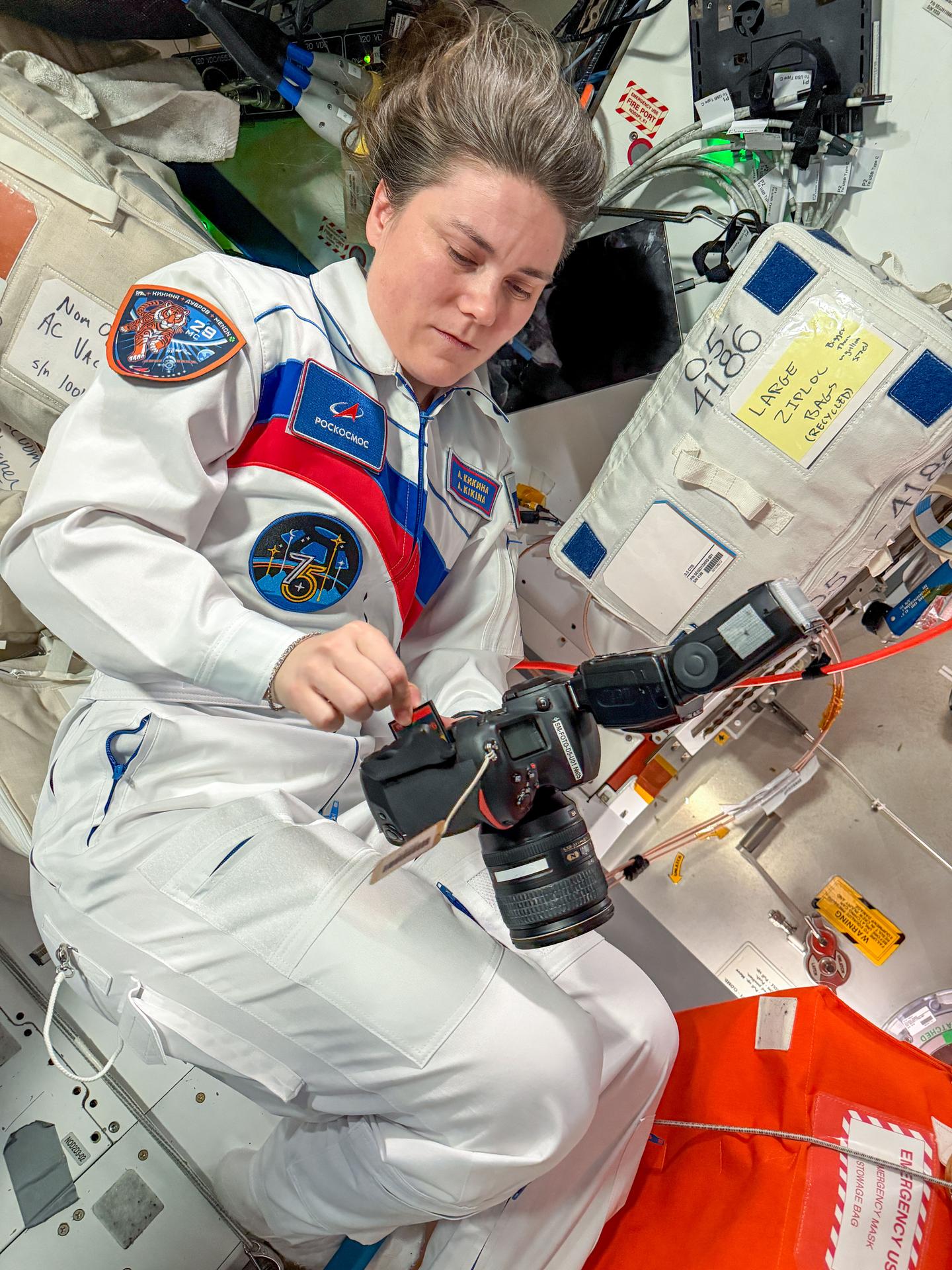
iss075e0157516 (Oct. 2, 2026) --- Roscosmos cosmonaut and Expedition 75 flight engineer Anna Kikina configures a camera aboard the International Space Station while awaiting the arrival of NASA's SpaceX Crew‑13 mission and its four crew members. Credit: ESA/Sophie Adenot
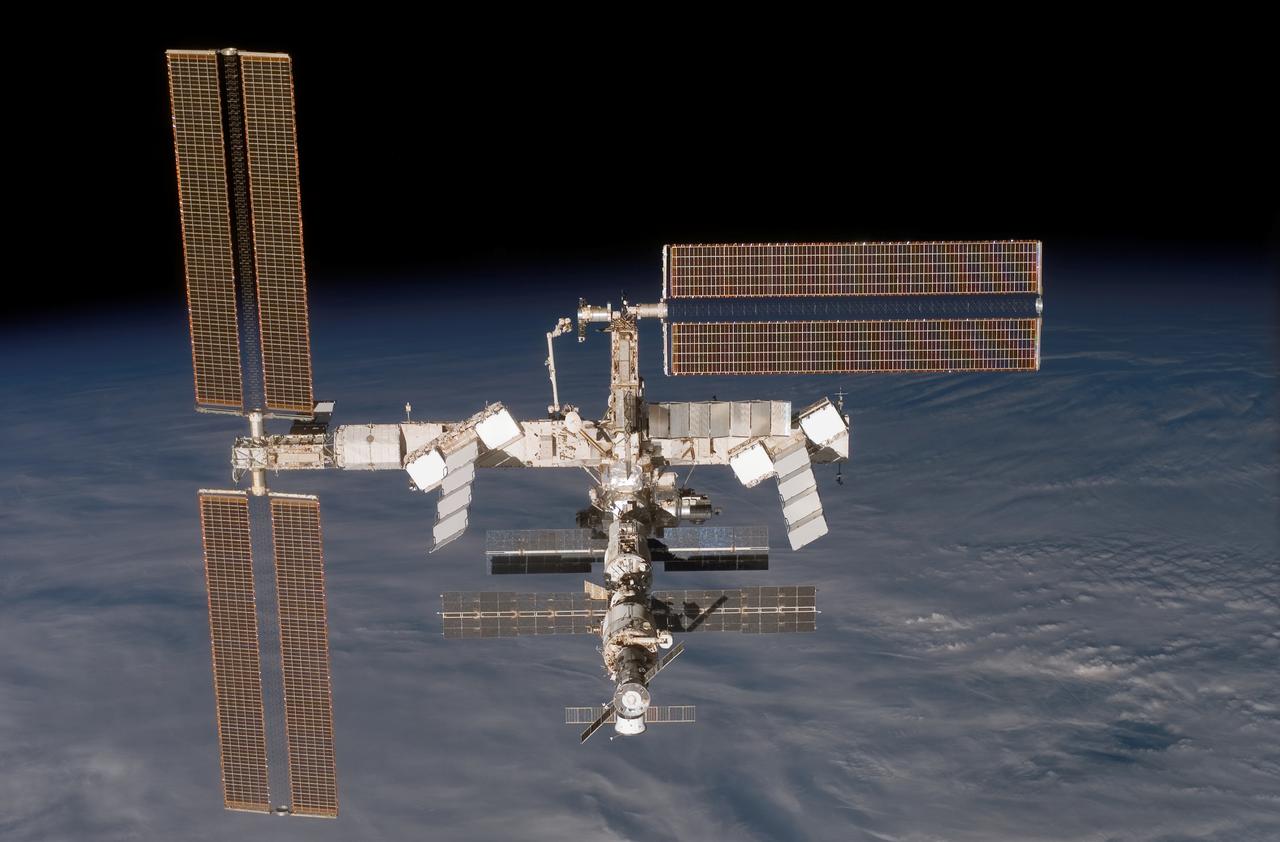
Photographed from the Space Shuttle Discovery upon its separation from the orbital outpost, the International Space Station (ISS) is shown sporting its new additions. A fly-around gave the crew a look at their handiwork, a new P5 spacer truss segment and a fully retracted P6 solar array wing. Earlier, the STS-116 and Expedition 14 crews concluded eight days of cooperative work onboard the shuttle and station where they accomplished the installation of the newest piece of the station and completely rewired the power grid over the course of four space walks. The station is currently the size of a typical three-bedroom house, with a surface area large enough to cover four basketball courts. The image reflects the latest configuration of the ISS as of December 19, 2006.
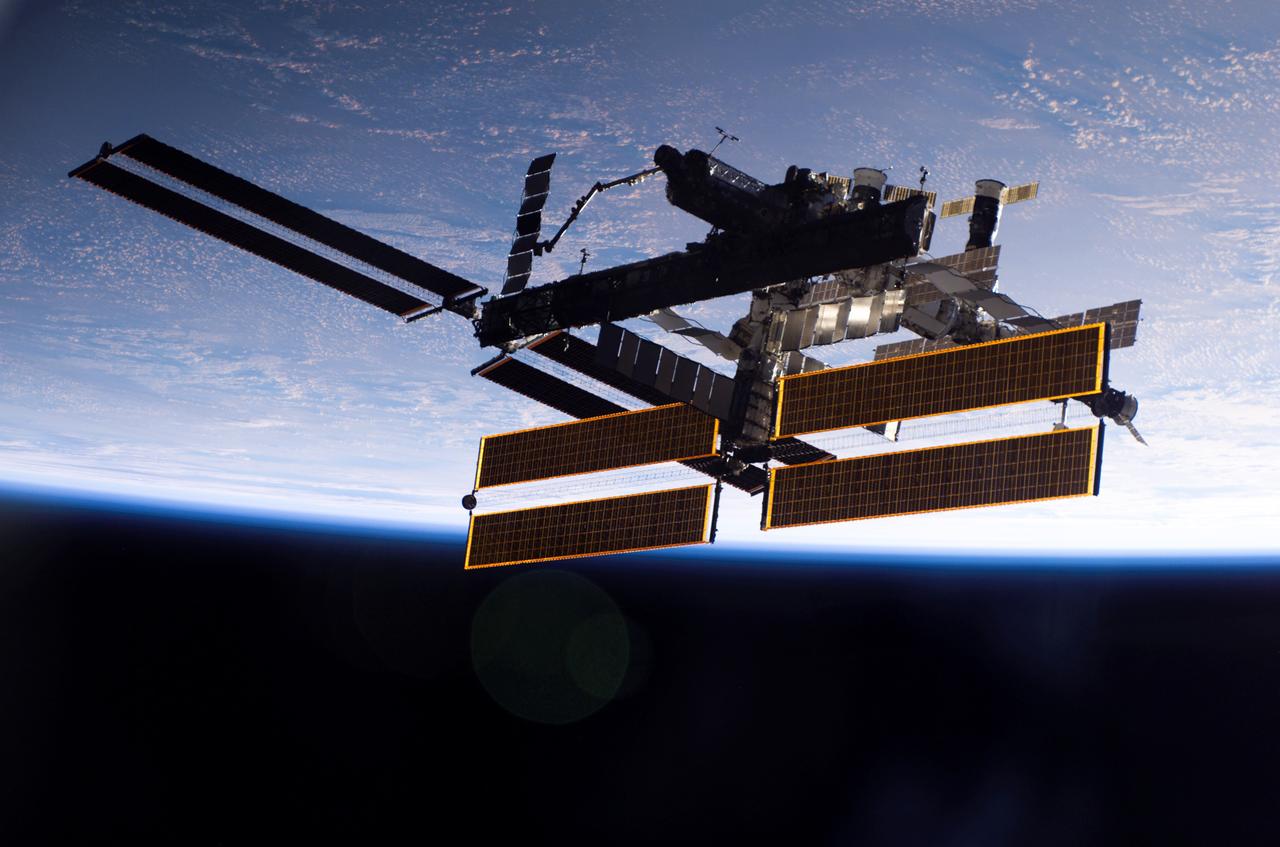
This view of the International Space Station, back dropped against the blackness of space and Earth, was taken shortly after the Space Shuttle Atlantis undocked from the orbital outpost at 7:50 a.m. CDT during the STS-115 mission. The unlinking completed after six days, two hours and two minutes of joint operations of the installation of the P3/P4 truss. The new 17 ton truss included batteries, electronics, a giant rotating joint, and sported a second pair of 240-foot solar wings. The new solar arrays will eventually double the onboard power of the Station when their electrical systems are brought online during the next shuttle flight, STS-116.
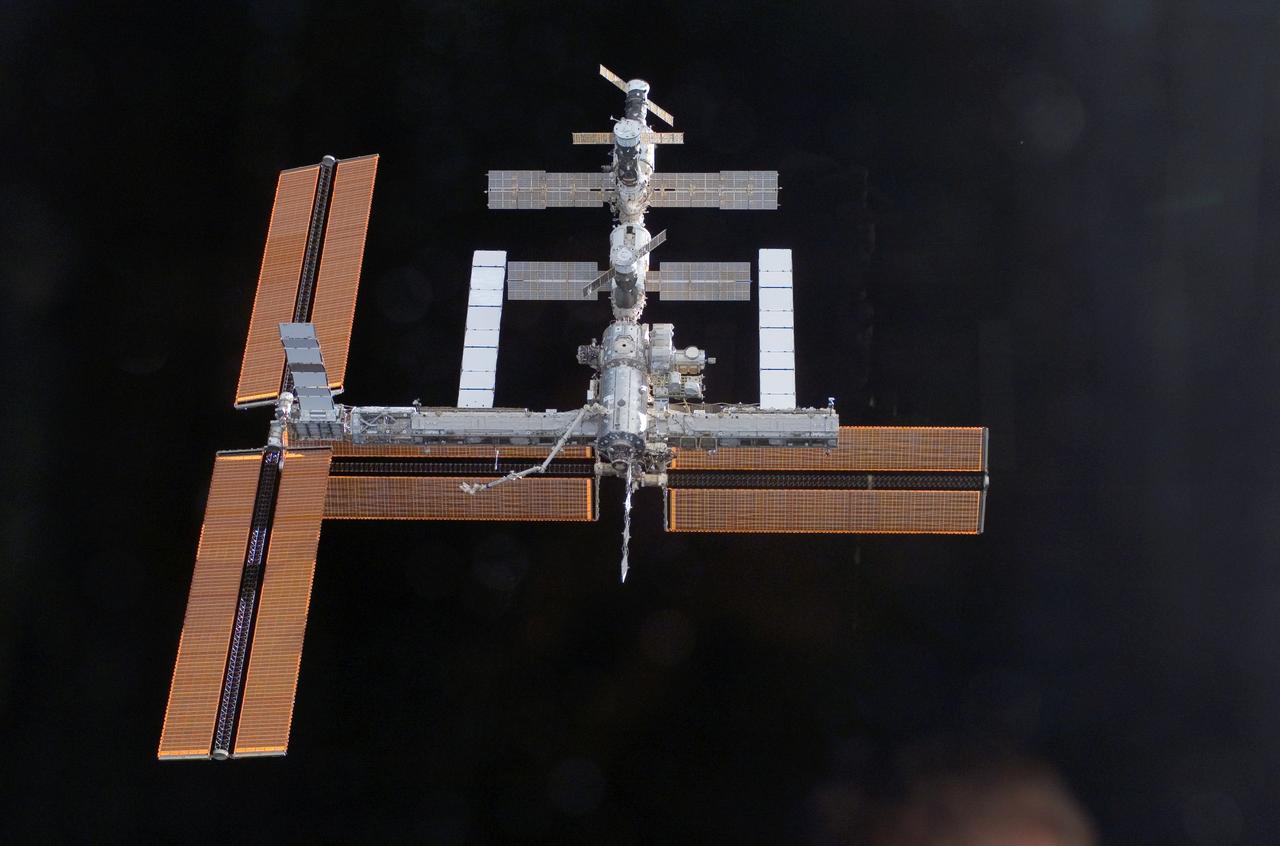
This view of the International Space Station, back dropped against the blackness of space, was taken shortly after the Space Shuttle Atlantis undocked from the orbital outpost at 7:50 a.m. CDT during the STS-115 mission. The unlinking completed after six days, two hours and two minutes of joint operations of the installation of the P3/P4 truss. The new 17 ton truss included batteries, electronics, a giant rotating joint, and sported a second pair of 240-foot solar wings. The new solar arrays will eventually double the onboard power of the Station when their electrical systems are brought online during the next shuttle flight, STS-116.
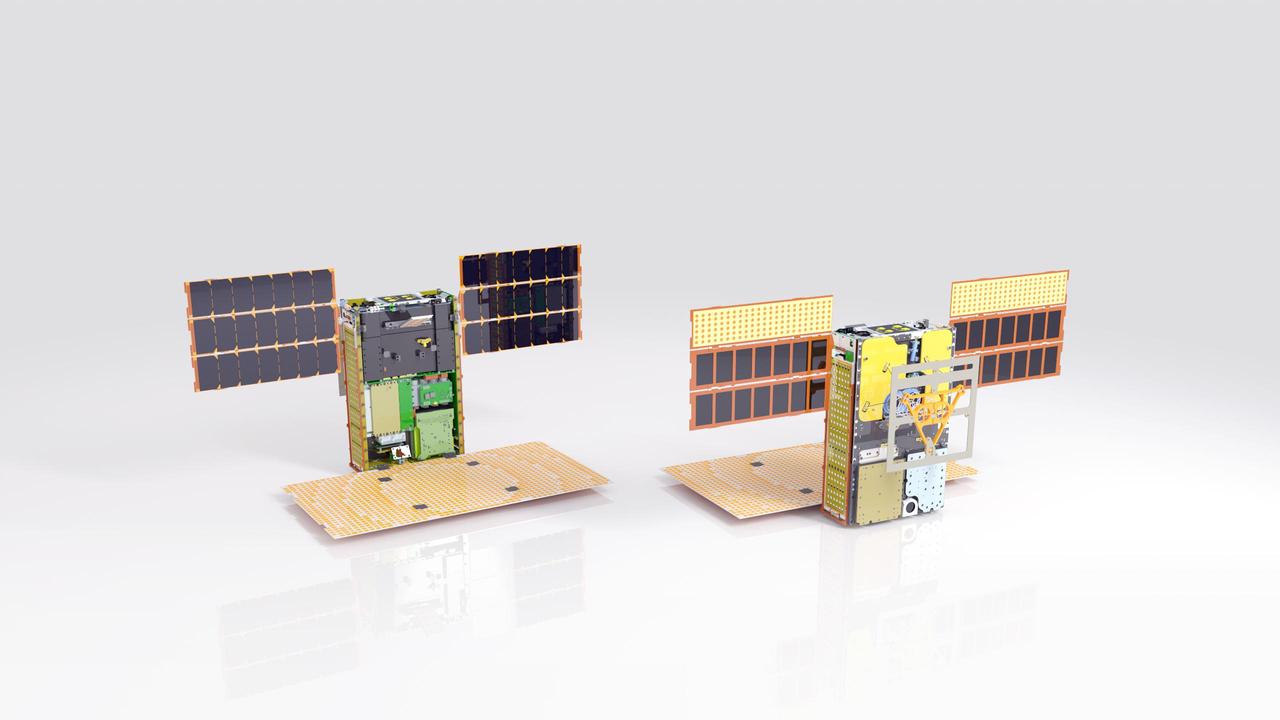
Illustration of one of the twin MarCO spacecraft with some key components labeled. Front cover is left out to show some internal components. Antennas and solar arrays are in deployed configuration. https://photojournal.jpl.nasa.gov/catalog/PIA22548
/jsc2024e041788 (1)~medium.jpg)
The Gateway lunar space station configuration and major international and commercial partners.
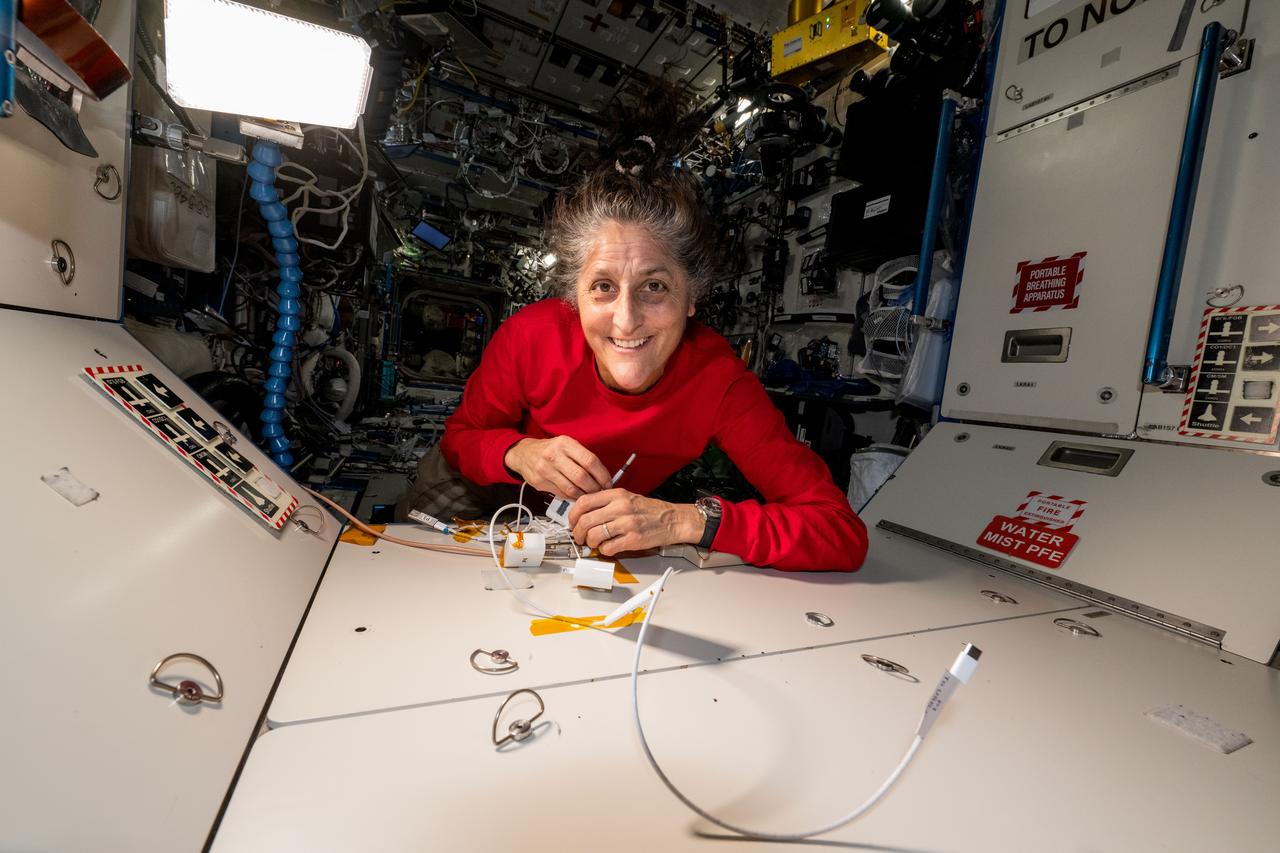
iss071e608493 (Sept. 4, 2024) --- NASA astronaut Suni Williams configures portable electronics gear aboard the International Space Station's Destiny laboratory module.

Artist's concept of the final configuration of the International Space Station (ISS) Alpha. The ISS is a multidisciplinary laboratory, technology test bed, and observatory that will provide an unprecedented undertaking in scientific, technological, and international experimentation.
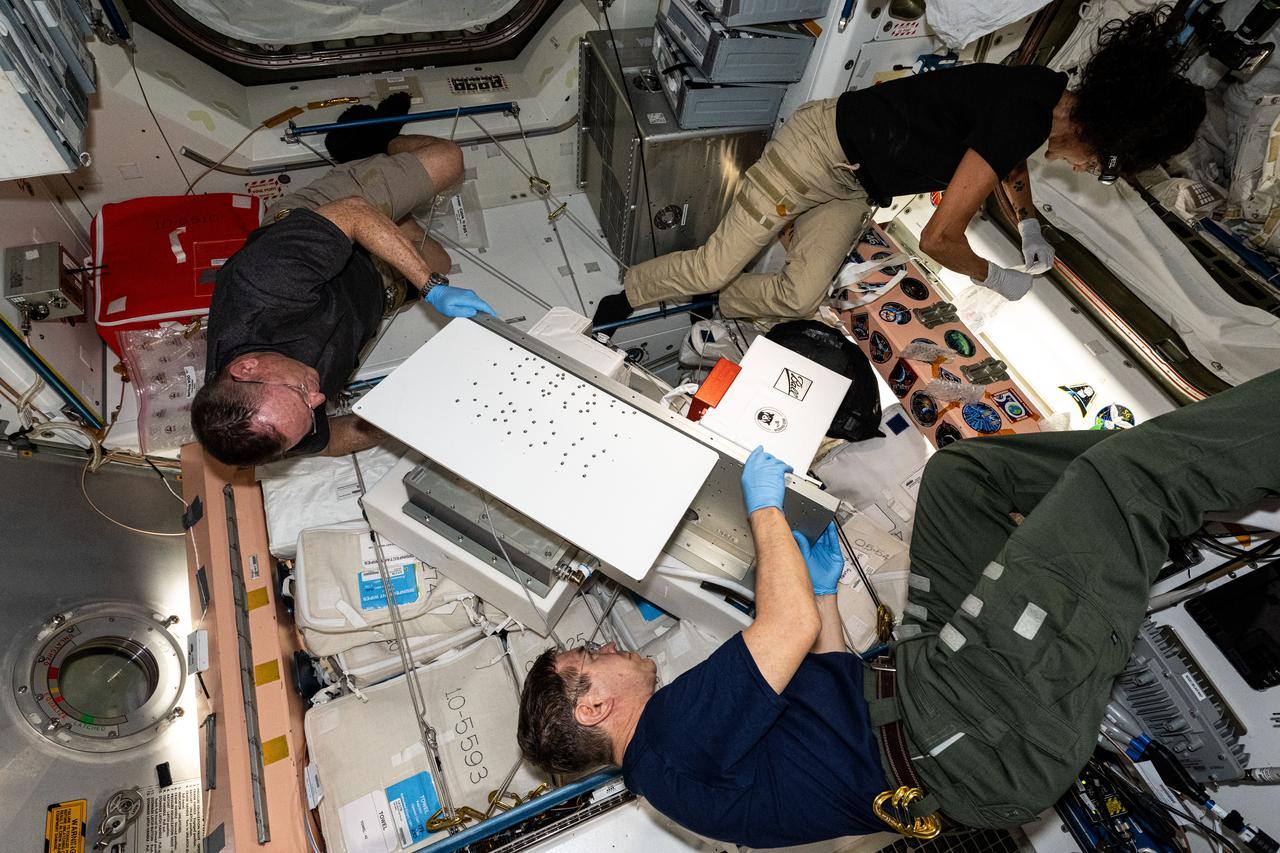
iss071e379489 (July 23, 2024) --- Clockwise from bottom, NASA astronauts Mike Barratt, Butch Wilmore, and Suni Williams are at work inside the International Space Station's Unity module. The trio was configuring the ArgUS Mission 1 technology demonstration hardware to test the external operations of communications, computer processing, and high-definition video gear in the vacuum of space.
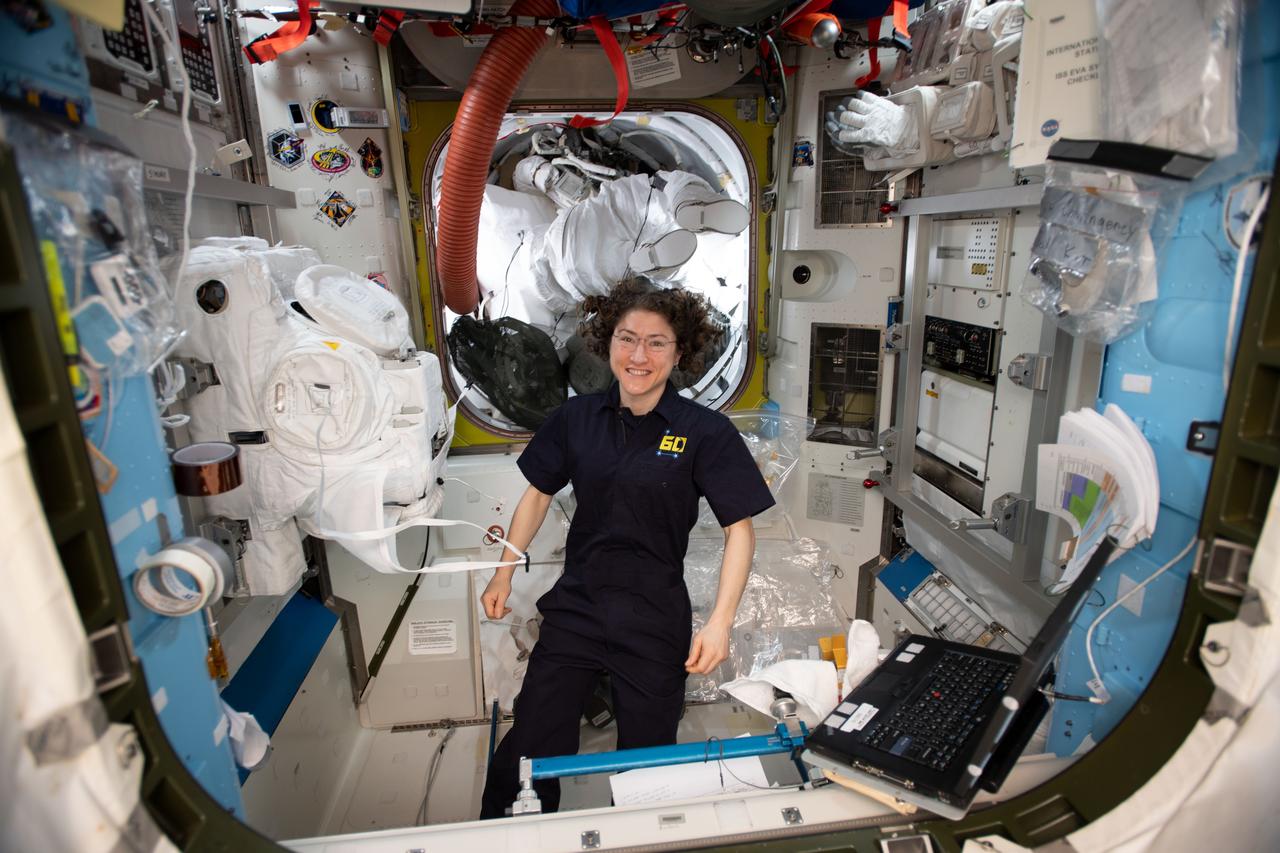
iss060e029526 (Aug. 8, 2019) --- Expedition 60 Flight Engineer Christina Koch of NASA works inside the U.S. Quest airlock configuring a pair spacesuits that NASA astronauts Nick Hague and Andrew Morgan will wear during a spacewalk on Aug. 21. The duo will spend about six and a half hours routing cables and configuring the International Docking Adapter-3 on top of the Harmony module in preparation for the arrival of future SpaceX and Boeing crew vehicles.
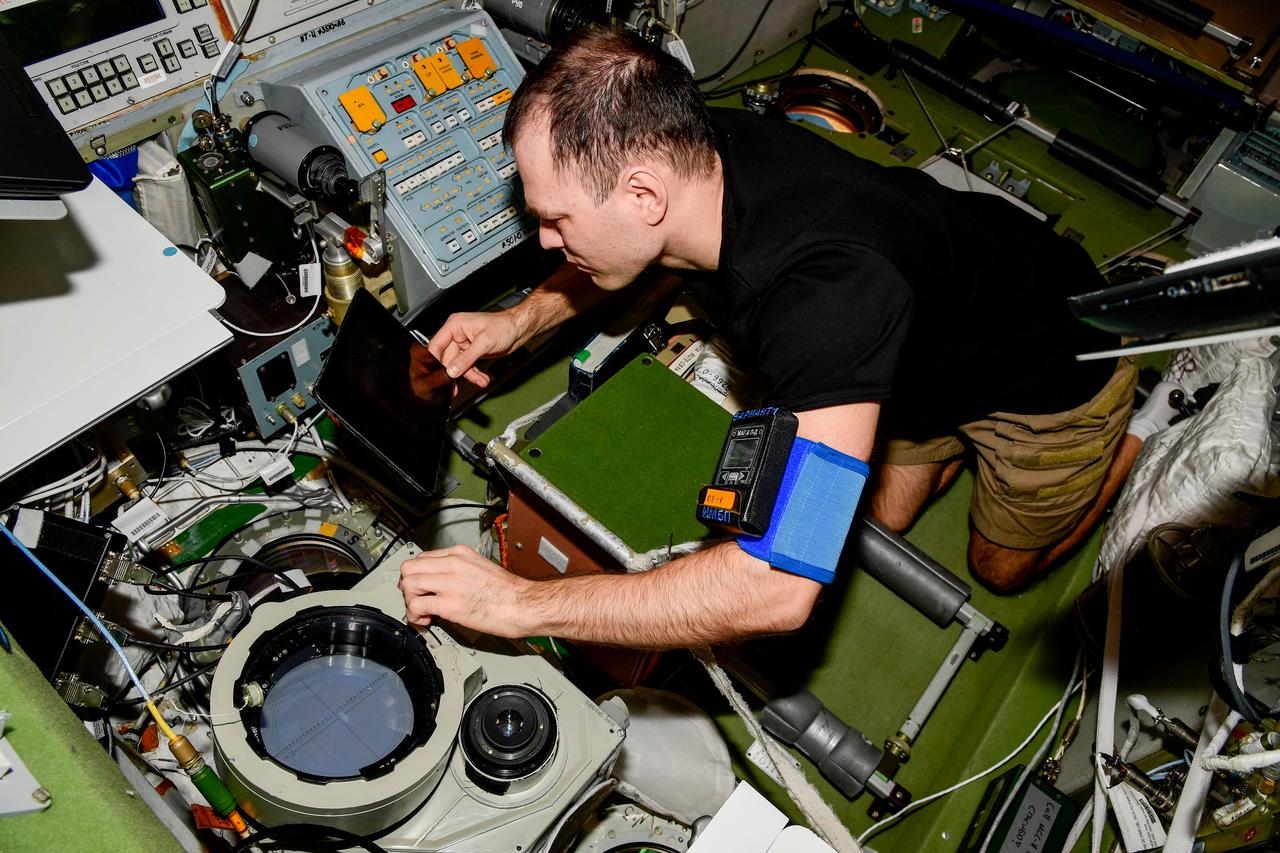
iss068e040003 (Jan. 11, 2023) --- Roscosmos cosmonaut and Expedition 68 Flight Engineer Dmitri Petelin configures optical hardware inside the International Space Station's Zvezda service module. Credit: Roscosmos
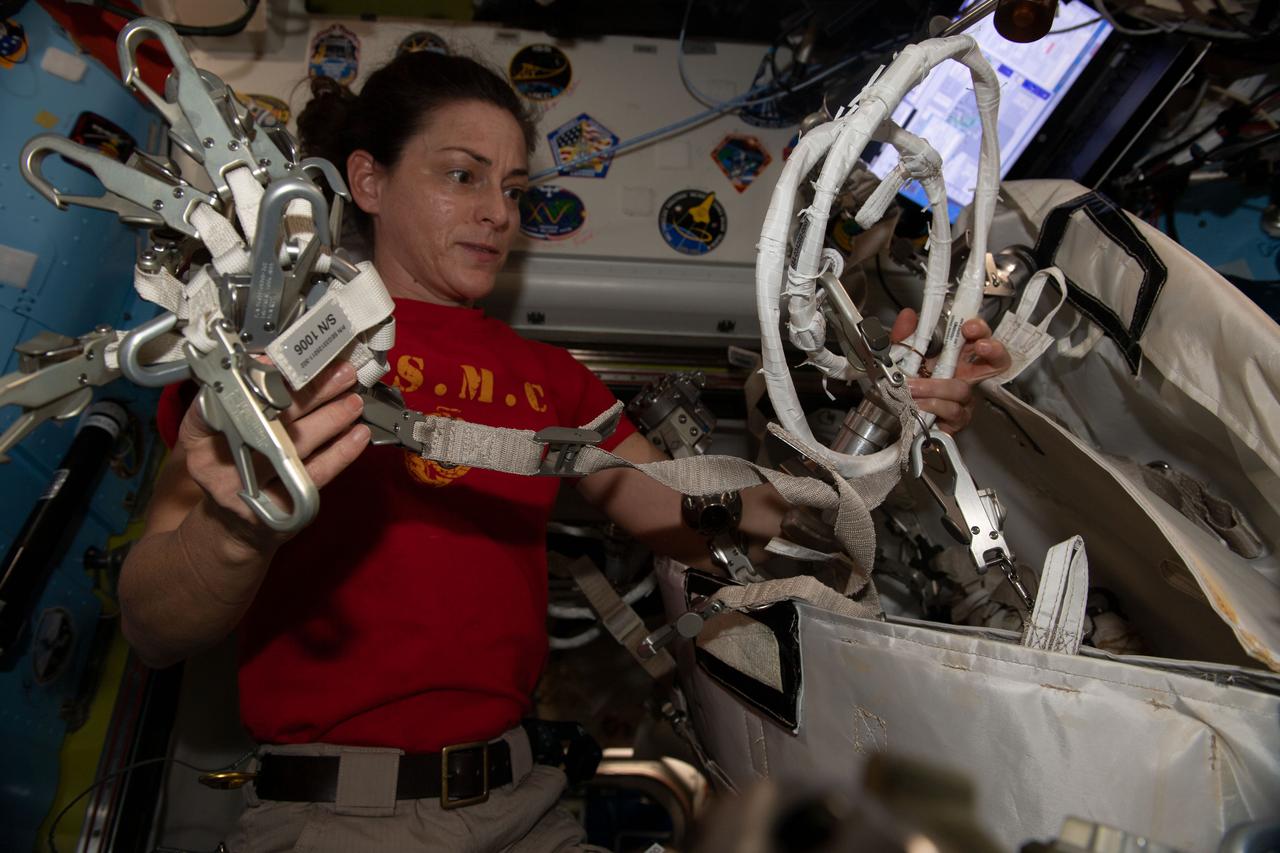
iss068e043086 (Jan. 27, 2023) --- NASA astronaut and Expedition 68 Flight Engineer Nicole Mann configures spacewalking hardware inside the International Space Station's Quest airlock.
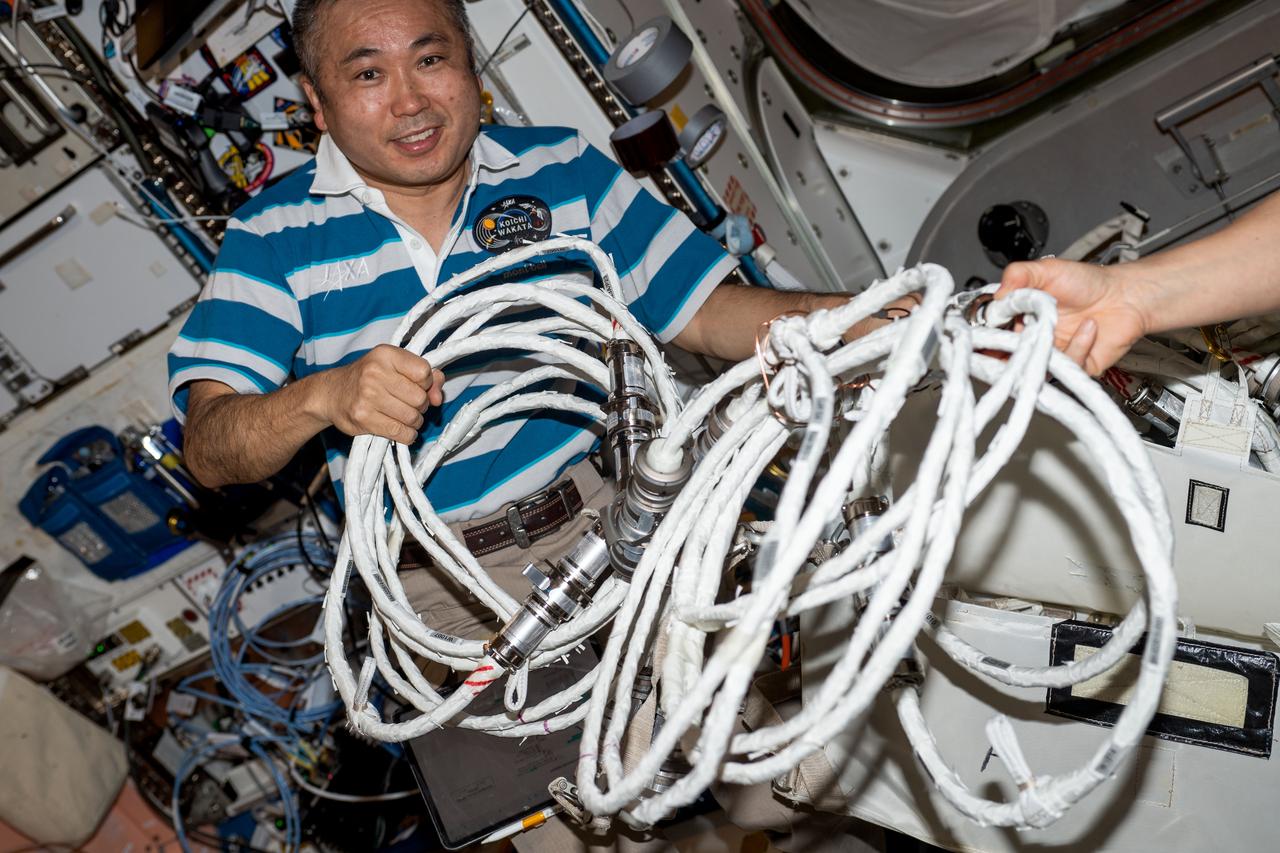
iss068e040899 (Jan. 19, 2023) --- Expedition 68 Flight Engineer Koichi Wakata of the Japan Aerospace Exploration Agency (JAXA) configures spacewalking hardware inside the International Space Station's Quest airlock.
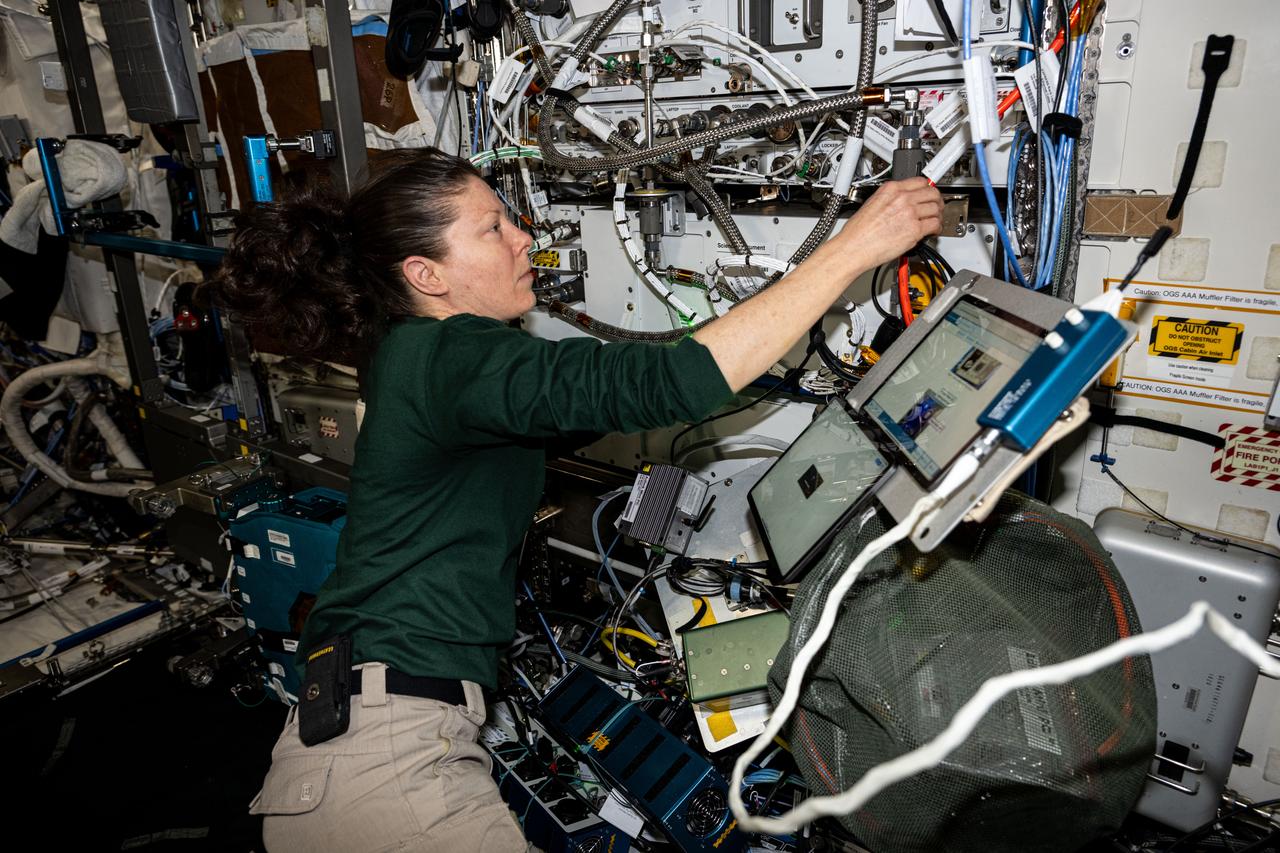
iss071e609375 (Sept. 5, 2024) --- NASA astronaut and Expedition 71 Flight Engineer Tracy C. Dyson tests the configuration of computers that control life support systems aboard the International Space Station's Destiny laboratory module.
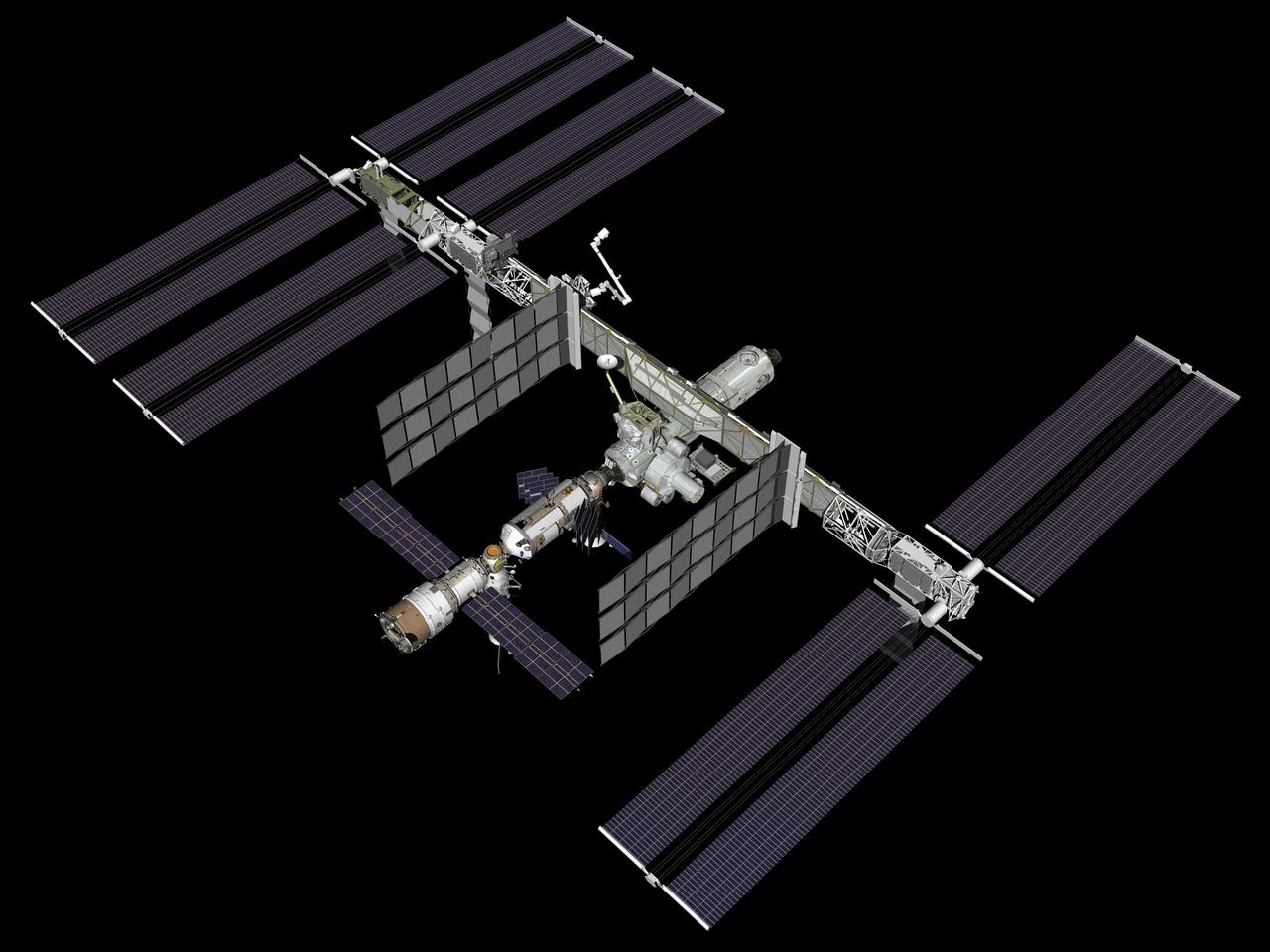
JSC2007-E-099883 (November 2007) --- Computer-generated artist's rendering of the 10A stage configuration of the International Space Station as of Nov. 15, 2007. The port side Thermal Control System radiators are fully deployed.
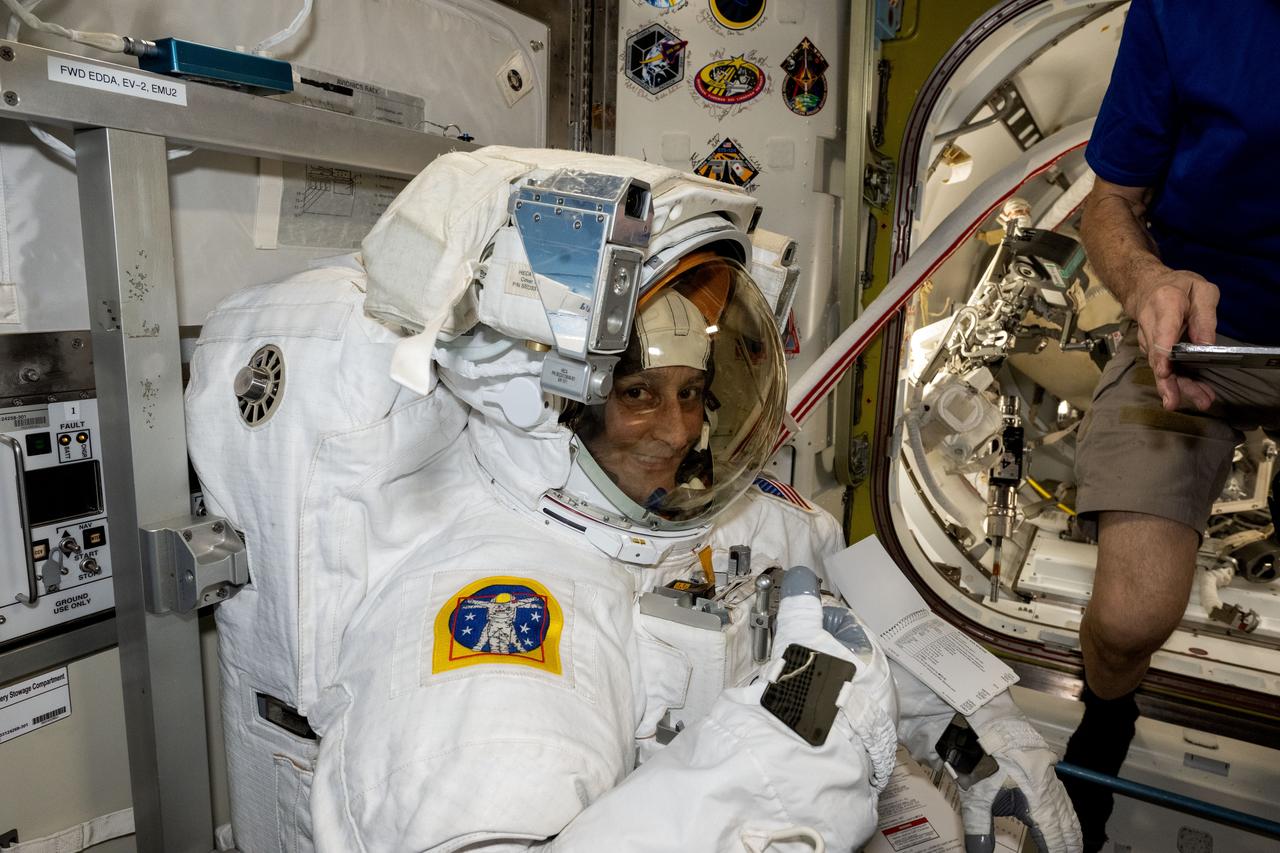
iss072e451674 (Jan. 9, 2025) --- NASA astronaut and Expedition 72 Commander Suni Williams is pictured as she tries on and evaluates her spacesuit in a pressurized configuration aboard the International Space Station's Quest airlock.
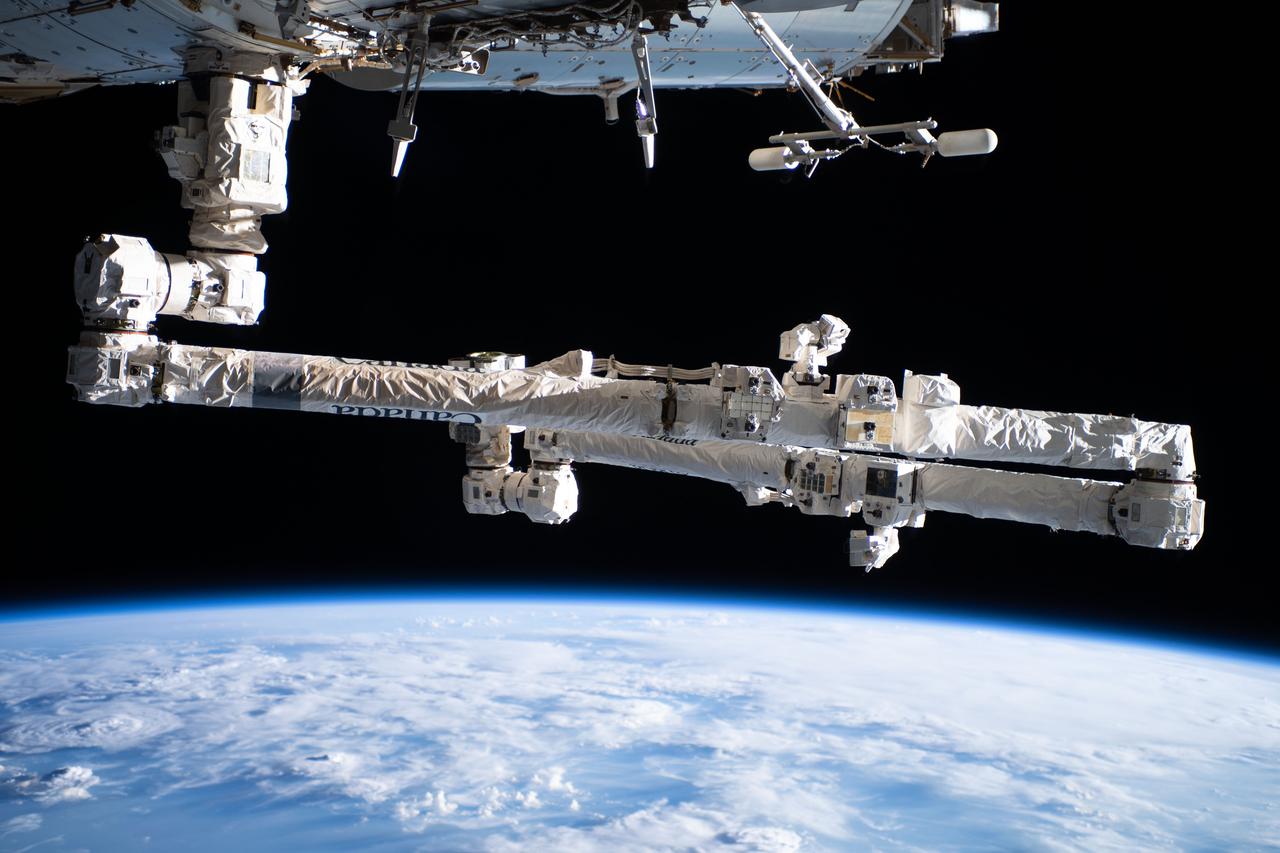
iss065e483088 (Oct. 15. 2021) --- The Canadarm2 robotic arm, in a folded configuration, is pictured attached to the International Space Station as it orbited 263 miles above the Atlantic Ocean off the coast of Brazil.
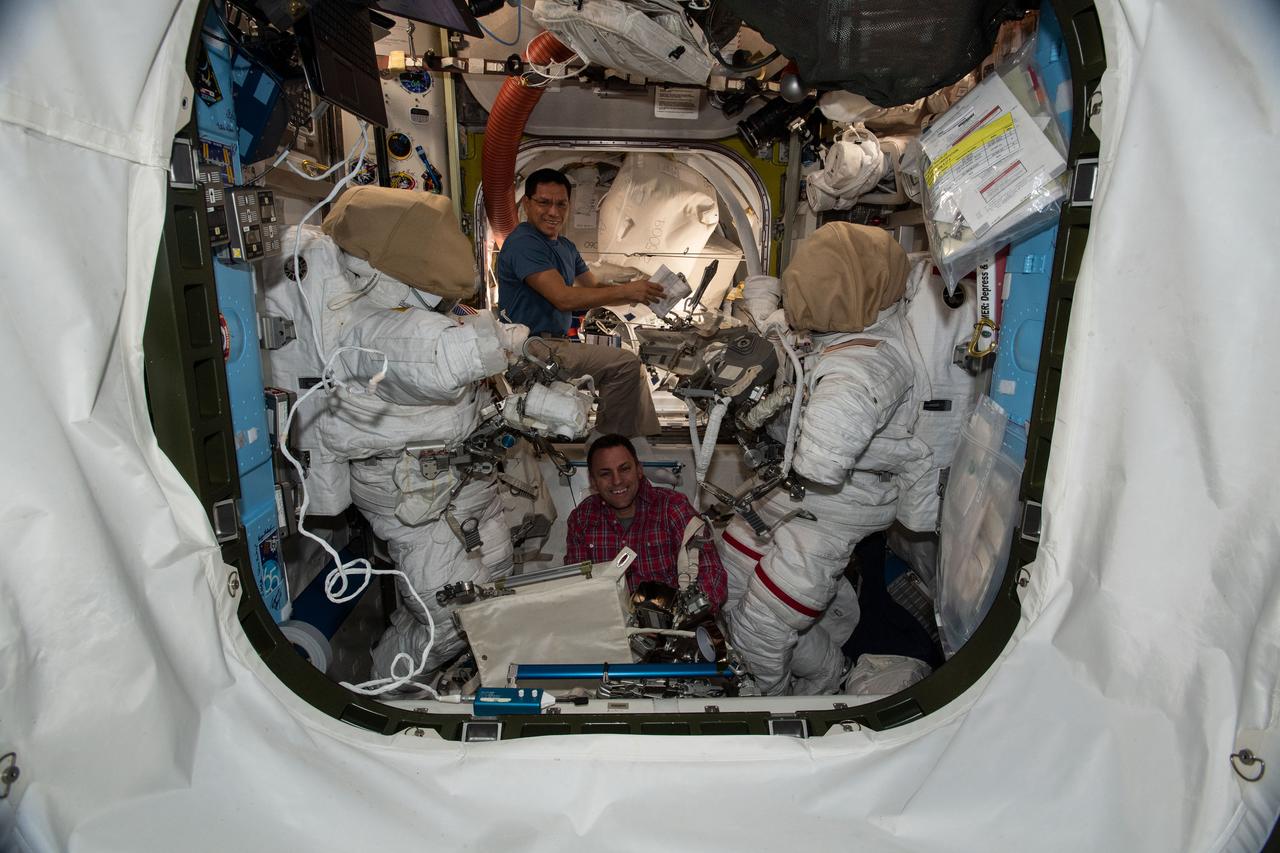
iss068e024215 (Nov. 23, 2022) --- NASA astronauts (from top) Frank Rubio and Josh Cassada configure spacewalking tools and components on a pair of Extravehicular Mobility Units (EMUs), or spacesuits, inside the International Space Station's Quest airlock.
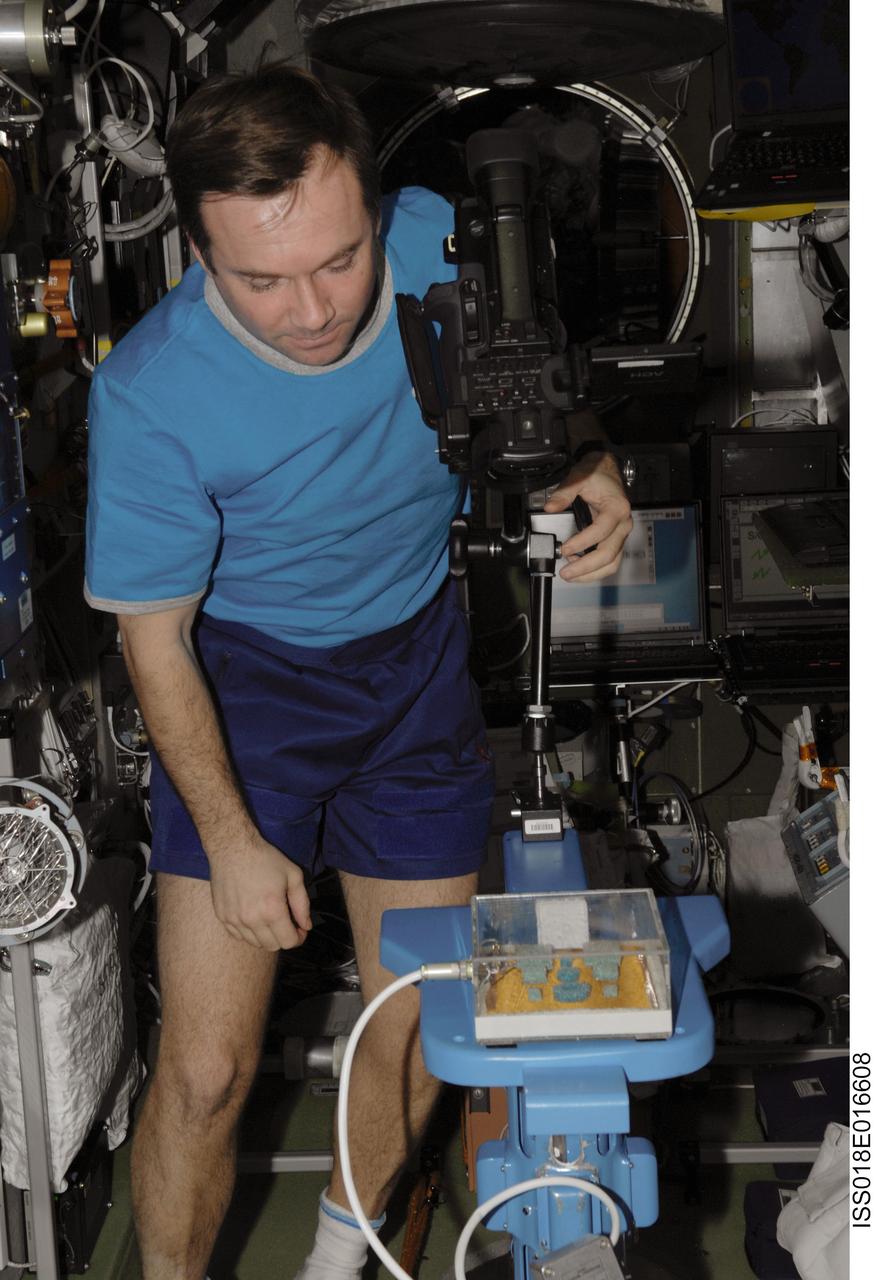
ISS018-E-016608 (5 Jan. 2009) --- Cosmonaut Yury Lonchakov, Expedition 18 flight engineer, configures a video camera for the MATI-75 experiment in the Zvezda Service Module of the International Space Station.
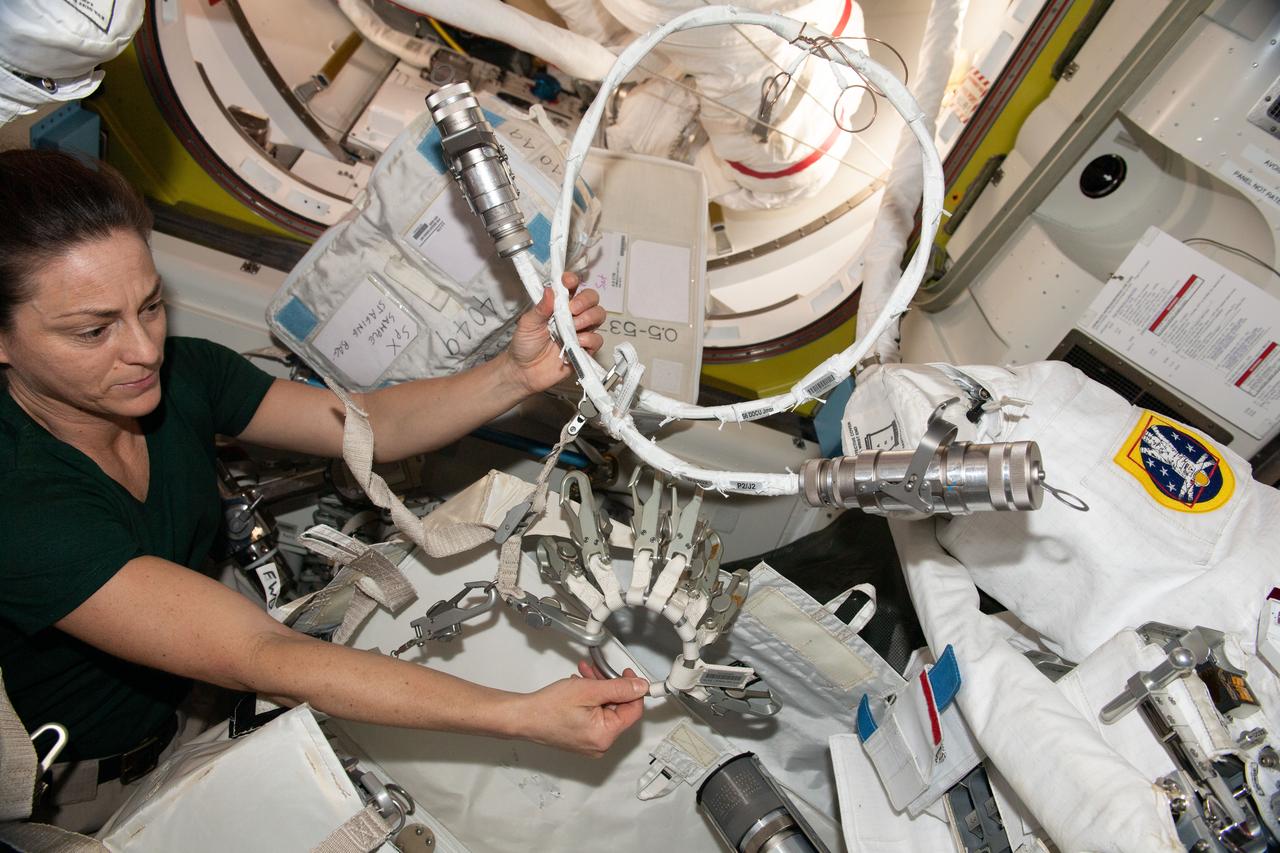
iss068e039915 (Jan. 11, 2023) --- NASA astronaut and Expedition 68 Flight Engineer Nicole Mann configures spacewalk tools and hardware inside the International Space Station's Destiny laboratory module.
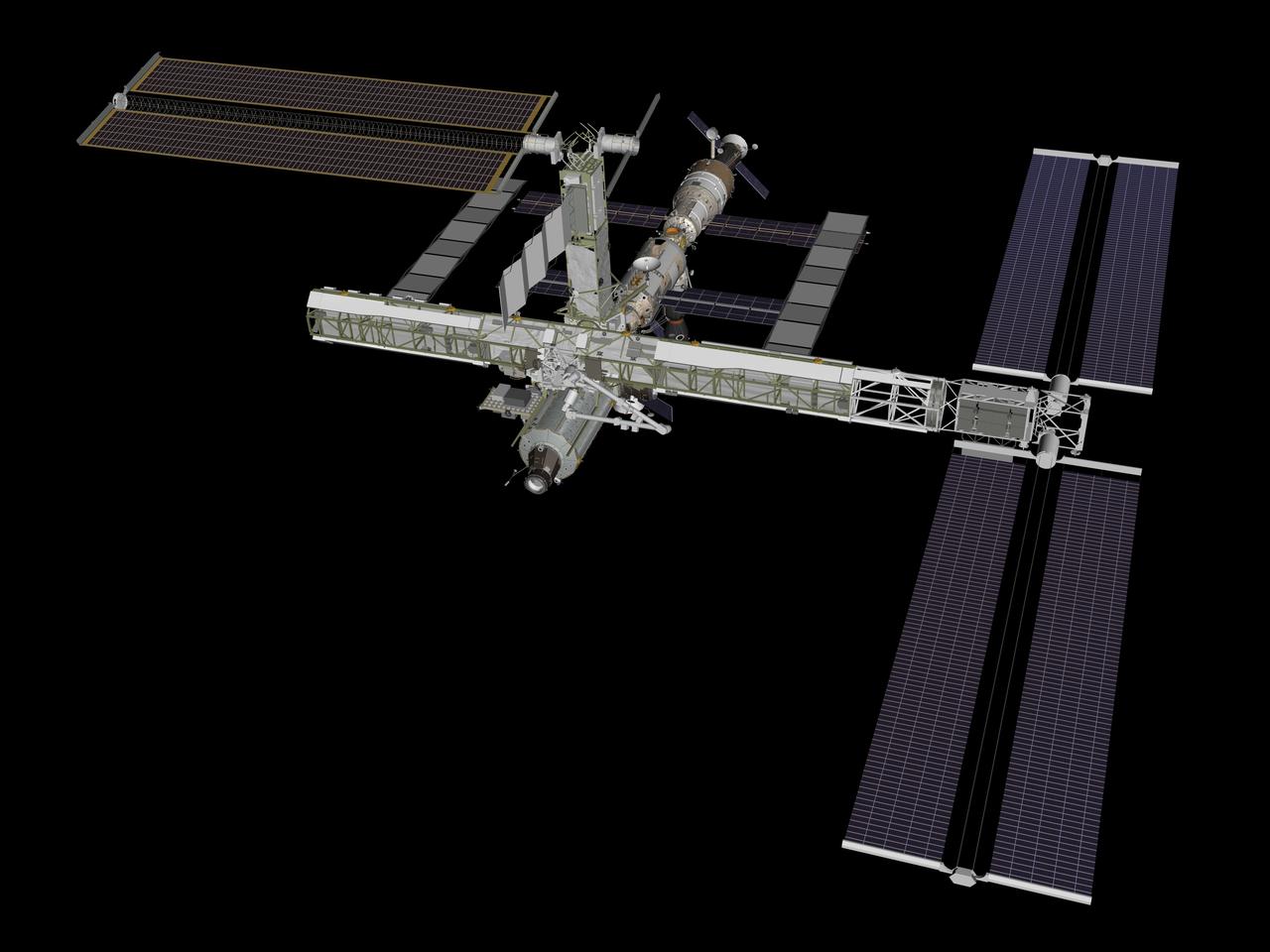
JSC2006-E-38950 (August 2006) --- Computer generated graphic of the International Space Station configuration after STS-116/12A.1 with the addition of the P5 integrated truss segment.
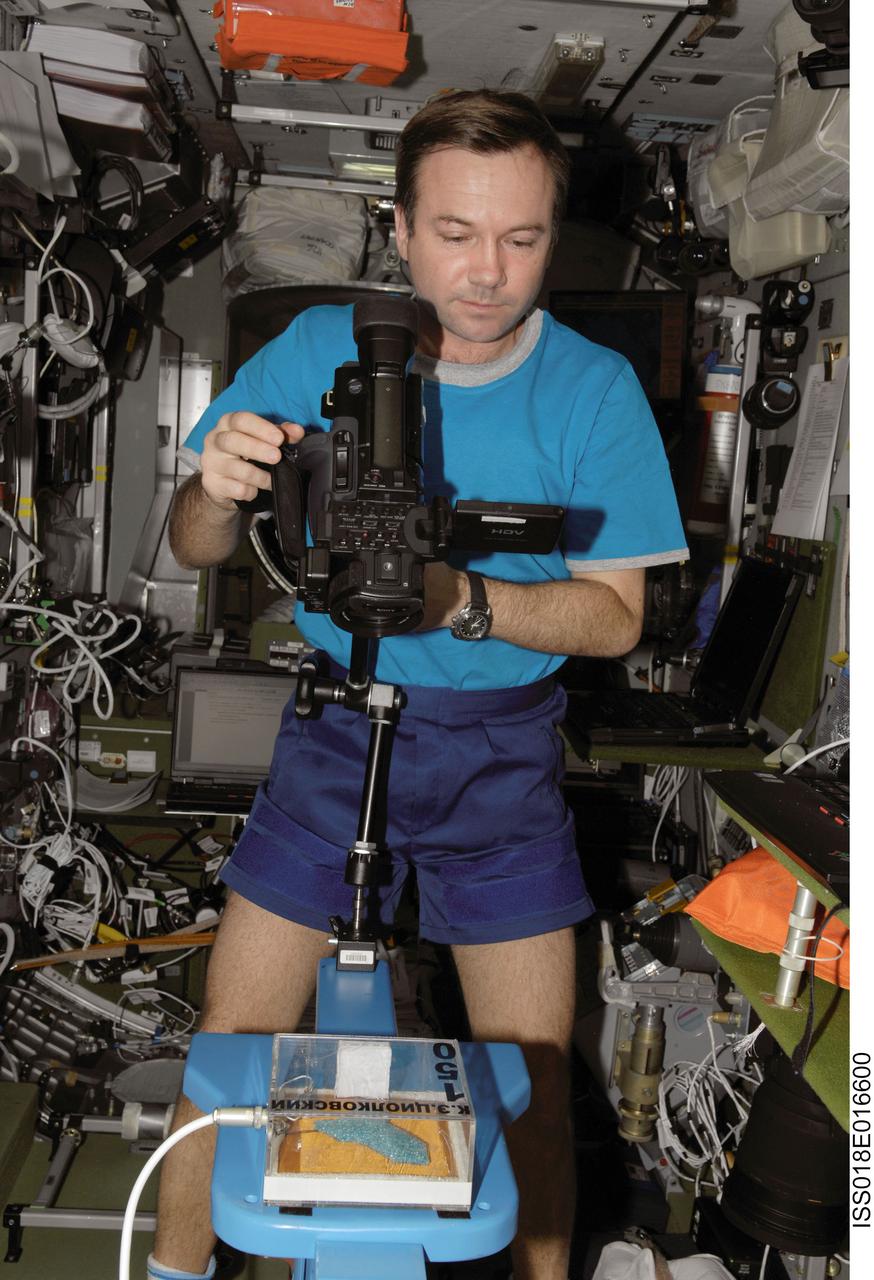
ISS018-E-016600 (5 Jan. 2009) --- Cosmonaut Yury Lonchakov, Expedition 18 flight engineer, configures a video camera for the MATI-75 experiment in the Zvezda Service Module of the International Space Station.

iss064e0221711 (Jan. 8, 2021) --- Flight Engineer Michael Hopkins works inside the Quest airlock configuring tools for planned spacewalks to continue maintenance on the outside of the International Space Station.
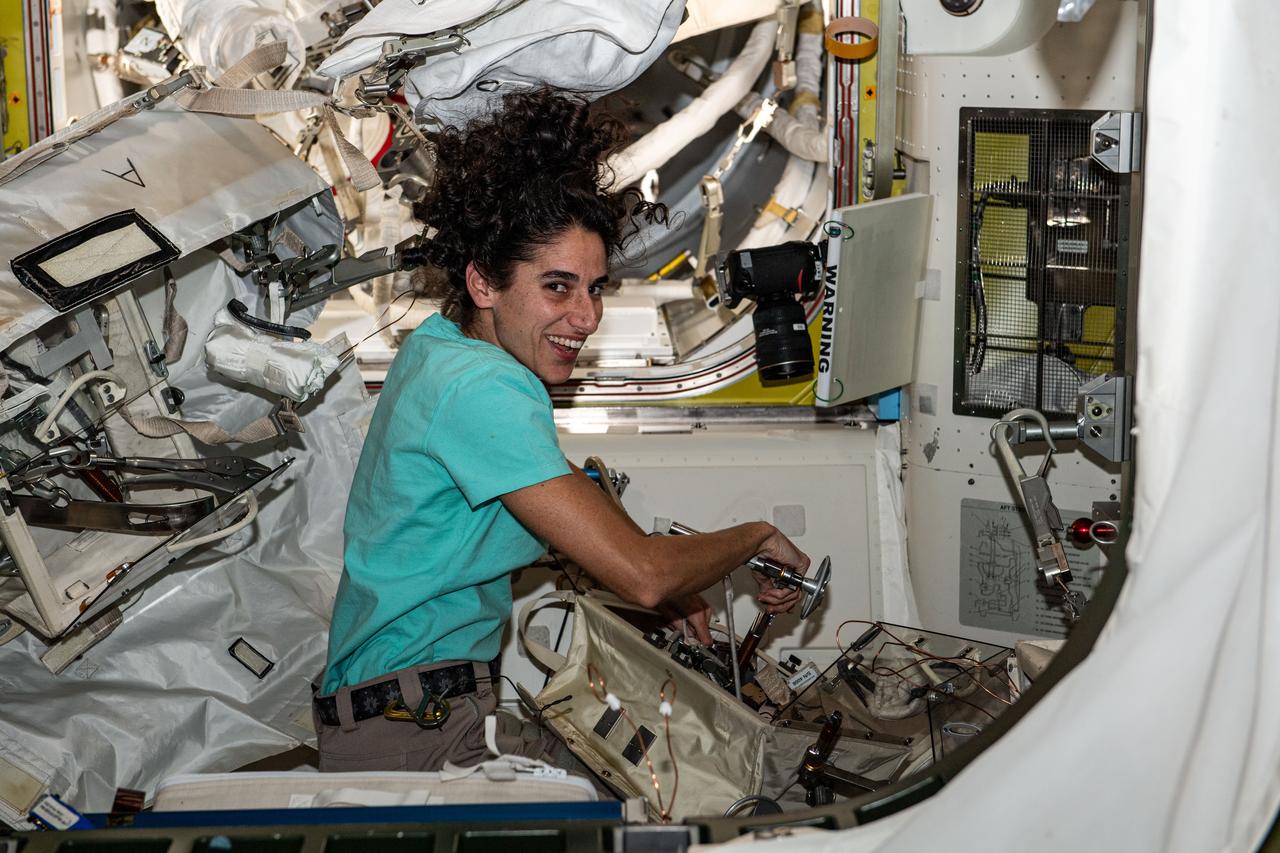
iss070e014310 (Oct. 27, 2023) --- NASA astronaut and Expedition 70 Flight Engineer Jasmin Moghbeli configures spacewalking tools inside the International Space Station's Quest airlock.
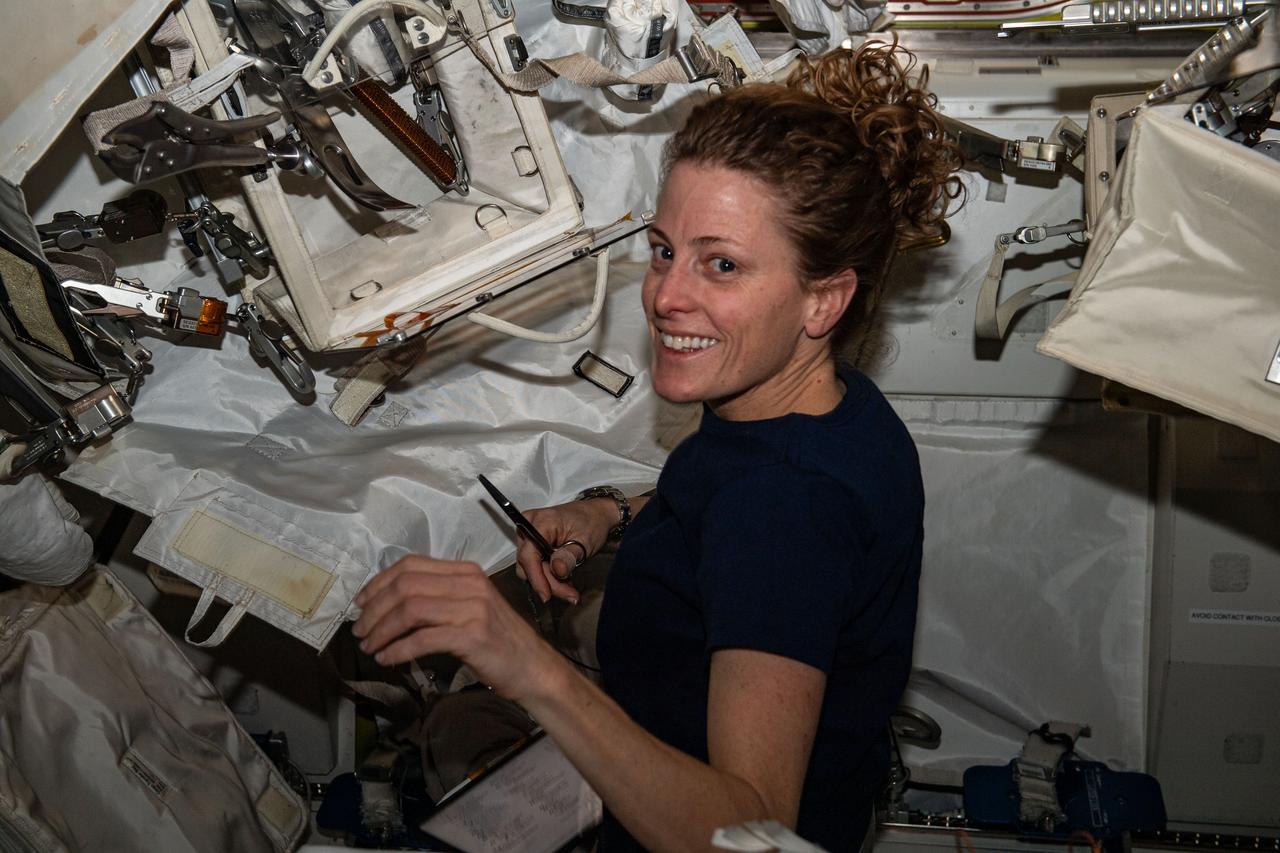
iss070e014316 (Oct. 27, 2023) --- NASA astronaut and Expedition 70 Flight Engineer Loral O'Hara configures spacewalking tools inside the International Space Station's Quest airlock.
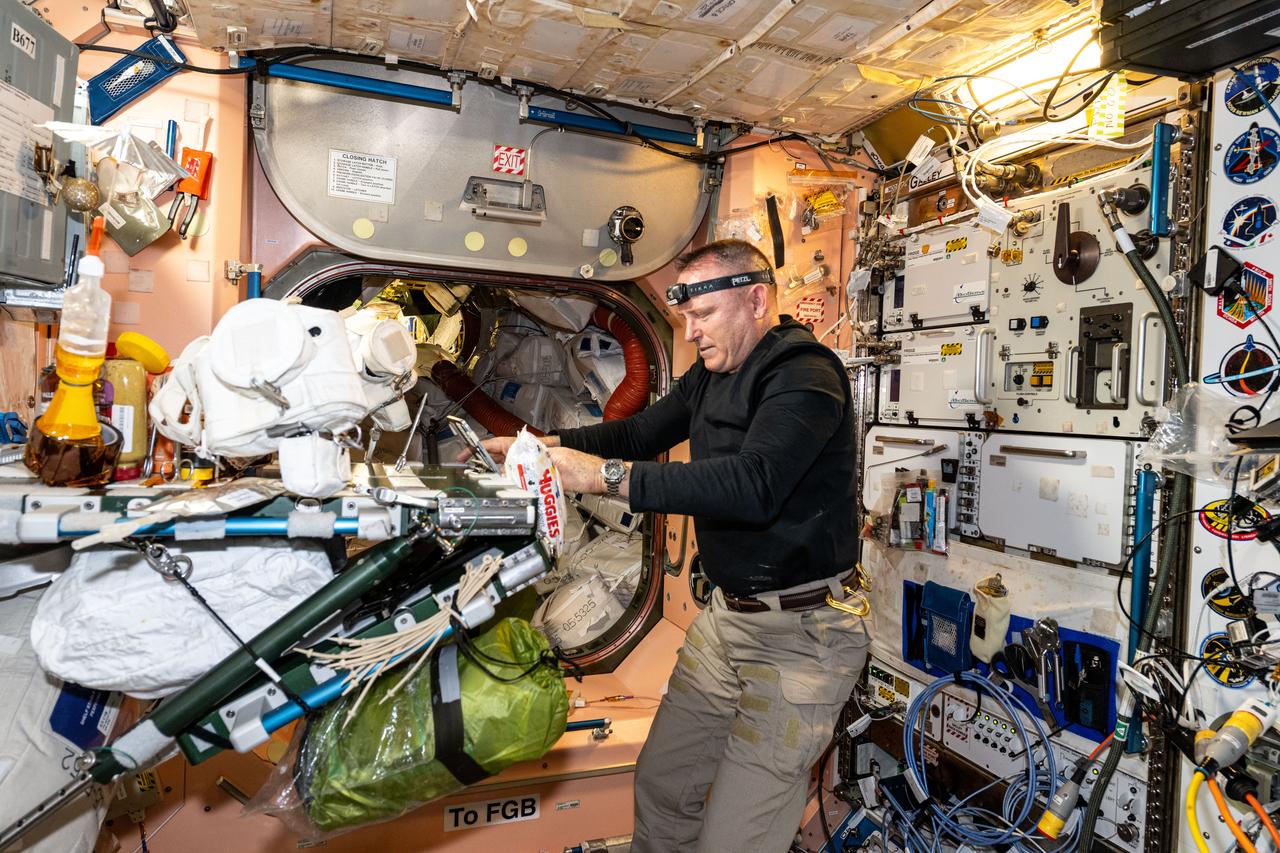
iss072e472714 (Jan. 14, 2025) --- NASA astronaut and Expedition 72 Flight Engineer Butch Wilmore configures spacewalking hardware aboard the International Space Station's Unity module.
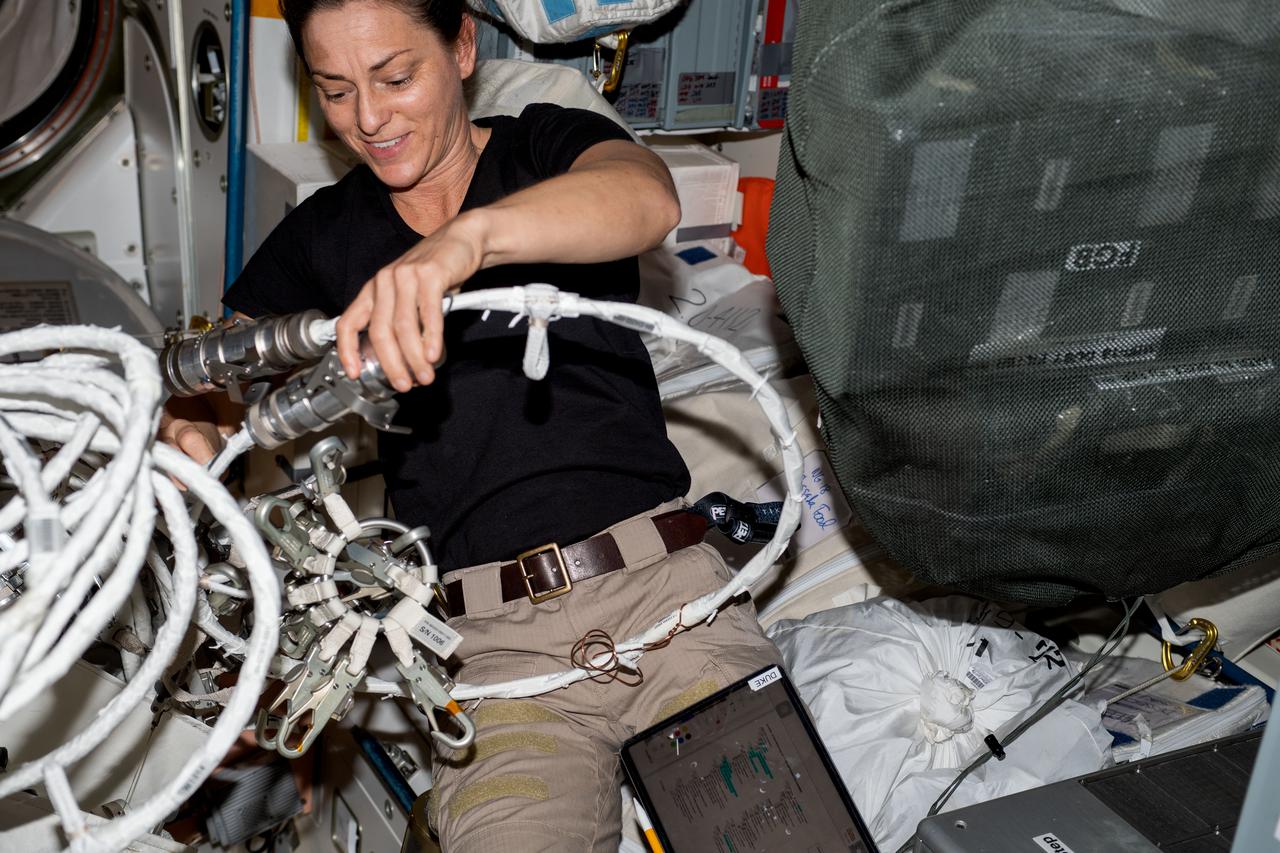
iss068e040900 (Jan. 19, 2023) --- NASA astronaut and Expedition 68 Flight Engineer Nicole Mann configures spacewalking hardware inside the International Space Station's Quest airlock.
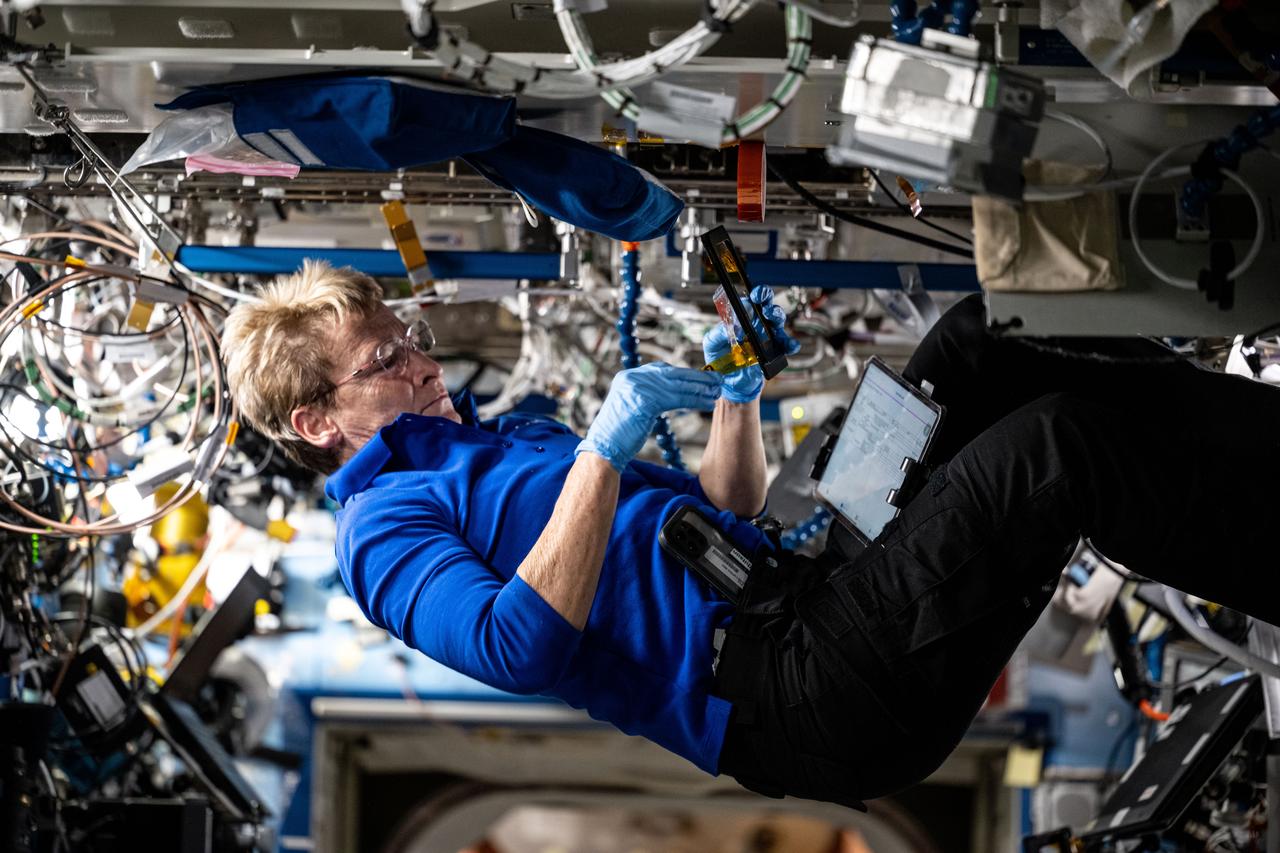
iss073e0252488 (June 28, 2025) --- Axiom Mission 4 (Ax-4) Commander Peggy Whitson from the U.S. configures research hardware aboard the International Space Station's Destiny laboratory module.
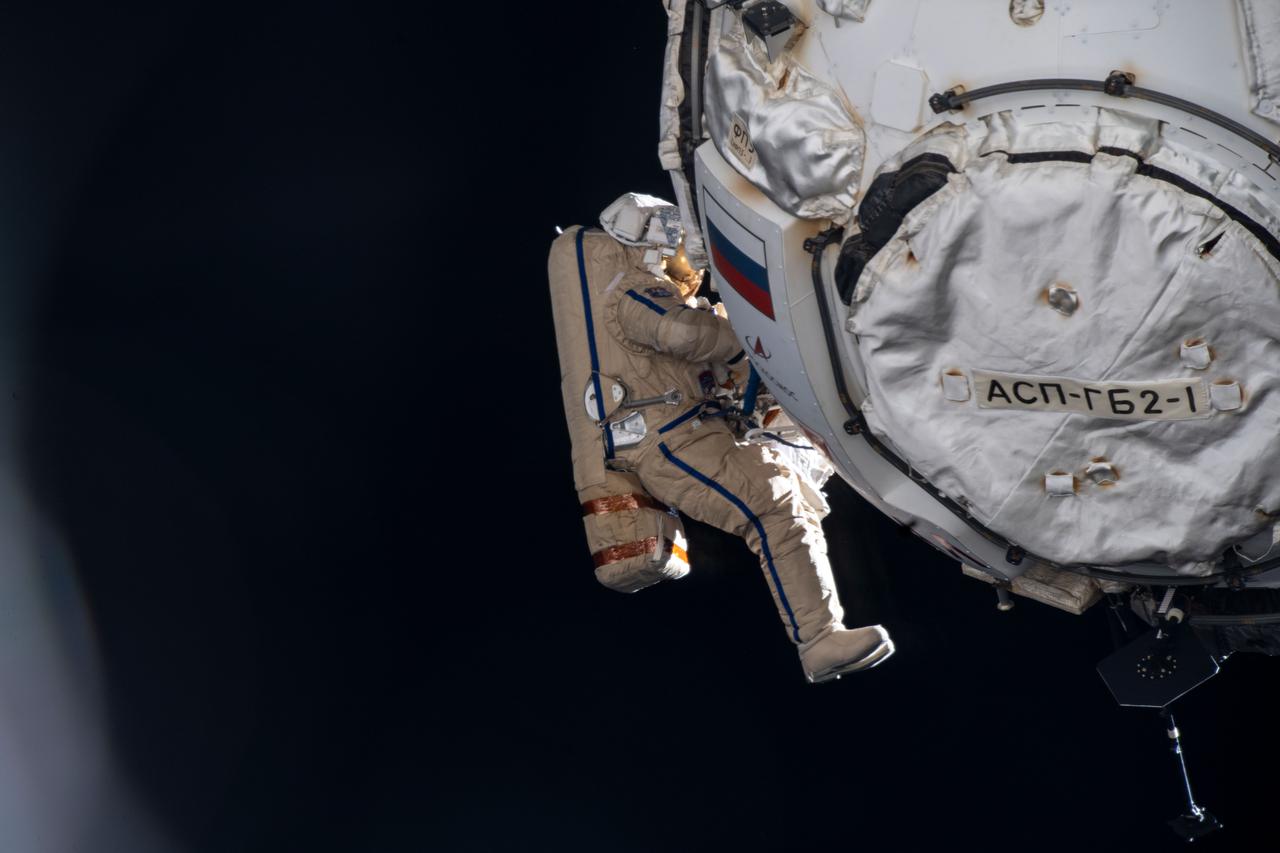
iss066e122069 (Jan. 19, 2022) --- Cosmonaut Pyotr Dubrov works to configure and activate the Prichal docking module with the Russian segment of the International Space Station during a seven-hour and 11-minute spacewalk.
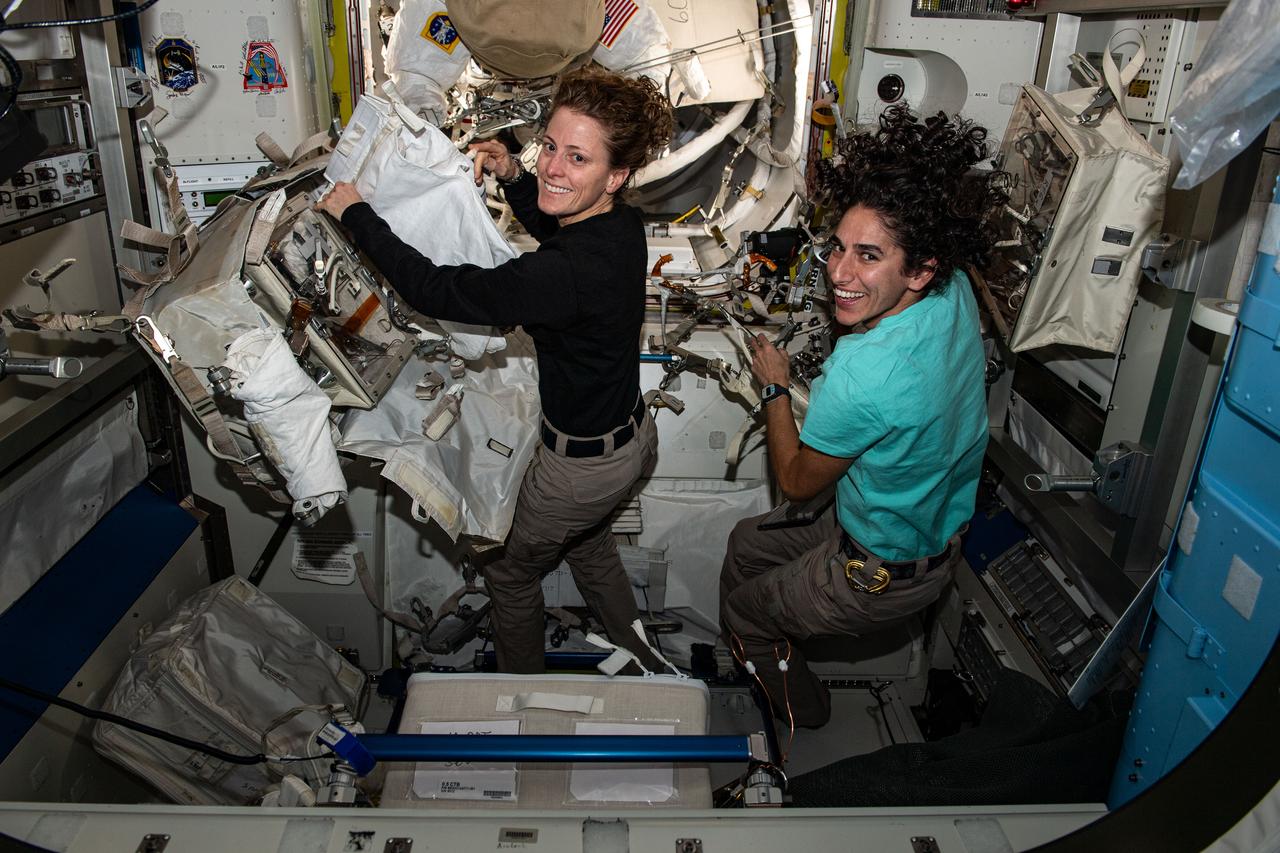
iss070e014305 (Oct. 27, 2023) --- Expedition 70 Flight Engineers (from left) Loral O'Hara and Jasmin Moghbeli, both NASA astronauts, configure spacewalking tools inside the International Space Station's Quest airlock.
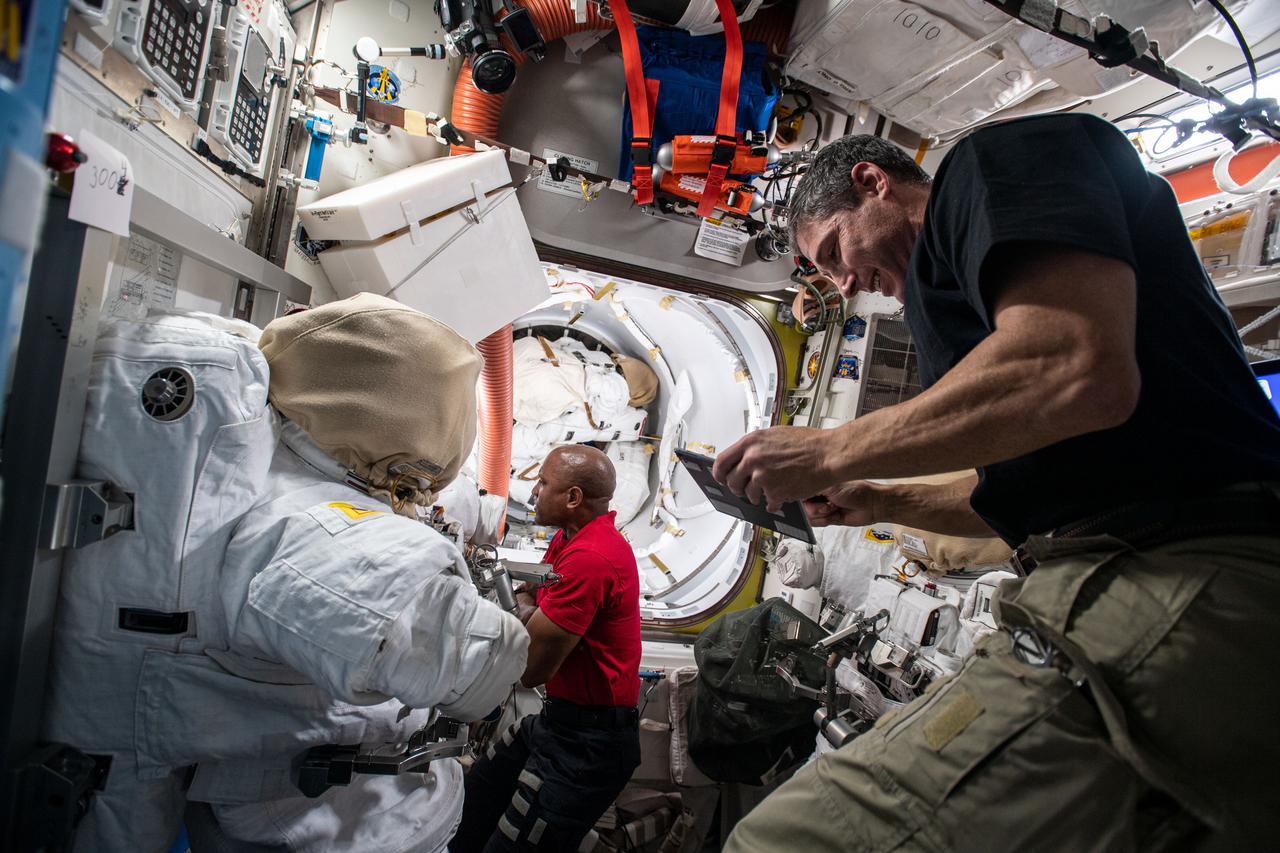
iss064e0221696 (Jan. 8, 2021) --- Flight Engineers Michael Hopkins (foreground) and Victor Glover configure tools inside the Quest airlock for planned spacewalks to continue maintenance on the outside of the International Space Station.
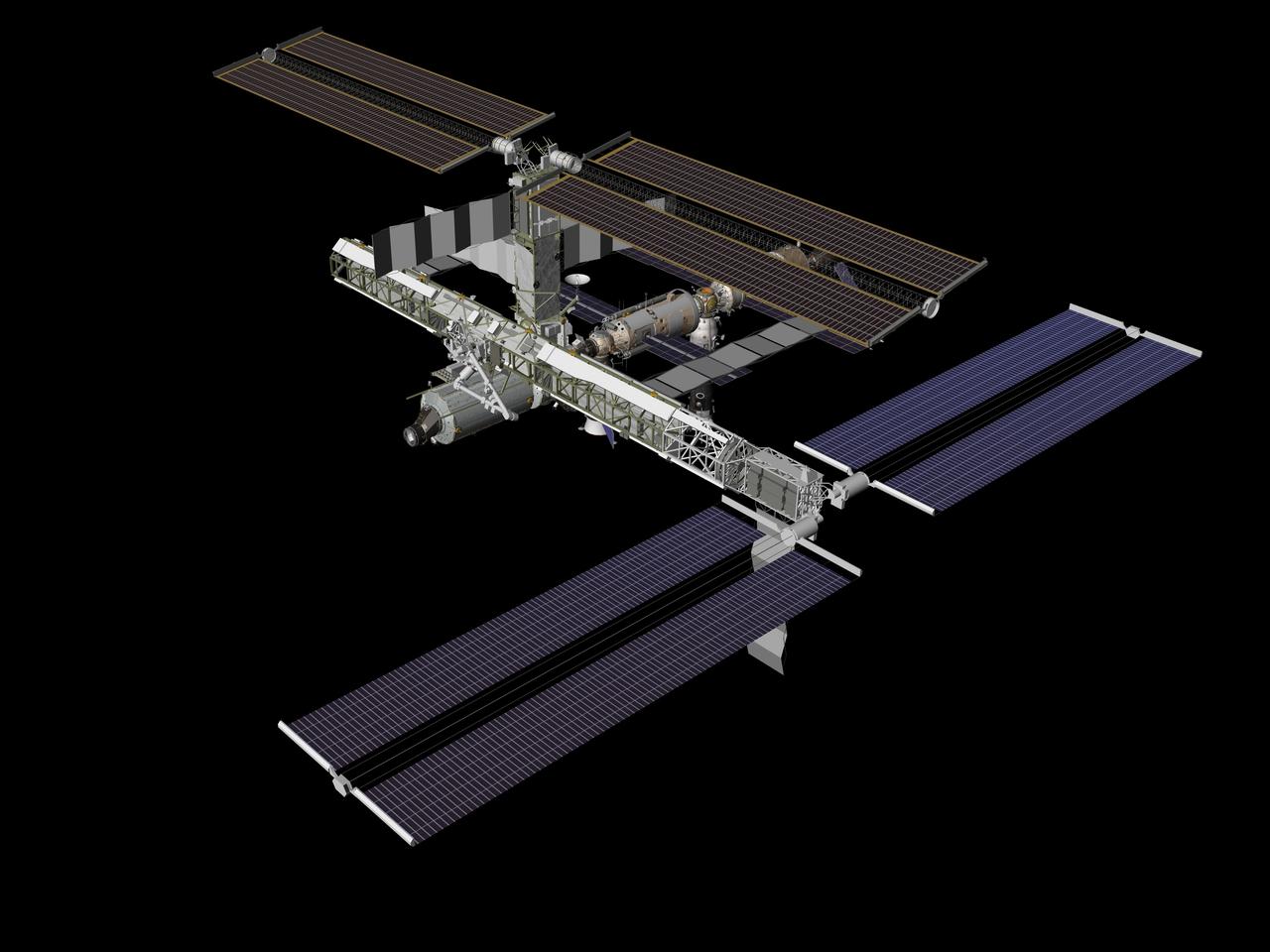
JSC2006-E-38949 (August 2006) --- Computer generated graphic of the International Space Station configuration after STS-115/12A with the addition of the P3/P4 integrated truss segments.
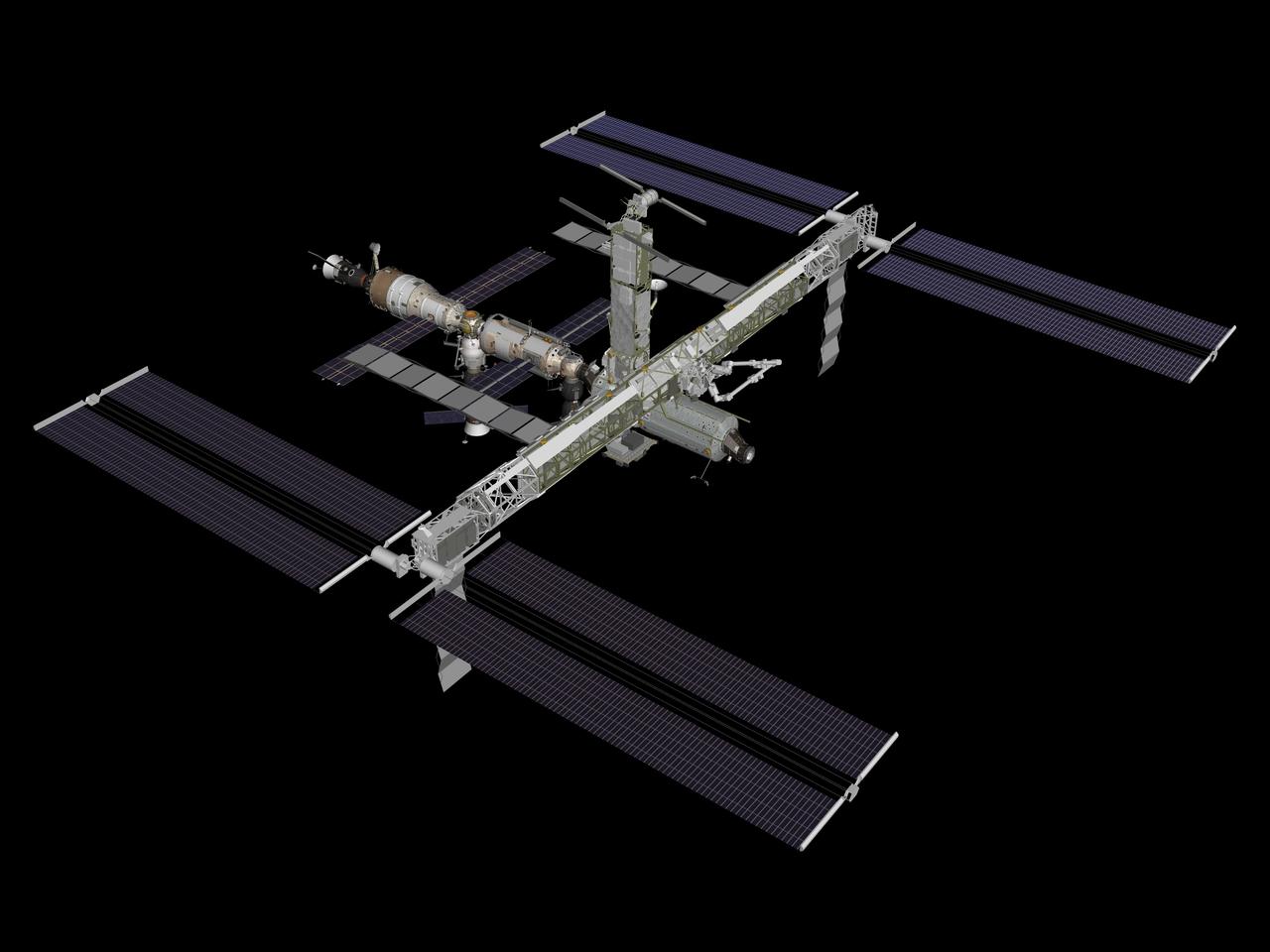
JSC2006-E-38951 (August 2006) --- Computer generated graphic of the International Space Station configuration after STS-117/13A with the addition of S3/S4 integrated truss segments.

An artist's conception of what the final configuration of the International Space Station (ISS) will look like when it is fully built and deployed. The ISS is a multidisciplinary laboratory, technology test bed, and observatory that will provide an unprecedented undertaking in scientific, technological, and international experimentation.
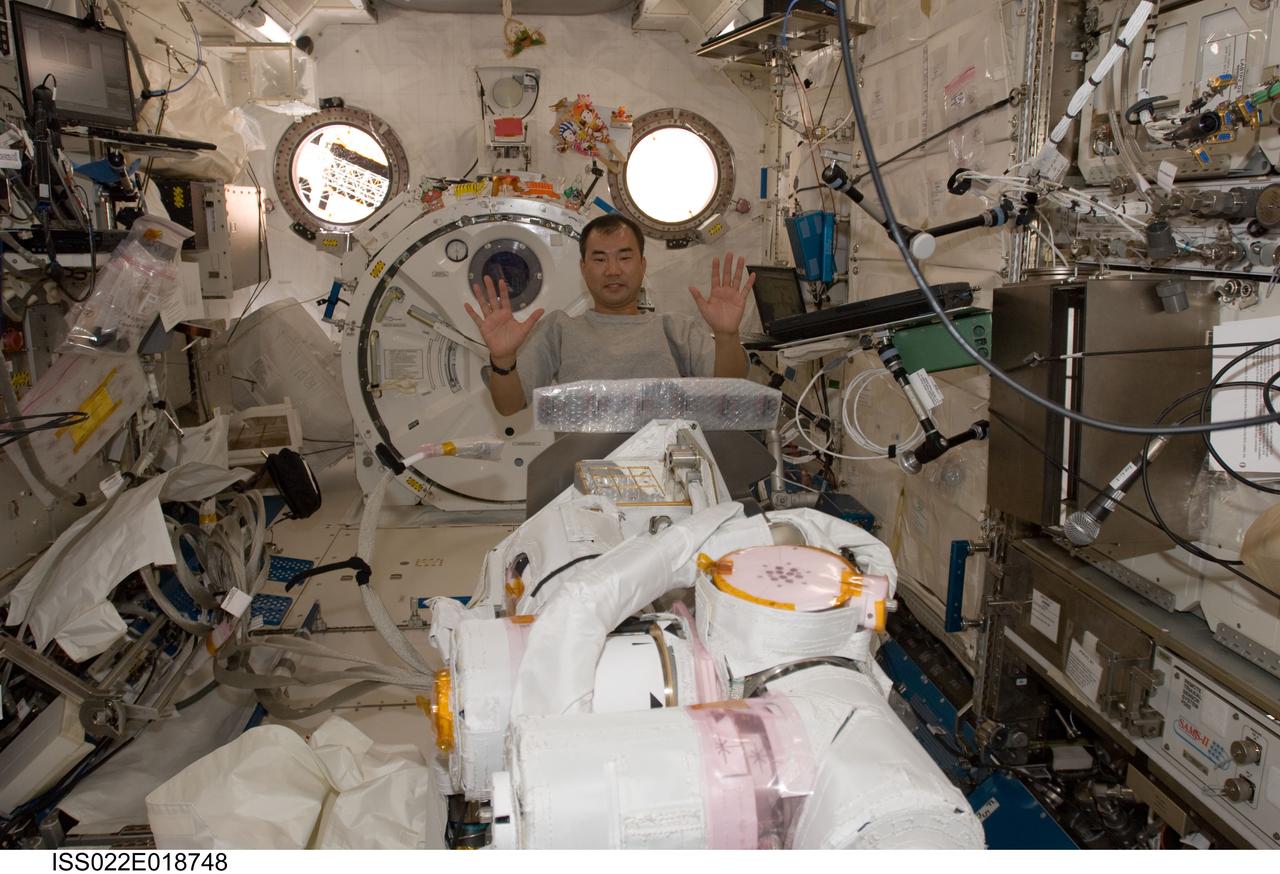
ISS022-E-018748 (5 Jan. 2010) --- Japan Aerospace Exploration Agency astronaut Soichi Noguchi, Expedition 22 flight engineer, assembles and configures the Japanese Experiment Module Remote Manipulator System (JEMRMS) Small Fine Arm (SFA) in the Kibo laboratory of the International Space Station.

iss071e414633 (July 31, 2024) --- NASA astronaut and Expedition 71 Flight Engineer Matthew Dominick is pictured wearing a spacesuit aboard the International Space Station's Quest airlock. Dominick was evaluating the spacesuit, configuring its components, and testing the suit’s communications and life support systems.
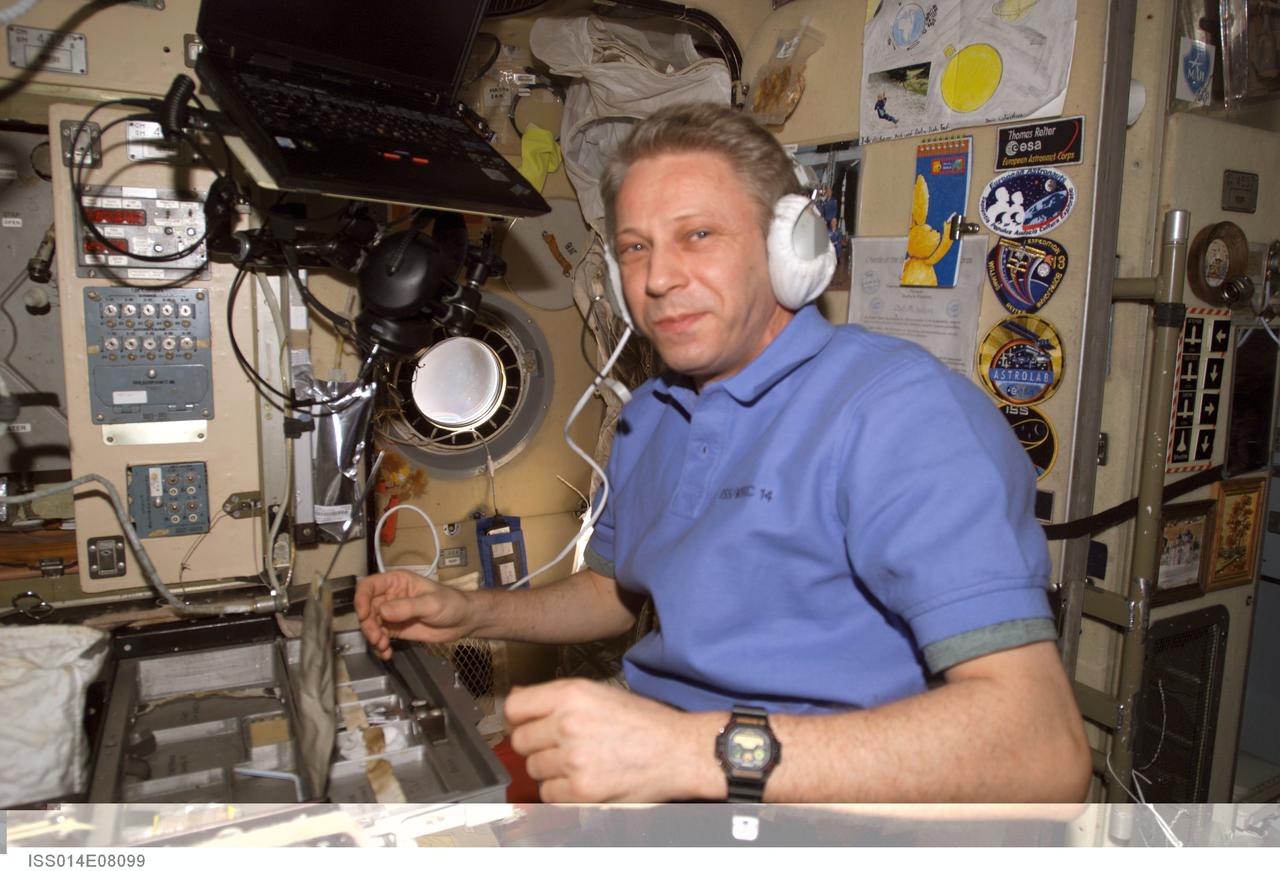
ISS014-E-08099 (22 Nov. 2006) --- European Space Agency (ESA) astronaut Thomas Reiter, Expedition 14 flight engineer, uses a communication system in the Zvezda Service Module of the International Space Station during a pre-EVA station onboard system configuration.
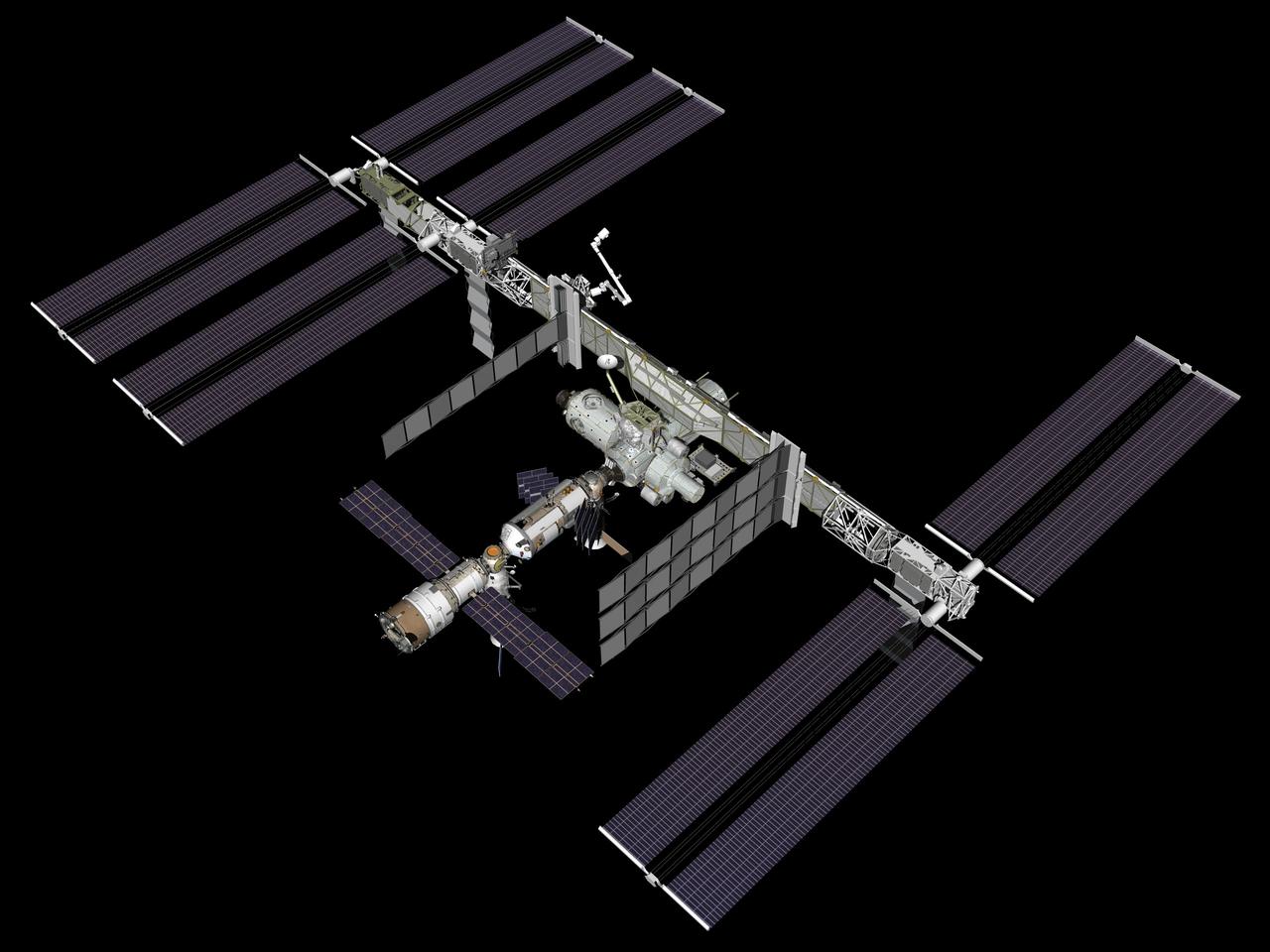
JSC2007-E-099881 (November 2007) --- Computer-generated artist's rendering of the 10A stage configuration of the International Space Station as of Nov. 12, 2007. Pressurized Mating Adapter (PMA-2) is relocated from the front of the Destiny laboratory to the port side of the Harmony node.
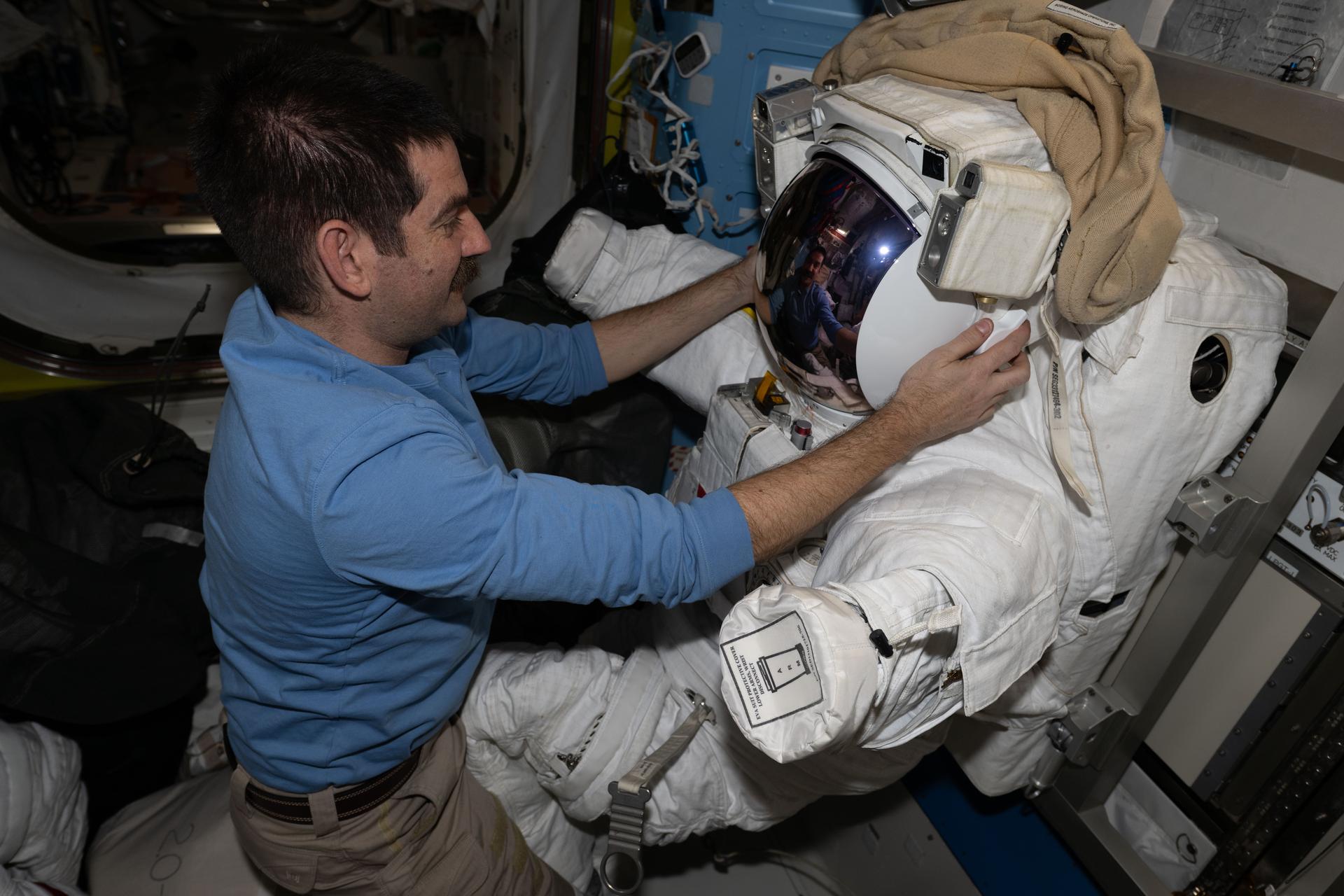
iss074e0350106 (March 3, 2026) --- NASA astronaut and Expedition 74 flight engineer Jack Hathaway configures a spacesuit installing its components, checking a helmet, and cleaning suit seals inside the International Space Station's Quest airlock. Credit: NASA/Jessica Meir
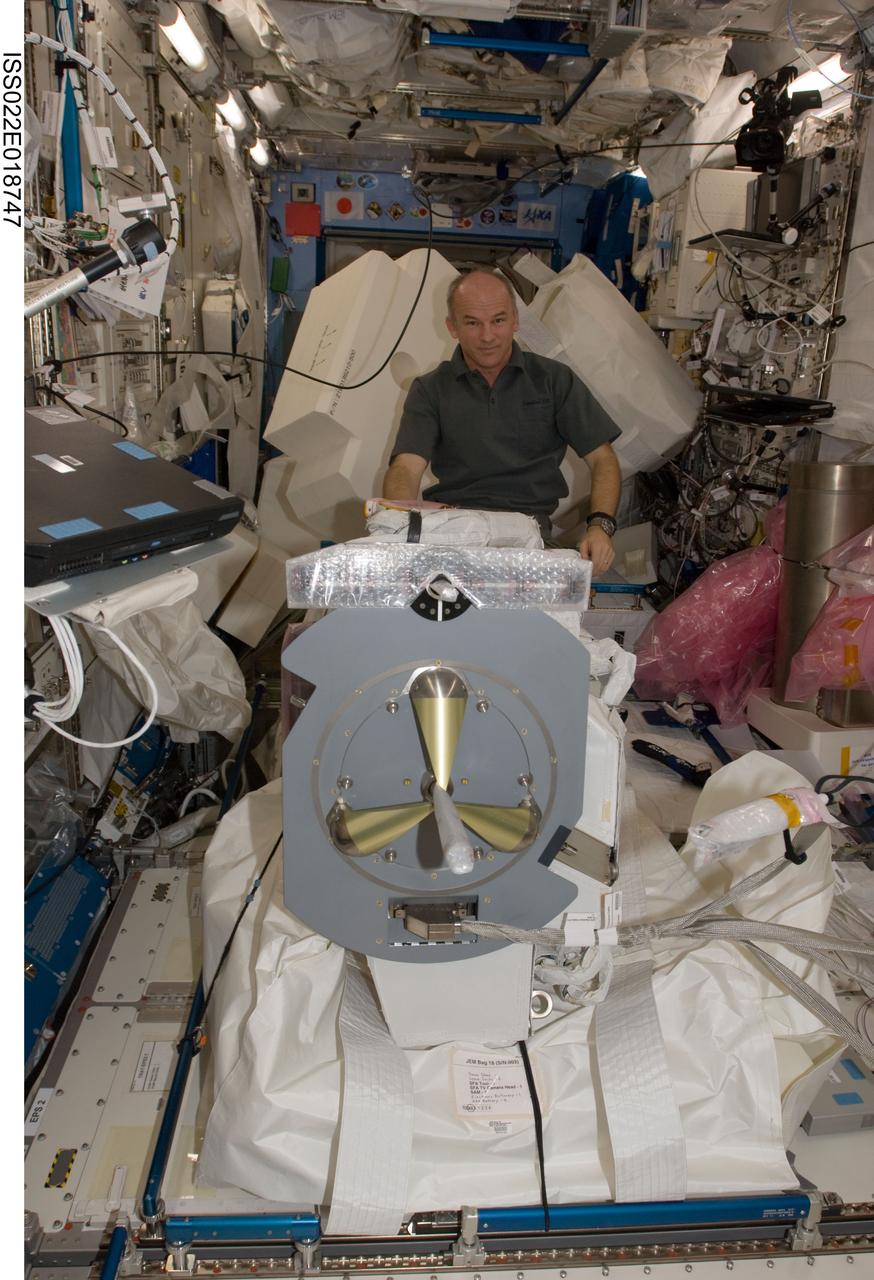
ISS022-E-018747 (5 Jan. 2010) --- NASA astronaut Jeffrey Williams, Expedition 22 commander, assembles and configures the Japanese Experiment Module Remote Manipulator System (JEMRMS) Small Fine Arm (SFA) in the Kibo laboratory of the International Space Station.

iss071e414639 (July 31, 2024) --- NASA astronaut and Expedition 71 Flight Engineer Matthew Dominick is pictured wearing a spacesuit aboard the International Space Station's Quest airlock. Dominick was evaluating the spacesuit, configuring its components, and testing the suit’s communications and life support systems.
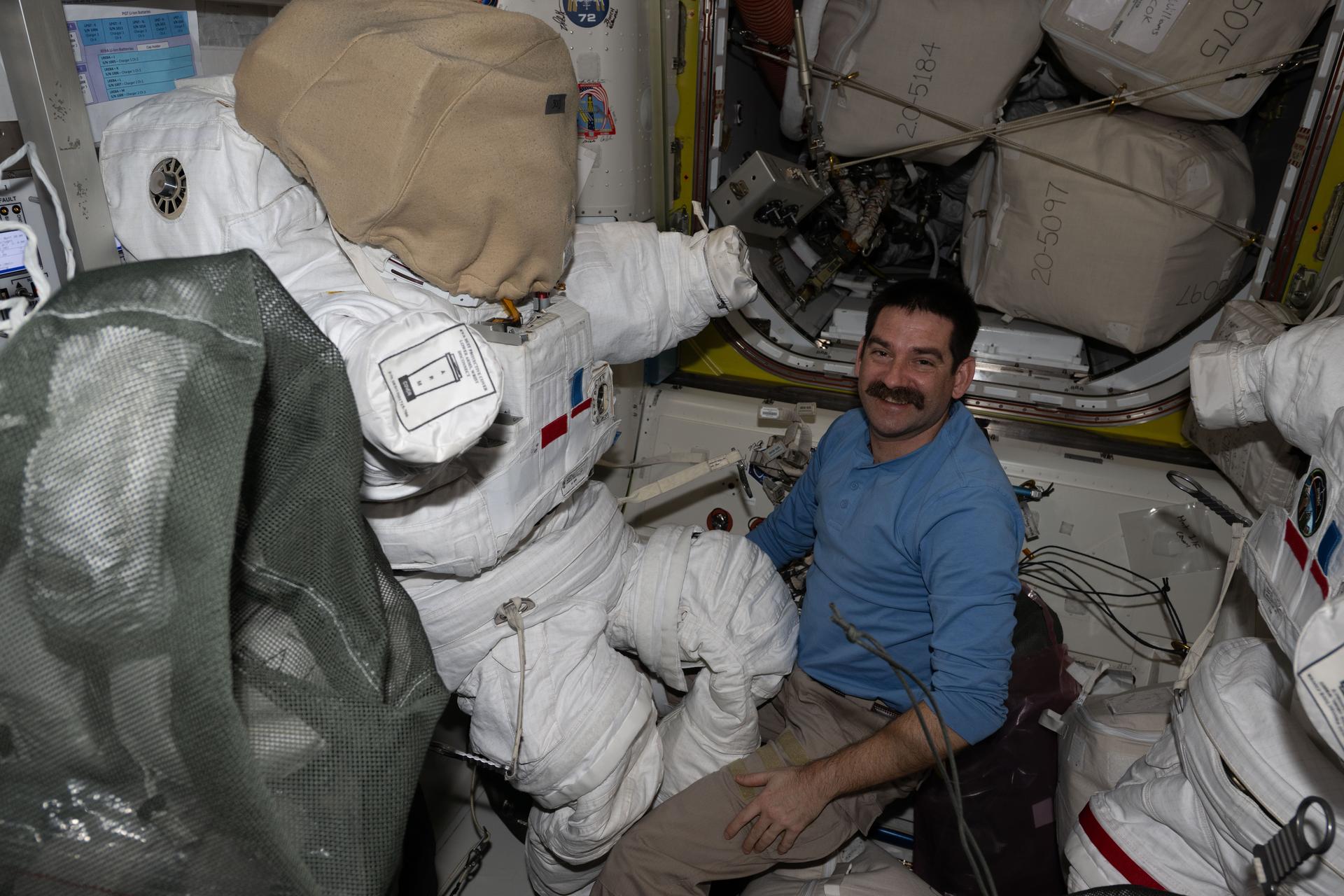
iss074e0350102 (March 3, 2026) --- NASA astronaut and Expedition 74 flight engineer Jack Hathaway configures a spacesuit installing its components, checking a helmet, and cleaning suit seals inside the International Space Station's Quest airlock. Credit: NASA/Jessica Meir
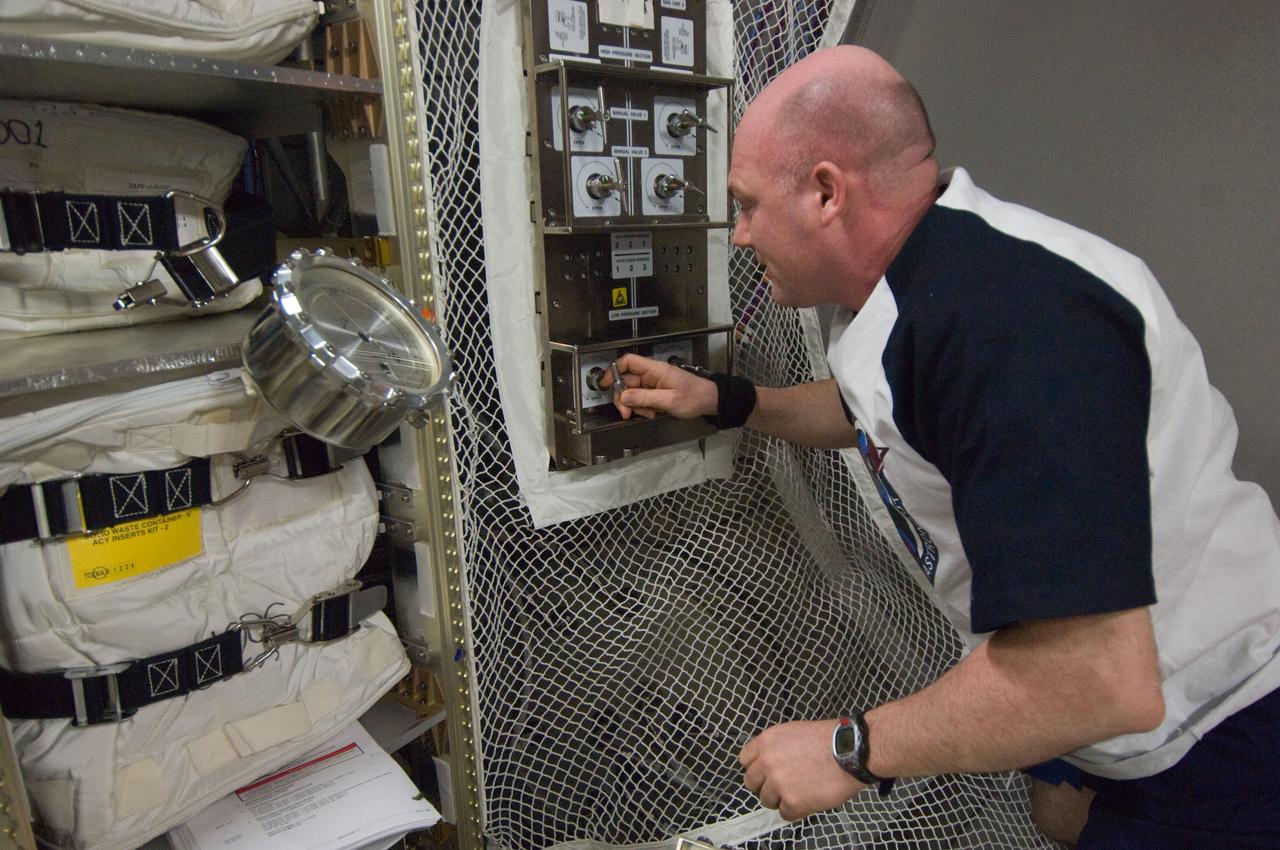
ISS030-E-210829 (6 April 2012) --- European Space Agency astronaut Andre Kuipers, Expedition 30 flight engineer, configures the Gas Control Panel (GCP) in the Automated Transfer Vehicle (ATV-3) currently docked with the International Space Station.
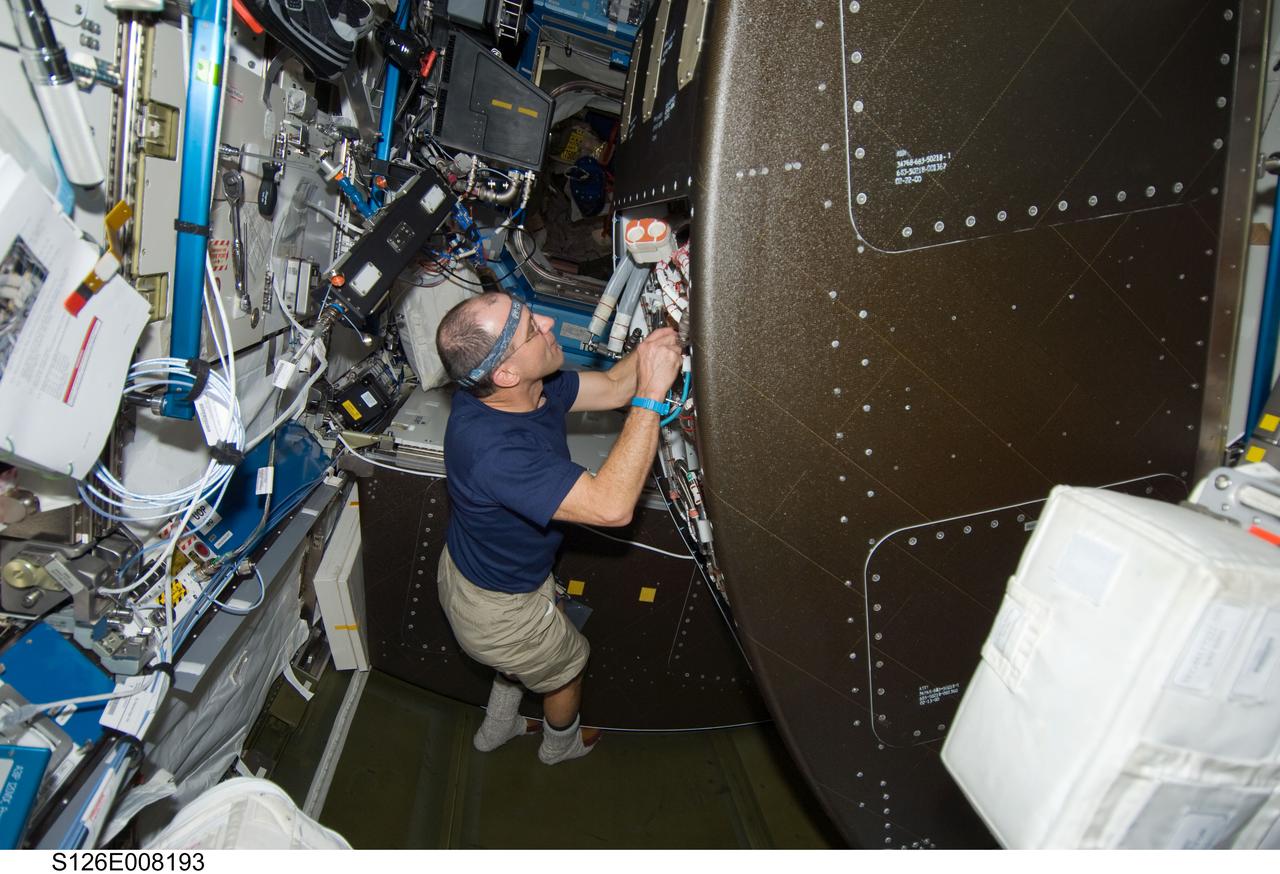
S126-E-008193 (19 Nov. 2008) --- Astronaut Donald Pettit, STS-126 mission specialist, configures the Water Recovery System (WRS) rack in the Destiny laboratory of the International Space Station while Space Shuttle Endeavour is docked with the station.
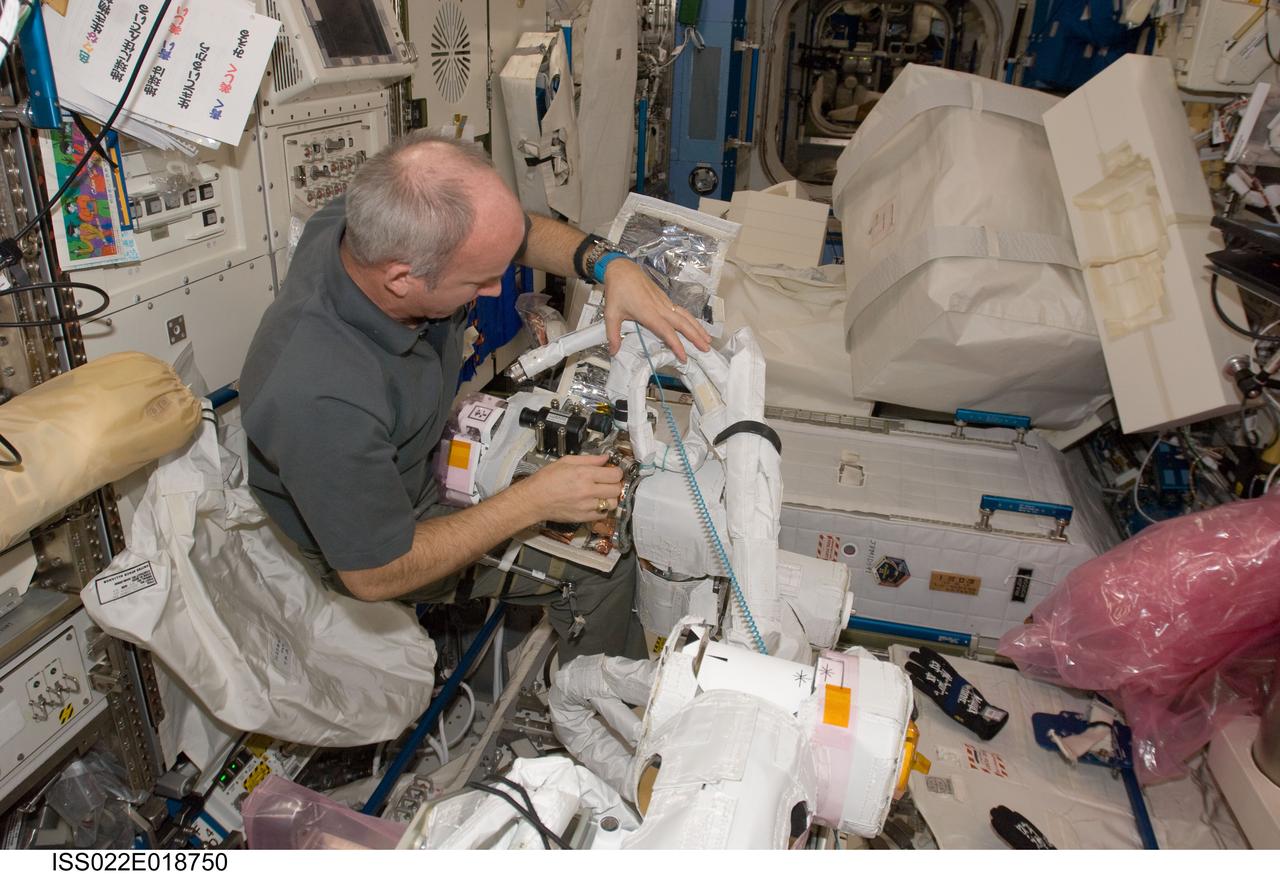
ISS022-E-018750 (5 Jan. 2010) --- NASA astronaut Jeffrey Williams, Expedition 22 commander, assembles and configures the Japanese Experiment Module Remote Manipulator System (JEMRMS) Small Fine Arm (SFA) in the Kibo laboratory of the International Space Station.
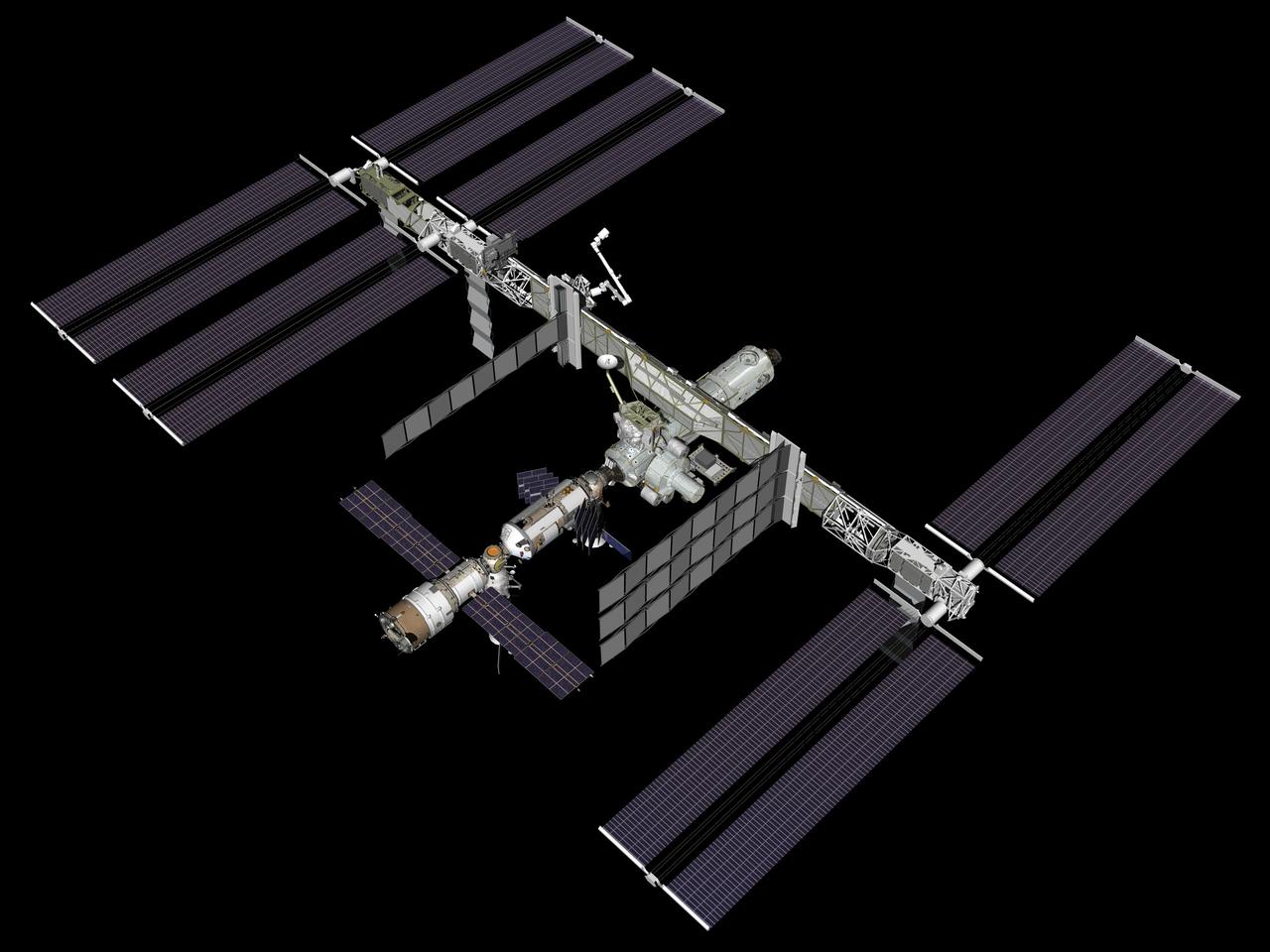
JSC2007-E-099882 (November 2007) --- Computer-generated artist's rendering of the 10A stage configuration of the International Space Station as of Nov. 14, 2007. The Harmony node with Pressurized Mating Adapter (PMA-2) attached is relocated to the front of the Destiny laboratory.
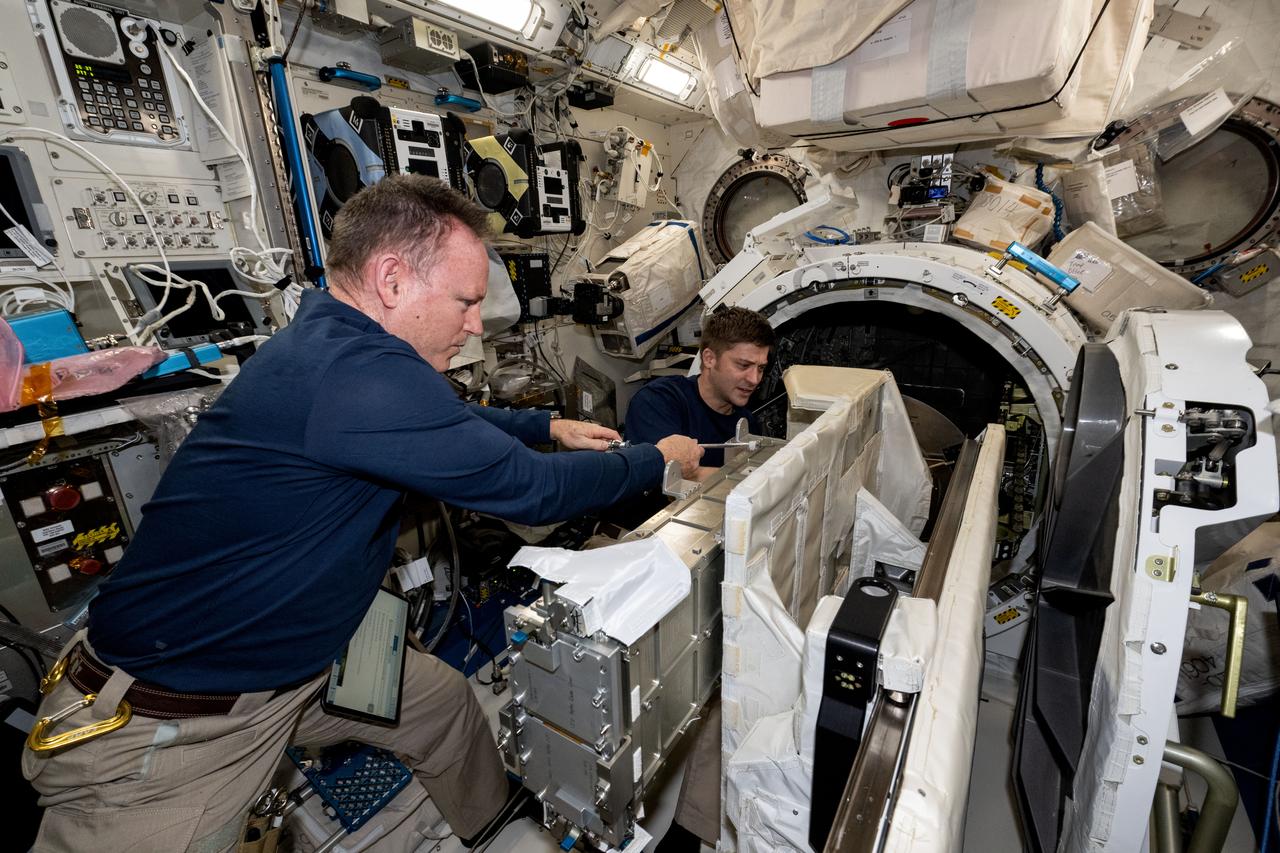
iss071e523320 (Aug. 21, 2024) --- NASA astronauts (from left) Butch Wilmore, Commander for Boeing's Crew Flight Test, and Matthew Dominick, Expedition 71 Flight Engineer, check CubeSat configurations inside the Small Satellite Orbital Deployer aboard the International Space Station's Kibo laboratory module.
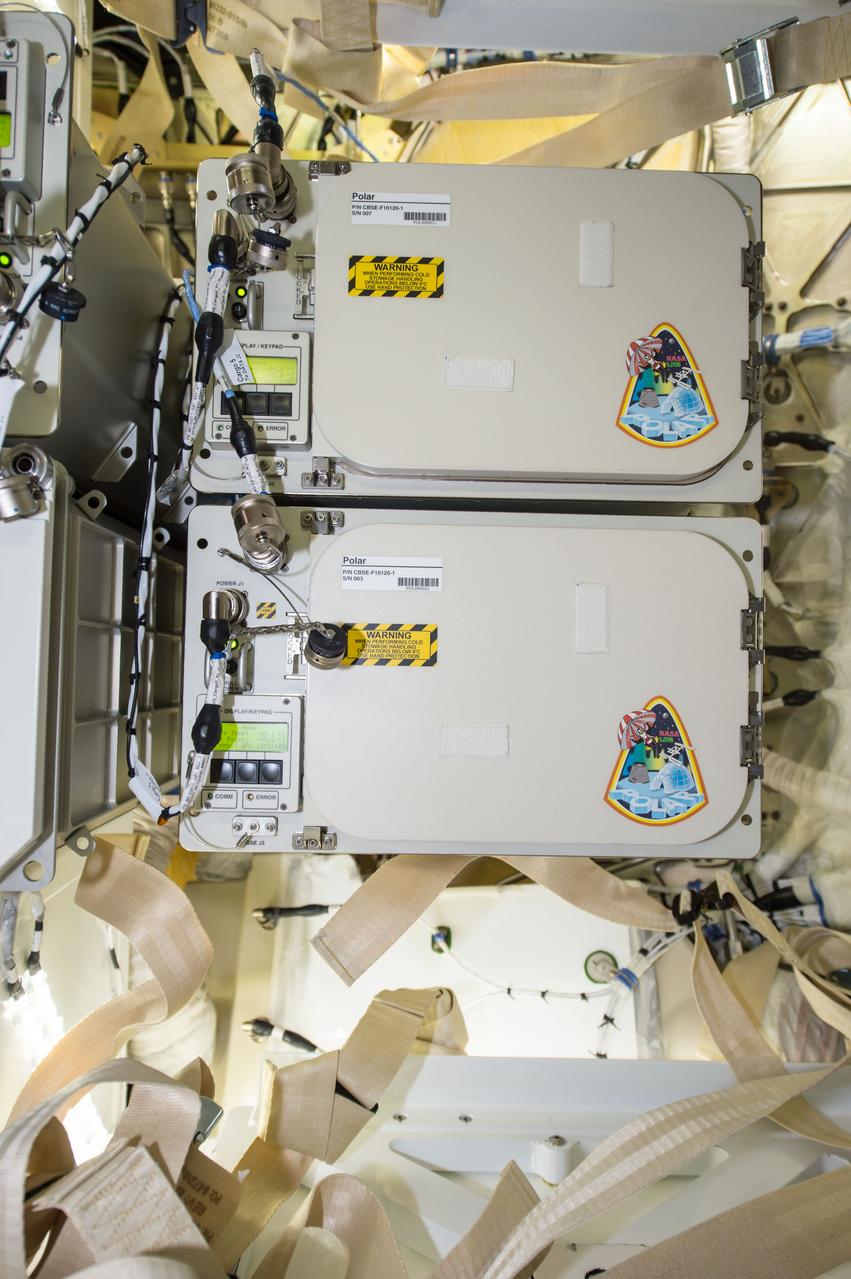
iss052e010012 (6/30/2017) --- A view of the final configuration of the Polar 7 after installation in SpaceX Dragon-11 module. Polar is a Cold Stowage managed facility that provides transport and storage of science samples at cryogenic temperatures (-80ºC) to and from the International Space Station (ISS).
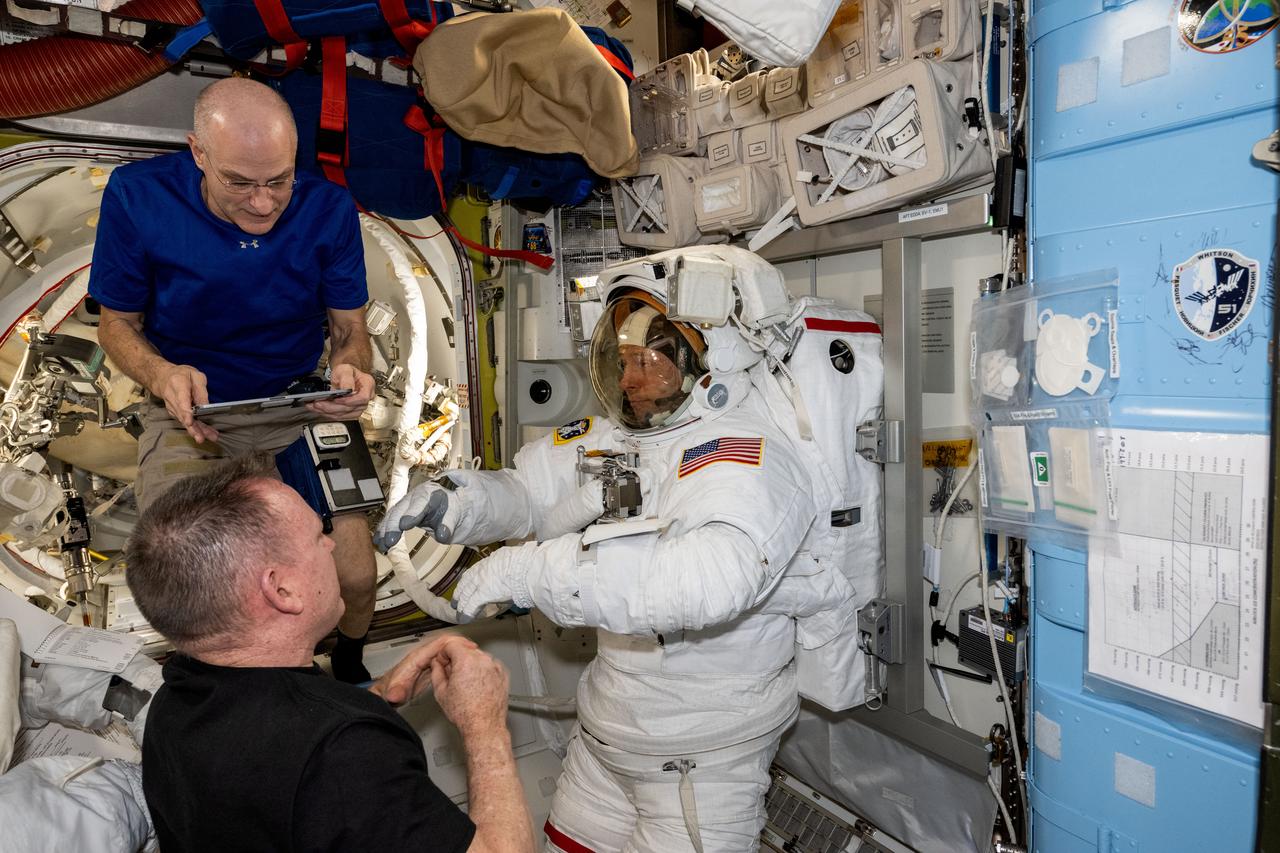
iss072e451672 (Jan. 9, 2025) --- NASA astronauts Don Pettit (top) and Butch Wilmore (bottom) assist NASA astronaut Nick Hague (center) as he tries on and evaluates his spacesuit in a pressurized configuration aboard the International Space Station's Quest airlock.
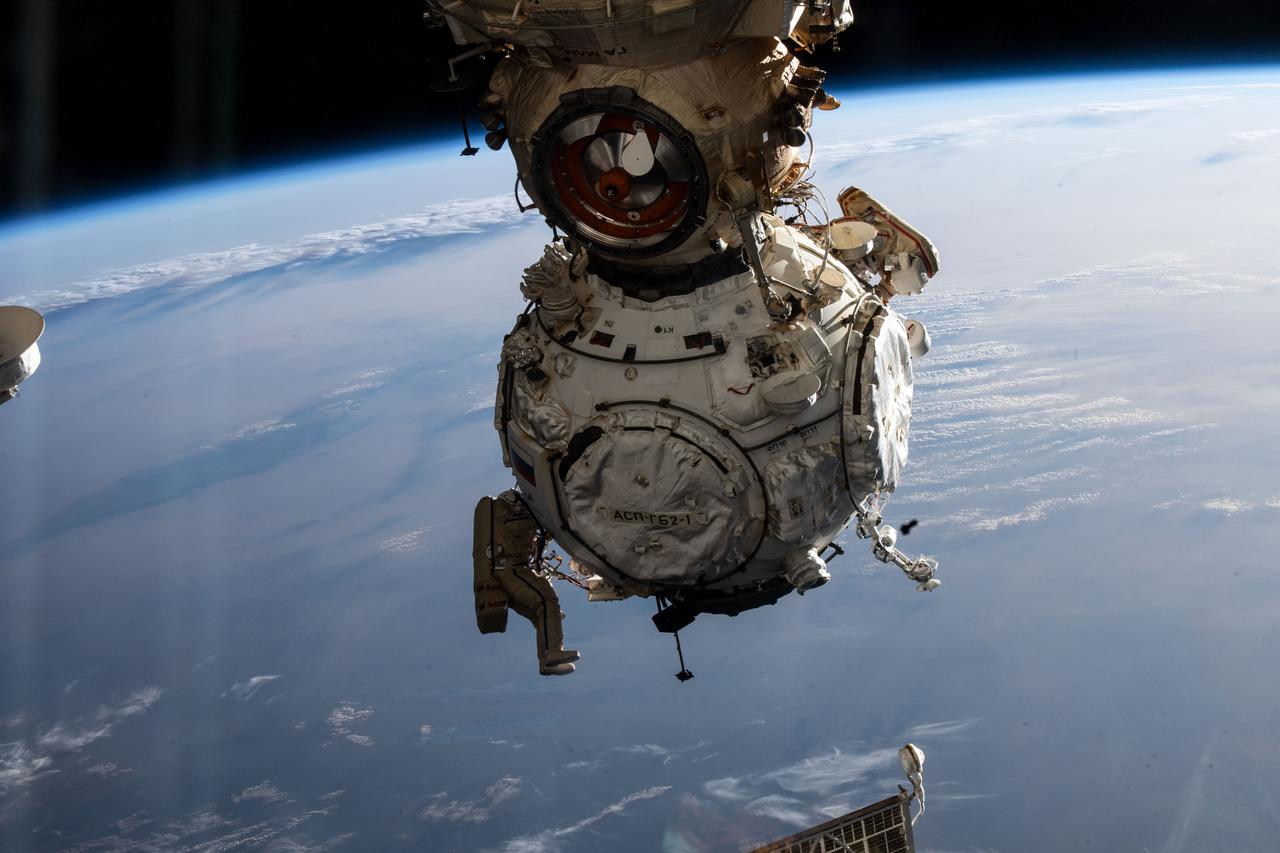
iss066e122050 (Jan. 19, 2022) --- Cosmonauts Pyotr Dubrov (attached to the bottom left portion of the Prichal docking module) and Anton Shkaplerov (attached to the top right of Prichal) work to configure and activate Russia's newest module with the Russian segment of the International Space Station during a seven-hour and 11-minute spacewalk.
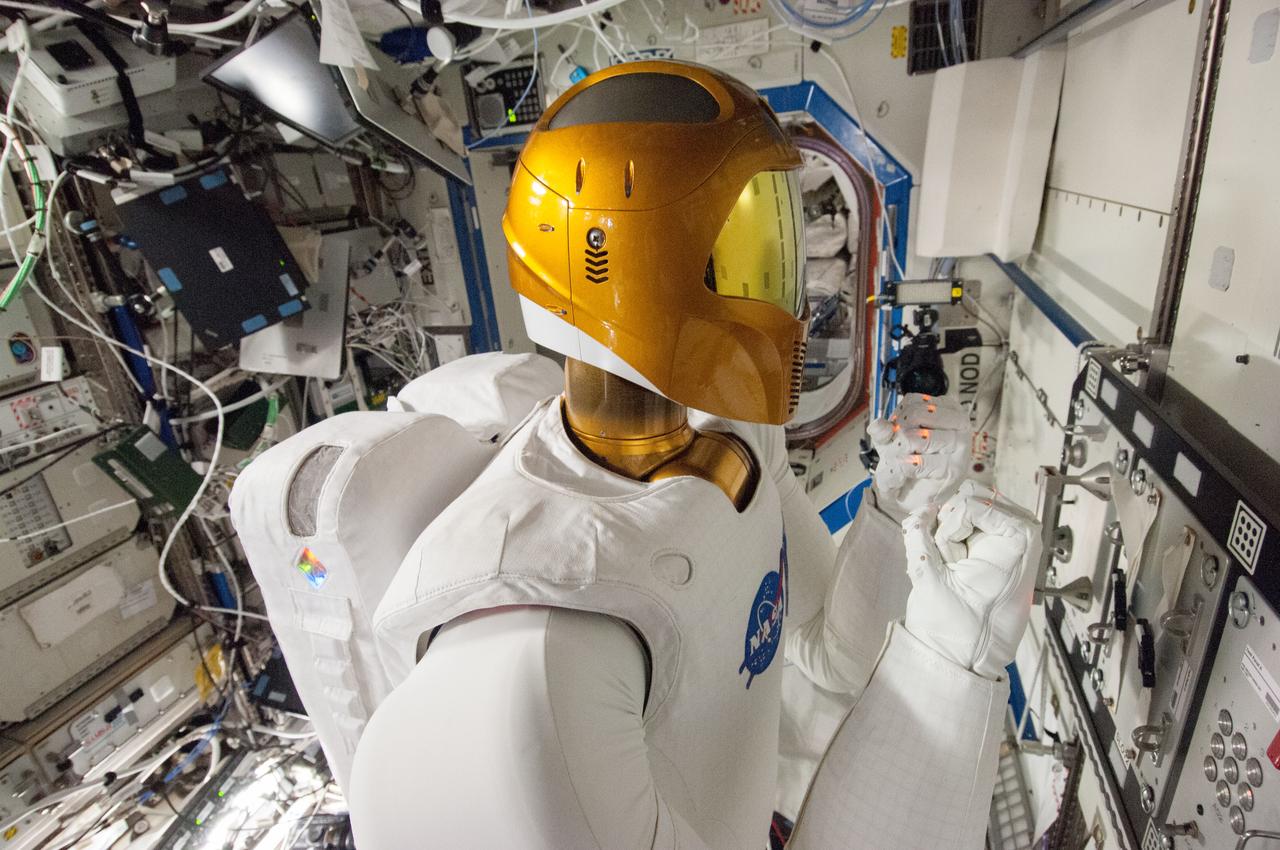
ISS034-E-037352 (31 Jan. 2013) --- Robonaut 2, the first humanoid robot in space, is pictured in this image photographed by an Expedition 34 crew member in the International Space Station’s Destiny laboratory. R2 was powered up so ground controllers could run it through a series of tests and configuration checks.
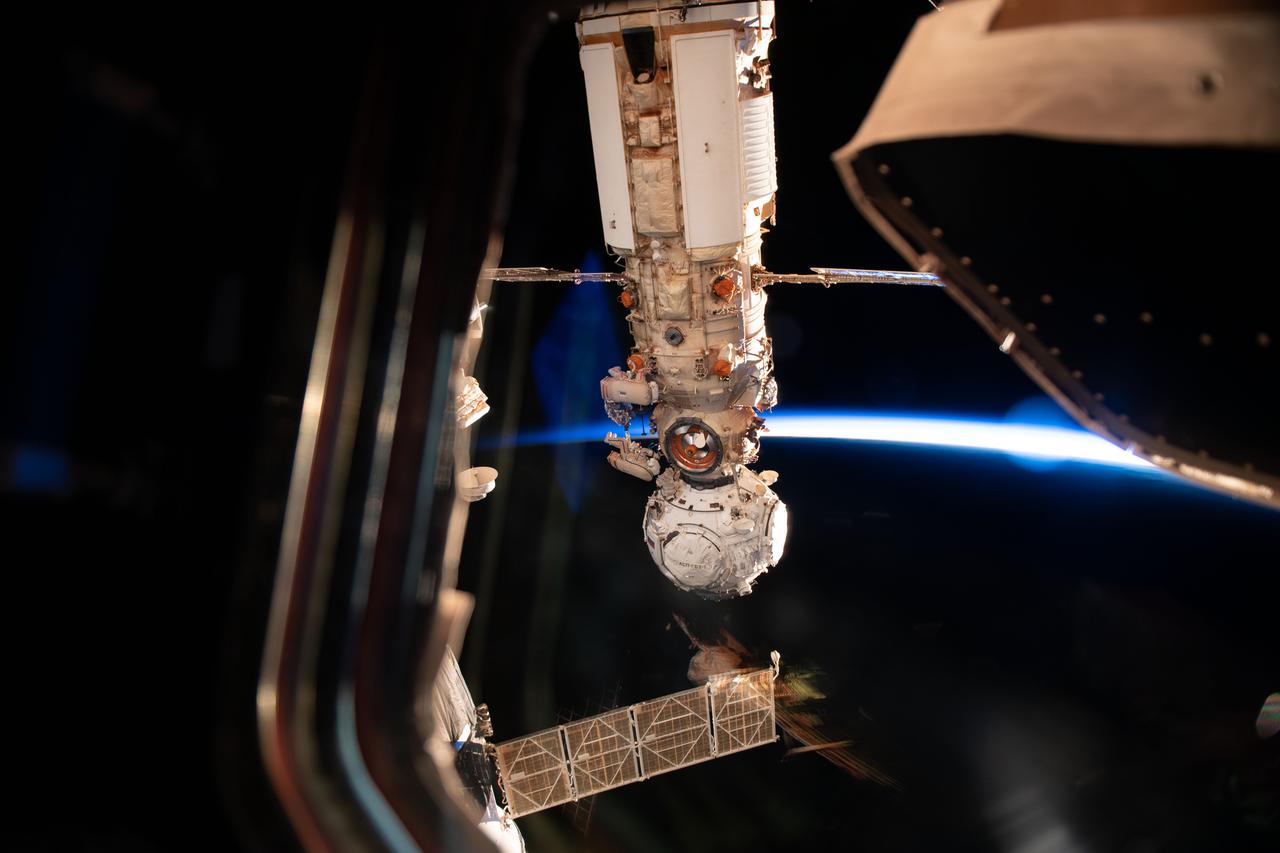
iss066e124964 (Jan. 19, 2022) --- Cosmonauts Pyotr Dubrov (bottom) and Anton Shkaplerov (top) work to configure the Prichal docking module and outfit the Nauka multipurpose laboratory module at the International Space Station during a seven-hour and 11-minute spacewalk.

iss069e011049 (May 17, 2023) --- From left, Expedition 69 Flight Engineers Frank Rubio of NASA and Sultan Alneyadi of UAE (United Arab Emirates) return the station’s Treadmill 2 to its normal configuration inside the International Space Station's Tranquility module after an inspection and cleaning of its electronic components.
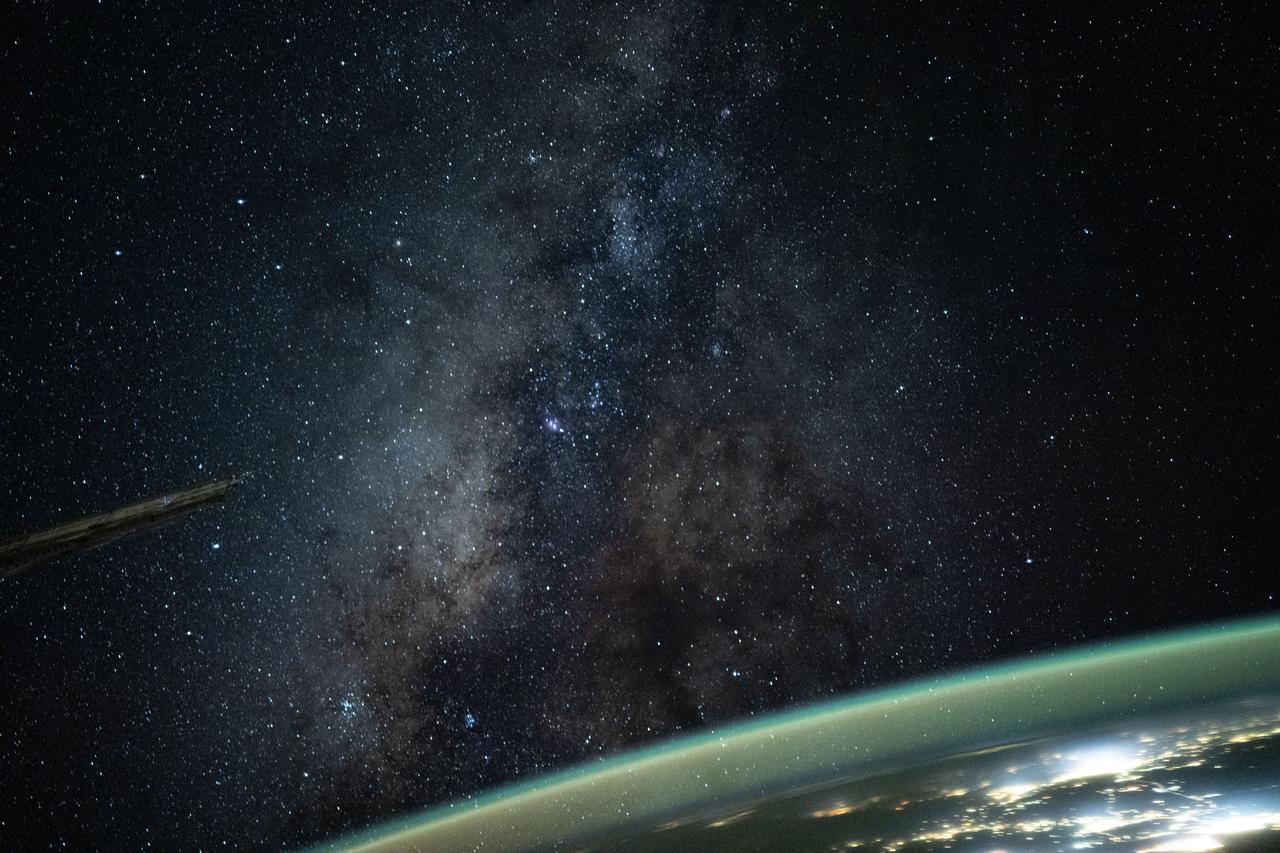
iss073e0516005 (Aug. 23, 2025) --- The Milky Way appears above Earth's bright atmospheric glow in this photograph from the International Space Station as it soared 261 miles above southern Iran at approximately 12:54 a.m. local time. The camera was configured for low light and long duration settings.
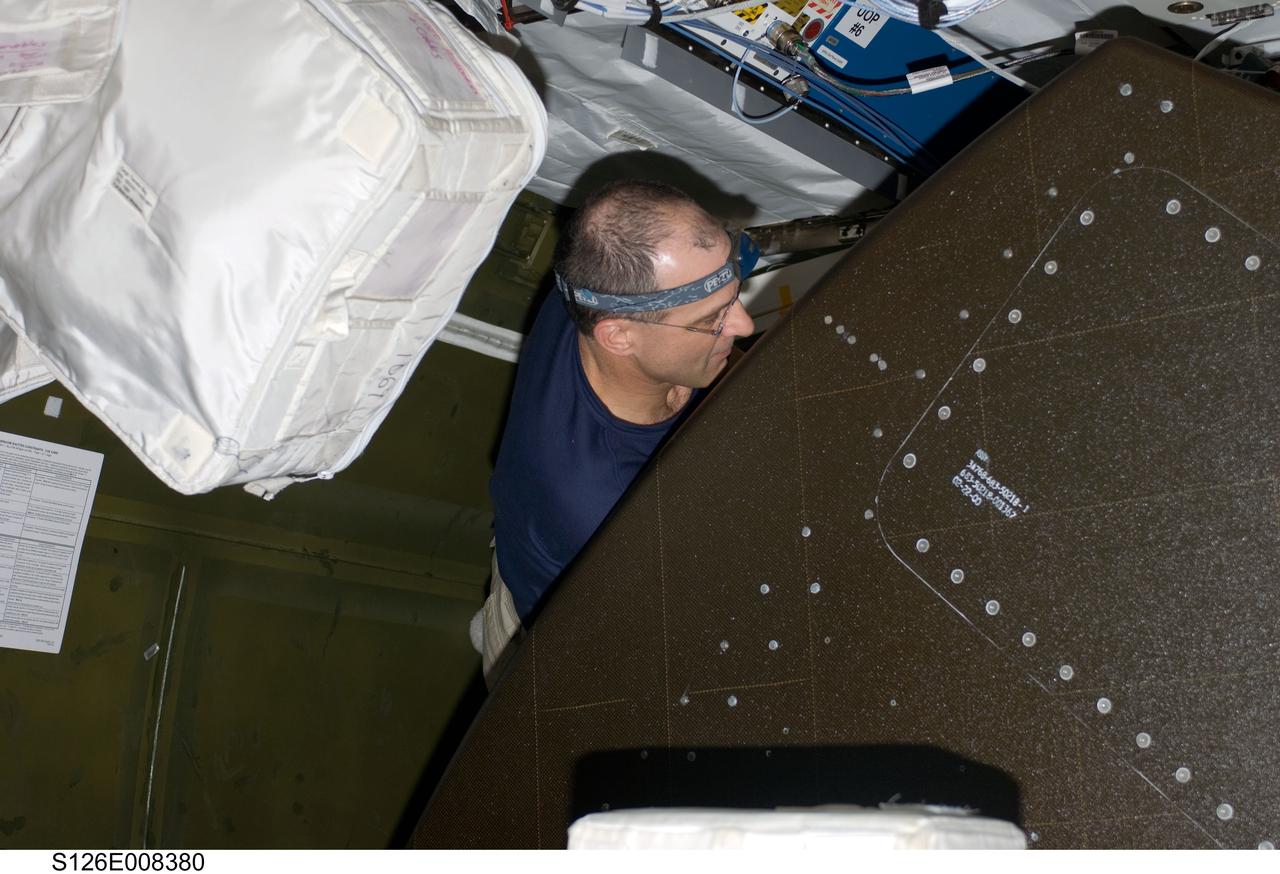
S126-E-008380 (19 Nov. 2008) --- Astronaut Donald Pettit, STS-126 mission specialist, configures the Water Recovery System (WRS) rack in the Destiny laboratory of the International Space Station while Space Shuttle Endeavour remains docked with the station.
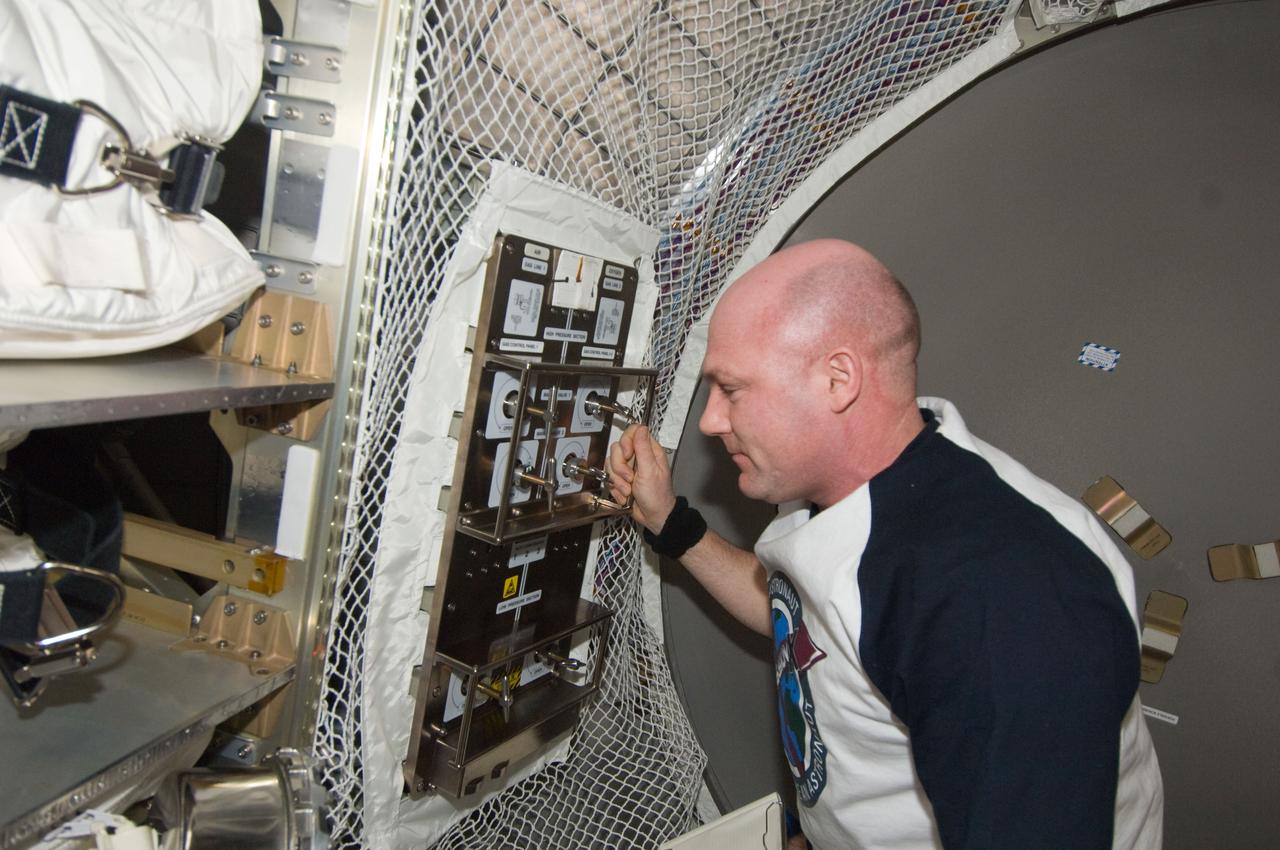
ISS030-E-210810 (6 April 2012) --- European Space Agency astronaut Andre Kuipers, Expedition 30 flight engineer, configures the Gas Control Panel (GCP) in the Automated Transfer Vehicle (ATV-3) currently docked with the International Space Station.
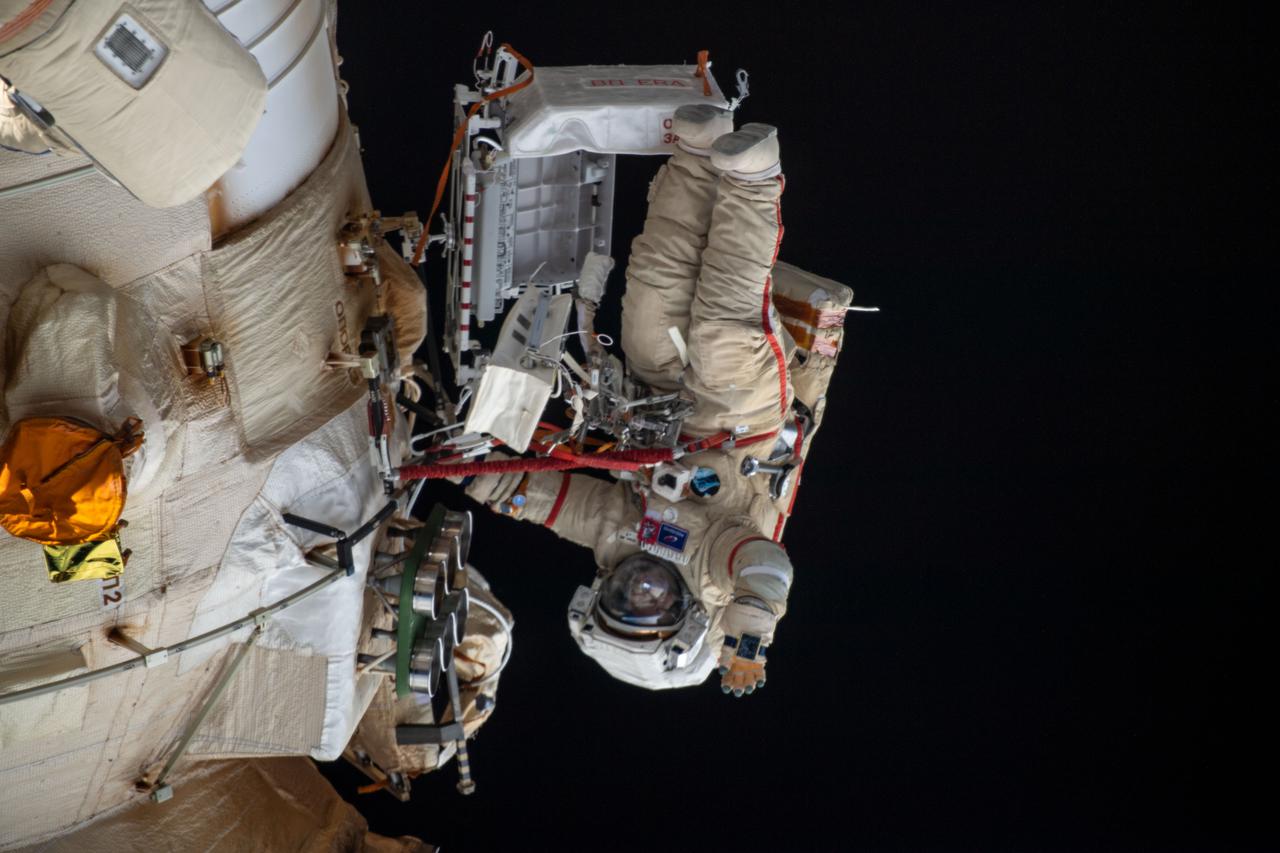
iss067e022050 (April 18, 2022) --- Cosmonaut Oleg Artemyev waves to the camera while working outside the Nauka multipurpose laboratory module during a spacewalk that lasted for six hours and 37 minutes to outfit Nauka and configure the European robotic arm on the International Space Station's Russian segment.
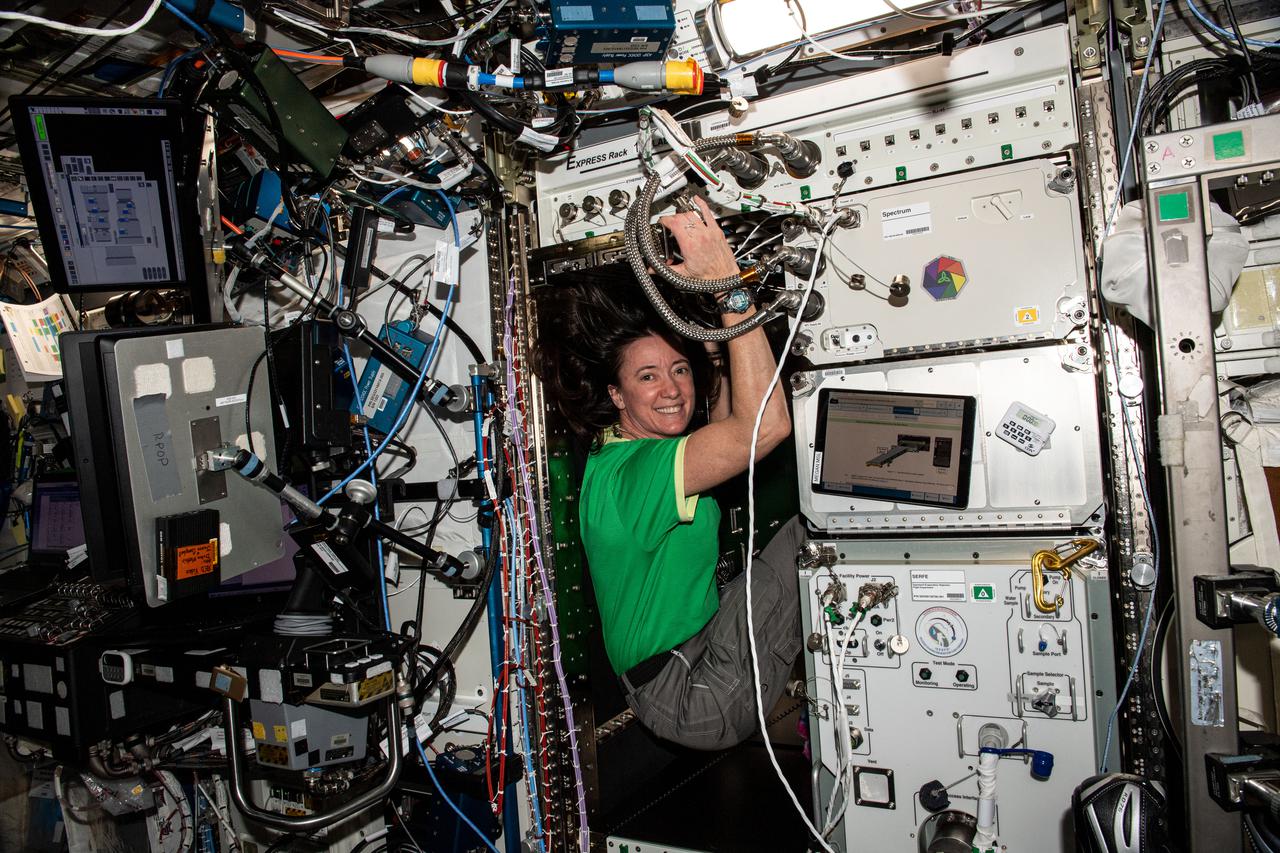
iss065e369753 (Sept. 9, 2021) --- NASA astronaut and Expedition 65 Flight Engineer Megan McArthur configures an EXPRESS rack inside the U.S. Destiny laboratory module before installing a new device that scrubs the International Space Station's atmosphere of carbon dioxide.
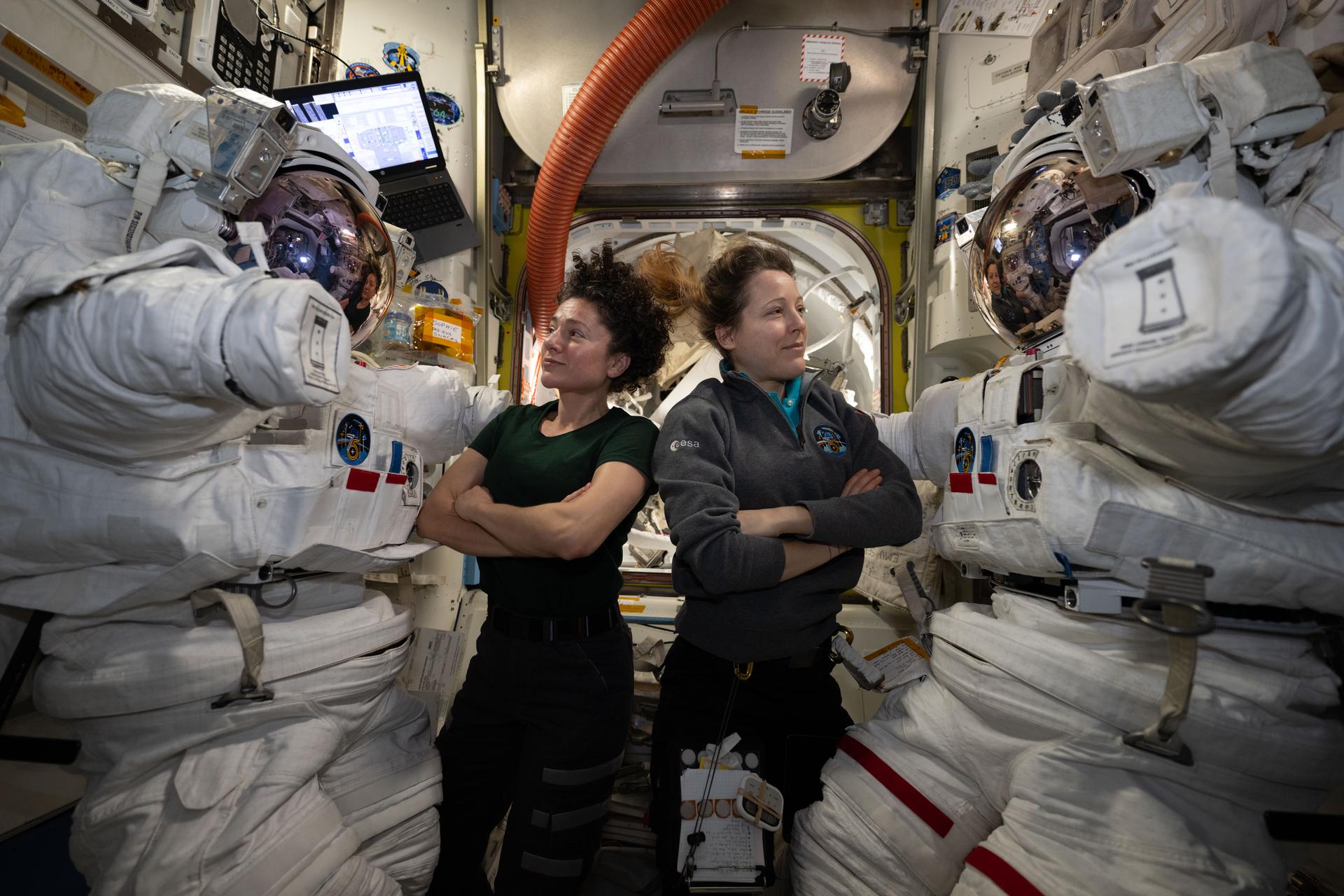
iss075e0085751 (Sept. 1, 2026) --- From left, astronauts Jessica Meir of NASA and Sophie Adenot of ESA (European Space Agency) pose for a portrait inside the International Space Station’s Quest airlock while configuring spacesuits the day before they conducted a spacewalk together. Meir and Adenot spent six hours and 49 minutes the next day installing a spacecraft navigation aid, swabbing the station’s exterior for microorganisms, and preparing a cosmic particle detector for future upgrades outside the International Space Station. Credit: NASA
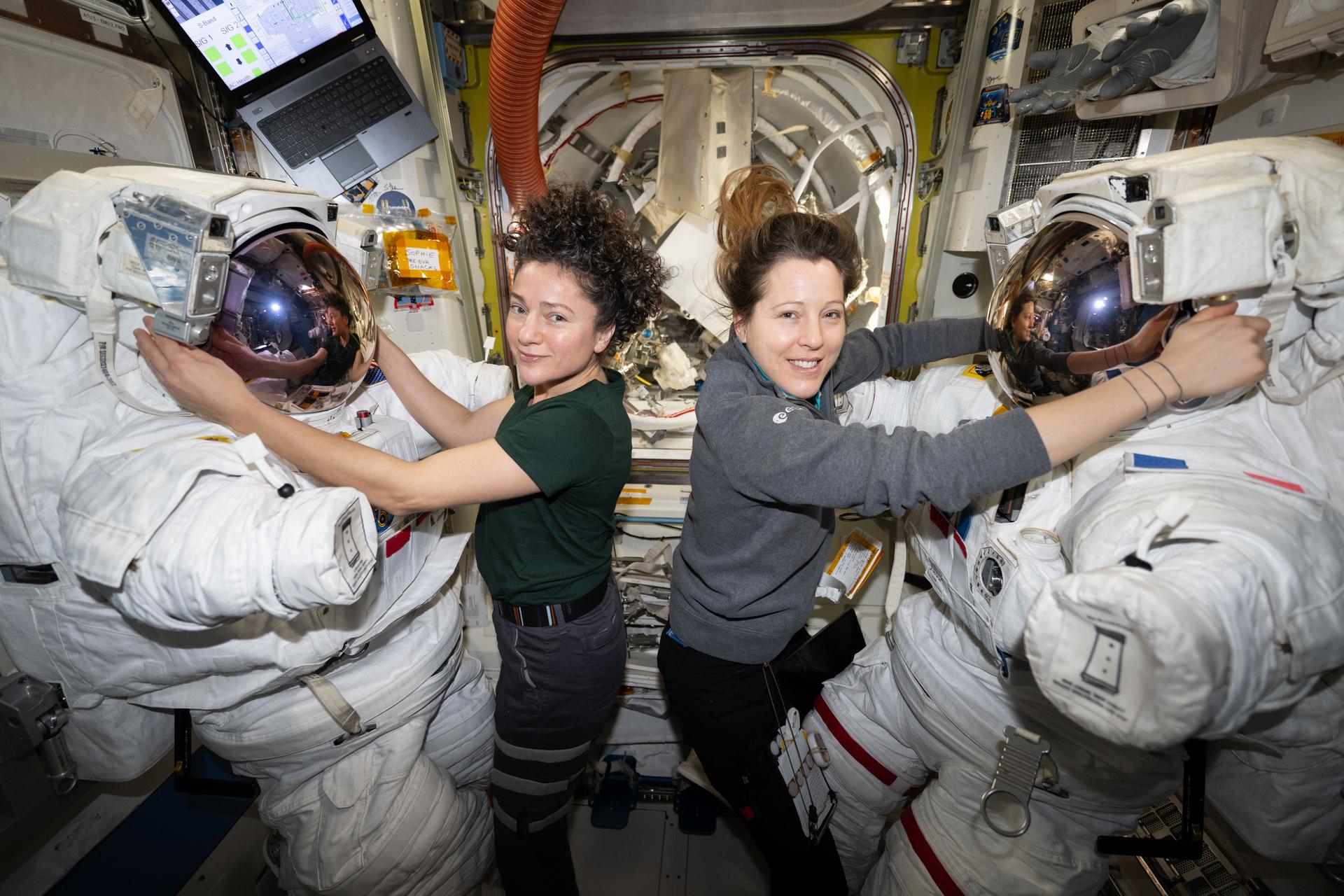
iss075e0085733 (Sept. 1, 2026) --- From left, astronauts Jessica Meir of NASA and Sophie Adenot of ESA (European Space Agency) pose for a portrait inside the International Space Station’s Quest airlock while configuring spacesuits the day before they conducted a spacewalk together. Meir and Adenot spent six hours and 49 minutes the next day installing a spacecraft navigation aid, swabbing the station’s exterior for microorganisms, and preparing a cosmic particle detector for future upgrades outside the International Space Station. Credit: NASA
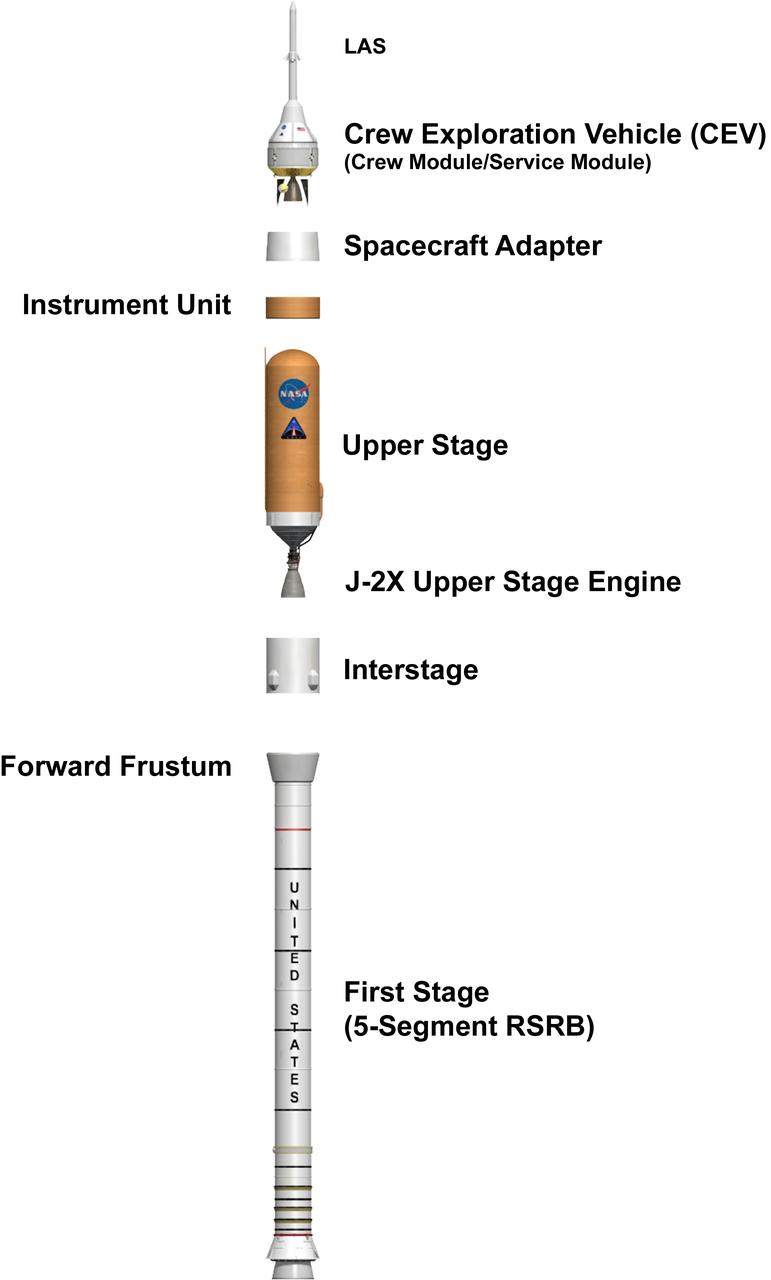
Named for the Greek god associated with Mars, the NASA developed Ares launch vehicles will return humans to the moon and later take them to Mars and other destinations. This is an illustration of the Ares I with call outs. Ares I is an inline, two-stage rocket configuration topped by the Orion crew vehicle and its launch abort system. In addition to the primary mission of carrying crews of four to six astronauts to Earth orbit, Ares I may also use its 25-ton payload capacity to deliver resources and supplies to the International Space Station, or to "park" payloads in orbit for retrieval by other spacecraft bound for the moon or other destinations. Ares I employs a single five-segment solid rocket booster, a derivative of the space shuttle solid rocket booster, for the first stage. A liquid oxygen/liquid hydrogen J-2X engine derived from the J-2 engine used on the Apollo second stage will power the Ares I second stage. The Ares I can lift more than 55,000 pounds to low Earth orbit. Ares I is subject to configuration changes before it is actually launched. This illustration reflects the latest configuration as of January 2007.
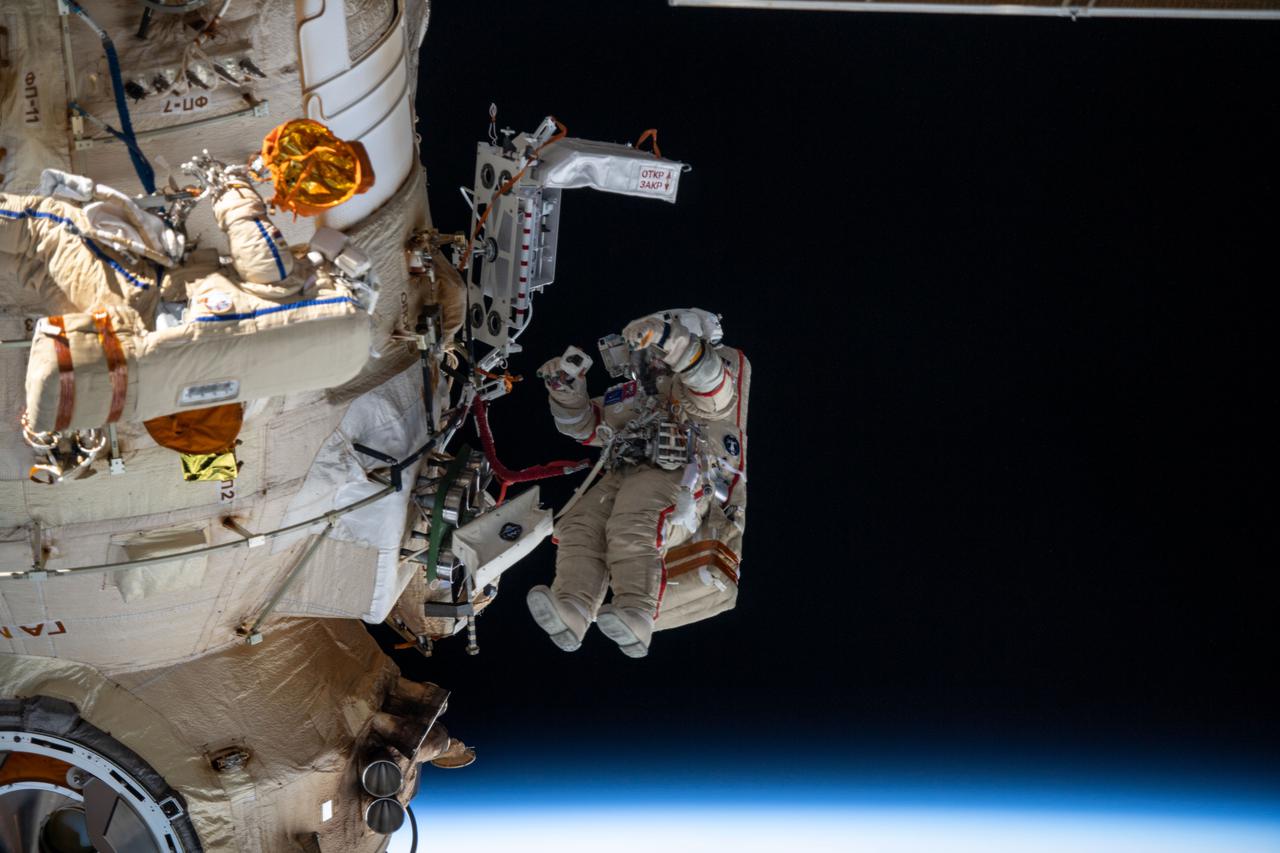
iss067e022065 (April 18, 2022) --- Two spacewalkers from Roscosmos are pictured working outside the Nauka multipurpose laboratory module as the International Space Station orbited 261 miles above the Gulf of St. Lawrence off the coast of Îsles de la Madeleine. Cosmonauts (from left) Denis Matveev and Oleg Artemyev worked outside the station's Russian segment for six hours and 37 minutes outfitting Nauka and configuring the European robotic arm.
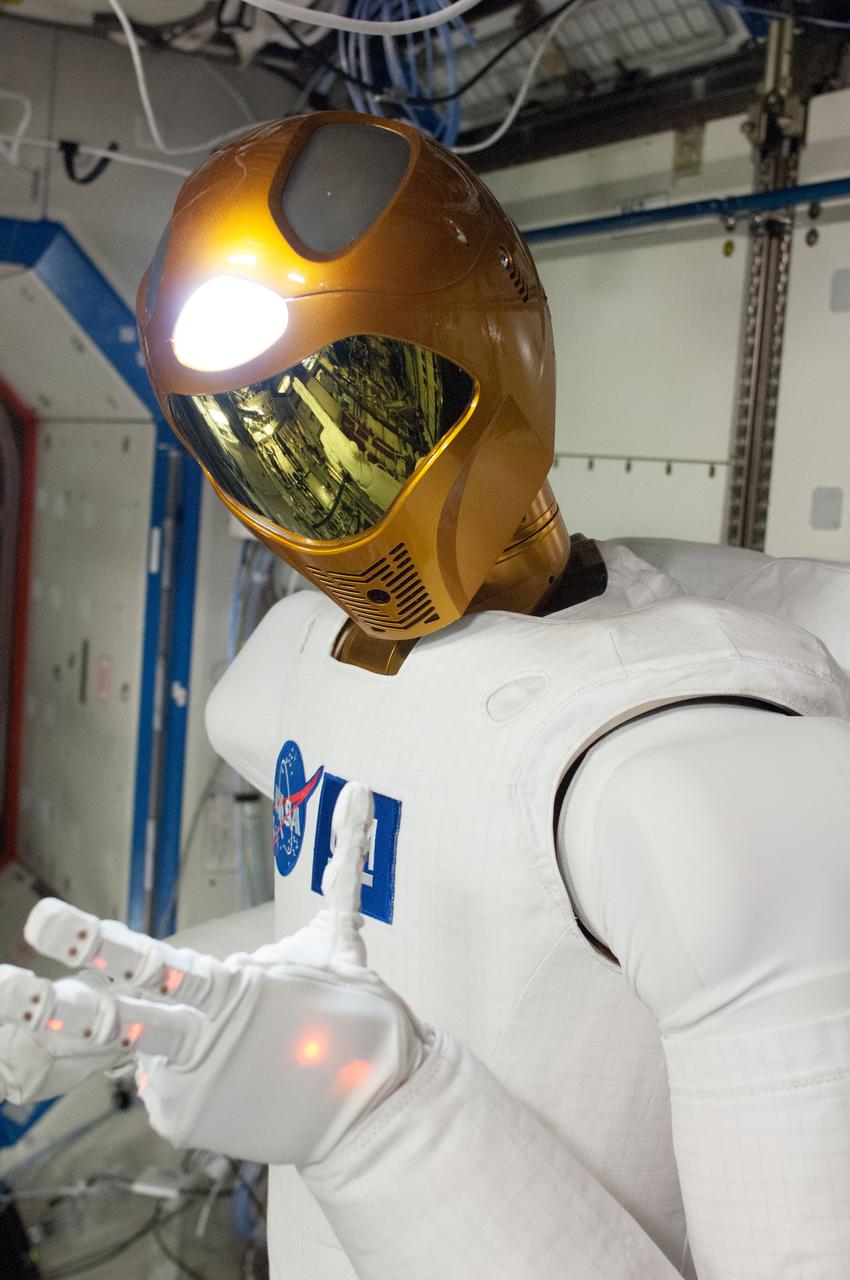
ISS034-E-039162 (1 Feb. 2013) --- Robonaut 2, the first humanoid robot in space, is pictured in this image photographed by an Expedition 34 crew member in the International Space Station’s Destiny laboratory. R2 was powered up so ground controllers could run it through a series of tests and configuration checks after a recent software upgrade.
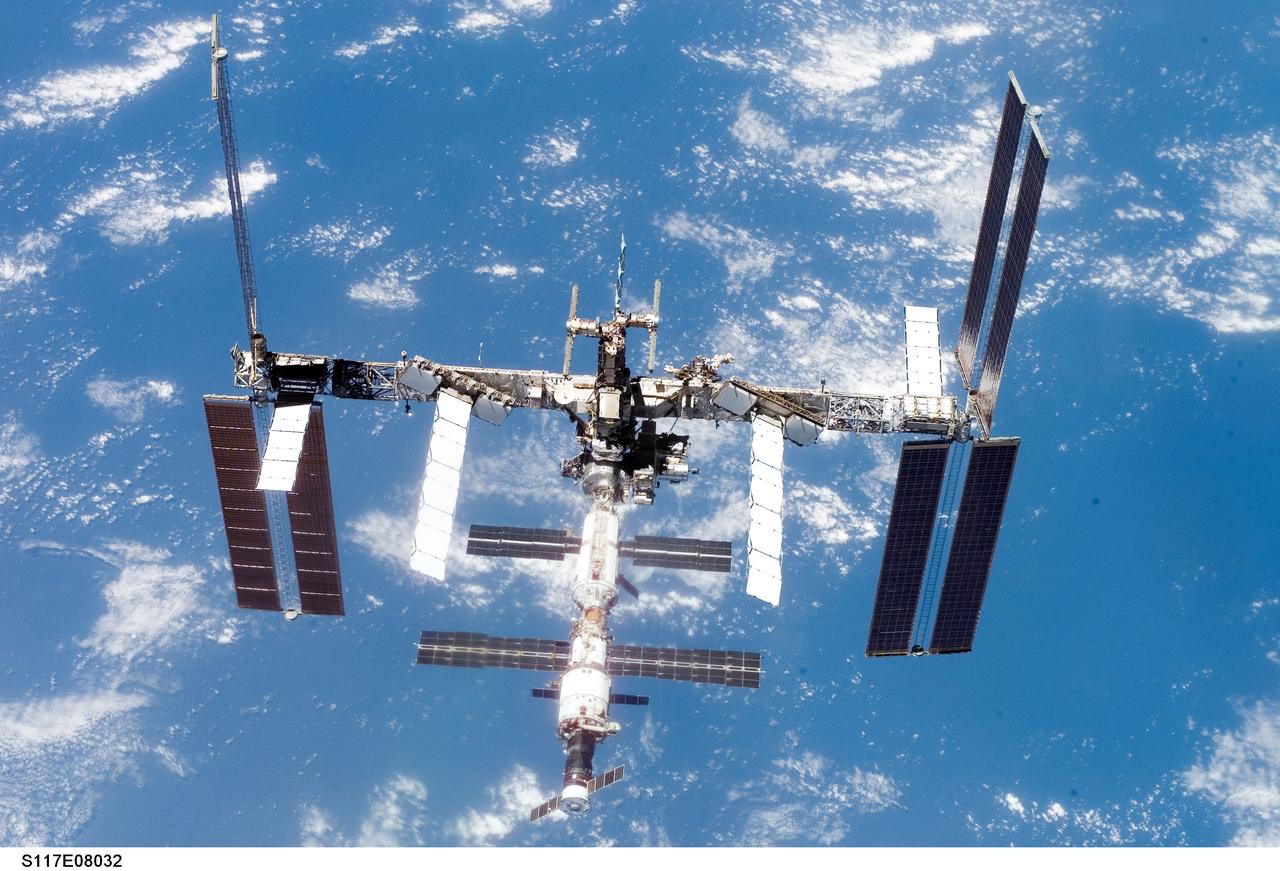
S117-E-08032 (19 June 2007) --- Backdropped by a blue and white Earth, the International Space Station moves away from the Space Shuttle Atlantis. Earlier the STS-117 and Expedition 15 crews concluded about eight days of cooperative work onboard the shuttle and station. Undocking of the two spacecraft occurred at 9:42 a.m. (CDT) on June 19, 2007. Astronaut Lee Archambault, STS-117 pilot, was at the controls for the departure and fly-around, which gave Atlantis' crew a look at the station's new expanded configuration.
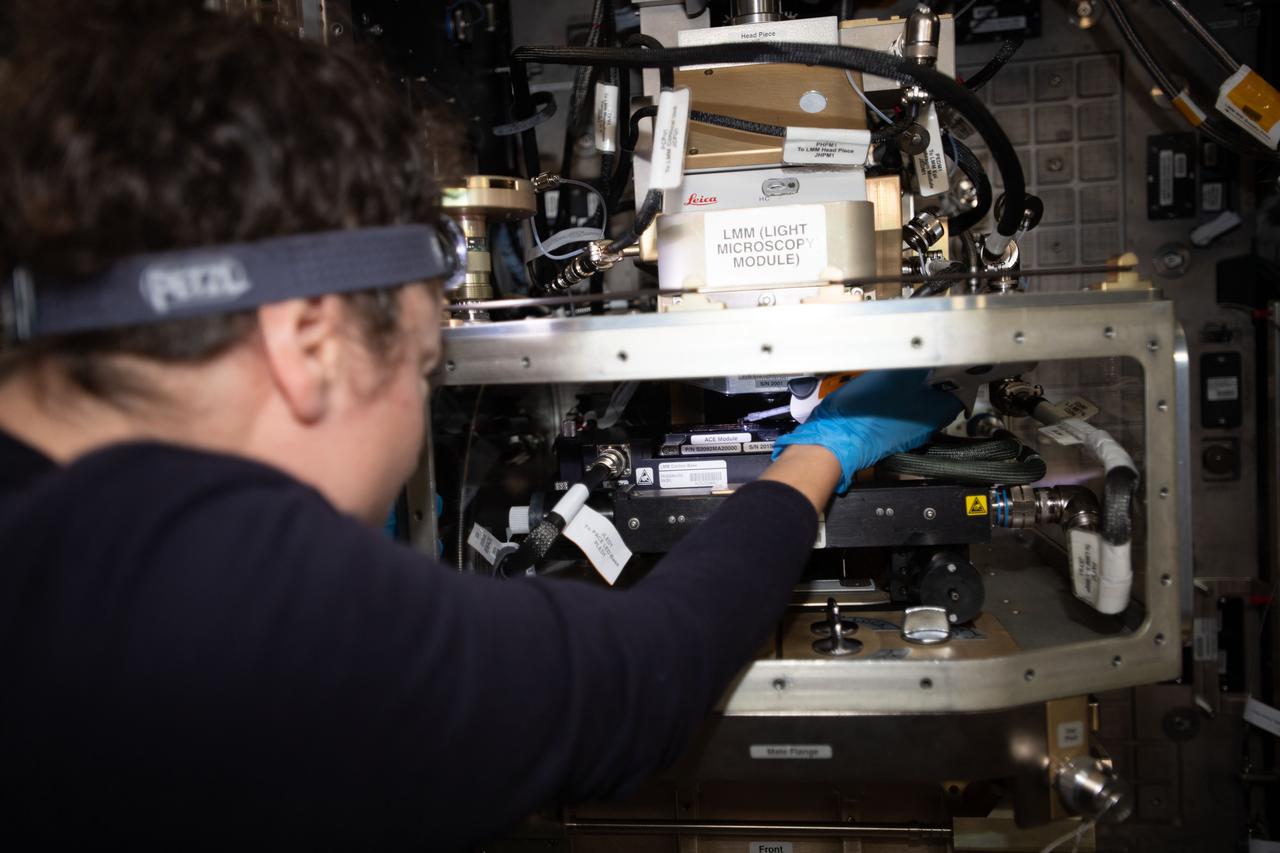
iss062e014345 (2-16-2020) --- A view of NASA astronaut Jessica Meir configuring the Light Microscopy Module (LMM) for the Advanced Colloids Experiment-Temperature-4 (ACE-T-4) science run in the Destiny module aboard the International Space Station (ISS). Introducing disorder to a crystalline system in a controlled way can form glass. Advanced Colloids Experiment-Temperature-4 (ACE-T-4) examines the transition of an ordered crystal to a disordered glass to determine how increasing disorder affects structural and dynamic properties
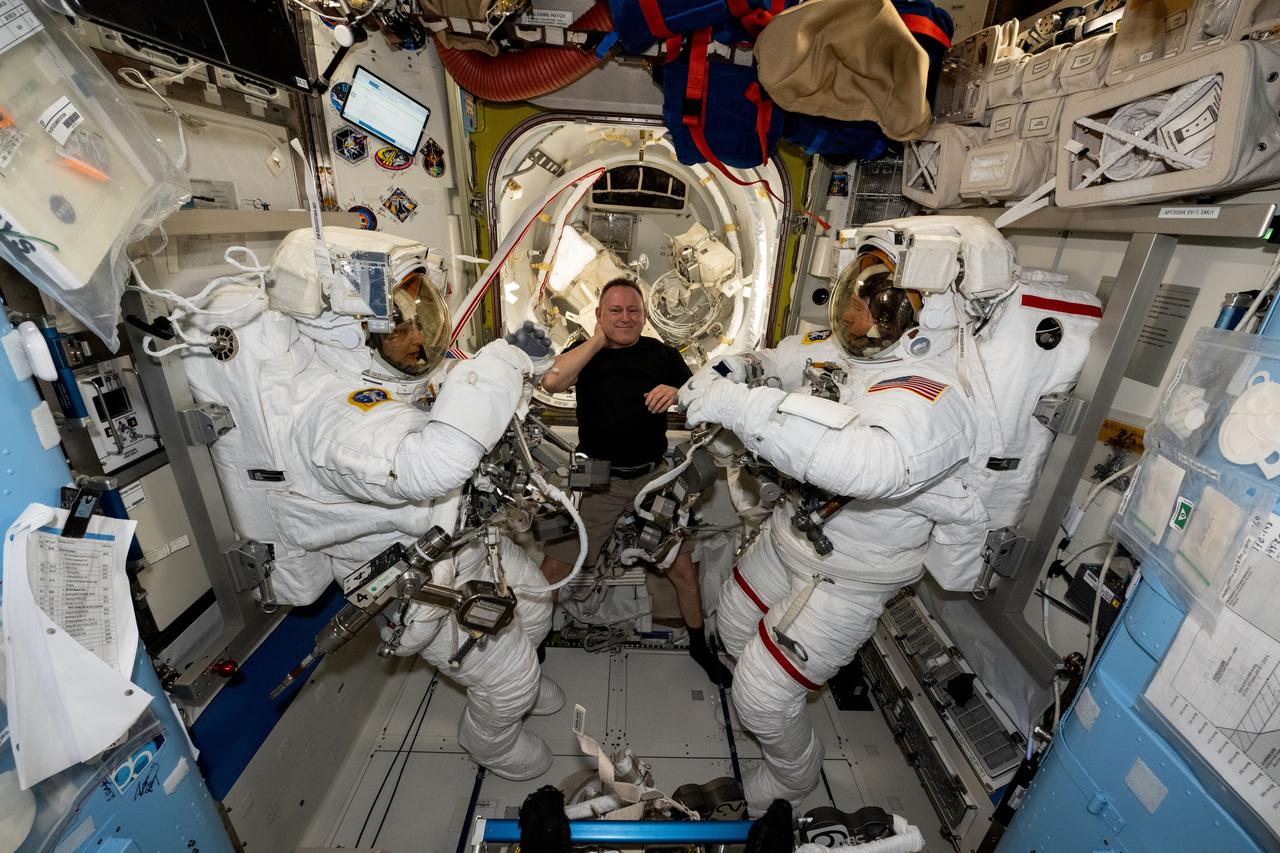
iss072e451696 (Jan. 9, 2025) --- NASA astronaut and Expedition 72 Flight Engineer Butch Wilmore (center) assists International Space Station Commander Suni Williams (left) and Flight Engineer Nick Hague (right), both NASA astronauts, as they prepare to evaluate their spacesuits in a pressurized configuration. Hague and Williams are scheduled to exit the orbital outpost on Jan. 16 for a spacewalk to service astrophysics gear including the NICER X-ray telescope and the Alpha Magnetic Spectrometer.
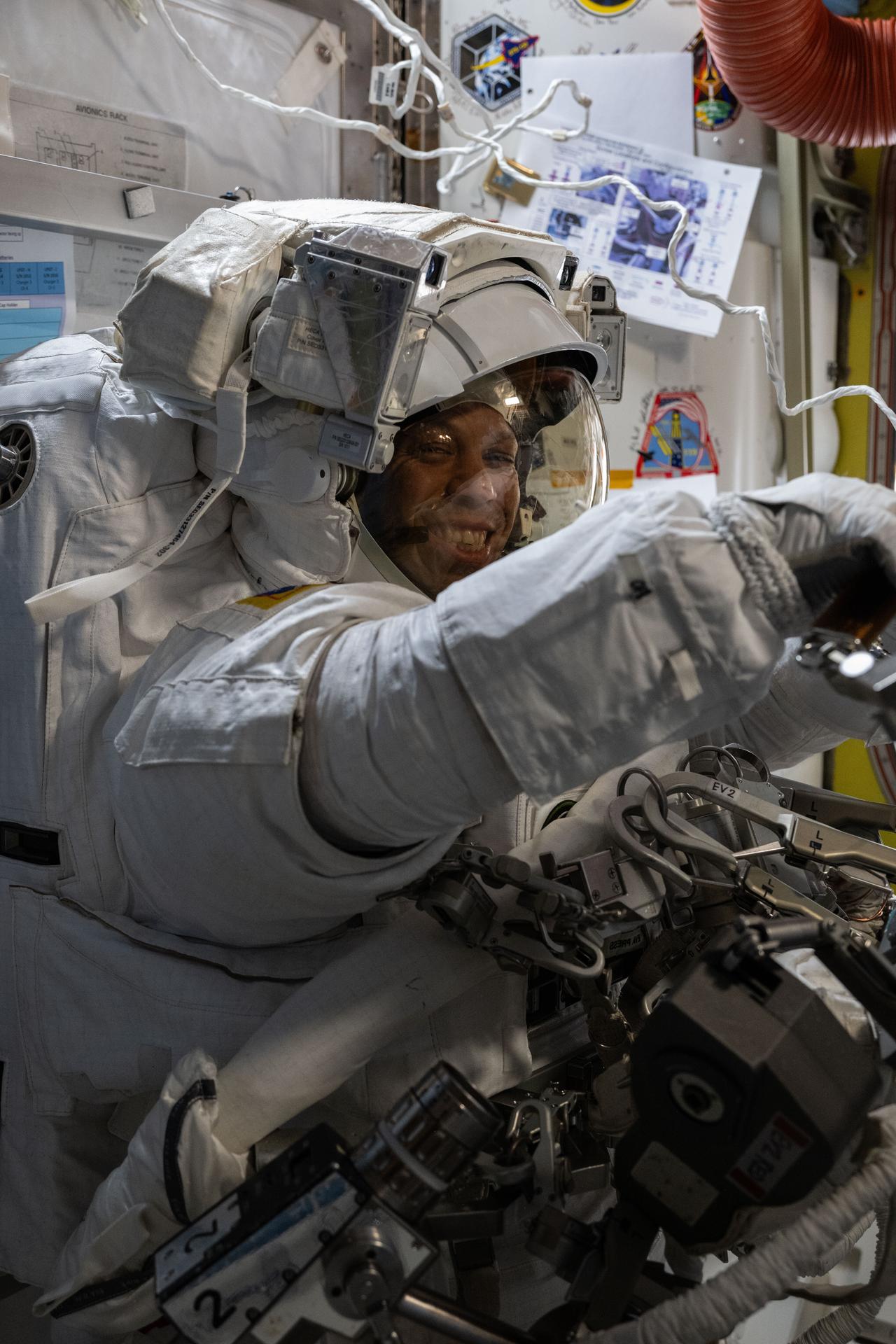
iss074e0009033 (Jan. 2, 2025) --- NASA astronaut and Expedition 74 crew member Chris Williams smiles for the camera during a spacesuit fit verification inside the International Space Station’s Quest airlock. Officially called the On-Orbit Fit Verification, this procedure confirms that the spacesuit is airtight and properly configured, assesses comfort and mobility, and helps prevent potential safety risks. Credit: NASA/Zena Cardman
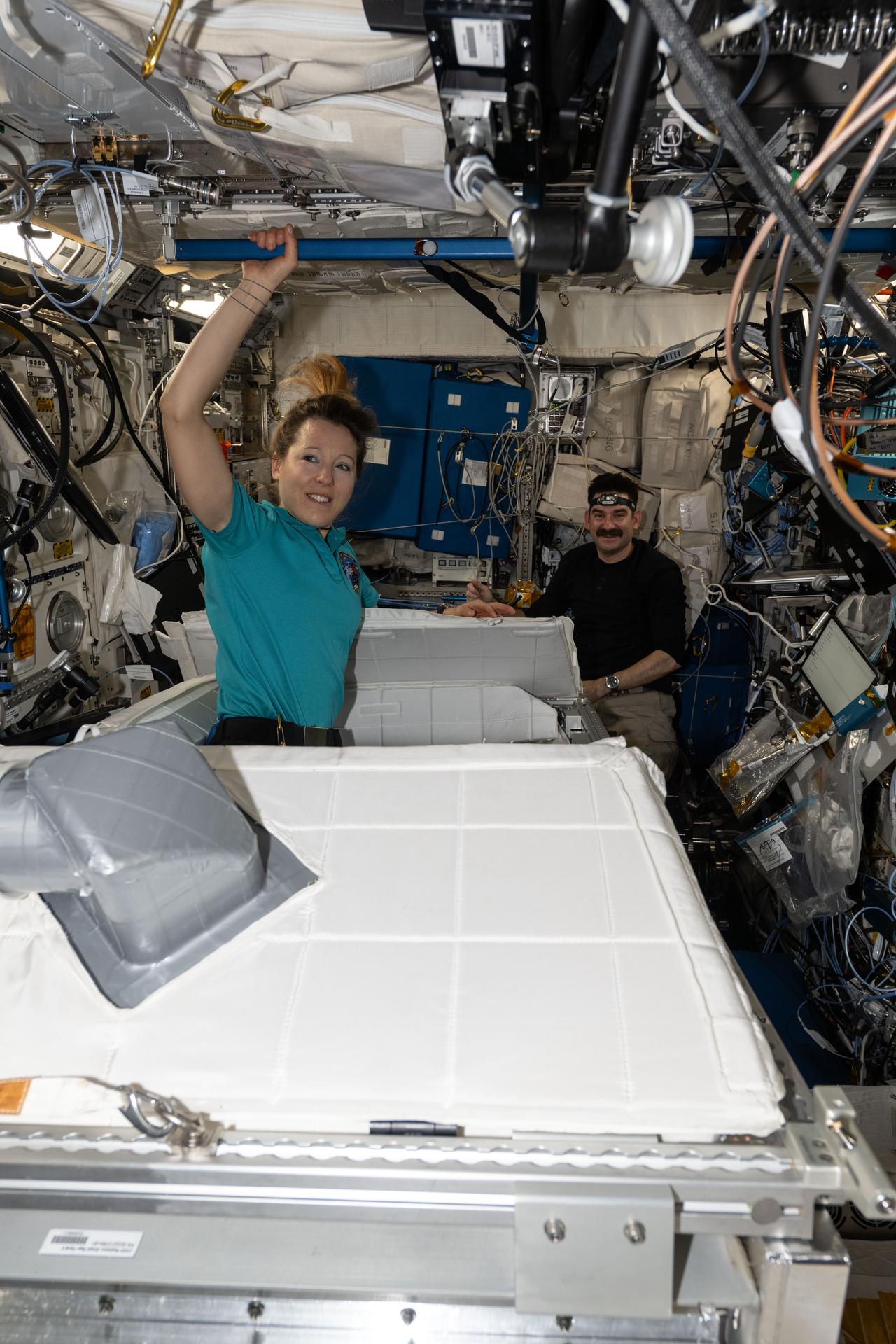
iss074e0792341 (June 7 ,2026) --- Expedition 74 flight engineers Sophie Adenot of ESA (European Space Agency) and Jack Hathaway of NASA (background) are pictured inside the International Space Station's Columbus laboratory module. The astronauts were upgrading a temporary sleep station, also called the Crew Alternate Sleep Accommodation (CASA), aboard Columbus. CASA modifications include a better fit for crew members, improved airflow velocity, an updated lighting configuration, and upgraded side panels and interior liners. Credit: NASA/Jessica Meir
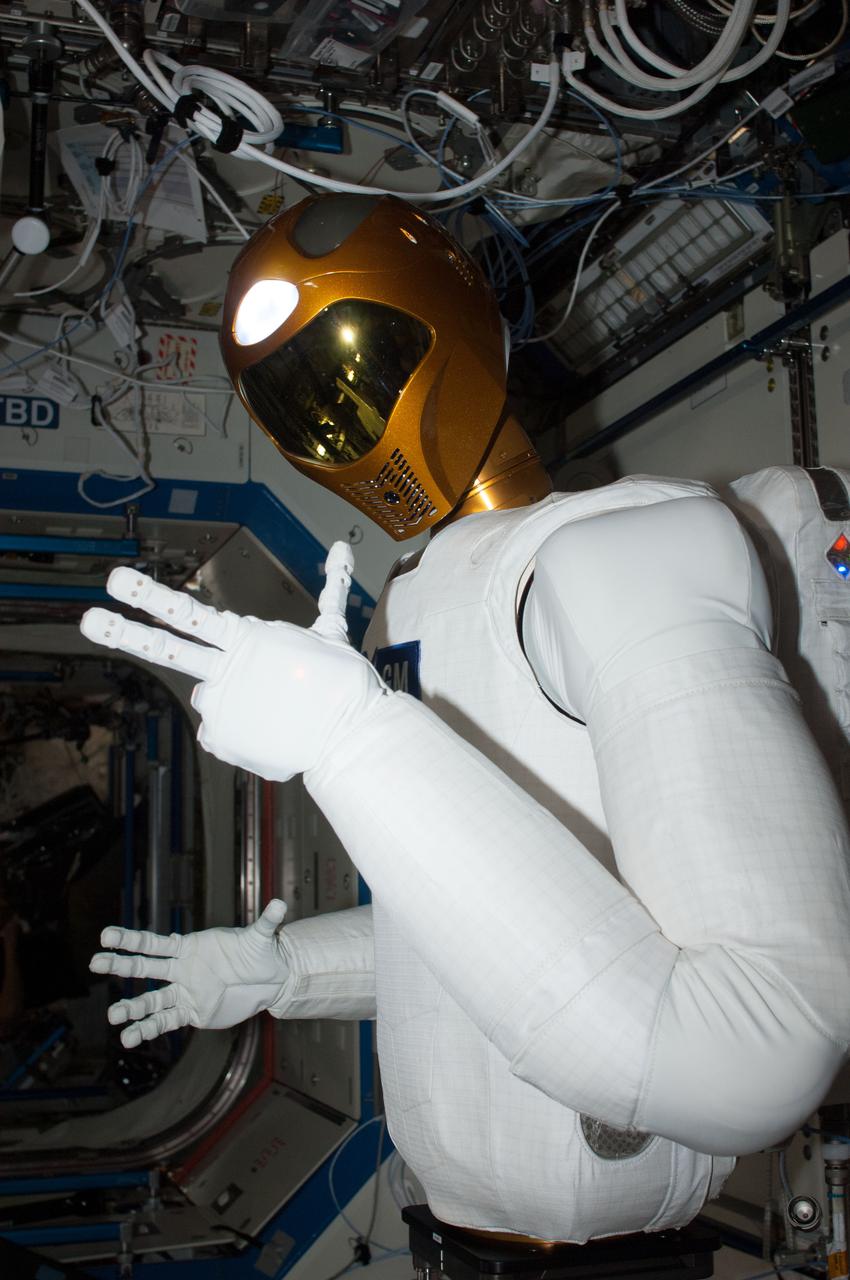
ISS034-E-039157 (1 Feb. 2013) --- Robonaut 2, the first humanoid robot in space, is pictured in this image photographed by an Expedition 34 crew member in the International Space Station’s Destiny laboratory. R2 was powered up so ground controllers could run it through a series of tests and configuration checks after a recent software upgrade.
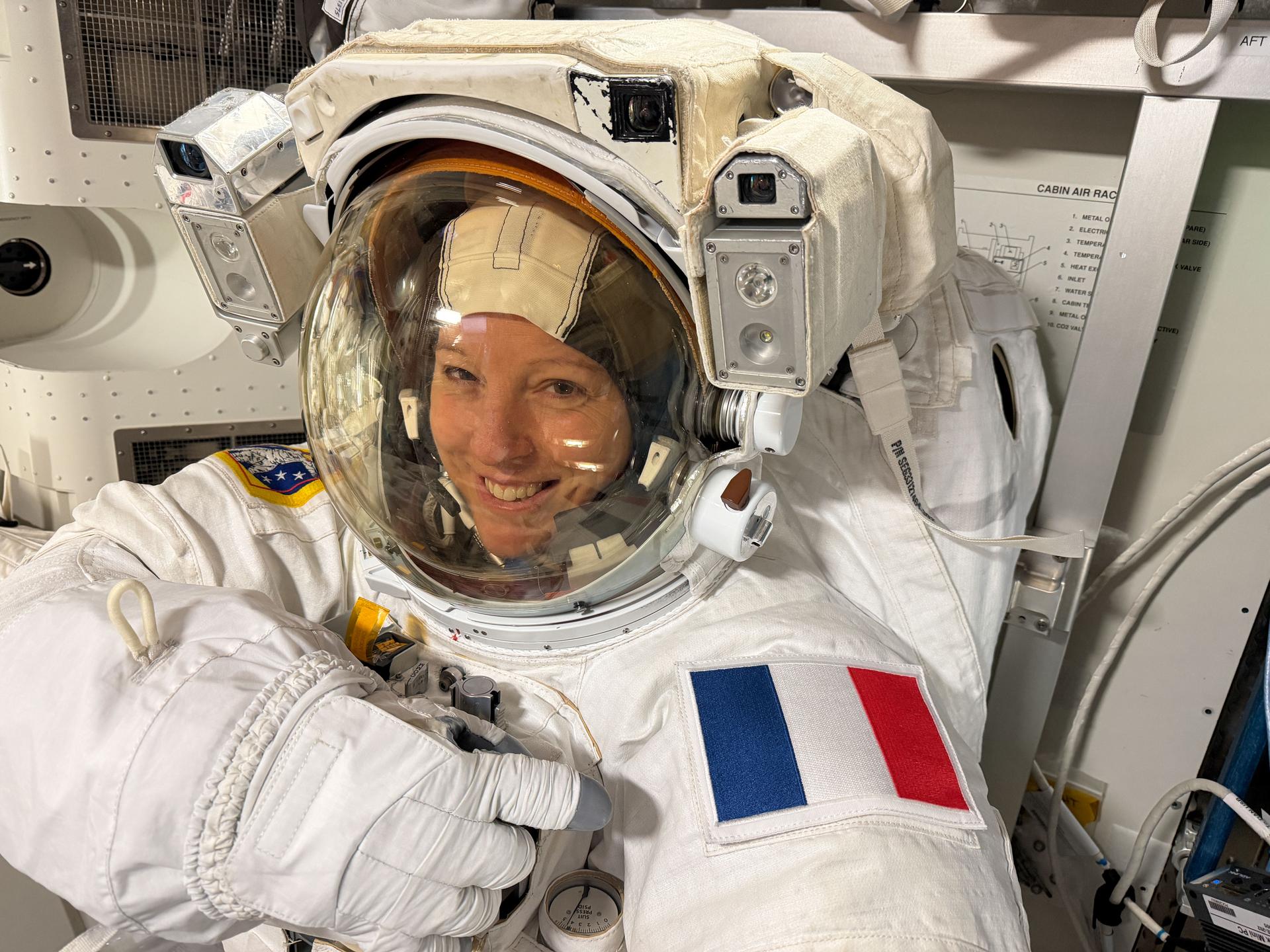
iss074e0437879 (April 3, 2026) --- Expedition 74 flight engineer Sophie Adenot of ESA (European Space Agency) wears a spacesuit in a powered and pressurized configuration to verify its comfort, mobility, and functionality inside the International Space Station’s Quest airlock. Adenot also conducted suit leak and pressure checks while verifying the suit’s communications hardware and life-support systems. Credit: ESA/Sophie Adenot

This artist's concept depicts the Space Station Freedom as it would look orbiting the Earth; illustrated by Marshall Space Flight Center artist, Tom Buzbee. Scheduled to be completed in late 1999, this smaller configuration of the Space Station features a horizontal truss structure that supported U.S., European, and Japanese Laboratory Modules; the U.S. Habitation Module; and three sets of solar arrays. The Space Station Freedom was an international, permanently marned, orbiting base to be assembled in orbit by a series of Space Shuttle missions that were to begin in the mid-1990's.
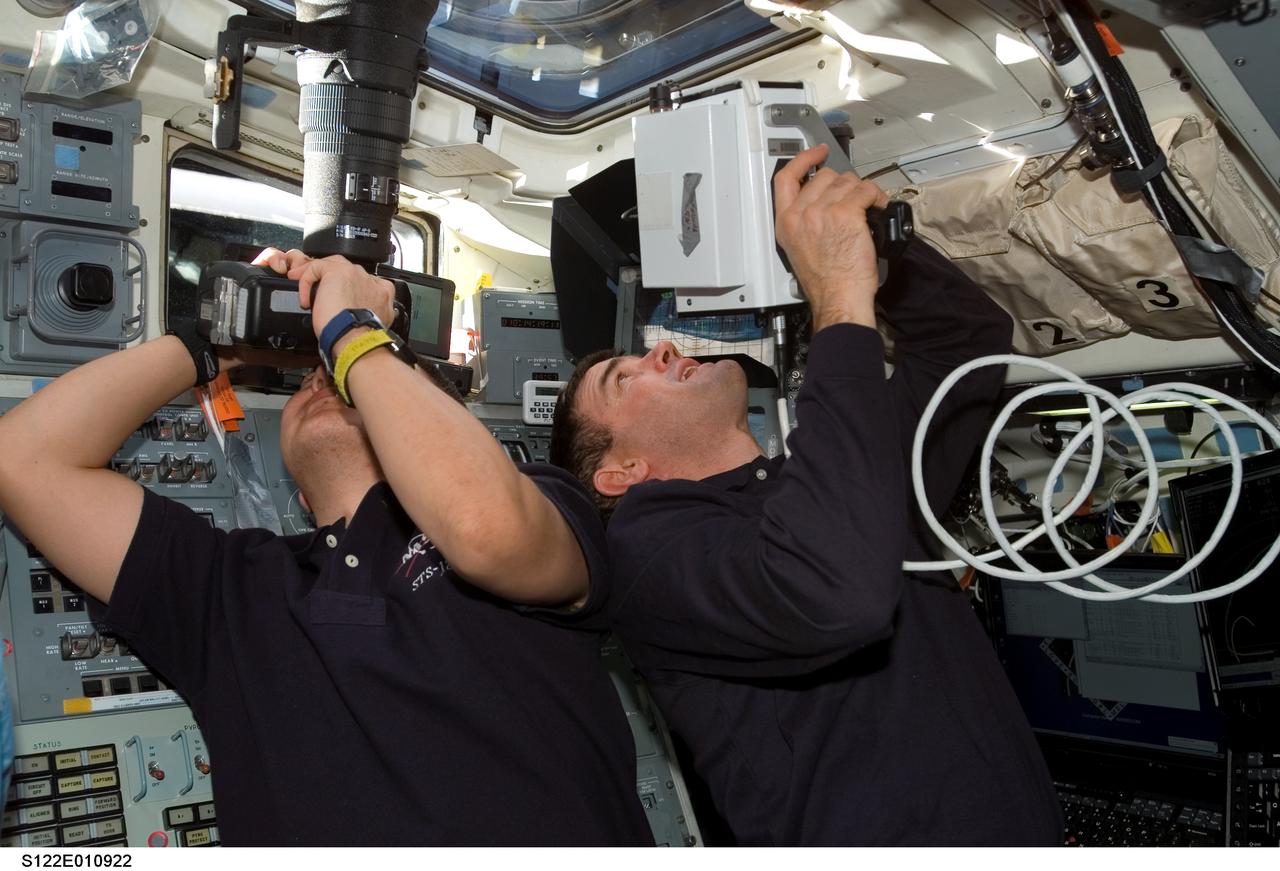
S122-E-010922 (18 Feb. 2008) --- Astronaut Rex Walheim (right), STS-122 mission specialist, uses a handheld laser ranging device -- designed to measure the range between two spacecraft -- through one of the overhead windows on the aft flight deck of Space Shuttle Atlantis after undocking from the International Space Station. Astronaut Daniel Tani, mission specialist, uses a still camera to photograph the station in its new configuration.
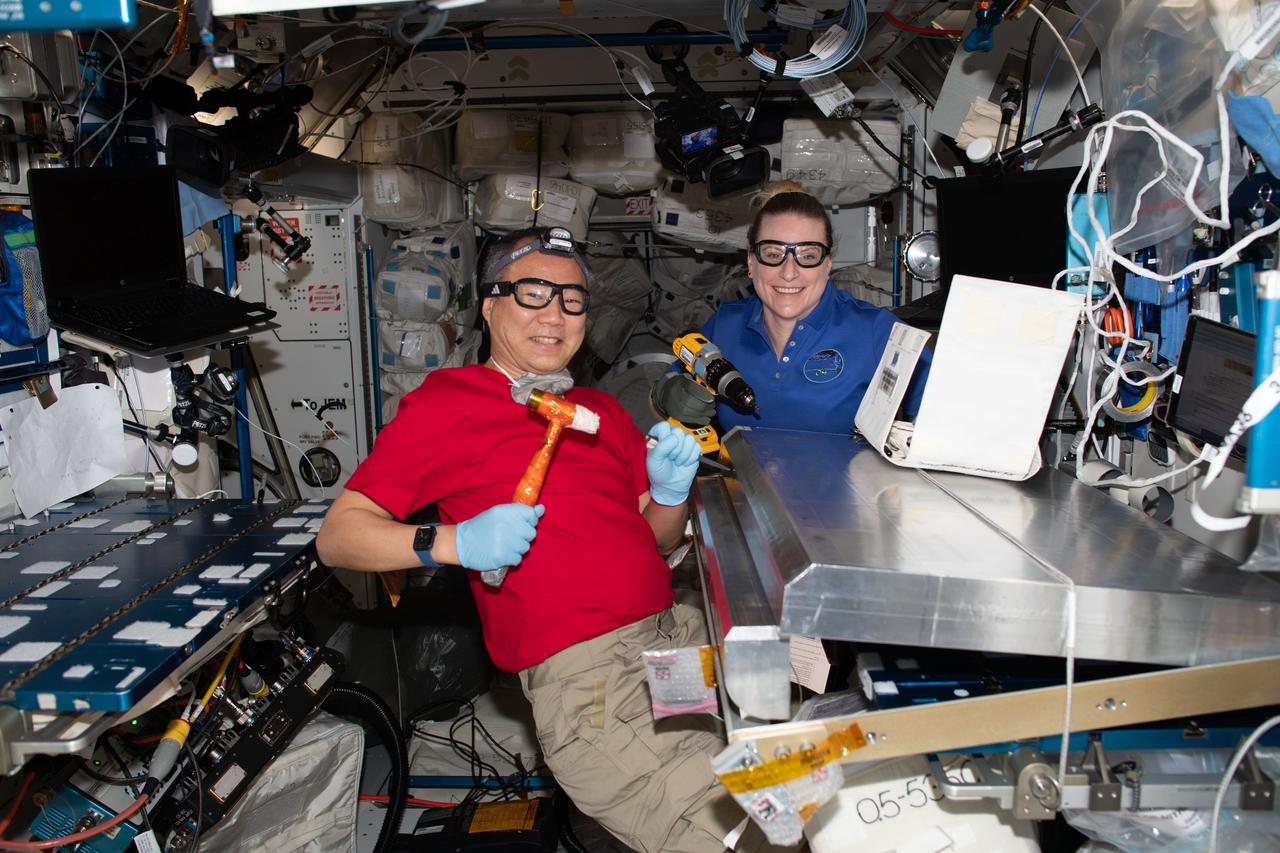
iss064e053432 (April 6, 2021) --- Expedition 64 Flight Engineers Soichi Noguchi of the Japan Aerospace Exploration Agency and Kate Rubins of NASA configure a radiation shield for temporary sleeping quarters, or the Crew Alternate Sleep Accommodation (CASA). The CASA will allow extra space for the short period when up to 11 crew members will be occupying the International Space Station in April.
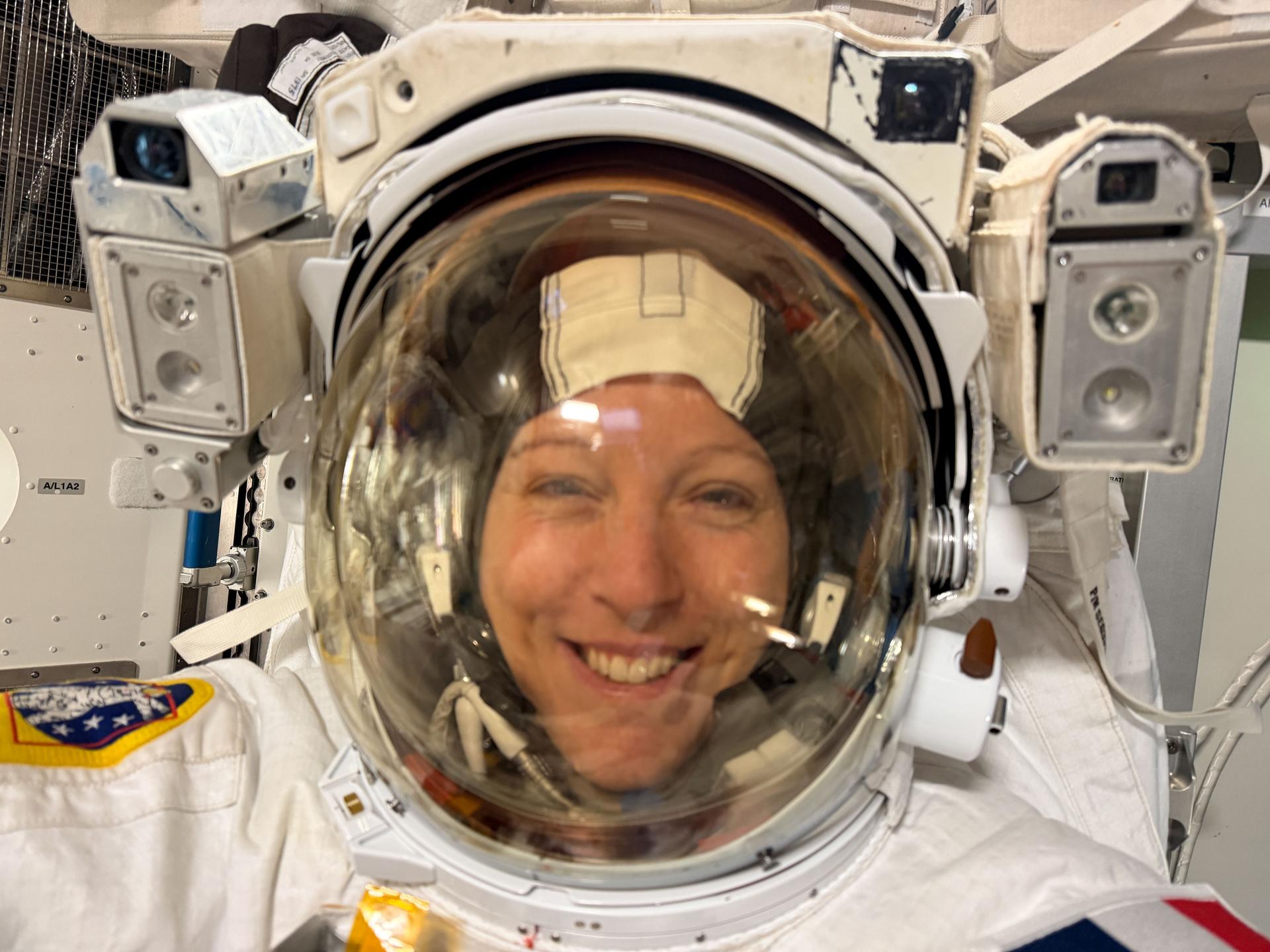
iss074e0437876 (April 3, 2026) --- Expedition 74 flight engineer Sophie Adenot of ESA (European Space Agency) wears a spacesuit in a powered and pressurized configuration to verify its comfort, mobility, and functionality inside the International Space Station’s Quest airlock. Adenot also conducted suit leak and pressure checks while verifying the suit’s communications hardware and life-support systems. Credit: ESA/Sophie Adenot
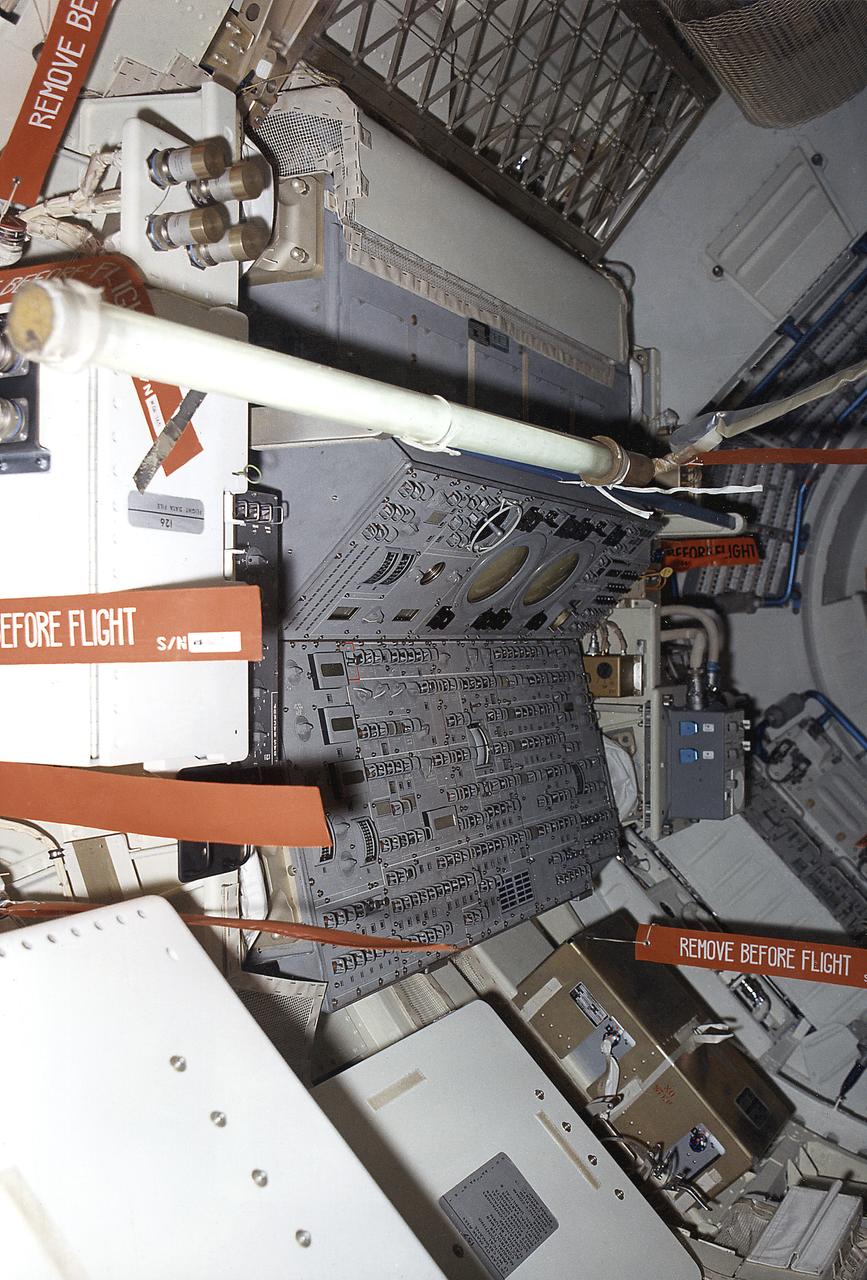
This September 1972 photograph shows the internal configuration of Skylab's Multiple Docking Adapter (MDA) flight article as it appeared during the Crew Compartment and Function Review at the Martin-Marietta Corporation's Space Center facility in Denver, Colorado. Designed and manufactured by the Marshall Space Flight Center, the MDA housed a number of experiment control and stowage units and provided a docking port for the Apollo Command Module.
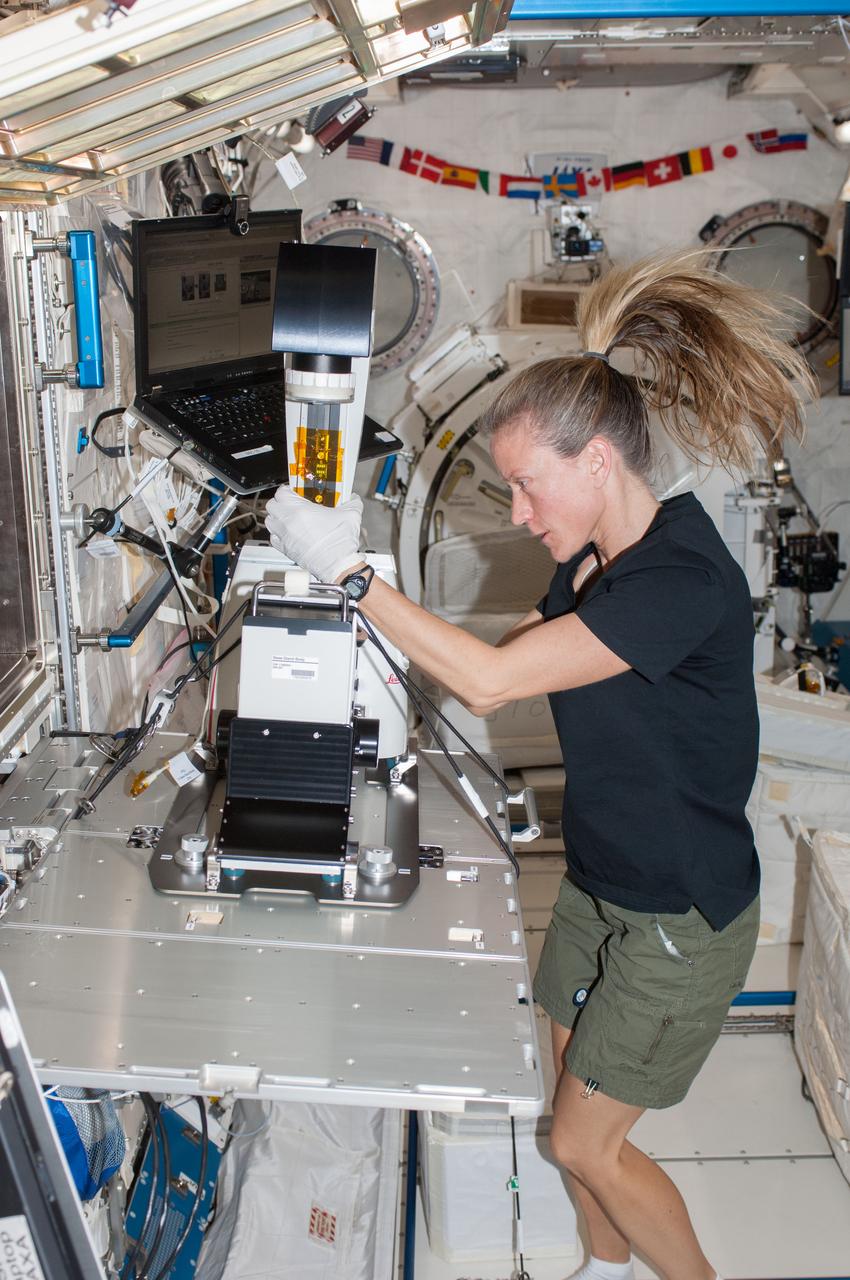
ISS036-E-020938 (17 July 2013) --- NASA astronaut Karen Nyberg, Expedition 36 flight engineer, works to setup the Multi-Purpose Small Payload Rack (MSPR) fluorescence microscope in the Kibo laboratory of the International Space Station. This configuration, along with the leak checks that the crew performed in June, is in preparation for the Aniso Tubule experiment launching on HTV-4 in August. Aniso Tubule will investigate the role of cortical microtubules and microtubule-associated proteins in plant growth while in microgravity.
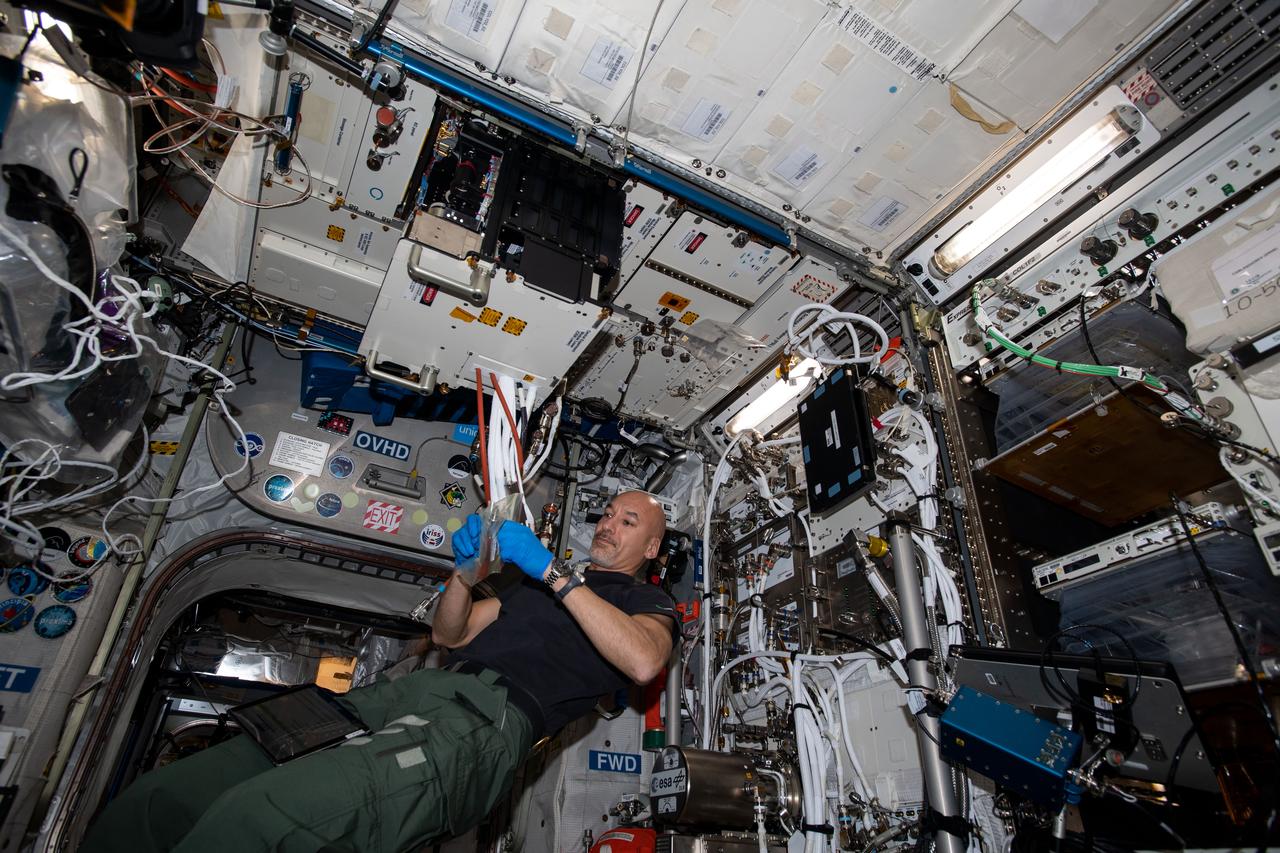
iss060e033086 (8/9/2019) --- A view of European Space Agency (ESA) astronaut Luca Parmitano during the installation of the MultiScale Boiling Experiment Container (EC) in the Fluid Science Laboratory FSL) in the Columbus Module aboard the International Space Station (ISS). Multiscale Boiling investigates the fundamental basics of boiling heat transfer phenomena on a heater surface in a pool boiling configuration. Data from this investigation is used for the validation of theoretical models and numerical codes.
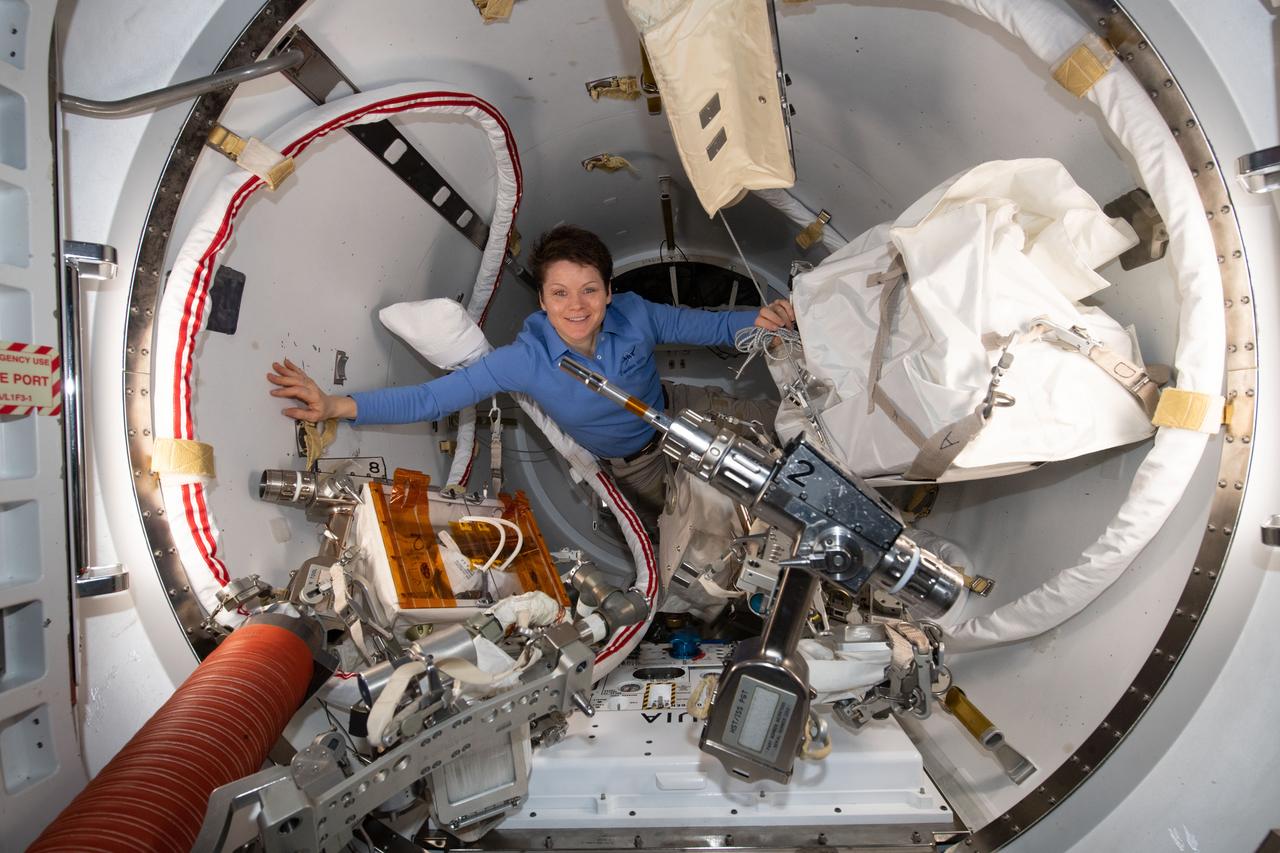
iss059e001041 (March 18, 2019) --- NASA astronaut Anne McClain works inside the crew airlock portion of the U.S. Quest airlock before the Expedition 59 crew members would begin a series of spacewalks to upgrade power systems on the International Space Station. Quest is divided into two parts. The equipment lock is where spacewalkers configure their tools and suit up in their U.S. spacesuits. The crew lock is the unit that is depressurized and repressurized and contains the hatch where the spacewalkers exit into the vacuum of space.
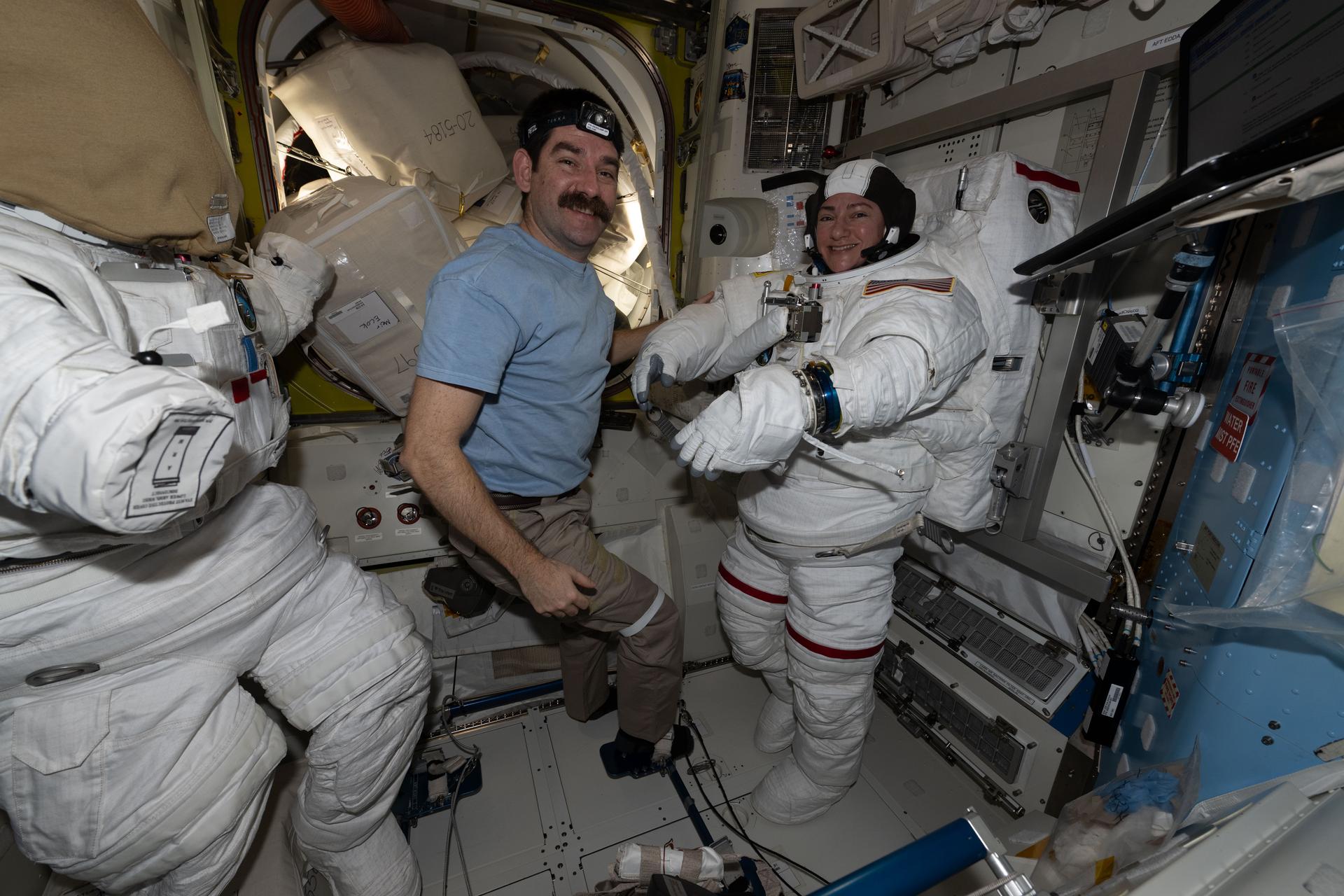
iss074e0375660 (March 10, 2026) --- NASA astronaut Jack Hathaway assists NASA astronaut Jessica Meir, both Expedition 74 flight engineers, as she tries on a spacesuit inside the International Space Station’s Quest airlock. The duo confirmed that the suit was airtight and properly configured, and they assessed its comfort and mobility as microgravity can increase spinal length, redistribute body fluids, and alter the dimensions of the torso and limbs. Credit: NASA/Jessica Meir
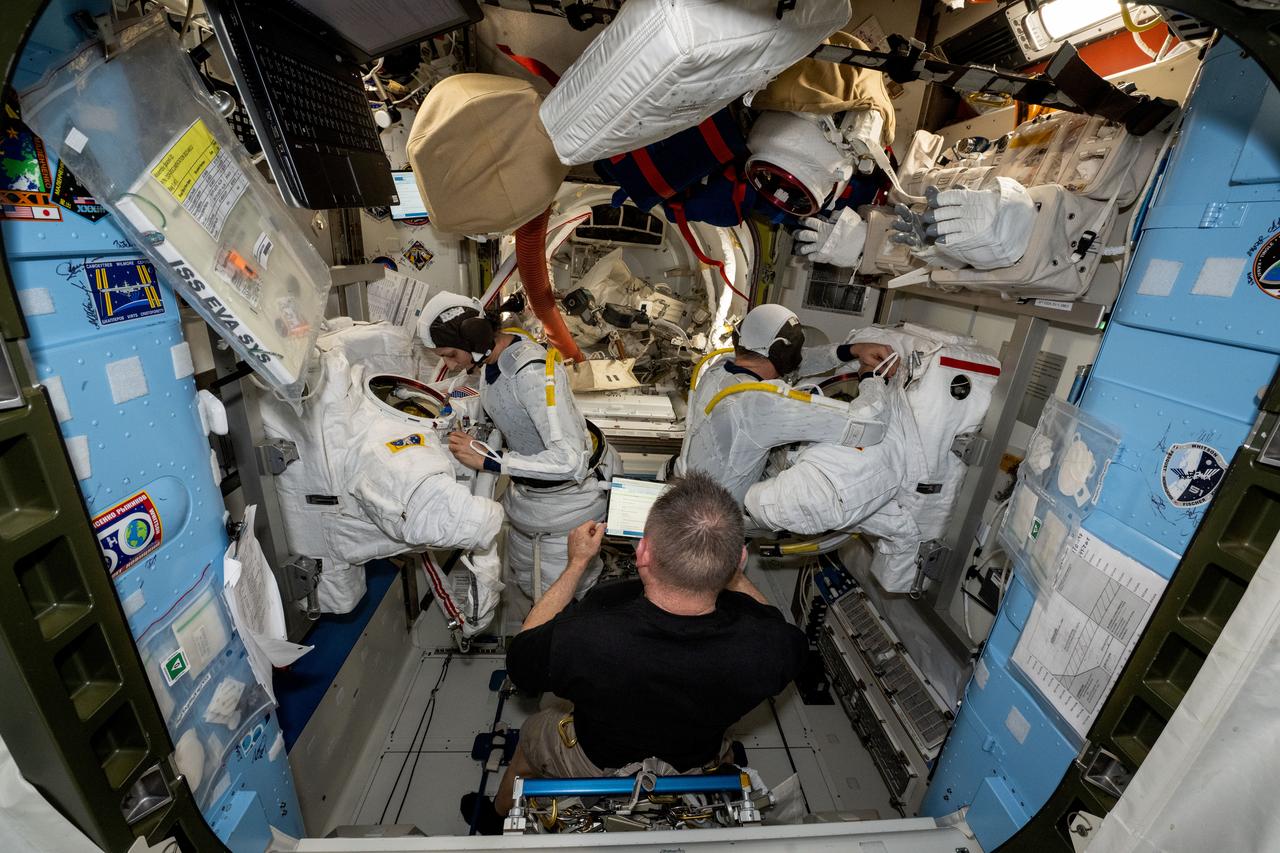
iss072e451646 (Jan. 9, 2025) --- NASA astronaut and Expedition 72 Flight Engineer Butch Wilmore (center) assists International Space Station Commander Suni Williams (left) and Flight Engineer Nick Hague (right), both NASA astronauts, as they prepare to evaluate their spacesuits in a pressurized configuration. Hague and Williams are scheduled to exit the orbital outpost on Jan. 16 for a spacewalk to service astrophysics gear including the NICER X-ray telescope and the Alpha Magnetic Spectrometer.
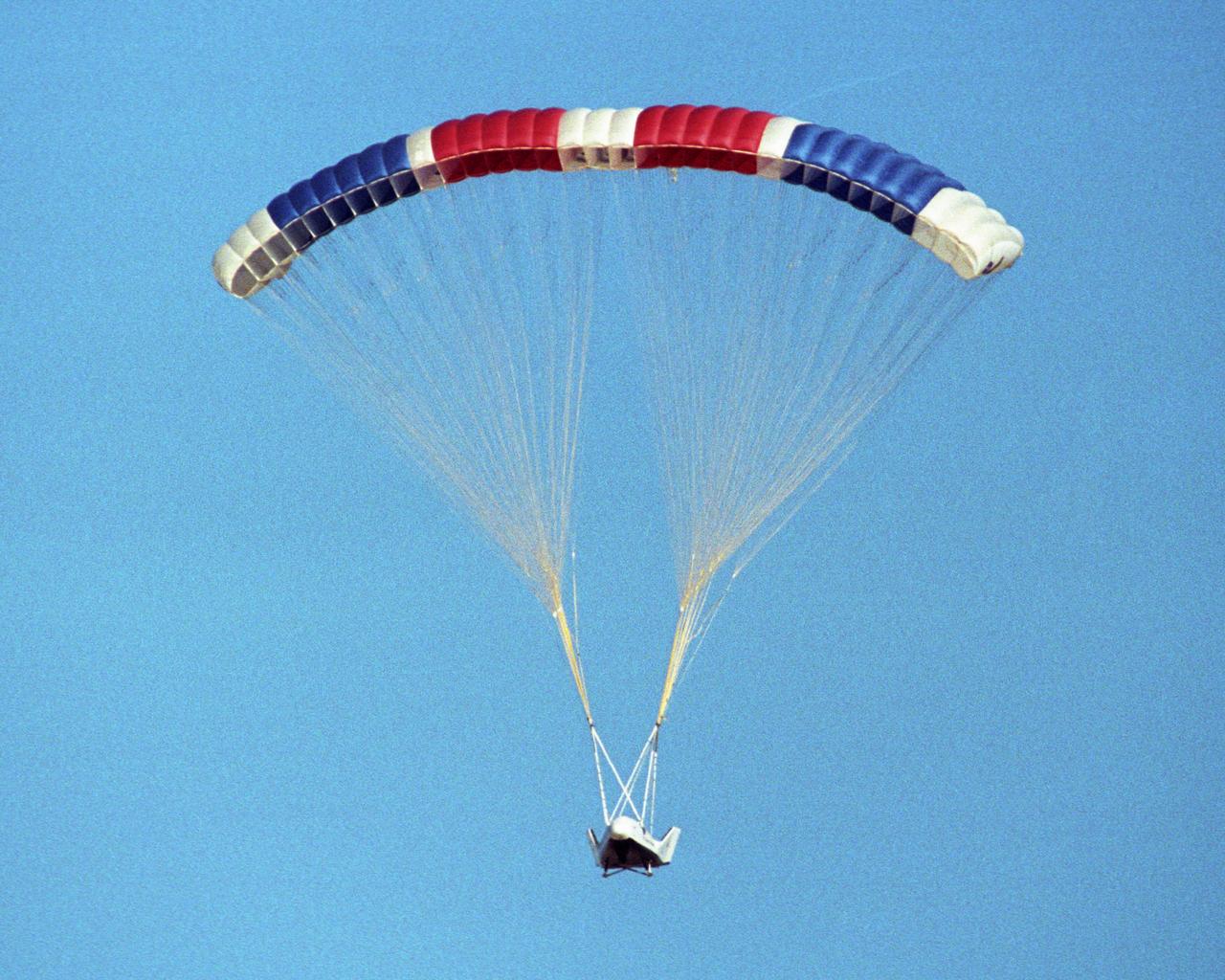
The X-38 prototype of the Crew Return Vehicle for the International Space Station is suspended under its giant 7,500-square-foot parafoil during its eighth free flight on Thursday, Dec. 13, 2001. A portion of the descent was flown by remote control by a NASA astronaut from a ground vehicle configured like the CRV's interior before the X-38 made an autonomous landing on Rogers Dry Lake.
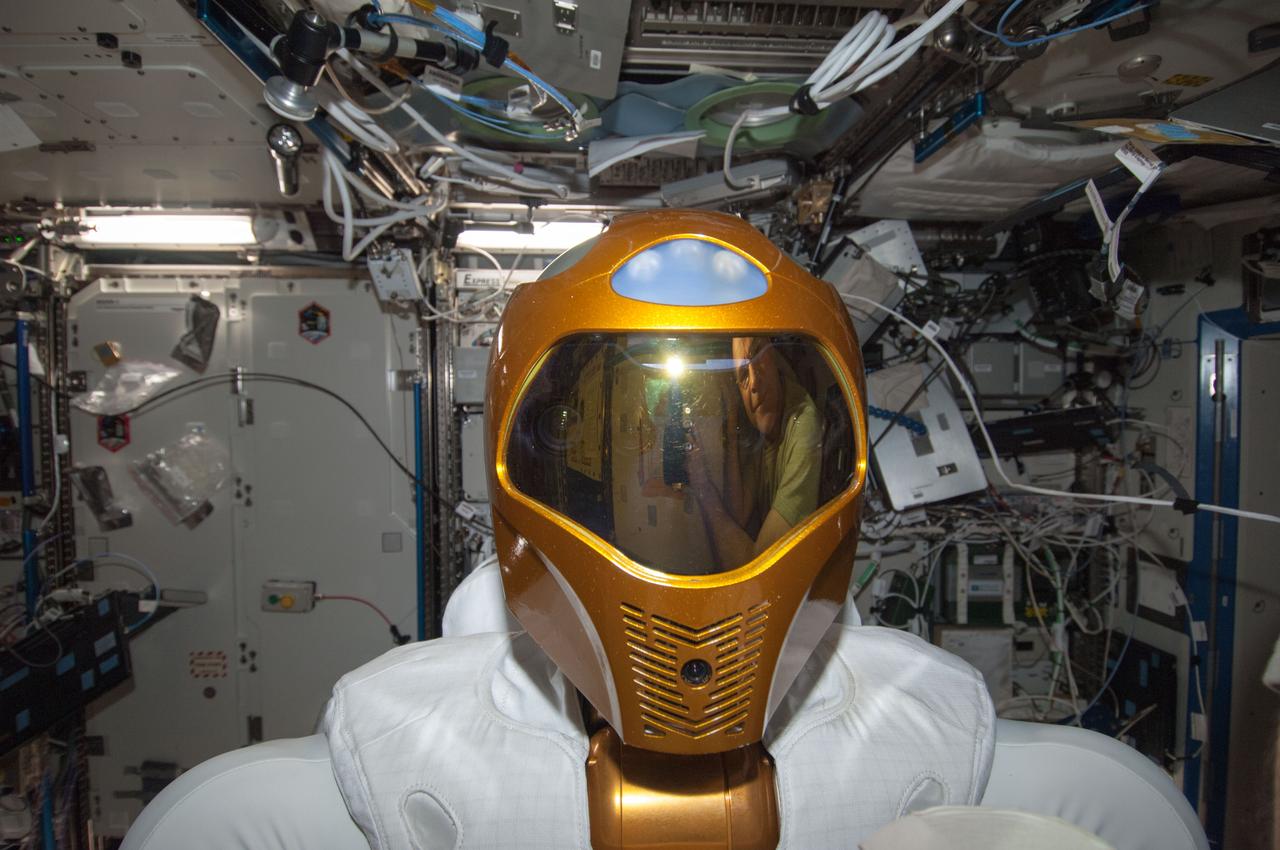
ISS034-E-031599 (18 Jan. 2013) --- Robonaut 2 is featured in this close-up image in the International Space Station?s Destiny laboratory. NASA astronaut Kevin Ford (visible in the reflections of R2?s helmet visor), Expedition 34 commander, powered up R2 so ground controllers could verify the humanoid robot?s configuration for upcoming activities.
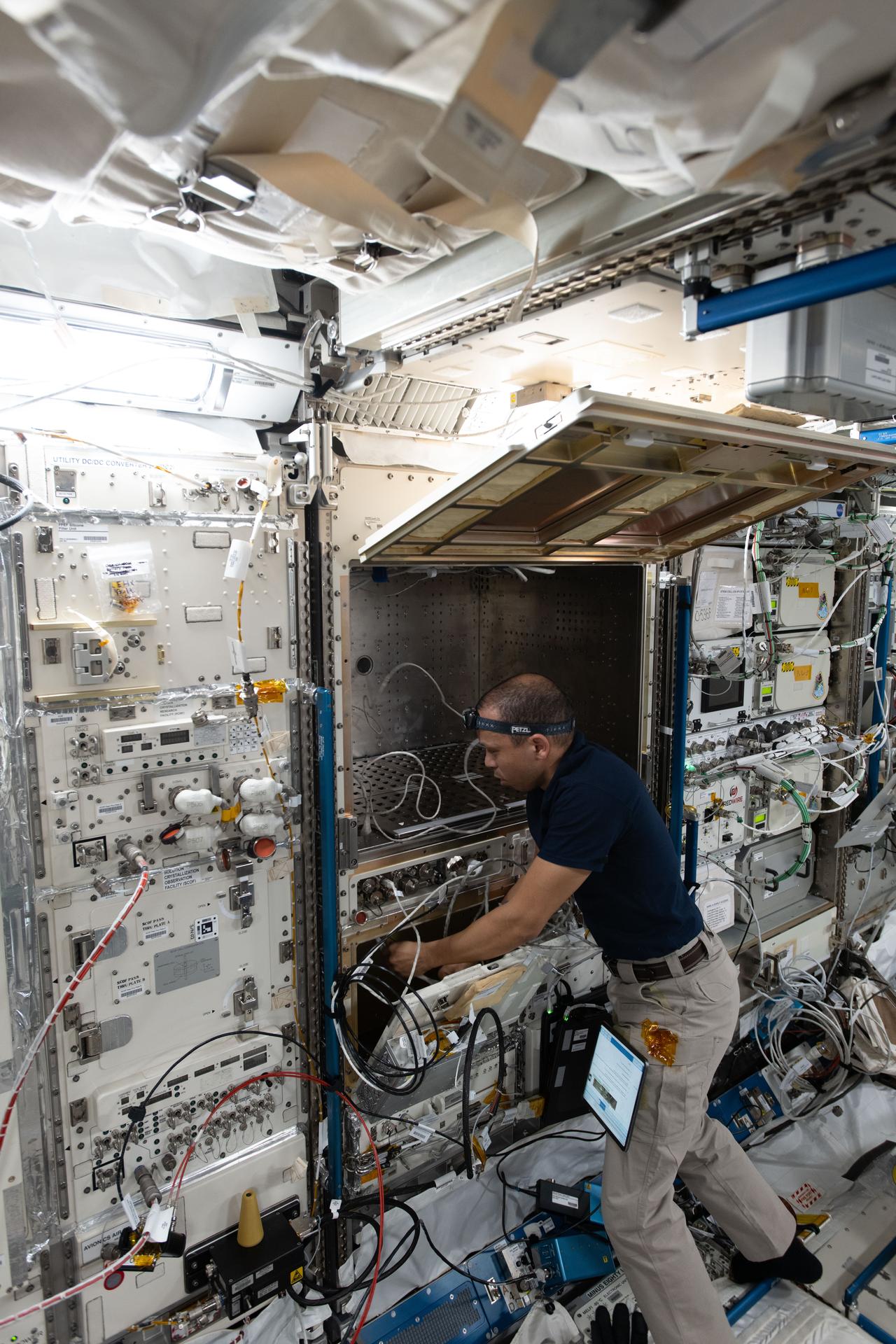
iss074e0325940 (Feb. 25, 2026) --- NASA astronaut and Expedition 74 flight engineer Chris Williams works inside the International Space Station's Kibo laboratory module. Williams opened up Kibo's multi-purpose small payload rack to install and configure advanced robotics hardware for the TUSK (Test facility for lab-aUtomation System in Kibo) technology demonstration. TUSK is demonstrating precision mobility and experiment automation in microgravity using a pair of small robotic arms to reduce crew workloads. Credit: NASA/Chris Williams
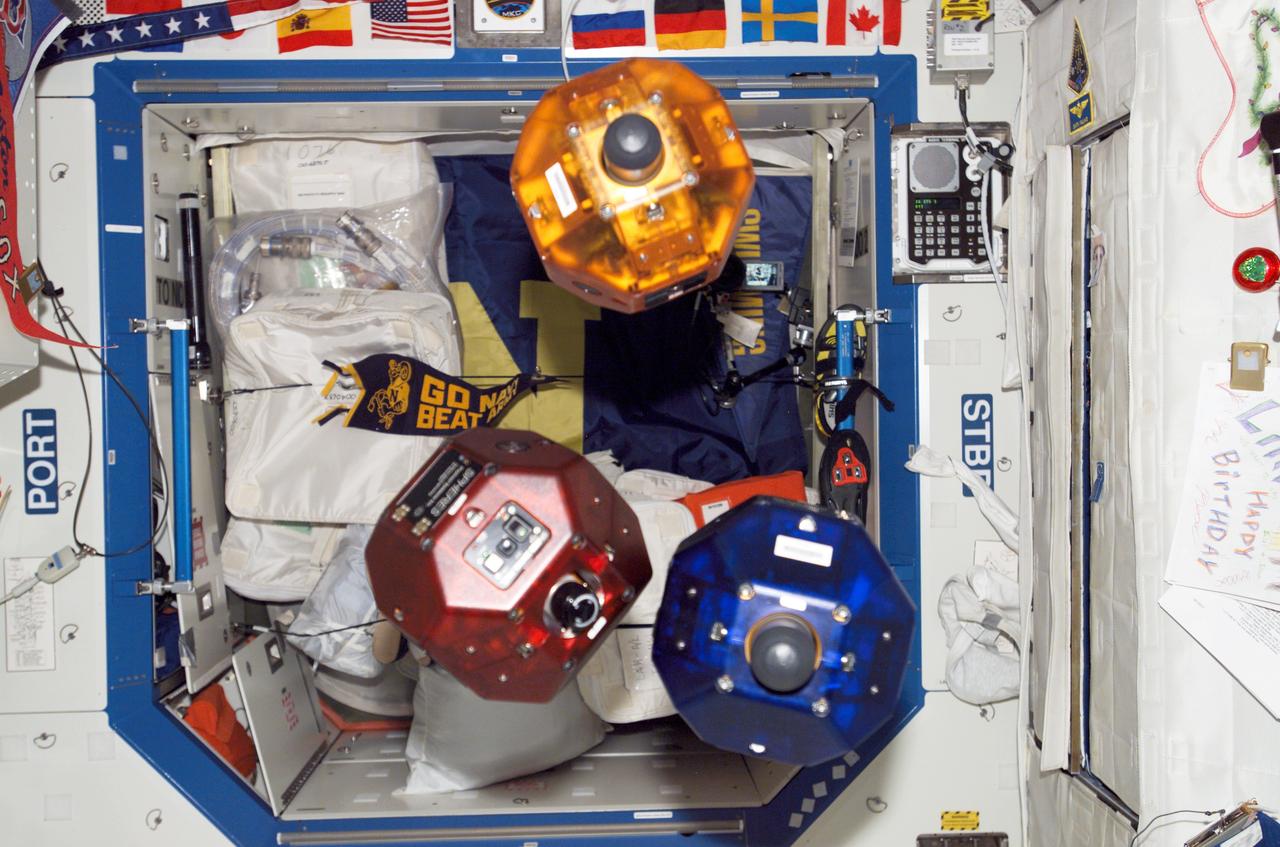
ISS014-E-17880 (24 March 2007) --- This medium close-up view shows three bowling-ball-sized free-flying satellites called Synchronized Position Hold, Engage, Reorient, Experimental Satellites (SPHERES) in the Destiny laboratory of the International Space Station. SPHERES were designed to test control algorithms for spacecraft by performing autonomous rendezvous and docking maneuvers inside the station. The results are important for multi-body control and in designing constellation and array spacecraft configurations.
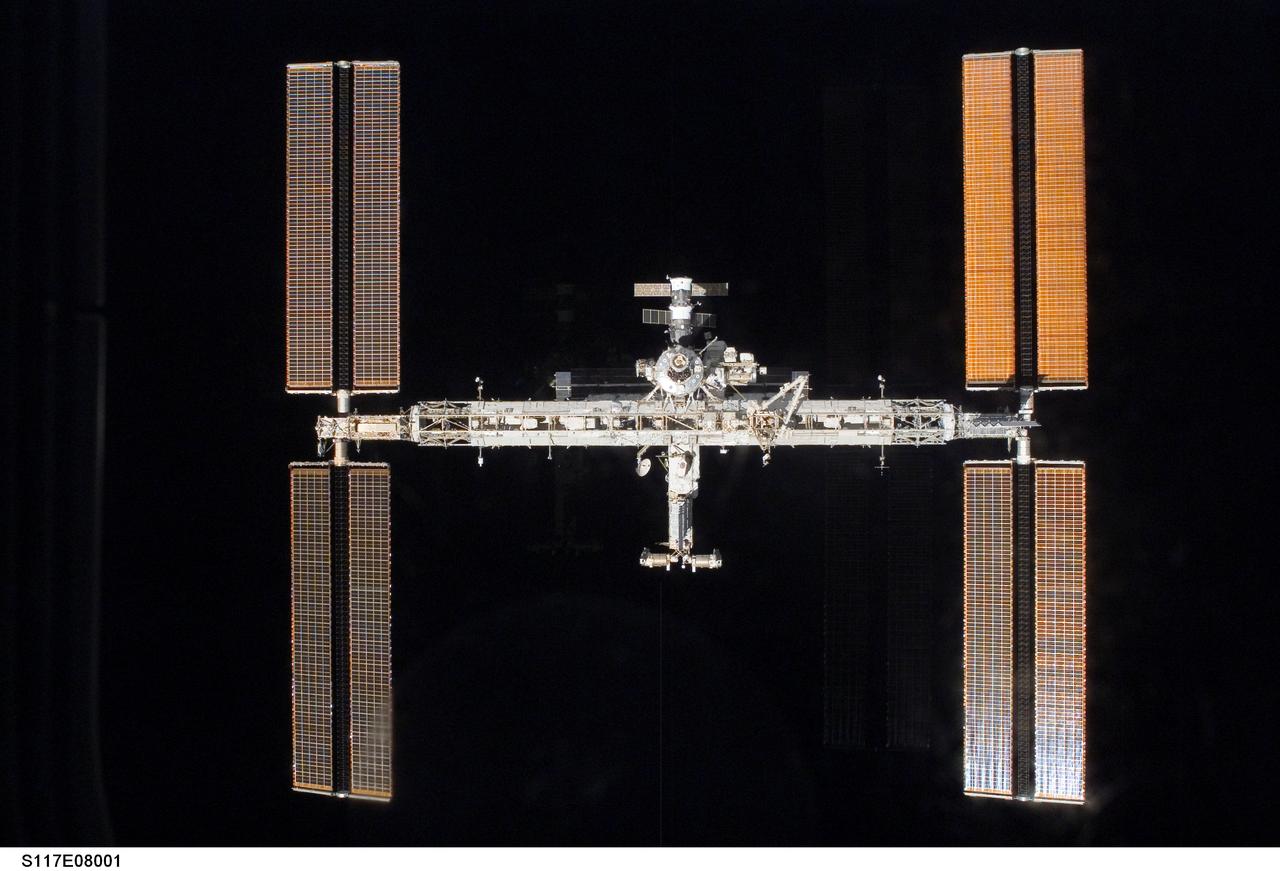
S117-E-08001 (19 June 2007) --- Backdropped by the blackness of space, the International Space Station moves away from the Space Shuttle Atlantis. Earlier the STS-117 and Expedition 15 crews concluded about eight days of cooperative work onboard the shuttle and station. Undocking of the two spacecraft occurred at 9:42 a.m. (CDT) on June 19, 2007. Astronaut Lee Archambault, STS-117 pilot, was at the controls for the departure and fly-around, which gave Atlantis' crew a look at the station's new expanded configuration.
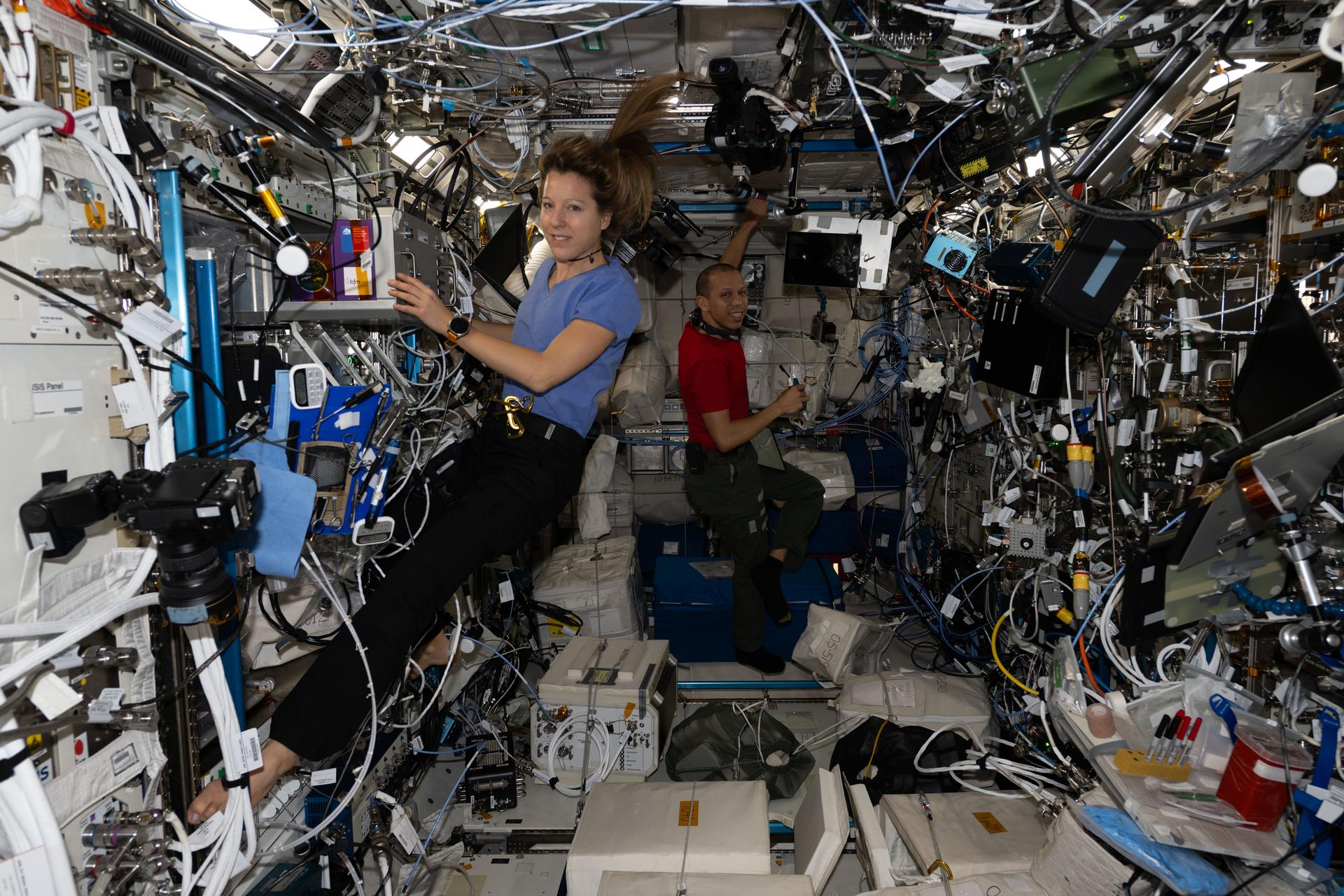
iss074e0490810 (April 15, 2026) --- Expedition 74 flight engineers Sophie Adenot of ESA (European Space Agency) and Chris Williams of NASA work together inside the International Space Station’s Columbus laboratory module to install and activate new research gear delivered on Northrop Grumman’s second Cygnus XL cargo mission. Williams was configuring the new European Enhanced Exploration Exercise Device, while Adenot was installing advanced biotechnology experiment hardware. Credit: NASA/Jessica Meir
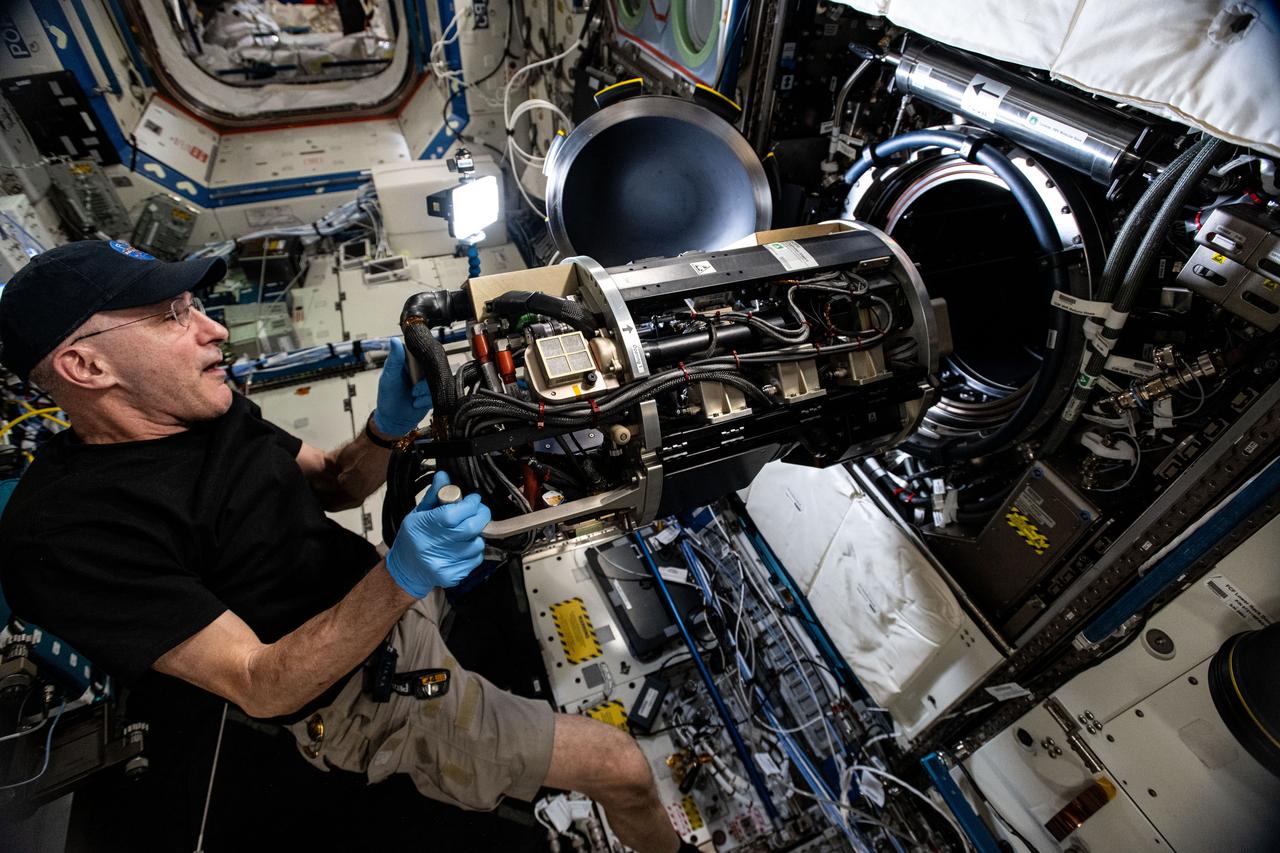
iss072e747154 (March 18, 2025) --- NASA astronaut and Expedition 72 Flight Engineer Don Pettit inserts research hardware into the Combustion Integrated Rack located inside the International Space Station's Destiny laboratory module. Pettit was configuring the SoFIE-MIST, or the Solid Fuel Ignition and Extinction - Material Ignition and Suppression Test, investigation that is exploring the flammability of materials in microgravity to improve spacecraft fire safety.
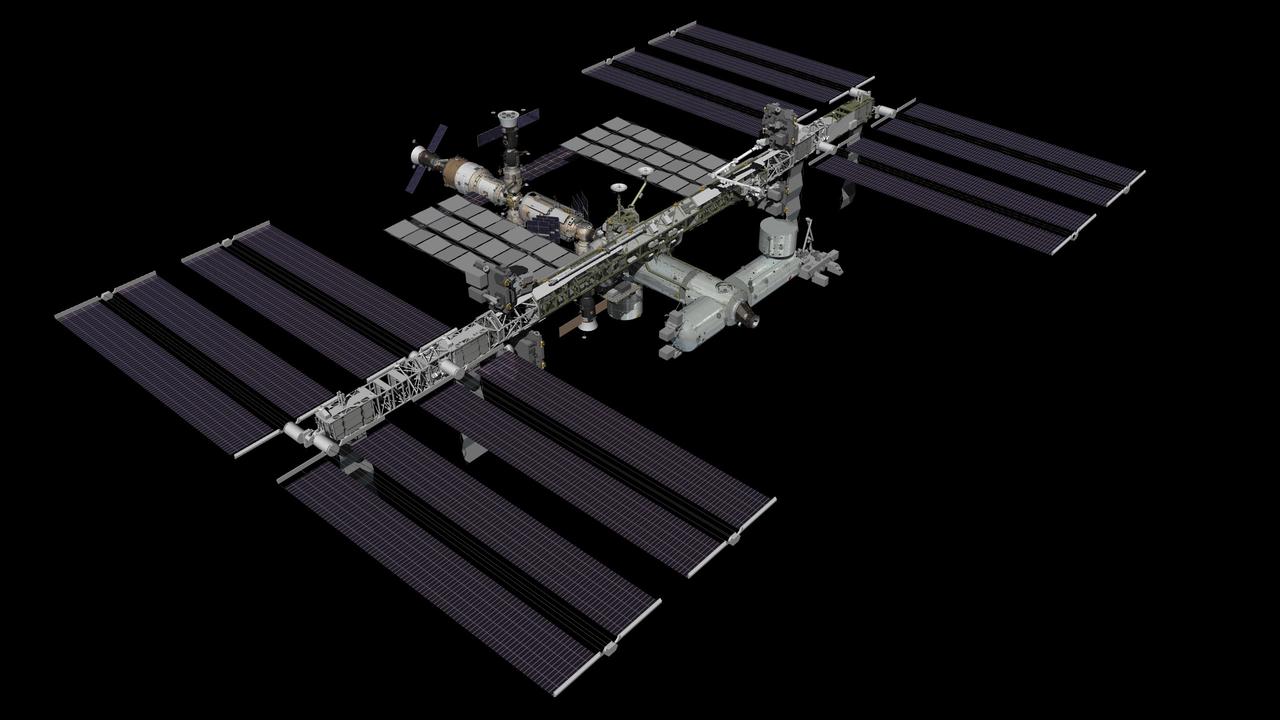
JSC2011-E-072139 (July 2011) --- Computer-generated artist?s rendering of the starboard view of the complete configuration of the International Space Station as of July 18, 2011, following the STS-135 mission. Progress 43 is linked to the aft port of the Zvezda Service Module. Soyuz 27 (TMA-02M) is docked to the Rassvet Mini-Research Module 1 (MRM1). Progress 42 is attached to the Pirs Docking Compartment and Soyuz 26 (TMA-21) is docked to the Poisk Mini-Research Module 2 (MRM2). Photo credit: NASA
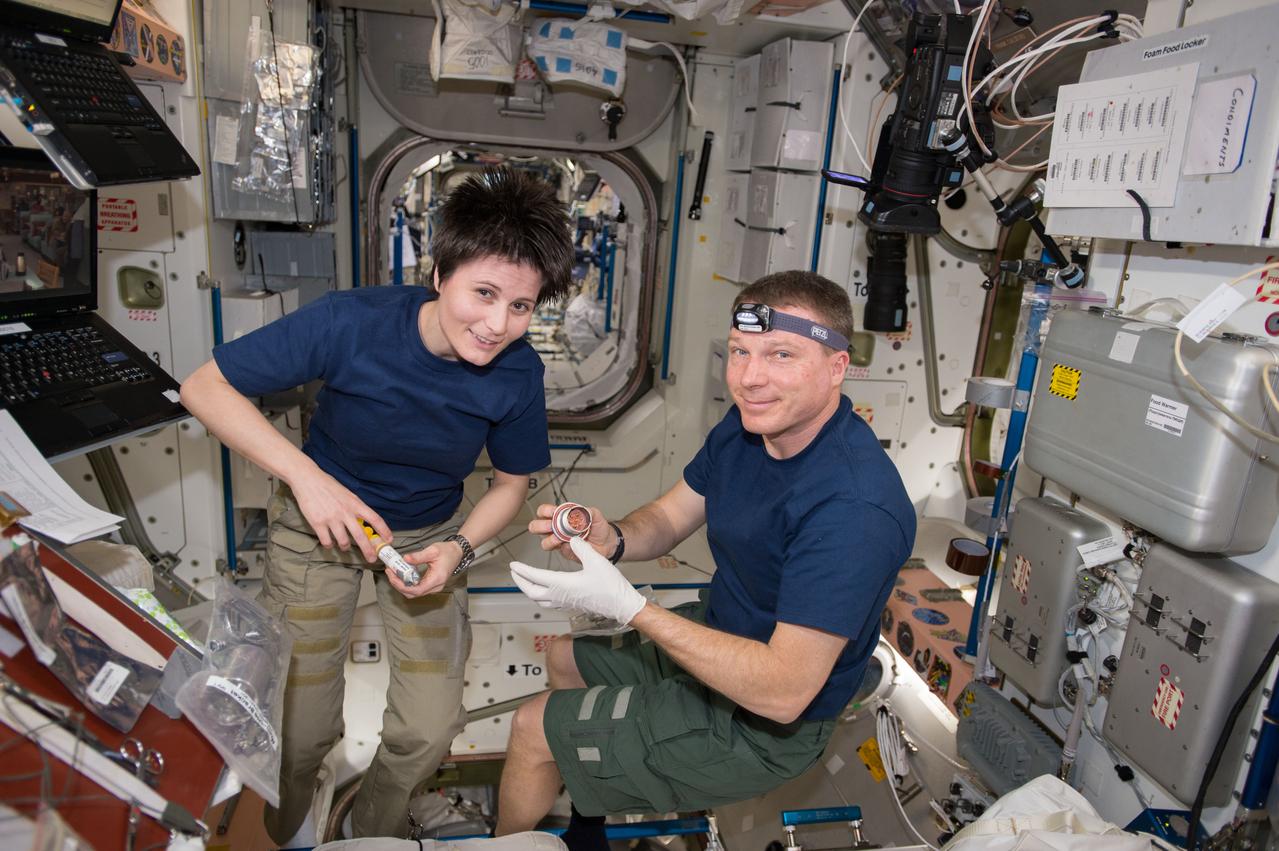
ISS042E207665 (02/03/2015) --- (ESA) European Space Agency astronaut Samantha Cristoforetti, and NASA astronaut Terry Virts are working with configuration tasks aboard the International Space Station on Feb. 3, 2015. Virts tweeted this photo with the comment "@AstroSamantha and I kick off a year of "reconfig", preparing for multiple docked cargo and manned vehicles".
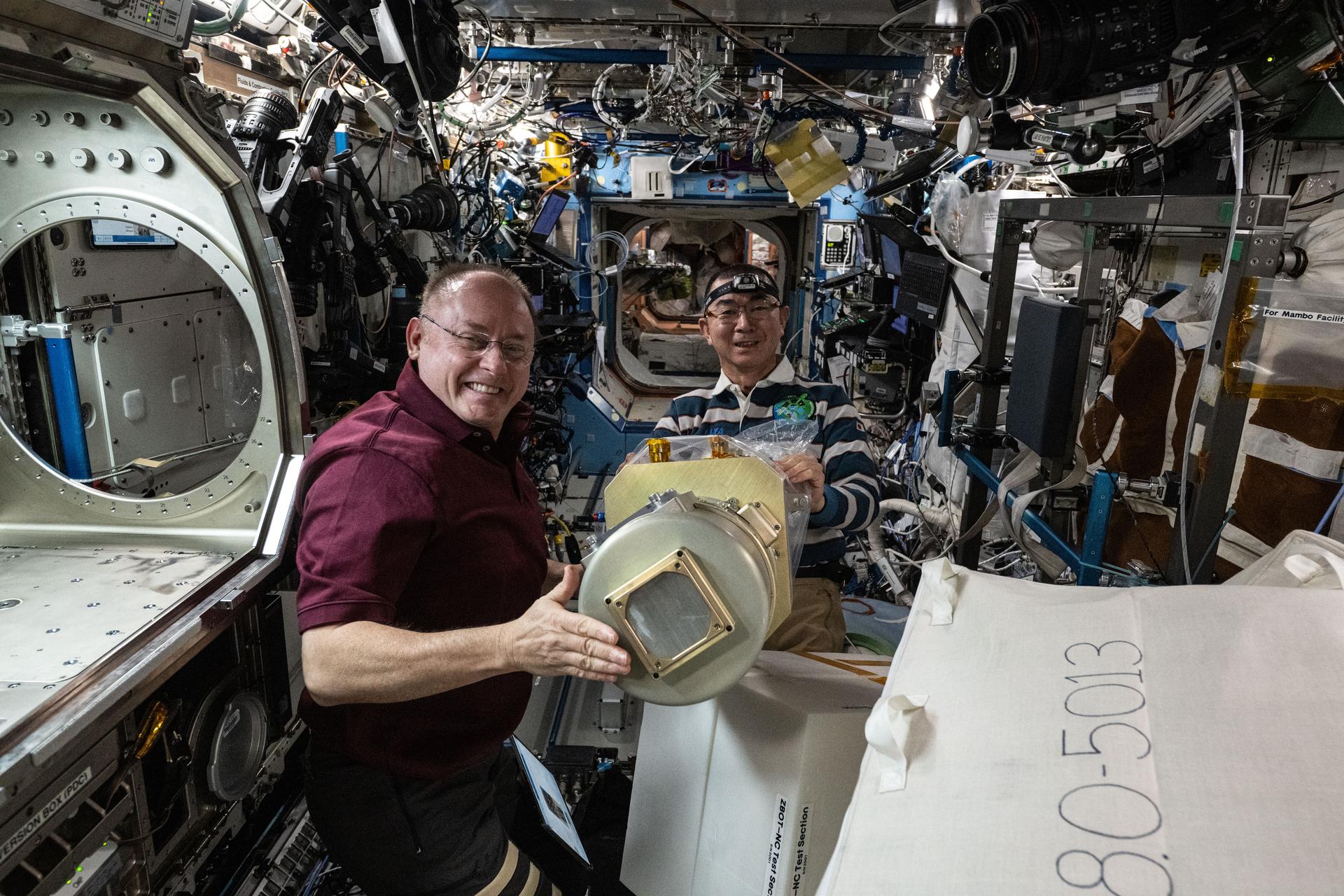
iss073e0982900 (Oct. 28, 2025) --- Expedition 73 Flight Engineers Mike Fincke of NASA and Kimiya Yui of JAXA (Japan Aerospace Exploration Agency) work together to configure research hardware for the Zero Boil-Off Tank physics investigation inside the Microgravity Science Glovebox aboard the International Space Station. The experiment explores methods for storing cryogenic fluids and supports advancements in spacecraft propulsion and life support systems, as well as biotechnological, medical, and industrial applications on Earth.