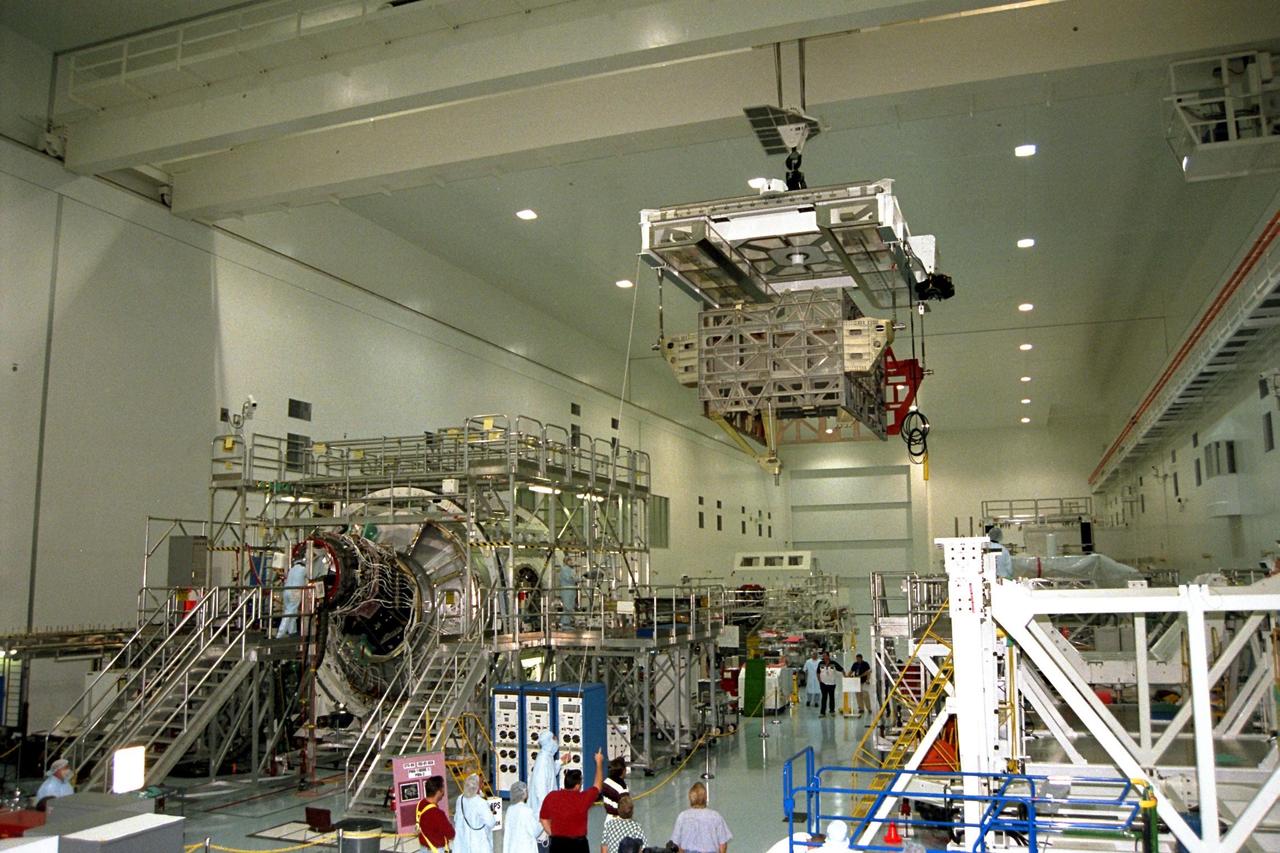
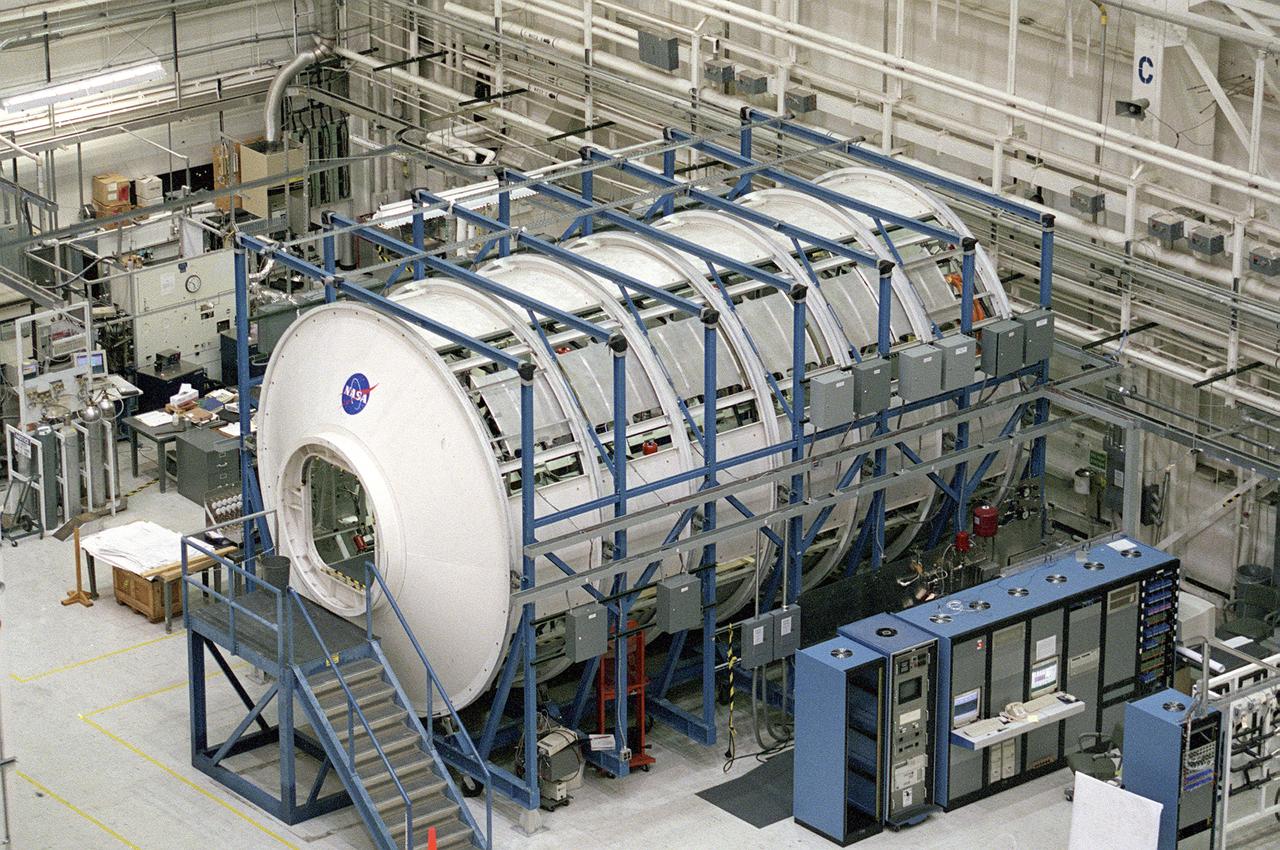
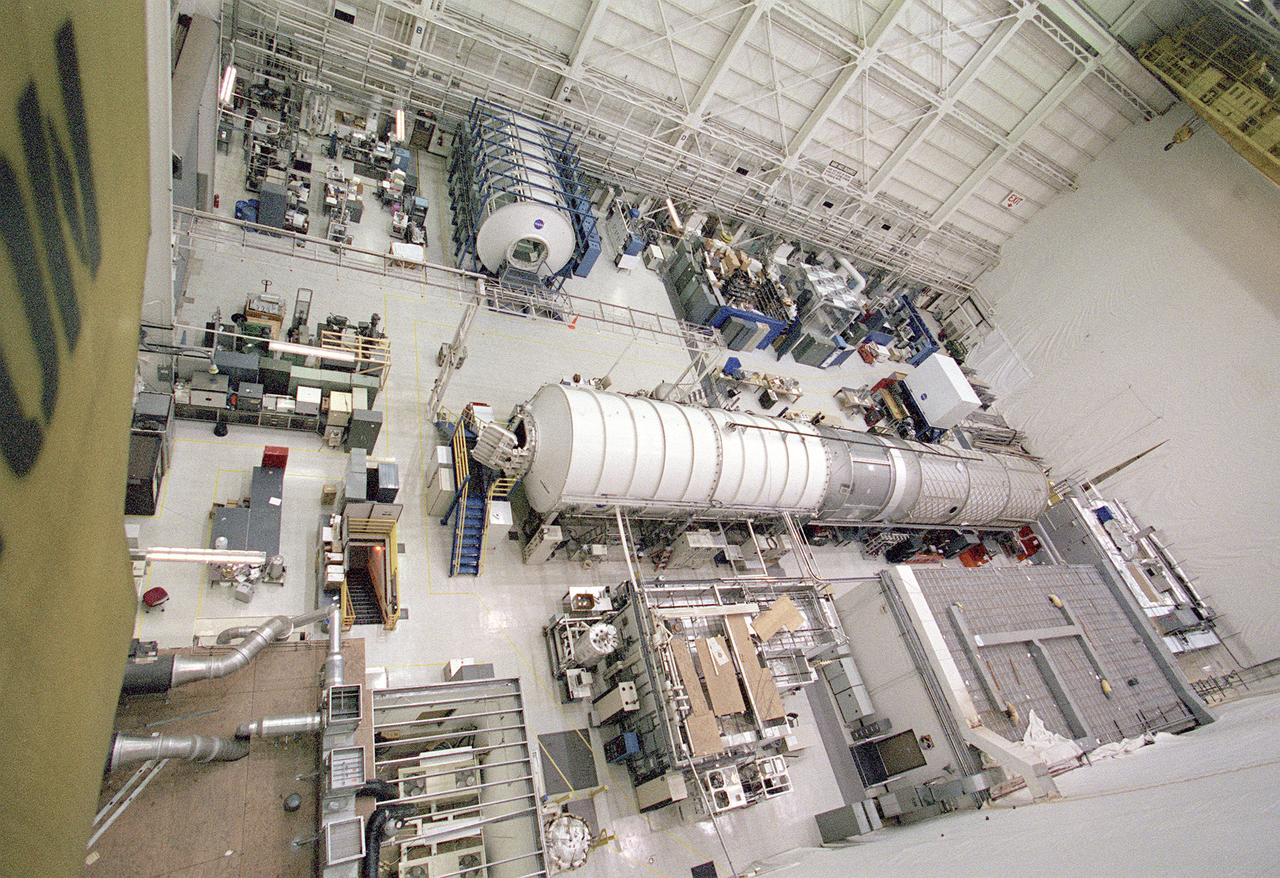
The Marshall Space Flight Center (MSFC) is responsible for designing and building the life support systems that will provide the crew of the International Space Station (ISS) a comfortable environment in which to live and work. Scientists and engineers at the MSFC are working together to provide the ISS with systems that are safe, efficient and cost-effective. These compact and powerful systems are collectively called the Environmental Control and Life Support Systems, or simply, ECLSS. This is an exterior view of the U.S. Laboratory Module Simulator containing the ECLSS Internal Thermal Control System (ITCS) testing facility at MSFC. At the bottom right is the data acquisition and control computers (in the blue equipment racks) that monitor the testing in the facility. The ITCS simulator facility duplicates the function, operation, and troubleshooting problems of the ITCS. The main function of the ITCS is to control the temperature of equipment and hardware installed in a typical ISS Payload Rack.
International Space Station (ISS)
The Marshall Space Flight Center (MSFC) is responsible for designing and building the life support systems that will provide the crew of the International Space Station (ISS) a comfortable environment in which to live and work. Scientists and engineers at the MSFC are working together to provide the ISS with systems that are safe, efficient, and cost-effective. These compact and powerful systems are collectively called the Environmental Control and Life Support Systems, or simply, ECLSS. This is a view of the ECLSS and the Internal Thermal Control System (ITCS) Test Facility in building 4755, MSFC. In the foreground is the 3-module ECLSS simulator comprised of the U.S. Laboratory Module Simulator, Node 1 Simulator, and Node 3/Habitation Module Simulator. At center left is the ITCS Simulator. The main function of the ITCS is to control the temperature of equipment and hardware installed in a typical ISS Payload Rack.
International Space Station (ISS)
The Marshall Space Flight Center (MSFC) is responsible for designing and building the life support systems that will provide the crew of the International Space Station (ISS) a comfortable environment in which to live and work. Scientists and engineers at the MSFC are working together to provide the ISS with systems that are safe, efficient, and cost-effective. These compact and powerful systems are collectively called the Environmental Control and Life Support Systems, or simply, ECLSS. This is a view of the ECLSS and the Internal Thermal Control System (ITCS) Test Facility in building 4755, MSFC. In the foreground is the 3-module ECLSS simulator comprised of the U.S. Laboratory Module Simulator, Node 1 Simulator, and Node 3/Habitation Module Simulator. On the left is the ITCS Simulator. The main function of the ITCS is to control the temperature of equipment and hardware installed in a typical ISS Payload Rack.
International Space Station (ISS)
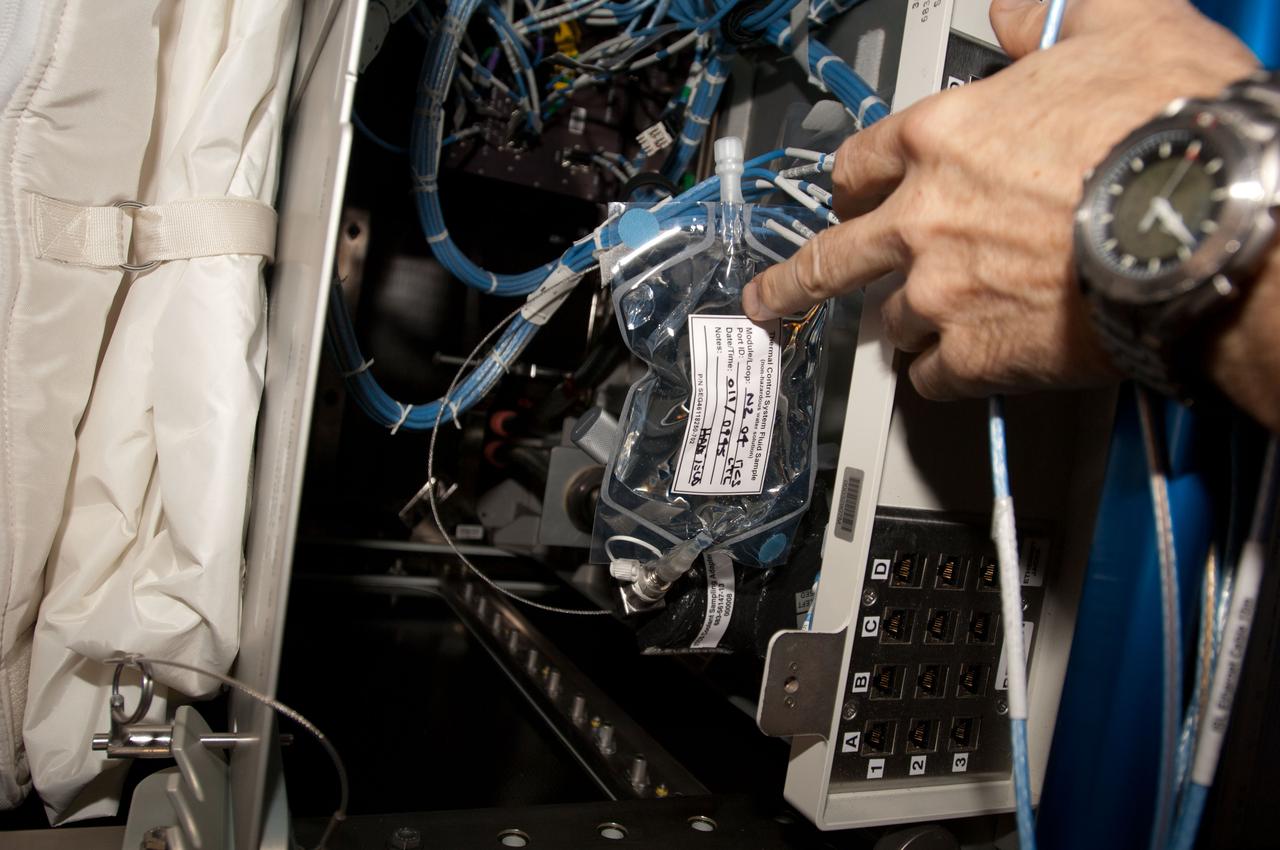
View during Internal Thermal Control System (ITCS) - Measuring valve parameters in the Node 3.  Photo was taken during Expedition 34.
ITCS - Measurement Valve Parameters in the Node 3
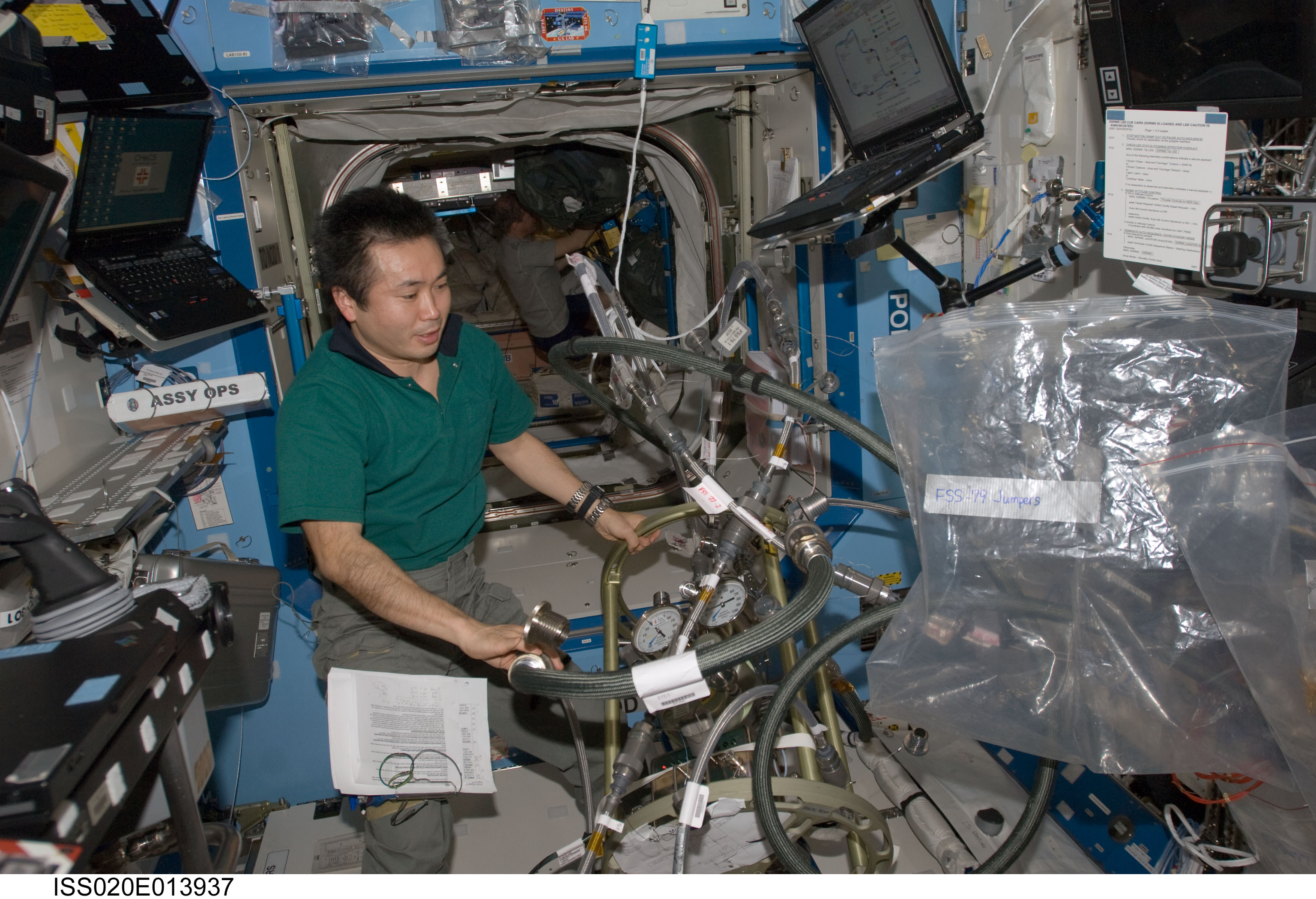
ISS020-E-013937 (23 June 2009) --- Japan Aerospace Exploration Agency (JAXA) astronaut Koichi Wakata, Expedition 20 flight engineer, works with the Fluid Control Pump Assembly (FCPA), which is a part of the Internal Thermal Control System (ITCS) in the Destiny laboratory on the International Space Station.
ITCS coolant refill
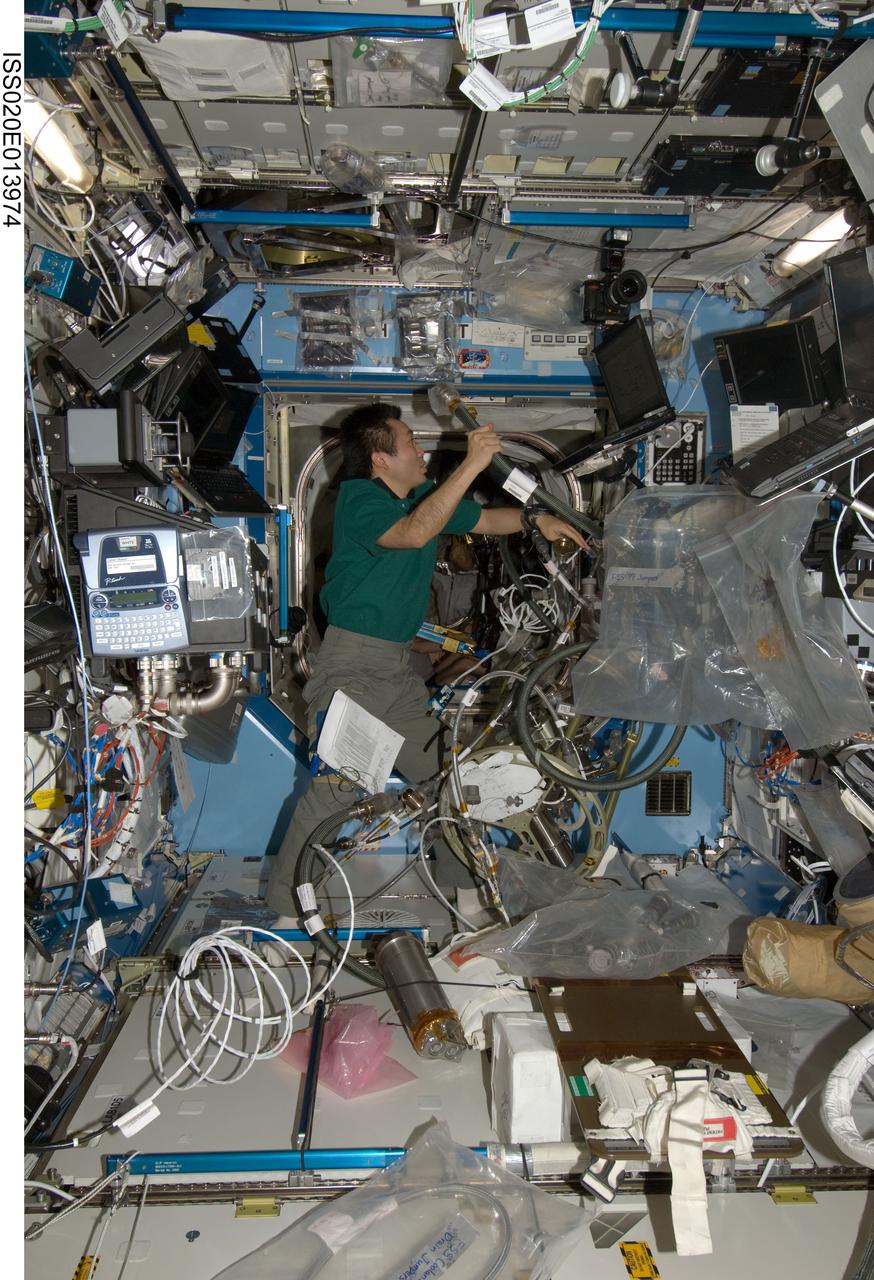
ISS020-E-013974 (23 June 2009) --- Japan Aerospace Exploration Agency (JAXA) astronaut Koichi Wakata, Expedition 20 flight engineer, works with the Fluid Control Pump Assembly (FCPA), which is a part of the Internal Thermal Control System (ITCS) in the Destiny laboratory on the International Space Station.
ITCS FSS
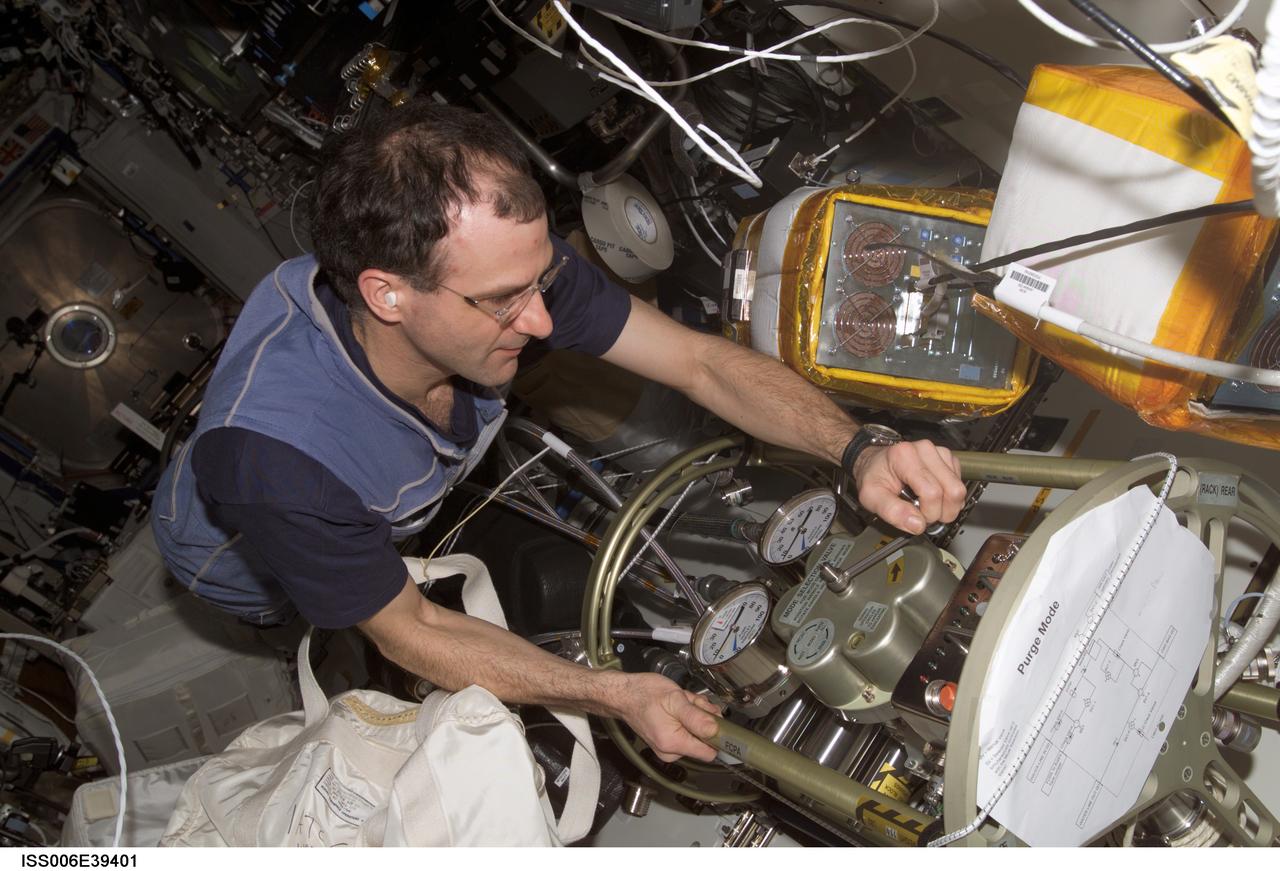
ISS006-E-39401 (17 March 2003) --- Astronaut Donald R. Pettit, Expedition Six NASA ISS science officer, makes a valve adjustment to the Fluid Control Pump Assembly (FCPA), which is a part of the Internal Thermal Control System (ITCS) in the Destiny laboratory on the International Space Station (ISS).
Flight Engineer Donald R. Pettit making a valve adjustment to the FCPA
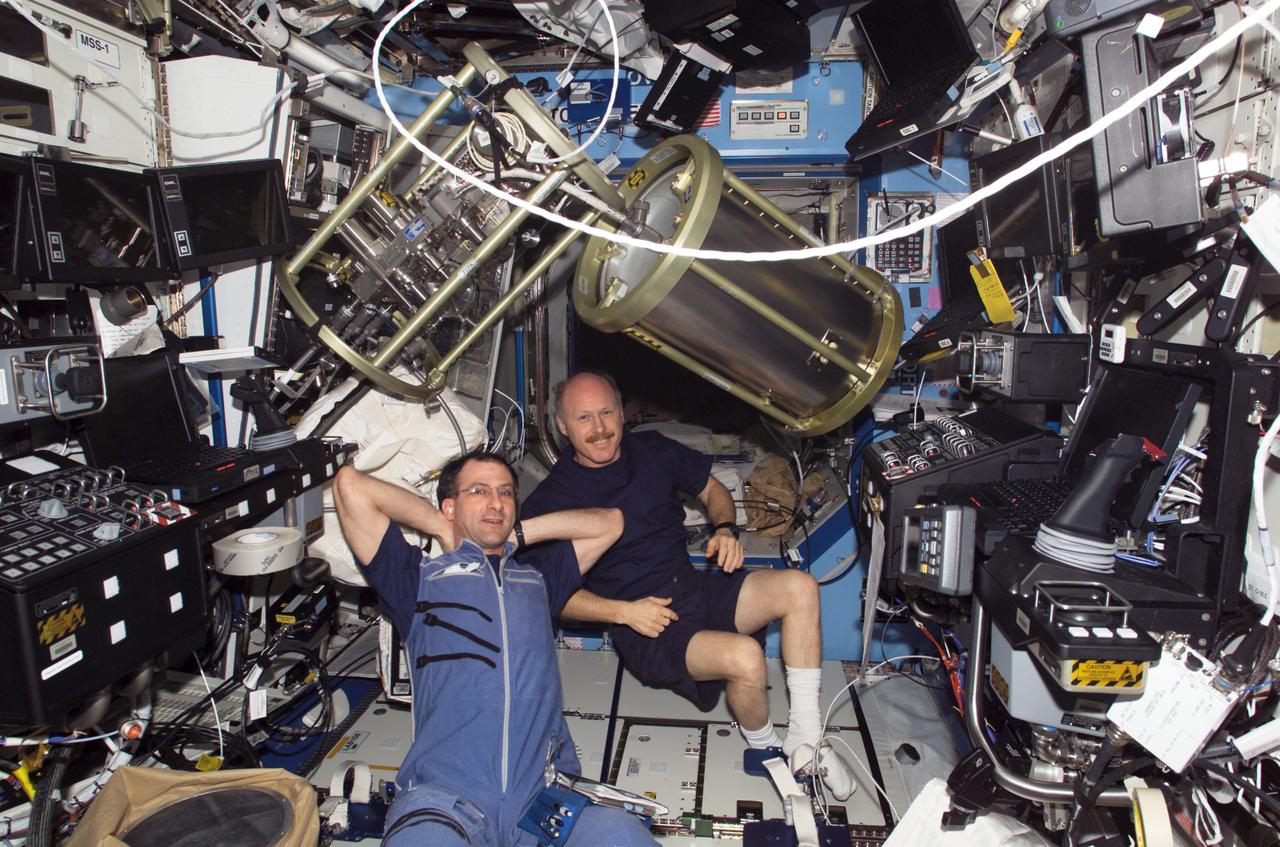
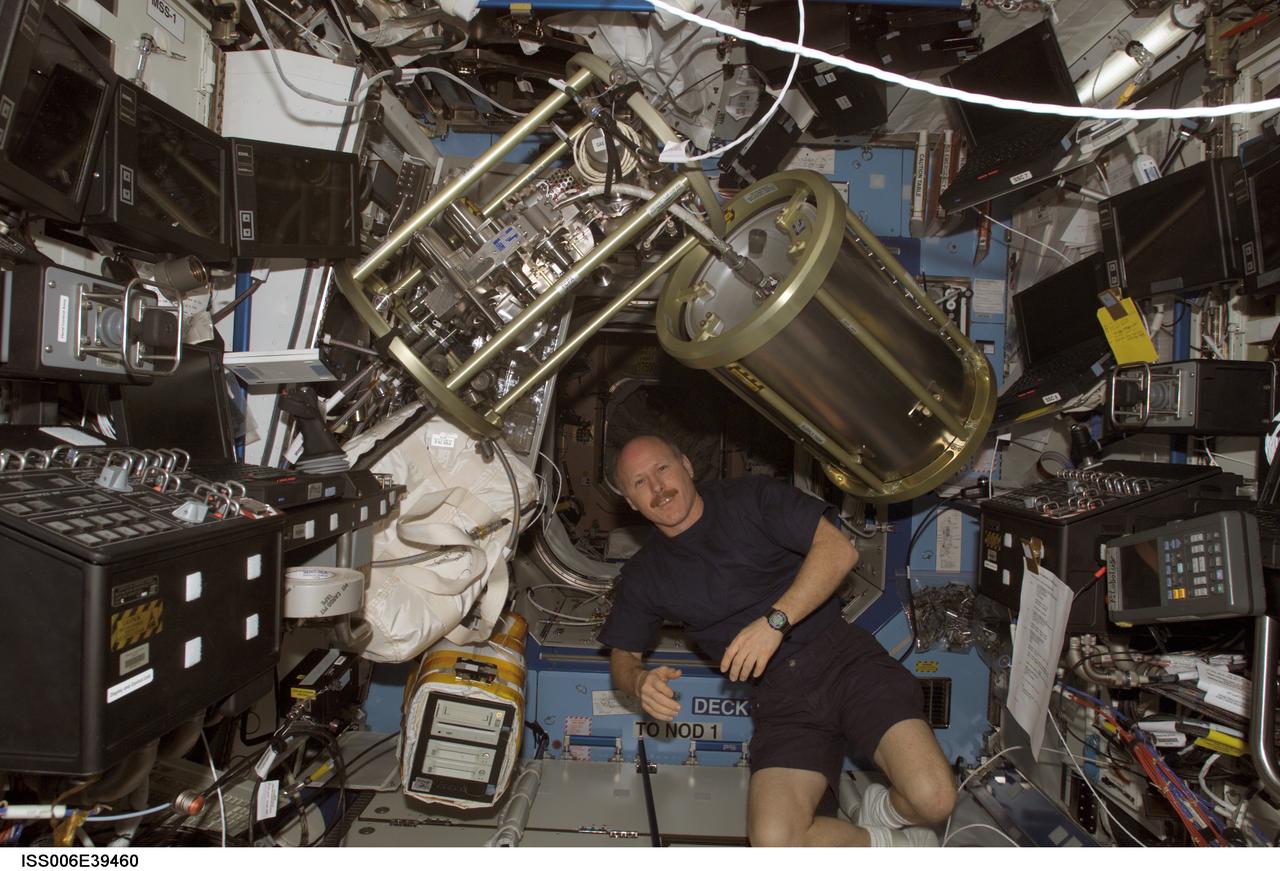
ISS006-E-39460 (18 March 2003) --- Astronaut Kenneth D. Bowersox, Expedition Six mission commander, is pictured in the Destiny laboratory on the International Space Station (ISS). The supply tank and Fluid Control Pump Assembly (FCPA), which are a part of the Internal Thermal Control System (ITCS), are visible floating freeing above Bowersox.
Commander Kenneth D. Bowersox posing with Supply Tank and FCPA as part of the ITCS
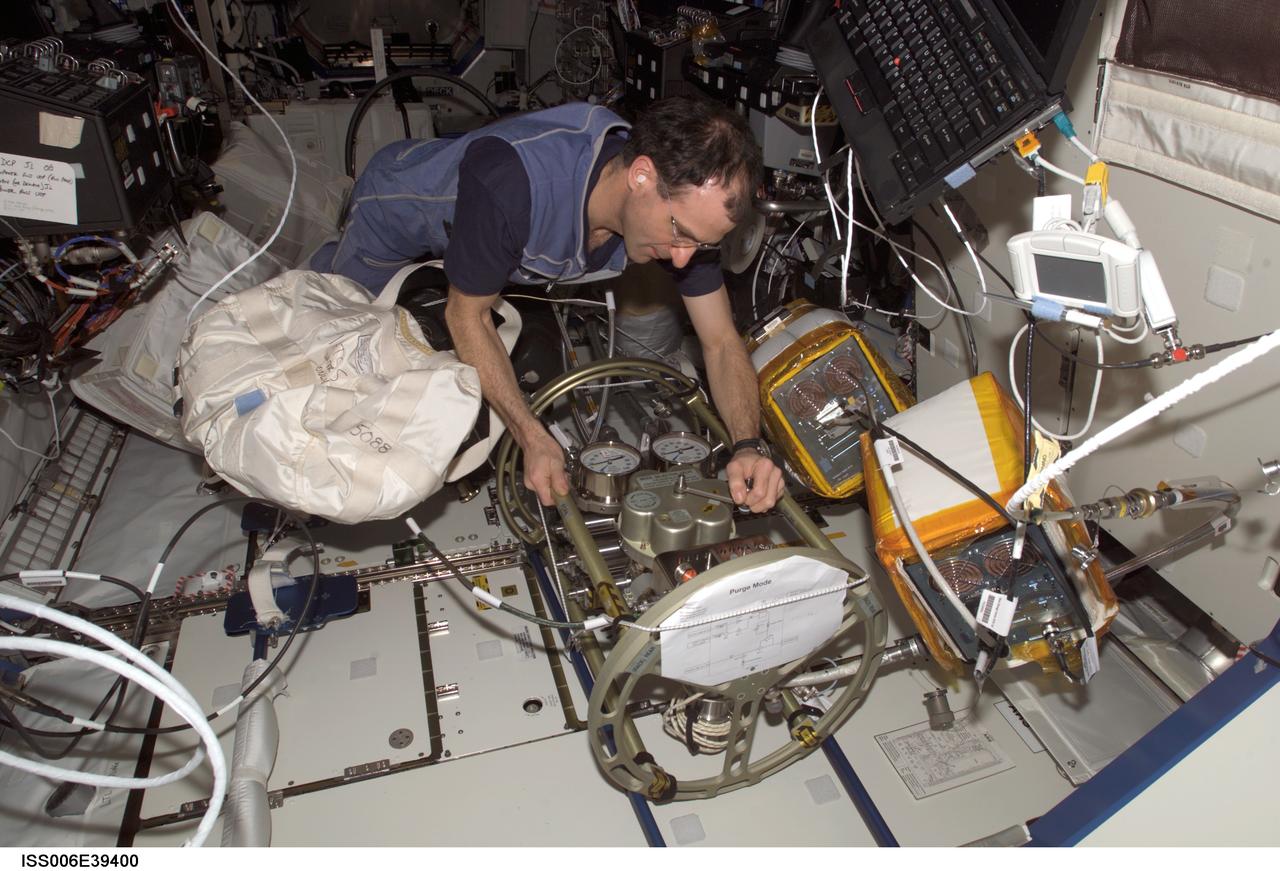
ISS006-E-39400 (17 March 2003) --- Astronaut Donald R. Pettit, Expedition Six NASA ISS science officer, makes a valve adjustment to the Fluid Control Pump Assembly (FCPA), which is a part of the Internal Thermal Control System (ITCS) in the Destiny laboratory on the International Space Station (ISS).
Flight Engineer Donald R. Pettit making a valve adjustment to the FCPA
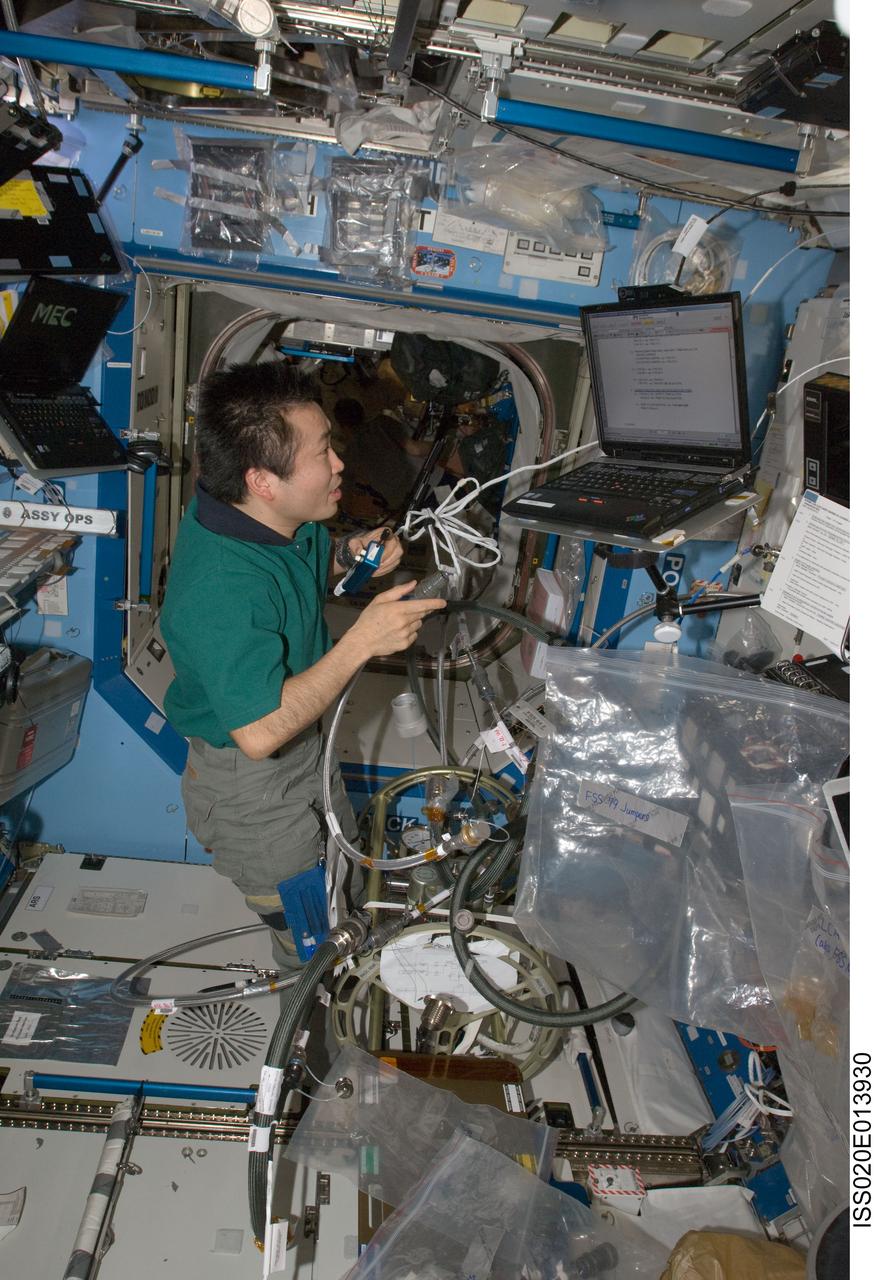
ISS020-E-013930 (23 June 2009) --- Japan Aerospace Exploration Agency (JAXA) astronaut Koichi Wakata, Expedition 20 flight engineer, works with the Fluid Control Pump Assembly (FCPA), which is a part of the Internal Thermal Control System (ITCS) in the Destiny laboratory on the International Space Station.
ITCS coolant refill
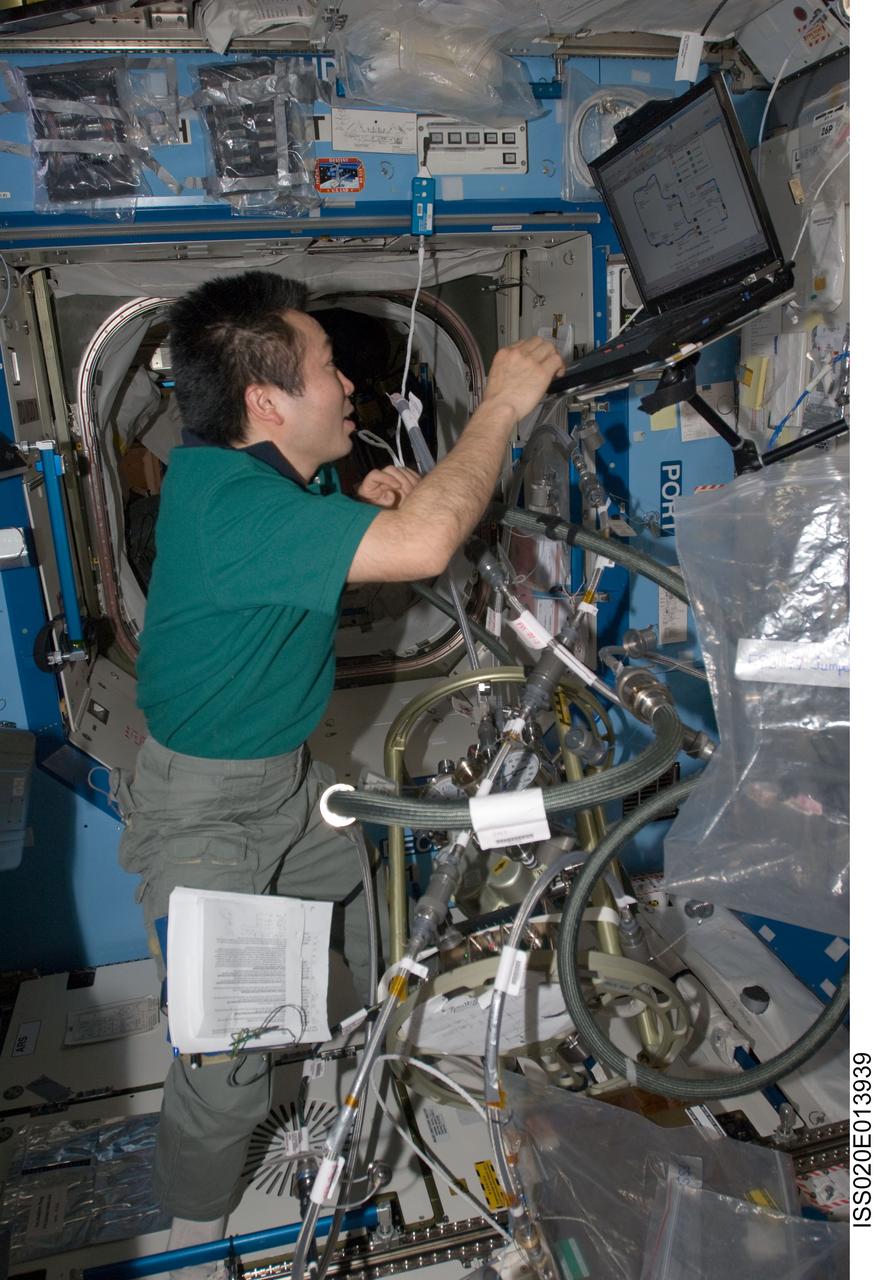
ISS020-E-013939 (23 June 2009) --- Japan Aerospace Exploration Agency (JAXA) astronaut Koichi Wakata, Expedition 20 flight engineer, uses a computer while working with the Fluid Control Pump Assembly (FCPA), which is a part of the Internal Thermal Control System (ITCS) in the Destiny laboratory on the International Space Station.
ITCS coolant refill
JSC2007-E-099883 (November 2007) --- Computer-generated artist's rendering of the 10A stage configuration of the International Space Station as of Nov. 15, 2007. The port side Thermal Control System radiators are fully deployed.
Current Configuration of the ISS for use on HSF website
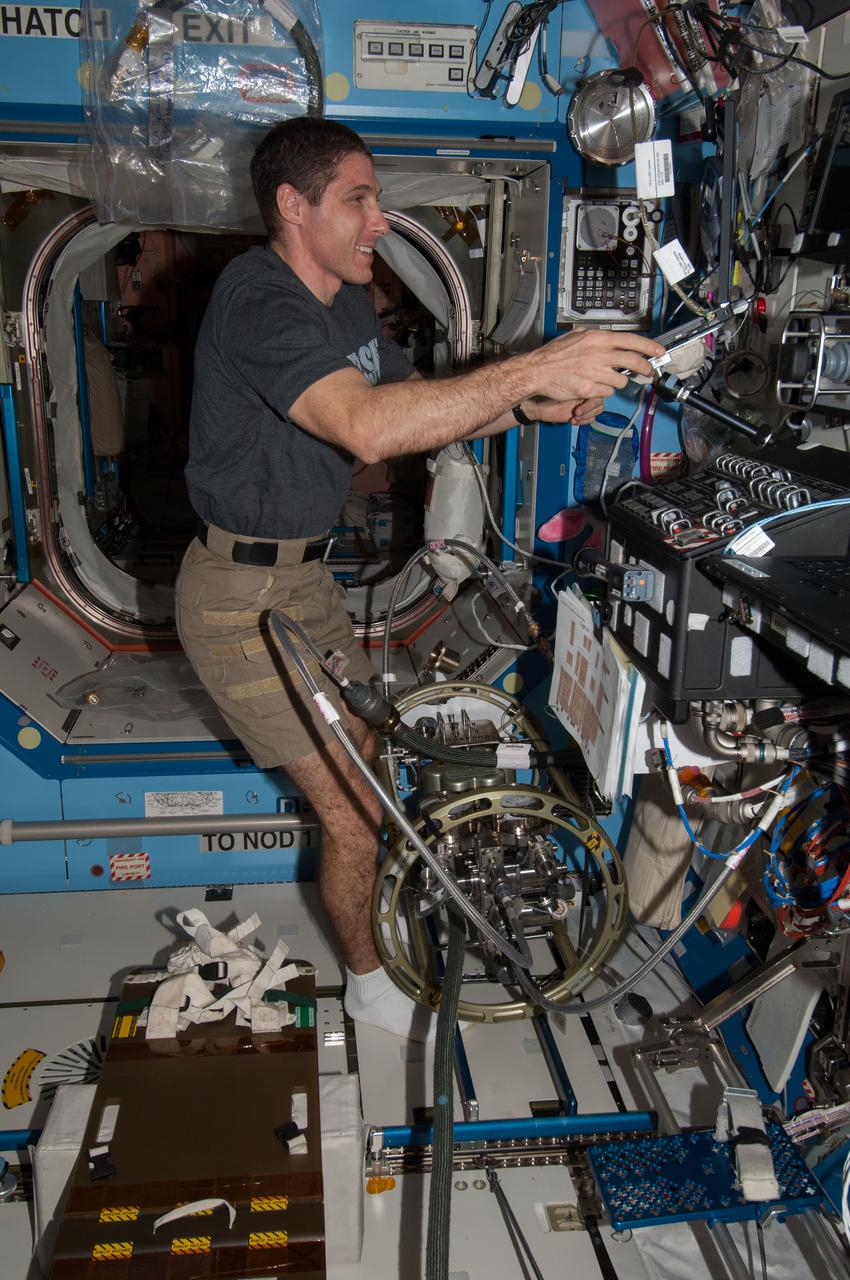
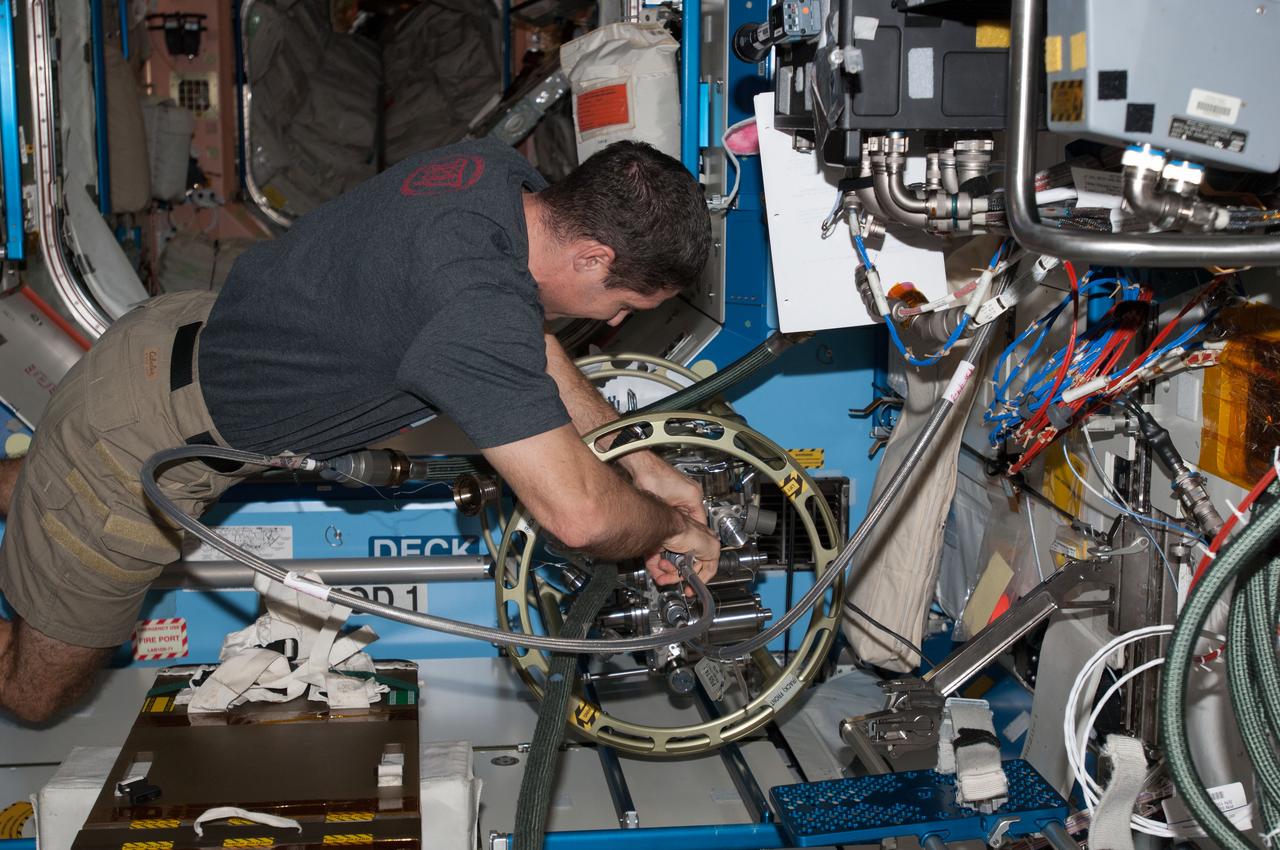
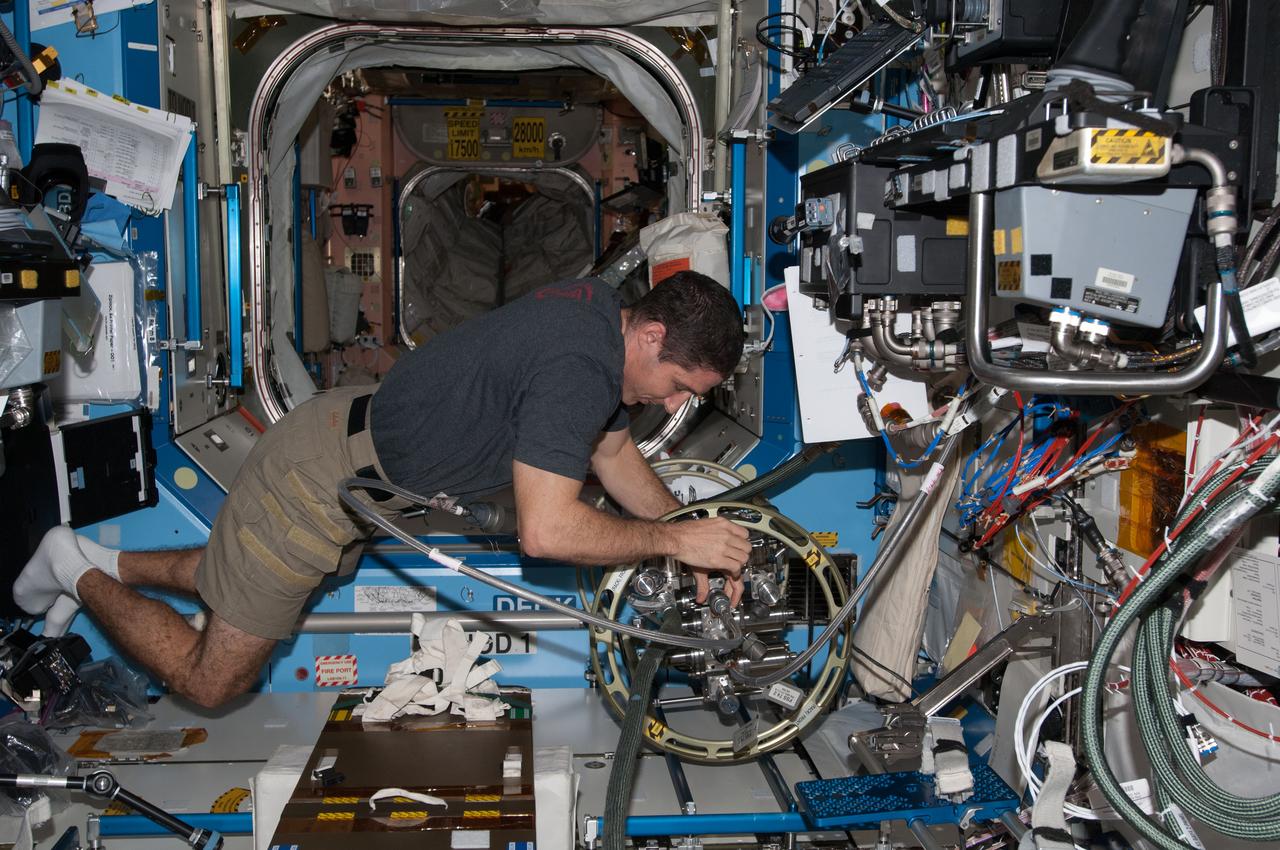
ISS038-E-040139 (31 Jan. 2014) --- NASA astronaut Mike Hopkins, Expedition 38 flight engineer, uses the Fluid Servicing System (FSS) to refill Internal Thermal Control System (ITCS) loops with fresh coolant in the Destiny laboratory of the International Space Station.
Hopkins during ITCS PWR Retrieval
ISS038-E-040111 (31 Jan. 2014) --- NASA astronaut Mike Hopkins, Expedition 38 flight engineer, uses the Fluid Servicing System (FSS) to refill Internal Thermal Control System (ITCS) loops with fresh coolant in the Destiny laboratory of the International Space Station.
Hopkins using FSS to refill ITCS
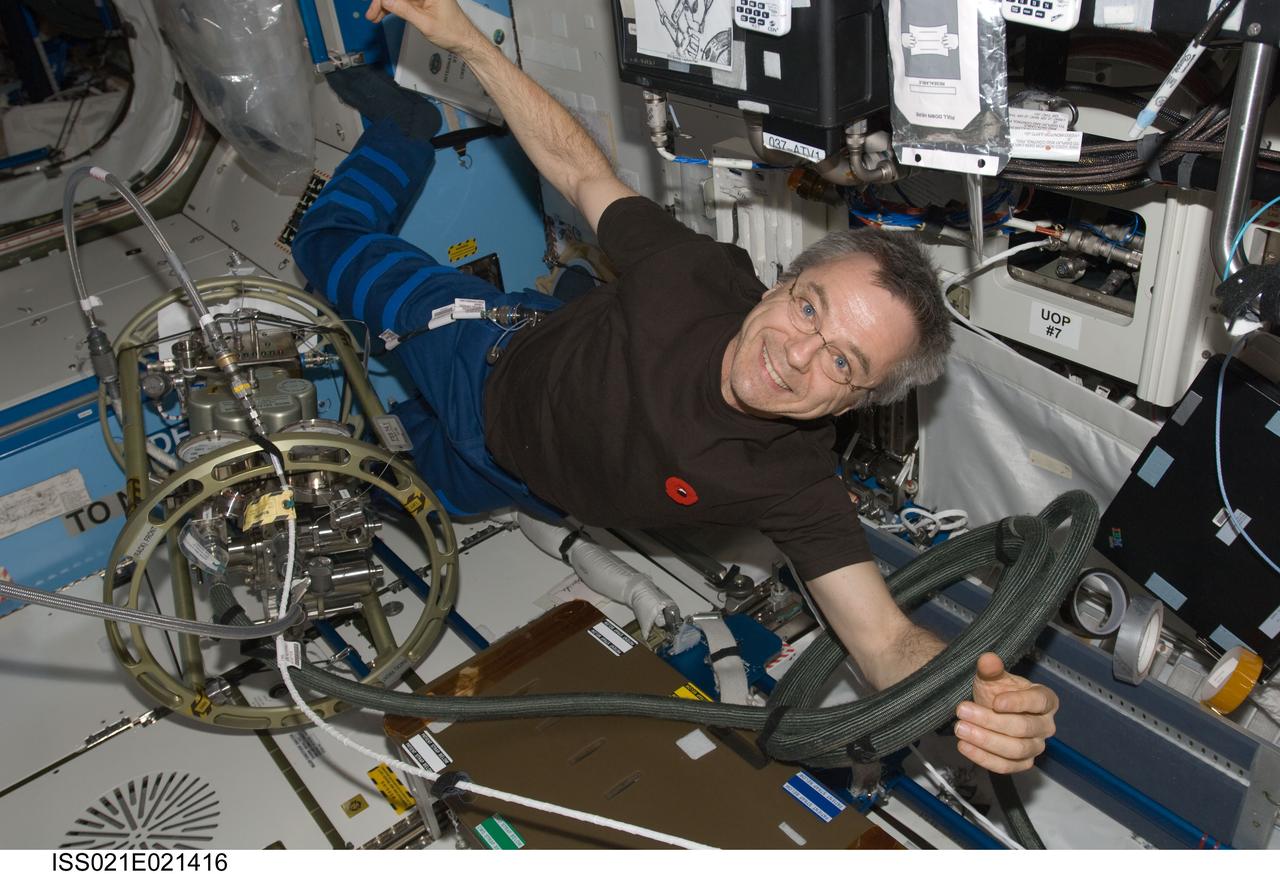
ISS021-E-021416 (5 Nov. 2009) --- Canadian Space Agency astronaut Robert Thirsk, Expedition 21 flight engineer, uses the Fluid Servicing System (FSS) to refill Internal Thermal Control System (ITCS) loops with fresh coolant in the Destiny laboratory of the International Space Station.
Fluid Servicing System (FSS) in the US Lab
ISS038-E-040140 (31 Jan. 2014) --- NASA astronaut Mike Hopkins, Expedition 38 flight engineer, uses the Fluid Servicing System (FSS) to refill Internal Thermal Control System (ITCS) loops with fresh coolant in the Destiny laboratory of the International Space Station.
Hopkins during ITCS PWR Retrieval
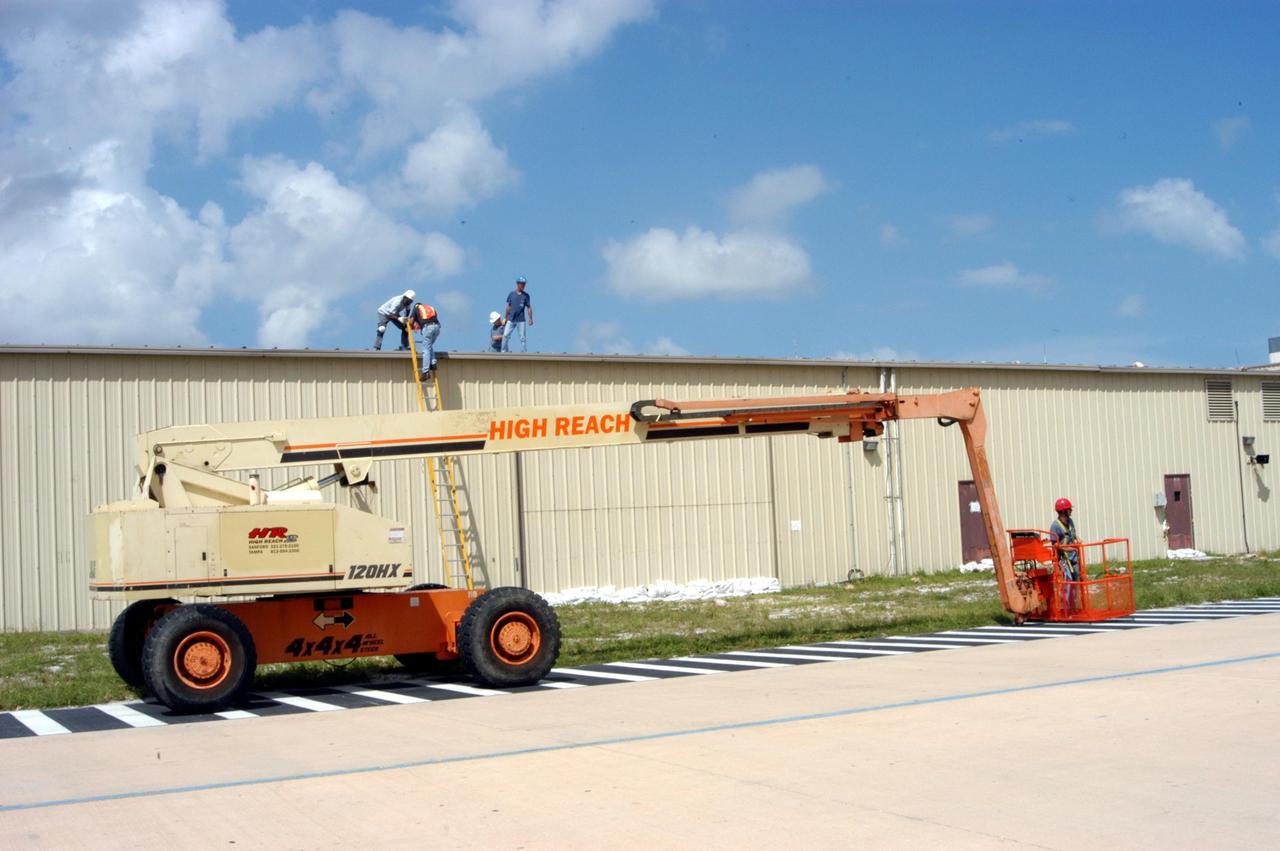
KENNEDY SPACE CENTER, FLA. - Workers attempt to secure the roof of the Tile Shop in the Thermal Protection System Facility (TPSF) in preparation for Hurricane Jeanne, which is expected to impact Central Florida Sunday.  The TPSF, which creates the TPS tiles, blankets and all the internal thermal control systems for the Space Shuttles, lost approximately 35 percent of its roof during Hurricane Frances, which blew across Central Florida Sept. 4.  Jeanne is the fourth hurricane in 45 days to make landfall somewhere in the state.
KSC-04pd1902
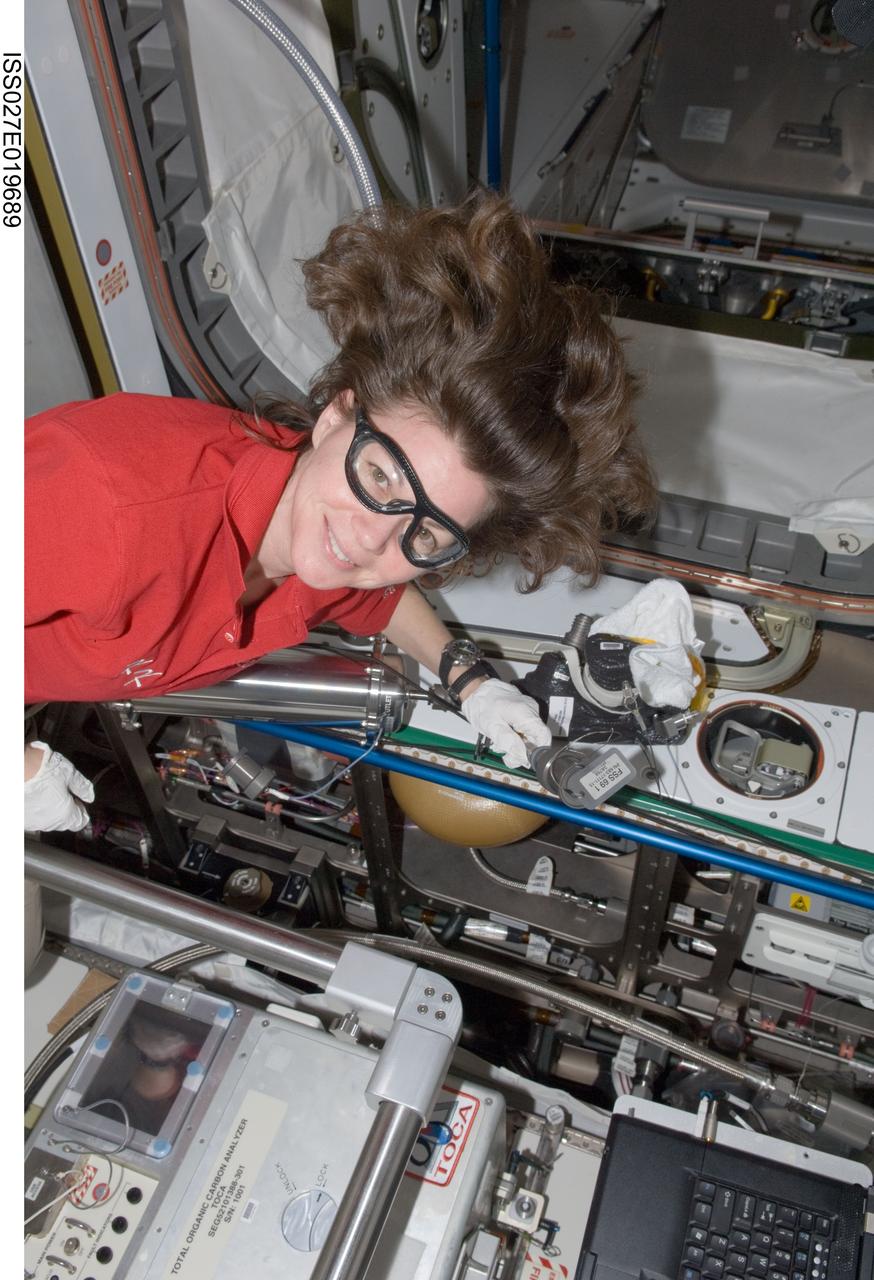
ISS027-E-019689 (22 April 2011) --- NASA astronaut Cady Coleman, Expedition 27 flight engineer, works with the Internal Thermal Control System Moderate Temperature Loop (ITCS MTL) in the Tranquility node of the International Space Station.
Coleman during AmiA Removal OPS in Node 3
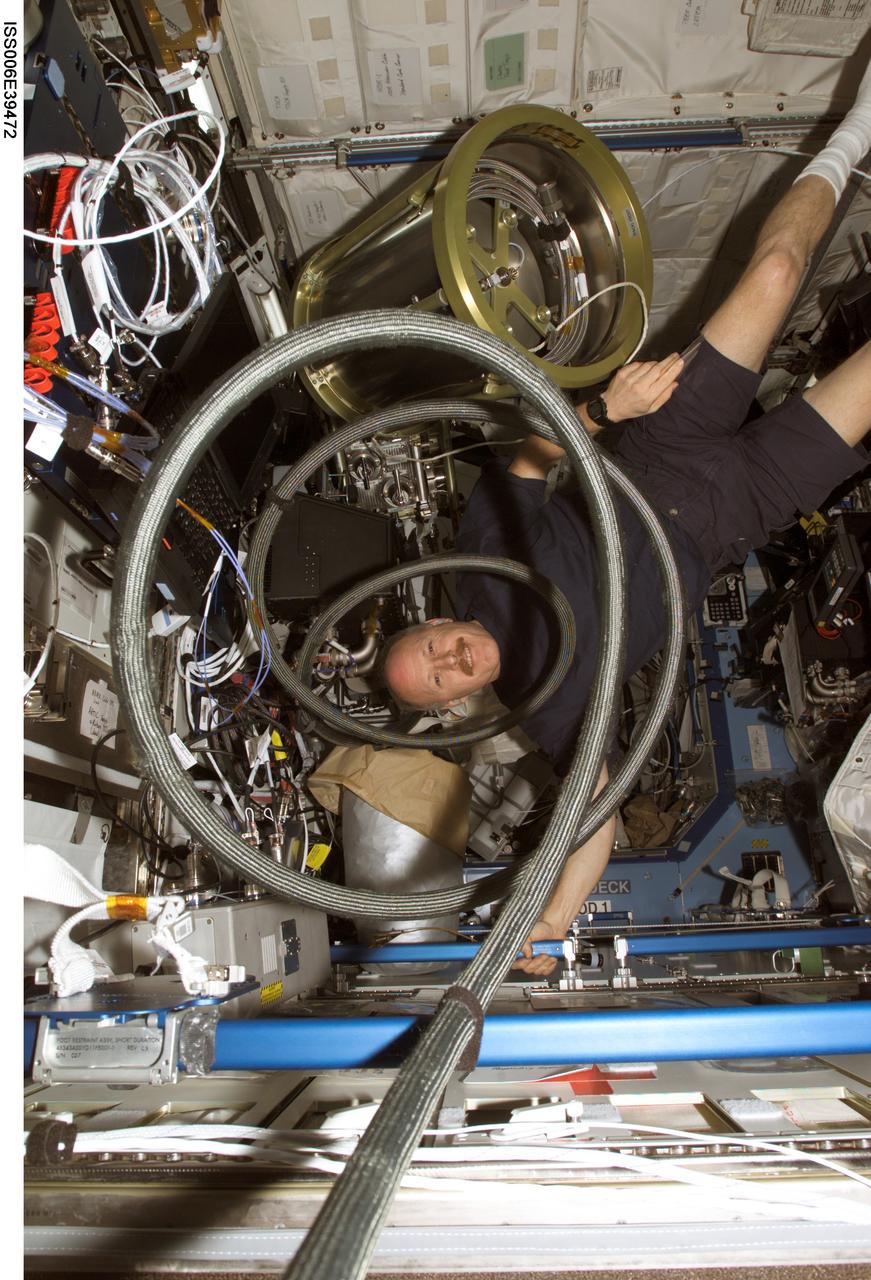
ISS006-E-39472 (18 March 2003) --- Astronaut Kenneth D. Bowersox, Expedition Six mission commander, floats with a supply tank, which is a part of the Internal Thermal Control System (ITCS) in the Destiny laboratory on the International Space Station (ISS).
Commander Kenneth D. Bowersox posing with Supply Tank as part of the ITCS
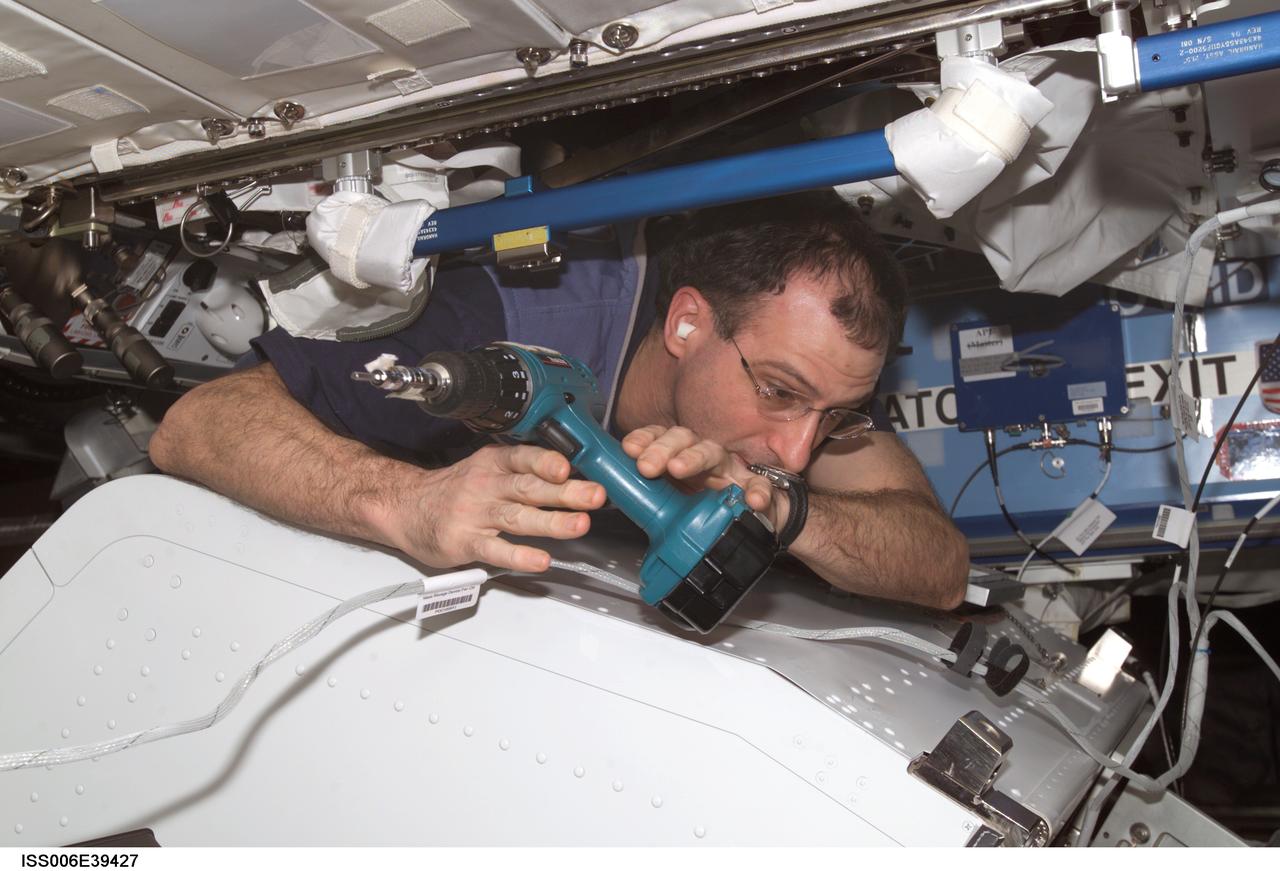
ISS006-E-39427 (17 March 2003) --- Astronaut Donald R. Pettit, Expedition Six NASA ISS science officer, uses a drill to disassemble framework of the Internal Thermal Control System (ITCS) in the Destiny laboratory on the International Space Station (ISS).
Flight Engineer Donald R. Pettit is disassembling framework of the ITCS
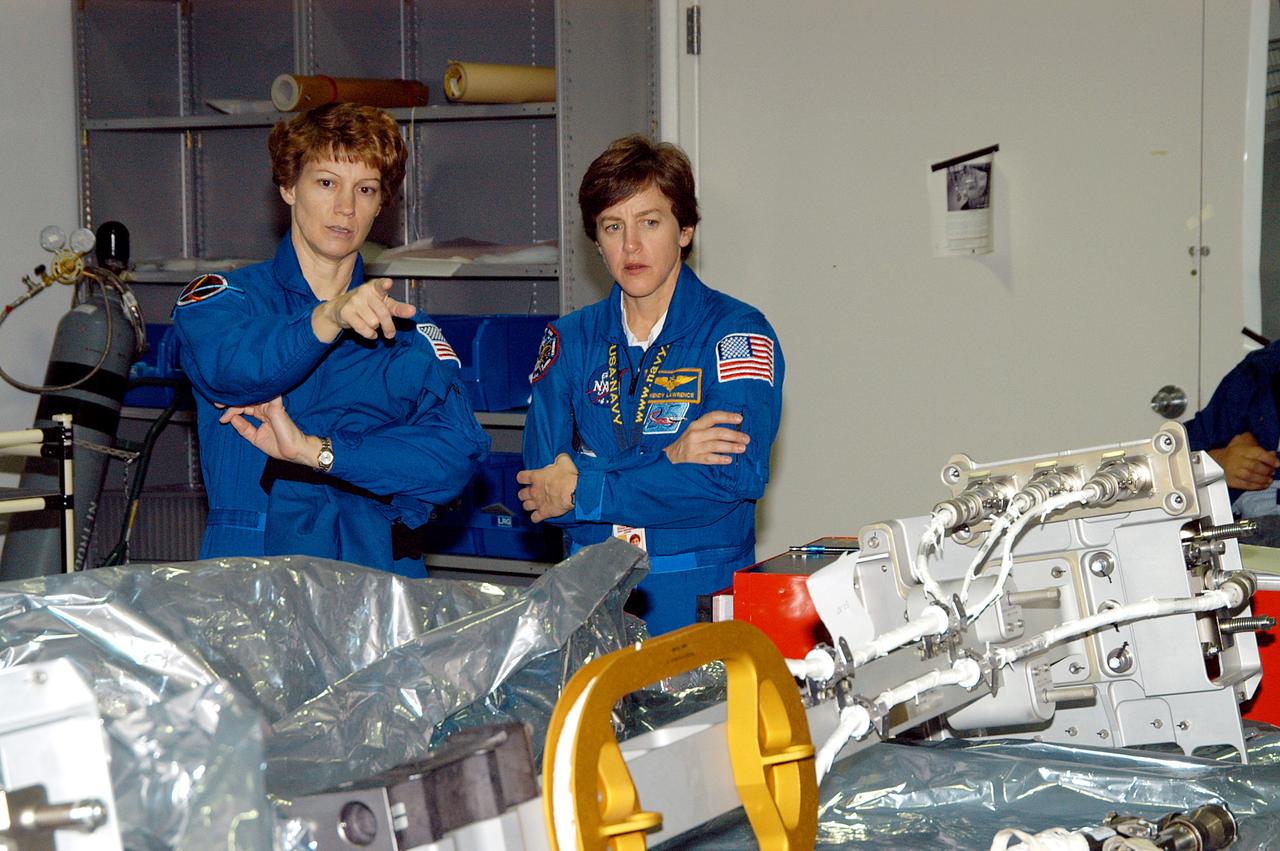
KENNEDY SPACE CENTER, FLA. -  STS-114 Commander Eileen Collins and Mission Specialist Wendy Lawrence look over mission equipment in the Space Station Processing Facility.  Crew members are at KSC for equipment familiarization.  STS-114 is classified as Logistics Flight 1 to the International Space Station, delivering new supplies and replacing one of the orbital outpost’s Control Moment Gyroscopes (CMGs). STS-114 will also carry a Raffaello Multi-Purpose Logistics Module and the External Stowage Platform-2.  The crew is slated to conduct at least three spacewalks: They will demonstrate repair techniques of the Shuttle’s Thermal Protection System,  replace the failed CMG with one delivered by the Shuttle, and  install the External Stowage Platform.
KENNEDY SPACE CENTER, FLA. - STS-114 Commander Eileen Collins and Mission Specialist Wendy Lawrence look over mission equipment in the Space Station Processing Facility. Crew members are at KSC for equipment familiarization. STS-114 is classified as Logistics Flight 1 to the International Space Station, delivering new supplies and replacing one of the orbital outpost’s Control Moment Gyroscopes (CMGs). STS-114 will also carry a Raffaello Multi-Purpose Logistics Module and the External Stowage Platform-2. The crew is slated to conduct at least three spacewalks: They will demonstrate repair techniques of the Shuttle’s Thermal Protection System, replace the failed CMG with one delivered by the Shuttle, and install the External Stowage Platform.
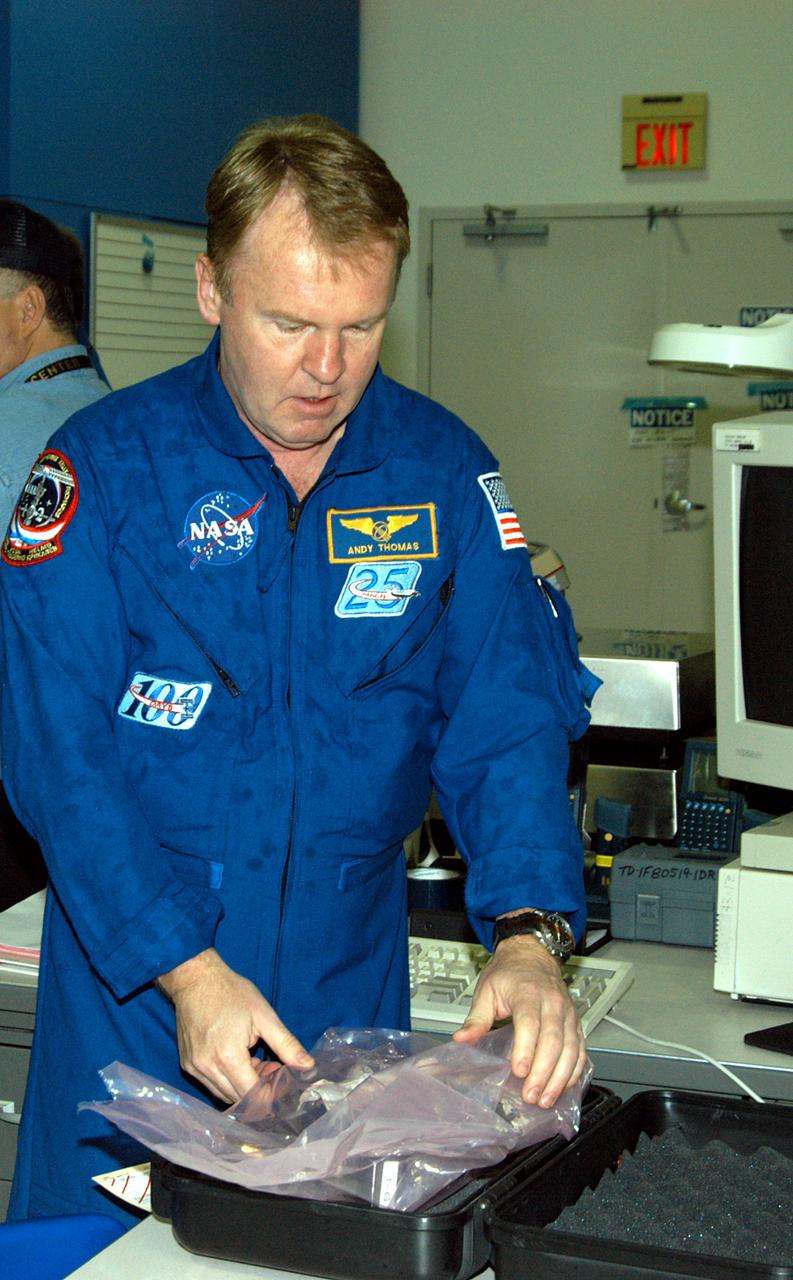
KENNEDY SPACE CENTER, FLA. -  STS-114 Mission Specialist Andrew Thomas works on equipment in the Space Station Processing Facility.  He and other crew members are at KSC for equipment familiarization.  STS-114 is classified as Logistics Flight 1 to the International Space Station,  delivering new supplies and replacing one of the orbital outpost’s Control Moment Gyroscopes (CMGs). STS-114 will also carry a Raffaello Multi-Purpose Logistics Module and the External Stowage Platform-2.  The crew is slated to conduct at least three spacewalks: They will demonstrate repair techniques of the Shuttle’s Thermal Protection System,  replace the failed CMG with one delivered by the Shuttle, and  install the External Stowage Platform.
KENNEDY SPACE CENTER, FLA. - STS-114 Mission Specialist Andrew Thomas works on equipment in the Space Station Processing Facility. He and other crew members are at KSC for equipment familiarization. STS-114 is classified as Logistics Flight 1 to the International Space Station, delivering new supplies and replacing one of the orbital outpost’s Control Moment Gyroscopes (CMGs). STS-114 will also carry a Raffaello Multi-Purpose Logistics Module and the External Stowage Platform-2. The crew is slated to conduct at least three spacewalks: They will demonstrate repair techniques of the Shuttle’s Thermal Protection System, replace the failed CMG with one delivered by the Shuttle, and install the External Stowage Platform.
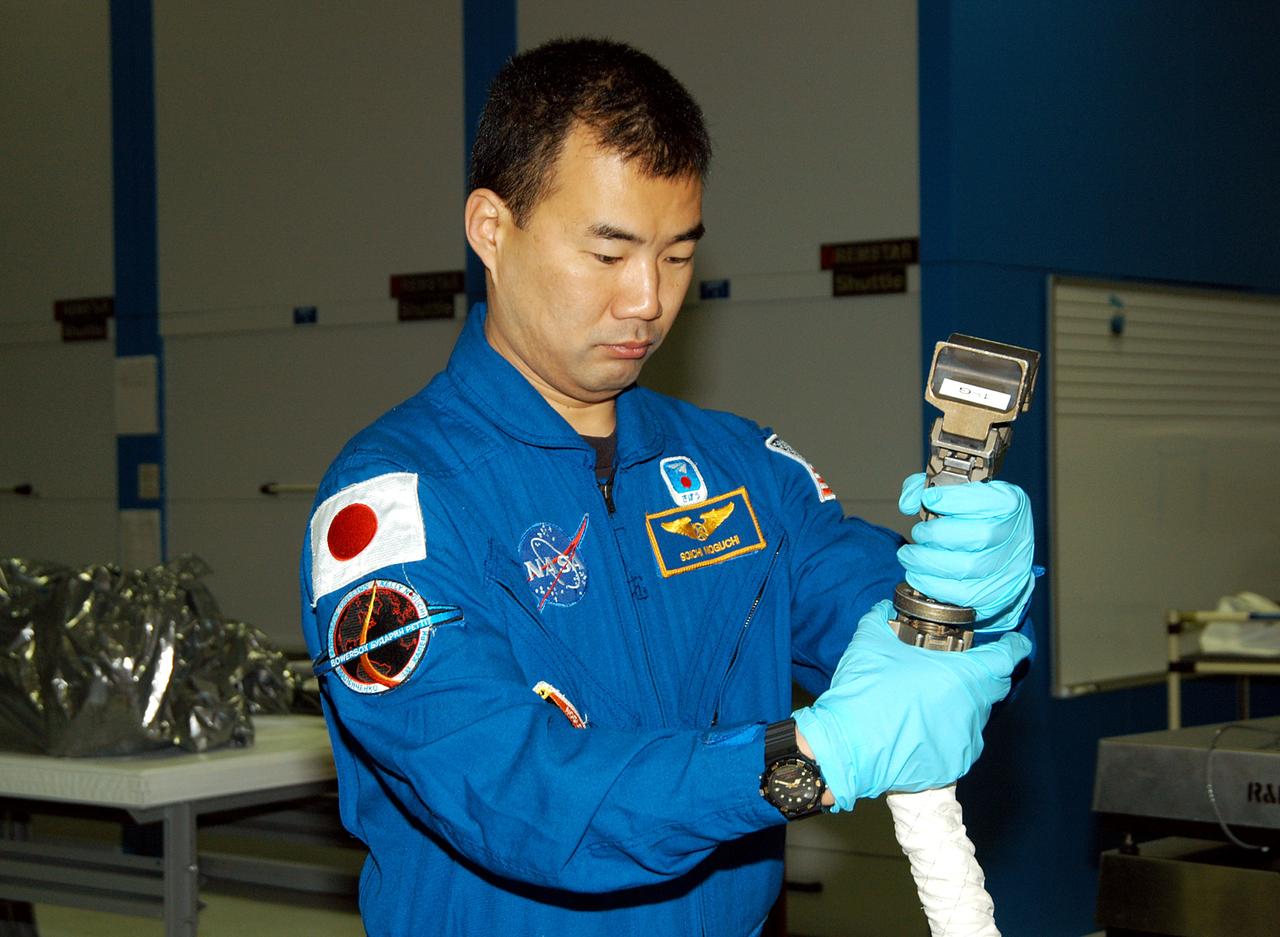
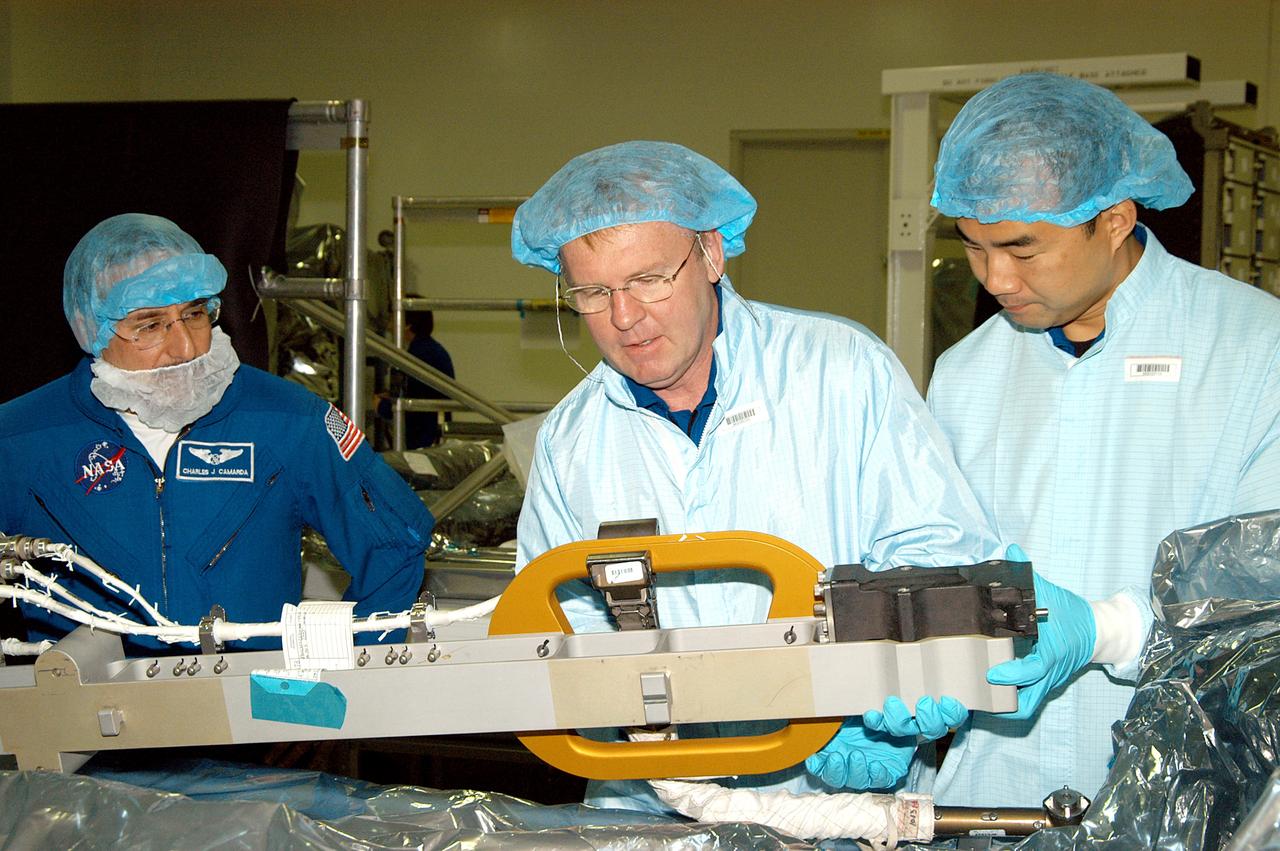
KENNEDY SPACE CENTER, FLA. -  STS-114 Mission Specialist Soichi Noguchi, with the Japanese Aerospace Exploration Agency (JAXA), handles equipment that will be used on the mission.  He and other crew members are at KSC for equipment familiarization.  STS-114 is classified as Logistics Flight 1 to the International Space Station,  delivering new supplies and replacing one of the orbital outpost’s Control Moment Gyroscopes (CMGs). STS-114 will also carry a Raffaello Multi-Purpose Logistics Module and the External Stowage Platform-2.  The crew is slated to conduct at least three spacewalks: They will demonstrate repair techniques of the Shuttle’s Thermal Protection System,  replace the failed CMG with one delivered by the Shuttle, and  install the External Stowage Platform.
KENNEDY SPACE CENTER, FLA. - STS-114 Mission Specialist Soichi Noguchi, with the Japanese Aerospace Exploration Agency (JAXA), handles equipment that will be used on the mission. He and other crew members are at KSC for equipment familiarization. STS-114 is classified as Logistics Flight 1 to the International Space Station, delivering new supplies and replacing one of the orbital outpost’s Control Moment Gyroscopes (CMGs). STS-114 will also carry a Raffaello Multi-Purpose Logistics Module and the External Stowage Platform-2. The crew is slated to conduct at least three spacewalks: They will demonstrate repair techniques of the Shuttle’s Thermal Protection System, replace the failed CMG with one delivered by the Shuttle, and install the External Stowage Platform.
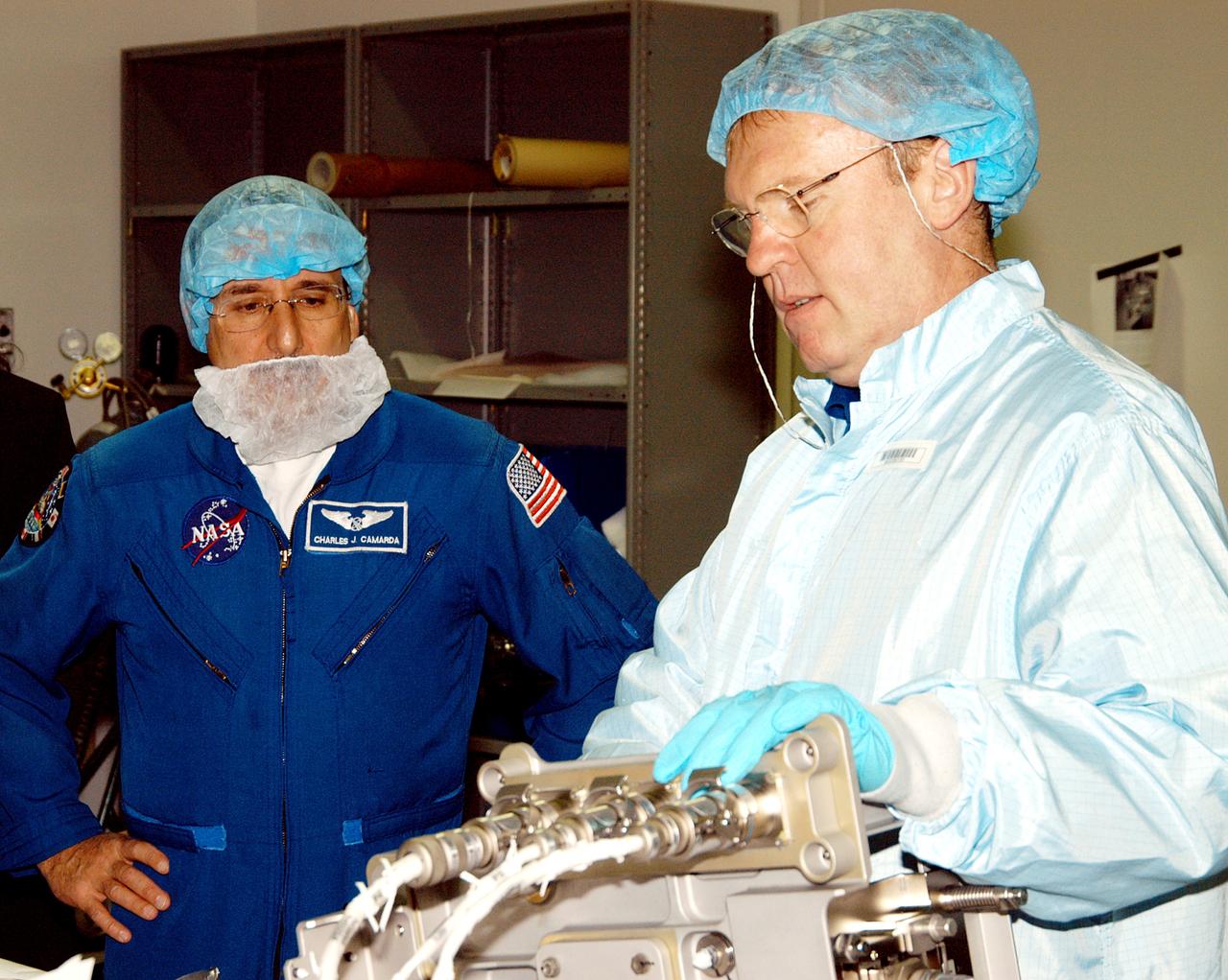
KENNEDY SPACE CENTER, FLA. -  STS-114 Mission Specialist Charles Camarda (left) watches as Mission Specialist  Andrew Thomas manipulates equipment that will be used on the mission.  Crew members are at KSC for equipment familiarization.  STS-114 is classified as Logistics Flight 1 to the International Space Station, delivering new supplies and replacing one of the orbital outpost’s Control Moment Gyroscopes (CMGs). STS-114 will also carry a Raffaello Multi-Purpose Logistics Module and the External Stowage Platform-2.  The crew is slated to conduct at least three spacewalks: They will demonstrate repair techniques of the Shuttle’s Thermal Protection System,  replace the failed CMG with one delivered by the Shuttle, and  install the External Stowage Platform.
KENNEDY SPACE CENTER, FLA. - STS-114 Mission Specialist Charles Camarda (left) watches as Mission Specialist Andrew Thomas manipulates equipment that will be used on the mission. Crew members are at KSC for equipment familiarization. STS-114 is classified as Logistics Flight 1 to the International Space Station, delivering new supplies and replacing one of the orbital outpost’s Control Moment Gyroscopes (CMGs). STS-114 will also carry a Raffaello Multi-Purpose Logistics Module and the External Stowage Platform-2. The crew is slated to conduct at least three spacewalks: They will demonstrate repair techniques of the Shuttle’s Thermal Protection System, replace the failed CMG with one delivered by the Shuttle, and install the External Stowage Platform.
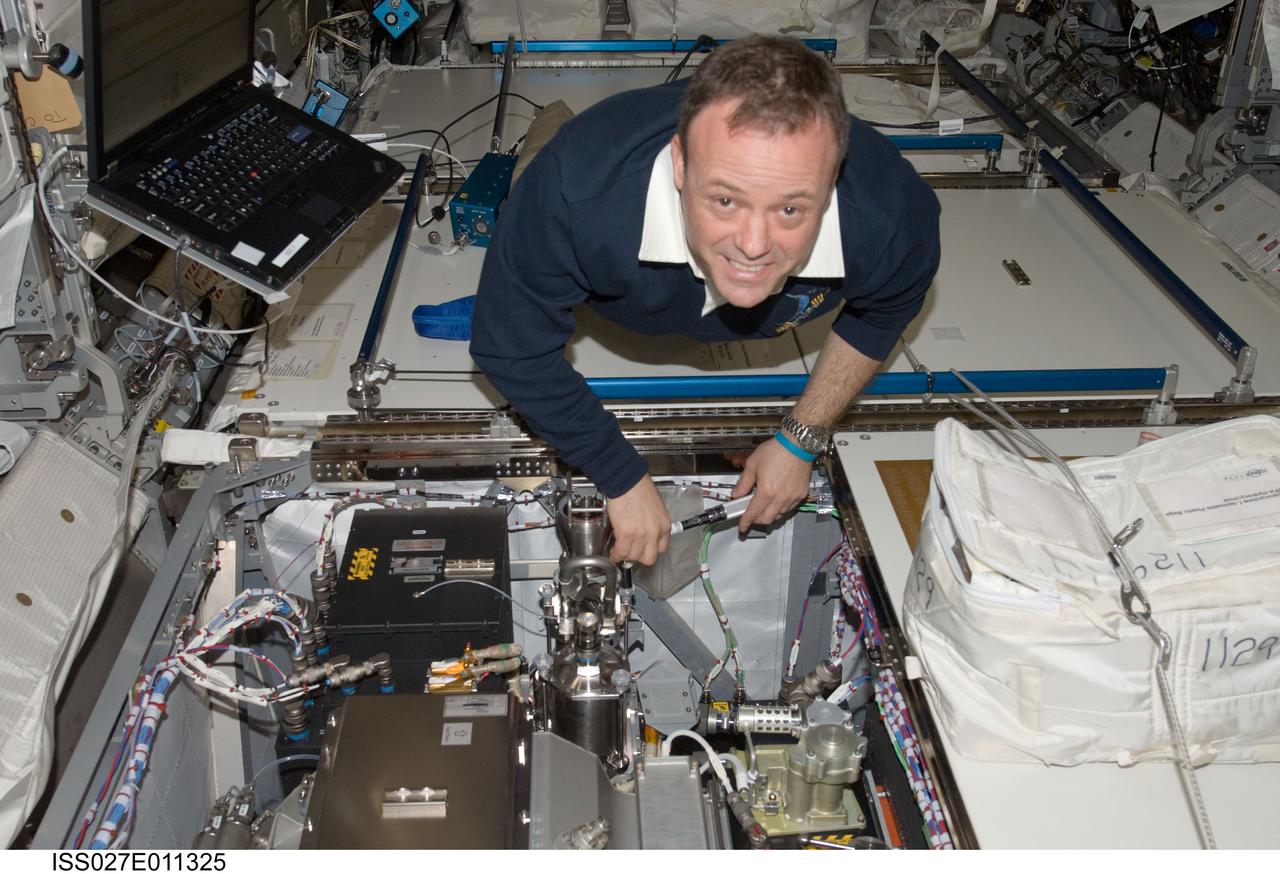
ISS027-E-011324 (8 April 2011) --- NASA astronaut Ron Garan, Expedition 27 flight engineer, works on degassing the water loop of the running Water Pump Assembly 2 / Thermal Control System (WPA2/TCS) in the Columbus laboratory of the International Space Station.
Garan performs TCS Water Loop Degassing in Columbus
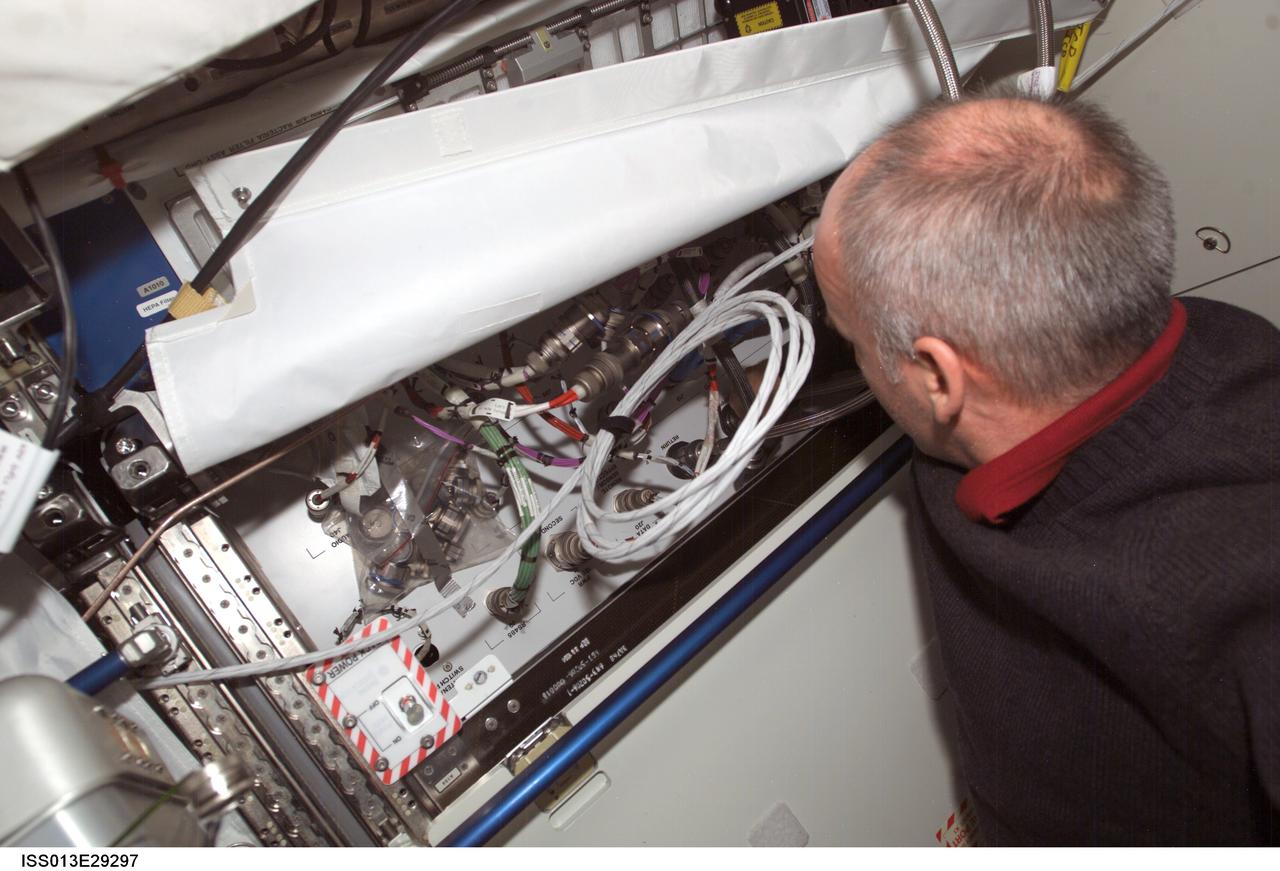
ISS013-E-29297 (1 June 2006) --- Astronaut Jeffrey N. Williams, Expedition 13 NASA space station science officer and flight engineer, performs in-flight maintenance on a Thermal Control System (TCS) line on an open rack in the Destiny laboratory of the International Space Station.
Williams works on a TCS line on an open rack in the U.S. Laboratory during Expedition 13
ISS027-E-011325 (8 April 2011) --- NASA astronaut Ron Garan, Expedition 27 flight engineer, works on degassing the water loop of the running Water Pump Assembly 2 / Thermal Control System (WPA2/TCS) in the Columbus laboratory of the International Space Station.
Garan performs TCS Water Loop Degassing in Columbus
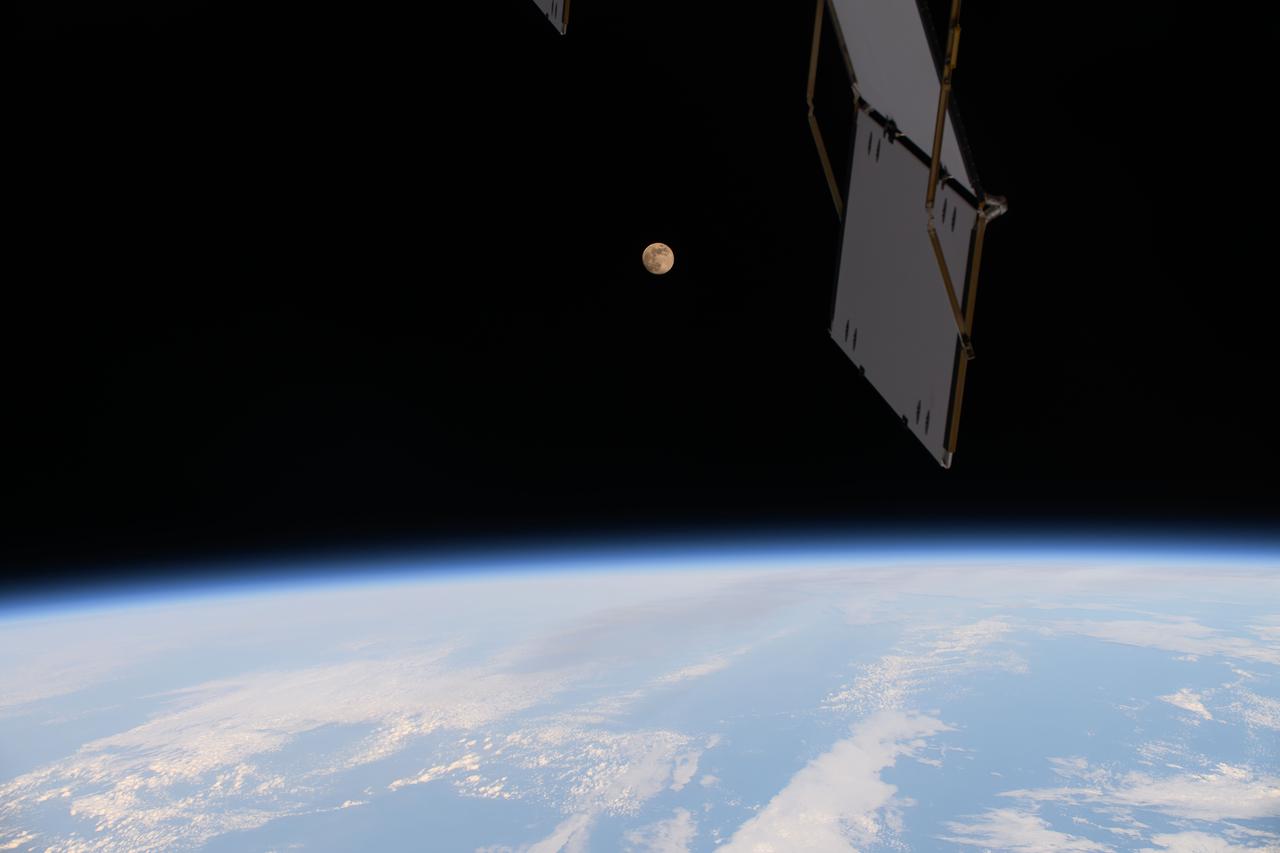
iss072e364168 (Dec. 14, 2024) --- The Full Moon is pictured from the International Space Station as it orbited 261 miles above the Pacific Ocean. In the foreground, a portion of one of the orbital outpost's radiators, also known as the External Active Thermal Control System, is seen.
The Full Moon is pictured from the International Space Station
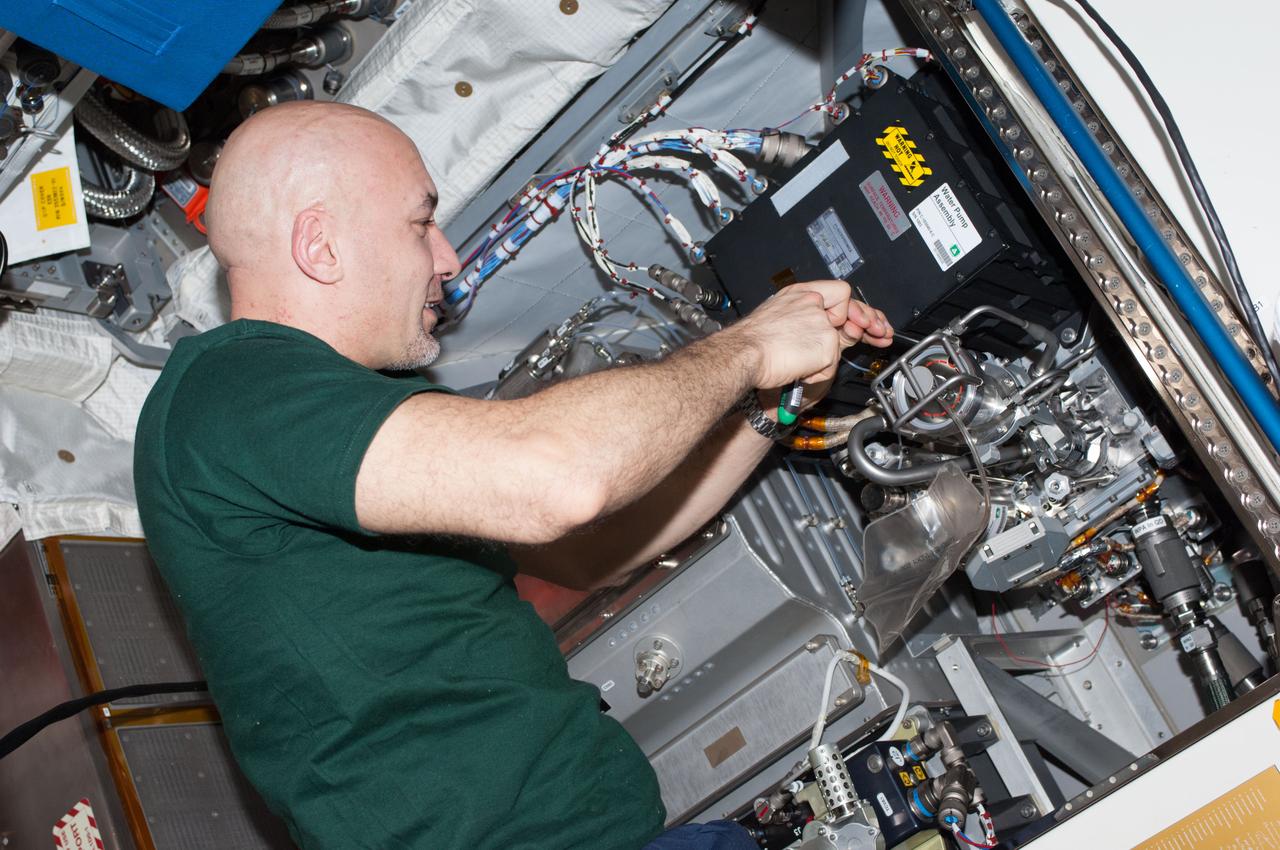
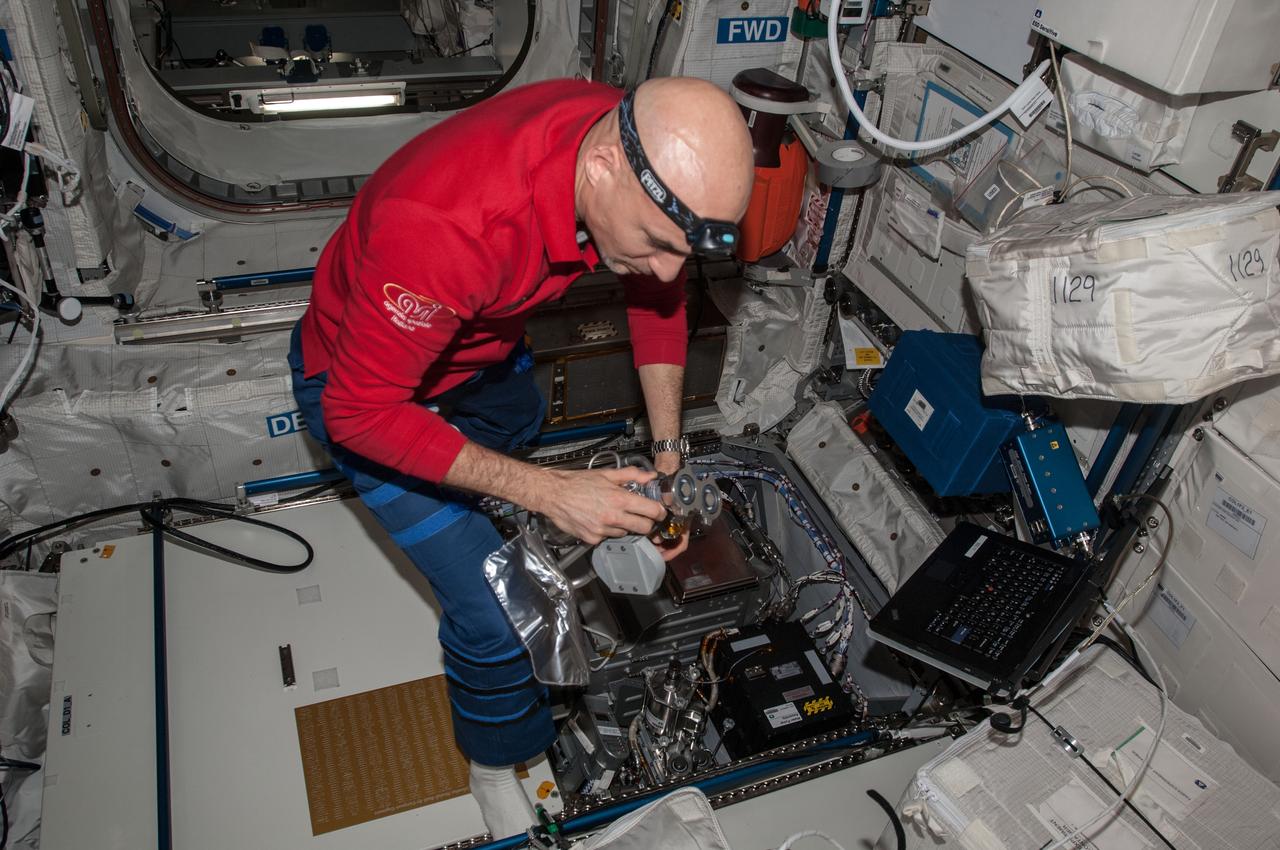
ISS036-E-027387 (29 July 2013) --- European Space Agency astronaut Luca Parmitano, Expedition 36 flight engineer, performs maintenance on the Water Pump Assembly 2 / Thermal Control System (WPA2/TCS) in the Columbus laboratory of the International Space Station.
Parmitano in U.S. Laboratory
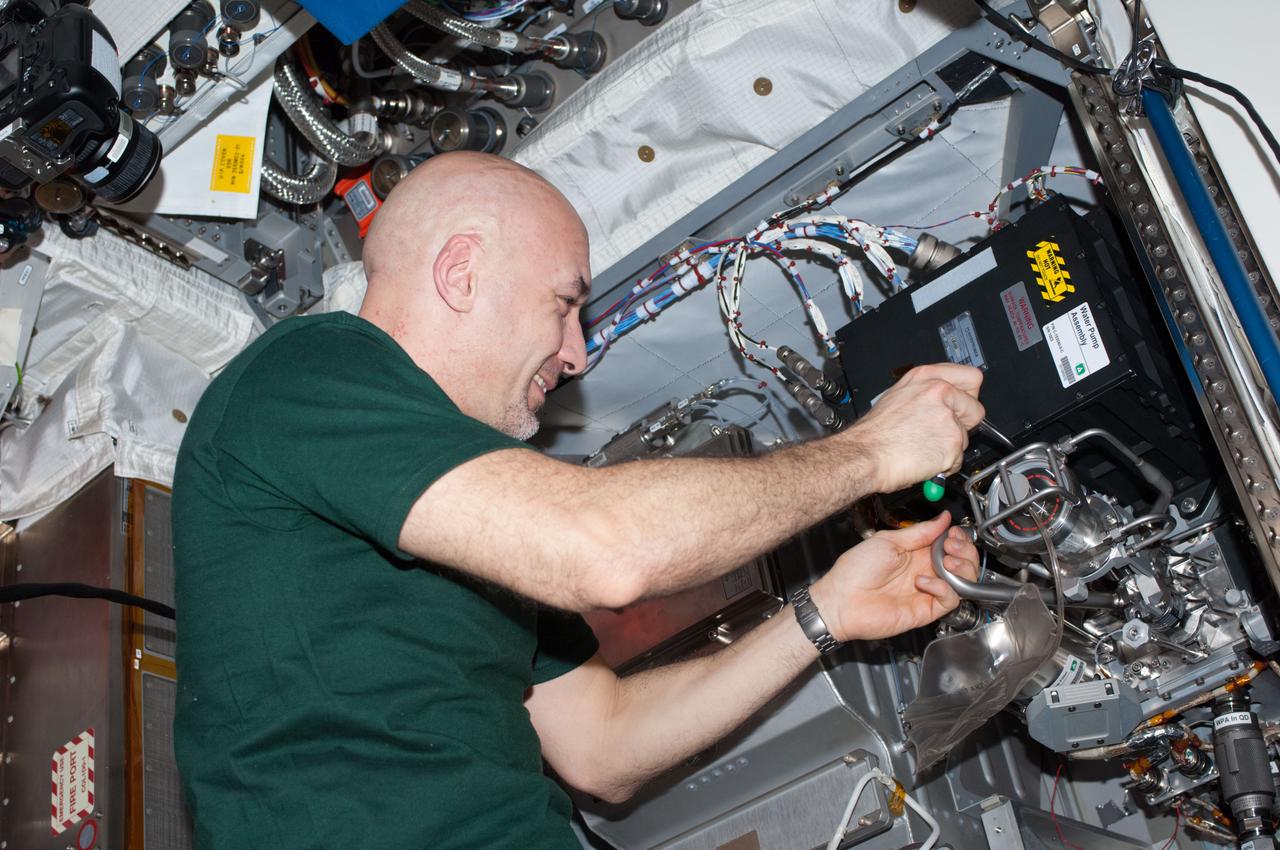
ISS036-E-027389 (29 July 2013) --- European Space Agency astronaut Luca Parmitano, Expedition 36 flight engineer, performs maintenance on the Water Pump Assembly 2 / Thermal Control System (WPA2/TCS) in the Columbus laboratory of the International Space Station.
Parmitano in U.S. Laboratory
ISS036-E-026213 (29 July 2013) --- European Space Agency astronaut Luca Parmitano, Expedition 36 flight engineer, performs maintenance on the Water Pump Assembly 2 / Thermal Control System (WPA2/TCS) in the Columbus laboratory of the International Space Station.
Columbus Thermal Control System (TCS) Degassing Operations
ISS006-E-39461 (18 March 2003) --- Astronauts Donald R. Pettit (left), Expedition 6 NASA ISS Science Officer, and Kenneth D. Bowersox, mission commander, are pictured in the Destiny laboratory on the International Space Station (ISS). The supply tank and Fluid Control Pump Assembly (FCPA), which are a part of the Internal Thermal Control System (ITCS), are visible floating freeing above them.
Commander Kenneth D. Bowersox and Flight Engineer Donald R. Pettit are relaxing in the U.S. Lab
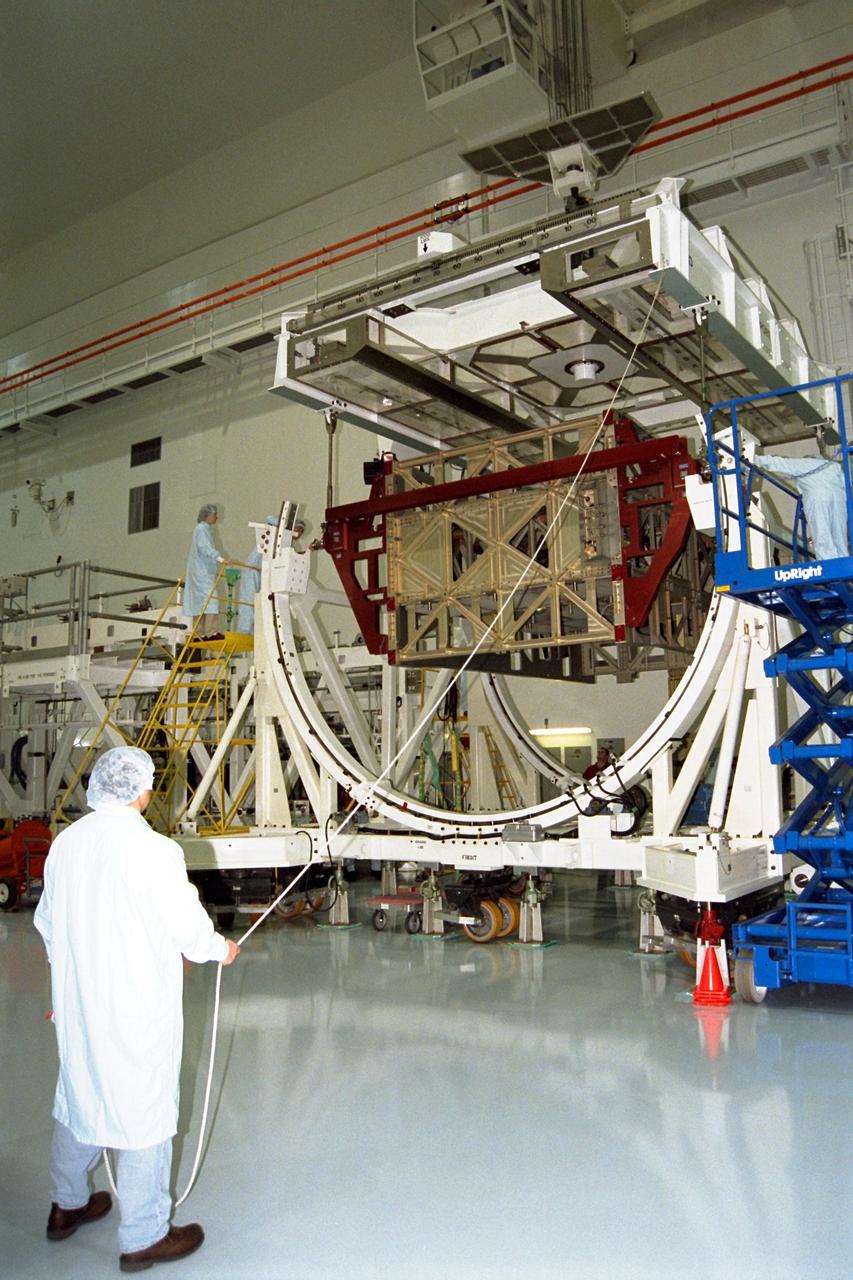
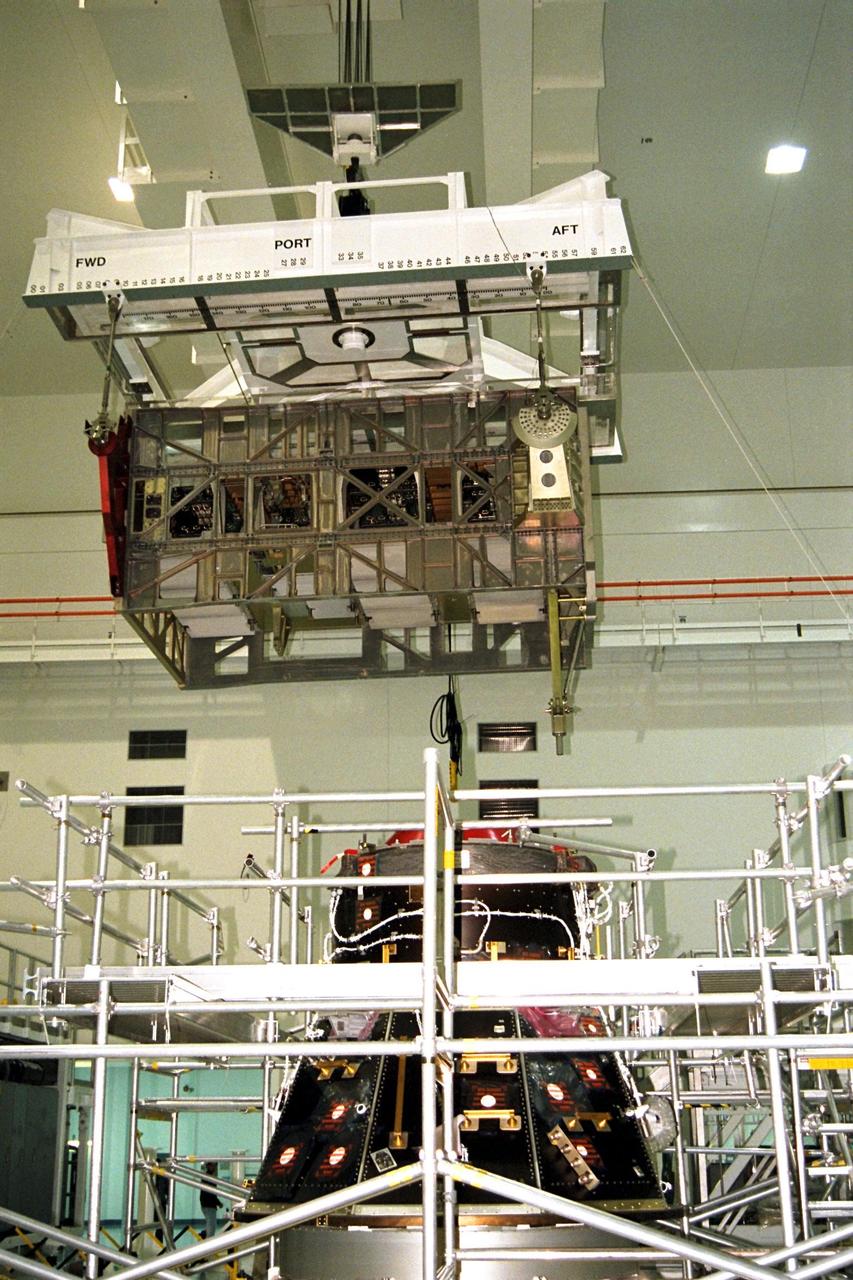
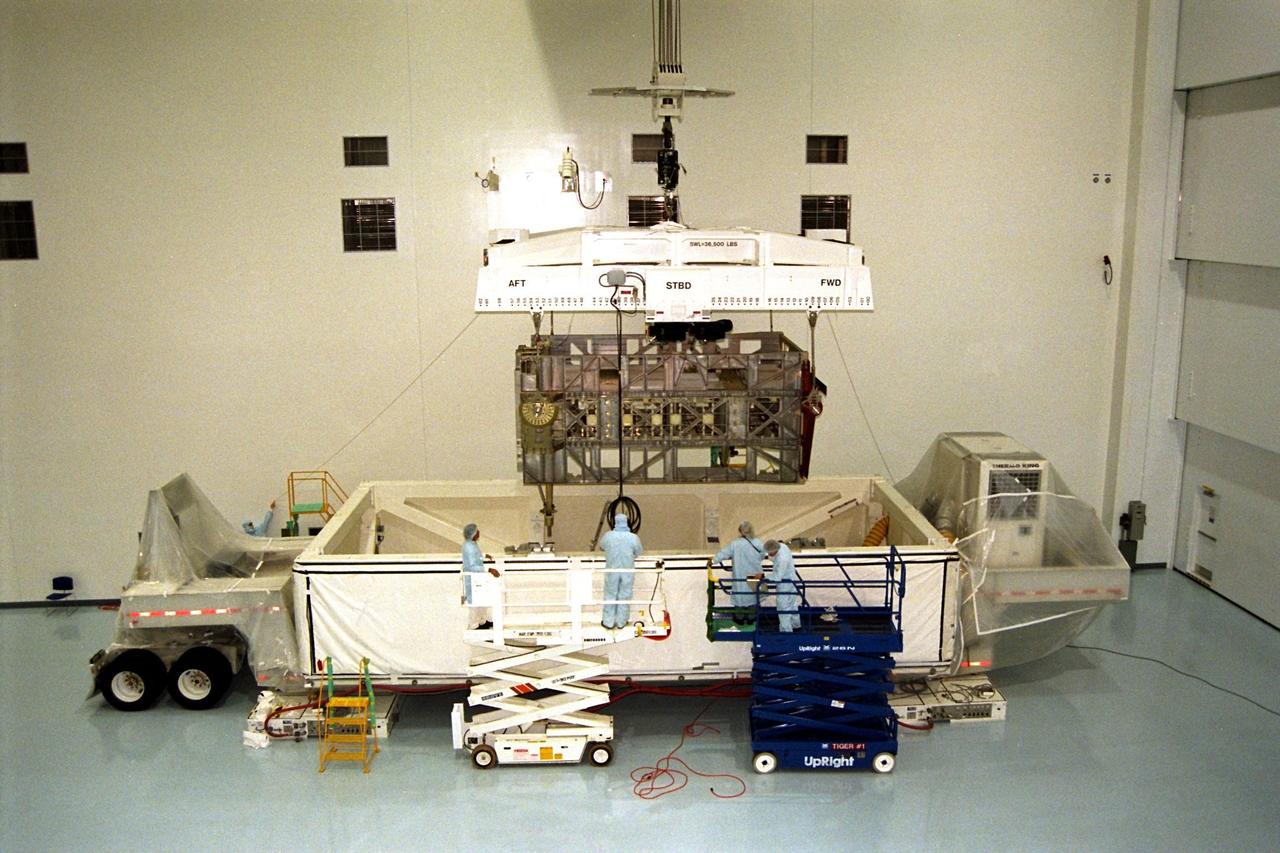
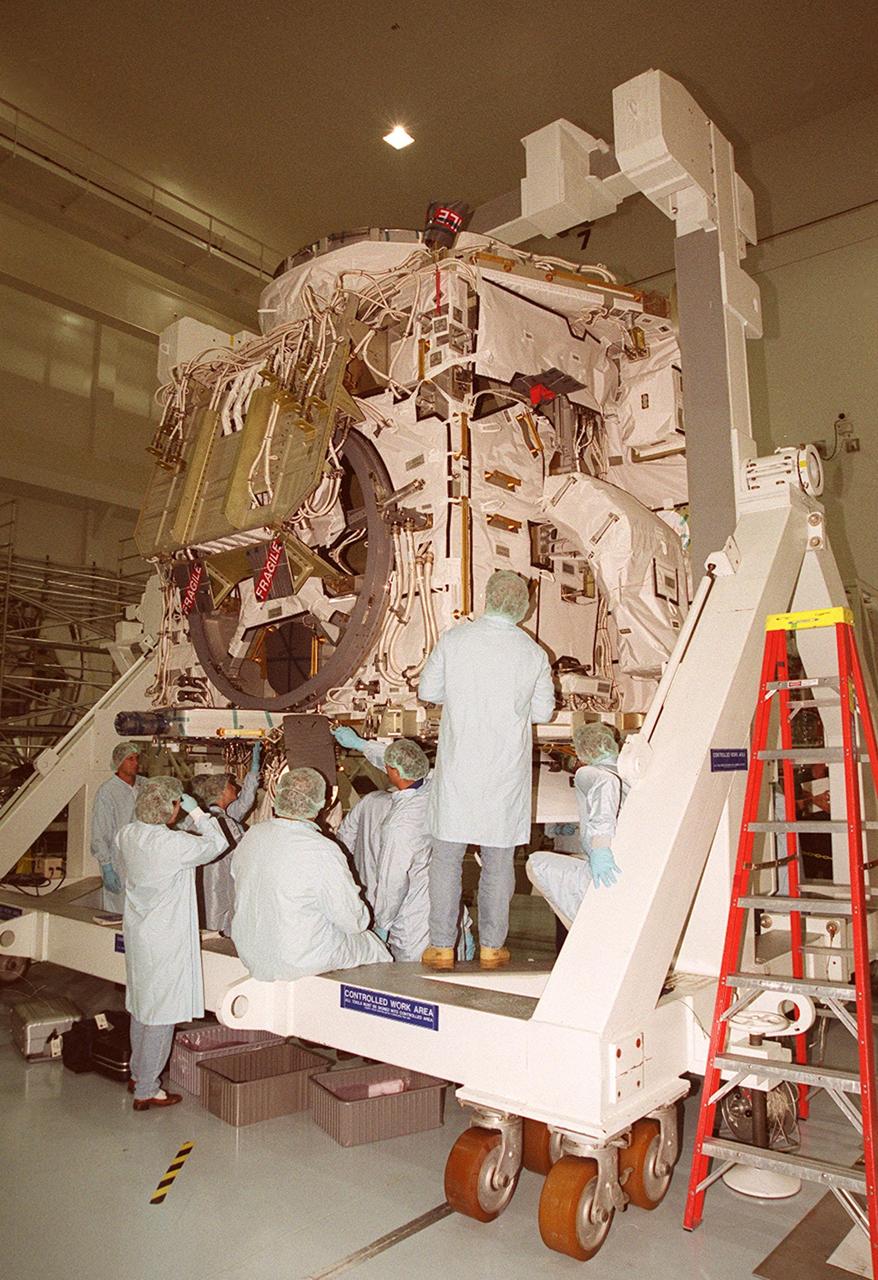
The Photovoltaic Module 1 Integrated Equipment Assembly (IEA) is moved through Kennedy Space Center’s Space Station Processing Facility (SSPF) toward the workstand where it will be processed for flight on STS-97, scheduled for launch in April 1999. The IEA is one of four integral units designed to generate, distribute, and store power for the International Space Station. It will carry solar arrays, power storage batteries, power control units, and a thermal control system. The 16-foot-long, 16,850-pound unit is now undergoing preflight preparations in the SSPF
KSC-98pc150
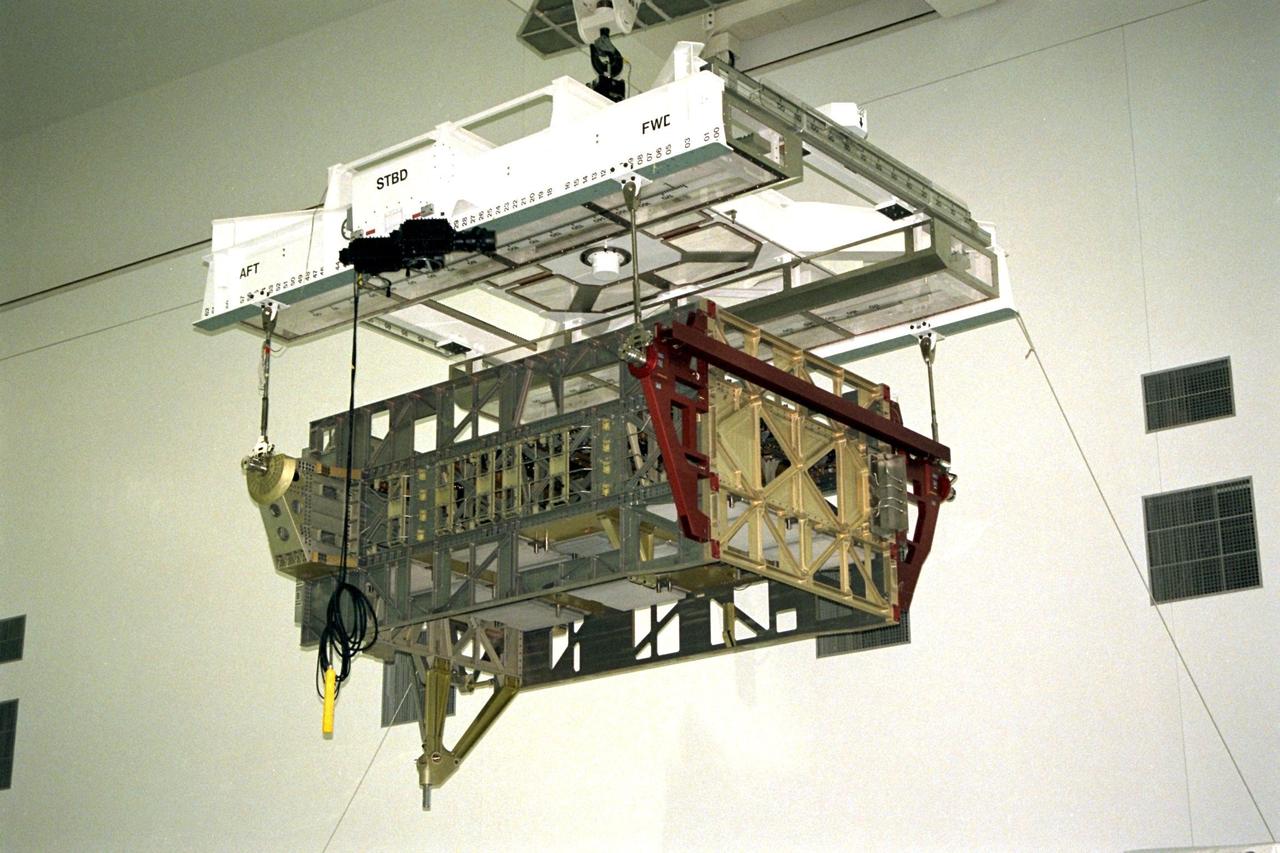
The Photovoltaic Module 1 Integrated Equipment Assembly (IEA) is lowered into its workstand at Kennedy Space Center’s Space Station Processing Facility (SSPF), where it will be processed for flight on STS-97, scheduled for launch in April 1999. The IEA is one of four integral units designed to generate, distribute, and store power for the International Space Station. It will carry solar arrays, power storage batteries, power control units, and a thermal control system. The 16-foot-long, 16,850-pound unit is now undergoing preflight preparations in the SSPF
KSC-98pc154
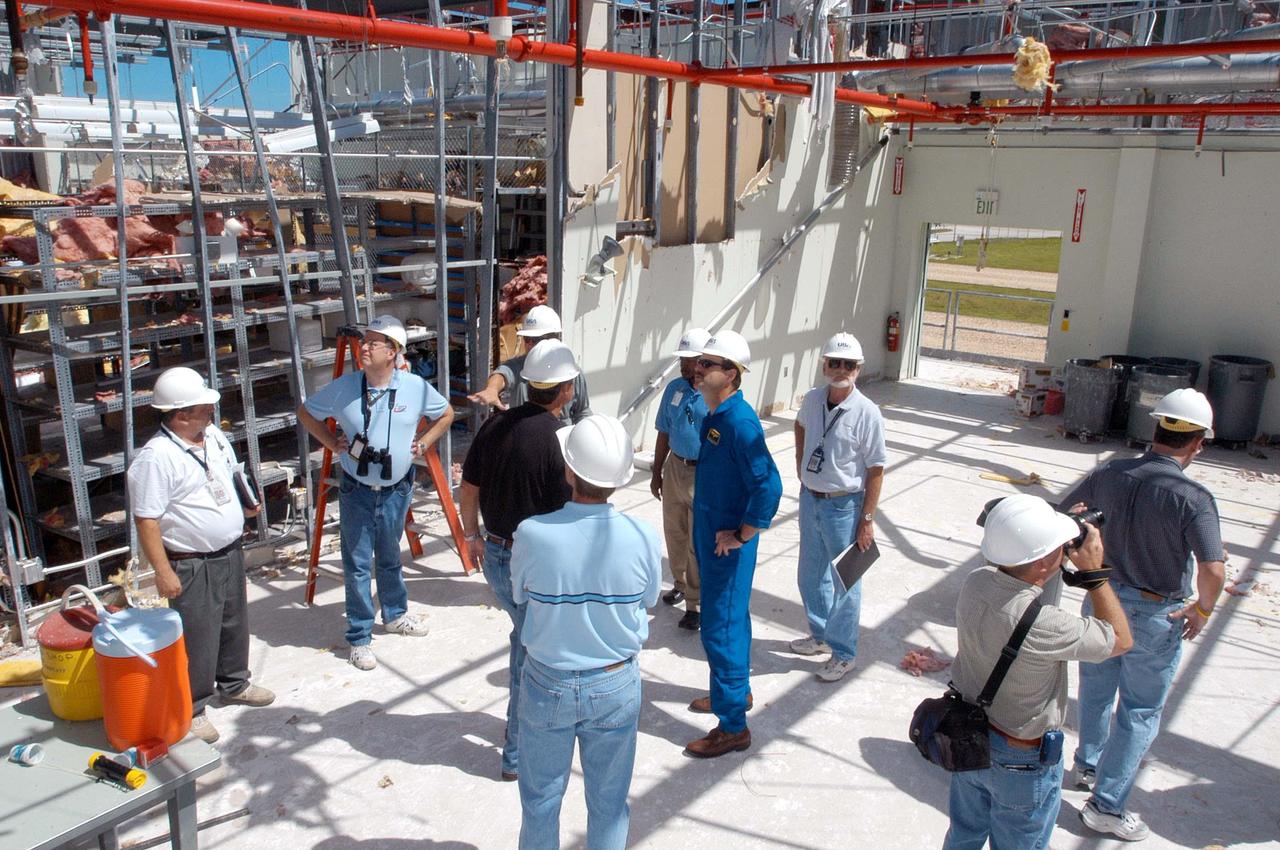
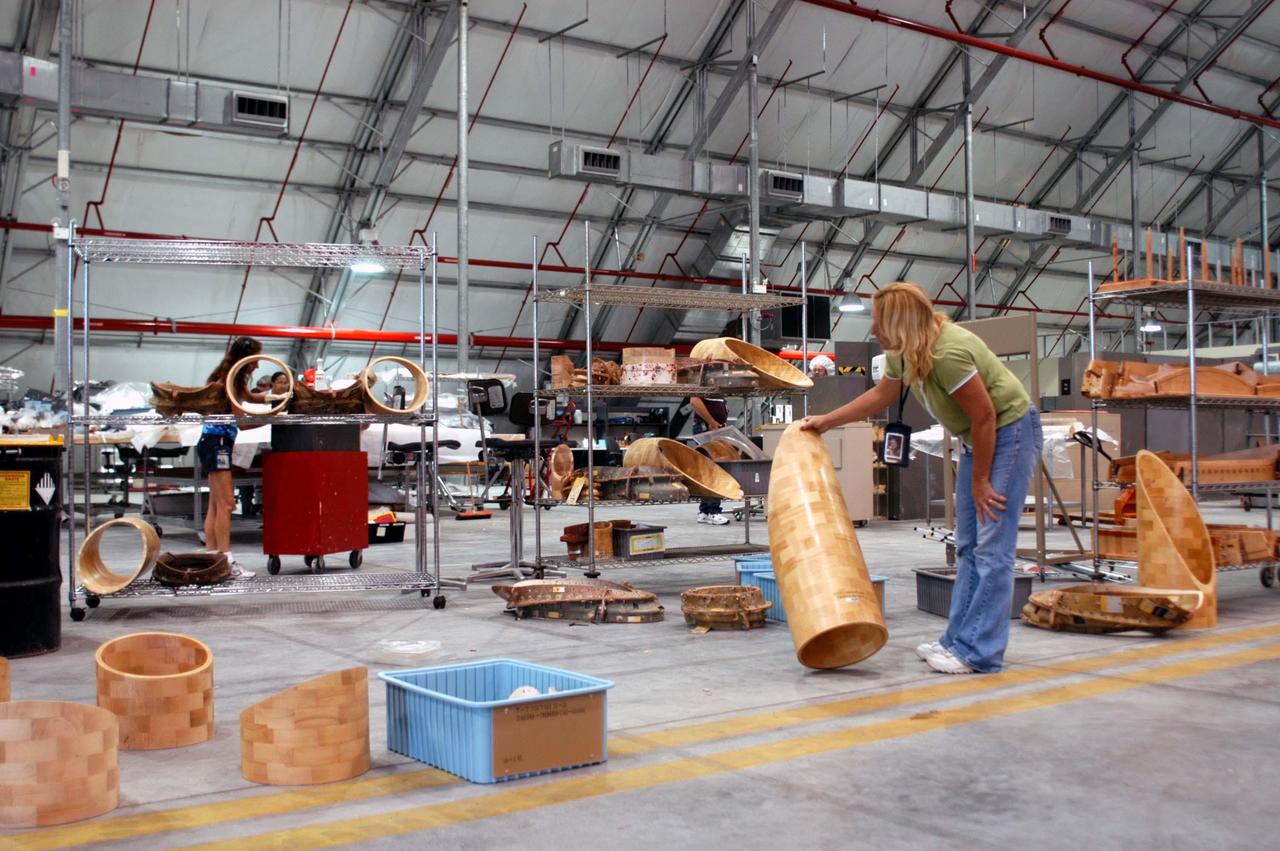
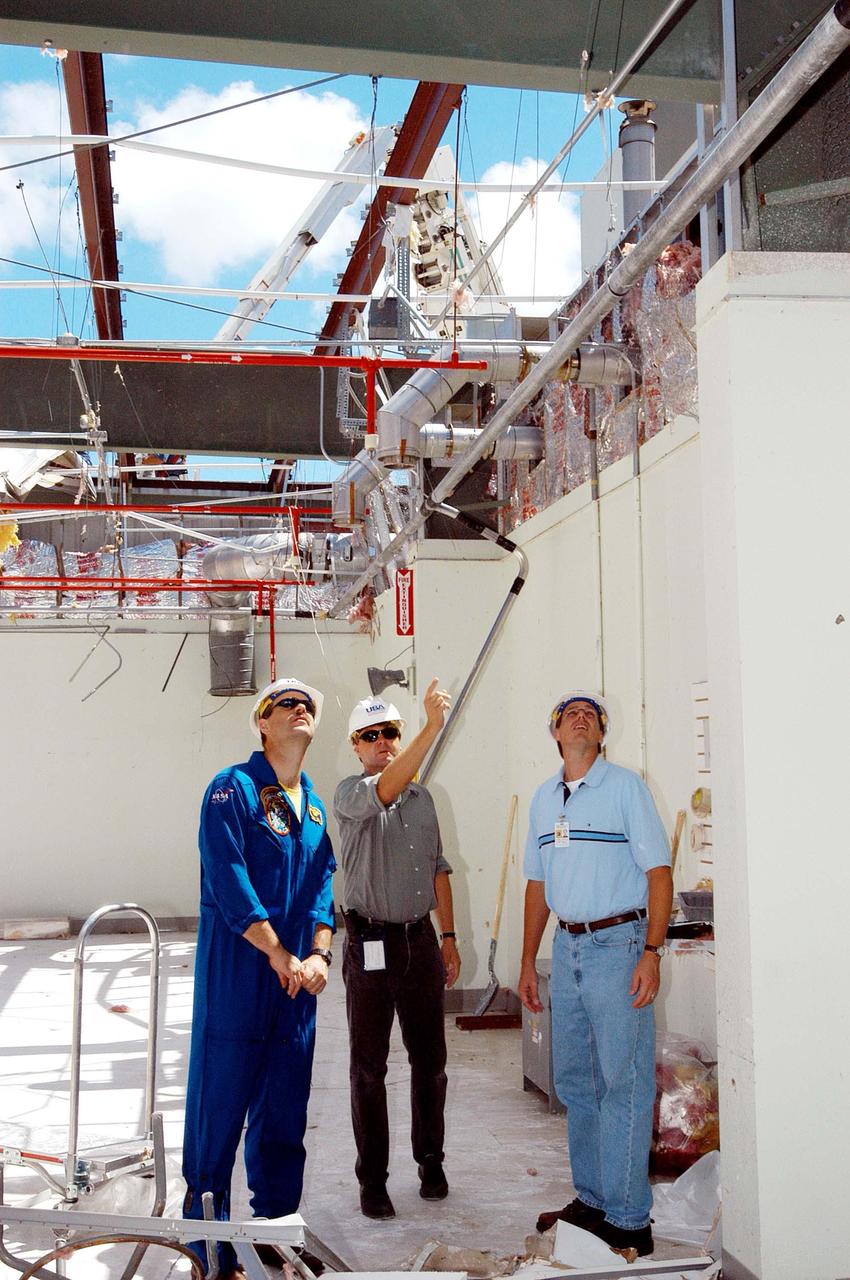
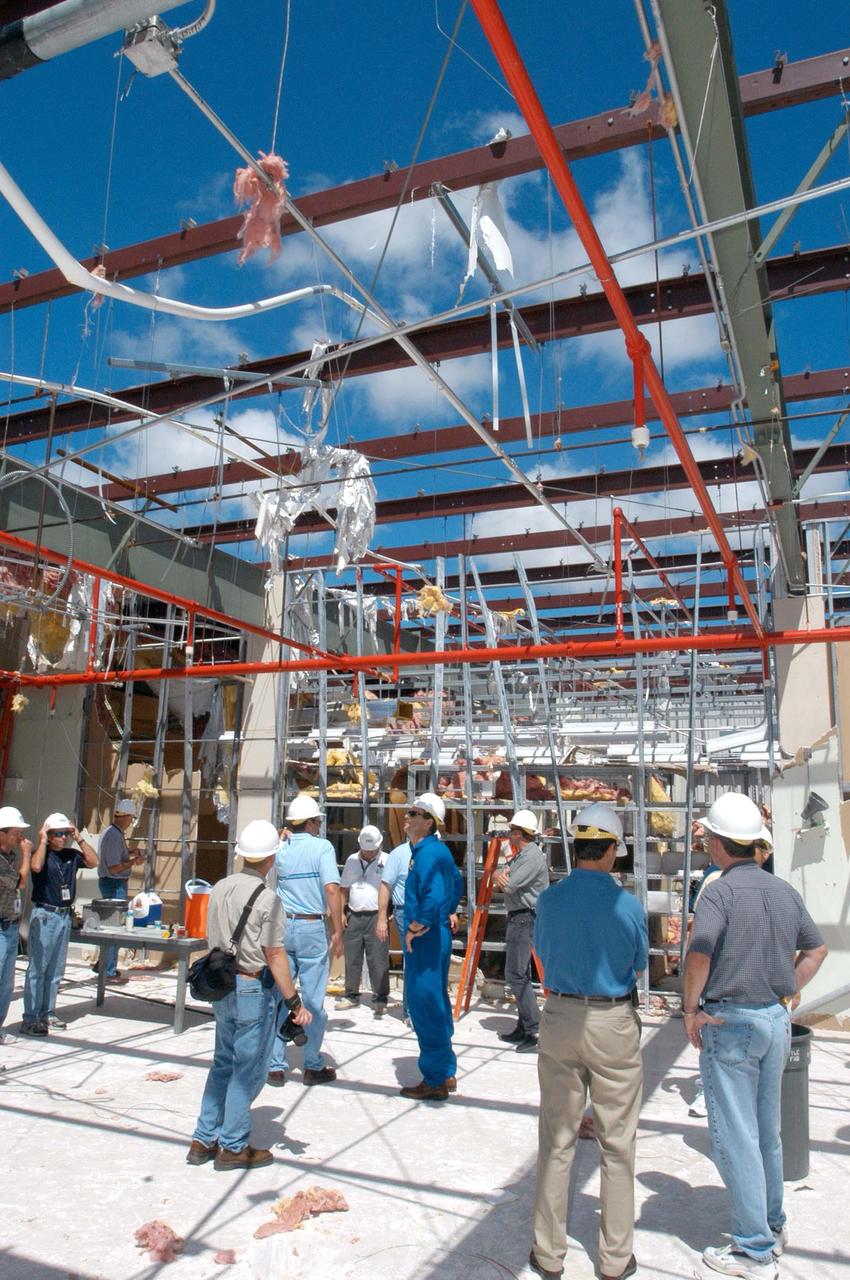
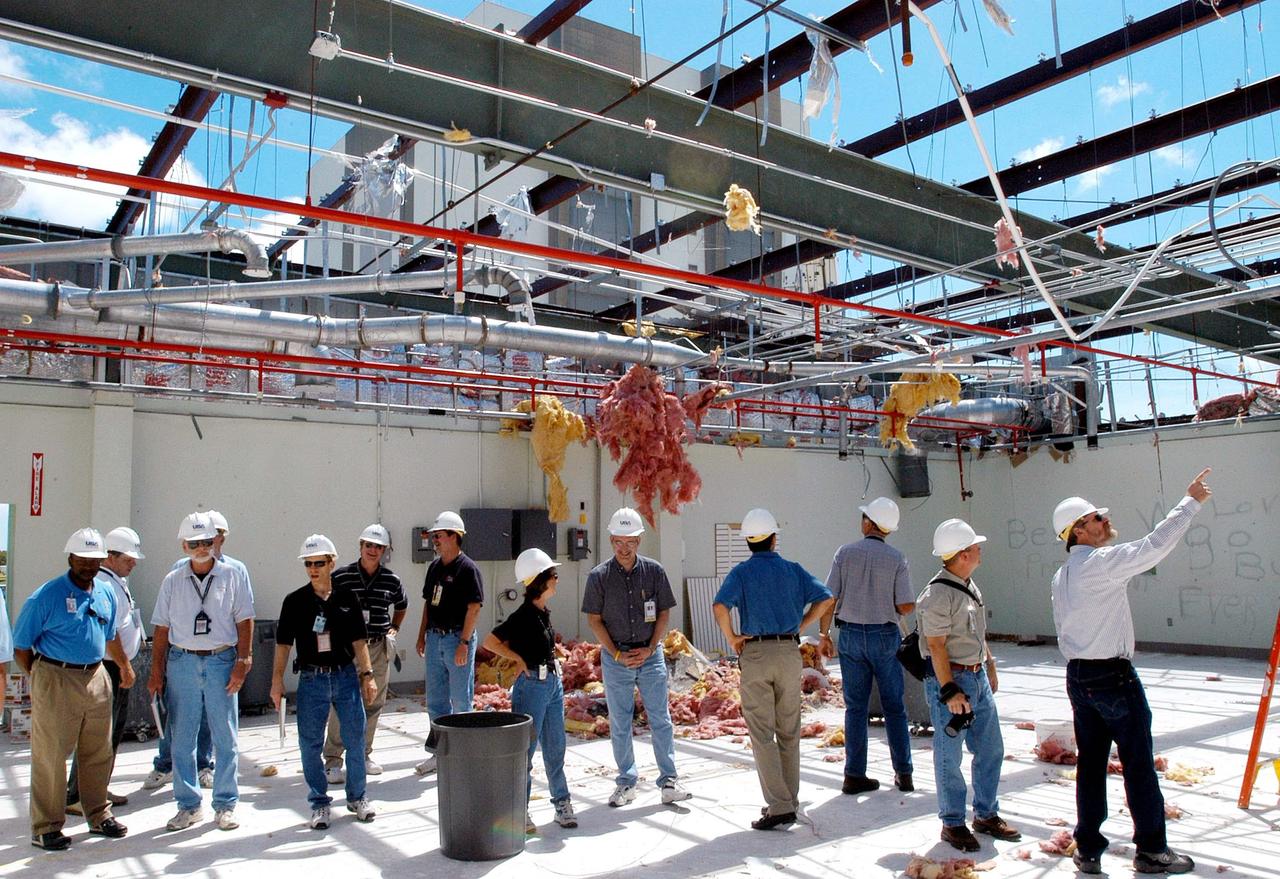
KENNEDY SPACE CENTER, FLA. -  Members of a hurricane assessment team from Johnson Space Center and Marshall Space Flight Center observe the damage to the roof of the Thermal Protection System (TPS) Facility at KSC after Hurricane Frances hit the east coast of Central Florida and Kennedy Space Center.   Near the center is astronaut Scott Altmann, a member of the team.  The facility, which creates the TPS tiles, blankets and all the internal thermal control systems for the Space Shuttles, is almost totally unserviceable at this time after losing approximately 35 percent of its roof.  Equipment and materials that survived the storm have been relocated to the RLV hangar near the KSC Shuttle Landing Facility.
KSC-04pd1772
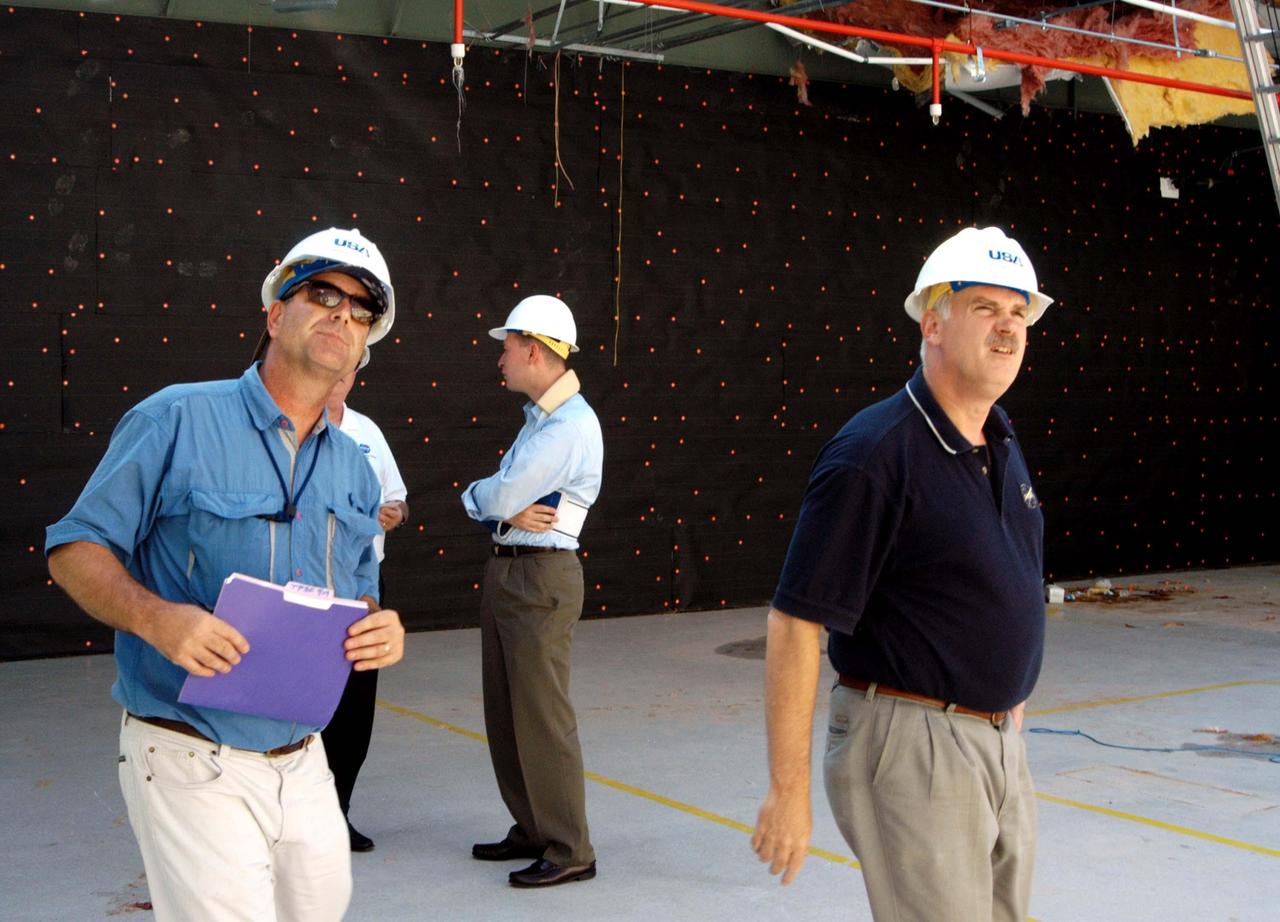
KENNEDY SPACE CENTER, FLA. -   Members of a hurricane assessment team from Johnson Space Center and Marshall Space Flight Center tour the Thermal Protection System (TPS) Facility at KSC after Hurricane Frances hit the east coast of Central Florida and Kennedy Space Center.  At left is Martin Wilson, manager of the TPS operations.  The facility, which creates the TPS tiles, blankets and all the internal thermal control systems for the Space Shuttles, is almost totally unserviceable at this time after losing approximately 35 percent of its roof.  Equipment and materials that survived the storm have been relocated to the RLV hangar near the KSC Shuttle Landing Facility.
KSC-04pd1770
KENNEDY SPACE CENTER, FLA. -  Members of a hurricane assessment team from Johnson Space Center and Marshall Space Flight Center observe the damage to the roof of the Thermal Protection System (TPS) Facility at KSC after Hurricane Frances hit the east coast of Central Florida and Kennedy Space Center.   Near the center is astronaut Scott Altmann, a member of the team.  The facility, which creates the TPS tiles, blankets and all the internal thermal control systems for the Space Shuttles, is almost totally unserviceable at this time after losing approximately 35 percent of its roof.  Equipment and materials that survived the storm have been relocated to the RLV hangar near the KSC Shuttle Landing Facility.
KSC-04pd1773
KENNEDY SPACE CENTER, FLA. -  Members of a hurricane assessment team from Johnson Space Center and Marshall Space Flight Center tour the Thermal Protection System (TPS) Facility at KSC after Hurricane Frances hit the east coast of Central Florida and Kennedy Space Center.  At right is astronaut Scott Altmann, a member of the team.  The facility, which creates the TPS tiles, blankets and all the internal thermal control systems for the Space Shuttles, is almost totally unserviceable at this time after losing approximately 35 percent of its roof.  Equipment and materials that survived the storm have been relocated to the RLV hangar near the KSC Shuttle Landing Facility.
KSC-04pd1771
KENNEDY SPACE CENTER, FLA. -  Members of a hurricane assessment team from Johnson Space Center and Marshall Space Flight Center observe the damage to the roof of the Thermal Protection System (TPS) Facility at KSC after Hurricane Frances hit the east coast of Central Florida and Kennedy Space Center. The facility, which creates the TPS tiles, blankets and all the internal thermal control systems for the Space Shuttles, is almost totally unserviceable at this time after losing approximately 35 percent of its roof.  Equipment and materials that survived the storm have been relocated to the RLV hangar near the KSC Shuttle Landing Facility.
KSC-04pd1774
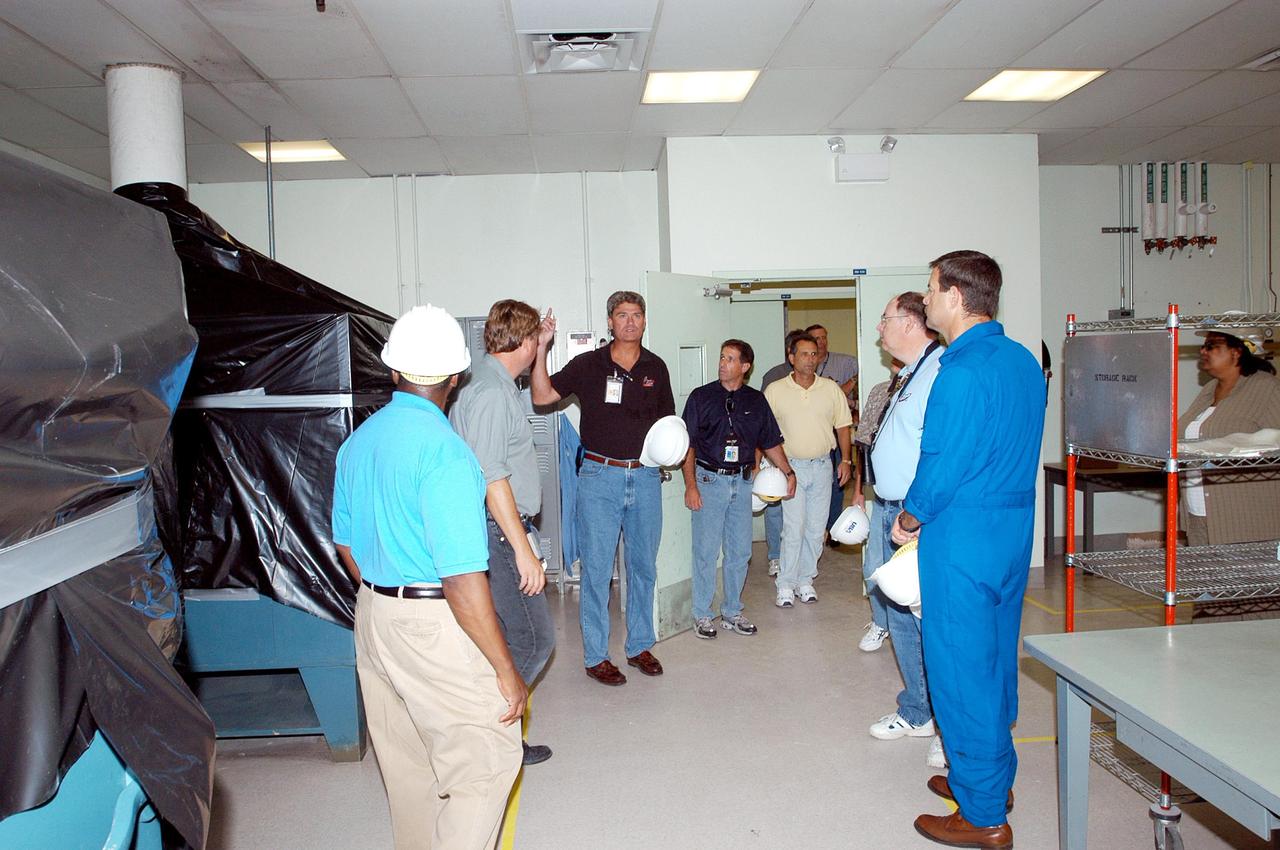
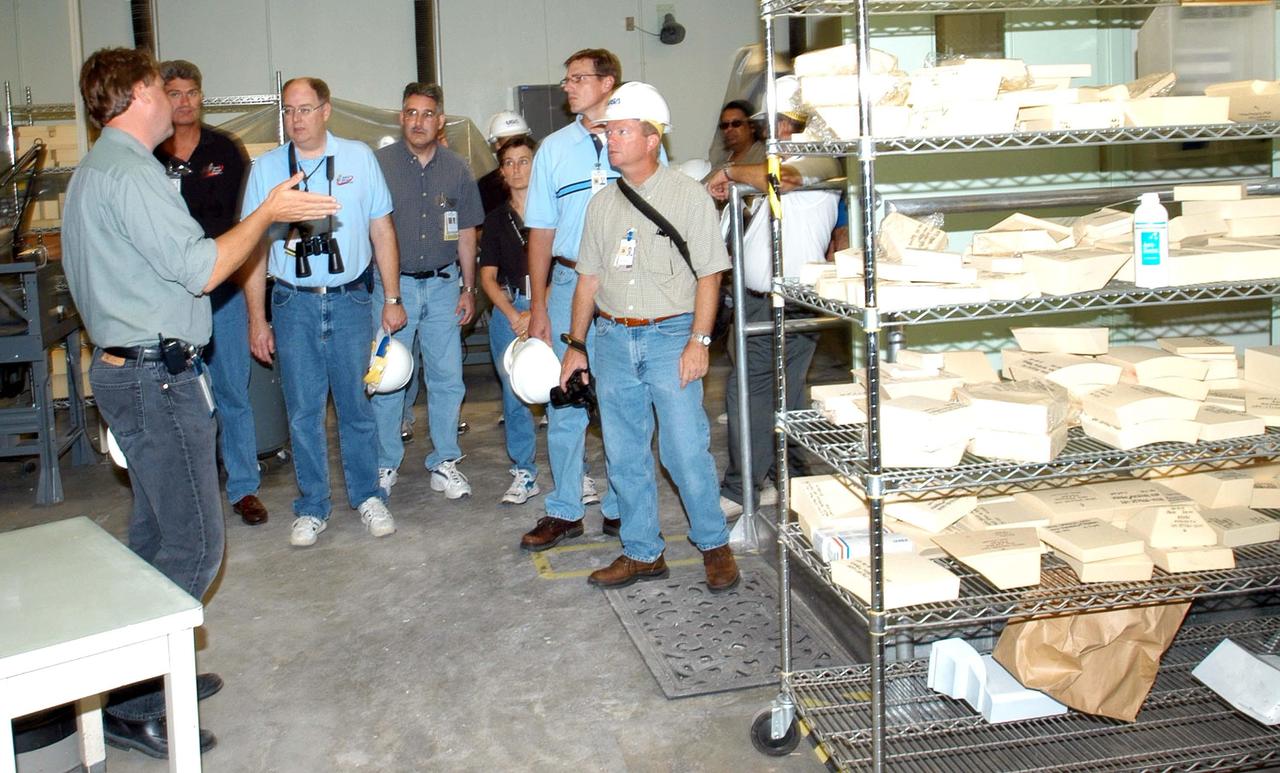
KENNEDY SPACE CENTER, FLA. -  -  NASA Administrator Sean O’Keefe (right) looks at equipment moved from the Thermal Protection System Facility to the RLV Hangar.  At left are United Space Alliance technicians Shelly Kipp and Eric Moss.  O’Keefe and NASA Associate Administrator of  Space Operations Mission Directorate William Readdy are visiting KSC to survey the damage sustained by KSC facilities from Hurricane Frances. The Thermal Protection System Facility (TPSF), which creates the TPS tiles, blankets and all the internal thermal control systems for the Space Shuttles, is almost totally unserviceable at this time after losing approximately 35 percent of its roof in the storm, which blew across Central Florida Sept. 4-5. Undamaged equipment was removed from the TPSF and stored in the hangar. The Labor Day storm also caused significant damage to the Vehicle Assembly Building and Processing Control Center.  Additionally, the Operations and Checkout Building, Vertical Processing Facility, Hangar AE, Hangar S and Hangar AF Small Parts Facility each received substantial damage. However, well-protected and unharmed were NASA’s three Space Shuttle orbiters - Discovery, Atlantis and Endeavour - along with the Shuttle launch pads, all of the critical flight hardware for the orbiters and the International Space Station, and NASA’s Swift spacecraft that is awaiting launch in October.
KSC-04pd1843
KENNEDY SPACE CENTER, FLA. -  NASA Administrator Sean O’Keefe looks at equipment moved from the Thermal Protection System Facility to the RLV Hangar.  AT right is Martin Wilson, manager of TPS operations for United Space Alliance.  O’Keefe and NASA Associate Administrator of  Space Operations Mission Directorate William Readdy are visiting KSC to survey the damage sustained by KSC facilities from Hurricane Frances. The Thermal Protection System Facility (TPSF), which creates the TPS tiles, blankets and all the internal thermal control systems for the Space Shuttles, is almost totally unserviceable at this time after losing approximately 35 percent of its roof in the storm, which blew across Central Florida Sept. 4-5. Undamaged equipment was removed from the TPSF and stored in the hangar. The Labor Day storm also caused significant damage to the Vehicle Assembly Building and Processing Control Center.  Additionally, the Operations and Checkout Building, Vertical Processing Facility, Hangar AE, Hangar S and Hangar AF Small Parts Facility each received substantial damage.  However, well-protected and unharmed were NASA’s three Space Shuttle orbiters -- Discovery, Atlantis and Endeavour - along with the Shuttle launch pads, all of the critical flight hardware for the orbiters and the International Space Station, and NASA’s Swift spacecraft that is awaiting launch in October.
KSC-04pd1842
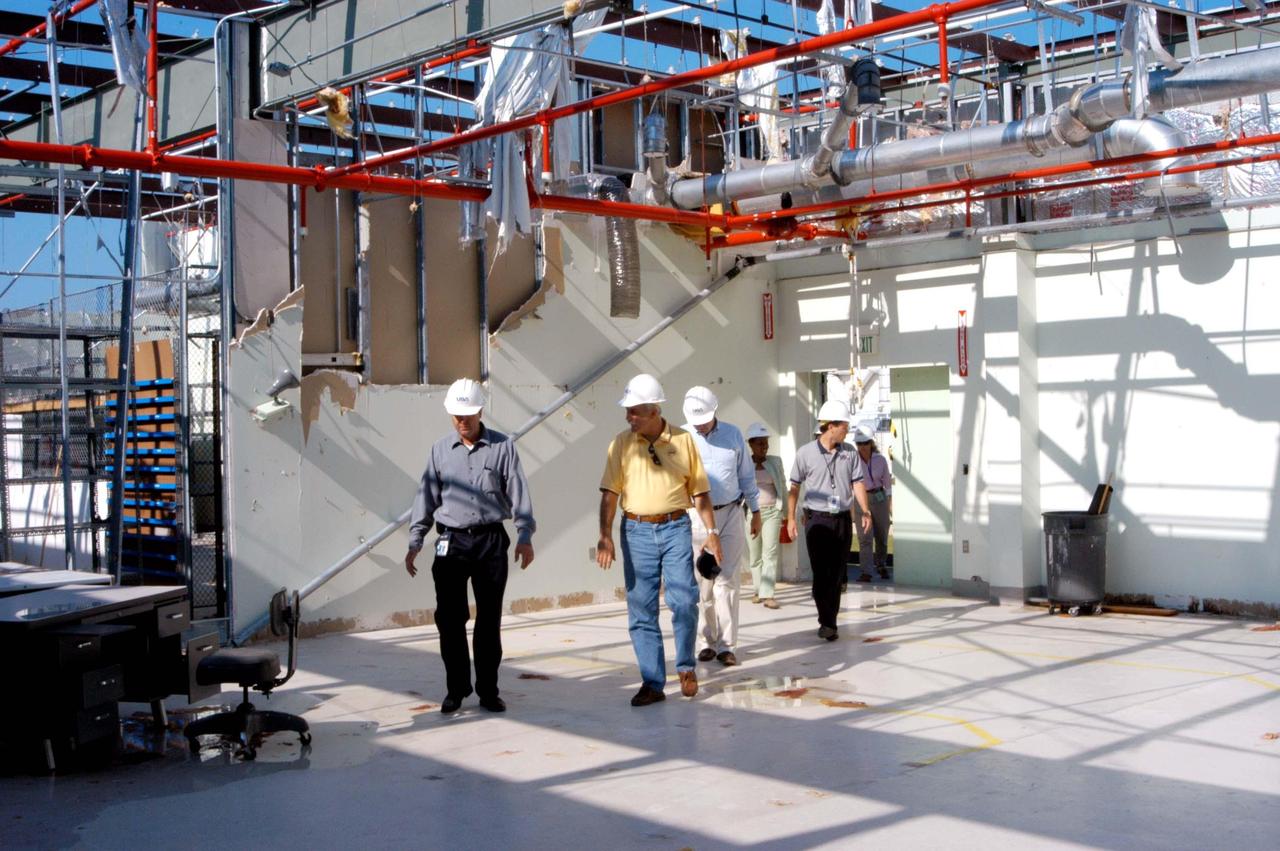
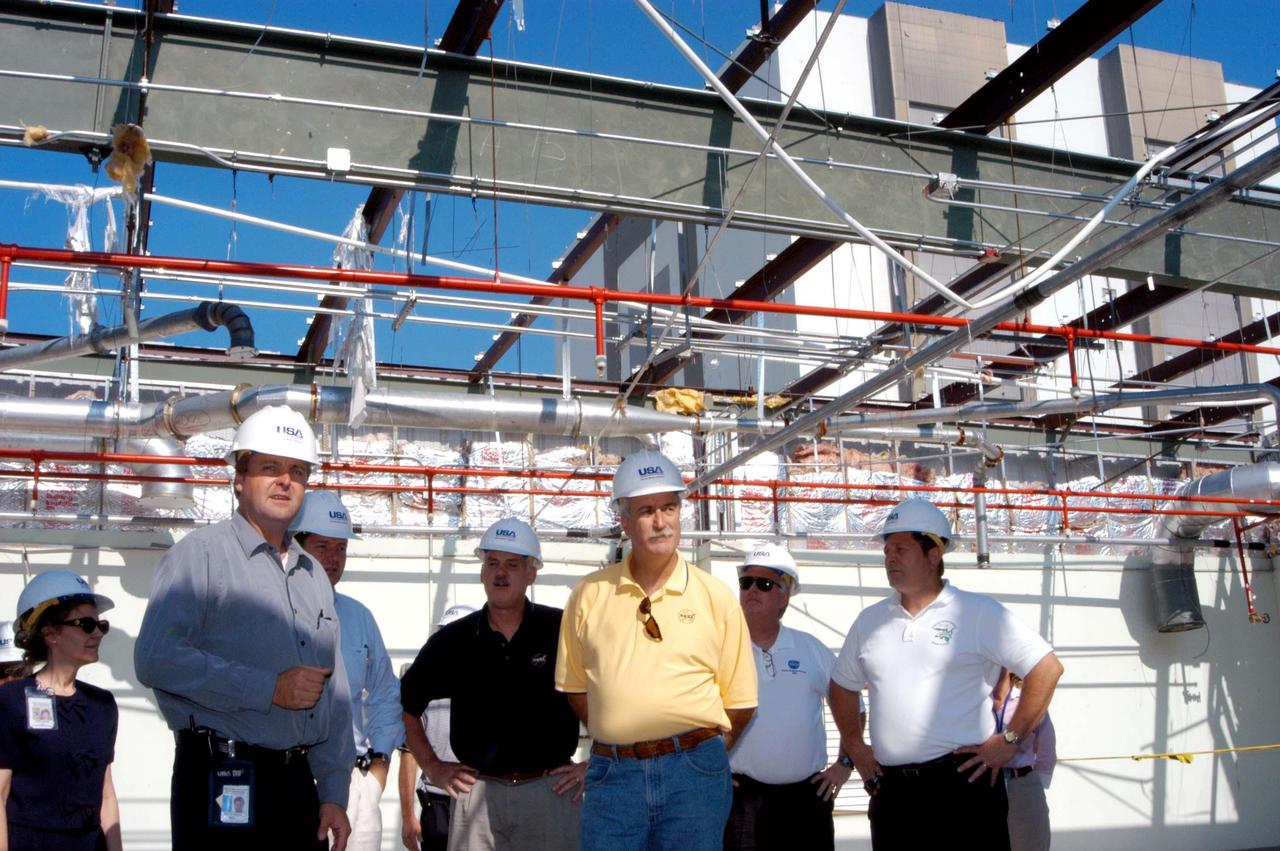
KENNEDY SPACE CENTER, FLA. -  Martin Wilson (left, in foreground), manager of Thermal Protection System (TPS) operations for United Space Alliance (USA), gives a tour of the hurricane-ravaged Thermal Protection System Facility to (from center) NASA Associate Administrator of  Space Operations Mission Directorate William Readdy,  NASA Administrator Sean O’Keefe, Center Director James Kennedy and Director of Shuttle Processing Michael E. Wetmore.  The TPSF, which creates the TPS tiles, blankets and all the internal thermal control systems for the Space Shuttles, is almost totally unserviceable at this time after losing approximately 35 percent of its roof during Hurricane Frances, which blew across Central Florida Sept. 4-5. O’Keefe and Readdy are visiting KSC to survey the damage sustained by KSC facilities from the hurricane.  The Labor Day storm also caused significant damage to the Vehicle Assembly Building and Processing Control Center.  Additionally, the Operations and Checkout Building, Vertical Processing Facility, Hangar AE, Hangar S and Hangar AF Small Parts Facility each received substantial damage. However, well-protected and unharmed were NASA’s three Space Shuttle orbiters - Discovery, Atlantis and Endeavour - along with the Shuttle launch pads, all of the critical flight hardware for the orbiters and the International Space Station, and NASA’s Swift spacecraft that is awaiting launch in October.
KSC-04pd1850
KENNEDY SPACE CENTER, FLA. -  Martin Wilson (far left), manager of Thermal Protection System (TPS) operations for United Space Alliance (USA), leads NASA Administrator Sean O’Keefe (second from left) on a tour of the hurricane-ravaged Thermal Protection System Facility.  The TPSF, which creates the TPS tiles, blankets and all the internal thermal control systems for the Space Shuttles, is almost totally unserviceable at this time after losing approximately 35 percent of its roof in the storm, which blew across Central Florida Sept. 4-5. Undamaged equipment was removed from the TPSF and stored in the RLV hangar. O’Keefe and NASA Associate Administrator of  Space Operations Mission Directorate William Readdy are visiting KSC to survey the damage sustained by KSC facilities from the hurricane.  The Labor Day storm also caused significant damage to the Vehicle Assembly Building and Processing Control Center.  Additionally, the Operations and Checkout Building, Vertical Processing Facility, Hangar AE, Hangar S and Hangar AF Small Parts Facility each received substantial damage. However, well-protected and unharmed were NASA’s three Space Shuttle orbiters - Discovery, Atlantis and Endeavour - along with the Shuttle launch pads, all of the critical flight hardware for the orbiters and the International Space Station, and NASA’s Swift spacecraft that is awaiting launch in October.
KSC-04pd1849
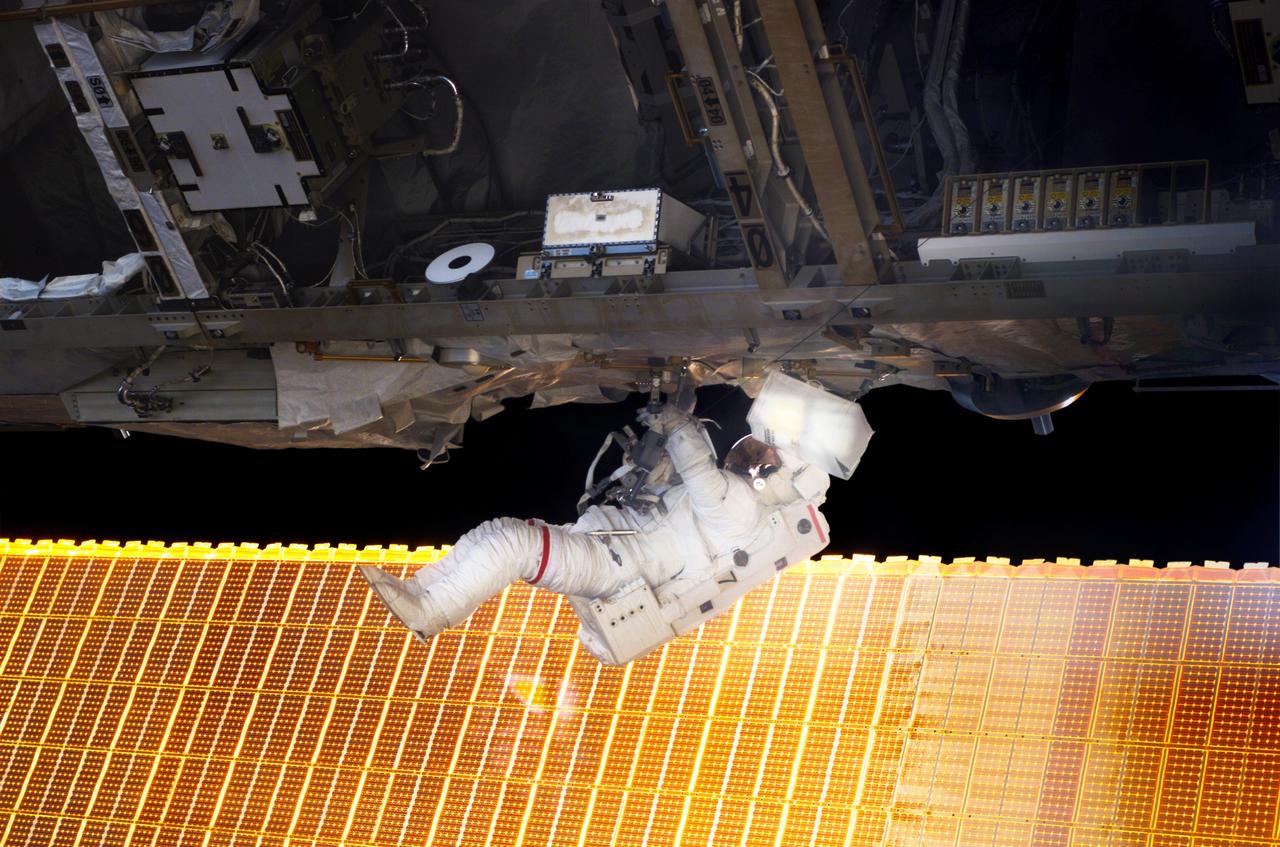
iss063e034131 (July 1, 2020) --- NASA astronaut and Expedition 63 Flight Engineer Bob Behnken (upper left) works during a six-hour and one-minute spacewalk to swap an aging nickel-hydrogen battery for a new lithium-ion battery on the International Space Station's Starboard-6 truss structure.  Protruding horizontally from the truss are the Thermal Control System radiators that dispel heat generated by the orbiting lab's power systems.
iss063e034131
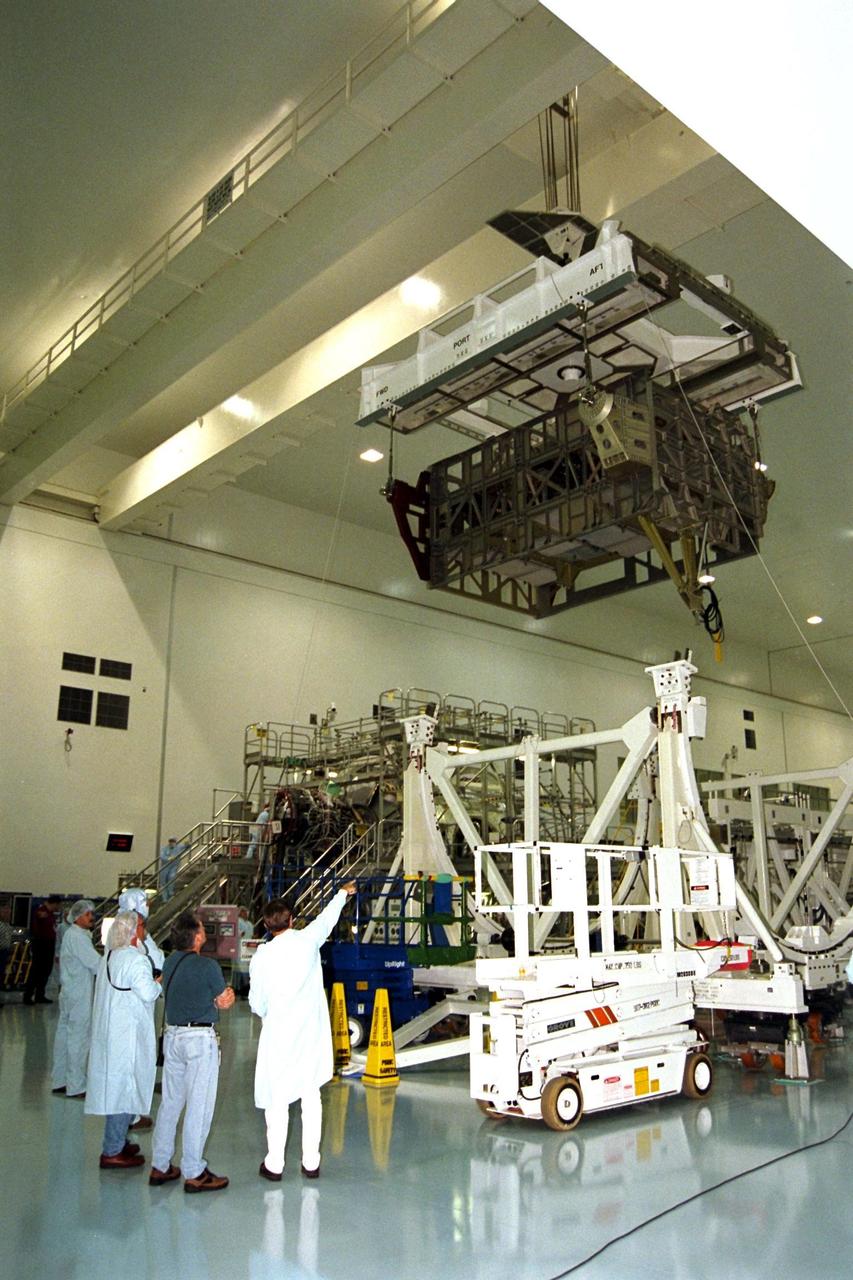
The Photovoltaic Module 1 Integrated Equipment Assembly (IEA) is moved past a Pressurized Mating Adapter in Kennedy Space Center’s Space Station Processing Facility (SSPF) toward the workstand where it will be processed for flight on STS-97, scheduled for launch in April 1999. The IEA is one of four integral units designed to generate, distribute, and store power for the International Space Station. It will carry solar arrays, power storage batteries, power control units, and a thermal control system. The 16-foot-long, 16,850-pound unit is now undergoing preflight preparations in the SSPF
KSC-98pc151
The Photovoltaic Module 1 Integrated Equipment Assembly (IEA) is lifted from its container in Kennedy Space Center’s Space Station Processing Facility (SSPF) before it is moved into its workstand, where it will be processed for flight on STS-97, scheduled for launch in April 1999. The IEA is one of four integral units designed to generate, distribute, and store power for the International Space Station. It will carry solar arrays, power storage batteries, power control units, and a thermal control system. The 16-foot-long, 16,850-pound unit is now undergoing preflight preparations in the SSPF
KSC-98pc155
The Photovoltaic Module 1 Integrated Equipment Assembly (IEA) is moved past Node 1, seen at left, of the International Space Station (ISS) in Kennedy Space Center’s Space Station Processing Facility (SSPF). The IEA will be processed at the SSPF for flight on STS-97, scheduled for launch in April 1999. The IEA is one of four integral units designed to generate, distribute, and store power for the ISS. It will carry solar arrays, power storage batteries, power control units, and a thermal control system. The 16-foot-long, 16,850-pound unit is now undergoing preflight preparations in the SSPF
KSC-98pc152
Workers in Kennedy Space Center’s Space Station Processing Facility (SSPF) observe the Photovoltaic Module 1 Integrated Equipment Assembly (IEA) as it moves past them on its way to its workstand, where it will be processed for flight on STS-97, scheduled for launch in April 1999. The IEA is one of four integral units designed to generate, distribute, and store power for the International Space Station. It will carry solar arrays, power storage batteries, power control units, and a thermal control system. The 16-foot-long, 16,850-pound unit is now undergoing preflight preparations in the SSPF
KSC-98pc153
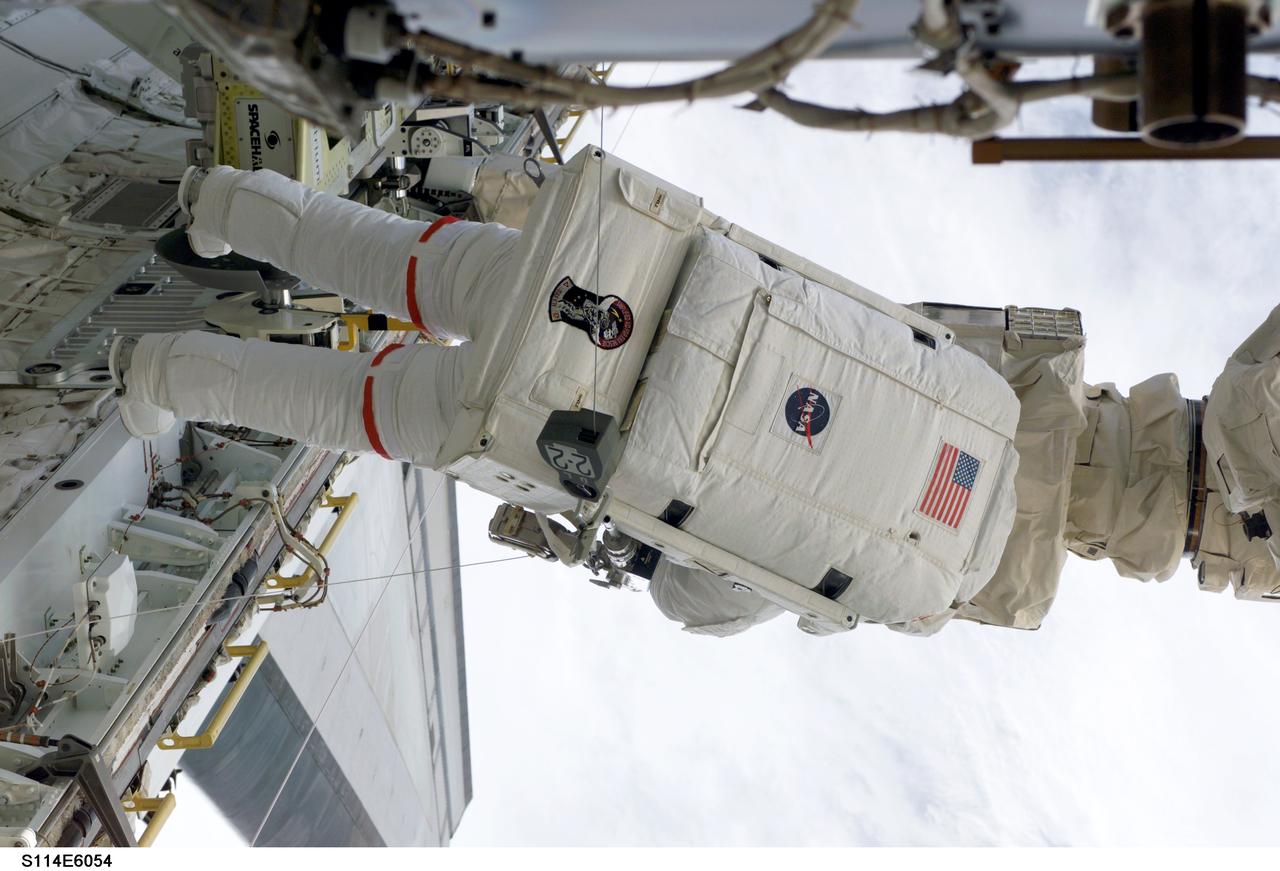
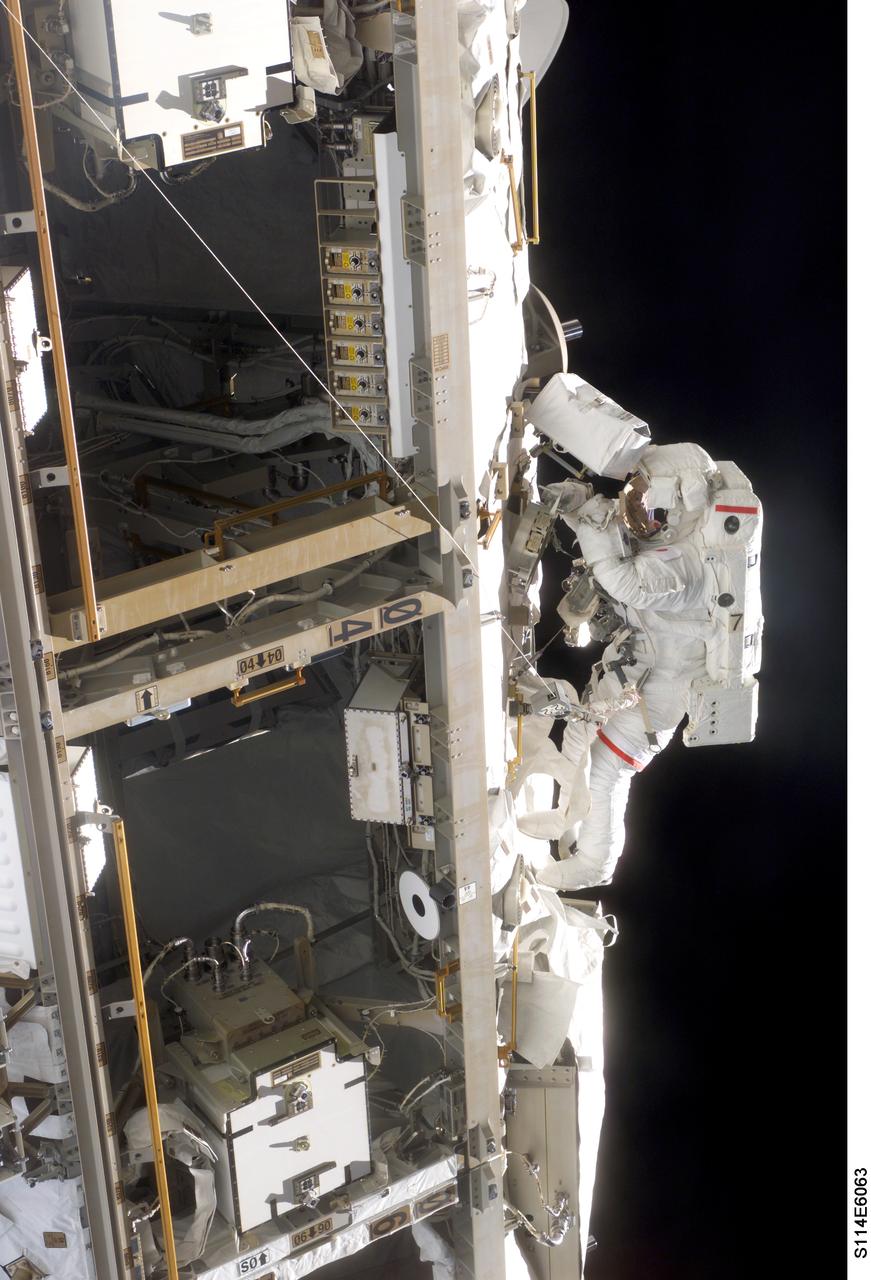
S114-E-6063 (30 July 2005) --- Astronaut Soichi Noguchi, STS-114 mission specialist representing Japan Aerospace Exploration Agency (JAXA), participates in the mission’s first scheduled session of extravehicular activity (EVA). Noguchi and crewmate Stephen K. Robinson (out of frame) completed a demonstration of Shuttle thermal protection repair techniques and enhancements to the International Space Station’s attitude control system during the successful 6-hour, 50-minute spacewalk.
Noguchi during EVA 1
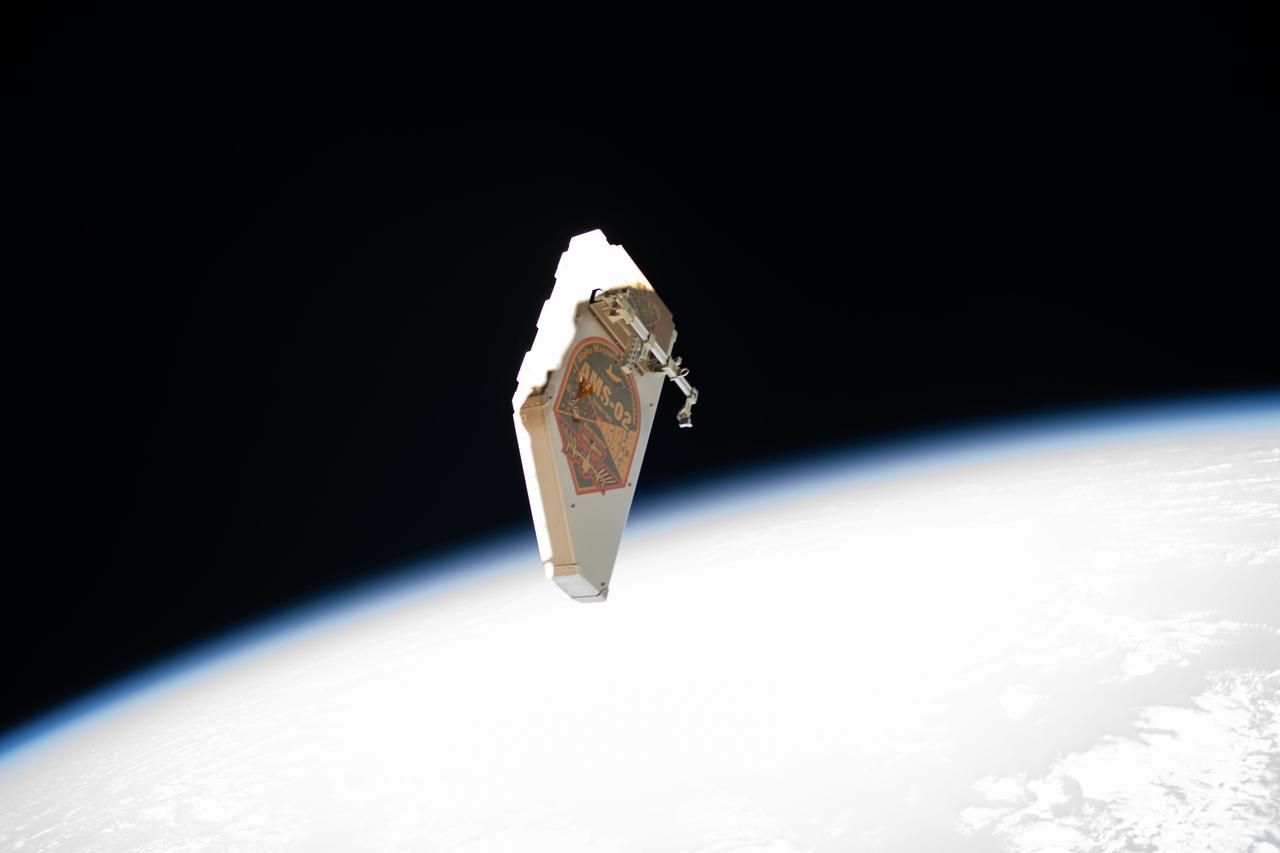
iss061e045319 (Nov. 15, 2019) --- A debris shield that was removed from the Alpha Magnetic Spectrometer (AMS), the International Space Station's cosmic particle detector, is pictured drifting away from the orbiting lab after spacewalkers Andrew Morgan and Luca Parmitano jettisoned it. The debris shield was detached by the spacewalkers so they could access and begin the repairs of the AMS thermal control system.
iss061e045319
S114-E-6054 (30 July 2005) --- Astronaut Soichi Noguchi, STS-114 mission specialist representing Japan Aerospace Exploration Agency (JAXA), participates in the mission’s first scheduled session of extravehicular activity (EVA). Noguchi and crewmate Stephen K. Robinson (out of frame) completed a demonstration of Shuttle thermal protection repair techniques and enhancements to the International Space Station’s attitude control system during the successful 6-hour, 50-minute spacewalk.
Noguchi during EVA 1
S114-E-6062 (30 July 2005) --- Astronaut Soichi Noguchi, STS-114 mission specialist representing Japan Aerospace Exploration Agency (JAXA), participates in the mission’s first scheduled session of extravehicular activity (EVA). Noguchi and crewmate Stephen K. Robinson (out of frame) completed a demonstration of Shuttle thermal protection repair techniques and enhancements to the International Space Station’s attitude control system during the successful 6-hour, 50-minute spacewalk.
Noguchi during EVA 1
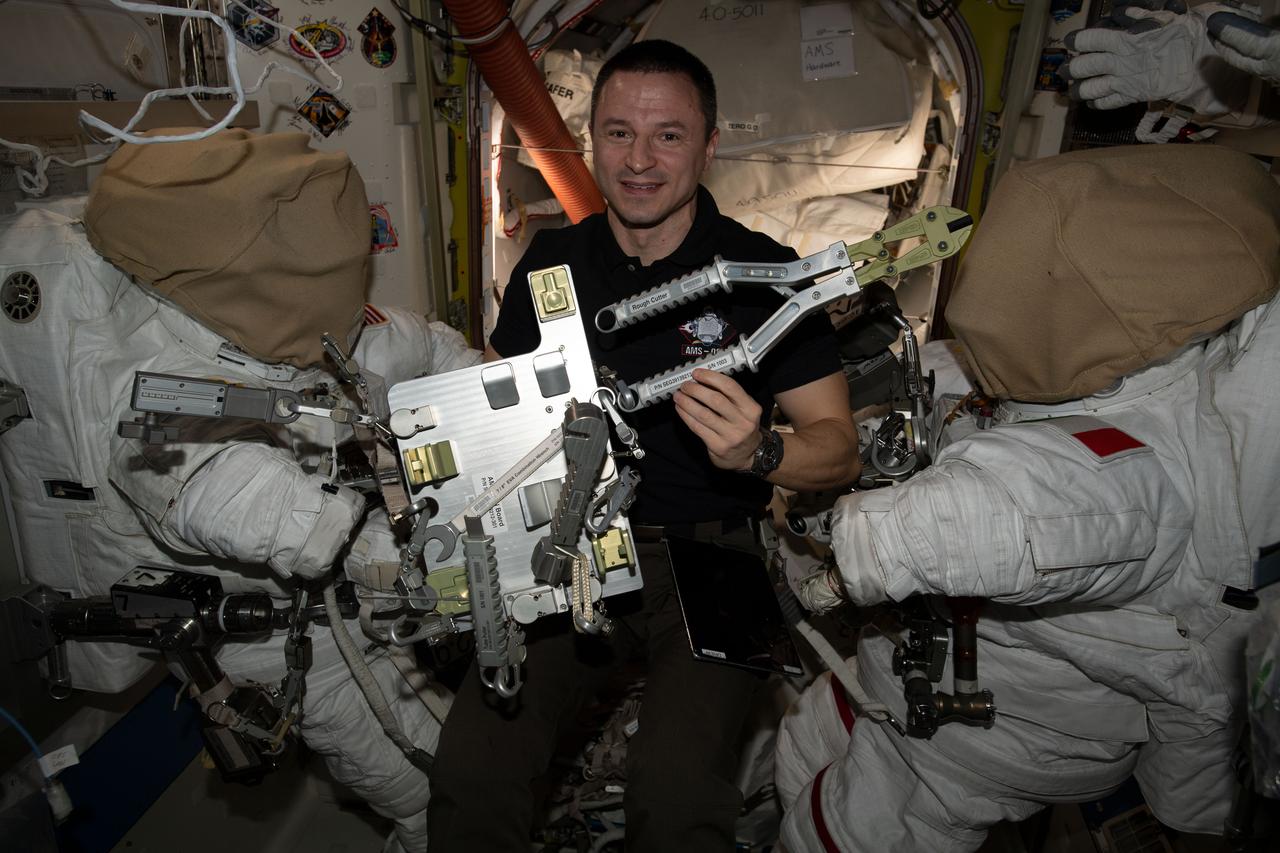
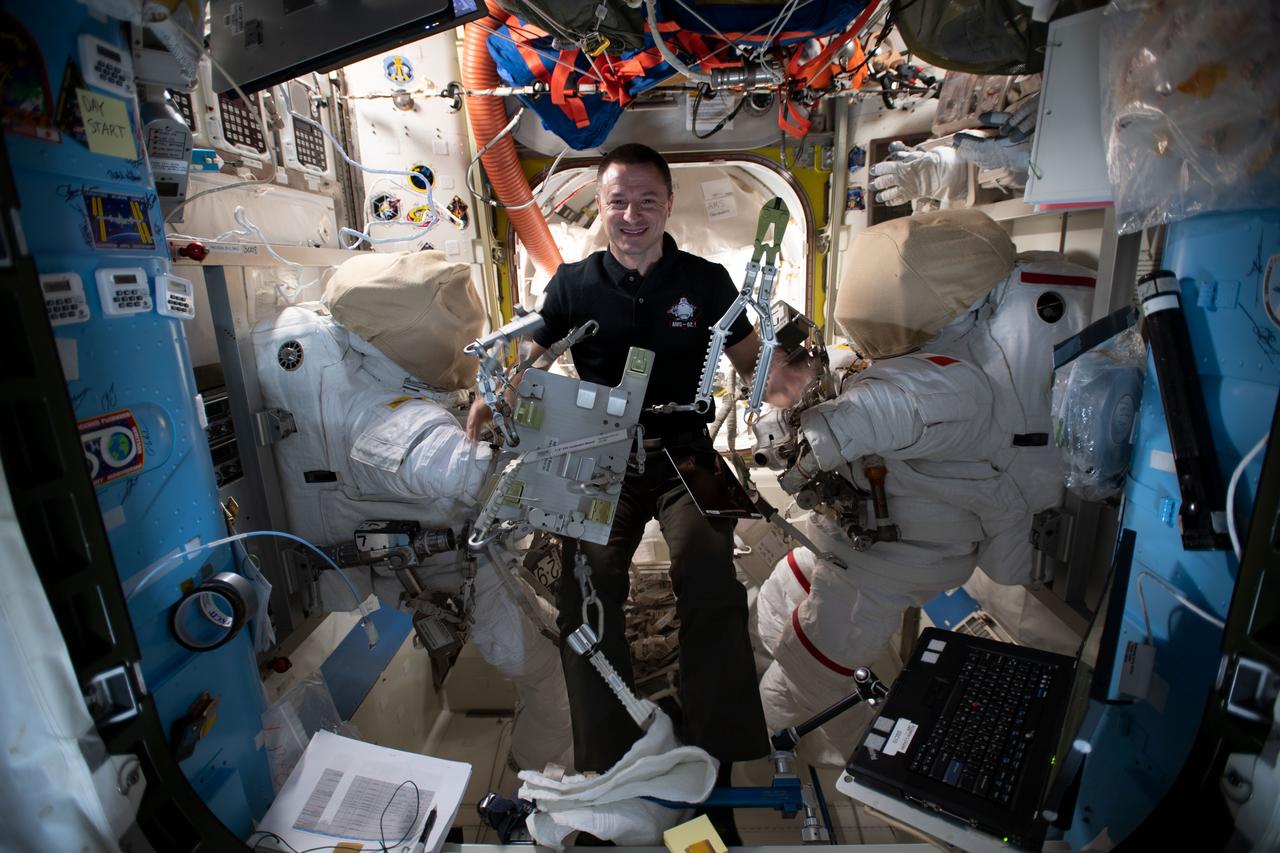
iss061e034876 (Nov. 12, 2019) --- NASA astronaut Andrew Morgan checks specialized spacewalking tools designed specifically to repair the International Space Station's cosmic particle detector, the Alpha Magnetic Spectrometer (AMS). Morgan and ESA (European Space Agency) astronaut Luca Parmitano will conduct several spacewalks in November to upgrade the AMS thermal control system.
iss061e034876
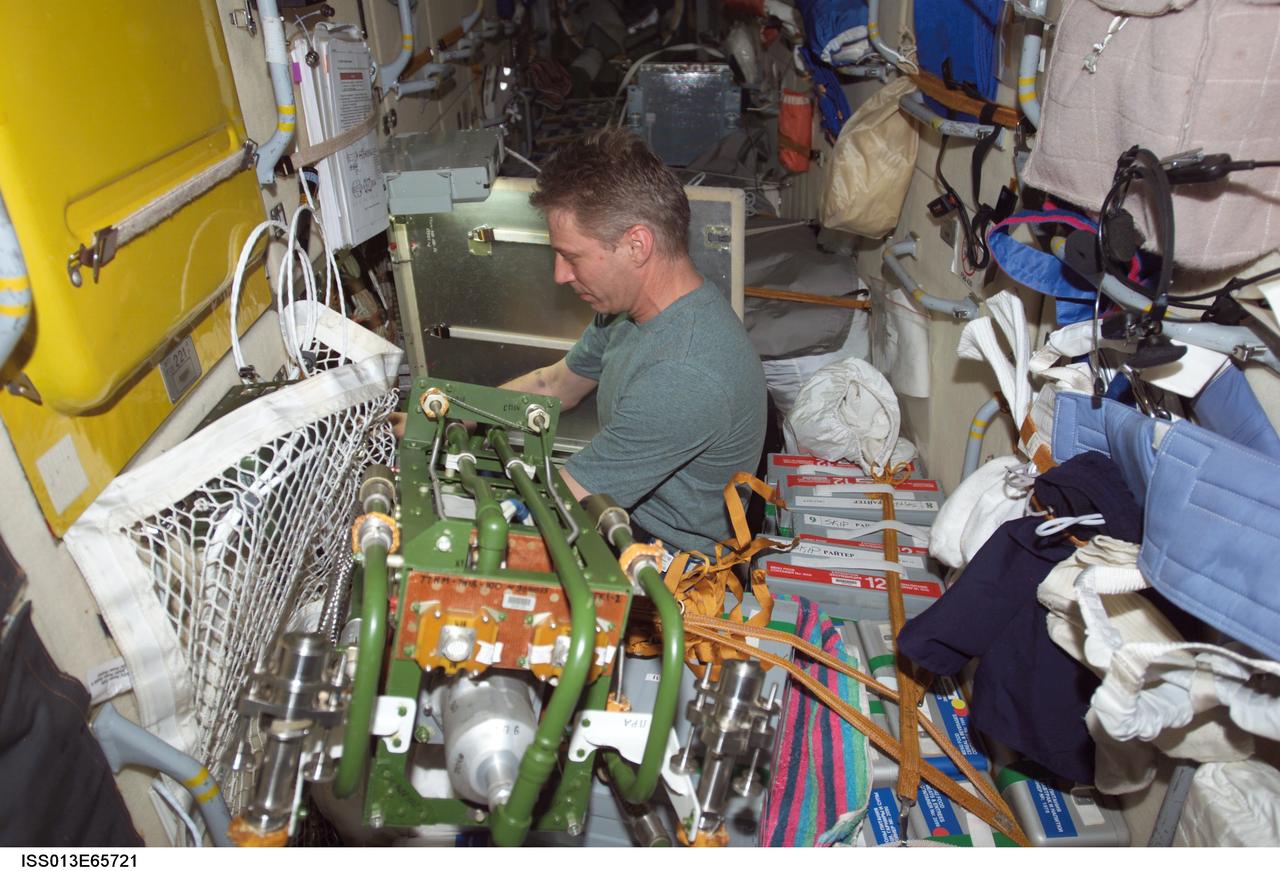
ISS013-E-65721 (10 Aug. 2006) --- European Space Agency (ESA) astronaut Thomas Reiter, Expedition 13 flight engineer, replaces the number two replaceable pump panel (SPN) in the number one loop (VGK1) of the International Space Station's Zarya functional cargo block (FGB) thermal control system with a new spare from stowage.
Reiter during maintenance tasks in the FGB
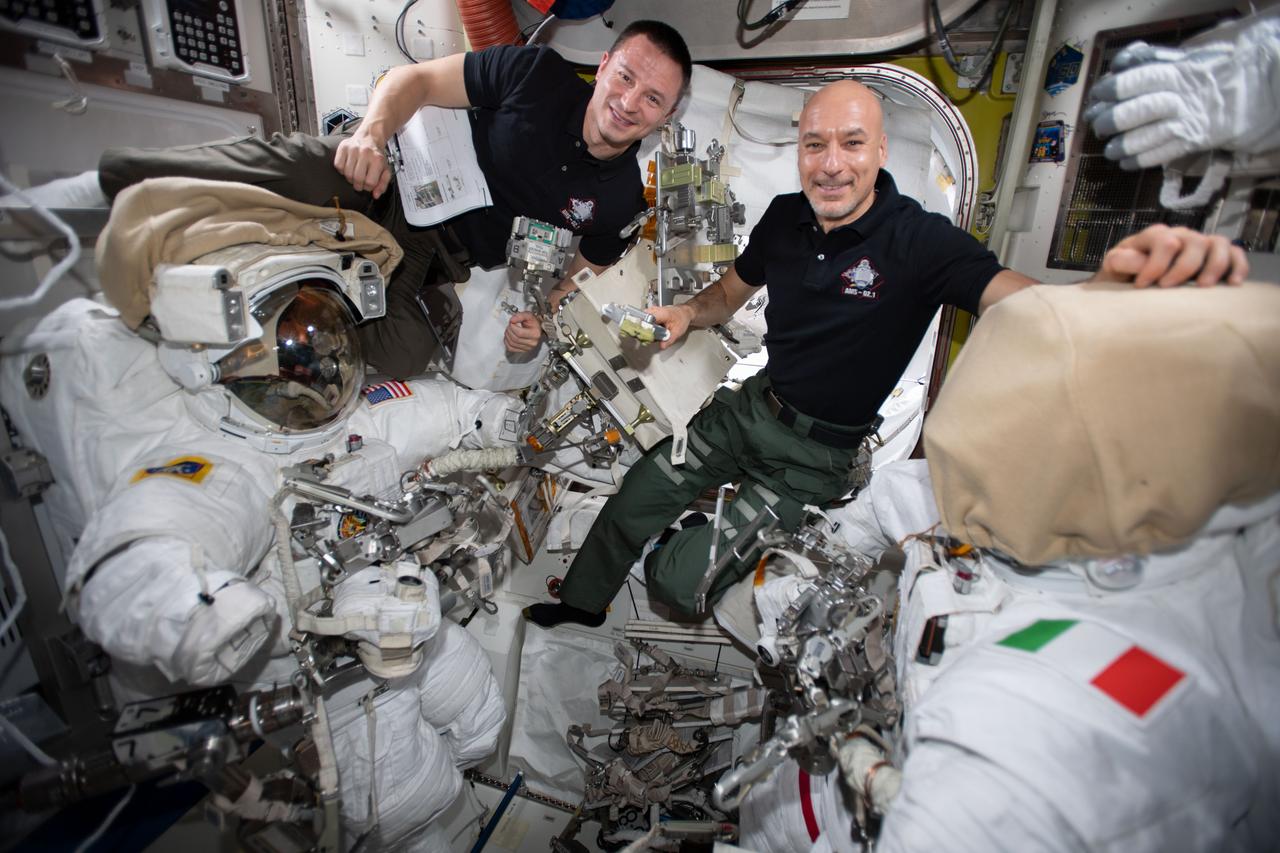
iss061e033873 (Nov. 11, 2019) --- (From left) NASA astronaut Andrew Morgan and ESA (European Space Agency) Commander Luca Parmitano work inside the Quest airlock checking U.S. spacesuits and spacewalking tools. The duo will conduct several spacewalks in November to upgrade the Alpha Magnetic Spectrometer's (AMS) thermal control system. The AMS is the International Space Station's cosmic particle detector.
iss061e033873
iss061e034867 (Nov. 12, 2019) --- NASA astronaut Andrew Morgan checks specialized spacewalking tools designed specifically to repair the International Space Station's cosmic particle detector, the Alpha Magnetic Spectrometer (AMS). Morgan and ESA (European Space Agency) astronaut Luca Parmitano will conduct several spacewalks in November to upgrade the AMS thermal control system.
iss061e034867
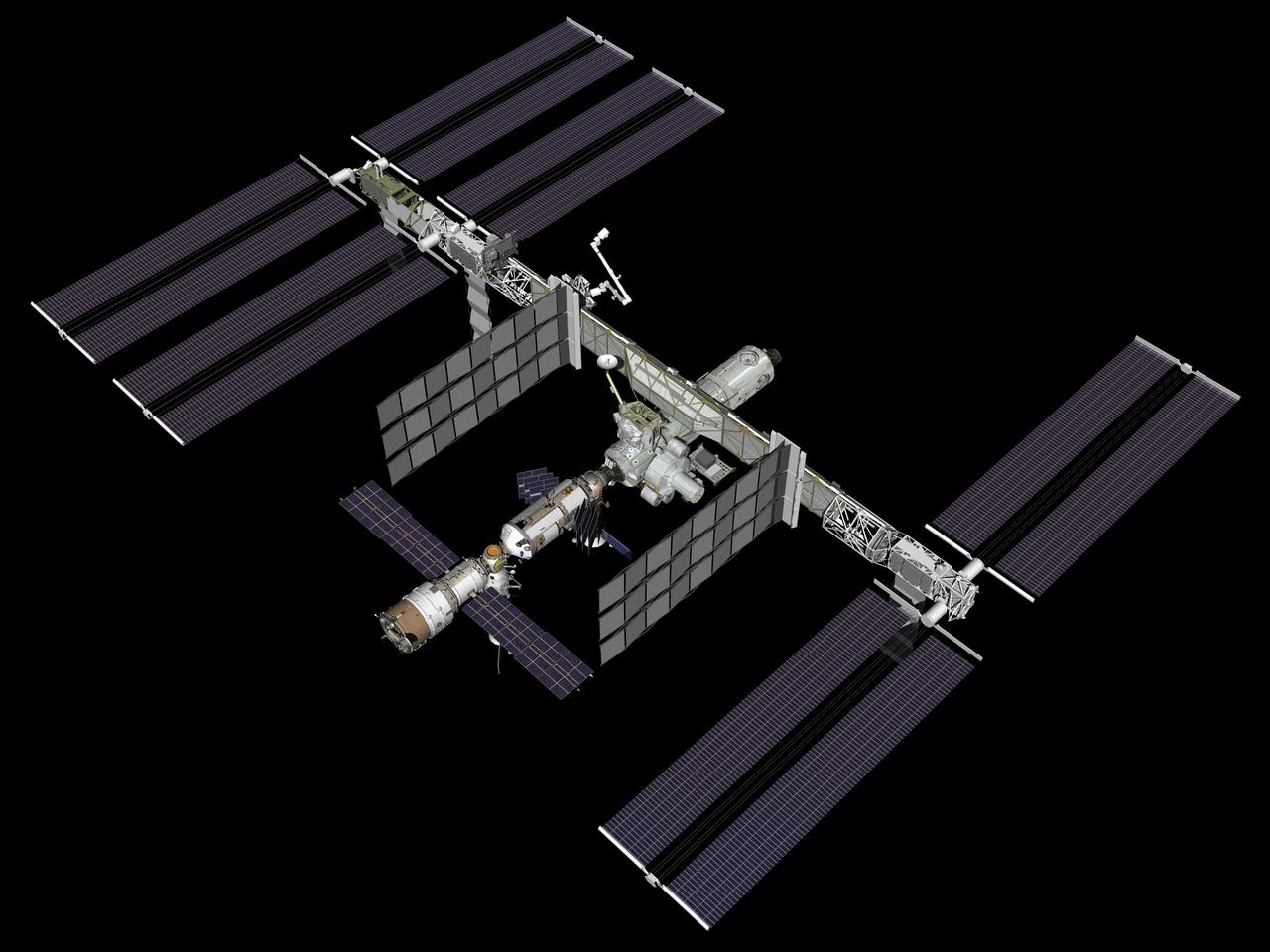
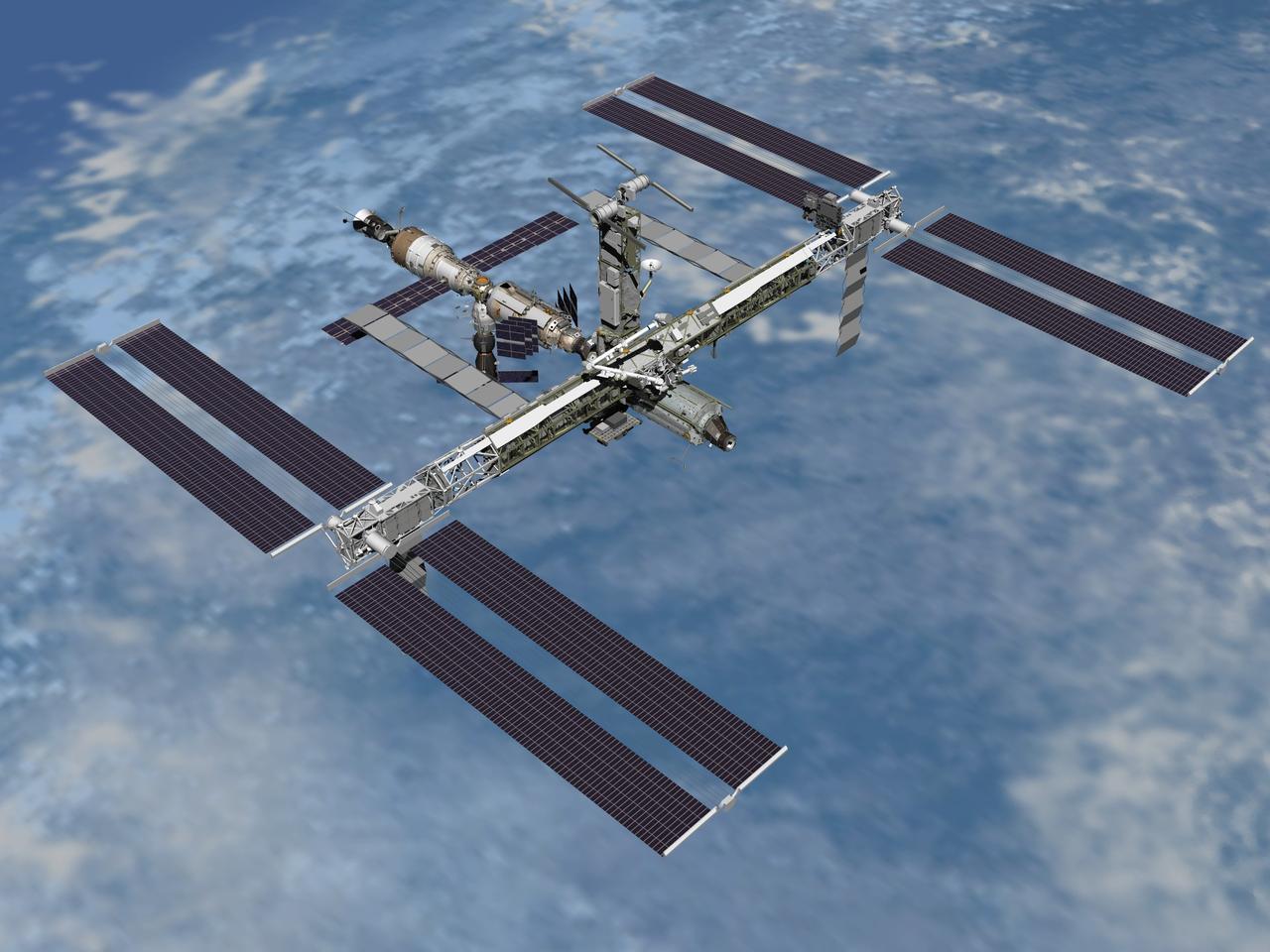
JSC2007-E-47329 (September 2007) --- Computer-generated artist's rendering of the International Space Station as of Sept. 28, 2007. Zarya module's arrays are retracted to allow room for the future deployment of the thermal control system radiators. Soyuz 14 (TMA-10) is docked to the Zvezda Service Module aft port and Progress 26 resupply vehicle remains docked to the Pirs Docking Compartment.
Current Configuration of the ISS
KENNEDY SPACE CENTER, FLA. -  Dressed in protective suits, STS-114 Mission Specialist Soichi Noguchi, with the Japanese Aerospace Exploration Agency (JAXA), handles equipment that will be used on the mission.  He and other crew members are at KSC for equipment familiarization.  STS-114 is classified as Logistics Flight 1 to the International Space Station, delivering new supplies and replacing one of the orbital outpost’s Control Moment Gyroscopes (CMGs). STS-114 will also carry a Raffaello Multi-Purpose Logistics Module and the External Stowage Platform-2.  The crew is slated to conduct at least three spacewalks: They will demonstrate repair techniques of the Shuttle’s Thermal Protection System,  replace the failed CMG with one delivered by the Shuttle, and  install the External Stowage Platform.
KENNEDY SPACE CENTER, FLA. - Dressed in protective suits, STS-114 Mission Specialist Soichi Noguchi, with the Japanese Aerospace Exploration Agency (JAXA), handles equipment that will be used on the mission. He and other crew members are at KSC for equipment familiarization. STS-114 is classified as Logistics Flight 1 to the International Space Station, delivering new supplies and replacing one of the orbital outpost’s Control Moment Gyroscopes (CMGs). STS-114 will also carry a Raffaello Multi-Purpose Logistics Module and the External Stowage Platform-2. The crew is slated to conduct at least three spacewalks: They will demonstrate repair techniques of the Shuttle’s Thermal Protection System, replace the failed CMG with one delivered by the Shuttle, and install the External Stowage Platform.
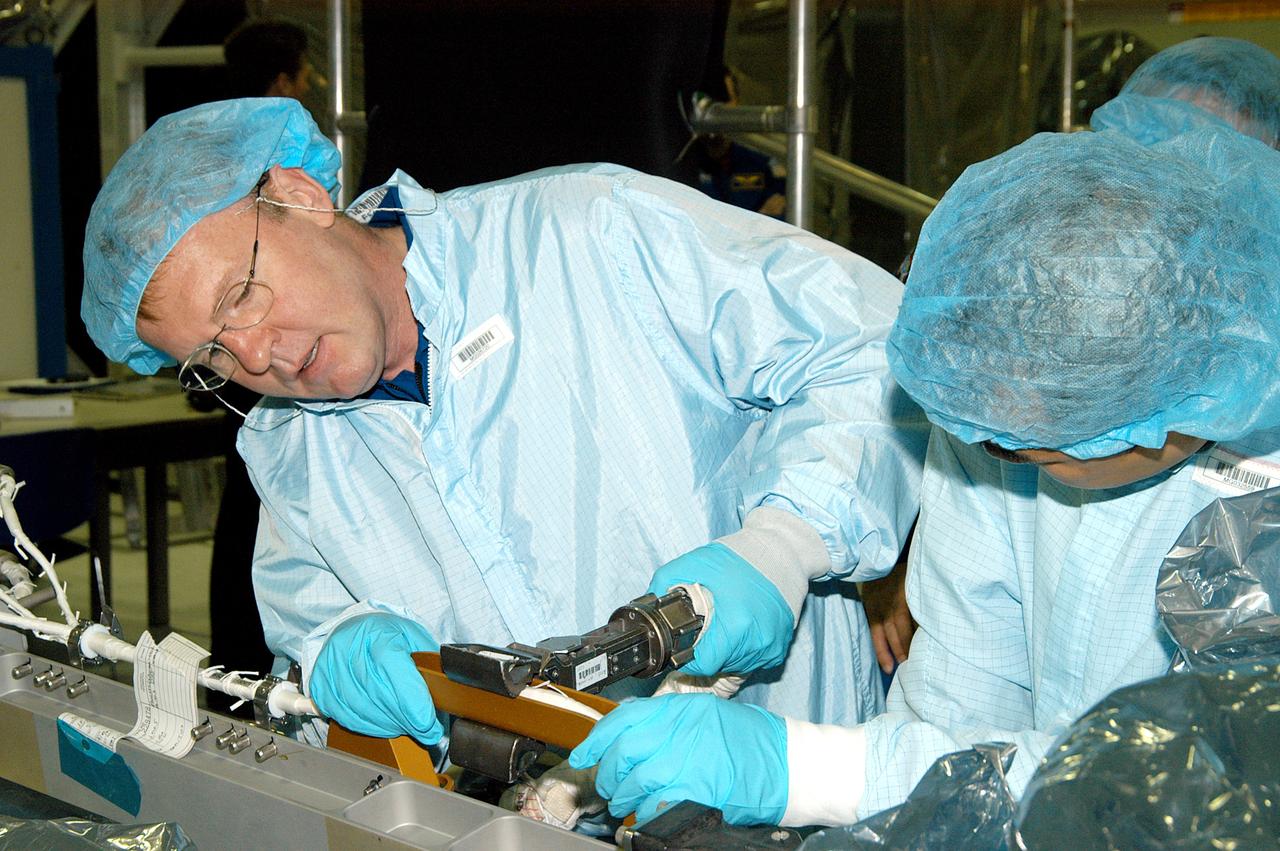
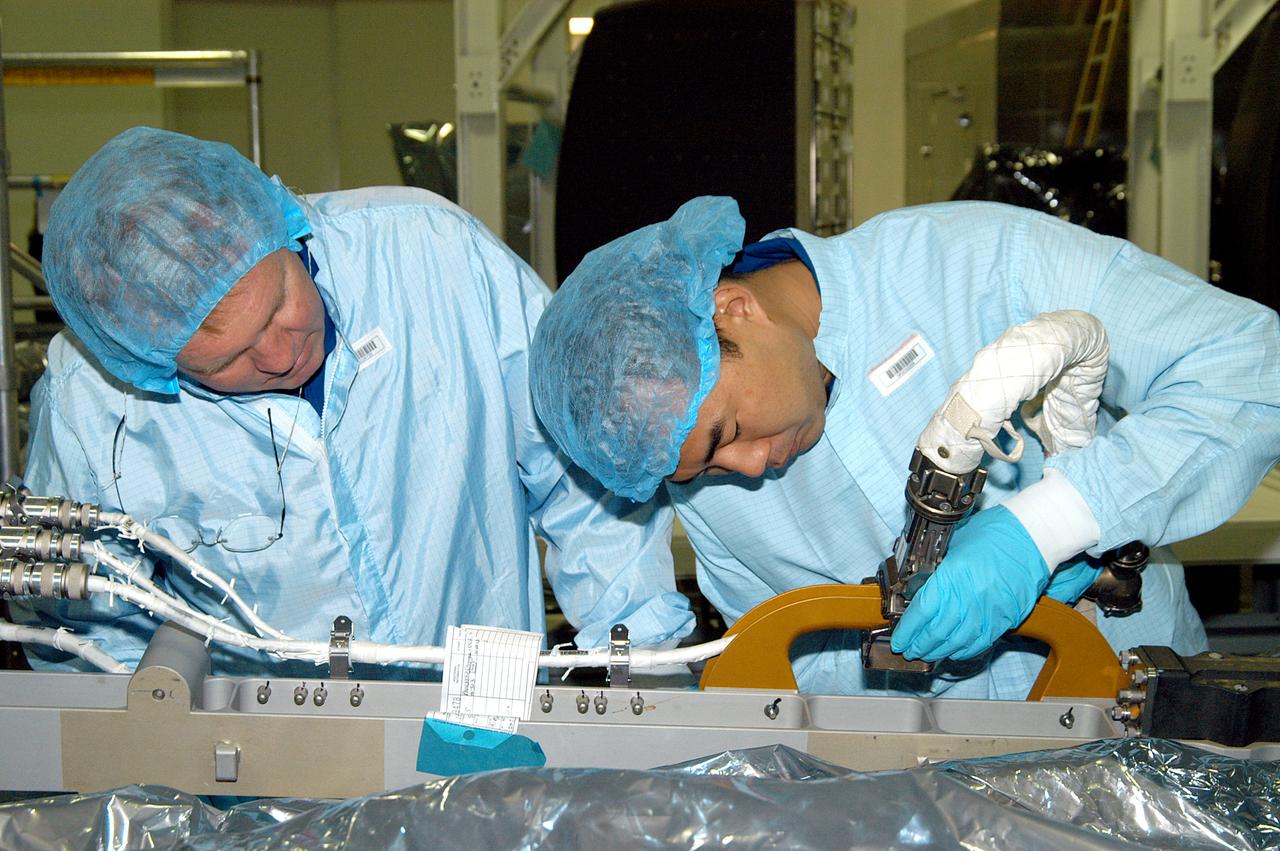
KENNEDY SPACE CENTER, FLA. -  In the Space Station Processing Facility, STS-114 Mission Specialists Andrew Thomas (center) and Soichi Noguchi (right) work with equipment while Mission Specialist Charles Camarda (left) watches.  Noguchi is with the Japanese Aerospace Exploration Agency (JAXA).  They and other crew members are at KSC for equipment familiarization.  STS-114 is classified as Logistics Flight 1 to the International Space Station, delivering new supplies and replacing one of the orbital outpost’s Control Moment Gyroscopes (CMGs). STS-114 will also carry a Raffaello Multi-Purpose Logistics Module and the External Stowage Platform-2.  The crew is slated to conduct at least three spacewalks: They will demonstrate repair techniques of the Shuttle’s Thermal Protection System,  replace the failed CMG with one delivered by the Shuttle, and  install the External Stowage Platform.
KENNEDY SPACE CENTER, FLA. - In the Space Station Processing Facility, STS-114 Mission Specialists Andrew Thomas (center) and Soichi Noguchi (right) work with equipment while Mission Specialist Charles Camarda (left) watches. Noguchi is with the Japanese Aerospace Exploration Agency (JAXA). They and other crew members are at KSC for equipment familiarization. STS-114 is classified as Logistics Flight 1 to the International Space Station, delivering new supplies and replacing one of the orbital outpost’s Control Moment Gyroscopes (CMGs). STS-114 will also carry a Raffaello Multi-Purpose Logistics Module and the External Stowage Platform-2. The crew is slated to conduct at least three spacewalks: They will demonstrate repair techniques of the Shuttle’s Thermal Protection System, replace the failed CMG with one delivered by the Shuttle, and install the External Stowage Platform.
KENNEDY SPACE CENTER, FLA. -  In the Space Station Processing Facility, STS-114 Mission Specialist Andrew Thomas (left) works with equipment while Mission Specialist Soichi Noguchi watches.  Noguchi is with the Japanese Aerospace Exploration Agency (JAXA).  They and other crew members are at KSC for equipment familiarization.  STS-114 is classified as Logistics Flight 1 to the International Space Station, delivering new supplies and replacing one of the orbital outpost’s Control Moment Gyroscopes (CMGs). STS-114 will also carry a Raffaello Multi-Purpose Logistics Module and the External Stowage Platform-2.  The crew is slated to conduct at least three spacewalks: They will demonstrate repair techniques of the Shuttle’s Thermal Protection System,  replace the failed CMG with one delivered by the Shuttle, and  install the External Stowage Platform.
KENNEDY SPACE CENTER, FLA. - In the Space Station Processing Facility, STS-114 Mission Specialist Andrew Thomas (left) works with equipment while Mission Specialist Soichi Noguchi watches. Noguchi is with the Japanese Aerospace Exploration Agency (JAXA). They and other crew members are at KSC for equipment familiarization. STS-114 is classified as Logistics Flight 1 to the International Space Station, delivering new supplies and replacing one of the orbital outpost’s Control Moment Gyroscopes (CMGs). STS-114 will also carry a Raffaello Multi-Purpose Logistics Module and the External Stowage Platform-2. The crew is slated to conduct at least three spacewalks: They will demonstrate repair techniques of the Shuttle’s Thermal Protection System, replace the failed CMG with one delivered by the Shuttle, and install the External Stowage Platform.
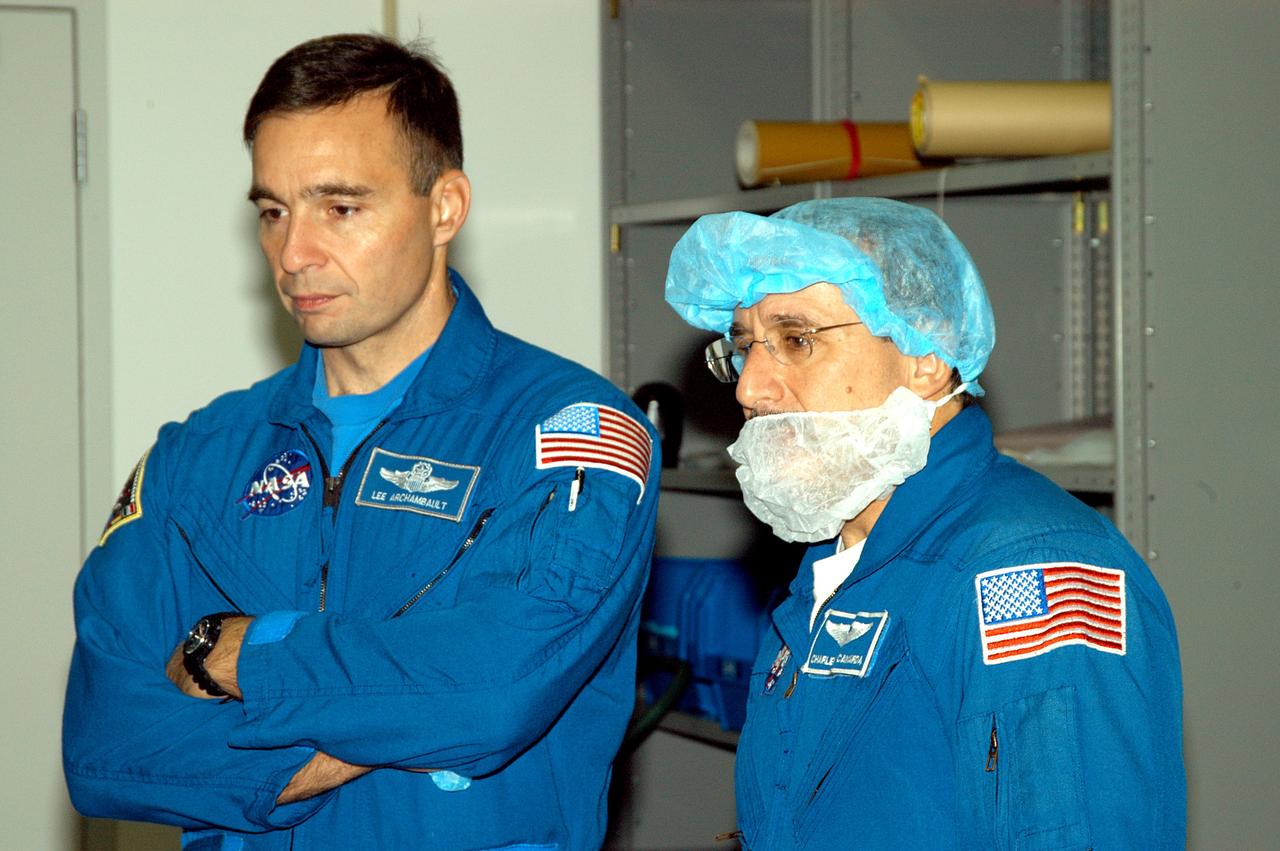
KENNEDY SPACE CENTER, FLA. -  In the Space Station Processing Facility, astronaut Lee Archambault and STS-114 Mission Specialist Charles Camarda watch as crew members work with equipment that will be used on the mission.  Archambault supports launch and landing operations at the Kennedy Space Center as an Astronaut Office representative. Crew members are at KSC for equipment familiarization.  STS-114 is classified as Logistics Flight 1 to the International Space Station, delivering new supplies and replacing one of the orbital outpost’s Control Moment Gyroscopes (CMGs). STS-114 will also carry a Raffaello Multi-Purpose Logistics Module and the External Stowage Platform-2.  The crew is slated to conduct at least three spacewalks: They will demonstrate repair techniques of the Shuttle’s Thermal Protection System,  replace the failed CMG with one delivered by the Shuttle, and  install the External Stowage Platform.
KENNEDY SPACE CENTER, FLA. - In the Space Station Processing Facility, astronaut Lee Archambault and STS-114 Mission Specialist Charles Camarda watch as crew members work with equipment that will be used on the mission. Archambault supports launch and landing operations at the Kennedy Space Center as an Astronaut Office representative. Crew members are at KSC for equipment familiarization. STS-114 is classified as Logistics Flight 1 to the International Space Station, delivering new supplies and replacing one of the orbital outpost’s Control Moment Gyroscopes (CMGs). STS-114 will also carry a Raffaello Multi-Purpose Logistics Module and the External Stowage Platform-2. The crew is slated to conduct at least three spacewalks: They will demonstrate repair techniques of the Shuttle’s Thermal Protection System, replace the failed CMG with one delivered by the Shuttle, and install the External Stowage Platform.
KENNEDY SPACE CENTER, FLA. -  Dressed in protective suits, STS-114 Mission Specialist Andrew Thomas (left) and Soichi Noguchi, who is with the Japanese Aerospace Exploration Agency (JAXA), handle equipment in the Space Station Processing Facility that will be used on the mission.  They and other crew members are at KSC for equipment familiarization.  STS-114 is classified as Logistics Flight 1 to the International Space Station, delivering new supplies and replacing one of the orbital outpost’s Control Moment Gyroscopes (CMGs). STS-114 will also carry a Raffaello Multi-Purpose Logistics Module and the External Stowage Platform-2.  The crew is slated to conduct at least three spacewalks: They will demonstrate repair techniques of the Shuttle’s Thermal Protection System,  replace the failed CMG with one delivered by the Shuttle, and  install the External Stowage Platform.
KENNEDY SPACE CENTER, FLA. - Dressed in protective suits, STS-114 Mission Specialist Andrew Thomas (left) and Soichi Noguchi, who is with the Japanese Aerospace Exploration Agency (JAXA), handle equipment in the Space Station Processing Facility that will be used on the mission. They and other crew members are at KSC for equipment familiarization. STS-114 is classified as Logistics Flight 1 to the International Space Station, delivering new supplies and replacing one of the orbital outpost’s Control Moment Gyroscopes (CMGs). STS-114 will also carry a Raffaello Multi-Purpose Logistics Module and the External Stowage Platform-2. The crew is slated to conduct at least three spacewalks: They will demonstrate repair techniques of the Shuttle’s Thermal Protection System, replace the failed CMG with one delivered by the Shuttle, and install the External Stowage Platform.
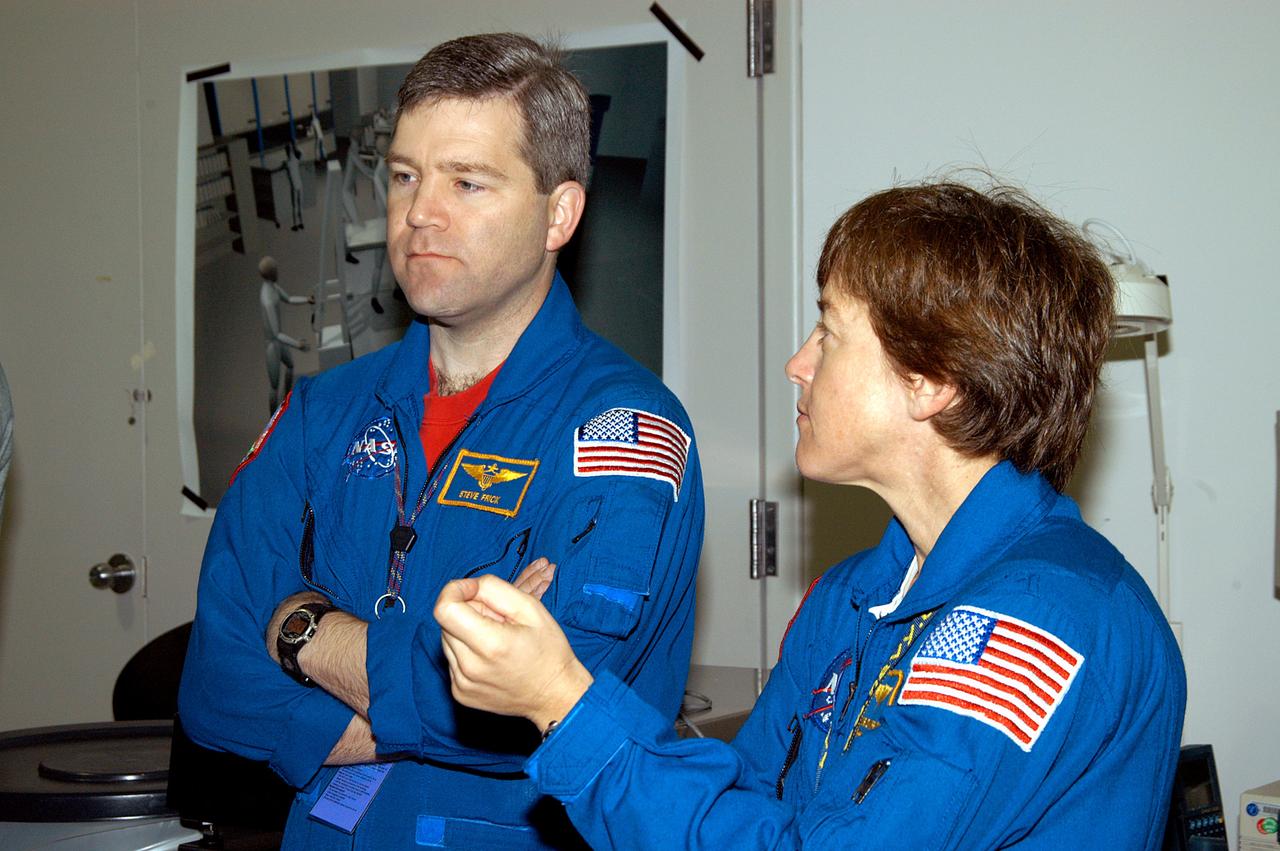
KENNEDY SPACE CENTER, FLA. -  In the Space Station Processing Facility, astronaut Stephen Frick and STS-114 Mission Specialist Wendy Lawrence watch as crew members work with equipment that will be used on the mission.  Frick is a tile specialist, who joined the STS-114 crew during equipment familiarization at KSC. STS-114 is classified as Logistics Flight 1 to the International Space Station, delivering new supplies and replacing one of the orbital outpost’s Control Moment Gyroscopes (CMGs). STS-114 will also carry a Raffaello Multi-Purpose Logistics Module and the External Stowage Platform-2.  The crew is slated to conduct at least three spacewalks: They will demonstrate repair techniques of the Shuttle’s Thermal Protection System,  replace the failed CMG with one delivered by the Shuttle, and  install the External Stowage Platform.
KENNEDY SPACE CENTER, FLA. - In the Space Station Processing Facility, astronaut Stephen Frick and STS-114 Mission Specialist Wendy Lawrence watch as crew members work with equipment that will be used on the mission. Frick is a tile specialist, who joined the STS-114 crew during equipment familiarization at KSC. STS-114 is classified as Logistics Flight 1 to the International Space Station, delivering new supplies and replacing one of the orbital outpost’s Control Moment Gyroscopes (CMGs). STS-114 will also carry a Raffaello Multi-Purpose Logistics Module and the External Stowage Platform-2. The crew is slated to conduct at least three spacewalks: They will demonstrate repair techniques of the Shuttle’s Thermal Protection System, replace the failed CMG with one delivered by the Shuttle, and install the External Stowage Platform.
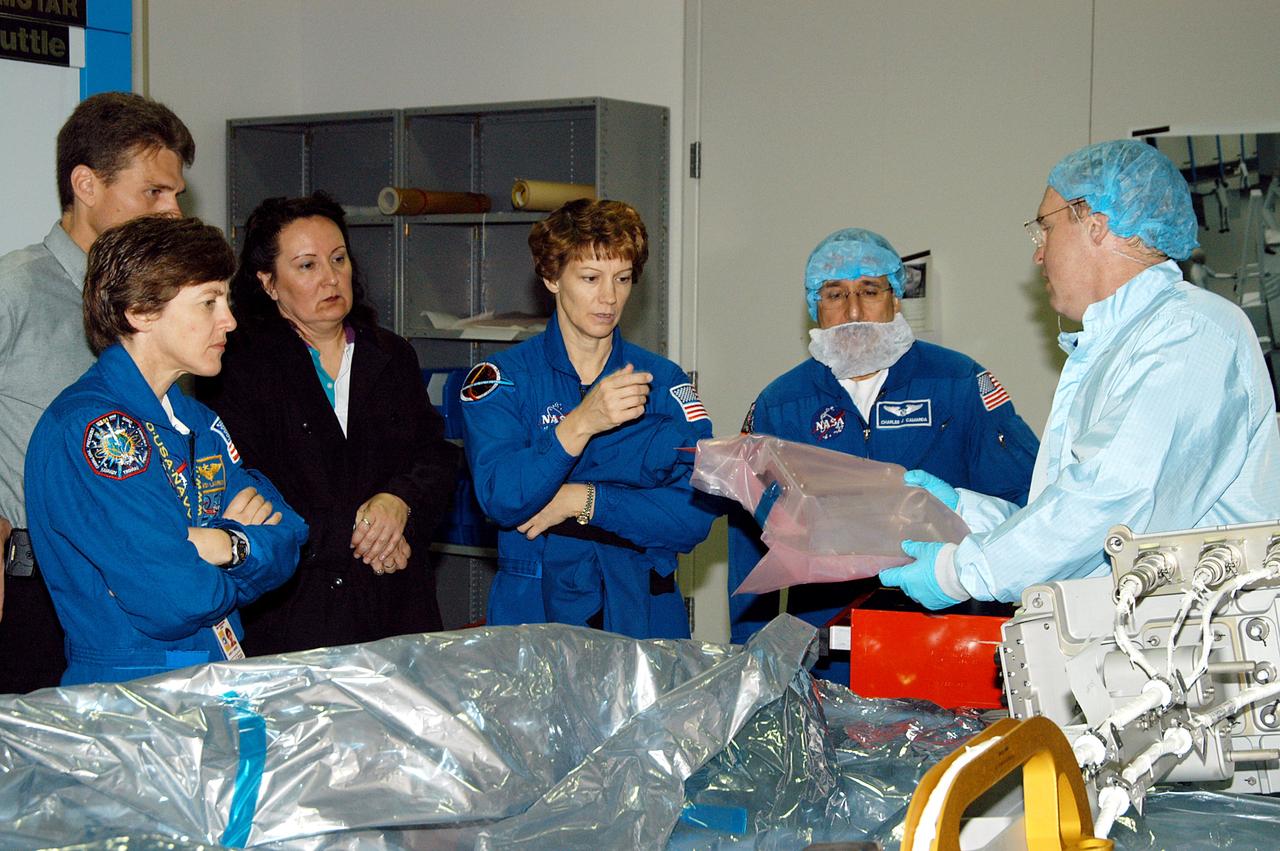
KENNEDY SPACE CENTER, FLA. -  STS-114 Mission Specialist Andrew Thomas (right) shows some of the mission equipment to other crew members (from left) Wendy Lawrence, mission specialist; Eileen Collins, commander; and Charles Camarda, mission specialist.  Crew members are at KSC for equipment familiarization.  STS-114 is classified as Logistics Flight 1 to the International Space Station, delivering new supplies and replacing one of the orbital outpost’s Control Moment Gyroscopes (CMGs). STS-114 will also carry a Raffaello Multi-Purpose Logistics Module and the External Stowage Platform-2.  The crew is slated to conduct at least three spacewalks: They will demonstrate repair techniques of the Shuttle’s Thermal Protection System,  replace the failed CMG with one delivered by the Shuttle, and  install the External Stowage Platform.
KENNEDY SPACE CENTER, FLA. - STS-114 Mission Specialist Andrew Thomas (right) shows some of the mission equipment to other crew members (from left) Wendy Lawrence, mission specialist; Eileen Collins, commander; and Charles Camarda, mission specialist. Crew members are at KSC for equipment familiarization. STS-114 is classified as Logistics Flight 1 to the International Space Station, delivering new supplies and replacing one of the orbital outpost’s Control Moment Gyroscopes (CMGs). STS-114 will also carry a Raffaello Multi-Purpose Logistics Module and the External Stowage Platform-2. The crew is slated to conduct at least three spacewalks: They will demonstrate repair techniques of the Shuttle’s Thermal Protection System, replace the failed CMG with one delivered by the Shuttle, and install the External Stowage Platform.
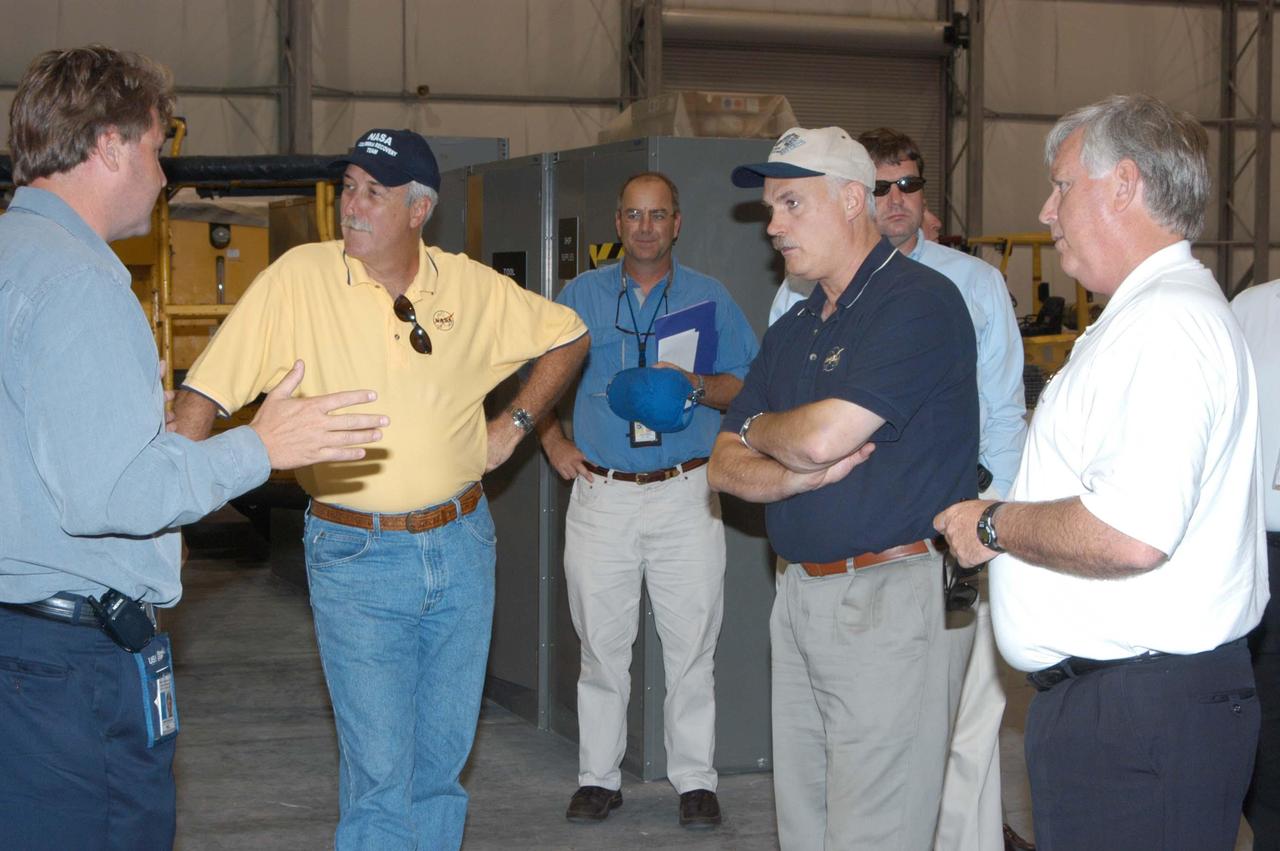
KENNEDY SPACE CENTER, FLA. -  From left, Martin Wilson, manager of Thermal Protection System (TPS) operations for United Space Alliance, briefs NASA Administrator Sean O’Keefe, KSC Director of the Spaceport Services Scott Kerr, NASA Associate Administrator of the Space Operations Mission Directorate William Readdy, and Center Director James Kennedy (right) on the temporary tile shop set up in the RLV hangar.  O’Keefe and Readdy are visiting KSC to survey the damage sustained by KSC facilities from Hurricane Frances. The Thermal Protection System Facility (TPSF), which creates the TPS tiles, blankets and all the internal thermal control systems for the Space Shuttles, is almost totally unserviceable at this time after losing approximately 35 percent of its roof in the storm, which blew across Central Florida Sept. 4-5. Undamaged equipment was removed from the TPSF and stored in the hangar. NASA’s three Space Shuttle orbiters -- Discovery, Atlantis and Endeavour - along with the Shuttle launch pads, all of the critical flight hardware for the orbiters and the International Space Station, and NASA’s Swift spacecraft, awaiting launch in October, were well protected and unharmed.
KSC-04pd1839
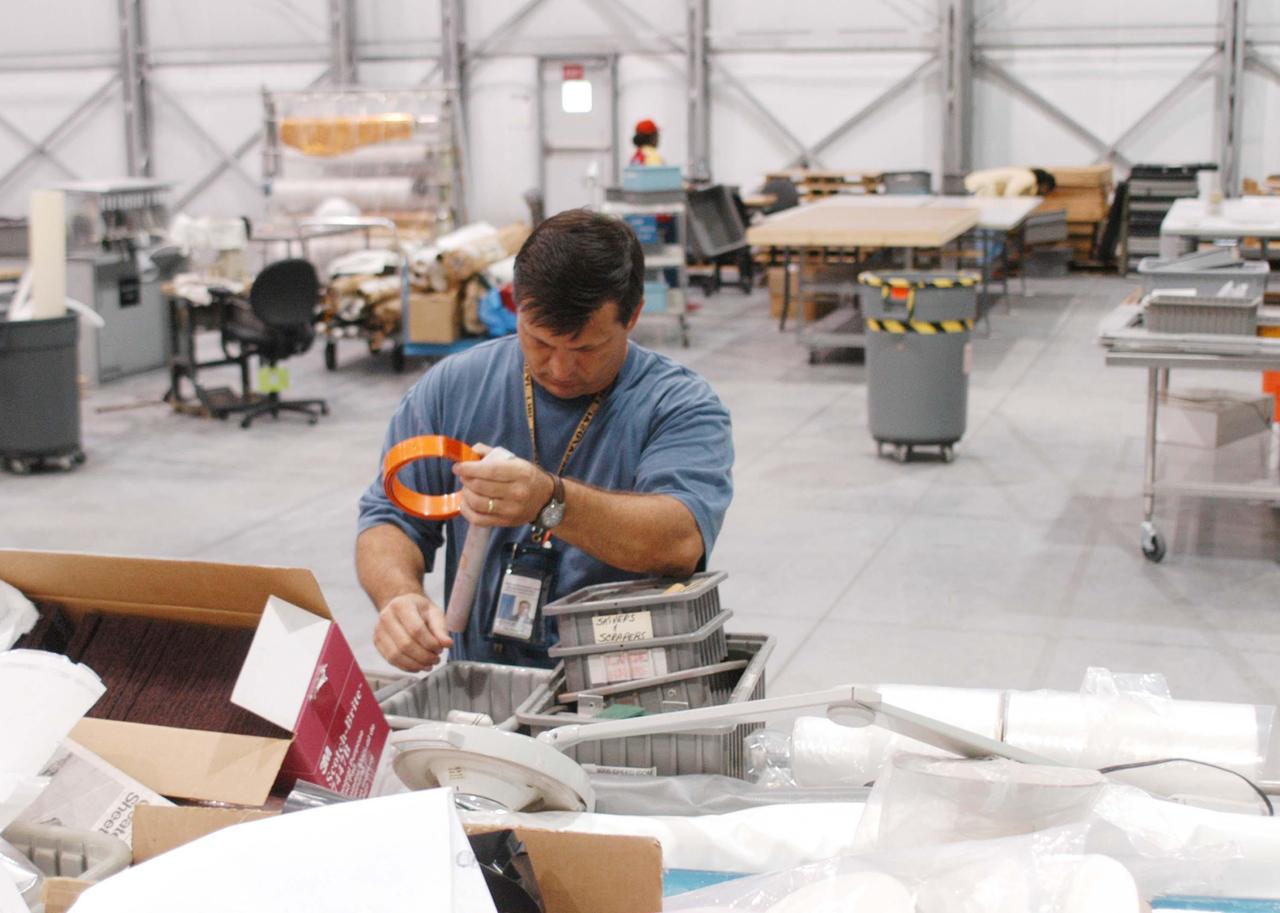
KENNEDY SPACE CENTER, FLA. -  In the RLV hangar at KSC, United Space Alliance worker Steve Mitchell unpacks equipment that was removed from the hurricane-ravaged Thermal Protection System Facility (TPSF).  The facility, which creates the TPS tiles, blankets and all the internal thermal control systems for the Space Shuttles, is almost totally unserviceable at this time after losing approximately 35 percent of its roof due to Hurricane Frances, which blew across Central Florida Sept. 4-5.  The maximum wind at the surface from Hurricane Frances was 94 mph from the northeast at 6:40 a.m. on Sunday, September 5.  It was recorded at a weather tower located on the east shore of the Mosquito Lagoon near the Cape Canaveral National Seashore.  The highest sustained wind at KSC was 68 mph.
KSC-04pd1780
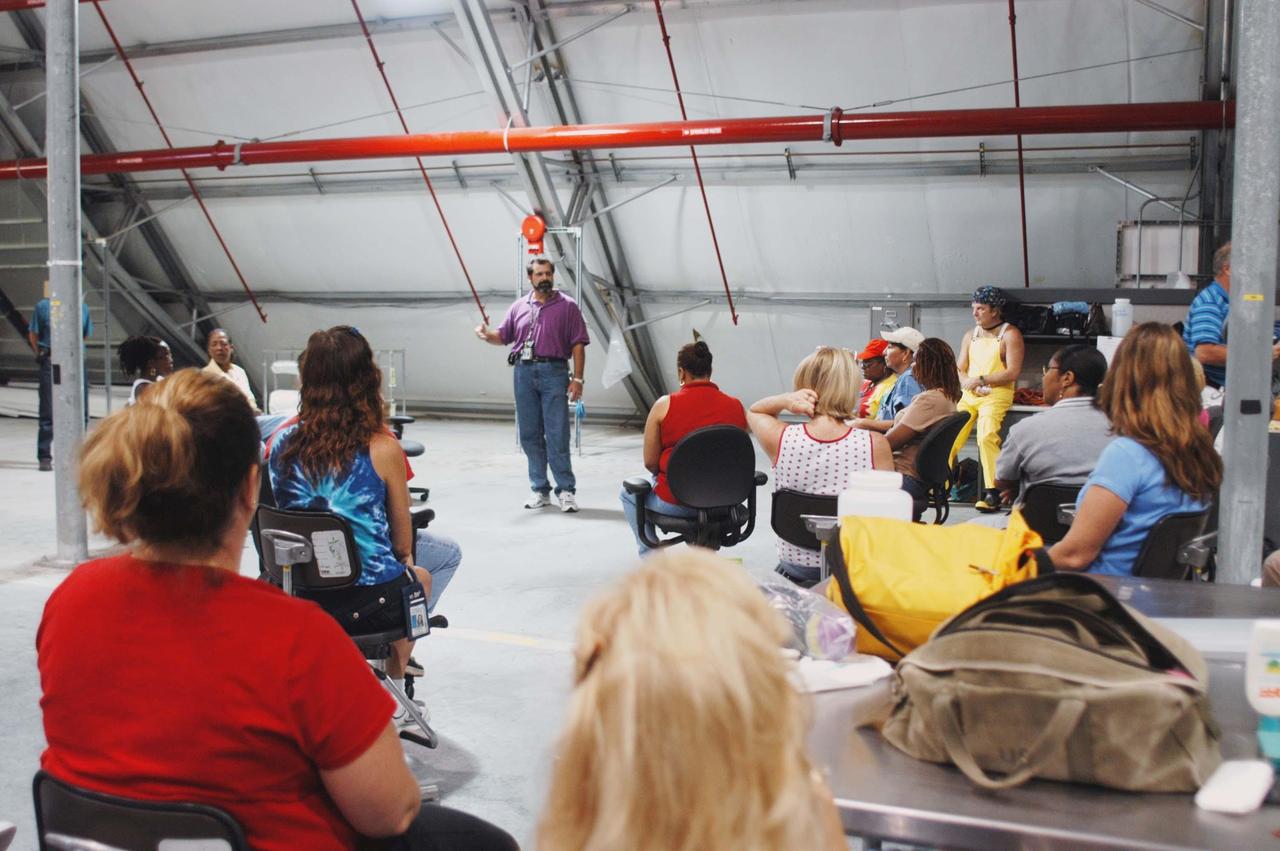
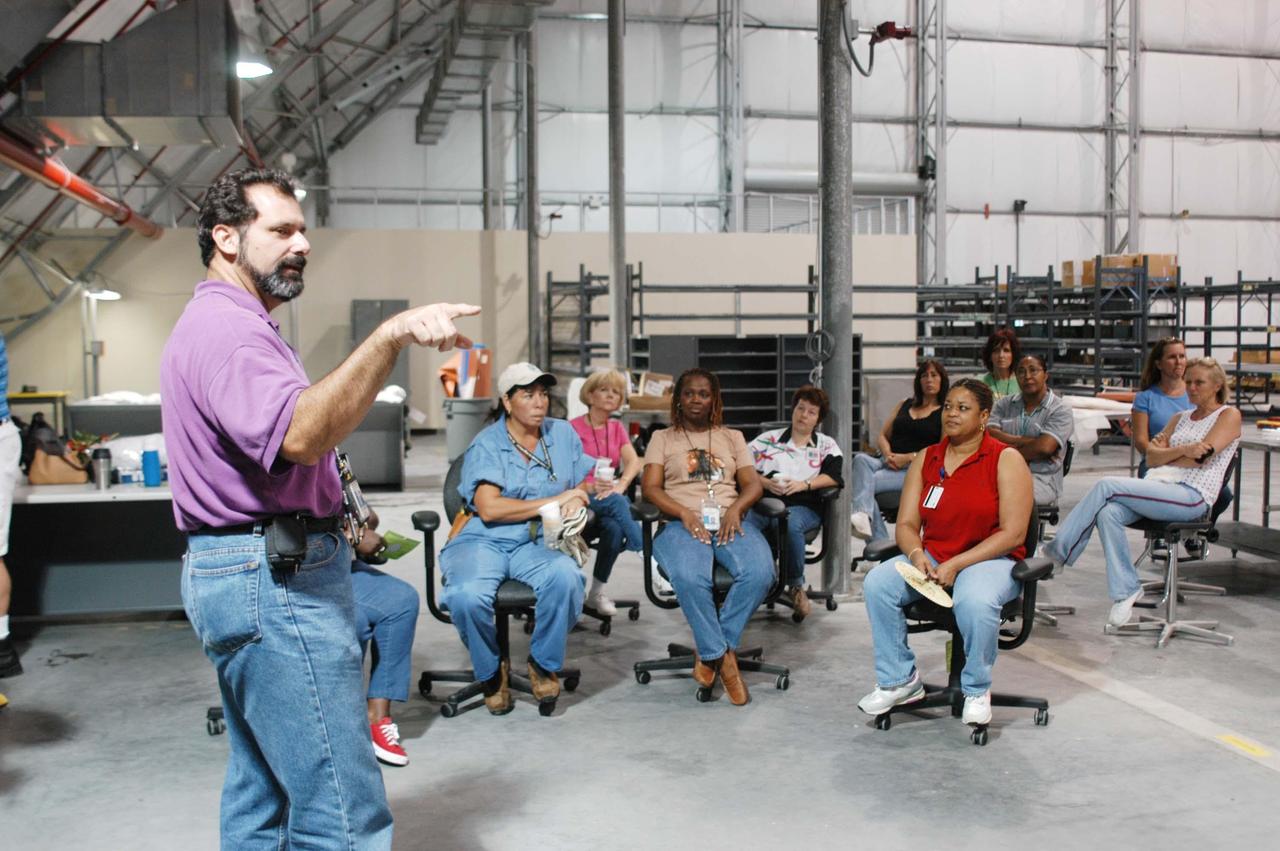
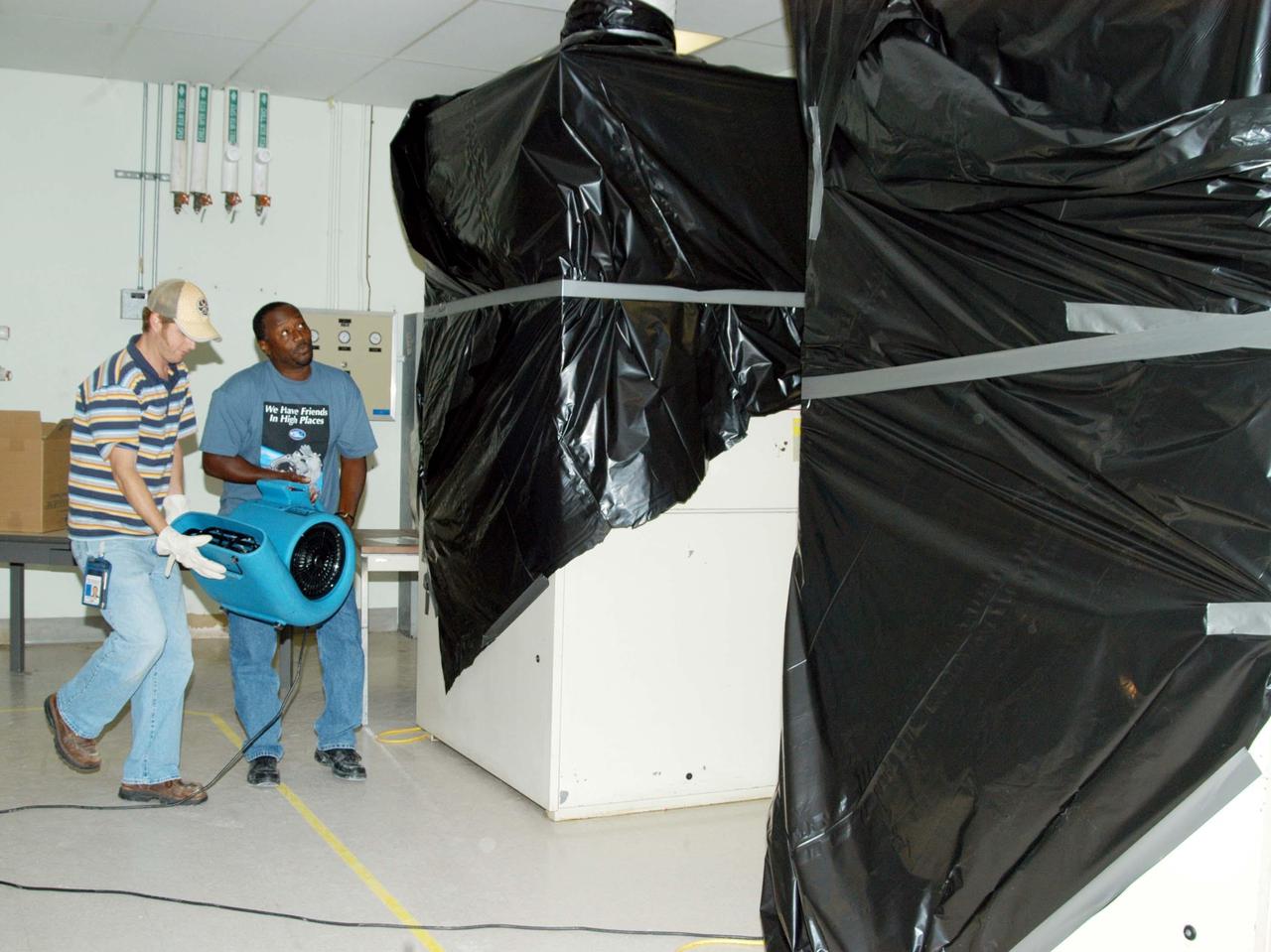
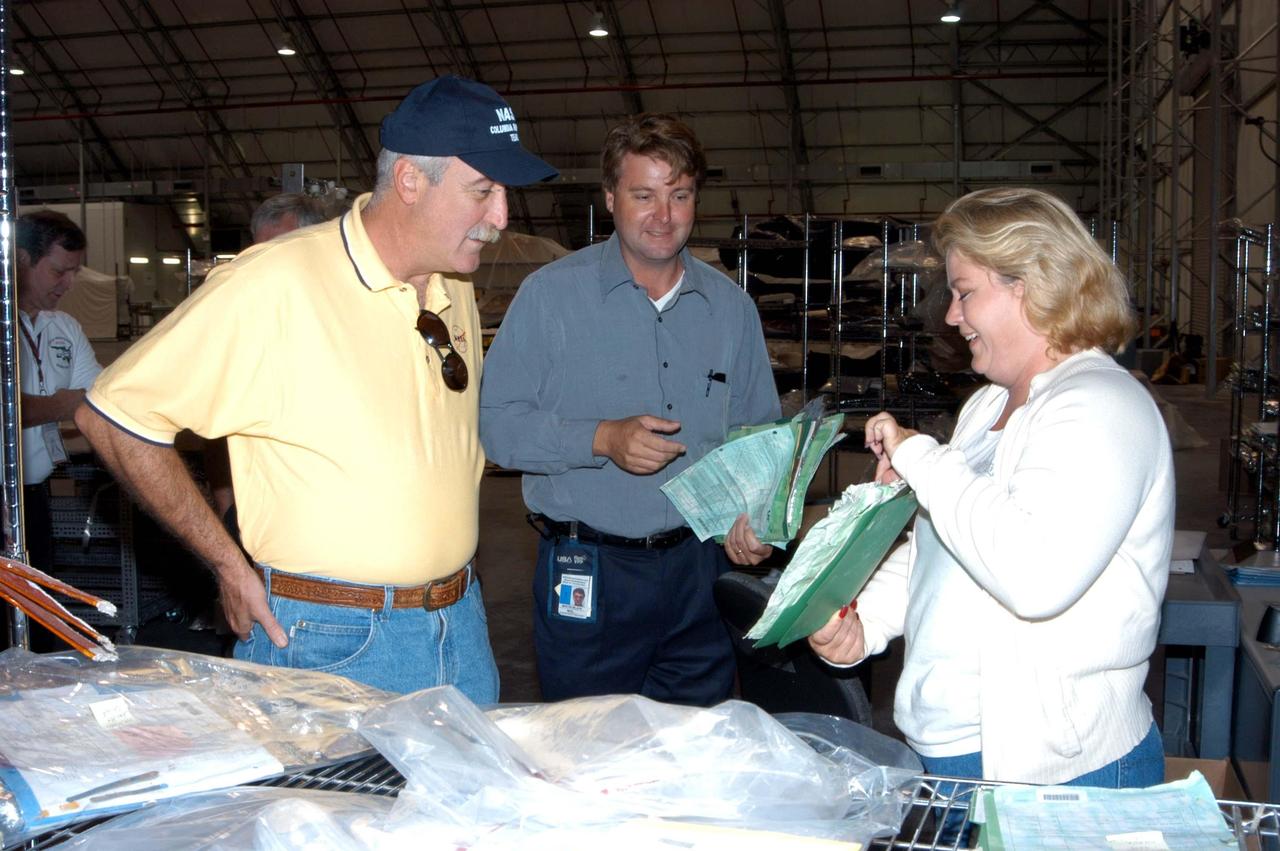
KENNEDY SPACE CENTER, FLA. -  In the RLV hangar at KSC, Steve Harrington talks to workers about the equipment removed from the hurricane-ravaged Thermal Protection System Facility (TPSF) now being stored in the hangar.  The facility, which creates the TPS tiles, blankets and all the internal thermal control systems for the Space Shuttles, is almost totally unserviceable at this time after losing approximately 35 percent of its roof due to Hurricane Frances, which blew across Central Florida Sept. 4-5.  The maximum wind at the surface from Hurricane Frances was 94 mph from the northeast at 6:40 a.m. on Sunday, September 5.  It was recorded at a weather tower located on the east shore of the Mosquito Lagoon near the Cape Canaveral National Seashore.  The highest sustained wind at KSC was 68 mph.
KSC-04pd1785
KENNEDY SPACE CENTER, FLA. -  In the RLV hangar at KSC, Kevin Harrington, manager of Softgoods Production, talks to workers about the equipment removed from the hurricane-ravaged Thermal Protection System Facility (TPSF) now being stored in the hangar.  The facility, which creates the TPS tiles, blankets and all the internal thermal control systems for the Space Shuttles, is almost totally unserviceable at this time after losing approximately 35 percent of its roof due to Hurricane Frances, which blew across Central Florida Sept. 4-5.  The maximum wind at the surface from Hurricane Frances was 94 mph from the northeast at 6:40 a.m. on Sunday, September 5.  It was recorded at a weather tower located on the east shore of the Mosquito Lagoon near the Cape Canaveral National Seashore.  The highest sustained wind at KSC was 68 mph.
KSC-04pd1788
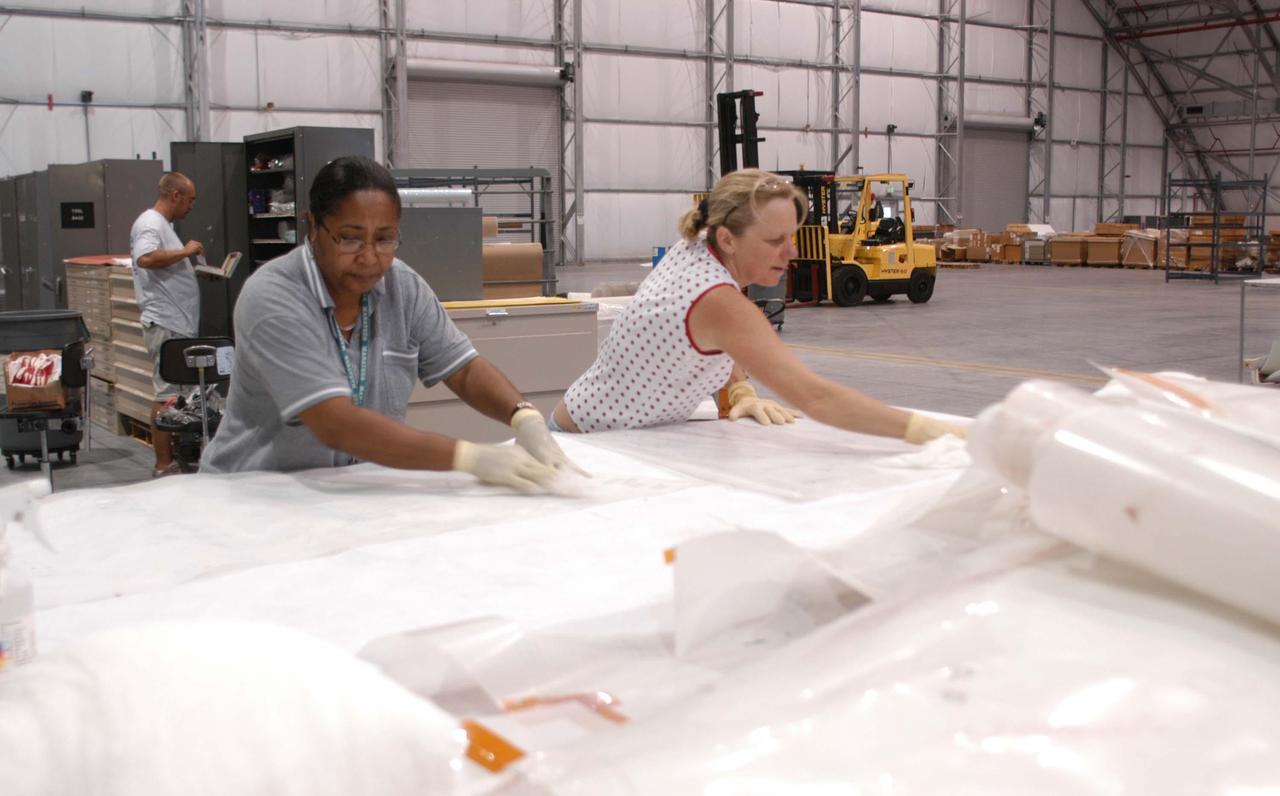
KENNEDY SPACE CENTER, FLA. -  United Space Alliance worker Janet Mills works on equipment in the temporary tile shop set up in the RLV hangar at KSC.  The hurricane-ravaged Thermal Protection System Facility (TPSF), which creates the TPS tiles, blankets and all the internal thermal control systems for the Space Shuttles, is almost totally unserviceable at this time after losing approximately 35 percent of its roof due to Hurricane Frances, which blew across Central Florida Sept. 4-5.  Undamaged equipment was removed from the TPSF and stored in the hangar.  The maximum wind at the surface from Hurricane Frances was 94 mph from the northeast at 6:40 a.m. on Sunday, September 5.  It was recorded at a weather tower located on the east shore of the Mosquito Lagoon near the Cape Canaveral National Seashore.  The highest sustained wind at KSC was 68 mph.
KSC-04pd1793
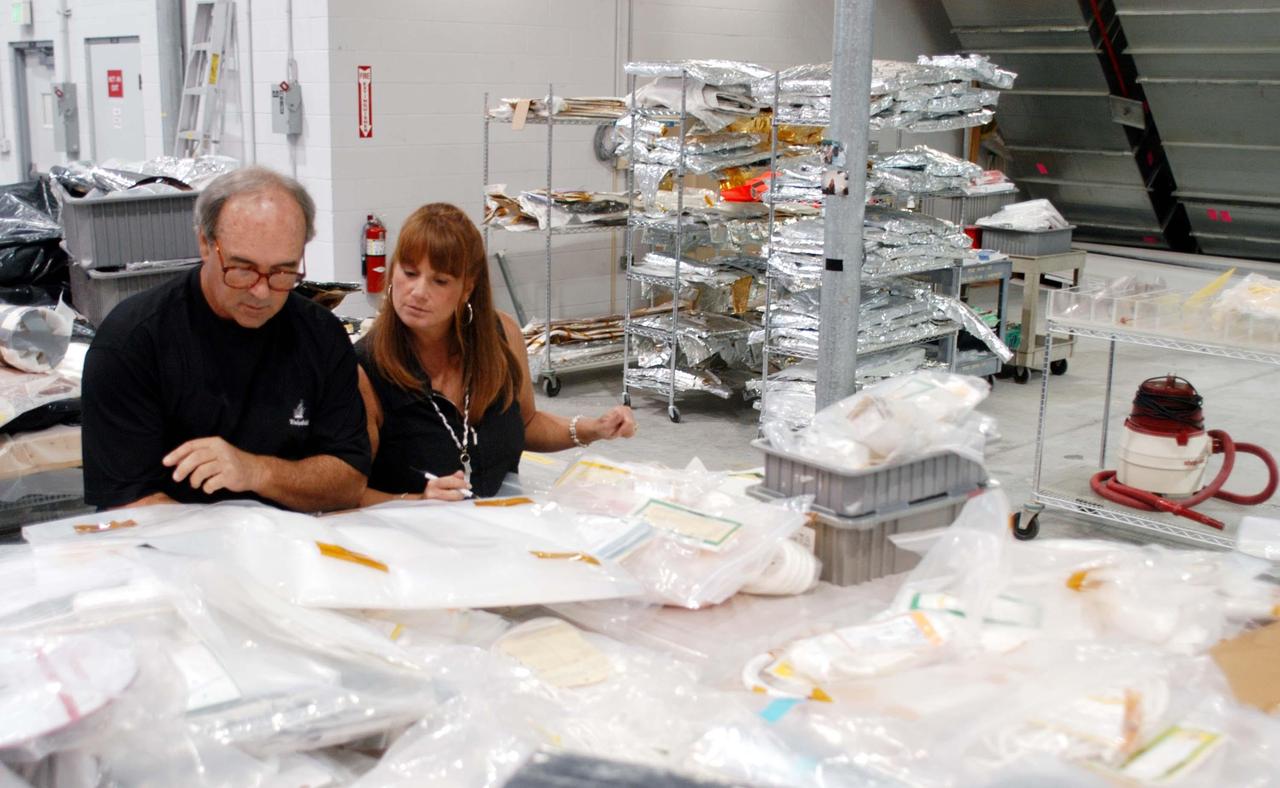
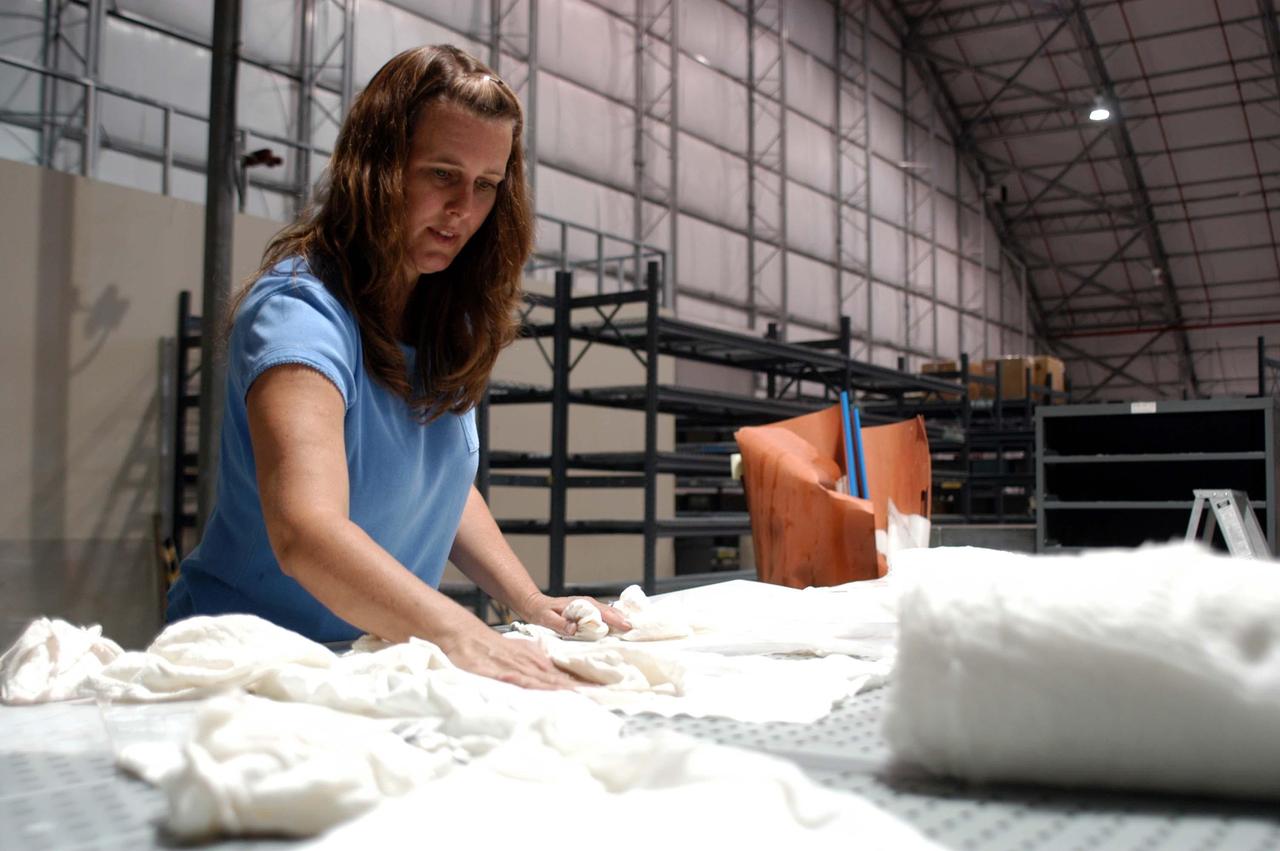
KENNEDY SPACE CENTER, FLA. -  In the RLV hangar at KSC, United Space Alliance workers Frank Rhodes and Lynn Rosenbauer look at wrapped material removed from the hurricane-ravaged Thermal Protection System Facility (TPSF).  The facility, which creates the TPS tiles, blankets and all the internal thermal control systems for the Space Shuttles, is almost totally unserviceable at this time after losing approximately 35 percent of its roof due to Hurricane Frances, which blew across Central Florida Sept. 4-5.  The maximum wind at the surface from Hurricane Frances was 94 mph from the northeast at 6:40 a.m. on Sunday, September 5.  It was recorded at a weather tower located on the east shore of the Mosquito Lagoon near the Cape Canaveral National Seashore.  The highest sustained wind at KSC was 68 mph.
KSC-04pd1782
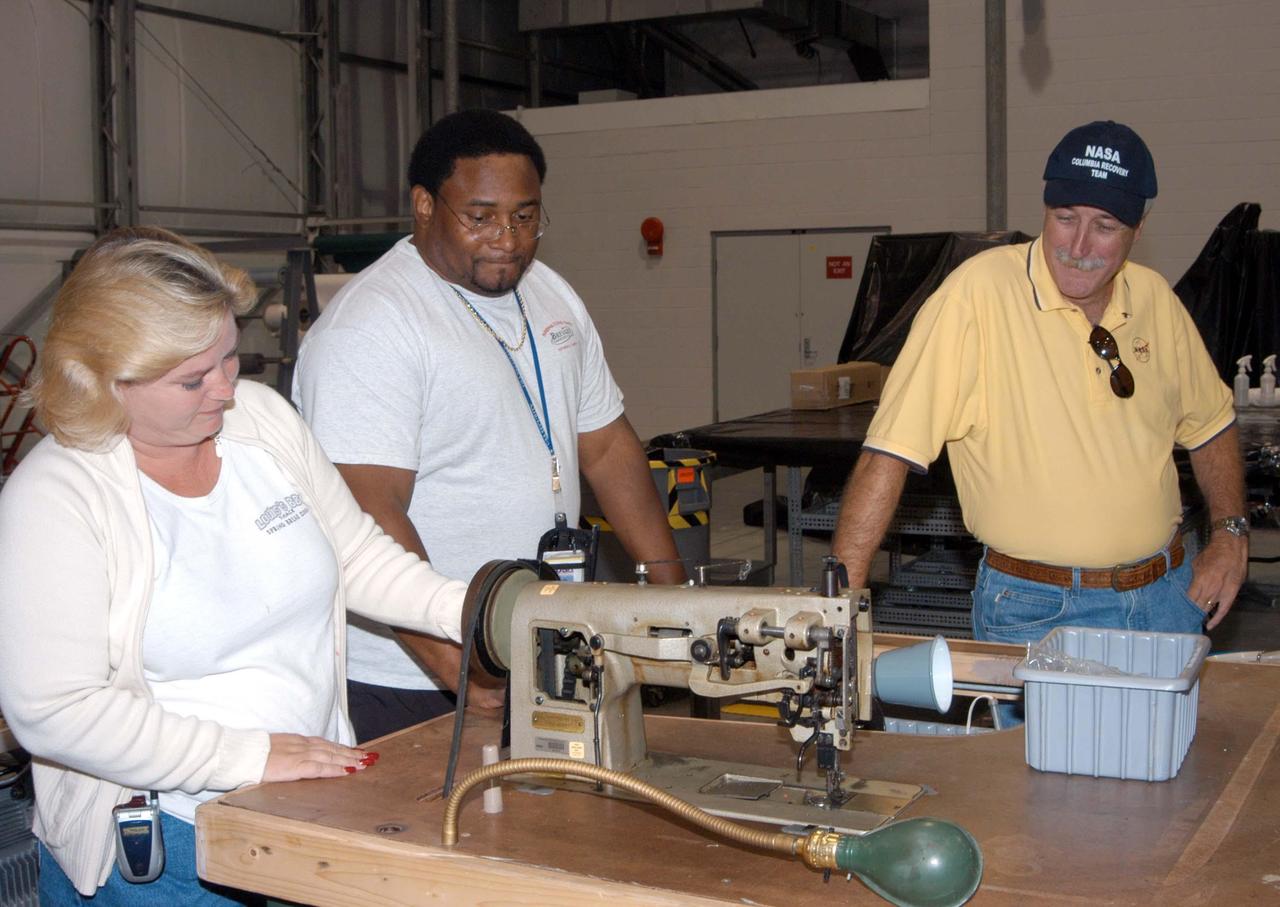
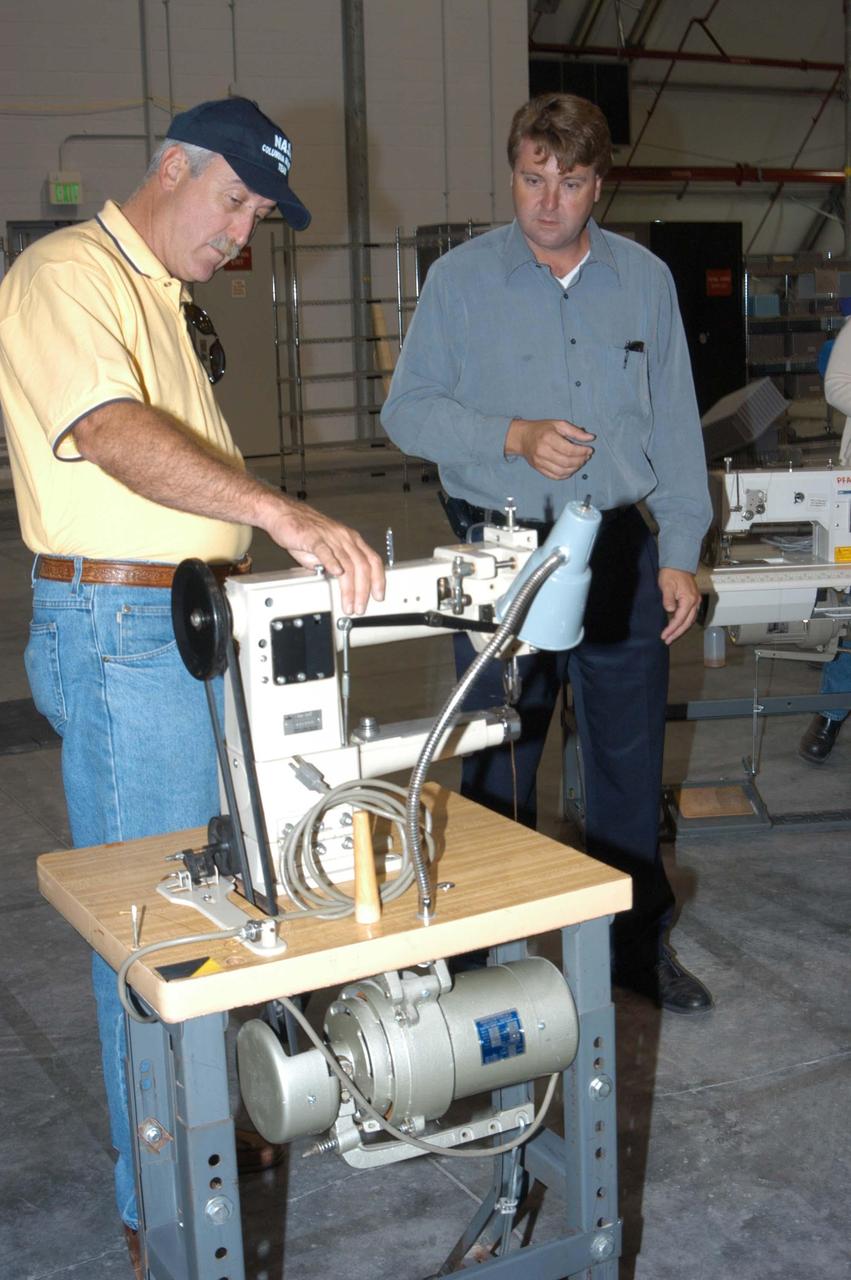
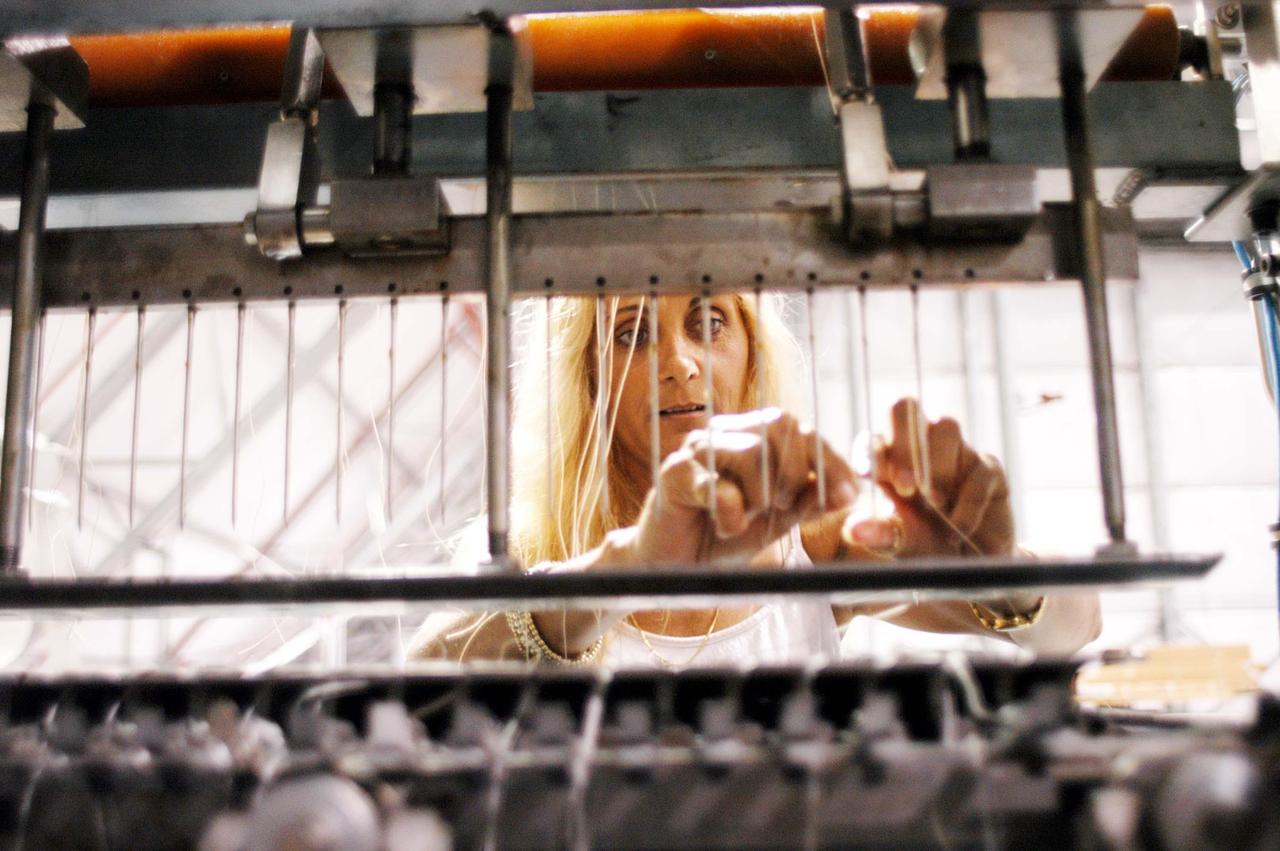
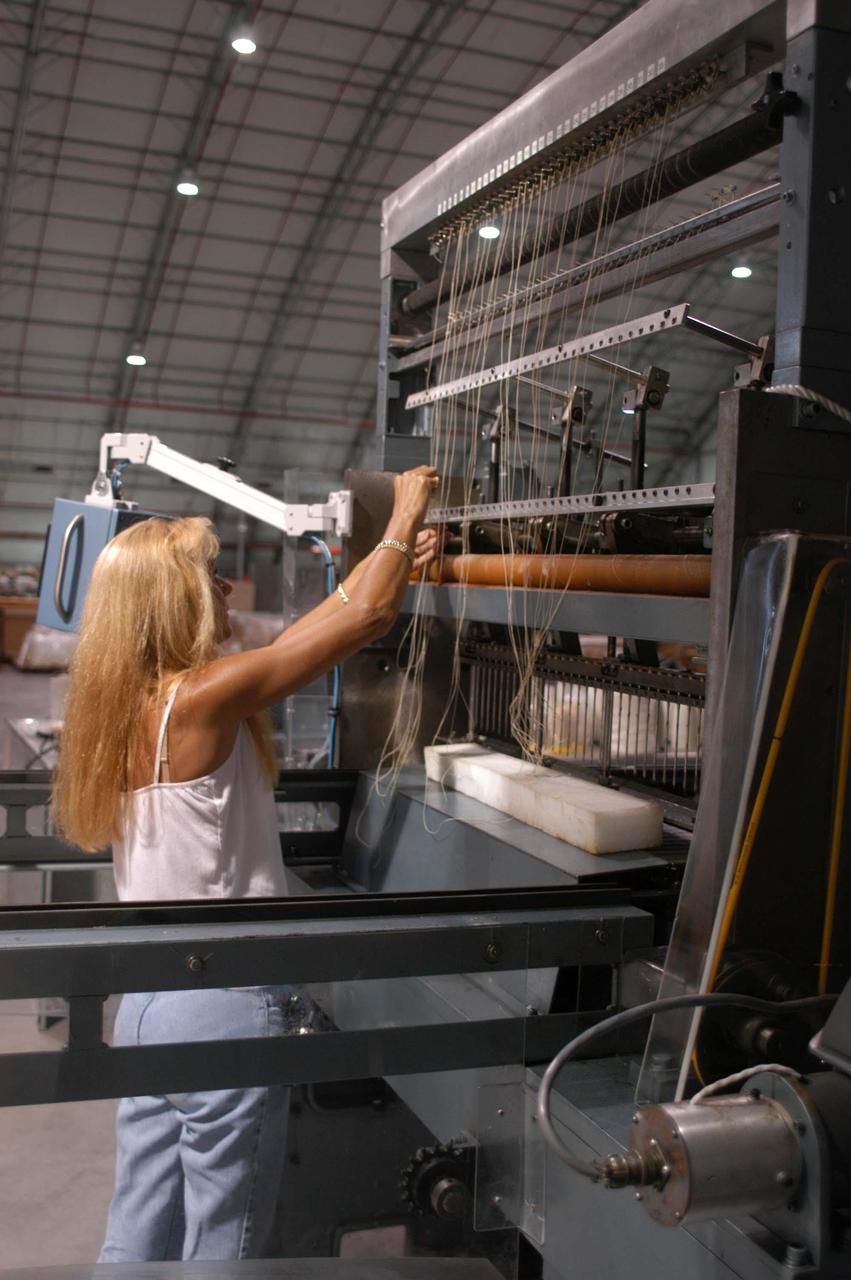
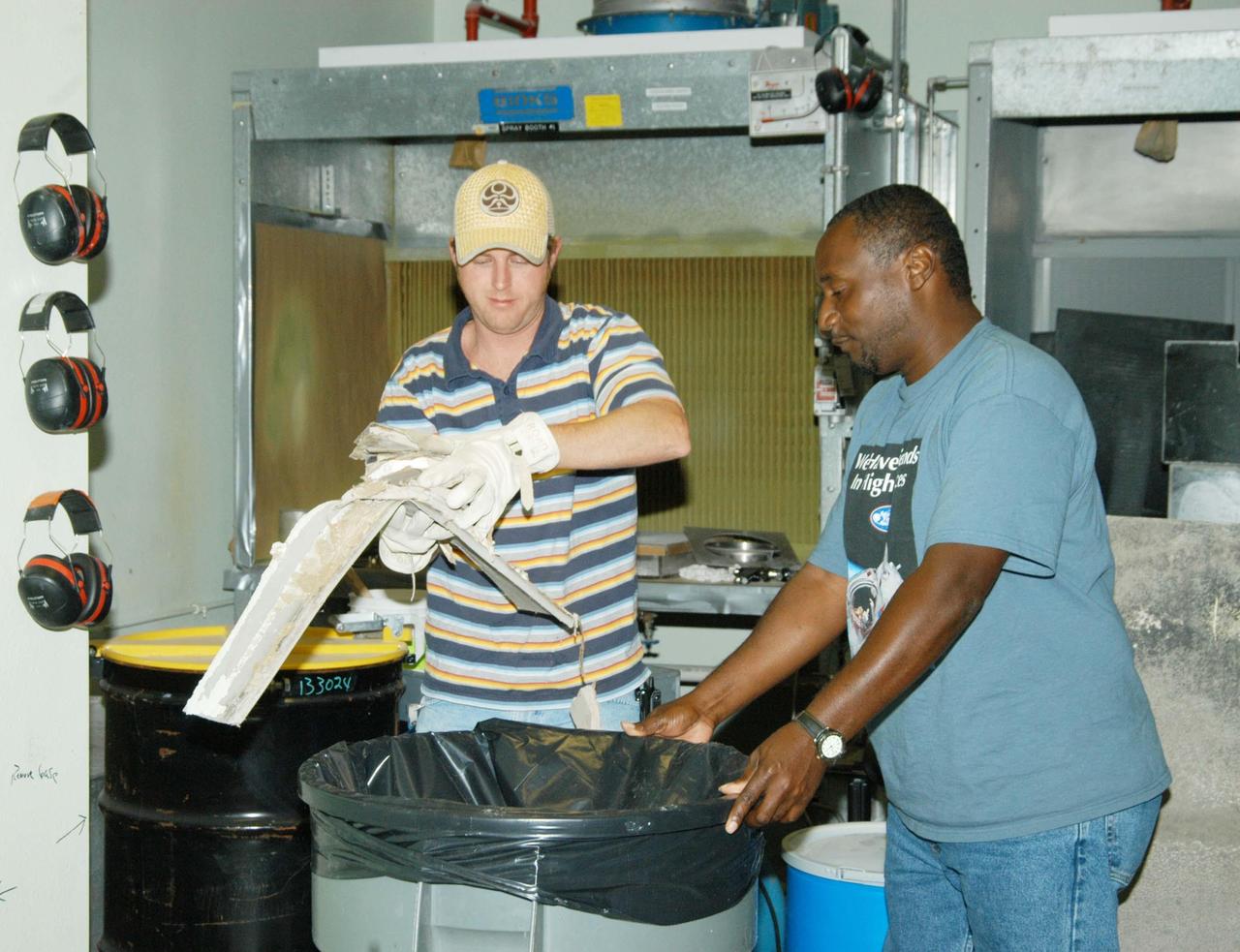
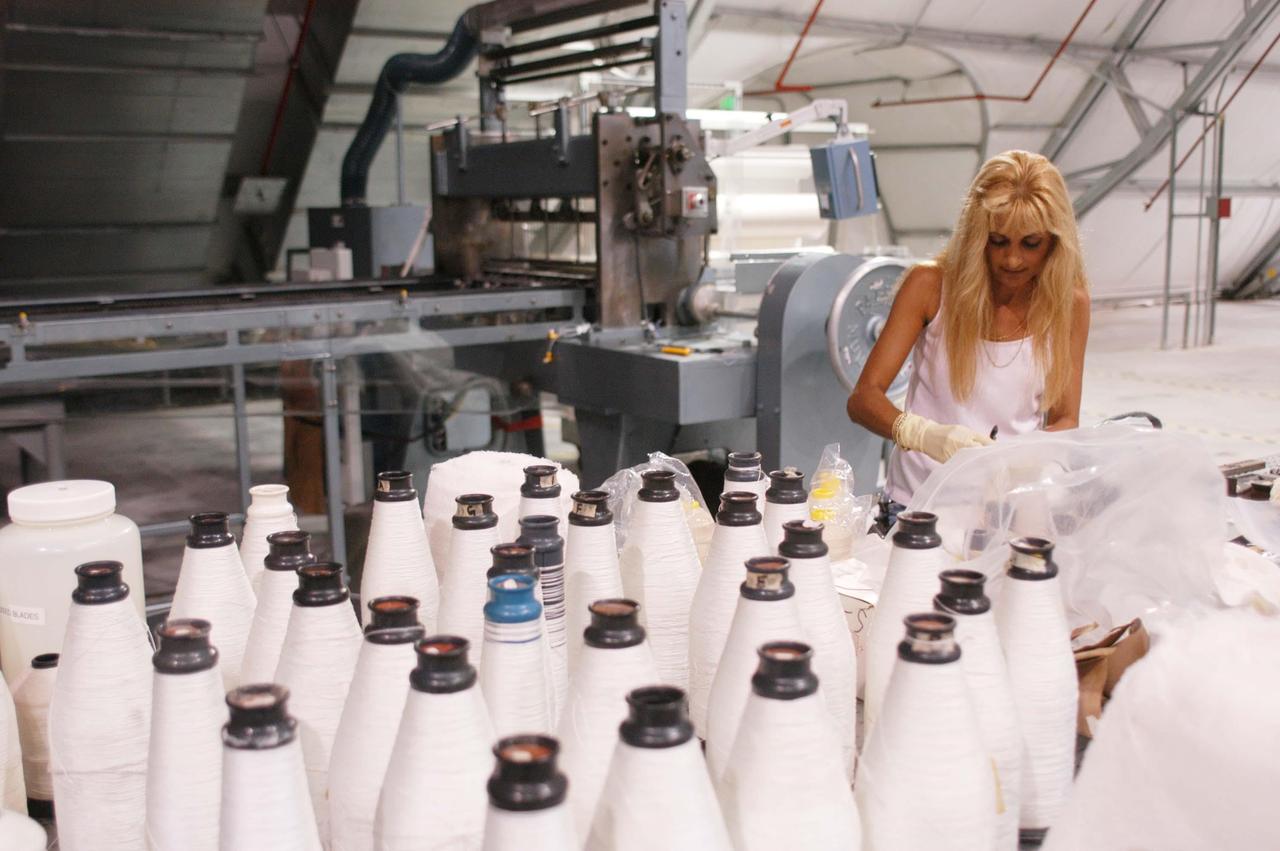
KENNEDY SPACE CENTER, FLA. -  A temporary tile shop has been set up in the RLV hangar at KSC after equipment was removed from the hurricane-ravaged Thermal Protection System Facility (TPSF).  Here United Space Alliance worker Bab Jarosz works with the 30-needle sewing machines.  The TPSF,  which creates the TPS tiles, blankets and all the internal thermal control systems for the Space Shuttles, is almost totally unserviceable at this time after losing approximately 35 percent of its roof due to Hurricane Frances, which blew across Central Florida Sept. 4-5.  The maximum wind at the surface from Hurricane Frances was 94 mph from the northeast at 6:40 a.m. on Sunday, September 5.  It was recorded at a weather tower located on the east shore of the Mosquito Lagoon near the Cape Canaveral National Seashore.  The highest sustained wind at KSC was 68 mph.
KSC-04pd1789
KENNEDY SPACE CENTER, FLA. -  Members of a hurricane assessment team from Johnson Space Center and Marshall Space Flight Center observe the damage to the roof of the Thermal Protection System (TPS) Facility at KSC after Hurricane Frances hit the east coast of Central Florida and Kennedy Space Center.   At left is astronaut Scott Altmann, a member of the team, and at center is Martin Wilson, manager of the TPS operations.  The facility, which creates the TPS tiles, blankets and all the internal thermal control systems for the Space Shuttles, is almost totally unserviceable at this time after losing approximately 35 percent of its roof.  Equipment and materials that survived the storm have been relocated to the RLV hangar near the KSC Shuttle Landing Facility.
KSC-04pd1775
KENNEDY SPACE CENTER, FLA. -  United Space Alliance worker  Kathy Evans works on equipment in the temporary tile shop set up in the RLV hangar at KSC.  The hurricane-ravaged Thermal Protection System Facility (TPSF), which creates the TPS tiles, blankets and all the internal thermal control systems for the Space Shuttles, is almost totally unserviceable at this time after losing approximately 35 percent of its roof due to Hurricane Frances, which blew across Central Florida Sept. 4-5.  Undamaged equipment was removed from the TPSF and stored in the hangar.  The maximum wind at the surface from Hurricane Frances was 94 mph from the northeast at 6:40 a.m. on Sunday, September 5.  It was recorded at a weather tower located on the east shore of the Mosquito Lagoon near the Cape Canaveral National Seashore.  The highest sustained wind at KSC was 68 mph.
KSC-04pd1794
KENNEDY SPACE CENTER, FLA. -  United Space Alliance worker Bab Jarosz works with the 30-needle sewing machines from the Thermal Protection System Facility (TPSF).  A temporary tile shop has been set up in the RLV hangar at KSC after equipment was removed from the hurricane-ravaged facility.  The TPSF,  which creates the TPS tiles, blankets and all the internal thermal control systems for the Space Shuttles, is almost totally unserviceable at this time after losing approximately 35 percent of its roof due to Hurricane Frances, which blew across Central Florida Sept. 4-5.  The maximum wind at the surface from Hurricane Frances was 94 mph from the northeast at 6:40 a.m. on Sunday, September 5.  It was recorded at a weather tower located on the east shore of the Mosquito Lagoon near the Cape Canaveral National Seashore.  The highest sustained wind at KSC was 68 mph.
KSC-04pd1790
KENNEDY SPACE CENTER, FLA. -  In the RLV hangar at KSC, United Space Alliance workers Beth Smith (left) and Theresa Haygood unwrap equipment removed from the hurricane-ravaged Thermal Protection System Facility (TPSF).  The facility, which creates the TPS tiles, blankets and all the internal thermal control systems for the Space Shuttles, is almost totally unserviceable at this time after losing approximately 35 percent of its roof due to Hurricane Frances, which blew across Central Florida Sept. 4-5.  The maximum wind at the surface from Hurricane Frances was 94 mph from the northeast at 6:40 a.m. on Sunday, September 5.  It was recorded at a weather tower located on the east shore of the Mosquito Lagoon near the Cape Canaveral National Seashore.  The highest sustained wind at KSC was 68 mph.
KSC-04pd1781
KENNEDY SPACE CENTER, FLA. -  United Space Alliance workers Dallas Lewis (left) and Damon Petty carry out equipment from the Thermal Protection System Facility (TPSF).  The TPSF, which creates the TPS tiles, blankets and all the internal thermal control systems for the Space Shuttles, is almost totally unserviceable at this time after losing approximately 35 percent of its roof due to Hurricane Frances, which blew across Central Florida Sept. 4-5.  Undamaged equipment is being moved to the RLV hangar at KSC.  The maximum wind at the surface from Hurricane Frances was 94 mph from the northeast at 6:40 a.m. on Sunday, September 5.  It was recorded at a weather tower located on the east shore of the Mosquito Lagoon near the Cape Canaveral National Seashore.  The highest sustained wind at KSC was 68 mph.
KSC-04pd1777
KENNEDY SPACE CENTER, FLA. -   In the RLV hangar at KSC, Steve Harrington talks to workers about the equipment removed from the hurricane-ravaged Thermal Protection System Facility (TPSF) now being stored in the hangar.  The facility, which creates the TPS tiles, blankets and all the internal thermal control systems for the Space Shuttles, is almost totally unserviceable at this time after losing approximately 35 percent of its roof due to Hurricane Frances, which blew across Central Florida Sept. 4-5.  The maximum wind at the surface from Hurricane Frances was 94 mph from the northeast at 6:40 a.m. on Sunday, September 5.  It was recorded at a weather tower located on the east shore of the Mosquito Lagoon near the Cape Canaveral National Seashore.  The highest sustained wind at KSC was 68 mph.
KSC-04pd1786
KENNEDY SPACE CENTER, FLA. -  United Space Alliance workers Dallas Lewis (left) and Damon Petty clean up hurricane debris inside the Thermal Protection System Facility (TPSF).  Much of the roof was torn off by Hurricane Frances as it passed over Central Florida during the Labor Day weekend.  Undamaged equipment has been moved to the RLV hangar at KSC.  The TPSF, which creates the TPS tiles, blankets and all the internal thermal control systems for the Space Shuttles, is almost totally unserviceable at this time after losing approximately 35 percent of its roof.  The maximum wind at the surface from Hurricane Frances was 94 mph from the northeast at 6:40 a.m. on Sunday, September 5.  It was recorded at a weather tower located on the east shore of the Mosquito Lagoon near the Cape Canaveral National Seashore.  The highest sustained wind at KSC was 68 mph.
KSC-04pd1776
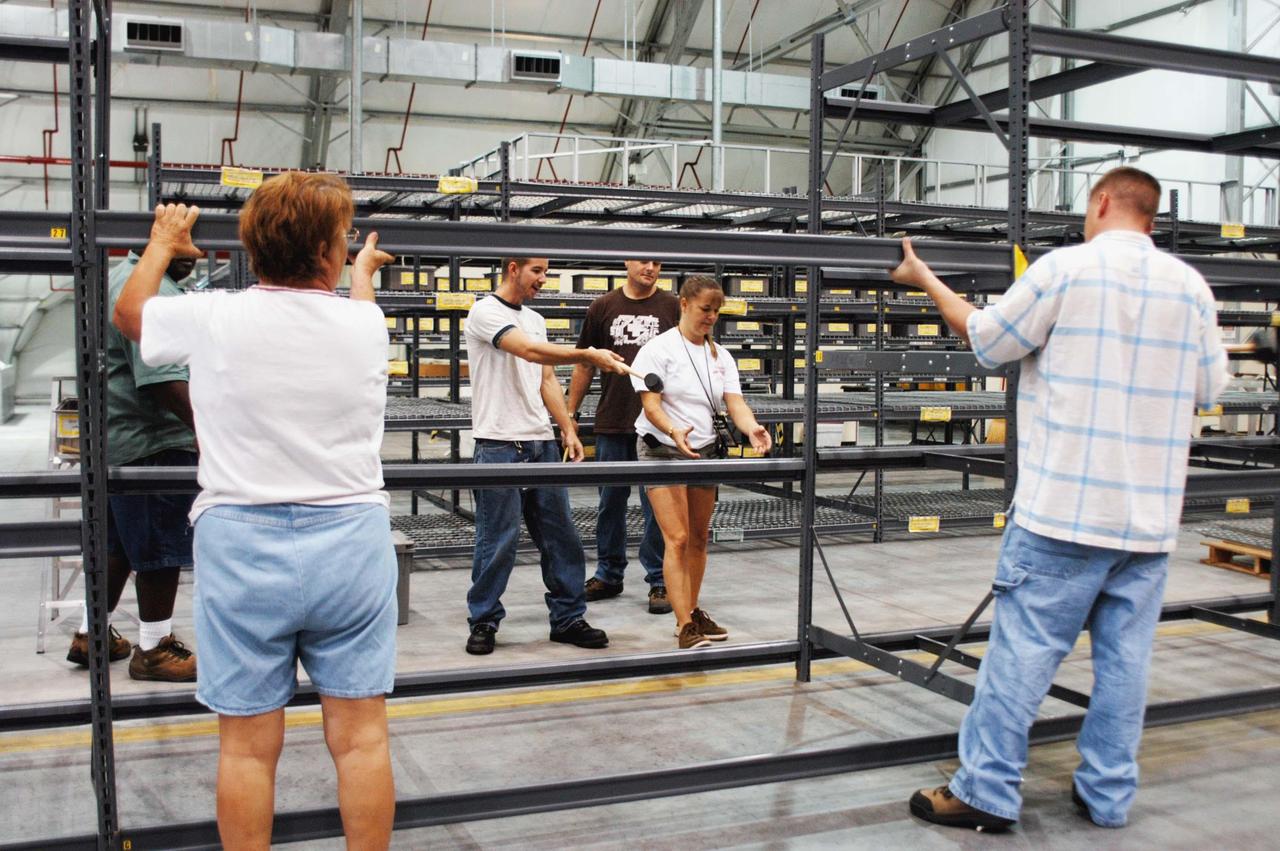
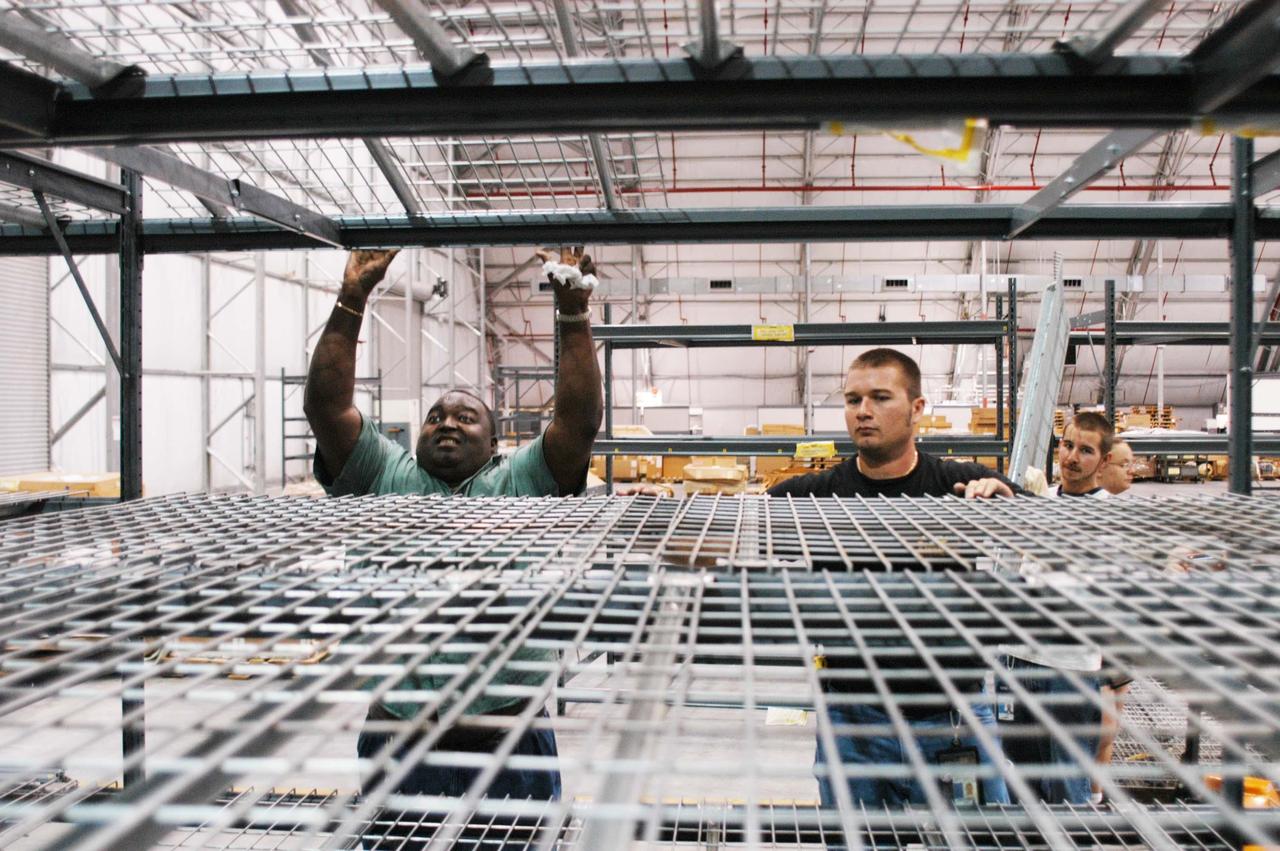
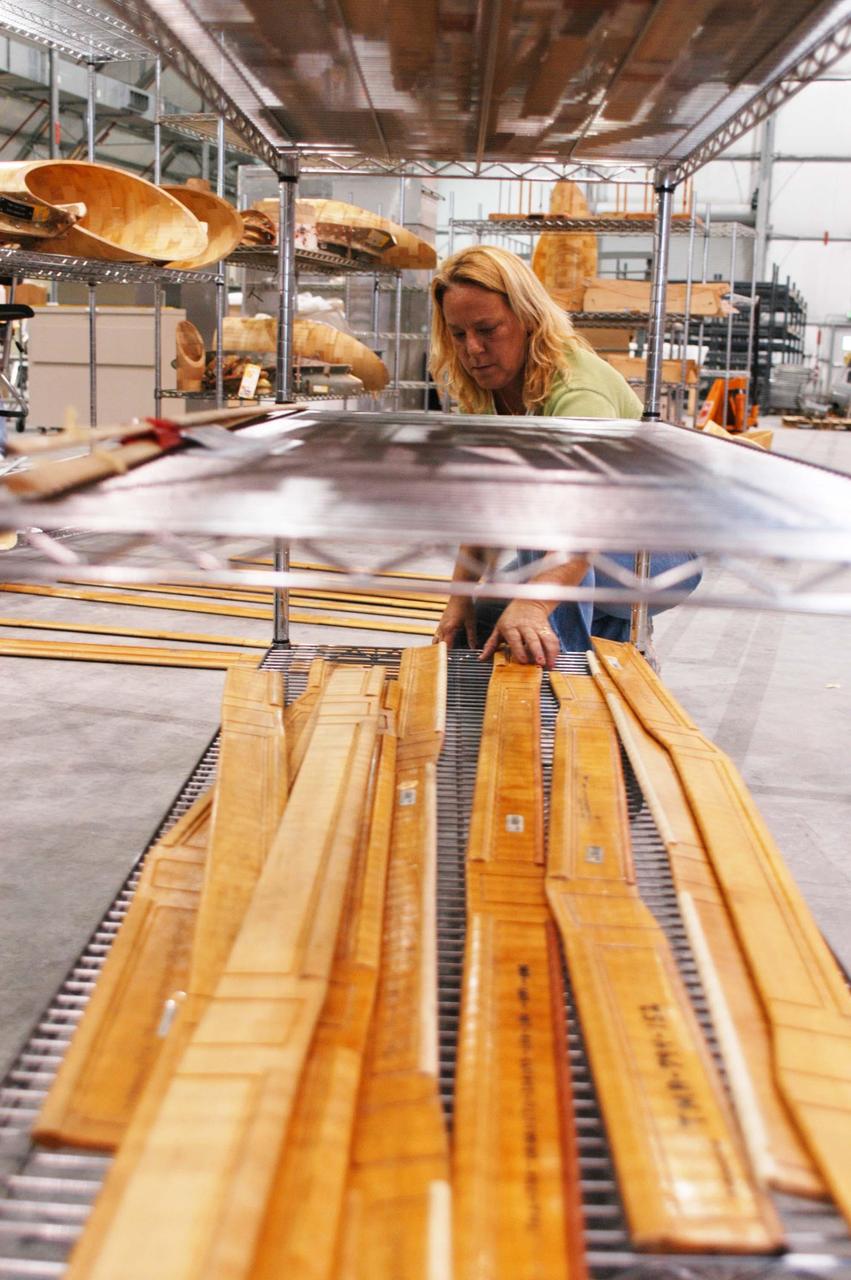
KENNEDY SPACE CENTER, FLA. -  In the RLV hangar at KSC, United Space Alliance workers set up shelves for equipment removed from the hurricane-ravaged Thermal Protection System Facility (TPSF) and now being stored in the hangar.  The facility, which creates the TPS tiles, blankets and all the internal thermal control systems for the Space Shuttles, is almost totally unserviceable at this time after losing approximately 35 percent of its roof due to Hurricane Frances, which blew across Central Florida Sept. 4-5.  The maximum wind at the surface from Hurricane Frances was 94 mph from the northeast at 6:40 a.m. on Sunday, September 5.  It was recorded at a weather tower located on the east shore of the Mosquito Lagoon near the Cape Canaveral National Seashore.  The highest sustained wind at KSC was 68 mph.
KSC-04pd1792
KENNEDY SPACE CENTER, FLA. -  United Space Alliance worker Janet Mills stores equipment removed from the hurricane-ravaged Thermal Protection System Facility (TPSF) in the RLV hangar at KSC.  The TPSF, which creates the TPS tiles, blankets and all the internal thermal control systems for the Space Shuttles, is almost totally unserviceable at this time after losing approximately 35 percent of its roof due to Hurricane Frances, which blew across Central Florida Sept. 4-5.  Undamaged equipment has been moved to the hangar.  The maximum wind at the surface from Hurricane Frances was 94 mph from the northeast at 6:40 a.m. on Sunday, September 5.  It was recorded at a weather tower located on the east shore of the Mosquito Lagoon near the Cape Canaveral National Seashore.  The highest sustained wind at KSC was 68 mph.
KSC-04pd1779
KENNEDY SPACE CENTER, FLA. -  United Space Alliance worker Bab Jarosz works with the 30-needle sewing machines from the Thermal Protection System Facility (TPSF).  A temporary tile shop has been set up in the RLV hangar at KSC after equipment was removed from the hurricane-ravaged facility.  The TPSF,  which creates the TPS tiles, blankets and all the internal thermal control systems for the Space Shuttles, is almost totally unserviceable at this time after losing approximately 35 percent of its roof due to Hurricane Frances, which blew across Central Florida Sept. 4-5.  The maximum wind at the surface from Hurricane Frances was 94 mph from the northeast at 6:40 a.m. on Sunday, September 5.  It was recorded at a weather tower located on the east shore of the Mosquito Lagoon near the Cape Canaveral National Seashore.  The highest sustained wind at KSC was 68 mph.
KSC-04pd1791
KENNEDY SPACE CENTER, FLA. -  In the Columbia debris hangar at KSC, a United Space Alliance worker lines up air heaters salvaged from the hurricane-ravaged Thermal Protection System Facility (TPSF) in order to dry them out.  The TPSF, which creates the TPS tiles, blankets and all the internal thermal control systems for the Space Shuttles, is almost totally unserviceable at this time after losing approximately 35 percent of its roof due to Hurricane Frances, which blew across Central Florida Sept. 4-5.  Undamaged equipment has been moved to the RLV hangar at KSC.  The maximum wind at the surface from Hurricane Frances was 94 mph from the northeast at 6:40 a.m. on Sunday, September 5.  It was recorded at a weather tower located on the east shore of the Mosquito Lagoon near the Cape Canaveral National Seashore.  The highest sustained wind at KSC was 68 mph.
KSC-04pd1778
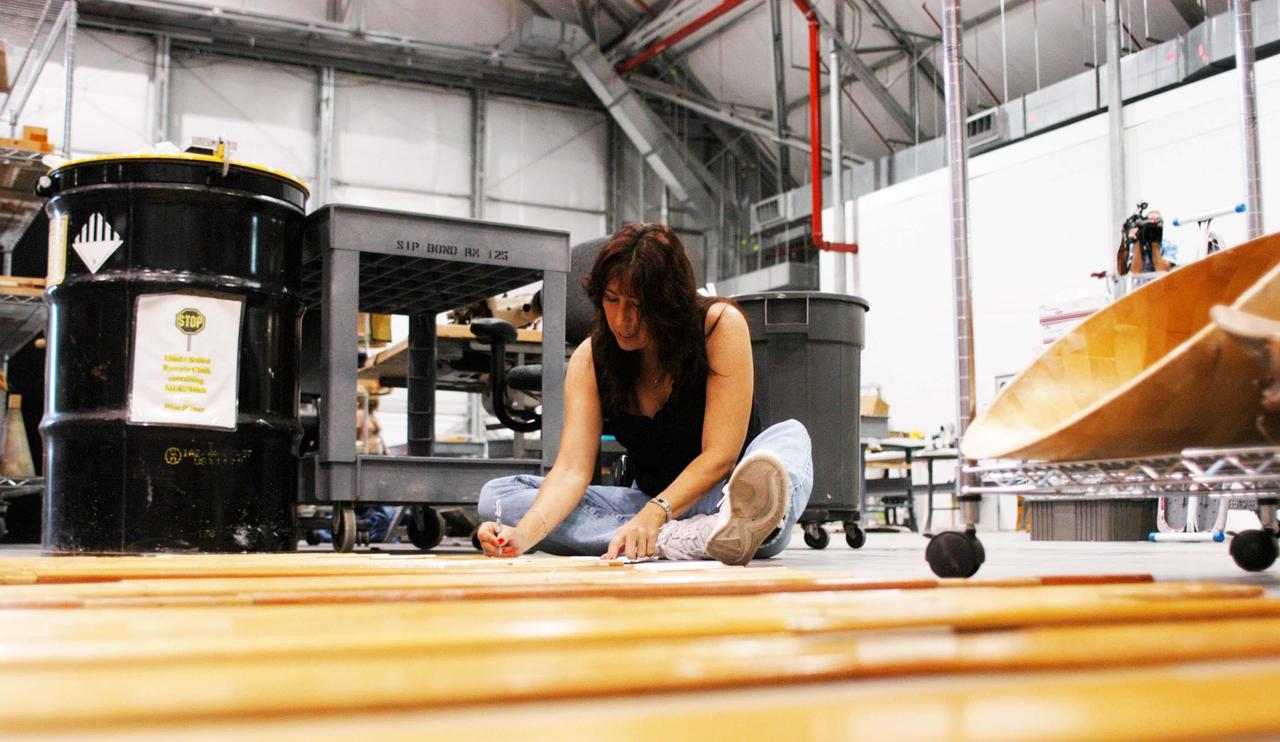
KENNEDY SPACE CENTER, FLA. -  In the RLV hangar at KSC, Terri McCall cleans up equipment removed from the hurricane-ravaged Thermal Protection System Facility (TPSF).  The facility, which creates the TPS tiles, blankets and all the internal thermal control systems for the Space Shuttles, is almost totally unserviceable at this time after losing approximately 35 percent of its roof due to Hurricane Frances, which blew across Central Florida Sept. 4-5.  The maximum wind at the surface from Hurricane Frances was 94 mph from the northeast at 6:40 a.m. on Sunday, September 5.  It was recorded at a weather tower located on the east shore of the Mosquito Lagoon near the Cape Canaveral National Seashore.  The highest sustained wind at KSC was 68 mph.
KSC-04pd1783
KENNEDY SPACE CENTER, FLA. -  In the RLV hangar at KSC, United Space Alliance workers Matt Carter (left) and Mike Sherman set up racks to hold equipment removed from the hurricane-ravaged Thermal Protection System Facility (TPSF).  The facility, which creates the TPS tiles, blankets and all the internal thermal control systems for the Space Shuttles, is almost totally unserviceable at this time after losing approximately 35 percent of its roof due to Hurricane Frances, which blew across Central Florida Sept. 4-5.  The maximum wind at the surface from Hurricane Frances was 94 mph from the northeast at 6:40 a.m. on Sunday, September 5.  It was recorded at a weather tower located on the east shore of the Mosquito Lagoon near the Cape Canaveral National Seashore.  The highest sustained wind at KSC was 68 mph.
KSC-04pd1784
KENNEDY SPACE CENTER, FLA. -  -  United Space Alliance technician Shelly Kipp (right) shows some of the material salvaged from the storm-ravaged Thermal Protection System Facility (TPSF) to NASA Administrator Sean O’Keefe (left).  Martin Wilson (center), manager of TPS operations for USA, looks on.  The TPSF, which creates the TPS tiles, blankets and all the internal thermal control systems for the Space Shuttles, is almost totally unserviceable at this time after losing approximately 35 percent of its roof during Hurricane Frances, which blew across Central Florida Sept. 4-5. O’Keefe and NASA Associate Administrator of  Space Operations Mission Directorate William Readdy are visiting KSC to survey the damage sustained by KSC facilities from the hurricane.  Undamaged equipment was removed from the TPSF and stored in the RLV hangar. The Labor Day storm also caused significant damage to the Vehicle Assembly Building and Processing Control Center.  Additionally, the Operations and Checkout Building, Vertical Processing Facility, Hangar AE, Hangar S and Hangar AF Small Parts Facility each received substantial damage. However, well-protected and unharmed were NASA’s three Space Shuttle orbiters -- Discovery, Atlantis and Endeavour - along with the Shuttle launch pads, all of the critical flight hardware for the orbiters and the International Space Station, and NASA’s Swift spacecraft that is awaiting launch in October.
KSC-04pd1845
KENNEDY SPACE CENTER, FLA. -  Looking at damage inside the hurricane-ravaged Thermal Protection System Facility are KSC Director of Spaceport Services Scott Kerr (left) and NASA Associate Administrator of  Space Operations Mission Directorate William Readdy (right).  The TPSF, which creates the TPS tiles, blankets and all the internal thermal control systems for the Space Shuttles, is almost totally unserviceable at this time after losing approximately 35 percent of its roof during Hurricane Frances, which blew across Central Florida Sept. 4-5.  Readdy and NASA Administrator Sean O’Keefe are visiting KSC to survey the damage sustained by KSC facilities from the hurricane.  The Labor Day storm also caused significant damage to the Vehicle Assembly Building and Processing Control Center.  Additionally, the Operations and Checkout Building, Vertical Processing Facility, Hangar AE, Hangar S and Hangar AF Small Parts Facility each received substantial damage. However, well-protected and unharmed were NASA’s three Space Shuttle orbiters - Discovery, Atlantis and Endeavour - along with the Shuttle launch pads, all of the critical flight hardware for the orbiters and the International Space Station, and NASA’s Swift spacecraft that is awaiting launch in October.
KSC-04pd1851
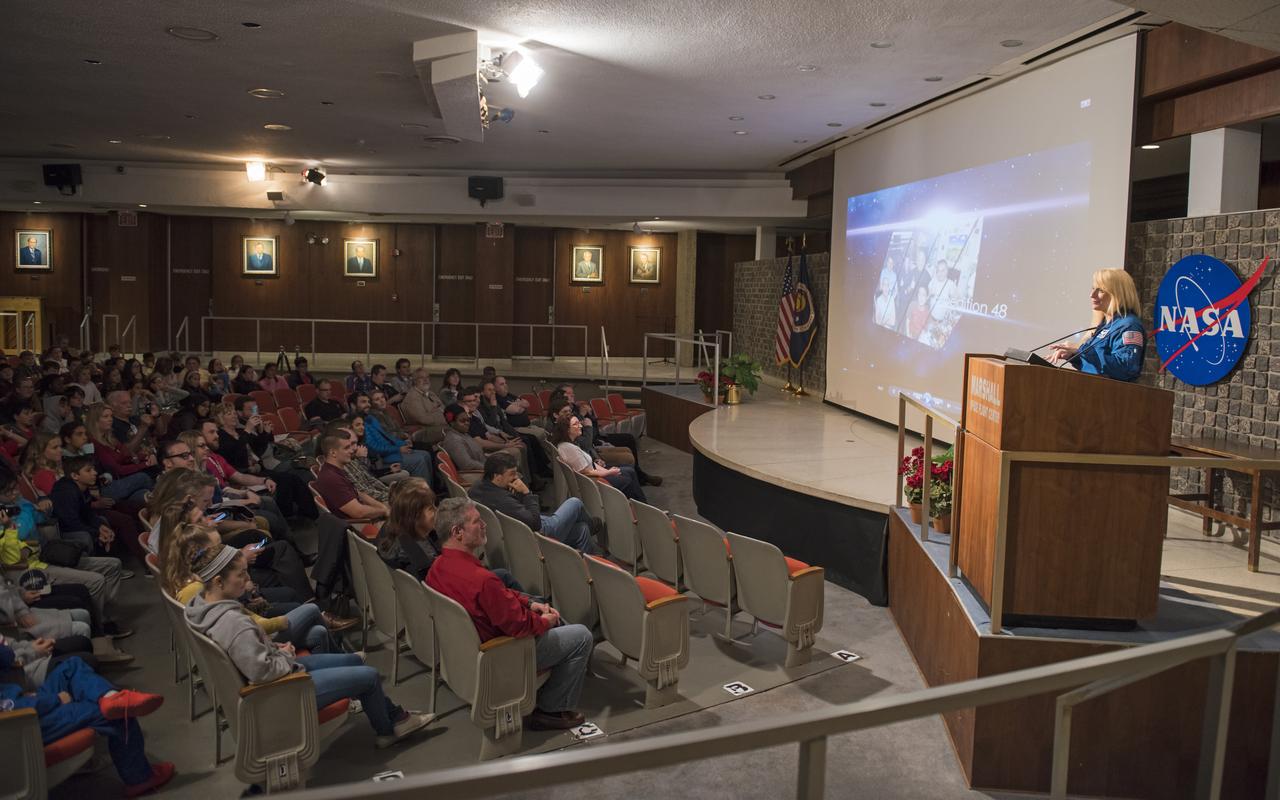
NASA astronaut Kate Rubins presents highlights from Expedition 48/49, her mission to the International Space Station, to team members and Space Camp students from the U.S. Space & Rocket Center in Huntsville, April 6 at NASA's Marshall Space Flight Center. During her mission, Rubins became the first person to sequence DNA in space, researching technology development for deep-space exploration by humans, Earth and space science. She also conducted two spacewalks, in which she and NASA astronaut Jeff Williams installed an International Docking Adapter and performed maintenance of the station's external thermal control system and installed high-definition cameras.
Expedition 48/49 crew visit to MSFC
The STS-92 astronaut team study the the Zenith-1 (Z-1) Truss during the Crew Equipment Interface Test. The Z-1 Truss was officially presented to NASA by The Boeing Co. on the Space Station Processing Facility floor on July 31. The truss is the cornerstone truss of the International Space Station and is scheduled to fly in Space Shuttle Discovery's payload pay on STS-92 targeted for launch Oct. 5, 2000. The Z-1 is considered a cornerstone truss because it carries critical components of the Station's attitude, communications, thermal and power control systems as well as four control moment gyros, high and low gain antenna systems, and two plasma contactor units used to disperse electrical charge build-ups. The Z-1 truss and a Pressurized Mating Adapter (PMA-3), also flying to the Station on the same mission, will be the first major U.S. elements flown to the ISS aboard the Shuttle since the launch of the Unity element in December 1998
KSC-00pp1060
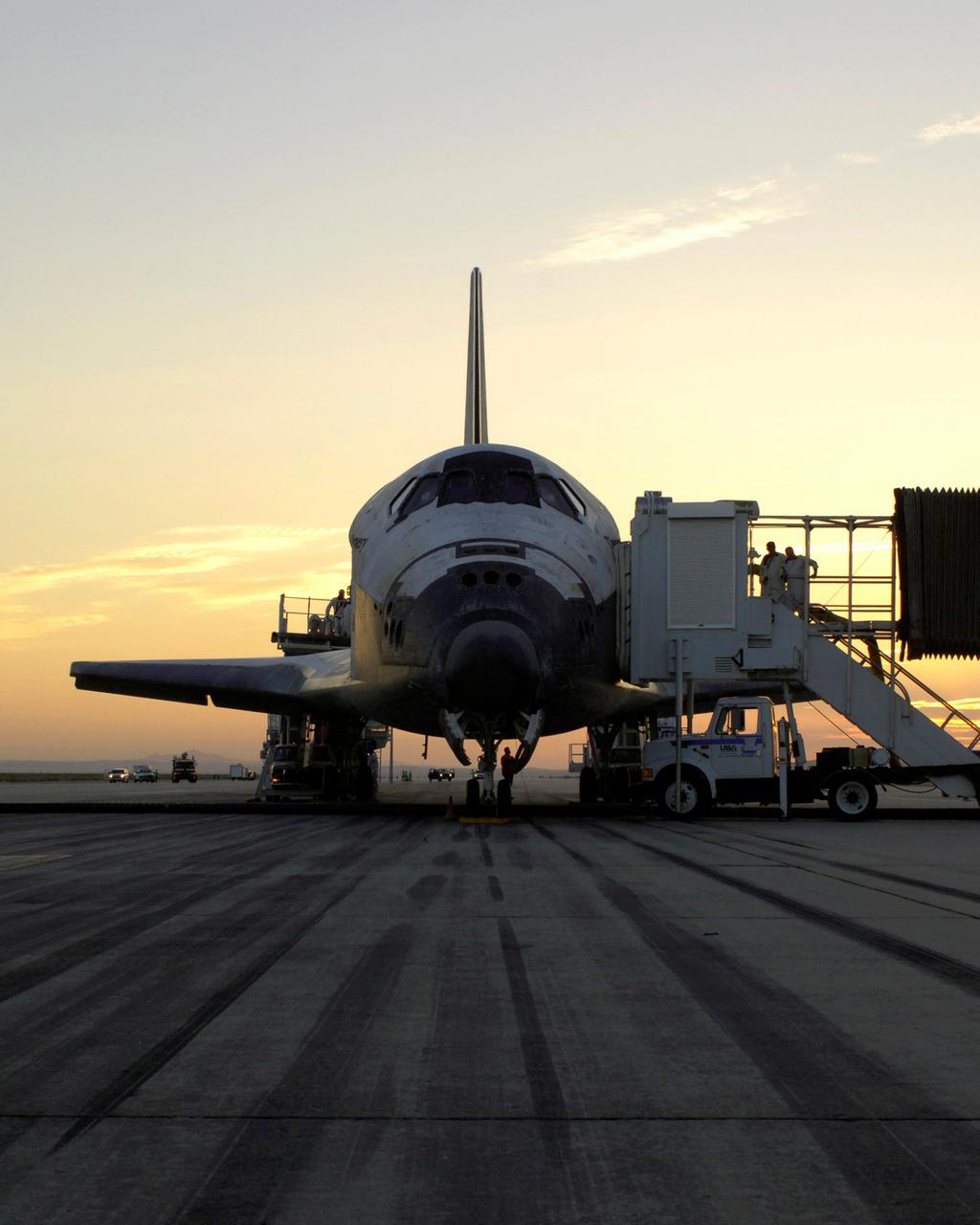
The sun rises on the Space Shuttle Discovery as it rests on the runway at Edward’s Air Force Base in California after a safe landing at 5:11 am (PDT) on August 9, 2005. The STS-114 landing concluded a historic 14 day return to flight mission to the International Space Station (ISS) after nearly a two and one half year delay in flight after the Space Shuttle Columbia tragedy in February 2003. Three successful space walks performed during the mission included a demonstration of repair techniques to the Shuttle’s thermal tiles known as the Thermal Protection System, the replacement of a failed Control Moment Gyroscope which helps keep the station oriented properly, and the installation of the External Stowage Platform, a space “shelf” for holding spare parts during Station construction. The shuttle’s heat shield repair was a first for Shuttle repair while still in space.
Space Shuttle Projects
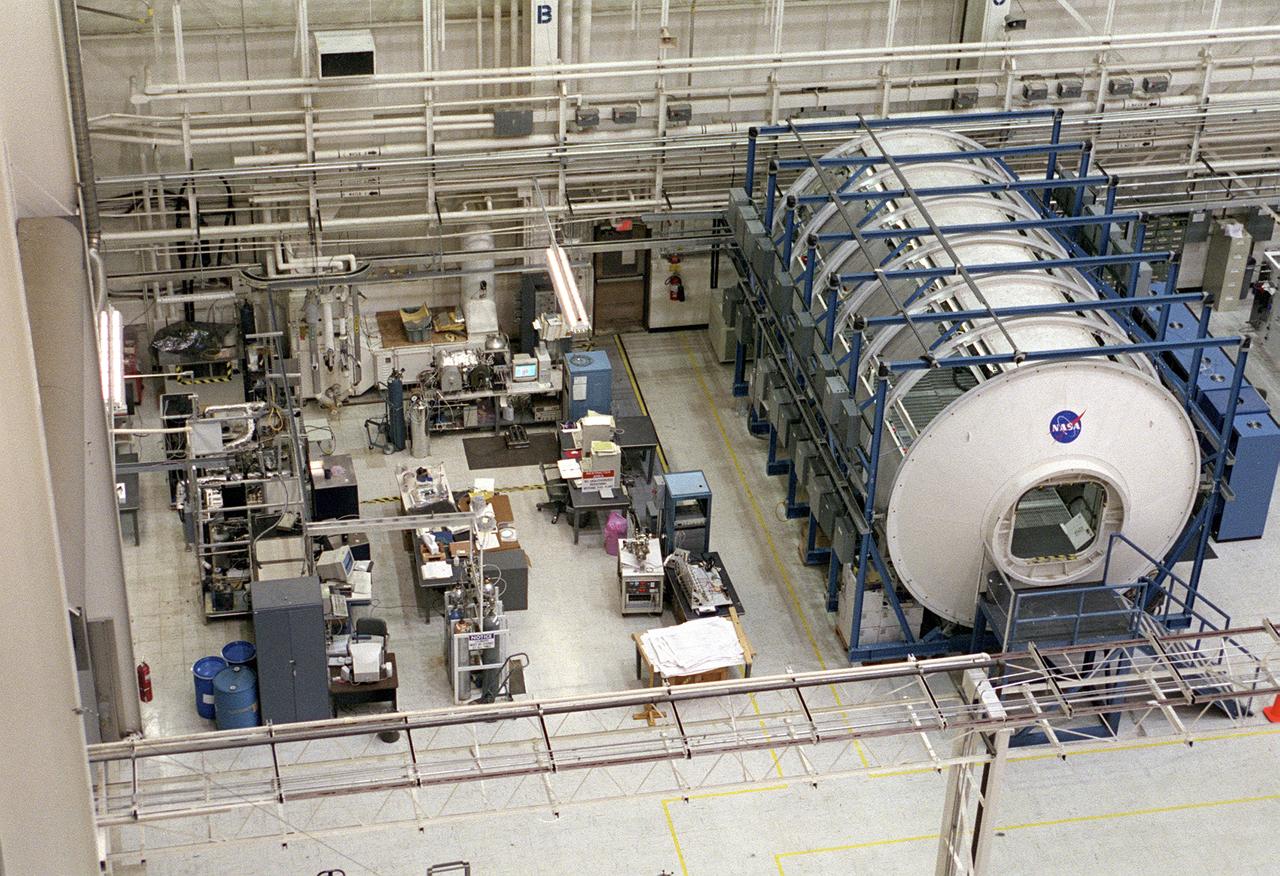
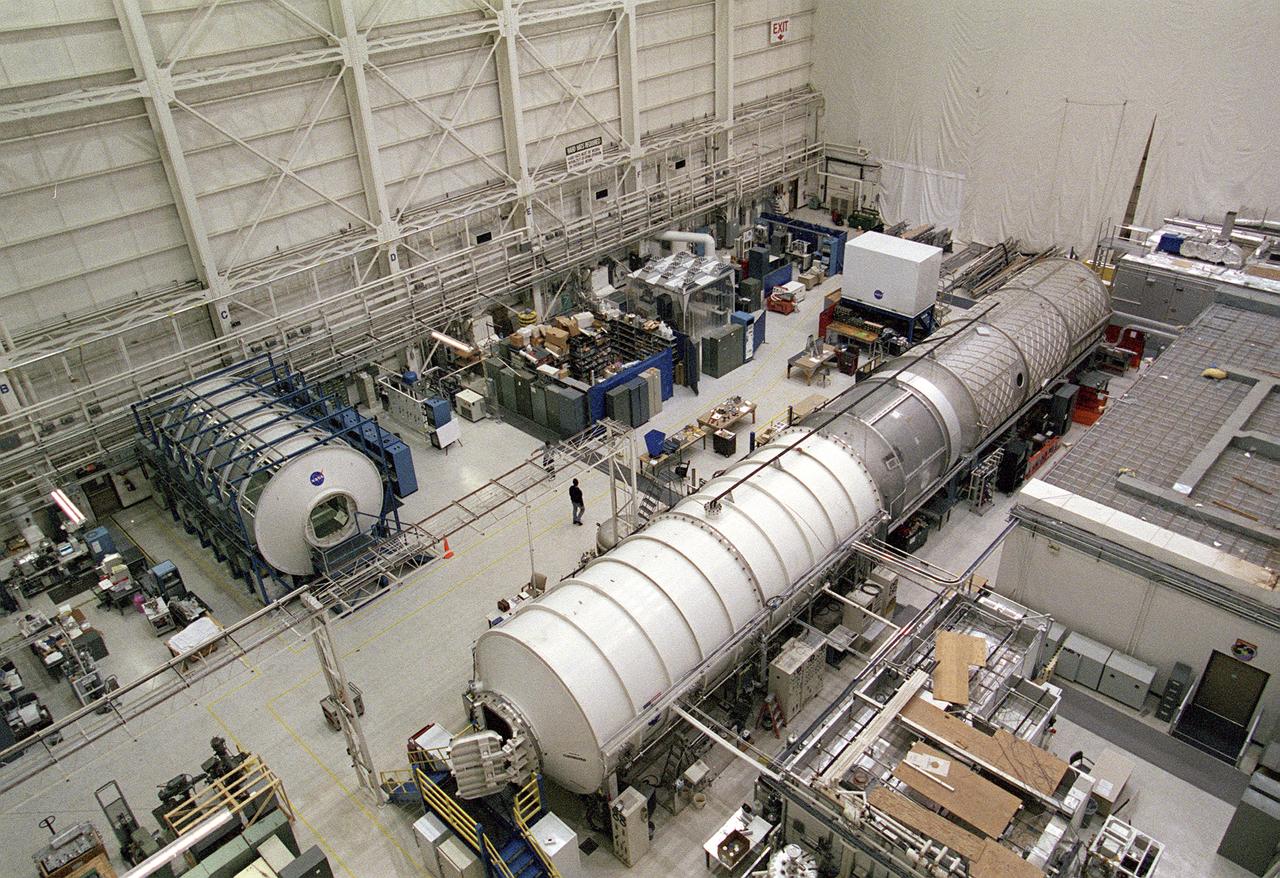
The Marshall Space Flight Center (MSFC) is responsible for designing and building the life support systems that will provide the crew of the International Space Station (ISS) a comfortable environment in which to live and work. Scientists and engineers at the MSFC are working together to provide the ISS with systems that are safe, efficient, and cost-effective. These compact and powerful systems are collectively called the Environmental Control and Life Support Systems, or simply, ECLSS. In this photograph, the life test area on the left of the MSFC ECLSS test facility is where various subsystems and components are tested to determine how long they can operate without failing and to identify components needing improvement. Equipment tested here includes the Carbon Dioxide Removal Assembly (CDRA), the Urine Processing Assembly (UPA), the mass spectrometer filament assemblies and sample pumps for the Major Constituent Analyzer (MCA). The Internal Thermal Control System (ITCS) simulator facility (in the module in the right) duplicates the function and operation of the ITCS in the ISS U.S. Laboratory Module, Destiny. This facility provides support for Destiny, including troubleshooting problems related to the ITCS.
International Space Station (ISS)
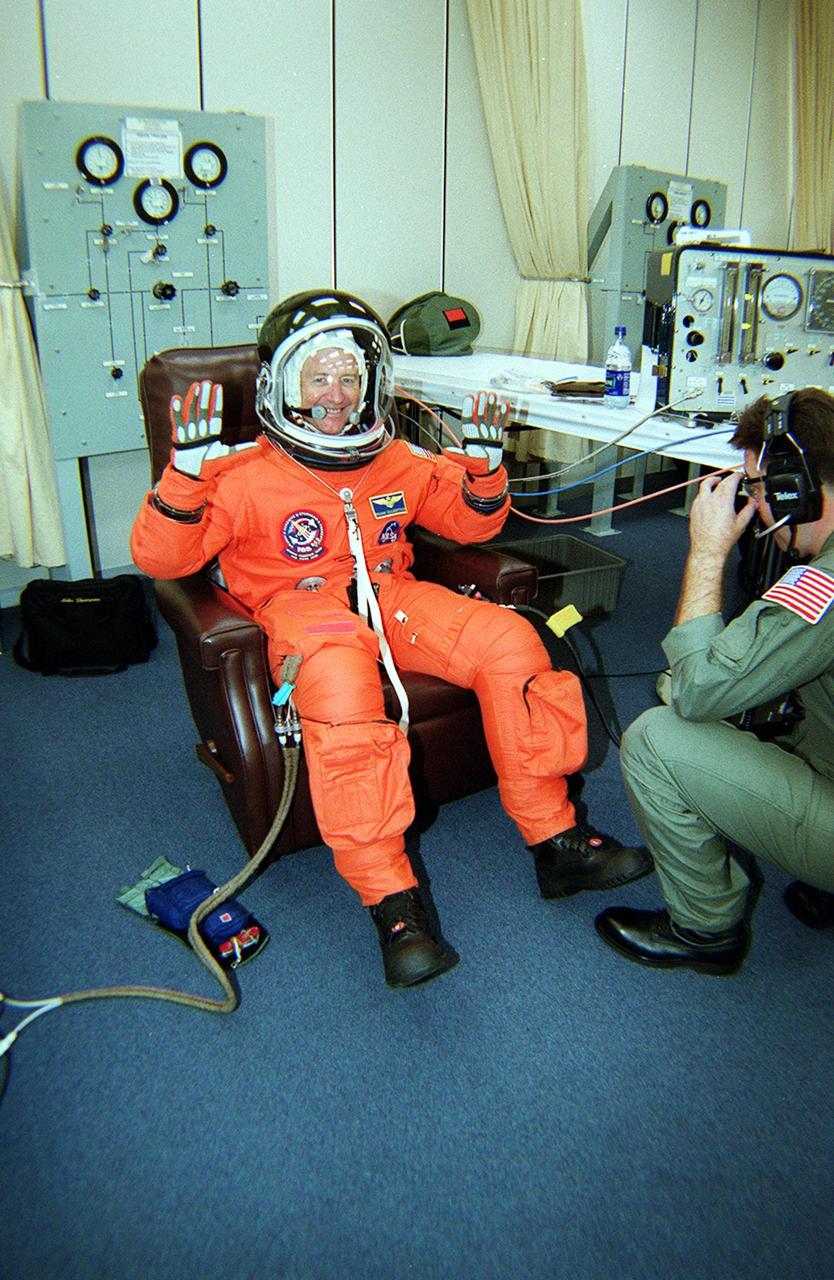
KENNEDY SPACE CENTER, Fla. -- Expedition Three Commander Frank Culbertson shows his eagerness for liftoff while suiting up in his launch and entry suit. On mission STS-105, Discovery will be transporting the Expedition Three crew and several scientific experiments and payloads to the International Space Station, including the Early Ammonia Servicer (EAS) tank. The EAS, which will support the thermal control subsystems until a permanent system is activated, will be attached to the Station during two spacewalks. The three-member Expedition Two crew will be returning to Earth aboard Discovery after a five-month stay on the Station. Launch is scheduled for 5:38 p.m. EDT Aug. 9
KSC-01pp1445
ISS038-E-041175 (3 Feb. 2014) --- This close-up view shows the docking mechanism of the unpiloted Russian ISS Progress 52 resupply ship as it undocks from the International Space Station's Pirs Docking Compartment at 11:21 a.m. (EST) on Feb. 3, 2014. The Progress backed away to a safe distance from the orbital complex to begin several days of tests to study thermal effects of space on its attitude control system. Filled with trash and other unneeded items, the Russian resupply ship will be commanded to re-enter Earth's atmosphere Feb. 11 and disintegrate harmlessly over the Pacific Ocean.
Docking Mechanism on Progress 52
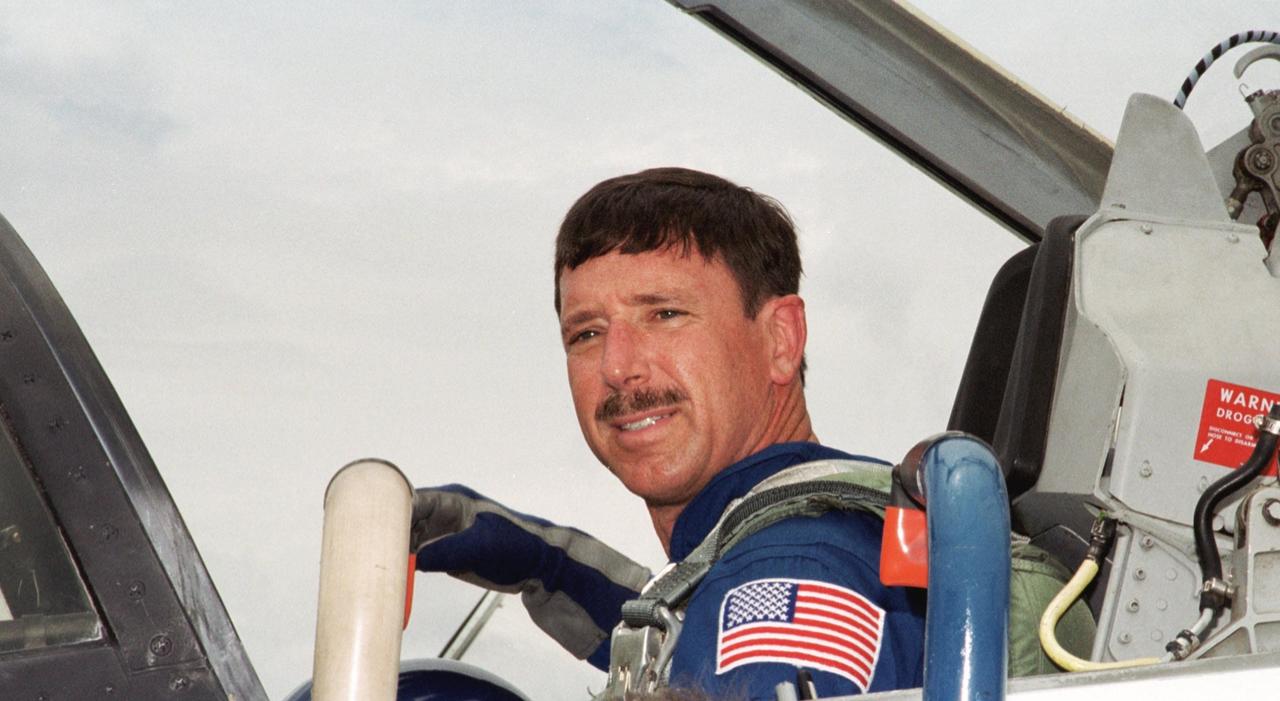
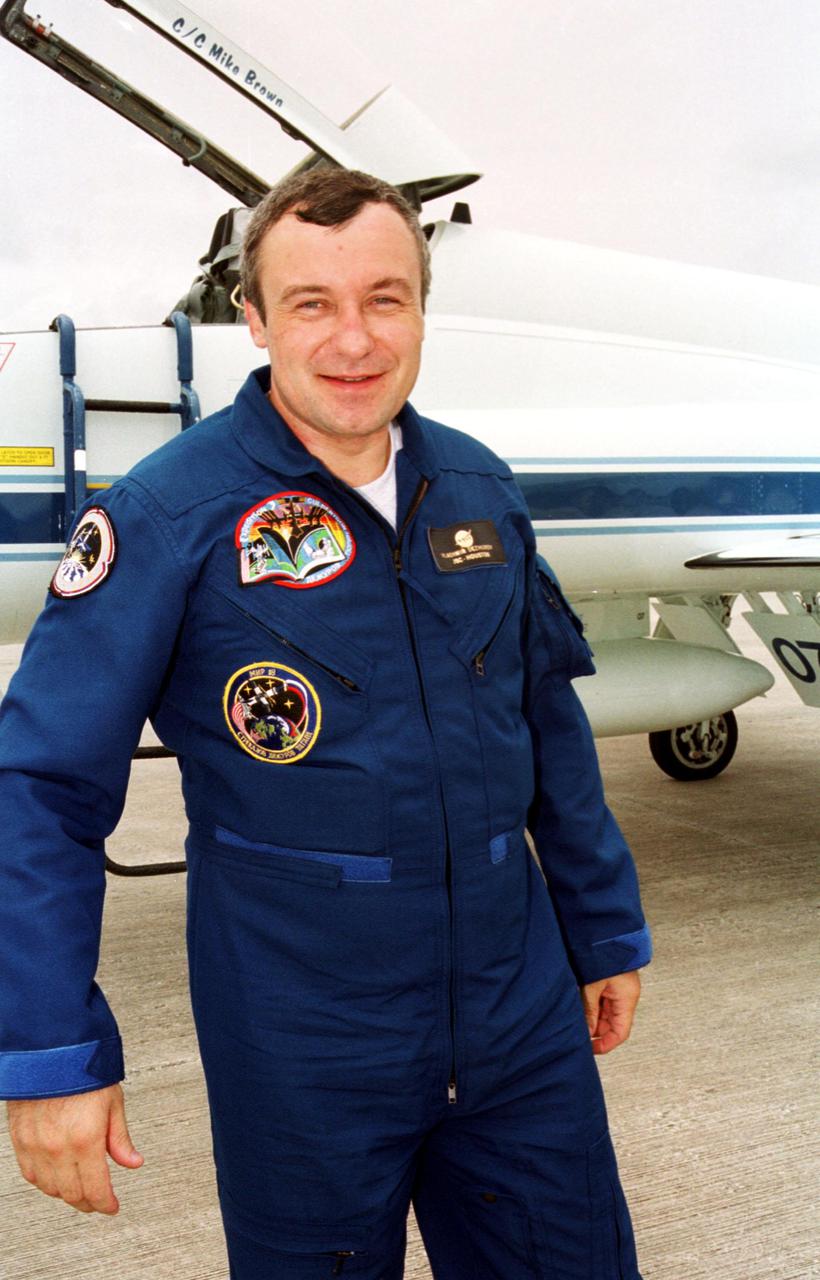
KENNEDY SPACE CENTER, Fla. -- The STS-105 and Expedition Three crews arrive at Kennedy Space Center's Shuttle Landing Facility to make final preparations for their launch to the International Space Station. Cosmonaut Vladimir Dezhurov walks away from the T-38 jet that brought him to KSC. On mission STS-105, Discovery will be transporting the Expedition Three crew and several payloads and scientific experiments to the ISS. The Early Ammonia Servicer (EAS) tank, which will support the thermal control subsystems until a permanent system is activated, will be attached to the Station during two spacewalks. The three-member Expedition Two crew will be returning to Earth aboard Discovery after a five-month stay on the Station
ksc-01pp-1416
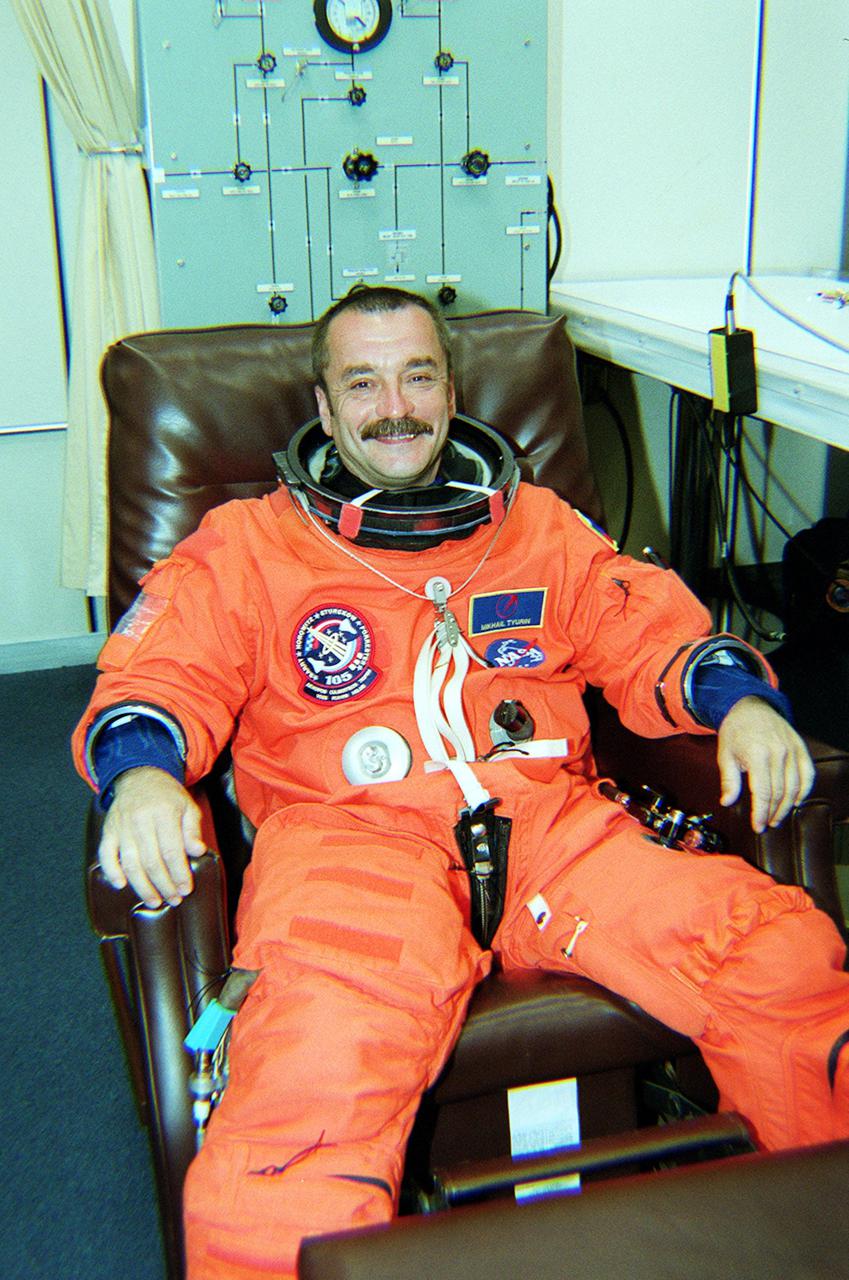
KENNEDY SPACE CENTER, Fla. --  Expedition Three cosmonaut Mikhail Tyurin suits up for launch on mission STS-105. The mission will be Tyurin’s first space flight. On the mission, Discovery will be transporting the Expedition Three crew and several scientific experiments and payloads to the International Space Station, including the Early Ammonia Servicer (EAS) tank. The EAS, which will support the thermal control subsystems until a permanent system is activated, will be attached to the Station during two spacewalks. The three-member Expedition Two crew will be returning to Earth aboard Discovery after a five-month stay on the Station. Launch is scheduled for 5:38 p.m. EDT Aug. 9
ksc-01pp-1444
KENNEDY SPACE CENTER, Fla. -- STS-105 Commander Scott Horowitz arrives at KSC aboard a T-38 jet to make final preparations for launch. On mission STS-105, Discovery will be transporting the Expedition Three crew and several payloads and scientific experiments to the International Space Station. The Early Ammonia Servicer (EAS) tank, which will support the thermal control subsystems until a permanent system is activated, will be attached to the Station during two spacewalks. The three-member Expedition Two crew will be returning to Earth aboard Discovery after a five-month stay on the Station. Launch of Discovery on mission STS-105 is scheduled for Aug. 9, 2001
KSC-01pp1413
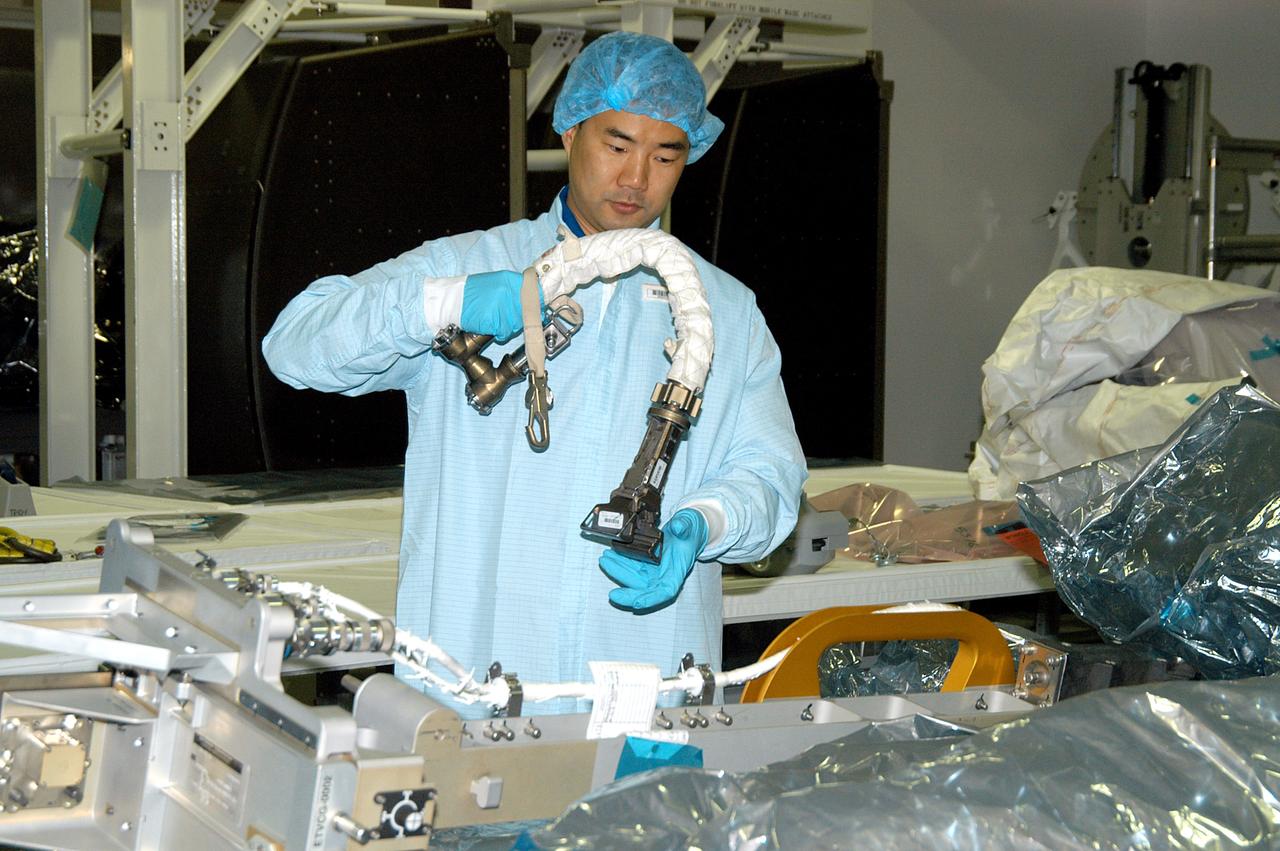
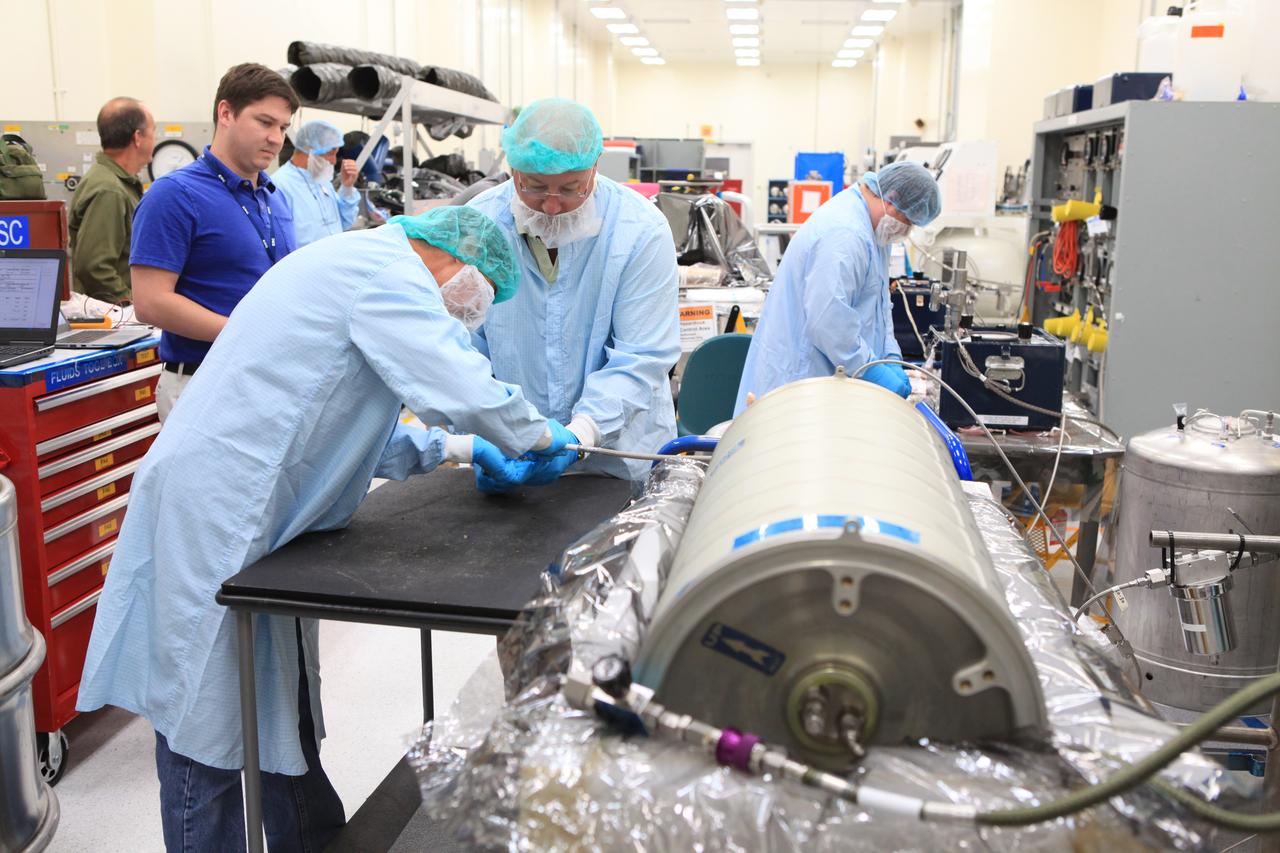
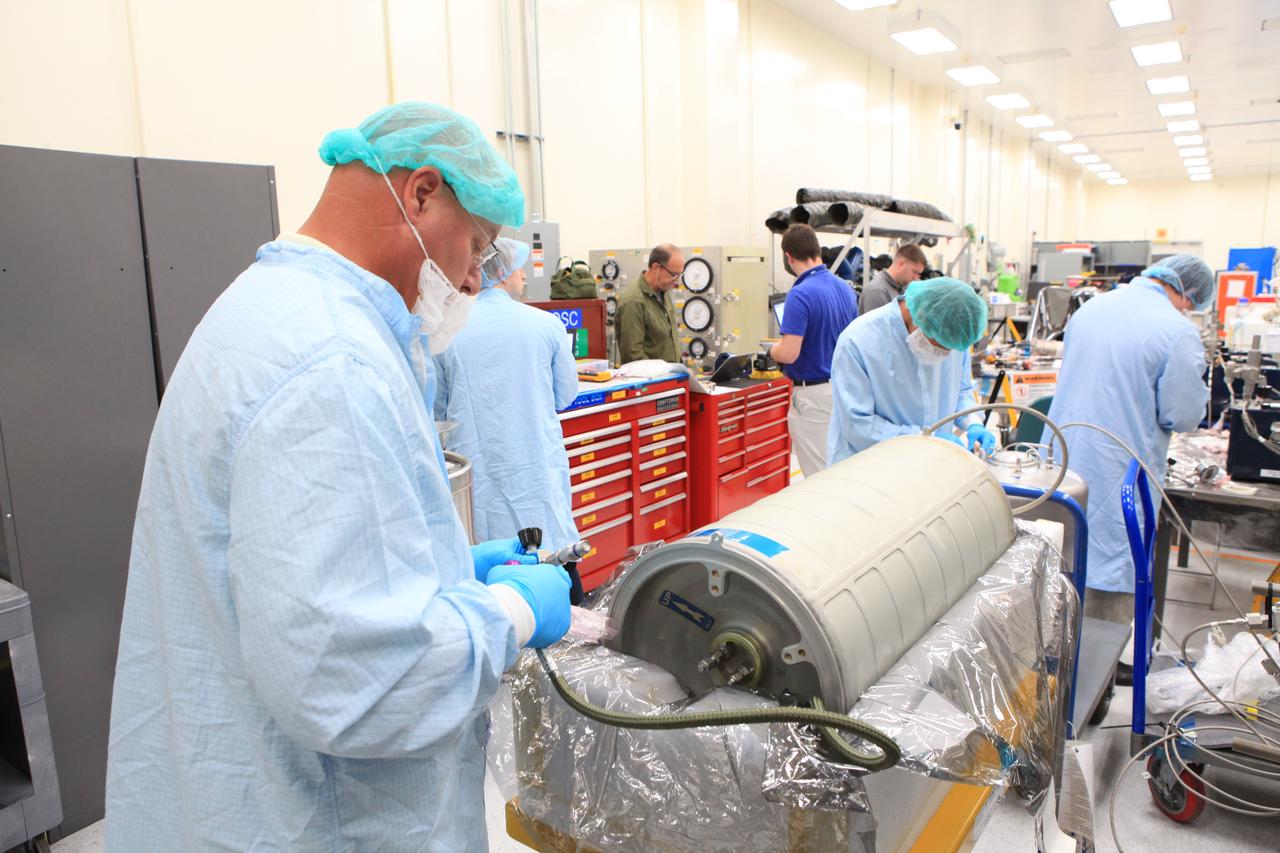
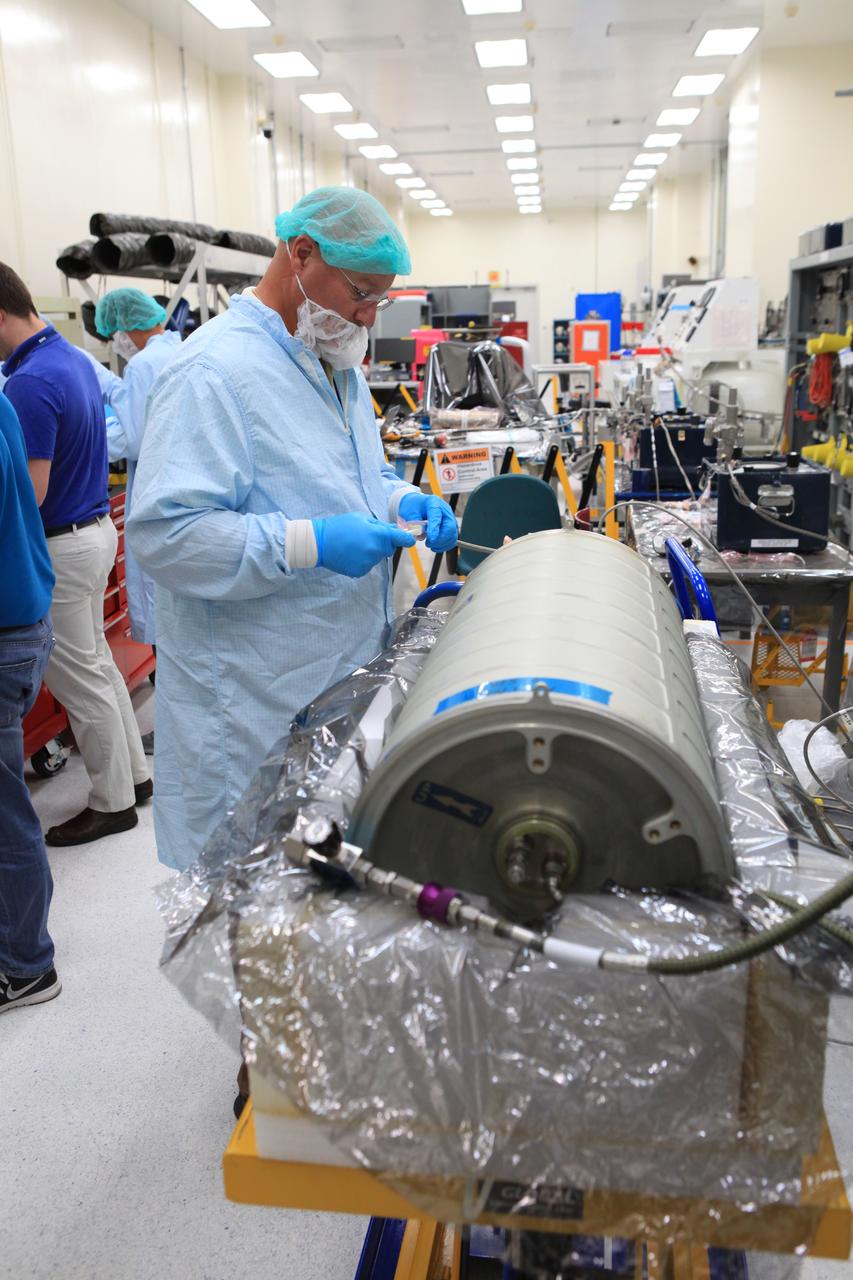
Inside the Space Station Processing Facility high bay at NASA's Kennedy Space Center in Florida, technicians work on the pump package assembly (PPA) on Aug. 30, 2018. The payload will be carried to the International Space Station on SpaceX's 16th Commercial Resupply Services mission. The PPA will be used to continuously drive the cooling water in the space station's thermal control system. The assembly includes a centrifuge pump, a fine filter and gas trap for pump protection, a coarse outlet filter, sensors, and an accumulator. The PPA also will provide a reservoir used for makeup of coolant if leakage occurred. CRS-16 is scheduled to launch to the space station later this year.
Servicing for Pump Package Assembly Launching on SpaceX CRS-16
Inside the Space Station Processing Facility high bay at NASA's Kennedy Space Center in Florida, a technician works on the pump package assembly (PPA) on Aug. 30, 2018. The payload will be carried to the International Space Station on SpaceX's 16th Commercial Resupply Services mission. The PPA will be used to continuously drive the cooling water in the space station's thermal control system. The assembly includes a centrifuge pump, a fine filter and gas trap for pump protection, a coarse outlet filter, sensors, and an accumulator. The PPA also will provide a reservoir used for makeup of coolant if leakage occurred. CRS-16 is scheduled to launch to the space station later this year.
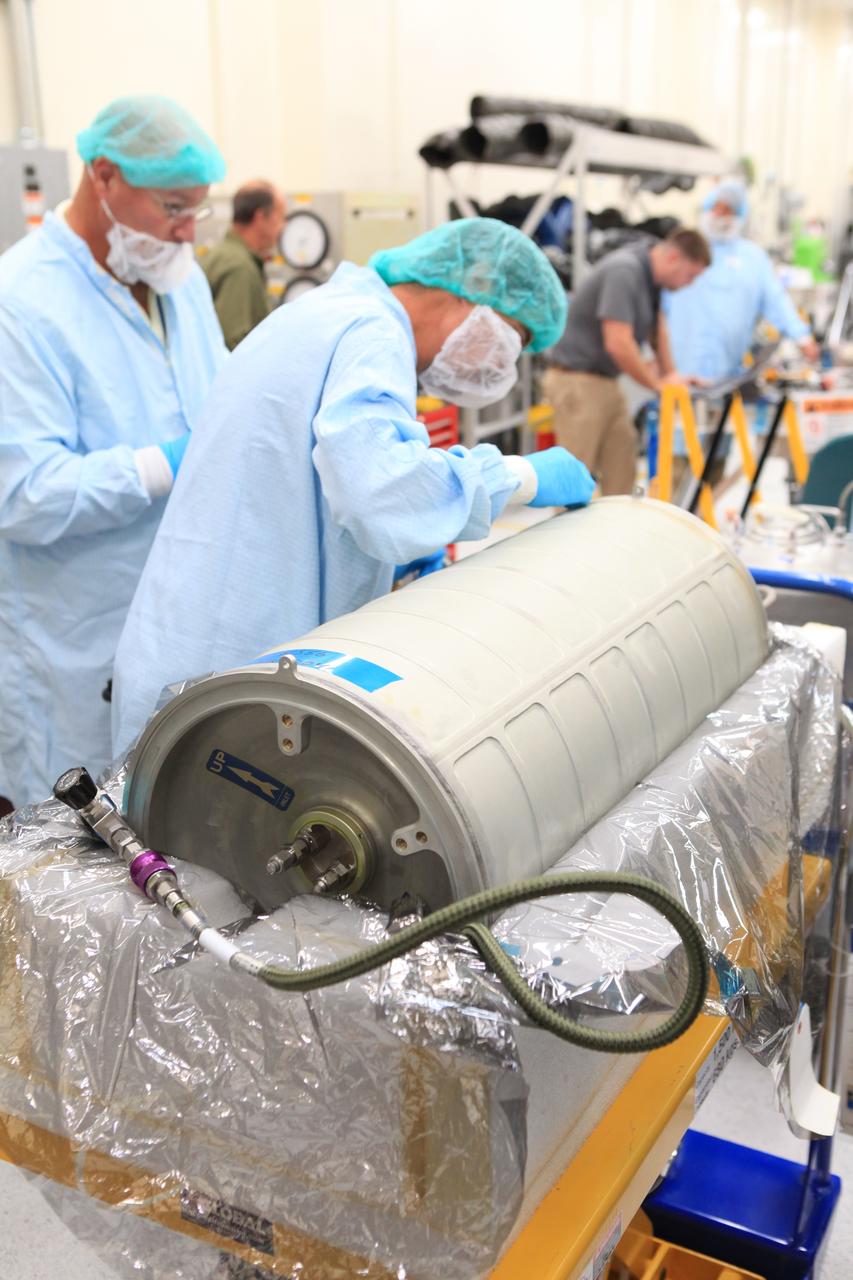
Servicing for Pump Package Assembly Launching on SpaceX CRS-16
Inside the Space Station Processing Facility high bay at NASA's Kennedy Space Center in Florida, technicians work on the pump package assembly (PPA) on Aug. 30, 2018. The payload will be carried to the International Space Station on SpaceX's 16th Commercial Resupply Services mission. The PPA will be used to continuously drive the cooling water in the space station's thermal control system. The assembly includes a centrifuge pump, a fine filter and gas trap for pump protection, a coarse outlet filter, sensors, and an accumulator. The PPA also will provide a reservoir used for makeup of coolant if leakage occurred. CRS-16 is scheduled to launch to the space station later this year.
Servicing for Pump Package Assembly Launching on SpaceX CRS-16
Inside the Space Station Processing Facility high bay at NASA's Kennedy Space Center in Florida, technicians work on the pump package assembly (PPA) on Aug. 30, 2018. The payload will be carried to the International Space Station on SpaceX's 16th Commercial Resupply Services mission. The PPA will be used to continuously drive the cooling water in the space station's thermal control system. The assembly includes a centrifuge pump, a fine filter and gas trap for pump protection, a coarse outlet filter, sensors, and an accumulator. The PPA also will provide a reservoir used for makeup of coolant if leakage occurred. CRS-16 is scheduled to launch to the space station later this year.
Servicing for Pump Package Assembly Launching on SpaceX CRS-16
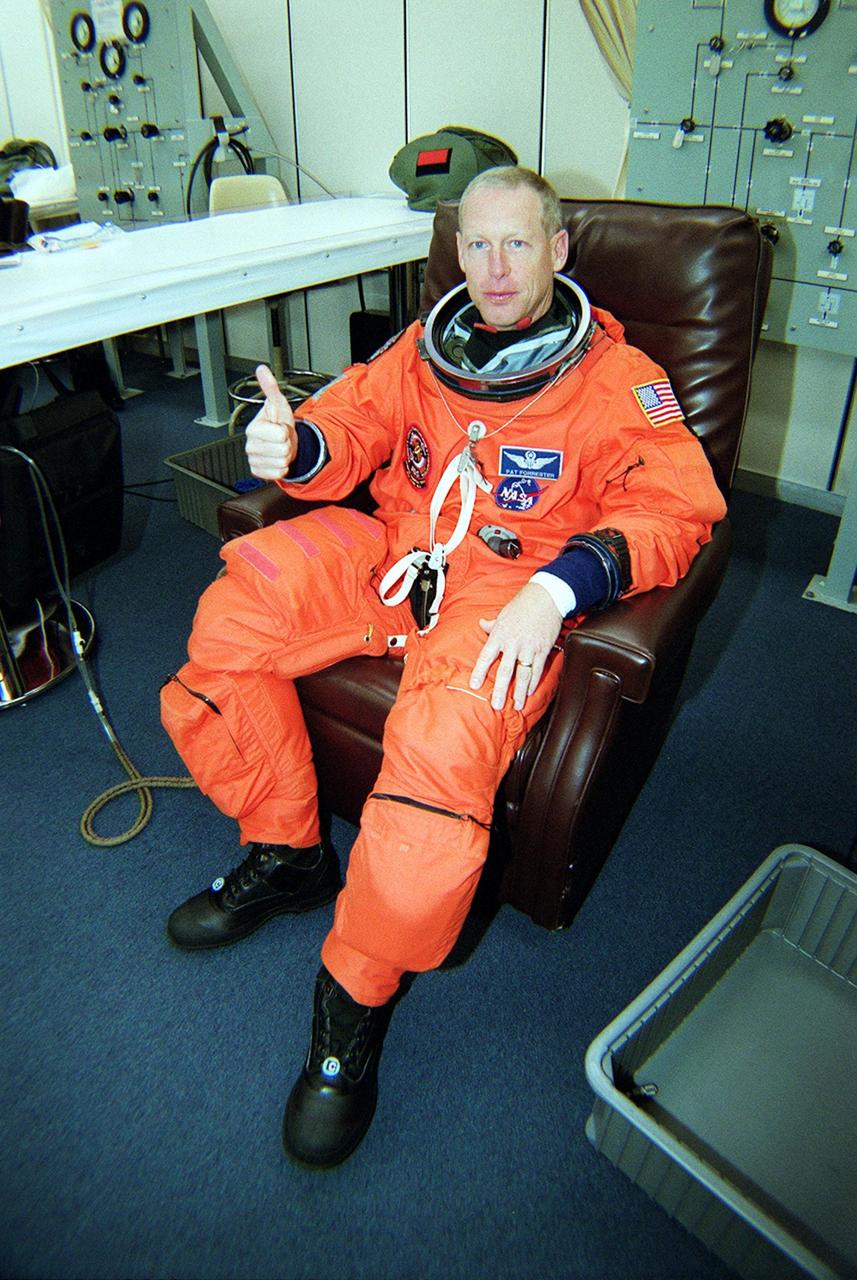
KENNEDY SPACE CENTER, Fla. --  STS-105 Mission Specialist Patrick Forrester suits up for launch on mission STS-105.  The mission  is Forrester’s first space flight. On the mission, Discovery will be transporting the Expedition Three crew and several scientific experiments and payloads to the International Space Station, including the Early Ammonia Servicer (EAS) tank. The EAS, which will support the thermal control subsystems until a permanent system is activated, will be attached to the Station during two spacewalks. The three-member Expedition Two crew will be returning to Earth aboard Discovery after a five-month stay on the Station. Launch is scheduled for 5:38 p.m. EDT Aug. 9
KSC-01pp1446