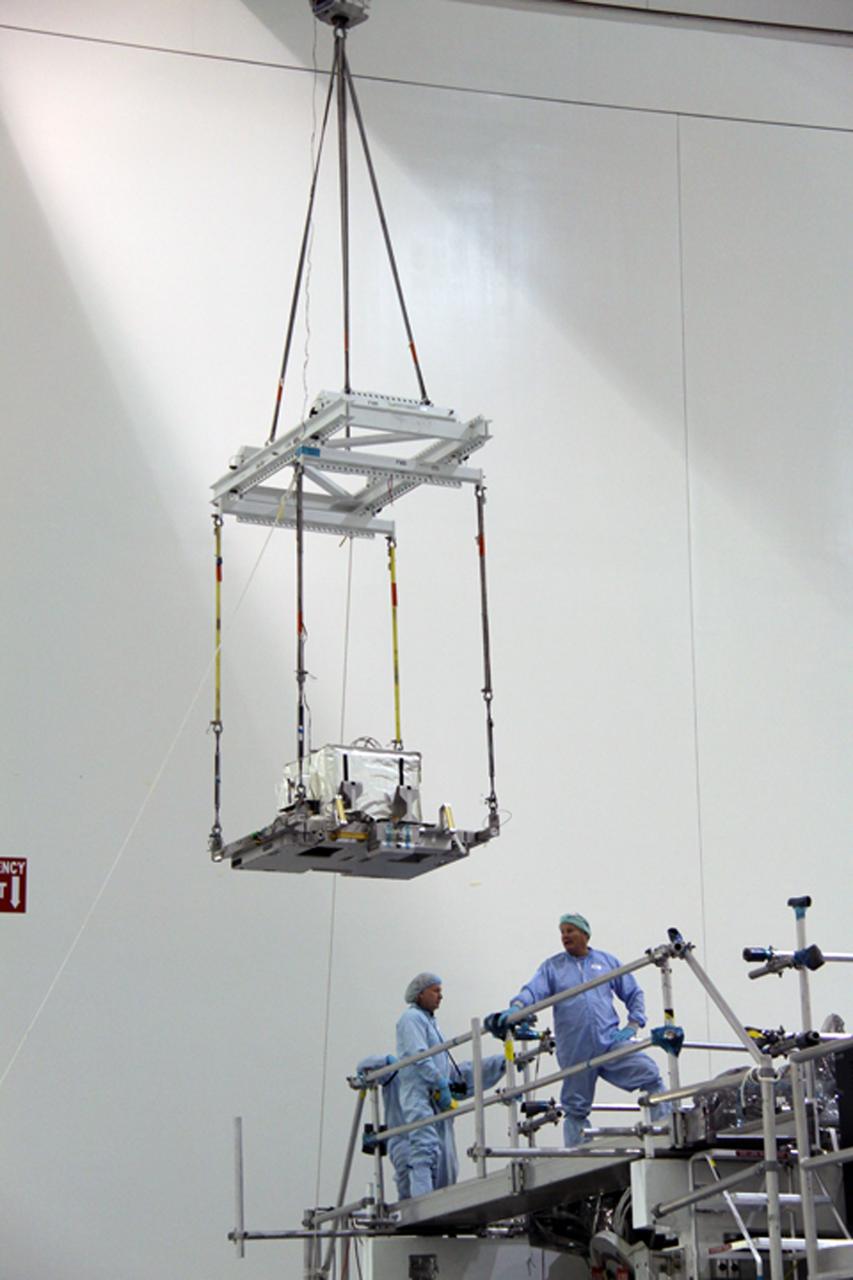
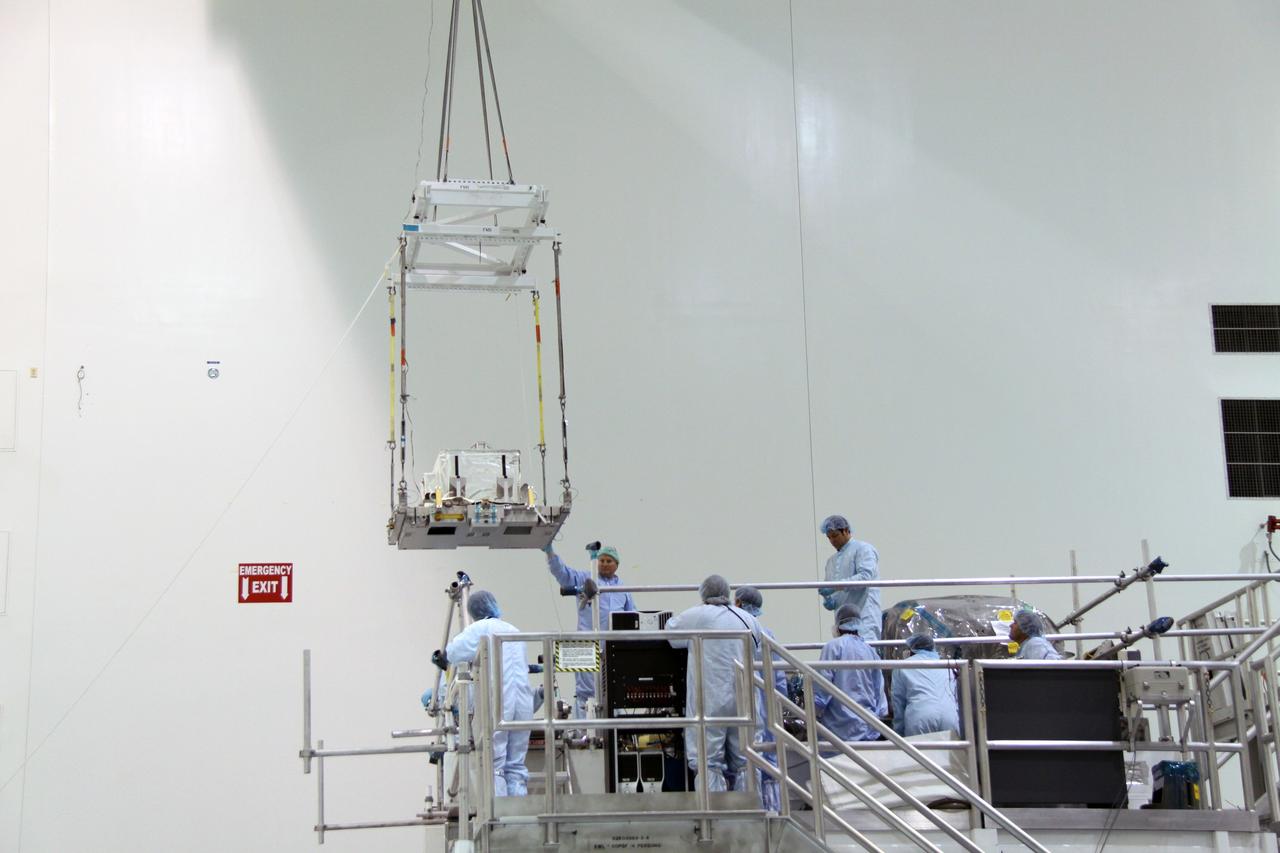
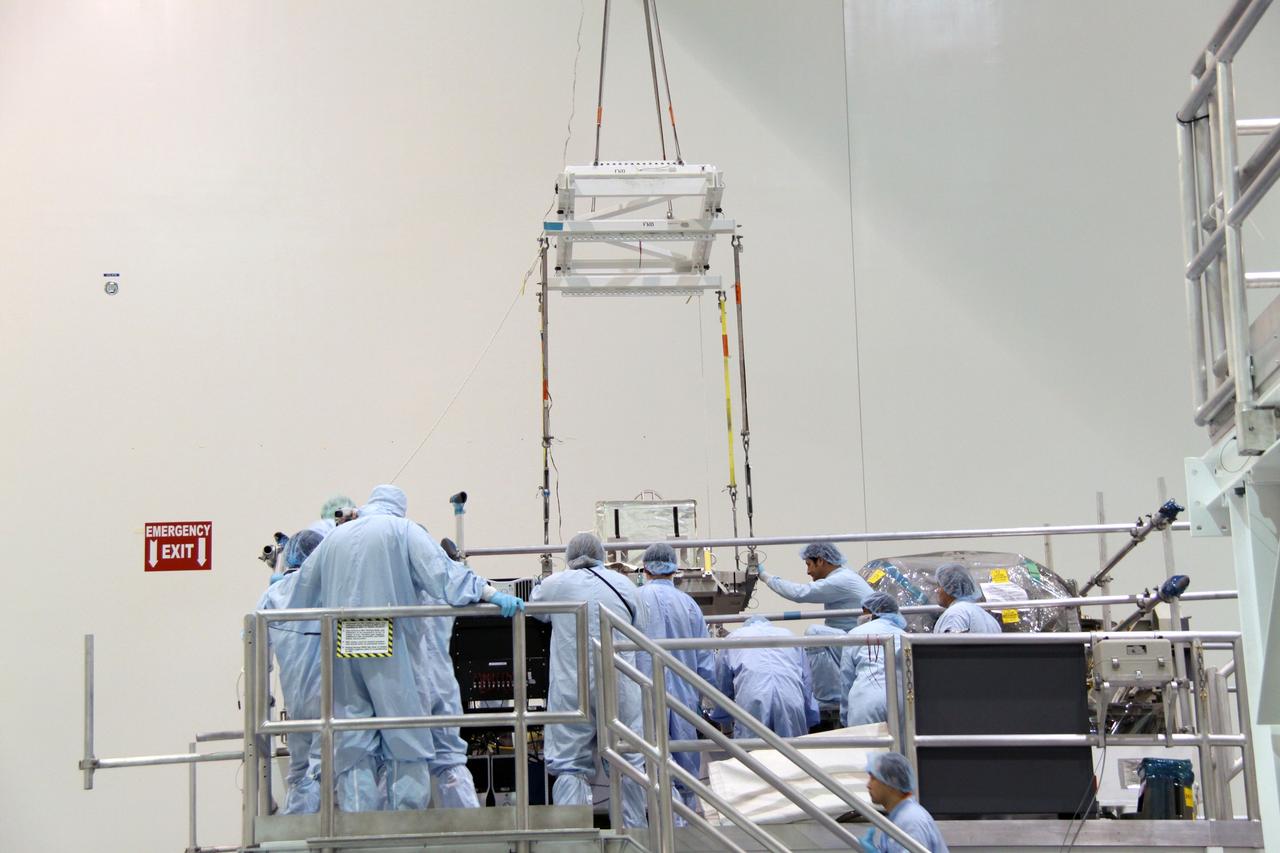
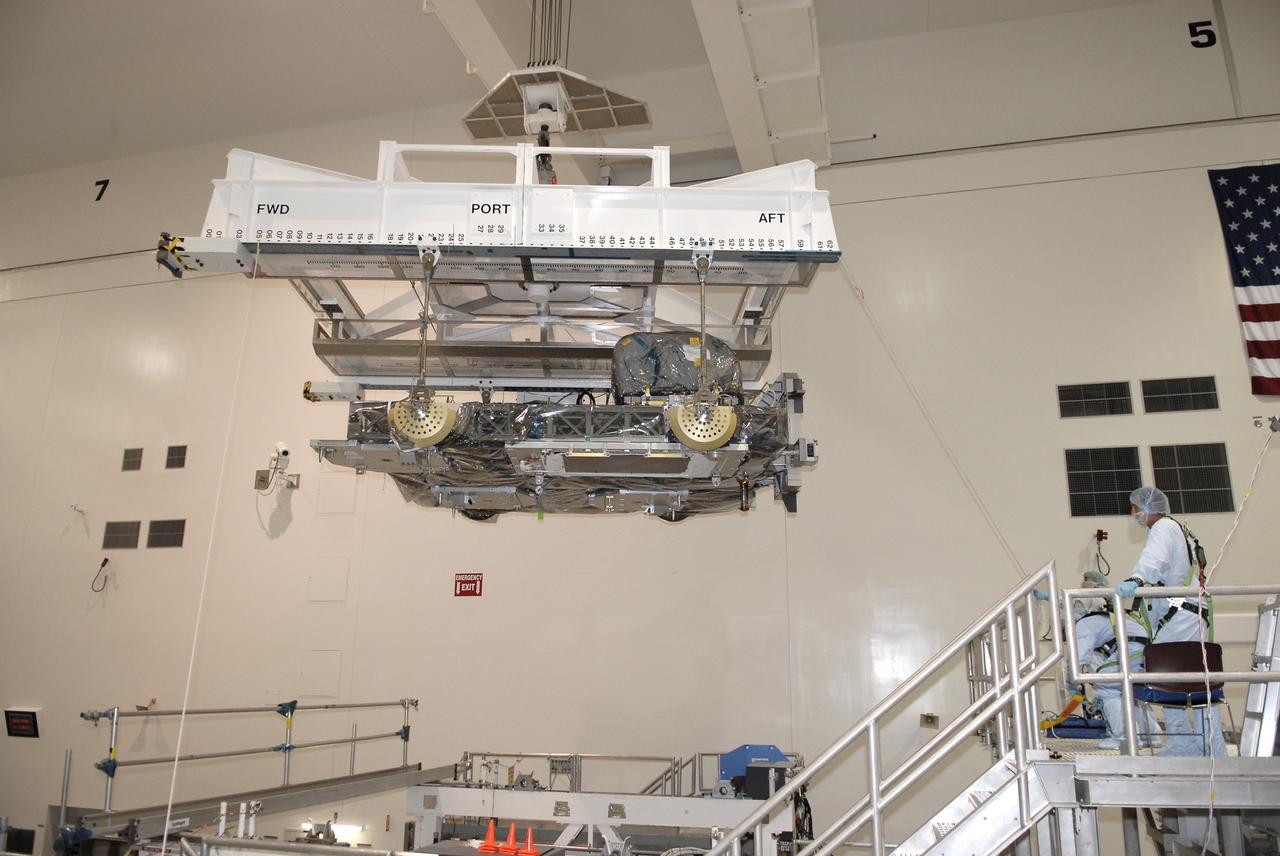
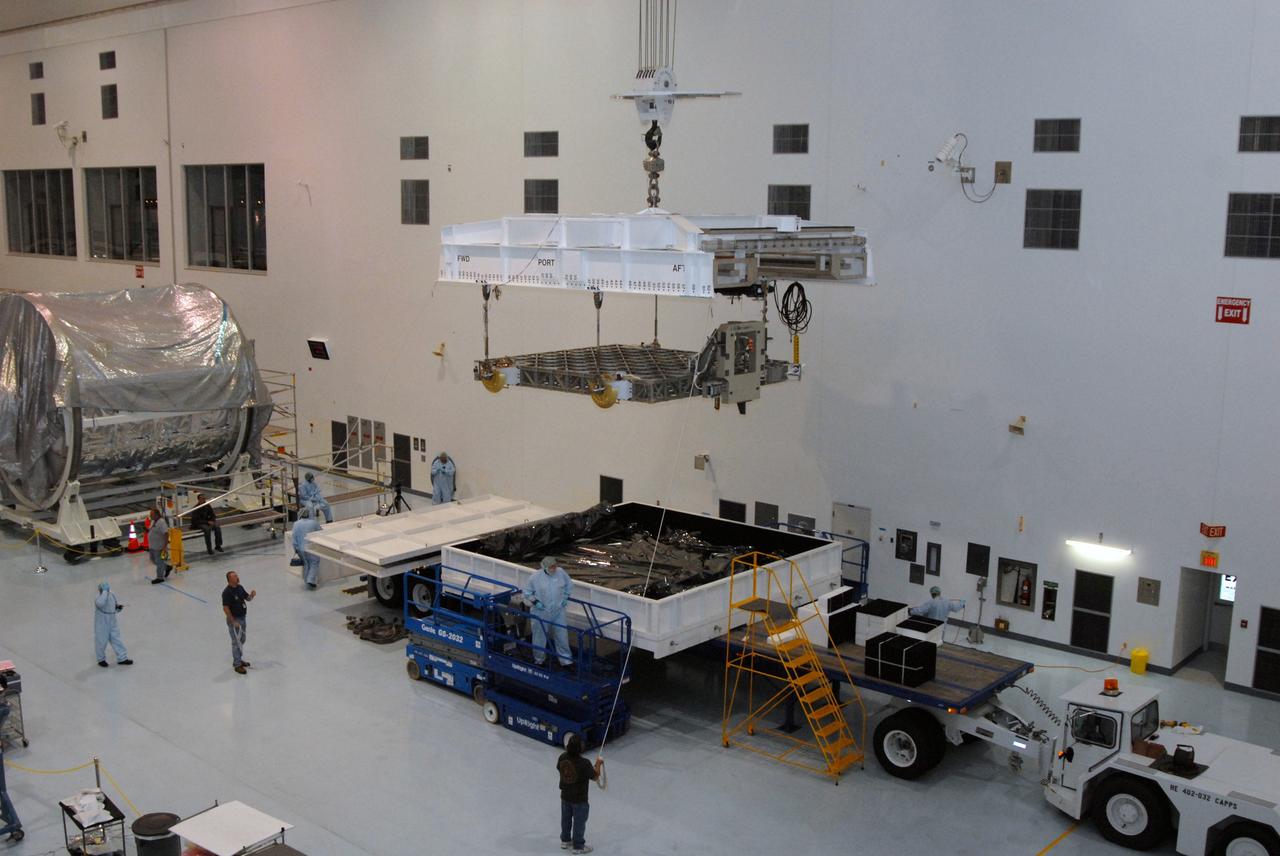
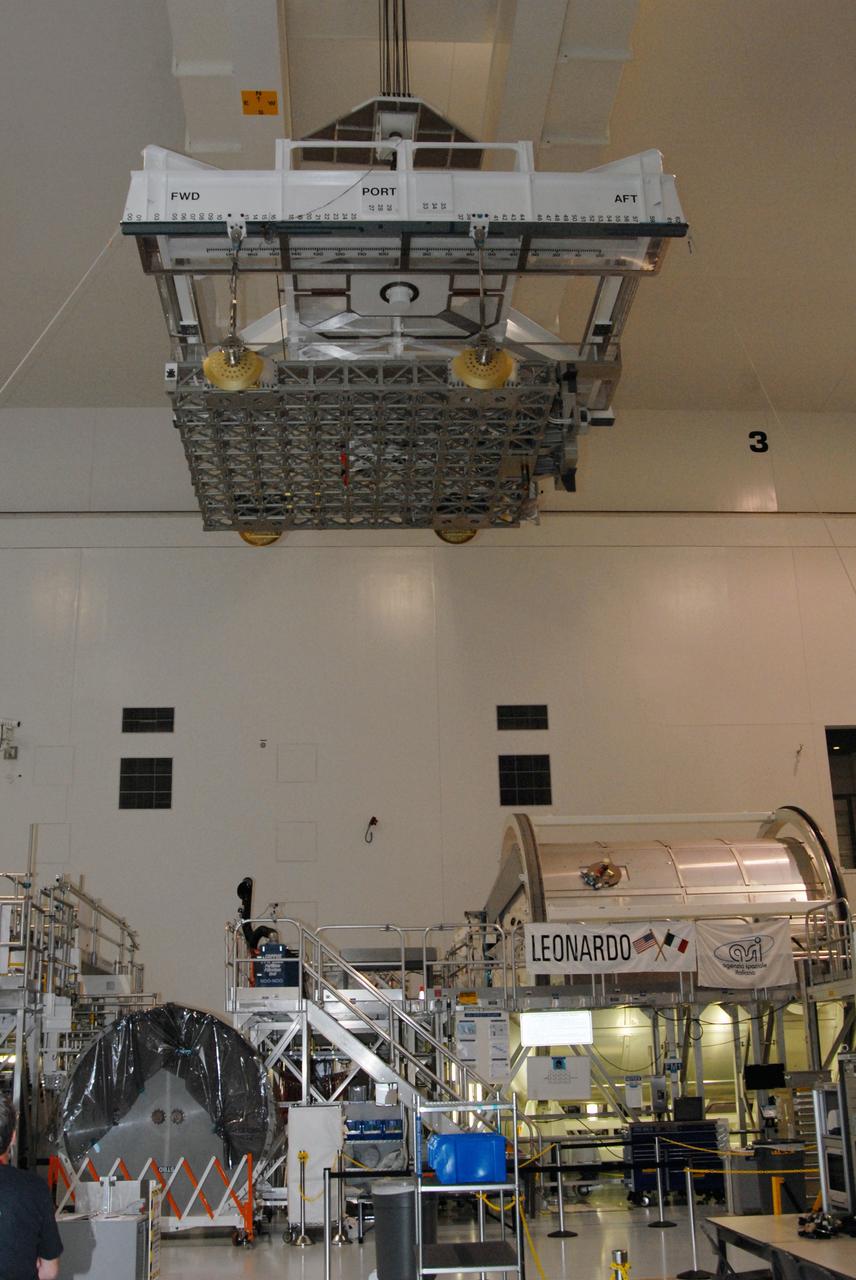
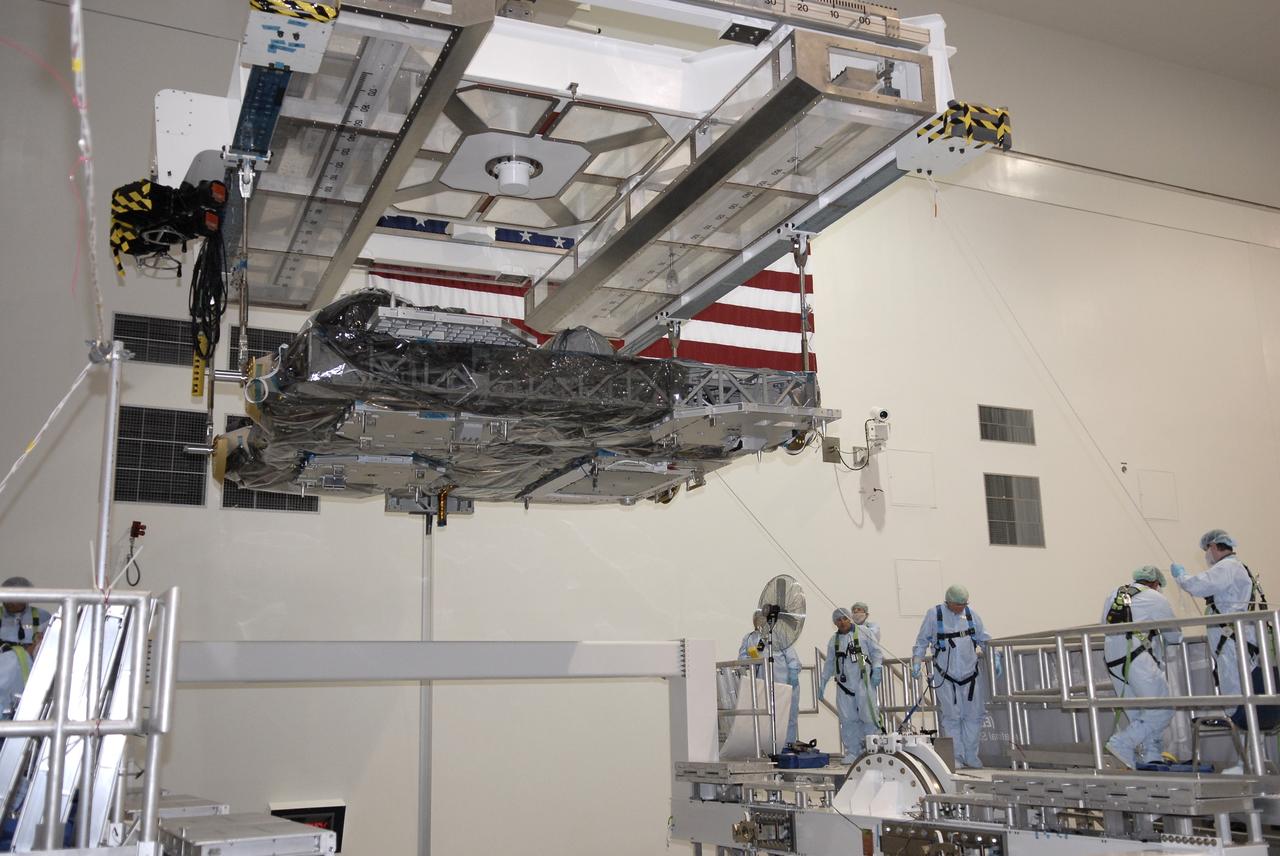
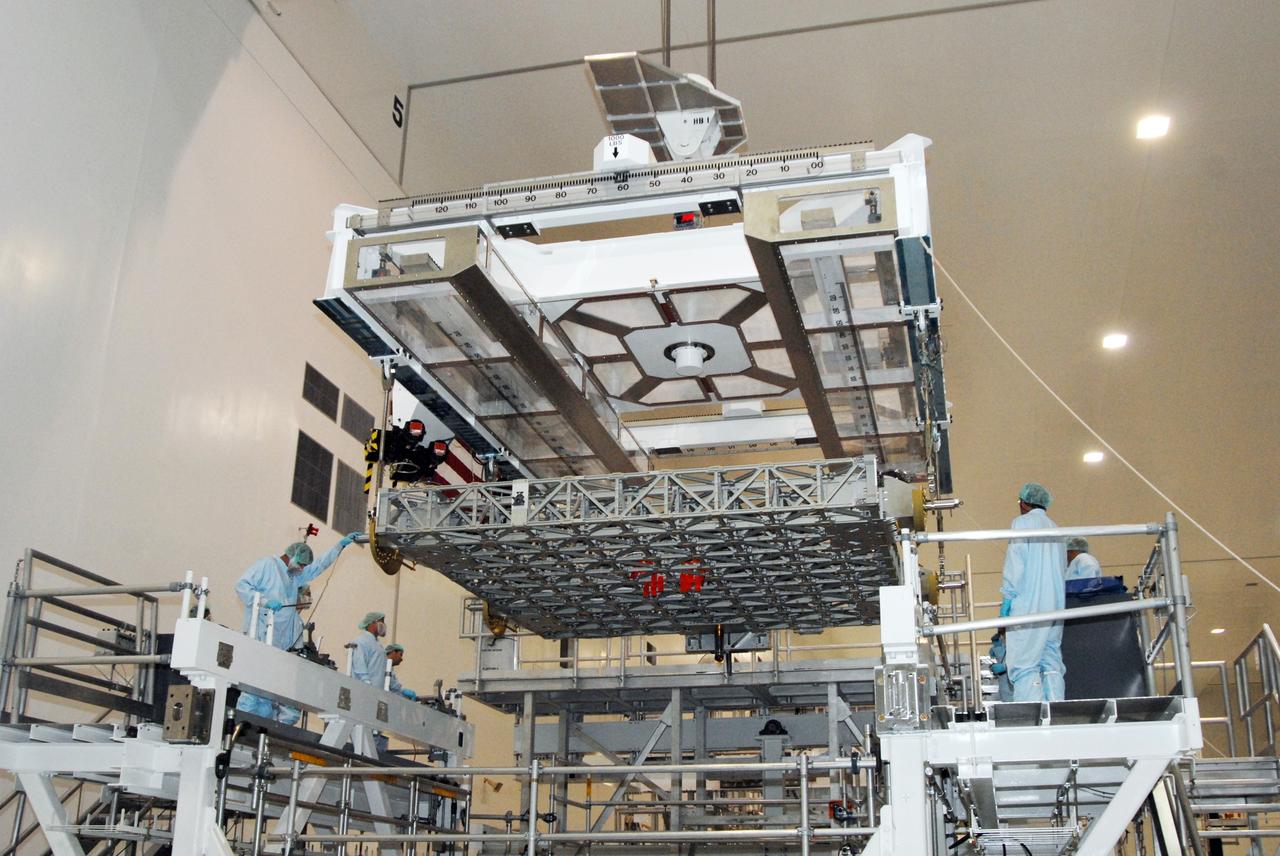
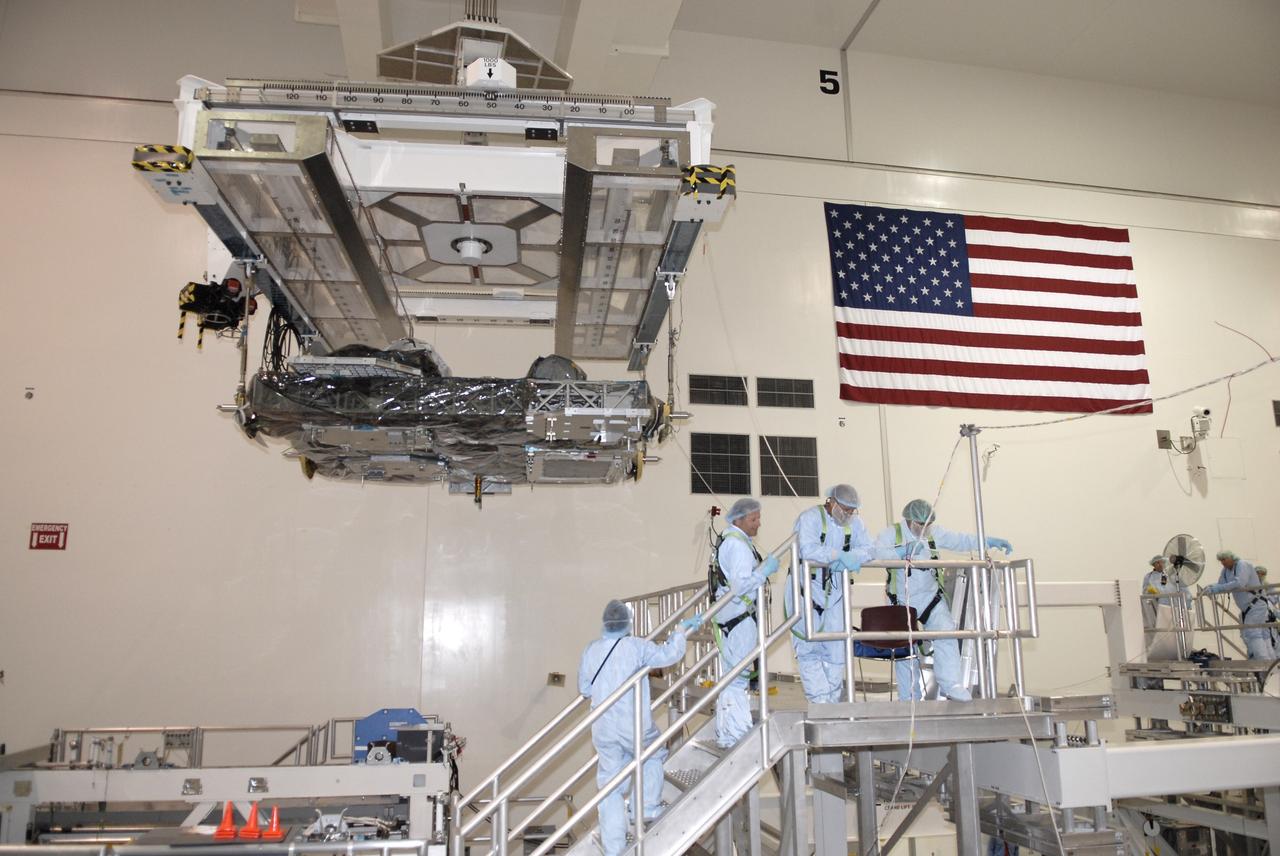
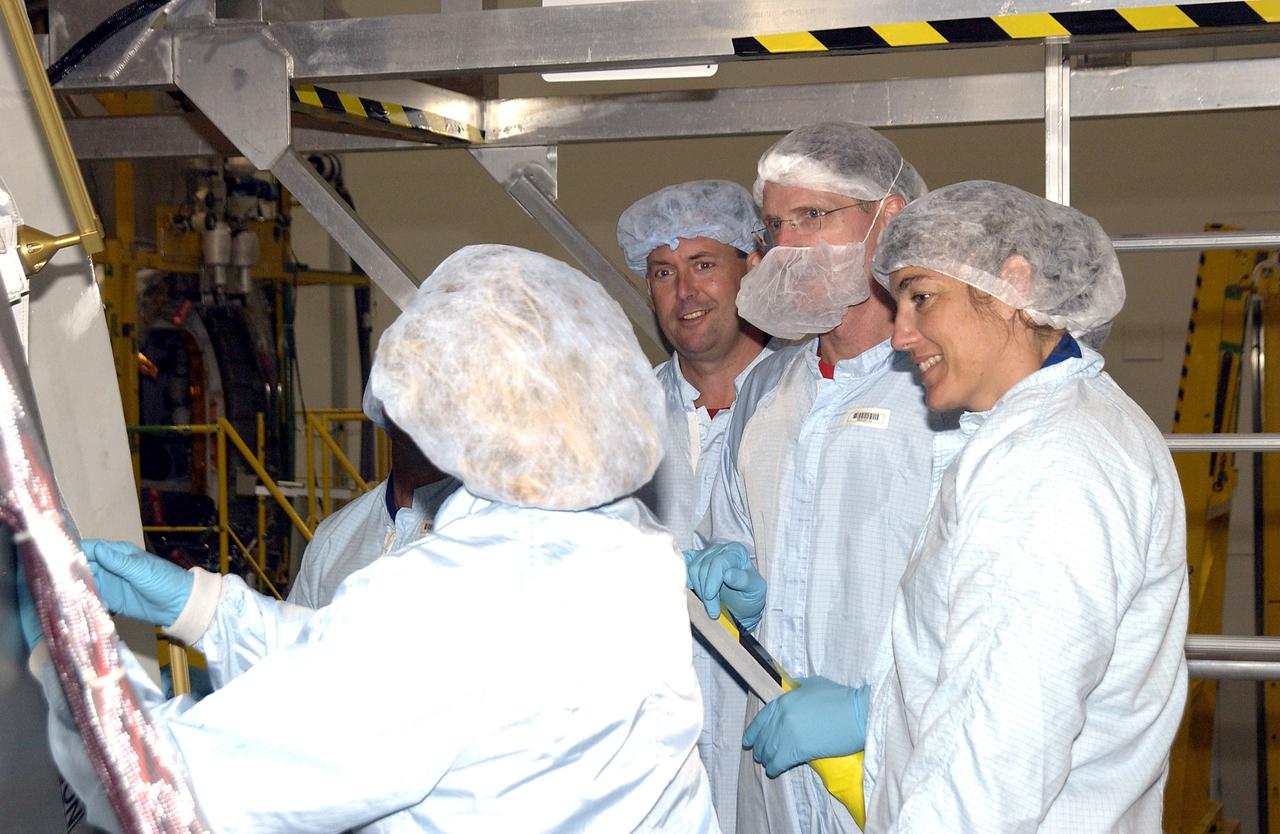
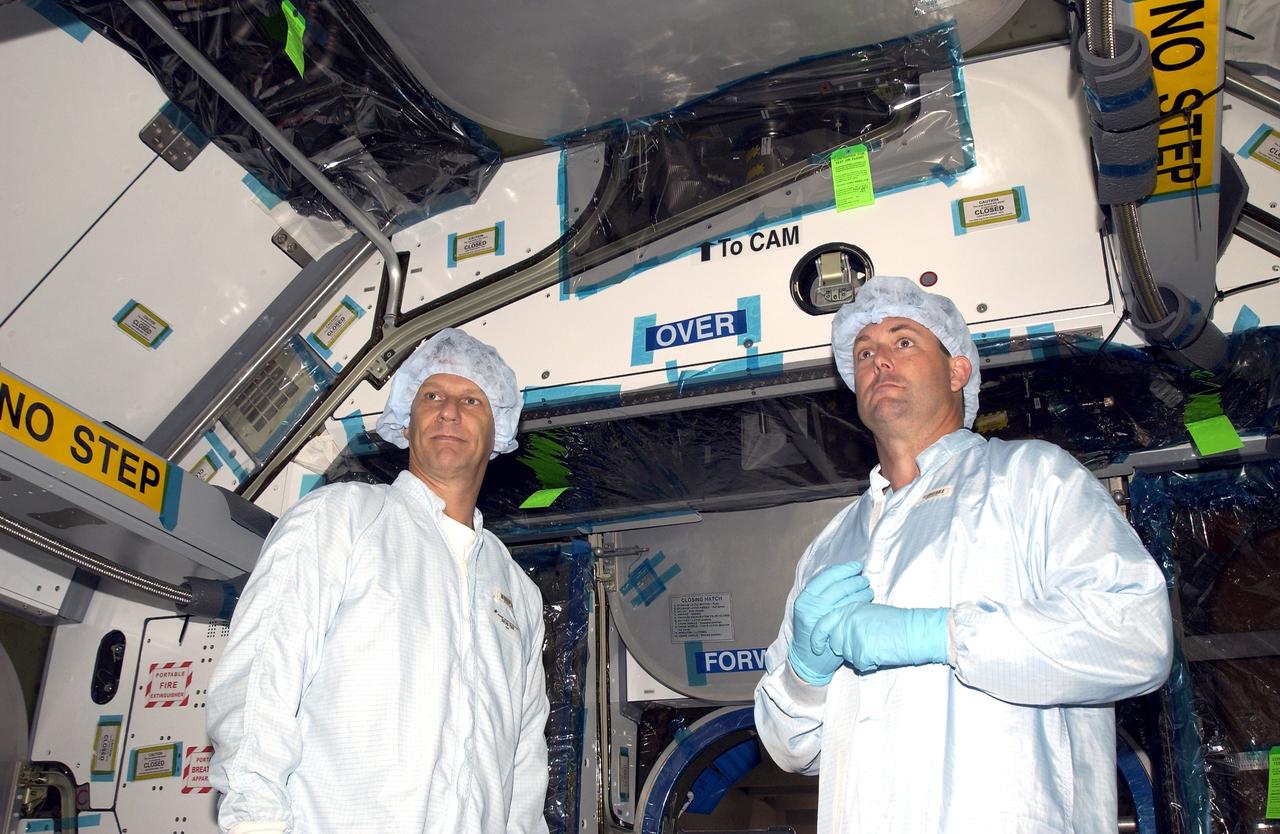
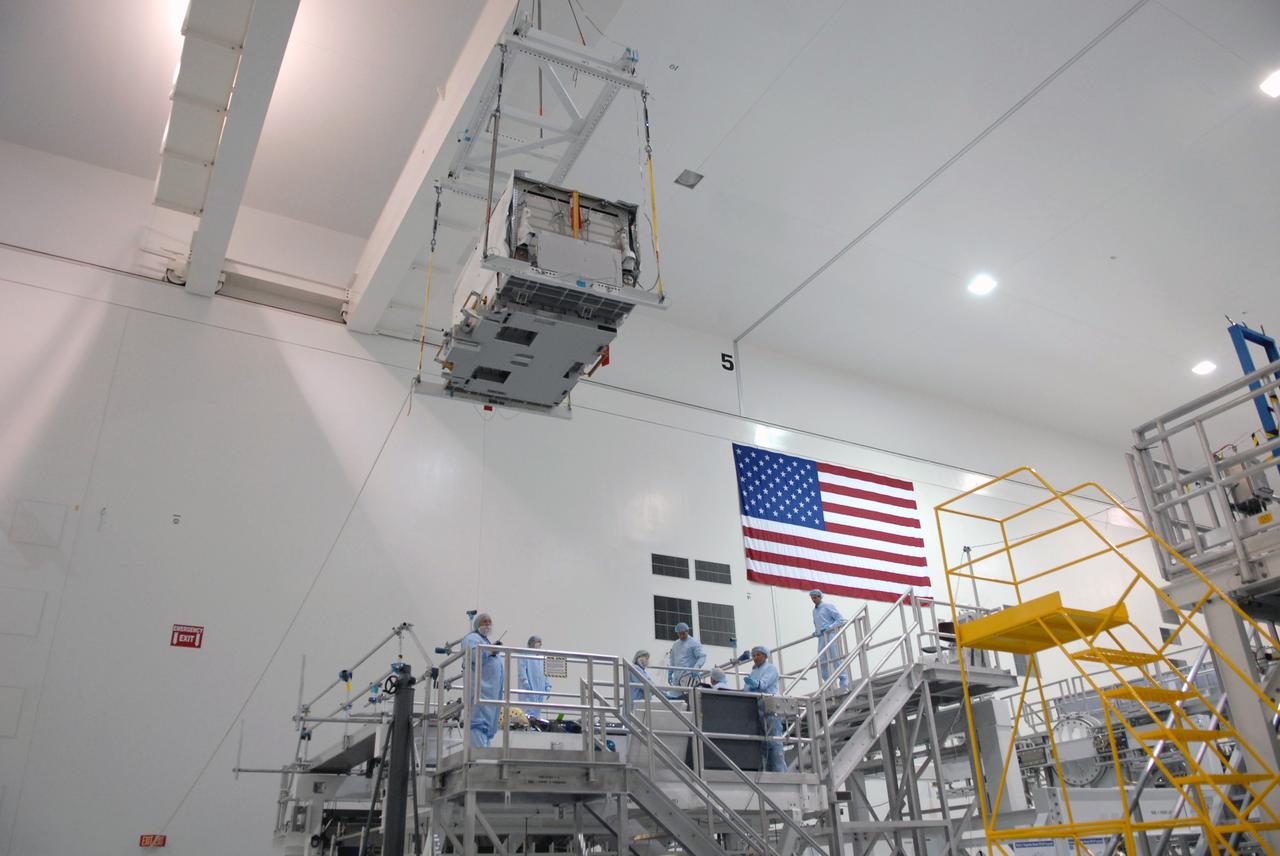
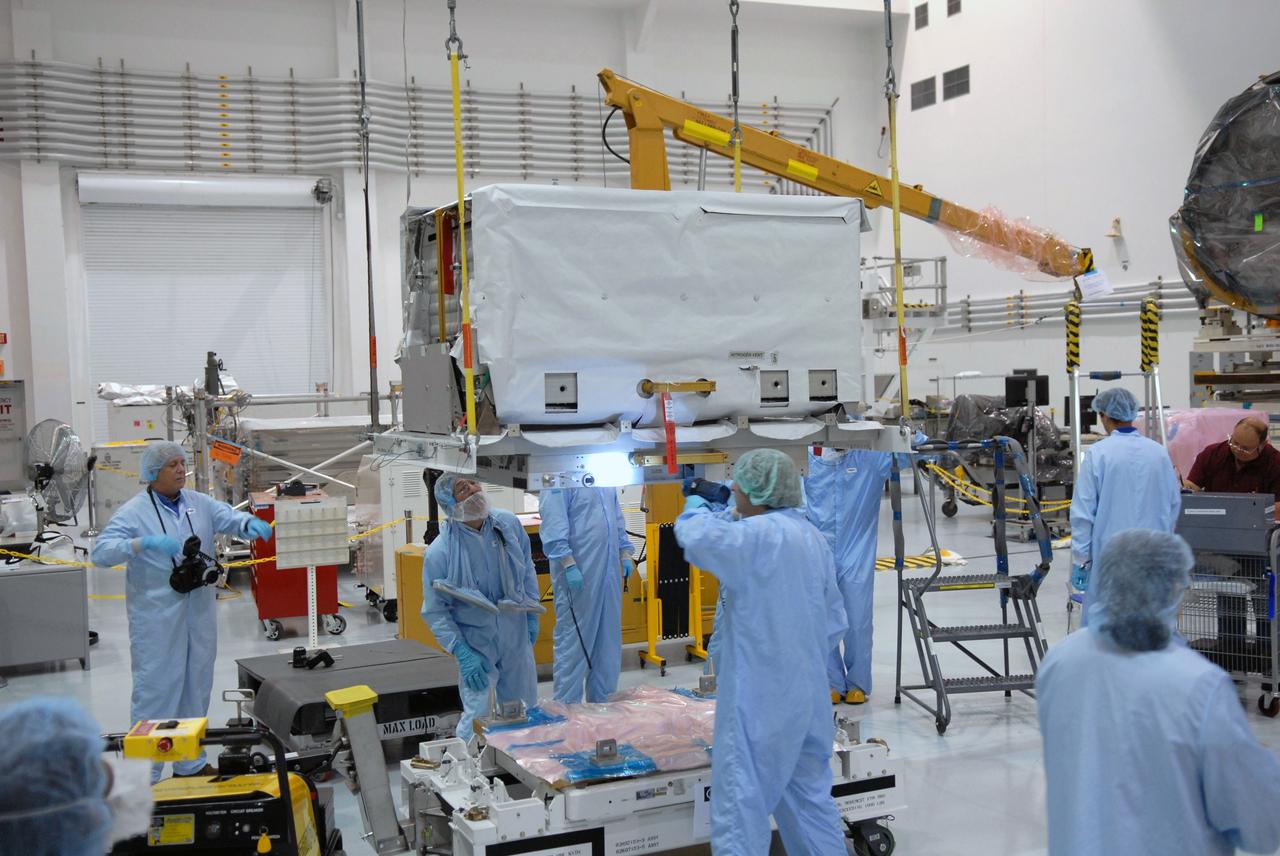
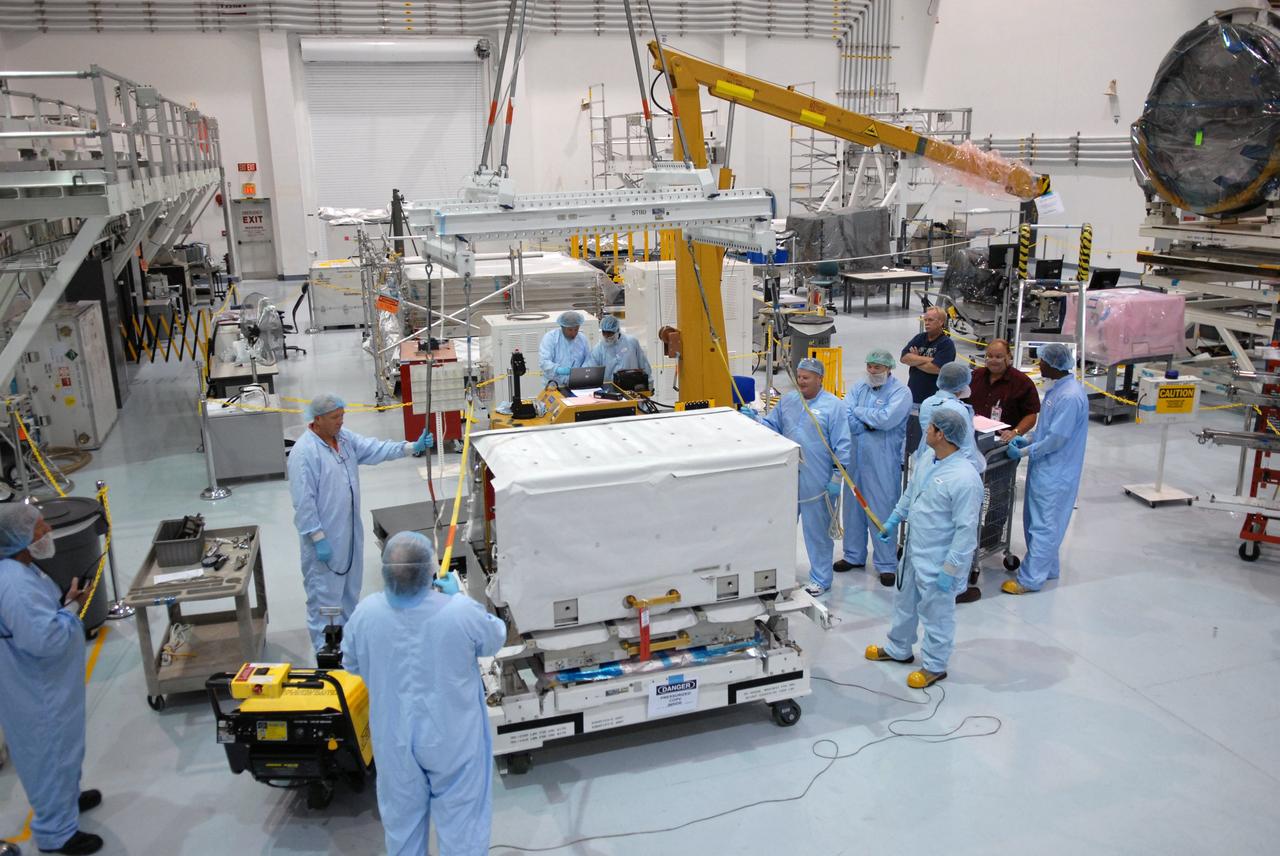
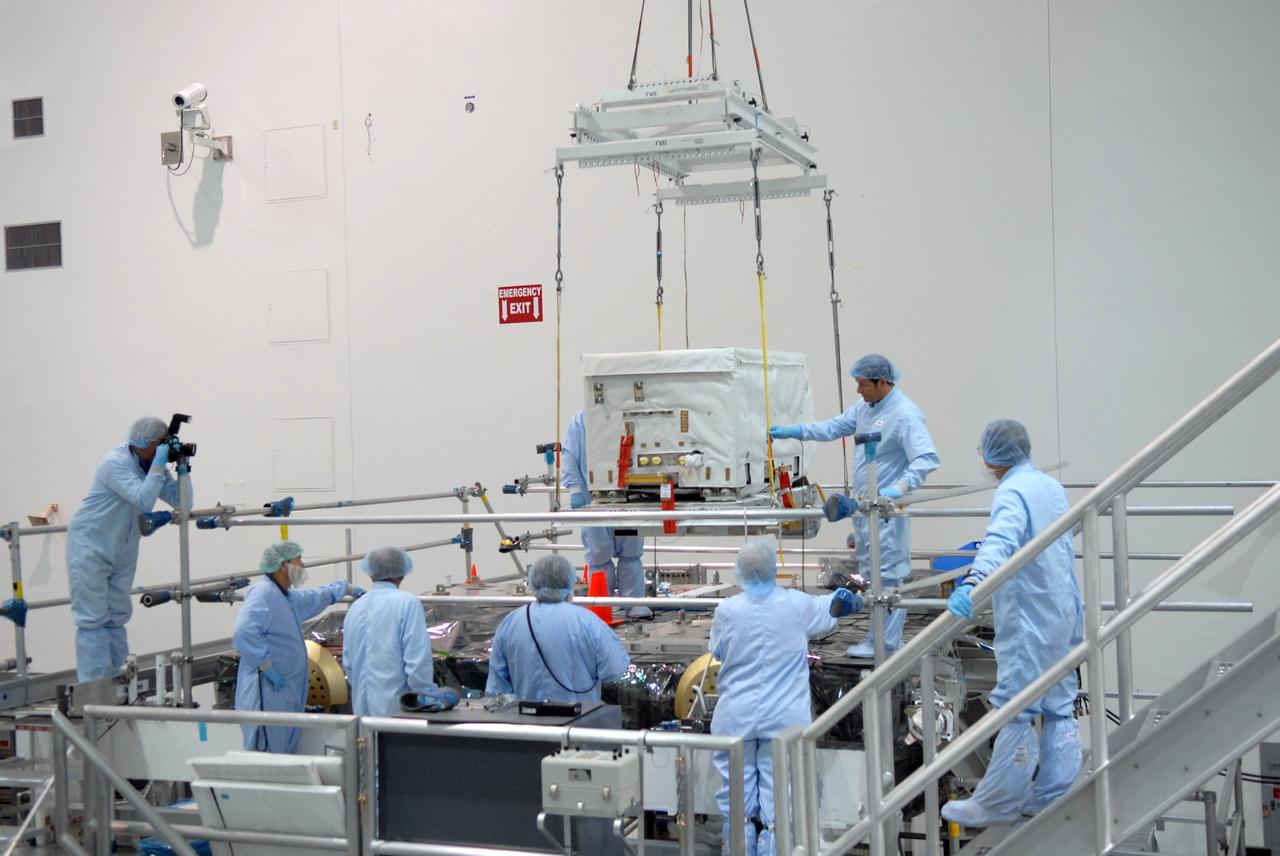
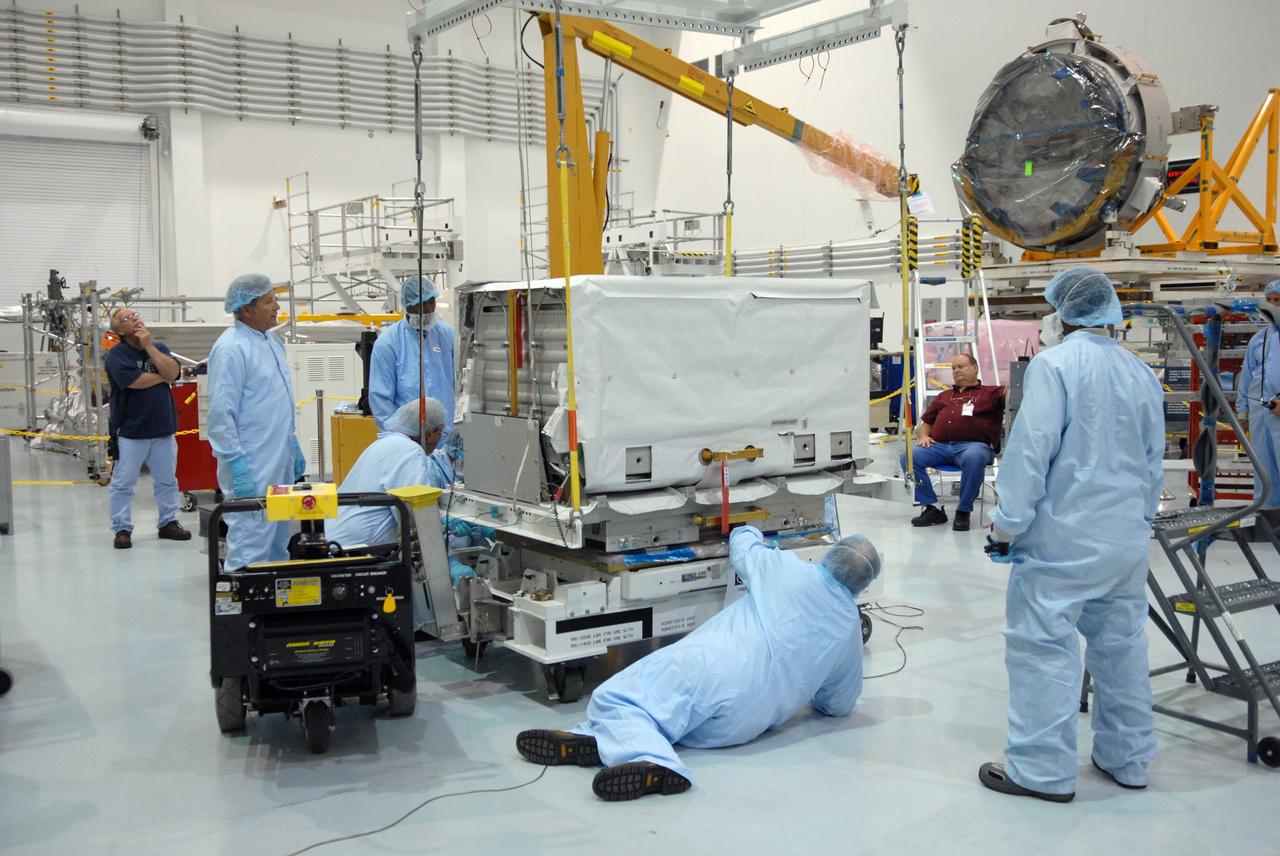
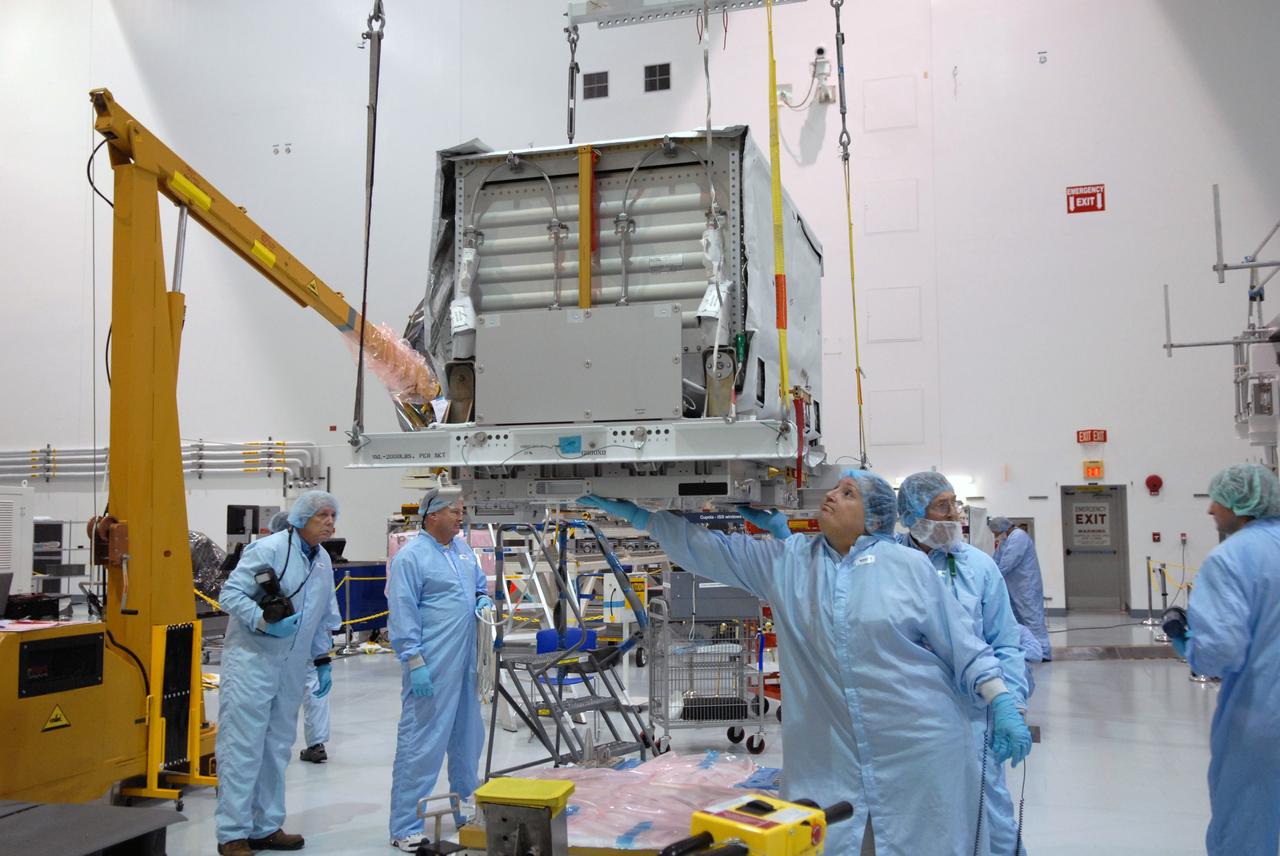
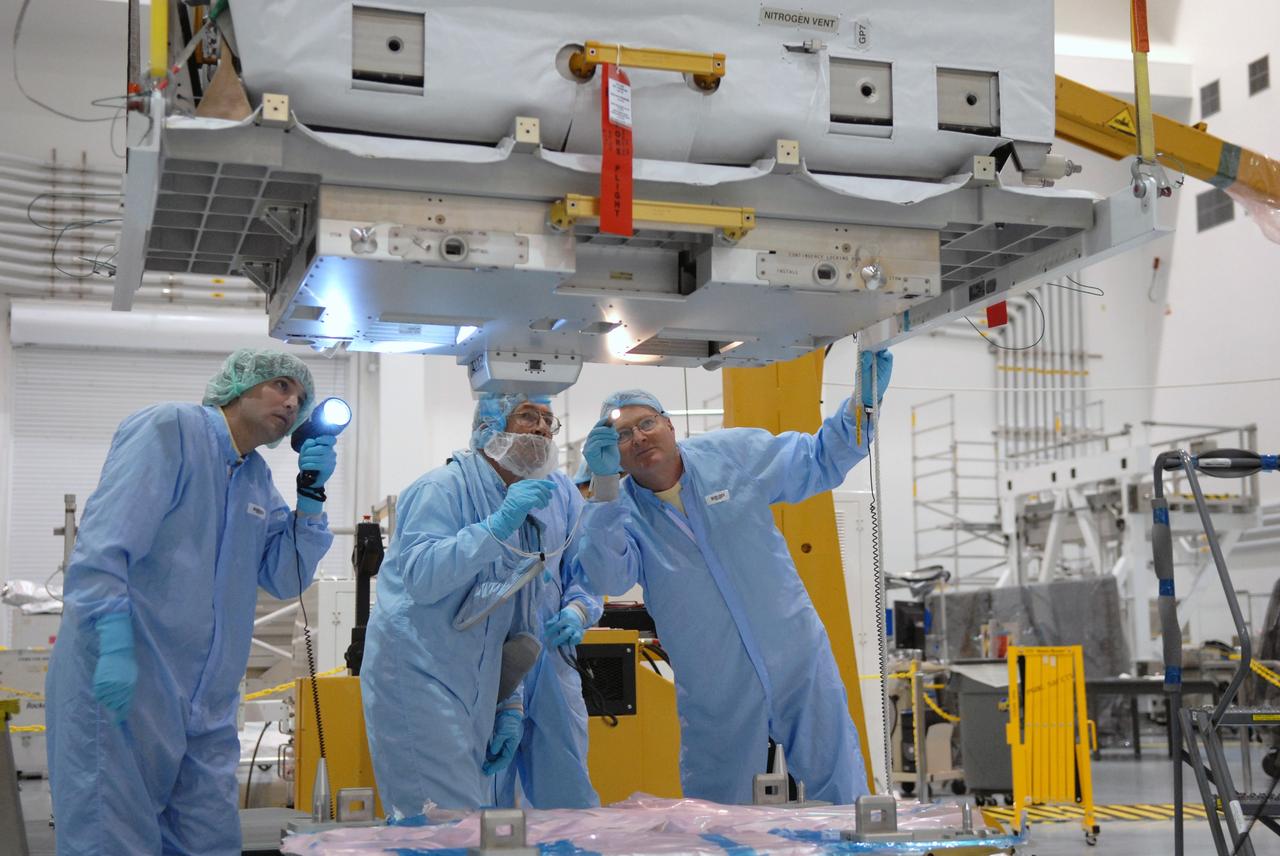
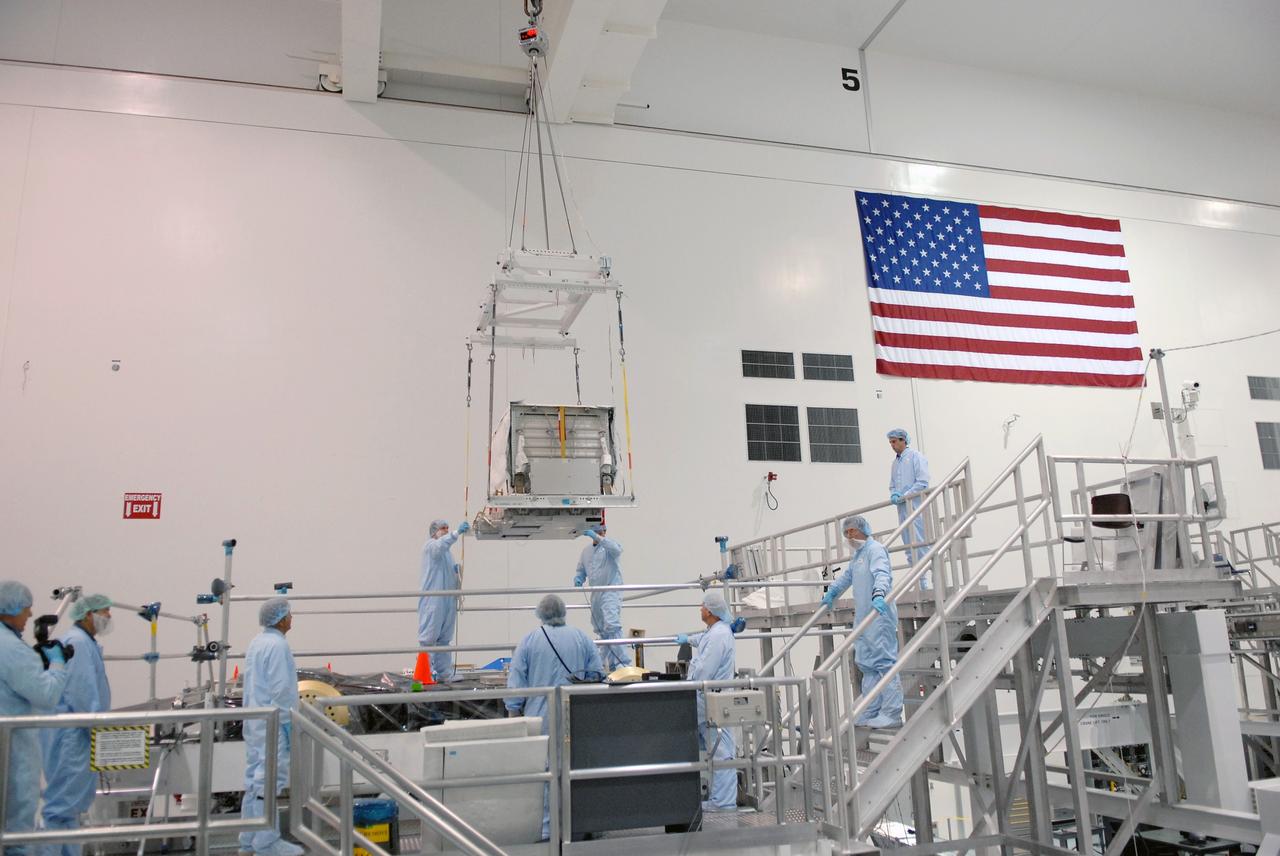
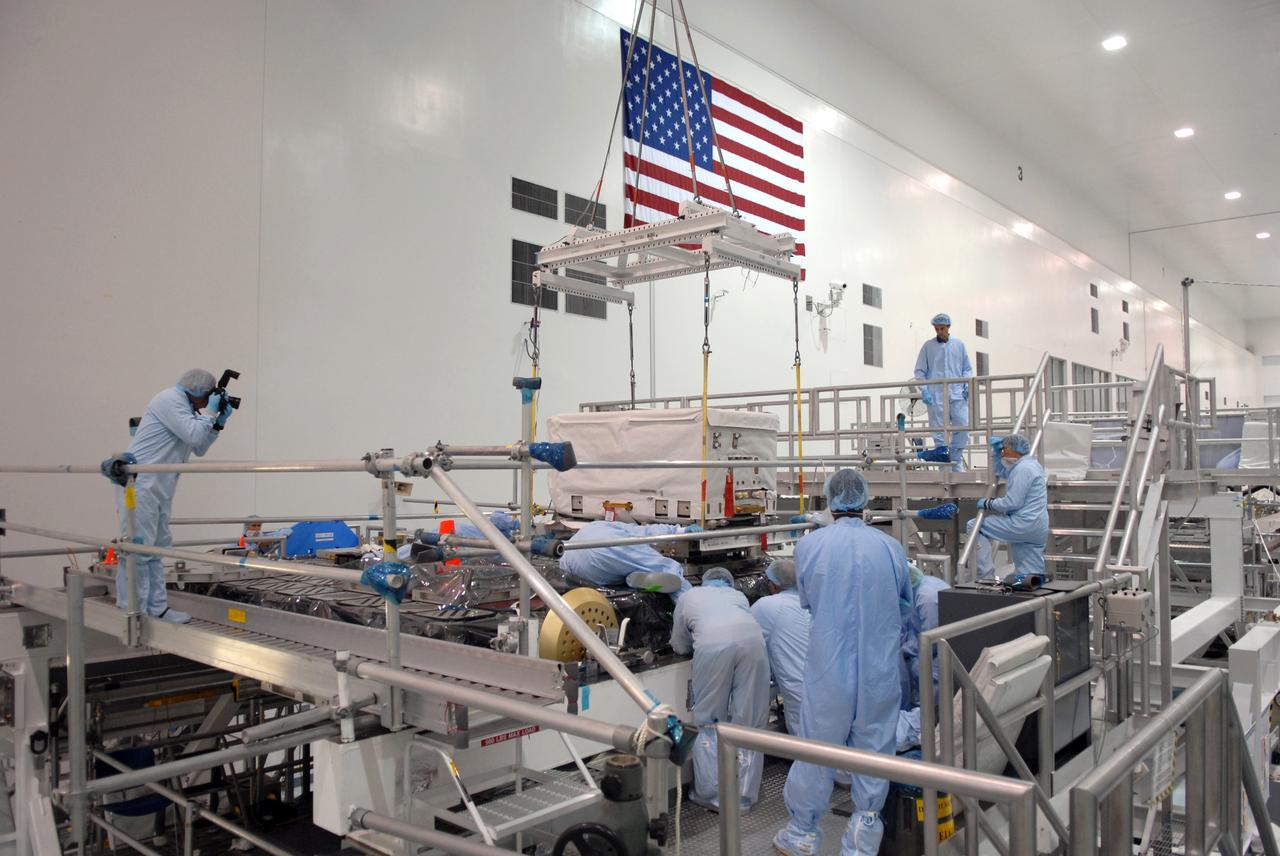
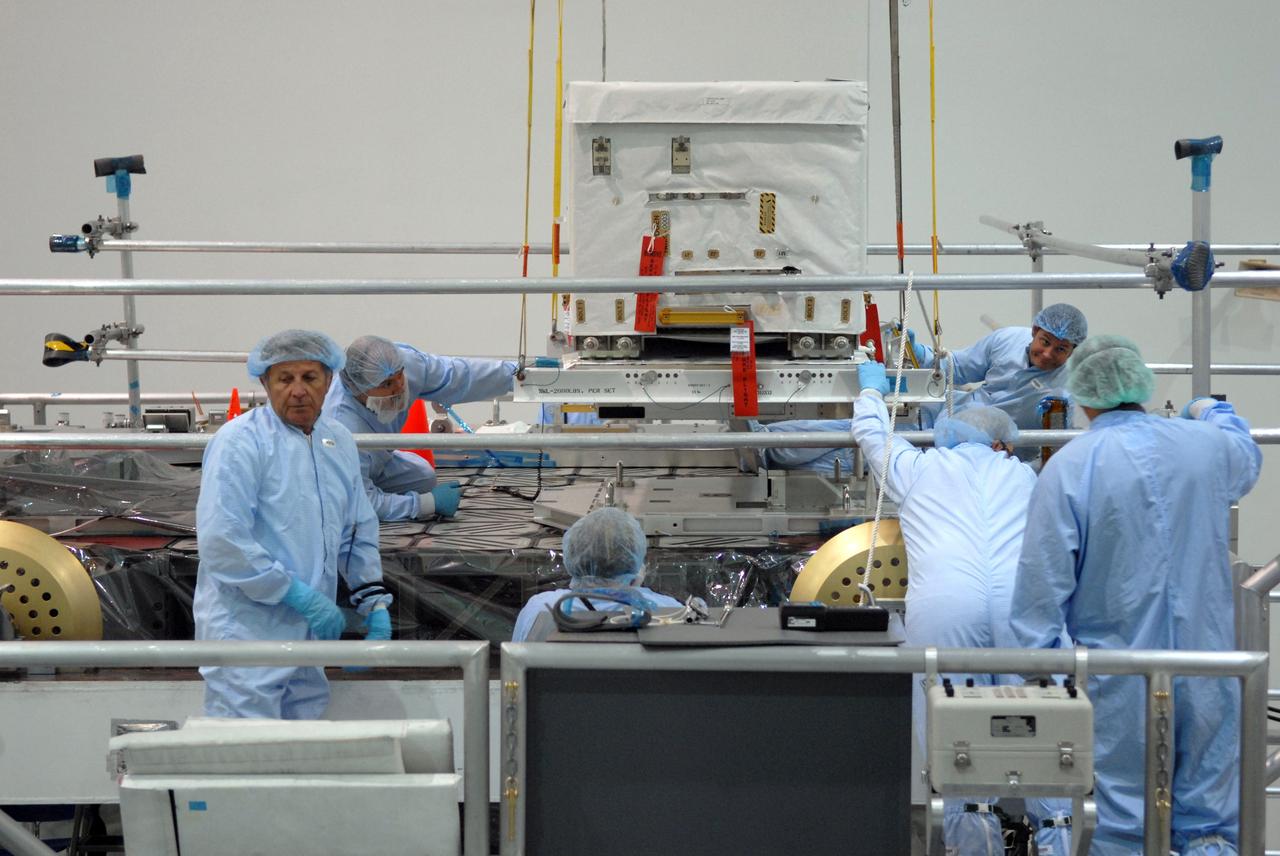
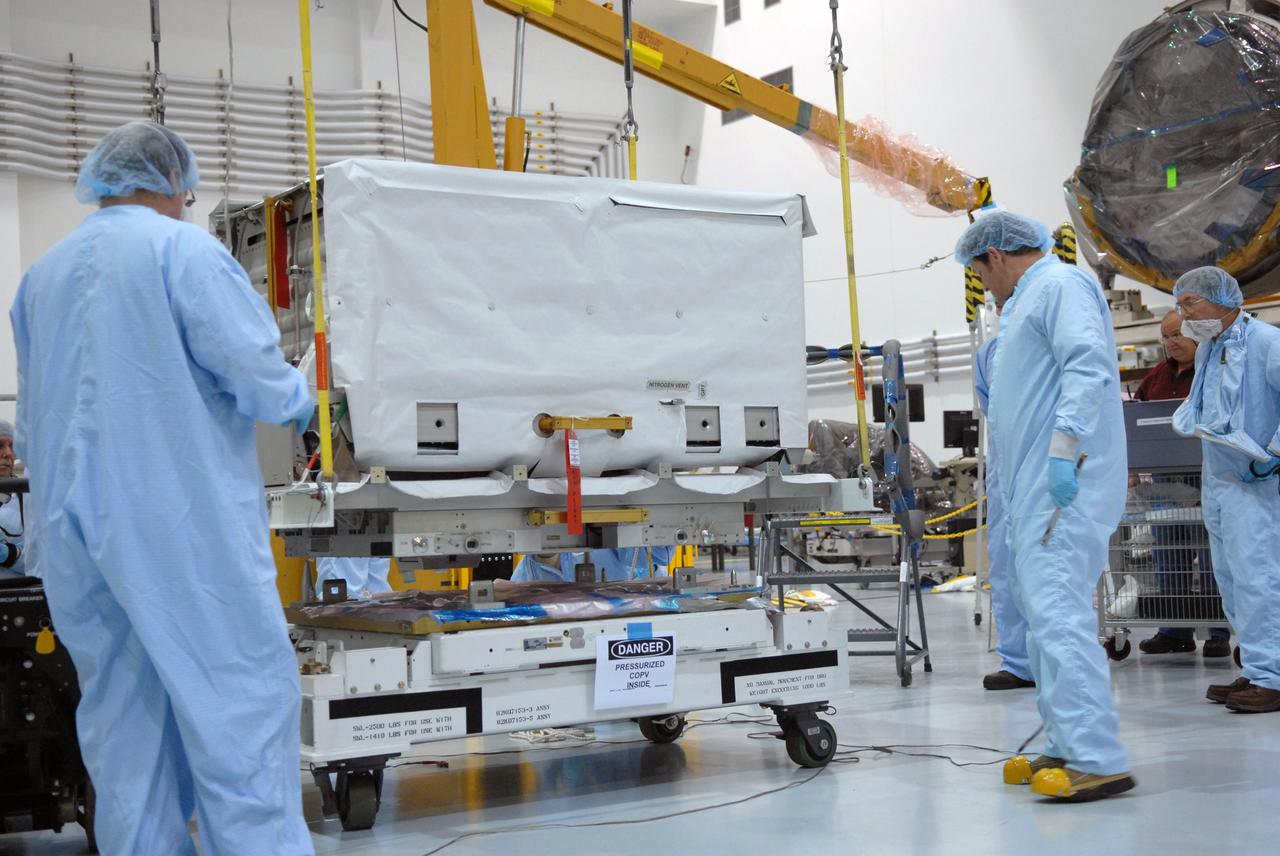
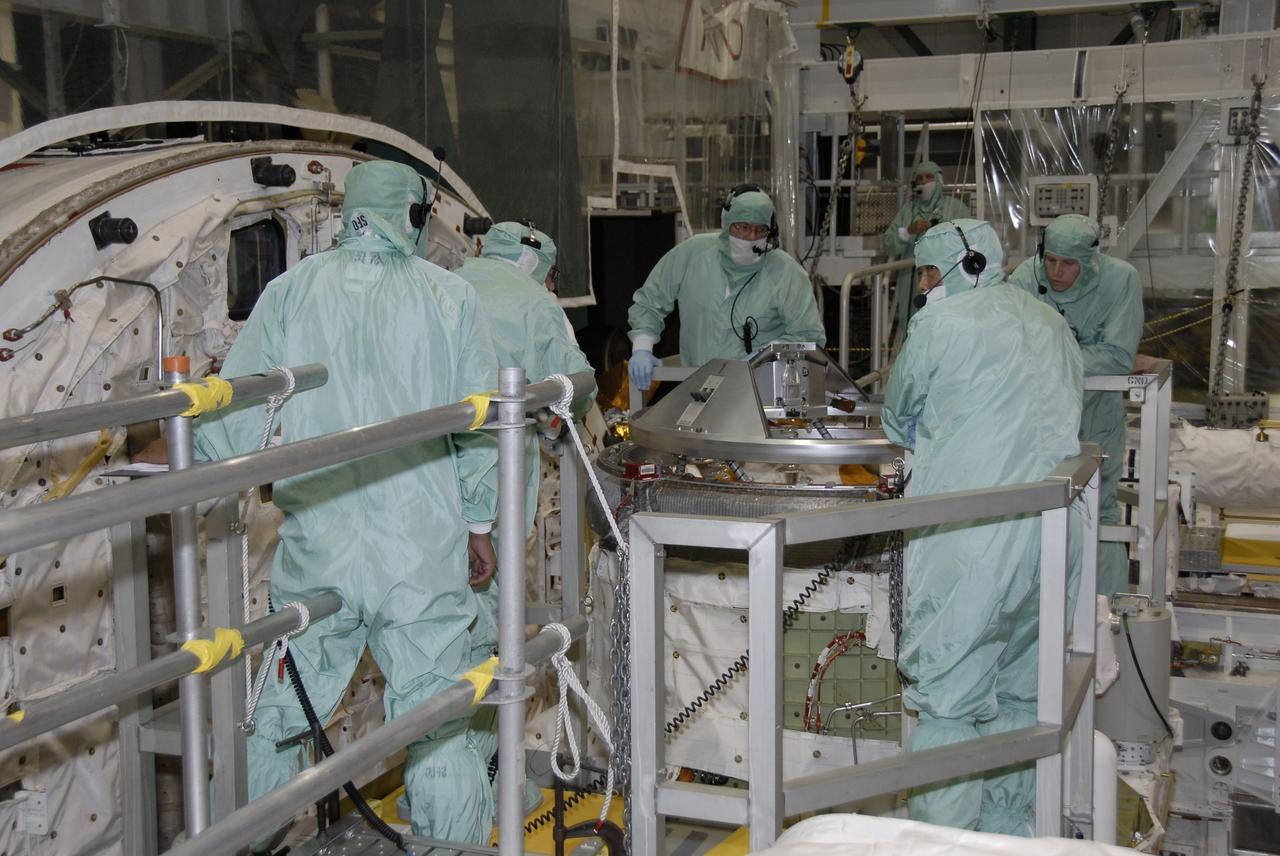
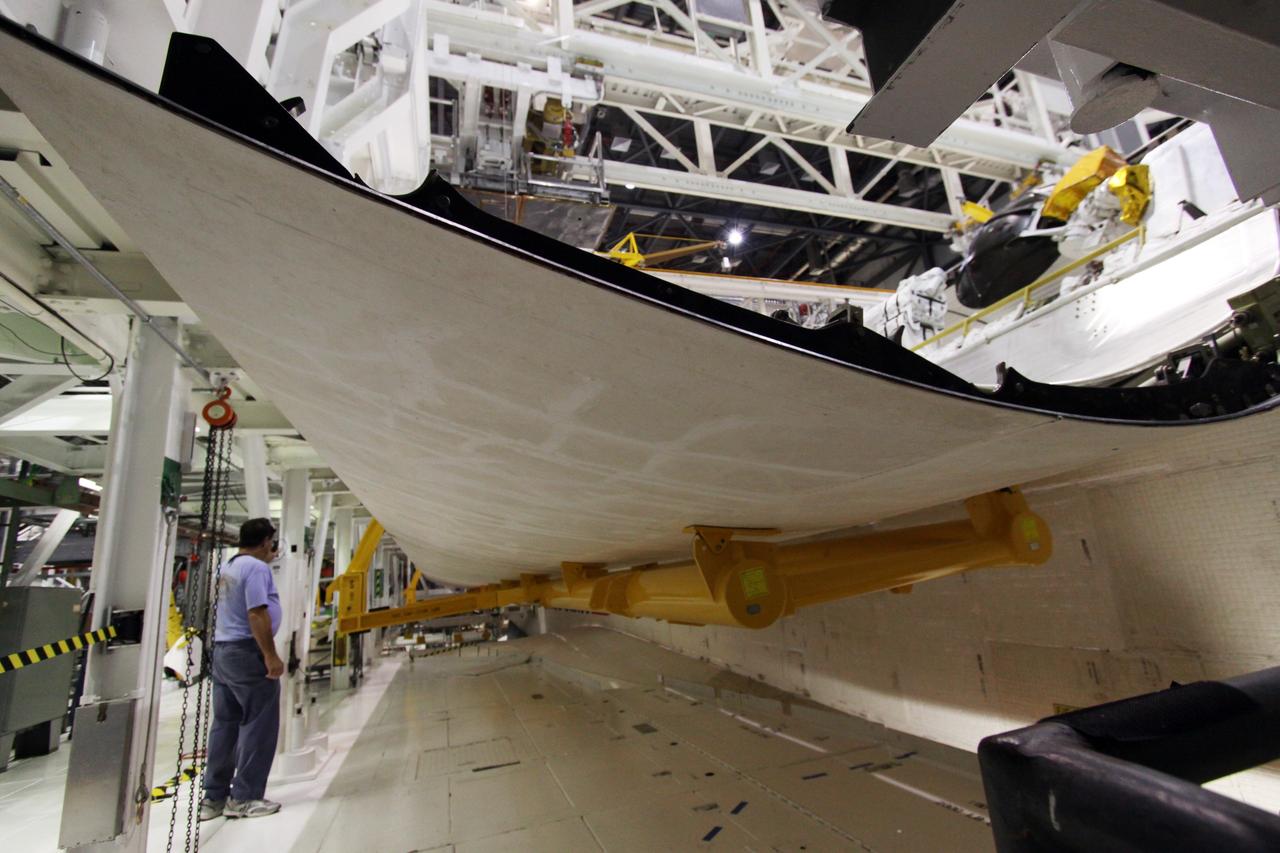
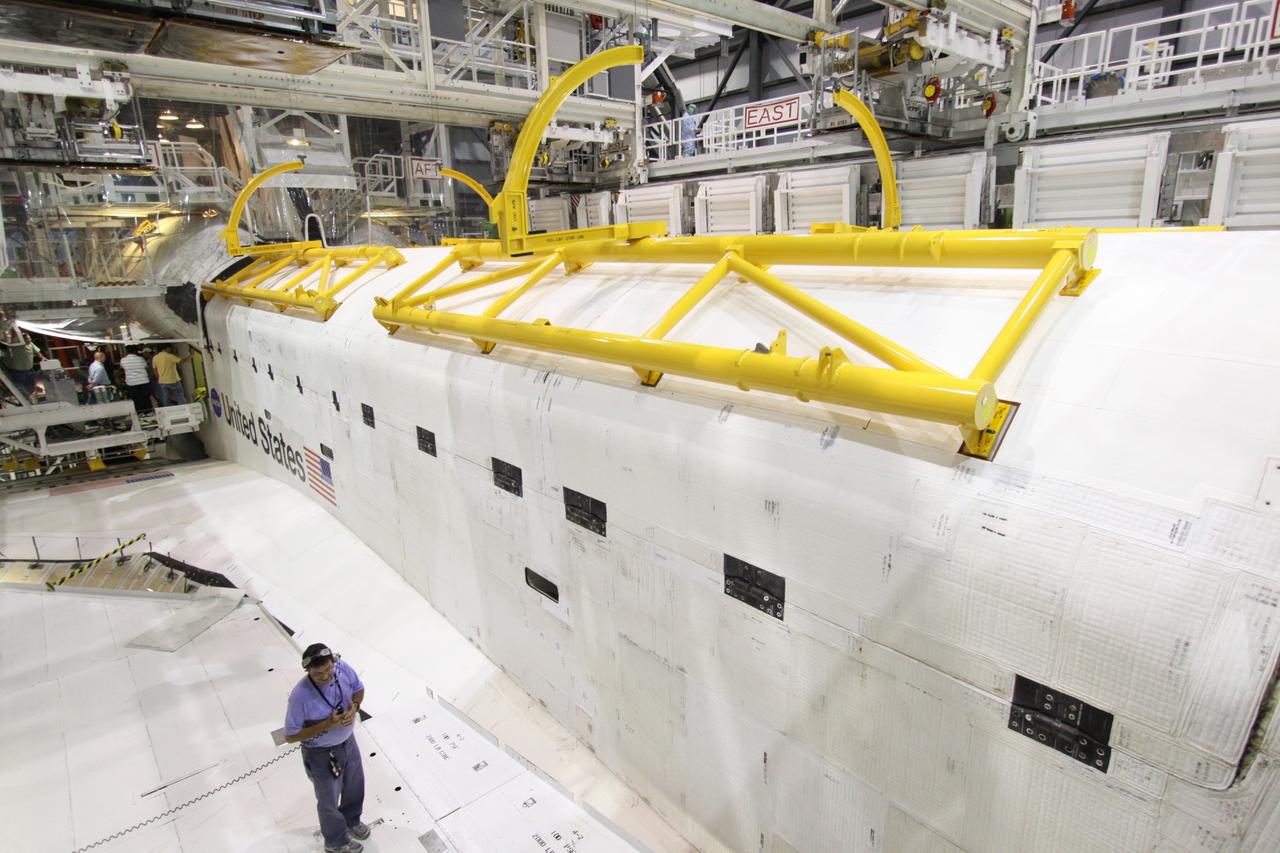
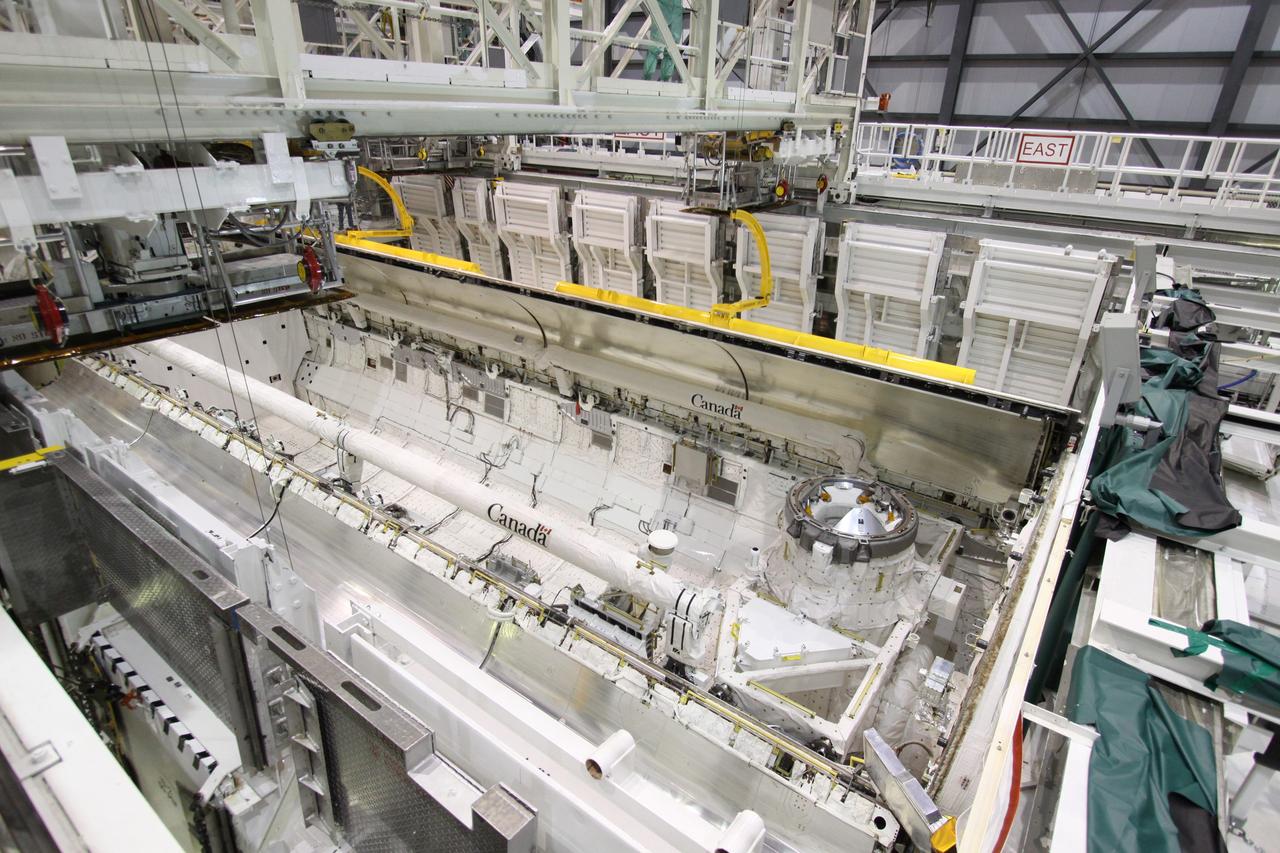
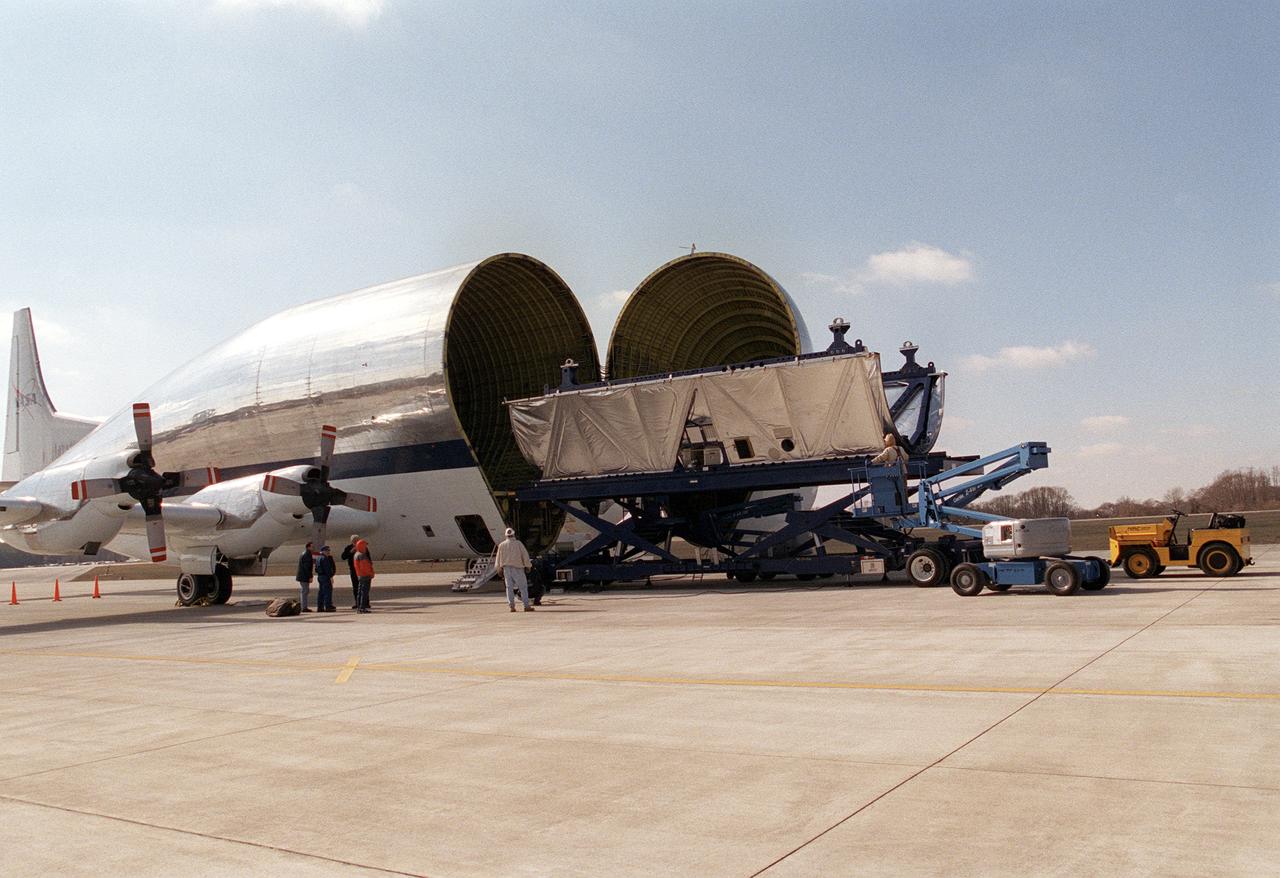
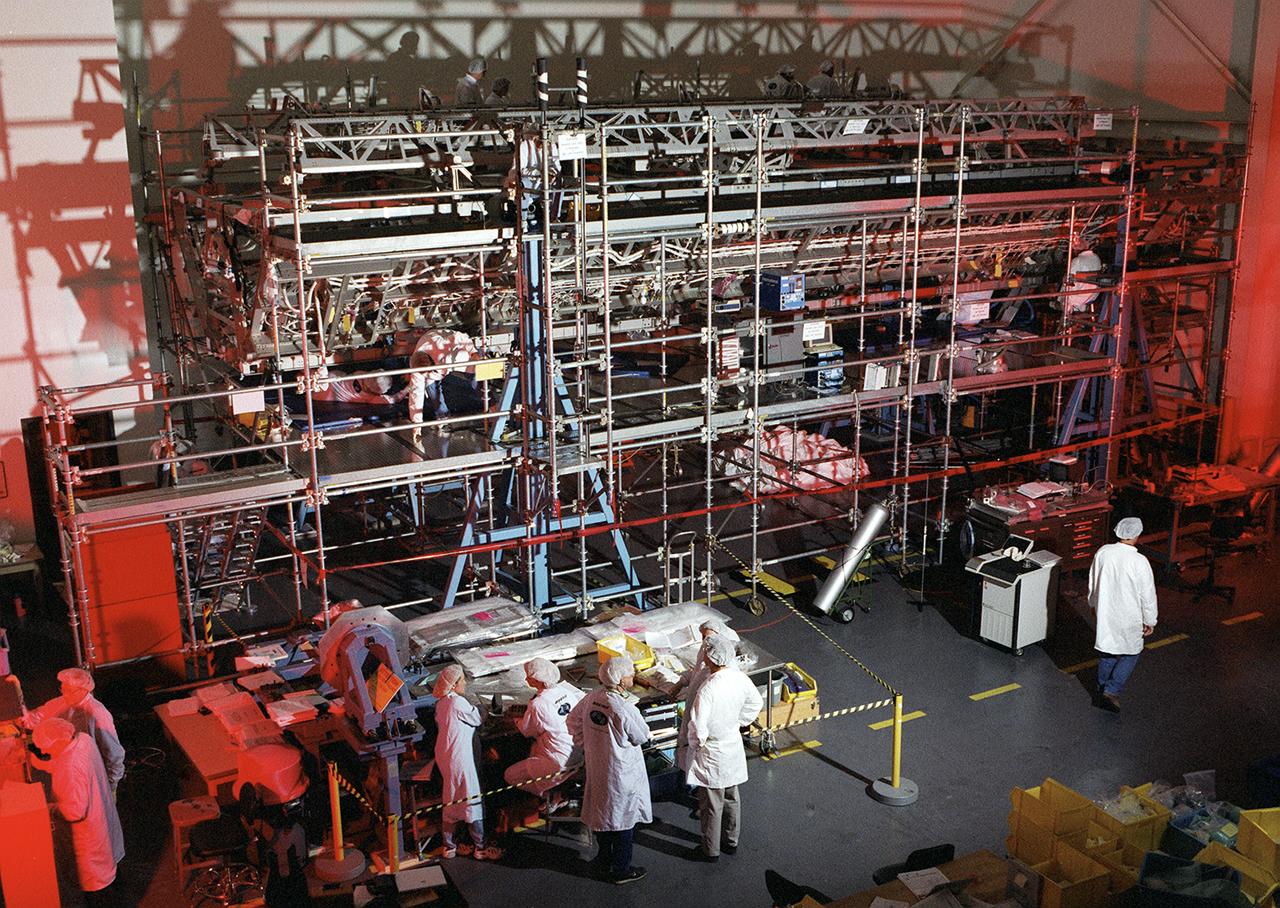
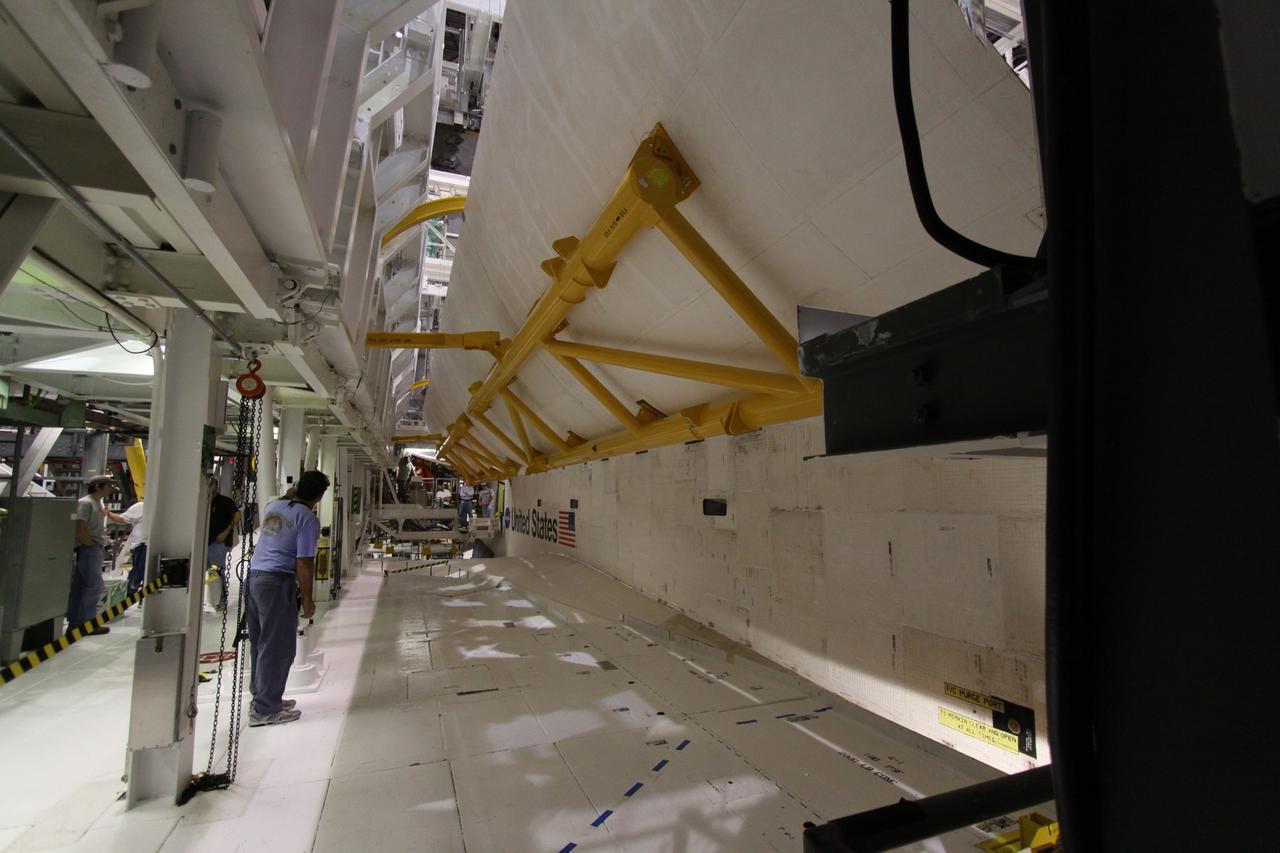
A section of the International Space Station truss assembly arrived at the Marshall Space Flight Center on NASA's Super Guppy cargo plane for structural and design testing as well as installation of critical flight hardware.
International Space Station (ISS)
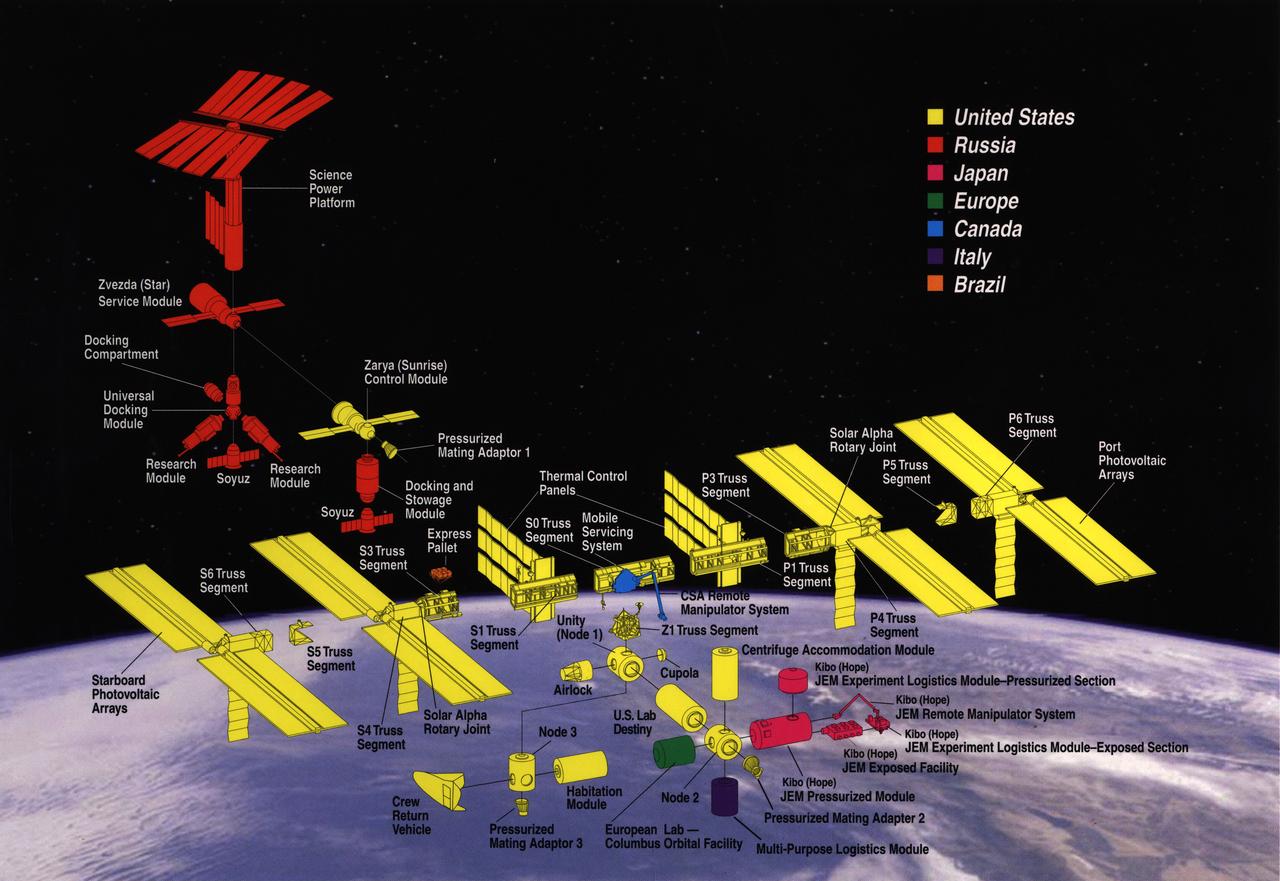
The International Space Station (ISS) is an unparalleled international scientific and technological cooperative venture that will usher in a new era of human space exploration and research and provide benefits to people on Earth. On-Orbit assembly began on November 20, 1998, with the launch of the first ISS component, Zarya, on a Russian Proton rocket. The Space Shuttle followed on December 4, 1998, carrying the U.S.-built Unity cornecting Module. Sixteen nations are participating in the ISS program: the United States, Canada, Japan, Russia, Brazil, Belgium, Denmark, France, Germany, Italy, the Netherlands, Norway, Spain, Sweden, Switzerland, and the United Kingdom. The ISS will include six laboratories and be four times larger and more capable than any previous space station. The United States provides two laboratories (United States Laboratory and Centrifuge Accommodation Module) and a habitation module. There will be two Russian research modules, one Japanese laboratory, referred to as the Japanese Experiment Module (JEM), and one European Space Agency (ESA) laboratory called the Columbus Orbital Facility (COF). The station's internal volume will be roughly equivalent to the passenger cabin volume of two 747 jets. Over five years, a total of more than 40 space flights by at least three different vehicles - the Space Shuttle, the Russian Proton Rocket, and the Russian Soyuz rocket - will bring together more than 100 different station components and the ISS crew. Astronauts will perform many spacewalks and use new robotics and other technologies to assemble ISS components in space.
International Space Station (ISS)
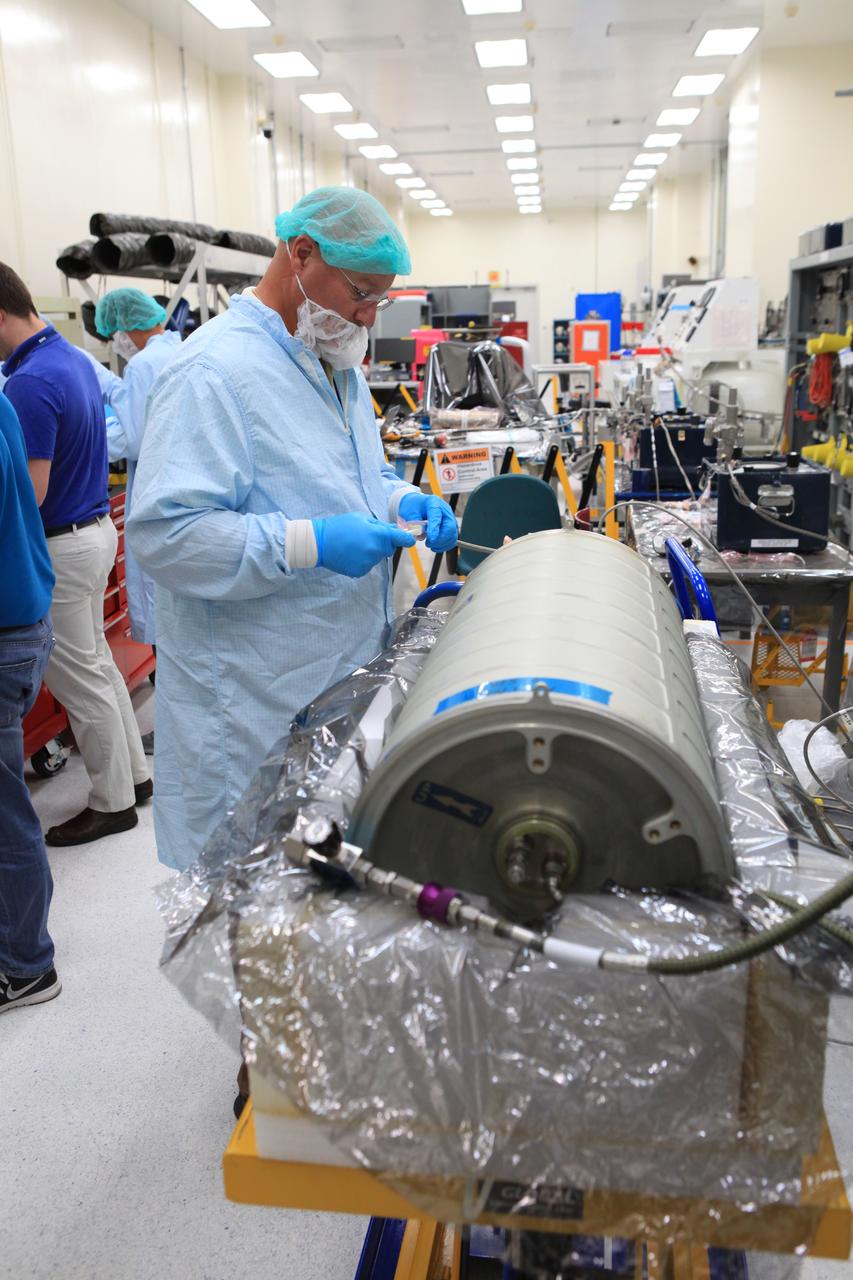
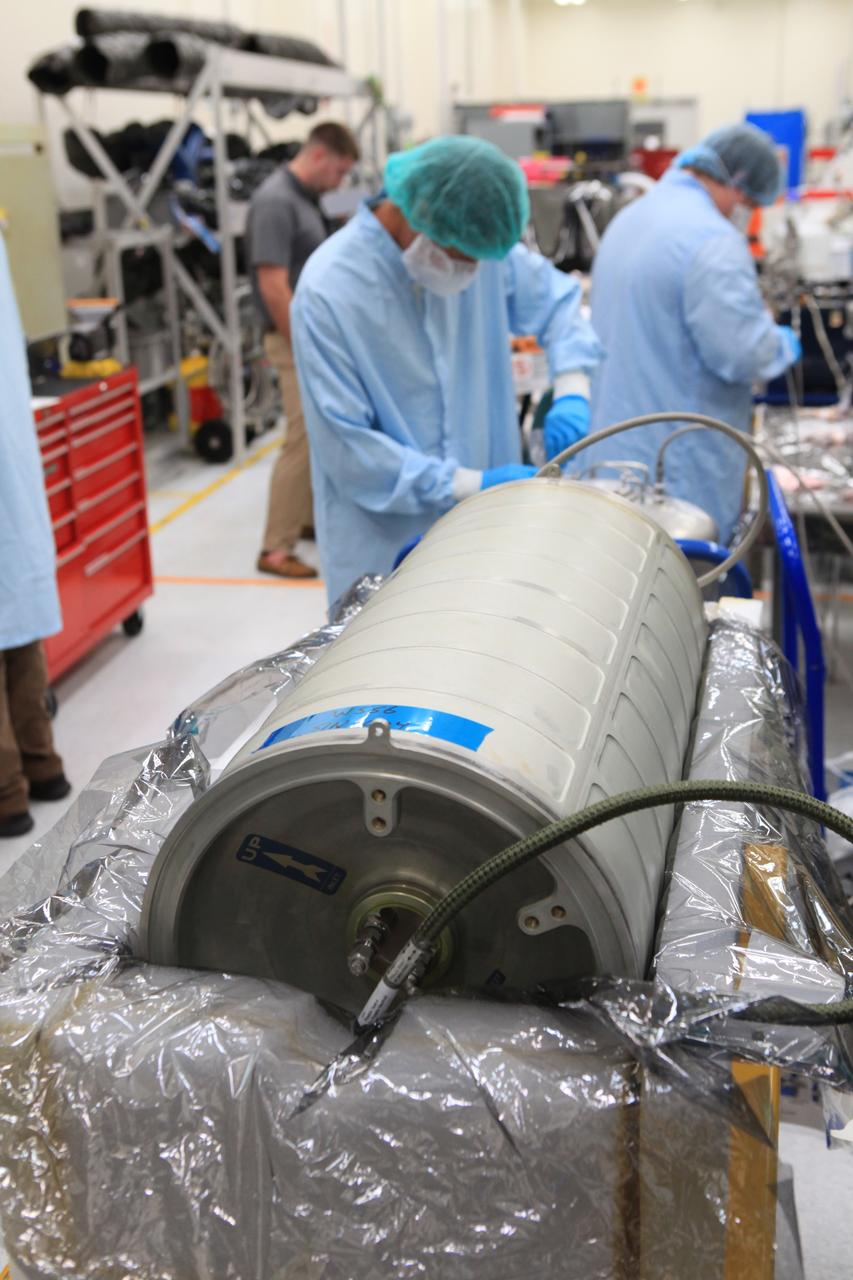
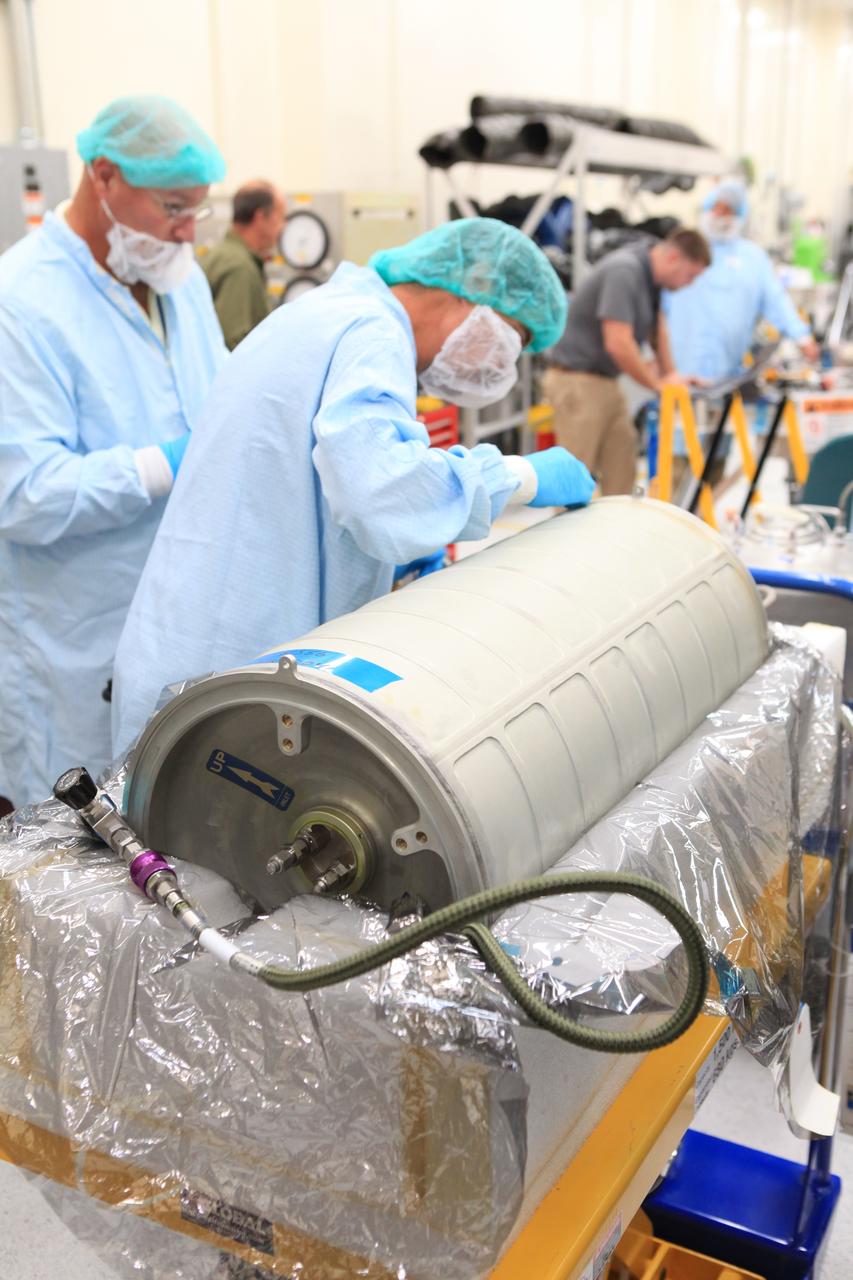
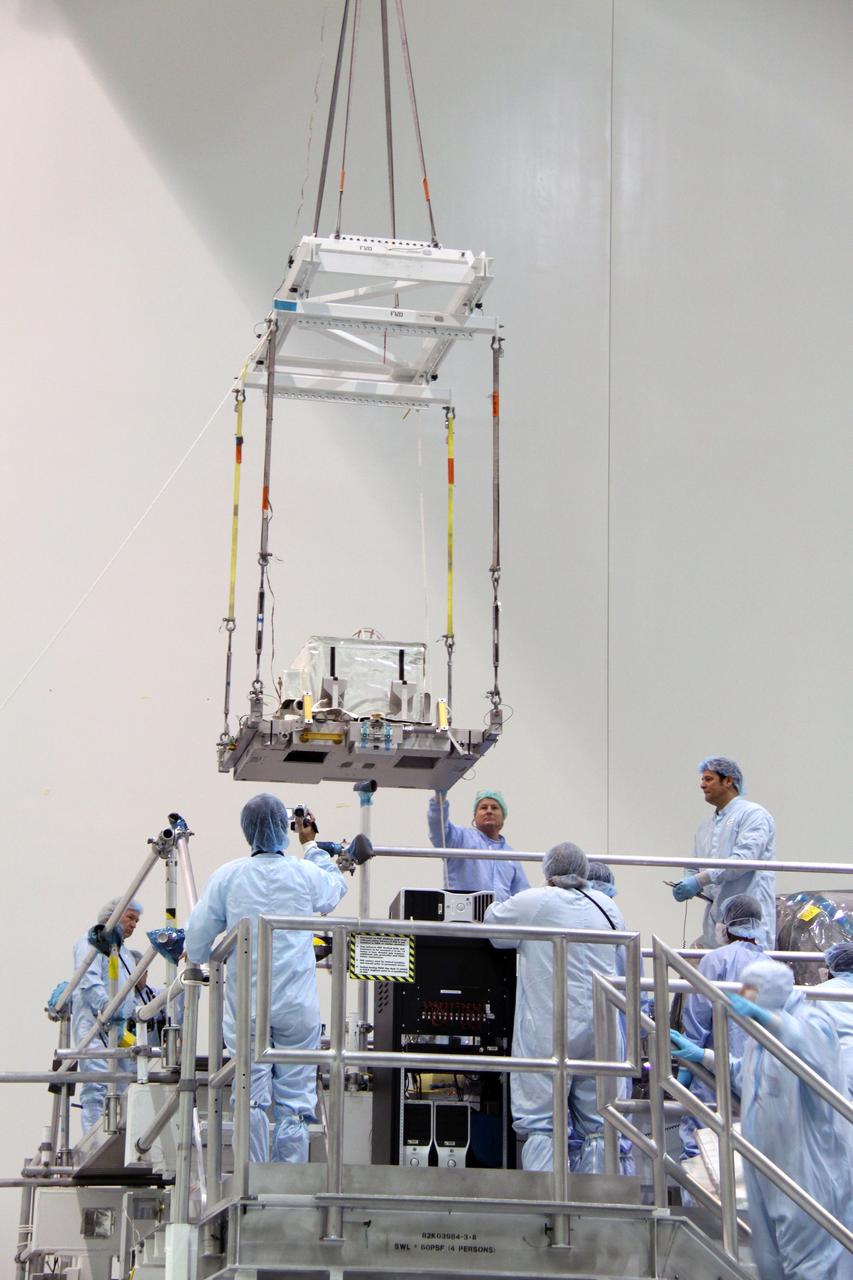
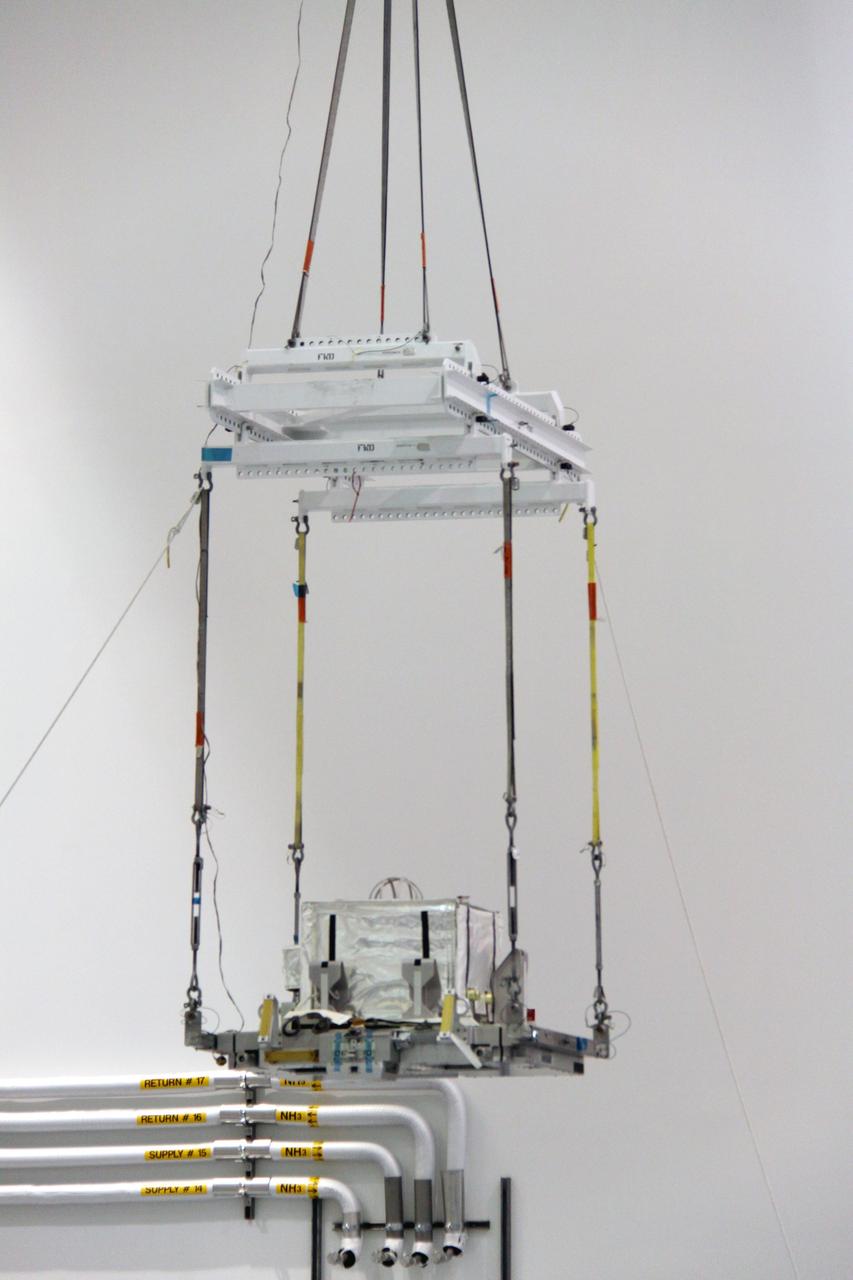
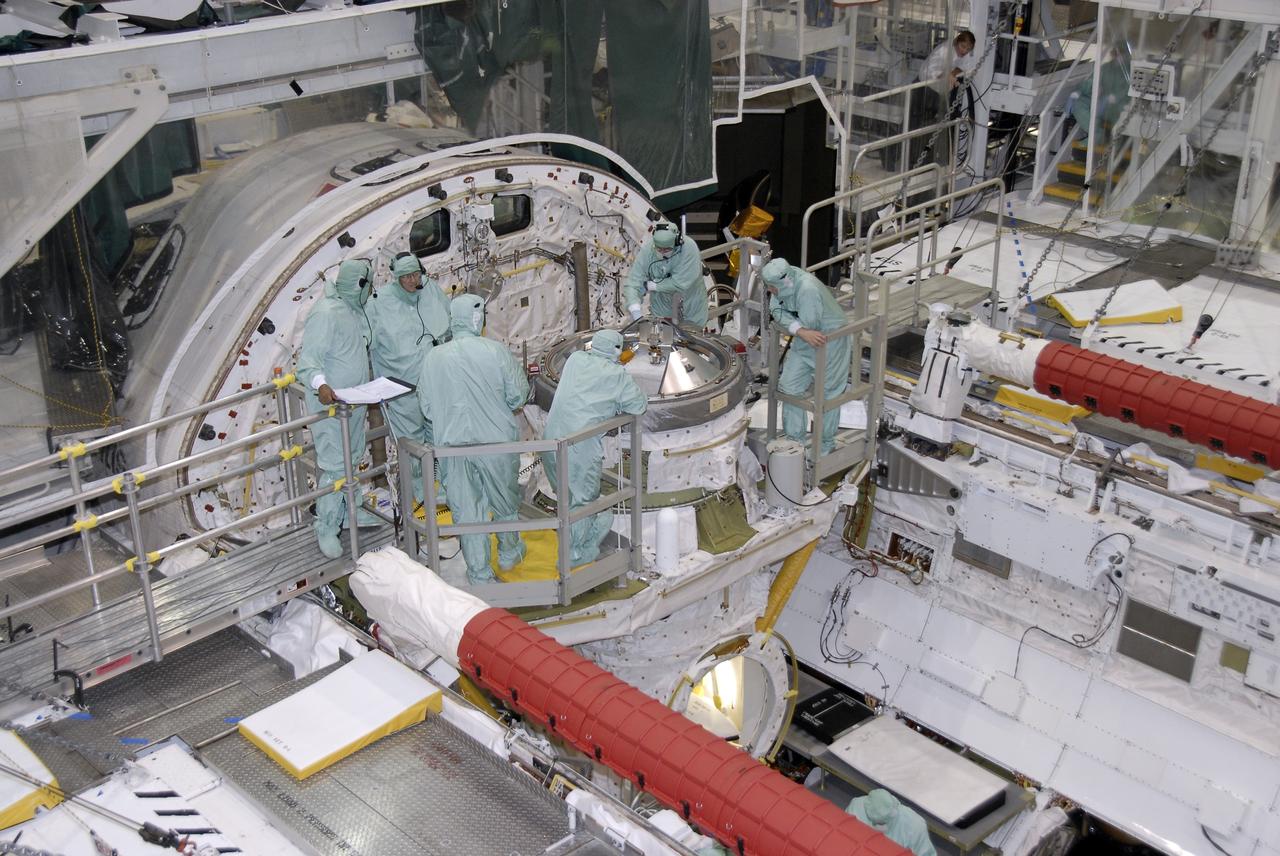
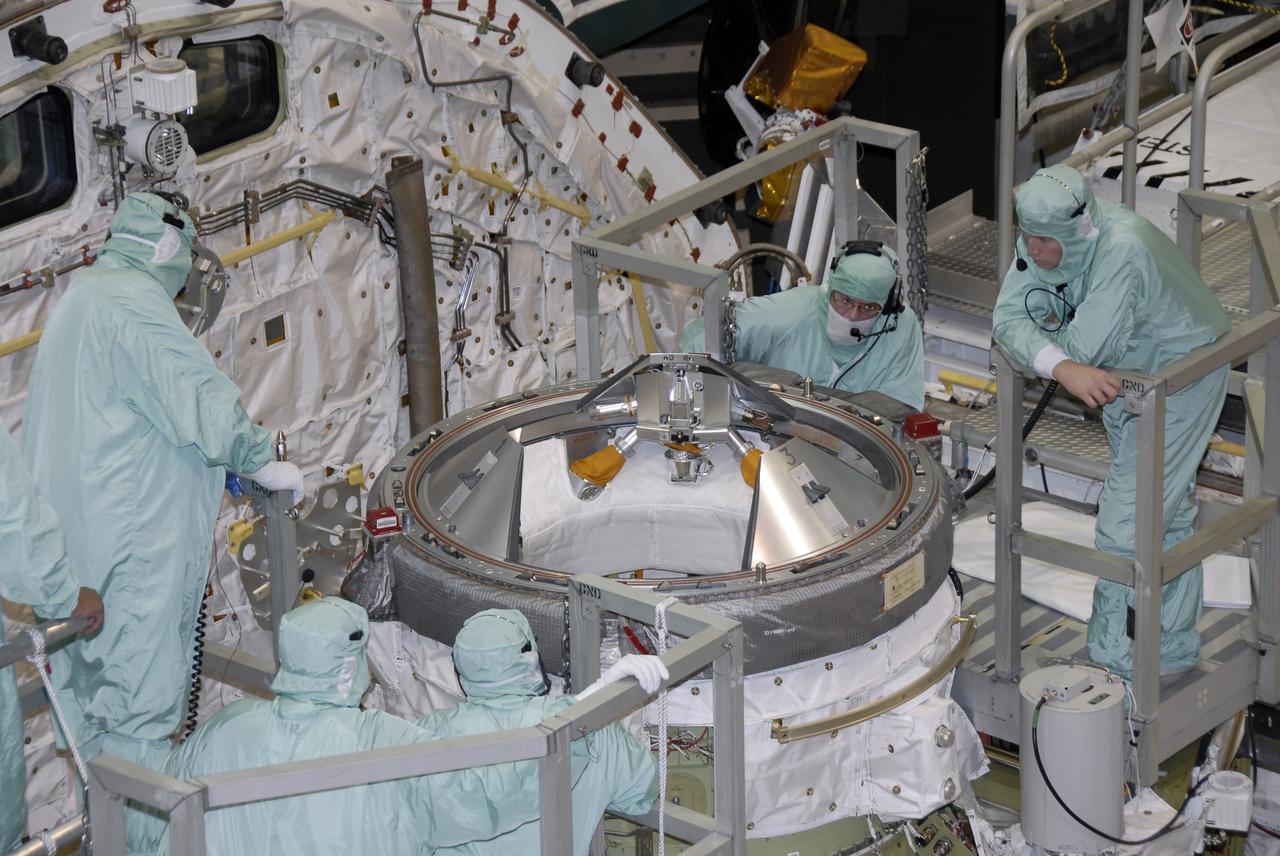
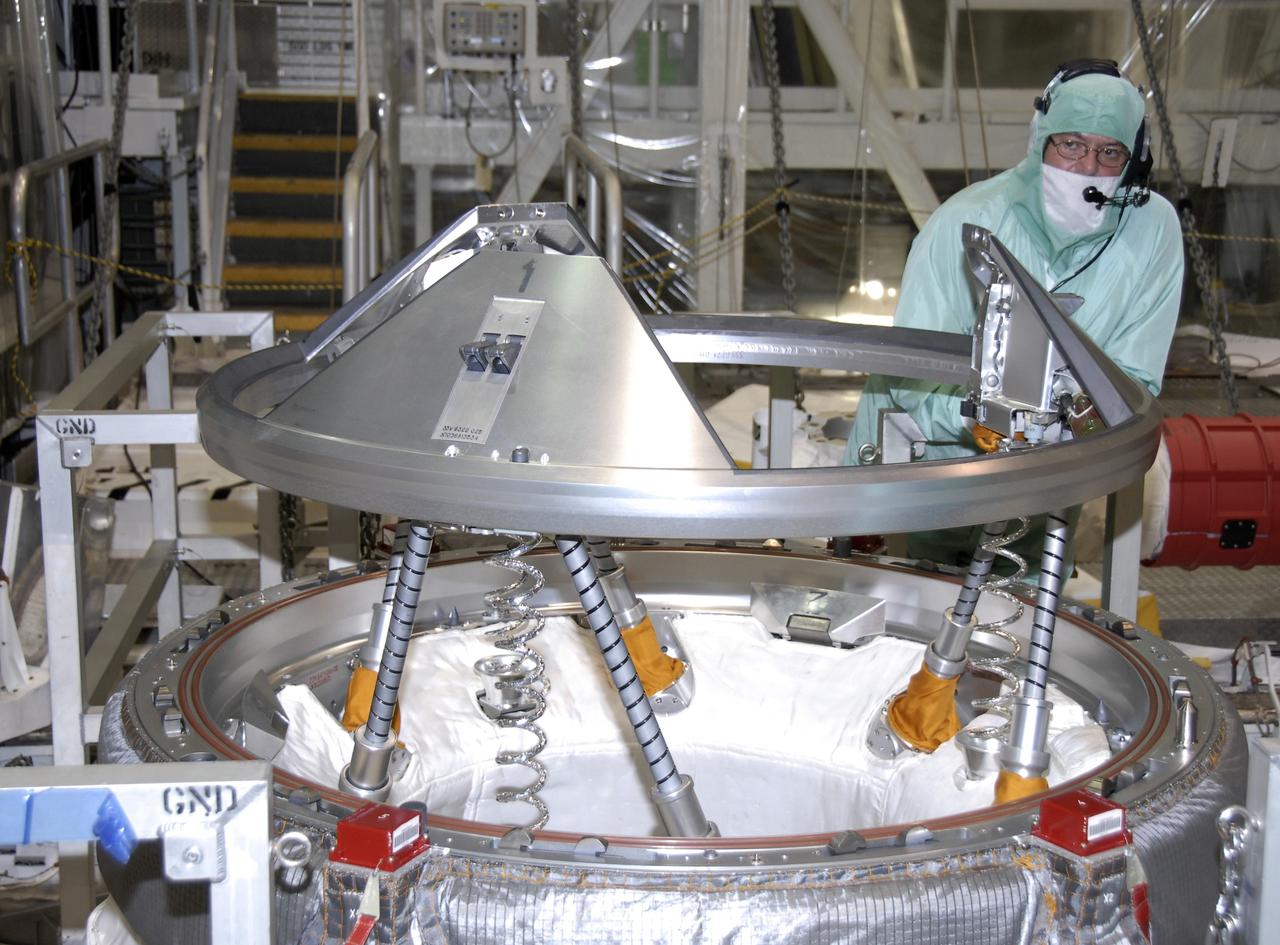
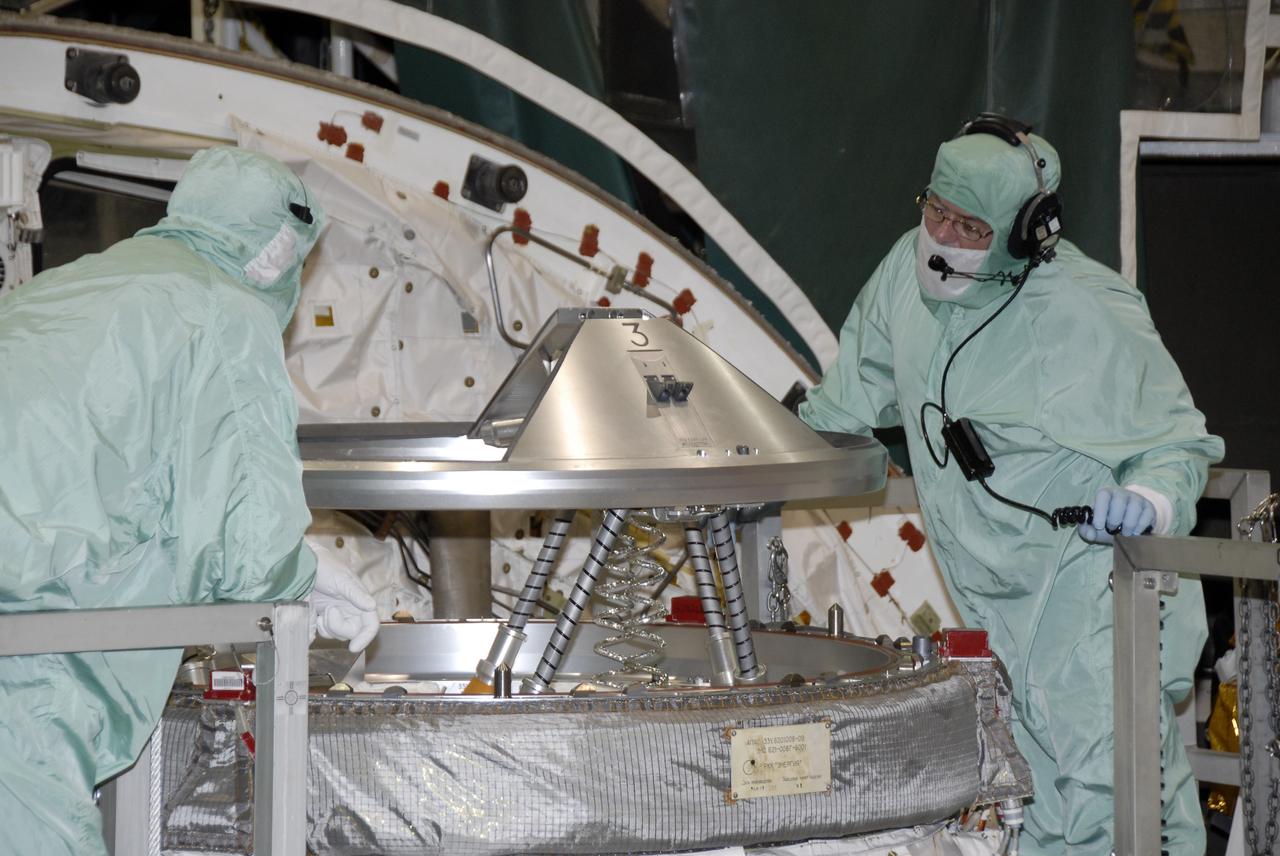
Inside the Space Station Processing Facility high bay at NASA's Kennedy Space Center in Florida, technicians work on the pump package assembly (PPA) on Aug. 30, 2018. The payload will be carried to the International Space Station on SpaceX's 16th Commercial Resupply Services mission. The PPA will be used to continuously drive the cooling water in the space station's thermal control system. The assembly includes a centrifuge pump, a fine filter and gas trap for pump protection, a coarse outlet filter, sensors, and an accumulator. The PPA also will provide a reservoir used for makeup of coolant if leakage occurred. CRS-16 is scheduled to launch to the space station later this year.
Servicing for Pump Package Assembly Launching on SpaceX CRS-16
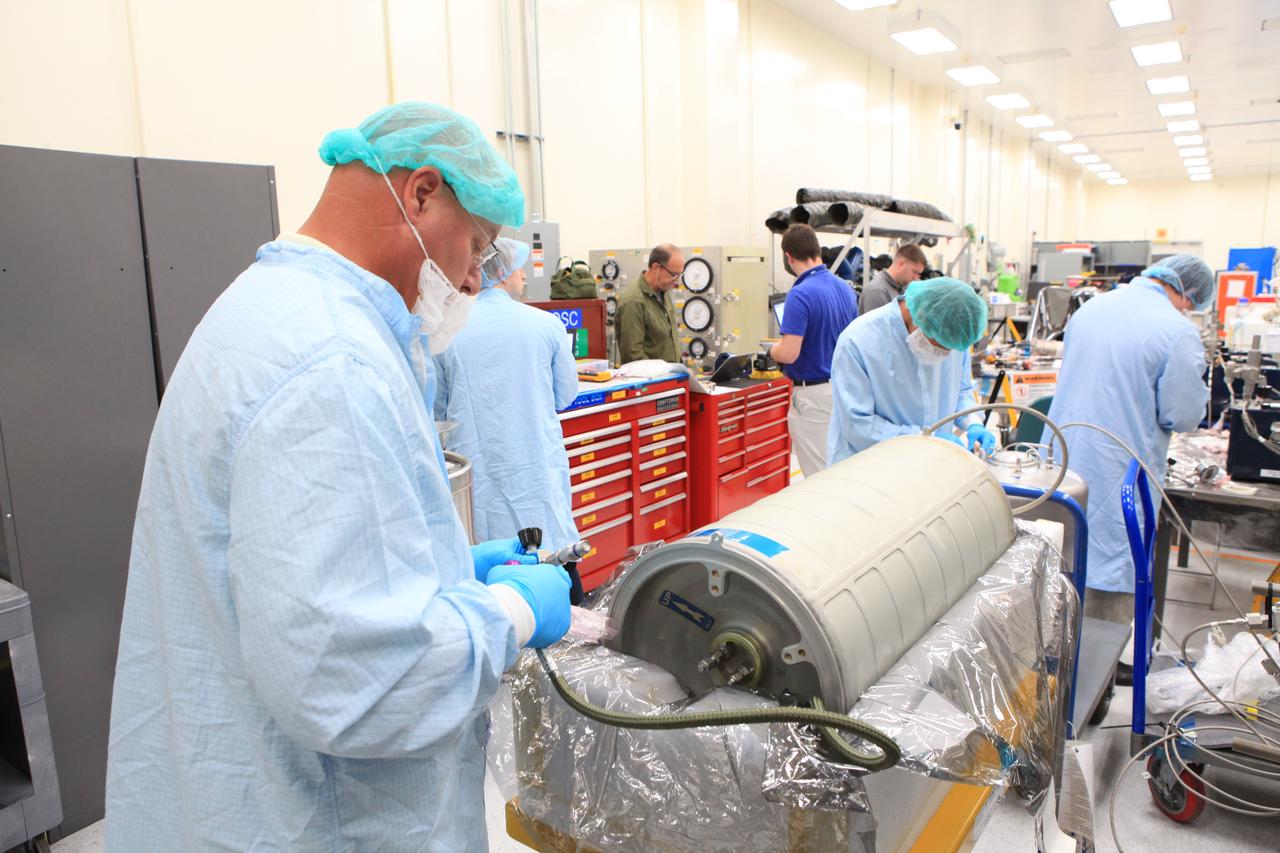
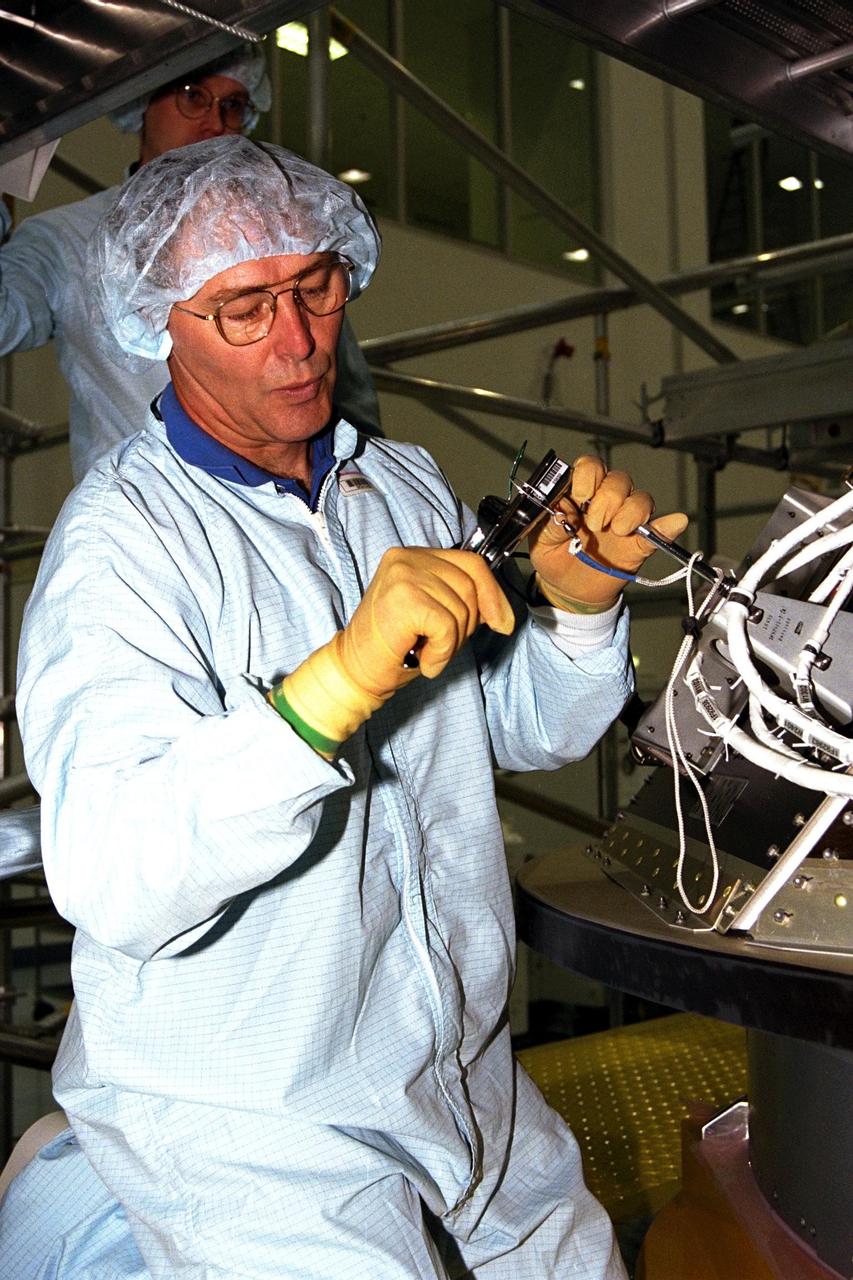
Inside the Space Station Processing Facility high bay at NASA's Kennedy Space Center in Florida, a technician works on the pump package assembly (PPA) on Aug. 30, 2018. The payload will be carried to the International Space Station on SpaceX's 16th Commercial Resupply Services mission. The PPA will be used to continuously drive the cooling water in the space station's thermal control system. The assembly includes a centrifuge pump, a fine filter and gas trap for pump protection, a coarse outlet filter, sensors, and an accumulator. The PPA also will provide a reservoir used for makeup of coolant if leakage occurred. CRS-16 is scheduled to launch to the space station later this year.
Servicing for Pump Package Assembly Launching on SpaceX CRS-16
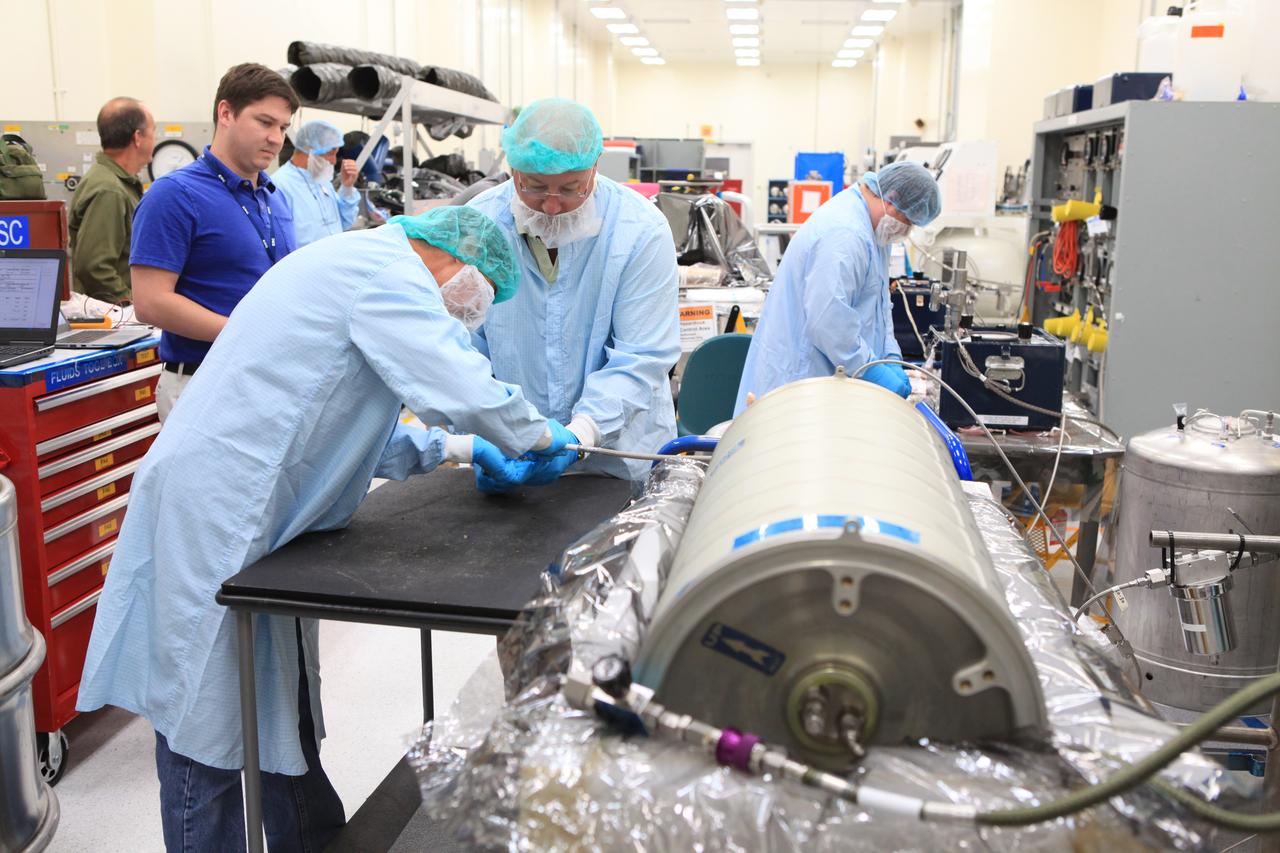
Inside the Space Station Processing Facility high bay at NASA's Kennedy Space Center in Florida, technicians work on the pump package assembly (PPA) on Aug. 30, 2018. The payload will be carried to the International Space Station on SpaceX's 16th Commercial Resupply Services mission. The PPA will be used to continuously drive the cooling water in the space station's thermal control system. The assembly includes a centrifuge pump, a fine filter and gas trap for pump protection, a coarse outlet filter, sensors, and an accumulator. The PPA also will provide a reservoir used for makeup of coolant if leakage occurred. CRS-16 is scheduled to launch to the space station later this year.
Servicing for Pump Package Assembly Launching on SpaceX CRS-16
Inside the Space Station Processing Facility high bay at NASA's Kennedy Space Center in Florida, technicians work on the pump package assembly (PPA) on Aug. 30, 2018. The payload will be carried to the International Space Station on SpaceX's 16th Commercial Resupply Services mission. The PPA will be used to continuously drive the cooling water in the space station's thermal control system. The assembly includes a centrifuge pump, a fine filter and gas trap for pump protection, a coarse outlet filter, sensors, and an accumulator. The PPA also will provide a reservoir used for makeup of coolant if leakage occurred. CRS-16 is scheduled to launch to the space station later this year.
Servicing for Pump Package Assembly Launching on SpaceX CRS-16
Inside the Space Station Processing Facility high bay at NASA's Kennedy Space Center in Florida, technicians work on the pump package assembly (PPA) on Aug. 30, 2018. The payload will be carried to the International Space Station on SpaceX's 16th Commercial Resupply Services mission. The PPA will be used to continuously drive the cooling water in the space station's thermal control system. The assembly includes a centrifuge pump, a fine filter and gas trap for pump protection, a coarse outlet filter, sensors, and an accumulator. The PPA also will provide a reservoir used for makeup of coolant if leakage occurred. CRS-16 is scheduled to launch to the space station later this year.
Servicing for Pump Package Assembly Launching on SpaceX CRS-16
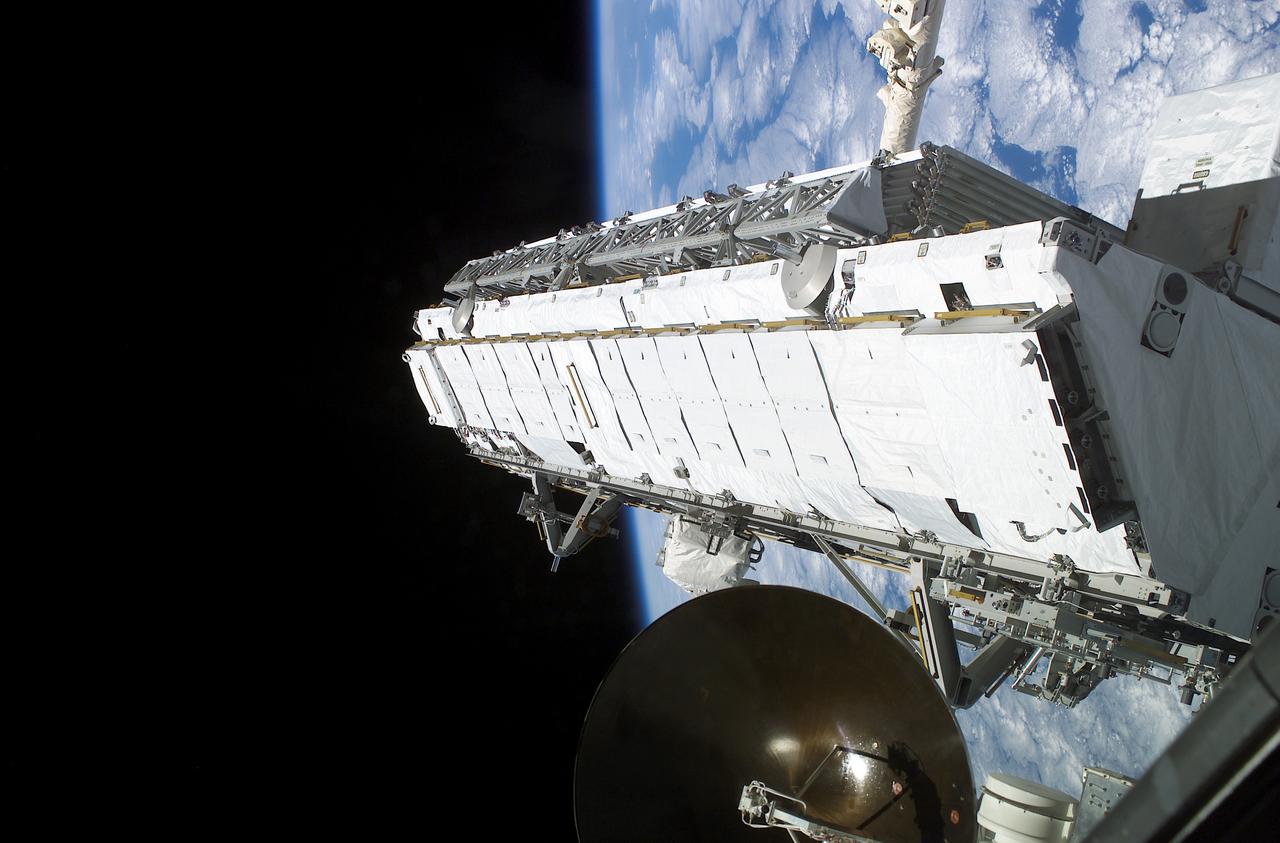
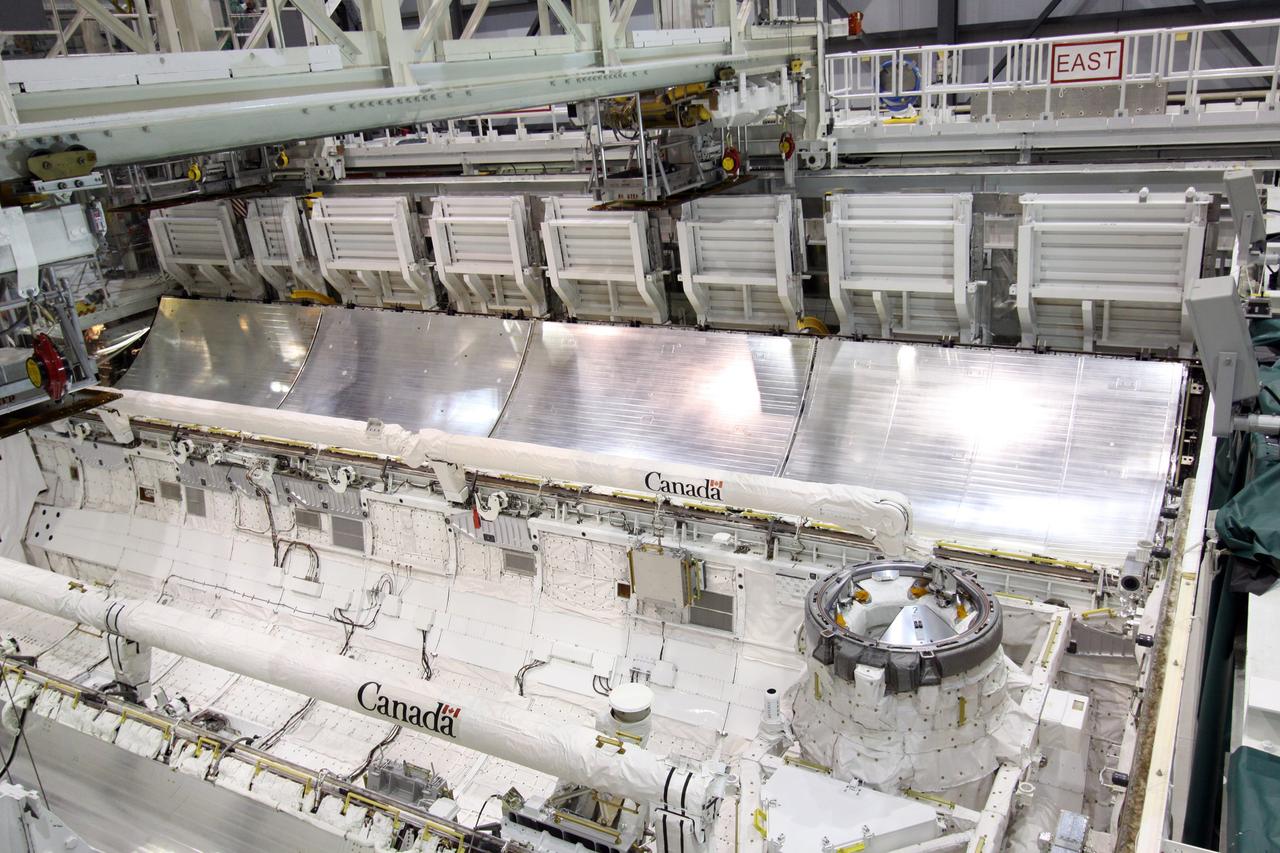
Being attached to the Canadarm2 on the International Space Station (ISS), the Remote Manipulator System arm built by the Canadian Space Agency, the Integrated Truss Assembly (S1) Truss is suspended over the Space Shuttle Orbiter Atlantis' cargo bay. Astronauts Sandra H. Magnus, STS-112 mission specialist, and Peggy A. Whitson, Expedition Five flight engineer, used the Canadarm2 from inside the Destiny laboratory on the ISS to lift the S1 truss out of the orbiter's cargo bay and move it into position prior to its installation on the ISS. The primary payloads of this mission, ISS Assembly Mission 9A, were the Integrated Truss Assembly S1 (S One), the starboard side thermal radiator truss, and the Crew Equipment Translation Aid (CETA) cart to the ISS. The S1 truss provides structural support for the orbiting research facility's radiator panels, which use ammonia to cool the Station's complex power system. The S1 truss was attached to the S0 (S Zero) truss, which was launched on April 8, 2002 aboard the STS-110, and flows 637 pounds of anhydrous ammonia through three heat-rejection radiators. The truss is 45-feet long, 15-feet wide, 10-feet tall, and weighs approximately 32,000 pounds. The CETA cart was attached to the Mobil Transporter and will be used by assembly crews on later missions. Manufactured by the Boeing Company in Huntington Beach, California, the truss primary structure was transferred to the Marshall Space Flight Center in February 1999 for hardware installations and manufacturing acceptance testing. The launch of the STS-112 mission occurred on October 7, 2002, and its 11-day mission ended on October 18, 2002.
International Space Station (ISS)
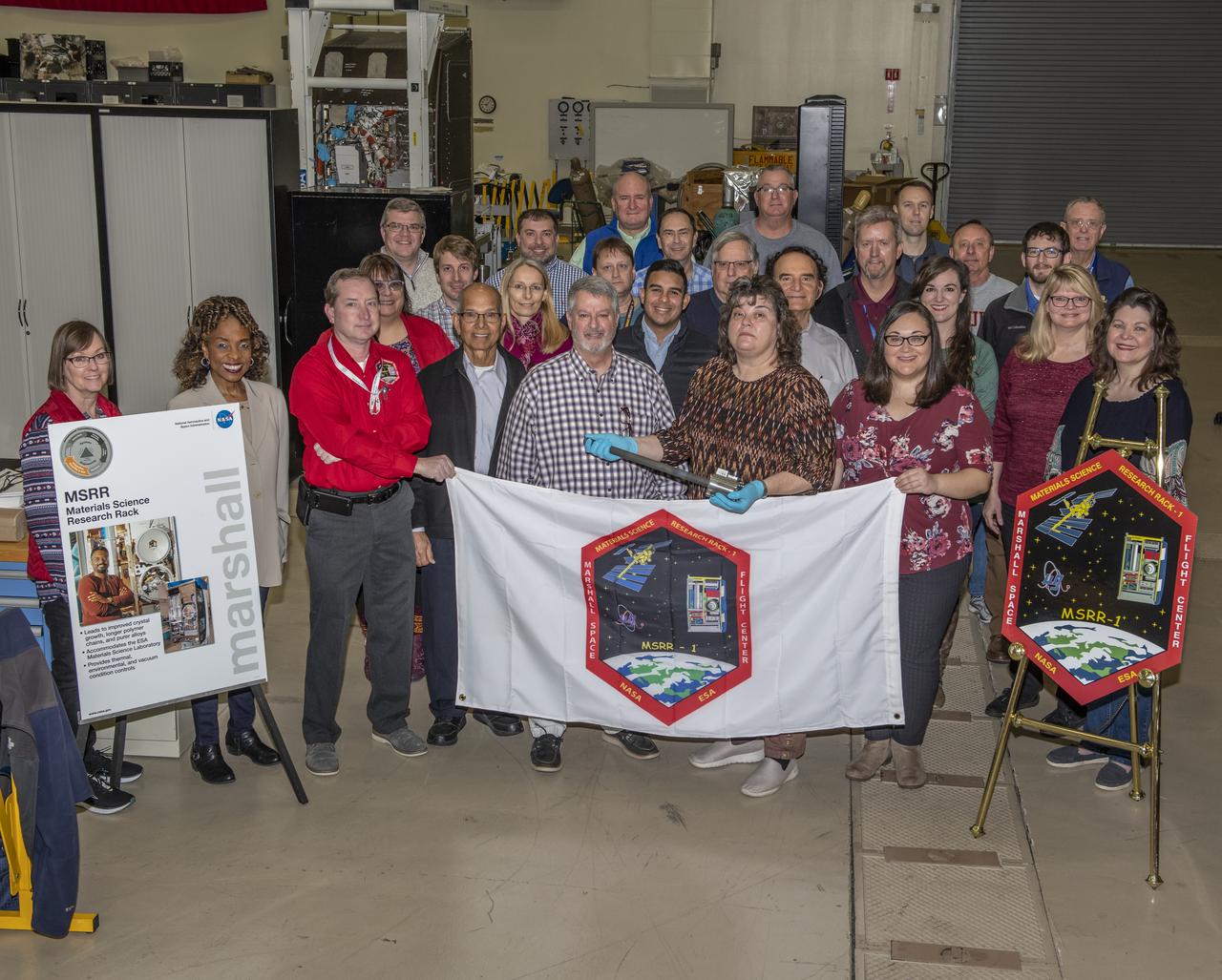
 NASA's first Sample Cartridge Assembly (SCA) project designed and validated a payload containing a materials research sample in a sealed environment. The SCA was heated in the European Space Agency's (ESA) Low Gradient Furnace (LGF) that is housed inside the Material Science Research Rack (MSRR) located on the International Space Station (ISS).  Sintered metals and crystal growth experiments in microgravity are examples of some of the types of materials research that may be performed with a SCA.
Sample Cartridge Assembly (SCA) Project Group Photograph
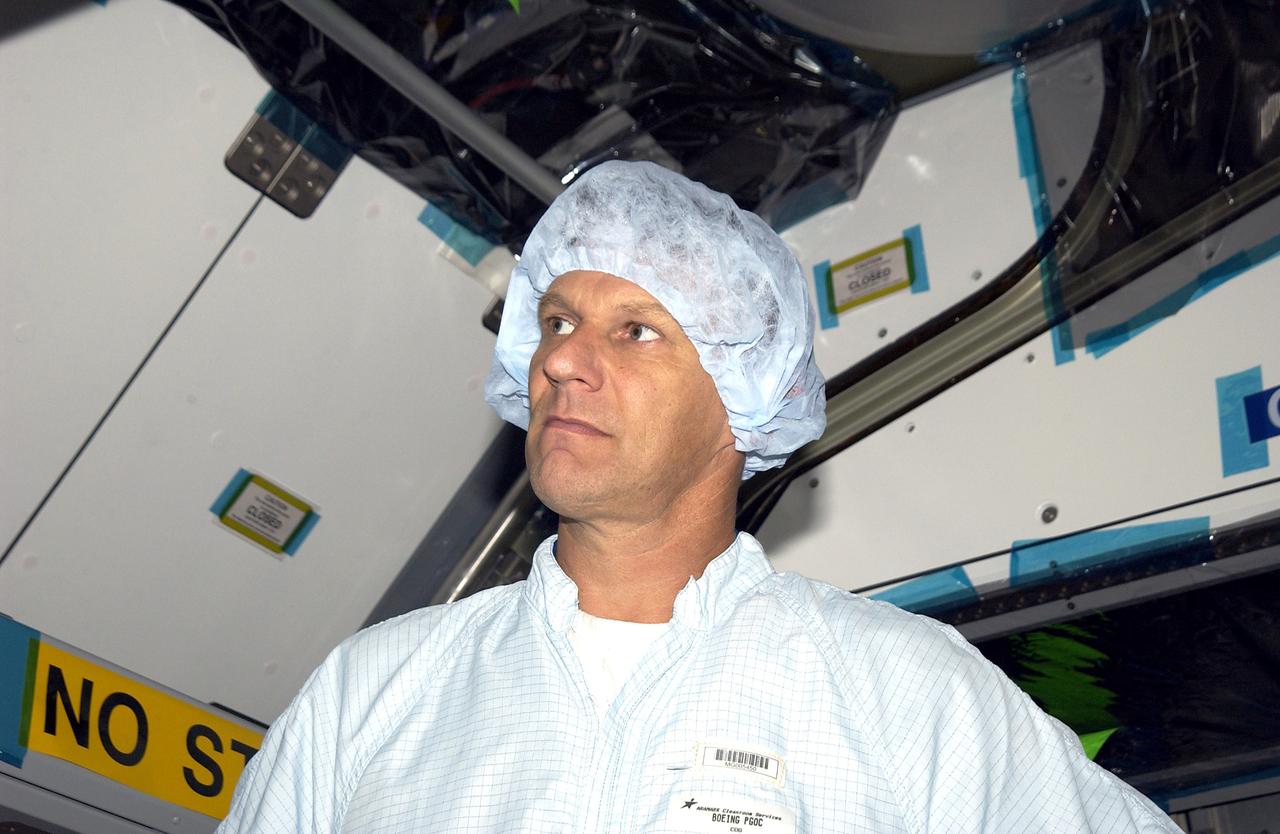
KENNEDY SPACE CENTER, FLA. - In the Space Station Processing Facility, workers check over the Italian-built Node 2, a future element of the International Space Station.  The second of three Station connecting modules, the Node 2 attaches to the end of the U.S. Lab and provides attach locations for several other elements.  Kopra is currently assigned technical duties in the Space Station Branch of the Astronaut Office, where his primary focus involves the testing of crew interfaces for two future ISS modules as well as the implementation of support computers and operational Local Area Network on ISS.   Node 2 is scheduled to launch on mission STS-120, Station assembly flight 10A.
KENNEDY SPACE CENTER, FLA. - In the Space Station Processing Facility, workers check over the Italian-built Node 2, a future element of the International Space Station. The second of three Station connecting modules, the Node 2 attaches to the end of the U.S. Lab and provides attach locations for several other elements. Kopra is currently assigned technical duties in the Space Station Branch of the Astronaut Office, where his primary focus involves the testing of crew interfaces for two future ISS modules as well as the implementation of support computers and operational Local Area Network on ISS. Node 2 is scheduled to launch on mission STS-120, Station assembly flight 10A.
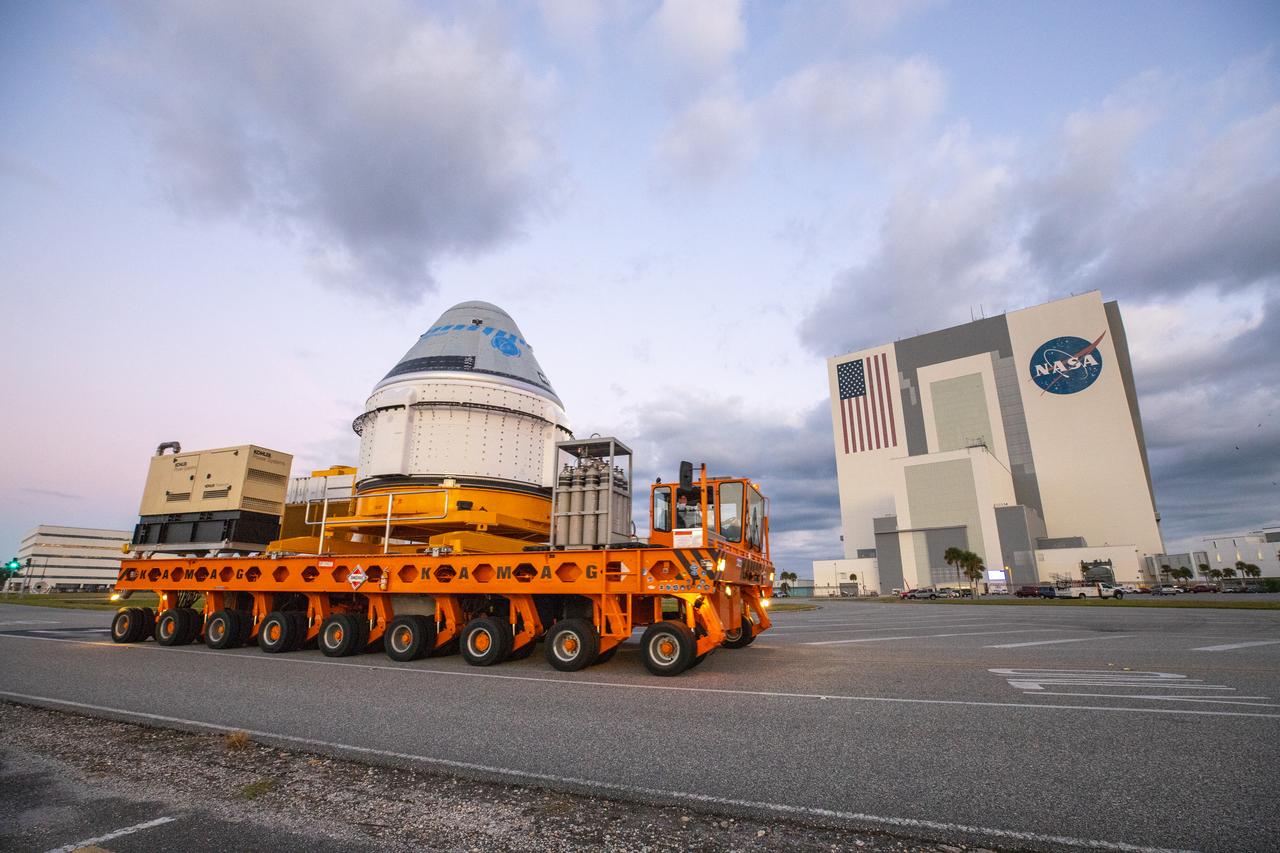
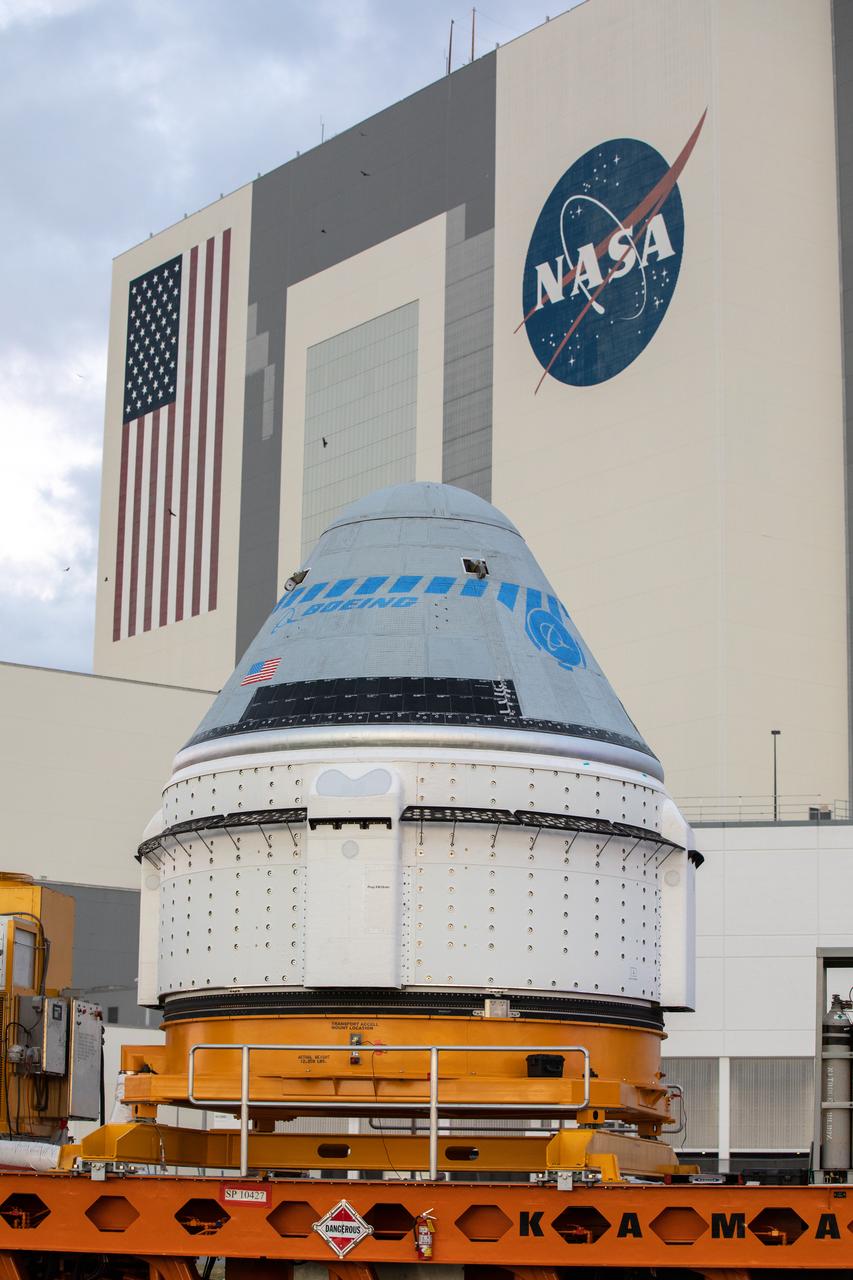
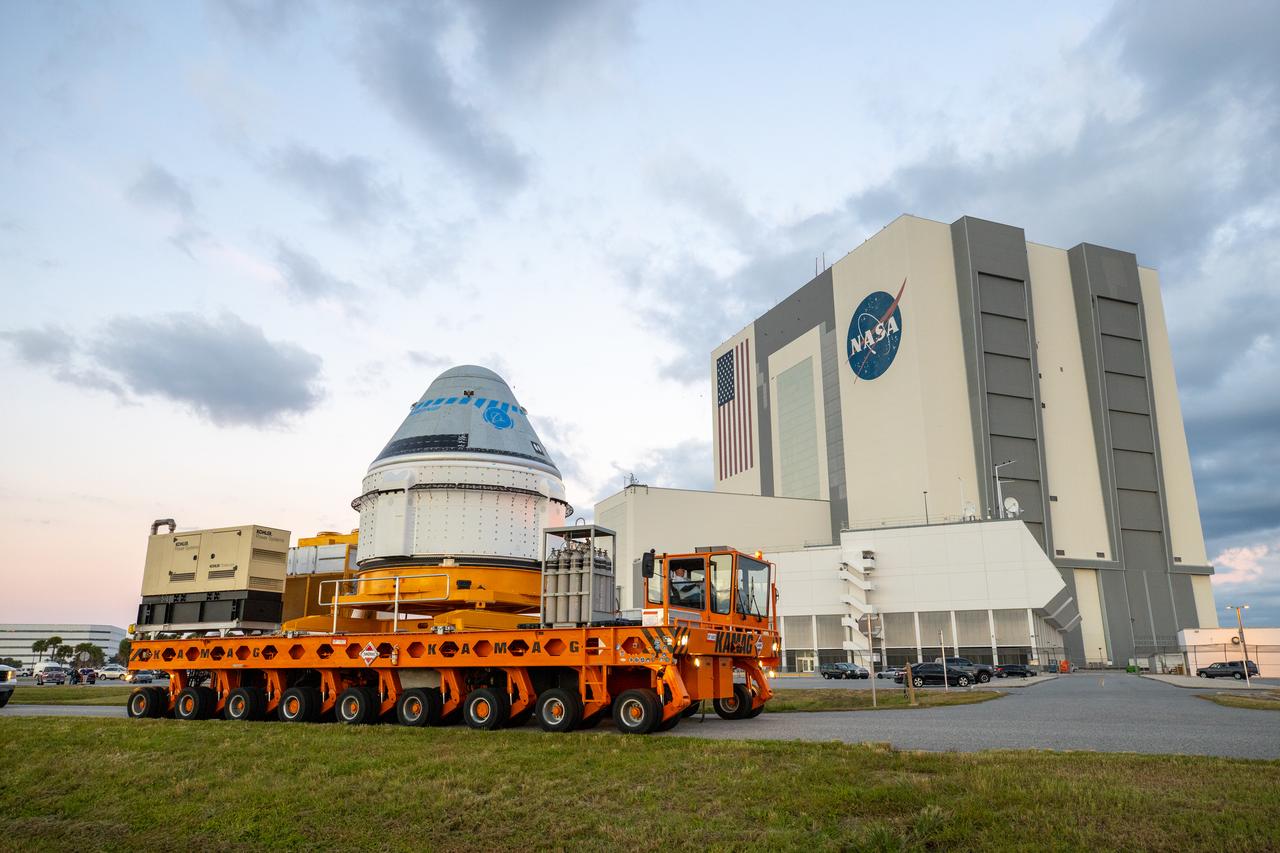
Boeing’s CST-100 Starliner spacecraft passes by the Vehicle Assembly Building at NASA’s Kennedy Space Center in Florida on Nov. 21, 2019, making its way to the Space Launch Complex 41 Vertical Integration Facility at Cape Canaveral Air Force Station. At the pad, Starliner will be secured atop a United Launch Alliance Atlas V rocket in preparation for Boeing’s uncrewed Orbital Flight Test to the International Space Station for NASA’s Commercial Crew Program.
CCP Boeing CST-100 Starliner OFT Rollout - Transport to Pad 41
Boeing’s CST-100 Starliner spacecraft passes by the Vehicle Assembly Building at NASA’s Kennedy Space Center in Florida on Nov. 21, 2019, making its way to the Space Launch Complex 41 Vertical Integration Facility at Cape Canaveral Air Force Station. At the pad, Starliner will be secured atop a United Launch Alliance Atlas V rocket in preparation for Boeing’s uncrewed Orbital Flight Test to the International Space Station for NASA’s Commercial Crew Program.
CCP Boeing CST-100 Starliner OFT Rollout - Transport to Pad 41
Boeing’s CST-100 Starliner spacecraft passes by the Vehicle Assembly Building at NASA’s Kennedy Space Center in Florida on Nov. 21, 2019, making its way to the Space Launch Complex 41 Vertical Integration Facility at Cape Canaveral Air Force Station. At the pad, Starliner will be secured atop a United Launch Alliance Atlas V rocket in preparation for Boeing’s uncrewed Orbital Flight Test to the International Space Station for NASA’s Commercial Crew Program.
CCP Boeing CST-100 Starliner OFT Rollout - Transport to Pad 41
iss072e487421 (Jan. 16, 2025) --- NASA astronaut and Expedition 72 Commander Suni Williams is pictured during a spacewalk outside the International Space Station where she replaced a rate gyro assembly that helps maintain the orientation of the orbital outpost.
Astronaut Suni Williams during a spacewalk outside the International Space Station
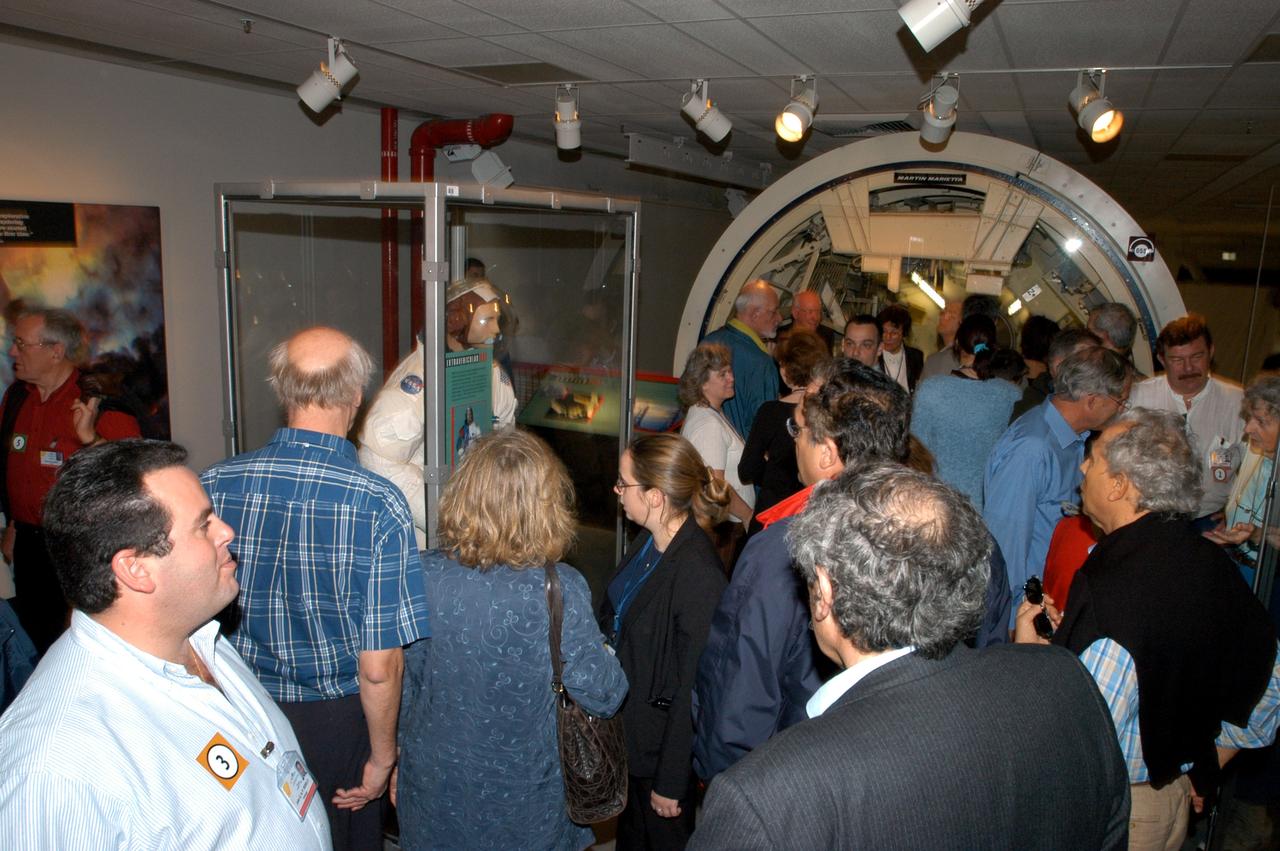
KENNEDY SPACE CENTER, FLA. -  Members of the North American Treaty Organization (NATO) Parliamentary Assembly stop at the Space Station Processing Facility’s International Space Station observation room during their tour of KSC.  The members are meeting in Orlando this year for their 49th annual gathering.  They chose to visit KSC with their families during their one-day excursion break from meetings.
KENNEDY SPACE CENTER, FLA. - Members of the North American Treaty Organization (NATO) Parliamentary Assembly stop at the Space Station Processing Facility’s International Space Station observation room during their tour of KSC. The members are meeting in Orlando this year for their 49th annual gathering. They chose to visit KSC with their families during their one-day excursion break from meetings.
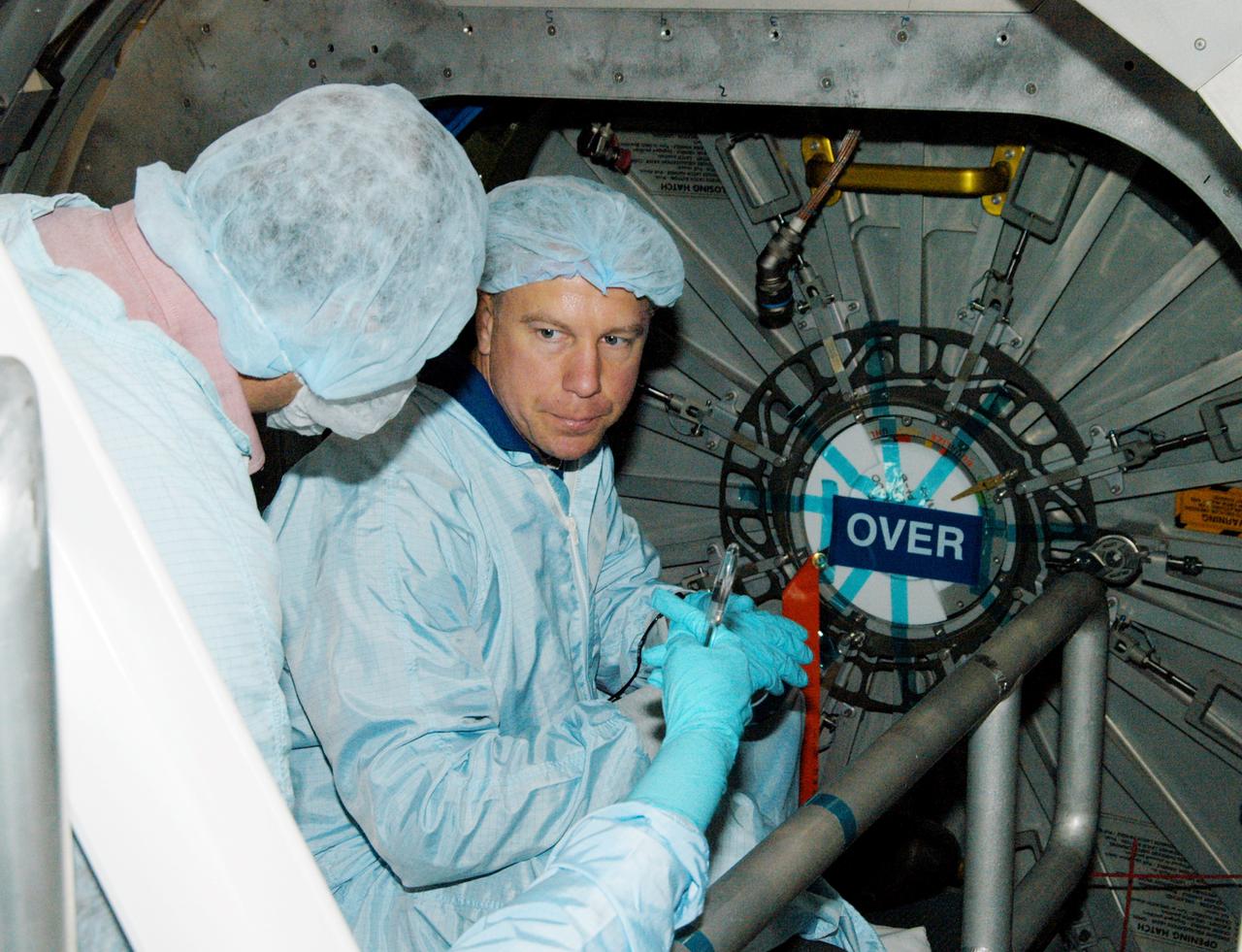
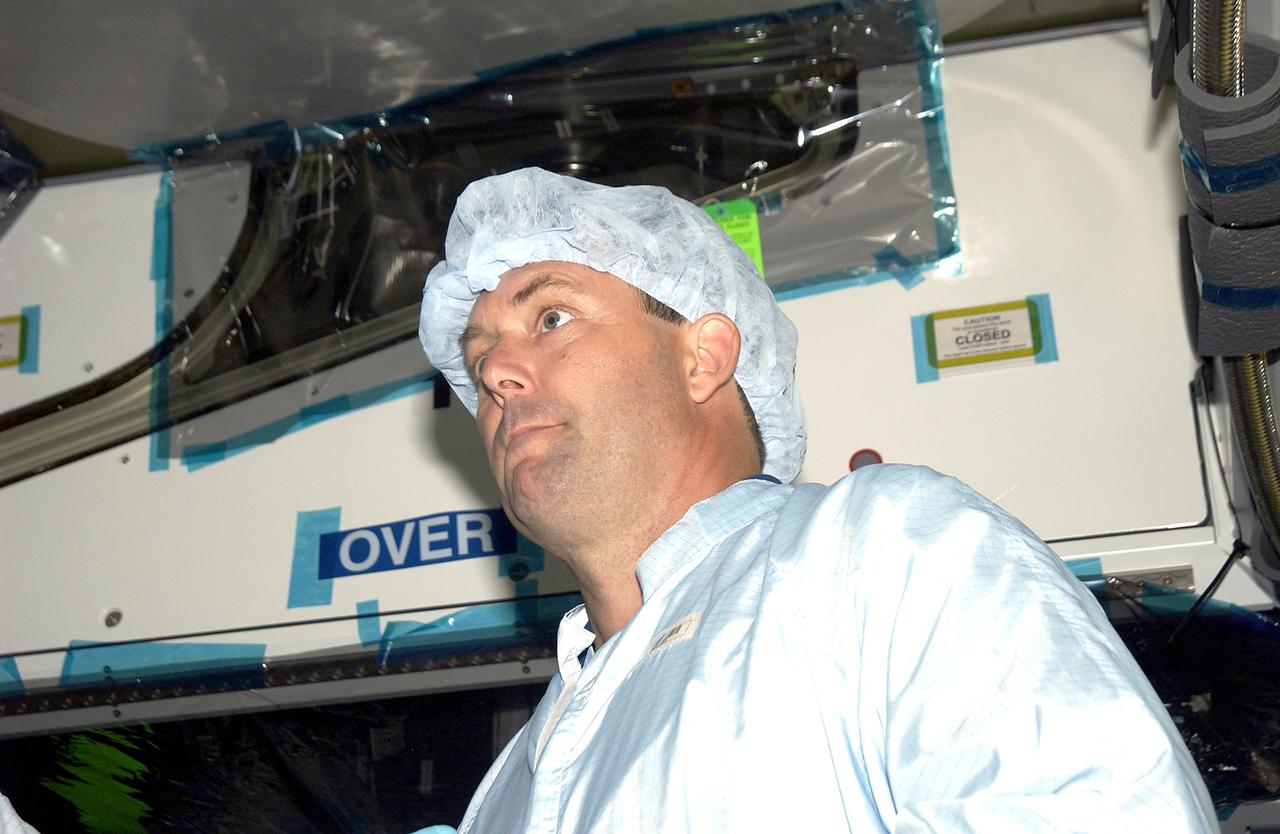
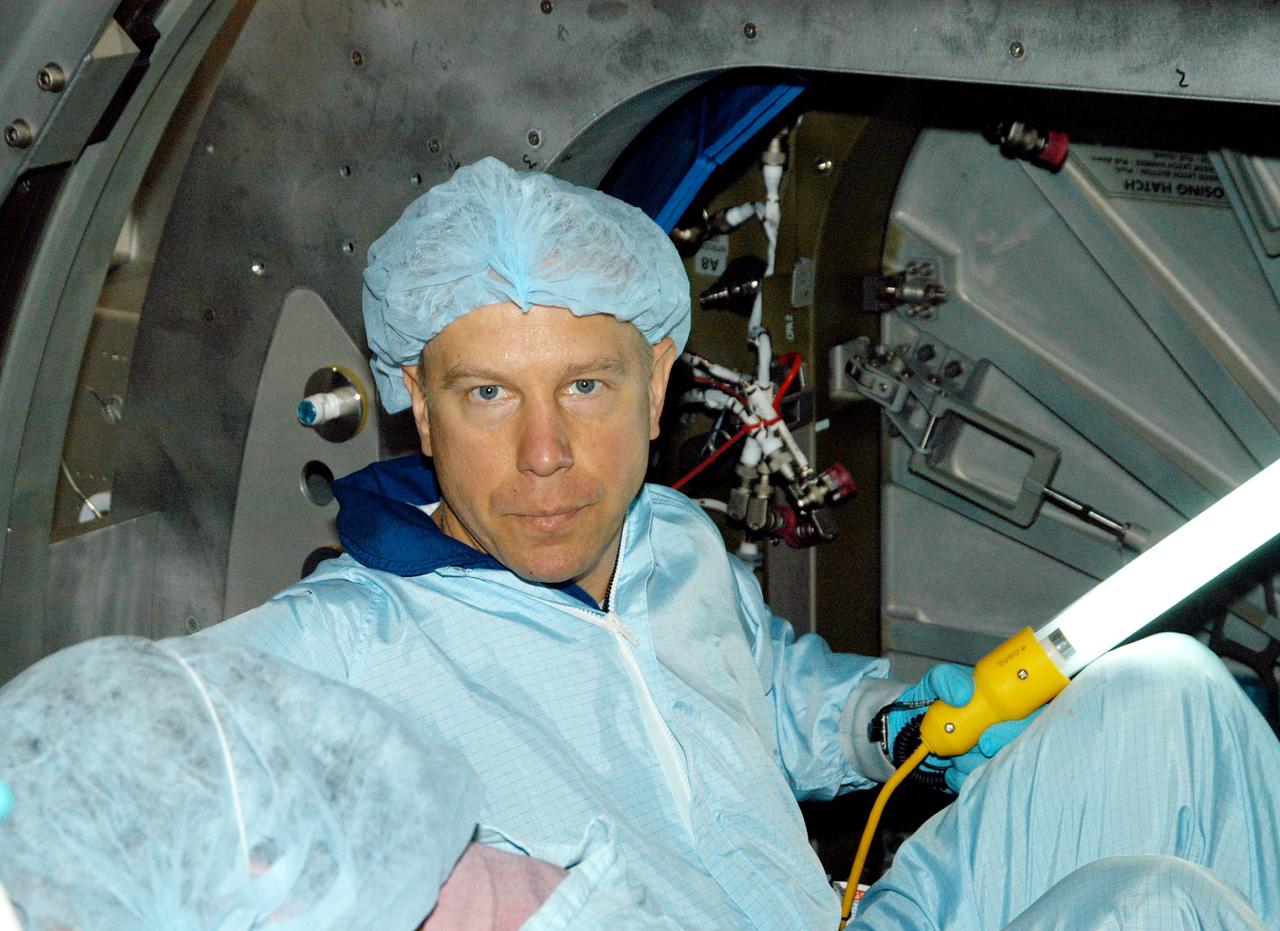
KENNEDY SPACE CENTER, FLA. - Astronaut Tim Kopra aids in Intravehicular Activity (IVA) constraints testing on the Italian-built Node 2, a future element of the International Space Station.  The second of three Station connecting modules, the Node 2 attaches to the end of the U.S. Lab and provides attach locations for several other elements.  Kopra is currently assigned technical duties in the Space Station Branch of the Astronaut Office, where his primary focus involves the testing of crew interfaces for two future ISS modules as well as the implementation of support computers and operational Local Area Network on ISS.   Node 2 is scheduled to launch on mission STS-120, Station assembly flight 10A.
KENNEDY SPACE CENTER, FLA. - Astronaut Tim Kopra aids in Intravehicular Activity (IVA) constraints testing on the Italian-built Node 2, a future element of the International Space Station. The second of three Station connecting modules, the Node 2 attaches to the end of the U.S. Lab and provides attach locations for several other elements. Kopra is currently assigned technical duties in the Space Station Branch of the Astronaut Office, where his primary focus involves the testing of crew interfaces for two future ISS modules as well as the implementation of support computers and operational Local Area Network on ISS. Node 2 is scheduled to launch on mission STS-120, Station assembly flight 10A.
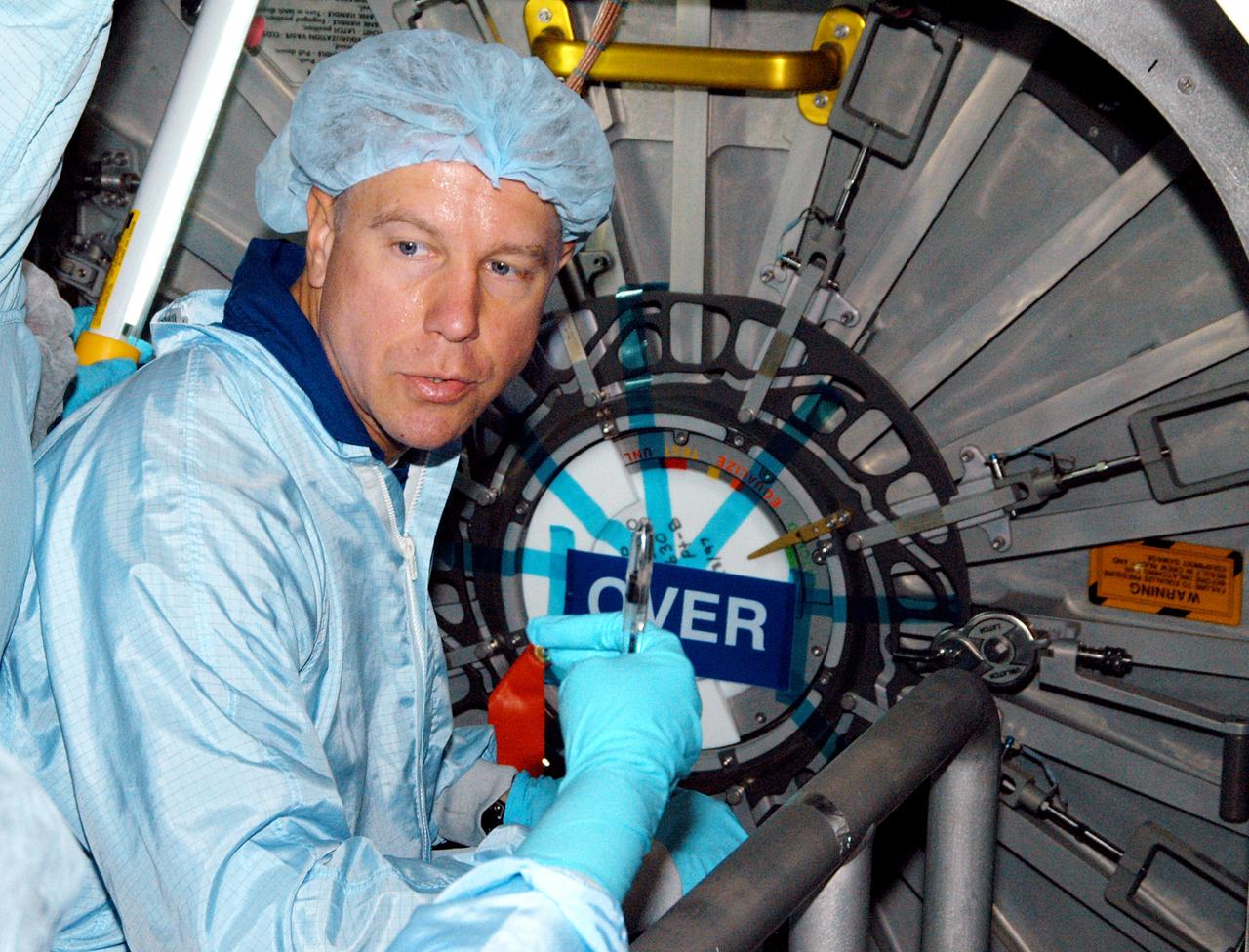
KENNEDY SPACE CENTER, FLA. - Astronaut Tim Kopra (facing camera) aids in Intravehicular Activity (IVA) constraints testing on the Italian-built Node 2, a future element of the International Space Station.  The second of three Station connecting modules, the Node 2 attaches to the end of the U.S. Lab and provides attach locations for several other elements.  Kopra is currently assigned technical duties in the Space Station Branch of the Astronaut Office, where his primary focus involves the testing of crew interfaces for two future ISS modules as well as the implementation of support computers and operational Local Area Network on ISS.   Node 2 is scheduled to launch on mission STS-120, Station assembly flight 10A.
KENNEDY SPACE CENTER, FLA. - Astronaut Tim Kopra (facing camera) aids in Intravehicular Activity (IVA) constraints testing on the Italian-built Node 2, a future element of the International Space Station. The second of three Station connecting modules, the Node 2 attaches to the end of the U.S. Lab and provides attach locations for several other elements. Kopra is currently assigned technical duties in the Space Station Branch of the Astronaut Office, where his primary focus involves the testing of crew interfaces for two future ISS modules as well as the implementation of support computers and operational Local Area Network on ISS. Node 2 is scheduled to launch on mission STS-120, Station assembly flight 10A.
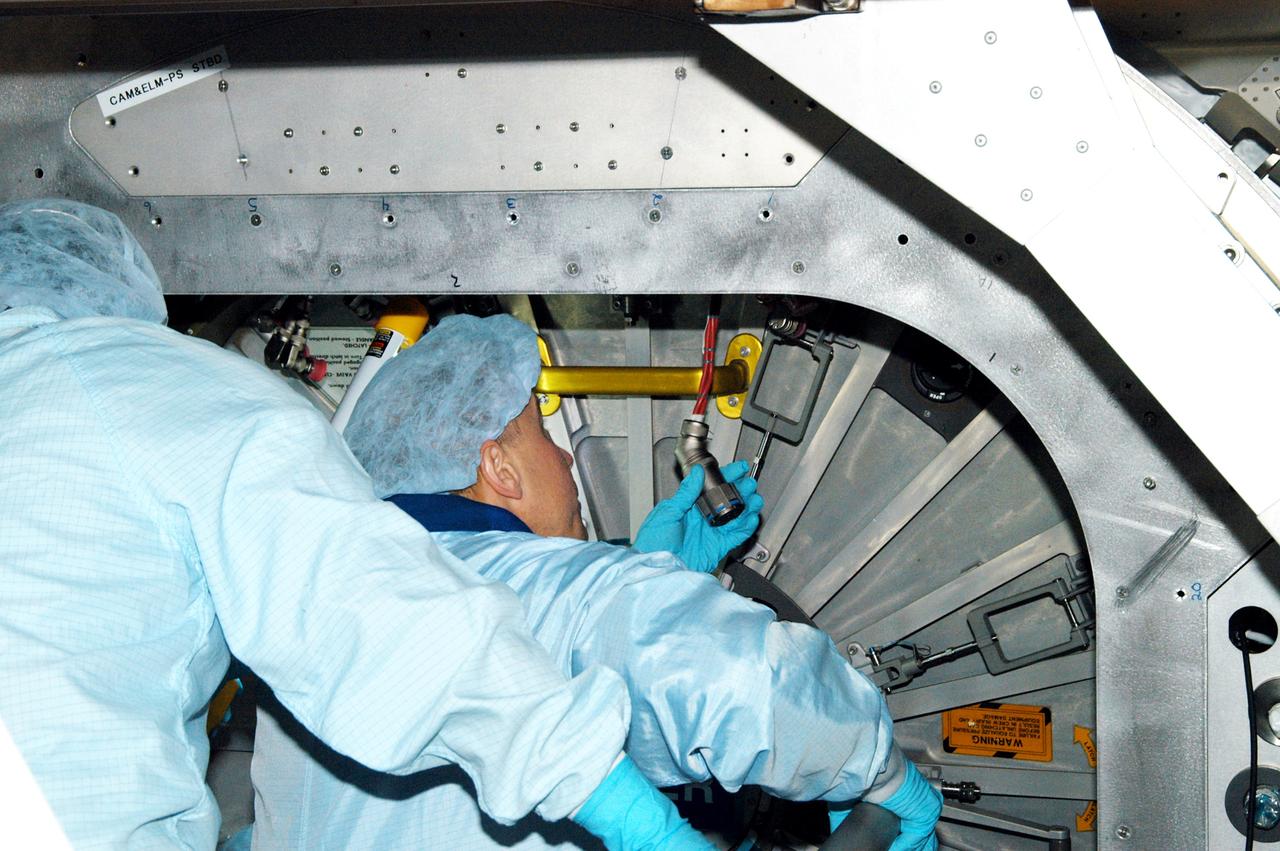
KENNEDY SPACE CENTER, FLA. - Astronaut Tim Kopra aids in Intravehicular Activity (IVA) constraints testing on the Italian-built Node 2, a future element of the International Space Station.  The second of three Station connecting modules, the Node 2 attaches to the end of the U.S. Lab and provides attach locations for several other elements.  Kopra is currently assigned technical duties in the Space Station Branch of the Astronaut Office, where his primary focus involves the testing of crew interfaces for two future ISS modules as well as the implementation of support computers and operational Local Area Network on ISS.   Node 2 is scheduled to launch on mission STS-120, Station assembly flight 10A.
KENNEDY SPACE CENTER, FLA. - Astronaut Tim Kopra aids in Intravehicular Activity (IVA) constraints testing on the Italian-built Node 2, a future element of the International Space Station. The second of three Station connecting modules, the Node 2 attaches to the end of the U.S. Lab and provides attach locations for several other elements. Kopra is currently assigned technical duties in the Space Station Branch of the Astronaut Office, where his primary focus involves the testing of crew interfaces for two future ISS modules as well as the implementation of support computers and operational Local Area Network on ISS. Node 2 is scheduled to launch on mission STS-120, Station assembly flight 10A.
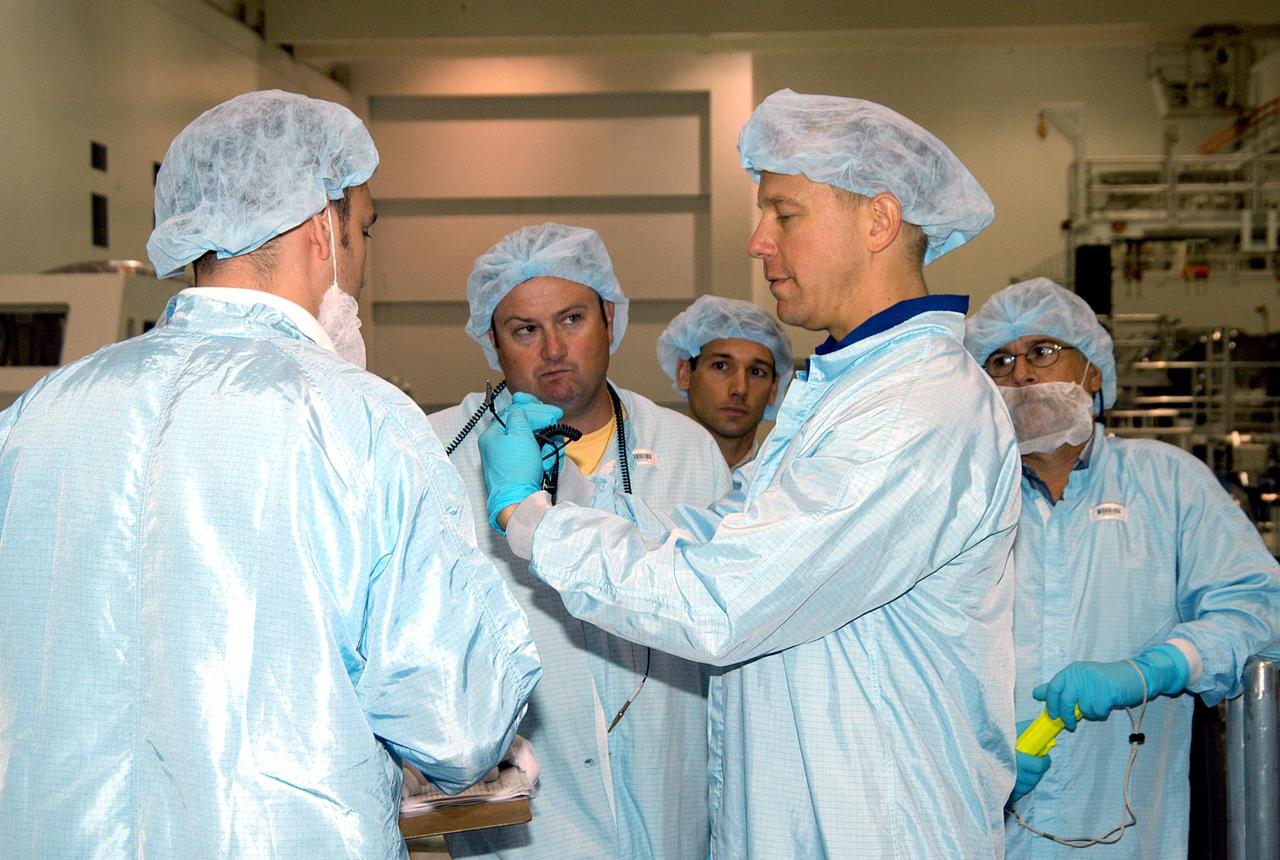
KENNEDY SPACE CENTER, FLA. - Astronaut Tim Kopra (second from right) talks with workers in the Space Station Processing Facility about the Intravehicular Activity (IVA) constraints testing on the Italian-built Node 2, a future element of the International Space Station.  .  The second of three Station connecting modules, the Node 2 attaches to the end of the U.S. Lab and provides attach locations for several other elements.  Kopra is currently assigned technical duties in the Space Station Branch of the Astronaut Office, where his primary focus involves the testing of crew interfaces for two future ISS modules as well as the implementation of support computers and operational Local Area Network on ISS.   Node 2 is scheduled to launch on mission STS-120, Station assembly flight 10A.
KENNEDY SPACE CENTER, FLA. - Astronaut Tim Kopra (second from right) talks with workers in the Space Station Processing Facility about the Intravehicular Activity (IVA) constraints testing on the Italian-built Node 2, a future element of the International Space Station. . The second of three Station connecting modules, the Node 2 attaches to the end of the U.S. Lab and provides attach locations for several other elements. Kopra is currently assigned technical duties in the Space Station Branch of the Astronaut Office, where his primary focus involves the testing of crew interfaces for two future ISS modules as well as the implementation of support computers and operational Local Area Network on ISS. Node 2 is scheduled to launch on mission STS-120, Station assembly flight 10A.
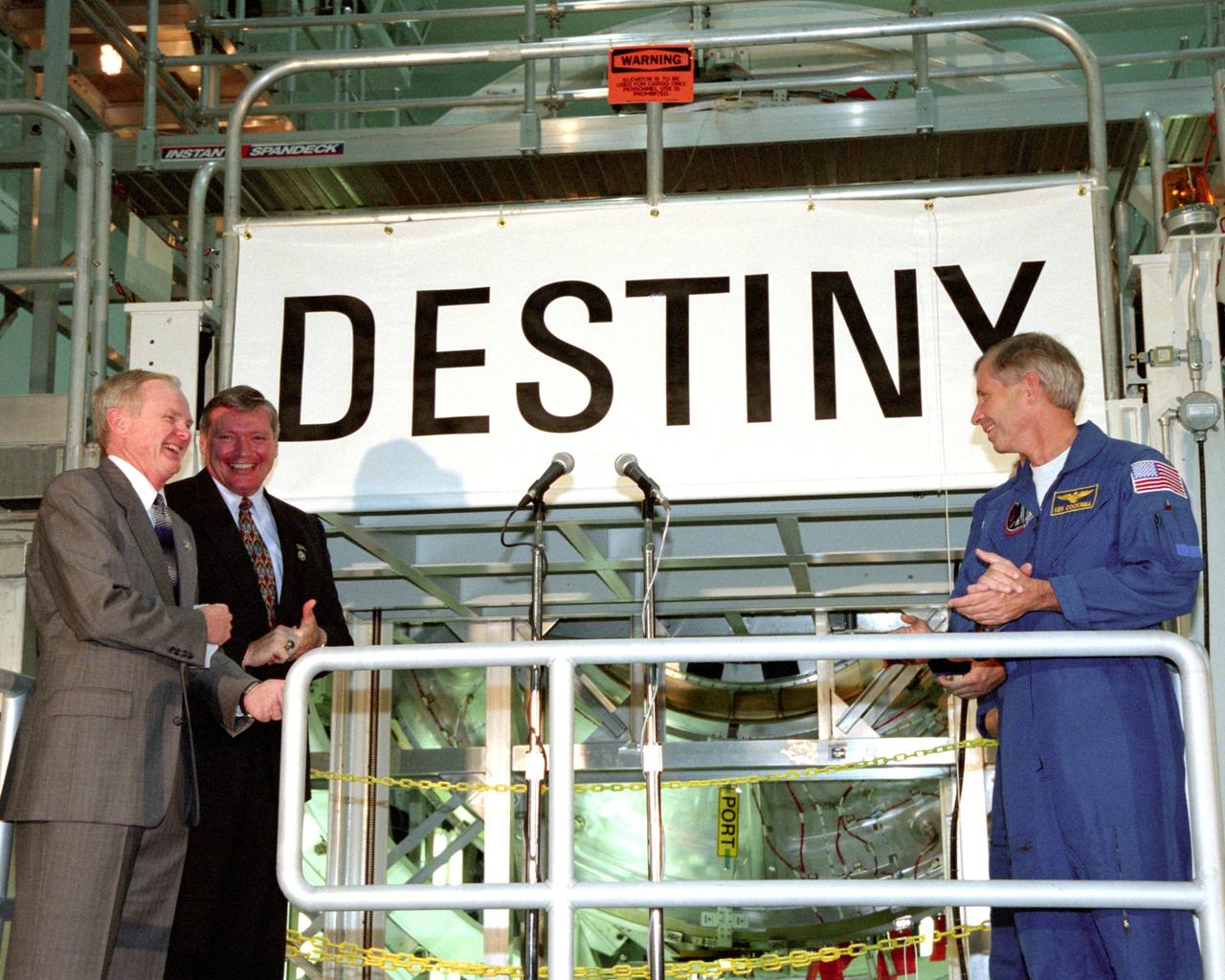
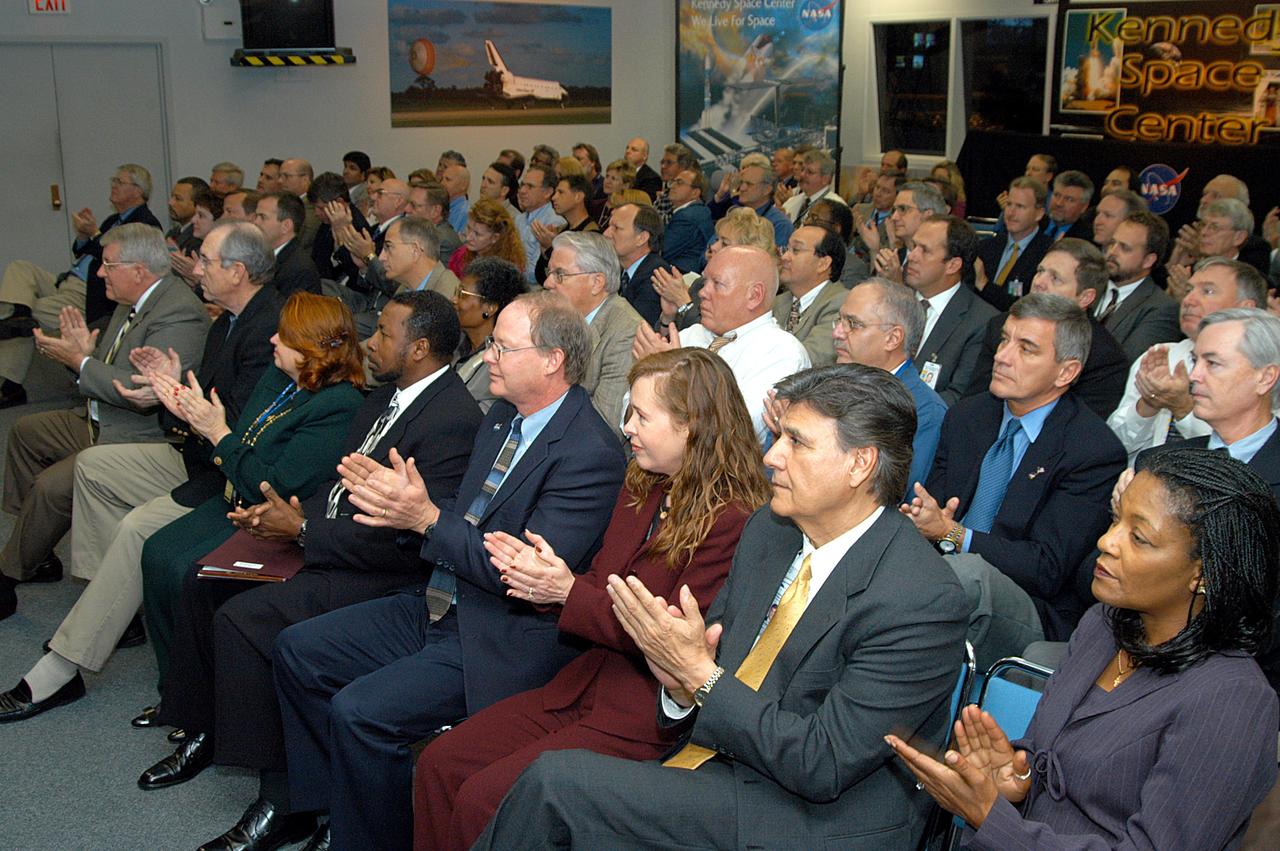
KENNEDY SPACE CENTER, FLA. -  In the Space Station Processing Facility, Center Director Roy Bridges (left), Program Manager of the International Space Station (ISS) Randy Brinkley (second from left) and STS-98 Commander Ken Cockrell (right) applaud the unveiling of the name "Destiny" for the U.S. Laboratory module.  The lab, which is behnd them on a workstand, is scheduled to be launched on STS-98 on Space Shuttle Endeavour in early 2000.  It will become the centerpiece of scientific research on the ISS.  The Shuttle will spend six days docked to the Station while the laboratory is attached and three spacewalks are conducted to compete its assembly.  The laboratory will be launched with five equipment racks aboard, which will provide essential functions for Station systems, including high data-rate communications, and maintain the Station's orientation using control gyroscopes launched earlier.  Additional equipment and research racks will be installed in the laboratory on subsequent Shuttle flights.
KENNEDY SPACE CENTER, FLA. - In the Space Station Processing Facility, Center Director Roy Bridges (left), Program Manager of the International Space Station (ISS) Randy Brinkley (second from left) and STS-98 Commander Ken Cockrell (right) applaud the unveiling of the name "Destiny" for the U.S. Laboratory module. The lab, which is behnd them on a workstand, is scheduled to be launched on STS-98 on Space Shuttle Endeavour in early 2000. It will become the centerpiece of scientific research on the ISS. The Shuttle will spend six days docked to the Station while the laboratory is attached and three spacewalks are conducted to compete its assembly. The laboratory will be launched with five equipment racks aboard, which will provide essential functions for Station systems, including high data-rate communications, and maintain the Station's orientation using control gyroscopes launched earlier. Additional equipment and research racks will be installed in the laboratory on subsequent Shuttle flights.
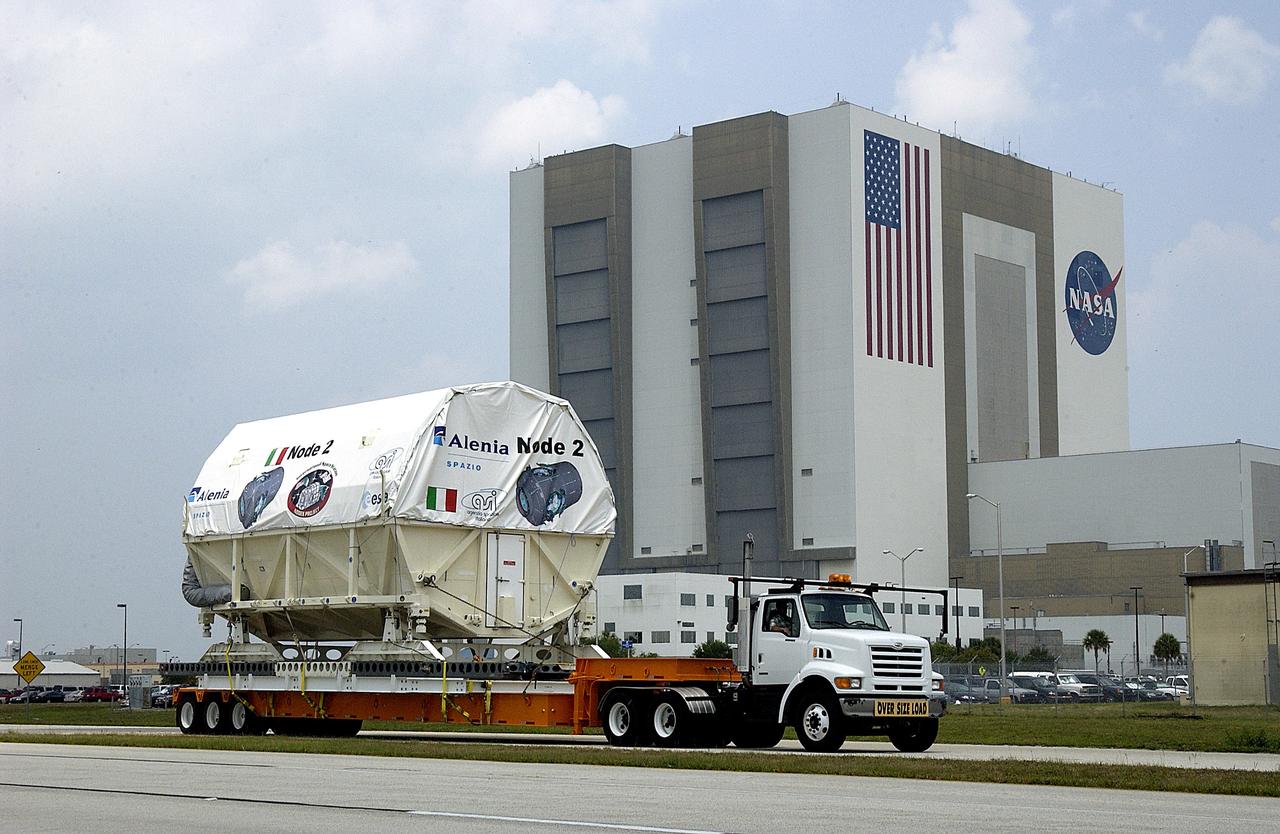
KENNEDY SPACE CENTER, FLA. -  The Italian-built module, U.S. Node 2, moves past the Vehicle Assembly Building as it is transferred to the Space Station Processing Facility. The second of three connecting modules on the International Space Station, Node 2 attaches to the end of the U.S. Lab and provides attach locations for the Japanese laboratory, European laboratory, the Centrifuge Accommodation Module and, later, Multipurpose Logistics Modules. It will provide the primary docking location for the Shuttle when a pressurized mating adapter is attached to Node 2.  Installation of the module will complete  the U.S. Core of the ISS.  Node 2 is the designated payload for mission STS-120.  No orbiter or launch date has been determined yet.
KENNEDY SPACE CENTER, FLA. - The Italian-built module, U.S. Node 2, moves past the Vehicle Assembly Building as it is transferred to the Space Station Processing Facility. The second of three connecting modules on the International Space Station, Node 2 attaches to the end of the U.S. Lab and provides attach locations for the Japanese laboratory, European laboratory, the Centrifuge Accommodation Module and, later, Multipurpose Logistics Modules. It will provide the primary docking location for the Shuttle when a pressurized mating adapter is attached to Node 2. Installation of the module will complete the U.S. Core of the ISS. Node 2 is the designated payload for mission STS-120. No orbiter or launch date has been determined yet.
KENNEDY SPACE CENTER, FLA. -   In the Space Station Processing Facility, STS-120 Mission Specialist Michael Foreman looks over the Japanese Experiment Module (JEM) Pressurized Module. Known as Kibo, the JEM consists of six components: two research facilities -- the Pressurized Module and Exposed Facility; a Logistics Module attached to each of them; a Remote Manipulator System; and an Inter-Orbit Communication System unit. Kibo also has a scientific airlock through which experiments are transferred and exposed to the external environment of space. The various components of JEM will be assembled in space over the course of three Space Shuttle missions.  The STS-120 mission will deliver the second of three Station connecting modules, Node 2, which attaches to the end of U.S. Lab.  It will provide attach locations for the Japanese laboratory, European laboratory, the Centrifuge Accommodation Module and later Multi-Purpose Logistics Modules.  The addition of Node 2 will complete the U.S. core of the International Space Station.
KENNEDY SPACE CENTER, FLA. - In the Space Station Processing Facility, STS-120 Mission Specialist Michael Foreman looks over the Japanese Experiment Module (JEM) Pressurized Module. Known as Kibo, the JEM consists of six components: two research facilities -- the Pressurized Module and Exposed Facility; a Logistics Module attached to each of them; a Remote Manipulator System; and an Inter-Orbit Communication System unit. Kibo also has a scientific airlock through which experiments are transferred and exposed to the external environment of space. The various components of JEM will be assembled in space over the course of three Space Shuttle missions. The STS-120 mission will deliver the second of three Station connecting modules, Node 2, which attaches to the end of U.S. Lab. It will provide attach locations for the Japanese laboratory, European laboratory, the Centrifuge Accommodation Module and later Multi-Purpose Logistics Modules. The addition of Node 2 will complete the U.S. core of the International Space Station.
KENNEDY SPACE CENTER, FLA. -  In the Space Station Processing Facility, STS-120 Mission Specialist Piers Sellers looks over the Japanese Experiment Module (JEM) Pressurized Module. Known as Kibo, the JEM consists of six components: two research facilities -- the Pressurized Module and Exposed Facility; a Logistics Module attached to each of them; a Remote Manipulator System; and an Inter-Orbit Communication System unit. Kibo also has a scientific airlock through which experiments are transferred and exposed to the external environment of space. The various components of JEM will be assembled in space over the course of three Space Shuttle missions.   The STS-120 mission will deliver the second of three Station connecting modules, Node 2, which attaches to the end of U.S. Lab.  It will provide attach locations for the Japanese laboratory, European laboratory, the Centrifuge Accommodation Module and later Multi-Purpose Logistics Modules.  The addition of Node 2 will complete the U.S. core of the International Space Station.
KENNEDY SPACE CENTER, FLA. - In the Space Station Processing Facility, STS-120 Mission Specialist Piers Sellers looks over the Japanese Experiment Module (JEM) Pressurized Module. Known as Kibo, the JEM consists of six components: two research facilities -- the Pressurized Module and Exposed Facility; a Logistics Module attached to each of them; a Remote Manipulator System; and an Inter-Orbit Communication System unit. Kibo also has a scientific airlock through which experiments are transferred and exposed to the external environment of space. The various components of JEM will be assembled in space over the course of three Space Shuttle missions. The STS-120 mission will deliver the second of three Station connecting modules, Node 2, which attaches to the end of U.S. Lab. It will provide attach locations for the Japanese laboratory, European laboratory, the Centrifuge Accommodation Module and later Multi-Purpose Logistics Modules. The addition of Node 2 will complete the U.S. core of the International Space Station.
KENNEDY SPACE CENTER, FLA. - STS-120 Mission Specialists Piers Sellers and Michael Foreman look at the Japanese Experiment Module (JEM) Pressurized Module located in the Space Station Processing Facility. Known as Kibo, the JEM consists of six components: two research facilities -- the Pressurized Module and Exposed Facility; a Logistics Module attached to each of them; a Remote Manipulator System; and an Inter-Orbit Communication System unit. Kibo also has a scientific airlock through which experiments are transferred and exposed to the external environment of space. The various components of JEM will be assembled in space over the course of three Space Shuttle missions.  The STS-120 mission will deliver the second of three Station connecting modules, Node 2, which attaches to the end of U.S. Lab.  It will provide attach locations for the JEM, European laboratory, the Centrifuge Accommodation Module and later Multi-Purpose Logistics Modules.  The addition of Node 2 will complete the U.S. core of the International Space Station.
KENNEDY SPACE CENTER, FLA. - STS-120 Mission Specialists Piers Sellers and Michael Foreman look at the Japanese Experiment Module (JEM) Pressurized Module located in the Space Station Processing Facility. Known as Kibo, the JEM consists of six components: two research facilities -- the Pressurized Module and Exposed Facility; a Logistics Module attached to each of them; a Remote Manipulator System; and an Inter-Orbit Communication System unit. Kibo also has a scientific airlock through which experiments are transferred and exposed to the external environment of space. The various components of JEM will be assembled in space over the course of three Space Shuttle missions. The STS-120 mission will deliver the second of three Station connecting modules, Node 2, which attaches to the end of U.S. Lab. It will provide attach locations for the JEM, European laboratory, the Centrifuge Accommodation Module and later Multi-Purpose Logistics Modules. The addition of Node 2 will complete the U.S. core of the International Space Station.
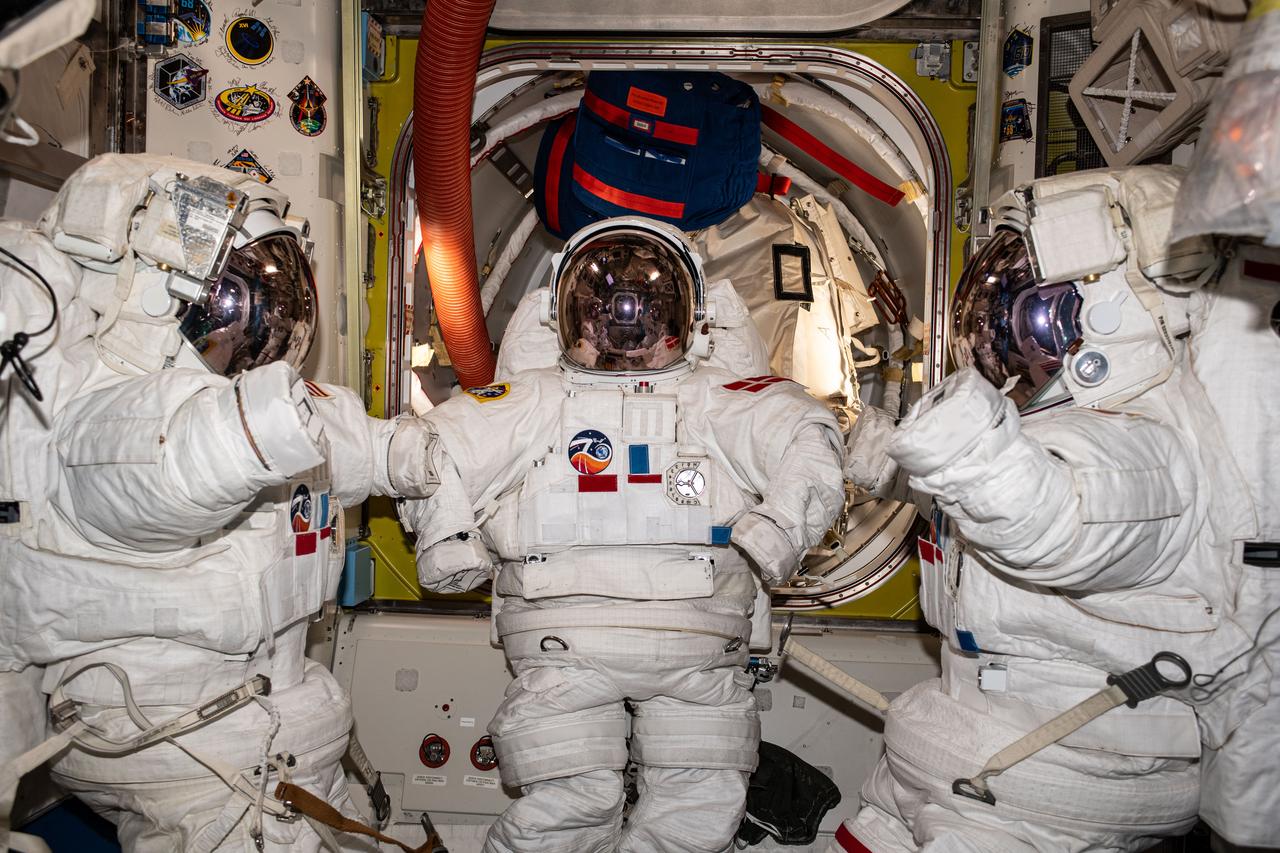
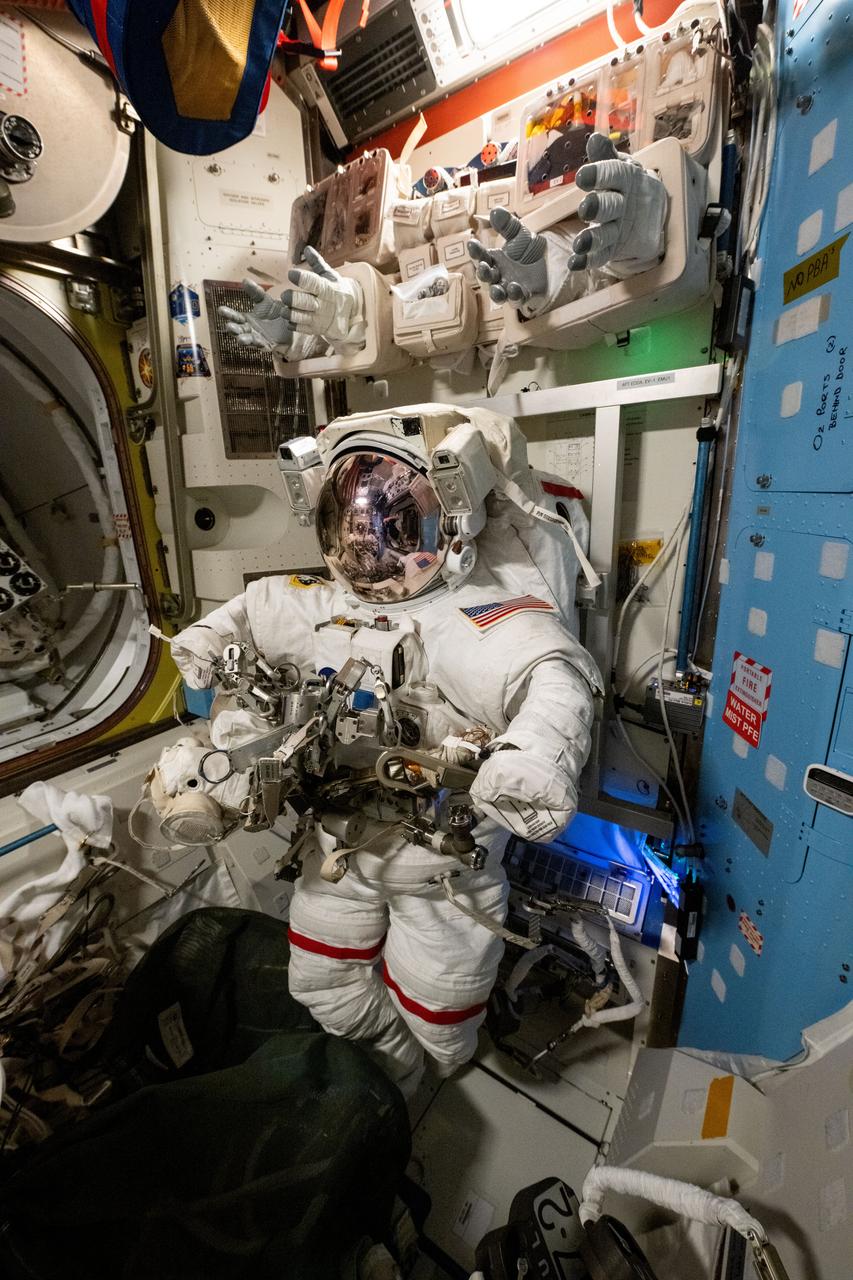
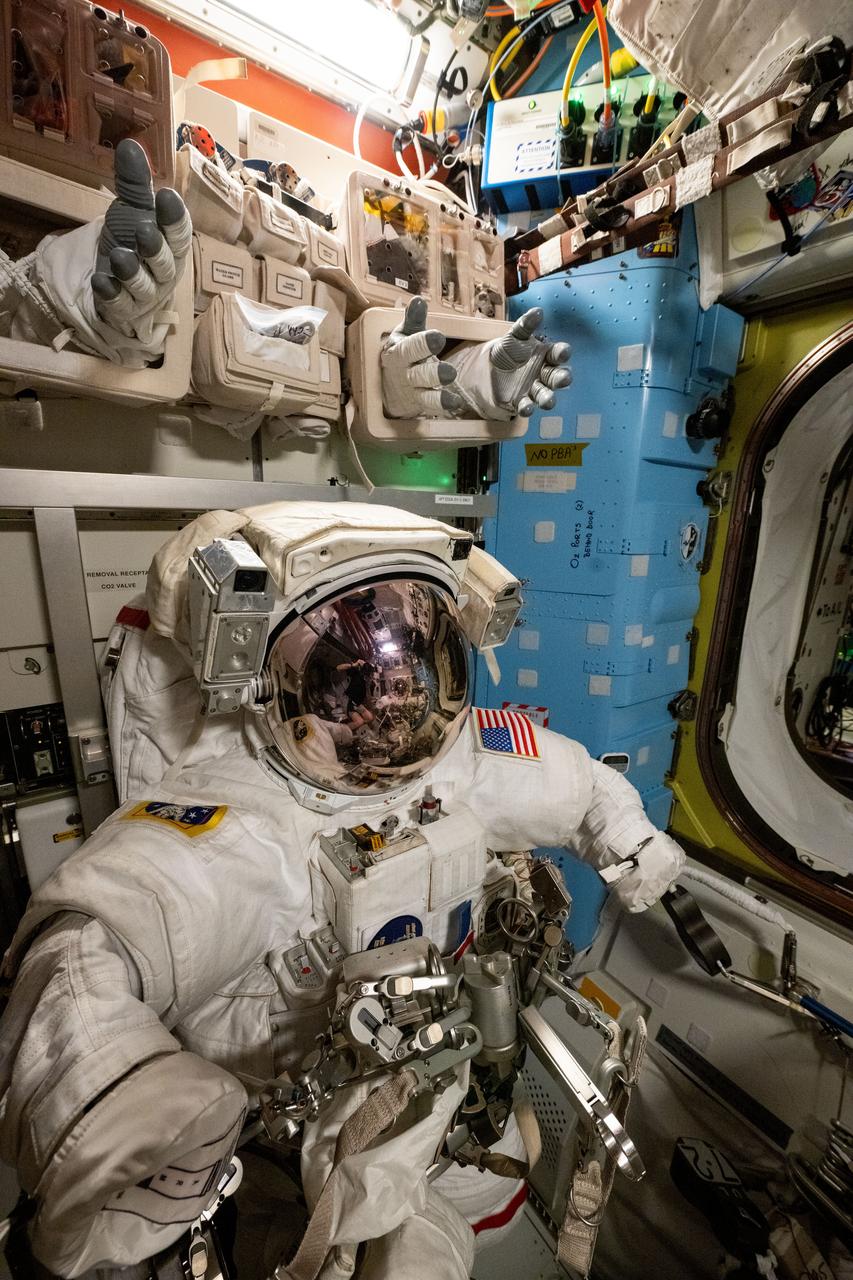
iss072e518456 (Jan. 23, 2025) --- A spacesuit is pictured staged inside the International Space Station's Quest airlock ahead of a spacewalk planned for NASA astronauts Suni Williams and Butch Wilmore. The two spacewalkers are scheduled to exit the Quest airlock on Jan. 30 to remove a radio frequency group antenna assembly and search for microbes outside the orbital outpost.
A spacesuit is pictured staged inside the Quest airlock
KENNEDY SPACE CENTER, FLA. - Astronaut Tim Kopra talks to a technician (off-camera) during Intravehicular Activity (IVA) constraints testing on the Italian-built Node 2, a future element of the International Space Station.  The second of three Station connecting modules, the Node 2 attaches to the end of the U.S. Lab and provides attach locations for several other elements.  Kopra is currently assigned technical duties in the Space Station Branch of the Astronaut Office, where his primary focus involves the testing of crew interfaces for two future ISS modules as well as the implementation of support computers and operational Local Area Network on ISS.   Node 2 is scheduled to launch on mission STS-120, Station assembly flight 10A.
KENNEDY SPACE CENTER, FLA. - Astronaut Tim Kopra talks to a technician (off-camera) during Intravehicular Activity (IVA) constraints testing on the Italian-built Node 2, a future element of the International Space Station. The second of three Station connecting modules, the Node 2 attaches to the end of the U.S. Lab and provides attach locations for several other elements. Kopra is currently assigned technical duties in the Space Station Branch of the Astronaut Office, where his primary focus involves the testing of crew interfaces for two future ISS modules as well as the implementation of support computers and operational Local Area Network on ISS. Node 2 is scheduled to launch on mission STS-120, Station assembly flight 10A.
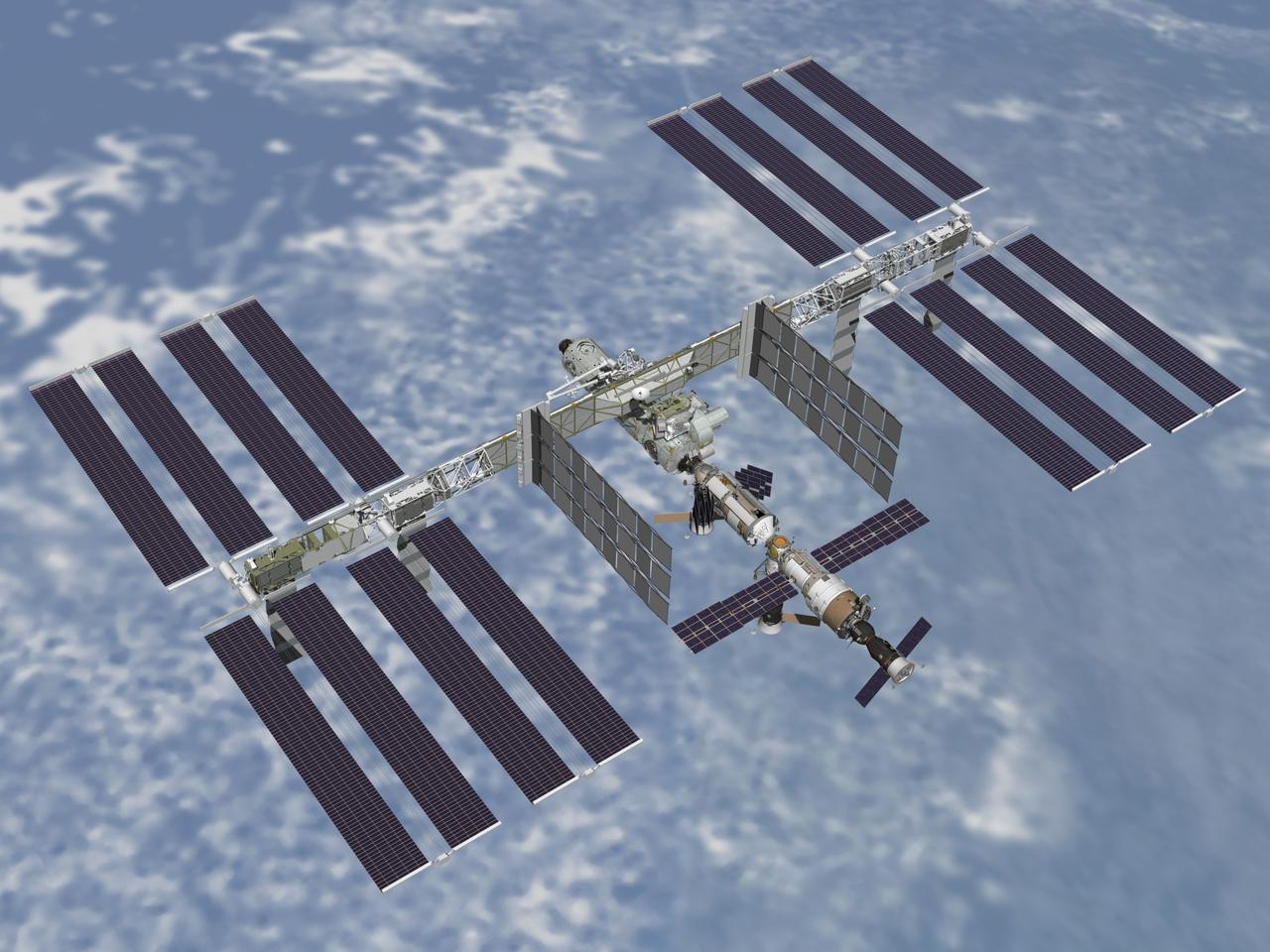
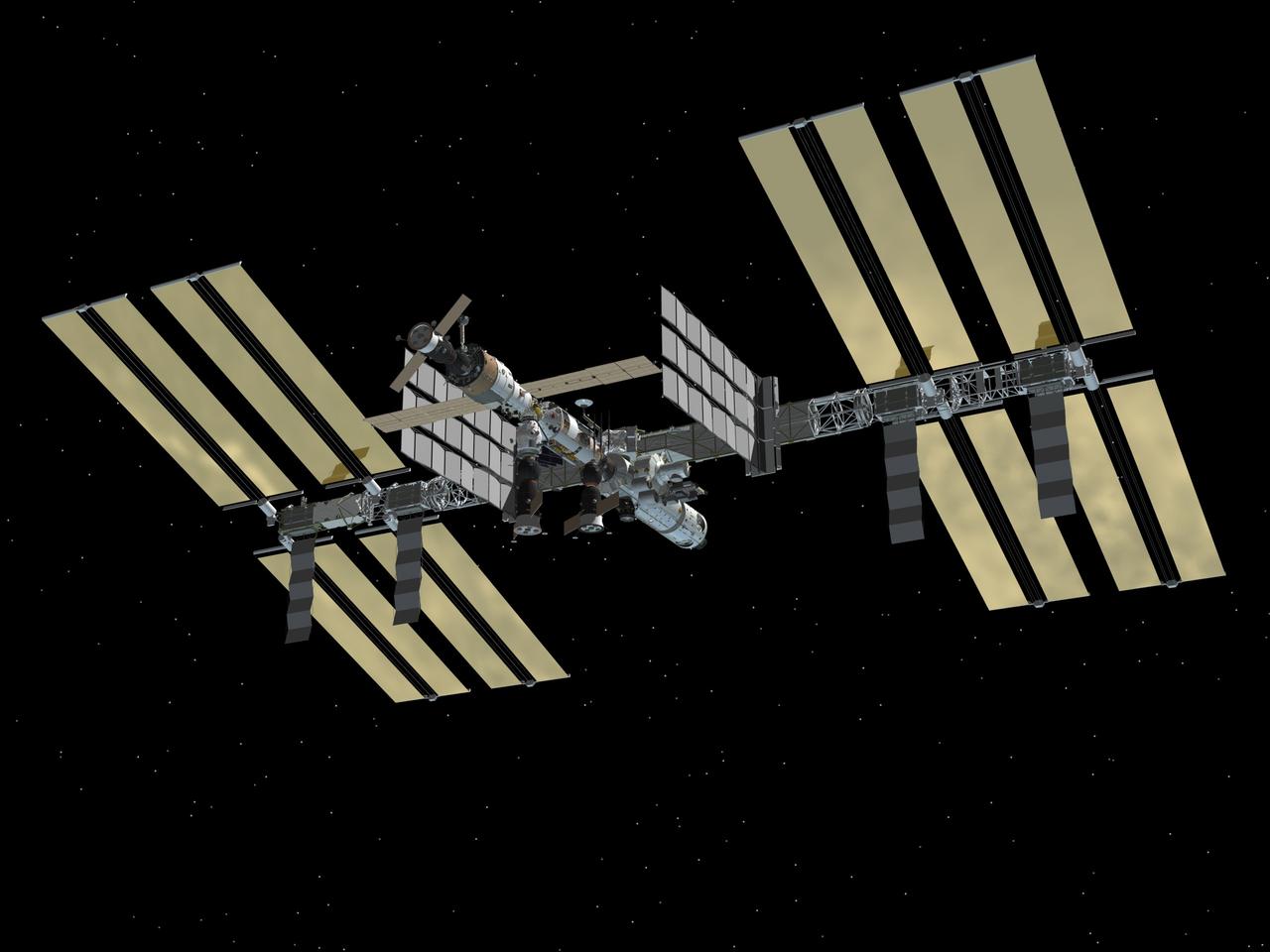
JSC2003-E-37640 (May 2003) --- This graphic depicts the International Space Station after the installment of Node 2 during the STS-120/10A assembly mission. The addition of Node 2 signifies the US Core Complete stage of assembly, at which time the station can support the addition of international laboratories from Europe and Japan.
jsc2003e37640
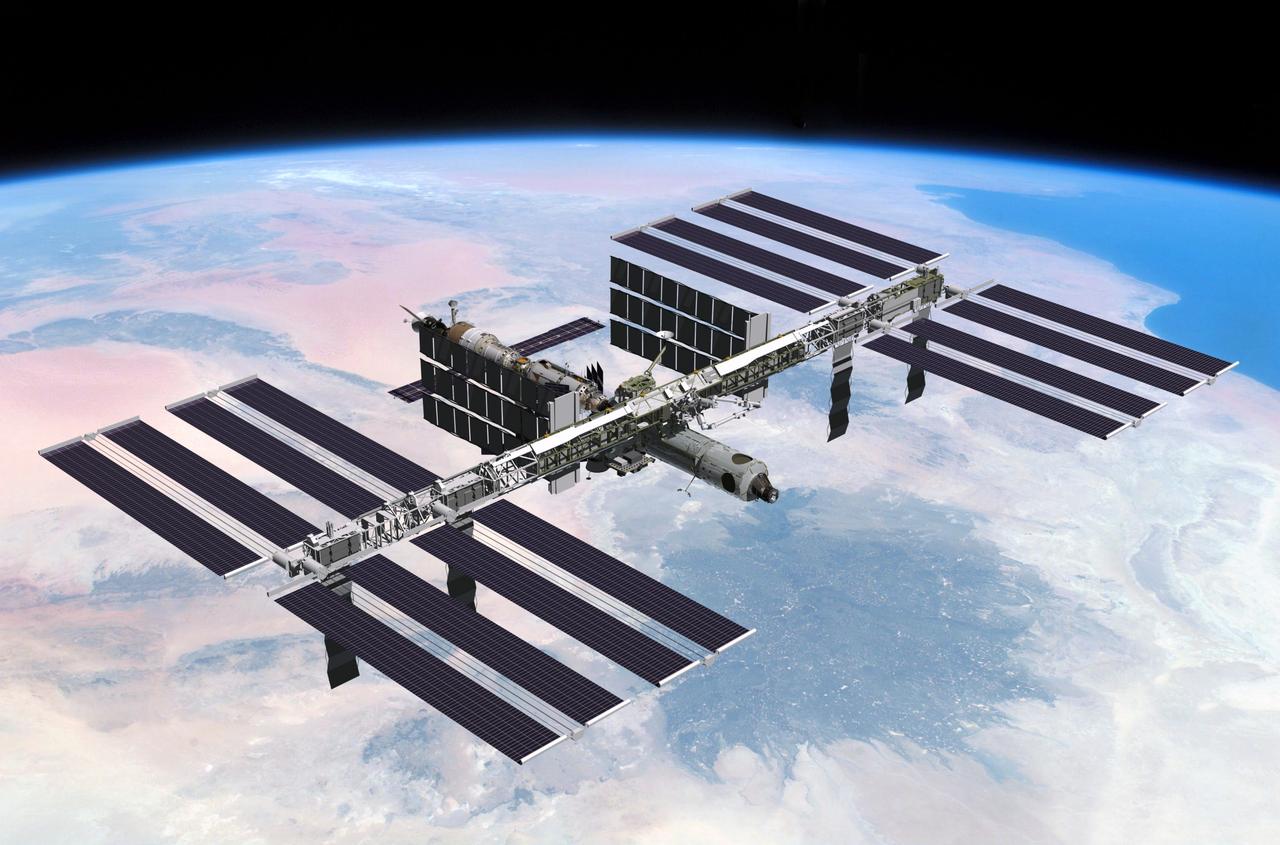
JSC2003-E-64499 (December 2003) - Aft view of the International Space Station after the installment of Node 2 during the STS-120/10A assembly mission.  The addition of Node 2 signifies the US Core Complete stage of assembly, at which time the station can support the addition of international laboratories from Europe and Japan.
ISS artwork
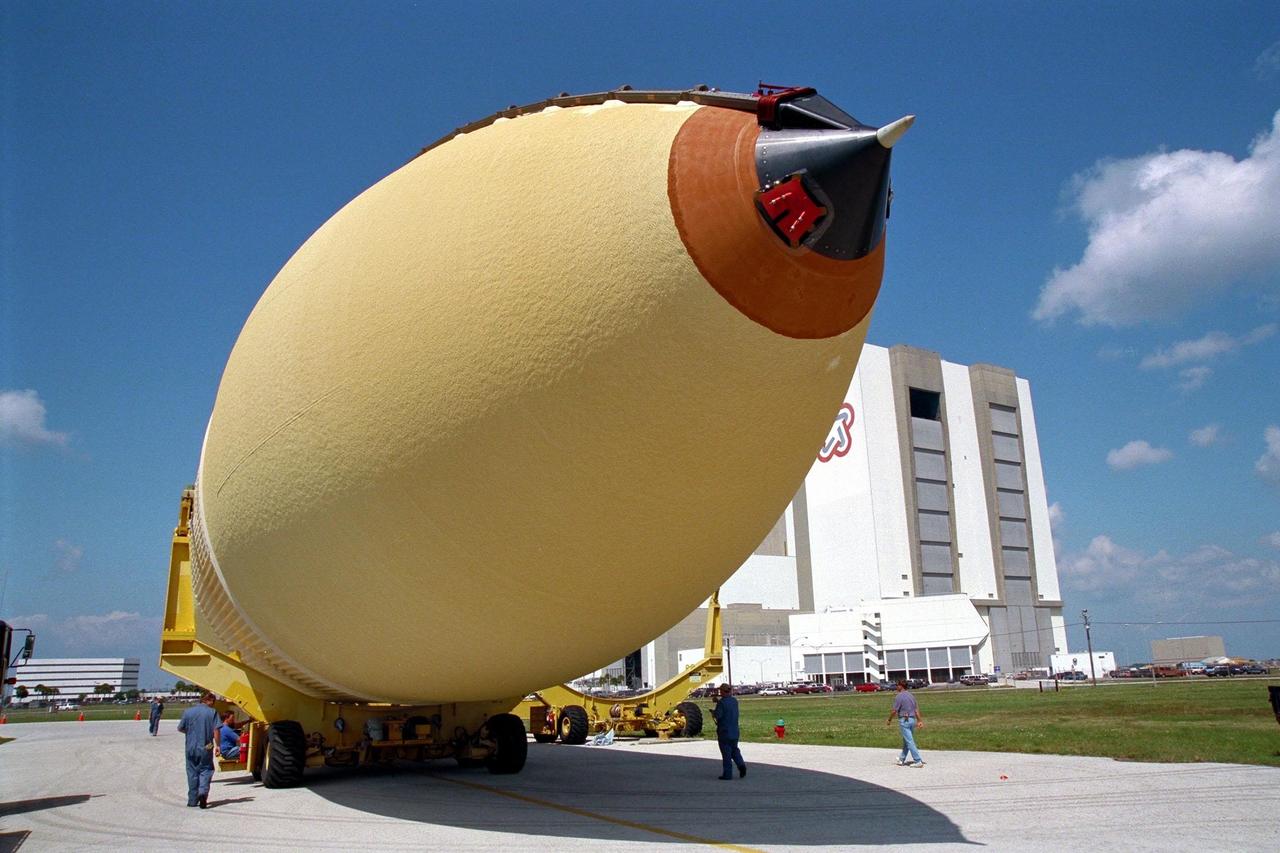
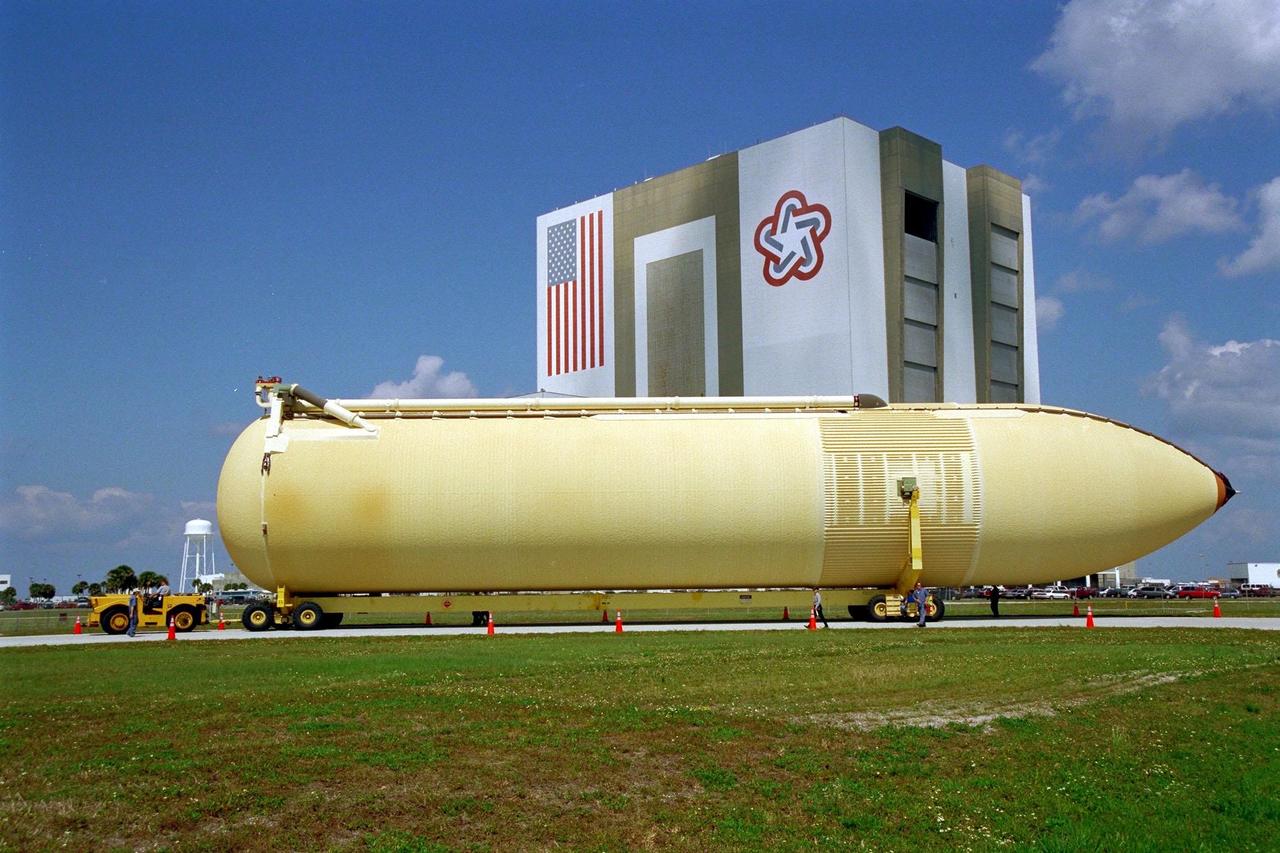
KENNEDY SPACE CENTER, FLA. -- The Space Shuttle's second lightweight external tank arrives at Kennedy Space Center and is moved to the Vehicle Assembly Building after removal from the barge by which it was delivered to the Launch Complex 39 Turn Basin. This external tank is slated for use on the STS-88 launch, the first International Space Station assembly flight. The improved tank is about 7,000 pounds lighter than its predecessors and was developed to increase the Shuttle payload capacity on International Space Station assembly flights. The tank was sent from the NASA Michoud Assembly Facility in New Orleans
KSC-98pc518
KENNEDY SPACE CENTER, FLA. -- The Space Shuttle's second lightweight external tank arrives at Kennedy Space Center and is moved to the Vehicle Assembly Building after removal from the barge by which it was delivered to the Launch Complex 39 Turn Basin. This external tank is slated for use on the STS-88 launch, the first International Space Station assembly flight. The improved tank is about 7,000 pounds lighter than its predecessors and was developed to increase the Shuttle payload capacity on International Space Station assembly flights. The tank was sent from the NASA Michoud Assembly Facility in New Orleans.
KSC-98pc517
KENNEDY SPACE CENTER, FLA. -- The Space Shuttle's second lightweight external tank arrives at Kennedy Space Center and is moved into the Vehicle Assembly Building after removal from the barge by which it was delivered to the Launch Complex 39 Turn Basin. This external tank is slated for use on the STS-88 launch, the first International Space Station assembly flight. The improved tank is about 7,000 pounds lighter than its predecessors and was developed to increase the Shuttle payload capacity on International Space Station assembly flights. The tank was sent from the NASA Michoud Assembly Facility in New Orleans
KSC-98pc519
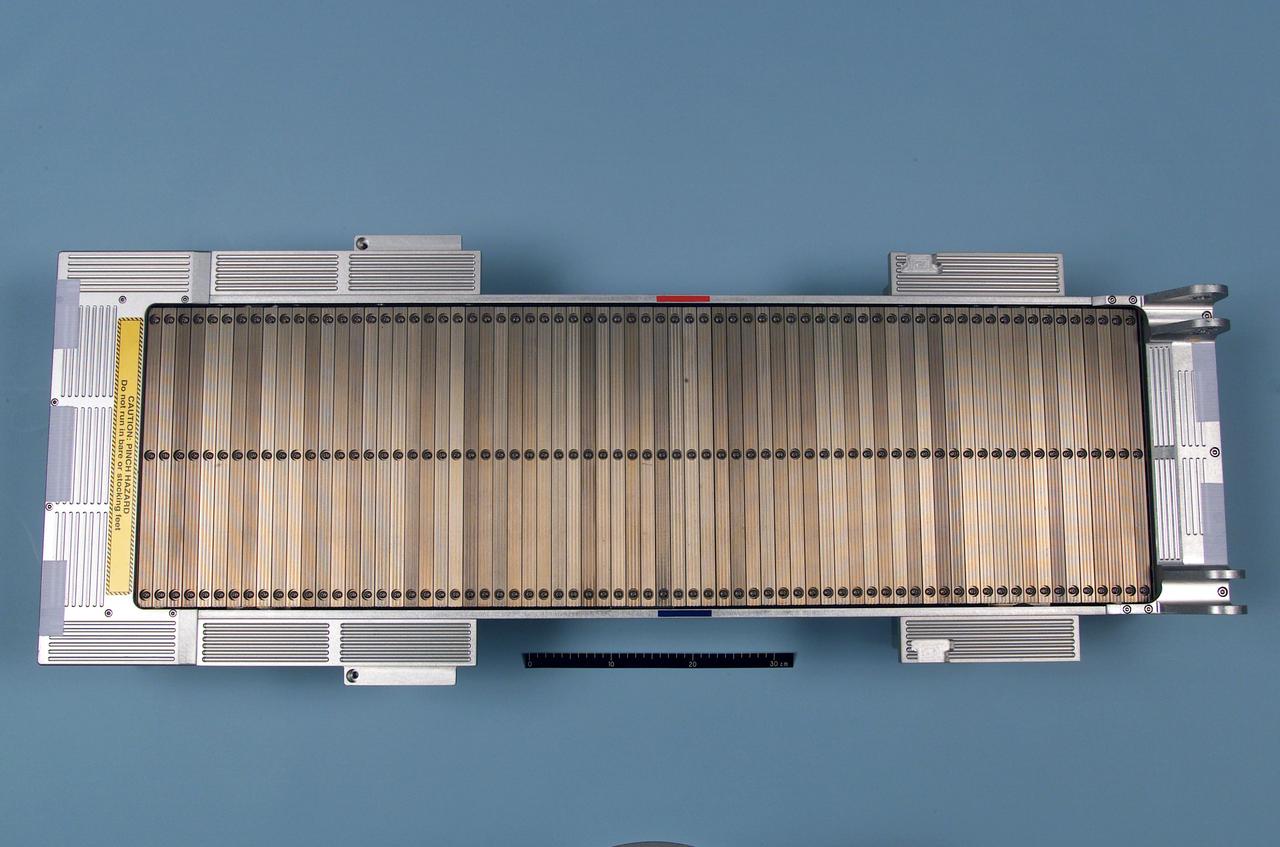
jsc2002e38738 (2002) --- Top view of the Treadmill Belt Assembly on the Treadmill Vibration Isolation System (TVIS) Chassis Assembly for use in the International Space Station (ISS) Service Module (SM).
SM, TVIS Chassis Assembly, Treadmill Belt Assembly, Top
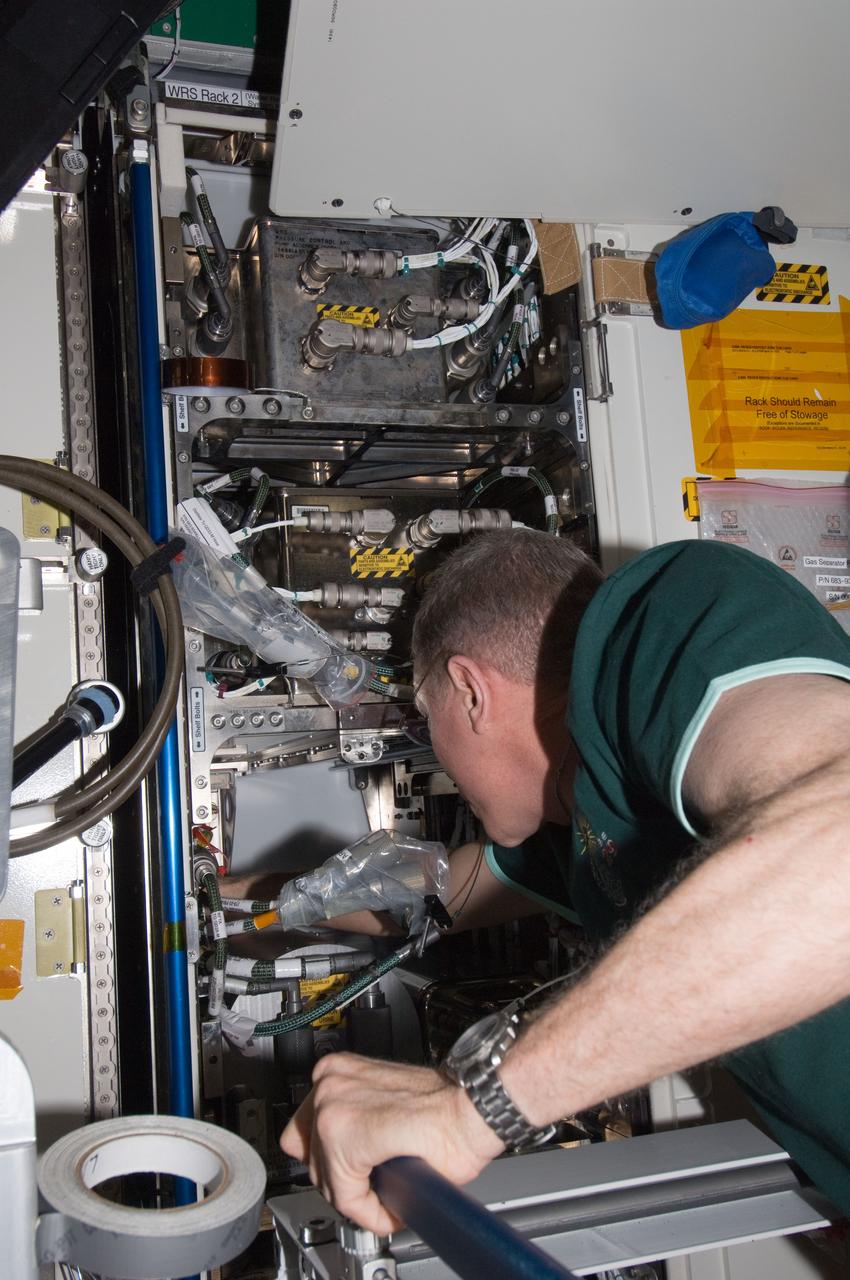
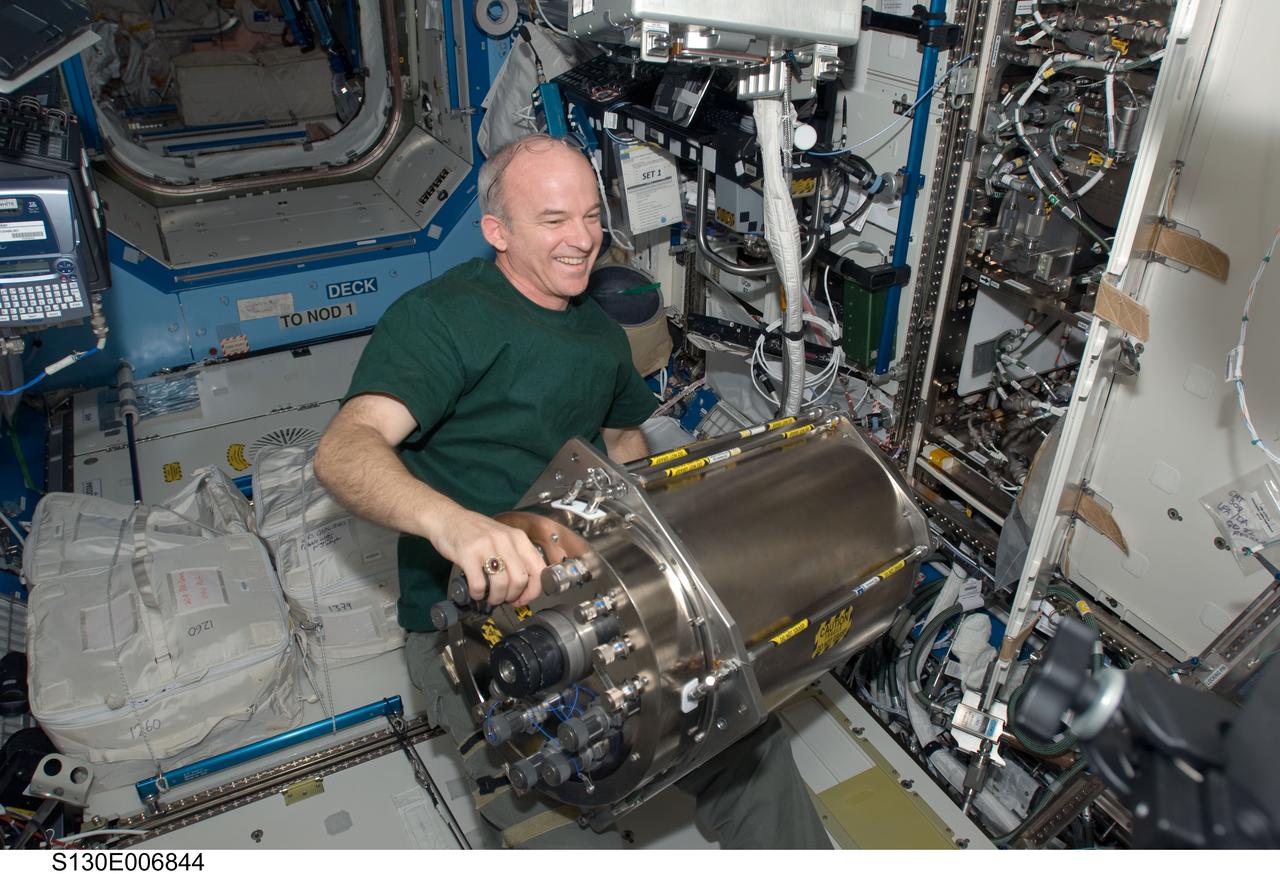
S130-E-006844 (10 Feb. 2010) --- NASA astronaut Jeffrey Williams, Expedition 22 commander, installs a Urine Processor Assembly / Distillation Assembly (UPA DA) in the Water Recovery System (WRS) rack in the Destiny laboratory of the International Space Station while space shuttle Endeavour (STS-130) remains docked with the station.
Williams in US Lab
iss072e518461 (Jan. 23, 2025) --- A spacesuit is pictured staged inside the International Space Station's Quest airlock ahead of a spacewalk planned for NASA astronauts Suni Williams and Butch Wilmore. The two spacewalkers are scheduled to exit the Quest airlock on Jan. 30 to remove a radio frequency group antenna assembly and search for microbes outside the orbital outpost. At top, spacesuit gloves are stowed above the spacesuits for easy access when astronauts are preparing to begin a spacewalk.
A spacesuit is pictured staged inside the Quest airlock
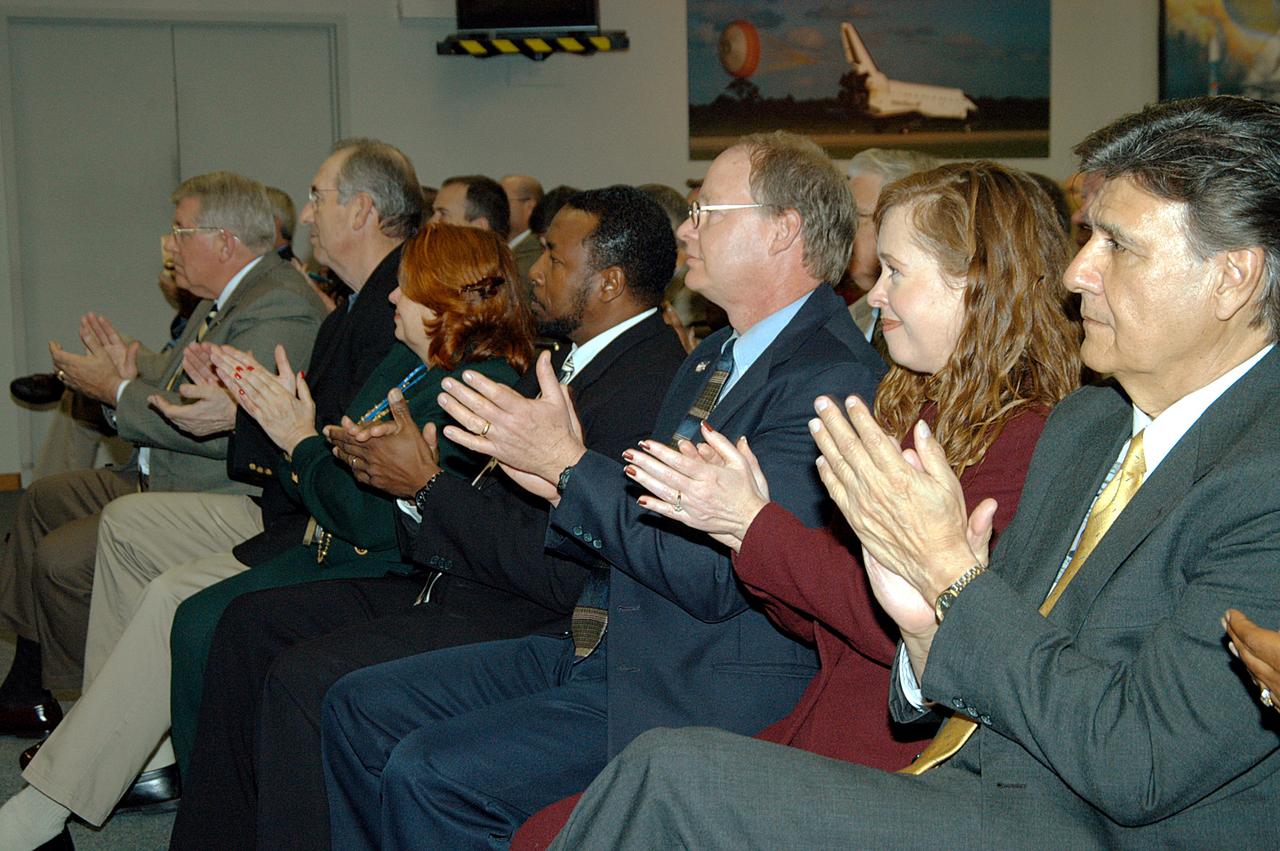
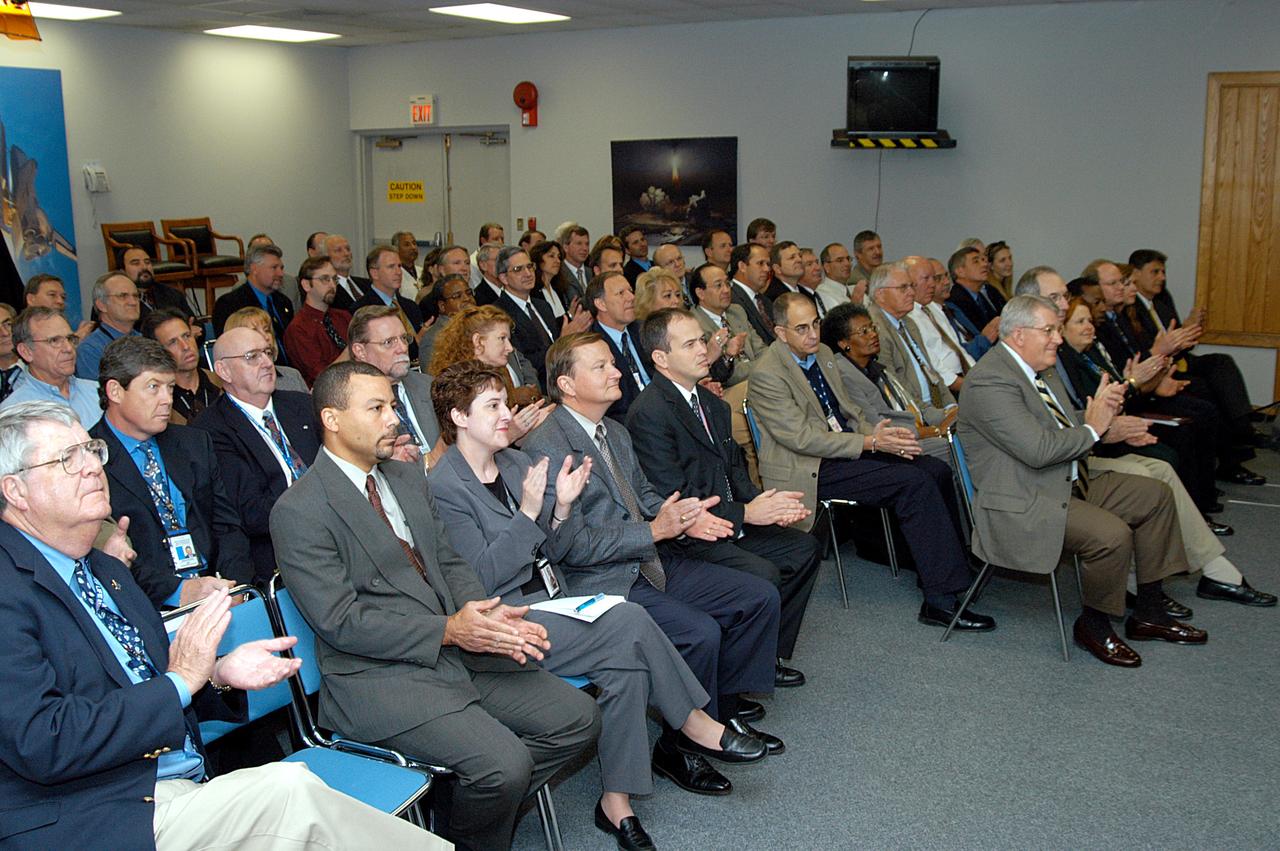
KENNEDY SPACE CENTER, FLA. -- In the KSC television studio, KSC management and other employees applaud President George W. Bush, who addressed the public and an assembly of government officials at NASA Headquarters as he outlined a new focus and vision for the space agency.  Seated in the front row, left to right, are Bill Pickavance vice president and associate program manager of Florida Operations, United Space Alliance (USA) ; Howard DeCastro, vice president and Space Shuttle program manager, USA; Shannon Roberts, with External Affairs; Woodrow Whitlow, KSC deputy director; Bruce Buckingham, assistant to Dr. Whitlow; Lisa Malone, director of External Affairs; Ken Aguilar, chief, Equal Opportunity office; and Cheryl Cox, External Affairs.  The President stated his goals for NASA’s new mission: Completing the International Space Station, retiring the Space Shuttle orbiters, developing a new crew exploration vehicle, and returning to the moon and beyond within the next two decades.   Pres. Bush was welcomed by NASA Administrator Sean O’Keefe and Expedition 8 Commander Michael Foale, who greeted him from the International Space Station.  Members of the Washington, D.C., audience included astronauts Eileen Collins, Ed Lu and Michael Lopez-Alegria, and former astronaut Gene Cernan.
KENNEDY SPACE CENTER, FLA. -- In the KSC television studio, KSC management and other employees applaud President George W. Bush, who addressed the public and an assembly of government officials at NASA Headquarters as he outlined a new focus and vision for the space agency. Seated in the front row, left to right, are Bill Pickavance vice president and associate program manager of Florida Operations, United Space Alliance (USA) ; Howard DeCastro, vice president and Space Shuttle program manager, USA; Shannon Roberts, with External Affairs; Woodrow Whitlow, KSC deputy director; Bruce Buckingham, assistant to Dr. Whitlow; Lisa Malone, director of External Affairs; Ken Aguilar, chief, Equal Opportunity office; and Cheryl Cox, External Affairs. The President stated his goals for NASA’s new mission: Completing the International Space Station, retiring the Space Shuttle orbiters, developing a new crew exploration vehicle, and returning to the moon and beyond within the next two decades. Pres. Bush was welcomed by NASA Administrator Sean O’Keefe and Expedition 8 Commander Michael Foale, who greeted him from the International Space Station. Members of the Washington, D.C., audience included astronauts Eileen Collins, Ed Lu and Michael Lopez-Alegria, and former astronaut Gene Cernan.
KENNEDY SPACE CENTER, FLA. -- In the KSC television studio, KSC management and other employees applaud President George W. Bush, who addressed the public and an assembly of government officials at NASA Headquarters as he outlined a new focus and vision for the space agency.  Seated in the front row, left to right, are Bill Pickavance vice president and associate program manager of Florida Operations, United Space Alliance (USA) ; Howard DeCastro, vice president and Space Shuttle program manager, USA; Shannon Roberts, with External Affairs; Woodrow Whitlow, KSC deputy director; Bruce Buckingham, assistant to Dr. Whitlow; Lisa Malone, director of External Affairs; and Ken Aguilar, chief, Equal Opportunity office.  The President stated his goals for NASA’s new mission: Completing the International Space Station, retiring the Space Shuttle orbiters, developing a new crew exploration vehicle, and returning to the moon and beyond within the next two decades.   Pres. Bush was welcomed by NASA Administrator Sean O’Keefe and Expedition 8 Commander Michael Foale, who greeted him from the International Space Station.  Members of the Washington, D.C., audience included astronauts Eileen Collins, Ed Lu and Michael Lopez-Alegria, and former astronaut Gene Cernan.
KENNEDY SPACE CENTER, FLA. -- In the KSC television studio, KSC management and other employees applaud President George W. Bush, who addressed the public and an assembly of government officials at NASA Headquarters as he outlined a new focus and vision for the space agency. Seated in the front row, left to right, are Bill Pickavance vice president and associate program manager of Florida Operations, United Space Alliance (USA) ; Howard DeCastro, vice president and Space Shuttle program manager, USA; Shannon Roberts, with External Affairs; Woodrow Whitlow, KSC deputy director; Bruce Buckingham, assistant to Dr. Whitlow; Lisa Malone, director of External Affairs; and Ken Aguilar, chief, Equal Opportunity office. The President stated his goals for NASA’s new mission: Completing the International Space Station, retiring the Space Shuttle orbiters, developing a new crew exploration vehicle, and returning to the moon and beyond within the next two decades. Pres. Bush was welcomed by NASA Administrator Sean O’Keefe and Expedition 8 Commander Michael Foale, who greeted him from the International Space Station. Members of the Washington, D.C., audience included astronauts Eileen Collins, Ed Lu and Michael Lopez-Alegria, and former astronaut Gene Cernan.
KENNEDY SPACE CENTER, FLA. -- From the KSC television studio, KSC management and other employees applaud President George W. Bush, who addressed the public and an assembly of government officials at NASA Headquarters, outlining a new focus and vision for the space agency.  Fourth from left is Mike Leinbach, Shuttle launch director; at right, front row, are Bill Pickavance vice president and associate program manager of Florida Operations, United Space Alliance (USA)  and Howard DeCastro, USA vice president and Space Shuttle program manager.  The President stated his goals for NASA’s new mission: Completing the International Space Station, retiring the Space Shuttle orbiters, developing a new crew exploration vehicle, and returning to the moon and beyond within the next two decades.   Pres. Bush was welcomed by NASA Administrator Sean O’Keefe and Expedition 8 Commander Michael Foale, who greeted him from the International Space Station.  Members of the Washington, D.C., audience included astronauts Eileen Collins, Ed Lu and Michael Lopez-Alegria, and former astronaut Gene Cernan.
KENNEDY SPACE CENTER, FLA. -- From the KSC television studio, KSC management and other employees applaud President George W. Bush, who addressed the public and an assembly of government officials at NASA Headquarters, outlining a new focus and vision for the space agency. Fourth from left is Mike Leinbach, Shuttle launch director; at right, front row, are Bill Pickavance vice president and associate program manager of Florida Operations, United Space Alliance (USA) and Howard DeCastro, USA vice president and Space Shuttle program manager. The President stated his goals for NASA’s new mission: Completing the International Space Station, retiring the Space Shuttle orbiters, developing a new crew exploration vehicle, and returning to the moon and beyond within the next two decades. Pres. Bush was welcomed by NASA Administrator Sean O’Keefe and Expedition 8 Commander Michael Foale, who greeted him from the International Space Station. Members of the Washington, D.C., audience included astronauts Eileen Collins, Ed Lu and Michael Lopez-Alegria, and former astronaut Gene Cernan.
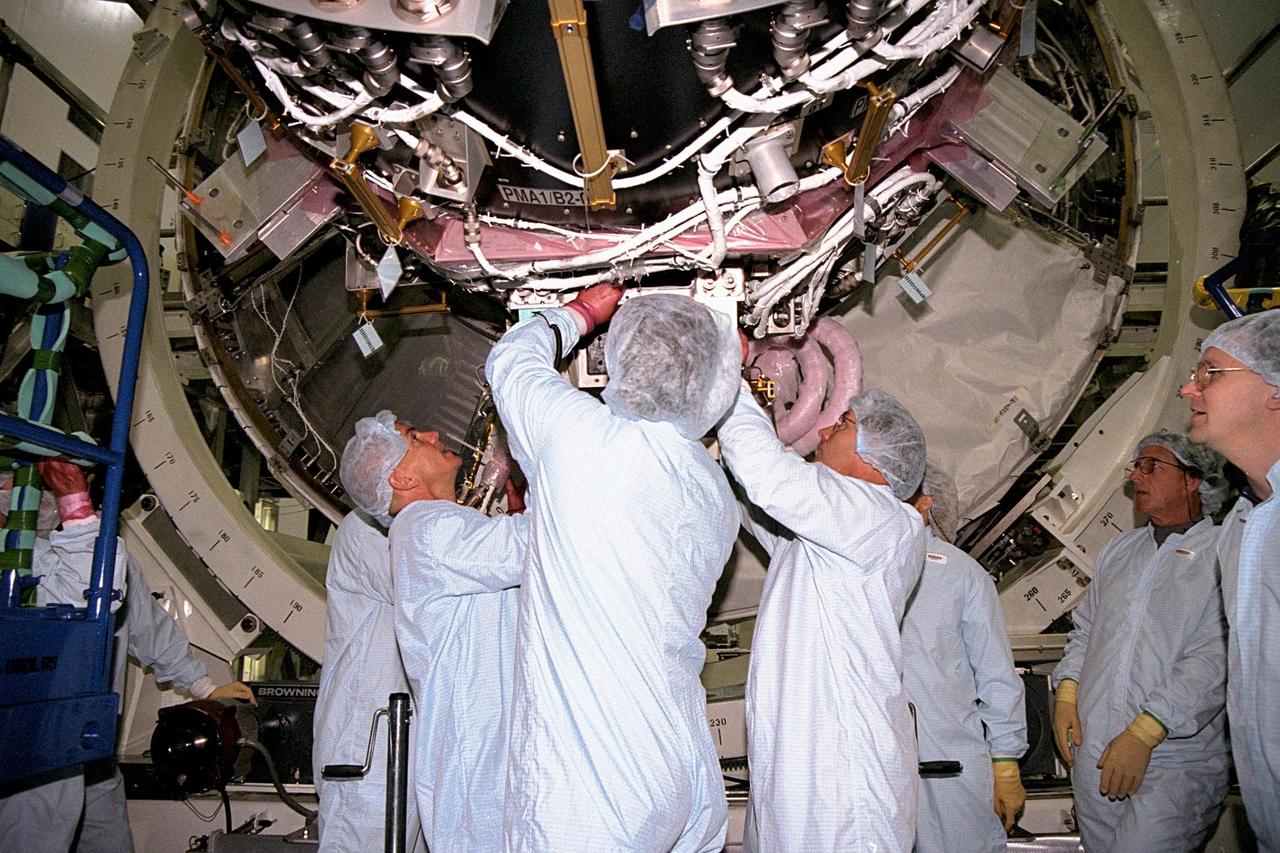
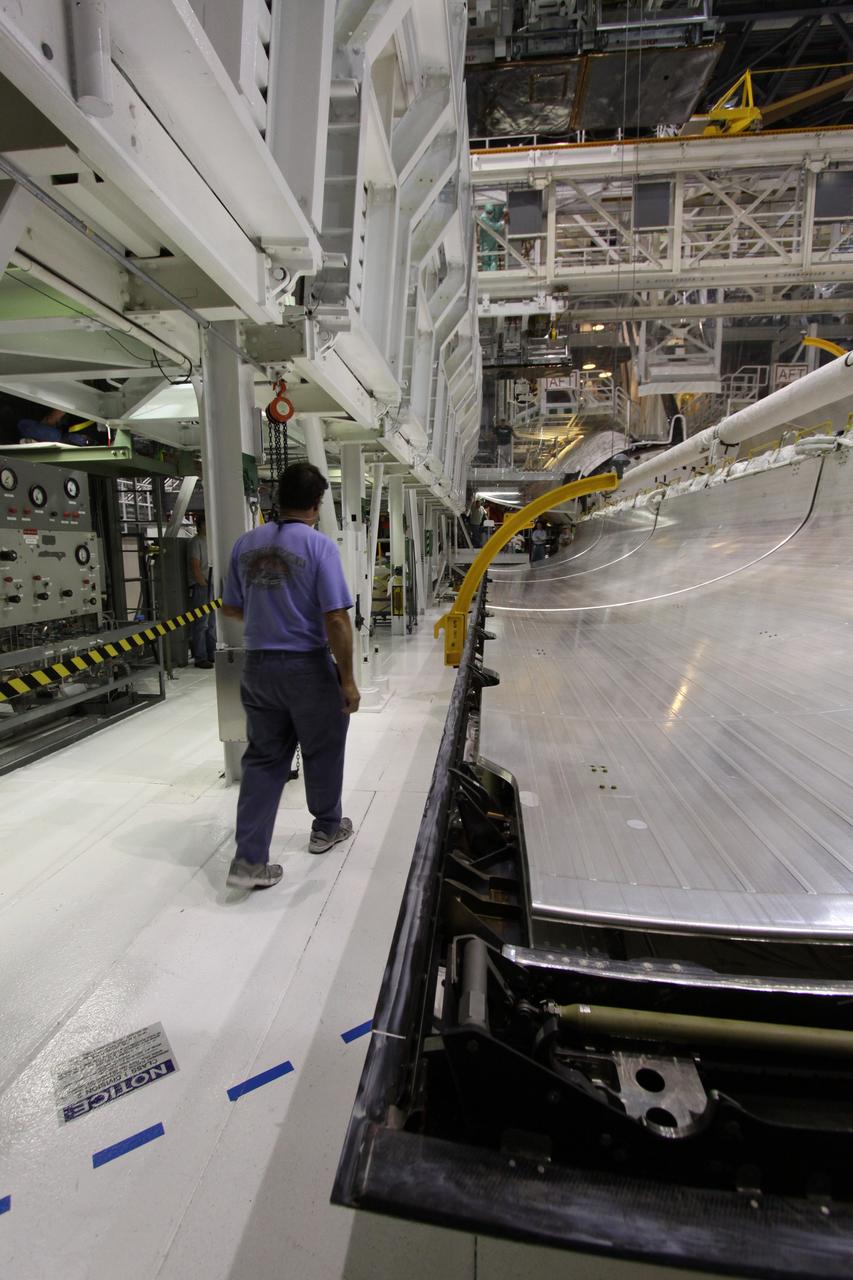
Boeing Company technicians assemble the S-1 truss (starboard side truss) for the International Space Station at the Marshall Space Flight Center.
International Space Station (ISS)
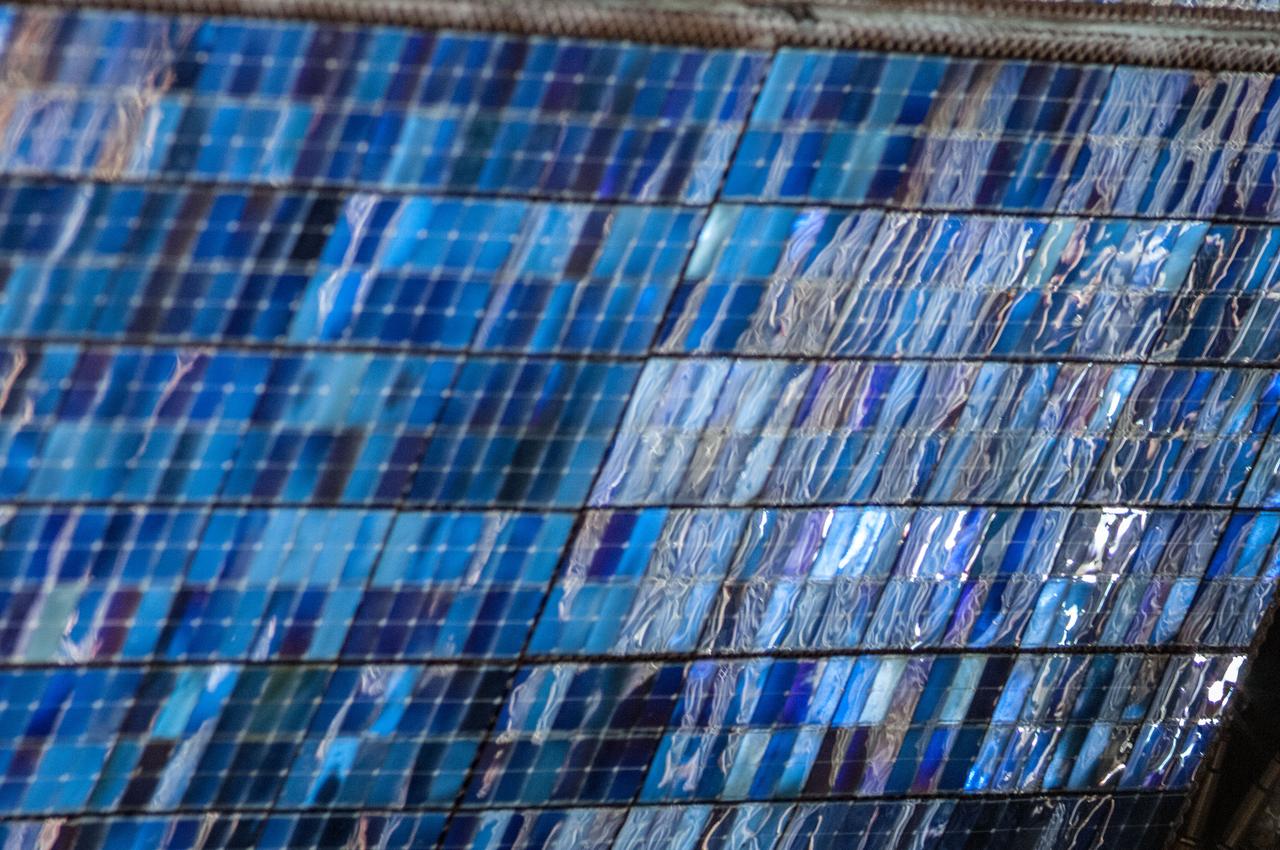
View of FGB solar array panels taken during Russian extravehicular activity (EVA) 36 in support of assembly and maintenance on the International Space Station.
Russian EVA 36
iss070e021451 (Nov. 7, 2023) --- Three near-assembled spacesuits, with their gloves unattached, are pictured inside the International Space Station's Quest airlock ahead of an upcoming spacewalk.
iss070e021451
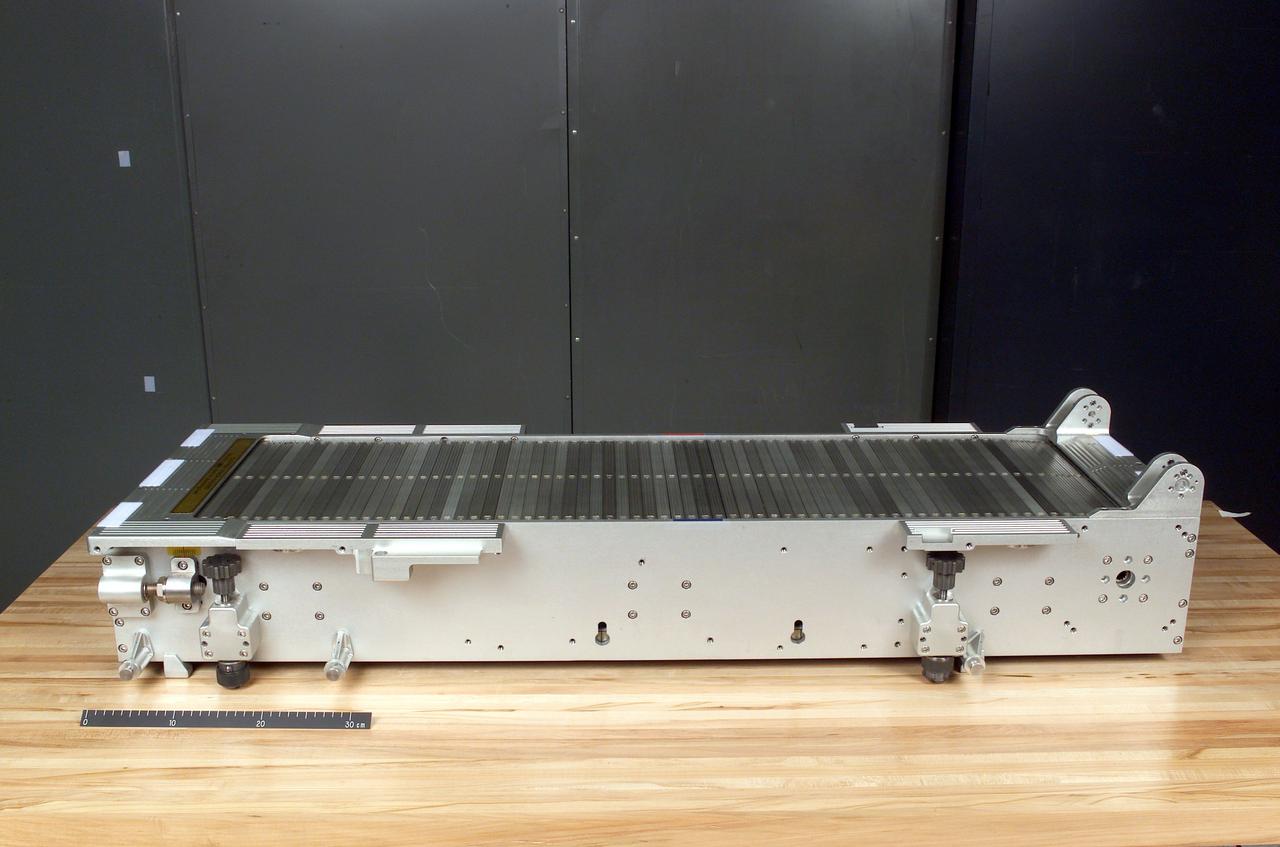
jsc2002e38731 (2002) --- Overall oblique view of the Treadmill Vibration Isolation System (TVIS) Chassis Assembly for use in the International Space Station (ISS) Service Module (SM).
SM, TVIS Chassis Assembly, Overall, Oblique
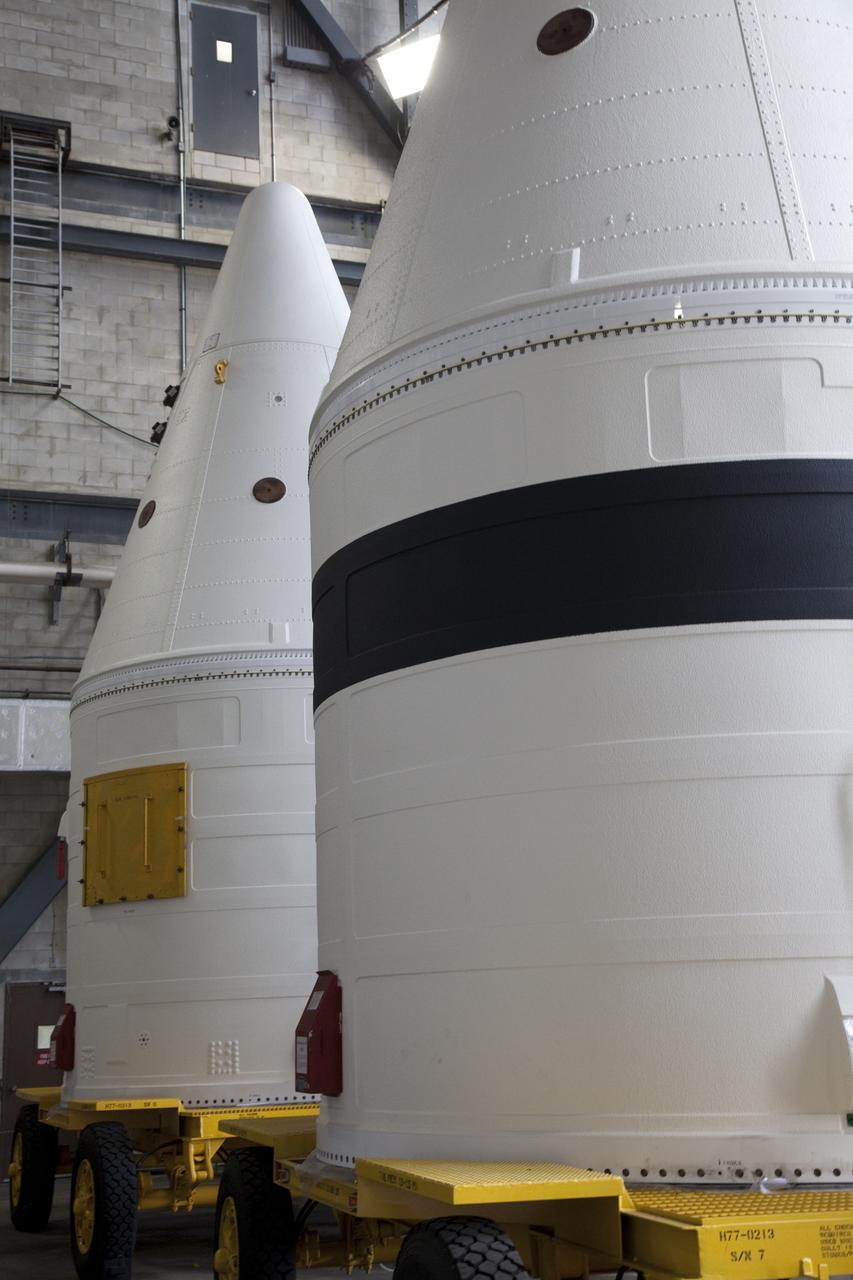
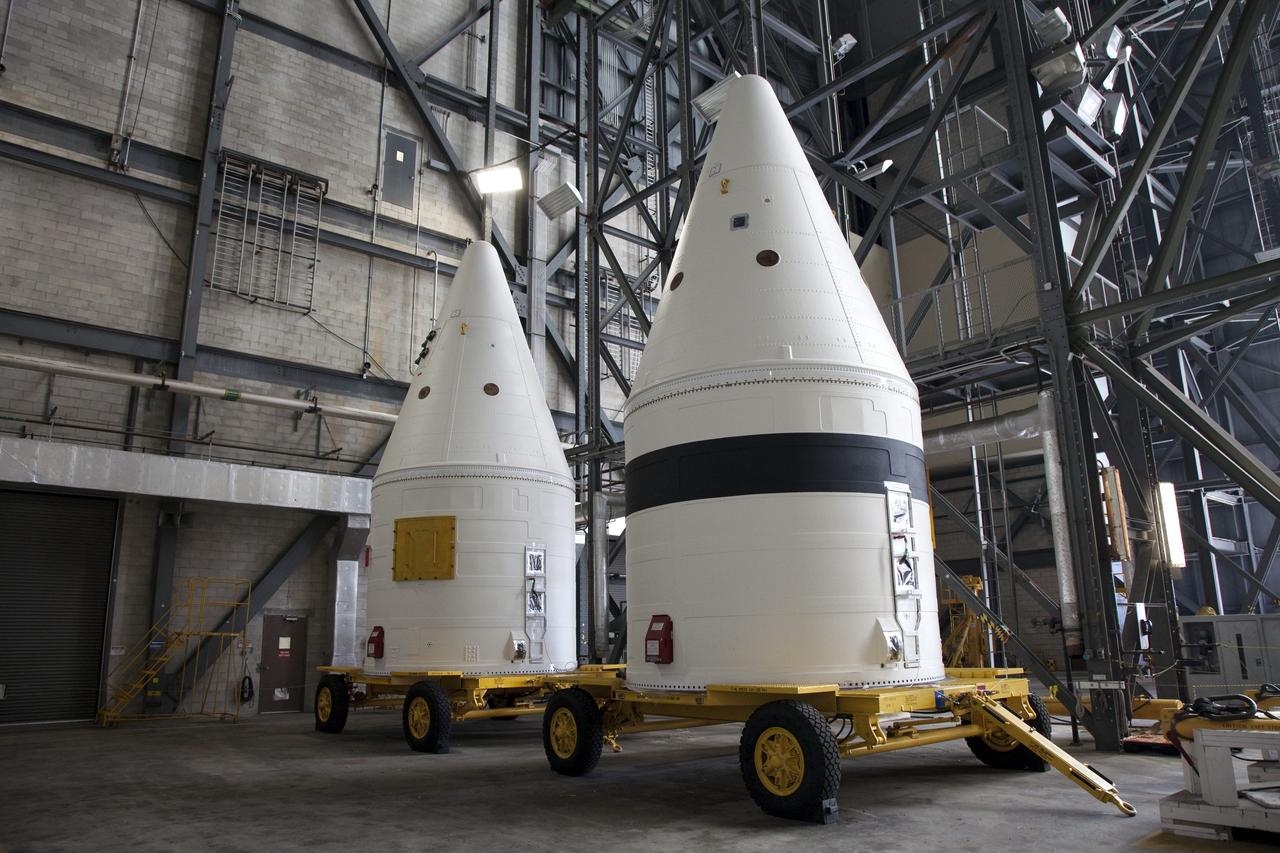
CAPE CANAVERAL, Fla. -- At NASA's Kennedy Space Center in Florida, the Space Shuttle Program's final solid rocket booster assembly is stationed in the transfer aisle of the Vehicle Assembly Building. The right and left forward assemblies, which were refurbished and processed at Kennedy, are comprised of three components -- nose cap, frustum and forward skirt. Inside the Vehicle Assembly Building, the boosters will be stacked and then joined to an external fuel tank and space shuttle Atlantis for the STS-135 mission to the International Space Station. STS-135 is targeted to launch June 28, and will be the last spaceflight for the Space Shuttle Program. Photo credit: NASA/Frank Michaux
KSC-2011-1126
CAPE CANAVERAL, Fla. -- At NASA's Kennedy Space Center in Florida, the Space Shuttle Program's final solid rocket booster assembly is stationed in the transfer aisle of the Vehicle Assembly Building. The right and left forward assemblies, which were refurbished and processed at Kennedy, are comprised of three components -- nose cap, frustum and forward skirt. Inside the Vehicle Assembly Building, the boosters will be stacked and then joined to an external fuel tank and space shuttle Atlantis for the STS-135 mission to the International Space Station. STS-135 is targeted to launch June 28, and will be the last spaceflight for the Space Shuttle Program. Photo credit: NASA/Frank Michaux
KSC-2011-1127
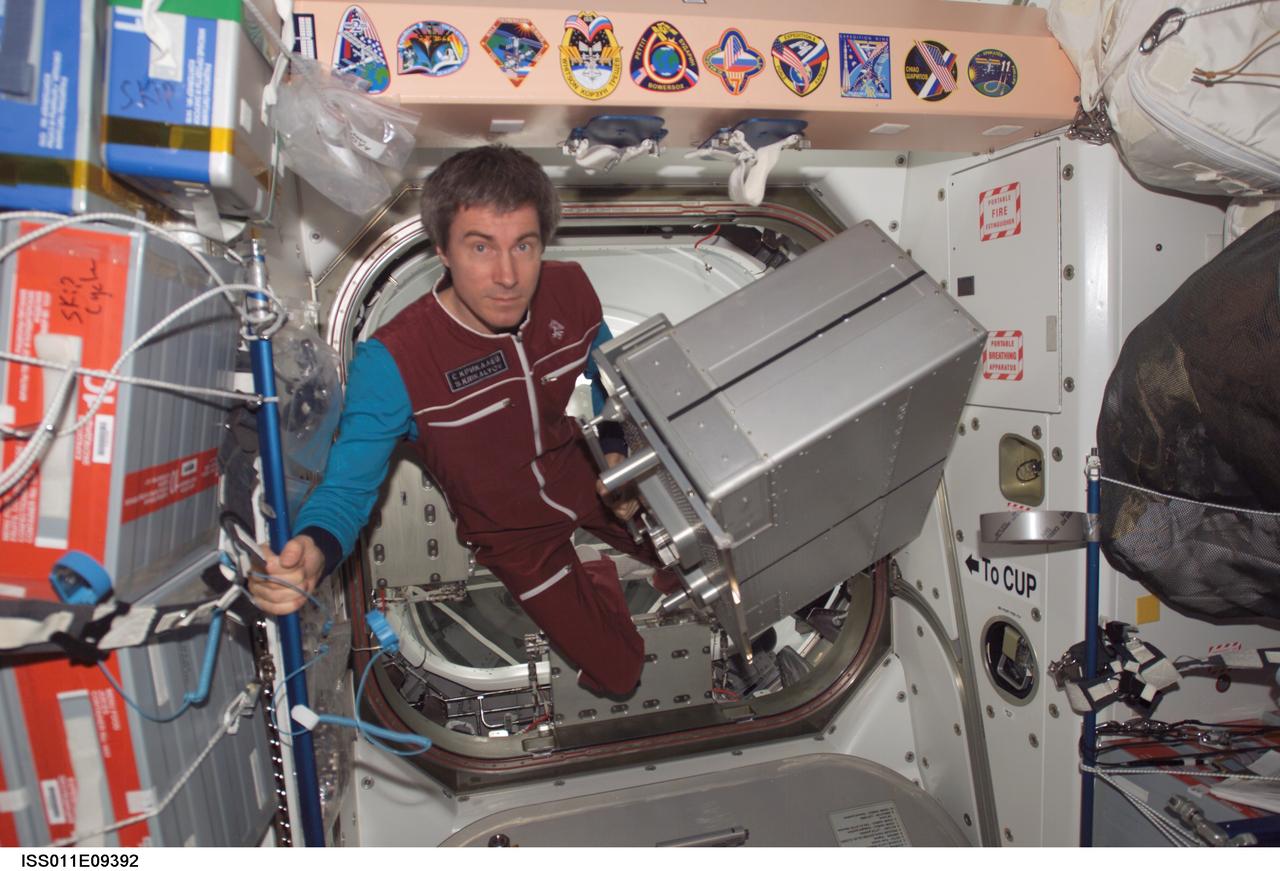
ISS011-E-09392 (21 June 2005) --- Cosmonaut Sergei K. Krikalev, Expedition 11 commander representing Russia's Federal Space Agency, moves one of the two Control Panel Assemblies (CPA) from the Unity node’s Common Berthing Assembly (CBA) on the International Space Station (ISS).
Krikalev with CPAs in Node 1/Unity CBA
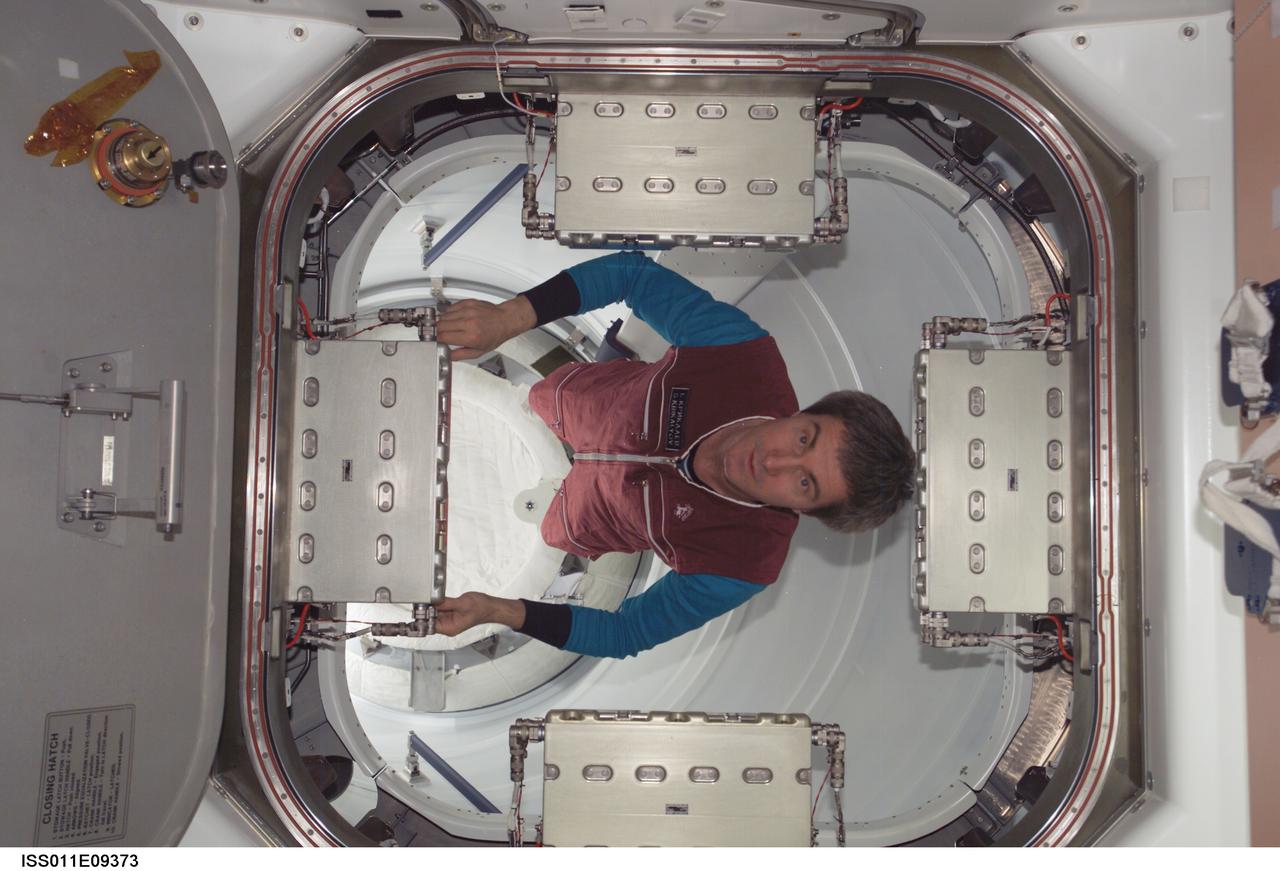
ISS011-E-09373 (21 June 2005) --- Cosmonaut Sergei K. Krikalev, Expedition 11 commander representing Russia's Federal Space Agency, prepares to uninstall two of the four Control Panel Assemblies (CPA) from the Unity node’s Common Berthing Assembly (CBA) on the International Space Station (ISS).
Krikalev with CPAs in Node 1/Unity CBA
CAPE CANAVERAL, Fla. – In the Space Station Processing Facility at NASA's Kennedy Space Center in Florida,  a crane moves the plasma contactor unit, or PCU, that will be installed on the Express Logistics Carrier, or ELC.  The PCU is used to disperse electrical charge build-ups on the International Space Station. The carrier is part of the STS-129 payload on space shuttle Atlantis, which will deliver to the International Space Station two spare gyroscopes, two nitrogen tank assemblies, two pump modules, an ammonia tank assembly and a spare latching end effector for the station's robotic arm. STS-129 is targeted to launch Nov. 12.  Photo credit: NASA/Jack Pfaller
KSC-2009-5129
CAPE CANAVERAL, Fla. – In the Space Station Processing Facility at NASA's Kennedy Space Center in Florida,  a crane lowers the plasma contactor unit, or PCU, that will be installed on the Express Logistics Carrier, or ELC.  The PCU is used to disperse electrical charge build-ups on the International Space Station.  The carrier is part of the STS-129 payload on space shuttle Atlantis, which will deliver to the International Space Station two spare gyroscopes, two nitrogen tank assemblies, two pump modules, an ammonia tank assembly and a spare latching end effector for the station's robotic arm. STS-129 is targeted to launch Nov. 12.  Photo credit: NASA/Jack Pfaller
KSC-2009-5131
CAPE CANAVERAL, Fla. – In the Space Station Processing Facility at NASA's Kennedy Space Center in Florida,  a crane lifts the plasma contactor unit, or PCU, that will be installed on the Express Logistics Carrier, or ELC.  The PCU is used to disperse electrical charge build-ups on the International Space Station. The carrier is part of the STS-129 payload on space shuttle Atlantis, which will deliver to the International Space Station two spare gyroscopes, two nitrogen tank assemblies, two pump modules, an ammonia tank assembly and a spare latching end effector for the station's robotic arm. STS-129 is targeted to launch Nov. 12.  Photo credit: NASA/Jack Pfaller
KSC-2009-5127
CAPE CANAVERAL, Fla. – In the Space Station Processing Facility at NASA's Kennedy Space Center in Florida,  a crane lifts the plasma contactor unit, or PCU, that will be installed on the Express Logistics Carrier, or ELC.  The PCU is used to disperse electrical charge build-ups on the International Space Station.  The carrier is part of the STS-129 payload on space shuttle Atlantis, which will deliver to the International Space Station two spare gyroscopes, two nitrogen tank assemblies, two pump modules, an ammonia tank assembly and a spare latching end effector for the station's robotic arm. STS-129 is targeted to launch Nov. 12.  Photo credit: NASA/Jack Pfaller
KSC-2009-5126
CAPE CANAVERAL, Fla. – In the Space Station Processing Facility at NASA's Kennedy Space Center in Florida,  a crane lowers the plasma contactor unit, or PCU, that will be installed on the Express Logistics Carrier, or ELC.  The PCU is used to disperse electrical charge build-ups on the International Space Station. The carrier is part of the STS-129 payload on space shuttle Atlantis, which will deliver to the International Space Station two spare gyroscopes, two nitrogen tank assemblies, two pump modules, an ammonia tank assembly and a spare latching end effector for the station's robotic arm. STS-129 is targeted to launch Nov. 12.  Photo credit: NASA/Jack Pfaller
KSC-2009-5130
CAPE CANAVERAL, Fla. – In the Space Station Processing Facility at NASA's Kennedy Space Center in Florida,  a crane moves the plasma contactor unit, or PCU, that will be installed on the Express Logistics Carrier, or ELC.  The PCU is used to disperse electrical charge build-ups on the International Space Station. The carrier is part of the STS-129 payload on space shuttle Atlantis, which will deliver to the International Space Station two spare gyroscopes, two nitrogen tank assemblies, two pump modules, an ammonia tank assembly and a spare latching end effector for the station's robotic arm. STS-129 is targeted to launch Nov. 12.  Photo credit: NASA/Jack Pfaller
KSC-2009-5128
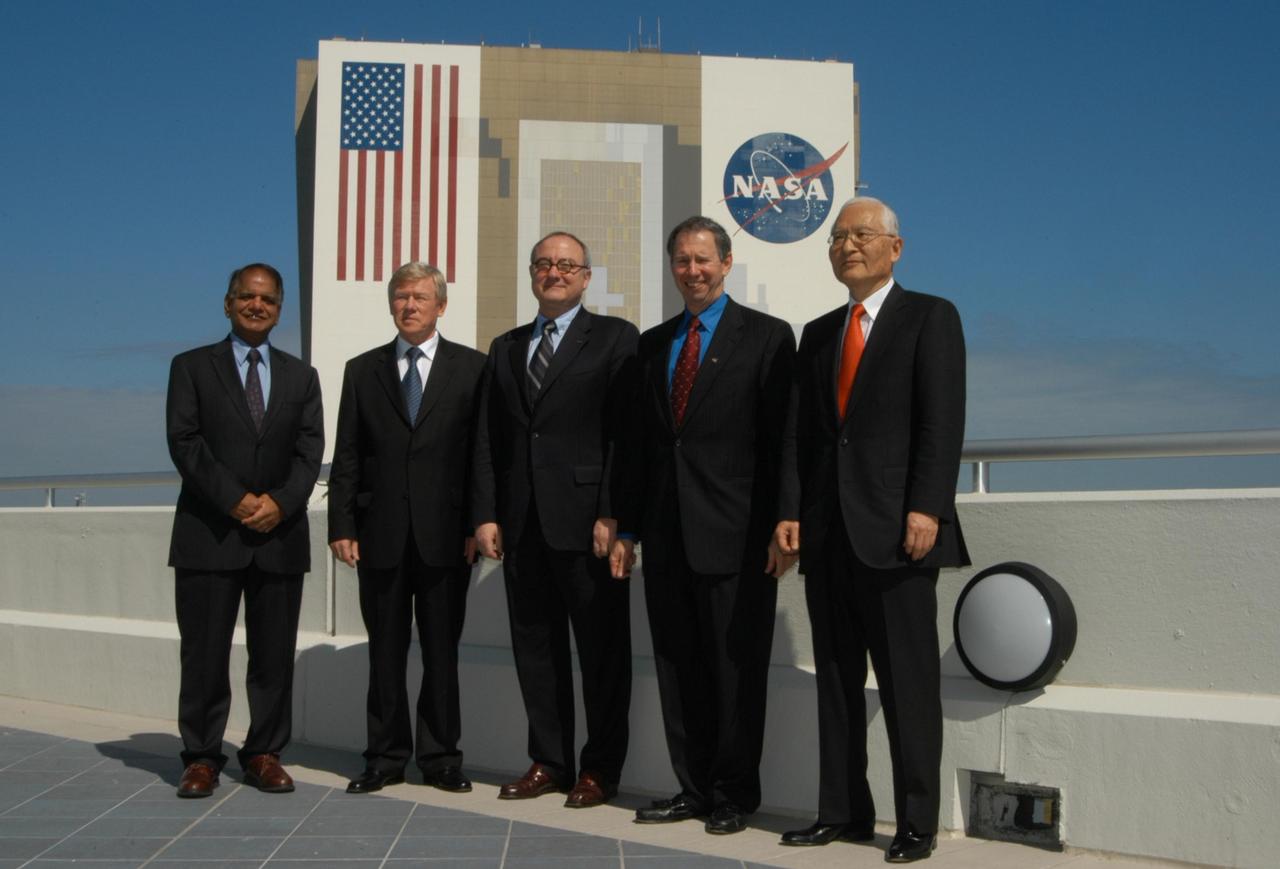
KENNEDY SPACE CENTER, FLA.  - Leaders from space agencies around the world take a moment from the International Space Station Heads of Agency meeting being held at Kennedy Space Center for a group portrait in front of the Vehicle Assembly Building.  From left are Canadian Space Agency Vice-President Space Science, Technology and Programs Virendra Jha; Russian Federal Space Agency Head Anatolii Perminov; European Space Agency Director-General Jean-Jacques Dordain; NASA Administrator Michael Griffin; and Japan Aerospace Exploration Agency President Keiji Tachikawa.  The purpose of the meeting is to review International Space Station cooperation and endorse a revision to the station configuration and assembly sequence.
KSC-06pd0415
KENNEDY SPACE CENTER, FLA. -    STS-120 Mission Specialists Piers Sellers and Michael Foreman check out the inside of the Japanese Experiment Module (JEM) Pressurized Module located in the Space Station Processing Facility. Known as Kibo, the JEM consists of six components: two research facilities -- the Pressurized Module and Exposed Facility; a Logistics Module attached to each of them; a Remote Manipulator System; and an Inter-Orbit Communication System unit. Kibo also has a scientific airlock through which experiments are transferred and exposed to the external environment of space. The various components of JEM will be assembled in space over the course of three Space Shuttle missions.  The STS-120 mission will deliver the second of three Station connecting modules, Node 2, which attaches to the end of U.S. Lab.  It will provide attach locations for the JEM, European laboratory, the Centrifuge Accommodation Module and later Multi-Purpose Logistics Modules.  The addition of Node 2 will complete the U.S. core of the International Space Station.
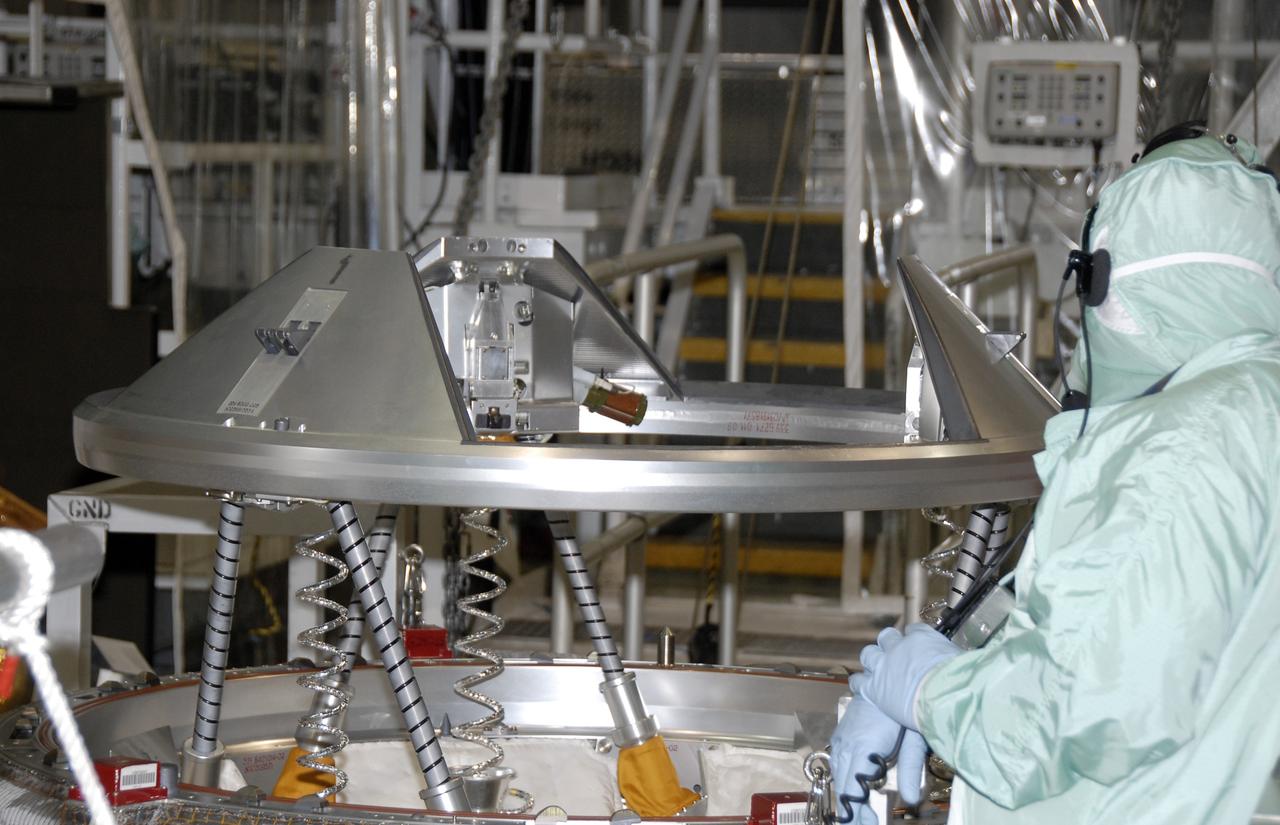
KENNEDY SPACE CENTER, FLA. - STS-120 Mission Specialists Piers Sellers and Michael Foreman check out the inside of the Japanese Experiment Module (JEM) Pressurized Module located in the Space Station Processing Facility. Known as Kibo, the JEM consists of six components: two research facilities -- the Pressurized Module and Exposed Facility; a Logistics Module attached to each of them; a Remote Manipulator System; and an Inter-Orbit Communication System unit. Kibo also has a scientific airlock through which experiments are transferred and exposed to the external environment of space. The various components of JEM will be assembled in space over the course of three Space Shuttle missions. The STS-120 mission will deliver the second of three Station connecting modules, Node 2, which attaches to the end of U.S. Lab. It will provide attach locations for the JEM, European laboratory, the Centrifuge Accommodation Module and later Multi-Purpose Logistics Modules. The addition of Node 2 will complete the U.S. core of the International Space Station.
KENNEDY SPACE CENTER, FLA. - In the Space Station Processing Facility, STS-120 Mission Specialists Michael Foreman (third from right) and STS-115 Mission Specialists Joseph Tanner (second from right) and Heidemarie Stefanyshyn-Piper (right) look over the Japanese Experiment Module (JEM) Pressurized Module. Known as Kibo, the JEM consists of six components: two research facilities -- the Pressurized Module and Exposed Facility; a Logistics Module attached to each of them; a Remote Manipulator System; and an Inter-Orbit Communication System unit. Kibo also has a scientific airlock through which experiments are transferred and exposed to the external environment of space. The various components of JEM will be assembled in space over the course of three Space Shuttle missions.  STS-115 will deliver the second port truss segment, the P3/P4 Truss, to attach to the first port truss segment, the P1 Truss, as well as deploy solar array sets 2A and 4A.. STS-120 will deliver the second of three Station connecting modules, Node 2, which attaches to the end of U.S. Lab.  It will provide attach locations for the Japanese laboratory, European laboratory, the Centrifuge  Accommodation Module and later Multi-Purpose Logistics Modules.  The addition of Node 2 will complete the U.S. core of the International Space Station.
KENNEDY SPACE CENTER, FLA. - In the Space Station Processing Facility, STS-120 Mission Specialists Michael Foreman (third from right) and STS-115 Mission Specialists Joseph Tanner (second from right) and Heidemarie Stefanyshyn-Piper (right) look over the Japanese Experiment Module (JEM) Pressurized Module. Known as Kibo, the JEM consists of six components: two research facilities -- the Pressurized Module and Exposed Facility; a Logistics Module attached to each of them; a Remote Manipulator System; and an Inter-Orbit Communication System unit. Kibo also has a scientific airlock through which experiments are transferred and exposed to the external environment of space. The various components of JEM will be assembled in space over the course of three Space Shuttle missions. STS-115 will deliver the second port truss segment, the P3/P4 Truss, to attach to the first port truss segment, the P1 Truss, as well as deploy solar array sets 2A and 4A.. STS-120 will deliver the second of three Station connecting modules, Node 2, which attaches to the end of U.S. Lab. It will provide attach locations for the Japanese laboratory, European laboratory, the Centrifuge Accommodation Module and later Multi-Purpose Logistics Modules. The addition of Node 2 will complete the U.S. core of the International Space Station.
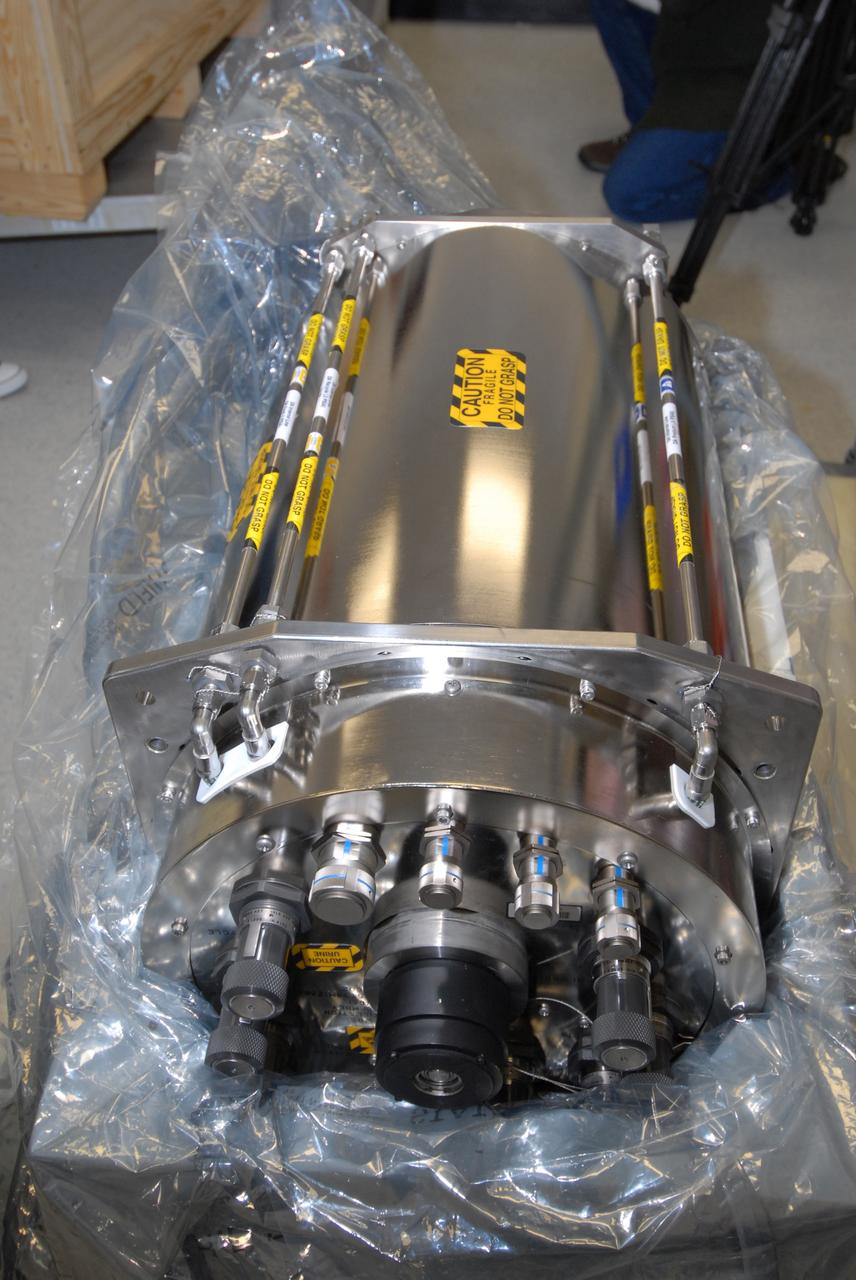
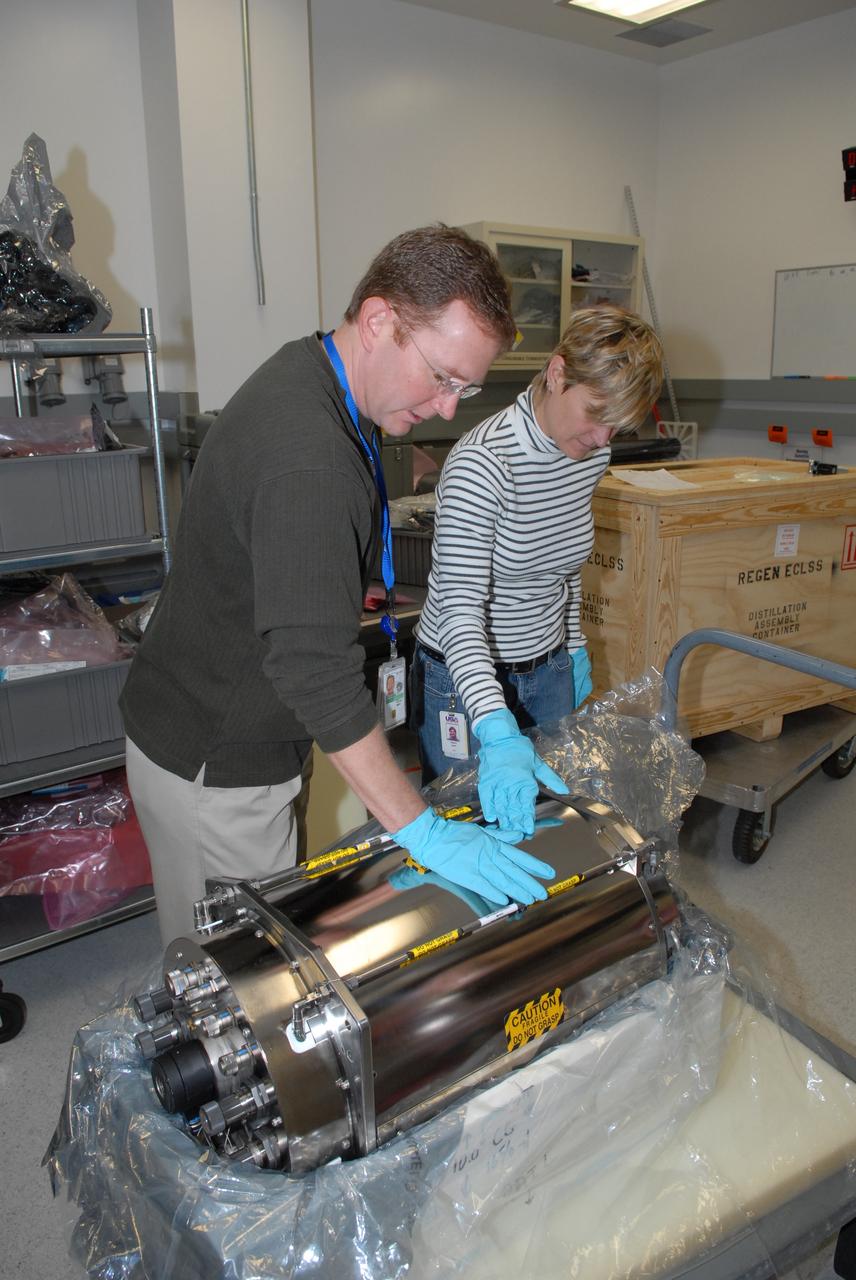
CAPE CANAVERAL, Fla. – A replacement distillation assembly for the International Space Station's new water recycling system is being checked out in the Space Station Processing Facility at NASA's Kennedy Space Center in Florida. The unit is part of the Urine Processing Assembly that removes impurities from urine in an early stage of the recycling process.  It will be flown to the station aboard space shuttle Discovery on the STS-119 mission. Photo credit: NASA/Jack Pfaller
KSC-2009-1514
CAPE CANAVERAL, Fla. –  A replacement distillation assembly for the International Space Station's new water recycling system is being checked out in the Space Station Processing Facility at NASA's Kennedy Space Center in Florida. The unit is part of the Urine Processing Assembly that removes impurities from urine in an early stage of the recycling process.  It will be flown to the station aboard space shuttle Discovery on the STS-119 mission. Photo credit: NASA/Jack Pfaller
KSC-2009-1515
CAPE CANAVERAL, Fla. – In NASA Kennedy Space Center's Space Station Processing Facility, an overhead crane moves the Express Logistics Carrier, or ELC, to a rotation stand.  The carrier is part of the STS-129 payload on space shuttle Atlantis, which will deliver to the International Space Station two spare gyroscopes, two nitrogen tank assemblies, two pump modules, an ammonia tank assembly and a spare latching end effector for the station's robotic arm. STS-129 is targeted to launch Nov. 12.  Photo credit: NASA/Kim Shiflett
KSC-2009-4687
CAPE CANAVERAL, Fla. –  A closeup of the replacement distillation assembly for the International Space Station's new water recycling system being checked out in the Space Station Processing Facility at NASA's Kennedy Space Center in Florida. The unit is part of the Urine Processing Assembly that removes impurities from urine in an early stage of the recycling process.  It will be flown to the station aboard space shuttle Discovery on the STS-119 mission.  Photo credit: NASA/Jack Pfaller
KSC-2009-1516
CAPE CANAVERAL, Fla. – In NASA Kennedy Space Center's Space Station Processing Facility, an overhead crane moves the Express Logistics Carrier, or ELC, to a rotation stand.  The carrier is part of the STS-129 payload on space shuttle Atlantis, which will deliver to the International Space Station two spare gyroscopes, two nitrogen tank assemblies, two pump modules, an ammonia tank assembly and a spare latching end effector for the station's robotic arm. STS-129 is targeted to launch Nov. 12.  Photo credit: NASA/Kim Shiflett
KSC-2009-4686
CAPE CANAVERAL, Fla. – Inside the Space Station Processing Facility at NASA's Kennedy Space Center in Florida, a crane lifts the EXPRESS Logistics Carrier tomove it to a stand.  The carrier is part of the payload on space shuttle Atlantis, which will deliver to the International Space Station components including two spare gyroscopes, two nitrogen tank assemblies, two pump modules, an ammonia tank assembly and a spare latching end effector for the station's robotic arm.  STS-129 is targeted to launch Nov. 12.  Photo credit: NASA/Tim Jacobs
KSC-2009-2248
CAPE CANAVERAL, Fla. – Inside the Space Station Processing Facility at NASA's Kennedy Space Center in Florida, a crane carries the EXPRESS Logistics Carrier toward a stand. The carrier is part of the payload on space shuttle Atlantis, which will deliver to the International Space Station components including two spare gyroscopes, two nitrogen tank assemblies, two pump modules, an ammonia tank assembly and a spare latching end effector for the station's robotic arm.  STS-129 is targeted to launch Nov. 12.  Photo credit: NASA/Tim Jacobs
KSC-2009-2249
CAPE CANAVERAL, Fla. – Inside the Space Station Processing Facility at NASA's Kennedy Space Center in Florida, a crane lowers the EXPRESS Logistics Carrier onto a stand. The carrier is part of the payload on space shuttle Atlantis, which will deliver to the International Space Station components including two spare gyroscopes, two nitrogen tank assemblies, two pump modules, an ammonia tank assembly and a spare latching end effector for the station's robotic arm.  STS-129 is targeted to launch Nov. 12.  Photo credit: NASA/Tim Jacobs
KSC-2009-2250
CAPE CANAVERAL, Fla. – In NASA Kennedy Space Center's Space Station Processing Facility, an overhead crane moves the Express Logistics Carrier, or ELC, to a rotation stand. The carrier is part of the STS-129 payload on space shuttle Atlantis, which will deliver to the International Space Station two spare gyroscopes, two nitrogen tank assemblies, two pump modules, an ammonia tank assembly and a spare latching end effector for the station's robotic arm. STS-129 is targeted to launch Nov. 12.  Photo credit: NASA/Kim Shiflett
KSC-2009-4685
CAPE CANAVERAL, Fla. – In the Space Station Processing Facility at NASA's Kennedy Space Center in Florida, technicians check the nitrogen tank assembly closely as an overhead crane lifts and moves it to the Express Logistics Carrier 1, or ELC-1. The carrier is part of the STS-129 payload on space shuttle Atlantis, which will deliver to the International Space Station two spare gyroscopes, two nitrogen tank assemblies, two pump modules, an ammonia tank assembly and a spare latching end effector for the station's robotic arm. STS-129 is targeted to launch Nov. 12. Photo credit: NASA/Jim Grossmann
KSC-2009-4713
CAPE CANAVERAL, Fla. – In the Space Station Processing Facility at NASA's Kennedy Space Center in Florida, the nitrogen tank assembly is moved toward the Express Logistics Carrier 1, or ELC-1. The carrier is part of the STS-129 payload on space shuttle Atlantis, which will deliver to the International Space Station two spare gyroscopes, two nitrogen tank assemblies, two pump modules, an ammonia tank assembly and a spare latching end effector for the station's robotic arm. STS-129 is targeted to launch Nov. 12. Photo credit: NASA/Jim Grossmann
KSC-2009-4714
CAPE CANAVERAL, Fla. – In the Space Station Processing Facility at NASA's Kennedy Space Center in Florida, technicians check closely as the nitrogen tank assembly is lowered closer to the Express Logistics Carrier 1, or ELC-1. The carrier is part of the STS-129 payload on space shuttle Atlantis, which will deliver to the International Space Station two spare gyroscopes, two nitrogen tank assemblies, two pump modules, an ammonia tank assembly and a spare latching end effector for the station's robotic arm. STS-129 is targeted to launch Nov. 12. Photo credit: NASA/Jim Grossmann
KSC-2009-4717
CAPE CANAVERAL, Fla. – In the Space Station Processing Facility at NASA's Kennedy Space Center in Florida, technicians check the nitrogen tank assembly closely as an overhead crane lifts and moves it to the Express Logistics Carrier 1, or ELC-1. The carrier is part of the STS-129 payload on space shuttle Atlantis, which will deliver to the International Space Station two spare gyroscopes, two nitrogen tank assemblies, two pump modules, an ammonia tank assembly and a spare latching end effector for the station's robotic arm. STS-129 is targeted to launch Nov. 12. Photo credit: NASA/Jim Grossmann
KSC-2009-4712
CAPE CANAVERAL, Fla. – In the Space Station Processing Facility at NASA's Kennedy Space Center in Florida, technicians prepare to lift the nitrogen tank assembly to move it to the Express Logistics Carrier 1, or ELC-1. The carrier is part of the STS-129 payload on space shuttle Atlantis, which will deliver to the International Space Station two spare gyroscopes, two nitrogen tank assemblies, two pump modules, an ammonia tank assembly and a spare latching end effector for the station's robotic arm. STS-129 is targeted to launch Nov. 12. Photo credit: NASA/Jim Grossmann
KSC-2009-4708
CAPE CANAVERAL, Fla. – In the Space Station Processing Facility at NASA's Kennedy Space Center in Florida, the nitrogen tank assembly is lowered onto the Express Logistics Carrier 1, or ELC-1. The carrier is part of the STS-129 payload on space shuttle Atlantis, which will deliver to the International Space Station two spare gyroscopes, two nitrogen tank assemblies, two pump modules, an ammonia tank assembly and a spare latching end effector for the station's robotic arm. STS-129 is targeted to launch Nov. 12. Photo credit: NASA/Jim Grossmann
KSC-2009-4716
CAPE CANAVERAL, Fla. – In the Space Station Processing Facility at NASA's Kennedy Space Center in Florida, technicians check the nitrogen tank assembly closely as an overhead crane lifts and moves it to the Express Logistics Carrier 1, or ELC-1. The carrier is part of the STS-129 payload on space shuttle Atlantis, which will deliver to the International Space Station two spare gyroscopes, two nitrogen tank assemblies, two pump modules, an ammonia tank assembly and a spare latching end effector for the station's robotic arm. STS-129 is targeted to launch Nov. 12. Photo credit: NASA/Jim Grossmann
KSC-2009-4711
CAPE CANAVERAL, Fla. – In the Space Station Processing Facility at NASA's Kennedy Space Center in Florida, technicians check the nitrogen tank assembly before lifting and moving it to the Express Logistics Carrier 1, or ELC-1.  The carrier is part of the STS-129 payload on space shuttle Atlantis, which will deliver to the International Space Station two spare gyroscopes, two nitrogen tank assemblies, two pump modules, an ammonia tank assembly and a spare latching end effector for the station's robotic arm. STS-129 is targeted to launch Nov. 12. Photo credit: NASA/Jim Grossmann
KSC-2009-4709
CAPE CANAVERAL, Fla. – In the Space Station Processing Facility at NASA's Kennedy Space Center in Florida, technicians check the placement of the nitrogen tank assembly on the Express Logistics Carrier 1, or ELC-1. The carrier is part of the STS-129 payload on space shuttle Atlantis, which will deliver to the International Space Station two spare gyroscopes, two nitrogen tank assemblies, two pump modules, an ammonia tank assembly and a spare latching end effector for the station's robotic arm. STS-129 is targeted to launch Nov. 12. Photo credit: NASA/Jim Grossmann
KSC-2009-4718
CAPE CANAVERAL, Fla. – In the Space Station Processing Facility at NASA's Kennedy Space Center in Florida, the nitrogen tank assembly is lowered toward the Express Logistics Carrier 1, or ELC-1.  The carrier is part of the STS-129 payload on space shuttle Atlantis, which will deliver to the International Space Station two spare gyroscopes, two nitrogen tank assemblies, two pump modules, an ammonia tank assembly and a spare latching end effector for the station's robotic arm. STS-129 is targeted to launch Nov. 12. Photo credit: NASA/Jim Grossmann
KSC-2009-4715
CAPE CANAVERAL, Fla. – In the Space Station Processing Facility at NASA's Kennedy Space Center in Florida, technicians watch closely as an overhead crane lifts the nitrogen tank assembly to move it to the Express Logistics Carrier 1, or ELC-1. The carrier is part of the STS-129 payload on space shuttle Atlantis, which will deliver to the International Space Station two spare gyroscopes, two nitrogen tank assemblies, two pump modules, an ammonia tank assembly and a spare latching end effector for the station's robotic arm. STS-129 is targeted to launch Nov. 12. Photo credit: NASA/Jim Grossmann
KSC-2009-4710
ISS029-E-021648 (10 Oct. 2011) --- NASA astronaut Mike Fossum, Expedition 29 commander, installs the Advanced Recycle Filter Tank Assembly (ARFTA) at the Urine Processor Assembly / Water Recovery System (UPA WRS) in the Destiny laboratory of the International Space Station.
Installing the ARFTA (Advanced Recycle Filter Tank Assembly)
JSC2003-E-64497 (December 2003) - Under/aft side view of the International Space Station after the installment of Node 2 during the STS-120/10A assembly mission.  The addition of Node 2 signifies the US Core Complete stage of assembly, at which time the station can support the addition of international laboratories from Europe and Japan.
jsc2003e64497
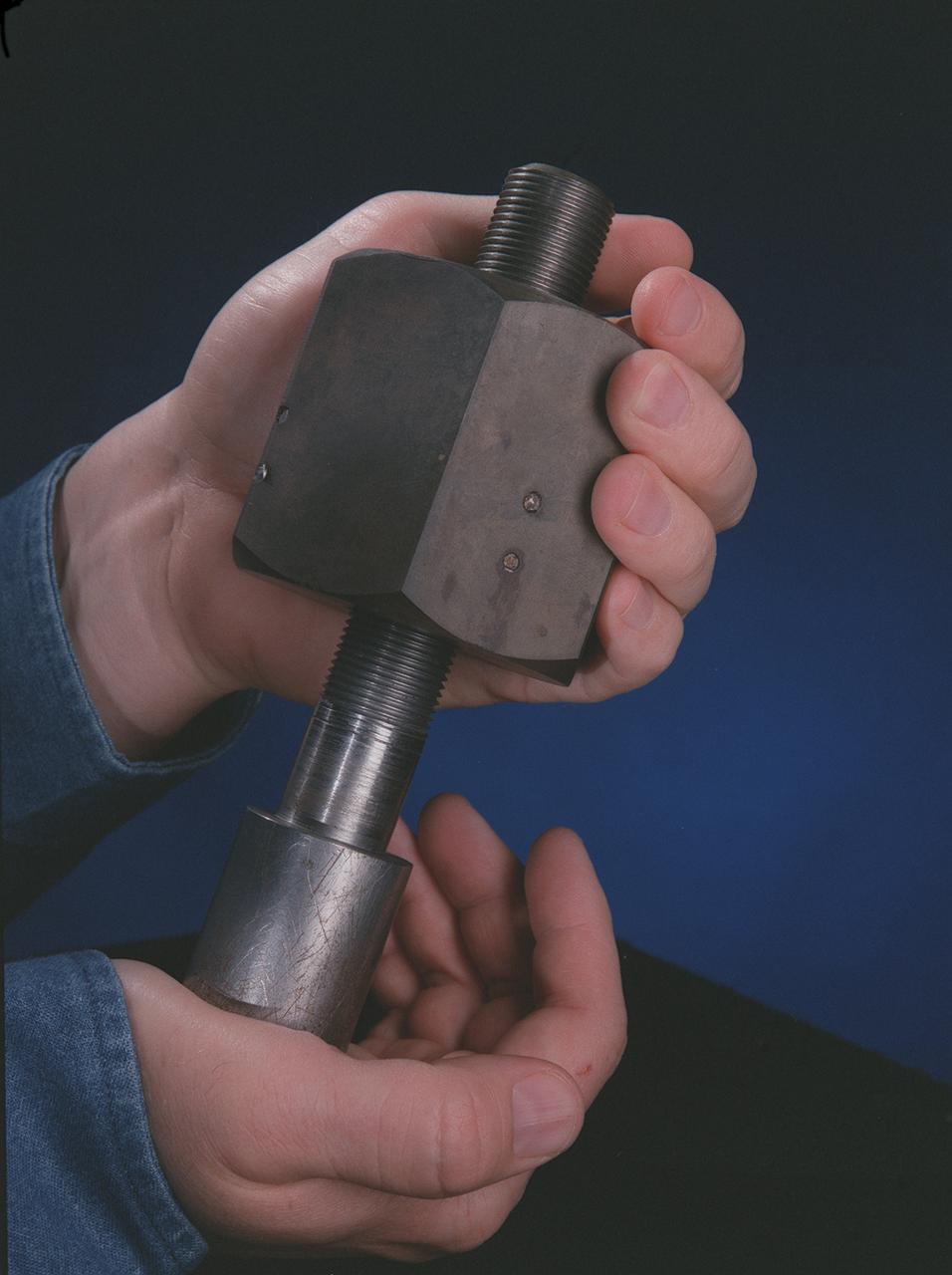
Marshall Space Flight Center (MSFC) has developed a specially-designed nut, called the Quick-Connect Nut, for quick and easy assembly of components in the harsh environment of space, as in assembly of International Space Station. The design permits nuts to be installed simply by pushing them onto standard bolts, then giving a quick twist. To remove, they are unscrewed like conventional nuts. Possible applications include the mining industry for erecting support barriers, assembling underwater oil drilling platforms, fire-fighting equipment, scaffolding, assembly-line machinery, industrial cranes, and even changing lug nuts on race cars. The speed of assembly can make the difference between life and death in different aspects of life on Earth.
Benefit from NASA
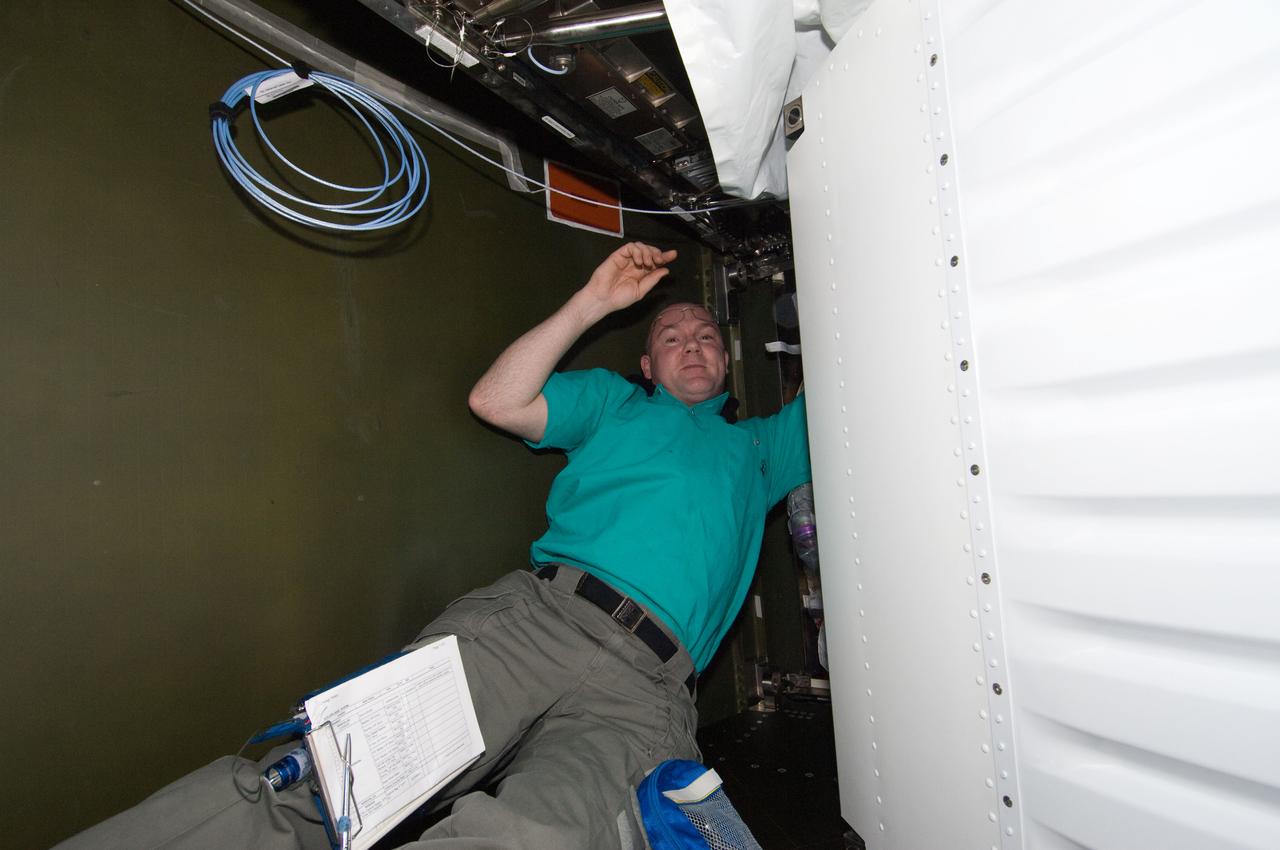
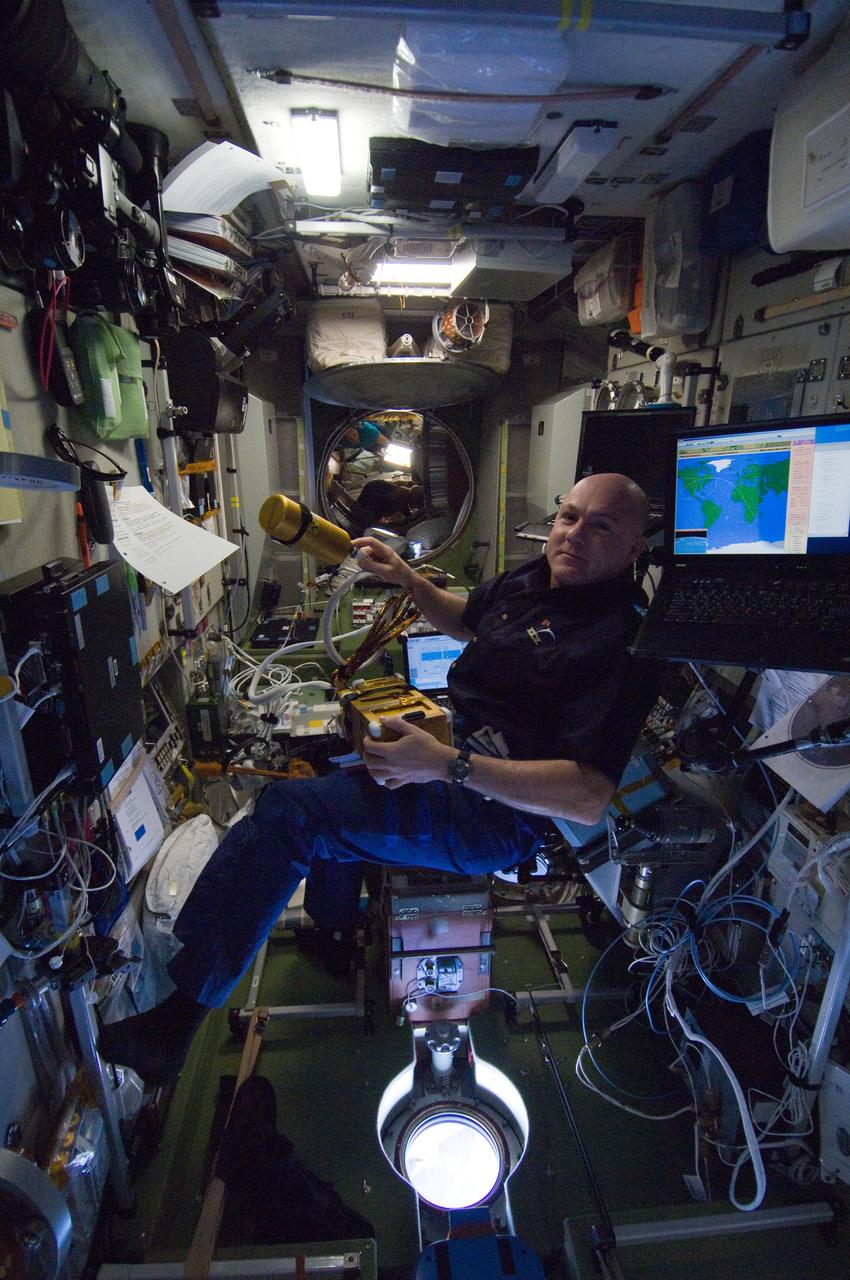
ISS030-E-195126 (4 April 2012) --- European Space Agency astronaut Andre Kuipers, Expedition 30 flight engineer, works on the Multiplexer / Demultiplexer (MDM) 16C Assembly in the Destiny laboratory of the International Space Station.
Kuipers works on the MDM16C Assembly in the U.S. Laboratory
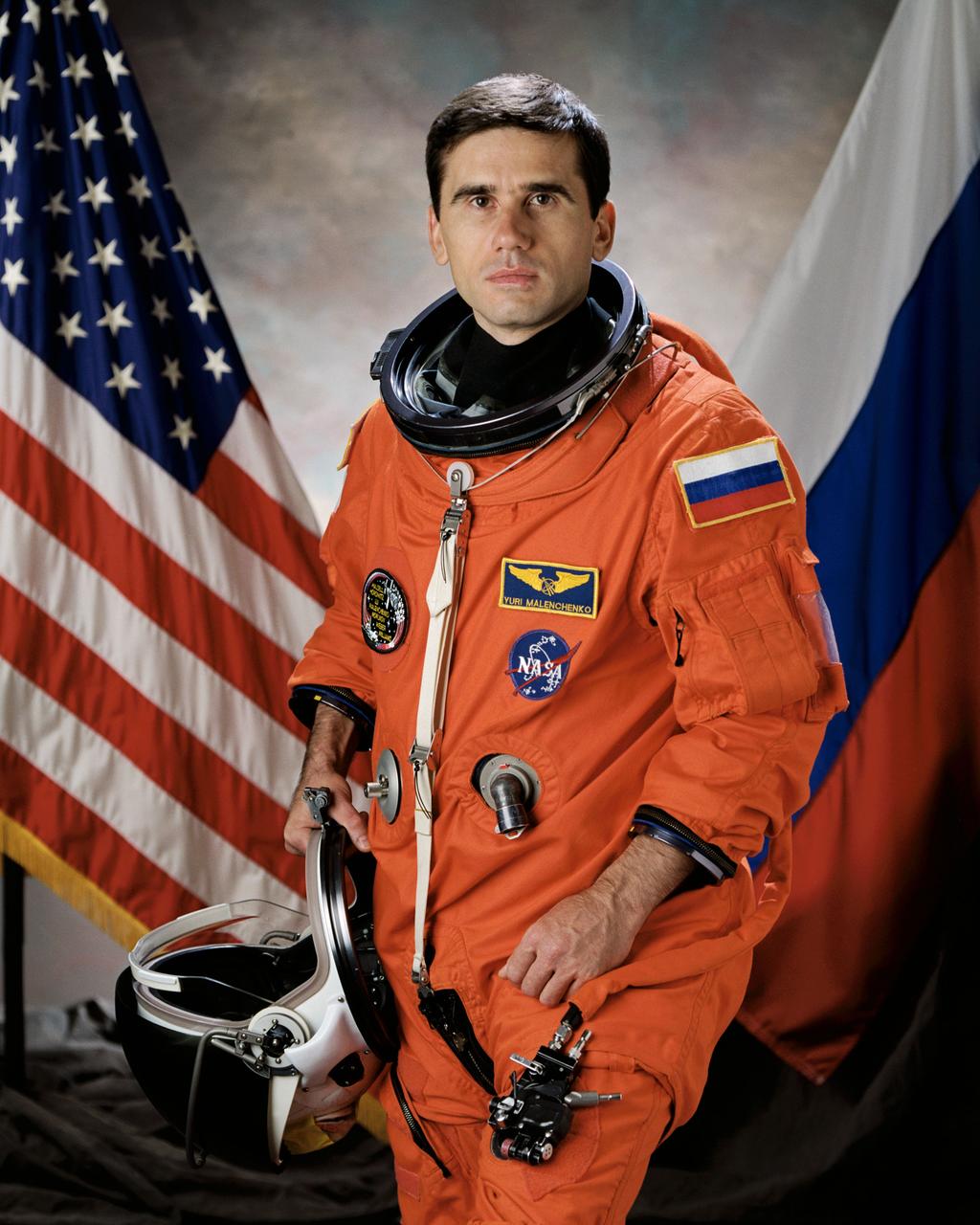
S99-07350 (July 1999) --- Cosmonaut Yuri I. Malenchenko, Russian Space Agency (RSA).  (Malenchenko was assigned in the summer of 1999 to serve on the crew of STS-106, the second Shuttle-Assembly mission for the International Space Station.)
New official portrait of cosmonaut Yuri Malenchenko
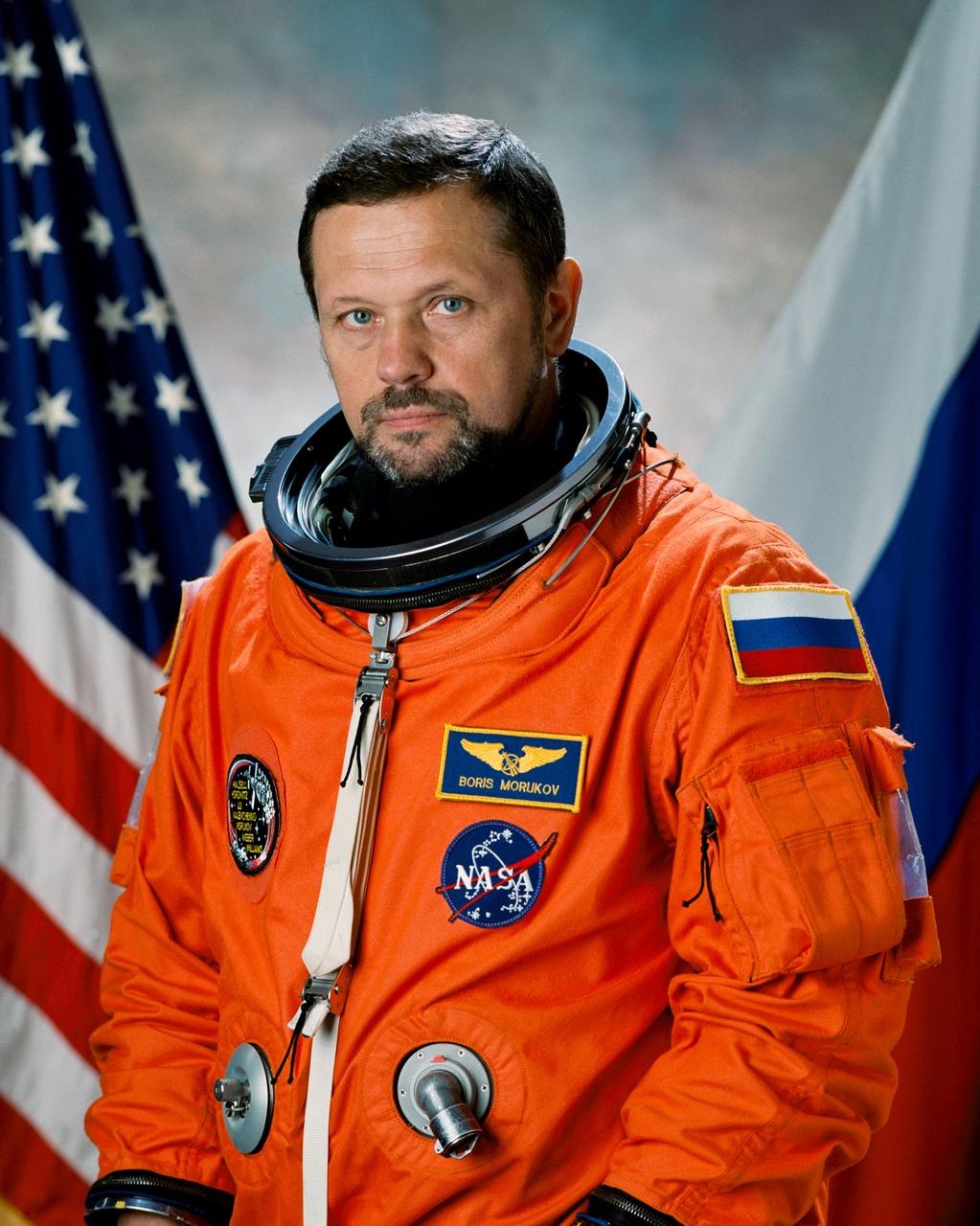
S99-07607 (July 1999) --- Cosmonaut Boris V. Morukov, Russian Space Agency (RSA).  (Morukov was assigned in the summer of 1999 to serve on the crew of STS-106, the second Shuttle-Assembly mission for the International Space Station.)
Official portrait of cosmonaut Boris Morukov
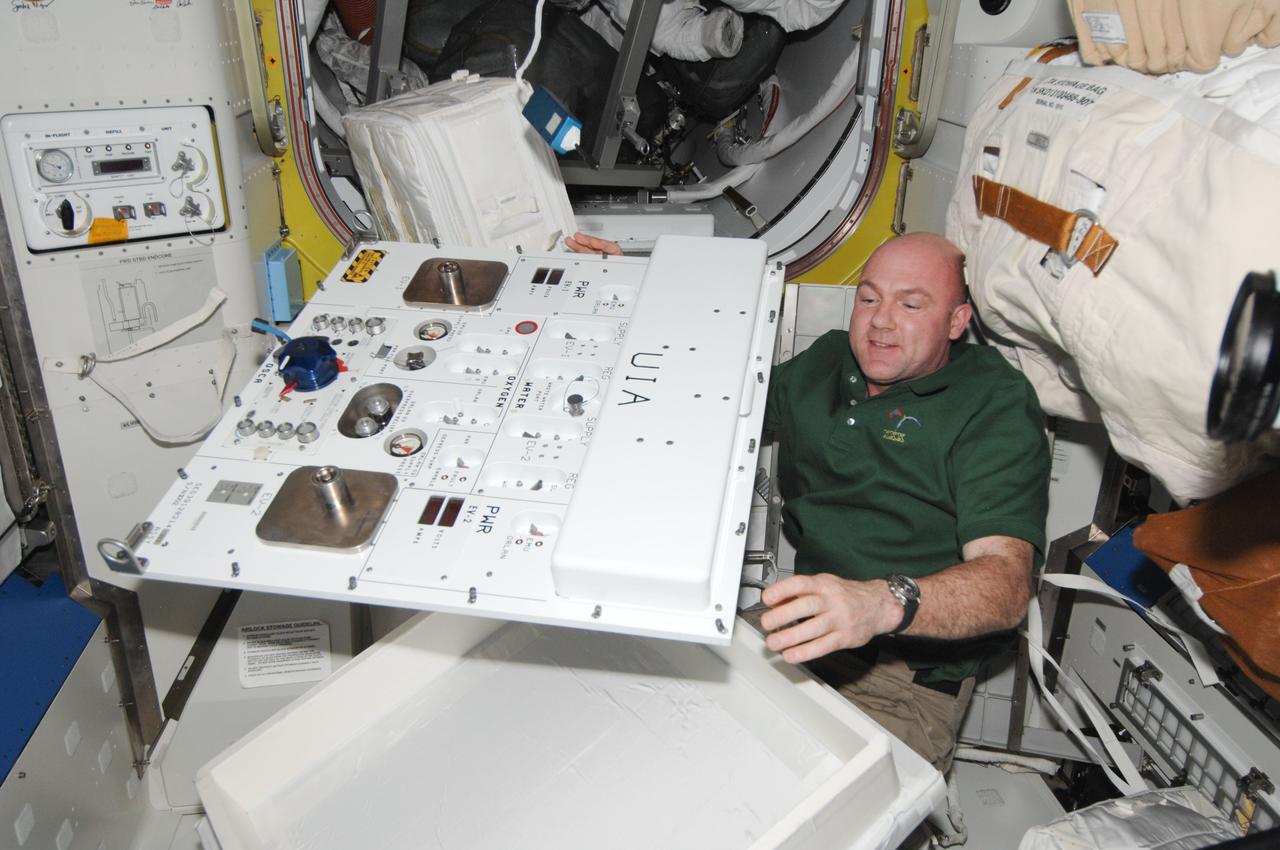
ISS030-E-050683 (27 Jan. 2012) --- European Space Agency astronaut Andre Kuipers, Expedition 30 flight engineer, works with Umbilical Interface Assembly (UIA) hardware in the Quest airlock of the International Space Station.
Kuipers works with the UIA in the A/L
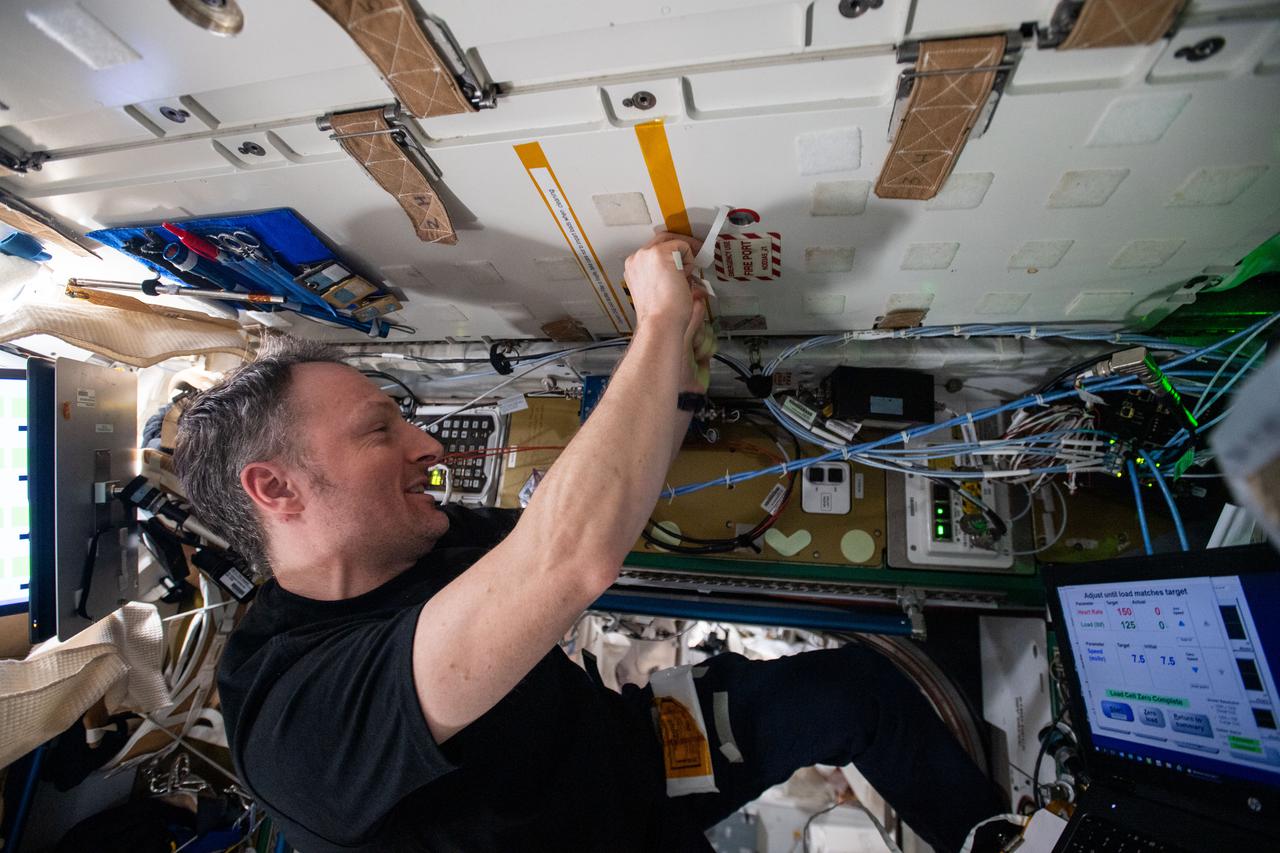
iss066e155805 (March 1, 2022) --- ESA (European Space Agency) astronaut and Expedition 66 Flight Engineer Matthias Maurer tapes caution labels to the Tranquility module's oxygen generation assembly inside the International Space Station.
iss066e155805
CAPE CANAVERAL, Fla. –  In Orbiter Processing Facility 1 at NASA's Kennedy Space Center in Florida,  space shuttle Atlantis' payload bay door is closing.  The designated shuttle for the STS-129 mission, Atlantis will deliver to the International Space Station two spare gyroscopes, two nitrogen tank assemblies, two pump modules, an ammonia tank assembly and a spare latching end effector for the station's robotic arm. Atlantis is targeted to launch Nov. 12. Photo credit: NASA/Jack Pfaller
KSC-2009-5256
CAPE CANAVERAL, Fla. –  In Orbiter Processing Facility 1 at NASA's Kennedy Space Center in Florida,  space shuttle Atlantis' payload bay doors  are being closed. The designated shuttle for the STS-129 mission, Atlantis will deliver to the International Space Station two spare gyroscopes, two nitrogen tank assemblies, two pump modules, an ammonia tank assembly and a spare latching end effector for the station's robotic arm. Atlantis is targeted to launch Nov. 12. Photo credit: NASA/Jack Pfaller
KSC-2009-5258
Pilot Rick Sturckow, left of center, and Mission Specialist Jerry Ross, right of center, participate in the Crew Equipment Interface Test (CEIT) for STS-88 in KSC's Space Station Processing Facility. The CEIT gives astronauts an opportunity to get a hands-on look at the payloads with which they will be working on-orbit. Here, the crew is inspecting electrical connections that will be used in assembly of the International Space Station (ISS). STS-88, the first ISS assembly flight, is targeted for launch in July 1998 aboard Space Shuttle Endeavour
KSC-97PC1792
ISS030-E-177101 (12 March 2012) --- European Space Agency astronaut Andre Kuipers, Expedition 30 flight engineer, sets up the Environmental Health System / Tissue Equivalent Proportional Counter (EHS/TEPC) spectrometer and detector assembly on panel 327 in the Zvezda Service Module of the International Space Station. The TEPC detector assembly is the primary radiation measurement tool on the space station.
Kuipers sets up the EHS/TEPC Spectrometer and Detector Assembly in the SM
Mission Specialist Jerry Ross participates in the Crew Equipment Interface Test (CEIT) for STS-88 in KSC's Space Station Processing Facility. The CEIT gives astronauts an opportunity to get a hands-on look at the payloads with which they will be working on-orbit. Here, Ross is inspecting electrical connections that will be used in assembly of the International Space Station (ISS). STS-88, the first ISS assembly flight, is targeted for launch in July 1998 aboard Space Shuttle Endeavour
KSC-97PC1786
CAPE CANAVERAL, Fla. –  In Orbiter Processing Facility 1 at NASA's Kennedy Space Center in Florida, space shuttle Atlantis' payload bay doors are being closed.  The designated shuttle for the STS-129 mission, Atlantis will deliver to the International Space Station two spare gyroscopes, two nitrogen tank assemblies, two pump modules, an ammonia tank assembly and a spare latching end effector for the station's robotic arm. Atlantis is targeted to launch Nov. 12. Photo credit: NASA/Jack Pfaller
KSC-2009-5252
CAPE CANAVERAL, Fla. –  In Orbiter Processing Facility 1 at NASA's Kennedy Space Center in Florida,  space shuttle Atlantis' payload bay door is closing.  The designated shuttle for the STS-129 mission, Atlantis will deliver to the International Space Station two spare gyroscopes, two nitrogen tank assemblies, two pump modules, an ammonia tank assembly and a spare latching end effector for the station's robotic arm. Atlantis is targeted to launch Nov. 12. Photo credit: NASA/Jack Pfaller
KSC-2009-5257
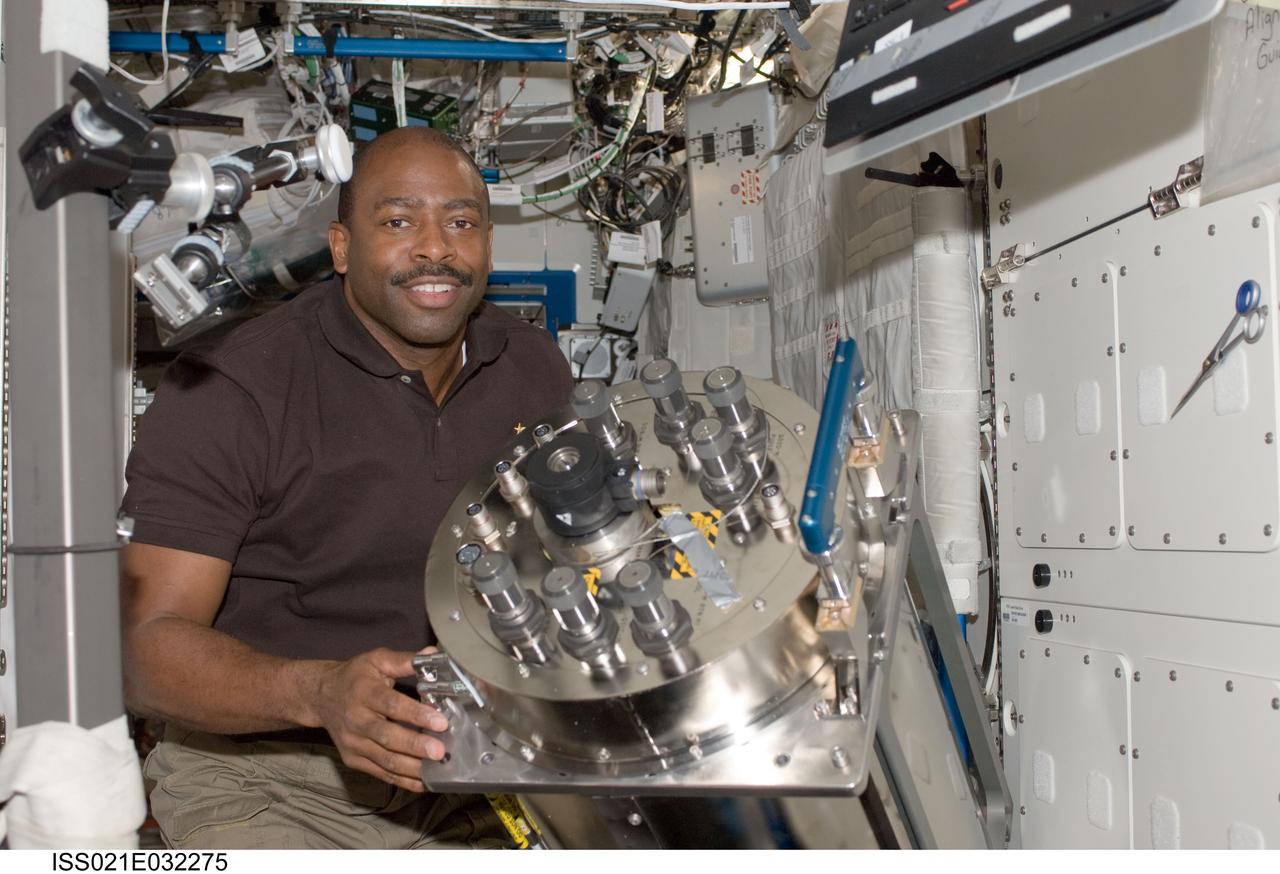
ISS021-E-032275 (23 Nov. 2009) --- NASA astronaut Leland Melvin, STS-129 mission specialist, holds the failed Urine Processor Assembly / Distillation Assembly (UPA DA) in the Destiny laboratory of the International Space Station while space shuttle Atlantis remains docked with the station. Melvin and European Space Agency astronaut Frank De Winne (out of frame), Expedition 21 commander, removed and packed the UPA DA, then transferred it from the Water Recovery System 2 (WRS-2) rack to Atlantis for stowage on the middeck.
WRS2 UPA DA Removal
CAPE CANAVERAL, Fla. – In NASA Kennedy Space Center's Orbiter Processing Facility 1, technicians prepare to test the orbital docking system on space shuttle Atlantis.  The STS-129 mission will deliver to the International Space Station two spare gyroscopes, two nitrogen tank assemblies, two pump modules, an ammonia tank assembly and a spare latching end effector for the station's robotic arm. STS-129 is targeted to launch Nov. 12. Photo credit: NASA/Kim Shiflett
KSC-2009-4806
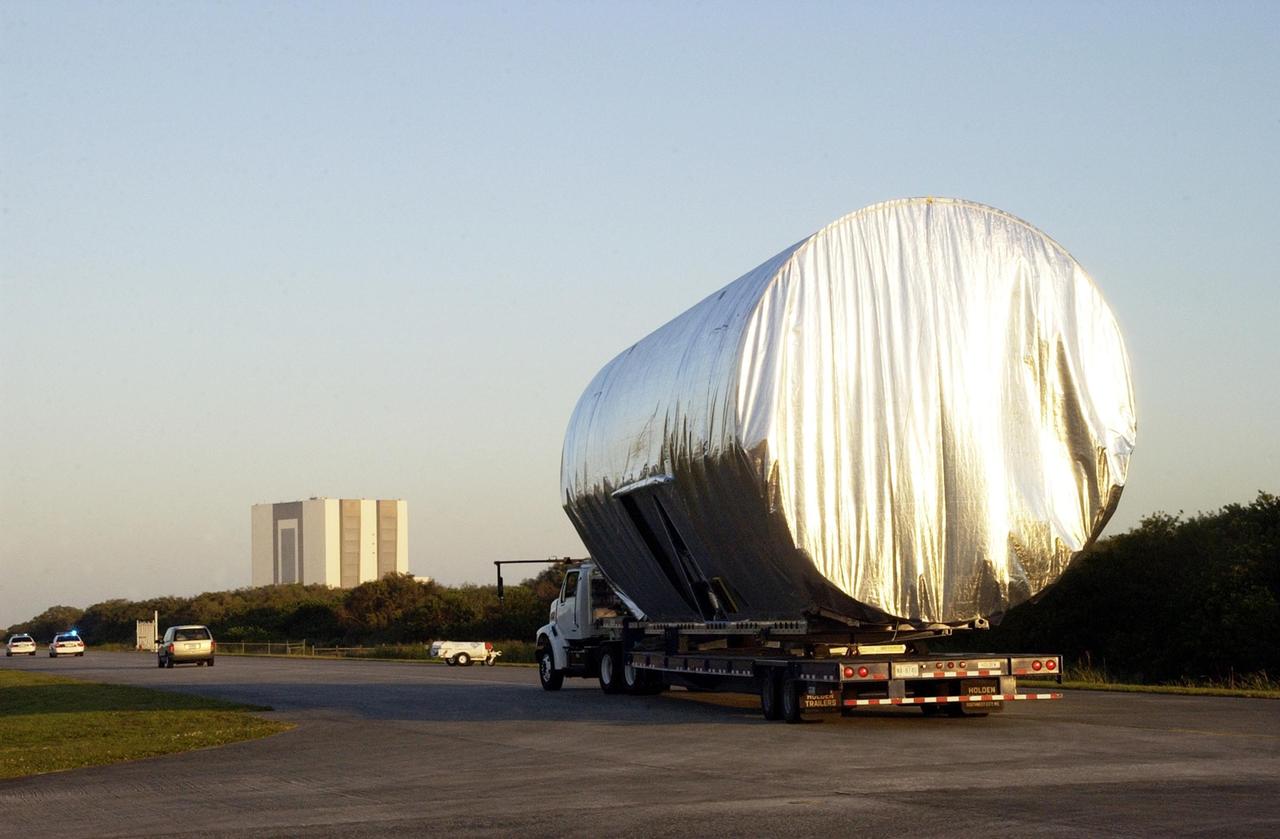
KENNEDY SPACE CENTER, FLA. -- The newly arrived S5 truss segment for the International Space Station passes near the Vehicle Assembly Building on its trek to the Space Station Processing Facility.  There it will be fit checked for a Photo-Voltaic Radiator Grapple Fixture. It will also undergo a fit check to a truss simulator to ensure that it will fit properly with the S4 and S6 truss segments. S5 is scheduled for launch in October 2003 on mission STS-118. It will be the tenth truss assembled in an 11-truss structure.
KSC-02pd0290
CAPE CANAVERAL, Fla. – In NASA Kennedy Space Center's Orbiter Processing Facility 1, technicians begin testing the orbital docking system on space shuttle Atlantis. The STS-129 mission will deliver to the International Space Station two spare gyroscopes, two nitrogen tank assemblies, two pump modules, an ammonia tank assembly and a spare latching end effector for the station's robotic arm. STS-129 is targeted to launch Nov. 12. Photo credit: NASA/Kim Shiflett
KSC-2009-4808
CAPE CANAVERAL, Fla. – In NASA Kennedy Space Center's Orbiter Processing Facility 1, technicians begin a functional test on the orbital docking system on space shuttle Atlantis.  The STS-129 mission will deliver to the International Space Station two spare gyroscopes, two nitrogen tank assemblies, two pump modules, an ammonia tank assembly and a spare latching end effector for the station's robotic arm. STS-129 is targeted to launch Nov. 12. Photo credit: NASA/Kim Shiflett
KSC-2009-4811
CAPE CANAVERAL, Fla. – In NASA Kennedy Space Center's Orbiter Processing Facility 1, technicians prepare to test the orbital docking system on space shuttle Atlantis. The STS-129 mission will deliver to the International Space Station two spare gyroscopes, two nitrogen tank assemblies, two pump modules, an ammonia tank assembly and a spare latching end effector for the station's robotic arm. STS-129 is targeted to launch Nov. 12. Photo credit: NASA/Kim Shiflett
KSC-2009-4807
CAPE CANAVERAL, Fla. – In NASA Kennedy Space Center's Orbiter Processing Facility 1, technicians begin a functional test on the orbital docking system on space shuttle Atlantis. The STS-129 mission will deliver to the International Space Station two spare gyroscopes, two nitrogen tank assemblies, two pump modules, an ammonia tank assembly and a spare latching end effector for the station's robotic arm. STS-129 is targeted to launch Nov. 12. Photo credit: NASA/Kim Shiflett
KSC-2009-4809
CAPE CANAVERAL, Fla. –  In Orbiter Processing Facility 1 at NASA's Kennedy Space Center in Florida,  a worker walks past space shuttle Atlantis' payload bay doors as they are being closed.   The designated shuttle for the STS-129 mission, Atlantis will deliver to the International Space Station two spare gyroscopes, two nitrogen tank assemblies, two pump modules, an ammonia tank assembly and a spare latching end effector for the station's robotic arm. Atlantis is targeted to launch Nov. 12. Photo credit: NASA/Jack Pfaller
KSC-2009-5255
CAPE CANAVERAL, Fla. –  In Orbiter Processing Facility 1 at NASA's Kennedy Space Center in Florida, the payload bay doors are being closed on space shuttle Atlantis.  The designated shuttle for the STS-129 mission, Atlantis will deliver to the International Space Station two spare gyroscopes, two nitrogen tank assemblies, two pump modules, an ammonia tank assembly and a spare latching end effector for the station's robotic arm. Atlantis is targeted to launch Nov. 12. Photo credit: NASA/Jack Pfaller
KSC-2009-5251
CAPE CANAVERAL, Fla. – In NASA Kennedy Space Center's Orbiter Processing Facility 1, technicians begin a functional test on the orbital docking system on space shuttle Atlantis. The STS-129 mission will deliver to the International Space Station two spare gyroscopes, two nitrogen tank assemblies, two pump modules, an ammonia tank assembly and a spare latching end effector for the station's robotic arm. STS-129 is targeted to launch Nov. 12. Photo credit: NASA/Kim Shiflett
KSC-2009-4810
In the Space Station Processing Facility at NASA's Kennedy Space Center, a worker connects a cable to recharge the battery for the S6 integrated truss. The final starboard truss in the assembly of the International Space Station, the S6 is scheduled to fly on space shuttle mission STS-119, whose launch date is not yet determined.
Workers prepare to connect cables that will recharge the battery