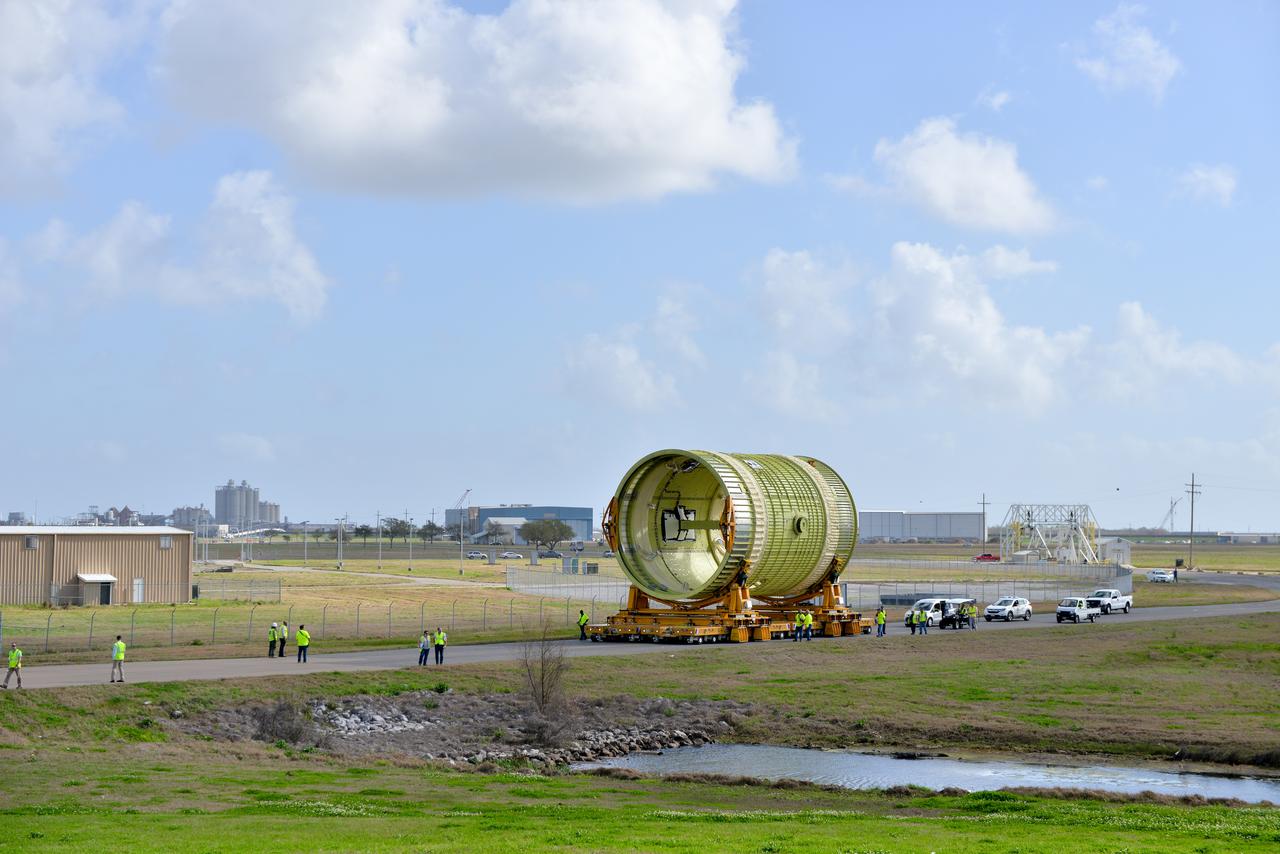
Intertank STA
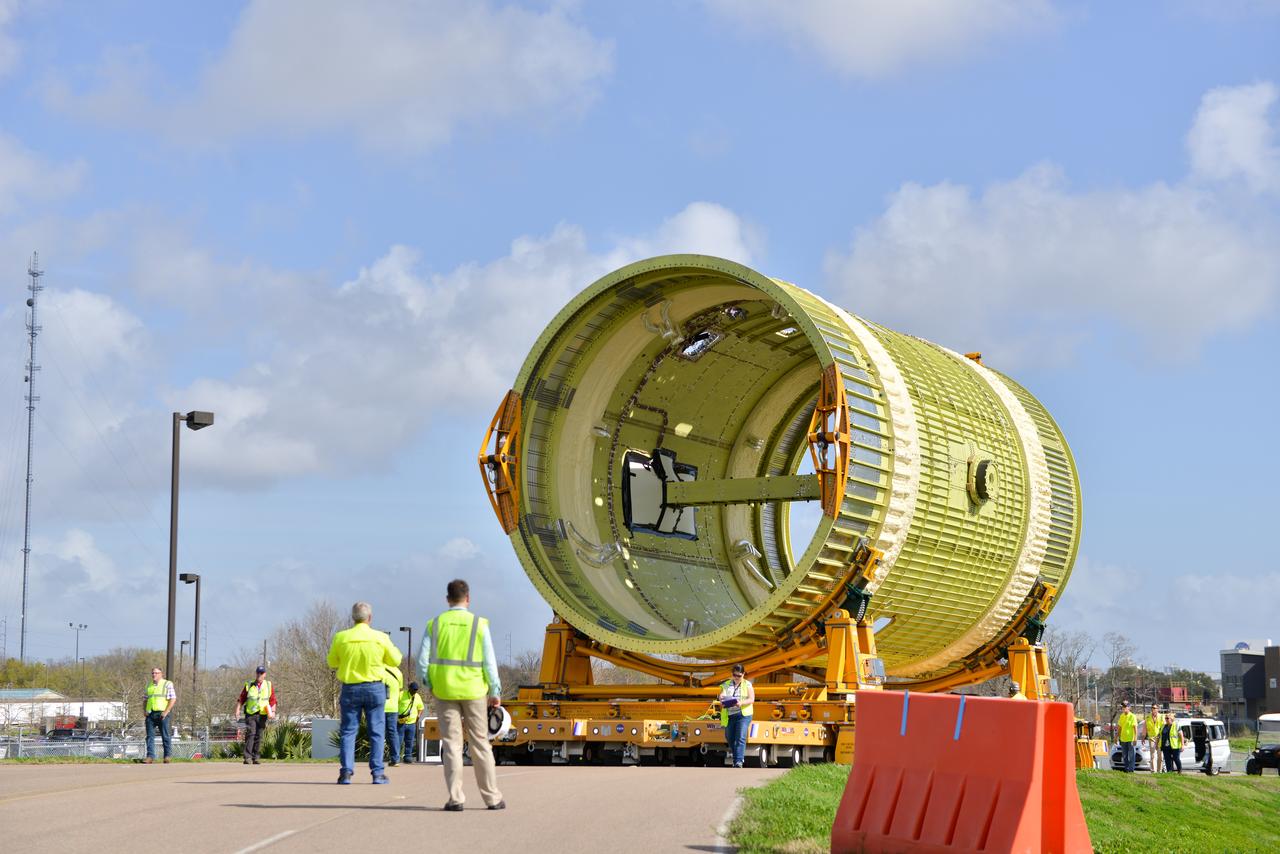
Intertank STA
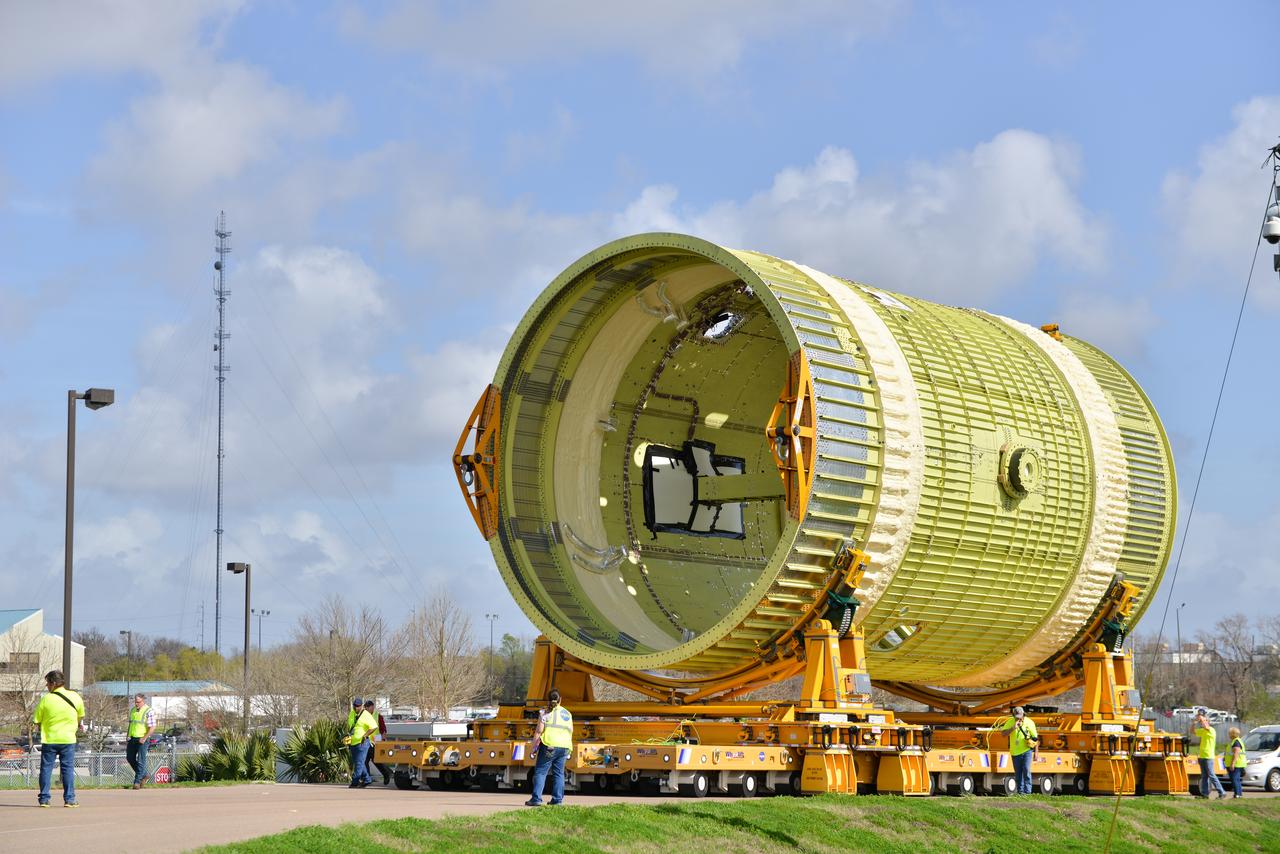
Intertank STA
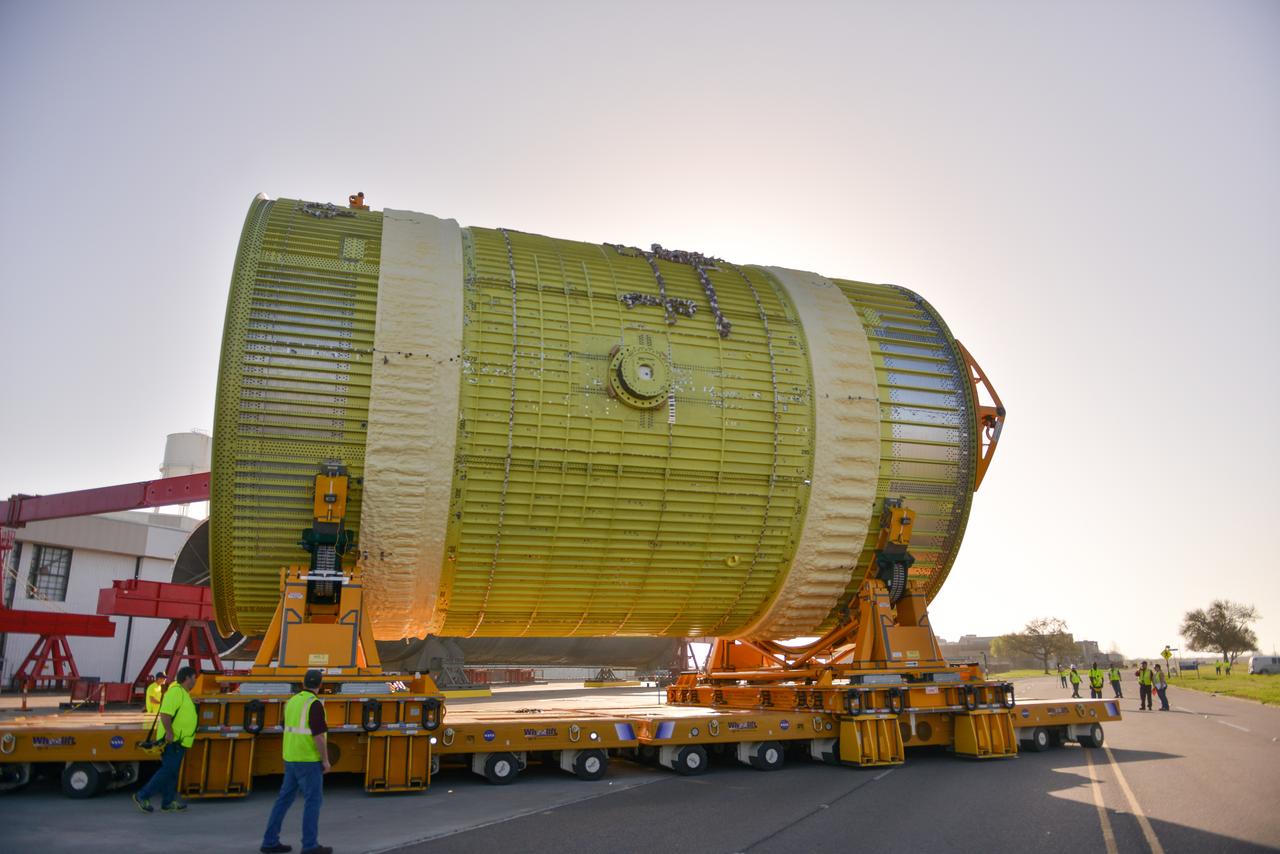
Intertank STA heading to the Pegasus Barge
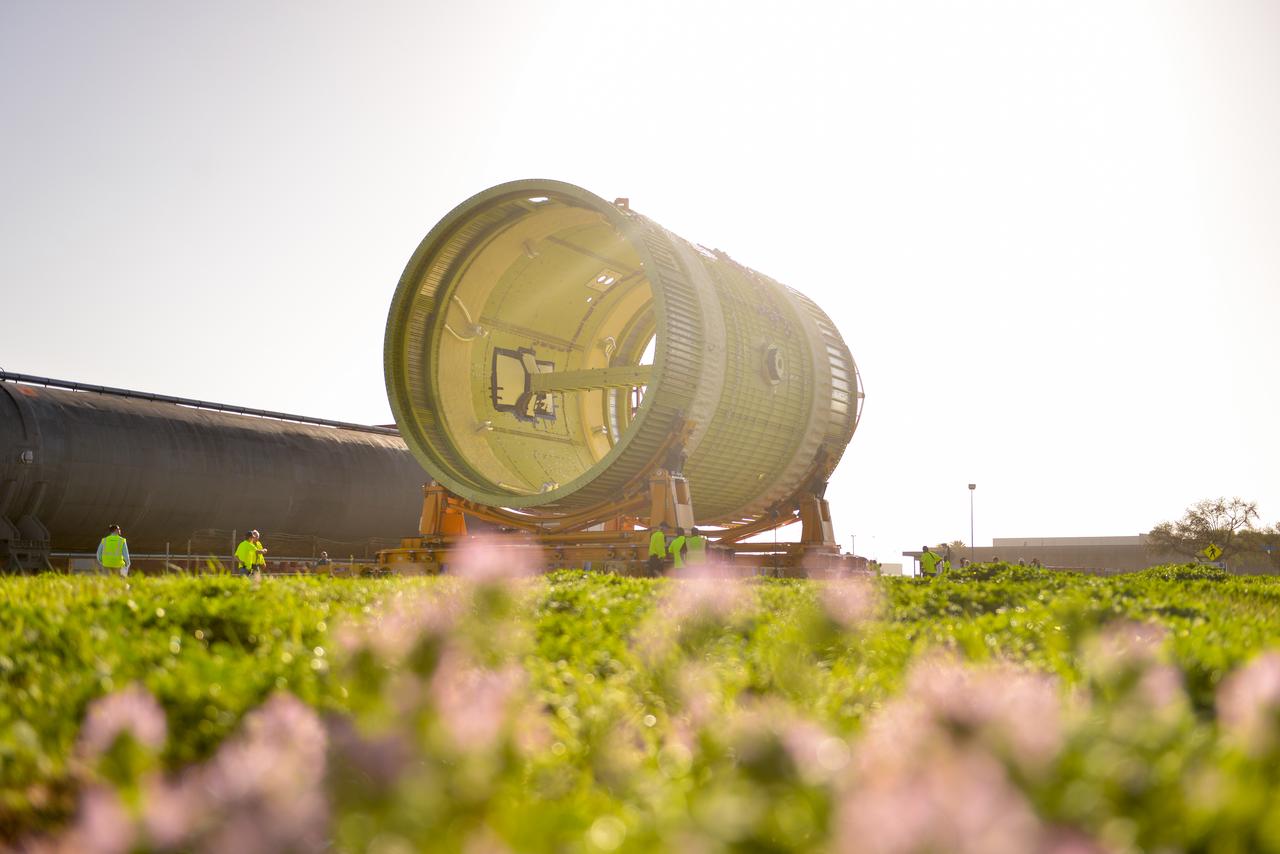
Intertank STA on way to the Pegasus Barge.
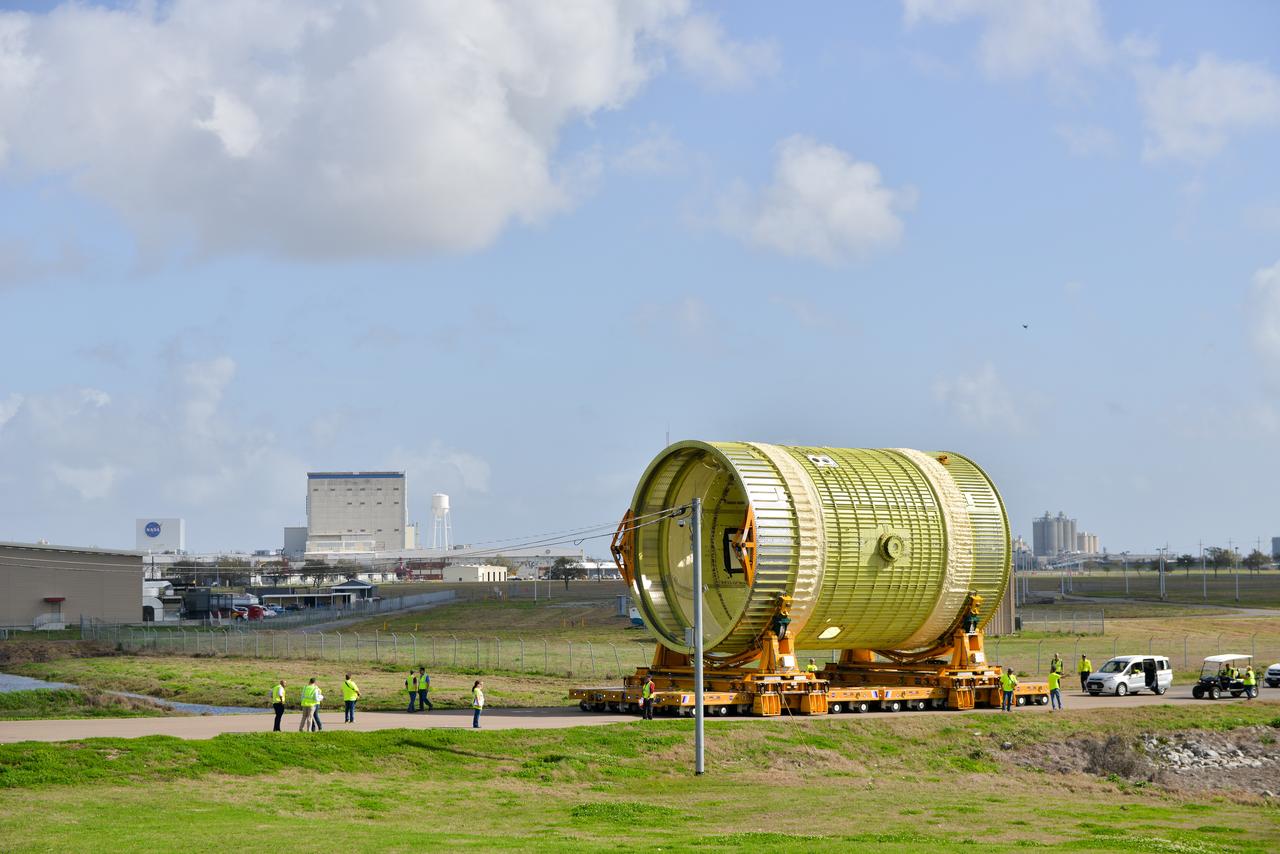
Intertank STA en route to the Barge, Pegasus.
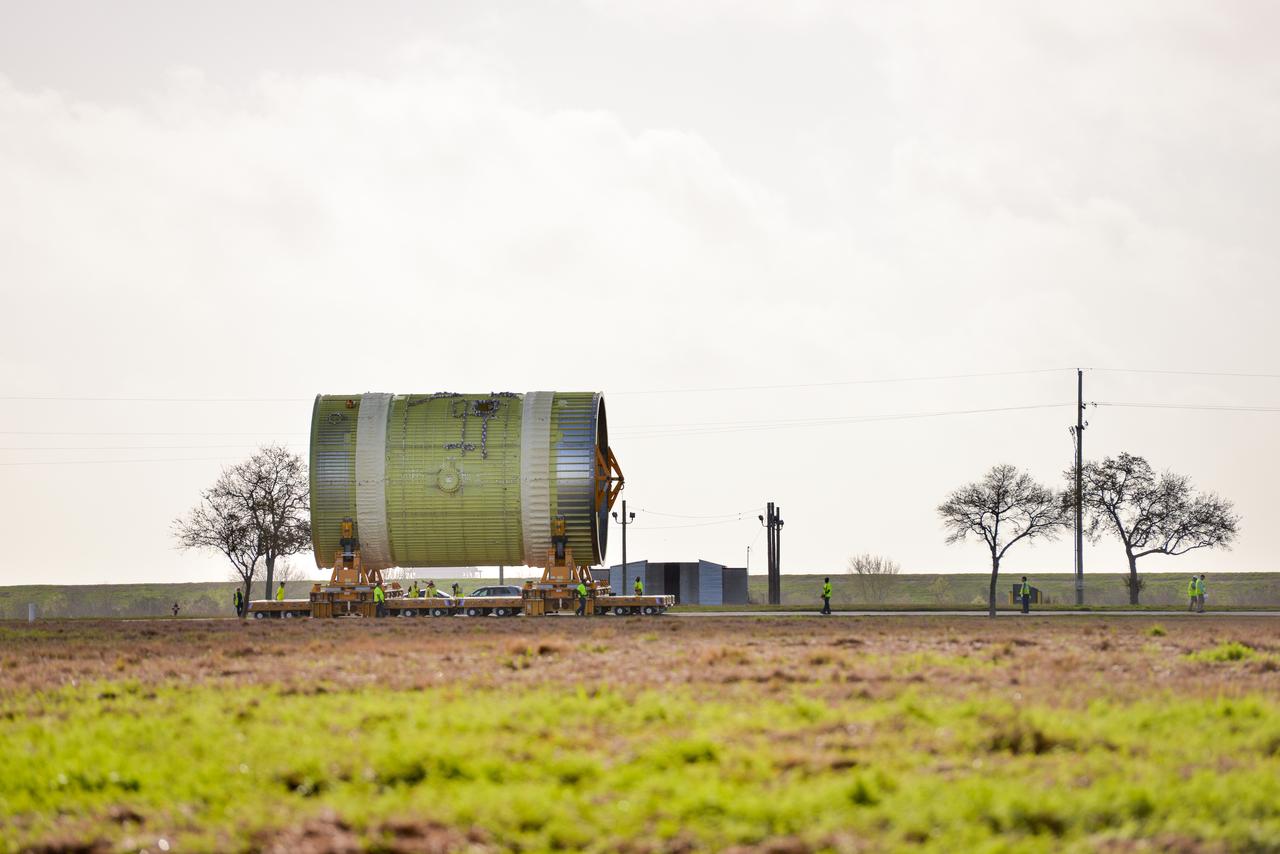
Intertank STA en route to the NASA Barge, Pegasus.
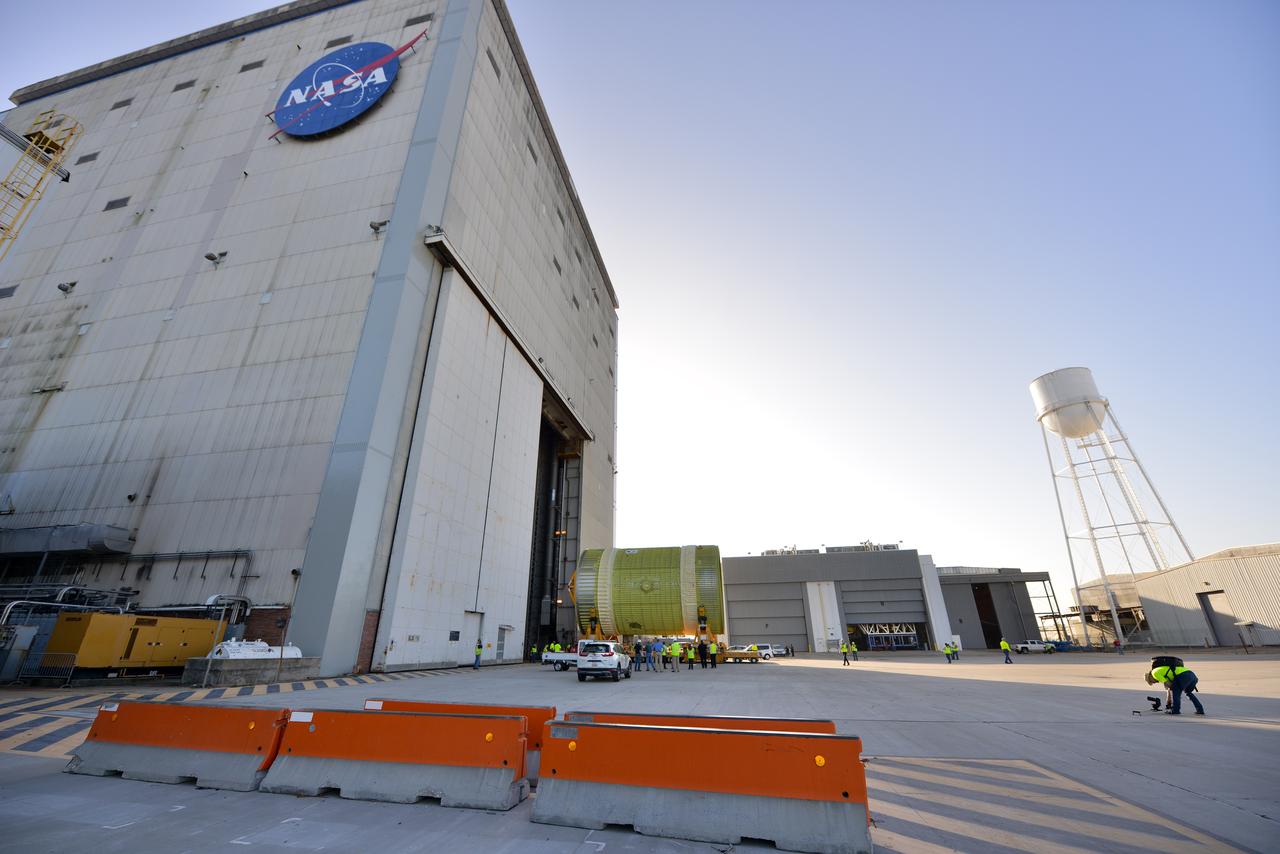
Intertank STA leaves it's holding area to begin the journey to the barge.
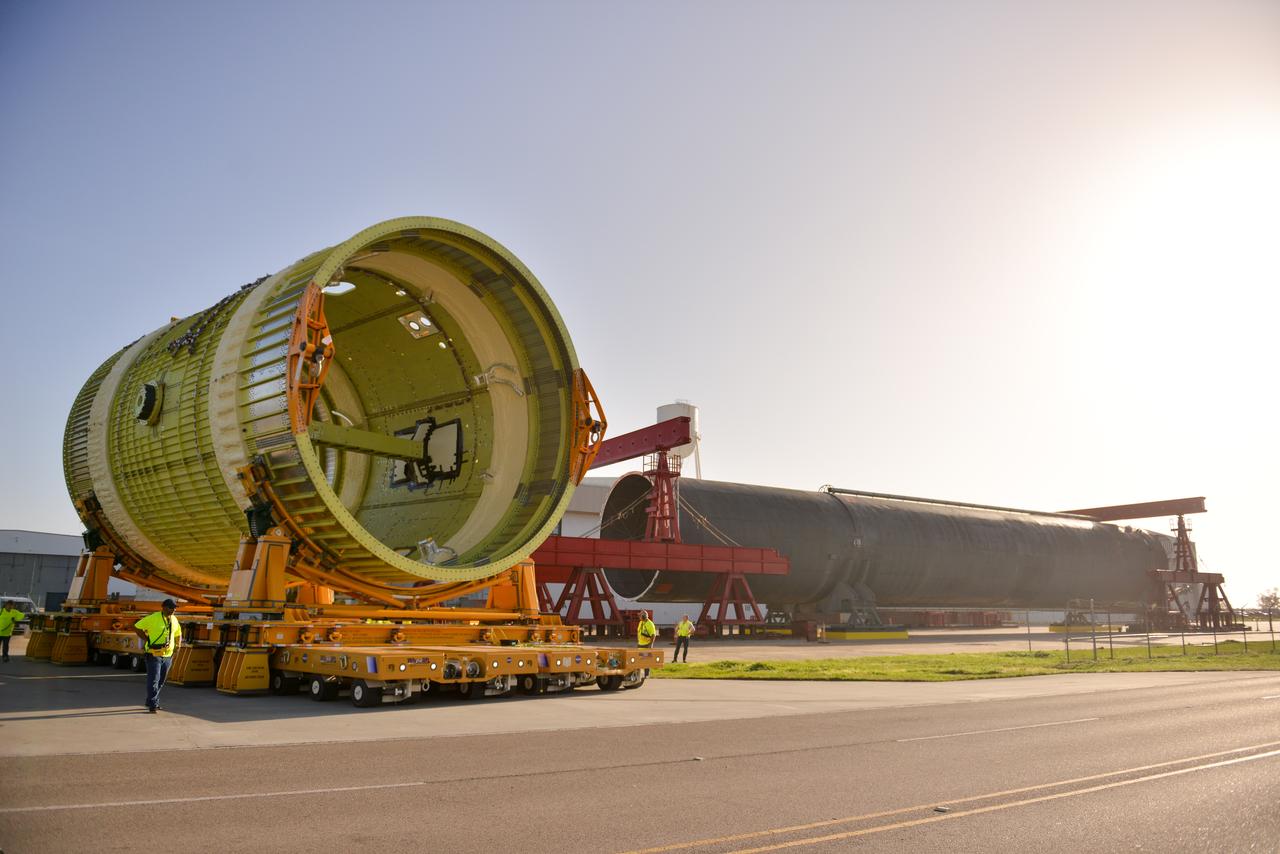
Intertank STA passes the Core Stage Pathfinder on it's way to the Pegasus Barge.
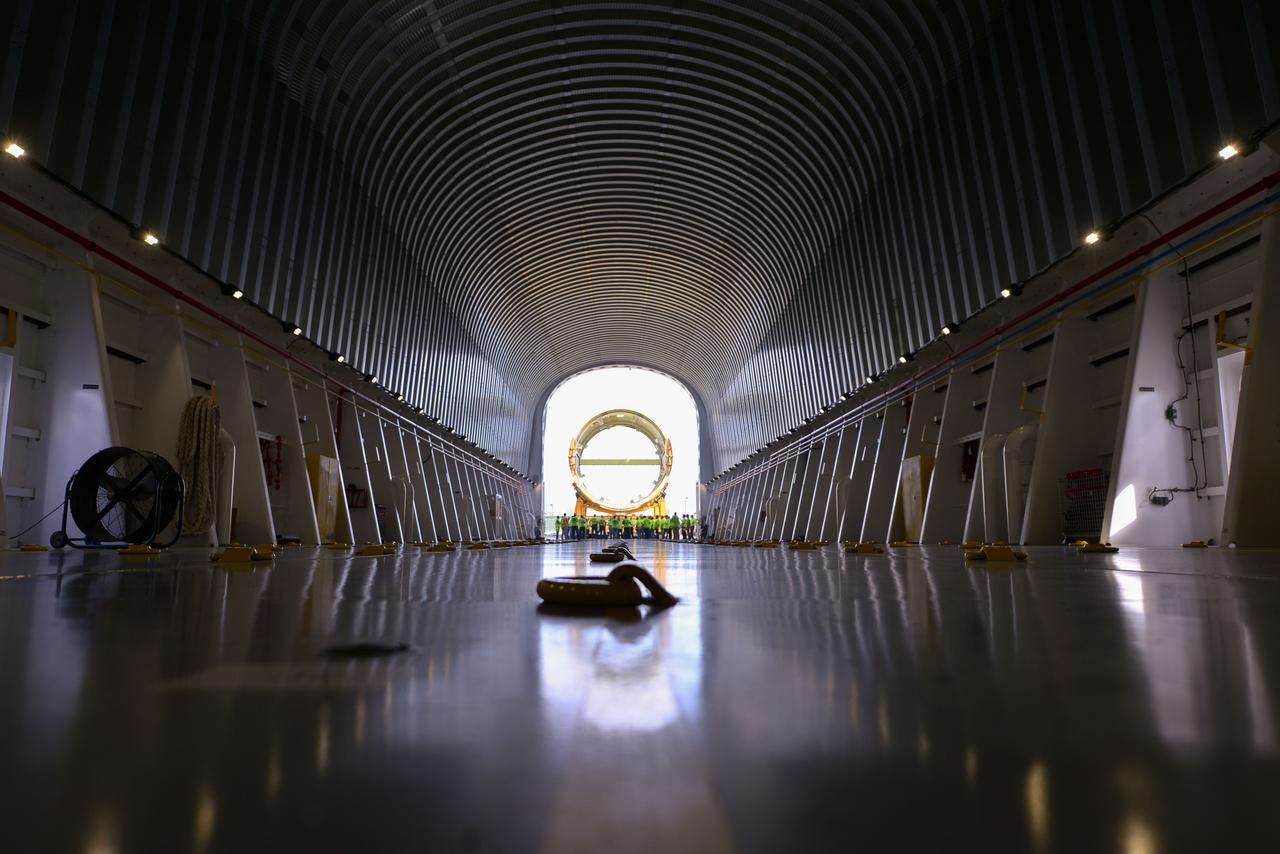
The S3 Move Crew holds a team tag up prior to loading the Intertank STA on the Pegasus Barge.
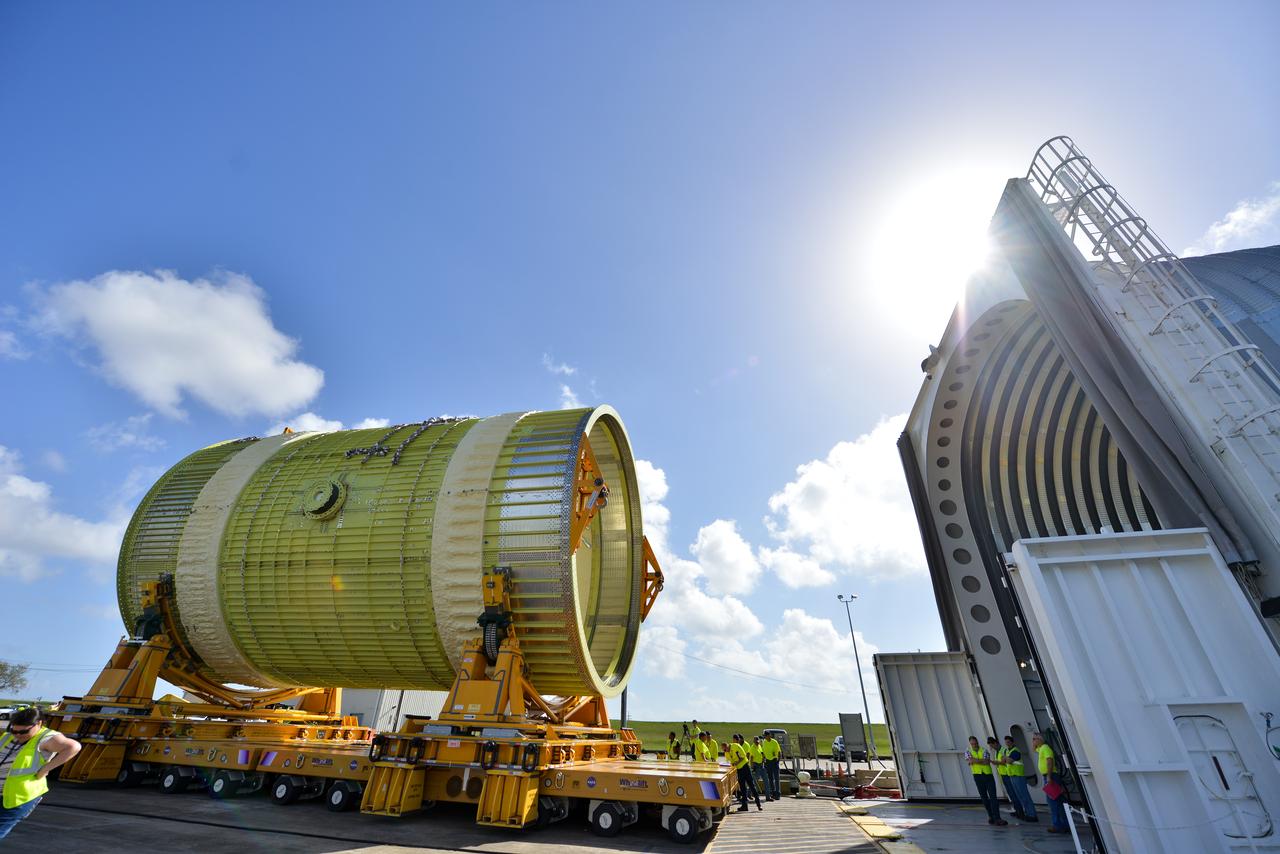
Intertank STA on Pegasus Barge
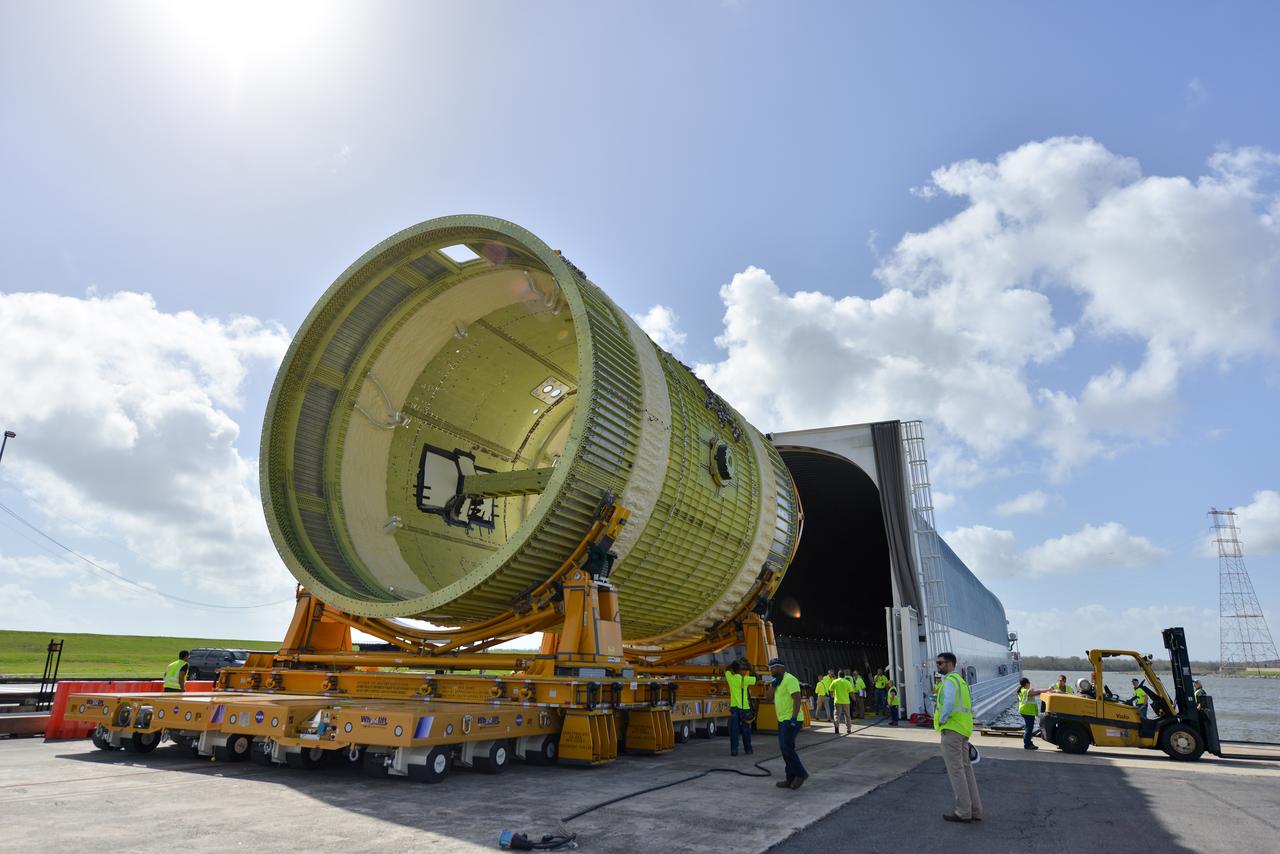
Intertank STA on Pegasus Barge
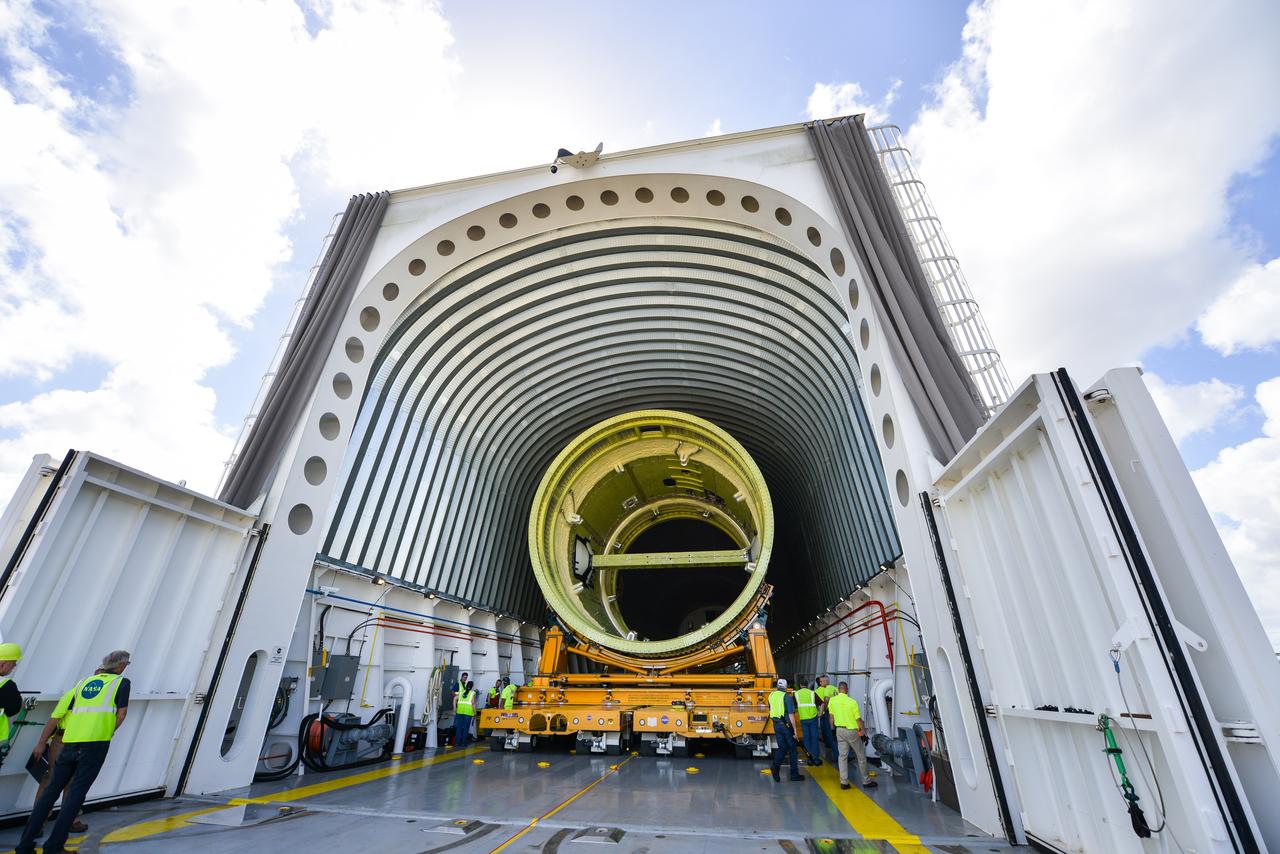
Intertank STA on board the Pegasus Barge.
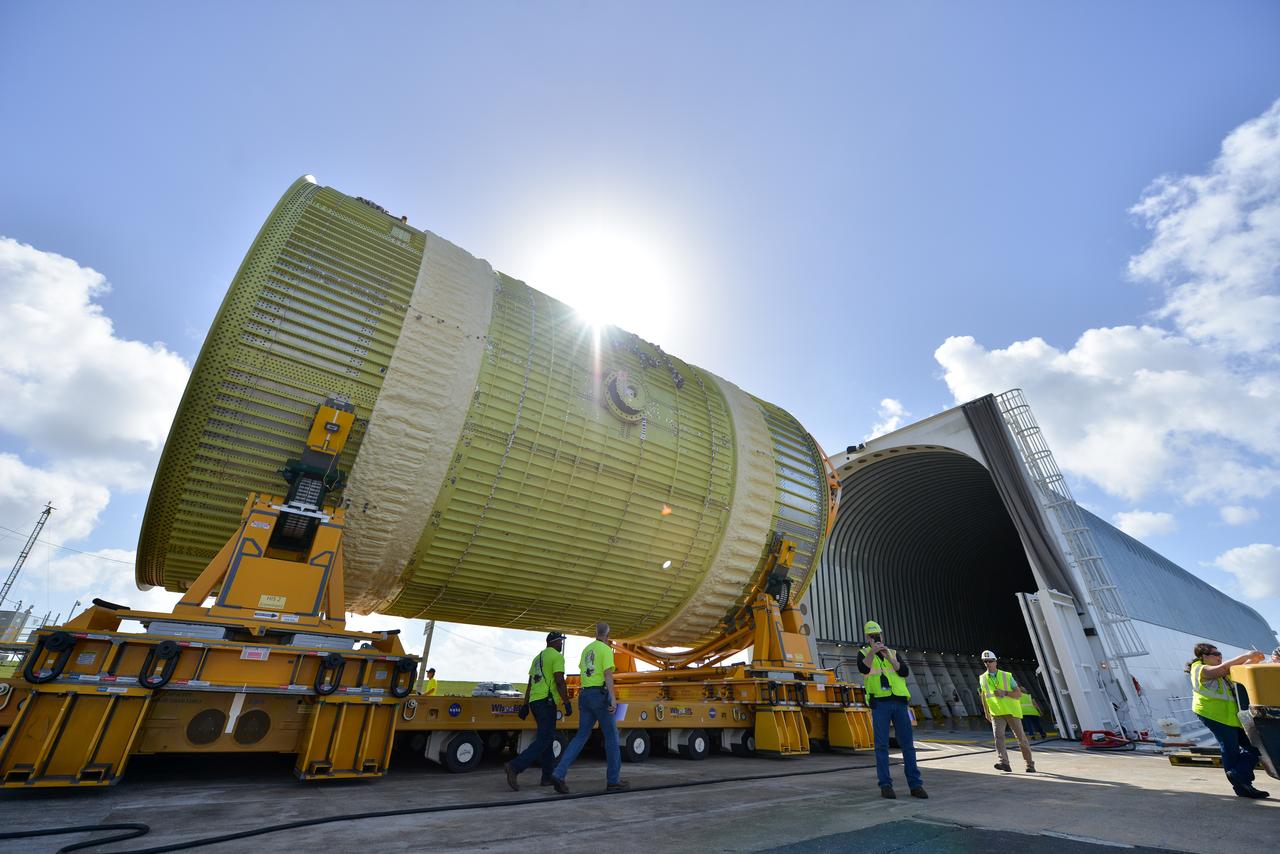
Intertank STA is prepped prior to being loaded on the NASA Barge, Pegasus.
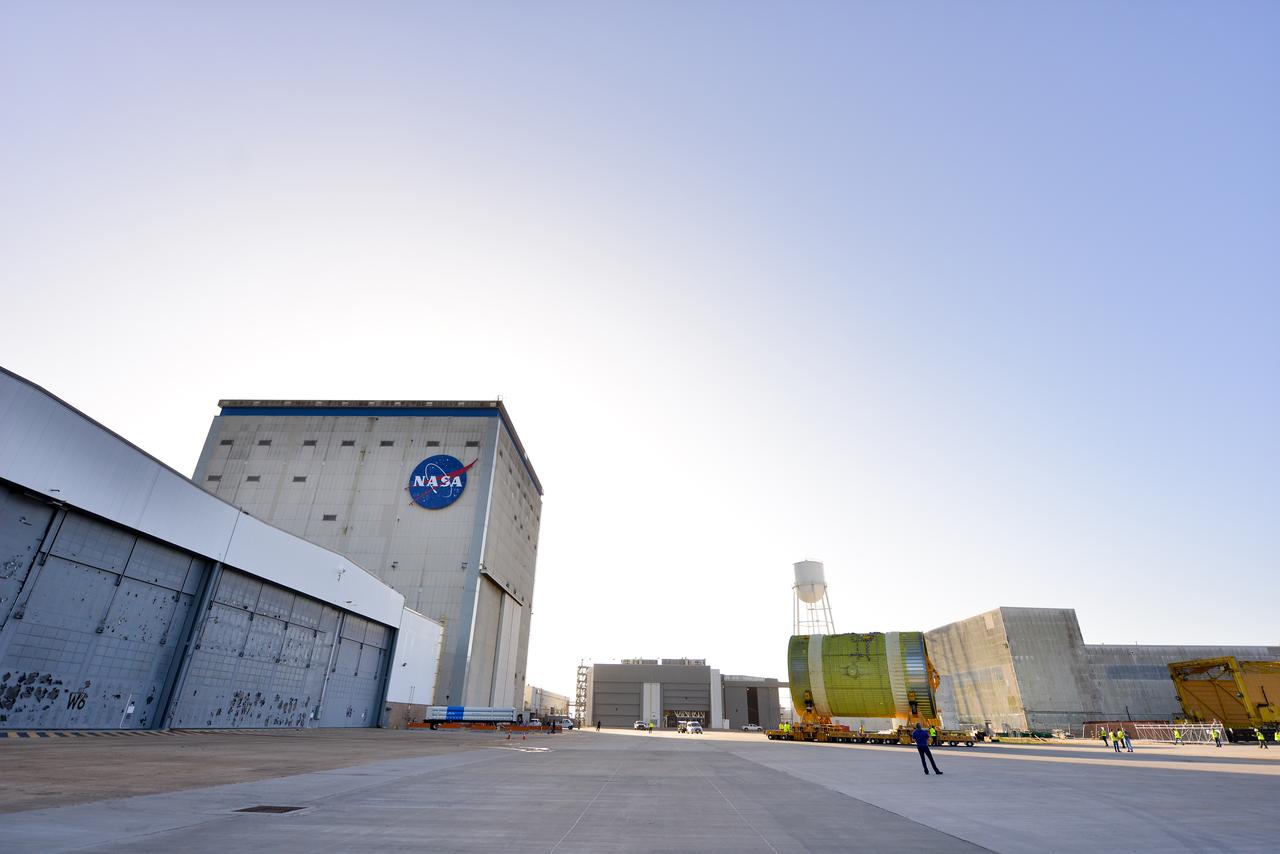
Intertank STA on way to Pegasus Barge
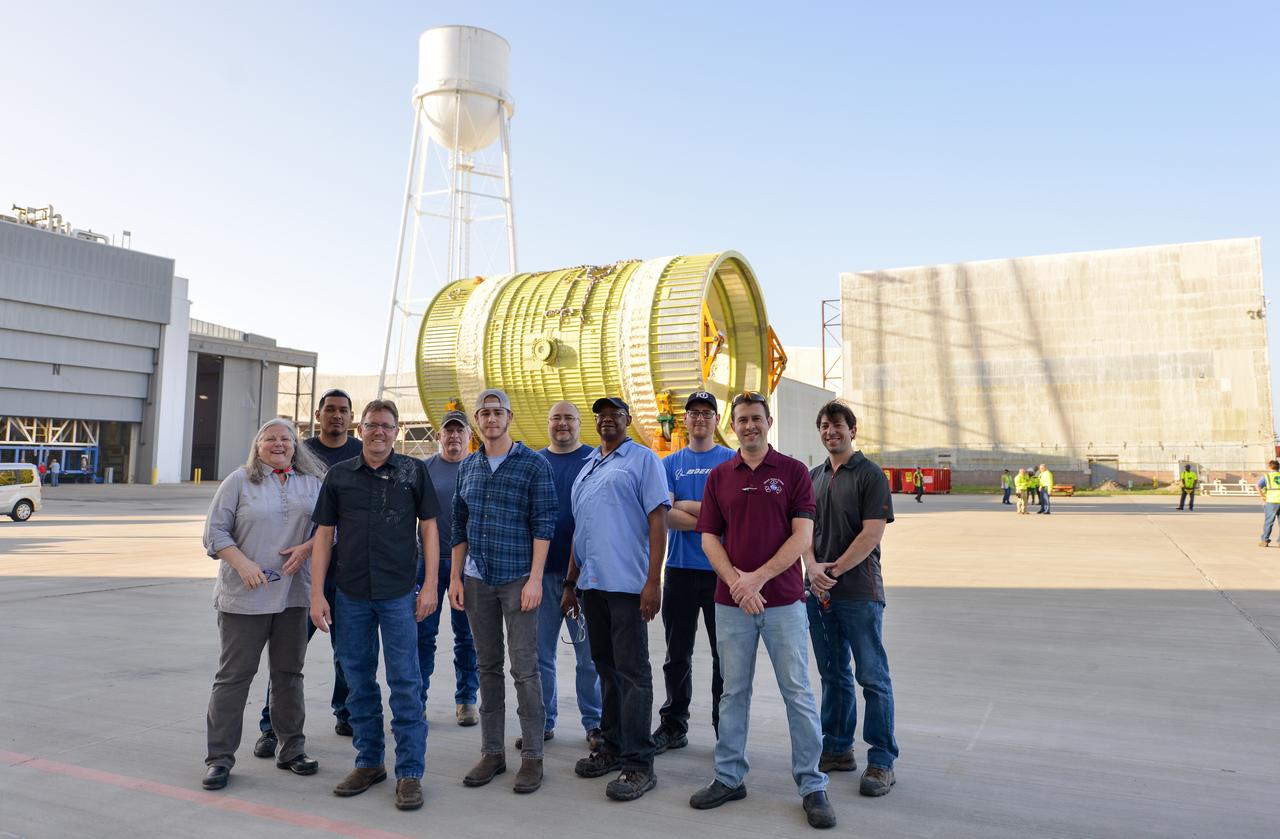
Group photo of the Boeing technicians that built the Intertank Structural Test Article.

Drone Crew and Media Services document the Intertank STA en route to Pegasus.
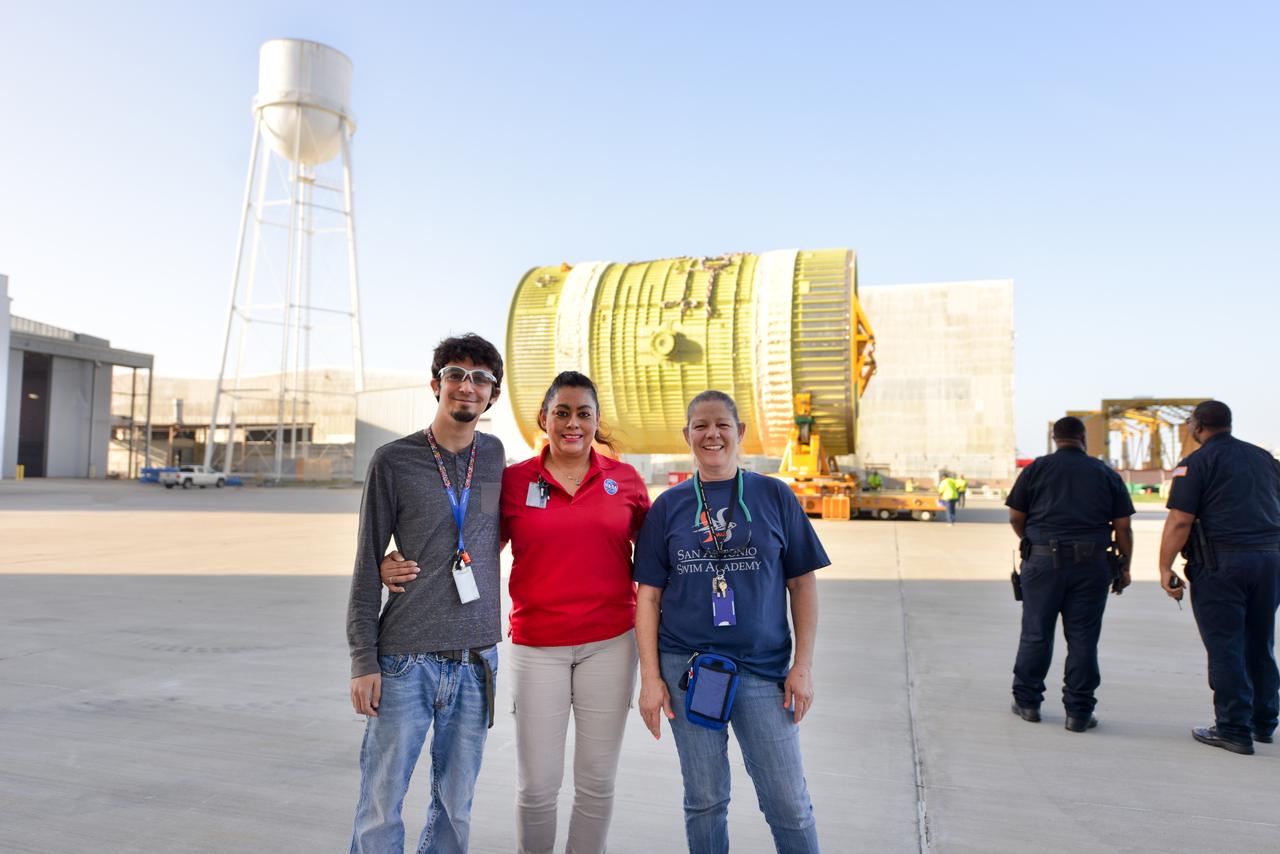
Boeing technicians that installed sensors inside of the Intertank STA.
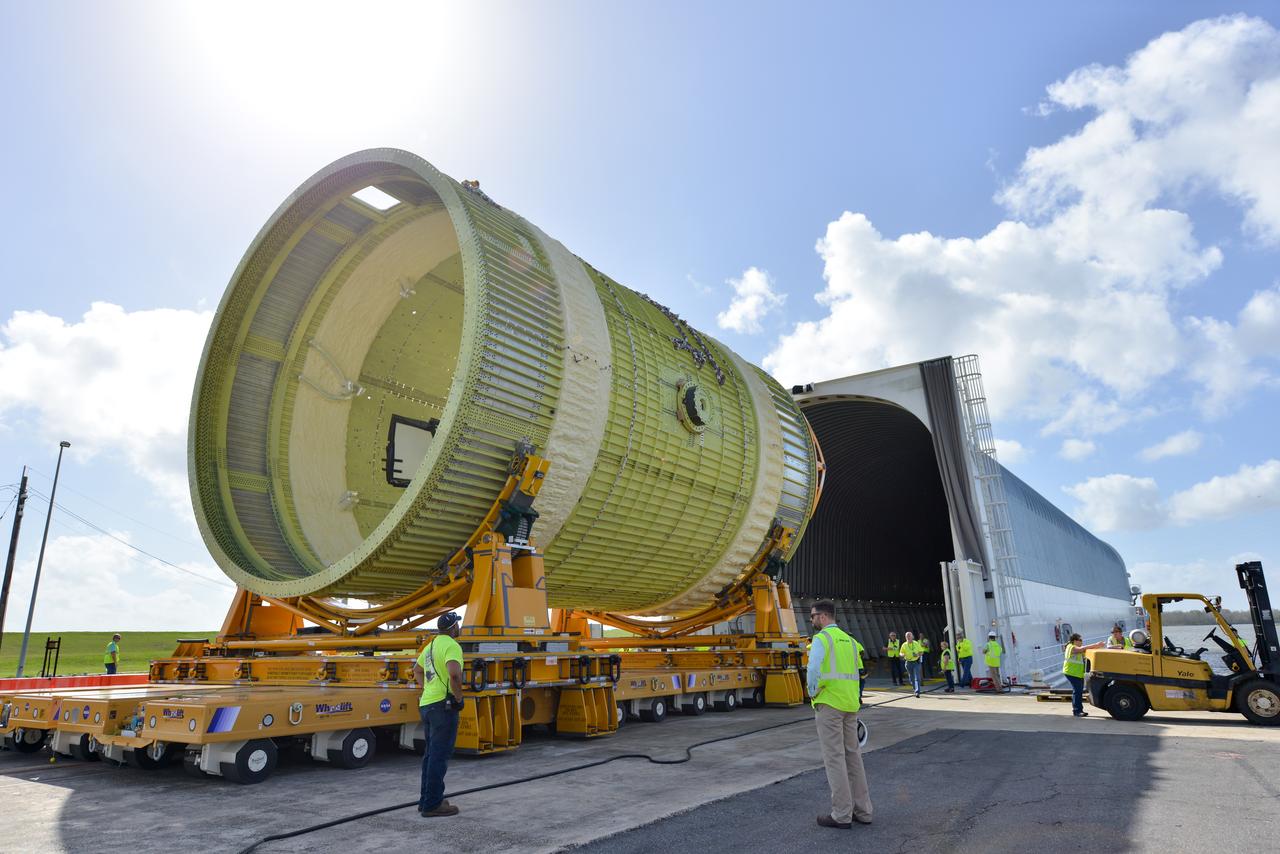
Intertank STA awaits loading onto the Pegasus Barge
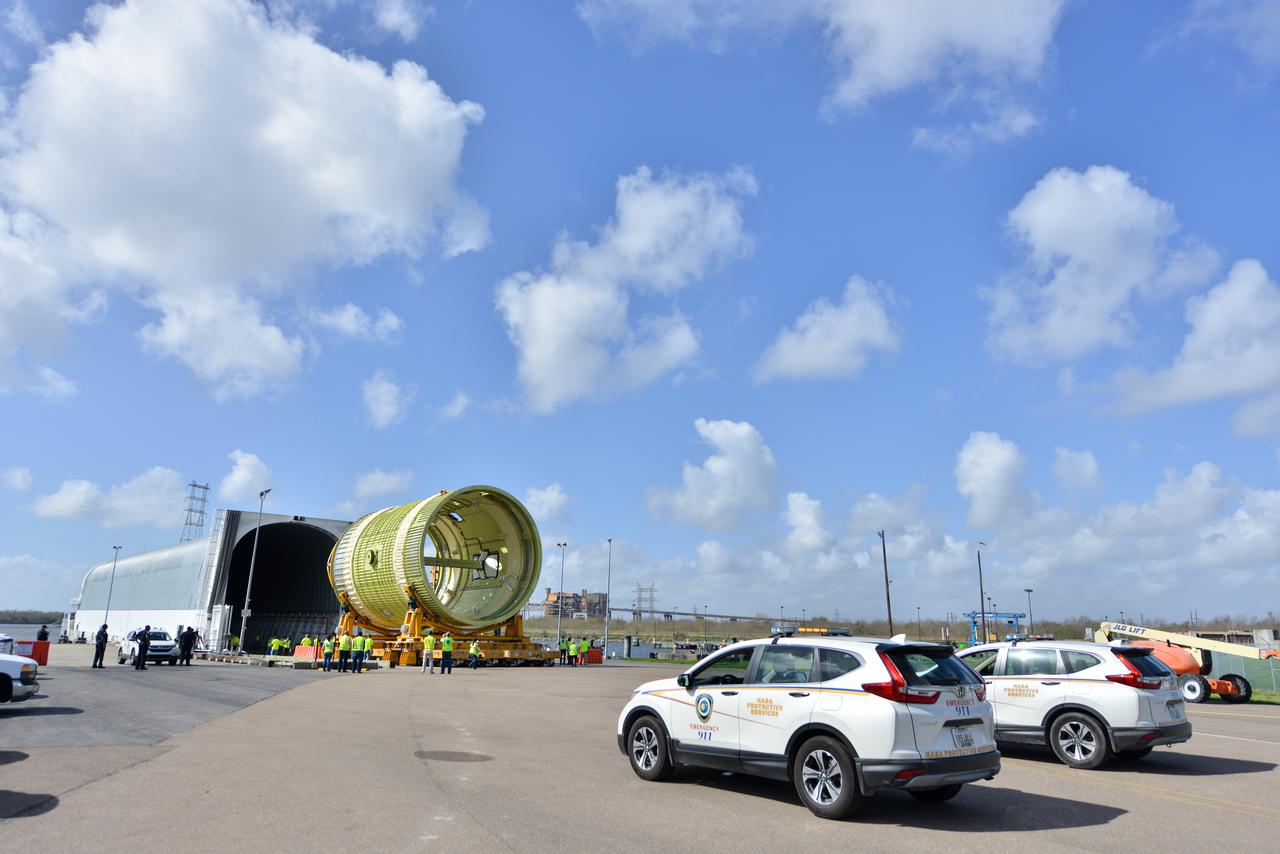
Michoud Protective Services escorts Intertank STA to Pegasus.
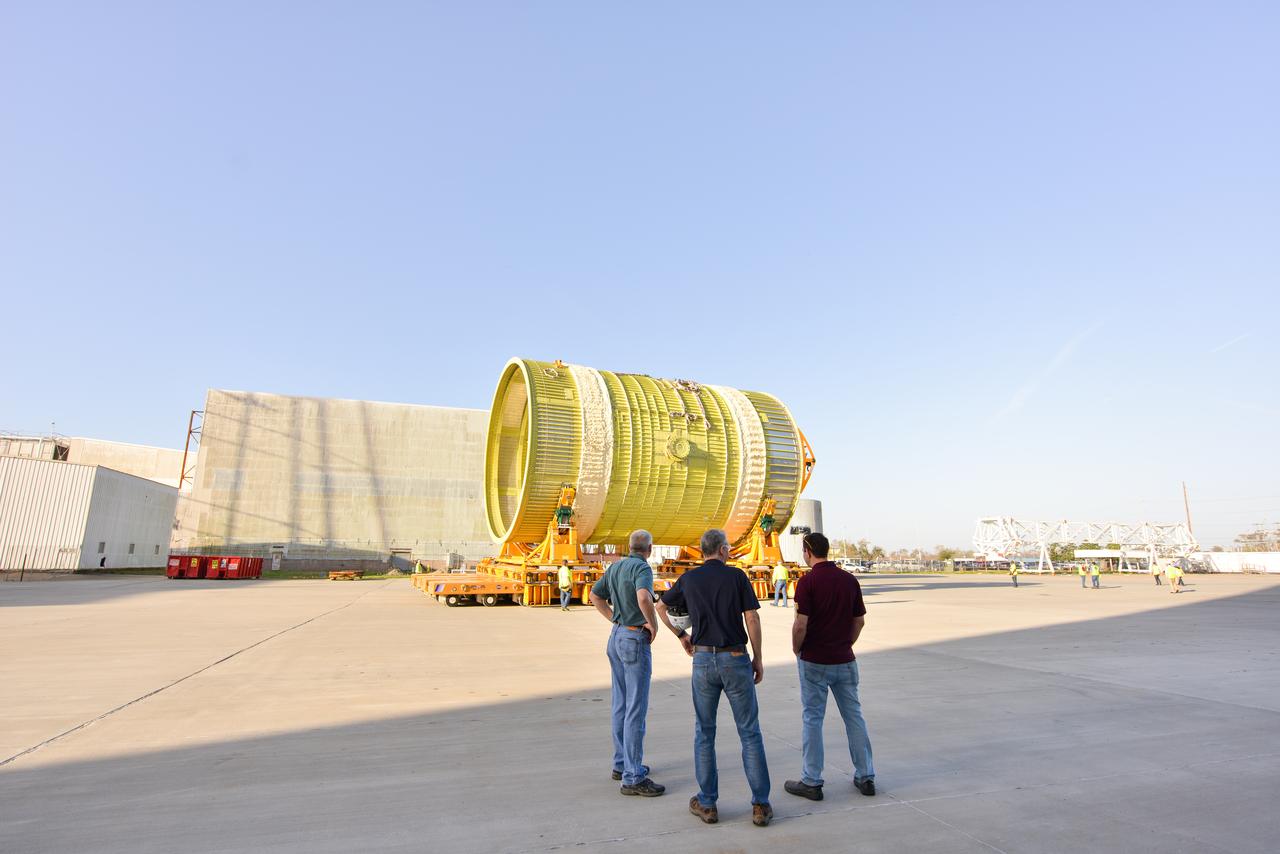
Intertank STA en route to Pegasus Barge
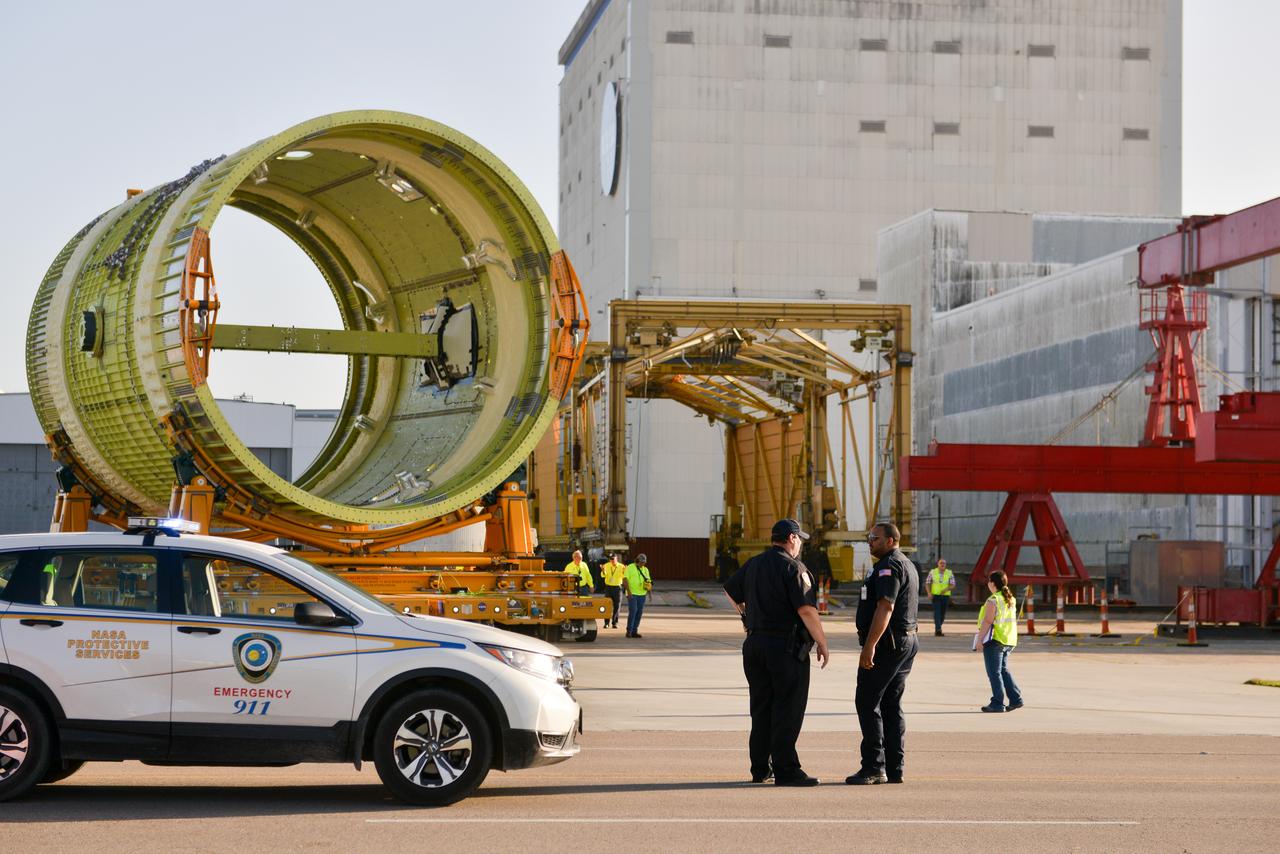
Intertank STA en route to Pegasus, while the Michoud Protective Services guides the route.
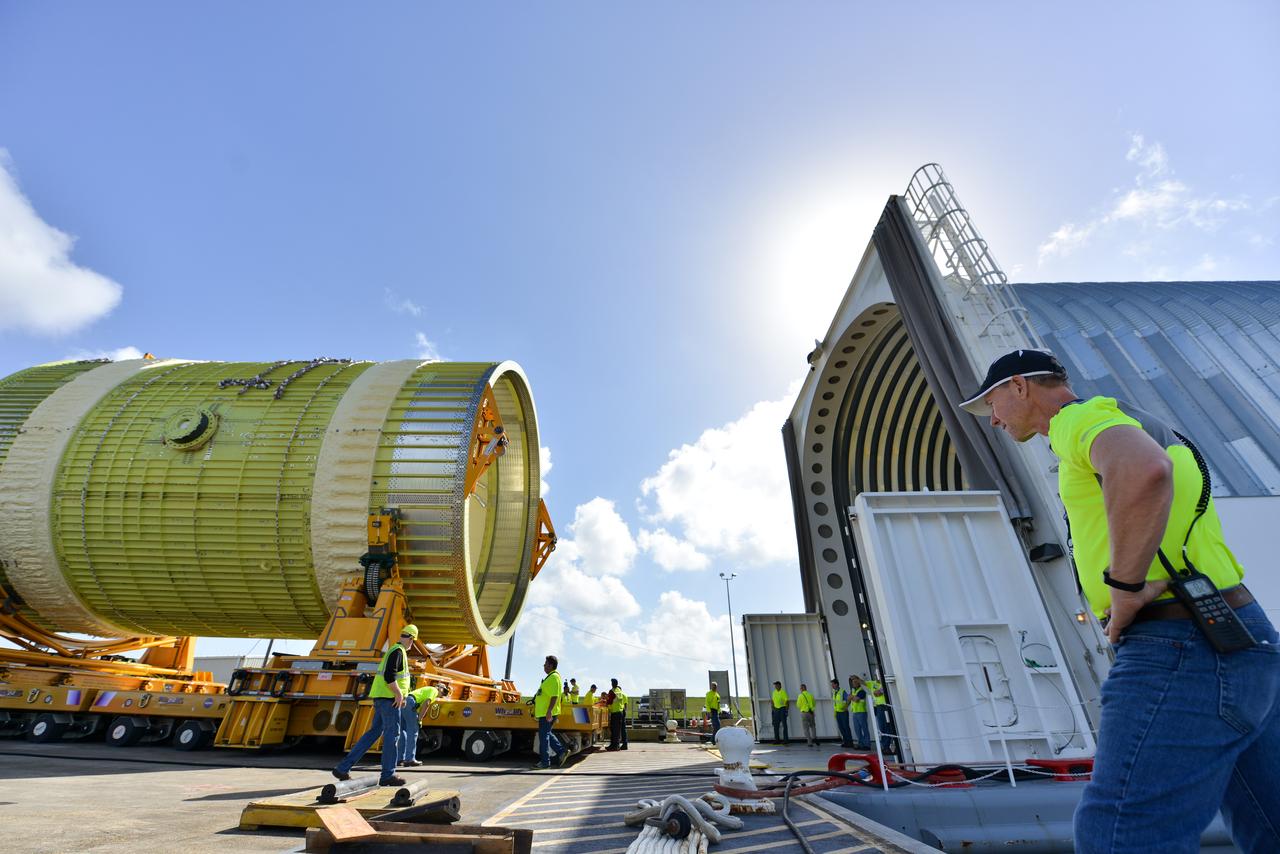
Pegasus Engineer watches the preparations before the move crew loads the Intertank STA on board.
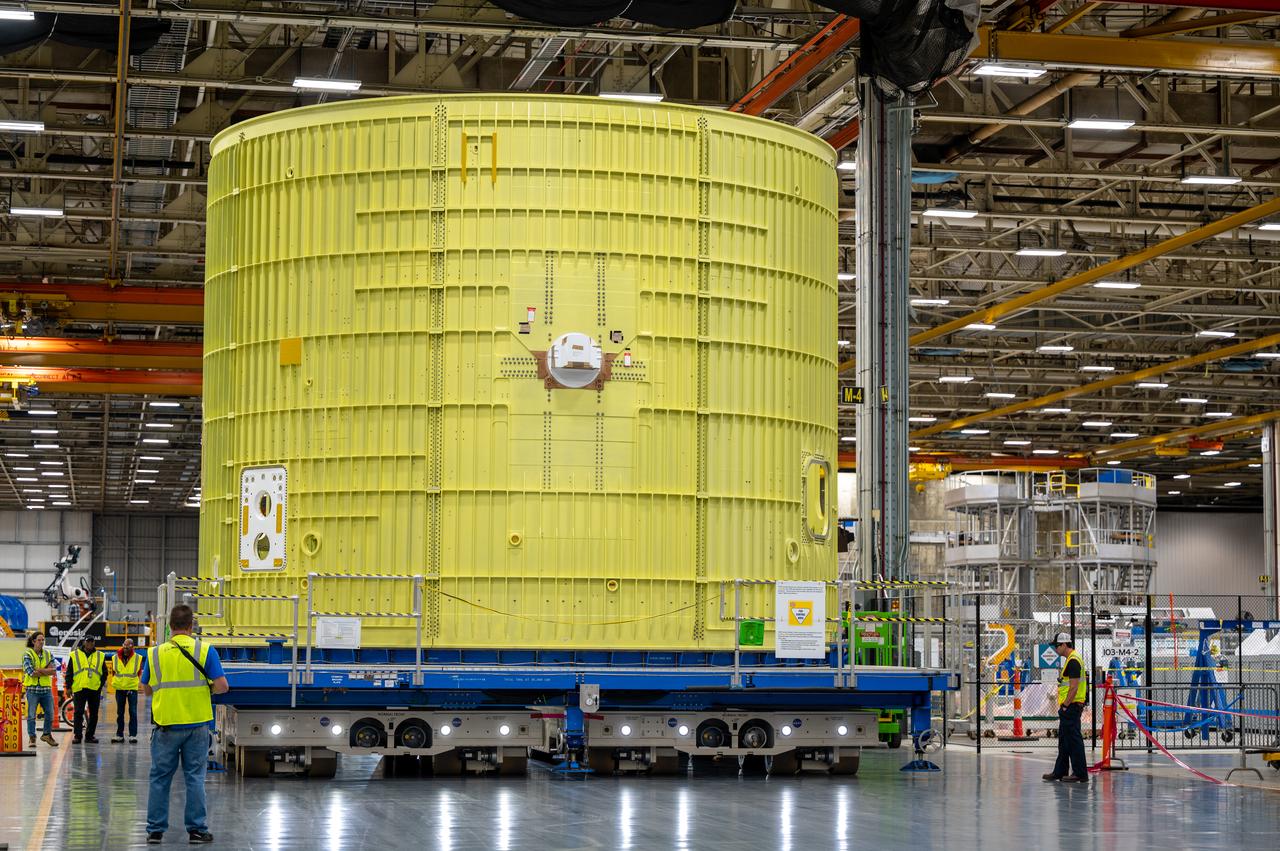
Technicians at NASA’s Michoud Assembly Facility move the intertank of NASA’s Space Launch System rocket for Artemis III to Cell G to await application of the thermal protection system. Thermal protection systems protect space vehicles from aerodynamic heating during entry to planet atmosphere and re-entry to earth atmosphere. The intertank lays between the liquid hydrogen tank and liquid oxygen tank. Together with the engine section and the forward skirt, they comprise the SLS core stage. The liquid hydrogen tank and liquid oxygen tank hold 733,000 gallons of propellant to power the stage’s four RS-25 engines needed for liftoff and Artemis missions to the Moon and future missions to Mars.
Technicians at NASA’s Michoud Assembly Facility move the intertank of NASA’s Space Launch System rocket for Artemis III to Cell G on October 26, 2022 to await application of the thermal protection system. Thermal protection systems protect space vehicles from aerodynamic heating during entry to planet atmosphere and re-entry to earth atmosphere. The intertank lays between the liquid hydrogen tank and liquid oxygen tank. Together with the engine section and the forward skirt, they comprise the SLS core stage. The liquid hydrogen tank and liquid oxygen tank hold 733,000 gallons of propellant to power the stage’s four RS-25 engines needed for liftoff and Artemis missions to the Moon and future missions to Mars.
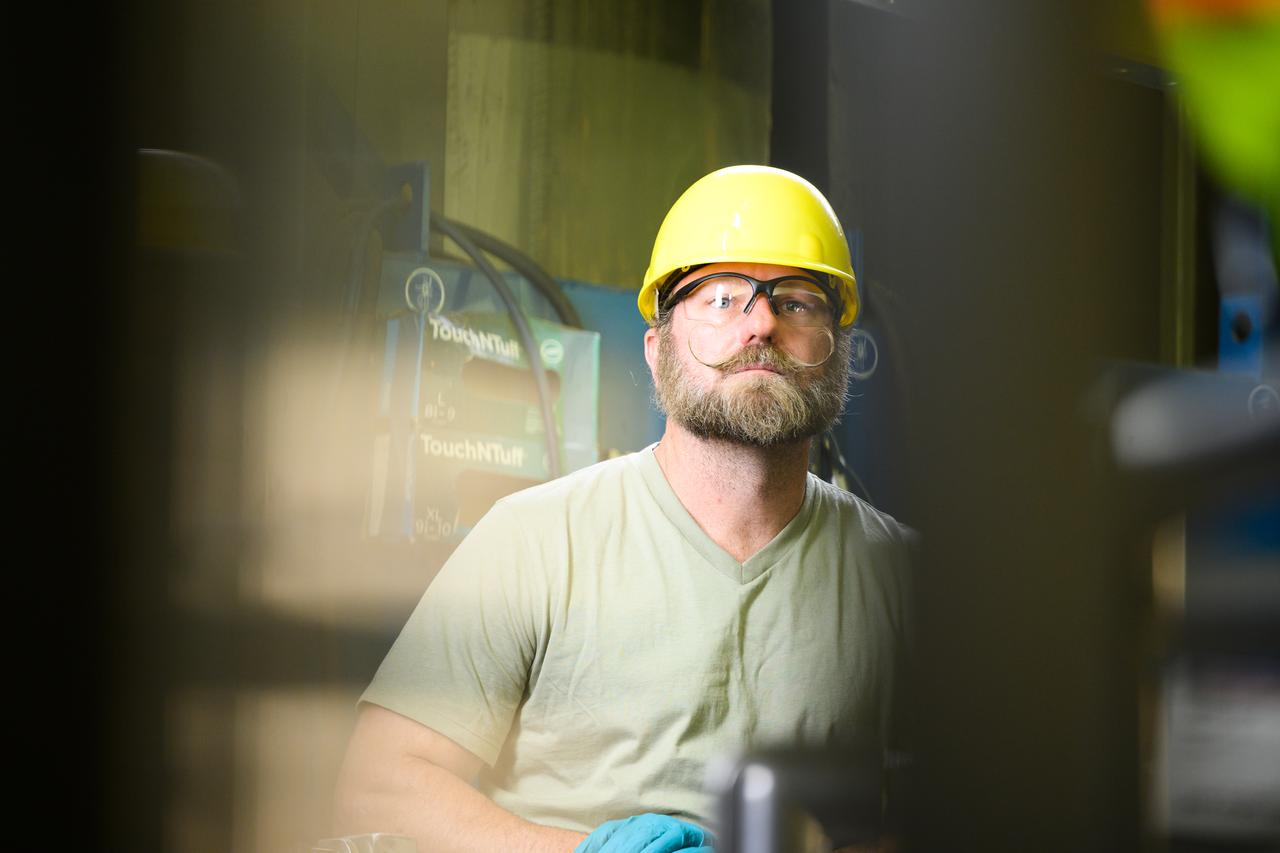
Technicians at NASA’s Michoud Assembly Facility move the intertank of NASA’s Space Launch System rocket for Artemis III to Cell G on October 26, 2022 to await application of the thermal protection system. Thermal protection systems protect space vehicles from aerodynamic heating during entry to planet atmosphere and re-entry to earth atmosphere. The intertank lays between the liquid hydrogen tank and liquid oxygen tank. Together with the engine section and the forward skirt, they comprise the SLS core stage. The liquid hydrogen tank and liquid oxygen tank hold 733,000 gallons of propellant to power the stage’s four RS-25 engines needed for liftoff and Artemis missions to the Moon and future missions to Mars.
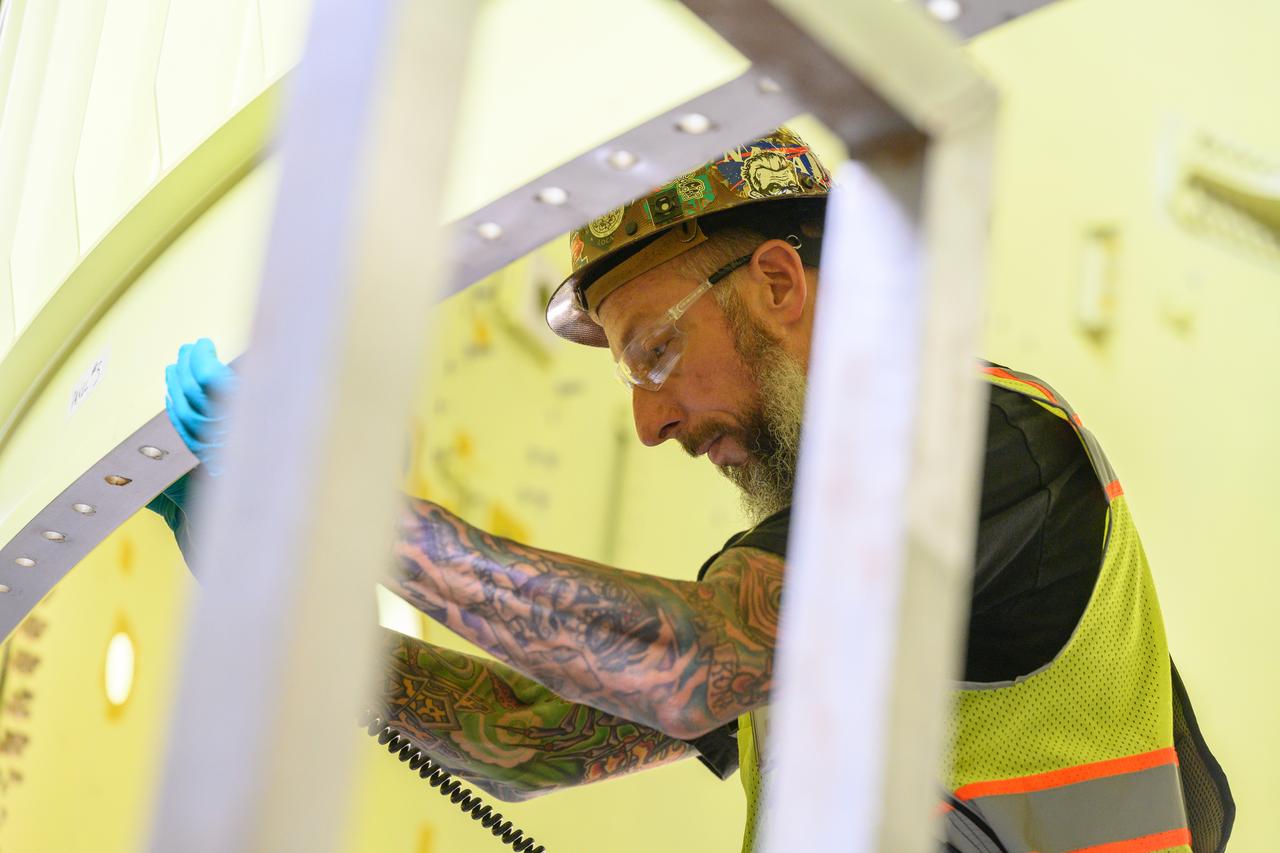
Technicians at NASA’s Michoud Assembly Facility move the intertank of NASA’s Space Launch System rocket for Artemis III to Cell G on October 26, 2022 to await application of the thermal protection system. Thermal protection systems protect space vehicles from aerodynamic heating during entry to planet atmosphere and re-entry to earth atmosphere. The intertank lays between the liquid hydrogen tank and liquid oxygen tank. Together with the engine section and the forward skirt, they comprise the SLS core stage. The liquid hydrogen tank and liquid oxygen tank hold 733,000 gallons of propellant to power the stage’s four RS-25 engines needed for liftoff and Artemis missions to the Moon and future missions to Mars.
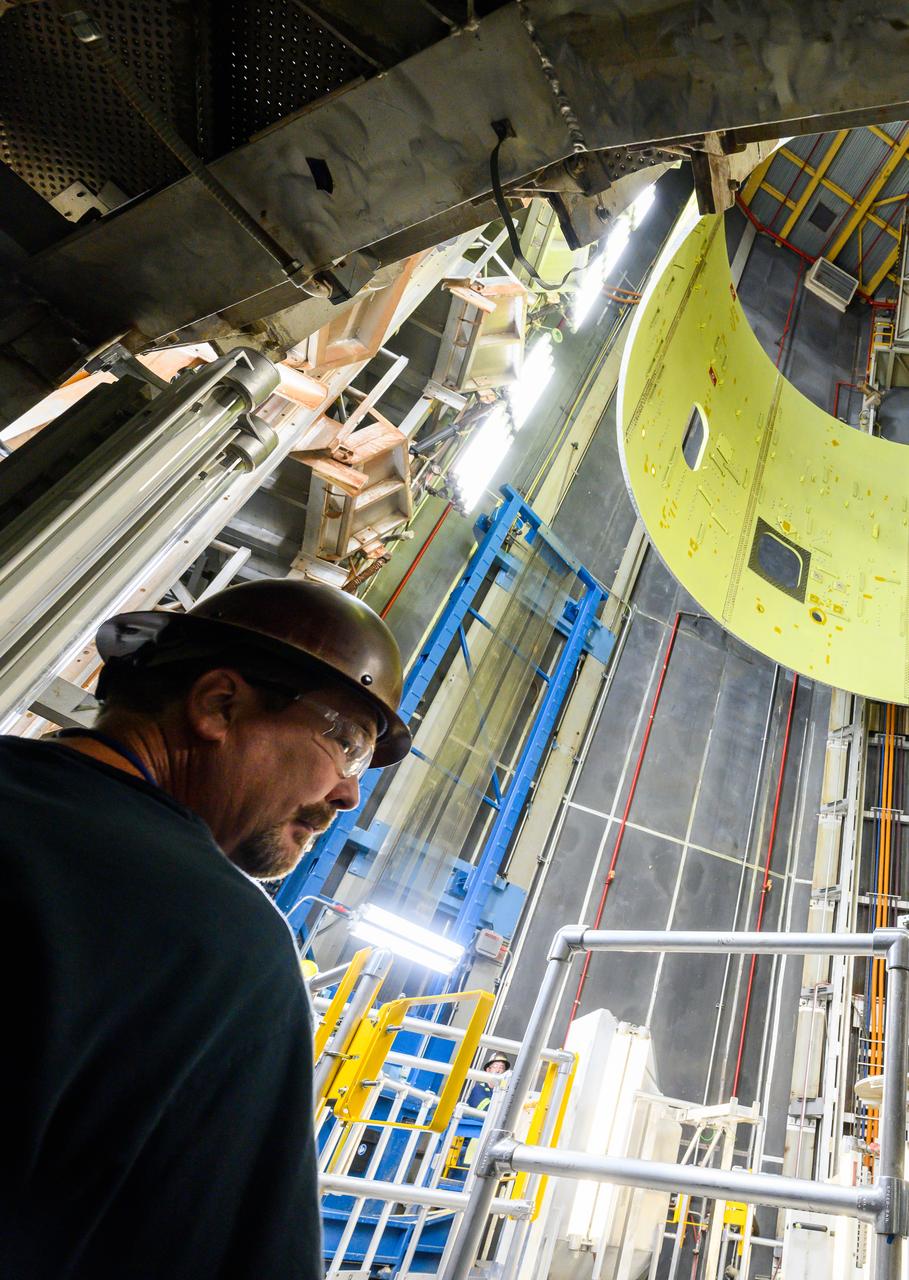
Technicians at NASA’s Michoud Assembly Facility move the intertank of NASA’s Space Launch System rocket for Artemis III to Cell G on October 26, 2022 to await application of the thermal protection system. Thermal protection systems protect space vehicles from aerodynamic heating during entry to planet atmosphere and re-entry to earth atmosphere. The intertank lays between the liquid hydrogen tank and liquid oxygen tank. Together with the engine section and the forward skirt, they comprise the SLS core stage. The liquid hydrogen tank and liquid oxygen tank hold 733,000 gallons of propellant to power the stage’s four RS-25 engines needed for liftoff and Artemis missions to the Moon and future missions to Mars.
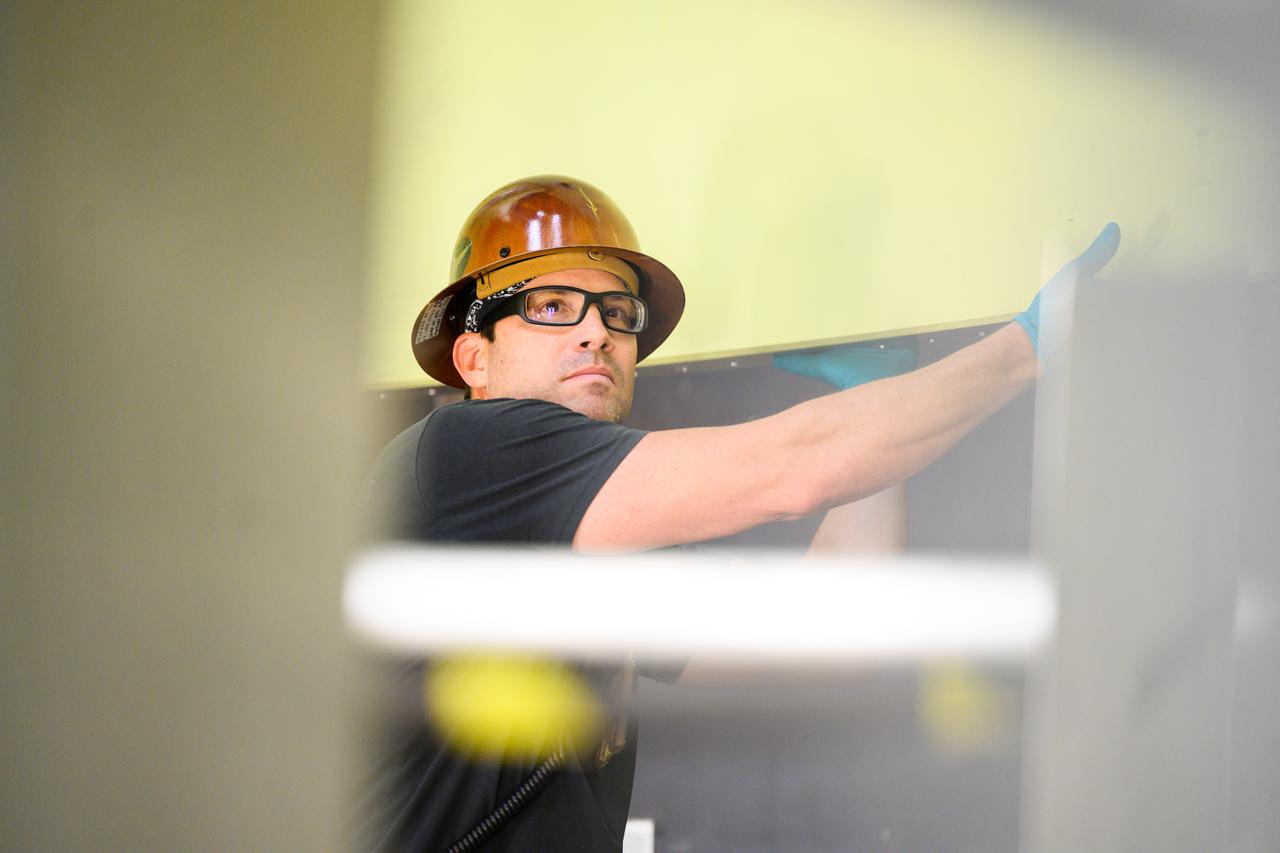
Technicians at NASA’s Michoud Assembly Facility move the intertank of NASA’s Space Launch System rocket for Artemis III to Cell G on October 26, 2022 to await application of the thermal protection system. Thermal protection systems protect space vehicles from aerodynamic heating during entry to planet atmosphere and re-entry to earth atmosphere. The intertank lays between the liquid hydrogen tank and liquid oxygen tank. Together with the engine section and the forward skirt, they comprise the SLS core stage. The liquid hydrogen tank and liquid oxygen tank hold 733,000 gallons of propellant to power the stage’s four RS-25 engines needed for liftoff and Artemis missions to the Moon and future missions to Mars.
/MAF_20221027_CS3_IT_lifttoG-epb_004(1)~medium.jpg)
Technicians at NASA’s Michoud Assembly Facility move the intertank of NASA’s Space Launch System rocket for Artemis III to Cell G on October 26, 2022 to await application of the thermal protection system. Thermal protection systems protect space vehicles from aerodynamic heating during entry to planet atmosphere and re-entry to earth atmosphere. The intertank lays between the liquid hydrogen tank and liquid oxygen tank. Together with the engine section and the forward skirt, they comprise the SLS core stage. The liquid hydrogen tank and liquid oxygen tank hold 733,000 gallons of propellant to power the stage’s four RS-25 engines needed for liftoff and Artemis missions to the Moon and future missions to Mars.
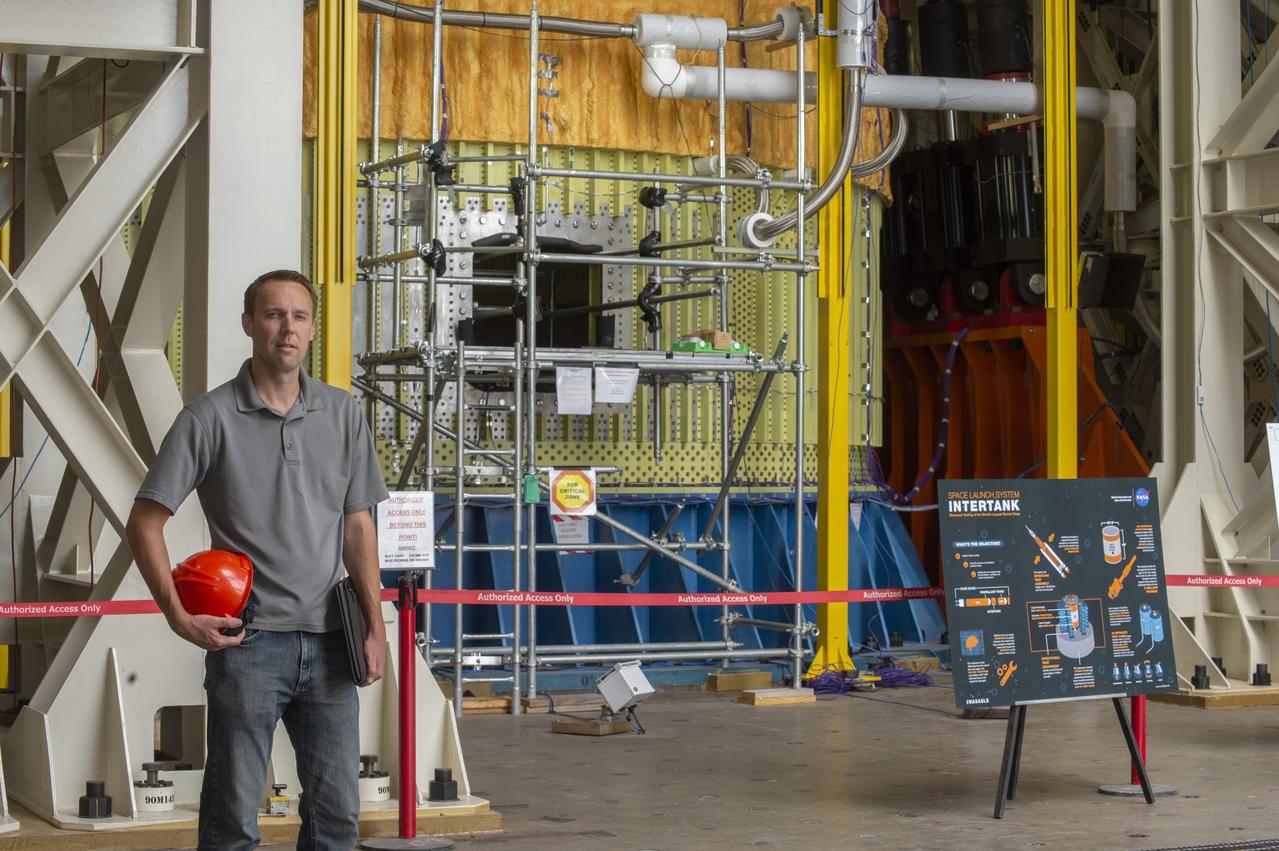
Preston Schmauch, SLS Stages Element Alternate Lead Systems Engineer, oversees testing of the Intertank Structural Test Article (STA), which will push, pull, and bend the STA with millions of pounds of force to prove the SLS Intertank can withstand the immense forces induced by aero, engine, and booster loads during flight.
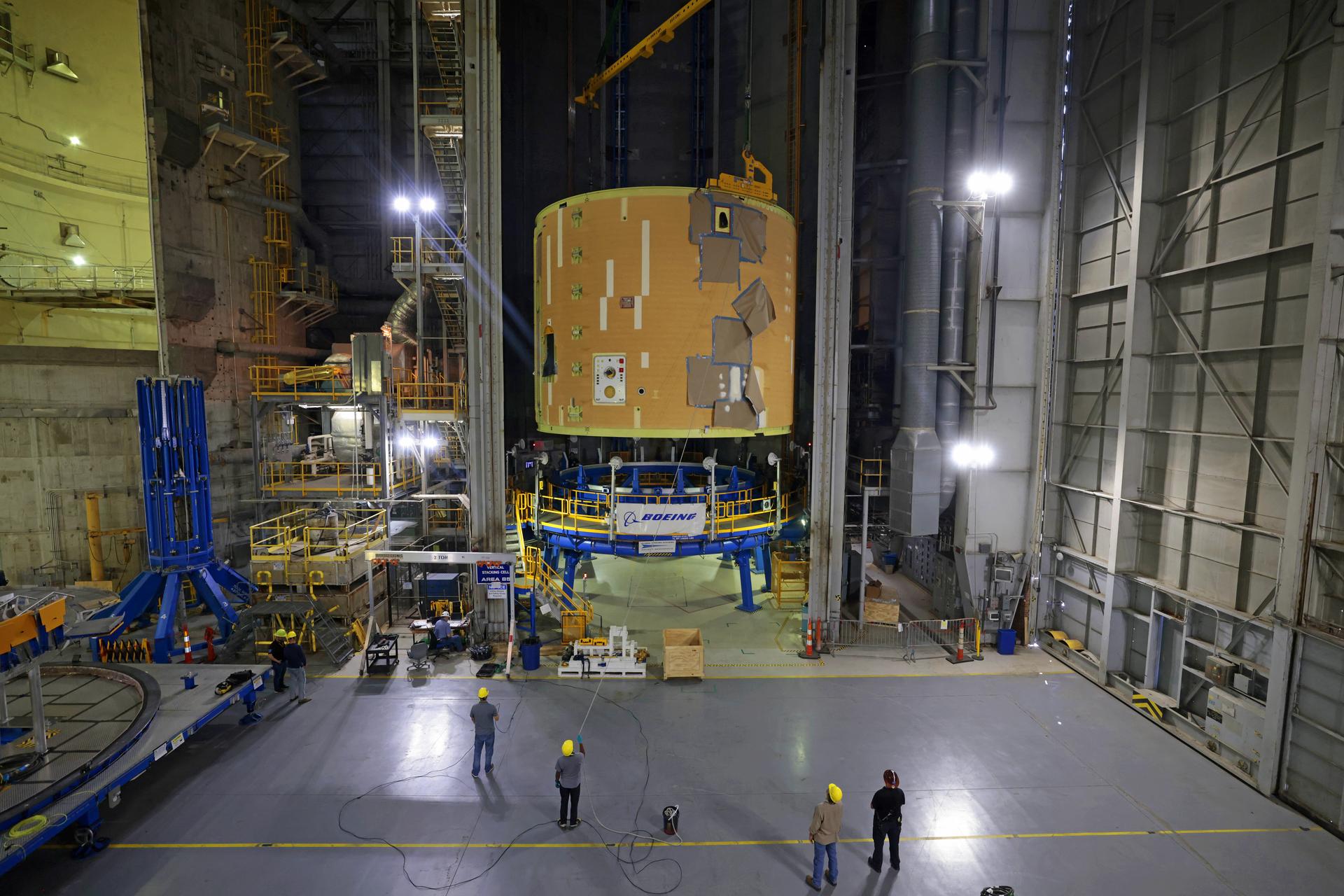
Teams at NASA’s Michoud Assembly Facility in New Orleans move the 21.8-foot-tall intertank for the core stage of the agency’s Artemis III mission into the vertical assembly building on Oct. 21. Inside the production cell, NASA’s prime contractor for the SLS (Space Launch System) core stage, Boeing, will mate the intertank to the liquid oxygen tank and the forward skirt in a process called a “forward join.” The intertank houses avionics and electronics, serves as an attachment point for the solid rocket boosters, and is one of five major elements that make up the 212-foot-tall rocket stage. The core stage, along with its four RS-25 engines, produce more than two million pounds of thrust to help launch NASA’s Orion spacecraft, astronauts, and supplies beyond Earth’s orbit and to the lunar surface for Artemis. Image credit: NASA/Michael DeMocker
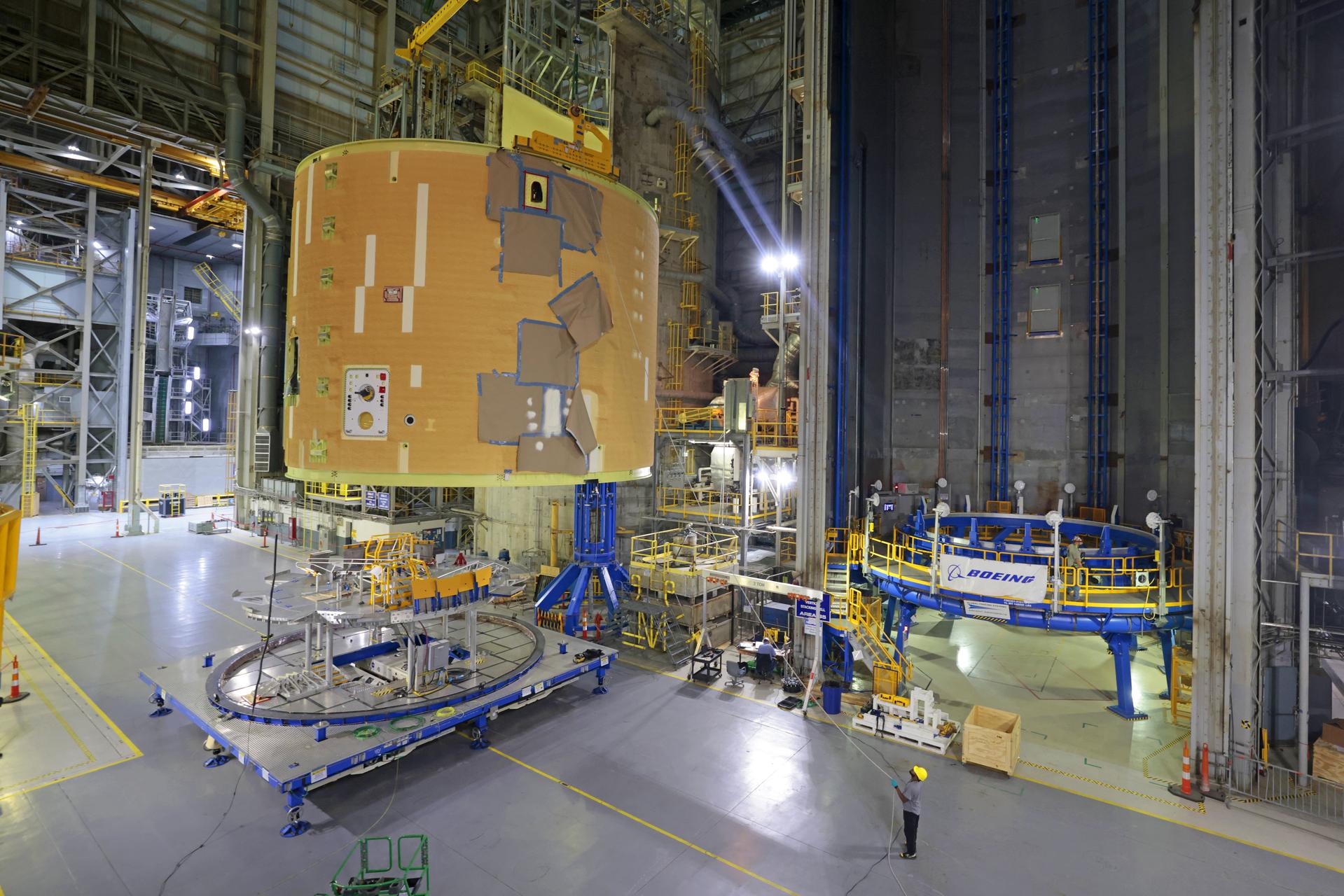
Teams at NASA’s Michoud Assembly Facility in New Orleans move the 21.8-foot-tall intertank for the core stage of the agency’s Artemis III mission into the vertical assembly building on Oct. 21. Inside the production cell, NASA’s prime contractor for the SLS (Space Launch System) core stage, Boeing, will mate the intertank to the liquid oxygen tank and the forward skirt in a process called a “forward join.” The intertank houses avionics and electronics, serves as an attachment point for the solid rocket boosters, and is one of five major elements that make up the 212-foot-tall rocket stage. The core stage, along with its four RS-25 engines, produce more than two million pounds of thrust to help launch NASA’s Orion spacecraft, astronauts, and supplies beyond Earth’s orbit and to the lunar surface for Artemis. Image credit: NASA/Michael DeMocker
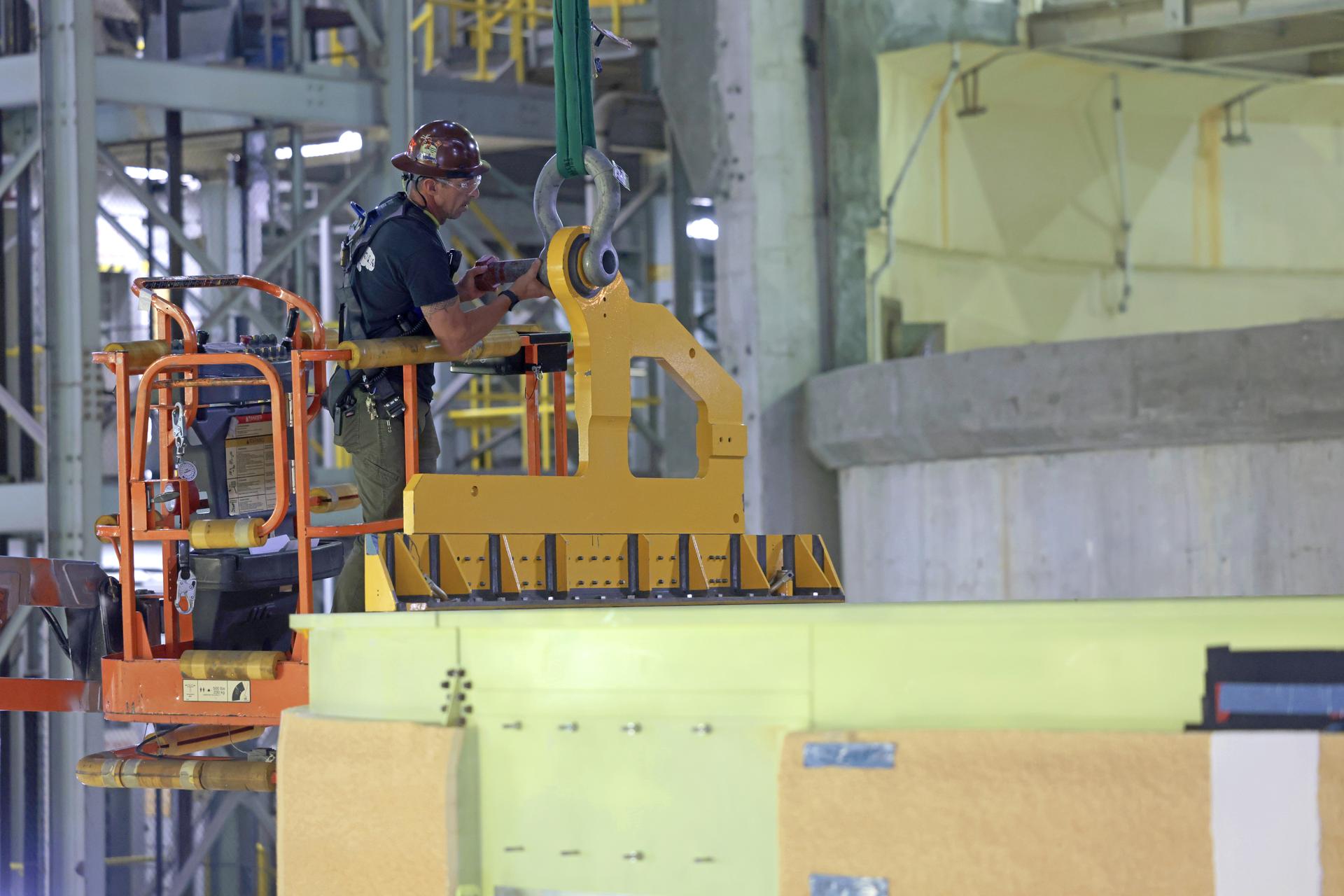
Teams at NASA’s Michoud Assembly Facility in New Orleans move the 21.8-foot-tall intertank for the core stage of the agency’s Artemis III mission into the vertical assembly building on Oct. 21. Inside the production cell, NASA’s prime contractor for the SLS (Space Launch System) core stage, Boeing, will mate the intertank to the liquid oxygen tank and the forward skirt in a process called a “forward join.” The intertank houses avionics and electronics, serves as an attachment point for the solid rocket boosters, and is one of five major elements that make up the 212-foot-tall rocket stage. The core stage, along with its four RS-25 engines, produce more than two million pounds of thrust to help launch NASA’s Orion spacecraft, astronauts, and supplies beyond Earth’s orbit and to the lunar surface for Artemis. Image credit: NASA/Michael DeMocker
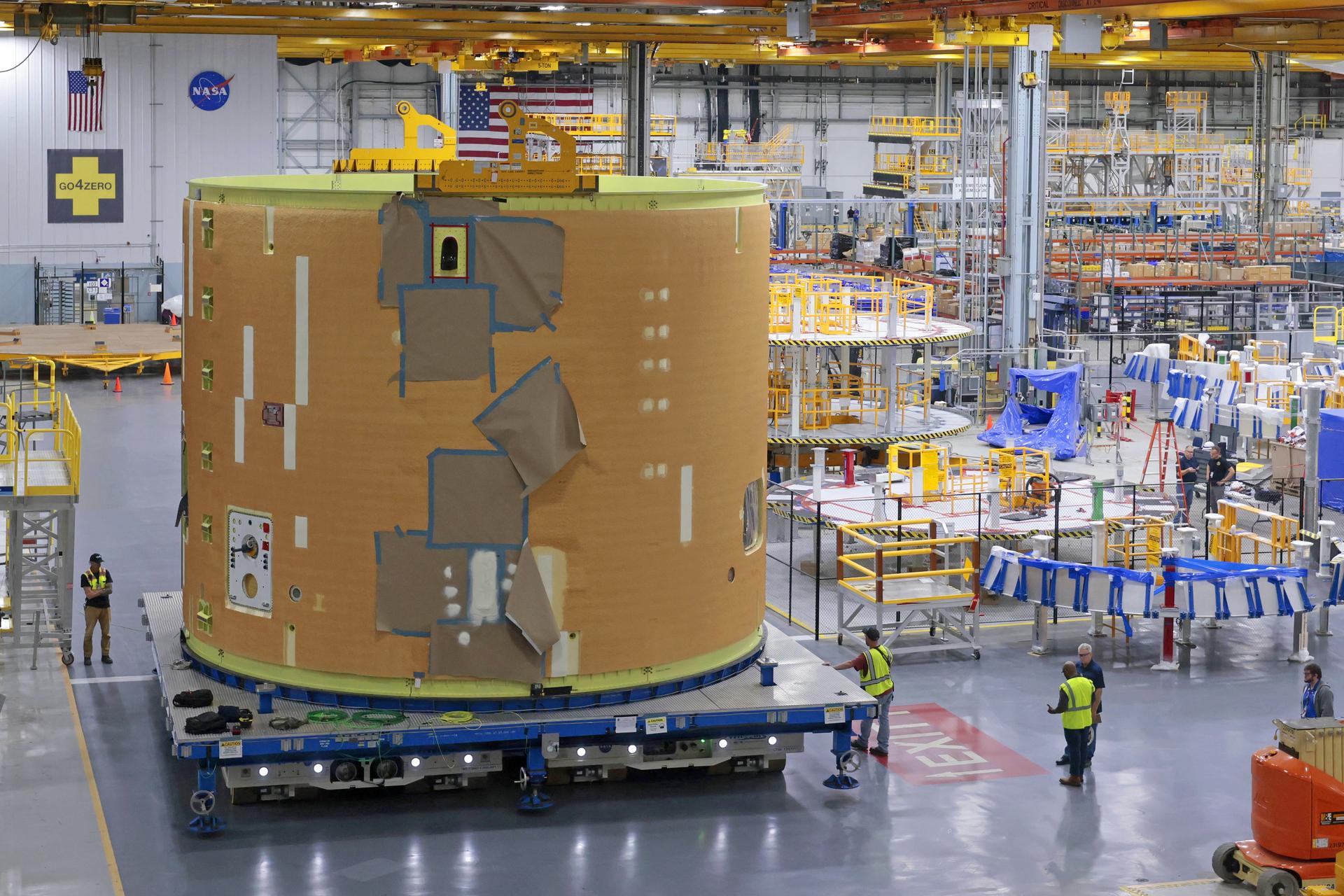
Teams at NASA’s Michoud Assembly Facility in New Orleans move the 21.8-foot-tall intertank for the core stage of the agency’s Artemis III mission into the vertical assembly building on Oct. 21. Inside the production cell, NASA’s prime contractor for the SLS (Space Launch System) core stage, Boeing, will mate the intertank to the liquid oxygen tank and the forward skirt in a process called a “forward join.” The intertank houses avionics and electronics, serves as an attachment point for the solid rocket boosters, and is one of five major elements that make up the 212-foot-tall rocket stage. The core stage, along with its four RS-25 engines, produce more than two million pounds of thrust to help launch NASA’s Orion spacecraft, astronauts, and supplies beyond Earth’s orbit and to the lunar surface for Artemis. Image credit: NASA/Michael DeMocker
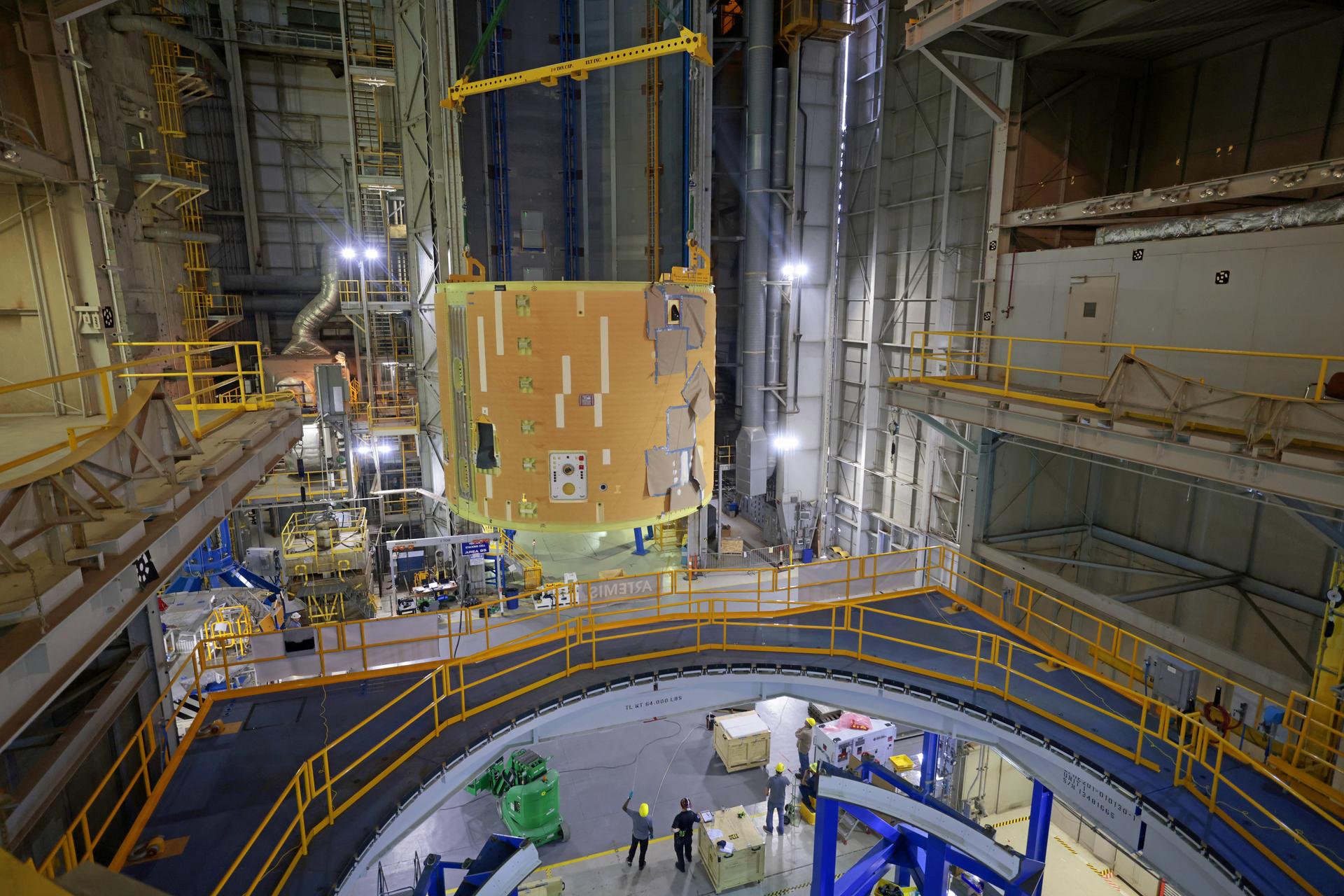
Teams at NASA’s Michoud Assembly Facility in New Orleans move the 21.8-foot-tall intertank for the core stage of the agency’s Artemis III mission into the vertical assembly building on Oct. 21. Inside the production cell, NASA’s prime contractor for the SLS (Space Launch System) core stage, Boeing, will mate the intertank to the liquid oxygen tank and the forward skirt in a process called a “forward join.” The intertank houses avionics and electronics, serves as an attachment point for the solid rocket boosters, and is one of five major elements that make up the 212-foot-tall rocket stage. The core stage, along with its four RS-25 engines, produce more than two million pounds of thrust to help launch NASA’s Orion spacecraft, astronauts, and supplies beyond Earth’s orbit and to the lunar surface for Artemis. Image credit: NASA/Michael DeMocker
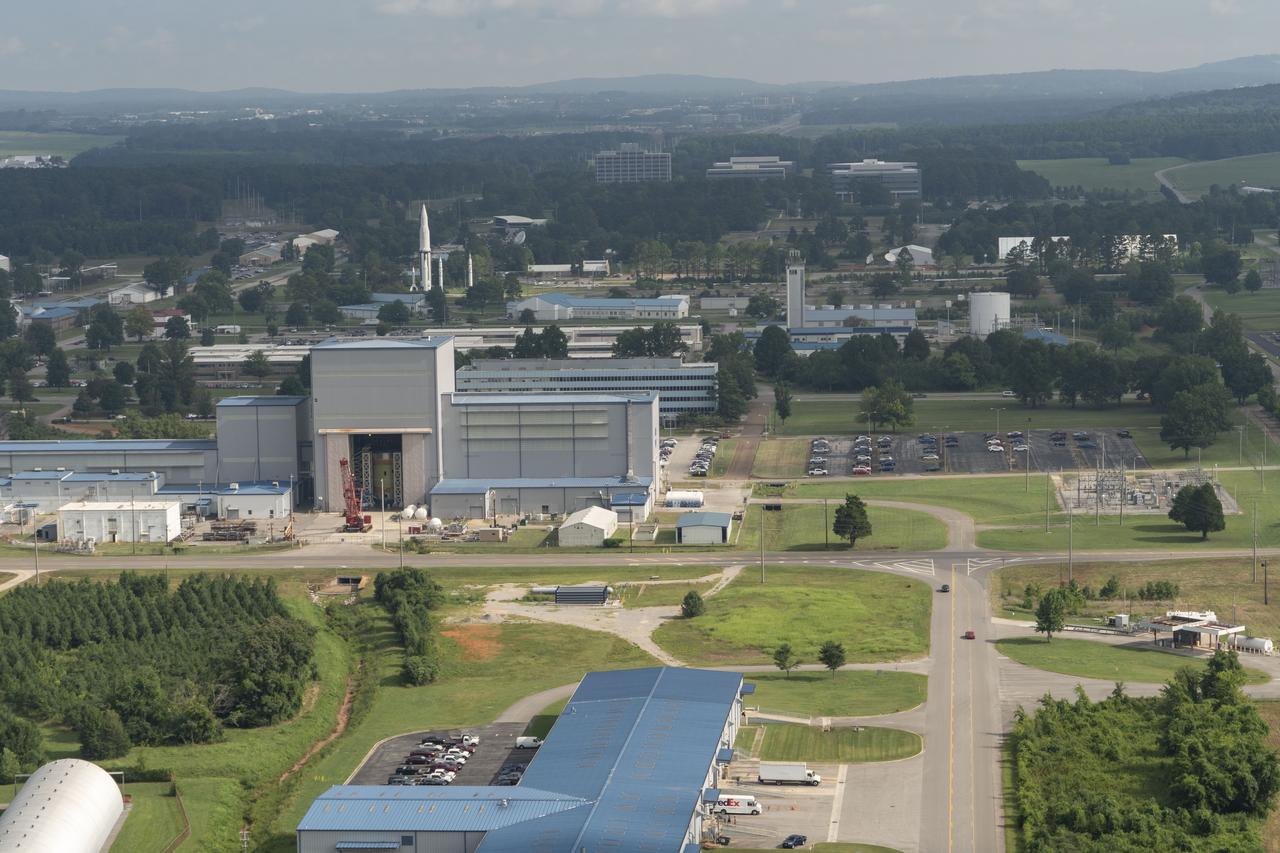
Aerial photograph of MSFC building 4719 with the SLS Intertank visible in the open doors
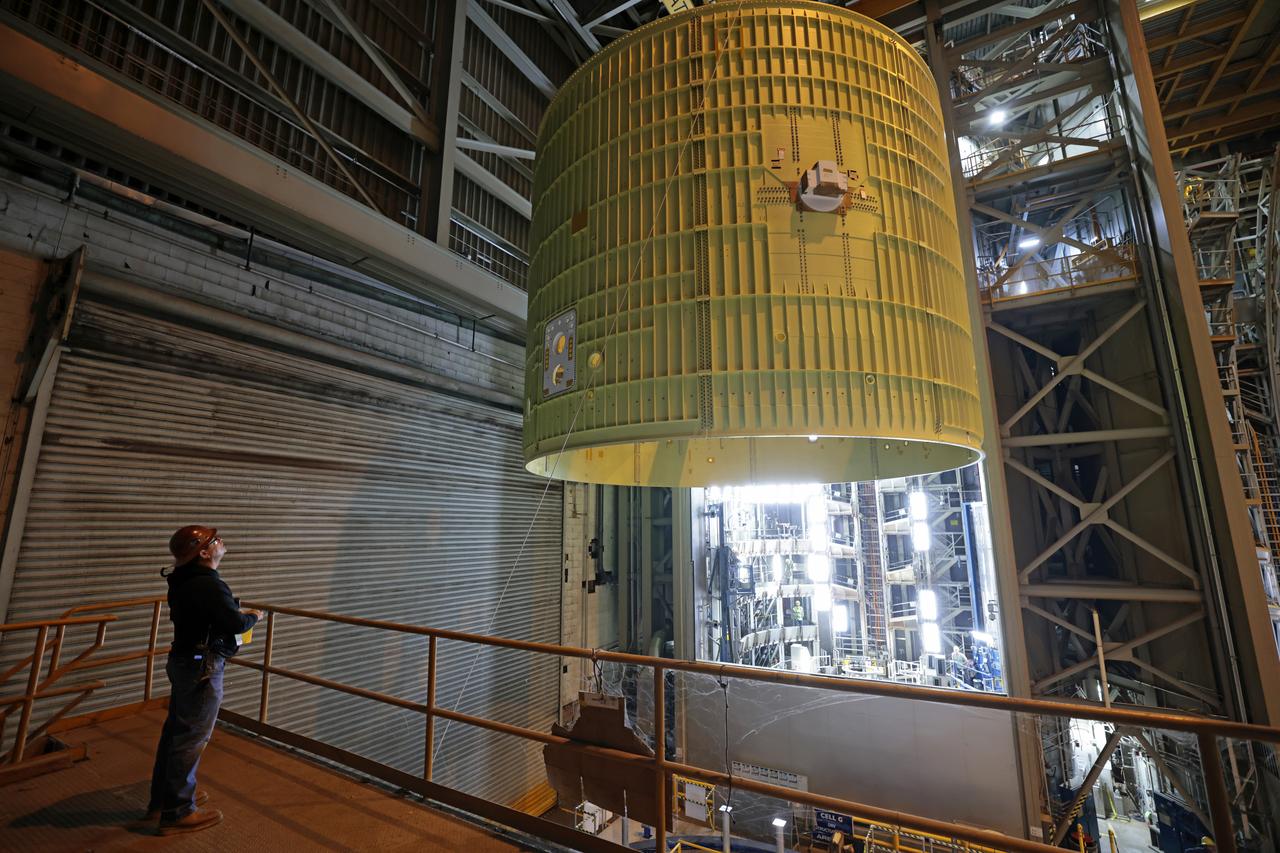
Technicians at NASA’s Michoud Assembly Facility move the intertank of NASA’s Space Launch System rocket for Artemis III to Cell G on October 26, 2022 to await application of the thermal protection system. Thermal protection systems protect space vehicles from aerodynamic heating during entry to planet atmosphere and re-entry to earth atmosphere. The intertank lays between the liquid hydrogen tank and liquid oxygen tank. Together with the engine section and the forward skirt, they comprise the SLS core stage. The liquid hydrogen tank and liquid oxygen tank hold 733,000 gallons of propellant to power the stage’s four RS-25 engines needed for liftoff and Artemis missions to the Moon and future missions to Mars. Image credit: NASA/Michael DeMocker
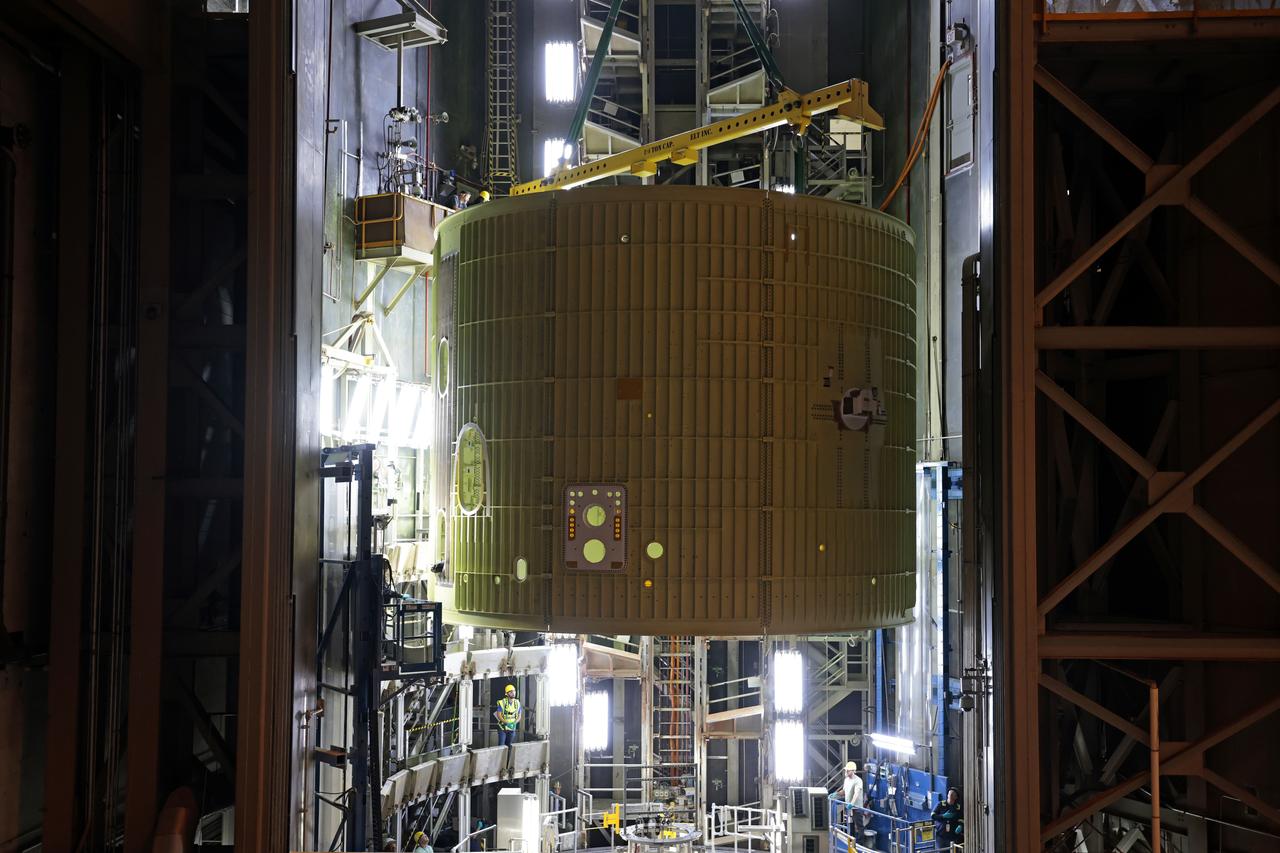
Technicians at NASA’s Michoud Assembly Facility move the intertank of NASA’s Space Launch System rocket for Artemis III to Cell G on October 26, 2022 to await application of the thermal protection system. Thermal protection systems protect space vehicles from aerodynamic heating during entry to planet atmosphere and re-entry to earth atmosphere. The intertank lays between the liquid hydrogen tank and liquid oxygen tank. Together with the engine section and the forward skirt, they comprise the SLS core stage. The liquid hydrogen tank and liquid oxygen tank hold 733,000 gallons of propellant to power the stage’s four RS-25 engines needed for liftoff and Artemis missions to the Moon and future missions to Mars. Image credit: NASA/Michael DeMocker
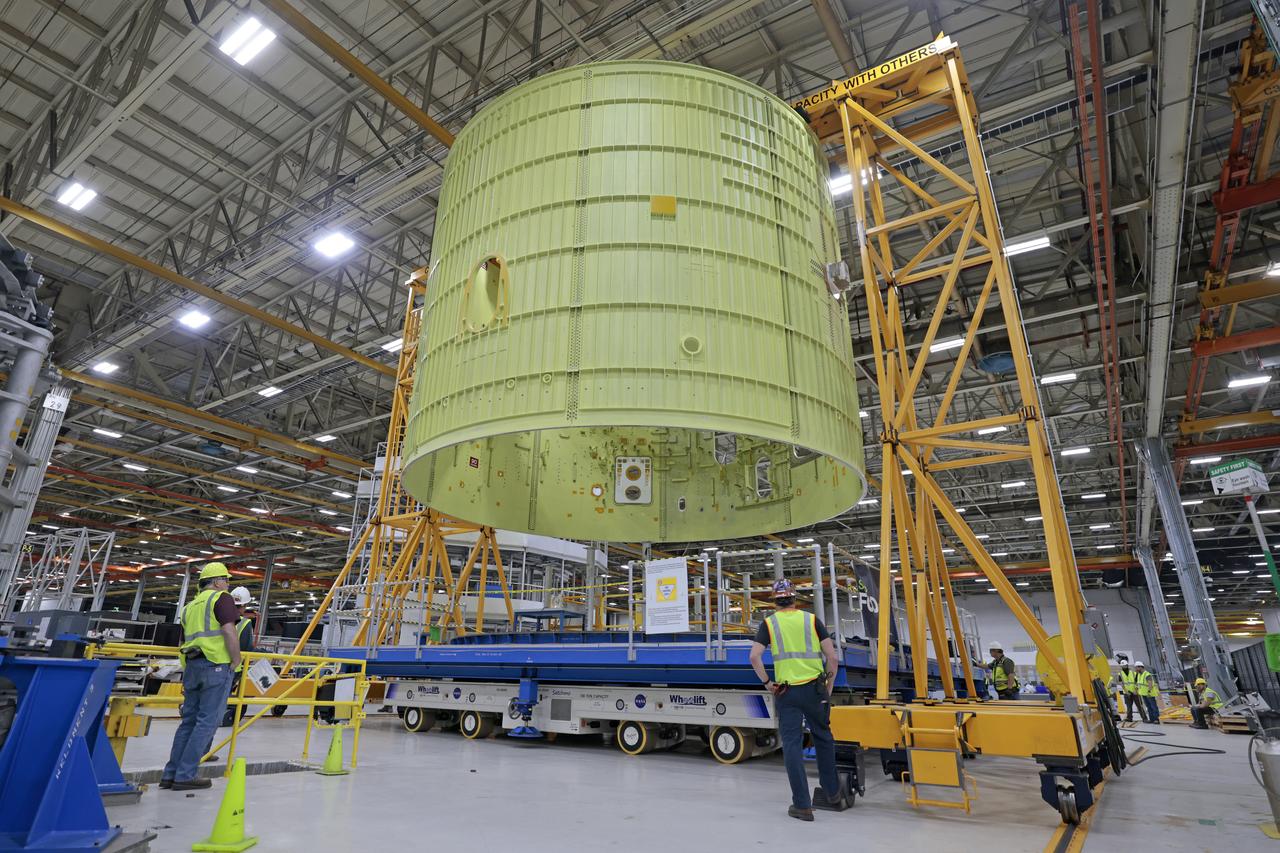
Technicians at NASA’s Michoud Assembly Facility move the intertank of NASA’s Space Launch System rocket for Artemis III to Cell G on October 26, 2022 to await application of the thermal protection system. Thermal protection systems protect space vehicles from aerodynamic heating during entry to planet atmosphere and re-entry to earth atmosphere. The intertank lays between the liquid hydrogen tank and liquid oxygen tank. Together with the engine section and the forward skirt, they comprise the SLS core stage. The liquid hydrogen tank and liquid oxygen tank hold 733,000 gallons of propellant to power the stage’s four RS-25 engines needed for liftoff and Artemis missions to the Moon and future missions to Mars. Image credit: NASA/Michael DeMocker
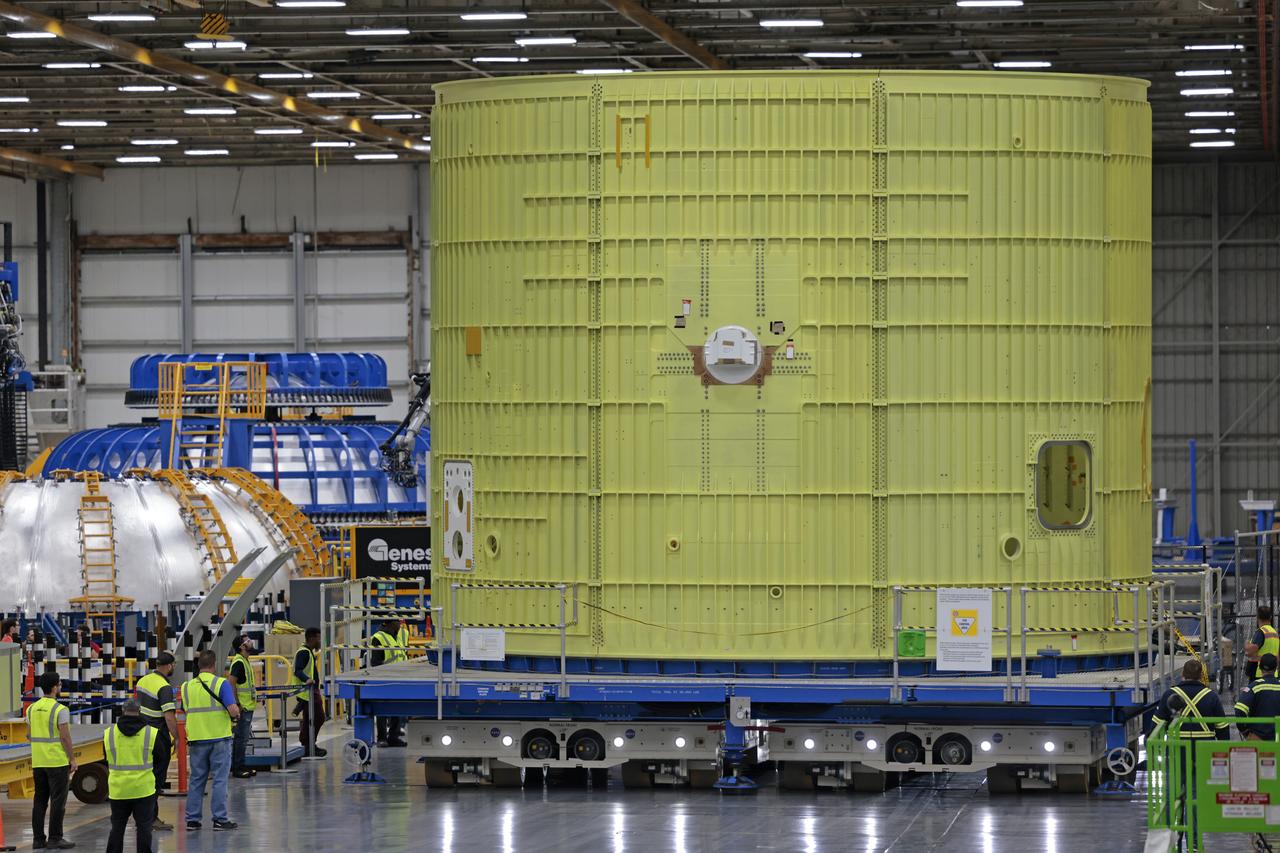
Technicians at NASA’s Michoud Assembly Facility move the intertank of NASA’s Space Launch System rocket for Artemis III to Cell G on October 26, 2022 to await application of the thermal protection system. Thermal protection systems protect space vehicles from aerodynamic heating during entry to planet atmosphere and re-entry to earth atmosphere. The intertank lays between the liquid hydrogen tank and liquid oxygen tank. Together with the engine section and the forward skirt, they comprise the SLS core stage. The liquid hydrogen tank and liquid oxygen tank hold 733,000 gallons of propellant to power the stage’s four RS-25 engines needed for liftoff and Artemis missions to the Moon and future missions to Mars. Image credit: NASA/Michael DeMocker

Technicians at NASA’s Michoud Assembly Facility move the intertank of NASA’s Space Launch System rocket for Artemis III to Cell G on October 26, 2022 to await application of the thermal protection system. Thermal protection systems protect space vehicles from aerodynamic heating during entry to planet atmosphere and re-entry to earth atmosphere. The intertank lays between the liquid hydrogen tank and liquid oxygen tank. Together with the engine section and the forward skirt, they comprise the SLS core stage. The liquid hydrogen tank and liquid oxygen tank hold 733,000 gallons of propellant to power the stage’s four RS-25 engines needed for liftoff and Artemis missions to the Moon and future missions to Mars. Image credit: NASA/Michael DeMocker
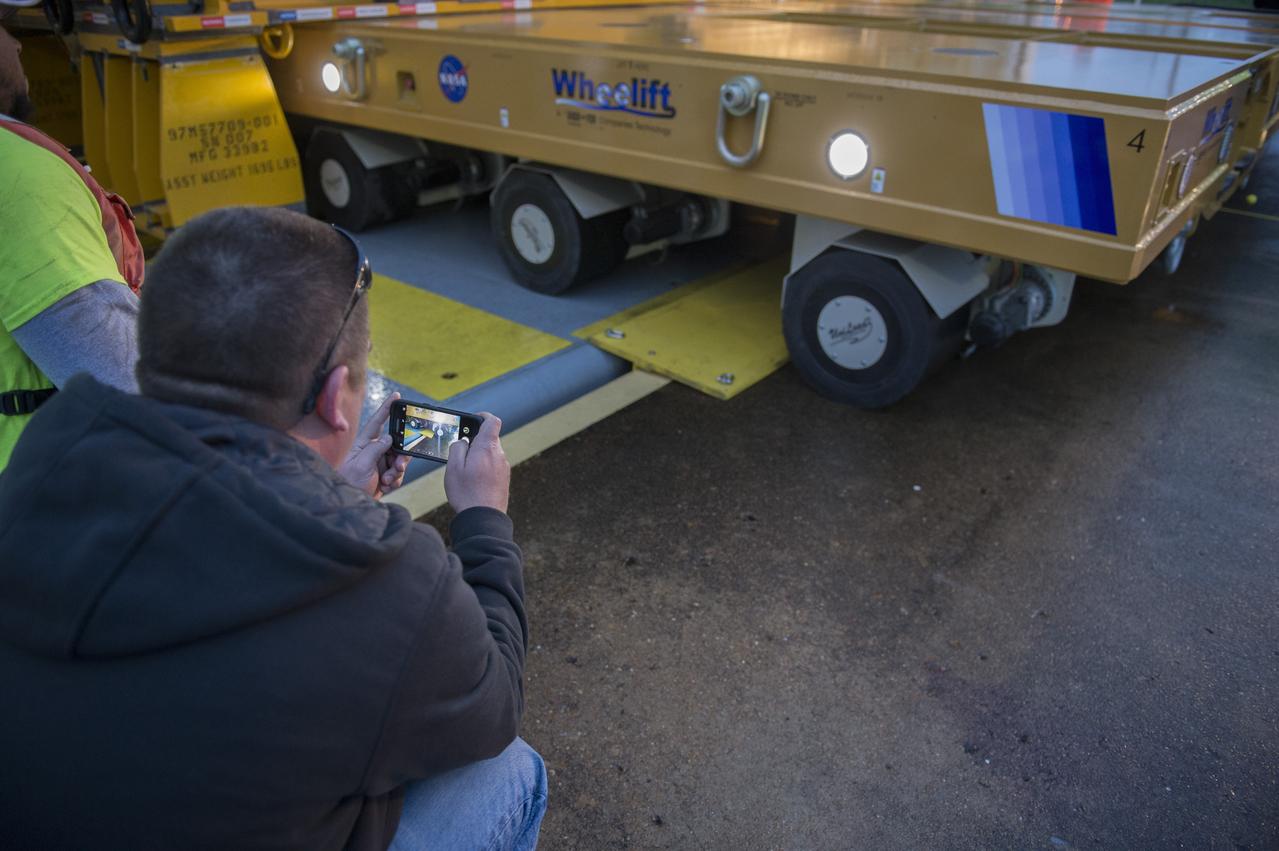
The SLS Stages Intertank Structural Test Assembly (STA) is rolling off the NASA Pegasus Barge at the MSFC Dock enroute to the MSFC 4619 Load Test Annex test facility for qualification testing
The SLS Stages Intertank Structural Test Assembly (STA) is rolling off the NASA Pegasus Barge at the MSFC Dock enroute to the MSFC 4619 Load Test Annex test facility for qualification testing
The SLS Stages Intertank Structural Test Assembly (STA) is rolling off the NASA Pegasus Barge at the MSFC Dock enroute to the MSFC 4619 Load Test Annex test facility for qualification testing
The SLS Stages Intertank Structural Test Assembly (STA) is rolling off the NASA Pegasus Barge at the MSFC Dock enroute to the MSFC 4619 Load Test Annex test facility for qualification testing
The SLS Stages Intertank Structural Test Assembly (STA) is rolling off the NASA Pegasus Barge at the MSFC Dock enroute to the MSFC 4619 Load Test Annex test facility for qualification testing
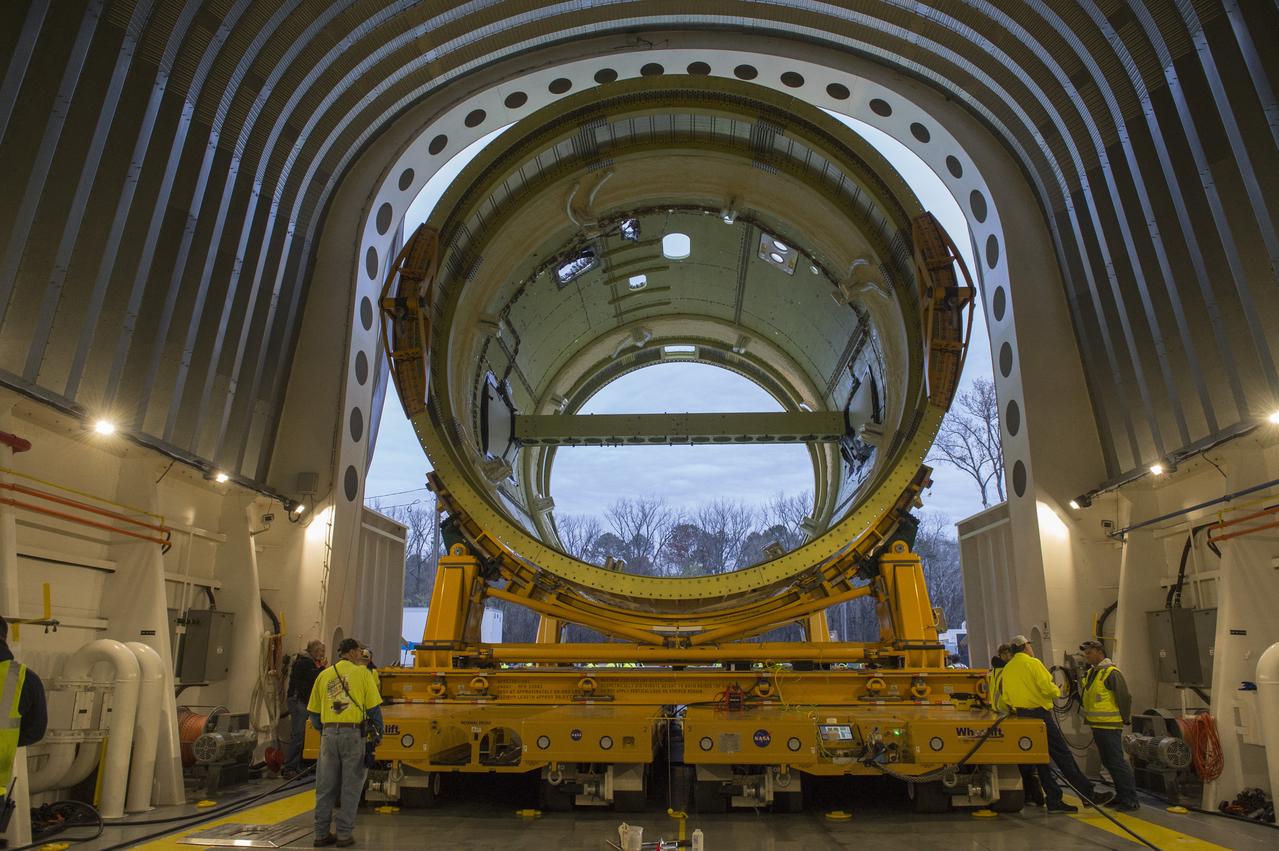
The SLS Stages Intertank Structural Test Assembly (STA) is rolling off the NASA Pegasus Barge at the MSFC Dock enroute to the MSFC 4619 Load Test Annex test facility for qualification testing
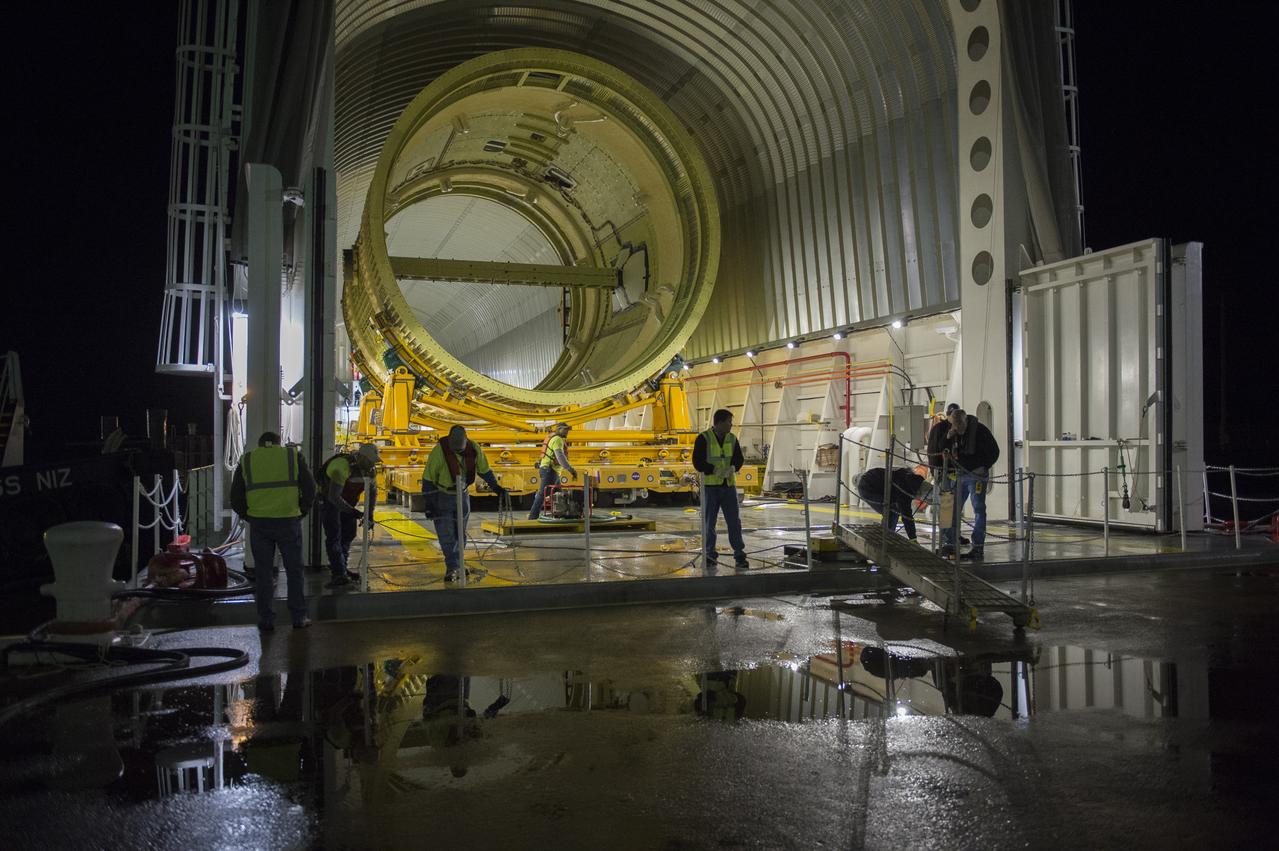
The SLS Stages Intertank Structural Test Assembly (STA) is rolling off the NASA Pegasus Barge at the MSFC Dock enroute to the MSFC 4619 Load Test Annex test facility for qualification testing
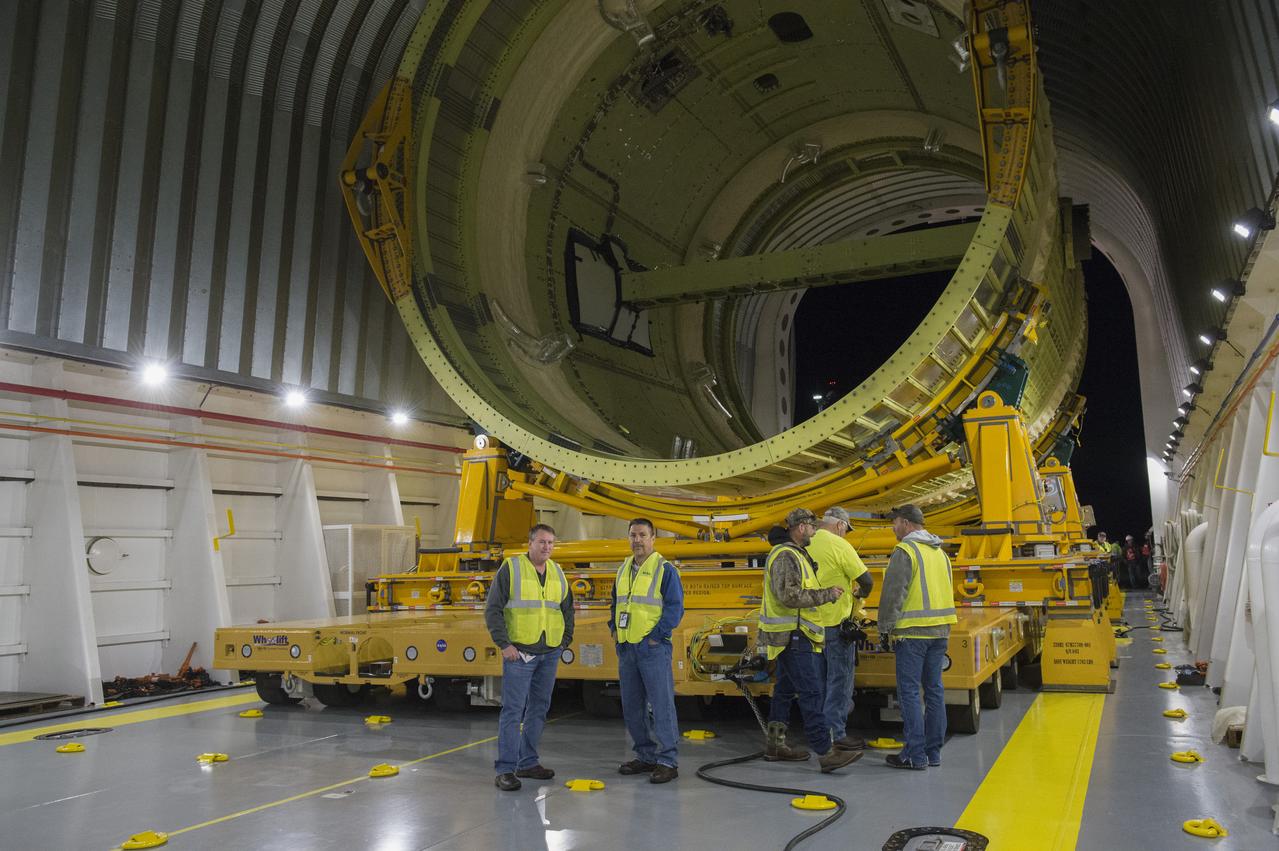
The SLS Stages Intertank Structural Test Assembly (STA) is rolling off the NASA Pegasus Barge at the MSFC Dock enroute to the MSFC 4619 Load Test Annex test facility for qualification testing
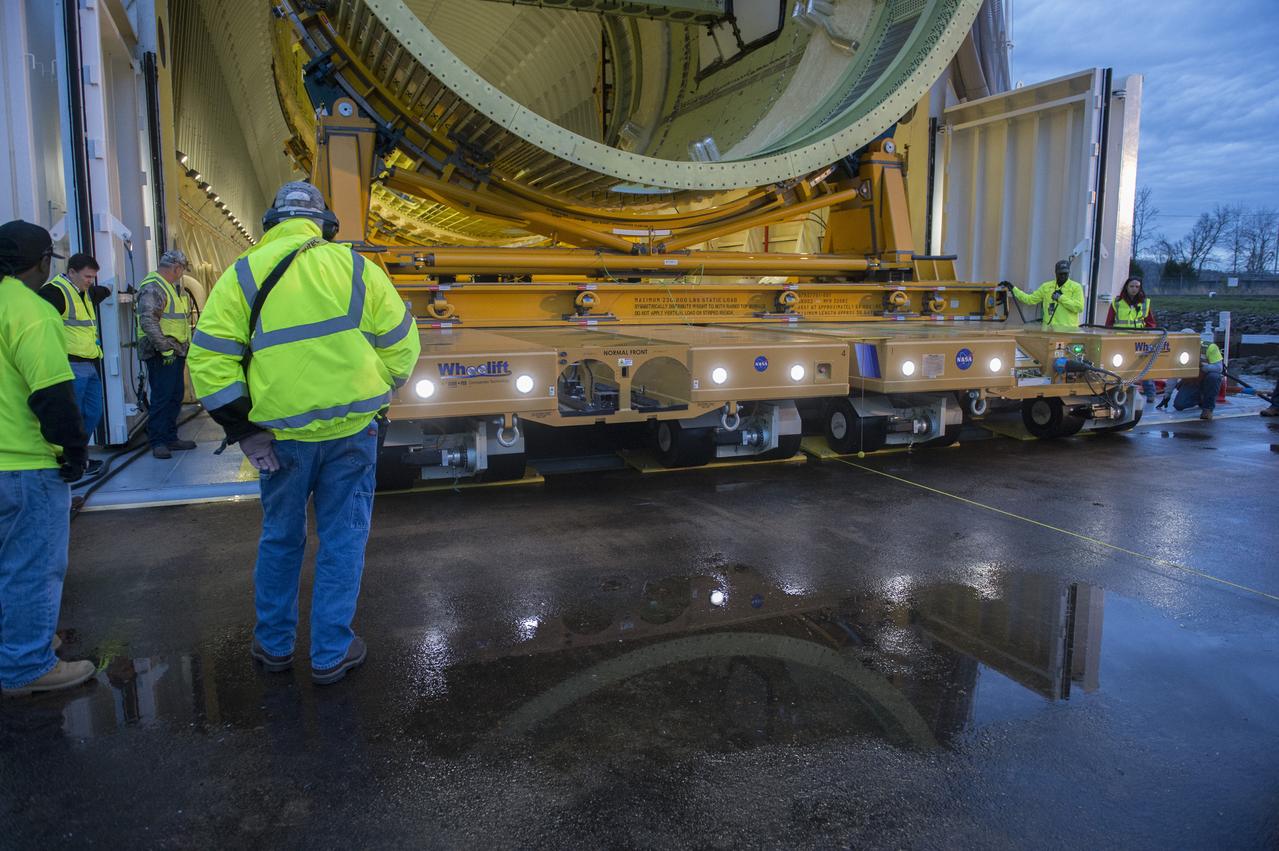
The SLS Stages Intertank Structural Test Assembly (STA) is rolling off the NASA Pegasus Barge at the MSFC Dock enroute to the MSFC 4619 Load Test Annex test facility for qualification testing
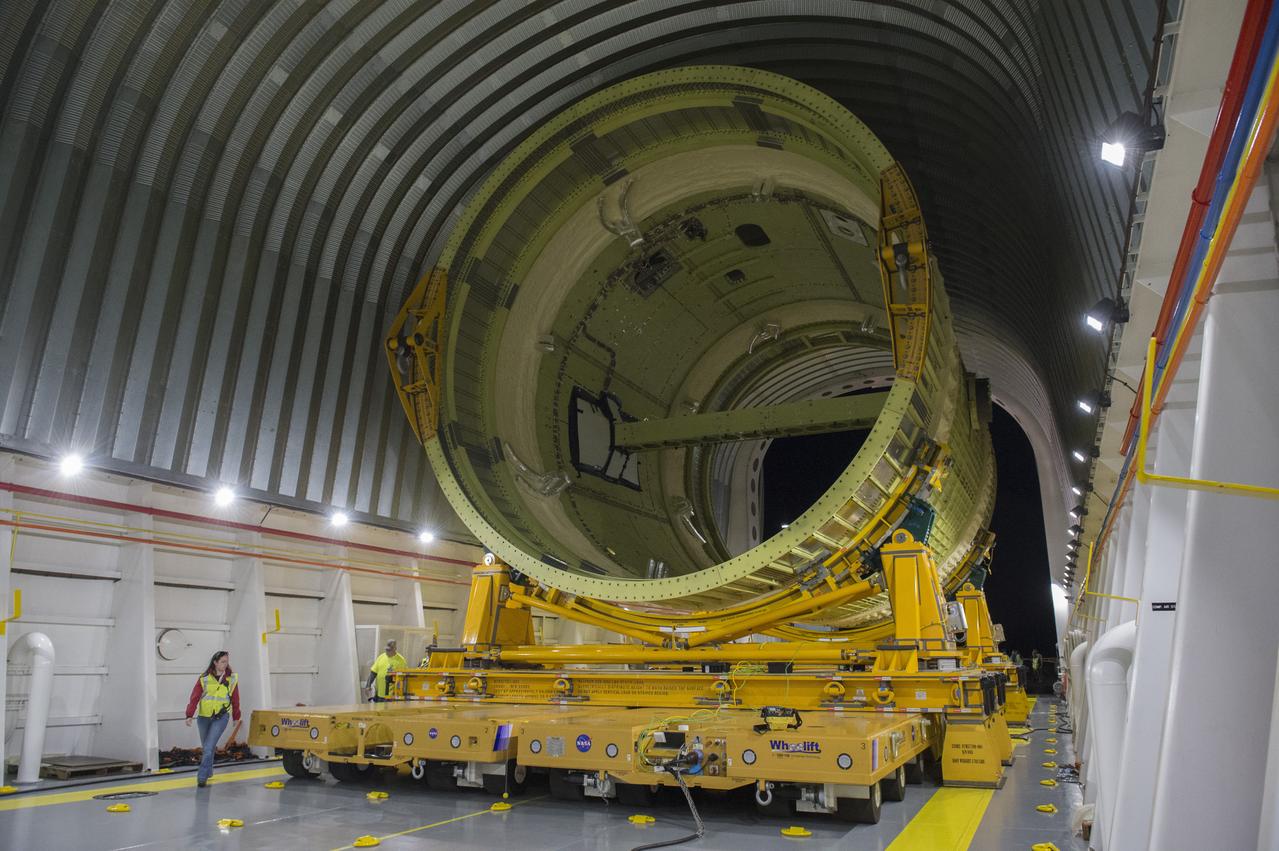
The SLS Stages Intertank Structural Test Assembly (STA) is rolling off the NASA Pegasus Barge at the MSFC Dock enroute to the MSFC 4619 Load Test Annex test facility for qualification testing
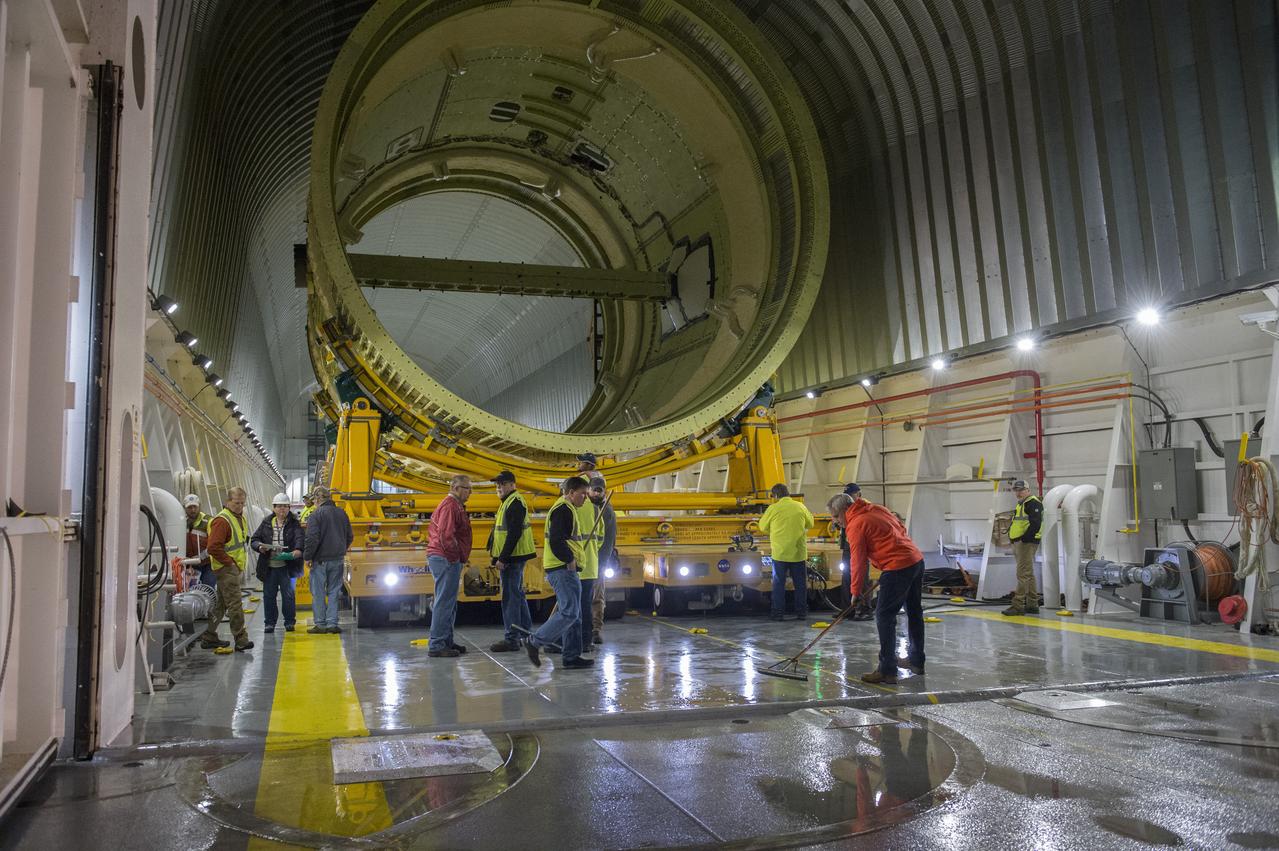
The SLS Stages Intertank Structural Test Assembly (STA) is rolling off the NASA Pegasus Barge at the MSFC Dock enroute to the MSFC 4619 Load Test Annex test facility for qualification testing
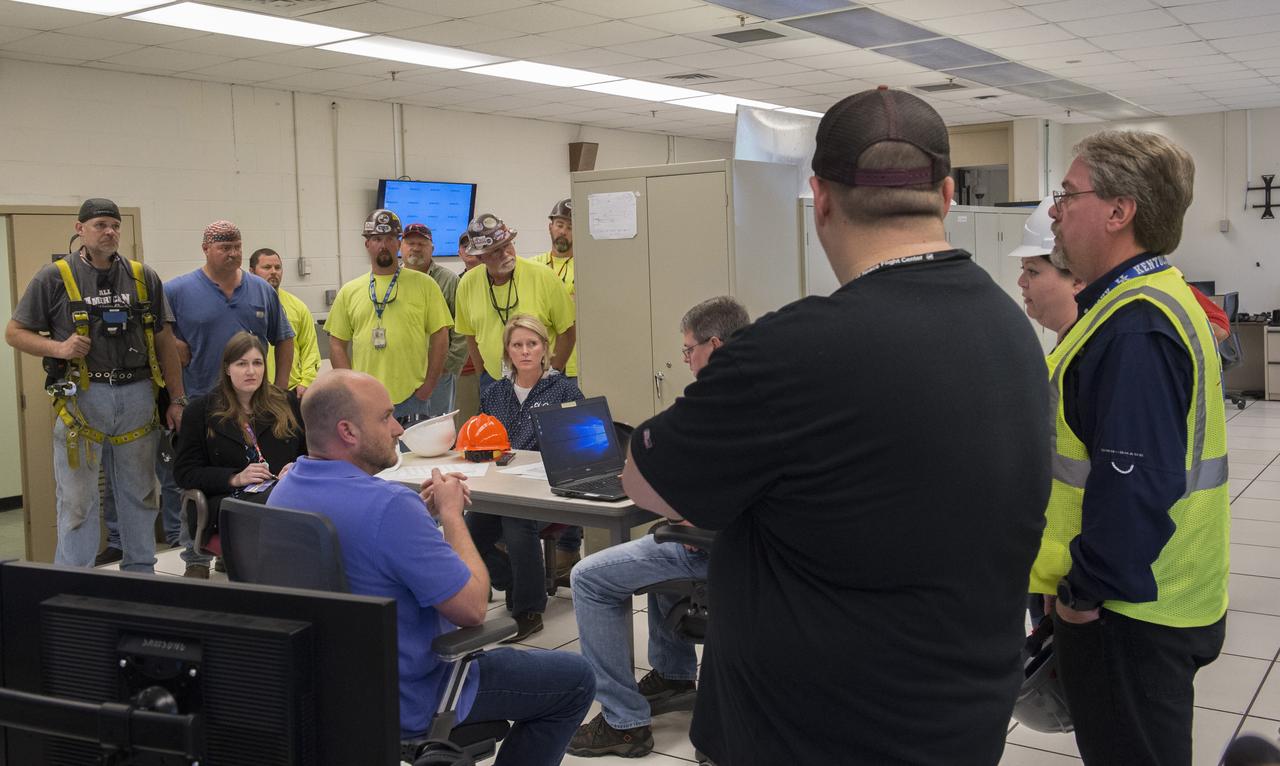
SLS INTERTANK TEST ARTICLE IS ATTACHED TO CROSSHEAD OF LOAD TEST ANNEX, BLDG. 4619, AND REMOVED FROM BED OF KMAG TRANSPORTER. Matt Cash conducts tag up meeting before lift of ITA from KMAG transporter
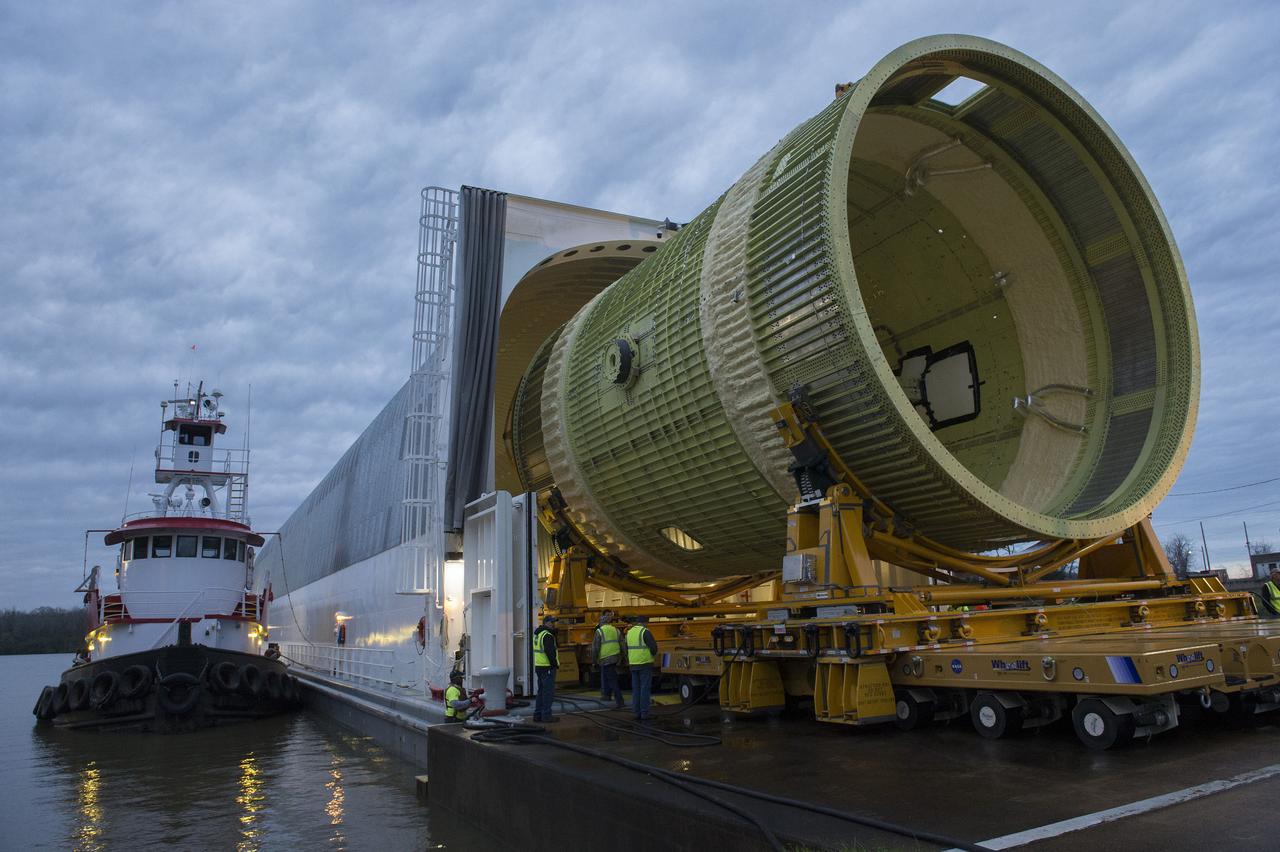
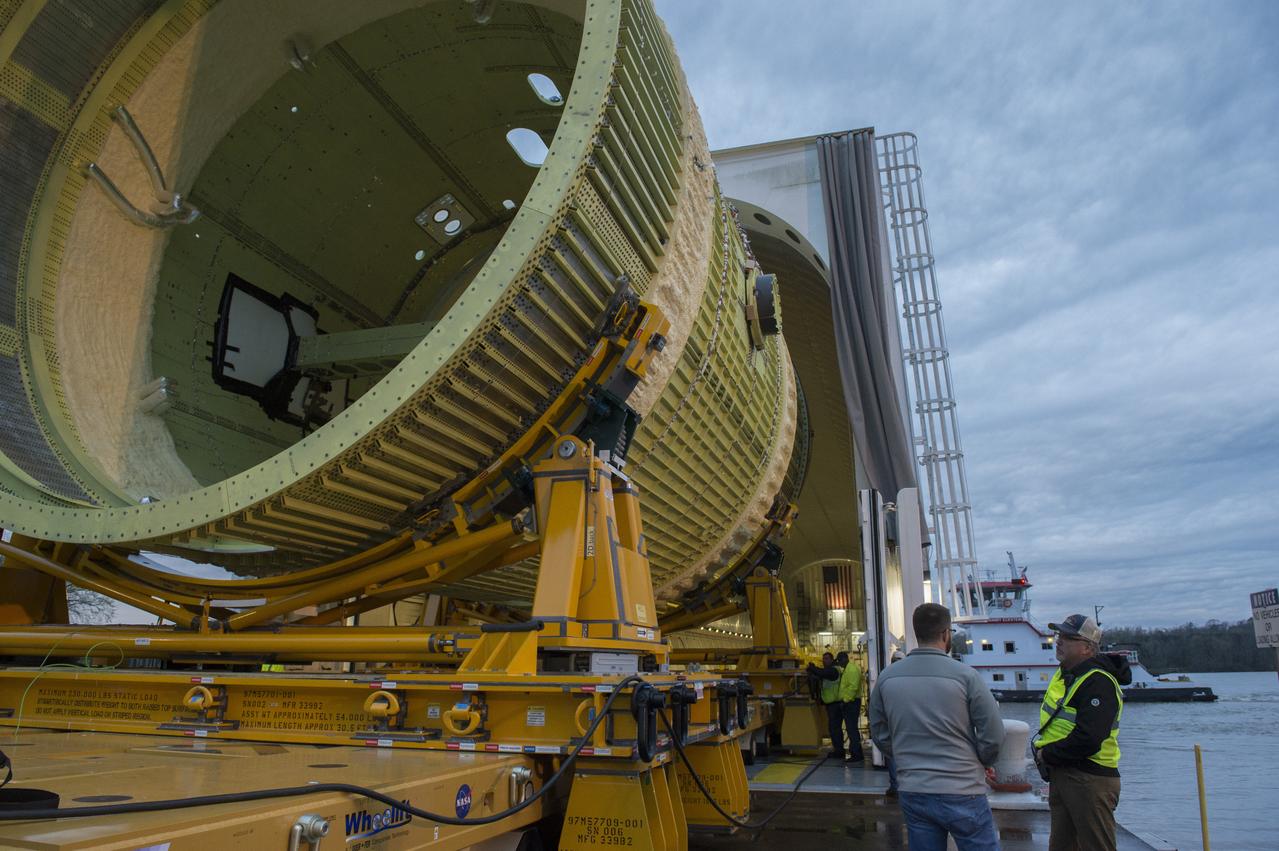
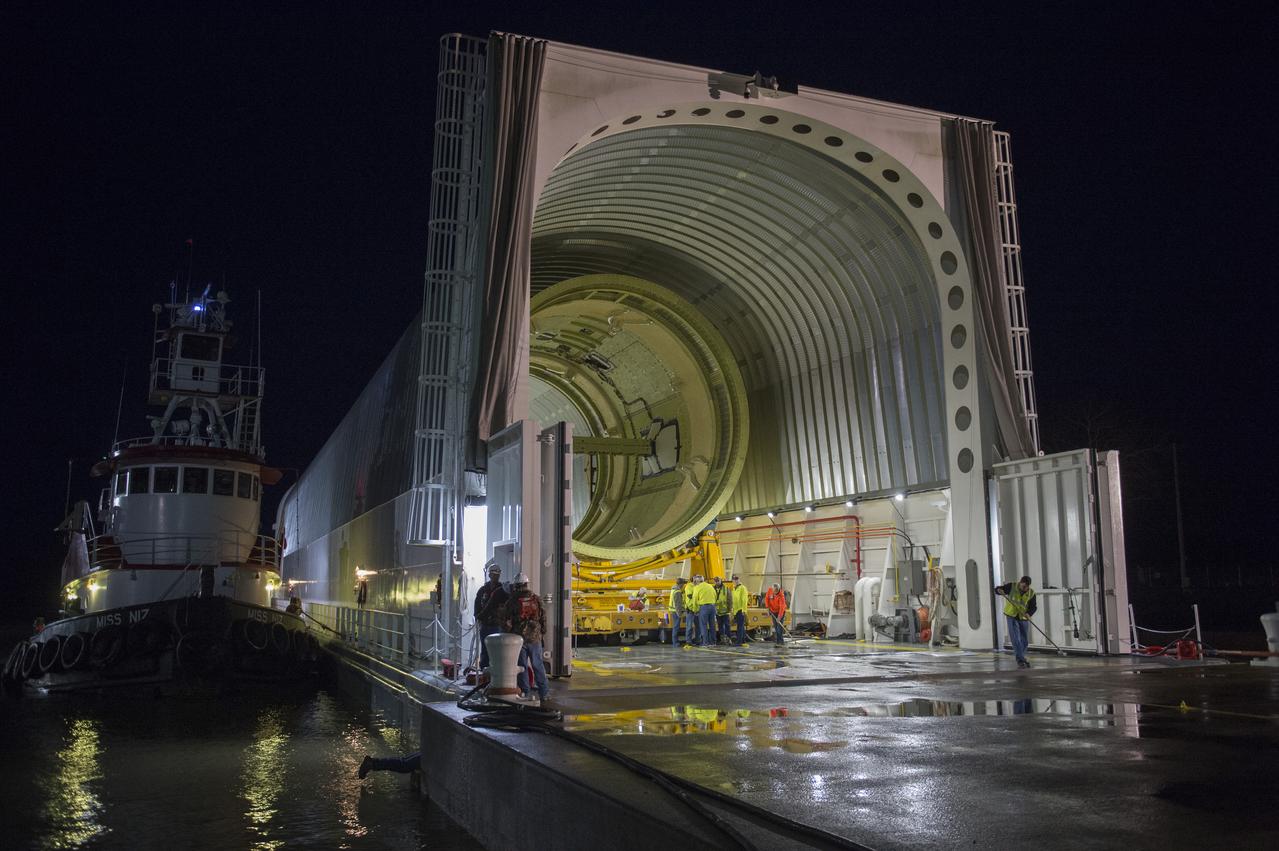
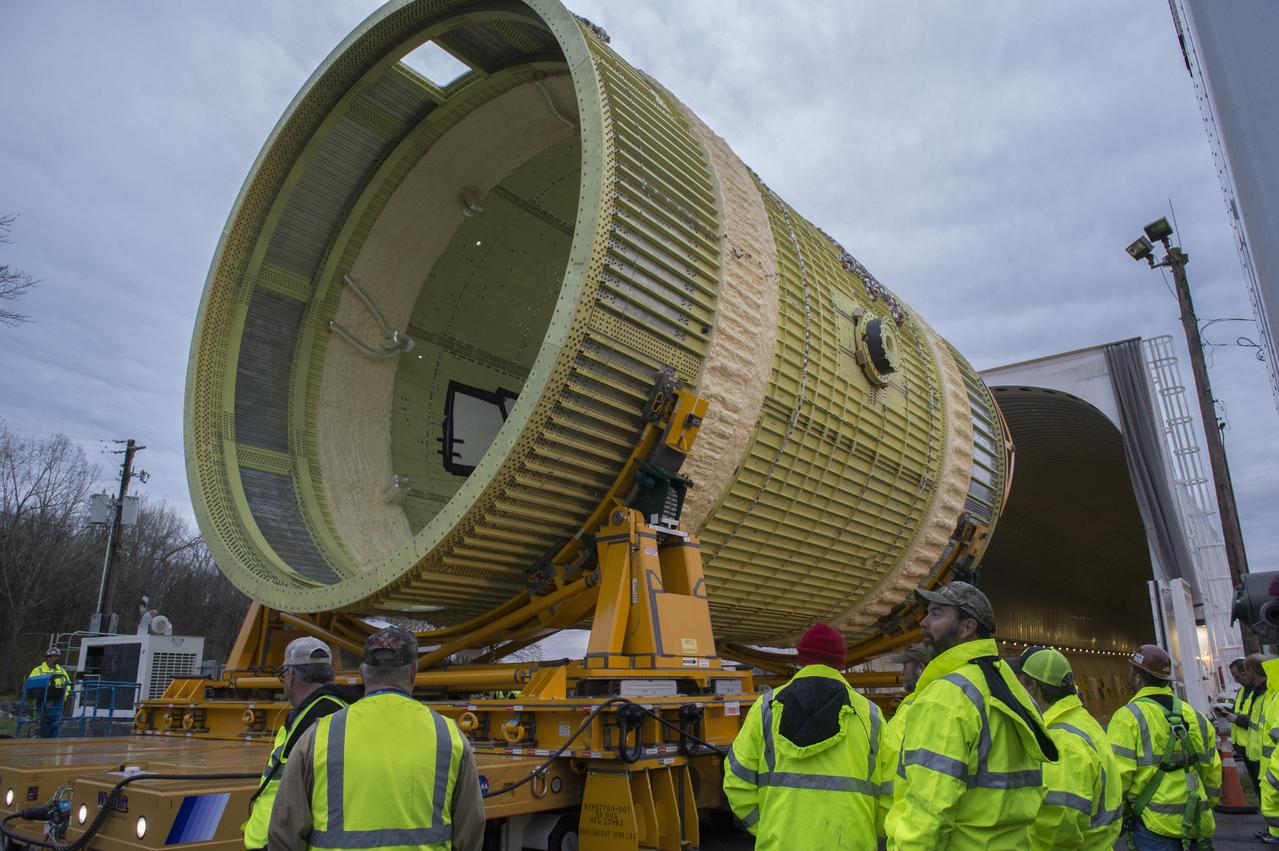
The SLS Stages Intertank Structural Test Assembly (STA) is rolling off the NASA Pegasus Barge at the MSFC Dock enroute to the MSFC 4619 Load Test Annex test facility for qualification testing. STA emerges from Barge Pegasus.
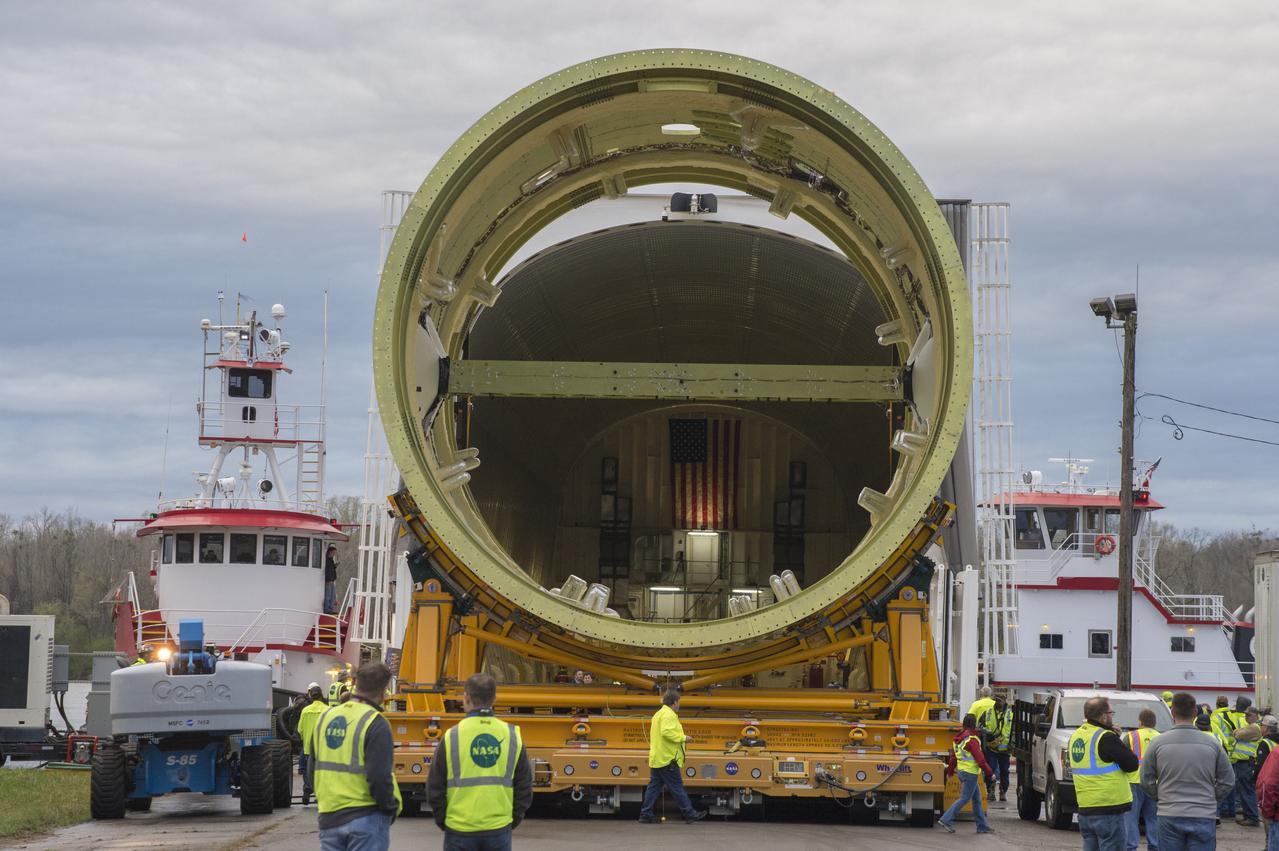
The SLS Stages Intertank Structural Test Assembly (STA) is rolling off the NASA Pegasus Barge at the MSFC Dock enroute to the MSFC 4619 Load Test Annex test facility for qualification testing. STA hardware completely free of barge and flanked by tug boats.
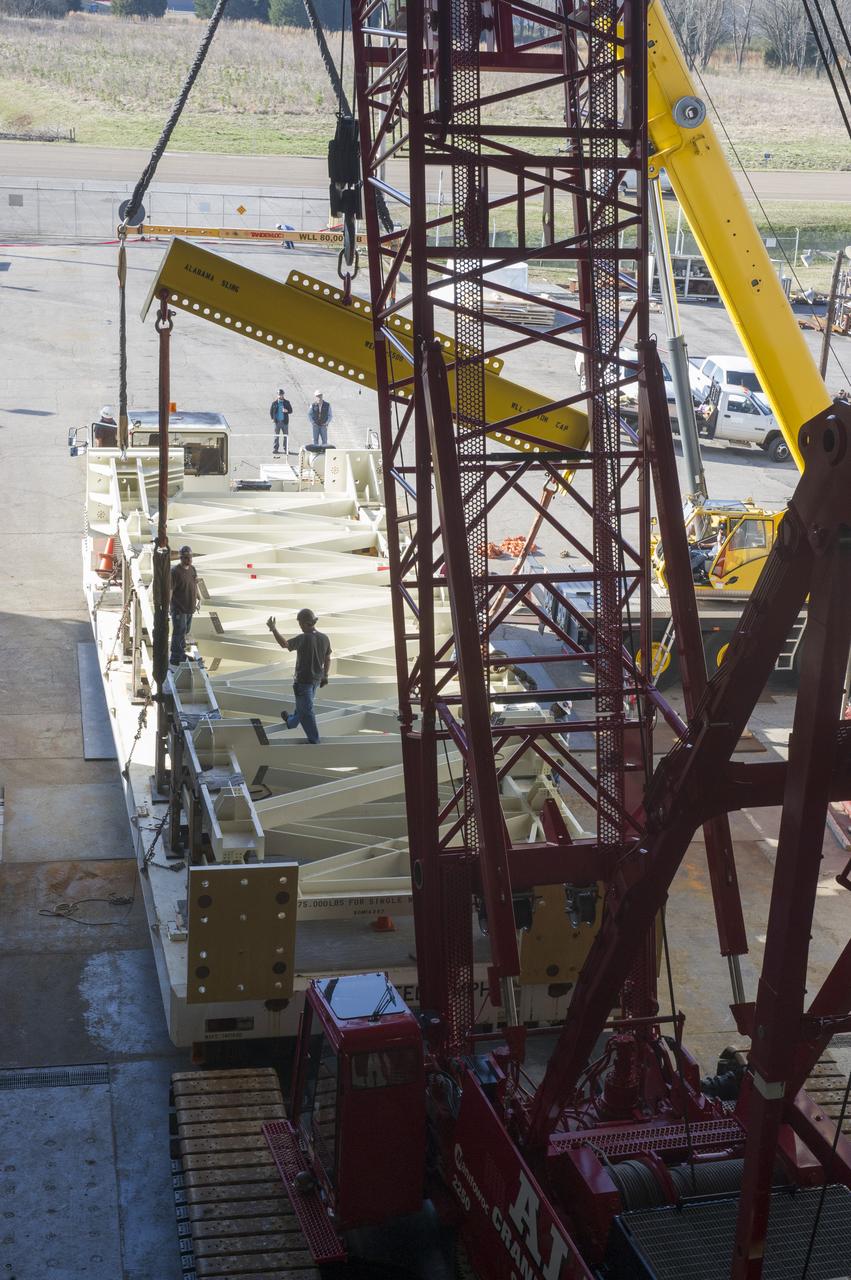
ERECTION OF TWO SLS INTERTANK, (IT), SPECIAL TEST EQUIPMENT, (STE), TOWER PANELS IN BLDG 4619
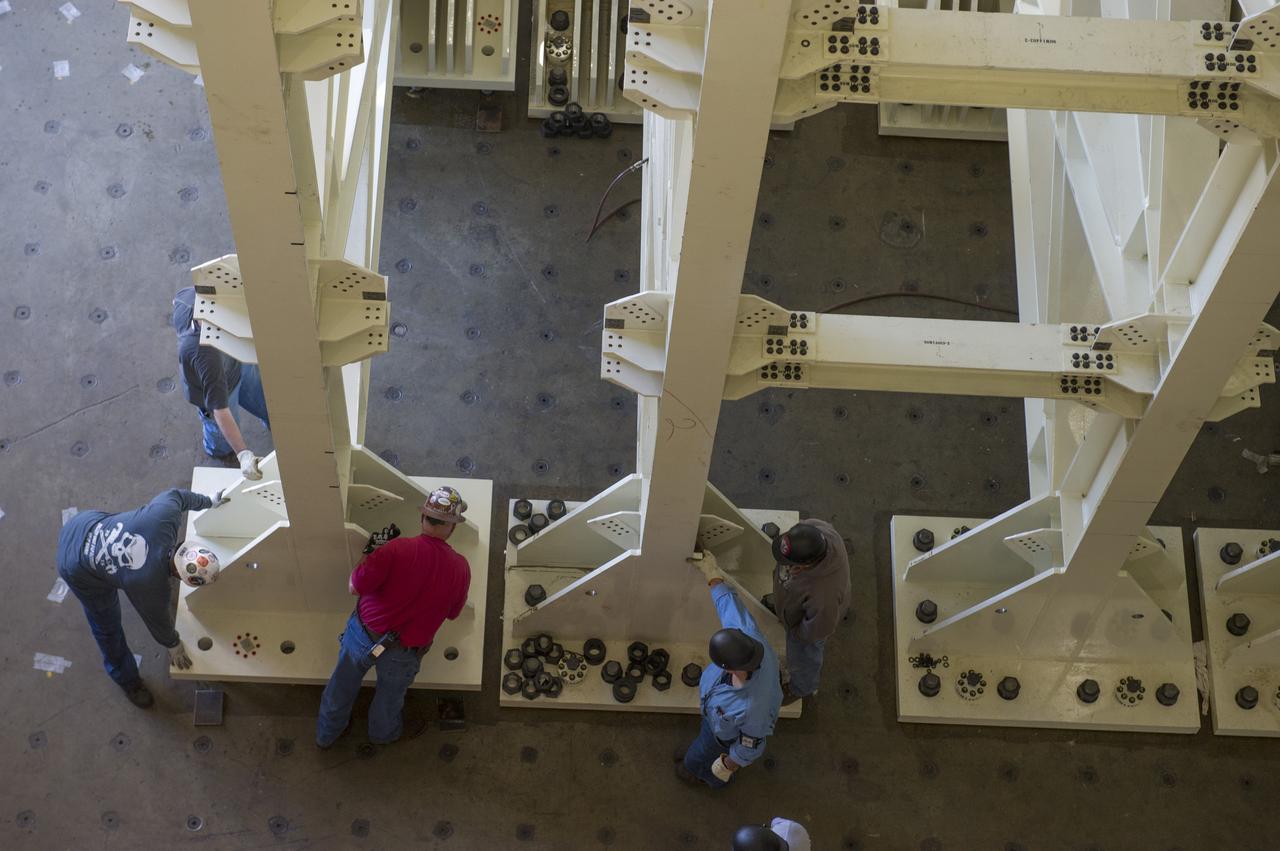
ERECTION OF TWO SLS INTERTANK, (IT), SPECIAL TEST EQUIPMENT, (STE), TOWER PANELS IN BLDG 4619
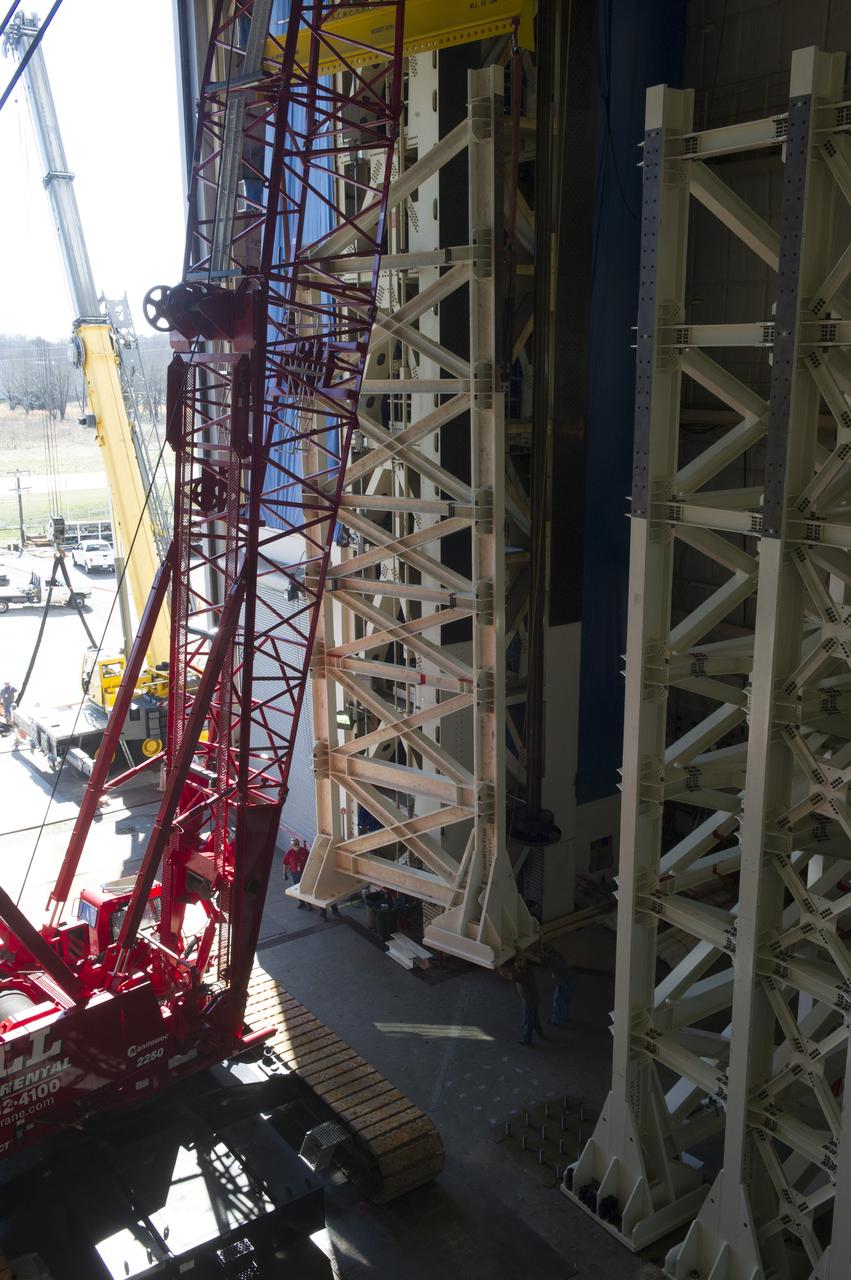
ERECTION OF TWO SLS INTERTANK, (IT), SPECIAL TEST EQUIPMENT, (STE), TOWER PANELS IN BLDG 4619
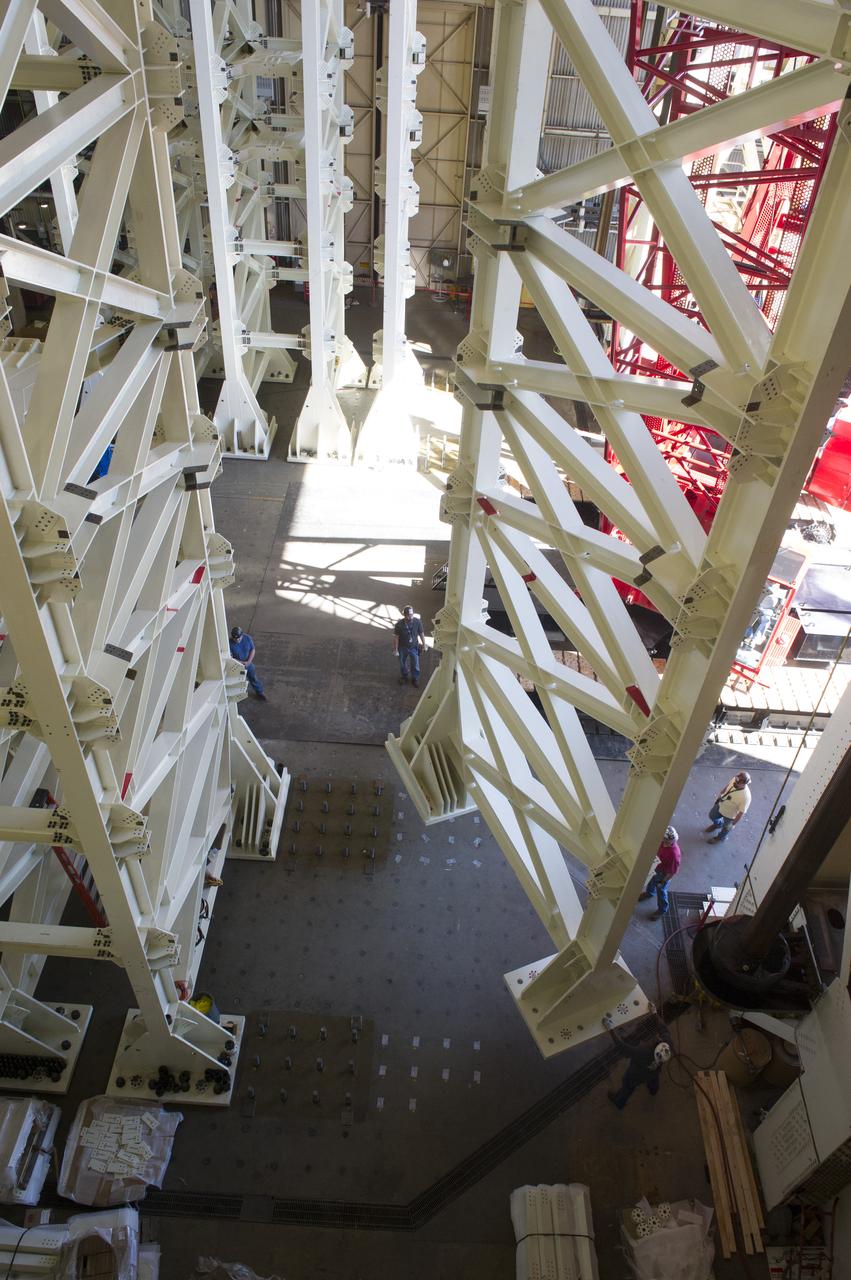
ERECTION OF TWO SLS INTERTANK, (IT), SPECIAL TEST EQUIPMENT, (STE), TOWER PANELS IN BLDG 4619
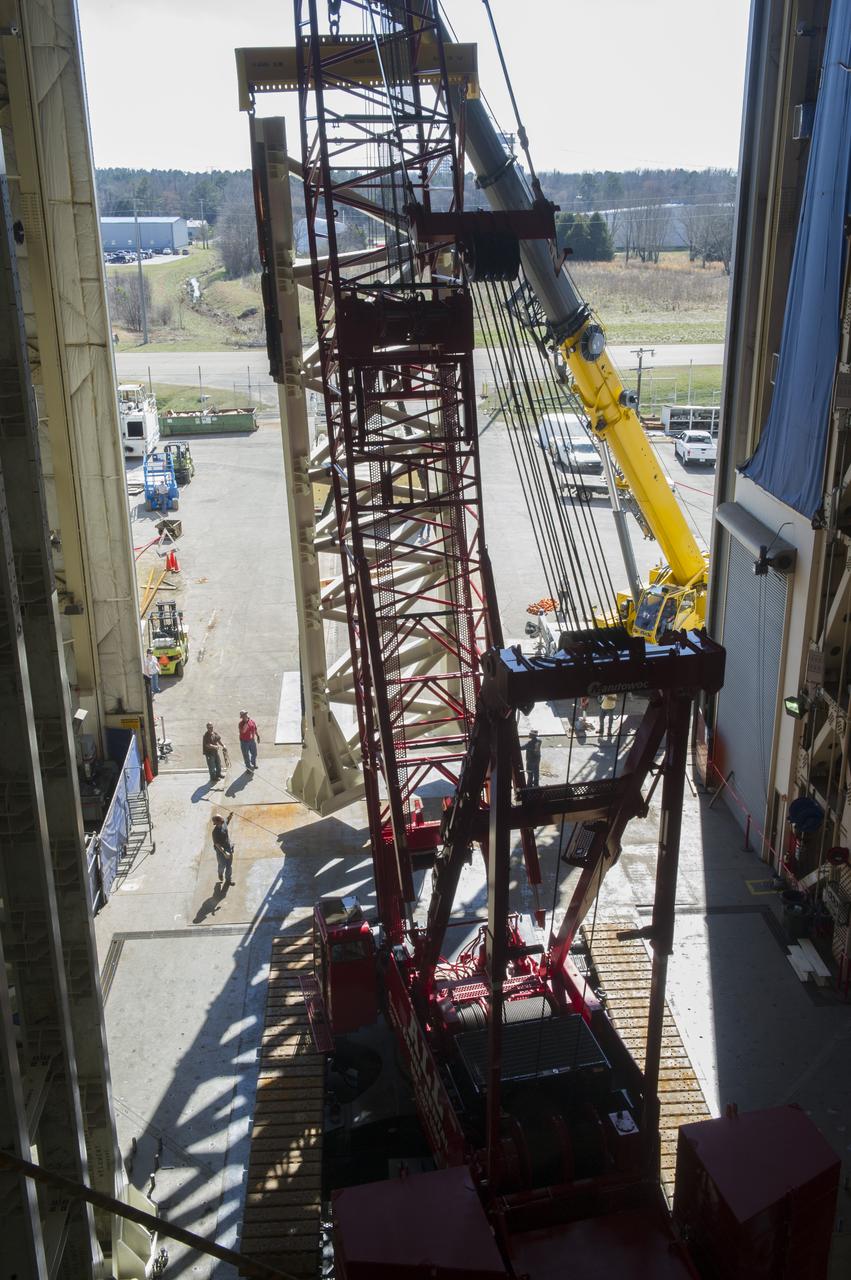
ERECTION OF TWO SLS INTERTANK, (IT), SPECIAL TEST EQUIPMENT, (STE), TOWER PANELS IN BLDG 4619
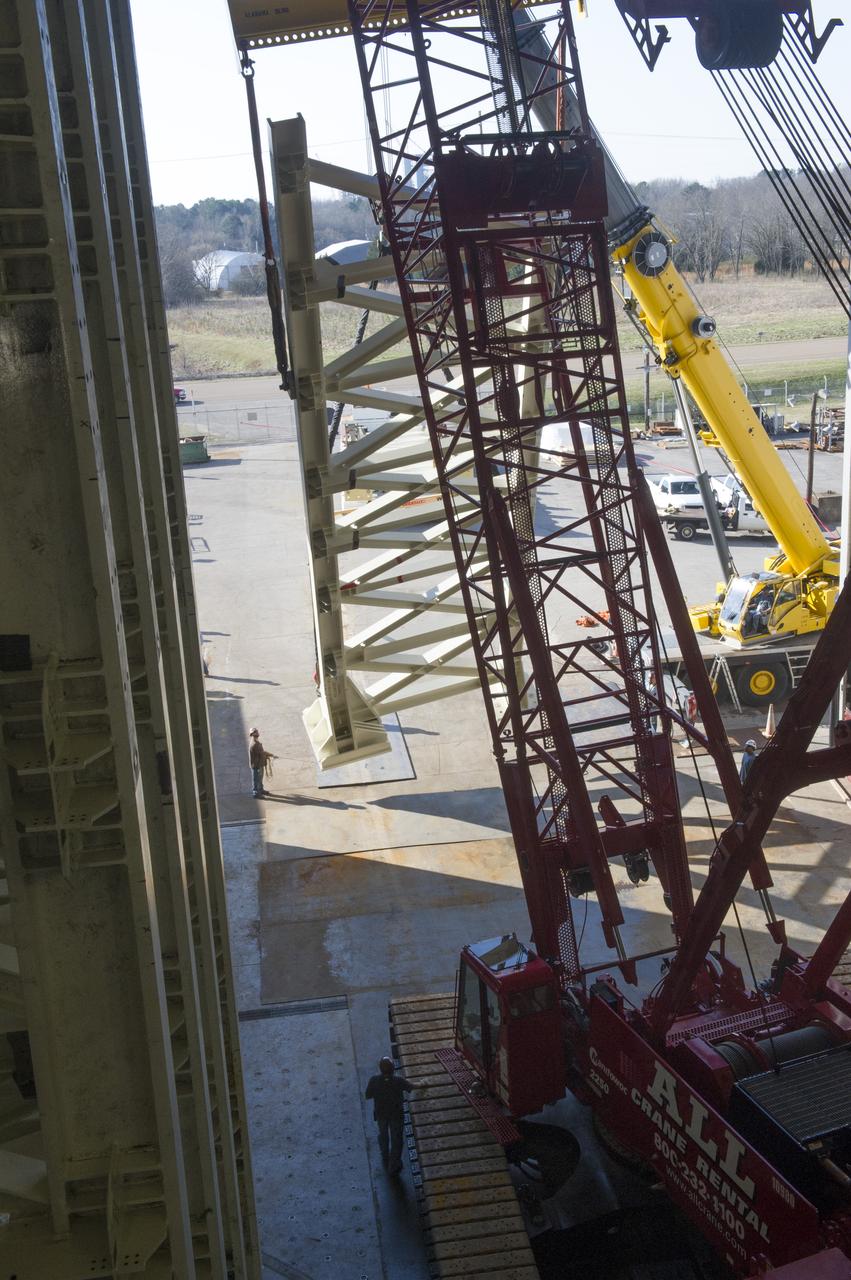
ERECTION OF TWO SLS INTERTANK, (IT), SPECIAL TEST EQUIPMENT, (STE), TOWER PANELS IN BLDG 4619
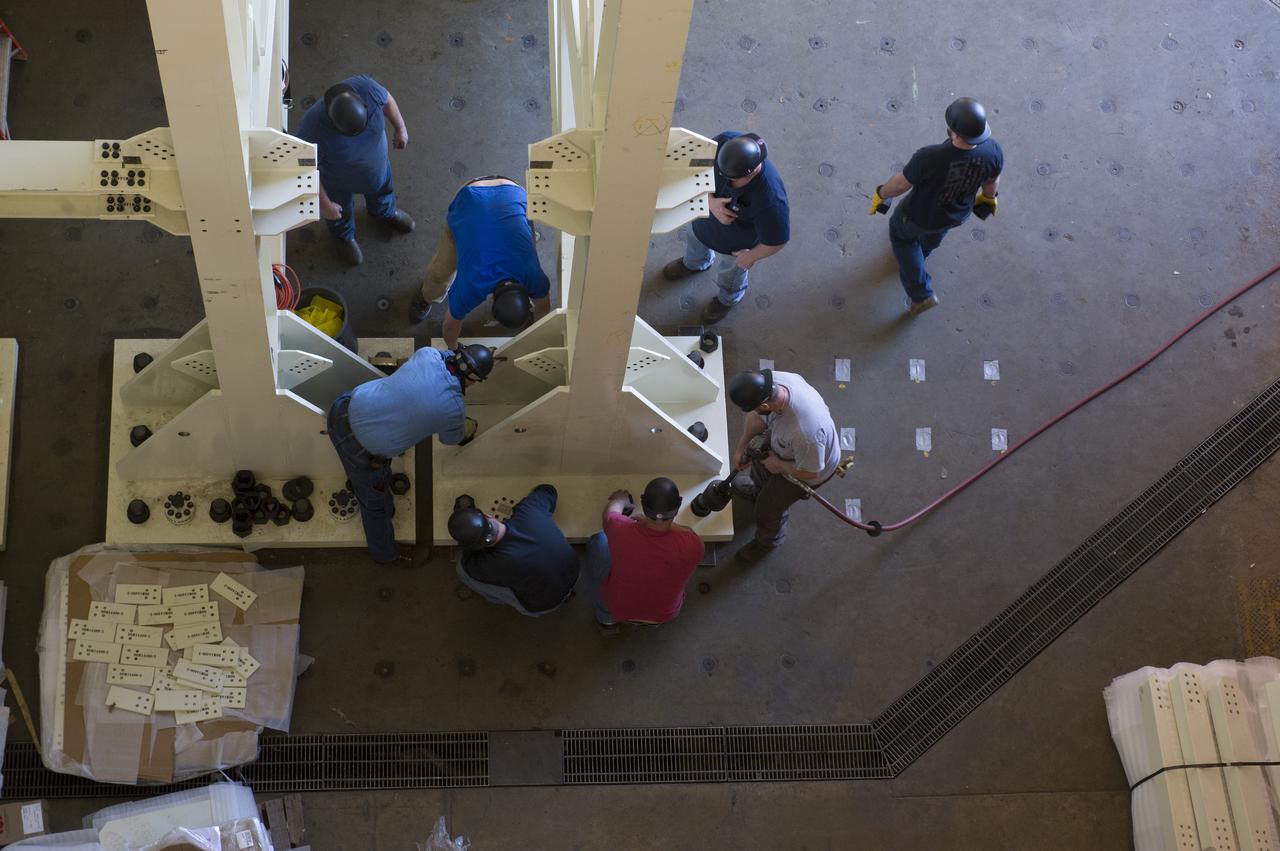
ERECTION OF TWO SLS INTERTANK, (IT), SPECIAL TEST EQUIPMENT, (STE), TOWER PANELS IN BLDG 4619
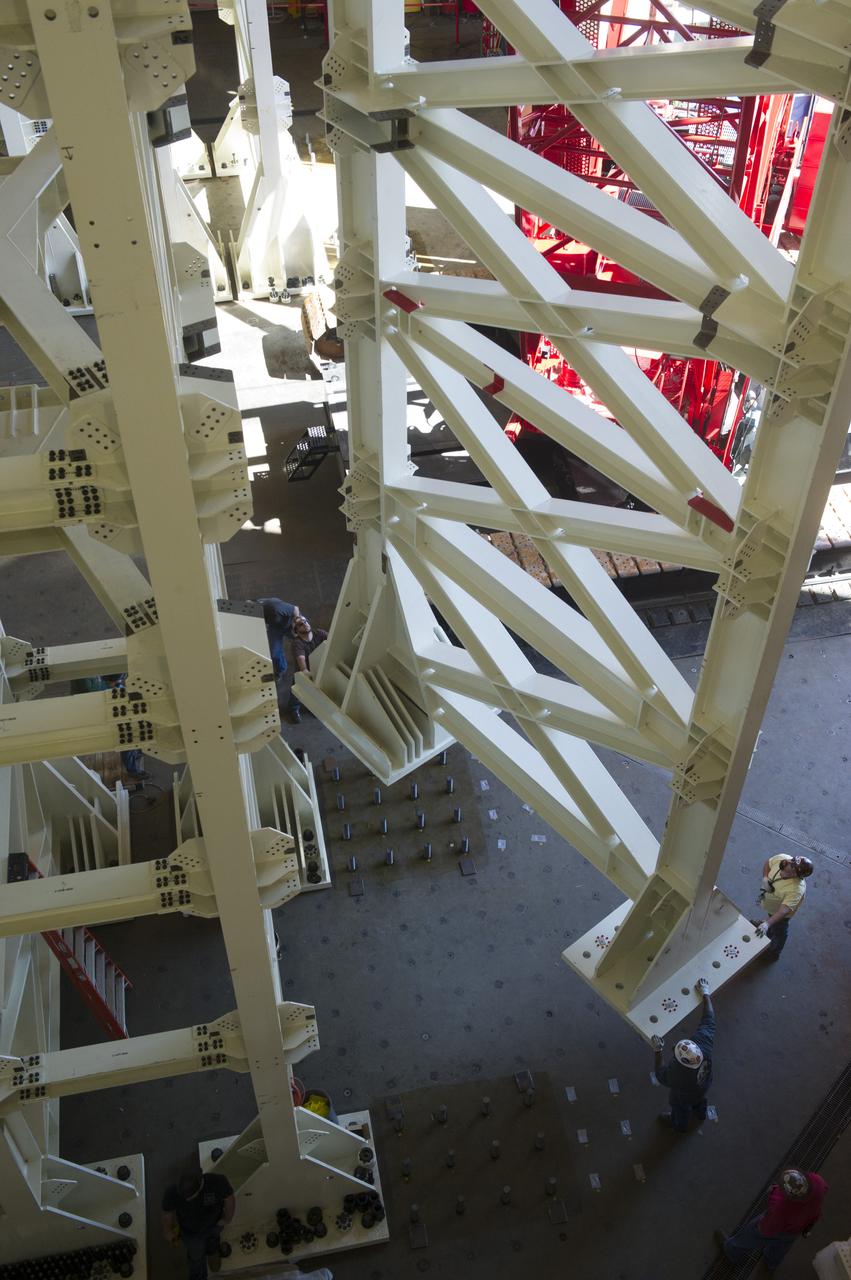
ERECTION OF TWO SLS INTERTANK, (IT), SPECIAL TEST EQUIPMENT, (STE), TOWER PANELS IN BLDG 4619
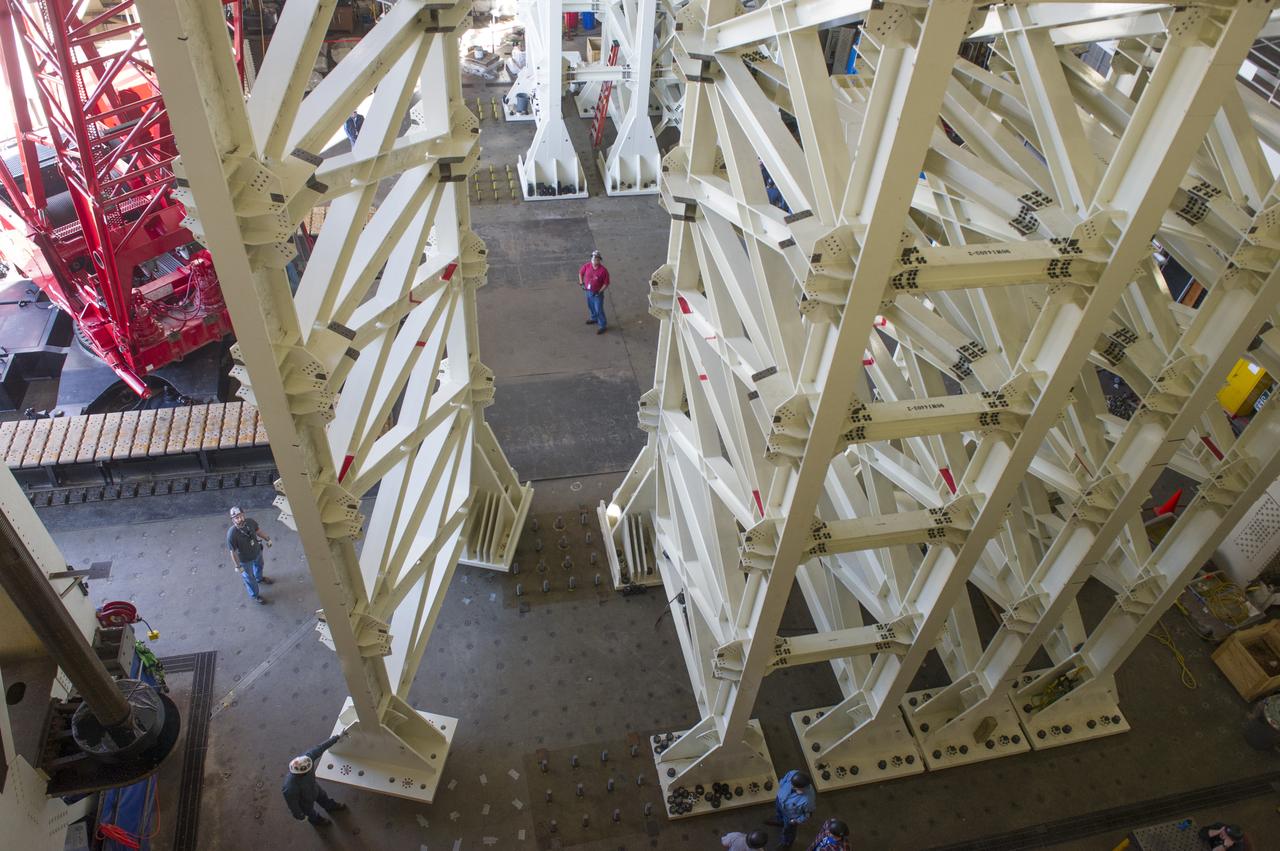
ERECTION OF TWO SLS INTERTANK, (IT), SPECIAL TEST EQUIPMENT, (STE), TOWER PANELS IN BLDG 4619
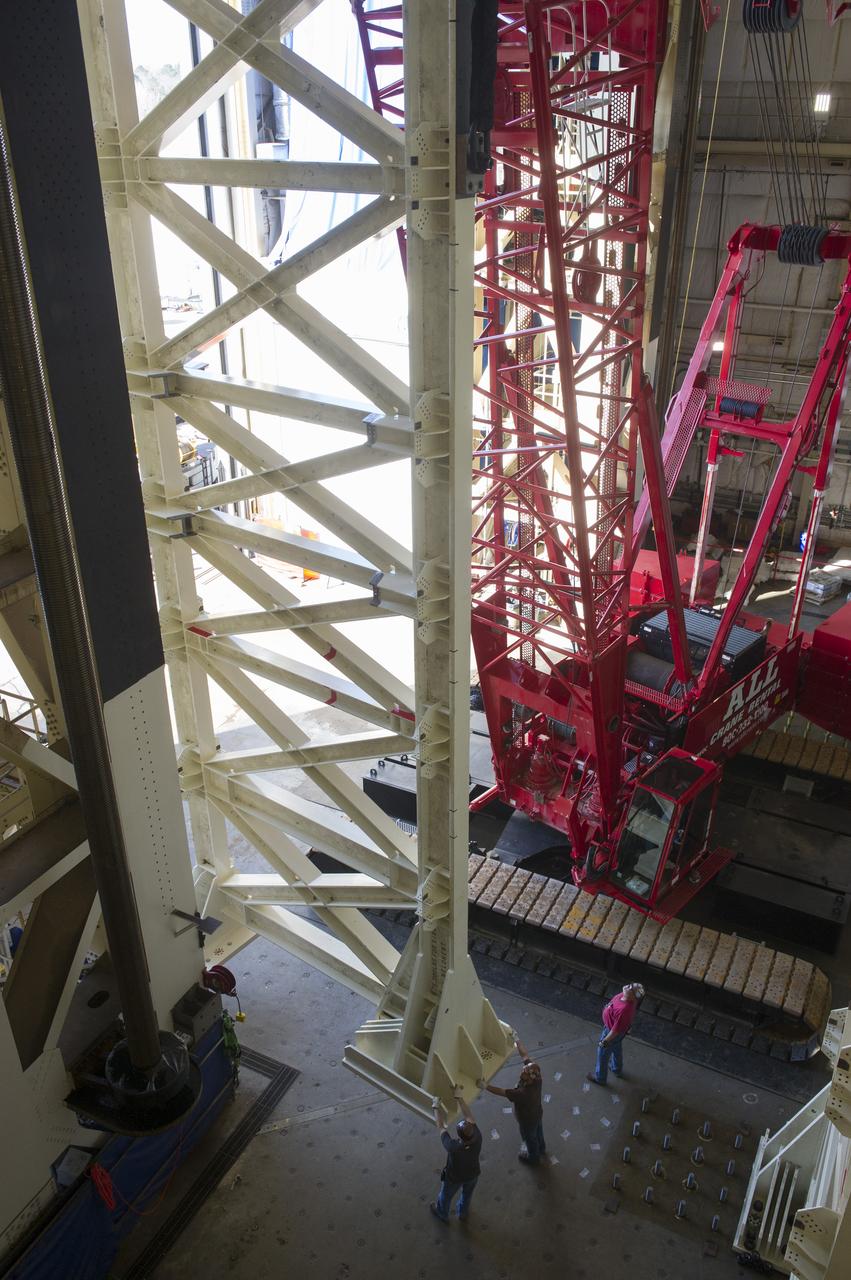
ERECTION OF TWO SLS INTERTANK, (IT), SPECIAL TEST EQUIPMENT, (STE), TOWER PANELS IN BLDG 4619
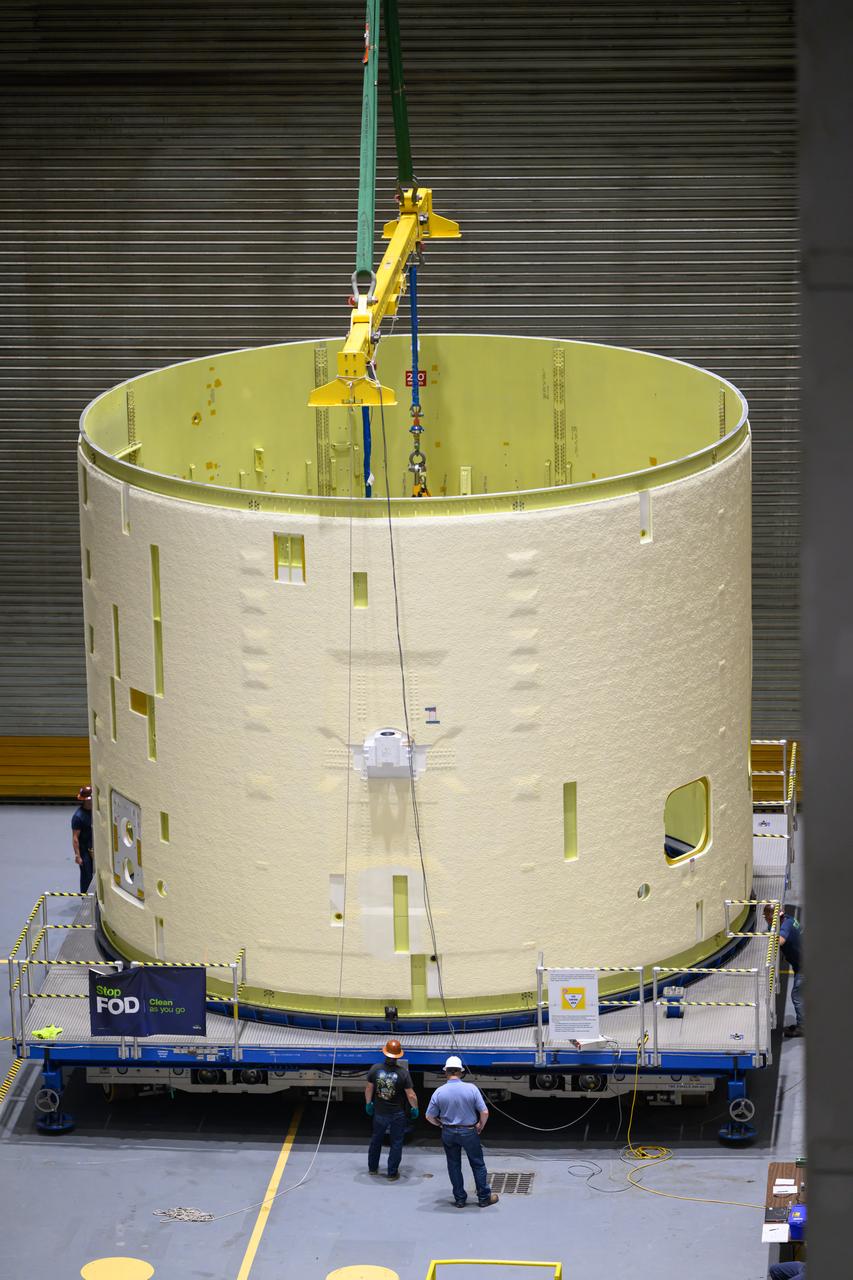
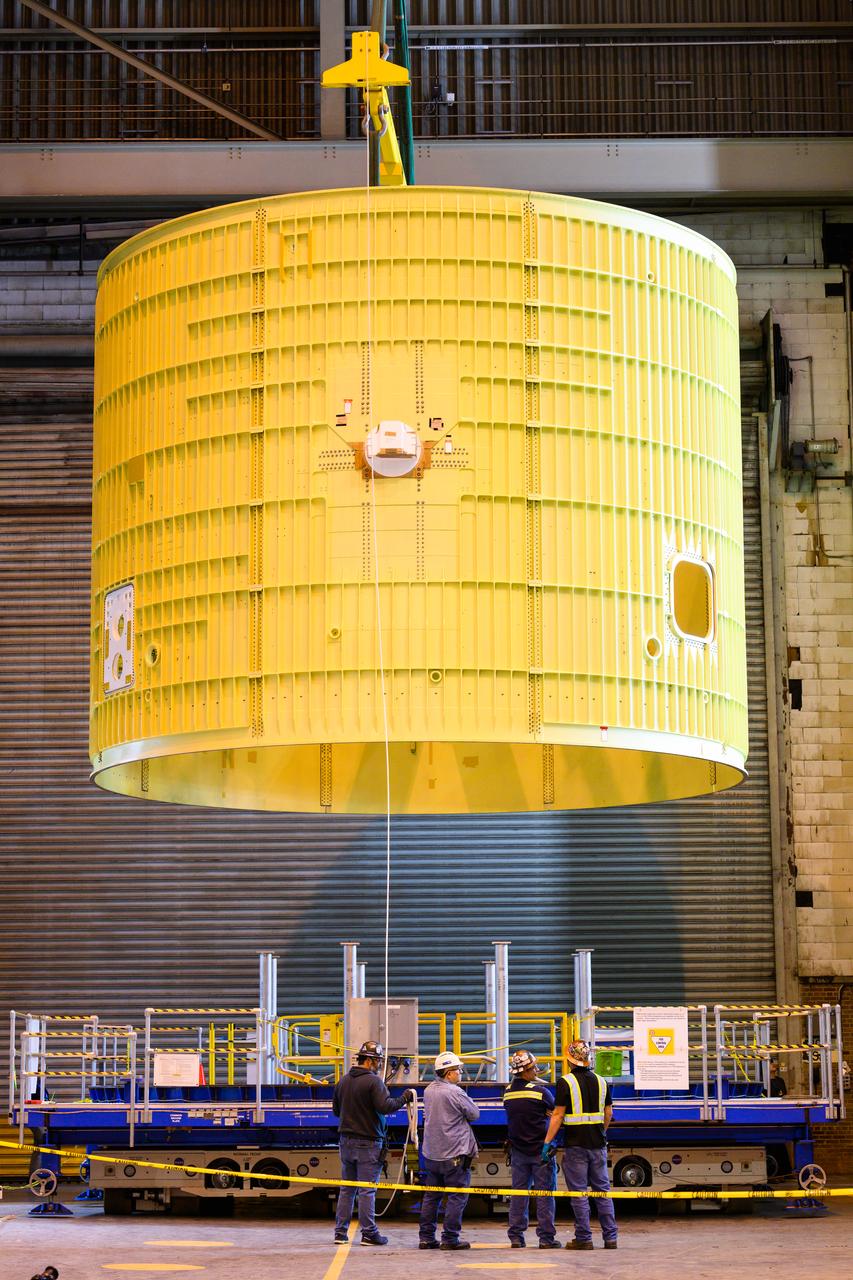
Technicians at NASA’s Michoud Assembly Facility in New Orleans lift the intertank of the SLS (Space Launch System)’s core stage for NASA’s Artemis III mission to move it to another location in the 43-acre factory for further inspection and production. The intertank is the backbone of the rocket’s core stage and is located between the mega rocket’s liquid hydrogen tank and liquid oxygen tank. In addition to joining the rocket’s two massive propellant tanks, the intertank houses avionics and electronics and serves as an attachment point for the rocket’s two solid rocket boosters positioned on either side of the core stage. The liquid hydrogen tank and liquid oxygen tank hold 733,000 gallons of super-cold propellant to power the stage’s four RS-25 engines needed for liftoff. Together, the rocket’s four RS-25 engines and two solid rocket boosters provide more than 8.8 million pounds to launch NASA’s and Artemis missions to the Moon. NASA is working to land the first woman and first person of color on the Moon under Artemis. SLS is part of NASA’s backbone for deep space exploration, along with Orion and the Gateway in orbit around the Moon. SLS is the only rocket that can send Orion, astronauts, and supplies to the Moon in a single mission.
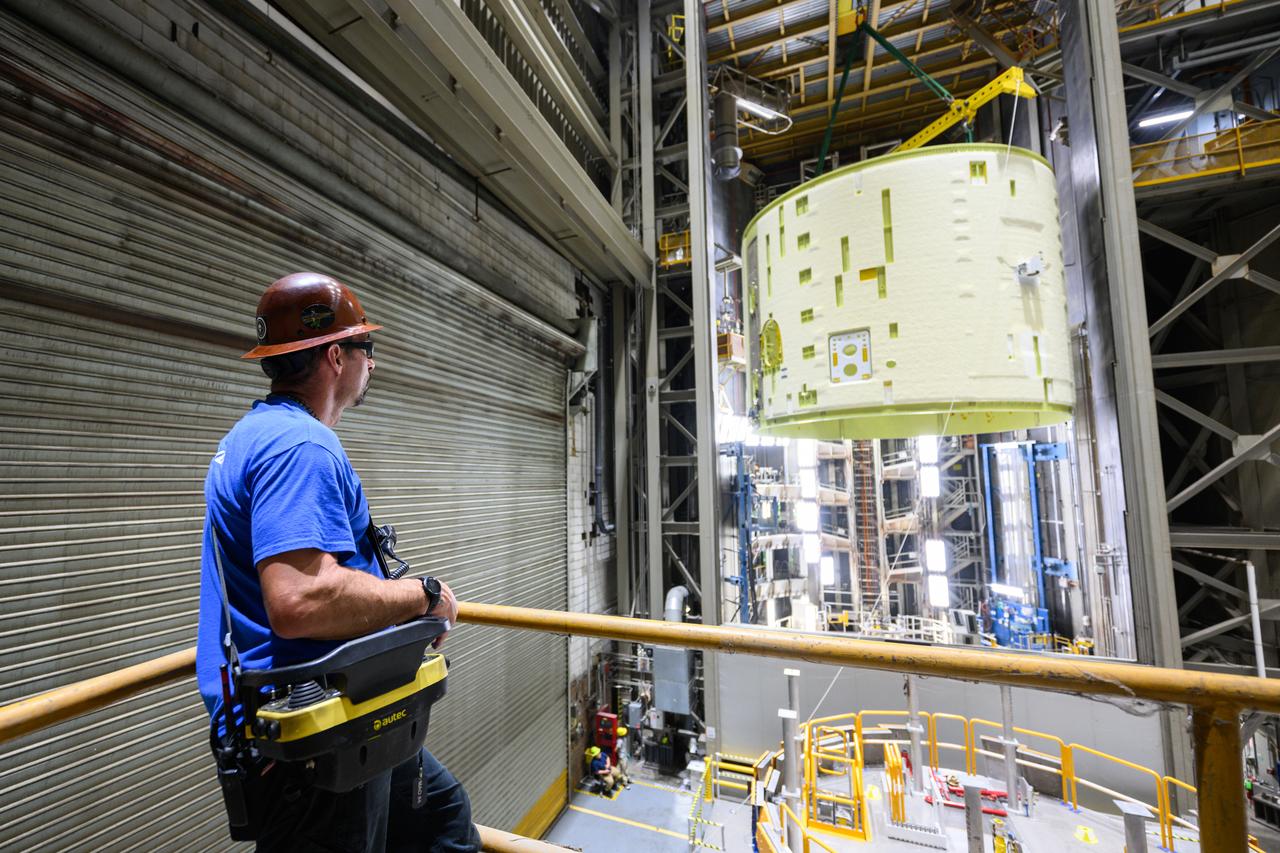
Technicians at NASA’s Michoud Assembly Facility in New Orleans lift the intertank of the SLS (Space Launch System)’s core stage for NASA’s Artemis III mission to move it to another location in the 43-acre factory for further inspection and production. The intertank is the backbone of the rocket’s core stage and is located between the mega rocket’s liquid hydrogen tank and liquid oxygen tank. In addition to joining the rocket’s two massive propellant tanks, the intertank houses avionics and electronics and serves as an attachment point for the rocket’s two solid rocket boosters positioned on either side of the core stage. The liquid hydrogen tank and liquid oxygen tank hold 733,000 gallons of super-cold propellant to power the stage’s four RS-25 engines needed for liftoff. Together, the rocket’s four RS-25 engines and two solid rocket boosters provide more than 8.8 million pounds to launch NASA’s and Artemis missions to the Moon. NASA is working to land the first woman and first person of color on the Moon under Artemis. SLS is part of NASA’s backbone for deep space exploration, along with Orion and the Gateway in orbit around the Moon. SLS is the only rocket that can send Orion, astronauts, and supplies to the Moon in a single mission.
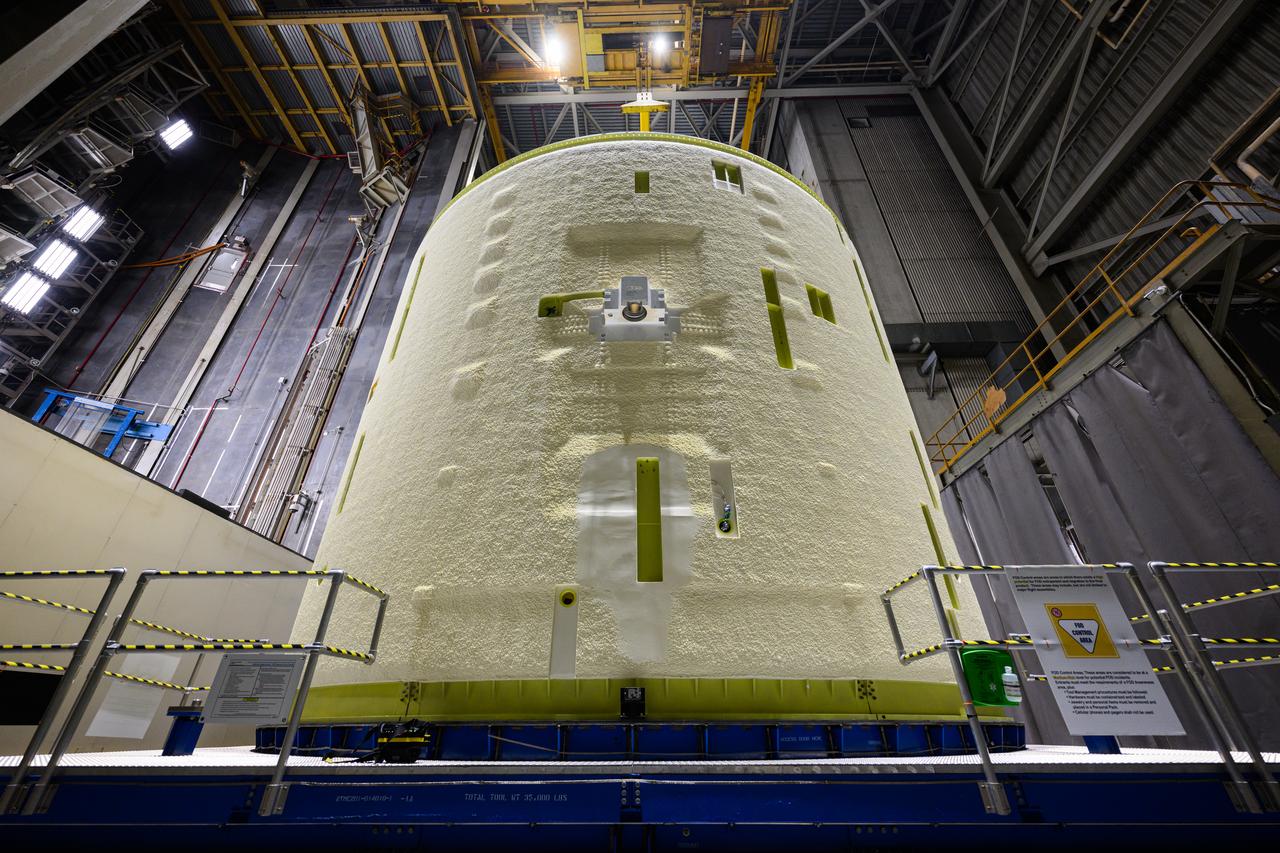
Technicians at NASA’s Michoud Assembly Facility in New Orleans lift the intertank of the SLS (Space Launch System)’s core stage for NASA’s Artemis III mission to move it to another location in the 43-acre factory for further inspection and production. The intertank is the backbone of the rocket’s core stage and is located between the mega rocket’s liquid hydrogen tank and liquid oxygen tank. In addition to joining the rocket’s two massive propellant tanks, the intertank houses avionics and electronics and serves as an attachment point for the rocket’s two solid rocket boosters positioned on either side of the core stage. The liquid hydrogen tank and liquid oxygen tank hold 733,000 gallons of super-cold propellant to power the stage’s four RS-25 engines needed for liftoff. Together, the rocket’s four RS-25 engines and two solid rocket boosters provide more than 8.8 million pounds to launch NASA’s and Artemis missions to the Moon. NASA is working to land the first woman and first person of color on the Moon under Artemis. SLS is part of NASA’s backbone for deep space exploration, along with Orion and the Gateway in orbit around the Moon. SLS is the only rocket that can send Orion, astronauts, and supplies to the Moon in a single mission.
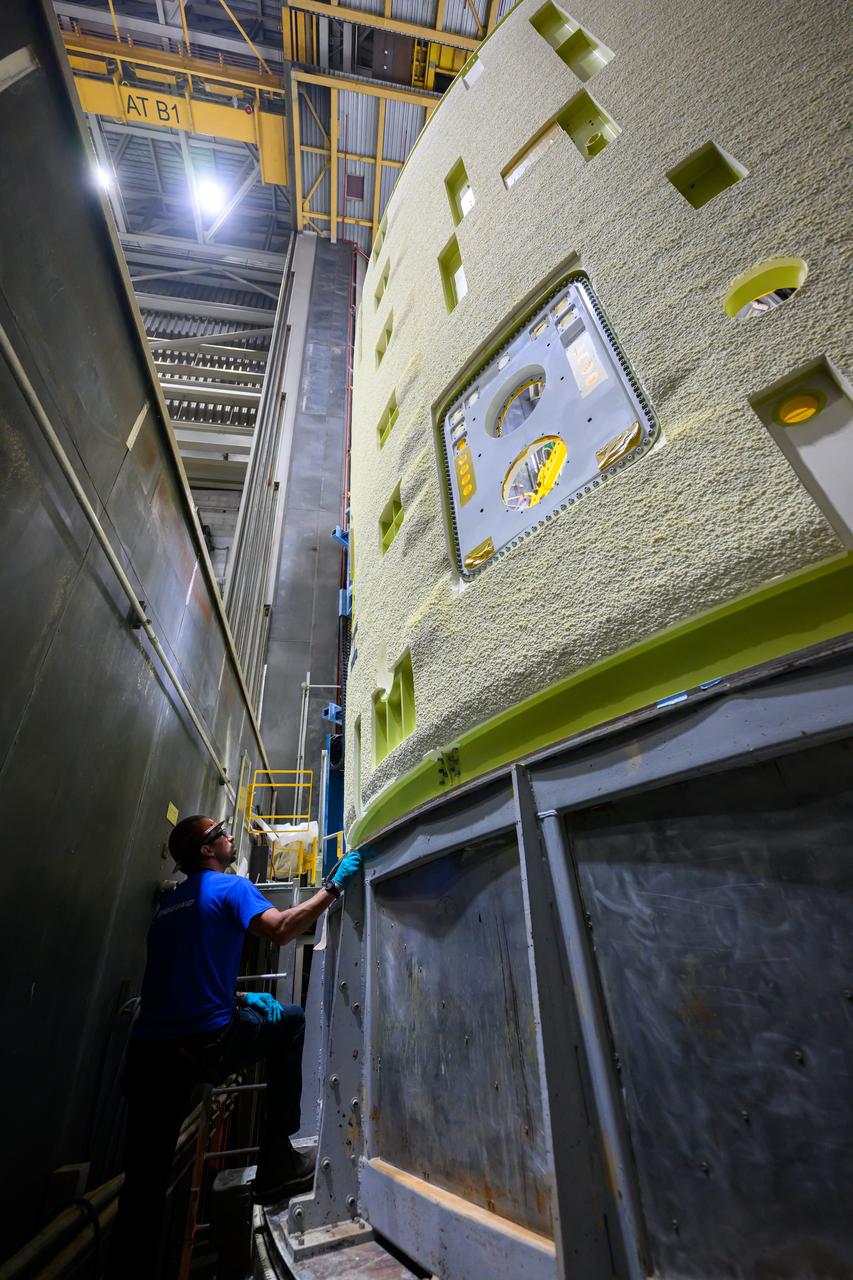
Technicians at NASA’s Michoud Assembly Facility in New Orleans lift the intertank of the SLS (Space Launch System)’s core stage for NASA’s Artemis III mission to move it to another location in the 43-acre factory for further inspection and production. The intertank is the backbone of the rocket’s core stage and is located between the mega rocket’s liquid hydrogen tank and liquid oxygen tank. In addition to joining the rocket’s two massive propellant tanks, the intertank houses avionics and electronics and serves as an attachment point for the rocket’s two solid rocket boosters positioned on either side of the core stage. The liquid hydrogen tank and liquid oxygen tank hold 733,000 gallons of super-cold propellant to power the stage’s four RS-25 engines needed for liftoff. Together, the rocket’s four RS-25 engines and two solid rocket boosters provide more than 8.8 million pounds to launch NASA’s and Artemis missions to the Moon. NASA is working to land the first woman and first person of color on the Moon under Artemis. SLS is part of NASA’s backbone for deep space exploration, along with Orion and the Gateway in orbit around the Moon. SLS is the only rocket that can send Orion, astronauts, and supplies to the Moon in a single mission.

Technicians at NASA’s Michoud Assembly Facility in New Orleans lift the intertank of the SLS (Space Launch System)’s core stage for NASA’s Artemis III mission to move it to another location in the 43-acre factory for further inspection and production. The intertank is the backbone of the rocket’s core stage and is located between the mega rocket’s liquid hydrogen tank and liquid oxygen tank. In addition to joining the rocket’s two massive propellant tanks, the intertank houses avionics and electronics and serves as an attachment point for the rocket’s two solid rocket boosters positioned on either side of the core stage. The liquid hydrogen tank and liquid oxygen tank hold 733,000 gallons of super-cold propellant to power the stage’s four RS-25 engines needed for liftoff. Together, the rocket’s four RS-25 engines and two solid rocket boosters provide more than 8.8 million pounds to launch NASA’s and Artemis missions to the Moon. NASA is working to land the first woman and first person of color on the Moon under Artemis. SLS is part of NASA’s backbone for deep space exploration, along with Orion and the Gateway in orbit around the Moon. SLS is the only rocket that can send Orion, astronauts, and supplies to the Moon in a single mission.
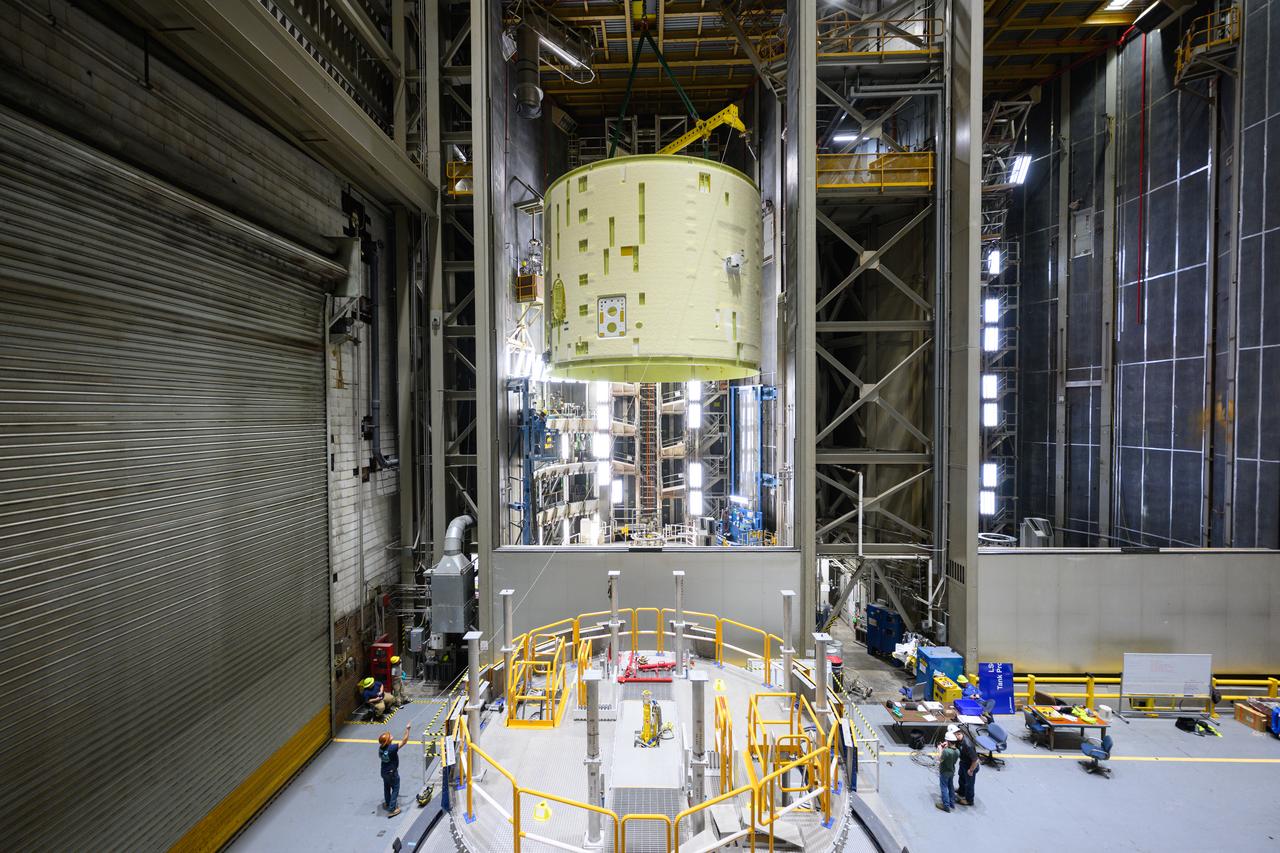
Technicians at NASA’s Michoud Assembly Facility in New Orleans lift the intertank of the SLS (Space Launch System)’s core stage for NASA’s Artemis III mission to move it to another location in the 43-acre factory for further inspection and production. The intertank is the backbone of the rocket’s core stage and is located between the mega rocket’s liquid hydrogen tank and liquid oxygen tank. In addition to joining the rocket’s two massive propellant tanks, the intertank houses avionics and electronics and serves as an attachment point for the rocket’s two solid rocket boosters positioned on either side of the core stage. The liquid hydrogen tank and liquid oxygen tank hold 733,000 gallons of super-cold propellant to power the stage’s four RS-25 engines needed for liftoff. Together, the rocket’s four RS-25 engines and two solid rocket boosters provide more than 8.8 million pounds to launch NASA’s and Artemis missions to the Moon. NASA is working to land the first woman and first person of color on the Moon under Artemis. SLS is part of NASA’s backbone for deep space exploration, along with Orion and the Gateway in orbit around the Moon. SLS is the only rocket that can send Orion, astronauts, and supplies to the Moon in a single mission.
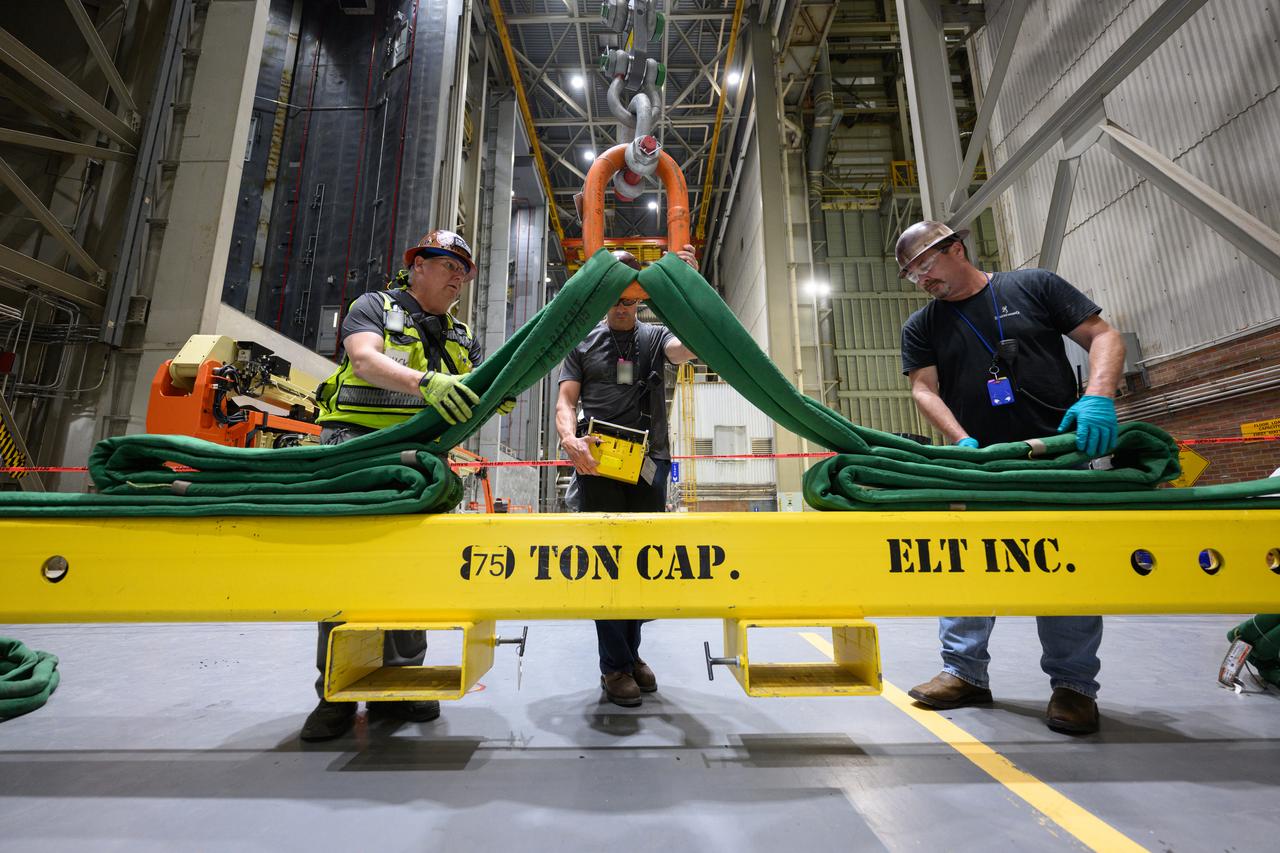
Technicians at NASA’s Michoud Assembly Facility in New Orleans lift the intertank of the SLS (Space Launch System)’s core stage for NASA’s Artemis III mission to move it to another location in the 43-acre factory for further inspection and production. The intertank is the backbone of the rocket’s core stage and is located between the mega rocket’s liquid hydrogen tank and liquid oxygen tank. In addition to joining the rocket’s two massive propellant tanks, the intertank houses avionics and electronics and serves as an attachment point for the rocket’s two solid rocket boosters positioned on either side of the core stage. The liquid hydrogen tank and liquid oxygen tank hold 733,000 gallons of super-cold propellant to power the stage’s four RS-25 engines needed for liftoff. Together, the rocket’s four RS-25 engines and two solid rocket boosters provide more than 8.8 million pounds to launch NASA’s and Artemis missions to the Moon. NASA is working to land the first woman and first person of color on the Moon under Artemis. SLS is part of NASA’s backbone for deep space exploration, along with Orion and the Gateway in orbit around the Moon. SLS is the only rocket that can send Orion, astronauts, and supplies to the Moon in a single mission.
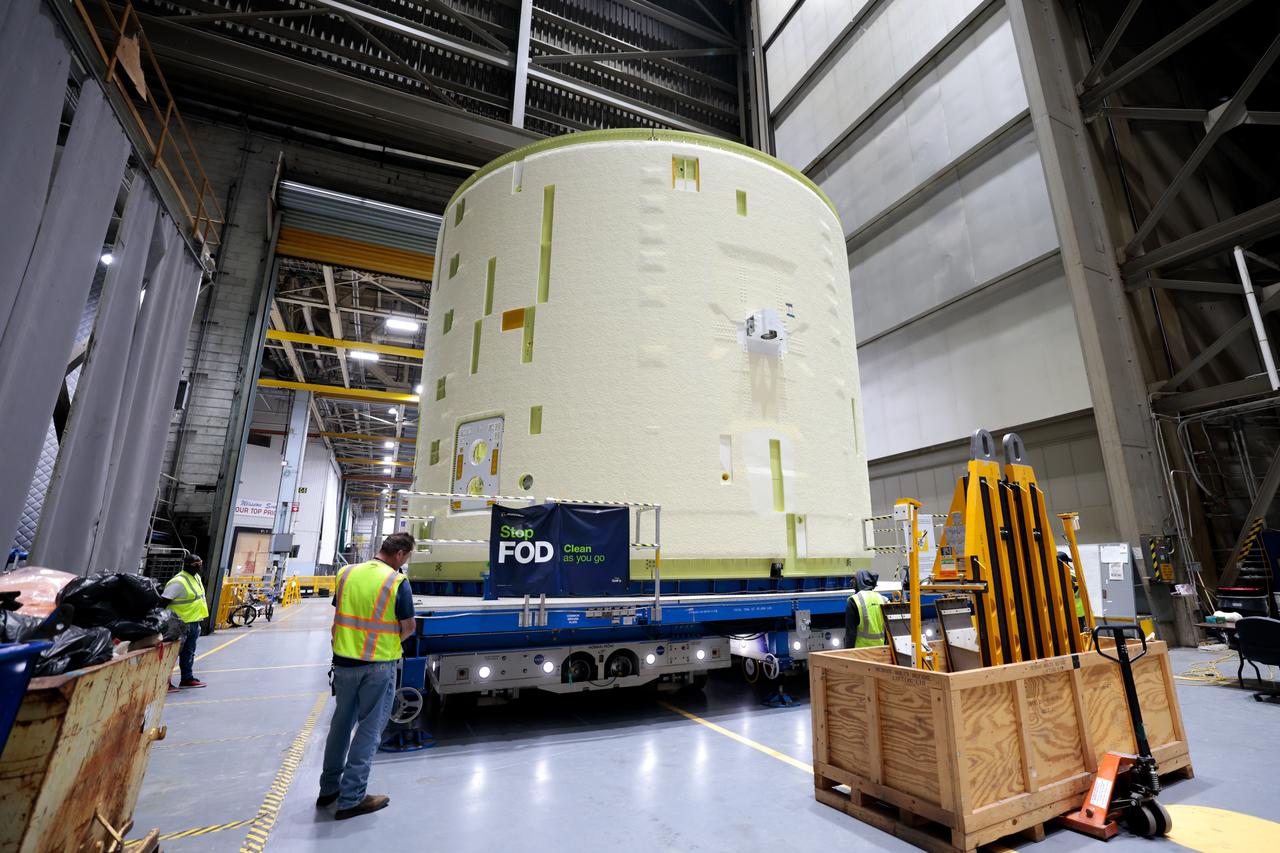
Technicians at NASA’s Michoud Assembly Facility in New Orleans lift the intertank of the SLS (Space Launch System)’s core stage for NASA’s Artemis III mission to move it to another location in the 43-acre factory for further inspection and production. The intertank is the backbone of the rocket’s core stage and is located between the mega rocket’s liquid hydrogen tank and liquid oxygen tank. In addition to joining the rocket’s two massive propellant tanks, the intertank houses avionics and electronics and serves as an attachment point for the rocket’s two solid rocket boosters positioned on either side of the core stage. The liquid hydrogen tank and liquid oxygen tank hold 733,000 gallons of super-cold propellant to power the stage’s four RS-25 engines needed for liftoff. Together, the rocket’s four RS-25 engines and two solid rocket boosters provide more than 8.8 million pounds to launch NASA’s and Artemis missions to the Moon. NASA is working to land the first woman and first person of color on the Moon under Artemis. SLS is part of NASA’s backbone for deep space exploration, along with Orion and the Gateway in orbit around the Moon. SLS is the only rocket that can send Orion, astronauts, and supplies to the Moon in a single mission.
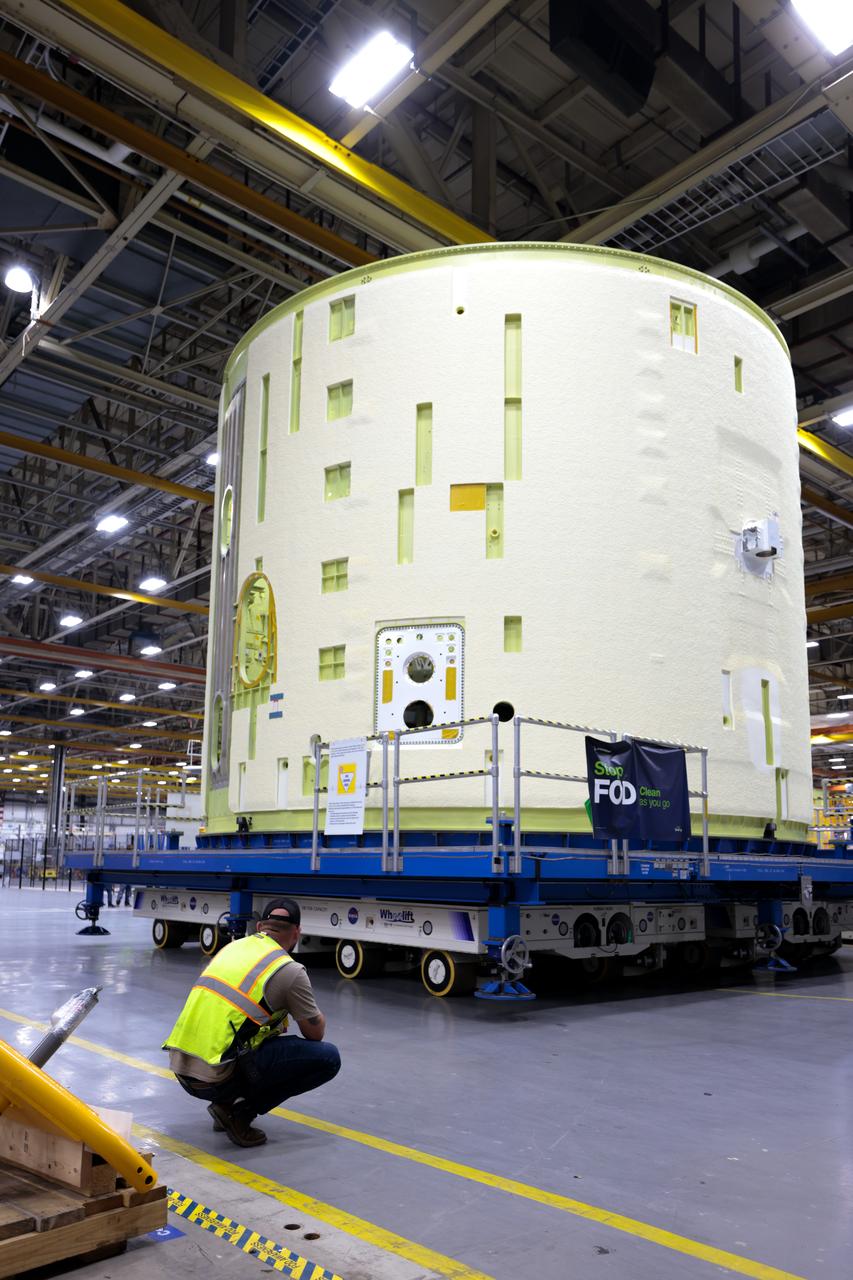
Technicians at NASA’s Michoud Assembly Facility in New Orleans lift the intertank of the SLS (Space Launch System)’s core stage for NASA’s Artemis III mission to move it to another location in the 43-acre factory for further inspection and production. The intertank is the backbone of the rocket’s core stage and is located between the mega rocket’s liquid hydrogen tank and liquid oxygen tank. In addition to joining the rocket’s two massive propellant tanks, the intertank houses avionics and electronics and serves as an attachment point for the rocket’s two solid rocket boosters positioned on either side of the core stage. The liquid hydrogen tank and liquid oxygen tank hold 733,000 gallons of super-cold propellant to power the stage’s four RS-25 engines needed for liftoff. Together, the rocket’s four RS-25 engines and two solid rocket boosters provide more than 8.8 million pounds to launch NASA’s and Artemis missions to the Moon. NASA is working to land the first woman and first person of color on the Moon under Artemis. SLS is part of NASA’s backbone for deep space exploration, along with Orion and the Gateway in orbit around the Moon. SLS is the only rocket that can send Orion, astronauts, and supplies to the Moon in a single mission.
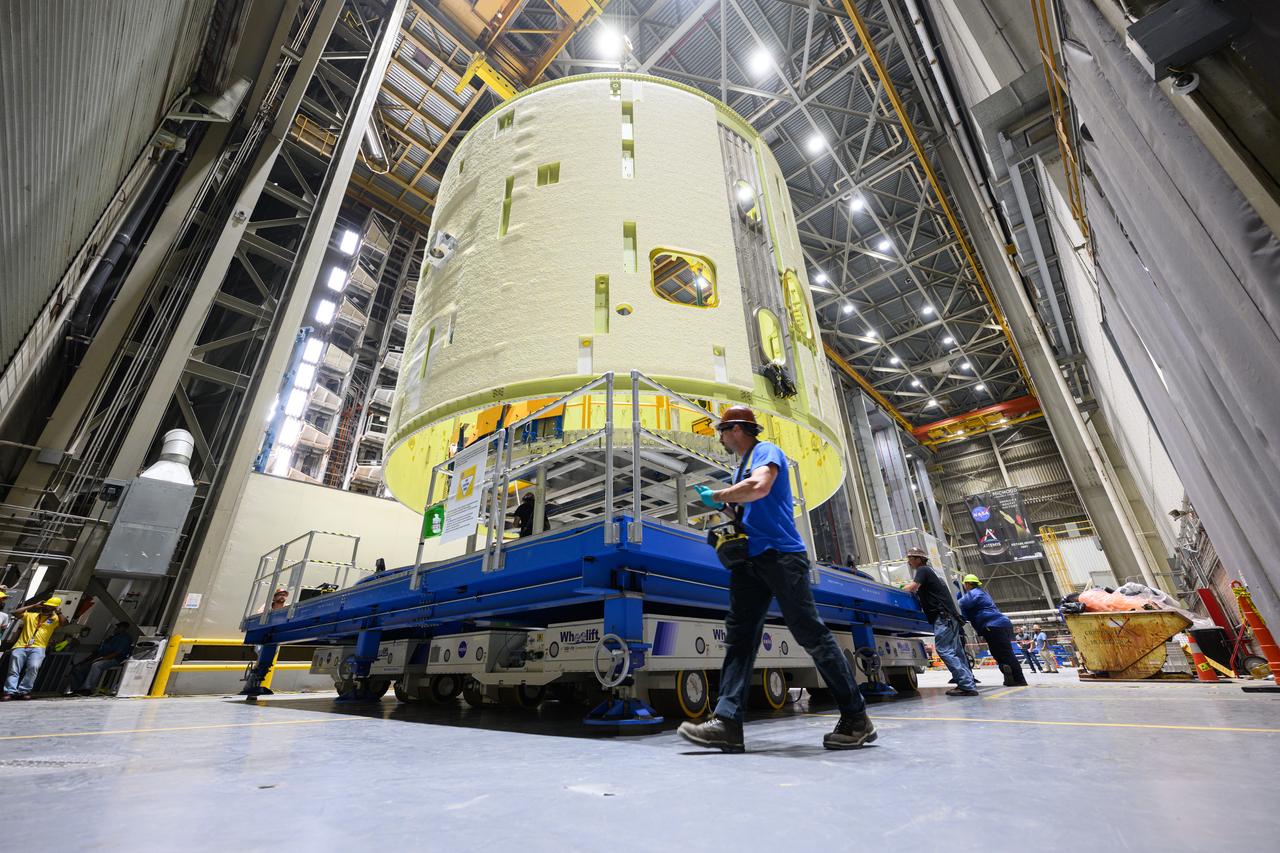
Technicians at NASA’s Michoud Assembly Facility in New Orleans lift the intertank of the SLS (Space Launch System)’s core stage for NASA’s Artemis III mission to move it to another location in the 43-acre factory for further inspection and production. The intertank is the backbone of the rocket’s core stage and is located between the mega rocket’s liquid hydrogen tank and liquid oxygen tank. In addition to joining the rocket’s two massive propellant tanks, the intertank houses avionics and electronics and serves as an attachment point for the rocket’s two solid rocket boosters positioned on either side of the core stage. The liquid hydrogen tank and liquid oxygen tank hold 733,000 gallons of super-cold propellant to power the stage’s four RS-25 engines needed for liftoff. Together, the rocket’s four RS-25 engines and two solid rocket boosters provide more than 8.8 million pounds to launch NASA’s and Artemis missions to the Moon. NASA is working to land the first woman and first person of color on the Moon under Artemis. SLS is part of NASA’s backbone for deep space exploration, along with Orion and the Gateway in orbit around the Moon. SLS is the only rocket that can send Orion, astronauts, and supplies to the Moon in a single mission.
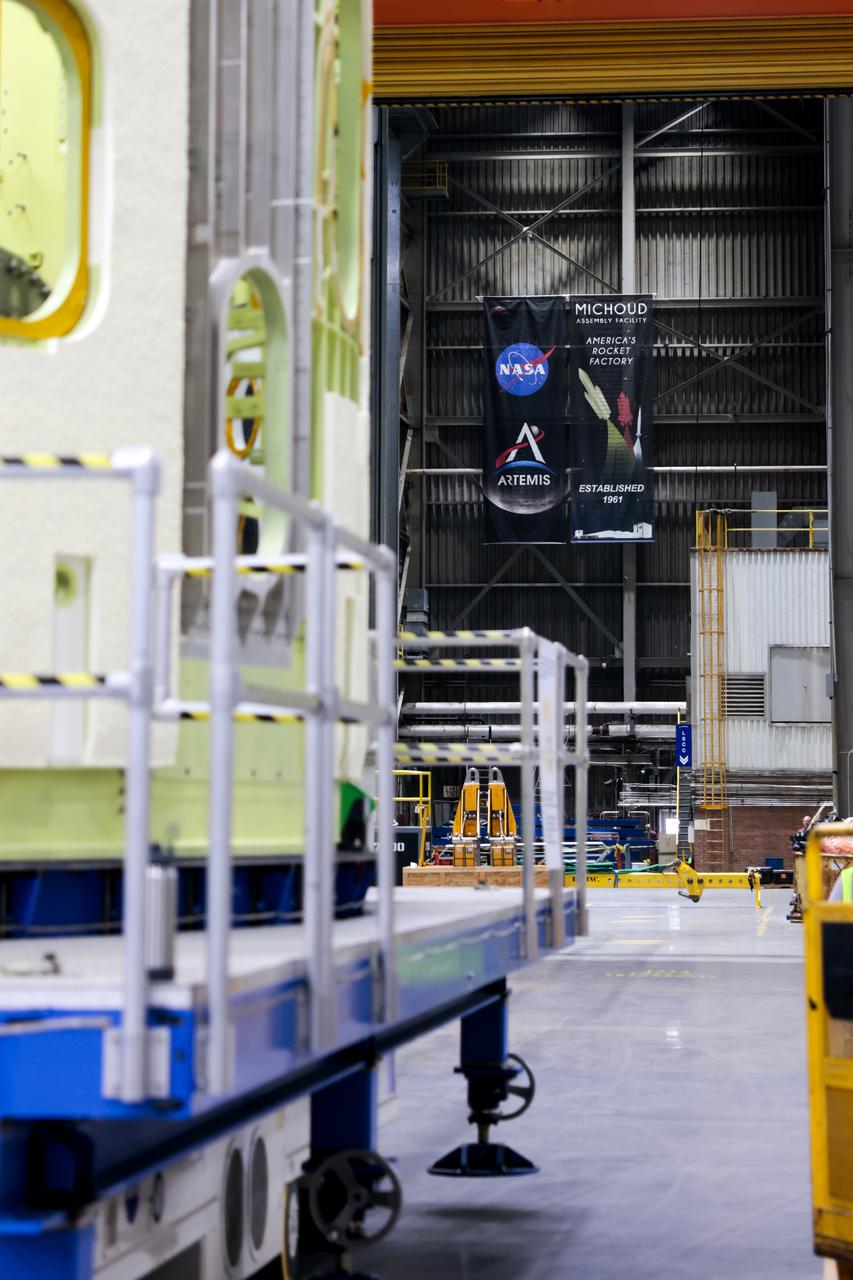
Technicians at NASA’s Michoud Assembly Facility in New Orleans lift the intertank of the SLS (Space Launch System)’s core stage for NASA’s Artemis III mission to move it to another location in the 43-acre factory for further inspection and production. The intertank is the backbone of the rocket’s core stage and is located between the mega rocket’s liquid hydrogen tank and liquid oxygen tank. In addition to joining the rocket’s two massive propellant tanks, the intertank houses avionics and electronics and serves as an attachment point for the rocket’s two solid rocket boosters positioned on either side of the core stage. The liquid hydrogen tank and liquid oxygen tank hold 733,000 gallons of super-cold propellant to power the stage’s four RS-25 engines needed for liftoff. Together, the rocket’s four RS-25 engines and two solid rocket boosters provide more than 8.8 million pounds to launch NASA’s and Artemis missions to the Moon. NASA is working to land the first woman and first person of color on the Moon under Artemis. SLS is part of NASA’s backbone for deep space exploration, along with Orion and the Gateway in orbit around the Moon. SLS is the only rocket that can send Orion, astronauts, and supplies to the Moon in a single mission.
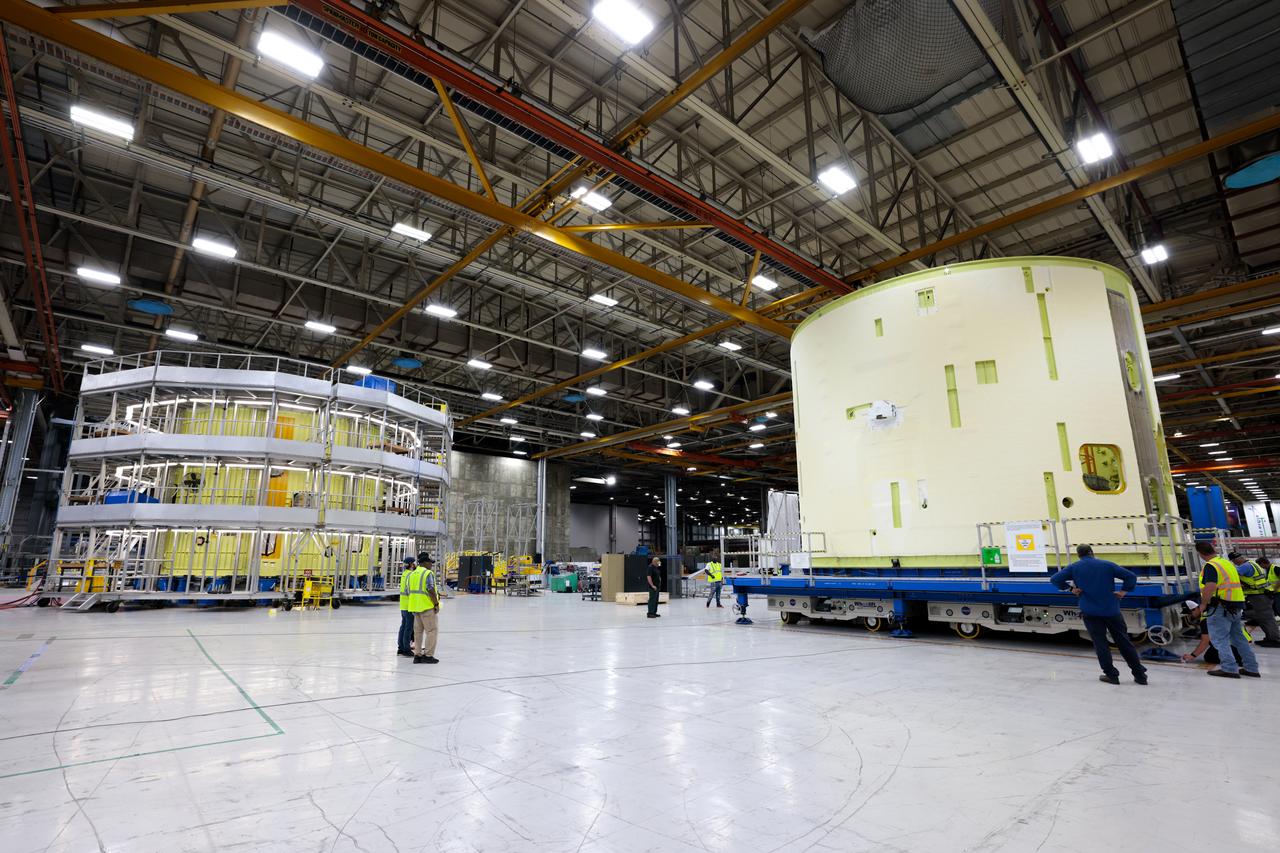
Technicians at NASA’s Michoud Assembly Facility in New Orleans lift the intertank of the SLS (Space Launch System)’s core stage for NASA’s Artemis III mission to move it to another location in the 43-acre factory for further inspection and production. The intertank is the backbone of the rocket’s core stage and is located between the mega rocket’s liquid hydrogen tank and liquid oxygen tank. In addition to joining the rocket’s two massive propellant tanks, the intertank houses avionics and electronics and serves as an attachment point for the rocket’s two solid rocket boosters positioned on either side of the core stage. The liquid hydrogen tank and liquid oxygen tank hold 733,000 gallons of super-cold propellant to power the stage’s four RS-25 engines needed for liftoff. Together, the rocket’s four RS-25 engines and two solid rocket boosters provide more than 8.8 million pounds to launch NASA’s and Artemis missions to the Moon. NASA is working to land the first woman and first person of color on the Moon under Artemis. SLS is part of NASA’s backbone for deep space exploration, along with Orion and the Gateway in orbit around the Moon. SLS is the only rocket that can send Orion, astronauts, and supplies to the Moon in a single mission.
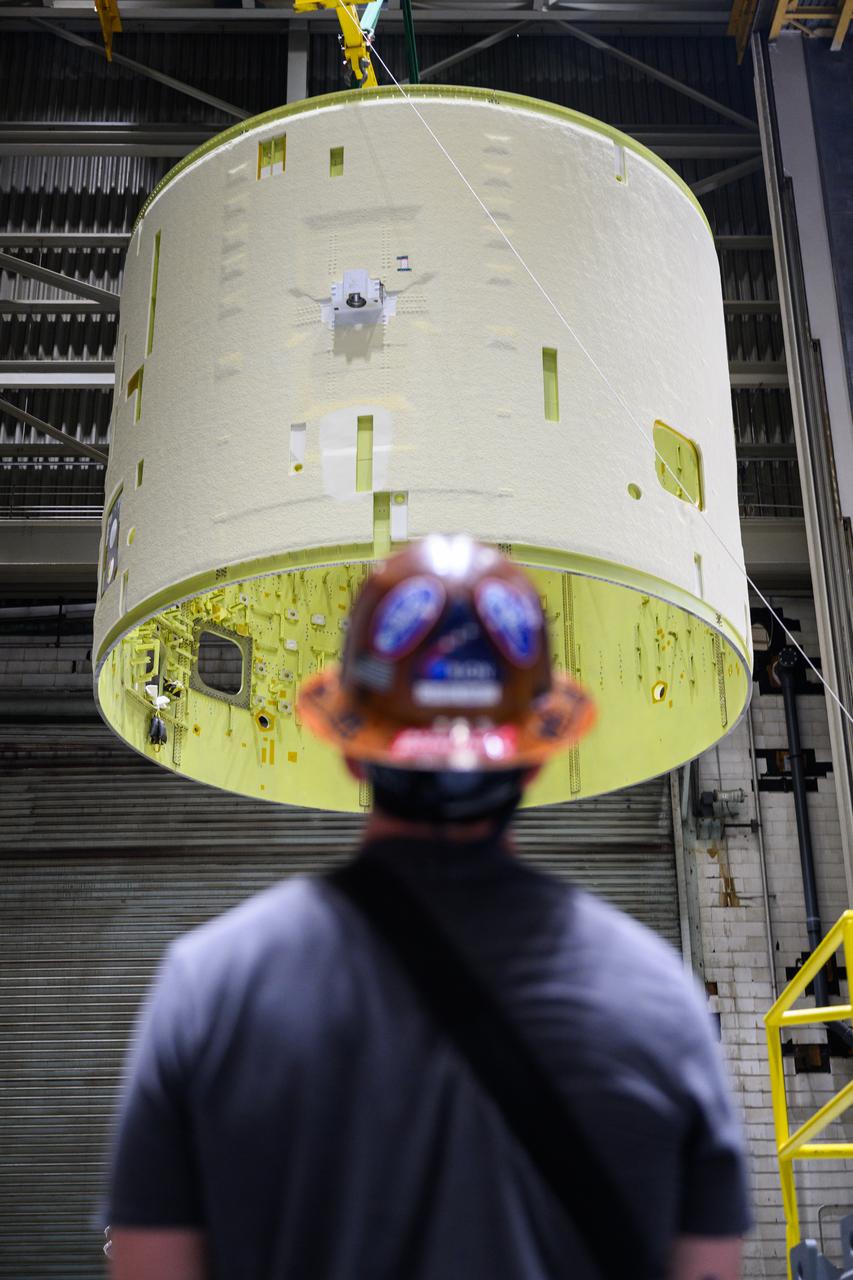
Technicians at NASA’s Michoud Assembly Facility in New Orleans lift the intertank of the SLS (Space Launch System)’s core stage for NASA’s Artemis III mission to move it to another location in the 43-acre factory for further inspection and production. The intertank is the backbone of the rocket’s core stage and is located between the mega rocket’s liquid hydrogen tank and liquid oxygen tank. In addition to joining the rocket’s two massive propellant tanks, the intertank houses avionics and electronics and serves as an attachment point for the rocket’s two solid rocket boosters positioned on either side of the core stage. The liquid hydrogen tank and liquid oxygen tank hold 733,000 gallons of super-cold propellant to power the stage’s four RS-25 engines needed for liftoff. Together, the rocket’s four RS-25 engines and two solid rocket boosters provide more than 8.8 million pounds to launch NASA’s and Artemis missions to the Moon. NASA is working to land the first woman and first person of color on the Moon under Artemis. SLS is part of NASA’s backbone for deep space exploration, along with Orion and the Gateway in orbit around the Moon. SLS is the only rocket that can send Orion, astronauts, and supplies to the Moon in a single mission.
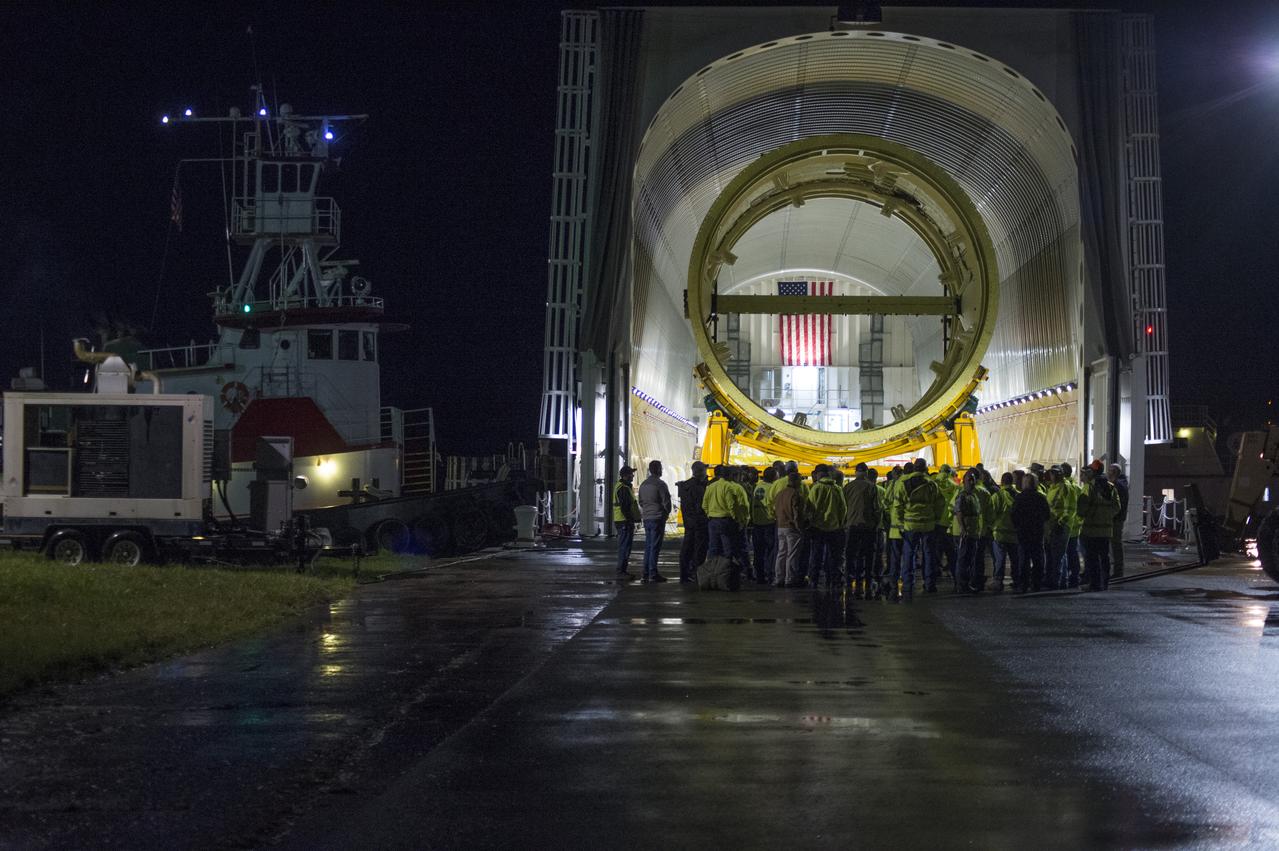
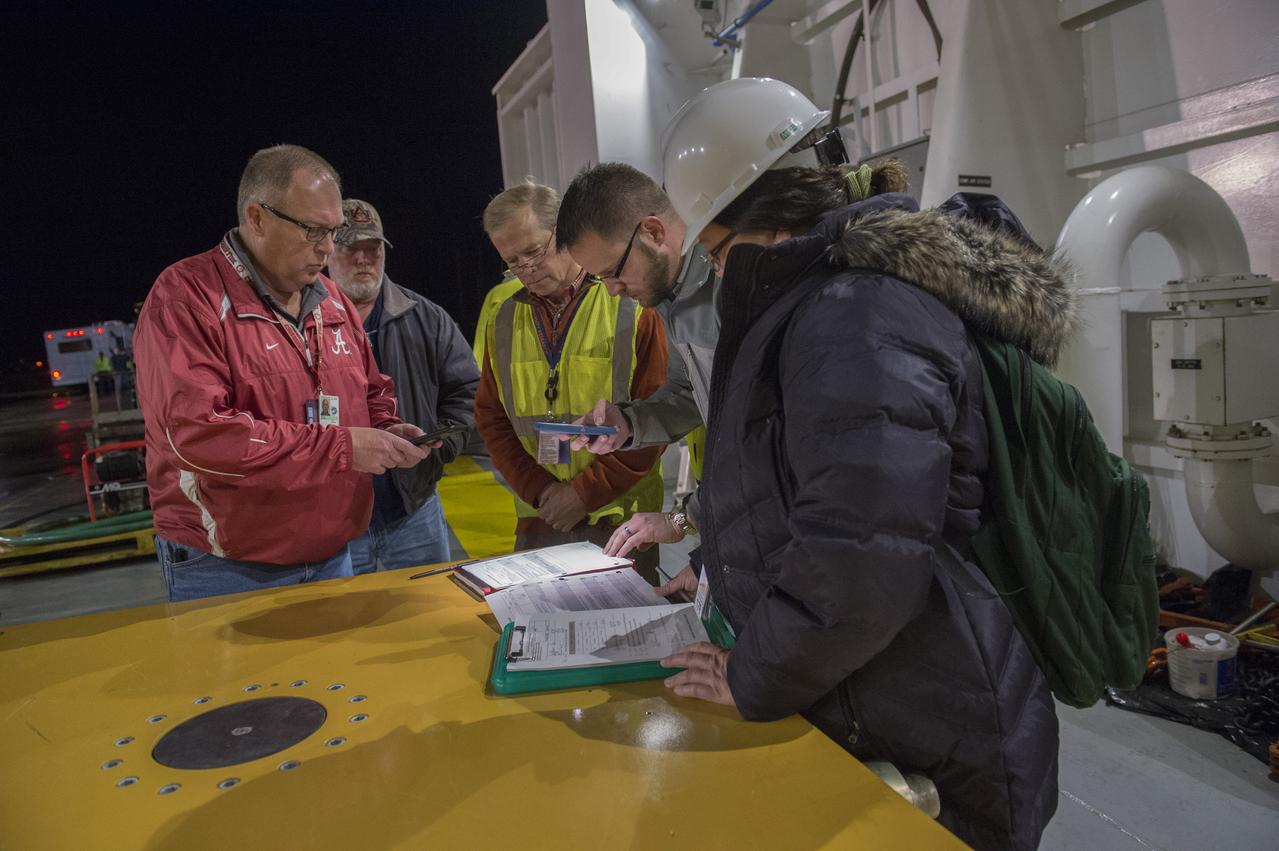
The SLS Stages Intertank Structural Test Assembly (STA) is rolling off the NASA Pegasus Barge at the MSFC Dock enroute to the MSFC 4619 Load Test Annex test facility for qualification testing. Members of MSFC Logistics Office and Move Team members gather for last minute instructions and safety briefing before off-loading STA hardware.
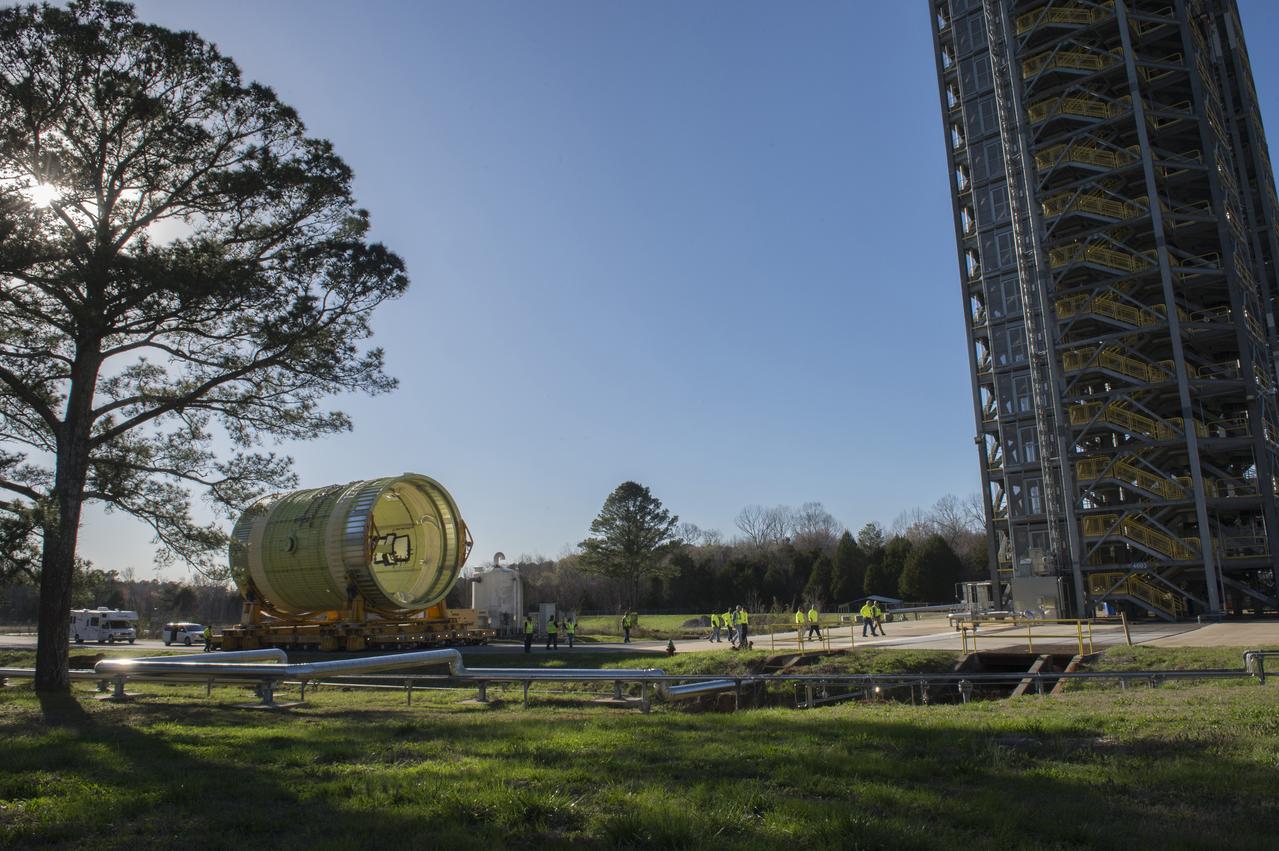
The SLS Stages Intertank Structural Test Assembly (STA) is rolling off the NASA Pegasus Barge at the MSFC Dock enroute to the MSFC 4619 Load Test Annex test facility for qualification testing via MSFC West Test Area. STA approaches Test Stand 4693, SLS LH2 test Stand, on way to Bldg. 4619
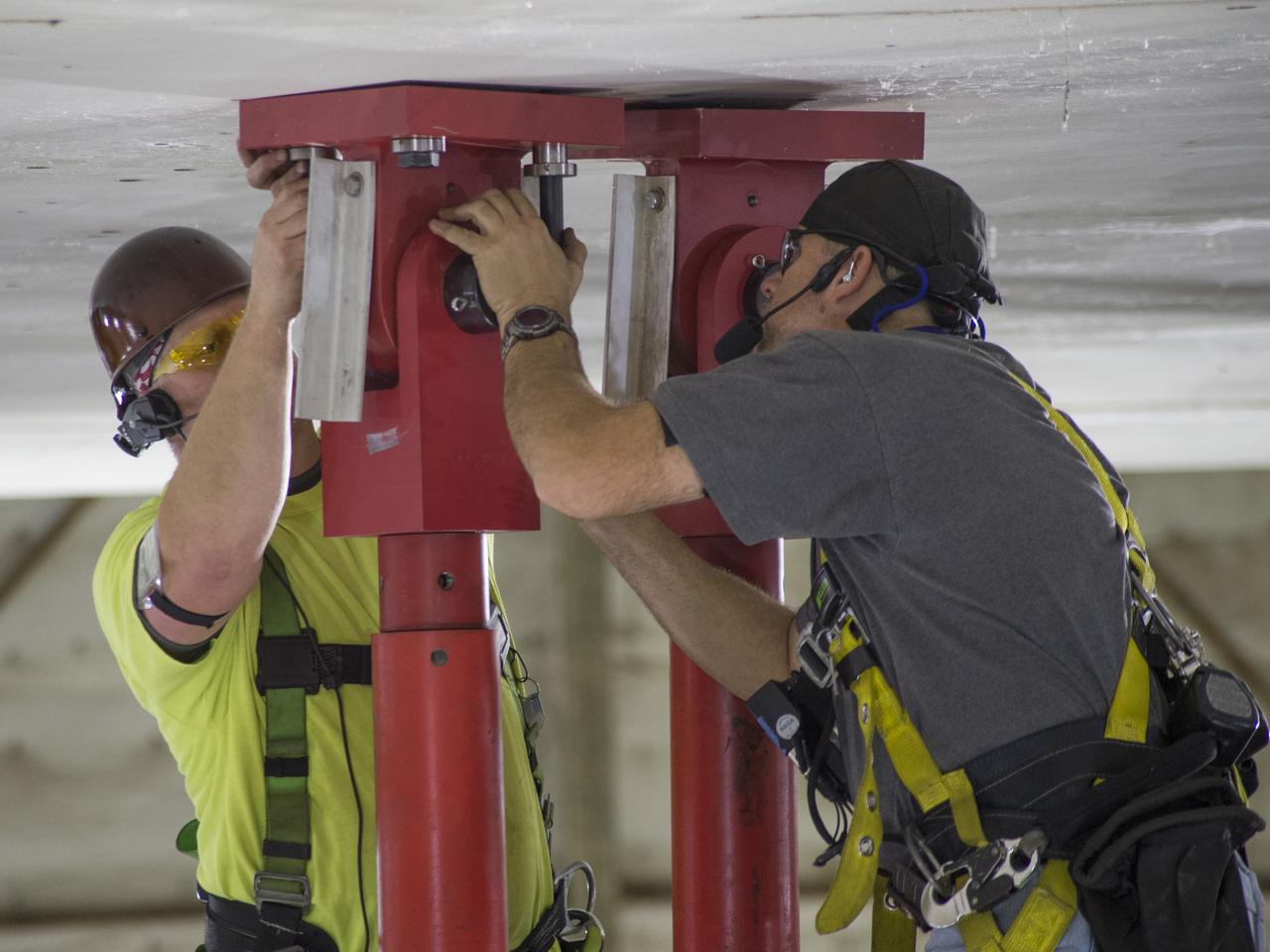
SLS Intertank Test Article, ITA, is attached to crosshead of load test Annex, Bldg. 4619, and removed from bed of KMAG transporter. Rob Ziegler, L, and Roger Myrick, R, of Aerie Aerospace attach load lines to Aft Load Ring of Intertank Test Articlle
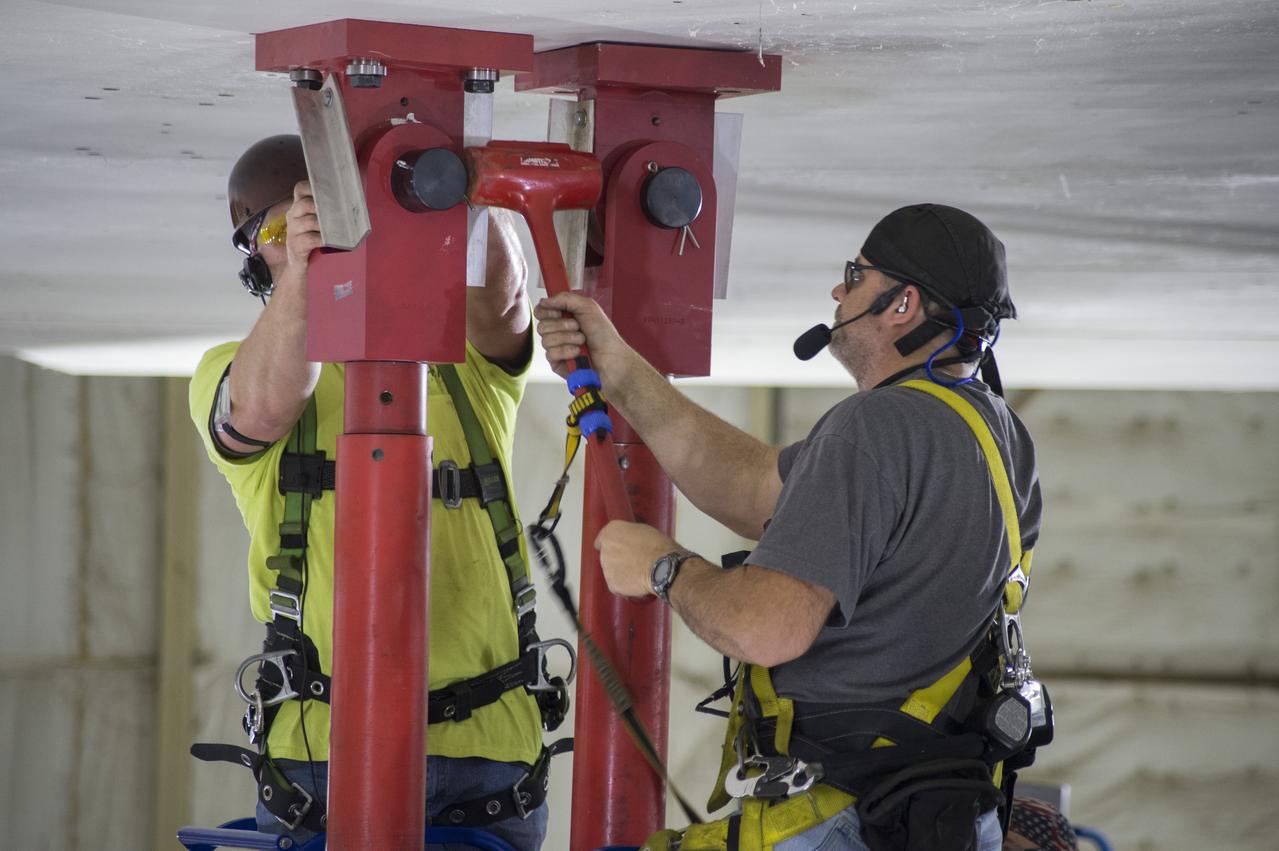
SLS Intertank Test Article, ITA, is attached to crosshead of load test Annex, Bldg. 4619, and removed from bed of KMAG transporter. Rob Ziegler, (L), and Roger Myrick (R), of Aerie Aerospace attach load lines to Aft Load Ring of Intertank Test Article.
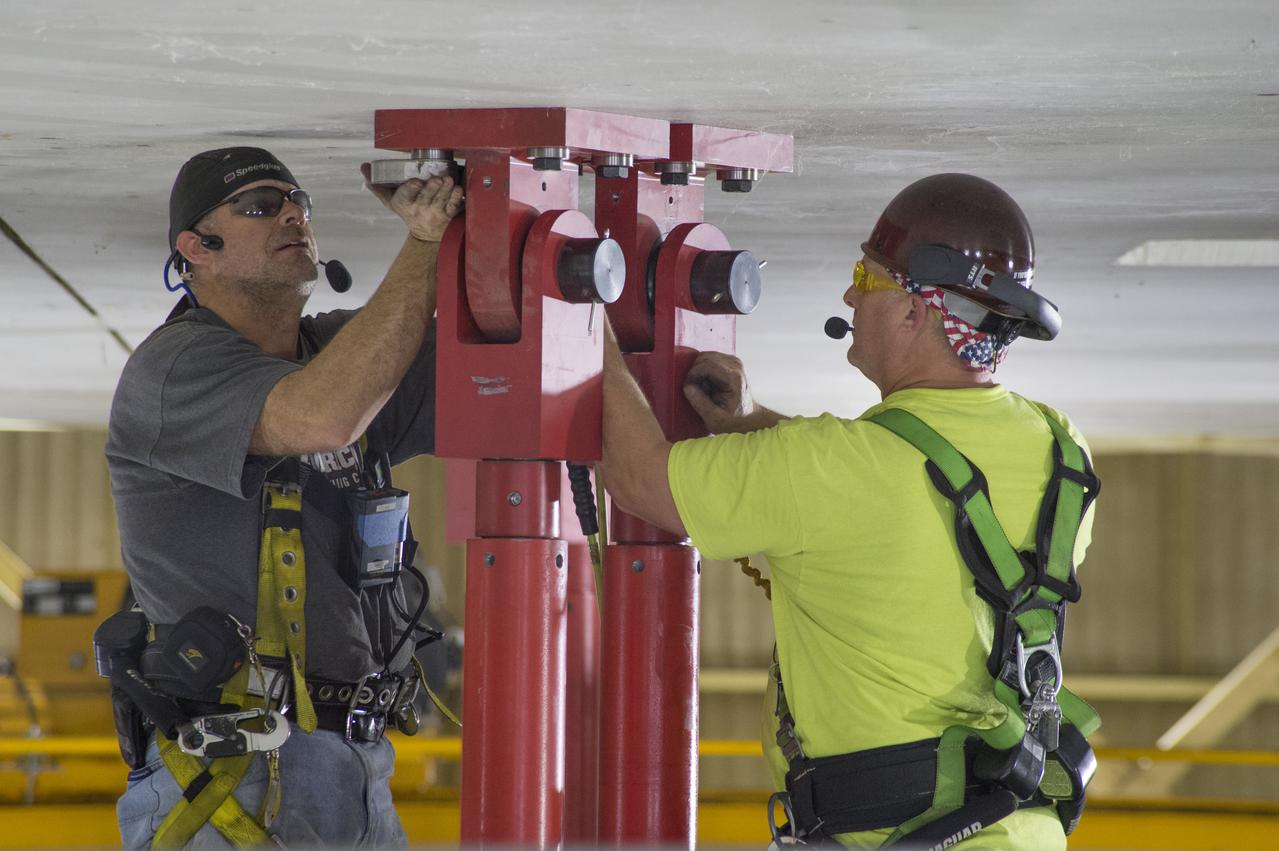
SLS Intertank Test Article, ITA, is attached to crosshead of load test Annex, Bldg. 4619, and removed from bed of KMAG transporter. Rob Ziegler, (L), and Roger Myrick (R), of Aerie Aerospace attach load lines to Aft Load Ring of Intertank Test Article.
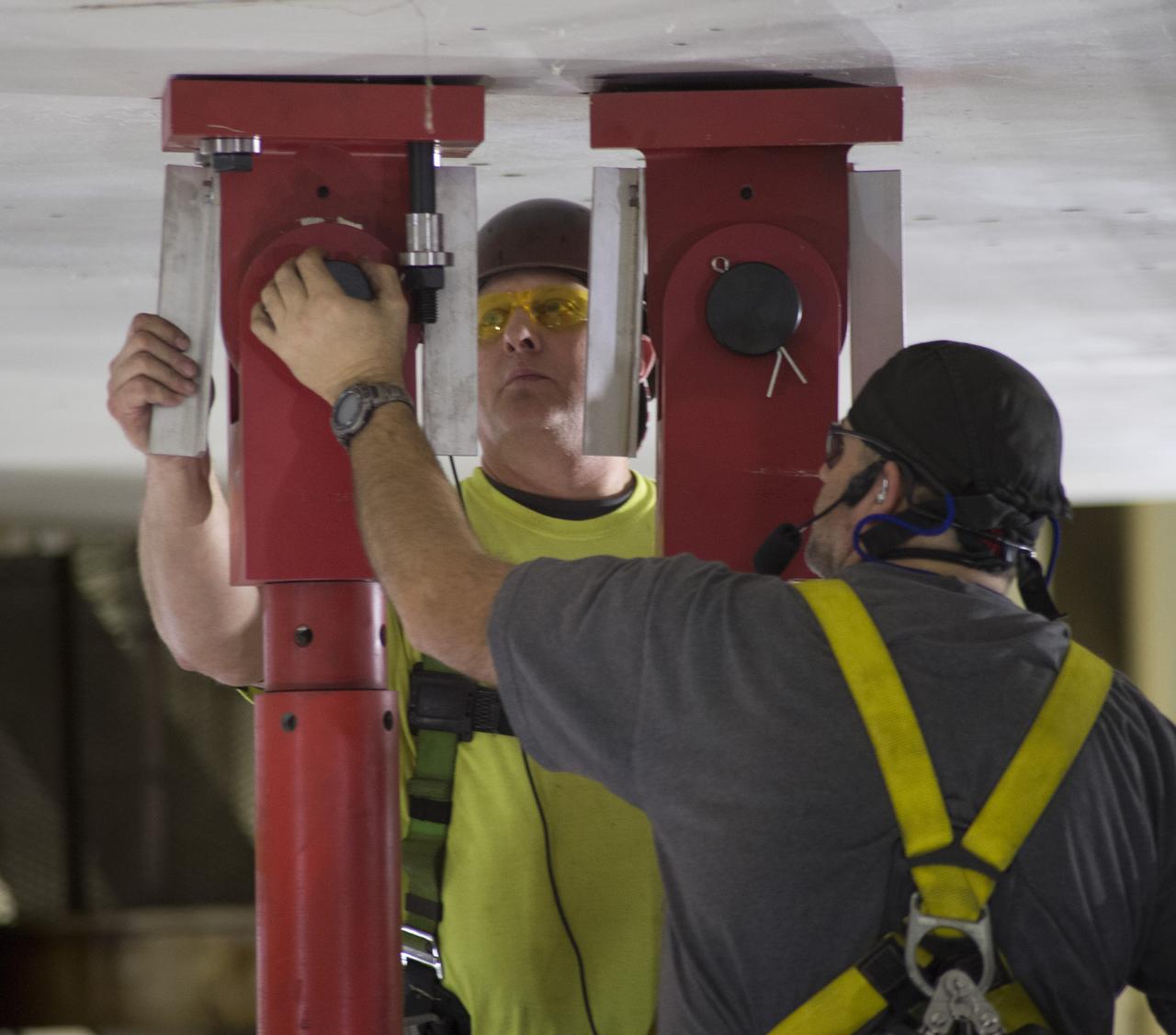
SLS Intertank Test Article, ITA, is attached to crosshead of load test Annex, Bldg. 4619, and removed from bed of KMAG transporter. Rob Ziegler, (L), and Roger Myrick (R), of Aerie Aerospace attach load lines to Aft Load Ring of Intertank Test Article.
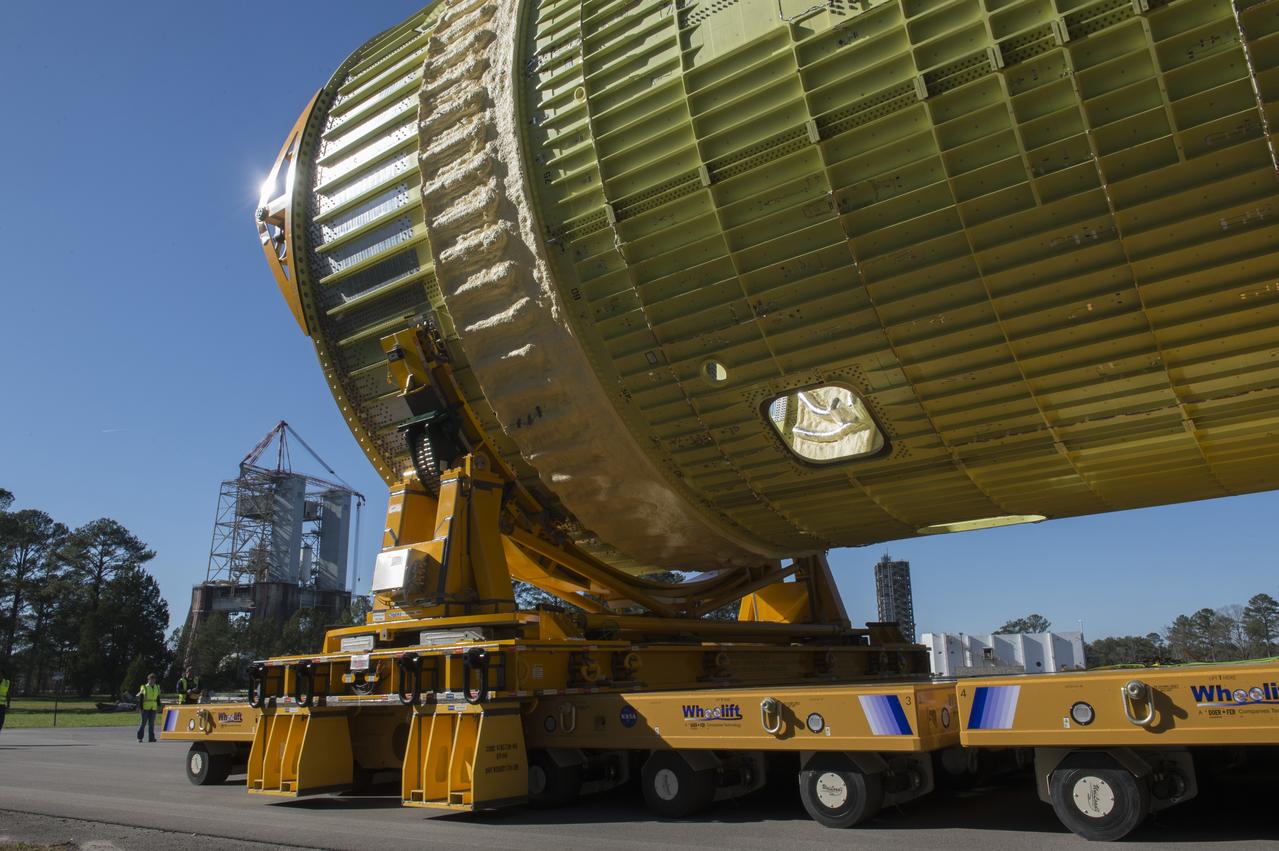
The SLS Stages Intertank Structural Test Assembly (STA) is rolling off the NASA Pegasus Barge at the MSFC Dock enroute to the MSFC 4619 Load Test Annex test facility for qualification testing via MSFC West Test Area. Historic Saturn 1-C test stand on far left, blockhouse 4670 on far right, SLS LH2 test stand, 4693, in center.
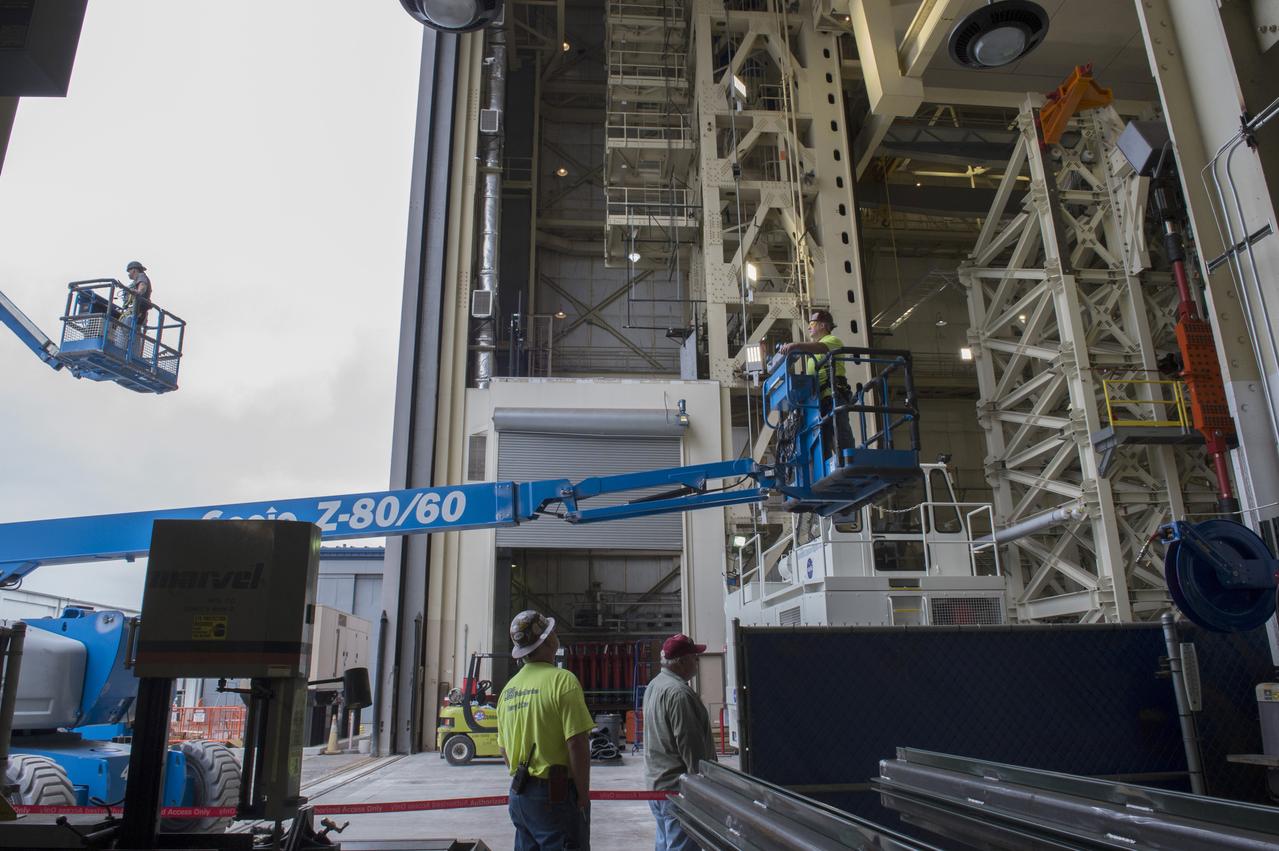
Technicians are removed from SLS Intertank Test Article, ITA, after attaching to crosshead of load test Annex, Bldg. 4619,
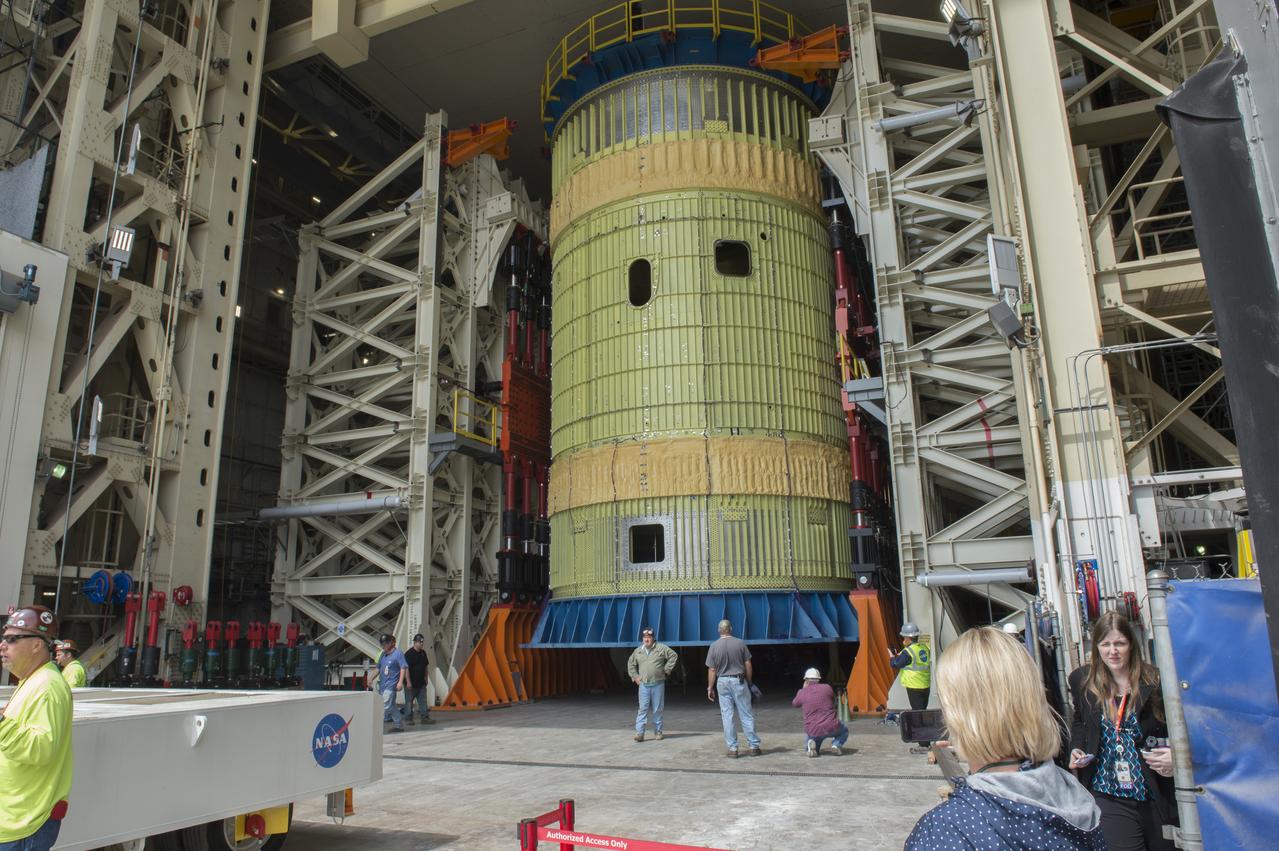
SLS Intertank Test Article, ITA, is attached to crosshead of load test Annex, Bldg. 4619, and removed from bed of KMAG transporter. ITA is slowly raised from bed of KMAG transporter and KMAG is removed.
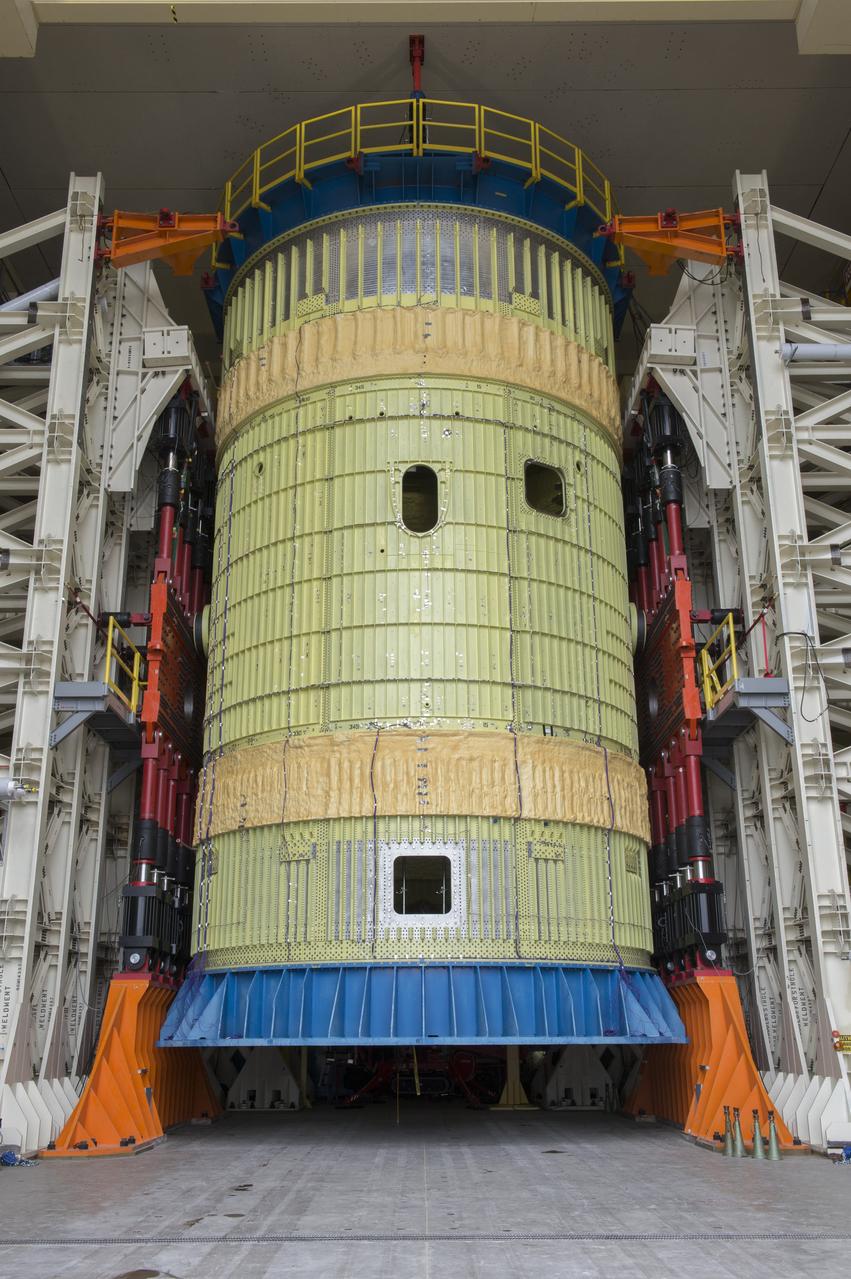
SLS Intertank Test Article, ITA, is attached to crosshead of load test Annex, Bldg. 4619, and removed from bed of KMAG transporter. ITA is suspended from crosshead of Load Test Annex
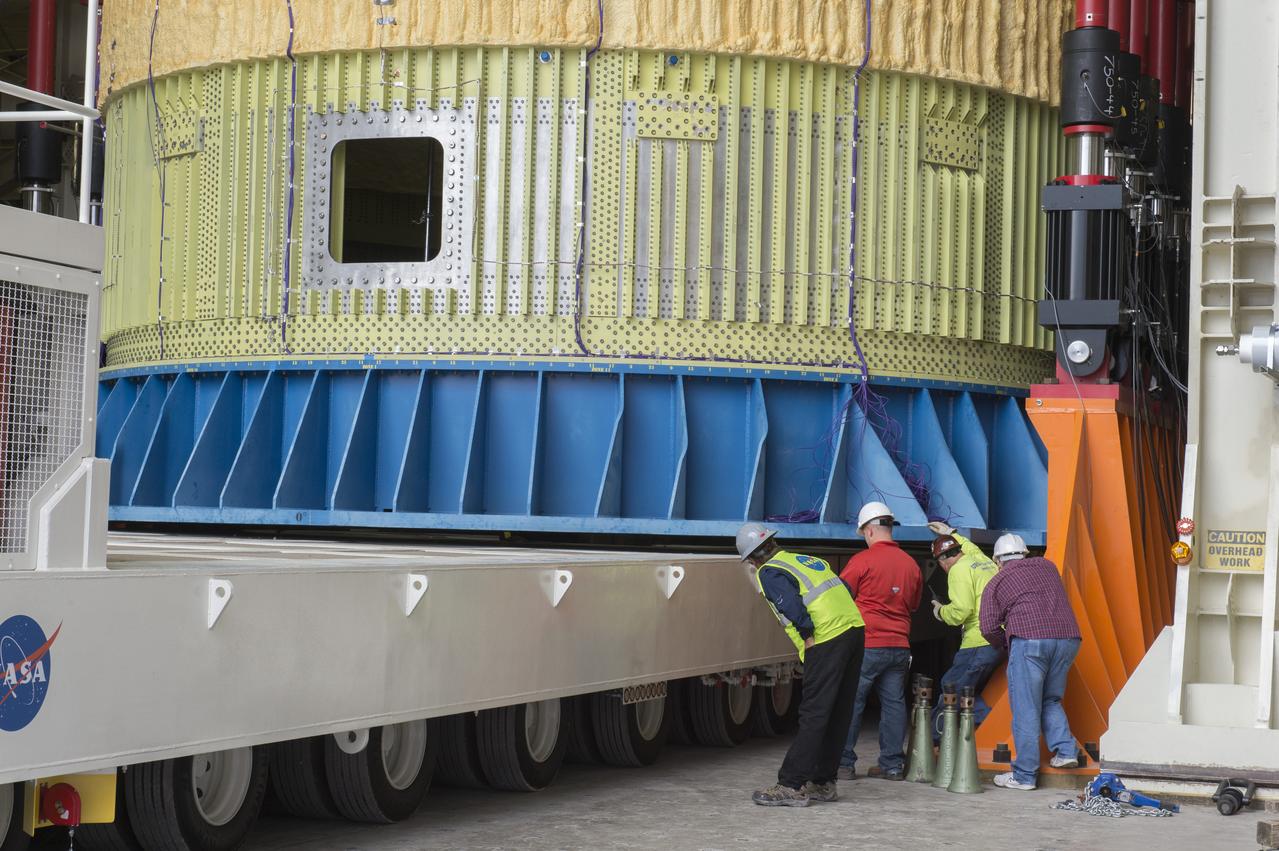
SLS Intertank Test Article, ITA, is attached to crosshead of load test Annex, Bldg. 4619, and removed from bed of KMAG transporter. ITA is slowly raised from bed of KMAG transporter and KMAG is removed.
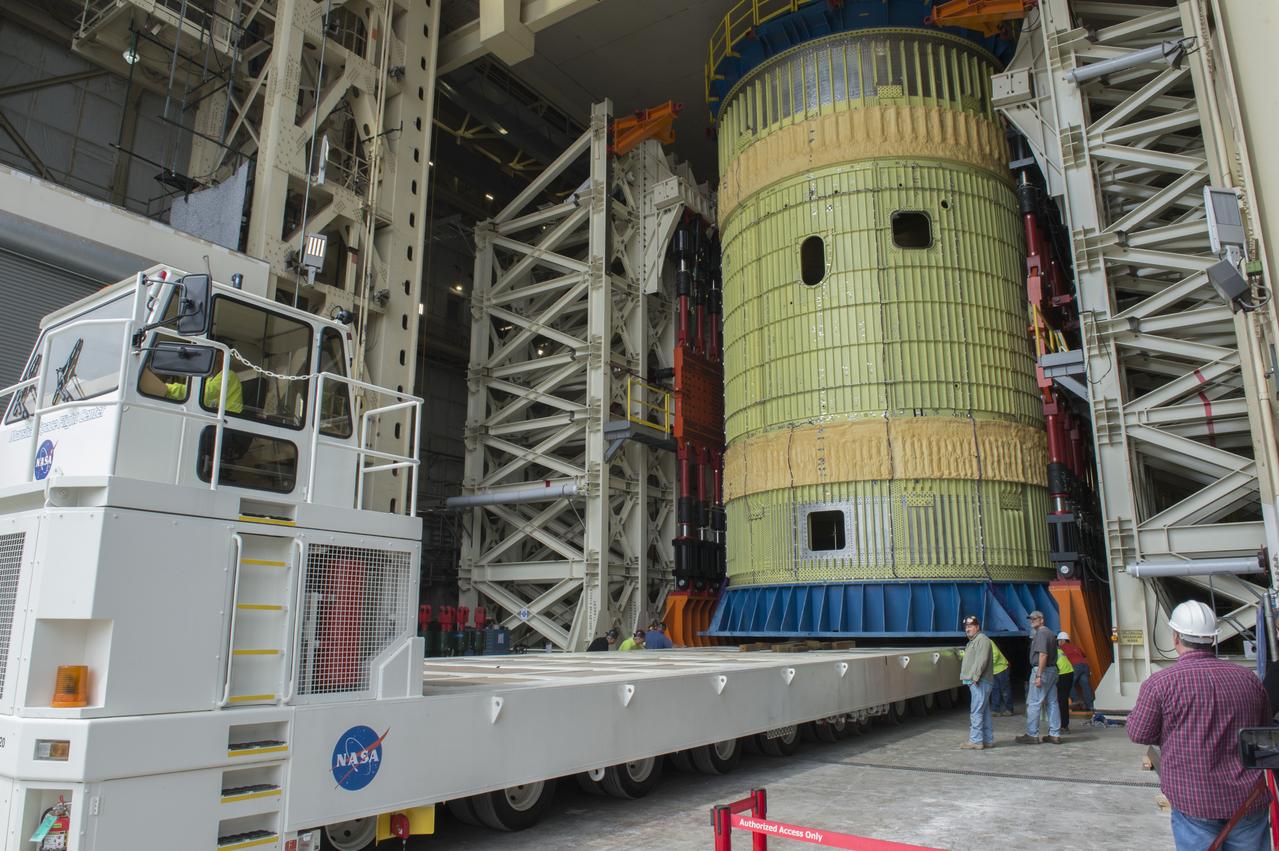
SLS Intertank Test Article, ITA, is attached to crosshead of load test Annex, Bldg. 4619, and removed from bed of KMAG transporter. ITA is slowly raised from bed of KMAG transporter and KMAG is removed.
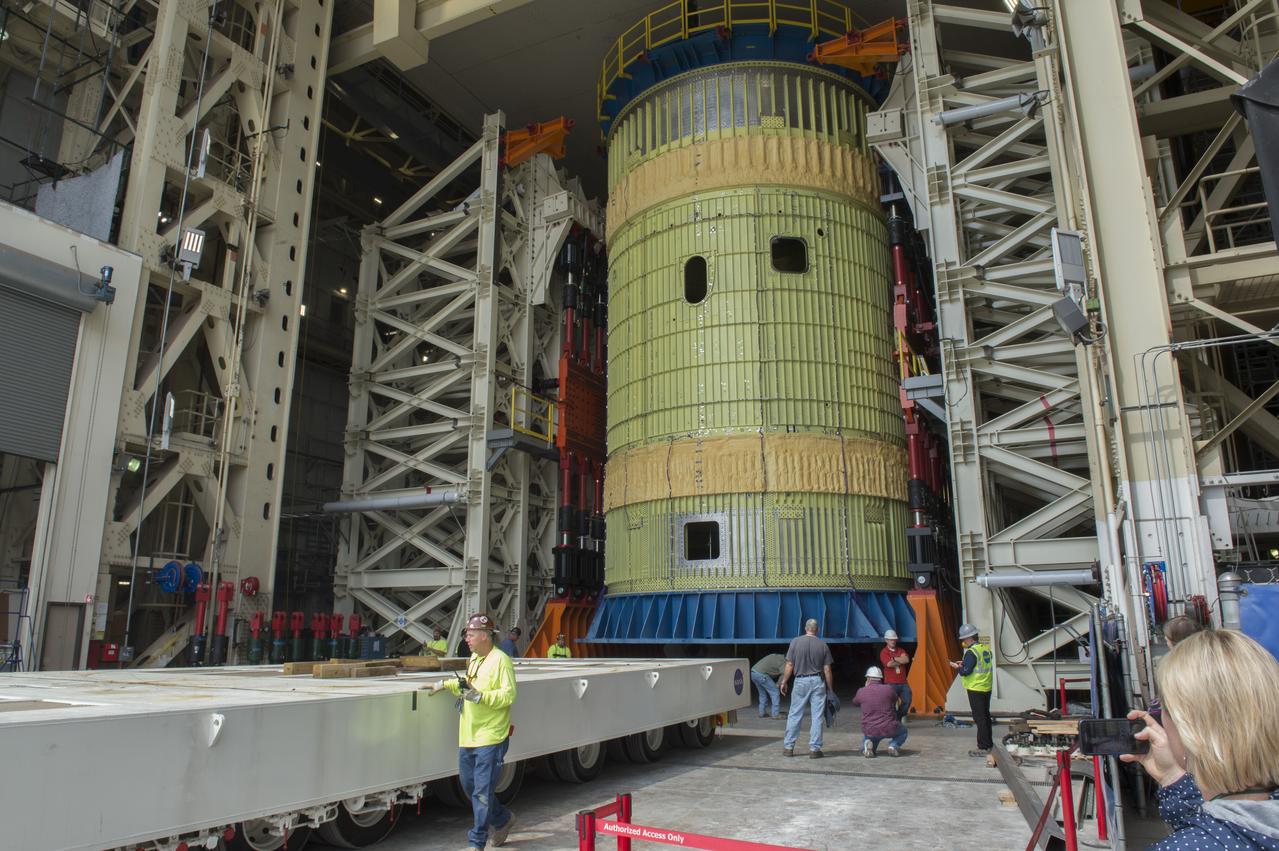
SLS Intertank Test Article, ITA, is attached to crosshead of load test Annex, Bldg. 4619, and removed from bed of KMAG transporter. ITA is slowly raised from bed of KMAG transporter and KMAG is removed.
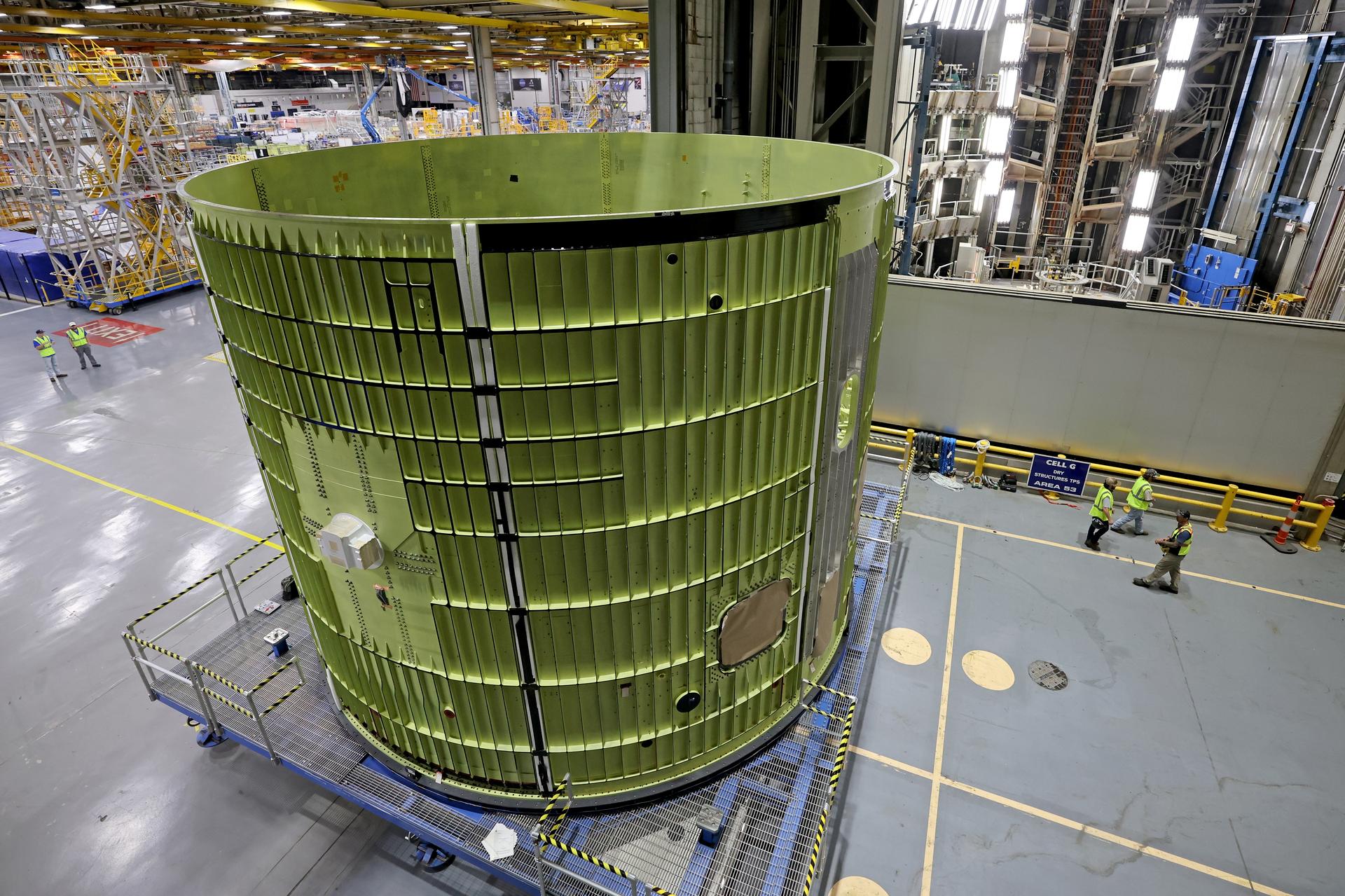
Teams at NASA’s Michoud Assembly Facility in New Orleans move the 21.8-foot-tall intertank for the core stage of the agency’s SLS (Space Launch System) rocket into one of the factory’s high bay production cells May 29. The flight hardware will help power NASA’s Artemis IV mission. Inside the production cell, NASA and Boeing, SLS core stage prime contractor will apply the hardware’s outer thermal protection layer through an automated process. The thermal protection system safeguards the rocket from the extreme temperatures and prevents the super-cooled propellant within the rocket’s massive propellant tanks from boiling off too rapidly during launch and flight. The intertank houses avionics and electronics, serves as an attachment point for the solid rocket boosters, and is one of five major elements that make up the 212-foot-tall rocket stage. The core stage, along with its four RS-25 engines at its base, produce more than two million pounds of thrust to help launch NASA’s Orion spacecraft, astronauts, and supplies beyond Earth’s orbit and to the lunar surface for Artemis. Image credit: NASA/Michael DeMocker
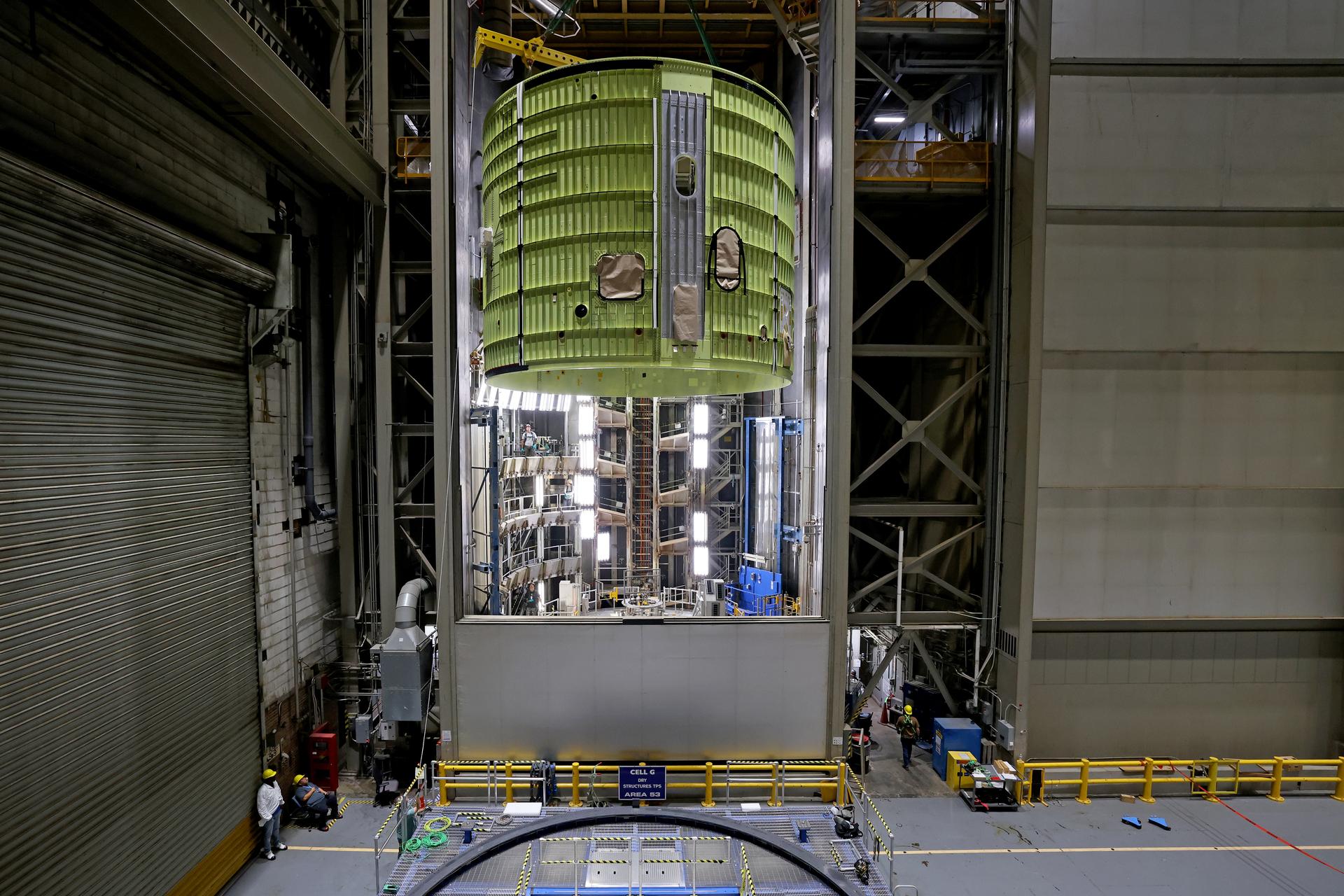
Teams at NASA’s Michoud Assembly Facility in New Orleans move the 21.8-foot-tall intertank for the core stage of the agency’s SLS (Space Launch System) rocket into one of the factory’s high bay production cells May 29. The flight hardware will help power NASA’s Artemis IV mission. Inside the production cell, NASA and Boeing, SLS core stage prime contractor will apply the hardware’s outer thermal protection layer through an automated process. The thermal protection system safeguards the rocket from the extreme temperatures and prevents the super-cooled propellant within the rocket’s massive propellant tanks from boiling off too rapidly during launch and flight. The intertank houses avionics and electronics, serves as an attachment point for the solid rocket boosters, and is one of five major elements that make up the 212-foot-tall rocket stage. The core stage, along with its four RS-25 engines at its base, produce more than two million pounds of thrust to help launch NASA’s Orion spacecraft, astronauts, and supplies beyond Earth’s orbit and to the lunar surface for Artemis. Image credit: NASA/Michael DeMocker
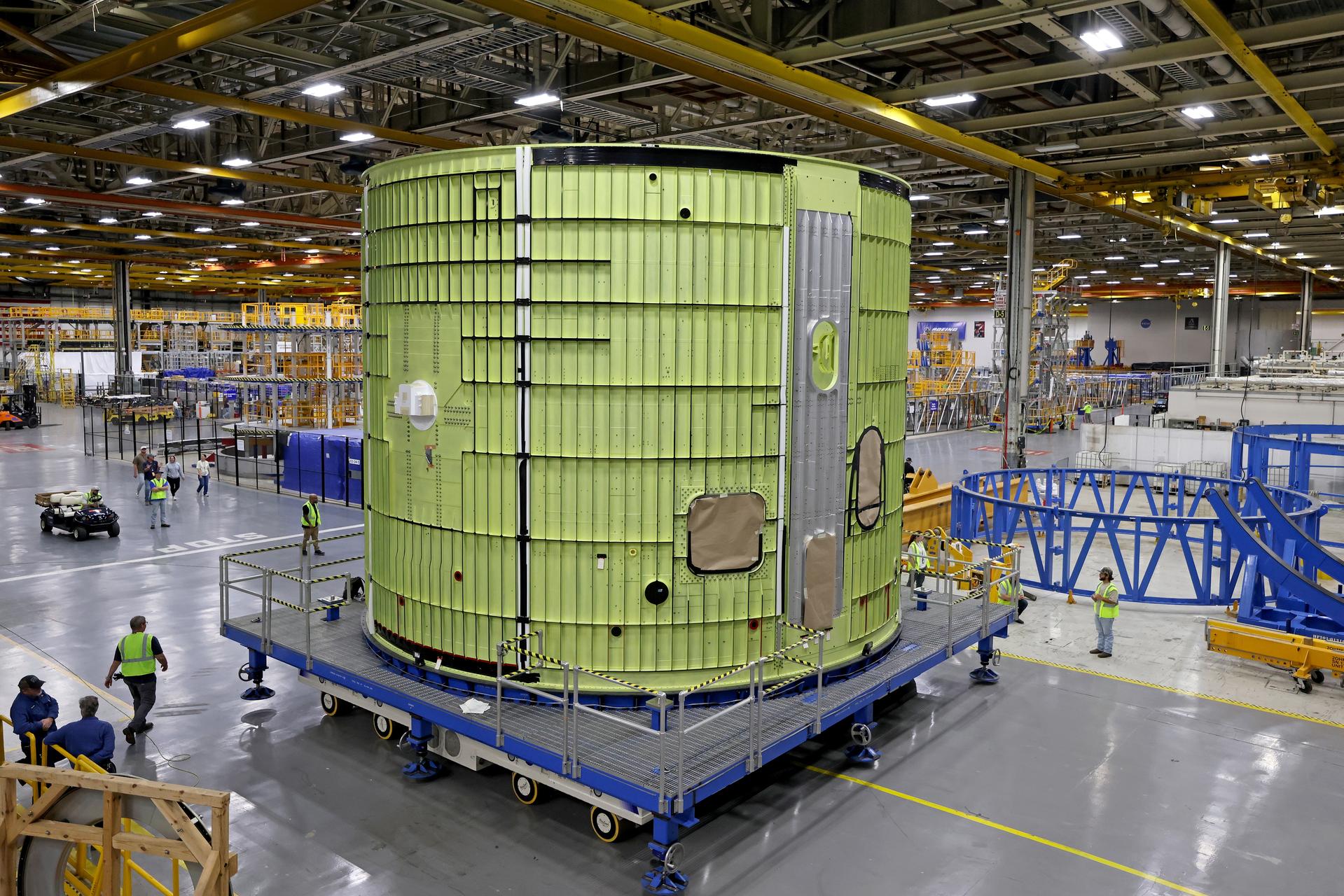
Teams at NASA’s Michoud Assembly Facility in New Orleans move the 21.8-foot-tall intertank for the core stage of the agency’s SLS (Space Launch System) rocket into one of the factory’s high bay production cells May 29. The flight hardware will help power NASA’s Artemis IV mission. Inside the production cell, NASA and Boeing, SLS core stage prime contractor will apply the hardware’s outer thermal protection layer through an automated process. The thermal protection system safeguards the rocket from the extreme temperatures and prevents the super-cooled propellant within the rocket’s massive propellant tanks from boiling off too rapidly during launch and flight. The intertank houses avionics and electronics, serves as an attachment point for the solid rocket boosters, and is one of five major elements that make up the 212-foot-tall rocket stage. The core stage, along with its four RS-25 engines at its base, produce more than two million pounds of thrust to help launch NASA’s Orion spacecraft, astronauts, and supplies beyond Earth’s orbit and to the lunar surface for Artemis. Image credit: NASA/Michael DeMocker
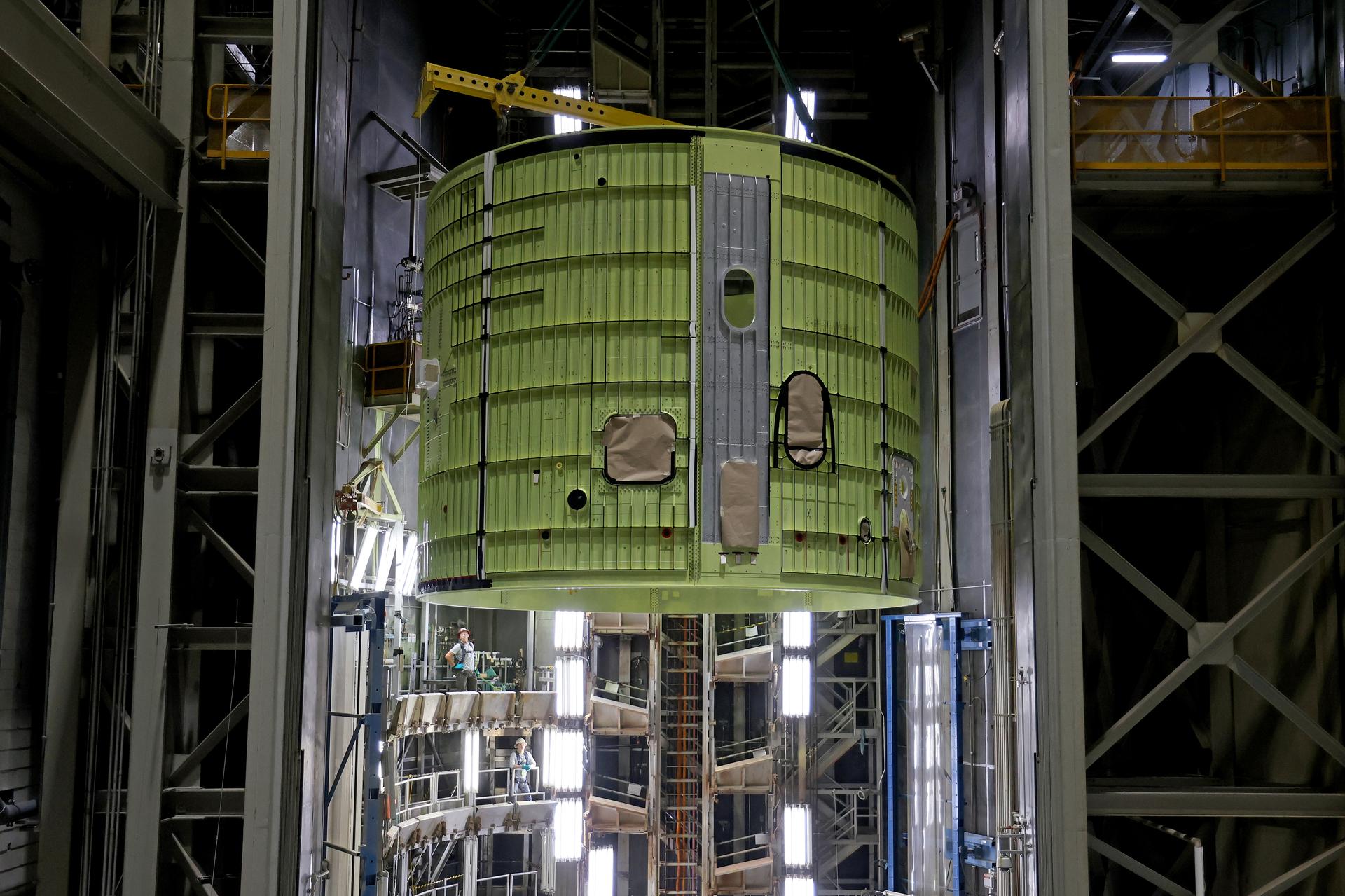
Teams at NASA’s Michoud Assembly Facility in New Orleans move the 21.8-foot-tall intertank for the core stage of the agency’s SLS (Space Launch System) rocket into one of the factory’s high bay production cells May 29. The flight hardware will help power NASA’s Artemis IV mission. Inside the production cell, NASA and Boeing, SLS core stage prime contractor will apply the hardware’s outer thermal protection layer through an automated process. The thermal protection system safeguards the rocket from the extreme temperatures and prevents the super-cooled propellant within the rocket’s massive propellant tanks from boiling off too rapidly during launch and flight. The intertank houses avionics and electronics, serves as an attachment point for the solid rocket boosters, and is one of five major elements that make up the 212-foot-tall rocket stage. The core stage, along with its four RS-25 engines at its base, produce more than two million pounds of thrust to help launch NASA’s Orion spacecraft, astronauts, and supplies beyond Earth’s orbit and to the lunar surface for Artemis. Image credit: NASA/Michael DeMocker
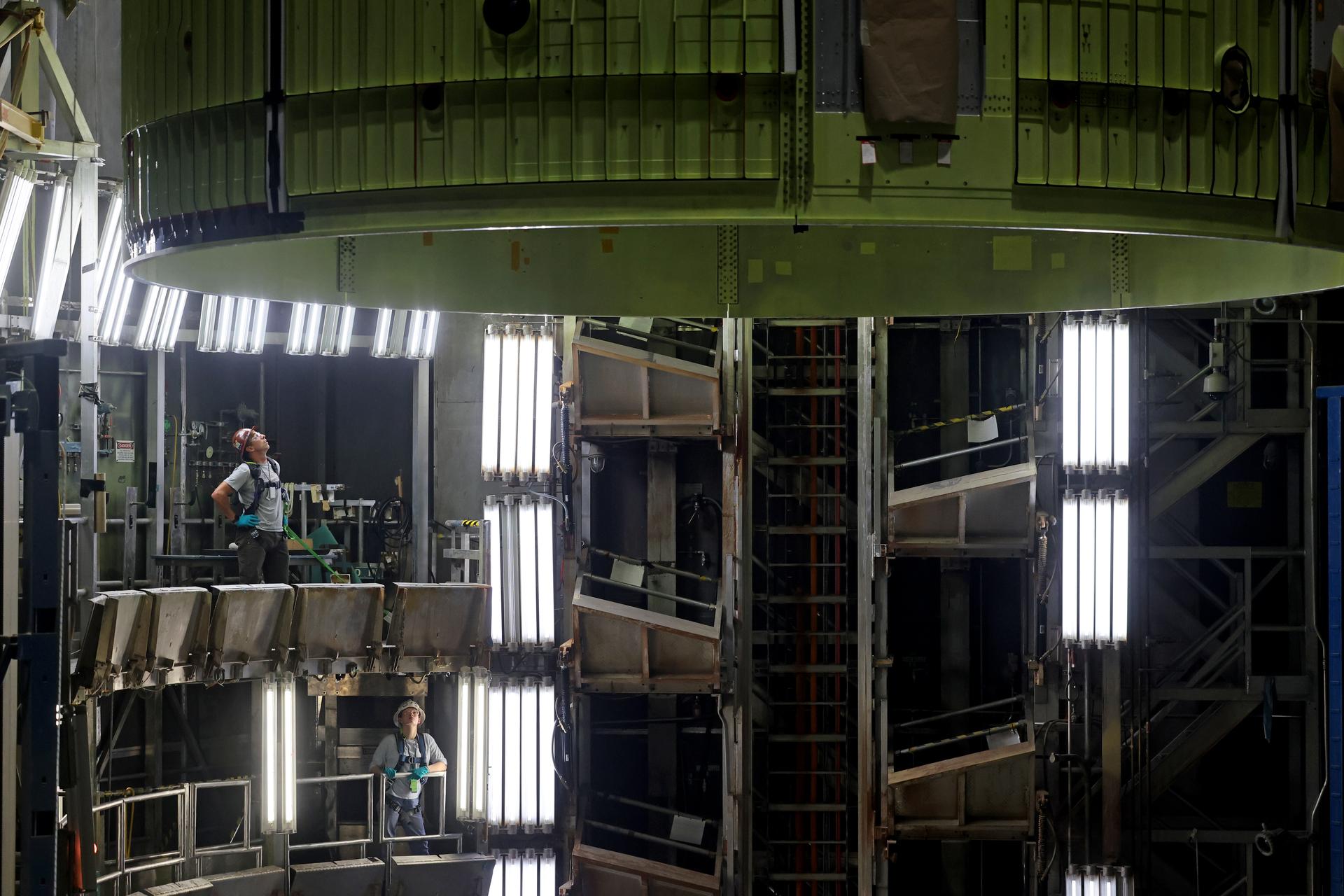
Teams at NASA’s Michoud Assembly Facility in New Orleans move the 21.8-foot-tall intertank for the core stage of the agency’s SLS (Space Launch System) rocket into one of the factory’s high bay production cells May 29. The flight hardware will help power NASA’s Artemis IV mission. Inside the production cell, NASA and Boeing, SLS core stage prime contractor will apply the hardware’s outer thermal protection layer through an automated process. The thermal protection system safeguards the rocket from the extreme temperatures and prevents the super-cooled propellant within the rocket’s massive propellant tanks from boiling off too rapidly during launch and flight. The intertank houses avionics and electronics, serves as an attachment point for the solid rocket boosters, and is one of five major elements that make up the 212-foot-tall rocket stage. The core stage, along with its four RS-25 engines at its base, produce more than two million pounds of thrust to help launch NASA’s Orion spacecraft, astronauts, and supplies beyond Earth’s orbit and to the lunar surface for Artemis. Image credit: NASA/Michael DeMocker
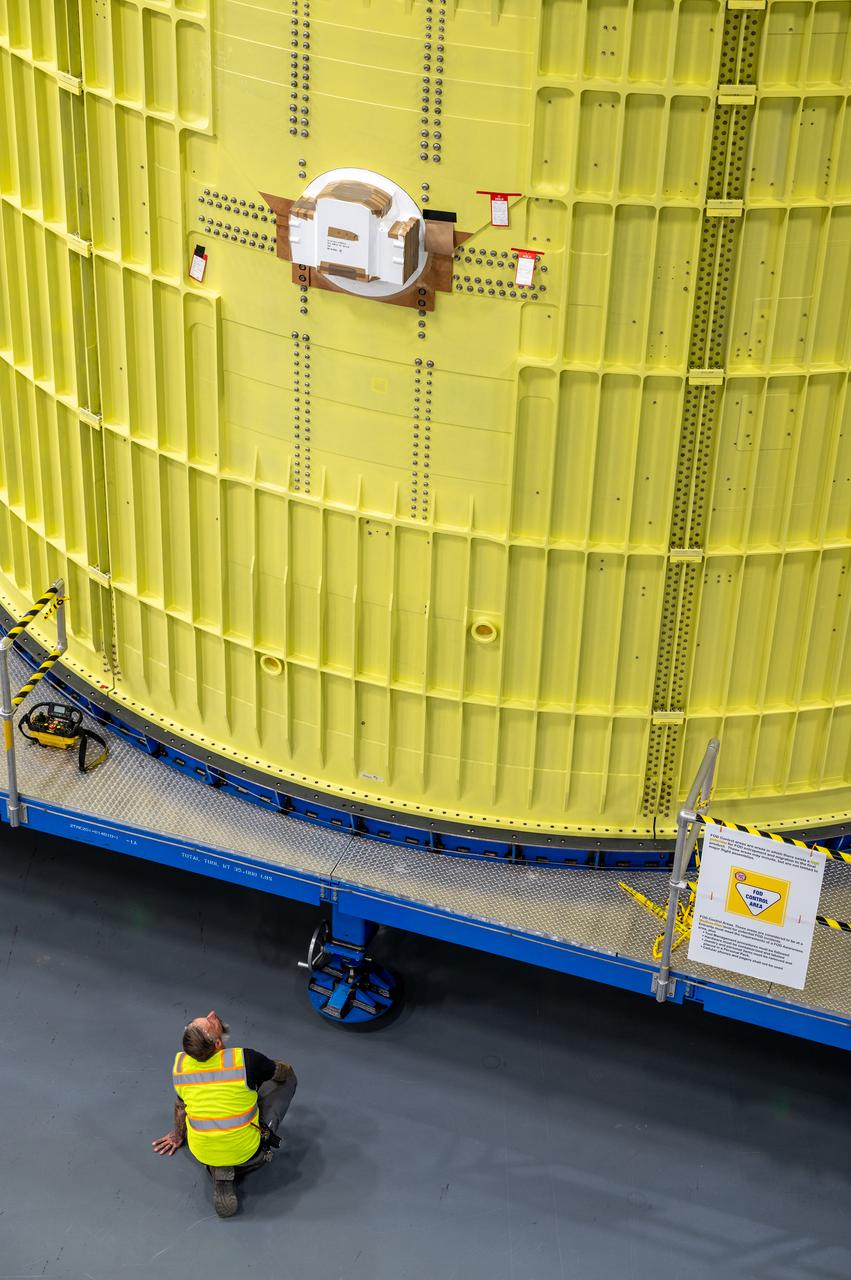
Technicians at NASA’s Michoud Assembly Facility move the intertank of NASA’s Space Launch System rocket for Artemis III to Cell G to await application of the thermal protection system. Thermal protection systems protect space vehicles from aerodynamic heating during entry to planet atmosphere and re-entry to earth atmosphere. The intertank lays between the liquid hydrogen tank and liquid oxygen tank. Together with the engine section and the forward skirt, they comprise the SLS core stage. The liquid hydrogen tank and liquid oxygen tank hold 733,000 gallons of propellant to power the stage’s four RS-25 engines needed for liftoff and Artemis missions to the Moon and future missions to Mars.
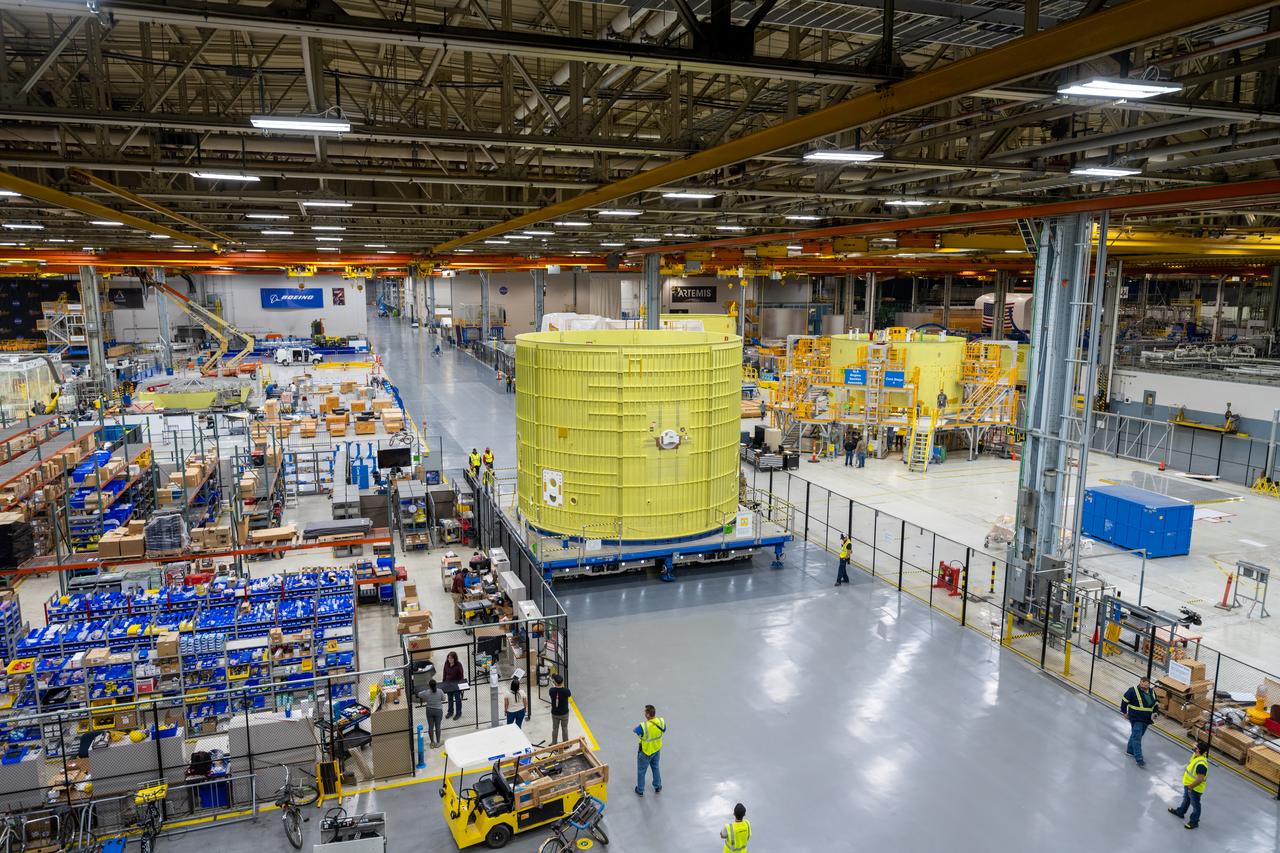
Technicians at NASA’s Michoud Assembly Facility move the intertank of NASA’s Space Launch System rocket for Artemis III to Cell G to await application of the thermal protection system. Thermal protection systems protect space vehicles from aerodynamic heating during entry to planet atmosphere and re-entry to earth atmosphere. The intertank lays between the liquid hydrogen tank and liquid oxygen tank. Together with the engine section and the forward skirt, they comprise the SLS core stage. The liquid hydrogen tank and liquid oxygen tank hold 733,000 gallons of propellant to power the stage’s four RS-25 engines needed for liftoff and Artemis missions to the Moon and future missions to Mars.
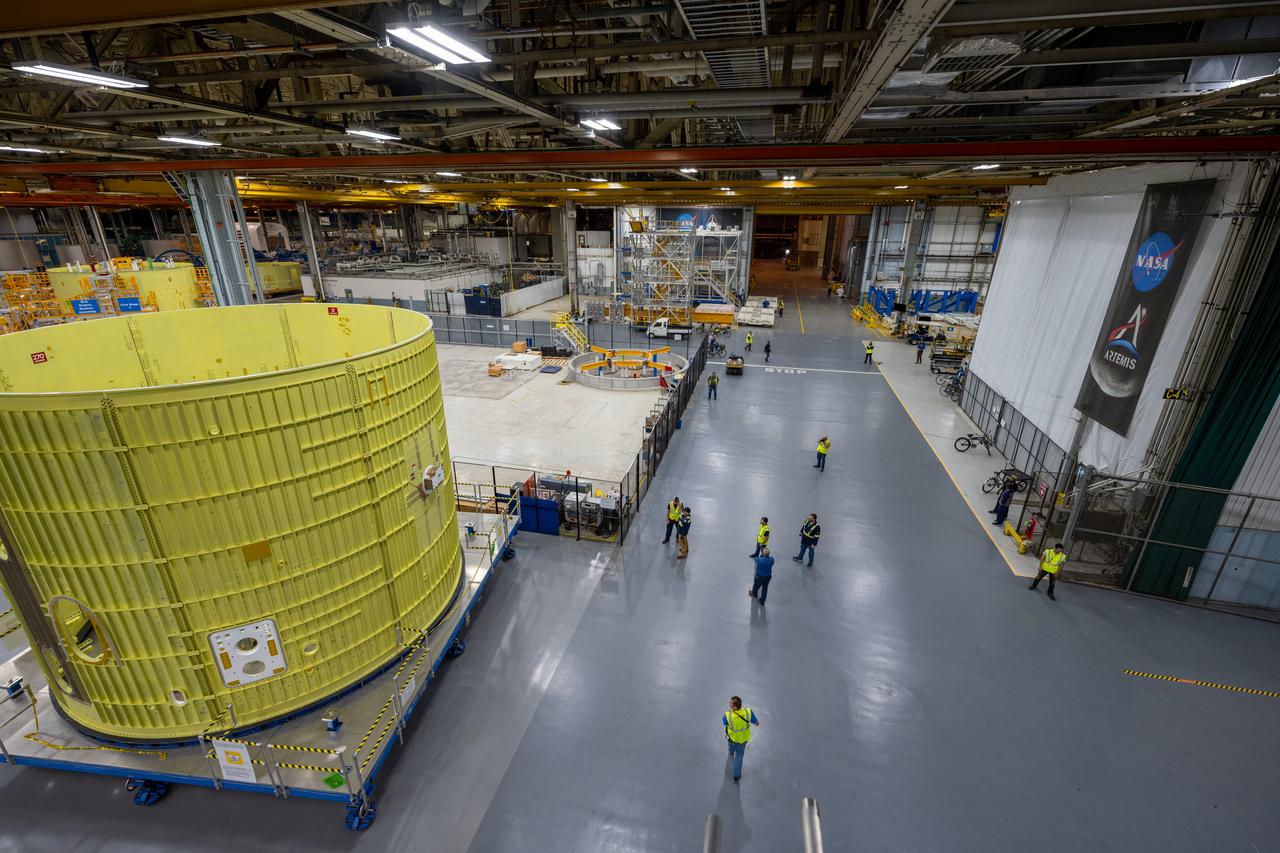
Technicians at NASA’s Michoud Assembly Facility move the intertank of NASA’s Space Launch System rocket for Artemis III to Cell G to await application of the thermal protection system. Thermal protection systems protect space vehicles from aerodynamic heating during entry to planet atmosphere and re-entry to earth atmosphere. The intertank lays between the liquid hydrogen tank and liquid oxygen tank. Together with the engine section and the forward skirt, they comprise the SLS core stage. The liquid hydrogen tank and liquid oxygen tank hold 733,000 gallons of propellant to power the stage’s four RS-25 engines needed for liftoff and Artemis missions to the Moon and future missions to Mars.