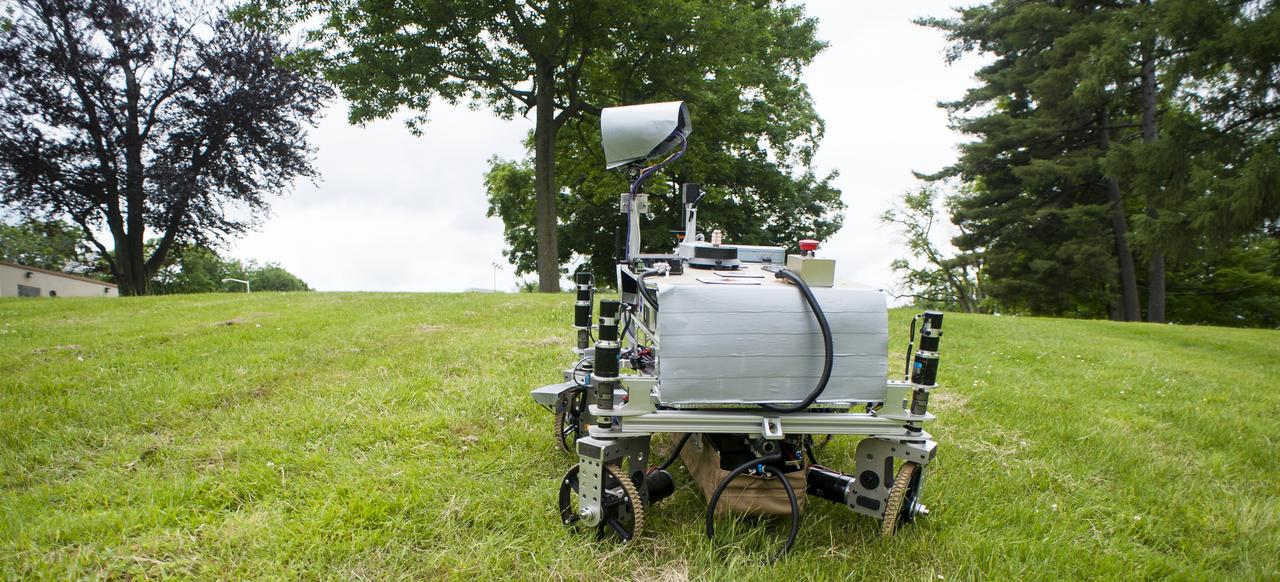
A robot from the Intrepid Systems team is seen during the rerun of the level one challenge during the 2014 NASA Centennial Challenges Sample Return Robot Challenge, Saturday, June 14, 2014, at the Worcester Polytechnic Institute (WPI) in Worcester, Mass. Eighteen teams are competing for a $1.5 million NASA prize purse. Teams will be required to demonstrate autonomous robots that can locate and collect samples from a wide and varied terrain, operating without human control. The objective of this NASA-WPI Centennial Challenge is to encourage innovations in autonomous navigation and robotics technologies. Innovations stemming from the challenge may improve NASA's capability to explore a variety of destinations in space, as well as enhance the nation's robotic technology for use in industries and applications on Earth. Photo Credit: (NASA/Joel Kowsky)

Intrepid Systems robot "MXR - Mark's Exploration Robot" takes to the practice field and tries to capture the white object in the foreground on Friday, June 15, 2012 at the Worcester Polytechnic Institute (WPI) in Worcester, Mass. Intrepid Systems' robot team will compete for a $1.5 million NASA prize in the NASA-WPI Sample Return Robot Centennial Challenge at WPI. Teams have been challenged to build autonomous robots that can identify, collect and return samples. NASA needs autonomous robotic capability for future planetary exploration. Photo Credit: (NASA/Bill Ingalls)
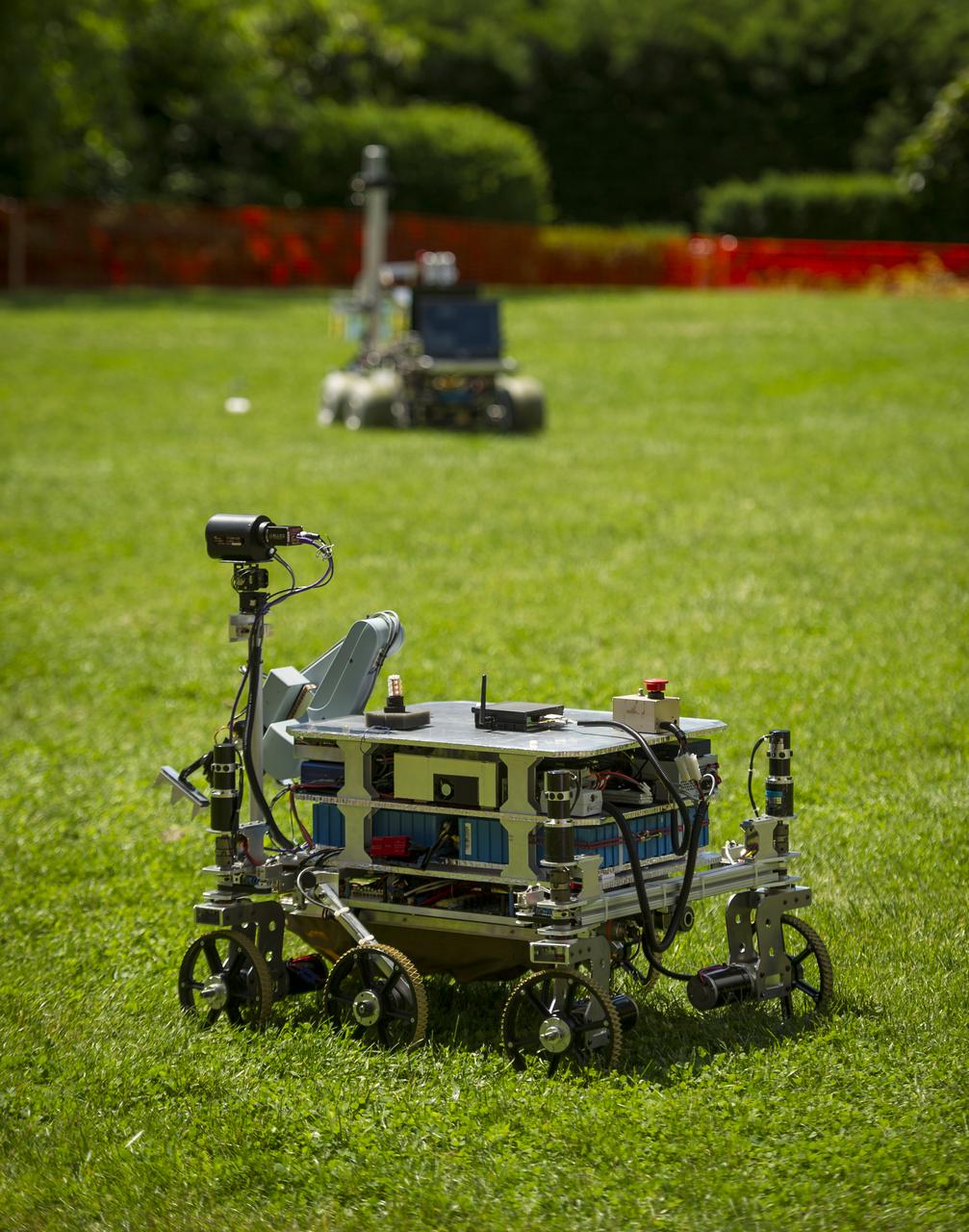
Intrepid Systems robot, foreground, and the University of Waterloo (Canada) robot, take to the practice field on Friday, June 15, 2012 at the Worcester Polytechnic Institute (WPI) in Worcester, Mass. Robot teams will compete for a $1.5 million NASA prize in the NASA-WPI Sample Return Robot Centennial Challenge at WPI. Teams have been challenged to build autonomous robots that can identify, collect and return samples. NASA needs autonomous robotic capability for future planetary exploration. Photo Credit: (NASA/Bill Ingalls)
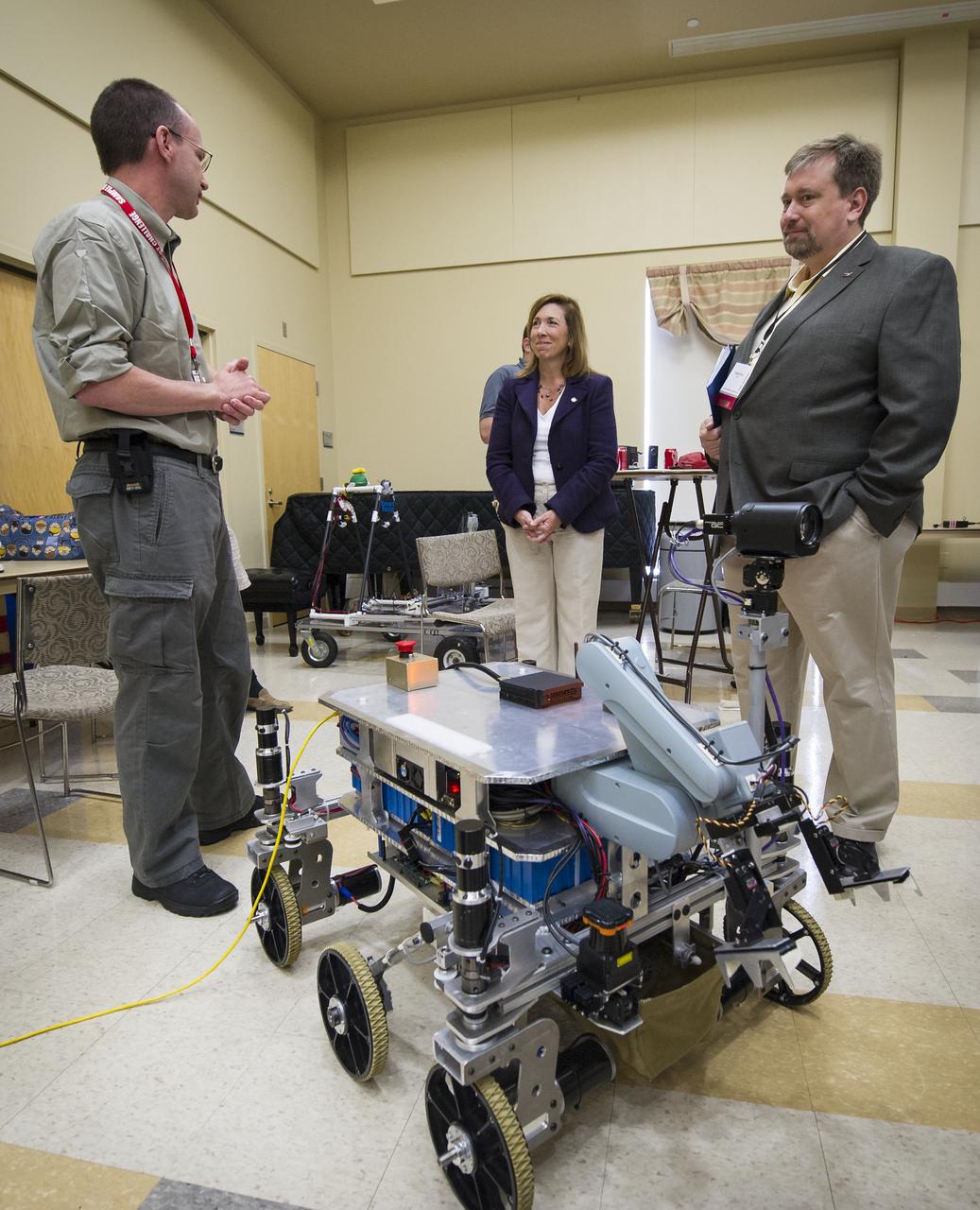
Intrepid Systems Team member Mark Curry, left, talks with NASA Deputy Administrator Lori Garver and NASA Chief Technologist Mason Peck, right, about his robot named "MXR - Mark's Exploration Robot" on Saturday, June 16, 2012 at the Worcester Polytechnic Institute (WPI) in Worcester, Mass. Curry's robot team was one of the final teams participating in the NASA-WPI Sample Return Robot Centennial Challenge at WPI. Teams were challenged to build autonomous robots that can identify, collect and return samples. NASA needs autonomous robotic capability for future planetary exploration. Photo Credit: (NASA/Bill Ingalls)
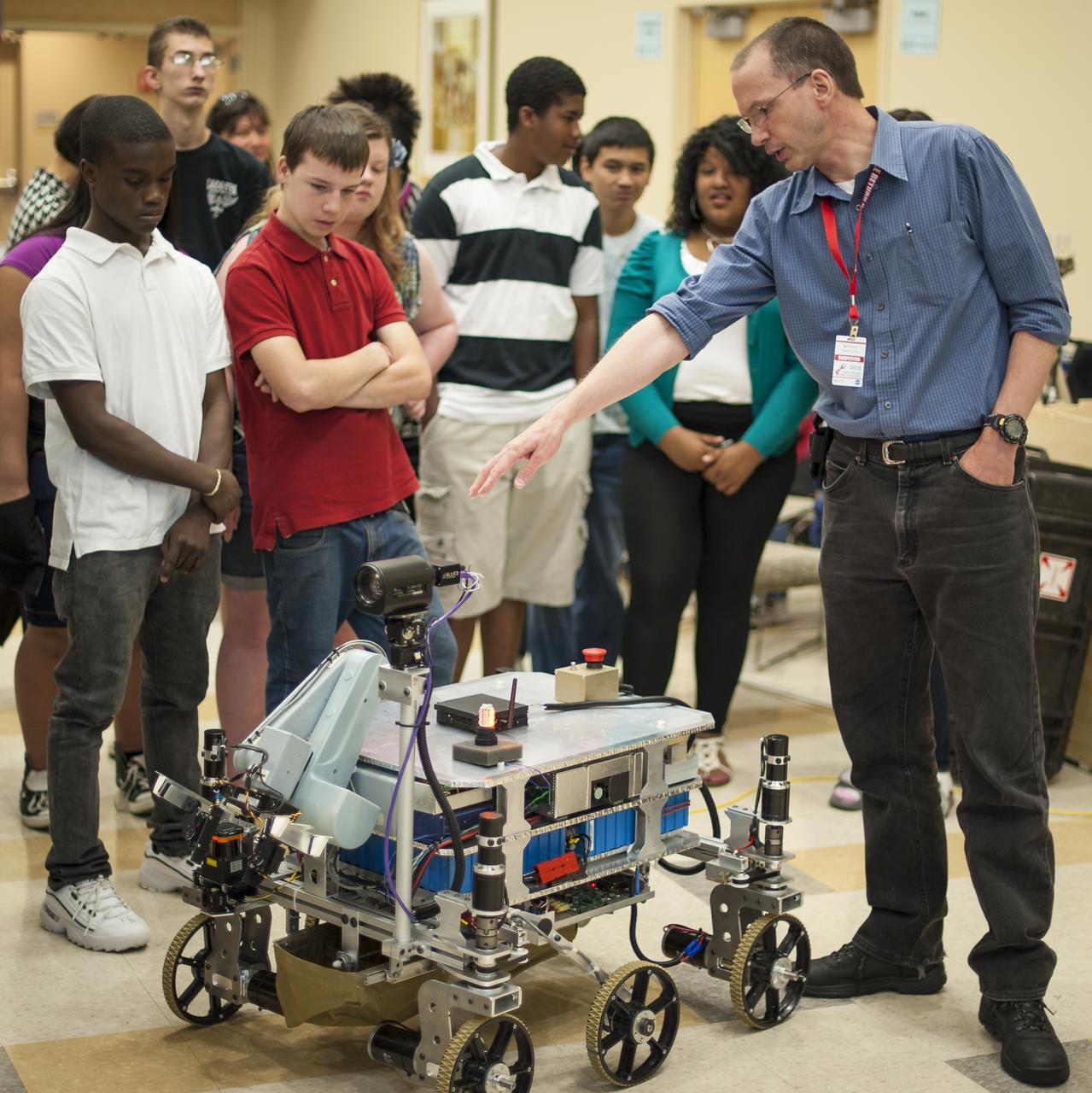
Intrepid Systems Team member Mark Curry, right, answers questions from 8th grade Sullivan Middle School (Mass.) students about his robot named "MXR - Mark's Exploration Robot" on Friday, June 15, 2012, at the Worcester Polytechnic Institute (WPI) in Worcester, Mass. Curry's robot team will compete for a $1.5 million NASA prize in the NASA-WPI Sample Return Robot Centennial Challenge at WPI. Teams have been challenged to build autonomous robots that can identify, collect and return samples. NASA needs autonomous robotic capability for future planetary exploration. Photo Credit: (NASA/Bill Ingalls)

NASA Orbiter Transition & Retirement team member Tom Goebel monitors the installation of "rain covers" over space shuttle Enterprise’s vent door openings ahead of the expected rain at Washington Dulles International Airport, Saturday, April 21, 2012, in Sterling, Va. Enterprise, the first orbiter built for the Space Shuttle Program, was used primarily for ground and flight tests within the atmosphere. The initial testing period named Approach and Landing Test (ALT) included a flight on February 18, 1977 atop a Shuttle Carrier Aircraft (SCA) to measure structural loads and ground handling and braking characteristics of the mated system. Enterprise will go on permanent display at the Intrepid Sea Air and Space Museum in New York in June. Photo Credit: (NASA/Bill Ingalls)
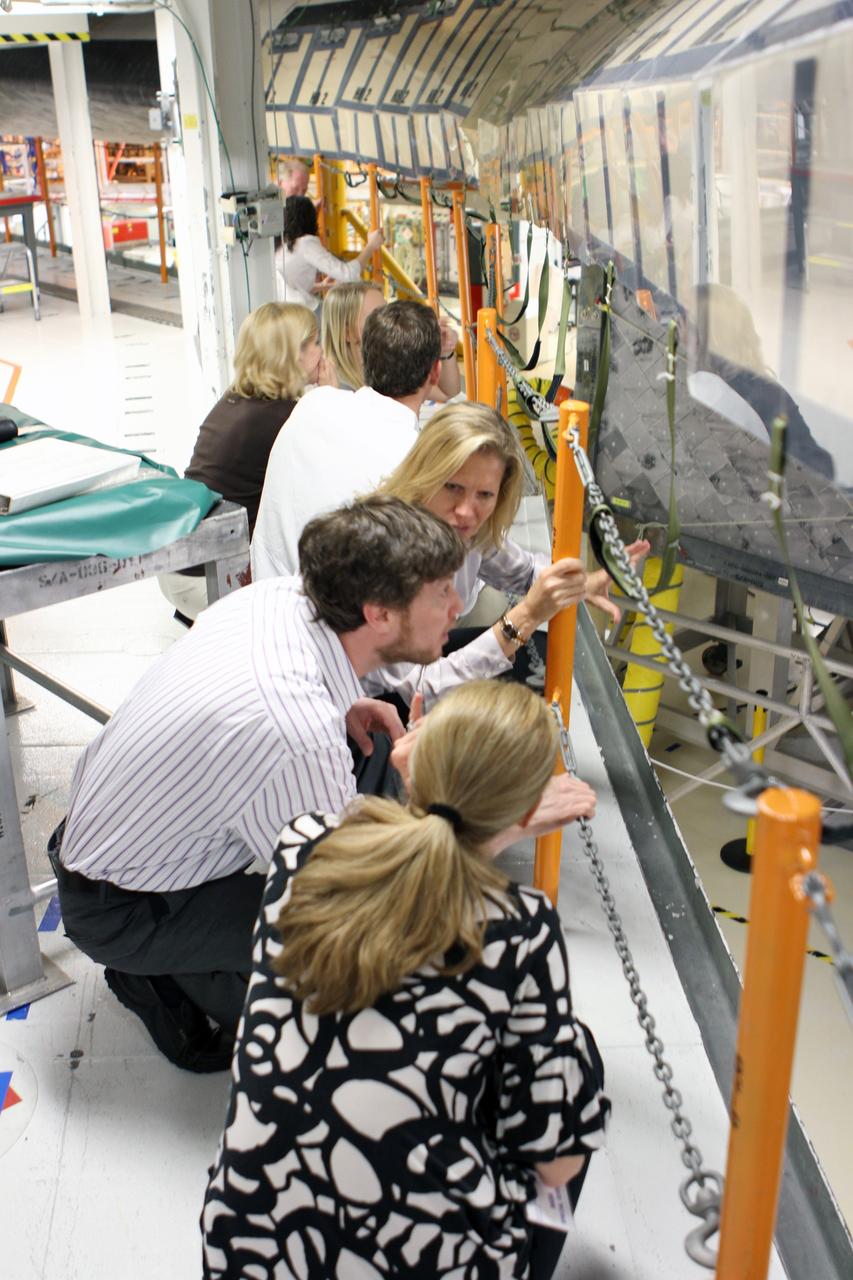
CAPE CANAVERAL, Fla. -- Members of a visiting team from the Smithsonian's National Air and Space Museum examine the space shuttle's thermal protection system tile as they stand beneath shuttle Discovery in Orbiter Processing Facility-2 at NASA's Kennedy Space Center. NASA Administrator Charles Bolden announced April 12 the facilities where all four shuttle orbiters will be permanently displayed at the conclusion of the Space Shuttle Program. Shuttle Enterprise, the first orbiter built, will move from the Smithsonian's National Air and Space Museum Steven F. Udvar-Hazy Center in Virginia to the Intrepid Sea, Air & Space Museum in New York. The Udvar-Hazy Center will become the new home for shuttle Discovery, which retired in March after completing its 39th mission. Shuttle Endeavour, which is preparing for its final flight at the end of the month, will go to the California Science Center in Los Angeles. Atlantis, which will fly the last planned shuttle mission in June, will be displayed at the Kennedy Space Center Visitor Complex in Florida. Photo credit: NASA/Cory Huston
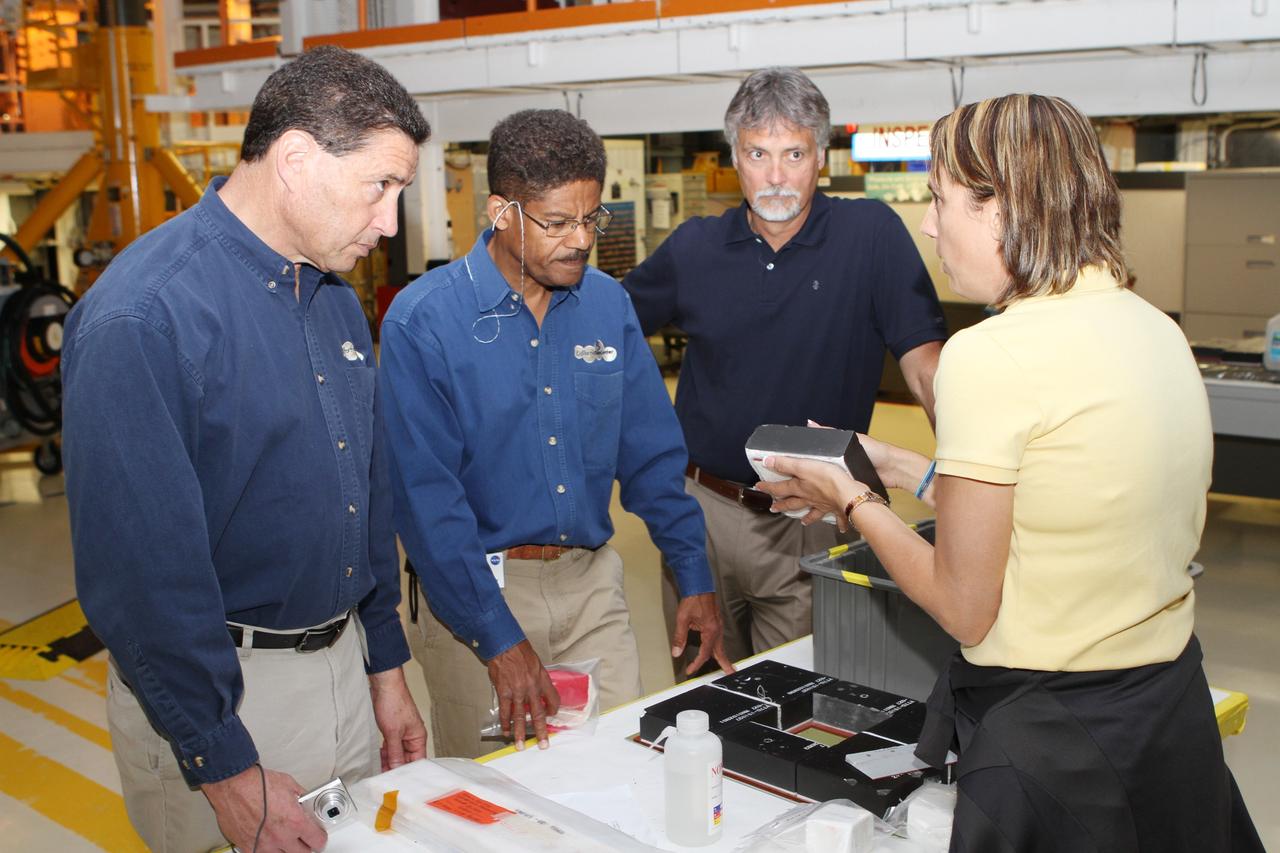
CAPE CANAVERAL, Fla. -- NASA's Stephanie Stilson (facing camera), flow director for space shuttle Discovery, discusses Discovery's thermal protection system with members of a visiting team from the Smithsonian's National Air and Space Museum in Orbiter Processing Facility-2 at NASA's Kennedy Space Center. NASA Administrator Charles Bolden announced April 12 the facilities where all four shuttle orbiters will be permanently displayed at the conclusion of the Space Shuttle Program. Shuttle Enterprise, the first orbiter built, will move from the Smithsonian's National Air and Space Museum Steven F. Udvar-Hazy Center in Virginia to the Intrepid Sea, Air & Space Museum in New York. The Udvar-Hazy Center will become the new home for shuttle Discovery, which retired in March after completing its 39th mission. Shuttle Endeavour, which is preparing for its final flight at the end of the month, will go to the California Science Center in Los Angeles. Atlantis, which will fly the last planned shuttle mission in June, will be displayed at the Kennedy Space Center Visitor Complex in Florida. Photo credit: NASA/Cory Huston

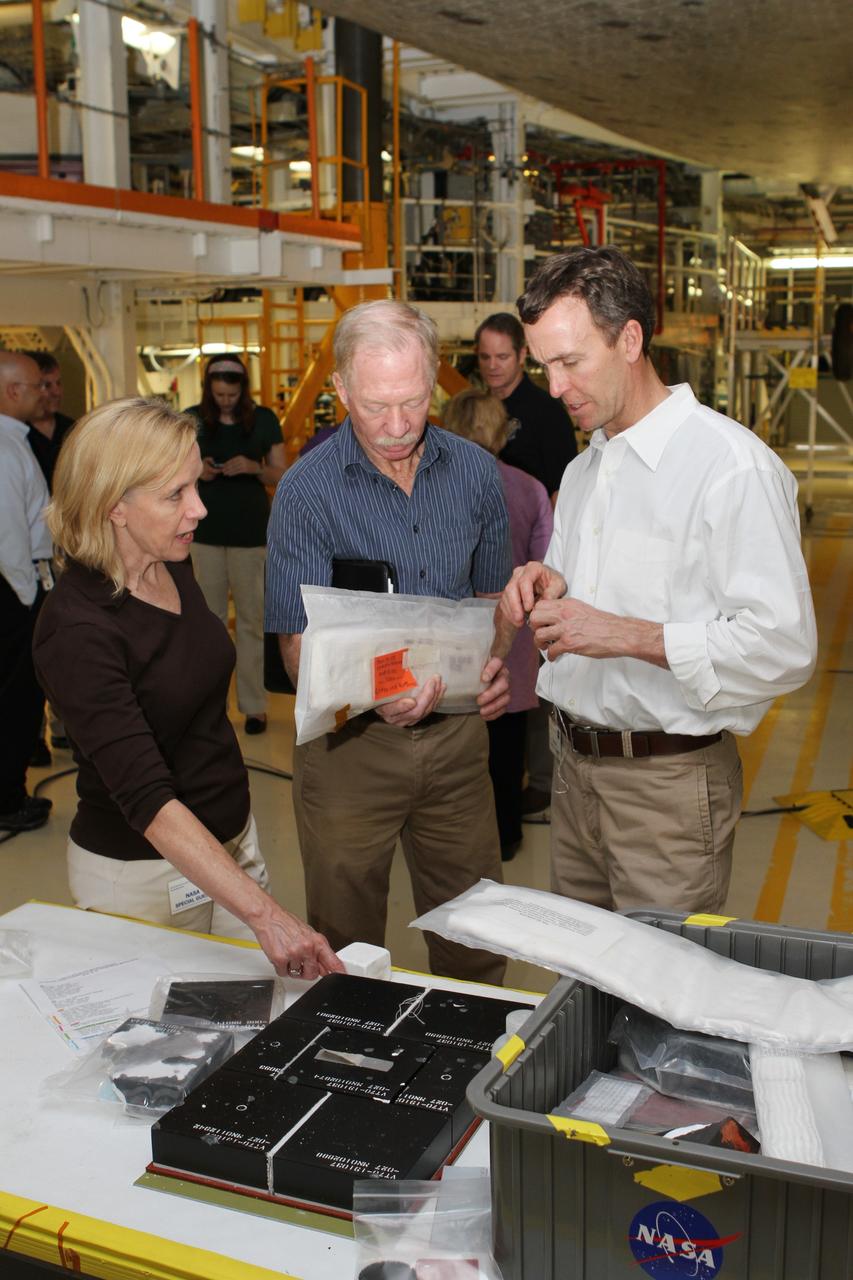
CAPE CANAVERAL, Fla. -- Members of a visiting team from the Smithsonian's National Air and Space Museum discuss the application of the space shuttle's thermal protection system tile with shuttle technicians in Orbiter Processing Facility-2 at NASA's Kennedy Space Center. NASA Administrator Charles Bolden announced April 12 the facilities where all four shuttle orbiters will be permanently displayed at the conclusion of the Space Shuttle Program. Shuttle Enterprise, the first orbiter built, will move from the Smithsonian's National Air and Space Museum Steven F. Udvar-Hazy Center in Virginia to the Intrepid Sea, Air & Space Museum in New York. The Udvar-Hazy Center will become the new home for shuttle Discovery, which retired in March after completing its 39th mission. Shuttle Endeavour, which is preparing for its final flight at the end of the month, will go to the California Science Center in Los Angeles. Atlantis, which will fly the last planned shuttle mission in June, will be displayed at the Kennedy Space Center Visitor Complex in Florida. Photo credit: NASA/Cory Huston
CAPE CANAVERAL, Fla. -- Members of a visiting team from the Smithsonian's National Air and Space Museum receive a briefing on the application of the space shuttle's thermal protection system tile in Orbiter Processing Facility-2 at NASA's Kennedy Space Center. NASA Administrator Charles Bolden announced April 12 the facilities where all four shuttle orbiters will be permanently displayed at the conclusion of the Space Shuttle Program. Shuttle Enterprise, the first orbiter built, will move from the Smithsonian's National Air and Space Museum Steven F. Udvar-Hazy Center in Virginia to the Intrepid Sea, Air & Space Museum in New York. The Udvar-Hazy Center will become the new home for shuttle Discovery, which retired in March after completing its 39th mission. Shuttle Endeavour, which is preparing for its final flight at the end of the month, will go to the California Science Center in Los Angeles. Atlantis, which will fly the last planned shuttle mission in June, will be displayed at the Kennedy Space Center Visitor Complex in Florida. Photo credit: NASA/Cory Huston