
IM-1, the first NASA Commercial Launch Program Services launch for Intuitive Machines’ Nova-C lunar lander, will carry multiple payloads to the Moon, including Lunar Node-1, demonstrating autonomous navigation via radio beacon to support precise geolocation and navigation among lunar orbiters, landers, and surface personnel. NASA’s CLPS initiative oversees industry development of small robotic landers and rovers to support NASA’s Artemis campaign.
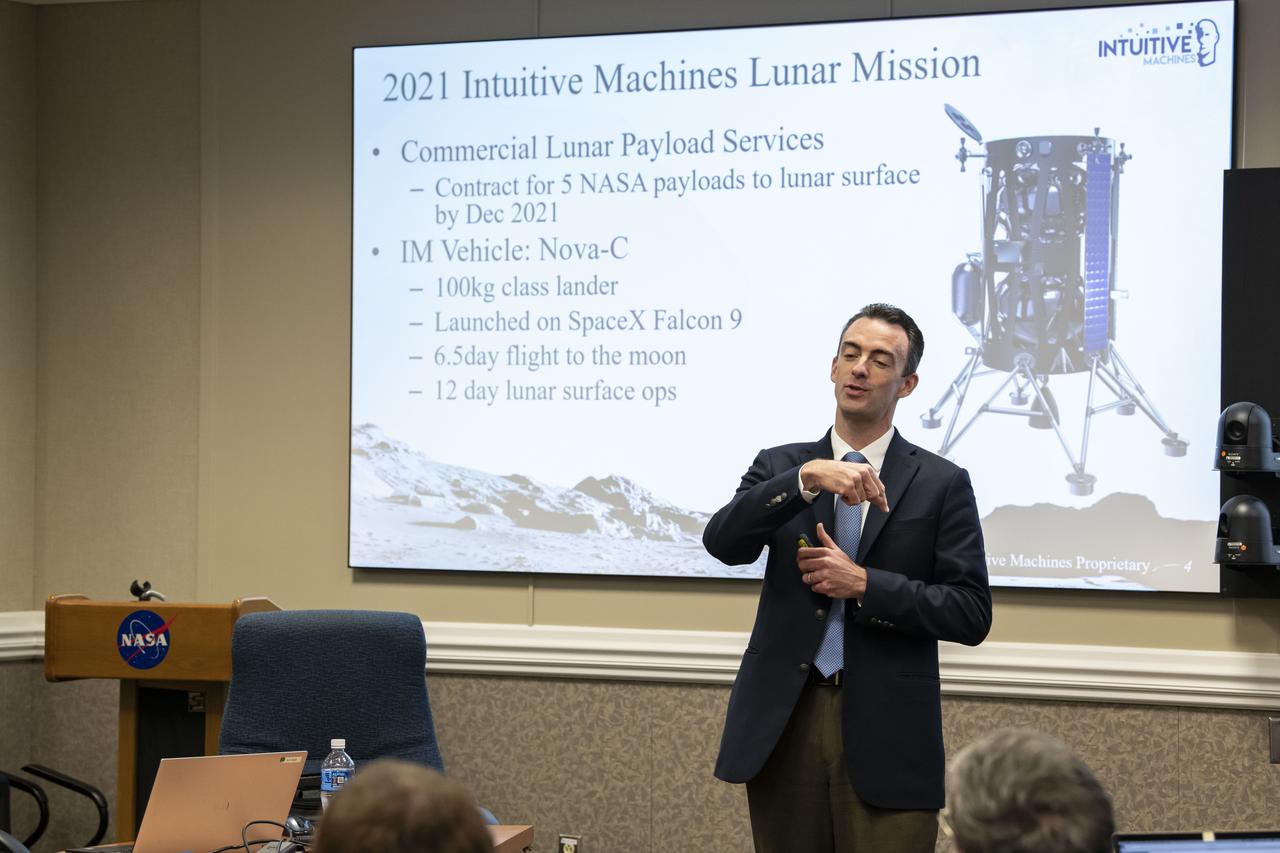
Rob Morehead, lead propulsion engineer for Intuitive Machines in Houston, delivers the monthly Tech Talk on Oct. 24 at NASA’s Marshall Space Flight Center. Morehead presented Intuitive Machines’ Nova-C lunar lander, which will deliver payloads to the surface of the Moon for government and commercial customers, including NASA. Intuitive Machines was selected by the agency as one of the companies for NASA’s Commercial Lunar Payload Service program. Nova-C currently has five NASA payloads and two commercial payloads manifested for its first flight, slated to launch in 2021. It will reach the Moon six days after launch and operate on the lunar surface for 12 days. Morehead worked at NASA’s Johnson Space Center for 20 years before joining Intuitive Machines.
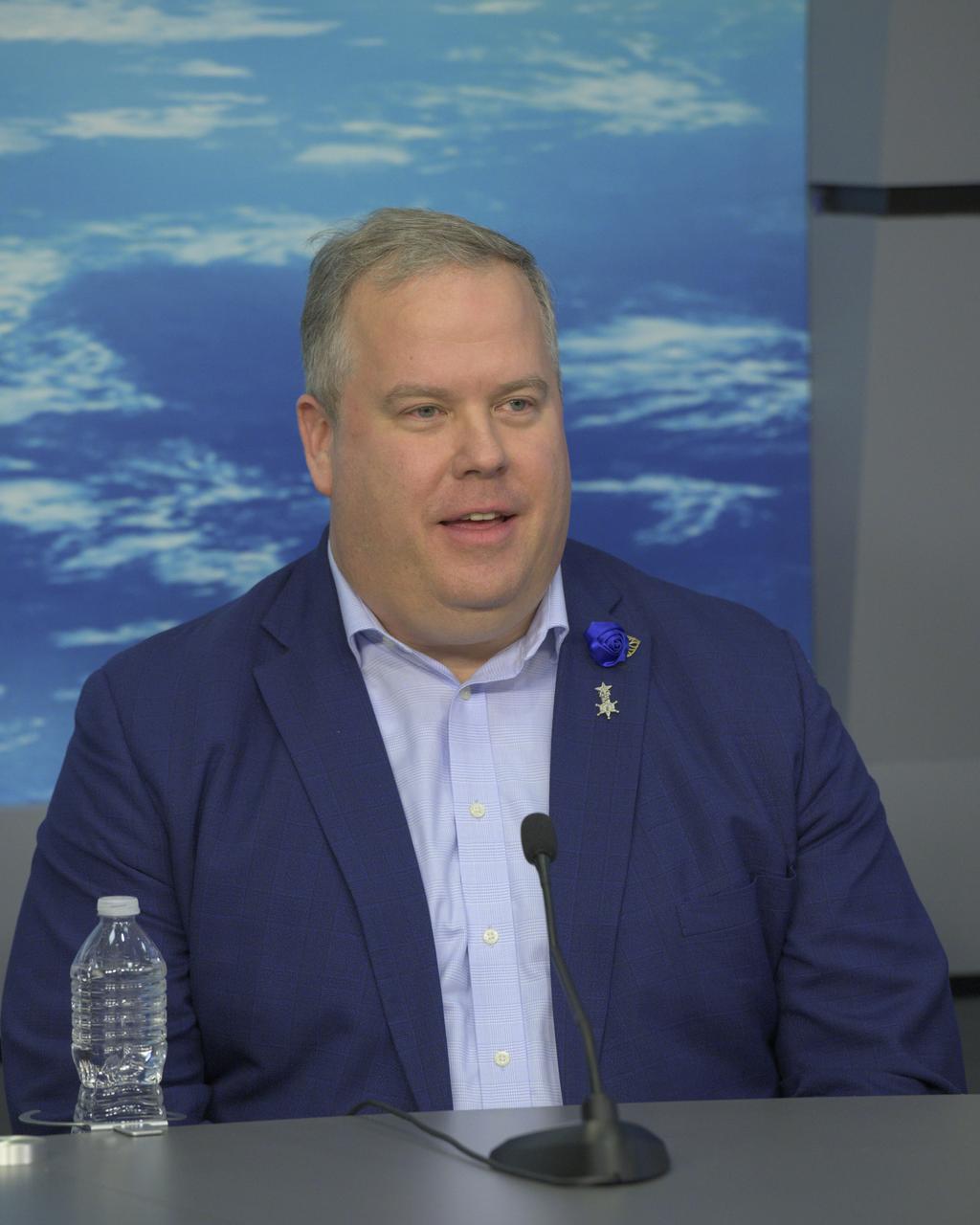
Tim Crain, chief technology officer and co-founder, Intuitive Machines, participates in a news conference Feb. 23, 2024, at NASA’s Johnson Space Center in Houston to discuss the company’s Nova-C lander, called Odysseus, and its successful soft landing on the Moon Feb. 22, 2024. The mission is the first landing under NASA’s CLPS (Commercial Lunar Payload Services) initiative, and the first American lunar landing in more than 50 years.
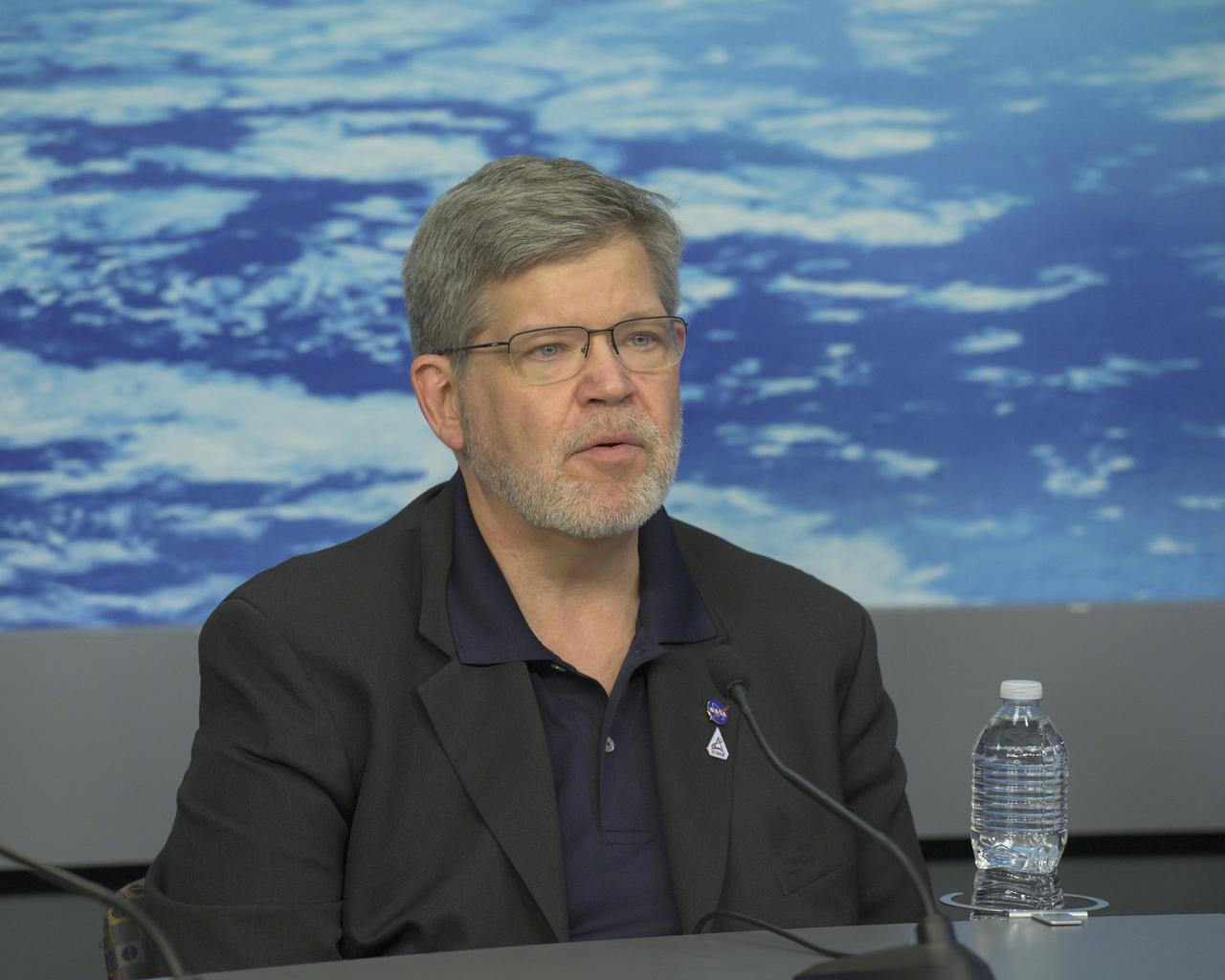
Joel Kearns, deputy associate administrator for Exploration, Science Mission Directorate, NASA Headquarters, participates in a news conference Feb. 23, 2024, at the agency’s Johnson Space Center in Houston. Kearns was on hand to discuss the NASA science and technology aboard Intuitive Machines’ Nova-C lander, called Odysseus, and its successful soft landing on the Moon Feb. 22, 2024. The mission is the first landing under NASA’s CLPS (Commercial Lunar Payload Services) initiative, and the first American lunar landing in more than 50 years.
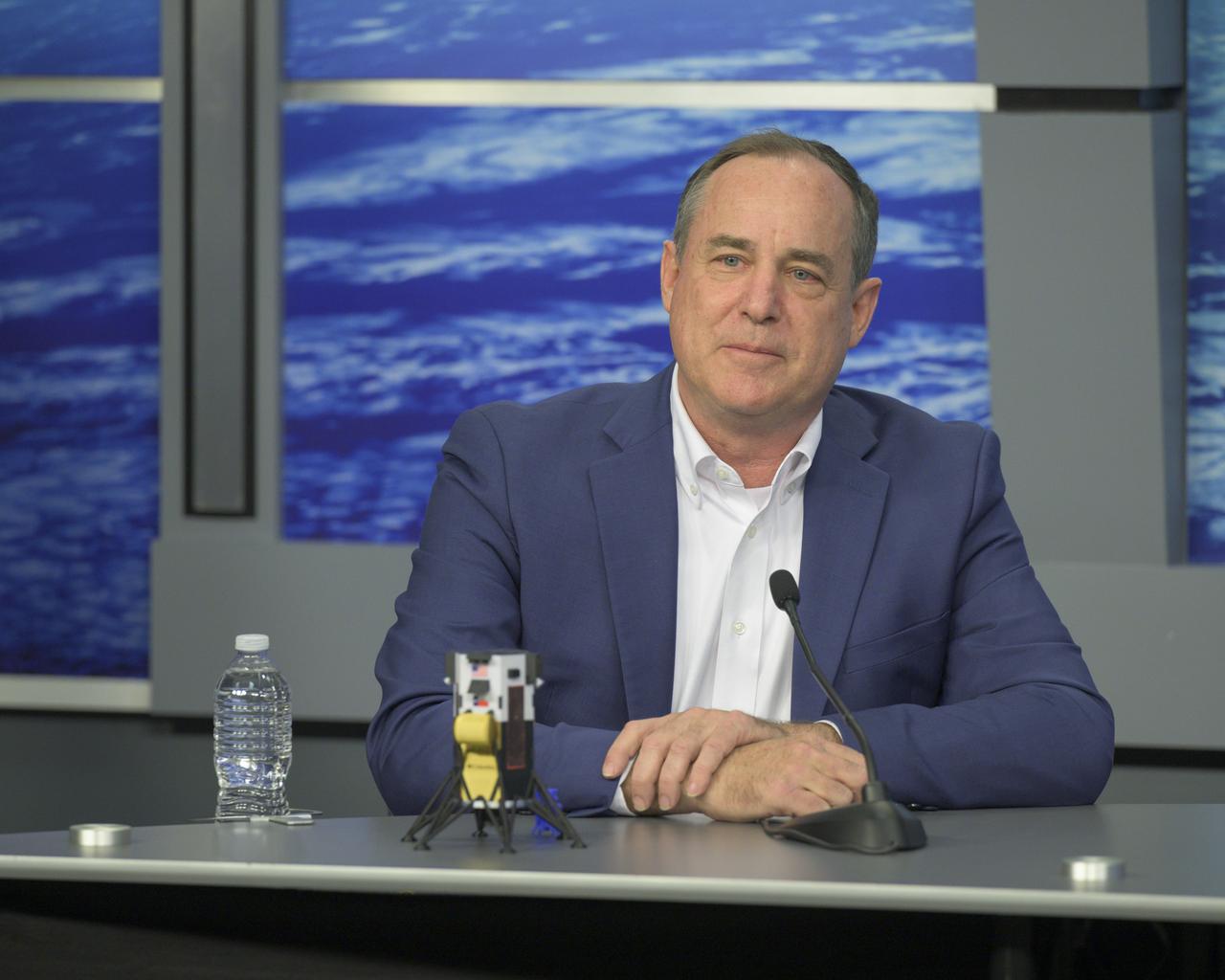
Steve Altemus, chief executive officer and co-founder, Intuitive Machines, participates in a news conference Feb. 23, 2024, at NASA’s Johnson Space Center in Houston to discuss the company’s Nova-C lander, called Odysseus, and its successful soft landing on the Moon Feb. 22, 2024. The mission is the first landing under NASA’s CLPS (Commercial Lunar Payload Services) initiative, and the first American lunar landing in more than 50 years.
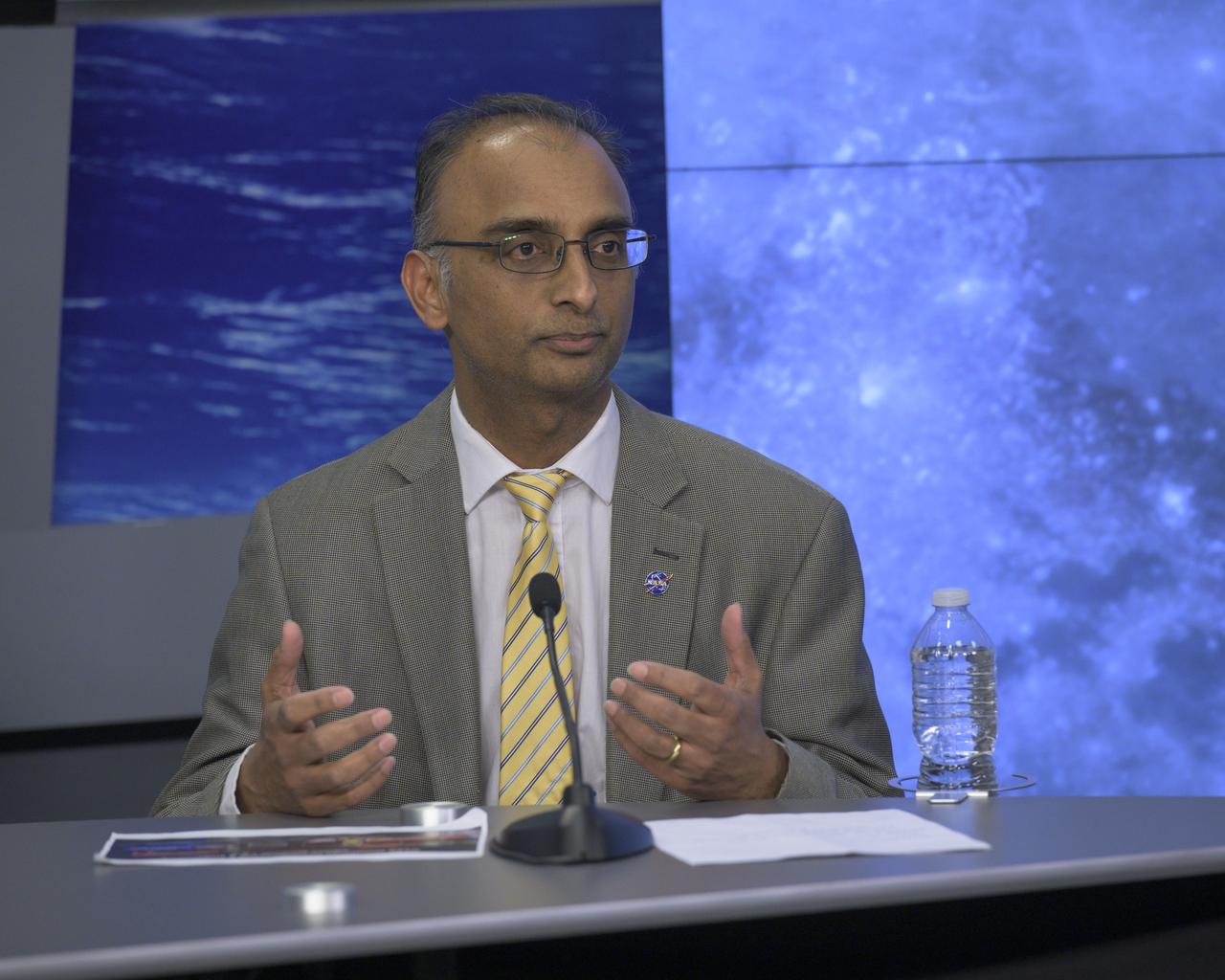
Prasun Desai, deputy associate administrator, Space Technology Mission Directorate at NASA Headquarters, participates in a news conference Feb. 23, 2024, at the agency’s Johnson Space Center in Houston. Desai was on hand to discuss the NASA science and technology aboard the Intuitive Machine’s Nova-C lander, called Odysseus, and its successful soft landing on the Moon Feb. 22, 2024. The mission is the first landing under NASA’s CLPS (Commercial Lunar Payload Services) initiative, and the first American lunar landing in more than 50 years.
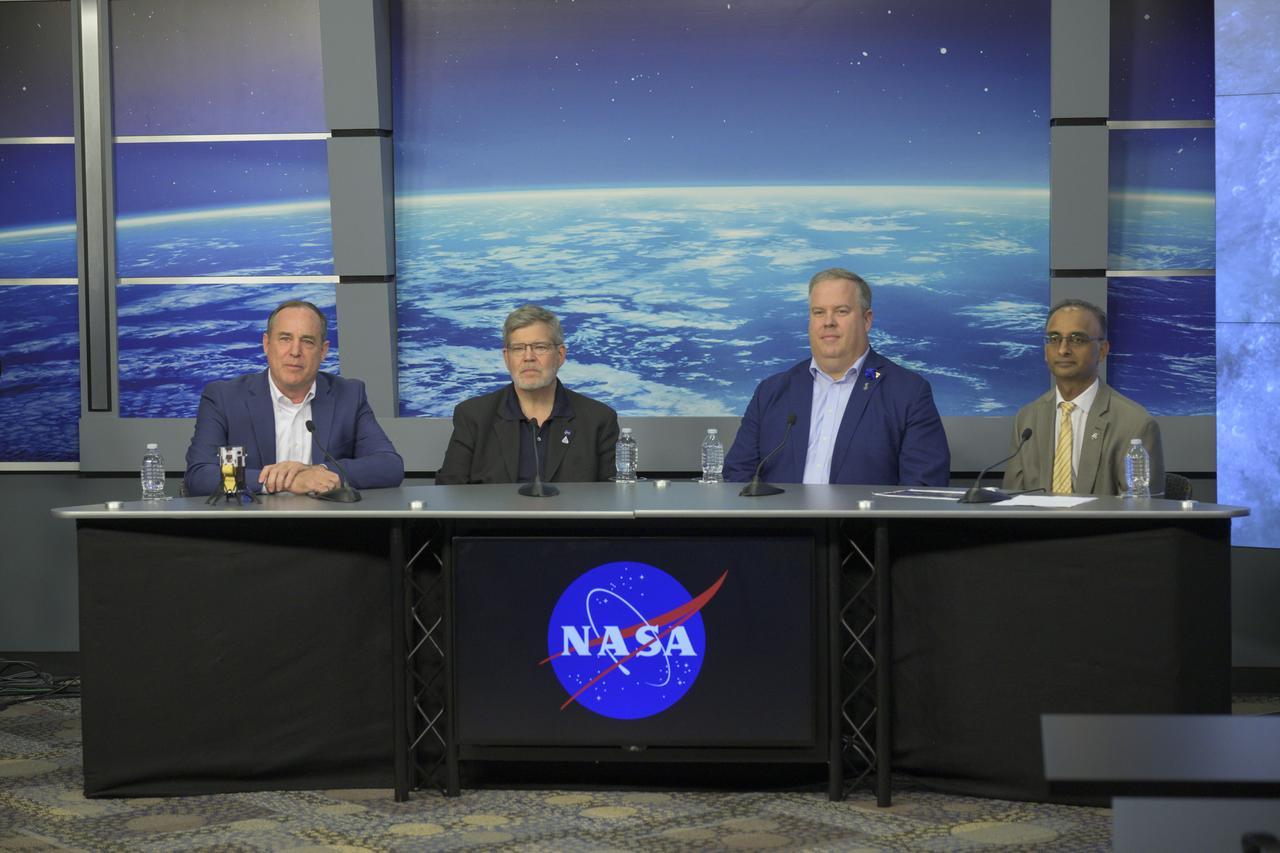
For the first time in more than 50 years, new NASA science instruments and technology demonstrations are operating on the Moon following the first successful delivery of the agency’s CLPS (Commercial Lunar Payload Services) initiative. Experts from NASA and Intuitive Machines hosted a news conference Feb. 23, 2024, at NASA’s Johnson Space Center in Houston to discuss the soft landing of the company’s Nova-C lander, called Odysseus. Participants in the briefing included (left to right): Steve Altemus, chief executive officer and co-founder, Intuitive Machines; Joel Kearns, deputy associate administrator for Exploration, Science Mission Directorate, NASA Headquarters in Washington; Tim Crain, chief technology officer and co-founder, Intuitive Machines; and Prasun Desai, deputy associate administrator, Space Technology Mission Directorate at NASA Headquarters.

A SpaceX Falcon 9 rocket carrying Intuitive Machines’ Nova-C lunar lander lifts off from Launch Pad 39A at NASA’s Kennedy Space Center in Florida at 1:05 a.m. EST on Thursday, Feb. 15, 2024. As part of NASA’s CLPS (Commercial Lunar Payload Services) initiative and Artemis campaign, Intuitive Machines’ first lunar mission will carry NASA science and commercial payloads to the Moon to study plume-surface interactions, space weather/lunar surface interactions, radio astronomy, precision landing technologies, and a communication and navigation node for future autonomous navigation technologies.

A SpaceX Falcon 9 rocket carrying Intuitive Machines’ Nova-C lunar lander lifts off from Launch Pad 39A at NASA’s Kennedy Space Center in Florida at 1:05 a.m. EST on Thursday, Feb. 15, 2024. As part of NASA’s CLPS (Commercial Lunar Payload Services) initiative and Artemis campaign, Intuitive Machines’ first lunar mission will carry NASA science and commercial payloads to the Moon to study plume-surface interactions, space weather/lunar surface interactions, radio astronomy, precision landing technologies, and a communication and navigation node for future autonomous navigation technologies.

A SpaceX Falcon 9 rocket carrying Intuitive Machines’ Nova-C lunar lander lifts off from Launch Pad 39A at NASA’s Kennedy Space Center in Florida at 1:05 a.m. EST on Thursday, Feb. 15, 2024. As part of NASA’s CLPS (Commercial Lunar Payload Services) initiative and Artemis campaign, Intuitive Machines’ first lunar mission will carry NASA science and commercial payloads to the Moon to study plume-surface interactions, space weather/lunar surface interactions, radio astronomy, precision landing technologies, and a communication and navigation node for future autonomous navigation technologies.

A SpaceX Falcon 9 rocket carrying Intuitive Machines’ Nova-C lunar lander lifts off from Launch Pad 39A at NASA’s Kennedy Space Center in Florida at 1:05 a.m. EST on Thursday, Feb. 15, 2024. As part of NASA’s CLPS (Commercial Lunar Payload Services) initiative and Artemis campaign, Intuitive Machines’ first lunar mission will carry NASA science and commercial payloads to the Moon to study plume-surface interactions, space weather/lunar surface interactions, radio astronomy, precision landing technologies, and a communication and navigation node for future autonomous navigation technologies.

A SpaceX Falcon 9 rocket carrying Intuitive Machines’ Nova-C lunar lander lifts off from Launch Pad 39A at NASA’s Kennedy Space Center in Florida at 1:05 a.m. EST on Thursday, Feb. 15, 2024. As part of NASA’s CLPS (Commercial Lunar Payload Services) initiative and Artemis campaign, Intuitive Machines’ first lunar mission will carry NASA science and commercial payloads to the Moon to study plume-surface interactions, space weather/lunar surface interactions, radio astronomy, precision landing technologies, and a communication and navigation node for future autonomous navigation technologies.

A SpaceX Falcon 9 rocket carrying Intuitive Machines’ Nova-C lunar lander lifts off from Launch Pad 39A at NASA’s Kennedy Space Center in Florida at 1:05 a.m. EST on Thursday, Feb. 15, 2024. As part of NASA’s CLPS (Commercial Lunar Payload Services) initiative and Artemis campaign, Intuitive Machines’ first lunar mission will carry NASA science and commercial payloads to the Moon to study plume-surface interactions, space weather/lunar surface interactions, radio astronomy, precision landing technologies, and a communication and navigation node for future autonomous navigation technologies.

A SpaceX Falcon 9 rocket carrying Intuitive Machines’ Nova-C lunar lander lifts off from Launch Pad 39A at NASA’s Kennedy Space Center in Florida at 1:05 a.m. EST on Thursday, Feb. 15, 2024. As part of NASA’s CLPS (Commercial Lunar Payload Services) initiative and Artemis campaign, Intuitive Machines’ first lunar mission will carry NASA science and commercial payloads to the Moon to study plume-surface interactions, space weather/lunar surface interactions, radio astronomy, precision landing technologies, and a communication and navigation node for future autonomous navigation technologies.
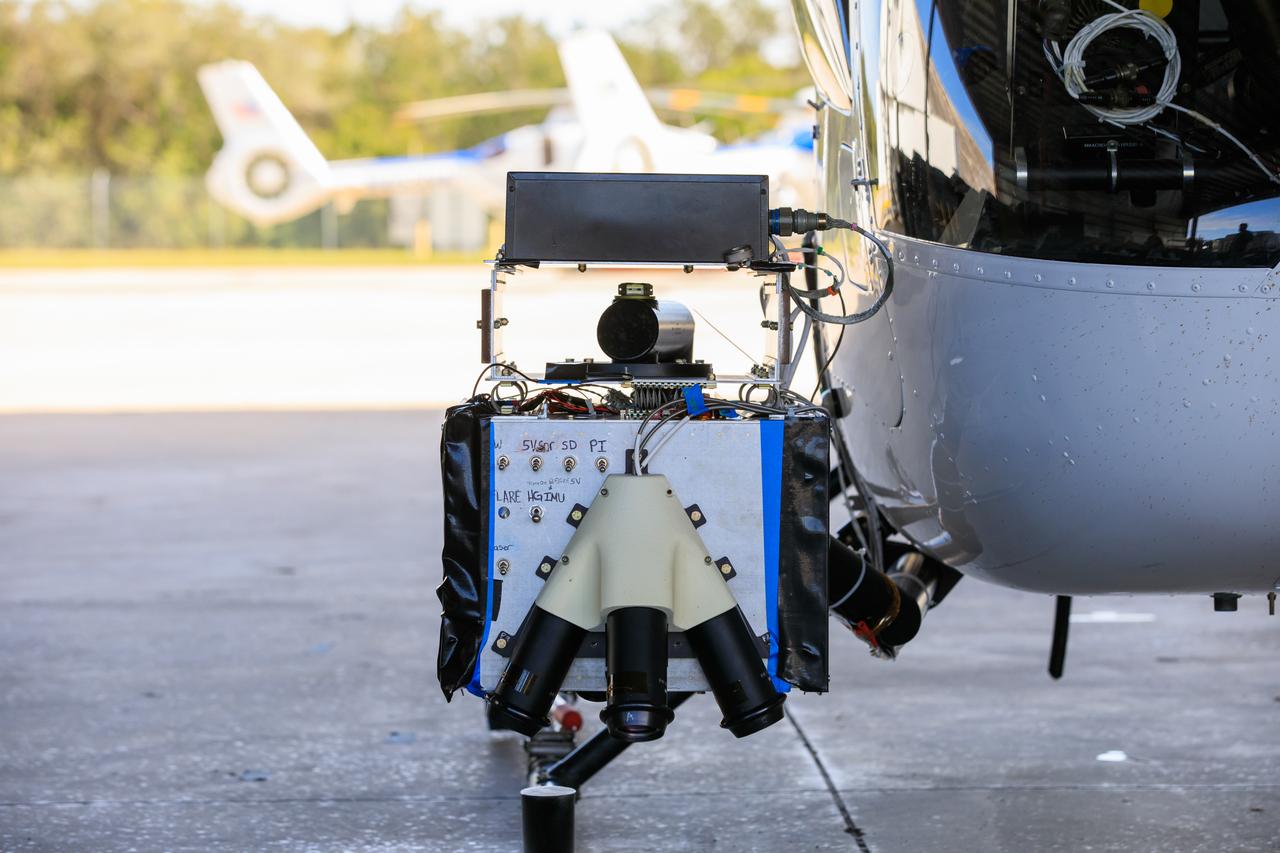
Seen here is a close-up view of Intuitive Machines’ navigation pod sensors for the company’s Nova-C lunar lander ahead of testing done at NASA’s Kennedy Space Center in Florida on Nov. 18, 2022. The test involved flying the sensors over a simulated lunar surface at the Launch and Landing Facility on a private helicopter. Intuitive Machines is scheduled to launch two missions to the Moon in 2023 – one of which will carry NASA’s Mass Spectrometer observing lunar operations (MSolo) instrument that will help analyze the chemical makeup of landing sites on the Moon, as well as study water on the lunar surface. Through NASA’s Commercial Lunar Payload Services initiative, the agency selected Intuitive Machines to deliver science and technology demonstration payloads to the Moon, contributing to NASA’s goal of establishing a sustainable human presence on the lunar surface.
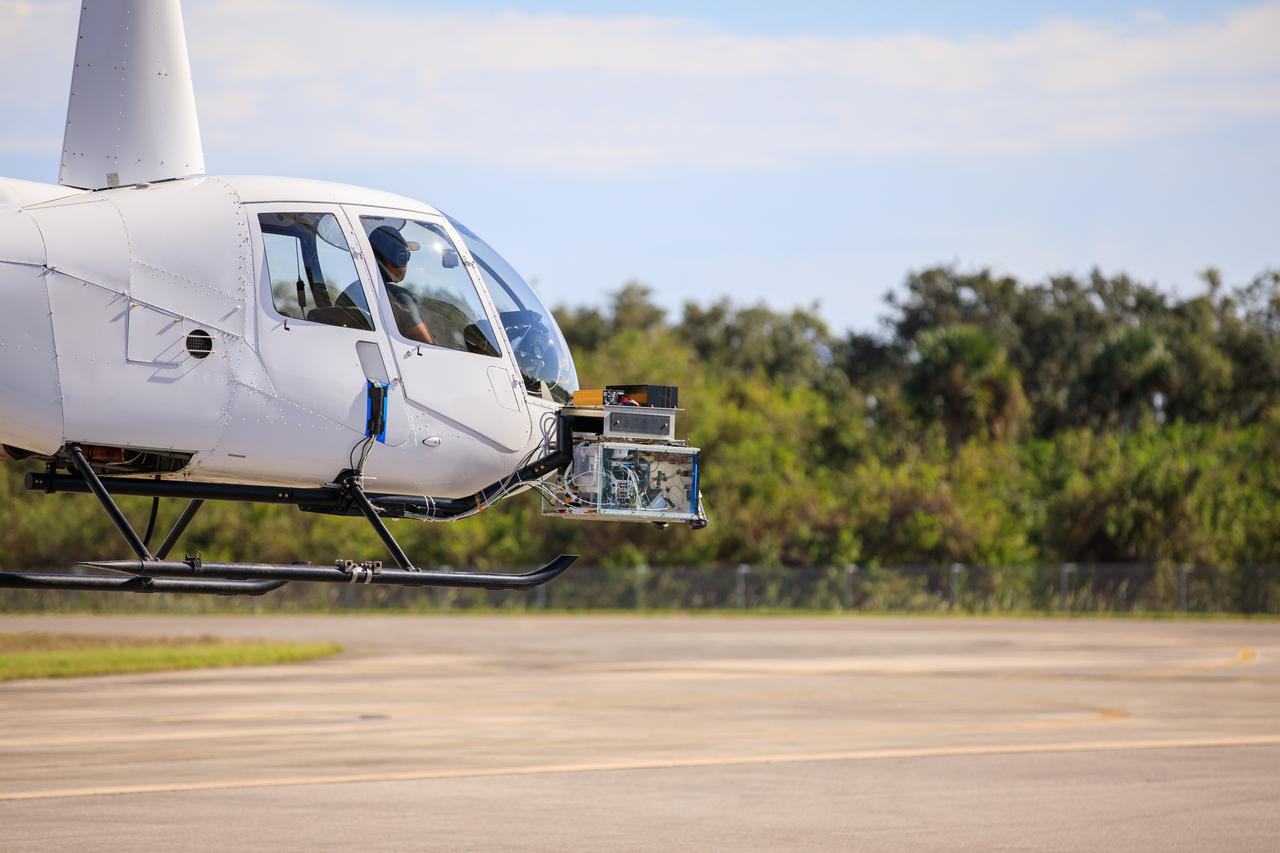
Testing of navigation pod sensors for Intuitive Machines’ Nova-C lunar lander is underway at NASA’s Kennedy Space Center in Florida on Nov. 18, 2022. The test involved flying the sensors over a simulated lunar surface at the Launch and Landing Facility on a private helicopter. Intuitive Machines is scheduled to launch two missions to the Moon in 2023 – one of which will carry NASA’s Mass Spectrometer observing lunar operations (MSolo) instrument that will help analyze the chemical makeup of landing sites on the Moon, as well as study water on the lunar surface. Through NASA’s Commercial Lunar Payload Services initiative, the agency selected Intuitive Machines to deliver science and technology demonstration payloads to the Moon, contributing to NASA’s goal of establishing a sustainable human presence on the lunar surface.
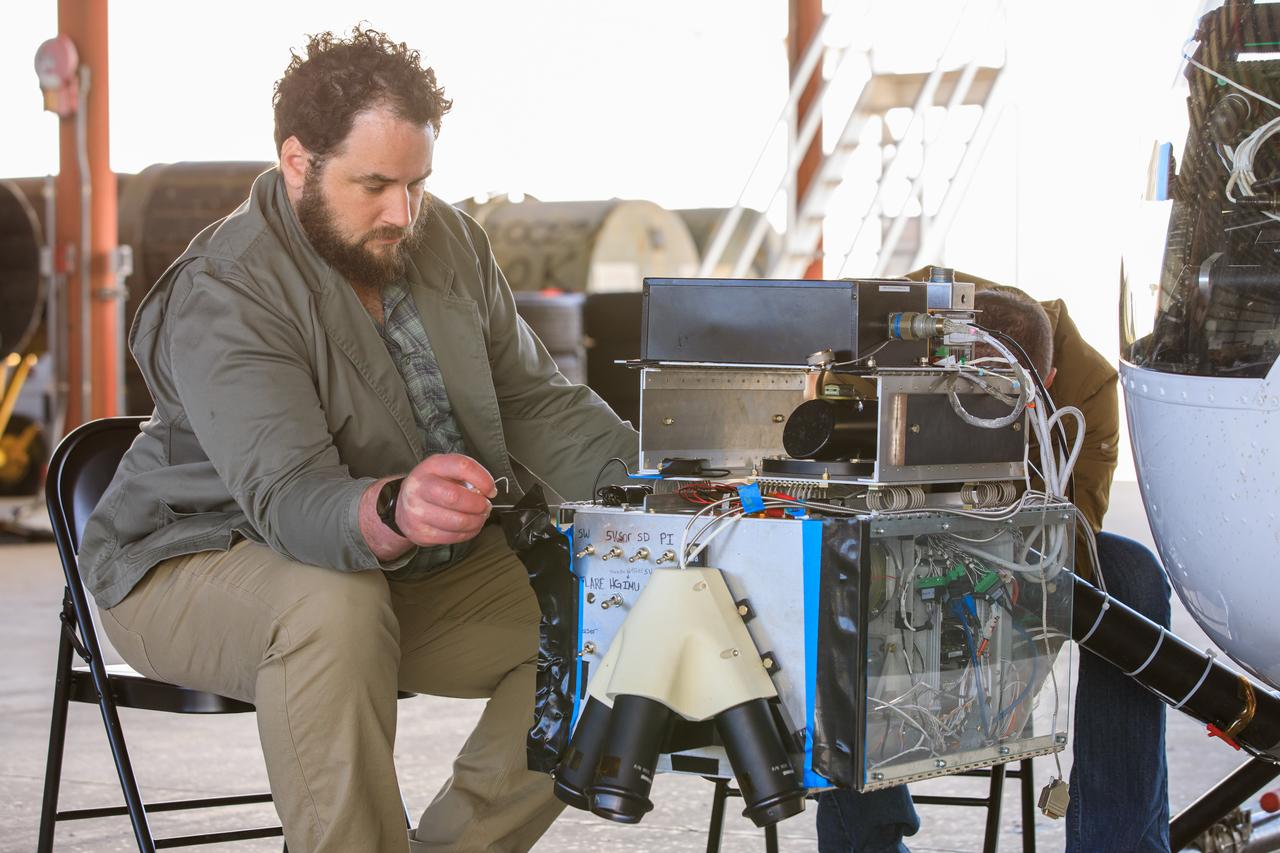
Two Intuitive Machines employees ready navigation pod sensors for the company’s Nova-C lunar lander in preparation for testing at NASA’s Kennedy Space Center in Florida on Nov. 18, 2022. The test involved flying the sensors over a simulated lunar surface at the Launch and Landing Facility on a private helicopter. Intuitive Machines is scheduled to launch two missions to the Moon in 2023 – one of which will carry NASA’s Mass Spectrometer observing lunar operations (MSolo) instrument that will help analyze the chemical makeup of landing sites on the Moon, as well as study water on the lunar surface. Through NASA’s Commercial Lunar Payload Services initiative, the agency selected Intuitive Machines to deliver science and technology demonstration payloads to the Moon, contributing to NASA’s goal of establishing a sustainable human presence on the lunar surface.
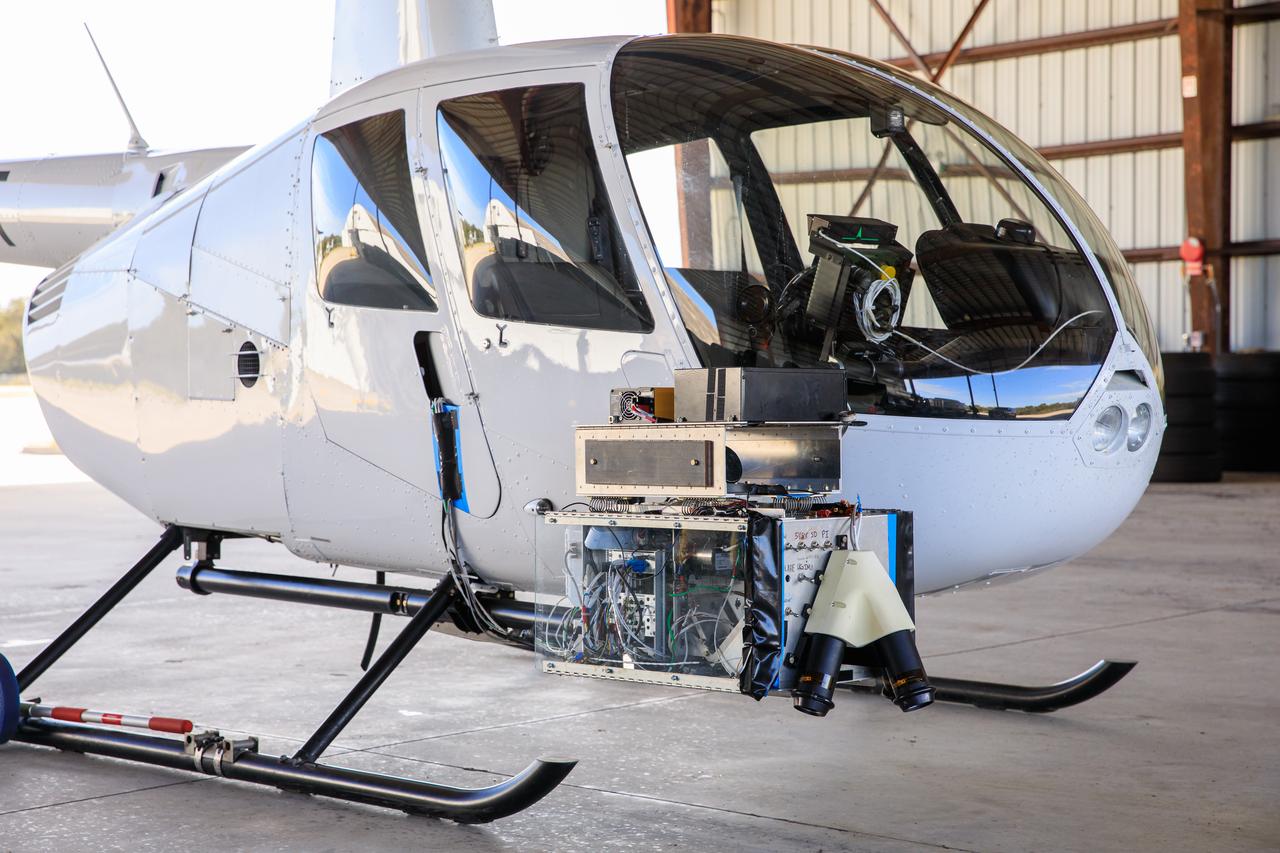
Seen here is Intuitive Machines’ navigation pod sensors for the company’s Nova-C lunar lander ahead of testing done at NASA’s Kennedy Space Center in Florida on Nov. 18, 2022. The test involved flying the sensors over a simulated lunar surface at the Launch and Landing Facility on a private helicopter. Intuitive Machines is scheduled to launch two missions to the Moon in 2023 – one of which will carry NASA’s Mass Spectrometer observing lunar operations (MSolo) instrument that will help analyze the chemical makeup of landing sites on the Moon, as well as study water on the lunar surface. Through NASA’s Commercial Lunar Payload Services initiative, the agency selected Intuitive Machines to deliver science and technology demonstration payloads to the Moon, contributing to NASA’s goal of establishing a sustainable human presence on the lunar surface.
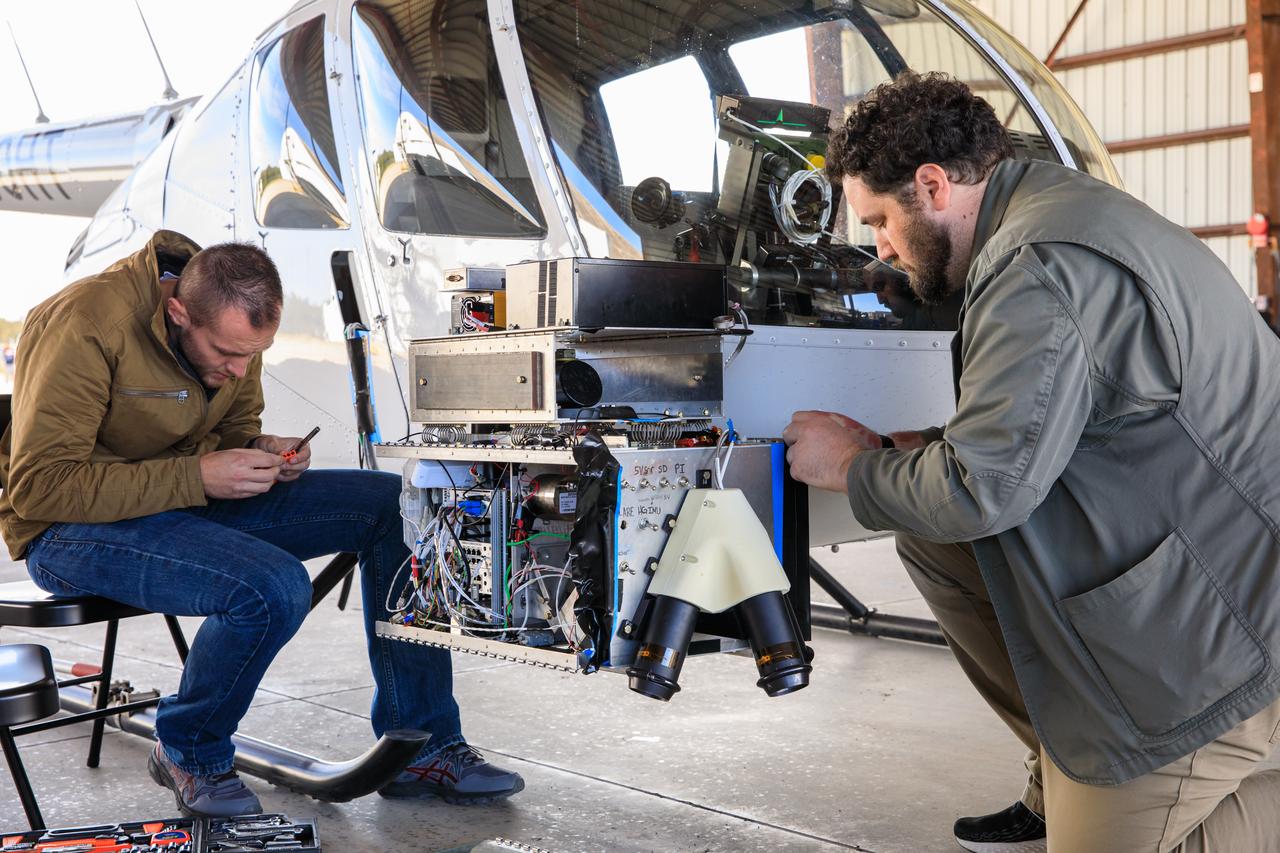
Two Intuitive Machines employees ready navigation pod sensors for the company’s Nova-C lunar lander in preparation for testing at NASA’s Kennedy Space Center in Florida on Nov. 18, 2022. The test involved flying the sensors over a simulated lunar surface at the Launch and Landing Facility on a private helicopter. Intuitive Machines is scheduled to launch two missions to the Moon in 2023 – one of which will carry NASA’s Mass Spectrometer observing lunar operations (MSolo) instrument that will help analyze the chemical makeup of landing sites on the Moon, as well as study water on the lunar surface. Through NASA’s Commercial Lunar Payload Services initiative, the agency selected Intuitive Machines to deliver science and technology demonstration payloads to the Moon, contributing to NASA’s goal of establishing a sustainable human presence on the lunar surface.

Testing of navigation pod sensors for Intuitive Machines’ Nova-C lunar lander is underway at NASA’s Kennedy Space Center in Florida on Nov. 18, 2022. The test involved flying the sensors over a simulated lunar surface at the Launch and Landing Facility on a private helicopter. Intuitive Machines is scheduled to launch two missions to the Moon in 2023 – one of which will carry NASA’s Mass Spectrometer observing lunar operations (MSolo) instrument that will help analyze the chemical makeup of landing sites on the Moon, as well as study water on the lunar surface. Through NASA’s Commercial Lunar Payload Services initiative, the agency selected Intuitive Machines to deliver science and technology demonstration payloads to the Moon, contributing to NASA’s goal of establishing a sustainable human presence on the lunar surface.
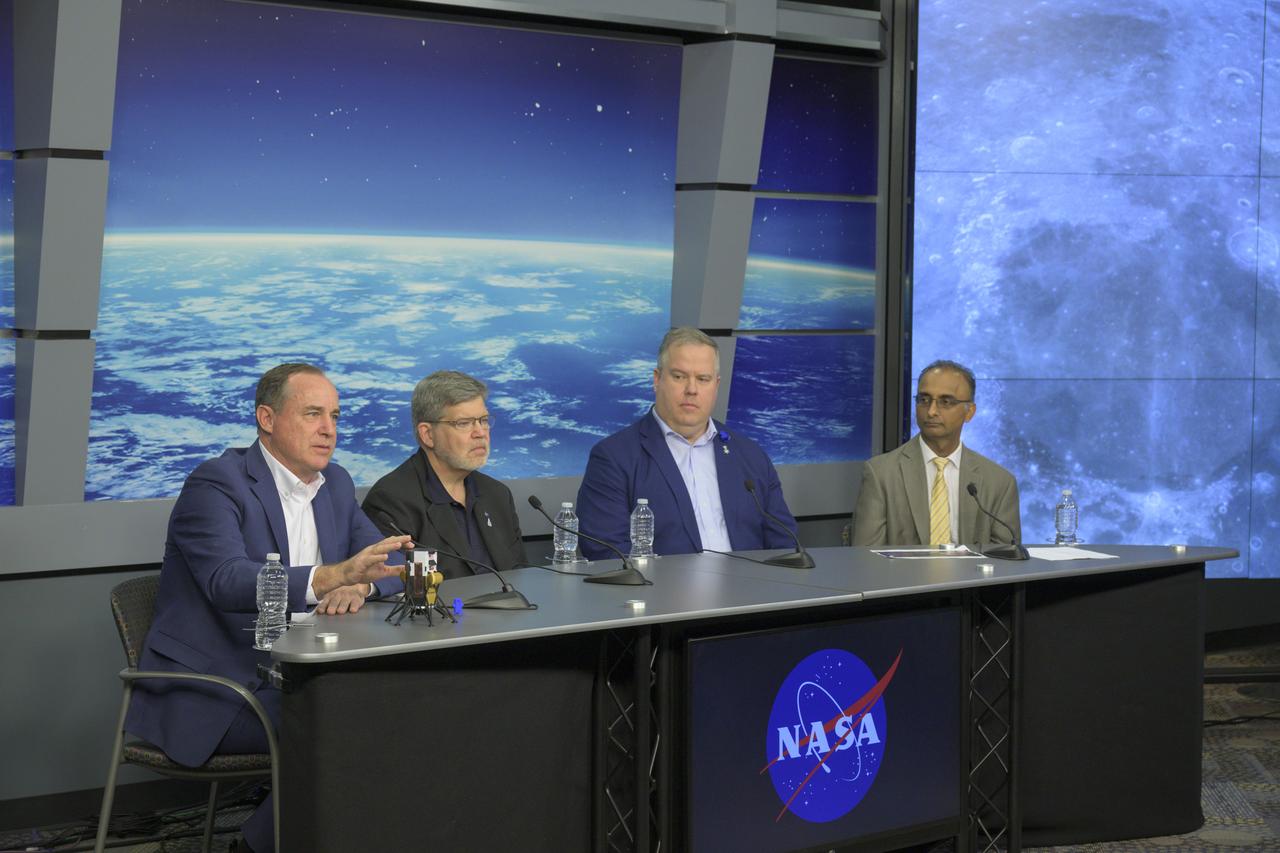
For the first time in more than 50 years, new NASA science instruments and technology demonstrations are operating on the Moon following the first successful delivery of the agency’s CLPS (Commercial Lunar Payload Services) initiative. Experts from NASA and Intuitive Machines hosted a news conference Feb. 23, 2024, at NASA’s Johnson Space Center in Houston to discuss the soft landing of the company’s Nova-C lander, called Odysseus. Participants in the briefing included (L-R): Steve Altemus, chief executive officer and co-founder, Intuitive Machines; Joel Kearns, deputy associate administrator for Exploration, Science Mission Directorate, NASA Headquarters in Washington; Tim Crain, chief technology officer and co-founder, Intuitive Machines; and Prasun Desai, deputy associate administrator, Space Technology Mission Directorate at NASA Headquarters. Photo Credit: NASA/Robert Markowitz
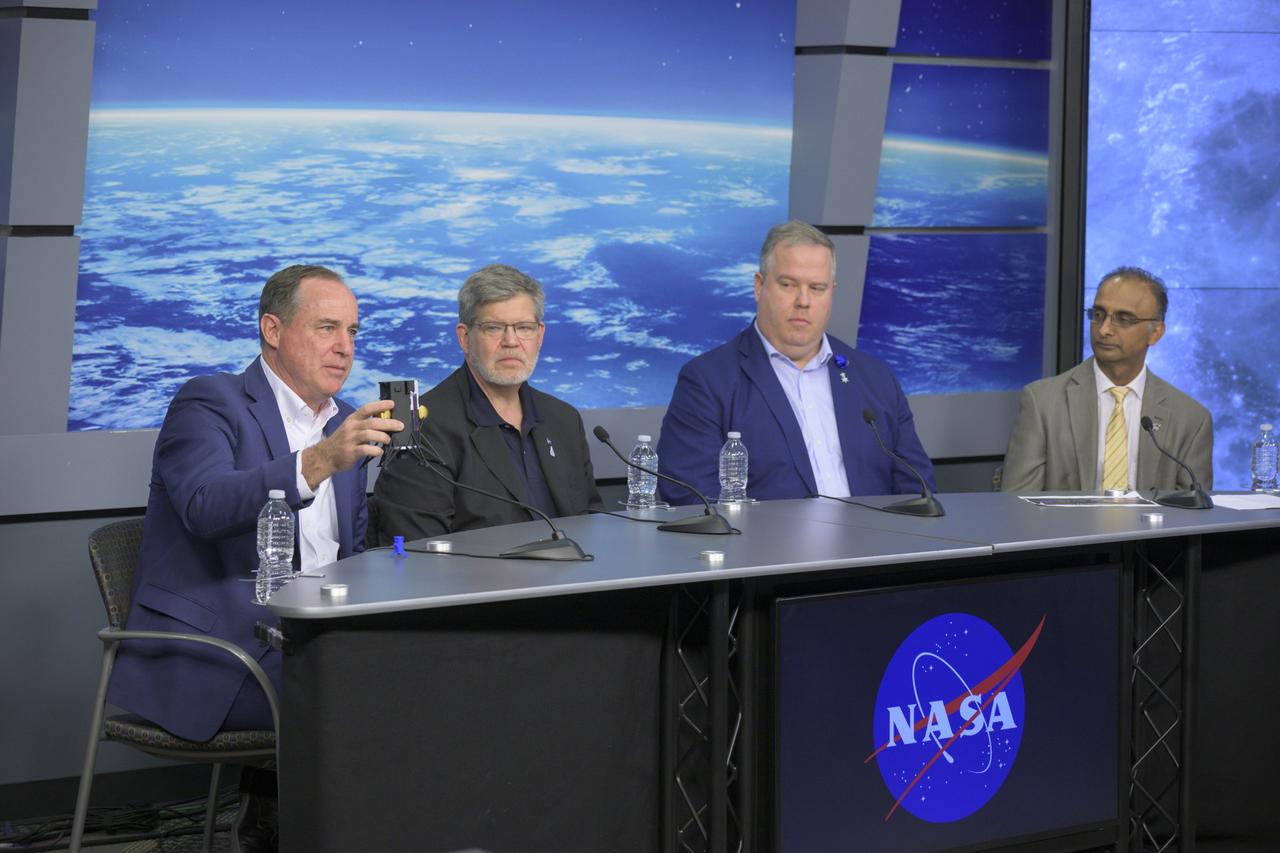
For the first time in more than 50 years, new NASA science instruments and technology demonstrations are operating on the Moon following the first successful delivery of the agency’s CLPS (Commercial Lunar Payload Services) initiative. Experts from NASA and Intuitive Machines hosted a news conference Feb. 23, 2024, at NASA’s Johnson Space Center in Houston to discuss the soft landing of the company’s Nova-C lander, called Odysseus. Participants in the briefing included (L-R): Steve Altemus, chief executive officer and co-founder, Intuitive Machines; Joel Kearns, deputy associate administrator for Exploration, Science Mission Directorate, NASA Headquarters in Washington; Tim Crain, chief technology officer and co-founder, Intuitive Machines; and Prasun Desai, deputy associate administrator, Space Technology Mission Directorate at NASA Headquarters. Photo Credit: NASA/Robert Markowitz
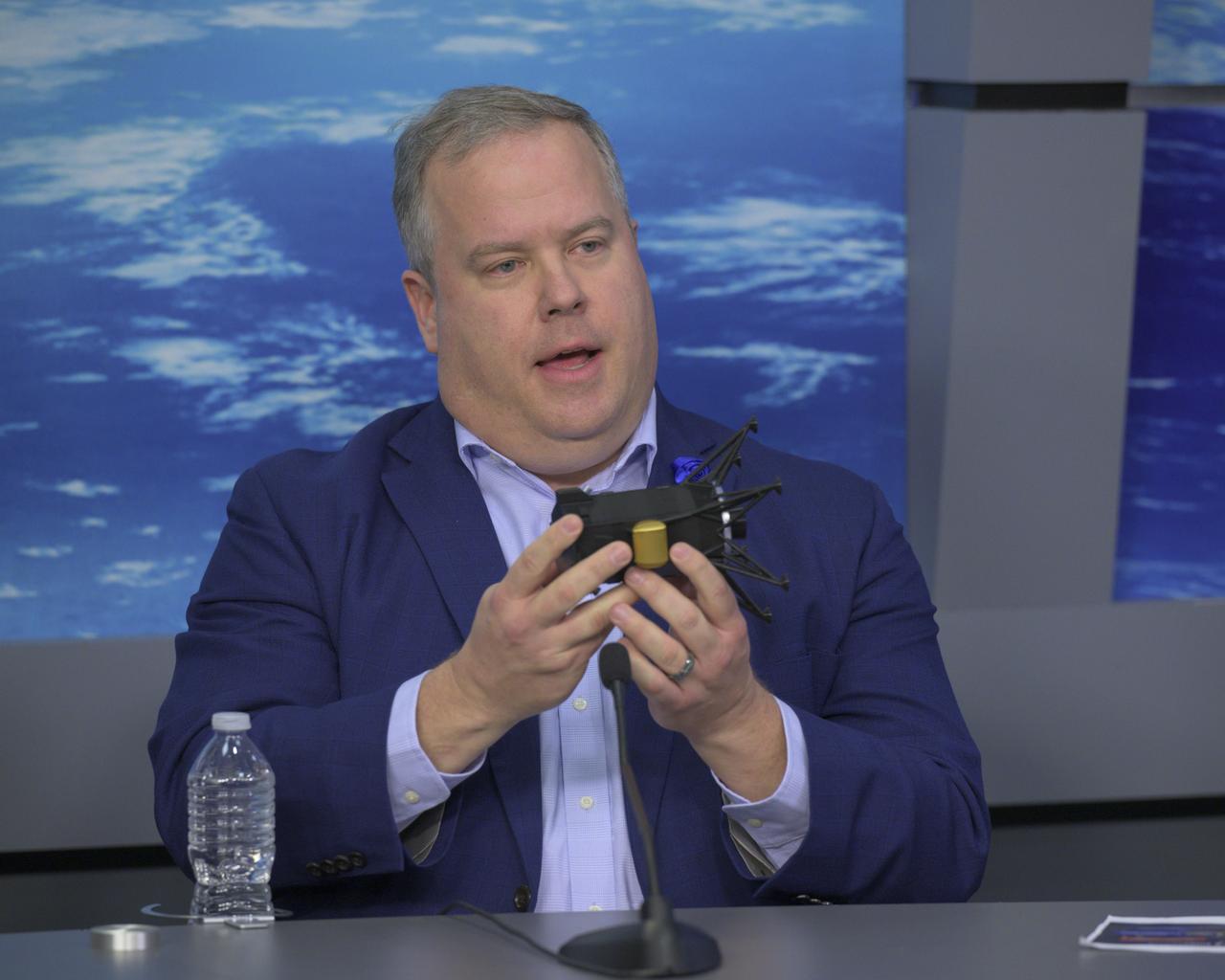
For the first time in more than 50 years, new NASA science instruments and technology demonstrations are operating on the Moon following the first successful delivery of the agency’s CLPS (Commercial Lunar Payload Services) initiative. Experts from NASA and Intuitive Machines hosted a news conference Feb. 23, 2024, at NASA’s Johnson Space Center in Houston to discuss the soft landing of the company’s Nova-C lander, called Odysseus. Participants in the briefing included (L-R): Steve Altemus, chief executive officer and co-founder, Intuitive Machines; Joel Kearns, deputy associate administrator for Exploration, Science Mission Directorate, NASA Headquarters in Washington; Tim Crain, chief technology officer and co-founder, Intuitive Machines; and Prasun Desai, deputy associate administrator, Space Technology Mission Directorate at NASA Headquarters. Photo Credit: NASA/Robert Markowitz
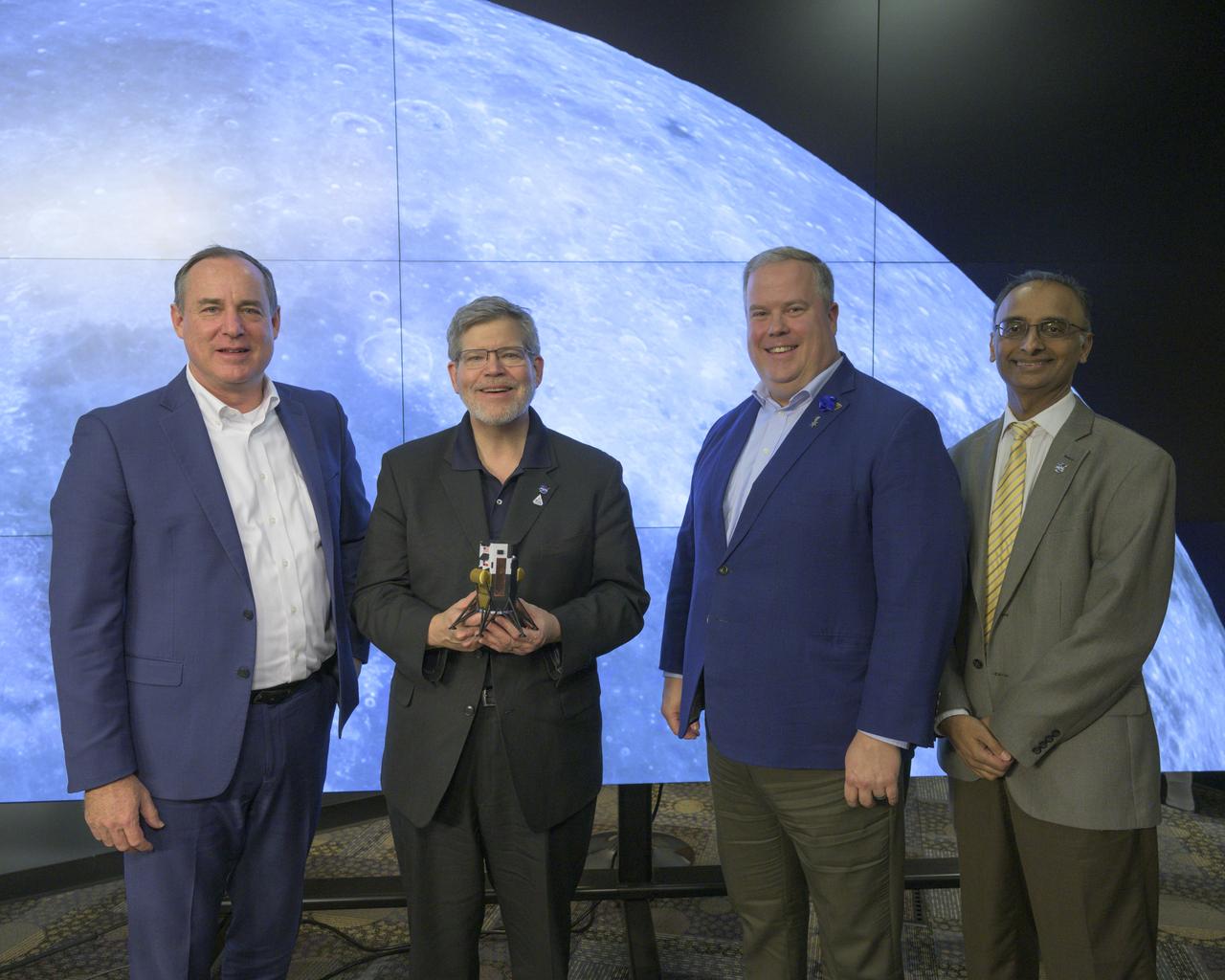
For the first time in more than 50 years, new NASA science instruments and technology demonstrations are operating on the Moon following the first successful delivery of the agency’s CLPS (Commercial Lunar Payload Services) initiative. Experts from NASA and Intuitive Machines hosted a news conference Feb. 23, 2024, at NASA’s Johnson Space Center in Houston to discuss the soft landing of the company’s Nova-C lander, called Odysseus. Participants in the briefing included (L-R): Steve Altemus, chief executive officer and co-founder, Intuitive Machines; Joel Kearns, deputy associate administrator for Exploration, Science Mission Directorate, NASA Headquarters in Washington; Tim Crain, chief technology officer and co-founder, Intuitive Machines; and Prasun Desai, deputy associate administrator, Space Technology Mission Directorate at NASA Headquarters. Photo Credit: NASA/Robert Markowitz
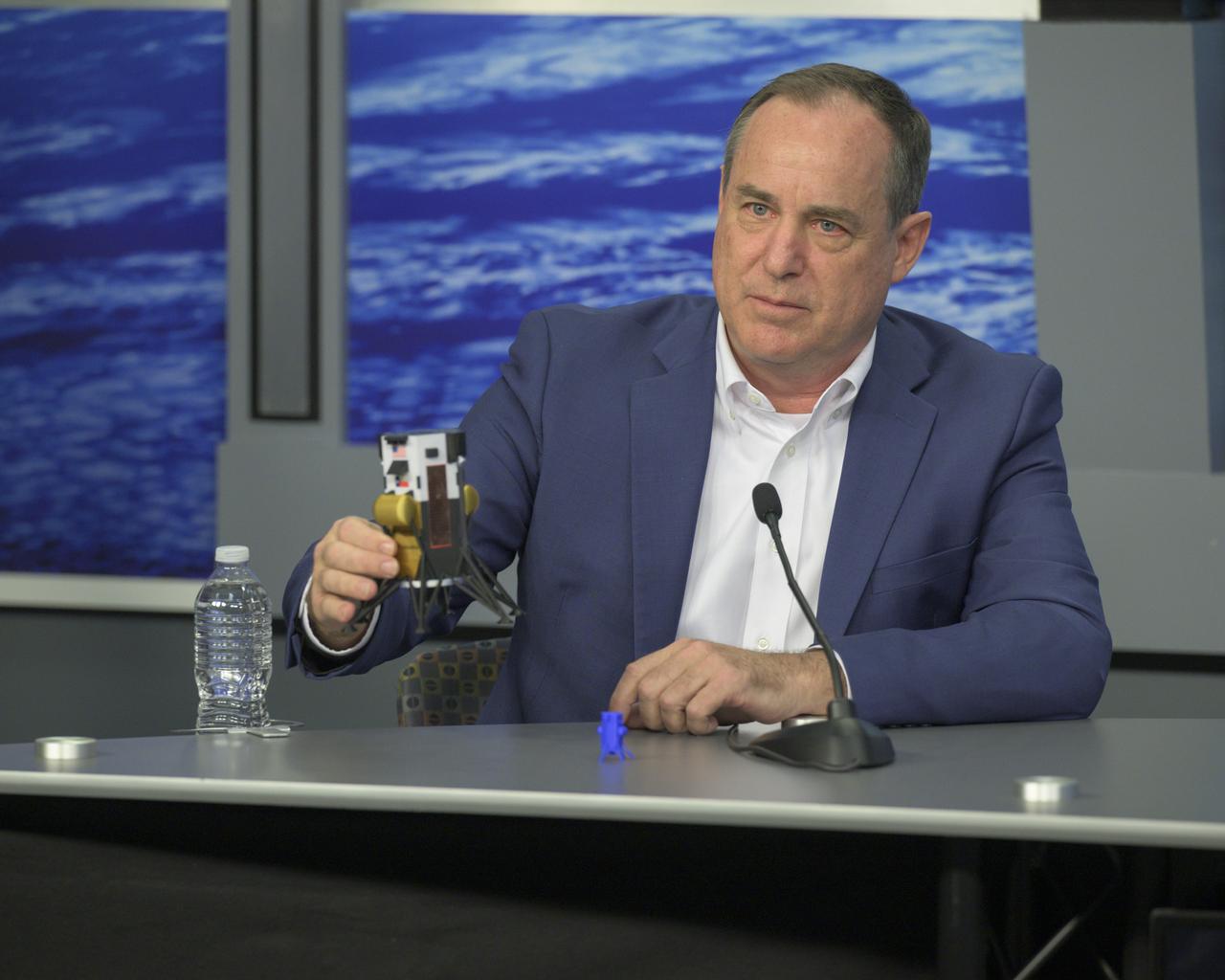
For the first time in more than 50 years, new NASA science instruments and technology demonstrations are operating on the Moon following the first successful delivery of the agency’s CLPS (Commercial Lunar Payload Services) initiative. Experts from NASA and Intuitive Machines hosted a news conference Feb. 23, 2024, at NASA’s Johnson Space Center in Houston to discuss the soft landing of the company’s Nova-C lander, called Odysseus. Participants in the briefing included (L-R): Steve Altemus, chief executive officer and co-founder, Intuitive Machines; Joel Kearns, deputy associate administrator for Exploration, Science Mission Directorate, NASA Headquarters in Washington; Tim Crain, chief technology officer and co-founder, Intuitive Machines; and Prasun Desai, deputy associate administrator, Space Technology Mission Directorate at NASA Headquarters. Photo Credit: NASA/Robert Markowitz
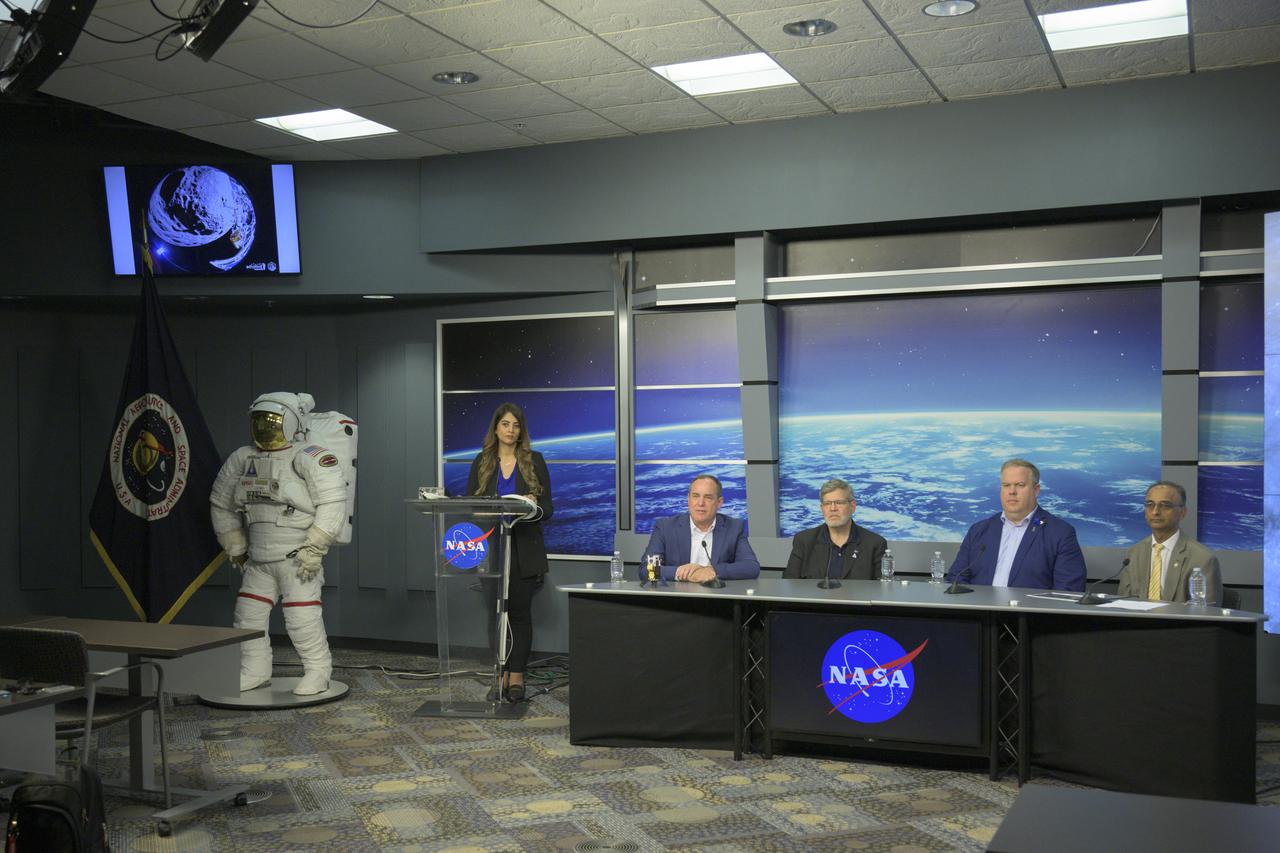
For the first time in more than 50 years, new NASA science instruments and technology demonstrations are operating on the Moon following the first successful delivery of the agency’s CLPS (Commercial Lunar Payload Services) initiative. Experts from NASA and Intuitive Machines hosted a news conference Feb. 23, 2024, at NASA’s Johnson Space Center in Houston to discuss the soft landing of the company’s Nova-C lander, called Odysseus. Participants in the briefing included (L-R): Steve Altemus, chief executive officer and co-founder, Intuitive Machines; Joel Kearns, deputy associate administrator for Exploration, Science Mission Directorate, NASA Headquarters in Washington; Tim Crain, chief technology officer and co-founder, Intuitive Machines; and Prasun Desai, deputy associate administrator, Space Technology Mission Directorate at NASA Headquarters. Photo Credit: NASA/Robert Markowitz
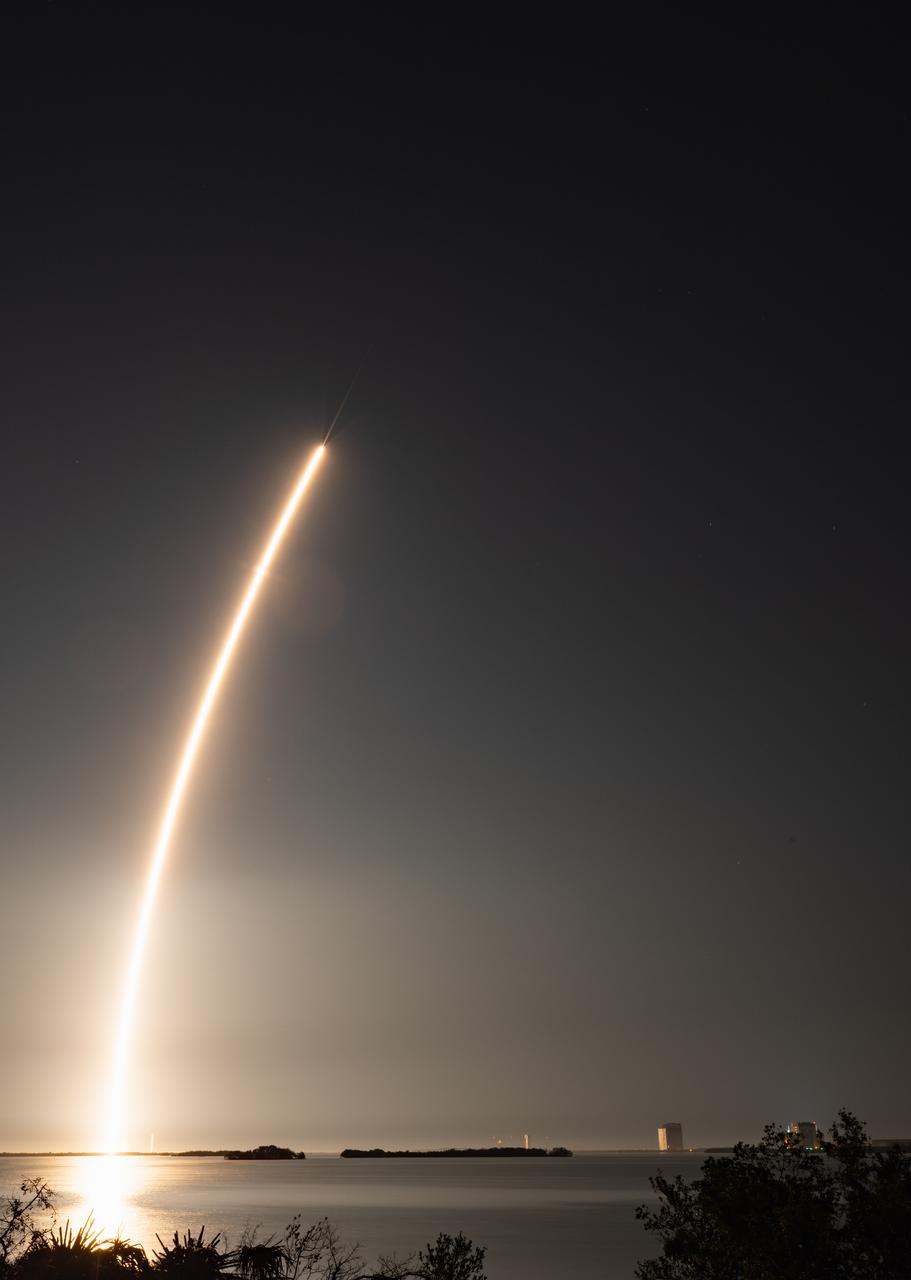
A SpaceX Falcon 9 rocket carrying Intuitive Machines’ Nova-C lunar lander (IM-2) launches at 7:16 p.m. EST on Wednesday, Feb. 26 from Launch Complex 39A at NASA’s Kennedy Space Center in Florida as part of NASA’s CLPS (Commercial Lunar Payload Services) initiative. The IM-2 launch is carrying NASA science, technology demonstrations, and other commercial payloads to Mons Mouton, a lunar plateau to advance our understanding of the Moon and planetary processes, while paving the way for future crewed missions.
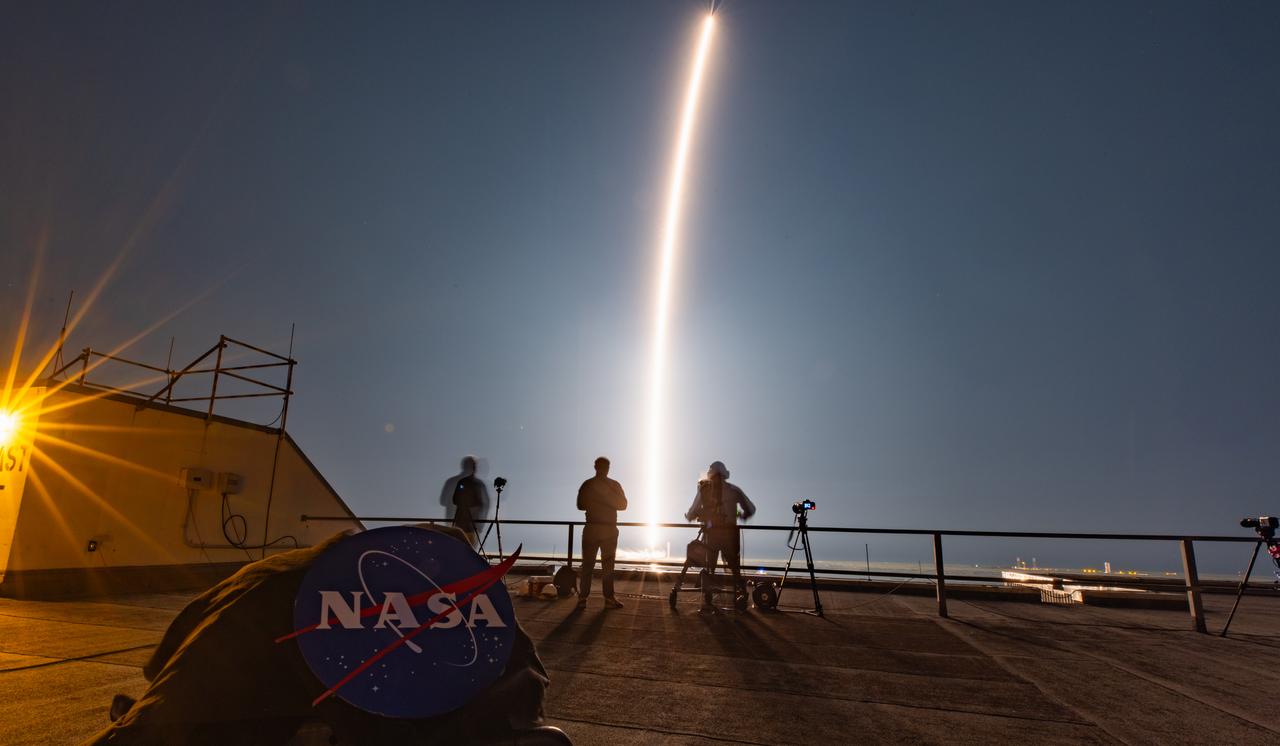
Creating a golden streak in the night sky, a SpaceX Falcon 9 rocket carrying Intuitive Machines’ Nova-C lunar lander (IM-2) soars upward after liftoff from Launch Complex 39A at NASA’s Kennedy Space Center in Florida at 7:16 p.m. EST Wednesday, Feb. 26, 2025, as part of NASA’s CLPS (Commercial Lunar Payload Services) initiative. The IM-2 launch is carrying NASA science, technology demonstrations, and other commercial payloads to Mons Mouton, a lunar plateau to advance our understanding of the Moon and planetary processes, while paving the way for future crewed missions.
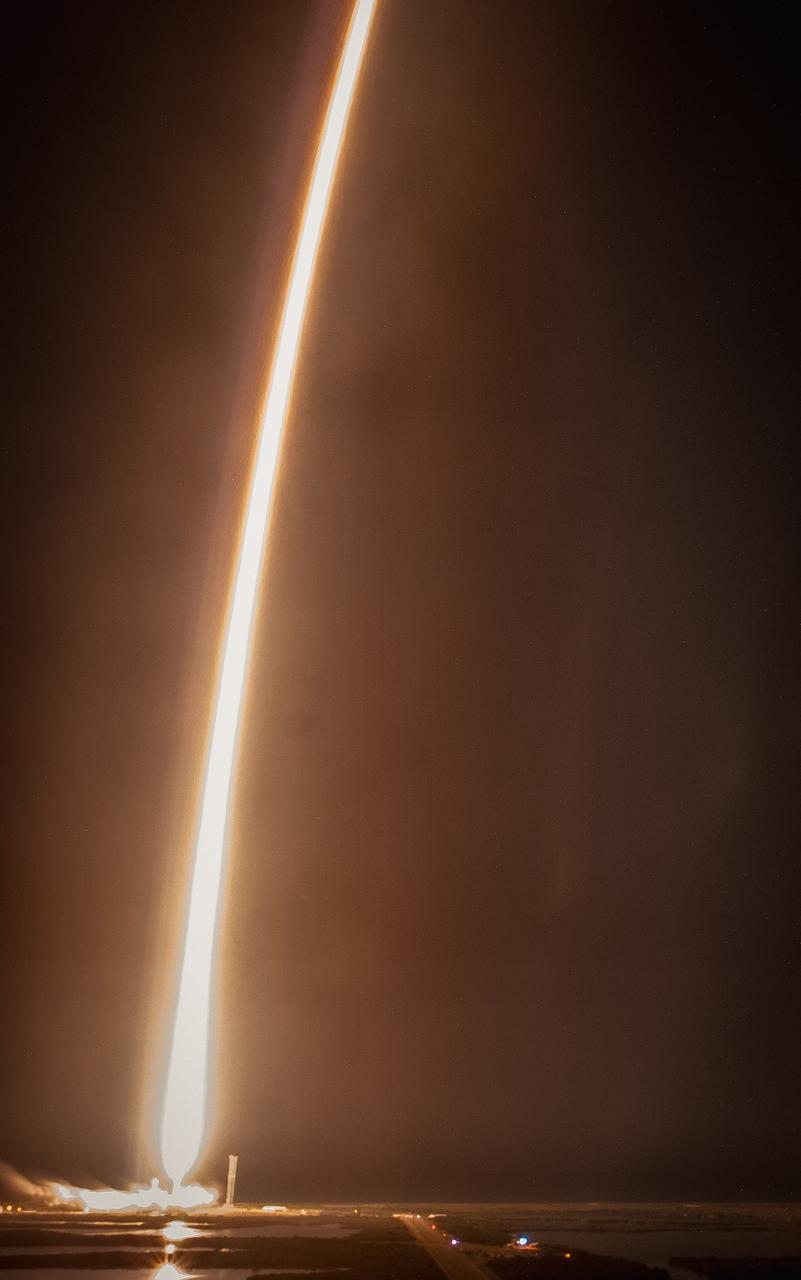
Creating a golden streak in the night sky, a SpaceX Falcon 9 rocket carrying Intuitive Machines’ Nova-C lunar lander (IM-2) soars upward after liftoff from Launch Complex 39A at NASA’s Kennedy Space Center in Florida at 7:16 p.m. EST Wednesday, Feb. 26 as part of NASA’s CLPS (Commercial Lunar Payload Services) initiative. The IM-2 launch is carrying NASA science, technology demonstrations, and other commercial payloads to Mons Mouton, a lunar plateau to advance our understanding of the Moon and planetary processes, while paving the way for future crewed missions.
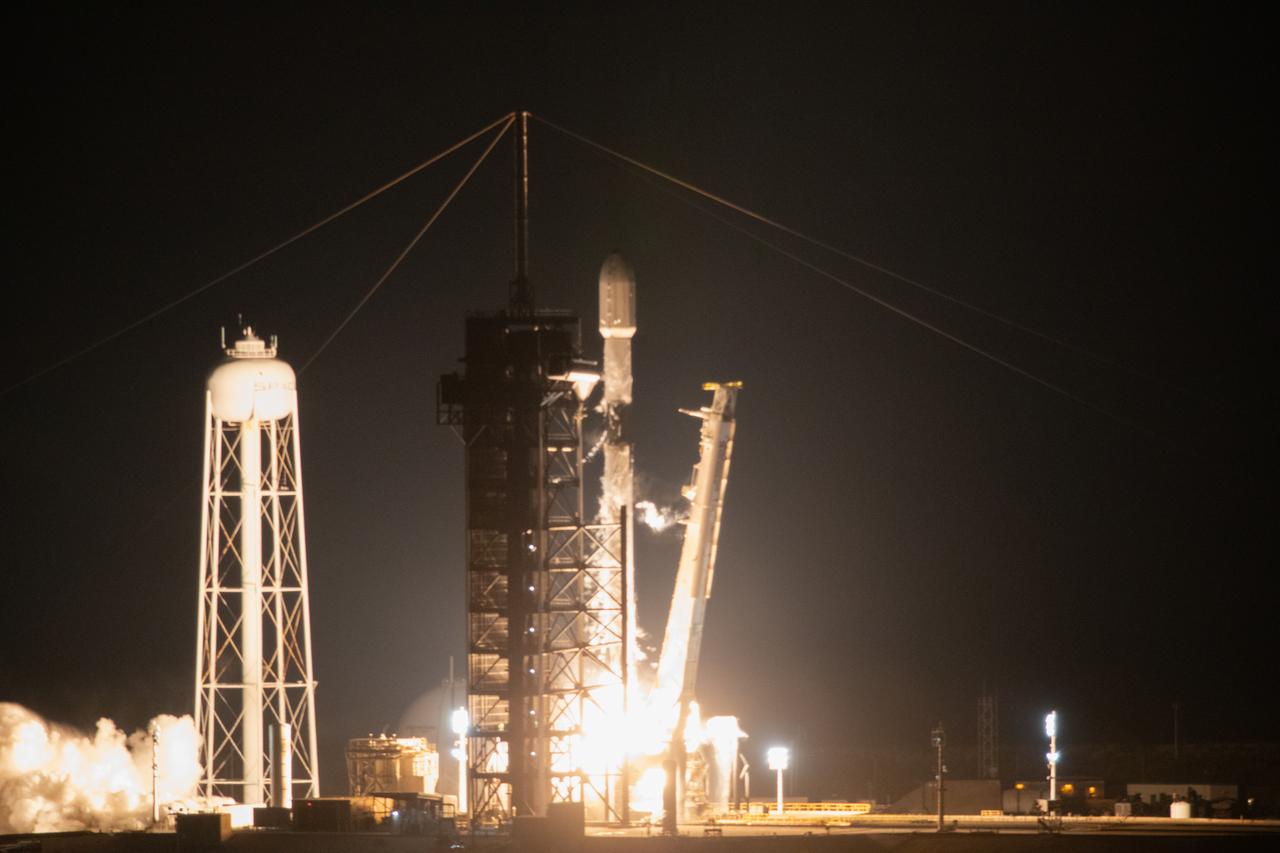
A SpaceX Falcon 9 rocket carrying Intuitive Machines’ Nova-C lunar lander (IM-2) launches at 7:16 p.m. EST on Wednesday, Feb. 26, 2025, from Launch Complex 39A at NASA’s Kennedy Space Center in Florida as part of NASA’s CLPS (Commercial Lunar Payload Services) initiative. The IM-2 launch is carrying NASA science, technology demonstrations, and other commercial payloads to Mons Mouton, a lunar plateau to advance our understanding of the Moon and planetary processes, while paving the way for future crewed missions.
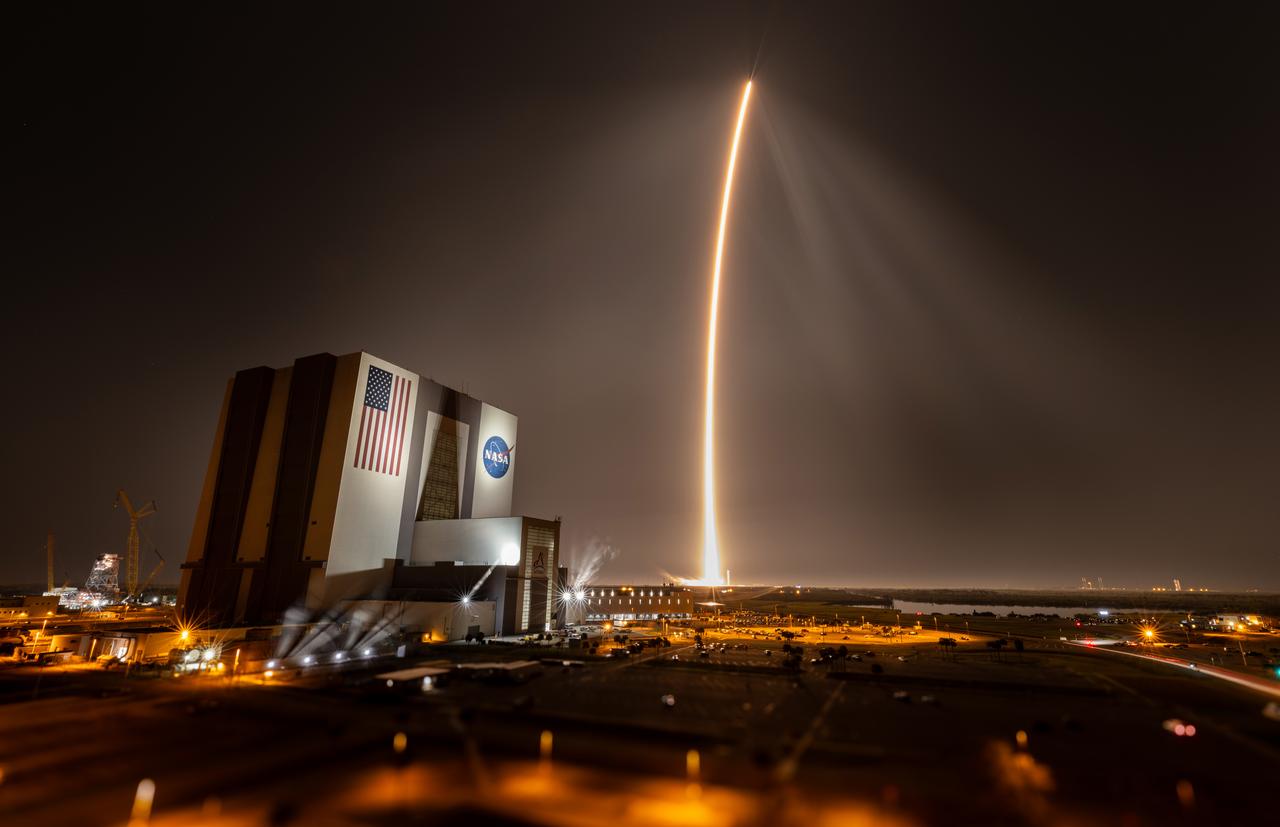
Creating a golden streak in the night sky, a SpaceX Falcon 9 rocket carrying Intuitive Machines’ Nova-C lunar lander (IM-2) soars upward after liftoff from Launch Complex 39A at NASA’s Kennedy Space Center in Florida at 7:16 p.m. EST Wednesday, Feb. 26 as part of NASA’s CLPS (Commercial Lunar Payload Services) initiative. The IM-2 launch is carrying NASA science, technology demonstrations, and other commercial payloads to Mons Mouton, a lunar plateau to advance our understanding of the Moon and planetary processes, while paving the way for future crewed missions.
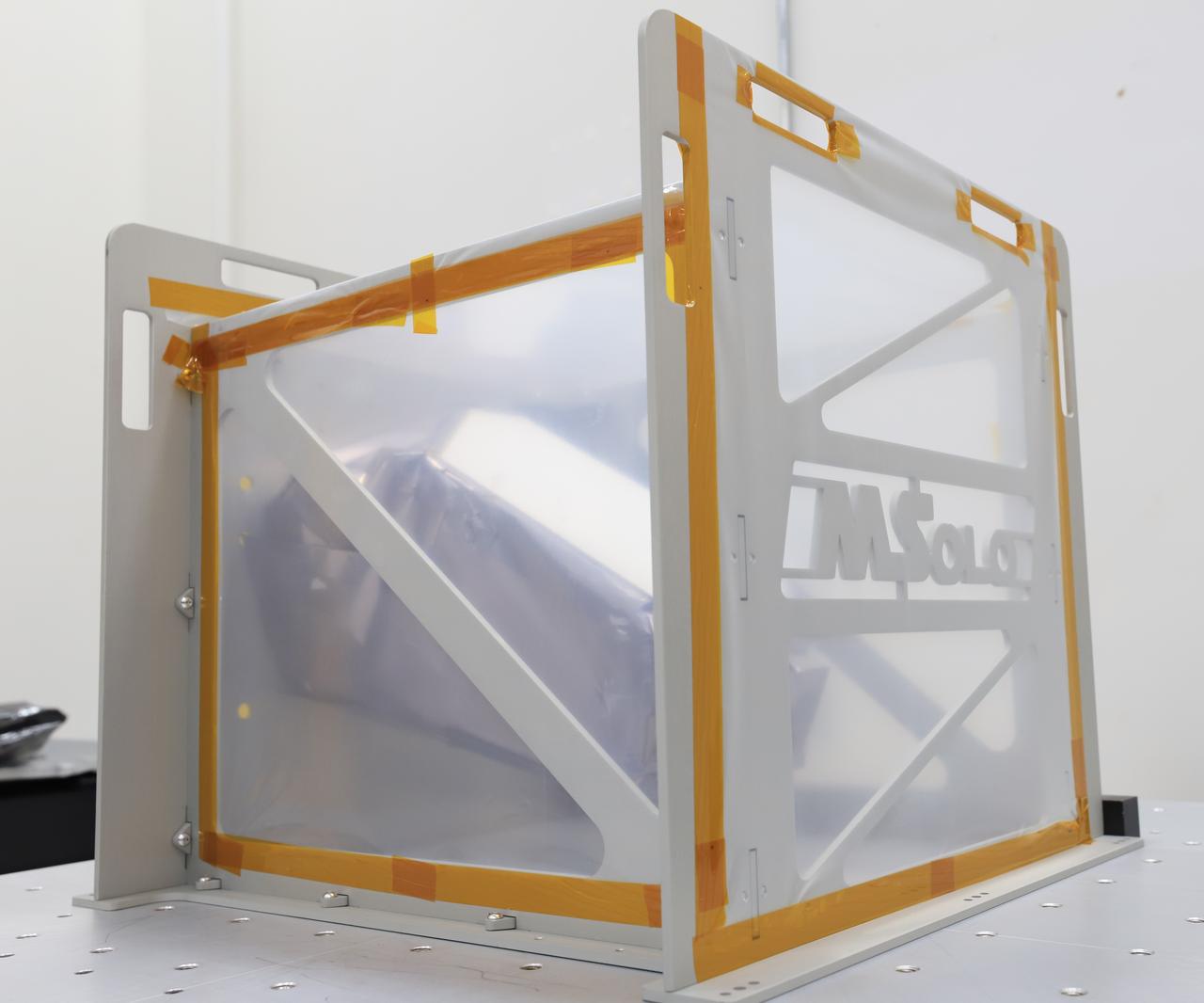
Engineers conduct a mass properties test on the Mass Spectrometer Observing Lunar Operations (MSolo) instrument inside Kennedy Space Center’s Space Station Processing Facility in Florida on Nov. 22, 2022. Mass properties determines the mass and center of gravity of the flight unit. The lander uses this information, from all payloads, to improve stability and performance of the lander – and to a lesser degree, the stability and performance of the rocket. This marks the end of testing at Kennedy for the Polar Resources Ice Mining Experiment-1 (PRIME-1) MSolo instrument. It will soon be shipped to Intuitive Machines in Houston for integration on the NOVA-C landing platform. Launching in 2023, the PRIME-1 mission will be the first in-situ resource utilization demonstration on the Moon.
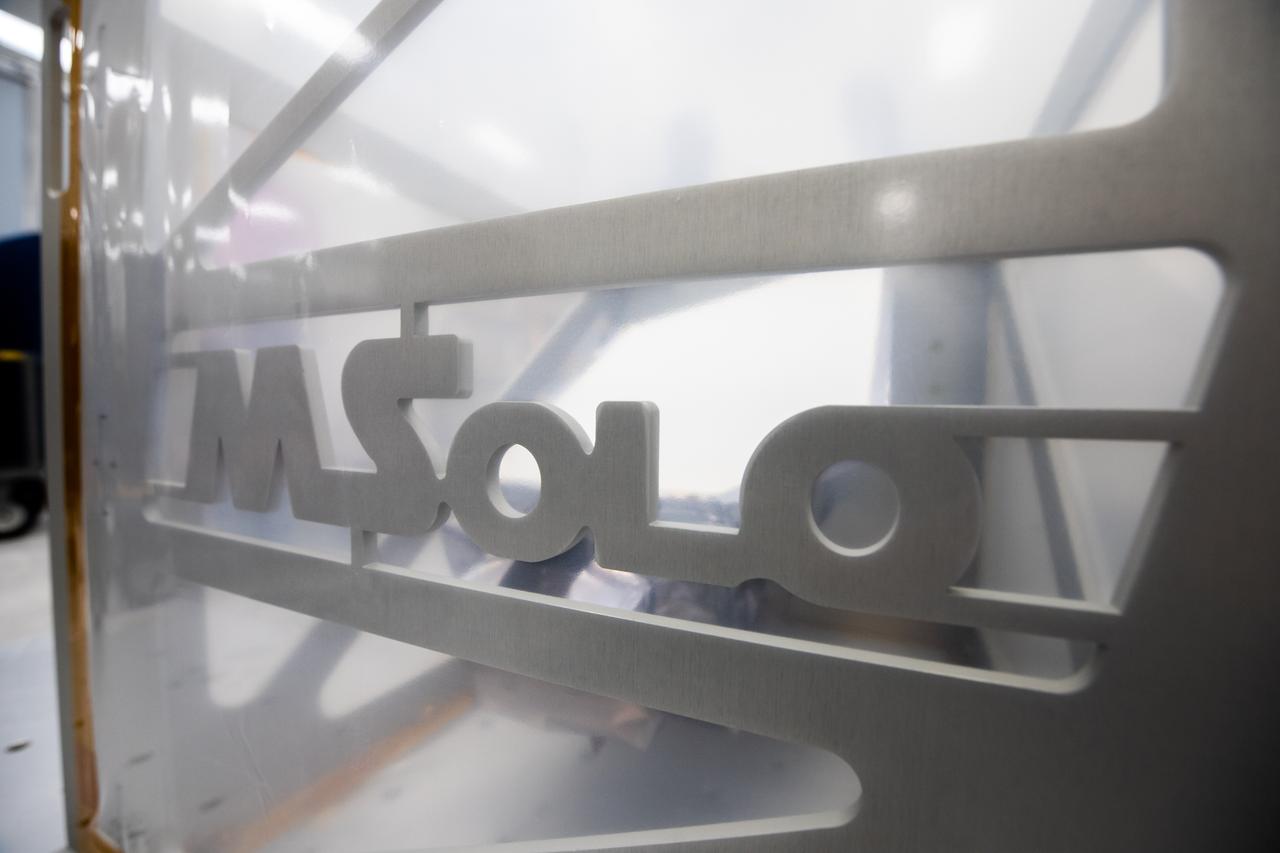
Engineers conduct a mass properties test on the Mass Spectrometer Observing Lunar Operations (MSolo) instrument inside Kennedy Space Center’s Space Station Processing Facility in Florida on Nov. 22, 2022. Mass properties determines the mass and center of gravity of the flight unit. The lander uses this information, from all payloads, to improve stability and performance of the lander – and to a lesser degree, the stability and performance of the rocket. This marks the end of testing at Kennedy for the Polar Resources Ice Mining Experiment-1 (PRIME-1) MSolo instrument. It will soon be shipped to Intuitive Machines in Houston for integration on the NOVA-C landing platform. Launching in 2023, the PRIME-1 mission will be the first in-situ resource utilization demonstration on the Moon.
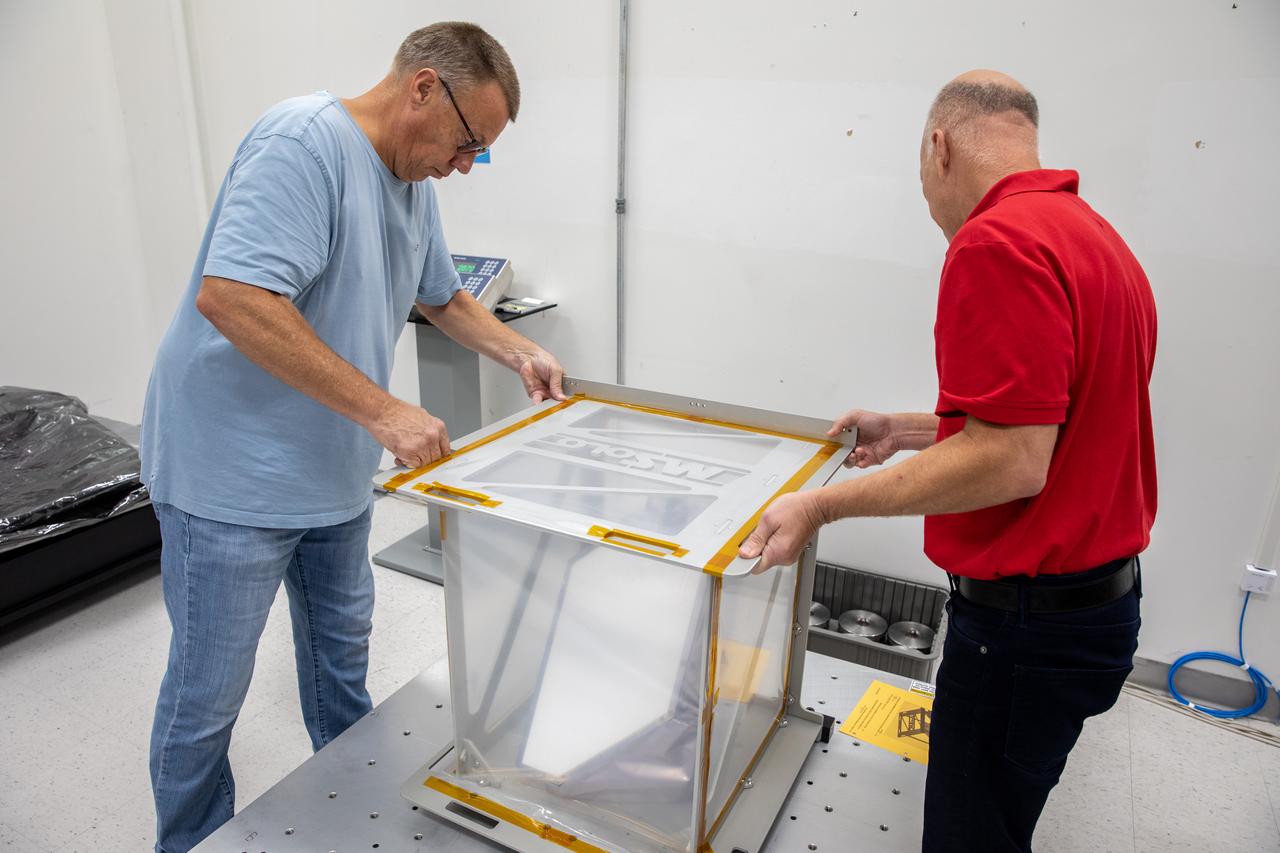
Engineers conduct a mass properties test on the Mass Spectrometer Observing Lunar Operations (MSolo) instrument inside Kennedy Space Center’s Space Station Processing Facility in Florida on Nov. 22, 2022. Mass properties determines the mass and center of gravity of the flight unit. The lander uses this information, from all payloads, to improve stability and performance of the lander – and to a lesser degree, the stability and performance of the rocket. This marks the end of testing at Kennedy for the Polar Resources Ice Mining Experiment-1 (PRIME-1) MSolo instrument. It will soon be shipped to Intuitive Machines in Houston for integration on the NOVA-C landing platform. Launching in 2023, the PRIME-1 mission will be the first in-situ resource utilization demonstration on the Moon.
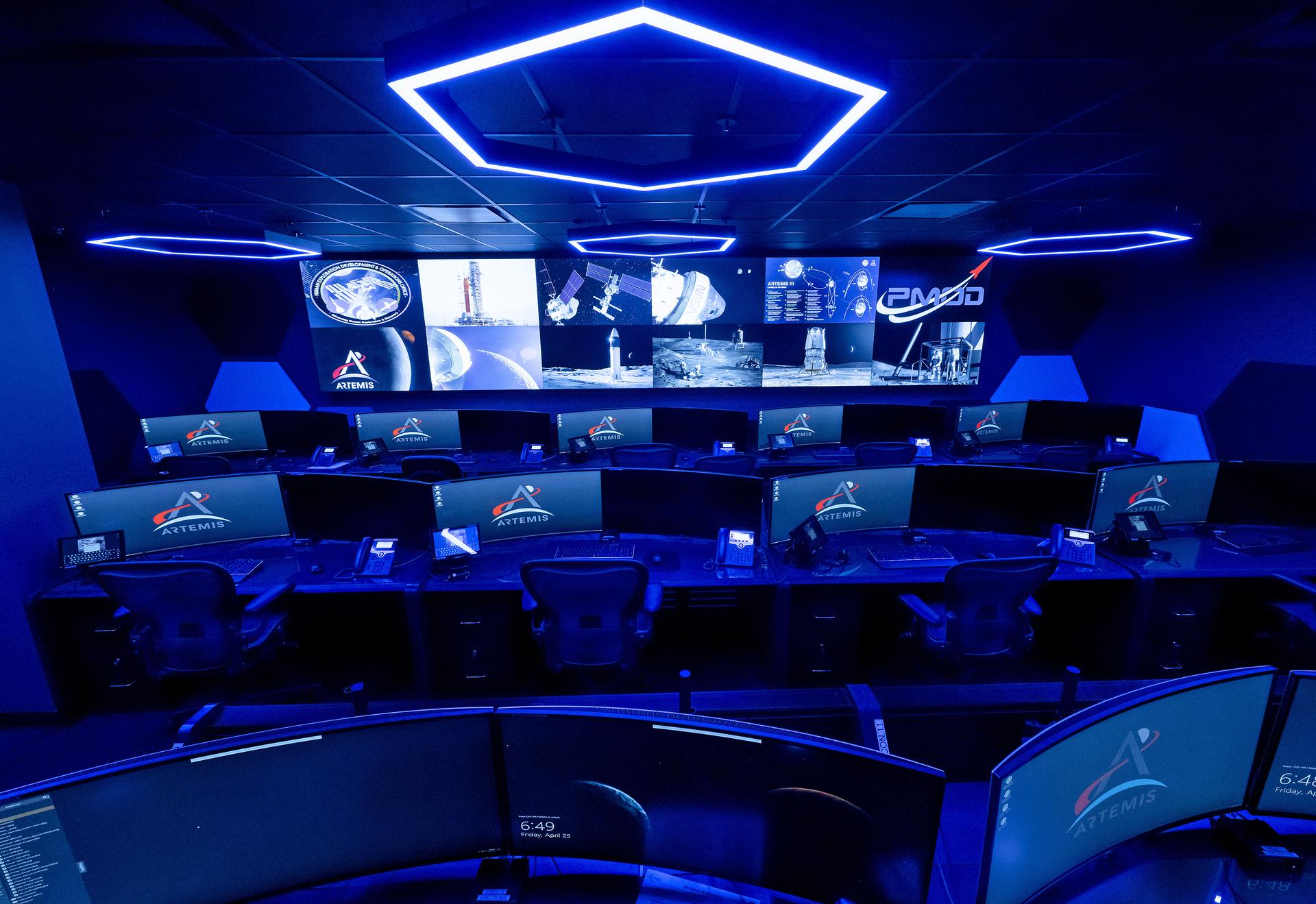
These photos offer a look inside the twin control rooms at NASA’s Marshall Space Flight Center in Huntsville, Alabama, where engineers will monitor Artemis science and future landing operations for Artemis. The LUCA (Lunar Utilization Control Area) and LESA (Lander Engineering Support Area) rooms are part of the Huntsville Operations Support Center at NASA Marshall. The LUCA is specially designed to support a wide variety of science operations on and around the Moon – and beyond. Engineers in the LUCA monitored operations for the Lunar Node-1 experiment, an autonomous navigation payload that was part of the first NASA Commercial Lunar Payload Services (CLPS) launch on Intuitive Machines’ Nova-C lunar lander in 2024. NASA Marshall flight controllers will use the LUCA again for Artemis II to monitor science operations. Beginning with Artemis III, members of the NASA Human Landing System Mission Insight Support Team – a group of engineers, safety leads, flight operations experts, and technical authorities – will work in the LESA. There, they will monitor lander systems in real-time and be involved in key decision-making processes throughout the mission. For more information, contact NASA Marshall’s Office of Communications at 256-544-0034.
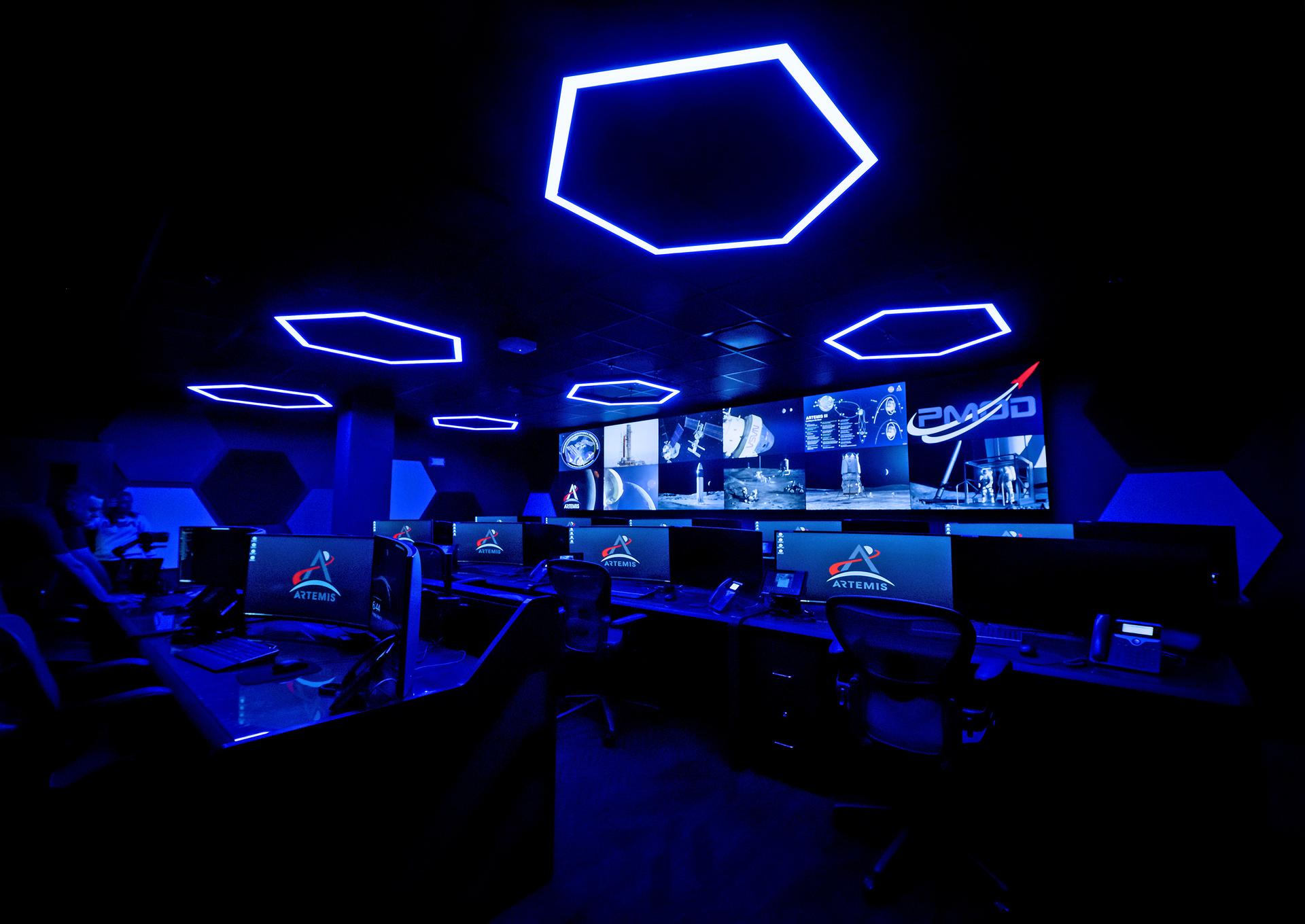
These photos offer a look inside the twin control rooms at NASA’s Marshall Space Flight Center in Huntsville, Alabama, where engineers will monitor Artemis science and future landing operations for Artemis. The LUCA (Lunar Utilization Control Area) and LESA (Lander Engineering Support Area) rooms are part of the Huntsville Operations Support Center at NASA Marshall. The LUCA is specially designed to support a wide variety of science operations on and around the Moon – and beyond. Engineers in the LUCA monitored operations for the Lunar Node-1 experiment, an autonomous navigation payload that was part of the first NASA Commercial Lunar Payload Services (CLPS) launch on Intuitive Machines’ Nova-C lunar lander in 2024. NASA Marshall flight controllers will use the LUCA again for Artemis II to monitor science operations. Beginning with Artemis III, members of the NASA Human Landing System Mission Insight Support Team – a group of engineers, safety leads, flight operations experts, and technical authorities – will work in the LESA. There, they will monitor lander systems in real-time and be involved in key decision-making processes throughout the mission. For more information, contact NASA Marshall’s Office of Communications at 256-544-0034.
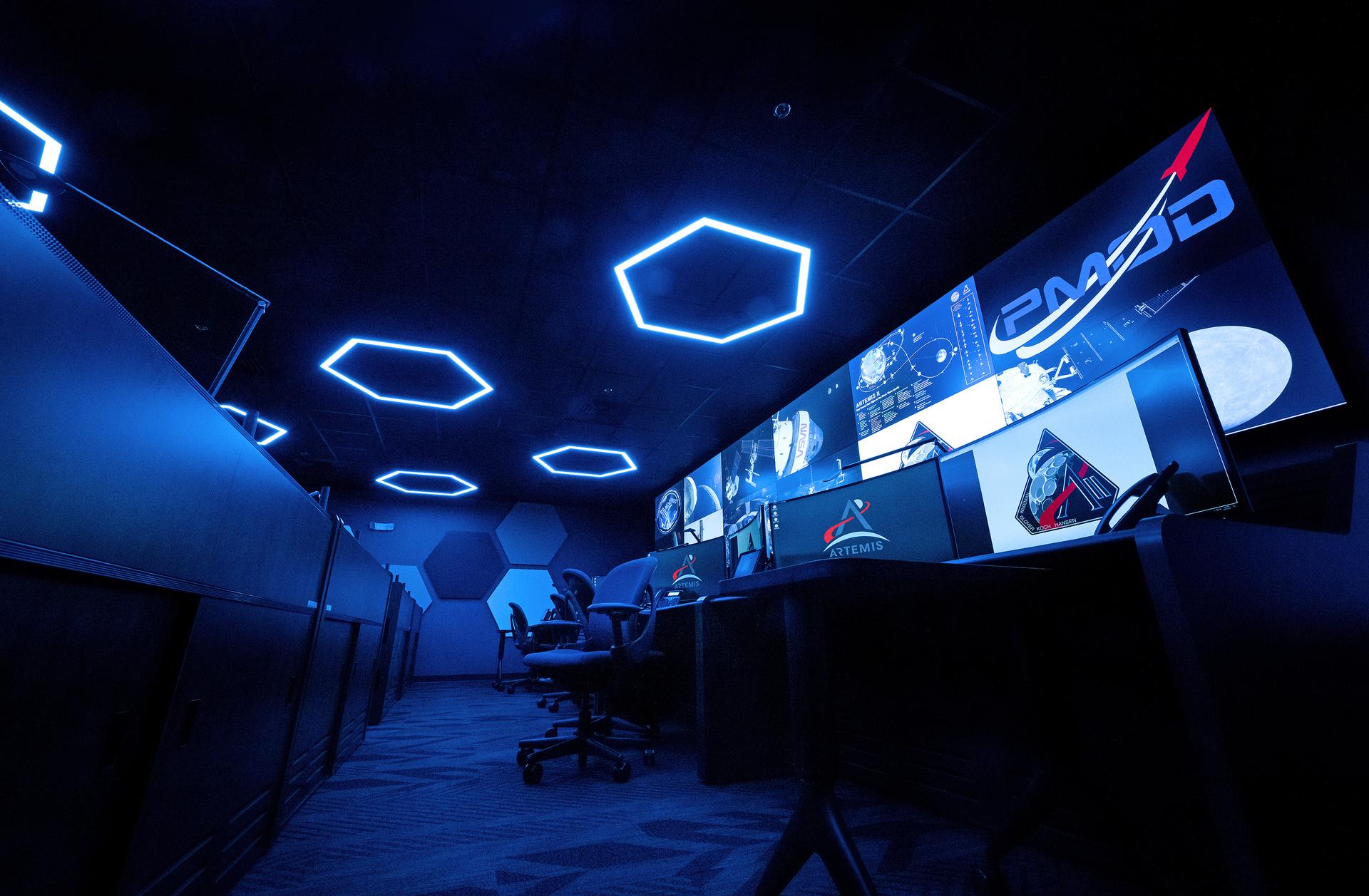
These photos offer a look inside the twin control rooms at NASA’s Marshall Space Flight Center in Huntsville, Alabama, where engineers will monitor Artemis science and future landing operations for Artemis. The LUCA (Lunar Utilization Control Area) and LESA (Lander Engineering Support Area) rooms are part of the Huntsville Operations Support Center at NASA Marshall. The LUCA is specially designed to support a wide variety of science operations on and around the Moon – and beyond. Engineers in the LUCA monitored operations for the Lunar Node-1 experiment, an autonomous navigation payload that was part of the first NASA Commercial Lunar Payload Services (CLPS) launch on Intuitive Machines’ Nova-C lunar lander in 2024. NASA Marshall flight controllers will use the LUCA again for Artemis II to monitor science operations. Beginning with Artemis III, members of the NASA Human Landing System Mission Insight Support Team – a group of engineers, safety leads, flight operations experts, and technical authorities – will work in the LESA. There, they will monitor lander systems in real-time and be involved in key decision-making processes throughout the mission. For more information, contact NASA Marshall’s Office of Communications at 256-544-0034.
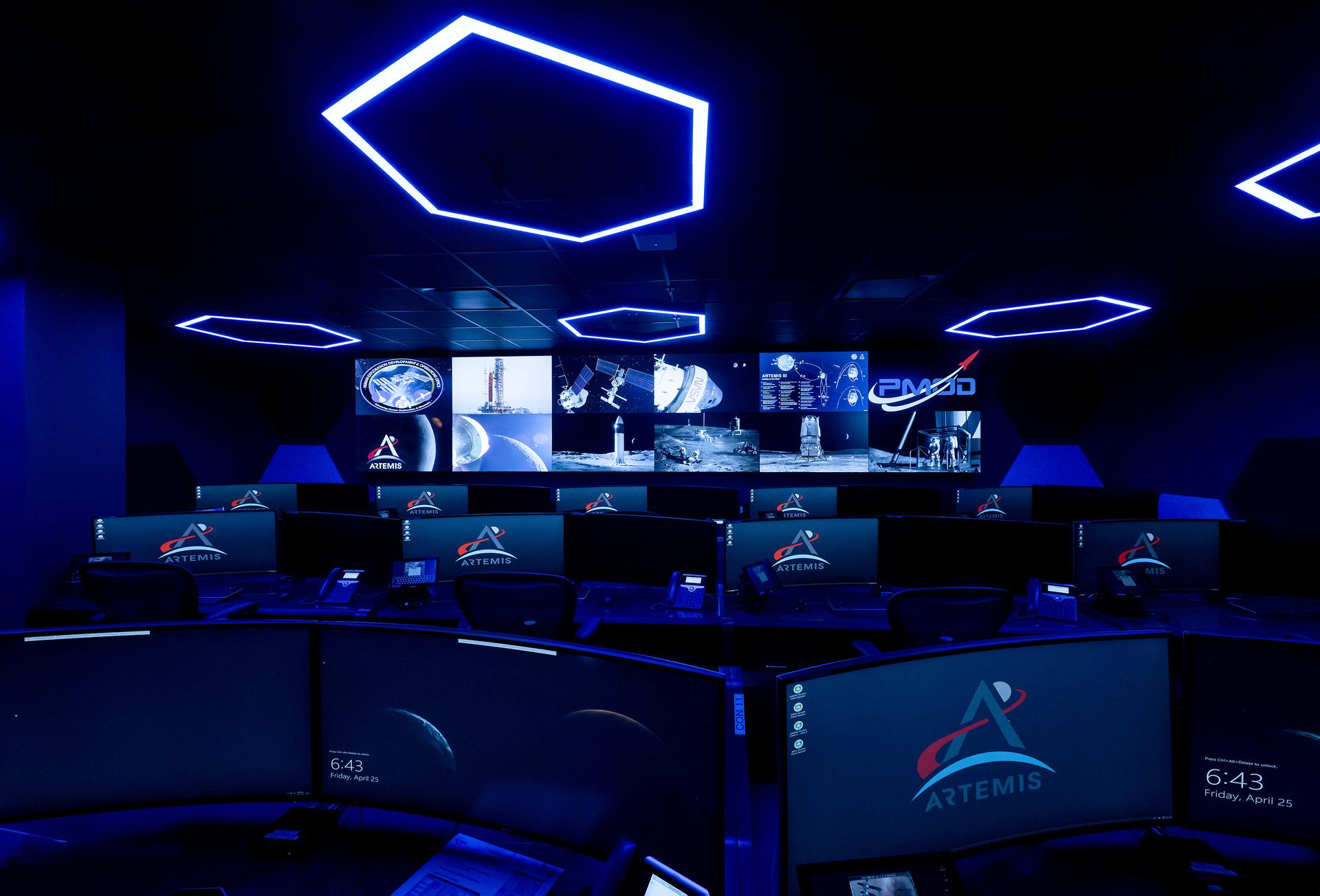
These photos offer a look inside the twin control rooms at NASA’s Marshall Space Flight Center in Huntsville, Alabama, where engineers will monitor Artemis science and future landing operations for Artemis. The LUCA (Lunar Utilization Control Area) and LESA (Lander Engineering Support Area) rooms are part of the Huntsville Operations Support Center at NASA Marshall. The LUCA is specially designed to support a wide variety of science operations on and around the Moon – and beyond. Engineers in the LUCA monitored operations for the Lunar Node-1 experiment, an autonomous navigation payload that was part of the first NASA Commercial Lunar Payload Services (CLPS) launch on Intuitive Machines’ Nova-C lunar lander in 2024. NASA Marshall flight controllers will use the LUCA again for Artemis II to monitor science operations. Beginning with Artemis III, members of the NASA Human Landing System Mission Insight Support Team – a group of engineers, safety leads, flight operations experts, and technical authorities – will work in the LESA. There, they will monitor lander systems in real-time and be involved in key decision-making processes throughout the mission. For more information, contact NASA Marshall’s Office of Communications at 256-544-0034.
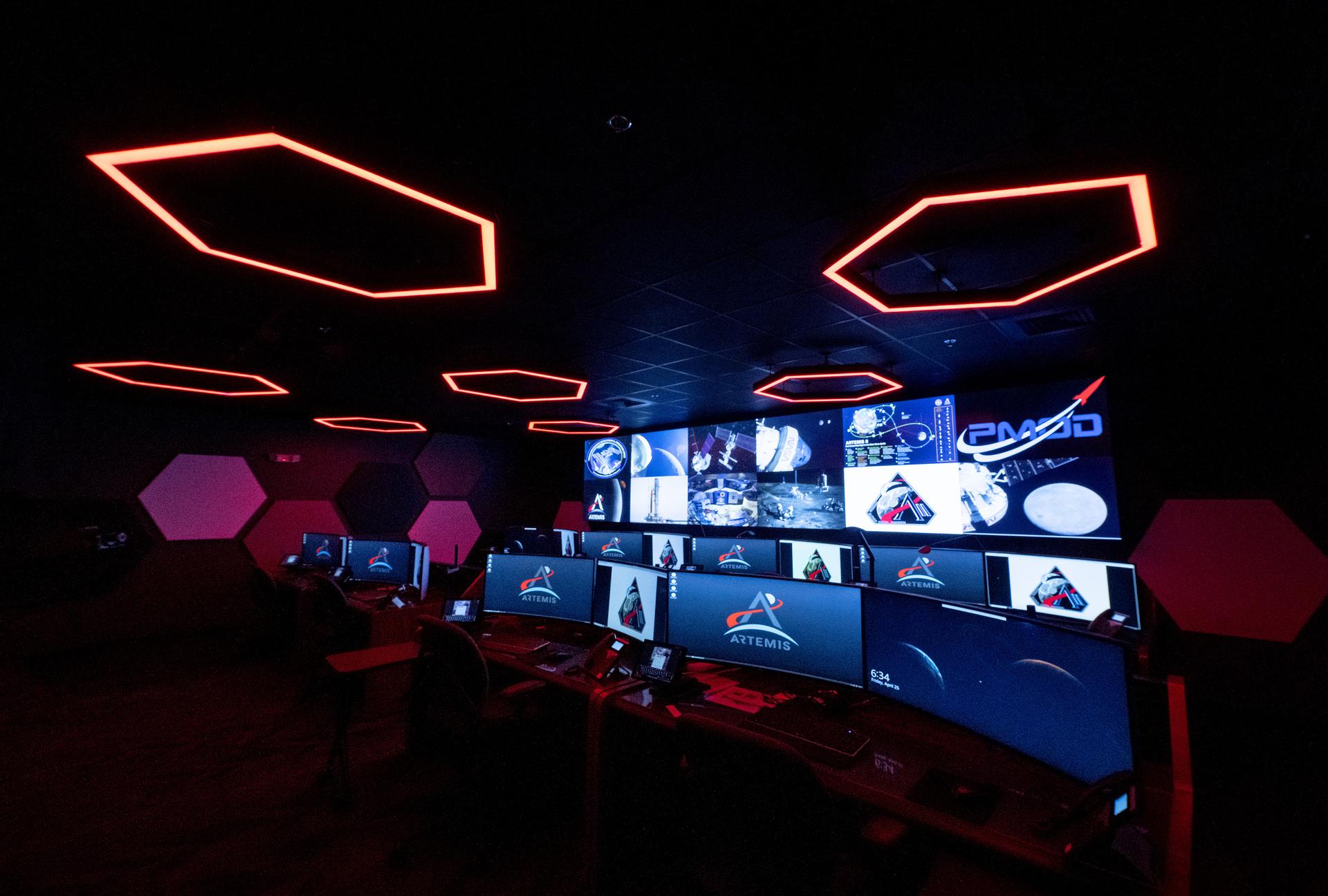
These photos offer a look inside the twin control rooms at NASA’s Marshall Space Flight Center in Huntsville, Alabama, where engineers will monitor Artemis science and future landing operations for Artemis. The LUCA (Lunar Utilization Control Area) and LESA (Lander Engineering Support Area) rooms are part of the Huntsville Operations Support Center at NASA Marshall. The LUCA is specially designed to support a wide variety of science operations on and around the Moon – and beyond. Engineers in the LUCA monitored operations for the Lunar Node-1 experiment, an autonomous navigation payload that was part of the first NASA Commercial Lunar Payload Services (CLPS) launch on Intuitive Machines’ Nova-C lunar lander in 2024. NASA Marshall flight controllers will use the LUCA again for Artemis II to monitor science operations. Beginning with Artemis III, members of the NASA Human Landing System Mission Insight Support Team – a group of engineers, safety leads, flight operations experts, and technical authorities – will work in the LESA. There, they will monitor lander systems in real-time and be involved in key decision-making processes throughout the mission. For more information, contact NASA Marshall’s Office of Communications at 256-544-0034.
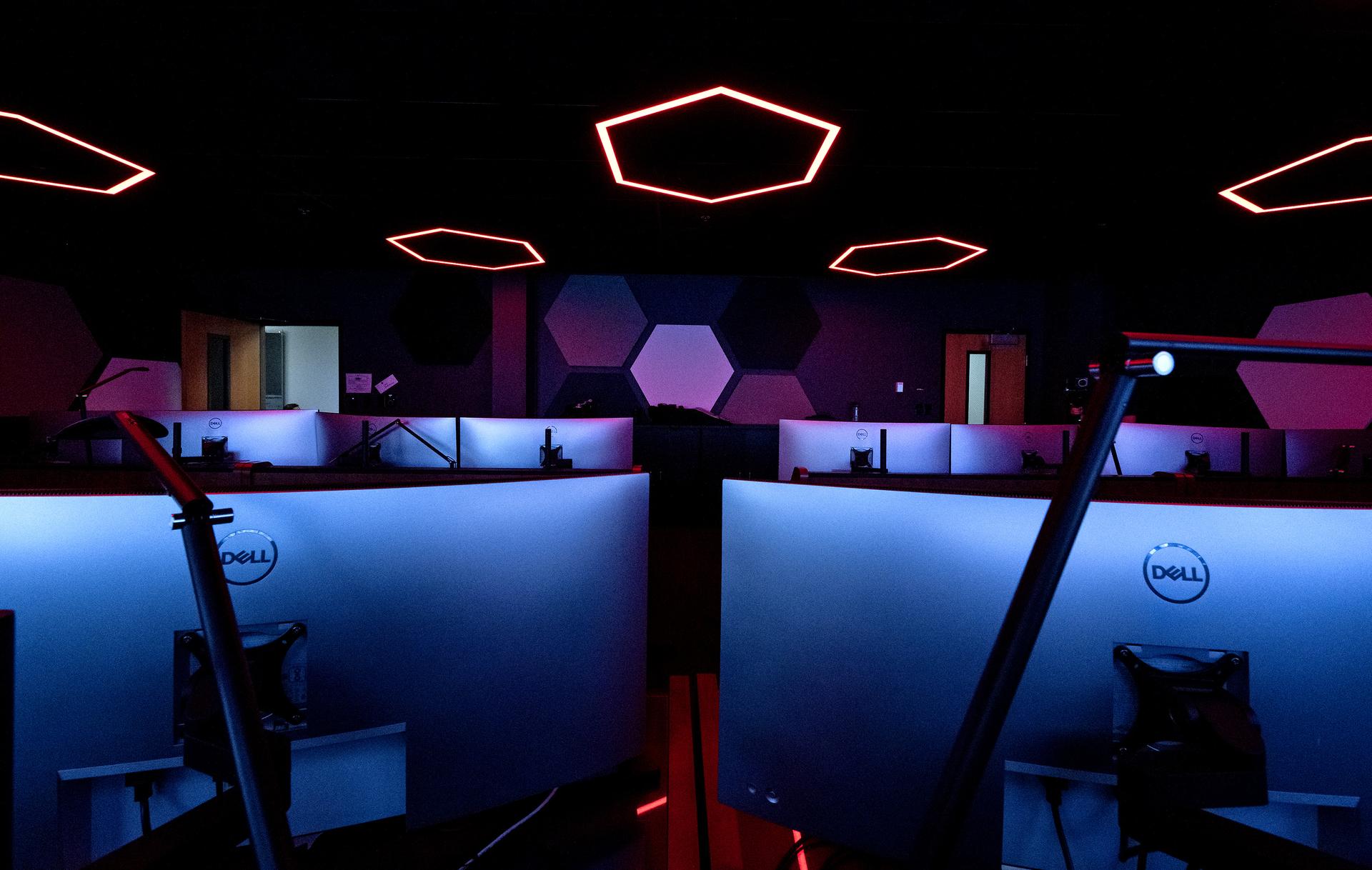
These photos offer a look inside the twin control rooms at NASA’s Marshall Space Flight Center in Huntsville, Alabama, where engineers will monitor Artemis science and future landing operations for Artemis. The LUCA (Lunar Utilization Control Area) and LESA (Lander Engineering Support Area) rooms are part of the Huntsville Operations Support Center at NASA Marshall. The LUCA is specially designed to support a wide variety of science operations on and around the Moon – and beyond. Engineers in the LUCA monitored operations for the Lunar Node-1 experiment, an autonomous navigation payload that was part of the first NASA Commercial Lunar Payload Services (CLPS) launch on Intuitive Machines’ Nova-C lunar lander in 2024. NASA Marshall flight controllers will use the LUCA again for Artemis II to monitor science operations. Beginning with Artemis III, members of the NASA Human Landing System Mission Insight Support Team – a group of engineers, safety leads, flight operations experts, and technical authorities – will work in the LESA. There, they will monitor lander systems in real-time and be involved in key decision-making processes throughout the mission. For more information, contact NASA Marshall’s Office of Communications at 256-544-0034.
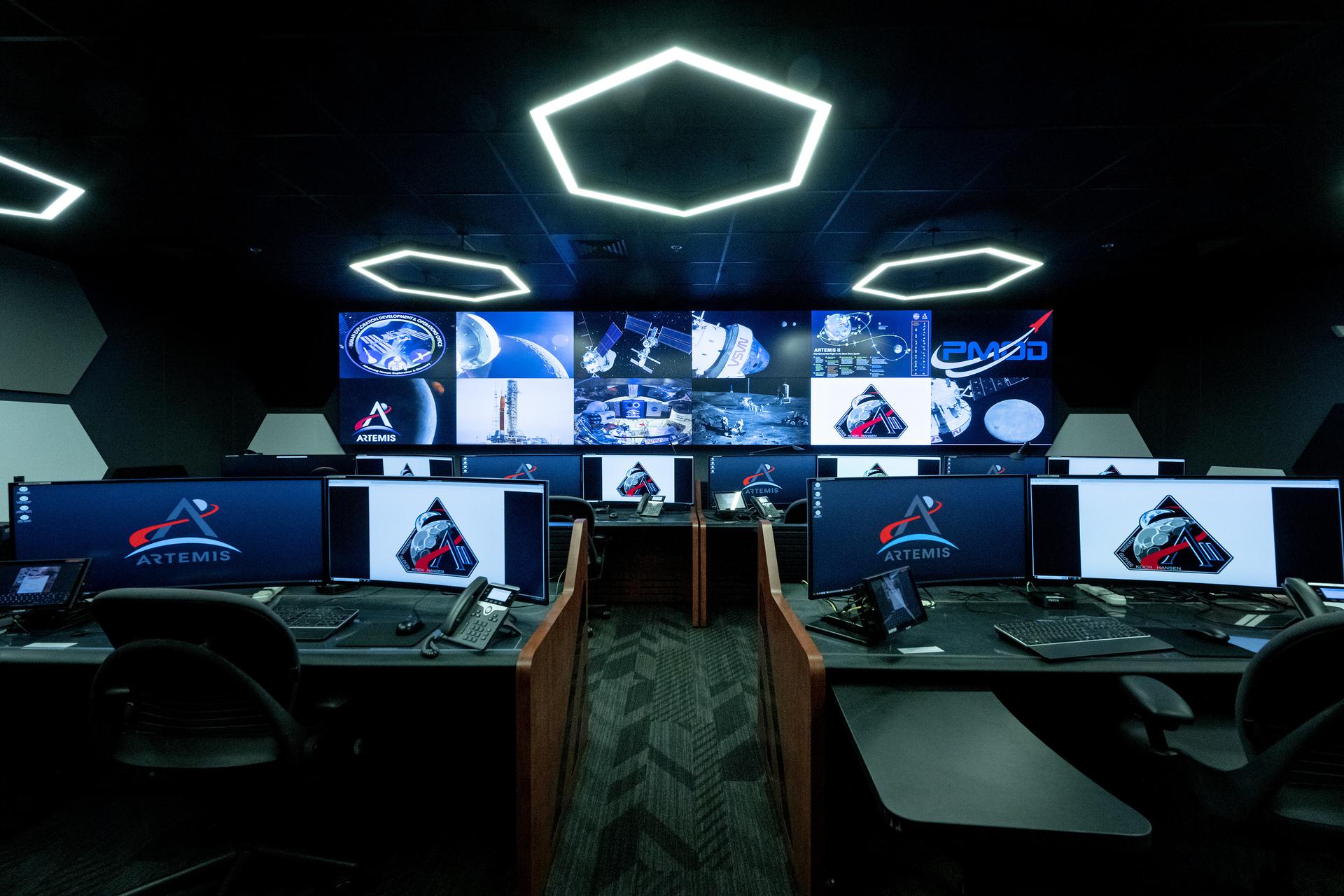
These photos offer a look inside the twin control rooms at NASA’s Marshall Space Flight Center in Huntsville, Alabama, where engineers will monitor Artemis science and future landing operations for Artemis. The LUCA (Lunar Utilization Control Area) and LESA (Lander Engineering Support Area) rooms are part of the Huntsville Operations Support Center at NASA Marshall. The LUCA is specially designed to support a wide variety of science operations on and around the Moon – and beyond. Engineers in the LUCA monitored operations for the Lunar Node-1 experiment, an autonomous navigation payload that was part of the first NASA Commercial Lunar Payload Services (CLPS) launch on Intuitive Machines’ Nova-C lunar lander in 2024. NASA Marshall flight controllers will use the LUCA again for Artemis II to monitor science operations. Beginning with Artemis III, members of the NASA Human Landing System Mission Insight Support Team – a group of engineers, safety leads, flight operations experts, and technical authorities – will work in the LESA. There, they will monitor lander systems in real-time and be involved in key decision-making processes throughout the mission. For more information, contact NASA Marshall’s Office of Communications at 256-544-0034.
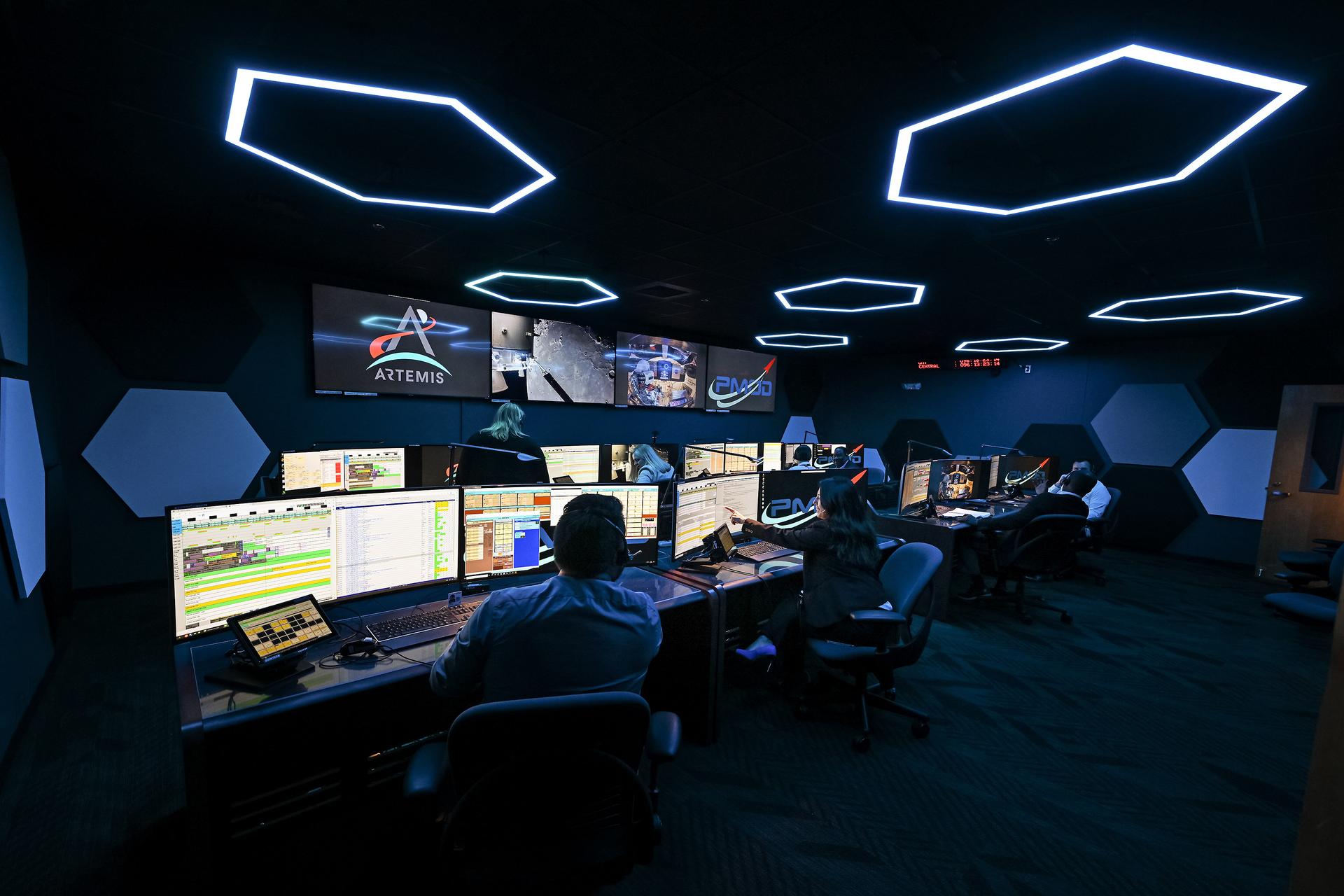
These photos offer a look inside the twin control rooms at NASA’s Marshall Space Flight Center in Huntsville, Alabama, where engineers will monitor Artemis science and future landing operations for Artemis. The LUCA (Lunar Utilization Control Area) and LESA (Lander Engineering Support Area) rooms are part of the Huntsville Operations Support Center at NASA Marshall. The LUCA is specially designed to support a wide variety of science operations on and around the Moon – and beyond. Engineers in the LUCA monitored operations for the Lunar Node-1 experiment, an autonomous navigation payload that was part of the first NASA Commercial Lunar Payload Services (CLPS) launch on Intuitive Machines’ Nova-C lunar lander in 2024. NASA Marshall flight controllers will use the LUCA again for Artemis II to monitor science operations. Beginning with Artemis III, members of the NASA Human Landing System Mission Insight Support Team – a group of engineers, safety leads, flight operations experts, and technical authorities – will work in the LESA. There, they will monitor lander systems in real-time and be involved in key decision-making processes throughout the mission. For more information, contact NASA Marshall’s Office of Communications at 256-544-0034.
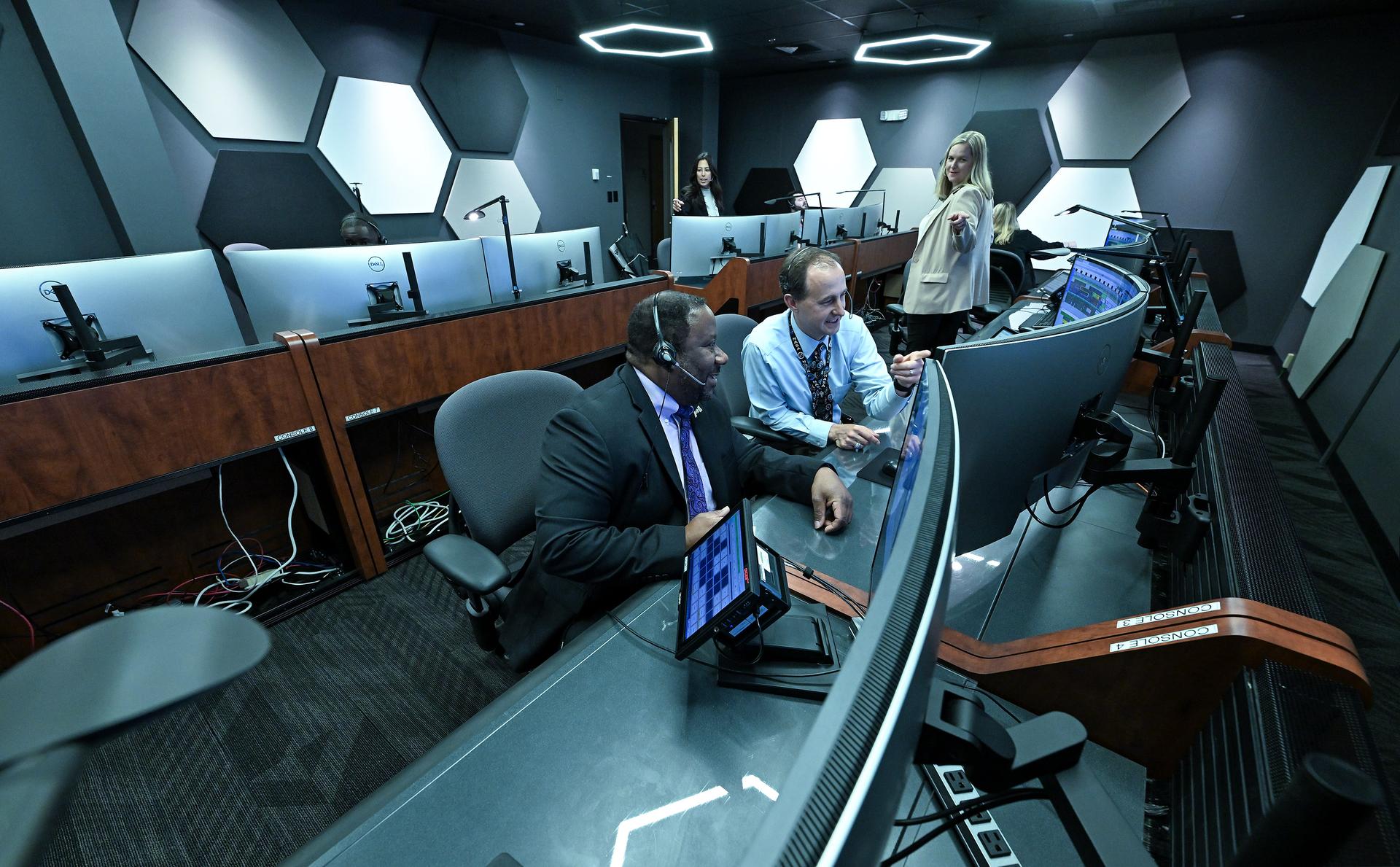
These photos offer a look inside the twin control rooms at NASA’s Marshall Space Flight Center in Huntsville, Alabama, where engineers will monitor Artemis science and future landing operations for Artemis. The LUCA (Lunar Utilization Control Area) and LESA (Lander Engineering Support Area) rooms are part of the Huntsville Operations Support Center at NASA Marshall. The LUCA is specially designed to support a wide variety of science operations on and around the Moon – and beyond. Engineers in the LUCA monitored operations for the Lunar Node-1 experiment, an autonomous navigation payload that was part of the first NASA Commercial Lunar Payload Services (CLPS) launch on Intuitive Machines’ Nova-C lunar lander in 2024. NASA Marshall flight controllers will use the LUCA again for Artemis II to monitor science operations. Beginning with Artemis III, members of the NASA Human Landing System Mission Insight Support Team – a group of engineers, safety leads, flight operations experts, and technical authorities – will work in the LESA. There, they will monitor lander systems in real-time and be involved in key decision-making processes throughout the mission. For more information, contact NASA Marshall’s Office of Communications at 256-544-0034.
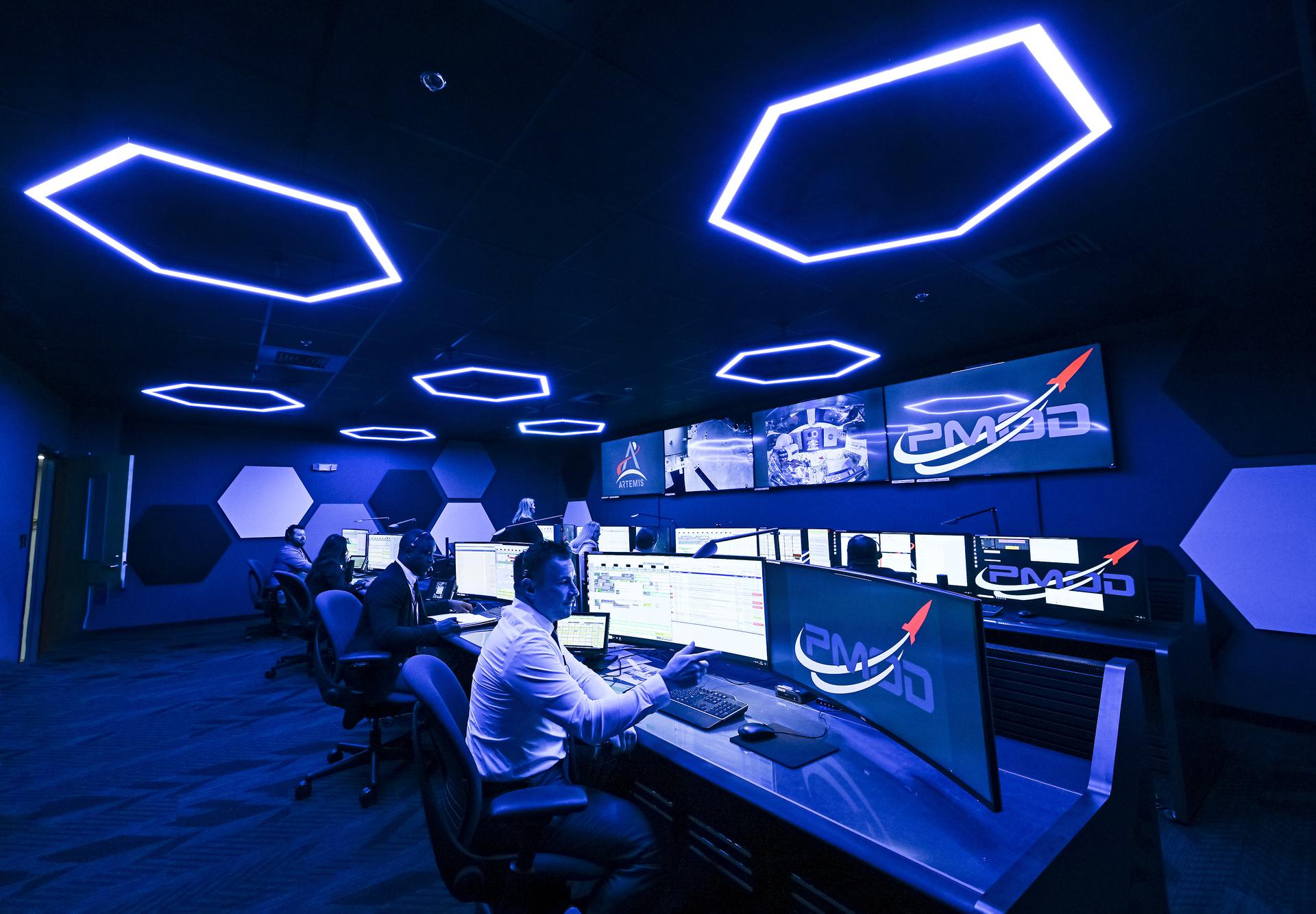
These photos offer a look inside the twin control rooms at NASA’s Marshall Space Flight Center in Huntsville, Alabama, where engineers will monitor Artemis science and future landing operations for Artemis. The LUCA (Lunar Utilization Control Area) and LESA (Lander Engineering Support Area) rooms are part of the Huntsville Operations Support Center at NASA Marshall. The LUCA is specially designed to support a wide variety of science operations on and around the Moon – and beyond. Engineers in the LUCA monitored operations for the Lunar Node-1 experiment, an autonomous navigation payload that was part of the first NASA Commercial Lunar Payload Services (CLPS) launch on Intuitive Machines’ Nova-C lunar lander in 2024. NASA Marshall flight controllers will use the LUCA again for Artemis II to monitor science operations. Beginning with Artemis III, members of the NASA Human Landing System Mission Insight Support Team – a group of engineers, safety leads, flight operations experts, and technical authorities – will work in the LESA. There, they will monitor lander systems in real-time and be involved in key decision-making processes throughout the mission. For more information, contact NASA Marshall’s Office of Communications at 256-544-0034.