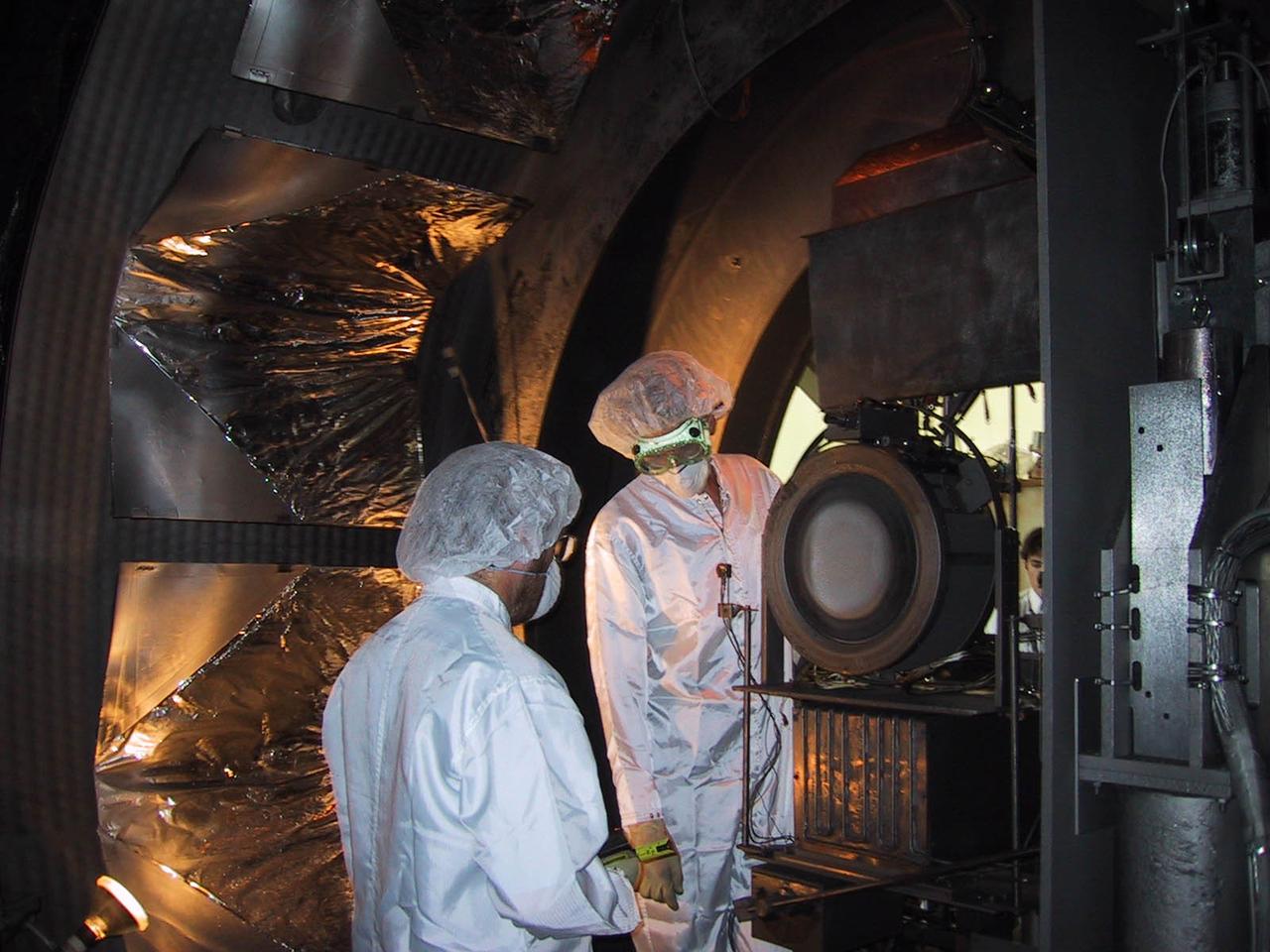
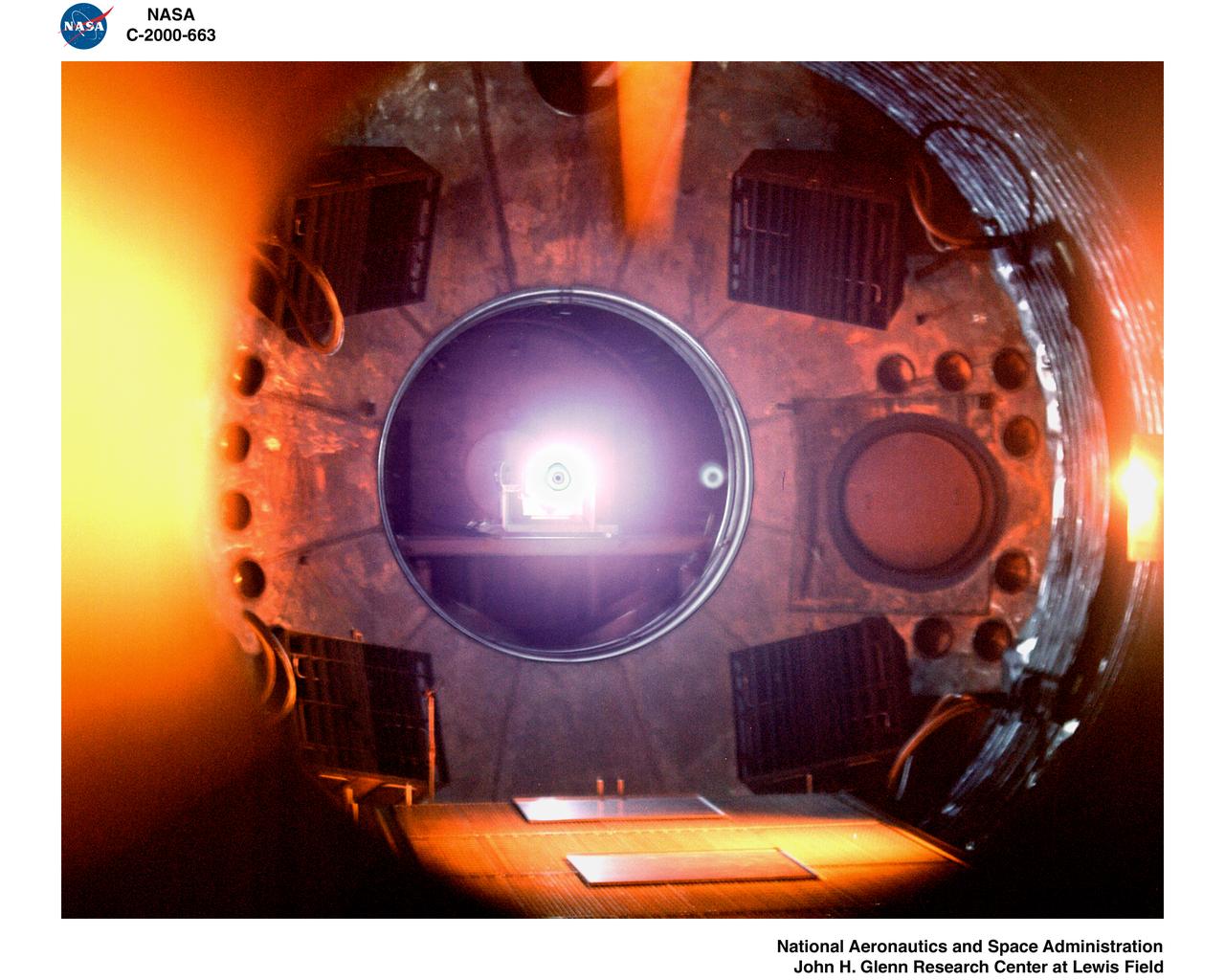
An ion thruster is removed from a vacuum chamber at NASA's Jet Propulsion Laboratory in Pasadena, California. The thruster, a spare engine from NASA's Deep Space 1 mission, with a designed life of 8,000 hours, ran for a record 30,352 hours (nearly 5 years) giving researchers the ability to observe its performance and wear at different power levels throughout the test. This information will be vital to future missions that use ion propulsion. Ion propulsion systems can be very lightweight, rurning on just a few grams of xenon gas a day. Xenon is the same gas that is found in photo flash bulbs. This fuel efficiency can lower launch vehicle costs. The successful Deep Space 1 mission featured the first use of an ion engine as the primary means of propulsion on a NASA spacecraft. NASA's next-generation ion propulsion efforts are implemented by the Marshall Space Flight Center. The program seeks to develop advanced propulsion technologies that will significantly reduce cost, mass, or travel times.
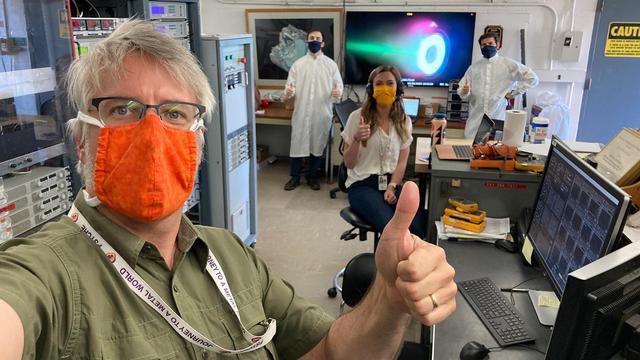
Psyche engineers adapted to COVID-19 social distancing and masking requirements while testing the Hall thrusters that will propel NASA's Psyche spacecraft on its journey to the main asteroid belt between Mars and Jupiter. Set to launch in August 2022, the spacecraft will utilize this super-efficient electric propulsion system to travel to the asteroid Psyche. On May 20, 2020, at NASA's Jet Propulsion Laboratory, Flight System Engineer Steve Snyder (foreground) of JPL and a crew of engineers from Maxar Technologies worked together in the control room next to the vacuum chamber where the thruster was fired up. Snyder and his Maxar colleagues (from left: Faraz Aghazadeh, Taylor Kerl and Giovanni Lenguito) put the thruster and its power supply through a series of stress tests to ensure they can operate together in the extreme conditions of deep space. In the background, a monitor projects the image of the thruster firing. The thruster works by turning xenon gas, a neutral gas used in car headlights and plasma TVs, into xenon ions. As the xenon ions are accelerated out of the thruster, they create the thrust that will propel the spacecraft. The xenon plasma emits a blue glow, seen here on the screen, as it operates. Hall thrusters will be used for the first time beyond lunar orbit, demonstrating that they could play a role in supporting future missions to deep space. Maxar and JPL adapted the Hall thruster system for use with the main body of the spacecraft that Maxar is building at its facility in Palo Alto, California. https://photojournal.jpl.nasa.gov/catalog/PIA23878

New staff member Paul Margosian inspects a cluster of ion engines in the Electric Propulsion Laboratory’s 25-foot diameter vacuum tank at the National Aeronautics and Space Administration (NASA) Lewis Research Center. Lewis researchers had been studying different methods of electric rocket propulsion since the mid-1950s. Harold Kaufman created the first successful engine, the electron bombardment ion engine, in the early 1960s. These engines used electric power to create and accelerate small particles of propellant material to high exhaust velocities. Electric engines have a very small thrust, and but can operate for long periods of time. The ion engines are often clustered together to provide higher levels of thrust. The Electric Propulsion Laboratory contained two large vacuum tanks capable of simulating the space environment. The tanks were designed especially for testing ion and plasma thrusters and spacecraft. The larger 25-foot diameter tank was intended for testing electric thrusters with condensable propellants. The tank’s test compartment, seen here, was 10 feet in diameter. Margosian joined Lewis in late 1962 during a major NASA hiring phase. The Agency reorganized in 1961 and began expanding its ranks through a massive recruiting effort. Lewis personnel increased from approximately 2,700 in 1961 to over 4,800 in 1966. Margosian, who worked with Bill Kerslake in the Electromagnetic Propulsion Division’s Propulsion Systems Section, wrote eight technical reports on mercury and electron bombardment thrusters, thermoelectrostatic generators, and a high voltage insulator.
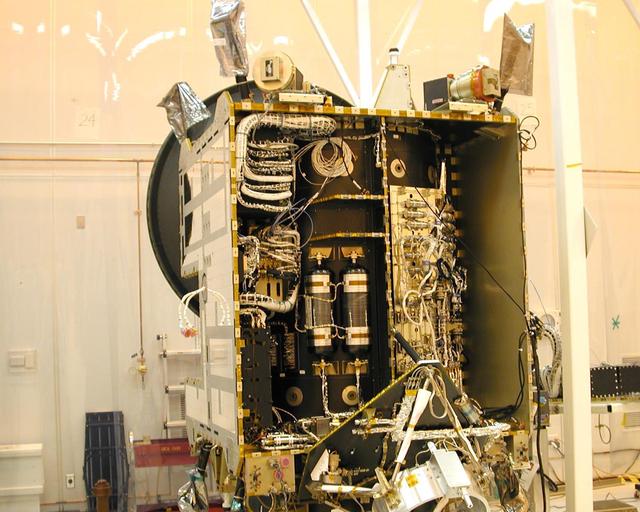
Exposed interior of NASA Dawn spacecraft showing ion propulsion system xenon feed system.

This illustration shows the core structure with ion propulsion system installed aboard NASA Dawn spacecraft.
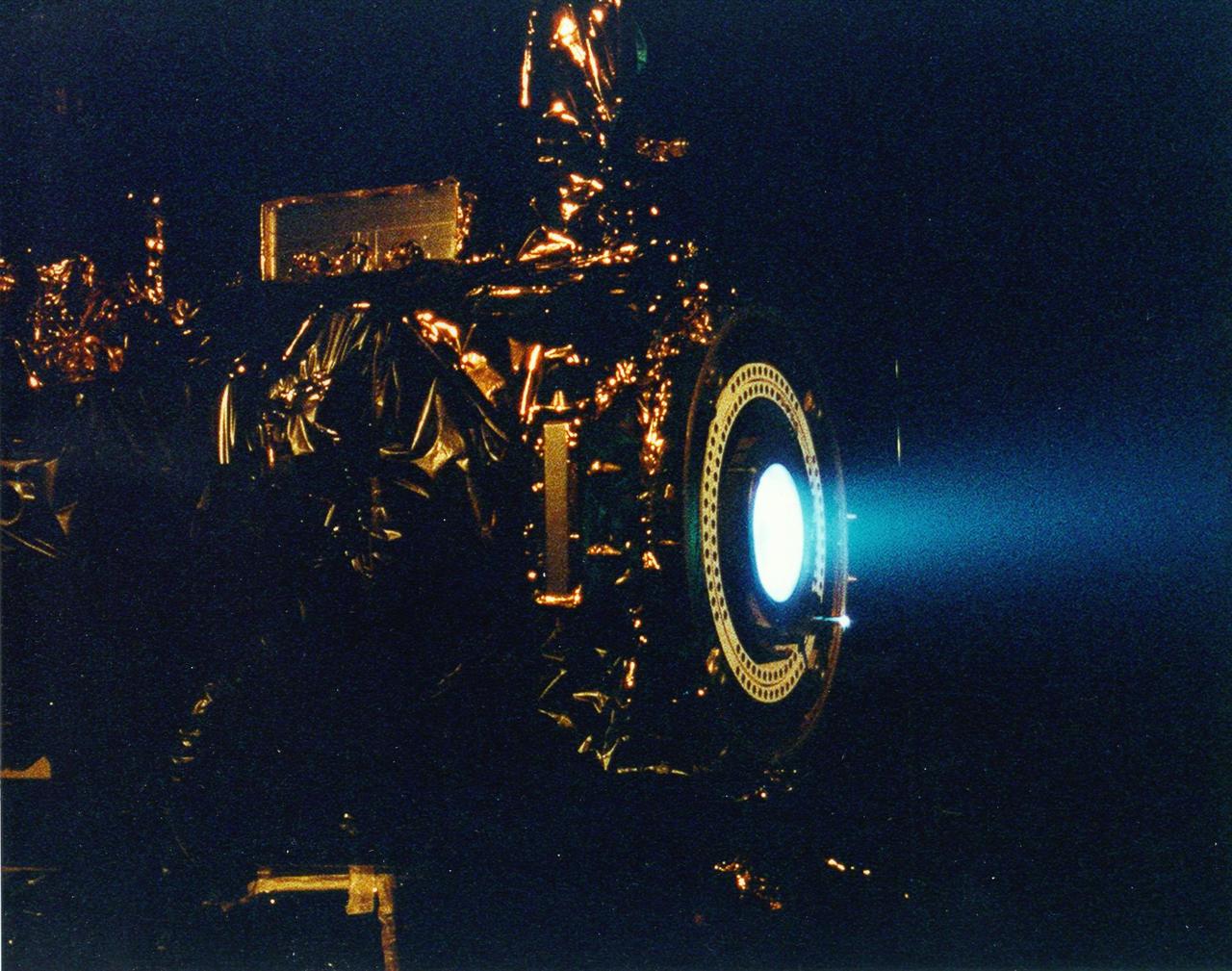
This image of a xenon ion engine, photographed through a port of the vacuum chamber where it was being tested at NASA's Jet Propulsion Laboratory, shows the faint blue glow of charged atoms being emitted from the engine. The ion propulsion engine is the first non-chemical propulsion to be used as the primary means of propelling a spacecraft. Though the thrust of the ion propulsion is about the same as the downward pressure of a single sheet of paper, by the end of the mission, the ion engine will have changed the spacecraft speed by about 13,700 kilometers/hour (8500 miles/hour). Even then, it will have expended only about 64 kg of its 81.5 kg supply of xenon propellant. http://photojournal.jpl.nasa.gov/catalog/PIA04247
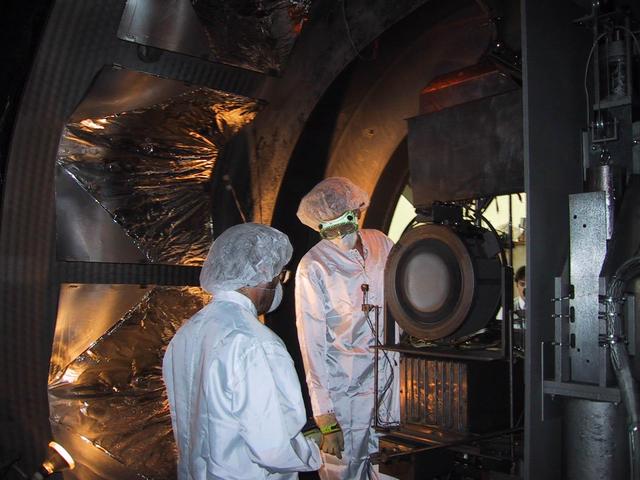
An ion thruster is removed from a vacuum chamber at NASA Jet Propulsion Laboratory, Pasadena, Calif., its job done following almost five years of testing.
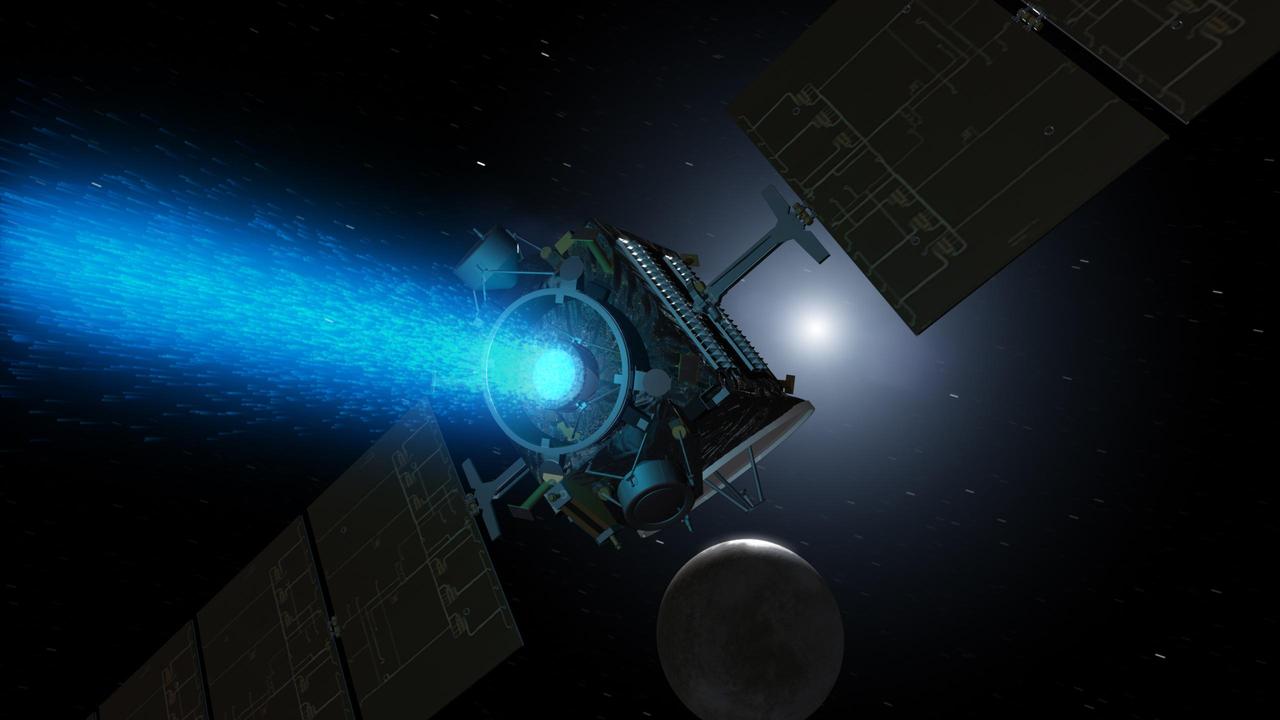
This artist concept shows NASA Dawn spacecraft arriving at the dwarf planet Ceres. Dawn travels through space using a technology called ion propulsion, with ions glowing with blue light are accelerated out of an engine, giving the spacecraft thrust.
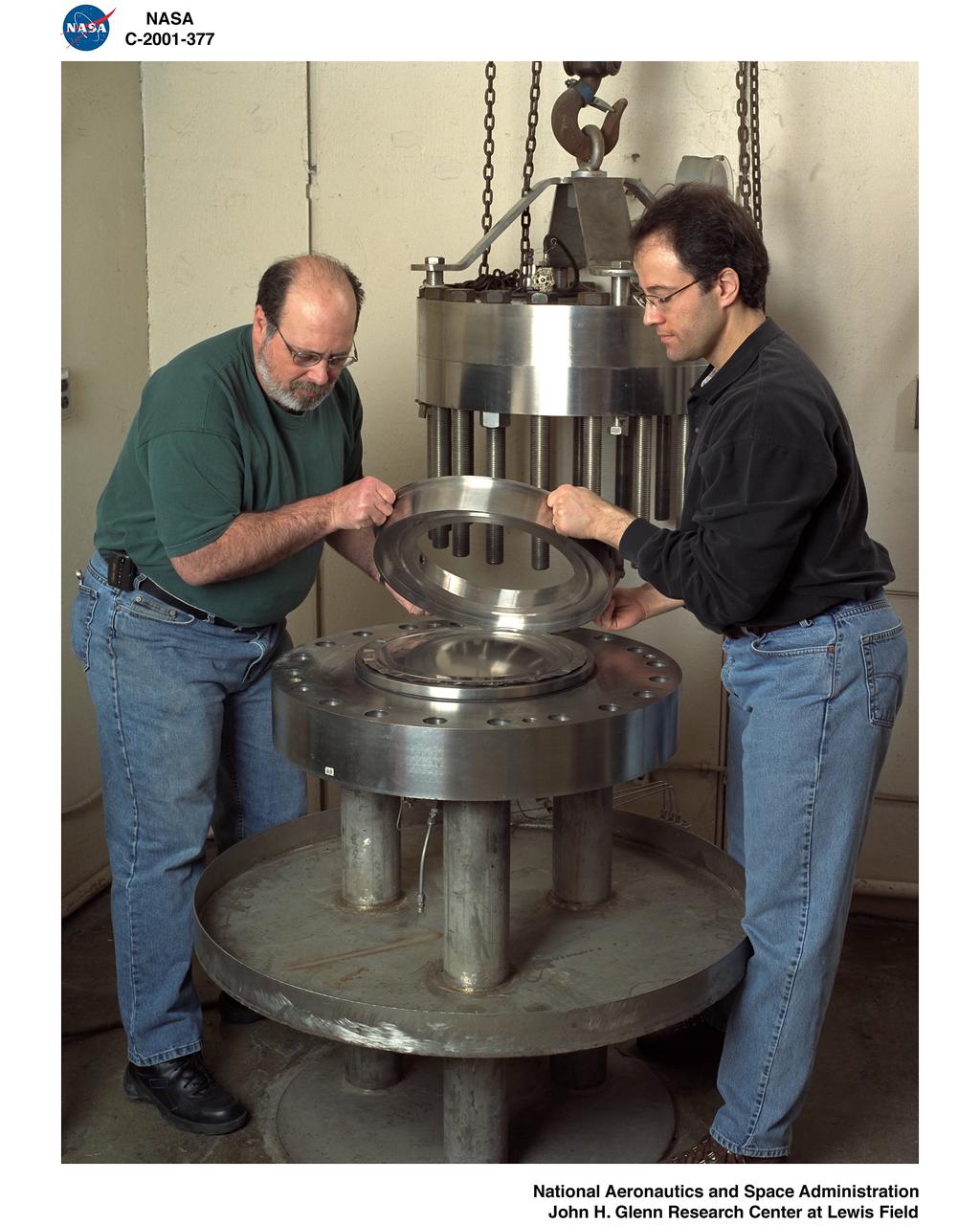
ION PROPULSION LABORATORIES - HYDROFORMING RIG
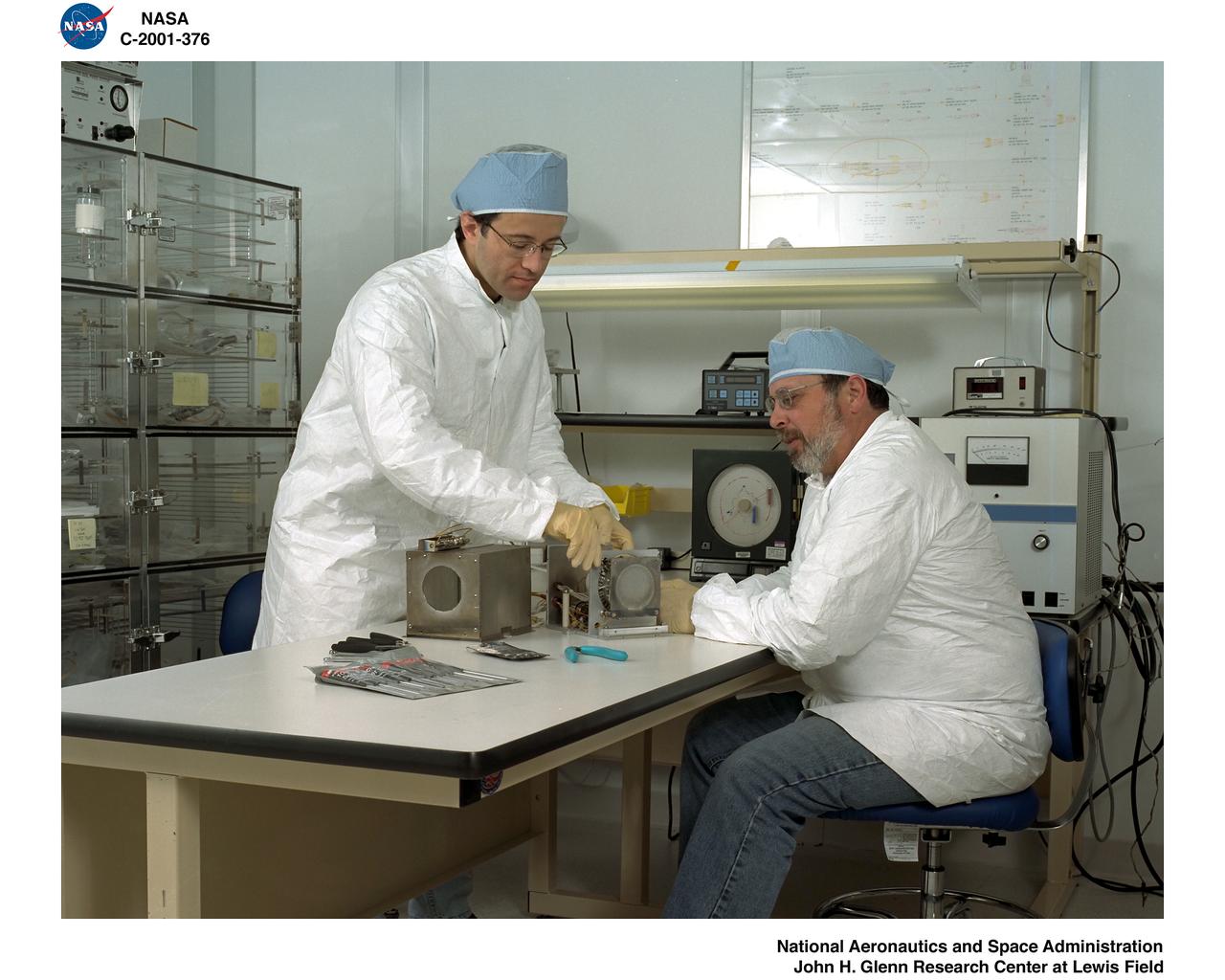
ION PROPULSION LABORATORIES - CLEAN ROOM
EXPRESS INTEGRATED TEST ION PROPULSION SYSTEM
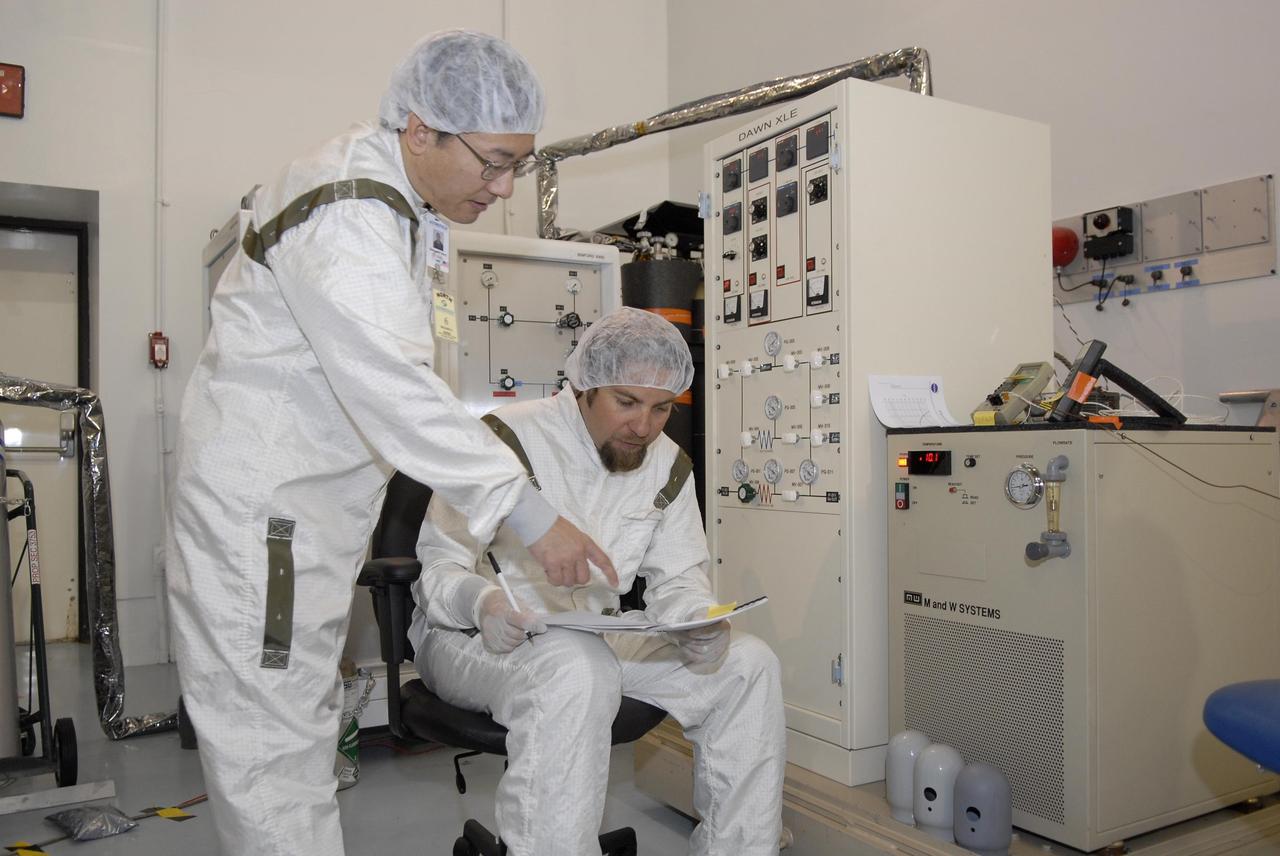
KENNEDY SPACE CENTER, FLA. -- In Astrotech's Hazardous Processing Facility, technicians check data during the loading of xenon for the ion propulsion system in the Dawn spacecraft. Dawn's mission is to explore two of the asteroid belt's most intriguing and dissimilar occupants: asteroid Vesta and the dwarf planet Ceres. The Dawn spacecraft uses ion propulsion to get the additional velocity needed to reach Vesta once it leaves the Delta rocket. It also uses ion propulsion to spiral to lower altitudes on Vesta, to leave Vesta and cruise to Ceres and to spiral to a low-altitude orbit at Ceres. Ion propulsion makes efficient use of the onboard fuel by accelerating it to a velocity 10 times that of chemical rockets. Dawn is scheduled to launch July 7aboard a Delta II rocket from Launch Complex 17-B at Cape Canaveral Air Force Station. Photo credit: NASA/Kim Shiflett
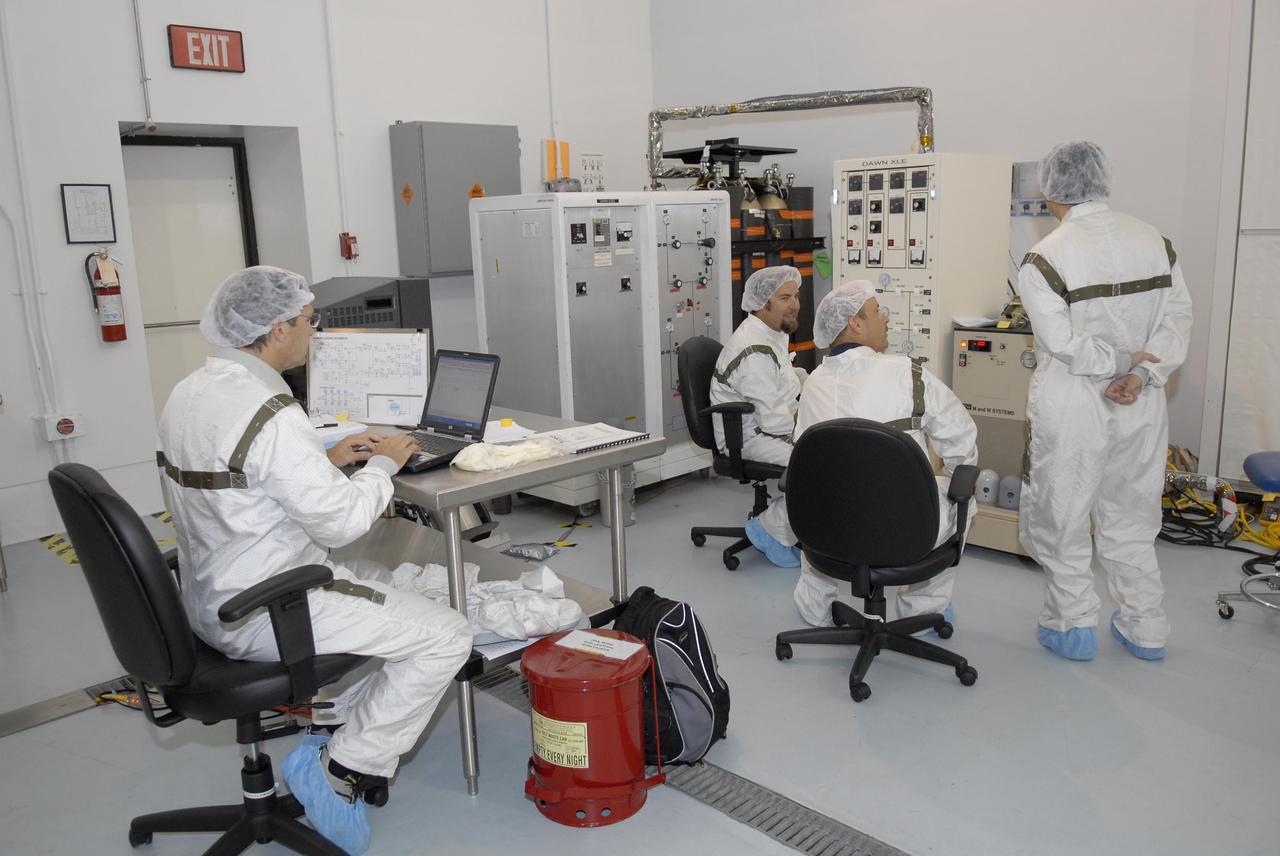
KENNEDY SPACE CENTER, FLA. -- In Astrotech's Hazardous Processing Facility, technicians check data during the loading of xenon for the ion propulsion system in the Dawn spacecraft. Dawn's mission is to explore two of the asteroid belt's most intriguing and dissimilar occupants: asteroid Vesta and the dwarf planet Ceres. The Dawn spacecraft uses ion propulsion to get the additional velocity needed to reach Vesta once it leaves the Delta rocket. It also uses ion propulsion to spiral to lower altitudes on Vesta, to leave Vesta and cruise to Ceres and to spiral to a low-altitude orbit at Ceres. Ion propulsion makes efficient use of the onboard fuel by accelerating it to a velocity 10 times that of chemical rockets. Dawn is scheduled to launch July 7aboard a Delta II rocket from Launch Complex 17-B at Cape Canaveral Air Force Station. Photo credit: NASA/Kim Shiflett
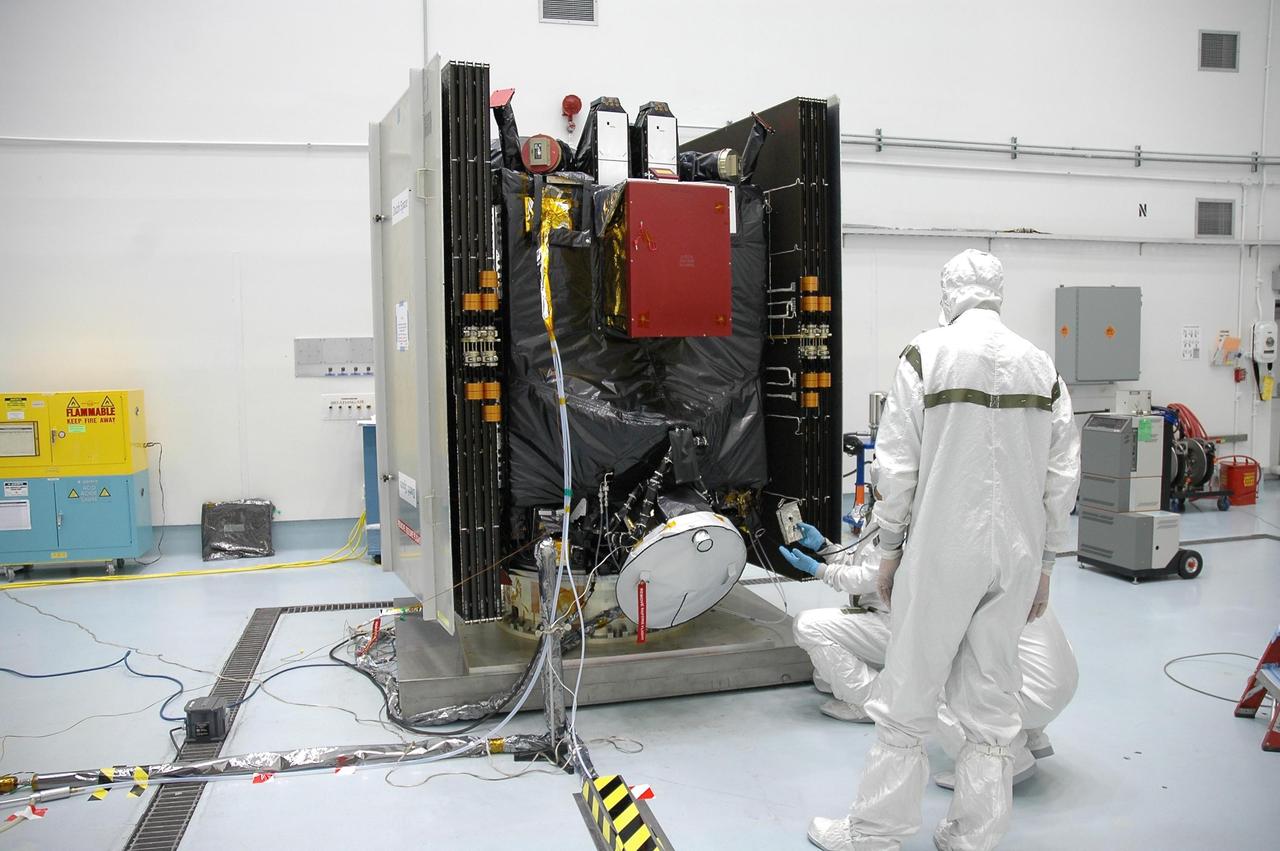
KENNEDY SPACE CENTER, FLA. -- At Astrotech's Hazardous Processing Facility, technicians are loading the Dawn spacecraft with xenon gas for the ion propulsion system. Dawn's mission is to explore two of the asteroid belt's most intriguing and dissimilar occupants: asteroid Vesta and the dwarf planet Ceres. The Dawn spacecraft uses ion propulsion to get the additional velocity needed to reach Vesta once it leaves the Delta rocket. It also uses ion propulsion to spiral to lower altitudes on Vesta, to leave Vesta and cruise to Ceres and to spiral to a low-altitude orbit at Ceres. Ion propulsion makes efficient use of the onboard fuel by accelerating it to a velocity 10 times that of chemical rockets. Dawn is scheduled to launch July 7aboard a Delta II rocket from Launch Complex 17-B at Cape Canaveral Air Force Station. Photo credit: NASA/Jim Grossmann
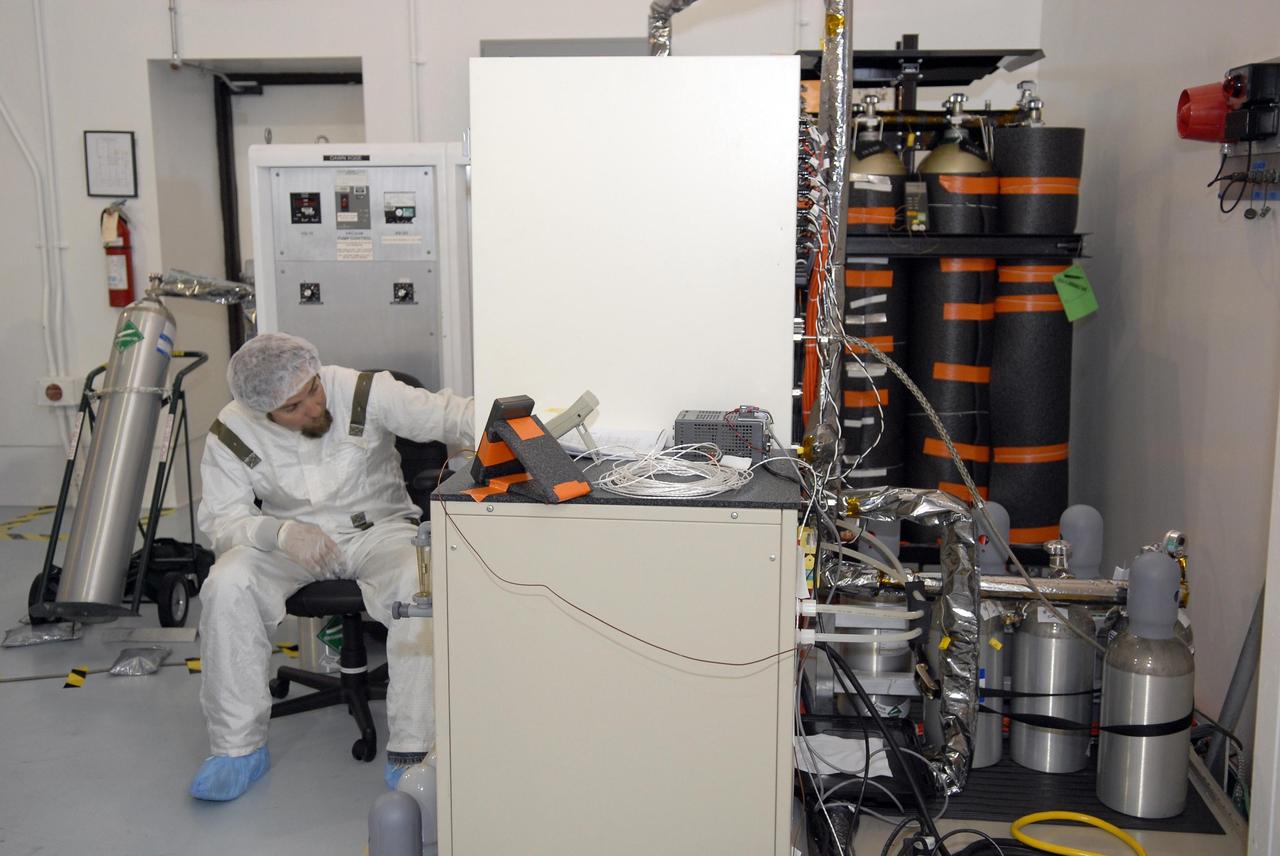
KENNEDY SPACE CENTER, FLA. -- In Astrotech's Hazardous Processing Facility, a technician monitors the loading of xenon for the ion propulsion system in the Dawn spacecraft. Dawn's mission is to explore two of the asteroid belt's most intriguing and dissimilar occupants: asteroid Vesta and the dwarf planet Ceres. The Dawn spacecraft uses ion propulsion to get the additional velocity needed to reach Vesta once it leaves the Delta rocket. It also uses ion propulsion to spiral to lower altitudes on Vesta, to leave Vesta and cruise to Ceres and to spiral to a low-altitude orbit at Ceres. Ion propulsion makes efficient use of the onboard fuel by accelerating it to a velocity 10 times that of chemical rockets. Dawn is scheduled to launch July 7aboard a Delta II rocket from Launch Complex 17-B at Cape Canaveral Air Force Station. Photo credit: NASA/Kim Shiflett
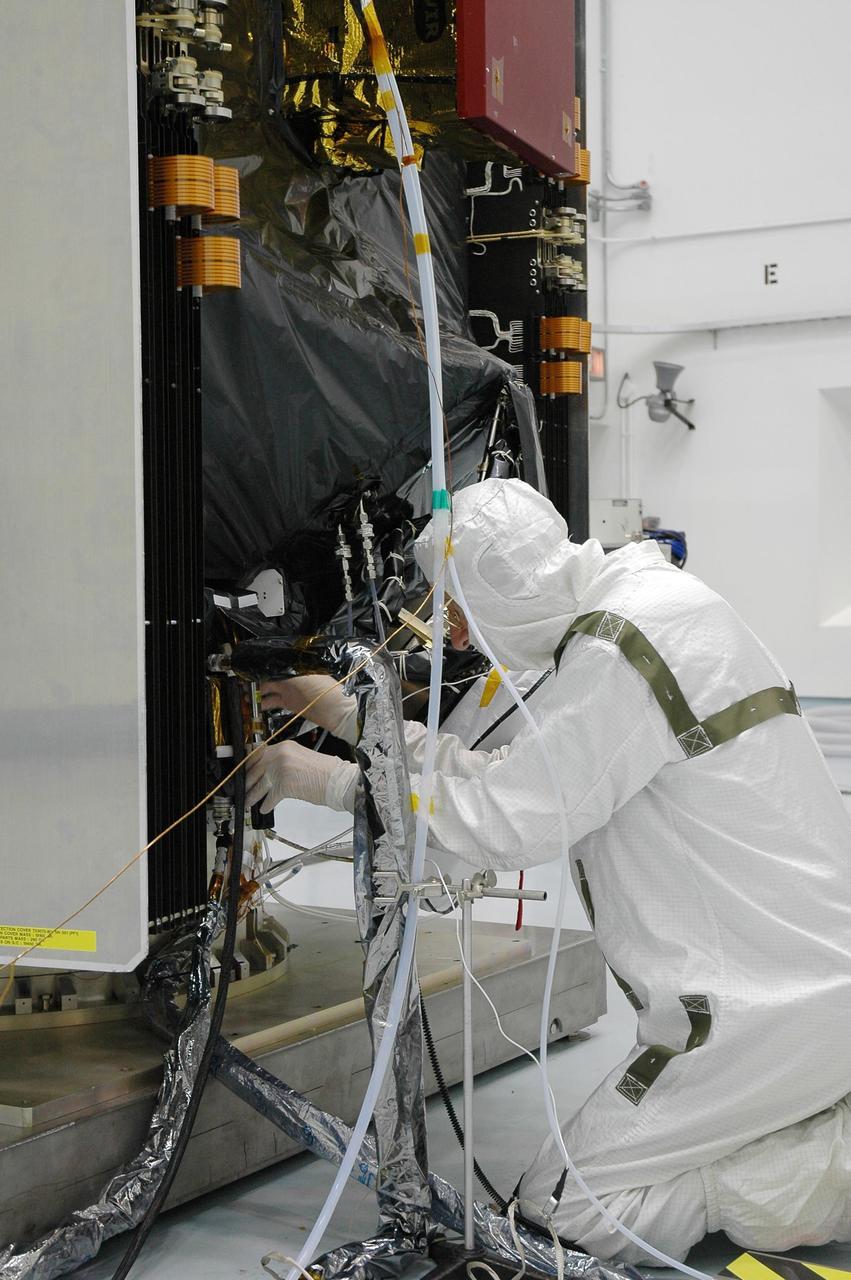
KENNEDY SPACE CENTER, FLA. -- At Astrotech's Hazardous Processing Facility, a technician checks the connections for loading the Dawn spacecraft with xenon gas for the ion propulsion system. Dawn's mission is to explore two of the asteroid belt's most intriguing and dissimilar occupants: asteroid Vesta and the dwarf planet Ceres. The Dawn spacecraft uses ion propulsion to get the additional velocity needed to reach Vesta once it leaves the Delta rocket. It also uses ion propulsion to spiral to lower altitudes on Vesta, to leave Vesta and cruise to Ceres and to spiral to a low-altitude orbit at Ceres. Ion propulsion makes efficient use of the onboard fuel by accelerating it to a velocity 10 times that of chemical rockets. Dawn is scheduled to launch July 7aboard a Delta II rocket from Launch Complex 17-B at Cape Canaveral Air Force Station. Photo credit: NASA/Jim Grossmann
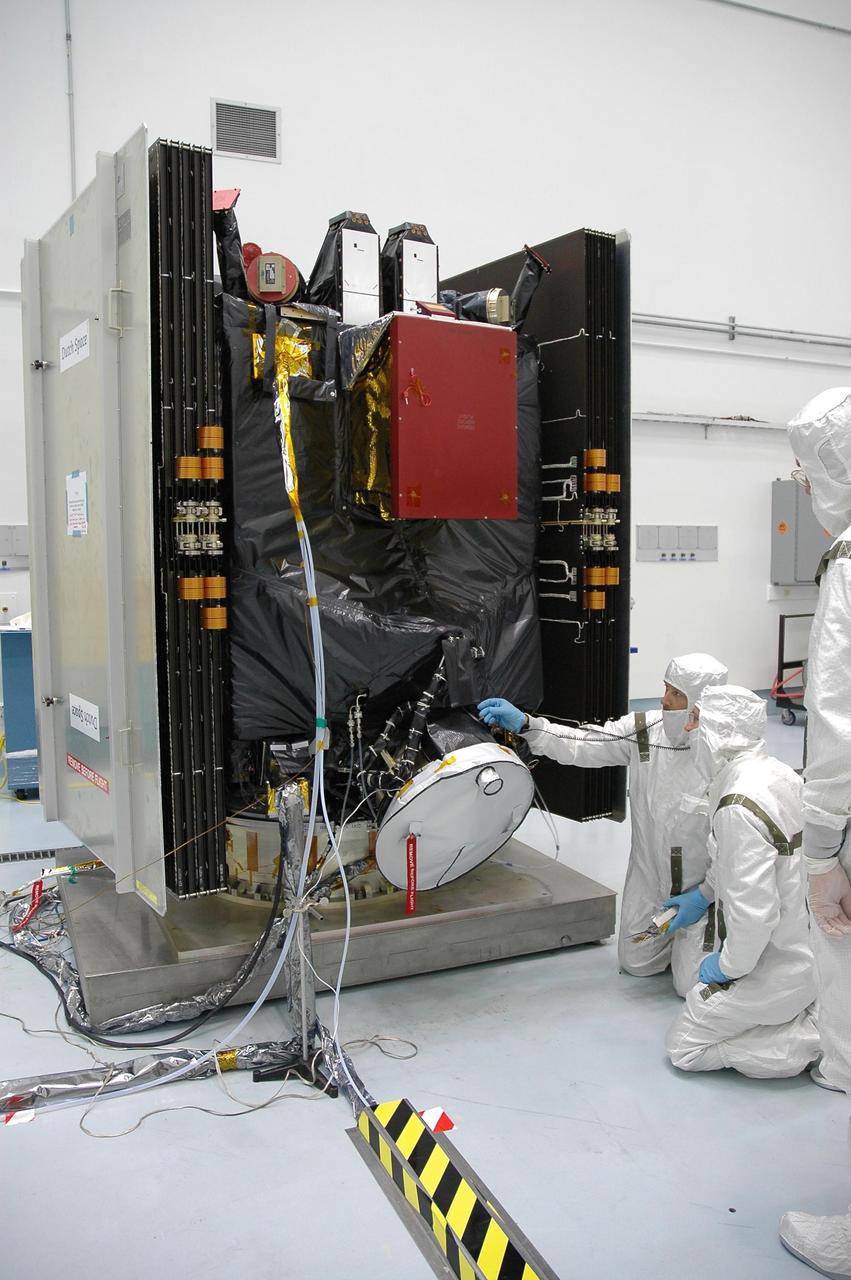
KENNEDY SPACE CENTER, FLA. -- At Astrotech's Hazardous Processing Facility, technicians look at the connections for loading the Dawn spacecraft with xenon gas for the ion propulsion system. Dawn's mission is to explore two of the asteroid belt's most intriguing and dissimilar occupants: asteroid Vesta and the dwarf planet Ceres. The Dawn spacecraft uses ion propulsion to get the additional velocity needed to reach Vesta once it leaves the Delta rocket. It also uses ion propulsion to spiral to lower altitudes on Vesta, to leave Vesta and cruise to Ceres and to spiral to a low-altitude orbit at Ceres. Ion propulsion makes efficient use of the onboard fuel by accelerating it to a velocity 10 times that of chemical rockets. Dawn is scheduled to launch July 7aboard a Delta II rocket from Launch Complex 17-B at Cape Canaveral Air Force Station. Photo credit: NASA/Jim Grossmann
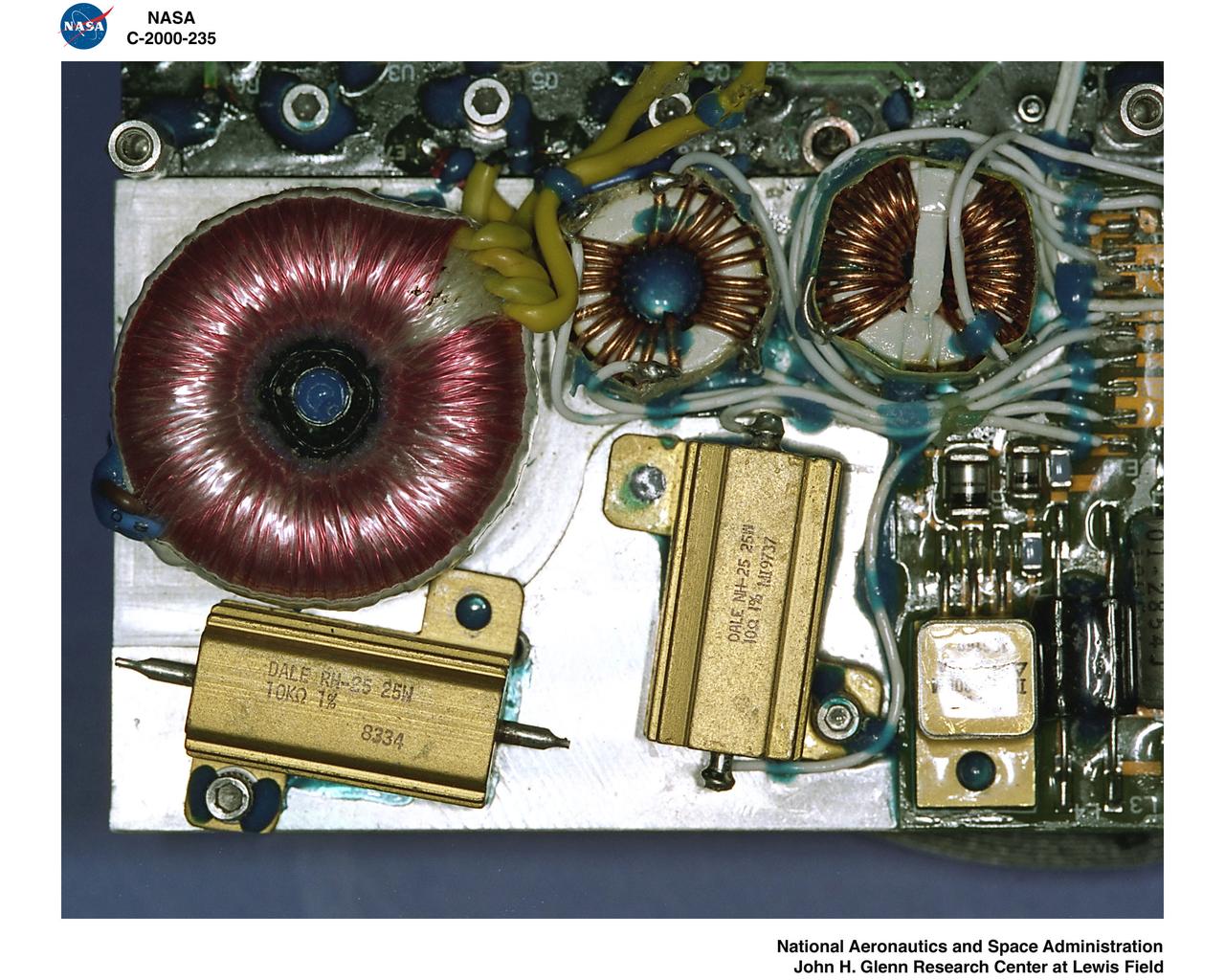
EXPRESS PPU POWER PROPULSION UNIT 160 CIRCUIT BOARDS FOR POWER UNIT OF ION THRUSTER
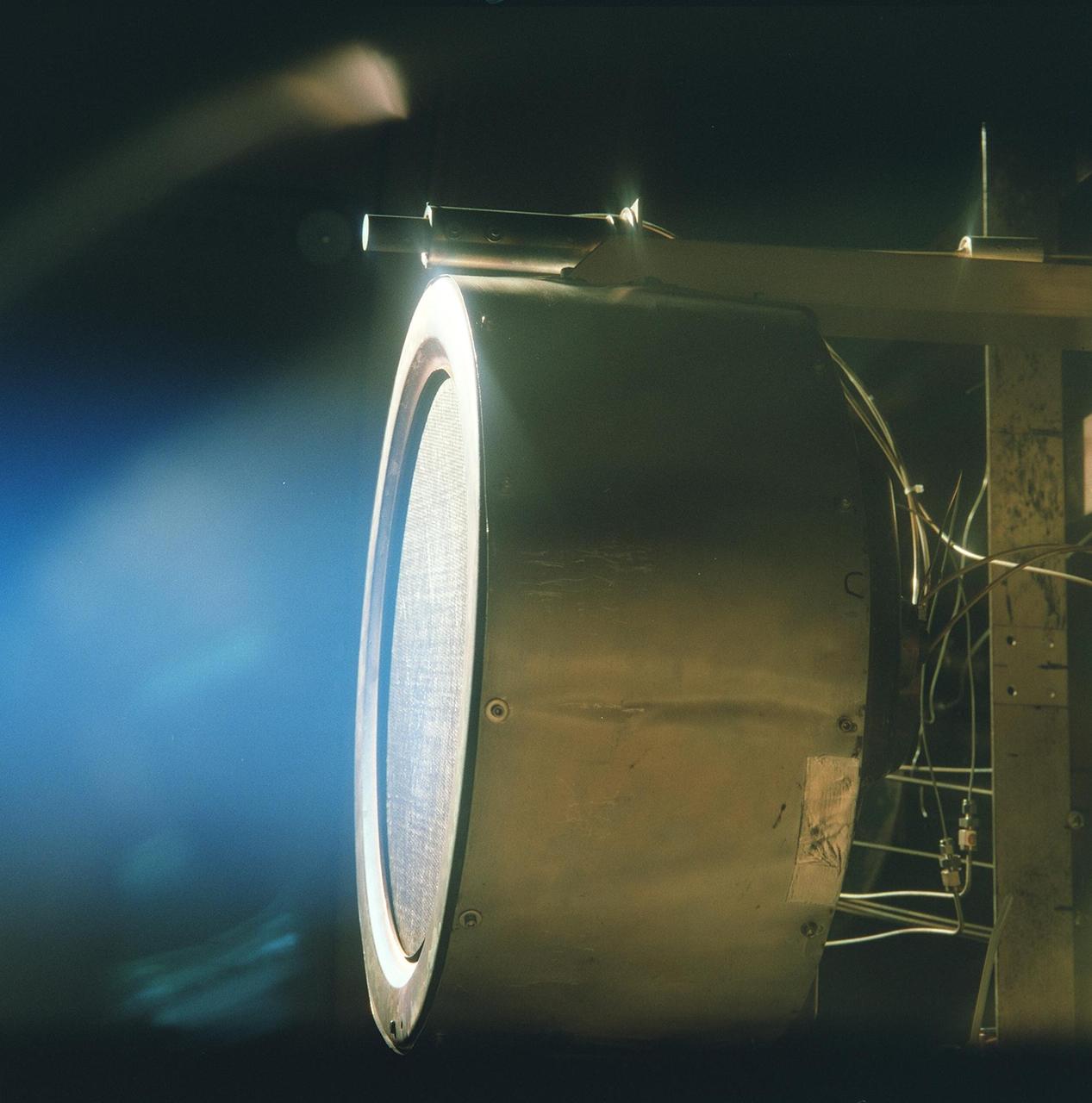
This image of a xenon ion engine prototype, photographed through a port of the vacuum chamber where it was being tested at NASA's Jet Propulsion Laboratory, shows the faint blue glow of charged atoms being emitted from the engine. The engine is now in an ongoing extended- life test, in a vacuum test chamber at JPL, and has run for almost 500 days (12,000 hours) and is scheduled to complete nearly 625 days (15,000 hours) by the end of 2001. A similar engine powers the New Millennium Program's flagship mission, Deep Space 1, which uses the ion engine in a trip through the solar system. The engine, weighing 17.6 pounds (8 kilograms), is 15.7 inches (40 centimeters) in diameter and 15.7 inches long. The actual thrust comes from accelerating and expelling positively charged xenon atoms, or ions. While the ions are fired in great numbers out the thruster at more than 110,000 kilometers (68,000 miles) per hour, their mass is so low that the engine produces a gentle thrust of only 90 millinewtons (20-thousandths of a pound). http://photojournal.jpl.nasa.gov/catalog/PIA04238
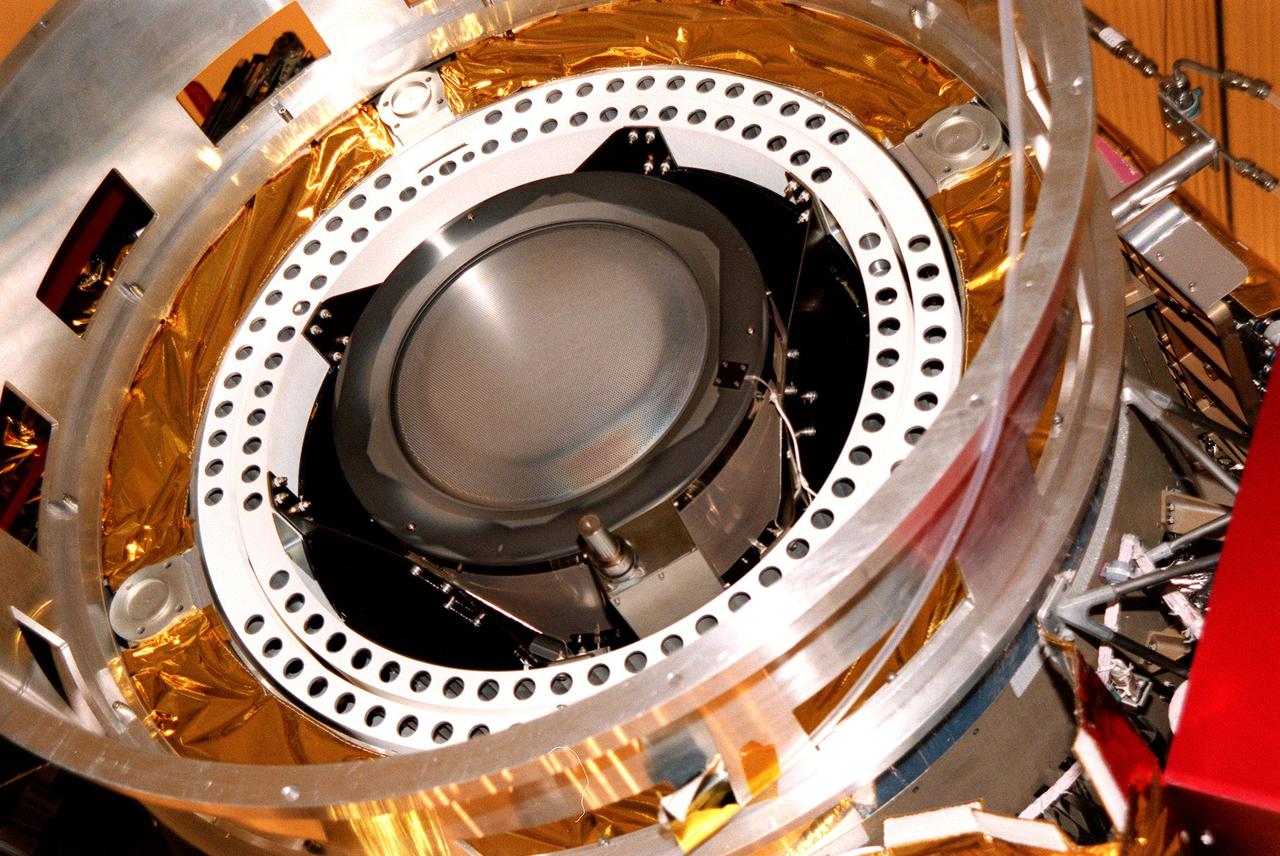
Kennedy Space Center, Florida. - Deep Space 1 is lifted from its work platform, giving a closeup view of the experimental solar-powered ion propulsion engine. The ion propulsion engine is the first non-chemical propulsion to be used as the primary means of propelling a spacecraft. The first flight in NASA's New Millennium Program, Deep Space 1 is designed to validate 12 new technologies for scientific space missions of the next century. Another onboard experiment includes software that tracks celestial bodies so the spacecraft can make its own navigation decisions without the intervention of ground controllers. Deep Space 1 will complete most of its mission objectives within the first two months, but may also do a flyby of a near-Earth asteroid, 1992 KD, in July 1999. Deep Space 1 will be launched aboard a Boeing Delta 7326 rocket from Launch Pad 17A, Cape Canaveral Air Station, in October. Delta II rockets are medium capacity expendable launch vehicles derived from the Delta family of rockets built and launched since 1960. Since then there have been more than 245 Delta launches. http://photojournal.jpl.nasa.gov/catalog/PIA04232
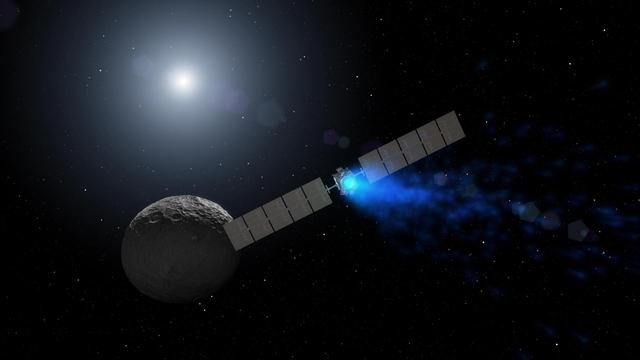
This artist's rendering shows NASA's Dawn spacecraft maneuvering above Ceres with its ion propulsion system. Dawn arrived into orbit at Ceres on March 6, 2015, and continues to collect data about the mysterious and fascinating world. The mission celebrated its ninth launch anniversary on September 27, 2016. This illustration is an update to PIA18921, which was produced before Dawn had mapped Ceres' surface. http://photojournal.jpl.nasa.gov/catalog/PIA20919
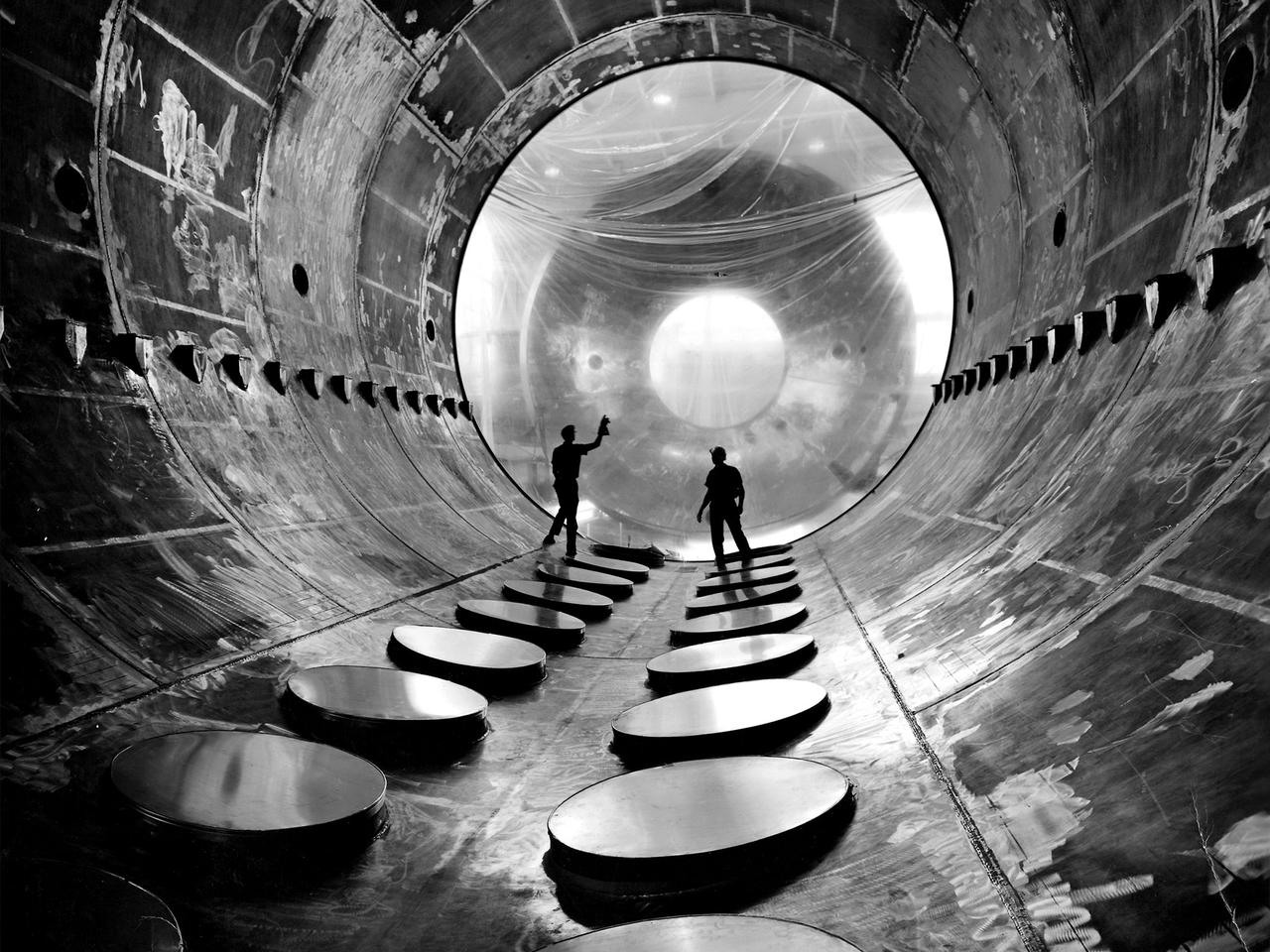
Interior of the 20-foot diameter vacuum tank at the NASA Lewis Research Center’s Electric Propulsion Laboratory. Lewis researchers had been studying different electric rocket propulsion methods since the mid-1950s. Harold Kaufman created the first successful ion engine, the electron bombardment ion engine, in the early 1960s. These engines used electric power to create and accelerate small particles of propellant material to high exhaust velocities. Electric engines have a very small thrust, but can operate for long periods of time. The ion engines are often clustered together to provide higher levels of thrust. The Electric Propulsion Laboratory, which began operation in 1961, contained two large vacuum tanks capable of simulating a space environment. The tanks were designed especially for testing ion and plasma thrusters and spacecraft. The larger 25-foot diameter tank included a 10-foot diameter test compartment to test electric thrusters with condensable propellants. The portals along the chamber floor lead to the massive exhauster equipment that pumped out the air to simulate the low pressures found in space.
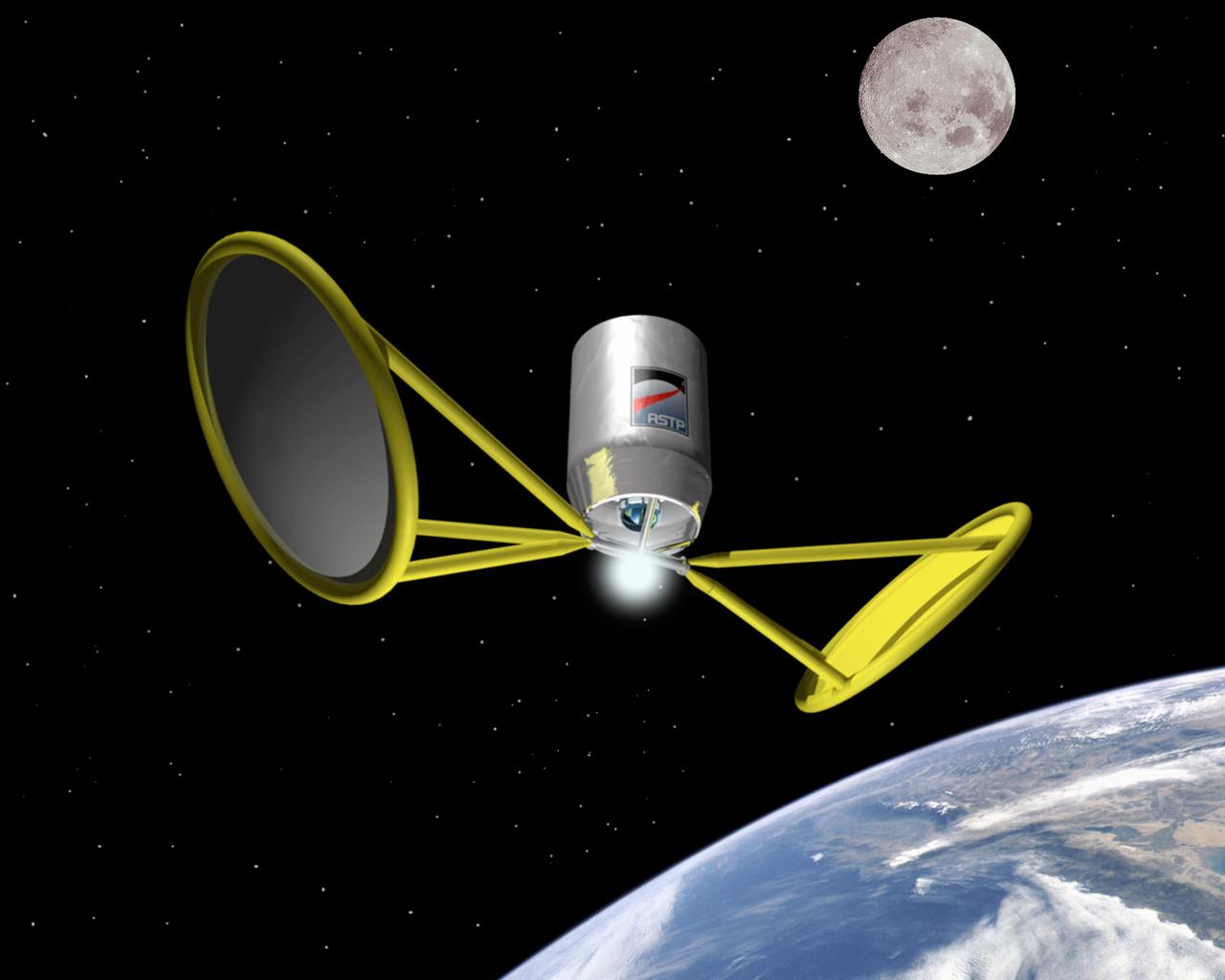
Harnessing the Sun's energy through Solar Thermal Propulsion will propel vehicles through space by significantly reducing weight, complexity, and cost while boosting performance over current conventional upper stages. Another solar powered system, solar electric propulsion, demonstrates ion propulsion is suitable for long duration missions. Pictured is an artist's concept of space flight using solar thermal propulsion.
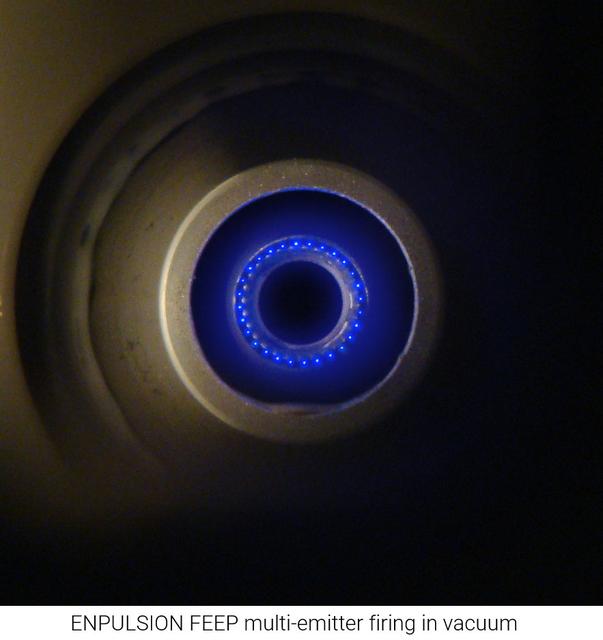
jsc2025e076913 (September 25, 2025) -- This image shows the ENPULSION thruster during a ground test, where blue light appears as ions are released from liquid indium metal. The metal is heated and drawn to tiny tips where ions are emitted to generate thrust. On the space station, the MICATOS observes liquid metal flows in microgravity for future use in soldering and propulsion. Image courtesy of Enpulsion.
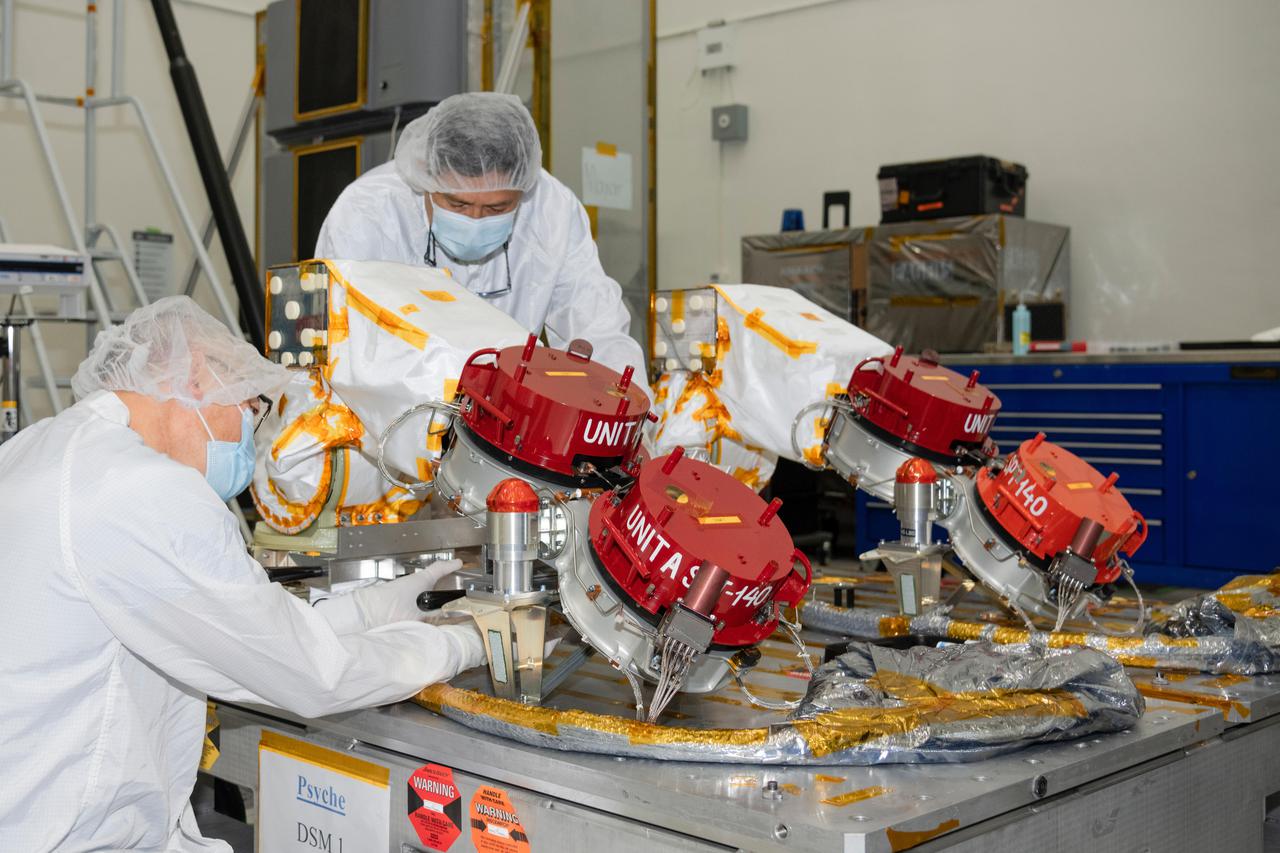
Engineers at NASA's Jet Propulsion Laboratory in Southern California prepare to integrate four Hall thrusters (beneath red protective covers) into the agency's Psyche spacecraft in July 2021. Psyche is set to launch in August 2022 and will travel to its target, a metal-rich asteroid also named Psyche, under the power of solar electric propulsion. This super-efficient mode of propulsion uses solar arrays to capture sunlight that is converted into electricity to power the spacecraft's thrusters. The thrusters work by turning xenon gas, a neutral gas used in car headlights and plasma TVs, into xenon ions. As the xenon ions are accelerated out of the thruster, they create the thrust that will propel the spacecraft. On the Psyche spacecraft, Hall thrusters will be used for the first time beyond lunar orbit, demonstrating that they could play a role in supporting future missions to deep space. https://photojournal.jpl.nasa.gov/catalog/PIA24788
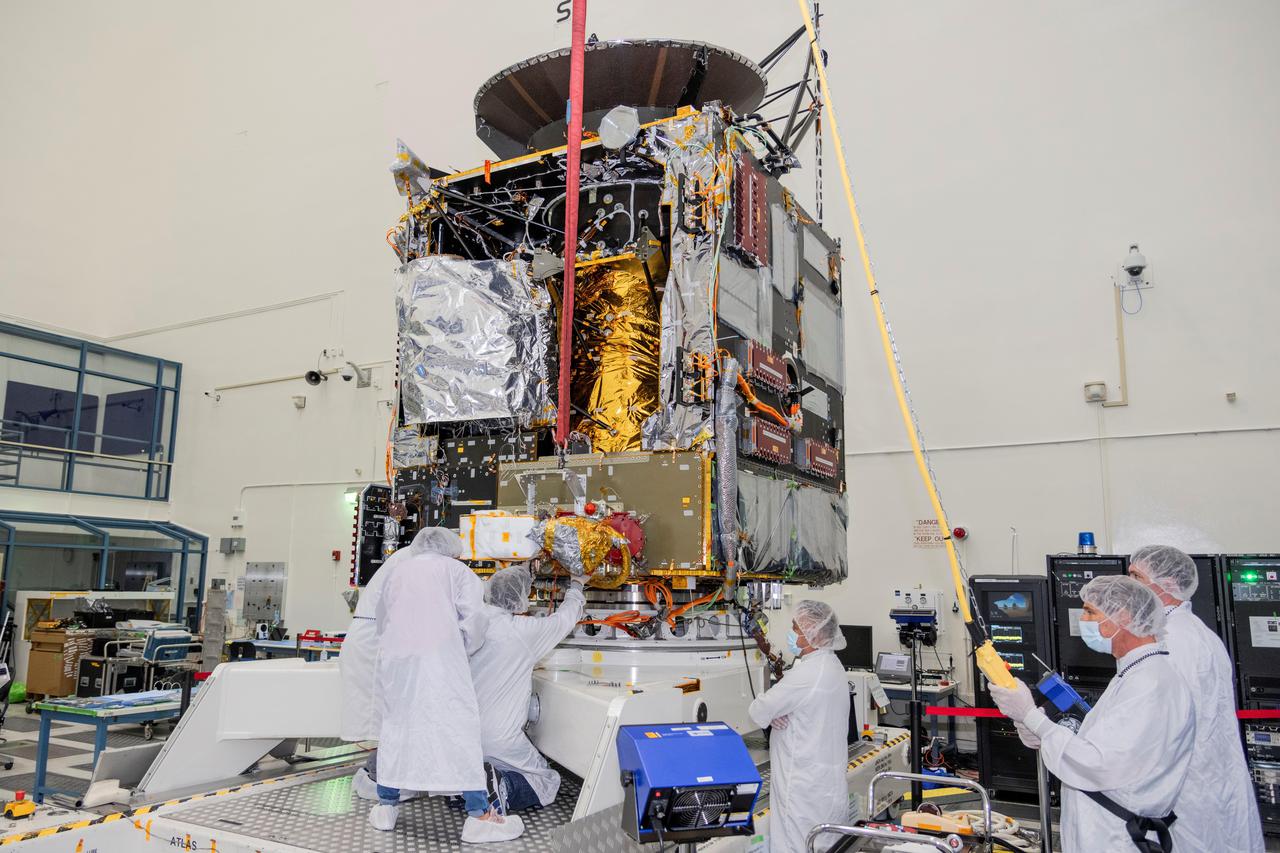
Engineers at NASA's Jet Propulsion Laboratory in Southern California work to integrate Hall thrusters into the agency's Psyche spacecraft in this July 2021 photo. One of the thrusters is visible on the side of the spacecraft beneath a red protective cover. Psyche is set to launch in August 2022 and will travel to its target, a metal-rich asteroid also named Psyche, under the power of solar electric propulsion. This super-efficient mode of propulsion uses solar arrays to capture sunlight that is converted into electricity to power the spacecraft's Hall thrusters. They work by turning xenon gas, a neutral gas used in car headlights and plasma TVs, into xenon ions. As the xenon ions are accelerated out of the thruster, they create the thrust that will propel the spacecraft. This will be the first use of Hall thrusters beyond lunar orbit, demonstrating that they could play a role in supporting future deep space missions. https://photojournal.jpl.nasa.gov/catalog/PIA24789
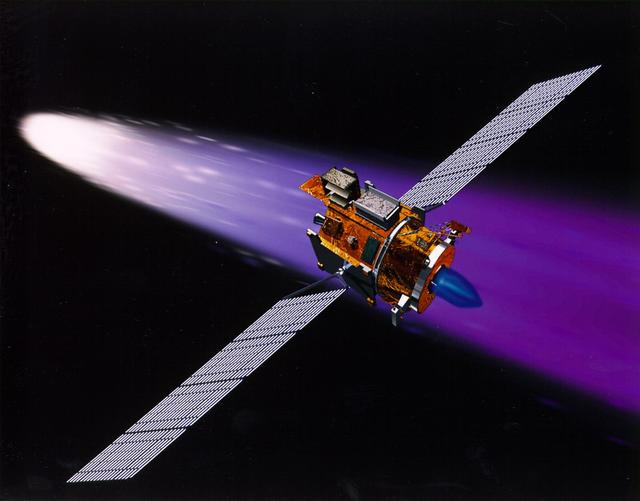
NASA's New Millennium Deep Space 1 spacecraft approaching the comet 19P/Borrelly. With its primary mission to serve as a technology demonstrator--testing ion propulsion and 11 other advanced technologies--successfully completed in September 1999, Deep Space 1 is now headed for a risky, exciting rendezvous with Comet Borrelly. NASA extended the mission, taking advantage of the ion propulsion and other systems to target the daring encounter with the comet in September 2001. Once a sci-fi dream, the ion propulsion engine has powered the spacecraft for over 12,000 hours. Another onboard experiment includes software that tracks celestial bodies so the spacecraft can make its own navigation decisions without the intervention of ground controllers. The first flight in NASA's New Millennium Program, Deep Space 1 was launched October 24, 1998 aboard a Boeing Delta 7326 rocket from Cape Canaveral Air Station, FL. Deep Space 1 successfully completed and exceeded its mission objectives in July 1999 and flew by a near-Earth asteroid, Braille (1992 KD), in September 1999. http://photojournal.jpl.nasa.gov/catalog/PIA04604
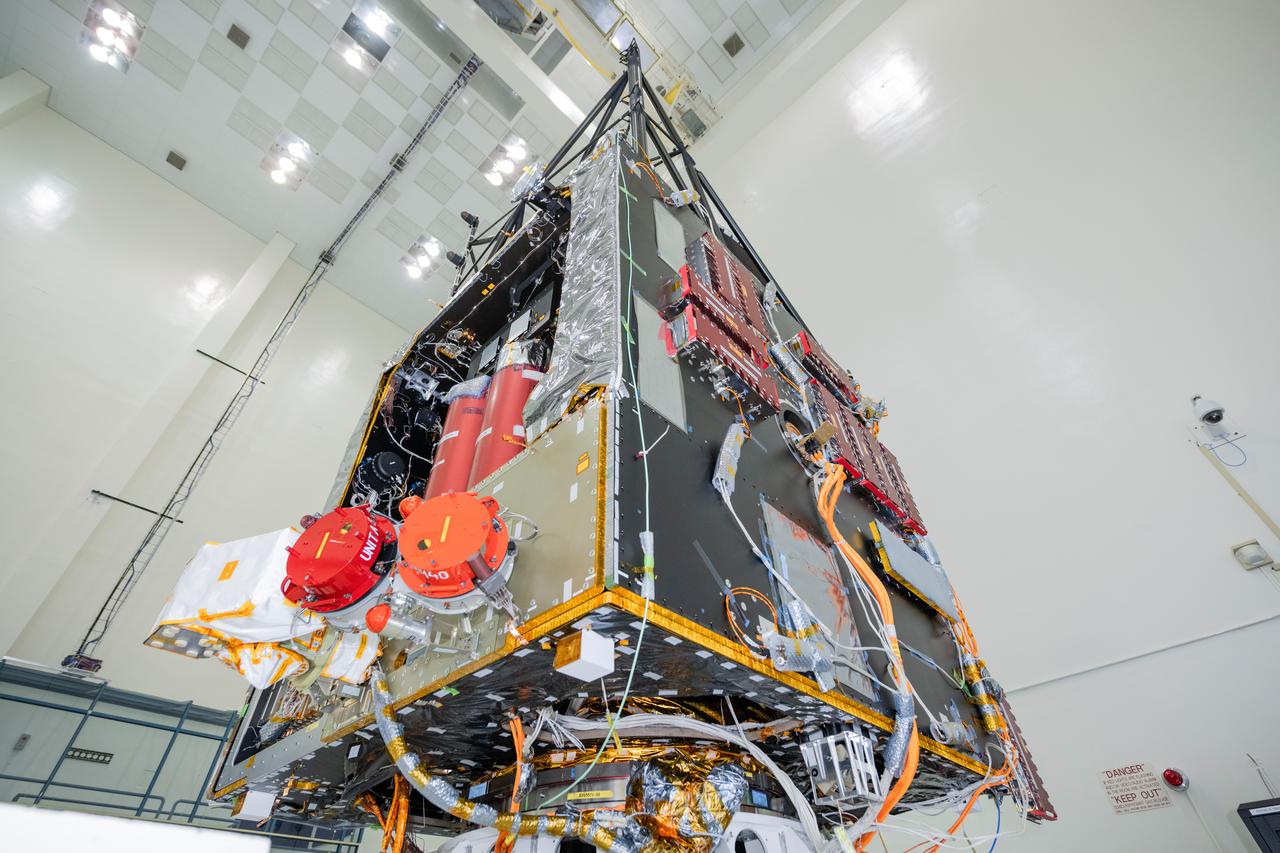
NASA's Psyche spacecraft is photographed in July 2021 during the mission's assembly, test, and launch operations phase at the agency's Jet Propulsion Laboratory in Southern California. Set to launch in August 2022, the spacecraft will use four Hall thrusters to propel itself to the metal-rich asteroid Psyche, using solar electric propulsion. Two thrusters are visible beneath red round protective covers, after being integrated into the spacecraft. Solar arrays on the spacecraft will capture sunlight, which will be converted into electricity to power the Hall thrusters. The thrusters work by turning xenon gas, a neutral gas used in car headlights and plasma TVs, into xenon ions. As the xenon ions are accelerated out of the thruster, they create the thrust that will propel the spacecraft. This will be the first use of Hall thrusters beyond lunar orbit, demonstrating that they could play a role in supporting future deep space missions. https://photojournal.jpl.nasa.gov/catalog/PIA24790
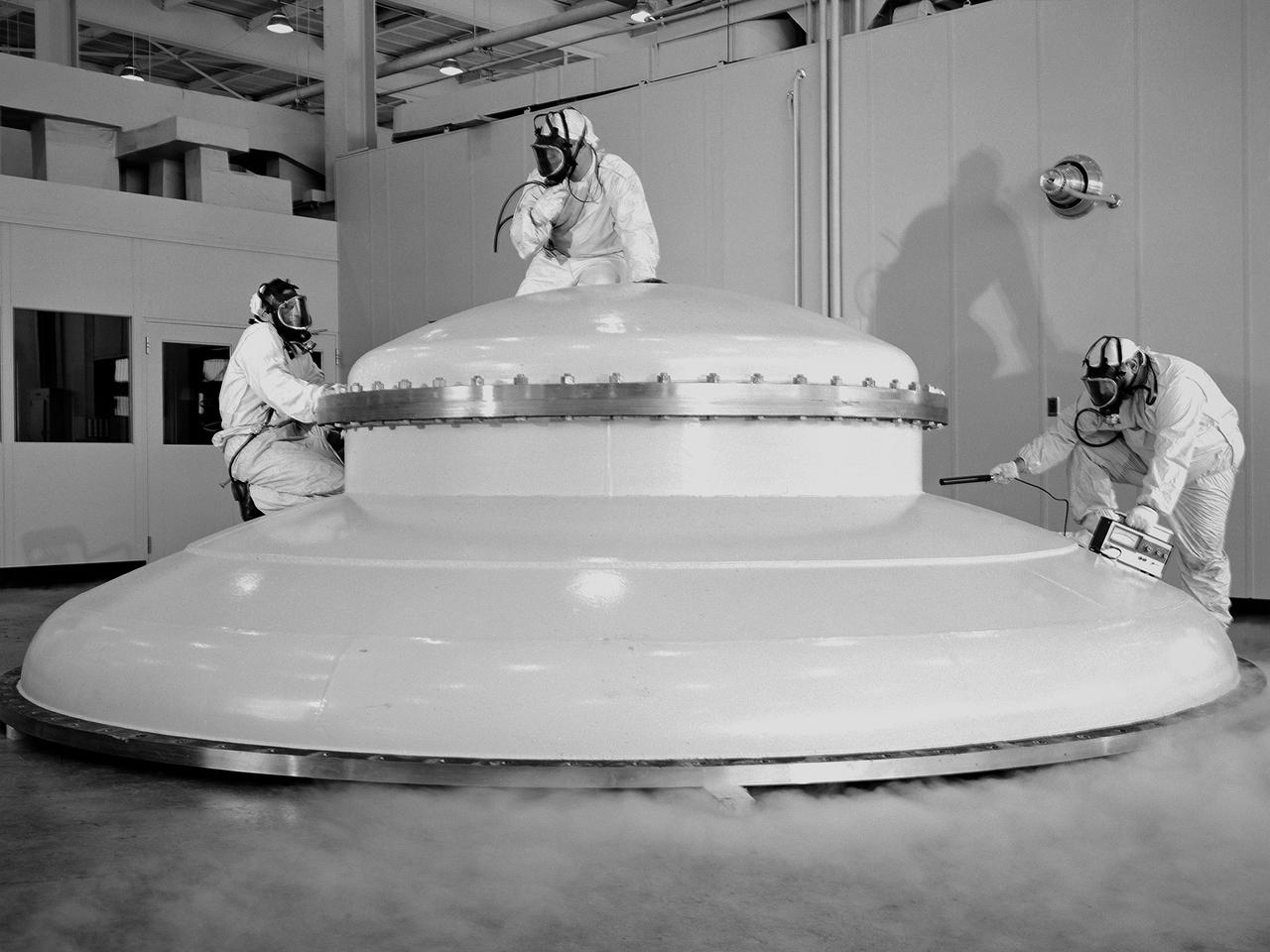
Engineer Paul Reader and his colleagues take environmental measurements during testing of a 20-inch diameter ion engine in a vacuum tank at the Electric Propulsion Laboratory (EPL). Researchers at the Lewis Research Center were investigating the use of a permanent-magnet circuit to create the magnetic field required power electron bombardment ion engines. Typical ion engines use a solenoid coil to create this magnetic field. It was thought that the substitution of a permanent magnet would create a comparable magnetic field with a lower weight. Testing of the magnet system in the EPL vacuum tanks revealed no significant operational problems. Reader found the weight of the two systems was similar, but that the thruster’s efficiency increased with the magnet. The EPL contained a series of large vacuum tanks that could be used to simulate conditions in space. Large vacuum pumps reduced the internal air pressure, and a refrigeration system created the cryogenic temperatures found in space.
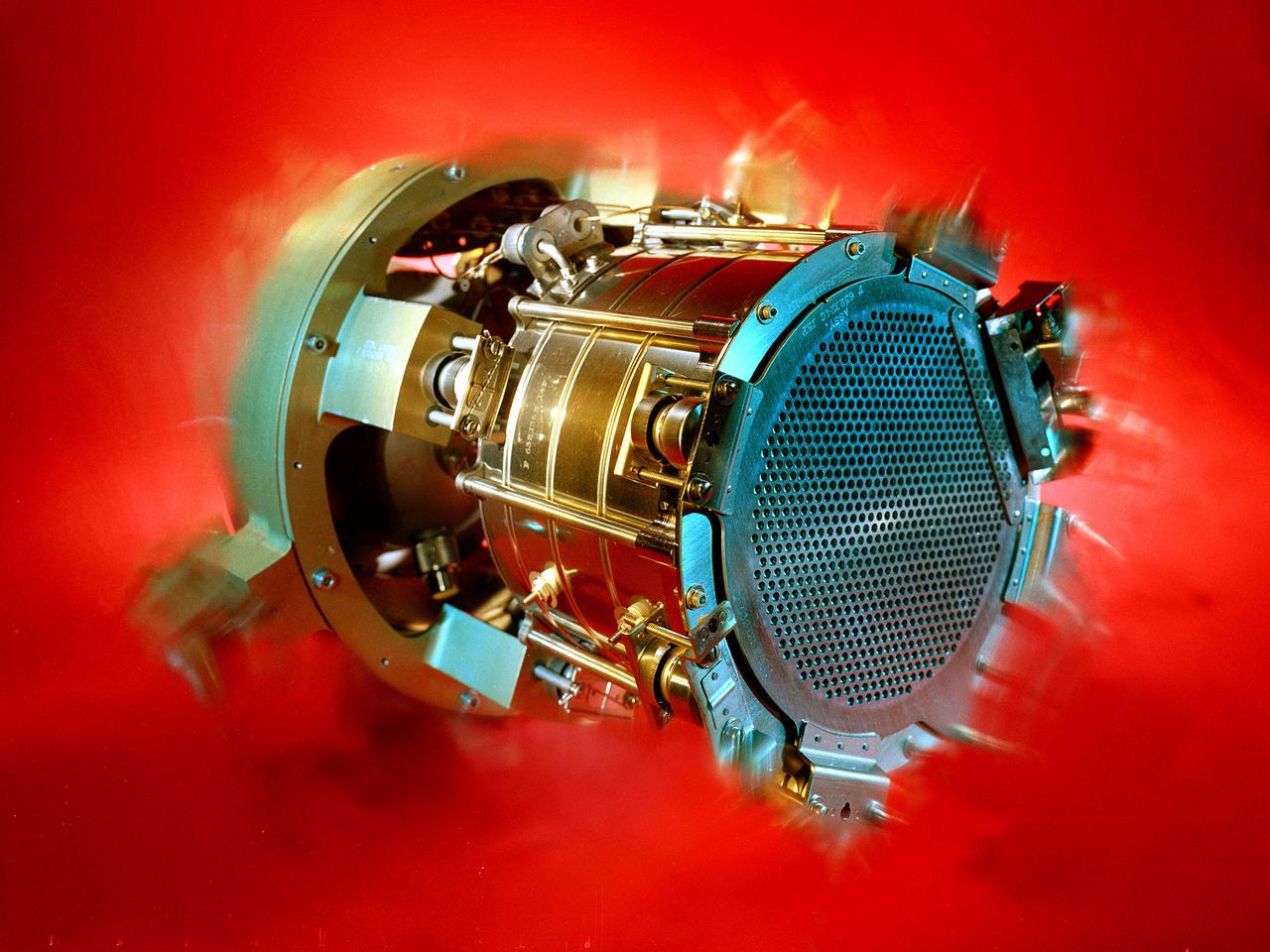
Researchers at the Lewis Research Center had been studying different methods of electric rocket propulsion since the mid-1950s. Harold Kaufman created the first successful engine, the electron bombardment ion engine, in the early 1960s. Over the ensuing decades Lewis researchers continued to advance the original ion thruster concept. A Space Electric Rocket Test (SERT) spacecraft was launched in June 1964 to test Kaufman’s engine in space. SERT I had one cesium engine and one mercury engine. The suborbital flight was only 50 minutes in duration but proved that the ion engine could operate in space. This was followed in 1966 by the even more successful SERT II, which operated on and off for over ten years. Lewis continued studying increasingly more powerful ion thrusters. These electric engines created and accelerated small particles of propellant material to high exhaust velocities. Electric engines have a very small amount of thrust and are therefore not capable of lifting a spaceship from the surface of the Earth. Once lofted into orbit, however, electric engines are can produce small, continuous streams of thrust for several years.
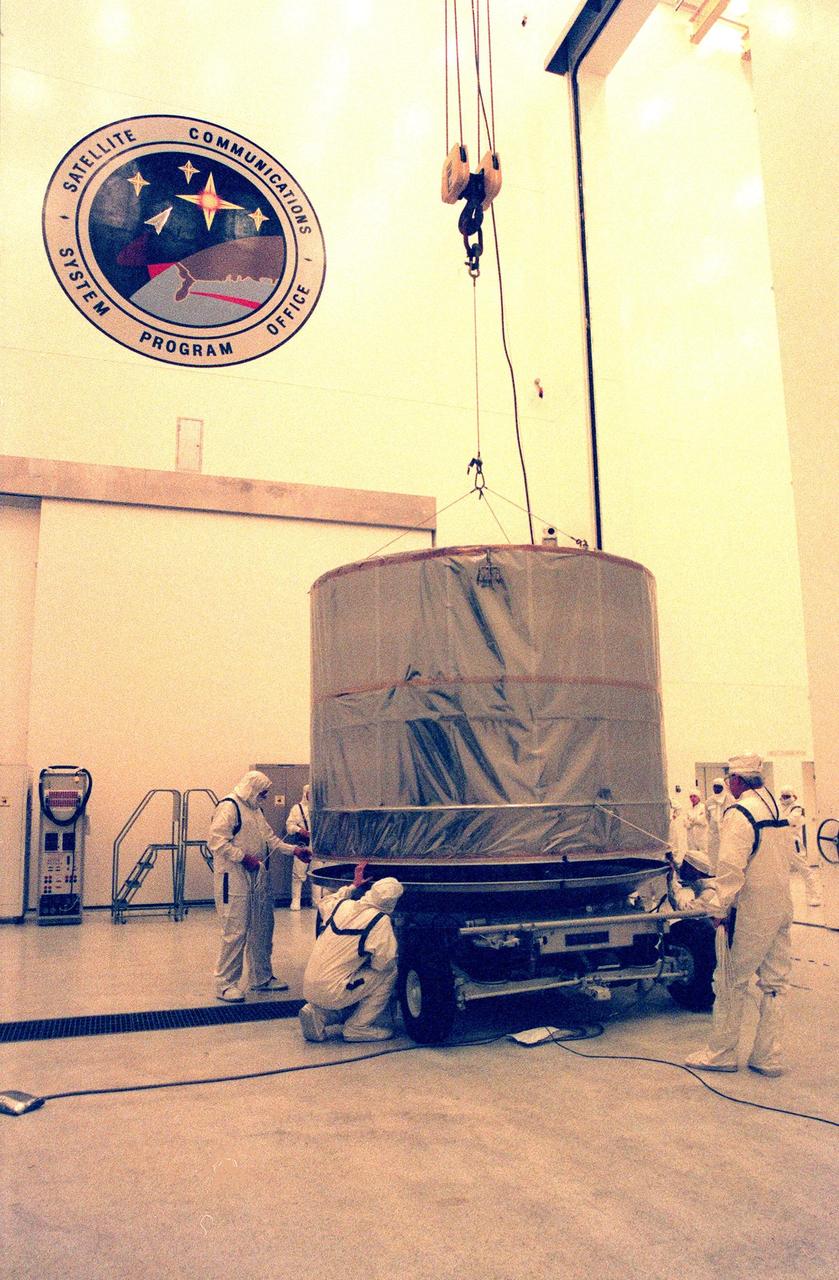
Workers at this clean room facility, Cape Canaveral Air Station, prepare to lift the protective can that covered Deep Space 1 during transportation from KSC. The spacecraft will undergo spin testing at the site. Deep Space 1, the first flight in NASA's New Millennium Program, is designed to validate 12 new technologies for scientific space missions of the next century. Onboard experiments include a solar-powered ion propulsion engine and software that tracks celestial bodies so the spacecraft can make its own navigation decisions without the intervention of ground controllers. The ion propulsion engine is the first non-chemical propulsion to be used as the primary means of propelling a spacecraft. Deep Space 1 will complete most of its mission objectives within the first two months, but may also do a flyby of a near-Earth asteroid, 1992 KD, in July 1999. The spacecraft will be launched aboard a Boeing Delta 7326 rocket from Launch Pad 17A, Cape Canaveral Air Station, in October. Delta II rockets are medium capacity expendable launch vehicles derived from the Delta family of rockets built and launched since 1960. Since then there have been more than 245 Delta launches
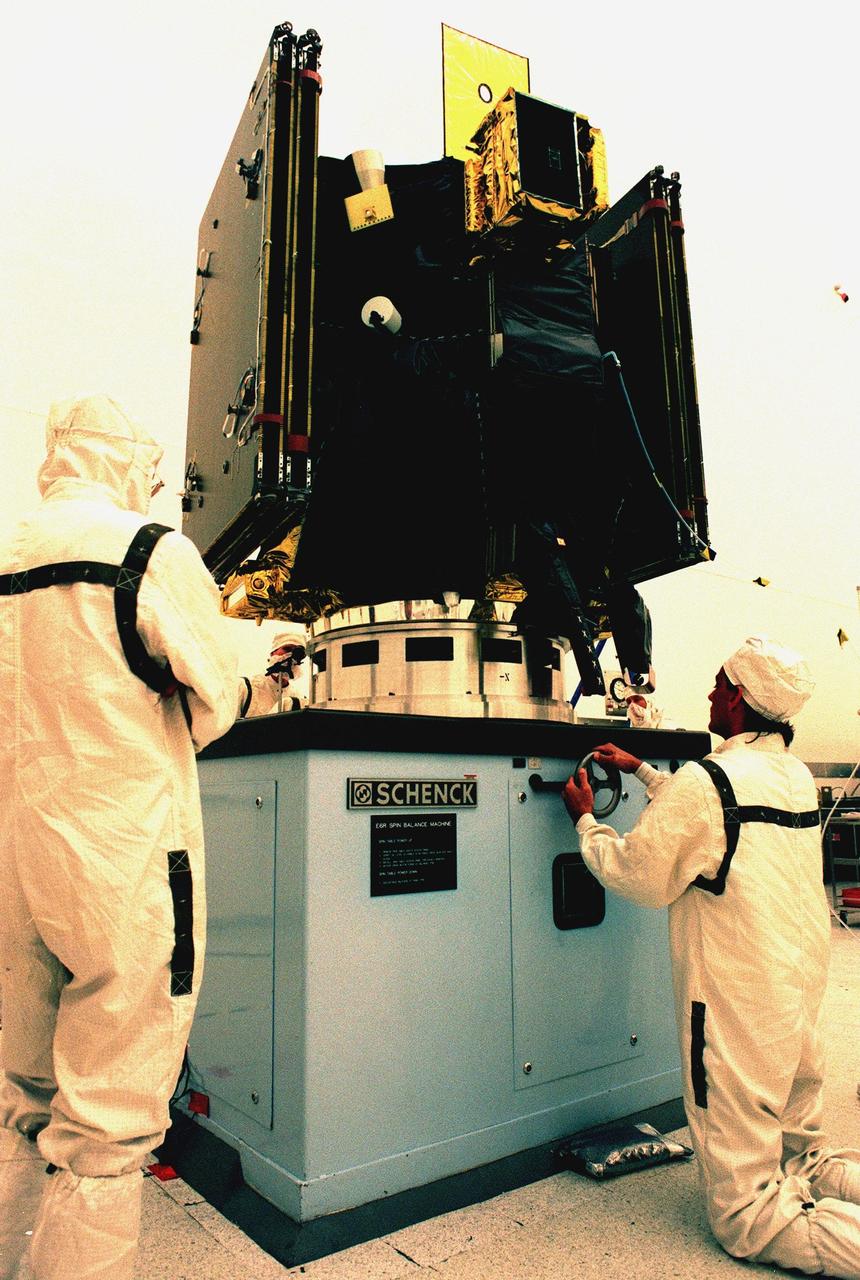
KENNEDY SPACE CENTER, FLA. -- KSC workers give a final check to Deep Space 1 before starting a spin test on the spacecraft at the Defense Satellite Communications System Processing Facility (DPF), Cape Canaveral Air Station. The first flight in NASA's New Millennium Program, Deep Space 1 is designed to validate 12 new technologies for scientific space missions of the next century. Onboard experiments include a solar-powered ion propulsion engine and software that tracks celestial bodies so the spacecraft can make its own navigation decisions without the intervention of ground controllers. The ion propulsion engine is the first non-chemical propulsion to be used as the primary means of propelling a spacecraft. Deep Space 1 will complete most of its mission objectives within the first two months, but may also do a flyby of a near-Earth asteroid, 1992 KD, in July 1999. The spacecraft will be launched aboard a Boeing Delta 7326 rocket from Launch Pad 17A, Cape Canaveral Air Station, in October. Delta II rockets are medium capacity expendable launch vehicles derived from the Delta family of rockets built and launched since 1960. Since then there have been more than 245 Delta launches
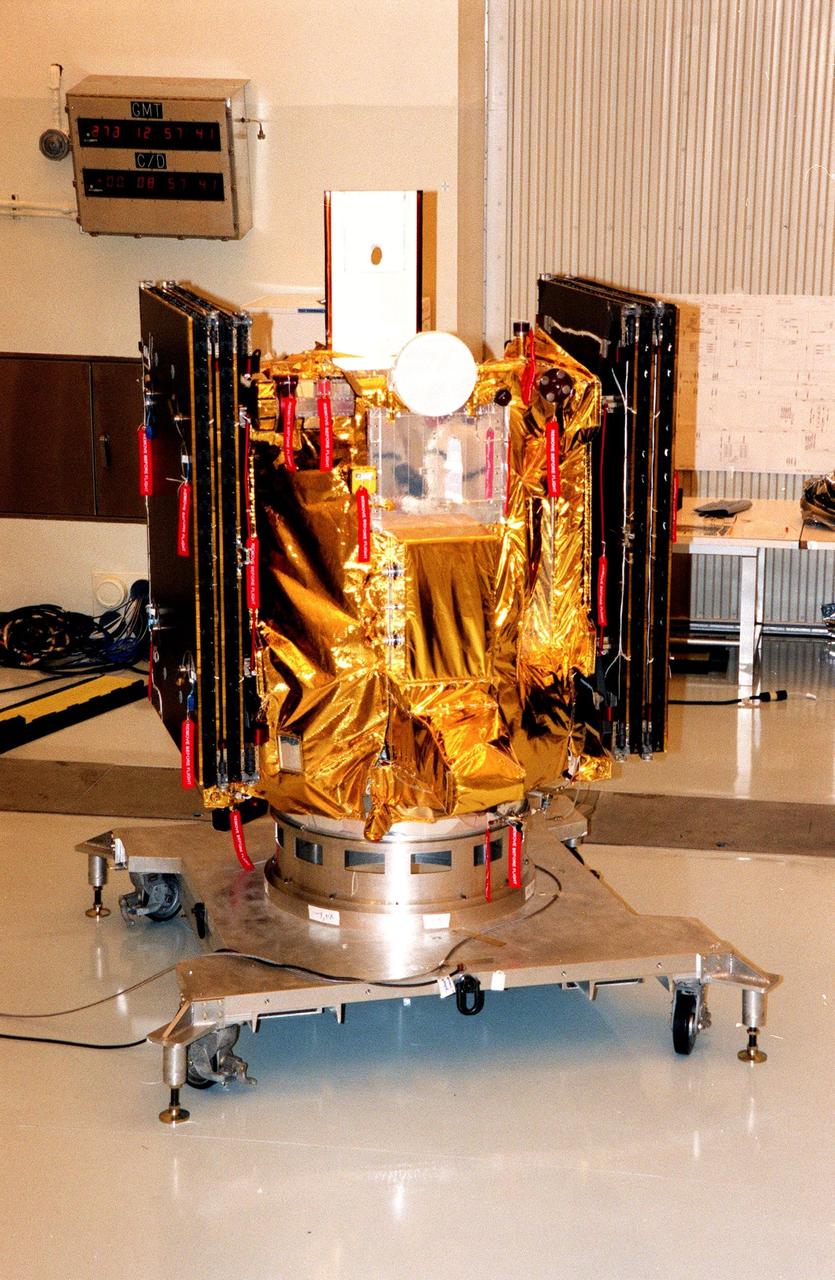
KENNEDY SPACE CENTER, FLA. -- Deep Space 1 rests on its work platform after being fitted with thermal insulation. The reflective insulation is designed to protect the spacecraft as this side faces the sun. At either side of the spacecraft are its solar wings, folded for launch. When fully extended, the wings measure 38.6 feet from tip to tip. The first flight in NASA's New Millennium Program, Deep Space 1 is designed to validate 12 new technologies for scientific space missions of the next century. Onboard experiments include a solar-powered ion propulsion engine and software that tracks celestial bodies so the spacecraft can make its own navigation decisions without the intervention of ground controllers. The ion propulsion engine is the first non-chemical propulsion to be used as the primary means of propelling a spacecraft. Deep Space 1 will complete most of its mission objectives within the first two months, but may also do a flyby of a near-Earth asteroid, 1992 KD, in July 1999. Deep Space 1 will be launched aboard a Boeing Delta 7326 rocket from Launch Pad 17A, Cape Canaveral Air Station, in October. Delta II rockets are medium capacity expendable launch vehicles derived from the Delta family of rockets built and launched since 1960. Since then there have been more than 245 Delta launches
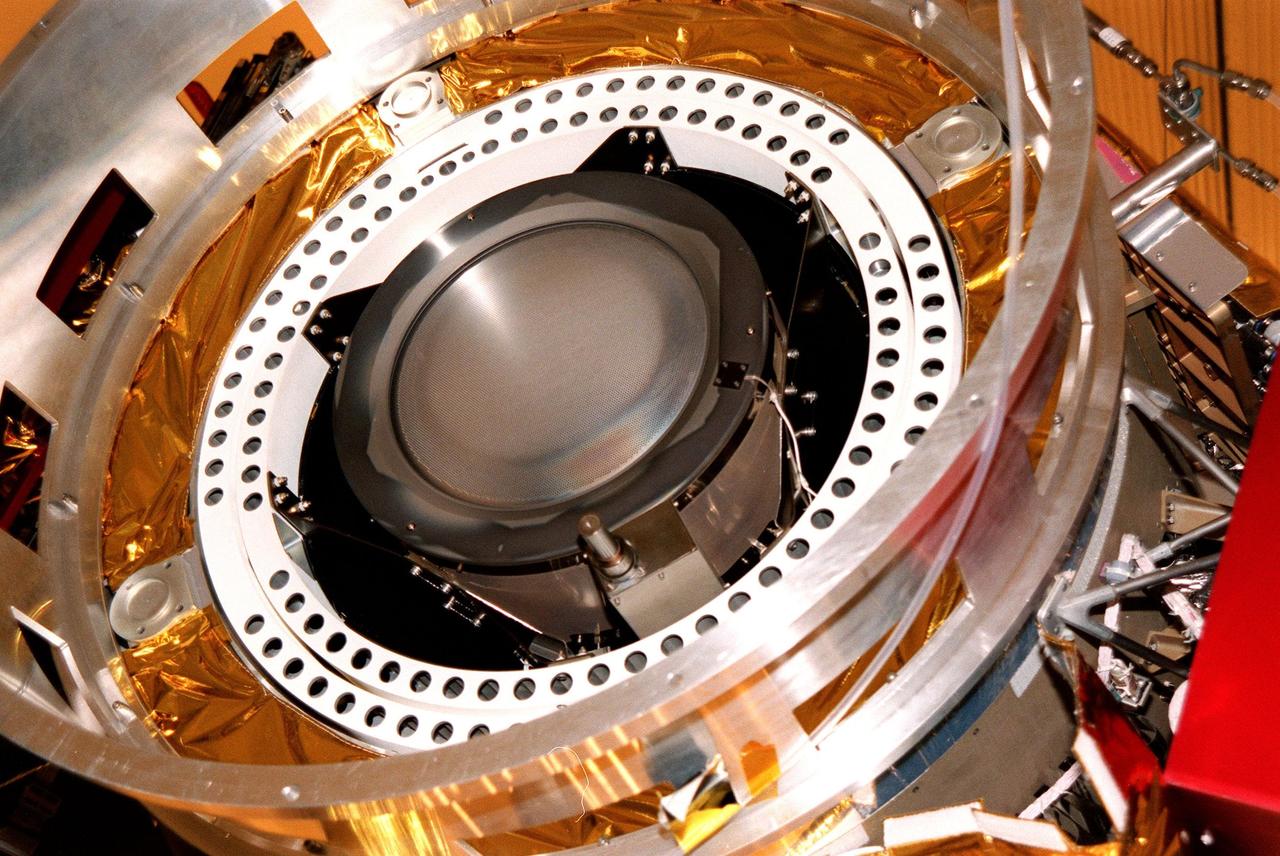
KENNEDY SPACE CENTER, FLA. -- Deep Space 1 is lifted from its work platform, giving a closeup view of the experimental solar-powered ion propulsion engine. The ion propulsion engine is the first non-chemical propulsion to be used as the primary means of propelling a spacecraft. The first flight in NASA's New Millennium Program, Deep Space 1 is designed to validate 12 new technologies for scientific space missions of the next century. Another onboard experiment includes software that tracks celestial bodies so the spacecraft can make its own navigation decisions without the intervention of ground controllers. Deep Space 1 will complete most of its mission objectives within the first two months, but may also do a flyby of a near-Earth asteroid, 1992 KD, in July 1999. Deep Space 1 will be launched aboard a Boeing Delta 7326 rocket from Launch Pad 17A, Cape Canaveral Air Station, in October. Delta II rockets are medium capacity expendable launch vehicles derived from the Delta family of rockets built and launched since 1960. Since then there have been more than 245 Delta launches
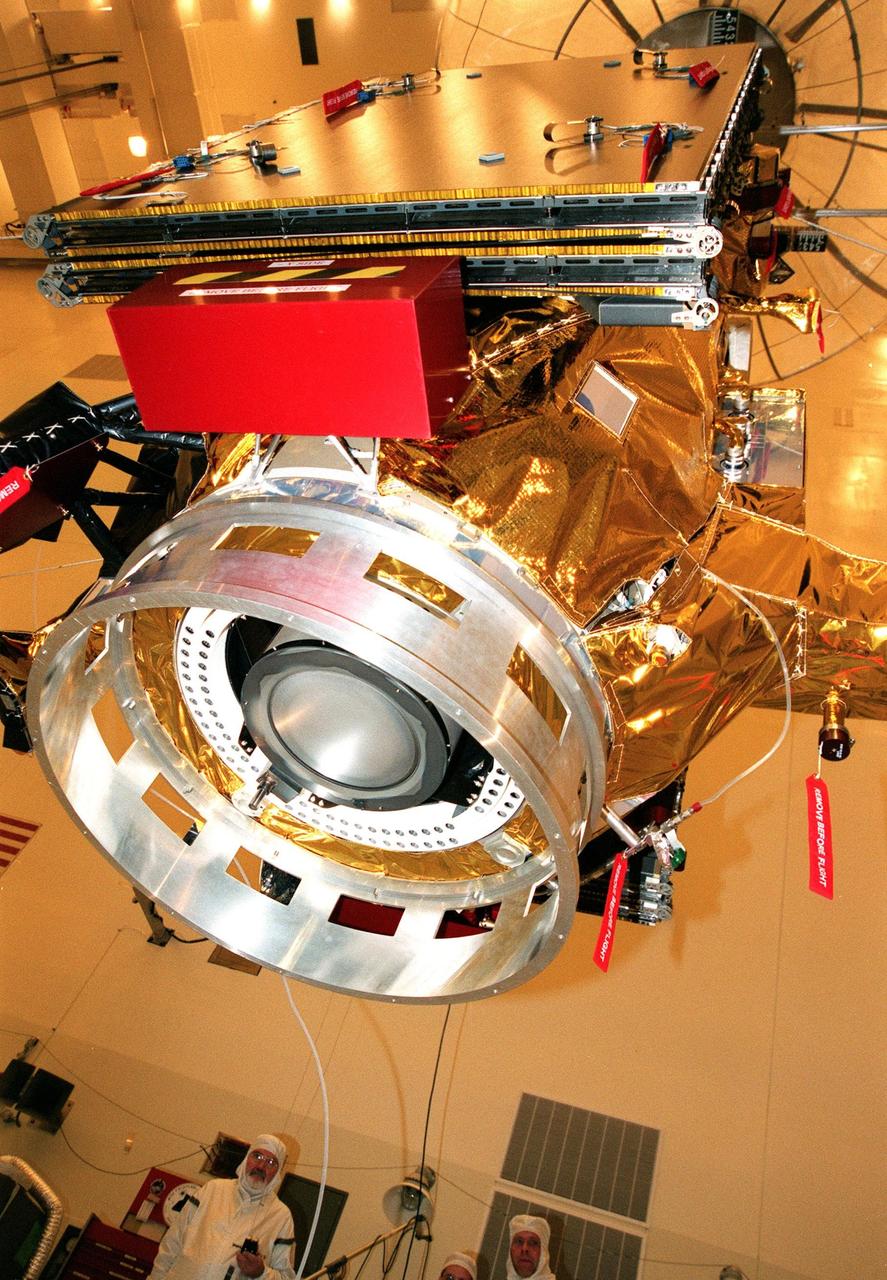
KENNEDY SPACE CENTER, FLA. -- Deep Space 1 is lifted from its work platform, giving a closer view of the experimental solar-powered ion propulsion engine. The ion propulsion engine is the first non-chemical propulsion to be used as the primary means of propelling a spacecraft. Above the engine is one of the two solar wings, folded for launch, that will provide the power for it. When fully extended, the wings measure 38.6 feet from tip to tip. The first flight in NASA's New Millennium Program, Deep Space 1 is designed to validate 12 new technologies for scientific space missions of the next century. Another onboard experiment includes software that tracks celestial bodies so the spacecraft can make its own navigation decisions without the intervention of ground controllers. Deep Space 1 will complete most of its mission objectives within the first two months, but may also do a flyby of a near-Earth asteroid, 1992 KD, in July 1999. Deep Space 1 will be launched aboard a Boeing Delta 7326 rocket from Launch Pad 17A, Cape Canaveral Air Station, in October. Delta II rockets are medium capacity expendable launch vehicles derived from the Delta family of rockets built and launched since 1960. Since then there have been more than 245 Delta launches
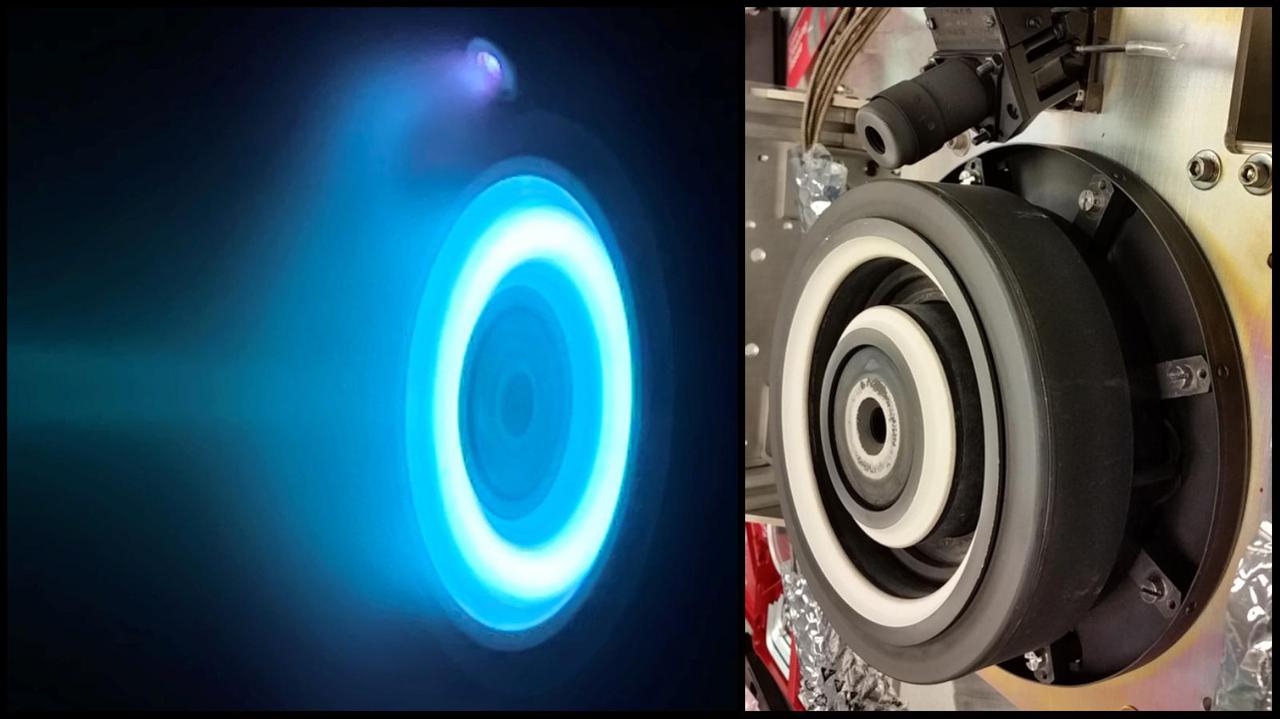
The photo on the left captures an operating electric Hall thruster identical to those that will propel NASA's Psyche spacecraft, which is set to launch in August 2022 and travel to the main asteroid belt between Mars and Jupiter. The xenon plasma emits a blue glow as the thruster operates. The photo on the right shows a similar non-operating Hall thruster. The photo on the left was taken at NASA's Jet Propulsion Laboratory in Southern California; the photo on the right was taken at NASA's Glenn Research Center. Psyche's Hall thrusters will be the first to be used beyond lunar orbit, demonstrating that they could play a role in supporting future missions to deep space. The spacecraft is set to launch in August 2022 and will travel to its target, a metal-rich asteroid also named Psyche, under the power of solar electric propulsion. This super-efficient mode of propulsion uses solar arrays to capture sunlight that is converted into electricity to power the spacecraft's thrusters. The thrusters work by turning xenon gas, a neutral gas used in car headlights and plasma TVs, into xenon ions. As the xenon ions are accelerated out of the thruster, they create the thrust that will propel the spacecraft. https://photojournal.jpl.nasa.gov/catalog/PIA24030

KENNEDY SPACE CENTER, FLA. -- KSC workers lower the "can" over Deep Space 1. The can will protect the spacecraft during transport to the Defense Satellite Communications System Processing Facility (DPF), Cape Canaveral Air Station, for testing. The first flight in NASA's New Millennium Program, Deep Space 1 is designed to validate 12 new technologies for scientific space missions of the next century. Onboard experiments include a solar-powered ion propulsion engine and software that tracks celestial bodies so the spacecraft can make its own navigation decisions without the intervention of ground controllers. The ion propulsion engine is the first non-chemical propulsion to be used as the primary means of propelling a spacecraft. Deep Space 1 will complete most of its mission objectives within the first two months, but may also do a flyby of a near-Earth asteroid, 1992 KD, in July 1999. The spacecraft will be launched aboard a Boeing Delta 7326 rocket from Launch Pad 17A, Cape Canaveral Air Station, in October. Delta II rockets are medium capacity expendable launch vehicles derived from the Delta family of rockets built and launched since 1960. Since then there have been more than 245 Delta launches
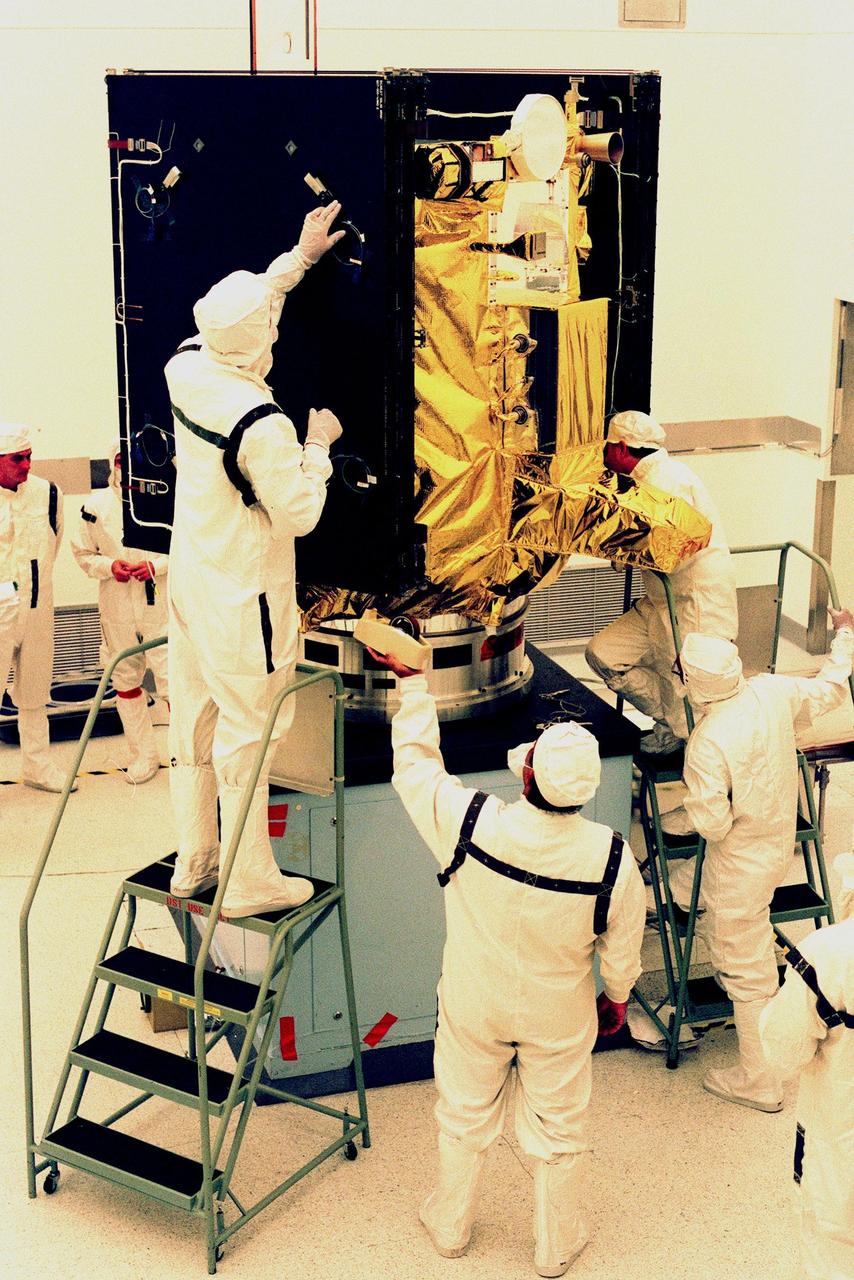
KENNEDY SPACE CENTER, FLA. -- KSC workers prepare Deep Space 1 for a spin test on the E6R Spin Balance Machine at the Defense Satellite Communications System Processing Facility (DPF), Cape Canaveral Air Station. The first flight in NASA's New Millennium Program, Deep Space 1 is designed to validate 12 new technologies for scientific space missions of the next century. Onboard experiments include a solar-powered ion propulsion engine and software that tracks celestial bodies so the spacecraft can make its own navigation decisions without the intervention of ground controllers. The ion propulsion engine is the first non-chemical propulsion to be used as the primary means of propelling a spacecraft. Deep Space 1 will complete most of its mission objectives within the first two months, but may also do a flyby of a near-Earth asteroid, 1992 KD, in July 1999. The spacecraft will be launched aboard a Boeing Delta 7326 rocket from Launch Pad 17A, Cape Canaveral Air Station, in October. Delta II rockets are medium capacity expendable launch vehicles derived from the Delta family of rockets built and launched since 1960. Since then there have been more than 245 Delta launches
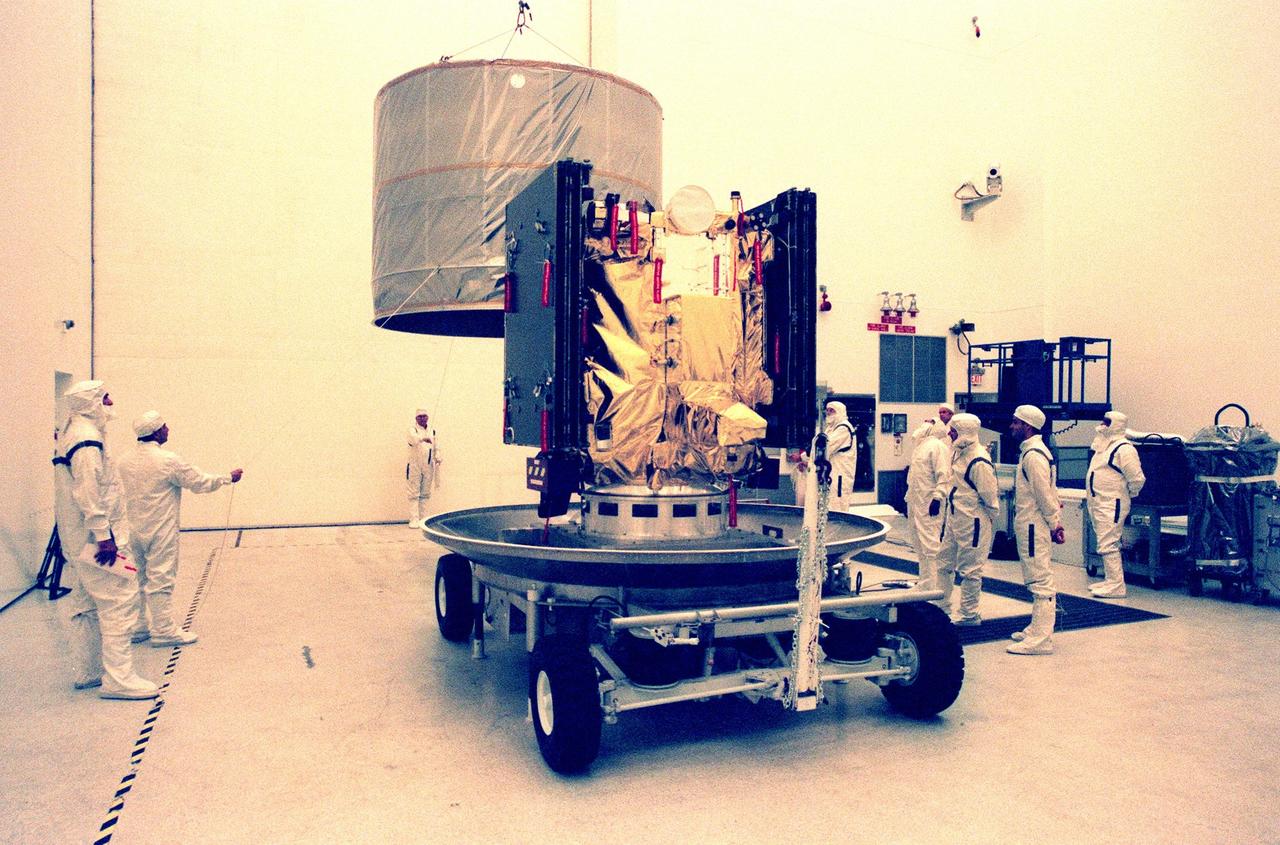
Workers at this clean room facility, Cape Canaveral Air Station, maneuver the protective can that covered Deep Space 1 during transportation from KSC away from the spacecraft. Deep Space 1 will undergo spin testing at the site. The first flight in NASA's New Millennium Program, Deep Space 1 is designed to validate 12 new technologies for scientific space missions of the next century. Onboard experiments include a solar-powered ion propulsion engine and software that tracks celestial bodies so the spacecraft can make its own navigation decisions without the intervention of ground controllers. The ion propulsion engine is the first non-chemical propulsion to be used as the primary means of propelling a spacecraft. Deep Space 1 will complete most of its mission objectives within the first two months, but may also do a flyby of a near-Earth asteroid, 1992 KD, in July 1999. The spacecraft will be launched aboard a Boeing Delta 7326 rocket from Launch Pad 17A, Cape Canaveral Air Station, in October. Delta II rockets are medium capacity expendable launch vehicles derived from the Delta family of rockets built and launched since 1960. Since then there have been more than 245 Delta launches
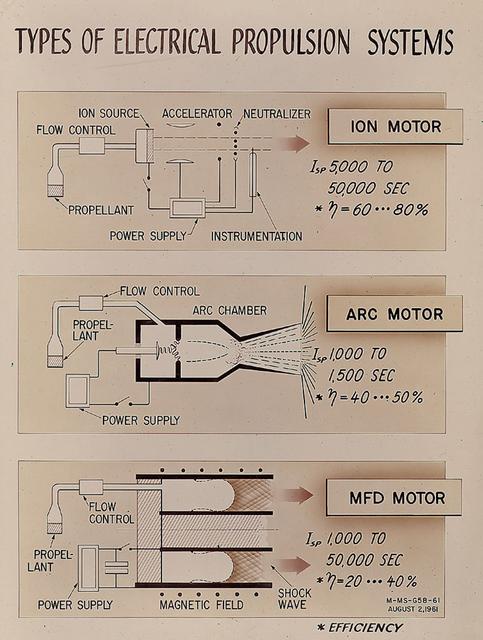
As presented by Gerhard Heller of Marshall Space Flight Center's Research Projects Division in 1961, this chart illustrates three basic types of electric propulsion systems then under consideration by NASA. The ion engine (top) utilized cesium atoms ionized by hot tungsten and accelerated by an electrostatic field to produce thrust. The arc engine (middle) achieved propulsion by heating a propellant with an electric arc and then producing an expansion of the hot gas or plasma in a convergent-divergent duct. The electromagnetic, or MFD engine (bottom) manipulated strong magnetic fields to interact with a plasma and produce acceleration.
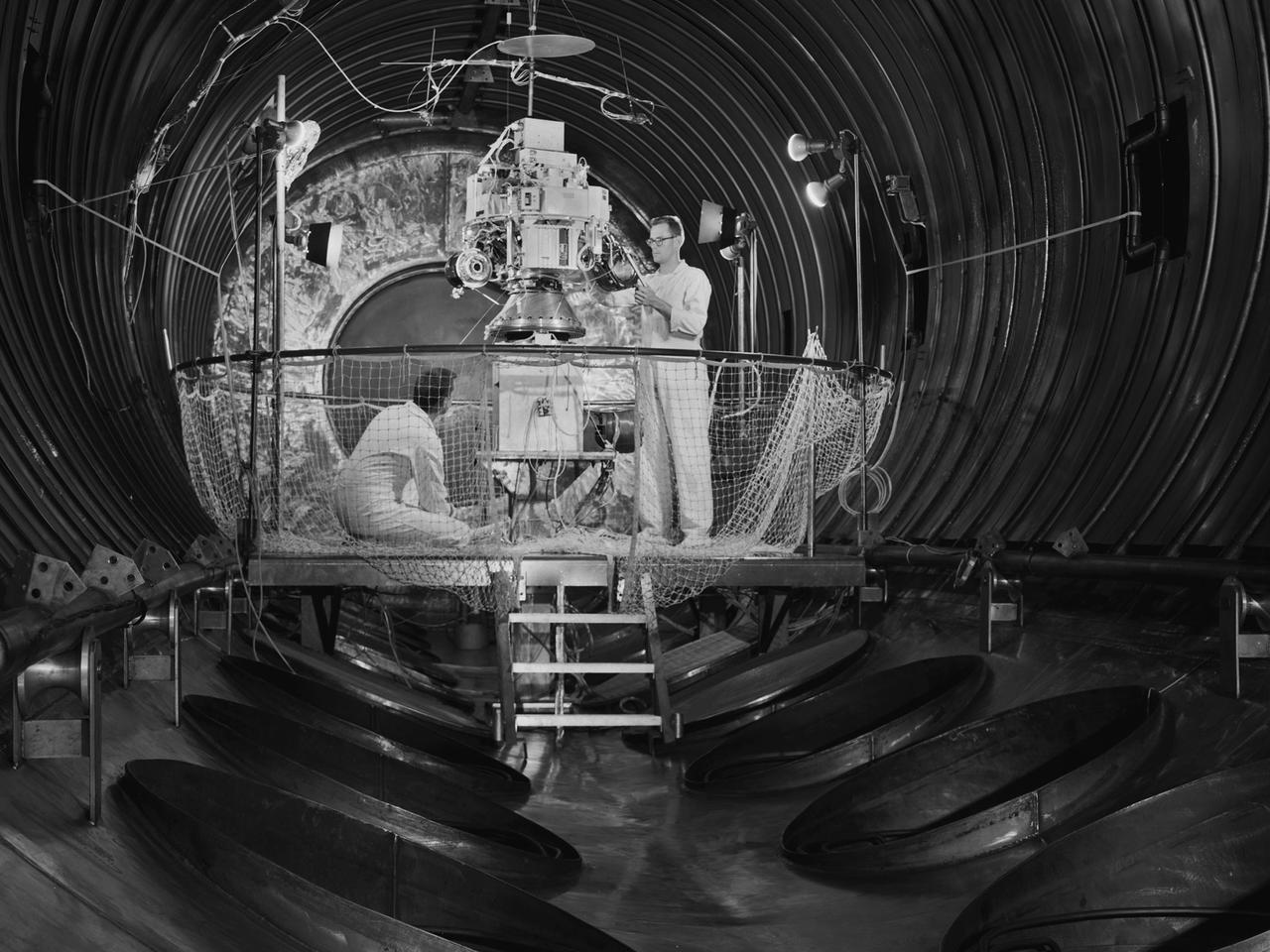
Technicians prepare the Space Electric Research Test (SERT-I) payload for a test in Tank Number 5 of the Electric Propulsion Laboratory at the National Aeronautics and Space Administration (NASA) Lewis Research Center. Lewis researchers had been studying different methods of electric rocket propulsion since the mid-1950s. Harold Kaufman created the first successful engine, the electron bombardment ion engine, in the early 1960s. These electric engines created and accelerated small particles of propellant material to high exhaust velocities. Electric engines have a very small amount of thrust, but once lofted into orbit by workhorse chemical rockets, they are capable of small, continuous thrust for periods up to several years. The electron bombardment thruster operated at a 90-percent efficiency during testing in the Electric Propulsion Laboratory. The package was rapidly rotated in a vacuum to simulate its behavior in space. The SERT-I mission, launched from Wallops Island, Virginia, was the first flight test of Kaufman’s ion engine. SERT-I had one cesium engine and one mercury engine. The suborbital flight was only 50 minutes in duration but proved that the ion engine could operate in space. The Electric Propulsion Laboratory included two large space simulation chambers, one of which is seen here. Each uses twenty 2.6-foot diameter diffusion pumps, blowers, and roughing pumps to remove the air inside the tank to create the thin atmosphere. A helium refrigeration system simulates the cold temperatures of space.
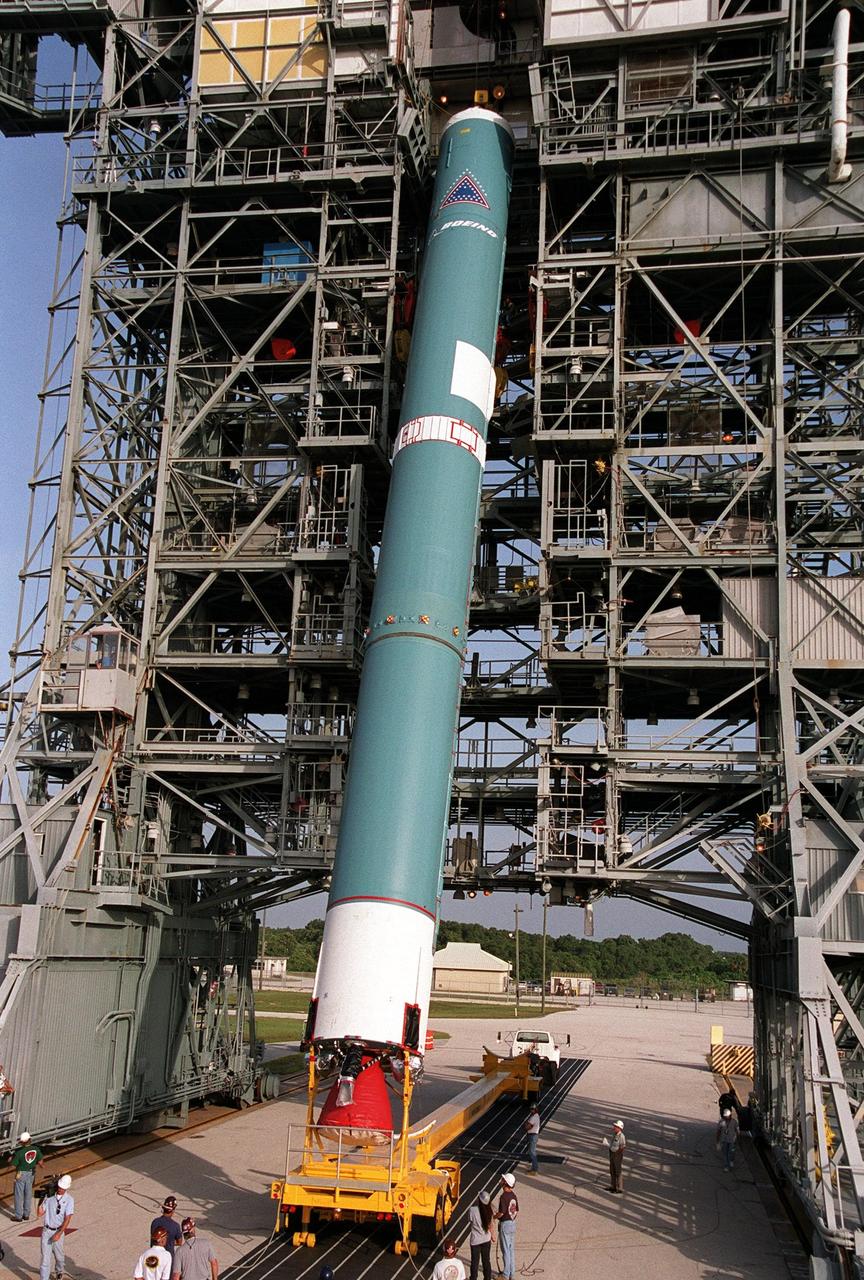
KENNEDY SPACE CENTER, Fla. -- A Boeing Delta II rocket is raised from its transporter in order to be lifted into the gantry. The rocket will propel the Genesis spacecraft on a journey to capture samples of the ions and elements in the solar wind and return them to Earth for scientists to use to determine the exact composition of the Sun and the solar system's origin. NASA’s Genesis project in managed by the Jet Propulsion Laboratory in Pasadena, Calif. Lockheed Martin Astronautics built the Genesis spacecraft for NASA in Denver, Colo. The launch is scheduled for July 30 at 12:36 p.m. EDT
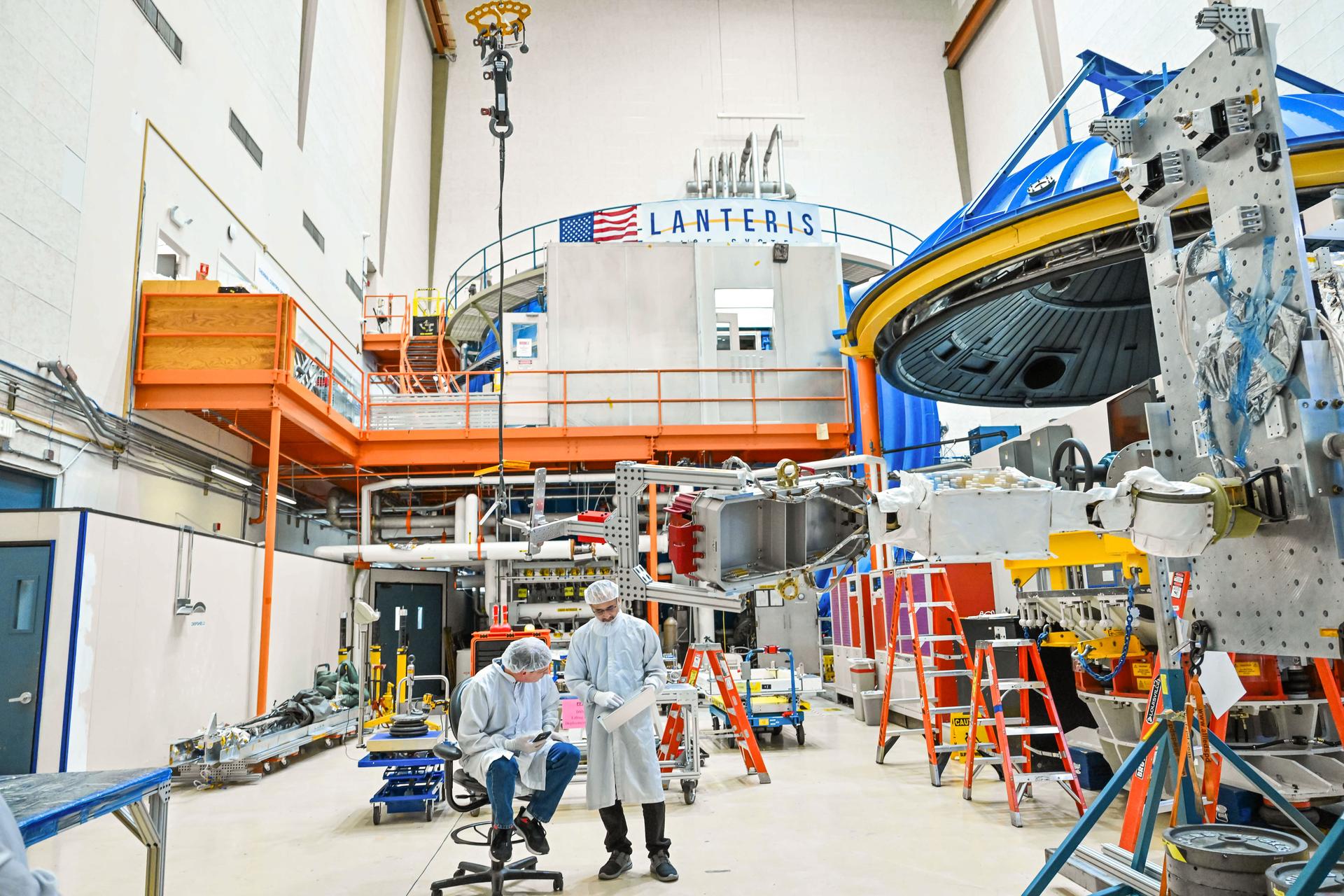
During this Engineering Qualification Module test, the gimbal platforms for the Busek-built BHT-6000 Hall effect thrusters are exercised through their full range of motion to verify articulation performance and confirm the system can properly steer thrust once integrated with Gateway’s Power and Propulsion Element (PPE). On PPE, four BHT-6000 Hall effect thrusters and three Advanced Electric Propulsion System (AEPS) thrusters will use solar power generated by Gateway’s Roll-Out Solar Arrays (ROSAs) to ionize xenon gas. The resulting xenon ions are then accelerated to extremely high speeds and expelled from the thrusters, creating a steady and highly efficient stream of thrust. This propulsion system will enable the Gateway lunar space station to maneuver and maintain its orbit around the Moon.
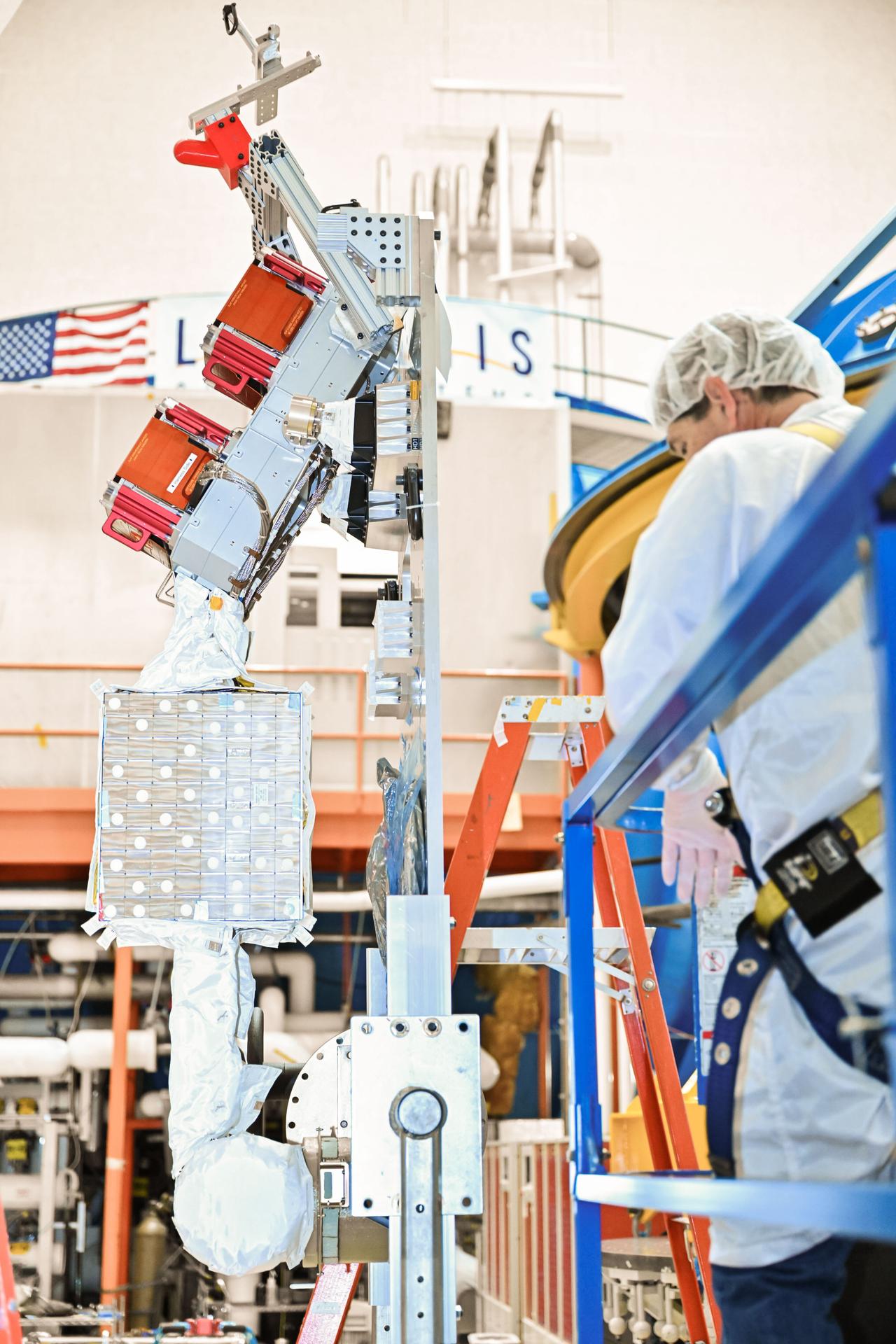
During this Engineering Qualification Module test, the gimbal platforms for the Busek-built BHT-6000 Hall effect thrusters are exercised through their full range of motion to verify articulation performance and confirm the system can properly steer thrust once integrated with Gateway’s Power and Propulsion Element (PPE). On PPE, four BHT-6000 Hall effect thrusters and three Advanced Electric Propulsion System (AEPS) thrusters will use solar power generated by Gateway’s Roll-Out Solar Arrays (ROSAs) to ionize xenon gas. The resulting xenon ions are then accelerated to extremely high speeds and expelled from the thrusters, creating a steady and highly efficient stream of thrust. This propulsion system will enable the Gateway lunar space station to maneuver and maintain its orbit around the Moon.
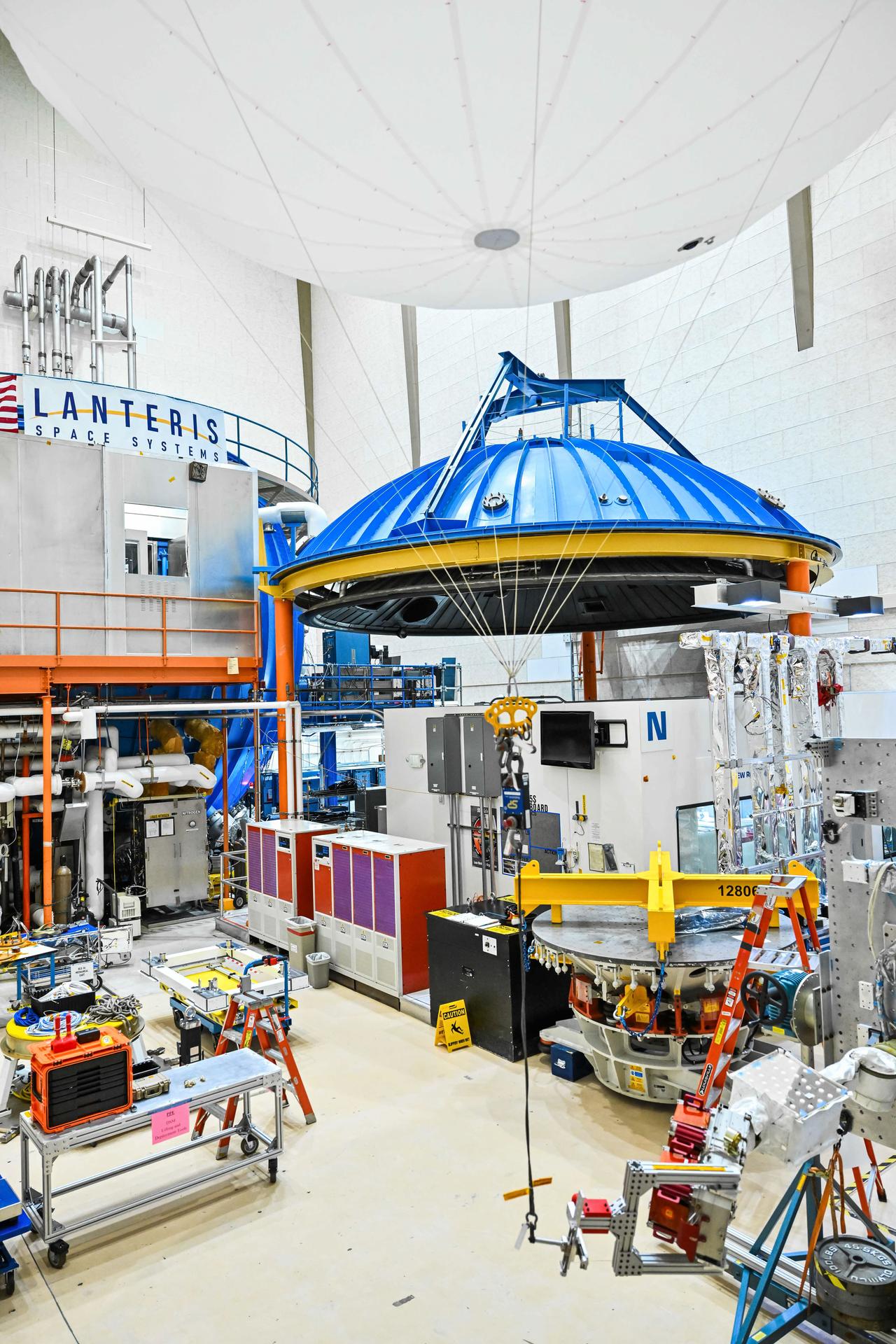
During this Engineering Qualification Module test, the gimbal platforms for the Busek-built BHT-6000 Hall effect thrusters are exercised through their full range of motion to verify articulation performance and confirm the system can properly steer thrust once integrated with Gateway’s Power and Propulsion Element (PPE). On PPE, four BHT-6000 Hall effect thrusters and three Advanced Electric Propulsion System (AEPS) thrusters will use solar power generated by Gateway’s Roll-Out Solar Arrays (ROSAs) to ionize xenon gas. The resulting xenon ions are then accelerated to extremely high speeds and expelled from the thrusters, creating a steady and highly efficient stream of thrust. This propulsion system will enable the Gateway lunar space station to maneuver and maintain its orbit around the Moon.
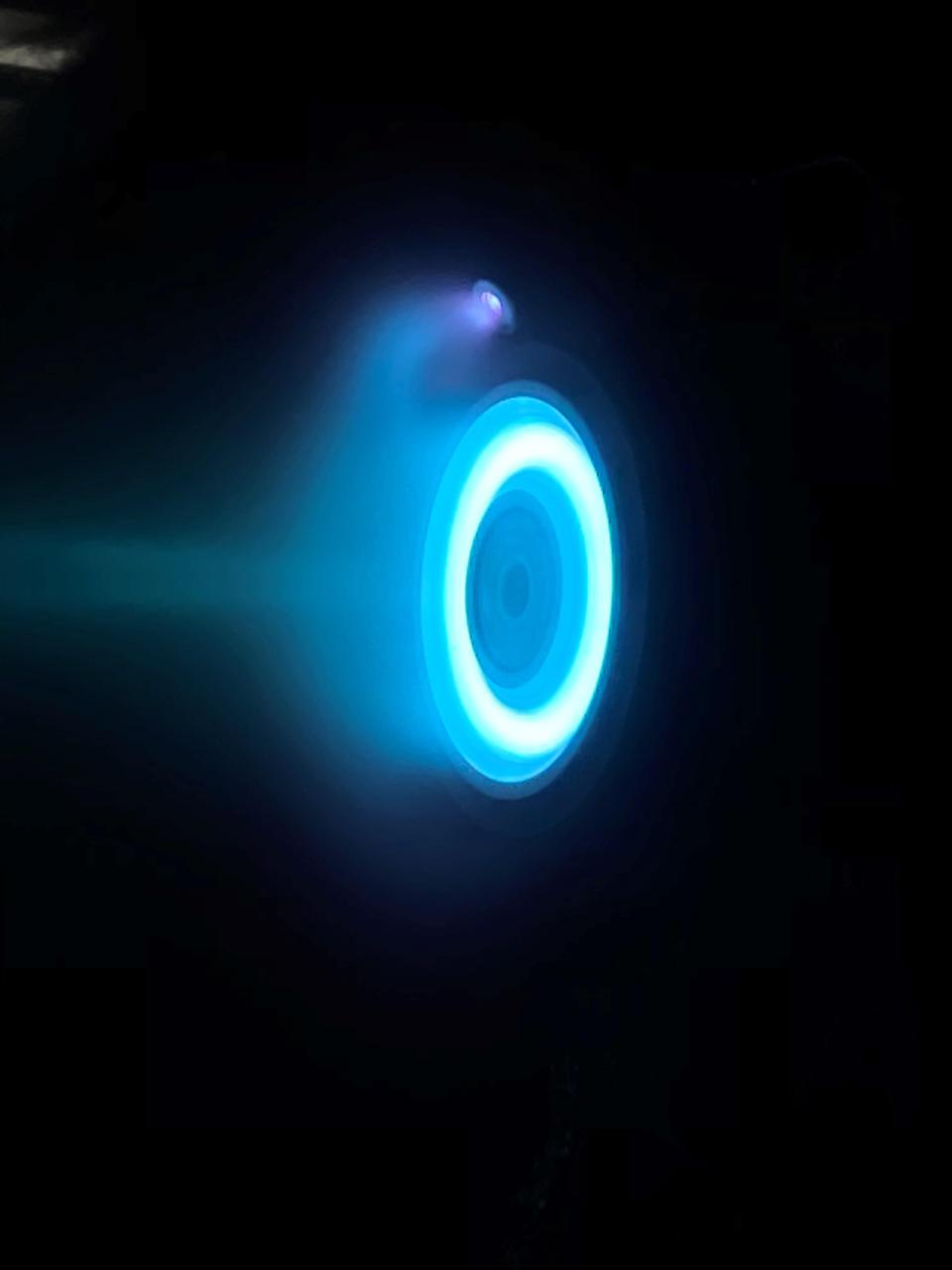
NASA's Psyche spacecraft, set to launch in August 2022, will travel to its target in the main asteroid belt between Mars and Jupiter under the power of super-efficient electric propulsion. This photo captures an operating electric Hall thruster identical to those that will be used to propel the Psyche spacecraft. This photo was taken at NASA's Jet Propulsion Laboratory in Southern California on May 20, 2020 with an iPhone, through the thick window of a vacuum chamber used to simulate the environment of deep space. The thruster works by turning xenon gas, a neutral gas used in car headlights and plasma TVs, into xenon ions. As the xenon ions are accelerated out of the thruster, they create the thrust that will propel the spacecraft. The xenon plasma emits a blue glow, seen here, as it operates. An observer in space traveling behind Psyche would see the blue glow of plasma trailing behind the spacecraft. Solar arrays will provide the electricity that powers the thrusters. Hall thrusters will be used for the first time beyond lunar orbit, demonstrating that they could play a role in supporting future missions to deep space. https://photojournal.jpl.nasa.gov/catalog/PIA23879
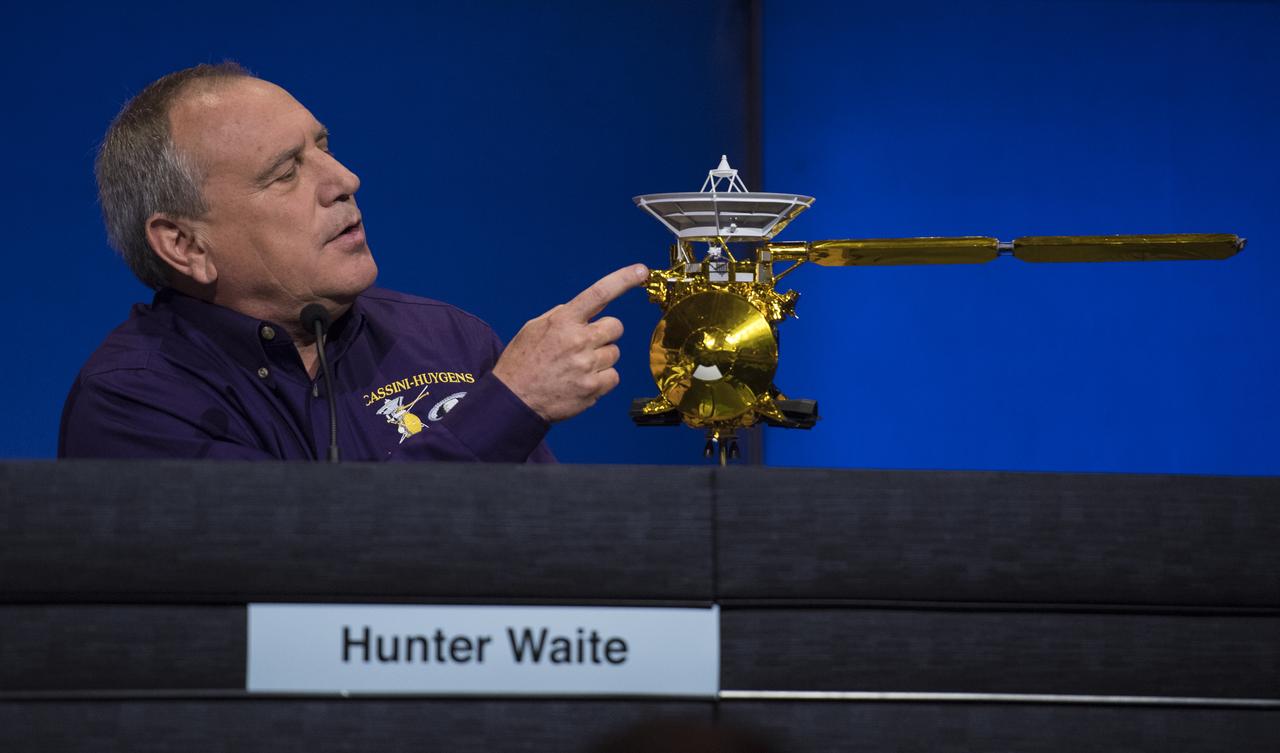
Principle investigator for the Ion and Neutral Mass Spectrometer (INMS) at the Southwest Research Institute, Hunter Waite, points to the location of the INMS during a press conference previewing Cassini's End of Mission, Wednesday, Sept. 13, 2017 at NASA's Jet Propulsion Laboratory in Pasadena, California. Since its arrival in 2004, the Cassini-Huygens mission has been a discovery machine, revolutionizing our knowledge of the Saturn system and captivating us with data and images never before obtained with such detail and clarity. On Sept. 15, 2017, operators will deliberately plunge the spacecraft into Saturn, as Cassini gathered science until the end. The “plunge” ensures Saturn’s moons will remain pristine for future exploration. During Cassini’s final days, mission team members from all around the world gathered at NASA’s Jet Propulsion Laboratory, Pasadena, California, to celebrate the achievements of this historic mission. Photo Credit: (NASA/Joel Kowsky)
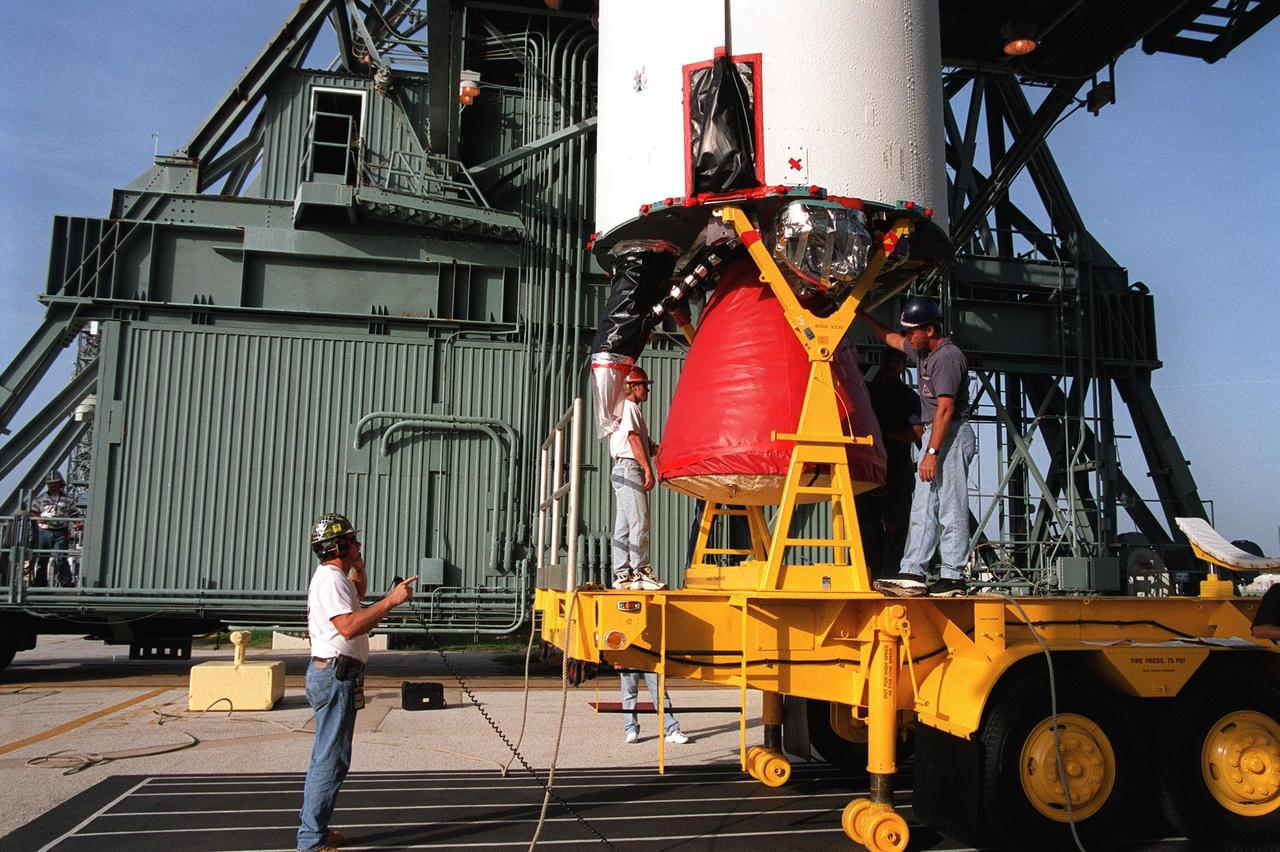
KENNEDY SPACE CENTER, Fla. -- On Launch Complex 17A, Cape Canaveral Air Force Station, workers prepare to disconnect the first stage of a Boeing Delta II rocket from the transporter. The rocket will propel the Genesis spacecraft on a journey to capture samples of the ions and elements in the solar wind and return them to Earth for scientists to use to determine the exact composition of the Sun and the solar system's origin. NASA’s Genesis project in managed by the Jet Propulsion Laboratory in Pasadena, Calif. Lockheed Martin Astronautics built the Genesis spacecraft for NASA in Denver, Colo. The launch is scheduled for July 30 at 12:36 p.m. EDT
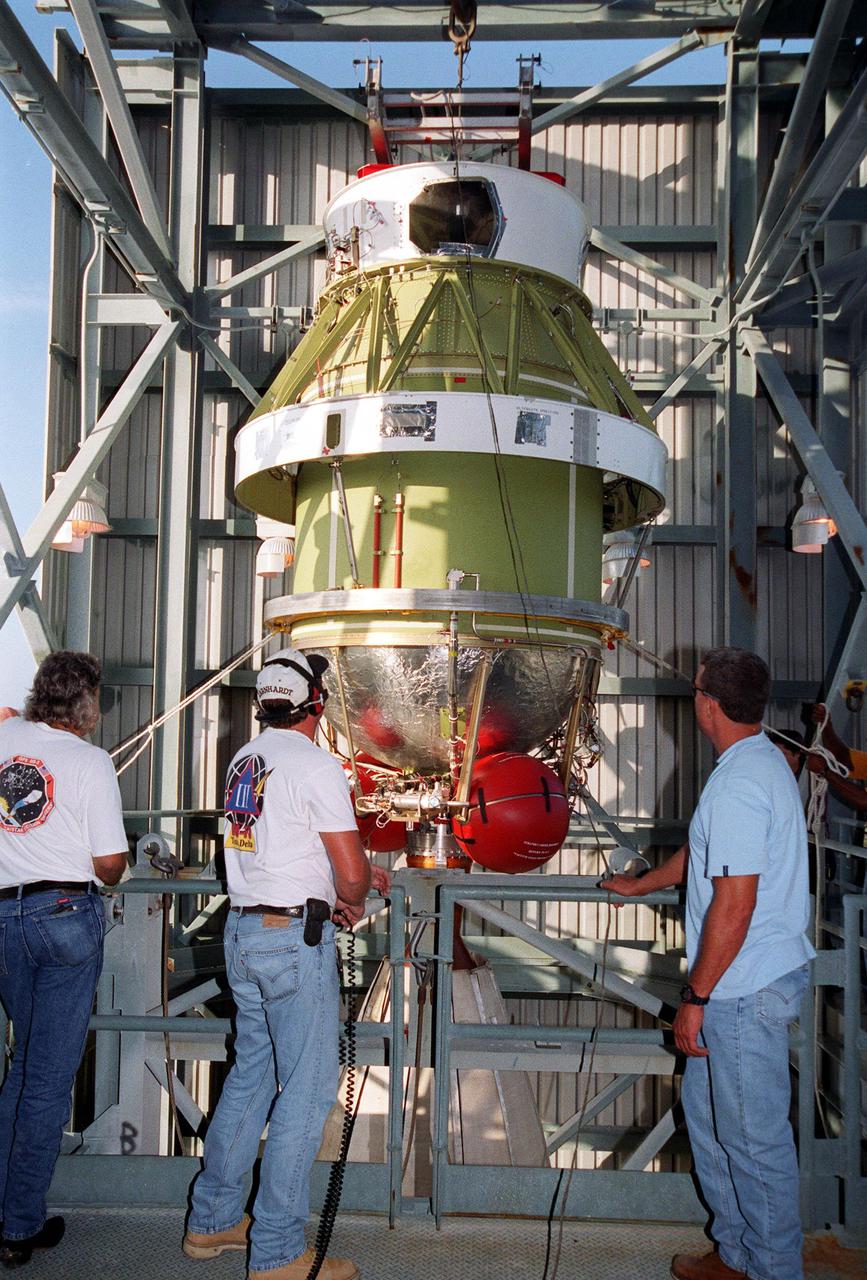
KENNEDY SPACE CENTER, Fla. -- The second stage of a Delta II rocket arrives near the top of the gantry on Launch Complex 17-A, Cape Canaveral Air Force Station, for mating with the first stage. The Delta II will propel the Genesis spacecraft on a journey to capture samples of the ions and elements in the solar wind and return them to Earth for scientists to use to determine the exact composition of the Sun and the solar system’s origin. NASA’s Genesis project in managed by the Jet Propulsion Laboratory in Pasadena, Calif. Lockheed Martin Astronautics built the Genesis spacecraft for NASA in Denver, Colo. The launch is scheduled for July 30 at 12:36 p.m. EDT
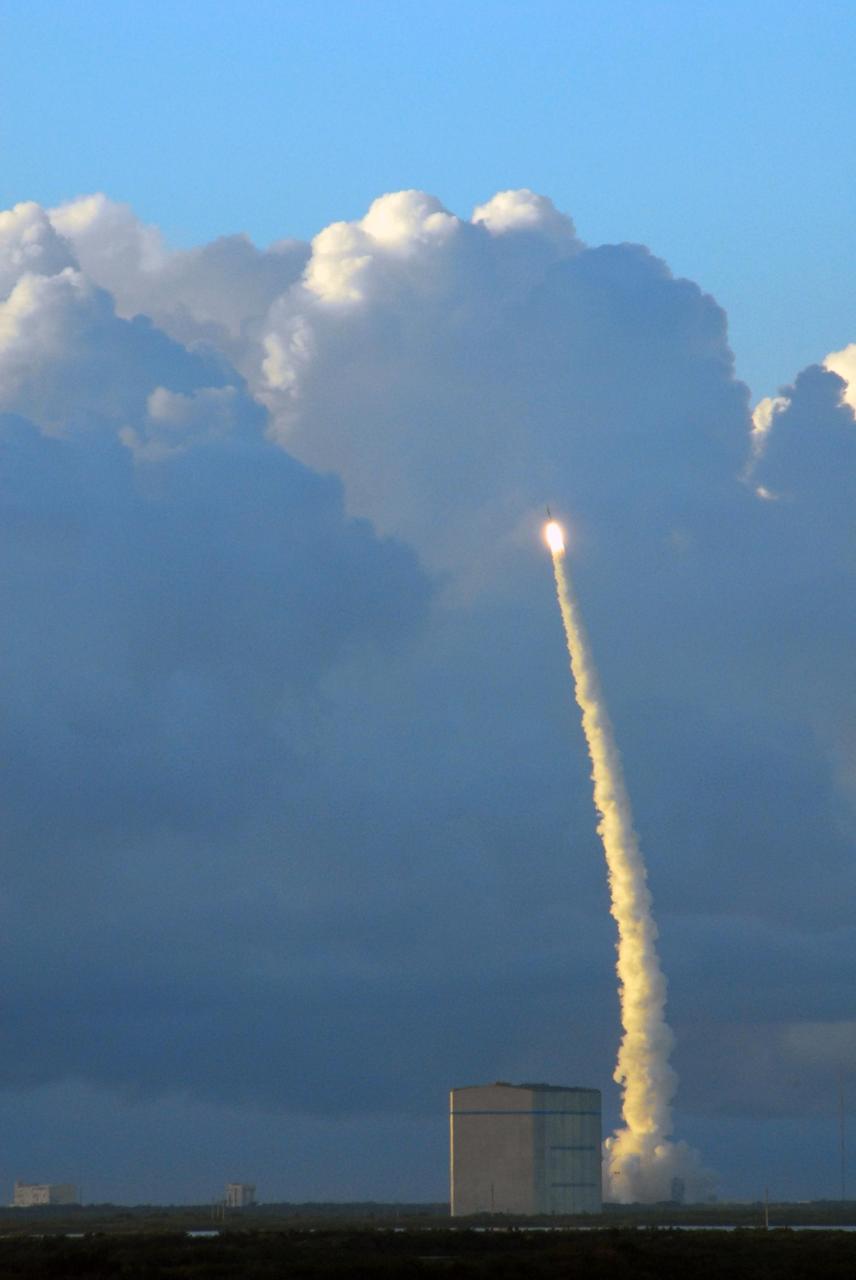
KENNEDY SPACE CENTER, FLA. -- Rising into billowing clouds above the horizon, the Delta II rocket carrying the Dawn spacecraft roars into the sky. Liftoff was at 7:34 a.m. EDT from Pad 17-B at Cape Canaveral Air Force Station. Dawn is the ninth mission in NASA's Discovery Program. The spacecraft will be the first to orbit two planetary bodies, asteroid Vesta and dwarf planet Ceres, during a single mission. Vesta and Ceres lie in the asteroid belt between Mars and Jupiter. It is also NASA's first purely scientific mission powered by three solar electric ion propulsion engines. Photo credit: NASA/George Shelton

KENNEDY SPACE CENTER, FLA. -- At Launch Pad 17-B, at Cape Canaveral Air Force Station, NASA's Dawn spacecraft is hoisted up on the pad in preparation for stacking with the Delta II launch vehicle. Launch is scheduled for July 7. Dawn is the ninth mission in NASA's Discovery Program. The spacecraft will be the first to orbit two planetary bodies, asteroid Vesta and dwarf planet Ceres, during a single mission. Vesta and Ceres lie in the asteroid belt between Mars and Jupiter. It is also NASA's first purely scientific mission powered by three solar electric ion propulsion engines. Photo credit: NASA/Troy Cryder.
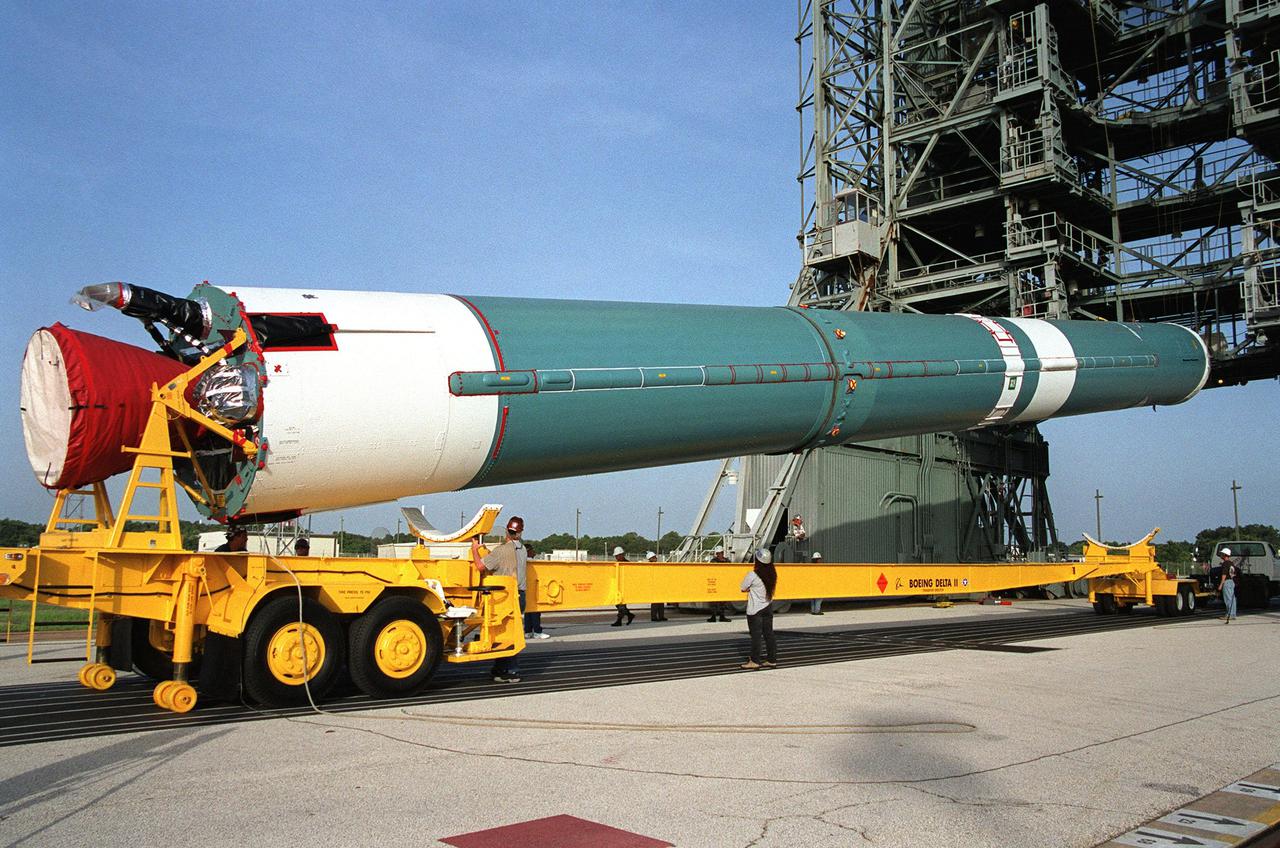
KENNEDY SPACE CENTER, Fla. -- The first stage of a Boeing Delta II rocket arrives on Launch Complex 17A, Cape Canaveral Air Force Station. The rocket will propel the Genesis spacecraft on a journey to capture samples of the ions and elements in the solar wind and return them to Earth for scientists to use to determine the exact composition of the Sun and the solar system’s origin. NASA's Genesis project in managed by the Jet Propulsion Laboratory in Pasadena, Calif. Lockheed Martin Astronautics built the Genesis spacecraft for NASA in Denver, Colo. The launch is scheduled for July 30 at 12:36 p.m. EDT
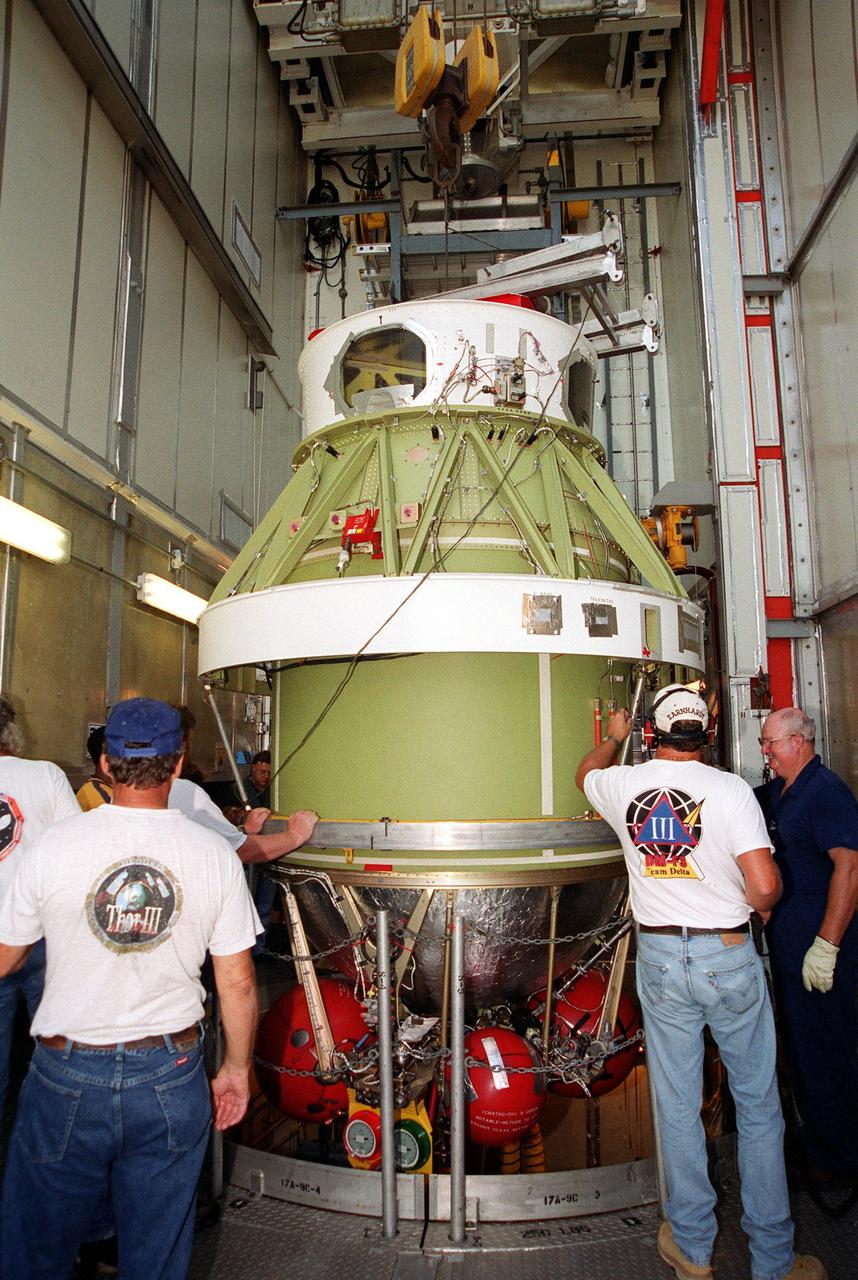
KENNEDY SPACE CENTER, Fla. -- The second stage of a Delta II rocket is moved into position on the gantry on Launch Complex 17-A, Cape Canaveral Air Force Station, for mating with the first stage. The Delta II will propel the Genesis spacecraft on a journey to capture samples of the ions and elements in the solar wind and return them to Earth for scientists to use to determine the exact composition of the Sun and the solar system’s origin. NASA’s Genesis project in managed by the Jet Propulsion Laboratory in Pasadena, Calif. Lockheed Martin Astronautics built the Genesis spacecraft for NASA in Denver, Colo. The launch is scheduled for July 30 at 12:36 p.m. EDT

KENNEDY SPACE CENTER, Fla. -- The Genesis project crew stands in front of the spacecraft for a media showing in the Space Assembly and Encapsulation Facility -2. Genesis will capture samples of the ions and elements in the solar wind and return them to Earth for scientists to use to determine the exact composition of the Sun and the solar system's origin. NASA's Genesis project is managed by the Jet Propulsion Laboratory in Pasadena, Calif. Lockheed Martin Astronautics built the Genesis spacecraft for NASA in Denver, Colo. Launch of Genesis aboard a Boeing Delta II rocket is scheduled for July 30 at 12:36 p.m. EDT
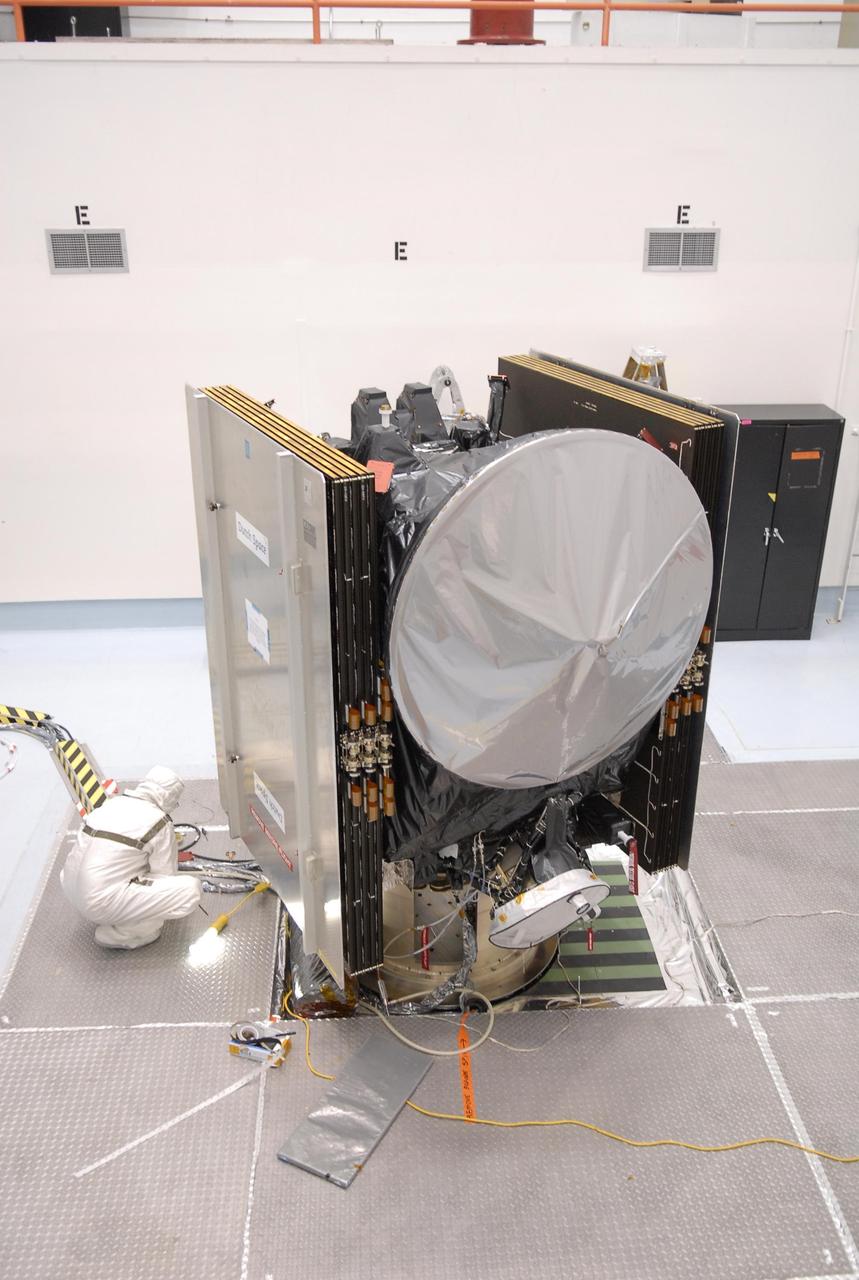
KENNEDY SPACE CENTER, FLA. -- At Astrotech, the Dawn spacecraft is on display for a media showing. On each side are the folded solar array panels. At the top is the high gain antenna, covered by a sun shade. At the bottom, also under cover, is one of the ion propulsion thrusters. Behind the antenna on the outside edge are the framing cameras. Dawn's goal is to characterize the conditions and processes of the solar system's earliest epoch by investigating in detail the largest protoplanets that have remained intact since their formations: asteroid Vesta and the dwarf planet Ceres. They reside in the extensive zone between Mars and Jupiter together with many other smaller bodies, called the asteroid belt. Photo credit: NASA/Kim Shiflett
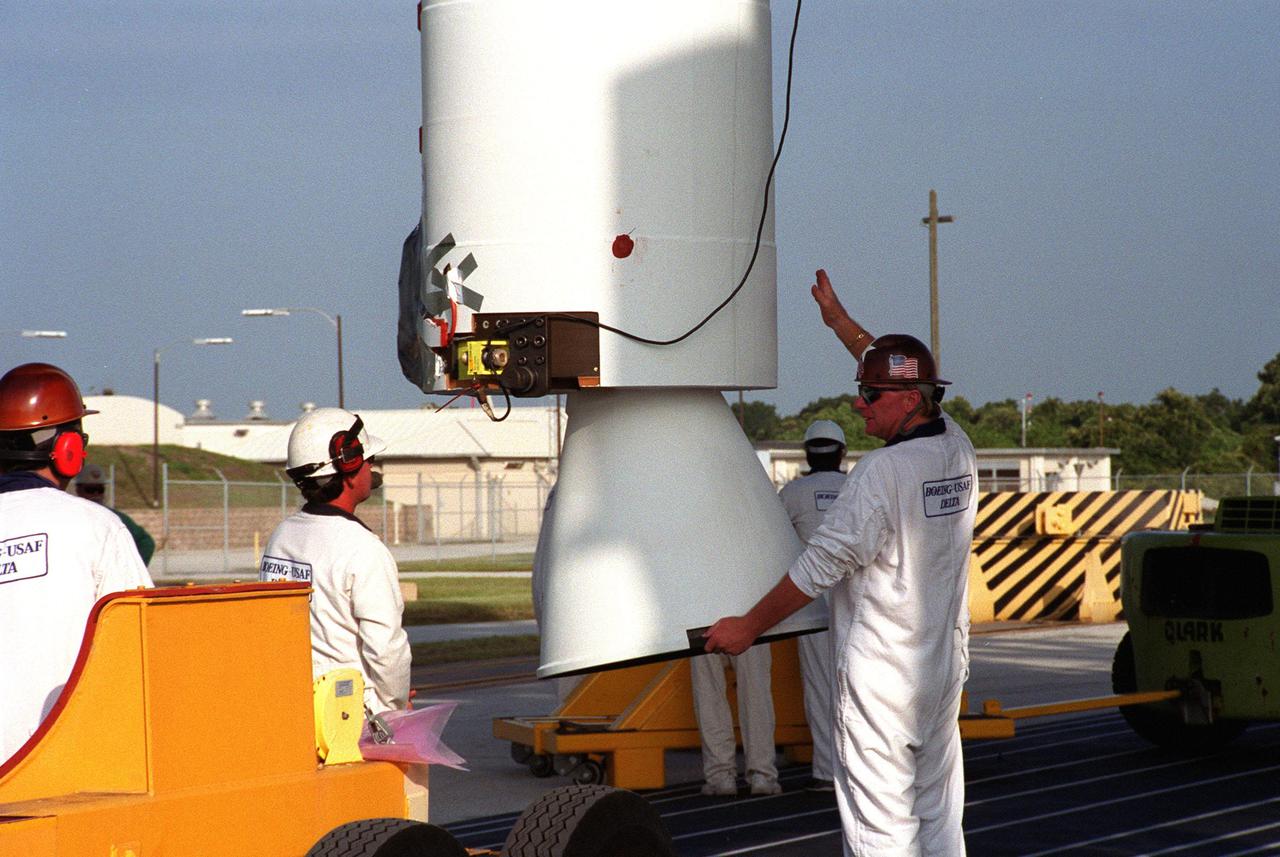
KENNEDY SPACE CENTER, Fla. -- Workers on Launch Complex 17-A, Cape Canaveral Air Force Station, oversee the lifting of a solid rocket booster to be mated with the Delta II rocket for the Genesis spacecraft launch. Genesis will capture samples of the ions and elements in the solar wind and return them to Earth for scientists to use to determine the exact composition of the Sun and the solar system’s origin. NASA’s Genesis project is managed by the Jet Propulsion Laboratory in Pasadena, Calif. Lockheed Martin Astronautics built the Genesis spacecraft for NASA in Denver, Colo. Launch of Genesis aboard a Boeing Delta II rocket is scheduled for July 30 at 12:36 p.m. EDT
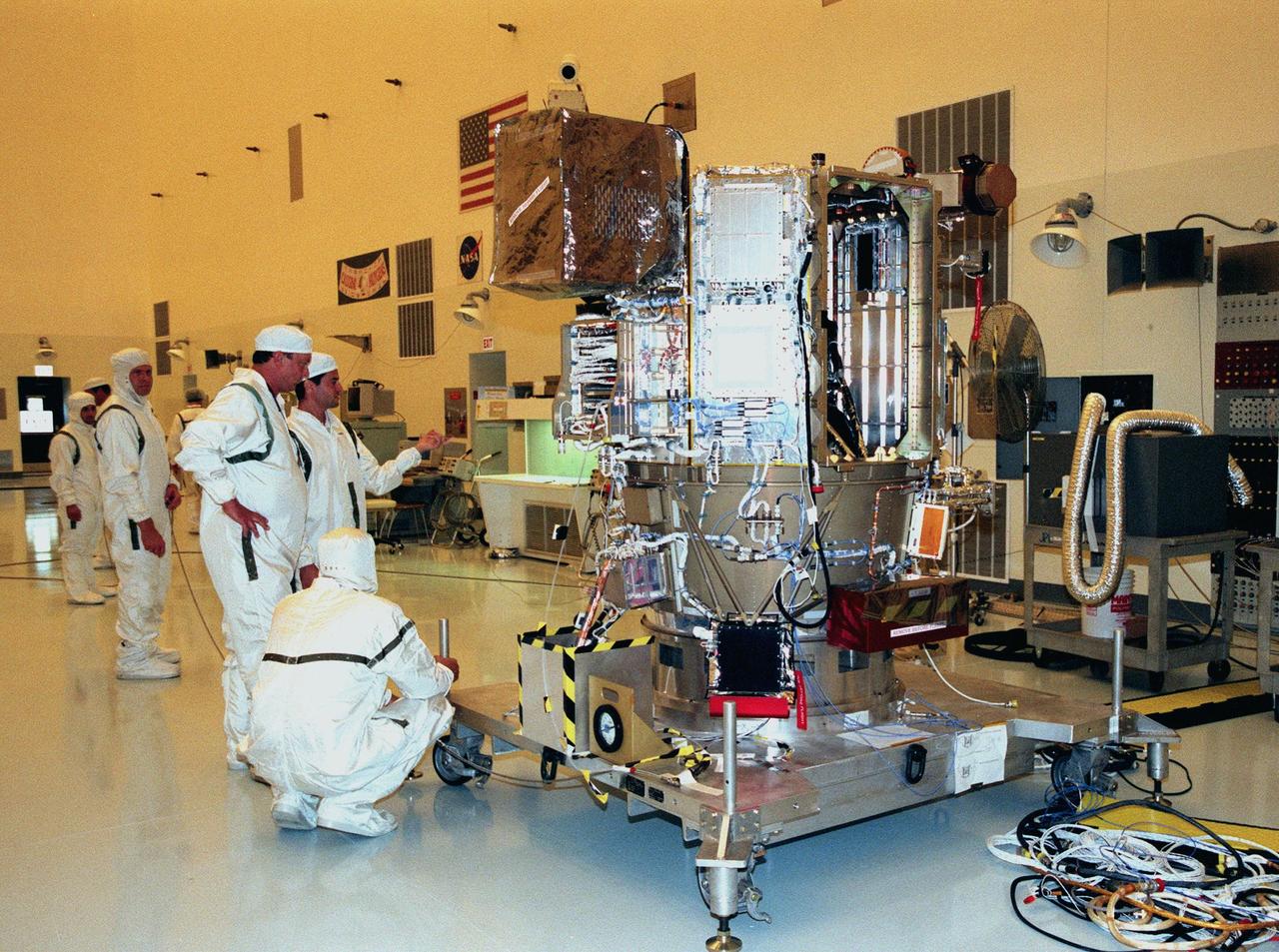
KENNEDY SPACE CENTER, FLA. -- Workers in the Payload Hazardous Servicing Facility test equipment on Deep Space 1 to prepare it for launch aboard a Boeing Delta 7326 rocket in October. The first flight in NASA's New Millennium Program, Deep Space 1 is designed to validate 12 new technologies for scientific space missions of the next century. Onboard experiments include an ion propulsion engine and software that tracks celestial bodies so the spacecraft can make its own navigation decisions without the intervention of ground controllers. Most of its mission objectives will be completed within the first two months. A near-Earth asteroid, 1992 KD, has also been selected for a possible flyby
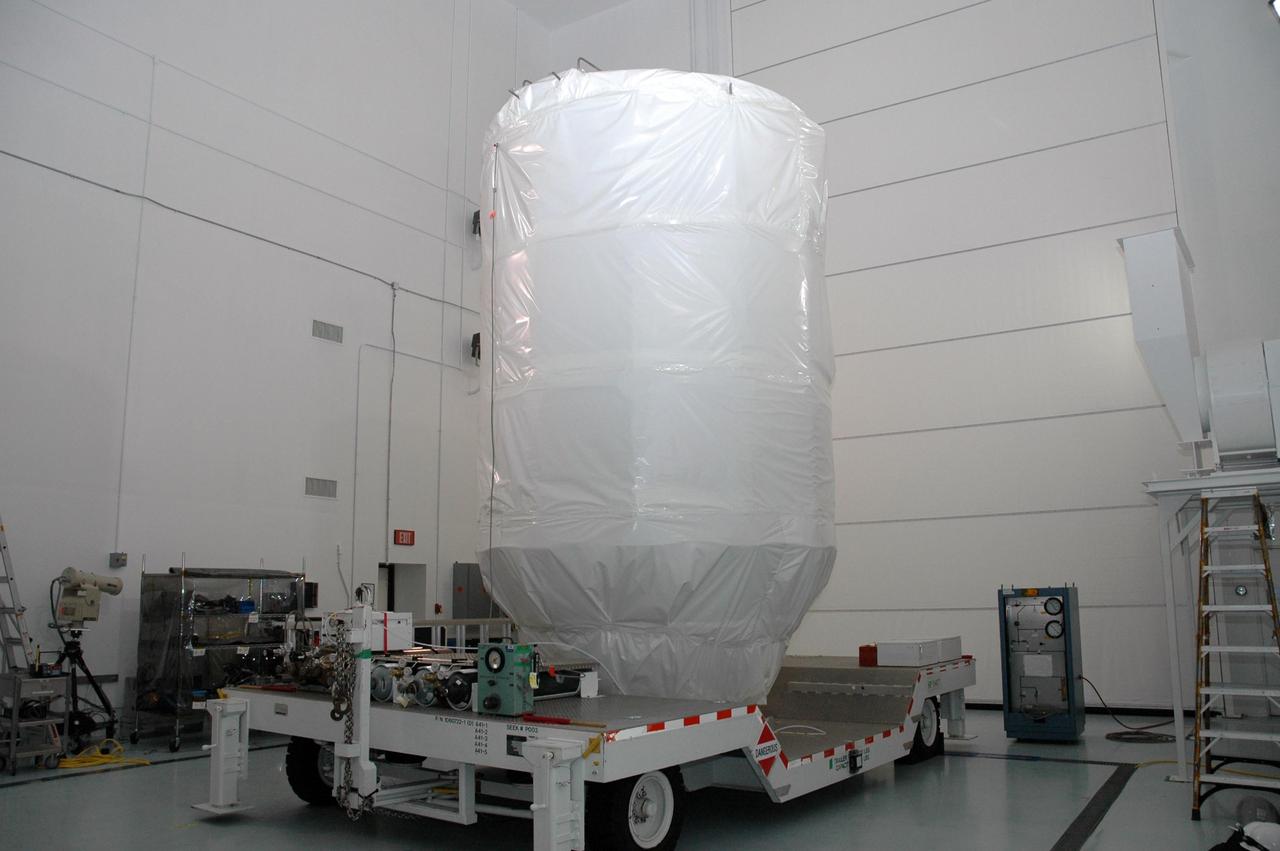
KENNEDY SPACE CENTER, FLA. -- Inside the Astrotech Facility in Titusville, Fla., NASA’s Dawn spacecraft is ready to be transported to Launch Pad 17-B at Cape Canaveral Air Force Station, for mate to the Delta II launch vehicle. Launch is scheduled for July 7. Dawn is the ninth mission in NASA's Discovery Program. The spacecraft will be the first to orbit two planetary bodies, asteroid Vesta and dwarf planet Ceres, during a single mission. Vesta and Ceres lie in the asteroid belt between Mars and Jupiter. It is also NASA's first purely scientific mission powered by three solar electric ion propulsion engines. Photo credit: NASA/Troy Cryder.
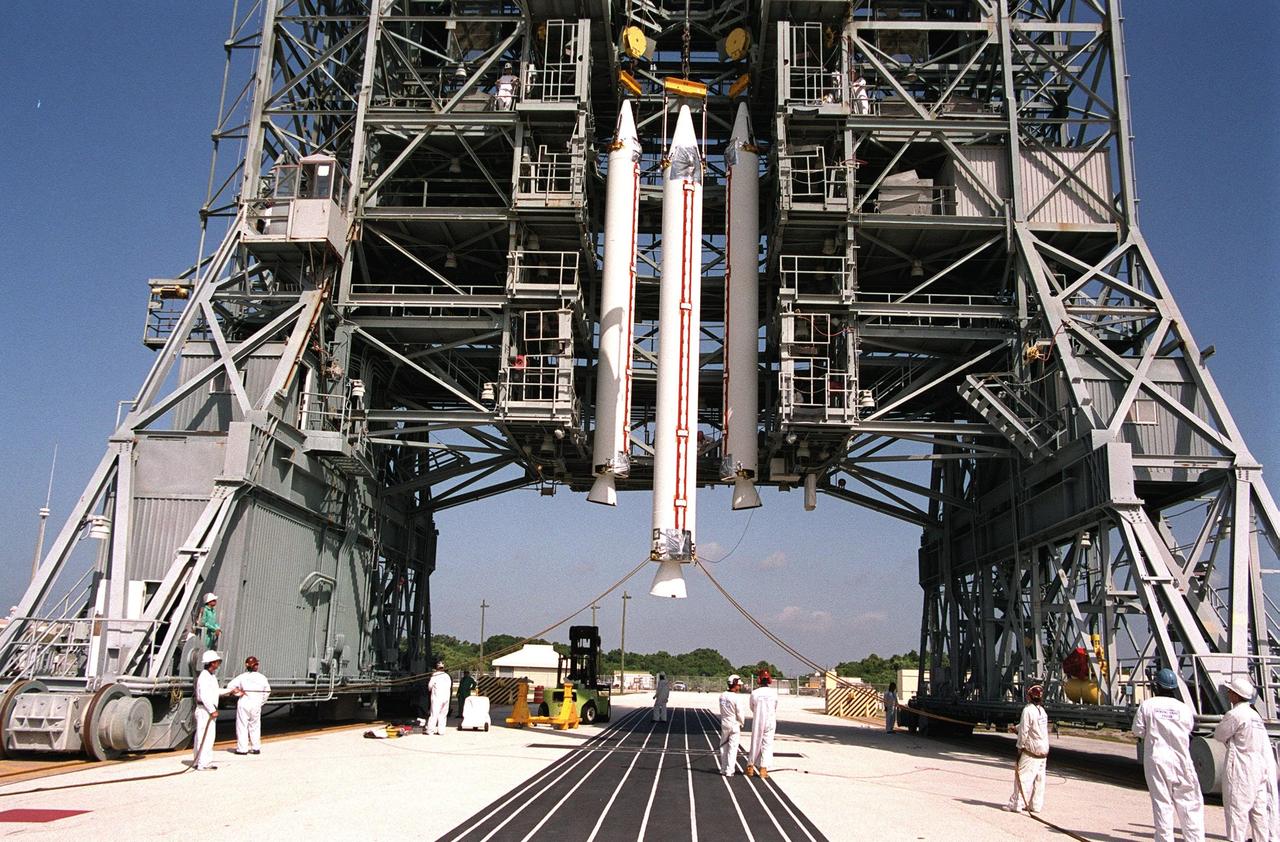
KENNEDY SPACE CENTER, Fla. -- The third solid rocket booster joins the other two on Launch Complex 17-A, Cape Canaveral Air Force Station. They will be mated to the Delta II rocket for the Genesis spacecraft launch. Genesis will capture samples of the ions and elements in the solar wind and return them to Earth for scientists to use to determine the exact composition of the Sun and the solar system’s origin. NASA’s Genesis project is managed by the Jet Propulsion Laboratory in Pasadena, Calif. Lockheed Martin Astronautics built the Genesis spacecraft for NASA in Denver, Colo. Launch of Genesis aboard a Boeing Delta II rocket is scheduled for July 30 at 12:36 p.m. EDT
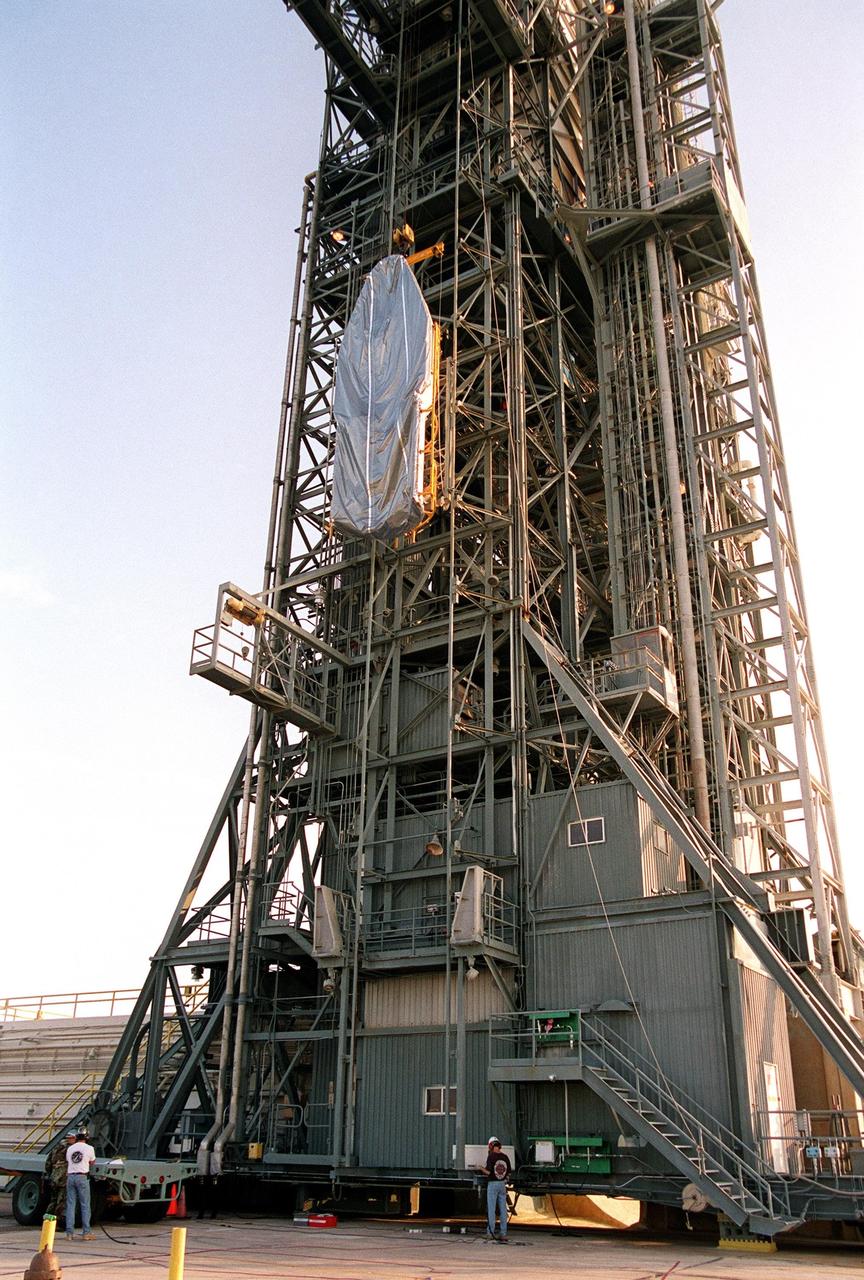
KENNEDY SPACE CENTER, Fla. -- At Launch Complex 17-A, Cape Canaveral Air Force Station, part of the fairing for the Genesis spacecraft is lifted up the gantry. The fairing will encapsulate the spacecraft to protect it during launch aboard a Delta II rocket. Genesis will be on a journey to capture samples of the ions and elements in the solar wind and return them to Earth for scientists to use to determine the exact composition of the Sun and the solar system’s origin. NASA’s Genesis project in managed by the Jet Propulsion Laboratory in Pasadena, Calif. Lockheed Martin Astronautics built the Genesis spacecraft for NASA in Denver, Colo. The launch is scheduled for July 30 at 12:36 p.m. EDT
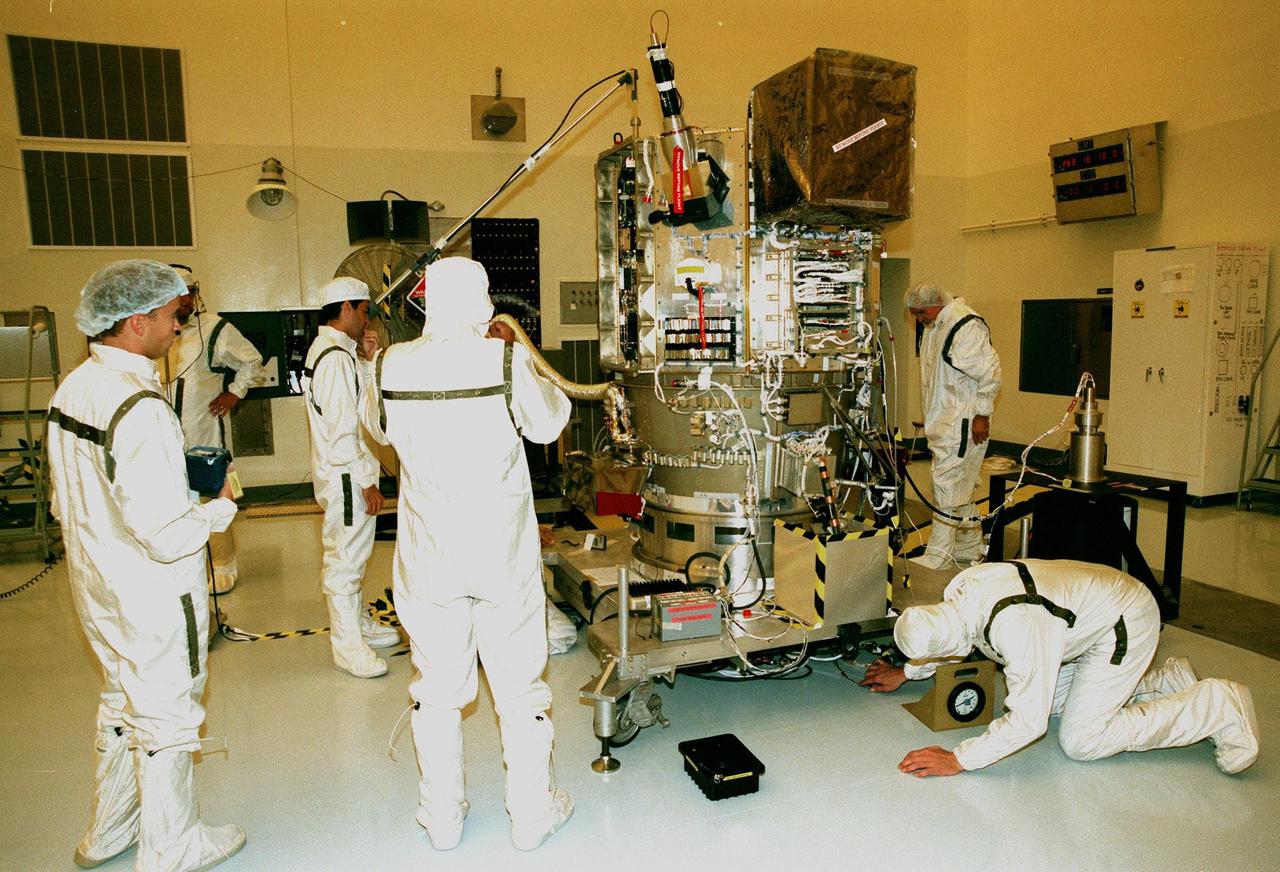
KENNEDY SPACE CENTER, FLA. -- Workers in the Payload Hazardous Servicing Facility prepare Deep Space 1 for launch aboard a Boeing Delta 7326 rocket in October. The first flight in NASA's New Millennium Program, Deep Space 1 is designed to validate 12 new technologies for scientific space missions of the next century. Onboard experiments include an ion propulsion engine and software that tracks celestial bodies so the spacecraft can make its own navigation decisions without the intervention of ground controllers. Most of its mission objectives will be completed within the first two months. A near-Earth asteroid, 1992 KD, has also been selected for a possible flyby

KENNEDY SPACE CENTER, Fla. -- On Launch Complex 17A, Cape Canaveral Air Force Station, the first stage of a Delta II rocket is lifted up the gantry. The rocket will propel the Genesis spacecraft on a journey to capture samples of the ions and elements in the solar wind and return them to Earth for scientists to use to determine the exact composition of the Sun and the solar system’s origin. NASA's Genesis project in managed by the Jet Propulsion Laboratory in Pasadena, Calif. Lockheed Martin Astronautics built the Genesis spacecraft for NASA in Denver, Colo. The launch is scheduled for July 30 at 12:36 p.m. EDT
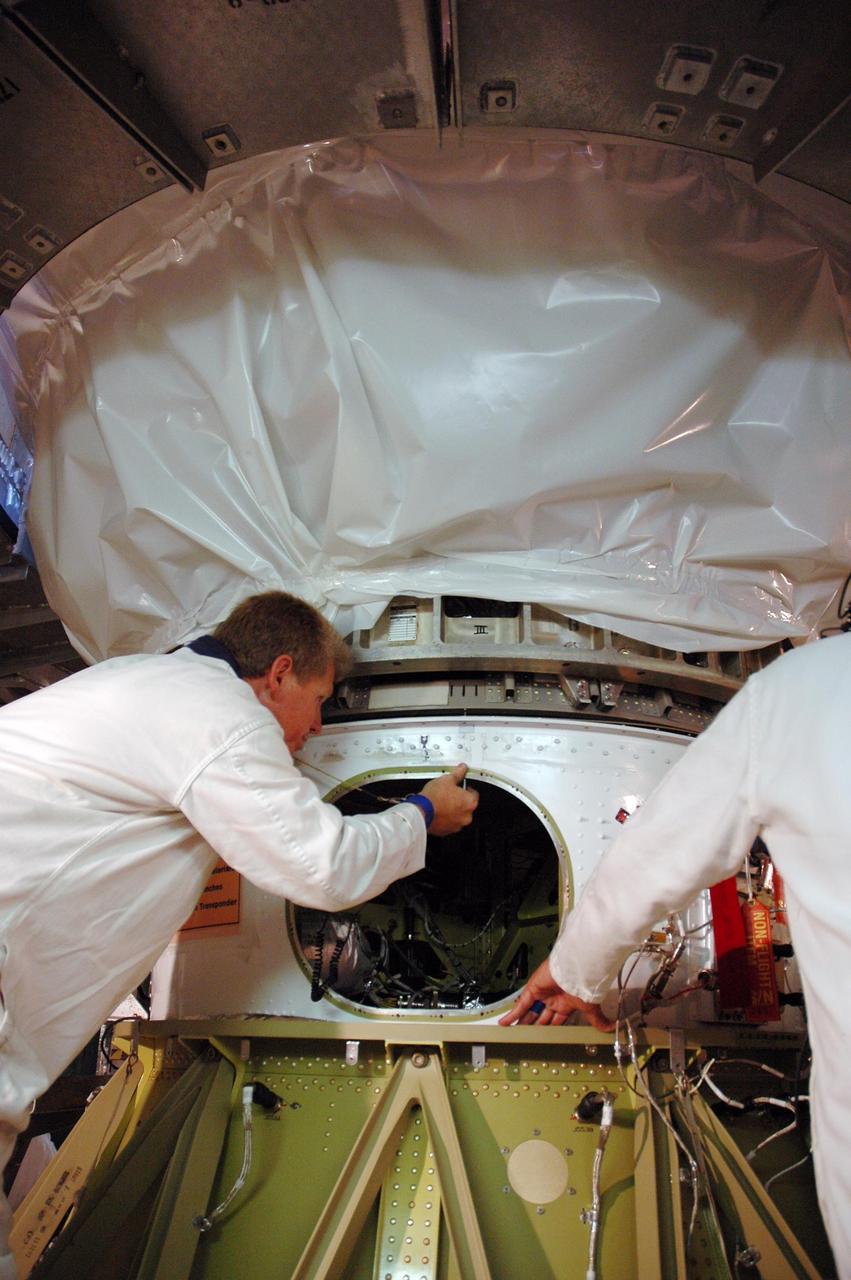
KENNEDY SPACE CENTER, FLA. -- At Launch Pad 17-B, at Cape Canaveral Air Force Station, workers position NASA's Dawn spacecraft to mate it with the Delta II launch vehicle below. Launch is scheduled for July 7. Dawn is the ninth mission in NASA’s Discovery Program. The spacecraft will be the first to orbit two planetary bodies, asteroid Vesta and dwarf planet Ceres, during a single mission. Vesta and Ceres lie in the asteroid belt between Mars and Jupiter. It is also NASA’s first purely scientific mission powered by three solar electric ion propulsion engines. Photo credit: NASA/Troy Cryder.

KENNEDY SPACE CENTER, Fla. -- On Launch Complex 17A, Cape Canaveral Air Force Station, the first stage of a Delta II rocket is lifted up the gantry. The rocket will propel the Genesis spacecraft on a journey to capture samples of the ions and elements in the solar wind and return them to Earth for scientists to use to determine the exact composition of the Sun and the solar system’s origin. NASA's Genesis project in managed by the Jet Propulsion Laboratory in Pasadena, Calif. Lockheed Martin Astronautics built the Genesis spacecraft for NASA in Denver, Colo. The launch is scheduled for July 30 at 12:36 p.m. EDT
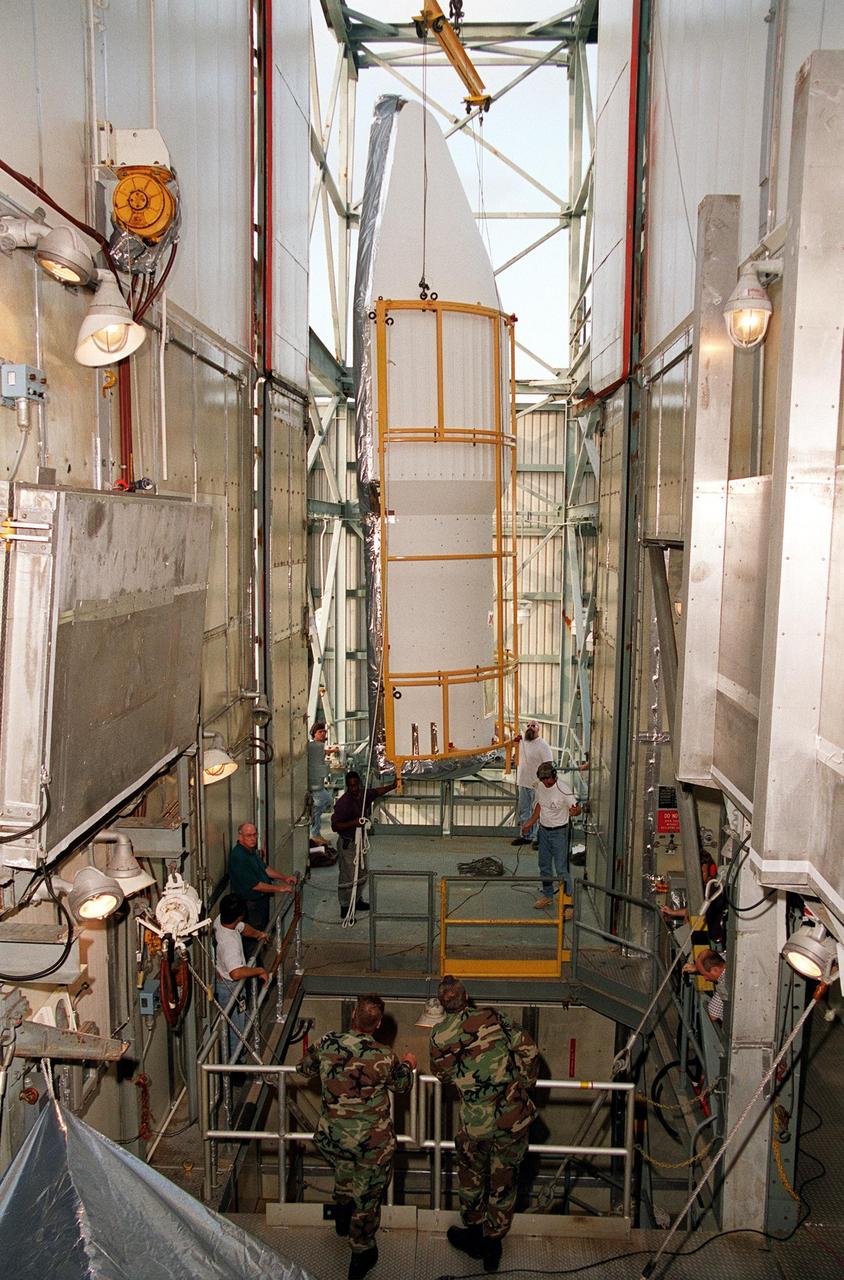
KENNEDY SPACE CENTER, Fla. -- At Launch Complex 17-A, Cape Canaveral Air Force Station, one part of the fairing for the Genesis spacecraft is being moved toward the opening in the foreground where the Genesis spacecraft waits for encapsulation. The fairing will protect the spacecraft during launch aboard a Delta II rocket. Genesis will be on a journey to capture samples of the ions and elements in the solar wind and return them to Earth for scientists to use to determine the exact composition of the Sun and the solar system’s origin. NASA’s Genesis project in managed by the Jet Propulsion Laboratory in Pasadena, Calif. Lockheed Martin Astronautics built the Genesis spacecraft for NASA in Denver, Colo. The launch is scheduled for July 30 at 12:36 p.m. EDT
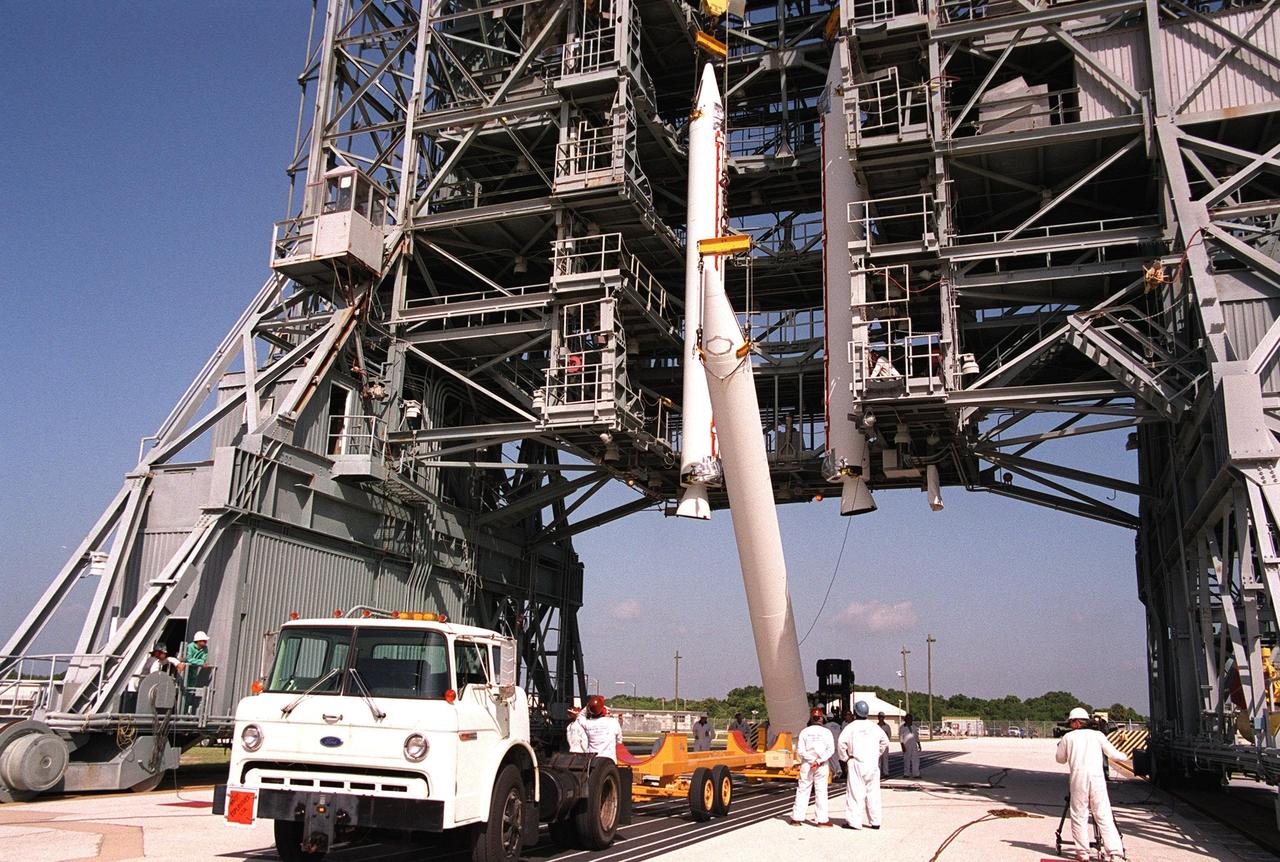
KENNEDY SPACE CENTER, Fla. -- A third solid rocket booster is raised to join the other two on Launch Complex 17-A, Cape Canaveral Air Force Station. They will be mated to the Delta II rocket for the Genesis spacecraft launch. Genesis will capture samples of the ions and elements in the solar wind and return them to Earth for scientists to use to determine the exact composition of the Sun and the solar system’s origin. NASA’s Genesis project is managed by the Jet Propulsion Laboratory in Pasadena, Calif. Lockheed Martin Astronautics built the Genesis spacecraft for NASA in Denver, Colo. Launch of Genesis aboard a Boeing Delta II rocket is scheduled for July 30 at 12:36 p.m. EDT
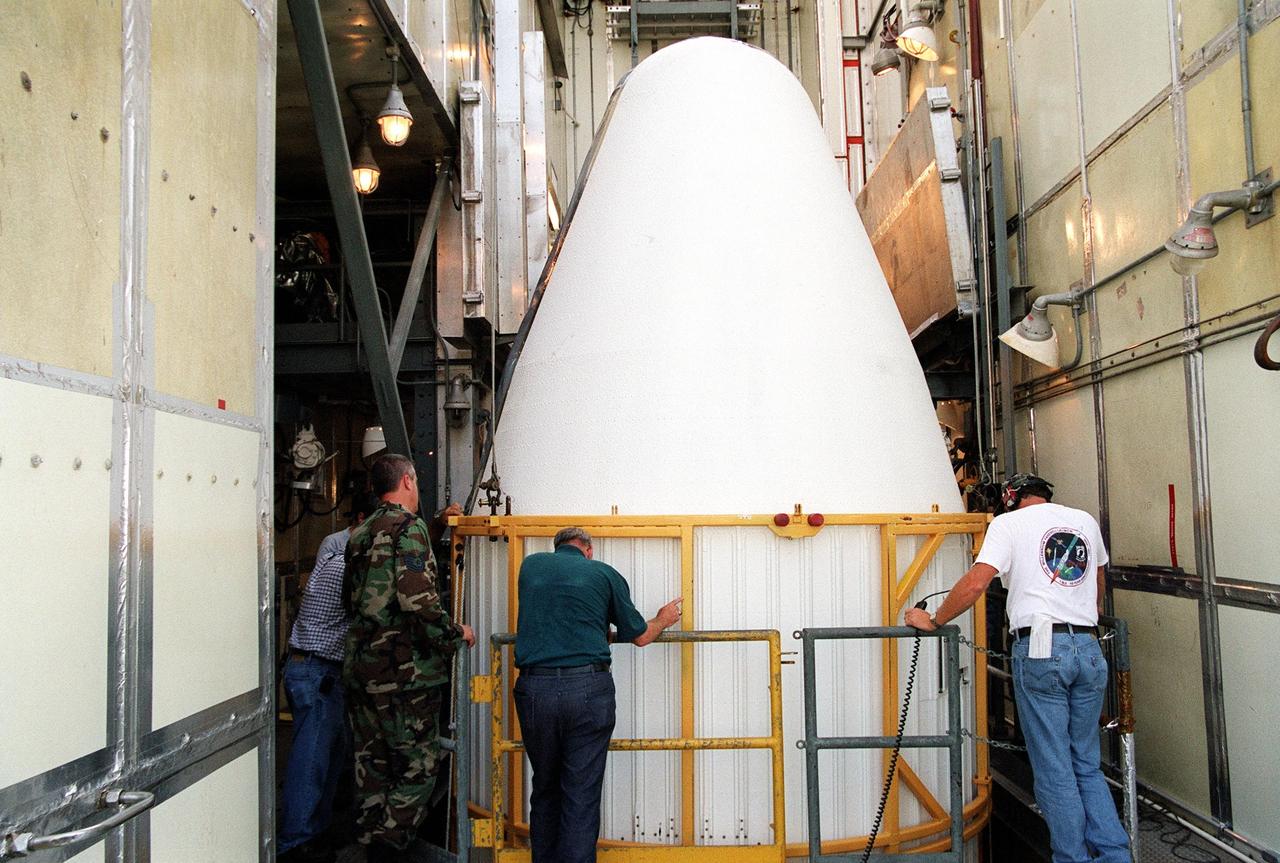
KENNEDY SPACE CENTER, Fla. -- At Launch Complex 17-A, Cape Canaveral Air Force Station, the second part of the fairing for the Genesis spacecraft arrives at the top of the gantry. The fairing will encapsulate the spacecraft to protect it during launch aboard a Delta II rocket. Genesis will be on a journey to capture samples of the ions and elements in the solar wind and return them to Earth for scientists to use to determine the exact composition of the Sun and the solar system’s origin. NASA’s Genesis project in managed by the Jet Propulsion Laboratory in Pasadena, Calif. Lockheed Martin Astronautics built the Genesis spacecraft for NASA in Denver, Colo. The launch is scheduled for July 30 at 12:36 p.m. EDT
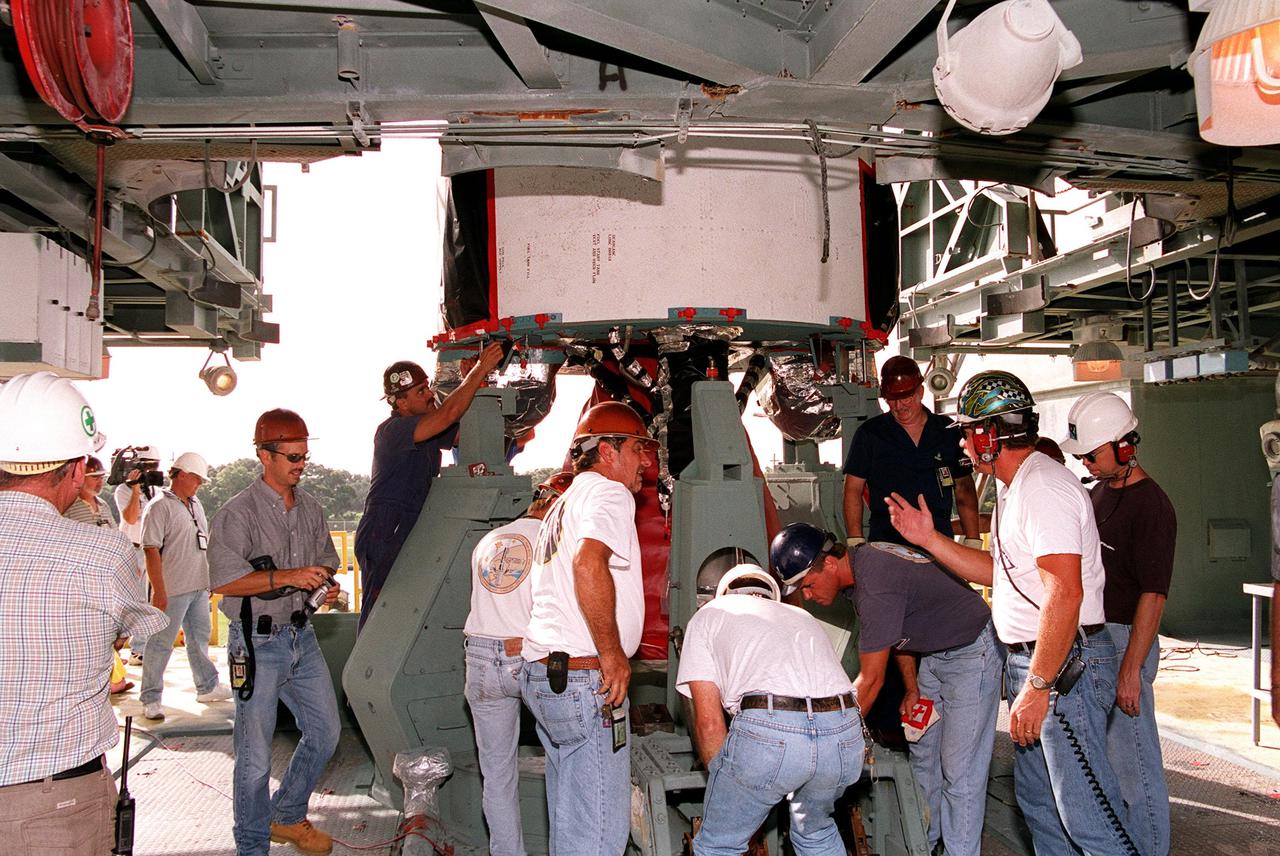
KENNEDY SPACE CENTER, Fla. -- On Launch Complex 17A, Cape Canaveral Air Force Station, technicians work on the bottom of the first stage of a Delta II rocket before its lift up the gantry. The rocket will propel the Genesis spacecraft on a journey to capture samples of the ions and elements in the solar wind and return them to Earth for scientists to use to determine the exact composition of the Sun and the solar system’s origin. NASA's Genesis project in managed by the Jet Propulsion Laboratory in Pasadena, Calif. Lockheed Martin Astronautics built the Genesis spacecraft for NASA in Denver, Colo. The launch is scheduled for July 30 at 12:36 p.m. EDT
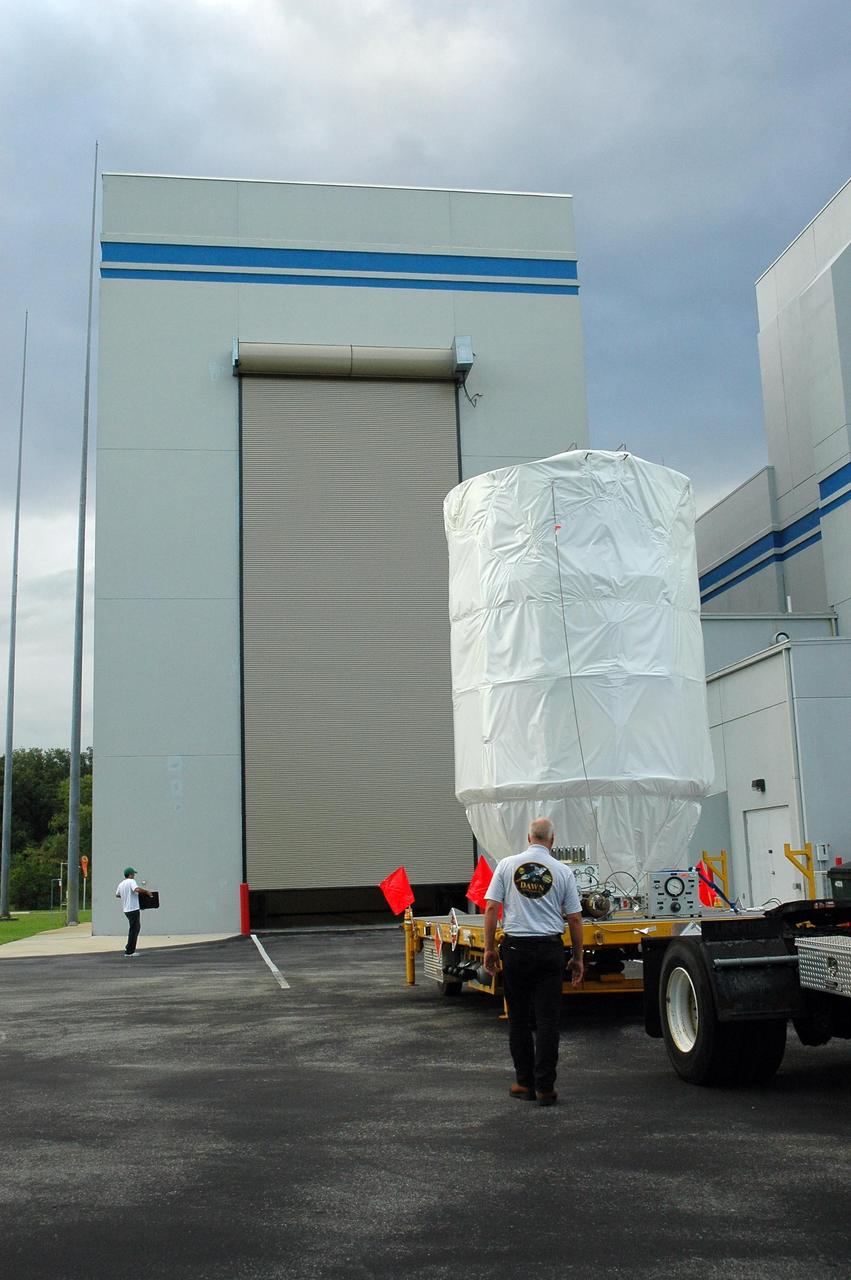
KENNEDY SPACE CENTER, FLA. — Sitting on a transporter, the Dawn spacecraft arrives at the Astrotech payload processing facility. Dawn was returned from Launch Pad 17-B at Cape Canaveral Air Force Station to Astrotech to await a new launch date. The launch opportunity extends from Sept. 7 to Oct. 15. Dawn is the ninth mission in NASA's Discovery Program. The spacecraft will be the first to orbit two planetary bodies, asteroid Vesta and dwarf planet Ceres, during a single mission. Vesta and Ceres lie in the asteroid belt between Mars and Jupiter. It is also NASA’s first purely scientific mission powered by three solar electric ion propulsion engines. NASA/Charisse Nahser
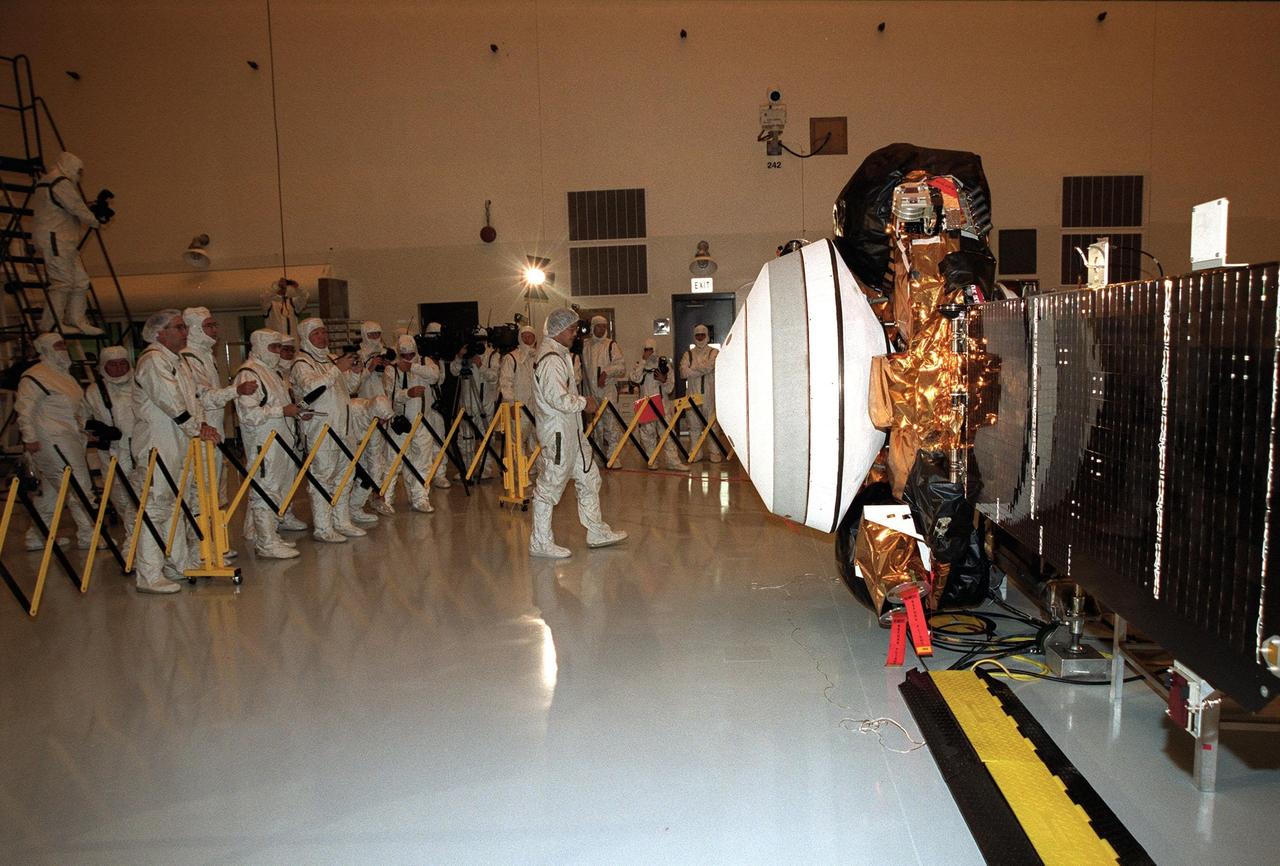
KENNEDY SPACE CENTER, Fla. -- A worker in the Space Assembly and Encapsulation Facility -2 faces the Genesis spacecraft at right as he provides information about it to the media gathered at left. Genesis will capture samples of the ions and elements in the solar wind and return them to Earth for scientists to use to determine the exact composition of the Sun and the solar system's origin. NASA's Genesis project is managed by the Jet Propulsion Laboratory in Pasadena, Calif. Lockheed Martin Astronautics built the Genesis spacecraft for NASA in Denver, Colo. Launch of Genesis aboard a Boeing Delta II rocket is scheduled for July 30 at 12:36 p.m. EDT
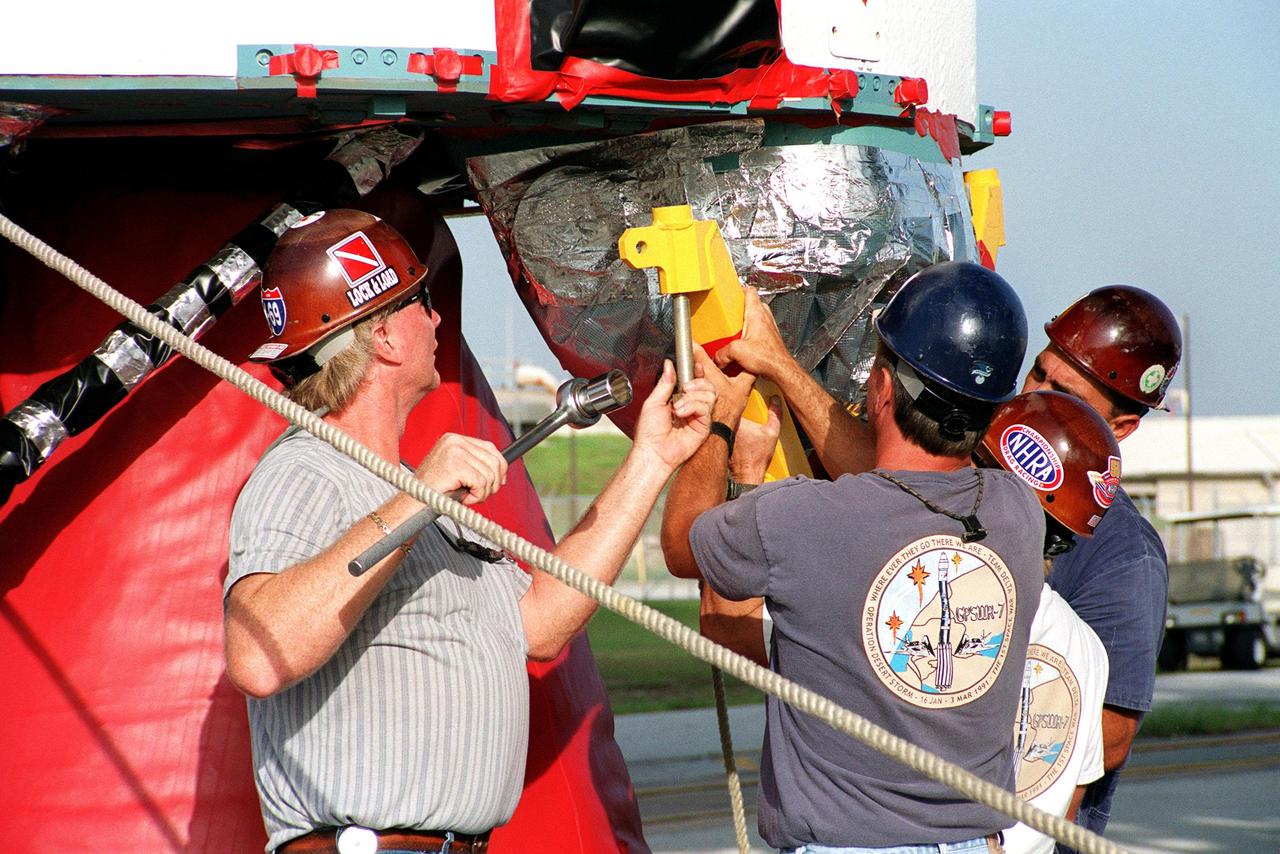
KENNEDY SPACE CENTER, Fla. -- On Launch Complex 17A, Cape Canaveral Air Force Station, technicians work on the bottom of the first stage of a Delta II rocket before its lift up the gantry. The rocket will propel the Genesis spacecraft on a journey to capture samples of the ions and elements in the solar wind and return them to Earth for scientists to use to determine the exact composition of the Sun and the solar system’s origin. NASA's Genesis project in managed by the Jet Propulsion Laboratory in Pasadena, Calif. Lockheed Martin Astronautics built the Genesis spacecraft for NASA in Denver, Colo. The launch is scheduled for July 30 at 12:36 p.m. EDT
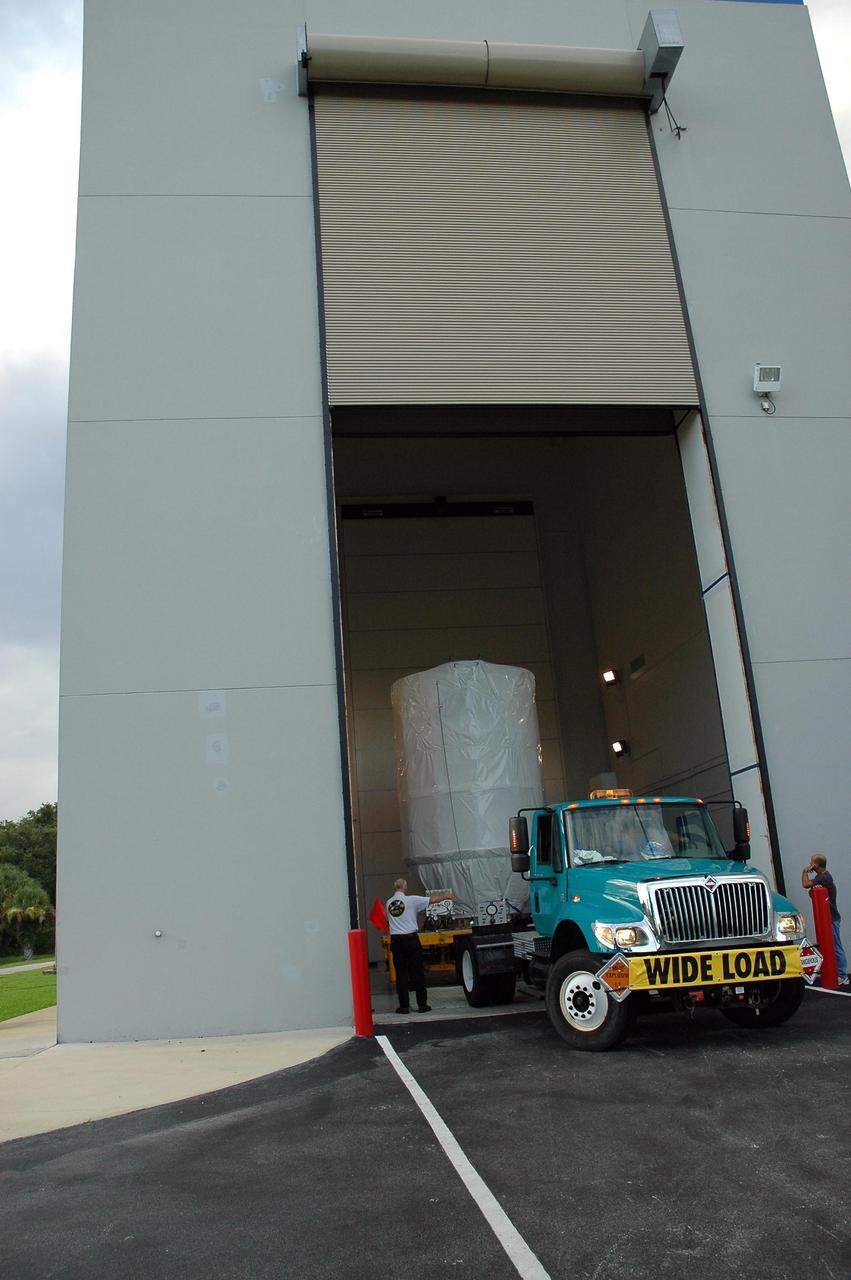
KENNEDY SPACE CENTER, FLA. — The Dawn spacecraft is moved inside the Astrotech payload processing facility. Dawn was returned from Launch Pad 17-B at Cape Canaveral Air Force Station to Astrotech to await a new launch date. The launch opportunity extends from Sept. 7 to Oct. 15. Dawn is the ninth mission in NASA's Discovery Program. The spacecraft will be the first to orbit two planetary bodies, asteroid Vesta and dwarf planet Ceres, during a single mission. Vesta and Ceres lie in the asteroid belt between Mars and Jupiter. It is also NASA’s first purely scientific mission powered by three solar electric ion propulsion engines. NASA/Charisse Nahser
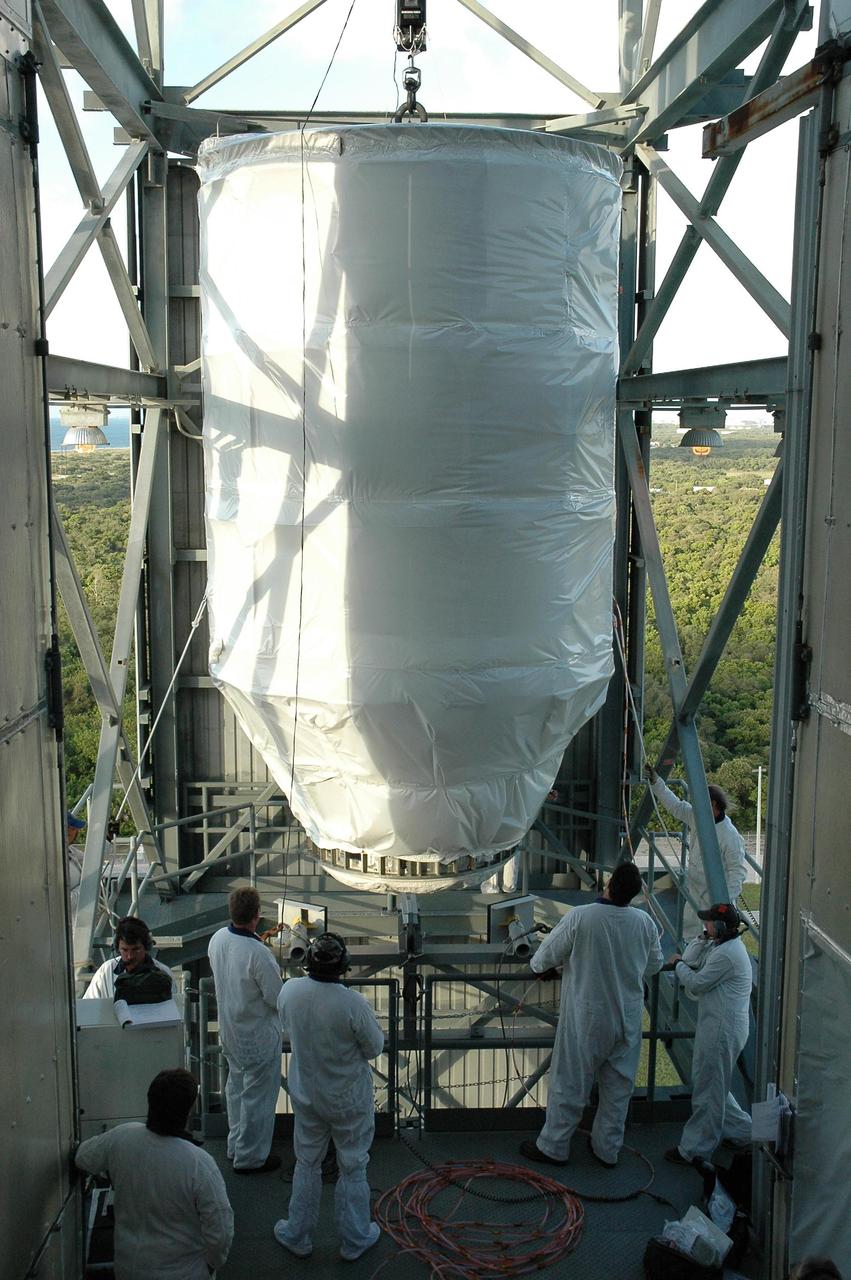
KENNEDY SPACE CENTER, FLA. -- At the top of Launch Pad 17-B, at Cape Canaveral Air Force Station, workers help to guide NASA’s Dawn spacecraft into position for stacking with the Delta II launch vehicle. Launch is scheduled for July 7. Dawn is the ninth mission in NASA's Discovery Program. The spacecraft will be the first to orbit two planetary bodies, asteroid Vesta and dwarf planet Ceres, during a single mission. Vesta and Ceres lie in the asteroid belt between Mars and Jupiter. It is also NASA’s first purely scientific mission powered by three solar electric ion propulsion engines. Photo credit: NASA/Troy Cryder.

KENNEDY SPACE CENTER, FLA. -- Leaving the clouds behind, the Delta II rocket carrying the Dawn spacecraft arcs through the blue sky over the Atlantic Ocean. Liftoff was at 7:34 a.m. EDT from Pad 17-B at Cape Canaveral Air Force Station. Dawn is the ninth mission in NASA's Discovery Program. The spacecraft will be the first to orbit two planetary bodies, asteroid Vesta and dwarf planet Ceres, during a single mission. Vesta and Ceres lie in the asteroid belt between Mars and Jupiter. It is also NASA's first purely scientific mission powered by three solar electric ion propulsion engines. Photo credit: NASA/George Shelton
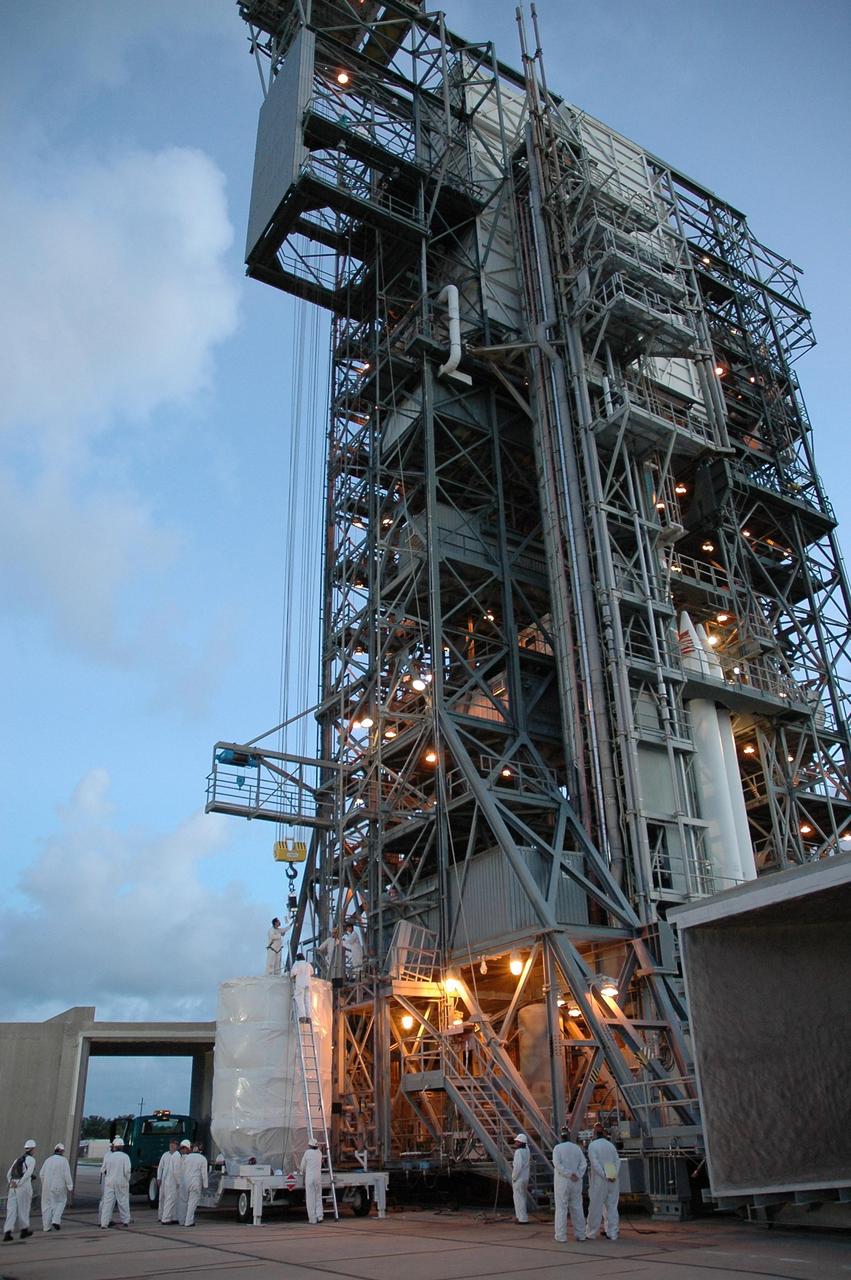
KENNEDY SPACE CENTER, FLA. -- At Launch Pad 17-B, at Cape Canaveral Air Force Station, workers attach a crane to NASA's Dawn spacecraft mated to the Delta II upper stage booster, in preparation for stacking with the Delta II launch vehicle. Launch is scheduled for July 7. Dawn is the ninth mission in NASA's Discovery Program. The spacecraft will be the first to orbit two planetary bodies, asteroid Vesta and dwarf planet Ceres, during a single mission. Vesta and Ceres lie in the asteroid belt between Mars and Jupiter. It is also NASA's first purely scientific mission powered by three solar electric ion propulsion engines. Photo credit: NASA/Troy Cryder.
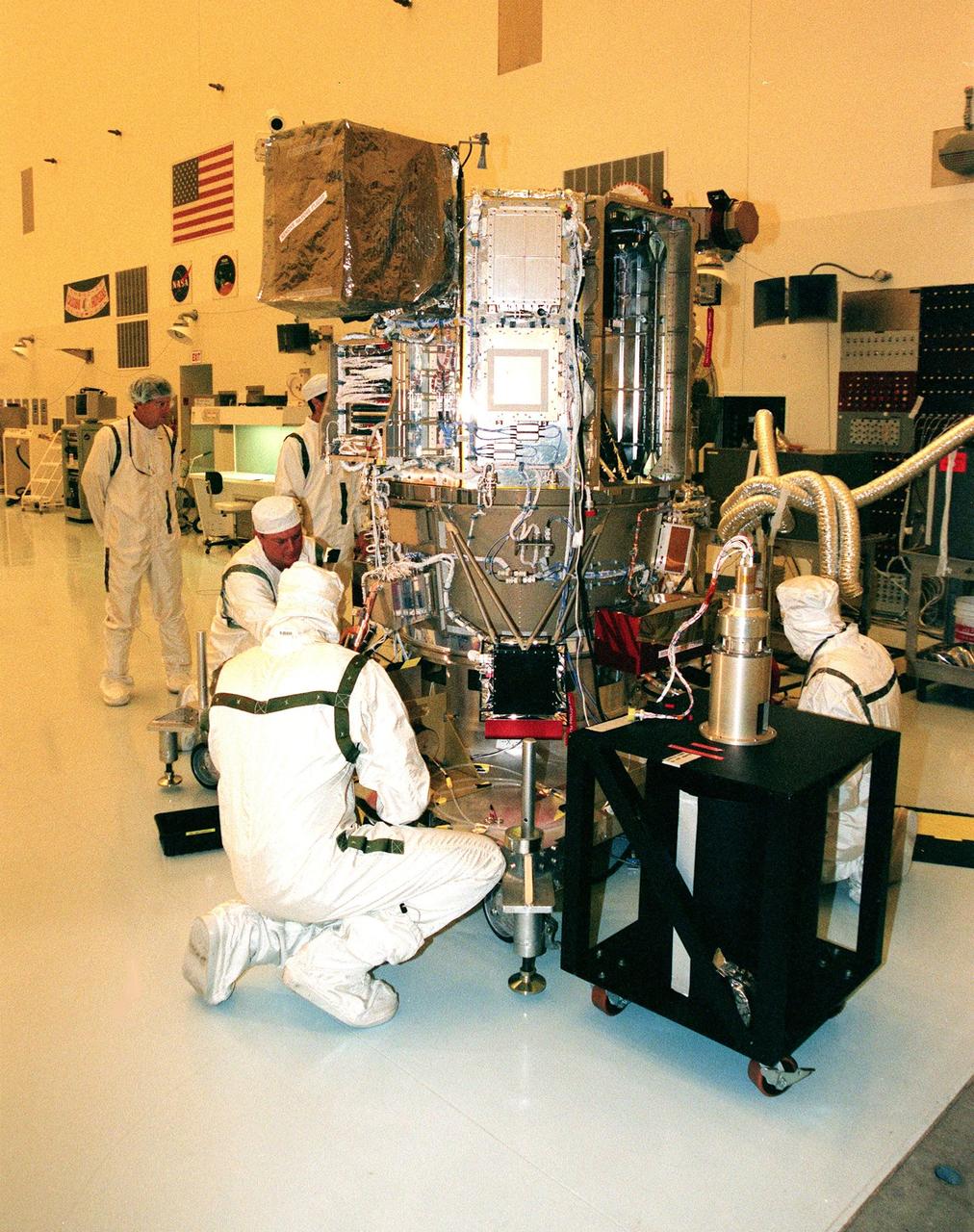
KENNEDY SPACE CENTER, FLA. -- Workers in the Payload Hazardous Servicing Facility check out Deep Space 1 to prepare it for launch aboard a Boeing Delta 7326 rocket in October. The first flight in NASA's New Millennium Program, Deep Space 1 is designed to validate 12 new technologies for scientific space missions of the next century. Onboard experiments include an ion propulsion engine and software that tracks celestial bodies so the spacecraft can make its own navigation decisions without the intervention of ground controllers. Most of its mission objectives will be completed within the first two months. A near-Earth asteroid, 1992 KD, has also been selected for a possible flyby
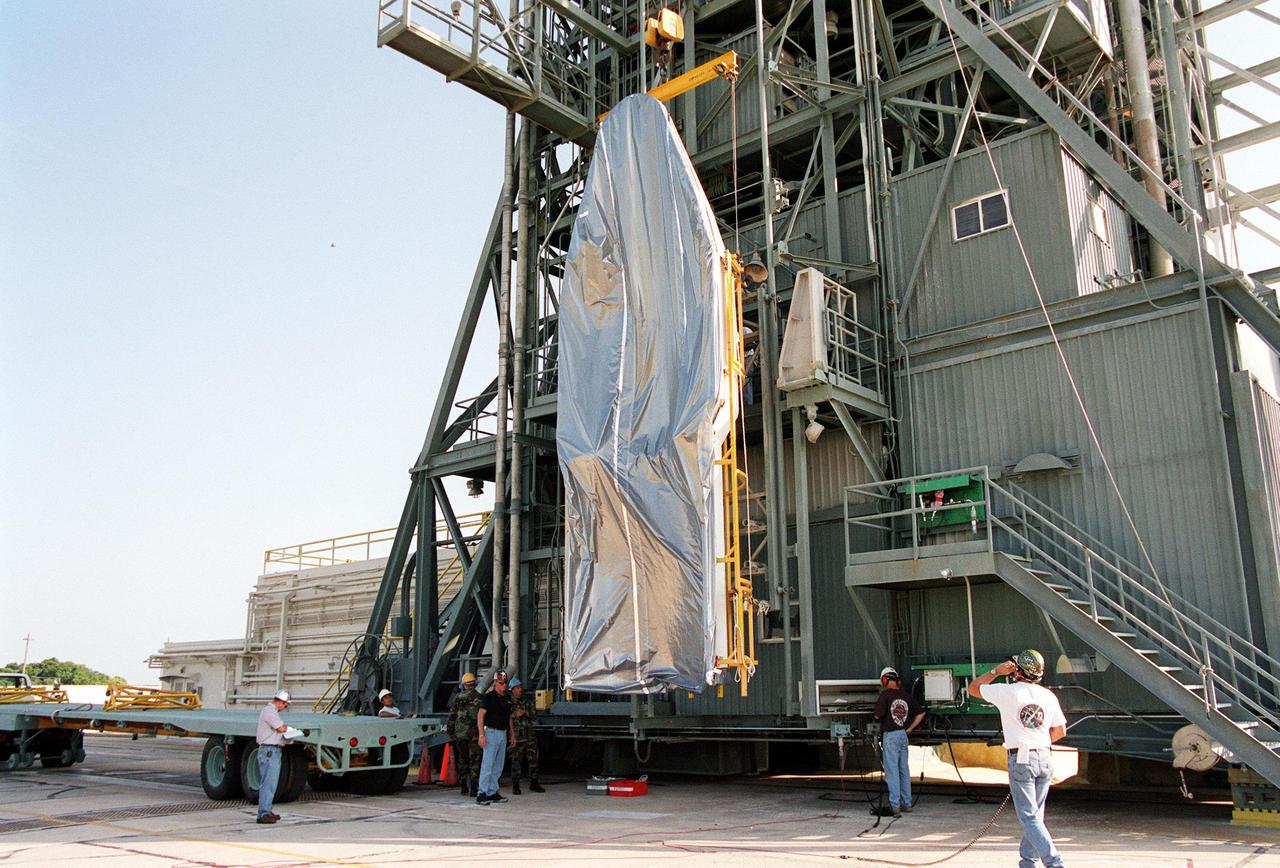
KENNEDY SPACE CENTER, Fla. -- At Launch Complex 17-A, Cape Canaveral Air Force Station, the second part of the fairing for the Genesis spacecraft is lifted up the gantry. The fairing will encapsulate the spacecraft to protect it during launch aboard a Delta II rocket. Genesis will be on a journey to capture samples of the ions and elements in the solar wind and return them to Earth for scientists to use to determine the exact composition of the Sun and the solar system’s origin. NASA’s Genesis project in managed by the Jet Propulsion Laboratory in Pasadena, Calif. Lockheed Martin Astronautics built the Genesis spacecraft for NASA in Denver, Colo. The launch is scheduled for July 30 at 12:36 p.m. EDT
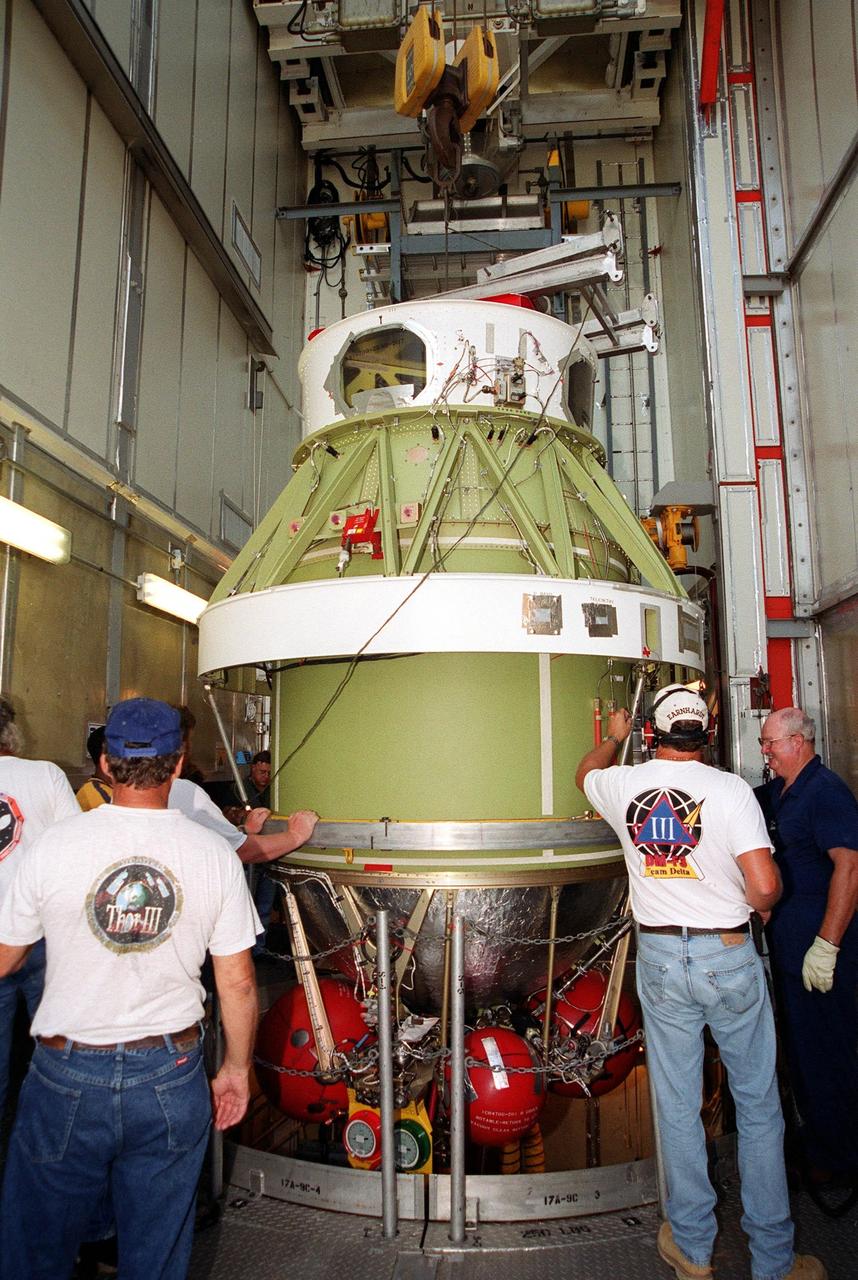
KENNEDY SPACE CENTER, Fla. -- The second stage of a Delta II rocket is moved into position on the gantry on Launch Complex 17-A, Cape Canaveral Air Force Station, for mating with the first stage. The Delta II will propel the Genesis spacecraft on a journey to capture samples of the ions and elements in the solar wind and return them to Earth for scientists to use to determine the exact composition of the Sun and the solar system’s origin. NASA’s Genesis project in managed by the Jet Propulsion Laboratory in Pasadena, Calif. Lockheed Martin Astronautics built the Genesis spacecraft for NASA in Denver, Colo. The launch is scheduled for July 30 at 12:36 p.m. EDT
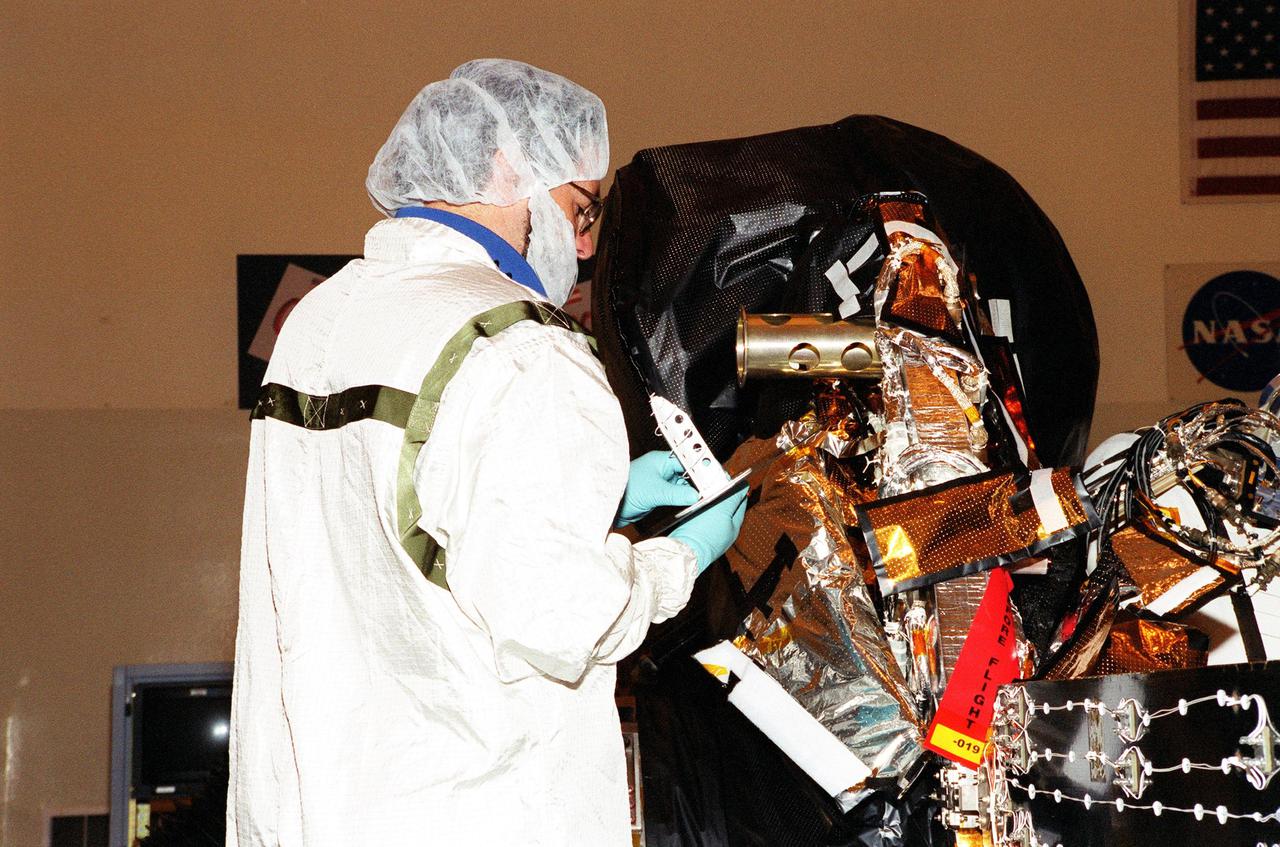
KENNEDY SPACE CENTER, Fla. -- An S-band medium gain antenna is installed on NASA's Genesis spacecraft in the Payload Hazardous Servicing Facility in KSC's industrial area. The spacecraft is undergoing final preparations for its launch aboard a Boeing Delta II rocket on July 30 at 12:36 p.m. EDT. Genesis will capture samples of the ions and elements in the solar wind and return them to Earth for scientists to use to determine the exact composition of the Sun and the solar system's origin. NASA's Genesis project is managed by the Jet Propulsion Laboratory in Pasadena, Calif. Lockheed Martin Astronautics built the Genesis spacecraft for NASA in Denver, Colo
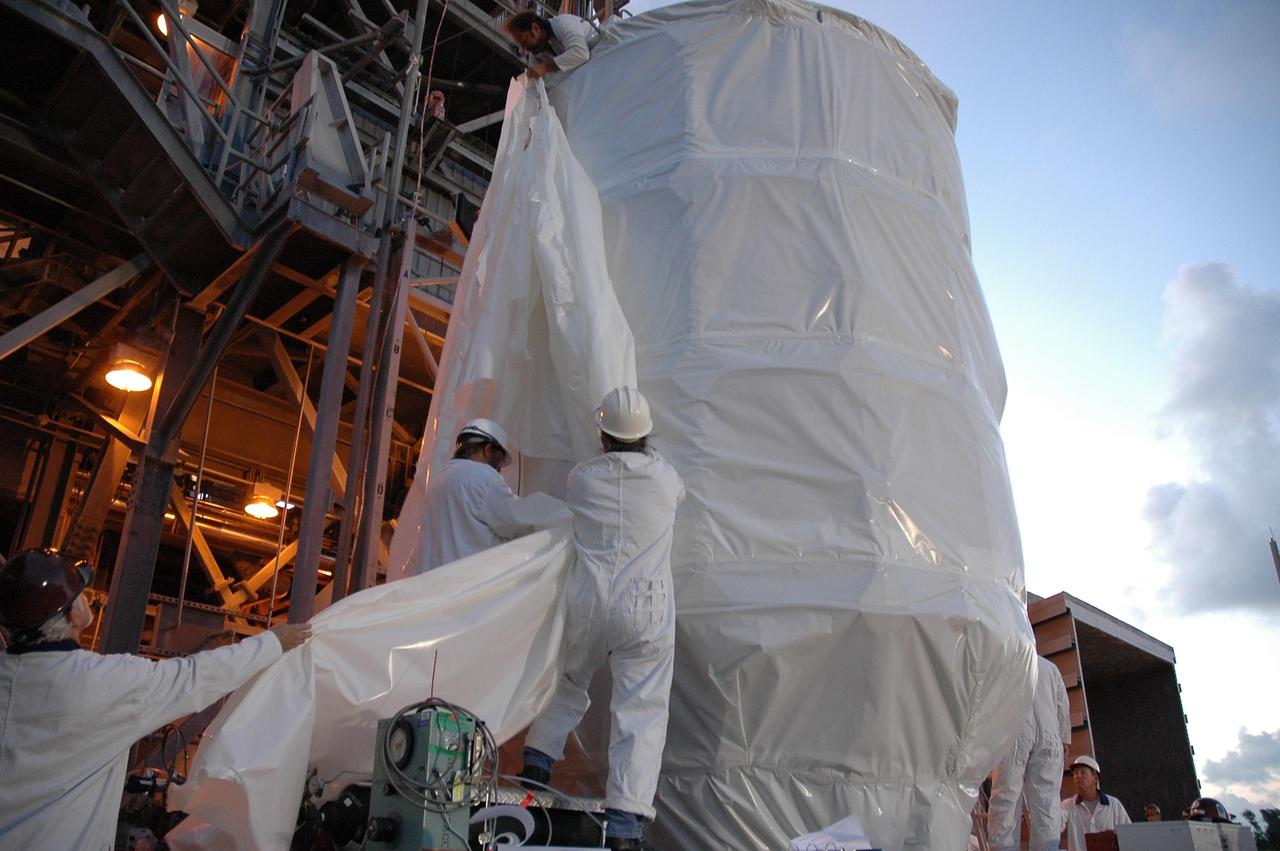
KENNEDY SPACE CENTER, FLA. -- At Launch Pad 17-B, at Cape Canaveral Air Force Station, workers attach a crane to NASA's Dawn spacecraft. It will be lifted into the mobile service tower for mating to the Delta II launch vehicle.Launch is scheduled for July 7. Dawn is the ninth mission in NASA's Discovery Program. The spacecraft will be the first to orbit two planetary bodies, asteroid Vesta and dwarf planet Ceres, during a single mission. Vesta and Ceres lie in the asteroid belt between Mars and Jupiter. It is also NASA's first purely scientific mission powered by three solar electric ion propulsion engines. Photo credit: NASA/Troy Cryder.
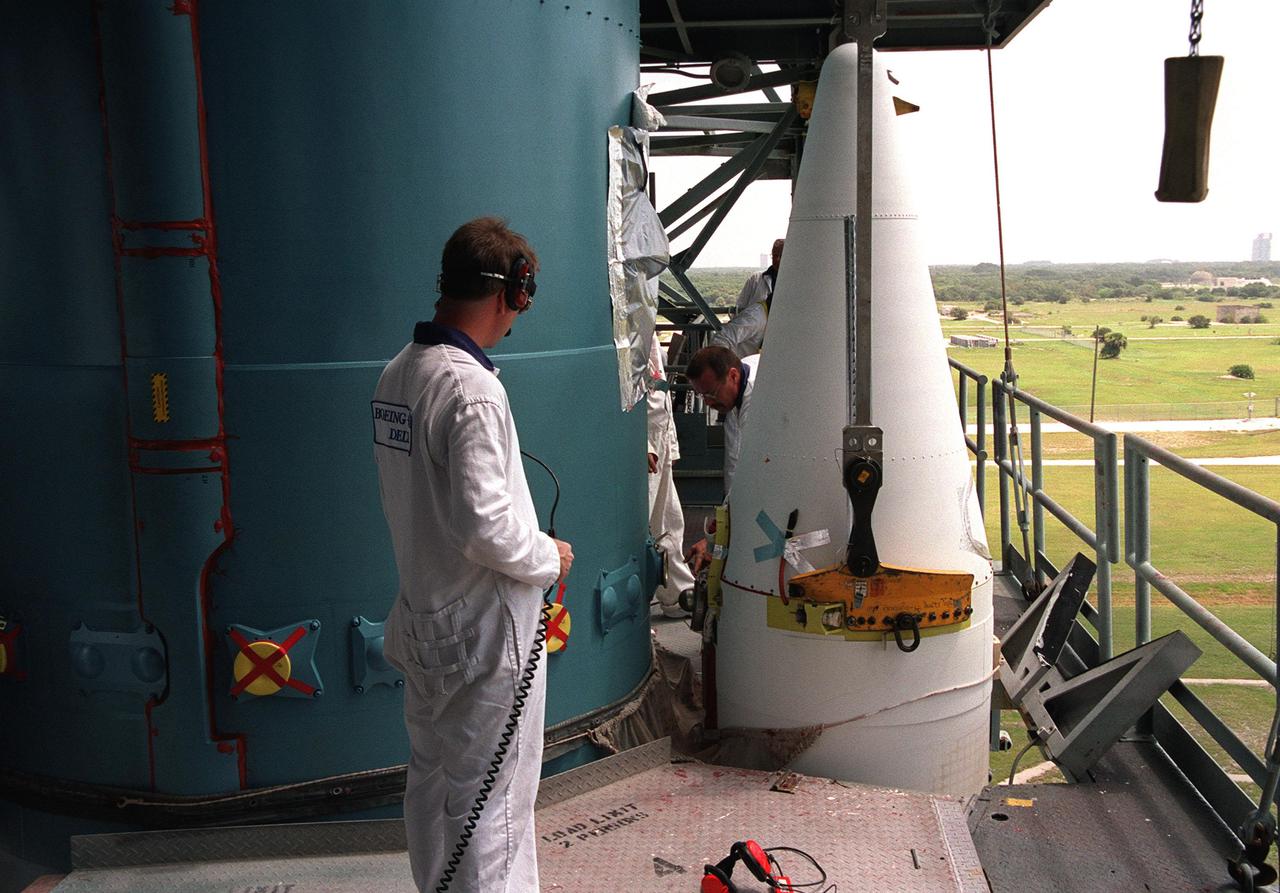
KENNEDY SPACE CENTER, Fla. -- Technicians on Launch Complex 17-A, Cape Canaveral Air Force Station, check the fittings on the solid rocket boosters surrounding the Delta II rocket that will launch the Genesis spacecraft. Genesis will capture samples of the ions and elements in the solar wind and return them to Earth for scientists to use to determine the exact composition of the Sun and the solar system’s origin. NASA’s Genesis project is managed by the Jet Propulsion Laboratory in Pasadena, Calif. Lockheed Martin Astronautics built the Genesis spacecraft for NASA in Denver, Colo. Launch of Genesis aboard a Boeing Delta II rocket is scheduled for July 30 at 12:36 p.m. EDT

KENNEDY SPACE CENTER, FLA. -- Rising above a cloud-filled horizon, the Delta II rocket carrying the Dawn spacecraft roars into the sky. Liftoff was at 7:34 a.m. EDT from Pad 17-B at Cape Canaveral Air Force Station. Dawn is the ninth mission in NASA's Discovery Program. The spacecraft will be the first to orbit two planetary bodies, asteroid Vesta and dwarf planet Ceres, during a single mission. Vesta and Ceres lie in the asteroid belt between Mars and Jupiter. It is also NASA's first purely scientific mission powered by three solar electric ion propulsion engines. Photo credit: NASA/Kim Shiflett
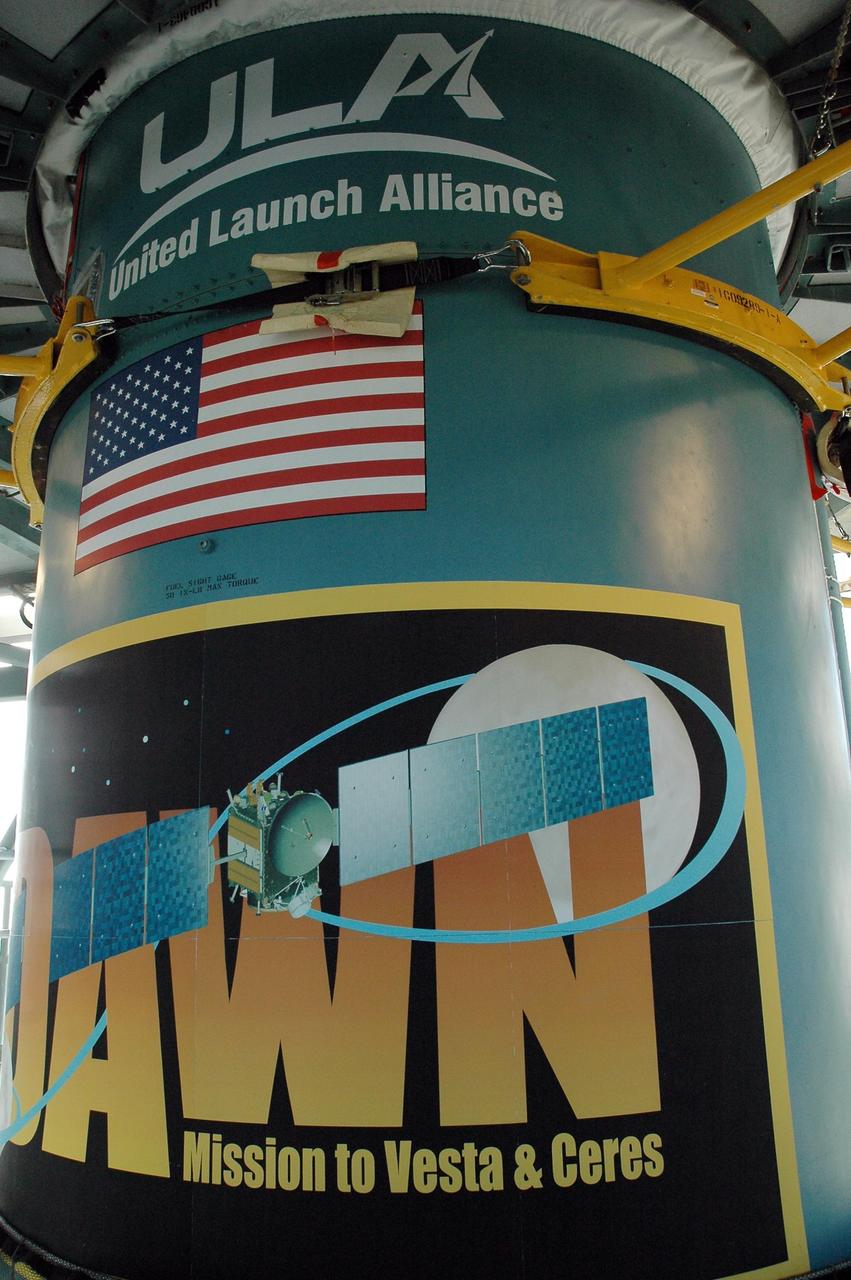
KENNEDY SPACE CENTER, FLA. -- At Launch Pad 17-B, at Cape Canaveral Air Force Station, the Delta II launch vehicle with NASA’s Dawn spacecraft mission logo can be seen as it is moved into position for stacking with the Delta II launch vehicle. Launch is scheduled for July 7. Dawn is the ninth mission in NASA's Discovery Program. The spacecraft will be the first to orbit two planetary bodies, asteroid Vesta and dwarf planet Ceres, during a single mission. Vesta and Ceres lie in the asteroid belt between Mars and Jupiter. It is also NASA’s first purely scientific mission powered by three solar electric ion propulsion engines. Photo credit: NASA/Troy Cryder.
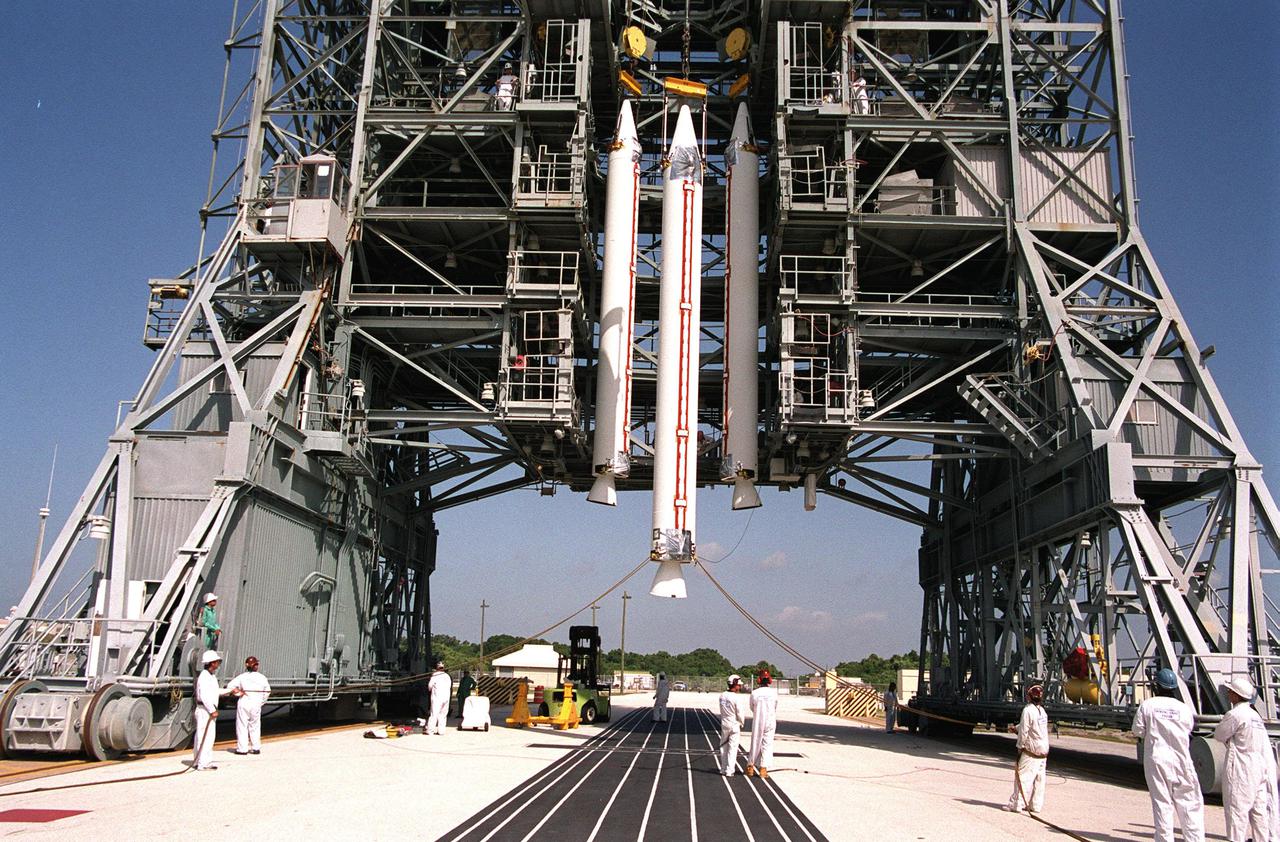
KENNEDY SPACE CENTER, Fla. -- The third solid rocket booster joins the other two on Launch Complex 17-A, Cape Canaveral Air Force Station. They will be mated to the Delta II rocket for the Genesis spacecraft launch. Genesis will capture samples of the ions and elements in the solar wind and return them to Earth for scientists to use to determine the exact composition of the Sun and the solar system’s origin. NASA’s Genesis project is managed by the Jet Propulsion Laboratory in Pasadena, Calif. Lockheed Martin Astronautics built the Genesis spacecraft for NASA in Denver, Colo. Launch of Genesis aboard a Boeing Delta II rocket is scheduled for July 30 at 12:36 p.m. EDT
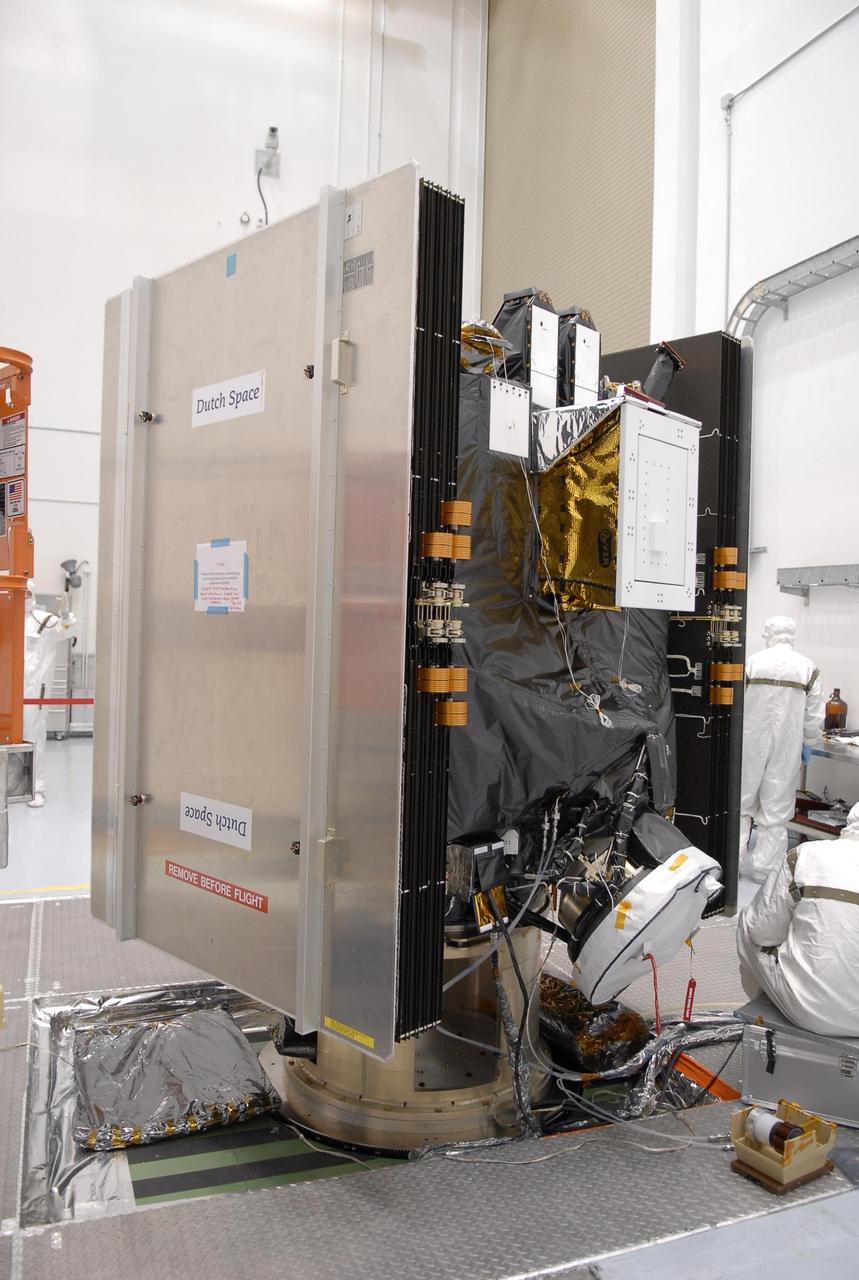
KENNEDY SPACE CENTER, FLA. -- At Astrotech, the Dawn spacecraft is on display for a media showing. On each side are the folded solar array panels. The "box" in the upper center is the visual and infrared mapping spectrometer, which is designed to measure how much radiation of different "colors" is reflected or emitted by an object. At the bottom, under cover, is one of the ion propulsion thrusters. Dawn's goal is to characterize the conditions and processes of the solar system's earliest epoch by investigating in detail the largest protoplanets that have remained intact since their formations: asteroid Vesta and the dwarf planet Ceres. They reside in the extensive zone between Mars and Jupiter together with many other smaller bodies, called the asteroid belt. Photo credit: NASA/Kim Shiflett

KENNEDY SPACE CENTER, Fla. -- A worker in the Space Assembly and Encapsulation Facility -2 faces the Genesis spacecraft at right as he provides information about it to the media gathered at left. Genesis will capture samples of the ions and elements in the solar wind and return them to Earth for scientists to use to determine the exact composition of the Sun and the solar system's origin. NASA's Genesis project is managed by the Jet Propulsion Laboratory in Pasadena, Calif. Lockheed Martin Astronautics built the Genesis spacecraft for NASA in Denver, Colo. Launch of Genesis aboard a Boeing Delta II rocket is scheduled for July 30 at 12:36 p.m. EDT
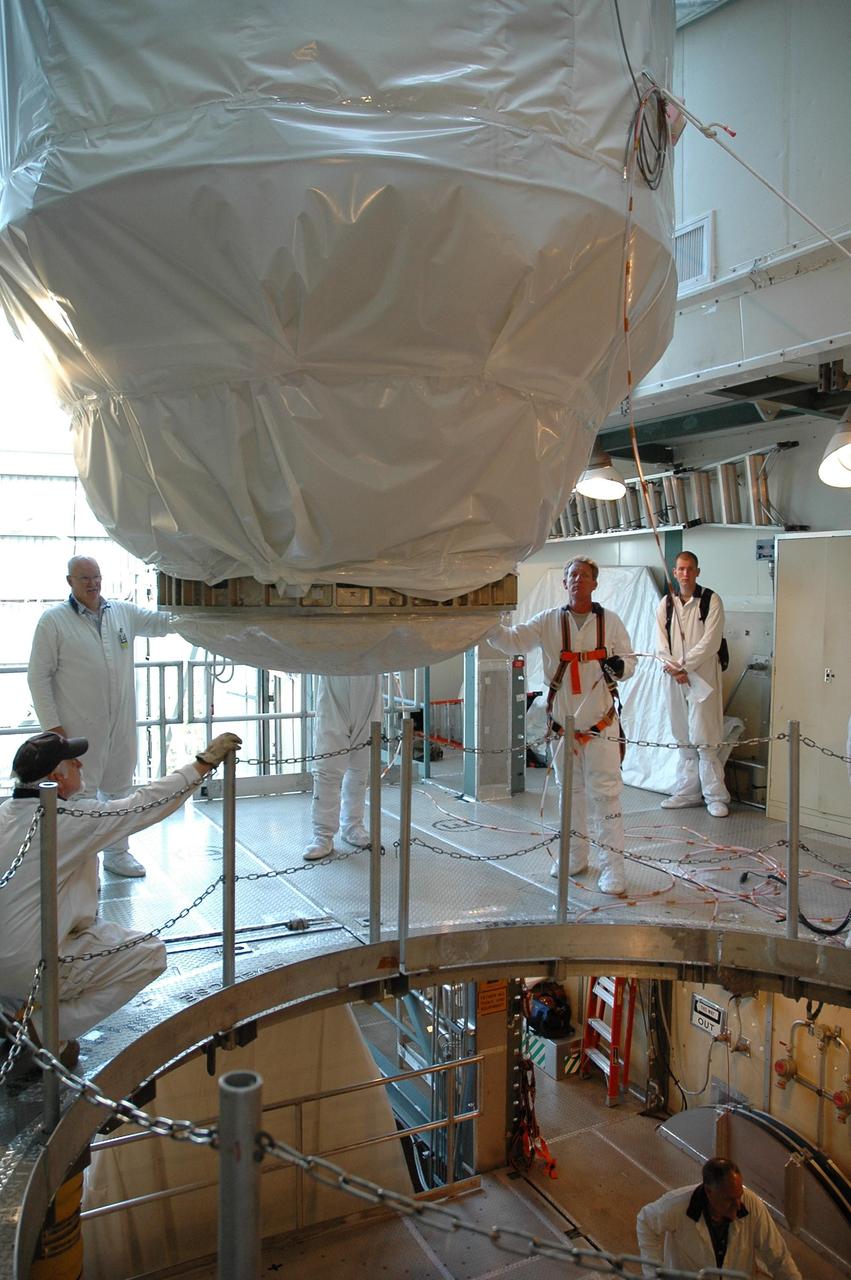
KENNEDY SPACE CENTER, FLA. -- At the top of Launch Pad 17-B, at Cape Canaveral Air Force Station, workers help to guide NASA’s Dawn spacecraft into position for stacking with the Delta II launch vehicle. Launch is scheduled for July 7. Dawn is the ninth mission in NASA's Discovery Program. The spacecraft will be the first to orbit two planetary bodies, asteroid Vesta and dwarf planet Ceres, during a single mission. Vesta and Ceres lie in the asteroid belt between Mars and Jupiter. It is also NASA’s first purely scientific mission powered by three solar electric ion propulsion engines. Photo credit: NASA/Troy Cryder.
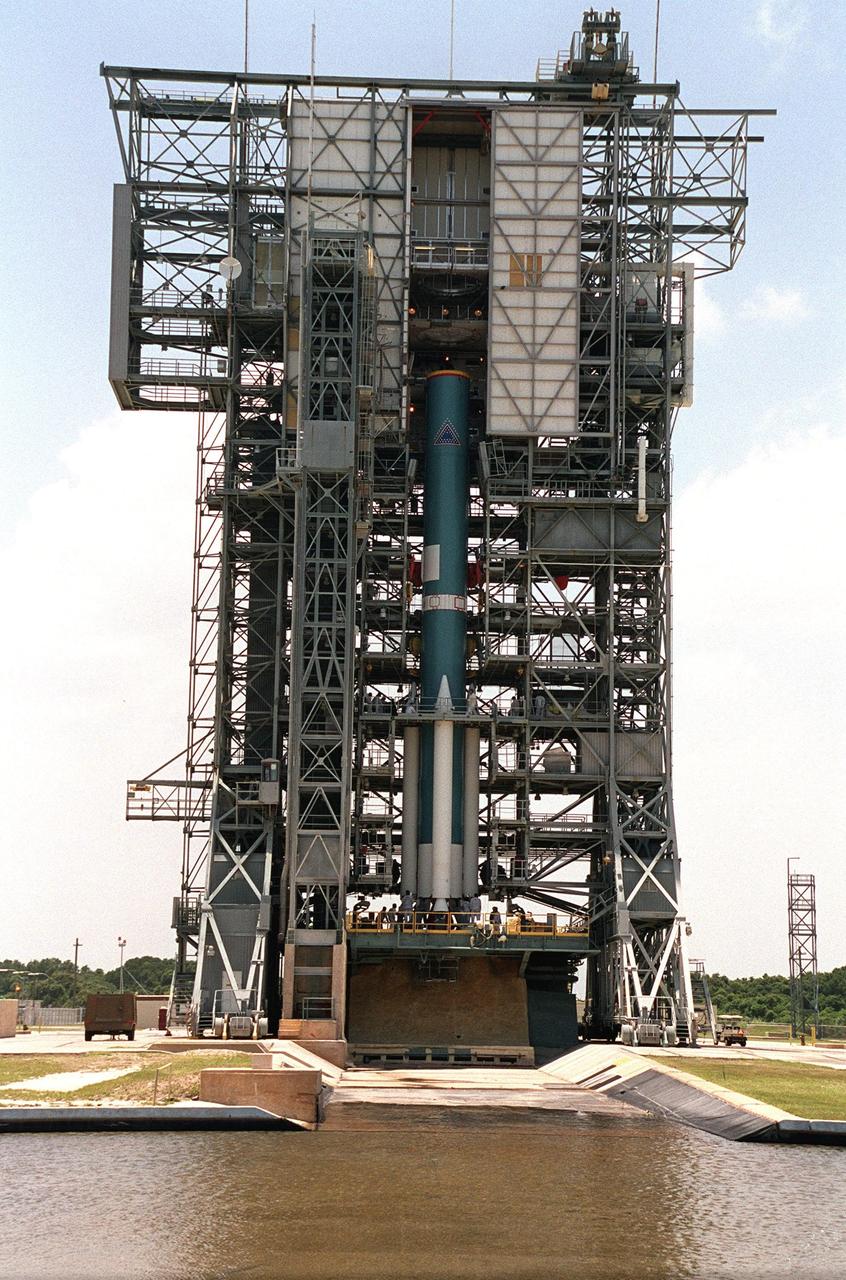
KENNEDY SPACE CENTER, Fla. -- -- Technicians work on the bottom of the solid rocket boosters and Delta II rocket that will launch the Genesis spacecraft. Genesis will capture samples of the ions and elements in the solar wind and return them to Earth for scientists to use to determine the exact composition of the Sun and the solar system’s origin. NASA’s Genesis project is managed by the Jet Propulsion Laboratory in Pasadena, Calif. Lockheed Martin Astronautics built the Genesis spacecraft for NASA in Denver, Colo. Launch of Genesis aboard a Boeing Delta II rocket is scheduled for July 30 at 12:36 p.m. EDT
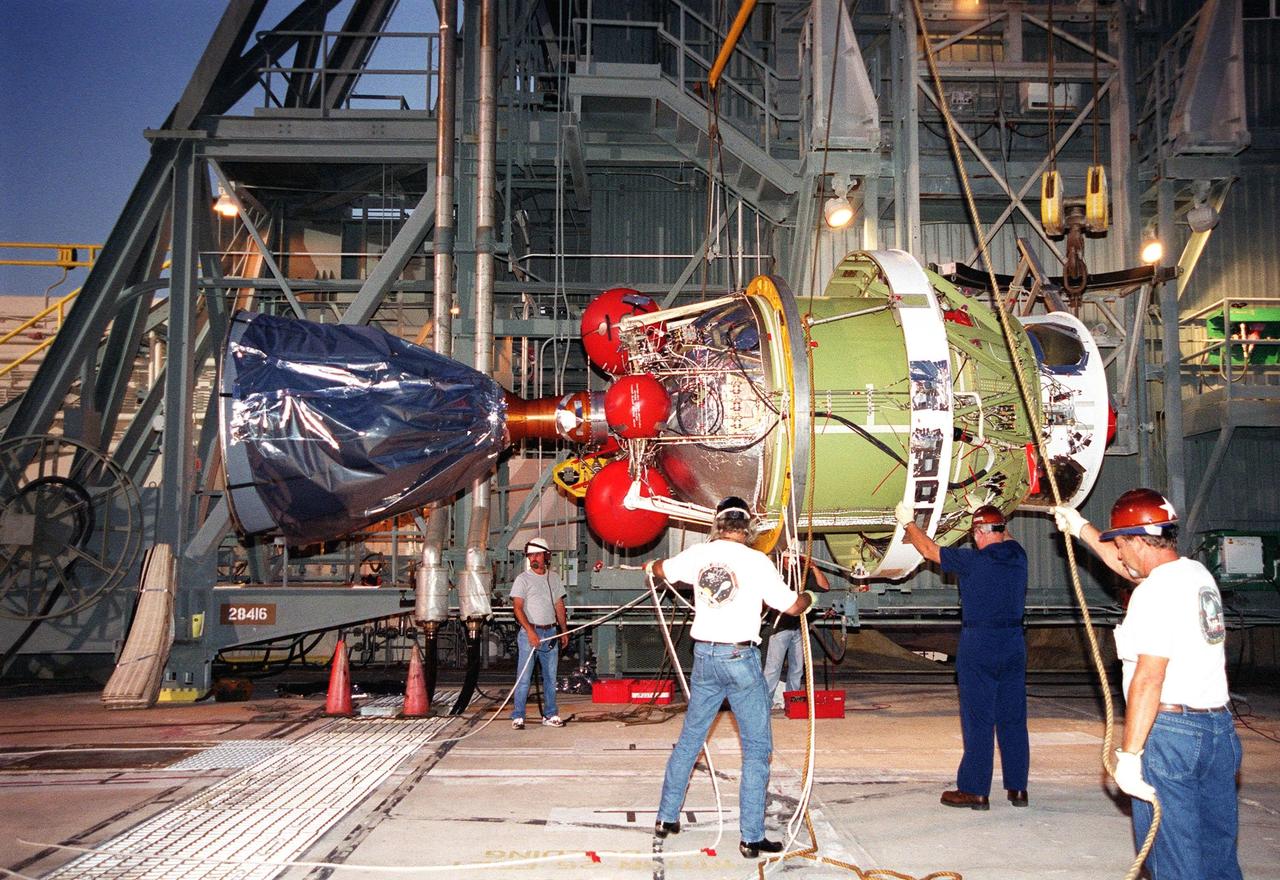
KENNEDY SPACE CENTER, Fla. -- Workers at Launch Complex 17-A, Cape Canaveral Air Force Station, oversee the lifting of the second stage of a Delta II rocket, which is to be mated with the first stage. The Delta II will propel the Genesis spacecraft on a journey to capture samples of the ions and elements in the solar wind and return them to Earth for scientists to use to determine the exact composition of the Sun and the solar system’s origin. NASA’s Genesis project in managed by the Jet Propulsion Laboratory in Pasadena, Calif. Lockheed Martin Astronautics built the Genesis spacecraft for NASA in Denver, Colo. The launch is scheduled for July 30 at 12:36 p.m. EDT
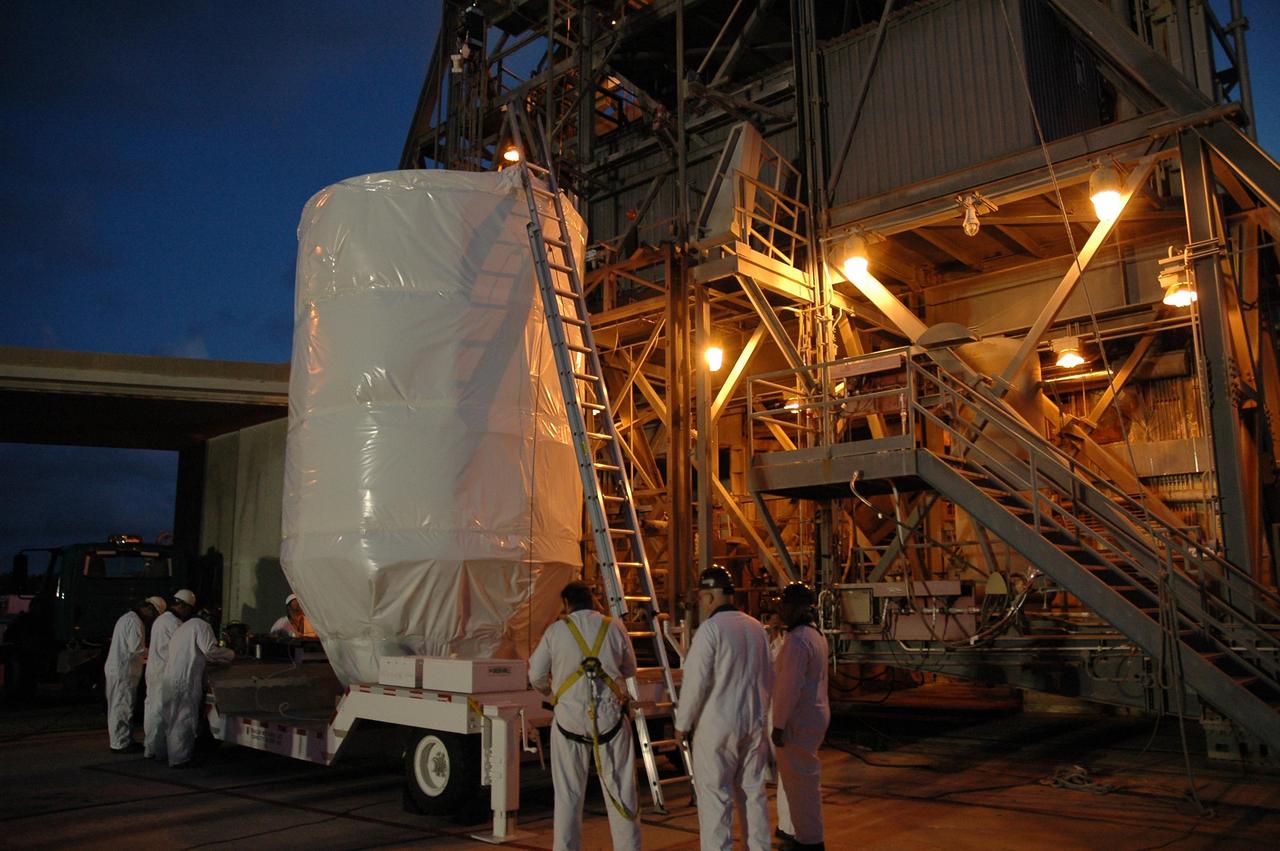
KENNEDY SPACE CENTER, FLA. -- NASA's Dawn spacecraft, mated to the Delta II upper stage booster, arrives at Launch Pad 17-B at Cape Canaveral Air Force Station. It will be lifted into the mobile service tower for mating to the Delta II launch vehicle. Launch is scheduled for July 7. Dawn is the ninth mission in NASA's Discovery Program. The spacecraft will be the first to orbit two planetary bodies, asteroid Vesta and dwarf planet Ceres, during a single mission. Vesta and Ceres lie in the asteroid belt between Mars and Jupiter. It is also NASA's first purely scientific mission powered by three solar electric ion propulsion engines. Photo credit: NASA/Troy Cryder.

KENNEDY SPACE CENTER, Fla. -- The Genesis spacecraft is ready for a media showing in the Space Assembly and Encapsulation Facility -2. Genesis will capture samples of the ions and elements in the solar wind and return them to Earth for scientists to use to determine the exact composition of the Sun and the solar system's origin. NASA's Genesis project is managed by the Jet Propulsion Laboratory in Pasadena, Calif. Lockheed Martin Astronautics built the Genesis spacecraft for NASA in Denver, Colo. Launch of Genesis aboard a Boeing Delta II rocket is scheduled for July 30 at 12:36 p.m. EDT
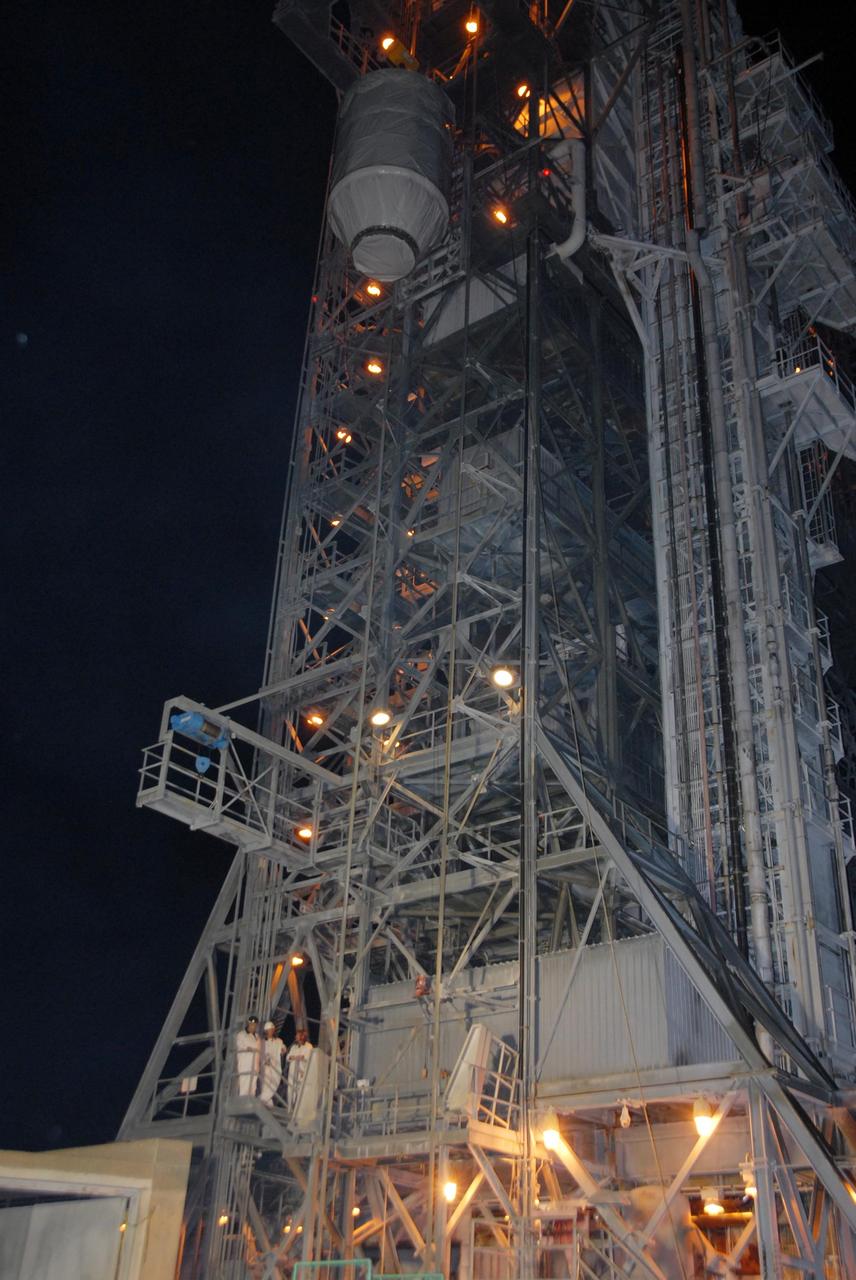
KENNEDY SPACE CENTER, FLA. — On Pad 17-B at Cape Canaveral Air Force Station, the Dawn spacecraft is lowered from the mobile service tower to the ground. Dawn is being returned to the Astrotech payload processing facility to await a new launch date. The launch opportunity extends from Sept. 7 to Oct. 15. Dawn is the ninth mission in NASA's Discovery Program. The spacecraft will be the first to orbit two planetary bodies, asteroid Vesta and dwarf planet Ceres, during a single mission. Vesta and Ceres lie in the asteroid belt between Mars and Jupiter. It is also NASA’s first purely scientific mission powered by three solar electric ion propulsion engines. NASA/George Shelton
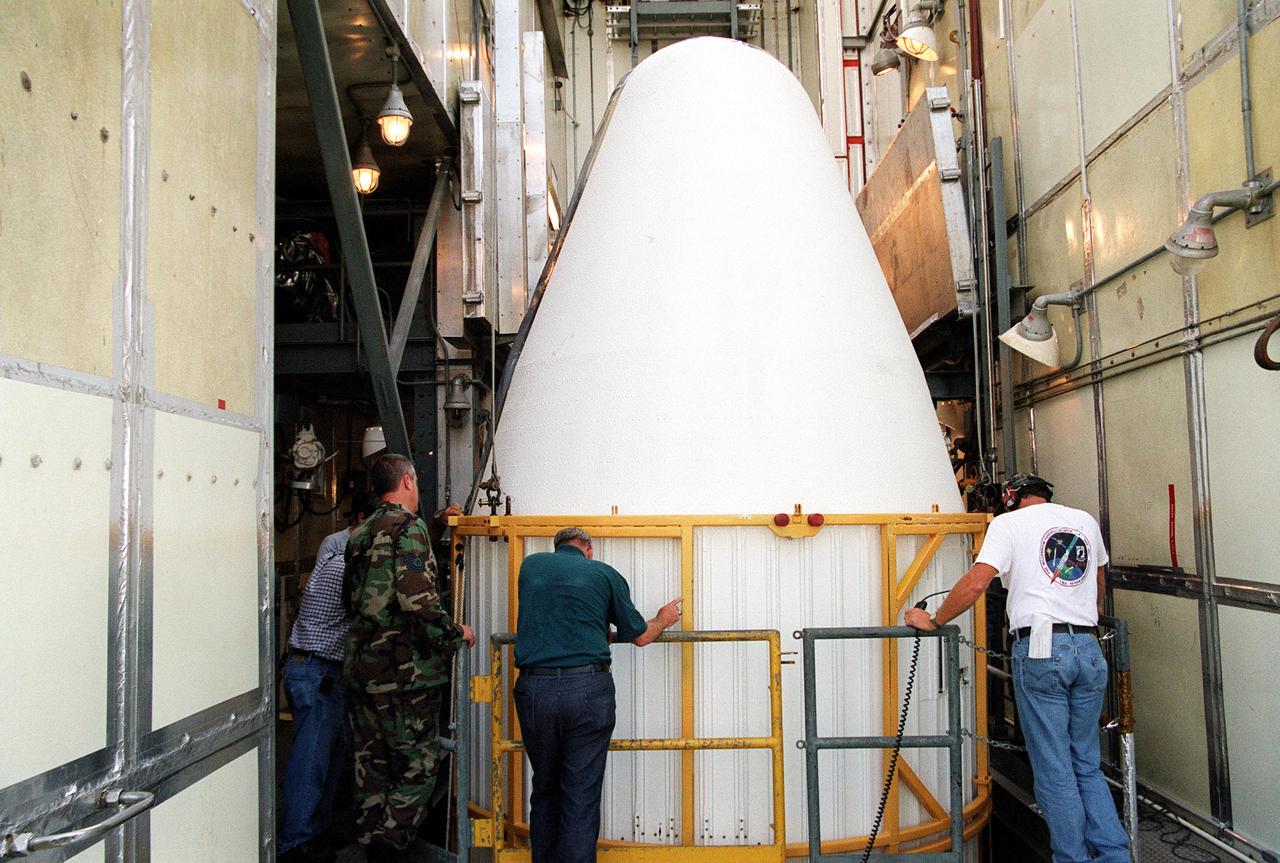
KENNEDY SPACE CENTER, Fla. -- At Launch Complex 17-A, Cape Canaveral Air Force Station, the second part of the fairing for the Genesis spacecraft arrives at the top of the gantry. The fairing will encapsulate the spacecraft to protect it during launch aboard a Delta II rocket. Genesis will be on a journey to capture samples of the ions and elements in the solar wind and return them to Earth for scientists to use to determine the exact composition of the Sun and the solar system’s origin. NASA’s Genesis project in managed by the Jet Propulsion Laboratory in Pasadena, Calif. Lockheed Martin Astronautics built the Genesis spacecraft for NASA in Denver, Colo. The launch is scheduled for July 30 at 12:36 p.m. EDT
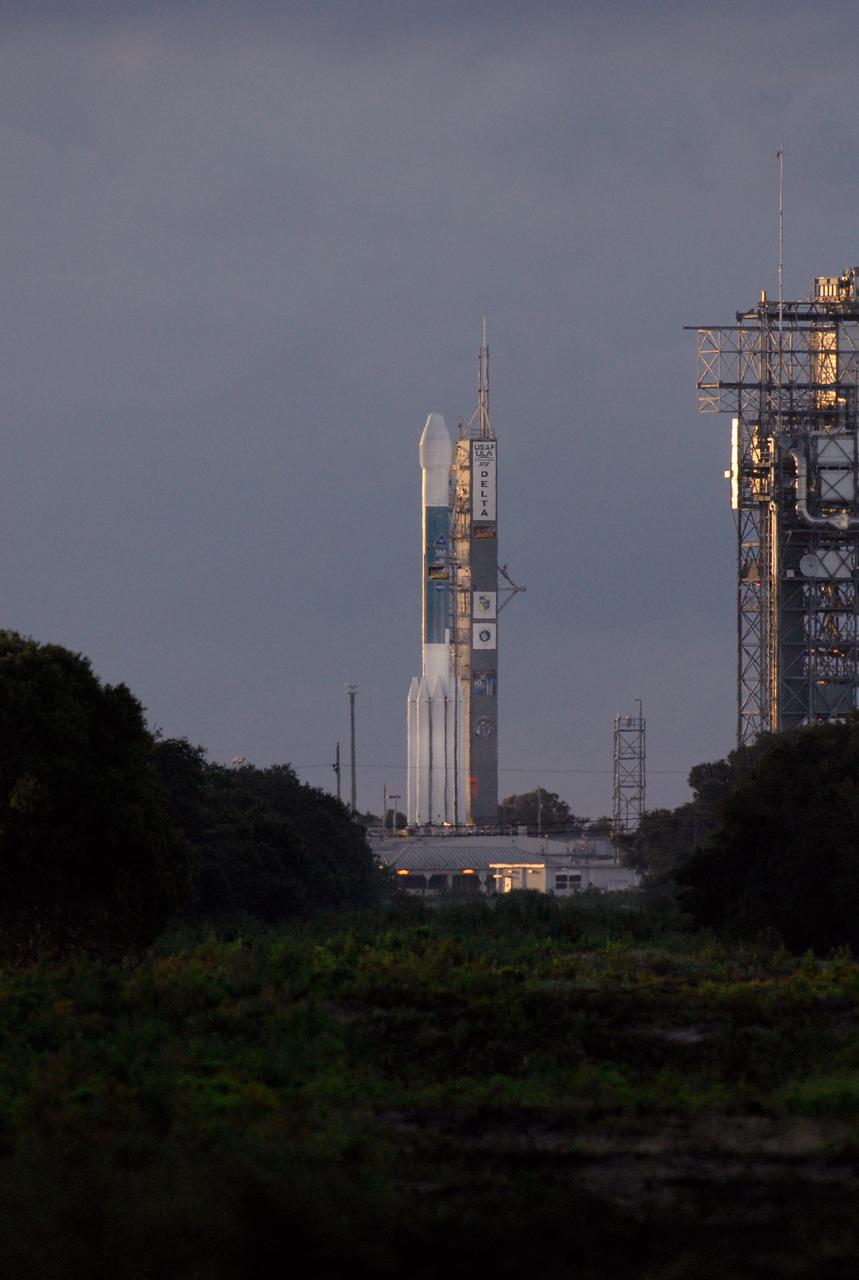
KENNEDY SPACE CENTER, FLA. -- The Delta II rocket with the Dawn spacecraft on top waits in the early morning light for launch. Liftoff was at 7:34 a.m. EDT from Pad 17-B at Cape Canaveral Air Force Station. Dawn is the ninth mission in NASA's Discovery Program. The spacecraft will be the first to orbit two planetary bodies, asteroid Vesta and dwarf planet Ceres, during a single mission. Vesta and Ceres lie in the asteroid belt between Mars and Jupiter. It is also NASA's first purely scientific mission powered by three solar electric ion propulsion engines. Photo credit: NASA/Kim Shiflett
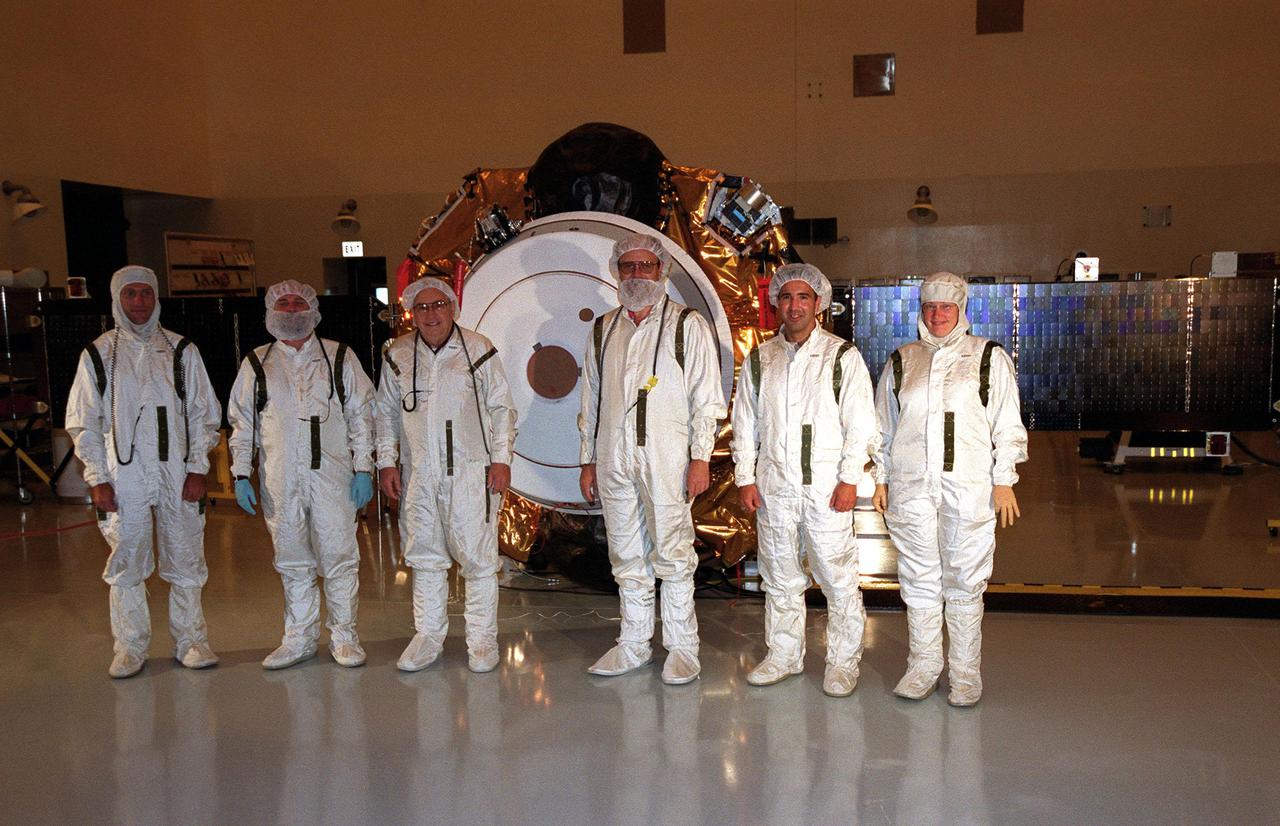
KENNEDY SPACE CENTER, Fla. -- The Genesis project crew stands in front of the spacecraft for a media showing in the Space Assembly and Encapsulation Facility -2. Genesis will capture samples of the ions and elements in the solar wind and return them to Earth for scientists to use to determine the exact composition of the Sun and the solar system's origin. NASA's Genesis project is managed by the Jet Propulsion Laboratory in Pasadena, Calif. Lockheed Martin Astronautics built the Genesis spacecraft for NASA in Denver, Colo. Launch of Genesis aboard a Boeing Delta II rocket is scheduled for July 30 at 12:36 p.m. EDT
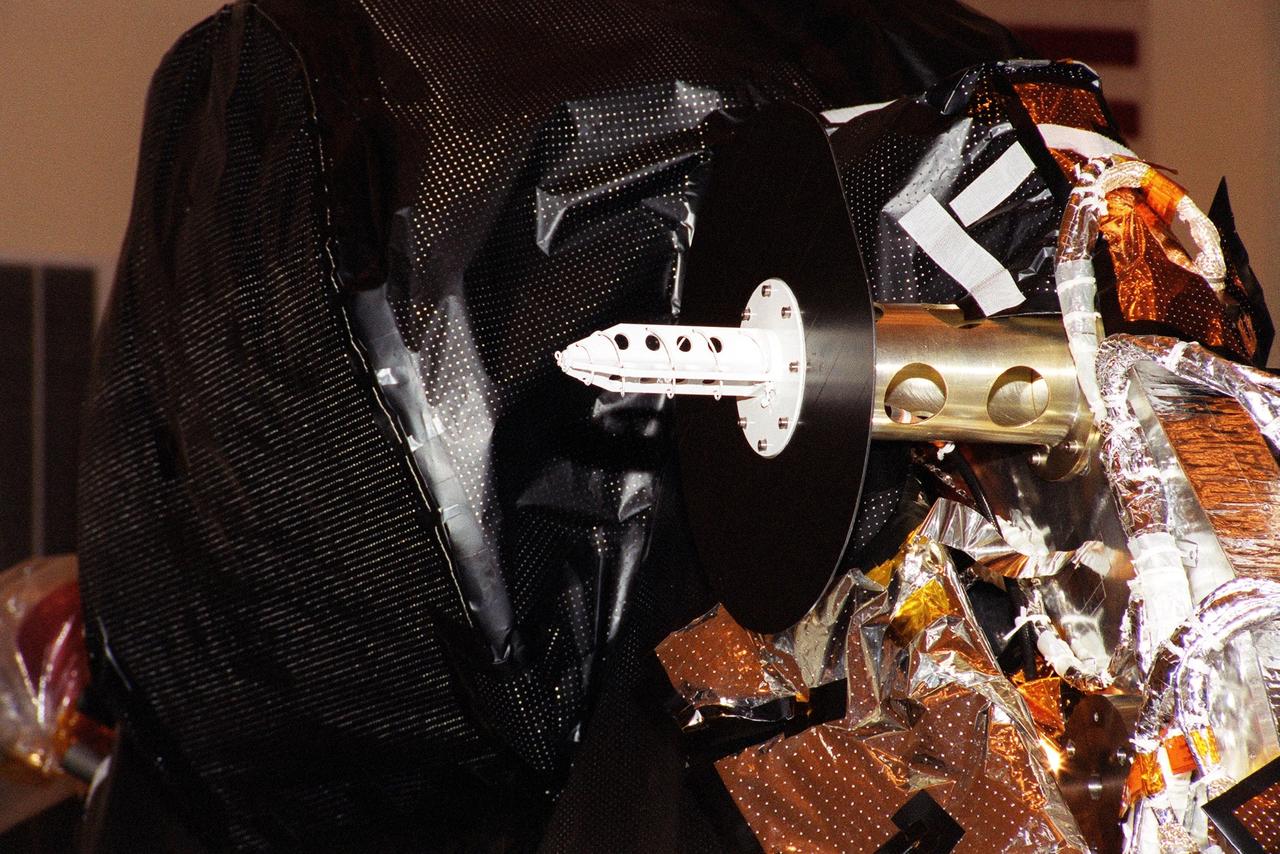
KENNEDY SPACE CENTER, Fla. -- An S-band medium gain antenna is installed on NASA's Genesis spacecraft in the Payload Hazardous Servicing Facility in KSC's industrial area. The spacecraft is undergoing final preparations for its launch aboard a Boeing Delta II rocket on July 30 at 12:36 p.m. EDT. Genesis will capture samples of the ions and elements in the solar wind and return them to Earth for scientists to use to determine the exact composition of the Sun and the solar system's origin. NASA's Genesis project is managed by the Jet Propulsion Laboratory in Pasadena, Calif. Lockheed Martin Astronautics built the Genesis spacecraft for NASA in Denver, Colo
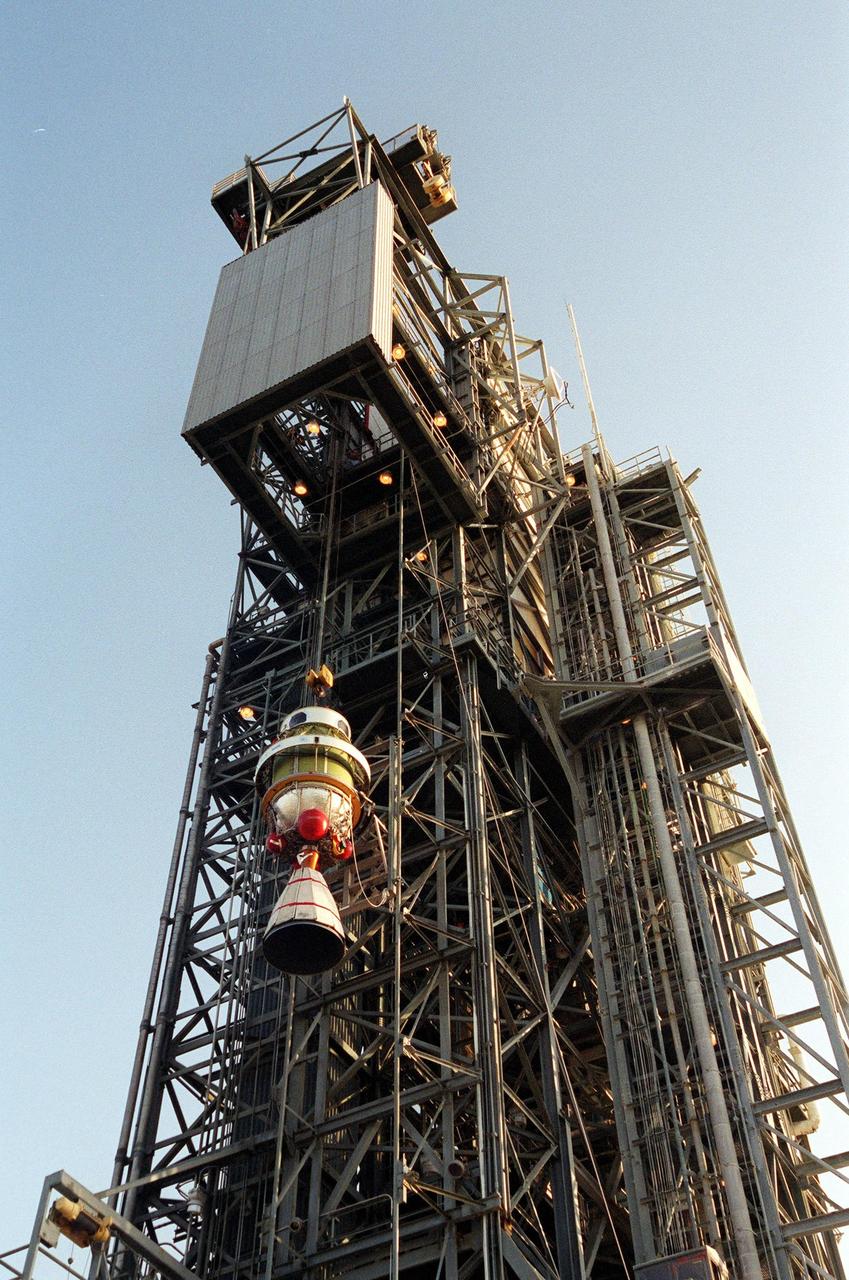
KENNEDY SPACE CENTER, Fla. -- The second stage of a Delta II rocket rises up the gantry on Launch Complex 17-A, Cape Canaveral Air Force Station, where it will be mated with the first stage. The Delta II will propel the Genesis spacecraft on a journey to capture samples of the ions and elements in the solar wind and return them to Earth for scientists to use to determine the exact composition of the Sun and the solar system’s origin. NASA’s Genesis project in managed by the Jet Propulsion Laboratory in Pasadena, Calif. Lockheed Martin Astronautics built the Genesis spacecraft for NASA in Denver, Colo. The launch is scheduled for July 30 at 12:36 p.m. EDT
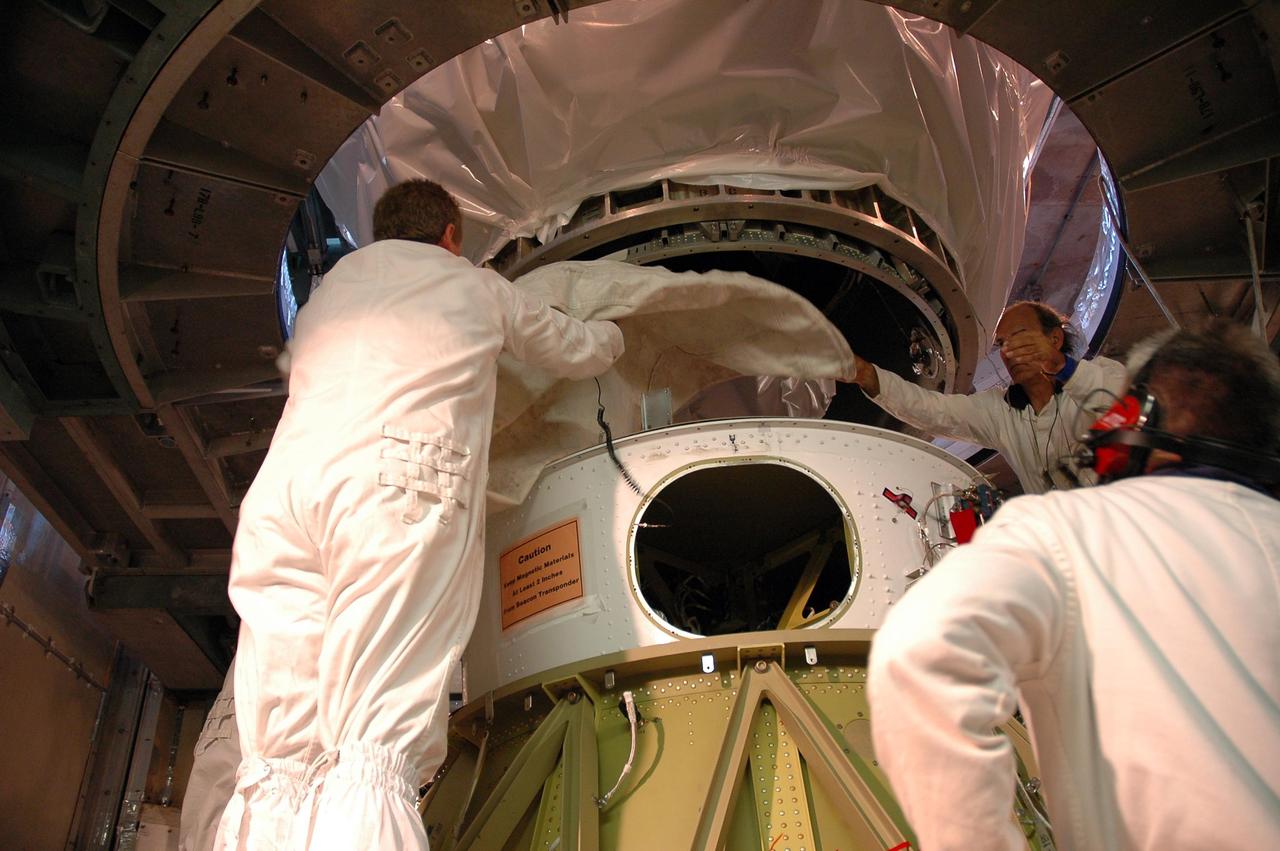
KENNEDY SPACE CENTER, FLA. -- At Launch Pad 17-B, at Cape Canaveral Air Force Station, workers position NASA’s Dawn spacecraft to lower it toward the Delta II launch vehicle. Launch is scheduled for July 7. Dawn is the ninth mission in NASA's Discovery Program. The spacecraft will be the first to orbit two planetary bodies, asteroid Vesta and dwarf planet Ceres, during a single mission. Vesta and Ceres lie in the asteroid belt between Mars and Jupiter. It is also NASA’s first purely scientific mission powered by three solar electric ion propulsion engines. Photo credit: NASA/Troy Cryder.
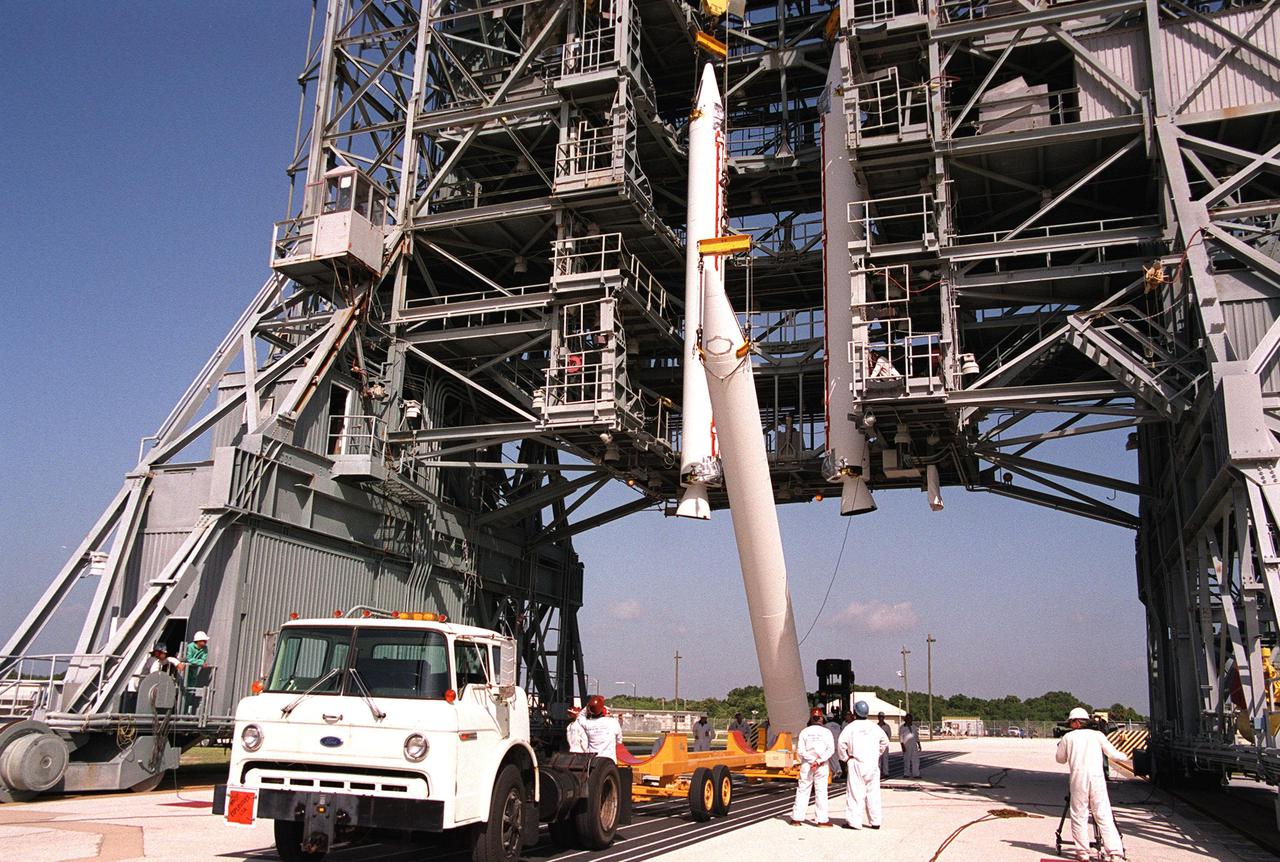
KENNEDY SPACE CENTER, Fla. -- A third solid rocket booster is raised to join the other two on Launch Complex 17-A, Cape Canaveral Air Force Station. They will be mated to the Delta II rocket for the Genesis spacecraft launch. Genesis will capture samples of the ions and elements in the solar wind and return them to Earth for scientists to use to determine the exact composition of the Sun and the solar system’s origin. NASA’s Genesis project is managed by the Jet Propulsion Laboratory in Pasadena, Calif. Lockheed Martin Astronautics built the Genesis spacecraft for NASA in Denver, Colo. Launch of Genesis aboard a Boeing Delta II rocket is scheduled for July 30 at 12:36 p.m. EDT
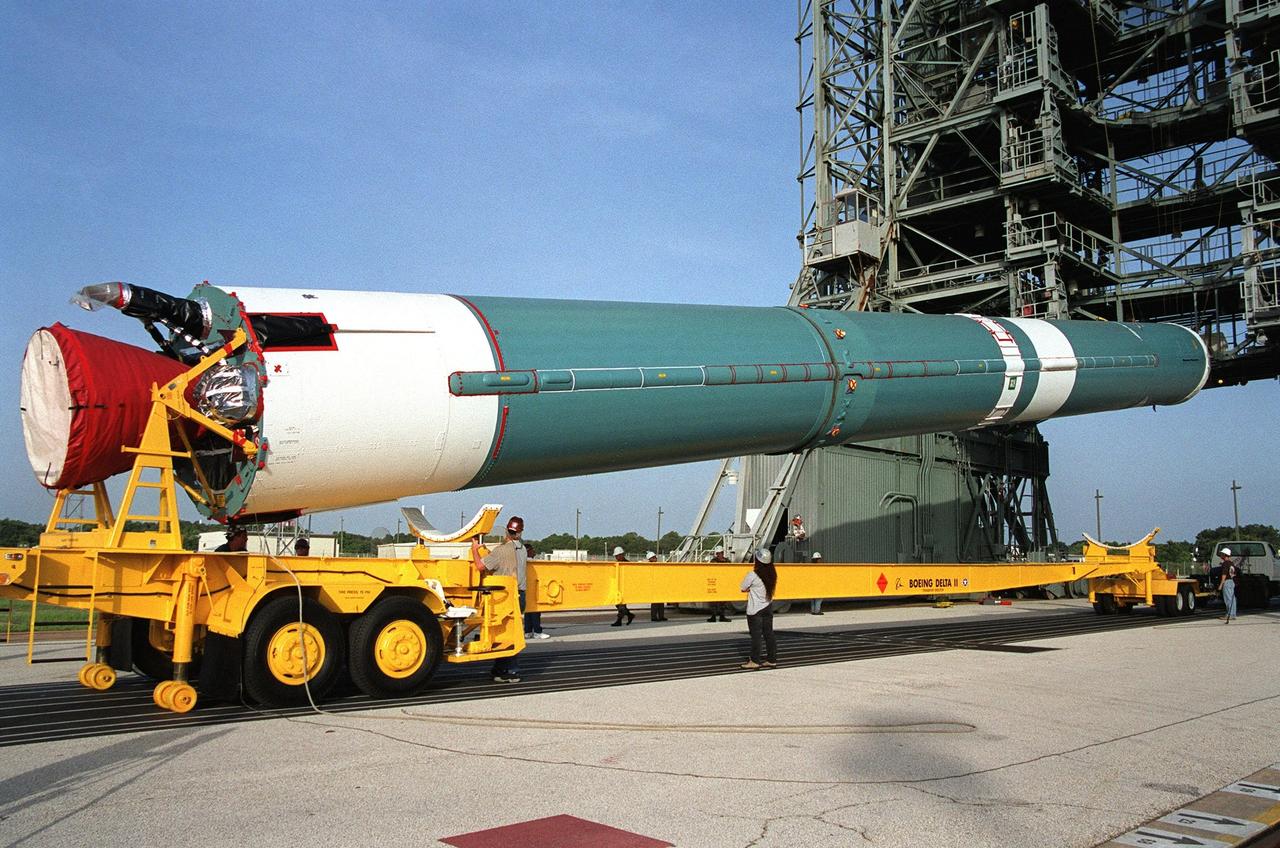
KENNEDY SPACE CENTER, Fla. -- The first stage of a Boeing Delta II rocket arrives on Launch Complex 17A, Cape Canaveral Air Force Station. The rocket will propel the Genesis spacecraft on a journey to capture samples of the ions and elements in the solar wind and return them to Earth for scientists to use to determine the exact composition of the Sun and the solar system’s origin. NASA's Genesis project in managed by the Jet Propulsion Laboratory in Pasadena, Calif. Lockheed Martin Astronautics built the Genesis spacecraft for NASA in Denver, Colo. The launch is scheduled for July 30 at 12:36 p.m. EDT