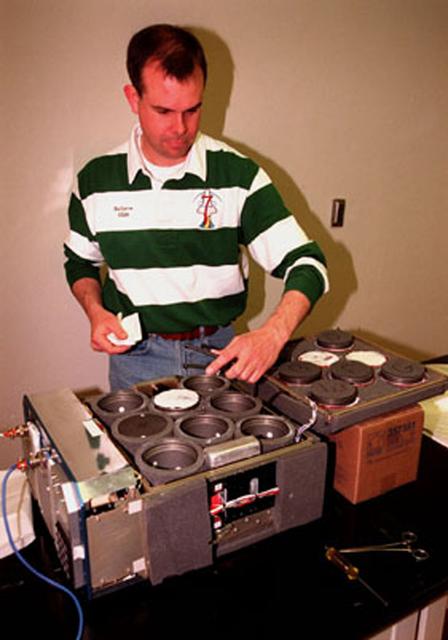
BioServe engineer Mark Rupert with the Version 3 Isothermal Containment Module containing the STS-93 experiment, NIH-B, being flown in cooperation with the National Institutes of Health (NIH).
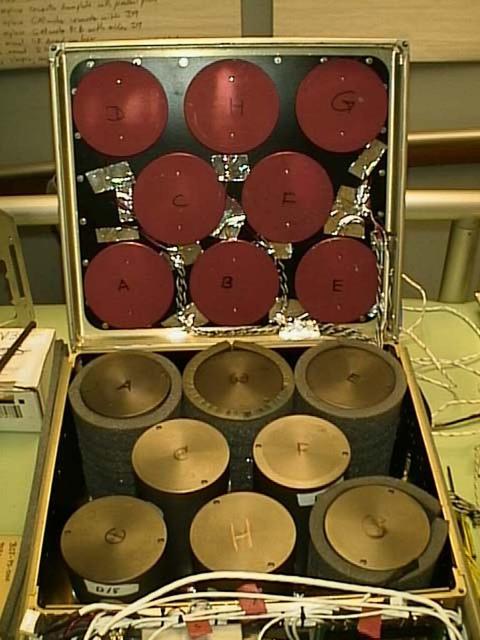
Isothermal Containment Modules are the temperature-controlling carrier that BioServe built to carry Commercial Generic Bioprocessing Apparatus (CGBA) and in the future, Space Automated Bioproduct Lab (SABL) to the International Space Station.
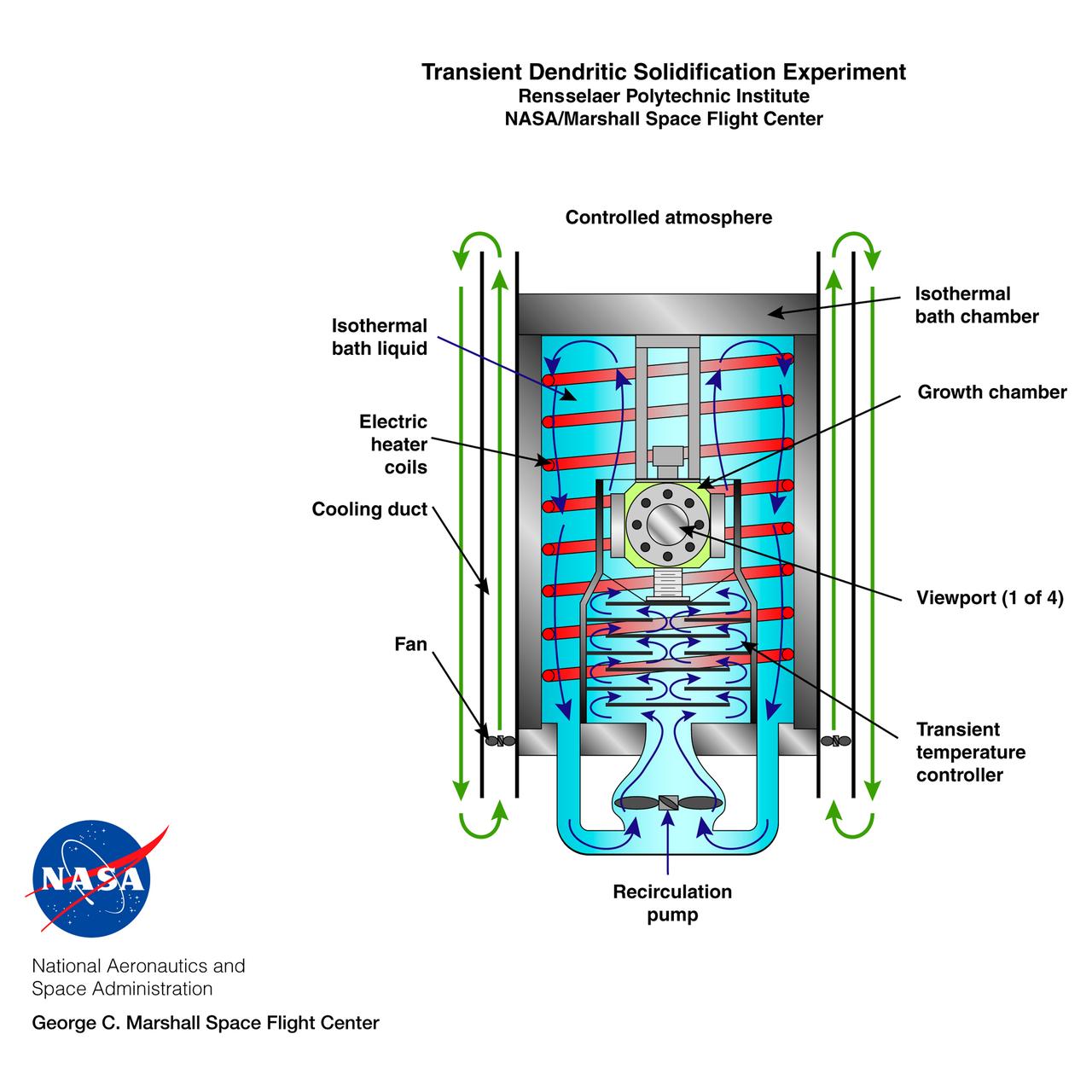
The Transient Dentritic Solidification Experiment (TDSE) is being developed as a candidate for flight aboard the International Space Station. TDSE will study the growth of dentrites (treelike crystalline structures) in a transparent material (succinonitrile or SCN) that mimics the behavior of widely used iron-based metals. Basic work by three Space Shuttle flights (STS-62, STS-75, and STS-87) of the Isothermal Dendritic Growth Experiment (IDGE) is yielding new insights into virtually all industrially relevant metal and alloy forming operations. The TDSE is similar to IDGE, but will maintain a constant temperature while varying pressure on the dentrites. Shown here is a cutaway of the isothermal bath containing its growth cell at the heart of the TDSE. The principal investigator is Matthew Koss of College of the Holy Cross in Worcester, MA. Note: an Acrobat PDF version is available from http://microgravity.nasa.gov/gallery
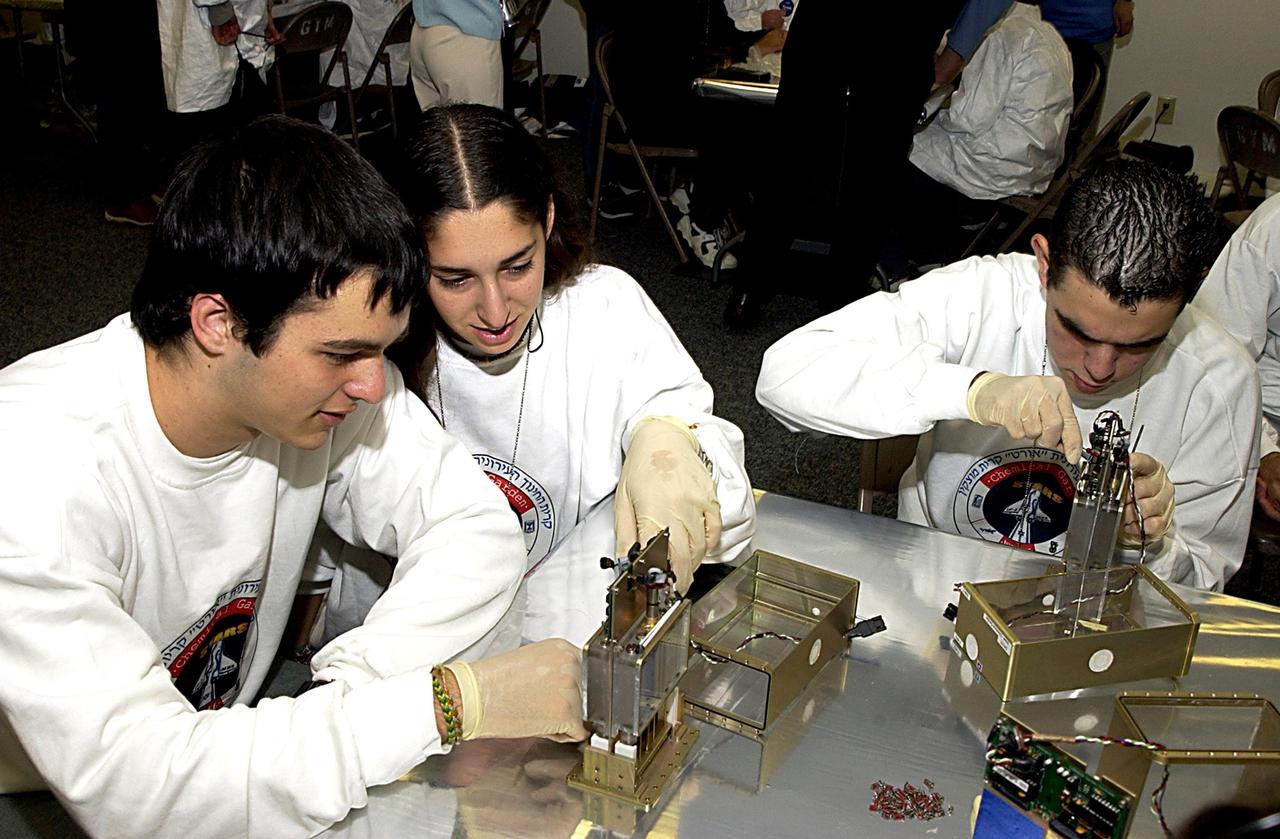
KENNEDY SPACE CENTER, FLA. - Students work on their experiments that will fly in SPACEHAB on Space Shuttle Columbia on mission STS-107. SPACEHAB's complement of commercial experiments includes six educational experiments designed and developed by students in six different countries under the auspices of Space Technology and Research Students (STARS), a global education program managed by SPACEHAB subsidiary Space Media. The countries represented are Australia, China, Israel, Japan, Liechtenstein and the United States. The student investigators who conceived these experiments will monitor their operations in space. The experiments will be housed in BioServe Space Technologies' Isothermal Containment Module (ICM --a small temperature-controlled facility that provides experiment support such as physical containment, lighting, and video imaging) and stowed in a middeck-size locker aboard the SPACEHAB Research Double Module.
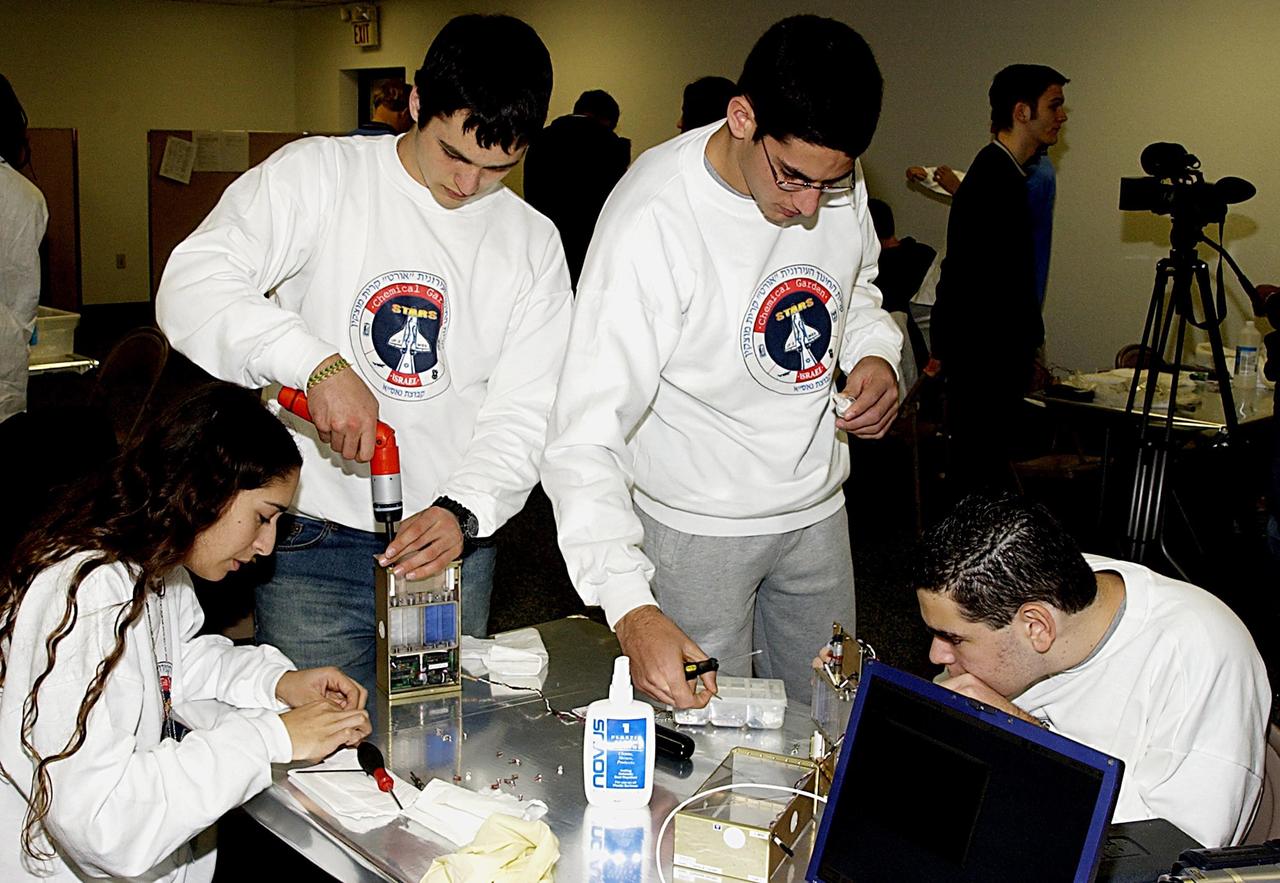
KENNEDY SPACE CENTER, FLA. -- Students work on their experiments that will fly in SPACEHAB on Space Shuttle Columbia on mission STS-107. SPACEHAB's complement of commercial experiments includes six educational experiments designed and developed by students in six different countries under the auspices of Space Technology and Research Students (STARS), a global education program managed by SPACEHAB subsidiary Space Media. The countries represented are Australia, China, Israel, Japan, Liechtenstein and the United States. The student investigators who conceived these experiments will monitor their operations in space. The experiments will be housed in BioServe Space Technologies' Isothermal Containment Module (ICM --a small temperature-controlled facility that provides experiment support such as physical containment, lighting, and video imaging) and stowed in a middeck-size locker aboard the SPACEHAB Research Double Module.
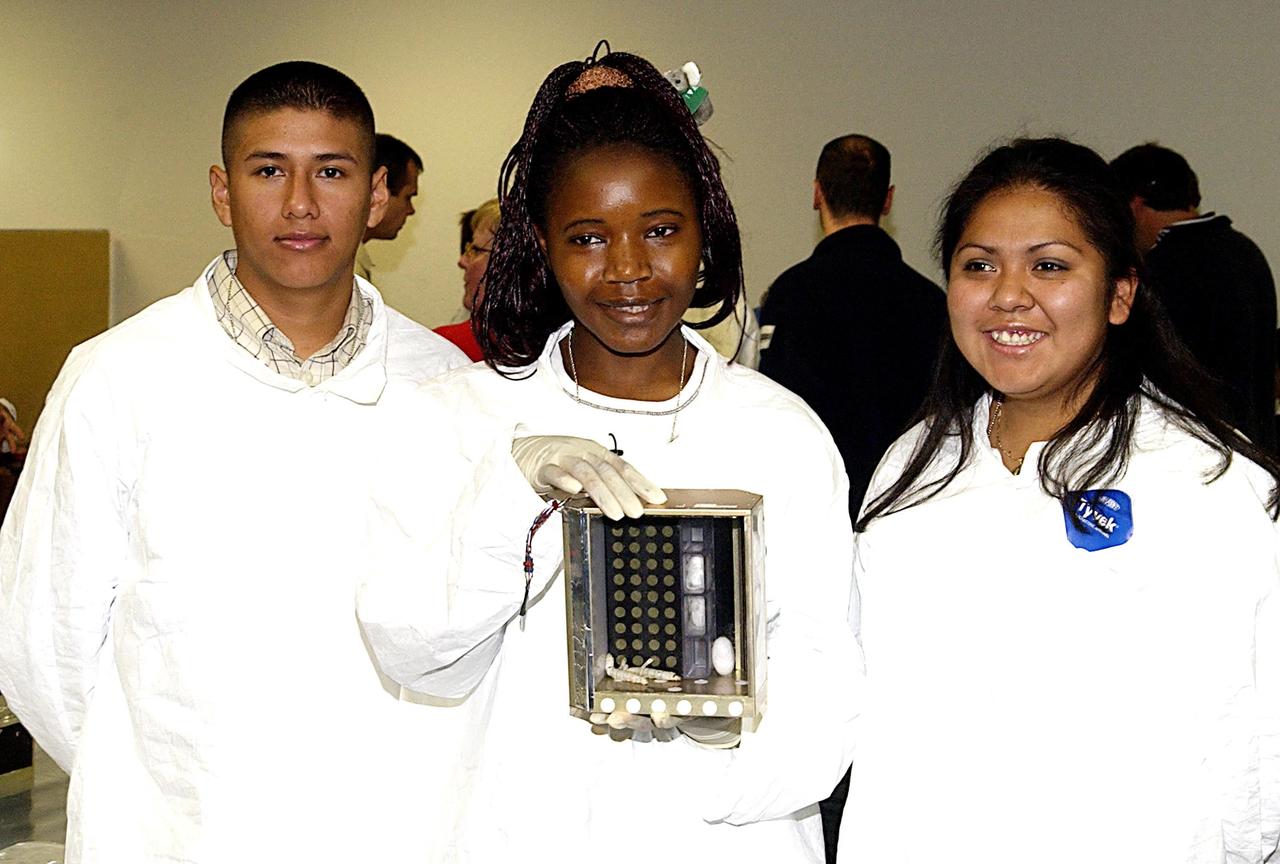
KENNEDY SPACE CENTER, FLA. -- Students show off one of the experiments that will fly in SPACEHAB on Space Shuttle Columbia on mission STS-107. SPACEHAB's complement of commercial experiments includes six educational experiments designed and developed by students in six different countries under the auspices of Space Technology and Research Students (STARS), a global education program managed by SPACEHAB subsidiary Space Media. The countries represented are Australia, China, Israel, Japan, Liechtenstein and the United States. The student investigators who conceived these experiments will monitor their operations in space. The experiments will be housed in BioServe Space Technologies' Isothermal Containment Module (ICM --a small temperature-controlled facility that provides experiment support such as physical containment, lighting, and video imaging) and stowed in a middeck-size locker aboard the SPACEHAB Research Double Module.
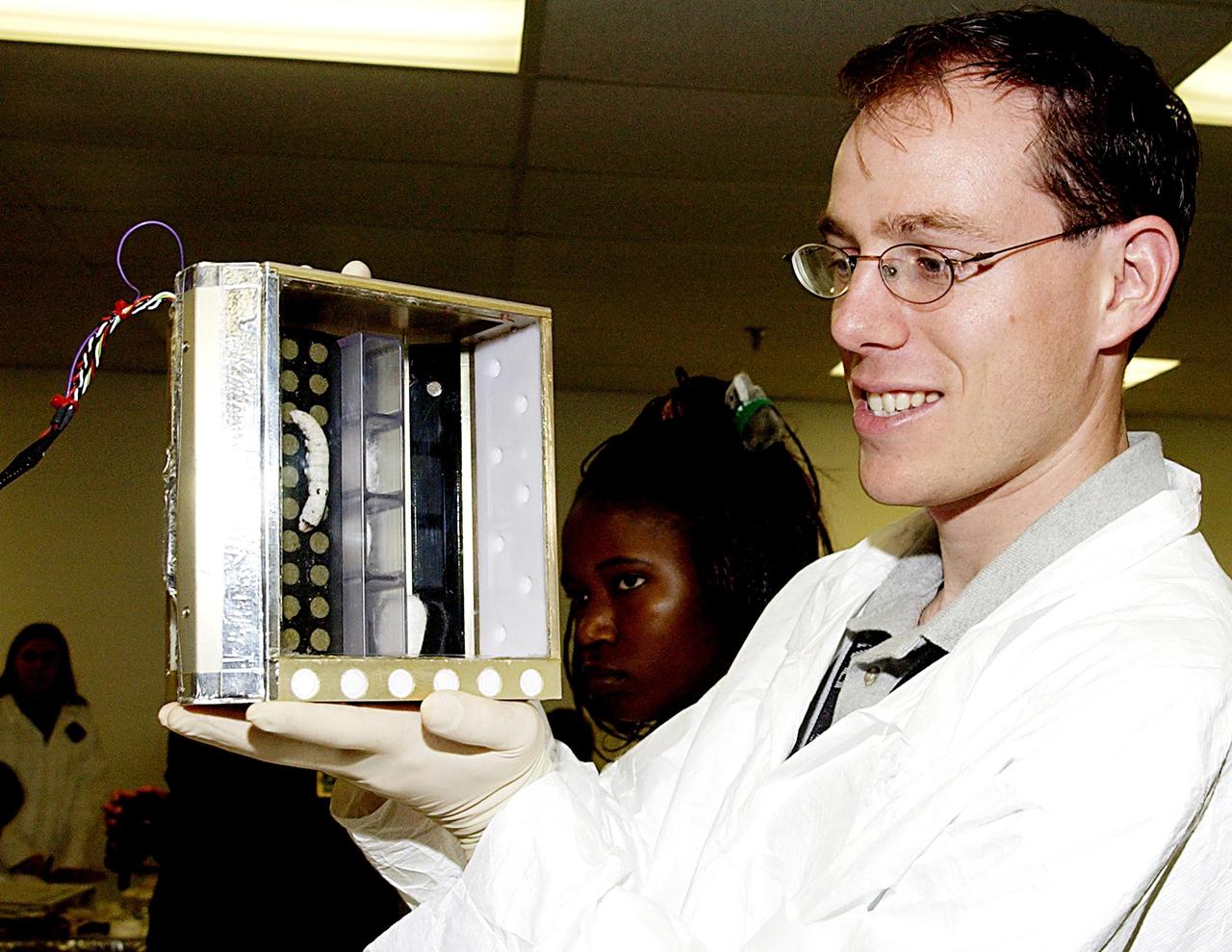
KENNEDY SPACE CENTER, FLA. - A student shows off one of the experiments that will fly in SPACEHAB on Space Shuttle Columbia on mission STS-107. SPACEHAB's complement of commercial experiments includes six educational experiments designed and developed by students in six different countries under the auspices of Space Technology and Research Students (STARS), a global education program managed by SPACEHAB subsidiary Space Media. The countries represented are Australia, China, Israel, Japan, Liechtenstein and the United States. The student investigators who conceived these experiments will monitor their operations in space. The experiments will be housed in BioServe Space Technologies' Isothermal Containment Module (ICM --a small temperature-controlled facility that provides experiment support such as physical containment, lighting, and video imaging) and stowed in a middeck-size locker aboard the SPACEHAB Research Double Module.
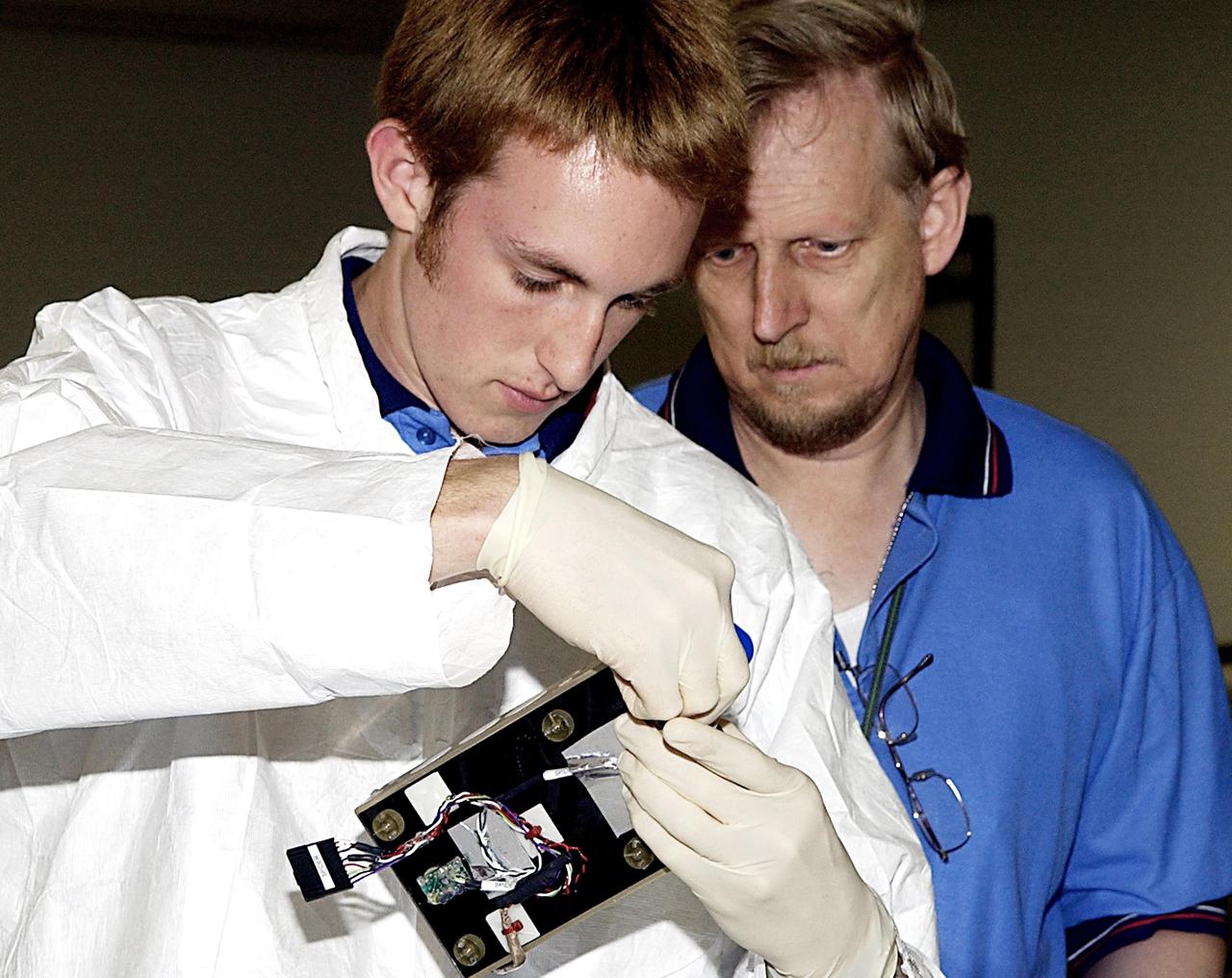
KENNEDY SPACE CENTER, FLA. - A student works on an experiment that will fly in SPACEHAB on Space Shuttle Columbia on mission STS-107. SPACEHAB's complement of commercial experiments includes six educational experiments designed and developed by students in six different countries under the auspices of Space Technology and Research Students (STARS), a global education program managed by SPACEHAB subsidiary Space Media. The countries represented are Australia, China, Israel, Japan, Liechtenstein and the United States. The student investigators who conceived these experiments will monitor their operations in space. The experiments will be housed in BioServe Space Technologies' Isothermal Containment Module (ICM --a small temperature-controlled facility that provides experiment support such as physical containment, lighting, and video imaging) and stowed in a middeck-size locker aboard the SPACEHAB Research Double Module.
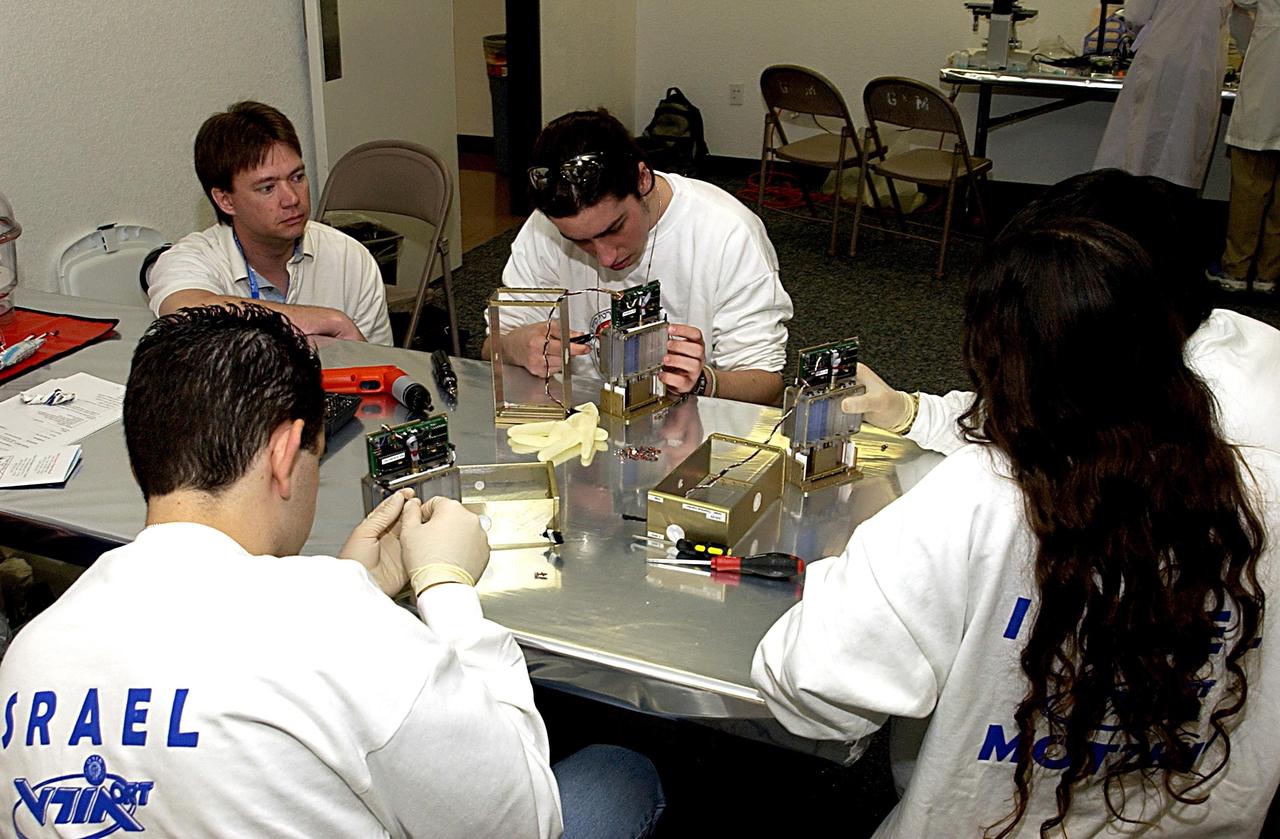
KENNEDY SPACE CENTER, FLA. - Students work on their experiments that will fly in SPACEHAB on Space Shuttle Columbia on mission STS-107. SPACEHAB's complement of commercial experiments includes six educational experiments designed and developed by students in six different countries under the auspices of Space Technology and Research Students (STARS), a global education program managed by SPACEHAB subsidiary Space Media. The countries represented are Australia, China, Israel, Japan, Liechtenstein and the United States. The student investigators who conceived these experiments will monitor their operations in space. The experiments will be housed in BioServe Space Technologies' Isothermal Containment Module (ICM --a small temperature-controlled facility that provides experiment support such as physical containment, lighting, and video imaging) and stowed in a middeck-size locker aboard the SPACEHAB Research Double Module.
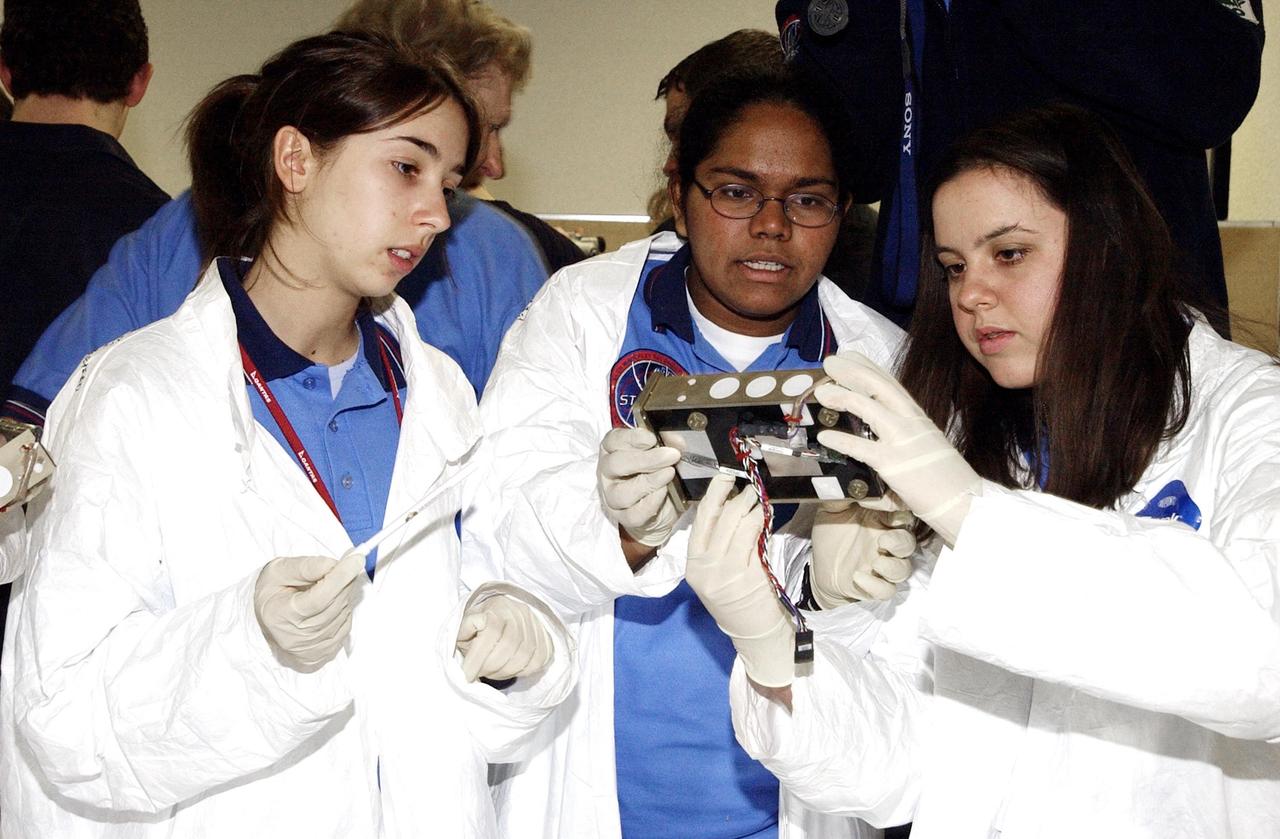
KENNEDY SPACE CENTER, FLA. -- Students work on their experiments that will fly in SPACEHAB on Space Shuttle Columbia on mission STS-107. SPACEHAB's complement of commercial experiments includes six educational experiments designed and developed by students in six different countries under the auspices of Space Technology and Research Students (STARS), a global education program managed by SPACEHAB subsidiary Space Media. The countries represented are Australia, China, Israel, Japan, Liechtenstein and the United States. The student investigators who conceived these experiments will monitor their operations in space. The experiments will be housed in BioServe Space Technologies' Isothermal Containment Module (ICM --a small temperature-controlled facility that provides experiment support such as physical containment, lighting, and video imaging) and stowed in a middeck-size locker aboard the SPACEHAB Research Double Module.
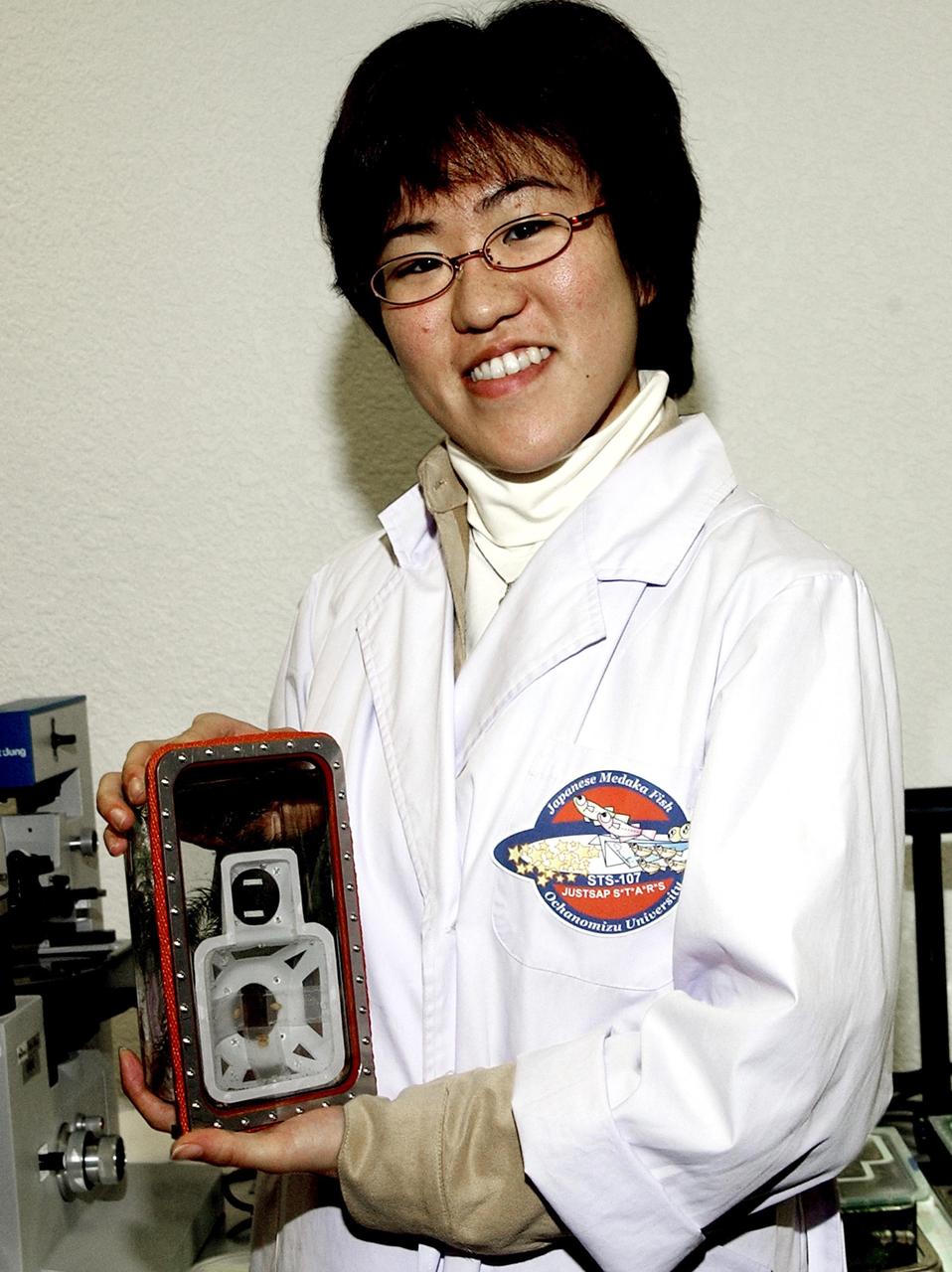
KENNEDY SPACE CENTER, FLA. -- A student displays an experiment that will fly in SPACEHAB on Space Shuttle Columbia on mission STS-107. SPACEHAB's complement of commercial experiments includes six educational experiments designed and developed by students in six different countries under the auspices of Space Technology and Research Students (STARS), a global education program managed by SPACEHAB subsidiary Space Media. The countries represented are Australia, China, Israel, Japan, Liechtenstein and the United States. The student investigators who conceived these experiments will monitor their operations in space. The experiments will be housed in BioServe Space Technologies' Isothermal Containment Module (ICM --a small temperature-controlled facility that provides experiment support such as physical containment, lighting, and video imaging) and stowed in a middeck-size locker aboard the SPACEHAB Research Double Module.
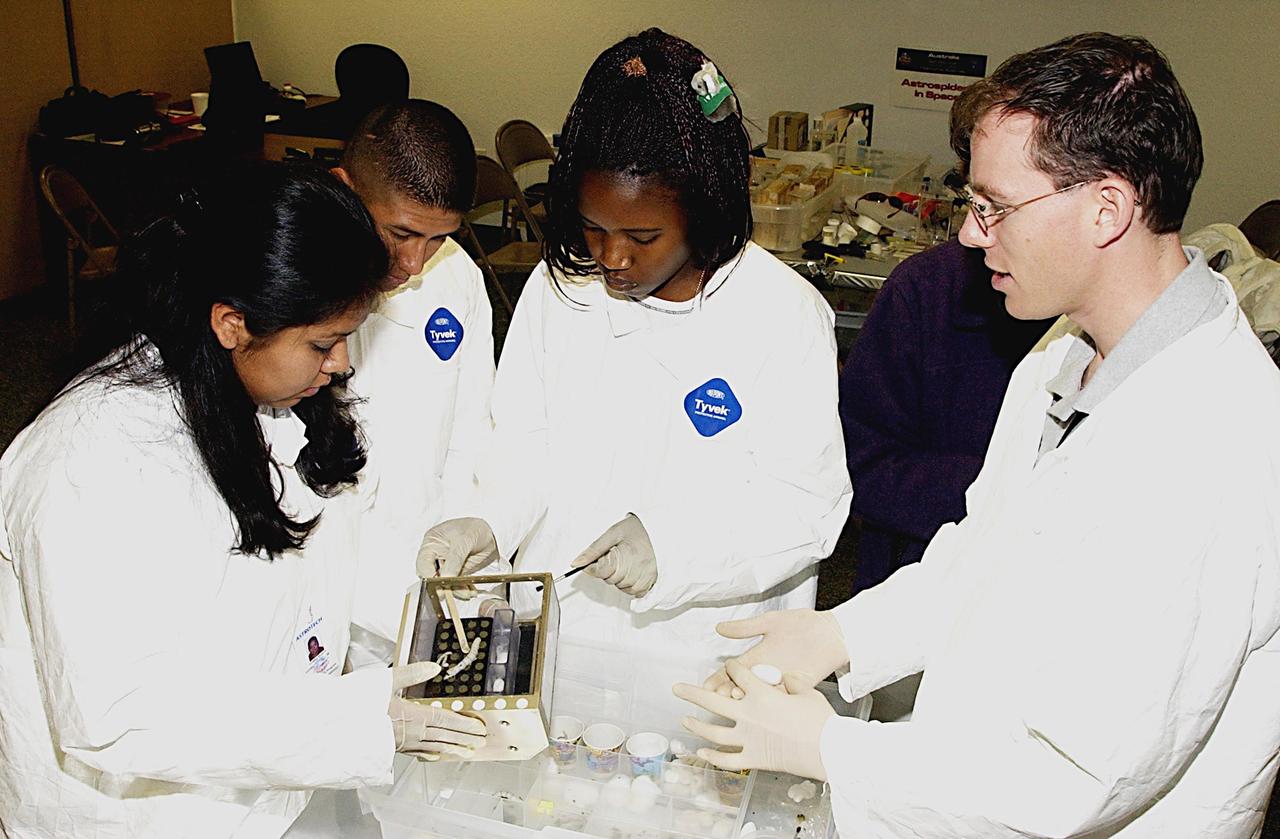
KENNEDY SPACE CENTER, FLA. - Students work on their experiments that will fly in SPACEHAB on Space Shuttle Columbia on mission STS-107. SPACEHAB's complement of commercial experiments includes six educational experiments designed and developed by students in six different countries under the auspices of Space Technology and Research Students (STARS), a global education program managed by SPACEHAB subsidiary Space Media. The countries represented are Australia, China, Israel, Japan, Liechtenstein and the United States. The student investigators who conceived these experiments will monitor their operations in space. The experiments will be housed in BioServe Space Technologies' Isothermal Containment Module (ICM --a small temperature-controlled facility that provides experiment support such as physical containment, lighting, and video imaging) and stowed in a middeck-size locker aboard the SPACEHAB Research Double Module.
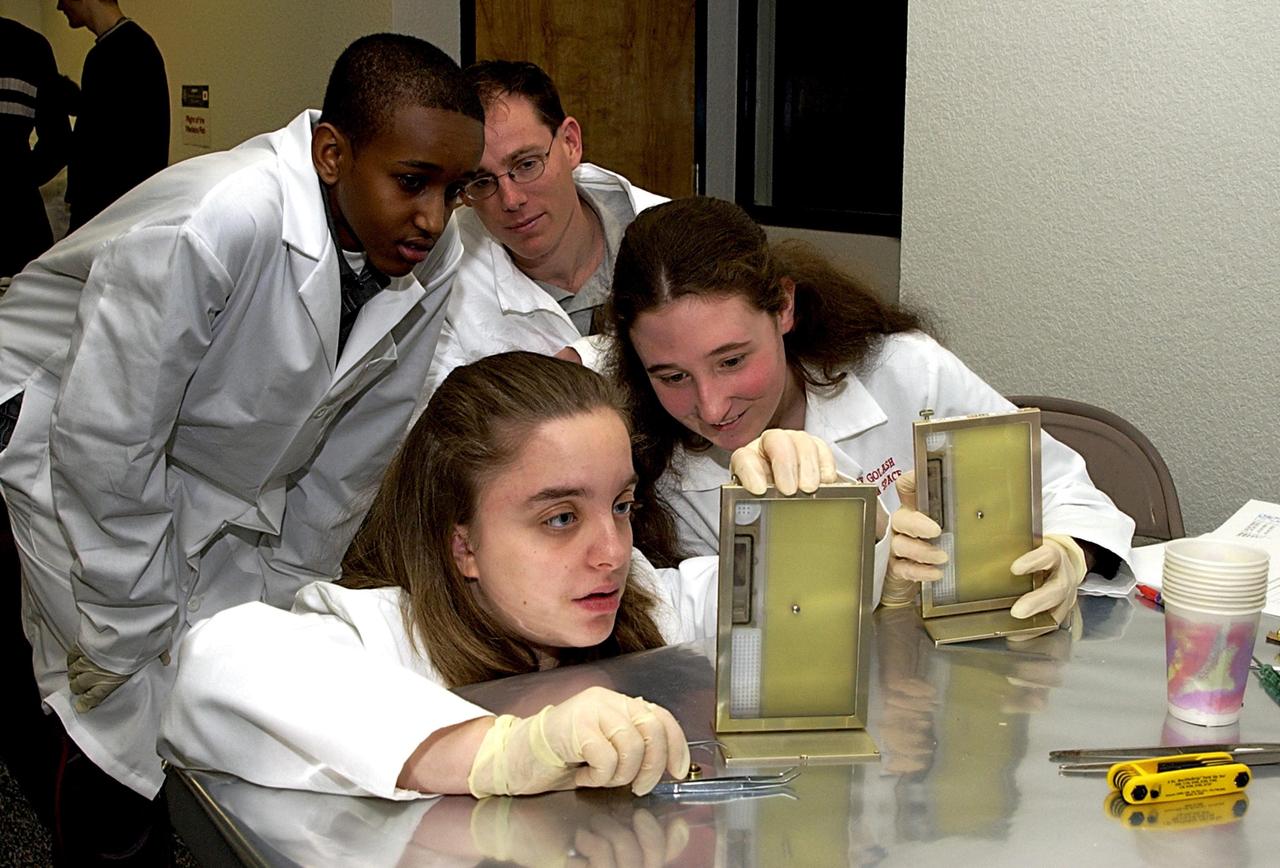
KENNEDY SPACE CENTER, FLA. - Students check on their experiments that will fly in SPACEHAB on Space Shuttle Columbia on mission STS-107. SPACEHAB's complement of commercial experiments includes six educational experiments designed and developed by students in six different countries under the auspices of Space Technology and Research Students (STARS), a global education program managed by SPACEHAB subsidiary Space Media. The countries represented are Australia, China, Israel, Japan, Liechtenstein and the United States. The student investigators who conceived these experiments will monitor their operations in space. The experiments will be housed in BioServe Space Technologies' Isothermal Containment Module (ICM --a small temperature-controlled facility that provides experiment support such as physical containment, lighting, and video imaging) and stowed in a middeck-size locker aboard the SPACEHAB Research Double Module.
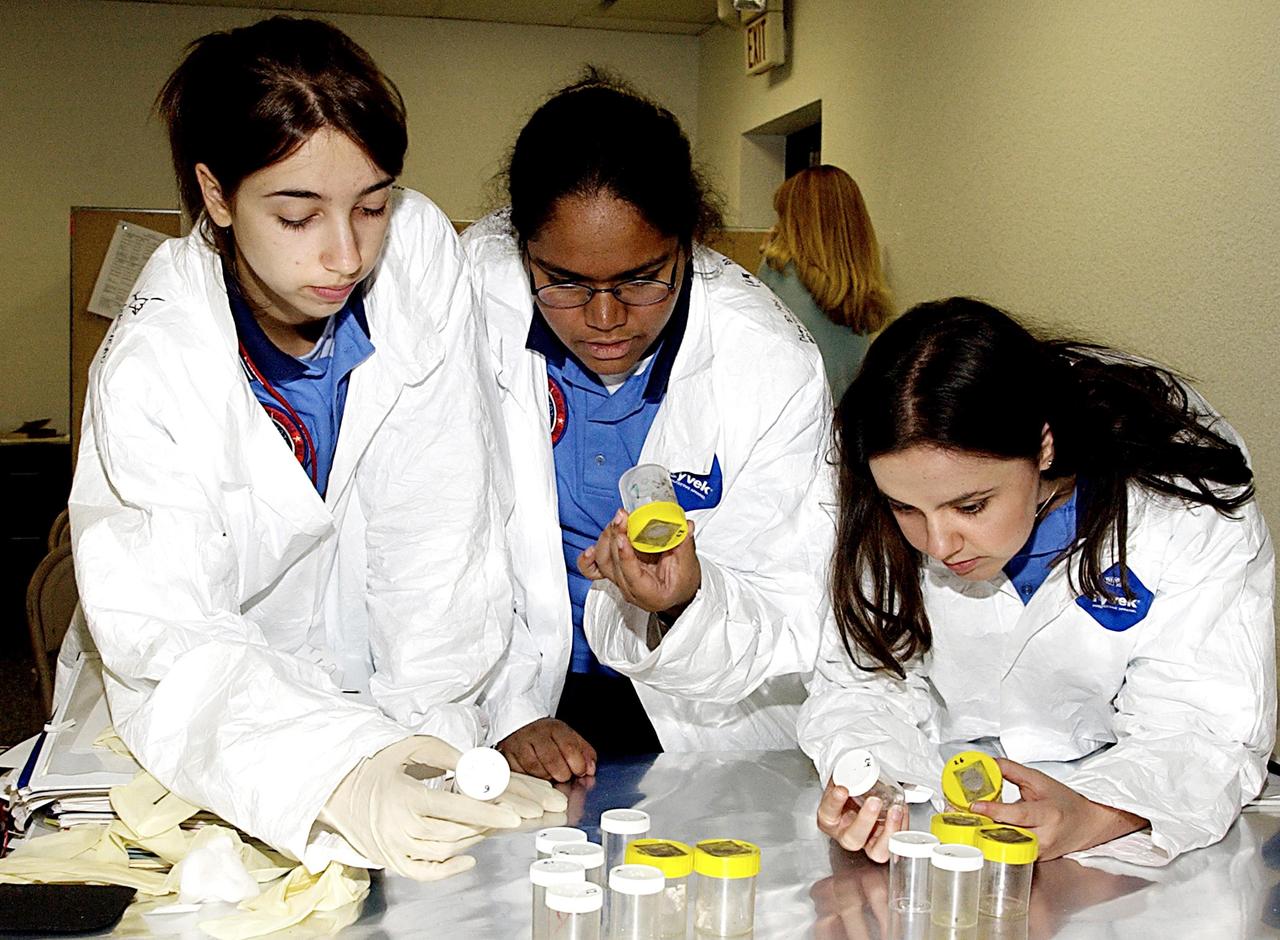
KENNEDY SPACE CENTER, FLA. - Students check out their experiments that will fly in SPACEHAB on Space Shuttle Columbia on mission STS-107. SPACEHAB's complement of commercial experiments includes six educational experiments designed and developed by students in six different countries under the auspices of Space Technology and Research Students (STARS), a global education program managed by SPACEHAB subsidiary Space Media. The countries represented are Australia, China, Israel, Japan, Liechtenstein and the United States. The student investigators who conceived these experiments will monitor their operations in space. The experiments will be housed in BioServe Space Technologies' Isothermal Containment Module (ICM --a small temperature-controlled facility that provides experiment support such as physical containment, lighting, and video imaging) and stowed in a middeck-size locker aboard the SPACEHAB Research Double Module.
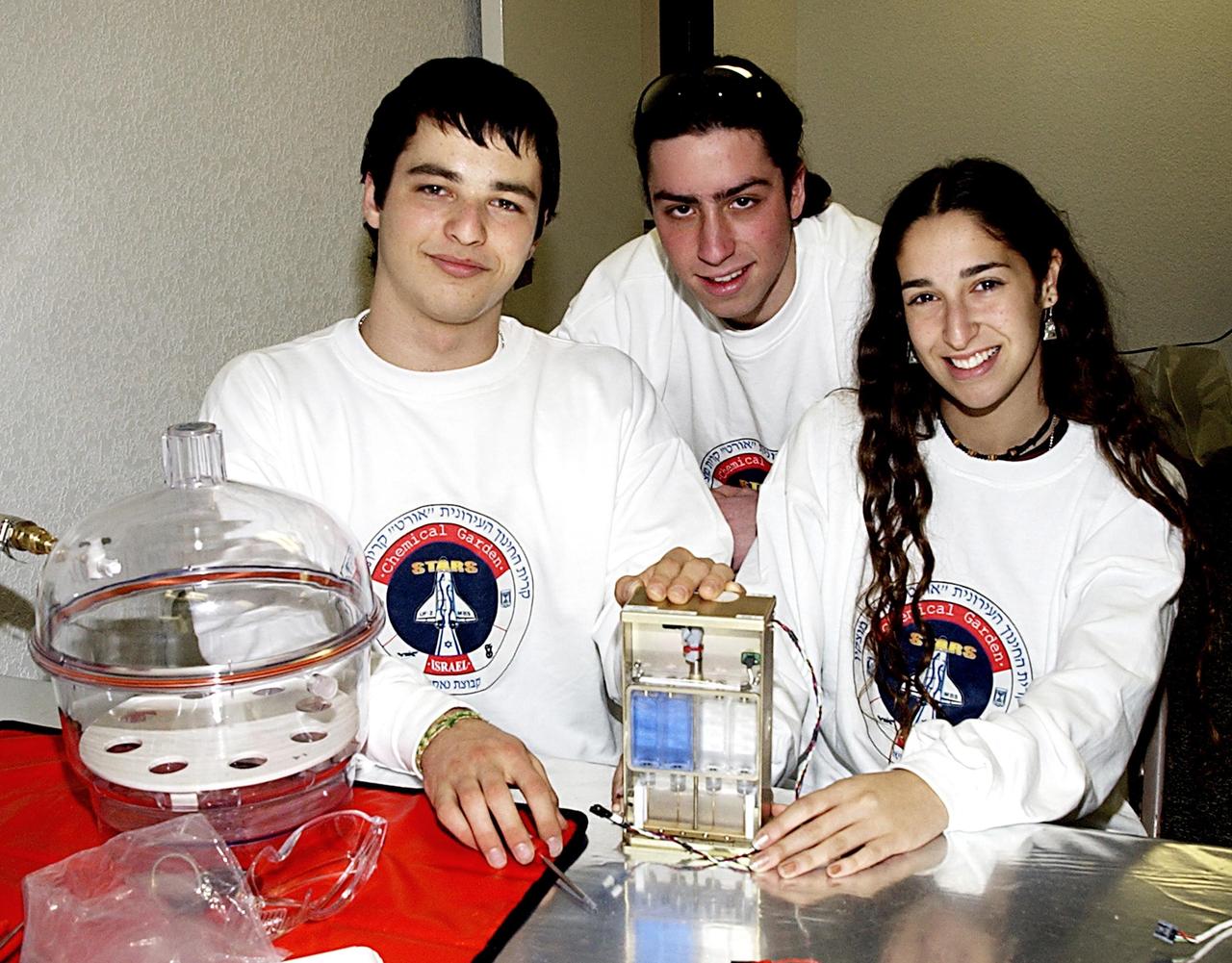
KENNEDY SPACE CENTER, FLA. -- Students display an experiment that will fly in SPACEHAB on Space Shuttle Columbia on mission STS-107. SPACEHAB's complement of commercial experiments includes six educational experiments designed and developed by students in six different countries under the auspices of Space Technology and Research Students (STARS), a global education program managed by SPACEHAB subsidiary Space Media. The countries represented are Australia, China, Israel, Japan, Liechtenstein and the United States. The student investigators who conceived these experiments will monitor their operations in space. The experiments will be housed in BioServe Space Technologies' Isothermal Containment Module (ICM --a small temperature-controlled facility that provides experiment support such as physical containment, lighting, and video imaging) and stowed in a middeck-size locker aboard the SPACEHAB Research Double Module.
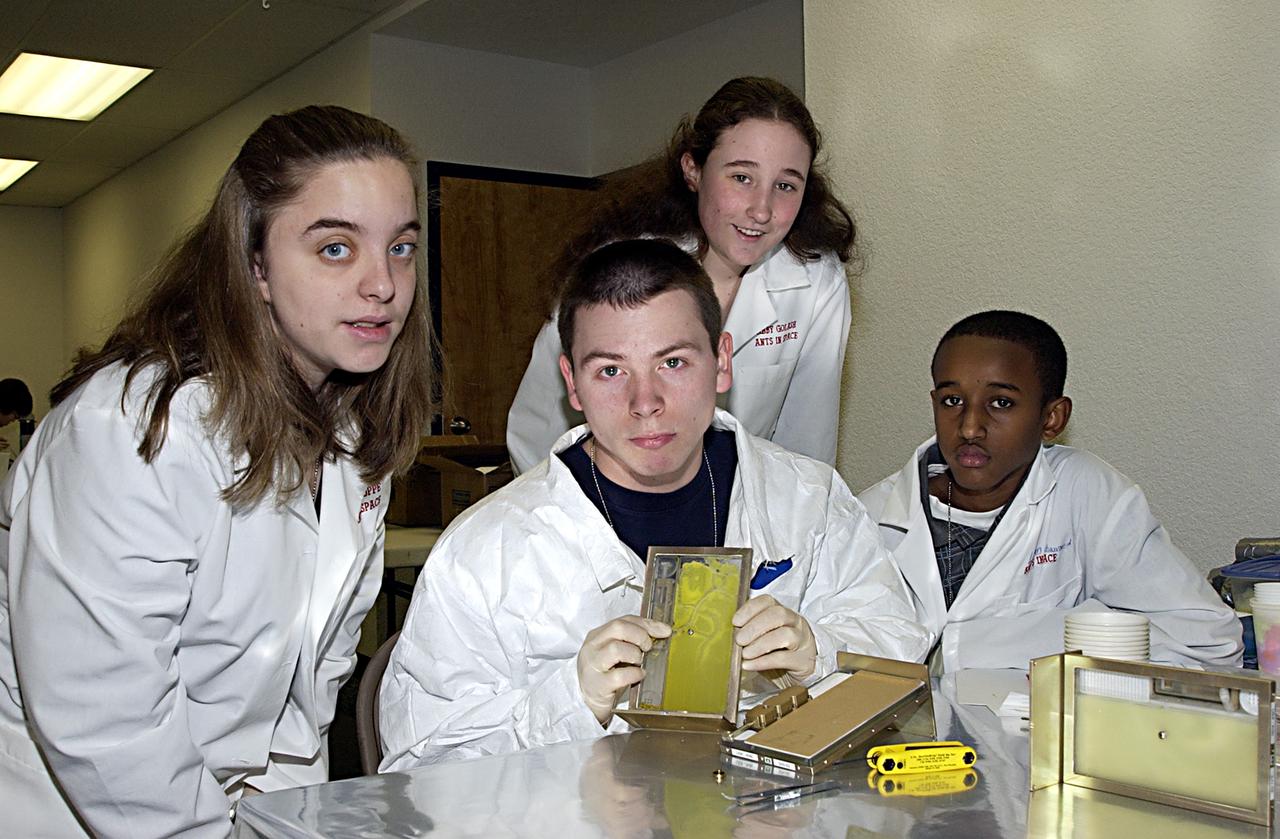
Students display an experiment that will fly in SPACEHAB on Space Shuttle Columbia on mission STS-107. SPACEHAB's complement of commercial experiments includes six educational experiments designed and developed by students in six different countries under the auspices of Space Technology and Research Students (STARS), a global education program managed by SPACEHAB subsidiary Space Media. The countries represented are Australia, China, Israel, Japan, Liechtenstein and the United States. The student investigators who conceived these experiments will monitor their operations in space. The experiments will be housed in BioServe Space Technologies' Isothermal Containment Module (ICM --a small temperature-controlled facility that provides experiment support such as physical containment, lighting, and video imaging) and stowed in a middeck-size locker aboard the SPACEHAB Research Double Module.
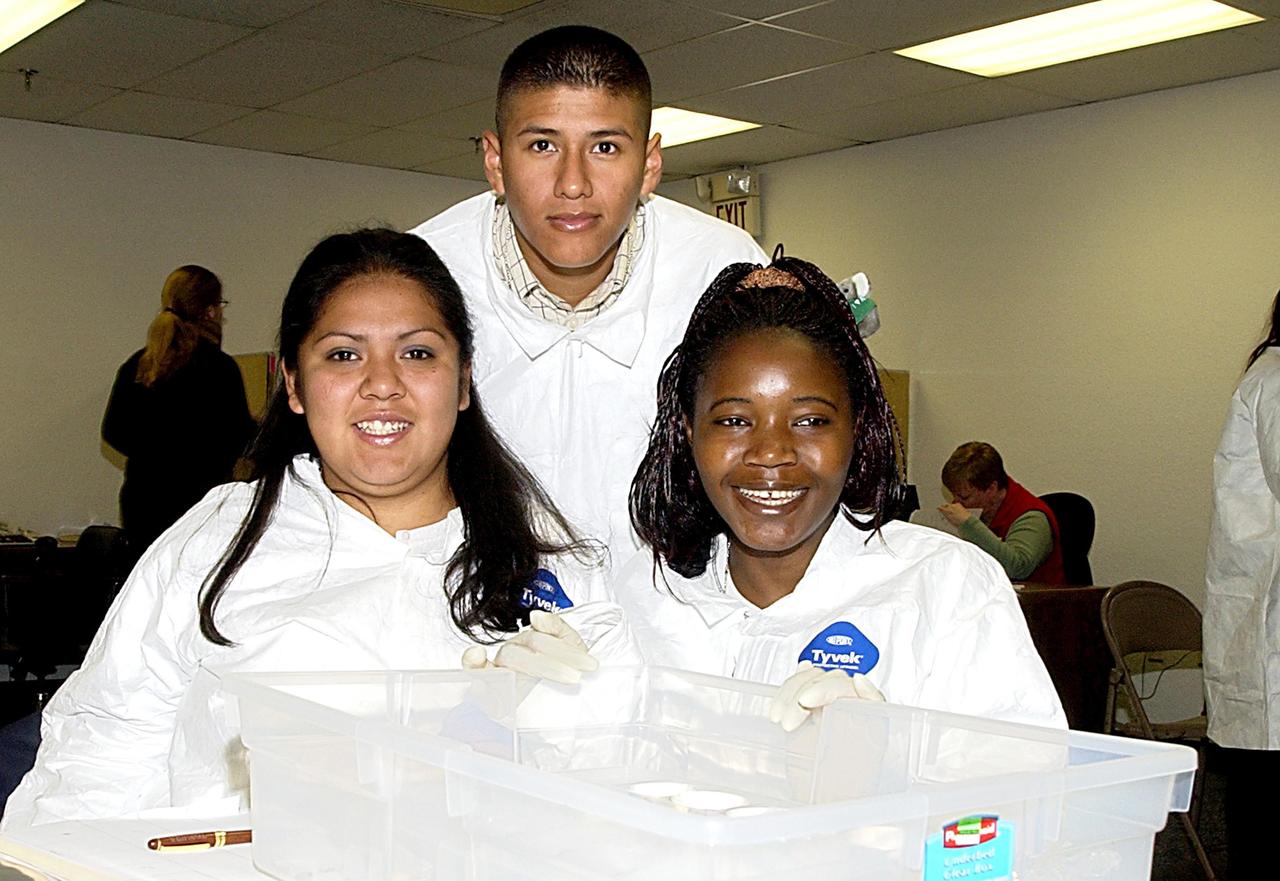
KENNEDY SPACE CENTER, FLA. - Students look over their experiments that will fly in SPACEHAB on Space Shuttle Columbia on mission STS-107. SPACEHAB's complement of commercial experiments includes six educational experiments designed and developed by students in six different countries under the auspices of Space Technology and Research Students (STARS), a global education program managed by SPACEHAB subsidiary Space Media. The countries represented are Australia, China, Israel, Japan, Liechtenstein and the United States. The student investigators who conceived these experiments will monitor their operations in space. The experiments will be housed in BioServe Space Technologies' Isothermal Containment Module (ICM --a small temperature-controlled facility that provides experiment support such as physical containment, lighting, and video imaging) and stowed in a middeck-size locker aboard the SPACEHAB Research Double Module.
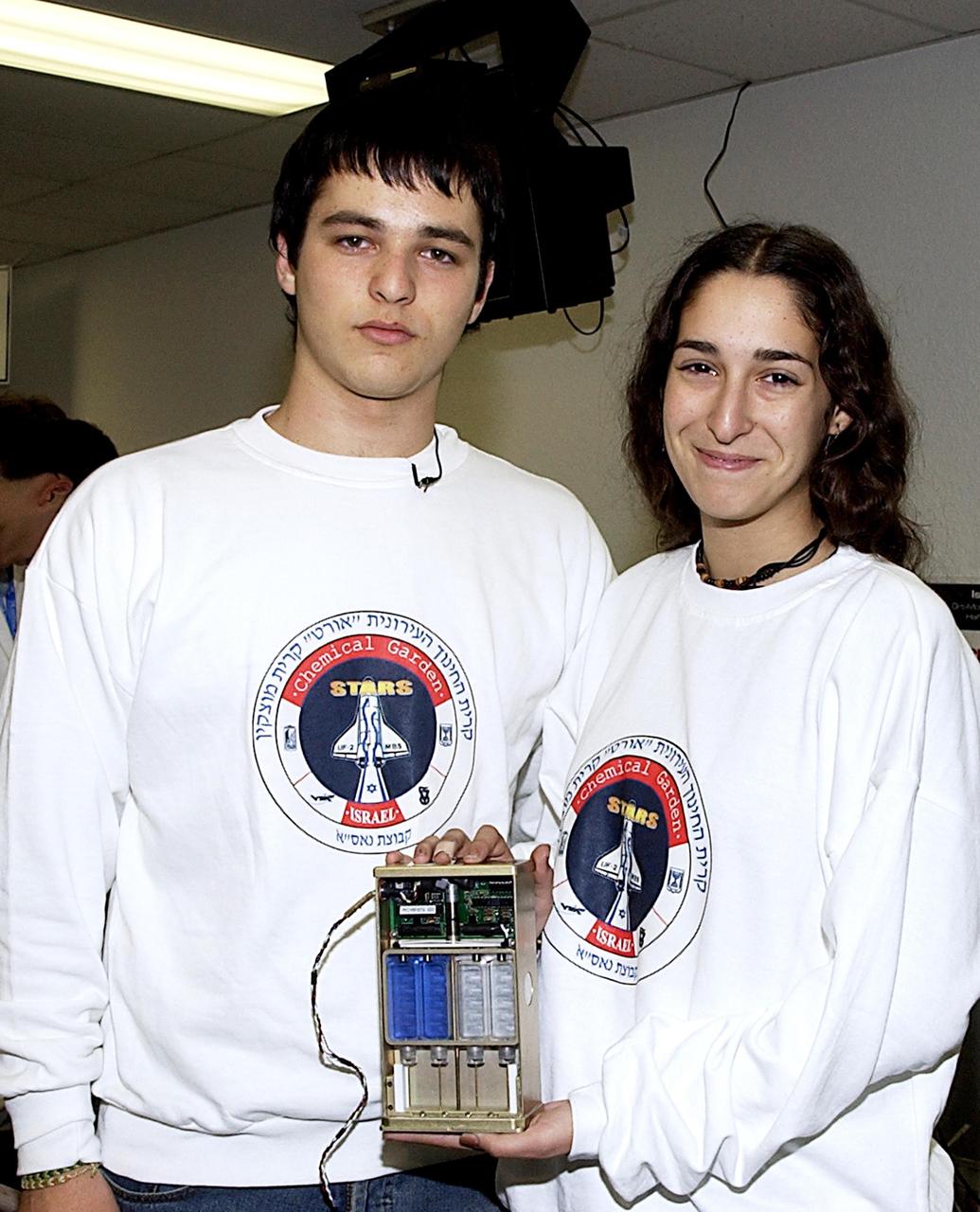
KENNEDY SPACE CENTER, FLA. -- Students show off one of the experiments that will fly in SPACEHAB on Space Shuttle Columbia on mission STS-107. SPACEHAB's complement of commercial experiments includes six educational experiments designed and developed by students in six different countries under the auspices of Space Technology and Research Students (STARS), a global education program managed by SPACEHAB subsidiary Space Media. The countries represented are Australia, China, Israel, Japan, Liechtenstein and the United States. The student investigators who conceived these experiments will monitor their operations in space. The experiments will be housed in BioServe Space Technologies' Isothermal Containment Module (ICM --a small temperature-controlled facility that provides experiment support such as physical containment, lighting, and video imaging) and stowed in a middeck-size locker aboard the SPACEHAB Research Double Module.
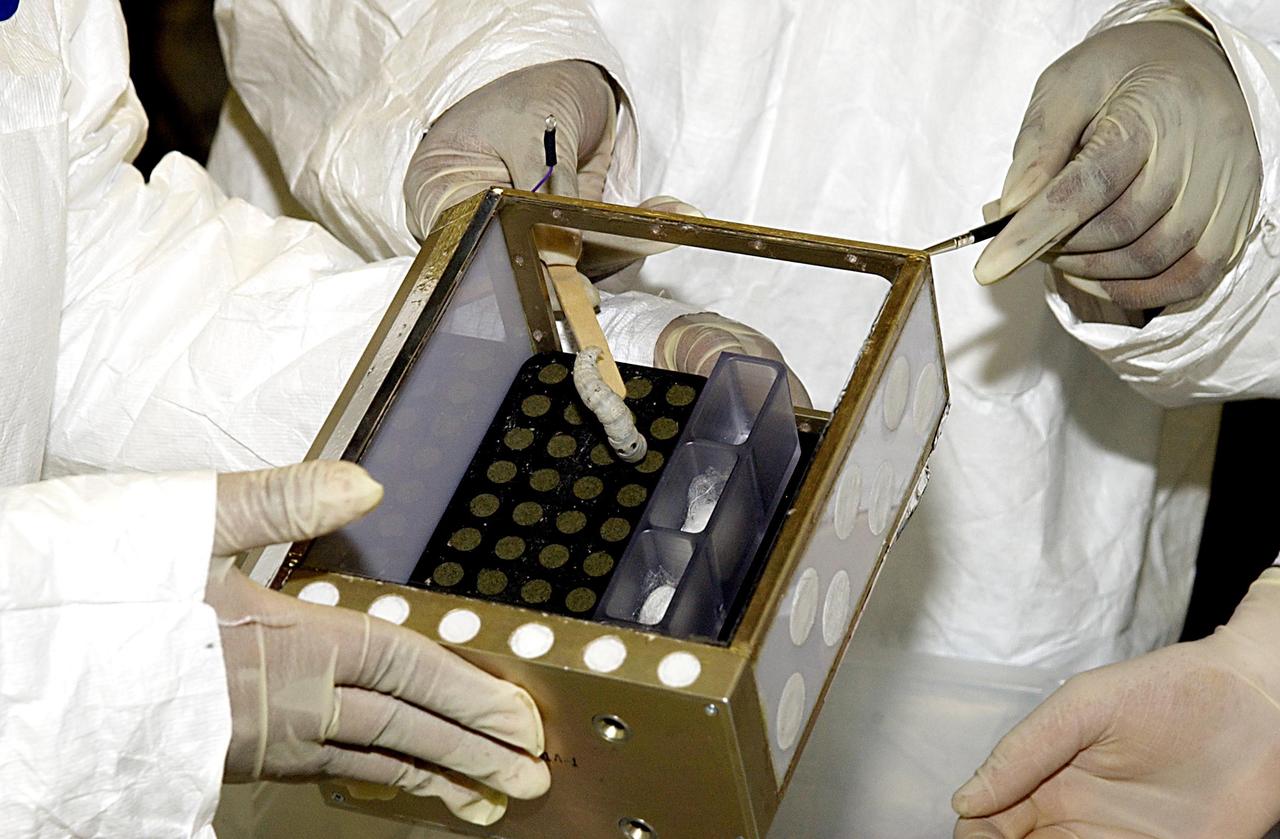
KENNEDY SPACE CENTER, FLA. - Students work on their experiments that will fly in SPACEHAB on Space Shuttle Columbia on mission STS-107. SPACEHAB's complement of commercial experiments includes six educational experiments designed and developed by students in six different countries under the auspices of Space Technology and Research Students (STARS), a global education program managed by SPACEHAB subsidiary Space Media. The countries represented are Australia, China, Israel, Japan, Liechtenstein and the United States. The student investigators who conceived these experiments will monitor their operations in space. The experiments will be housed in BioServe Space Technologies' Isothermal Containment Module (ICM --a small temperature-controlled facility that provides experiment support such as physical containment, lighting, and video imaging) and stowed in a middeck-size locker aboard the SPACEHAB Research Double Module.
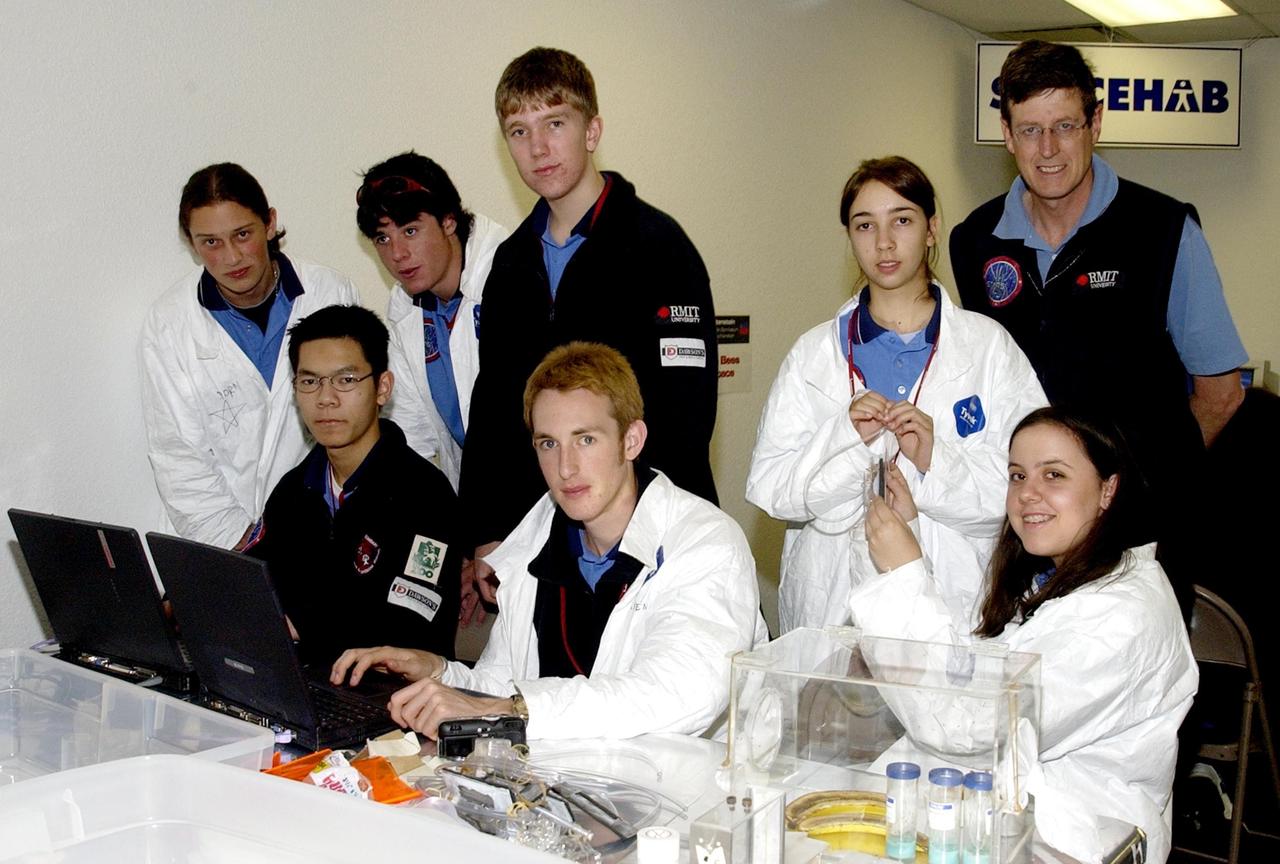
KENNEDY SPACE CENTER, FLA. - Students pause during their work on their experiments that will fly in SPACEHAB on Space Shuttle Columbia on mission STS-107. SPACEHAB's complement of commercial experiments includes six educational experiments designed and developed by students in six different countries under the auspices of Space Technology and Research Students (STARS), a global education program managed by SPACEHAB subsidiary Space Media. The countries represented are Australia, China, Israel, Japan, Liechtenstein and the United States. The student investigators who conceived these experiments will monitor their operations in space. The experiments will be housed in BioServe Space Technologies' Isothermal Containment Module (ICM --a small temperature-controlled facility that provides experiment support such as physical containment, lighting, and video imaging) and stowed in a middeck-size locker aboard the SPACEHAB Research Double Module.
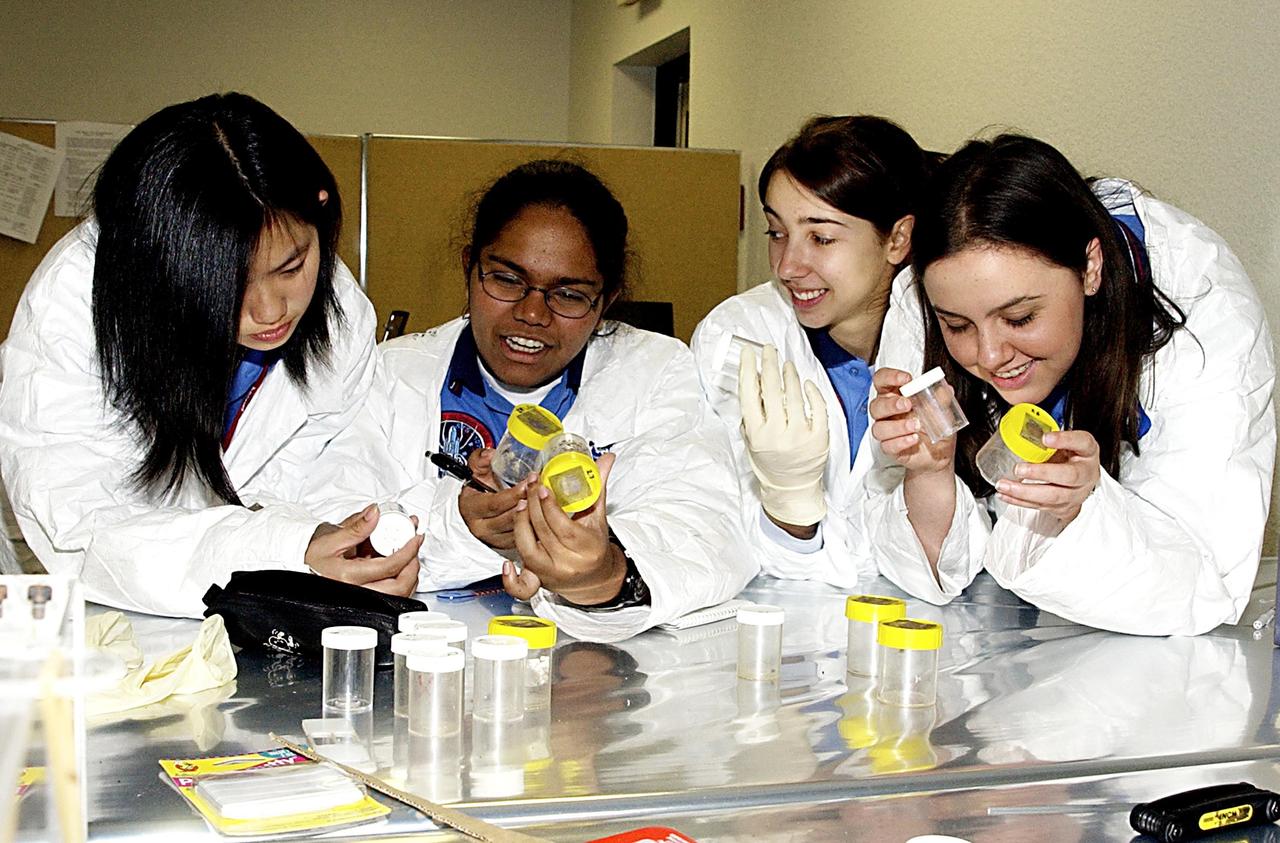
KENNEDY SPACE CENTER, FLA. -- Students check out their experiments that will fly in SPACEHAB on Space Shuttle Columbia on mission STS-107. SPACEHAB's complement of commercial experiments includes six educational experiments designed and developed by students in six different countries under the auspices of Space Technology and Research Students (STARS), a global education program managed by SPACEHAB subsidiary Space Media. The countries represented are Australia, China, Israel, Japan, Liechtenstein and the United States. The student investigators who conceived these experiments will monitor their operations in space. The experiments will be housed in BioServe Space Technologies' Isothermal Containment Module (ICM --a small temperature-controlled facility that provides experiment support such as physical containment, lighting, and video imaging) and stowed in a middeck-size locker aboard the SPACEHAB Research Double Module.
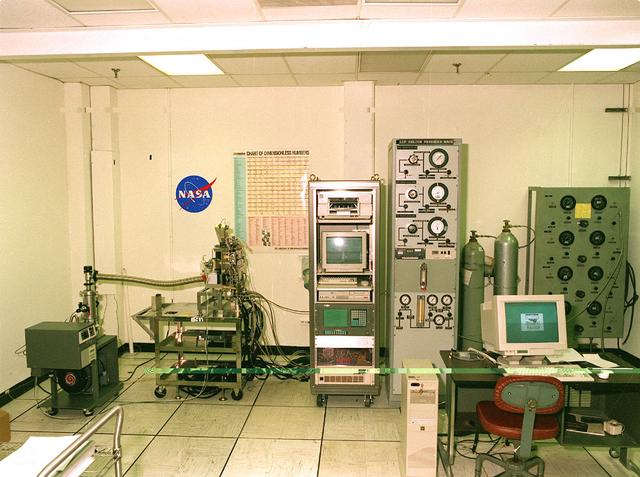
Large Isothermal Furnace (LIF) was flown on a mission in cooperation with the National Space Development Agency (NASDA) of Japan. LIF is a vacuum-heating furnace designed to heat large samples uniformly. The furnace consists of a sample container and heating element surrounded by a vacuum chamber. A crewmemeber will insert a sample cartridge into the furnace. The furnace will be activated and operations will be controlled automatically by a computer in response to an experiment number entered on the control panel. At the end of operations, helium will be discharged into the furnace, allowing cooling to start. Cooling will occur through the use of a water jacket while rapid cooling of samples can be accomplished through a controlled flow of helium. Data from experiments will help scientists better understand this important process which is vital to the production of high-quality semiconductor crystals.