
Luca Baldini, Italian co-principal investigator, National Institute for Nuclear Physics, participates in a payload briefing for NASA’s Imaging X-ray Polarimetry Explorer (IXPE) spacecraft on Dec.7, 2021 at NASA’s Kennedy Space Center in Florida. IXPE is scheduled to launch no earlier than 1 a.m. EST Thursday, Dec. 9, on a SpaceX Falcon 9 rocket from Kennedy’s Launch Complex 39A. NASA’s Launch Services Program is managing this launch. NASA’s Marshall Space Flight Center in Huntsville, Alabama, manages the IXPE mission. Ball Aerospace, headquartered in Broomfield, Colorado, manages spacecraft operations with support from the University of Colorado at Boulder. NASA’s Goddard Space Flight Center in Greenbelt, Maryland, manages the Explorers Program for the agency’s Science Mission Directorate in Washington. The U.S. Space Force’s Space Launch Delta 45 provides range support for this launch. SpaceX is providing the launch vehicle for this mission.
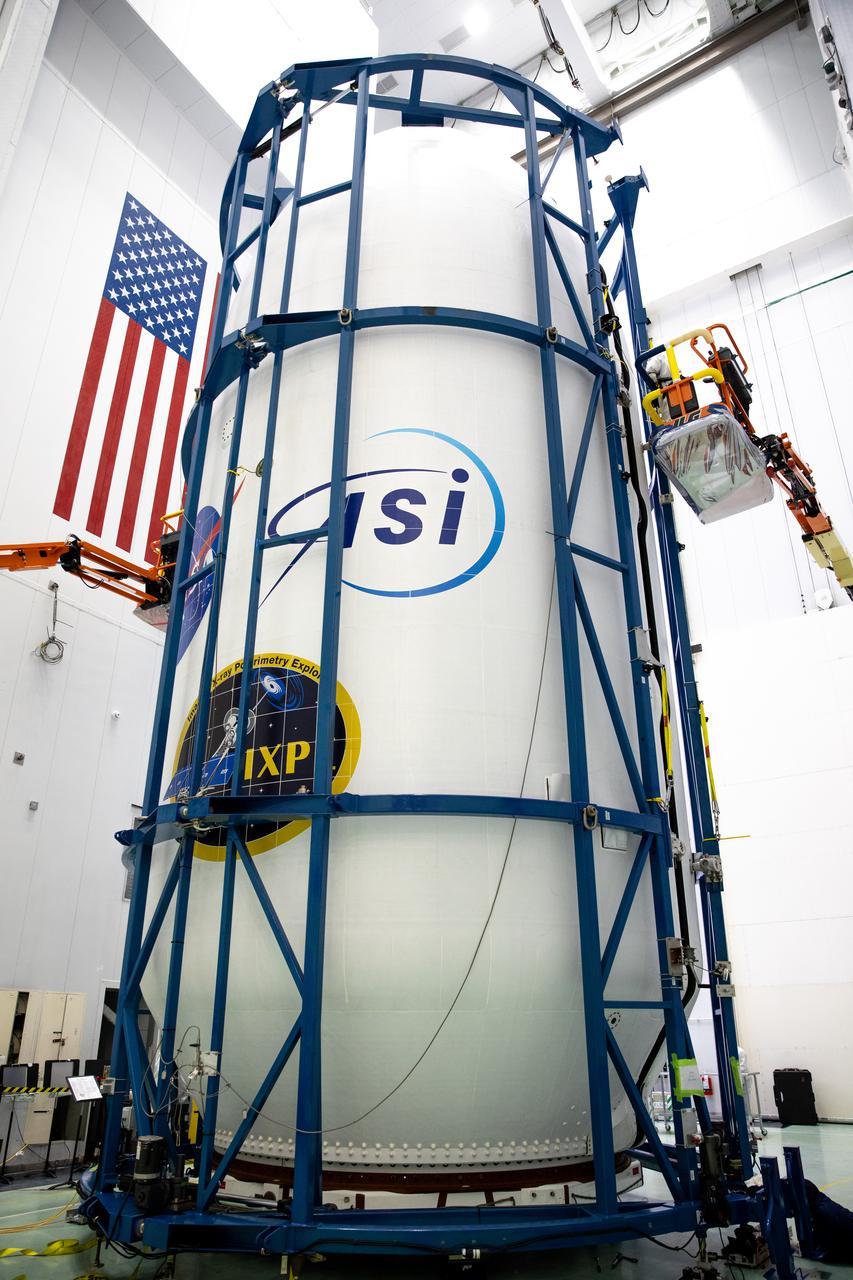
NASA’s Imaging X-Ray Polarimetry Explorer (IXPE) spacecraft and nose fairing are brought together for encapsulation inside SpaceX’s Payload Processing Facility at Kennedy Space Center in Florida on Dec. 2, 2021. The mission is scheduled to launch no earlier than Thursday, Dec. 9, at 1 a.m. EST, on a SpaceX Falcon 9 rocket from Launch Complex 39A at NASA’s Kennedy Space Center in Florida. IXPE is the first satellite dedicated to measuring the polarization of X-rays from a variety of cosmic sources, such as black holes and neutron stars.
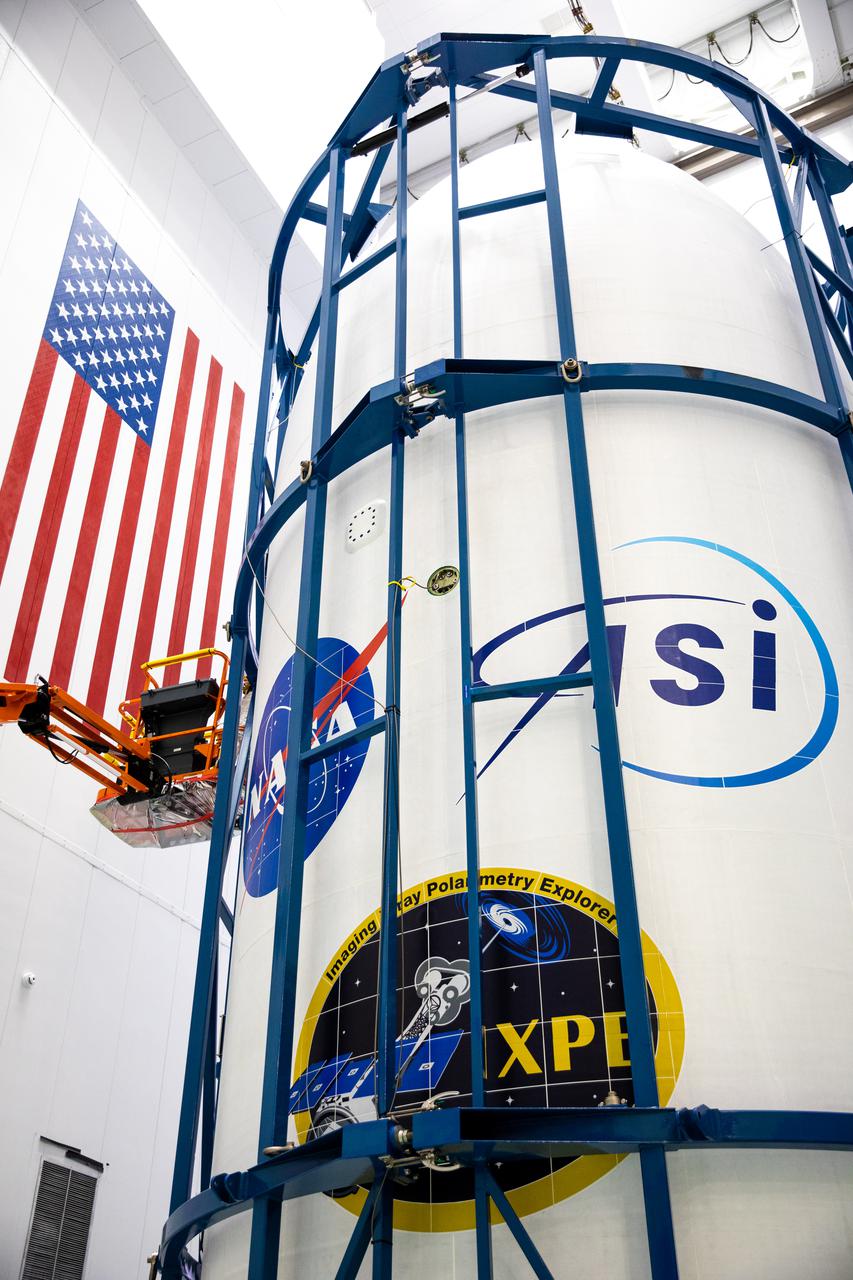
NASA’s Imaging X-Ray Polarimetry Explorer (IXPE) spacecraft and nose fairing are brought together for encapsulation inside SpaceX’s Payload Processing Facility at Kennedy Space Center in Florida on Dec. 2, 2021. The mission is scheduled to launch no earlier than Thursday, Dec. 9, at 1 a.m. EST, on a SpaceX Falcon 9 rocket from Launch Complex 39A at NASA’s Kennedy Space Center in Florida. IXPE is the first satellite dedicated to measuring the polarization of X-rays from a variety of cosmic sources, such as black holes and neutron stars.