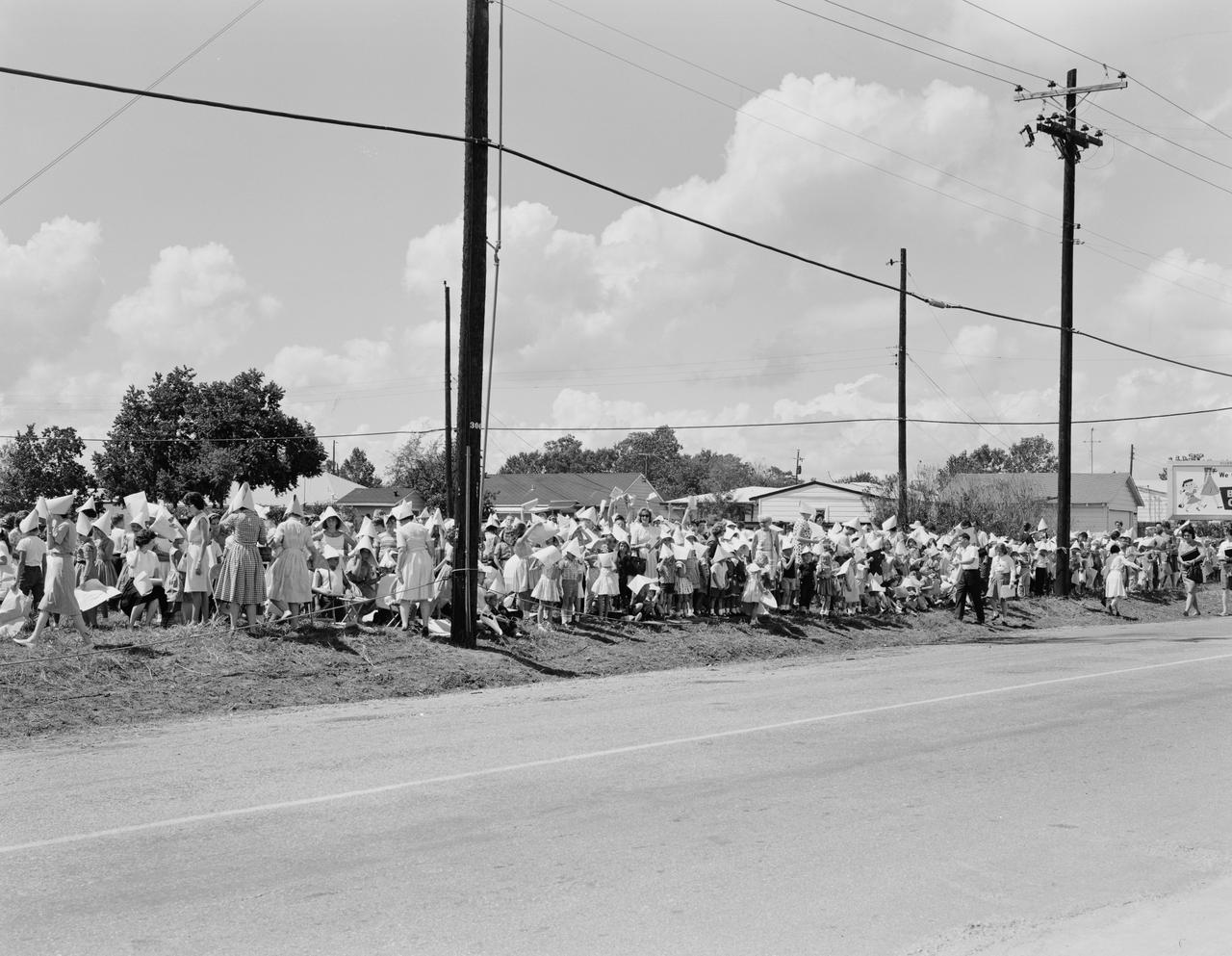
S62-03991 (11 September 1962) --- Just before the arrival of President John F. Kennedy at the J. P. Cornelius grade school, on Westover, turned out for a look at the Chief Executive in person. Wearing sun hats they made themselves, 700 children lined the roadway opposite the side entrance to the Rich Building.
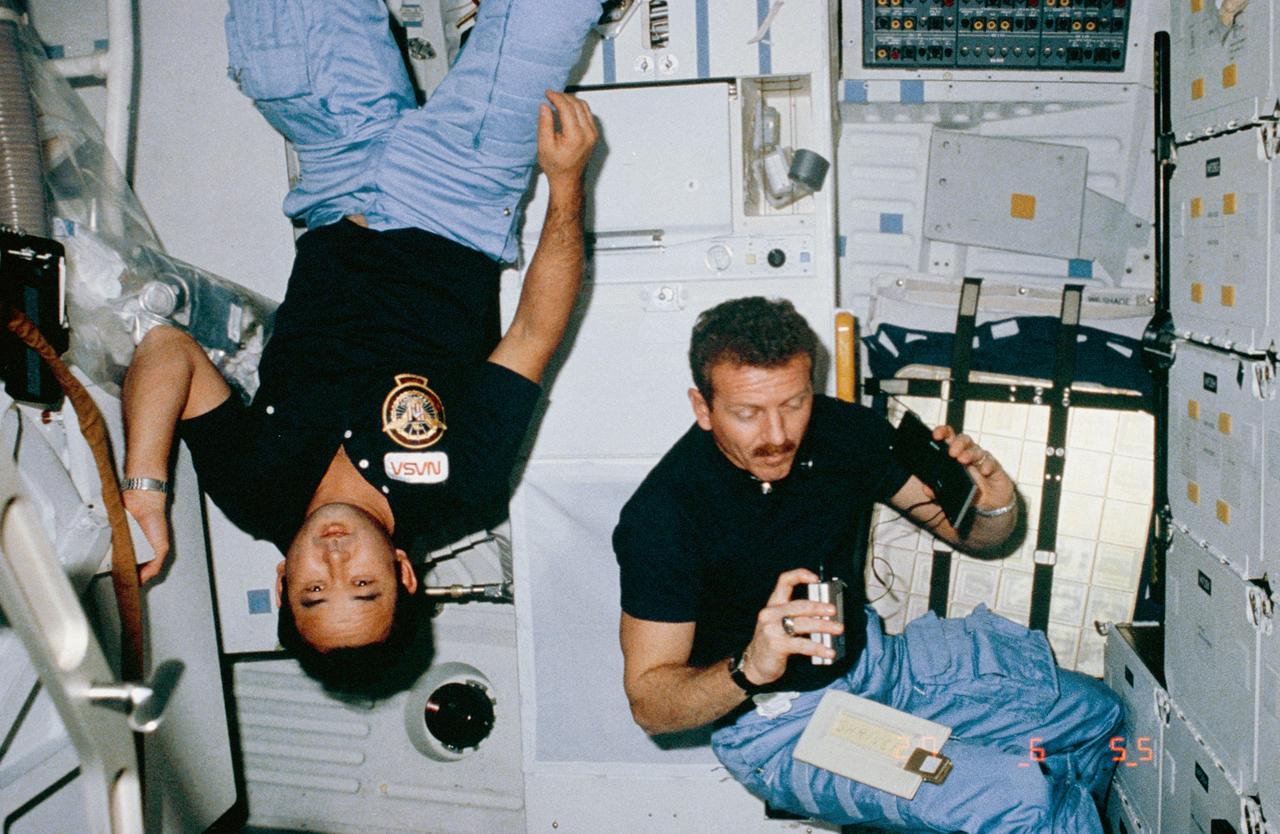
51C-08-017 (24-27 Jan 1985) --- Astronaut Ellison S. Onizuka, mission specialist, (left) turns 180 degrees near airlock hatch, while Loren J. Shriver, pilot, records verbal mission - pertinent notes. For orientation hold the picture with lockers on right.
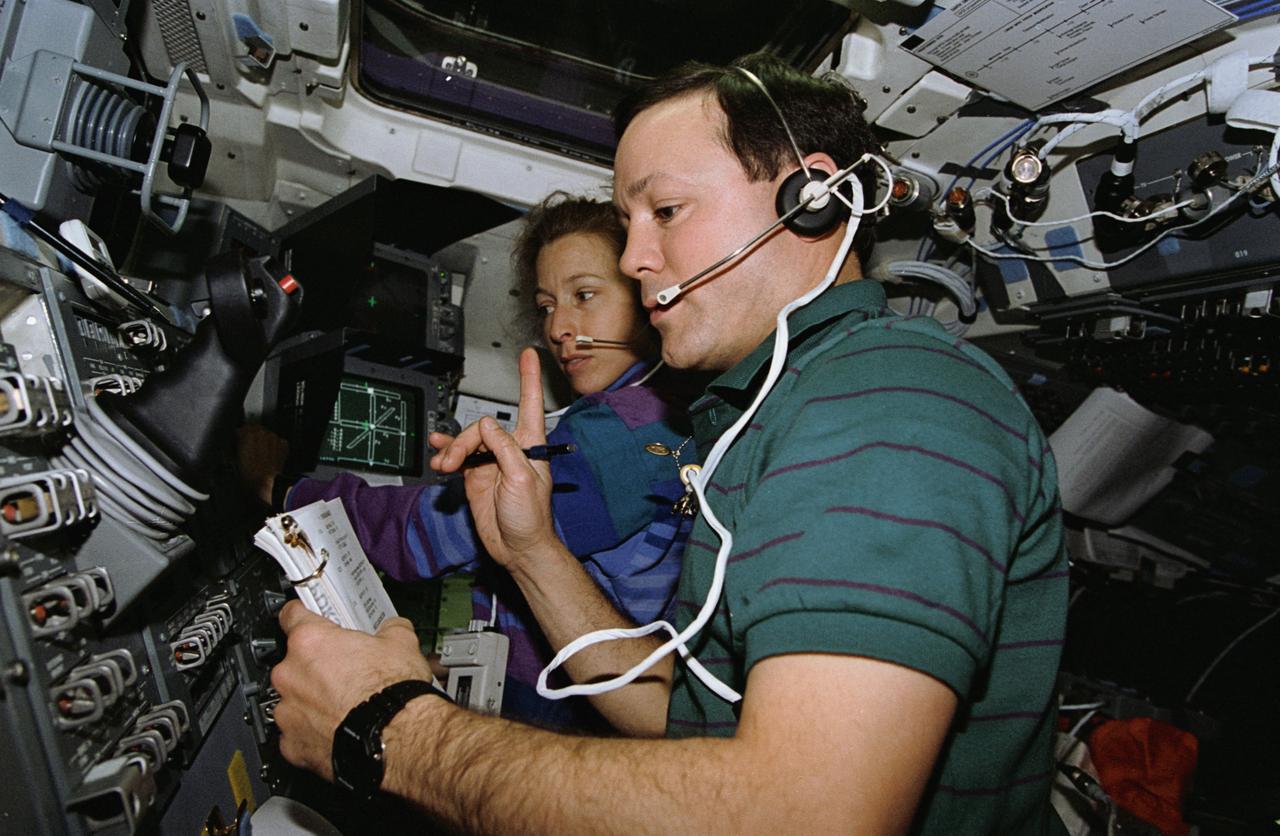
STS062-05-035 (4-18 March 1994) --- This 35mm frame, photographed on the aft flight deck of the earth-orbiting Space Shuttle Columbia, captures crew activity with the Dexterous End Effector (DEE) on the Remote Manipulator System (RMS). Astronauts Pierre J. Thuot and Marsha S. Ivins communicate with ground controllers during operations and observations with DEE. During the 14-day mission, three of the five STS-62 crewmembers took turns operating and observing the RMS in a series of one-hour sessions.
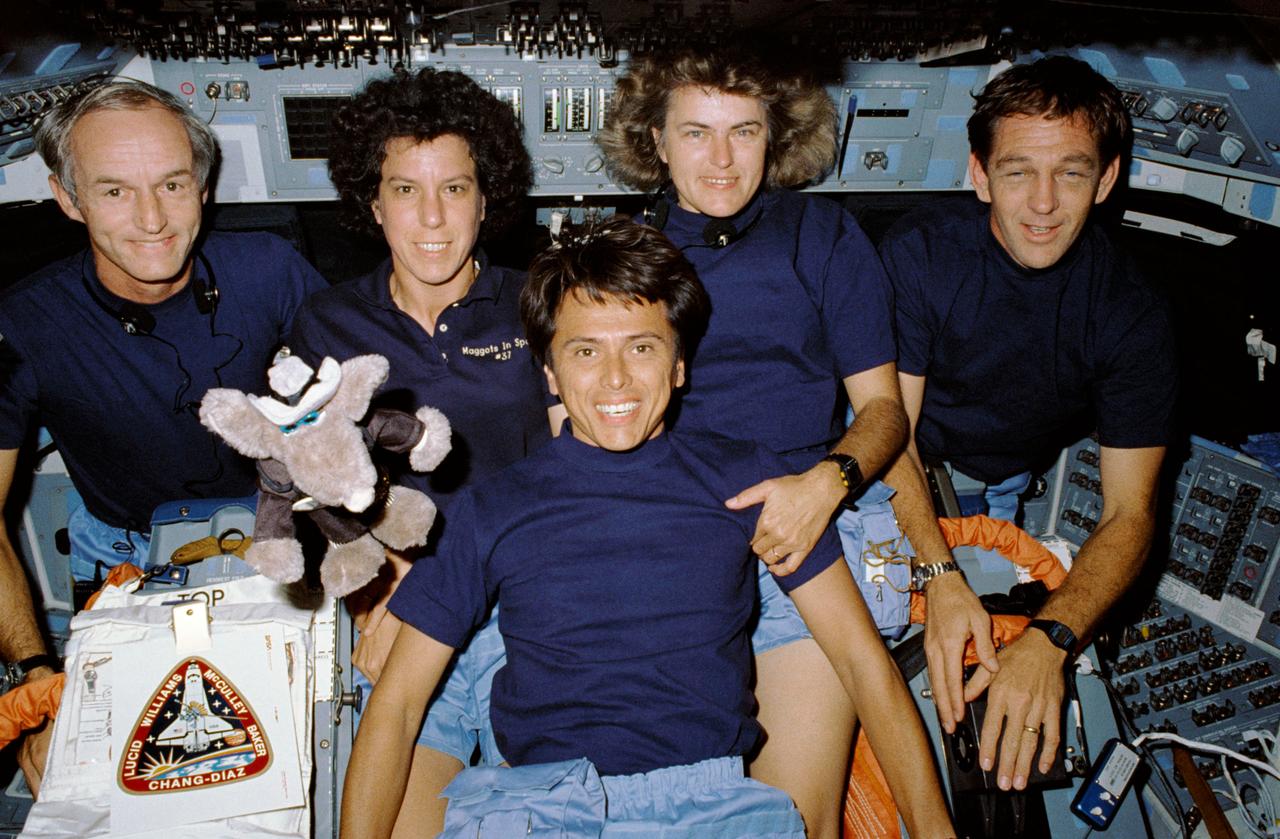
STS034-06-019 (18-23 Oct. 1989) --- The five astronaut crew members for NASA's STS-34 mission pose for an in-space crew "portrait," using a pre-set 35mm camera. Coincidentally, astronauts Donald E. Williams (left), commander, and Michael J. McCulley (right), pilot, are positioned at their respective stations of operation (except that they are turned 180 degrees) aboard the Earth-orbiting space shuttle Atlantis. They form "bookends" for the crew's three mission specialists -- Ellen S. Baker (second left), Shannon W. Lucid and Franklin R. Chang-Diaz.
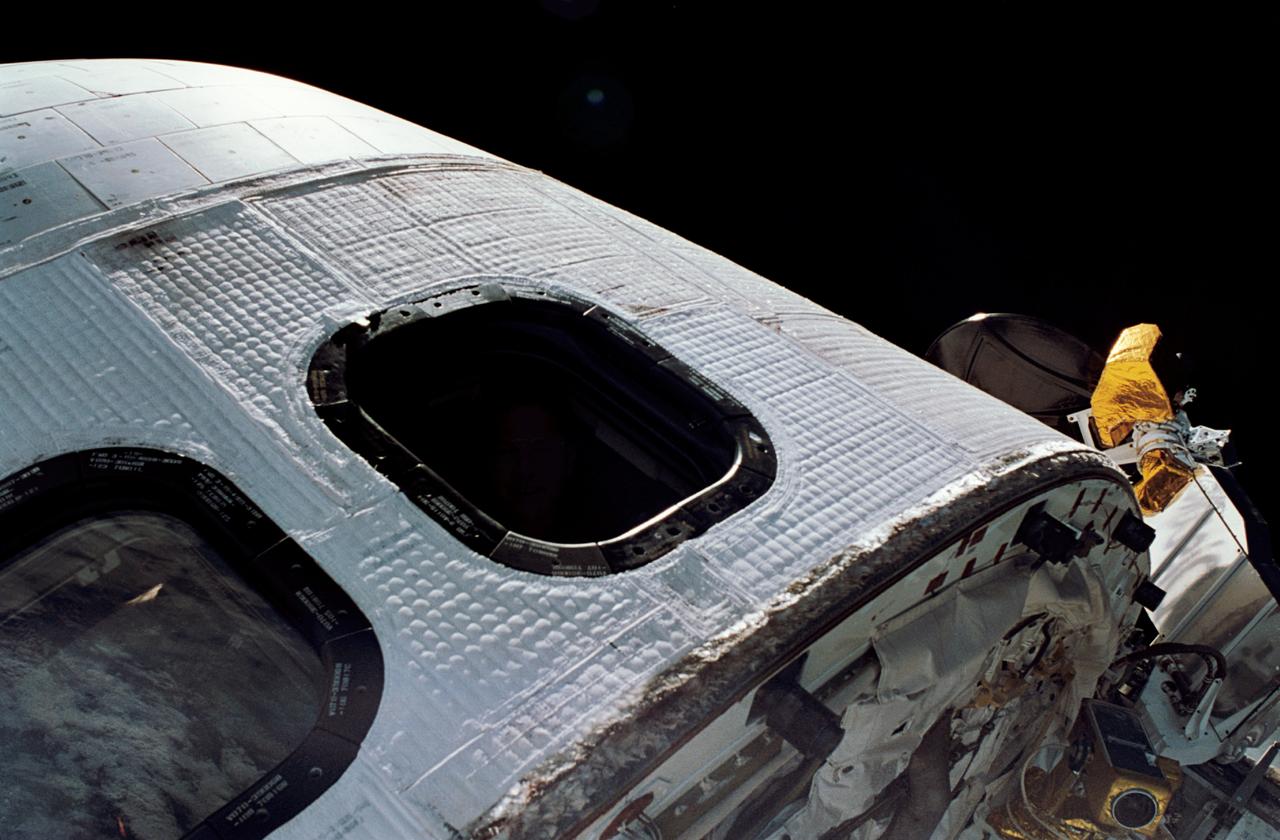
STS064-310-005 (16 Sept. 1994) --- Astronaut Richard N. Richards, STS-64 commander, looks through one of the space shuttle Discovery's overhead flight deck windows to view the Extravehicular Activity (EVA) activities of astronauts Carl J. Meade, who took this picture, and Mark C. Lee. Wearing spacesuits in and around the space shuttle Discovery's cargo bay, astronauts Meade and Lee took turns trying out the new EVA test hardware called Simplified Aid for EVA Rescue (SAFER). Photo credit: NASA or National Aeronautics and Space Administration
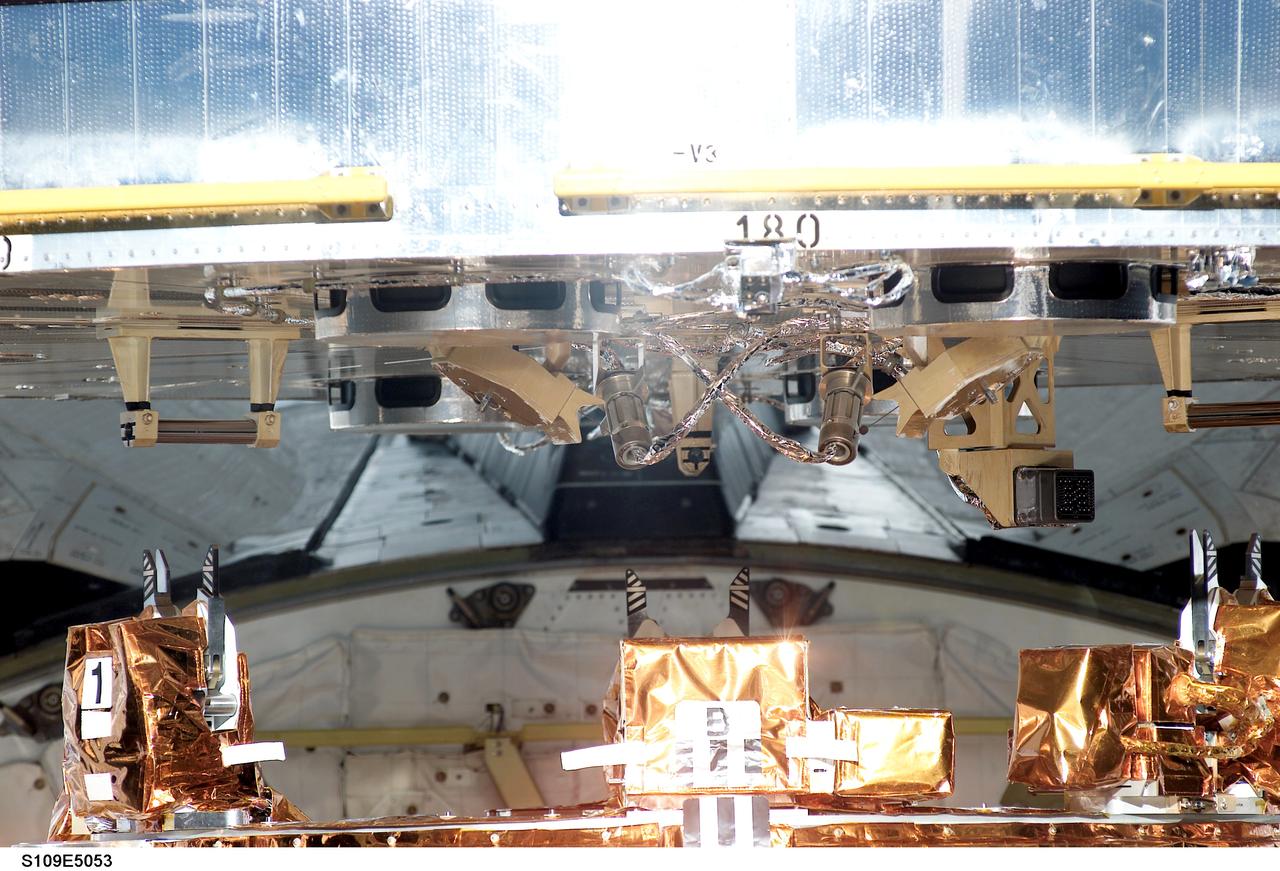
STS109-E-5053 (3 March 2002) --- The base of the Hubble Space Telescope is latched down on a special support structure in the cargo bay of the Space Shuttle Columbia. The bay's Flight Support System, as the structure (partially visible at bottom frame) is called, will hold the telescope for the next week, turning and tilting it as needed for the spacewalking work. Astronaut Nancy J. Currie, mission specialist, was in control of the Shuttle's remote manipulator system (RMS) robotic arm and astronaut Scott D. Altman, mission commander, was at the controls of the shuttle. The crew used a digital still camera to record a series of images documenting the fourth docking of a shuttle to the giant telescope during its tenure in space.
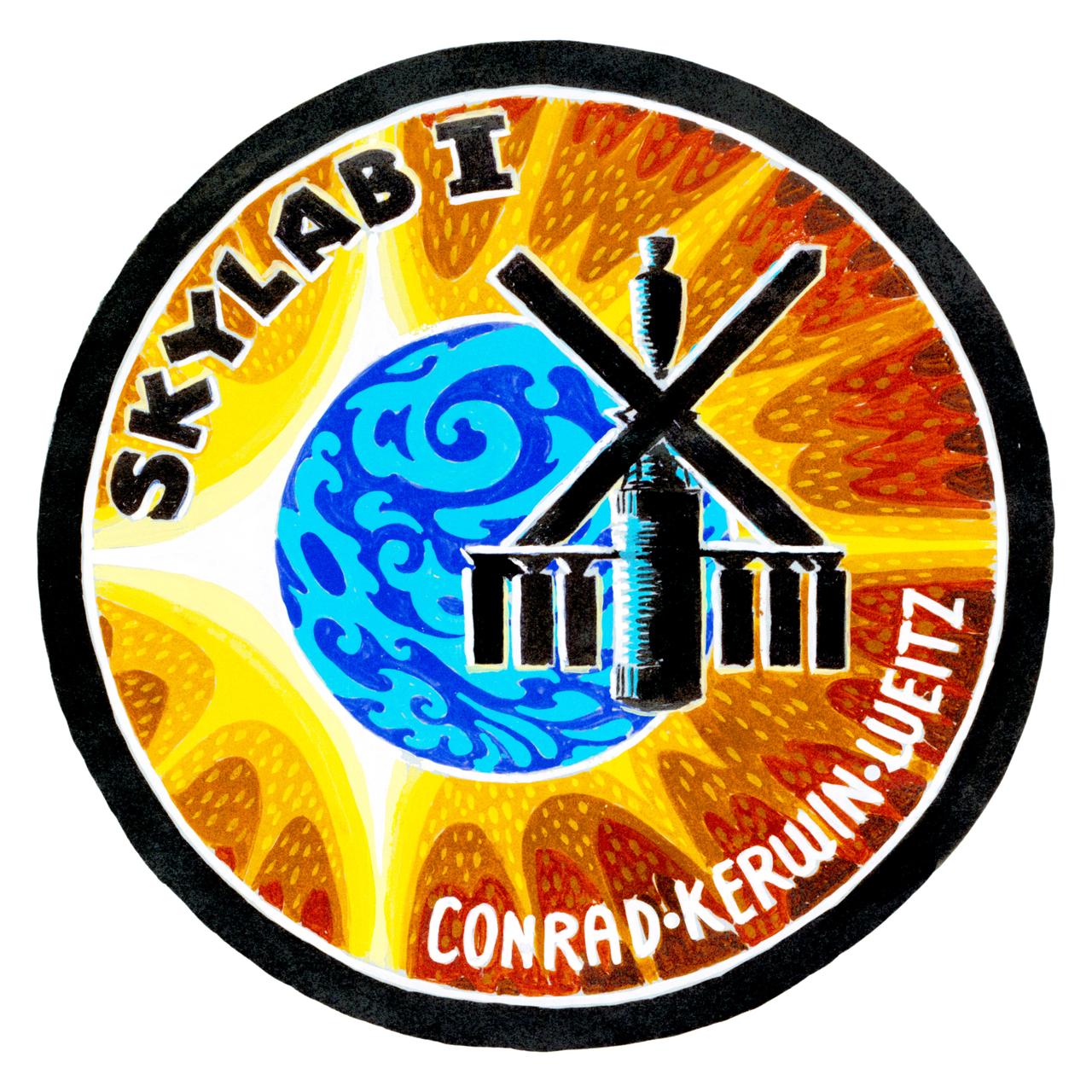
S72-52630 (February 1972) --- This is the emblem for the first manned Skylab mission. It will be a mission of up to 28 days. Skylab is an experimental space station consisting of a 100-ton laboratory complex in which medical, scientific and technological experiments will be performed in Earth orbit. The prime crew of this mission will be astronaut Charles Conrad Jr., commander; scientist-astronaut Joseph P. Kerwin, science pilot; and astronaut Paul J. Weits, pilot. The patch, designed by artist Kelly Freas, shows the Skylab silhouetted against the Earth's globe, which in turn is eclipsing the sun--showing the brilliant signet-ring pattern of the instant before the total eclipse. Photo credit: NASA
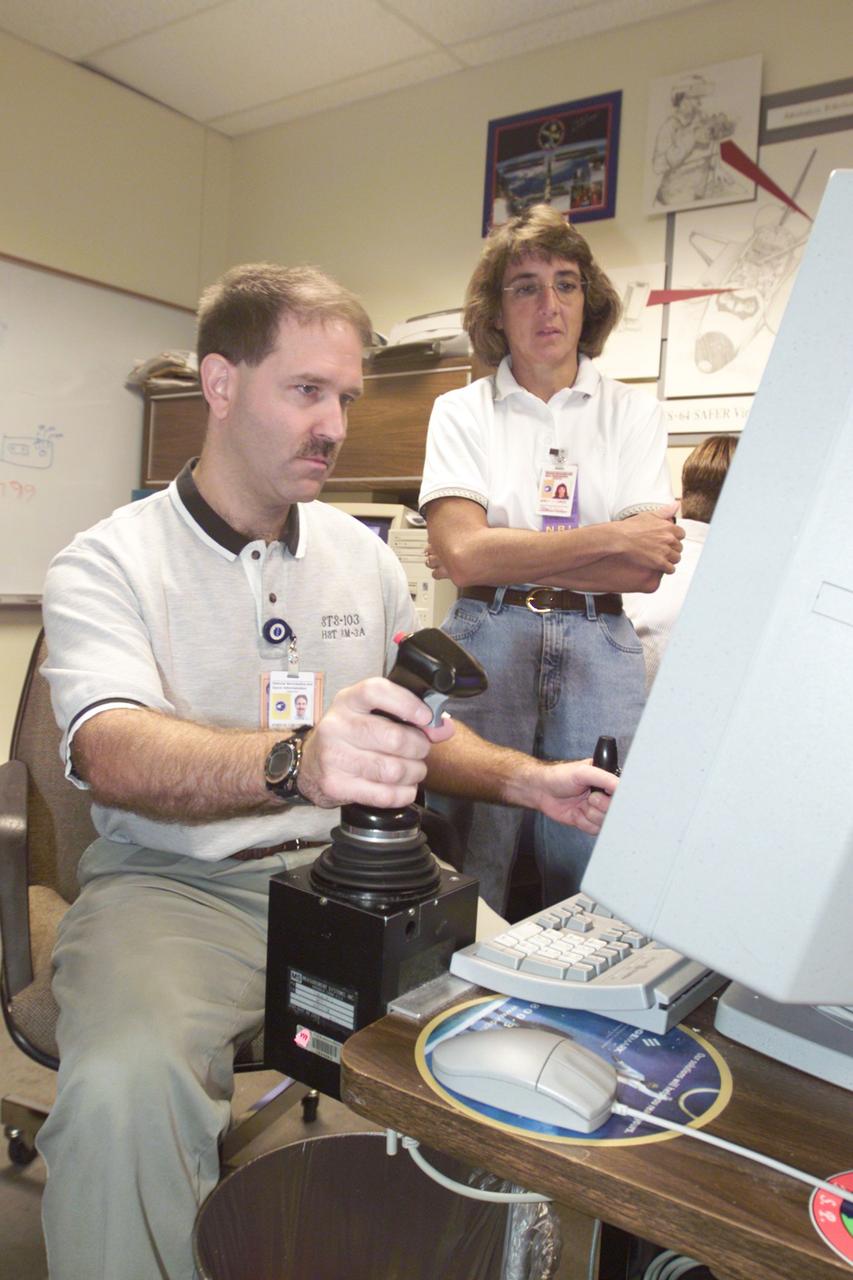
Astronauts John M. Grunsfeld (left), STS-109 payload commander, and Nancy J. Currie, mission specialist, use the virtual reality lab at Johnson Space Center to train for upcoming duties aboard the Space Shuttle Columbia. This type of computer interface paired with virtual reality training hardware and software helps to prepare the entire team to perform its duties for the fourth Hubble Space Telescope Servicing mission. The most familiar form of virtual reality technology is some form of headpiece, which fits over your eyes and displays a three dimensional computerized image of another place. Turn your head left and right, and you see what would be to your sides; turn around, and you see what might be sneaking up on you. An important part of the technology is some type of data glove that you use to propel yourself through the virtual world. Currently, the medical community is using the new technologies in four major ways: To see parts of the body more accurately, for study, to make better diagnosis of disease and to plan surgery in more detail; to obtain a more accurate picture of a procedure during surgery; to perform more types of surgery with the most noninvasive, accurate methods possible; and to model interactions among molecules at a molecular level.
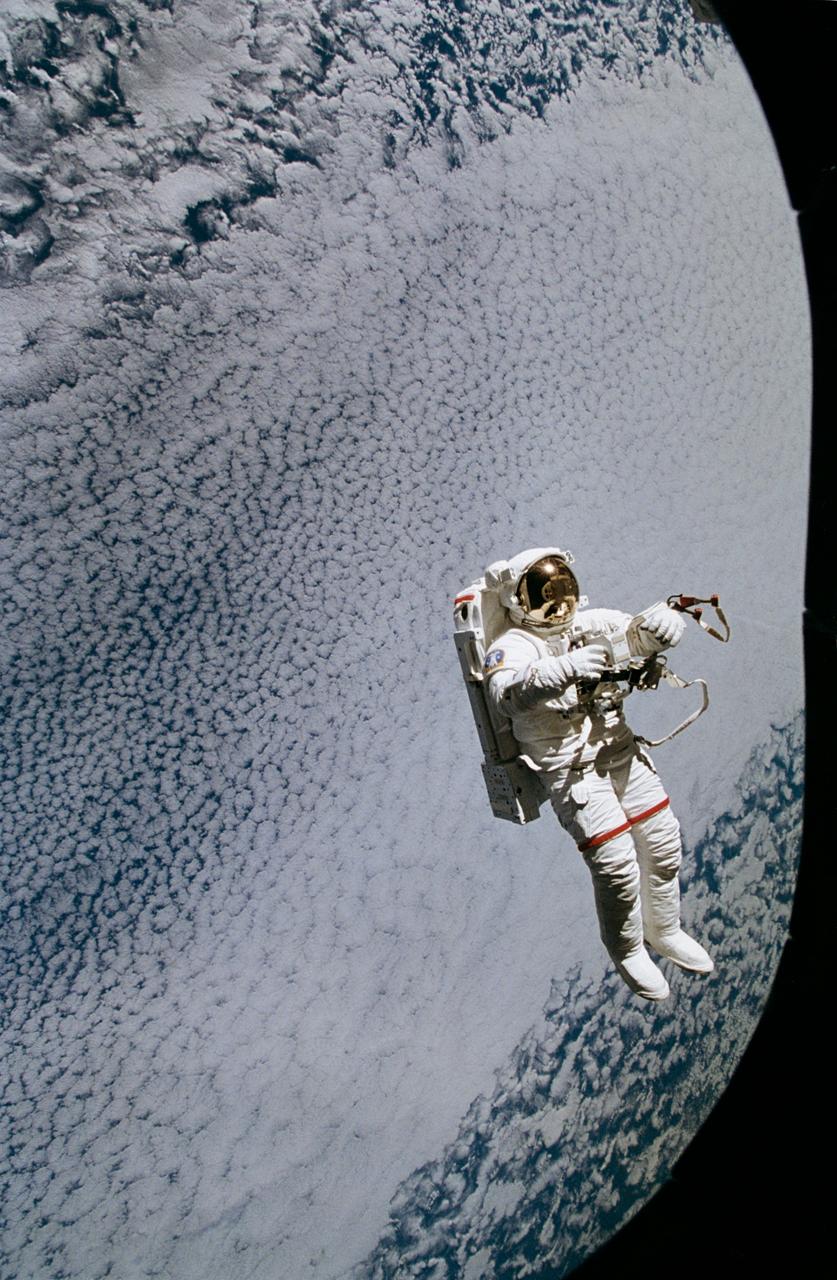
STS064-45-012 (16 Sept. 1994) --- Backdropped against a massive wall of white clouds 130 nautical miles below, astronaut Mark C. Lee floats freely as he tests the new Simplified Aid for EVA Rescue (SAFER) system. The image was exposed with a 35mm camera from the shirt-sleeve environment of the space shuttle Discovery. Astronauts Lee and Carl J. Meade took turns using the SAFER hardware during their shared Extravehicular Activity (EVA) on Sept. 16, 1994. The test of SAFER is the first phase of a larger SAFER program whose objectives are to establish a common set of requirements for both space shuttle and space station program needs, develop a flight demonstration of SAFER, validate system performance and, finally, develop a production version of SAFER for the shuttle and station programs. Photo credit: NASA
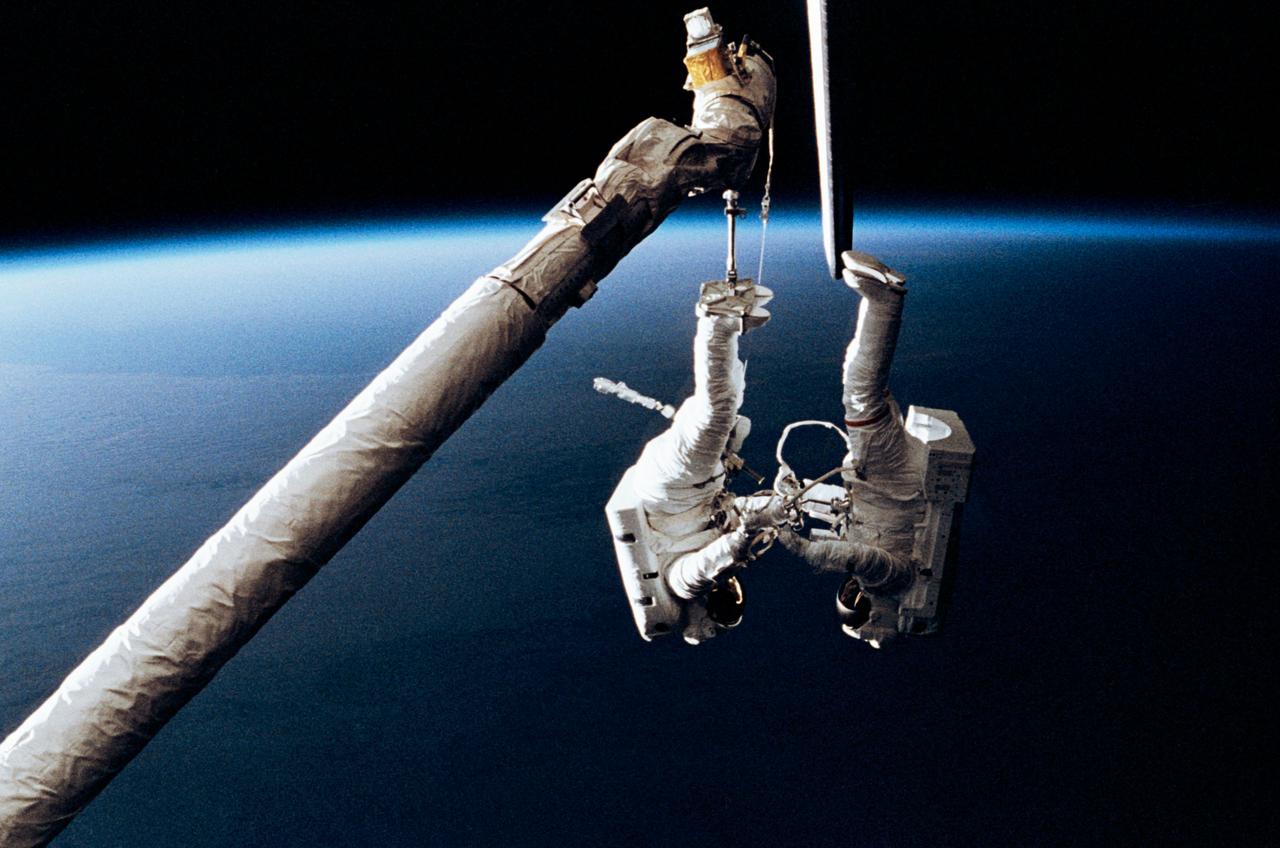
STS064-60-012 (16 Sept. 1994) --- Backdropped against the blackness of space and Earth's horizon 130 nautical miles below, astronaut Mark C. Lee (right) floats freely as he continues to test the new Simplified Aid for EVA Rescue (SAFER) system while converging with astronaut Carl J. Meade. Meade's feet are anchored to the space shuttle Discovery's remote manipulator system arm. The image was exposed with a 35mm camera from the shirt-sleeve environment of the space shuttle. Astronauts Lee and took turns using the SAFER hardware during their shared Extravehicular Activity (EVA) on Sept. 16, 1994. The test of SAFER is the first phase of a larger SAFER program whose objectives are to establish a common set of requirements for both space shuttle and space station program needs, develop a flight demonstration of SAFER, validate system performance and, finally, develop a production version of SAFER for the shuttle and station programs. Photo credit: NASA

STS064-16-031 (19-20 Sept. 1994) --- On the space shuttle Discovery's middeck, astronaut Carl J. Meade checks a hose associated with the new Simplified Aid for EVA Rescue (SAFER) system prior to a Extravehicular Activity (EVA) that tested SAFER. On the Sept. 16, 1994 EVA, astronauts Meade and Mark C. Lee took turns using the SAFER hardware. The test of SAFER is the first phase of a larger SAFER program whose objectives are to establish a common set of requirements for both space shuttle and space station program needs, develop a flight demonstration of SAFER, validate system performance and, finally, develop a production version of SAFER for the shuttle and station programs. Photo credit: NASA or National Aeronautics and Space Administration

STS064-23-037 (16 Sept. 1994) --- Astronauts Mark C. Lee (left) and Carl J. Meade were photographed in the midst of 15-minute pre-breathe exercise in preparation for their Extravehicular Activity (EVA) of Sept. 16, 1994. On that day the two performed an in-space rehearsal or demonstration of a contingency rescue using the never-before flown Simplified Aid for EVA Rescue (SAFER) system some 130 nautical miles above Earth. During the EVA the two STS-64 mission specialists took turns using the SAFER hardware. The test was the first phase of a larger SAFER program leading finally to the development of a production version for future shuttle and space station applications. Photo credit: NASA or National Aeronautics and Space Administration
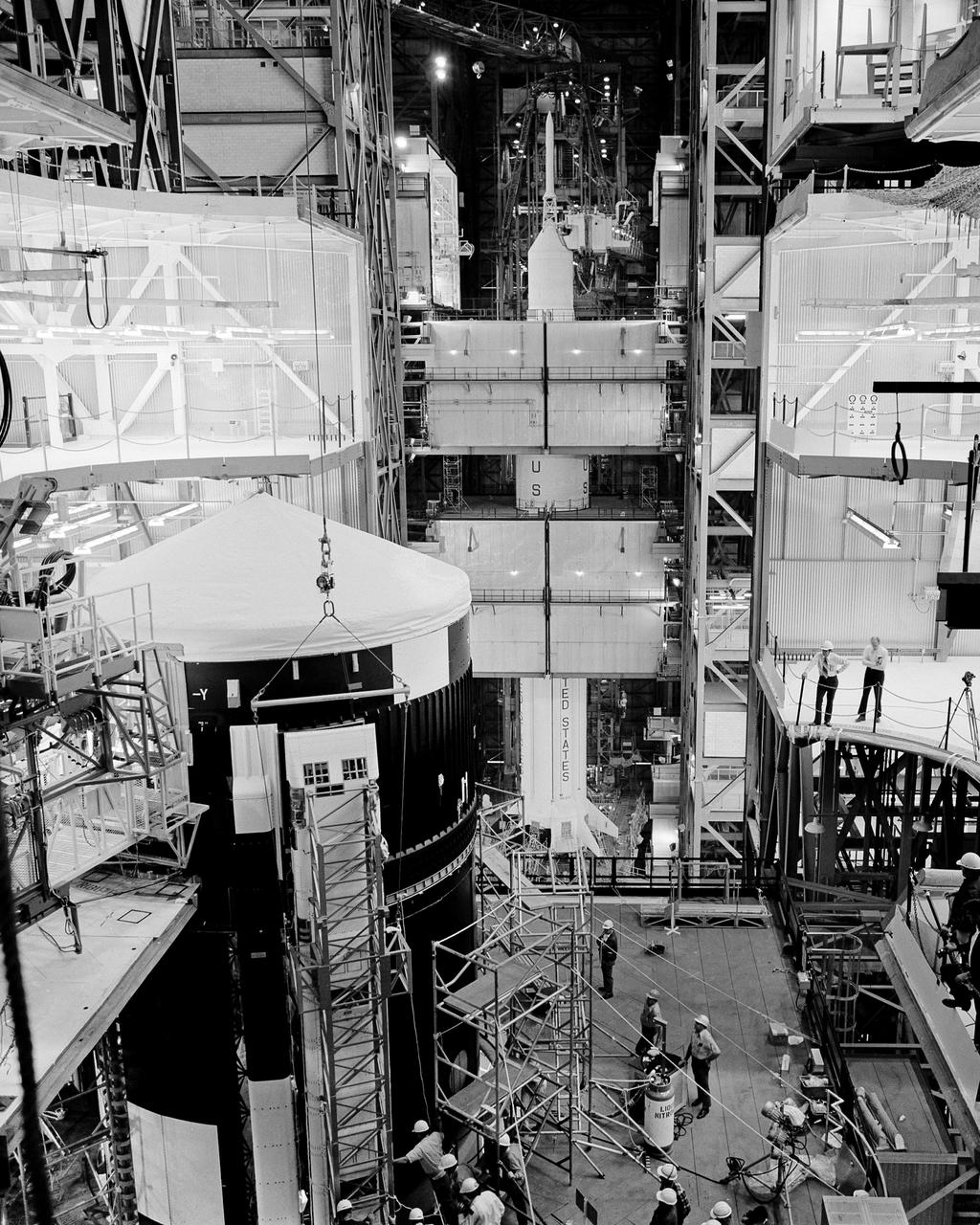
CAPE KENNEDY, Fla. -- At the Kennedy Space Center in Florida, one of Skylab 1's solar cell arrays is installed on the orbital space station in High Bay 2 of the Vehicle Assembly Building. Skylab 2 launch vehicle is in high bay 1, visible in the background. Each of the two solar cell arrays on the space station that will be deployed in orbit is designed to provide 10,500 watts of power. All power needed to operate the station and the Apollo Telescope mount will be taken from the arrays. Each array will have almost 1,177 square feet of surface area to turn sunlight into electrical power. Skylab 1 is schedule for launch April 30, 1973 and Skylab 2, carrying the astronauts Charles Conrad Jr., Dr. Joseph P. Kerwin and Paul J. Weitz to dock with the space station and enter it to live and work for 28 days, will be launched a day later. Photo Credit: NASA
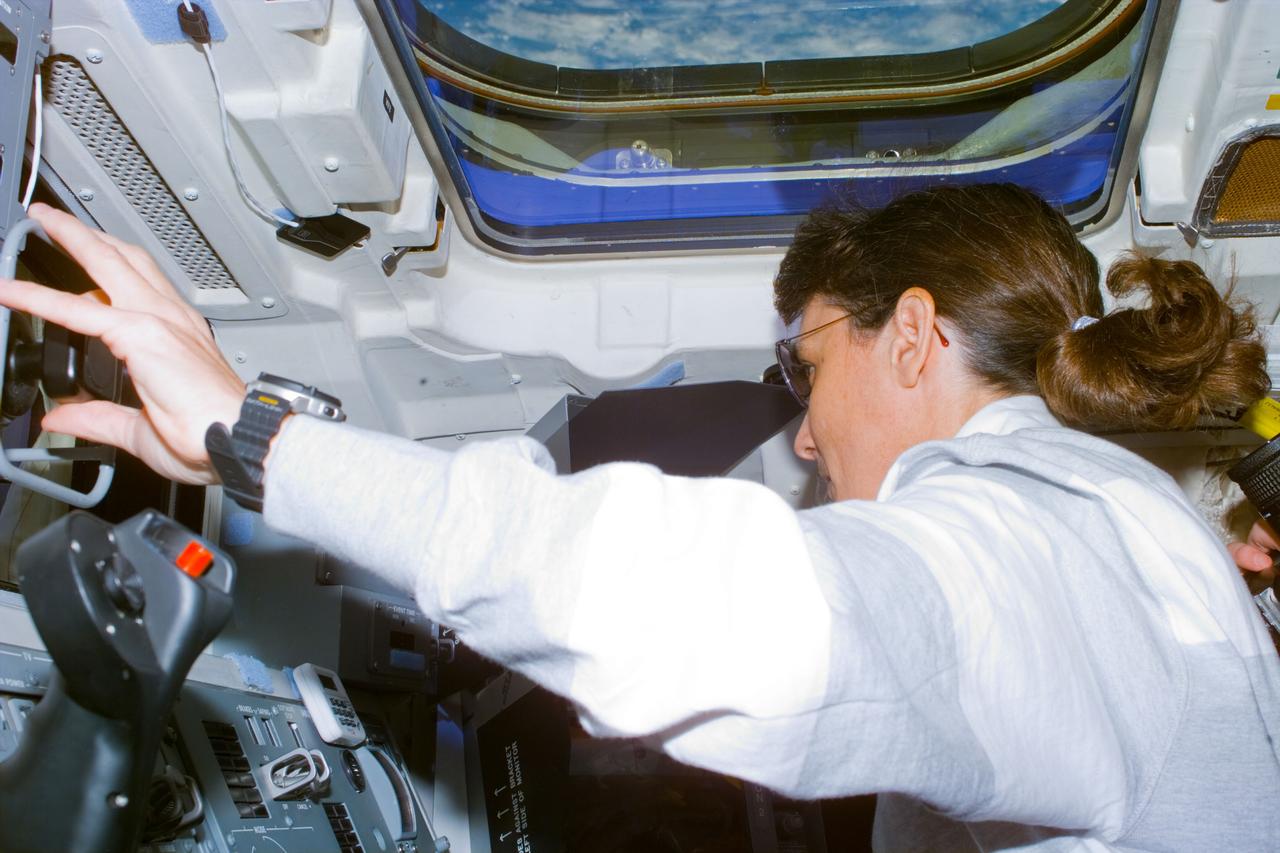
S88-E-5030 (12-05-98) --- Astronaut Nancy J. Currie gently mated the 12.8-ton Unity connecting module to Endeavour's docking system late afternoon of Dec. 5, successfully completing the first task in assembling the new International Space Station. Deftly manipulating the shuttle's 50-foot-long robot arm, Currie placed Unity just inches above the extended outer ring on Endeavour's docking mechanism, enabling astronaut Robert D. Cabana, mission commander, to fire downward maneuvering jets, locking the shuttle's docking system to one of two Pressurized Mating Adapters (PMA) attached to Unity. Turning her head to her right, Currie is using one of the TV monitors on the aft flight deck to assist in the precise maneuver. The photo was taken with an electronic still camera (ESC) at 22:31:08 GMT, Dec. 5.
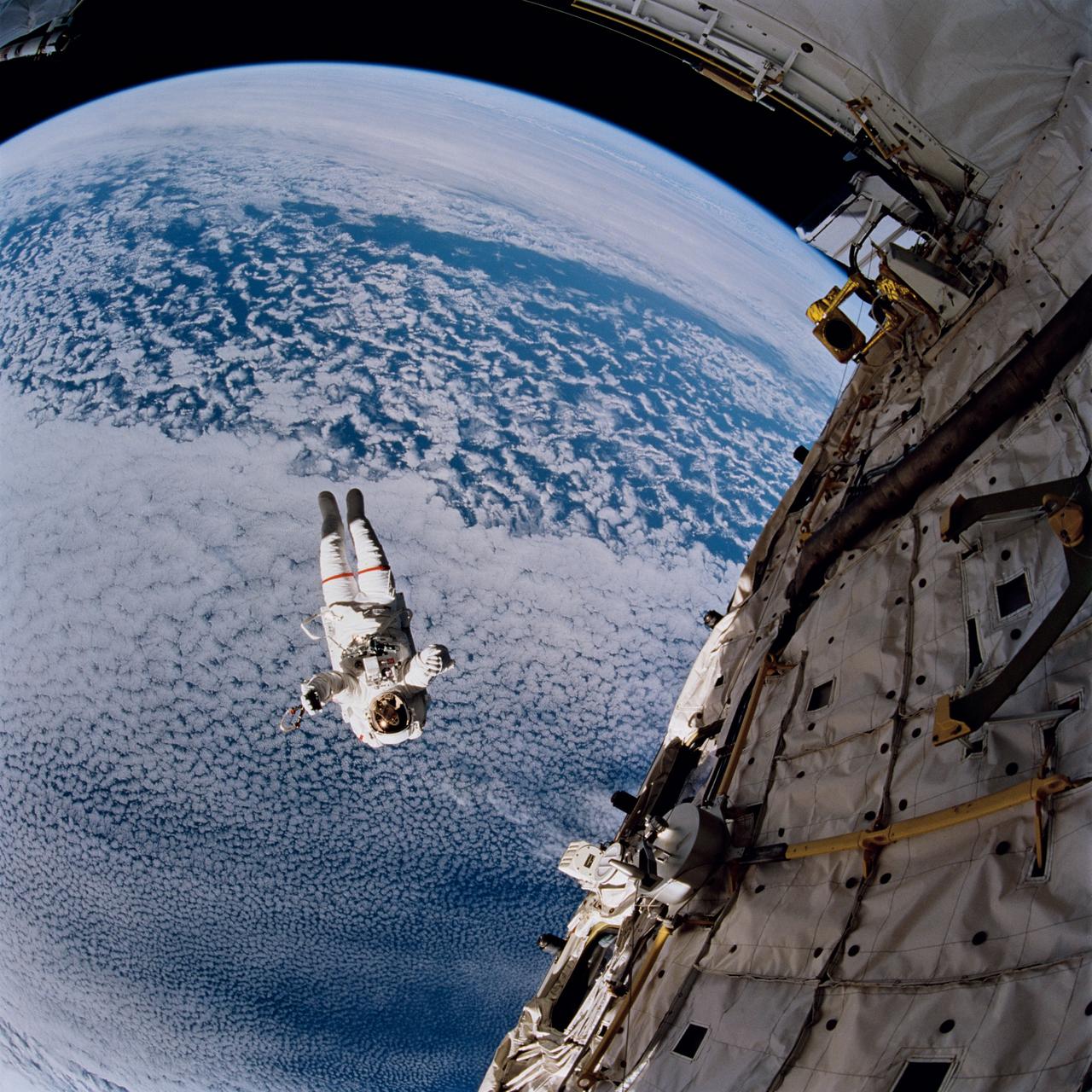
STS064-217-008 (16 Sept. 1994) --- Backdropped against the blue and white Earth, 130 nautical miles below, astronaut Mark C. Lee tests the new Simplified Aid for EVA Rescue (SAFER) system. The scene was captured with a 70mm handheld Hasselblad camera with a 30mm lens attached. Astronauts Lee and Carl J. Meade took turns using the SAFER hardware during their shared Extravehicular Activity (EVA) of Sept. 16, 1994. The test of SAFER is the first phase of a larger SAFER program whose objectives are to establish a common set of requirements for both space shuttle and space station program needs, develop a flight demonstration of SAFER, validate system performance and, finally, develop a production version of SAFER for the shuttle and station programs. Photo credit: NASA or National Aeronautics and Space Administration
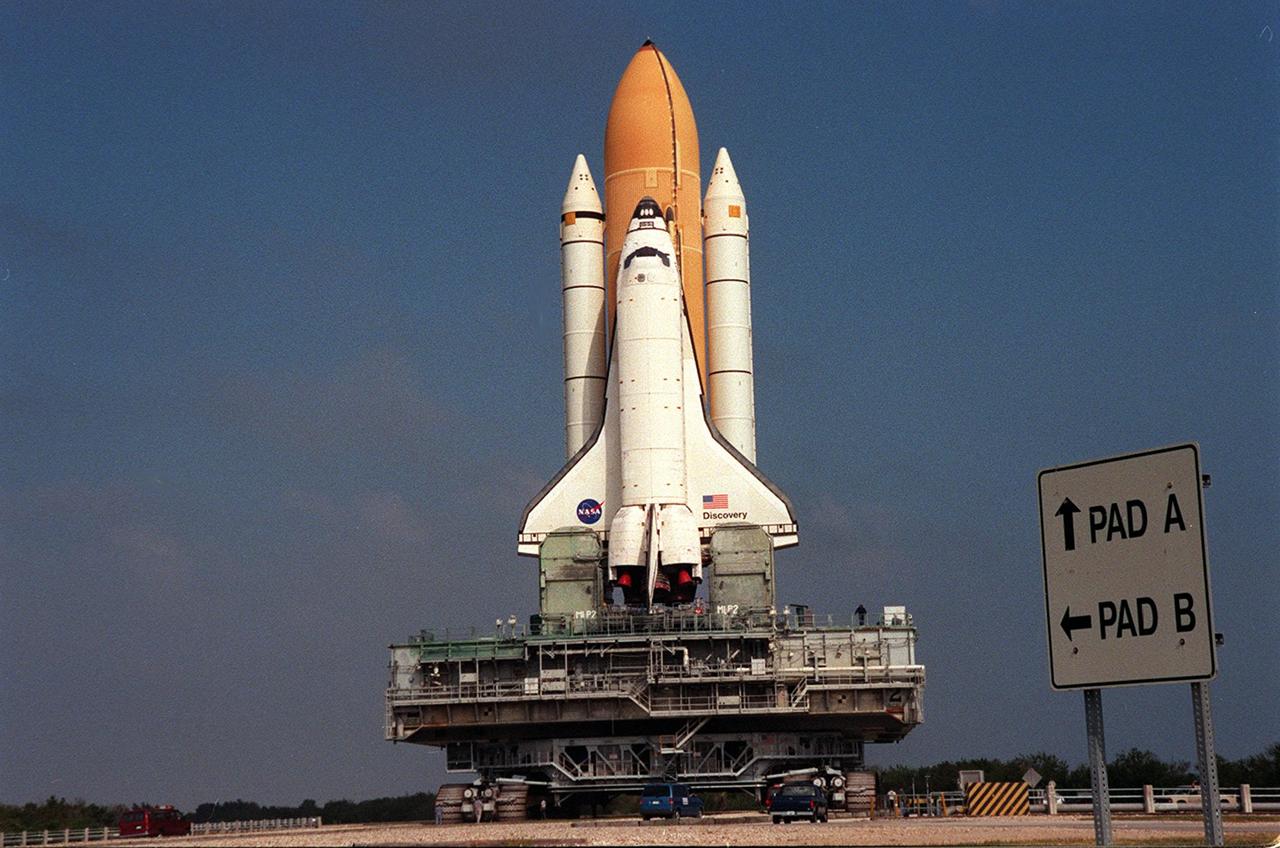
KENNEDY SPACE CENTER, Fla. -- Space Shuttle Discovery makes the turn toward Launch Pad 39B on its trek atop the mobile launcher platform and crawler transporter. Once at the pad, the orbiter, external tank and solid rocket boosters will undergo final preparations for the STS-103 launch targeted for Dec. 6, 1999, at 2:37 a.m. EST. The mission is a "call-up" due to the need to replace and repair portions of the Hubble Space Telescope. Although Hubble is operating normally and conducting its scientific observations, only three of its six gyroscopes are working properly. Four EVA's are planned to make the necessary repairs and replacements on the telescope. The STS-103 crew members are Commander Curtis L. Brown Jr., Pilot Scott J. Kelly, Steven L. Smith, C. Michael Foale (Ph.D.), John M. Grunsfeld (Ph.D.), and Claude Nicollier of Switzerland and Jean-François Clervoy of France, both with the European Space Agency.
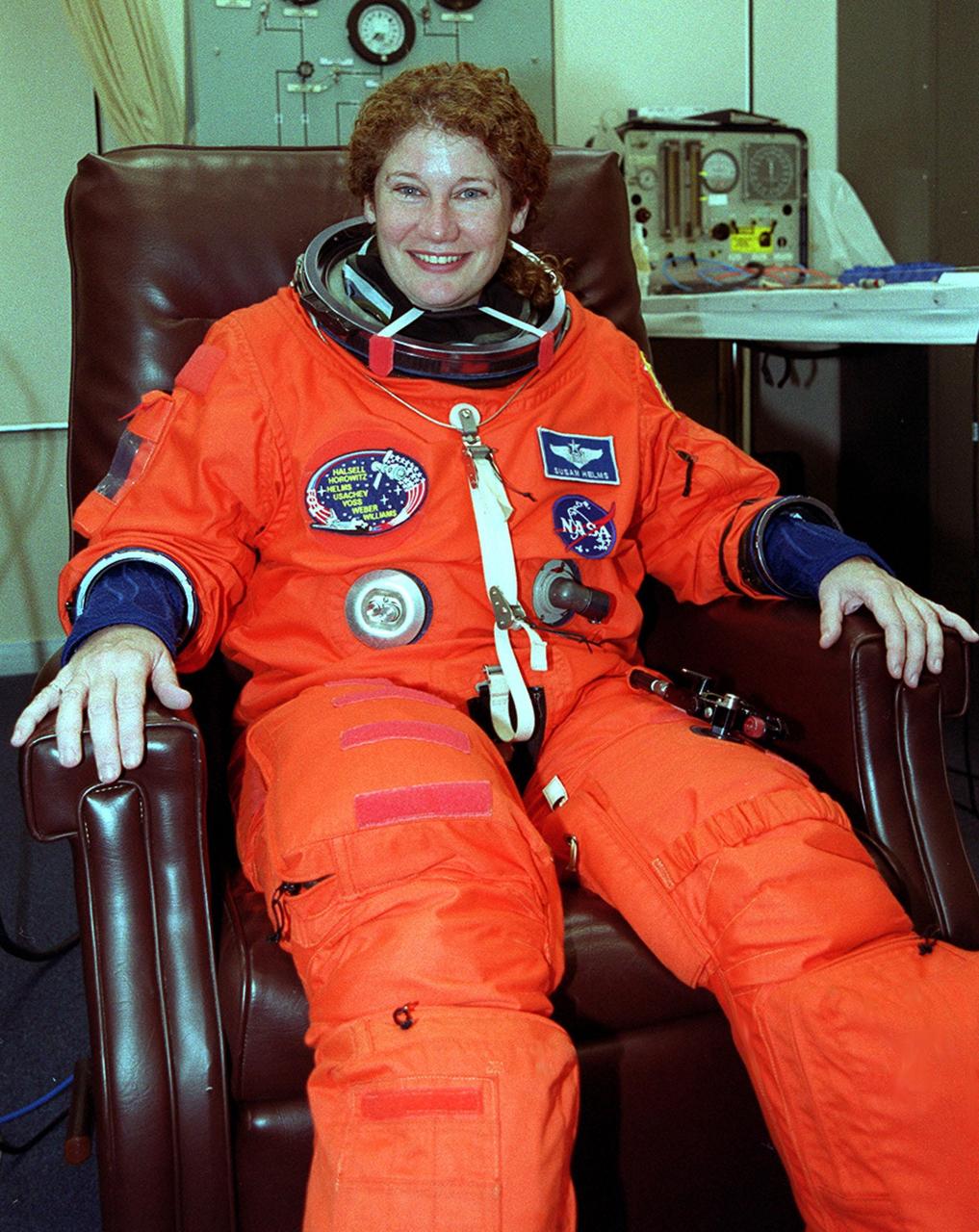
During suitup in the Operations and Checkout Building, STS-101 Mission Specialist Susan J. Helms waits her turn. She and the rest of the crew will be heading to Launch Pad 39A for the fourth attempt at launch of Space Shuttle Atlantis. The mission will take the crew to the International Space Station to deliver logistics and supplies and to prepare the Station for the arrival of the Zvezda Service Module, expected to be launched by Russia in July 2000. Also, the crew will conduct one space walk and will reboost the space station from 230 statute miles to 250 statute miles. This will be the third assembly flight to the Space Station. Liftoff of Space Shuttle Atlantis for the 10-day mission is scheduled for about 6:11 a.m. EDT from Launch Pad 39A. Landing is targeted for May 29 at 2:19 a.m. EDT
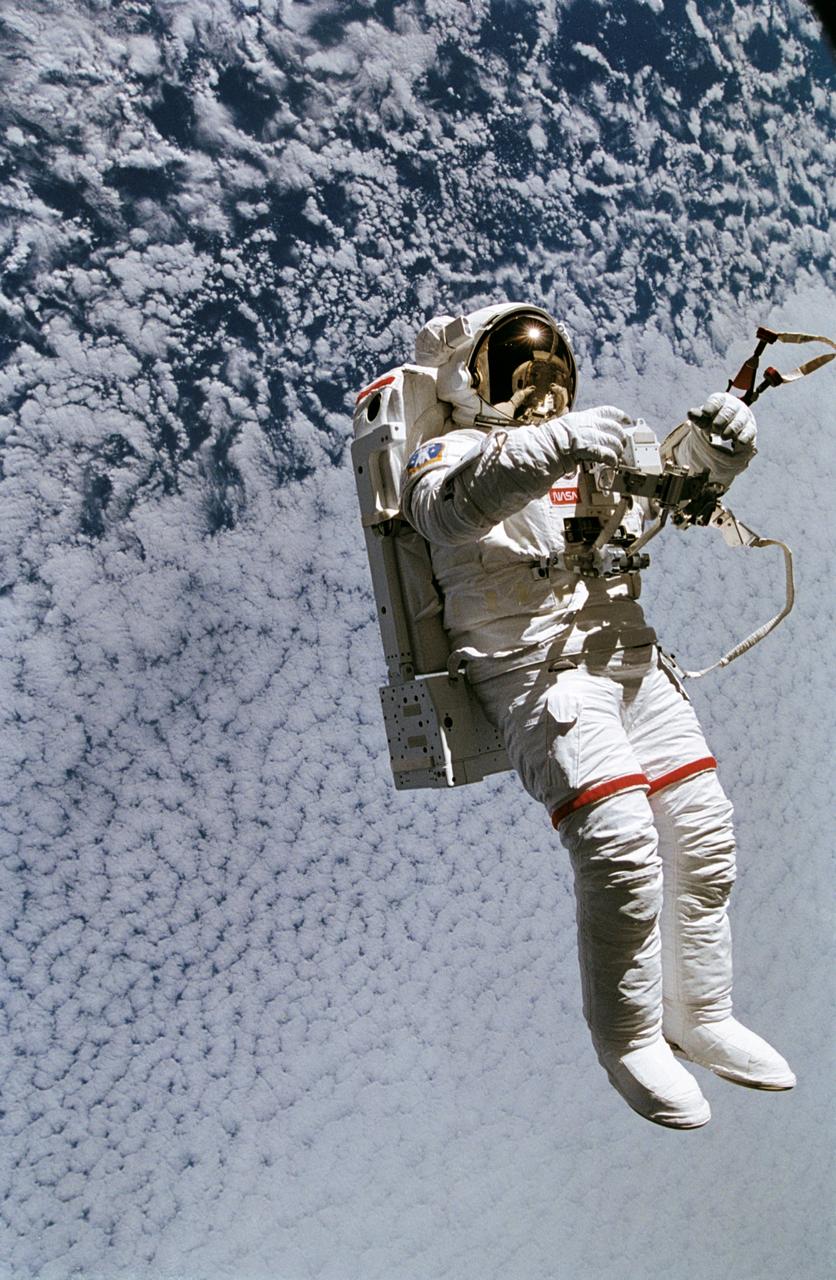
STS064-45-014 (16 Sept. 1994) --- Backdropped against a massive wall of white clouds 130 nautical miles below, astronaut Mark C. Lee floats freely as he tests the new Simplified Aid for EVA Rescue (SAFER) system. The image was exposed with a 35mm camera from the shirt-sleeve environment of the space shuttle Discovery. Astronauts Lee and Carl J. Meade took turns using the SAFER hardware during their shared Extravehicular Activity (EVA) on Sept. 16, 1994. The test of SAFER is the first phase of a larger SAFER program whose objectives are to establish a common set of requirements for both space shuttle and space station program needs, develop a flight demonstration of SAFER, validate system performance and, finally, develop a production version of SAFER for the shuttle and station programs. Photo credit: NASA or National Aeronautics and Space Administration
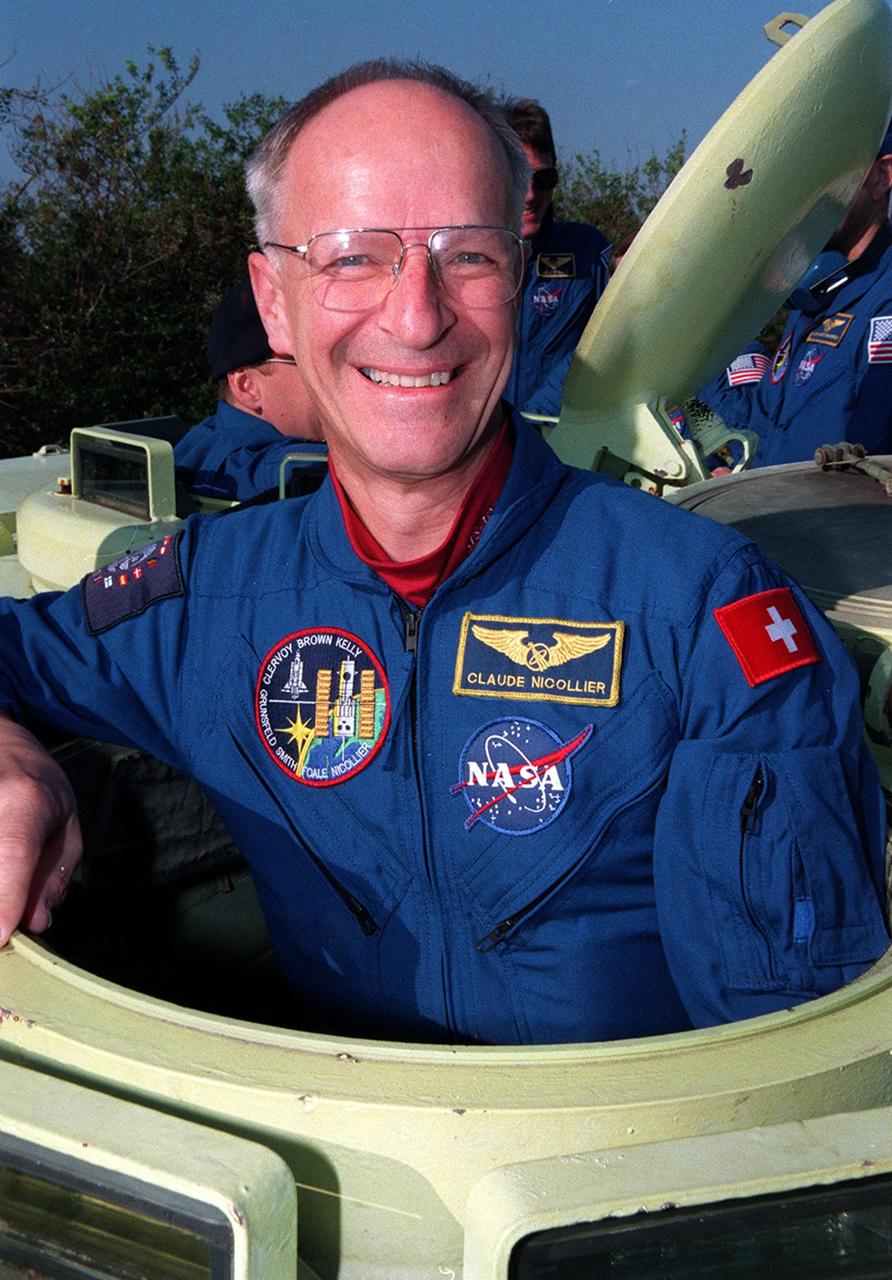
STS-103 Mission Specialist Claude Nicollier of Switzerland, who is with the European Space Agency, takes his turn at the helm of a small armored personnel carrier that is part of emergency egress training during Terminal Countdown Demonstration Test (TCDT) activities. The tracked vehicle could be used by the crew in the event of an emergency at the pad during which the crew must make a quick exit from the area. The TCDT also provides simulated countdown exercises and opportunities to inspect the mission payloads in the orbiter's payload bay. STS-103 is a "call-up" mission due to the need to replace and repair portions of the Hubble Space Telescope. Four EVA's are planned to make the necessary repairs and replacements on the telescope. The other STS-103 crew members are Commander Curtis L. Brown Jr., Pilot Scott J. Kelly, and Mission Specialists Steven L. Smith, C. Michael Foale (Ph.D.), John M. Grunsfeld (Ph.D.), and Jean-François Clervoy of France, also with the European Space Agency. The mission is targeted for launch Dec. 6 at 2:37 a.m. EST
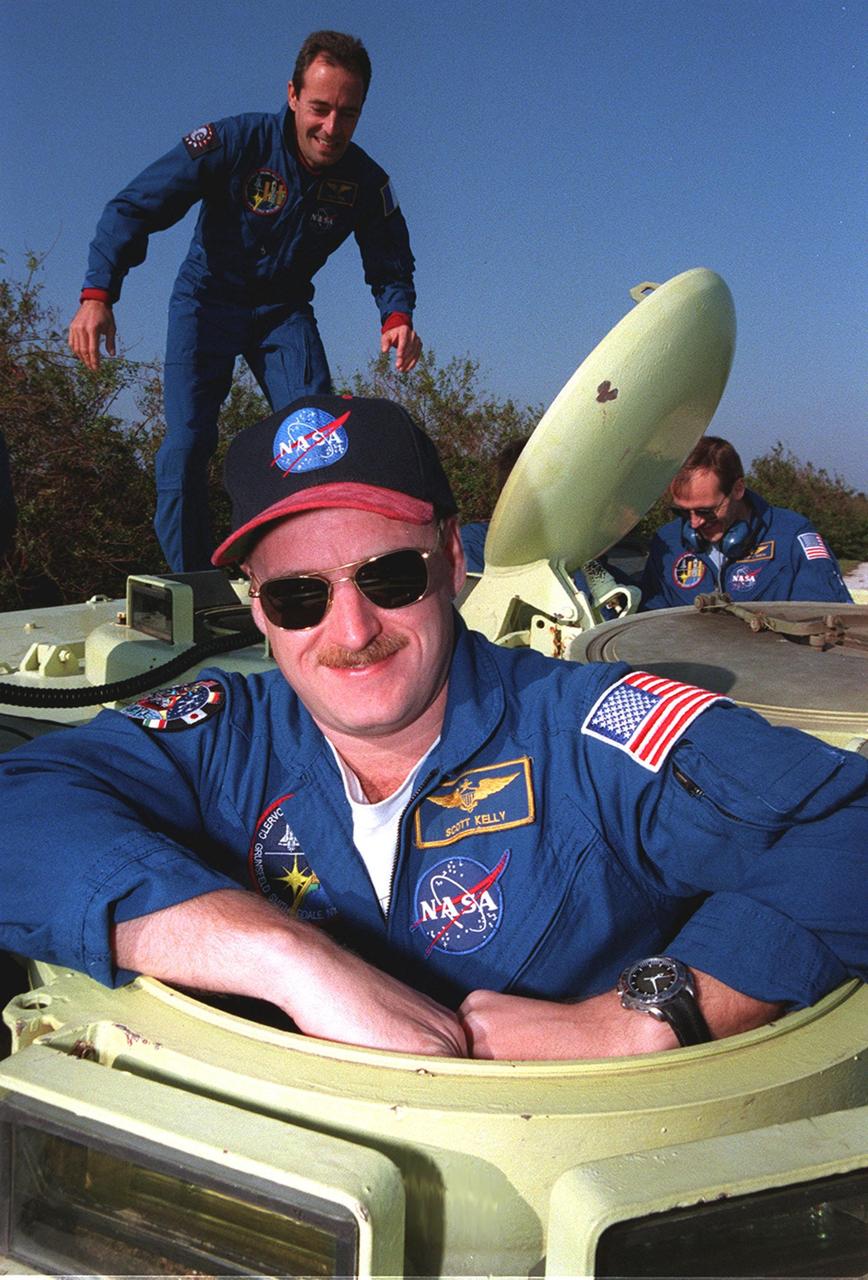
STS-103 Pilot Scott J. Kelly is ready to take his turn at driving a small armored personnel carrier that is part of emergency egress training during Terminal Countdown Demonstration Test (TCDT) activities. Behind him (left) is Mission Specialist Jean-François Clervoy of France, who is with the European Space Agency. At right is Mission Specialist Steven L. Smith. The tracked vehicle could be used by the crew in the event of an emergency at the pad during which the crew must make a quick exit from the area. The TCDT also provides simulated countdown exercises and opportunities to inspect the mission payloads in the orbiter's payload bay. STS-103 is a "call-up" mission due to the need to replace and repair portions of the Hubble Space Telescope. Four EVA's are planned to make the necessary repairs and replacements on the telescope. The other STS-103 crew members are Commander Curtis L. Brown Jr. and Mission Specialists C. Michael Foale (Ph.D.), John M. Grunsfeld (Ph.D.), plus Claude Nicollier of Switzerland, who also is with the European Space Agency. The mission is targeted for launch Dec. 6 at 2:37 a.m. EST
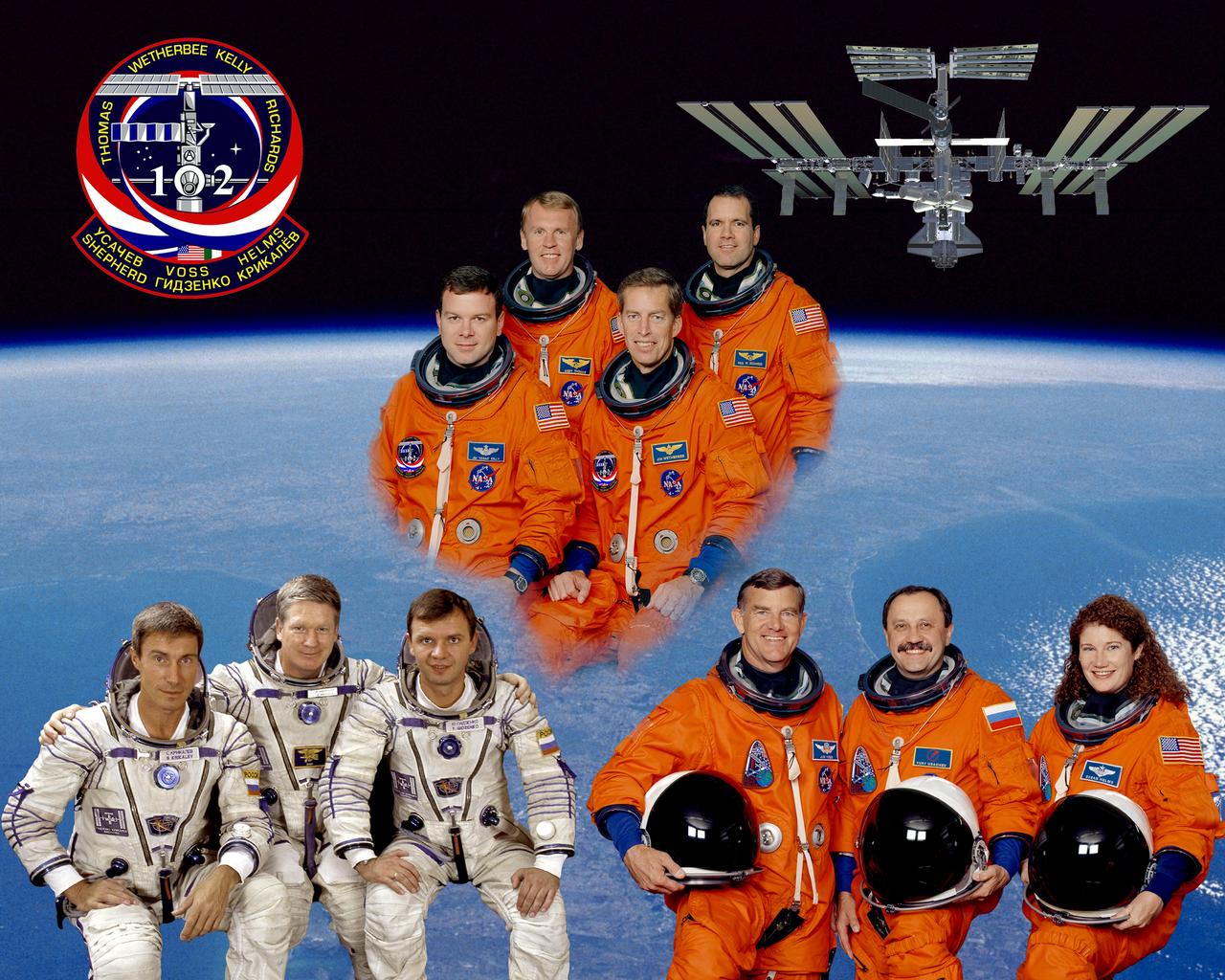
STS102-S-002 (February 2001)--- With the full-time occupancy of the International Space Station (ISS), Space Transportation System crew portraits have taken on a new look. These ten astronauts and cosmonauts represent the base STS-102 space travelers, as well as the crew members for the station crews switching out turns aboard the outpost. In the top group are, from the left, astronauts James M. Kelly, pilot; Andrew S.W. Thomas, mission specialist; James D. Wetherbee, mission commander; and Paul W. Richards, mission specialist. The bottom left grouping is the Expedition One crew, which includes, from left, cosmonaut Sergei K. Krikalev, flight engineer; astronaut William M. (Bill) Shepherd, commander; and cosmonaut Yuri P. Gidzenko, Soyuz commander. At bottom right is crew who will replace Shepherd's crew aboard the station, from the left, astronaut James S. Voss; cosmonaut Yury V. Usachev, Expedition Two commander; and astronaut Susan J. Helms. Usachev, Krikalev and Gidzenko all represent Rosaviakosmos.
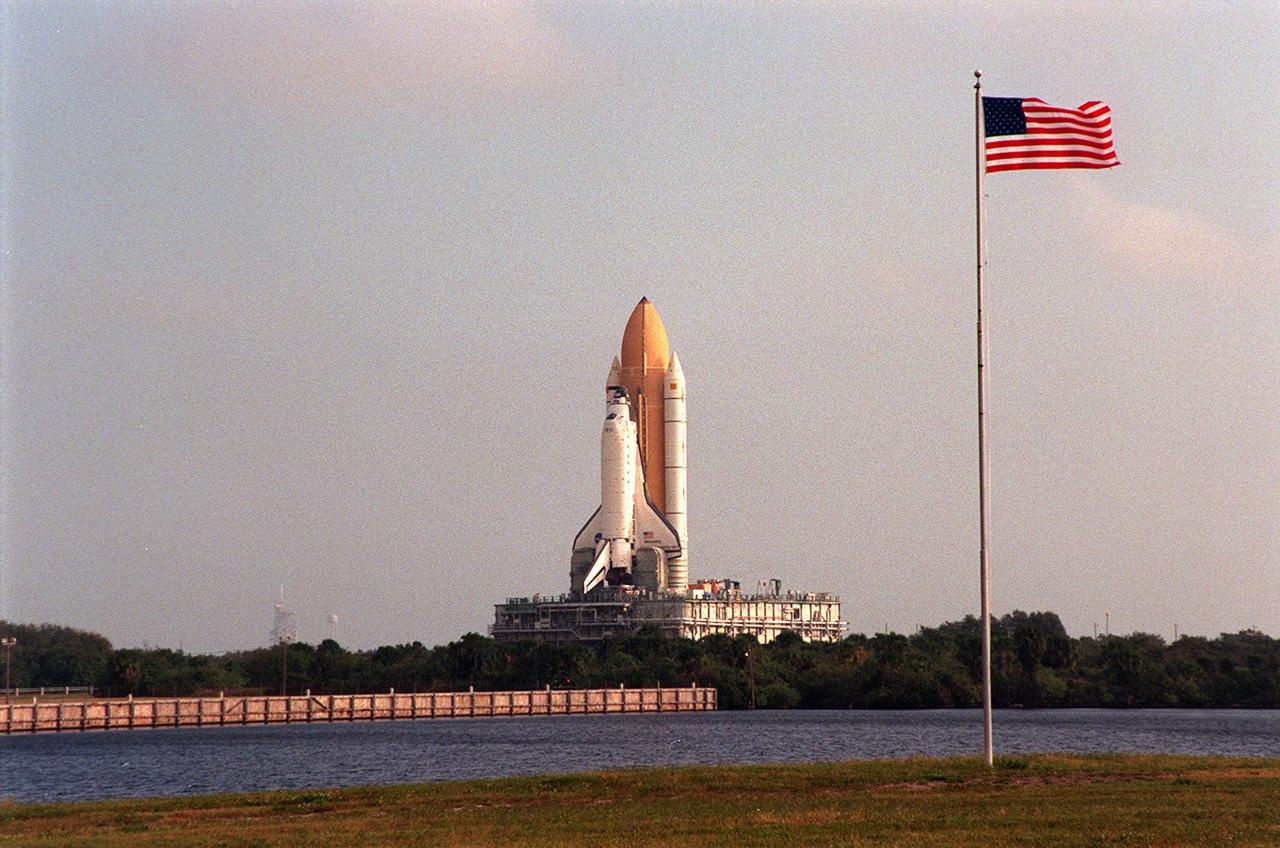
KENNEDY SPACE CENTER, Fla. -- With the American flag flapping in the morning breeze, Space Shuttle Discovery, across the turn basin, makes its crawl to Launch Pad 39B (background, left) atop the mobile launcher platform and crawler transporter. Once at the pad, the orbiter, external tank and solid rocket boosters will undergo final preparations for the STS-103 launch targeted for Dec. 6, 1999, at 2:37 a.m. EST. The mission is a "call-up" due to the need to replace and repair portions of the Hubble Space Telescope. Although Hubble is operating normally and conducting its scientific observations, only three of its six gyroscopes are working properly. Four EVA's are planned to make the necessary repairs and replacements on the telescope. The STS-103 crew members are Commander Curtis L. Brown Jr., Pilot Scott J. Kelly, Steven L. Smith, C. Michael Foale (Ph.D.), John M. Grunsfeld (Ph.D.), and Claude Nicollier of Switzerland and Jean-François Clervoy of France, both with the European Space Agency.
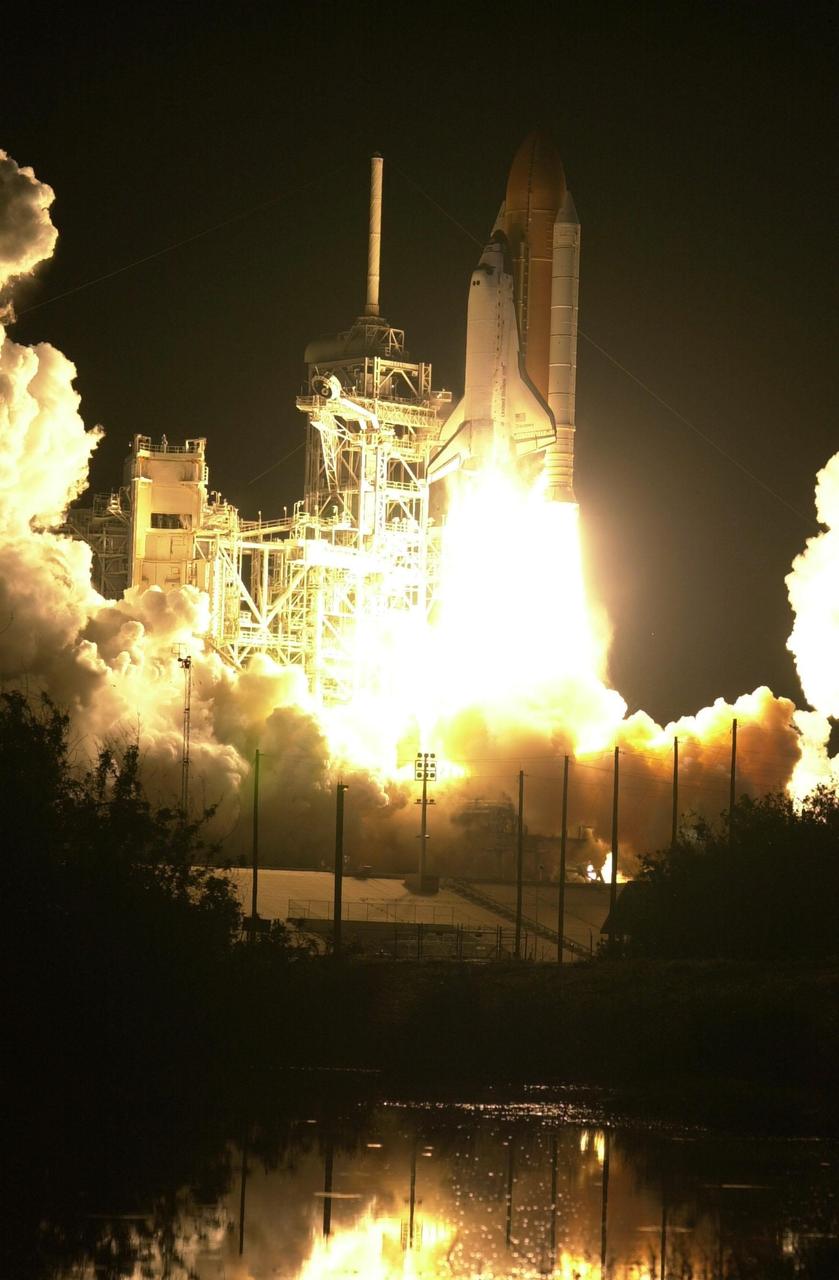
(Nikon camera D1 test)The blazing light of Space Shuttle Discovery's launch turns night into day at Launch Pad 39B. The successful liftoff occurred on time at 7:50:00.069 EST from Launch Pad 39B on mission STS-103. On board are Commander Curtis L. Brown Jr., Pilot Scott J. Kelly and Mission Specialists Steven L. Smith, C. Michael Foale (Ph.D.), John M. Grunsfeld (Ph.D.), Claude Nicollier of Switzerland and Jean-François Clervoy of France. Nicollier and Clervoy are with the European Space Agency. STS-103 is a Hubble Servicing Mission, with three planned space walks designed to install new equipment and replace old. The primary objective is to replace the gyroscopes that make up the three Rate Sensor Units. Extravehicular activities include installing a new computer, changing out one of the Fine Guidance Sensors, replacing a tape recorder with a new solid state recorder, and installing a voltage/temperature improvement kit, and begin repairing the insulation on the telescope's outer surface. After the 7-day, 21-hour mission, Discovery is expected to land at KSC Monday, Dec. 27, at about 5:24 p.m. EST. This is the 27th flight of Discovery and the 96th mission in the Space Shuttle Program. It is the third launch at Kennedy Space Center in 1999
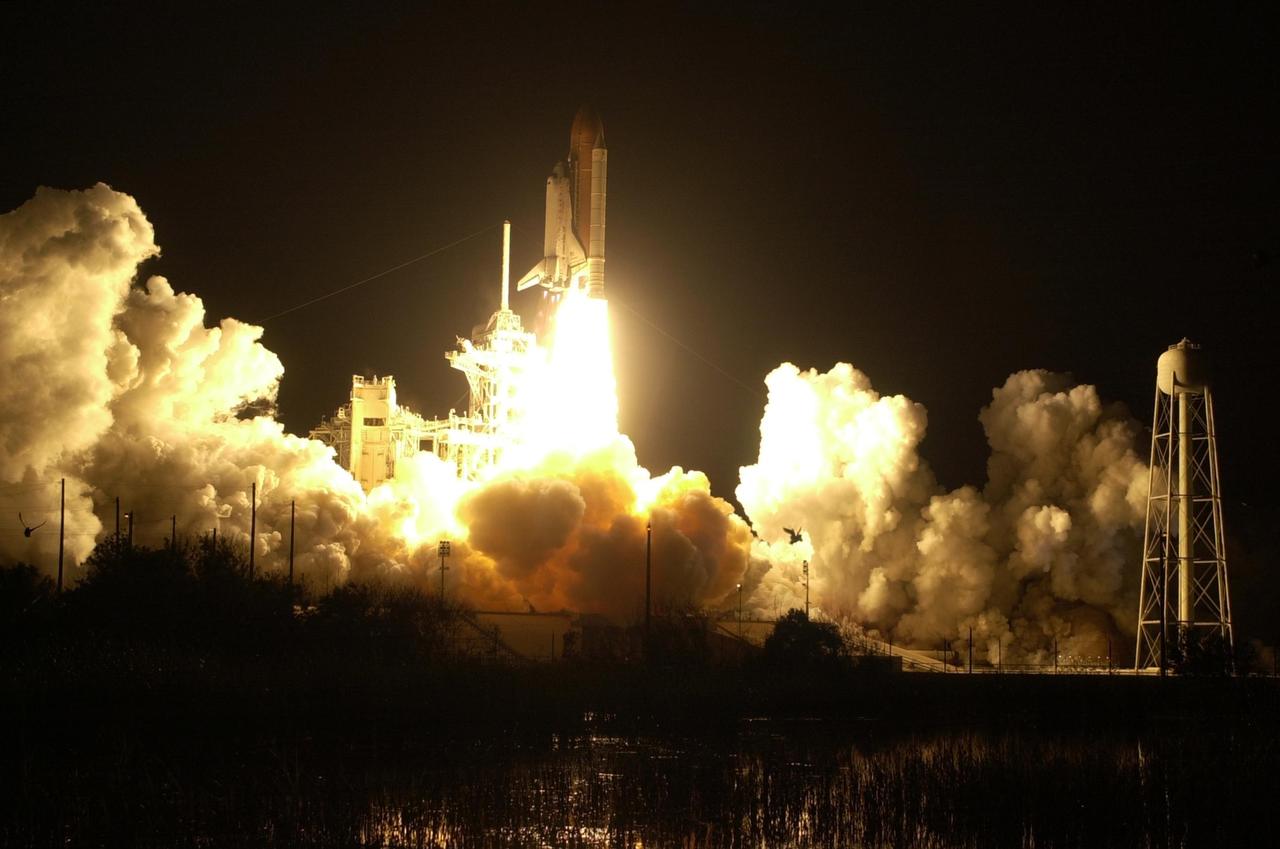
(Nikon camera D1 test)The blazing light of Space Shuttle Discovery's launch turns night into day at Launch Pad 39B as billows of smoke and steam rise behind it. The successful liftoff occurred on time at 7:50:00.069 EST from Launch Pad 39B on mission STS-103. On board are Commander Curtis L. Brown Jr., Pilot Scott J. Kelly and Mission Specialists Steven L. Smith, C. Michael Foale (Ph.D.), John M. Grunsfeld (Ph.D.), Claude Nicollier of Switzerland and Jean-François Clervoy of France. Nicollier and Clervoy are with the European Space Agency. STS-103 is a Hubble Servicing Mission, with three planned space walks designed to install new equipment and replace old. The primary objective is to replace the gyroscopes that make up the three Rate Sensor Units. Extravehicular activities include installing a new computer, changing out one of the Fine Guidance Sensors, replacing a tape recorder with a new solid state recorder, and installing a voltage/temperature improvement kit, and begin repairing the insulation on the telescope's outer surface. After the 7-day, 21-hour mission, Discovery is expected to land at KSC Monday, Dec. 27, at about 5:24 p.m. EST. This is the 27th flight of Discovery and the 96th mission in the Space Shuttle Program. It is the third launch at Kennedy Space Center in 1999
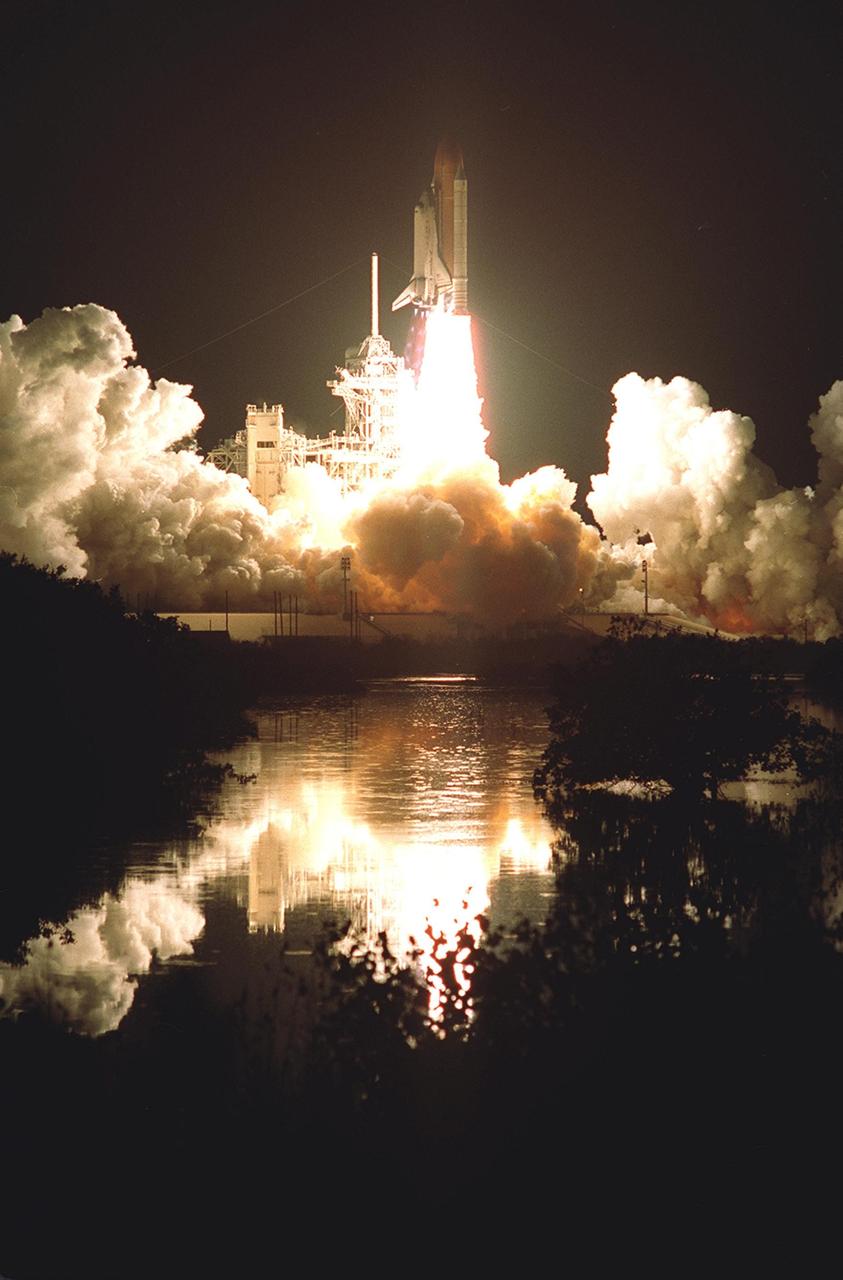
Turning night into day, the brilliance of Space Shuttle Discovery's launch is reflected in the waters nearby. Liftoff occurred at 7:50 p.m. EST from Launch Pad 39B. On board are Commander Curtis L. Brown Jr., Pilot Scott J. Kelly and Mission Specialists Steven L. Smith, C. Michael Foale (Ph.D.), John M. Grunsfeld (Ph.D.), Claude Nicollier of Switzerland and Jean-François Clervoy of France. Nicollier and Clervoy are with the European Space Agency. STS-103 is a Hubble Servicing Mission, with three planned space walks designed to install new equipment and replace old. The primary objective is to replace the gyroscopes that make up the three Rate Sensor Units. Extravehicular activities include installing a new computer, changing out one of the Fine Guidance Sensors, replacing a tape recorder with a new solid state recorder, and installing a voltage/temperature improvement kit, and begin repairing the insulation on the telescope's outer surface. After the 7-day, 21-hour mission, Discovery is expected to land at KSC Monday, Dec. 27, at about 5:24 p.m. EST. This is the 27th flight of Discovery and the 96th mission in the Space Shuttle Program. It is the third launch at Kennedy Space Center in 1999

Turning night into day for a few moments while belching clouds of smoke and steam, Space Shuttle Discovery hurtles into the black sky on mission STS-103. The successful liftoff occurred at 7:50 p.m. EST from Launch Pad 39B. On board are Commander Curtis L. Brown Jr., Pilot Scott J. Kelly and Mission Specialists Steven L. Smith, C. Michael Foale (Ph.D.), John M. Grunsfeld (Ph.D.), Claude Nicollier of Switzerland and Jean-François Clervoy of France. Nicollier and Clervoy are with the European Space Agency. STS-103 is a Hubble Servicing Mission, with three planned space walks designed to install new equipment and replace old. The primary objective is to replace the gyroscopes that make up the three Rate Sensor Units. Extravehicular activities include installing a new computer, changing out one of the Fine Guidance Sensors, replacing a tape recorder with a new solid state recorder, and installing a voltage/temperature improvement kit, and begin repairing the insulation on the telescope's outer surface. After the 7-day, 21-hour mission, Discovery is targeted to land at KSC Monday, Dec. 27, at about 5:24 p.m. EST. This is the 27th flight of Discovery and the 96th mission in the Space Shuttle Program. It is the third launch at Kennedy Space Center in 1999
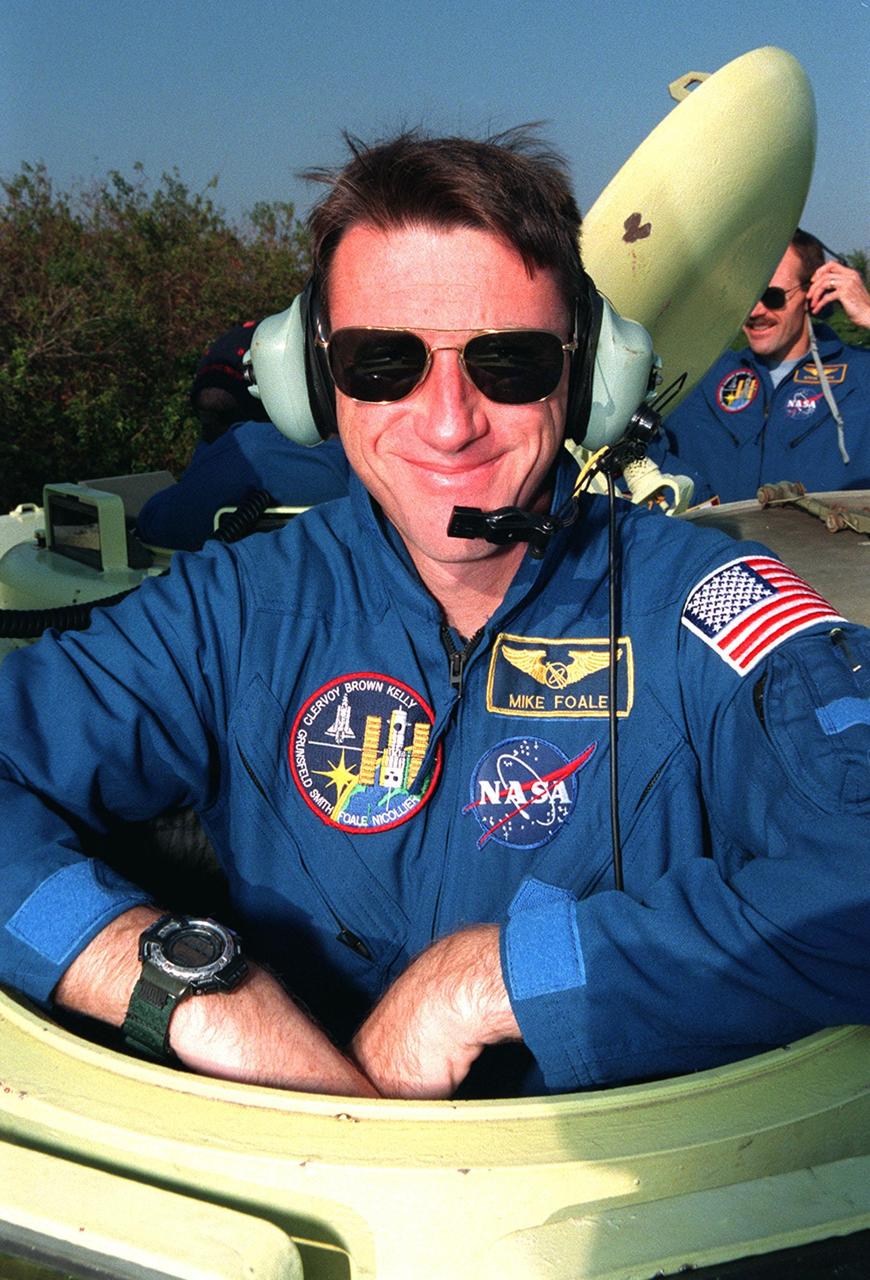
STS-103 Mission Specialist C. Michael Foale (Ph.D.) is ready to take his turn at driving a small armored personnel carrier that is part of emergency egress training during Terminal Countdown Demonstration Test (TCDT) activities. The tracked vehicle could be used by the crew in the event of an emergency at the pad during which the crew must make a quick exit from the area. The TCDT also provides simulated countdown exercises and opportunities to inspect the mission payloads in the orbiter's payload bay. STS-103 is a "call-up" mission due to the need to replace and repair portions of the Hubble Space Telescope. Four EVA's are planned to make the necessary repairs and replacements on the telescope. The other STS-103 crew members are Commander Curtis L. Brown Jr., Pilot Scott J. Kelly, and Mission Specialists Steven L. Smith , John M. Grunsfeld (Ph.D.), plus Claude Nicollier of Switzerland and Jean-François Clervoy of France, who are with the European Space Agency. The mission is targeted for launch Dec. 6 at 2:37 a.m. EST
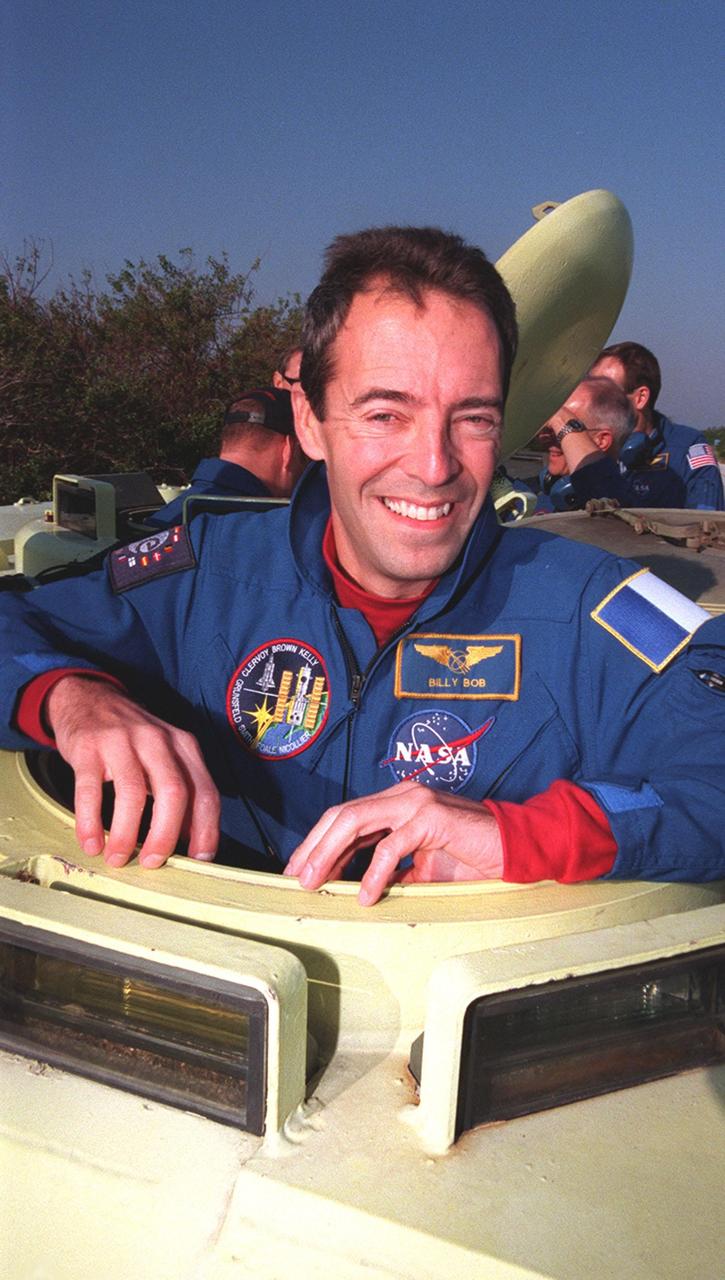
STS-103 Mission Specialist Jean-François Clervoy of France, who is with the European Space Agency, gets ready for his turn at driving a small armored personnel carrier that is part of emergency egress training during Terminal Countdown Demonstration Test (TCDT) activities. The tracked vehicle could be used by the crew in the event of an emergency at the pad during which the crew must make a quick exit from the area. The TCDT also provides simulated countdown exercises and opportunities to inspect the mission payloads in the orbiter's payload bay. STS-103 is a "call-up" mission due to the need to replace and repair portions of the Hubble Space Telescope. Four EVA's are planned to make the necessary repairs and replacements on the telescope. The other STS-103 crew members are Commander Curtis L. Brown Jr., Pilot Scott J. Kelly and Mission Specialists Steven L. Smith, C. Michael Foale (Ph.D.), John M. Grunsfeld (Ph.D.), plus Claude Nicollier of Switzerland, who also is with the European Space Agency. The mission is targeted for launch Dec. 6 at 2:37 a.m. EST
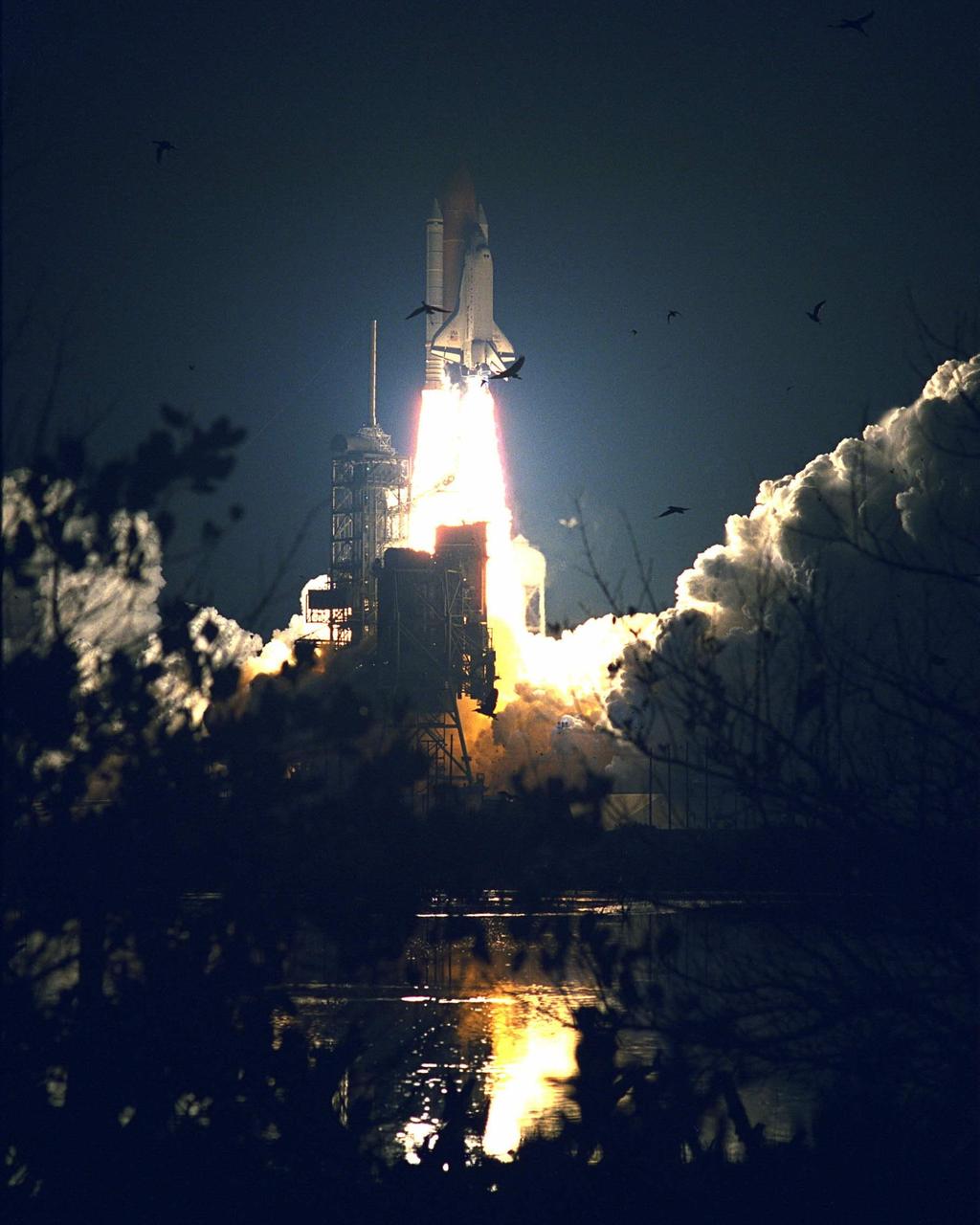
The Space Shuttle Atlantis turns night into day for a few moments as it lifts off on May 15 at 4:07:48 a.m. EDT from Launch Pad 39A on the STS-84 mission. The fourth Shuttle mission of 1997 will be the sixth docking of the Space Shuttle with the Russian Space Station Mir. The commander is Charles J. Precourt. The pilot is Eileen Marie Collins. The five mission specialists are C. Michael Foale, Carlos I. Noriega, Edward Tsang Lu, Jean-Francois Clervoy of the European Space Agency and Elena V. Kondakova of the Russian Space Agency. The planned nine-day mission will include the exchange of Foale for U.S. astronaut and Mir 23 crew member Jerry M. Linenger, who has been on Mir since Jan. 15. Linenger transferred to Mir during the last docking mission, STS-81; he will return to Earth on Atlantis. Foale is slated to remain on Mir for about four months until he is replaced in September by STS-86 Mission Specialist Wendy B. Lawrence. During the five days Atlantis is scheduled to be docked with the Mir, the STS-84 crew and the Mir 23 crew, including two Russian cosmonauts, Commander Vasily Tsibliev and Flight Engineer Alexander Lazutkin, will participate in joint experiments. The STS-84 mission also will involve the transfer of more than 7,300 pounds of water, logistics and science equipment to and from the Mir. Atlantis is carrying a nearly 300-pound oxygen generator to replace one of two Mir units which have experienced malfunctions. The oxygen it generates is used for breathing by the Mir crew
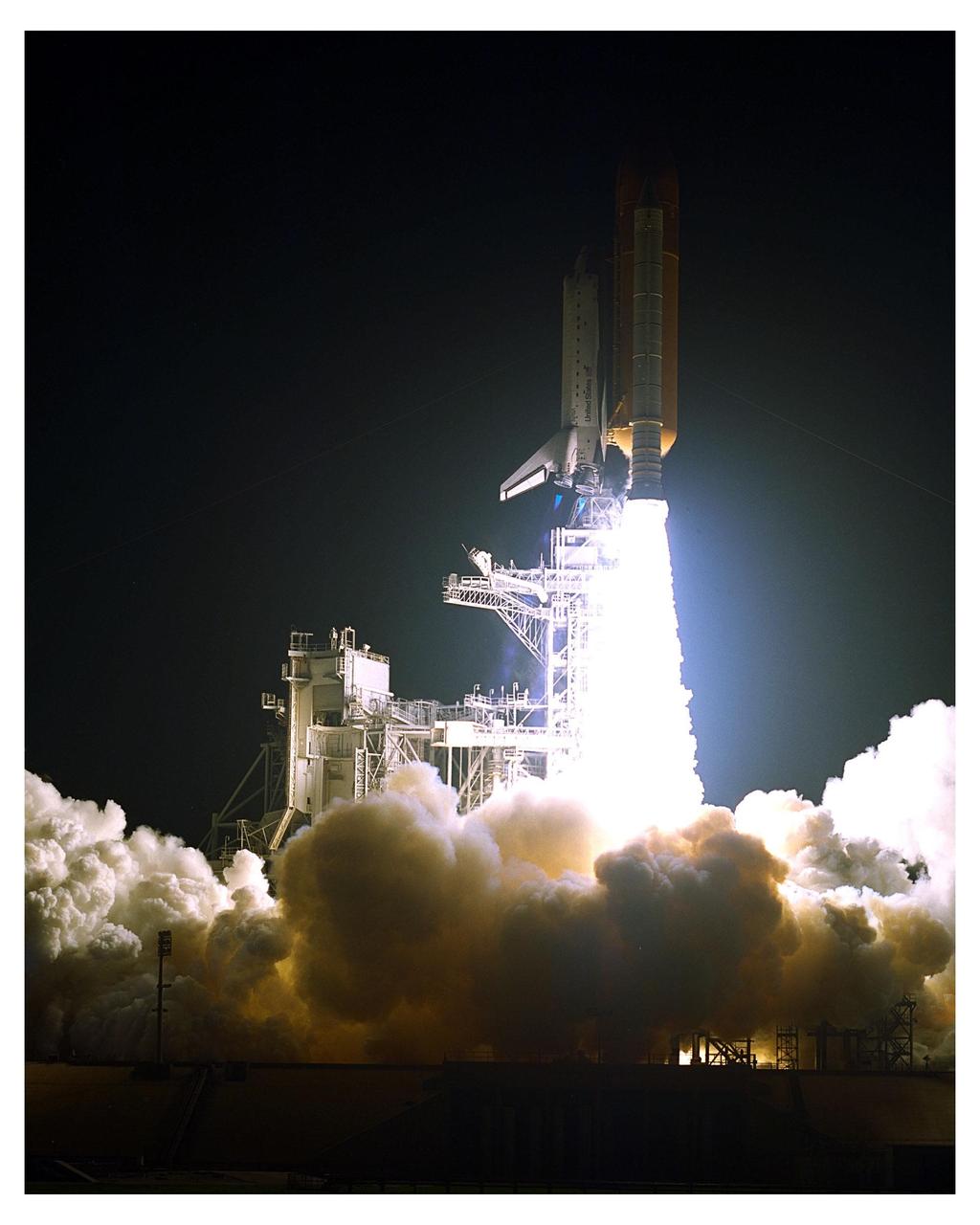
The Space Shuttle Atlantis turns night into day for a few moments as it lifts off on May 15 at 4:07:48 a.m. EDT from Launch Pad 39A on the STS-84 mission. The fourth Shuttle mission of 1997 will be the sixth docking of the Space Shuttle with the Russian Space Station Mir. The commander is Charles J. Precourt. The pilot is Eileen Marie Collins. The five mission specialists are C. Michael Foale, Carlos I. Noriega, Edward Tsang Lu, Jean-Francois Clervoy of the European Space Agency and Elena V. Kondakova of the Russian Space Agency. The planned nine-day mission will include the exchange of Foale for U.S. astronaut and Mir 23 crew member Jerry M. Linenger, who has been on Mir since Jan. 15. Linenger transferred to Mir during the last docking mission, STS-81; he will return to Earth on Atlantis. Foale is slated to remain on Mir for about four months until he is replaced in September by STS-86 Mission Specialist Wendy B. Lawrence. During the five days Atlantis is scheduled to be docked with the Mir, the STS-84 crew and the Mir 23 crew, including two Russian cosmonauts, Commander Vasily Tsibliev and Flight Engineer Alexander Lazutkin, will participate in joint experiments. The STS-84 mission also will involve the transfer of more than 7,300 pounds of water, logistics and science equipment to and from the Mir. Atlantis is carrying a nearly 300-pound oxygen generator to replace one of two Mir units which have experienced malfunctions. The oxygen it generates is used for breathing by the Mir crew
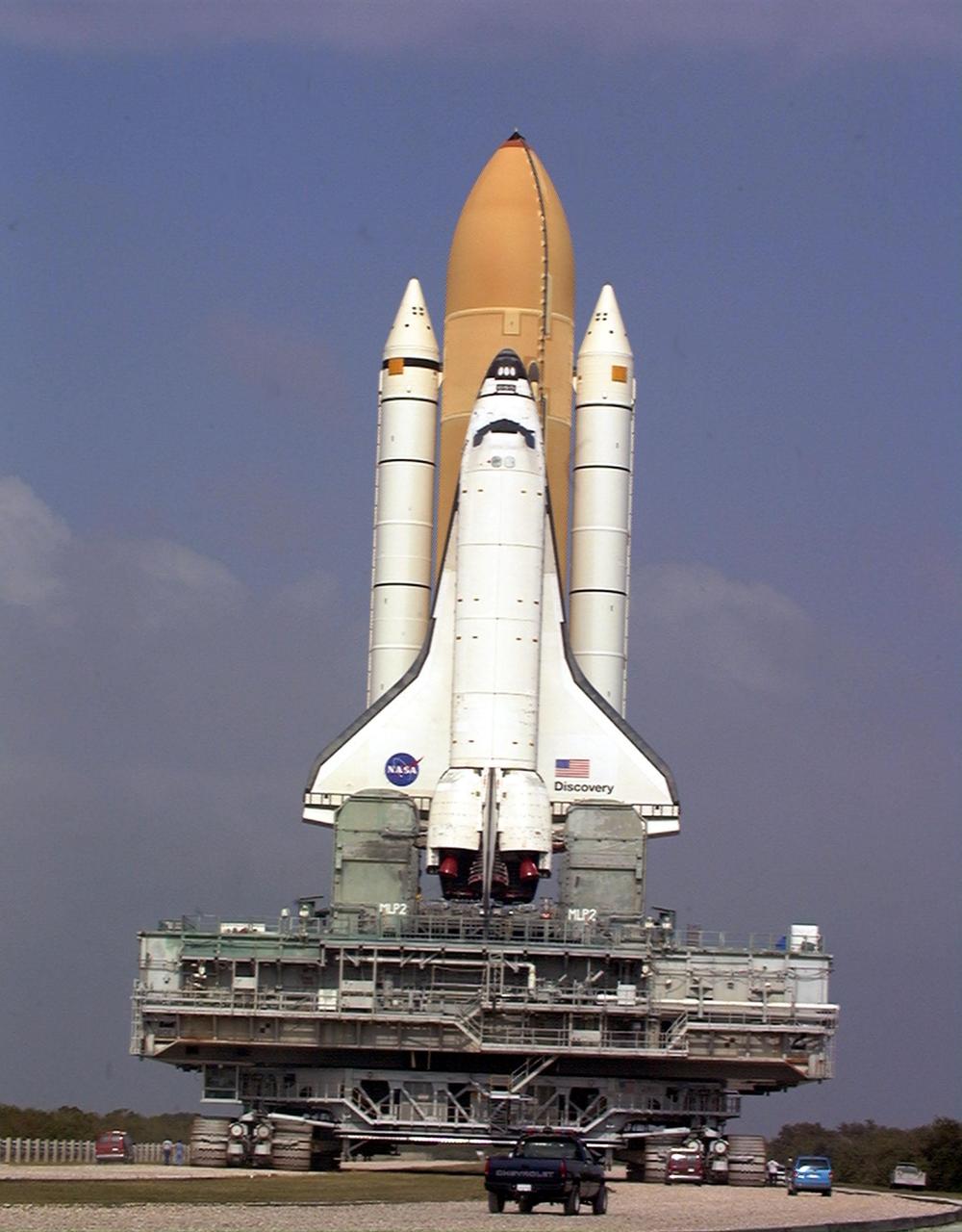
KENNEDY SPACE CENTER, FLA. -- Towering atop the mobile launcher platform and crawler transporter, Space Shuttle Discovery negotiates a turn in the crawlerway on its trek from the Vehicle Assembly Building to Launch Pad 39B. While at the pad, the orbiter, external tank and solid rocket boosters will undergo final preparations for the STS-103 launch targeted for Dec. 6, 1999, at 2:37 a.m. EST. The mission is a "call-up" due to the need to replace portions of the pointing system the gyros which have begun to fail on the Hubble Space Telescope. Although Hubble is operating normally and conducting its scientific observations, only three of its six gyroscopes are working properly. The gyroscopes allow the telescope to point at stars, galaxies and planets. The STS-103 crew will also be installing a Fine Guidance Sensor, a new enhanced computer, a solid-state digital recorder, and a new spare transmitter to replace older equipment, and replacing degraded insulation on the telescope with new thermal insulation. The crew will also install a Battery Voltage/Temperature Improvement Kit to protect the spacecraft batteries from overcharging and overheating when the telescope goes into a safe mode. Four EVA's are planned to make the necessary repairs and replacements on the telescope. The STS-103 crew members are Commander Curtis L. Brown Jr., Pilot Scott J. Kelly, Mission Specialist Steven L. Smith, Mission Specialist C. Michael Foale (Ph.D.), Mission Specialist John M. Grunsfeld (Ph.D.), and Mission Specialist Claude Nicollier of Switzerland, and Mission Specialist Jean-François Clervoy of France, both with the European Space Agency
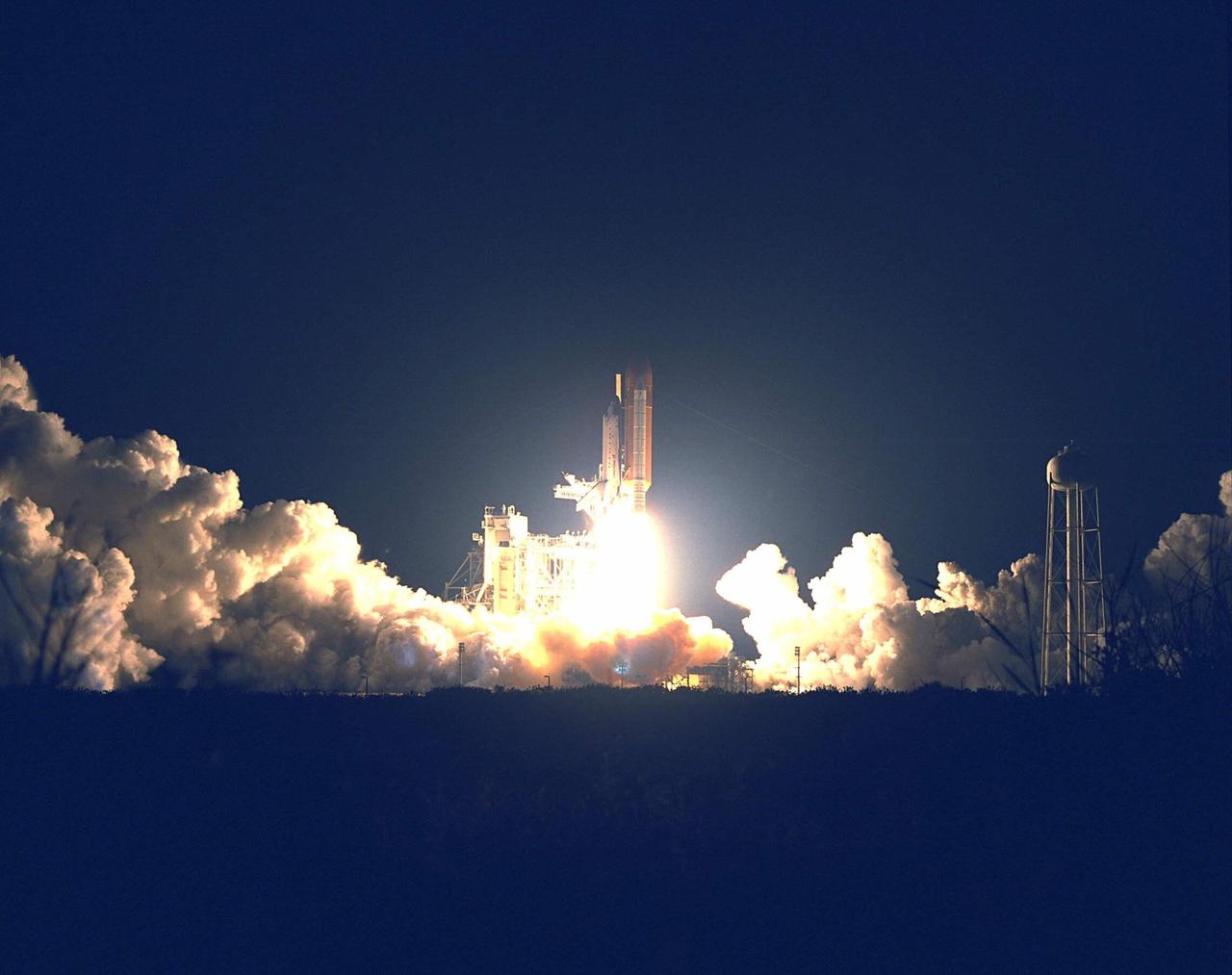
The Space Shuttle Atlantis turns night into day for a few moments as it lifts off on May 15 at 4:07:48 a.m. EDT from Launch Pad 39A on the STS-84 mission. The fourth Shuttle mission of 1997 will be the sixth docking of the Space Shuttle with the Russian Space Station Mir. The commander is Charles J. Precourt. The pilot is Eileen Marie Collins. The five mission specialists are C. Michael Foale, Carlos I. Noriega, Edward Tsang Lu, Jean-Francois Clervoy of the European Space Agency and Elena V. Kondakova of the Russian Space Agency. The planned nine-day mission will include the exchange of Foale for U.S. astronaut and Mir 23 crew member Jerry M. Linenger, who has been on Mir since Jan. 15. Linenger transferred to Mir during the last docking mission, STS-81; he will return to Earth on Atlantis. Foale is slated to remain on Mir for about four months until he is replaced in September by STS-86 Mission Specialist Wendy B. Lawrence. During the five days Atlantis is scheduled to be docked with the Mir, the STS-84 crew and the Mir 23 crew, including two Russian cosmonauts, Commander Vasily Tsibliev and Flight Engineer Alexander Lazutkin, will participate in joint experiments. The STS-84 mission also will involve the transfer of more than 7,300 pounds of water, logistics and science equipment to and from the Mir. Atlantis is carrying a nearly 300-pound oxygen generator to replace one of two Mir units which have experienced malfunctions. The oxygen it generates is used for breathing by the Mir crew
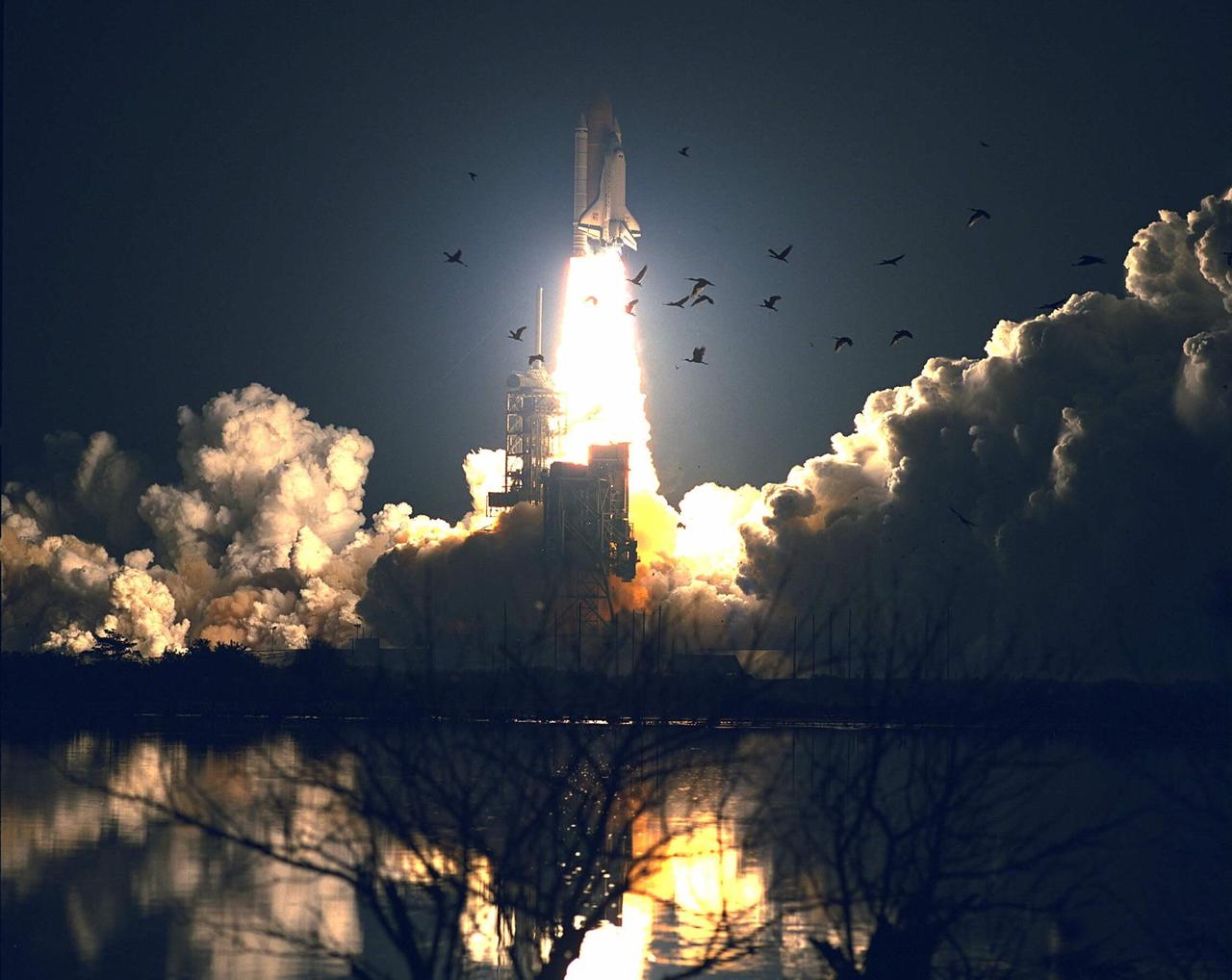
The Space Shuttle Atlantis turns night into day for a few moments as it lifts off on May 15 at 4:07:48 a.m. EDT from Launch Pad 39A on the STS-84 mission. The fourth Shuttle mission of 1997 will be the sixth docking of the Space Shuttle with the Russian Space Station Mir. The commander is Charles J. Precourt. The pilot is Eileen Marie Collins. The five mission specialists are C. Michael Foale, Carlos I. Noriega, Edward Tsang Lu, Jean-Francois Clervoy of the European Space Agency and Elena V. Kondakova of the Russian Space Agency. The planned nine-day mission will include the exchange of Foale for U.S. astronaut and Mir 23 crew member Jerry M. Linenger, who has been on Mir since Jan. 15. Linenger transferred to Mir during the last docking mission, STS-81; he will return to Earth on Atlantis. Foale is slated to remain on Mir for about four months until he is replaced in September by STS-86 Mission Specialist Wendy B. Lawrence. During the five days Atlantis is scheduled to be docked with the Mir, the STS-84 crew and the Mir 23 crew, including two Russian cosmonauts, Commander Vasily Tsibliev and Flight Engineer Alexander Lazutkin, will participate in joint experiments. The STS-84 mission also will involve the transfer of more than 7,300 pounds of water, logistics and science equipment to and from the Mir. Atlantis is carrying a nearly 300-pound oxygen generator to replace one of two Mir units which have experienced malfunctions. The oxygen it generates is used for breathing by the Mir crew
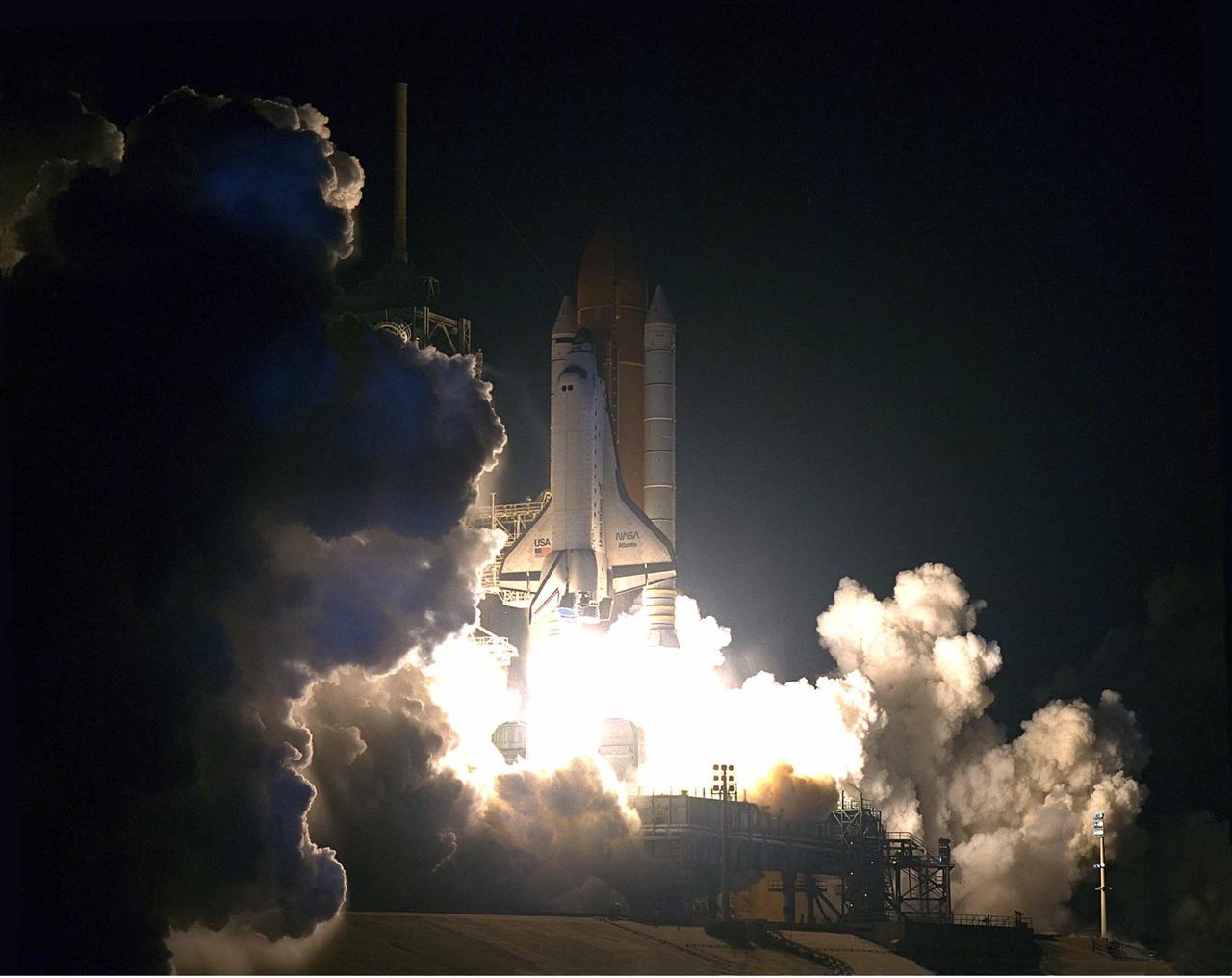
The Space Shuttle Atlantis turns night into day for a few moments as it lifts off on May 15 at 4:07:48 a.m. EDT from Launch Pad 39A on the STS-84 mission. The fourth Shuttle mission of 1997 will be the sixth docking of the Space Shuttle with the Russian Space Station Mir. The commander is Charles J. Precourt. The pilot is Eileen Marie Collins. The five mission specialists are C. Michael Foale, Carlos I. Noriega, Edward Tsang Lu, Jean-Francois Clervoy of the European Space Agency and Elena V. Kondakova of the Russian Space Agency. The planned nine-day mission will include the exchange of Foale for U.S. astronaut and Mir 23 crew member Jerry M. Linenger, who has been on Mir since Jan. 15. Linenger transferred to Mir during the last docking mission, STS-81; he will return to Earth on Atlantis. Foale is slated to remain on Mir for about four months until he is replaced in September by STS-86 Mission Specialist Wendy B. Lawrence. During the five days Atlantis is scheduled to be docked with the Mir, the STS-84 crew and the Mir 23 crew, including two Russian cosmonauts, Commander Vasily Tsibliev and Flight Engineer Alexander Lazutkin, will participate in joint experiments. The STS-84 mission also will involve the transfer of more than 7,300 pounds of water, logistics and science equipment to and from the Mir. Atlantis is carrying a nearly 300-pound oxygen generator to replace one of two Mir units which have experienced malfunctions. The oxygen it generates is used for breathing by the Mir crew
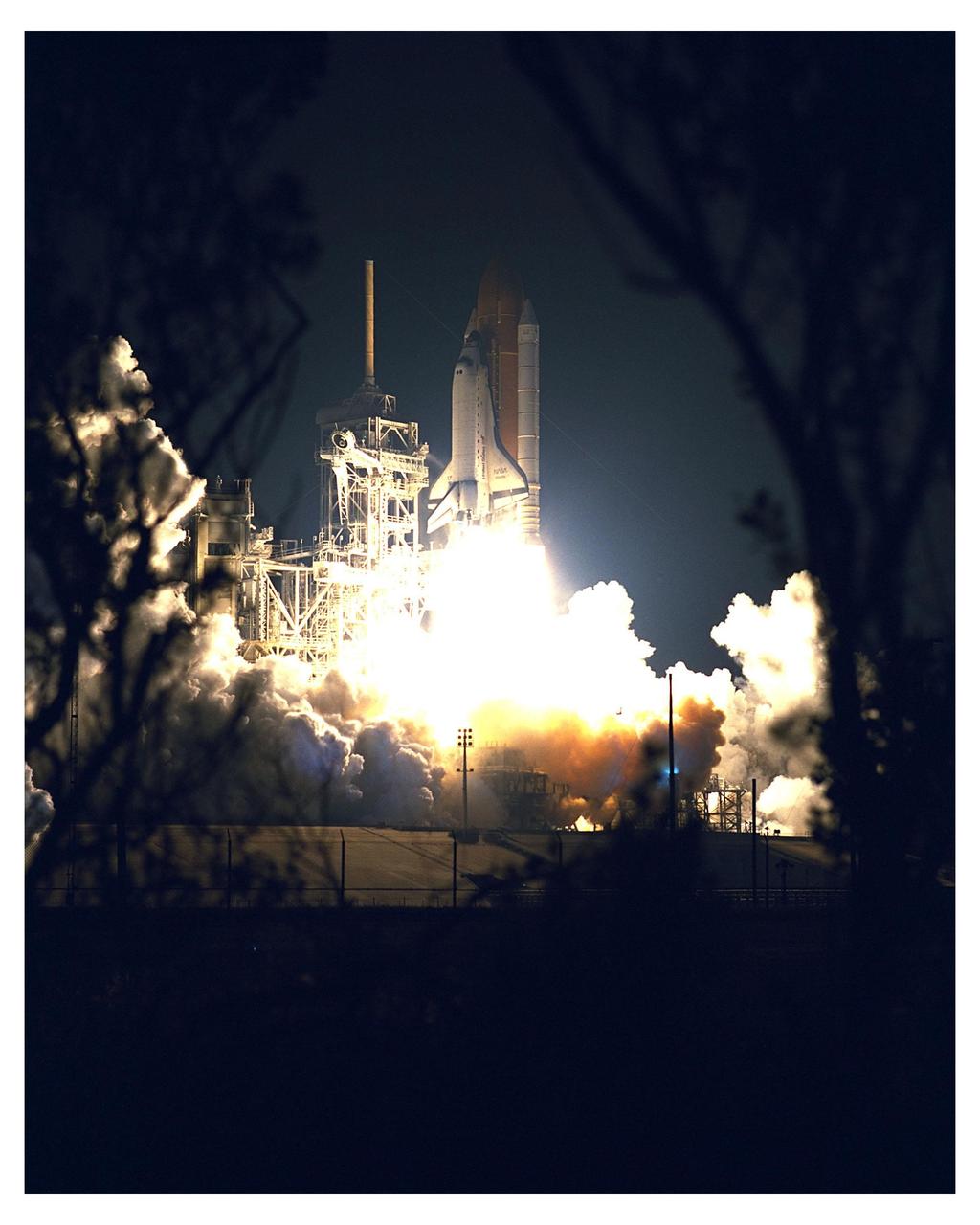
The Space Shuttle Atlantis turns night into day for a few moments as it lifts off on May 15 at 4:07:48 a.m. EDT from Launch Pad 39A on the STS-84 mission. The fourth Shuttle mission of 1997 will be the sixth docking of the Space Shuttle with the Russian Space Station Mir. The commander is Charles J. Precourt. The pilot is Eileen Marie Collins. The five mission specialists are C. Michael Foale, Carlos I. Noriega, Edward Tsang Lu, Jean-Francois Clervoy of the European Space Agency and Elena V. Kondakova of the Russian Space Agency. The planned nine-day mission will include the exchange of Foale for U.S. astronaut and Mir 23 crew member Jerry M. Linenger, who has been on Mir since Jan. 15. Linenger transferred to Mir during the last docking mission, STS-81; he will return to Earth on Atlantis. Foale is slated to remain on Mir for about four months until he is replaced in September by STS-86 Mission Specialist Wendy B. Lawrence. During the five days Atlantis is scheduled to be docked with the Mir, the STS-84 crew and the Mir 23 crew, including two Russian cosmonauts, Commander Vasily Tsibliev and Flight Engineer Alexander Lazutkin, will participate in joint experiments. The STS-84 mission also will involve the transfer of more than 7,300 pounds of water, logistics and science equipment to and from the Mir. Atlantis is carrying a nearly 300-pound oxygen generator to replace one of two Mir units which have experienced malfunctions. The oxygen it generates is used for breathing by the Mir crew
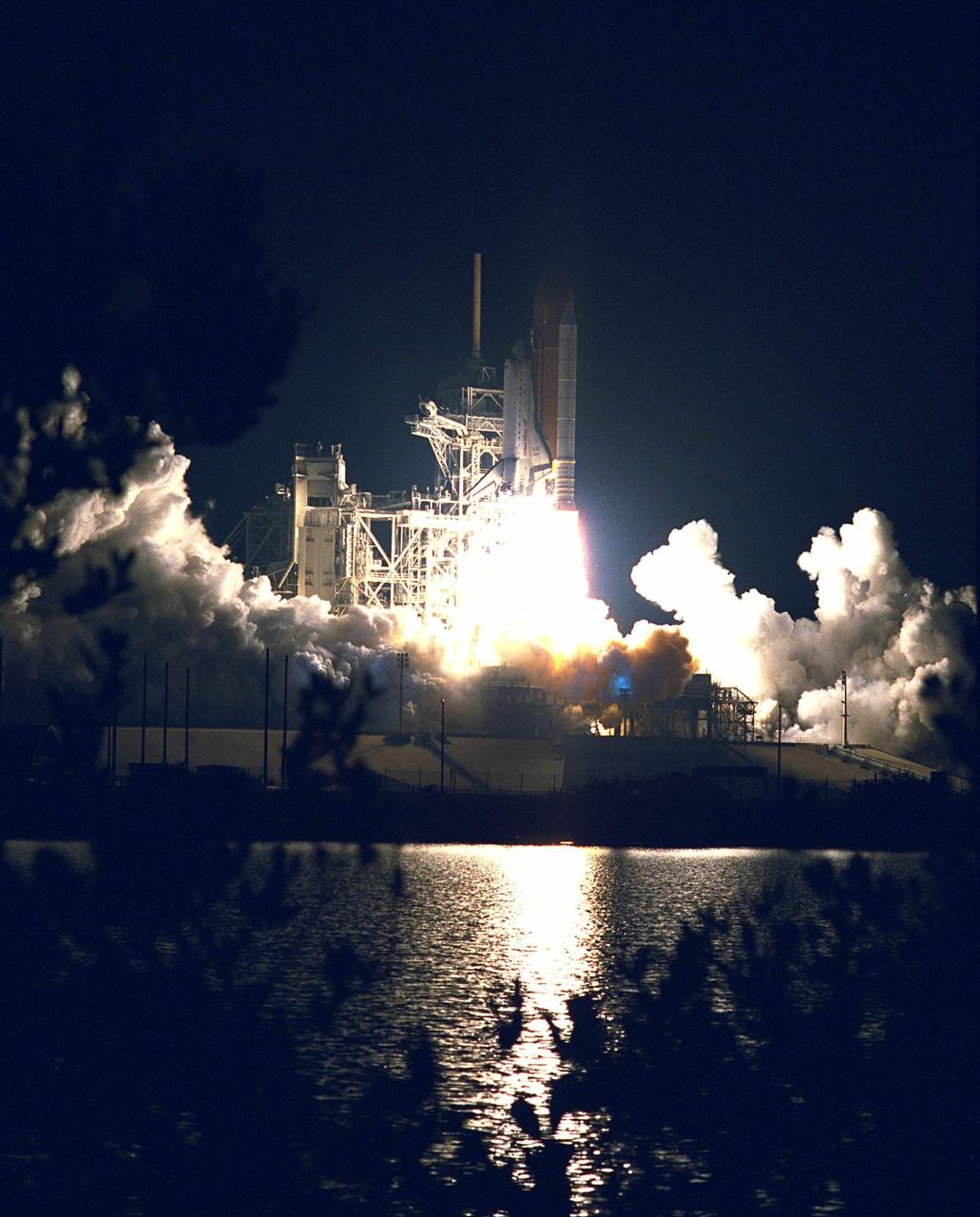
The Space Shuttle Atlantis turns night into day for a few moments as it lifts off on May 15 at 4:07:48 a.m. EDT from Launch Pad 39A on the STS-84 mission. The fourth Shuttle mission of 1997 will be the sixth docking of the Space Shuttle with the Russian Space Station Mir. The commander is Charles J. Precourt. The pilot is Eileen Marie Collins. The five mission specialists are C. Michael Foale, Carlos I. Noriega, Edward Tsang Lu, Jean-Francois Clervoy of the European Space Agency and Elena V. Kondakova of the Russian Space Agency. The planned nine-day mission will include the exchange of Foale for U.S. astronaut and Mir 23 crew member Jerry M. Linenger, who has been on Mir since Jan. 15. Linenger transferred to Mir during the last docking mission, STS-81; he will return to Earth on Atlantis. Foale is slated to remain on Mir for about four months until he is replaced in September by STS-86 Mission Specialist Wendy B. Lawrence. During the five days Atlantis is scheduled to be docked with the Mir, the STS-84 crew and the Mir 23 crew, including two Russian cosmonauts, Commander Vasily Tsibliev and Flight Engineer Alexander Lazutkin, will participate in joint experiments. The STS-84 mission also will involve the transfer of more than 7,300 pounds of water, logistics and science equipment to and from the Mir. Atlantis is carrying a nearly 300-pound oxygen generator to replace one of two Mir units which have experienced malfunctions. The oxygen it generates is used for breathing by the Mir crew
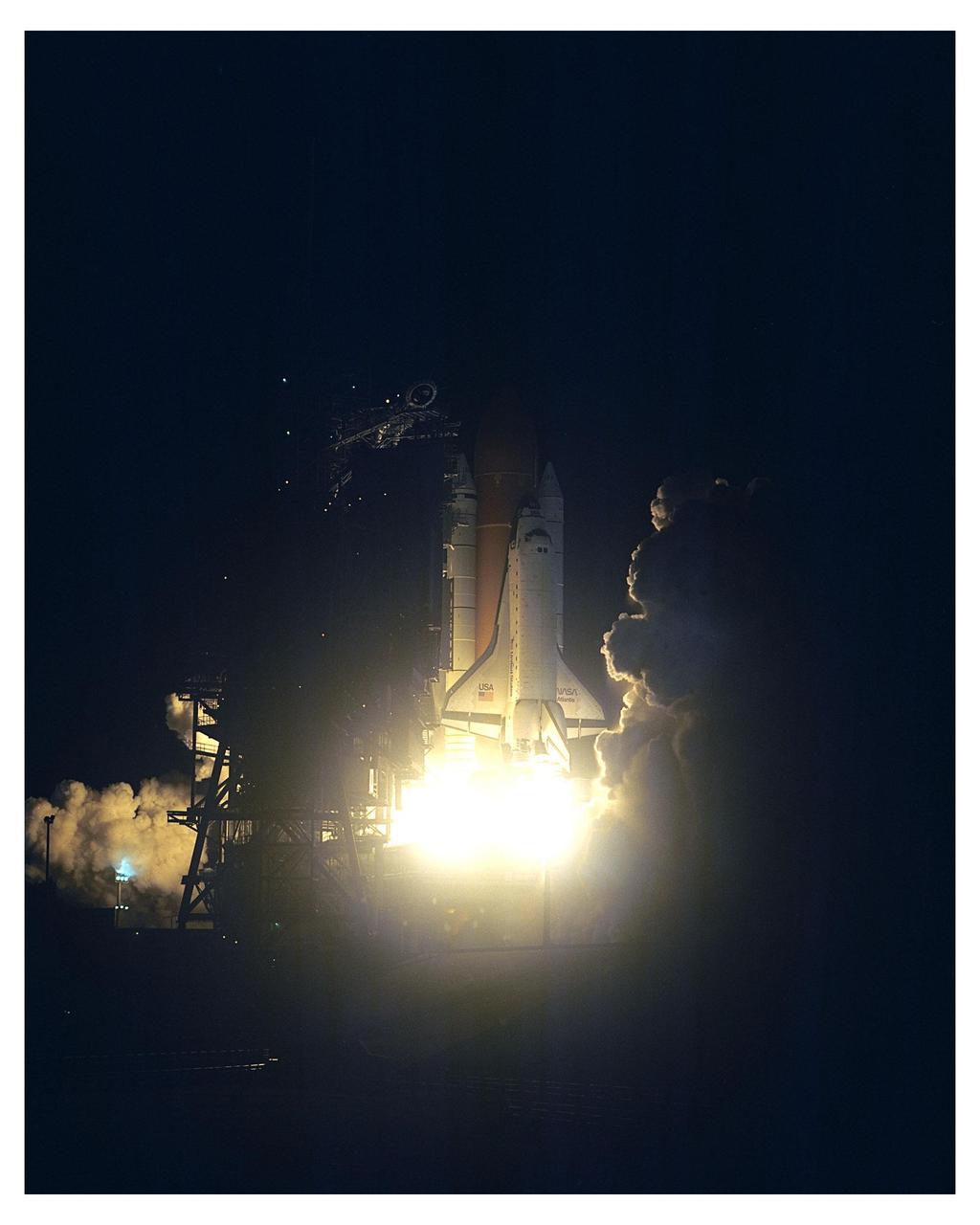
The Space Shuttle Atlantis turns night into day for a few moments as it lifts off on May 15 at 4:07:48 a.m. EDT from Launch Pad 39A on the STS-84 mission. The fourth Shuttle mission of 1997 will be the sixth docking of the Space Shuttle with the Russian Space Station Mir. The commander is Charles J. Precourt. The pilot is Eileen Marie Collins. The five mission specialists are C. Michael Foale, Carlos I. Noriega, Edward Tsang Lu, Jean-Francois Clervoy of the European Space Agency and Elena V. Kondakova of the Russian Space Agency. The planned nine-day mission will include the exchange of Foale for U.S. astronaut and Mir 23 crew member Jerry M. Linenger, who has been on Mir since Jan. 15. Linenger transferred to Mir during the last docking mission, STS-81; he will return to Earth on Atlantis. Foale is slated to remain on Mir for about four months until he is replaced in September by STS-86 Mission Specialist Wendy B. Lawrence. During the five days Atlantis is scheduled to be docked with the Mir, the STS-84 crew and the Mir 23 crew, including two Russian cosmonauts, Commander Vasily Tsibliev and Flight Engineer Alexander Lazutkin, will participate in joint experiments. The STS-84 mission also will involve the transfer of more than 7,300 pounds of water, logistics and science equipment to and from the Mir. Atlantis is carrying a nearly 300-pound oxygen generator to replace one of two Mir units which have experienced malfunctions. The oxygen it generates is used for breathing by the Mir crew
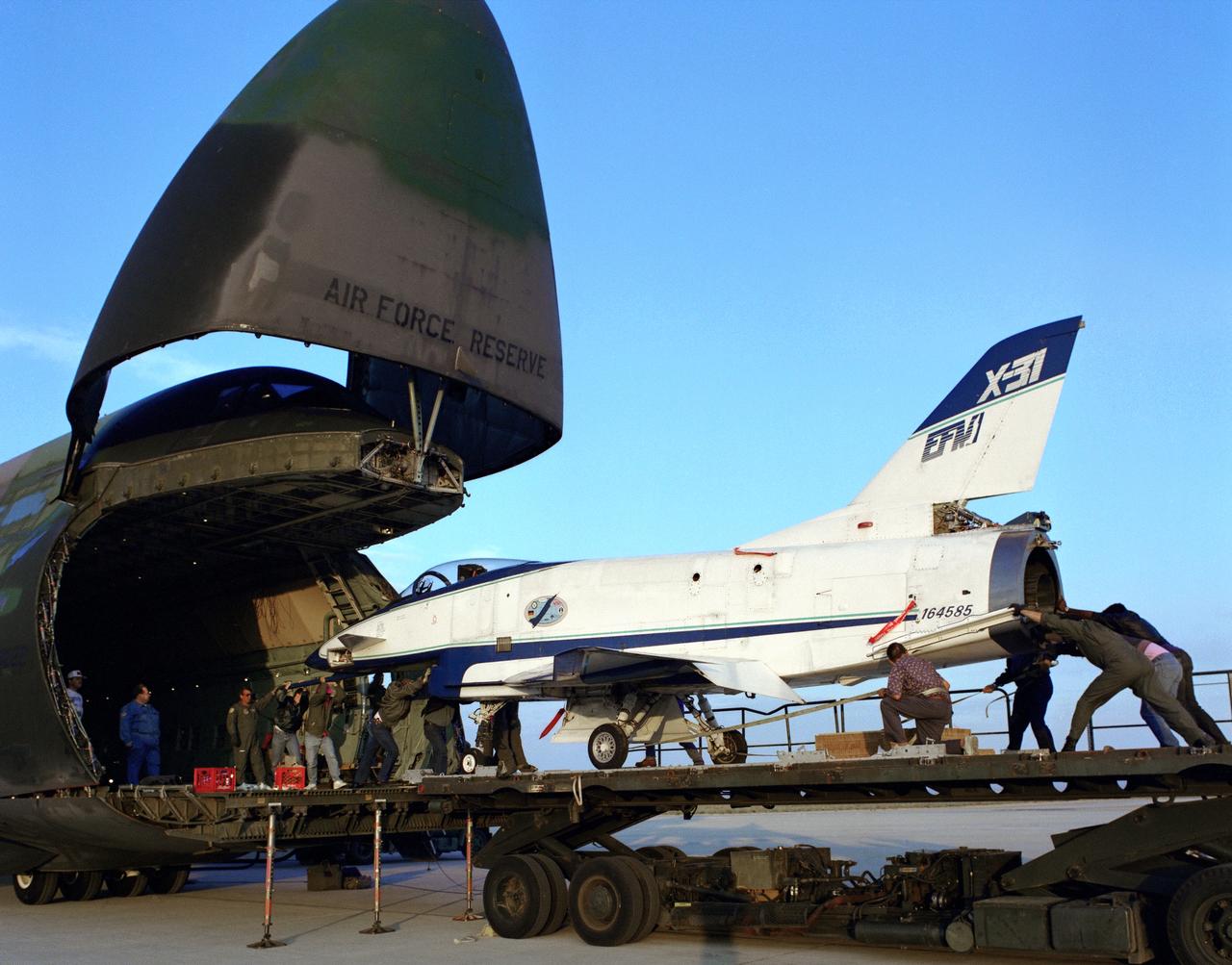
The X-31 Enhanced Fighter Maneuverability Technology Demonstrator Aircraft, based at the NASA Dryden Flight Research Center, Edwards, California, begins rolling aboard an Air Force Reserve C-5 transport which ferried it on May 22, 1995 to Europe where it was flown in the Paris Air Show in June 1995. To fit in the C-5 the right wing of the X-31 had to be removed. At the air show, the X-31 demonstrated the value of using thrust vectoring (directing engine exhaust flow) coupled with advanced flight control systems to provide controlled flight at very high angles of attack.
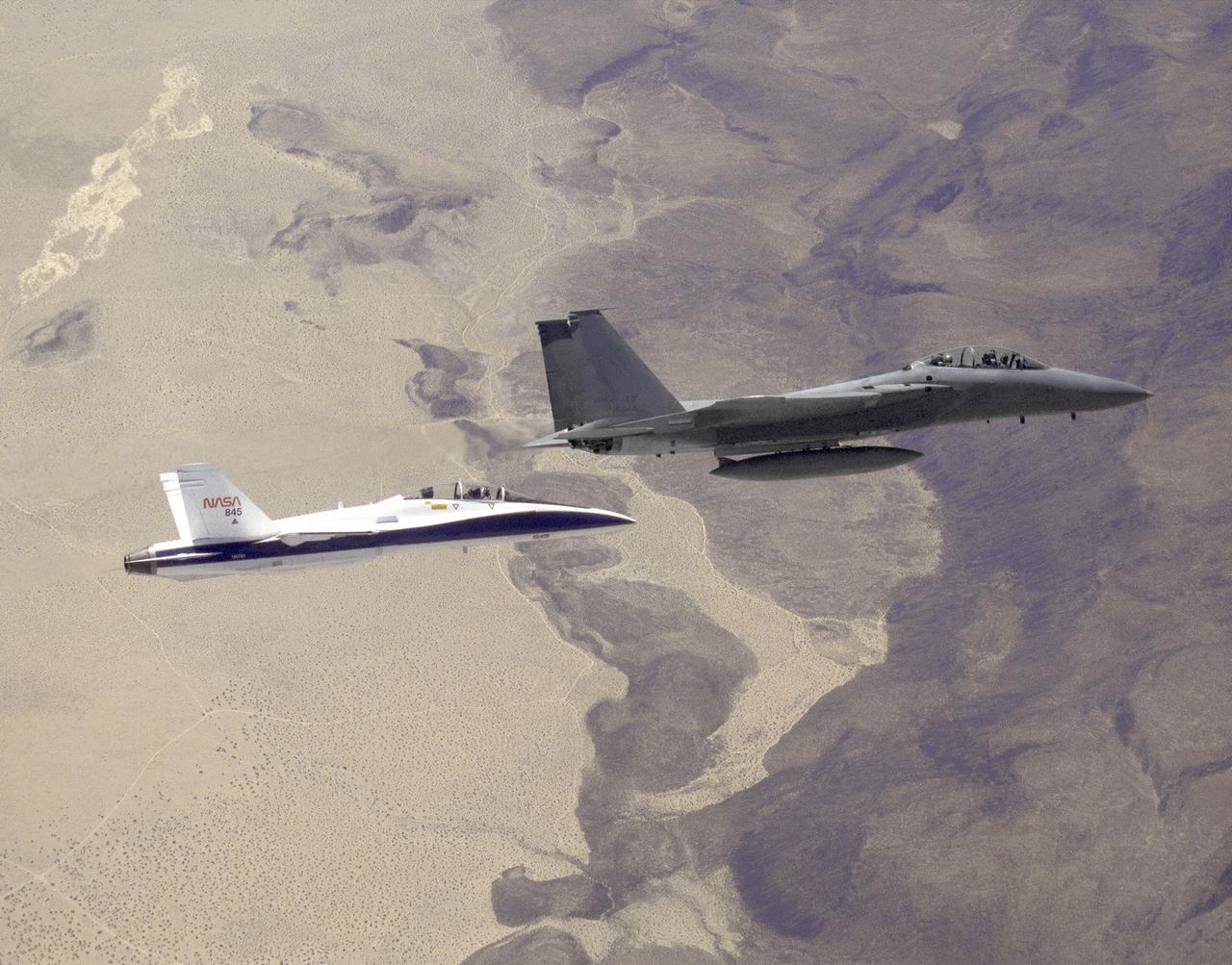
The three thrust-vectoring aircraft at Edwards, California, each capable of flying at extreme angles of attack, cruise over the California desert in formation during flight in March 1994. They are, from left, NASA's F-18 High Alpha Research Vehicle (HARV), flown by the NASA Dryden Flight Research Center; the X-31, flown by the X-31 International Test Organization (ITO) at Dryden; and the Air Force F-16 Multi-Axis Thrust Vectoring (MATV) aircraft.
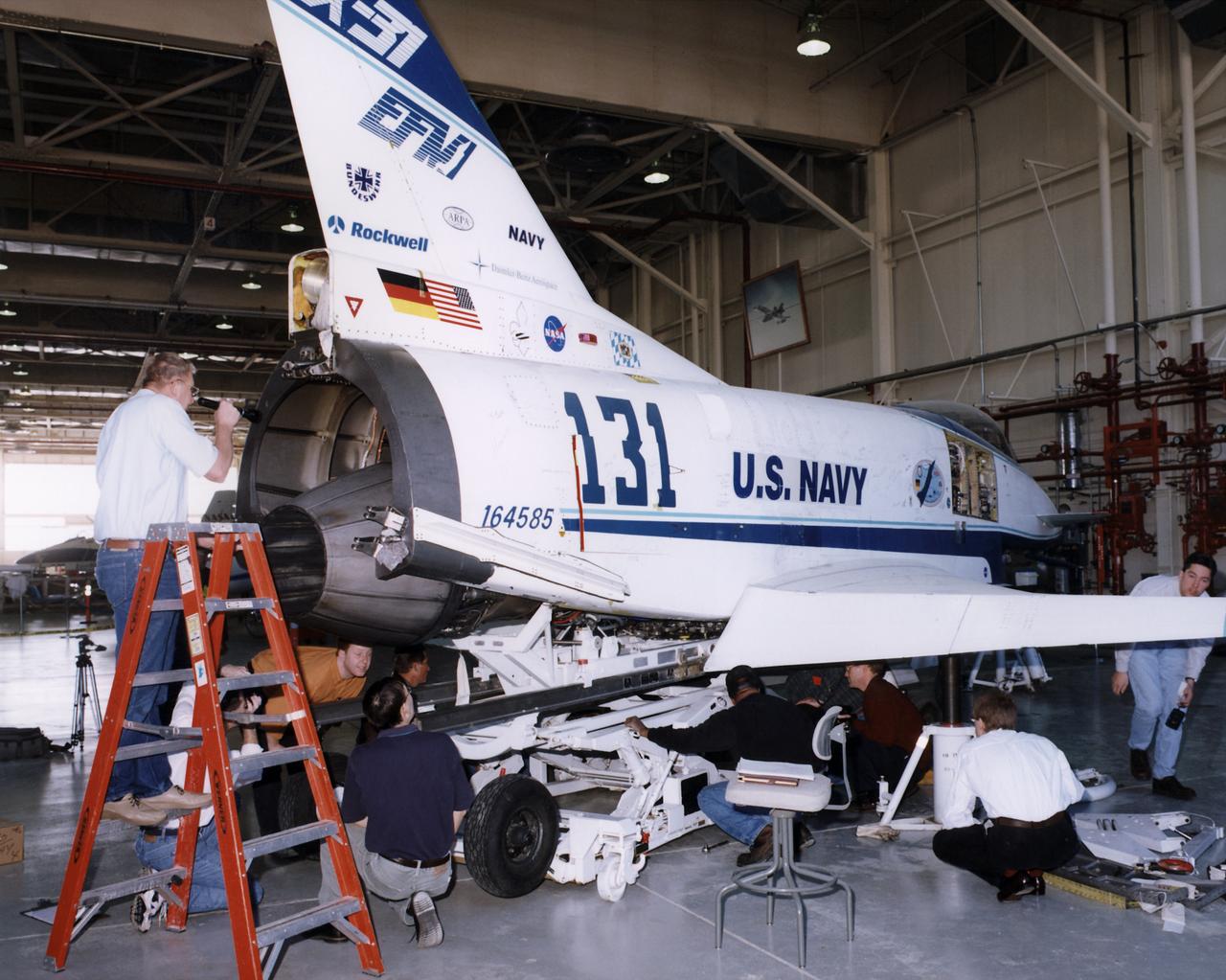
X-31 team members perform an engine fit check on the X-31 Enhanced Fighter Maneuverability demonstrator aircraft in a hangar at the Dryden Flight Research Center, Edwards, California.
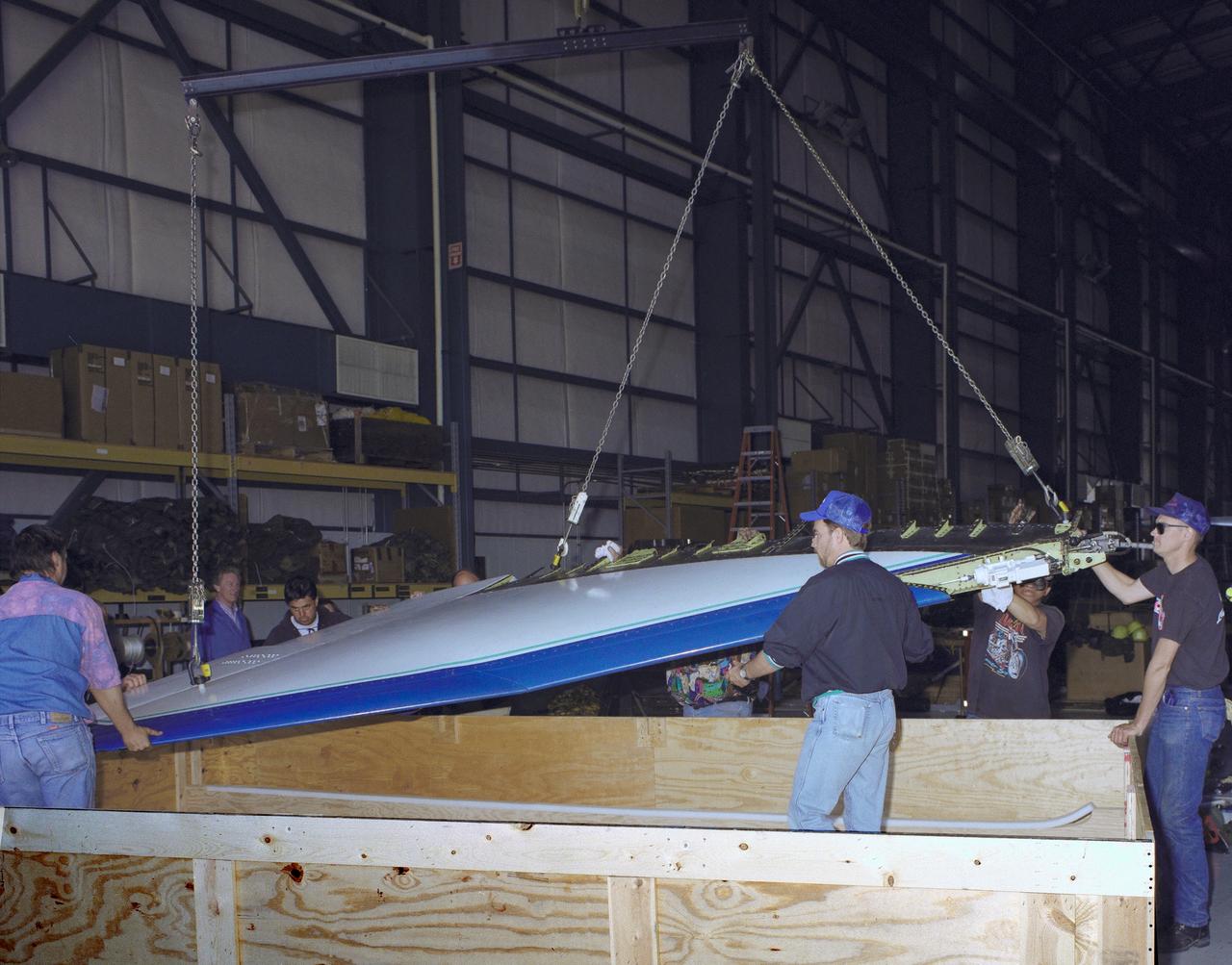
The right wing of the X-31 Enhanced Fighter Maneuverability Technology Demonstrator Aircraft is seen here being put into a shipping container May 18, 1995, at NASA's Dryden Flight Research Center, Edwards, California, by U.S. and German members of the program. To fit inside an Air Force Reserve C-5 transport, which was used to ferry the X-31 to Europe on May 22, 1995, the right wing had to be removed. Manching, Germany, was used as a staging base to prepare the aircraft for participation in the Paris Air Show. At the air show on June 11 through the 18th, the X-31 demonstrated the value of using thrust vectoring (directing engine exhaust flow) coupled with advanced flight control systems to provide controlled flight at very high angles of attack. The aircraft arrived back at Edwards in an Air Force Reserve C-5 on June 25, 1995, and off loaded at Dryden the 27th. The X-31 aircraft was developed jointly by Rockwell International's North American Aircraft Division (now part of Boeing) and Daimler-Benz Aerospace (formerly Messerschmitt-Bolkow-Blohm), under sponsorship by the U.S. Department of Defense and the German Federal Ministry of Defense.
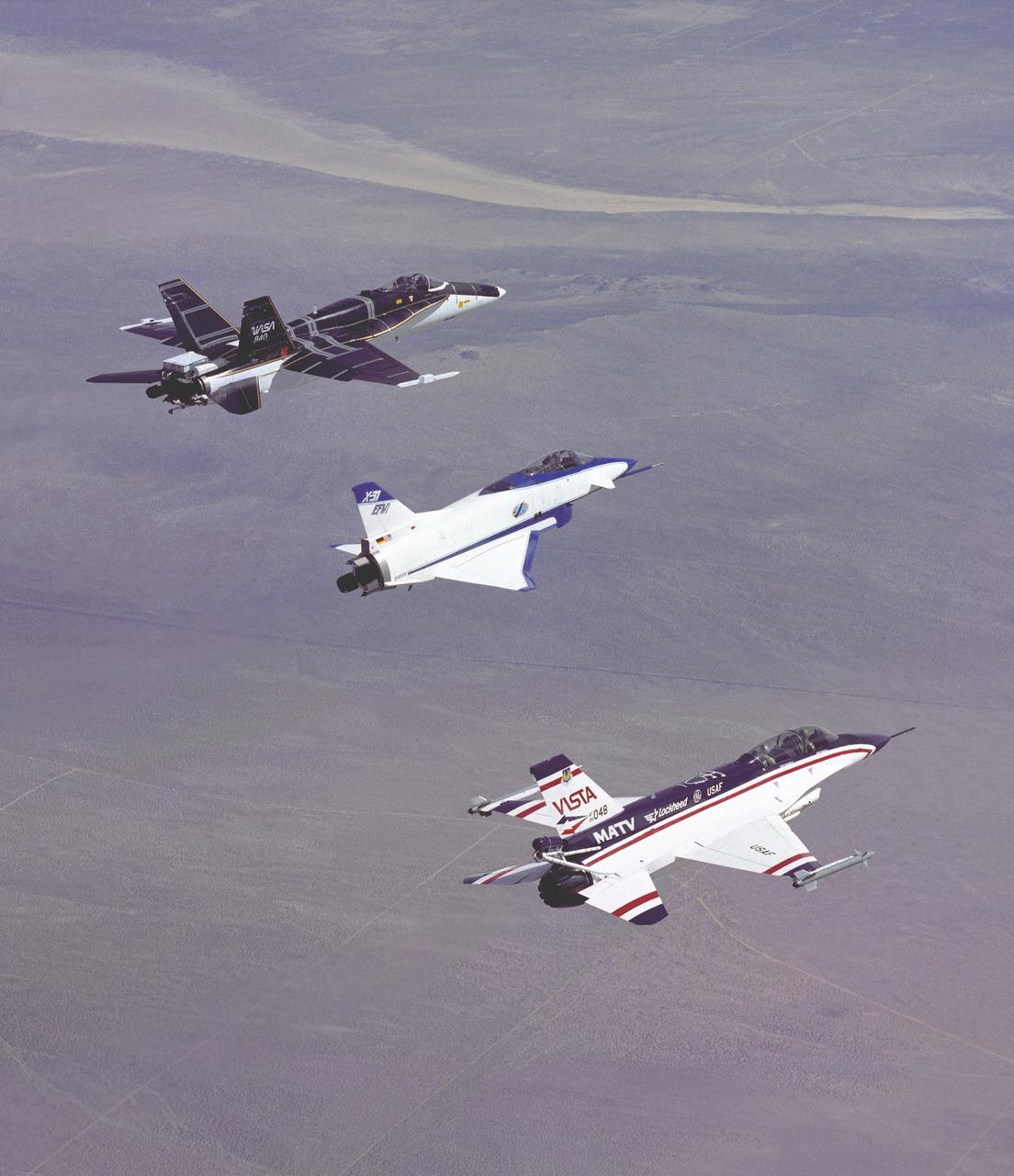
The three thrust-vectoring aircraft at Edwards, California, each capable of flying at extreme angles of attack, cruise over the California desert in formation during flight in March 1994. They are, from left, NASA's F-18 High Alpha Research Vehicle (HARV), flown by the NASA Dryden Flight Research Center; the X-31, flown by the X-31 International Test Organization (ITO) at Dryden; and the Air Force F-16 Multi-Axis Thrust Vectoring (MATV) aircraft.

Peering deep into the core of the Crab Nebula, this close-up image reveals the beating heart of one of the most historic and intensively studied remnants of a supernova, an exploding star. The inner region sends out clock-like pulses of radiation and tsunamis of charged particles embedded in magnetic fields. The neutron star at the very center of the Crab Nebula has about the same mass as the sun but compressed into an incredibly dense sphere that is only a few miles across. Spinning 30 times a second, the neutron star shoots out detectable beams of energy that make it look like it's pulsating. The NASA Hubble Space Telescope snapshot is centered on the region around the neutron star (the rightmost of the two bright stars near the center of this image) and the expanding, tattered, filamentary debris surrounding it. Hubble's sharp view captures the intricate details of glowing gas, shown in red, that forms a swirling medley of cavities and filaments. Inside this shell is a ghostly blue glow that is radiation given off by electrons spiraling at nearly the speed of light in the powerful magnetic field around the crushed stellar core. The neutron star is a showcase for extreme physical processes and unimaginable cosmic violence. Bright wisps are moving outward from the neutron star at half the speed of light to form an expanding ring. It is thought that these wisps originate from a shock wave that turns the high-speed wind from the neutron star into extremely energetic particles. When this "heartbeat" radiation signature was first discovered in 1968, astronomers realized they had discovered a new type of astronomical object. Now astronomers know it's the archetype of a class of supernova remnants called pulsars - or rapidly spinning neutron stars. These interstellar "lighthouse beacons" are invaluable for doing observational experiments on a variety of astronomical phenomena, including measuring gravity waves. Observations of the Crab supernova were recorded by Chinese astronomers in 1054 A.D. The nebula, bright enough to be visible in amateur telescopes, is located 6,500 light-years away in the constellation Taurus. Credits: NASA and ESA, Acknowledgment: J. Hester (ASU) and M. Weisskopf (NASA/MSFC) <b><a href="http://www.nasa.gov/audience/formedia/features/MP_Photo_Guidelines.html" rel="nofollow">NASA image use policy.</a></b> <b><a href="http://www.nasa.gov/centers/goddard/home/index.html" rel="nofollow">NASA Goddard Space Flight Center</a></b> enables NASA’s mission through four scientific endeavors: Earth Science, Heliophysics, Solar System Exploration, and Astrophysics. Goddard plays a leading role in NASA’s accomplishments by contributing compelling scientific knowledge to advance the Agency’s mission. <b>Follow us on <a href="http://twitter.com/NASAGoddardPix" rel="nofollow">Twitter</a></b> <b>Like us on <a href="http://www.facebook.com/pages/Greenbelt-MD/NASA-Goddard/395013845897?ref=tsd" rel="nofollow">Facebook</a></b> <b>Find us on <a href="http://instagrid.me/nasagoddard/?vm=grid" rel="nofollow">Instagram</a></b>
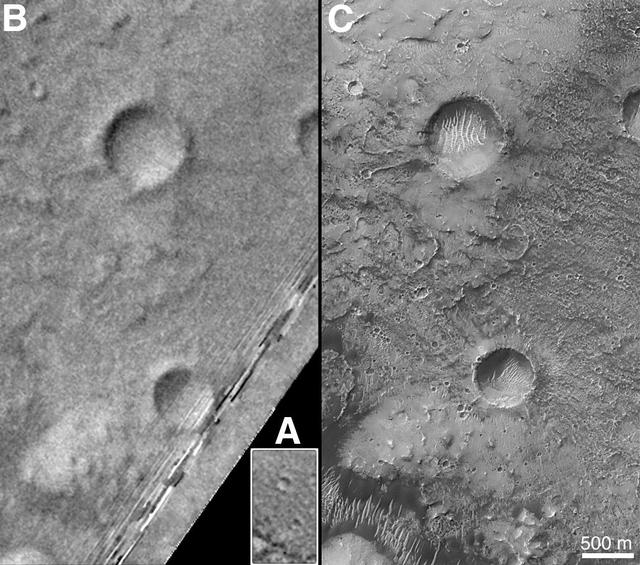
On Earth, the longitude of the Royal Observatory in Greenwich, England is defined as the "prime meridian," or the zero point of longitude. Locations on Earth are measured in degrees east or west from this position. The prime meridian was defined by international agreement in 1884 as the position of the large "transit circle," a telescope in the Observatory's Meridian Building. The transit circle was built by Sir George Biddell Airy, the 7th Astronomer Royal, in 1850. (While visual observations with transits were the basis of navigation until the space age, it is interesting to note that the current definition of the prime meridian is in reference to orbiting satellites and Very Long Baseline Interferometry (VLBI) measurements of distant radio sources such as quasars. This "International Reference Meridian" is now about 100 meters east of the Airy Transit at Greenwich.) For Mars, the prime meridian was first defined by the German astronomers W. Beer and J. H. Mädler in 1830-32. They used a small circular feature, which they designated "a," as a reference point to determine the rotation period of the planet. The Italian astronomer G. V. Schiaparelli, in his 1877 map of Mars, used this feature as the zero point of longitude. It was subsequently named Sinus Meridiani ("Middle Bay") by Camille Flammarion. When Mariner 9 mapped the planet at about 1 kilometer (0.62 mile) resolution in 1972, an extensive "control net" of locations was computed by Merton Davies of the RAND Corporation. Davies designated a 0.5-kilometer-wide crater (0.3 miles wide), subsequently named "Airy-0" (within the large crater Airy in Sinus Meridiani) as the longitude zero point. (Airy, of course, was named to commemorate the builder of the Greenwich transit.) This crater was imaged once by Mariner 9 (the 3rd picture taken on its 533rd orbit, 533B03) and once by the Viking 1 orbiter in 1978 (the 46th image on that spacecraft's 746th orbit, 746A46), and these two images were the basis of the martian longitude system for the rest of the 20th Century. The Mars Global Surveyor (MGS) Mars Orbiter Camera (MOC) has attempted to take a picture of Airy-0 on every close overflight since the beginning of the MGS mapping mission. It is a measure of the difficulty of hitting such a small target that nine attempts were required, since the spacecraft did not pass directly over Airy-0 until almost the end of the MGS primary mission, on orbit 8280 (January 13, 2001). In the left figure above, the outlines of the Mariner 9, Viking, and Mars Global Surveyor images are shown on a MOC wide angle context image, M23-00924. In the right figure, sections of each of the three images showing the crater Airy-0 are presented. A is a piece of the Mariner 9 image, B is from the Viking image, and C is from the MGS image. Airy-0 is the larger crater toward the top-center in each frame. The MOC observations of Airy-0 not only provide a detailed geological close-up of this historic reference feature, they will be used to improve our knowledge of the locations of all features on Mars, which will in turn enable more precise landings on the Red Planet by future spacecraft and explorers. http://photojournal.jpl.nasa.gov/catalog/PIA03207
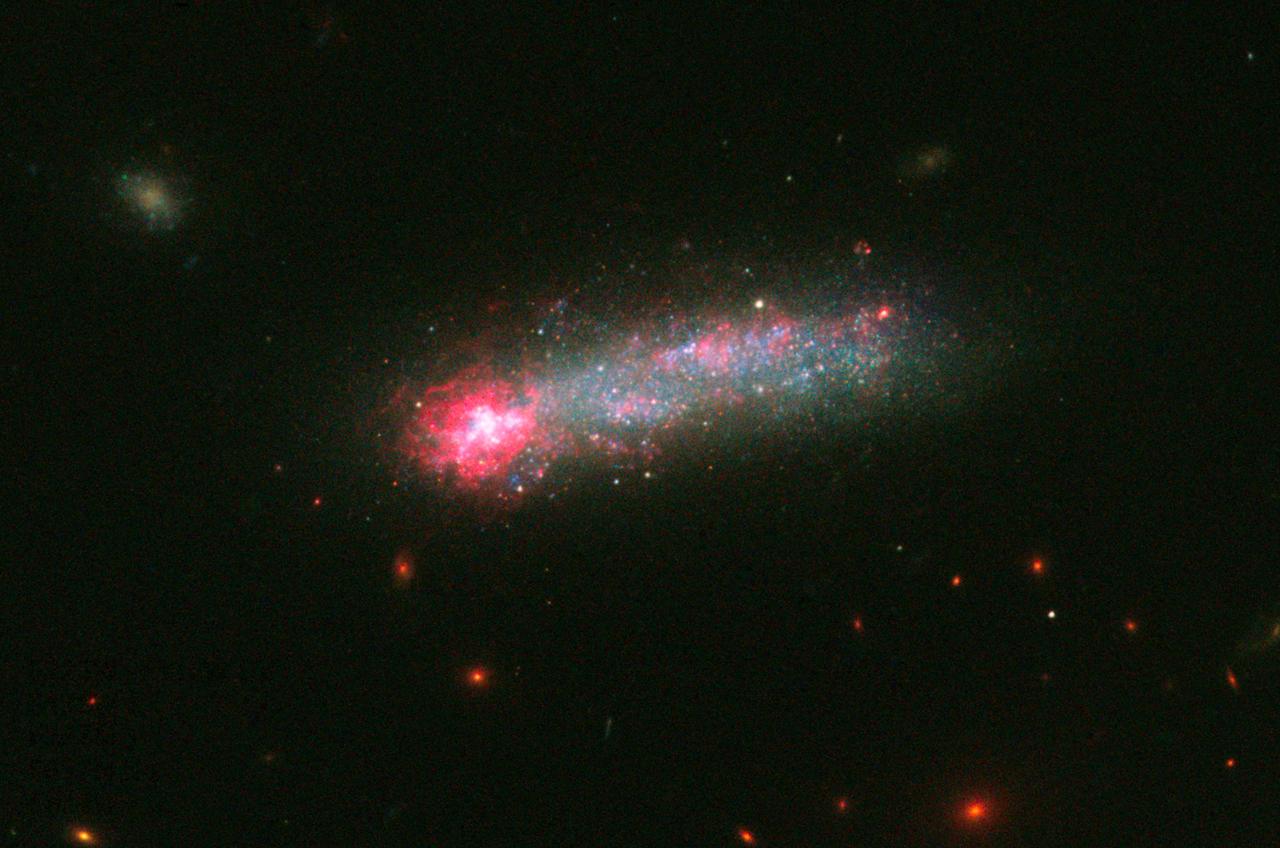
Fireworks shows are not just confined to Earth’s skies. NASA’s Hubble Space Telescope has captured a spectacular fireworks display in a small, nearby galaxy, which resembles a July 4th skyrocket. A firestorm of star birth is lighting up one end of the diminutive galaxy Kiso 5639. The dwarf galaxy is shaped like a flattened pancake, but because it is tilted edge-on, it resembles a skyrocket, with a brilliant blazing head and a long, star-studded tail. Kiso 5639 is a rare, nearby example of elongated galaxies that occur in abundance at larger distances, where we observe the universe during earlier epochs. Astronomers suggest that the frenzied star birth is sparked by intergalactic gas raining on one end of the galaxy as it drifts through space. “I think Kiso 5639 is a beautiful, up-close example of what must have been common long ago,” said lead researcher Debra Elmegreen of Vassar College, in Poughkeepsie, New York. “The current thinking is that galaxies in the early universe grow from accreting gas from the surrounding neighborhood. It’s a stage that galaxies, including our Milky Way, must go through as they are growing up.” Observations of the early universe, such as Hubble’s Ultra-Deep Field, reveal that about 10 percent of all galaxies have these elongated shapes, and are collectively called “tadpoles.” But studies of the nearby universe have turned up only a few of these unusual galaxies, including Kiso 5639. The development of the nearby star-making tadpole galaxies, however, has lagged behind that of their peers, which have spent billions of years building themselves up into many of the spiral galaxies seen today. Elmegreen used Hubble’s Wide Field Camera 3 to conduct a detailed imaging study of Kiso 5639. The images in different filters reveal information about an object by dissecting its light into its component colors. Hubble’s crisp resolution helped Elmegreen and her team analyze the giant star-forming clumps in Kiso 5639 and determine the masses and ages of the star clusters. The international team of researchers selected Kiso 5639 from a spectroscopic survey of 10 nearby tadpole galaxies, observed with the Grand Canary Telescope in La Palma, Spain, by Jorge Sanchez Almeida and collaborators at the Instituto de Astrofisica de Canarias. The observations revealed that in most of those galaxies, including Kiso 5639, the gas composition is not uniform. The bright gas in the galaxy’s head contains fewer heavier elements (collectively called “metals”), such as carbon and oxygen, than the rest of the galaxy. Stars consist mainly of hydrogen and helium, but cook up other “heavier” elements. When the stars die, they release their heavy elements and enrich the surrounding gas. “The metallicity suggests that there has to be rather pure gas, composed mostly of hydrogen, coming into the star-forming part of the galaxy, because intergalactic space contains more pristine hydrogen-rich gas,” Elmegreen explained. “Otherwise, the starburst region should be as rich in heavy elements as the rest of the galaxy.” Hubble offers a detailed view of the galaxy’s star-making frenzy. The telescope uncovered several dozen clusters of stars in the galaxy’s star-forming head, which spans 2,700 light-years across. These clusters have an average age of less than 1 million years and masses that are three to six times larger than those in the rest of the galaxy. Other star formation is taking place throughout the galaxy but on a much smaller scale. Star clusters in the rest of the galaxy are between several million to a few billion years old. “There is much more star formation going on in the head than what you would expect in such a tiny galaxy,” said team member Bruce Elmegreen of IBM’s Thomas J. Watson’s Research Center, in Yorktown Heights, New York. “And we think the star formation is triggered by the ongoing accretion of metal-poor gas onto a part of an otherwise quiescent dwarf galaxy.” Hubble also revealed giant holes peppered throughout the galaxy’s starburst head. These cavities give the galaxy’s head a Swiss-cheese appearance because numerous supernova detonations – like firework aerial bursts – have carved out holes of rarified superheated gas. The galaxy, located 82 million light-years away, has taken billions of years to develop because it has been drifting through an isolated “desert” in the universe, devoid of much gas. What triggered the starburst in such a backwater galaxy? Based on simulations by Daniel Ceverino of the Center for Astronomy at Heidelberg University in Germany, and other team members, the observations suggest that less than 1 million years ago, Kiso 5639’s leading edge encountered a filament of gas. The filament dropped a large clump of matter onto the galaxy, stoking the vigorous star birth. Debra Elmegreen expects that in the future other parts of the galaxy will join in the star-making fireworks show. “Galaxies rotate, and as Kiso 5639 continues to spin, another part of the galaxy may receive an infusion of new gas from this filament, instigating another round of star birth,” she said. The team’s results have been accepted for publication in The Astrophysical Journal. Other team members include Casiana Munoz-Tunon and Mercedes Filho (Instituto de Astrofísica de Canarias, Canary Islands), Jairo Mendez-Abreu (University of St. Andrews, United Kingdom), John Gallagher (University of Wisconsin-Madison), and Marc Rafelski (NASA's Goddard Space Flight Center, Greenbelt, Maryland). The Hubble Space Telescope is a project of international cooperation between NASA and the European Space Agency. NASA's Goddard Space Flight Center in Greenbelt, Maryland, manages the telescope. The Space Telescope Science Institute (STScI) in Baltimore, Maryland, conducts Hubble science operations. STScI is operated for NASA by the Association of Universities for Research in Astronomy in Washington, D.C. For images and more information about Kiso 5639 and Hubble, visit: <a href="http://hubblesite.org/news/2016/23" rel="nofollow">hubblesite.org/news/2016/23</a> <a href="http://www.nasa.gov/hubble" rel="nofollow">www.nasa.gov/hubble</a> Image credit: NASA, ESA, and D. Elmegreen (Vassar College) <b><a href="http://www.nasa.gov/audience/formedia/features/MP_Photo_Guidelines.html" rel="nofollow">NASA image use policy.</a></b> <b><a href="http://www.nasa.gov/centers/goddard/home/index.html" rel="nofollow">NASA Goddard Space Flight Center</a></b> enables NASA’s mission through four scientific endeavors: Earth Science, Heliophysics, Solar System Exploration, and Astrophysics. Goddard plays a leading role in NASA’s accomplishments by contributing compelling scientific knowledge to advance the Agency’s mission. <b>Follow us on <a href="http://twitter.com/NASAGoddardPix" rel="nofollow">Twitter</a></b> <b>Like us on <a href="http://www.facebook.com/pages/Greenbelt-MD/NASA-Goddard/395013845897?ref=tsd" rel="nofollow">Facebook</a></b> <b>Find us on <a href="http://instagrid.me/nasagoddard/?vm=grid" rel="nofollow">Instagram</a></b>

Fireworks shows are not just confined to Earth’s skies. NASA’s Hubble Space Telescope has captured a spectacular fireworks display in a small, nearby galaxy, which resembles a July 4th skyrocket. A firestorm of star birth is lighting up one end of the diminutive galaxy Kiso 5639. The dwarf galaxy is shaped like a flattened pancake, but because it is tilted edge-on, it resembles a skyrocket, with a brilliant blazing head and a long, star-studded tail. Kiso 5639 is a rare, nearby example of elongated galaxies that occur in abundance at larger distances, where we observe the universe during earlier epochs. Astronomers suggest that the frenzied star birth is sparked by intergalactic gas raining on one end of the galaxy as it drifts through space. “I think Kiso 5639 is a beautiful, up-close example of what must have been common long ago,” said lead researcher Debra Elmegreen of Vassar College, in Poughkeepsie, New York. “The current thinking is that galaxies in the early universe grow from accreting gas from the surrounding neighborhood. It’s a stage that galaxies, including our Milky Way, must go through as they are growing up.” Observations of the early universe, such as Hubble’s Ultra-Deep Field, reveal that about 10 percent of all galaxies have these elongated shapes, and are collectively called “tadpoles.” But studies of the nearby universe have turned up only a few of these unusual galaxies, including Kiso 5639. The development of the nearby star-making tadpole galaxies, however, has lagged behind that of their peers, which have spent billions of years building themselves up into many of the spiral galaxies seen today. Elmegreen used Hubble’s Wide Field Camera 3 to conduct a detailed imaging study of Kiso 5639. The images in different filters reveal information about an object by dissecting its light into its component colors. Hubble’s crisp resolution helped Elmegreen and her team analyze the giant star-forming clumps in Kiso 5639 and determine the masses and ages of the star clusters. The international team of researchers selected Kiso 5639 from a spectroscopic survey of 10 nearby tadpole galaxies, observed with the Grand Canary Telescope in La Palma, Spain, by Jorge Sanchez Almeida and collaborators at the Instituto de Astrofisica de Canarias. The observations revealed that in most of those galaxies, including Kiso 5639, the gas composition is not uniform. The bright gas in the galaxy’s head contains fewer heavier elements (collectively called “metals”), such as carbon and oxygen, than the rest of the galaxy. Stars consist mainly of hydrogen and helium, but cook up other “heavier” elements. When the stars die, they release their heavy elements and enrich the surrounding gas. “The metallicity suggests that there has to be rather pure gas, composed mostly of hydrogen, coming into the star-forming part of the galaxy, because intergalactic space contains more pristine hydrogen-rich gas,” Elmegreen explained. “Otherwise, the starburst region should be as rich in heavy elements as the rest of the galaxy.” Hubble offers a detailed view of the galaxy’s star-making frenzy. The telescope uncovered several dozen clusters of stars in the galaxy’s star-forming head, which spans 2,700 light-years across. These clusters have an average age of less than 1 million years and masses that are three to six times larger than those in the rest of the galaxy. Other star formation is taking place throughout the galaxy but on a much smaller scale. Star clusters in the rest of the galaxy are between several million to a few billion years old. “There is much more star formation going on in the head than what you would expect in such a tiny galaxy,” said team member Bruce Elmegreen of IBM’s Thomas J. Watson’s Research Center, in Yorktown Heights, New York. “And we think the star formation is triggered by the ongoing accretion of metal-poor gas onto a part of an otherwise quiescent dwarf galaxy.” Hubble also revealed giant holes peppered throughout the galaxy’s starburst head. These cavities give the galaxy’s head a Swiss-cheese appearance because numerous supernova detonations – like firework aerial bursts – have carved out holes of rarified superheated gas. The galaxy, located 82 million light-years away, has taken billions of years to develop because it has been drifting through an isolated “desert” in the universe, devoid of much gas. What triggered the starburst in such a backwater galaxy? Based on simulations by Daniel Ceverino of the Center for Astronomy at Heidelberg University in Germany, and other team members, the observations suggest that less than 1 million years ago, Kiso 5639’s leading edge encountered a filament of gas. The filament dropped a large clump of matter onto the galaxy, stoking the vigorous star birth. Debra Elmegreen expects that in the future other parts of the galaxy will join in the star-making fireworks show. “Galaxies rotate, and as Kiso 5639 continues to spin, another part of the galaxy may receive an infusion of new gas from this filament, instigating another round of star birth,” she said. The team’s results have been accepted for publication in The Astrophysical Journal. Other team members include Casiana Munoz-Tunon and Mercedes Filho (Instituto de Astrofísica de Canarias, Canary Islands), Jairo Mendez-Abreu (University of St. Andrews, United Kingdom), John Gallagher (University of Wisconsin-Madison), and Marc Rafelski (NASA's Goddard Space Flight Center, Greenbelt, Maryland). The Hubble Space Telescope is a project of international cooperation between NASA and the European Space Agency. NASA's Goddard Space Flight Center in Greenbelt, Maryland, manages the telescope. The Space Telescope Science Institute (STScI) in Baltimore, Maryland, conducts Hubble science operations. STScI is operated for NASA by the Association of Universities for Research in Astronomy in Washington, D.C.