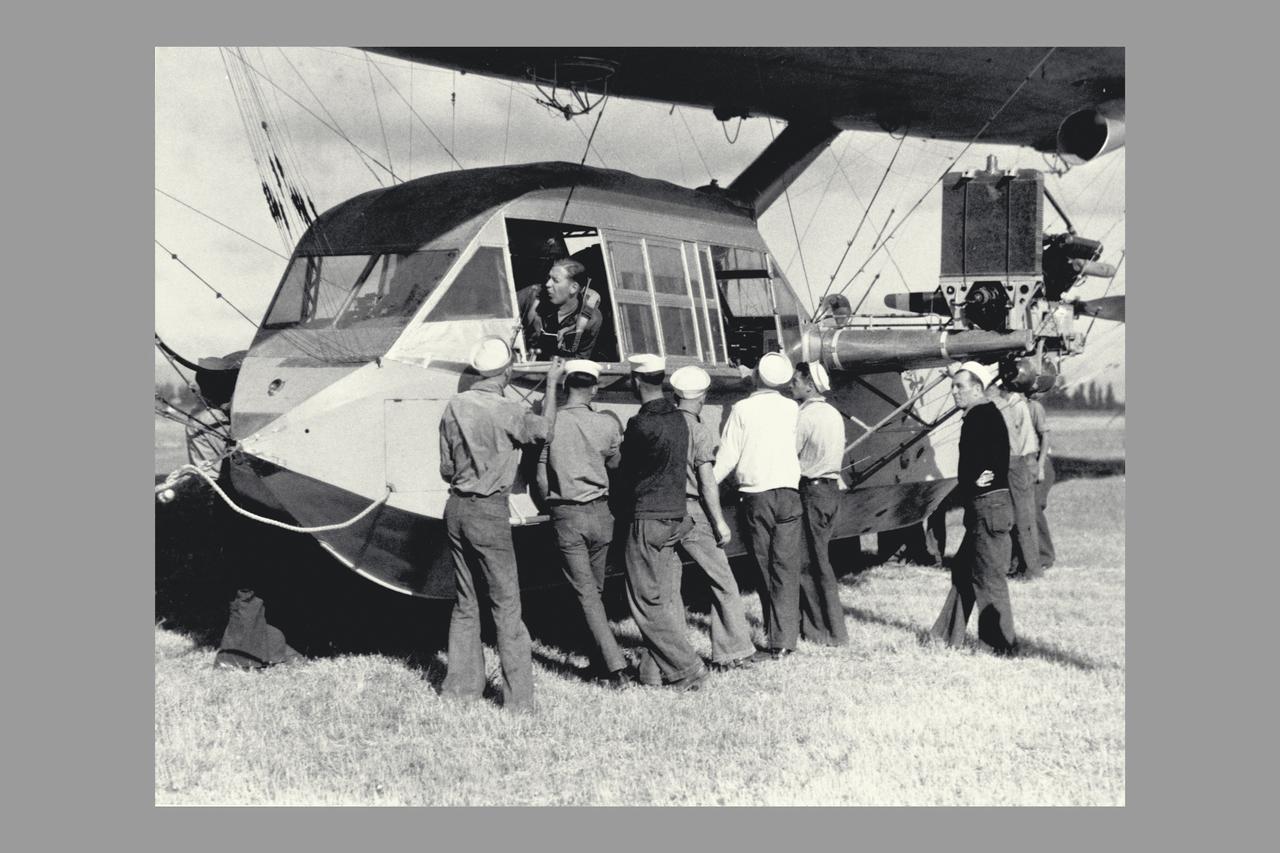
Blimp J-4 Gondola (non-rigid air ship)
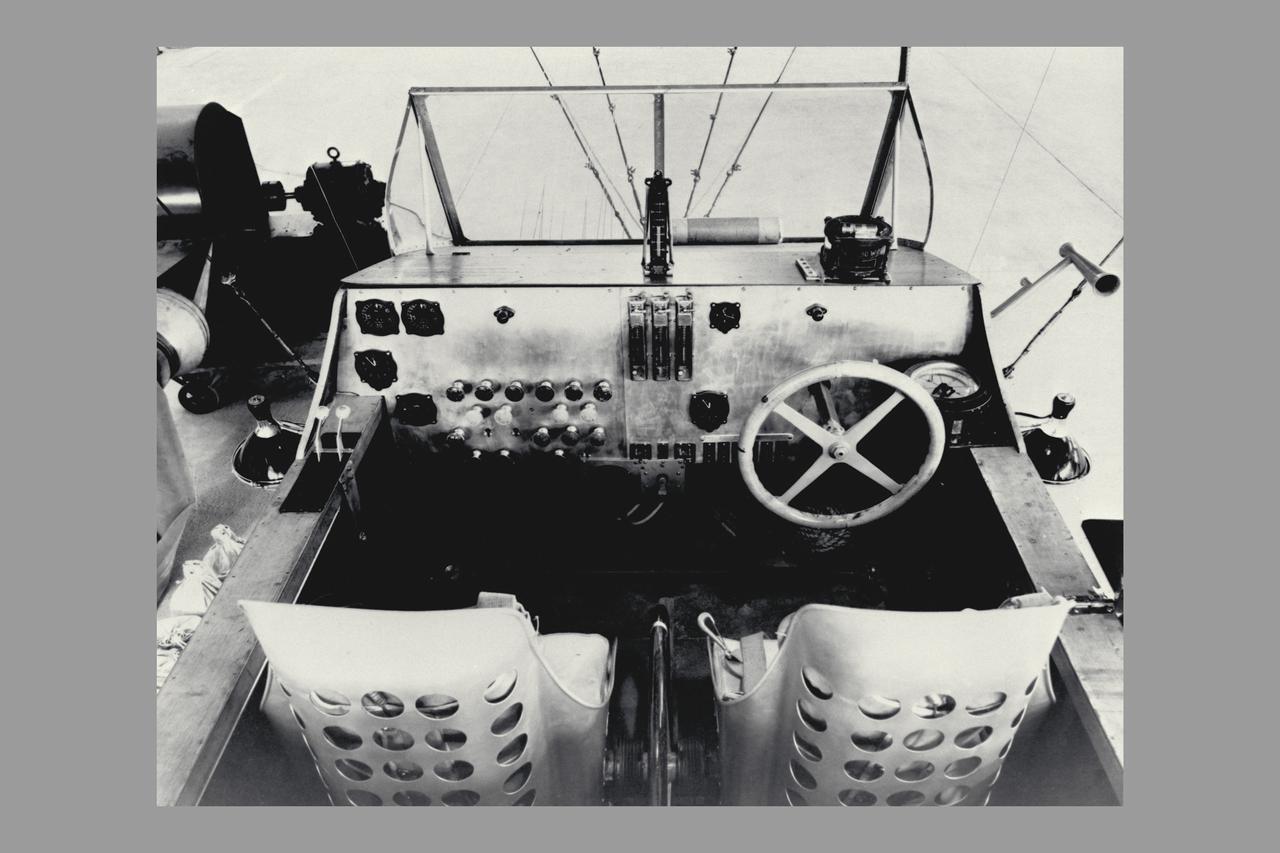
Blimp J-4 Car instrument panel (non-rigid air ship)
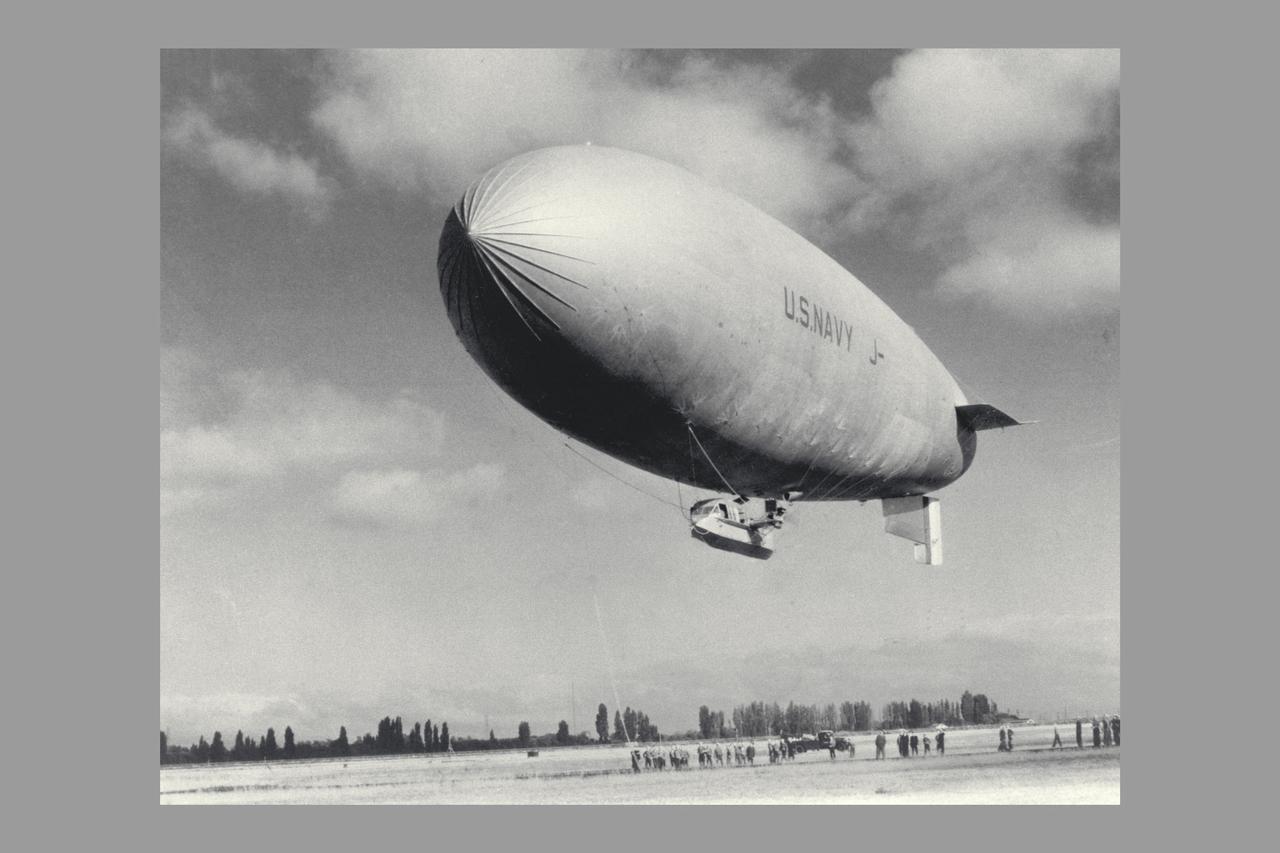
Blimp J-4 tether (non-rigid air ship)
![iss045e014085 (9/17/2015) --- View of the Japan Aerospace Exploration Agency (JAXA) Small Satellite S-CUBE deployed from JEM [Japanese Experiment Module]-Small Satellite Orbital Deployer 4 (J-SSOD 4) equipment on the Multi-Purpose Experiment Platform (MPEP).](https://images-assets.nasa.gov/image/iss045e014085/iss045e014085~medium.jpg)
iss045e014085 (9/17/2015) --- View of the Japan Aerospace Exploration Agency (JAXA) Small Satellite S-CUBE deployed from JEM [Japanese Experiment Module]-Small Satellite Orbital Deployer 4 (J-SSOD 4) equipment on the Multi-Purpose Experiment Platform (MPEP).

ISS045E014236 (09/17/2015) – A Japanese Small Satellite is deployed from outside the Japanese Experiment Module on Sept. 17, 2015. Two satellites were sent into Earth orbit by the Small Satellite Orbital Deployer. The first satellite is designed to observe the Ultraviolet (UV) spectrum during the Orionid meteor shower in October. The second satellite, sponsored by the University of Brasilia and the Brazilian government, focuses on meteorological data collection.
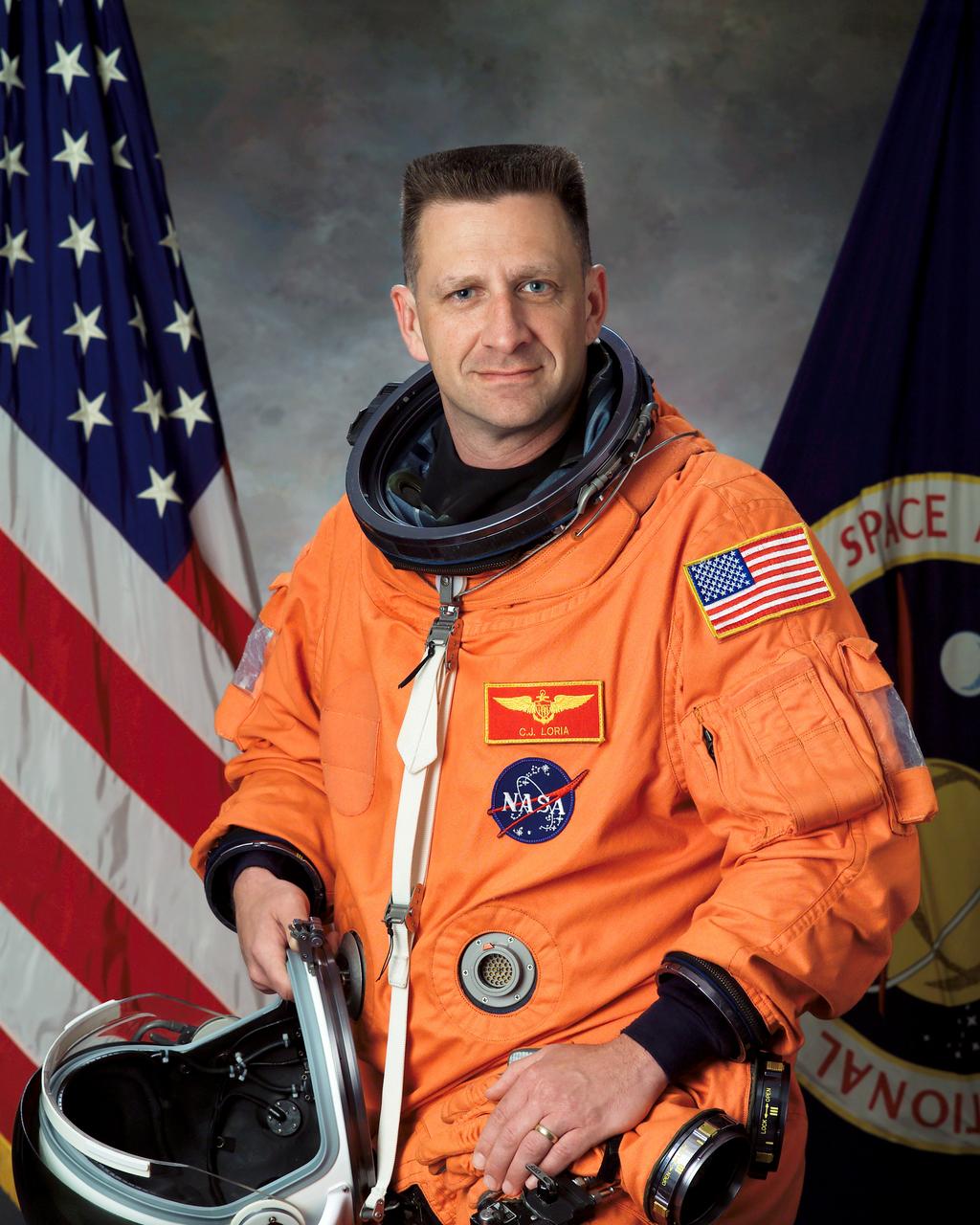
JSC2002-E-20496 (4 April 2002) --- Astronaut Christopher J. (Gus) Loria, pilot
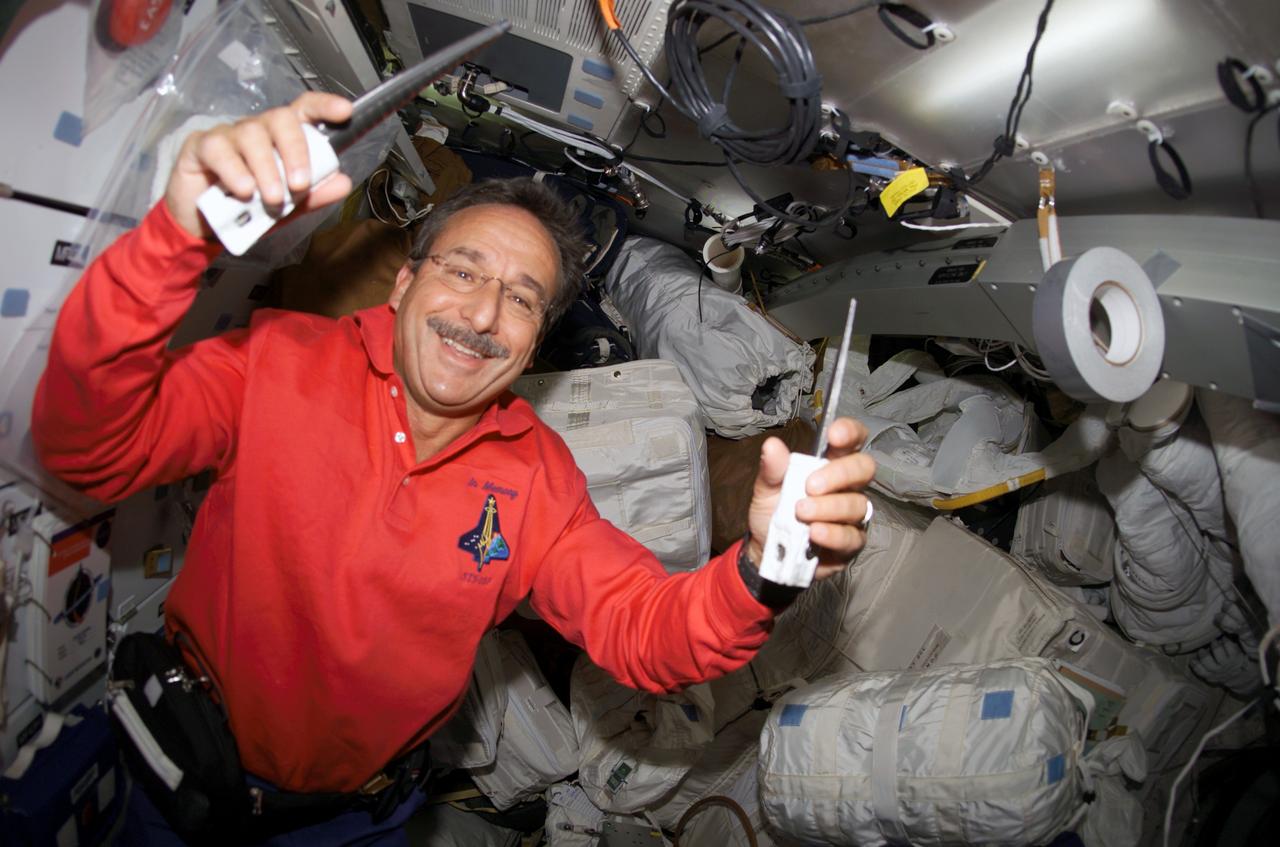
S114-E-6951 (4 August 2005) --- Astronaut Charles J. Camarda, STS-114 mission specialist, poses for a photo on the middeck of the Space Shuttle Discovery.

S83-30222 (4 April 1983) --- The second reusable spacecraft in history successfully launches from Launch Pad 39A at 1:30:00:88 p.m. (EST) on April 4, 1983, and heads for its history making five-day mission in Earth orbit. The space shuttle Challenger, its two solid rocket boosters (SRB), and a new lightweight?external fuel tank were captured on film by an automatically-tripped camera in a protected station nearer to the launch pad than human beings are able to be at launch time. Onboard the spacecraft are astronauts Paul J. Wietz, Karol J. Bobko, Dr. Story Musgrave and Donald H. Peterson. Photo credit: NASA
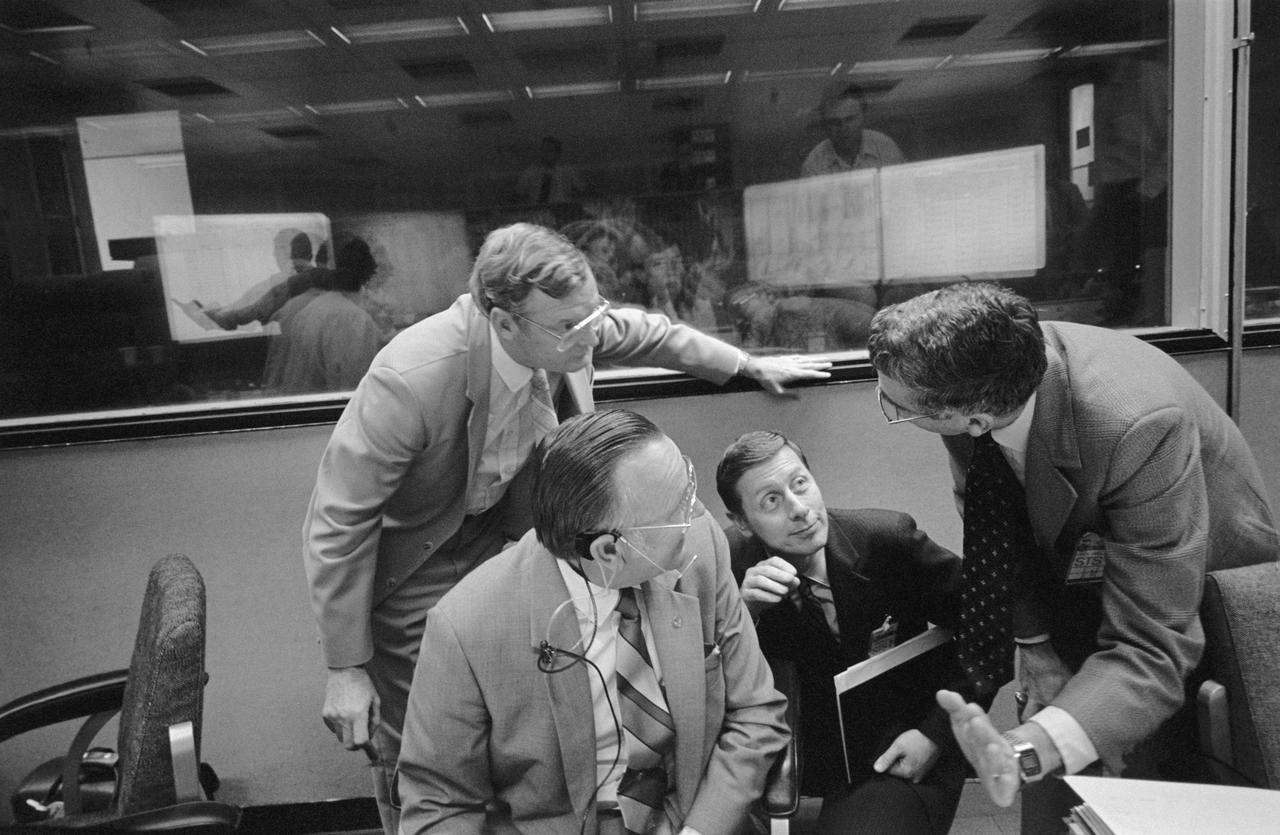
Mission Control Activities during the STS-3 Mission, Day-4 with: Maj. Gen. James A. Abrahamson, Associate Administrator of the Space Transportation System (STS), NASA Hdqs., conversing with Dr. Kraft; Glynn S. Lunney, Manager, Space Shuttle Program Office, JSC, Aaron Cohen, Manager, Space Shuttle Orbiter Project Office; and, J. E. Conner, Ford Aerospace Engineer at the Instrumentation and Communications Officer (INCO) Console position. 1. Glynn S. Lunney 2. Major General James A. Abrahamson 3. Aaron Cohen 4. J. E. Conner 5. Dr. Christopher Kraft JSC, Houston, TX

STS006-46-617 (4-9 April 1983) --- This view of sunset over the Amazon Basin was photographed with a 35mm camera from the Earth-orbiting space shuttle Challenger. The reusable vehicle was making its first trip into space and carried a crew of astronauts Paul J. Weitz, Karol J. Bobko, F. Story Musgrave and Donald H. Peterson. Photo credit: NASA
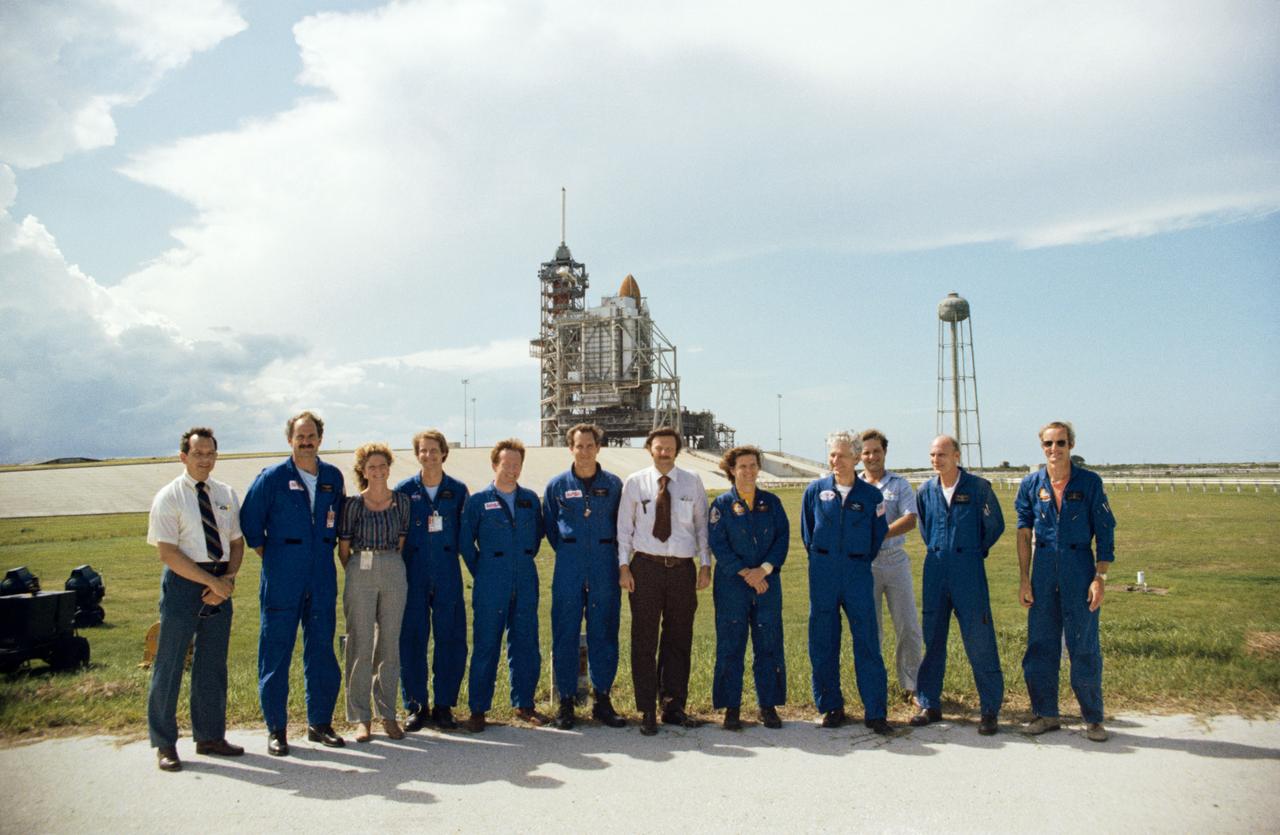
S82-32200 (29 May 1982) --- Members of the JSC astronaut corps, STS-4 vehicle integration test team (VITT) and other personnel pose for a photograph at the completion of a countdown demonstration test (CDDT) at Launch Pad 39A, Kennedy Space Center (KSC). The participants are, from the left, Wilbur J. Etbauer, engineer with the VITT; mission specialist-astronaut James D. van Hoften; Terry Stanford, engineer from JSC's flight operations directorate; mission specialist-astronaut Steven A. Hawley; astronaut Richard N. Richards; astronaut Michael J. Smith; Richard W. Nygren, head of the VITT; mission specialist-astronaut Kathryn D. Sullivan; astronaut Henry W. Hartsfield Jr.,STS-4 pilot; Mary Haynes, a co-op student participating with the VITT; astronaut Thomas K. Mattingly II, STS-4 commander; and astronaut Donald E. Williams. Photo credit: NASA
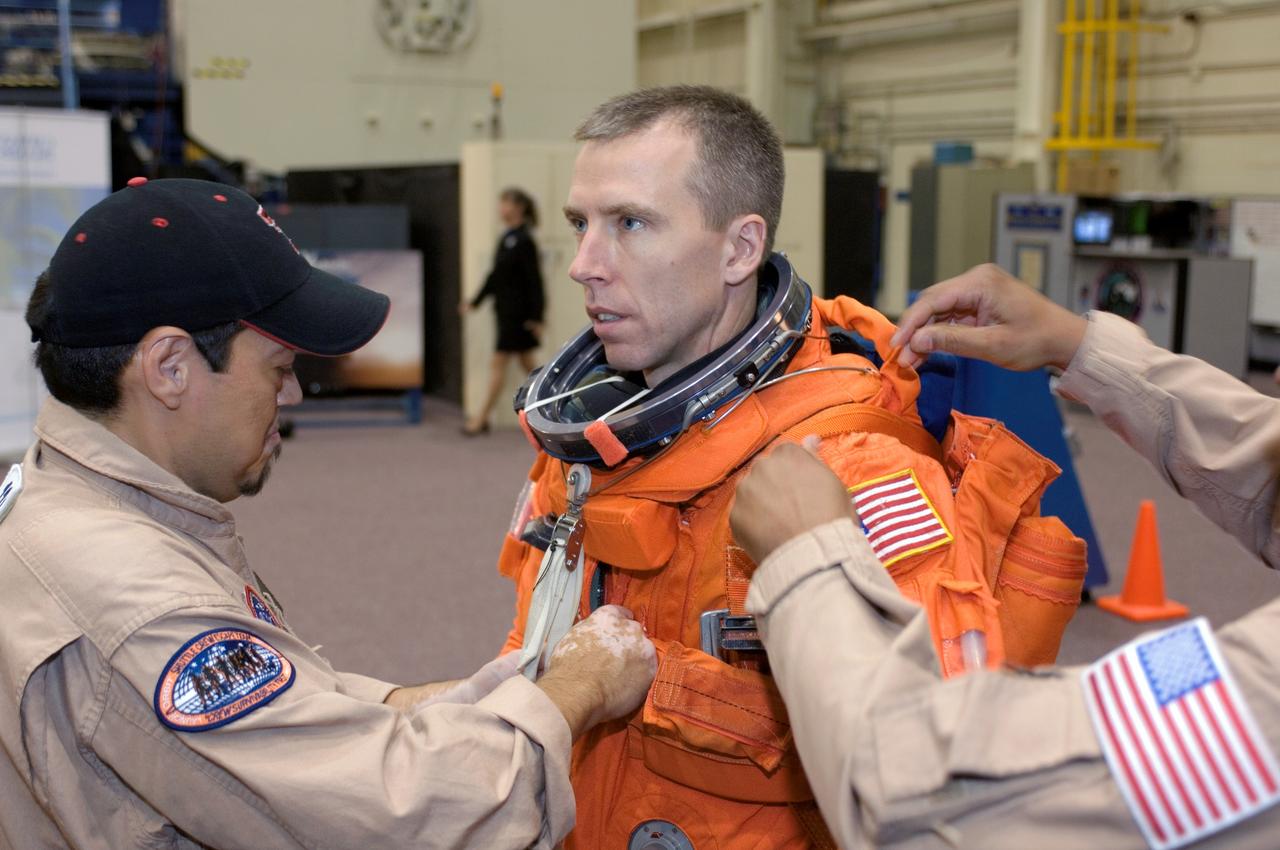
JSC2008-E-047965 (4 June 2008) --- Astronaut Andrew J. Feustel, STS-125 mission specialist, dons a training version of his shuttle launch and entry suit in preparation for a training session in the Space Vehicle Mockup Facility at NASA's Johnson Space Center. United Space Alliance suit technicians assisted Feustel.
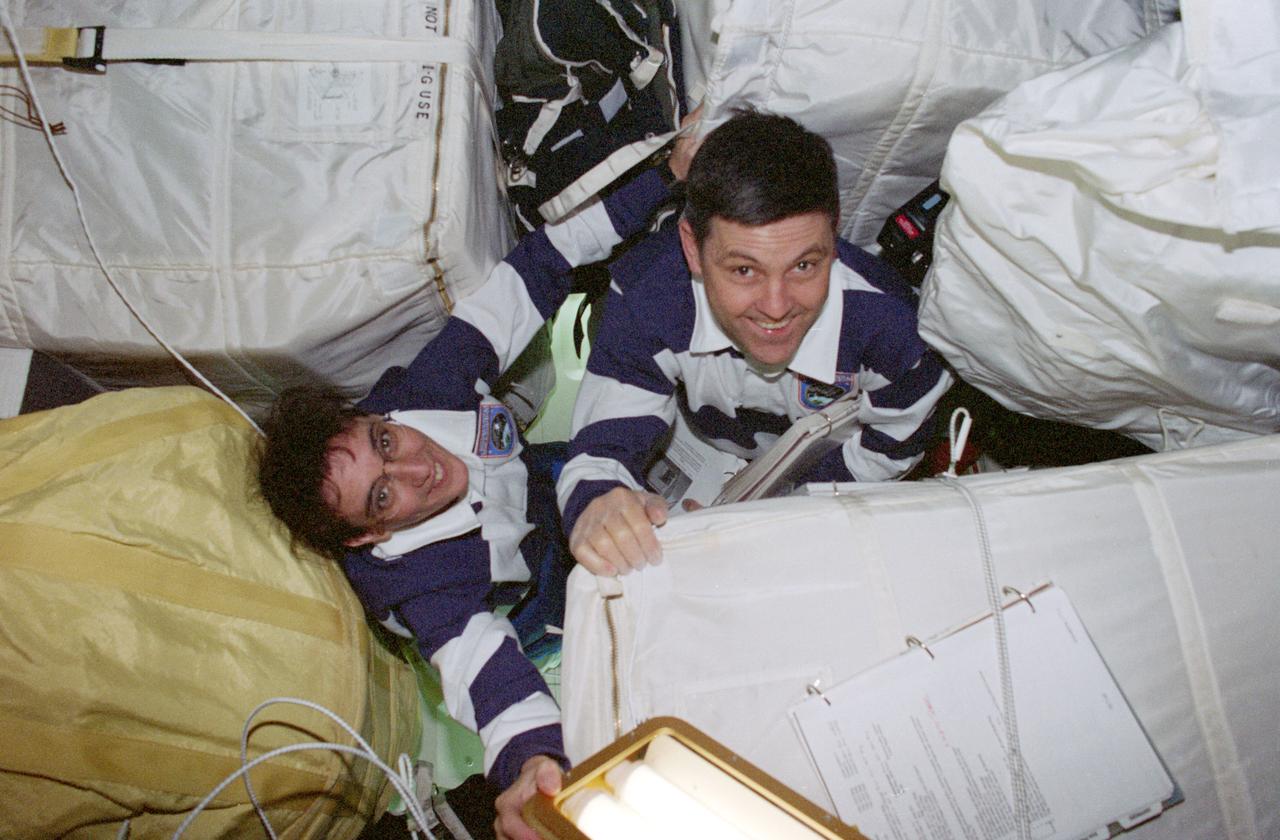
STS088-370-028 (4-15 Dec. 1998) --- Astronauts Nancy J. Currie, mission specialist, and Robert D. Cabana, commander, are surrounded by bags of supplies and equipment on the Space Shuttle Endeavour?s middeck. The crew was in the process of readying the docked Unity and Zarya Modules for International Space Station (ISS) duty.
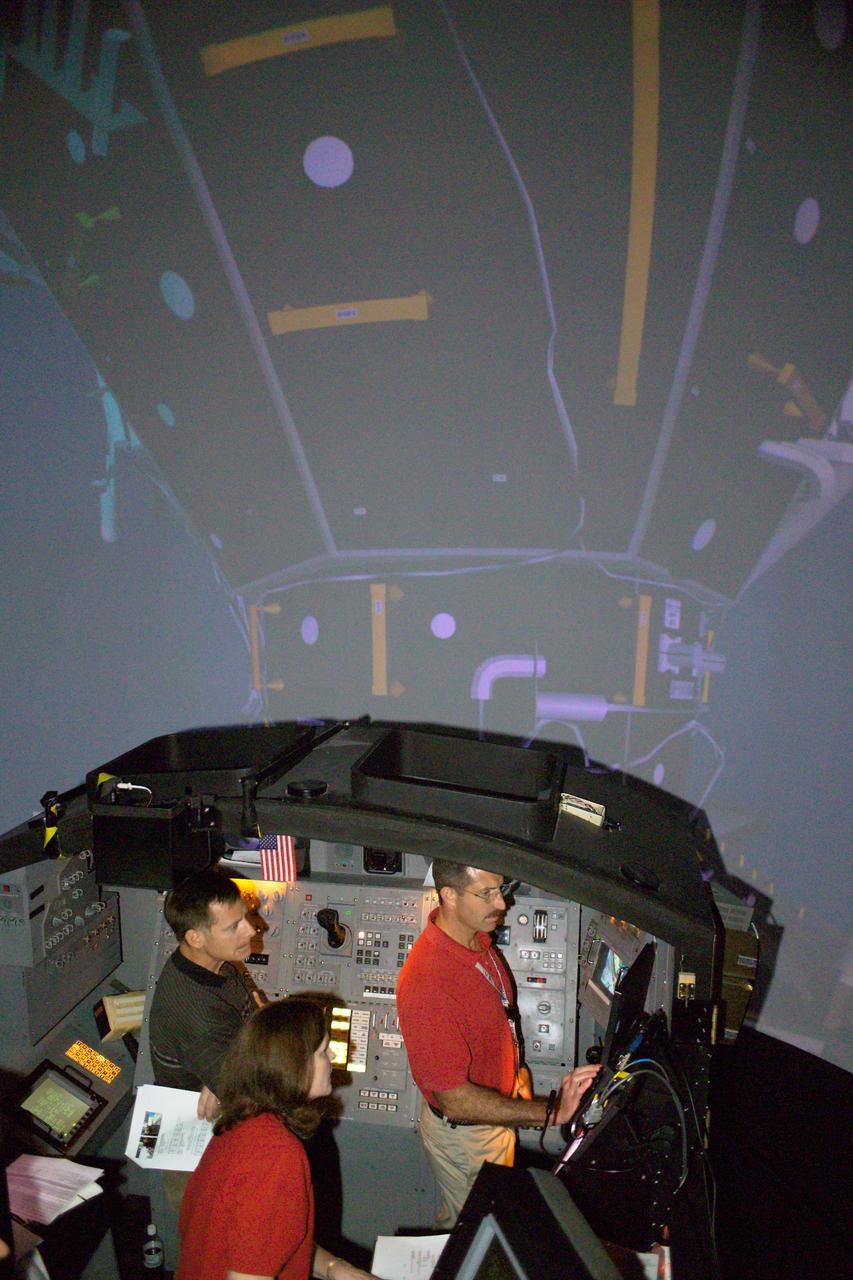
JSC2005-E-17977 (4 May 2005) --- Astronauts Christopher J. Ferguson (left), STS-115 pilot, and Daniel C. Burbank, mission specialist, participate in an exercise in the systems engineering simulator at Johnson Space Center. The facility includes moving scenes of full-sized international space station components over a simulated Earth.

AS6-02-1455 (4 April 1968) --- Texas is photographed from the Apollo 6 (Spacecraft 020/Saturn 502) unmanned space mission. Seen in this photograph are Midland, Brownfield, Big Spring, J. B. Thomas Lake, headwaters of Colorado and Brazos Rivers, and the west Texas gas and oil fields.

STS088-359-029 (4-15 Dec. 1998) --- Astronauts James H. Newman and Nancy J. Currie, both mission specialists, work in the FGB or Zarya Module of the International Space Station (ISS). The two were using the computers to confer with ground controllers about tasks they were attempting to perform in Zarya.
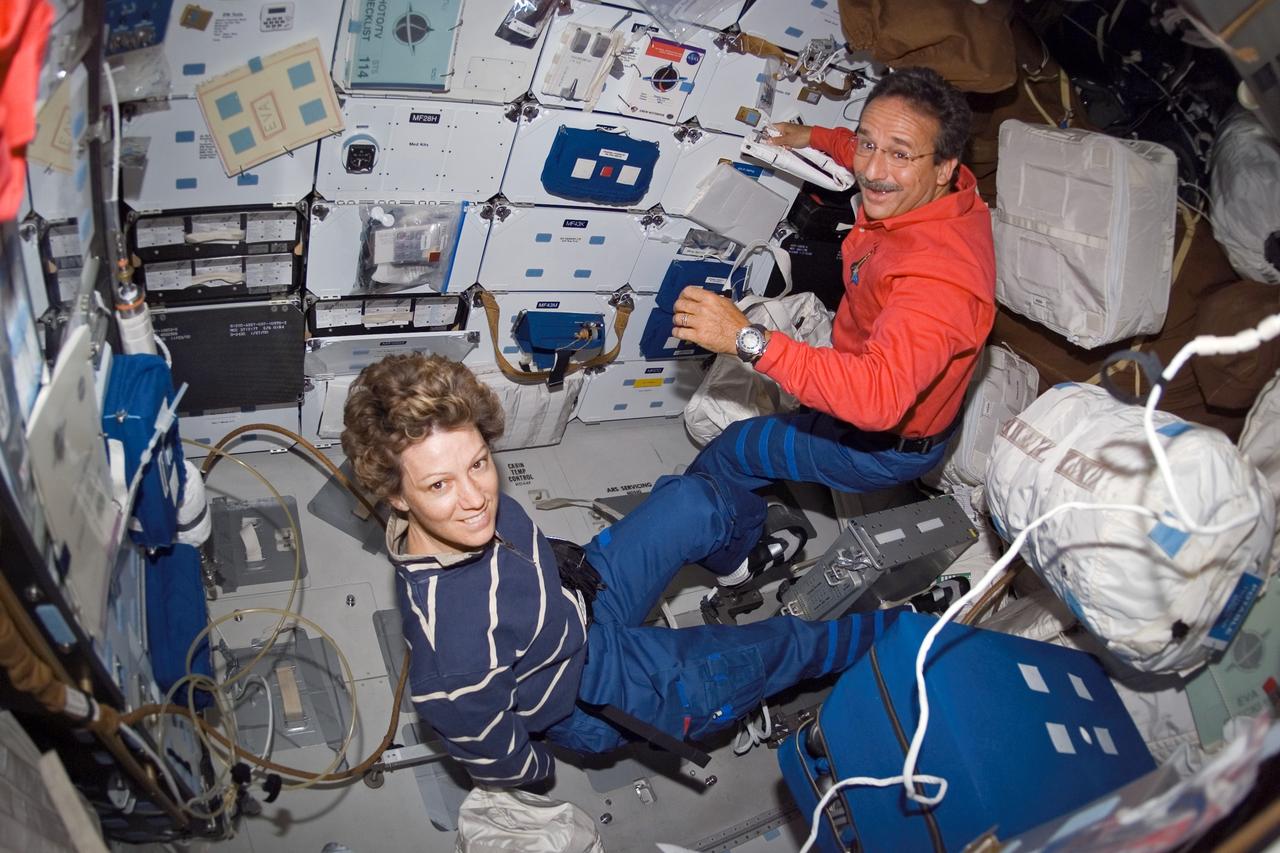
S114-E-6946 (4 August 2005) --- Astronaut Eileen M. Collins, STS-114 commander, works out on the bicycle ergometer on the Space Shuttle Discovery's middeck. Astronaut Charles J. Camarda, mission specialist, works along side Collins.
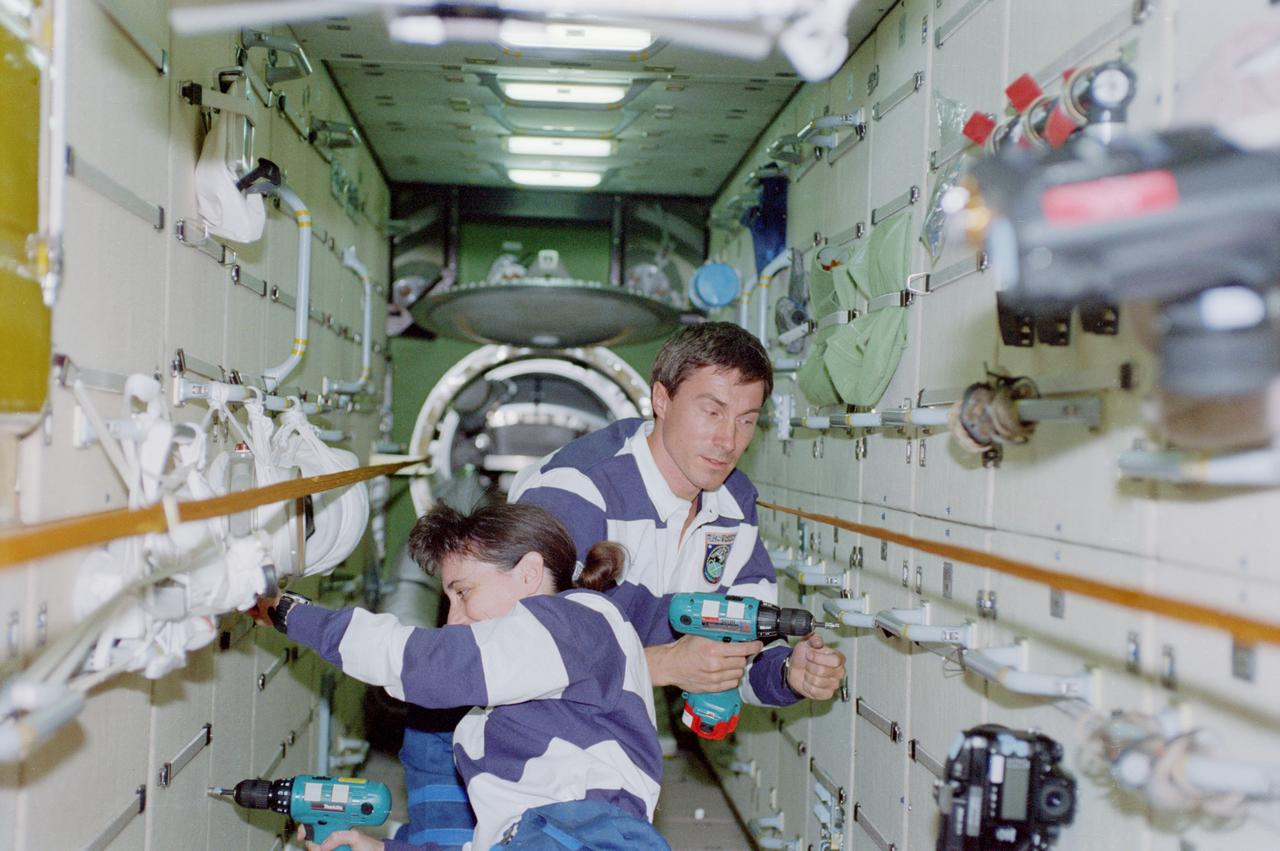
STS088-357-011 (4-15 Dec. 1998) --- Astronaut Nancy J. Currie, mission specialist, and cosmonaut Sergei K. Krikalev, mission specialist representing the Russian Space Agency (RSA), work in the FGB or Zarya Module of the International Space Station (ISS). The two are using battery powered tools to extract bolts.
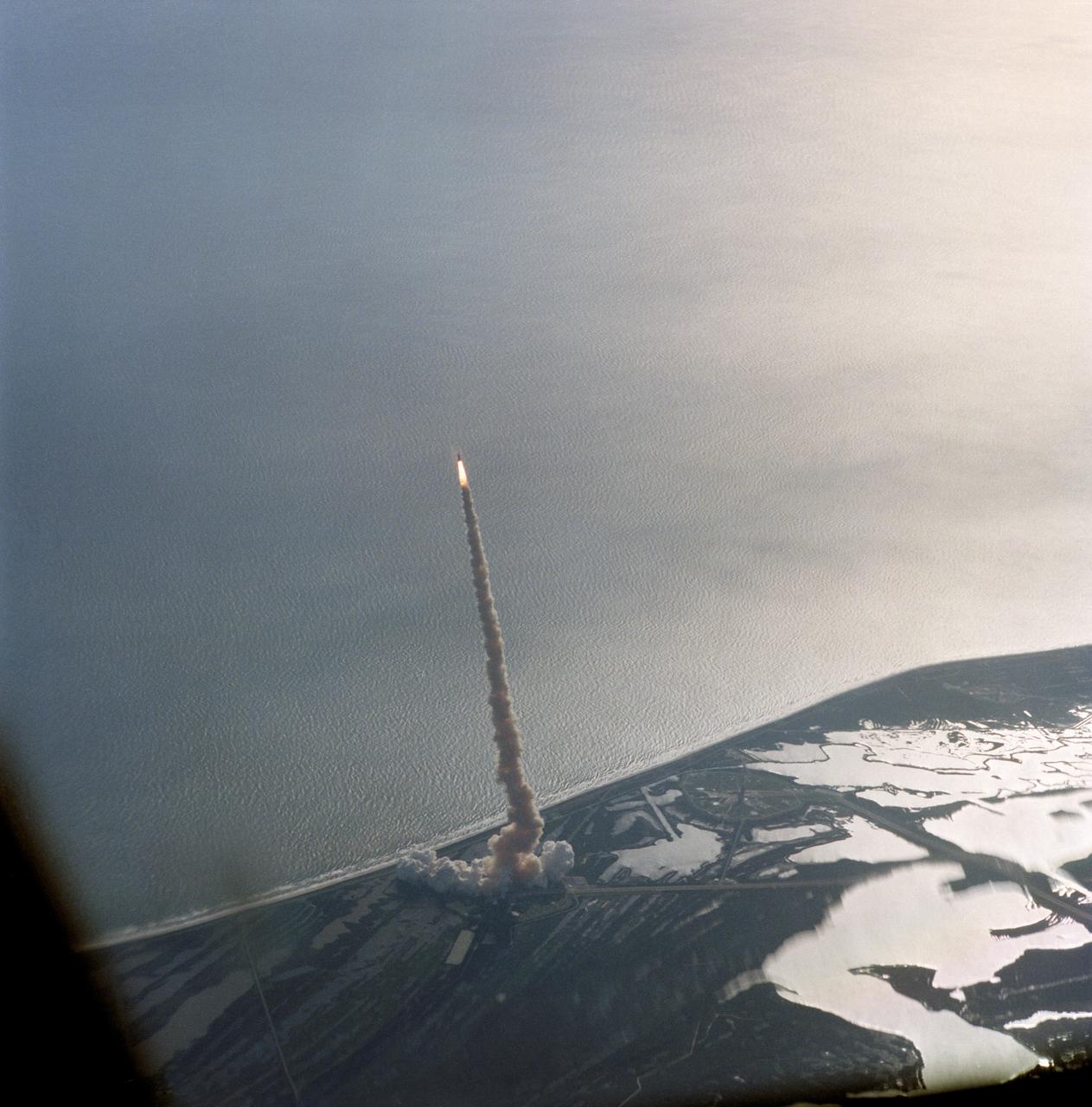
STS062-S-061 (4 March 1994) --- An aerial view of early stages of the sixteenth launch of Space Shuttle Columbia was provided by a 70mm camera aboard the Shuttle Training Aircraft (STA). Launch occurred at 8:53 a.m. (EST), March 4, 1994. Onboard were astronauts John H. Casper, Andrew M. Allen, Marsha S. Ivins, Charles D. (Sam) Gemar and Pierre J. Thuot.

S82-33032 (30 June 1982) --- This scene shows activity at the spacecraft communicator and flight activities officer consoles in the mission operations control room (MOCR) in the Johnson Space Center?s mission control center (MCC). Astronaut Brewster H. Shaw Jr., right, Astronaut Roy D. Bridges Jr. and Marianne J. Dyson are pictured during STS-4?s Day 4 activity. Shaw and Bridges are spacecraft communicators and Dyson is a flight activities officer on the entry team.
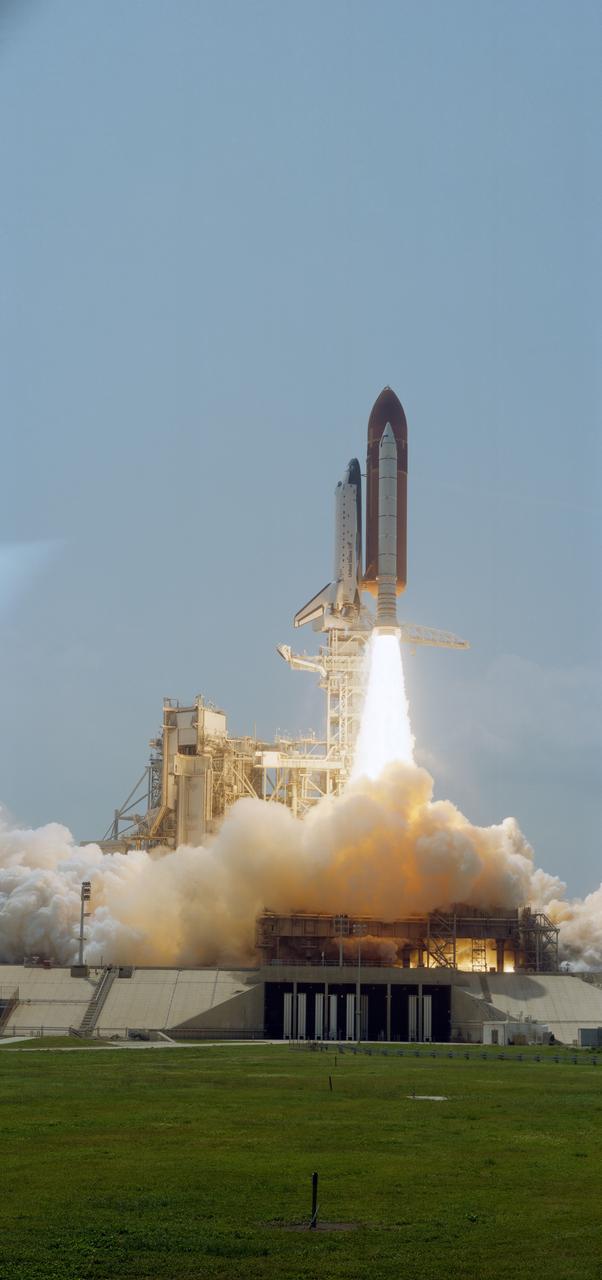
STS030-S-108 (4 May 1989) --- Backdropped against slight gray Florida skies, Space Shuttle Atlantis heads for a four-day mission in earth orbit with five astronaut crewmembers aboard. Onboard were astronauts David. M. Walker, Ronald J. Grabe, Norman E. Thagard, Mary L. Cleave and Mark C. Lee. Launch occurred at 2:46:58 P.M. (EDT), May 4, 1989.
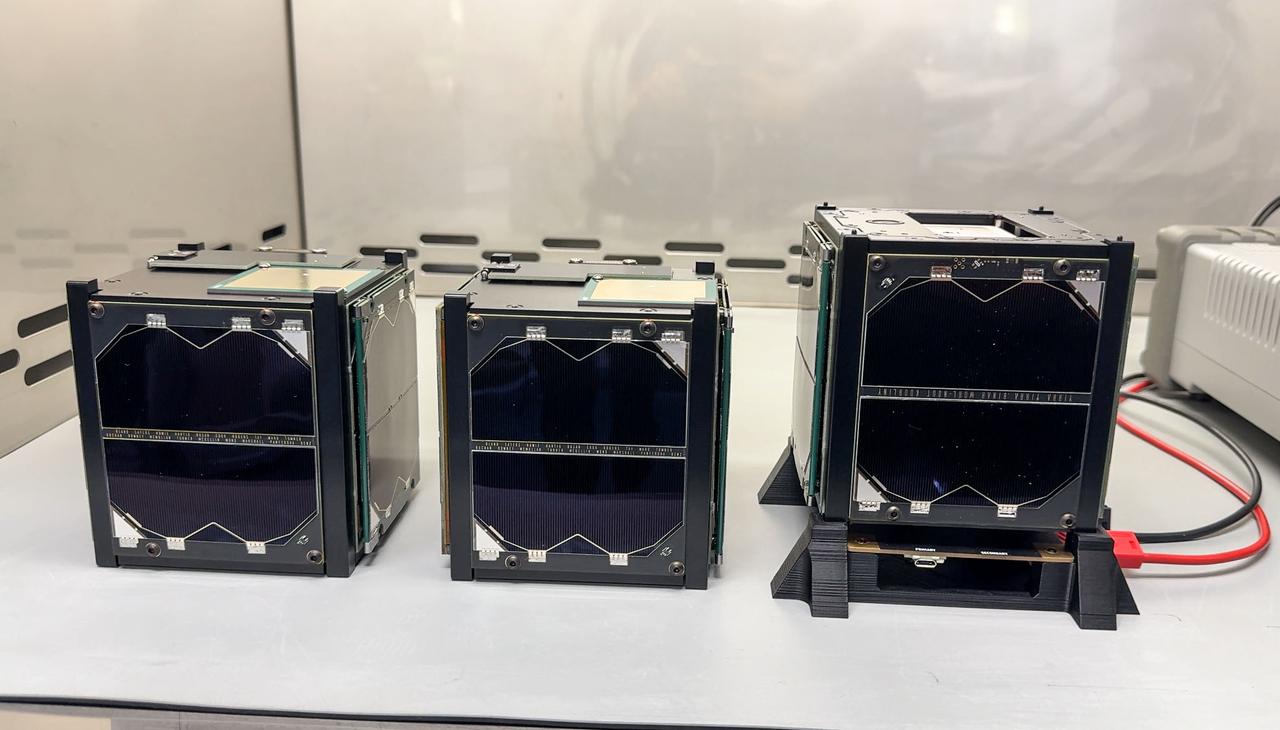
jsc2024e043918 (4/10/2024) --- Binar Space Program, Binar-2, Binar-3, Binar-4 (Binar-234) CubeSats at Curtin University are ready for launch handover to SpaceBD and the Japanese Aerospace Exploration Agency (JAXA). Binar-234 deploys on the J-SSOD 31 mission and launches on NG-21. Image courtesy of Binar Space Program.
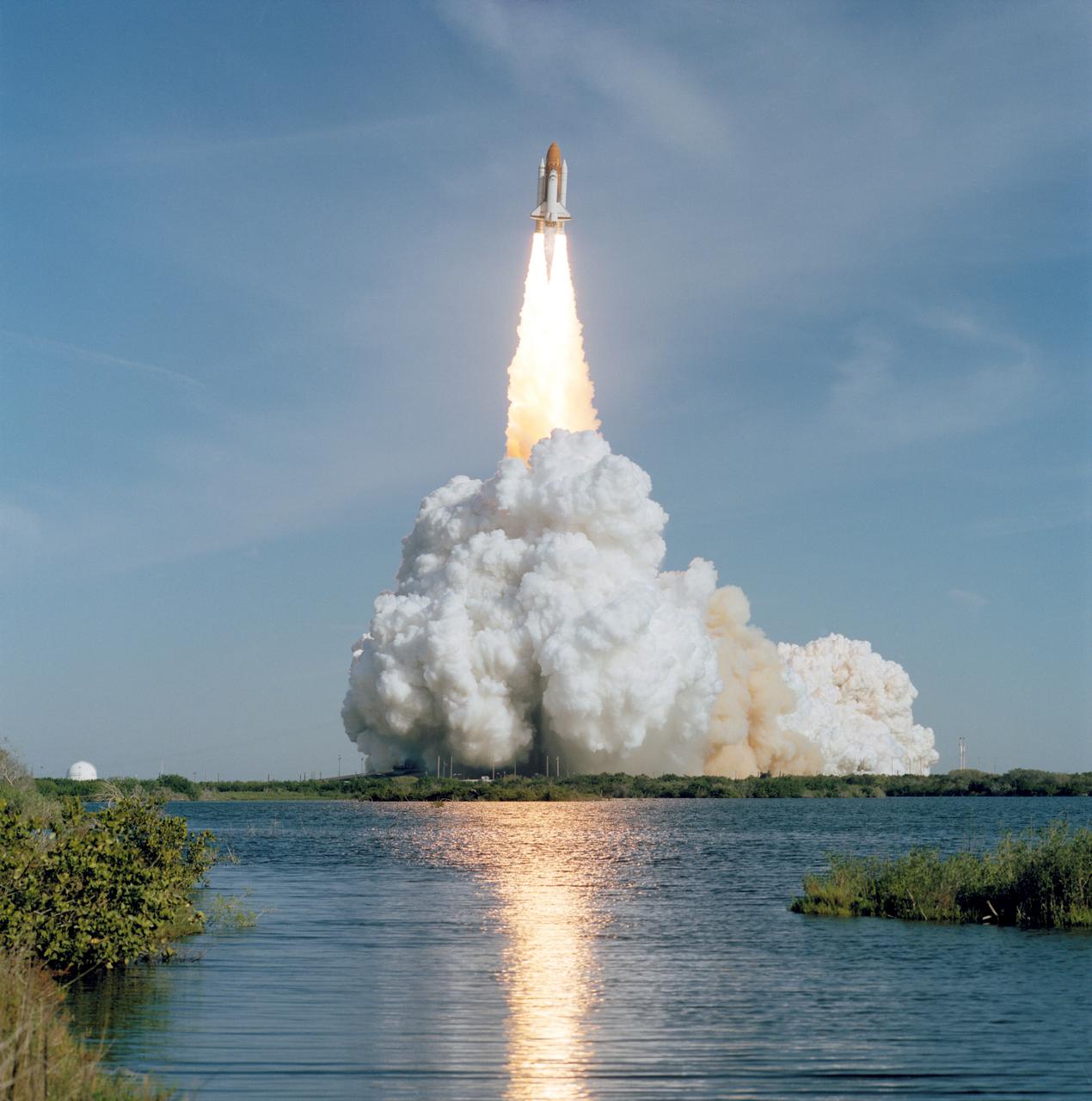
STS062-S-053 (4 March 1994) --- Carrying a crew of five veteran NASA astronauts and the United States Microgravity Payload (USMP), the Space Shuttle Columbia heads toward its sixteenth mission in Earth-orbit. Launch occurred at 8:53 a.m. (EST), March 4, 1994. Onboard were astronauts John H. Casper, Andrew M. Allen, Marsha S. Ivins, Charles D. (Sam) Gemar and Pierre J. Thuot.
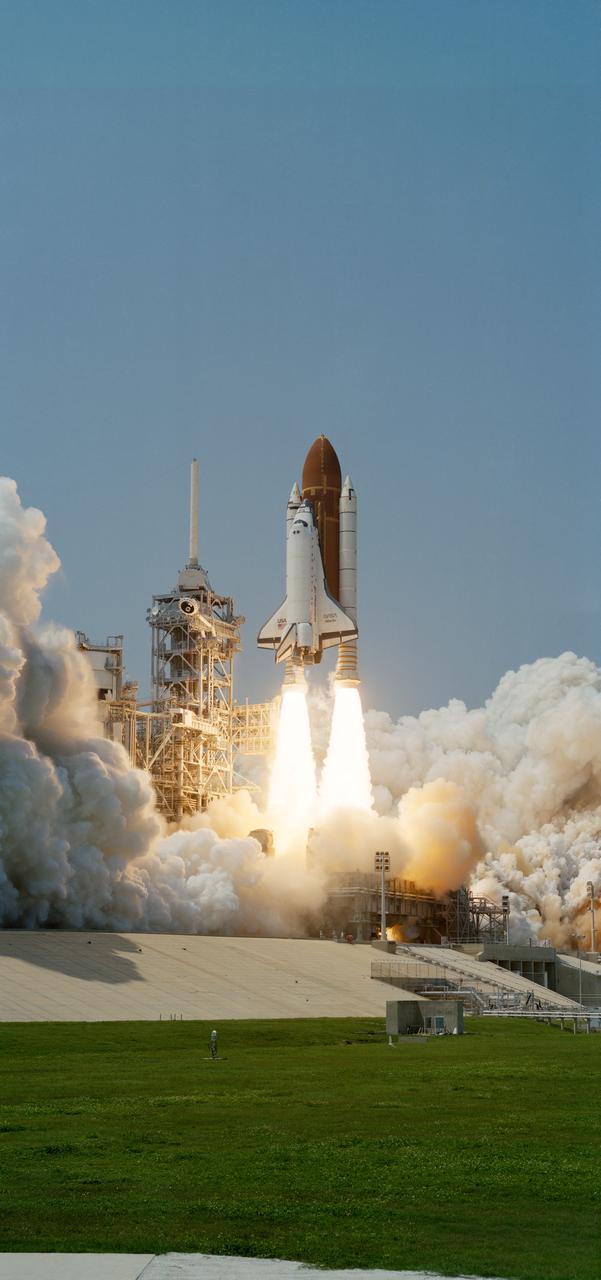
STS030-S-109 (4 May 1989) --- Moments after ignition, Space Shuttle Atlantis heads for a four-day mission in Earth-orbit with five astronaut crew members aboard. Onboard were astronauts David M. Walker, Ronald. J. Grabe, Norman E. Thagard, Mary L. Cleave and Mark C. Lee. Launch occurred at 2:46:58 p.m. (EDT), May 4, 1989.
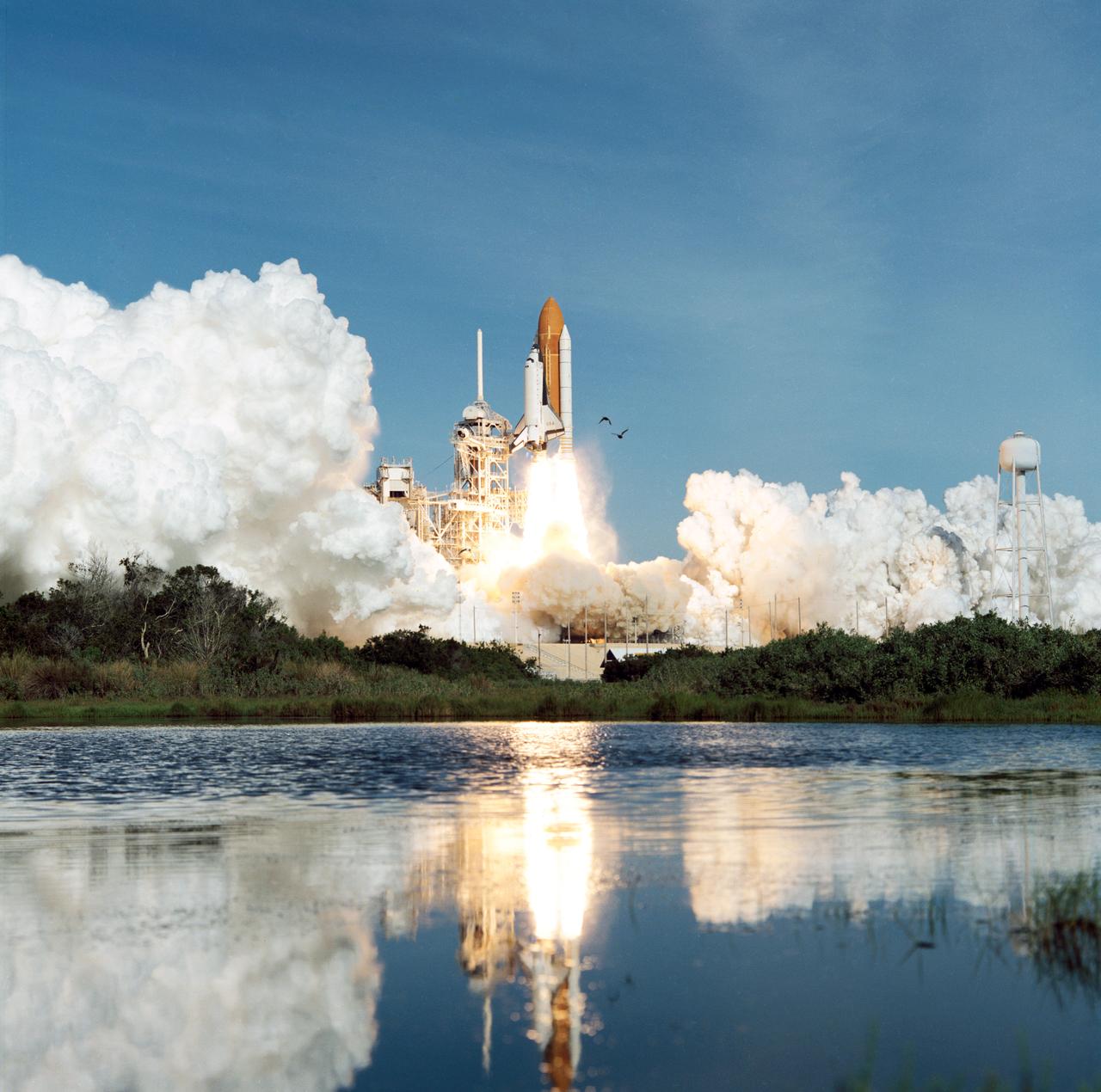
STS062-S-051 (4 March 1994) --- Five veteran astronauts and the United States Microgravity Payload (USMP) are ushered into space via the sixteenth launch of Space Shuttle Columbia. Launch occurred at 8:53 a.m. (EST), March 4, 1994. Onboard were astronauts John H. Casper, Andrew M. Allen, Marsha S. Ivins, Charles D. (Sam) Gemar and Pierre J. Thuot.
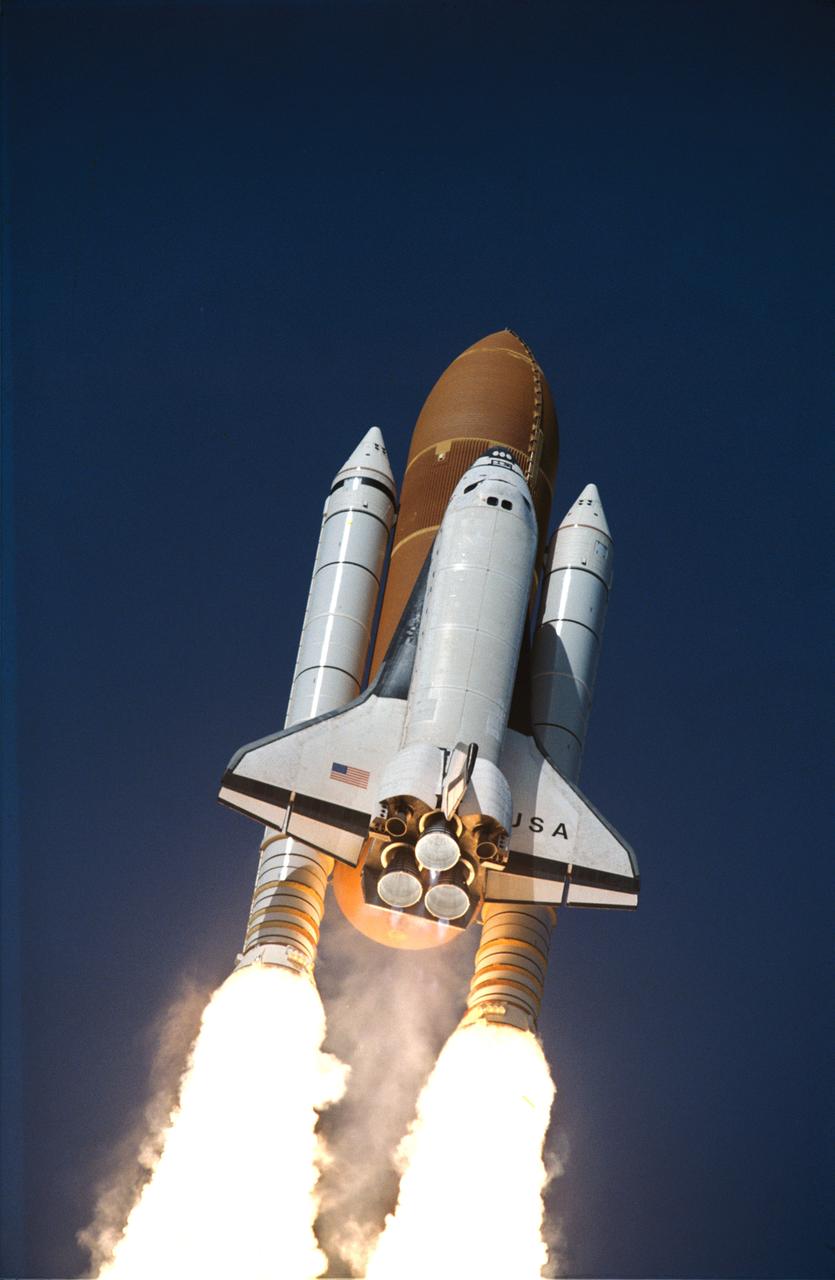
STS062-S-055 (4 March 1994) --- A low-angle view captures early stages of the sixteenth launch of Space Shuttle Columbia. Launch occurred at 8:53 a.m. (EST), March 4, 1994. Onboard were astronauts John H. Casper, Andrew M. Allen, Marsha S. Ivins, Charles D. (Sam) Gemar and Pierre J. Thuot.
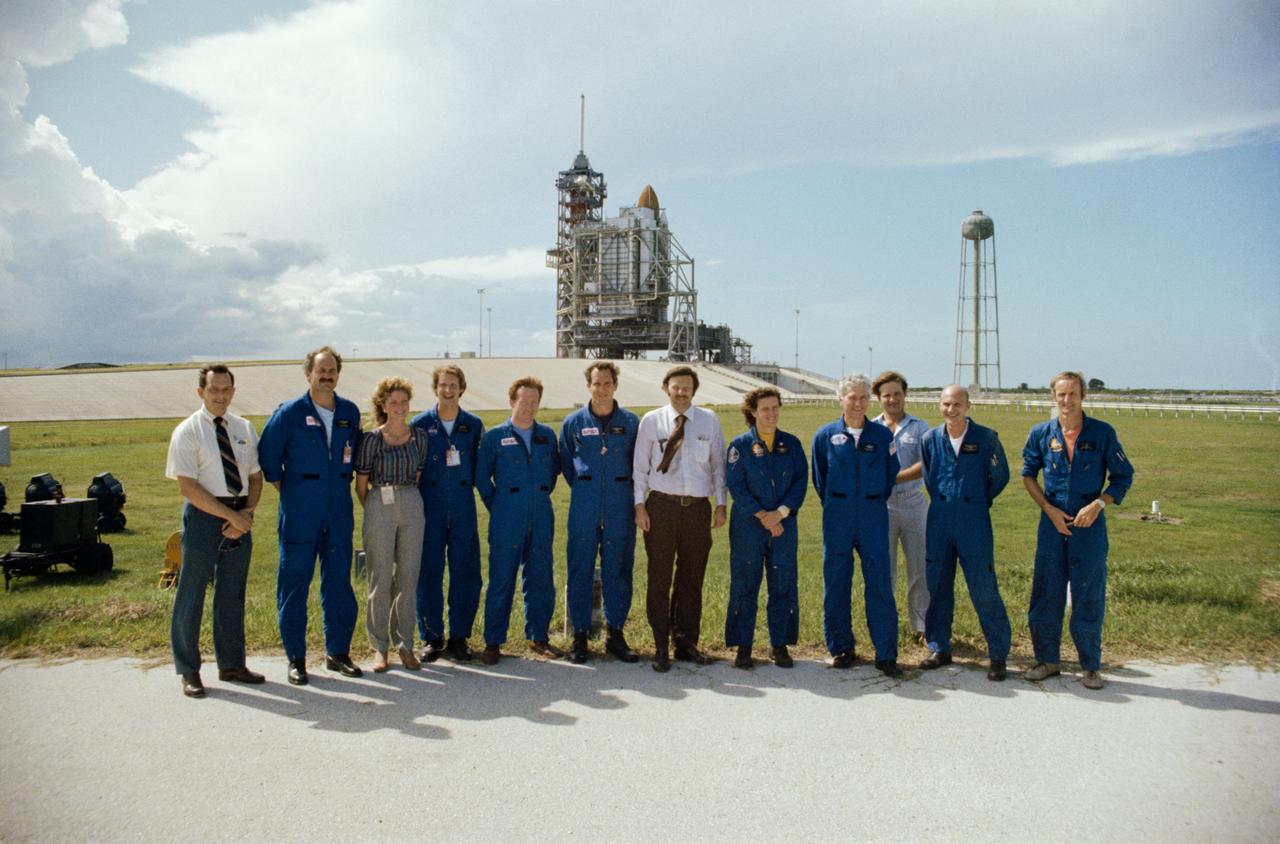
S82-32201 (29 May 1982) --- Members of the JSC astronaut corps, vehicle integration test team (VITT) and other personnel pose for a photograph at the completion of a countdown demonstration test (CDDT) at Launch Pad 39A, Kennedy Space Center (KSC). The participants are, from the left, Wilbur J. Etbauer, engineer with the VITT; mission specialist-astronaut James D. Van Hoften; Terri Stanford, engineer from JSC's flight operations directorate; mission specialist-astronaut Steven A. Hawley; astronaut Richard N. Richards; astronaut Michael J. Smith; Richard W. Nygren, head of the VITT; mission specialist-astronaut Kathryn D. Sullivan; astronaut Henry W. Hartsfield Jr., STS-4 pilot; Mark Haynes, a co-op student participating with the VITT; astronaut Thomas K. Mattingly II, STS-4 commander; and astronaut Donald E. Williams. Photo credit: NASA
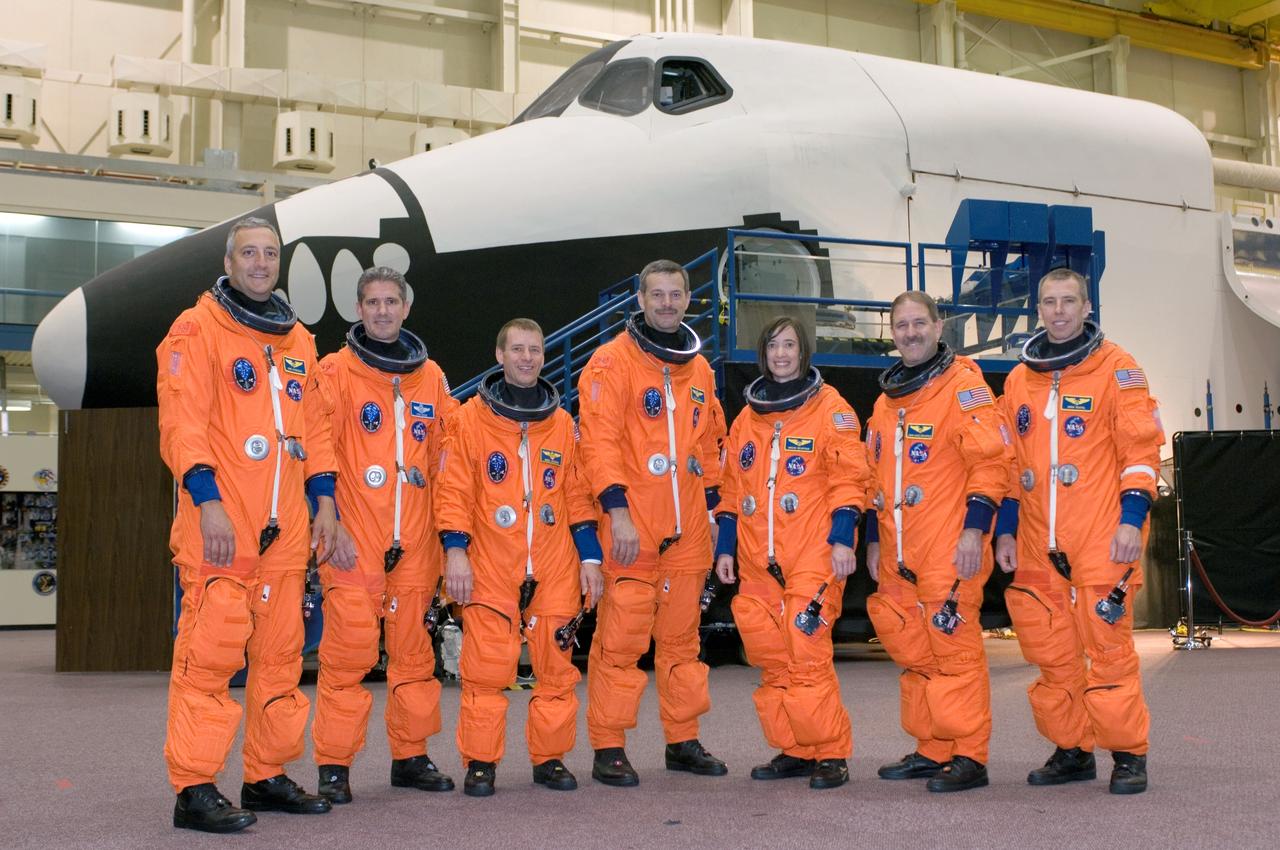
JSC2008-E-047961 (4 June 2008) --- The STS-125 crewmembers take a moment to pose for a crew photo prior to a training session in the Space Vehicle Mockup Facility at NASA's Johnson Space Center. From the left are astronauts Michael J. Massimino, Michael T. Good, both mission specialists; Gregory C. Johnson, pilot; Scott D. Altman, commander; K. Megan McArthur, John M. Grunsfeld and Andrew J. Feustel, all mission specialists. The crewmembers are wearing training versions of their shuttle launch and entry suits.
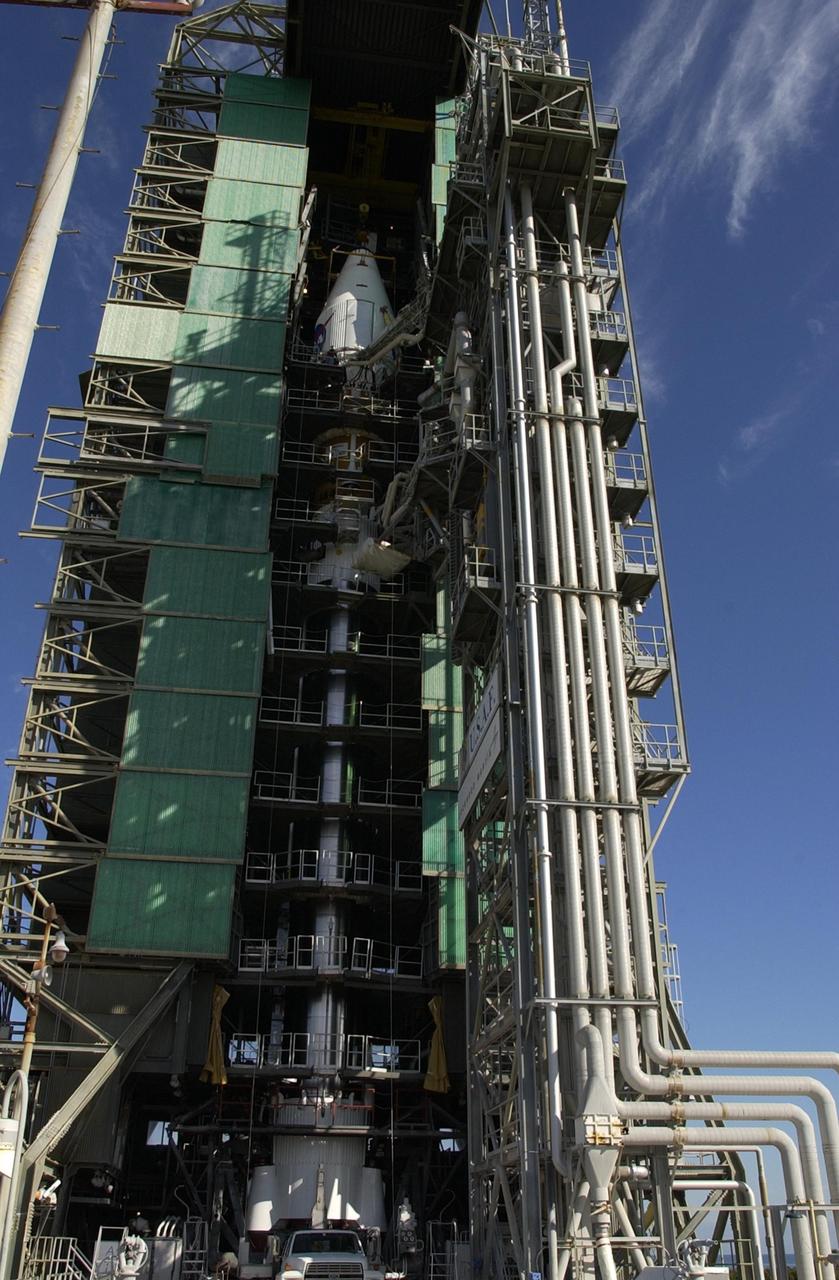
KENNEDY SPACE CENTER, FLA. - On Launch Complex 36-A, Cape Canaveral Air Force Station, the Atlas IIA launch vehicle with the TDRS-J satellite aboard is ready for launch Dec. 4. The launch window is 9:42 to 10:22 p.m. EST. TDRS-J, the third in a series of telemetry satellites, will help replenish the current constellation of geosynchronous TDRS satellites that are the primary source of space-to-ground voice, data and telemetry for the Space Shuttle. The satellites also provide communications with the International Space Station and scientific spacecraft in low-Earth orbit such as the Hubble Space Telescope. This new advanced series of satellites will extend the availability of TDRS communications services until about 2017.
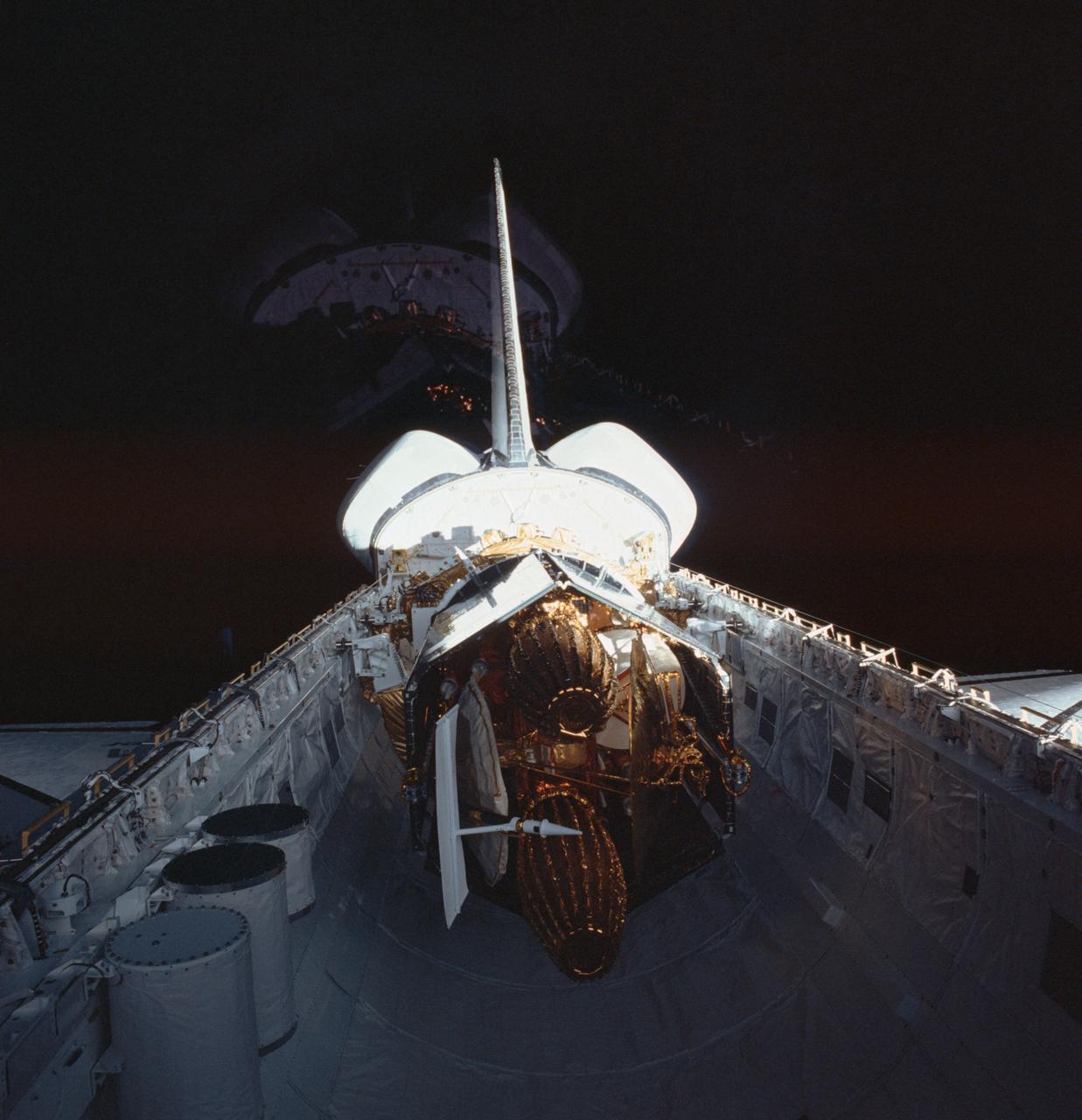
STS006-38-844 (4 April 1983) --- The stowed tracking and data relay satellite (TDRS) and its inertial upper stage (IUS) are seen in duplicate in this 70mm frame taken by the STS-6 crew aboard the Earth-orbiting space shuttle Challenger on its first day in space. A reflection in the aft window of the flight deck resulted in the mirage effect of the “second” TDRS. The three canisters in the aft foreground contain experiments of participants in NASA’s STS getaway special (GAS) program. Onboard the second reusable shuttle for this five-day flight were astronauts Paul J. Weitz, Karol J. Bobko, Dr. F. Story Musgrave and Donald H. Peterson. Photo credit: NASA
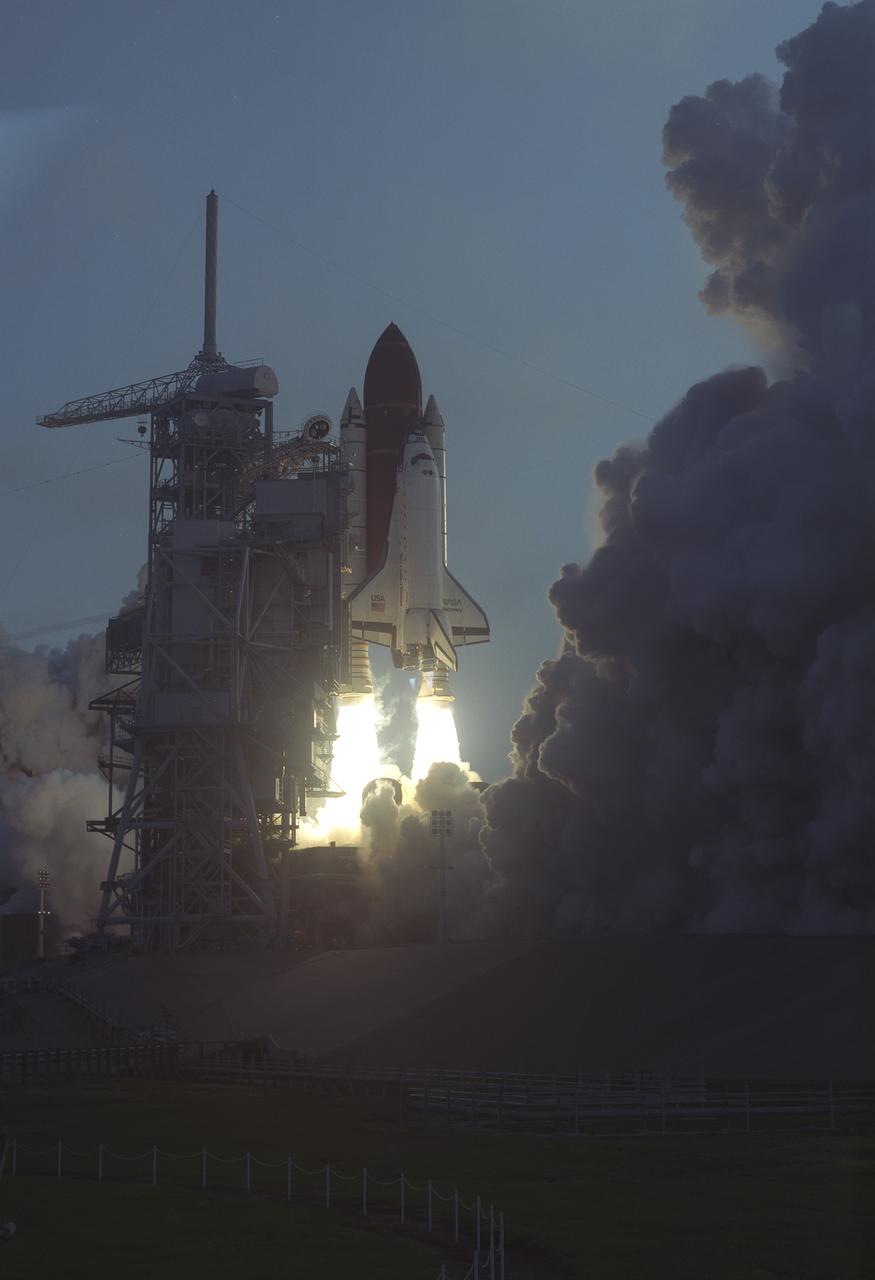
Launched aboard the Space Shuttle Discovery on April 28, 1991 at 7:33:14 am (EDT), STS-39 was a Department of Defense (DOD) mission. The crew included seven astronauts: Michael L. Coats, commander; L. Blaine Hammond, pilot; Guion S. Buford, Jr., mission specialist 1; Gregory J. Harbaugh, mission specialist 2; Richard J. Hieb, mission specialist 3; Donald R. McMonagle, mission specialist 4; and Charles L. Veach, mission specialist 5. The primary unclassified payload included the Air Force Program 675 (AFP-675), the Infrared Background Signature Survey (IBSS), and the Shuttle Pallet Satellite II (SPAS II).
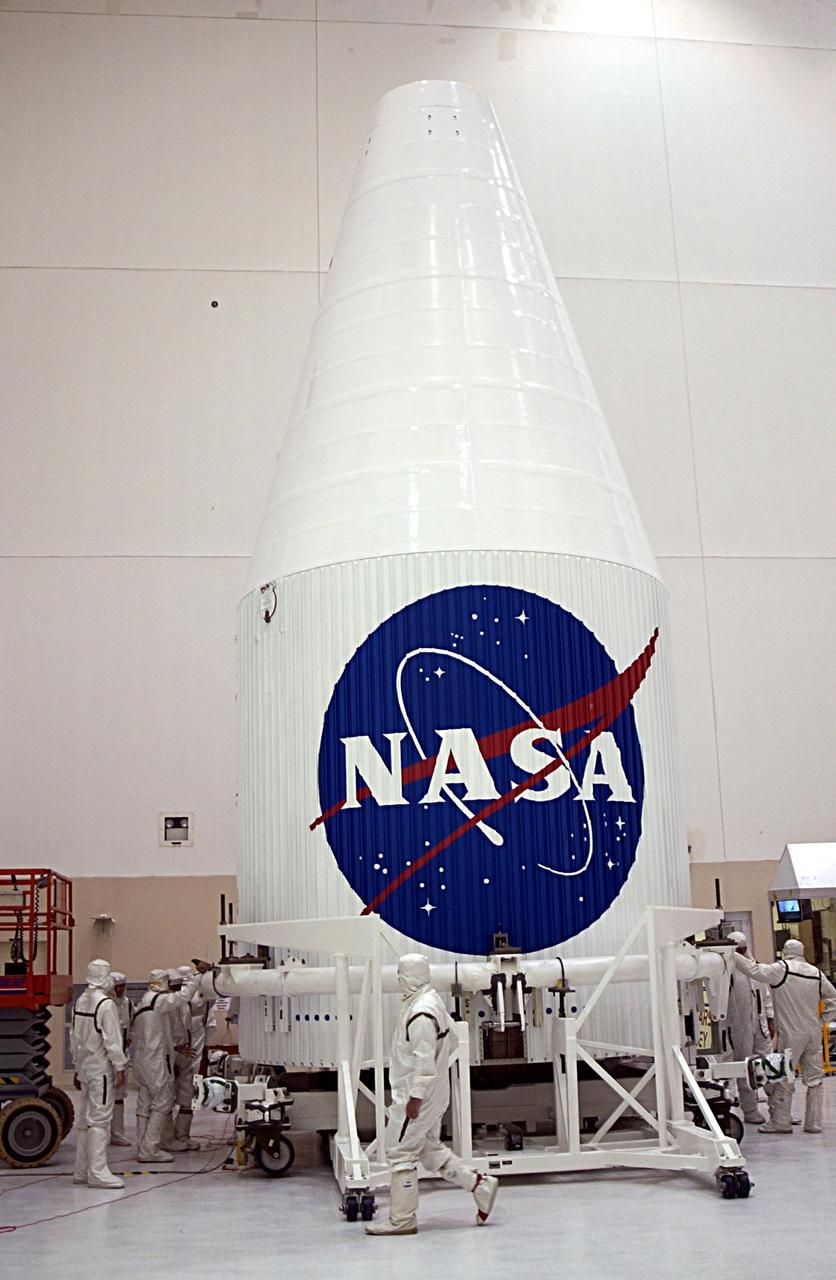
KENNEDY SPACE CENTER, FLA. -- The TDRS-J satellite is fully encapsulated and ready for transport to Launch Complex 36-A, Cape Canaveral Air Force Station, Fla. There it will be mated with the Lockheed Martin Atlas IIA-Centaur rocket for launch on Dec. 4. The third in a series of telemetry satellites, TDRS-J will help replenish the current constellation of geosynchronous TDRS satellites. The TDRS System is the primary source of space-to-ground voice, data and telemetry for the Space Shuttle. It also provides communications with the International Space Station and scientific spacecraft in low-Earth orbit such as the Hubble Space Telescope. This new advanced series of satellites will extend the availability of TDRS communications services until about 2017.
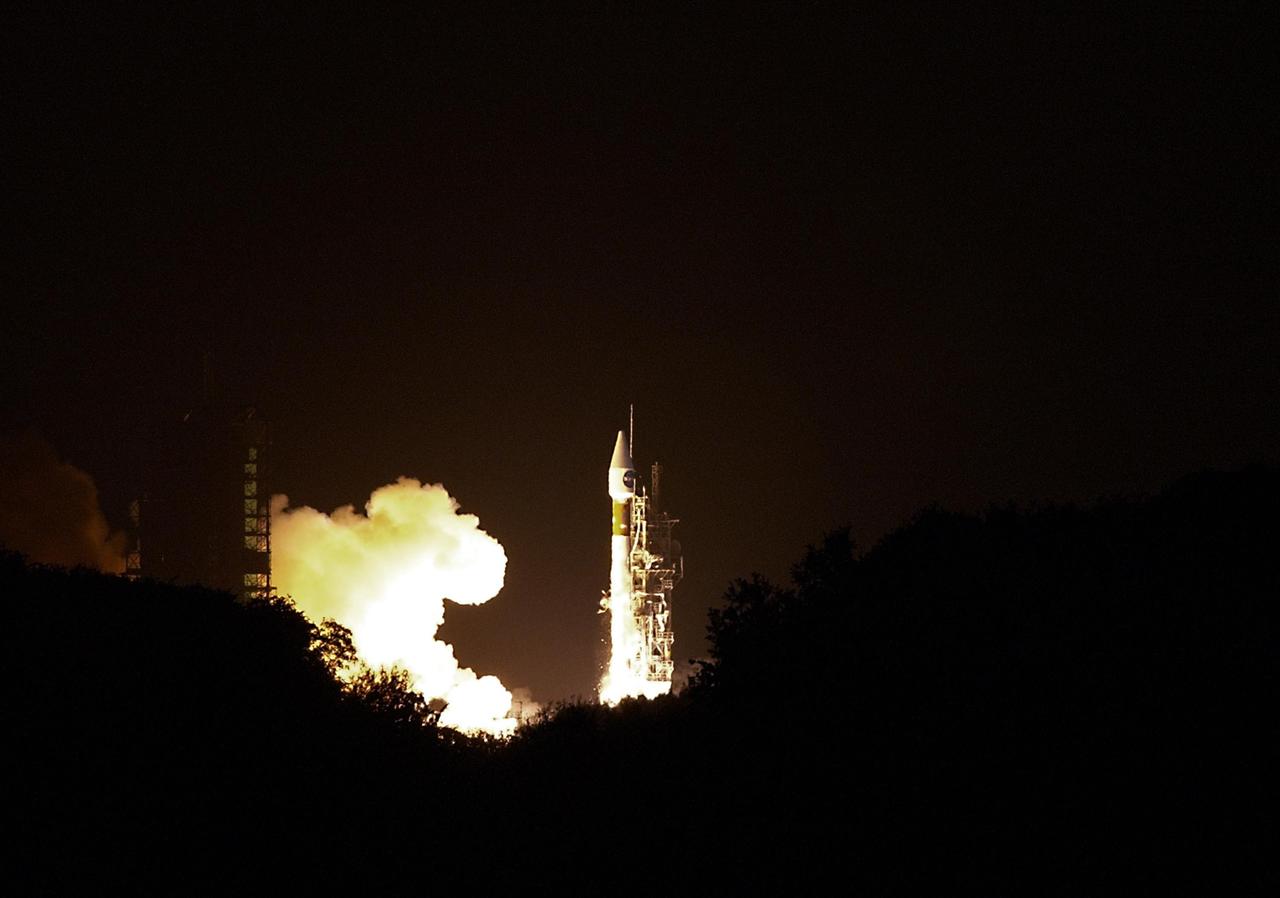
KENNEDY SPACE CENTER, FLA. - At Launch Complex 36-A, Cape Canaveral Air Force Station, the TDRS-J satellite launches aboard an Atlas IIA vehicle on Dec. 4 at the beginning of the launch window at 9:42 p.m. EST. TDRS-J, the third in a series of telemetry satellites, will help replenish the current constellation of geosynchronous TDRS satellites that are the primary source of space-to-ground voice, data and telemetry for the Space Shuttle. The satellites also provide communications with the International Space Station and scientific spacecraft in low-Earth orbit such as the Hubble Space Telescope. This new advanced series of satellites will extend the availability of TDRS communications services until about 2017.
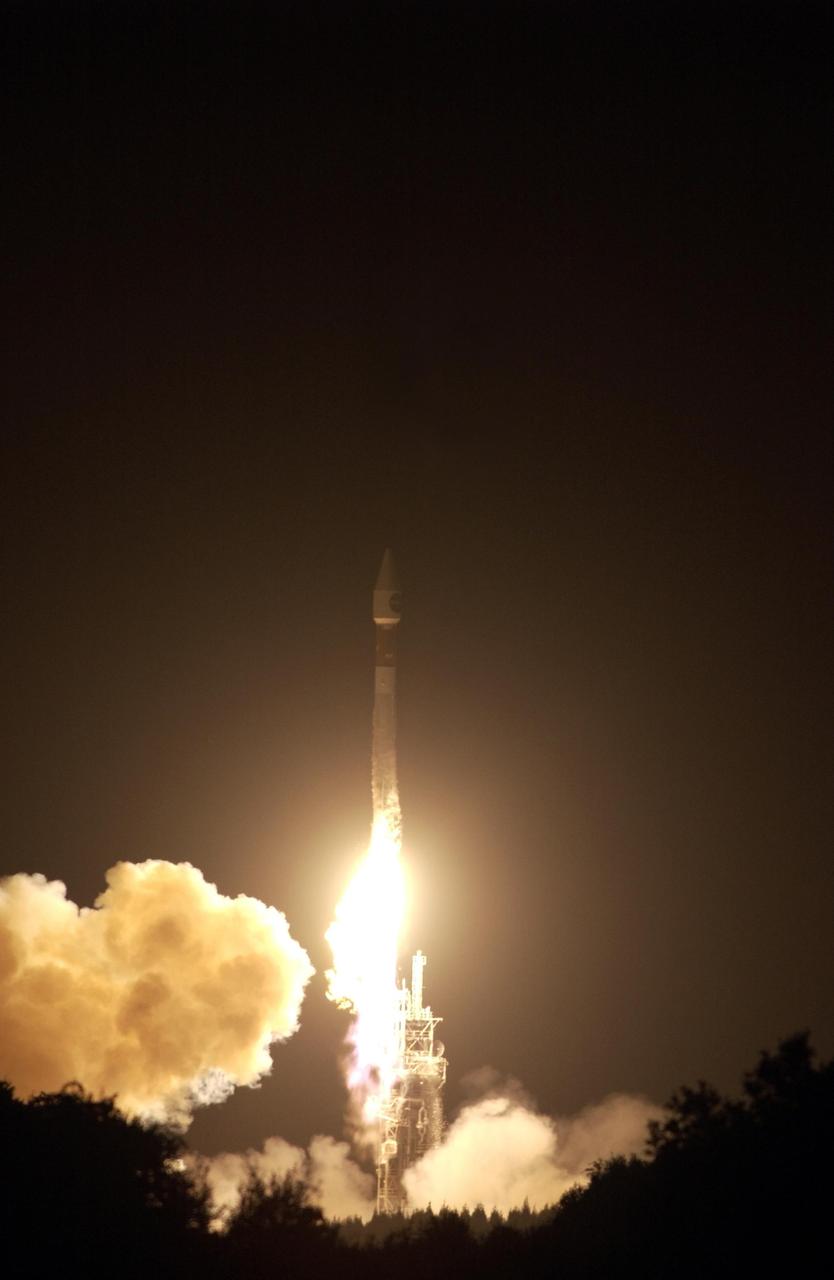
KENNEDY SPACE CENTER, FLA. - At Launch Complex 36-A, Cape Canaveral Air Force Station, the TDRS-J satellite launches aboard an Atlas IIA vehicle on Dec. 4 at the beginning of the launch window at 9:42 p.m. EST. TDRS-J, the third in a series of telemetry satellites, will help replenish the current constellation of geosynchronous TDRS satellites that are the primary source of space-to-ground voice, data and telemetry for the Space Shuttle. The satellites also provide communications with the International Space Station and scientific spacecraft in low-Earth orbit such as the Hubble Space Telescope. This new advanced series of satellites will extend the availability of TDRS communications services until about 2017.
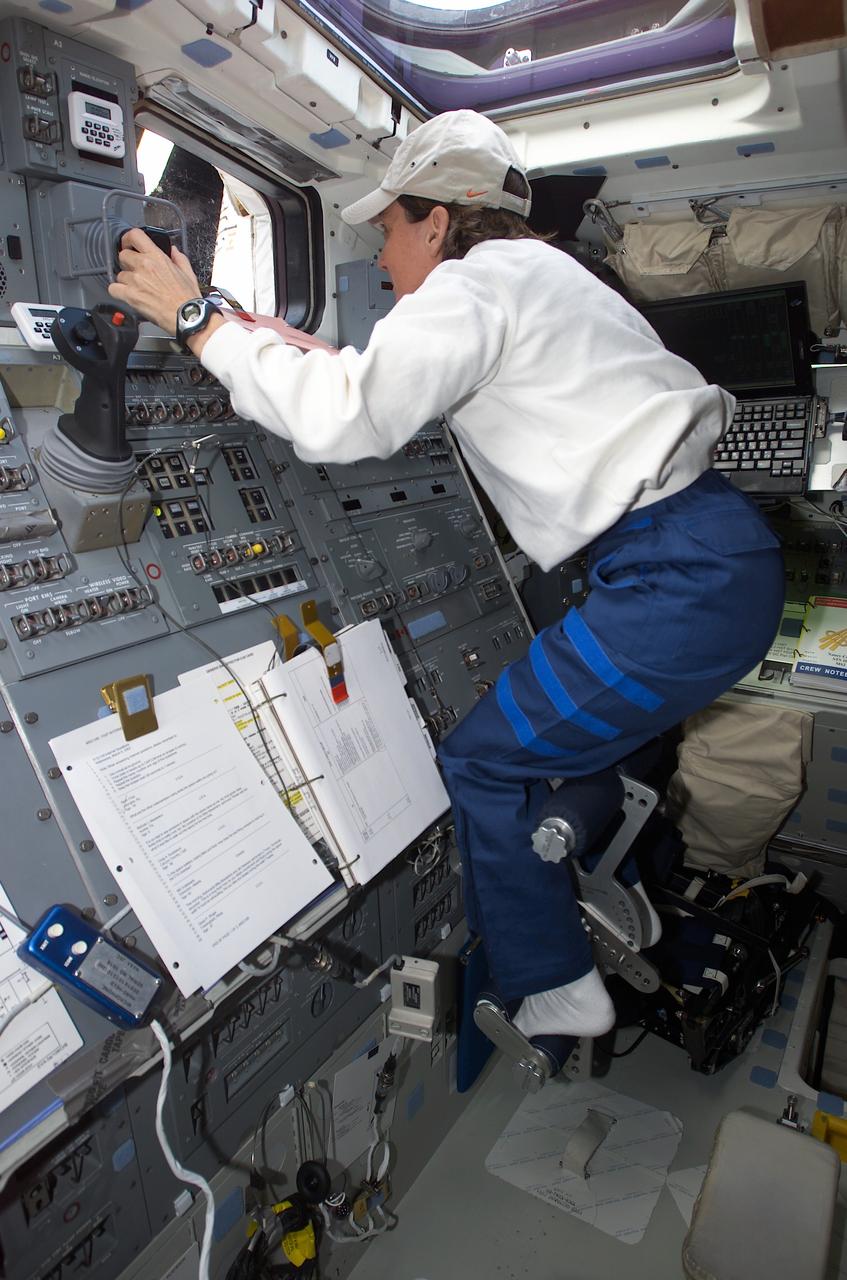
STS109-E-5685 (7 March 2002) --- Astronaut Nancy J. Currie, mission specialist, works the controls for Columbia's Remote Manipulator System (RMS) on the crew cabin's aft flight deck. On a week with one lengthy space walk per day, Currie has had her hands full with RMS duties to support the space walks of four crewmates. Astronauts James H. Newman and Michael J. Massimino had just begin EVA-4, during which the duo required the services of Currie to control the robotic arm to maneuver them around the various workstations on the Hubble Space Telescope (HST). The image was recorded with a digital still camera.
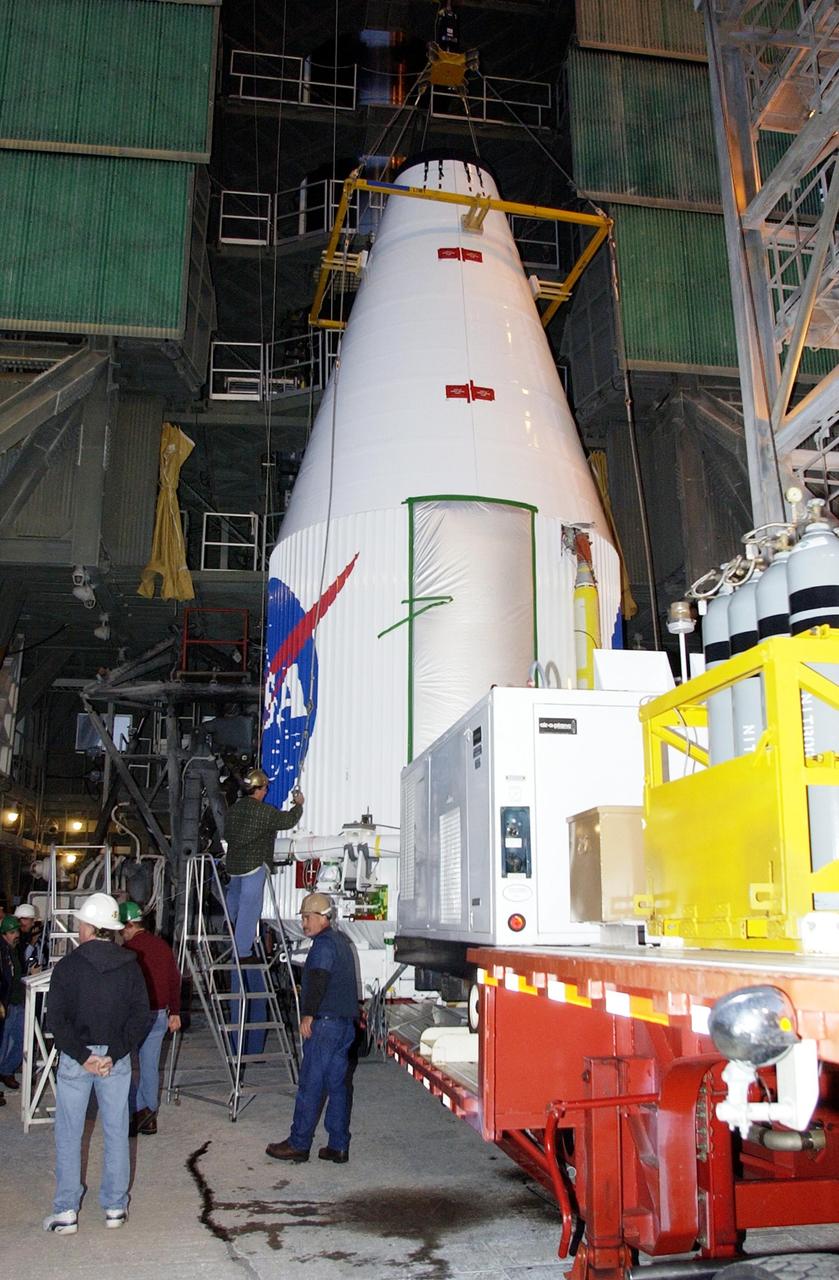
KENNEDY SPACE CENTER, FLA. - The TDRS-J satellite arrives at the gantry on Launch Complex 36-A, Cape Canaveral Air Force Station. The satellite is scheduled to be launched Dec. 4 aboard an Atlas IIA vehicle. The launch window is 9:42 to 10:22 p.m. EST. TDRS-J, the third in a series of telemetry satellites, will help replenish the current constellation of geosynchronous TDRS satellites that are the primary source of space-to-ground voice, data and telemetry for the Space Shuttle. The satellites also provide communications with the International Space Station and scientific spacecraft in low-Earth orbit such as the Hubble Space Telescope. This new advanced series of satellites will extend the availability of TDRS communications services until about 2017.
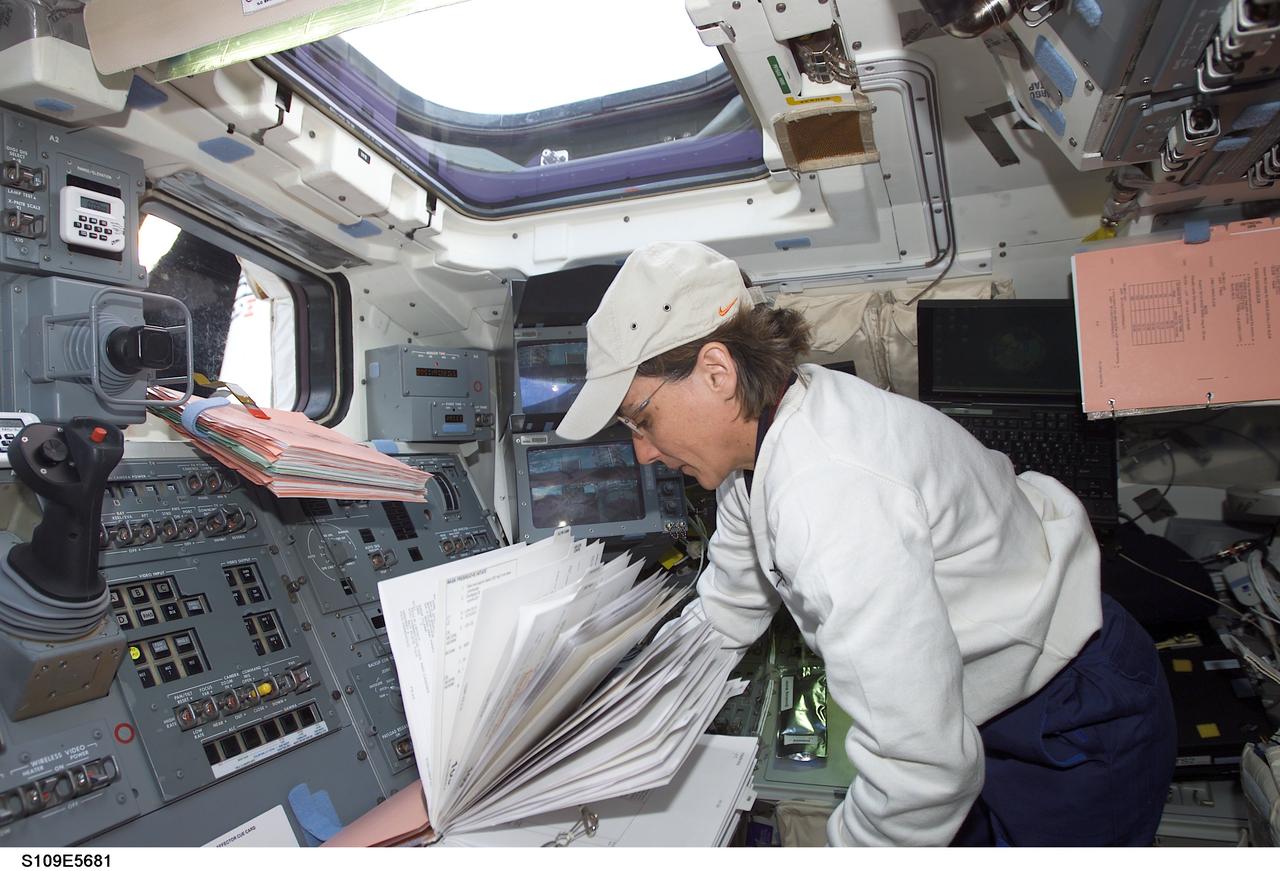
STS109-E-5681 (7 March 2002) --- Astronaut Nancy J. Currie, mission specialist, remains very near the controls (upper left) for Columbia's Remote Manipulator System (RMS). On a week with one lengthy space walk per day, Currie has had her hands full with RMS duties to support the space walks of four crewmates. A short time later on this day, astronauts James H. Newman and Michael J. Massimino began EVA-4 and the duo required the services of Currie to control the robotic arm to maneuver them around the various work stations on the Hubble Space Telescope (HST). The image was recorded with a digital still camera.
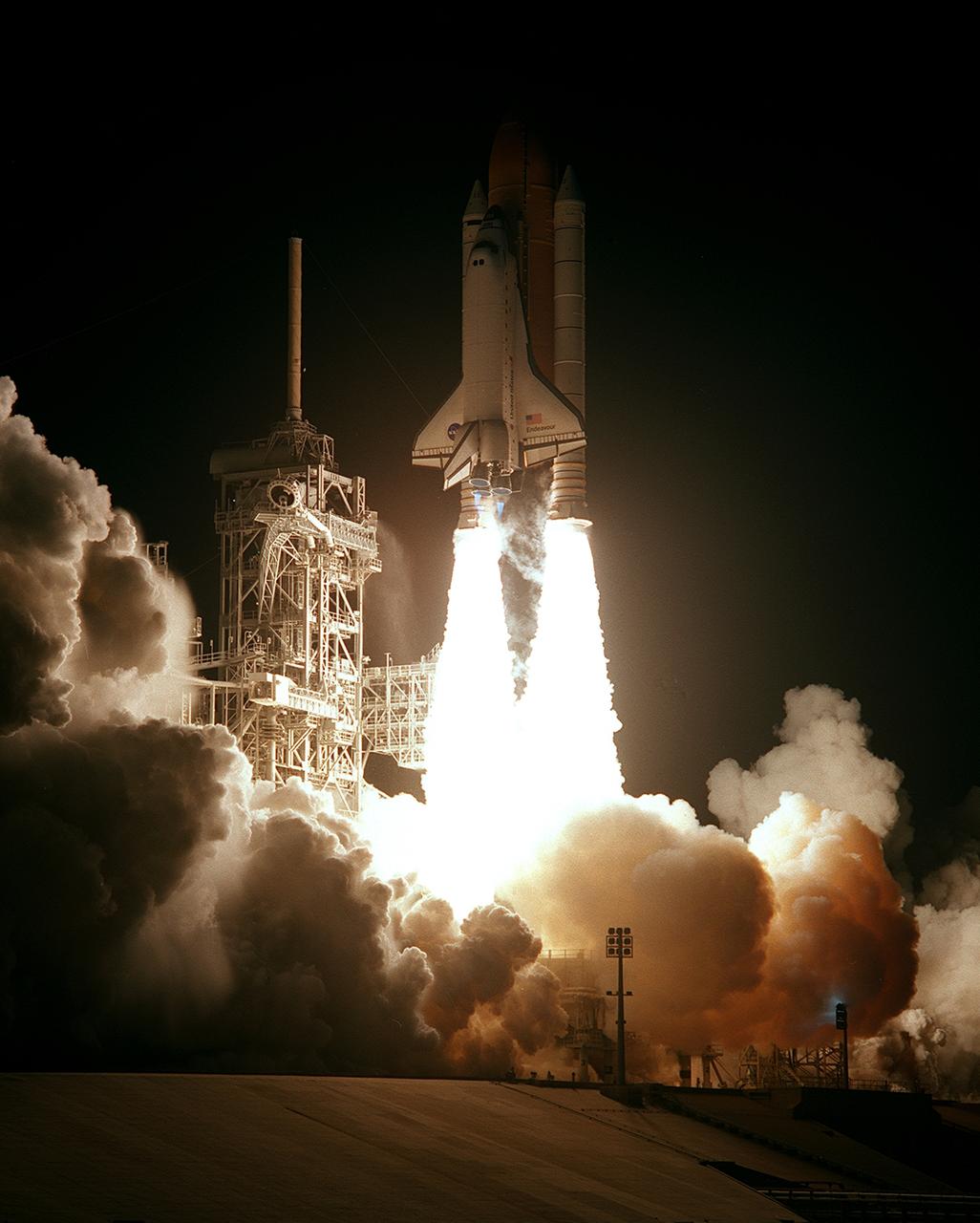
STS088-S-006 (4 Dec. 1998) --- The Space Shuttle Endeavour lights up the night sky as it embarks on the first mission dedicated to the assembly of the International Space Station (ISS). Liftoff occurred at 3:35:34 a.m. (EST), December 4, 1998, from Launch Pad 39A, at the Kennedy Space Center (KSC), Florida. Onboard were astronauts Robert D. Cabana, mission commander; Frederick W. Sturckow, pilot; Nancy J. Currie, Jerry L. Ross and James H. Newman, along with Russian Space Agency (RSA) cosmonaut Sergei K. Krikalev, all mission specialists.
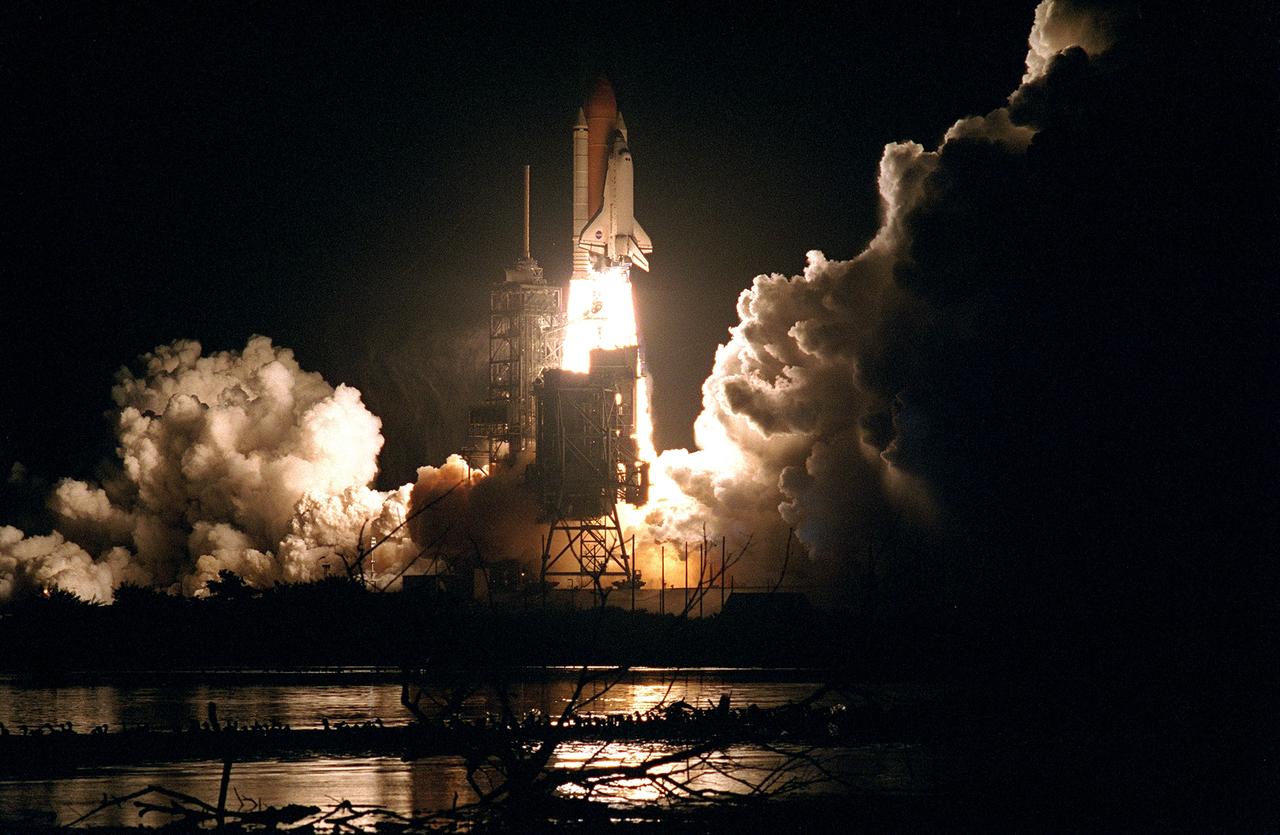
STS088-S-005 (4 Dec. 1998) --- The Space Shuttle Endeavour lights up the night sky as it embarks on the first mission dedicated to the assembly of the International Space Station (ISS). Liftoff occurred at 3:35:34 a.m. (EST), December 4, 1998, from Launch Pad 39A at the Kennedy Space Center (KSC), Florida. Onboard were astronauts Robert D. Cabana, mission commander; Frederick W. Sturckow, pilot; Nancy J. Currie, Jerry L. Ross and James H. Newman, along with Russian Space Agency (RSA) cosmonaut Sergei K. Krikalev, all mission specialists.
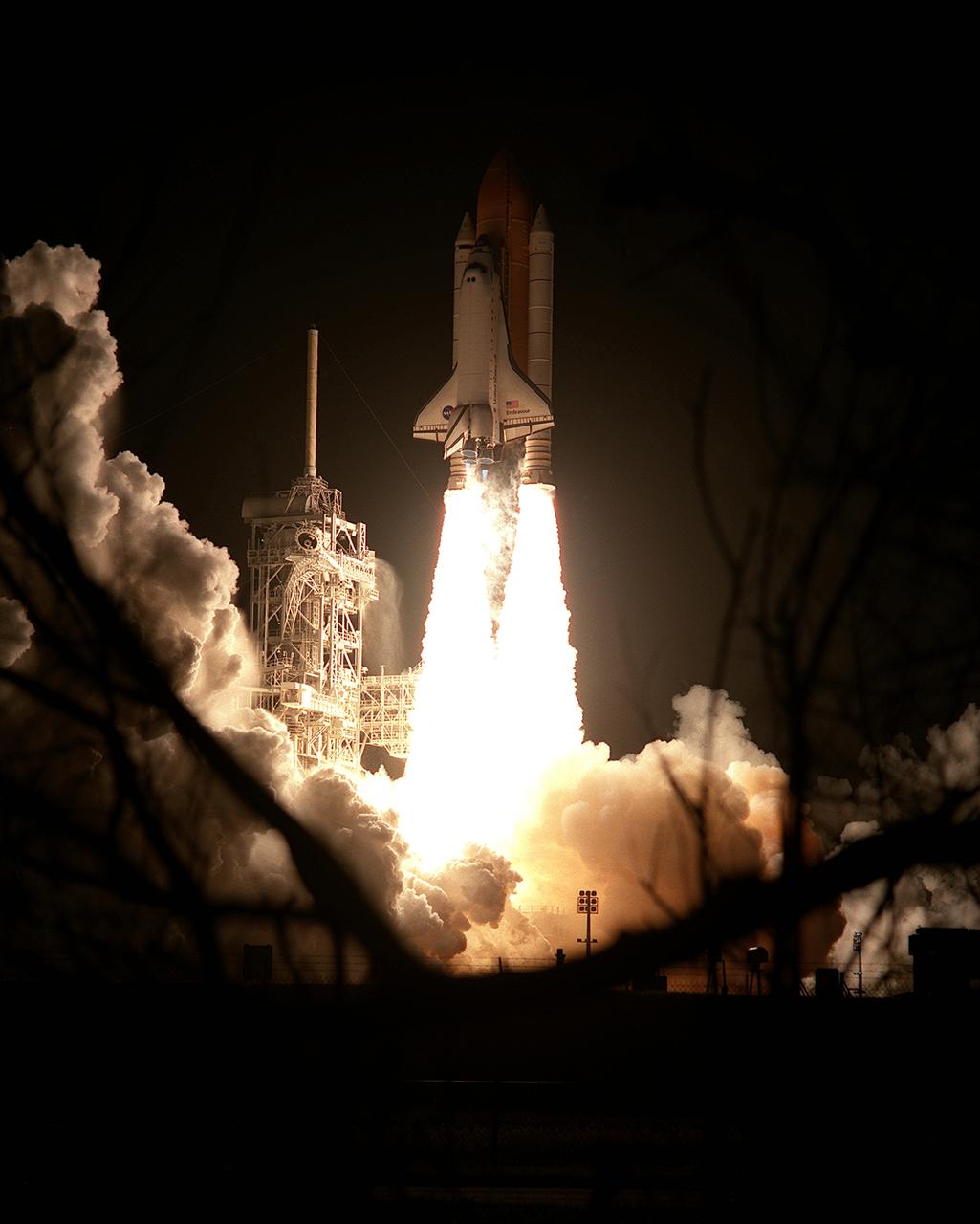
STS088-S-008 (4 Dec. 1998) --- The Space Shuttle Endeavour lights up the night sky as it embarks on the first mission dedicated to the assembly of the International Space Station (ISS). Liftoff occurred at 3:35:34 a.m. (EST), December 4, 1998, from Launch Pad 39A, at the Kennedy Space Center (KSC), Florida. Onboard were astronauts Robert D. Cabana, mission commander; Frederick W. Sturckow, pilot; Nancy J. Currie, Jerry L. Ross and James H. Newman, along with Russian Space Agency (RSA) cosmonaut Sergei K. Krikalev, all mission specialists.
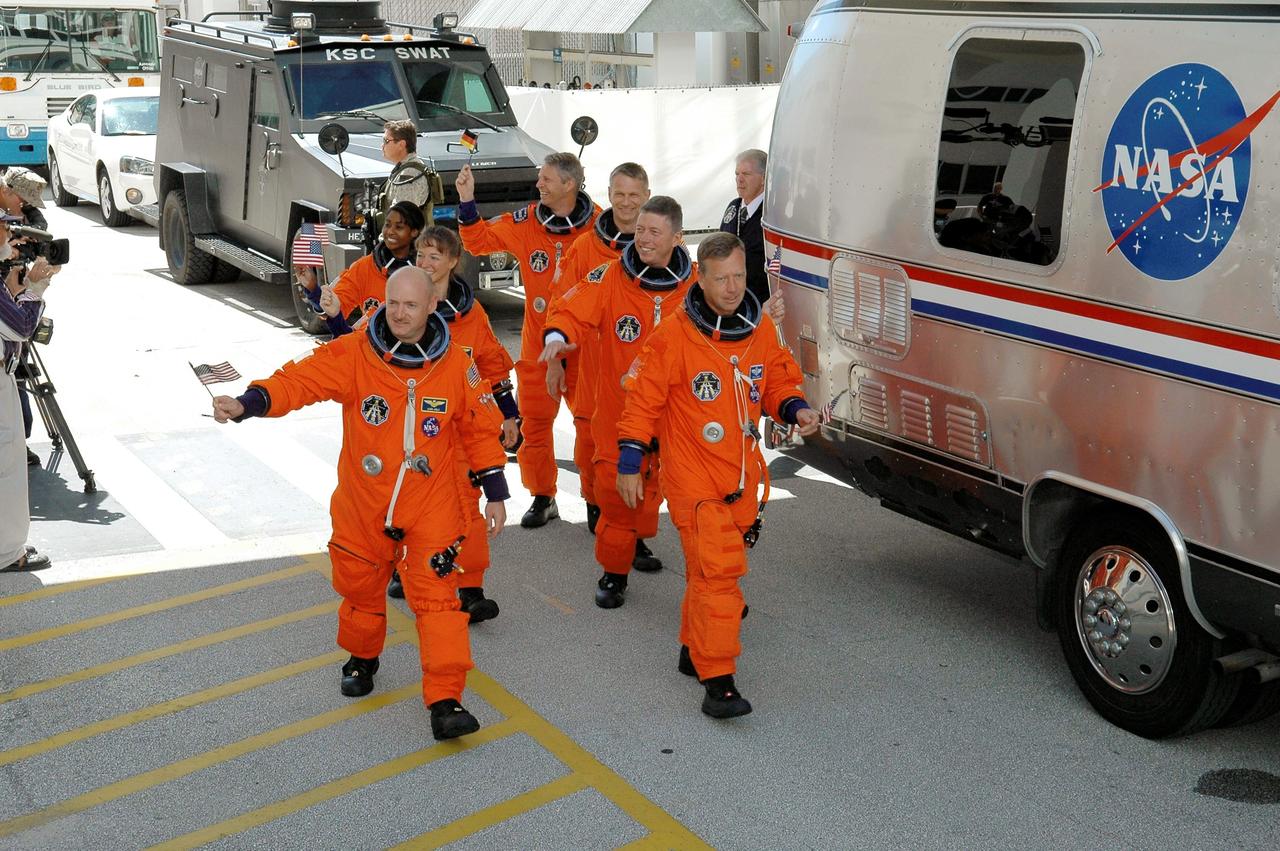
STS121-S-006 (4 July 2006) --- The STS-121 crewmembers, having donned their shuttle launch and entry suits, wave flags for the Fourth of July as they prepare to board the transfer van awaiting to take them to Launch Pad 39B. Steven W. Lindsey (right front), commander, and Mark E. Kelly, pilot, lead the way. Other crewmembers - Lisa M. Nowak, Michael E. Fossum, Stephanie D. Wilson, Piers J. Sellers and European Space Agency (ESA) astronaut Thomas Reiter of Germany - follow.
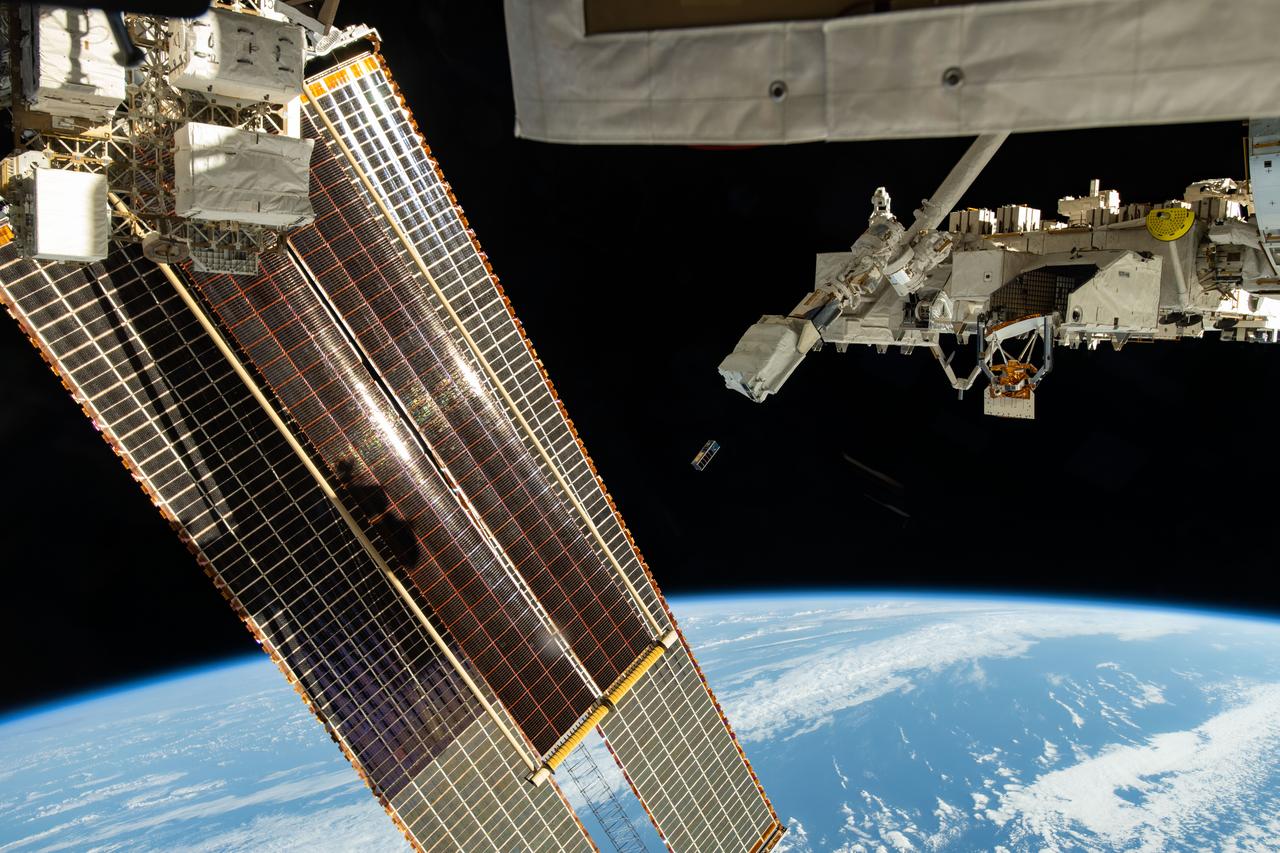
iss071e006845 (4/10/2024) --- View of the Japanese Experiment Module (JEM) Small Satellite Orbital Deployer-28 (J-SSOD-28) attached to the JEM Remote Manipulator System on the JEM Exposed Facility with the CURTIS experiment inside the deployer during Expedition 71. CURTIS is a 3U size satellite created through joint research between Panasonic HD and Kyutech. CURTIS carries out four different mission objectives to demonstrate technologies that can be used in future CubeSats.
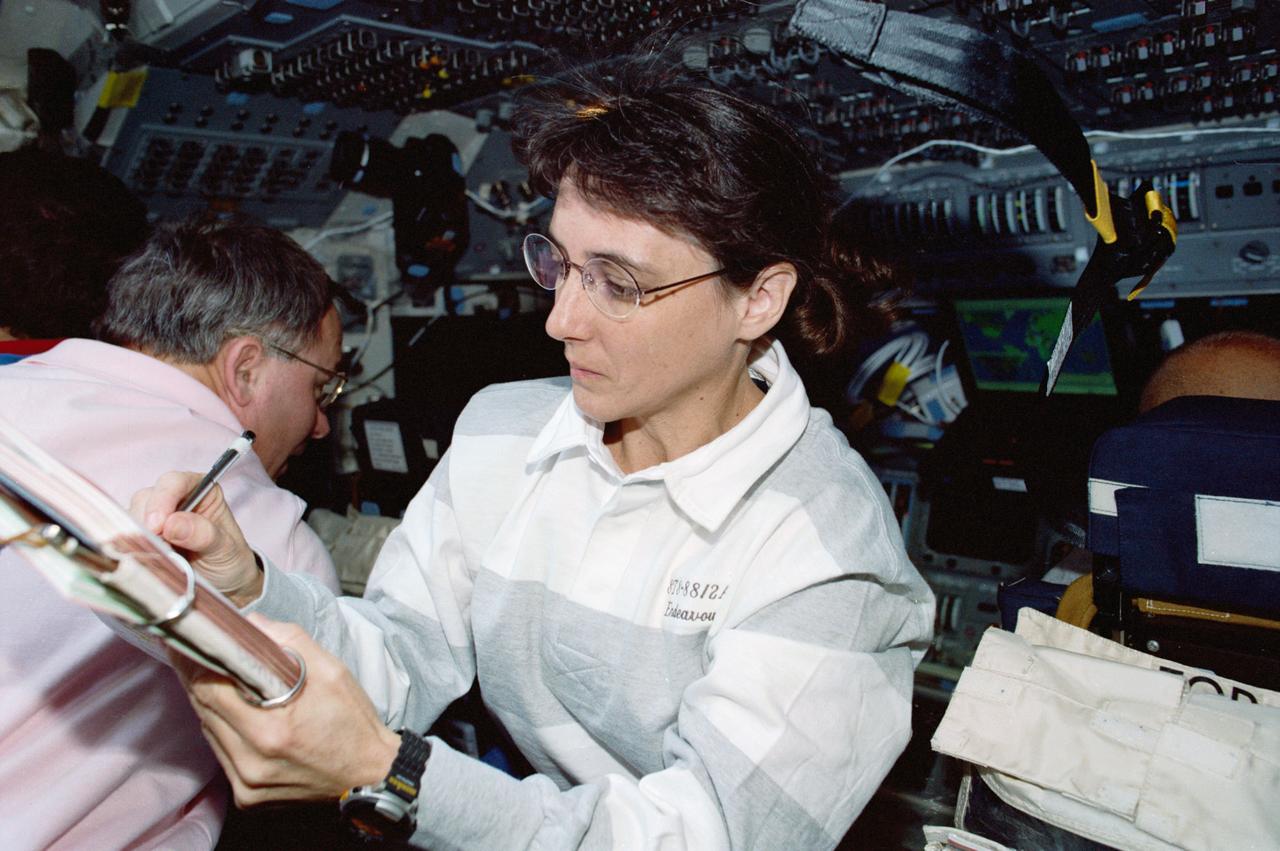
STS088-335-031 (4-15 Dec. 1998) --- Astronaut Nancy J. Currie, mission specialist, makes a notation in a log book on Endeavour's flight deck as astronaut Jerry L. Ross, mission specialist, eyes a control display near the commander's station. The two were joined by a Russian cosmonaut and three NASA astronauts for eleven days in Earth orbit, spending the majority of their time and efforts in support of important initial links to the International Space Station (ISS).
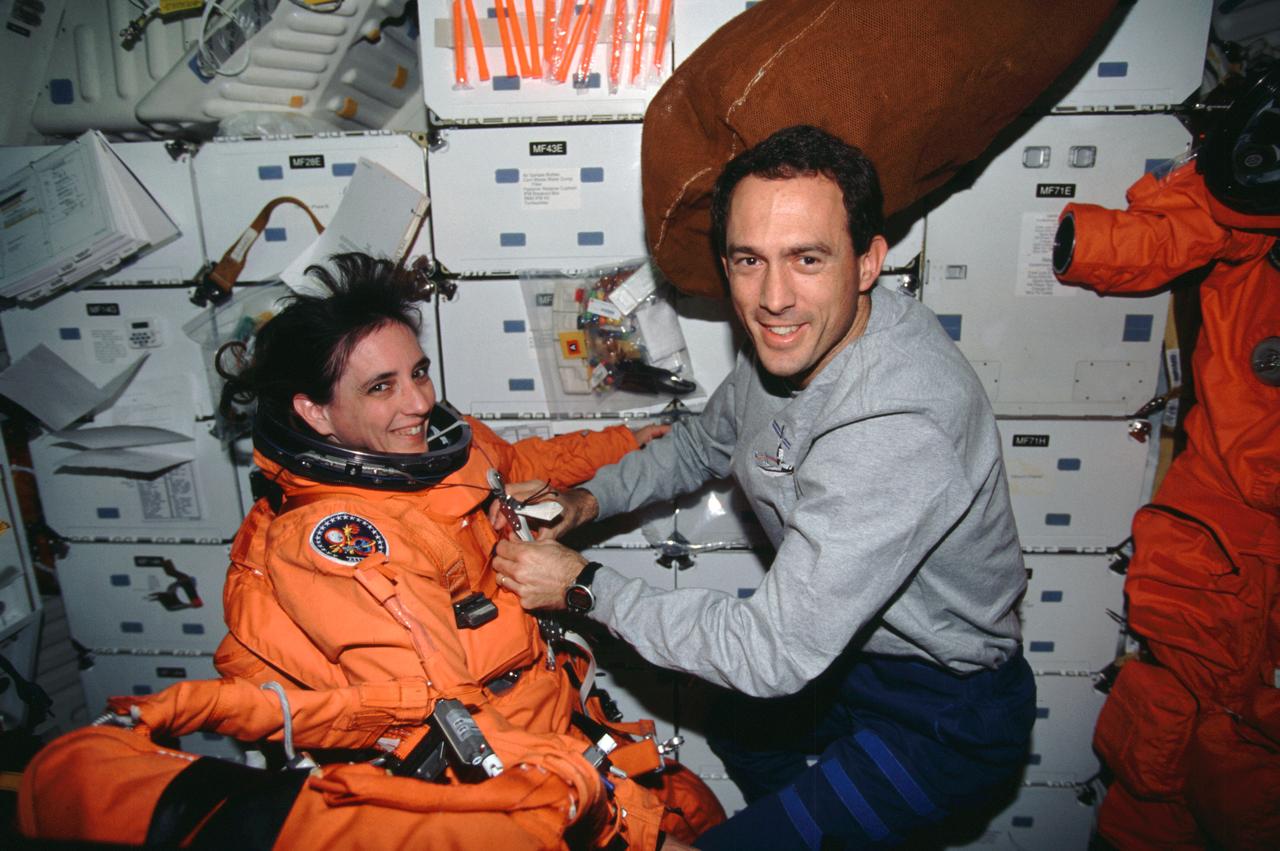
STS088-313-030 (4-15 December 1998) --- Astronaut James H. Newman assists astronaut Nancy J. Currie, both mission specialists, with her launch and entry suit (LES) on the middeck of the Earth-orbiting Space Shuttle Endeavour. The burnt-orange colored suits are high altitude, partial-pressure garments worn by each crew member for ascent and entry phases of the shuttle flights.

The STS-30 mission launched aboard the Space Shuttle Atlantis on May 4, 1989 at 2:46:59pm (EDT) carrying a crew of five. Aboard were Ronald J. Grabe, pilot; David M. Walker, commander; and mission specialists Norman E. Thagard, Mary L. Cleave, and Mark C. Lee. The primary payload for the mission was the Magellan/Venus Radar mapper spacecraft and attached Inertial Upper Stage (IUS).
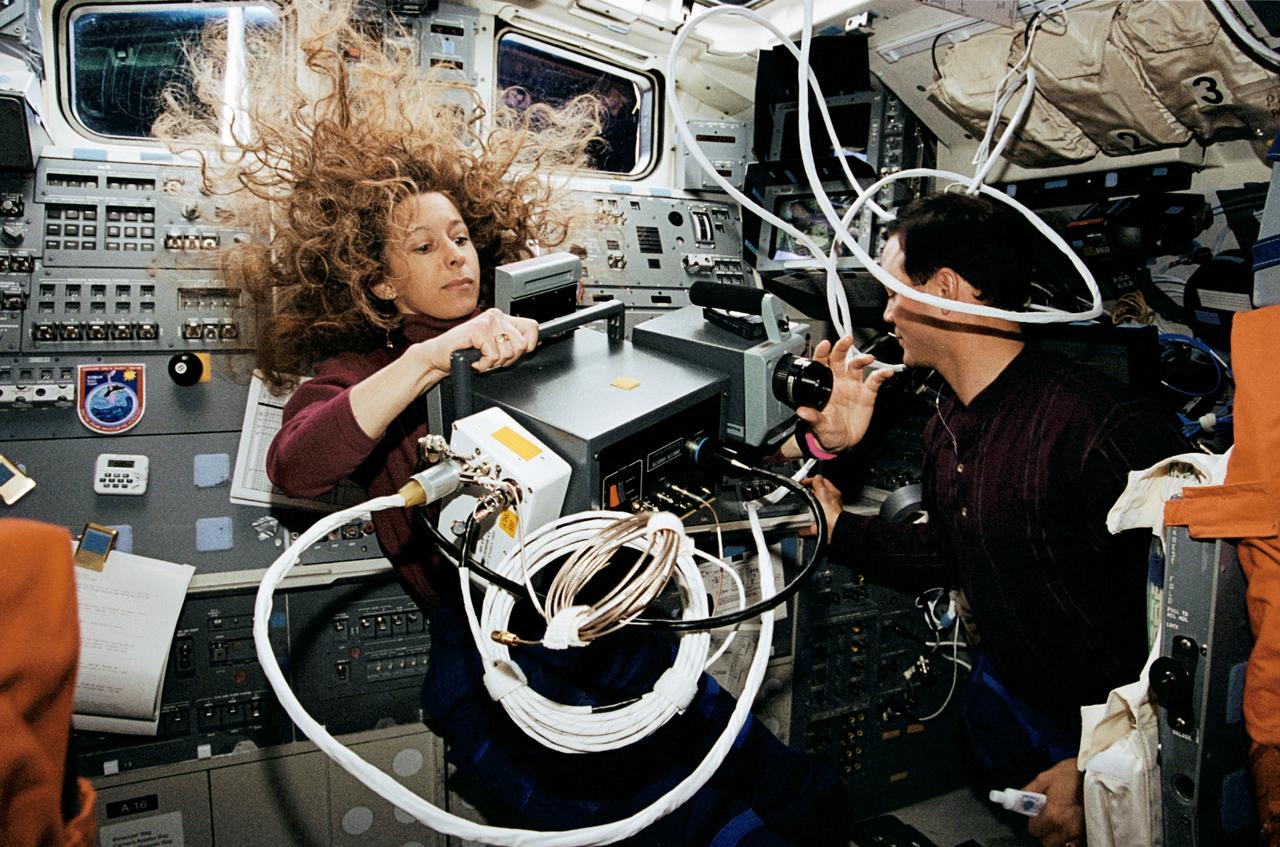
STS062-04-005 (4-18 March 1994) --- Astronaut Marsha S. Ivins has her hands full with a thermal imaging project on the flight deck of the Space Shuttle Columbia as astronaut Pierre J. Thuot stands by to help. The two mission specialists were joined by three other veteran NASA astronauts for almost 14 full days in Earth-orbit.
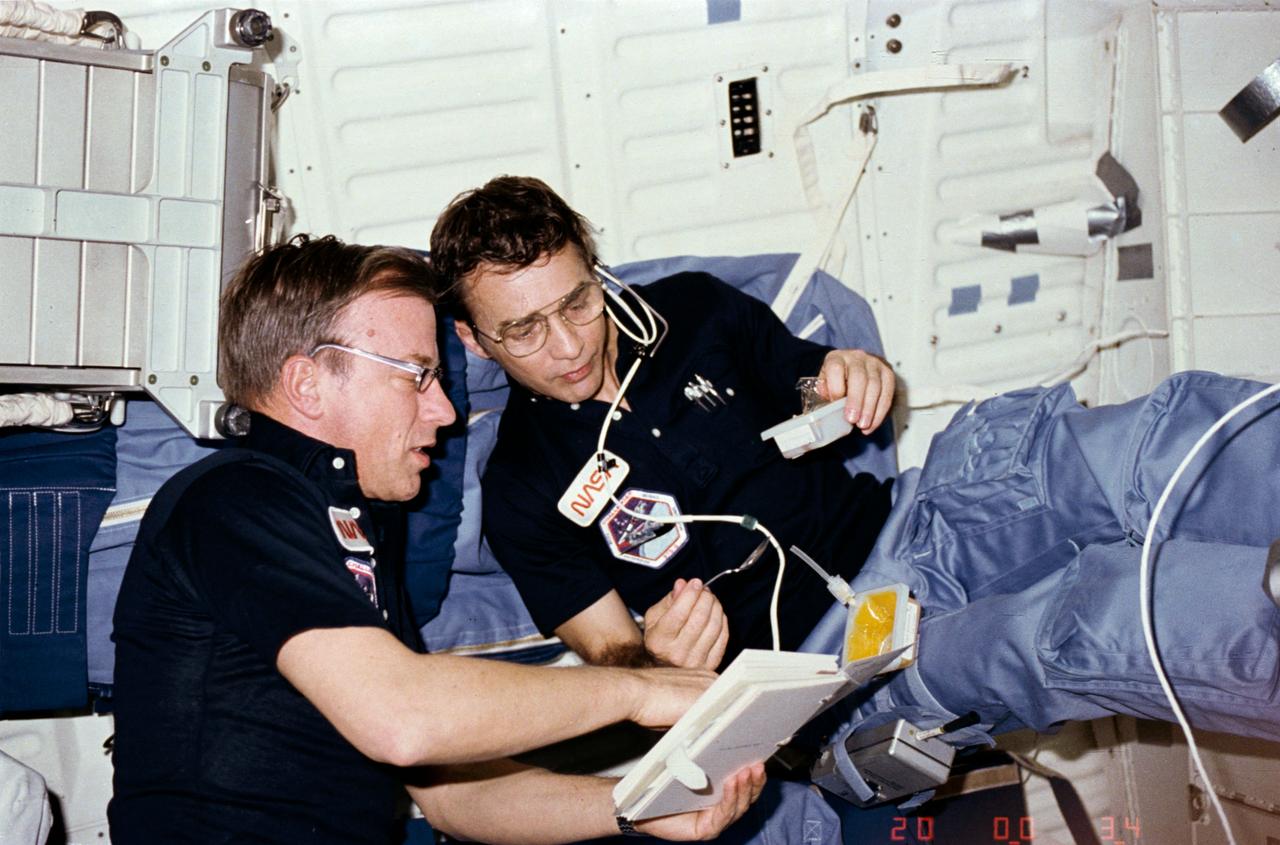
STS006-06-456 (4-9 April 1983) --- Astronaut Paul J. Weitz, STS-6 commander, points out an item in the crew activity plan (CAP) to astronaut Donald H. Peterson as the mission specialist uses a spoon to eat a meal aboard the Earth-orbiting space shuttle Challenger. The two are on the middeck. They are wearing the shirt and trouser portions of the blue cotton multi-piece constant wear garments. This frame was photographed with a 35mm camera. Photo credit: NASA
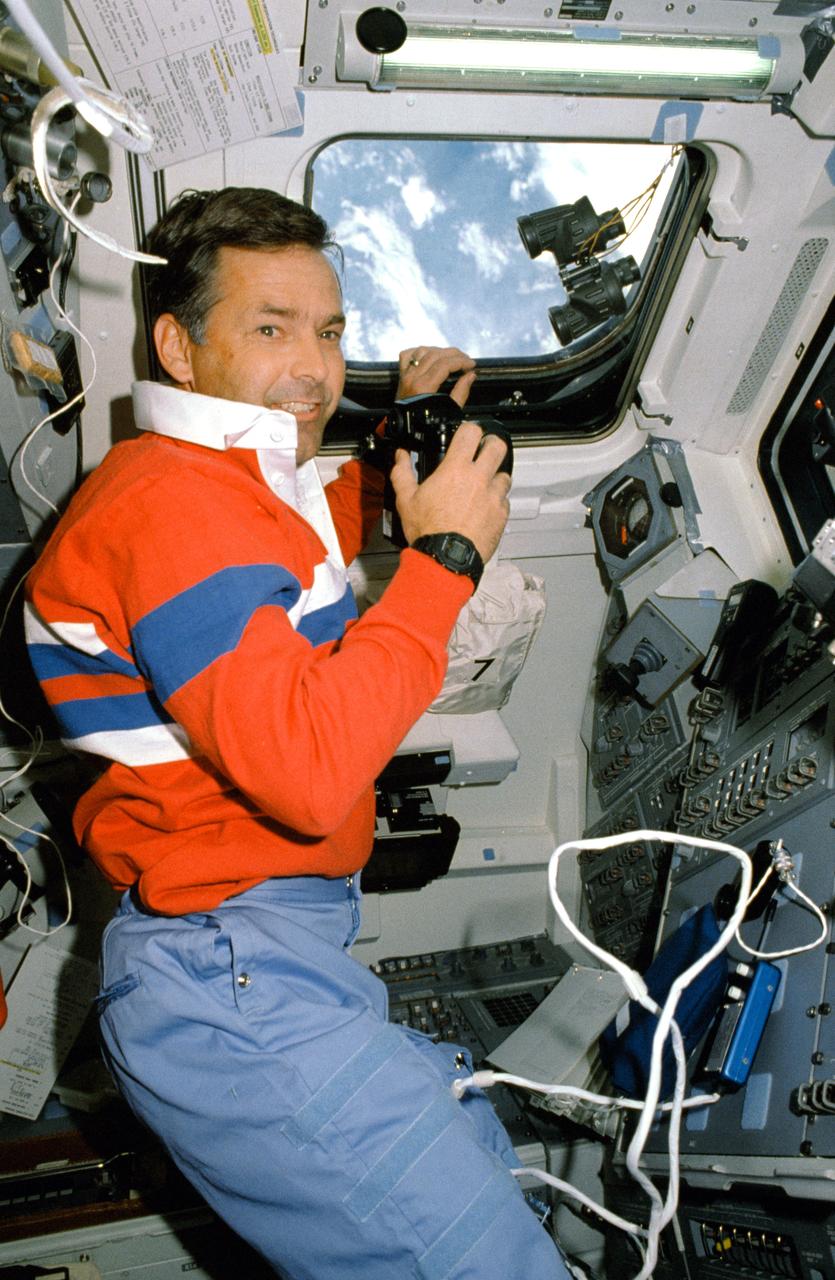
STS030-03-038 (4-8 May 1989) --- Astronaut Ronald J. Grabe, STS- 30 pilot, typifies the working mode of the entire five- member crew as he observes and photographs Earth from 160 nautical miles above. Grabe is on the aft flight deck, making use of two large overhead viewing windows. The scene was shown by the crew at its May 18, 1989 post-flight press conference.
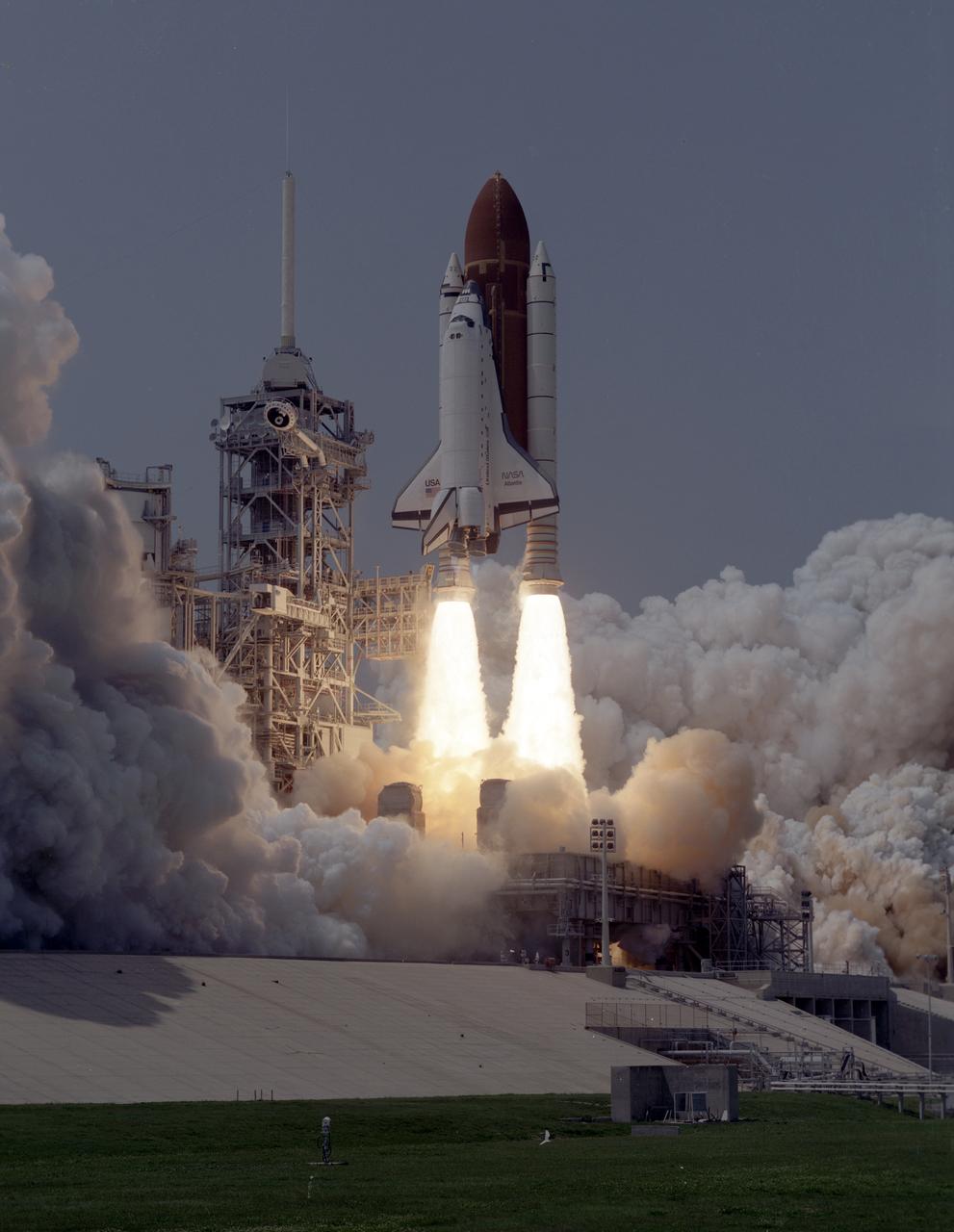
The STS-30 mission launched aboard the Space Shuttle Atlantis on May 4, 1989 at 2:46:59pm (EDT) carrying a crew of five. Aboard were Ronald J. Grabe, pilot; David M. Walker, commander; and mission specialists Norman E. Thagard, Mary L. Cleave, and Mark C. Lee. The primary payload for the mission was the Magellan/Venus Radar mapper spacecraft and attached Inertial Upper Stage (IUS).
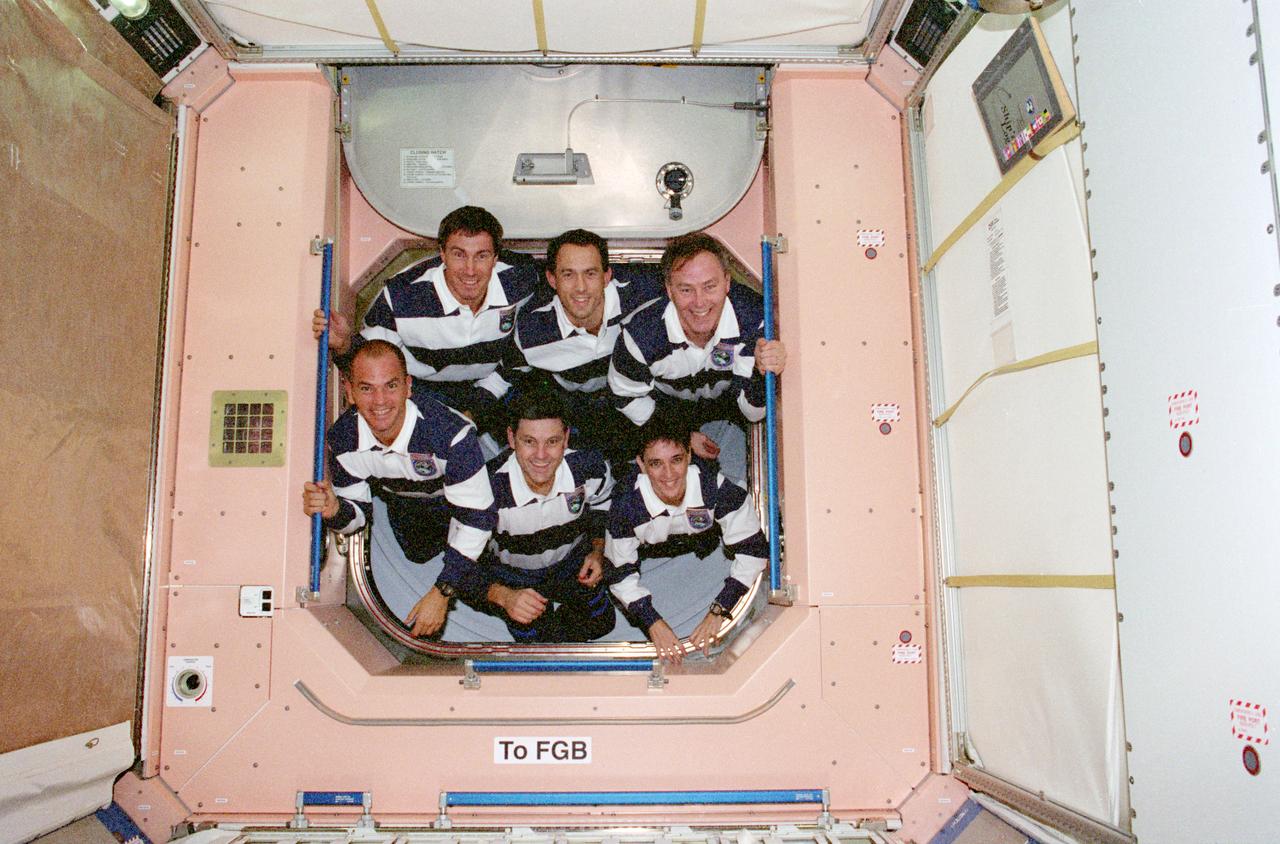
STS088-370-006 (4-15 Dec. 1998) --- The STS-88 crew members pose for the traditional inflight crew portrait in the U.S.-built Unity connecting module. From left to right, bottom, are astronauts Frederick W. (Rick) Sturckow, pilot; Robert D. Cabana, mission commander; and Nancy J. Currie, mission specialist. Top row, cosmonaut Sergei K. Krikalev, representing the Russian Space Agency, along with astronauts James H. Newman and Jerry L. Ross, all mission specialists.
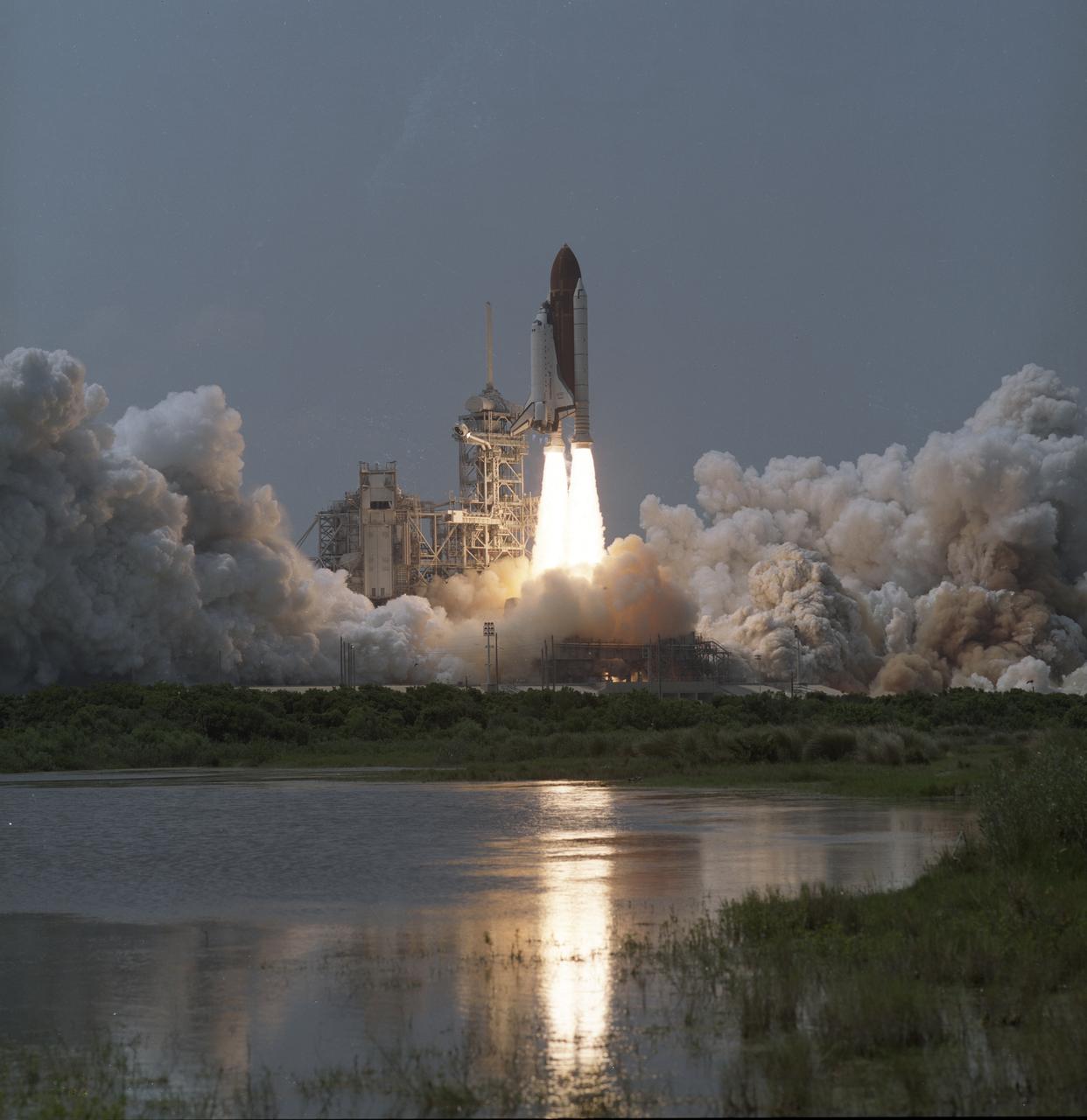
The STS-30 mission launched aboard the Space Shuttle Atlantis on May 4, 1989 at 2:46:59pm (EDT) carrying a crew of five. Aboard were Ronald J. Grabe, pilot; David M. Walker, commander; and mission specialists Norman E. Thagard, Mary L. Cleave, and Mark C. Lee. The primary payload for the mission was the Magellan/Venus Radar mapper spacecraft and attached Inertial Upper Stage (IUS).
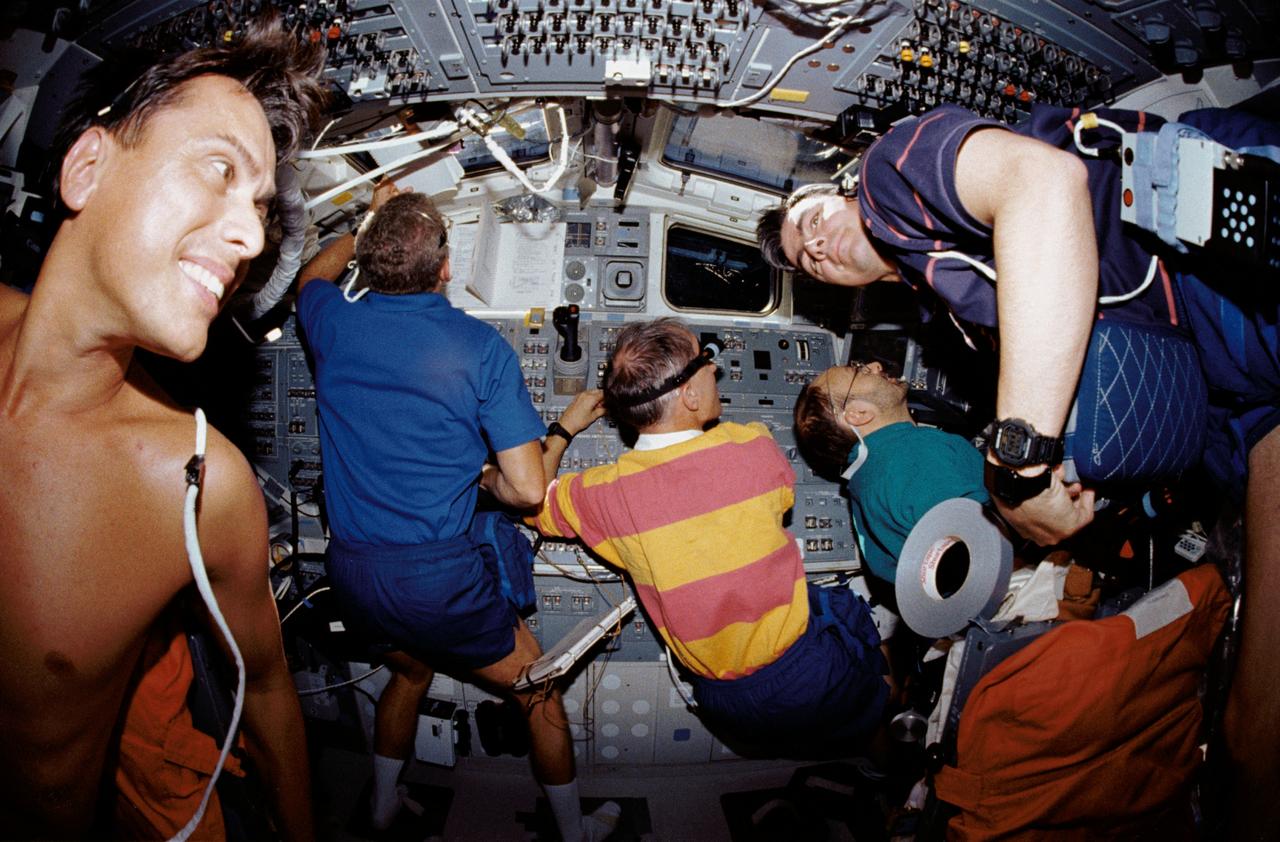
STS046-14-013 (4 Aug. 1992) --- Five of the seven crew members squeezed into this busy scene on the Space Shuttle Atlantis' flight deck during operations with the Tethered Satellite System (TSS). Pictured are, left to right, Franklin R. Chang-Diaz, Loren J. Shriver, Claude Nicollier, Franco Malerba and Andrew M. Allen. Not pictured are astronauts Jeffrey A. Hoffman and Marsha S. Ivins. Mission specialist Ivins used a 35mm camera with a 16mm lens to take this picture.
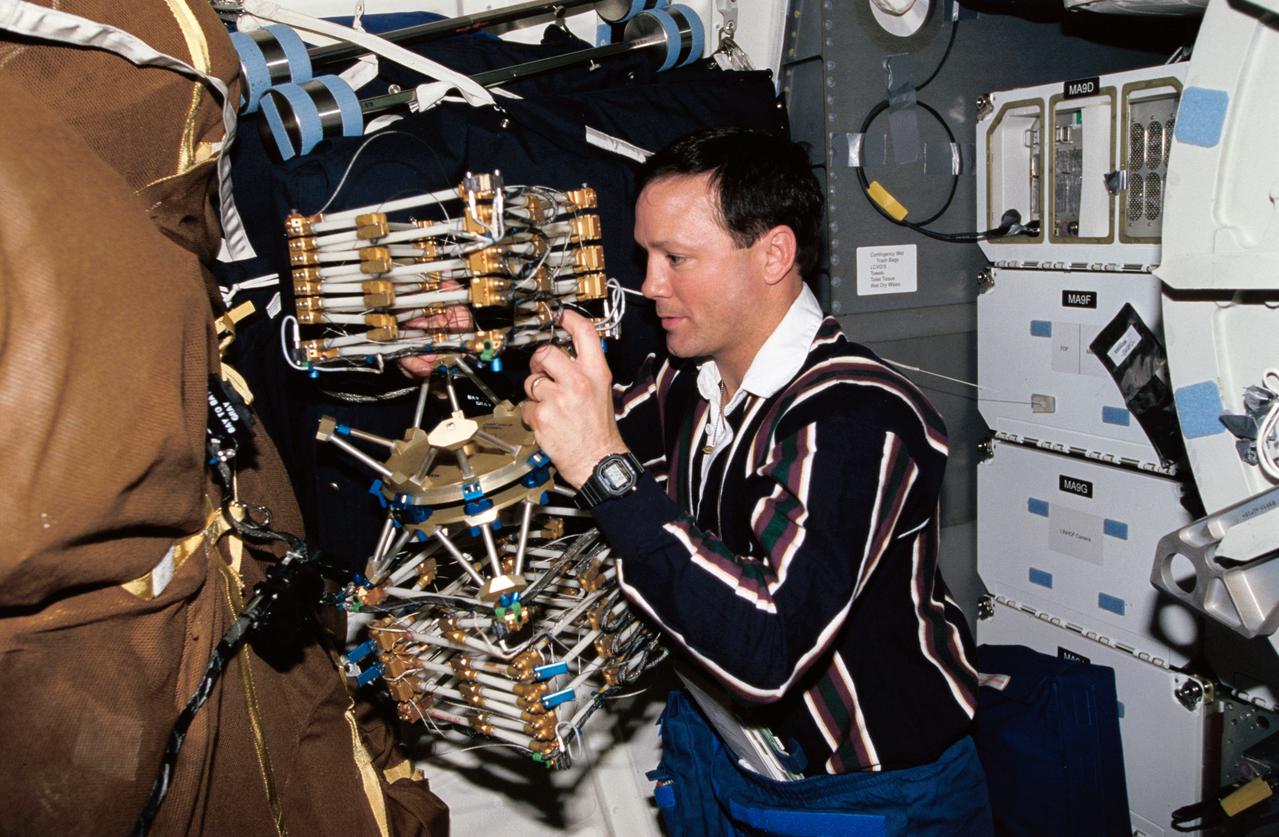
STS062-52-025 (4-18 March 1994) --- Astronaut Pierre J. Thuot, mission specialist, works with the Middeck 0-Gravity Dynamics Experiment (MODE) aboard the earth-orbiting Space Shuttle Columbia. The reusable test facility is designed to study the nonlinear, gravity-dependent behavior of two types of space hardware -- contained fluids and (as depicted here) large space structures -- planned for future spacecraft.
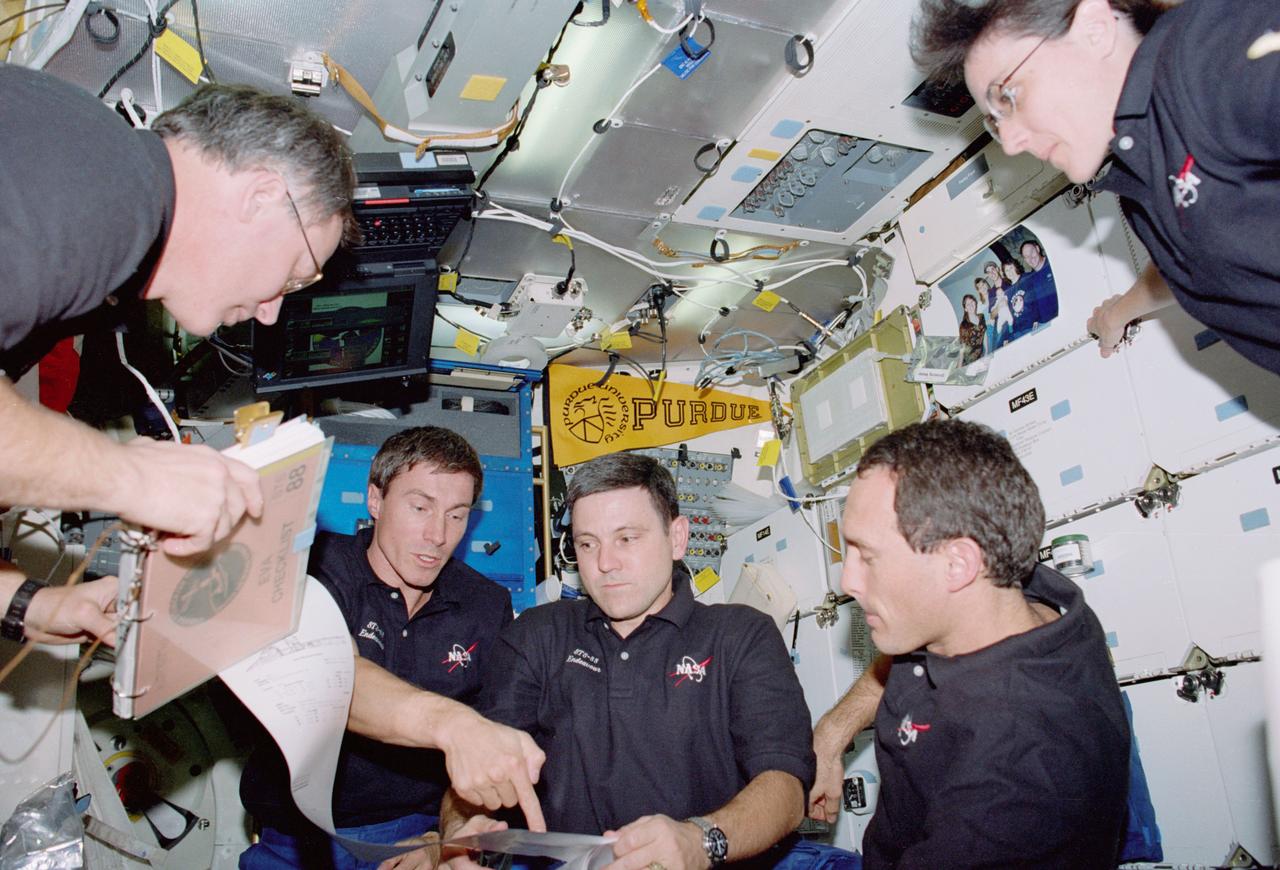
STS088-319-019 (4 - 15 DECEMBER 1998) --- A planning session on Endeavour's middeck includes all but one of the crew members. From the left are astronaut Jerry L. Ross, cosmonaut Sergei K. Krikalev, and astronauts Robert D. Cabana, James H. Newman and Nancy J. Currie. Missing from the scene is astronaut Frederick W. (Rick) Sturckow, who took the photo.
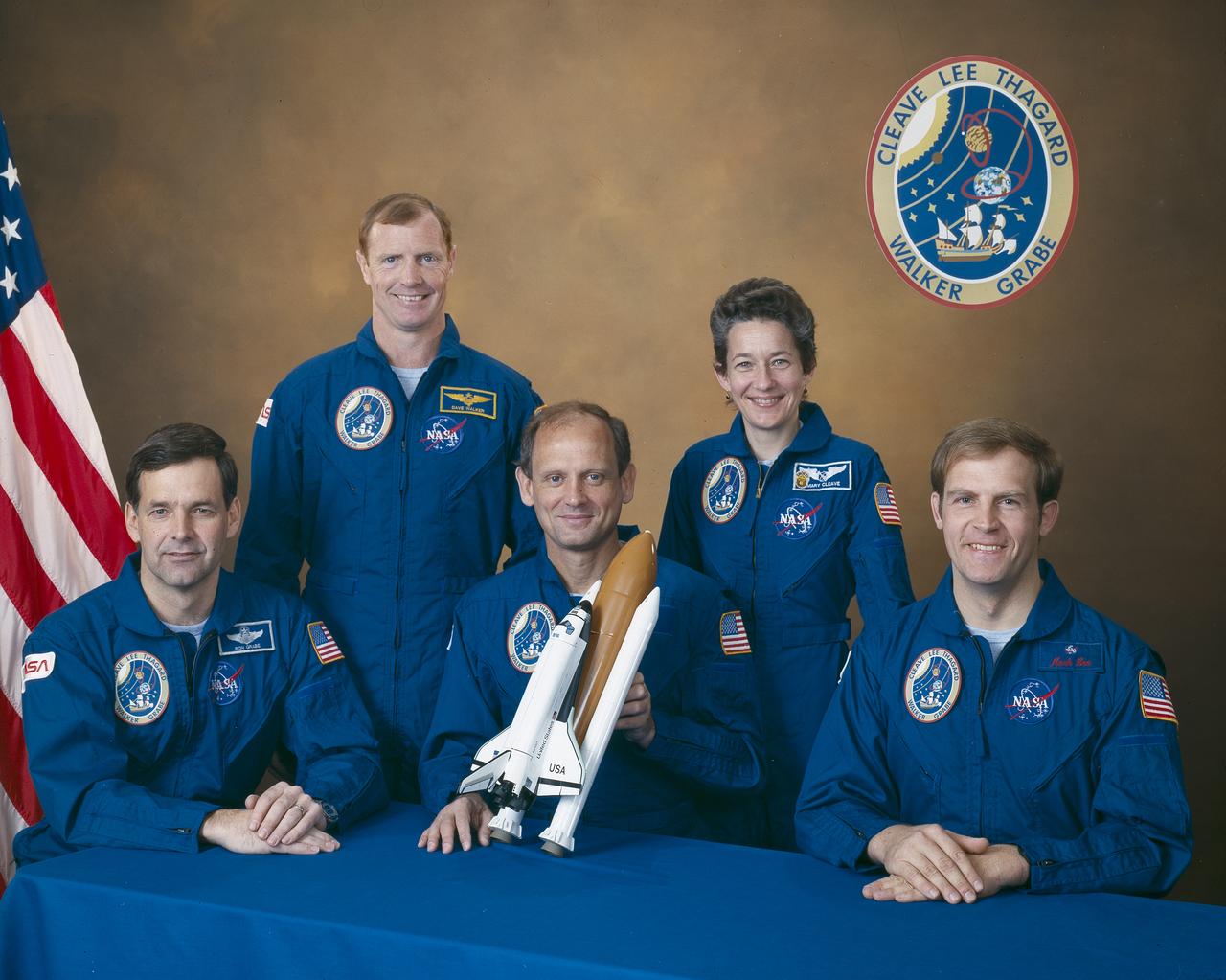
Five astronauts composed the STS-30 crew. Pictured (left to right) are Ronald J. Grabe, pilot; David M. Walker, commander; and mission specialists Norman E. Thagard, Mary L. Cleave, and Mark C. Lee. The STS-30 mission launched aboard the Space Shuttle Atlantis on May 4, 1989 at 2:46:59pm (EDT). The primary payload was the Magellan/Venus Radar mapper spacecraft and attached Inertial Upper Stage (IUS).
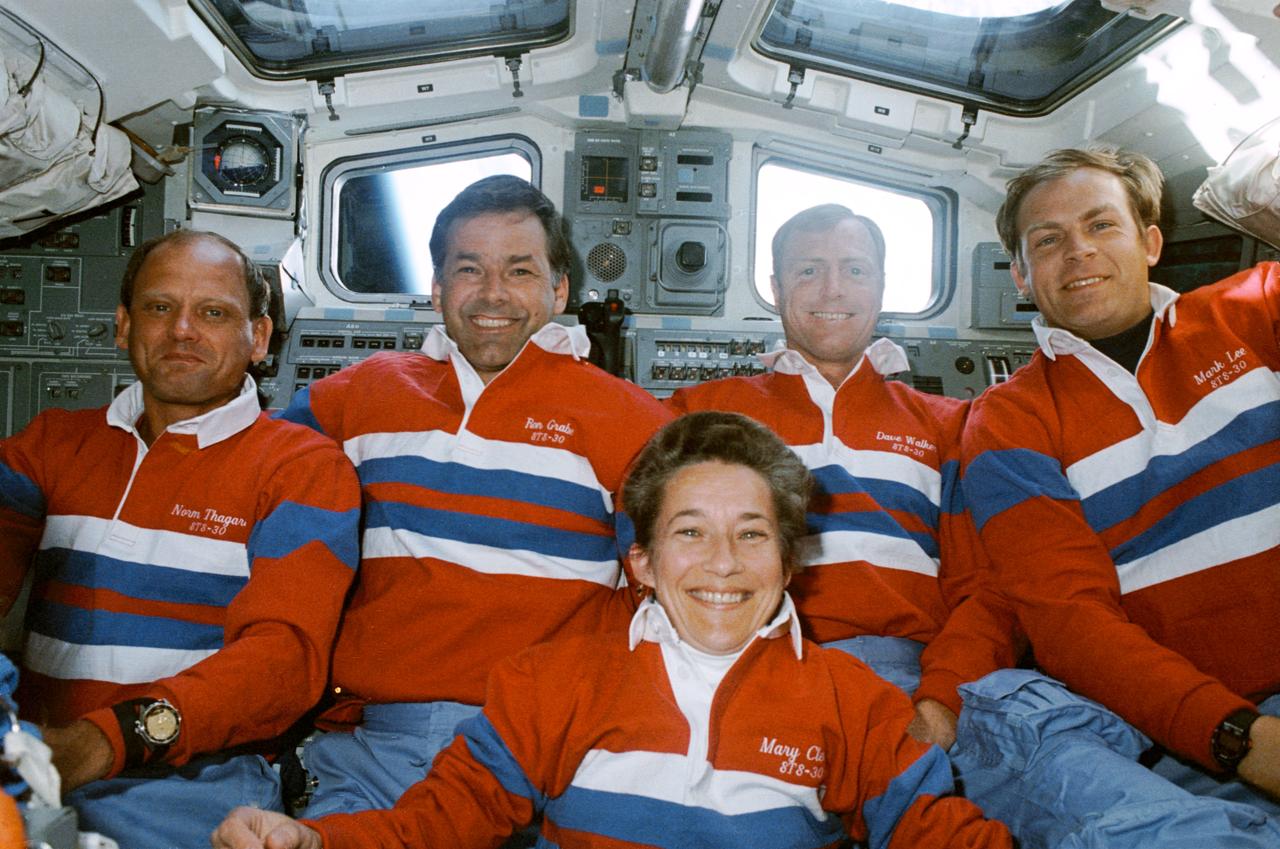
STS030-21-008 (4-8 May 1989) --- A traditional in-space crew portrait for STS-30 aboard the Atlantis. Astronaut Mary L. Cleave is in front. Others pictured, left to right, are astronauts Norman E. Thagard, Ronald J. Grabe, David M. Walker and Mark C. Lee. An automatic, pre-set 35mm camera using color negative film recorded the scene.
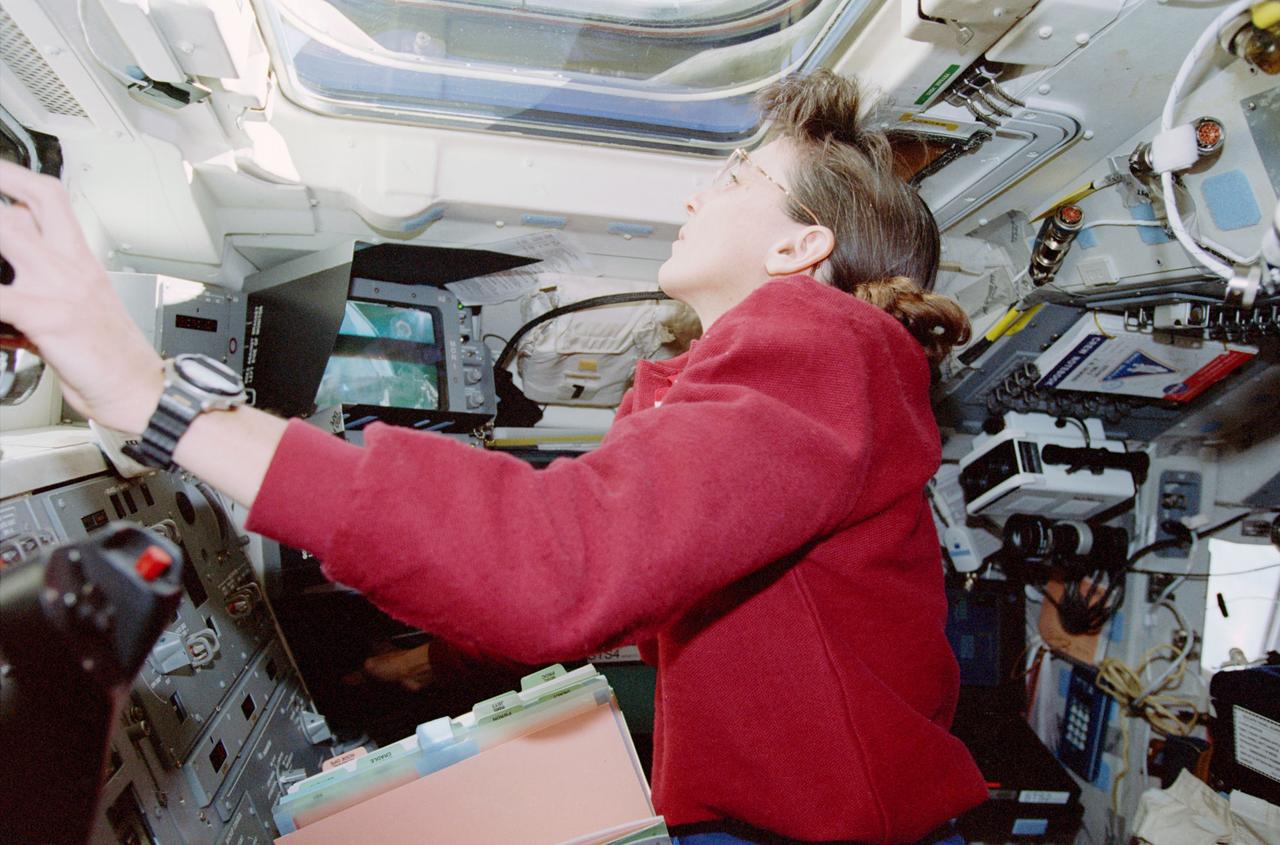
STS088-363-012 (4-15 Dec. 1998) --- Astronaut Nancy J. Currie, mission specialist, looks out the aft flight deck window while operating the Space Shuttle Endeavour?s Remote Manipulator System (RMS). The robot arm was being used to assist Endeavour?s two space walking astronauts -- Jerry L. Ross and James H. Newman, mission specialists.
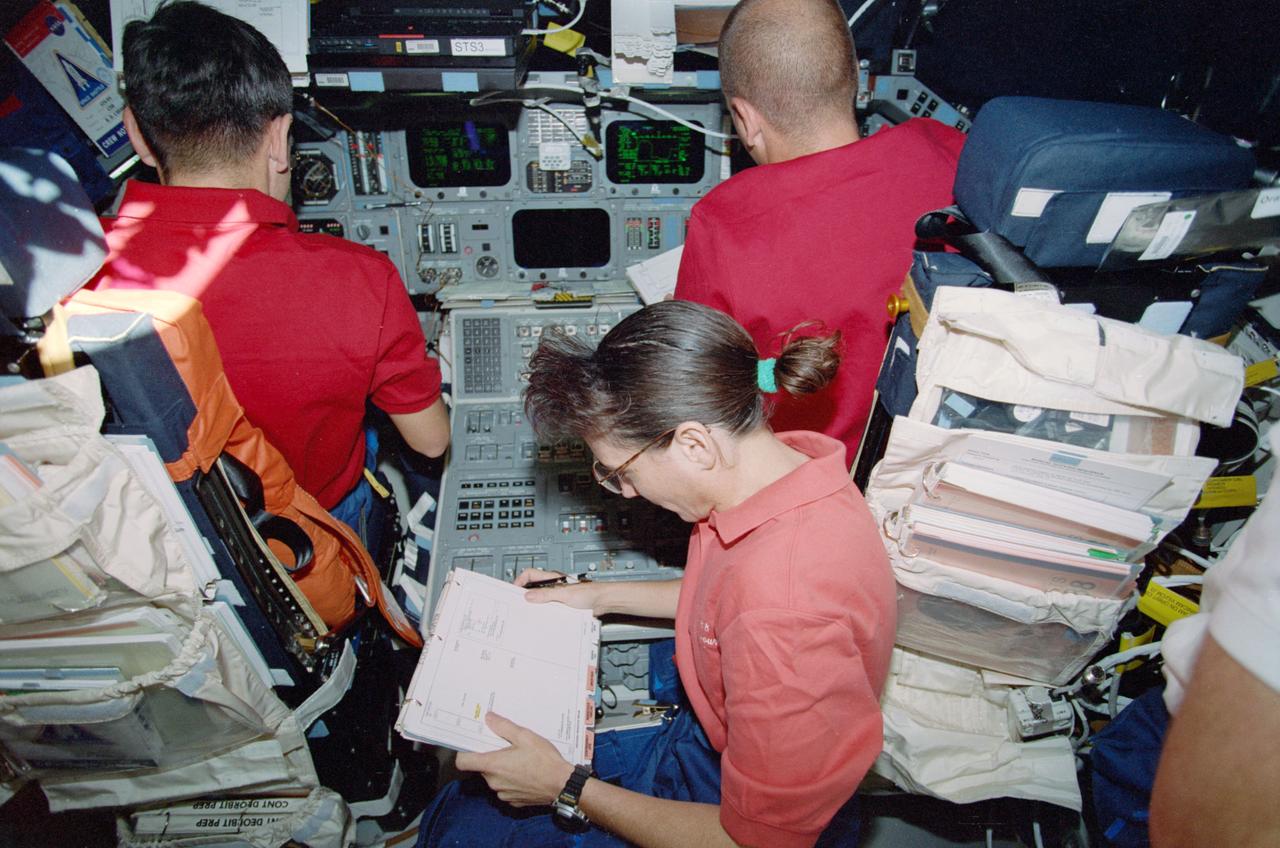
STS088-329-025 (4-15 Dec. 1998) --- Astronauts Robert D. Cabana, commander (left), seated in the commanders station; Frederick W. “Rick” Sturckow, pilot (right), seated in the pilot’s station; and Nancy J. Currie, mission specialist, on the flight deck of the Space Shuttle Endeavour. The three were involved with rendezvous operations with the Russian-built FGB Module (Zarya) at the time the photo was taken.
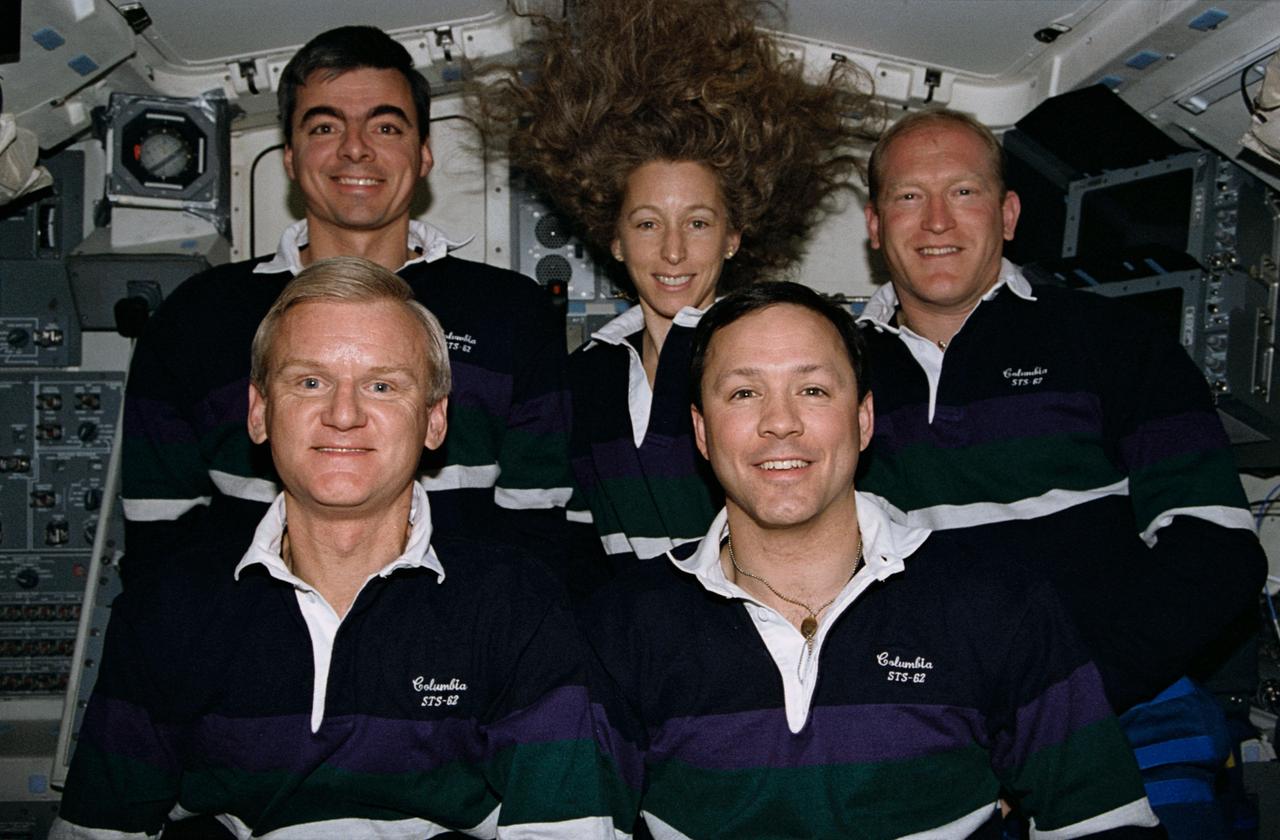
STS062-16-004 (4-18 March 1994) --- The five veteran astronaut crewmembers for NASA's STS-62 mission pose for the traditional inflight portrait on Columbia's aft flight deck. In front are astronauts John H. Casper (left), mission commander; and Pierre J. Thuot, mission specialist. In the rear are astronauts (left to right) Andrew M. Allen, pilot; Marsha S. Ivins and Charles D. (Sam) Gemar, mission specialists.
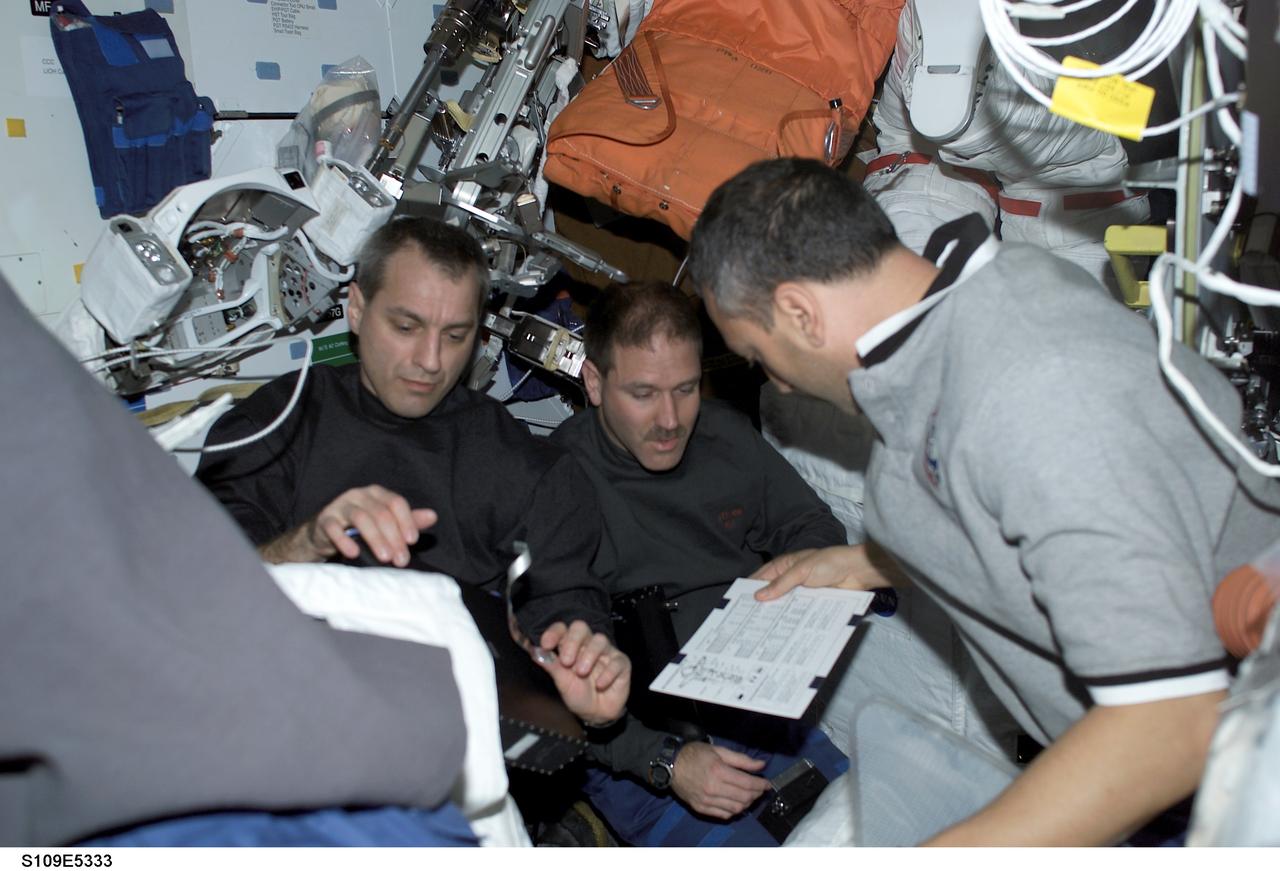
STS109-E-5333 (4 March 2002) --- Three STS-109 crew members assigned to extravehicular activity (EVA) duty on the Hubble Space Telescope (HST) discuss strategy on the mid deck of the Space Shuttle Columbia. From the left are astronauts Richard M. Linnehan, John M. Grunsfeld and Michael J. Massimino. The image was recorded with a digital still camera.
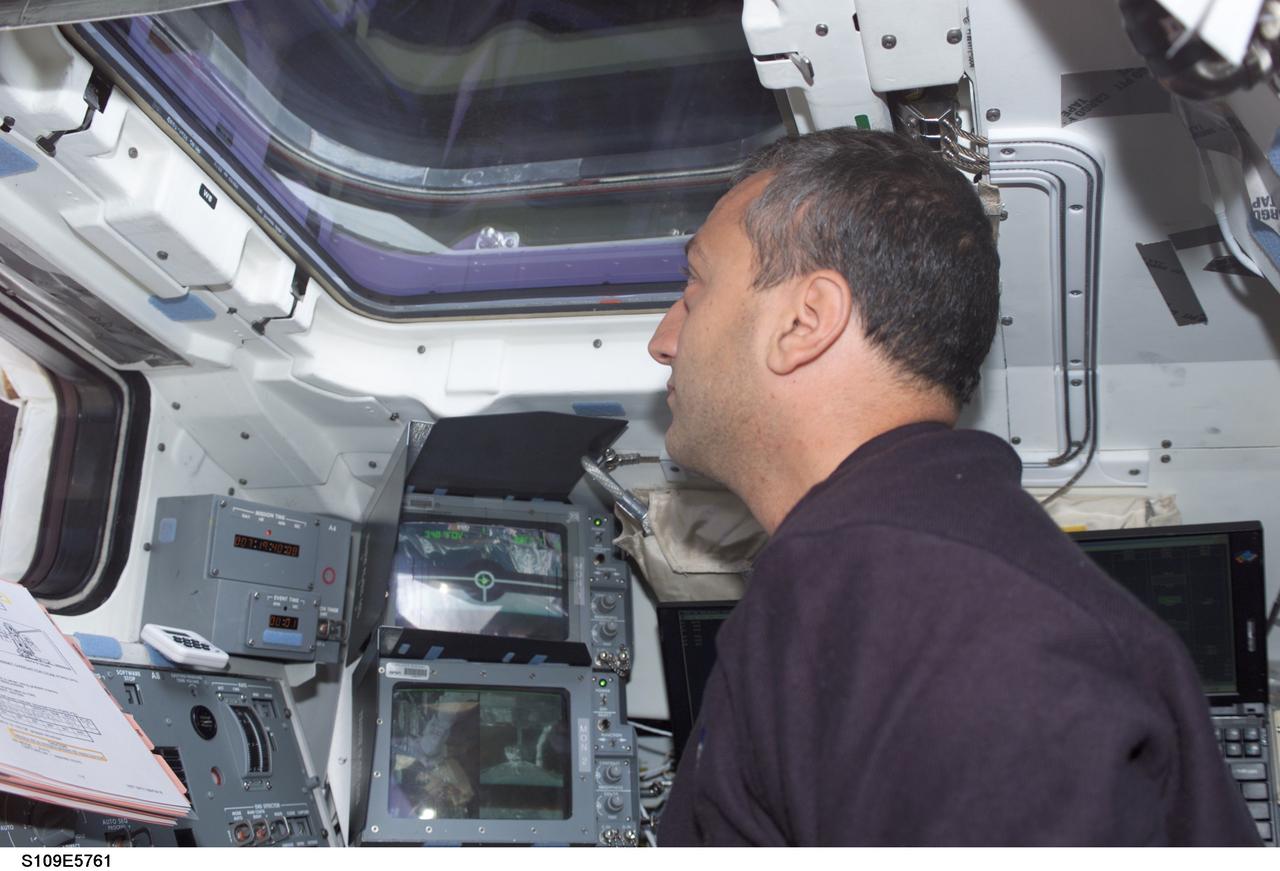
STS109-E-5761 (9 March 2002) --- Astronaut Michael J. Massimino, STS-109 mission specialist, looks through an overhead window on the aft flight deck of the Space Shuttle Columbia during the crew’s final interface with the Hubble Space Telescope (HST). The telescope was released at 4:04 a.m. (CST). The image was recorded with a digital still camera.
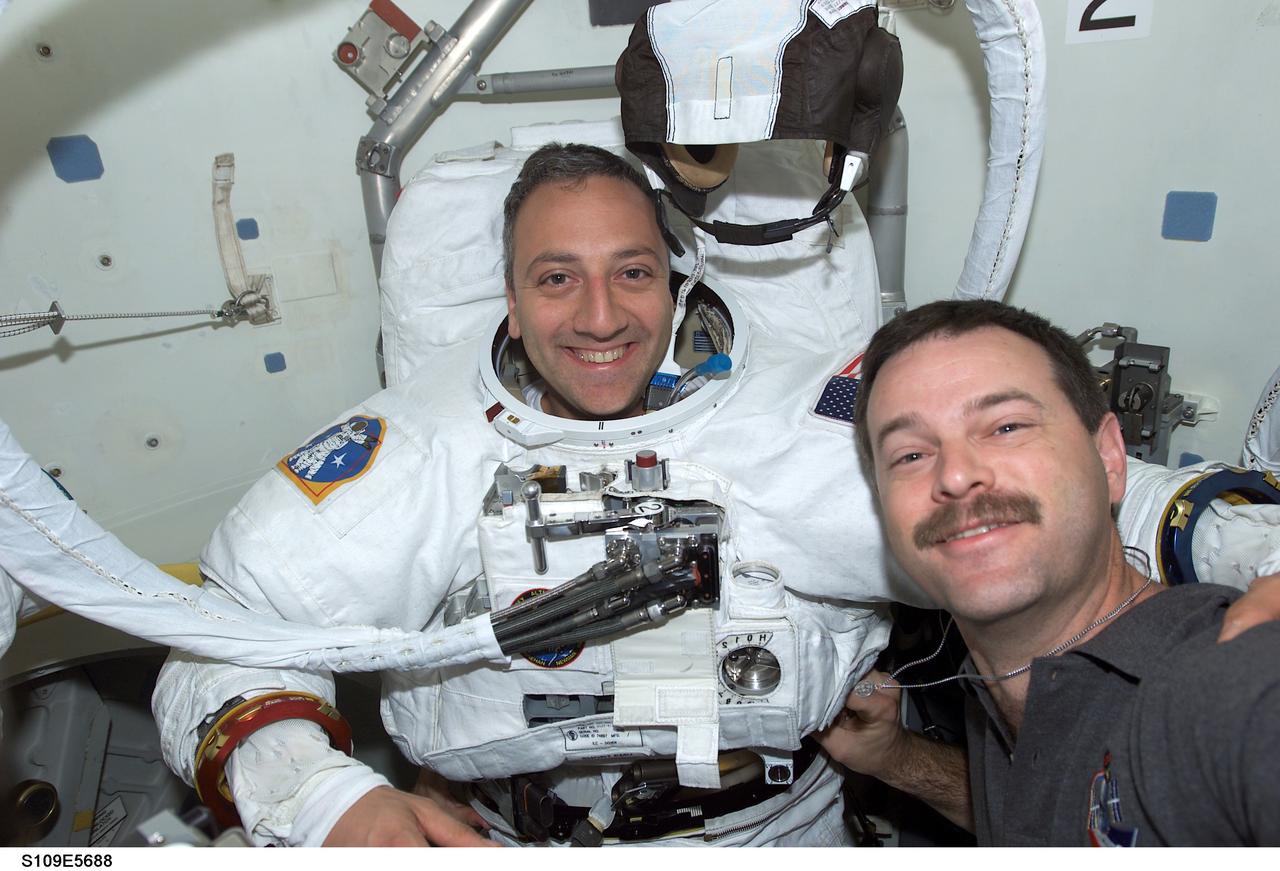
STS109-E-5688 (7 March 2002) --- Astronaut Scott D. Altman, mission commander, assists astronaut Michael J. Massimino, mission specialist, with suit-donning tasks prior to the STS-109 mission's fourth space walk (EVA-4). Astronauts Massimino and James H. Newman went on to install the new Advanced Camera for Surveys (ACS) on the Hubble Space Telescope (HST). The image was recorded with a digital still camera.
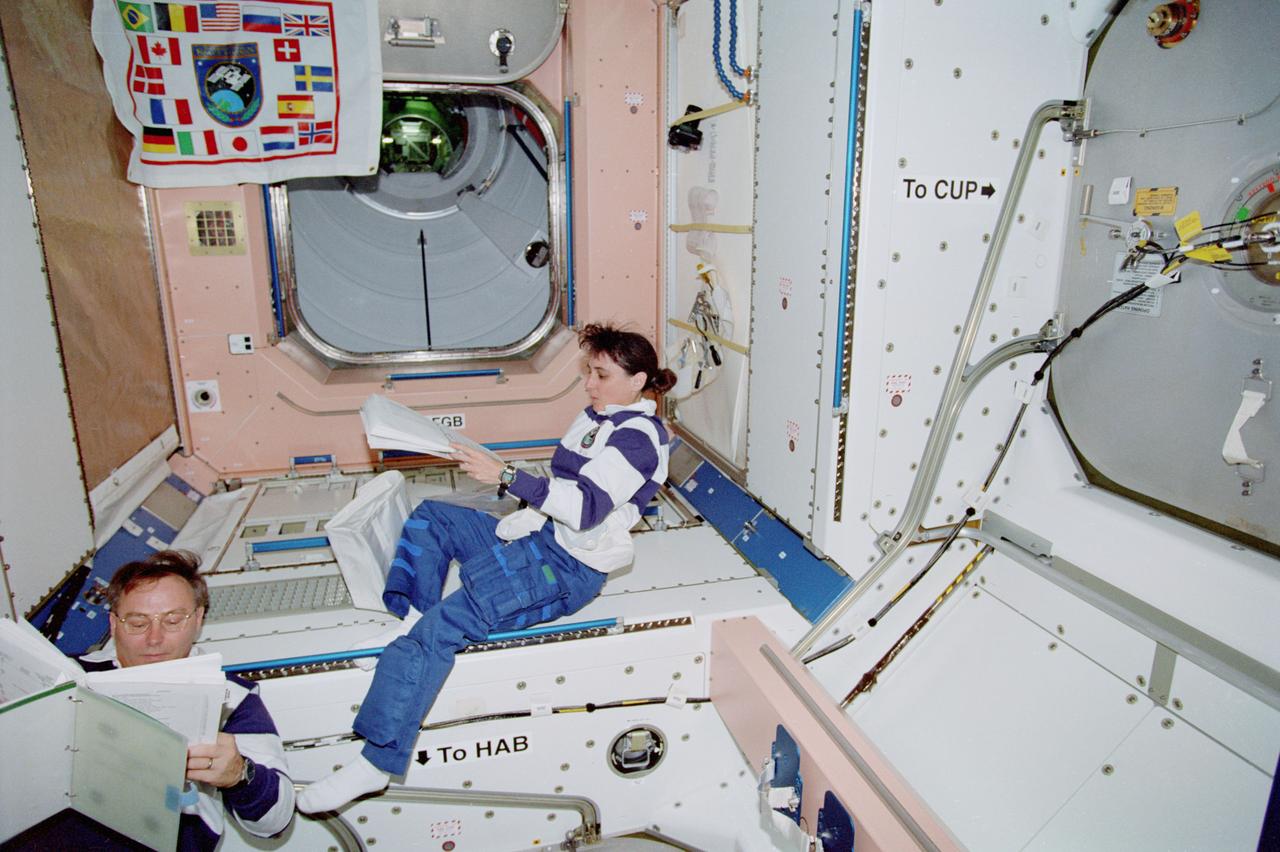
STS088-357-020 (4-15 Dec. 1998) --- Astronauts Jerry L. Ross and Nancy J. Currie, both mission specialists, check procedures list prior to performing a variety of tasks in the United States-built Node 1 or Unity Module. The hatchway in upper left corner accesses the Russian-built FGB or Zarya Module, which had earlier been retrieved with the aid of the Canadian-built Remote Manipulator System (RMS) and linked with Unity.
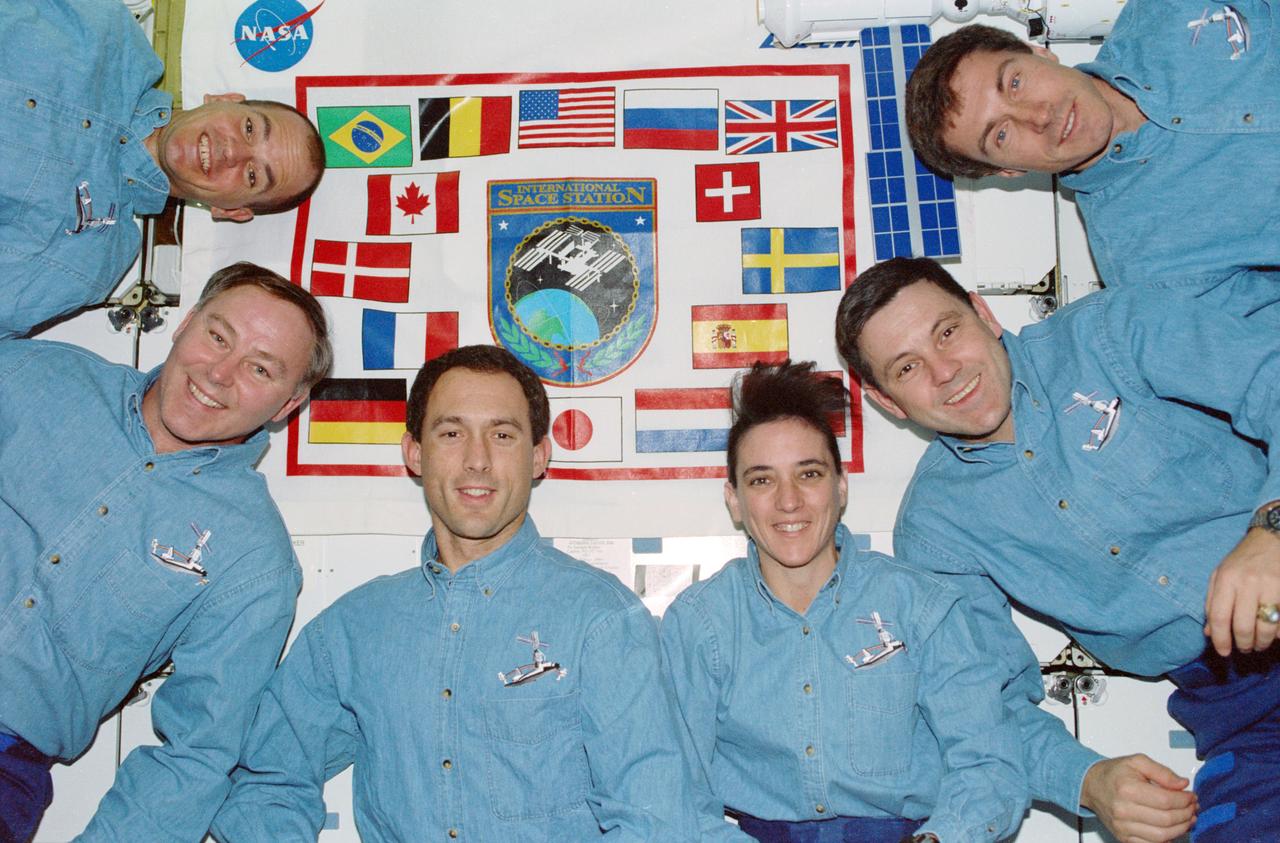
STS088-350-010 (4-15 Dec. 1998) --- STS-88 in-flight crew portrait taken on the Endeavour's middeck with a banner in the background which depicts the flags of all the international partners. From left to right are: Frederick W. "Rick" Sturckow, pilot; Jerry L. Ross, James H. Newman and Nancy J. Currie, all mission specialists; Robert D. Cabana, mission commander; and Sergei K. Krikalev, mission specialist, representing the Russian Aviaiton and Space Agency (Rosaviakosmos).
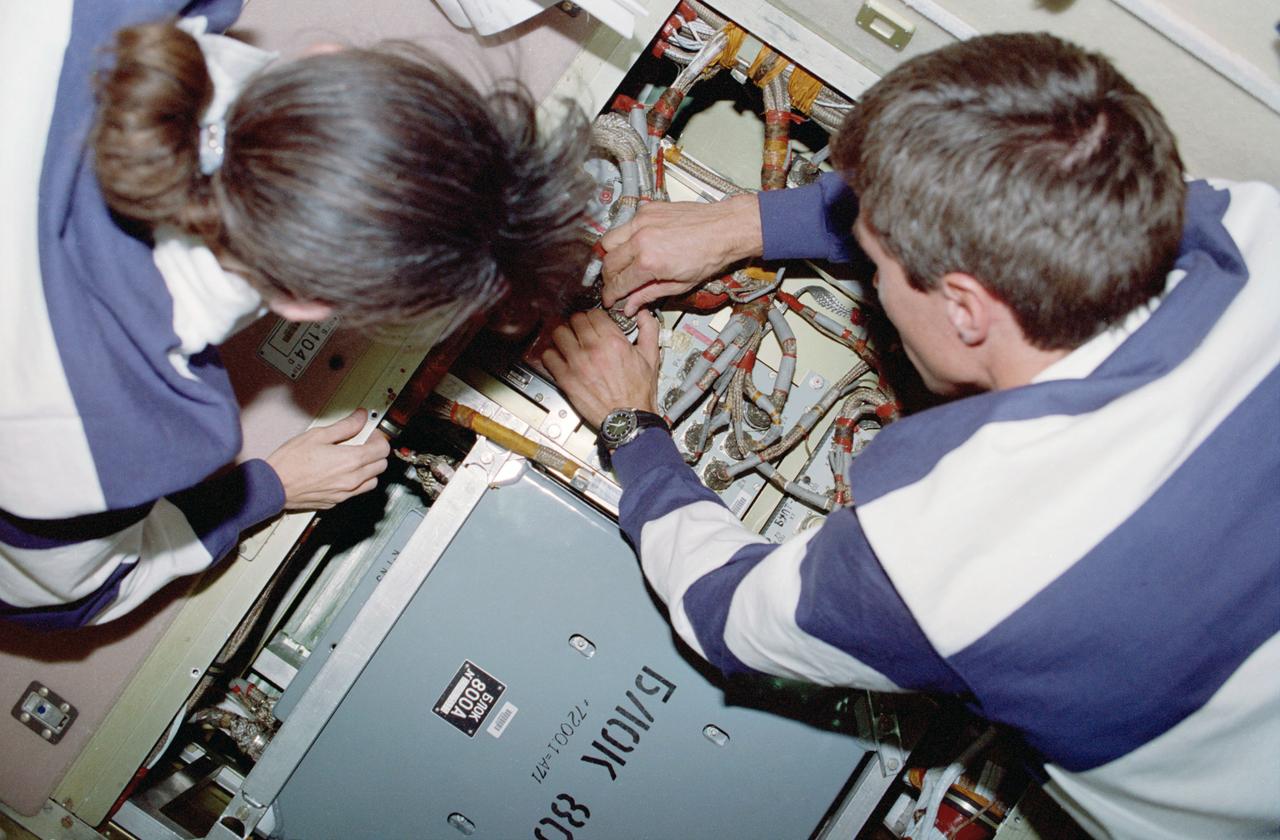
STS088-334-029 (4-15 Dec. 1998) --- Astronaut Nancy J. Currie, mission specialist, and cosmonaut Sergei K. Krikalev, mission specialist representing the Russian Space Agency (RSA), perform an in-flight maintenance on a battery charging unit on the Russian-built FGB Module (Zarya). One of Zarya's six batteries had experienced a problem discharging stored energy in its automatic configuration. Krikalev had swapped out an identical component during two previous flights on the Russia?s Mir Space Station.
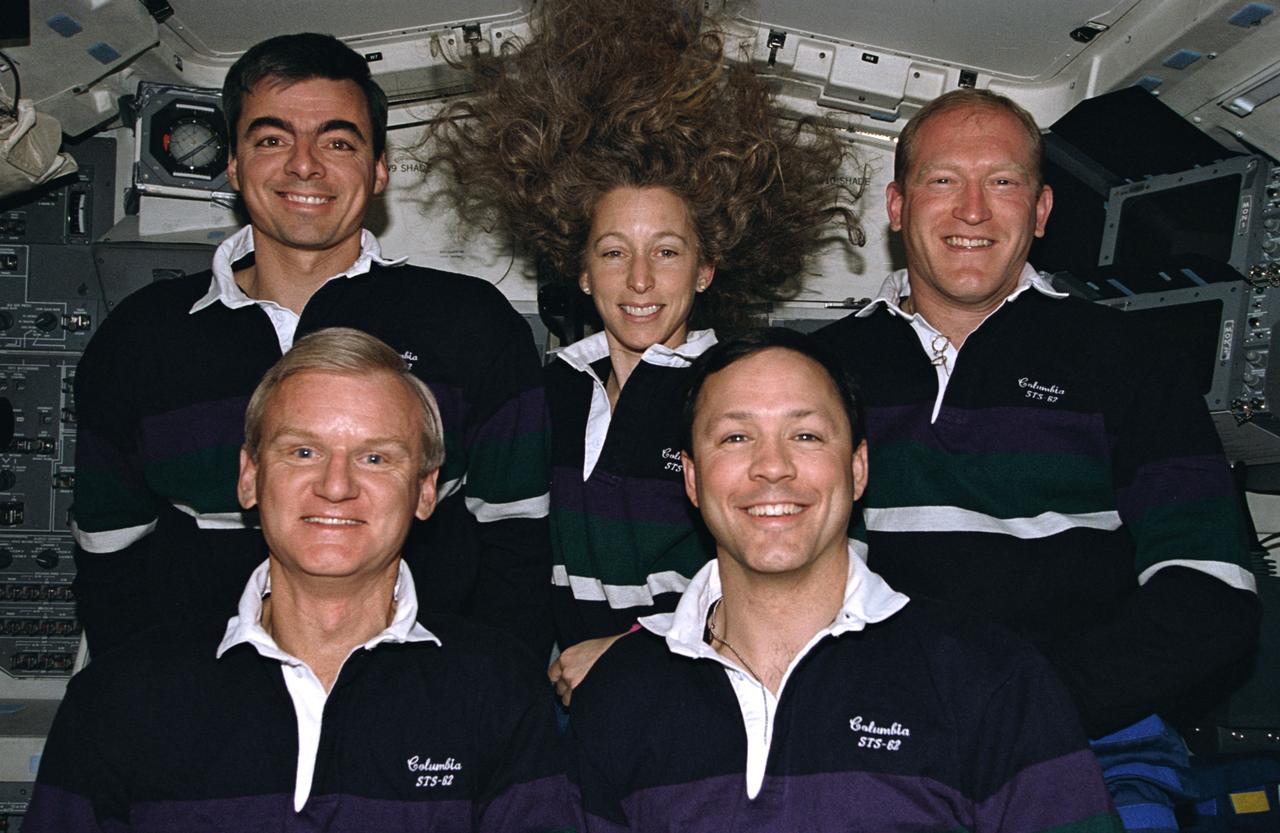
STS062-17-025 (4-18 March 1994) --- The five veteran astronaut crewmembers for NASA's STS-62 mission pose for the traditional inflight portrait on Columbia's aft flight deck. In front are astronauts John H. Casper (left), mission commander; and Pierre J. Thuot, mission specialist. In the rear are astronauts (left to right) Andrew M. Allen, pilot; Marsha S. Ivins and Charles D. (Sam) Gemar, mission specialists.
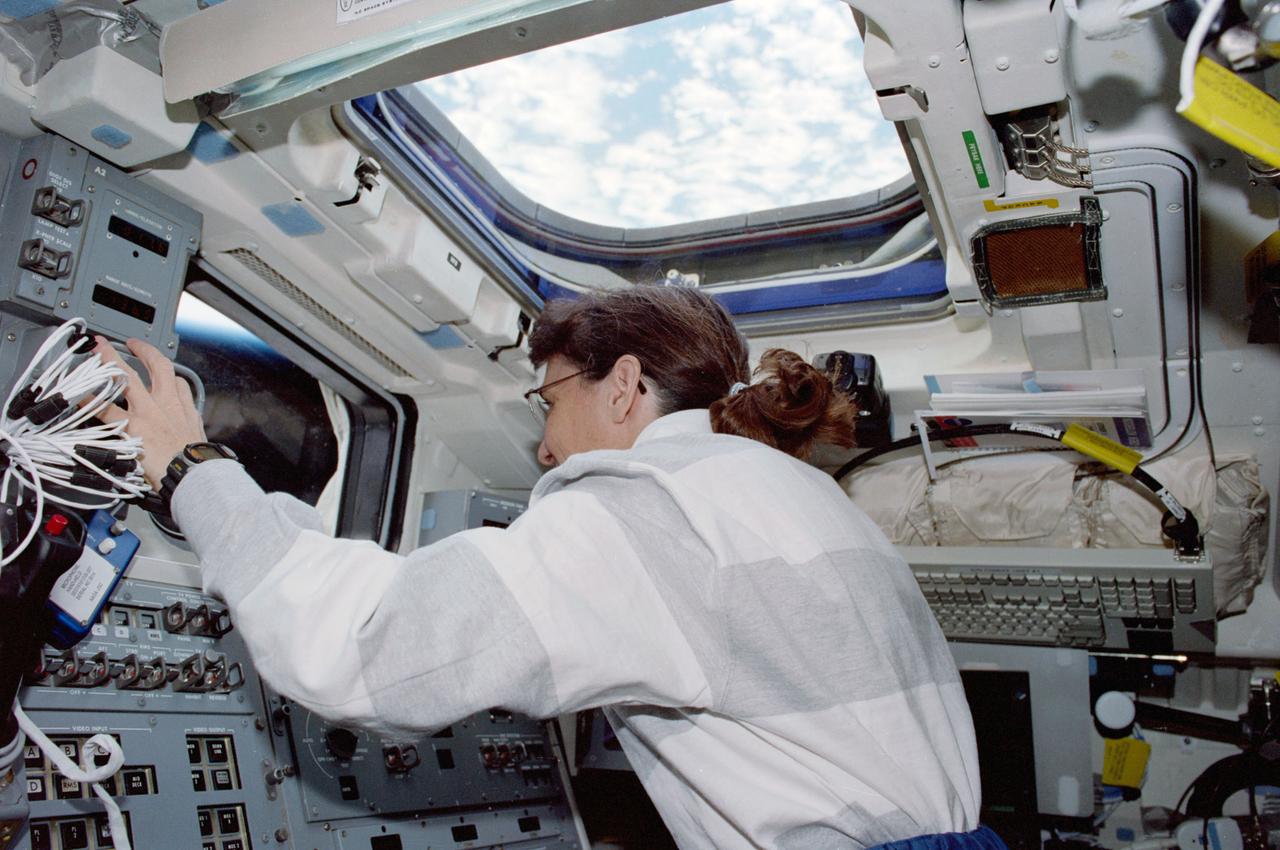
STS088-335-006 (4-15 Dec. 1998) --- Astronaut Nancy J. Currie, mission specialist, looking out the aft flight window, works the controls of the Remote Manipulator System (RMS) arm onboard the Earth-orbiting Space Shuttle Endeavour. She was in the process of moving the stowed United States-built Unity Module (Node 1) into a docked configuration with Endeavour?s docking system. This process preceded rendezvous and docking with the Russian-built FGB Module (Zarya).
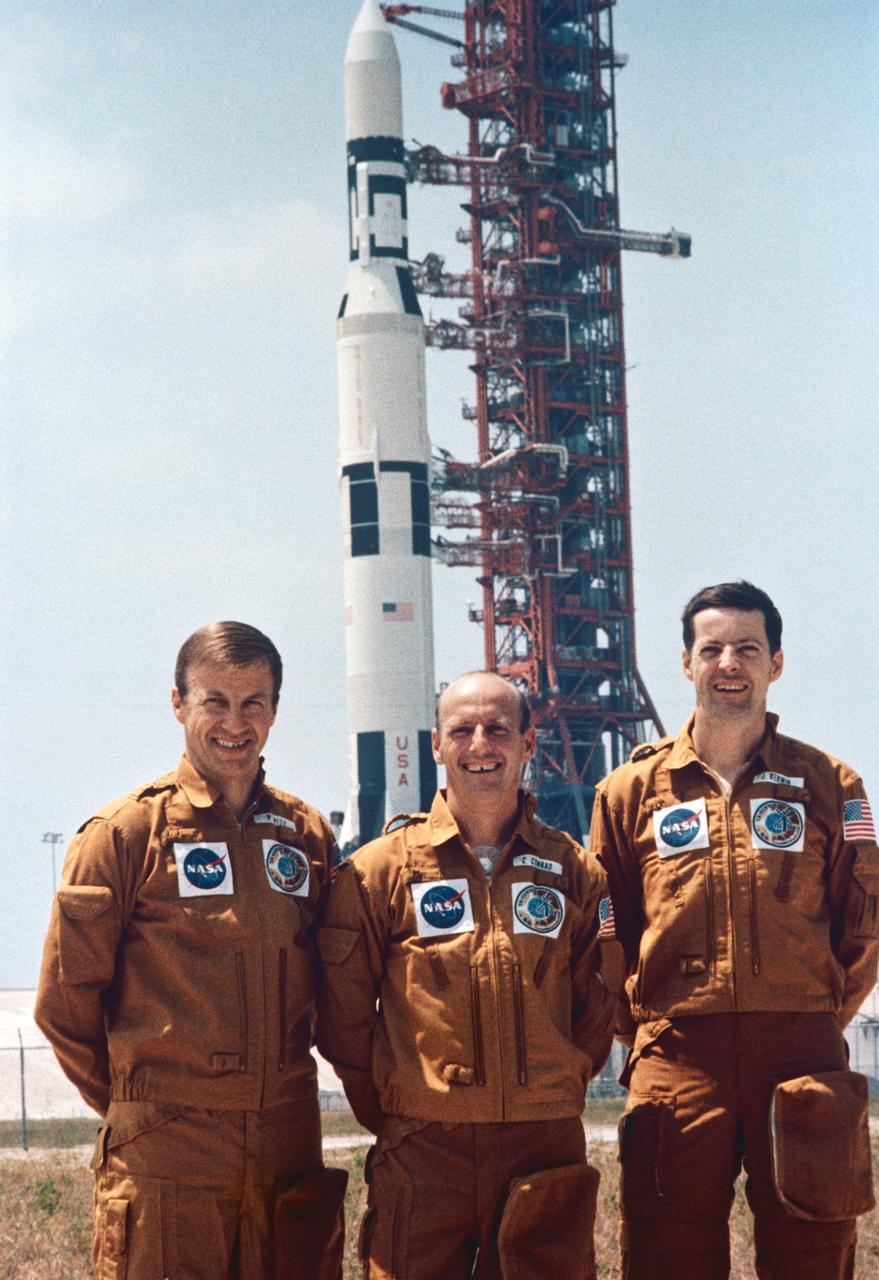
S73-25902 (4 May 1973) --- The three prime crew members of the first manned Skylab mission (Skylab 2) are photographed at Launch Complex 39, Kennedy Space Center, during preflight activity. They are, left to right, astronaut Paul J. Weitz, pilot; astronaut Charles Conrad Jr., commander; and scientist-astronaut Joseph P. Kerwin, science pilot. In the background is the Skylab 1/Saturn V space vehicle with its Skylab space station payload on Pad A. Photo credit: NASA
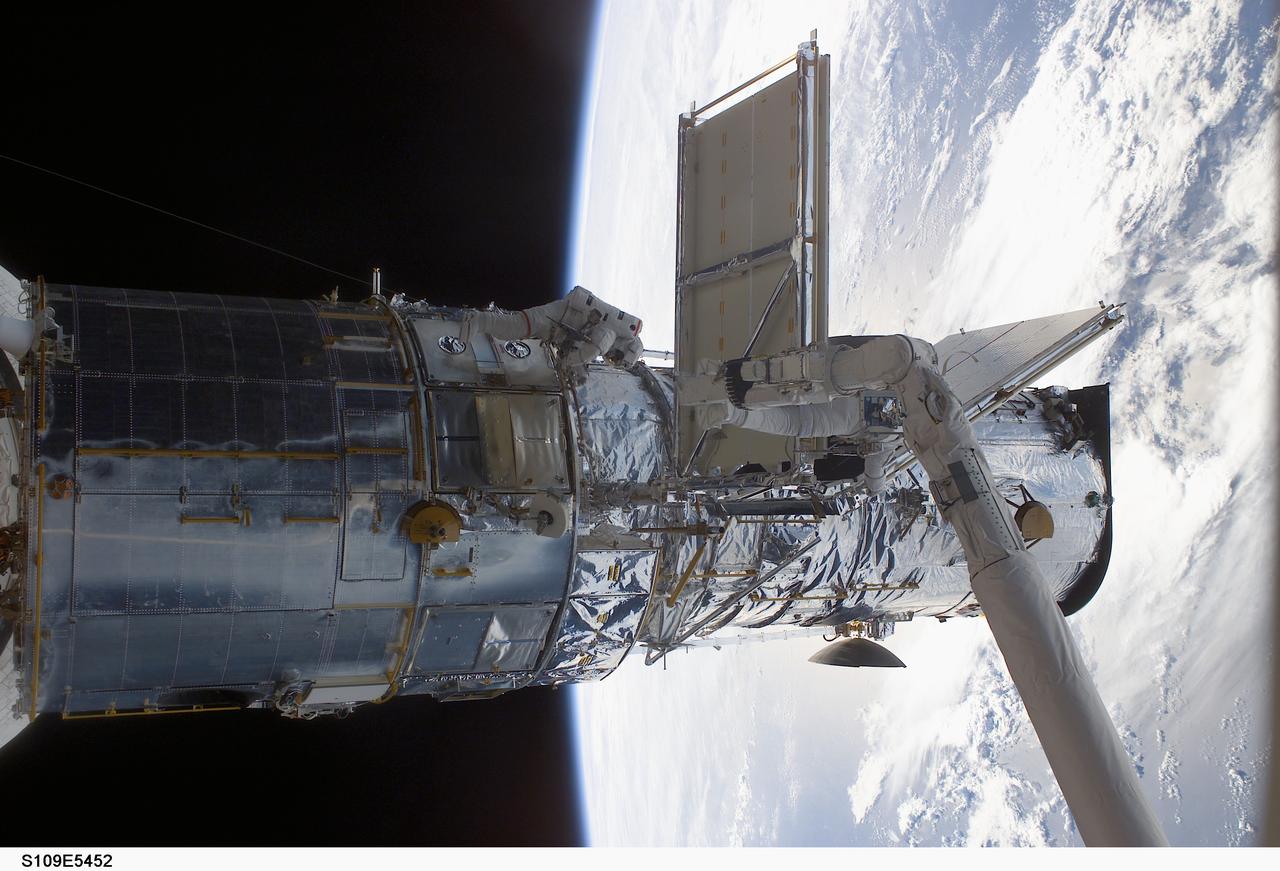
STS109-E-5452 (4 March 2002) --- Astronauts Richard M. Linnehan (partially visible on the end of Columbia's robotic arm), STS-109 mission specialist, and John M. Grunsfeld (center frame), payload commander, work to replace the starboard solar array on the Hubble Space Telescope (HST). Linnehan works while anchored to a foot restraint connected to the shuttle's Remote Manipulator System (RMS), controlled inside the shuttle's crew cabin by astronaut Nancy J. Currie, mission specialist. The image was recorded with a digital still camera.
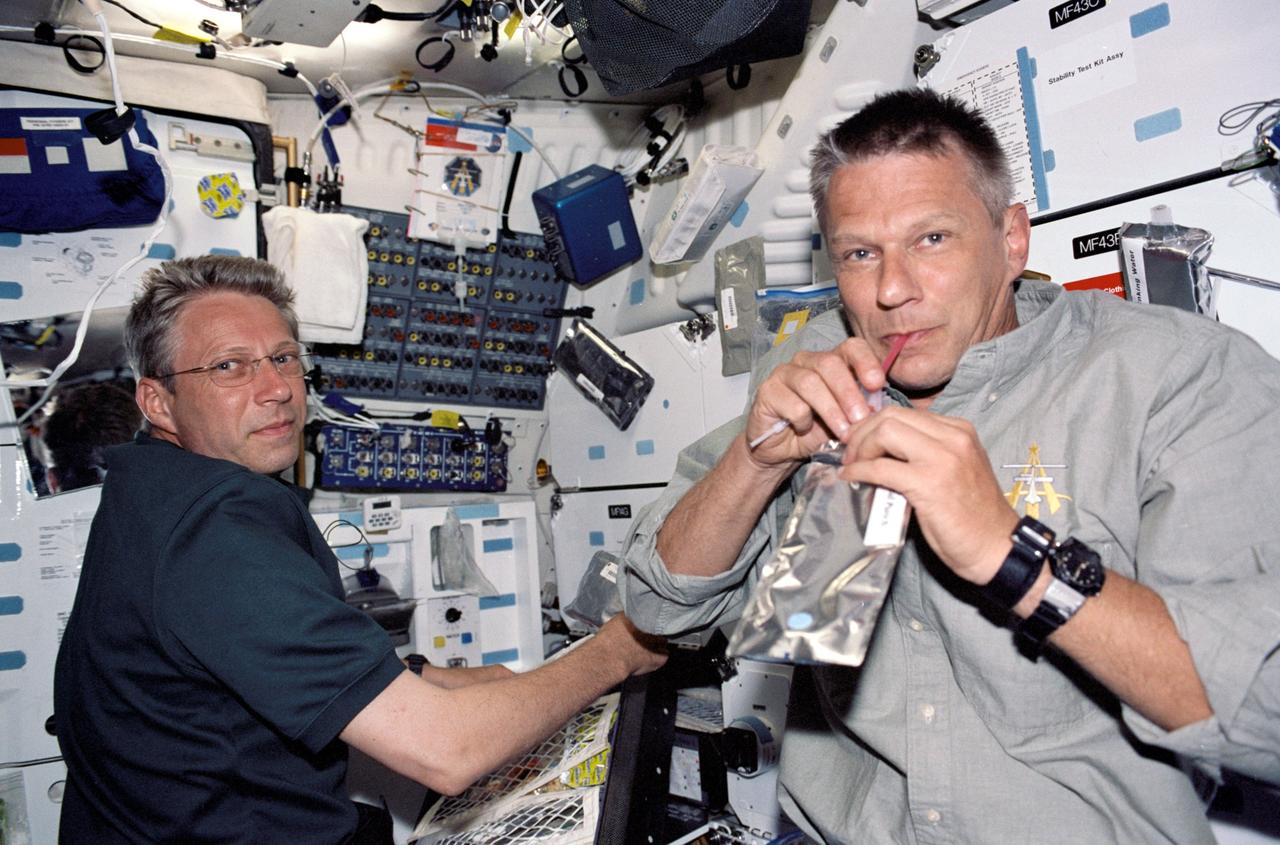
STS121-319-021 (4 - 17 July 2006) --- Astronauts Piers J. Sellers, right, and Thomas Reiter of the European Space Agency, share a meal on the flight deck of the Space Shuttle Discovery during the STS-121 mission. Reiter later joined the Expedition 13 crew aboard the International Space Station, where he'll be performing research and other tasks for the next six months.
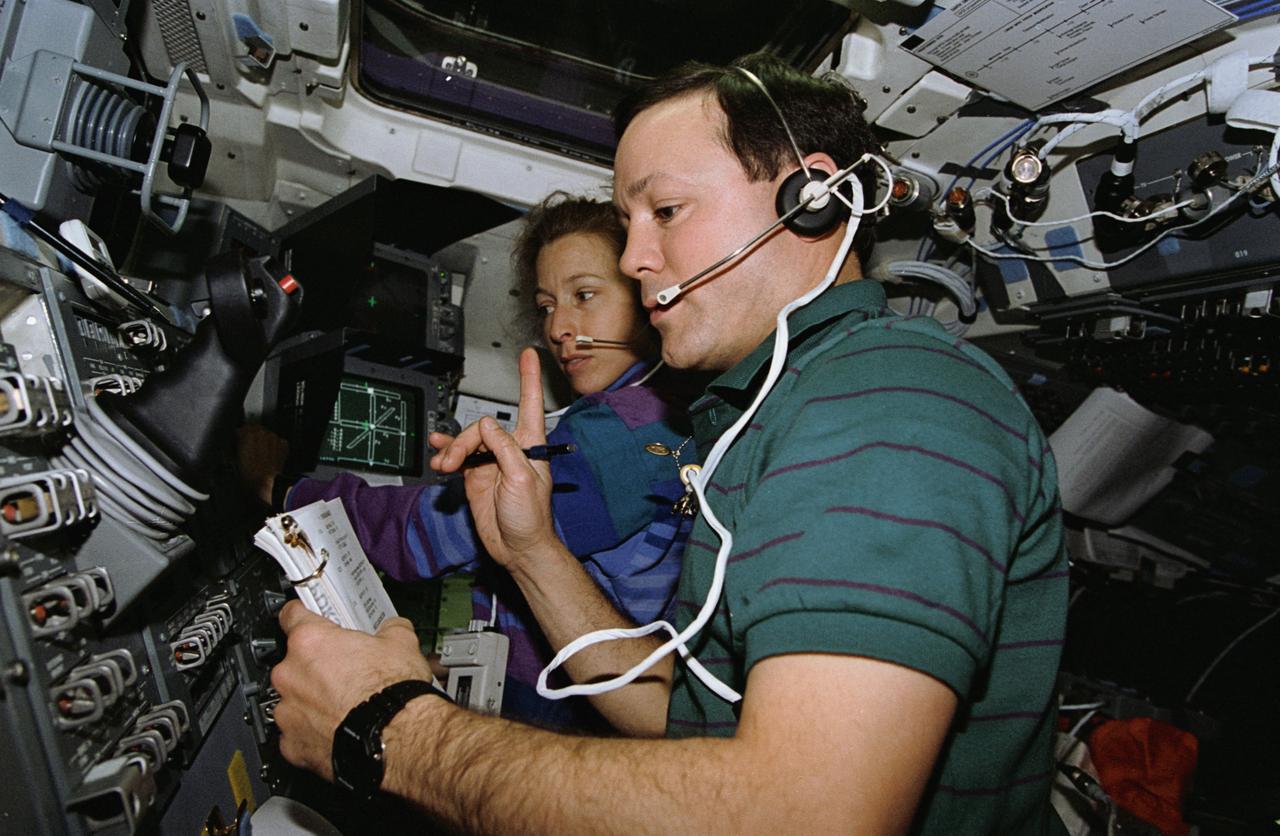
STS062-05-035 (4-18 March 1994) --- This 35mm frame, photographed on the aft flight deck of the earth-orbiting Space Shuttle Columbia, captures crew activity with the Dexterous End Effector (DEE) on the Remote Manipulator System (RMS). Astronauts Pierre J. Thuot and Marsha S. Ivins communicate with ground controllers during operations and observations with DEE. During the 14-day mission, three of the five STS-62 crewmembers took turns operating and observing the RMS in a series of one-hour sessions.

STS088-361-022 (4-15 Dec. 1998) --- Astronaut Nancy J. Currie, mission specialist, works at the controls of the Space Shuttle Endeavour?s Remote Manipulator System (RMS) to unberth the United States-built Unity module. The crew also used the RMS for docking and extravehicular activity (EVA) support during the mission. At mission?s end, the connected node and the Russian-built FGB module were released in Earth-orbit.
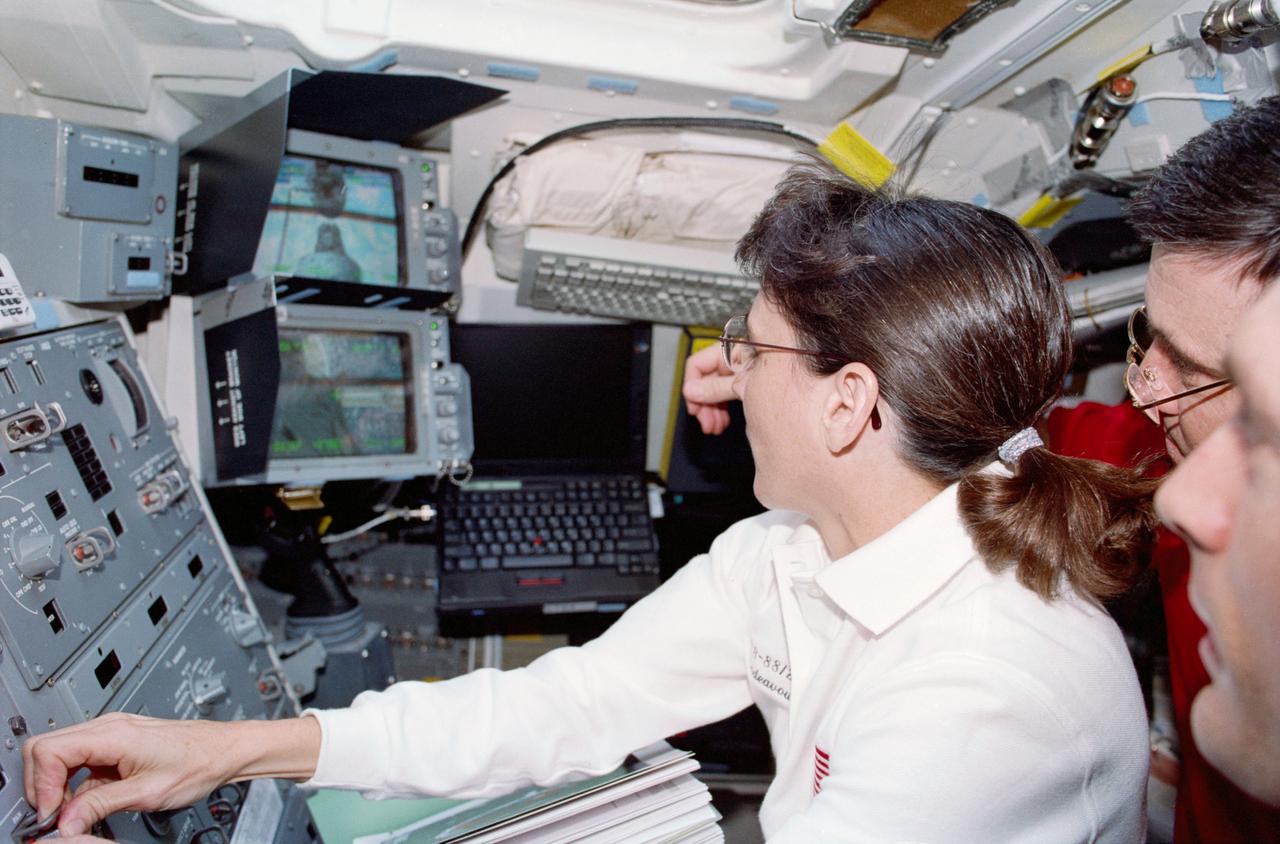
STS088-341-024 (4-15 Dec. 1998) --- Astronaut Nancy J. Currie, mission specialist, operates the controls of Endeavour's remote manipulator system (RMS) arm to ease the Russian-built Zarya module onto the U.S.-built Unity connecting module in the shuttle's cargo bay. At right are astronauts Robert D. Cabana, mission commander; and James H. Newman, mission specialist, partially out of frame.
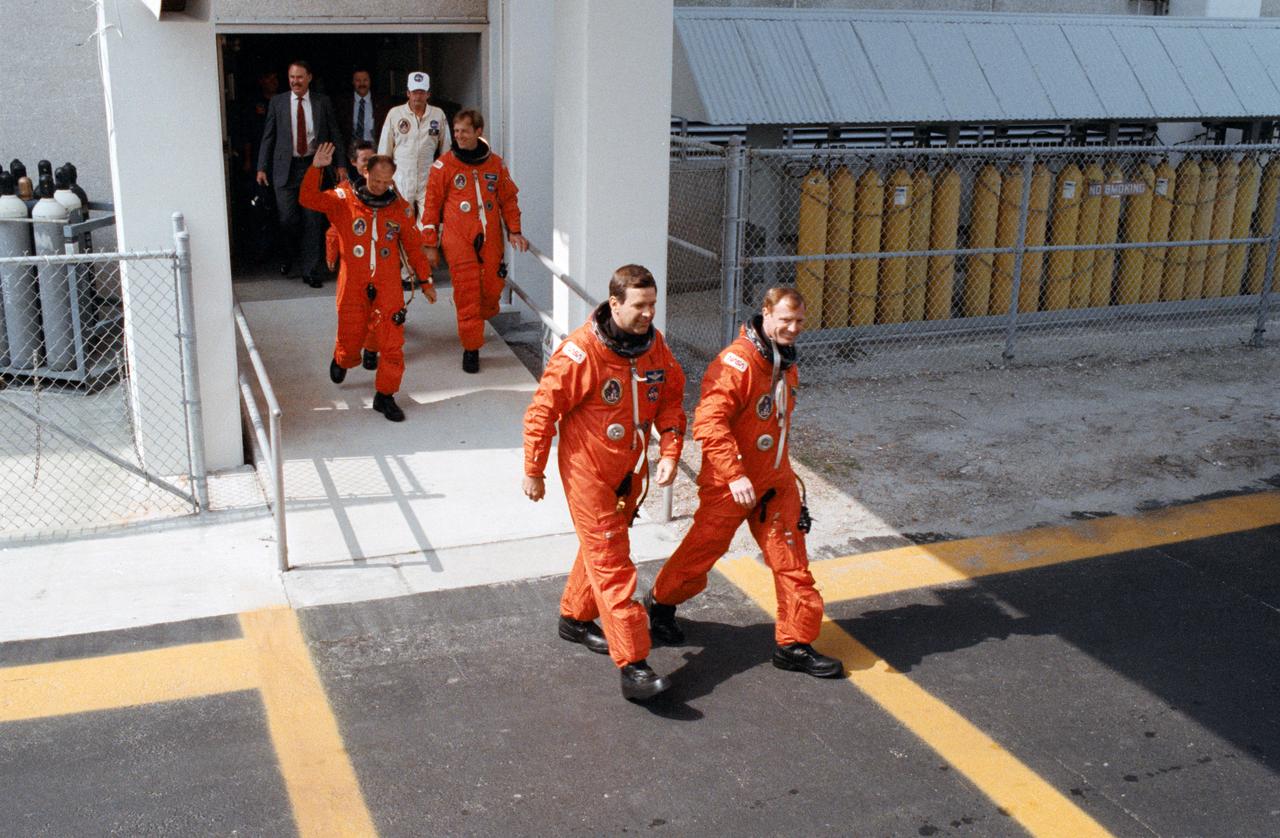
STS030-S-139 (4 May 1989) --- The five astronaut crewmembers of STS-30 leave the operations and checkout building en route to a transfer van that will take them to Pad 39B for a date with the Space Shuttle Atlantis. From front to back are Astronauts David M. Walker, Ronald J. Grabe, Norman E. Thagard, Mark C. Lee (aside) and Mary L. Cleave.
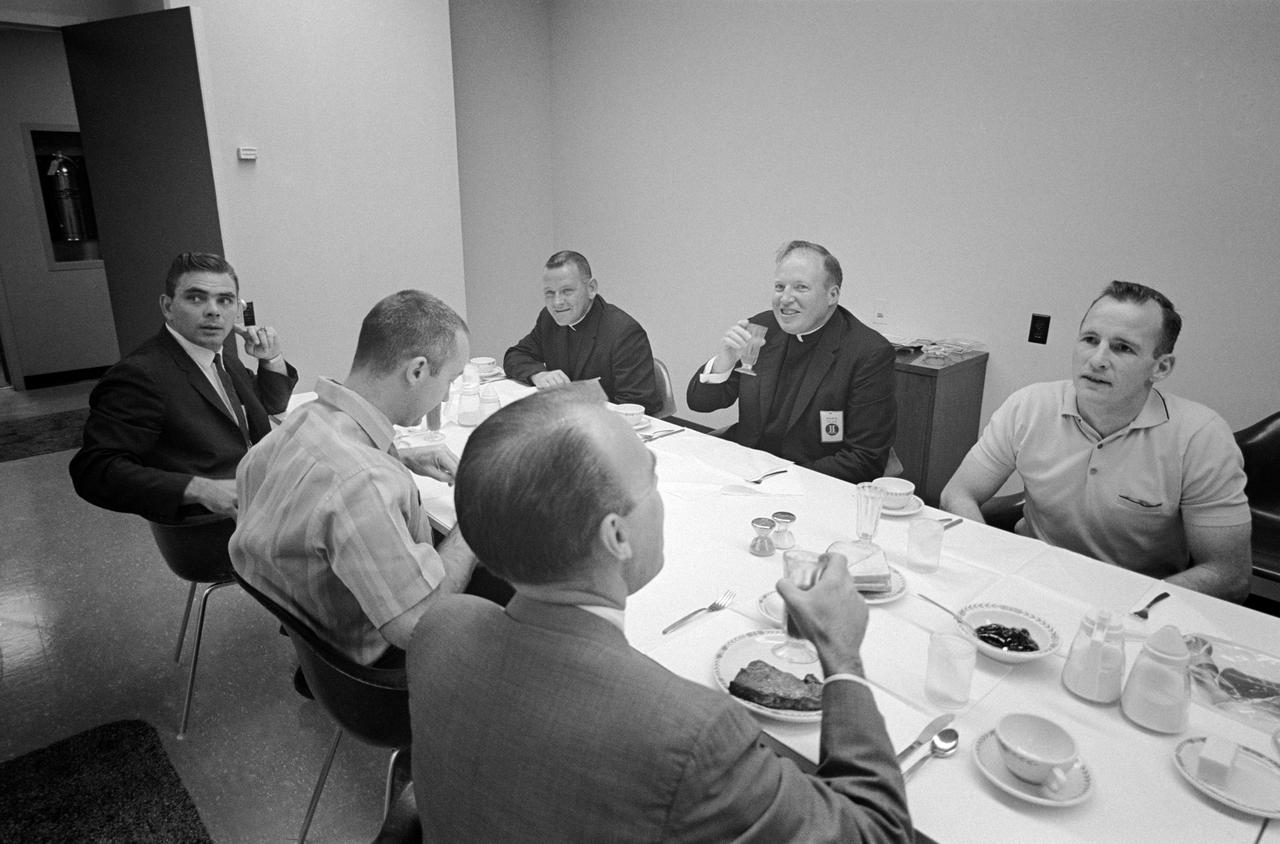
S65-19600 (3 June 1965) --- The prime crew for the Gemini-Titan 4 mission have an early morning breakfast prior to their historic flight which was launched at 10:16 a.m. (EST) on June 3, 1965. Shown here seated around the table (clockwise starting front center) are Dr. D. Owens Coons, chief, MSC Center Medical Office; astronaut James A. McDivitt, GT-4 command pilot; Dr. Eugene F. Tubbs, Kennedy Space Center; Rt. Rev. James Heiliky, McDivitt's priest at Cocoa Beach, Florida; Msgr. Irvine J. Nugent and astronaut Edward H. White II, GT-4 pilot. The group had a breakfast of tomato juice, broiled sirloin steak, poached eggs, toast, strawberry gelatin and coffee.
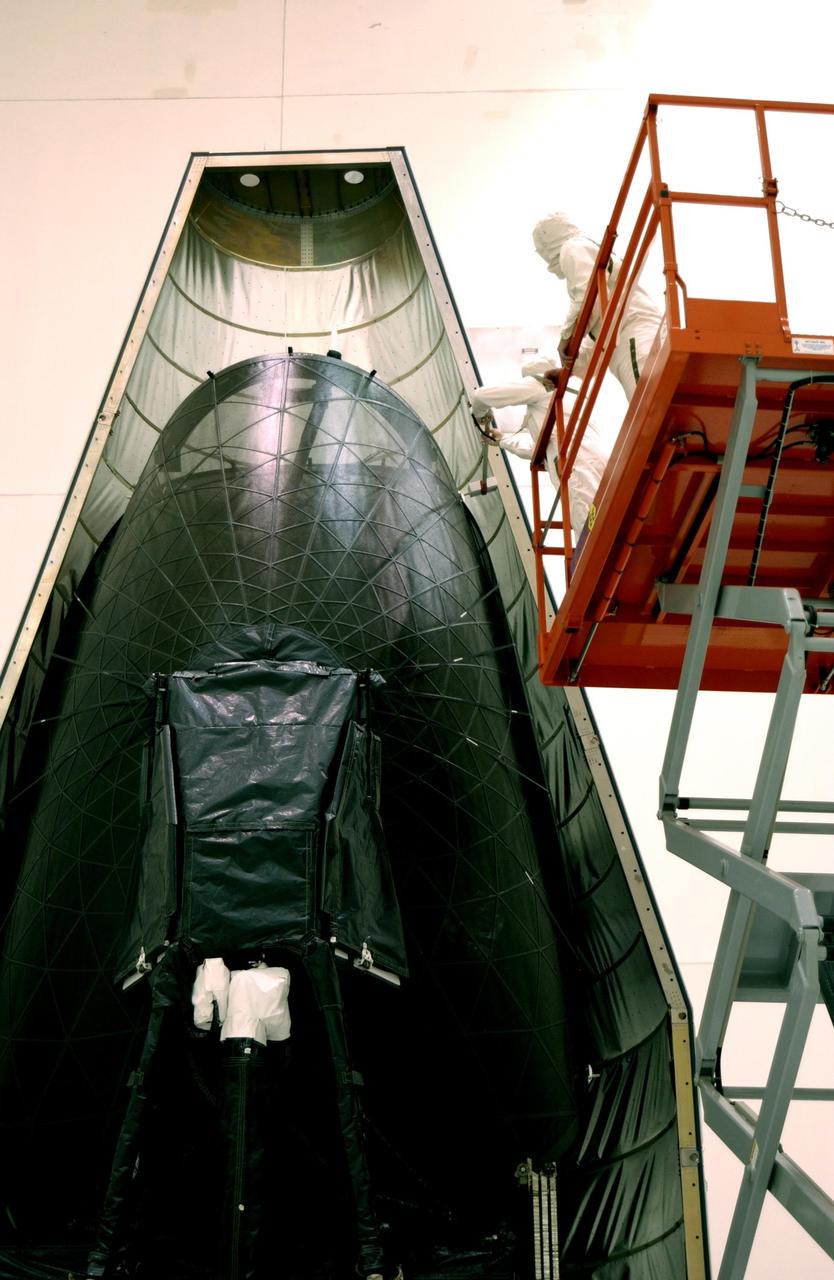
KENNEDY SPACE CENTER, FLA. -- The TDRS-J satellite rests inside the first half of the fairing during encapsulation. The satellite is scheduled to be launched aboard a Lockheed Martin Atlas IIA-Centaur rocket from Launch Complex 36-A, Cape Canaveral Air Force Station, Fla., on Dec. 4. The third in a series of telemetry satellites, TDRS-J will help replenish the current constellation of geosynchronous TDRS satellites. The TDRS System is the primary source of space-to-ground voice, data and telemetry for the Space Shuttle. It also provides communications with the International Space Station and scientific spacecraft in low-Earth orbit such as the Hubble Space Telescope. This new advanced series of satellites will extend the availability of TDRS communications services until about 2017.
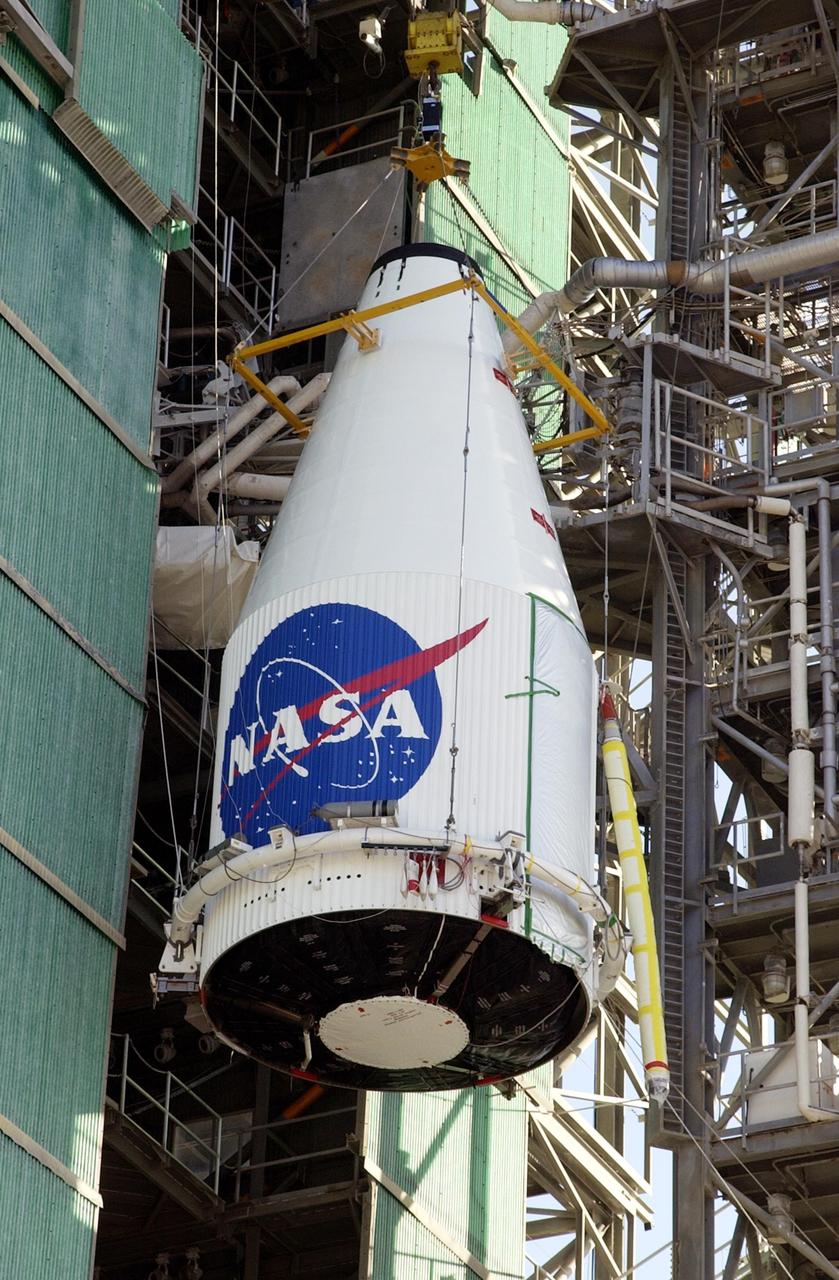
KENNEDY SPACE CENTER, FLA. -- The TDRS-J satellite is lifted up the gantry on Launch Complex 36-A, Cape Canaveral Air Force Station. The satellite is scheduled to be launched Dec. 4 aboard an Atlas IIA vehicle. The launch window is 9:42 to 10:22 p.m. EST. TDRS-J, the third in a series of telemetry satellites, will help replenish the current constellation of geosynchronous TDRS satellites that are the primary source of space-to-ground voice, data and telemetry for the Space Shuttle. The satellites also provide communications with the International Space Station and scientific spacecraft in low-Earth orbit such as the Hubble Space Telescope. This new advanced series of satellites will extend the availability of TDRS communications services until about 2017.
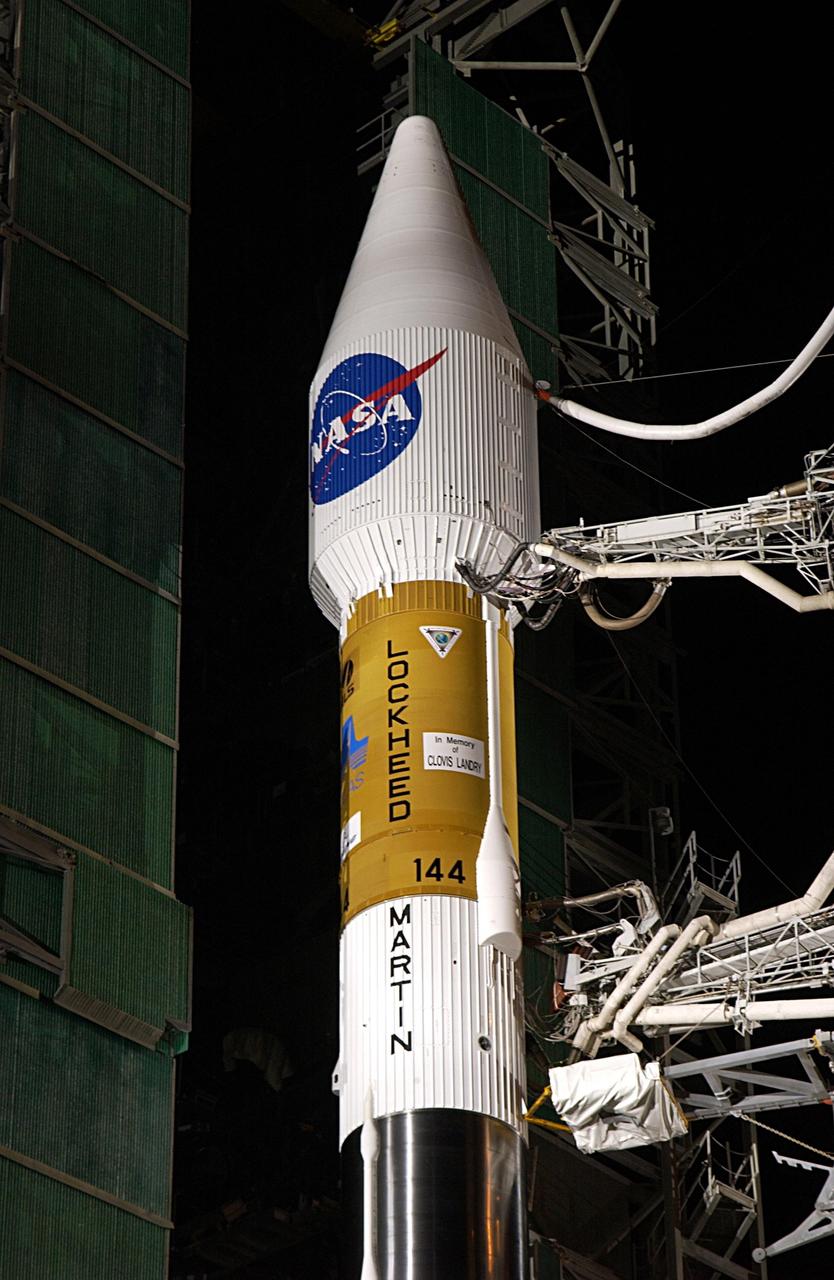
KENNEDY SPACE CENTER, FLA. - At Launch Complex 36-A, Cape Canaveral Air Force Station, the mobile service tower is rolled back to reveal the encapsulated TDRS-J satellite aboard an Atlas IIA vehicle awaiting launch on Dec. 4. The launch window is 9:42 to 10:22 p.m. EST. TDRS-J, the third in a series of telemetry satellites, will help replenish the current constellation of geosynchronous TDRS satellites that are the primary source of space-to-ground voice, data and telemetry for the Space Shuttle. The satellites also provide communications with the International Space Station and scientific spacecraft in low-Earth orbit such as the Hubble Space Telescope. This new advanced series of satellites will extend the availability of TDRS communications services until about 2017.
KENNEDY SPACE CENTER, FLA. -- The encapsulated TDRS-J satellite is lowered toward the Atlas IIA launch vehicle on Launch Complex 36-A, Cape Canaveral Air Force Station. The satellite is scheduled to be launched Dec. 4 aboard an Atlas IIA vehicle. The launch window is 9:42 to 10:22 p.m. EST. TDRS-J, the third in a series of telemetry satellites, will help replenish the current constellation of geosynchronous TDRS satellites that are the primary source of space-to-ground voice, data and telemetry for the Space Shuttle. The satellites also provide communications with the International Space Station and scientific spacecraft in low-Earth orbit such as the Hubble Space Telescope. This new advanced series of satellites will extend the availability of TDRS communications services until about 2017..
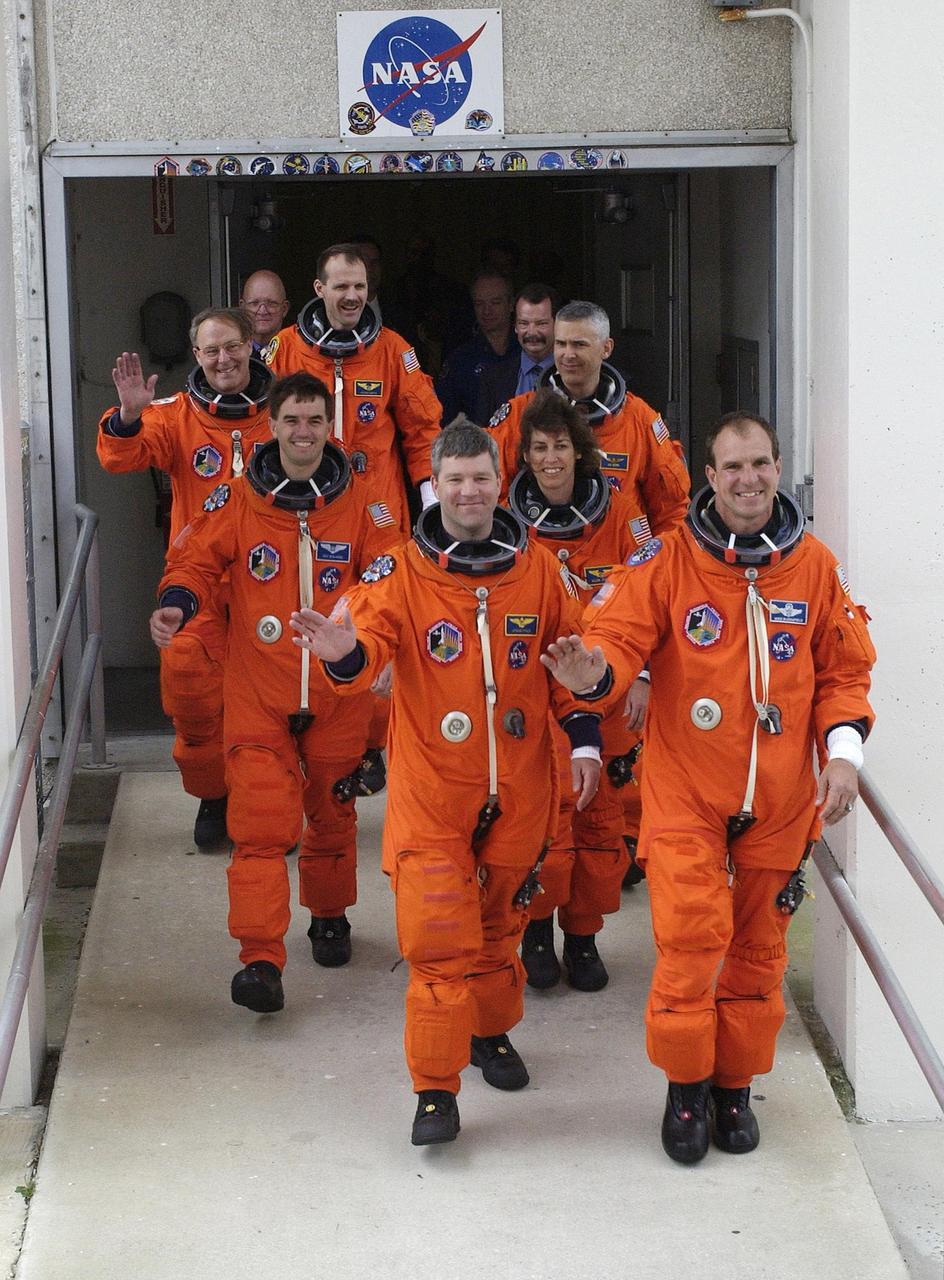
KENNEDY SPACE CENTER, FLA. - Showing their eagerness for launch, the STS-110 crew wave as they stride out of the Operations and Checkout Building. Leading the way in the front row are Pilot Stephen N. Frick (left) and Commander Michael J. Bloomfield (right); in the second row are Mission Specialists Rex J. Walheim and Ellen Ochoa; third row, Jerry L. Ross and Lee M.E. Morin; in the rear is Mission Specialist Steven L. Smith. STS-110 is the 13th assembly flight to the International Space Station, carrying the S0 Integrated Truss Structure and Mobile Transporter (MT). On the 11-day mission, the mission features four spacewalks to attach the S0 truss, which will become the backbone of the Space Station, to the U.S. Lab, "Destiny." The MT, a space "railcar," is attached to the truss segment and will make its debut run during the flight. Launch is scheduled for 4:40 p.m. EDT (20:40 GMT). Photo by Scott Andrews

KENNEDY SPACE CENTER, Fla. -- After Terminal Countdown Demonstration Test (TCDT) activities at Launch Pad 39A, the STS-101 crew talk to the media. At the microphone is Commander James D. Halsell Jr. Next to him, standing left to right, are Pilot Scott J. "Doc" Horowitz and Mission Specialists Mary Ellen Weber, Jeffrey N. Williams, James Voss, Susan J. Helms and Yury Usachev of Russia. The TCDT includes emergency egress training and a simulated launch countdown. During their mission to the International Space Station, the STS-101 crew will be delivering logistics and supplies, plus preparing the Station for the arrival of the Zvezda Service Module, expected to be launched by Russia in July 2000. Also, the crew will conduct one space walk to perform maintenance on the Space Station. This will be the third assembly flight for the Space Station. STS-101 is scheduled to launch April 24 at 4:15 p.m. from Launch Pad 39A

KENNEDY SPACE CENTER, FLA. -- The TDRS-J satellite sits between the two halves of the fairing before encapsulation for launch. The satellite is scheduled to be launched aboard a Lockheed Martin Atlas IIA-Centaur rocket from Launch Complex 36-A, Cape Canaveral Air Force Station, Fla., on Dec. 4. The third in a series of telemetry satellites, TDRS-J will help replenish the current constellation of geosynchronous TDRS satellites. The TDRS System is the primary source of space-to-ground voice, data and telemetry for the Space Shuttle. It also provides communications with the International Space Station and scientific spacecraft in low-Earth orbit such as the Hubble Space Telescope. This new advanced series of satellites will extend the availability of TDRS communications services until about 2017.
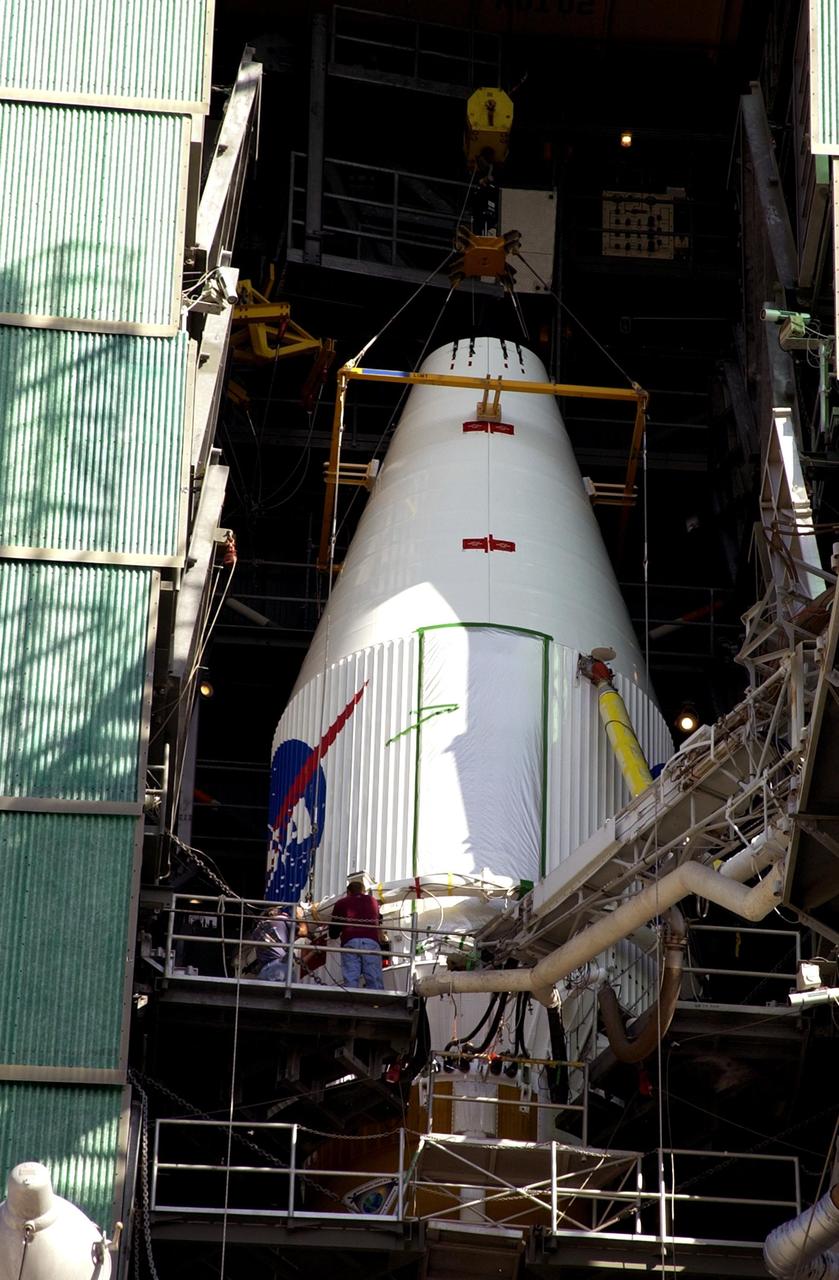
KENNEDY SPACE CENTER, FLA. -- The encapsulated TDRS-J satellite is mated with the Atlas IIA launch vehicle on Launch Complex 36-A, Cape Canaveral Air Force Station. The satellite is scheduled to be launched Dec. 4 aboard an Atlas IIA vehicle. The launch window is 9:42 to 10:22 p.m. EST. TDRS-J, the third in a series of telemetry satellites, will help replenish the current constellation of geosynchronous TDRS satellites that are the primary source of space-to-ground voice, data and telemetry for the Space Shuttle. The satellites also provide communications with the International Space Station and scientific spacecraft in low-Earth orbit such as the Hubble Space Telescope. This new advanced series of satellites will extend the availability of TDRS communications services until about 2017.
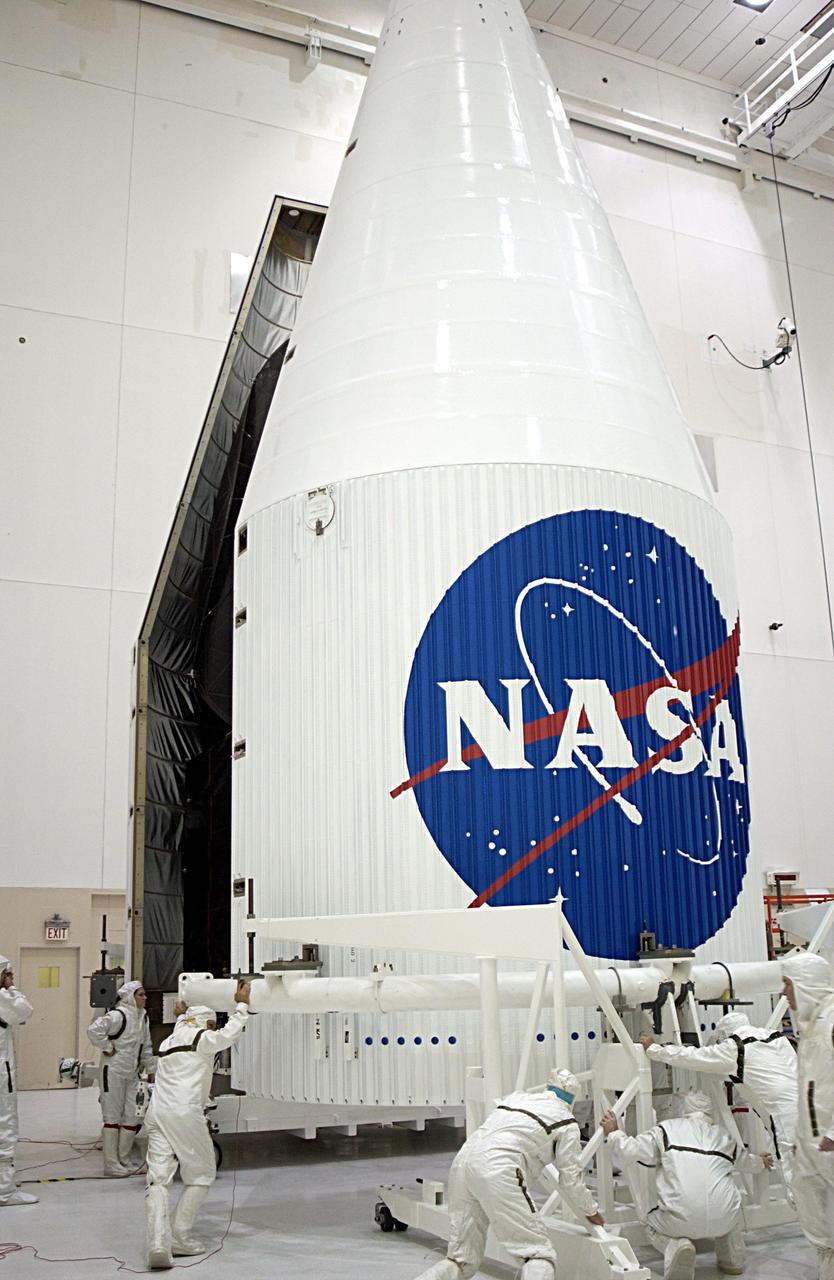
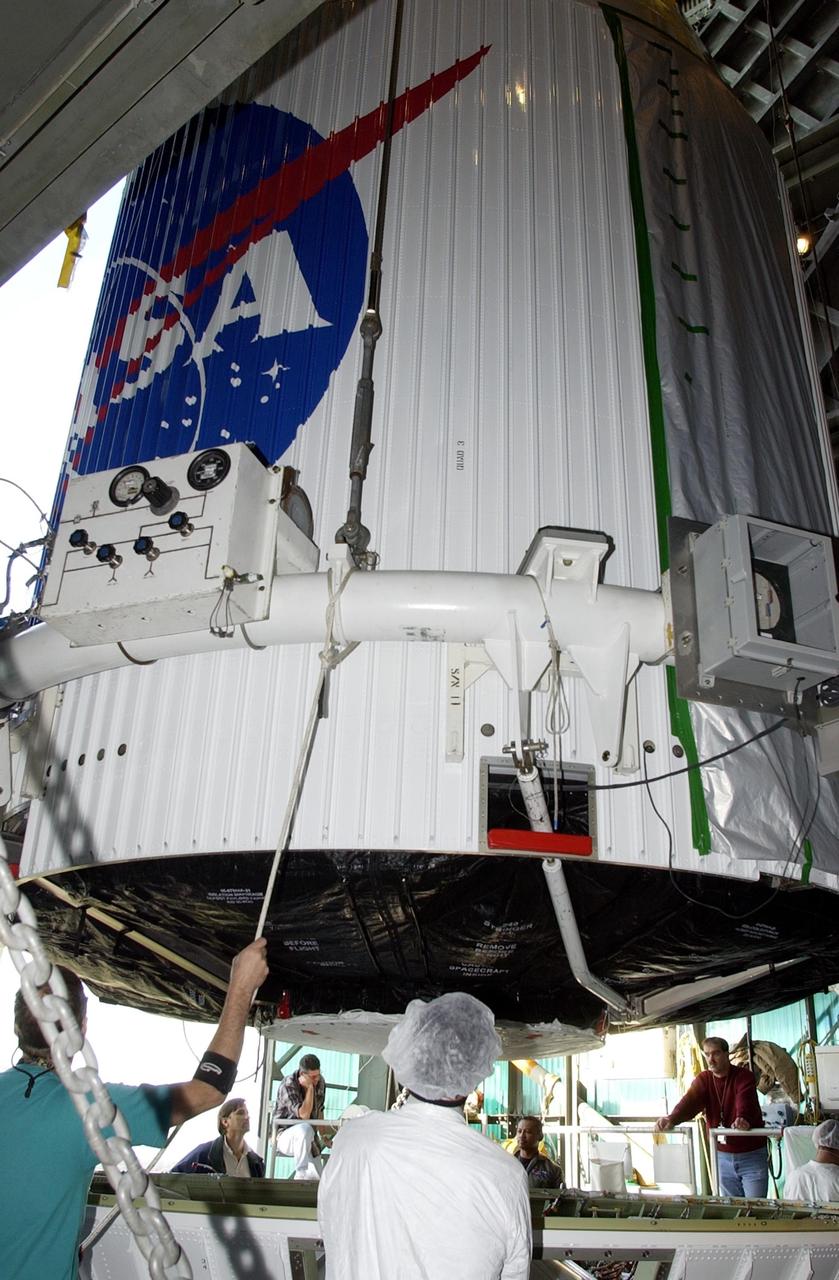
KENNEDY SPACE CENTER, FLA. -- Workers move the second half of the fairing around the TDRS-J satellite to complete encapsulation. The satellite is scheduled to be launched aboard a Lockheed Martin Atlas IIA-Centaur rocket from Launch Complex 36-A, Cape Canaveral Air Force Station, Fla., on Dec. 4. The third in a series of telemetry satellites, TDRS-J will help replenish the current constellation of geosynchronous TDRS satellites. The TDRS System is the primary source of space-to-ground voice, data and telemetry for the Space Shuttle. It also provides communications with the International Space Station and scientific spacecraft in low-Earth orbit such as the Hubble Space Telescope. This new advanced series of satellites will extend the availability of TDRS communications services until about 2017.
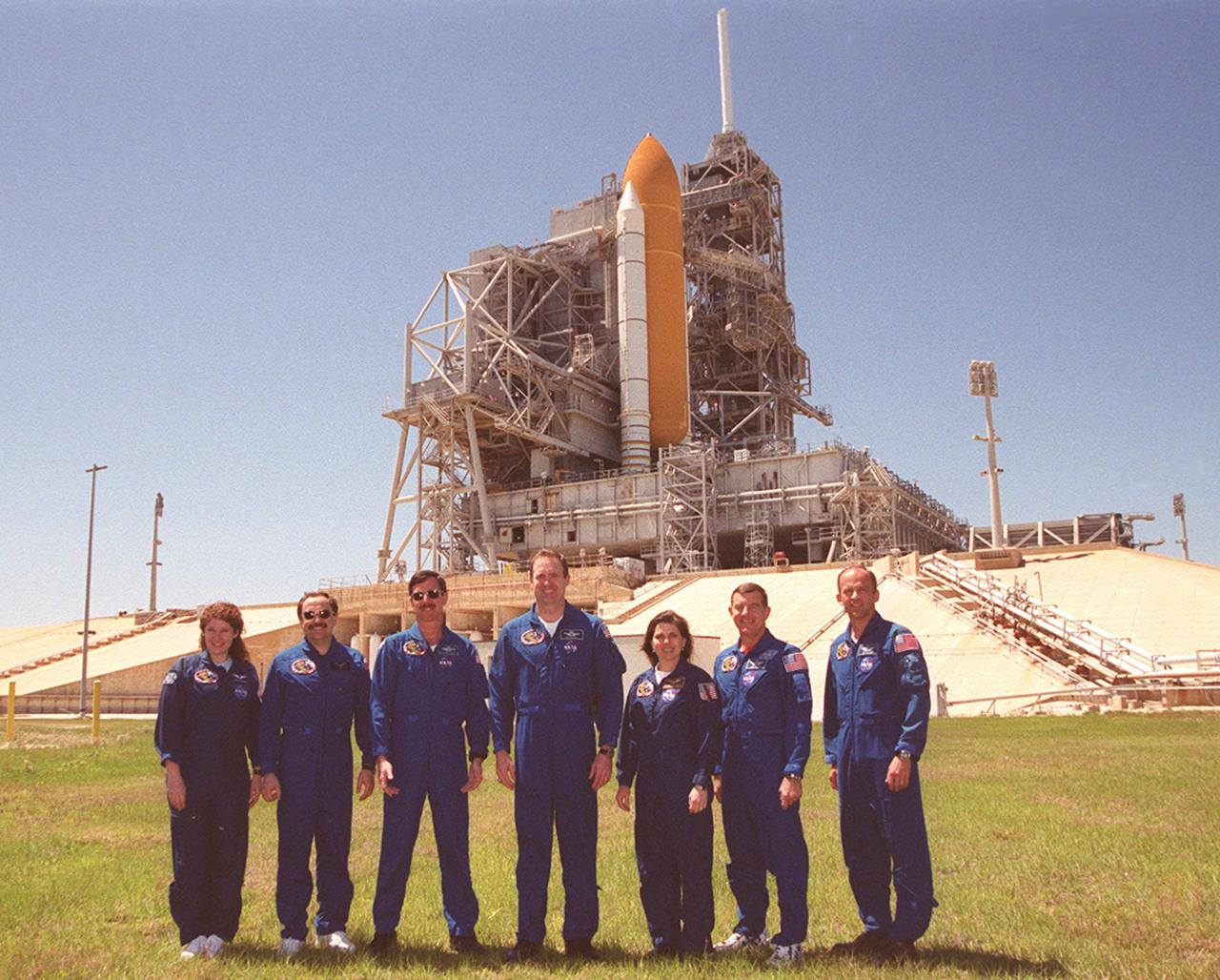
KENNEDY SPACE CENTER, Fla. -- During a break in their Terminal Countdown Demonstration Test (TCDT), the STS-101 crew poses in front of Space Shuttle Atlantis at Launch Pad 39A. Standing, left to right, are Mission Specialists Susan J. Helms and Yury Usachev of Russia; Pilot Scott J. "Doc" Horowitz; Commander James D. Halsell Jr.; and Mission Specialists Mary Ellen Weber, James Voss and Jeffrey N. Williams. The TCDT includes emergency egress training and a simulated launch countdown. During their mission to the International Space Station, the STS-101 crew will be delivering logistics and supplies, plus preparing the Station for the arrival of the Zvezda Service Module, expected to be launched by Russia in July 2000. Also, the crew will conduct one space walk to perform maintenance on the Space Station. This will be the third assembly flight for the Space Station. STS-101 is scheduled to launch April 24 at 4:15 p.m. from Launch Pad 39A
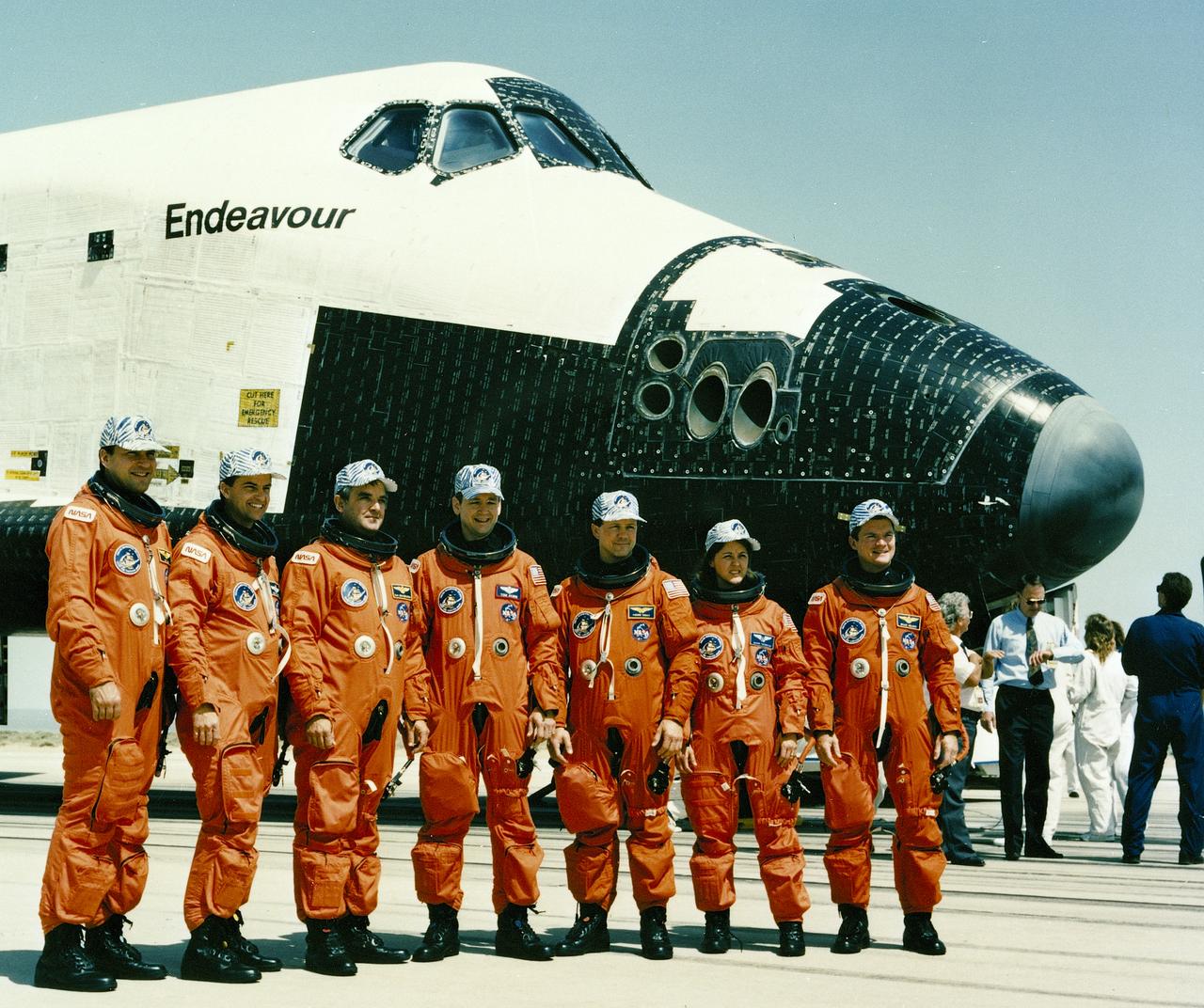
The STS-49 crew members pose near Endeavour after landing. Pictured left to right are: Richard J. Hieb, mission specialist; Kevin P. Chiltin, pilot; Daniel C. Brandenstein, commander; and mission specialists Thomas D. Akers, Pierre J. Thuot, Kathryn C. Thornton, and Bruce E. Melnick. Launched on May 7, 1992 at 7:40:00 pm (EDT), the crew of seven was the first to fly aboard the Space Shuttle Endeavor. The mission was the first US orbital flight to feature 4 extravehicular activities (EVAs), and the first flight to involve 3 crew members simultaneously working outside of the spacecraft. The primary objective was the capture and redeployment of the INTELSAT VI (F-3) which was stranded in an unusable orbit since its launch aboard the Titan rocket in March 1990.
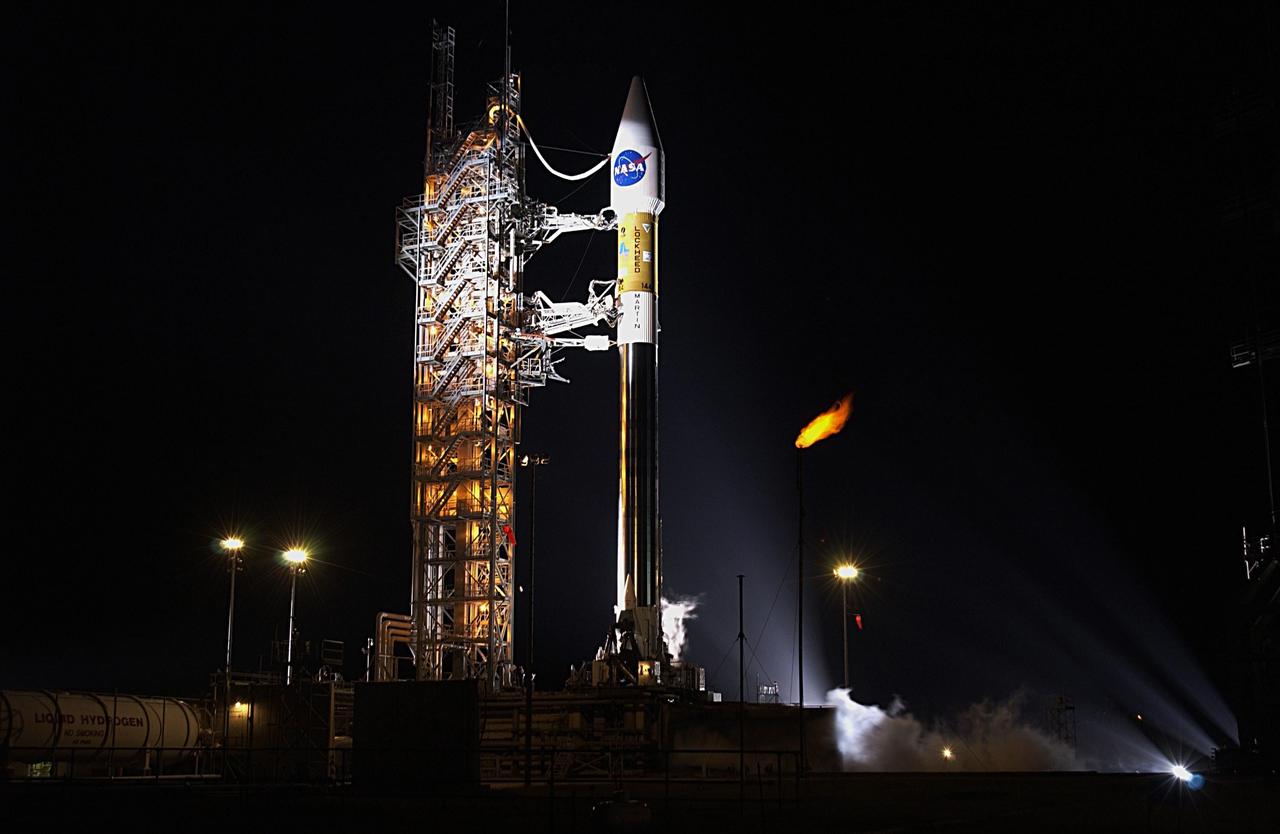
KENNEDY SPACE CENTER, FLA. - At Launch Complex 36-A, Cape Canaveral Air Force Station, the mobile service tower is rolled back to reveal the encapsulated TDRS-J satellite aboard an Atlas IIA vehicle awaiting launch on Dec. 4. The launch window is 9:42 to 10:22 p.m. EST. TDRS-J, the third in a series of telemetry satellites, will help replenish the current constellation of geosynchronous TDRS satellites that are the primary source of space-to-ground voice, data and telemetry for the Space Shuttle. The satellites also provide communications with the International Space Station and scientific spacecraft in low-Earth orbit such as the Hubble Space Telescope. This new advanced series of satellites will extend the availability of TDRS communications services until about 2017.
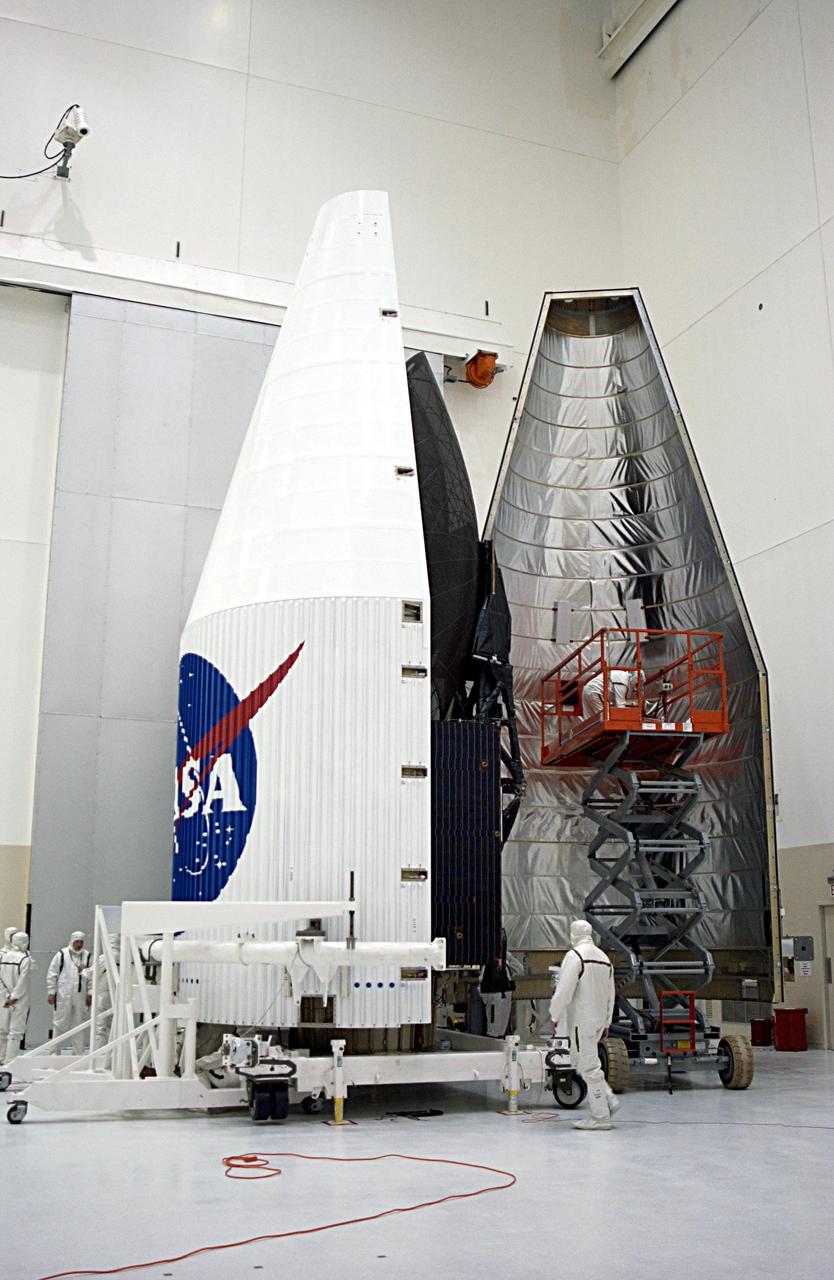
KENNEDY SPACE CENTER, FLA. -- The second half of the fairing (right) is prepared for mating with the first half and encapsulating the TDRS-J satellite for launch. The satellite is scheduled to be launched aboard a Lockheed Martin Atlas IIA-Centaur rocket from Launch Complex 36-A, Cape Canaveral Air Force Station, Fla., on Dec. 4. The third in a series of telemetry satellites, TDRS-J will help replenish the current constellation of geosynchronous TDRS satellites. The TDRS System is the primary source of space-to-ground voice, data and telemetry for the Space Shuttle. It also provides communications with the International Space Station and scientific spacecraft in low-Earth orbit such as the Hubble Space Telescope. This new advanced series of satellites will extend the availability of TDRS communications services until about 2017.
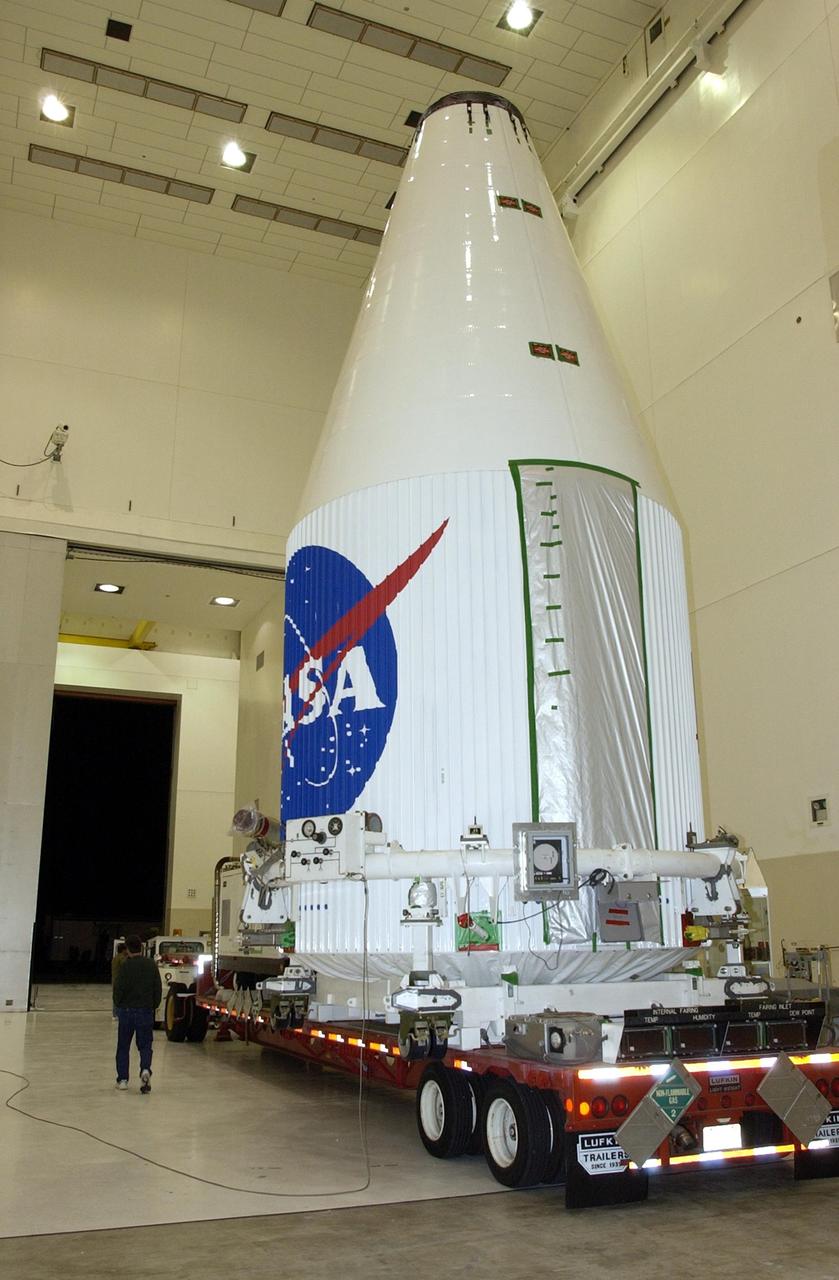
KENNEDY SPACE CENTER, FLA. - A transporter carrying the encapsulated TDRS-J satellite makes its way to the exit. The satellite is being taken to Launch Complex 36-A, Cape Canaveral Air Force Station, for a launch aboard an Atlas IIA vehicle Dec. 4. The launch window is 9:42 to 10:22 p.m. EST. TDRS-J, the third in a series of telemetry satellites, will help replenish the current constellation of geosynchronous TDRS satellites that are the primary source of space-to-ground voice, data and telemetry for the Space Shuttle. The satellites also provide communications with the International Space Station and scientific spacecraft in low-Earth orbit such as the Hubble Space Telescope. This new advanced series of satellites will extend the availability of TDRS communications services until about 2017.
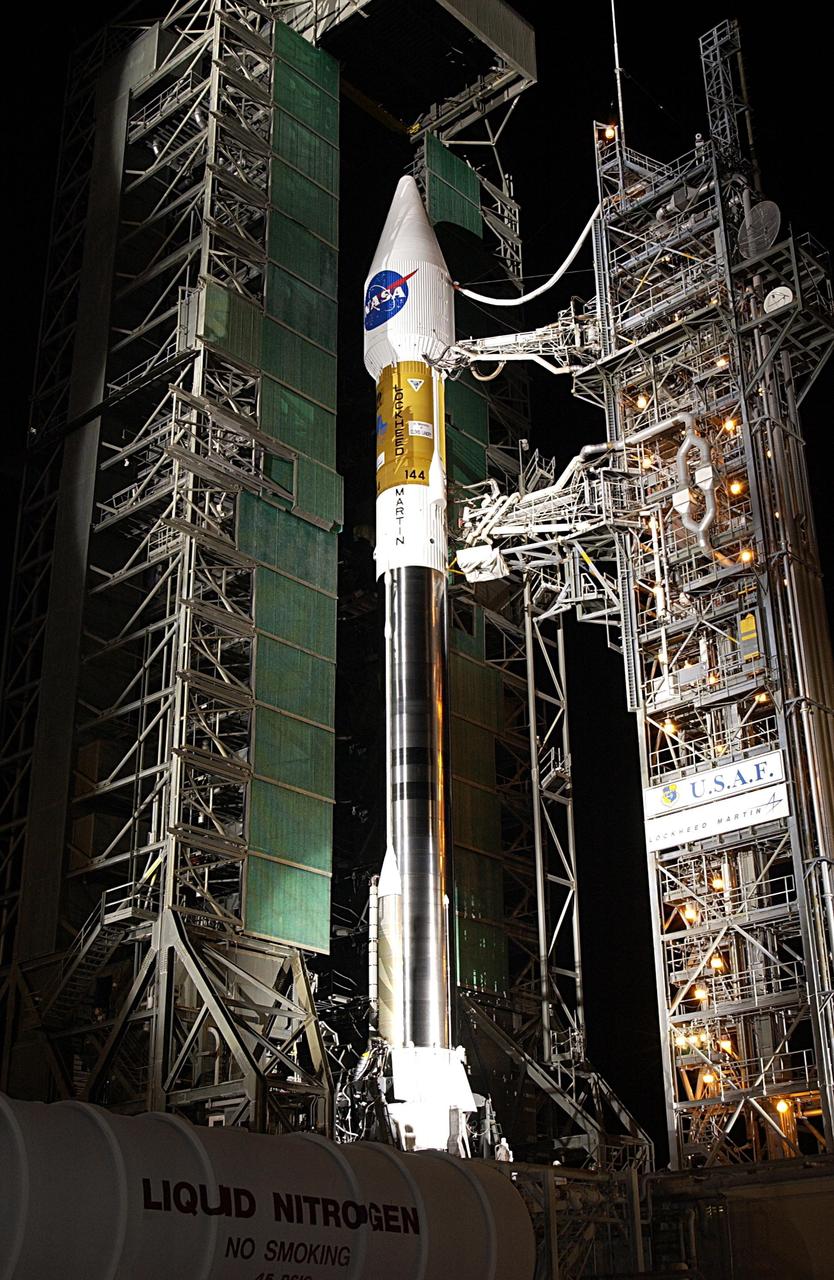
KENNEDY SPACE CENTER, FLA. - At Launch Complex 36-A, Cape Canaveral Air Force Station, the mobile service tower is rolled back to reveal the encapsulated TDRS-J satellite aboard an Atlas IIA vehicle awaiting launch on Dec. 4. The launch window is 9:42 to 10:22 p.m. EST. TDRS-J, the third in a series of telemetry satellites, will help replenish the current constellation of geosynchronous TDRS satellites that are the primary source of space-to-ground voice, data and telemetry for the Space Shuttle. The satellites also provide communications with the International Space Station and scientific spacecraft in low-Earth orbit such as the Hubble Space Telescope. This new advanced series of satellites will extend the availability of TDRS communications services until about 2017.

KENNEDY SPACE CENTER, Fla. -- After Terminal Countdown Demonstration Test (TCDT) activities at Launch Pad 39A, the STS-101 crew talk to the media. At the microphone is Commander James D. Halsell Jr. Next to him, standing left to right, are Pilot Scott J. "Doc" Horowitz and Mission Specialists Mary Ellen Weber, Jeffrey N. Williams, James Voss, Susan J. Helms and Yury Usachev of Russia. The TCDT includes emergency egress training and a simulated launch countdown. During their mission to the International Space Station, the STS-101 crew will be delivering logistics and supplies, plus preparing the Station for the arrival of the Zvezda Service Module, expected to be launched by Russia in July 2000. Also, the crew will conduct one space walk to perform maintenance on the Space Station. This will be the third assembly flight for the Space Station. STS-101 is scheduled to launch April 24 at 4:15 p.m. from Launch Pad 39A

KENNEDY SPACE CENTER, FLA. -- The TDRS-J satellite rests inside the first half of the fairing during encapsulation. The satellite is scheduled to be launched aboard a Lockheed Martin Atlas IIA-Centaur rocket from Launch Complex 36-A, Cape Canaveral Air Force Station, Fla., on Dec. 4. The third in a series of telemetry satellites, TDRS-J will help replenish the current constellation of geosynchronous TDRS satellites. The TDRS System is the primary source of space-to-ground voice, data and telemetry for the Space Shuttle. It also provides communications with the International Space Station and scientific spacecraft in low-Earth orbit such as the Hubble Space Telescope. This new advanced series of satellites will extend the availability of TDRS communications services until about 2017.
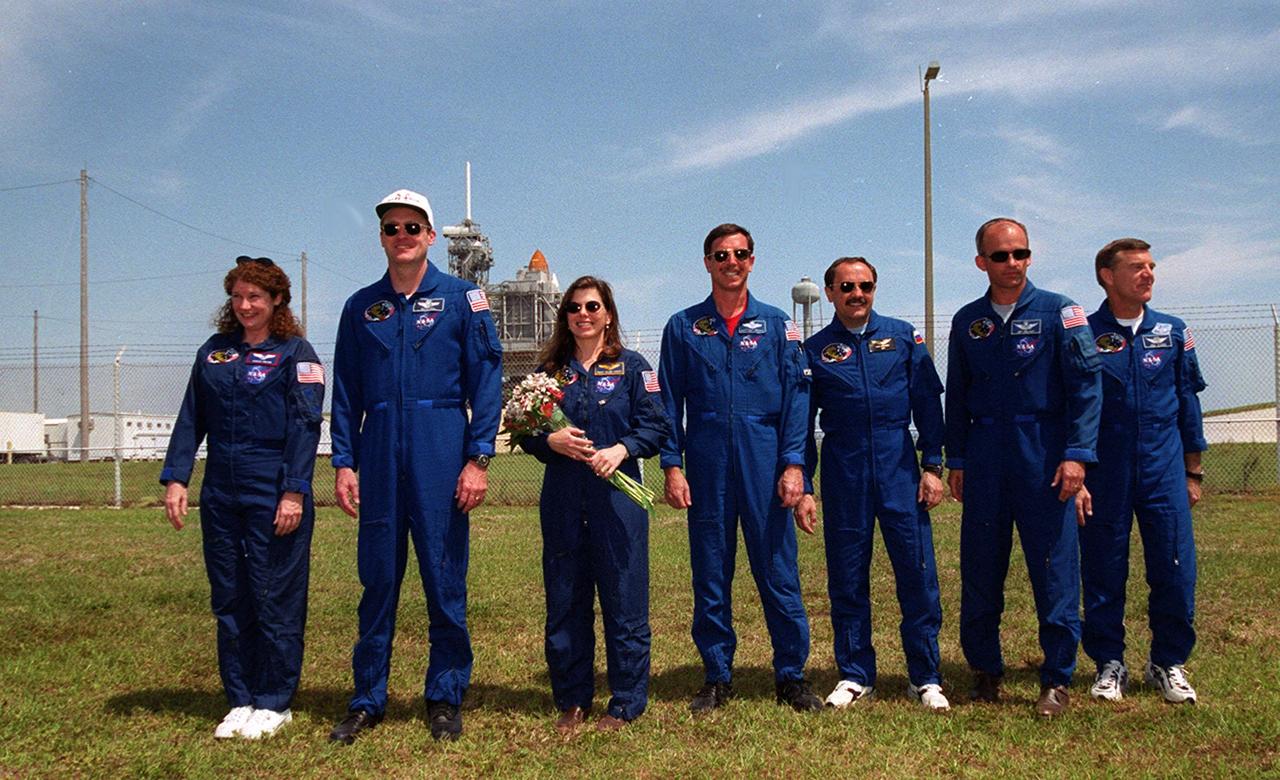
KENNEDY SPACE CENTER, FLA. -- The STS-101 crew gather during a meeting with family and friends at Launch Pad 39A. From left, Mission Specialist Susan J. Helms, Commander James D. Halsell Jr., Mission Specialist Mary Ellen Weber, Pilot Scott J. Horowitz and Mission Specialists Yuri Vladimirovich Usachev, Jeffery N. Williams and James S. Voss. In the background is the Space Shuttle Atlantis on the pad. Mission STS-101 will take the crew to the International Space Station to deliver logistics and supplies, plus prepare the Station for the arrival of the Zvezda Service Module, expected to be launched by Russia in July 2000. The crew will conduct one space walk to perform maintenance on the Space Station as well. This will be the third assembly flight for the Space Station. Launch is targeted for April 24 at about 4:15 p.m. EDT from Launch Pad 39A
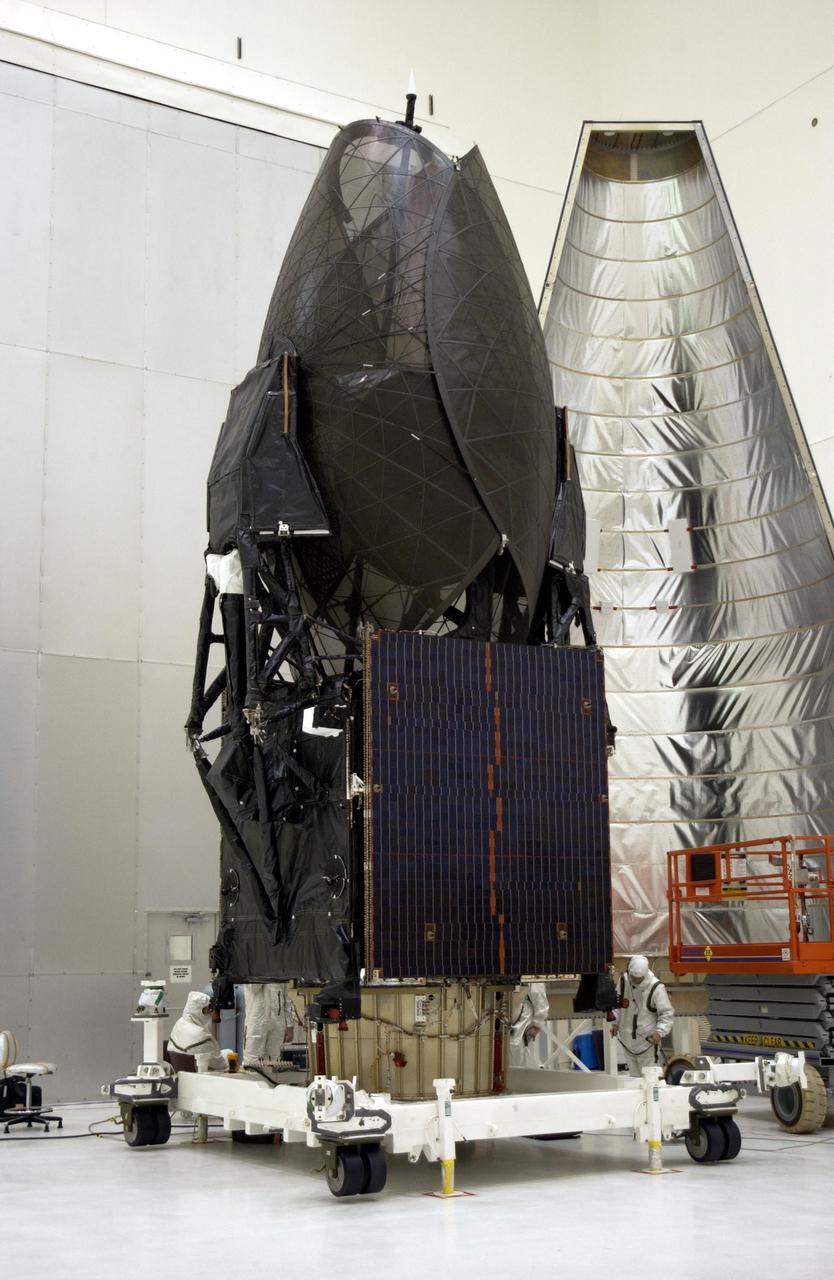
KENNEDY SPACE CENTER, FLA. -- The fairing (left) is moved toward the TDRS-J satellite (right) for encapsulation. The satellite is scheduled to be launched aboard a Lockheed Martin Atlas IIA-Centaur rocket from Launch Complex 36-A, Cape Canaveral Air Force Station, Fla., on Dec. 4. The third in a series of telemetry satellites, TDRS-J will help replenish the current constellation of geosynchronous TDRS satellites. The TDRS System is the primary source of space-to-ground voice, data and telemetry for the Space Shuttle. It also provides communications with the International Space Station and scientific spacecraft in low-Earth orbit such as the Hubble Space Telescope. This new advanced series of satellites will extend the availability of TDRS communications services until about 2017.
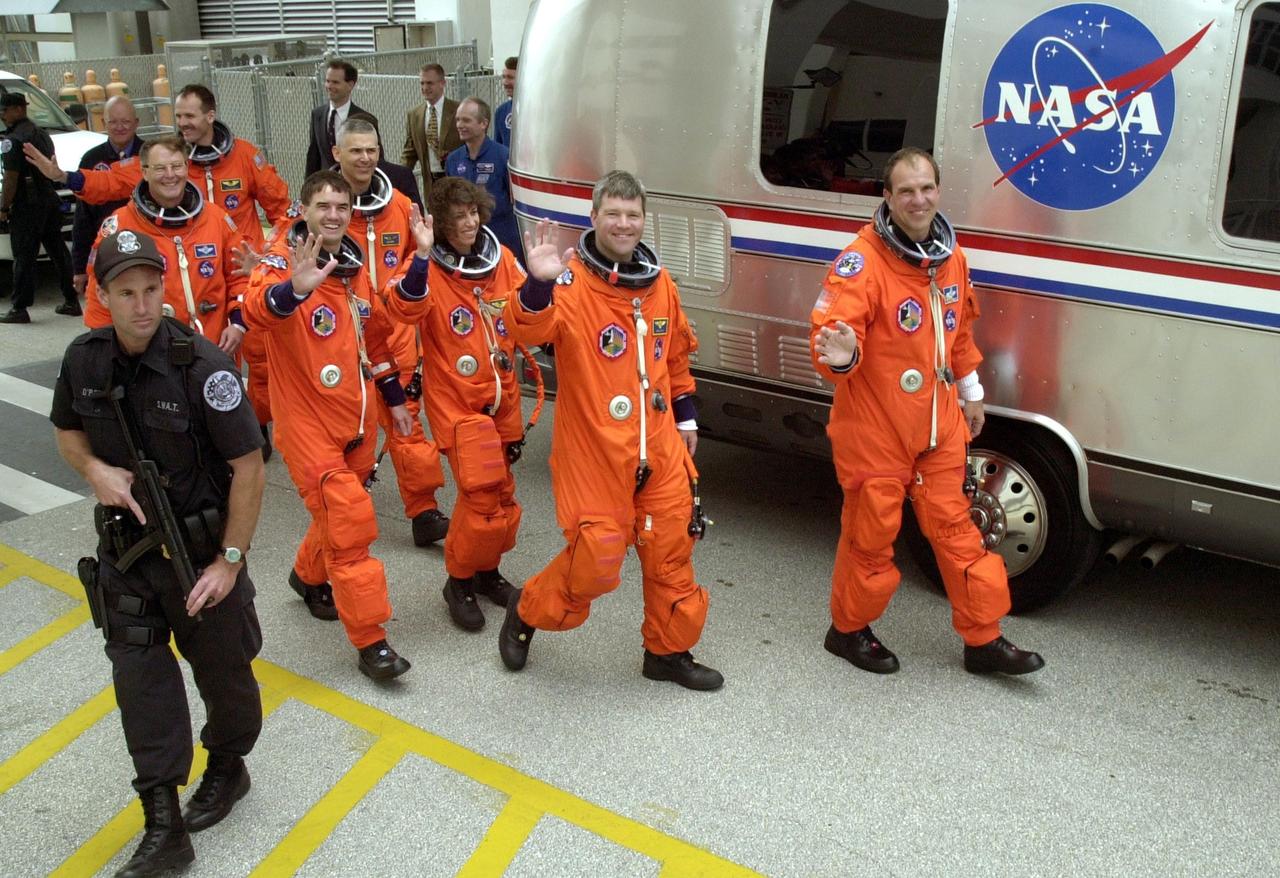
KENNEDY SPACE CENTER, FLA. -- The STS-110 crew heads for the Astrovan and a ride to Launch Pad 39B for the launch scheduled at 4:40 p.m. EDT (20:40 GMT). From left-foreground are Mission Specialists Jerry L. Ross and Rex J. Walheim; left, second row, are Mission Specialists Steven L. Smith, Lee M.E. Morin, Ellen Ochoa; Pilot Stephen N. Frick; and Commander Michael J. Bloomfield. STS-110 is the 13th assembly flight to the International Space Station, carrying the S0 Integrated Truss Structure and Mobile Transporter (MT). On the 11-day mission, the mission features four spacewalks to attach the S0 truss, which will become the backbone of the Space Station, to the U.S. Lab, "Destiny." The MT, a space "railcar," is attached to the truss segment and will make its debut run during the flight
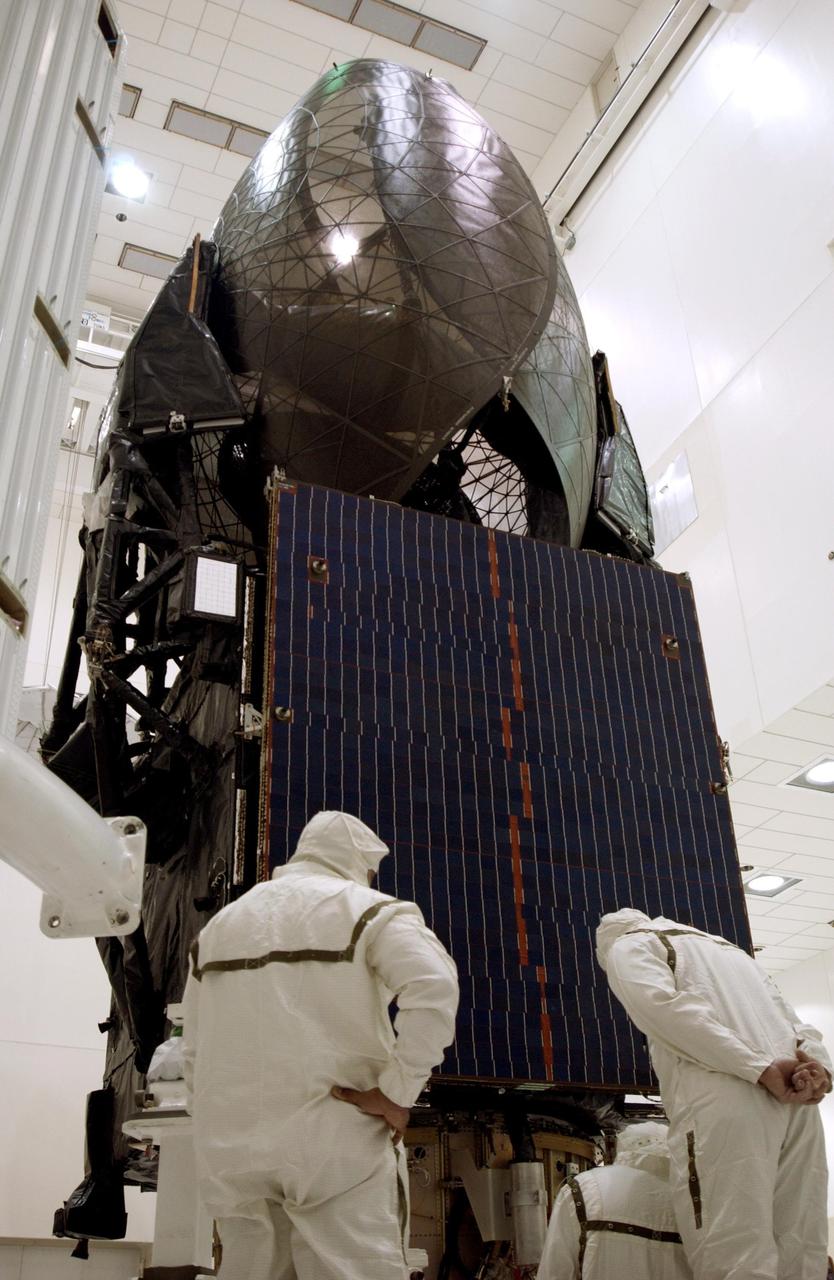
KENNEDY SPACE CENTER, FLA. -- Workers keep check on the TDRS-J satellite (foreground) as the fairing (background) moves toward it for encapsulation. The satellite is scheduled to be launched aboard a Lockheed Martin Atlas IIA-Centaur rocket from Launch Complex 36-A, Cape Canaveral Air Force Station, Fla., on Dec. 4. The third in a series of telemetry satellites, TDRS-J will help replenish the current constellation of geosynchronous TDRS satellites. The TDRS System is the primary source of space-to-ground voice, data and telemetry for the Space Shuttle. It also provides communications with the International Space Station and scientific spacecraft in low-Earth orbit such as the Hubble Space Telescope. This new advanced series of satellites will extend the availability of TDRS communications services until about 2017.
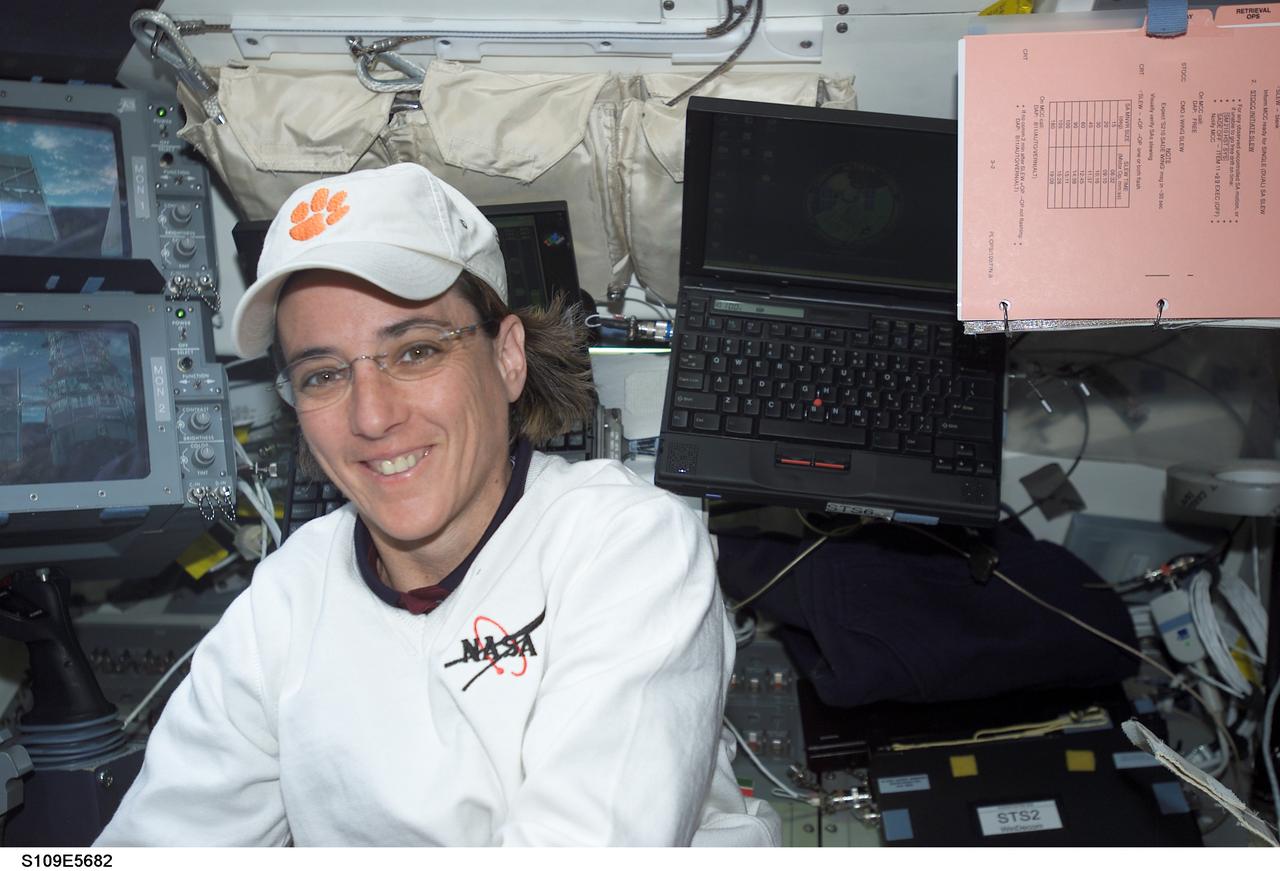
STS109-E-5682 (7 March 2002) --- Astronaut Nancy J. Currie, mission specialist, remains very near the controls for Columbia's Remote Manipulator System (out of frame) on the crew cabin's aft flight deck. On a week with one lengthy space walk per day, Currie has had her hands full with RMS duties to support the space walks of four crewmates. A short time later on this day, astronauts James H. Newman and Michael J. Massimino began EVA-4, during which the duo required the services of Currie to control the robotic arm to maneuver them around the various work stations on the Hubble Space Telescope (HST). The image was recorded with a digital still camera.
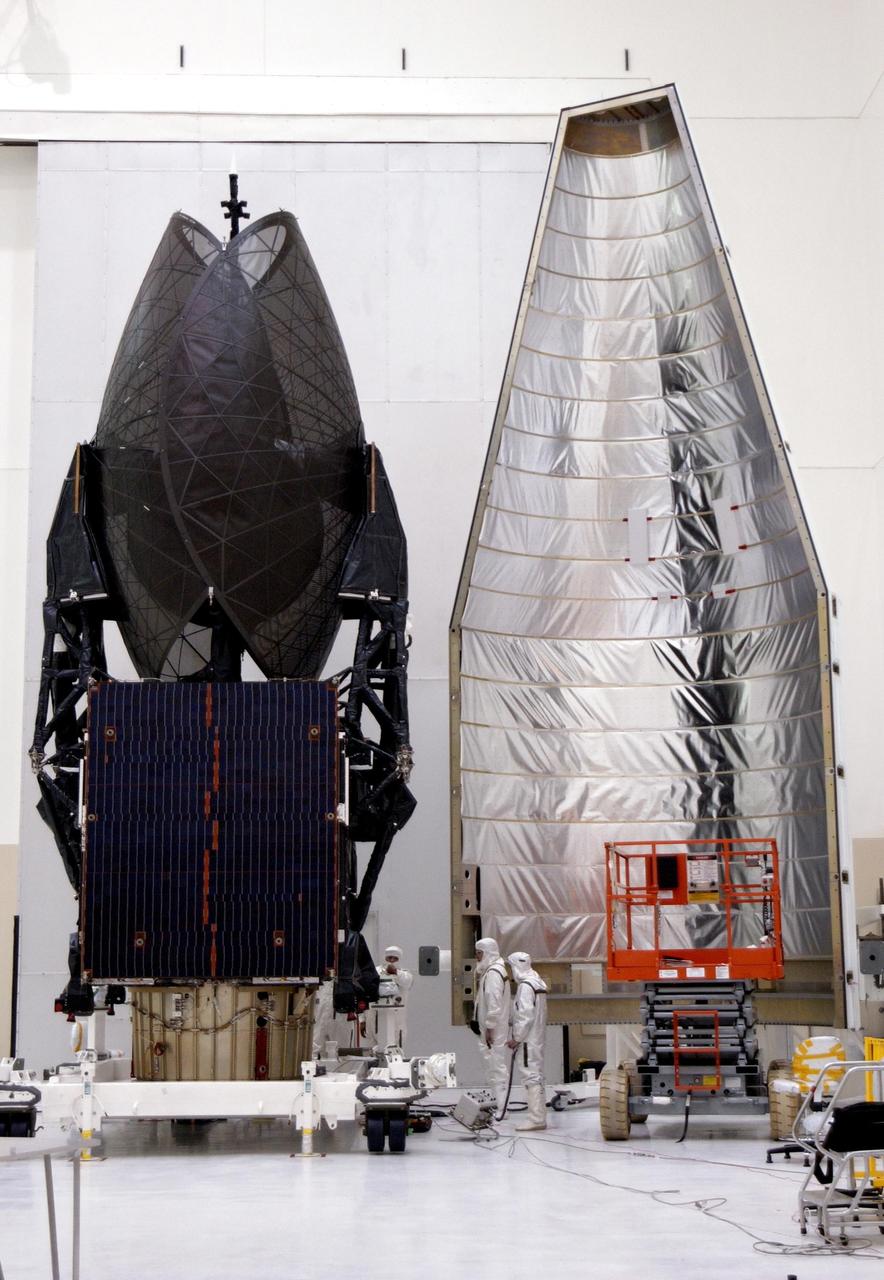
KENNEDY SPACE CENTER, FLA. -- TheTDRS-J satellite (left) and part of the fairing (right) are on display for the media before encapsulation. The satellite is scheduled to be launched aboard a Lockheed Martin Atlas IIA-Centaur rocket from Launch Complex 36-A, Cape Canaveral Air Force Station, Fla., on Dec. 4. The third in a series of telemetry satellites, TDRS-J will help replenish the current constellation of geosynchronous TDRS satellites. The TDRS System is the primary source of space-to-ground voice, data and telemetry for the Space Shuttle. It also provides communications with the International Space Station and scientific spacecraft in low-Earth orbit such as the Hubble Space Telescope. This new advanced series of satellites will extend the availability of TDRS communications services until about 2017.
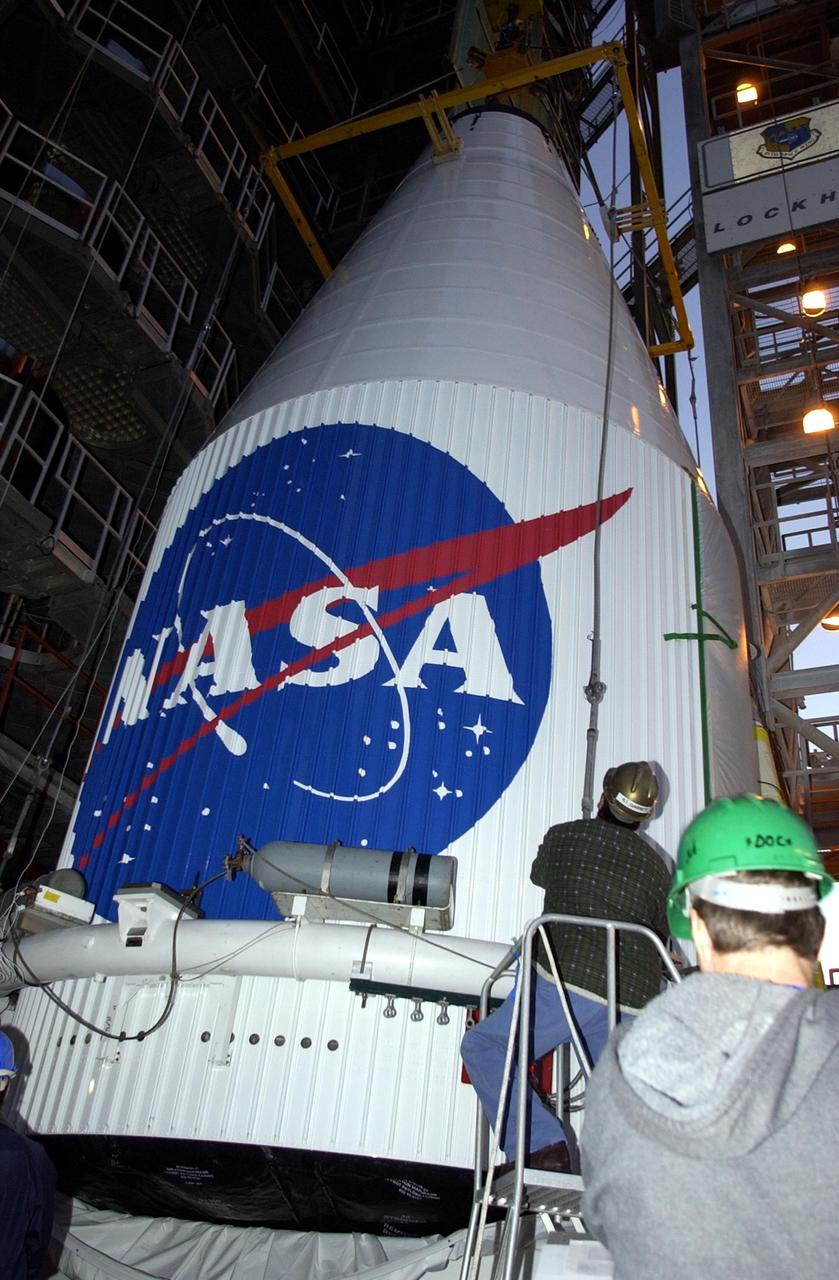
KENNEDY SPACE CENTER, FLA. -- The TDRS-J satellite is prepared for lifting up the gantry on Launch Complex 36-A, Cape Canaveral Air Force Station. The satellite is scheduled to be launched Dec. 4 aboard an Atlas IIA vehicle. The launch window is 9:42 to 10:22 p.m. EST. TDRS-J, the third in a series of telemetry satellites, will help replenish the current constellation of geosynchronous TDRS satellites that are the primary source of space-to-ground voice, data and telemetry for the Space Shuttle. The satellites also provide communications with the International Space Station and scientific spacecraft in low-Earth orbit such as the Hubble Space Telescope. This new advanced series of satellites will extend the availability of TDRS communications services until about 2017.
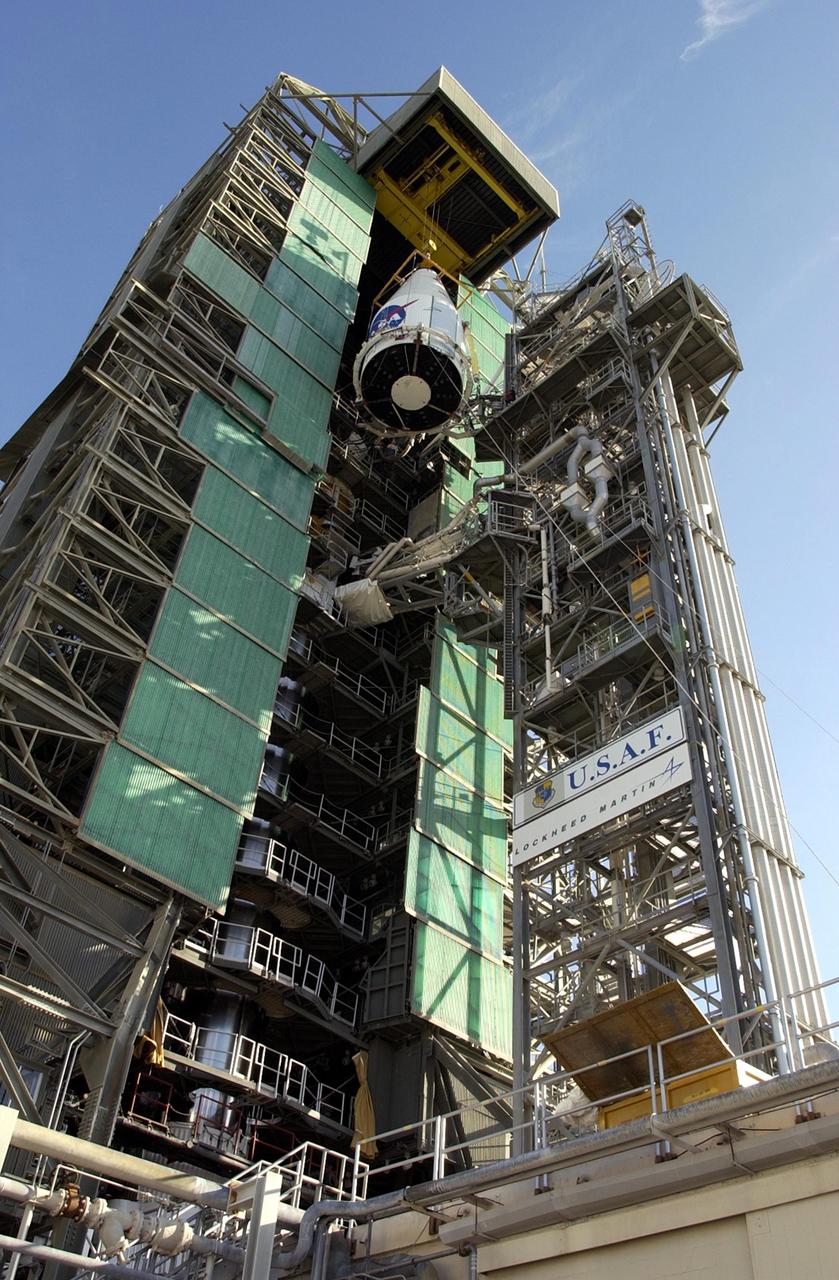
KENNEDY SPACE CENTER, FLA. -- The TDRS-J satellite nears the top of the gantry on Launch Complex 36-A, Cape Canaveral Air Force Station. The satellite is scheduled to be launched Dec. 4 aboard an Atlas IIA vehicle. The launch window is 9:42 to 10:22 p.m. EST. TDRS-J, the third in a series of telemetry satellites, will help replenish the current constellation of geosynchronous TDRS satellites that are the primary source of space-to-ground voice, data and telemetry for the Space Shuttle. The satellites also provide communications with the International Space Station and scientific spacecraft in low-Earth orbit such as the Hubble Space Telescope. This new advanced series of satellites will extend the availability of TDRS communications services until about 2017.