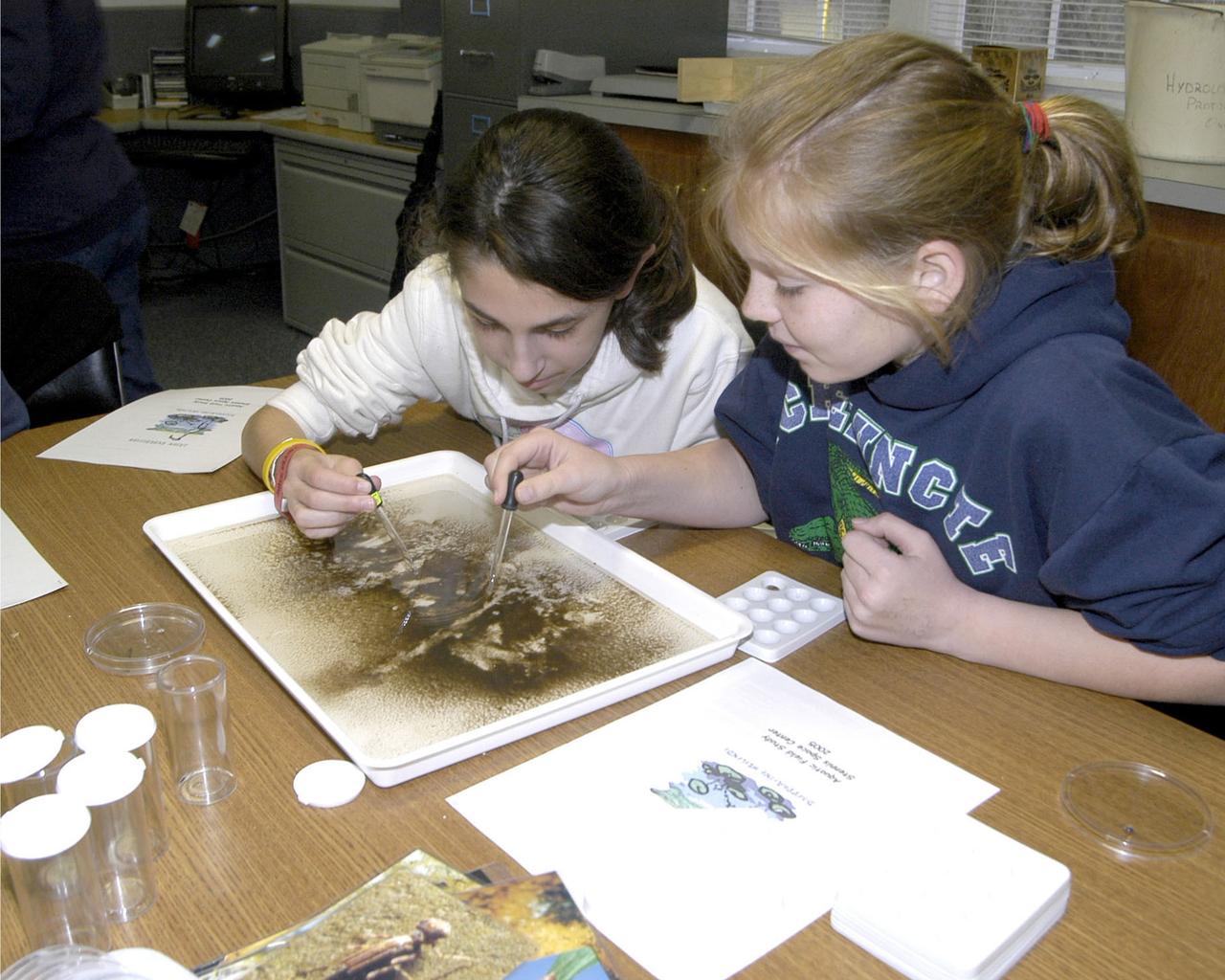
Students participate in the JASON Project's 2004-05 expedition, `Disappearing Wetlands' at SSC, conducting field lab experiments and watching live broadcasts from JASON Expedition Louisiana research sites.
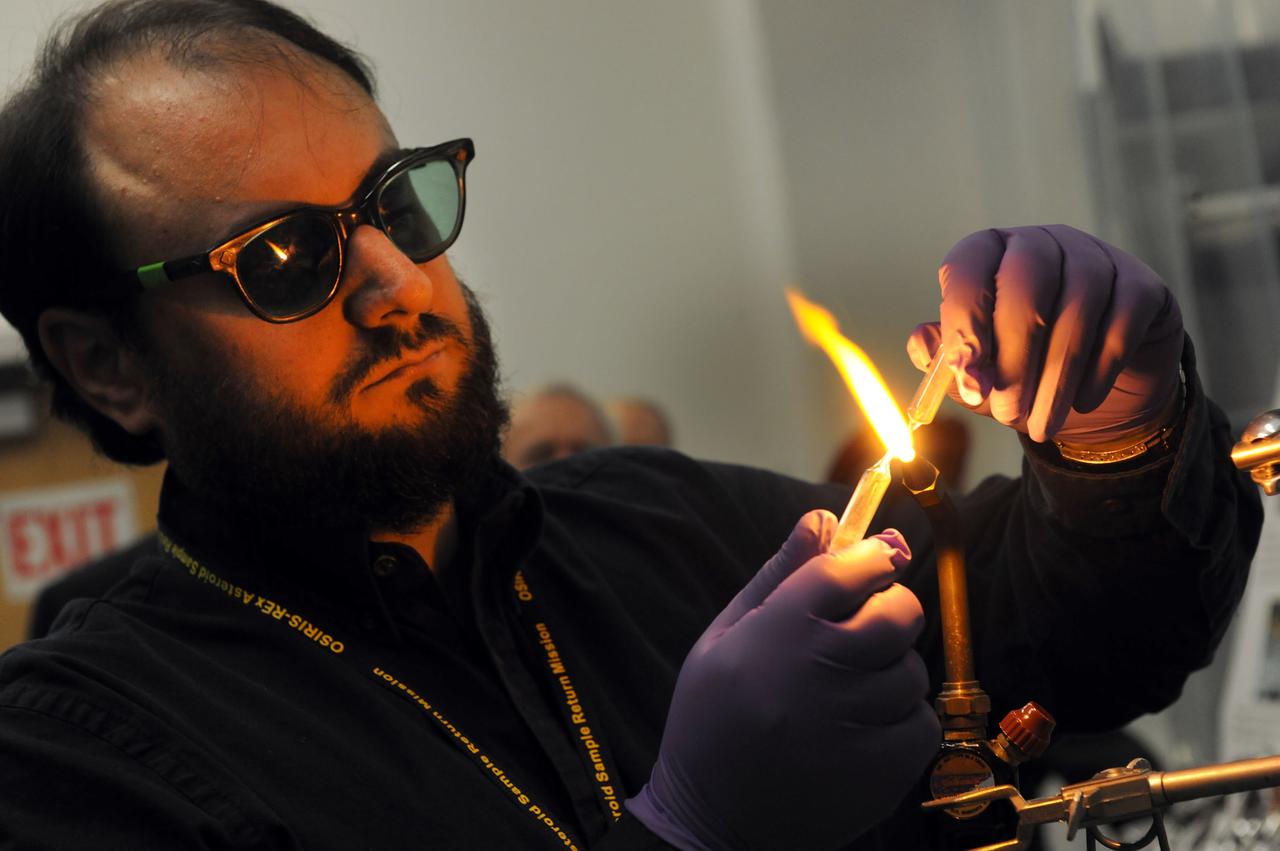
Dr. Jason Dworkin, Project Scientist for NASA's OSIRIS-Rex mission is seen hear sealing a glass test tube with a sample of Allende meteorite dust which is 4.567 BILLION years old. Jason is the Chief of NASA Goddard's Astrochemistry Lab. Read more about the mission here: <a href="http://www.nasa.gov/mission_pages/osiris-rex" rel="nofollow">www.nasa.gov/mission_pages/osiris-rex</a> Credit: NASA/Goddard/Debbie Mccallum <b><a href="http://www.nasa.gov/audience/formedia/features/MP_Photo_Guidelines.html" rel="nofollow">NASA image use policy.</a></b> <b><a href="http://www.nasa.gov/centers/goddard/home/index.html" rel="nofollow">NASA Goddard Space Flight Center</a></b> enables NASA’s mission through four scientific endeavors: Earth Science, Heliophysics, Solar System Exploration, and Astrophysics. Goddard plays a leading role in NASA’s accomplishments by contributing compelling scientific knowledge to advance the Agency’s mission. <b>Follow us on <a href="http://twitter.com/NASAGoddardPix" rel="nofollow">Twitter</a></b> <b>Like us on <a href="http://www.facebook.com/pages/Greenbelt-MD/NASA-Goddard/395013845897?ref=tsd" rel="nofollow">Facebook</a></b> <b>Find us on <a href="http://instagram.com/nasagoddard?vm=grid" rel="nofollow">Instagram</a></b>

Kepler Project Team member Jason Rowe
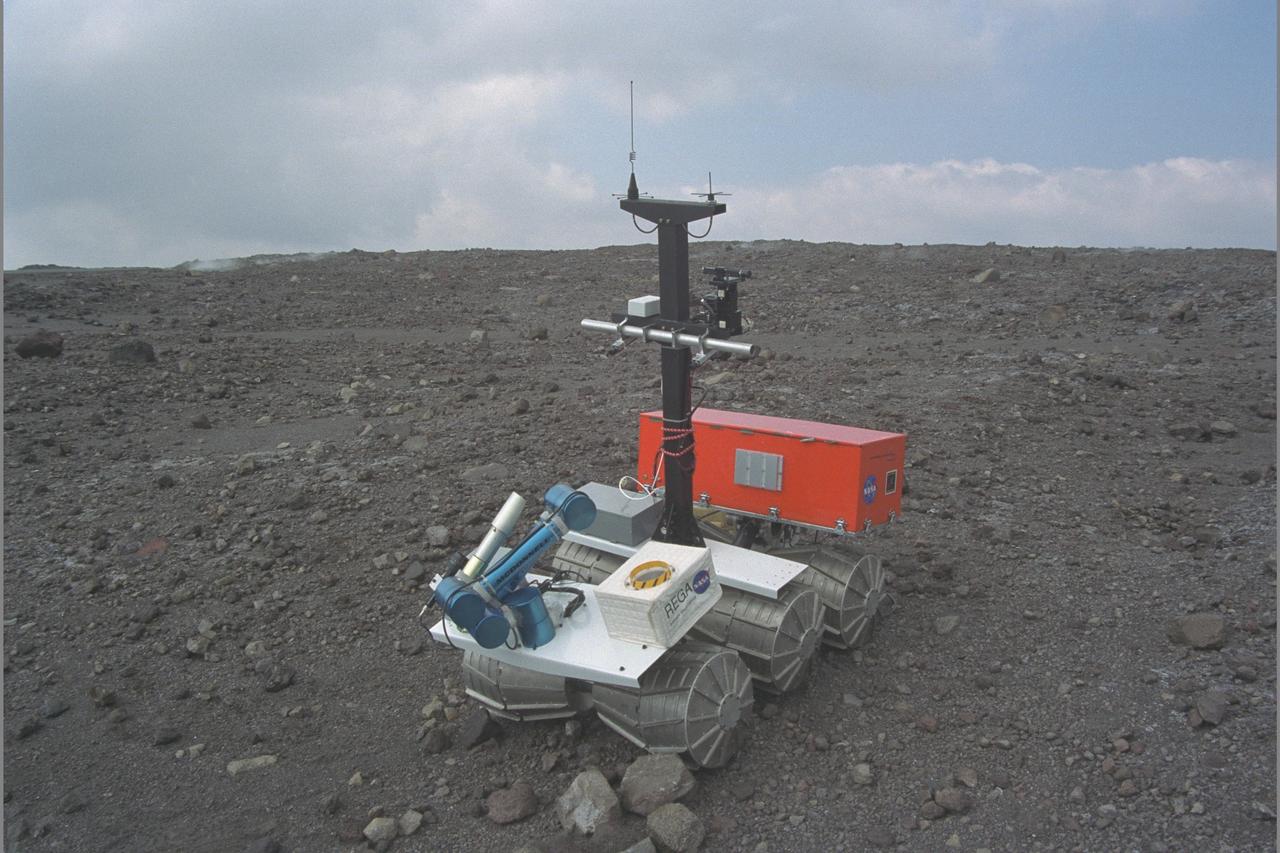
Marsokhod Russian Rover explores Kilauea, Hawaii via telepresence for Jason IV 'Island Earth' Projects (Volcano simulates Martian Terrain)
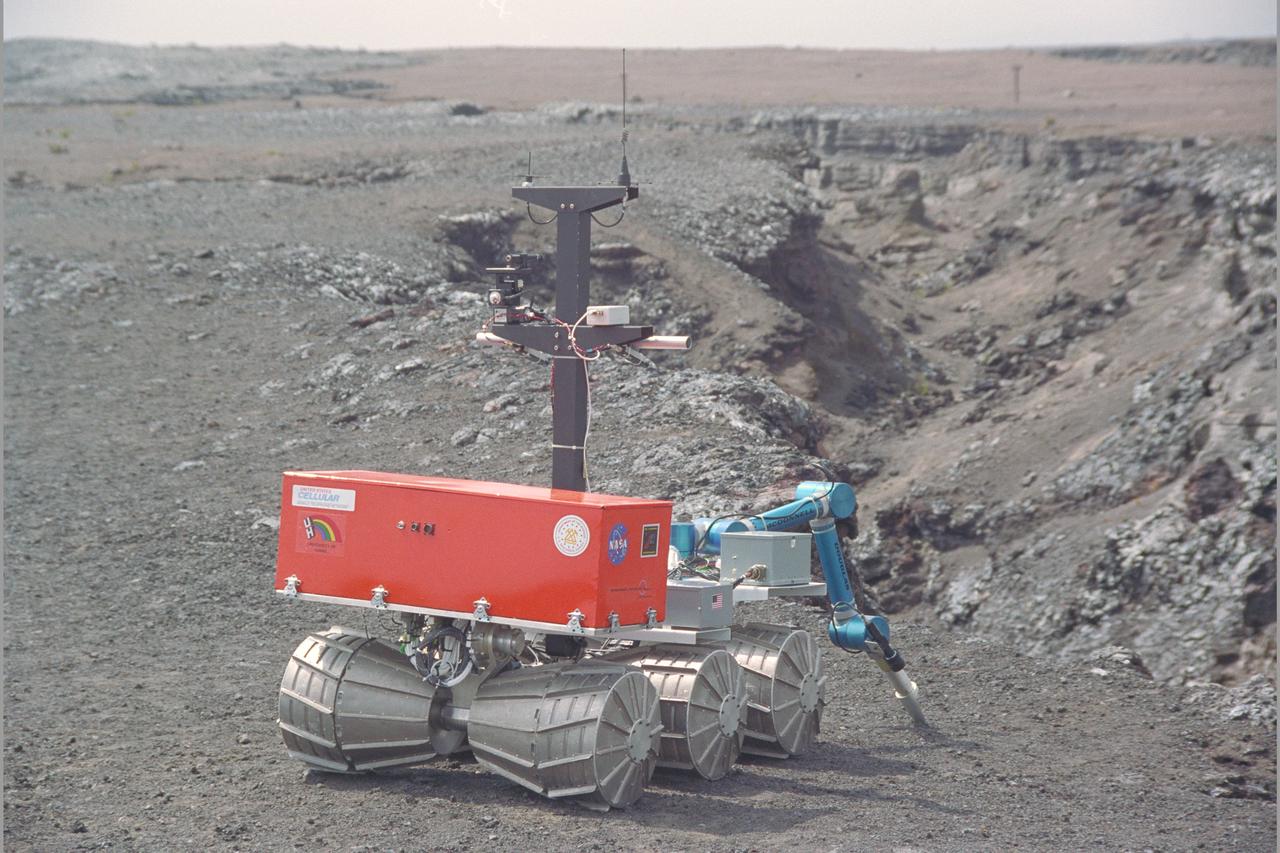
Marsokhod Russian Rover explores Kilauea, Hawaii via telepresence for Jason IV 'Island Earth' Projects (Volcano simulates Martian Terrain)
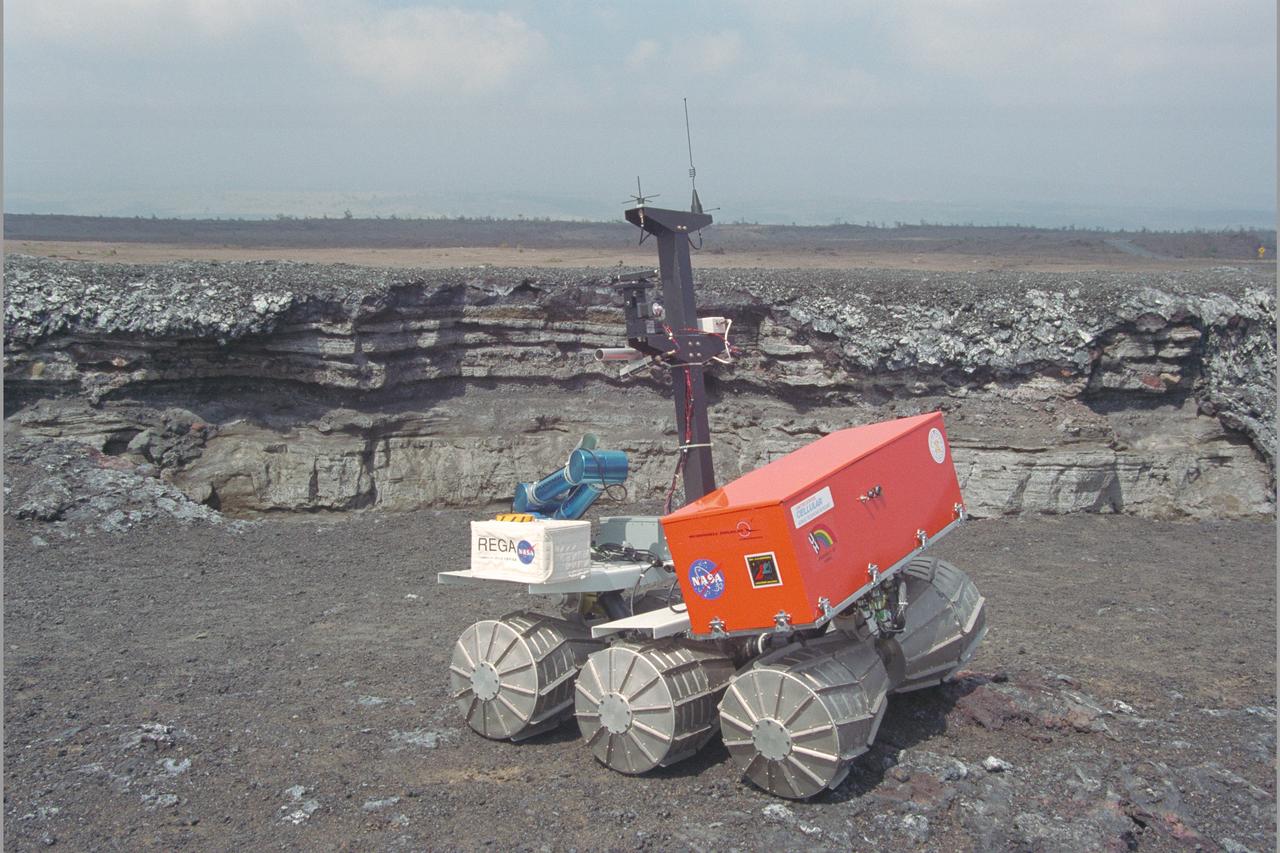
Marsokhod Russian Rover explores Kilauea, Hawaii via telepresence for Jason IV 'Island Earth' Projects (Volcano simulates Martian Terrain)
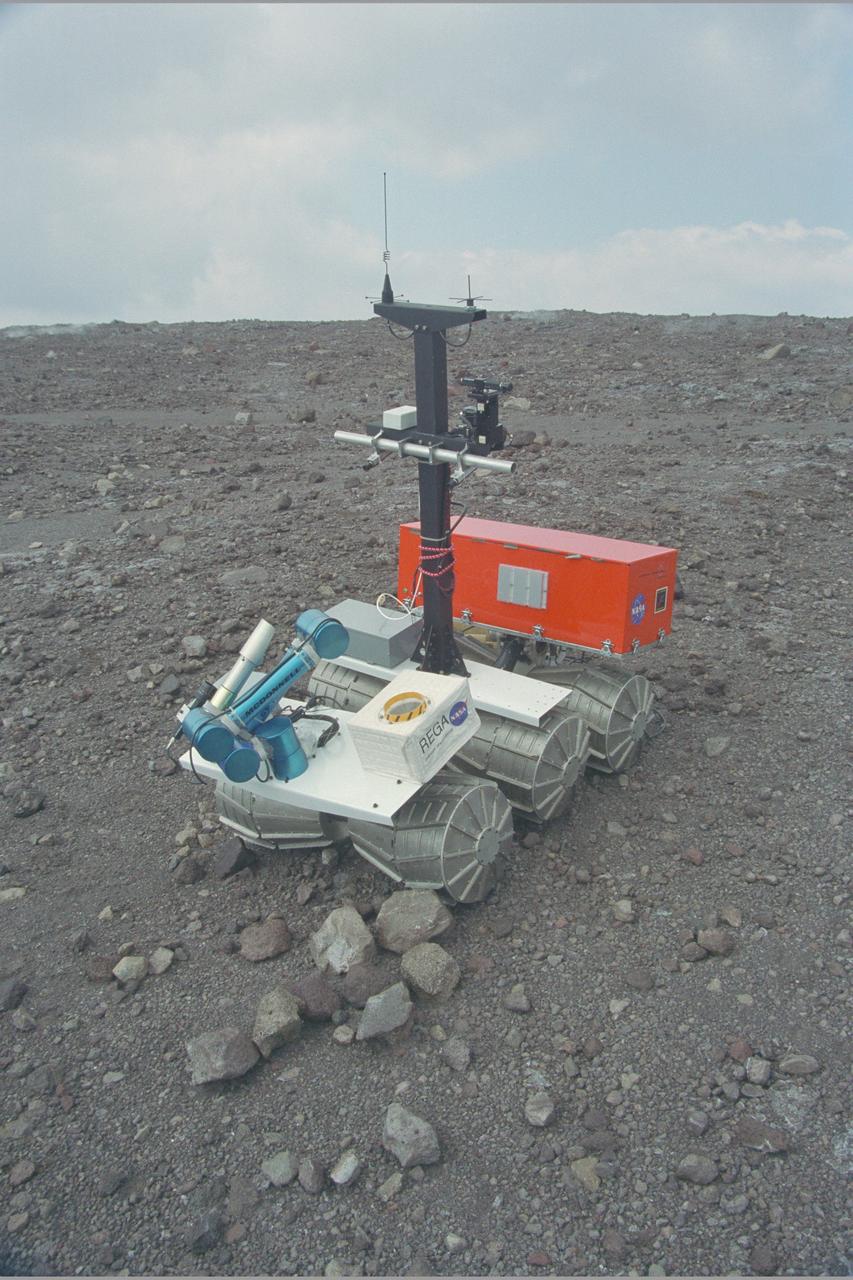
Marsokhod Russian Rover explores Kilauea, Hawaii via telepresence for Jason IV 'Island Earth' Projects (Volcano simulates Martian Terrain)
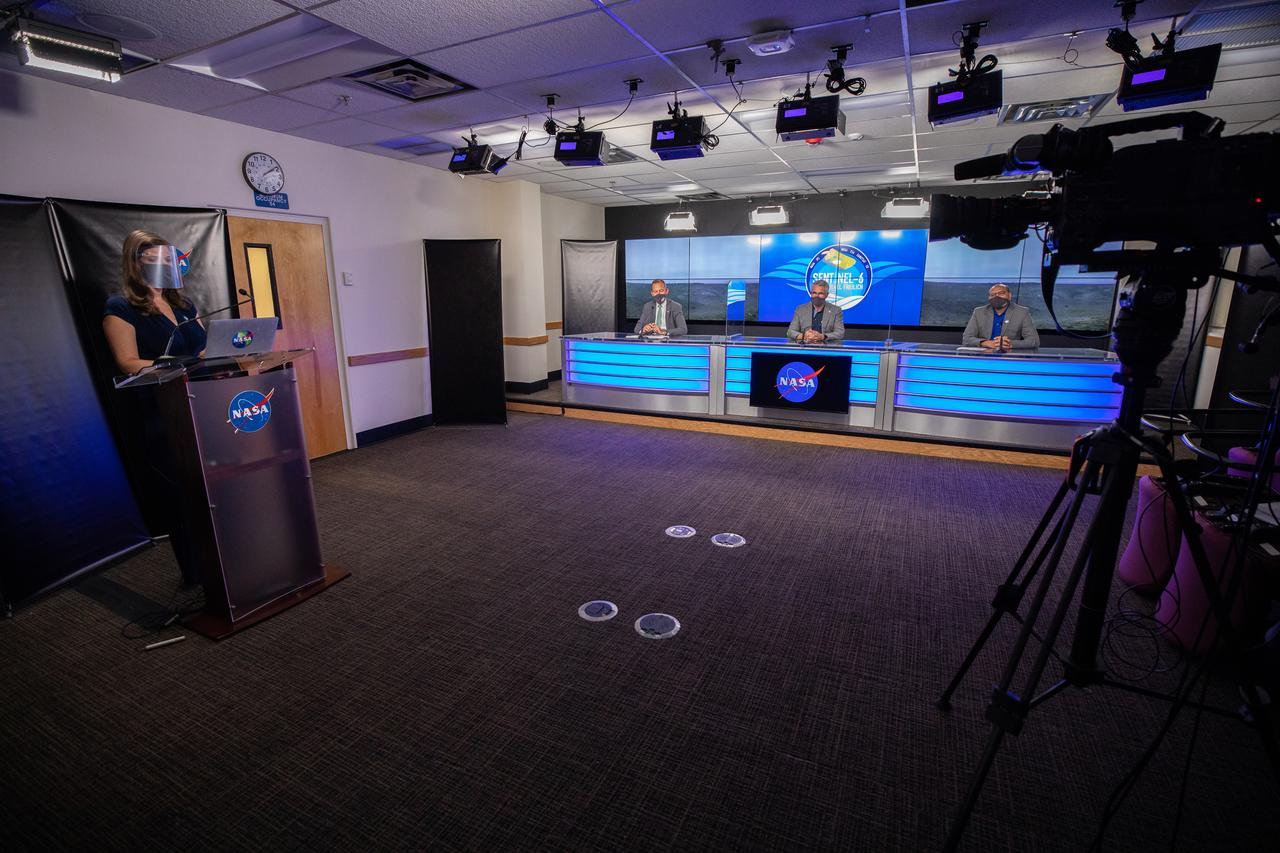
Mission and launch officials participate in a prelaunch news conference for the Sentinel-6 Michael Freilich mission at Vandenberg Air Force Base in California on Nov. 20, 2020. From left are Marina Jurica of NASA’s Jet Propulsion Laboratory in Pasadena; Thomas Zurbuchen, associate administrator for Science Mission Directorate at NASA Headquarters; Pierrik Vuilleumier, project manager, European Space Agency (ESA); and Parag Vaze, project manager, NASA’s Jet Propulsion Laboratory in Pasadena. The Sentinel-6/Jason-CS (Continuity of Service) mission consists of the Sentinel-6 Michael Freilich satellite, which will be followed by its twin, the Sentinel-6B satellite, in 2025. The Sentinel-6/Jason-CS mission is part of Copernicus, the European Union’s Earth observation program, managed by the European Commission. Continuing the legacy of the Jason series missions, Sentinel-6/Jason-CS will extend the records of sea level into their fourth decade, collecting accurate measurements of sea surface height for more than 90% of the world’s seas, and providing crucial information for operational oceanography, marine meteorology, and climate studies. Sentinel-6 Michael Freilich launched Nov. 21, 2020, at 9:17 PST (12:17 EST). NASA’s Launch Services Program at Kennedy Space Center was responsible for launch management.
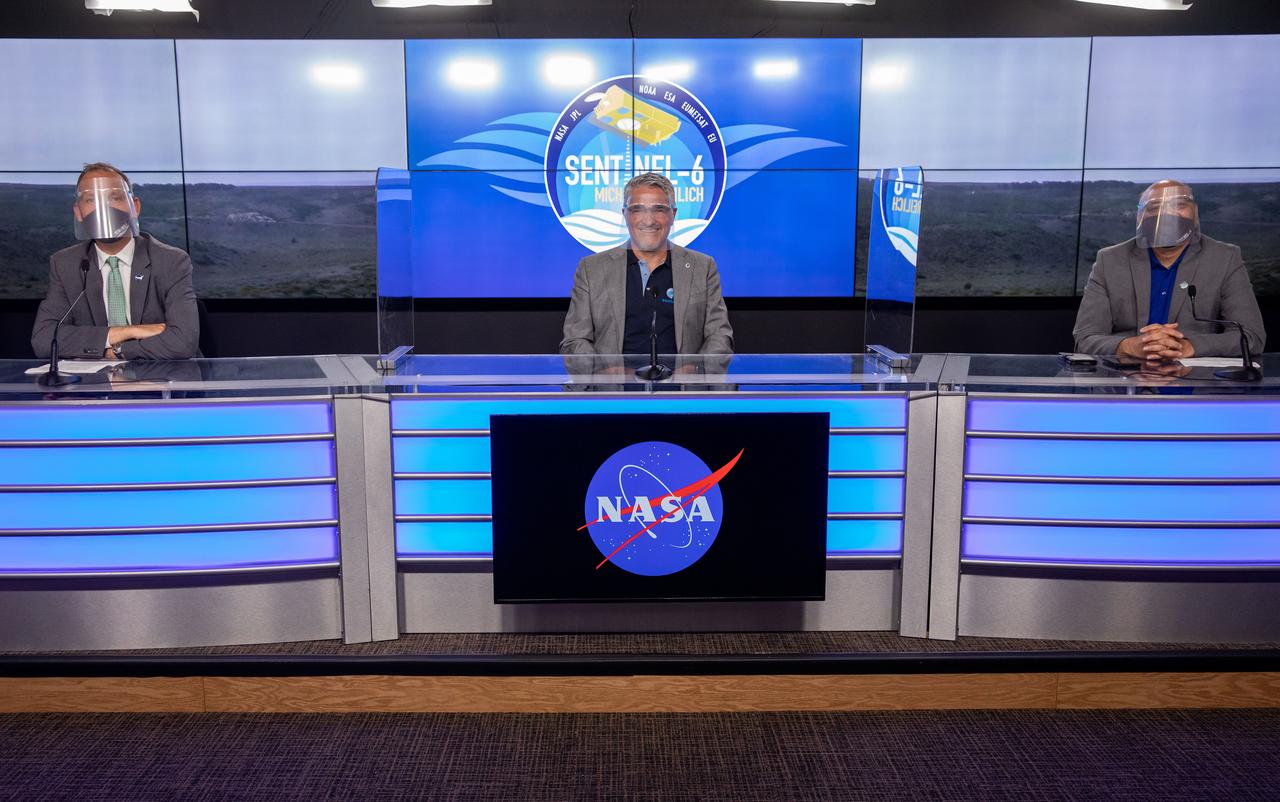
Mission and launch officials participate in a prelaunch news conference for the Sentinel-6 Michael Freilich mission at Vandenberg Air Force Base in California on Nov. 20, 2020. From left are Thomas Zurbuchen, associate administrator for Science Mission Directorate at NASA Headquarters; Pierrik Vuilleumier, project manager, European Space Agency (ESA); and Parag Vaze, project manager, NASA’s Jet Propulsion Laboratory in Pasadena. The Sentinel-6/Jason-CS (Continuity of Service) mission consists of the Sentinel-6 Michael Freilich satellite, which will be followed by its twin, the Sentinel-6B satellite, in 2025. The Sentinel-6/Jason-CS mission is part of Copernicus, the European Union’s Earth observation program, managed by the European Commission. Continuing the legacy of the Jason series missions, Sentinel-6/Jason-CS will extend the records of sea level into their fourth decade, collecting accurate measurements of sea surface height for more than 90% of the world’s seas, and providing crucial information for operational oceanography, marine meteorology, and climate studies. Sentinel-6 Michael Freilich launched Nov. 21, 2020, at 9:17 PST (12:17 EST). NASA’s Launch Services Program at Kennedy Space Center was responsible for launch management.
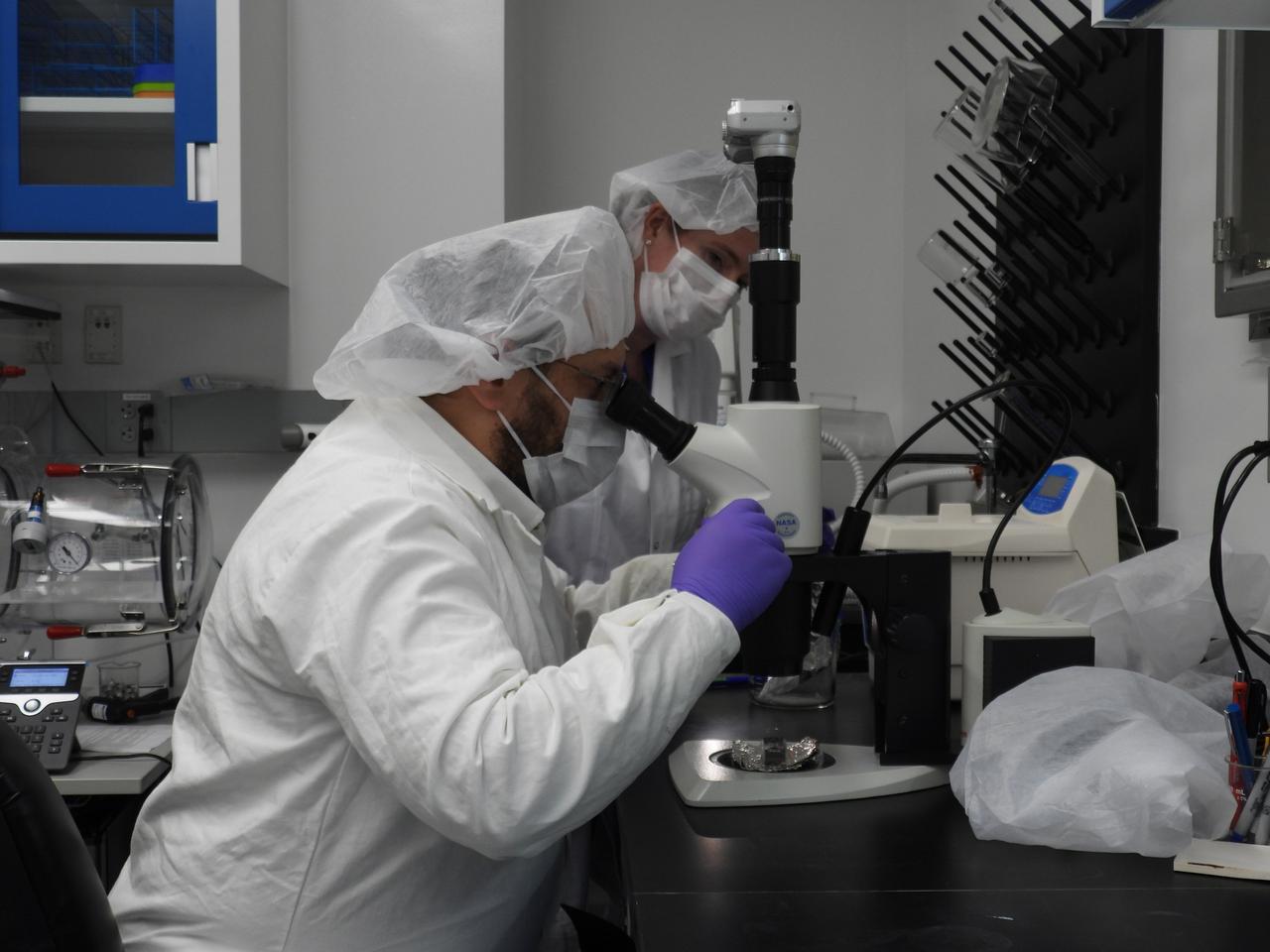
Jason Dworkin, project scientist for NASA's OSIRIS-REx (Origins, Spectral Interpretation, Resource Identification, and Security – Regolith Explorer) mission, examines a portion of the asteroid Bennu sample delivered to Earth in a laboratory at the agency's Goddard Space Flight Center in Greenbelt, Maryland.
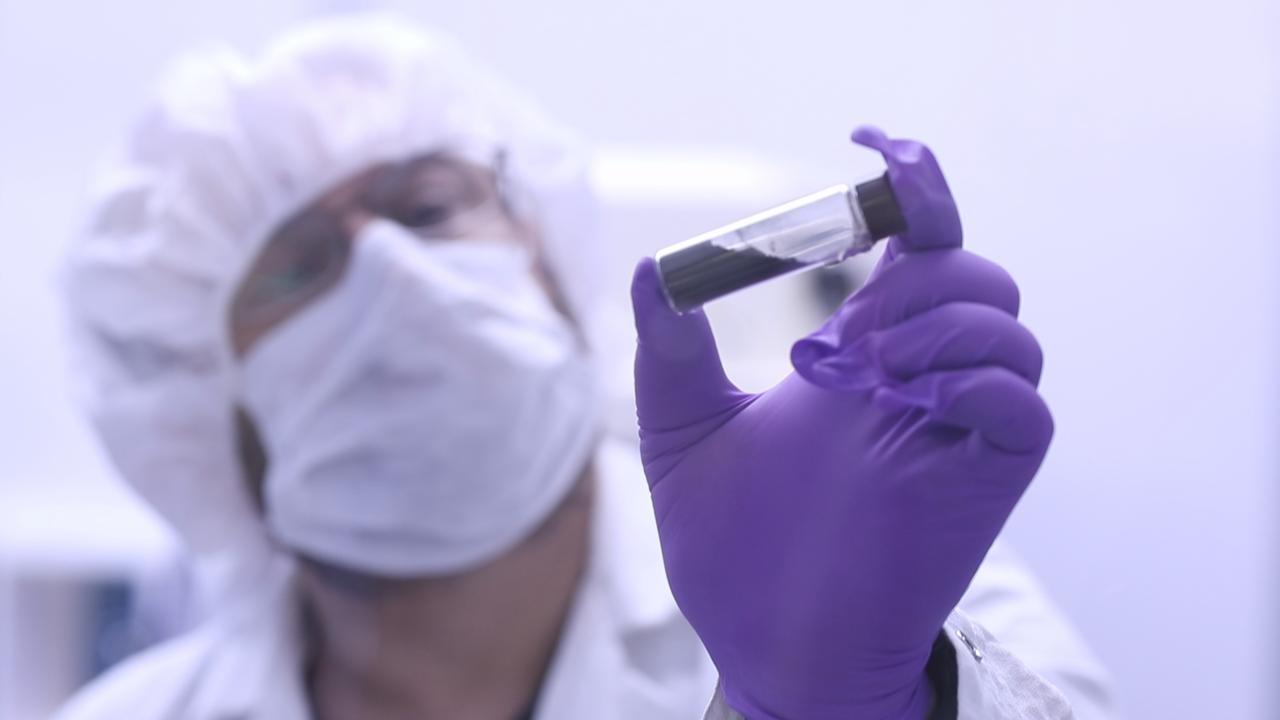
In this video frame, Jason Dworkin holds up a vial that contains part of the sample from asteroid Bennu delivered to Earth by NASA's OSIRIS-REx (Origins, Spectral Interpretation, Resource Identification, and Security – Regolith Explorer) mission in 2023. Dworkin is the mission's project scientist at NASA's Goddard Space Flight Center in Greenbelt, Maryland.
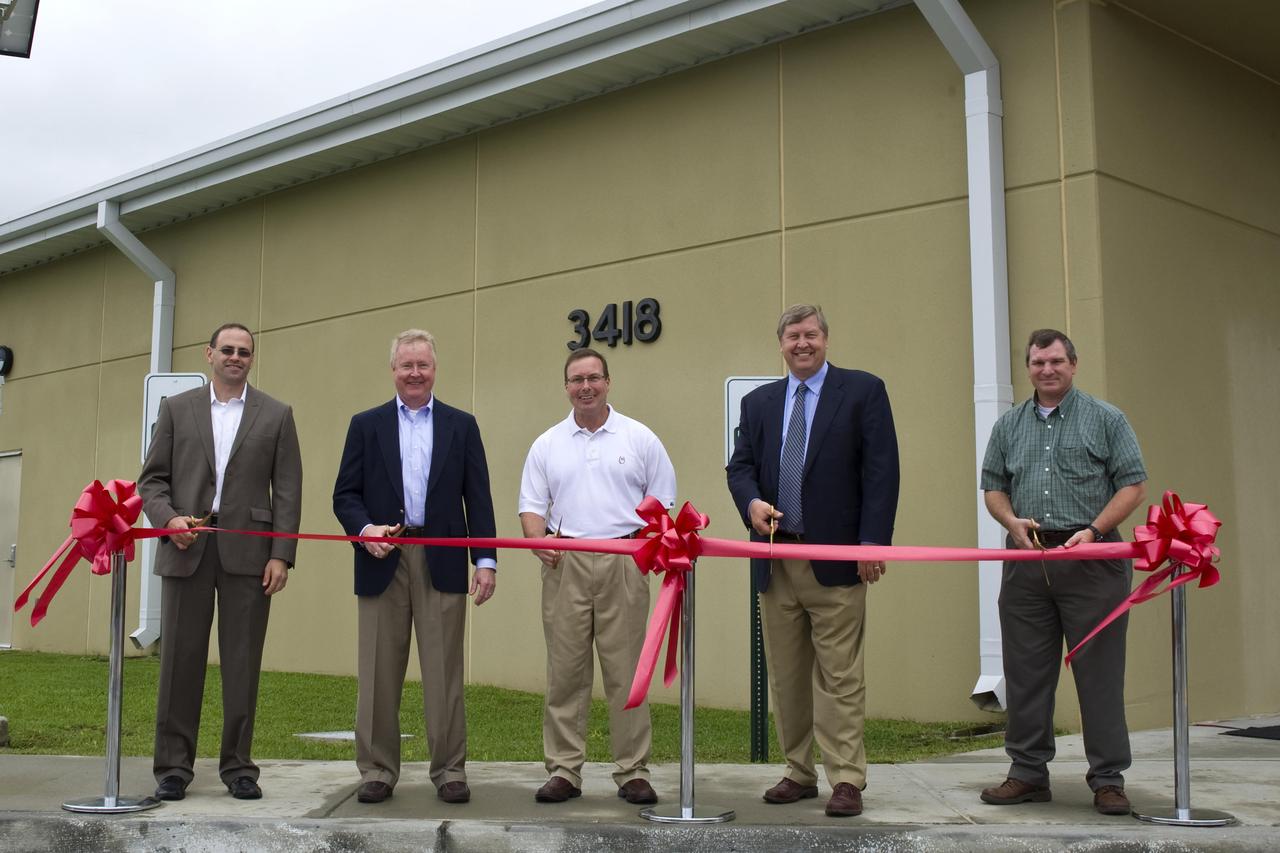
NASA cut the ribbon on a new cryogenics control center at John C. Stennis Space Center on March 30. The new facility is part of a project to strengthen Stennis facilities to withstand the impacts of future storms like hurricane Katrina in 2005. Participants in the ribbon-cutting included (l to r): Jason Zuckerman, director of project management for The McDonnel Group; Keith Brock, director of the NASA Project Directorate at Stennis; Stennis Deputy Director Rick Gilbrech; Steve Jackson, outgoing program manager of the Jacobs Technology NASA Test Operations Group; and Troy Frisbie, Cryo Control Center Construction project manager for NASA Center Operations at Stennis.
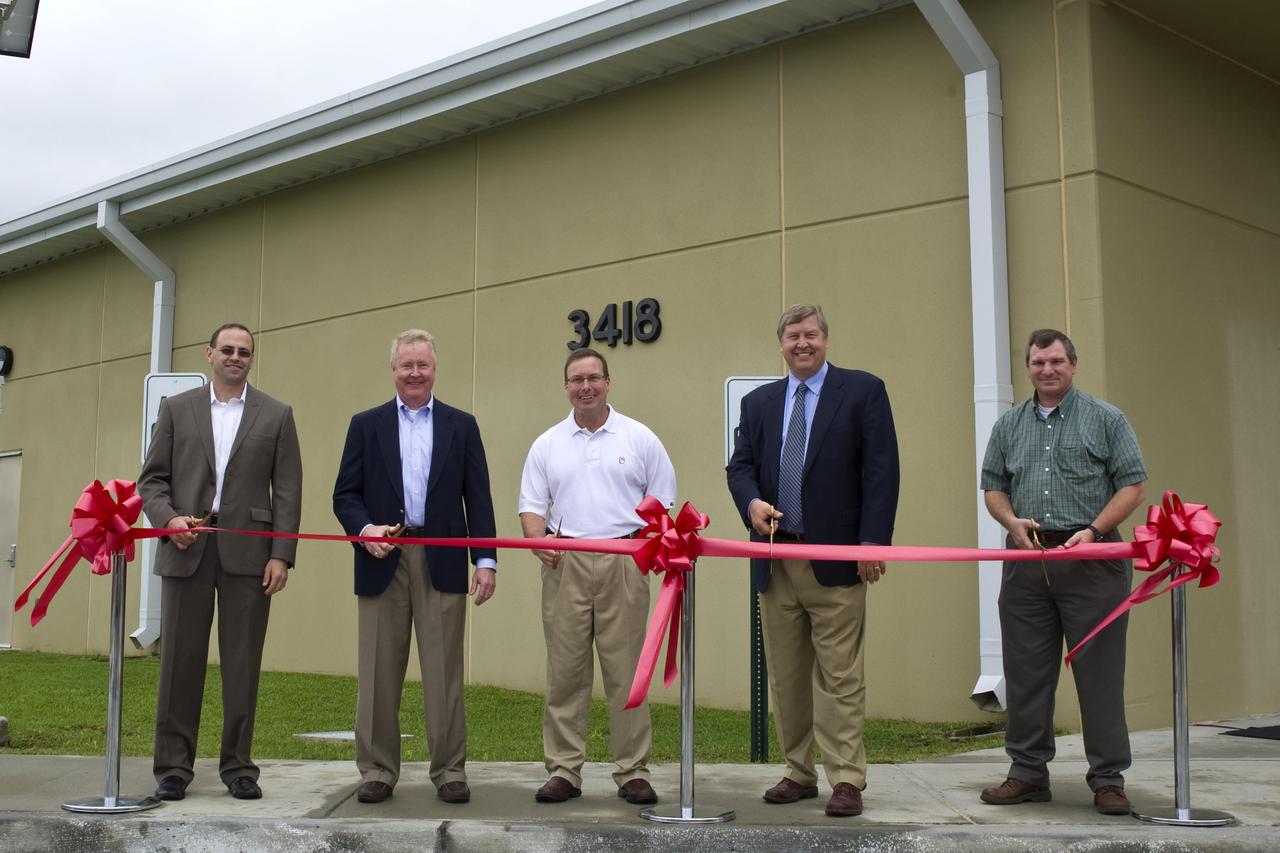
NASA cut the ribbon on a new cryogenics control center at John C. Stennis Space Center on March 30. The new facility is part of a project to strengthen Stennis facilities to withstand the impacts of future storms like hurricane Katrina in 2005. Participants in the ribbon-cutting included (l to r): Jason Zuckerman, director of project management for The McDonnel Group; Keith Brock, director of the NASA Project Directorate at Stennis; Stennis Deputy Director Rick Gilbrech; Steve Jackson of Jacobs Technology; and Troy Frisbie, Cryo Control Center Construction project manager for NASA Center Operations at Stennis.
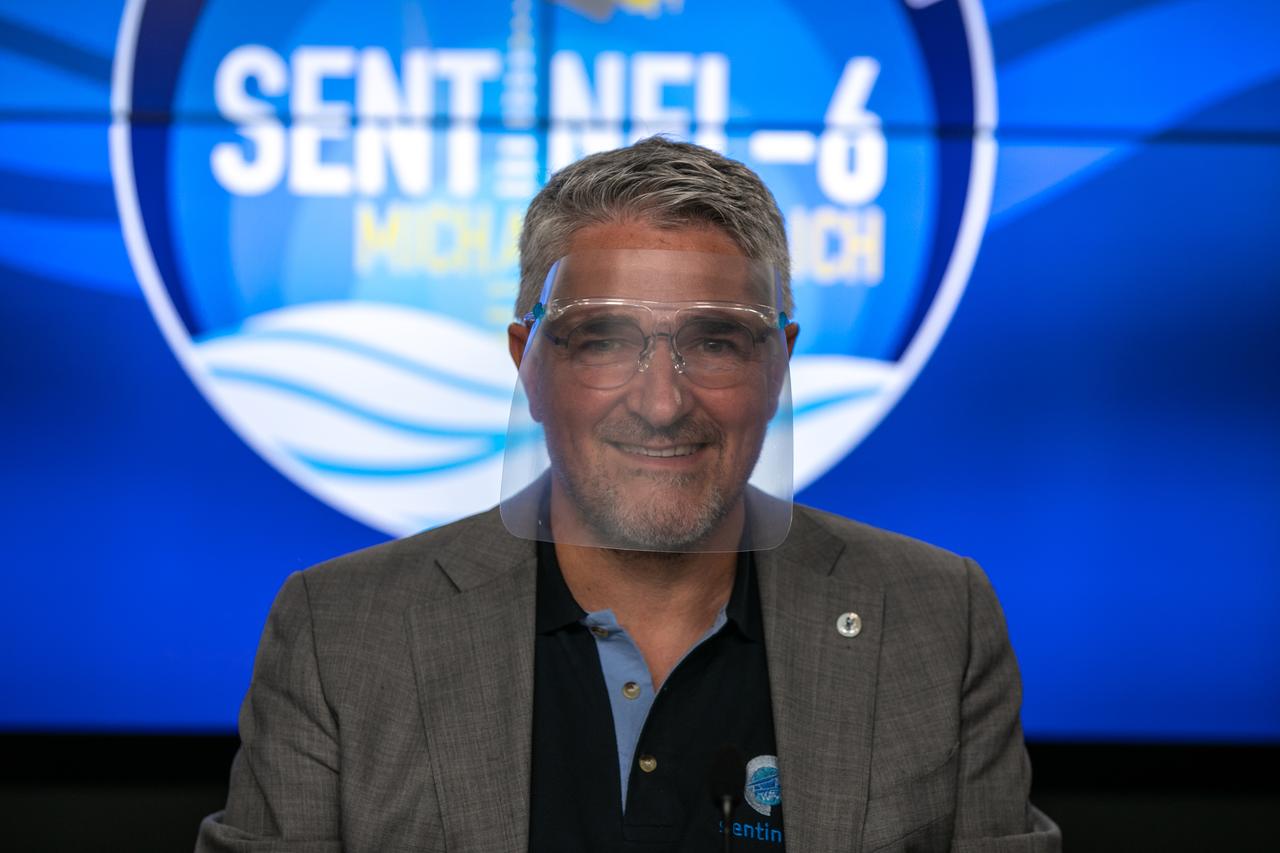
Pierrik Vuilleumier, project manager, European Space Agency (ESA), participates in a prelaunch news conference for the Sentinel-6 Michael Freilich mission at Vandenberg Air Force Base in California on Nov. 20, 2020. The Sentinel-6/Jason-CS (Continuity of Service) mission consists of the Sentinel-6 Michael Freilich satellite, which will be followed by its twin, the Sentinel-6B satellite, in 2025. The Sentinel-6/Jason-CS mission is part of Copernicus, the European Union’s Earth observation program, managed by the European Commission. Continuing the legacy of the Jason series missions, Sentinel-6/Jason-CS will extend the records of sea level into their fourth decade, collecting accurate measurements of sea surface height for more than 90% of the world’s seas, and providing crucial information for operational oceanography, marine meteorology, and climate studies. Sentinel-6 Michael Freilich launched Nov. 21, 2020, at 9:17 PST (12:17 EST). NASA’s Launch Services Program at Kennedy Space Center was responsible for launch management.
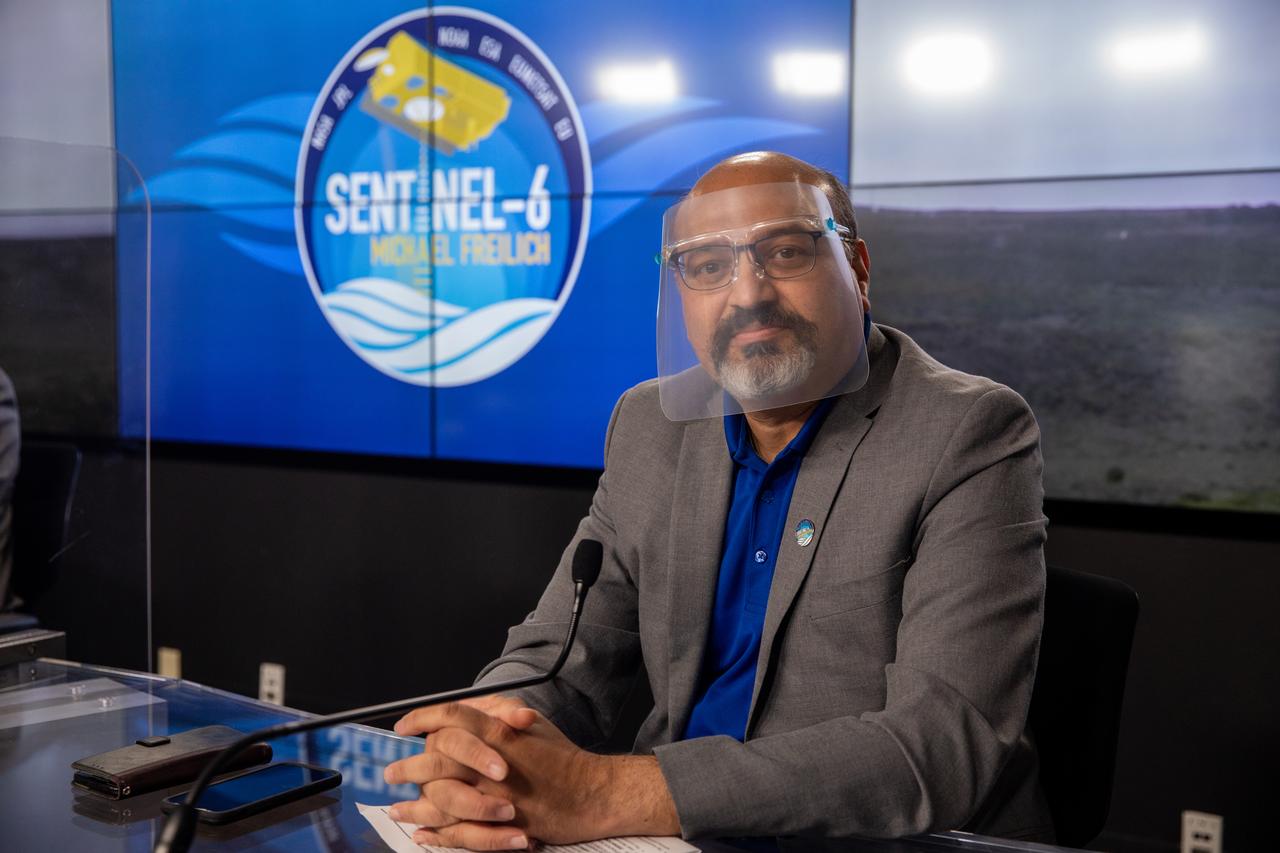
Parag Vaze, project manager, NASA’s Jet Propulsion Laboratory in Pasadena, participates in a prelaunch news conference for the Sentinel-6 Michael Freilich mission at Vandenberg Air Force Base in California on Nov. 20, 2020. The Sentinel-6/Jason-CS (Continuity of Service) mission consists of the Sentinel-6 Michael Freilich satellite, which will be followed by its twin, the Sentinel-6B satellite, in 2025. The Sentinel-6/Jason-CS mission is part of Copernicus, the European Union’s Earth observation program, managed by the European Commission. Continuing the legacy of the Jason series missions, Sentinel-6/Jason-CS will extend the records of sea level into their fourth decade, collecting accurate measurements of sea surface height for more than 90% of the world’s seas, and providing crucial information for operational oceanography, marine meteorology, and climate studies. Sentinel-6 Michael Freilich launched Nov. 21, 2020, at 9:17 PST (12:17 EST). NASA’s Launch Services Program at Kennedy Space Center was responsible for launch management.
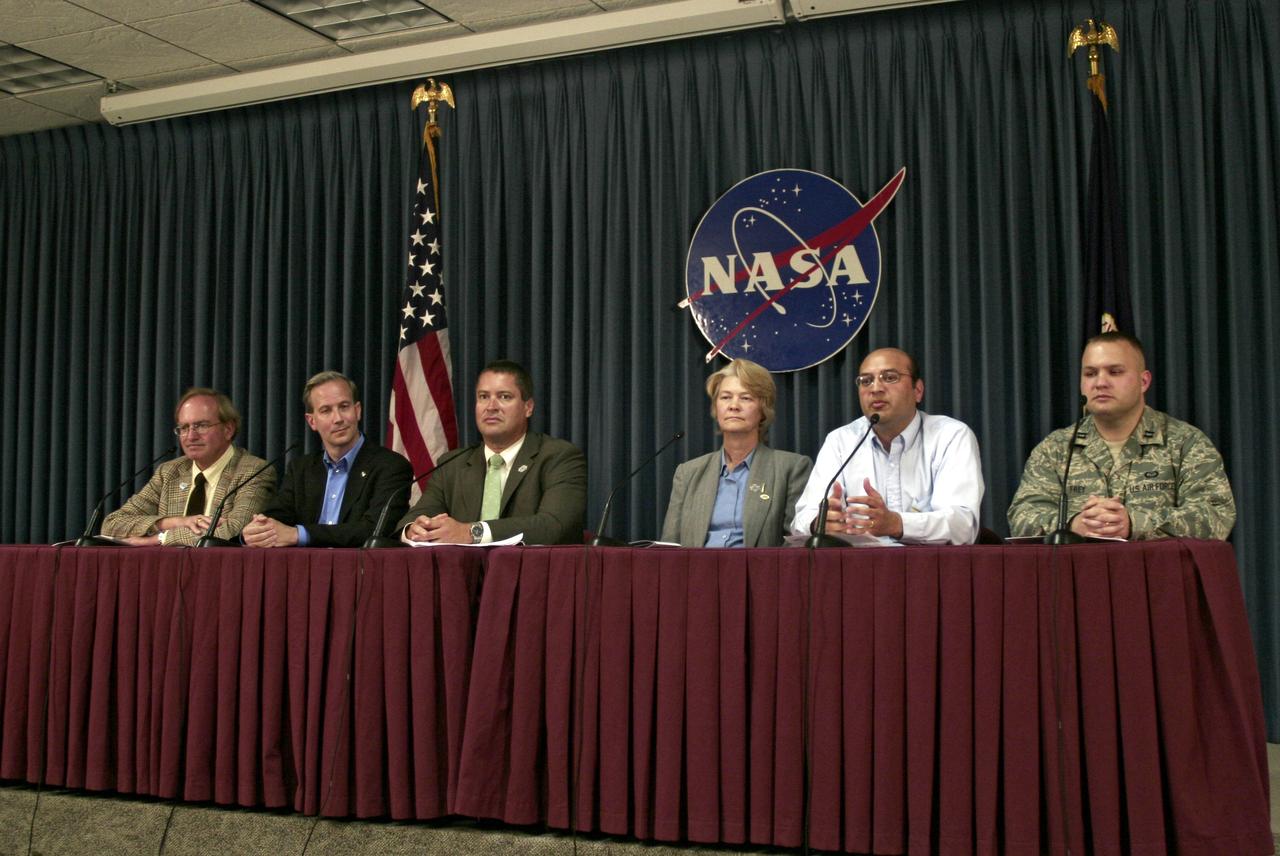
VANDENBERG AIR FORCE BASE, Calif. – A prelaunch news conference is held on North Vandenberg Air Force Base to present the latest information about the Ocean Surface Topography Mission, or OSTM/Jason 2. Seated from left are the moderator George Diller; Steve Neeck, OSTM/Jason 2 program executive; Omar Baez, NASA launch director at NASA's Kennedy Space Center; Kris Walsh, director of NASA and commercial programs for, United Launch Alliance; Parag Vaze, OSTM/Jason 2 project manager at the NASA's Jet Propulsion Laboratory; and Capt. Andrew M. Frey, launch weather officer with the 30th Weather Squadron. The OSTM/Jason 2 satellite will embark on a globe-circling voyage to continue charting sea level, a vital indicator of global climate change. The mission will return a vast amount of new data that will improve weather, climate and ocean forecasts. OSTM/Jason 2's expected lifetime of at least three years will extend into the next decade the continuous record of these data started in 1992 by NASA and the French space agency Centre National d'Etudes Spatiales, or CNES, with the TOPEX/Poseidon mission. The data collection was continued by the two agencies on Jason-1 in 2001. The launch window extends from 12:46 a.m. to 12:55 a.m. PDT. The satellite will be placed in an 830-mile-high orbit at an inclination of 66 degrees after separating from the Delta II 55 minutes after liftoff. Photo credit: Photograph by Carleton Bailie for United Launch Alliance
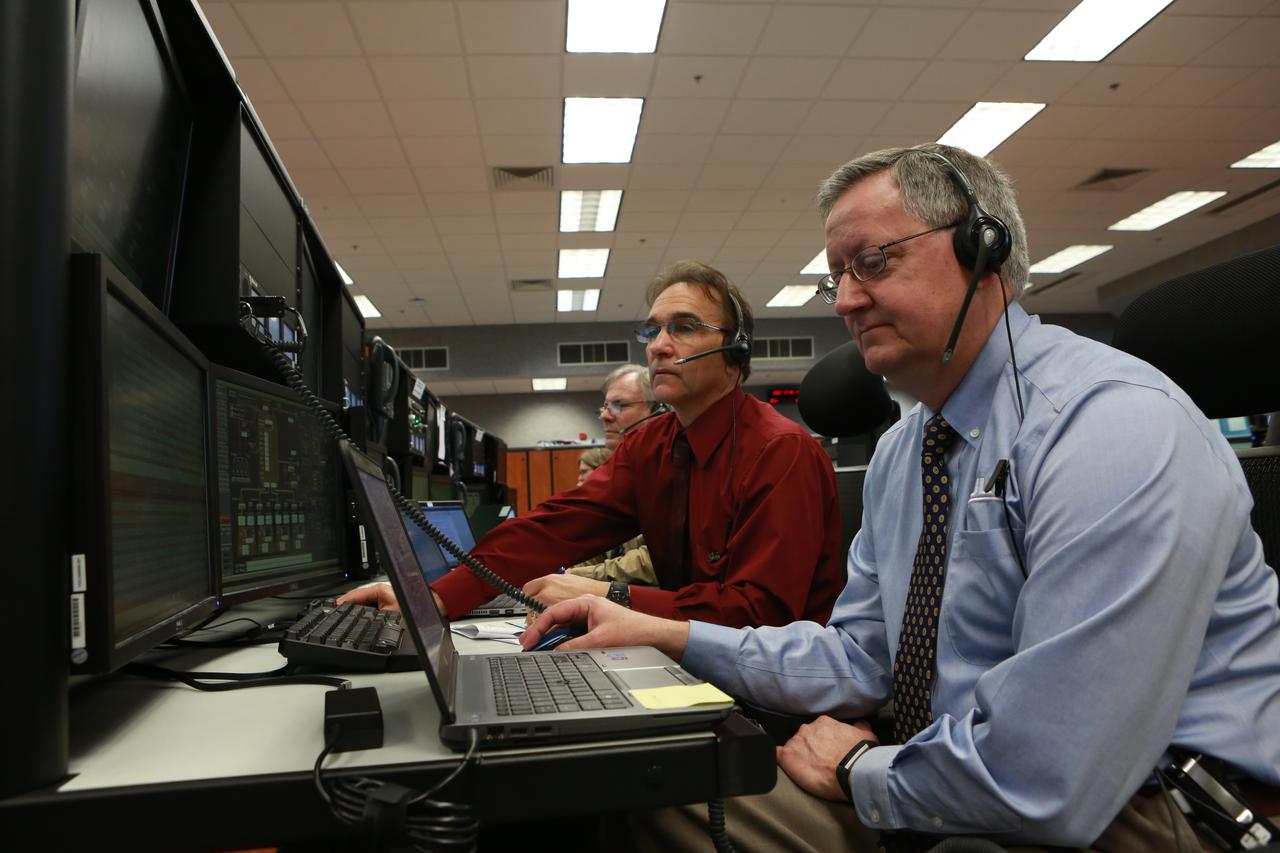
Test Project Engineer Rick Brown, left, and Master Console Operator Jason Robinson, both with Jacobs, monitor operations from their consoles in Firing Room 1 at the Kennedy Space Center's Launch Control Center during a countdown simulation for Exploration Mission 1. It was the agency's first simulation of a portion of the countdown for the first launch of a Space Launch System rocket and Orion spacecraft that will eventually take astronauts beyond low-Earth orbit to destinations such as the Moon and Mars.
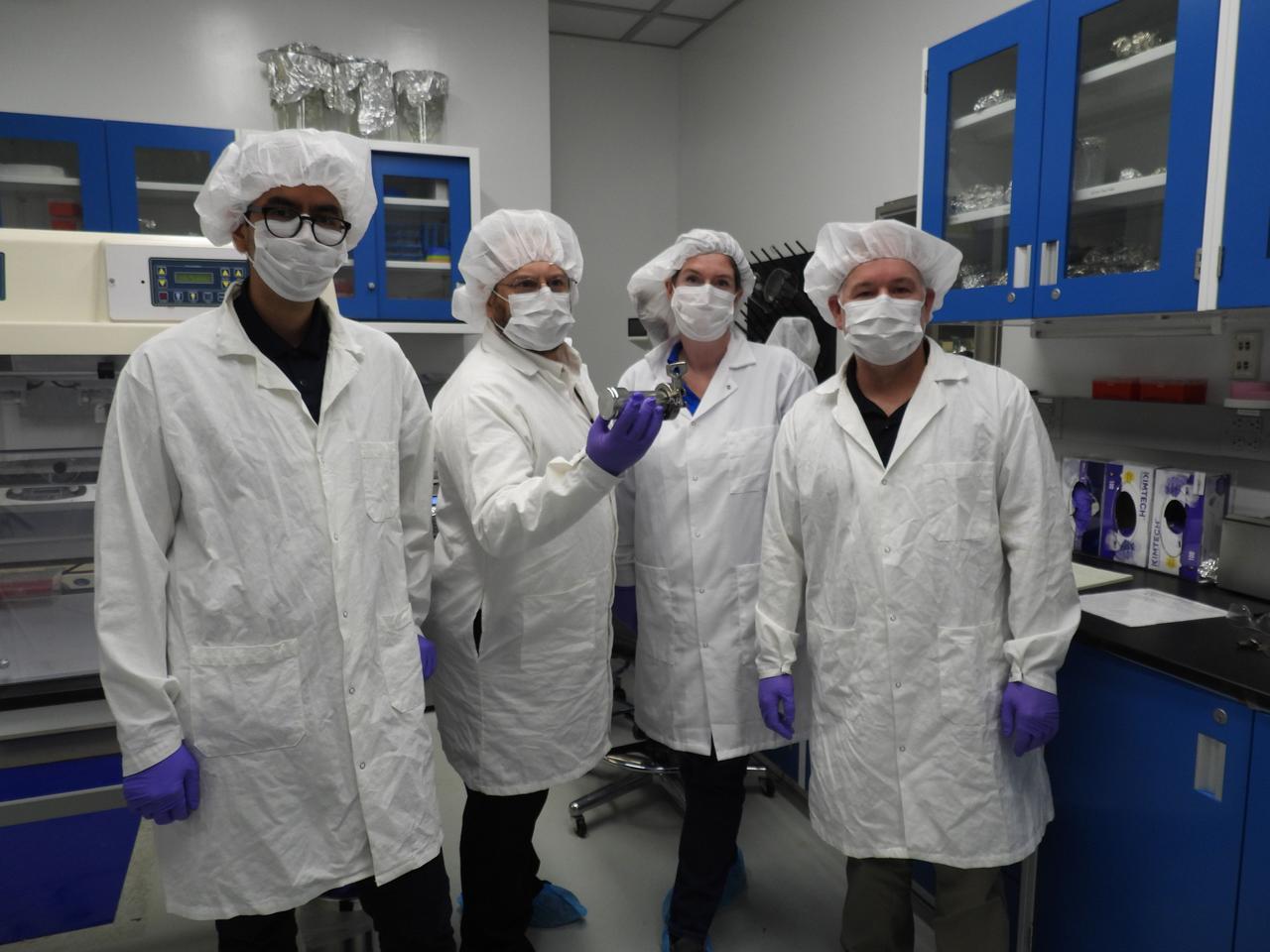
Researchers at NASA's Goddard Space Flight Center in Greenbelt, Maryland, pose with a cannister that contains a portion of the asteroid Bennu sample delivered to Earth by the agency's OSIRIS-REx (Origins, Spectral Interpretation, Resource Identification, and Security – Regolith Explorer) mission. From left to right: Angel Mojarro, organic geochemist; Jason Dworkin, OSIRIS-REX project scientist; Hannah McLain, astrobiologist; and Danny Glavin, senior sample scientist.
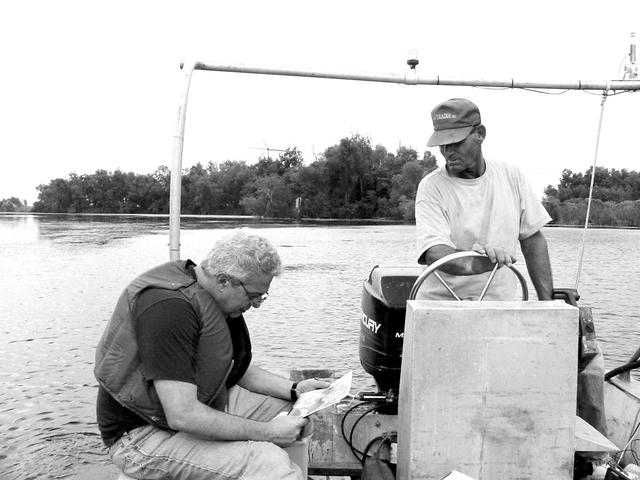
Dr. Marco Giardino, chief of the Applications Integration Division for NASA Stennis Space Center's Earth Science Applications Directorate, has been chosen by the JASON Project to be one of six host researchers for Disappearing Wetlands, which will run through the 2004-05 school year. In the photo, Giardino (left) interprets satellite imagery on the way to an archeological site near Lake Salvador, La., in November 2002. With him is his local guide, Michael Comardelle.
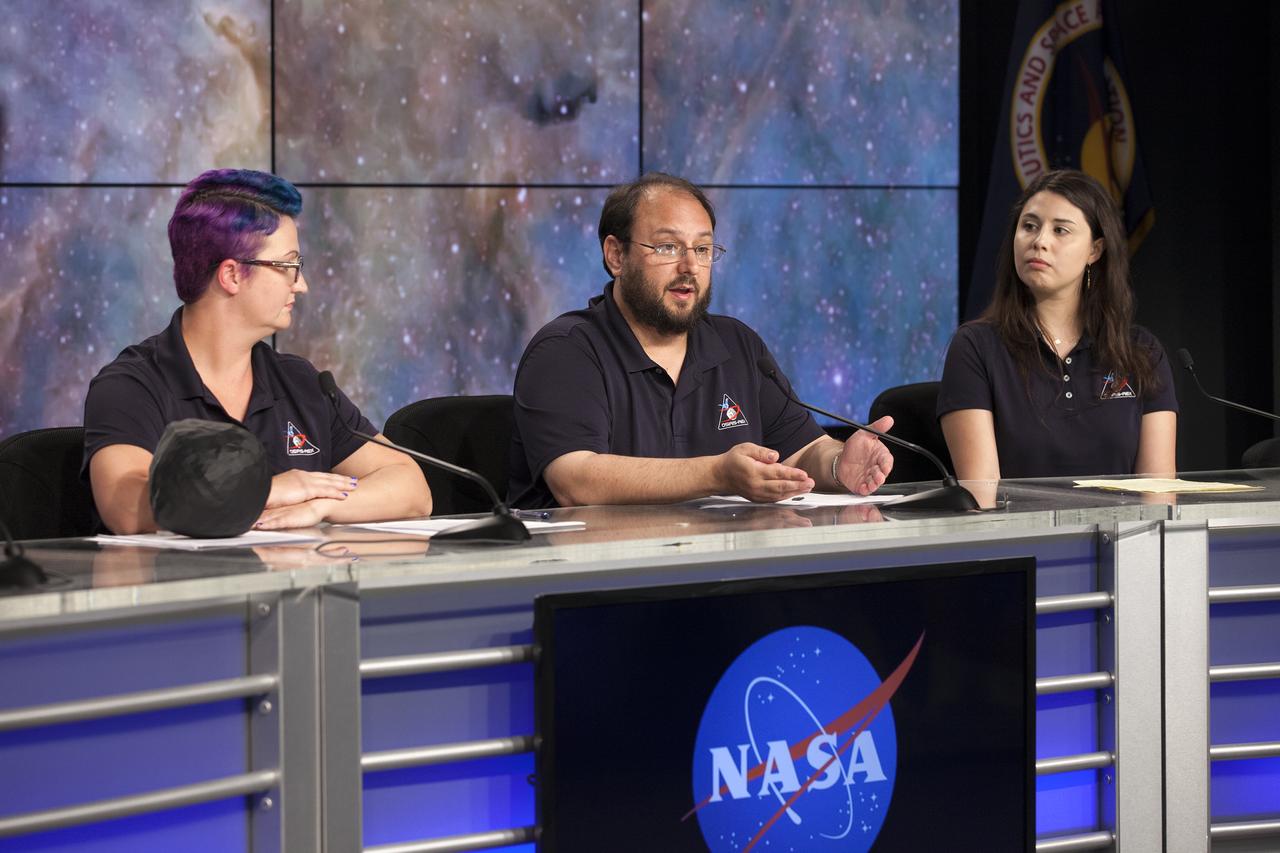
In the Kennedy Space Center’s Press Site auditorium, members of the media participate in a briefing on science experiments involved in NASA’s Origins, Spectral Interpretation, Resource Identification, Security-Regolith Explorer, or OSIRIS-REx spacecraft. From left are: Christina Richey, OSIRIS-REx deputy program scientist at NASA Headquarters in Washington; Jason Dworkin, OSIRIS-REx project scientist at NASA’s Goddard Space Flight Center in Greenbelt, Maryland; Daniella DellaGiustina, OSIRIS-REx lead image processing scientist at the University of Arizona, Tucson.
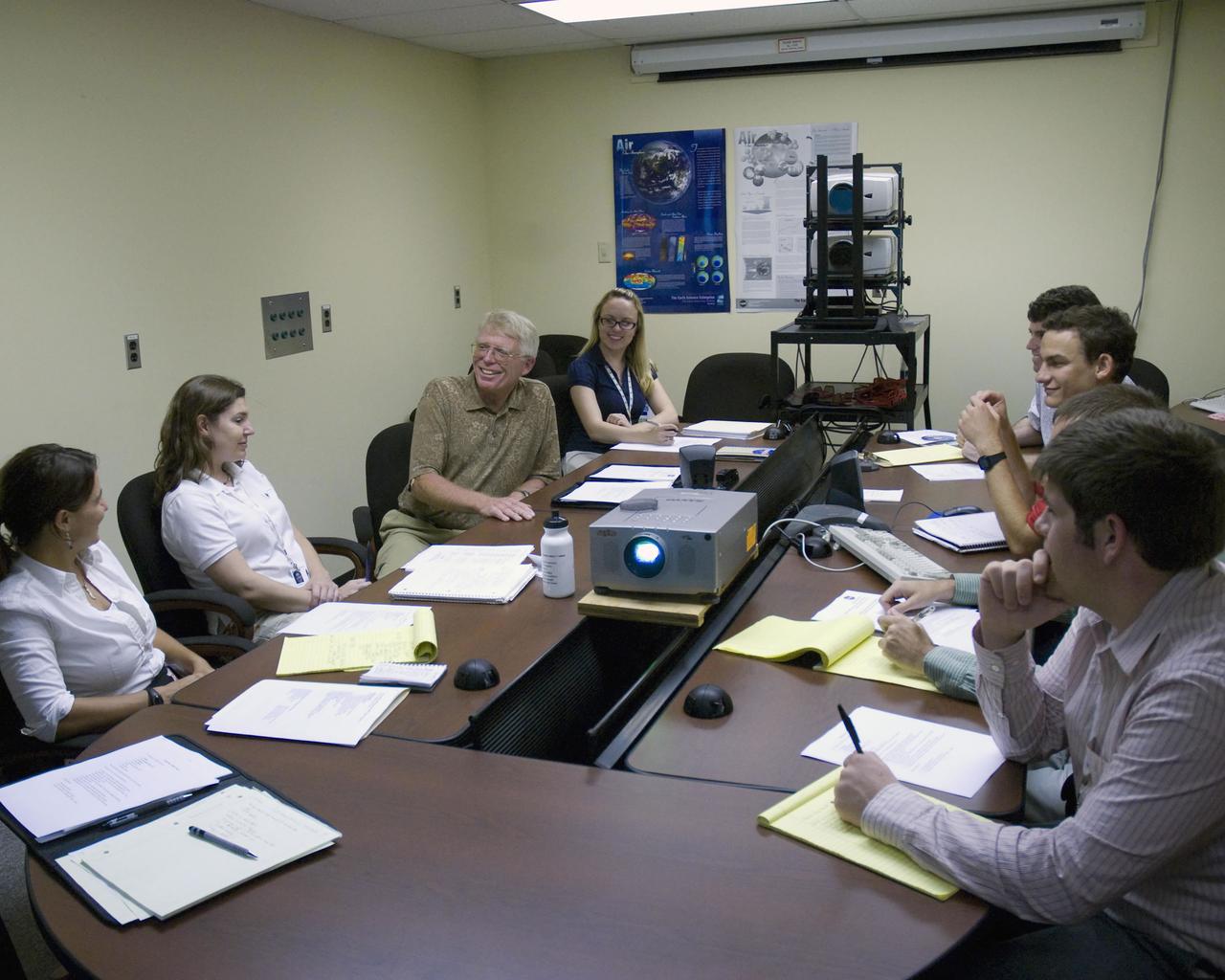
NASA DEVELOP students at Stennis Space Center recently held a midterm review with George Crozier, who serves as a science adviser to the team. The team also was joined by Jamie Favors of the Mobile (Ala.) County Health Department DEVELOP Team; Cheri Miller, the team's NASA adviser; and Kenton Ross, a team science adviser. Students participating in the meeting included: Lauren Childs, Jason Jones, Maddie Brozen, Matt Batina, Jenn Frey, Angie Maki and Aaron Brooks. The primary purpose of the meeting was to update Crozier on the status of the team's work for the summer 2008 term and discuss plans for the fiscal year 2009 project proposal. This included discussion of a possible project to study the effects of hurricanes on the Florida panhandle. DEVELOP is a NASA-sponsored, student-led, student-run program focused on developing projects to help communities.
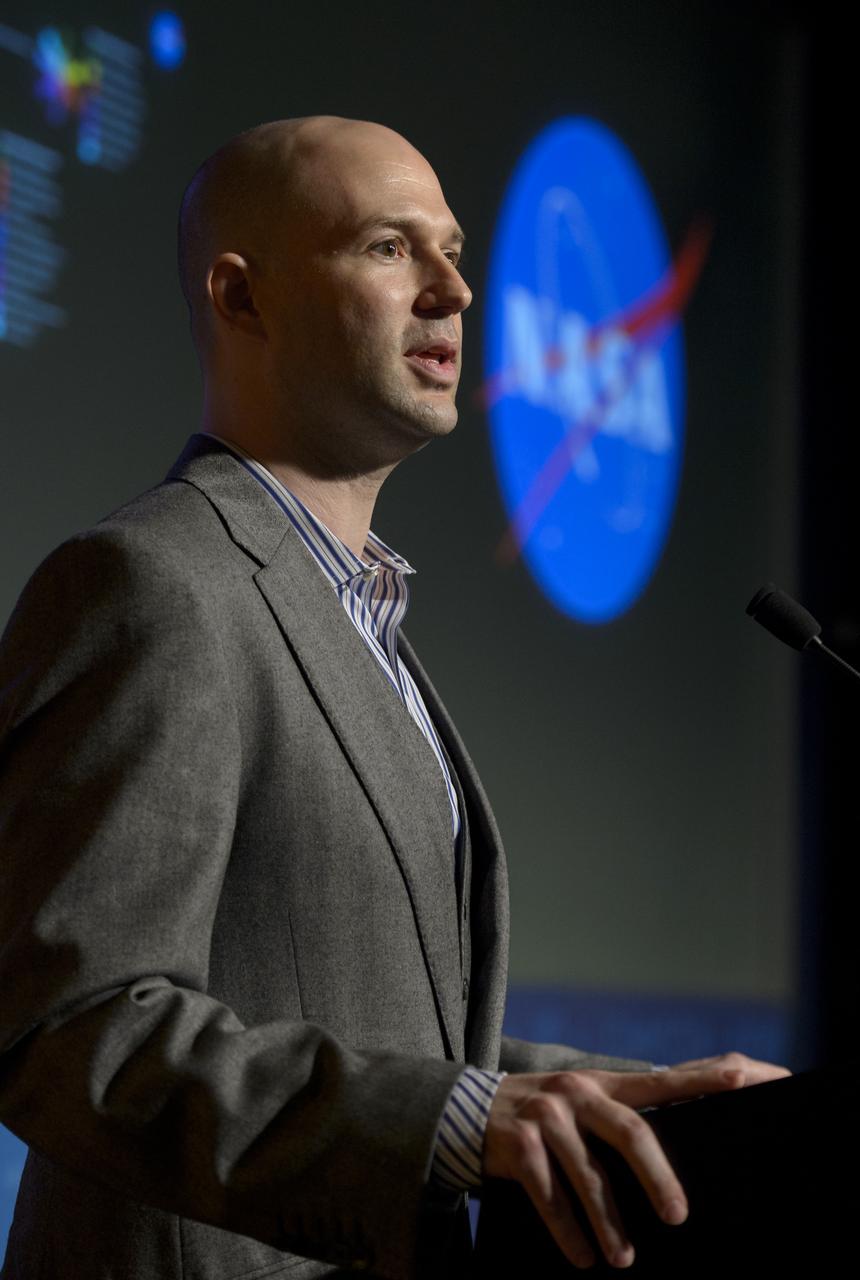
Jason Kessler, Special Projects Program Executive, NASA Office of the Chief Technologist, talks during the Asteroid Initiative Industry and Partner Day at NASA Headquarters on Tuesday, June 18, 2013 in Washington. During the event NASA Deputy Administrator Lori Garver and other senior NASA officials discussed the progress being made on NASA's mission to capture, redirect, and explore an asteroid. NASA also announced an Asteroid Grand Challenge focused on finding all asteroid threats to human populations and knowing what to do about them. Photo Credit: (NASA/Bill Ingalls)
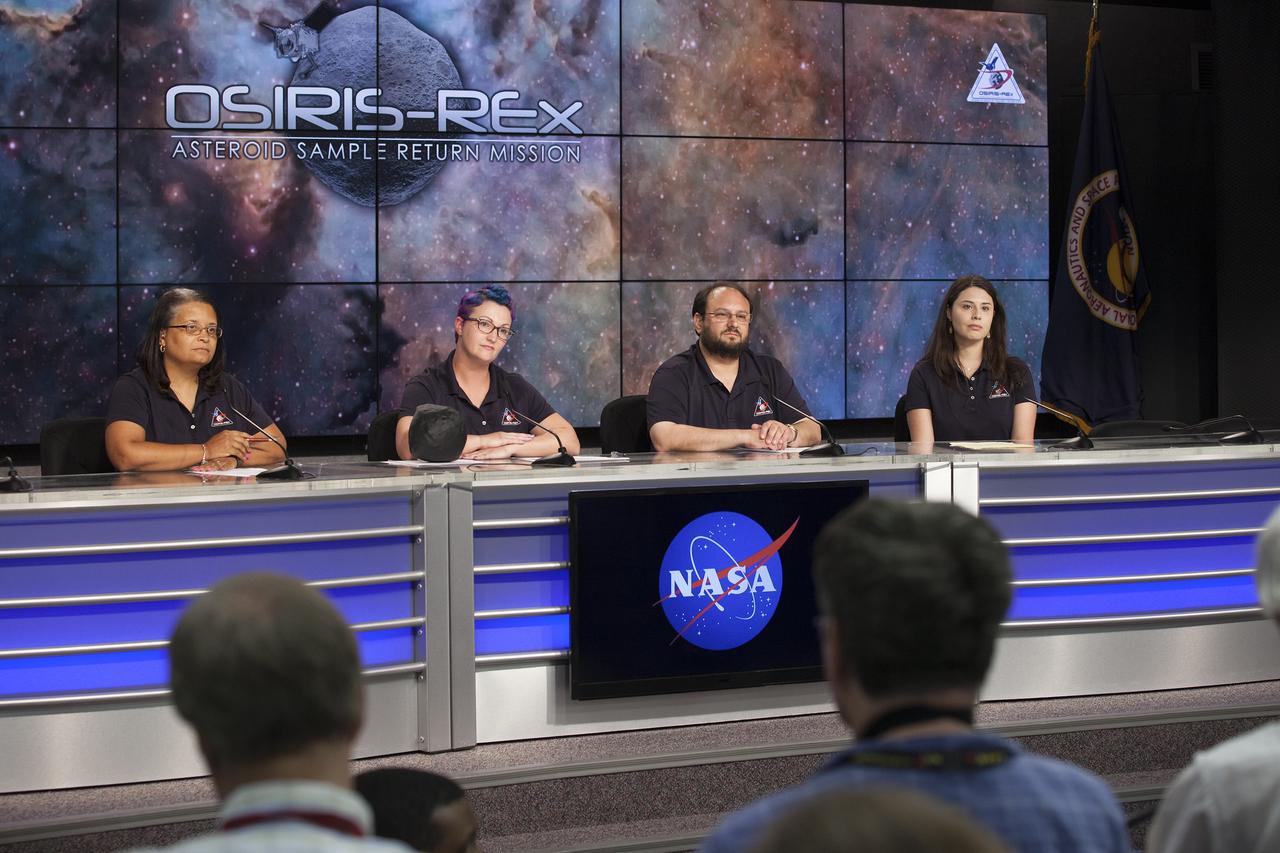
In the Kennedy Space Center’s Press Site auditorium, members of the media participate in a briefing on science experiments involved in NASA’s Origins, Spectral Interpretation, Resource Identification, Security-Regolith Explorer, or OSIRIS-REx spacecraft. From left are: Nancy Neal-Jones of NASA Communications; Christina Richey, OSIRIS-REx deputy program scientist at NASA Headquarters in Washington; Jason Dworkin, OSIRIS-REx project scientist at NASA’s Goddard Space Flight Center in Greenbelt, Maryland; Daniella DellaGiustina, OSIRIS-REx lead image processing scientist at the University of Arizona, Tucson.

Jason Kessler, Special Projects Program Executive, NASA Office of the Chief Technologist, talks during the Asteroid Initiative Industry and Partner Day at NASA Headquarters on Tuesday, June 18, 2013 in Washington. During the event NASA Deputy Administrator Lori Garver and other senior NASA officials discussed the progress being made on NASA's mission to capture, redirect, and explore an asteroid. NASA also announced an Asteroid Grand Challenge focused on finding all asteroid threats to human populations and knowing what to do about them. Photo Credit: (NASA/Bill Ingalls)

Jason Kessler, Special Projects Program Executive, NASA Office of the Chief Technologist, talks during the Asteroid Initiative Industry and Partner Day at NASA Headquarters on Tuesday, June 18, 2013 in Washington. During the event NASA Deputy Administrator Lori Garver and other senior NASA officials discussed the progress being made on NASA's mission to capture, redirect, and explore an asteroid. NASA also announced an Asteroid Grand Challenge focused on finding all asteroid threats to human populations and knowing what to do about them. Photo Credit: (NASA/Bill Ingalls)
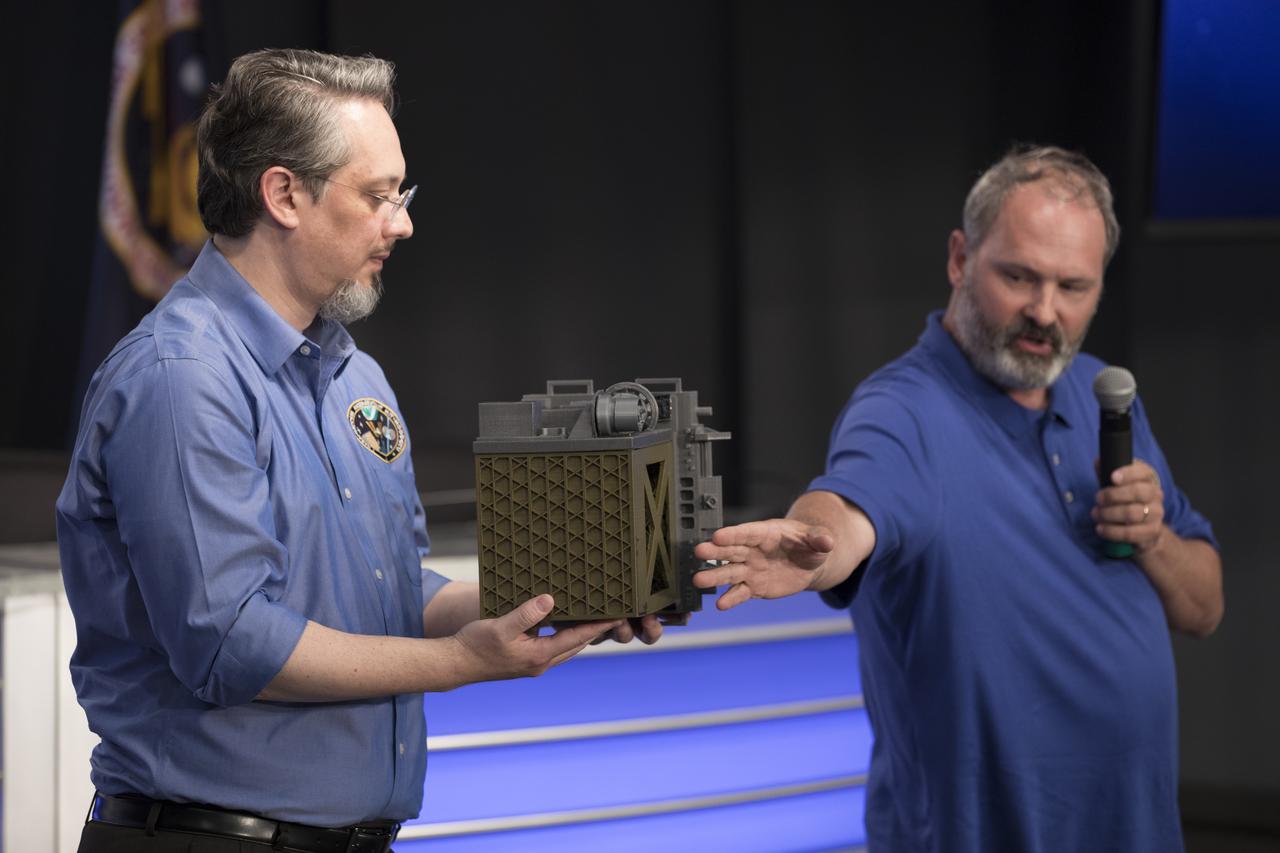
Jason Mitchell, project manager for the Station Explorer for X-ray Timing and Navigation Technology, or SEXTANT, instrument, left, and Keith Gendreau, principle investigator for the Neutron star Interior Composition Explorer, or NICER, speak to members of social media in the Kennedy Space Center’s Press Site auditorium. The briefing focused on the purpose of their experiments and instruments to be delivered to the International Space Station on SpaceX CRS-11. A Dragon spacecraft is scheduled to be launched from Kennedy’s Launch Complex 39A on June 1 atop a SpaceX Falcon 9 rocket on the company's 11th Commercial Resupply Services mission to the space station.
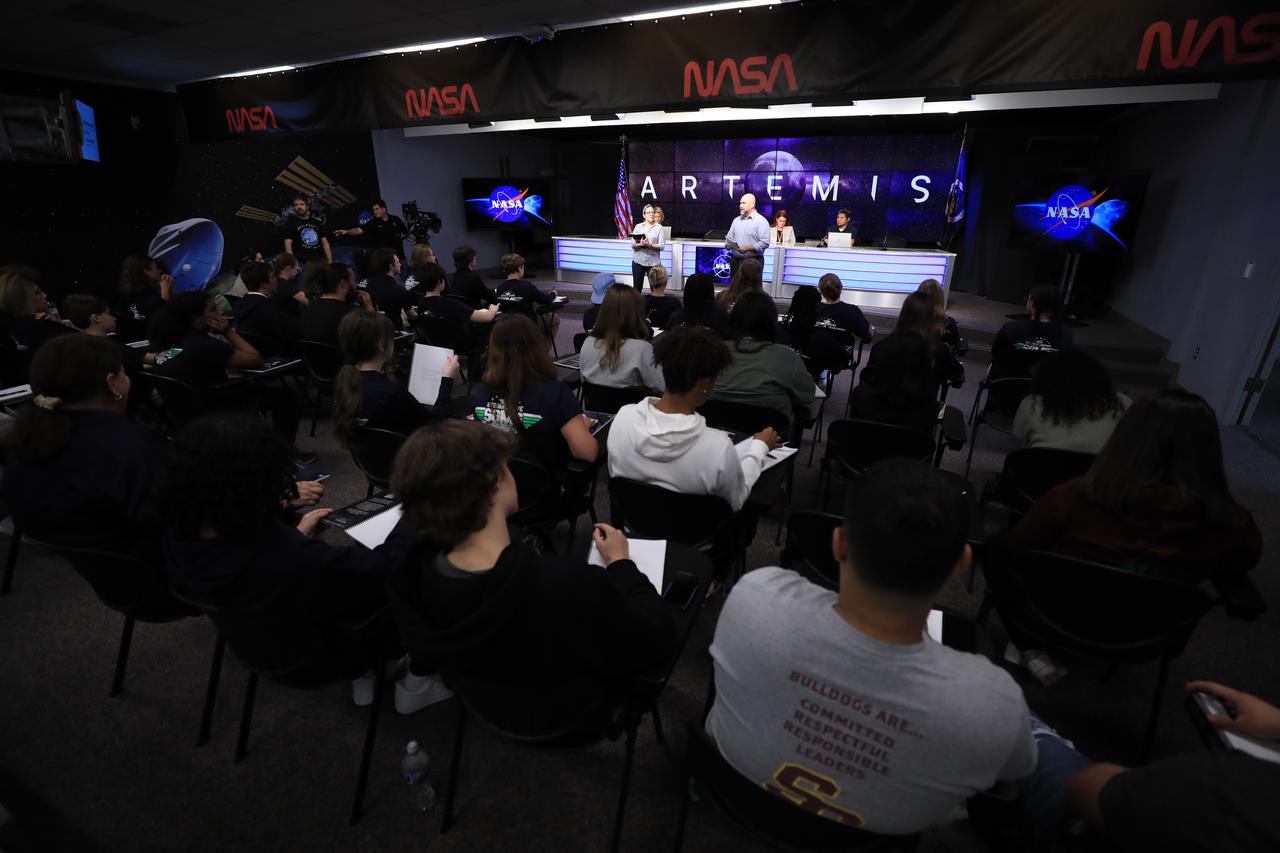
As part of NASA’s NextGen STEM project, Public Affairs Writers Danielle Sempsrott (left) and Jason Costa address students from Florida’s St. Cloud High School and Storm Grove Middle School in Vero Beach during an Artemis I student media briefing inside the John Holliman Auditorium of the News Center at NASA’s Kennedy Space Center in Florida on Jan. 19, 2023. Participants in the briefing included Kennedy Space Center Deputy Director Kelvin Manning, Artemis Launch Director Charlie Blackwell-Thompson, Manager of the Space Launch System Resident Management Office Elkin Norena, and Space Launch Delta 45 Weather Officer Melody Lovin. Along with the students participating in person, middle and high school students across the country had the opportunity to ask questions of the panel via phone to discuss the Artemis I mission and the agency’s future of human space exploration.
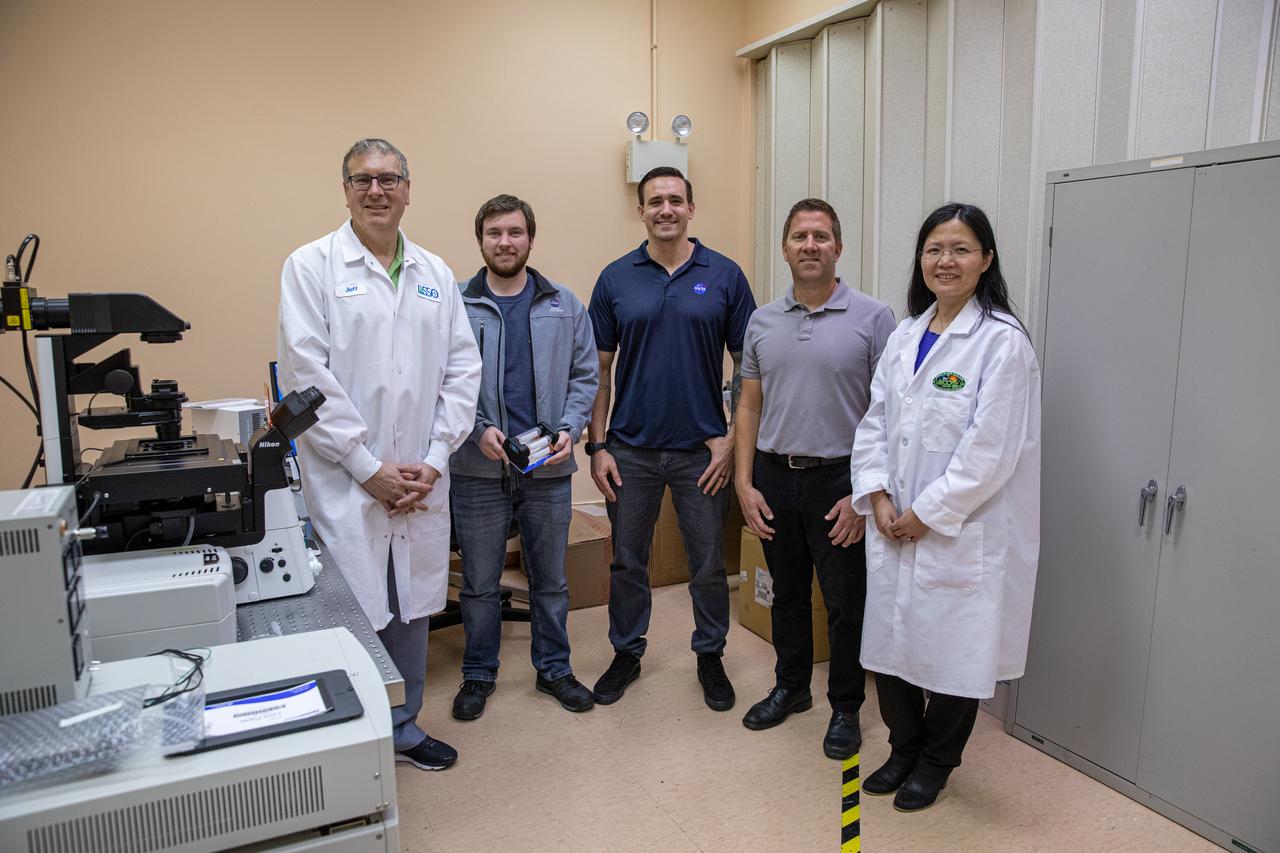
Researchers are in the Microgravity Simulation Support Facility (MSSF) inside the Neil Armstrong Operations and Checkout building at NASA’s Kennedy Space Center in Florida on Feb. 11, 2020. From left are Jonathan Gleeson, aerospace engineer on the LASSO contract; Jason Fischer, a research and development scientist on the LASSO contract; Ralph Nacca, aerospace flight systems; Jeffrey Richards, a payload research and science coordinator on the LASSO contract; and Dr. Ye Zhang, a project scientist. The microgravity simulation device was developed to provide ground simulation capability to the U.S. research community in order to supplement the limited opportunities to access the International Space Station and other platforms for microgravity research. The MSSF is designed to support biological research on microorganisms, cells, tissues, small plants and small animals. The simulator provides NASA with an alternative platform for microgravity research and creates the opportunity to conduct experiments on the space station in parallel with conditions of simulated microgravity on the ground.
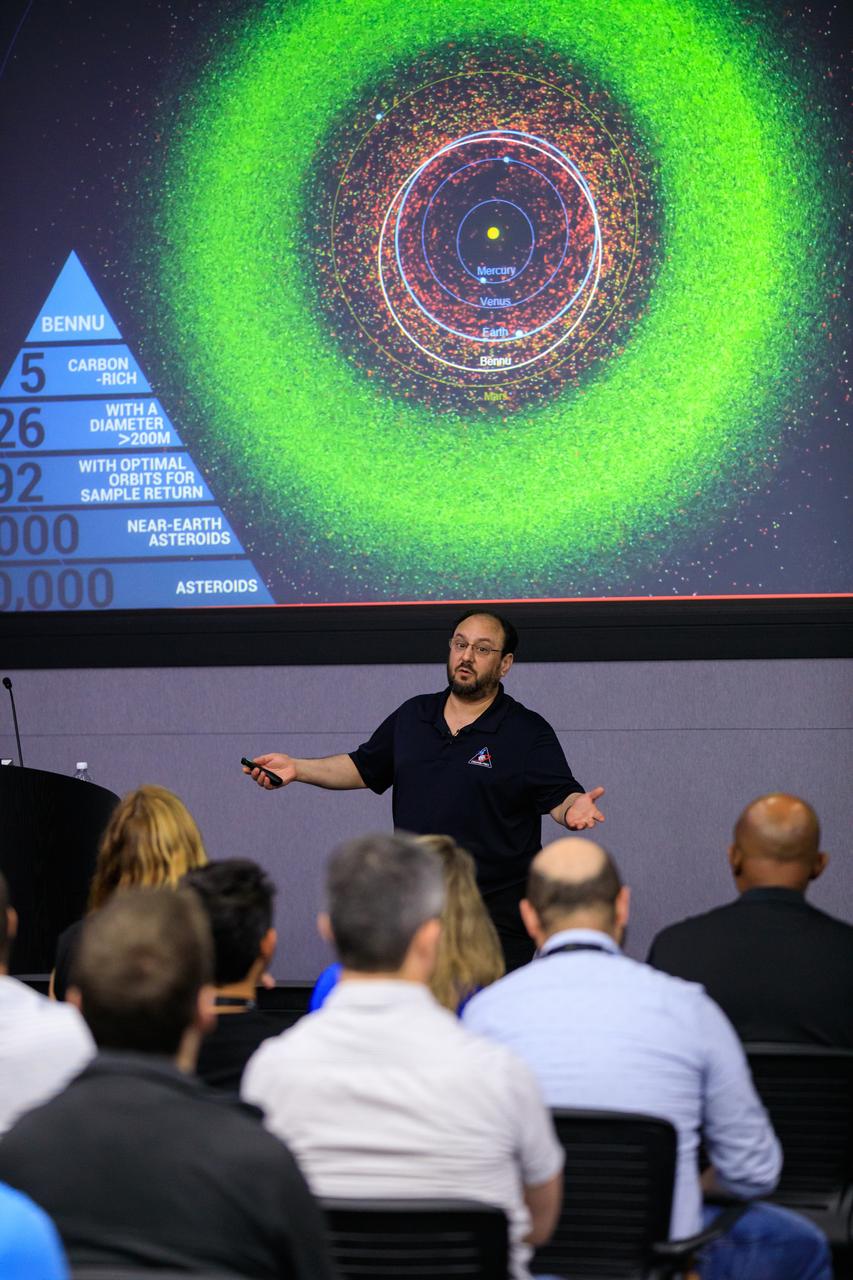
OSIRIS-REx Project Scientist, Dr. Jason Dworkin of NASA’s Goddard Space Flight Center in Greenbelt, Maryland, presents a mission update inside the Mission Briefing Room of the Neil A. Armstrong Operations and Checkout Building at Kennedy Space Center in Florida, on May 11, 2023. Launched seven years ago, the OSIRIS-REx spacecraft is set to return a material sample from asteroid Bennu on Sept. 24, 2023, when the sample return capsule separates from the spacecraft and lands by parachute at the Utah Test and Training Range/Dugway Proving Ground, southwest of Salt Lake City. OSIRIS-REx is the first U.S. mission to sample an asteroid, retrieve at least two ounces of surface material, and return it to Earth for study.
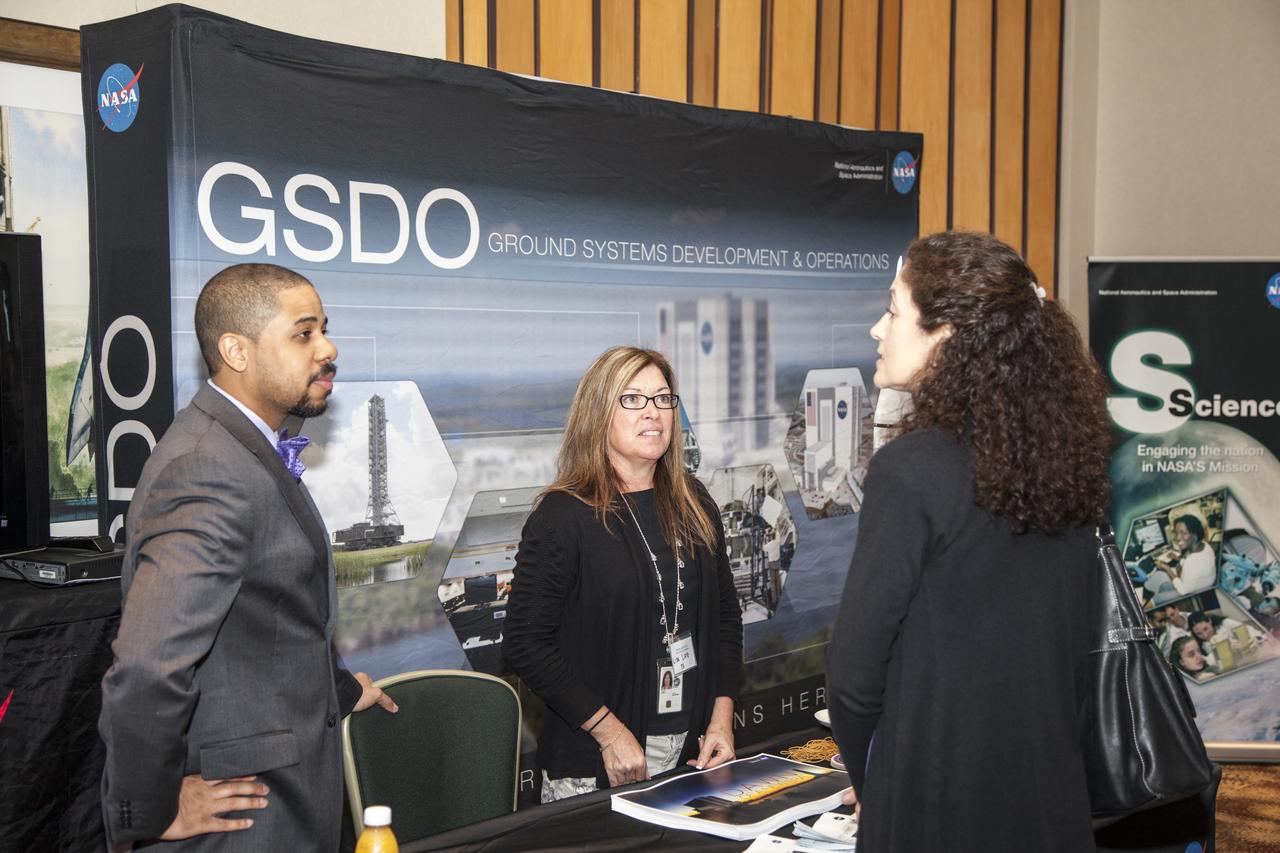
CAPE CANAVERAL, Fla. - Community leaders, business executives, educators, and state and local government leaders were updated on NASA Kennedy Space Center programs and accomplishments during Center Director Bob Cabana’s Center Director Update at the Debus Center at the Kennedy Space Center Visitor Complex in Florida. An attendee talks with engineers Jason Hopkins and Lisa Lutz, at the Ground Systems Development and Operations display. Attendees talked with Cabana and other senior Kennedy managers and visited displays featuring updates on Kennedy programs and projects, including International Space Station, Commercial Crew, Ground System Development and Operations, Launch Services, Center Planning and Development, Technology, KSC Swamp Works and NASA Education. The morning concluded with a tour of the new Space Shuttle Atlantis exhibit at the visitor complex. For more information, visit http://www.nasa.gov/kennedy. Photo credit: NASA/Daniel Casper
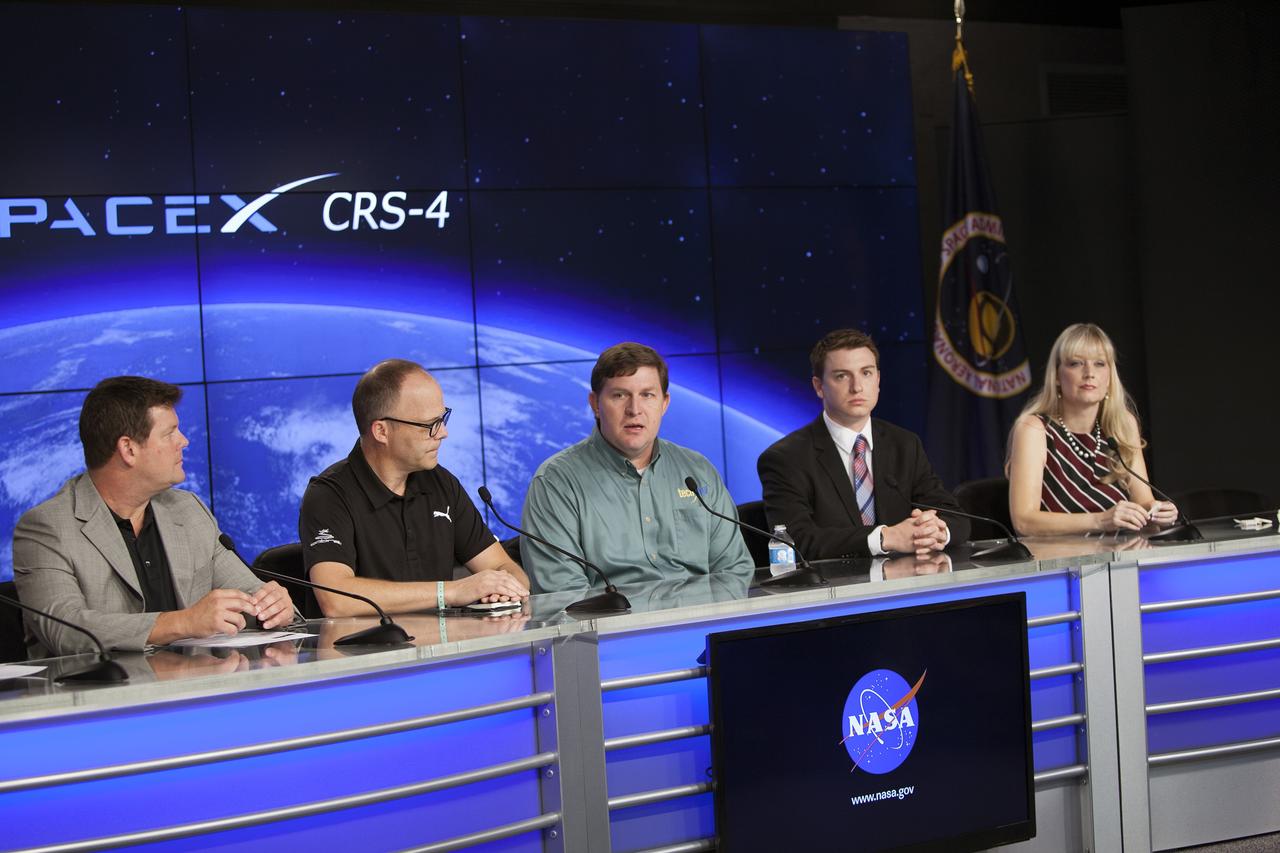
CAPE CANAVERAL, Fla. – Members of an ISS Research and Technology Panel brief media representatives in Kennedy Space Center’s Press Site auditorium in preparation for the launch of the SpaceX CRS-4 mission to resupply the International Space Station. From left are Duane Ratliff, chief operating officer, CASIS, Mike Yagley, COBRA PUMA Golf, director of Research and Testing, Dr. Eugene Boland, Techshot chief scientist, Jason Gilbert, scientific associate, Novartis Institutes for BioMedical Research, and Niki Werkheiser, 3D Printing in Zero-G project manager. The mission is the fourth of 12 SpaceX flights NASA contracted with the company to resupply the space station. It will be the fifth trip by a Dragon spacecraft to the orbiting laboratory. The spacecraft’s 2.5 tons of supplies, science experiments, and technology demonstrations include critical materials to support 255 science and research investigations that will occur during the station's Expeditions 41 and 42. Liftoff is targeted for an instantaneous window at 2:14 a.m. EDT. To learn more about the mission, visit http://www.nasa.gov/mission_pages/station/structure/launch/index.html. Photo credit: NASA/Jim Grossmann

CAPE CANAVERAL, Fla. – Media representatives ask questions of the ISS Research and Technology Panel in Kennedy Space Center’s Press Site auditorium in preparation for the launch of the SpaceX CRS-4 mission to resupply the International Space Station. On the dais from left are Michael Curie, NASA Public Affairs, Duane Ratliff, chief operating officer, CASIS, Mike Yagley, COBRA PUMA Golf, director of Research and Testing, Dr. Eugene Boland, Techshot chief scientist, Jason Gilbert, scientific associate, Novartis Institutes for BioMedical Research, and Niki Werkheiser, 3D Printing in Zero-G project manager. The mission is the fourth of 12 SpaceX flights NASA contracted with the company to resupply the space station. It will be the fifth trip by a Dragon spacecraft to the orbiting laboratory. The spacecraft’s 2.5 tons of supplies, science experiments, and technology demonstrations include critical materials to support 255 science and research investigations that will occur during the station's Expeditions 41 and 42. Liftoff is targeted for an instantaneous window at 2:14 a.m. EDT. To learn more about the mission, visit http://www.nasa.gov/mission_pages/station/structure/launch/index.html. Photo credit: NASA/Jim Grossmann
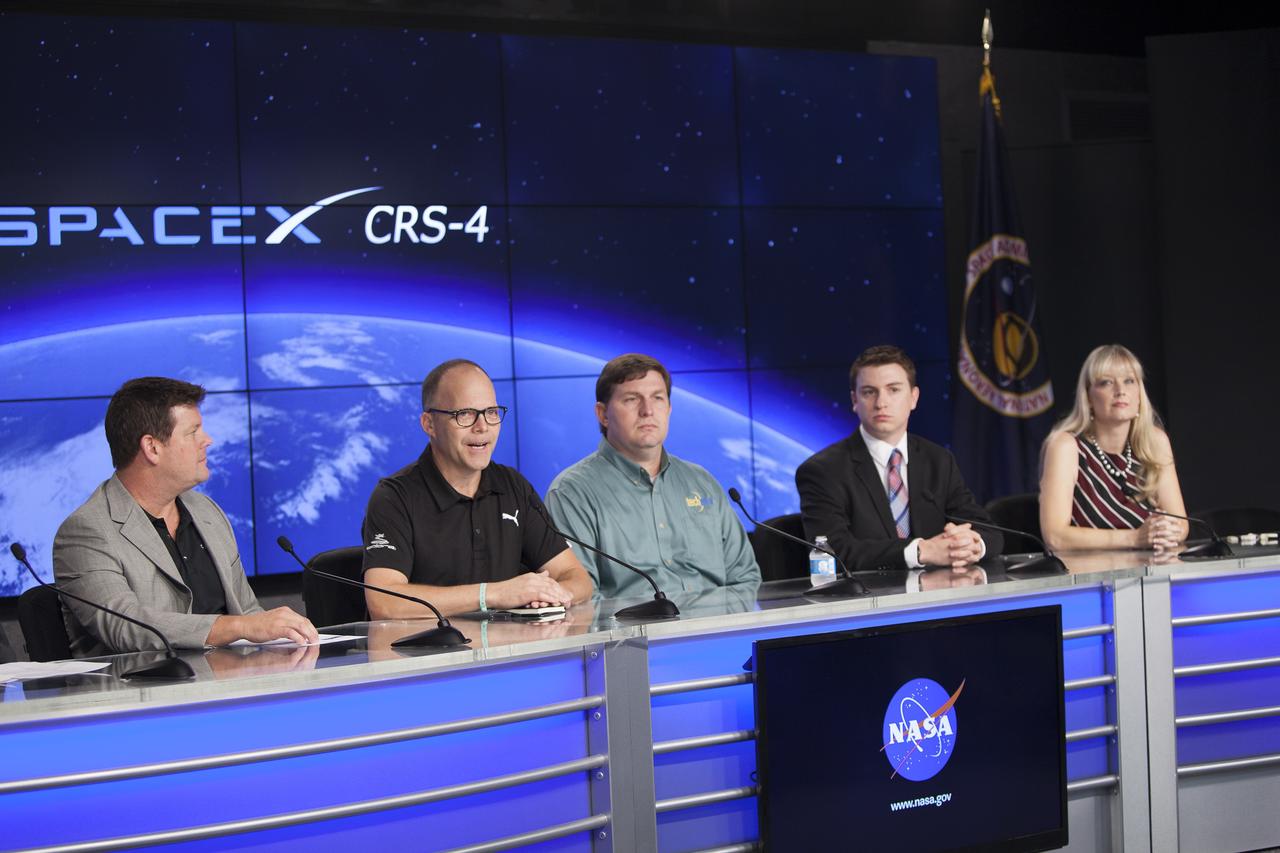
CAPE CANAVERAL, Fla. – Members of an ISS Research and Technology Panel brief media representatives in Kennedy Space Center’s Press Site auditorium in preparation for the launch of the SpaceX CRS-4 mission to resupply the International Space Station. From left are Duane Ratliff, chief operating officer, CASIS, Mike Yagley, COBRA PUMA Golf, director of Research and Testing, Dr. Eugene Boland, Techshot chief scientist, Jason Gilbert, scientific associate, Novartis Institutes for BioMedical Research, and Niki Werkheiser, 3D Printing in Zero-G project manager. The mission is the fourth of 12 SpaceX flights NASA contracted with the company to resupply the space station. It will be the fifth trip by a Dragon spacecraft to the orbiting laboratory. The spacecraft’s 2.5 tons of supplies, science experiments, and technology demonstrations include critical materials to support 255 science and research investigations that will occur during the station's Expeditions 41 and 42. Liftoff is targeted for an instantaneous window at 2:14 a.m. EDT. To learn more about the mission, visit http://www.nasa.gov/mission_pages/station/structure/launch/index.html. Photo credit: NASA/Jim Grossmann
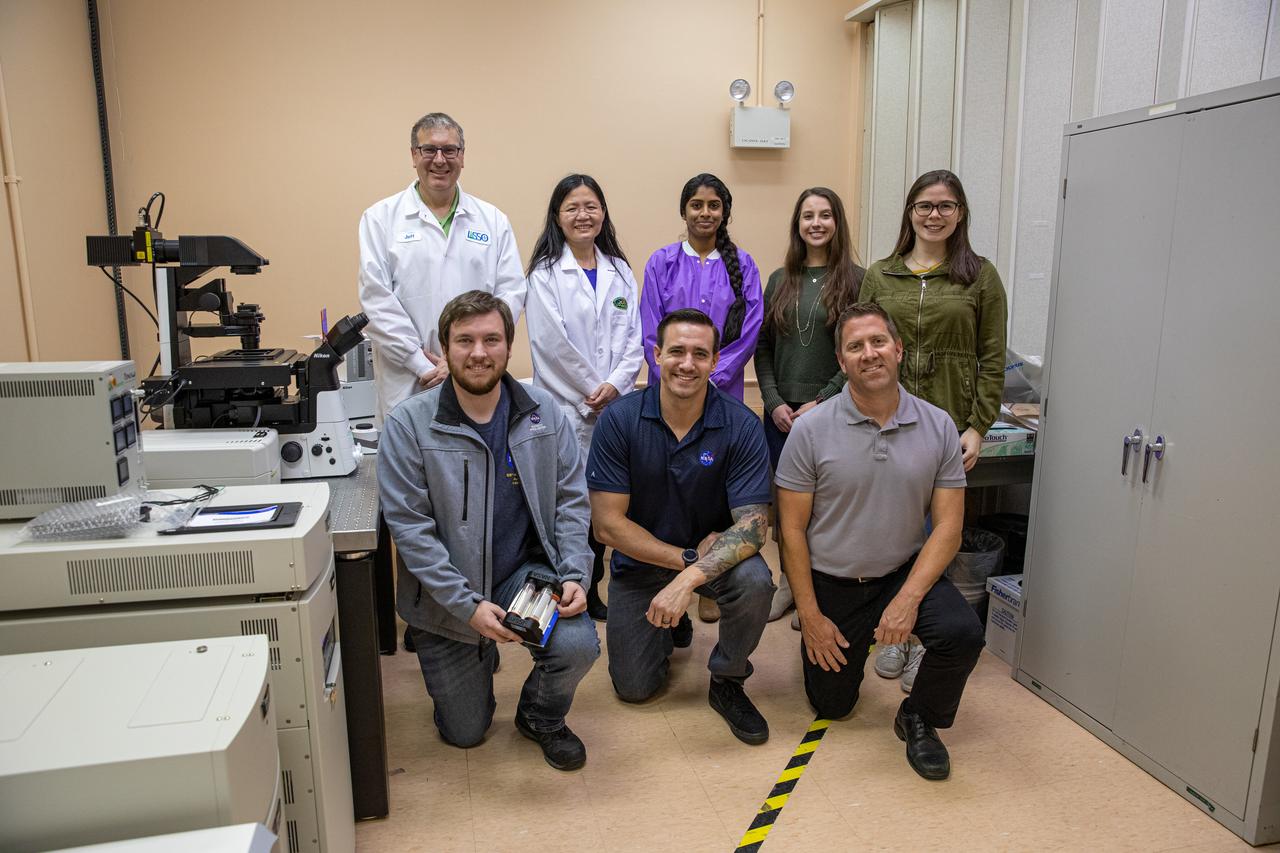
Researchers are in the Microgravity Simulation Support Facility (MSSF) inside the Neil Armstrong Operations and Checkout building at NASA’s Kennedy Space Center in Florida on Feb. 11, 2020. In front, from left, are Jonathan Gleeson, aerospace engineer on the LASSO contract; Jason Fischer, a research and development scientist on the LASSO contract; and Ralph Nacca, aerospace flight systems. In back, from left, are Jeffrey Richards, a payload research and science coordinator on the LASSO contract; Dr. Ye Zhang, a project scientist; Dr. Srujana Neelam, a NASA post-doctoral fellow; Jessica Hellein, NASA intern; and Emily Keith, NASA intern. The facility was developed to provide ground simulation capability to the U.S. research community in order to supplement the limited opportunities to access the International Space Station and other platforms for microgravity research. The MSSF is designed to support biological research on microorganisms, cells, tissues, small plants and small animals. The simulator provides NASA with an alternative platform for microgravity research and creates the opportunity to conduct experiments on the space station in parallel with conditions of simulated microgravity on the ground.

Commercial Supersonic Transport, CST Project, X-59 Sonic Boom Test Model, in the 8x6-foot Supersonic Wind Tunnel, SWT
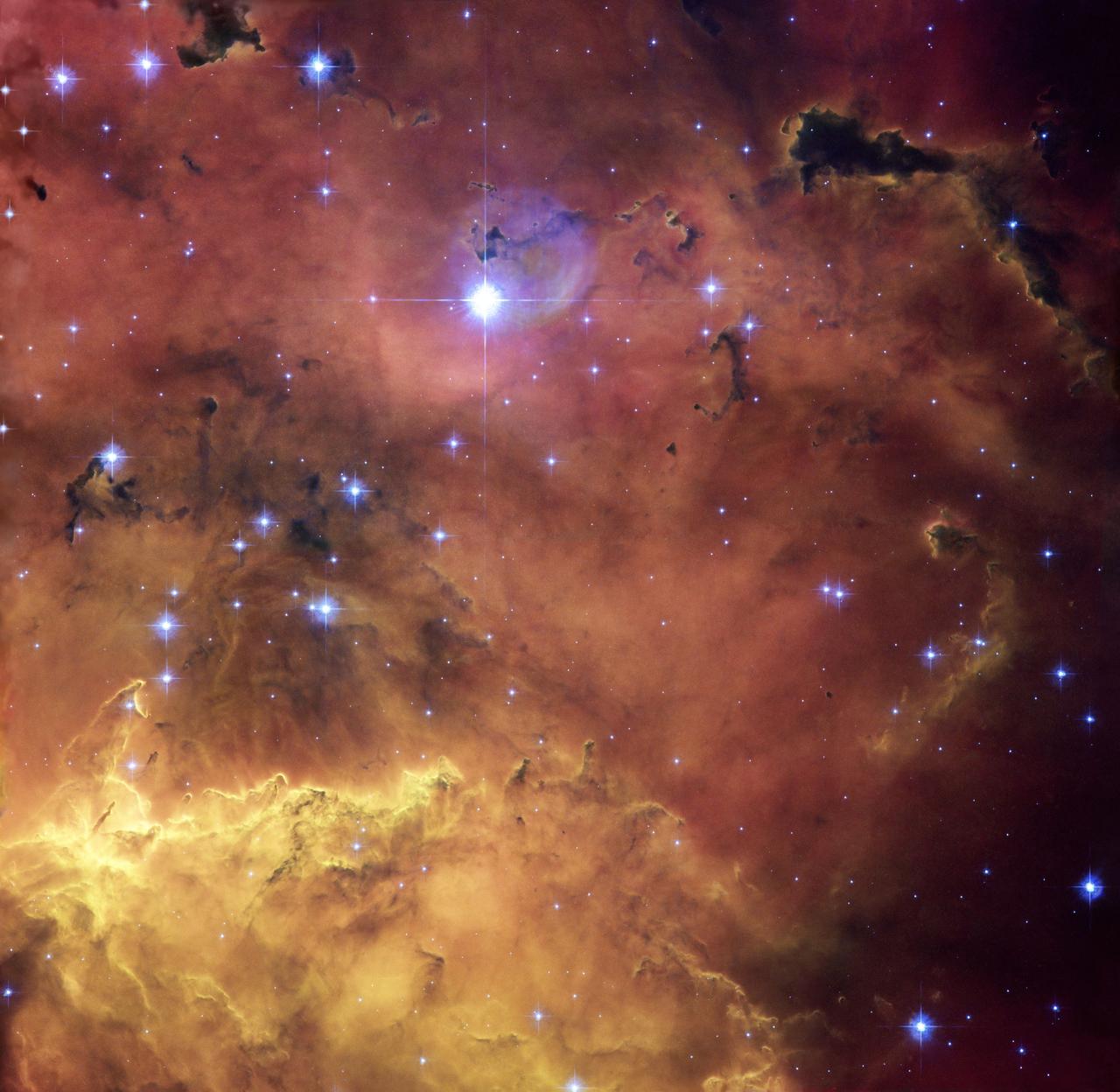
NASA image release July 13, 2010 To view a video of this image go to: <a href="http://www.flickr.com/photos/gsfc/4790394066/">www.flickr.com/photos/gsfc/4790394066/</a> and here: <a href="http://www.flickr.com/photos/gsfc/4789786191/">www.flickr.com/photos/gsfc/4789786191/</a> A colourful star-forming region is featured in this stunning new NASA/ESA Hubble Space Telescope image of NGC 2467. Looking like a roiling cauldron of some exotic cosmic brew, huge clouds of gas and dust are sprinkled with bright blue hot young stars. Strangely shaped dust clouds, resembling spilled liquids, are silhouetted against a colourful background of glowing gas in this newly released Hubble image. The star-forming region NGC 2467 is a vast cloud of gas – mostly hydrogen – that serves as an incubator for new stars. Some of these youthful stars have emerged from the dense clouds where they were born and now shine brightly, hot and blue in this picture, but many others remain hidden. The full beauty of this object and hints of the astrophysical processes at work within it are revealed in this super-sharp image from Hubble. Hot young stars that recently formed from the cloud are emitting fierce ultraviolet radiation that is causing the whole scene to glow while also sculpting the environment and gradually eroding the gas clouds. Studies have shown that most of the radiation comes from the single hot and brilliant massive star just above the centre of the image. Its fierce radiation has cleared the surrounding region and some of the next generation of stars are forming in the denser regions around the edge. One of the most familiar star-forming regions is the Orion Nebula, which can be seen with the naked eye. NGC 2467 is a similar but more distant example. Such stellar nurseries can be seen out to considerable distances in the Universe, and their study is important in determining the distance and chemical composition of other galaxies. Some galaxies contain huge star-forming regions, which may contain tens of thousands of stars. Another dramatic example is the 30 Doradus region in the Large Magellanic Cloud. NGC 2467 was discovered in the nineteenth century and lies in the southern constellation of Puppis, which represents the poop deck of Jason's fabled ship Argo from Greek mythology. NGC 2467 is thought to lie about 13 000 light-years from Earth. The picture was created from images taken with the Wide Field Channel of the Advanced Camera for Surveys through three different filters (F550M, F660N and F658N, shown in blue, green and red respectively). These data were taken in 2004. The Hubble Space Telescope is a project of international cooperation between ESA and NASA. Credit: NASA, ESA and Orsola De Marco (Macquarie University) <b><a href="http://www.nasa.gov/centers/goddard/home/index.html" rel="nofollow">NASA Goddard Space Flight Center</a></b> is home to the nation's largest organization of combined scientists, engineers and technologists that build spacecraft, instruments and new technology to study the Earth, the sun, our solar system, and the universe.