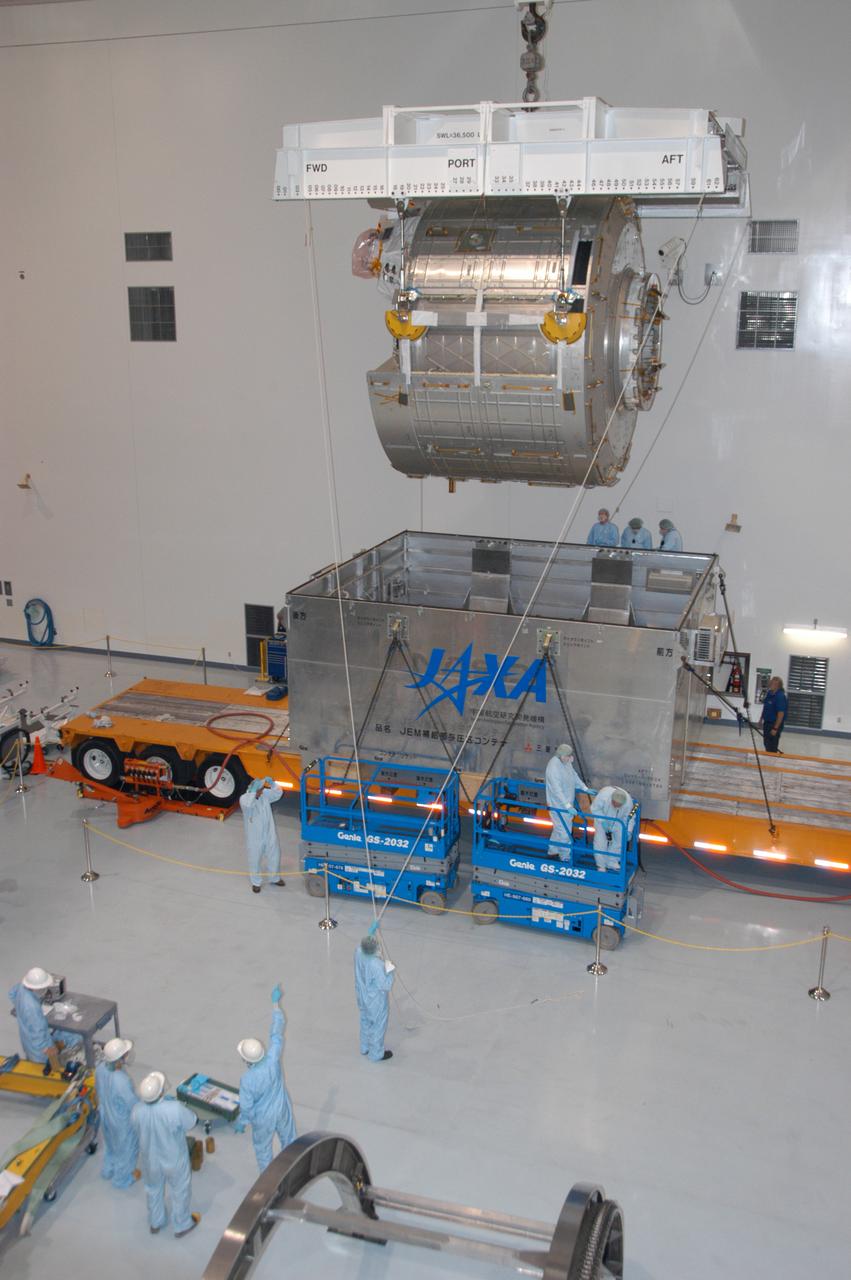
The JEM Experiment Logistics Module Pressurized Section is lifted from its shipping crate in the Space Station Processing Facility. The module will be moved to a scale for weight and center-of-gravity measurements and then to a work stand. The logistics module is one of the components of the Japanese Experiment Module or JEM, also known as Kibo, which means "hope" in Japanese. Kibo comprises six components: two research facilities -- the Pressurized Module and Exposed Facility; a Logistics Module attached to each of them; a Remote Manipulator System; and an Inter-Orbit Communication System unit. Kibo also has a scientific airlock through which experiments are transferred and exposed to the external environment of space. Kibo is Japan's first human space facility and its primary contribution to the station. Kibo will enhance the unique research capabilities of the orbiting complex by providing an additional environment in which astronauts can conduct science experiments. The various components of JEM will be assembled in space over the course of three Space Shuttle missions. The first of those three missions, STS-123, will carry the Experiment Logistics Module Pressurized Section aboard the Space Shuttle Endeavour, targeted for launch in 2007.
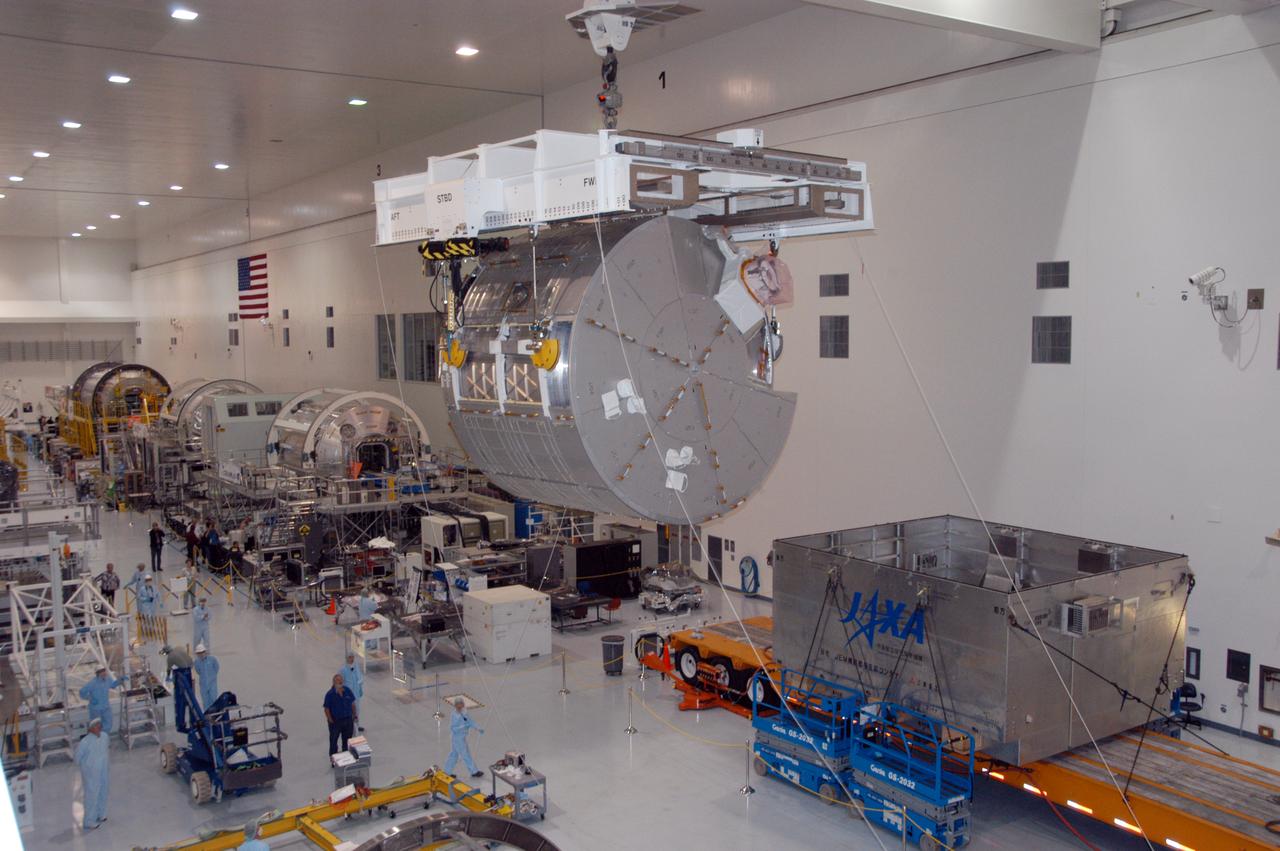
An overhead crane moves the JEM Experiment Logistics Module Pressurized Section above the floor of the Space Station Processing Facility to a scale for weight and center-of-gravity measurements. The module will then be moved to a work stand. The logistics module is one of the components of the Japanese Experiment Module or JEM, also known as Kibo, which means "hope" in Japanese. Kibo comprises six components: two research facilities -- the Pressurized Module and Exposed Facility; a Logistics Module attached to each of them; a Remote Manipulator System; and an Inter-Orbit Communication System unit. Kibo also has a scientific airlock through which experiments are transferred and exposed to the external environment of space. Kibo is Japan's first human space facility and its primary contribution to the station. Kibo will enhance the unique research capabilities of the orbiting complex by providing an additional environment in which astronauts can conduct science experiments. The various components of JEM will be assembled in space over the course of three Space Shuttle missions. The first of those three missions, STS-123, will carry the Experiment Logistics Module Pressurized Section aboard the Space Shuttle Endeavour, targeted for launch in 2007.
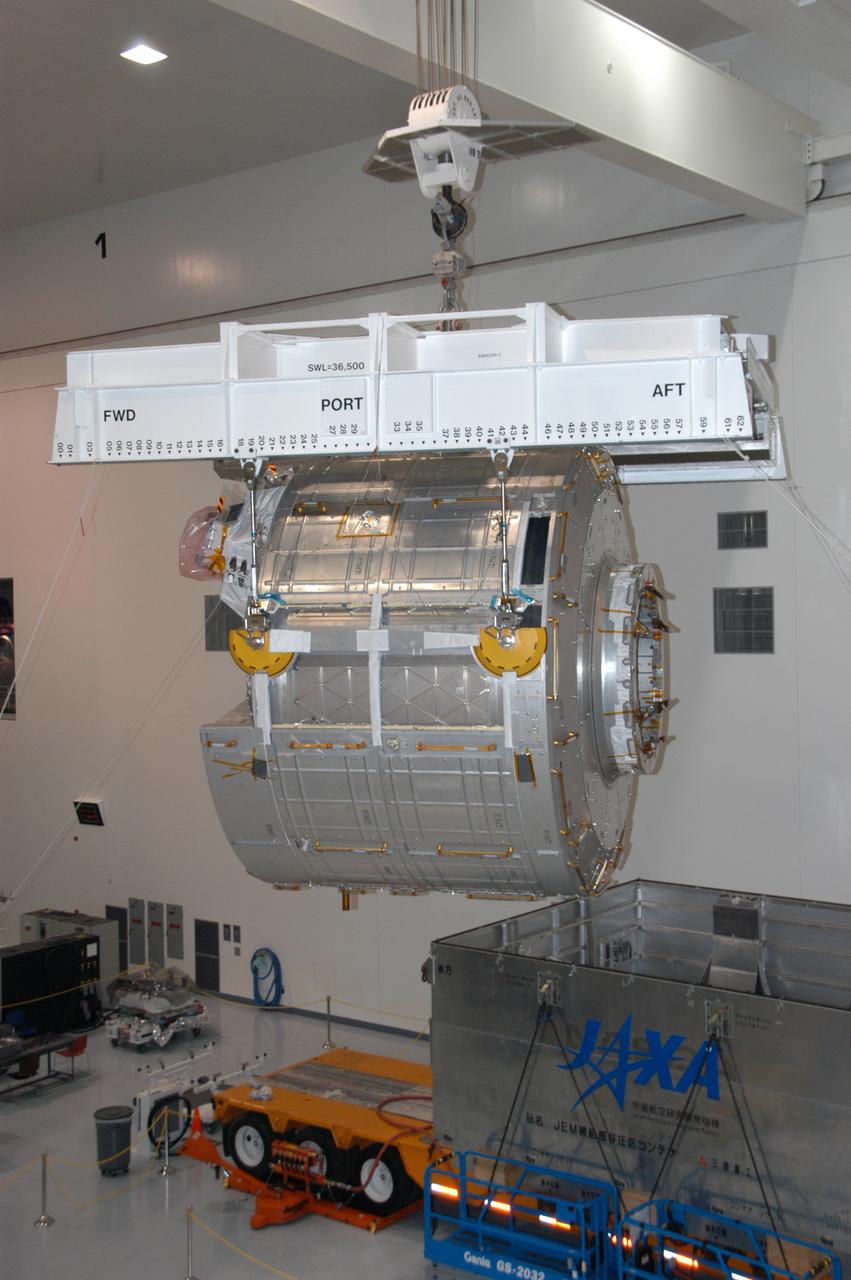
In the Space Station Processing Facility, an overhead crane lifts the JEM Experiment Logistics Module Pressurized Section from its shipping container and moves it toward a scale for weight and center-of-gravity measurements. The module will then be moved to a work stand. The logistics module is one of the components of the Japanese Experiment Module or JEM, also known as Kibo, which means "hope" in Japanese. Kibo comprises six components: two research facilities -- the Pressurized Module and Exposed Facility; a Logistics Module attached to each of them; a Remote Manipulator System; and an Inter-Orbit Communication System unit. Kibo also has a scientific airlock through which experiments are transferred and exposed to the external environment of space. Kibo is Japan's first human space facility and its primary contribution to the station. Kibo will enhance the unique research capabilities of the orbiting complex by providing an additional environment in which astronauts can conduct science experiments. The various components of JEM will be assembled in space over the course of three Space Shuttle missions. The first of those three missions, STS-123, will carry the Experiment Logistics Module Pressurized Section aboard the Space Shuttle Endeavour, targeted for launch in 2007.
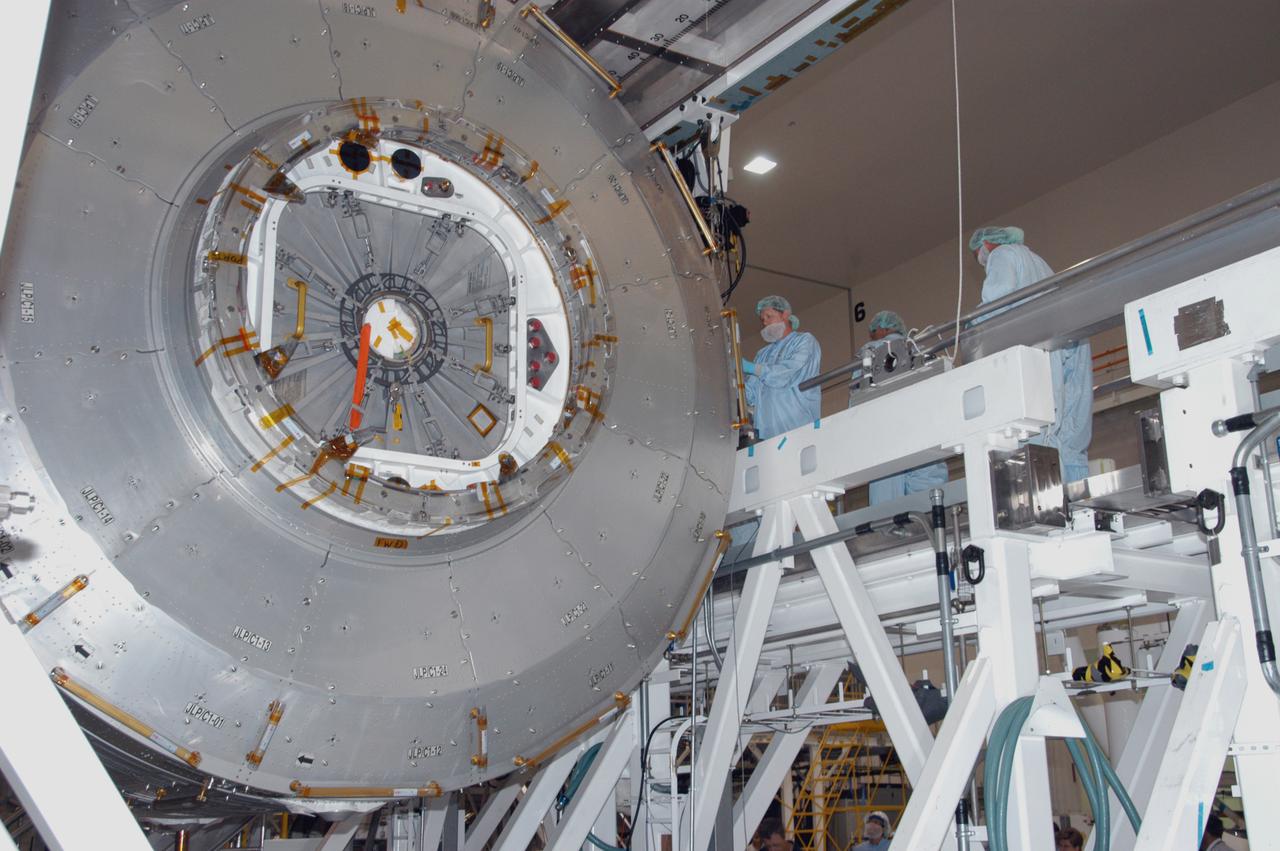
In the Space Station Processing Facility, the JEM Experiment Logistics Module Pressurized Section is lowered onto a scale for weight and center-of-gravity measurements. The module will then be moved to a work stand. The logistics module is one of the components of the Japanese Experiment Module or JEM, also known as Kibo, which means "hope" in Japanese. Kibo comprises six components: two research facilities -- the Pressurized Module and Exposed Facility; a Logistics Module attached to each of them; a Remote Manipulator System; and an Inter-Orbit Communication System unit. Kibo also has a scientific airlock through which experiments are transferred and exposed to the external environment of space. Kibo is Japan's first human space facility and its primary contribution to the station. Kibo will enhance the unique research capabilities of the orbiting complex by providing an additional environment in which astronauts can conduct science experiments. The various components of JEM will be assembled in space over the course of three Space Shuttle missions. The first of those three missions, STS-123, will carry the Experiment Logistics Module Pressurized Section aboard the Space Shuttle Endeavour, targeted for launch in 2007.
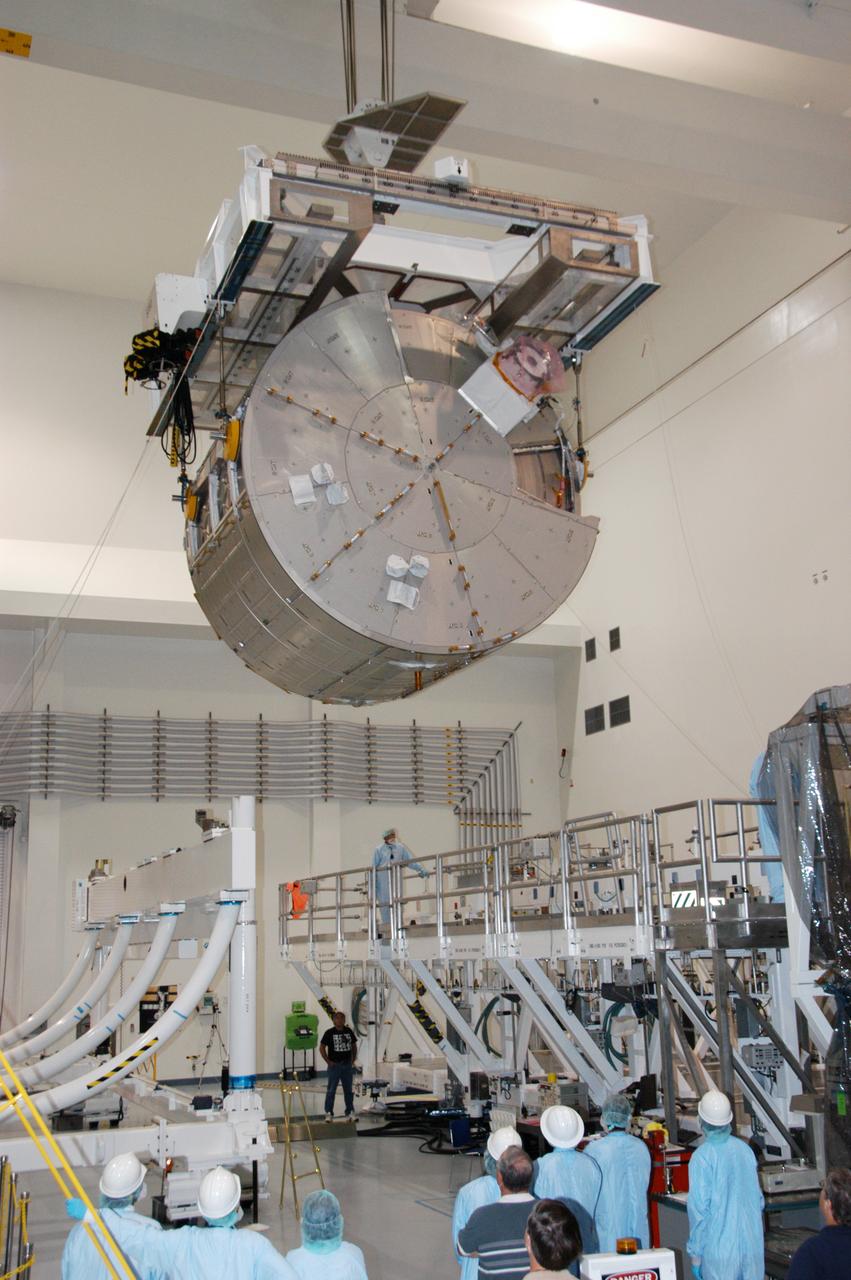
In the Space Station Processing Facility, an overhead crane moves the JEM Experiment Logistics Module Pressurized Section toward a scale (at left) for weight and center-of-gravity measurements. The module will then be moved to a work stand. The logistics module is one of the components of the Japanese Experiment Module or JEM, also known as Kibo, which means "hope" in Japanese. Kibo comprises six components: two research facilities -- the Pressurized Module and Exposed Facility; a Logistics Module attached to each of them; a Remote Manipulator System; and an Inter-Orbit Communication System unit. Kibo also has a scientific airlock through which experiments are transferred and exposed to the external environment of space. Kibo is Japan's first human space facility and its primary contribution to the station. Kibo will enhance the unique research capabilities of the orbiting complex by providing an additional environment in which astronauts can conduct science experiments. The various components of JEM will be assembled in space over the course of three Space Shuttle missions. The first of those three missions, STS-123, will carry the Experiment Logistics Module Pressurized Section aboard the Space Shuttle Endeavour, targeted for launch in 2007.
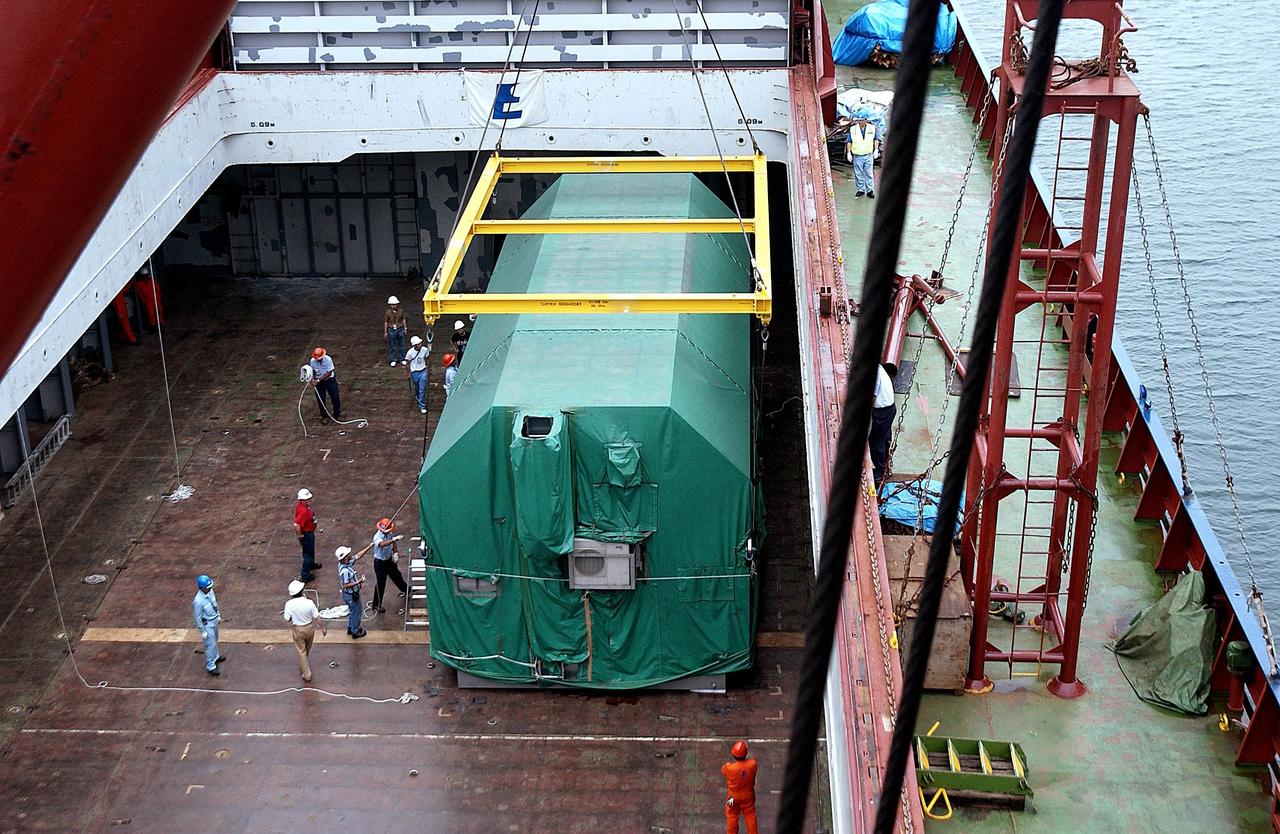
KENNEDY SPACE CENTER, FLA. -- At Port Canaveral, the Pressurized Module of the Japanese Experiment Module (JEM) is lifted out of the ship's cargo hold. The container transport ship carrying JEM departed May 2 from Yokohama Harbor in Japan for the voyage to the United States. The National Space Development Agency of Japan (NASDA) developed the laboratory at the Tsukuba Space Center near Tokyo. The Pressurized Module is the first element of the JEM, named "Kibo" (Hope), to be delivered to KSC. The JEM is Japan's primary contribution to the Station. It will enhance the unique research capabilities of the orbiting complex by providing an additional environment for astronauts to conduct science experiments. The JEM also includes an exposed facility (platform) for space environment experiments, a robotic manipulator system, and two logistics modules. The various JEM components will be assembled in space over the course of three Shuttle missions.
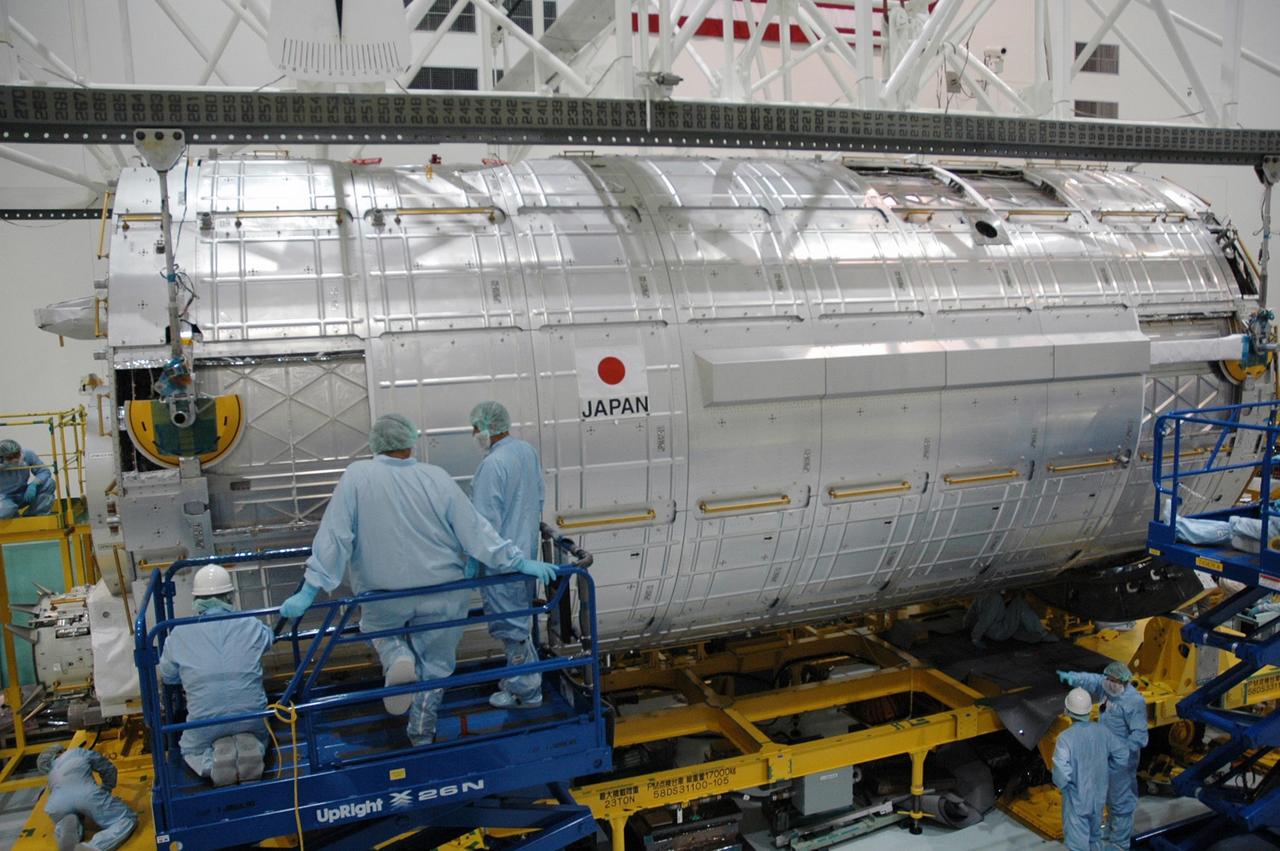
KENNEDY SPACE CENTER, FLA. -- In the Space Station Processing Facility, workers monitor the placement of the Japanese Experiment Module (JEM) onto its transporter. The JEM was moved from the transporter for weighing and to measure its center of gravity. The Japanese Aerospace Exploration Agency developed the laboratory at the Tsukuba Space Center near Tokyo. It is the first element, named "Kibo" (Hope), to be delivered to KSC. The JEM is Japan's primary contribution to the International Space Station. It will enhance the unique research capabilities of the orbiting complex by providing an additional environment for astronauts to conduct science experiments. The JEM is targeted for mission STS-124, to launch in early 2008. Photo credit: NASA/Troy Cryder
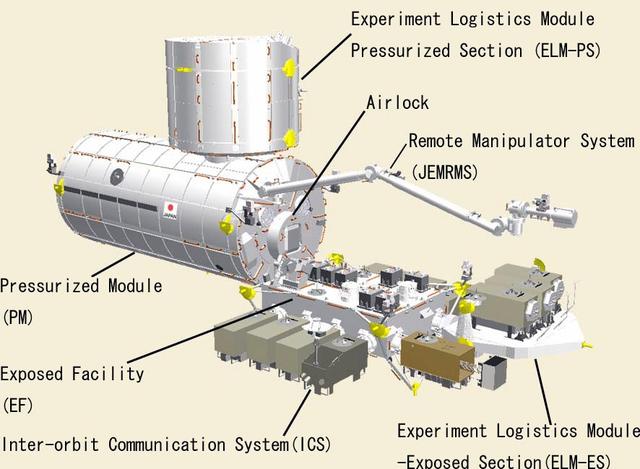
JSC2003-E-42552 (For Release: 18 June 2003) --- This artwork depicts the Japanese Experiment Module (JEM), Japan's primary contribution to the International Space Station. The JEM, called Kibo, which means "hope" in Japanese, is Japan's first human space facility and enhances the unique research capabilities of the International Space Station. Experiments in Kibo focus on space medicine, biology, earth observations, material production, biotechnology, and communications research. Photo Credit: NASDA
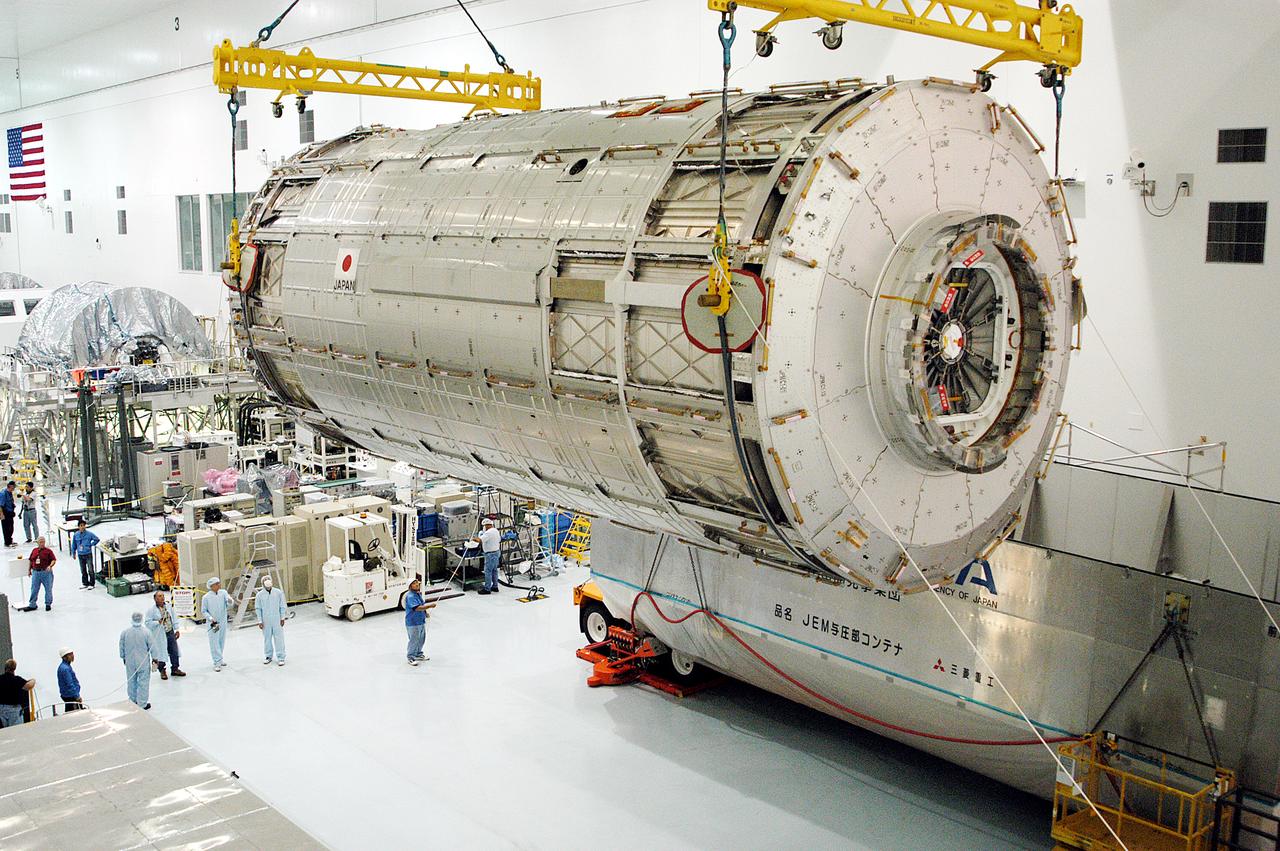
The Japanese Experiment Module (JEM) pressure module is removed from its shipping crate and moved across the floor of the Space Station Processing Facility at Kennedy Space Center (KSC) to a work stand. A research laboratory, the pressurized module is the first element of the JEM, named "Kibo" (Hope) to arrive at KSC. Japan's primary contribution to the International Space Station, the module will enhance unique research capabilities of the orbiting complex by providing an additional environment in which astronauts will conduct experiments. The JEM also includes an exposed facility or platform for space environment experiments, a robotic manipulator system, and two logistics modules. The various JEM components will be assembled in space over the course of three Shuttle missions.
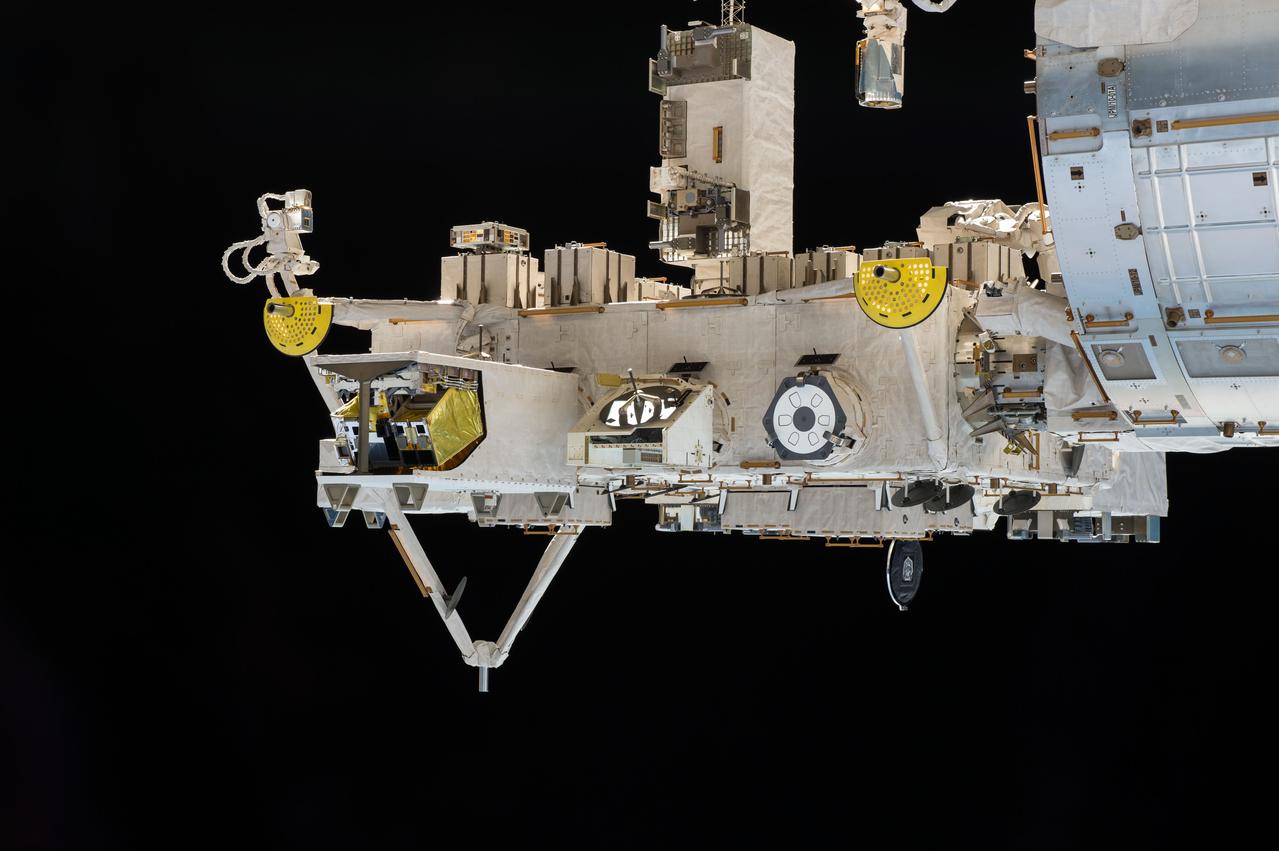
iss050e011669 (Nov. 28, 2016) --- Japanese Experiment Module - Exposed Facility (JEM-EF) and Japanese Experiment Module (JEM) Pressurized Module (JPM) (right) taken by the Expedition 50 crew. JEM-EF is an unpressurized multipurpose pallet structure attached to the outside of the International Space Station (ISS).
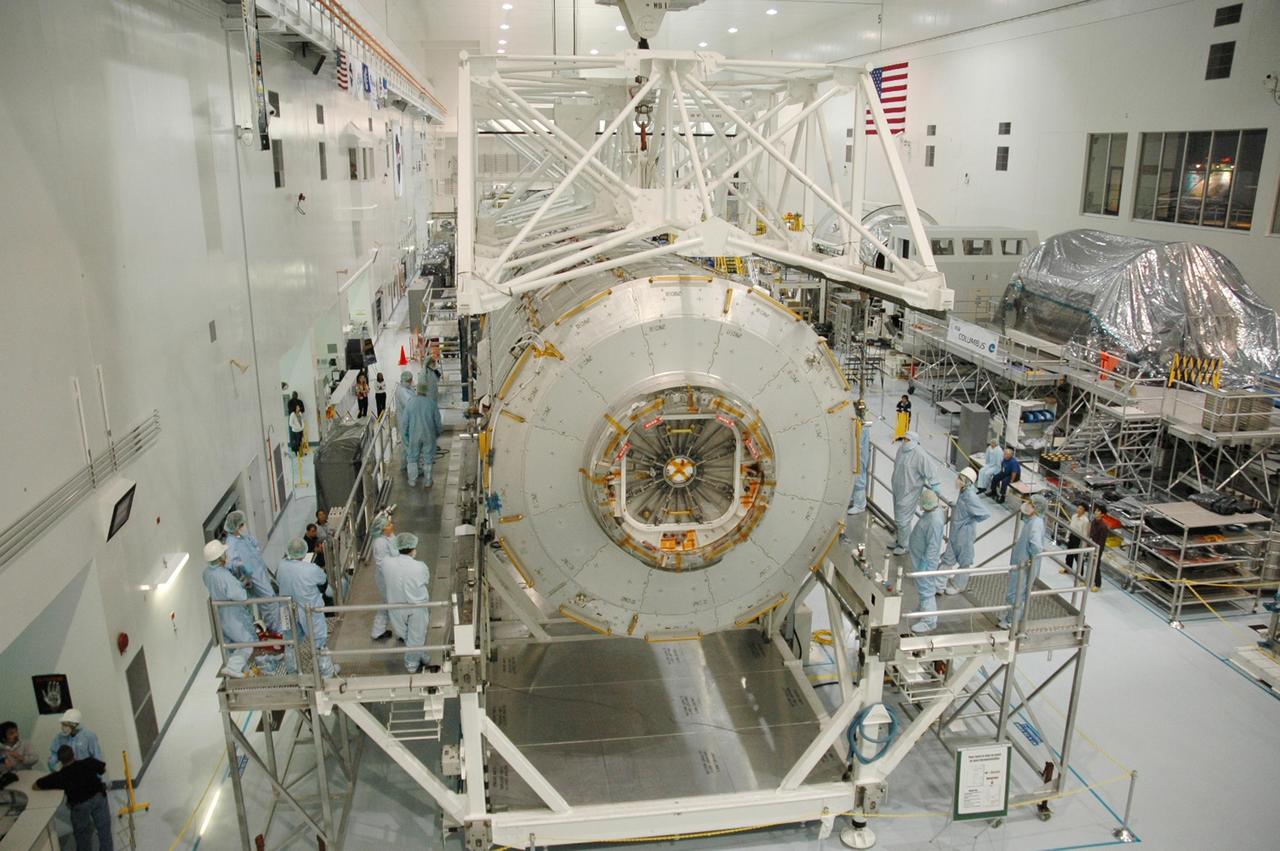
KENNEDY SPACE CENTER, FLA. -- In the Space Station Processing Facility, workers observe as an overhead crane lowers the Japanese Experiment Module (JEM) onto a weighing stand. The module will also be measured for its center of gravity. The Japanese Aerospace Exploration Agency developed the laboratory at the Tsukuba Space Center near Tokyo. It is the first element, named "Kibo" (Hope), to be delivered to KSC. The JEM is Japan's primary contribution to the International Space Station. It will enhance the unique research capabilities of the orbiting complex by providing an additional environment for astronauts to conduct science experiments. The JEM is targeted for mission STS-124, to launch in early 2008. Photo credit: NASA/Troy Cryder
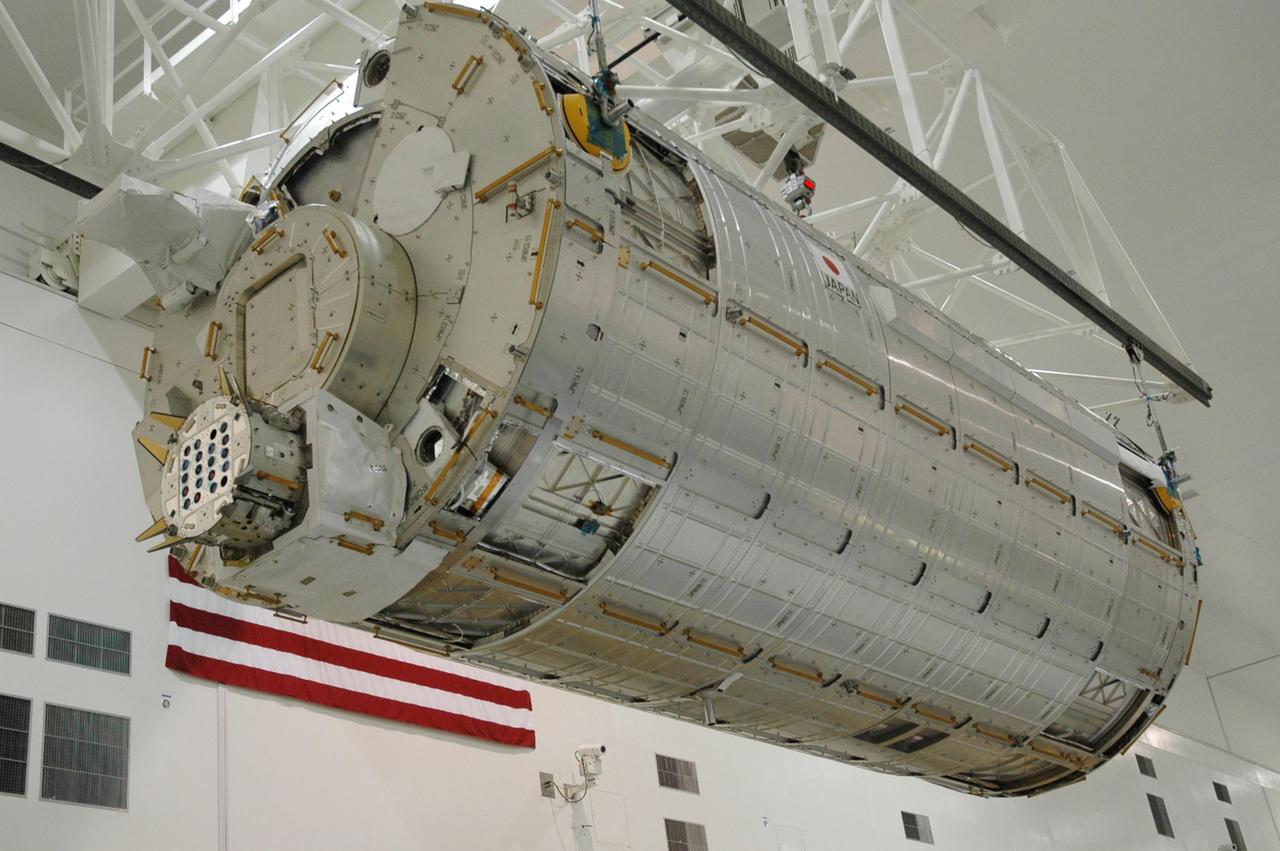
KENNEDY SPACE CENTER, FLA. -- In the Space Station Processing Facility, the Japanese Experiment Module (JEM), after being weighed, makes a return trip to its transporter. The Japanese Aerospace Exploration Agency developed the laboratory at the Tsukuba Space Center near Tokyo. It is the first element, named "Kibo" (Hope), to be delivered to KSC. The JEM is Japan's primary contribution to the International Space Station. It will enhance the unique research capabilities of the orbiting complex by providing an additional environment for astronauts to conduct science experiments. The JEM is targeted for mission STS-124, to launch in early 2008. Photo credit: NASA/Troy Cryder
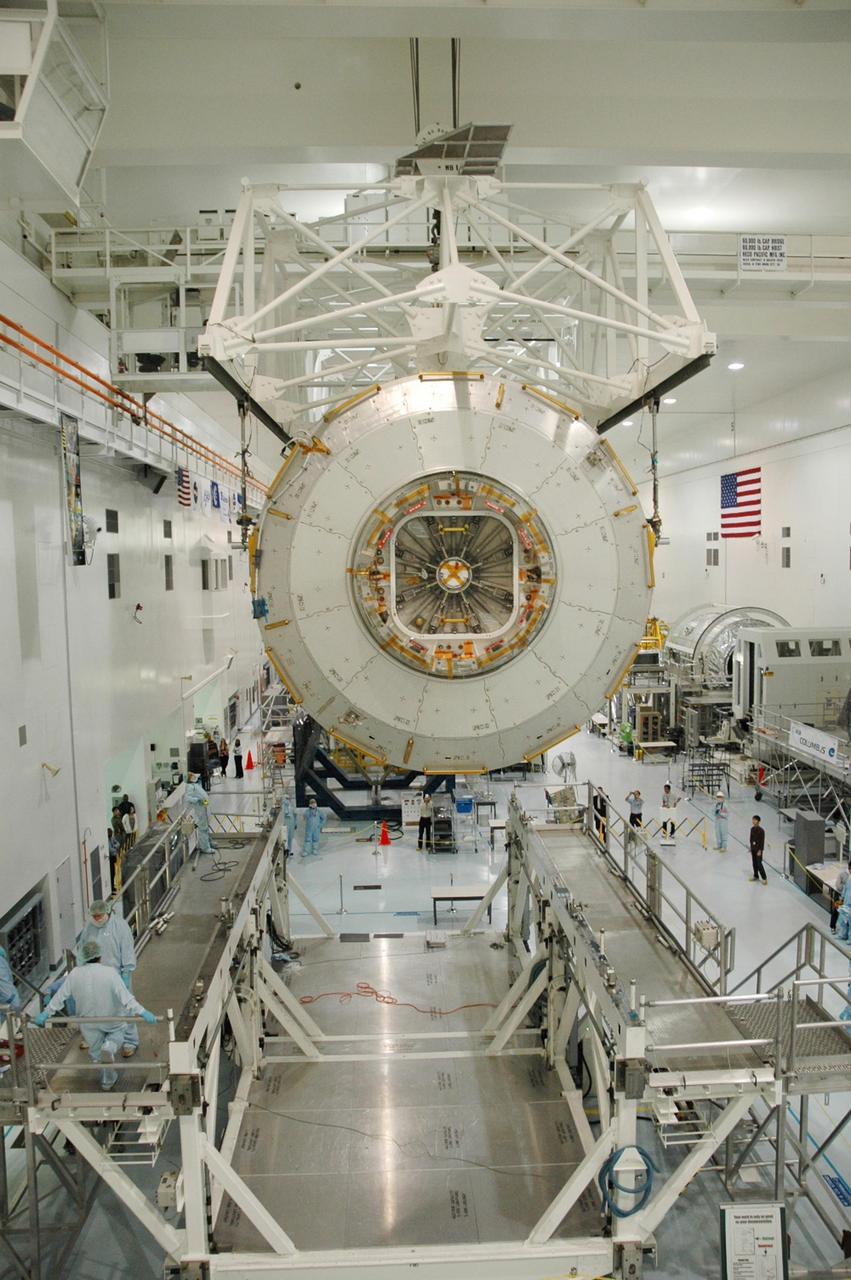
KENNEDY SPACE CENTER, FLA. -- In the Space Station Processing Facility, an overhead crane begins lowering the Japanese Experiment Module (JEM) onto a weighing stand. The module will also be measured for its center of gravity. The Japanese Aerospace Exploration Agency developed the laboratory at the Tsukuba Space Center near Tokyo. It is the first element, named "Kibo" (Hope), to be delivered to KSC. The JEM is Japan's primary contribution to the International Space Station. It will enhance the unique research capabilities of the orbiting complex by providing an additional environment for astronauts to conduct science experiments. The JEM is targeted for mission STS-124, to launch in early 2008. Photo credit: NASA/Troy Cryder
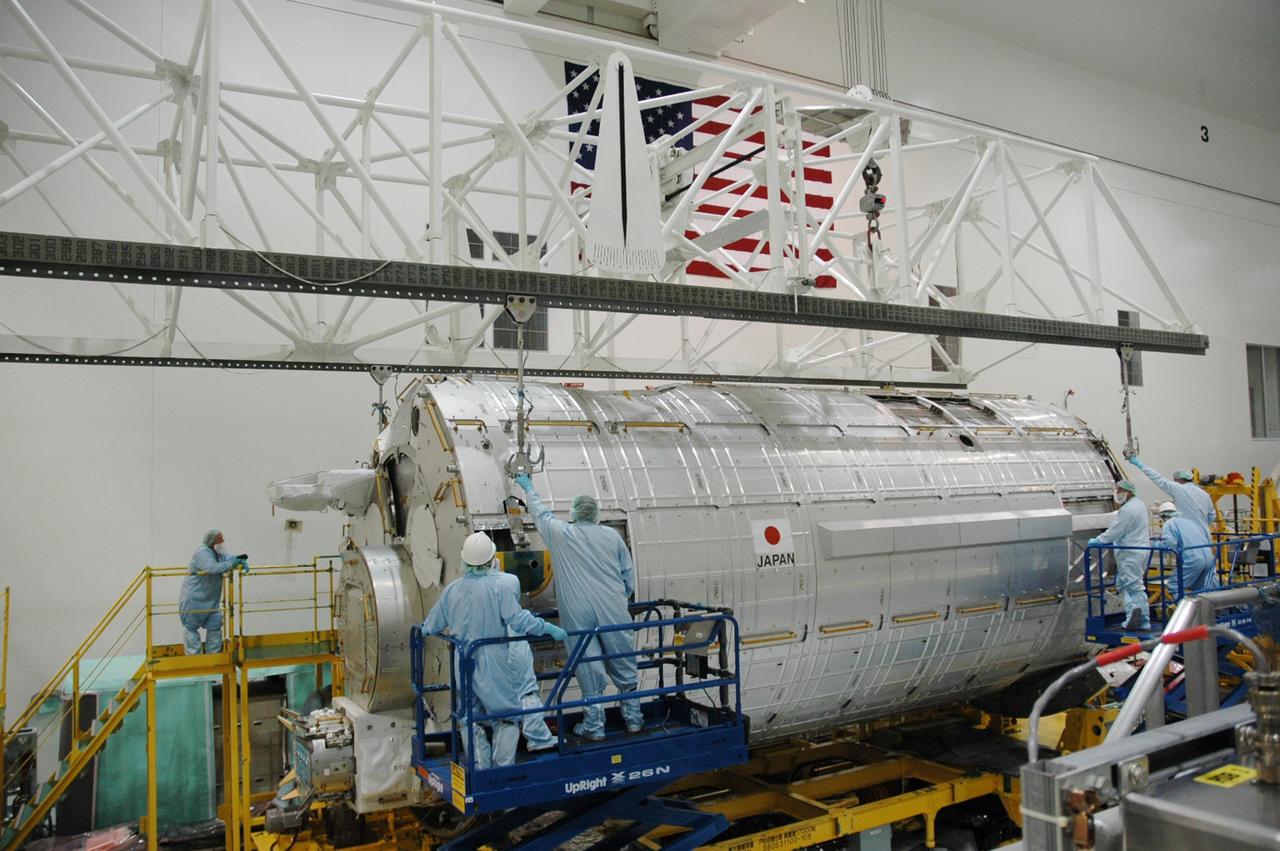
KENNEDY SPACE CENTER, FLA. -- In the Space Station Processing Facility, workers are attaching an overhead crane to the Japanese Experiment Module (JEM) in order to lift it. The module is being moved to a stand where it will be weighed and measured for its center of gravity. The Japanese Aerospace Exploration Agency developed the laboratory at the Tsukuba Space Center near Tokyo. It is the first element, named "Kibo" (Hope), to be delivered to KSC. The JEM is Japan's primary contribution to the International Space Station. It will enhance the unique research capabilities of the orbiting complex by providing an additional environment for astronauts to conduct science experiments. The JEM is targeted for mission STS-124, to launch in early 2008. Photo credit: NASA/Troy Cryder
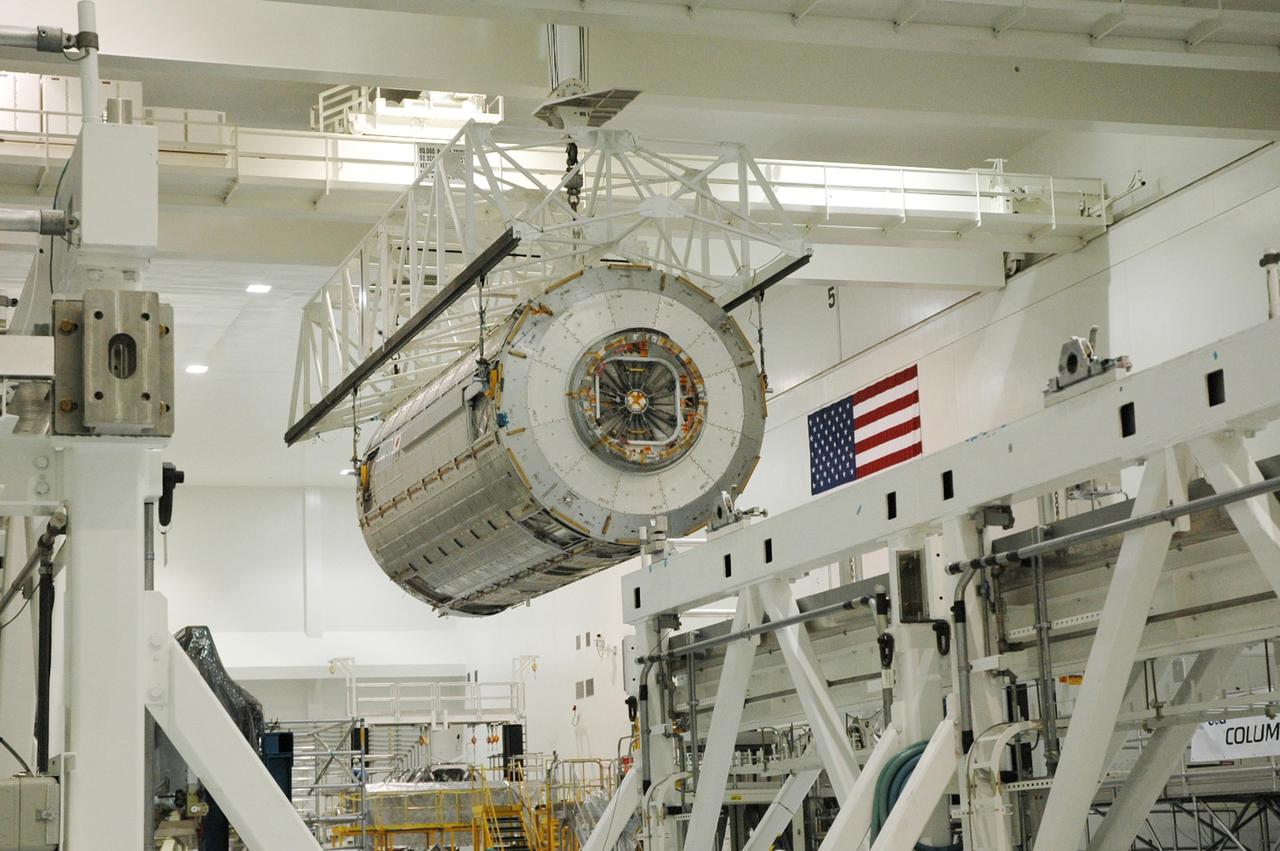
KENNEDY SPACE CENTER, FLA. -- In the Space Station Processing Facility, an overhead crane carries the Japanese Experiment Module (JEM) across the facility. The module is being moved to another stand where it will be weighed and measured for its center of gravity. The Japanese Aerospace Exploration Agency developed the laboratory at the Tsukuba Space Center near Tokyo. It is the first element, named "Kibo" (Hope), to be delivered to KSC. The JEM is Japan's primary contribution to the International Space Station. It will enhance the unique research capabilities of the orbiting complex by providing an additional environment for astronauts to conduct science experiments. The JEM is targeted for mission STS-124, to launch in early 2008. Photo credit: NASA/Troy Cryder
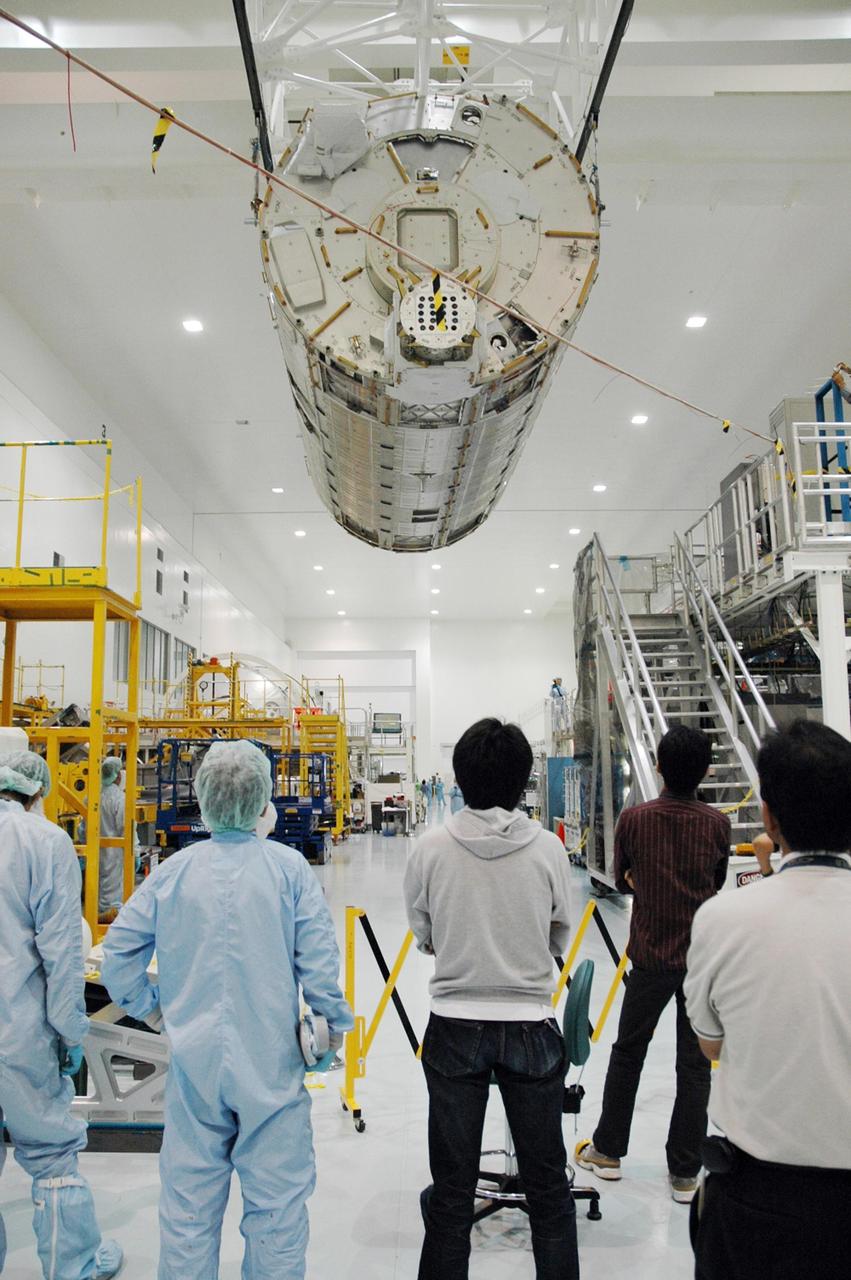
KENNEDY SPACE CENTER, FLA. -- In the Space Station Processing Facility, workers on the floor watch as an overhead crane moves the Japanese Experiment Module (JEM) to a stand for weighing. The Japanese Aerospace Exploration Agency developed the laboratory at the Tsukuba Space Center near Tokyo. It is the first element, named "Kibo" (Hope), to be delivered to KSC. The JEM is Japan's primary contribution to the International Space Station. It will enhance the unique research capabilities of the orbiting complex by providing an additional environment for astronauts to conduct science experiments. The JEM is targeted for mission STS-124, to launch in early 2008. Photo credit: NASA/Troy Cryder
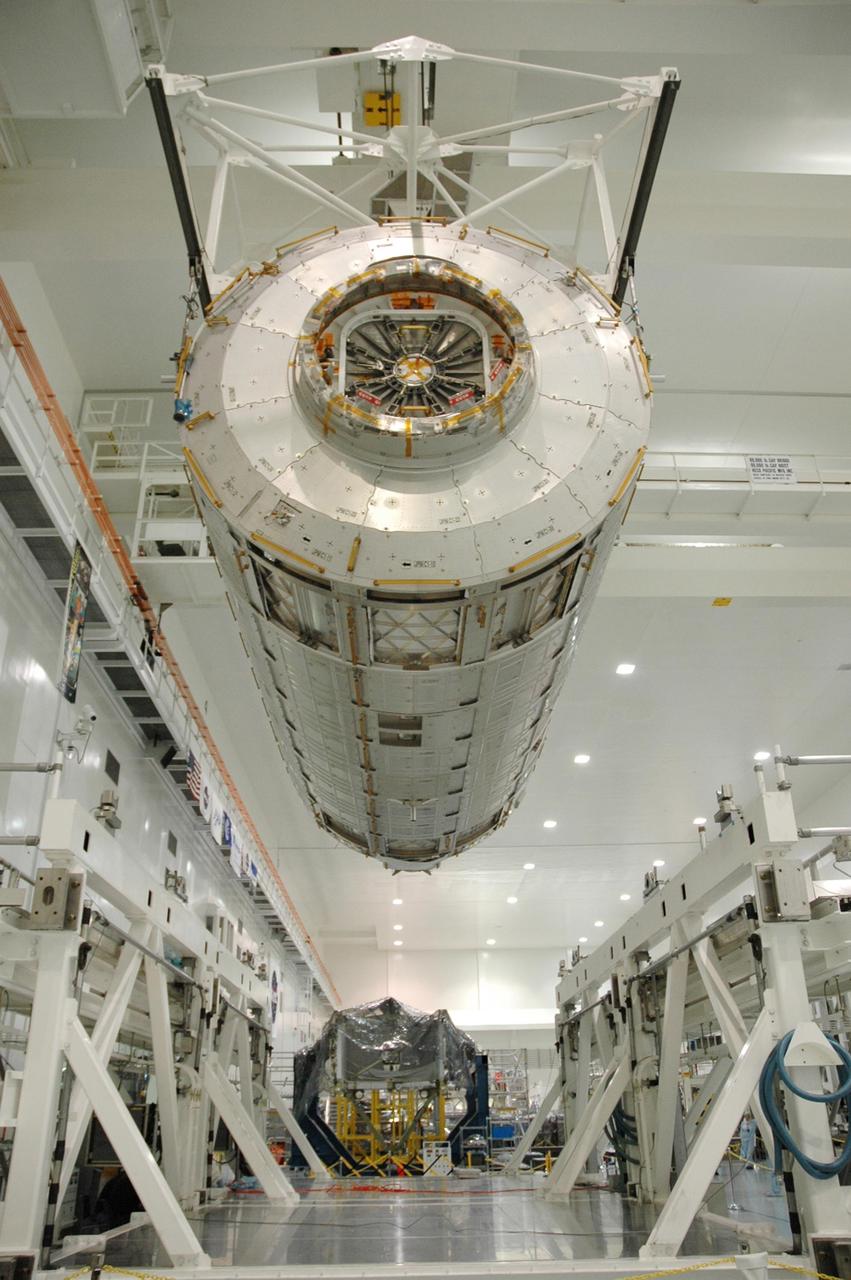
KENNEDY SPACE CENTER, FLA. -- In the Space Station Processing Facility, an overhead crane lifts the Japanese Experiment Module (JEM) off of its transporter. The module is being moved to another stand where it will be weighed and measured for its center of gravity. The Japanese Aerospace Exploration Agency developed the laboratory at the Tsukuba Space Center near Tokyo. It is the first element, named "Kibo" (Hope), to be delivered to KSC. The JEM is Japan's primary contribution to the International Space Station. It will enhance the unique research capabilities of the orbiting complex by providing an additional environment for astronauts to conduct science experiments. The JEM is targeted for mission STS-124, to launch in early 2008. Photo credit: NASA/Troy Cryder
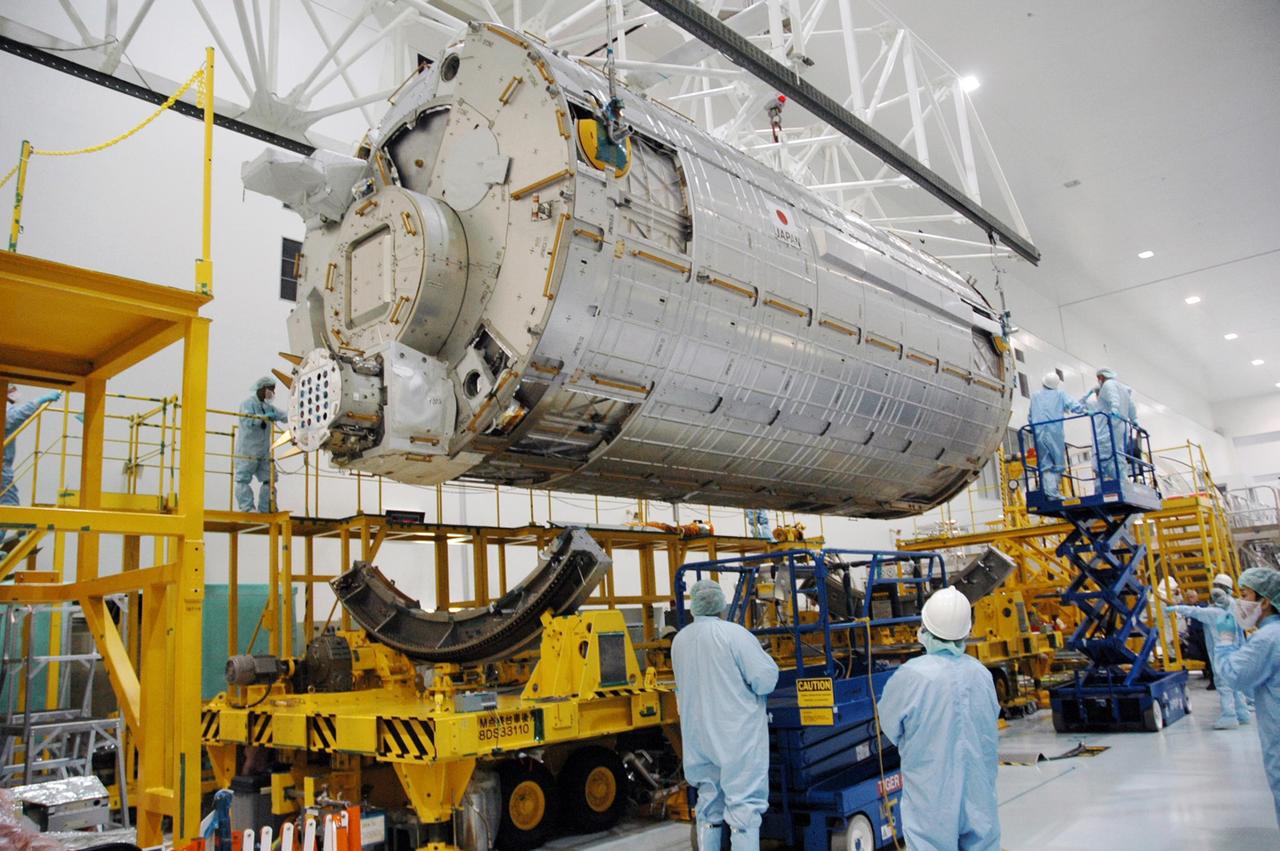
KENNEDY SPACE CENTER, FLA. -- In the Space Station Processing Facility, the Japanese Experiment Module (JEM), after being weighed, is lifted off the scale to be returned to its transporter. The Japanese Aerospace Exploration Agency developed the laboratory at the Tsukuba Space Center near Tokyo. It is the first element, named "Kibo" (Hope), to be delivered to KSC. The JEM is Japan's primary contribution to the International Space Station. It will enhance the unique research capabilities of the orbiting complex by providing an additional environment for astronauts to conduct science experiments. The JEM is targeted for mission STS-124, to launch in early 2008. Photo credit: NASA/Troy Cryder
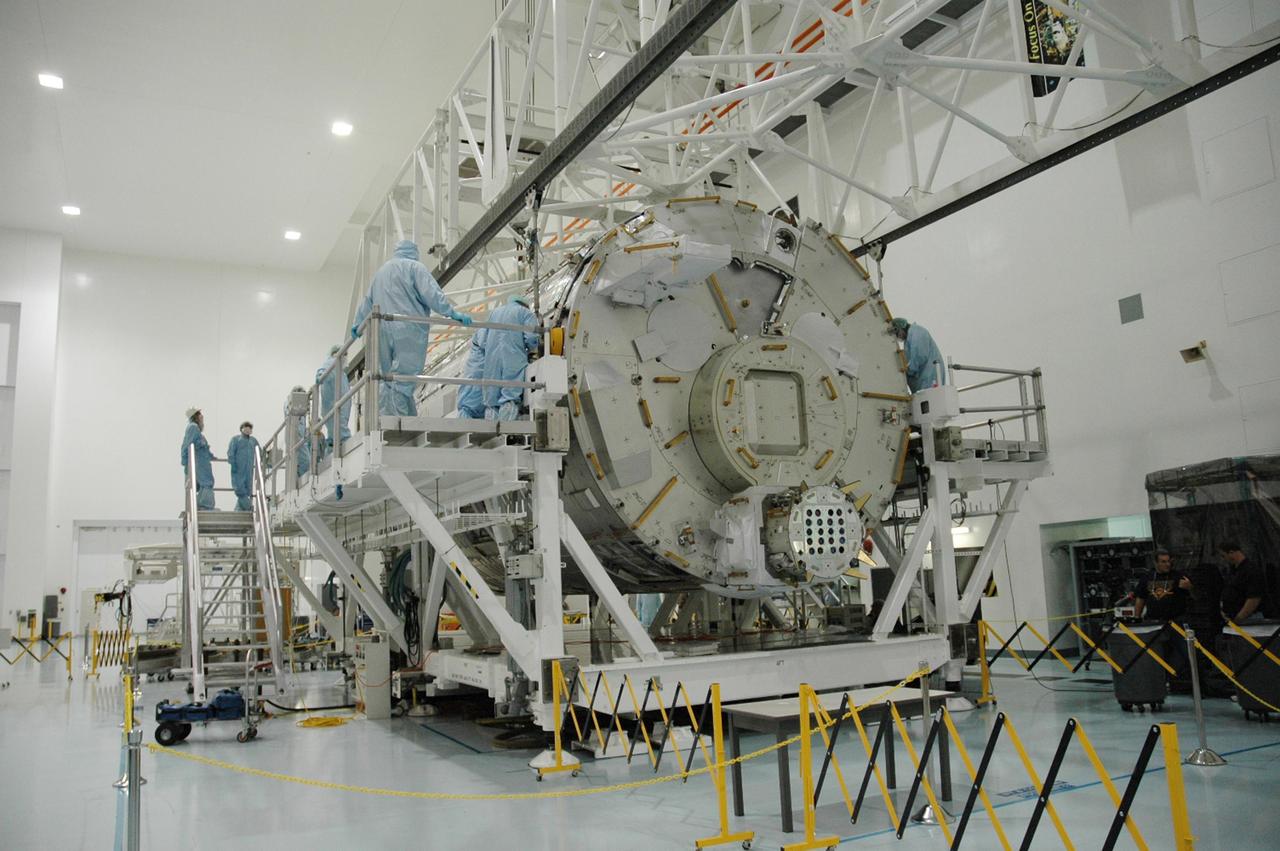
KENNEDY SPACE CENTER, FLA. -- In the Space Station Processing Facility, the Japanese Experiment Module (JEM), after being weighed, has been moved back across the facility and is lowered onto its transporter. The Japanese Aerospace Exploration Agency developed the laboratory at the Tsukuba Space Center near Tokyo. It is the first element, named "Kibo" (Hope), to be delivered to KSC. The JEM is Japan's primary contribution to the International Space Station. It will enhance the unique research capabilities of the orbiting complex by providing an additional environment for astronauts to conduct science experiments. The JEM is targeted for mission STS-124, to launch in early 2008. Photo credit: NASA/Troy Cryder
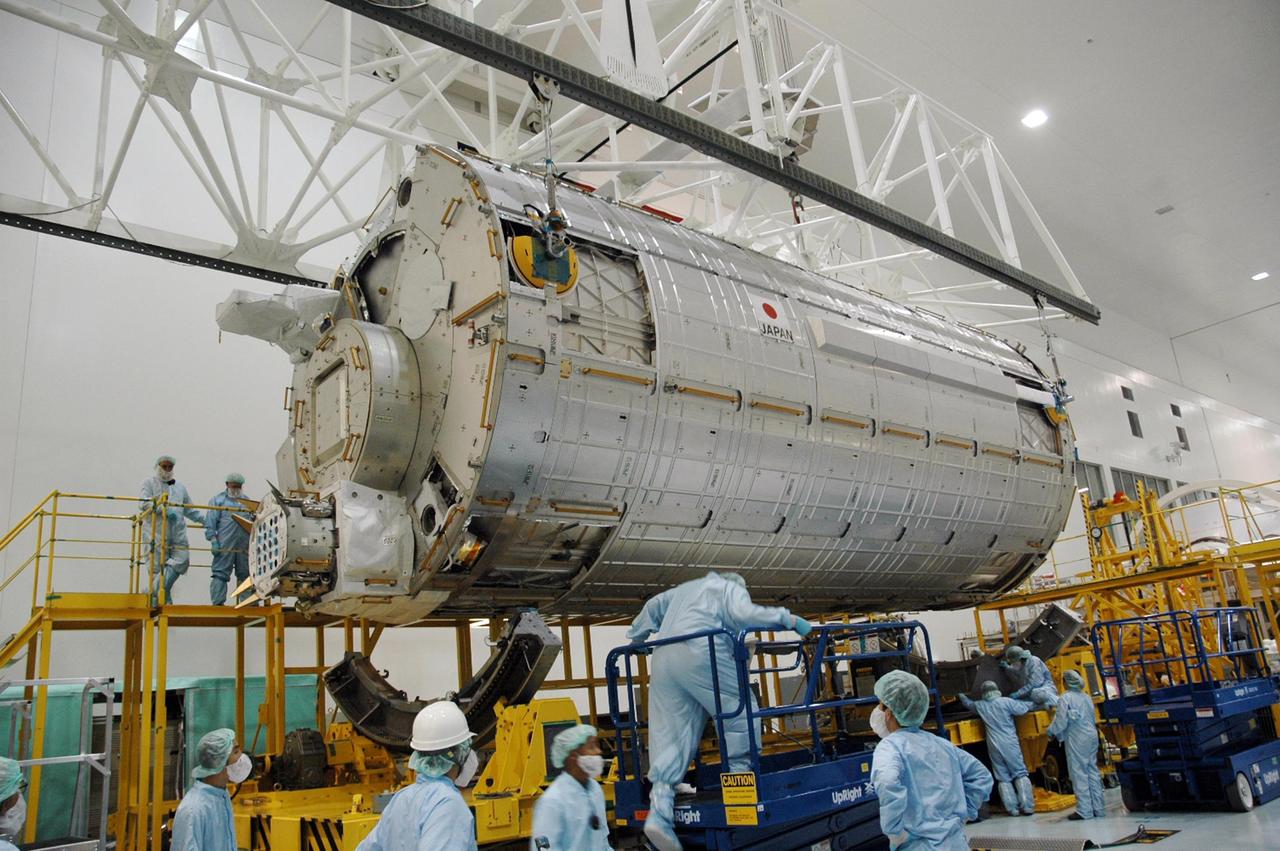
KENNEDY SPACE CENTER, FLA. -- In the Space Station Processing Facility, workers monitor the movement of the Japanese Experiment Module (JEM) as it is lowered onto a weighing stand. The module will also be measured for its center of gravity. The Japanese Aerospace Exploration Agency developed the laboratory at the Tsukuba Space Center near Tokyo. It is the first element, named "Kibo" (Hope), to be delivered to KSC. The JEM is Japan's primary contribution to the International Space Station. It will enhance the unique research capabilities of the orbiting complex by providing an additional environment for astronauts to conduct science experiments. The JEM is targeted for mission STS-124, to launch in early 2008. Photo credit: NASA/Troy Cryder
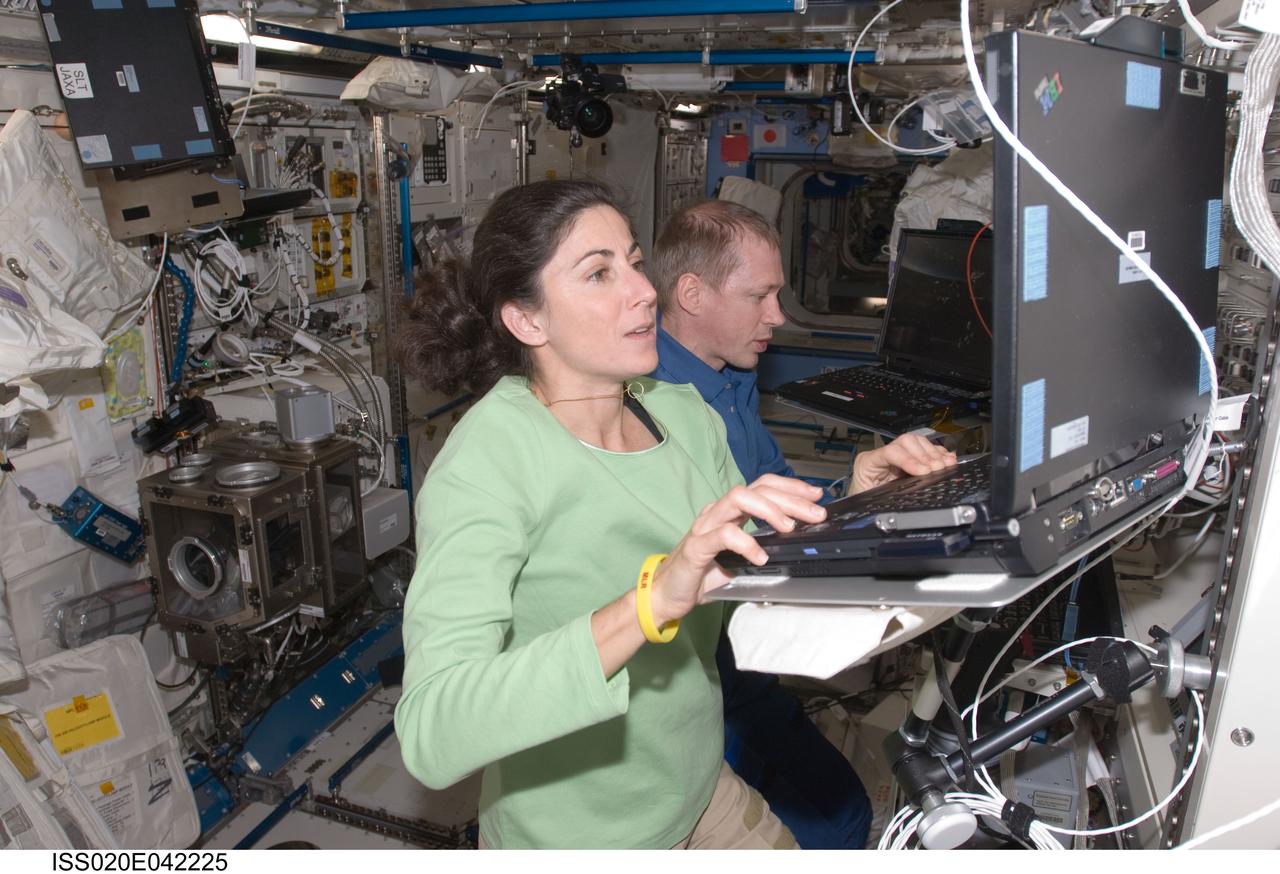
ISS020-E-042225 (23 Sept. 2009) --- NASA astronaut Nicole Stott and European Space Agency astronaut Frank De Winne, both Expedition 20 flight engineers, work the controls of the JEM Robotic Manipulator System (JEM-RMS) in the Kibo laboratory of the International Space Station. De Winne and Stott used the JEM-RMS to grapple the Exposed Pallet (EP) from the station’s Canadarm2 and berth it to the JEM Exposed Facility / Exposed Facility Unit 10 (JEF EFU10).
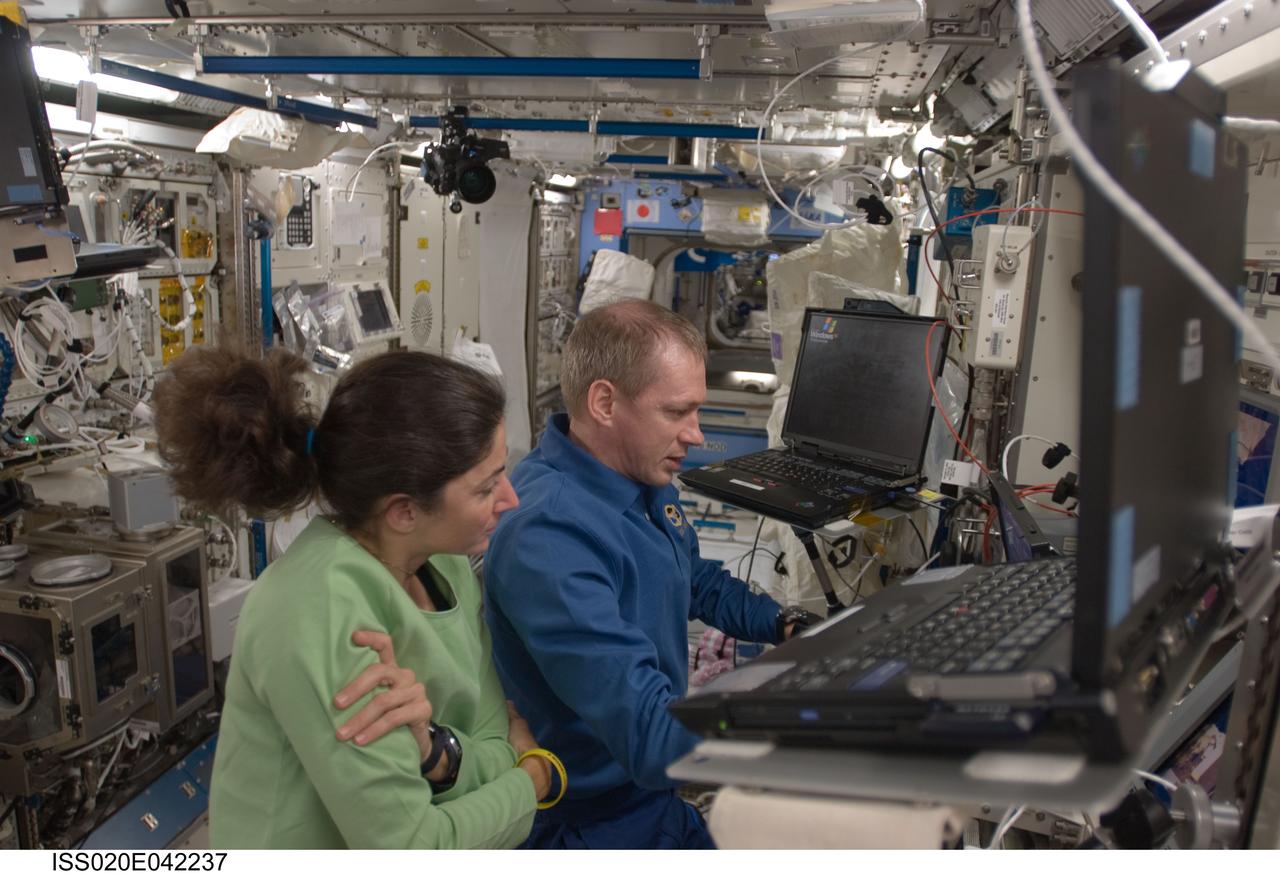
ISS020-E-042237 (23 Sept. 2009) --- NASA astronaut Nicole Stott and European Space Agency astronaut Frank De Winne, both Expedition 20 flight engineers, work the controls of the JEM Robotic Manipulator System (JEM-RMS) in the Kibo laboratory of the International Space Station. De Winne and Stott used the JEM-RMS to grapple the Exposed Pallet (EP) from the station’s Canadarm2 and berth it to the JEM Exposed Facility / Exposed Facility Unit 10 (JEF EFU10).
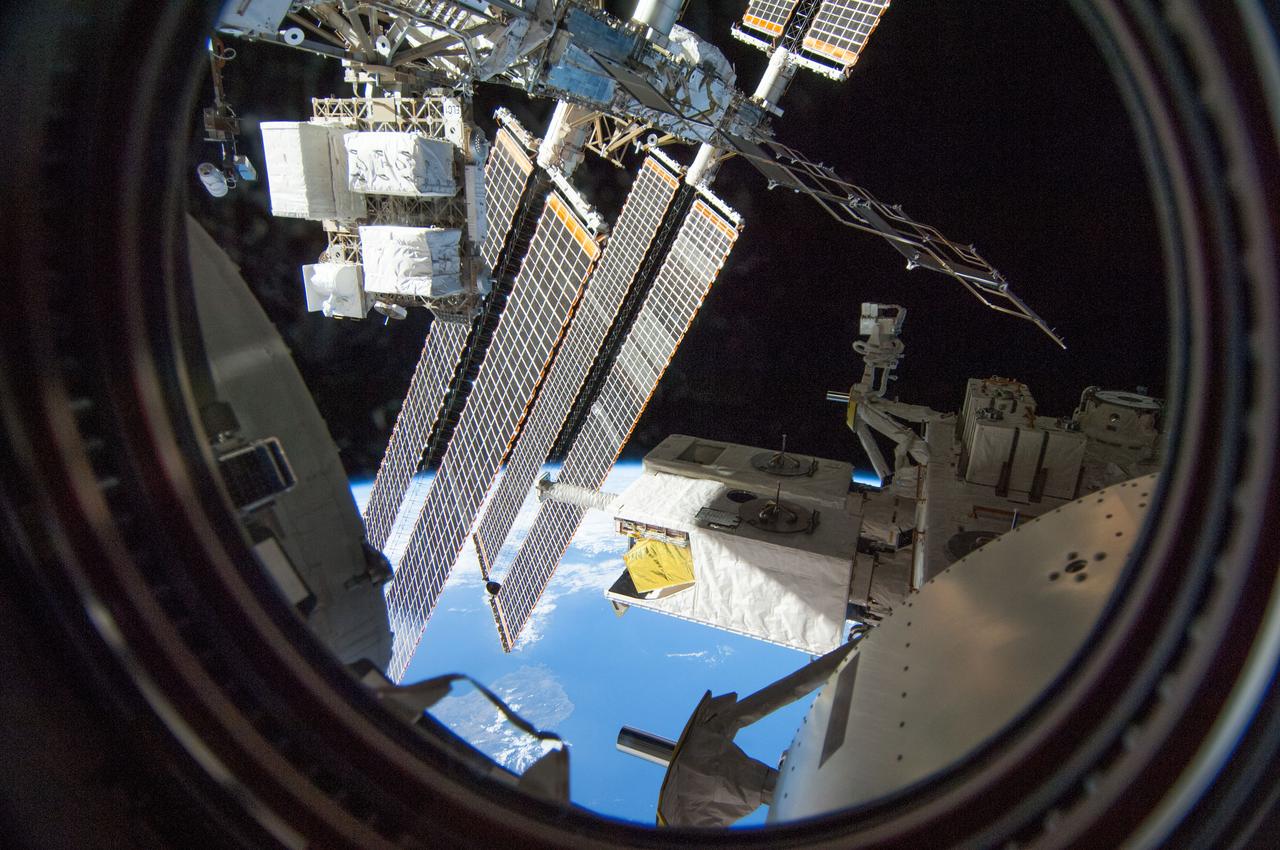
View of the Japanese Experiment Module (JEM) Exposed Facility (JEF), raidators and and part of the Express Logistics Carrier (ELC) on the P1 truss. Photo taken from the JEM window by the Expedition 40 crew.
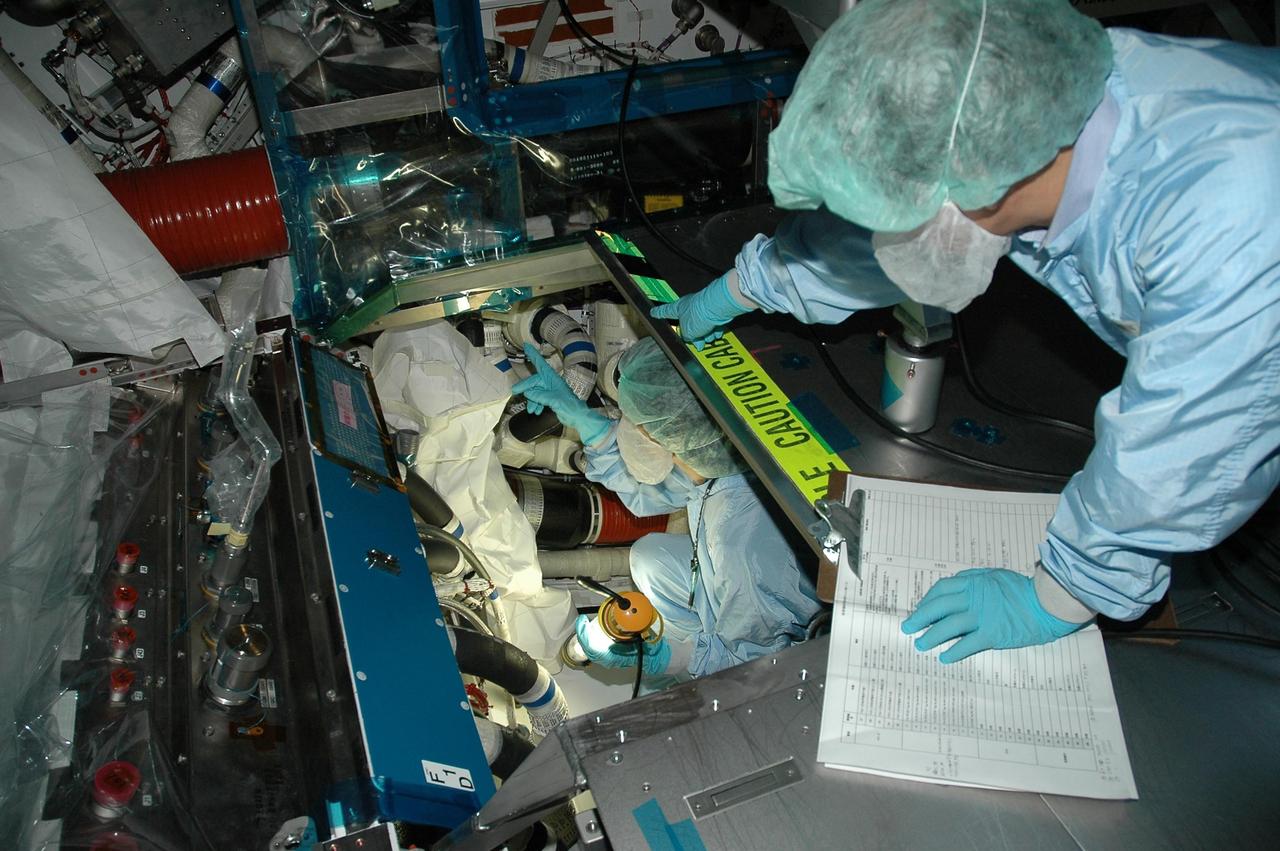
KENNEDY SPACE CENTER, FLA. - In the Space Station Processing Facility, a Japan Aerospace Exploration Agency (JAXA) technician inspects the wiring on the Japanese Experiment Module (JEM). The JEM, developed by JAXA for use on the International Space Station, is named Kibo -- which means "hope" in Japanese -- and will enhance the unique research capabilities of the orbiting complex by providing an additional environment for astronauts to conduct science experiments. Research conducted in Kibo will focus on space medicine, biology, Earth observations, material production, biotechnology and communications. Photo credit: NASA/Amanda Diller
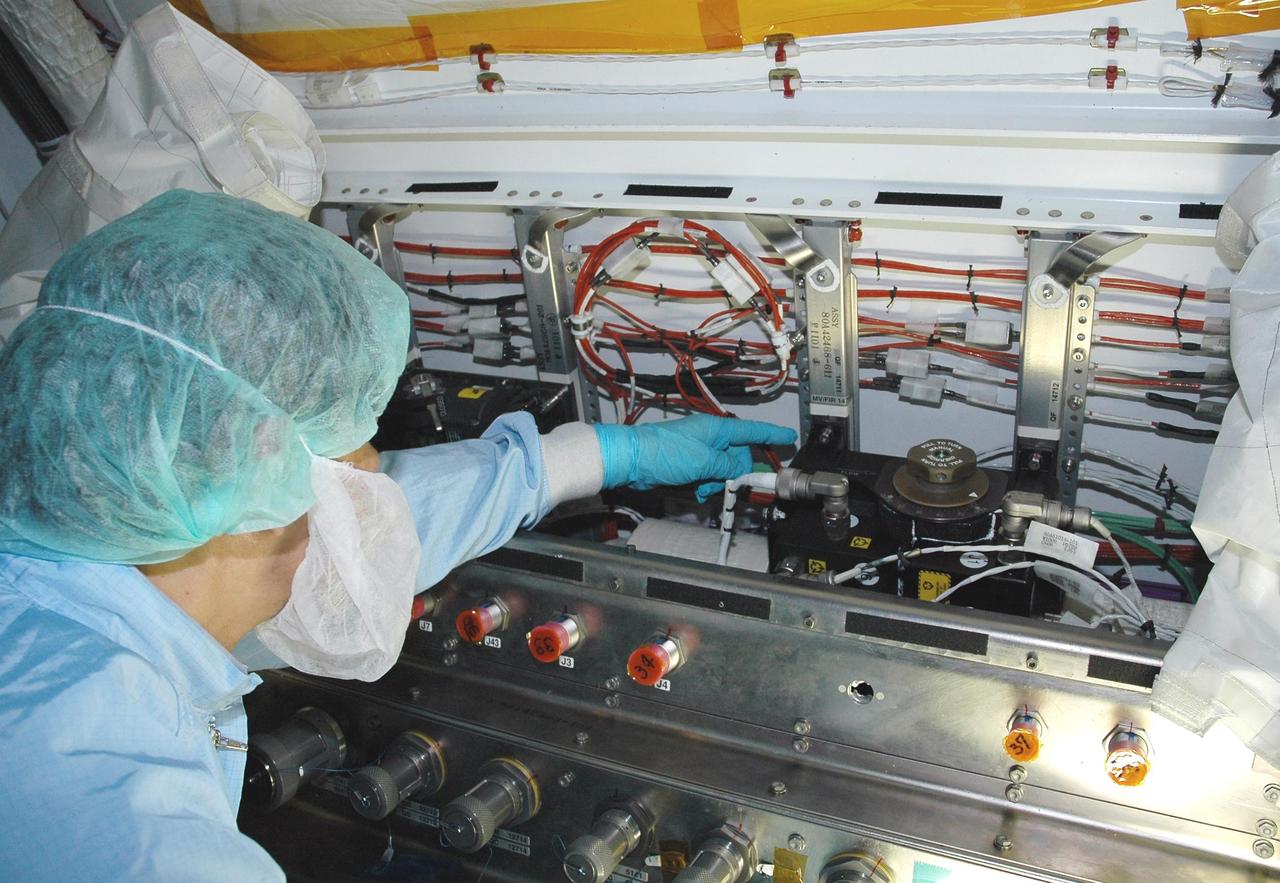
KENNEDY SPACE CENTER, FLA. - In the Space Station Processing Facility, Japan Aerospace Exploration Agency (JAXA) technicians inspect the wiring on the Japanese Experiment Module (JEM). The JEM, developed by JAXA for use on the International Space Station, is named Kibo -- which means "hope" in Japanese -- and will enhance the unique research capabilities of the orbiting complex by providing an additional environment for astronauts to conduct science experiments. Research conducted in Kibo will focus on space medicine, biology, Earth observations, material production, biotechnology and communications. Photo credit: NASA/Amanda Diller
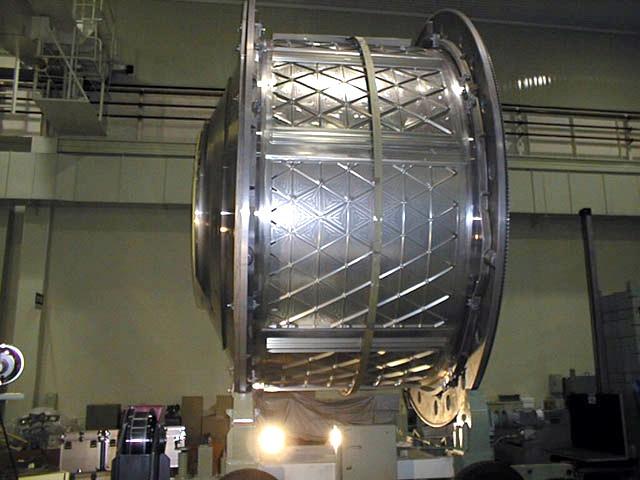
JSC2003-E-42550 (For Release: 18 June 2003) --- The Experiment Logistics Modules-Pressurized Section (ELM-PS) of the Japanese Experiment Module (JEM), Japan's primary contribution to the International Space Station (ISS), is shown in a processing facility. There are two JEM logistics modules, one each for the Pressurized Module and the Exposed Facility, that serve as on-orbit storage areas that house materials for experiments, maintenance tools and supplies. The ELM-PS is a short cylinder that attaches to the top of the JEM Pressurized Module. Photo Credit: NASDA
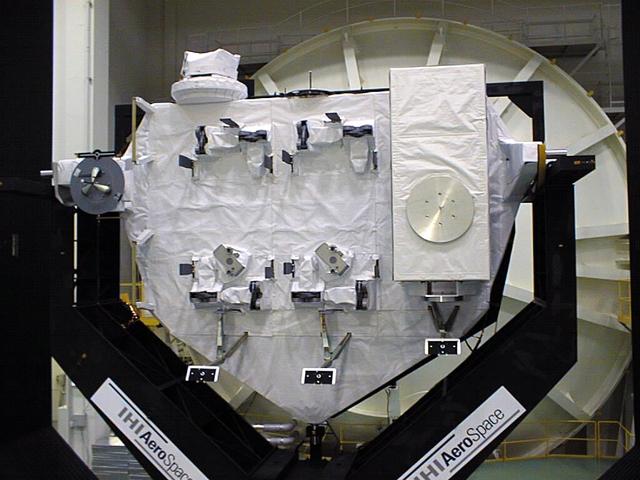
JSC2003-E-42549 (For Release: 18 June 2003) --- The Experiment Logistics Modules-Exposed (ELM-ES) of the Japanese Experiment Module (JEM), Japan's primary contribution to the International Space Station (ISS), is shown in a processing facility. There are two JEM logistics modules, one each for the Pressurized Module and the Exposed Facility, that serve as on-orbit storage areas that house materials for experiments, maintenance tools and supplies. The ELM-ES is a pallet that can hold 3 experiment payloads for the JEM Exposed Facility. Photo Credit: NASDA
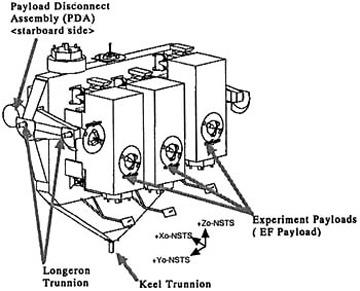
JSC2003-E-42551 (For Release: 18 June 2003) --- This graphic shows the Experiment Logistics Modules-Exposed (ELM-ES) of the Japanese Experiment Module (JEM), Japan's primary contribution to the International Space Station (ISS), is shown in a processing facility. There are two JEM logistics modules, one each for the Pressurized Module and the Exposed Facility, that serve as on-orbit storage areas that house materials for experiments, maintenance tools and supplies. The ELM-ES is a pallet that can hold 3 experiment payloads for the JEM Exposed Facility. Photo Credit: NASDA
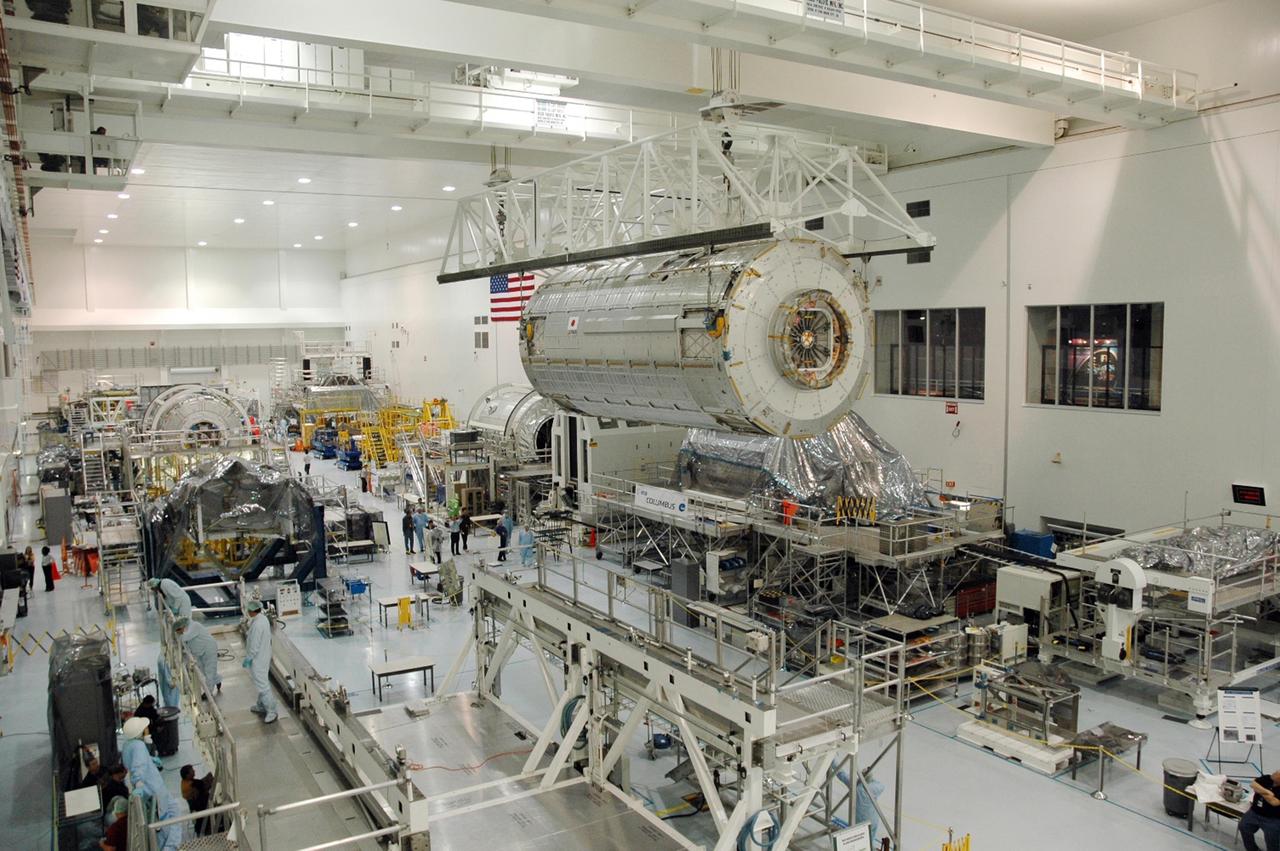
KENNEDY SPACE CENTER, FLA. -- In the Space Station Processing Facility, an overhead crane carries the Japanese Experiment Module (JEM) across the facility. The module is being moved to another stand where it will be weighed and measured for its center of gravity. Other modules intended for the International Space Station are visible on other stands. The Japanese Aerospace Exploration Agency developed the laboratory at the Tsukuba Space Center near Tokyo. It is the first element, named "Kibo" (Hope), to be delivered to KSC. The JEM is Japan's primary contribution to the International Space Station. It will enhance the unique research capabilities of the orbiting complex by providing an additional environment for astronauts to conduct science experiments. The JEM is targeted for mission STS-124, to launch in early 2008. Photo credit: NASA/Troy Cryder
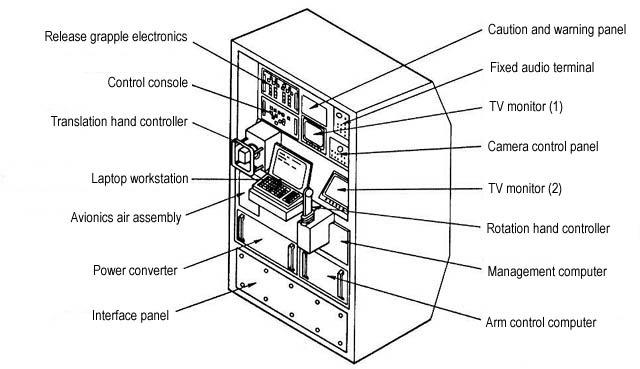
JSC2003-E-42546 (For Release: 18 June 2003) --- This graphic shows the console where flight crews will operate the Kibo Japanese Experiment Module (JEM) Remote Manipulator System (RMS) from inside the Pressurized Module (PM). The RMS is used to exchange experiment payloads or hardware located on the JEM Exposed Facility and Experiment Logistics Module - Exposed Section and from inside the Pressurized Module through a scientific airlock, support maintenance tasks of Kibo and handle orbital replacement units (ORUs). Photo Credit: NASDA
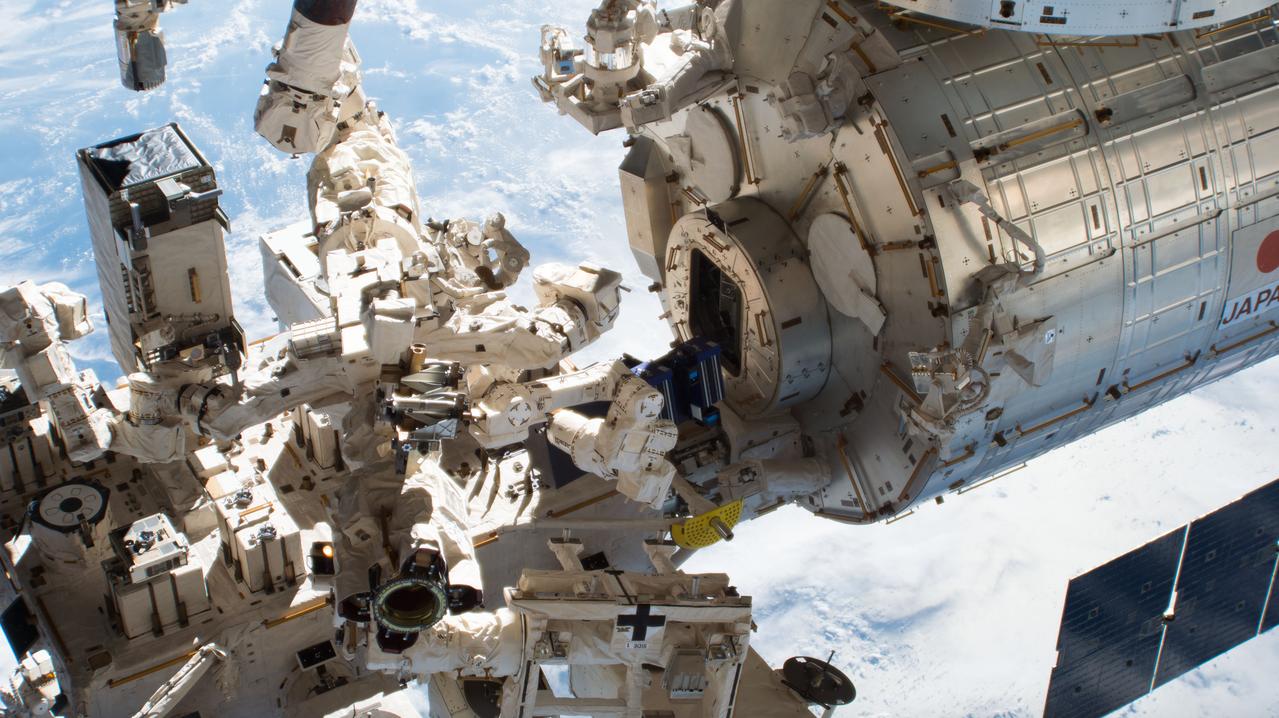
iss055e024241 (4/16/2018) --- View of the Japanese Experiment Module (JEM) Exposed Facility (EF) and the Materials ISS Experiment Flight Facility (MISSE-FF) as it exits the JEM airlock. The MISSE-FF platform provides the ability to test materials, coatings, and components or other larger experiments in the harsh environment of space, which is virtually impossible to do collectively on Earth.
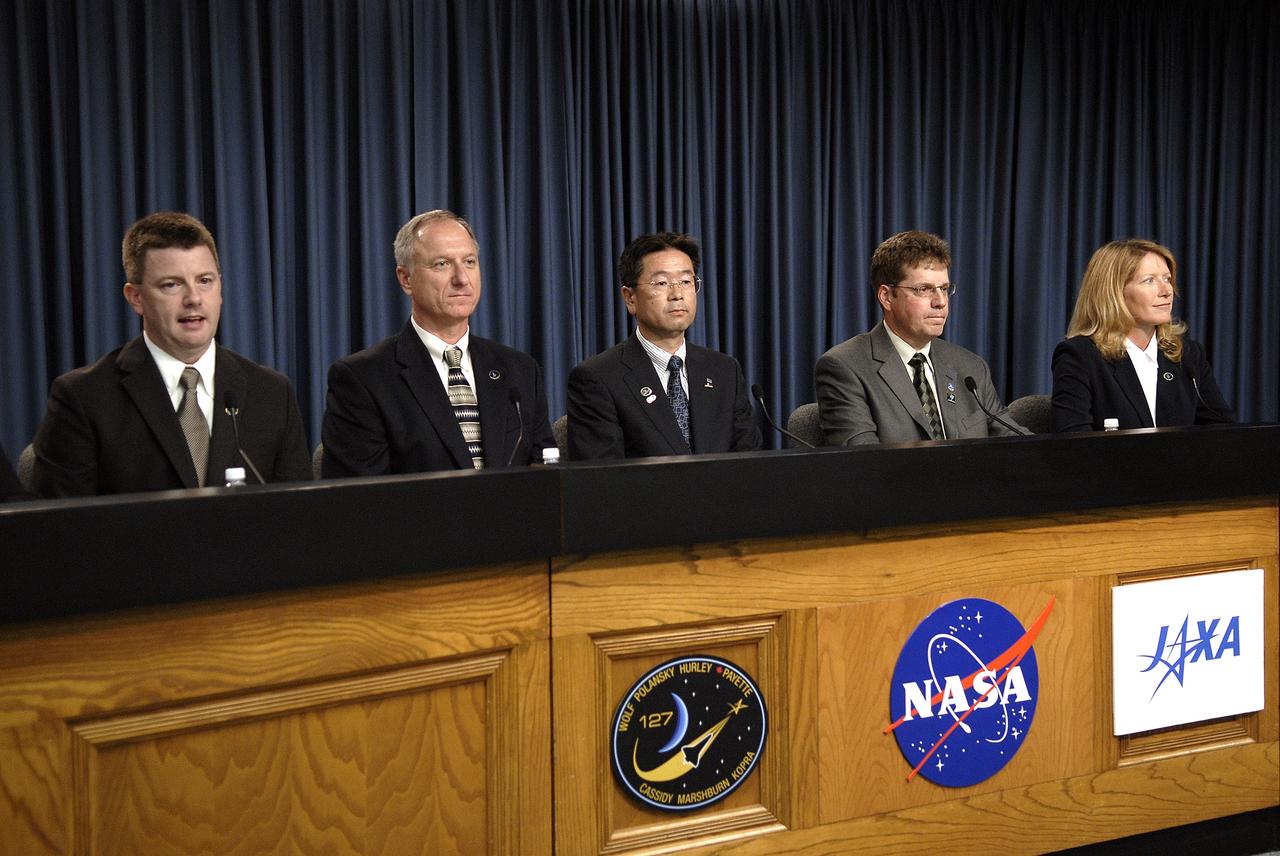
CAPE CANAVERAL, Fla. – Taking part in a prelaunch news conference at NASA's Kennedy Space Center in Florida about the STS-127 mission are (from left) Mike Moses, launch integration manager and chair of the Mission Management Team; Pete Nickolenko, STS-127 shuttle launch director; Koki Oikawa, Japan Experiment Module, or JEM, Project Team function manager; Pierre Jean, director of Operations Engineering and program manager for the Canadian Space Station Program, Canadian Space Agency; and Kathy Winters, shuttle weather officer. In the final of three flights dedicated to the assembly of the Japan Aerospace Exploration Agency's Kibo laboratory complex on the International Space Station, space shuttle Endeavour will deliver the JEM Exposed Facility and the Experiment Logistics Module-Exposed Section, or ELM-ES. STS-127 is the 29th flight for the assembly of the space station and the 127th flight in the Space Shuttle Program. Photo credit: NASA/Kim Shiflett
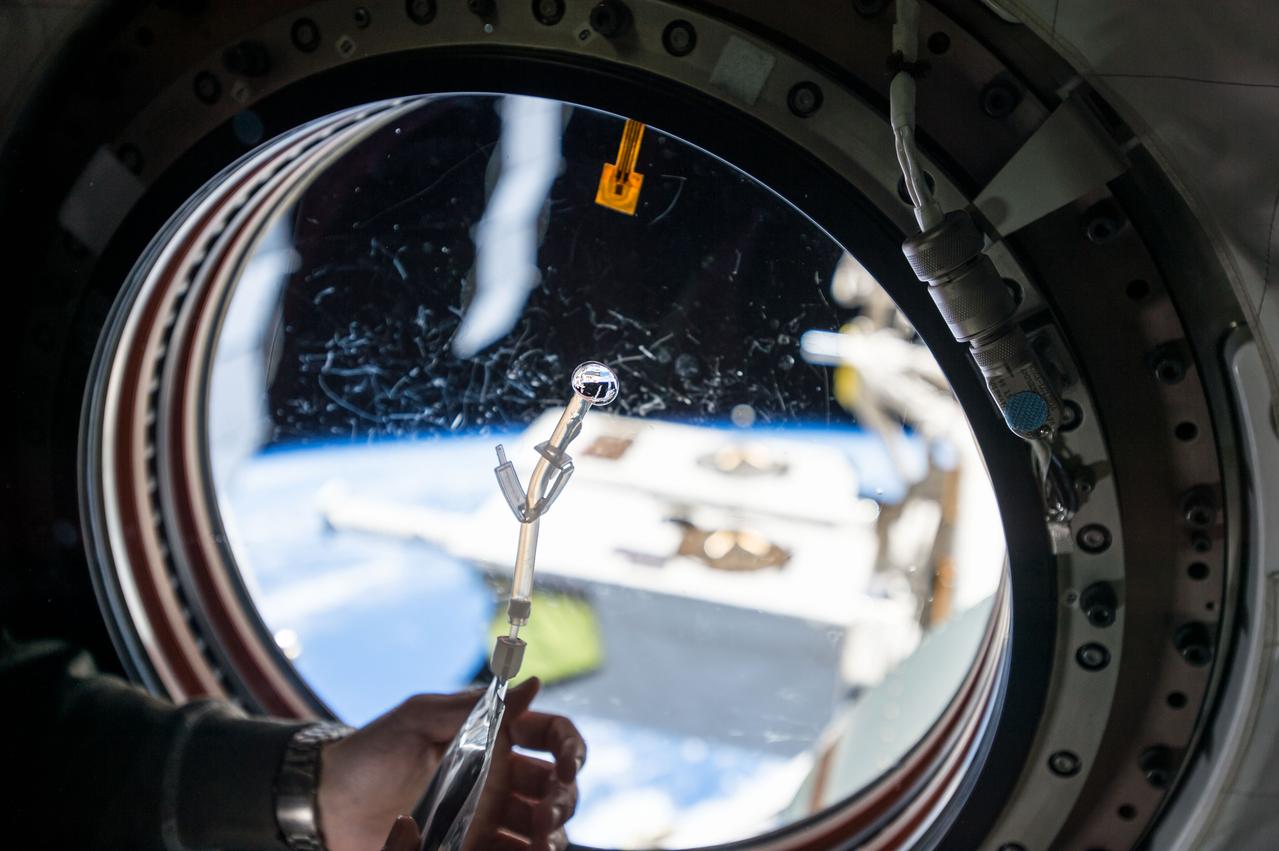
View of water bubble formed in front of the Japanese Experiment Module (JEM) window. The JEM Exposed Facility (JEF) is visible in the background through the window and reflected in the water. Scratches visible on the window.
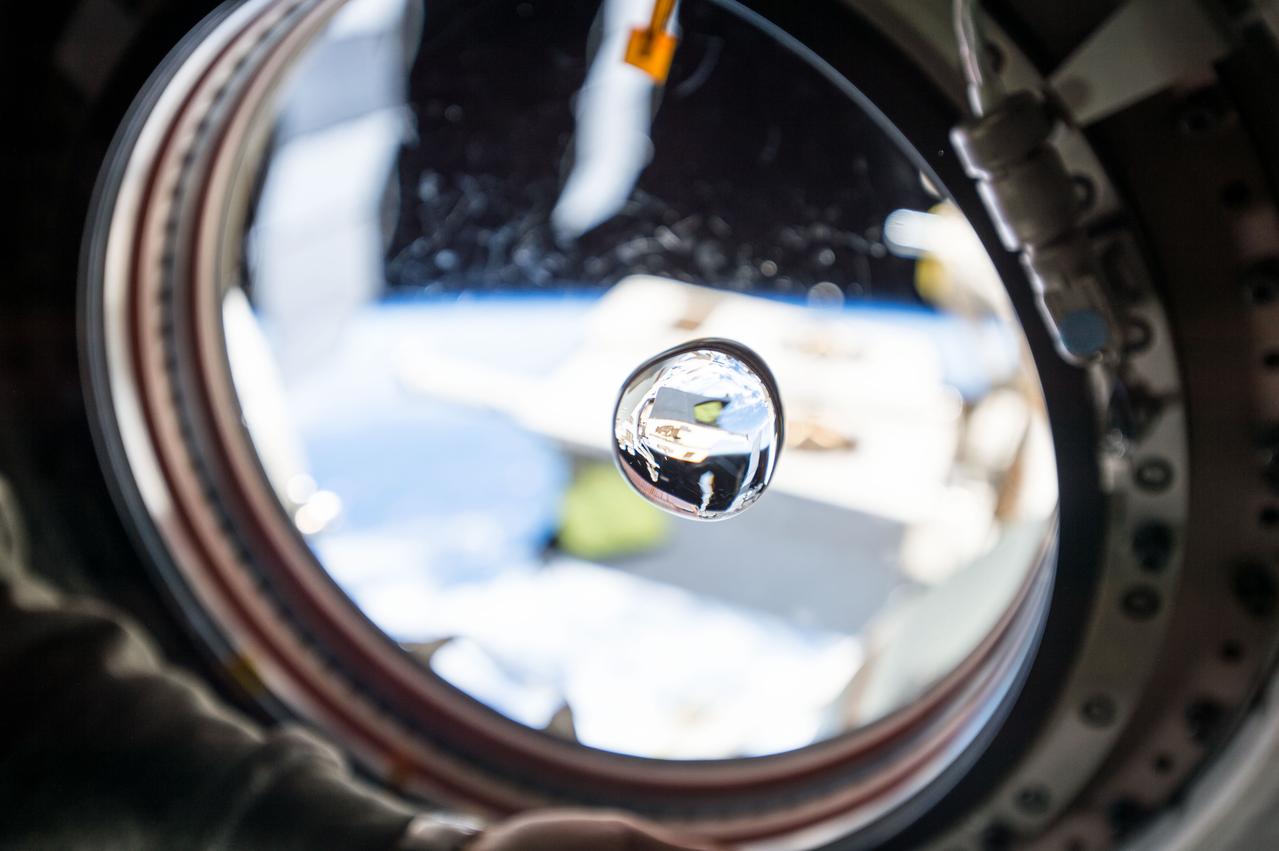
View of water bubble formed in front of the Japanese Experiment Module (JEM) window. The JEM Exposed Facility (JEF) is visible in the background through the window and reflected in the water. Scratches visible on the window.
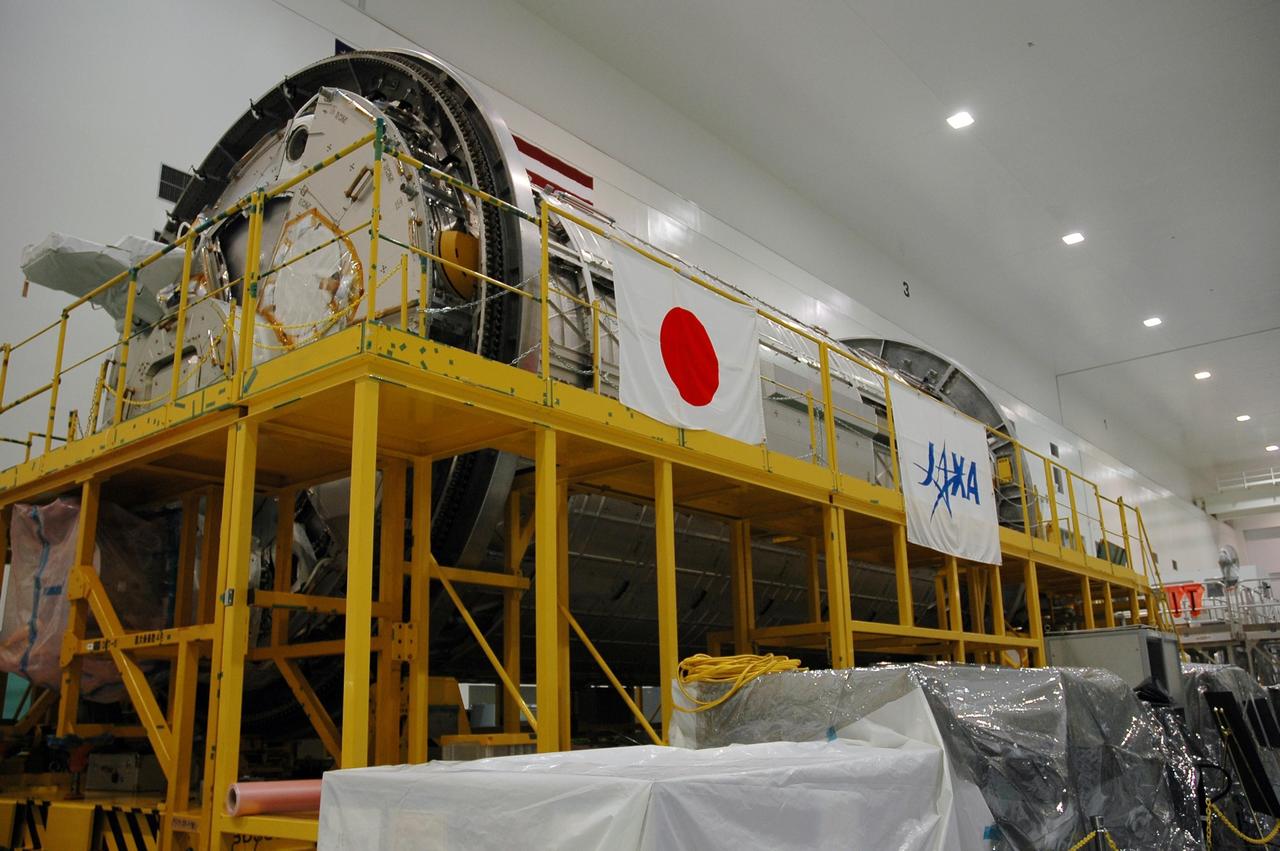
KENNEDY SPACE CENTER, FLA. - In the Space Station Processing Facility, the Japanese Experiment Module (JEM) awaits its flight to the International Space Station (ISS). The JEM, developed by the Japan Aerospace Exploration Agency (JAXA) for installation on the ISS, is named Kibo -- which means "hope" in Japanese -- and will enhance the unique research capabilities of the orbiting complex by providing an additional environment for astronauts to conduct science experiments. Research conducted in Kibo will focus on space medicine, biology, Earth observations, material production, biotechnology and communications. Photo credit: NASA/Amanda Diller
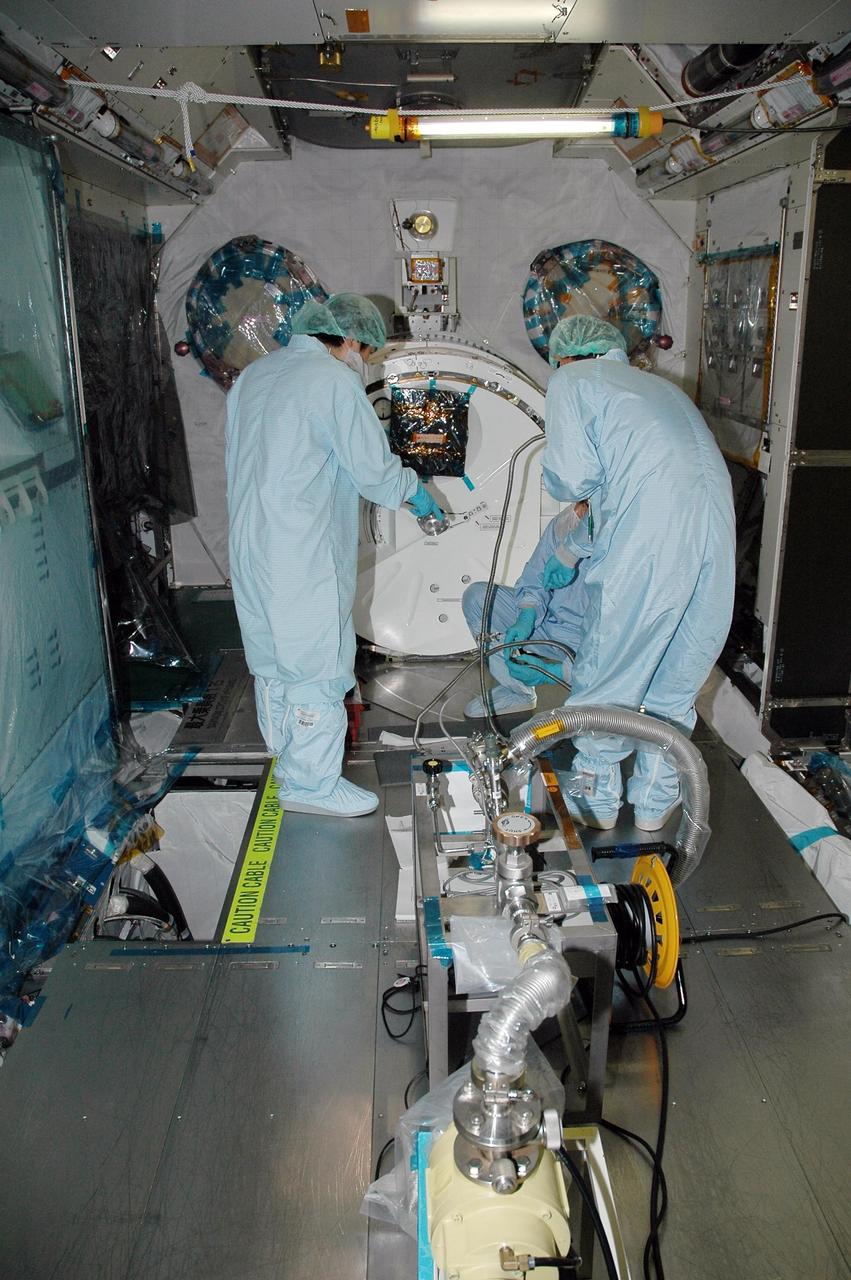
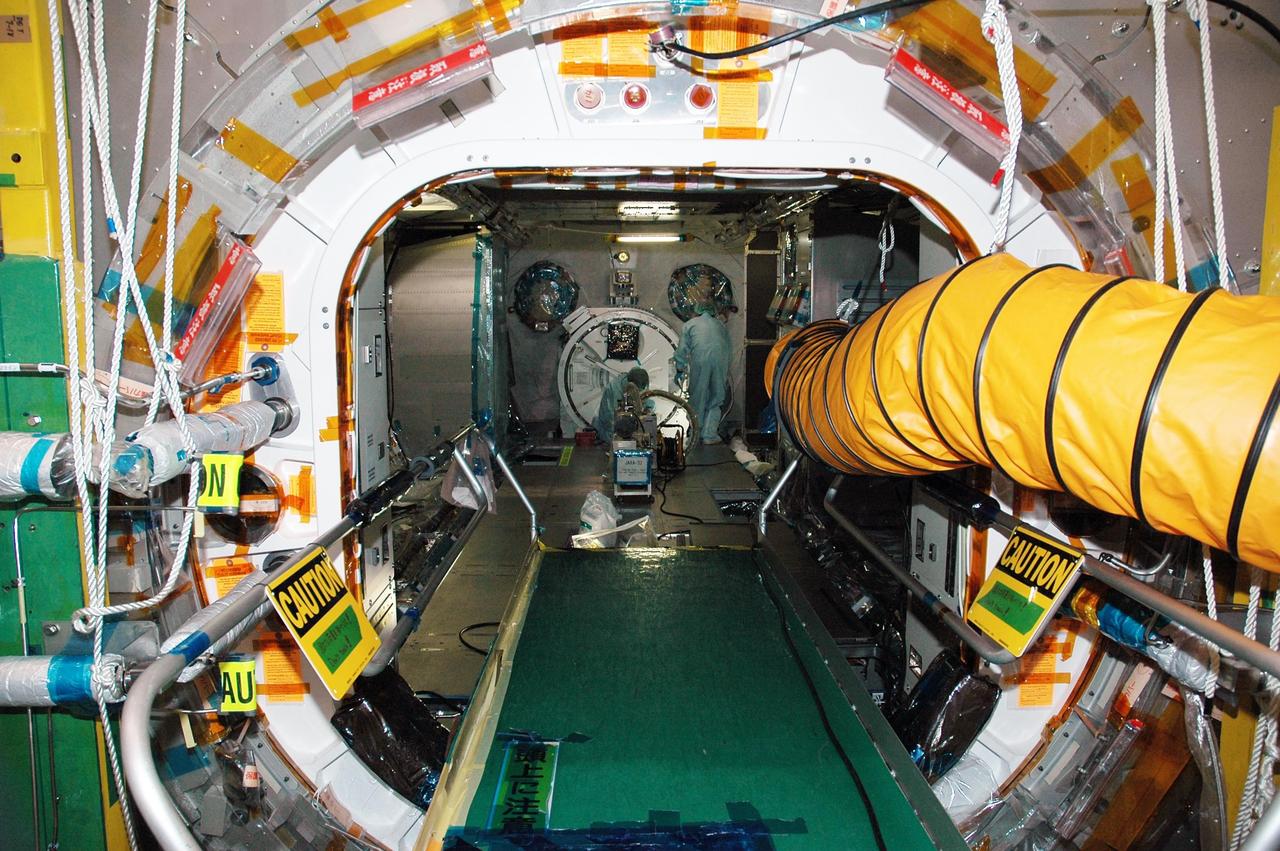
KENNEDY SPACE CENTER, FLA. - In the Space Station Processing Facility, Japan Aerospace Exploration Agency (JAXA) technicians install piping insulation on the Japanese Experiment Module (JEM). The JEM, developed by JAXA for use on the International Space Station, is named Kibo -- which means "hope" in Japanese -- and will enhance the unique research capabilities of the orbiting complex by providing an additional environment for astronauts to conduct science experiments. Research conducted in Kibo will focus on space medicine, biology, Earth observations, material production, biotechnology and communications. Photo credit: NASA/Amanda Diller
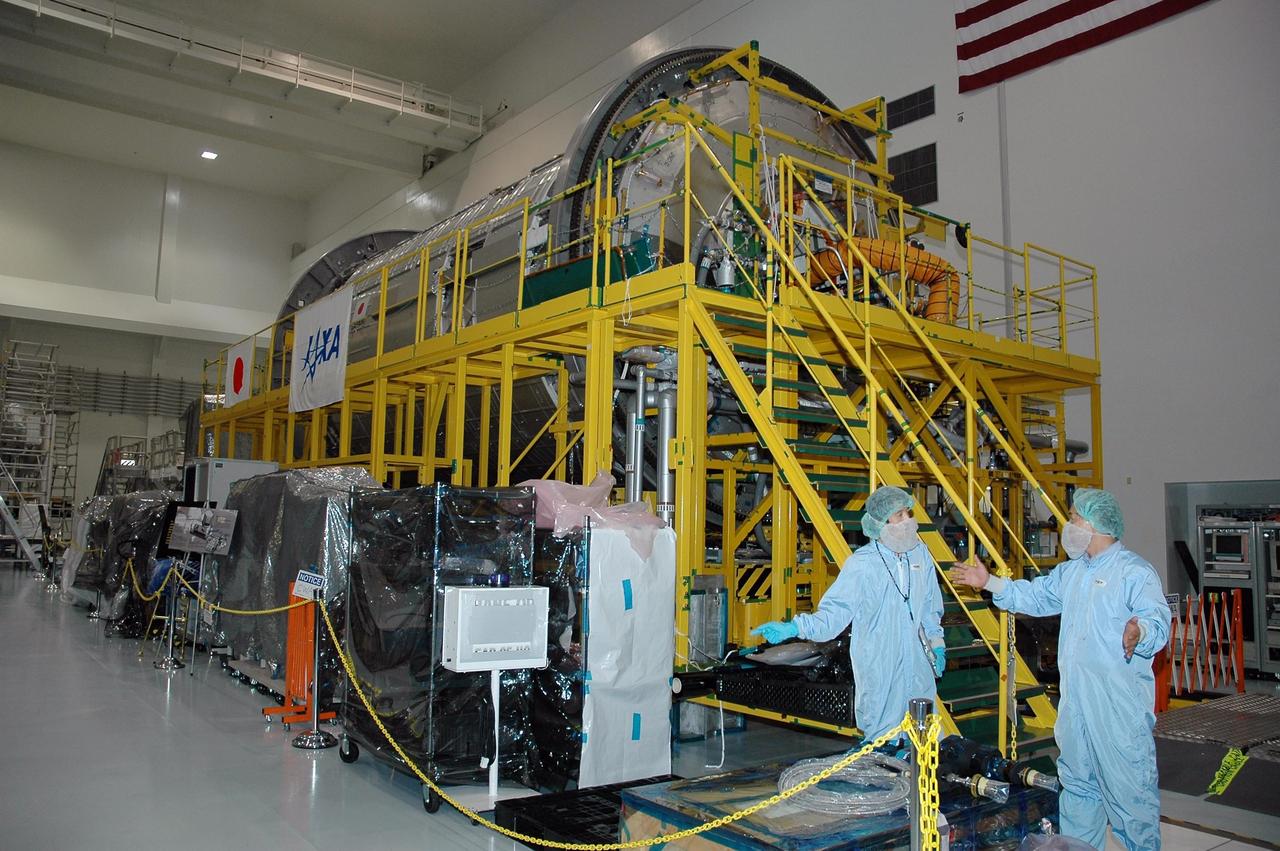
KENNEDY SPACE CENTER, FLA. - In the Space Station Processing Facility, processing continues on the Japanese Experiment Module (JEM) for its flight to the International Space Station (ISS). The JEM, developed by the Japan Aerospace Exploration Agency (JAXA) for installation on the ISS, is named Kibo -- which means "hope" in Japanese -- and will enhance the unique research capabilities of the orbiting complex by providing an additional environment for astronauts to conduct science experiments. Research conducted in Kibo will focus on space medicine, biology, Earth observations, material production, biotechnology and communications. Photo credit: NASA/Amanda Diller
KENNEDY SPACE CENTER, FLA. - In the Space Station Processing Facility, Japan Aerospace Exploration Agency (JAXA) technicians install piping insulation on the Japanese Experiment Module (JEM). The JEM, developed by JAXA for use on the International Space Station, is named Kibo -- which means "hope" in Japanese -- and will enhance the unique research capabilities of the orbiting complex by providing an additional environment for astronauts to conduct science experiments. Research conducted in Kibo will focus on space medicine, biology, Earth observations, material production, biotechnology and communications. Photo credit: NASA/Amanda Diller

KENNEDY SPACE CENTER, FLA. -- The Japanese Experiment Module (JEM) sits on top of a stand in the Space Station Processing Facility. Earlier, NASA and Japanese Aerospace and Exploration Agency (JAXA) officials welcomed the arrival of the Experiment Logistics Module Pressurized Section of the JEM, which will be delivered to the space station on mission STS-123. The JEM will fly on mission STS-124. The module will serve as an on-orbit storage area for materials, tools and supplies. It can hold up to eight experiment racks and will attach to the top of another larger pressurized module. Photo credit: NASA/George Shelton
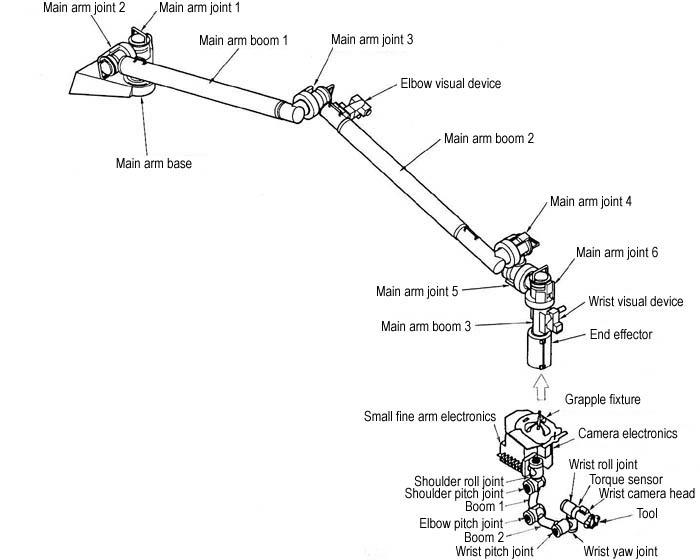
JSC2003-E-42547 (For Release: 18 June 2003) --- This graphic shows the Kibo Japanese Experiment Module (JEM) Remote Manipulator System (RMS). The RMS is used to exchange experiment payloads or hardware located on the JEM Exposed Facility and Experiment Logistics Module - Exposed Section and from inside the Pressurized Module through a scientific airlock, support maintenance tasks of Kibo and handle orbital replacement units (ORUs). The Main Arm can handle up to seven tons (14,000 pounds) of hardware and the Small Fine Arm, when attached to the Main Arm, handles more delicate operations. Photo Credit: NASDA
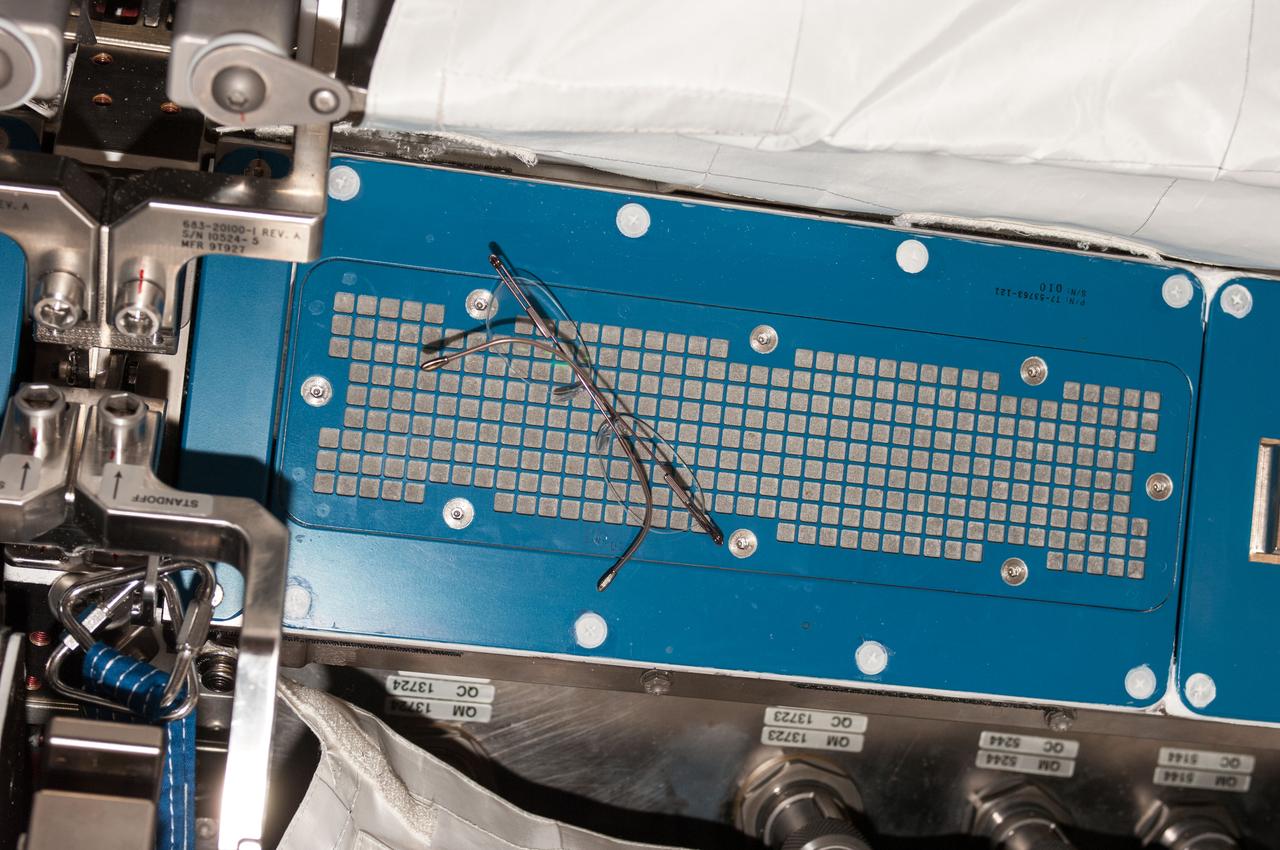
Candid view of a pair of eye glasses,floating in front of a ventilation filter in the Japanese Experiment Module (JEM).
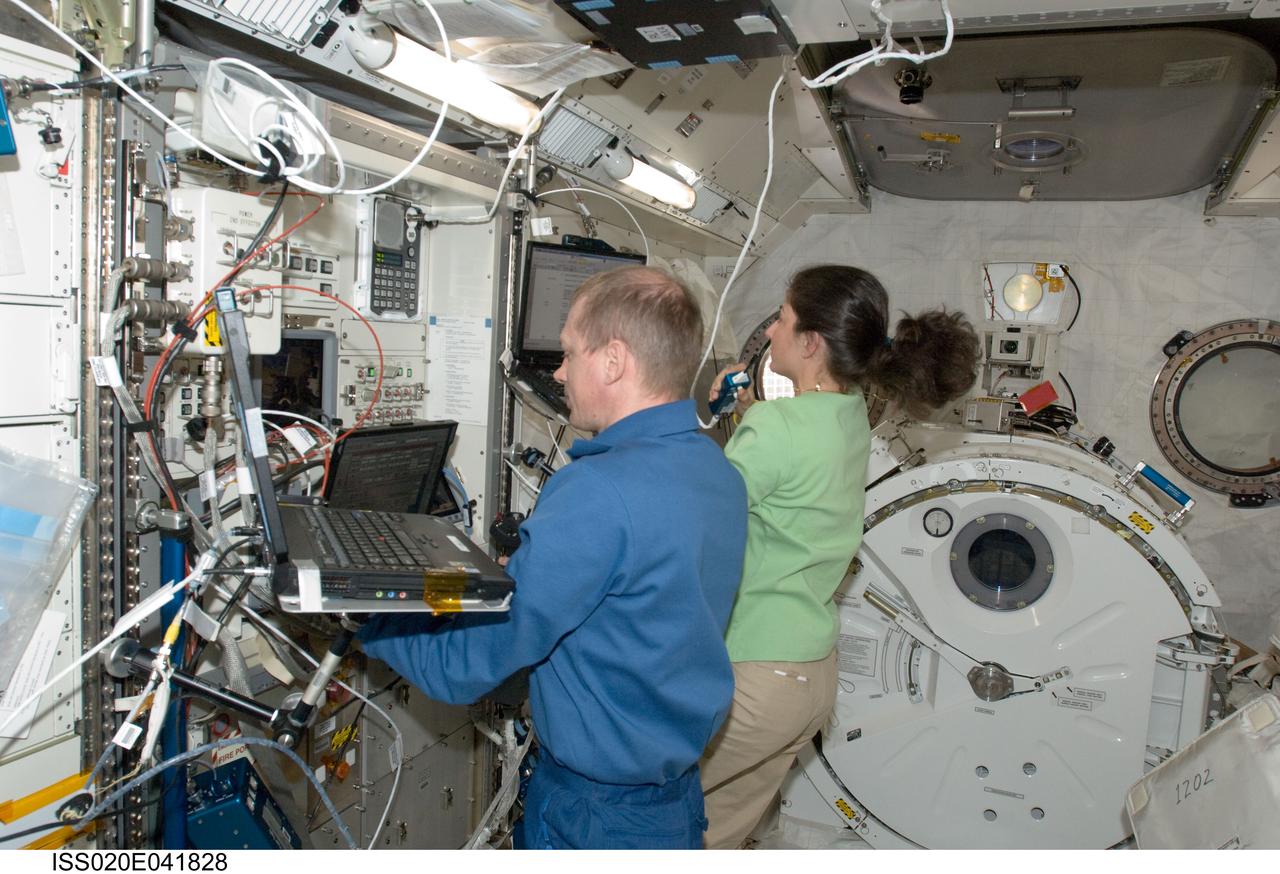
ISS020-E-041828 (23 Sept. 2009) --- European Space Agency astronaut Frank De Winne and NASA astronaut Nicole Stott, both Expedition 20 flight engineers, work the controls of the JEM Robotic Manipulator System (JEM-RMS) in the Kibo laboratory of the International Space Station. De Winne and Stott used the JEM-RMS to grapple the Exposed Pallet (EP) from the station’s Canadarm2 and berth it to the JEM Exposed Facility / Exposed Facility Unit 10 (JEF EFU10).
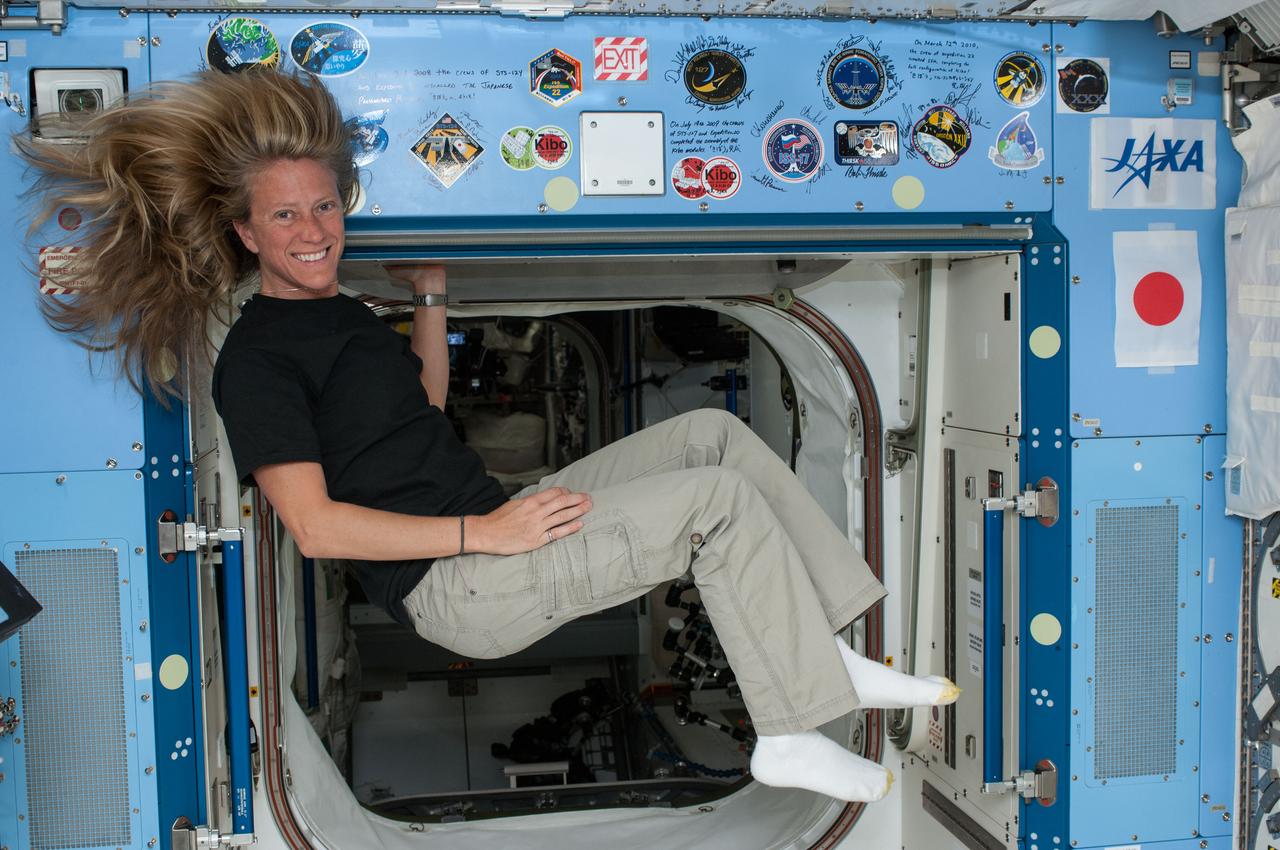
Astronaut Karen Nyberg,Expedition 36 flight engineer,floats in front of the various mission patches located on the Japanese Experiment Module (JEM) Pressurized Module (JPM)

iss052e002495 (6/15/2017) --- A view of the Japanese Experiment Module (JEM) Internal Ball Camera aboard the International Space Station (ISS). This device is a free-flying camera robot that provides real time video downlink and photographs. It is expected to reduce the crew time requirements to support video recording of activities, especially at the blind spot of existing JEM internal cameras.

iss052e002482 (6/15/2017) --- A view of the Japanese Experiment Module (JEM) Internal Ball Camera aboard the International Space Station (ISS). This device is a free-flying camera robot that provides real time video downlink and photographs. It is expected to reduce the crew time requirements to support video recording of activities, especially at the blind spot of existing JEM internal cameras.

iss052e046695 (8/15/2020) --- A view of NASA astronaut Peggy Whitson aboard the International Space Station (ISS) with the Japanese Experiment Module (JEM) Internal Ball Camera. This device is a free-flying camera robot that provides real time video downlink and photographs. It is expected to reduce the crew time requirements to support video recording of activities, especially at the blind spot of existing JEM internal cameras.

iss052e046674 (8/15/2020) --- A view of NASA astronaut Peggy Whitson aboard the International Space Station (ISS) with the Japanese Experiment Module (JEM) Internal Ball Camera. This device is a free-flying camera robot that provides real time video downlink and photographs. It is expected to reduce the crew time requirements to support video recording of activities, especially at the blind spot of existing JEM internal cameras.
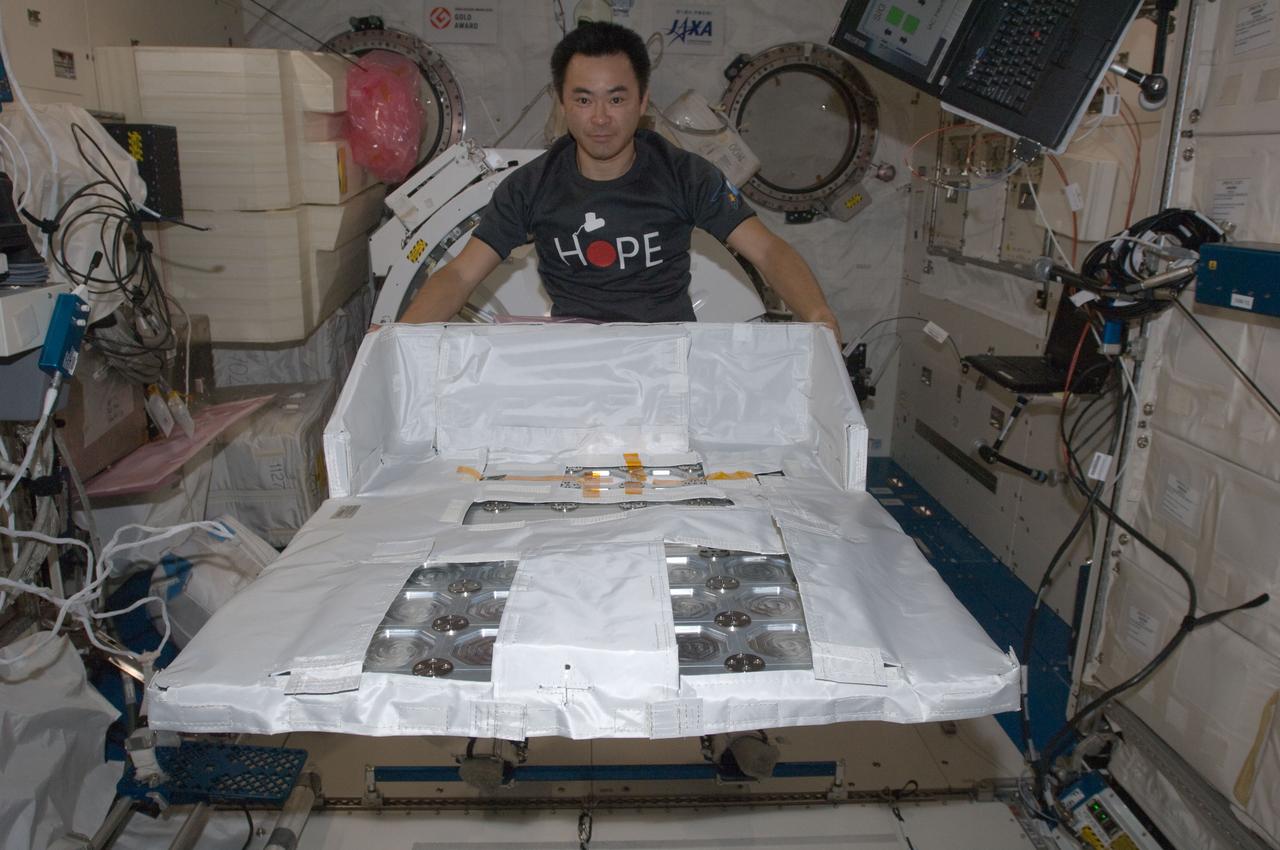
ISS032-E-022180 (21 Aug. 2012) --- Japan Aerospace Exploration Agency astronaut Aki Hoshide, Expedition 32 flight engineer, assembles the JEM Robotic Maneuvering System Multi-Purpose Experiment Platform (JEMRMS MPEP) in the Kibo laboratory of the International Space Station.
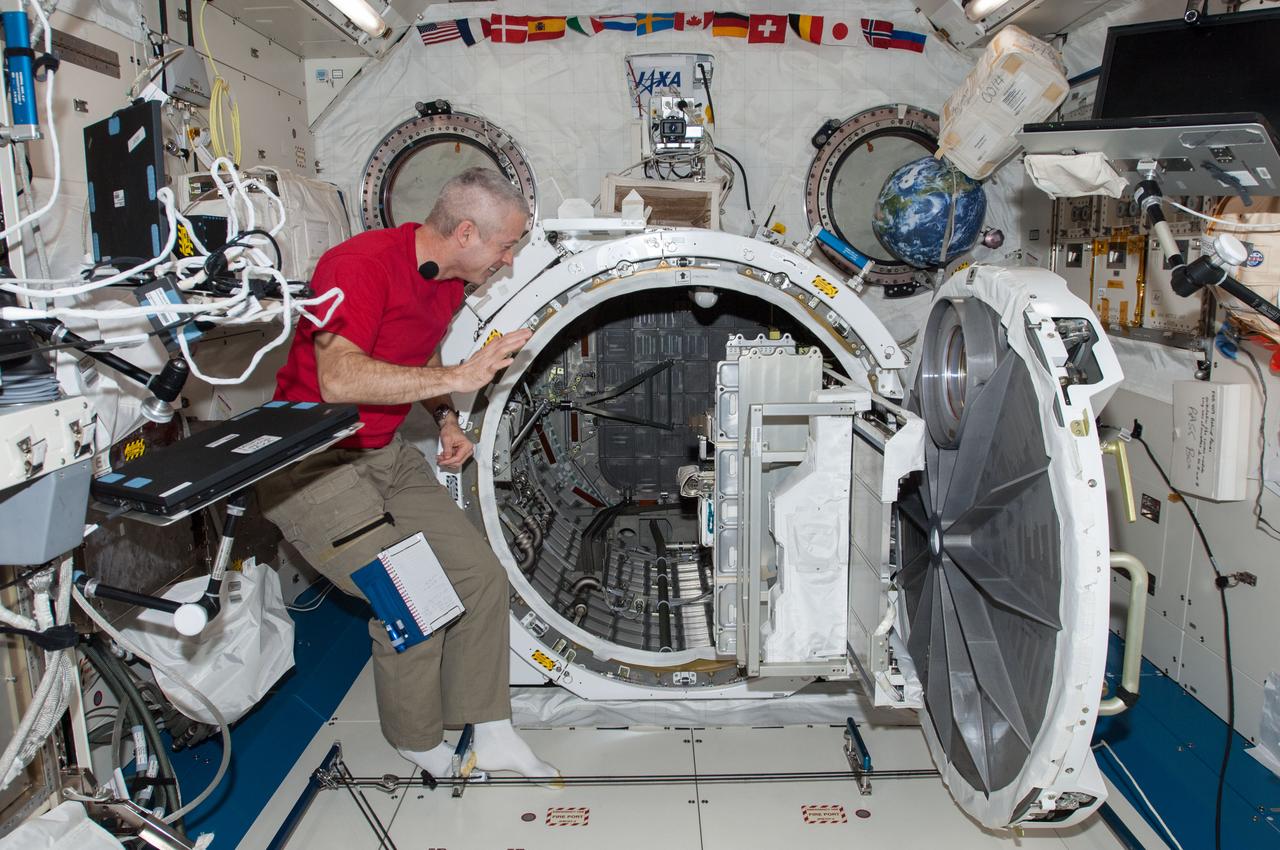
ISS040-E-001052 (26 May 2014) --- NASA astronaut Steve Swanson, Expedition 40 commander, works with equipment in the airlock in the Kibo laboratory of the International Space Station. The JEM Robotic Maneuvering System Multi-Purpose Experiment Platform (JEMRMS MPEP) is visible in the airlock.
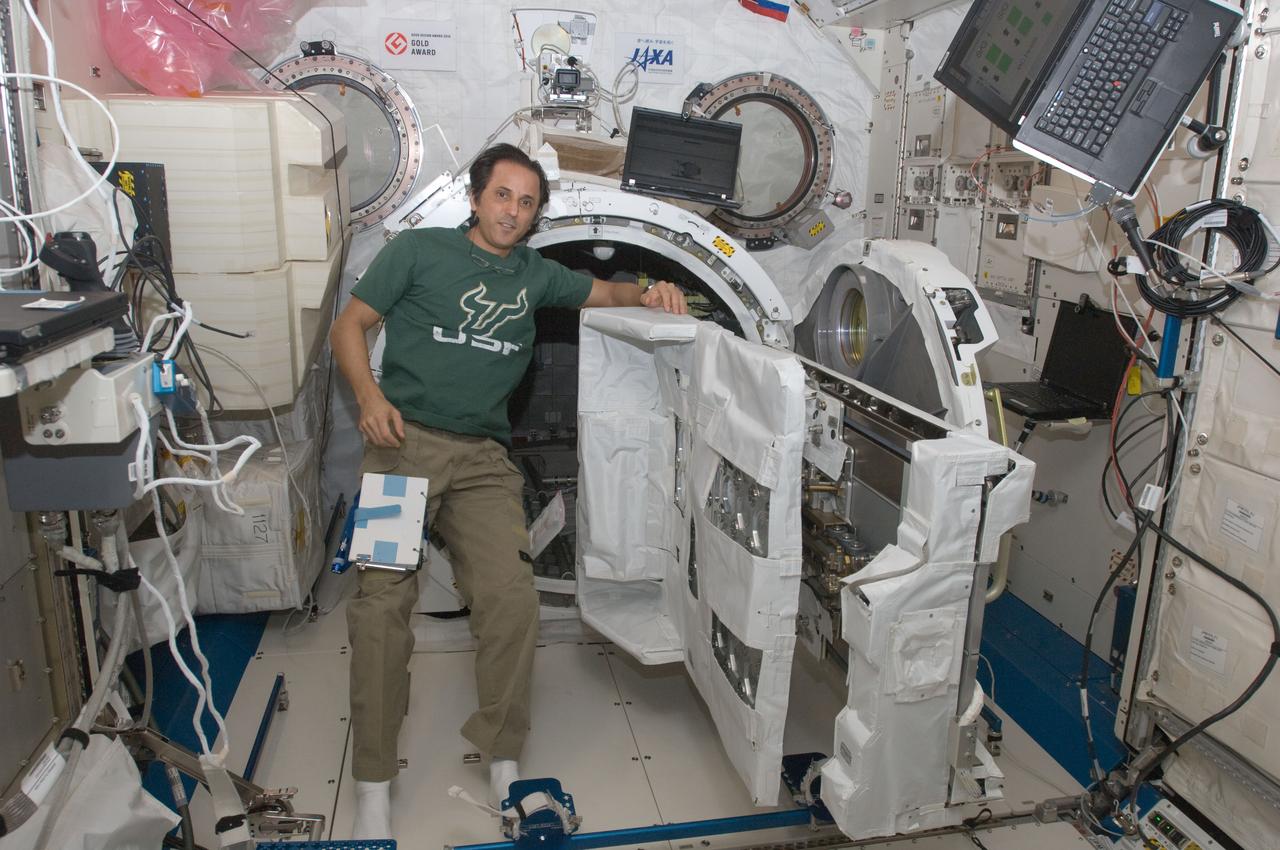
ISS032-E-022211 (21 Aug. 2012) --- NASA astronaut Joe Acaba, Expedition 32 flight engineer, is pictured near the newly assembled JEM Robotic Maneuvering System Multi-Purpose Experiment Platform (JEMRMS MPEP) in the Kibo laboratory of the International Space Station.
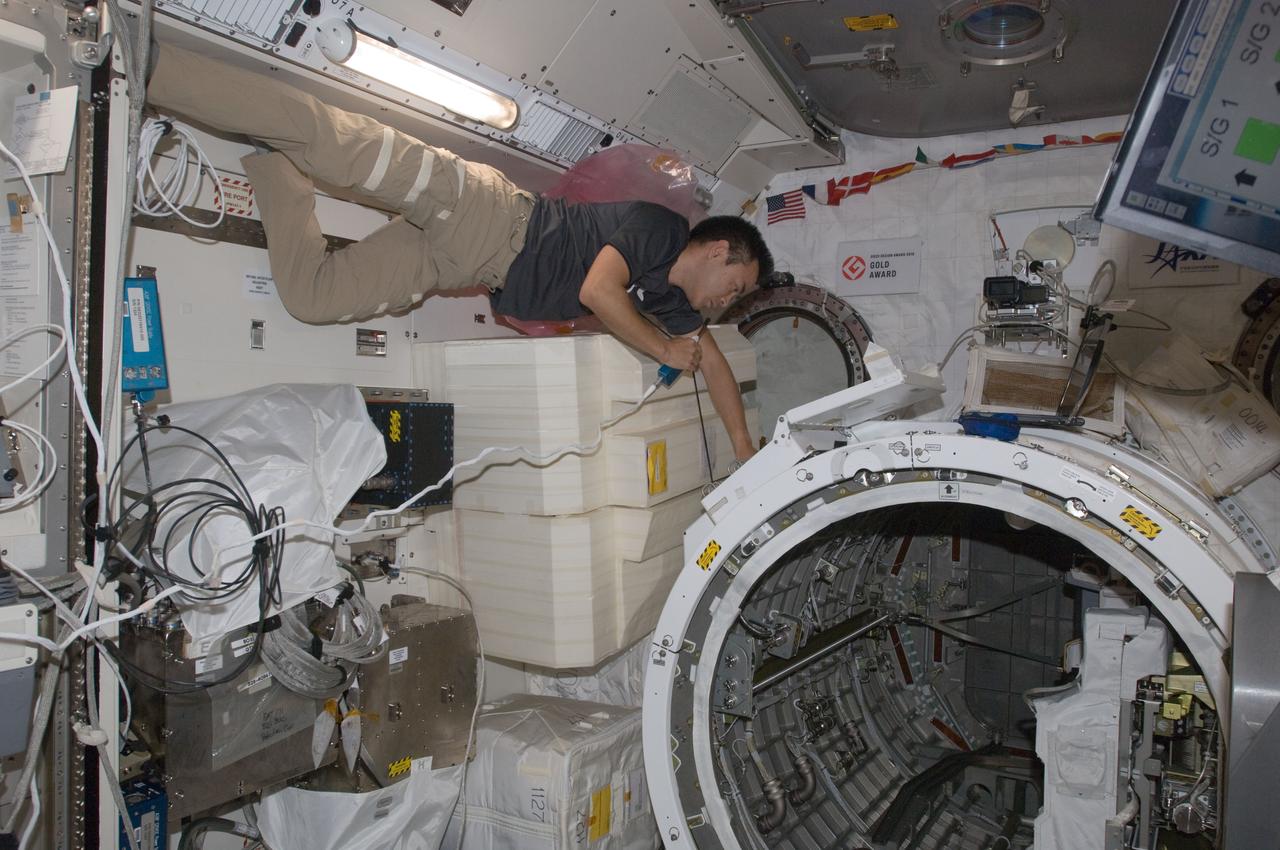
ISS032-E-022196 (21 Aug. 2012) --- Japan Aerospace Exploration Agency astronaut Aki Hoshide, Expedition 32 flight engineer, talks on a microphone while working near the airlock in the Kibo laboratory of the International Space Station. The JEM Robotic Maneuvering System Multi-Purpose Experiment Platform (JEMRMS MPEP) is visible in the airlock.
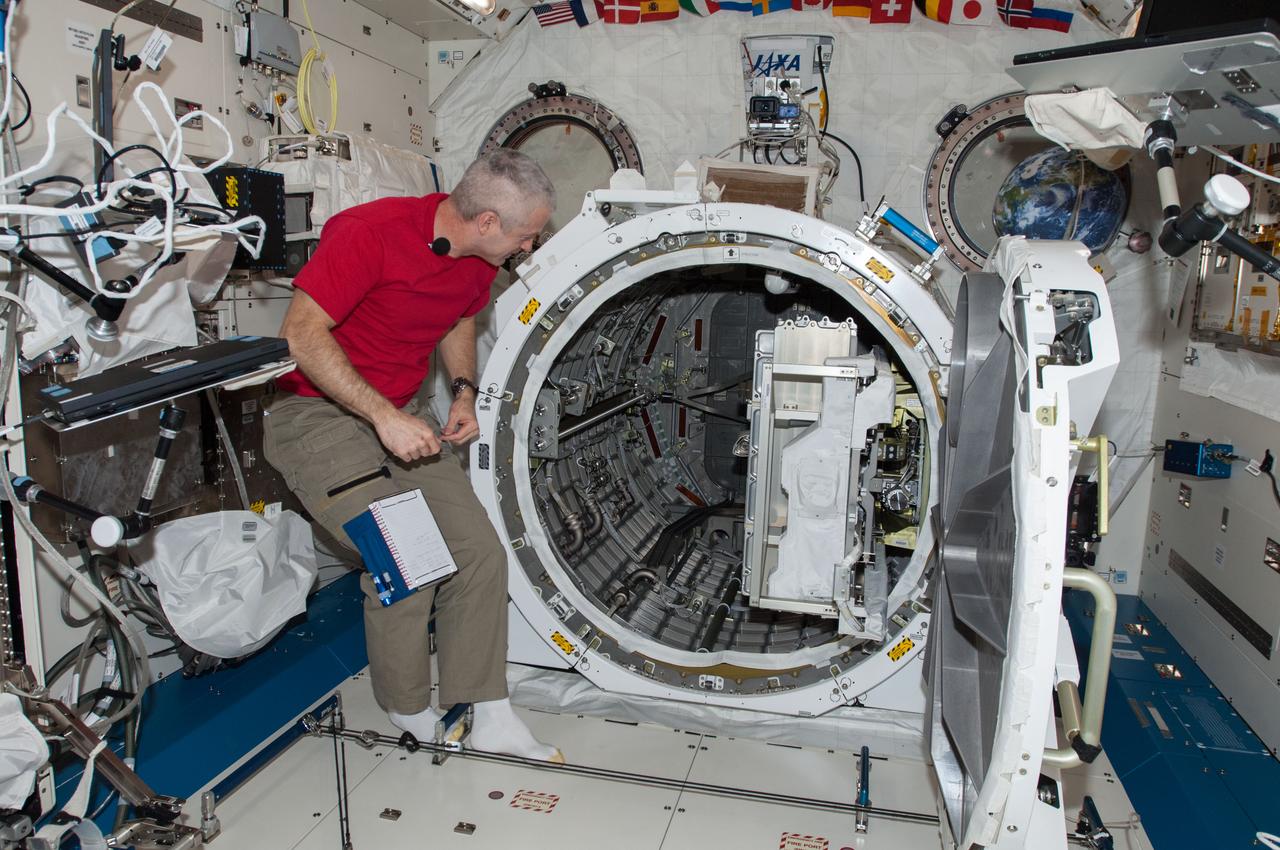
ISS040-E-001053 (26 May 2014) --- NASA astronaut Steve Swanson, Expedition 40 commander, works with equipment in the airlock in the Kibo laboratory of the International Space Station. The JEM Robotic Maneuvering System Multi-Purpose Experiment Platform (JEMRMS MPEP) is visible in the airlock.
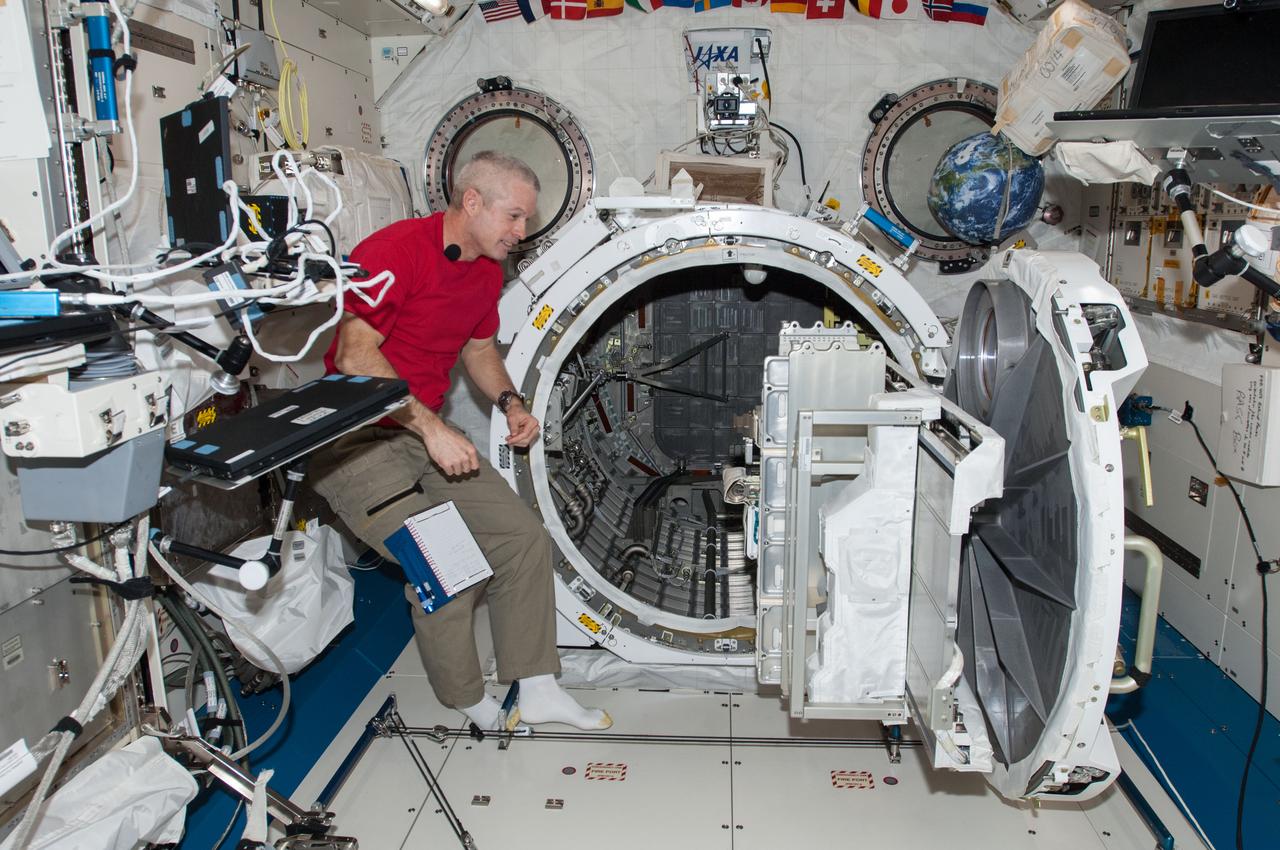
ISS040-E-001051 (26 May 2014) --- NASA astronaut Steve Swanson, Expedition 40 commander, works with equipment in the airlock in the Kibo laboratory of the International Space Station. The JEM Robotic Maneuvering System Multi-Purpose Experiment Platform (JEMRMS MPEP) is visible at right.
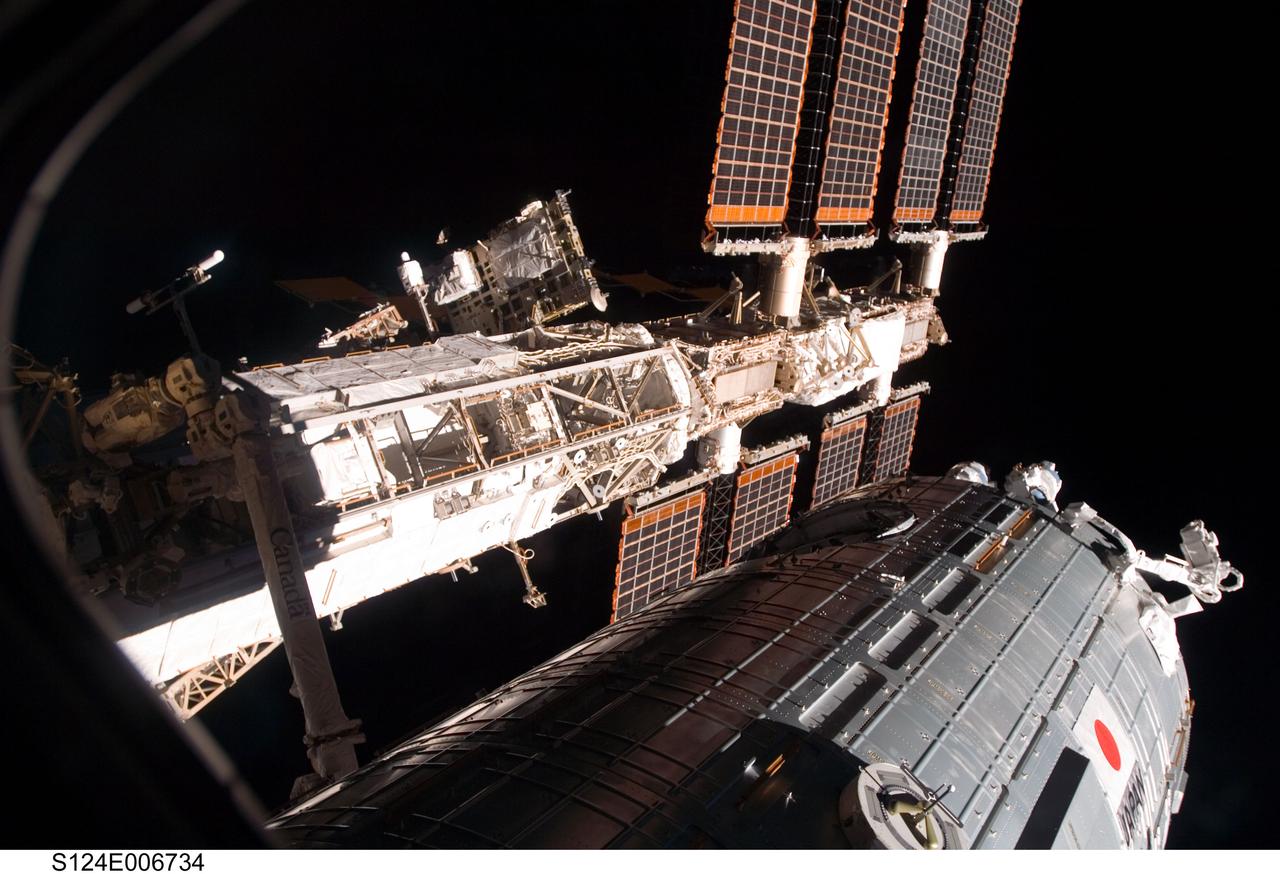
S124-E-006734 (6 June 2008) --- One of a series of digital still images documenting the Japanese Experiment Module, or JEM, also called Kibo, in its new home on the International Space Station, this view depicts Kibo's exterior, backdropped by solar array panels for the orbital outpost and one of its trusses.
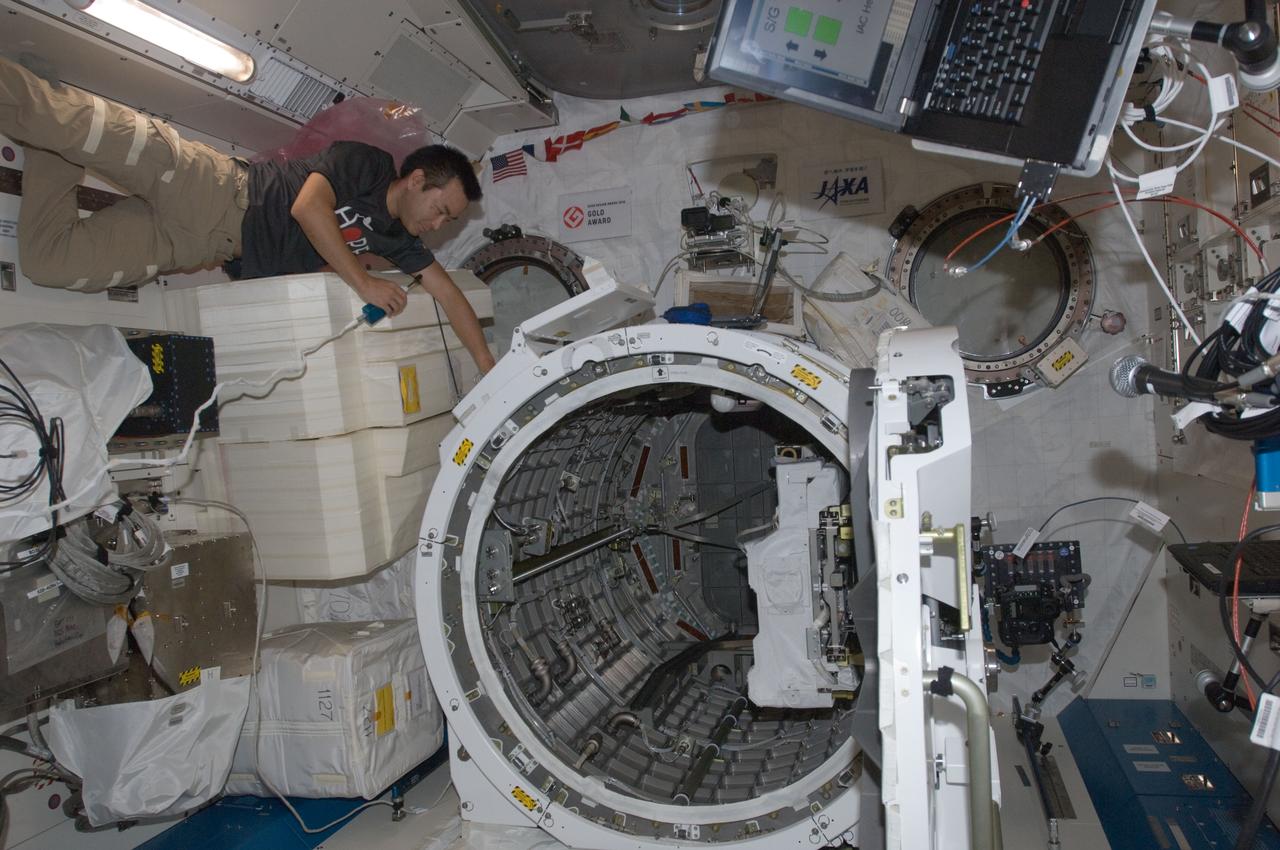
ISS032-E-022200 (21 Aug. 2012) --- Japan Aerospace Exploration Agency astronaut Aki Hoshide, Expedition 32 flight engineer, talks on a microphone while working near the airlock in the Kibo laboratory of the International Space Station. The JEM Robotic Maneuvering System Multi-Purpose Experiment Platform (JEMRMS MPEP) is visible in the airlock.
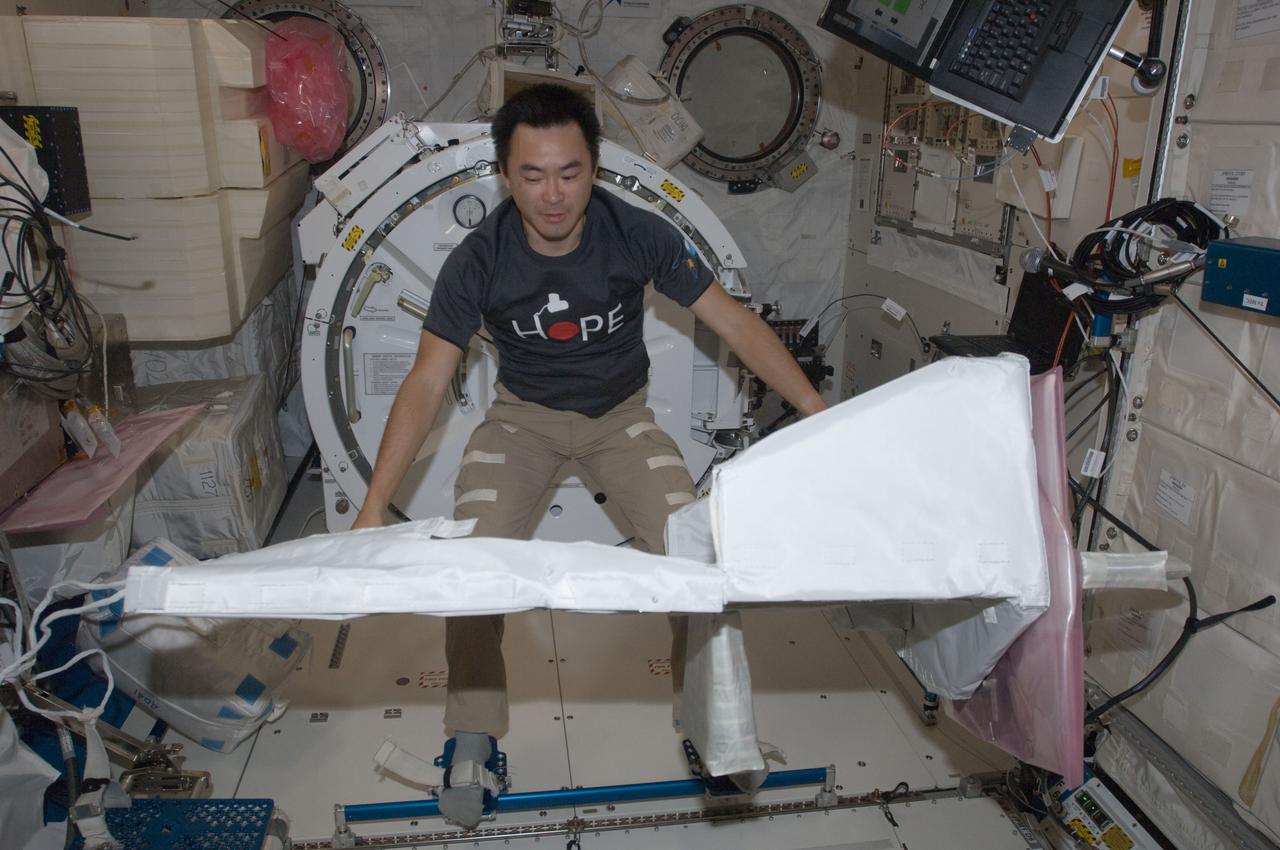
ISS032-E-022175 (21 Aug. 2012) --- Japan Aerospace Exploration Agency astronaut Aki Hoshide, Expedition 32 flight engineer, assembles the JEM Robotic Maneuvering System Multi-Purpose Experiment Platform (JEMRMS MPEP) in the Kibo laboratory of the International Space Station.
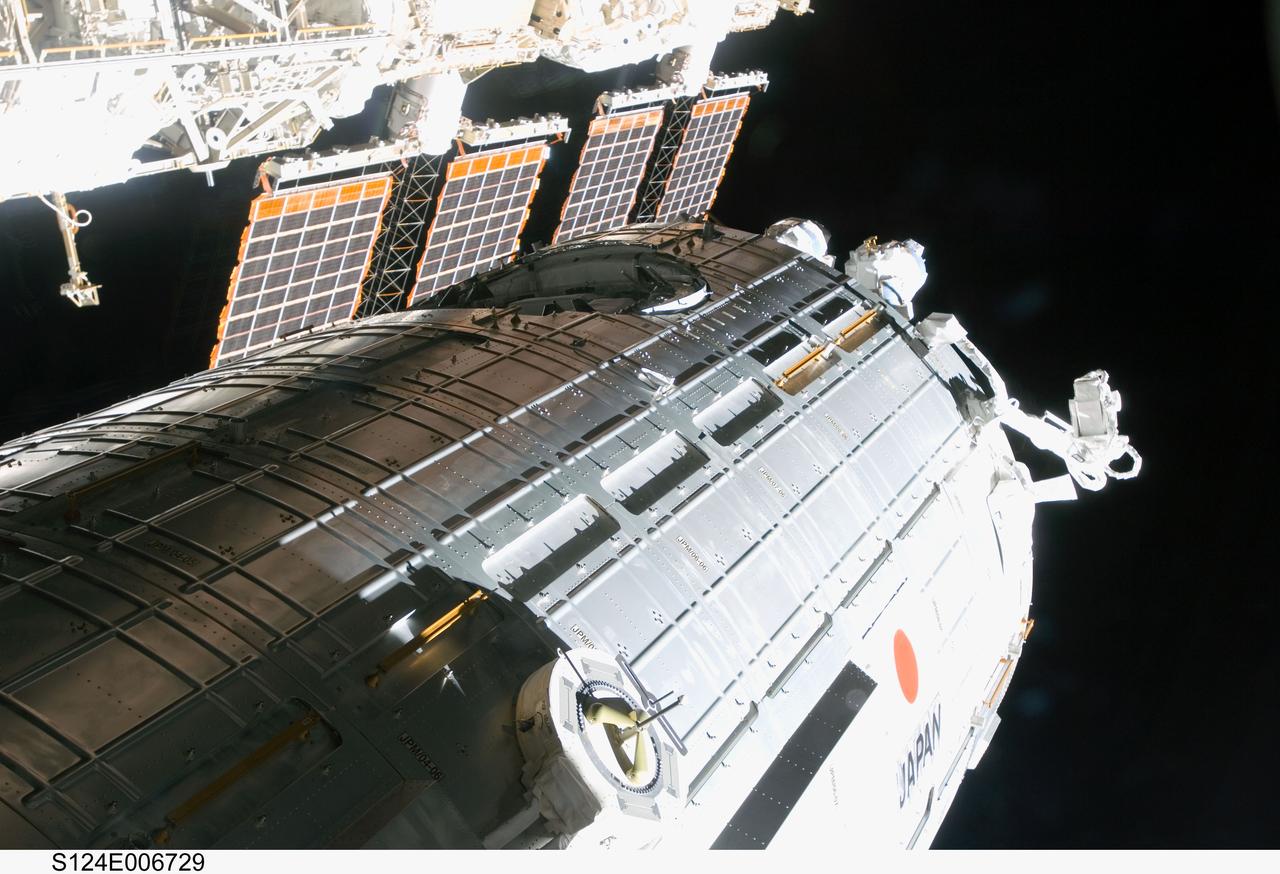
S124-E-006729 (6 June 2008) --- One of a series of digital still images documenting the Japanese Experiment Module, or JEM, also called Kibo, in its new home on the International Space Station, this view depicts Kibo's exterior, backdropped by solar array panels for the orbital outpost.
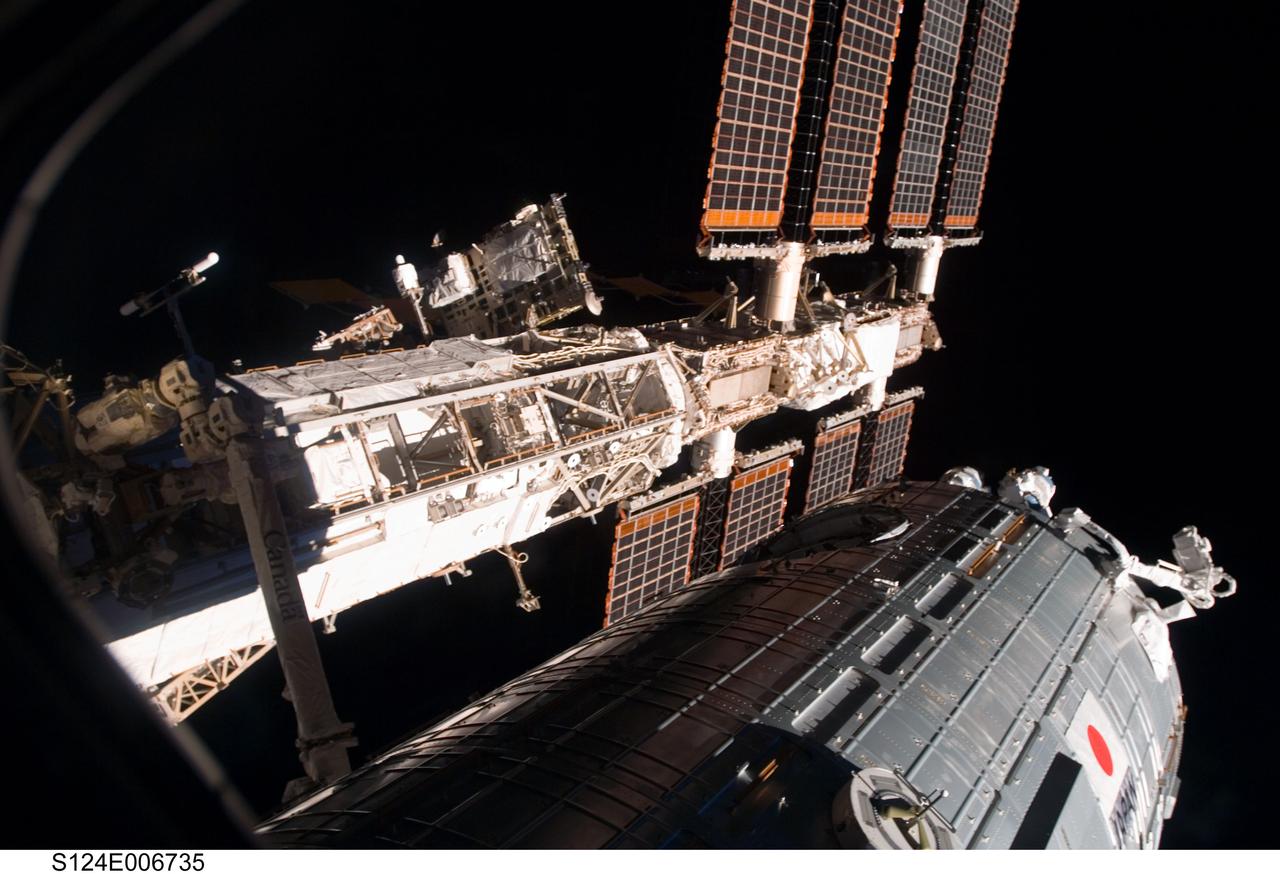
S124-E-006735 (6 June 2008) --- One of a series of digital still images documenting the Japanese Experiment Module, or JEM, also called Kibo, in its new home on the International Space Station, this view depicts Kibo's exterior, backdropped by solar array panels for the orbital outpost and one of its trusses.
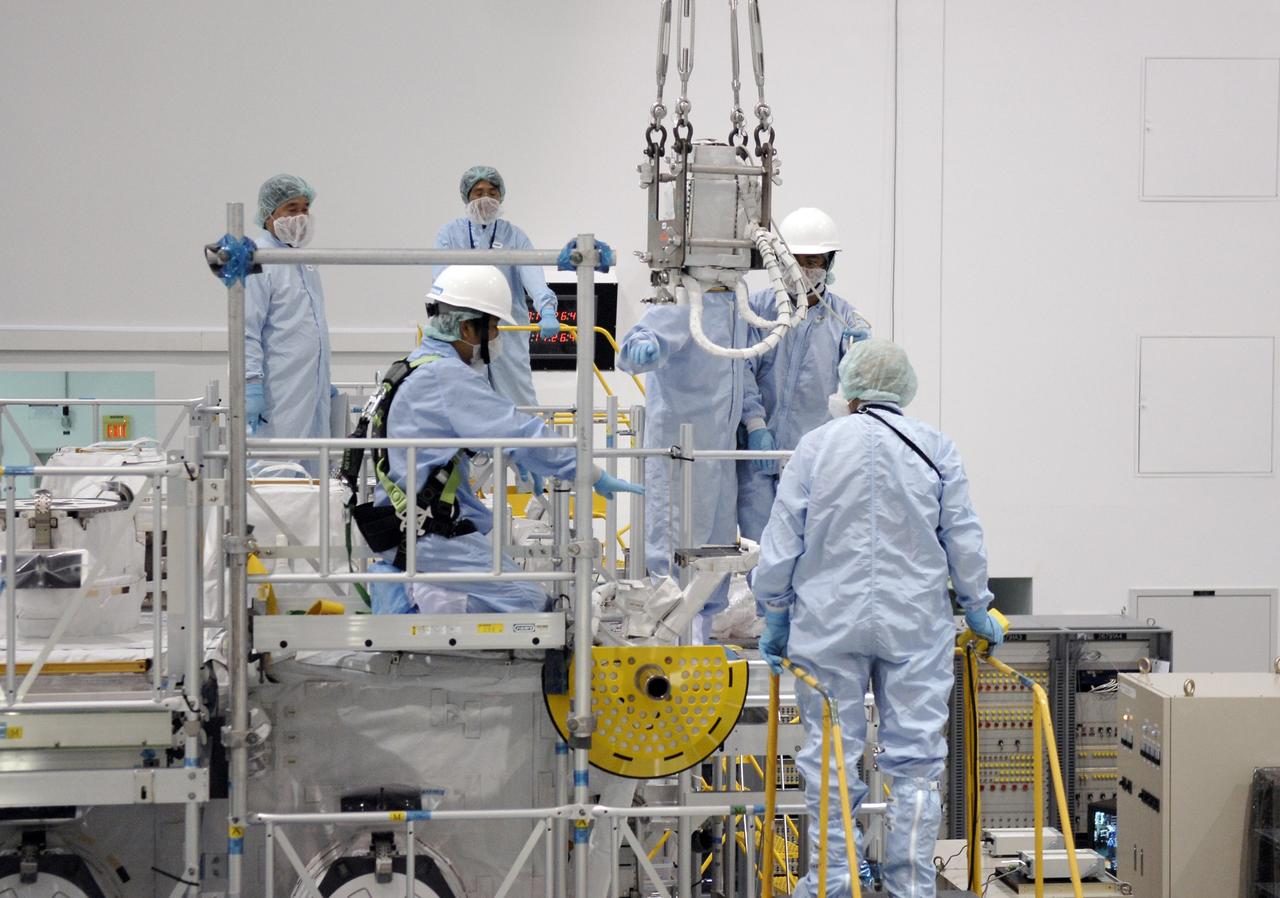
CAPE CANAVERAL, Fla. – In the Space Station Processing Facility at NASA's Kennedy Space Center in Florida, STS-127 crew members get hands-on familiarization with equipment to be used on the mission. They are looking at the hoist of one of two Japanese Aerospace Exploration Agency's Visual Equipments, or VE. These are used to support on-orbit cameras. The visual equipment flies on top of the Japanese Experiment Module External Facility, or JEM-EF, and will be installed on orbit to the outer perimeter of the EF. The view is the hoist from the top of the EF. The mission payload includes the Japanese Experiment Module, or JEM, Extended Facility and the Inter-orbit Communication System Extended Facility, or ICS-EF. Equipment familiarization is part of a Crew Equipment Interface Test. The payload will be launched to the International Space Station aboard the space shuttle Endeavour on the STS-127 mission, targeted for launch on May 15, 2009. Photo credit: NASA/Kim Shiflett

CAPE CANAVERAL, Fla. – In the Space Station Processing Facility at NASA's Kennedy Space Center in Florida, STS-127 crew members get hands-on familiarization with equipment to be used on the mission. They are looking at the hoist of one of two Japanese Aerospace Exploration Agency's Visual Equipments, or VE. The photo shows the hoist of the VE to its final position on the outer perimeter of the Japanese Experiment Module External Facility, or JEM-EF. The VE has to be installed to the final position on orbit because it is outside of the payload bay envelope. The mission payload includes the Japanese Experiment Module, or JEM, Extended Facility and the Inter-orbit Communication System Extended Facility, or ICS-EF. Equipment familiarization is part of a Crew Equipment Interface Test. The payload will be launched to the International Space Station aboard the space shuttle Endeavour on the STS-127 mission, targeted for launch on May 15, 2009. Photo credit: NASA/Kim Shiflett
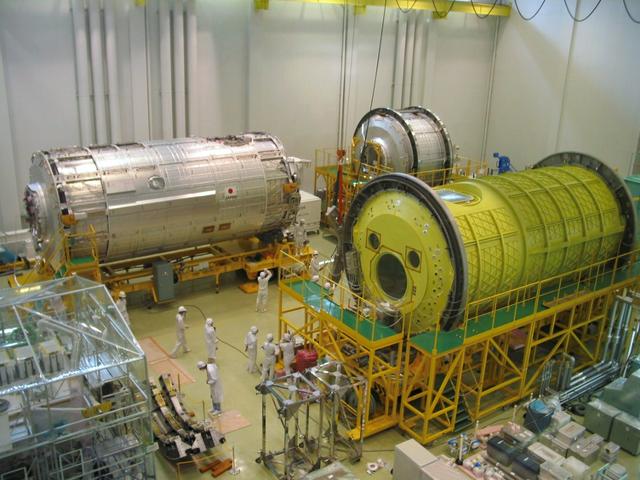
JSC2003-E-34753 (16 April 2003) --- Components of Japan's primary contribution to the International Space Station, the Japanese Experiment Module (JEM), Kibo, are seen in this view at the Tsukuba Space Center. Clockwise from left are the JEM Pressurized Module (PM) (an on-orbit laboratory), the JEM Experiment Logistics Module - Pressurized Section (an experiment and logistics storage module), the JEM PM Engineering Model (used for pre-flight development and testing), and the JEM Exposed Facility (an unpressurized platform for space environment experiments). The laboratory module was transported by truck and then by barge to Yokohama Harbor, Yokohama, Japan where it was loaded on a container ship bound for Port Canaveral, Florida. The Kibo laboratory, built by the National Space Development Agency of Japan (NASDA), is expected to arrive at the Kennedy Space Center for module integration tests with Node 2 and pre-launch processing in early June. Photo Credit: NASA

JSC2003-E-42545 (For Release: 18 June 2003) --- The Japanese Experiment Module (JEM) Pressurized Module (PM) is shown in a processing facility with the Remote Manipulator System (RMS) Main Arm attached for integrated testing. The JEM, called Kibo, which means "hope" in Japanese is Japan's primary contribution to the International Space Station. The Main Arm can handle up to seven tons (14,000 pounds) of hardware and a Small Fine Arm can be attached to handle more delicate operations. The PM arrived at Kennedy Space Center (KSC) in early June 2003 to begin integrated testing with the Station's Node 2 and eventually pre-launch processing. The RMS will be delivered to KSC processing at a later date. Photo Credit: NASA
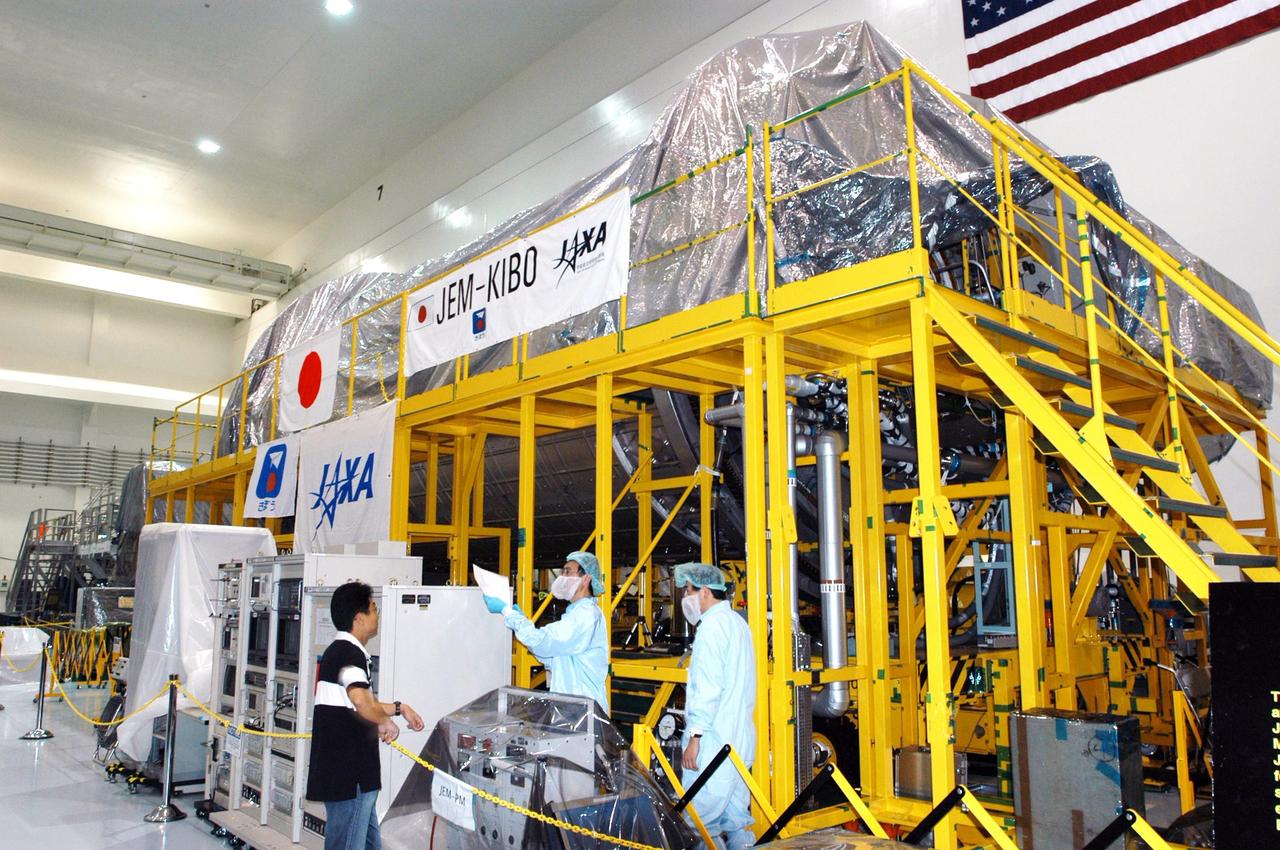
KENNEDY SPACE CENTER, FLA. - In the Space Station Processing Facility, the Japanese Experiment Module (JEM) is dry and still covered following Hurricane Frances. The storm's path over Florida took it through Cape Canaveral and KSC property during Labor Day weekend. There was no damage to the Space Shuttle orbiters or to any other flight hardware.
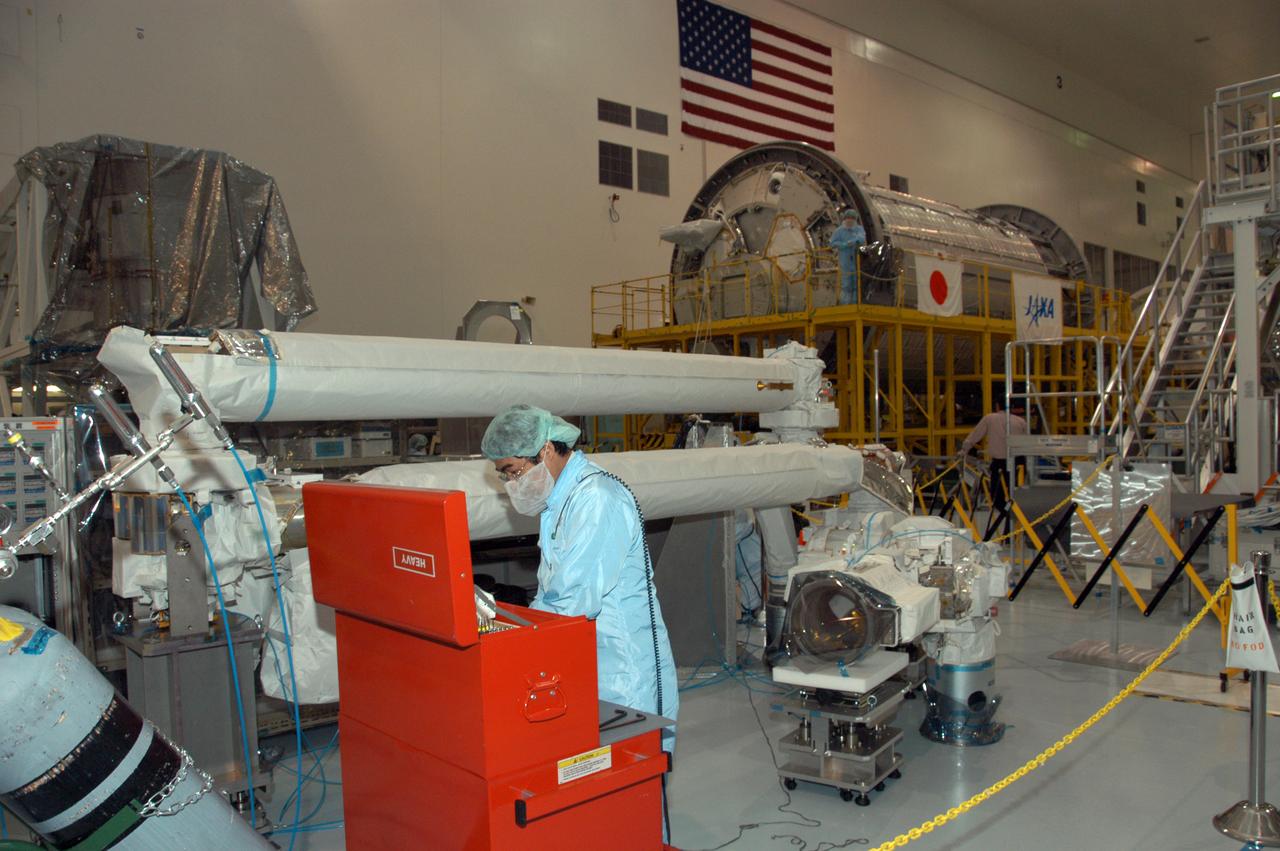
In the Space Station Processing Facility, technicians work on the Japanese remote manipulator system. It is scheduled to fly on a 2008 mission along with the Kibo Japanese Experiment Module Pressurized Module (JEM-PM).
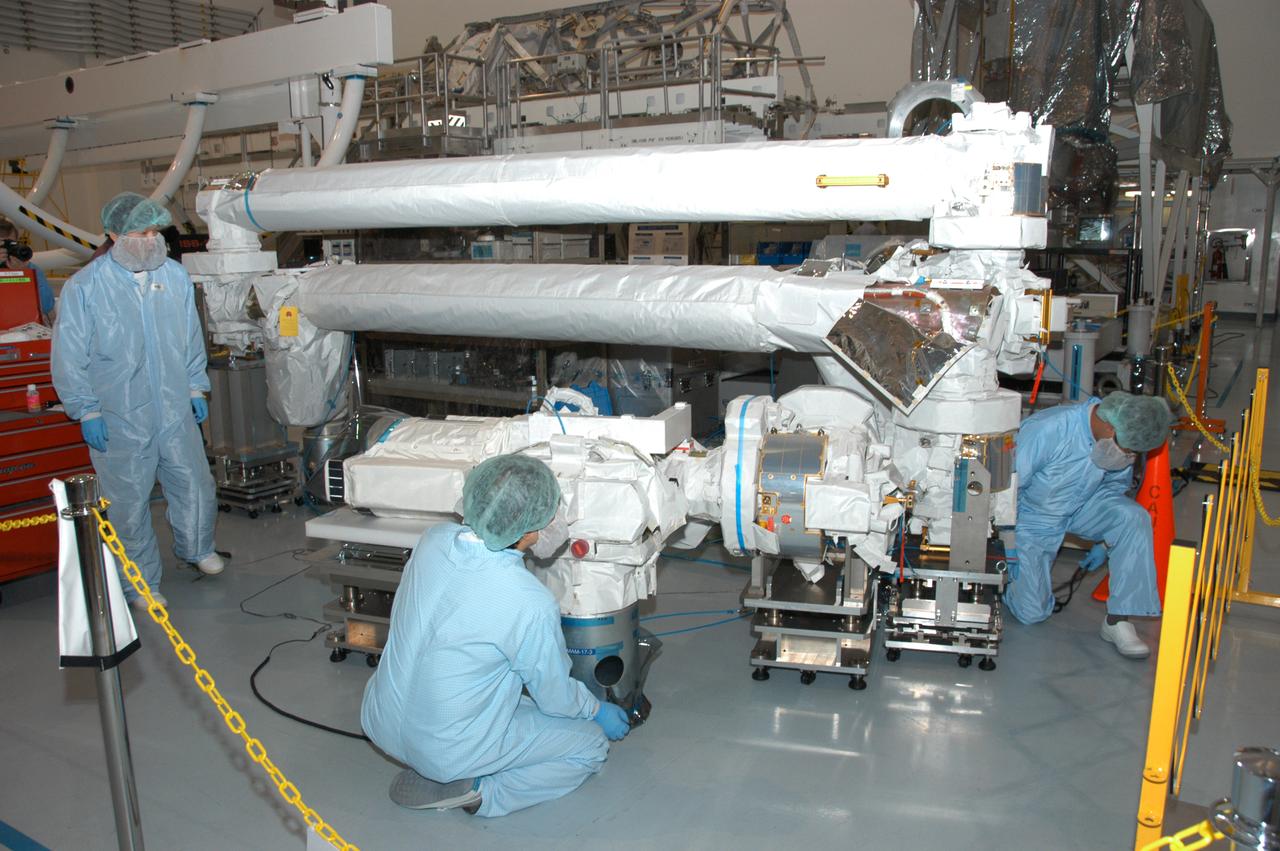
In the Space Station Processing Facility, technicians work on the Japanese remote manipulator system. It is scheduled to fly on a 2008 mission along with the Kibo Japanese Experiment Module Pressurized Module (JEM-PM).
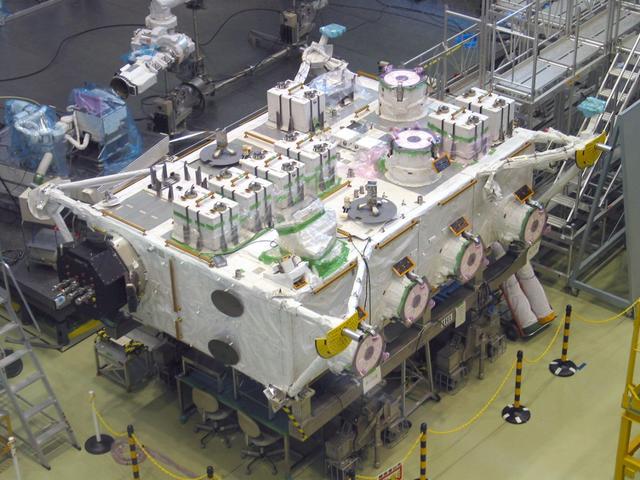
JSC2003-E-42544 (June 2003 ) --- The Exposed Facility (EF) of the Japanese Experiment Module (JEM), Japan's primary contribution to the International Space Station (ISS), is shown in a processing facility. The EF is a unique platform on the ISS that is located outside of the Pressurized Module and is continuously exposed to the space environment. Items positioned on the exterior platform focus on Earth observation as well as communication, scientific, engineering and materials science experiments. Photo Credit: NASA
![iss056e200730 (10/3/2018) --- Photo documentation of the JEM Small Satellite Orbital Deployer (SSOD) on the Multi-Purpose Experiment Platform (MPEP) installation in preparation of the [Japanese Experiment Module]-Small Satellite Orbital Deployer 10 (J-SSOD 10) mission. J-SSOD-10 deploys the cubesats SPATIUM-I from Nanyang Technological University, Singapore, and the Kyushu Institute of Technology, Japan, RSP-00 from Ryman Sat Spaces General Incorporated Association, Japan, and STARS-Me from Shizuoka University, Japan.](https://images-assets.nasa.gov/image/iss056e200730/iss056e200730~medium.jpg)
iss056e200730 (10/3/2018) --- Photo documentation of the JEM Small Satellite Orbital Deployer (SSOD) on the Multi-Purpose Experiment Platform (MPEP) installation in preparation of the [Japanese Experiment Module]-Small Satellite Orbital Deployer 10 (J-SSOD 10) mission. J-SSOD-10 deploys the cubesats SPATIUM-I from Nanyang Technological University, Singapore, and the Kyushu Institute of Technology, Japan, RSP-00 from Ryman Sat Spaces General Incorporated Association, Japan, and STARS-Me from Shizuoka University, Japan.
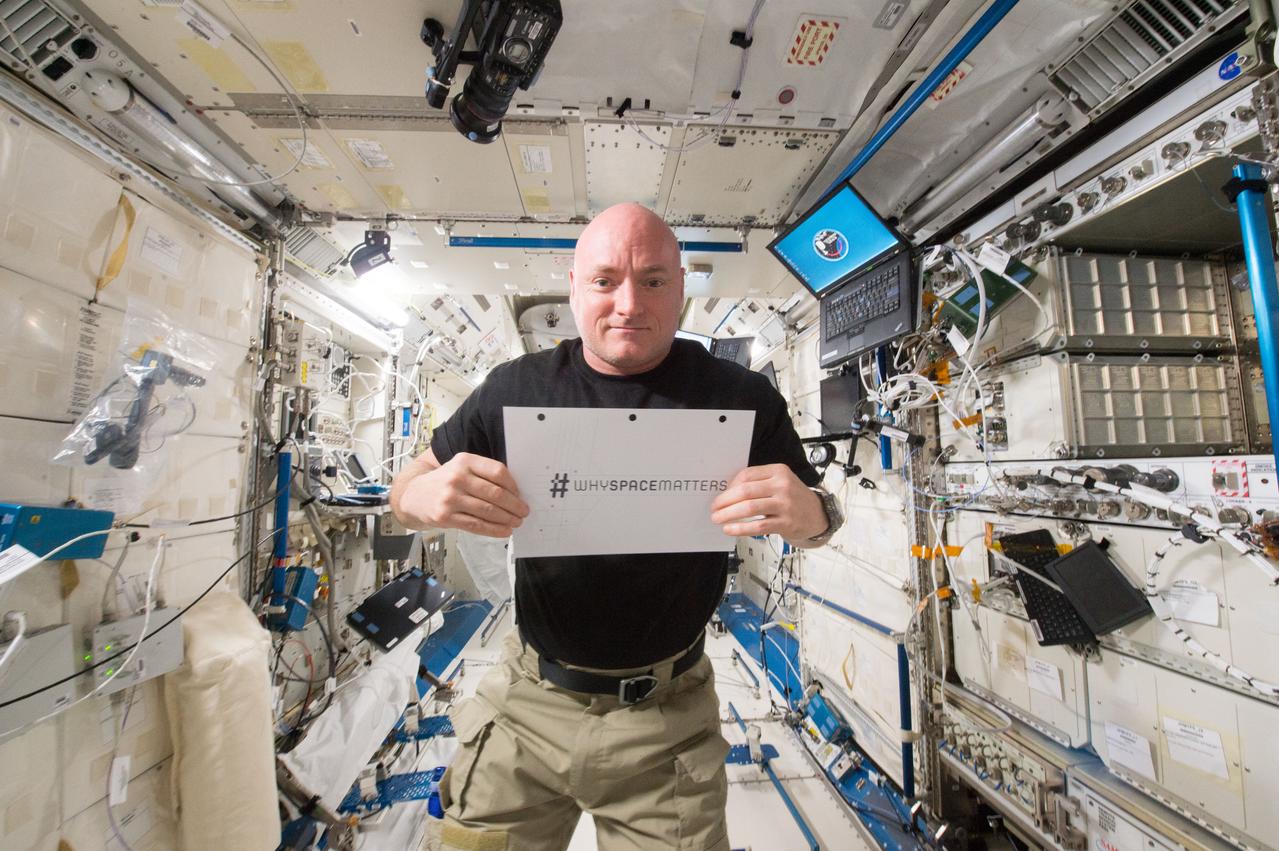
ISS043E294202 (06/10/2015) --- NASA astronaut Scott Kelly is photographed in the Japanese Experiment Module (JEM) holding a sign with the hashtag #whyspacematters. NASA and the United Nations Office for Outer Space Affairs (UNOOSA) have launched a global photography competition to highlight how the vantage point of space helps us better understand our home planet, improve lives, and safeguard our future by aiding sustainable development on Earth.
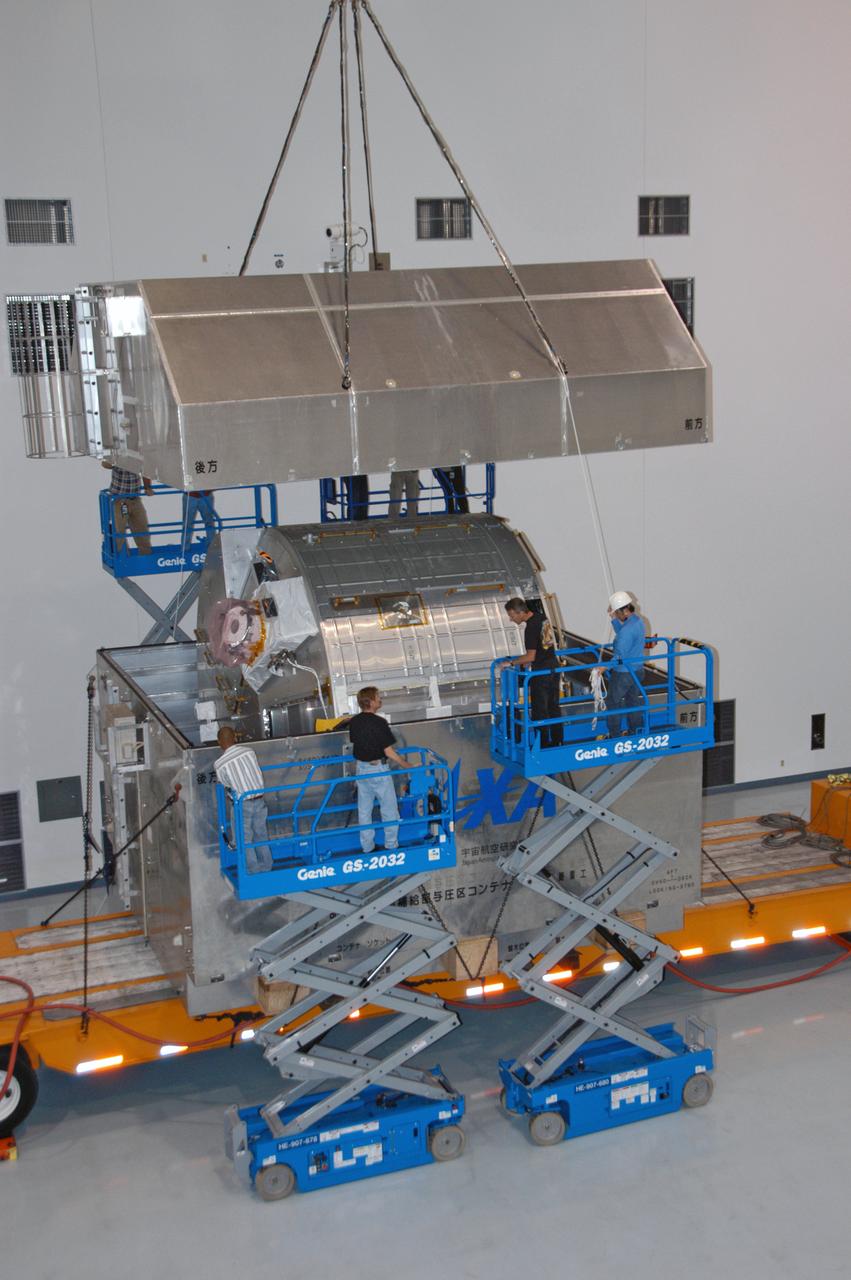
Inside the Space Station Processing Facility, workers monitor progress as a huge crane is used to remove the top of the crate carrying the Experiment Logistics Module Pressurized Section for the Japanese Experiment Module. The logistics module is one of the components of the Japanese Experiment Module or JEM, also known as Kibo, which means "hope" in Japanese. Kibo comprises six components: two research facilities -- the Pressurized Module and Exposed Facility; a Logistics Module attached to each of them; a Remote Manipulator System; and an Inter-Orbit Communication System unit. Kibo also has a scientific airlock through which experiments are transferred and exposed to the external environment of space. Kibo is Japan's first human space facility and its primary contribution to the station. Kibo will enhance the unique research capabilities of the orbiting complex by providing an additional environment in which astronauts can conduct science experiments. The various components of JEM will be assembled in space over the course of three Space Shuttle missions. The first of those three missions, STS-123, will carry the Experiment Logistics Module Pressurized Section aboard the Space Shuttle Endeavour, targeted for launch in 2007.
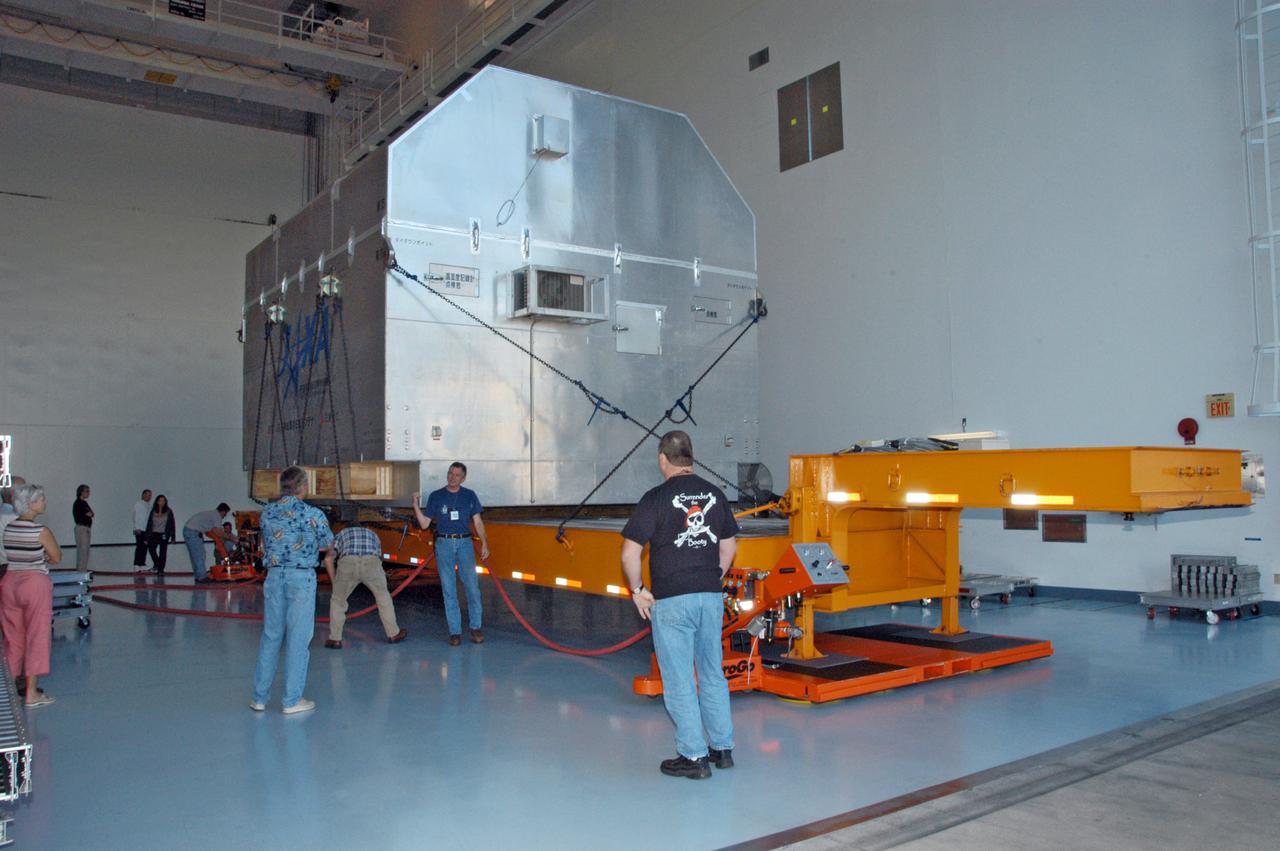
The Experiment Logistics Module Pressurized Section for the Japanese Experiment Module arrives at the Space Station Processing Facility for uncrating. The logistics module is one of the components of the Japanese Experiment Module or JEM, also known as Kibo, which means "hope" in Japanese. Kibo comprises six components: two research facilities -- the Pressurized Module and Exposed Facility; a Logistics Module attached to each of them; a Remote Manipulator System; and an Inter-Orbit Communication System unit. Kibo also has a scientific airlock through which experiments are transferred and exposed to the external environment of space. Kibo is Japan's first human space facility and its primary contribution to the station. Kibo will enhance the unique research capabilities of the orbiting complex by providing an additional environment in which astronauts can conduct science experiments. The various components of JEM will be assembled in space over the course of three Space Shuttle missions. The first of those three missions, STS-123, will carry the Experiment Logistics Module Pressurized Section aboard the Space Shuttle Endeavour, targeted for launch in 2007.
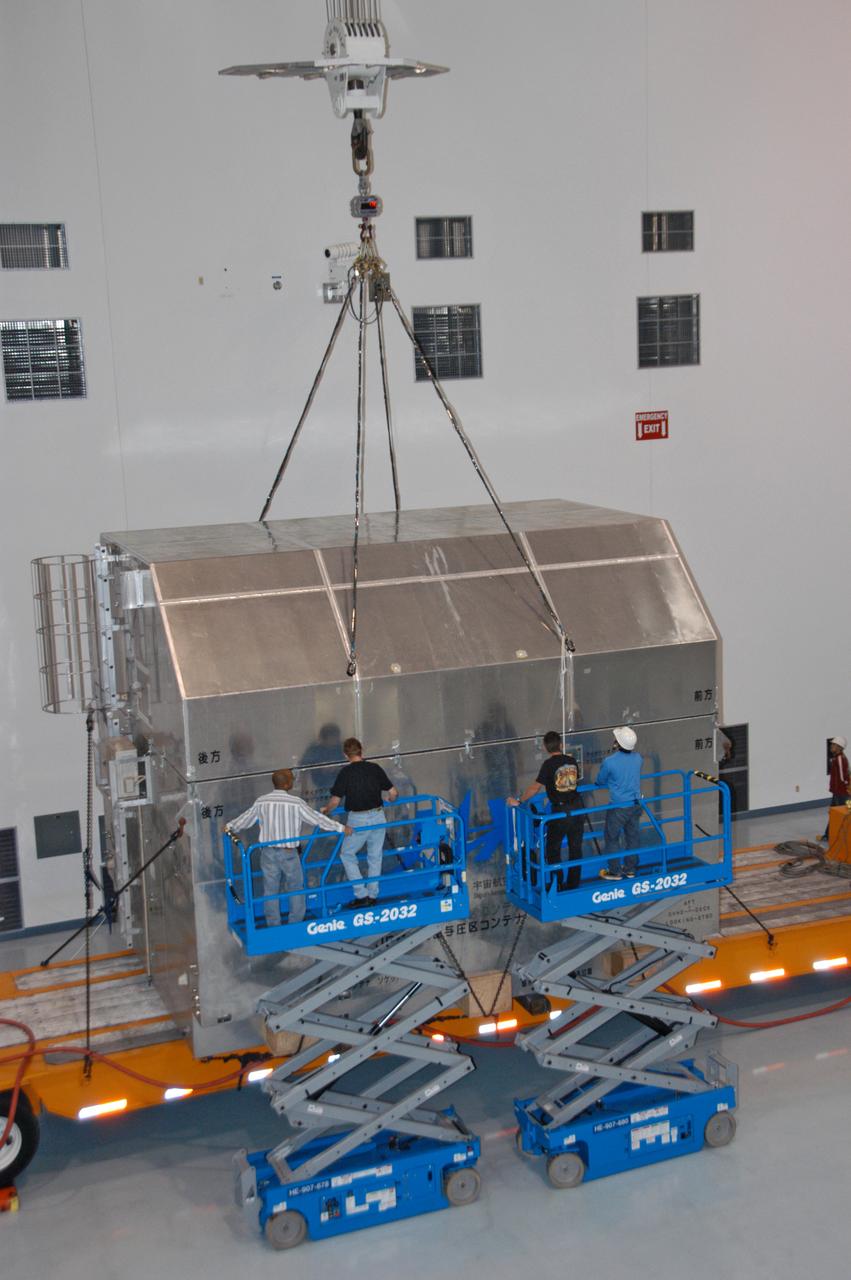
Inside the Space Station Processing Facility, workers monitor progress as a huge crane is used to remove the top of the crate carrying the Experiment Logistics Module Pressurized Section for the Japanese Experiment Module. The logistics module is one of the components of the Japanese Experiment Module or JEM, also known as Kibo, which means "hope" in Japanese. Kibo comprises six components: two research facilities -- the Pressurized Module and Exposed Facility; a Logistics Module attached to each of them; a Remote Manipulator System; and an Inter-Orbit Communication System unit. Kibo also has a scientific airlock through which experiments are transferred and exposed to the external environment of space. Kibo is Japan's first human space facility and its primary contribution to the station. Kibo will enhance the unique research capabilities of the orbiting complex by providing an additional environment in which astronauts can conduct science experiments. The various components of JEM will be assembled in space over the course of three Space Shuttle missions. The first of those three missions, STS-123, will carry the Experiment Logistics Module Pressurized Section aboard the Space Shuttle Endeavour, targeted for launch in 2007.
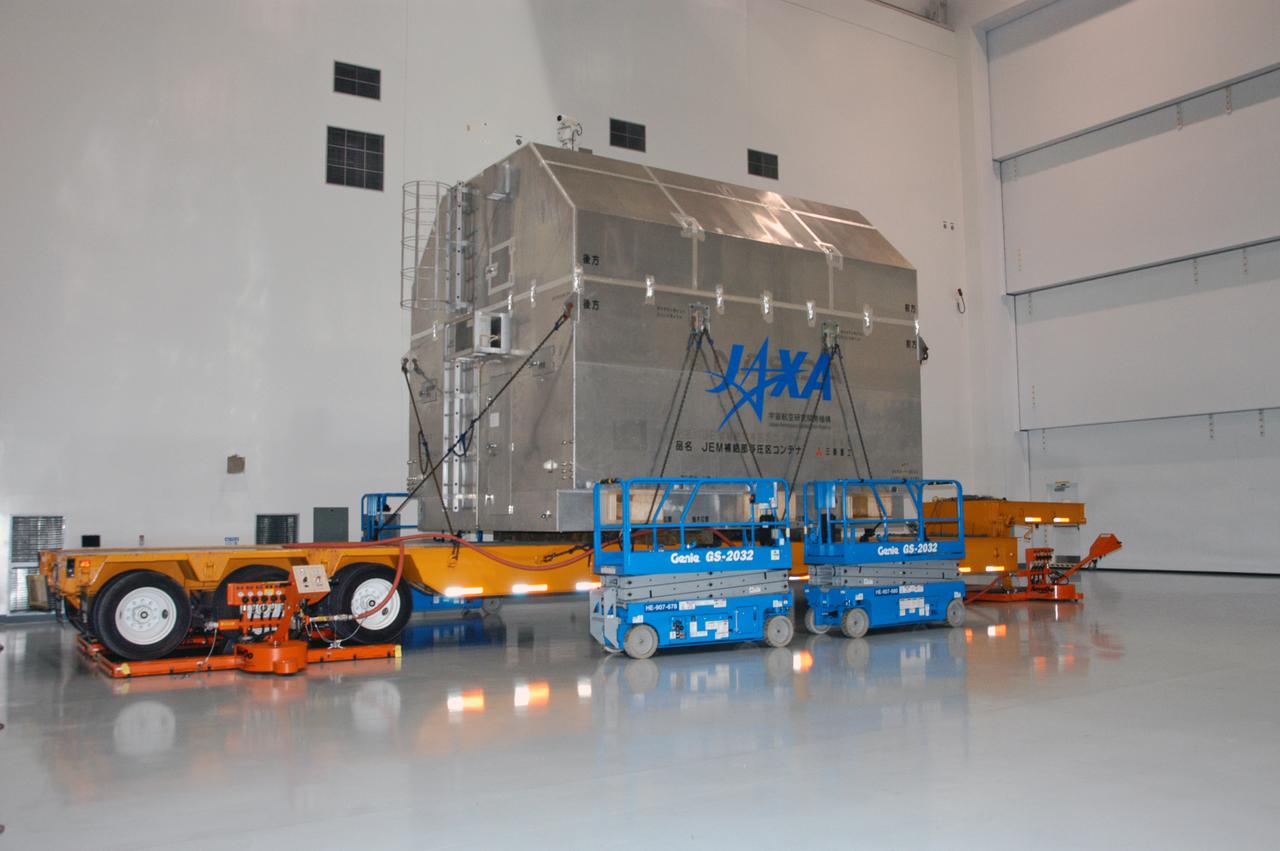
The Experiment Logistics Module Pressurized Section for the Japanese Experiment Module arrives at the Space Station Processing Facility for uncrating. The logistics module is one of the components of the Japanese Experiment Module or JEM, also known as Kibo, which means "hope" in Japanese. Kibo comprises six components: two research facilities -- the Pressurized Module and Exposed Facility; a Logistics Module attached to each of them; a Remote Manipulator System; and an Inter-Orbit Communication System unit. Kibo also has a scientific airlock through which experiments are transferred and exposed to the external environment of space. Kibo is Japan's first human space facility and its primary contribution to the station. Kibo will enhance the unique research capabilities of the orbiting complex by providing an additional environment in which astronauts can conduct science experiments. The various components of JEM will be assembled in space over the course of three Space Shuttle missions. The first of those three missions, STS-123, will carry the Experiment Logistics Module Pressurized Section aboard the Space Shuttle Endeavour, targeted for launch in 2007.
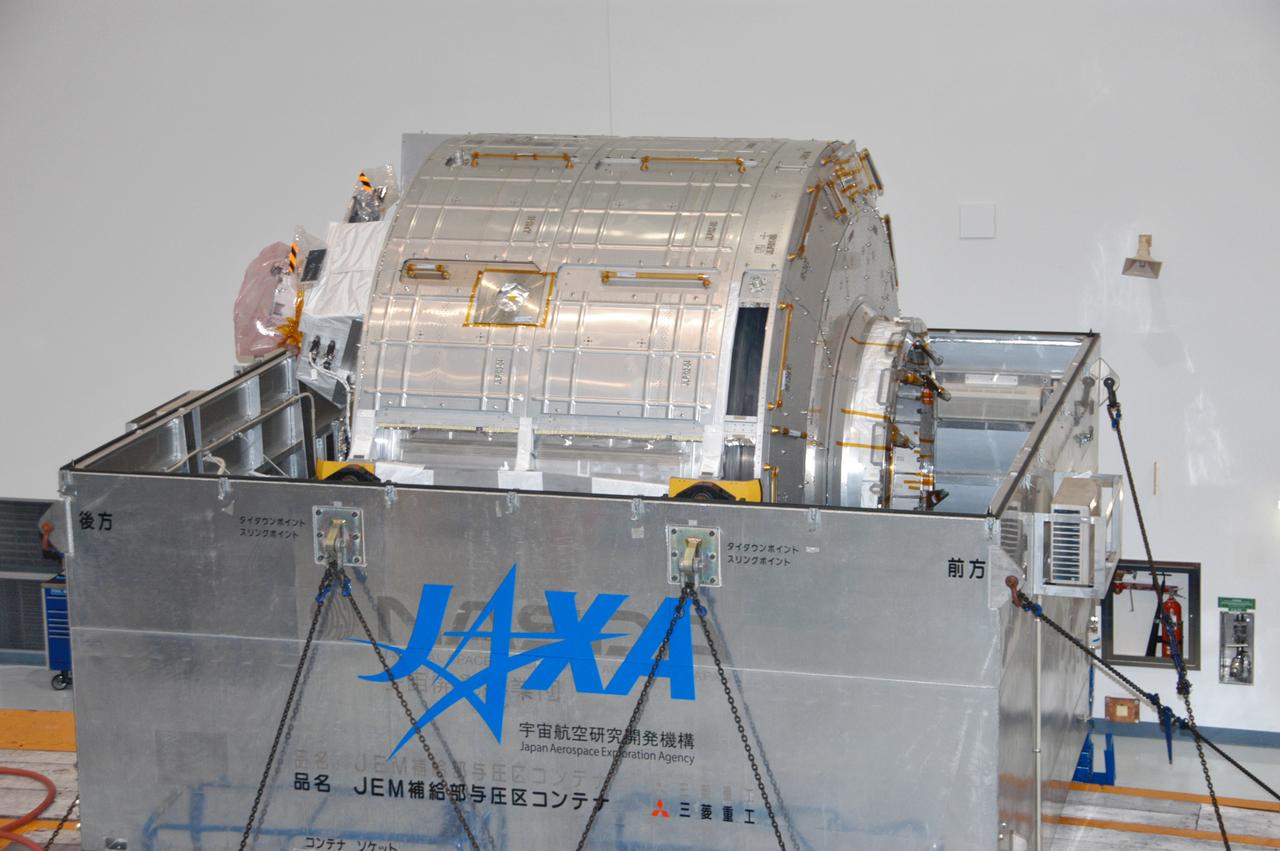
Inside the Space Station Processing Facility, the Experiment Logistics Module Pressurized Section for the Japanese Experiment Module is revealed after the top of the crate is removed. The logistics module is one of the components of the Japanese Experiment Module or JEM, also known as Kibo, which means "hope" in Japanese. Kibo comprises six components: two research facilities -- the Pressurized Module and Exposed Facility; a Logistics Module attached to each of them; a Remote Manipulator System; and an Inter-Orbit Communication System unit. Kibo also has a scientific airlock through which experiments are transferred and exposed to the external environment of space. Kibo is Japan's first human space facility and its primary contribution to the station. Kibo will enhance the unique research capabilities of the orbiting complex by providing an additional environment in which astronauts can conduct science experiments. The various components of JEM will be assembled in space over the course of three Space Shuttle missions. The first of those three missions, STS-123, will carry the Experiment Logistics Module Pressurized Section aboard the Space Shuttle Endeavour, targeted for launch in 2007.

Inside the Space Station Processing Facility, workers monitor progress as a huge crane is used to remove the top of the crate carrying the Experiment Logistics Module Pressurized Section for the Japanese Experiment Module. The logistics module is one of the components of the Japanese Experiment Module or JEM, also known as Kibo, which means "hope" in Japanese. Kibo comprises six components: two research facilities -- the Pressurized Module and Exposed Facility; a Logistics Module attached to each of them; a Remote Manipulator System; and an Inter-Orbit Communication System unit. Kibo also has a scientific airlock through which experiments are transferred and exposed to the external environment of space. Kibo is Japan's first human space facility and its primary contribution to the station. Kibo will enhance the unique research capabilities of the orbiting complex by providing an additional environment in which astronauts can conduct science experiments. The various components of JEM will be assembled in space over the course of three Space Shuttle missions. The first of those three missions, STS-123, will carry the Experiment Logistics Module Pressurized Section aboard the Space Shuttle Endeavour, targeted for launch in 2007.
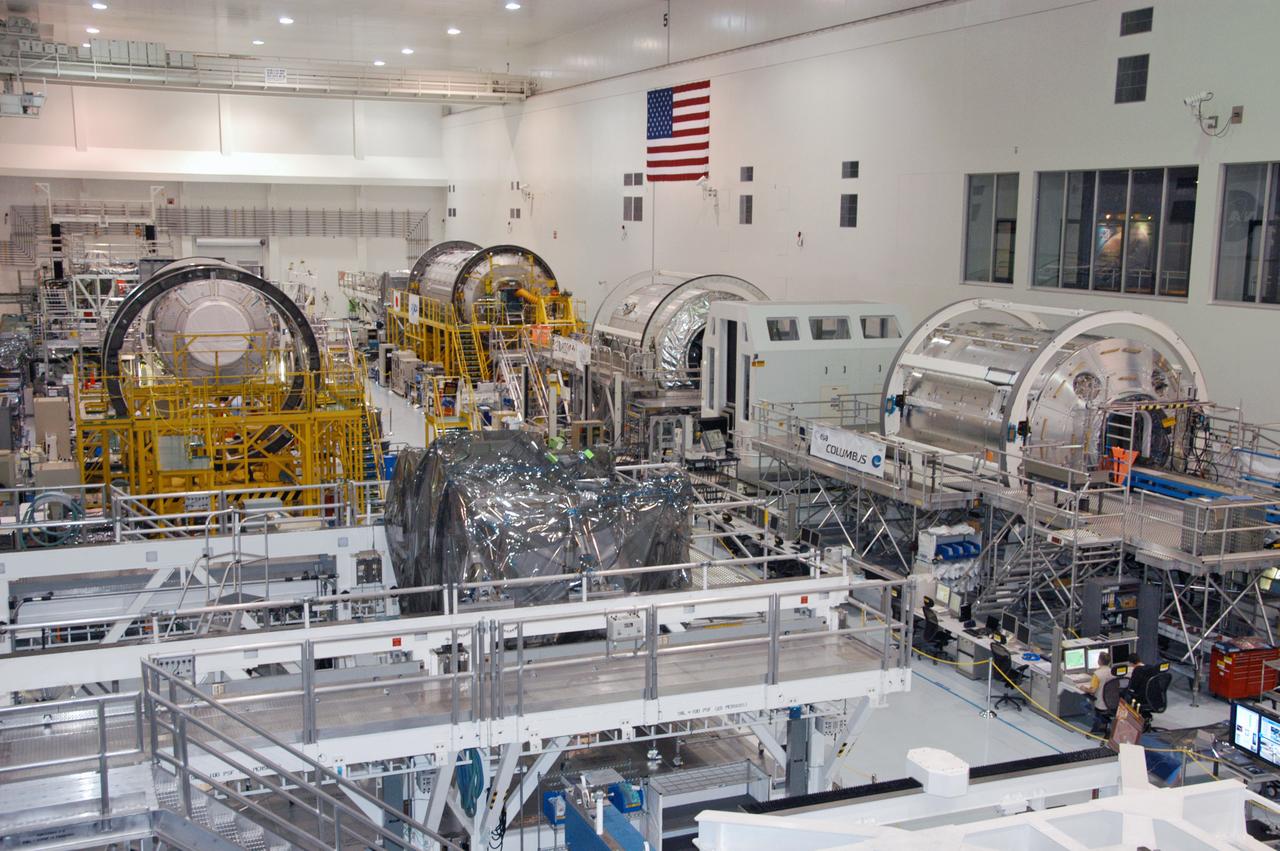
Several components for delivery to the International Space Station sit in test stands inside the Space Station Processing Facility highbay. To the right, from back to front, are the Japanese Experiment Module, the Raffaello multi-purpose logistics module, and the European Space Agency's Columbus scientific research module. To the left in front is the starboard truss segment S5. Behind it is the test stand that will hold the Experiment Logistics Module Pressurized Section for the Japanese Experiment Module. The logistics module is one of the components of the Japanese Experiment Module or JEM, also known as Kibo, which means "hope" in Japanese. Kibo comprises six components: two research facilities -- the Pressurized Module and Exposed Facility; a Logistics Module attached to each of them; a Remote Manipulator System; and an Inter-Orbit Communication System unit. Kibo also has a scientific airlock through which experiments are transferred and exposed to the external environment of space. Kibo is Japan's first human space facility and its primary contribution to the station. Kibo will enhance the unique research capabilities of the orbiting complex by providing an additional environment in which astronauts can conduct science experiments. The various components of JEM will be assembled in space over the course of three Space Shuttle missions. The first of those three missions, STS-123, will carry the Experiment Logistics Module Pressurized Section aboard the Space Shuttle Endeavour, targeted for launch in 2007.

The Experiment Logistics Module Pressurized Section for the Japanese Experiment Module arrives at the Space Station Processing Facility. The logistics module is one of the components of the Japanese Experiment Module or JEM, also known as Kibo, which means "hope" in Japanese. Kibo comprises six components: two research facilities -- the Pressurized Module and Exposed Facility; a Logistics Module attached to each of them; a Remote Manipulator System; and an Inter-Orbit Communication System unit. Kibo also has a scientific airlock through which experiments are transferred and exposed to the external environment of space. Kibo is Japan's first human space facility and its primary contribution to the station. Kibo will enhance the unique research capabilities of the orbiting complex by providing an additional environment in which astronauts can conduct science experiments. The various components of JEM will be assembled in space over the course of three Space Shuttle missions. The first of those three missions, STS-123, will carry the Experiment Logistics Module Pressurized Section aboard the Space Shuttle Endeavour, targeted for launch in 2007.
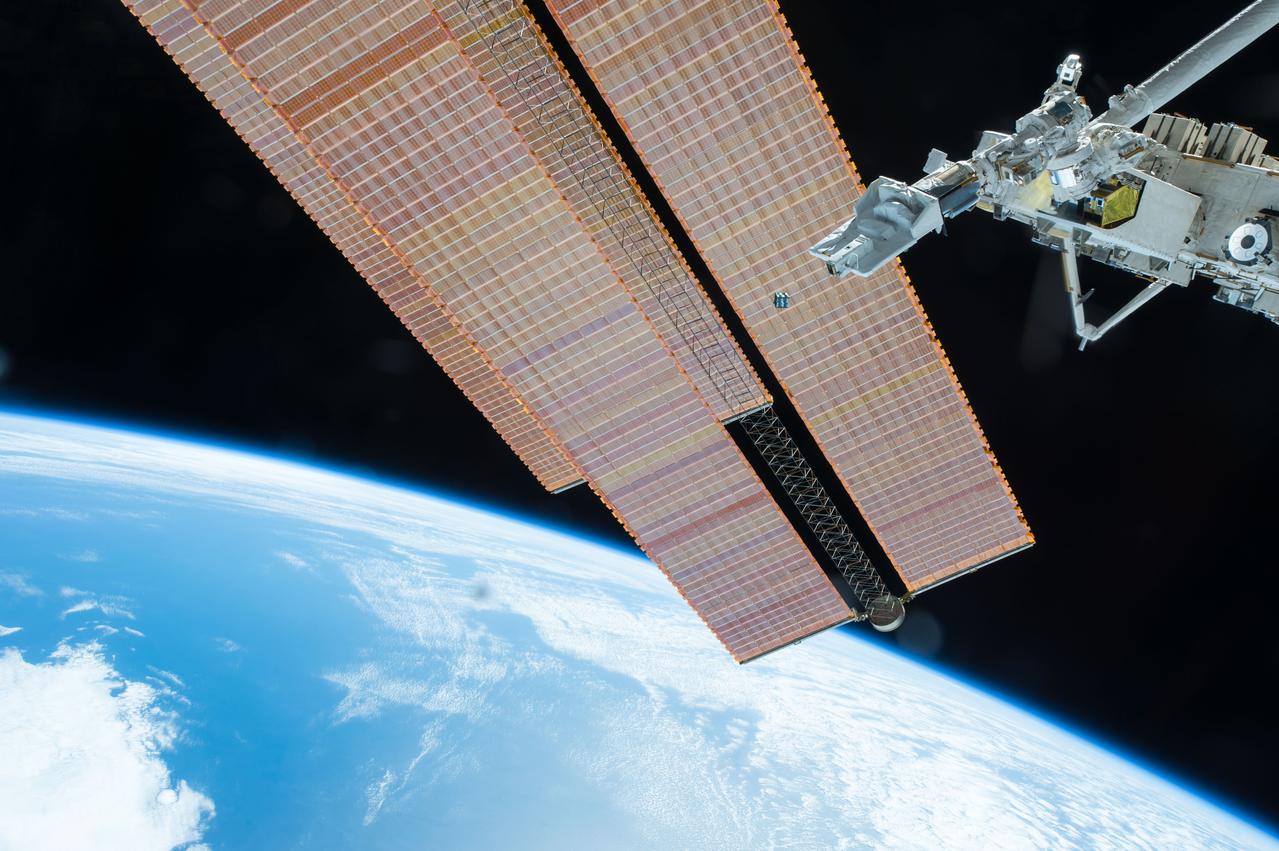
iss042e224107 (2/5/2015) --- Photographic documentation of the JEM Small Satellite Orbital Deployer-3 (J-SSOD-3) mission deploy of the CubeSat AESP-14 from Kibo. The satellite was developed by the Technological Institute of Aeronautics (ITA), with support from the Brazilian Space Agency (AEB), and the National Institute for Space Research (INPE).
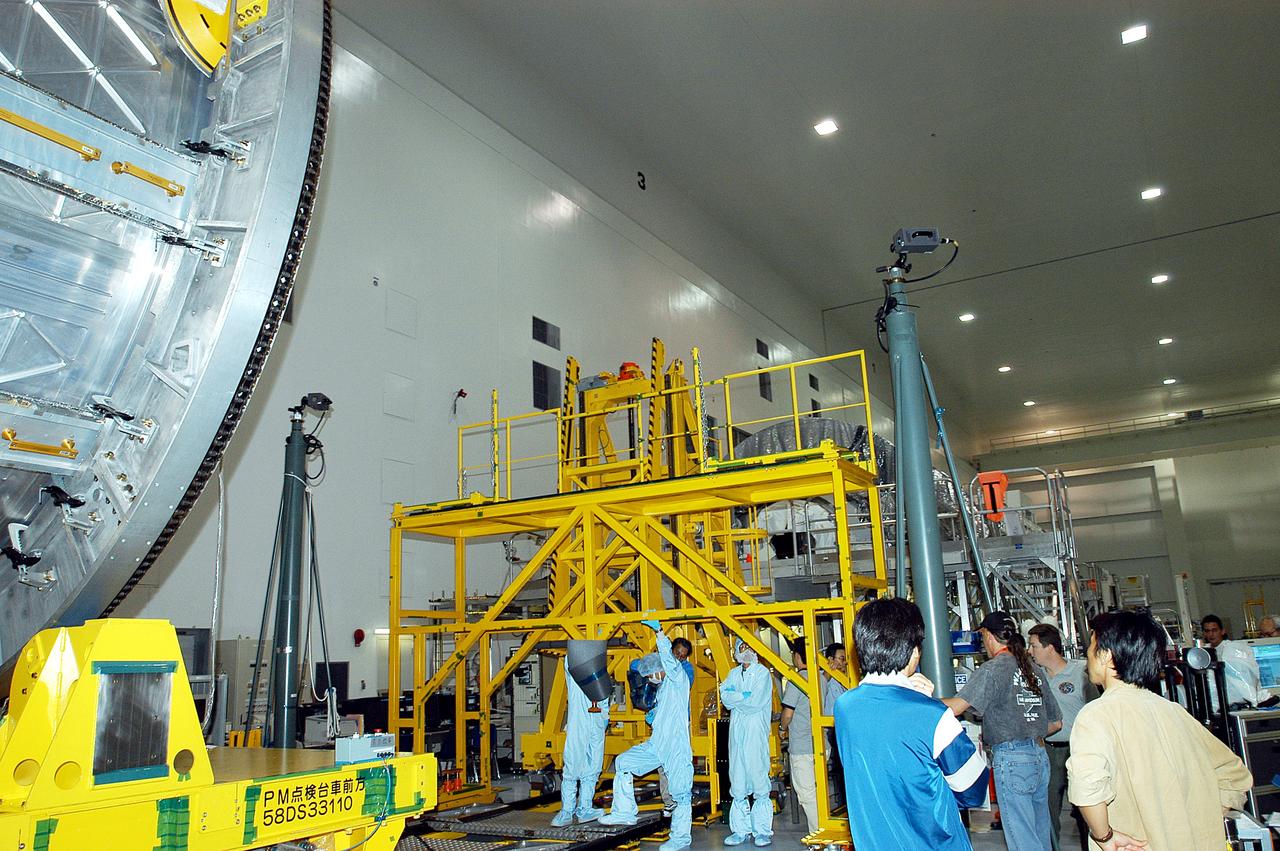
KENNEDY SPACE CENTER, FLA. - The Japanese Experiment Module (JEM) is moved on its workstand in the Space Station Processing Facility. The JEM will undergo pre-assembly measurements. Developed by the Japan Aerospace Exploration Agency (JAXA), the JEM will enhance the unique research capabilities of the orbiting complex by providing an additional environment for astronauts to conduct science experiments.
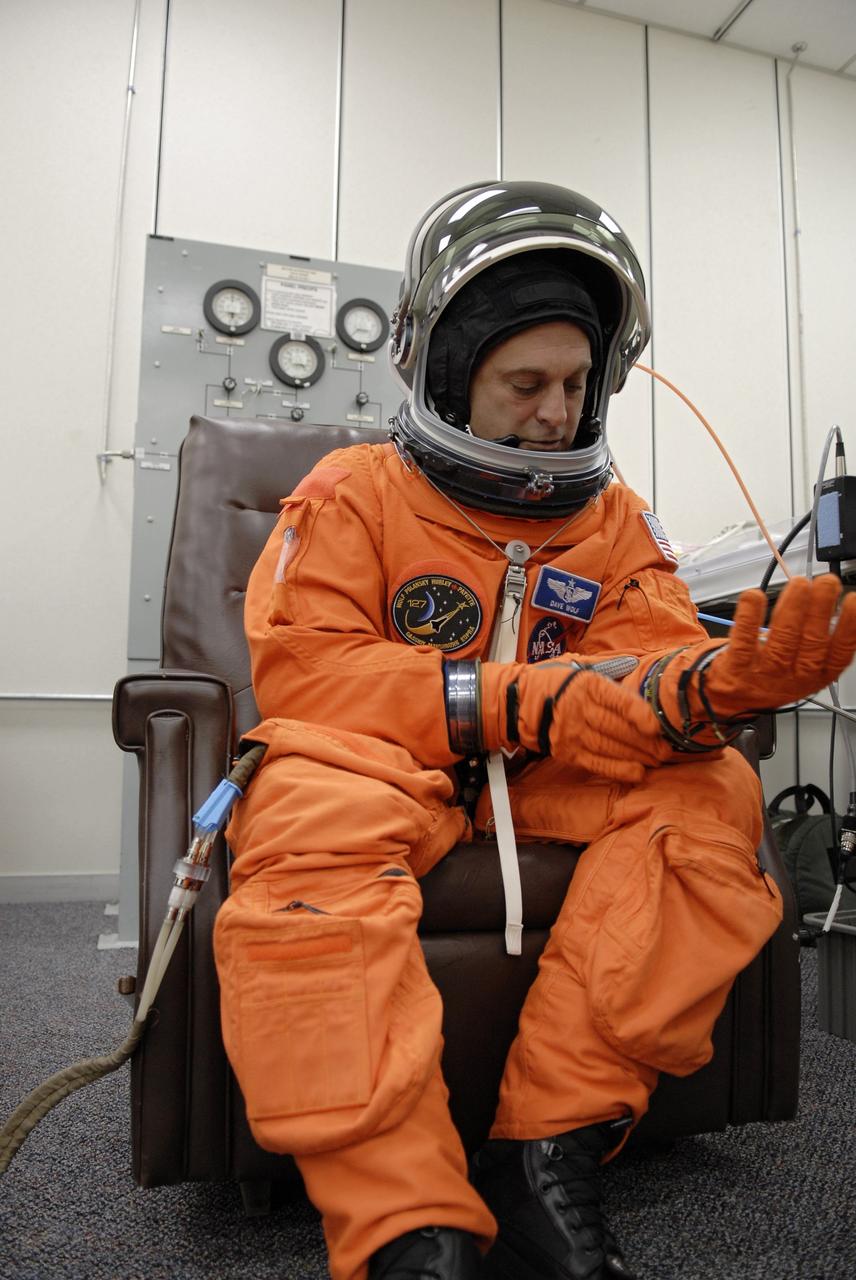
CAPE CANAVERAL, Fla. – At NASA's Kennedy Space Center in Florida, STS-127 Mission Specialist Dave Wolf checks the fit of his glove during fit-check of his launch-and-entry suit in preparation for space shuttle Endeavour's launch on June 13 to the International Space Station. Wolf will be making his fourth shuttle flight. Endeavour will deliver the Japanese Experiment Module's Exposed Facility, or JEM-EF, and the Experiment Logistics Module-Exposed Section, or ELM-ES, on STS-127. The mission is the final of three flights dedicated to the assembly of the Japan Aerospace Exploration Agency's Kibo laboratory complex on the space station. Photo credit: NASA/Kim Shiflett
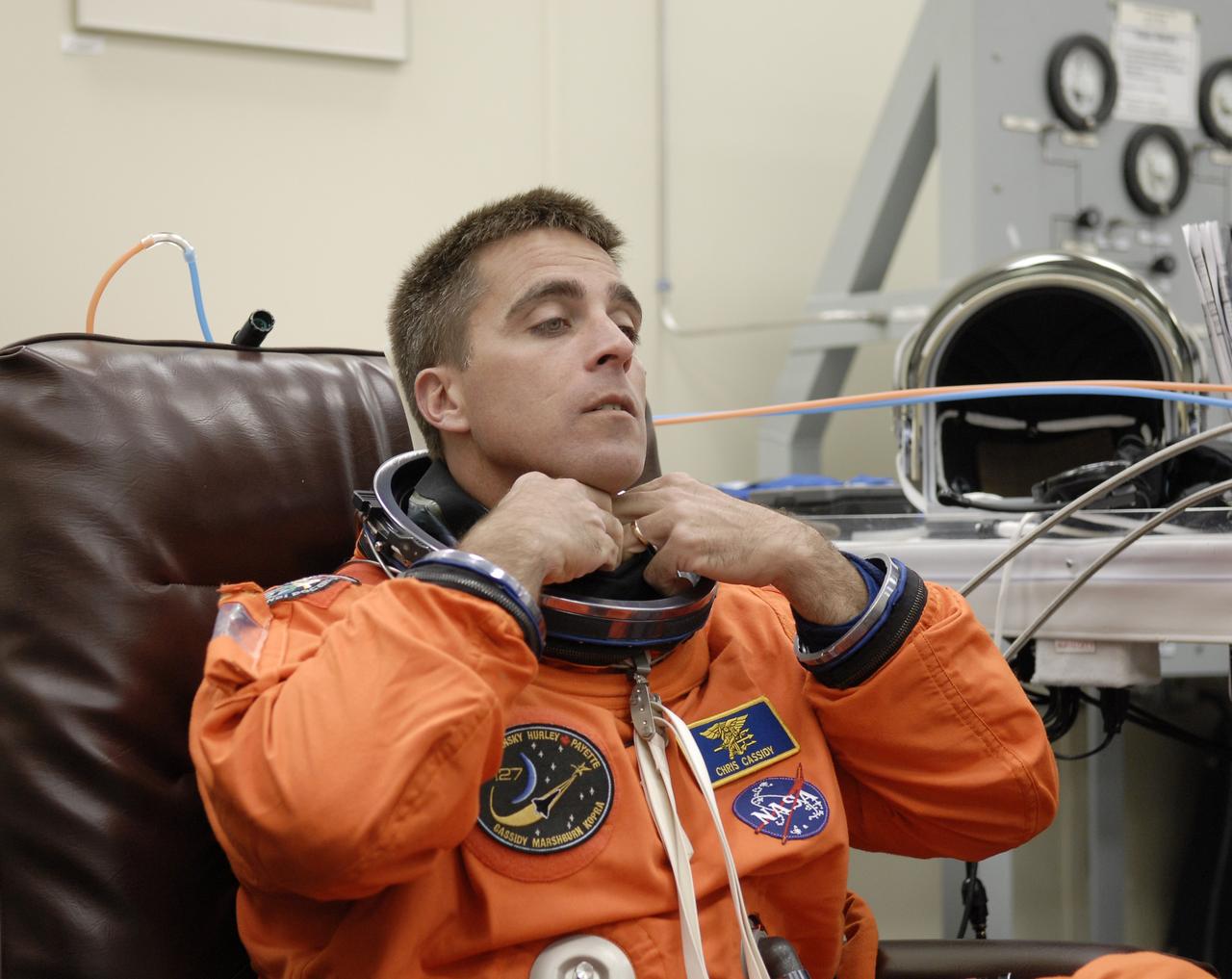
CAPE CANAVERAL, Fla. – At NASA's Kennedy Space Center in Florida, STS-127 Mission Specialist Christopher Cassidy is checking the fit of his launch-and-entry suit in preparation for space shuttle Endeavour's launch on June 13 to the International Space Station. Cassidy will be making his first shuttle flight. Endeavour will deliver the Japanese Experiment Module's Exposed Facility, or JEM-EF, and the Experiment Logistics Module-Exposed Section, or ELM-ES, on STS-127. The mission is the final of three flights dedicated to the assembly of the Japan Aerospace Exploration Agency's Kibo laboratory complex on the space station. Photo credit: NASA/Kim Shiflett
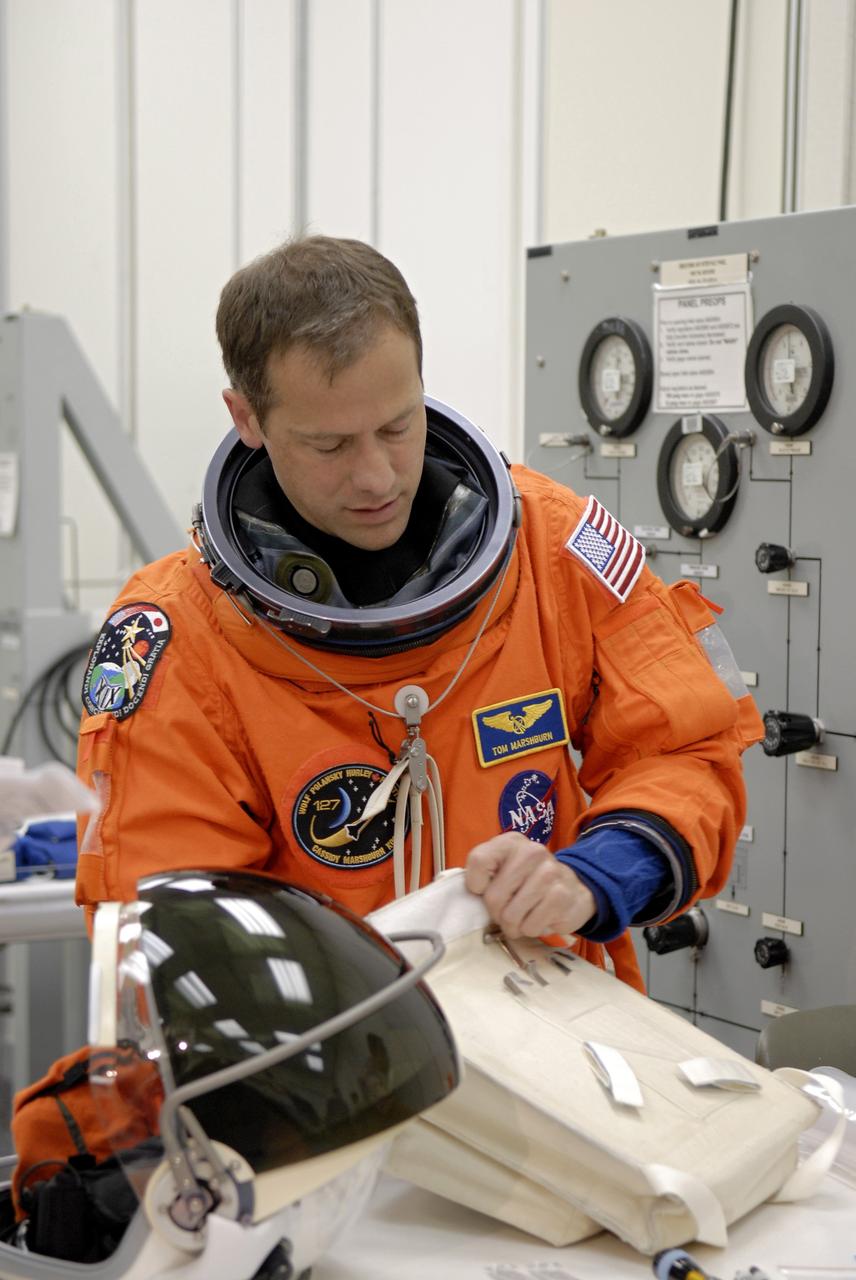
CAPE CANAVERAL, Fla. – At NASA's Kennedy Space Center in Florida, STS-127 Mission Specialist Tom Marshburn checks equipment as part of pre-pack and fit check in preparation for space shuttle Endeavour's launch on June 13 to the International Space Station. Marshburn will be making his first shuttle flight. Endeavour will deliver the Japanese Experiment Module's Exposed Facility, or JEM-EF, and the Experiment Logistics Module-Exposed Section, or ELM-ES, on STS-127. The mission is the final of three flights dedicated to the assembly of the Japan Aerospace Exploration Agency's Kibo laboratory complex on the space station. Photo credit: NASA/Kim Shiflett
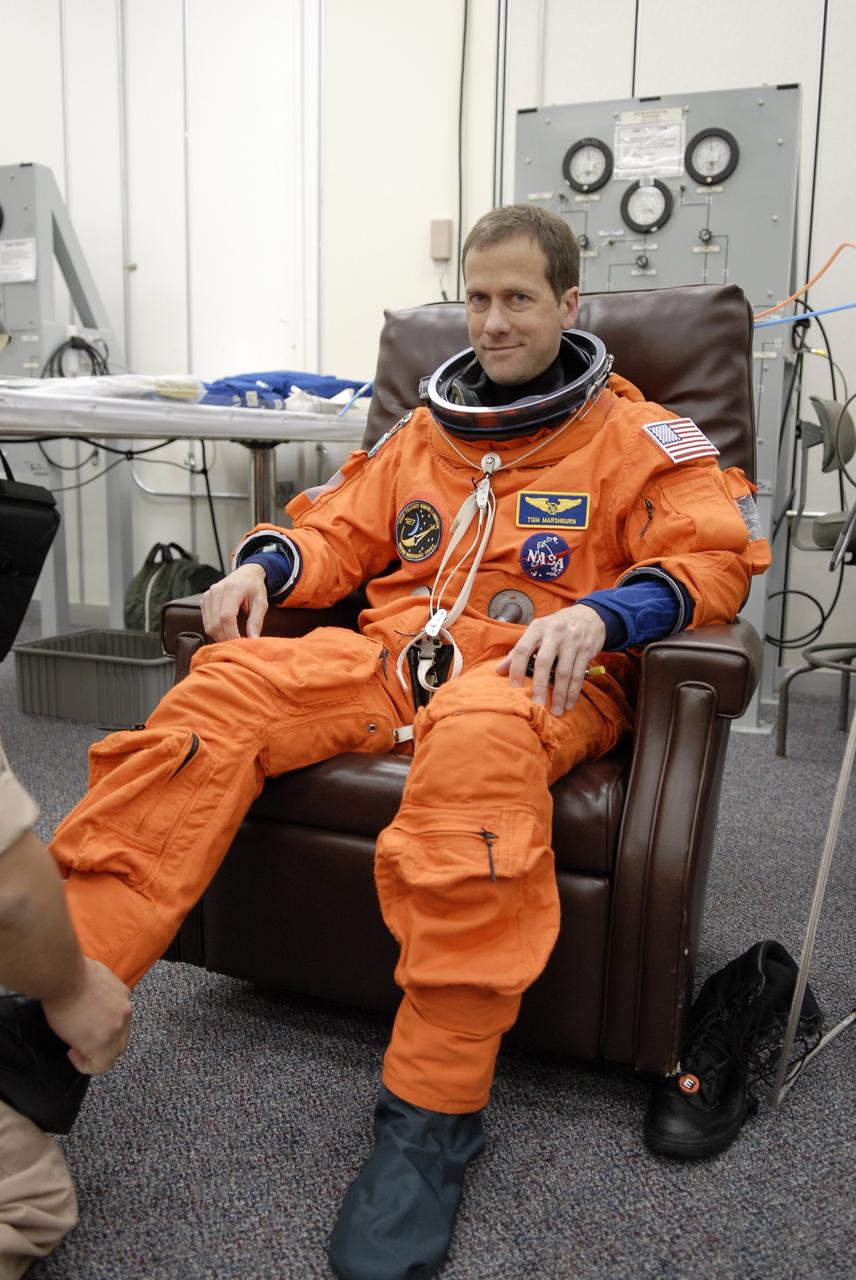
CAPE CANAVERAL, Fla. – At NASA's Kennedy Space Center in Florida, STS-127 Mission Specialist Tom Marshburn is undergoing fit-check of his launch-and-entry suit in preparation for space shuttle Endeavour's launch on June 13 to the International Space Station. Marshburn will be making his first shuttle flight. Endeavour will deliver the Japanese Experiment Module's Exposed Facility, or JEM-EF, and the Experiment Logistics Module-Exposed Section, or ELM-ES, on STS-127. The mission is the final of three flights dedicated to the assembly of the Japan Aerospace Exploration Agency's Kibo laboratory complex on the space station. Photo credit: NASA/Kim Shiflett
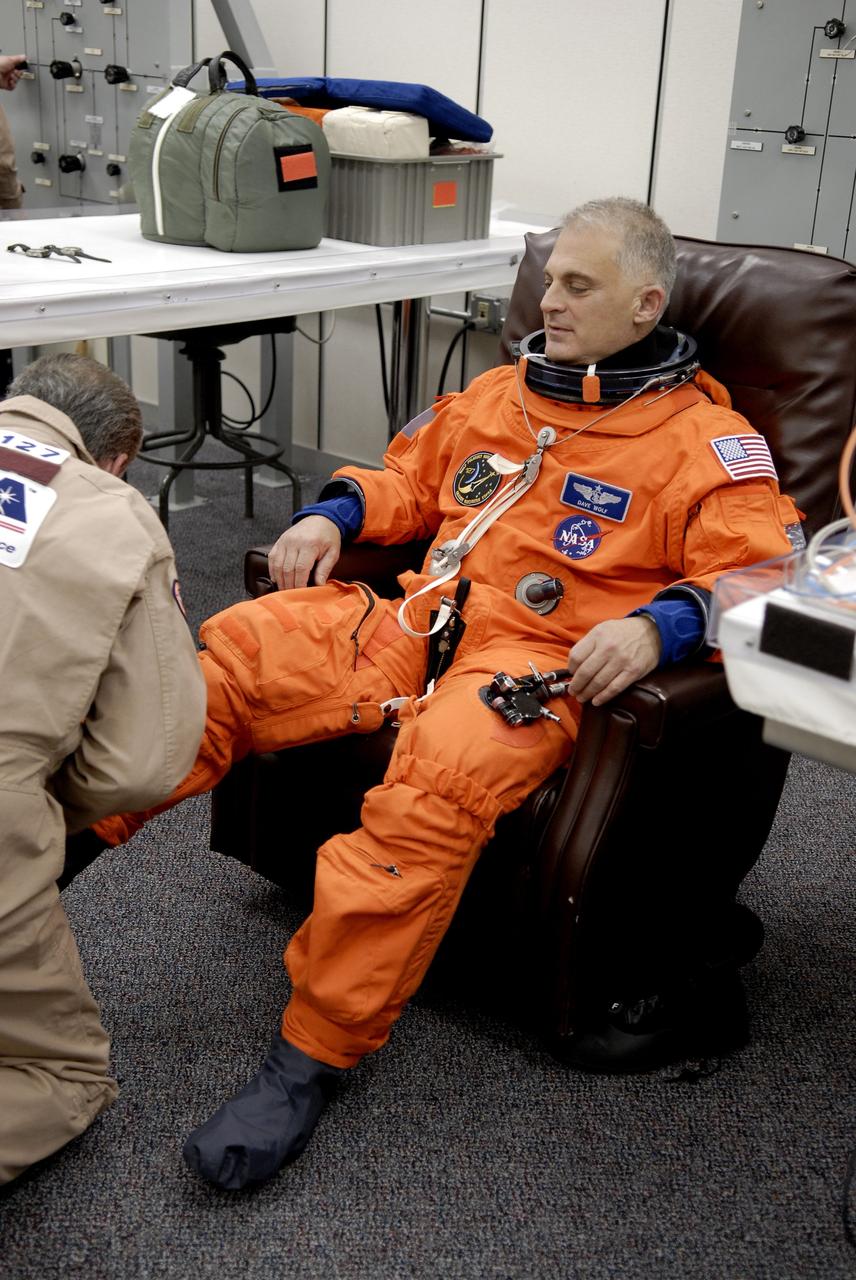
CAPE CANAVERAL, Fla. – At NASA's Kennedy Space Center in Florida, STS-127 Mission Specialist Dave Wolf checks the fit of his boot during fit-check of his launch-and-entry suit in preparation for space shuttle Endeavour's launch on June 13 to the International Space Station. Wolf will be making his fourth shuttle flight. Endeavour will deliver the Japanese Experiment Module's Exposed Facility, or JEM-EF, and the Experiment Logistics Module-Exposed Section, or ELM-ES, on STS-127. The mission is the final of three flights dedicated to the assembly of the Japan Aerospace Exploration Agency's Kibo laboratory complex on the space station. Photo credit: NASA/Kim Shiflett
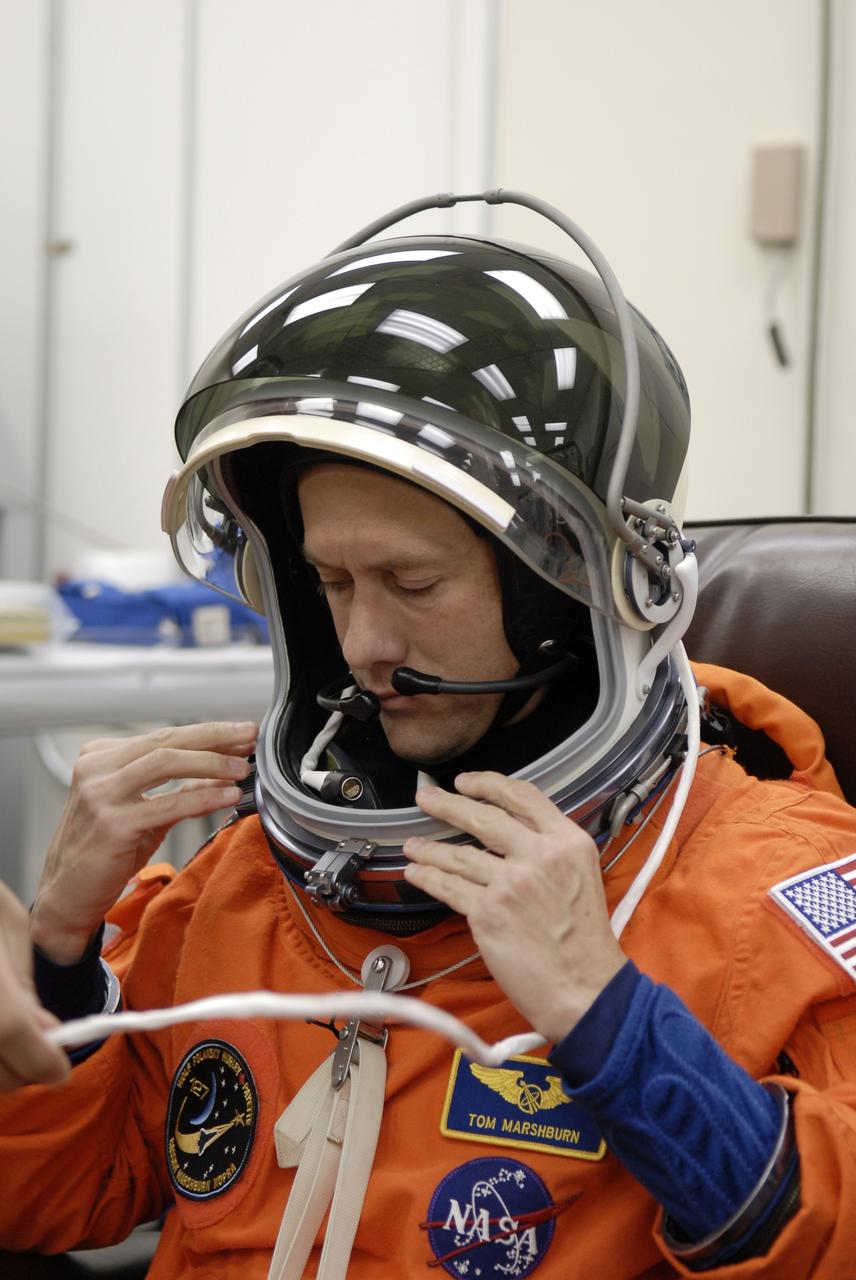
CAPE CANAVERAL, Fla. – At NASA's Kennedy Space Center in Florida, STS-127 Mission Specialist Tom Marshburn checks the fit of his helmet during fit-check of his launch-and-entry suit in preparation for space shuttle Endeavour's launch on June 13 to the International Space Station. Marshburn will be making his first shuttle flight. Endeavour will deliver the Japanese Experiment Module's Exposed Facility, or JEM-EF, and the Experiment Logistics Module-Exposed Section, or ELM-ES, on STS-127. The mission is the final of three flights dedicated to the assembly of the Japan Aerospace Exploration Agency's Kibo laboratory complex on the space station. Photo credit: NASA/Kim Shiflett
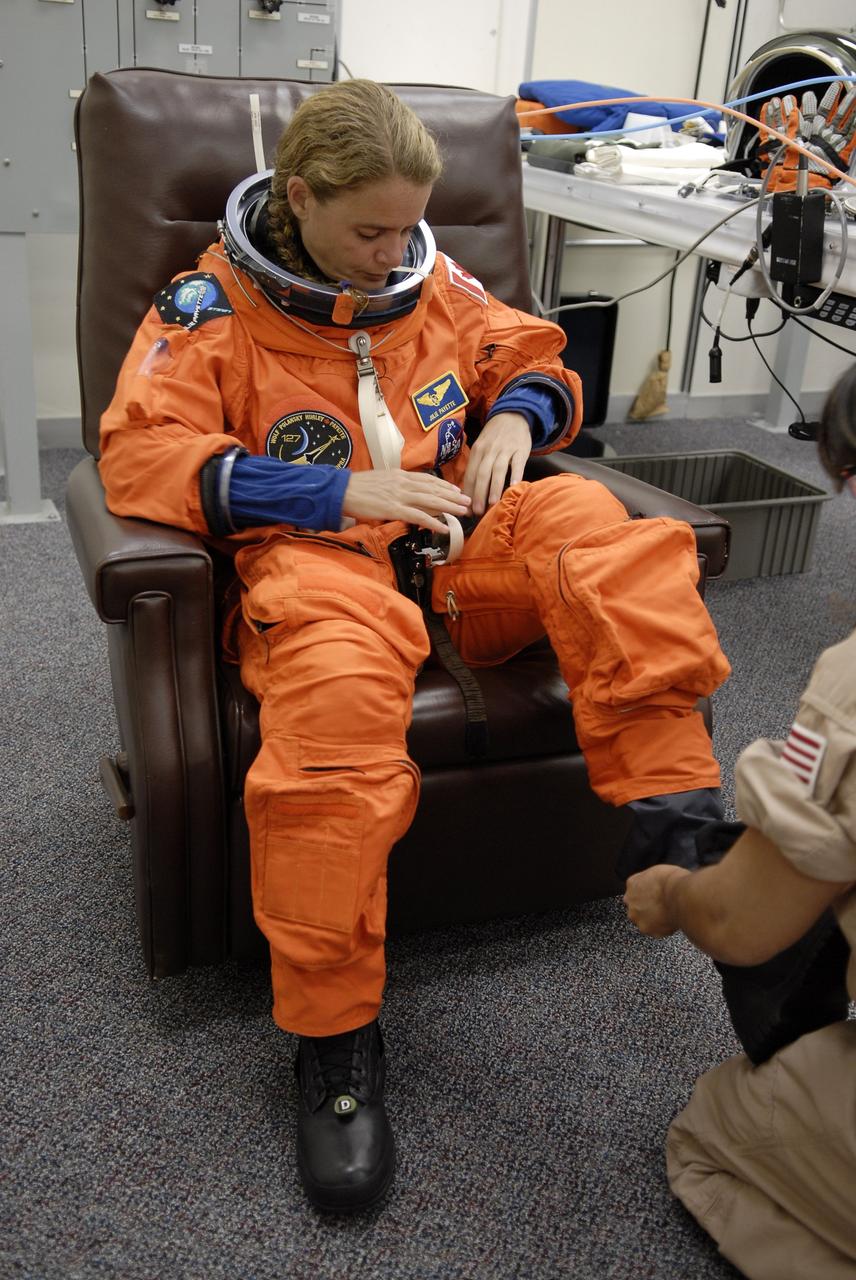
CAPE CANAVERAL, Fla. – At NASA's Kennedy Space Center in Florida, STS-127 Mission Specialist Julie Payette checks the fit of her launch-and-entry suit in preparation for space shuttle Endeavour's launch on June 13 to the International Space Station. Payette, who is with the Canadian Space Agency, will be making her second shuttle flight. Endeavour will deliver the Japanese Experiment Module's Exposed Facility, or JEM-EF, and the Experiment Logistics Module-Exposed Section, or ELM-ES, on STS-127. The mission is the final of three flights dedicated to the assembly of the Japan Aerospace Exploration Agency's Kibo laboratory complex on the space station. Photo credit: NASA/Kim Shiflett
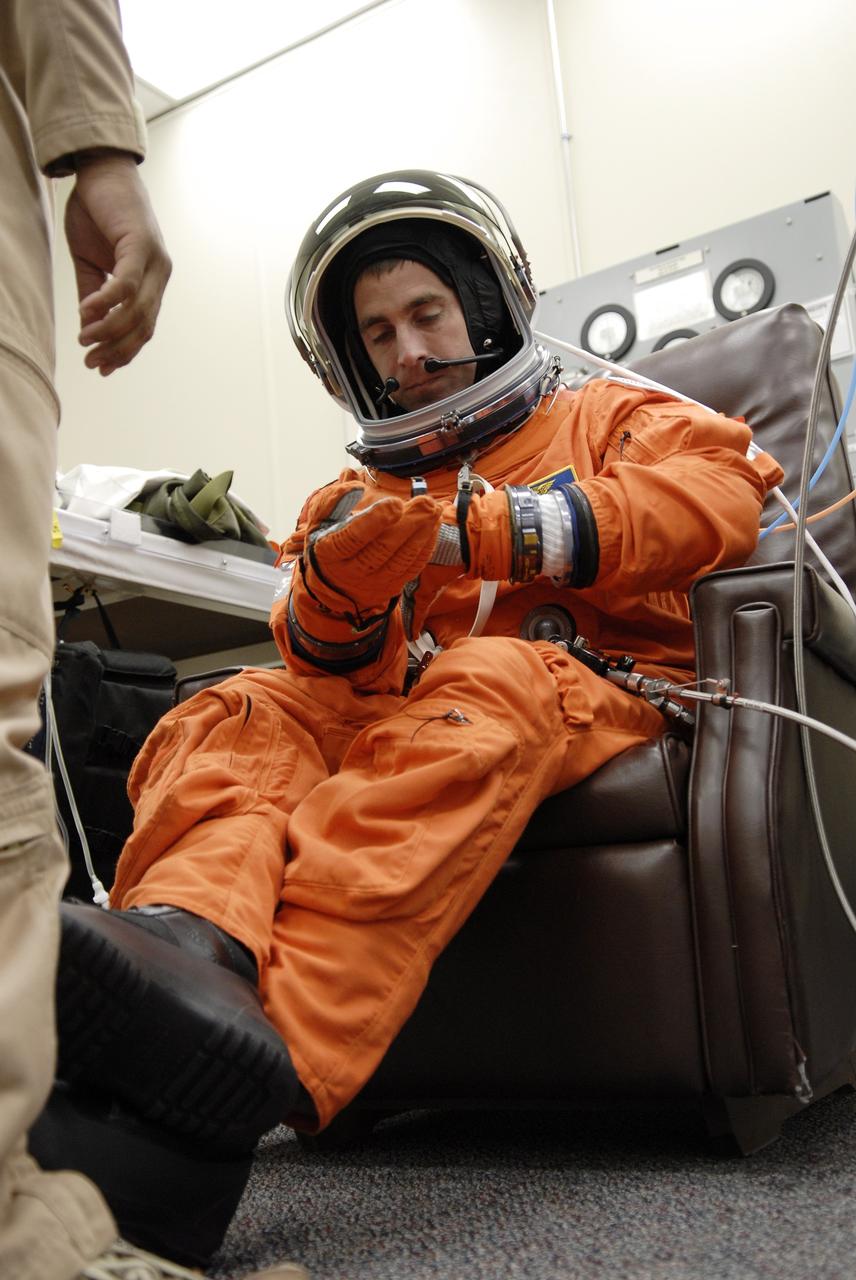
CAPE CANAVERAL, Fla. – At NASA's Kennedy Space Center in Florida, STS-127 Mission Specialist Christopher Cassidy checks his gloves during fit-check of his launch-and-entry suit in preparation for space shuttle Endeavour's launch on June 13 to the International Space Station. Cassidy will be making his first shuttle flight. Endeavour will deliver the Japanese Experiment Module's Exposed Facility, or JEM-EF, and the Experiment Logistics Module-Exposed Section, or ELM-ES, on STS-127. The mission is the final of three flights dedicated to the assembly of the Japan Aerospace Exploration Agency's Kibo laboratory complex on the space station. Photo credit: NASA/Kim Shiflett
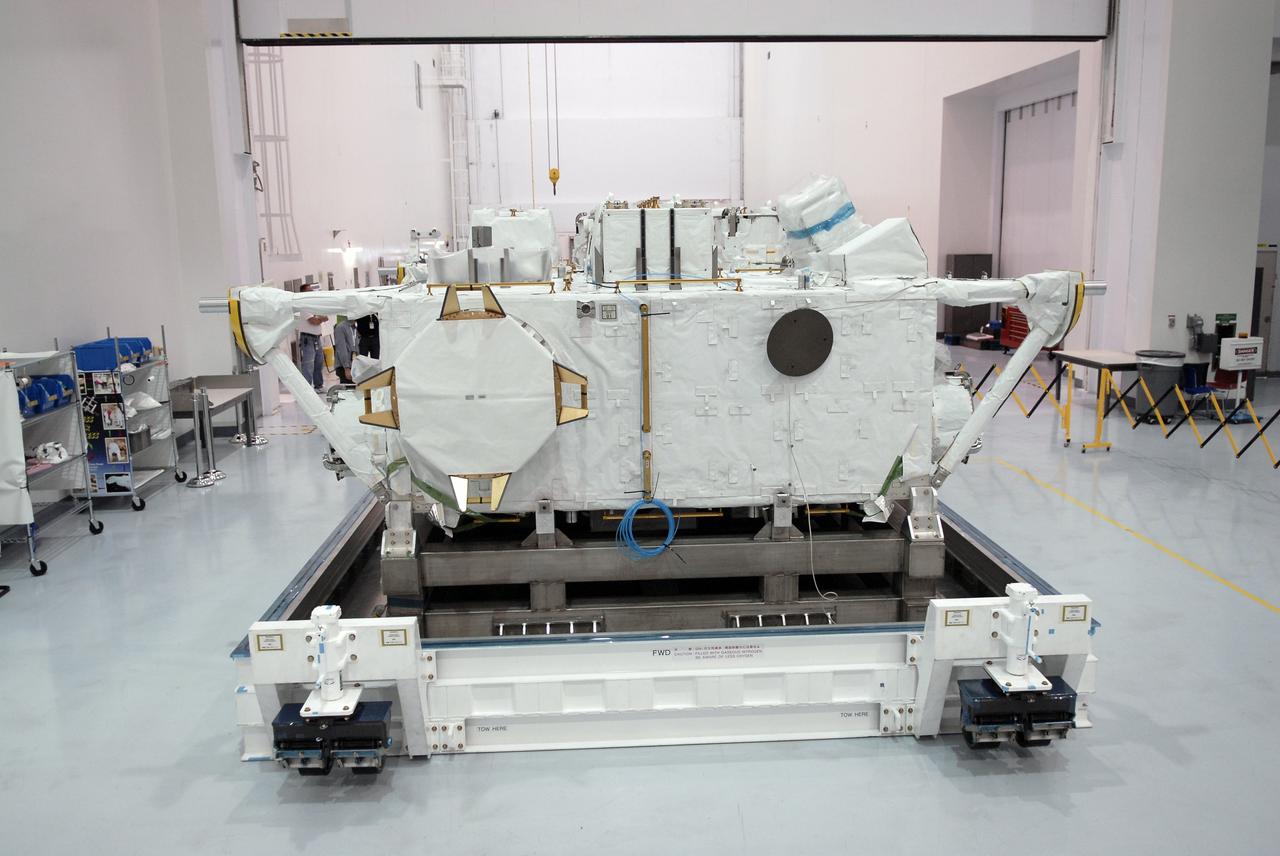
CAPE CANAVERAL, Fla. - In the Space Station Processing Facility at NASA's Kennedy Space Center in Florida, the Japan Aerospace Exploration Agency's Kibo Exposed Facility, or EF, rests in the high bay. When it is installed on the Kibo laboratory, the EF will provide a multipurpose platform where science experiments can be deployed and operated in the exposed environment. The payloads attached to the EF can be exchanged or retrieved by Kibo's robotic arm, the JEM Remote Manipulator System. The EF, along with the Experiment Logistics Module Exposed Section, will be carried aboard space shuttle Endeavour on the STS-127 mission targeted for launch May 15, 2009. Photo credit: NASA/Kim Shiflett
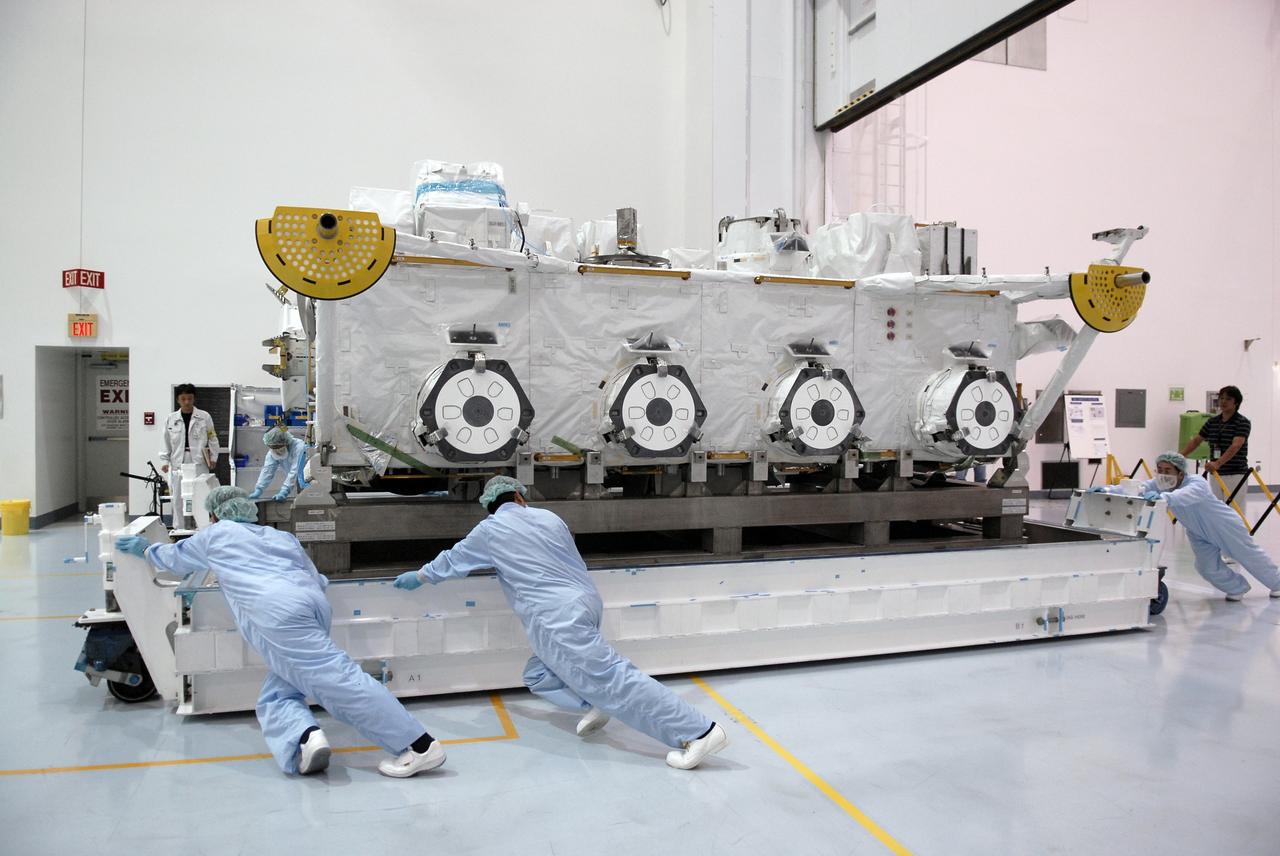
CAPE CANAVERAL, Fla. - After its shipping cover was removed, the Japan Aerospace Exploration Agency's Kibo Exposed Facility is moved to a high bay in the Space Station Processing Facility, or EF, at NASA's Kennedy Space Center in Florida. When it is installed on the Kibo laboratory, the EF will provide a multipurpose platform where science experiments can be deployed and operated in the exposed environment. The payloads attached to the EF can be exchanged or retrieved by Kibo's robotic arm, the JEM Remote Manipulator System. The EF, along with the Experiment Logistics Module Exposed Section, will be carried aboard space shuttle Endeavour on the STS-127 mission targeted for launch May 15, 2009. Photo credit: NASA/Kim Shiflett
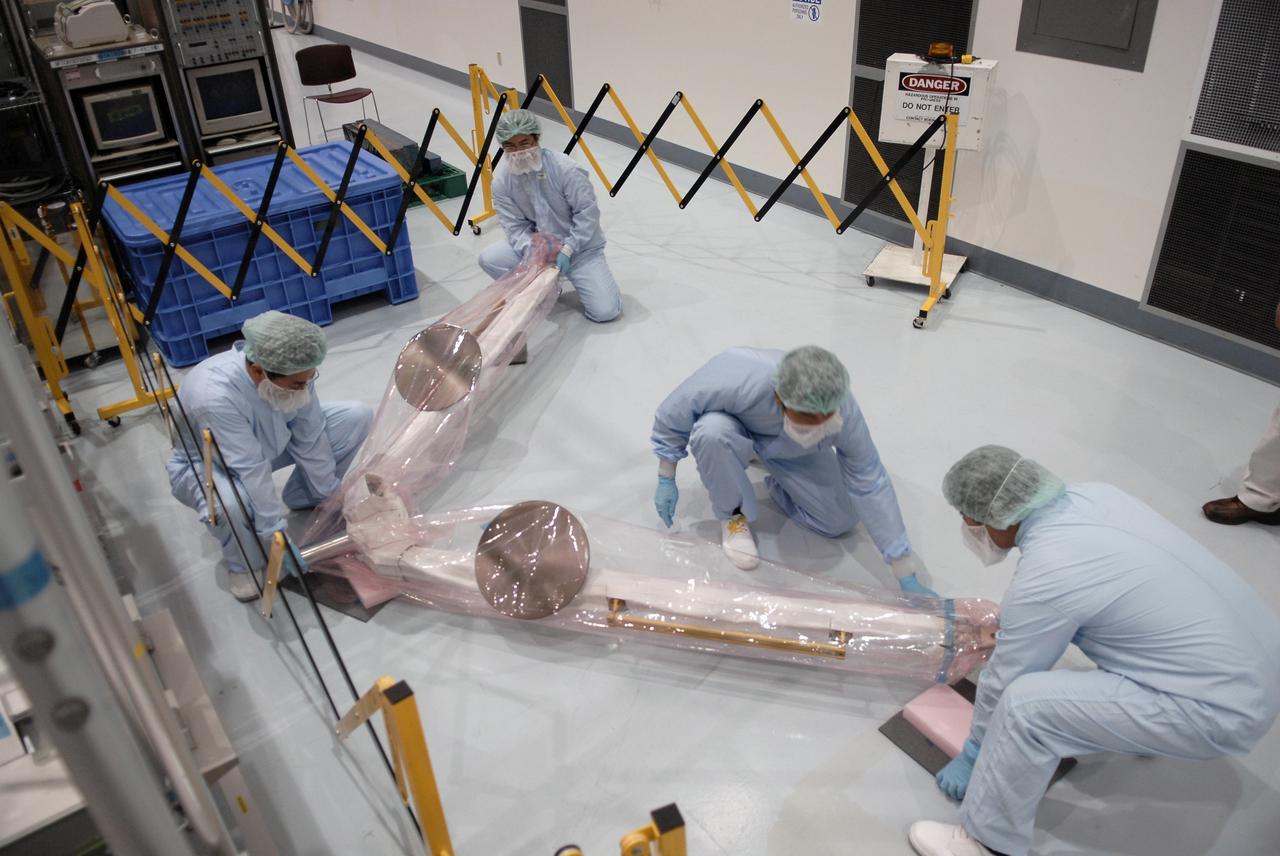
CAPE CANAVERAL, Fla. - In the Space Station Processing Facility at NASA's Kennedy Space Center in Florida, workers place an element of the Japan Aerospace Exploration Agency's Kibo Exposed Facility, or EF, on the floor of the high bay. When it is installed on the Kibo laboratory, the EF will provide a multipurpose platform where science experiments can be deployed and operated in the exposed environment. The payloads attached to the EF can be exchanged or retrieved by Kibo's robotic arm, the JEM Remote Manipulator System. The EF, along with the Experiment Logistics Module Exposed Section, will be carried aboard space shuttle Endeavour on the STS-127 mission targeted for launch May 15, 2009. Photo credit: NASA/Kim Shiflett
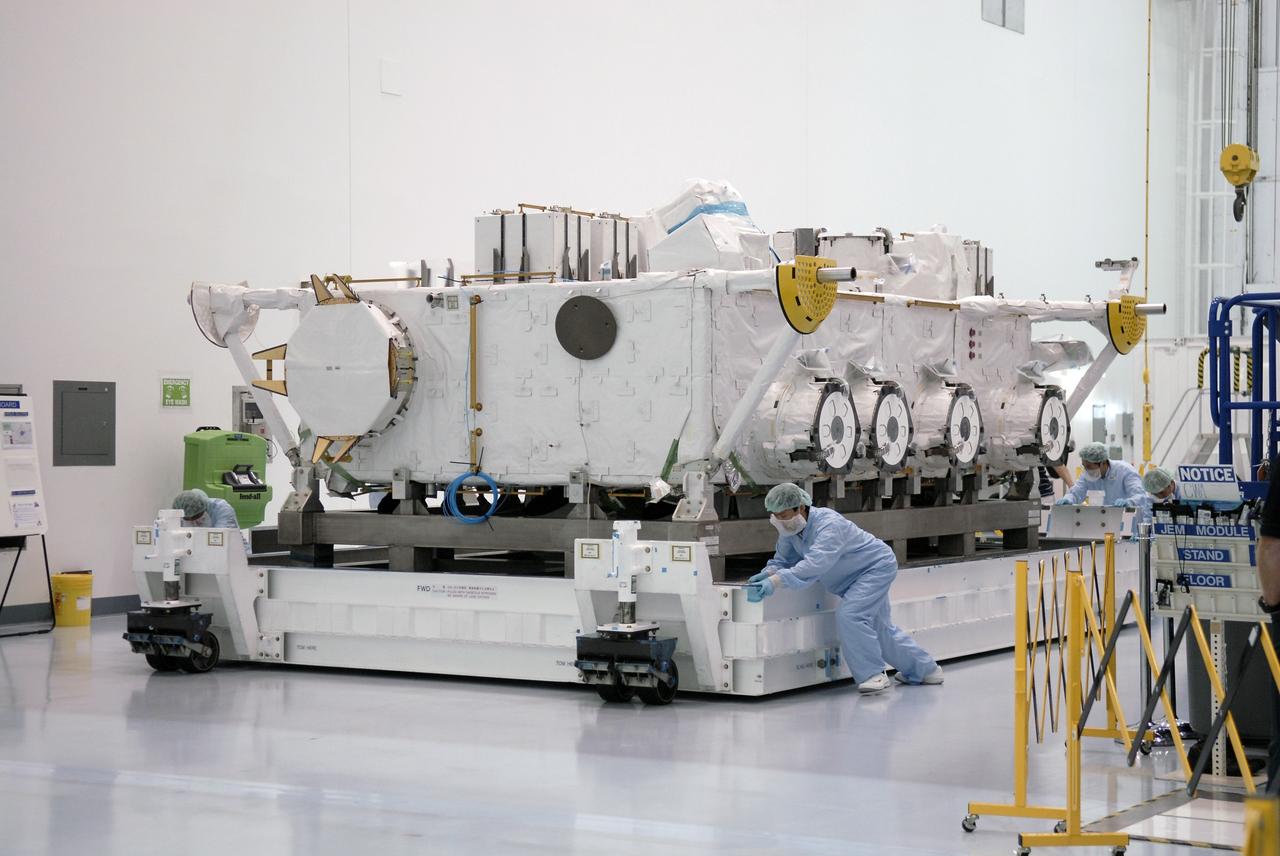
CAPE CANAVERAL, Fla. - After its shipping cover was removed, the Japan Aerospace Exploration Agency's Kibo Exposed Facility, or EF, is moved to a high bay in the Space Station Processing Facility at NASA's Kennedy Space Center in Florida. When it is installed on the Kibo laboratory, the EF will provide a multipurpose platform where science experiments can be deployed and operated in the exposed environment. The payloads attached to the EF can be exchanged or retrieved by Kibo's robotic arm, the JEM Remote Manipulator System. The EF, along with the Experiment Logistics Module Exposed Section, will be carried aboard space shuttle Endeavour on the STS-127 mission targeted for launch May 15, 2009. Photo credit: NASA/Kim Shiflett
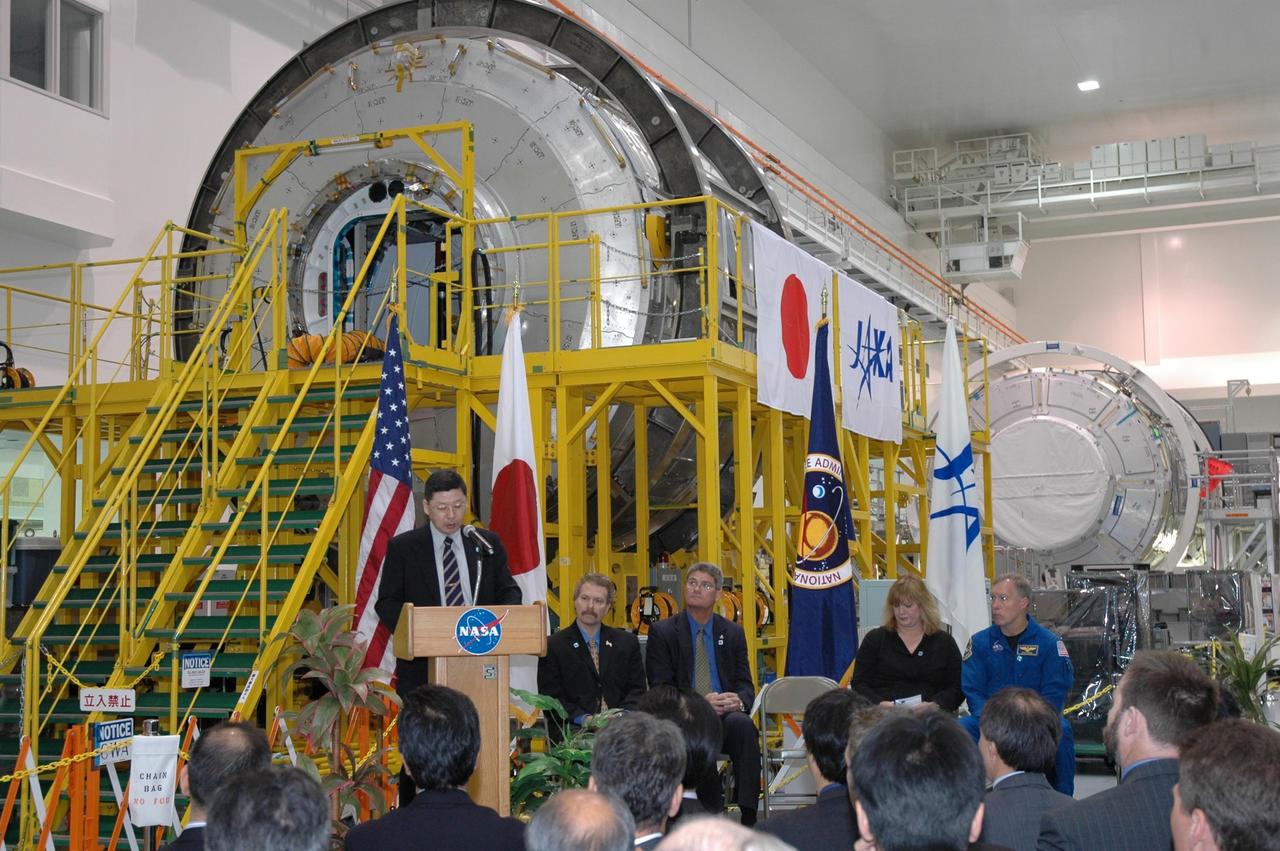
KENNEDY SPACE CENTER, FLA. -- In the Space Station Processing Facility, NASA and Japanese Aerospace and Exploration Agency (JAXA) officials welcome the arrival of the Experiment Logistics Module Pressurized Section for the Japanese Experiment Module, or JEM, to the Kennedy Space Center. At the podium is Dr. Kichiro Imagawa, project manager of the JEM Development Project Team for JAXA. Seated at right are Russ Romanella, director of International Space Station and Spacecraft Processing; Bill Parsons, director of Kennedy Space Center; Melanie Saunders, associate manager of the International Space Station Program at Johnson Space Center; and Dominic Gorie, commander on mission STS-123 that will deliver the module to the space station. The logistics module will serve as an on-orbit storage area for materials, tools and supplies. It can hold up to eight experiment racks and will attach to the top of another larger pressurized module. Photo credit: NASA/George Shelton
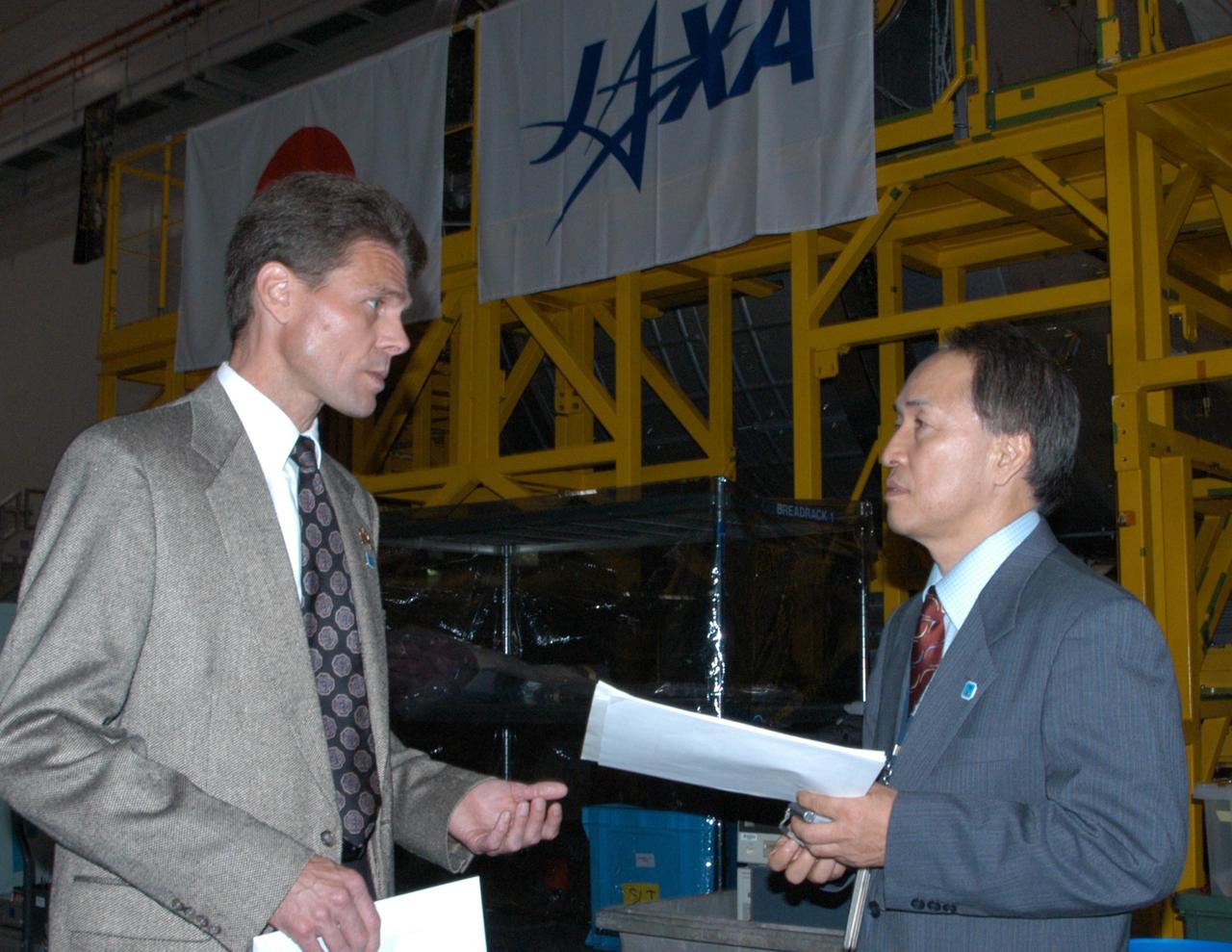
KENNEDY SPACE CENTER, FLA. -- In the Space Station Processing Facility, Scott Higginbotham, payload manager for the International Space Station, discusses the Experiment Logistics Module Pressurized Section for the Japanese Experiment Module (JEM), with Dr. Hidetaka Tanaka, the JEM Project Team resident manager at KSC for the Japanese Aerospace and Exploration Agency (JAXA). Earlier, NASA and JAXA officials welcomed the arrival of the module. The new International Space Station component arrived at Kennedy March 12 to begin preparations for its future launch on mission STS-123. It will serve as an on-orbit storage area for materials, tools and supplies. It can hold up to eight experiment racks and will attach to the top of another larger pressurized module. Photo credit: NASA/George Shelton
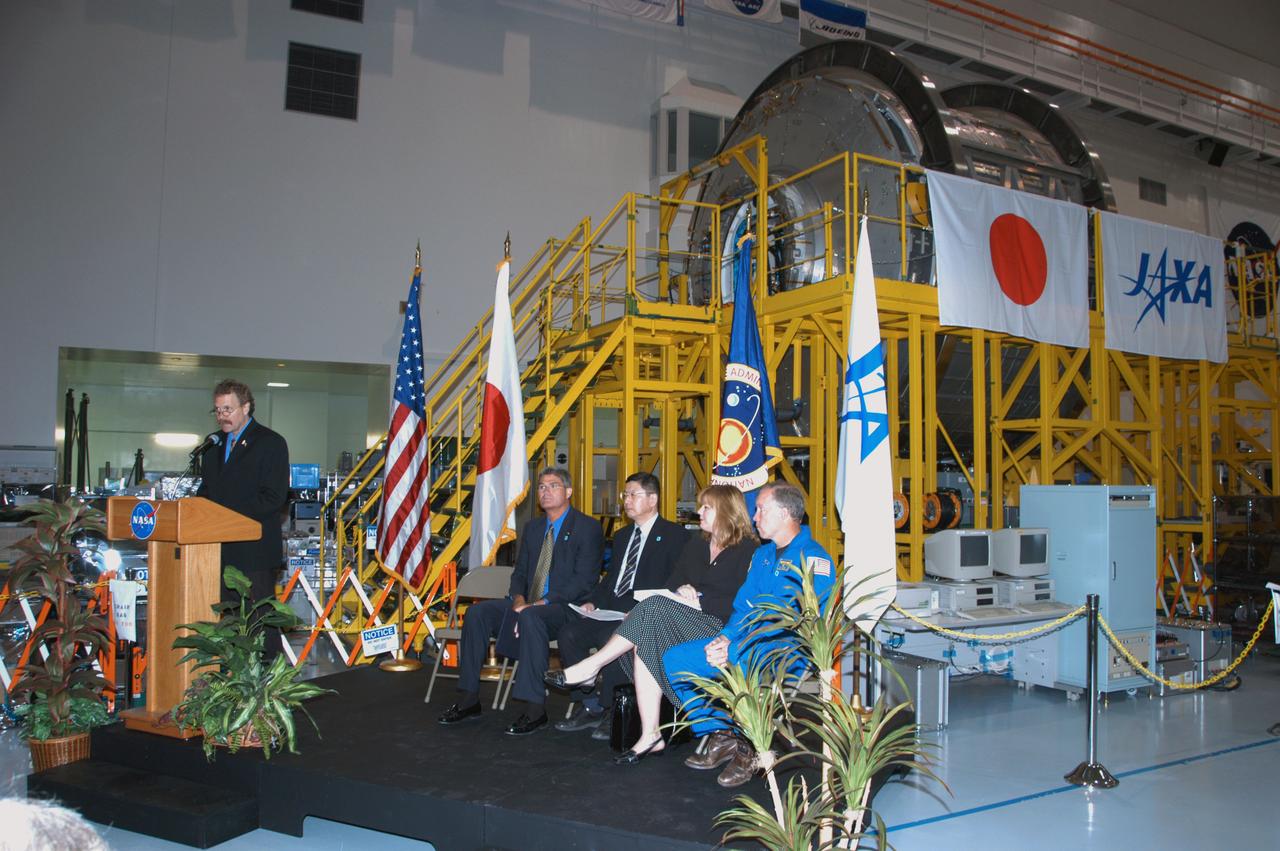
In the Space Station Processing Facility, NASA and Japanese Aerospace and Exploration Agency (JAXA) officials welcome the arrival of the Experiment Logistics Module Pressurized Section for the Japanese Experiment Module, or JEM, to the Kennedy Space Center. At the podium is Russ Romanella, director of International Space Station and Spacecraft Processing. Seated at right are Bill Parsons, director of Kennedy Space Center; Dr. Kichiro Imagawa, project manager of the JEM Development Project Team for JAXA; Melanie Saunders, associate manager of the International Space Station Program at Johnson Space Center; and Dominic Gorie, commander on mission STS-123 that will deliver the module to the space station. The new International Space Station component arrived at Kennedy March 12 to begin preparations for its future launch on mission STS-123. It will serve as an on-orbit storage area for materials, tools and supplies. It can hold up to eight experiment racks and will attach to the top of another larger pressurized module.
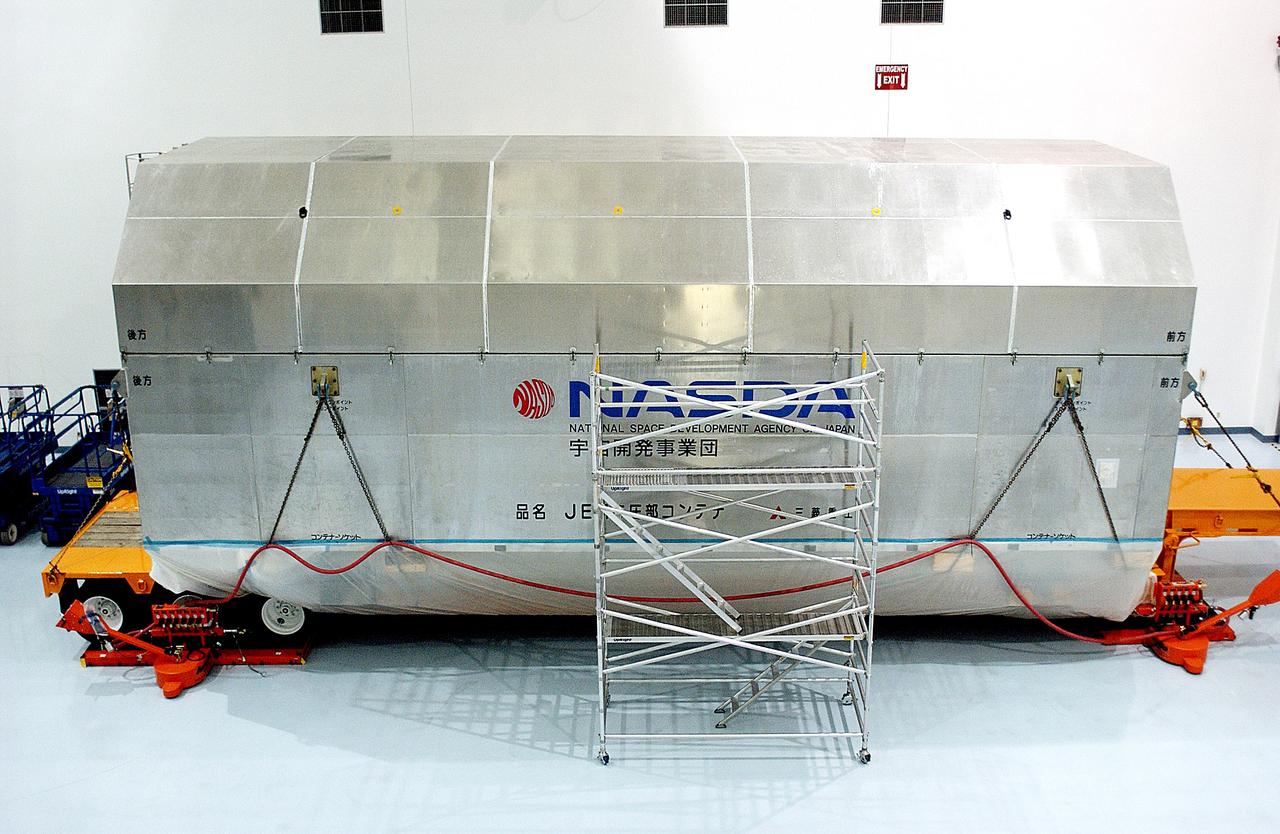
KENNEDY SPACE CENTER, FLA. - The container with the Japanese Experiment Module (JEM)’s pressurized module is inside the Space Station Processing Facility. The National Space Development Agency of Japan (NASDA) developed the laboratory at the Tsukuba Space Center near Tokyo. The Pressurized Module is the first element of the JEM, named "Kibo" (Hope), to be delivered to KSC. The JEM is Japan's primary contribution to the Station. It will enhance the unique research capabilities of the orbiting complex by providing an additional environment for astronauts to conduct science experiments. The JEM also includes an exposed facility (platform) for space environment experiments, a robotic manipulator system, and two logistics modules. The various JEM components will be assembled in space over the course of three Shuttle missions.

JSC2003-E-42548 (For Release: 18 June 2003) --- The Remote Manipulator System (RMS) Small Fine Arm is shown in a processing facility. The RMS consists of two robotic arms that support operations on the outside of the Japanese Experiment Module (JEM) Japan's primary contribution to the International Space Station. The Main Arm can handle up to seven tons (14,000 pounds) of hardware and the Small Fine Arm, when attached to the Main Arm, handles more delicate operations. Each arm has six joints that mimic the movements of a human arm. Photo Credit: NASA
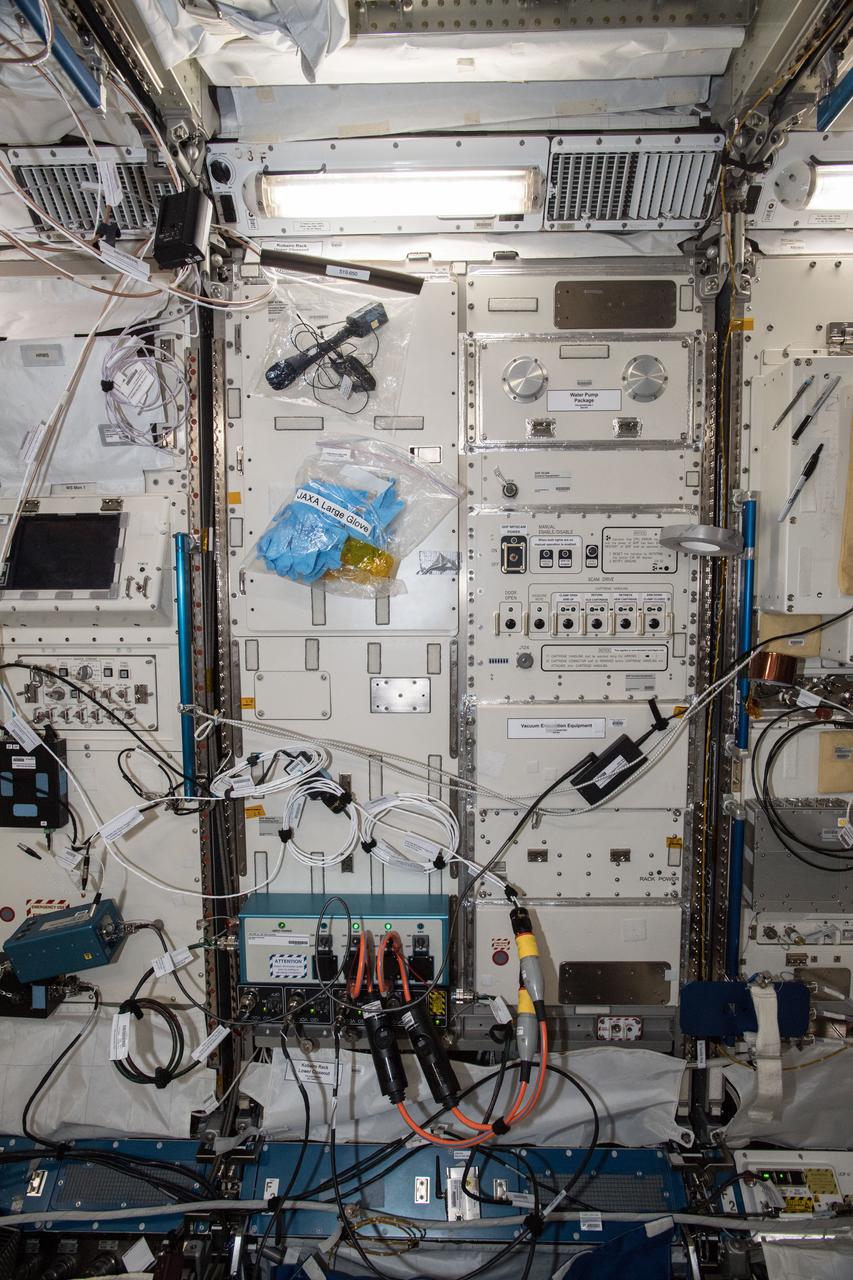
iss057e092614 (11/14/2018) --- Photo documentation of the Kobairo Rack front, JPM1F3 in the Kibo Japanese Experiment Module (JEM) aboard the International Space Staion (ISS). The KOBAIRO Rack houses the Gradient Heating Furnace (GHF), an experiment facility for investigating crystal growth of semiconductors. This furnace has the capability of directional solidification of samples.
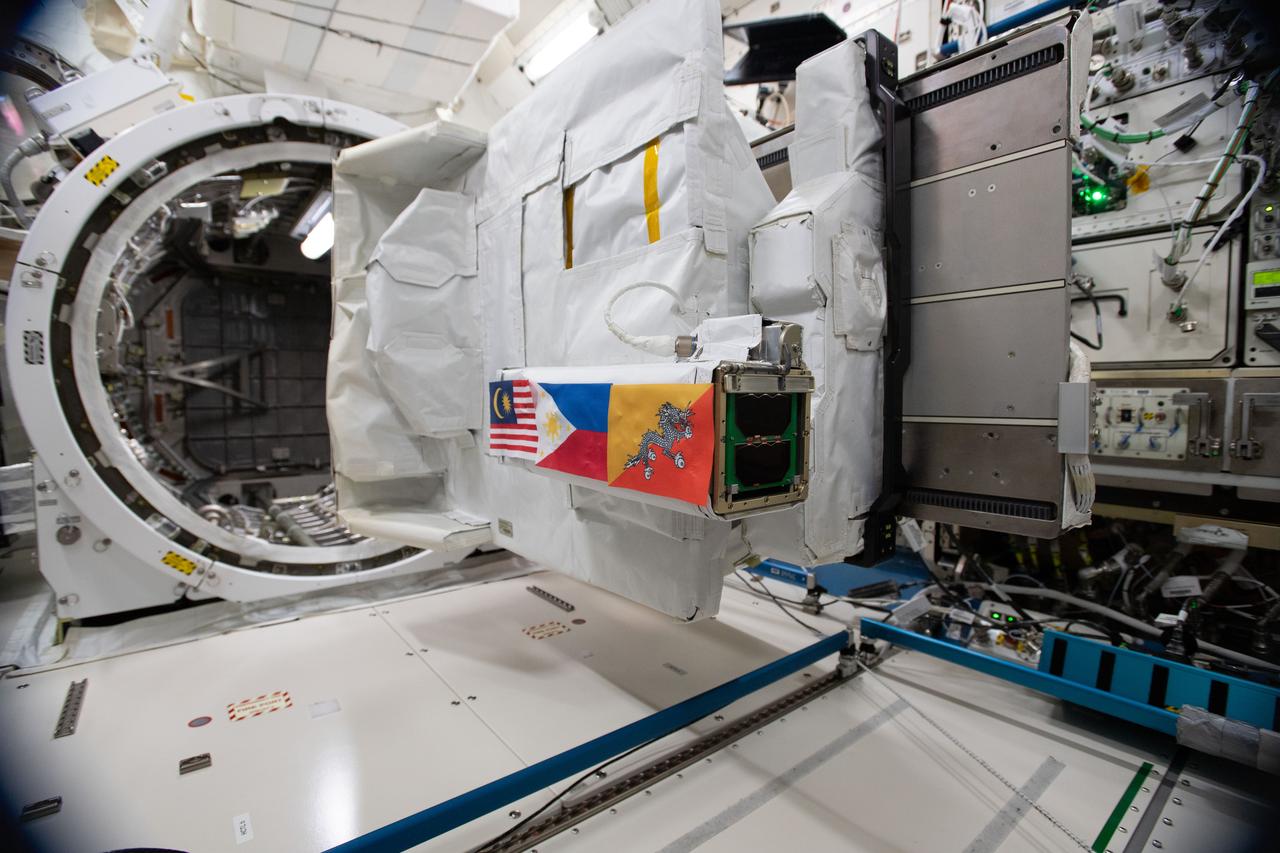
iss056e100586 (7/30/2018) --- A view of the Japanese Experiment Module (JEM) Airlock (AL) slide table retraction from Japanese Experiment Module (JPM) during JSSOD-9 operations. The JEM Small Satellite Orbital Deployer (J-SSOD) provides a novel, safe, small satellite launching capability to the International Space Station (ISS). Once the J-SSOD including satellite install cases with small satellites are installed on the Multi-Purpose Experiment Platform (MPEP) by crewmembers, it is passed through the JEM airlock for retrieval, positioning and deployment by the JEMRMS.
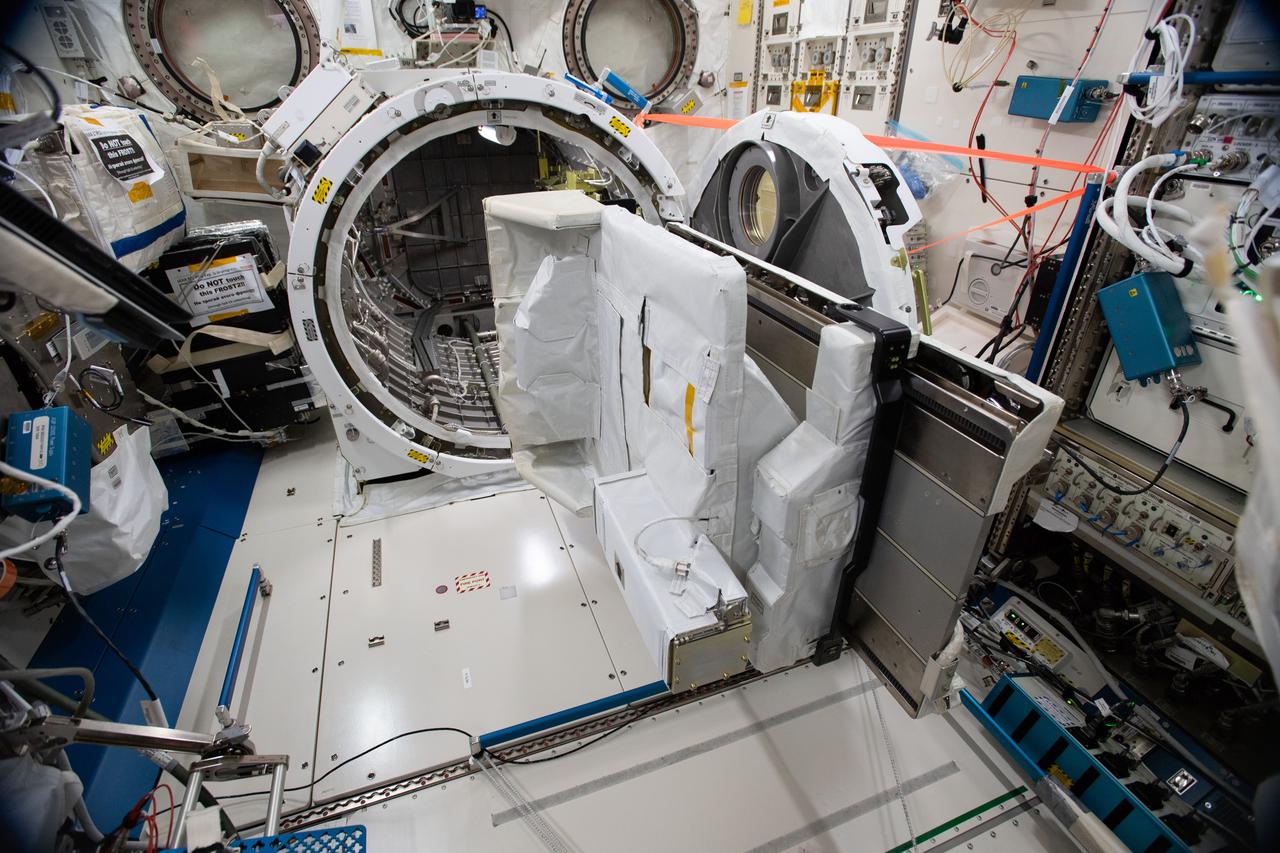
iss056e100542 (7/3/2018) --- A view of the Japanese Experiment Module (JEM) Airlock (AL) slide table retraction from Japanese Experiment Module (JPM) Side during JSSOD-9 operations. The JEM Small Satellite Orbital Deployer (J-SSOD) provides a novel, safe, small satellite launching capability to the International Space Station (ISS). Once the J-SSOD including satellite install cases with small satellites are installed on the Multi-Purpose Experiment Platform (MPEP) by crewmembers, it is passed through the JEM airlock for retrieval, positioning and deployment by the JEMRMS.
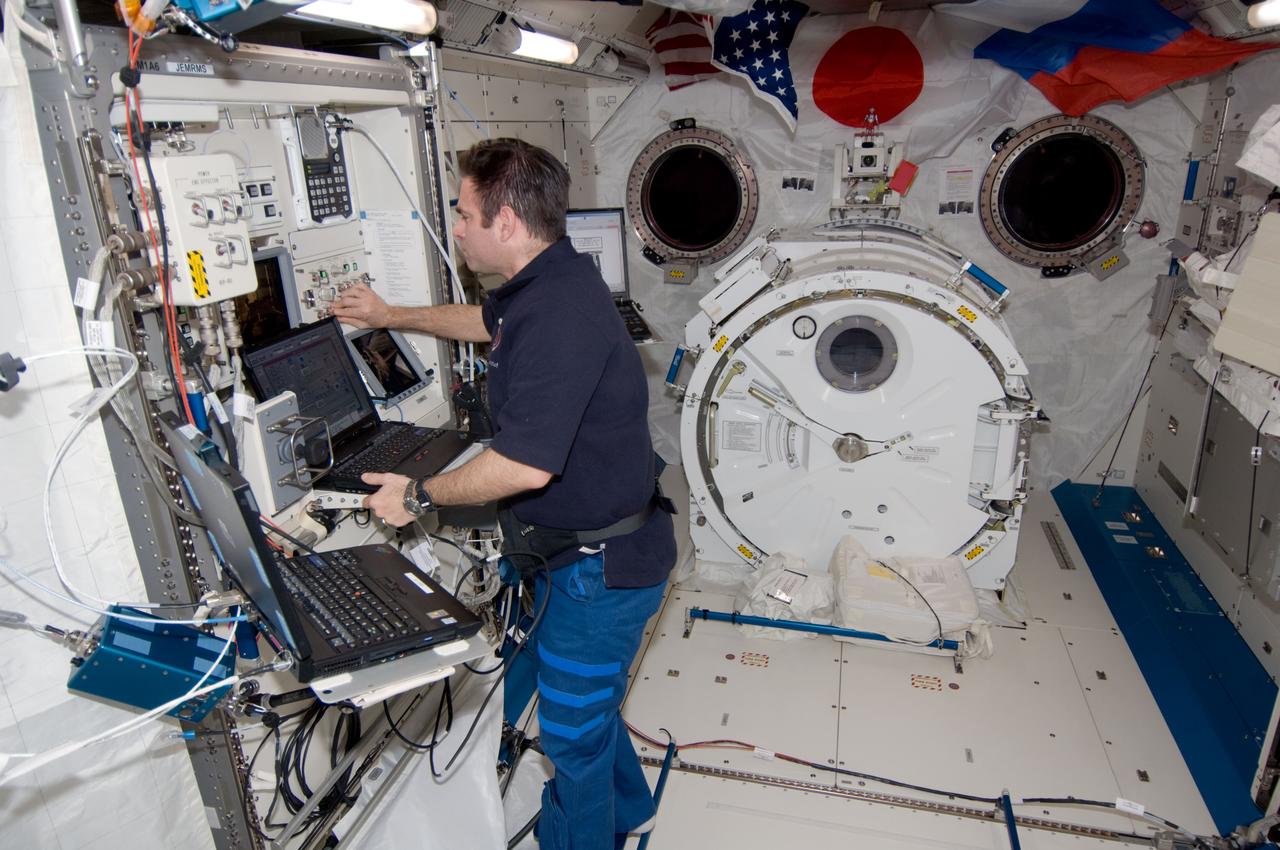
ISS017-E-013312 (15 Aug. 2008) --- NASA astronaut Greg Chamitoff, Expedition 17 flight engineer, works at the Japanese Remote Manipulator System (JEM-RMS) work station in the Kibo laboratory of the International Space Station.
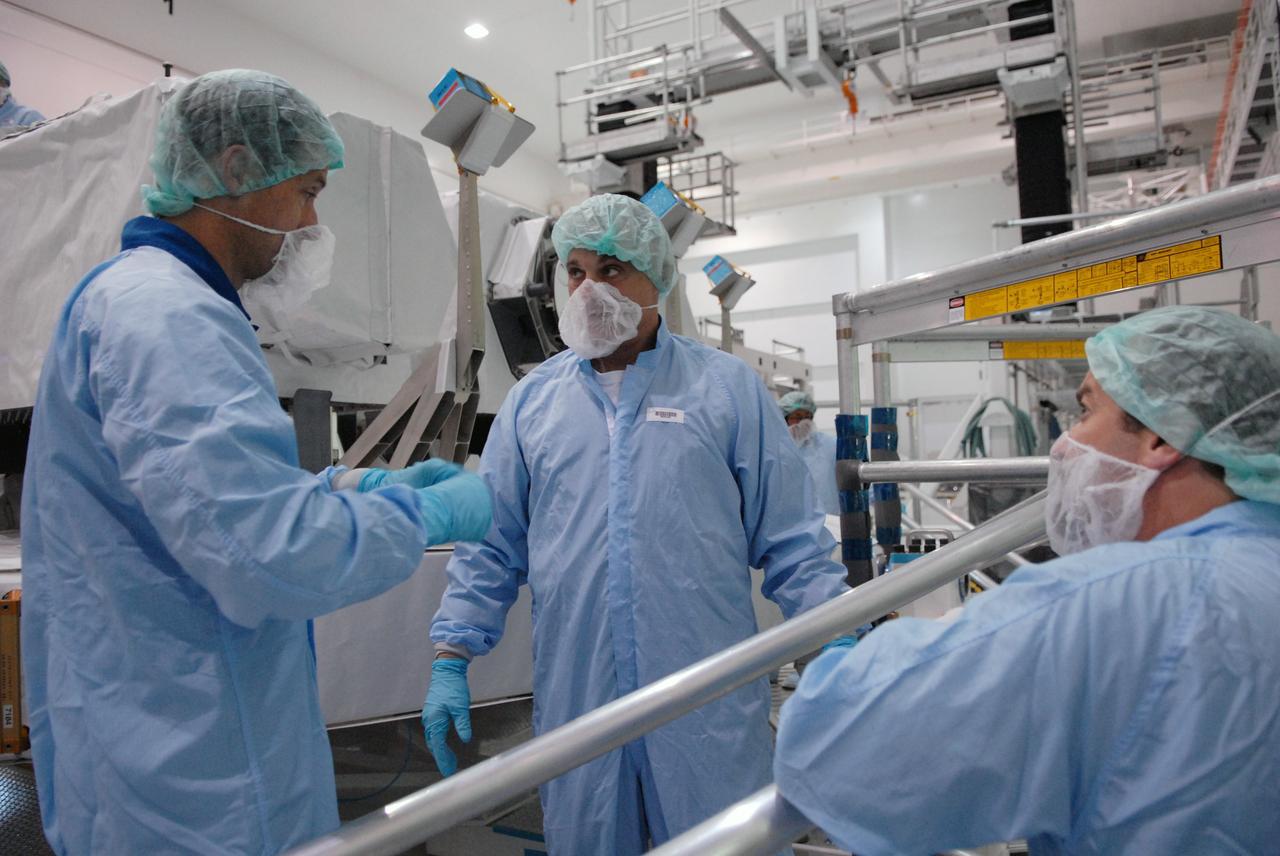
CAPE CANAVERAL, Fla. – In the Space Station Processing Facility at NASA's Kennedy Space Center in Florida, Mission Specialists Tom Marshburn and Dave Wolf review their on-orbit task to install and make the JEM Exposed Facility operational. Other crew members are Commander Mark Polansky, Pilot Doug Hurley and Mission Specialists Christopher Cassidy, Julie Payette and Tim Kopra. They are at Kennedy for Crew Equipment Interface Test activities, or CEIT, which provides experience handling tools, equipment and hardware for the mission. The payload will be launched to the International Space Station aboard space shuttle Endeavour on the STS-127 mission, targeted for launch on May 15. Photo credit: NASA/Dimitrios Gerondidakis