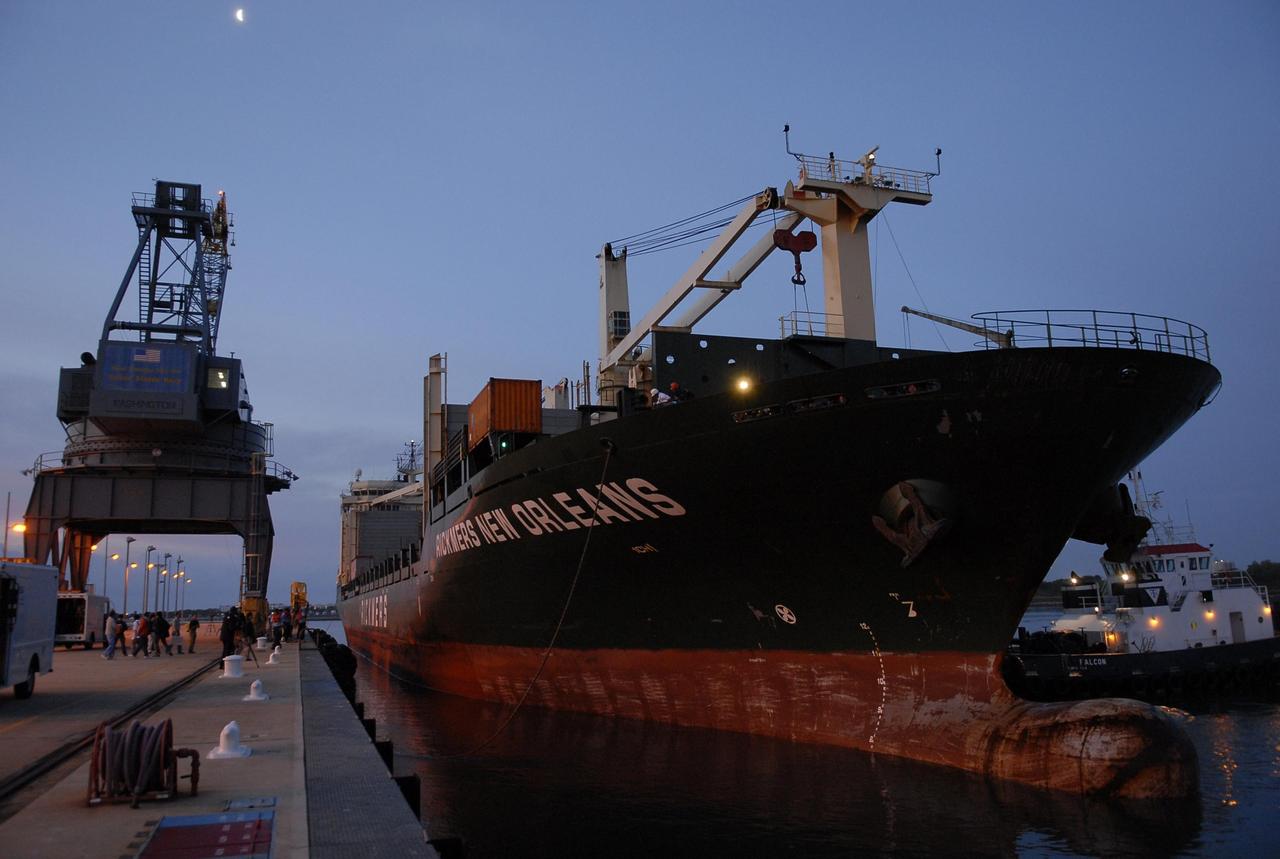
KENNEDY SPACE CENTER, FLA. -- The ship carrying the Experiment Logistics Module Pressurized Section for the Japanese Experiment Module arrives at the Trident wharf after departing from Yokohama, Japan, Feb. 7. The logistics module will be offloaded and transported to the Space Station Processing Facility at NASA's Kennedy Space Center. The Japanese Experiment Module is composed of three segments and is known as Kibo, which means "hope" in Japanese. Kibo consists of six components: two research facilities -- the Pressurized Module and Exposed Facility; a Logistics Module attached to each of them; a Remote Manipulator System; and an Inter-Orbit Communication System unit. Kibo also has a scientific airlock through which experiments are transferred and exposed to the external environment of space. Kibo is Japan's first human space facility and its primary contribution to the station. Kibo will enhance the unique research capabilities of the orbiting complex by providing an additional environment in which astronauts can conduct science experiments. The various components of JEM will be assembled in space over the course of three Space Shuttle missions. The first of those three missions, STS-123, will carry the Experiment Logistics Module Pressurized Section aboard the Space Shuttle Endeavour, targeted for launch in 2007. Photo credit: NASA/Kim Shiflett
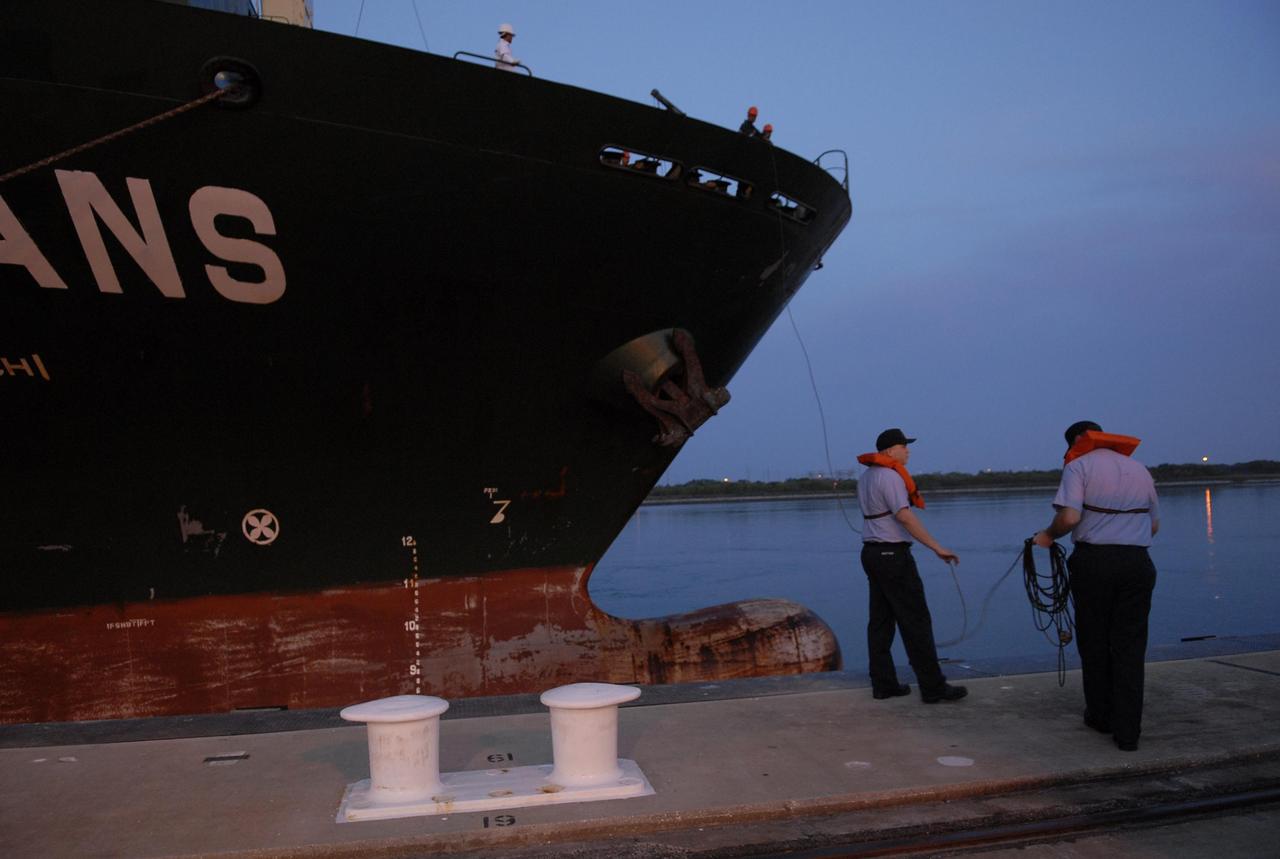
KENNEDY SPACE CENTER, FLA. -- The ship carrying the Experiment Logistics Module Pressurized Section for the Japanese Experiment Module is tied up at the Trident wharf after departing from Yokohama, Japan, Feb. 7. The logistics module will be offloaded and transported to the Space Station Processing Facility at NASA's Kennedy Space Center. The Japanese Experiment Module is composed of three segments and is known as Kibo, which means "hope" in Japanese. Kibo consists of six components: two research facilities -- the Pressurized Module and Exposed Facility; a Logistics Module attached to each of them; a Remote Manipulator System; and an Inter-Orbit Communication System unit. Kibo also has a scientific airlock through which experiments are transferred and exposed to the external environment of space. Kibo is Japan's first human space facility and its primary contribution to the station. Kibo will enhance the unique research capabilities of the orbiting complex by providing an additional environment in which astronauts can conduct science experiments. The various components of JEM will be assembled in space over the course of three Space Shuttle missions. The first of those three missions, STS-123, will carry the Experiment Logistics Module Pressurized Section aboard the Space Shuttle Endeavour, targeted for launch in 2007. Photo credit: NASA/Kim Shiflett

KENNEDY SPACE CENTER, FLA. -- The ship carrying the Experiment Logistics Module Pressurized Section for the Japanese Experiment Module arrives at the Trident wharf after departing from Yokohama, Japan, Feb. 7. The logistics module will be offloaded and transported to the Space Station Processing Facility at NASA's Kennedy Space Center. The Japanese Experiment Module is composed of three segments and is known as Kibo, which means "hope" in Japanese. Kibo consists of six components: two research facilities -- the Pressurized Module and Exposed Facility; a Logistics Module attached to each of them; a Remote Manipulator System; and an Inter-Orbit Communication System unit. Kibo also has a scientific airlock through which experiments are transferred and exposed to the external environment of space. Kibo is Japan's first human space facility and its primary contribution to the station. Kibo will enhance the unique research capabilities of the orbiting complex by providing an additional environment in which astronauts can conduct science experiments. The various components of JEM will be assembled in space over the course of three Space Shuttle missions. The first of those three missions, STS-123, will carry the Experiment Logistics Module Pressurized Section aboard the Space Shuttle Endeavour, targeted for launch in 2007. Photo credit: NASA/Kim Shiflett
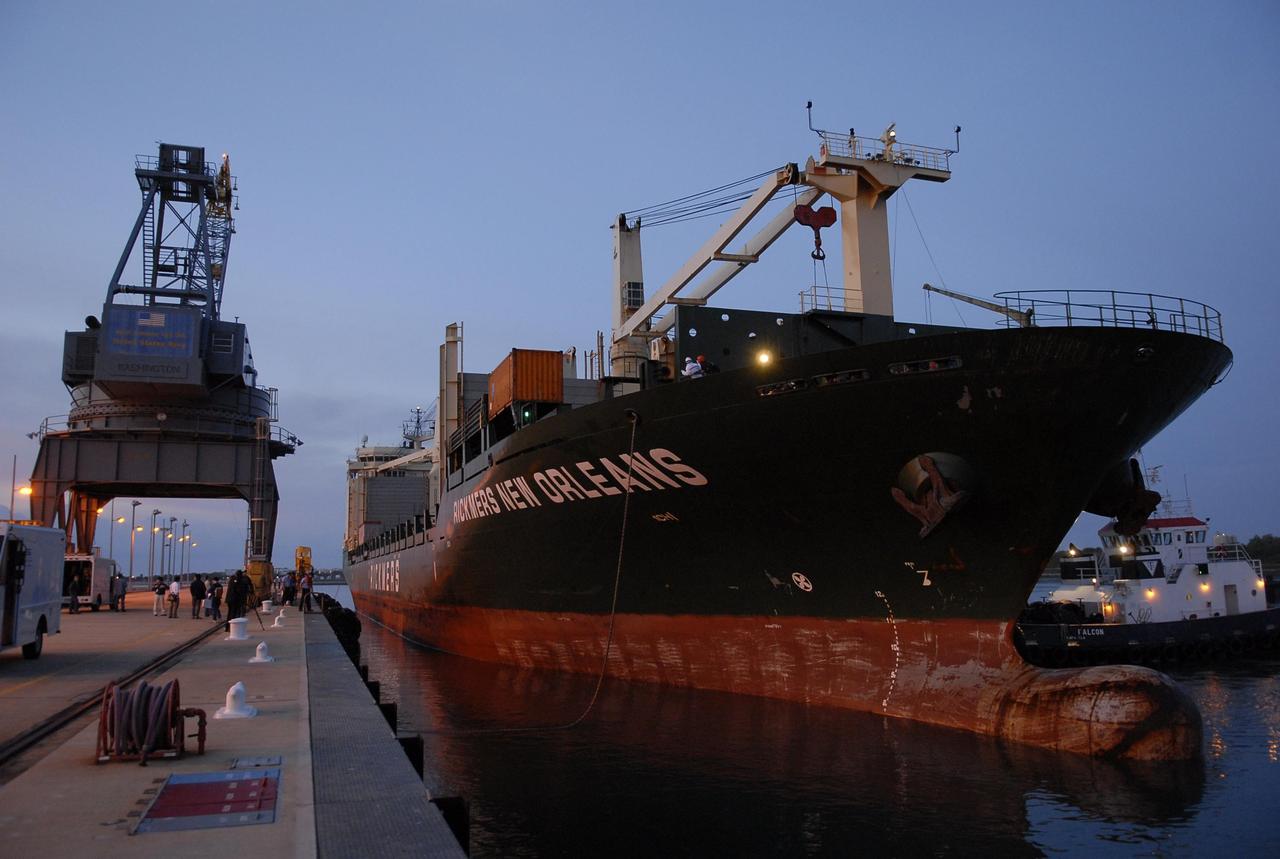
KENNEDY SPACE CENTER, FLA. -- The ship carrying the Experiment Logistics Module Pressurized Section for the Japanese Experiment Module arrives at the Trident wharf after departing from Yokohama, Japan, Feb. 7. The logistics module will be offloaded and transported to the Space Station Processing Facility at NASA's Kennedy Space Center. The Japanese Experiment Module is composed of three segments and is known as Kibo, which means "hope" in Japanese. Kibo consists of six components: two research facilities -- the Pressurized Module and Exposed Facility; a Logistics Module attached to each of them; a Remote Manipulator System; and an Inter-Orbit Communication System unit. Kibo also has a scientific airlock through which experiments are transferred and exposed to the external environment of space. Kibo is Japan's first human space facility and its primary contribution to the station. Kibo will enhance the unique research capabilities of the orbiting complex by providing an additional environment in which astronauts can conduct science experiments. The various components of JEM will be assembled in space over the course of three Space Shuttle missions. The first of those three missions, STS-123, will carry the Experiment Logistics Module Pressurized Section aboard the Space Shuttle Endeavour, targeted for launch in 2007. Photo credit: NASA/Kim Shiflett

KENNEDY SPACE CENTER, FLA. -- At the Trident wharf, workers help guide the container with the Experiment Logistics Module Pressurized Section inside toward a flat bed on the dock. The logistics module is part of the Japanese Experiment Module. The logistics module will be transported to the Space Station Processing Facility at NASA's Kennedy Space Center. The Japanese Experiment Module is composed of three segments and is known as Kibo, which means "hope" in Japanese. Kibo consists of six components: two research facilities -- the Pressurized Module and Exposed Facility; a Logistics Module attached to each of them; a Remote Manipulator System; and an Inter-Orbit Communication System unit. Kibo also has a scientific airlock through which experiments are transferred and exposed to the external environment of space. Kibo is Japan's first human space facility and its primary contribution to the station. Kibo will enhance the unique research capabilities of the orbiting complex by providing an additional environment in which astronauts can conduct science experiments. The various components of JEM will be assembled in space over the course of three Space Shuttle missions. The first of those three missions, STS-123, will carry the Experiment Logistics Module Pressurized Section aboard the Space Shuttle Endeavour, targeted for launch in 2007. Photo credit: NASA/Kim Shiflett
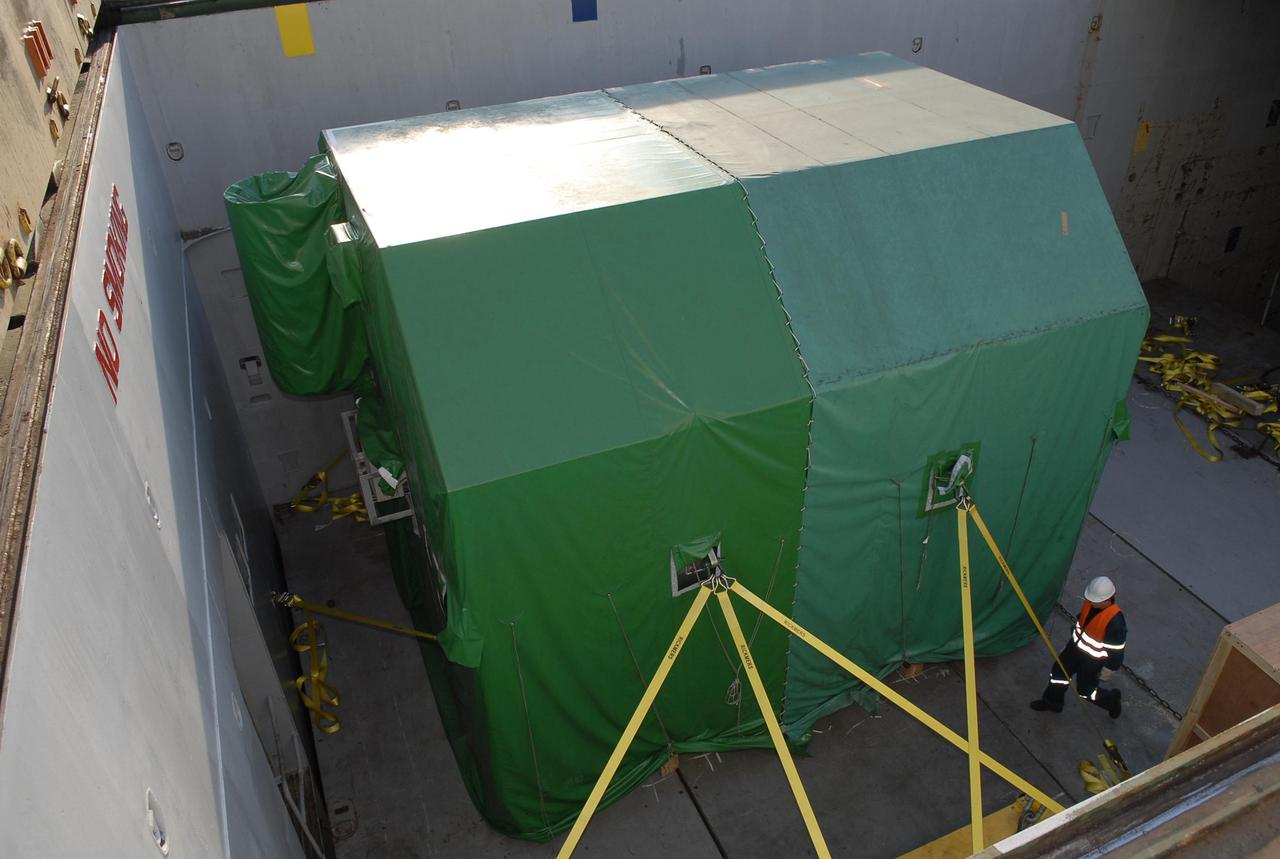
KENNEDY SPACE CENTER, FLA. -- At the Trident wharf, the shipping container with the Experiment Logistics Module Pressurized Section for the Japanese Experiment Module is ready for lifting out of the hold of the ship that brought it from Yokohama, Japan. The logistics module will be offloaded and transported to the Space Station Processing Facility at NASA's Kennedy Space Center. The Japanese Experiment Module is composed of three segments and is known as Kibo, which means "hope" in Japanese. Kibo consists of six components: two research facilities -- the Pressurized Module and Exposed Facility; a Logistics Module attached to each of them; a Remote Manipulator System; and an Inter-Orbit Communication System unit. Kibo also has a scientific airlock through which experiments are transferred and exposed to the external environment of space. Kibo is Japan's first human space facility and its primary contribution to the station. Kibo will enhance the unique research capabilities of the orbiting complex by providing an additional environment in which astronauts can conduct science experiments. The various components of JEM will be assembled in space over the course of three Space Shuttle missions. The first of those three missions, STS-123, will carry the Experiment Logistics Module Pressurized Section aboard the Space Shuttle Endeavour, targeted for launch in 2007. Photo credit: NASA/Kim Shiflett
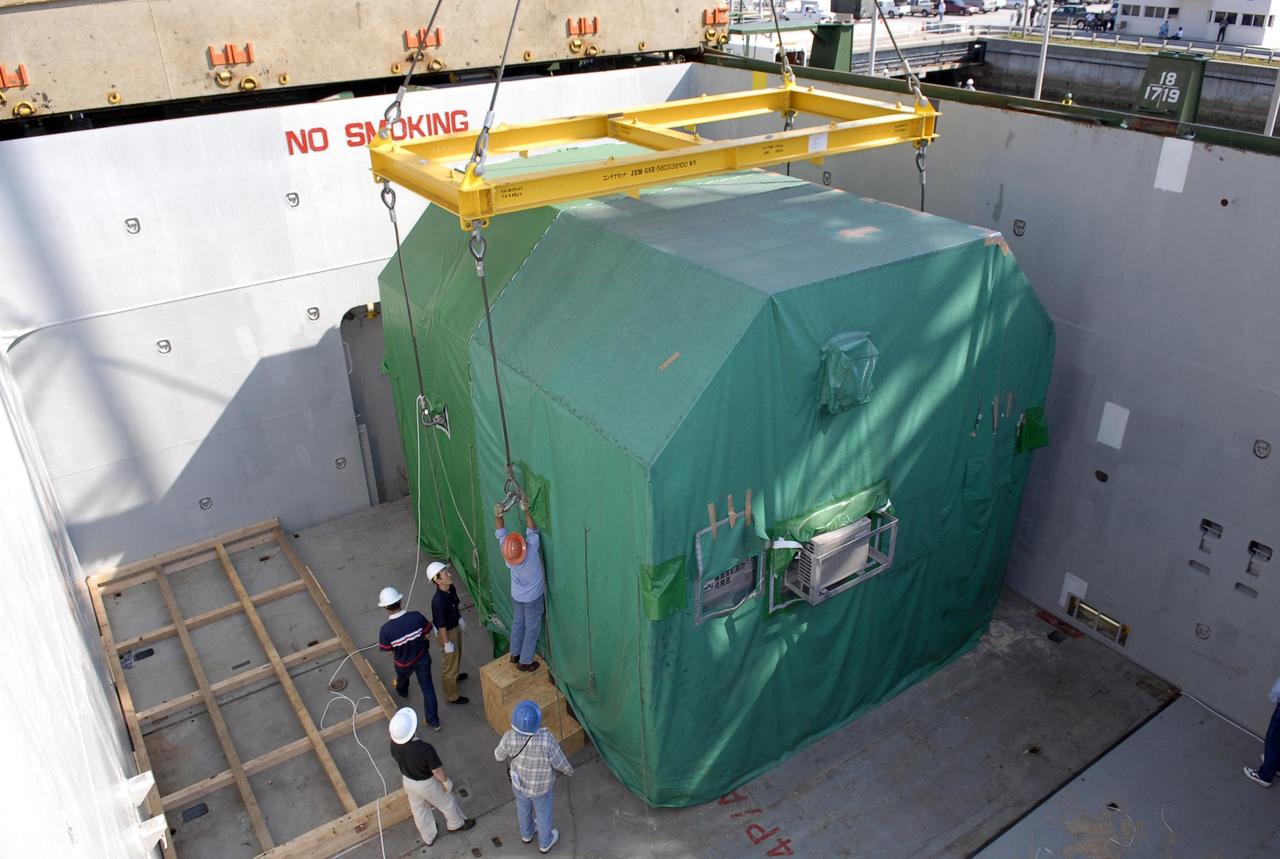
KENNEDY SPACE CENTER, FLA. -- At the Trident wharf, workers in the hold of a ship attach a crane to the shipping container with the Experiment Logistics Module Pressurized Section for the Japanese Experiment Module. The ship brought the module from Yokohama, Japan. The logistics module will be offloaded and transported to the Space Station Processing Facility at NASA's Kennedy Space Center. The Japanese Experiment Module is composed of three segments and is known as Kibo, which means "hope" in Japanese. Kibo consists of six components: two research facilities -- the Pressurized Module and Exposed Facility; a Logistics Module attached to each of them; a Remote Manipulator System; and an Inter-Orbit Communication System unit. Kibo also has a scientific airlock through which experiments are transferred and exposed to the external environment of space. Kibo is Japan's first human space facility and its primary contribution to the station. Kibo will enhance the unique research capabilities of the orbiting complex by providing an additional environment in which astronauts can conduct science experiments. The various components of JEM will be assembled in space over the course of three Space Shuttle missions. The first of those three missions, STS-123, will carry the Experiment Logistics Module Pressurized Section aboard the Space Shuttle Endeavour, targeted for launch in 2007. Photo credit: NASA/Kim Shiflett
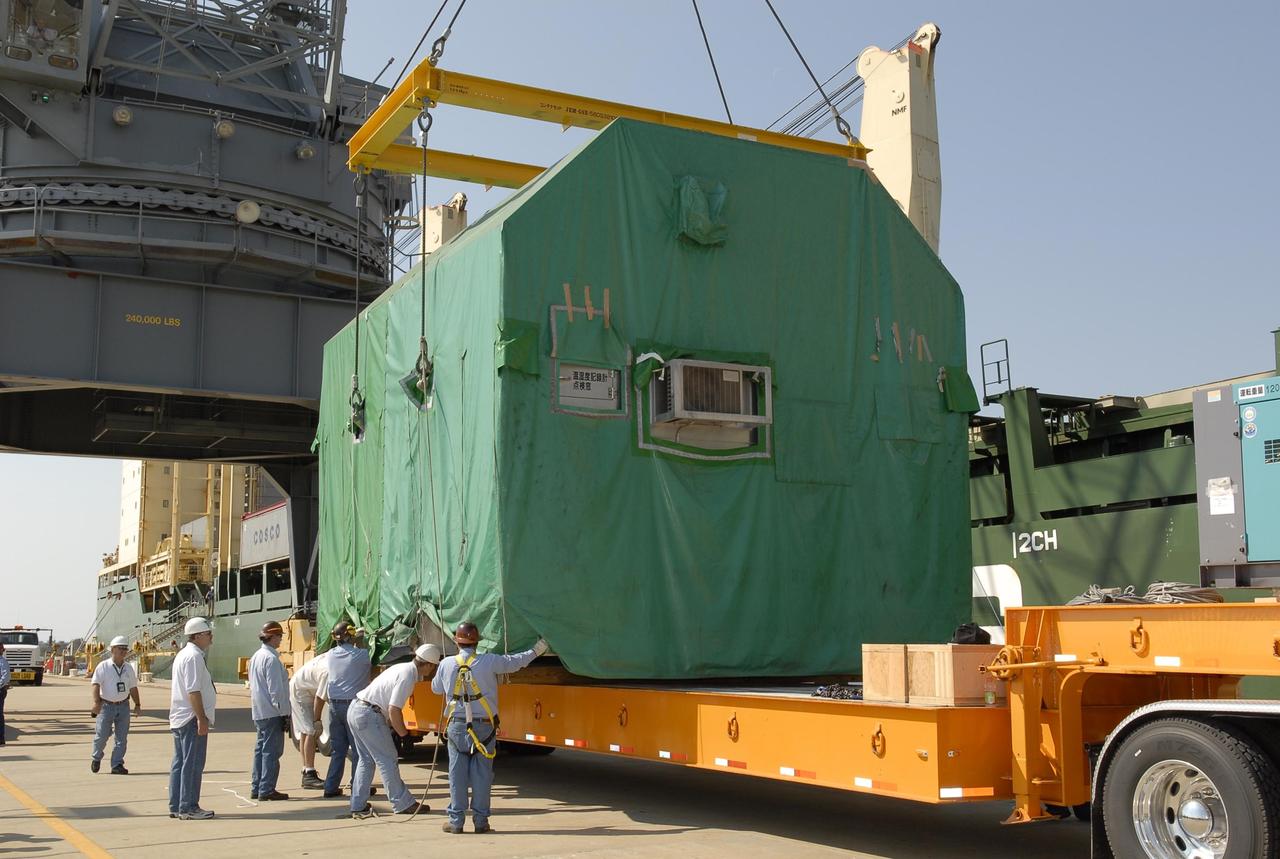
KENNEDY SPACE CENTER, FLA. -- At the Trident wharf, workers help guide the container with the Experiment Logistics Module Pressurized Section inside onto a flat bed on the dock. The logistics module is part of the Japanese Experiment Module. The logistics module will be transported to the Space Station Processing Facility at NASA's Kennedy Space Center. The Japanese Experiment Module is composed of three segments and is known as Kibo, which means "hope" in Japanese. Kibo consists of six components: two research facilities -- the Pressurized Module and Exposed Facility; a Logistics Module attached to each of them; a Remote Manipulator System; and an Inter-Orbit Communication System unit. Kibo also has a scientific airlock through which experiments are transferred and exposed to the external environment of space. Kibo is Japan's first human space facility and its primary contribution to the station. Kibo will enhance the unique research capabilities of the orbiting complex by providing an additional environment in which astronauts can conduct science experiments. The various components of JEM will be assembled in space over the course of three Space Shuttle missions. The first of those three missions, STS-123, will carry the Experiment Logistics Module Pressurized Section aboard the Space Shuttle Endeavour, targeted for launch in 2007. Photo credit: NASA/Kim Shiflett
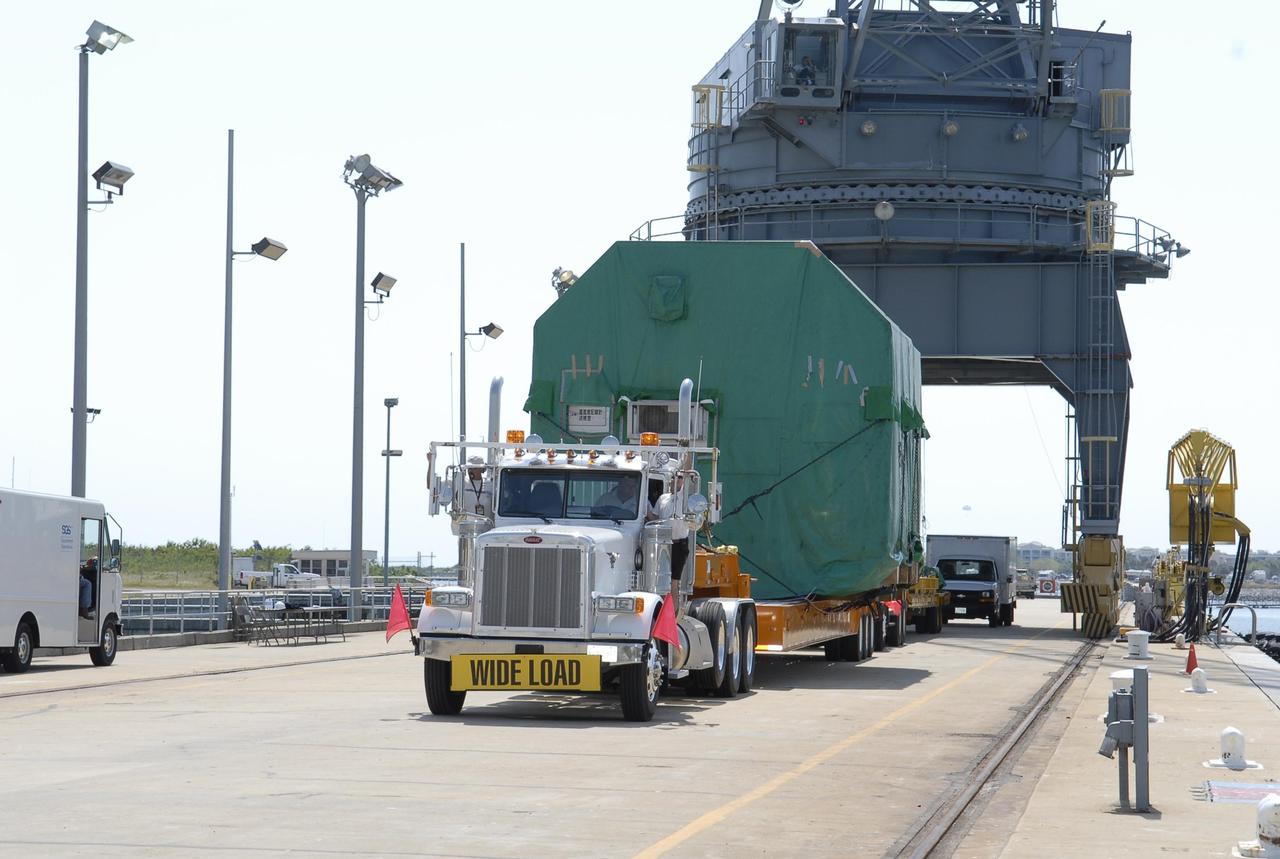
KENNEDY SPACE CENTER, FLA. -- A flat bed truck hauls the container with the Experiment Logistics Module Pressurized Section inside away from the Trident wharf. The logistics module is part of the Japanese Experiment Module. The logistics module is being transported to the Space Station Processing Facility at NASA's Kennedy Space Center. The Japanese Experiment Module is composed of three segments and is known as Kibo, which means "hope" in Japanese. Kibo consists of six components: two research facilities -- the Pressurized Module and Exposed Facility; a Logistics Module attached to each of them; a Remote Manipulator System; and an Inter-Orbit Communication System unit. Kibo also has a scientific airlock through which experiments are transferred and exposed to the external environment of space. Kibo is Japan's first human space facility and its primary contribution to the station. Kibo will enhance the unique research capabilities of the orbiting complex by providing an additional environment in which astronauts can conduct science experiments. The various components of JEM will be assembled in space over the course of three Space Shuttle missions. The first of those three missions, STS-123, will carry the Experiment Logistics Module Pressurized Section aboard the Space Shuttle Endeavour, targeted for launch in 2007. Photo credit: NASA/Kim Shiflett

KENNEDY SPACE CENTER, FLA. -- A flat bed truck hauls the container with the Experiment Logistics Module Pressurized Section inside away from the Trident wharf. The logistics module is part of the Japanese Experiment Module, known as Kibo. The logistics module is being transported to the Space Station Processing Facility at NASA's Kennedy Space Center. Kibo consists of six components: two research facilities -- the Pressurized Module and Exposed Facility; a Logistics Module attached to each of them; a Remote Manipulator System; and an Inter-Orbit Communication System unit. Kibo also has a scientific airlock through which experiments are transferred and exposed to the external environment of space. Kibo is Japan's first human space facility and its primary contribution to the station. Kibo will enhance the unique research capabilities of the orbiting complex by providing an additional environment in which astronauts can conduct science experiments. The various components of JEM will be assembled in space over the course of three Space Shuttle missions. The first of those three missions, STS-123, will carry the Experiment Logistics Module Pressurized Section aboard the Space Shuttle Endeavour, targeted for launch in 2007. Photo credit: NASA/Kim Shiflett

KENNEDY SPACE CENTER, FLA. -- At the Trident wharf, workers help guide the container with the Experiment Logistics Module Pressurized Section inside toward the dock. The logistics module is part of the Japanese Experiment Module. The logistics module will be transported to the Space Station Processing Facility at NASA's Kennedy Space Center. The Japanese Experiment Module is composed of three segments and is known as Kibo, which means "hope" in Japanese. Kibo consists of six components: two research facilities -- the Pressurized Module and Exposed Facility; a Logistics Module attached to each of them; a Remote Manipulator System; and an Inter-Orbit Communication System unit. Kibo also has a scientific airlock through which experiments are transferred and exposed to the external environment of space. Kibo is Japan's first human space facility and its primary contribution to the station. Kibo will enhance the unique research capabilities of the orbiting complex by providing an additional environment in which astronauts can conduct science experiments. The various components of JEM will be assembled in space over the course of three Space Shuttle missions. The first of those three missions, STS-123, will carry the Experiment Logistics Module Pressurized Section aboard the Space Shuttle Endeavour, targeted for launch in 2007. Photo credit: NASA/Kim Shiflett