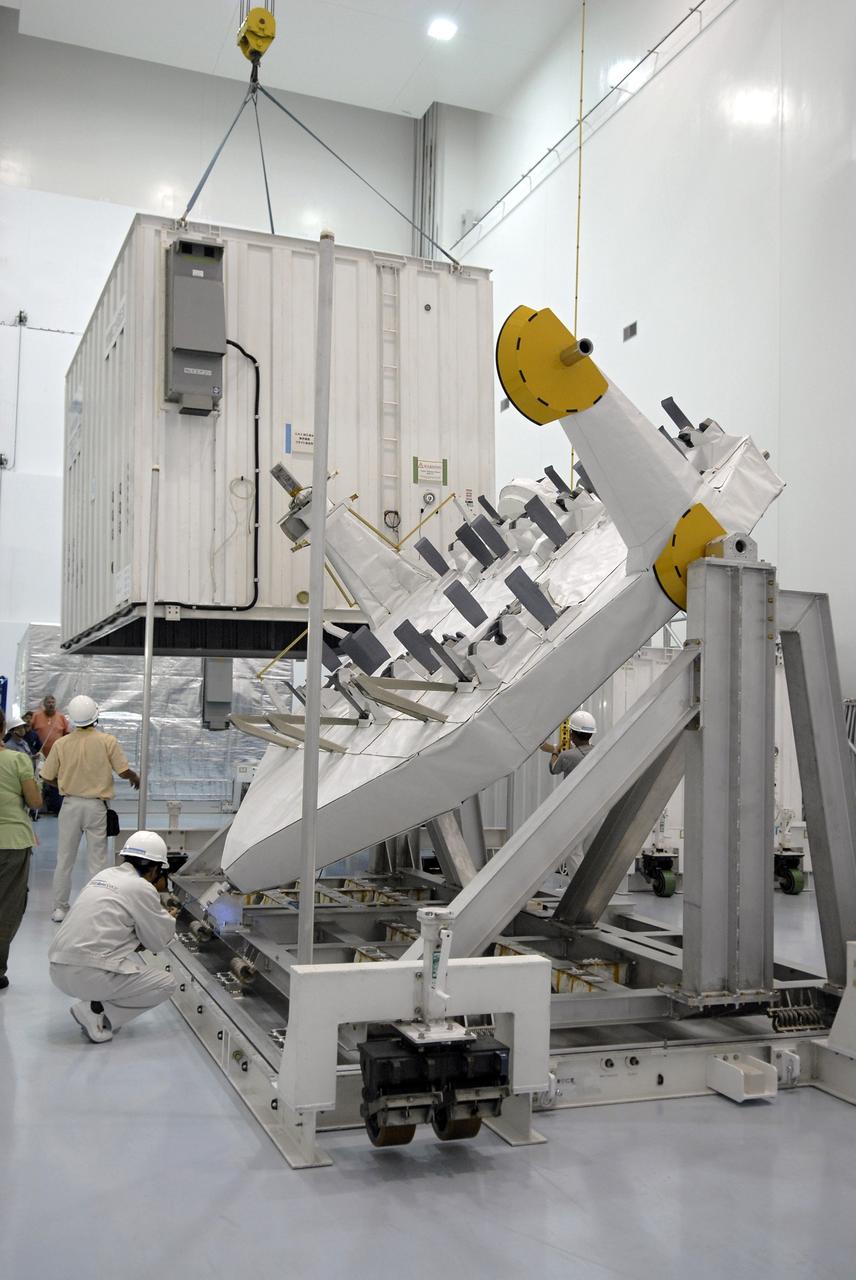
CAPE CANAVERAL, Fla. - The shipping container is moved away from the Kibo Experiment Logistics Module Exposed Section, or ELM-ES, in the Space Station Processing Facility at NASA's Kennedy Space Center in Florida. The ELM-ES is one of the final components of the Japan Aerospace Exploration Agency's Kibo laboratory for the International Space Station. It can provide payload storage space and can carry up to three payloads at launch. In addition, the ELM-ES provides a logistics function where it can be returned to the ground aboard the space shuttle. The ELM-ES will be carried aboard space shuttle Endeavour on the STS-127 mission targeted for launch May 15, 2009. Photo credit: NASA/Kim Shiflett

KENNEDY SPACE CENTER, FLA. -- In the Space Station Processing Facility at NASA's Kennedy Space Center, the Experiment Logistics Module Pressurized Section, or ELM-PS, of the Japanese Experiment Module, called Kibo, is lifted from its work stand. It is being moved to a rotation stand. The ELM-PS is the primary payload for space shuttle Endeavour's STS-123 mission, which is targeted for launch to the International Space Station on Feb. 14. Photo credit: NASA/Dimitri Gerondidakis

KENNEDY SPACE CENTER, FLA. -- In the Space Station Processing Facility at NASA's Kennedy Space Center, workers help guide the crane holding the Experiment Logistics Module Pressurized Section, or ELM-PS, which is being lowered toward a rotation stand. Part of the Japanese Experiment Module, called Kibo, the ELM-PS is the primary payload for space shuttle Endeavour's STS-123 mission, which is targeted for launch to the International Space Station on Feb. 14. Photo credit: NASA/Dimitri Gerondidakis
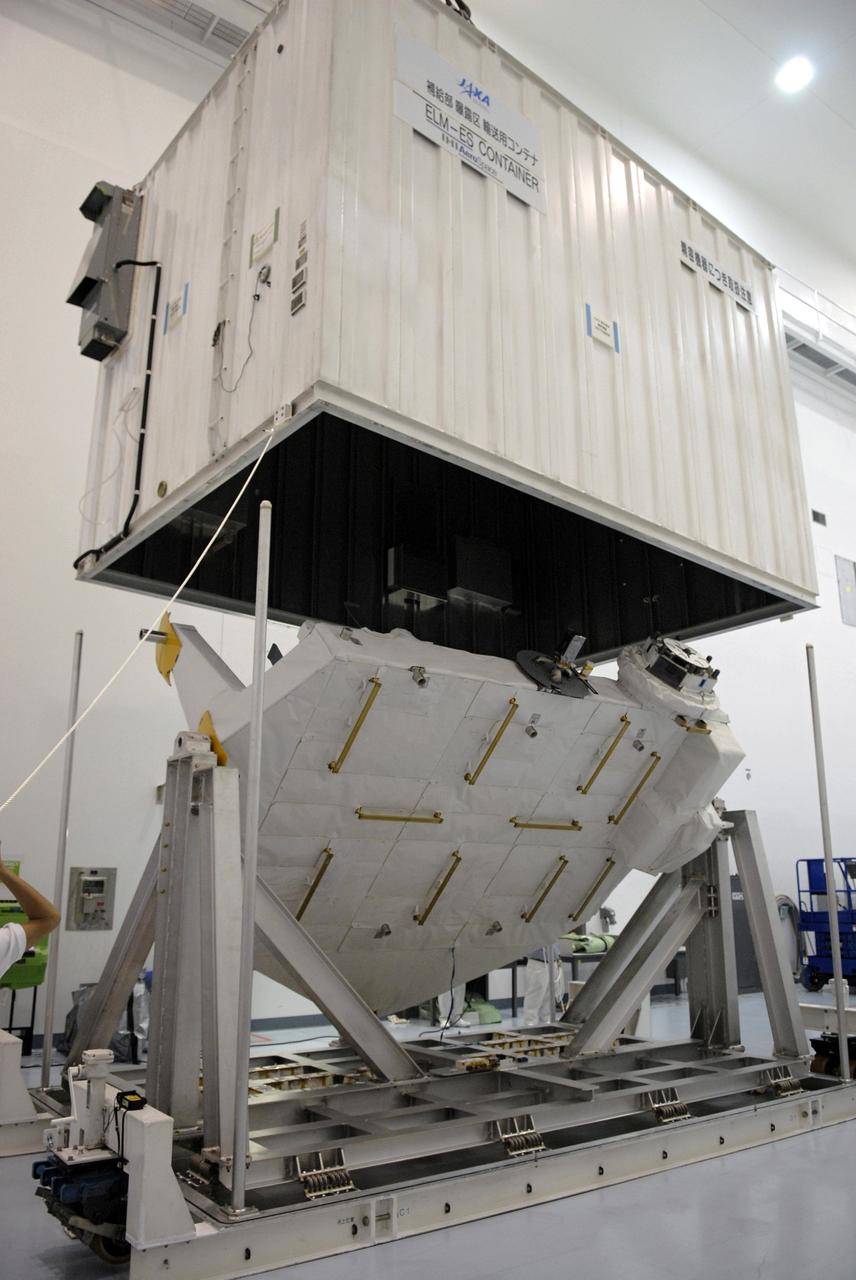
CAPE CANAVERAL, Fla. - The shipping container is lifted above the Kibo Experiment Logistics Module Exposed Section, or ELM-ES, in the Space Station Processing Facility at NASA's Kennedy Space Center in Florida. The ELM-ES is one of the final components of the Japan Aerospace Exploration Agency's Kibo laboratory for the International Space Station. It can provide payload storage space and can carry up to three payloads at launch. In addition, the ELM-ES provides a logistics function where it can be returned to the ground aboard the space shuttle. The ELM-ES will be carried aboard space shuttle Endeavour on the STS-127 mission targeted for launch May 15, 2009. Photo credit: NASA/Kim Shiflett
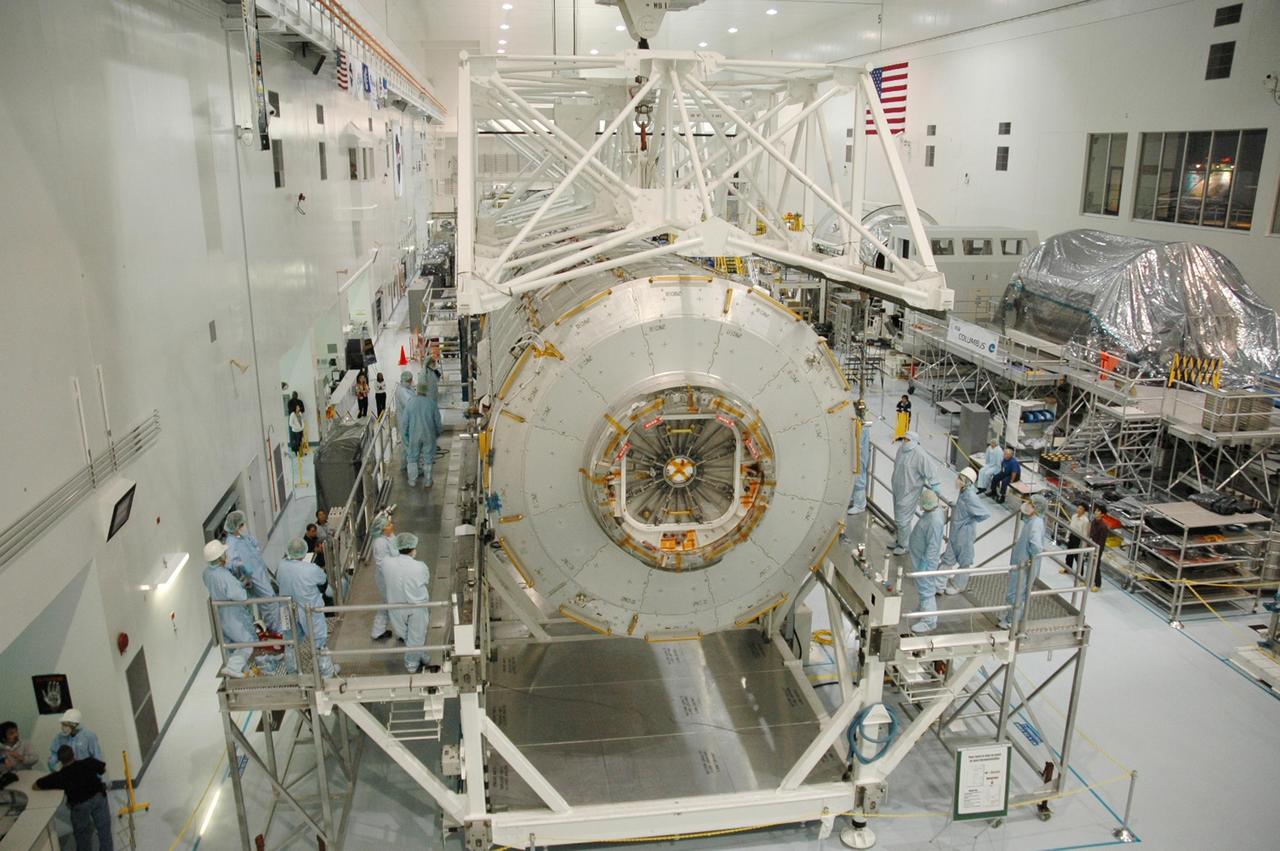
KENNEDY SPACE CENTER, FLA. -- In the Space Station Processing Facility, workers observe as an overhead crane lowers the Japanese Experiment Module (JEM) onto a weighing stand. The module will also be measured for its center of gravity. The Japanese Aerospace Exploration Agency developed the laboratory at the Tsukuba Space Center near Tokyo. It is the first element, named "Kibo" (Hope), to be delivered to KSC. The JEM is Japan's primary contribution to the International Space Station. It will enhance the unique research capabilities of the orbiting complex by providing an additional environment for astronauts to conduct science experiments. The JEM is targeted for mission STS-124, to launch in early 2008. Photo credit: NASA/Troy Cryder
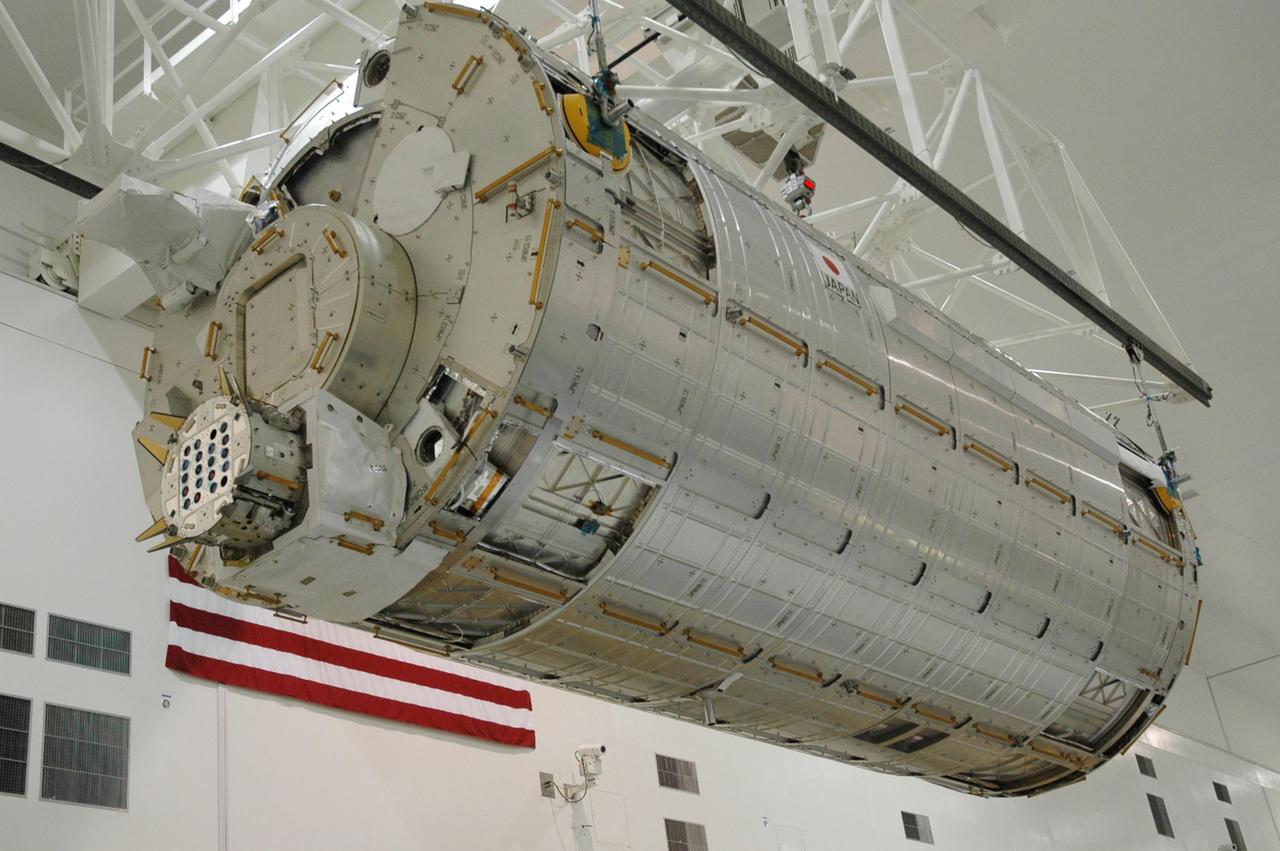
KENNEDY SPACE CENTER, FLA. -- In the Space Station Processing Facility, the Japanese Experiment Module (JEM), after being weighed, makes a return trip to its transporter. The Japanese Aerospace Exploration Agency developed the laboratory at the Tsukuba Space Center near Tokyo. It is the first element, named "Kibo" (Hope), to be delivered to KSC. The JEM is Japan's primary contribution to the International Space Station. It will enhance the unique research capabilities of the orbiting complex by providing an additional environment for astronauts to conduct science experiments. The JEM is targeted for mission STS-124, to launch in early 2008. Photo credit: NASA/Troy Cryder
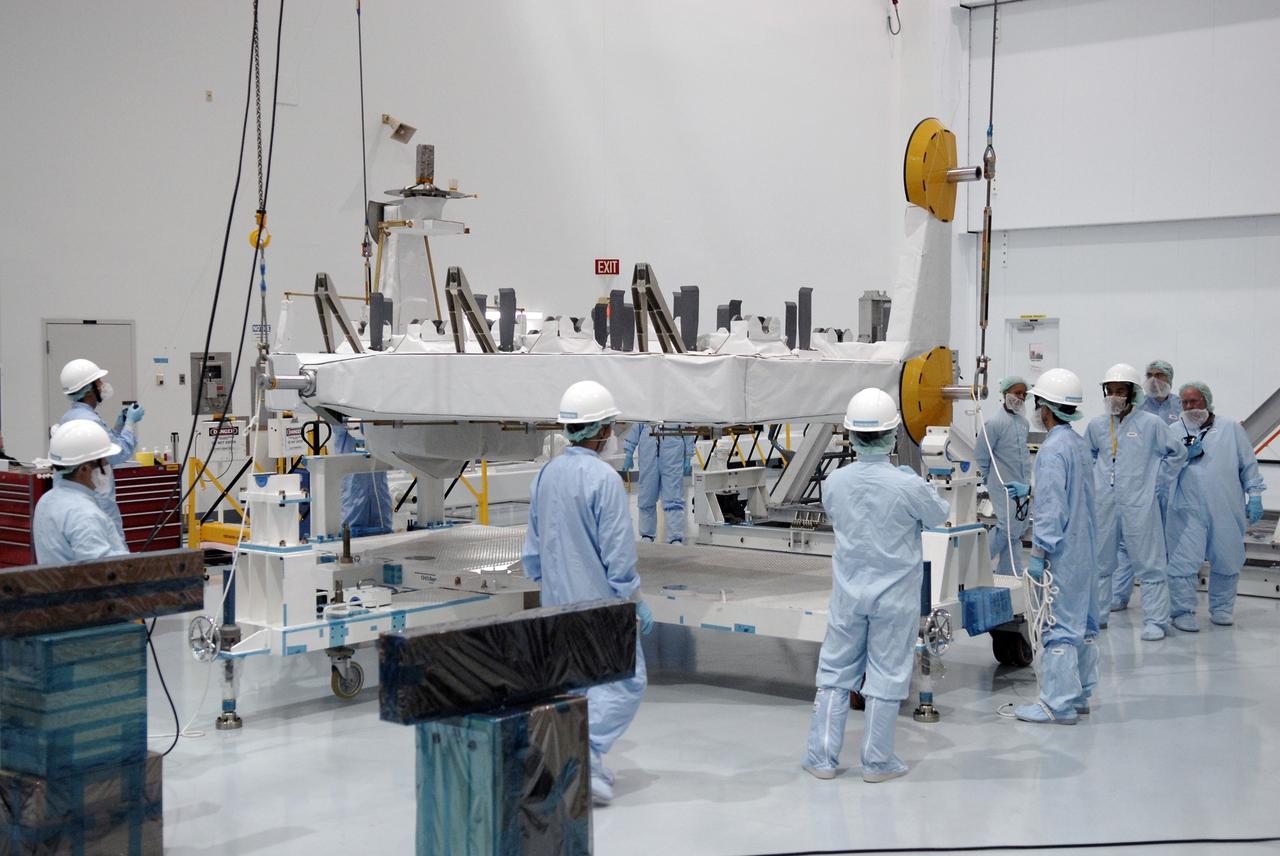
CAPE CANAVERAL, Fla. - In the Space Station Processing Facility at NASA's Kennedy Space Center in Florida, cables lower the Kibo Experiment Logistics Module Exposed Section, or ELM-ES, onto a work stand. The ELM-ES is one of the final components of the Japan Aerospace Exploration Agency's Kibo laboratory for the International Space Station. It can provide payload storage space and can carry up to three payloads at launch. In addition, the ELM-ES provides a logistics function where it can be returned to the ground aboard the space shuttle. The ELM-ES will be carried aboard space shuttle Endeavour on the STS-127 mission targeted for launch May 15, 2009. Photo credit: NASA/Kim Shiflett
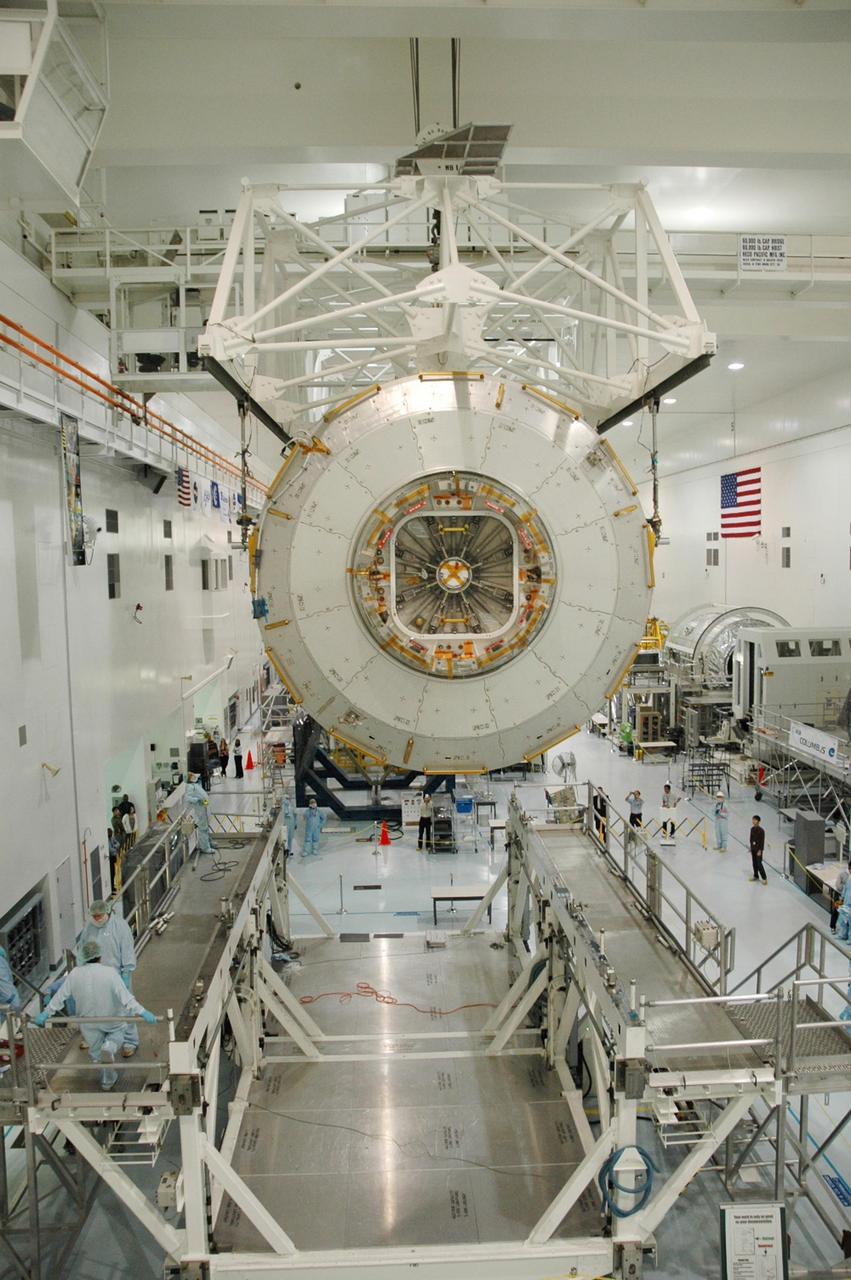
KENNEDY SPACE CENTER, FLA. -- In the Space Station Processing Facility, an overhead crane begins lowering the Japanese Experiment Module (JEM) onto a weighing stand. The module will also be measured for its center of gravity. The Japanese Aerospace Exploration Agency developed the laboratory at the Tsukuba Space Center near Tokyo. It is the first element, named "Kibo" (Hope), to be delivered to KSC. The JEM is Japan's primary contribution to the International Space Station. It will enhance the unique research capabilities of the orbiting complex by providing an additional environment for astronauts to conduct science experiments. The JEM is targeted for mission STS-124, to launch in early 2008. Photo credit: NASA/Troy Cryder
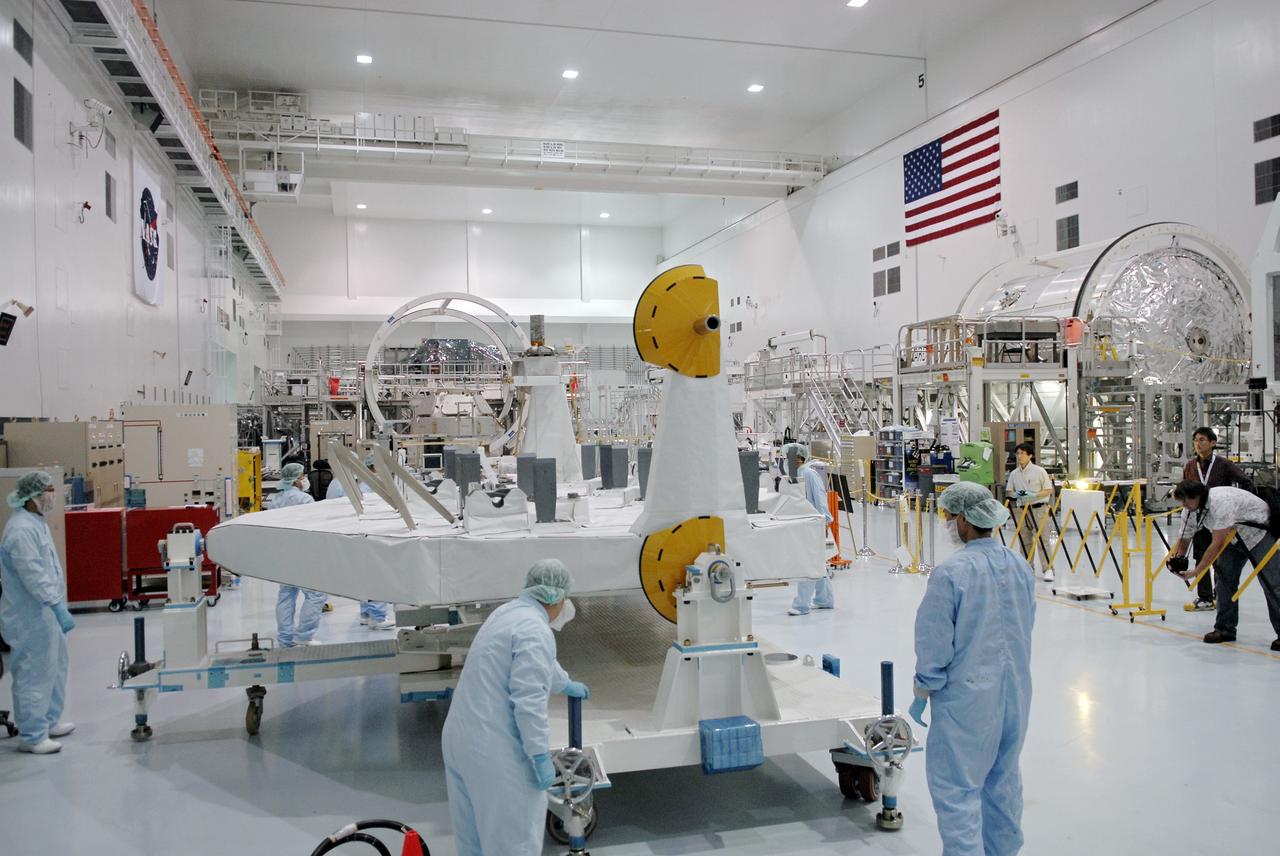
CAPE CANAVERAL, Fla. - In the Space Station Processing Facility at NASA's Kennedy Space Center in Florida, workers secure the work stand holding the Kibo Experiment Logistics Module Exposed Section, or ELM-ES. The ELM-ES is one of the final components of the Japan Aerospace Exploration Agency's Kibo laboratory for the International Space Station. It can provide payload storage space and can carry up to three payloads at launch. In addition, the ELM-ES provides a logistics function where it can be returned to the ground aboard the space shuttle. The ELM-ES will be carried aboard space shuttle Endeavour on the STS-127 mission targeted for launch May 15, 2009. Photo credit: NASA/Kim Shiflett
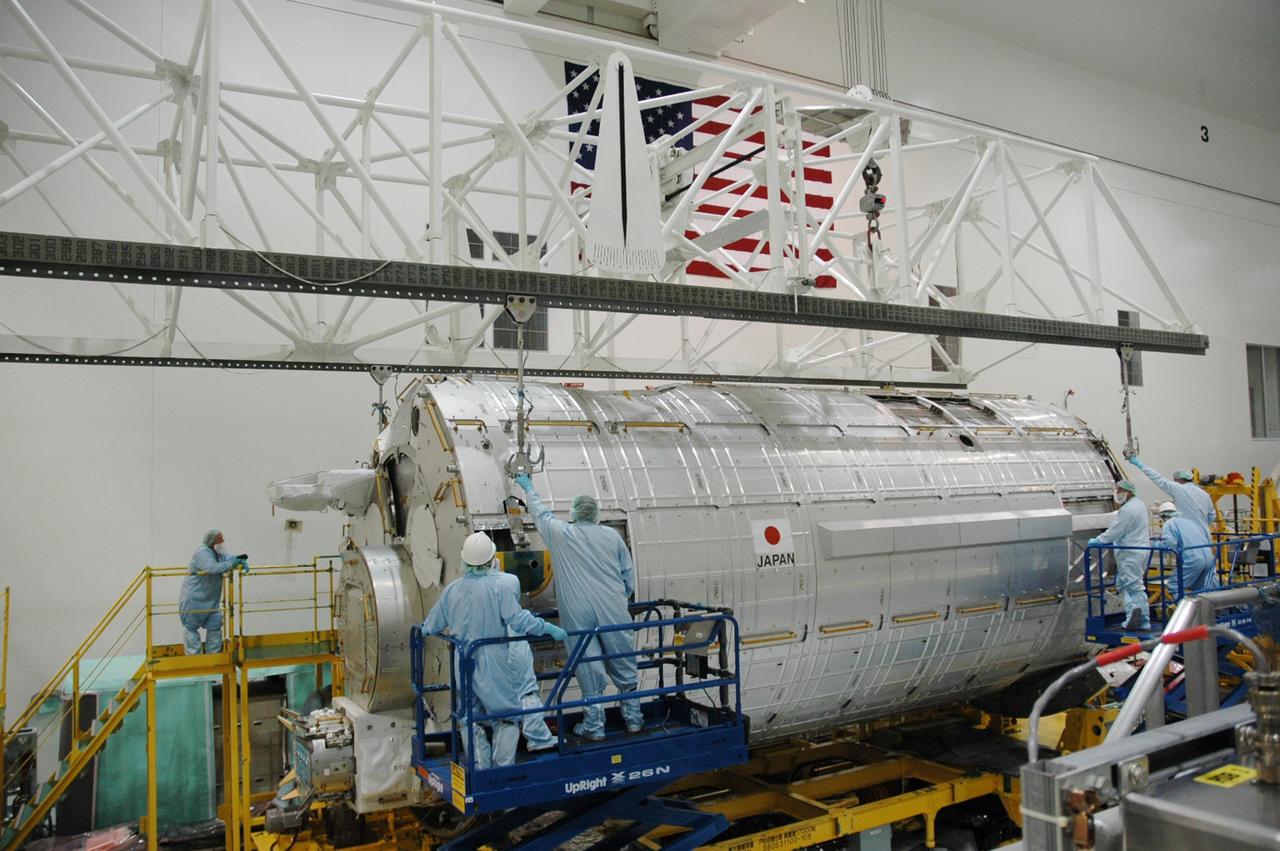
KENNEDY SPACE CENTER, FLA. -- In the Space Station Processing Facility, workers are attaching an overhead crane to the Japanese Experiment Module (JEM) in order to lift it. The module is being moved to a stand where it will be weighed and measured for its center of gravity. The Japanese Aerospace Exploration Agency developed the laboratory at the Tsukuba Space Center near Tokyo. It is the first element, named "Kibo" (Hope), to be delivered to KSC. The JEM is Japan's primary contribution to the International Space Station. It will enhance the unique research capabilities of the orbiting complex by providing an additional environment for astronauts to conduct science experiments. The JEM is targeted for mission STS-124, to launch in early 2008. Photo credit: NASA/Troy Cryder
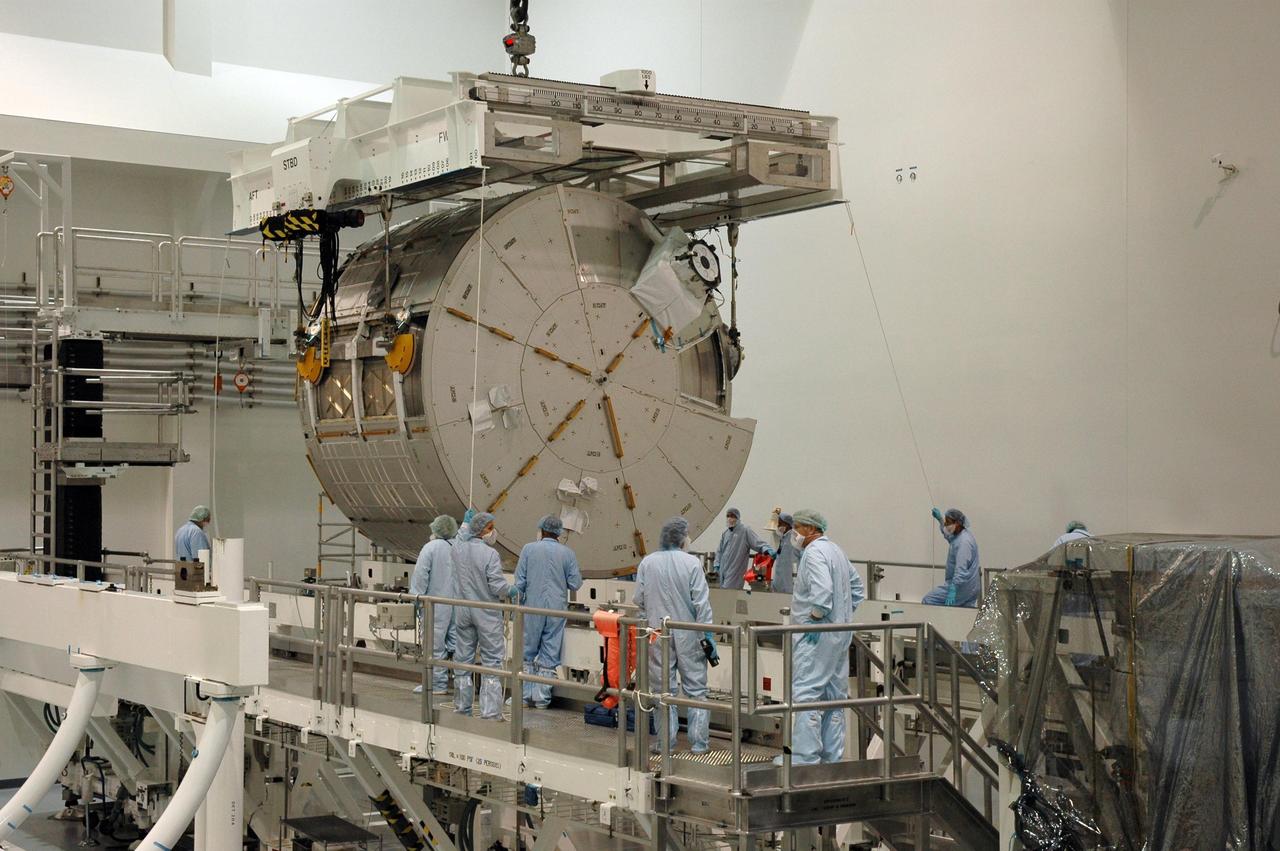
KENNEDY SPACE CENTER, FLA. -- In the Space Station Processing Facility at NASA's Kennedy Space Center, workers help guide the crane holding the Experiment Logistics Module Pressurized Section, or ELM-PS, which is being lowered toward a rotation stand. Part of the Japanese Experiment Module, called Kibo, the ELM-PS is the primary payload for space shuttle Endeavour's STS-123 mission, which is targeted for launch to the International Space Station on Feb. 14. Photo credit: NASA/Dimitri Gerondidakis
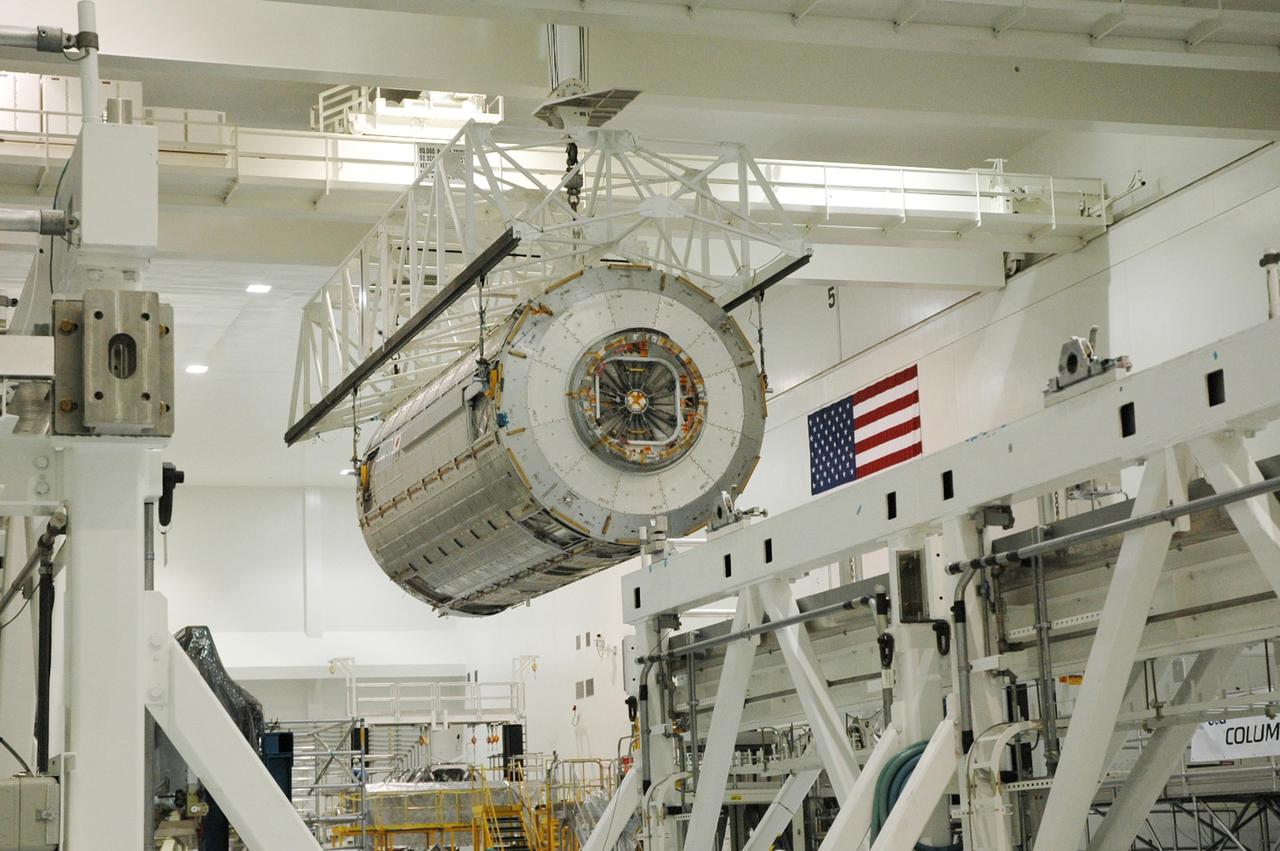
KENNEDY SPACE CENTER, FLA. -- In the Space Station Processing Facility, an overhead crane carries the Japanese Experiment Module (JEM) across the facility. The module is being moved to another stand where it will be weighed and measured for its center of gravity. The Japanese Aerospace Exploration Agency developed the laboratory at the Tsukuba Space Center near Tokyo. It is the first element, named "Kibo" (Hope), to be delivered to KSC. The JEM is Japan's primary contribution to the International Space Station. It will enhance the unique research capabilities of the orbiting complex by providing an additional environment for astronauts to conduct science experiments. The JEM is targeted for mission STS-124, to launch in early 2008. Photo credit: NASA/Troy Cryder

KENNEDY SPACE CENTER, FLA. -- In the Space Station Processing Facility at NASA's Kennedy Space Center, the Experiment Logistics Module Pressurized Section, or ELM-PS, is moved toward a rotation stand. The ELM-PS is part of the Japanese Experiment Module, called Kibo. The ELM-PS is the primary payload for space shuttle Endeavour's STS-123 mission, which is targeted for launch to the International Space Station on Feb. 14. Photo credit: NASA/Dimitri Gerondidakis
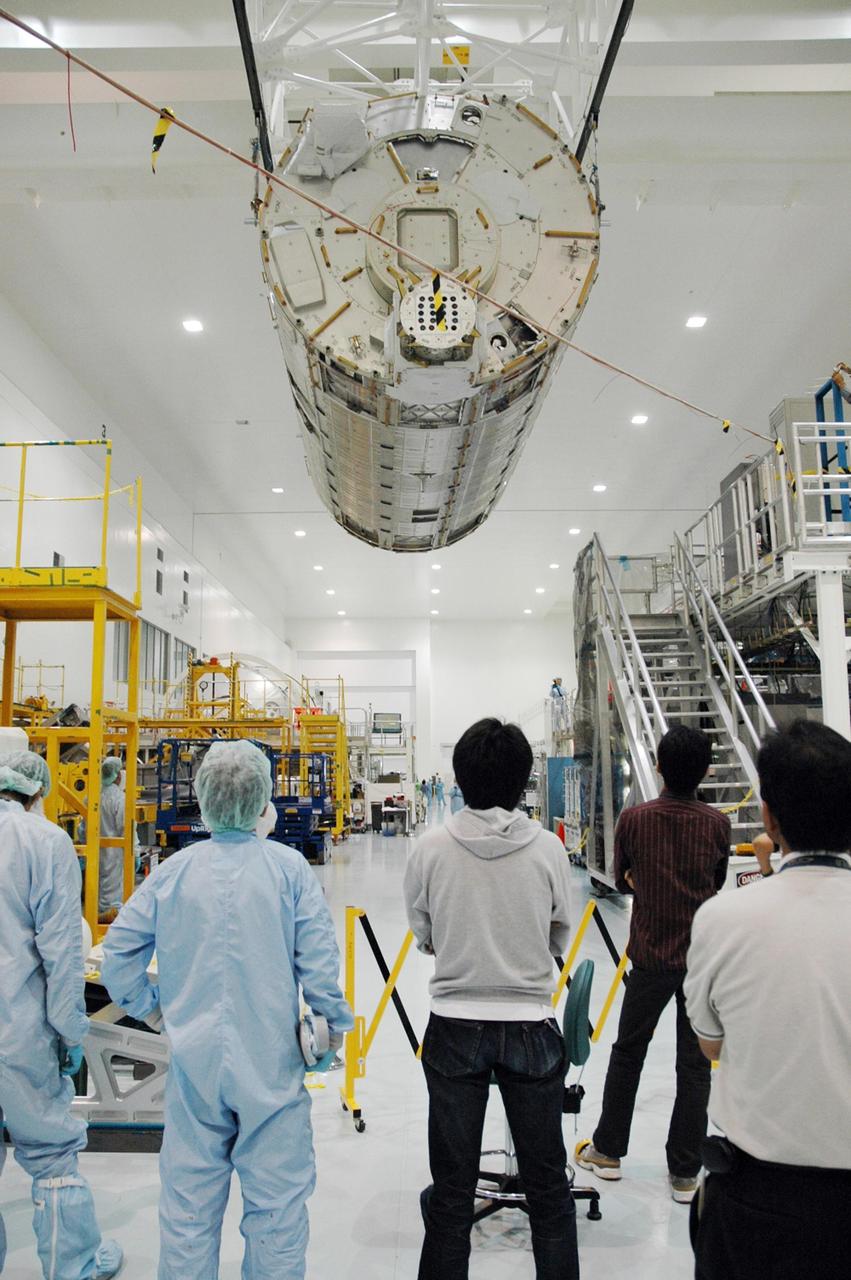
KENNEDY SPACE CENTER, FLA. -- In the Space Station Processing Facility, workers on the floor watch as an overhead crane moves the Japanese Experiment Module (JEM) to a stand for weighing. The Japanese Aerospace Exploration Agency developed the laboratory at the Tsukuba Space Center near Tokyo. It is the first element, named "Kibo" (Hope), to be delivered to KSC. The JEM is Japan's primary contribution to the International Space Station. It will enhance the unique research capabilities of the orbiting complex by providing an additional environment for astronauts to conduct science experiments. The JEM is targeted for mission STS-124, to launch in early 2008. Photo credit: NASA/Troy Cryder

KENNEDY SPACE CENTER, FLA. -- In the Space Station Processing Facility at NASA's Kennedy Space Center, the Experiment Logistics Module Pressurized Section, or ELM-PS, of the Japanese Experiment Module, called Kibo, is moved from its work stand (at left). It is being moved to a rotation stand. The ELM-PS is the primary payload for space shuttle Endeavour's STS-123 mission, which is targeted for launch to the International Space Station on Feb. 14. Photo credit: NASA/Dimitri Gerondidakis
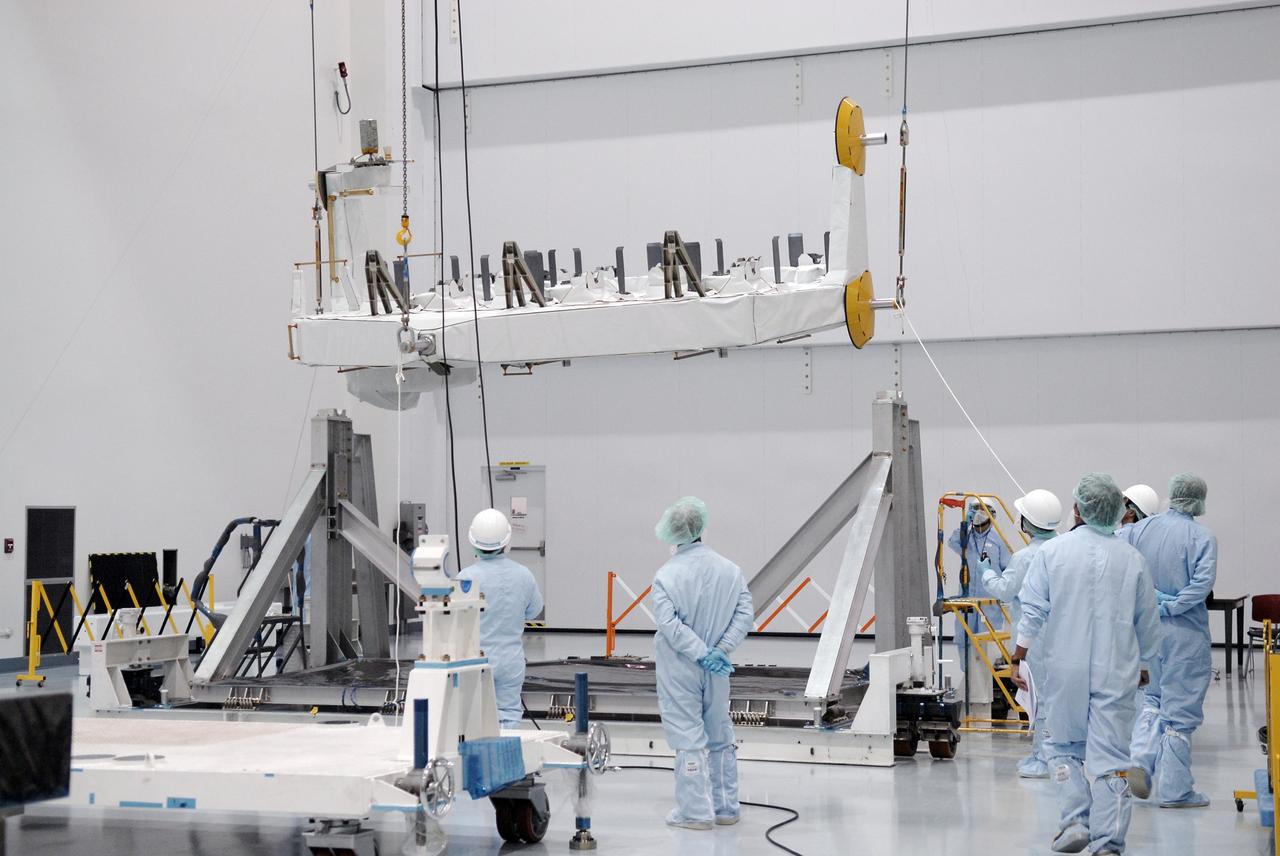
CAPE CANAVERAL, Fla. - In the Space Station Processing Facility at NASA's Kennedy Space Center in Florida, cables lift the Kibo Experiment Logistics Module Exposed Section, or ELM-ES, to move it to a work stand. The ELM-ES is one of the final components of the Japan Aerospace Exploration Agency's Kibo laboratory for the International Space Station. It can provide payload storage space and can carry up to three payloads at launch. In addition, the ELM-ES provides a logistics function where it can be returned to the ground aboard the space shuttle. The ELM-ES will be carried aboard space shuttle Endeavour on the STS-127 mission targeted for launch May 15, 2009. Photo credit: NASA/Kim Shiflett
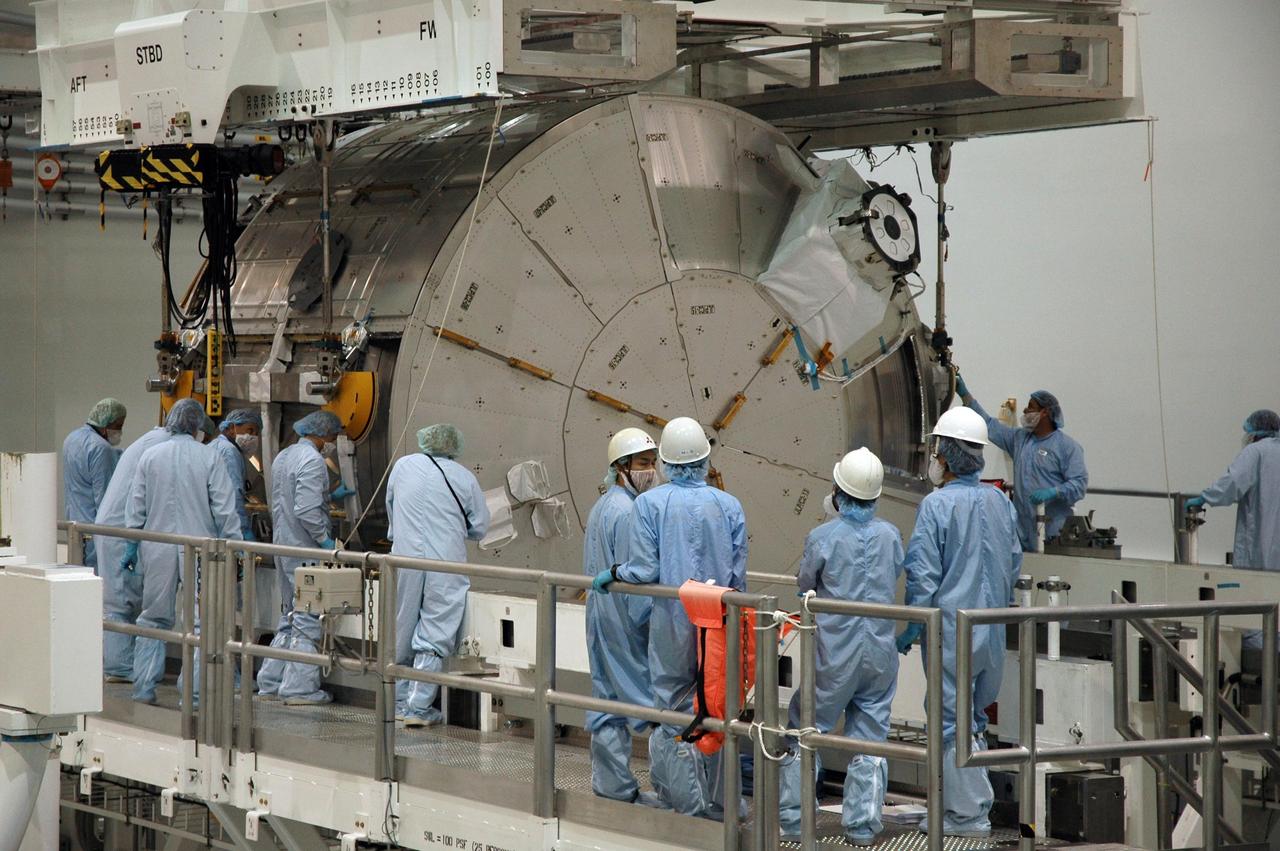
KENNEDY SPACE CENTER, FLA. -- In the Space Station Processing Facility at NASA's Kennedy Space Center, workers stand by as the Experiment Logistics Module Pressurized Section, or ELM-PS, is lowered onto the rotation stand. Part of the Japanese Experiment Module, called Kibo, the ELM-PS is the primary payload for space shuttle Endeavour's STS-123 mission, which is targeted for launch to the International Space Station on Feb. 14. Photo credit: NASA/Dimitri Gerondidakis
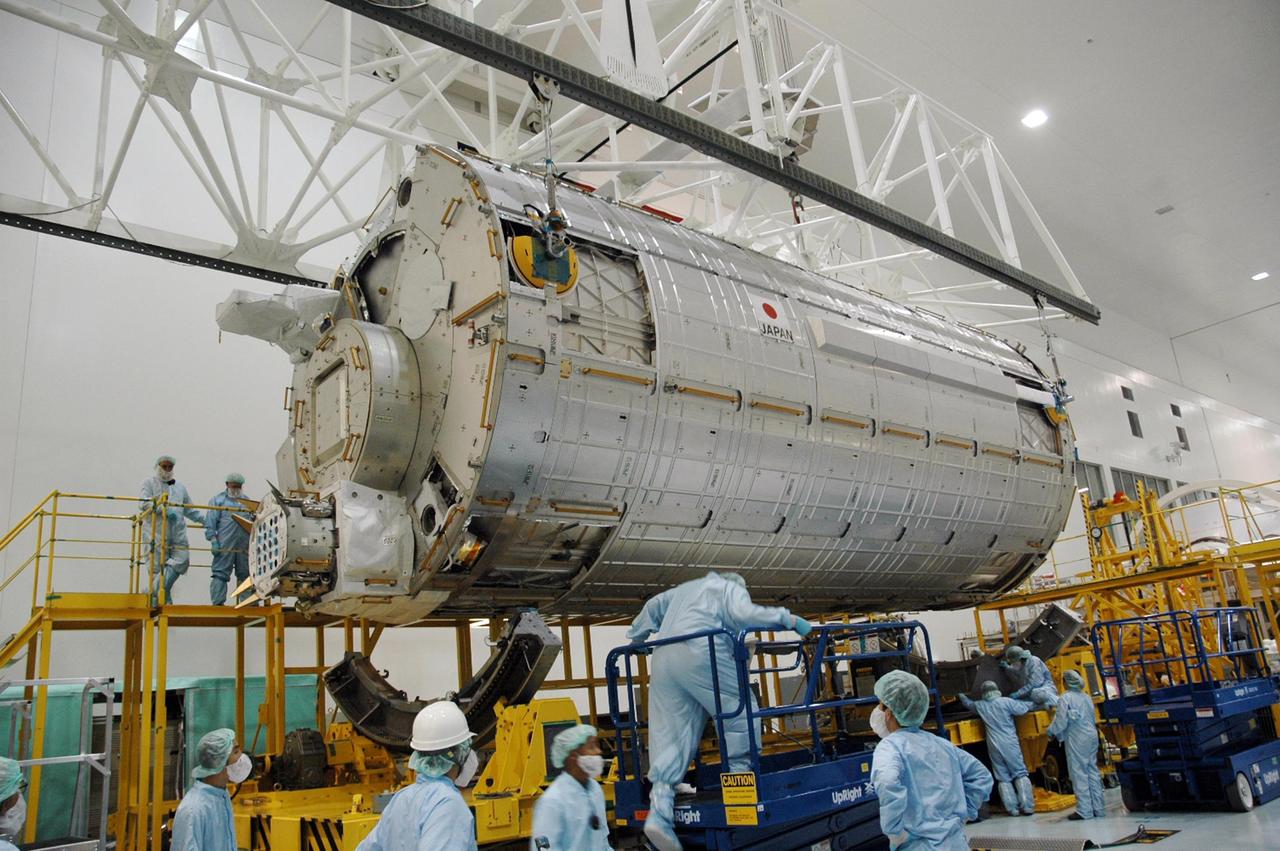
KENNEDY SPACE CENTER, FLA. -- In the Space Station Processing Facility, an overhead crane lifts the Japanese Experiment Module (JEM) off of its transporter. The module is being moved to another stand where it will be weighed and measured for its center of gravity. The Japanese Aerospace Exploration Agency developed the laboratory at the Tsukuba Space Center near Tokyo. It is the first element, named "Kibo" (Hope), to be delivered to KSC. The JEM is Japan's primary contribution to the International Space Station. It will enhance the unique research capabilities of the orbiting complex by providing an additional environment for astronauts to conduct science experiments. The JEM is targeted for mission STS-124, to launch in early 2008. Photo credit: NASA/Troy Cryder

KENNEDY SPACE CENTER, FLA. -- In the Space Station Processing Facility at NASA's Kennedy Space Center, workers help guide the Experiment Logistics Module Pressurized Section, or ELM-PS, onto a rotation stand. Part of the Japanese Experiment Module, called Kibo, the ELM-PS is the primary payload for space shuttle Endeavour's STS-123 mission, which is targeted for launch to the International Space Station on Feb. 14. Photo credit: NASA/Dimitri Gerondidakis
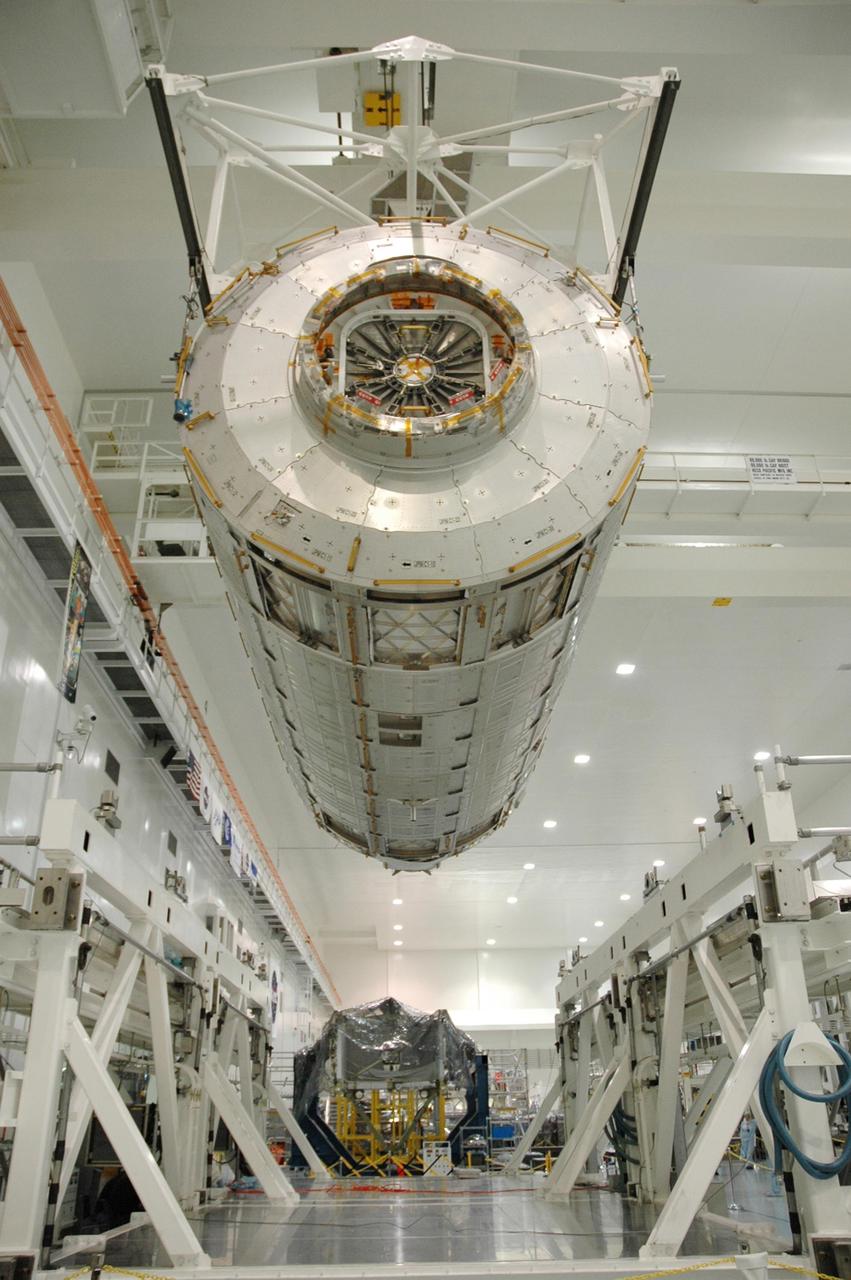
KENNEDY SPACE CENTER, FLA. -- In the Space Station Processing Facility, the Japanese Experiment Module (JEM), after being weighed, is lifted off the scale to be returned to its transporter. The Japanese Aerospace Exploration Agency developed the laboratory at the Tsukuba Space Center near Tokyo. It is the first element, named "Kibo" (Hope), to be delivered to KSC. The JEM is Japan's primary contribution to the International Space Station. It will enhance the unique research capabilities of the orbiting complex by providing an additional environment for astronauts to conduct science experiments. The JEM is targeted for mission STS-124, to launch in early 2008. Photo credit: NASA/Troy Cryder
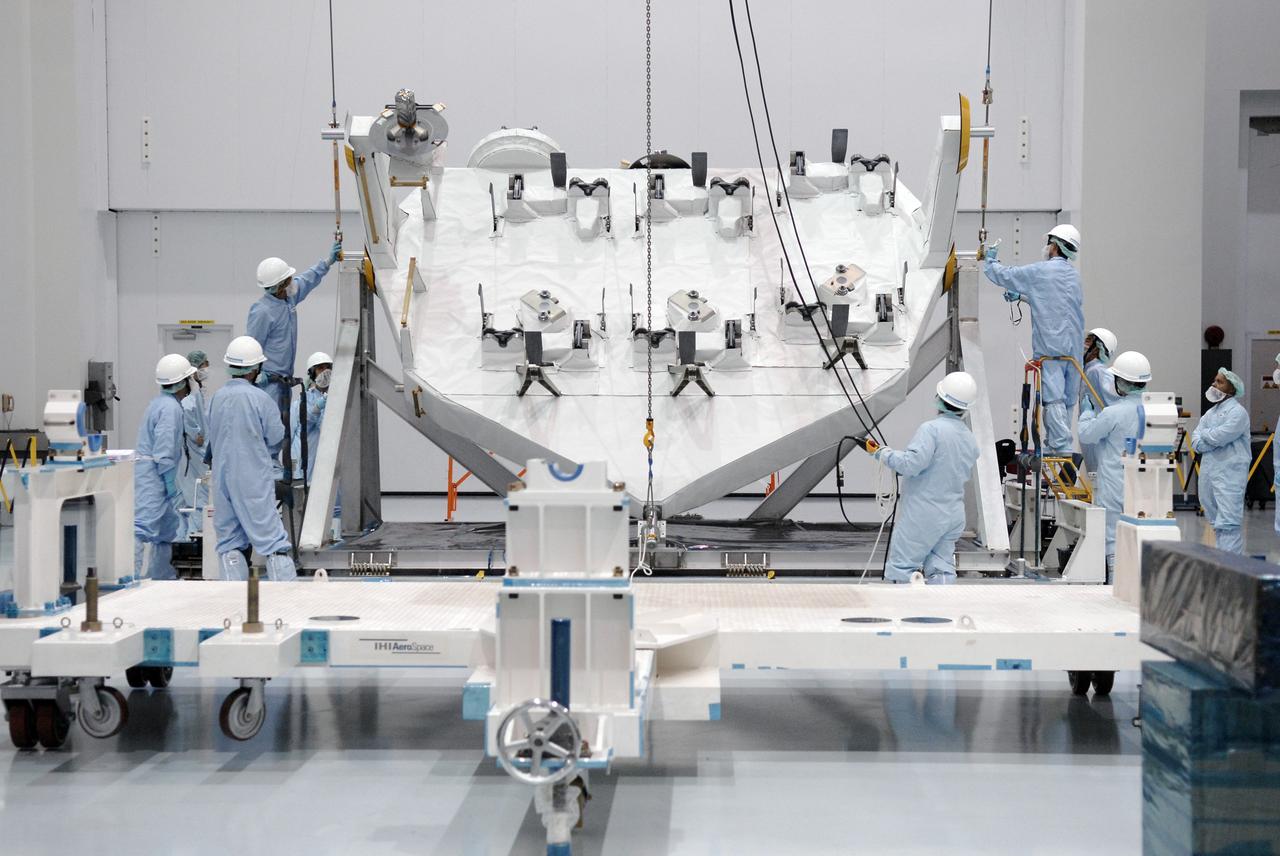
CAPE CANAVERAL, Fla. - In the Space Station Processing Facility at NASA's Kennedy Space Center in Florida, workers connect cables to the Kibo Experiment Logistics Module Exposed Section, or ELM-ES. The ELM-ES will be moved to a work stand. The ELM-ES is one of the final components of the Japan Aerospace Exploration Agency's Kibo laboratory for the International Space Station. It can provide payload storage space and can carry up to three payloads at launch. In addition, the ELM-ES provides a logistics function where it can be returned to the ground aboard the space shuttle. The ELM-ES will be carried aboard space shuttle Endeavour on the STS-127 mission targeted for launch May 15, 2009. Photo credit: NASA/Kim Shiflett

KENNEDY SPACE CENTER, FLA. -- In the Space Station Processing Facility at NASA's Kennedy Space Center, workers are preparing the Experiment Logistics Module Pressurized Section, or ELM-PS, of the Japanese Experiment Module, called Kibo, for its move to a rotation stand. The ELM-PS is the primary payload for space shuttle Endeavour's STS-123 mission, which is targeted for launch to the International Space Station on Feb. 14. Photo credit: NASA/Dimitri Gerondidakis
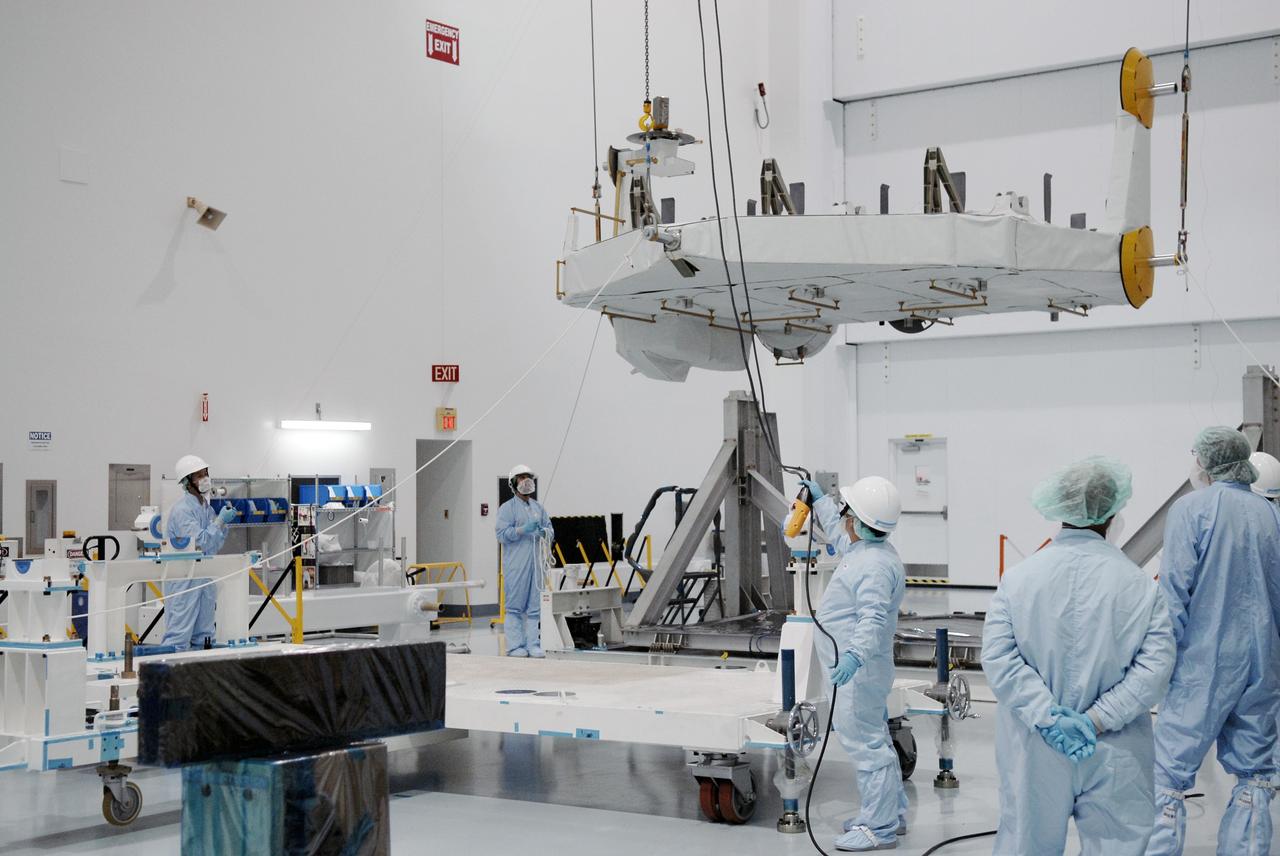
CAPE CANAVERAL, Fla. - In the Space Station Processing Facility at NASA's Kennedy Space Center in Florida, workers guide cables holding the Kibo Experiment Logistics Module Exposed Section, or ELM-ES, as it moves to a work stand. The ELM-ES is one of the final components of the Japan Aerospace Exploration Agency's Kibo laboratory for the International Space Station. It can provide payload storage space and can carry up to three payloads at launch. In addition, the ELM-ES provides a logistics function where it can be returned to the ground aboard the space shuttle. The ELM-ES will be carried aboard space shuttle Endeavour on the STS-127 mission targeted for launch May 15, 2009. Photo credit: NASA/Kim Shiflett

KENNEDY SPACE CENTER, FLA. -- In the Space Station Processing Facility at NASA's Kennedy Space Center, the Experiment Logistics Module Pressurized Section, or ELM-PS, moves toward a rotation stand, at right. The ELM-PS is part of the Japanese Experiment Module, called Kibo. The ELM-PS is the primary payload for space shuttle Endeavour's STS-123 mission, which is targeted for launch to the International Space Station on Feb. 14. Photo credit: NASA/Dimitri Gerondidakis
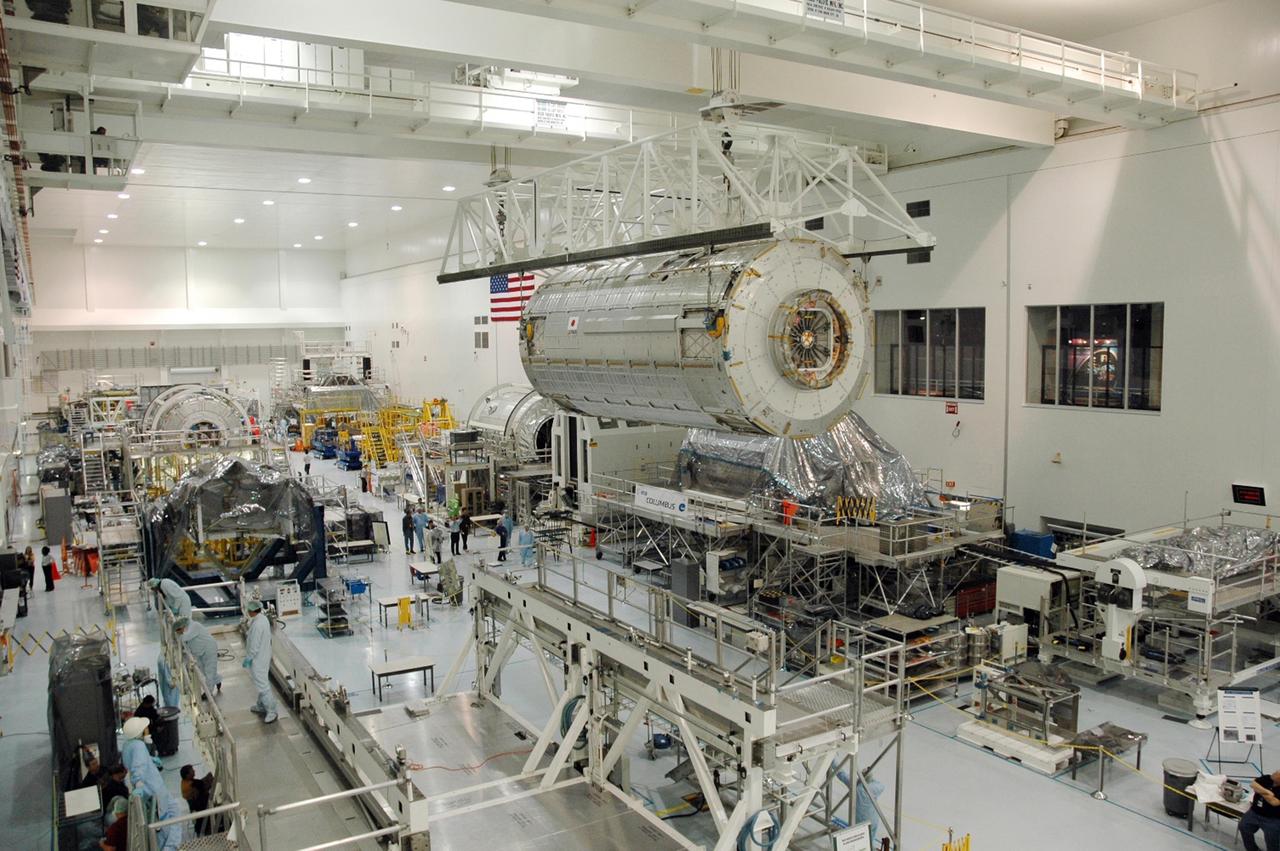
KENNEDY SPACE CENTER, FLA. -- In the Space Station Processing Facility, an overhead crane carries the Japanese Experiment Module (JEM) across the facility. The module is being moved to another stand where it will be weighed and measured for its center of gravity. Other modules intended for the International Space Station are visible on other stands. The Japanese Aerospace Exploration Agency developed the laboratory at the Tsukuba Space Center near Tokyo. It is the first element, named "Kibo" (Hope), to be delivered to KSC. The JEM is Japan's primary contribution to the International Space Station. It will enhance the unique research capabilities of the orbiting complex by providing an additional environment for astronauts to conduct science experiments. The JEM is targeted for mission STS-124, to launch in early 2008. Photo credit: NASA/Troy Cryder
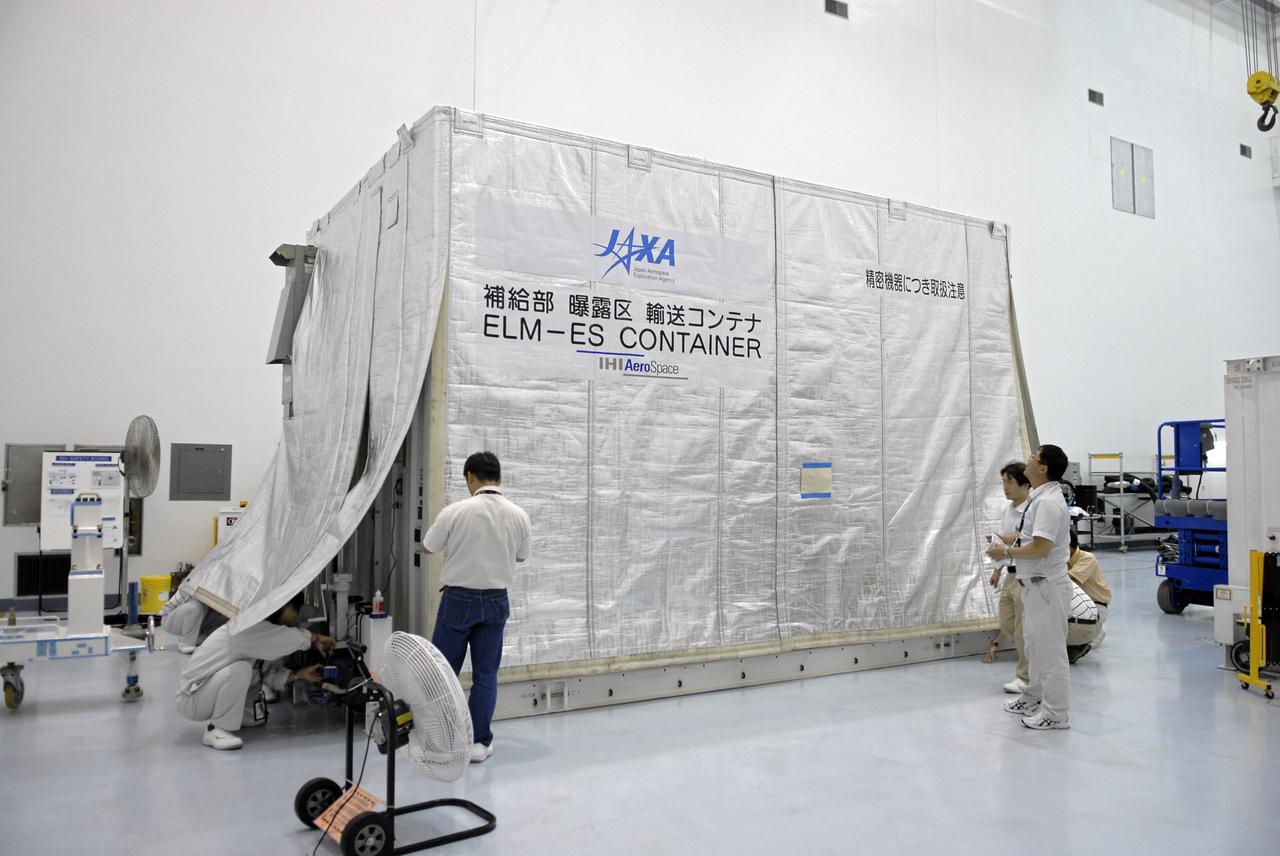
CAPE CANAVERAL, Fla. - The Kibo Experiment Logistics Module Exposed Section, or ELM-ES, shipping container is uncovered in the Space Station Processing Facility at NASA's Kennedy Space Center in Florida. The ELM-ES is one of the final components of the Japan Aerospace Exploration Agency's Kibo laboratory for the International Space Station. It can provide payload storage space and can carry up to three payloads at launch. In addition, the ELM-ES provides a logistics function where it can be returned to the ground aboard the space shuttle. The ELM-ES will be carried aboard space shuttle Endeavour on the STS-127 mission targeted for launch May 15, 2009. Photo credit: NASA/Kim Shiflett
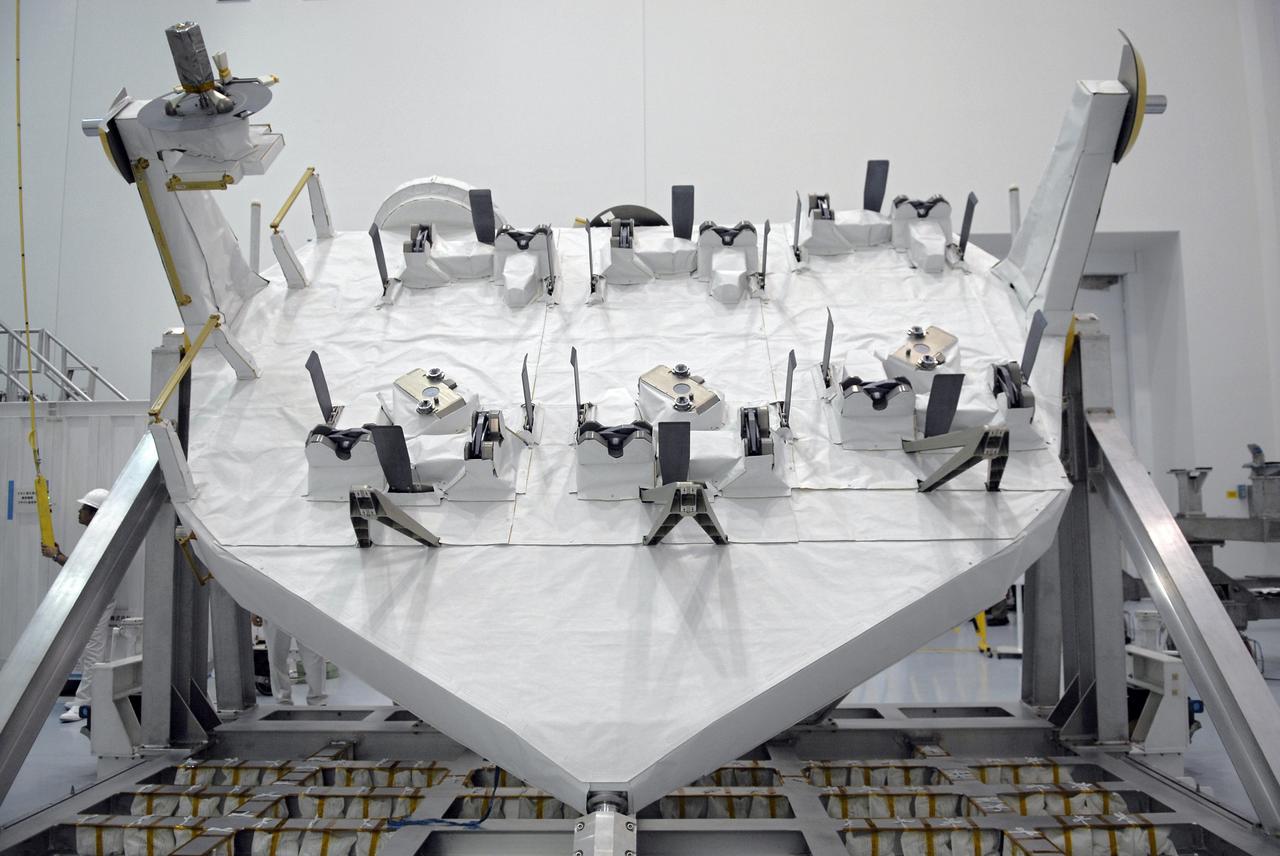
CAPE CANAVERAL, Fla. - In the Space Station Processing Facility at NASA's Kennedy Space Center in Florida, the Kibo Experiment Logistics Module Exposed Section, or ELM-ES, is exposed after removal of the shipping container. The ELM-ES is one of the final components of the Japan Aerospace Exploration Agency's Kibo laboratory for the International Space Station. It can provide payload storage space and can carry up to three payloads at launch. In addition, the ELM-ES provides a logistics function where it can be returned to the ground aboard the space shuttle. The ELM-ES will be carried aboard space shuttle Endeavour on the STS-127 mission targeted for launch May 15, 2009. Photo credit: NASA/Kim Shiflett
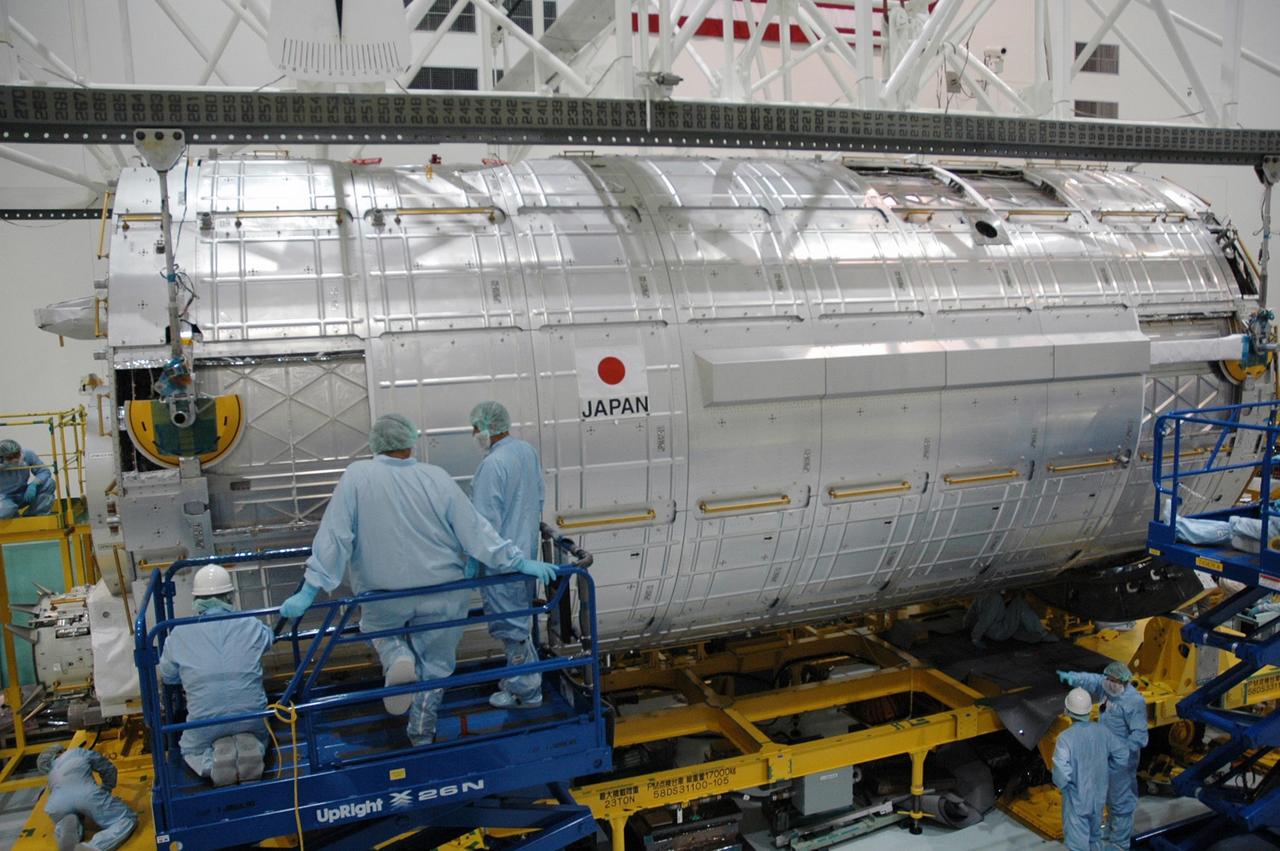
KENNEDY SPACE CENTER, FLA. -- In the Space Station Processing Facility, workers monitor the placement of the Japanese Experiment Module (JEM) onto its transporter. The JEM was moved from the transporter for weighing and to measure its center of gravity. The Japanese Aerospace Exploration Agency developed the laboratory at the Tsukuba Space Center near Tokyo. It is the first element, named "Kibo" (Hope), to be delivered to KSC. The JEM is Japan's primary contribution to the International Space Station. It will enhance the unique research capabilities of the orbiting complex by providing an additional environment for astronauts to conduct science experiments. The JEM is targeted for mission STS-124, to launch in early 2008. Photo credit: NASA/Troy Cryder
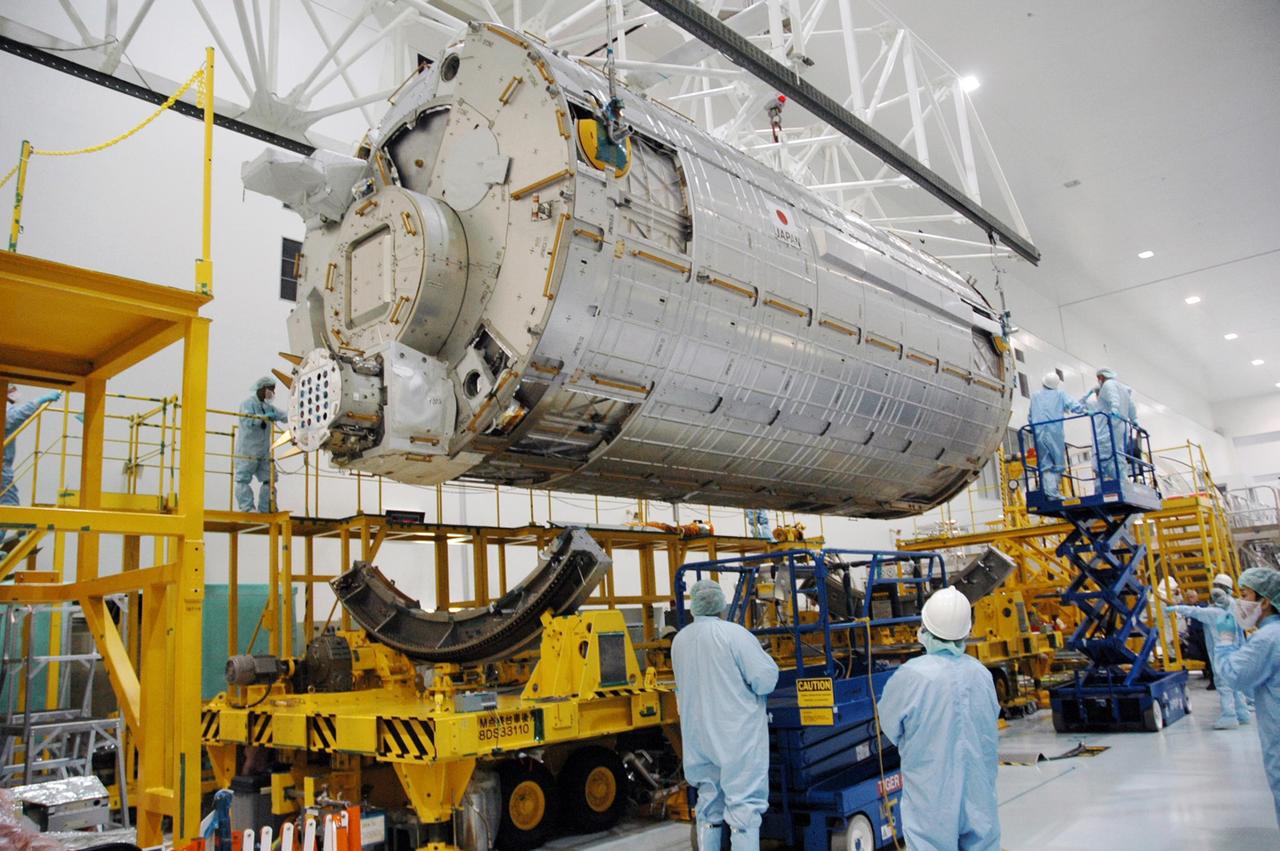
KENNEDY SPACE CENTER, FLA. -- In the Space Station Processing Facility, the Japanese Experiment Module (JEM), after being weighed, has been moved back across the facility and is lowered onto its transporter. The Japanese Aerospace Exploration Agency developed the laboratory at the Tsukuba Space Center near Tokyo. It is the first element, named "Kibo" (Hope), to be delivered to KSC. The JEM is Japan's primary contribution to the International Space Station. It will enhance the unique research capabilities of the orbiting complex by providing an additional environment for astronauts to conduct science experiments. The JEM is targeted for mission STS-124, to launch in early 2008. Photo credit: NASA/Troy Cryder
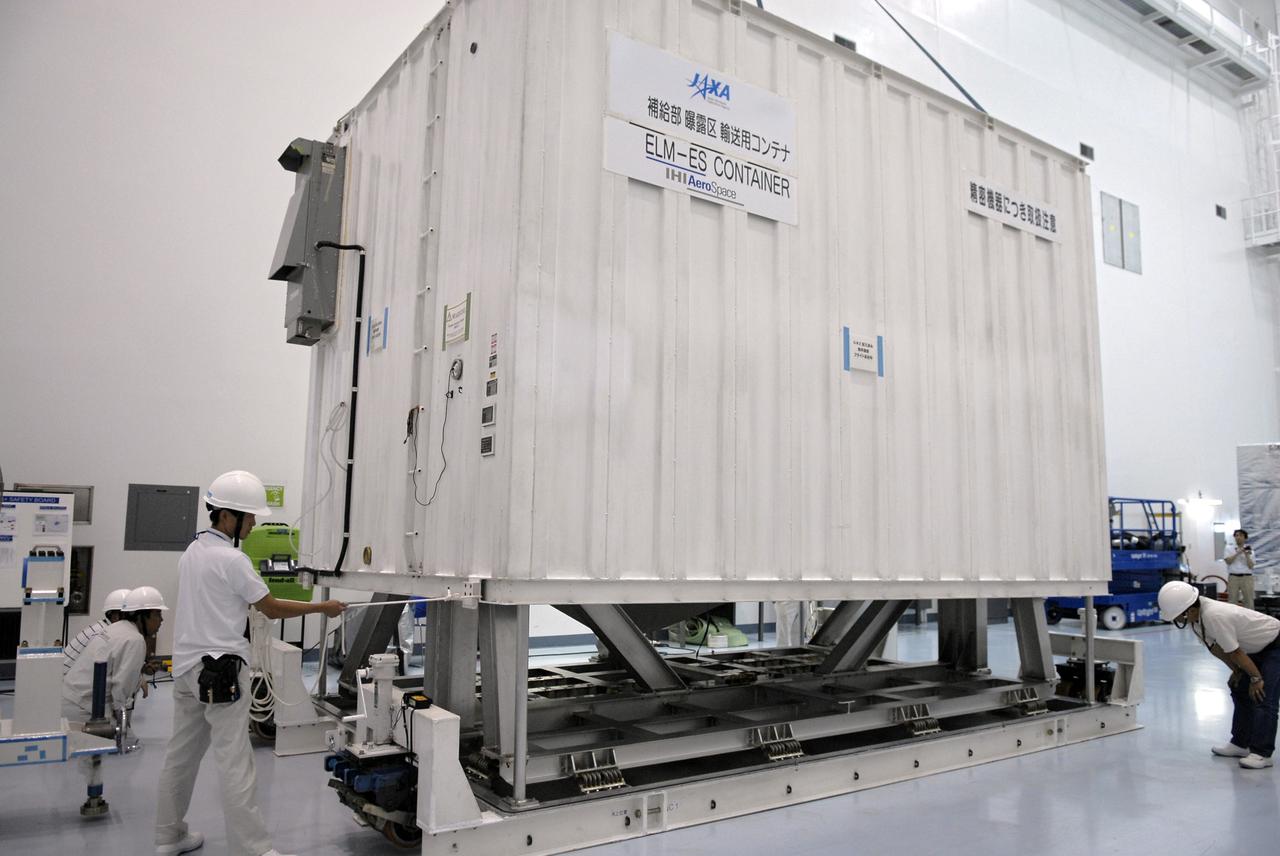
CAPE CANAVERAL, Fla. - The shipping container is lifted from the Kibo Experiment Logistics Module Exposed Section, or ELM-ES, in the Space Station Processing Facility at NASA's Kennedy Space Center in Florida. The ELM-ES is one of the final components of the Japan Aerospace Exploration Agency's Kibo laboratory for the International Space Station. It can provide payload storage space and can carry up to three payloads at launch. In addition, the ELM-ES provides a logistics function where it can be returned to the ground aboard the space shuttle. The ELM-ES will be carried aboard space shuttle Endeavour on the STS-127 mission targeted for launch May 15, 2009. Photo credit: NASA/Kim Shiflett
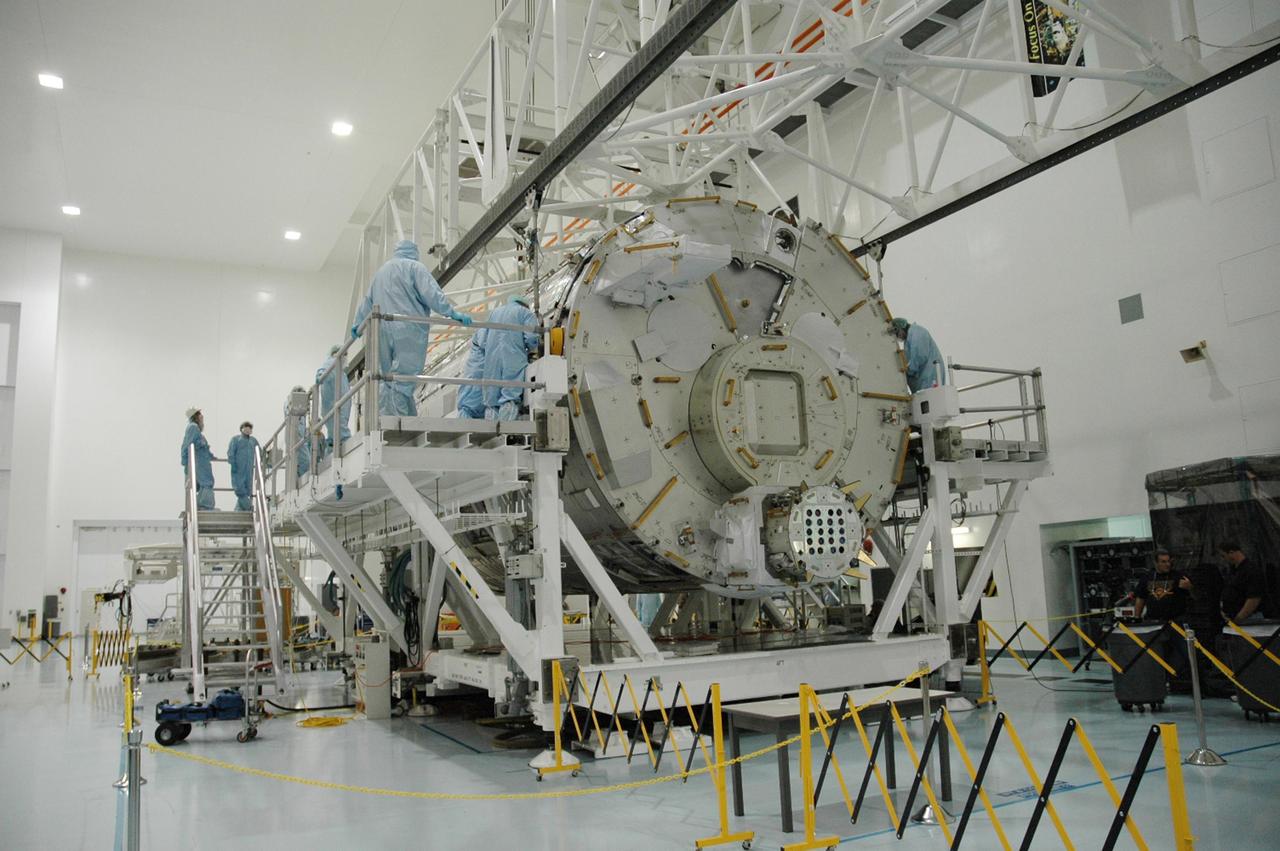
KENNEDY SPACE CENTER, FLA. -- In the Space Station Processing Facility, workers monitor the movement of the Japanese Experiment Module (JEM) as it is lowered onto a weighing stand. The module will also be measured for its center of gravity. The Japanese Aerospace Exploration Agency developed the laboratory at the Tsukuba Space Center near Tokyo. It is the first element, named "Kibo" (Hope), to be delivered to KSC. The JEM is Japan's primary contribution to the International Space Station. It will enhance the unique research capabilities of the orbiting complex by providing an additional environment for astronauts to conduct science experiments. The JEM is targeted for mission STS-124, to launch in early 2008. Photo credit: NASA/Troy Cryder
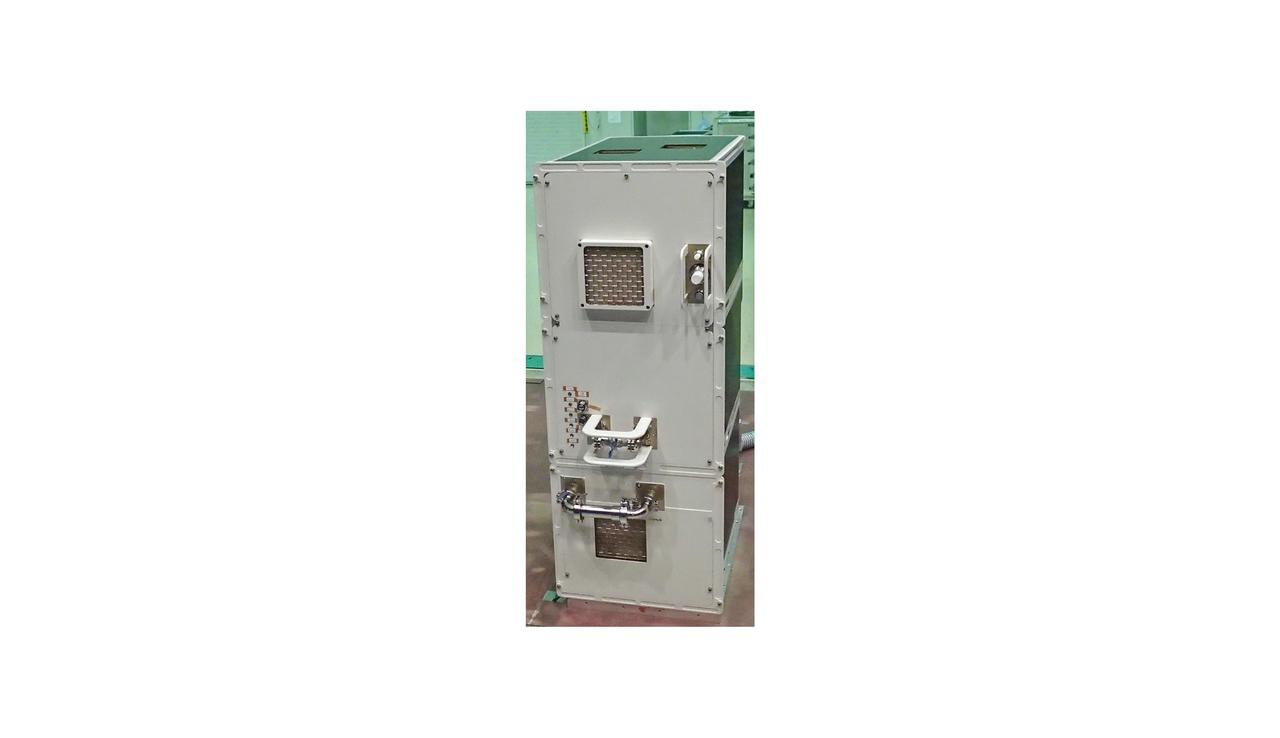
jsc2023e054751 (9/27/2023) --- JEM Demonstration of CO2 Removal System (JEM DRCS) is operated in the ISS "Kibo," where astronauts are constantly working under microgravity. The photo was taken by JAXA on the ground. Image Credit: JAXA.

CAPE CANAVERAL, Fla. – In the Space Station Processing Facility at NASA's Kennedy Space Center in Florida, a worker (right) help guides the progress of the Japan Aerospace Exploration Agency's Kibo Exposed Facility, or EF, as it moves across the room to another stand. The EF, along with the Experiment Logistics Module Exposed Section, will be carried aboard space shuttle Endeavour on the STS-127 mission to the International Space Station targeted for launch May 15, 2009. When it is installed on the Kibo laboratory,the EF will provide a multipurpose platform where science experiments can be deployed and operated in the exposed environment. The payloads attached to the EF can be exchanged or retrieved by Kibo's robotic arm, the JEM Remote Manipulator System. Photo credit: NASA/Kim Shiflett
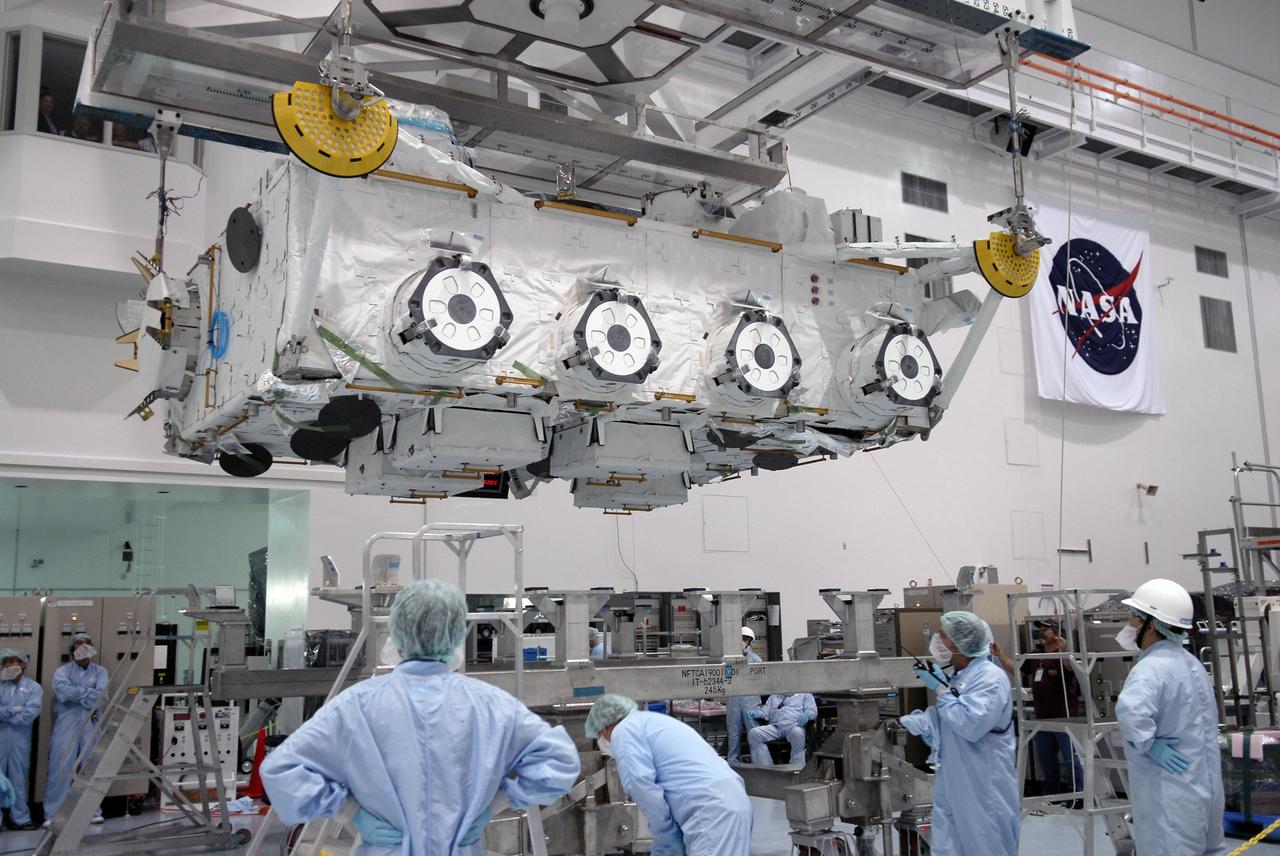
CAPE CANAVERAL, Fla. – In the Space Station Processing Facility at NASA's Kennedy Space Center in Florida, workers observe the movement of the Japan Aerospace Exploration Agency's Kibo Exposed Facility, or EF, as it is lowered toward a stand. The EF, along with the Experiment Logistics Module Exposed Section, will be carried aboard space shuttle Endeavour on the STS-127 mission to the International Space Station targeted for launch May 15, 2009. When it is installed on the Kibo laboratory,the EF will provide a multipurpose platform where science experiments can be deployed and operated in the exposed environment. The payloads attached to the EF can be exchanged or retrieved by Kibo's robotic arm, the JEM Remote Manipulator System. Photo credit: NASA/Kim Shiflett
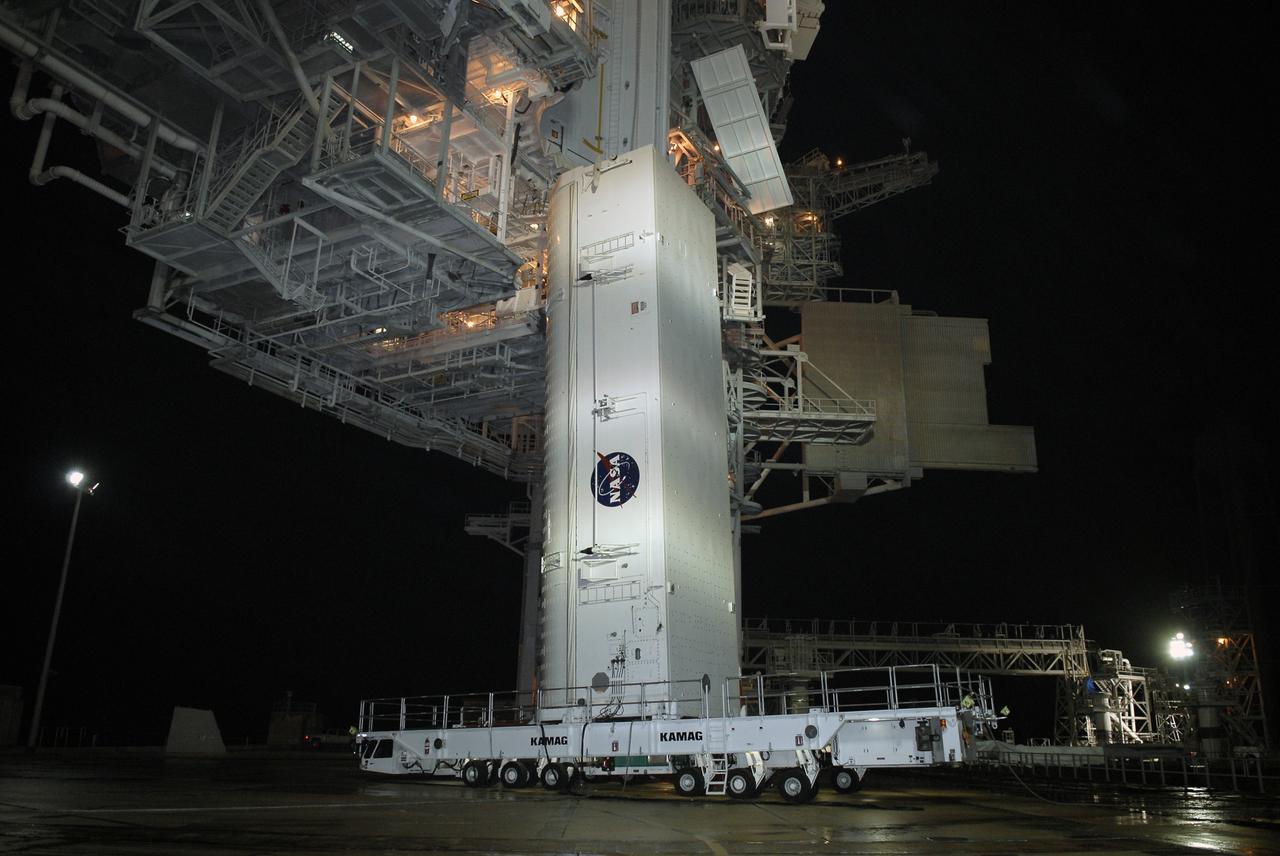
CAPE CANAVERAL, Fla. – – The transporter with the payload canister arrives under the rotating service structure, or RSS, on Launch Pad 39A at NASA's Kennedy Space Center in Florida. The canister will be lifted up into the Payload Changeout Room above. Inside the canister is space shuttle Endeavour's payload for the STS-127 mission, which includes the Japan Aerospace Exploration Agency's Kibo Exposed Facility and the Experiment Logistics Module Exposed Section to the International Space Station. They will be installed on the Kibo laboratory on the station. Launch of Endeavour is targeted for June 13. Photo credit: NASA/Kim Shiflett
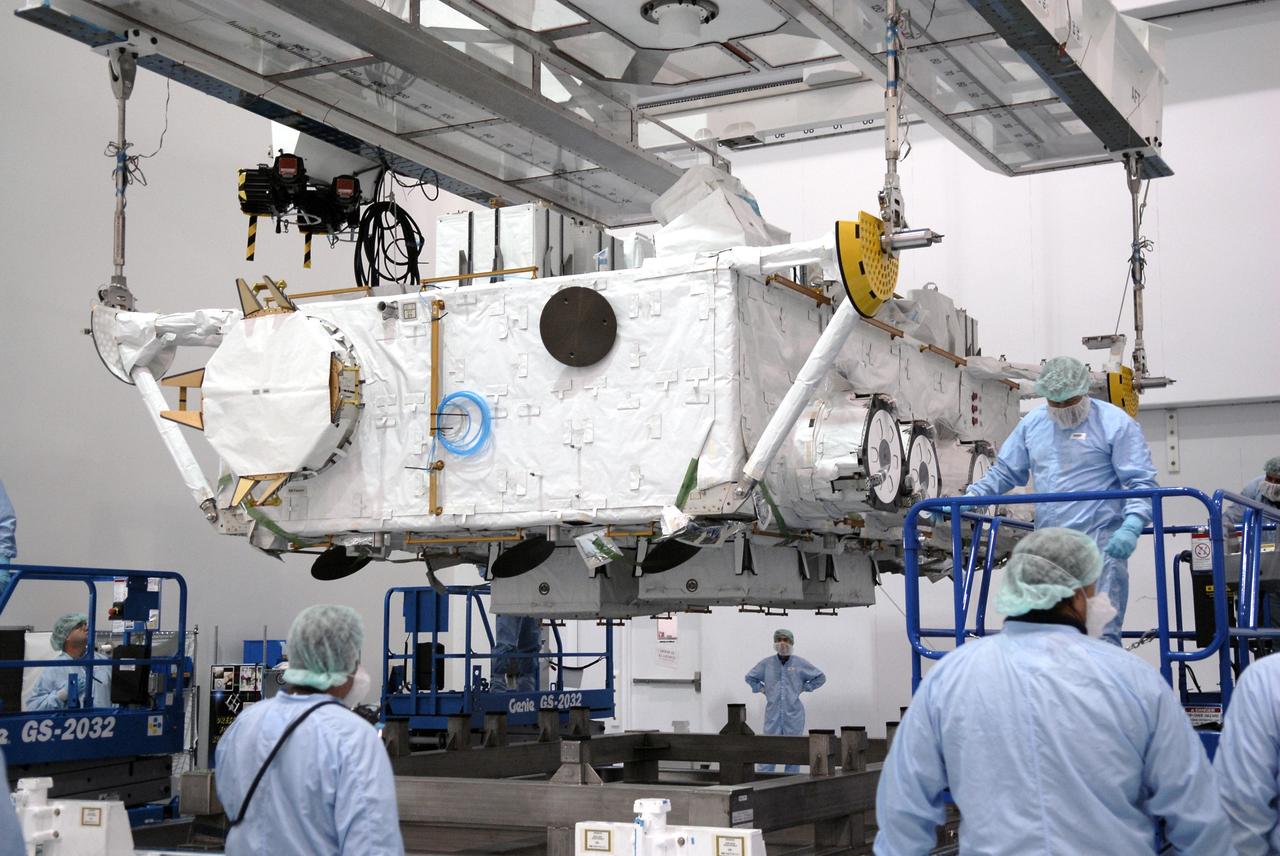
CAPE CANAVERAL, Fla. – In the Space Station Processing Facility at NASA's Kennedy Space Center in Florida, the Japan Aerospace Exploration Agency's Kibo Exposed Facility, or EF, is lifted for a move to another stand. The EF, along with the Experiment Logistics Module Exposed Section, will be carried aboard space shuttle Endeavour on the STS-127 mission to the International Space Station targeted for launch May 15, 2009. When it is installed on the Kibo laboratory,the EF will provide a multipurpose platform where science experiments can be deployed and operated in the exposed environment. The payloads attached to the EF can be exchanged or retrieved by Kibo's robotic arm, the JEM Remote Manipulator System. Photo credit: NASA/Kim Shiflett
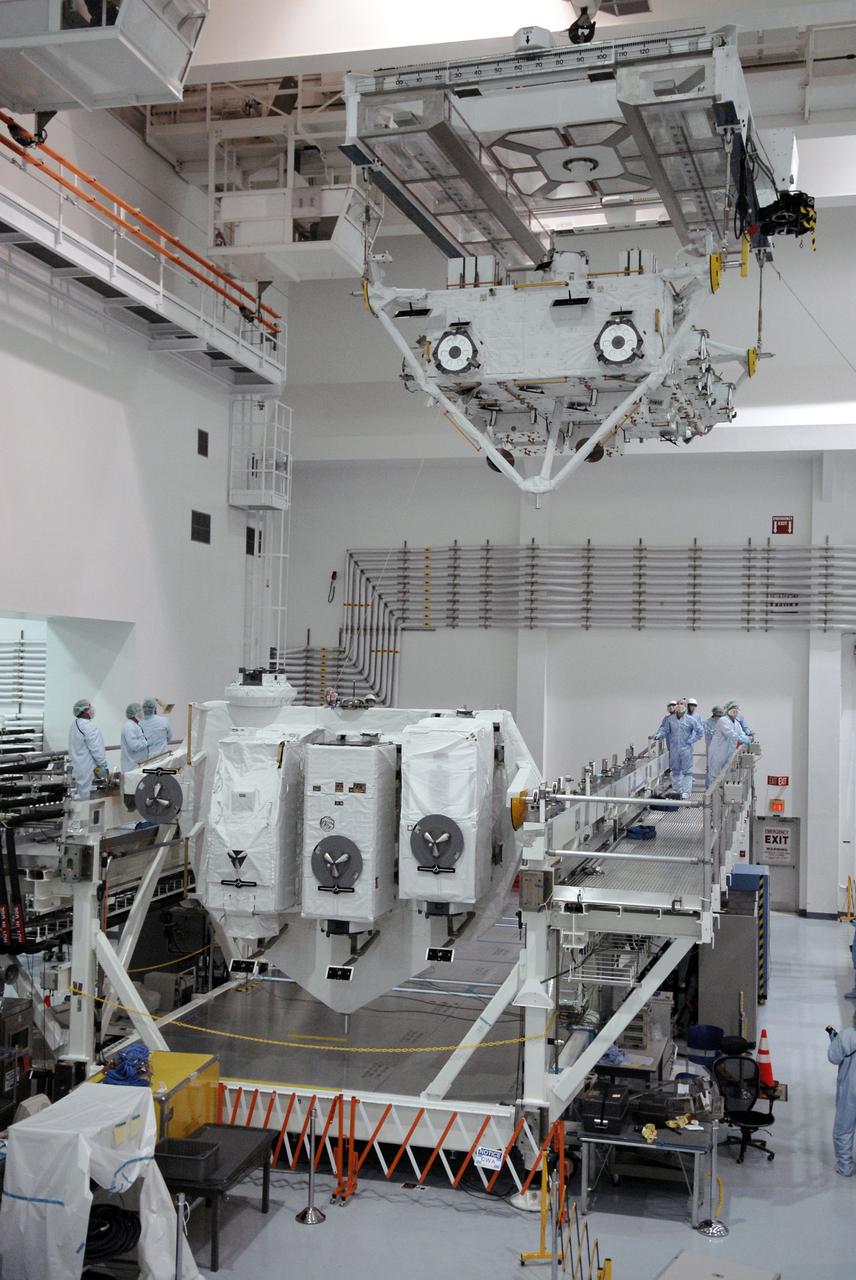
CAPE CANAVERAL, Fla. –– In the Space Station Processing Facility at NASA's Kennedy Space Center in Florida, the suspended Japan Aerospace Exploration Agency's Kibo Exposed Facility, or EF, is moved over a workstand. When it is installed on the Kibo laboratory, the EF will provide a multipurpose platform where science experiments can be deployed and operated in the exposed environment. The payloads attached to the EF can be exchanged or retrieved by Kibo's robotic arm, the JEM Remote Manipulator System. The EF, along with the Experiment Logistics Module Exposed Section, will be carried aboard space shuttle Endeavour on the STS-127 mission targeted for launch June 13, 2009. Photo credit: NASA/Kim Shiflett
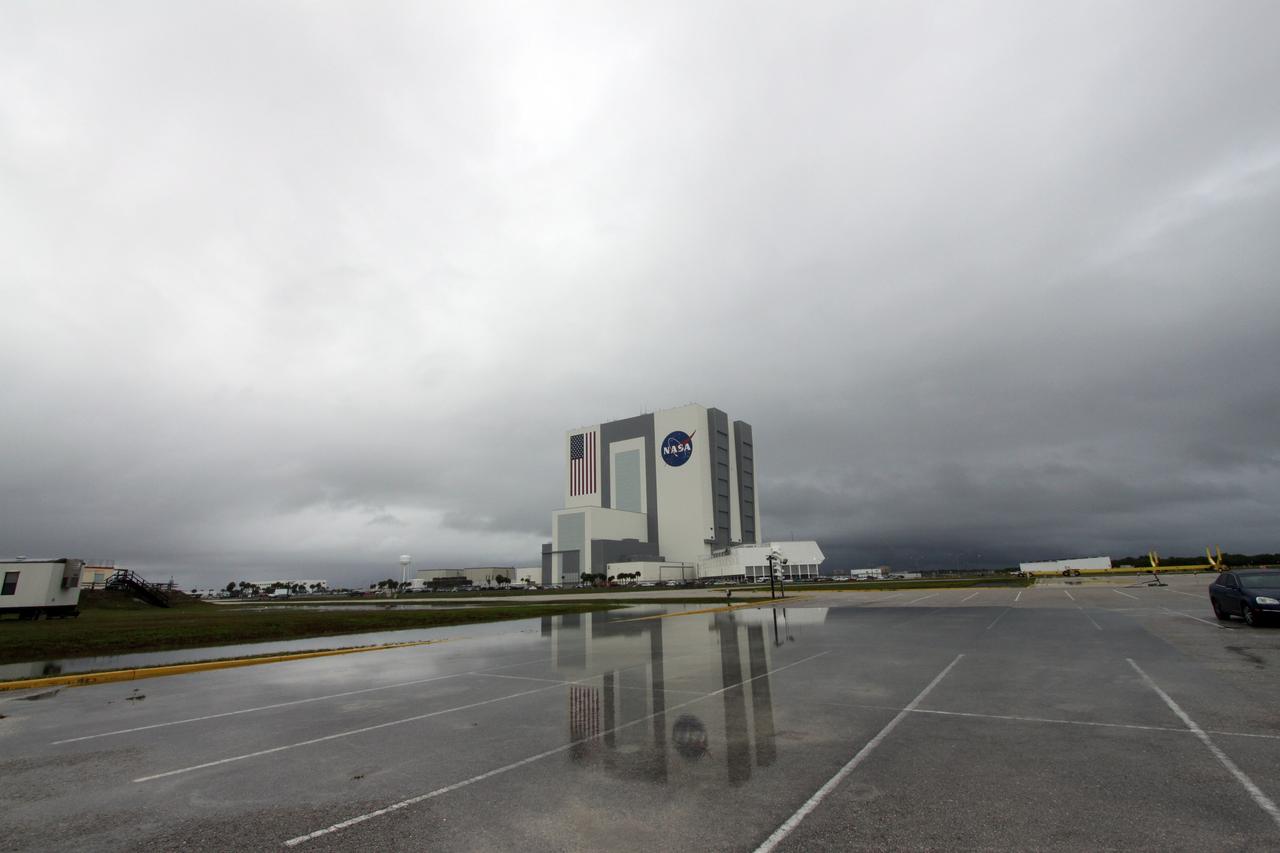
CAPE CANAVERAL, Fla. – Standing water collects on the surface of a parking lot across the street from NASA Kennedy Space Center's Vehicle Assembly Building, the aftermath of thunderstorms in the vicinity of Kennedy’s Shuttle Landing Facility. Two landing opportunities for space shuttle Atlantis to conclude the STS-125 mission were waved off May 22 due to violations of the end-of-mission landing weather criteria. Through five spacewalks on the STS-125 mission, NASA's Hubble Space Telescope was refurbished and upgraded with state-of-the-art science instruments that will expand Hubble's capabilities and extend its operational lifespan through at least 2014. Photo credit: NASA/Jack Pfaller
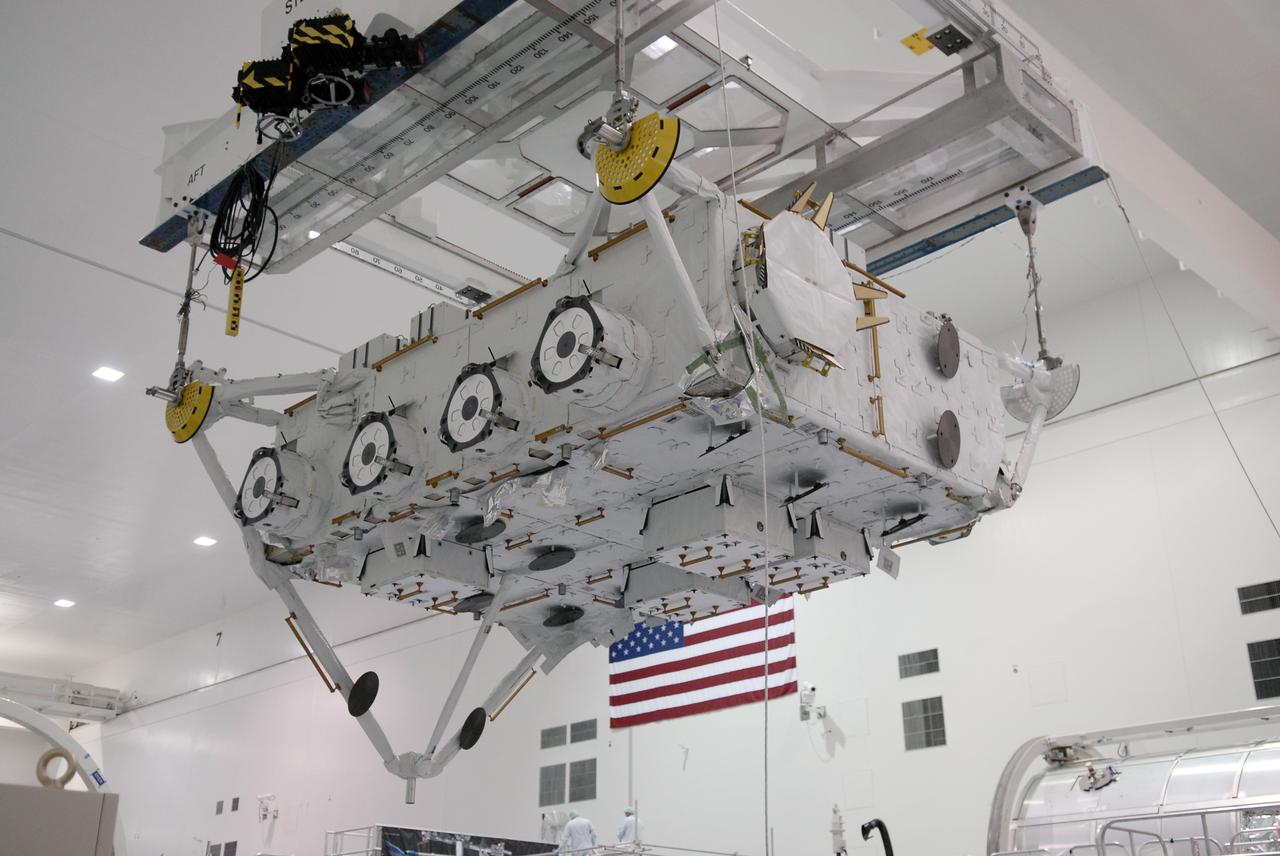
CAPE CANAVERAL, Fla. –– In the Space Station Processing Facility at NASA's Kennedy Space Center in Florida, the Japan Aerospace Exploration Agency's Kibo Exposed Facility, or EF, is lifted for transfer to a workstand. When it is installed on the Kibo laboratory, the EF will provide a multipurpose platform where science experiments can be deployed and operated in the exposed environment. The payloads attached to the EF can be exchanged or retrieved by Kibo's robotic arm, the JEM Remote Manipulator System. The EF, along with the Experiment Logistics Module Exposed Section, will be carried aboard space shuttle Endeavour on the STS-127 mission targeted for launch June 13, 2009. Photo credit: NASA/Kim Shiflett
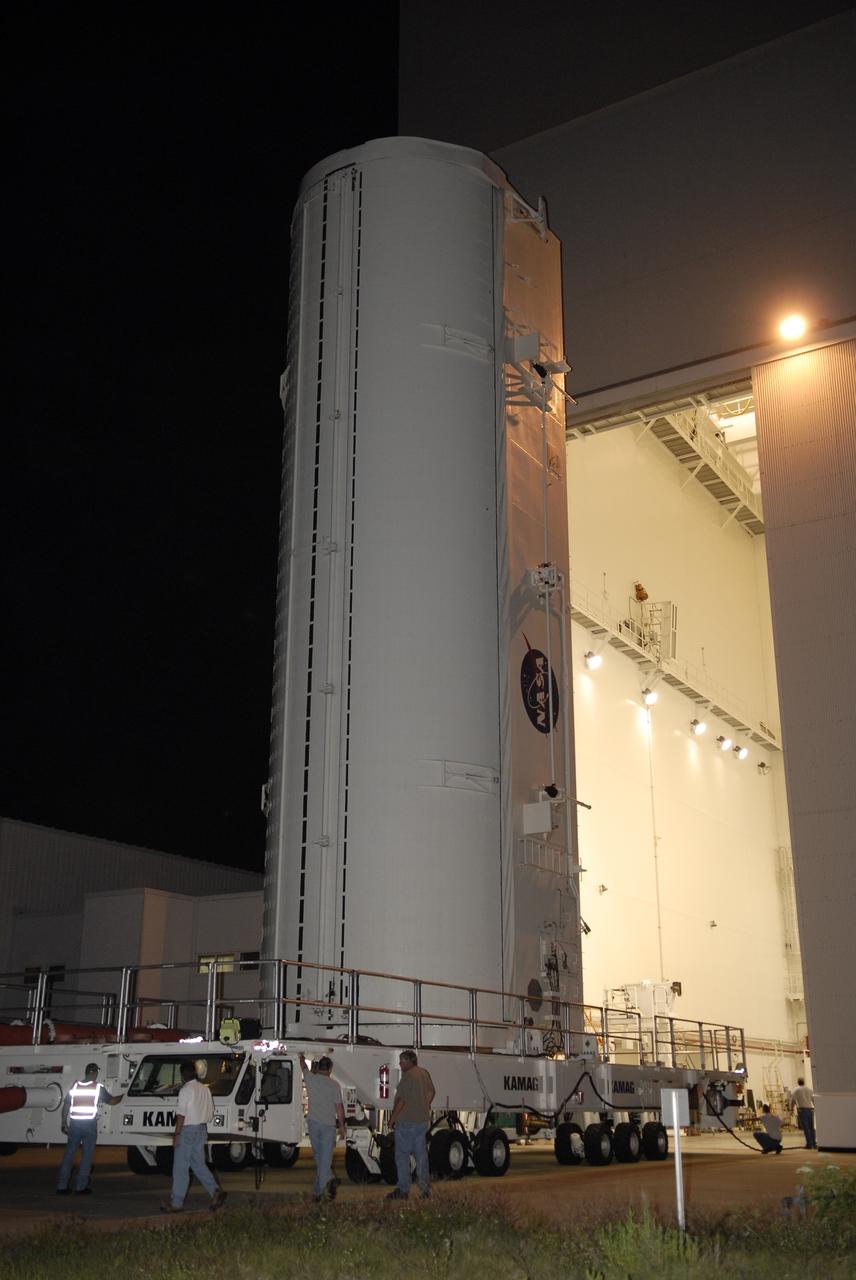
CAPE CANAVERAL, Fla. – The transporter with the payload canister exits the Canister Rotation Facility at NASA's Kennedy Space Center in Florida. Inside the canister is space shuttle Endeavour's payload for the STS-127 mission, which includes the Japan Aerospace Exploration Agency's Kibo Exposed Facility and the Experiment Logistics Module Exposed Section to the International Space Station. They will be installed on the Kibo laboratory on the station. Launch of Endeavour is targeted for June 13. Photo credit: NASA/Kim Shiflett

CAPE CANAVERAL, Fla. –– In the Space Station Processing Facility at NASA's Kennedy Space Center in Florida, the suspended Japan Aerospace Exploration Agency's Kibo Exposed Facility, or EF, is lowered into a workstand. When it is installed on the Kibo laboratory, the EF will provide a multipurpose platform where science experiments can be deployed and operated in the exposed environment. The payloads attached to the EF can be exchanged or retrieved by Kibo's robotic arm, the JEM Remote Manipulator System. The EF, along with the Experiment Logistics Module Exposed Section, will be carried aboard space shuttle Endeavour on the STS-127 mission targeted for launch June 13, 2009. Photo credit: NASA/Kim Shiflett
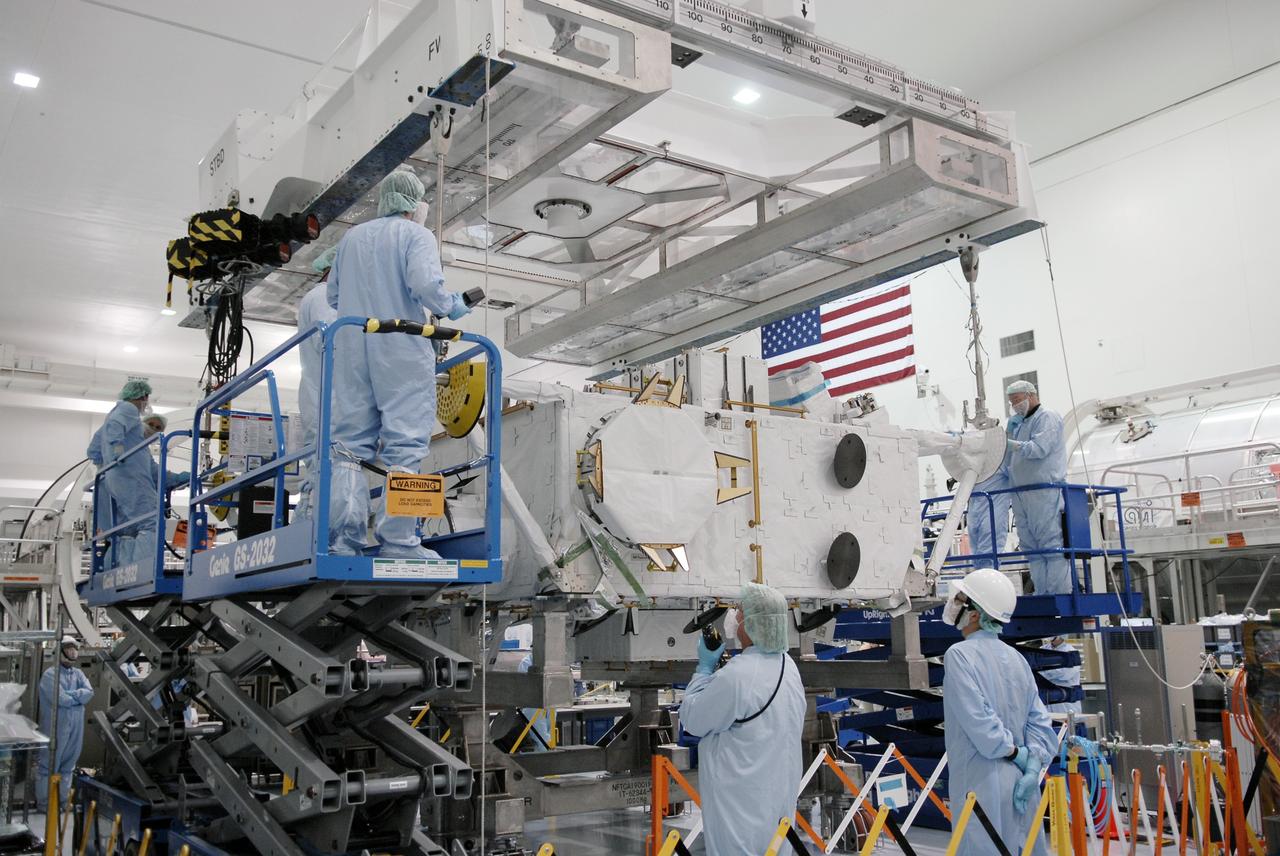
CAPE CANAVERAL, Fla. –– In the Space Station Processing Facility at NASA's Kennedy Space Center in Florida, the Japan Aerospace Exploration Agency's Kibo Exposed Facility, or EF, is being transferred to a workstand. When it is installed on the Kibo laboratory, the EF will provide a multipurpose platform where science experiments can be deployed and operated in the exposed environment. The payloads attached to the EF can be exchanged or retrieved by Kibo's robotic arm, the JEM Remote Manipulator System. The EF, along with the Experiment Logistics Module Exposed Section, will be carried aboard space shuttle Endeavour on the STS-127 mission targeted for launch June 13, 2009. Photo credit: NASA/Kim Shiflett
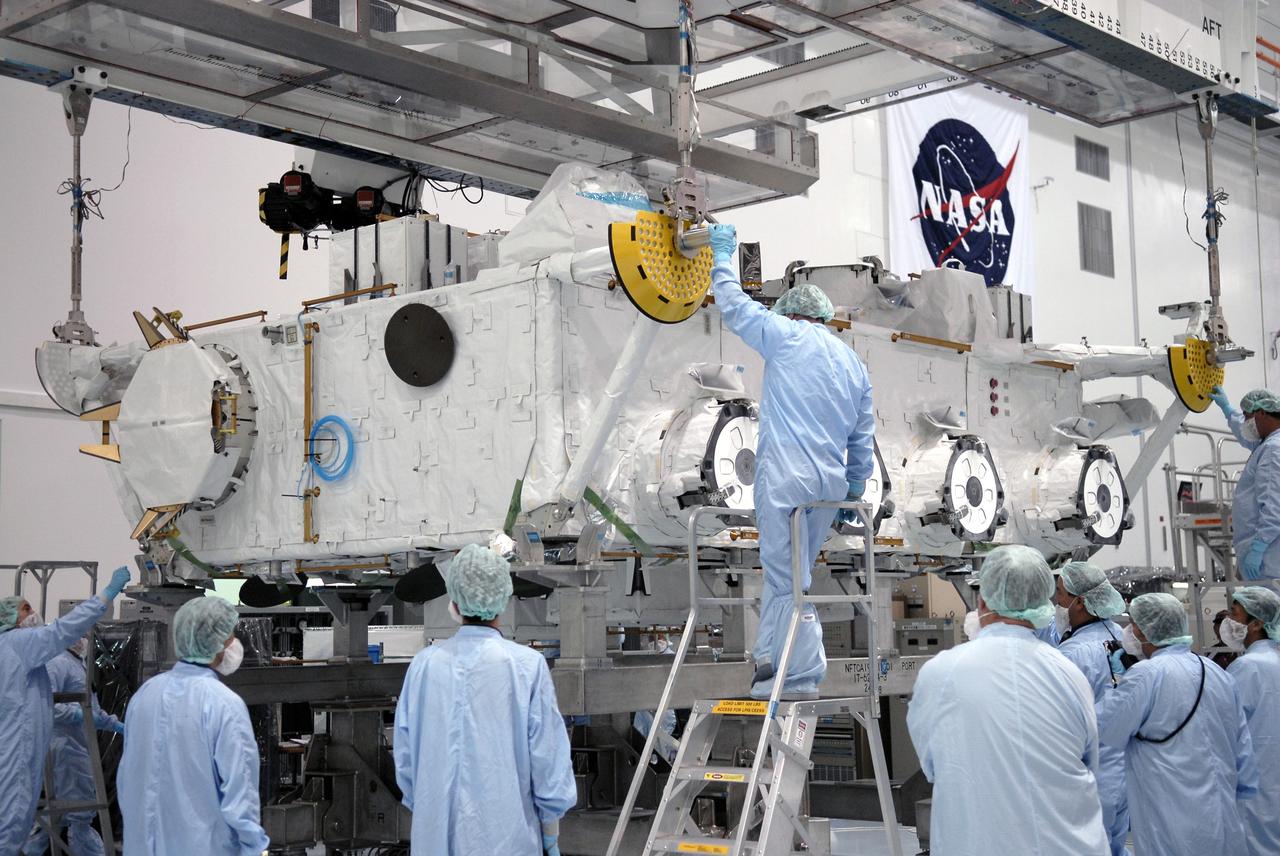
CAPE CANAVERAL, Fla. – In the Space Station Processing Facility at NASA's Kennedy Space Center in Florida, workers check the placement of the Japan Aerospace Exploration Agency's Kibo Exposed Facility, or EF, on the stand. The EF, along with the Experiment Logistics Module Exposed Section, will be carried aboard space shuttle Endeavour on the STS-127 mission to the International Space Station targeted for launch May 15, 2009. When it is installed on the Kibo laboratory,the EF will provide a multipurpose platform where science experiments can be deployed and operated in the exposed environment. The payloads attached to the EF can be exchanged or retrieved by Kibo's robotic arm, the JEM Remote Manipulator System. Photo credit: NASA/Kim Shiflett
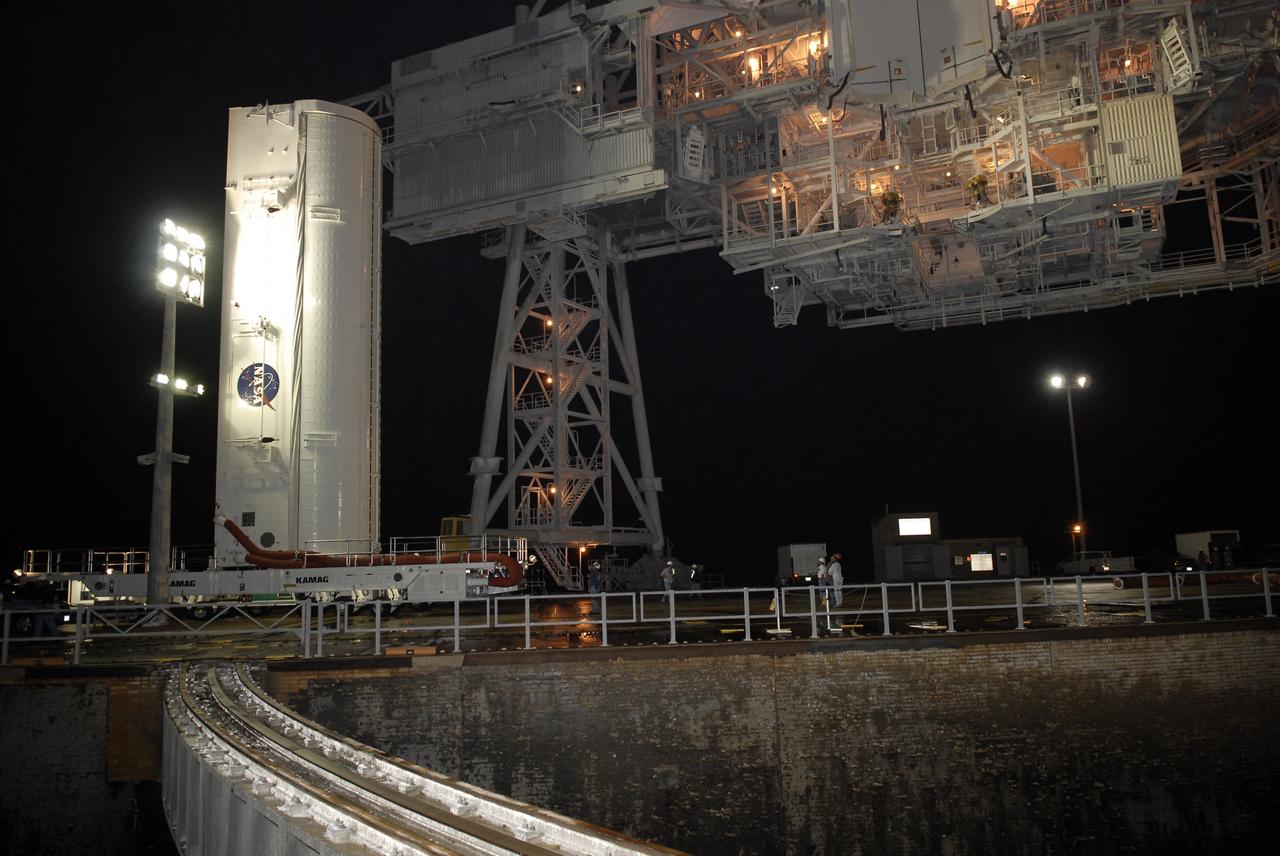
CAPE CANAVERAL, Fla. – – The transporter with the payload canister nears on the rotating service structure, or RSS, on Launch Pad 39A at NASA's Kennedy Space Center in Florida. When it is under the RSS, the canister will be lifted up into the Payload Changeout Room above. Inside the canister is space shuttle Endeavour's payload for the STS-127 mission, which includes the Japan Aerospace Exploration Agency's Kibo Exposed Facility and the Experiment Logistics Module Exposed Section to the International Space Station. They will be installed on the Kibo laboratory on the station. Launch of Endeavour is targeted for June 13. Photo credit: NASA/Kim Shiflett
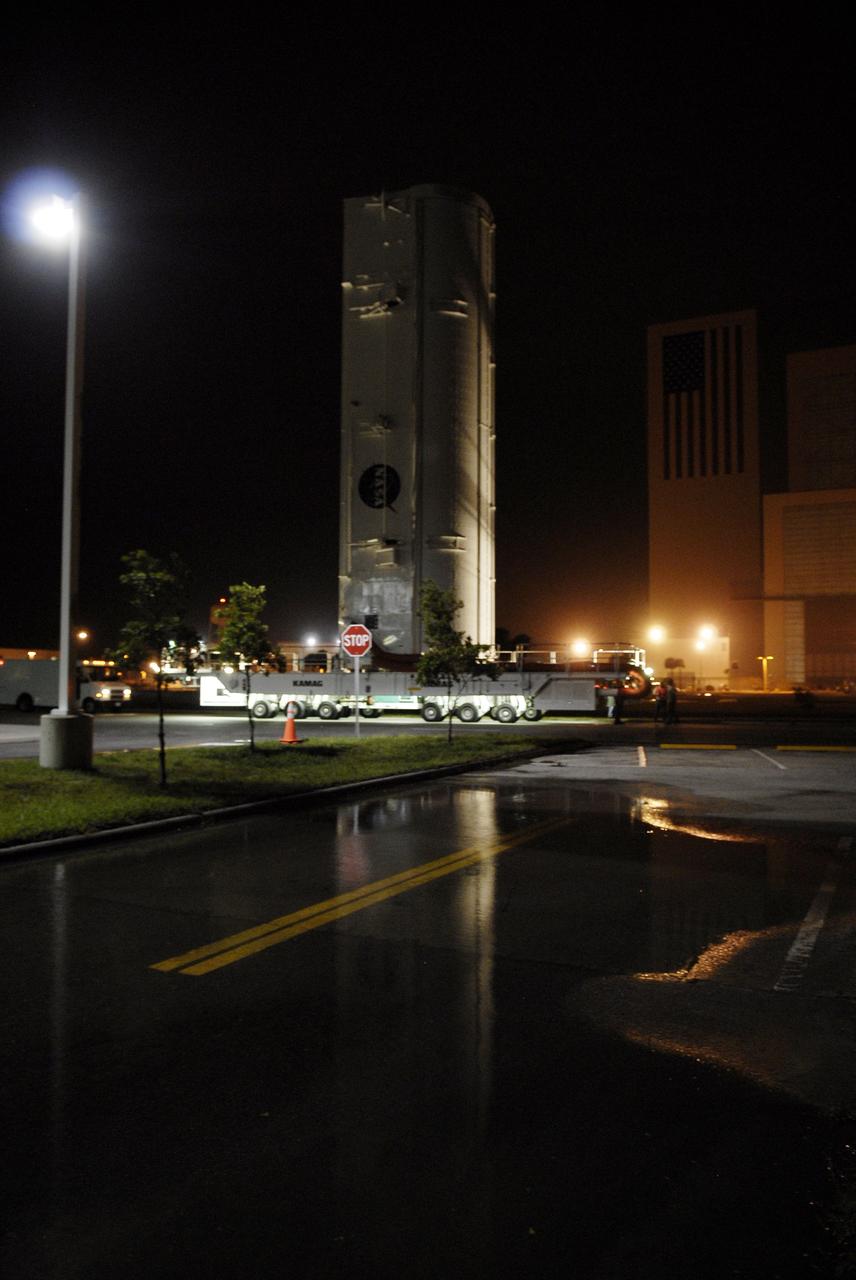
CAPE CANAVERAL, Fla. – The transporter with the payload canister rolls past the Vehicle Assembly Building at NASA's Kennedy Space Center in Florida on its way to Launch Pad 39A. Inside the canister is space shuttle Endeavour's payload for the STS-127 mission, which includes the Japan Aerospace Exploration Agency's Kibo Exposed Facility and the Experiment Logistics Module Exposed Section to the International Space Station. They will be installed on the Kibo laboratory on the station. Launch of Endeavour is targeted for June 13. Photo credit: NASA/Kim Shiflett

CAPE CANAVERAL, Fla. – The transporter with the payload canister rolls through the gate at Launch Pad 39A at NASA's Kennedy Space Center in Florida. Under lights at upper right are the rotating and fixed service structures on the pad. Inside the canister is space shuttle Endeavour's payload for the STS-127 mission, which includes the Japan Aerospace Exploration Agency's Kibo Exposed Facility and the Experiment Logistics Module Exposed Section to the International Space Station. They will be installed on the Kibo laboratory on the station. Launch of Endeavour is targeted for June 13. Photo credit: NASA/Kim Shiflett
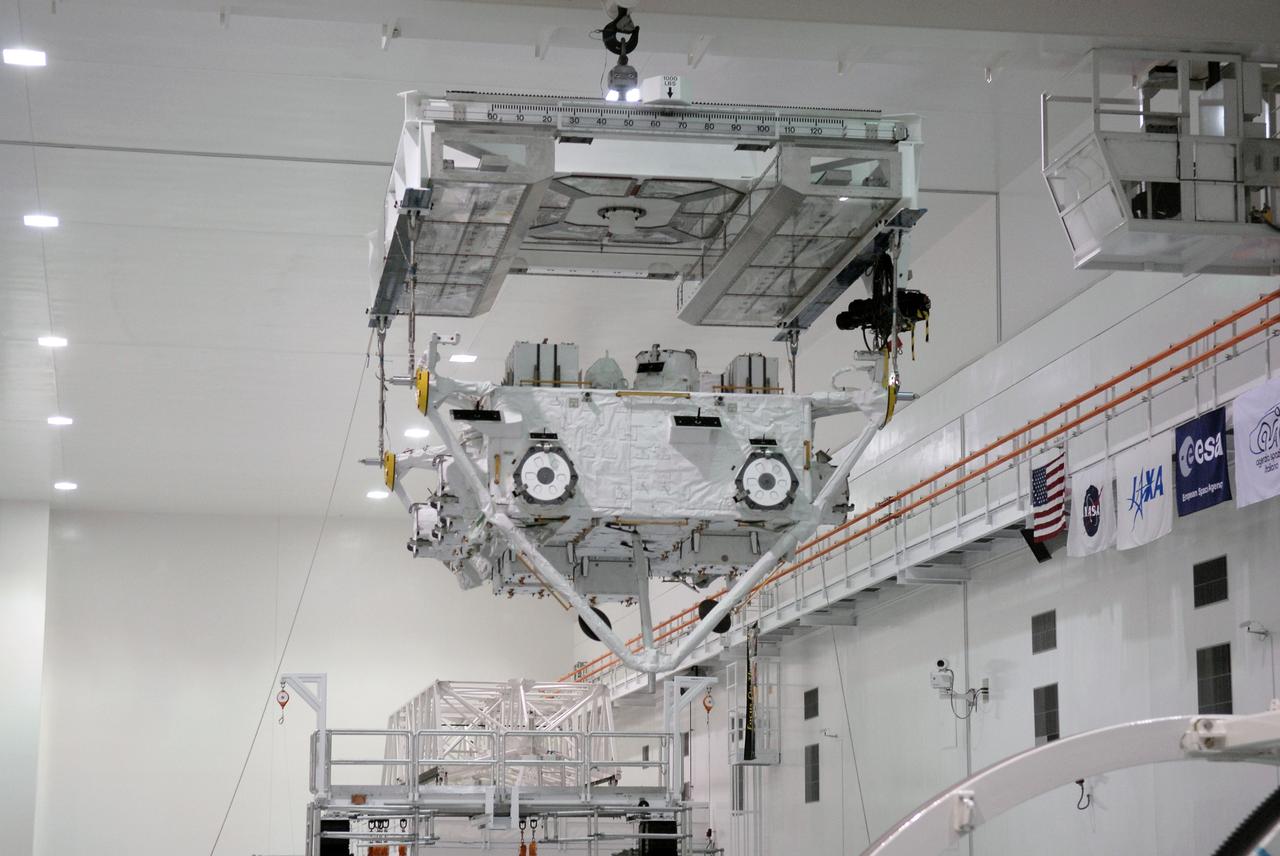
CAPE CANAVERAL, Fla. –– In the Space Station Processing Facility at NASA's Kennedy Space Center in Florida, the Japan Aerospace Exploration Agency's Kibo Exposed Facility, or EF, is moved across the room to transfer it to a workstand. When it is installed on the Kibo laboratory, the EF will provide a multipurpose platform where science experiments can be deployed and operated in the exposed environment. The payloads attached to the EF can be exchanged or retrieved by Kibo's robotic arm, the JEM Remote Manipulator System. The EF, along with the Experiment Logistics Module Exposed Section, will be carried aboard space shuttle Endeavour on the STS-127 mission targeted for launch June 13, 2009. Photo credit: NASA/Kim Shiflett
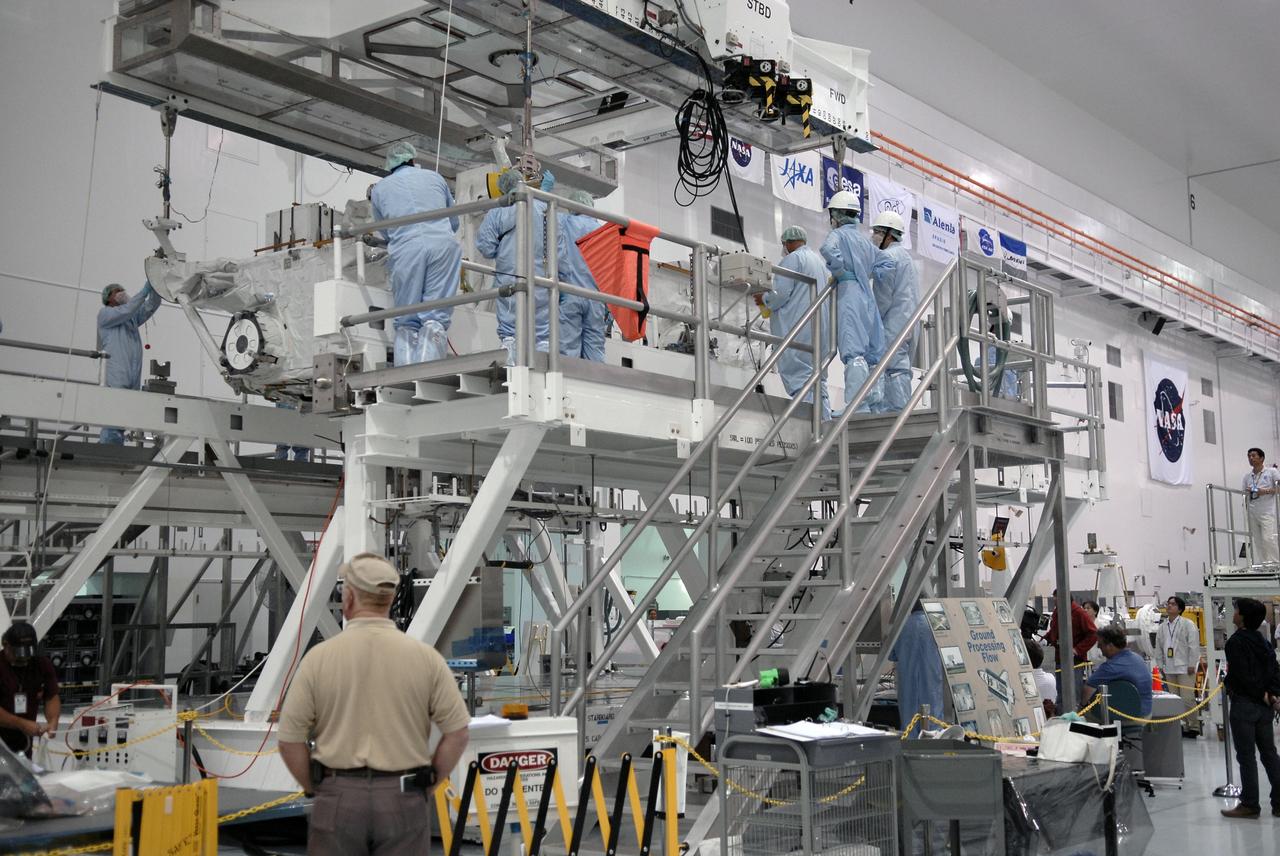
CAPE CANAVERAL, Fla. – In the Space Station Processing Facility at NASA's Kennedy Space Center in Florida, the Japan Aerospace Exploration Agency's Kibo Exposed Facility, or EF, is moved across the room to another stand. The EF, along with the Experiment Logistics Module Exposed Section, will be carried aboard space shuttle Endeavour on the STS-127 mission to the International Space Station targeted for launch May 15, 2009. When it is installed on the Kibo laboratory,the EF will provide a multipurpose platform where science experiments can be deployed and operated in the exposed environment. The payloads attached to the EF can be exchanged or retrieved by Kibo's robotic arm, the JEM Remote Manipulator System. Photo credit: NASA/Kim Shiflett
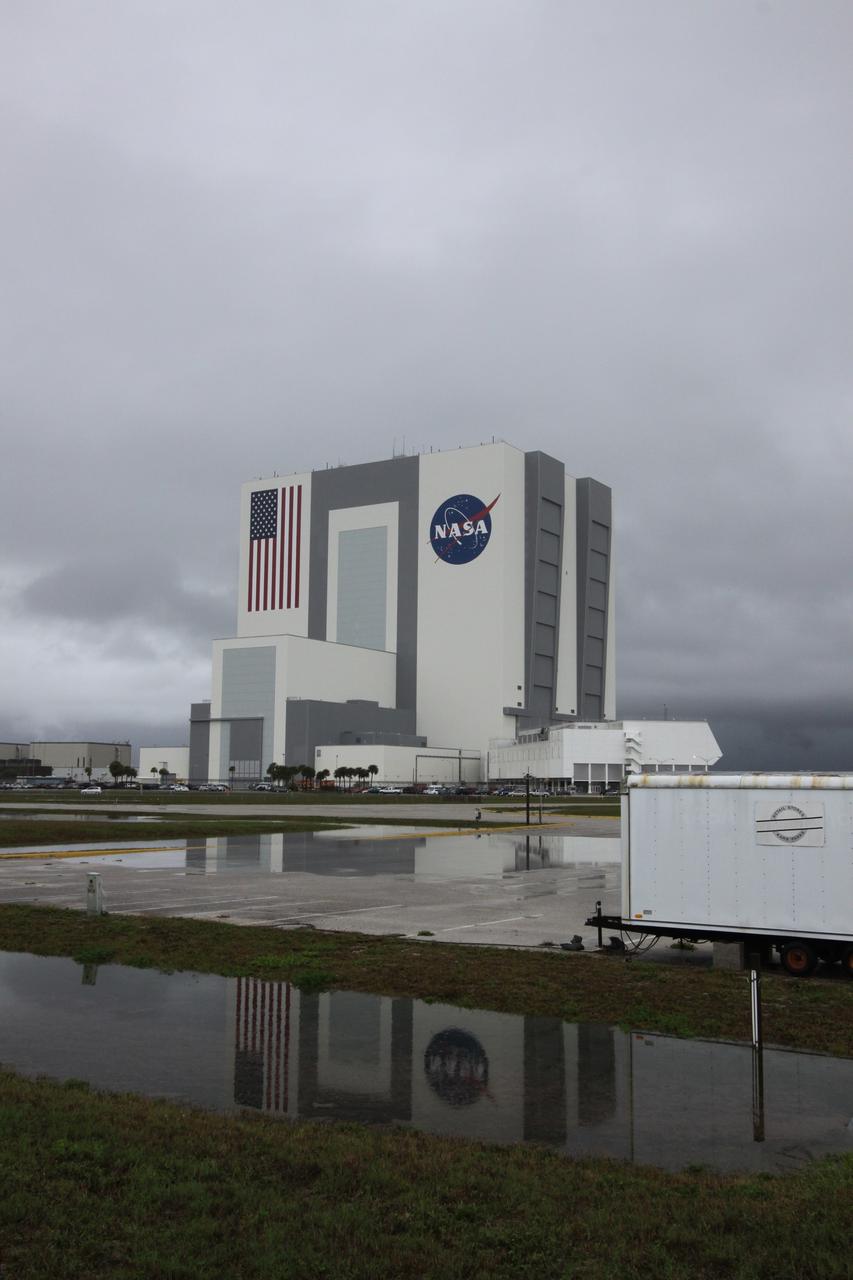
CAPE CANAVERAL, Fla. – Water saturates the ground and stands on the surface of a parking lot across the street from NASA Kennedy Space Center's Vehicle Assembly Building, the aftermath of thunderstorms in the vicinity of Kennedy’s Shuttle Landing Facility. Two landing opportunities for space shuttle Atlantis to conclude the STS-125 mission were waved off May 22 due to violations of the end-of-mission landing weather criteria. Through five spacewalks on the STS-125 mission, NASA's Hubble Space Telescope was refurbished and upgraded with state-of-the-art science instruments that will expand Hubble's capabilities and extend its operational lifespan through at least 2014. Photo credit: NASA/Jack Pfaller
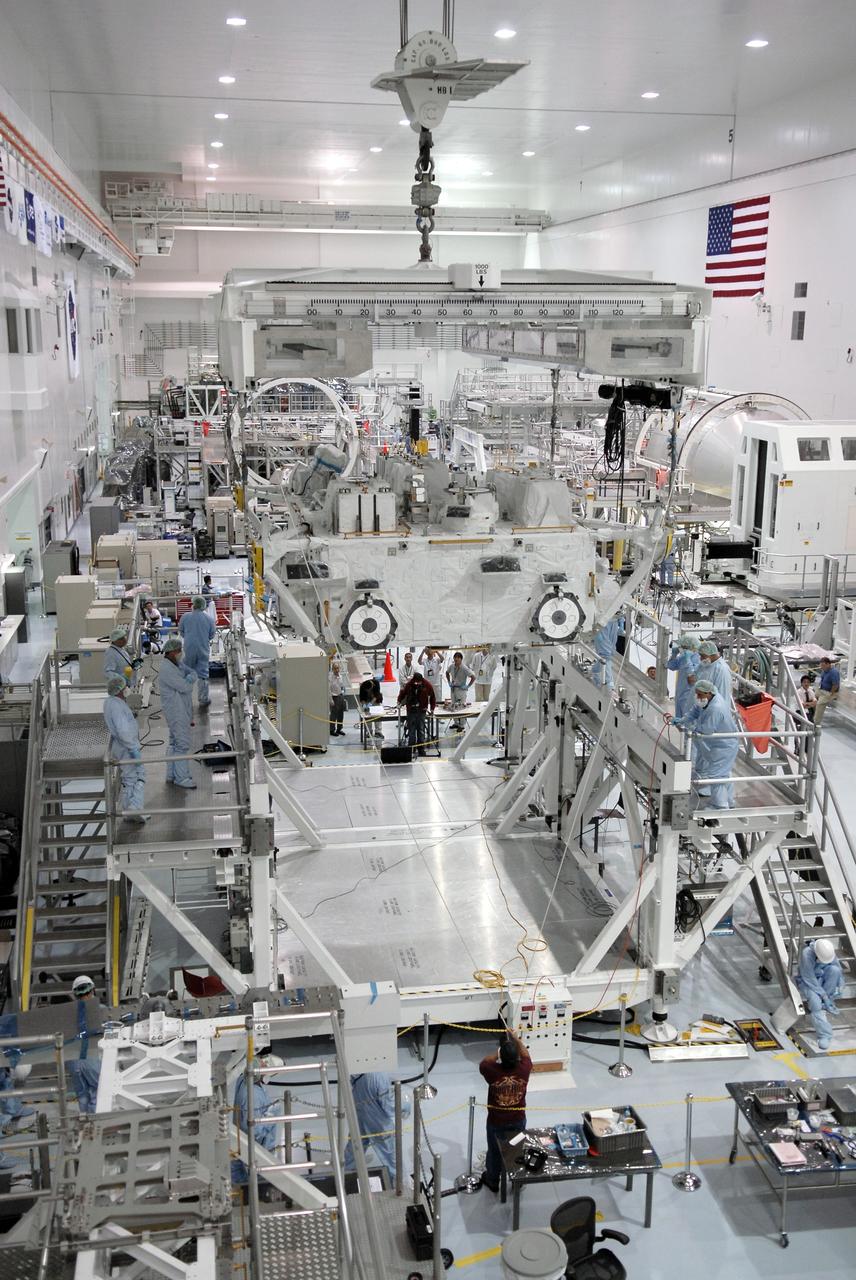
CAPE CANAVERAL, Fla. – In the Space Station Processing Facility at NASA's Kennedy Space Center in Florida, the Japan Aerospace Exploration Agency's Kibo Exposed Facility, or EF, is moved across the room to another stand. The EF, along with the Experiment Logistics Module Exposed Section, will be carried aboard space shuttle Endeavour on the STS-127 mission to the International Space Station targeted for launch May 15, 2009. When it is installed on the Kibo laboratory,the EF will provide a multipurpose platform where science experiments can be deployed and operated in the exposed environment. The payloads attached to the EF can be exchanged or retrieved by Kibo's robotic arm, the JEM Remote Manipulator System. Photo credit: NASA/Kim Shiflett
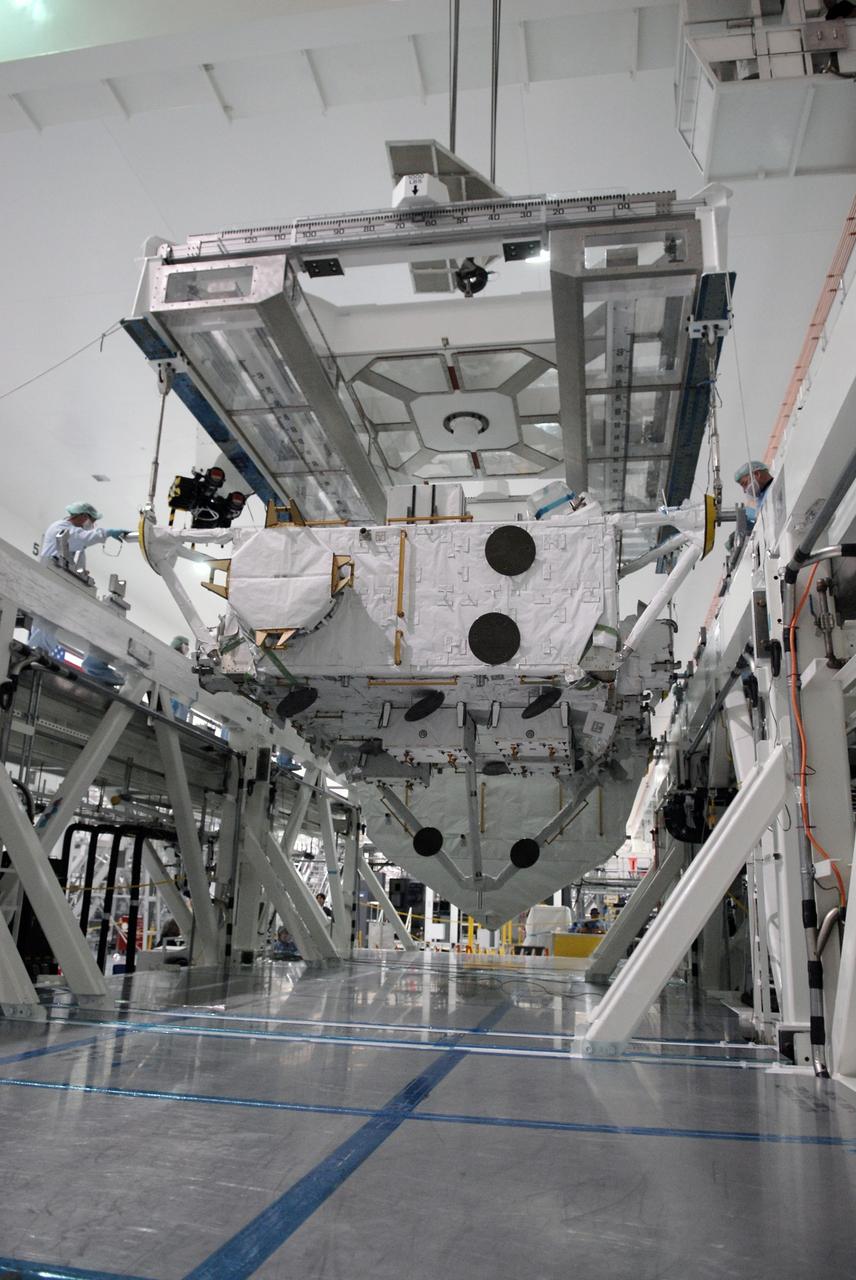
CAPE CANAVERAL, Fla. –– In the Space Station Processing Facility at NASA's Kennedy Space Center in Florida, the suspended Japan Aerospace Exploration Agency's Kibo Exposed Facility, or EF, is lowered into a workstand. When it is installed on the Kibo laboratory, the EF will provide a multipurpose platform where science experiments can be deployed and operated in the exposed environment. The payloads attached to the EF can be exchanged or retrieved by Kibo's robotic arm, the JEM Remote Manipulator System. The EF, along with the Experiment Logistics Module Exposed Section, will be carried aboard space shuttle Endeavour on the STS-127 mission targeted for launch June 13, 2009. Photo credit: NASA/Kim Shiflett
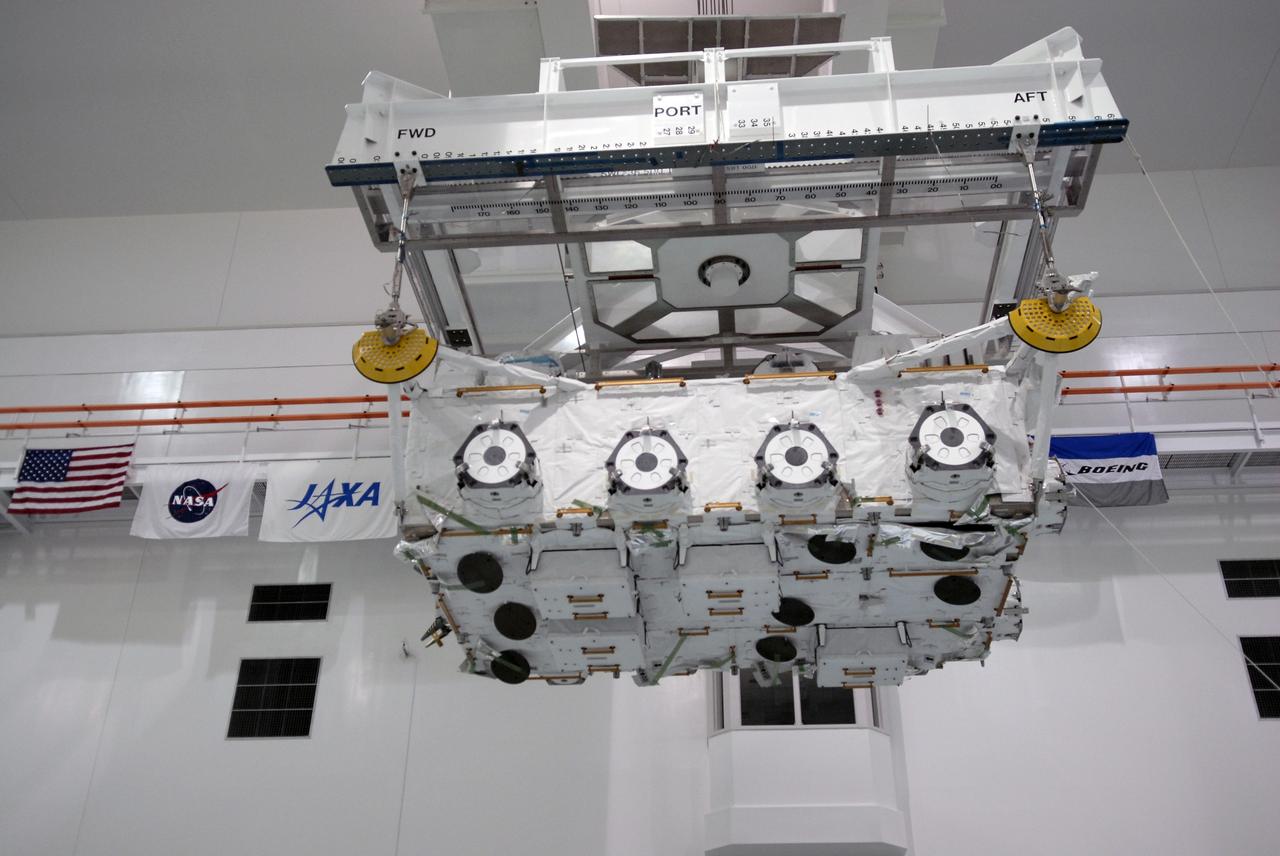
CAPE CANAVERAL, Fla. – In the Space Station Processing Facility at NASA's Kennedy Space Center in Florida, the Japan Aerospace Exploration Agency's Kibo Exposed Facility, or EF, is ready to be lowered onto a stand. The EF, along with the Experiment Logistics Module Exposed Section, will be carried aboard space shuttle Endeavour on the STS-127 mission to the International Space Station targeted for launch May 15, 2009. When it is installed on the Kibo laboratory,the EF will provide a multipurpose platform where science experiments can be deployed and operated in the exposed environment. The payloads attached to the EF can be exchanged or retrieved by Kibo's robotic arm, the JEM Remote Manipulator System. Photo credit: NASA/Kim Shiflett
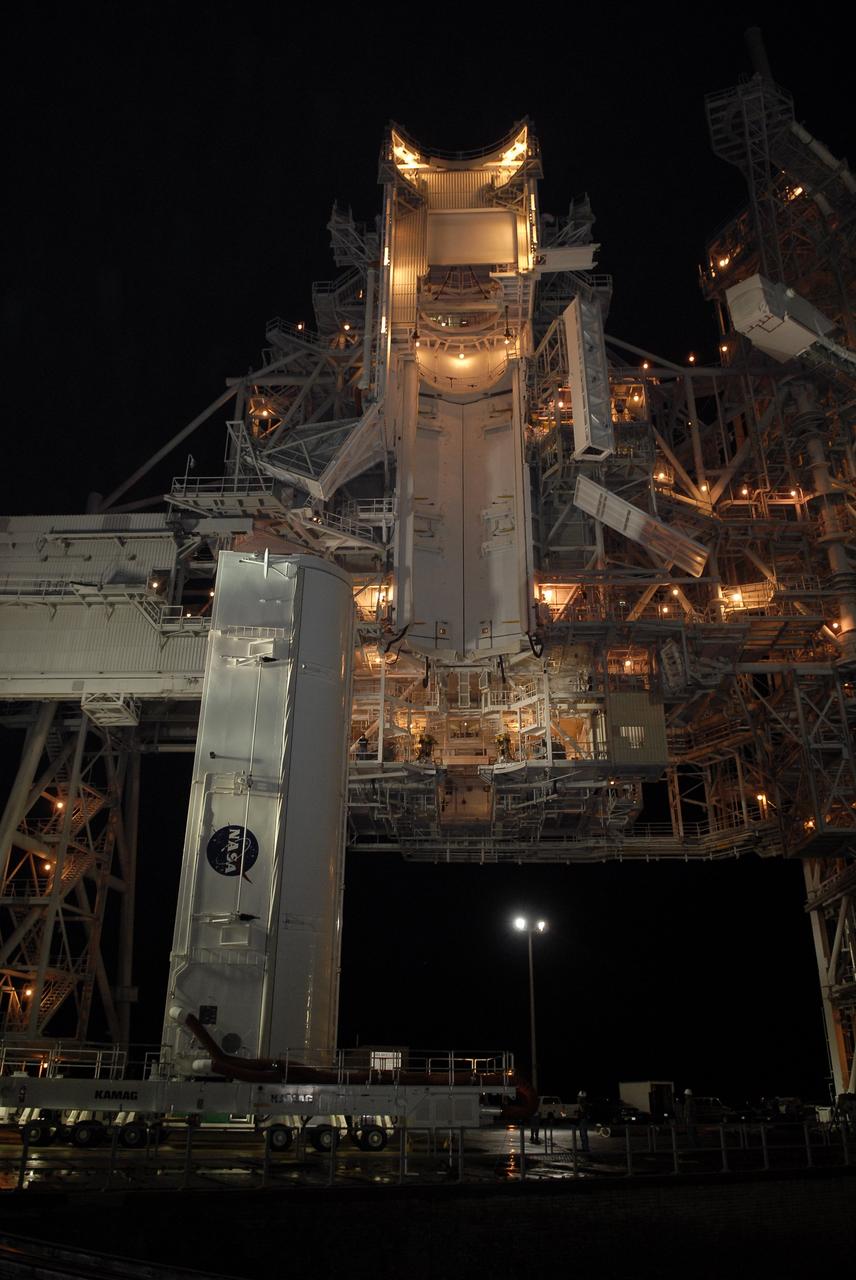
CAPE CANAVERAL, Fla. – – The transporter with the payload canister closes in on the rotating service structure, or RSS, on Launch Pad 39A at NASA's Kennedy Space Center in Florida. When it is under the RSS, the canister will be lifted up into the Payload Changeout Room above. Inside the canister is space shuttle Endeavour's payload for the STS-127 mission, which includes the Japan Aerospace Exploration Agency's Kibo Exposed Facility and the Experiment Logistics Module Exposed Section to the International Space Station. They will be installed on the Kibo laboratory on the station. Launch of Endeavour is targeted for June 13. Photo credit: NASA/Kim Shiflett
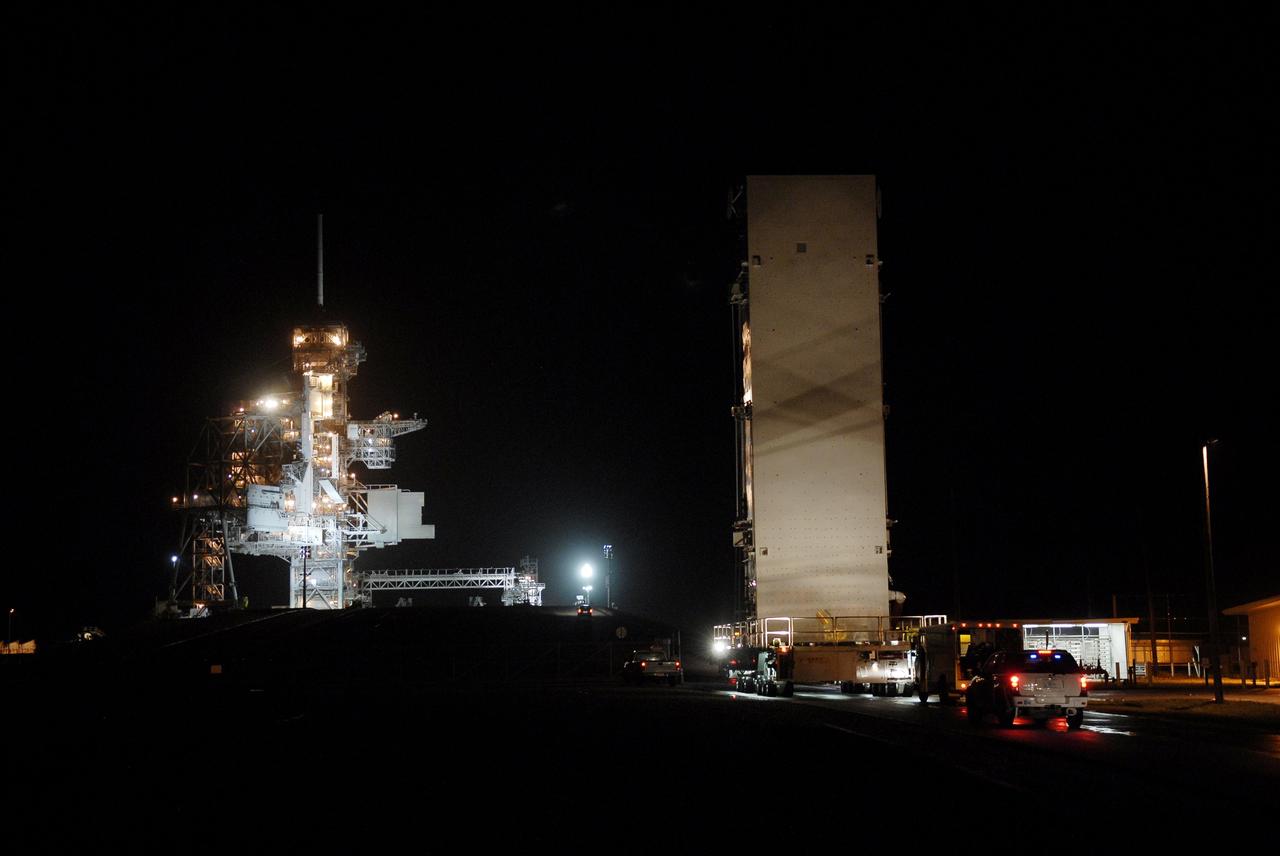
CAPE CANAVERAL, Fla. – The transporter with the payload canister arrives at Launch Pad 39A at NASA's Kennedy Space Center in Florida. Under lights at left are the rotating and fixed service structures on the pad. Inside the canister is space shuttle Endeavour's payload for the STS-127 mission, which includes the Japan Aerospace Exploration Agency's Kibo Exposed Facility and the Experiment Logistics Module Exposed Section to the International Space Station. They will be installed on the Kibo laboratory on the station. Launch of Endeavour is targeted for June 13. Photo credit: NASA/Kim Shiflett
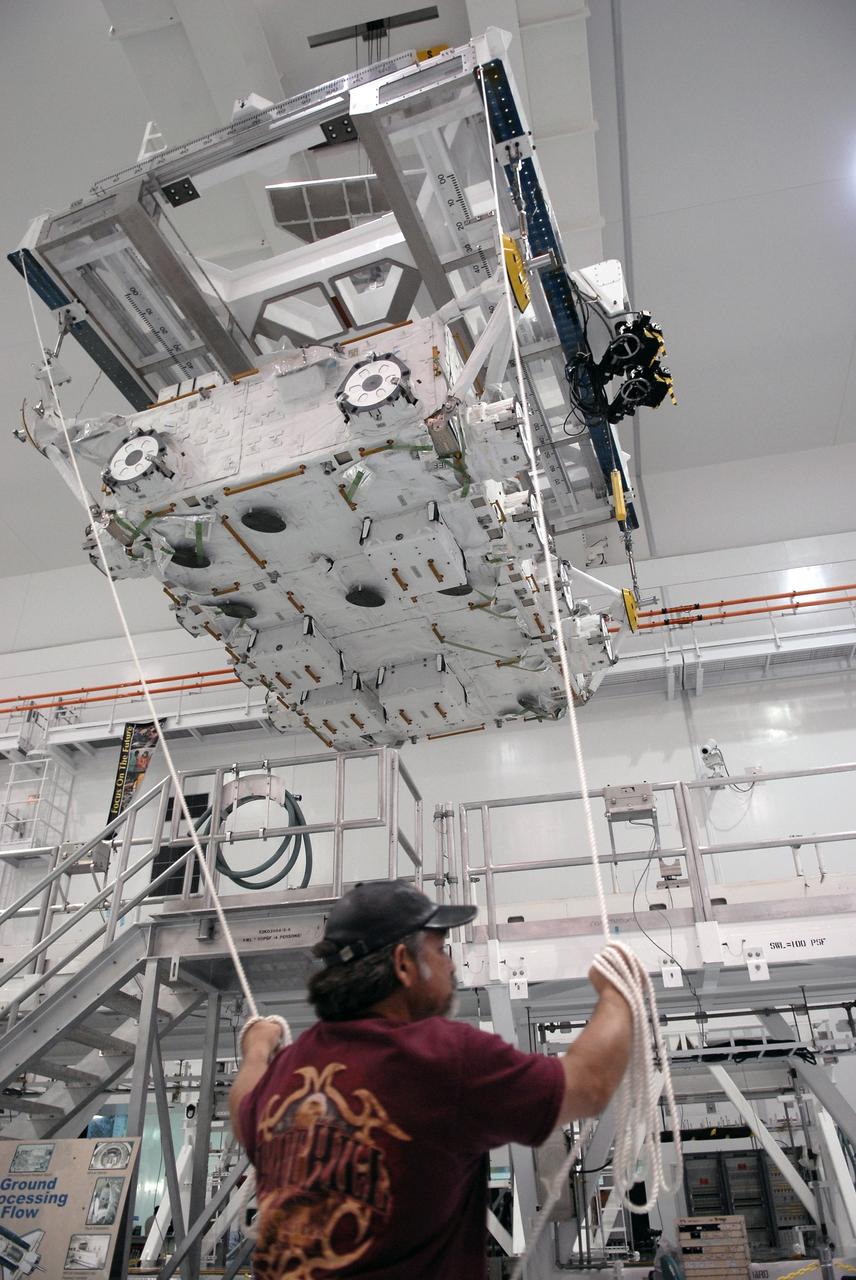
CAPE CANAVERAL, Fla. – In the Space Station Processing Facility at NASA's Kennedy Space Center in Florida, a worker help guides the progress of the Japan Aerospace Exploration Agency's Kibo Exposed Facility, or EF, as it moves across the room to another stand. The EF, along with the Experiment Logistics Module Exposed Section, will be carried aboard space shuttle Endeavour on the STS-127 mission to the International Space Station targeted for launch May 15, 2009. When it is installed on the Kibo laboratory,the EF will provide a multipurpose platform where science experiments can be deployed and operated in the exposed environment. The payloads attached to the EF can be exchanged or retrieved by Kibo's robotic arm, the JEM Remote Manipulator System. Photo credit: NASA/Kim Shiflett
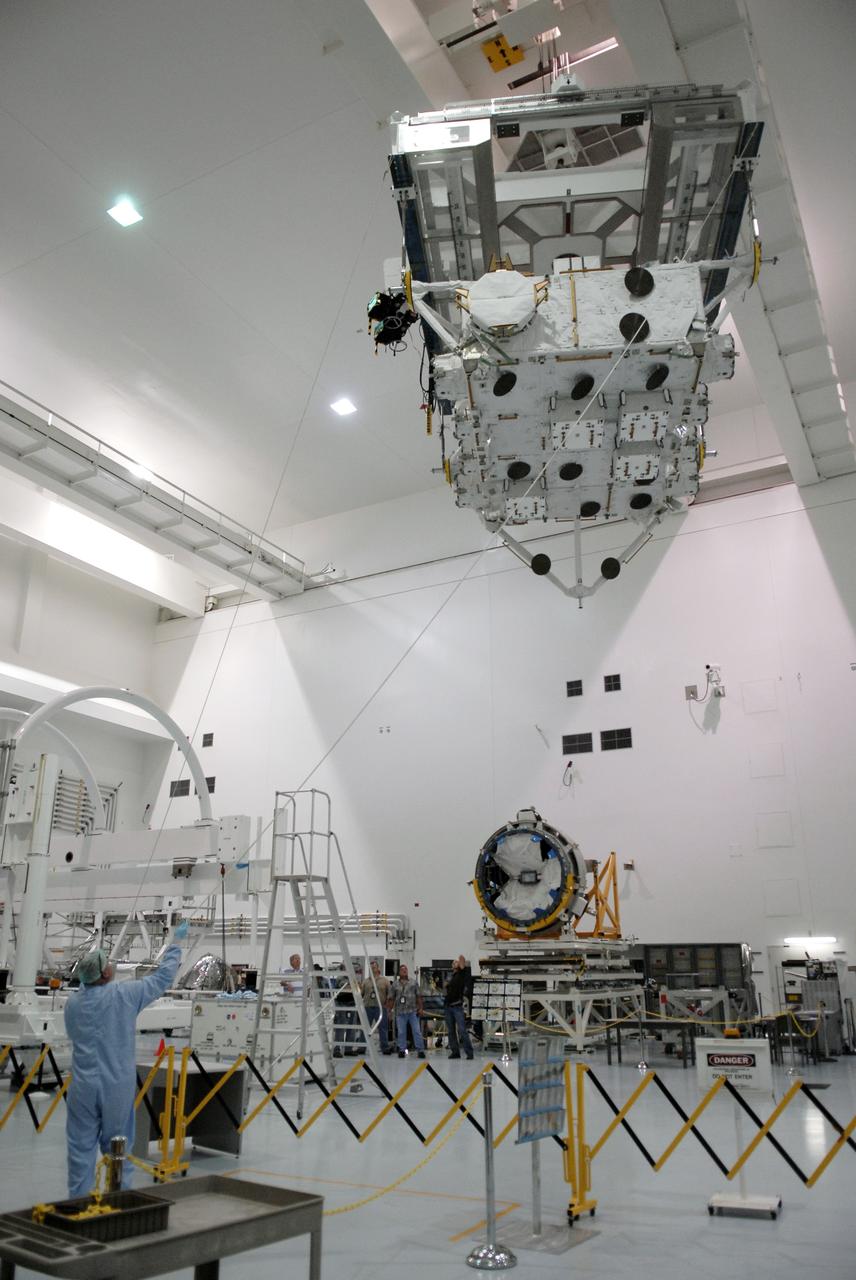
CAPE CANAVERAL, Fla. –– In the Space Station Processing Facility at NASA's Kennedy Space Center in Florida, the suspended Japan Aerospace Exploration Agency's Kibo Exposed Facility, or EF, is guided toward a workstand, at left. When it is installed on the Kibo laboratory, the EF will provide a multipurpose platform where science experiments can be deployed and operated in the exposed environment. The payloads attached to the EF can be exchanged or retrieved by Kibo's robotic arm, the JEM Remote Manipulator System. The EF, along with the Experiment Logistics Module Exposed Section, will be carried aboard space shuttle Endeavour on the STS-127 mission targeted for launch June 13, 2009. Photo credit: NASA/Kim Shiflett
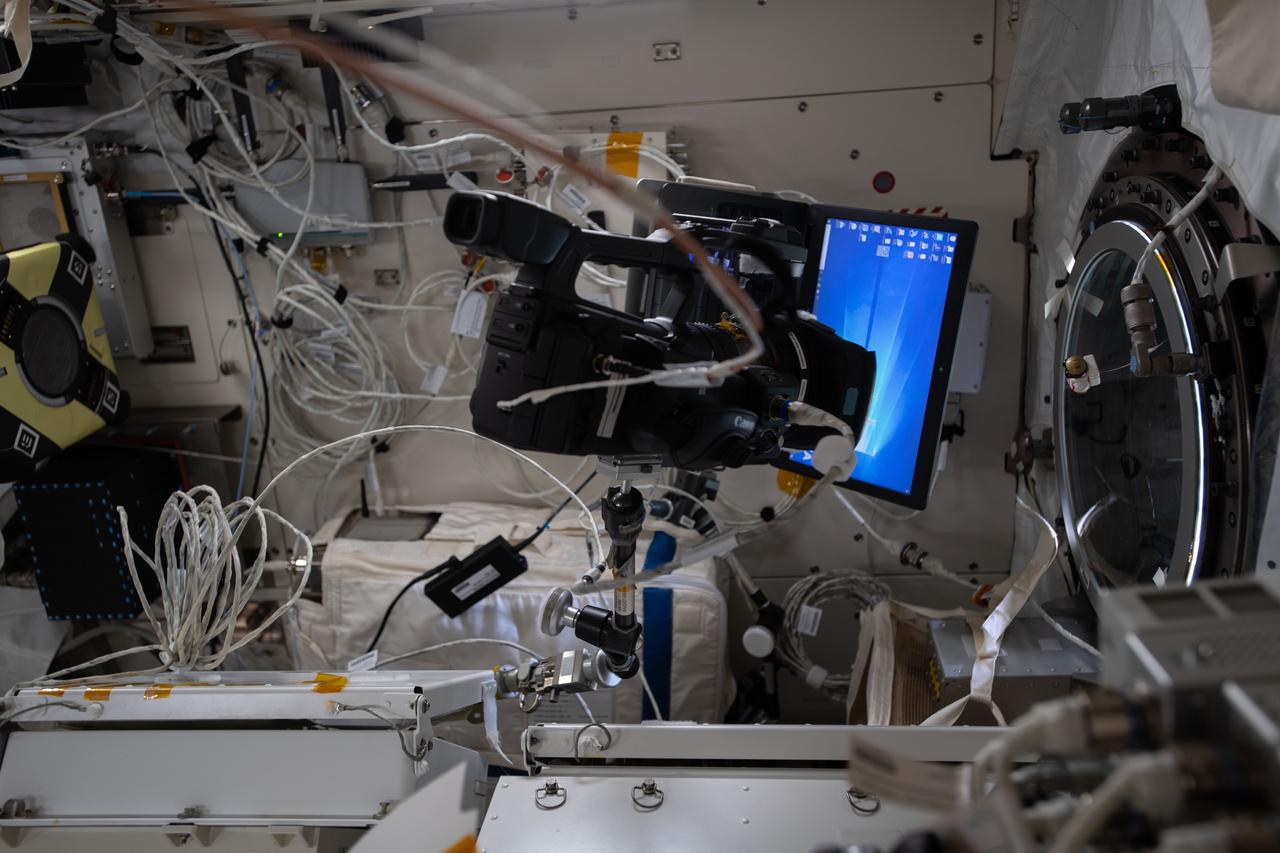
iss063e068100 (8/12/2020) --- Photo documentation of the Space Studio KIBO setup in the Japanese Experiment Module (JEM) aboard the International Space Station (ISS). The Space Frontier Studio KIBO is a broadcasting studio that is constructed and operated in the Japanese Experiment Module (JEM), also known as Kibo. The studio can livestream activities, interactive entertainment, and communication from space.
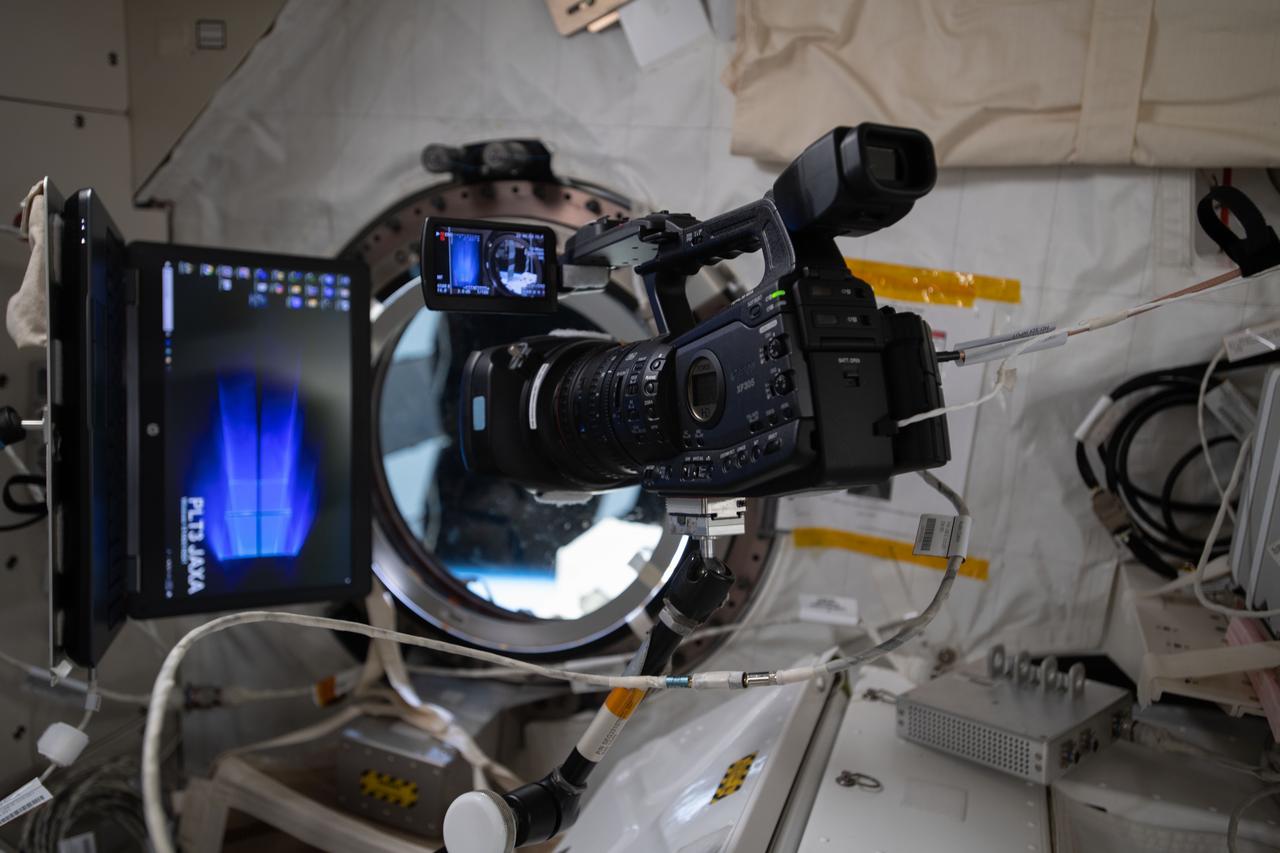
iss063e068091 (8/12/2020) --- Photo documentation of the Space Studio KIBO setup in the Japanese Experiment Module (JEM) aboard the International Space Station (ISS). The Space Frontier Studio KIBO is a broadcasting studio that is constructed and operated in the Japanese Experiment Module (JEM), also known as Kibo. The studio can livestream activities, interactive entertainment, and communication from space.
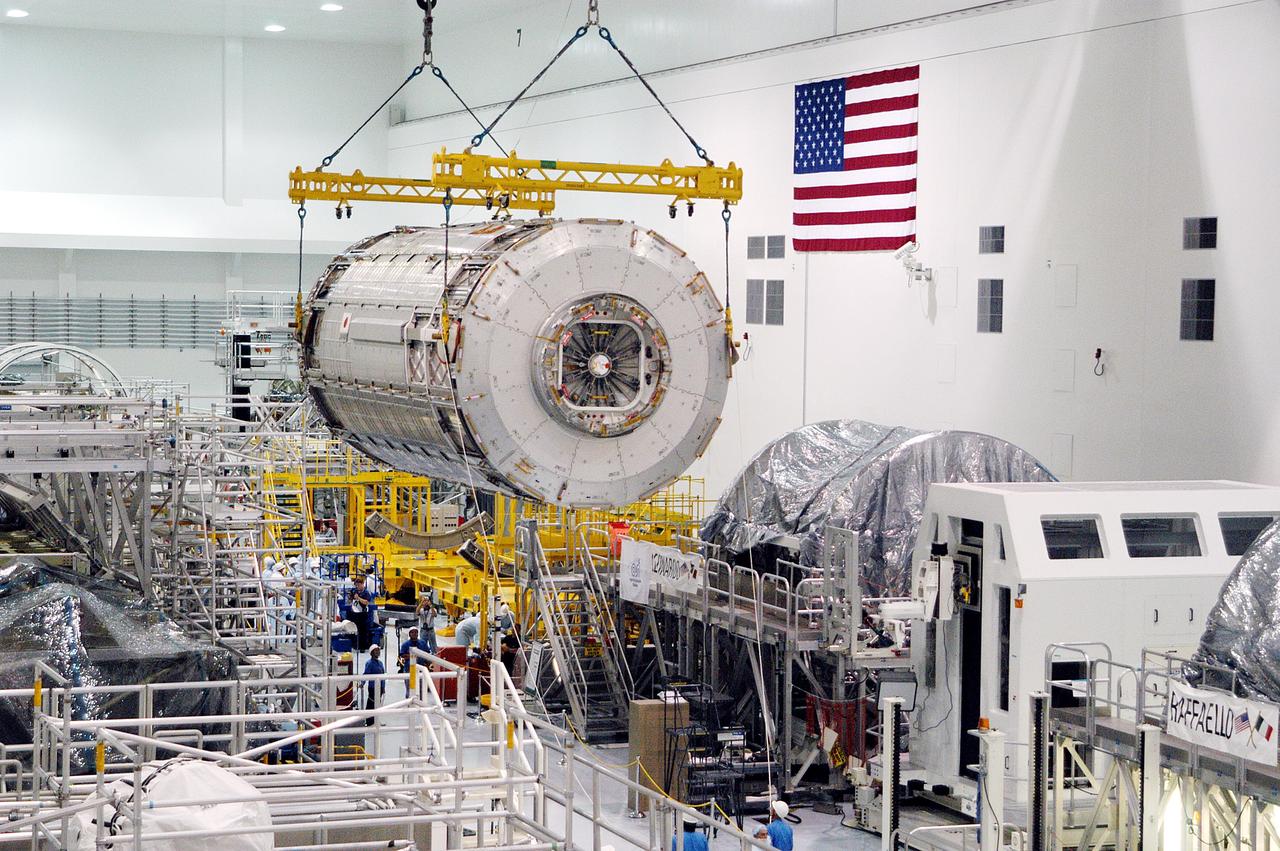
KENNEDY SPACE CENTER, FLA. - The Japanese Experiment Module (JEM) pressure module is moved past other ISS elements in the Space Station Processing Facility to a work stand. A research laboratory, the pressurized module is the first element of the JEM, named "Kibo" (Hope), to be delivered to KSC. The National Space Development Agency of Japan (NASDA) developed the laboratory at the Tsukuba Space Center near Tokyo and is Japan's primary contribution to the Station. It will enhance the unique research capabilities of the orbiting complex by providing an additional environment for astronauts to conduct science experiments. The JEM also includes an exposed facility (platform) for space environment experiments, a robotic manipulator system, and two logistics modules. The various JEM components will be assembled in space over the course of three Shuttle missions.
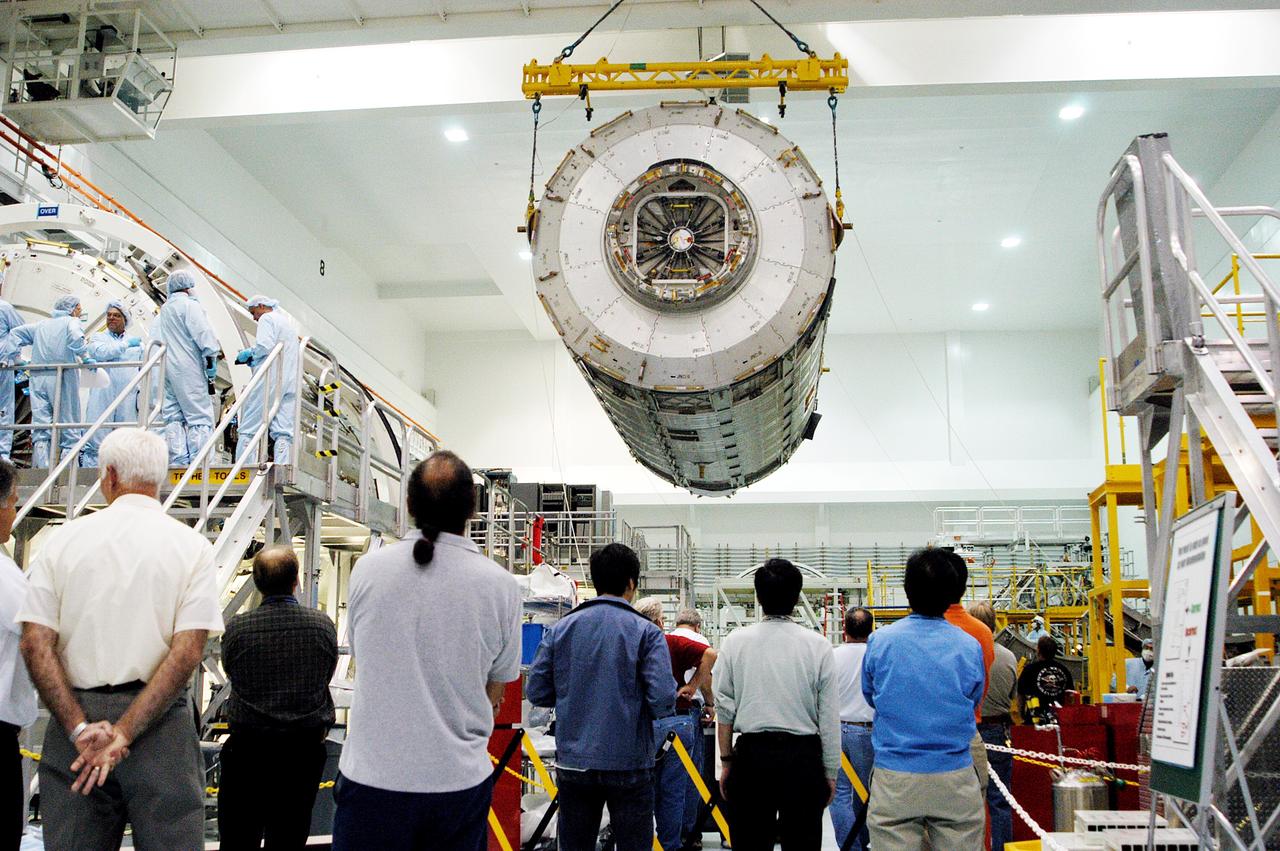
KENNEDY SPACE CENTER, FLA. - In the Space Station Processing Facility, an overhead crane moves the Japanese Experiment Module (JEM) pressure module past other ISS elements to a work stand. A research laboratory, the pressurized module is the first element of the JEM, named "Kibo" (Hope), to be delivered to KSC. The National Space Development Agency of Japan (NASDA) developed the laboratory at the Tsukuba Space Center near Tokyo and is Japan's primary contribution to the Station. It will enhance the unique research capabilities of the orbiting complex by providing an additional environment for astronauts to conduct science experiments. The JEM also includes an exposed facility (platform) for space environment experiments, a robotic manipulator system, and two logistics modules. The various JEM components will be assembled in space over the course of three Shuttle missions.
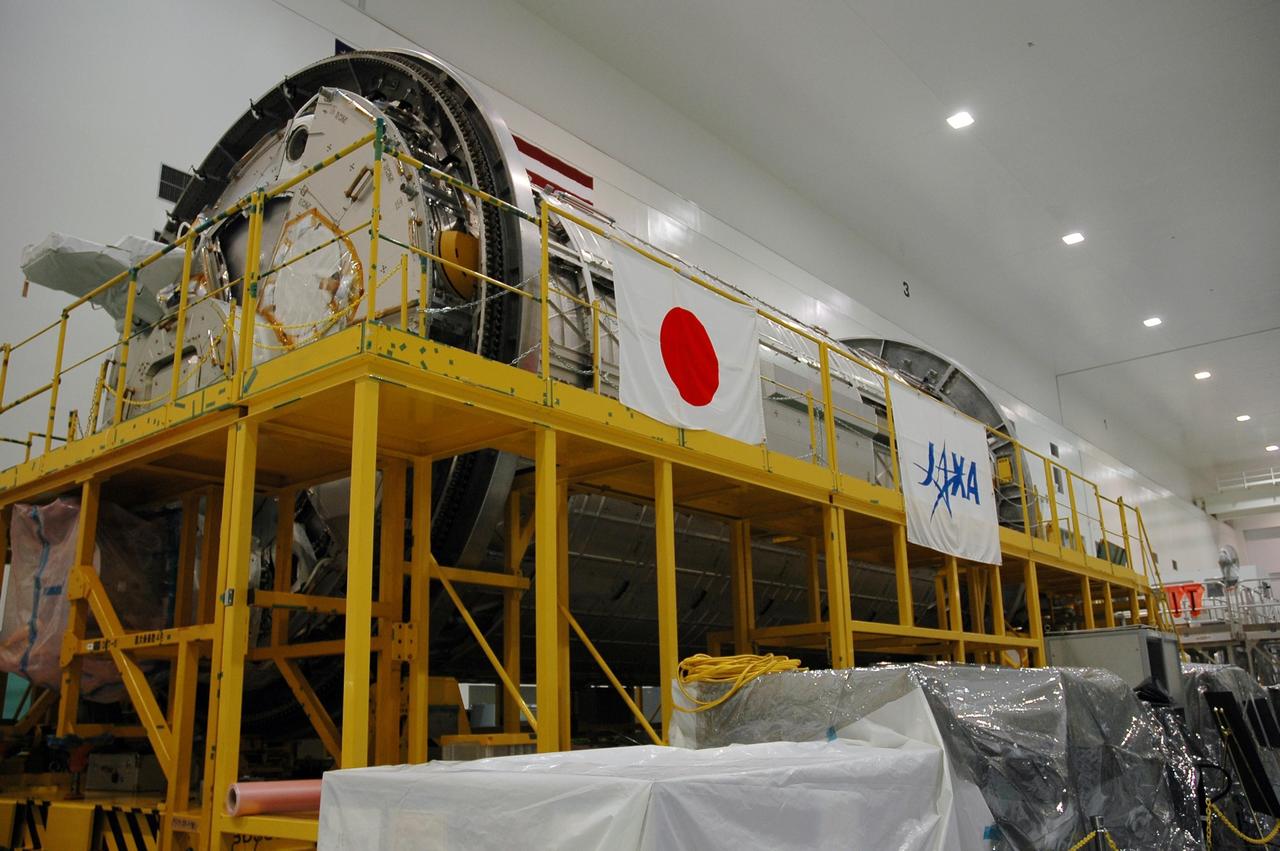
KENNEDY SPACE CENTER, FLA. - In the Space Station Processing Facility, the Japanese Experiment Module (JEM) awaits its flight to the International Space Station (ISS). The JEM, developed by the Japan Aerospace Exploration Agency (JAXA) for installation on the ISS, is named Kibo -- which means "hope" in Japanese -- and will enhance the unique research capabilities of the orbiting complex by providing an additional environment for astronauts to conduct science experiments. Research conducted in Kibo will focus on space medicine, biology, Earth observations, material production, biotechnology and communications. Photo credit: NASA/Amanda Diller
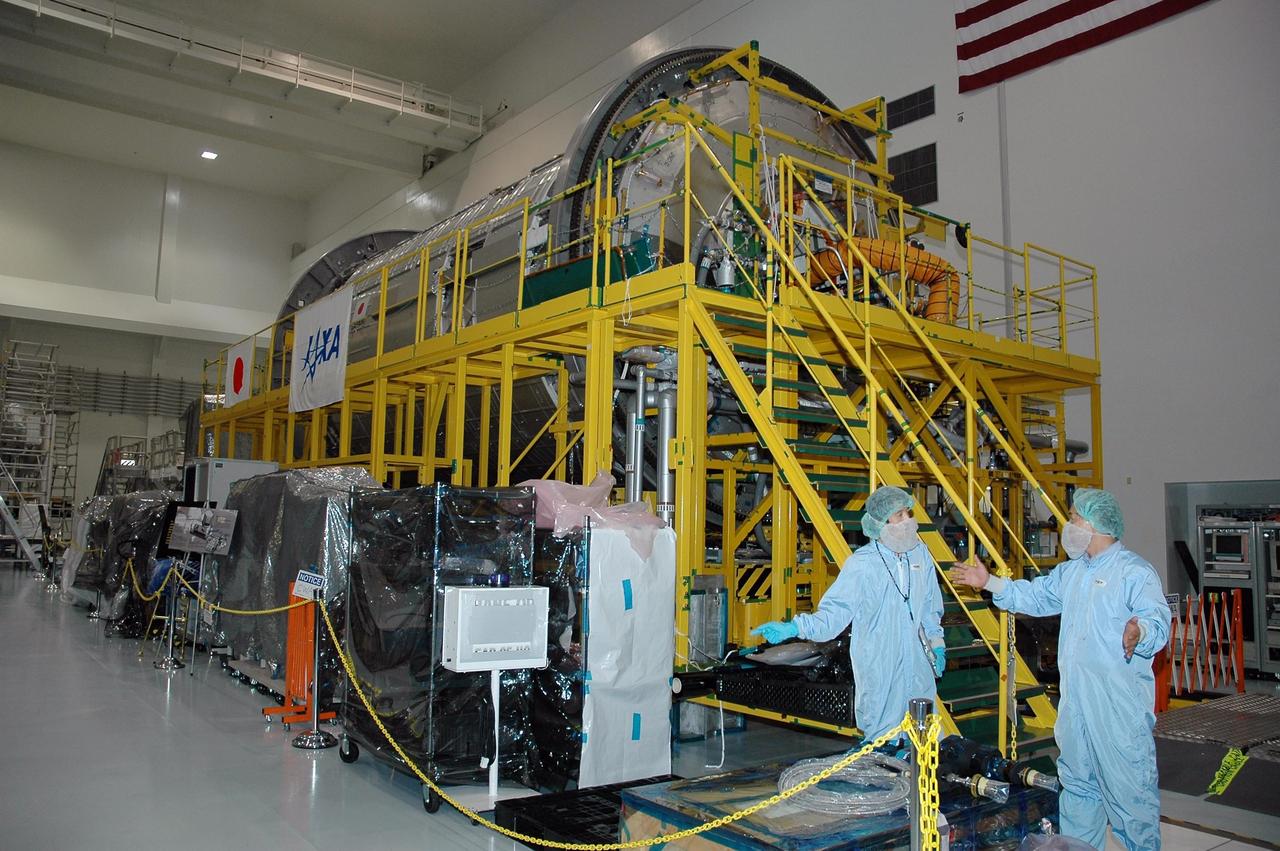
KENNEDY SPACE CENTER, FLA. - In the Space Station Processing Facility, processing continues on the Japanese Experiment Module (JEM) for its flight to the International Space Station (ISS). The JEM, developed by the Japan Aerospace Exploration Agency (JAXA) for installation on the ISS, is named Kibo -- which means "hope" in Japanese -- and will enhance the unique research capabilities of the orbiting complex by providing an additional environment for astronauts to conduct science experiments. Research conducted in Kibo will focus on space medicine, biology, Earth observations, material production, biotechnology and communications. Photo credit: NASA/Amanda Diller

iss056e181758 (9/21/2018) --- A view of the Japanese Experiment Module (JEM) Pressurized Module (JPM) aboard the International Space Station (ISS). The Japanese Experiment Module, or JEM, called Kibo -- which means "hope" in Japanese -- is Japan's first human space facility and enhances the unique research capabilities of the International Space Station. Kibo consists of several components: two research facilities -- the Pressurized Module and Exposed Facility; a Logistics Module; a Remote Manipulator System; and an Inter-Orbit Communication System unit. Kibo also has a scientific airlock through which experiments are transferred and exposed to the external environment of space.
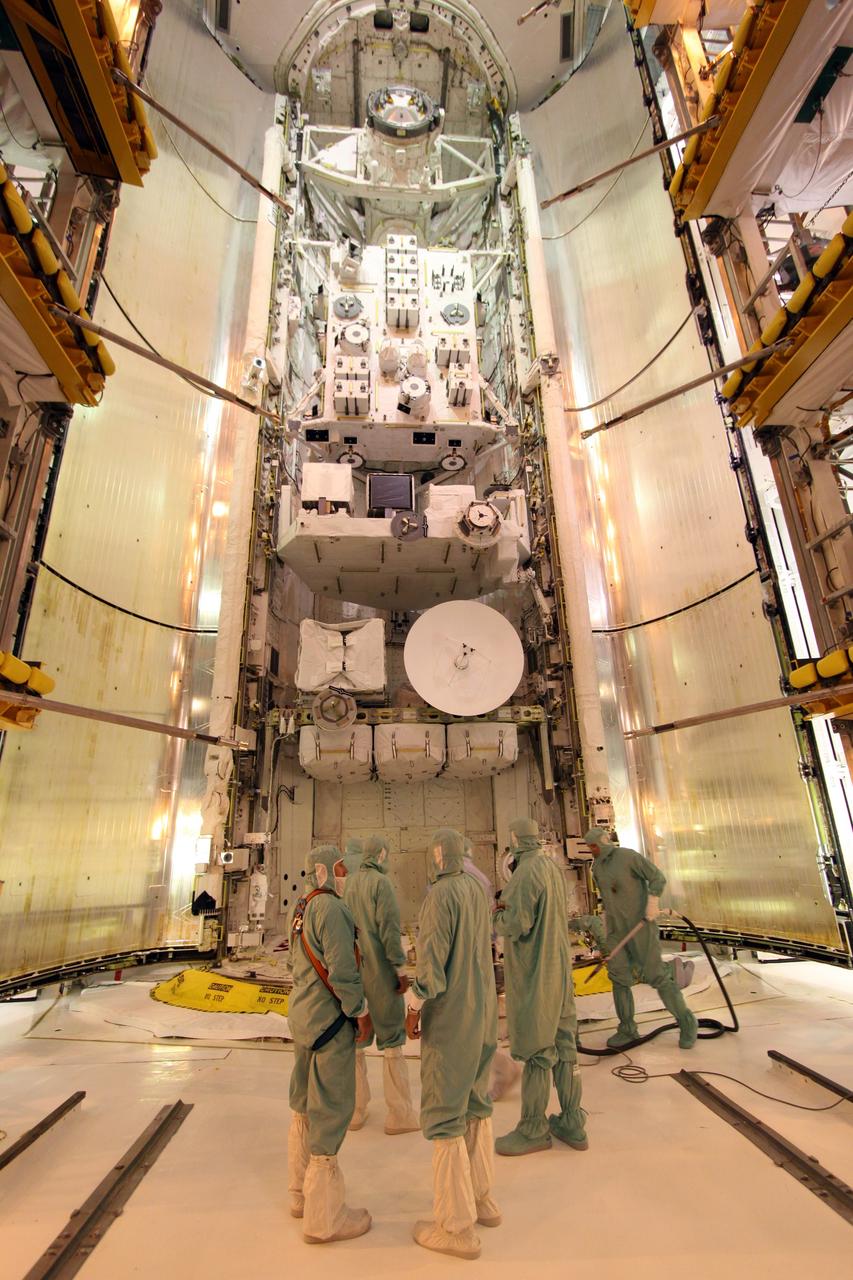
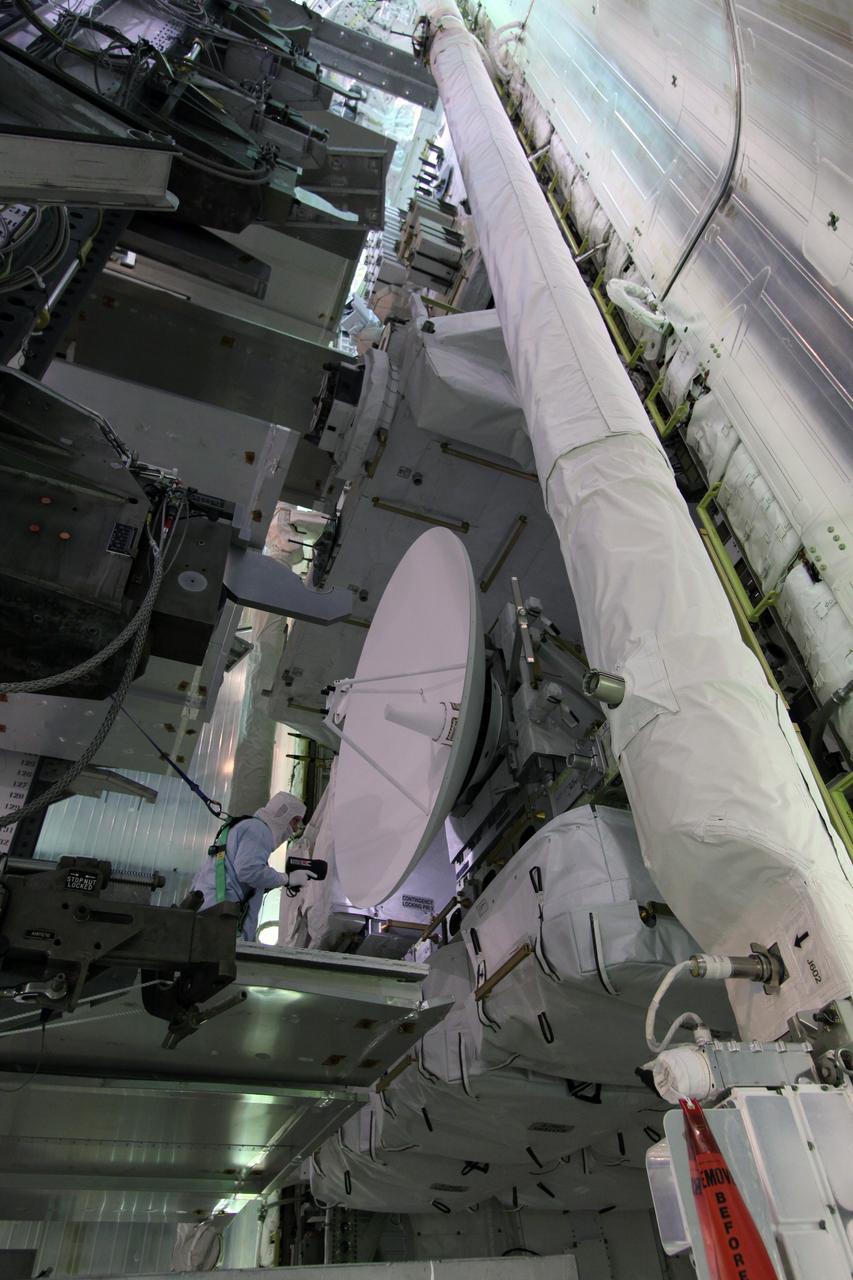
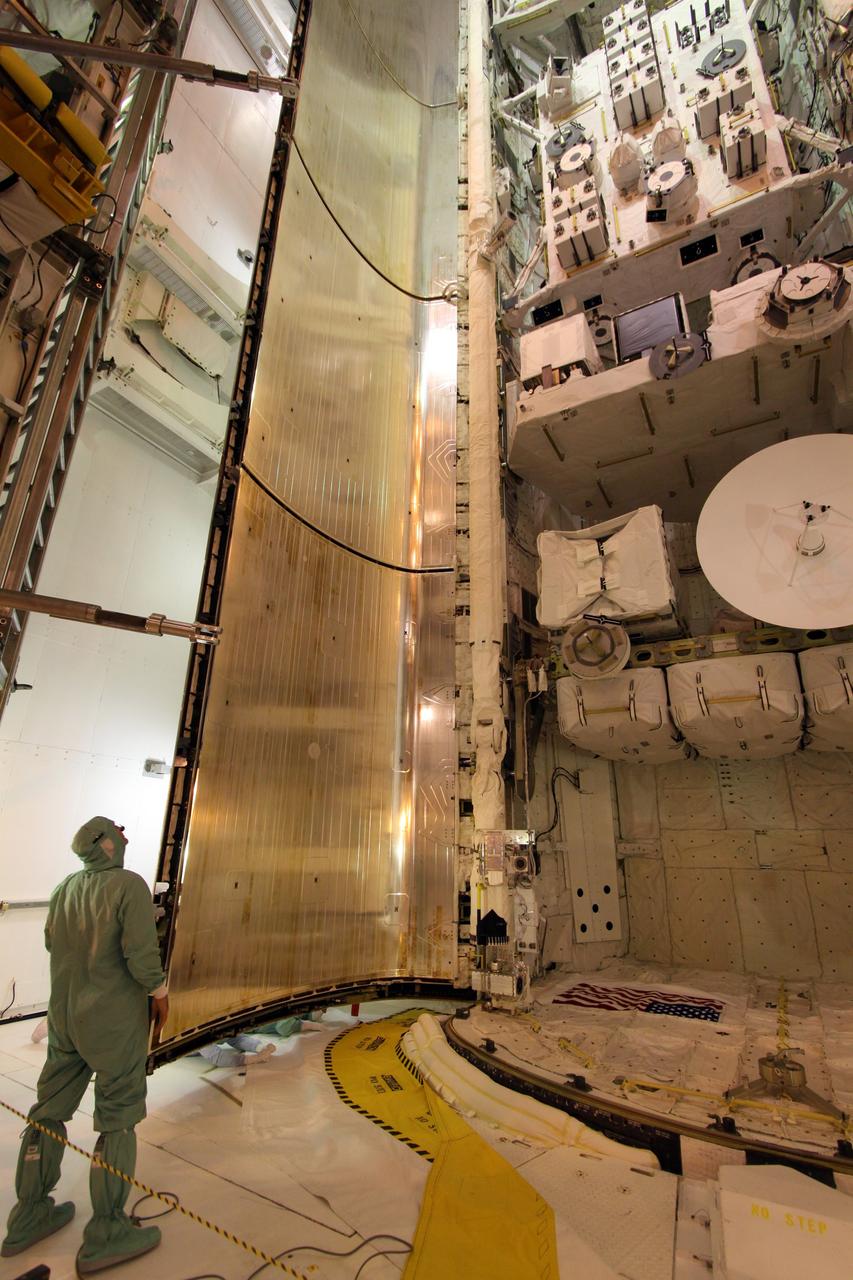
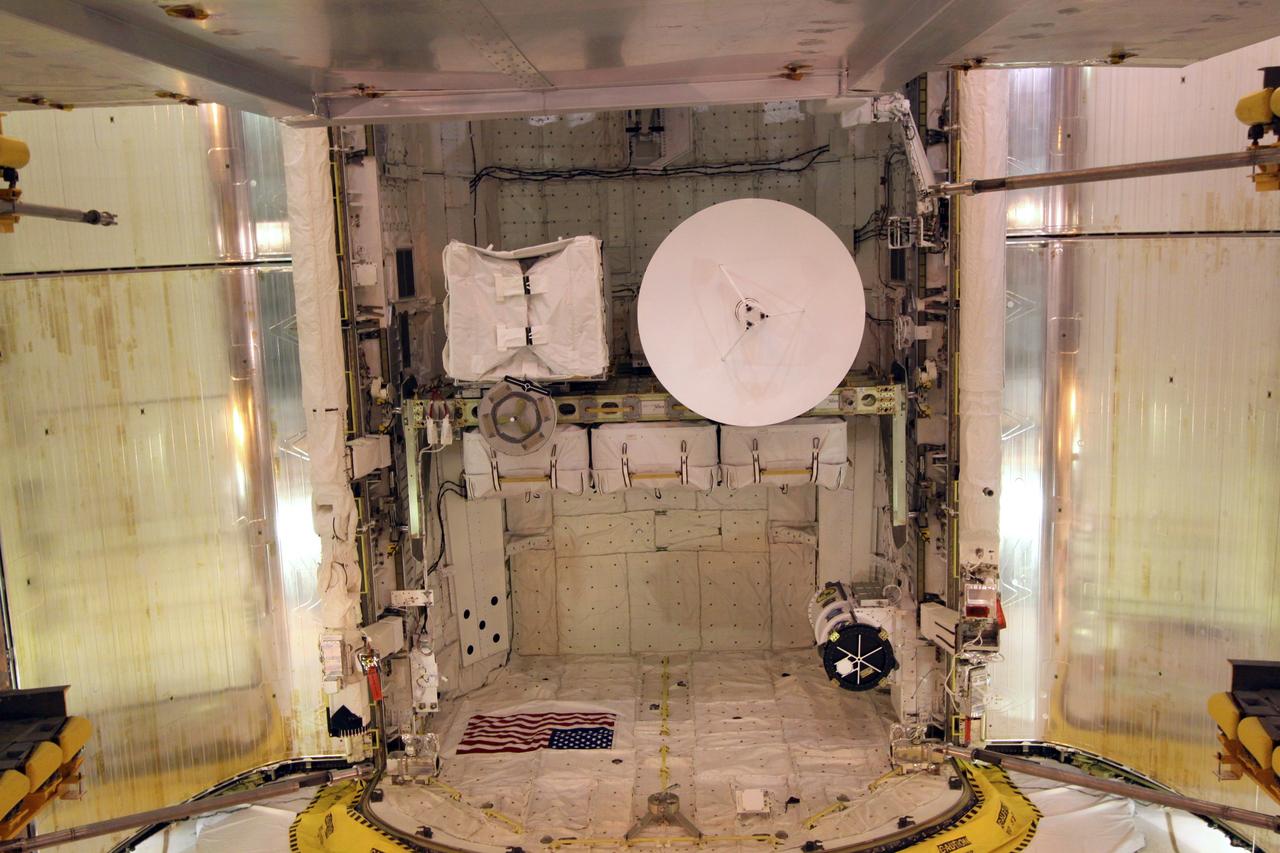
CAPE CANAVERAL, Fla. – On Launch Pad 39A at NASA's Kennedy Space Center in Florida, workers ensure smooth closure of space shuttle Endeavour's payload bay doors. Elements stored in the payload bay are, at bottom, the Integrated Cargo Carrier-Vertical Light Deploy (with the Space-to-Ground Antenna showing), the Experiment Logistics Module-Exposed Section (middle) and the Japanese Experiment Module's Exposed Facility (at top). The STS-127 mission is the final of three flights dedicated to the assembly of the Japanese Kibo laboratory complex on the International Space Station. Photo credit: NASA/Jack Pfaller
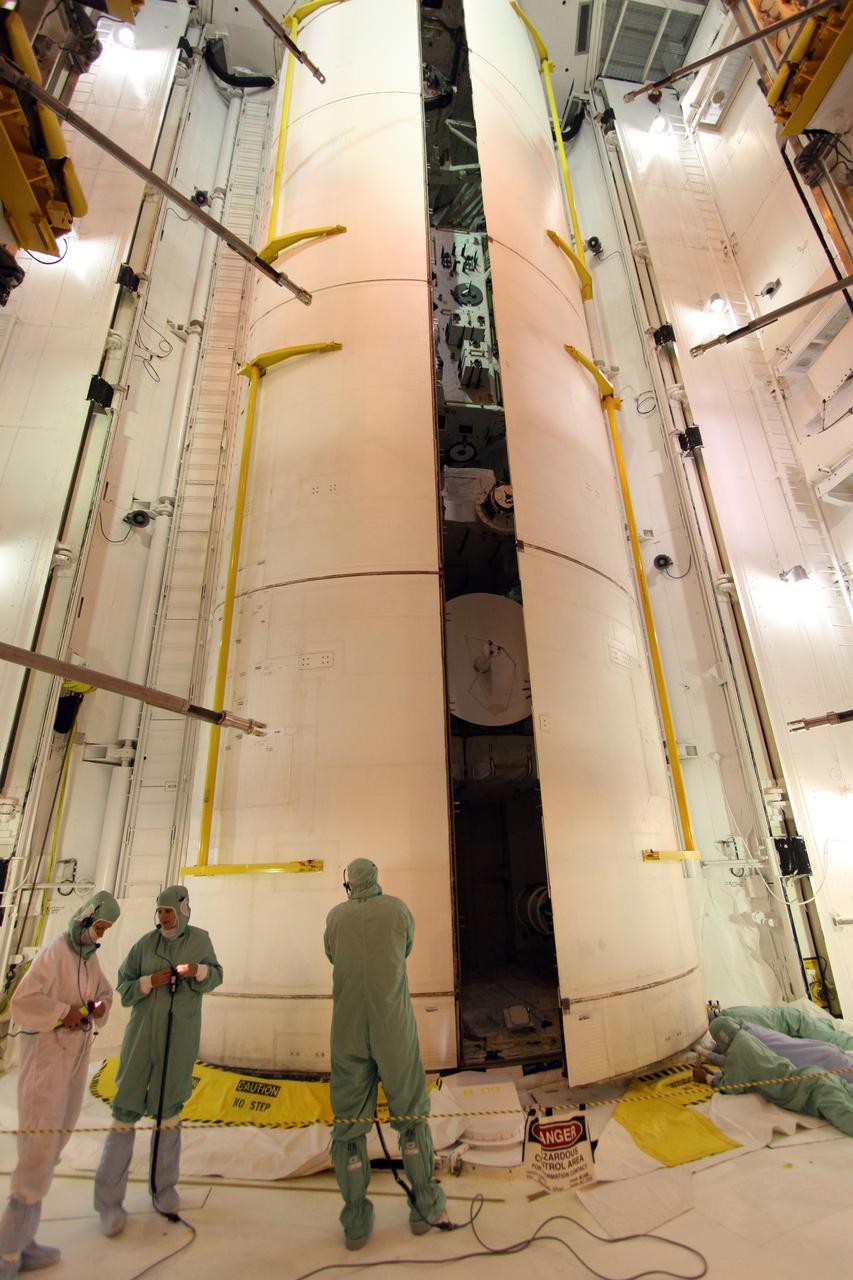
CAPE CANAVERAL, Fla. – On Launch Pad 39A at NASA's Kennedy Space Center in Florida, workers keep watch as space shuttle Endeavour's payload bay doors close. Inside are the Integrated Cargo Carrier-Vertical Light Deploy, the Experiment Logistics Module-Exposed Section and the Japanese Experiment Module's Exposed Facility.The STS-127 mission is the final of three flights dedicated to the assembly of the Japanese Kibo laboratory complex on the International Space Station. Photo credit: NASA/Jack Pfaller
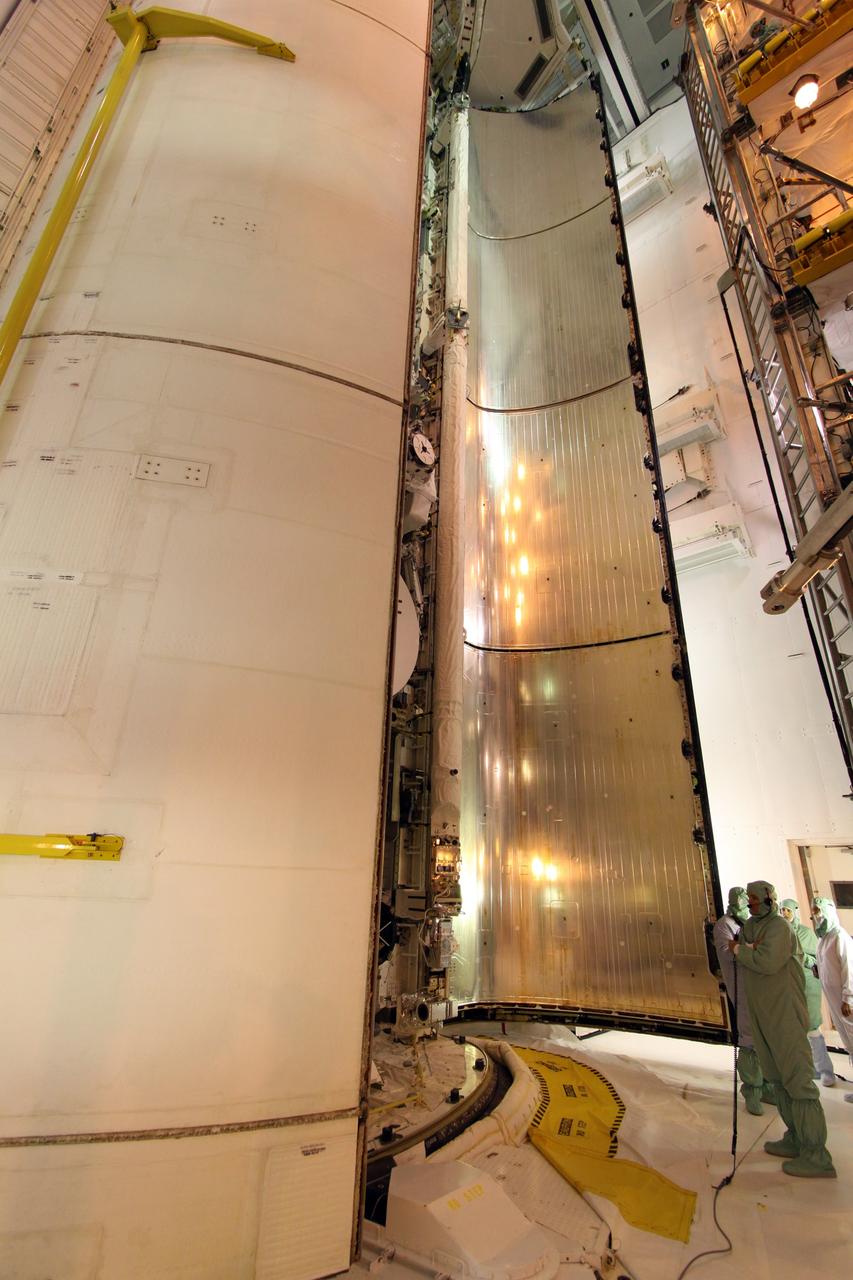
CAPE CANAVERAL, Fla. – On Launch Pad 39A at NASA's Kennedy Space Center in Florida, a worker keeps watch as the starboard payload bay door closes over space shuttle Endeavour's payload. Inside are the Integrated Cargo Carrier-Vertical Light Deploy, the Experiment Logistics Module-Exposed Section and the Japanese Experiment Module's Exposed Facility. The STS-127 mission is the final of three flights dedicated to the assembly of the Japanese Kibo laboratory complex on the International Space Station. Photo credit: NASA/Jack Pfaller
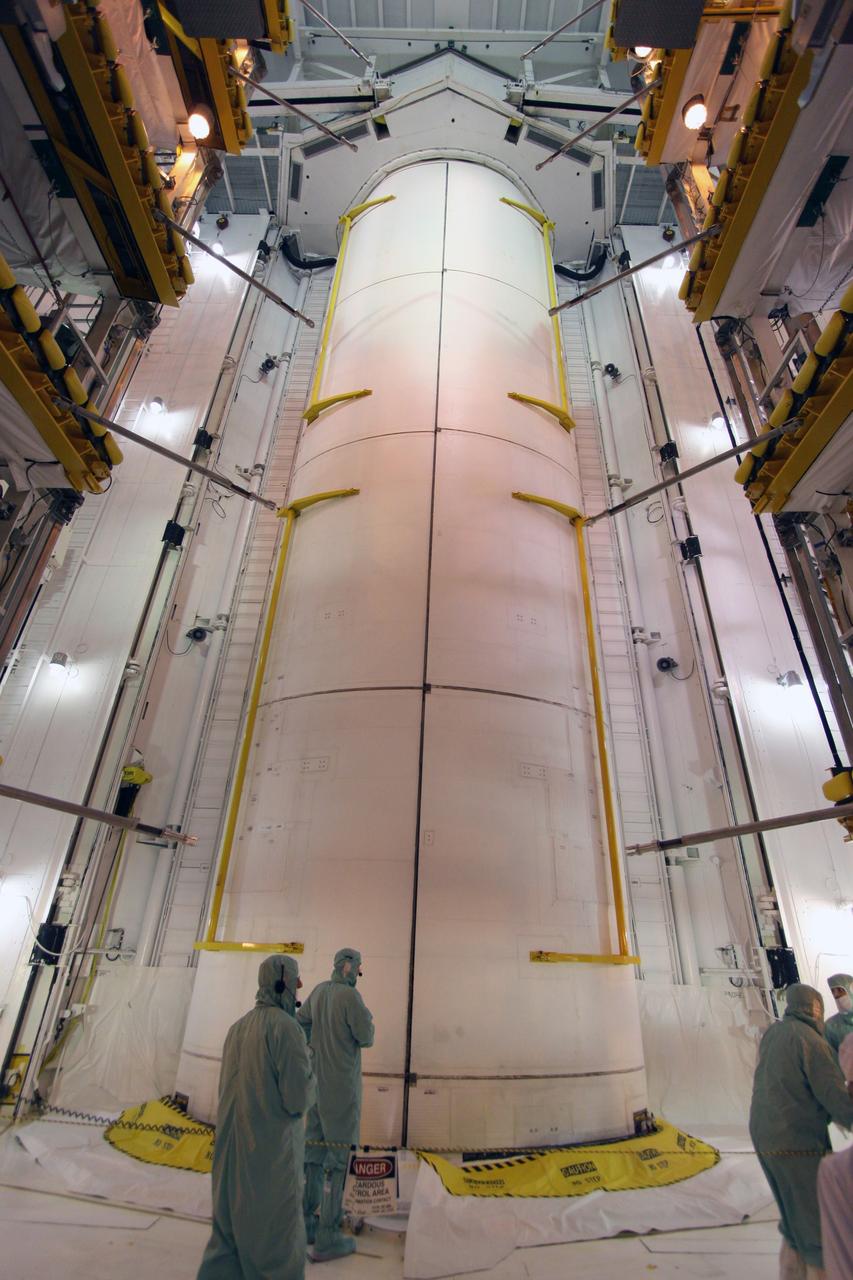
CAPE CANAVERAL, Fla. – On Launch Pad 39A at NASA's Kennedy Space Center in Florida, space shuttle Endeavour's payload bay doors have been closed. Inside are the Integrated Cargo Carrier-Vertical Light Deploy, the Experiment Logistics Module-Exposed Section and the Japanese Experiment Module's Exposed Facility. The STS-127 mission is the final of three flights dedicated to the assembly of the Japanese Kibo laboratory complex on the International Space Station. Photo credit: NASA/Jack Pfaller
CAPE CANAVERAL, Fla. – On Launch Pad 39A at NASA's Kennedy Space Center in Florida, workers in the payload changeout room of the rotating service structure prepare to close space shuttle Endeavour's payload bay doors in preparation for the launch of the STS-127 mission. The STS-127 mission is the final of three flights dedicated to the assembly of the Japanese Kibo laboratory complex on the International Space Station. Photo credit: NASA/Jack Pfaller
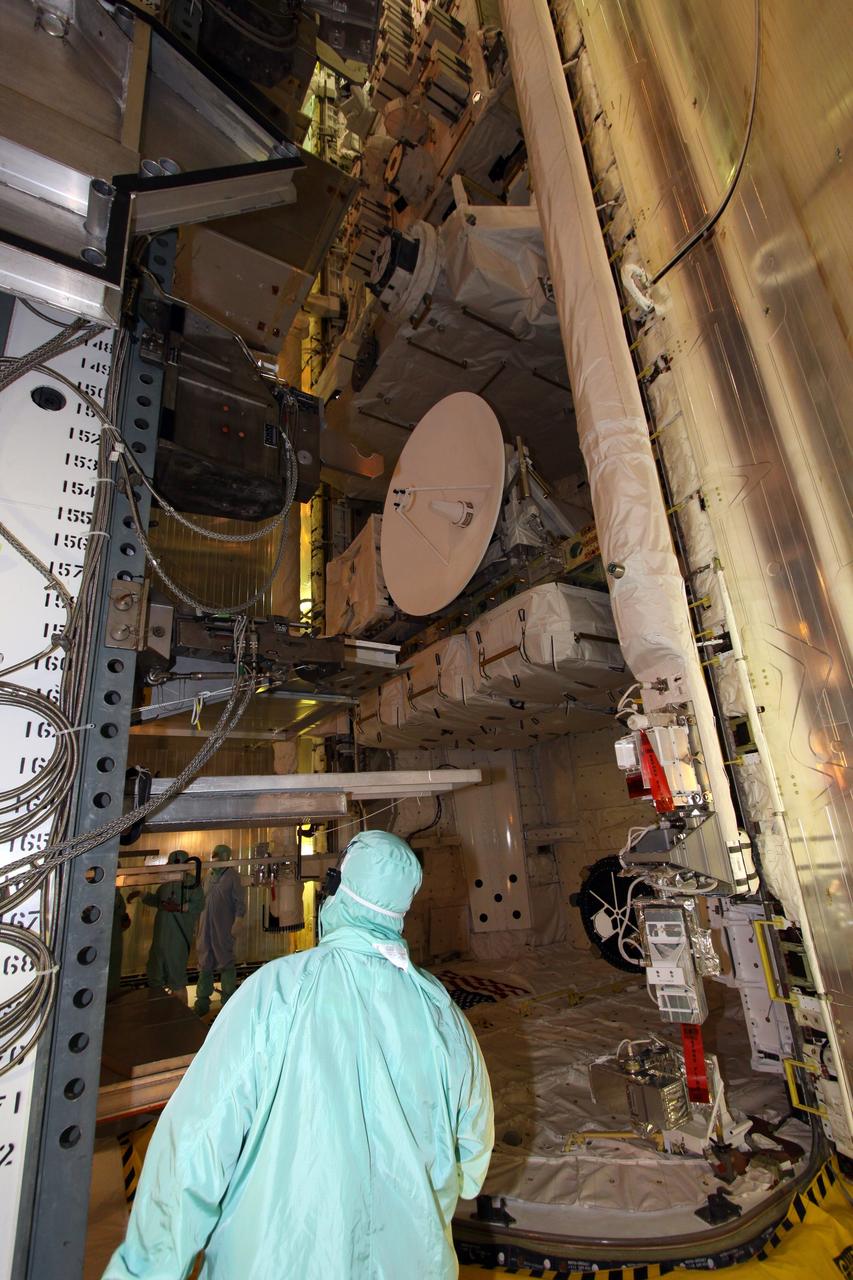
CAPE CANAVERAL, Fla. – On Launch Pad 39A at NASA's Kennedy Space Center in Florida, workers in the payload changeout room of the rotating service structure watch closely as space shuttle Endeavour's payload bay doors close in preparation for the launch of theSTS-127 mission. The STS-127 mission is the final of three flights dedicated to the assembly of the Japanese Kibo laboratory complex on the International Space Station. Photo credit: NASA/Jack Pfaller
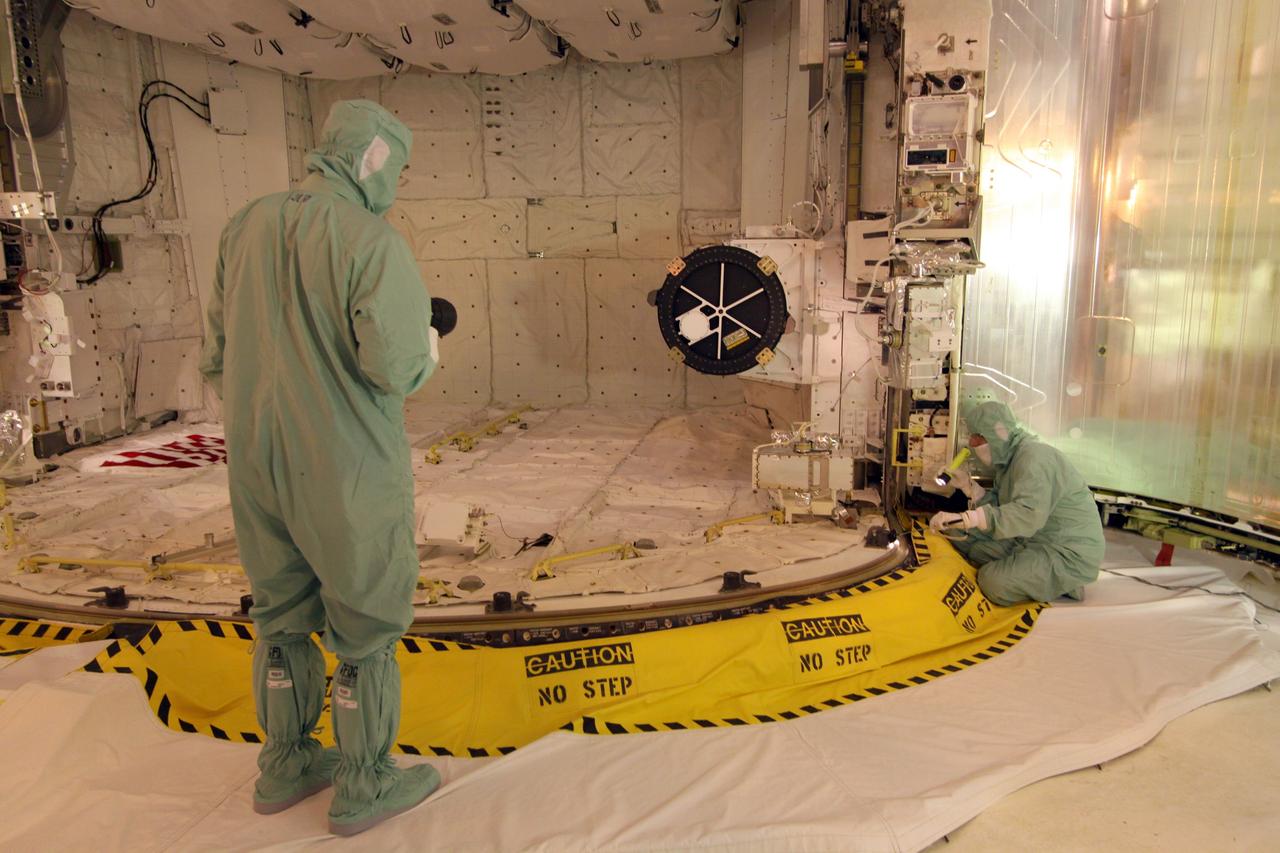
CAPE CANAVERAL, Fla. – On Launch Pad 39A at NASA's Kennedy Space Center in Florida, workers in the payload changeout room of the rotating service structure check equipment during closing of space shuttle Endeavour's payload bay doors. The STS-127 mission is the final of three flights dedicated to the assembly of the Japanese Kibo laboratory complex on the International Space Station. Photo credit: NASA/Jack Pfaller
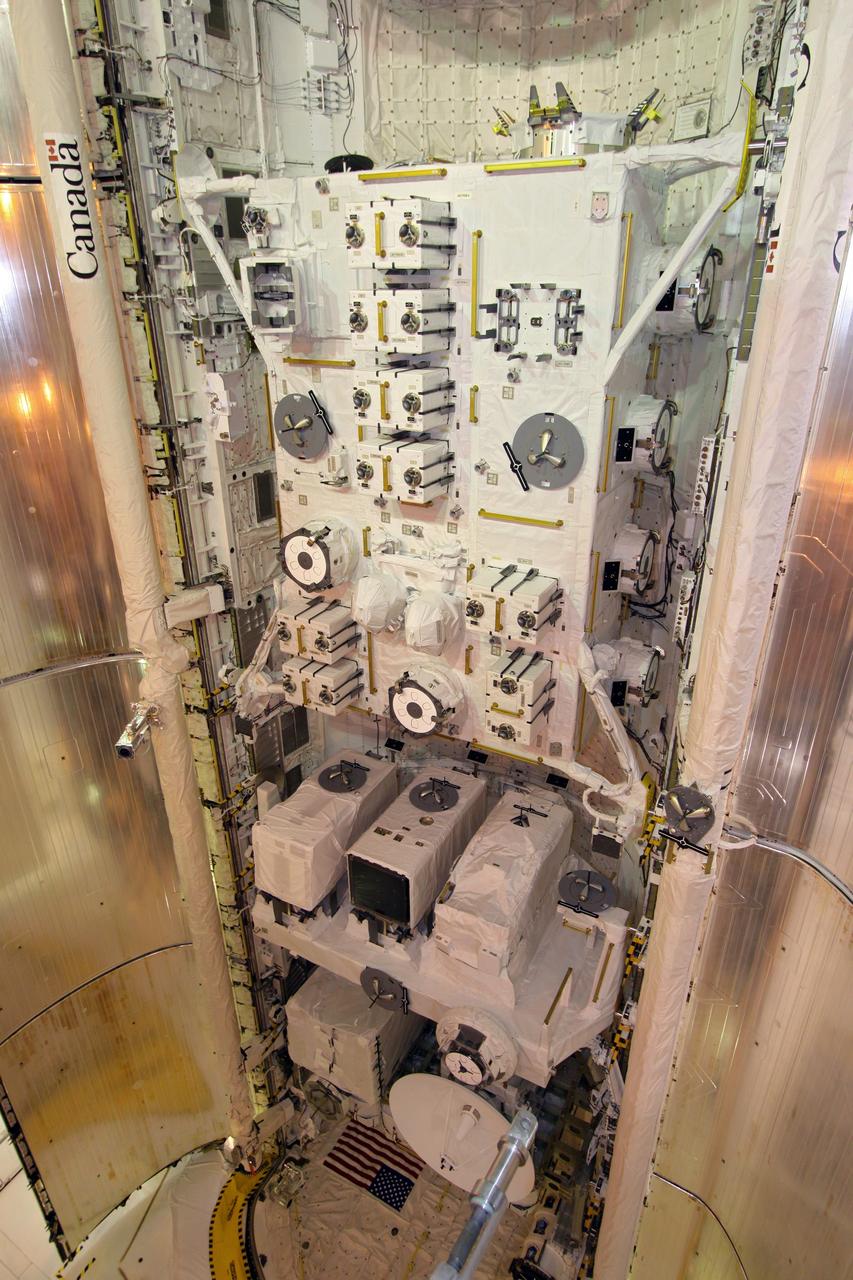
CAPE CANAVERAL, Fla. – On Launch Pad 39A at NASA's Kennedy Space Center in Florida, space shuttle Endeavour's payload bay doors are closing. At the bottom of the payload bay is the Integrated Cargo Carrier-Vertical Light Deploy (with the Space-to-Ground Antenna showing). In the middle is the Experiment Logistics Module-Exposed Section. At top is the Japanese Experiment Module's Exposed Facility. The STS-127 mission is the final of three flights dedicated to the assembly of the Japanese Kibo laboratory complex on the International Space Station. Photo credit: NASA/Jack Pfaller
CAPE CANAVERAL, Fla. – On Launch Pad 39A at NASA's Kennedy Space Center in Florida, a worker keeps watch as the portside payload bay door closes over space shuttle Endeavour's payload. Inside are the Integrated Cargo Carrier-Vertical Light Deploy, the Experiment Logistics Module-Exposed Section and the Japanese Experiment Module's Exposed Facility. The STS-127 mission is the final of three flights dedicated to the assembly of the Japanese Kibo laboratory complex on the International Space Station. Photo credit: NASA/Jack Pfaller
CAPE CANAVERAL, Fla. – On Launch Pad 39A at NASA's Kennedy Space Center in Florida, space shuttle Endeavour's payload bay doors are closing. Seen here on the left is the Integrated Cargo Carrier-Vertical Light Deploy (with the Space-to-Ground Antenna showing). The STS-127 mission is the final of three flights dedicated to the assembly of the Japanese Kibo laboratory complex on the International Space Station. Photo credit: NASA/Jack Pfaller
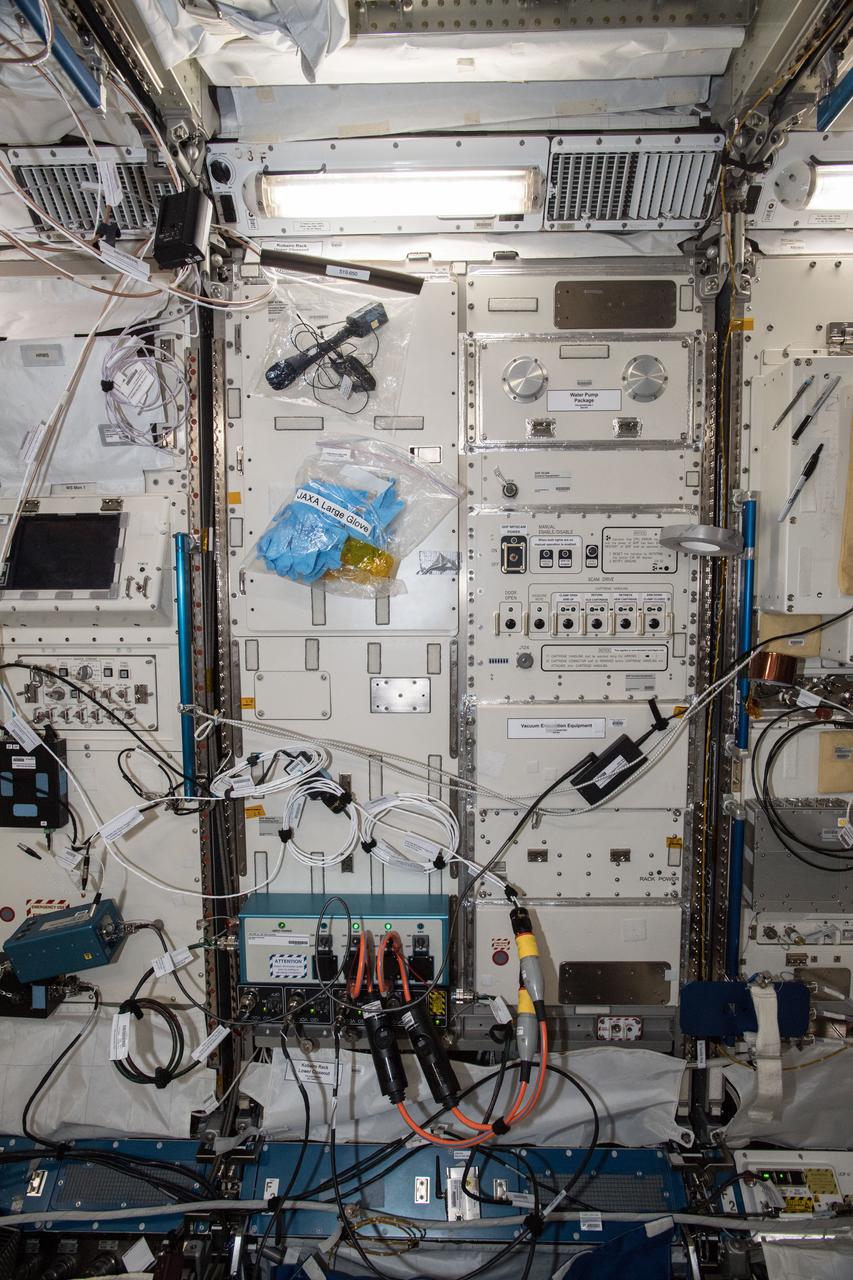
iss057e092614 (11/14/2018) --- Photo documentation of the Kobairo Rack front, JPM1F3 in the Kibo Japanese Experiment Module (JEM) aboard the International Space Staion (ISS). The KOBAIRO Rack houses the Gradient Heating Furnace (GHF), an experiment facility for investigating crystal growth of semiconductors. This furnace has the capability of directional solidification of samples.
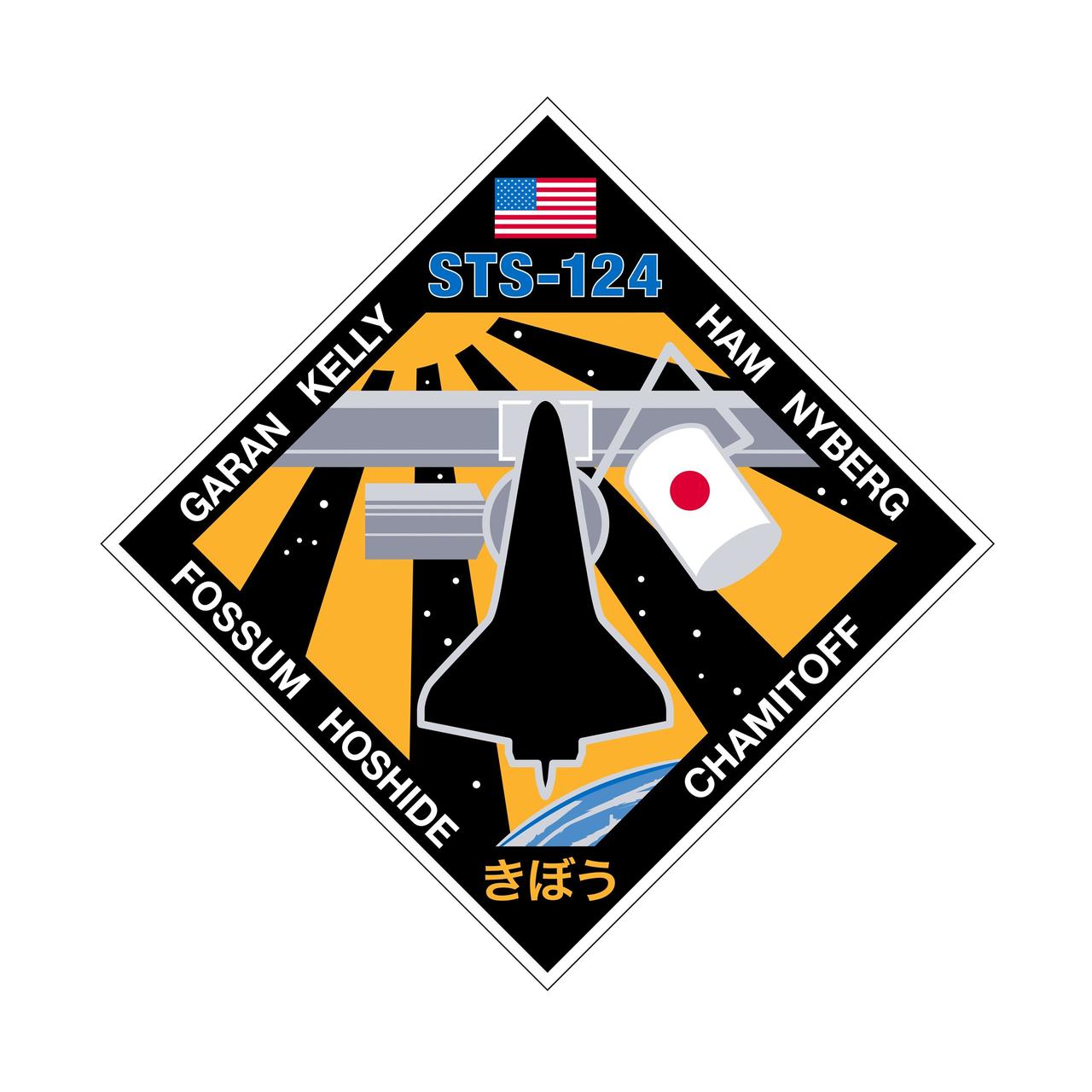
JOHNSON SPACE CENTER, Houston --- STS124-S-001 --- The STS-124/1J patch depicts the Space Shuttle Discovery docked with the International Space Station (ISS). STS-124/1J is dedicated to delivering and installing the Japanese Experiment Module (JEM) known as Kibo (Hope) to the ISS. The significance of the mission and the Japanese contribution to the ISS is recognized by the Japanese flag depicted on the JEM Pressurized Module (JPM) and the word Kibo written in Japanese at the bottom of the patch. The view of the sun shining down upon the Earth represents the increased "hope" that the entire world will benefit from the JEM's scientific discoveries. The JPM will be the largest habitable module on the ISS and is equipped with its own airlock and robotic arm for external experiments. In addition to delivering and installing the JPM, the STS-124 crew will relocate the JEM Logistics Pressurized (JLP) module to its permanent home on the zenith side of the JPM. During three planned space walks, the crew will perform external ISS maintenance and JPM outfitting, as well as extensive robotic operations by the ISS, space shuttle, and JEM robotic arms. It will be the first time that three different robotic arms will be operated during a single space flight mission. The NASA insignia design for shuttle flights is reserved for use by the astronauts and for other official use as the NASA Administrator may authorize. Public availability has been approved only in the form of illustrations by the various news media. When and if there is any change in this policy, which is not anticipated, it will be publicly announced.
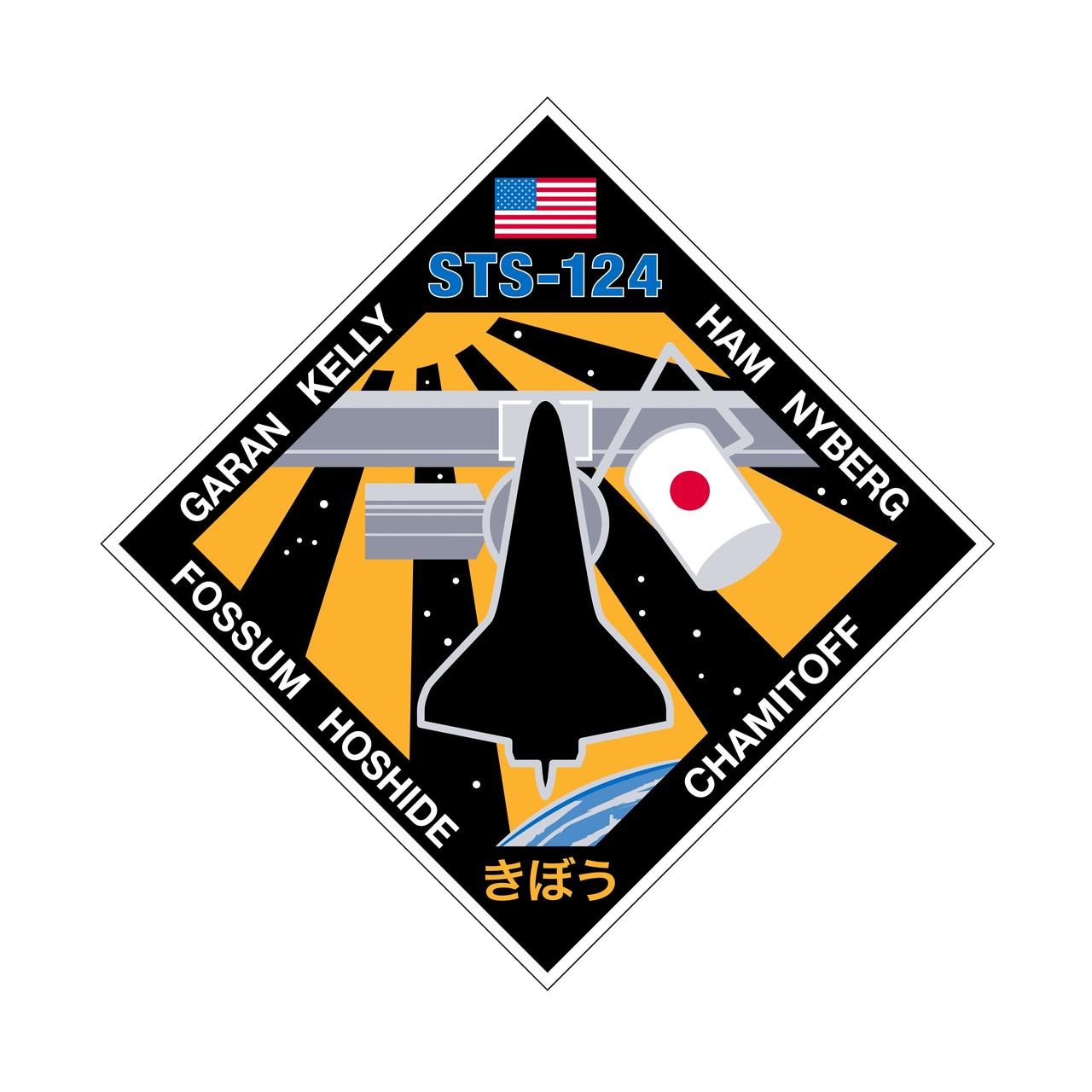
STS124-S-001 (October 2007) --- The STS-124/1J patch depicts the space shuttle Discovery docked with the International Space Station (ISS). STS-124/1J is dedicated to delivering and installing the Japanese Experiment Module (JEM) known as Kibo (Hope) to the ISS. The significance of the mission and the Japanese contribution to the ISS is recognized by the Japanese flag depicted on the JEM Pressurized Module (JPM) and the word Kibo written in Japanese at the bottom of the patch. The view of the sun shining down upon Earth represents the increased "hope" that the entire world will benefit from the JEM's scientific discoveries. The JPM will be the largest habitable module on the ISS and is equipped with its own airlock and robotic arm for external experiments. In addition to delivering and installing the JPM, the STS-124 crew will relocate the JEM Logistics Pressurized (JLP) module to its permanent home on the zenith side of the JPM. During three planned spacewalks, the crew will perform external ISS maintenance and JPM outfitting, as well as extensive robotic operations by the ISS, space shuttle, and JEM robotic arms. It will be the first time that three different robotic arms will be operated during a single spaceflight mission. The NASA insignia design for space shuttle flights is reserved for use by the astronauts and for other official use as the NASA Administrator may authorize. Public availability has been approved only in the forms of illustrations by the various news media. When and if there is any change in this policy, which is not anticipated, the change will be publicly announced. Photo credit: NASA
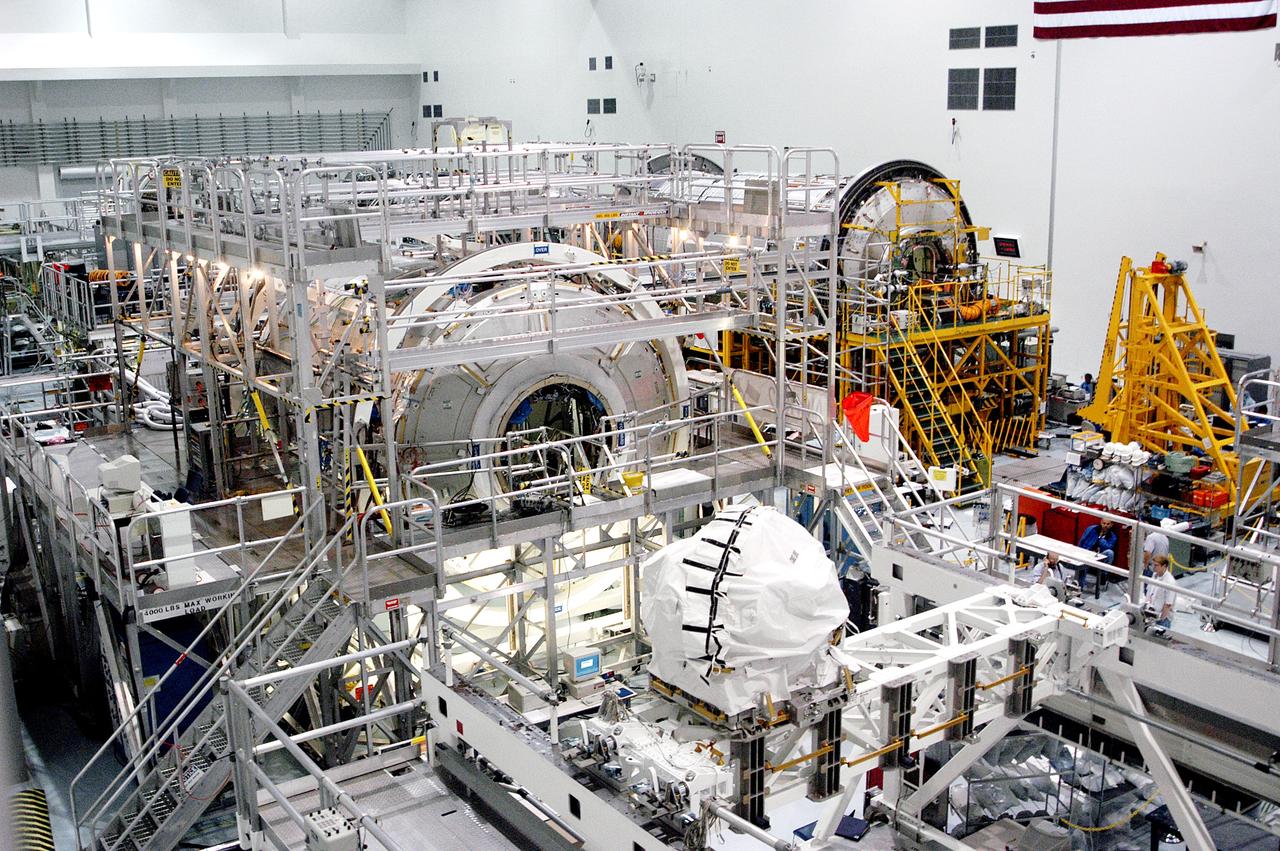
KENNEDY SPACE CENTER, FLA. - In the Space Station Processing Facility, the U.S. Node 2 (center) and the Japanese Experiment Module (JEM), background right, await a Multi-Element Integrated Test (MEIT). Node 2 attaches to the end of the U.S. Lab on the International Space Station and provides attach locations for the Japanese laboratory, European laboratory, the Centrifuge Accommodation Module and, eventually, Multipurpose Logistics Modules. It will provide the primary docking location for the Shuttle when a pressurized mating adapter is attached to Node 2. Installation of the module will complete the U.S. Core of the ISS. The National Space Development Agency of Japan (NASDA) developed their laboratory at the Tsukuba Space Center near Tokyo. It is the first element, named "Kibo" (Hope), to be delivered to KSC. The JEM is Japan's primary contribution to the Station. It will enhance the unique research capabilities of the orbiting complex by providing an additional environment for astronauts to conduct science experiments.
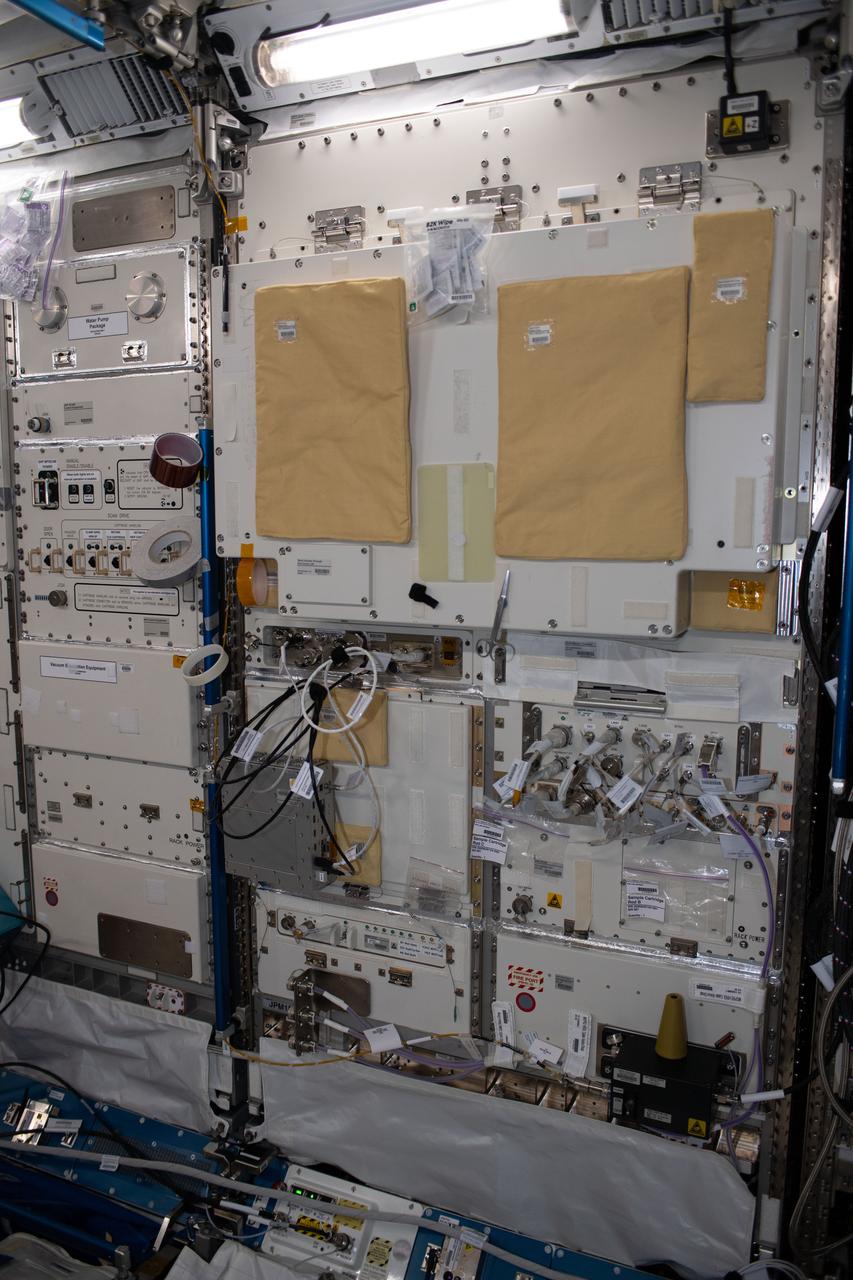
iss056e150256 (8/21/2018) --- A view of the Multi purpose Small Payload Rack (MSPR) 2 in the Kibo Japanese Experiment Pressurized Module (JPM) aboard the International Space Station (ISS). The Multi Purpose Small Payload Rack-2 (MSPR-2) is a second multipurpose payload rack system used in the Japanese Experiment Module (JEM). Similar to the original MSPR (still in use), MSPR-2 has two workspaces and a work table that can be used for wide fields of space environment utilization including science and educational missions.
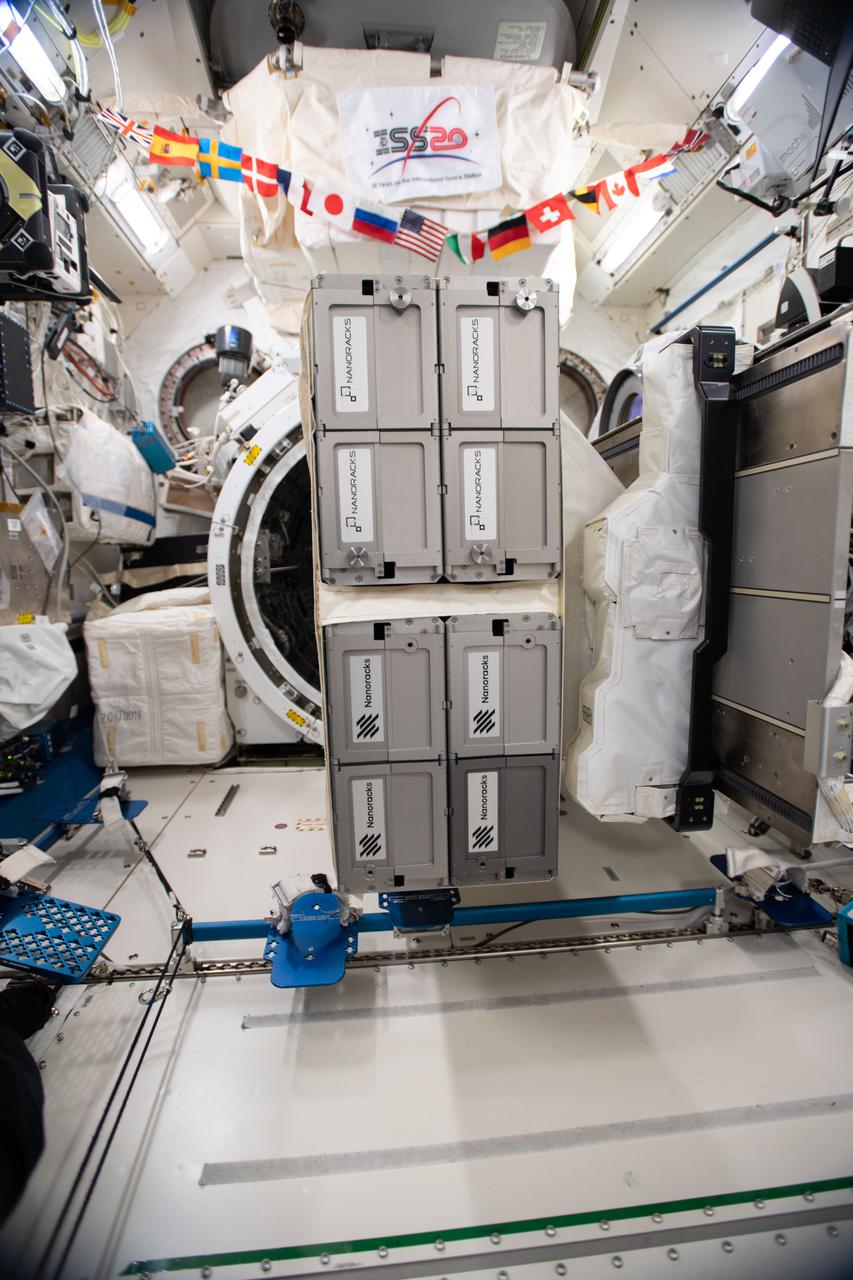
iss064e002782 (11/2/2020) --- Photo documentation of the Nanoracks CubeSat Deployer-Mission 19 (NRCSD-19) installed on the Multi-Purpose Experiment Platform Assembly (MPEP). NRCSD-19 includes: The Spectral Ocean Color (SPOC) Satellite, Ariel University First Nano Satellite, (SATLLA-1), Neutron-1, DESCENT, NanoRacks-LEMUR-2 and Bobcat-1. The photo was taken in the Kibo Japanese Experiment Module (JEM) aboard the International space station (ISS).
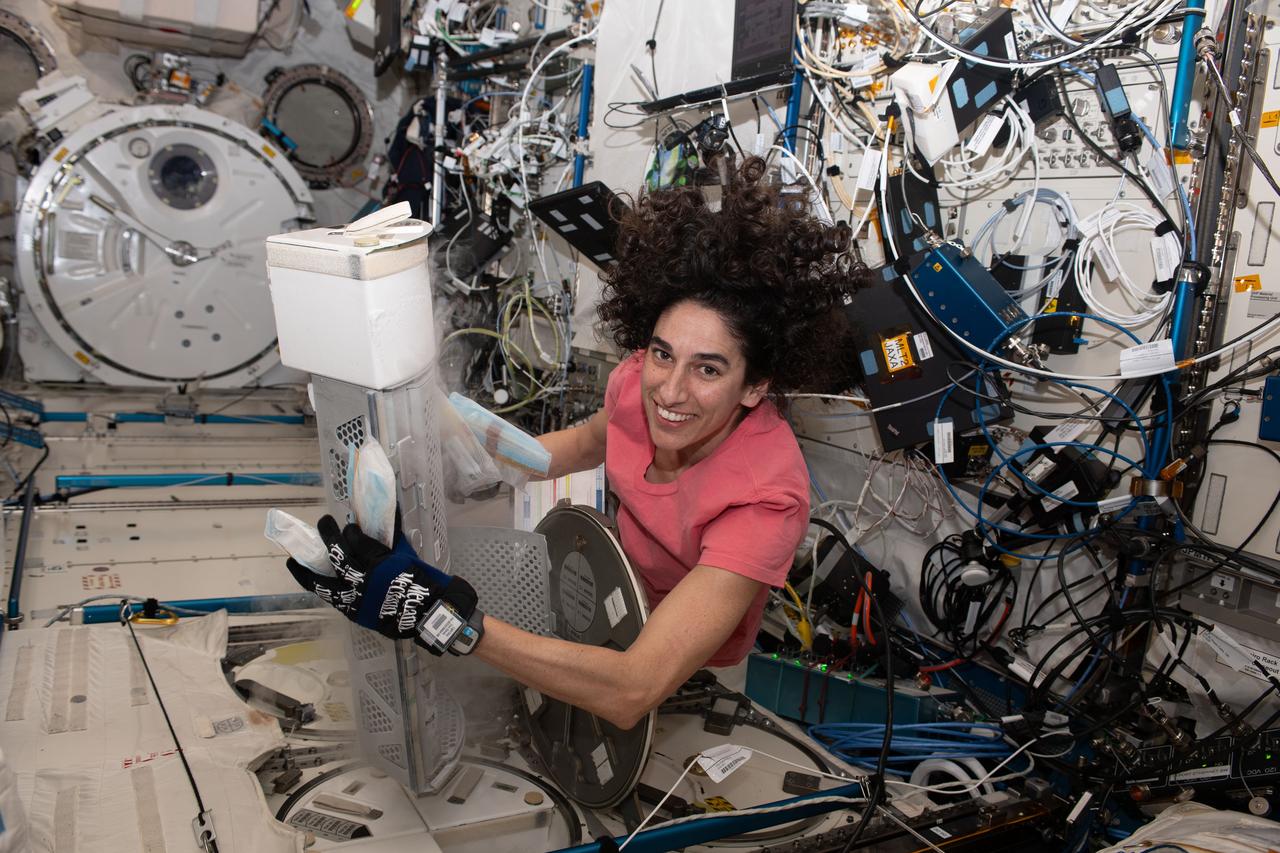
iss070e108265 (3/6/2024) --- Flight Engineer Jasmin Moghbeli works to retrieve Media Bags for the SS: Engineering Stem Cell-Derived Cardiac Microtissues with Metabolic Regulators in Space to Promote Cardiomyocyte Maturation (Project EAGLE) investigation from Minus Eighty Degree Laboratory Freezer for ISS-1 (MELFI-1). Photo was taken in the Kibo Japanese Experiment Module (JEM).
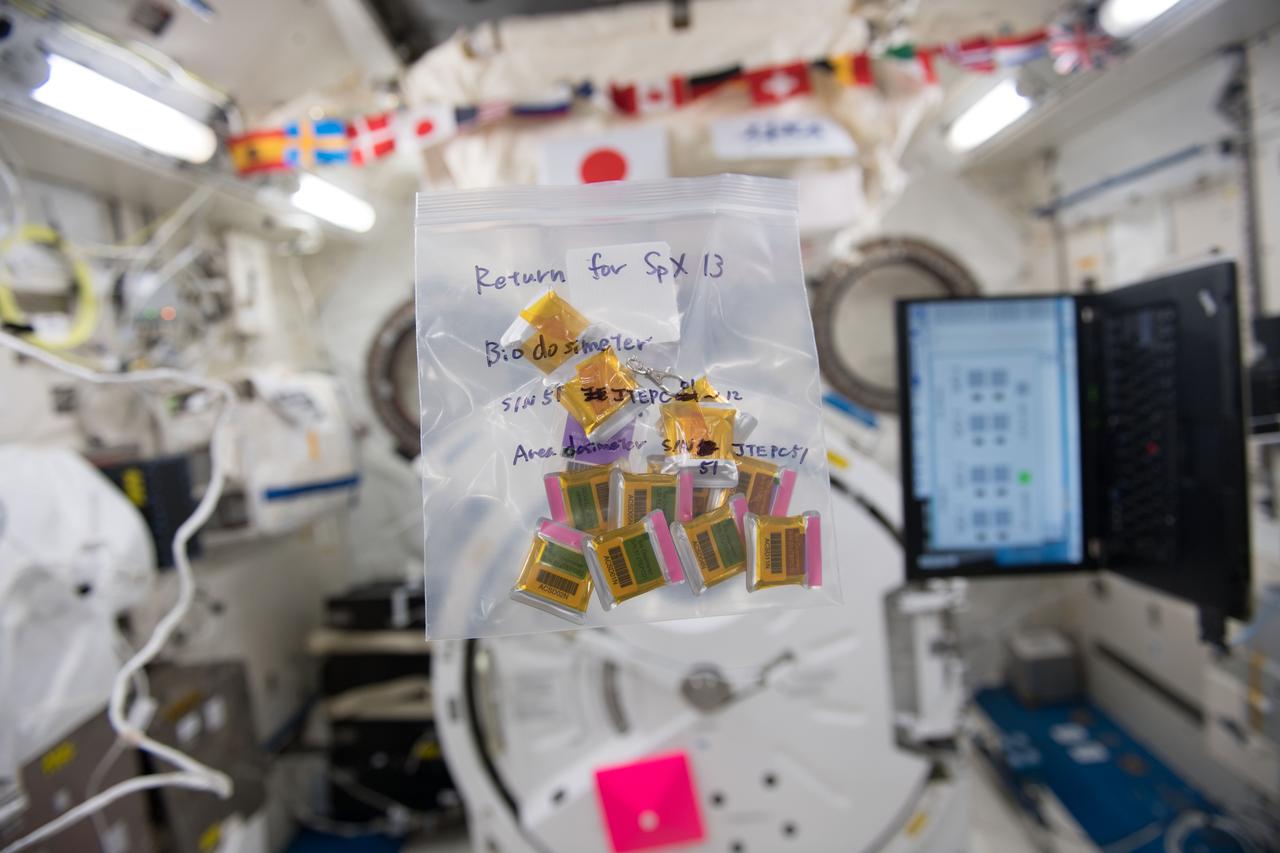
iss054e019981 (1/9/2018) --- Photo documentation of Bio Dosimeters removed form the Japanese Experiment Module (JEM) Tissue Equivalent Proportional Counters (J-TEPC) packed in a ziplock bag for return to Earth. Photo was taken in the Kibo Japanese Experiment Pressurized Module (JPM) aboard the International Space Station (ISS) during Position Sensitive Tissue Equivalent Proportional Chamber (PS-TEPC) experiment operations (OPS).
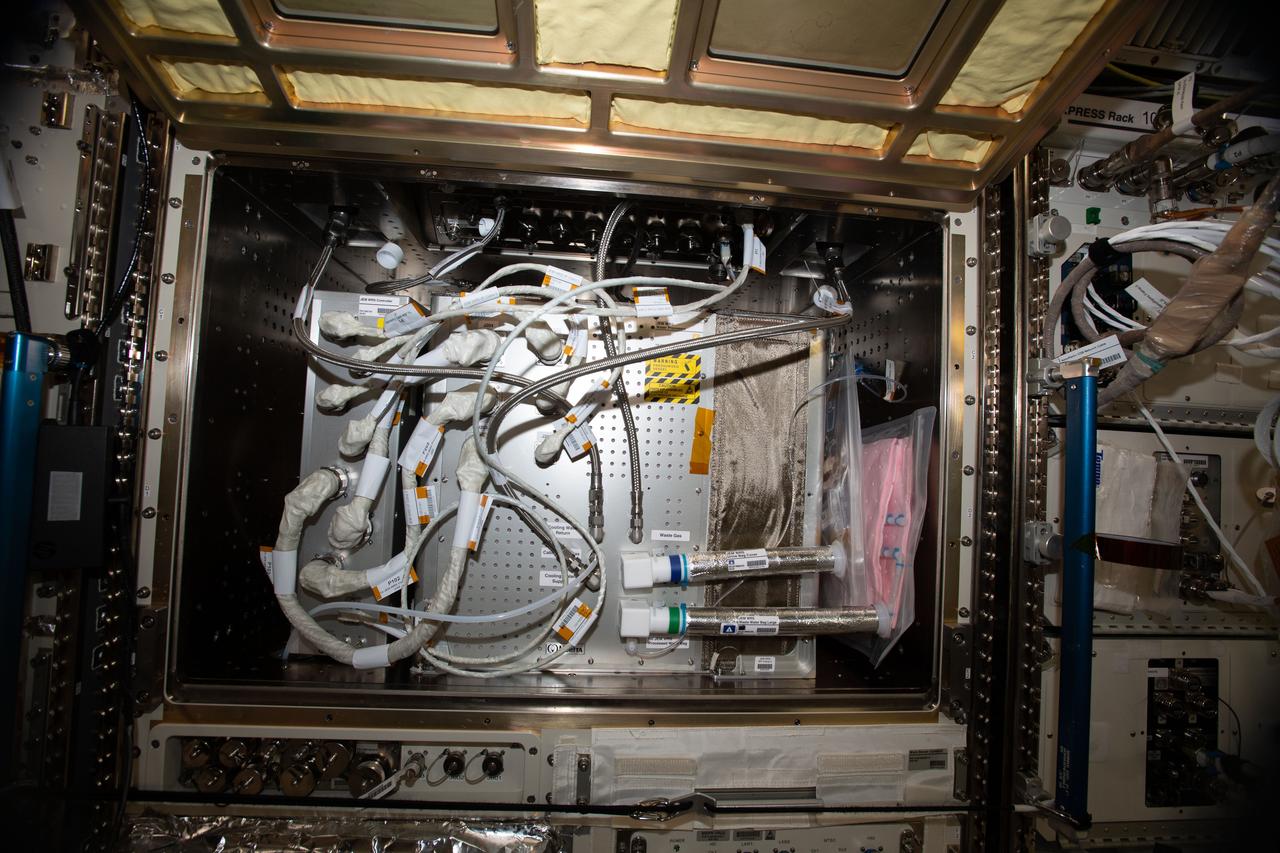
iss061e050296 (11/19/2019) --- A view of the JEM Water Recovery system (JWRS) installed the the Multi-Purpose Small Payload Rack located the the Kibo module aboard the International Space Station (ISS). The JWRS contributes to the development of future Life Support Systems to provide basic needs for astronauts on the space station and exploration missions beyond Earth. The technology in the JWRS has potential applications to improve access to potable water in remote and undeveloped locations on Earth.
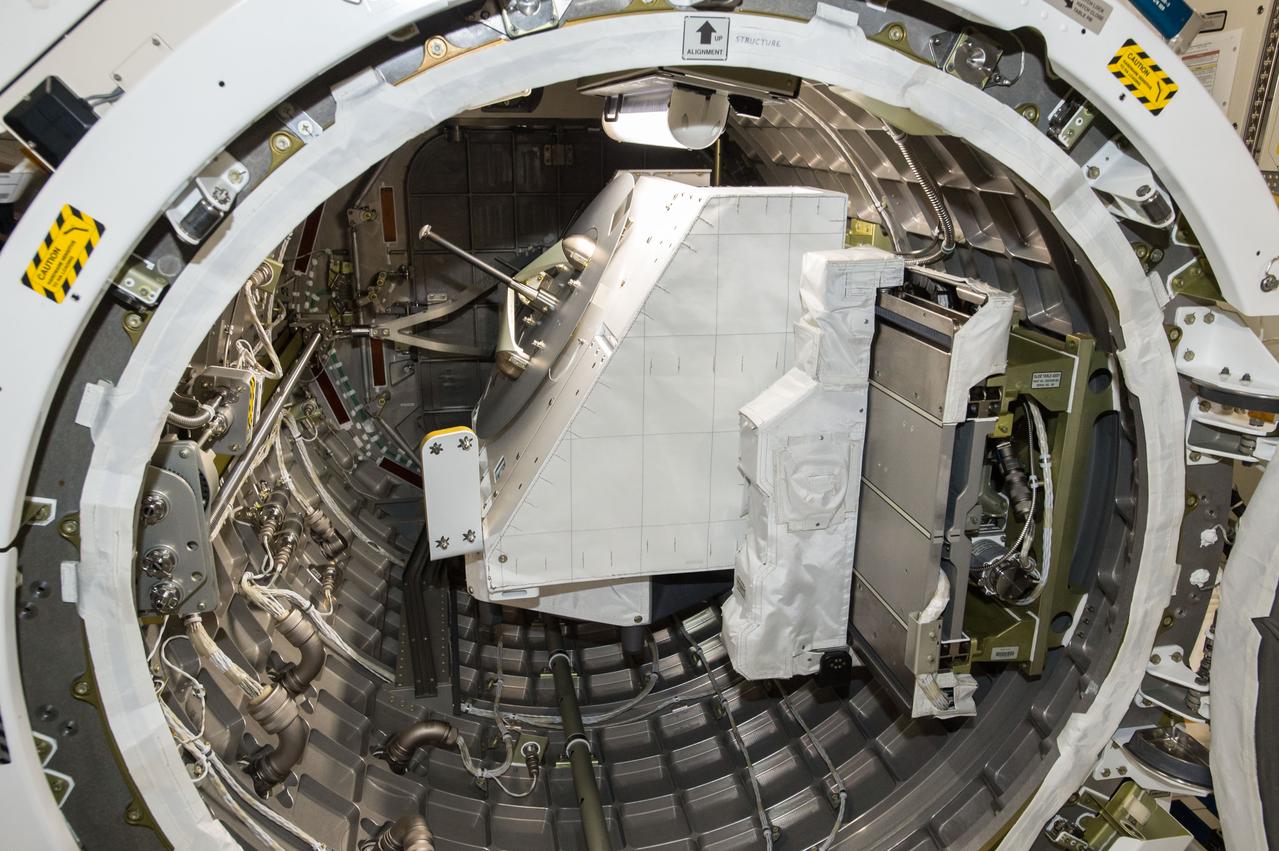
iss048e049218 (8/4/2016) --- Documentation of the NanoRacks External Platform (NREP) installed on the JEM (Japanese Experiment Module) Airlock (JEMAL) Slide Table (retracted into the JEMAL). Image was taken in the Kibo Japanese Experiment Pressurized Module (JPM). The NanoRacks External Platform is a compact research platform fitted for versatile use on the exterior of the International Space Station (ISS).
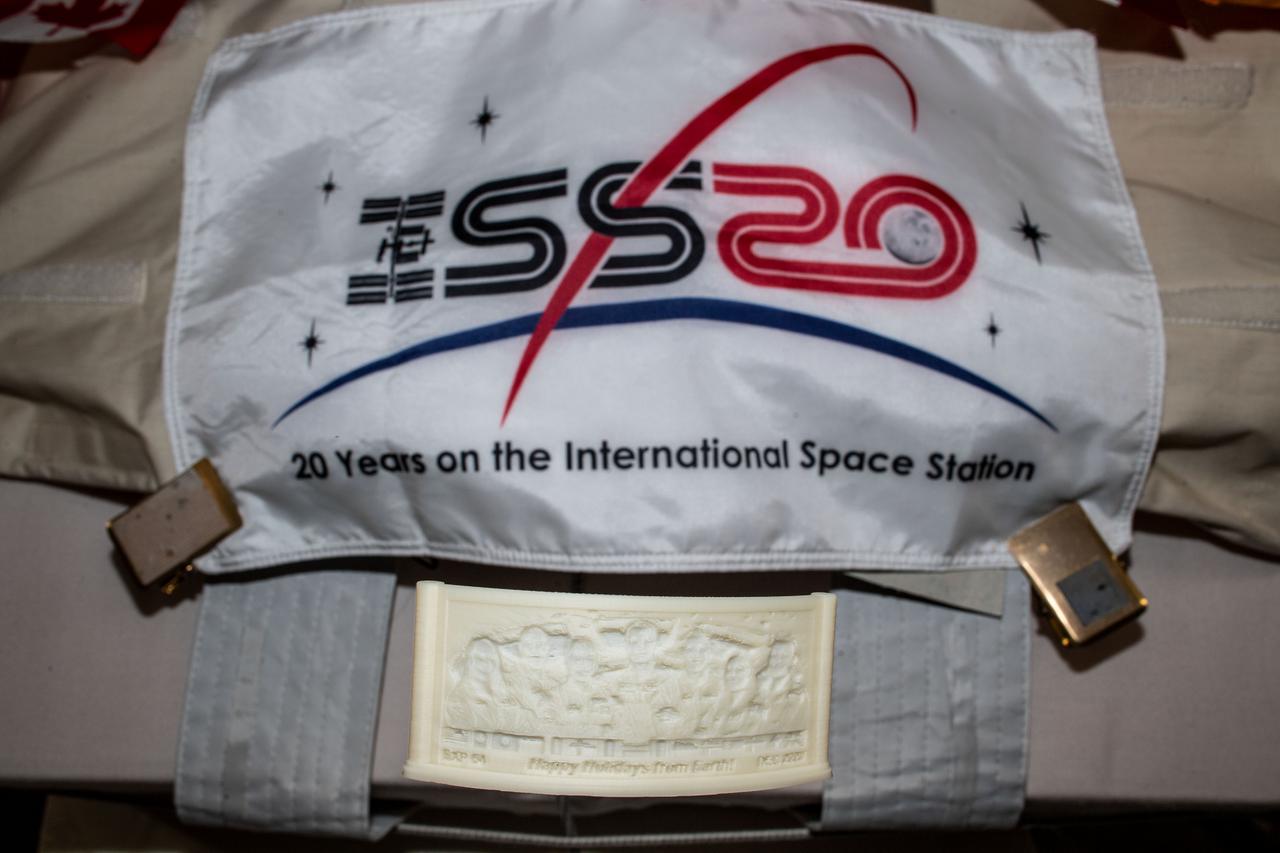
iss064e024274 (1/20/2021) --- A view of the Year 2020 Print, printed in the Additive Manufacturing Facility (AMF) Manufacturing Device (ManD) and floating near the ISS20 Banner in the Kibo Japanese Experiment Module (JEM) aboard the International Space Station (ISS). The Bellevue High School 2020 Print project uses the space station’s Manufacturing Device – Additive Manufacturing Facility (AMF) to provide students a behind-the-scenes experience with the 3D prinitng process in microgravity.
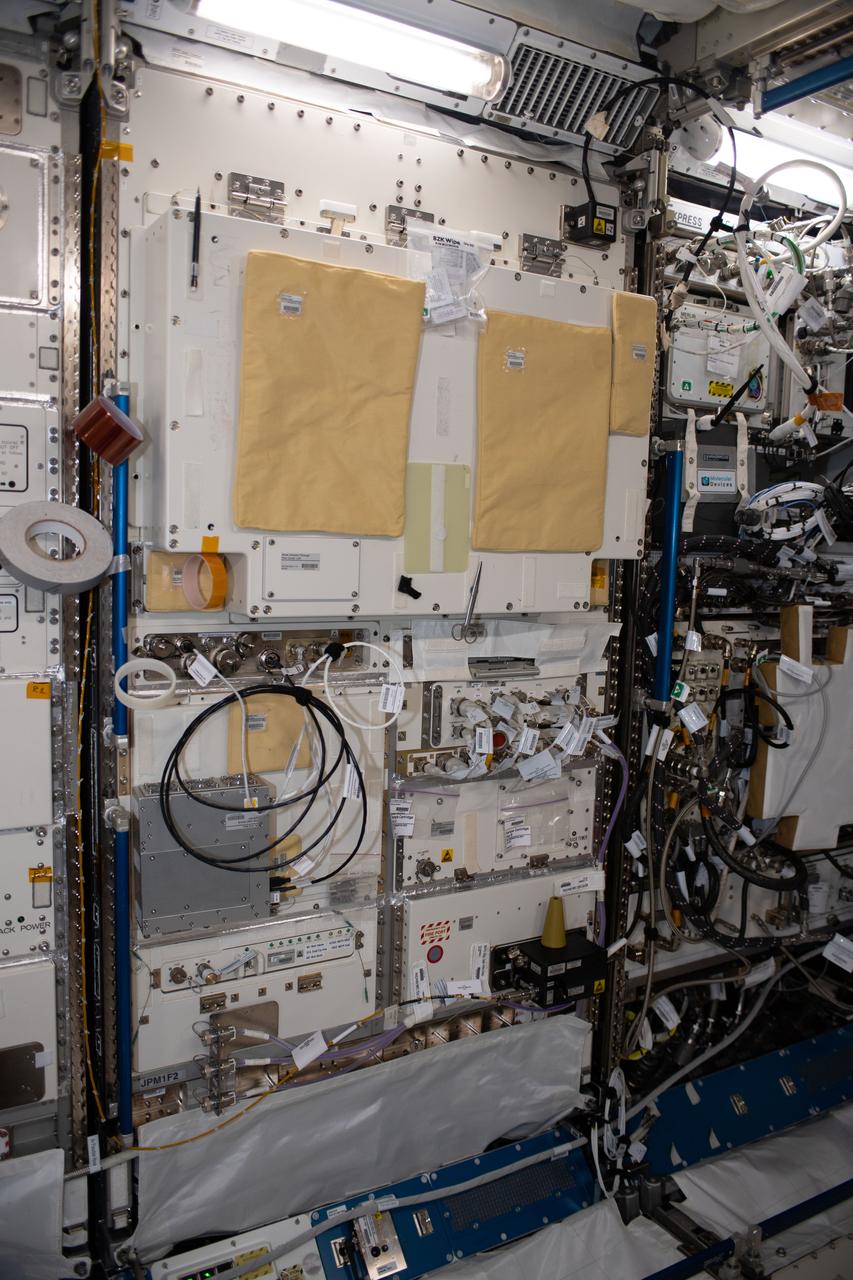
iss056e150255 (8/21/2018) --- A view of the Multi purpose Small Payload Rack (MSPR) 2 in the Kibo Japanese Experiment Pressurized Module (JPM) aboard the International Space Station (ISS). The Multi Purpose Small Payload Rack-2 (MSPR-2) is a second multipurpose payload rack system used in the Japanese Experiment Module (JEM). Similar to the original MSPR (still in use), MSPR-2 has two workspaces and a work table that can be used for wide fields of space environment utilization including science and educational missions.
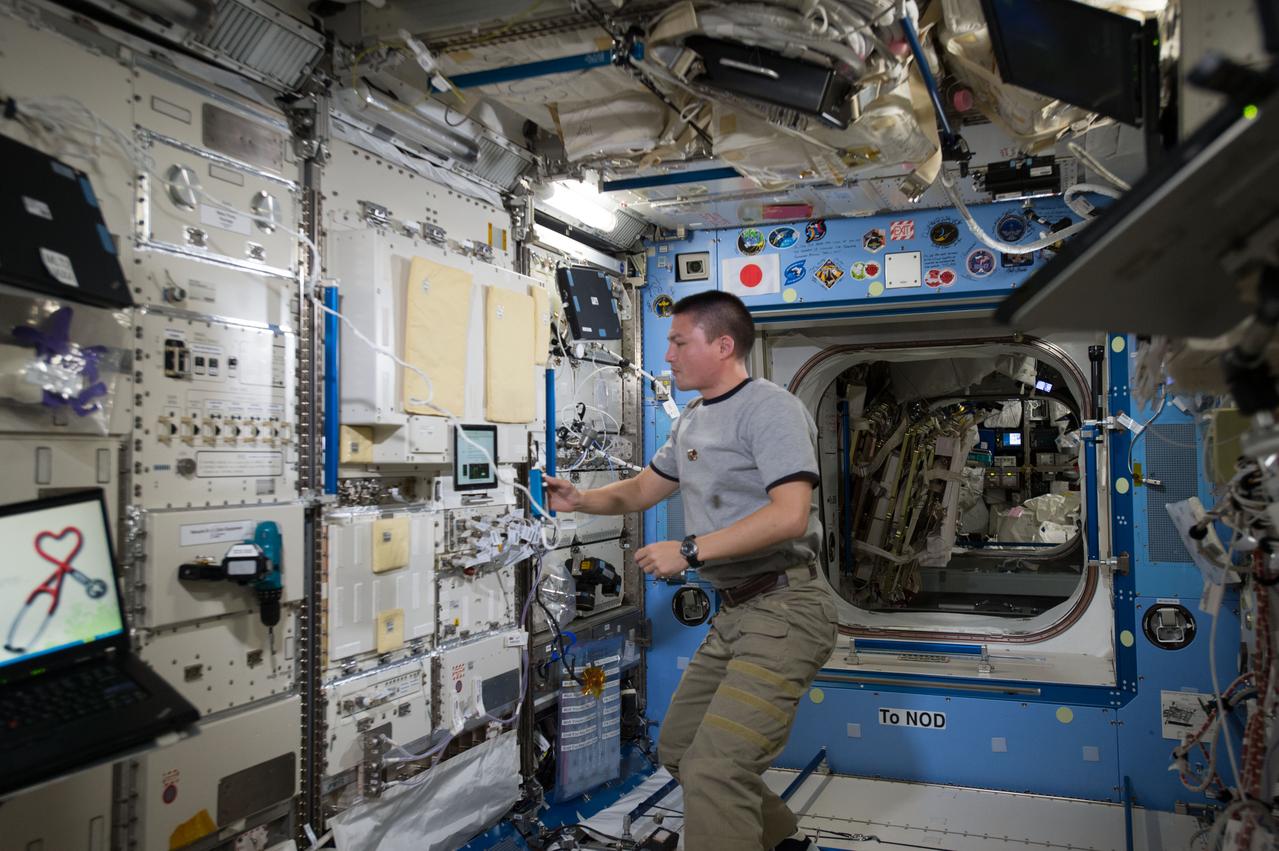
iss044e080051 (9/1/2015) --- NASA astronaut Kjell Lindgren during the Multi-Purpose Small Payload Rack (MSPR)-2 installation in the Kibo Japanese Experiment Pressurized Module (JPM) aboard the International Space Station (ISS). The Multi Purpose Small Payload Rack-2 (MSPR-2) is a second multipurpose payload rack system used in the Japanese Experiment Module (JEM). Similar to the original MSPR (still in use), MSPR-2 has two workspaces and a work table that can be used for wide fields of space environment utilization including science and educational missions.
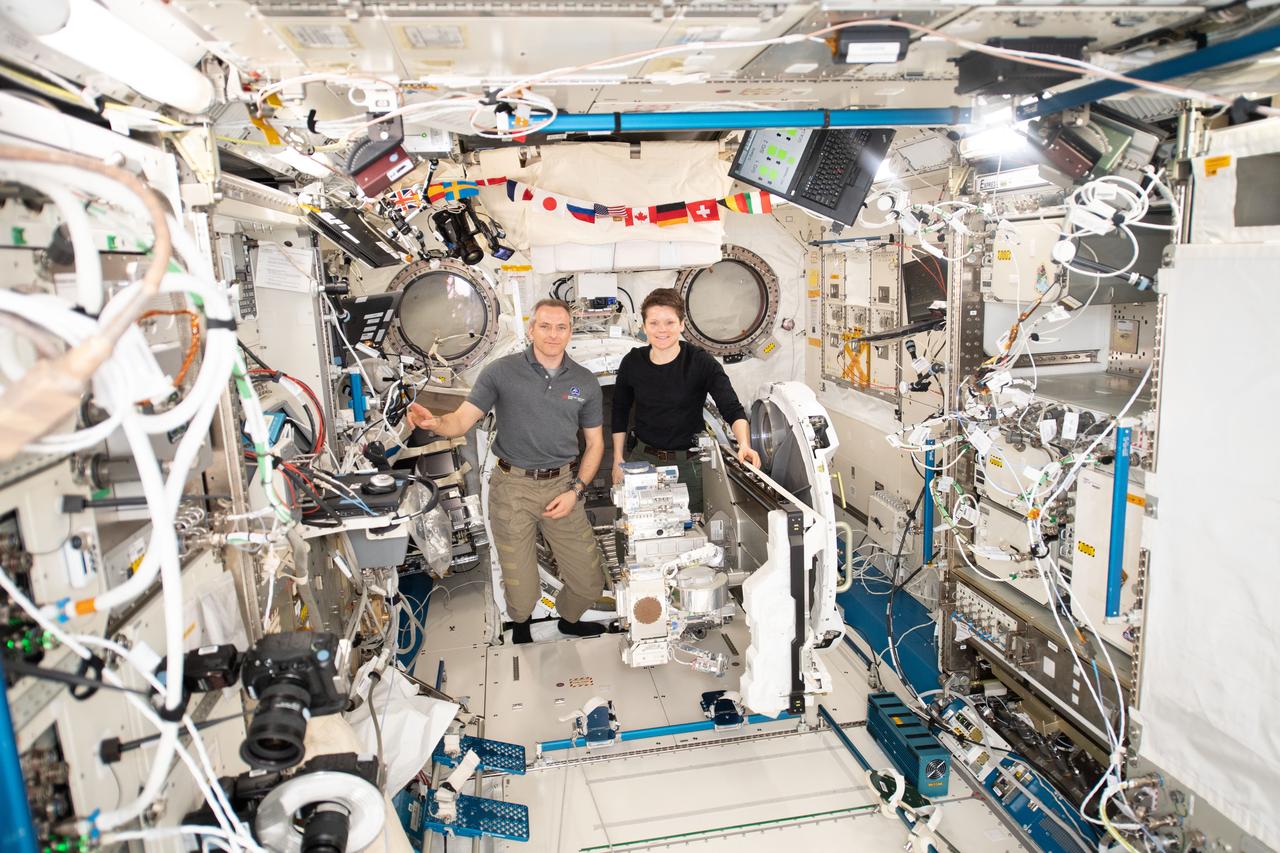
iss058e015664 (2/19/2019) --- NASA astronaut Anne McClain and Canadian Space Agency (CSA) astronaut David Saint-Jacques shown during the installation of the Robotics Refueling Mission (RRM)-3 on the JEM Airlock slide table in the KIBO module aboard the International Space Station (ISS). Robotic Refueling Mission 3 (RRM3) demonstrates the first transfer and long term storage of liquid methane, a cryogenic fluid, in microgravity. The ability to replenish and store cryogenic fluids, which can function as a fuel or coolant, can help enable long duration journeys to destinations like the Moon and Mars.

iss069e088358 (9/14/2023) --- Japan Aerospace Exploration Agency (JAXA) astronaut Satoshi Furukawa is seen processing samples from the JEM Water Recovery System (JWRS) in the KIBO module aboard the International Space Station (ISS). The JWRS demonstrates that potable water can be generated from urine. In the past, urine and wastewater were collected and stored, or vented overboard. However, for long-term space missions, water supply could become a limiting factor. Demonstrating the function of this water recovery system on orbit contributes to updating the Environmental Control and Life Support System (ECLSS) to support astronauts on the space station and future exploration missions.
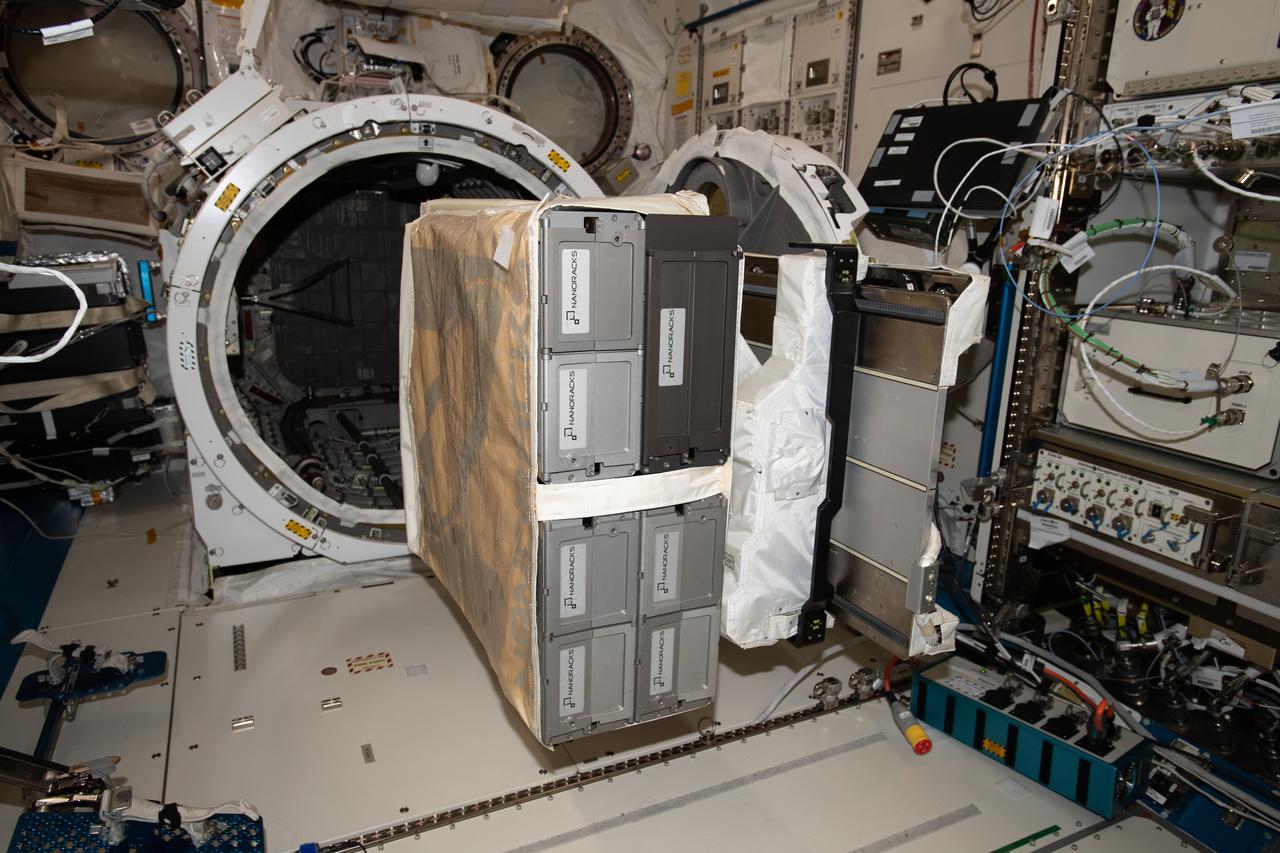
iss061e154749 (2/4/2020) --- A view of the NanoRacks CubeSat Deployer (NRCSD) installed onto the Multipurpose Experiment Platform (JEM MPEP) in the Kibo module aboard the International Space Station (ISS). The quad deployer will launch SOCRATES, Argus-02, HARP, RadSat-u and Phoenix. The Triple deployer will launch SORTIE, QARMAN, CryoCube and AztechSat-1. The NanoRacks CubeSat Deployer is a stackable, modular, ground loaded launch case. Up to eight preloaded 6U launcher systems are deployed per air lock cycle. The NanoRacks CubeSat Deployer meets the growing demand to deploy CubeSat format satellites from the International Space Station for a variety of customers.
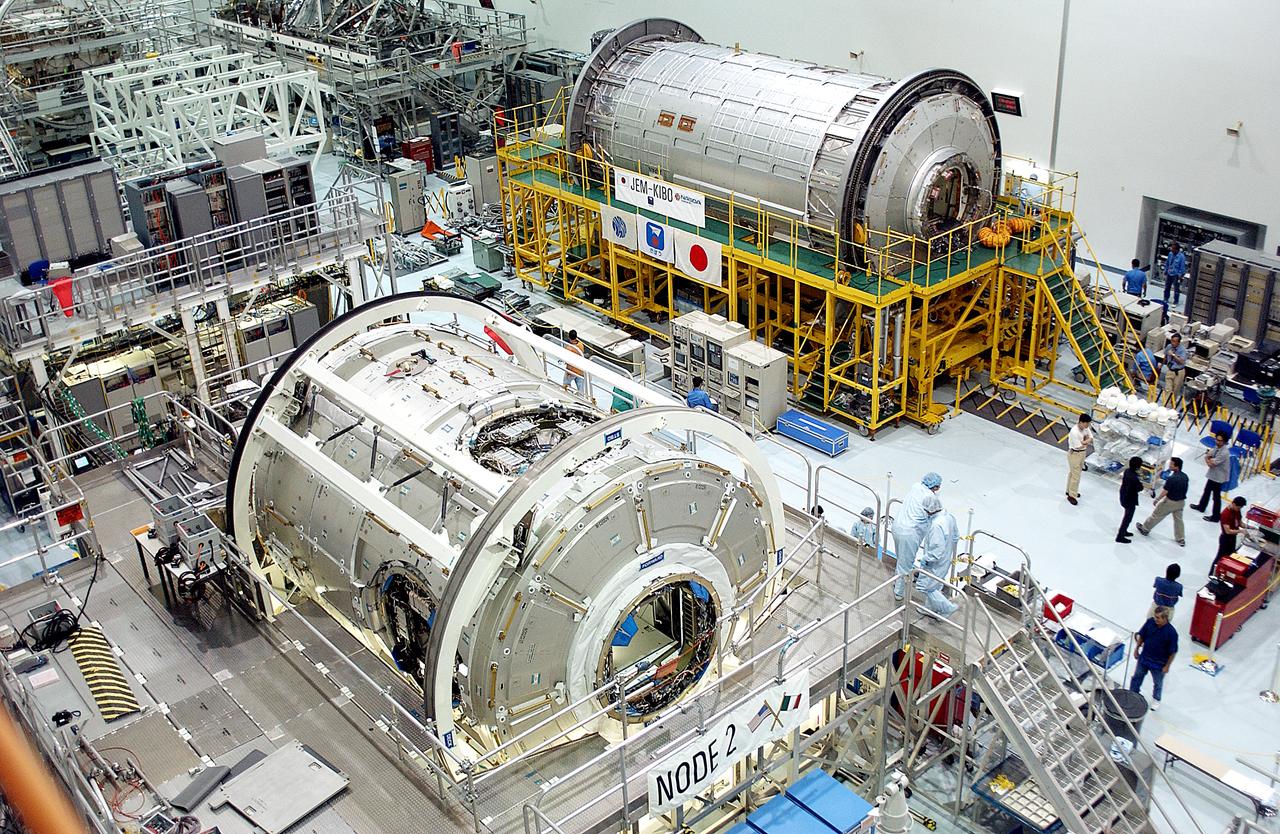
Lining the walls of the Space Station Processing Facility at the Kennedy Space Center (KSC) are the launch awaiting U.S. Node 2 (lower left). and the first pressurized module of the Japanese Experimental Module (JEM) (upper right), named "Kibo" (Hope). Node 2, the "utility hub" and second of three connectors between International Space Station (ISS) modules, was built in the Torino, Italy facility of Alenia Spazio, an International contractor based in Rome. Japan's major contribution to the station, the JEM, was built by the Space Development Agency of Japan (NASDA) at the Tsukuba Space Center near Tokyo and will expand research capabilities aboard the station. Both were part of an agreement between NASA and the European Space Agency (ESA). The Node 2 will be the next pressurized module installed on the Station. Once the Japanese and European laboratories are attached to it, the resulting roomier Station will expand from the equivalent space of a 3-bedroom house to a 5-bedroom house. The Marshall Space Center in Huntsville, Alabama manages the Node program for NASA.