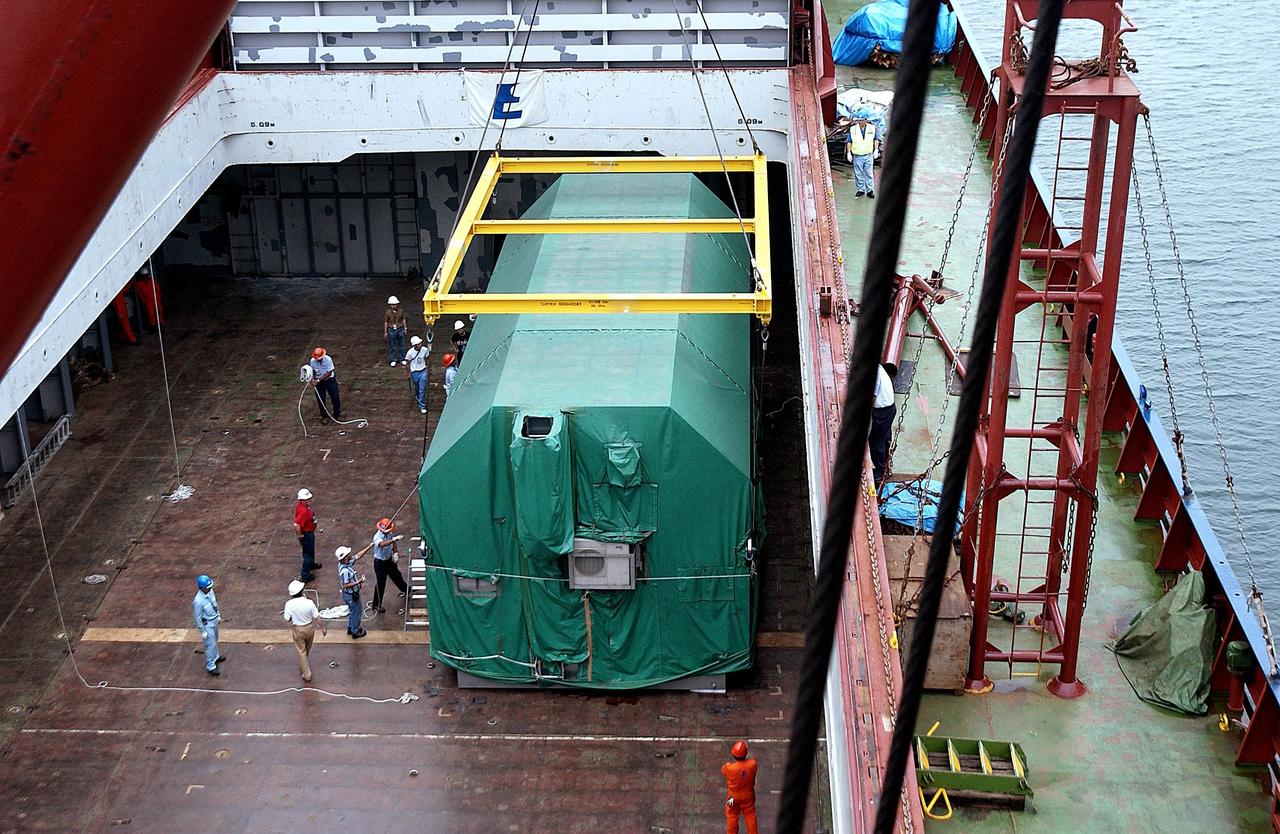
KENNEDY SPACE CENTER, FLA. -- At Port Canaveral, the Pressurized Module of the Japanese Experiment Module (JEM) is lifted out of the ship's cargo hold. The container transport ship carrying JEM departed May 2 from Yokohama Harbor in Japan for the voyage to the United States. The National Space Development Agency of Japan (NASDA) developed the laboratory at the Tsukuba Space Center near Tokyo. The Pressurized Module is the first element of the JEM, named "Kibo" (Hope), to be delivered to KSC. The JEM is Japan's primary contribution to the Station. It will enhance the unique research capabilities of the orbiting complex by providing an additional environment for astronauts to conduct science experiments. The JEM also includes an exposed facility (platform) for space environment experiments, a robotic manipulator system, and two logistics modules. The various JEM components will be assembled in space over the course of three Shuttle missions.
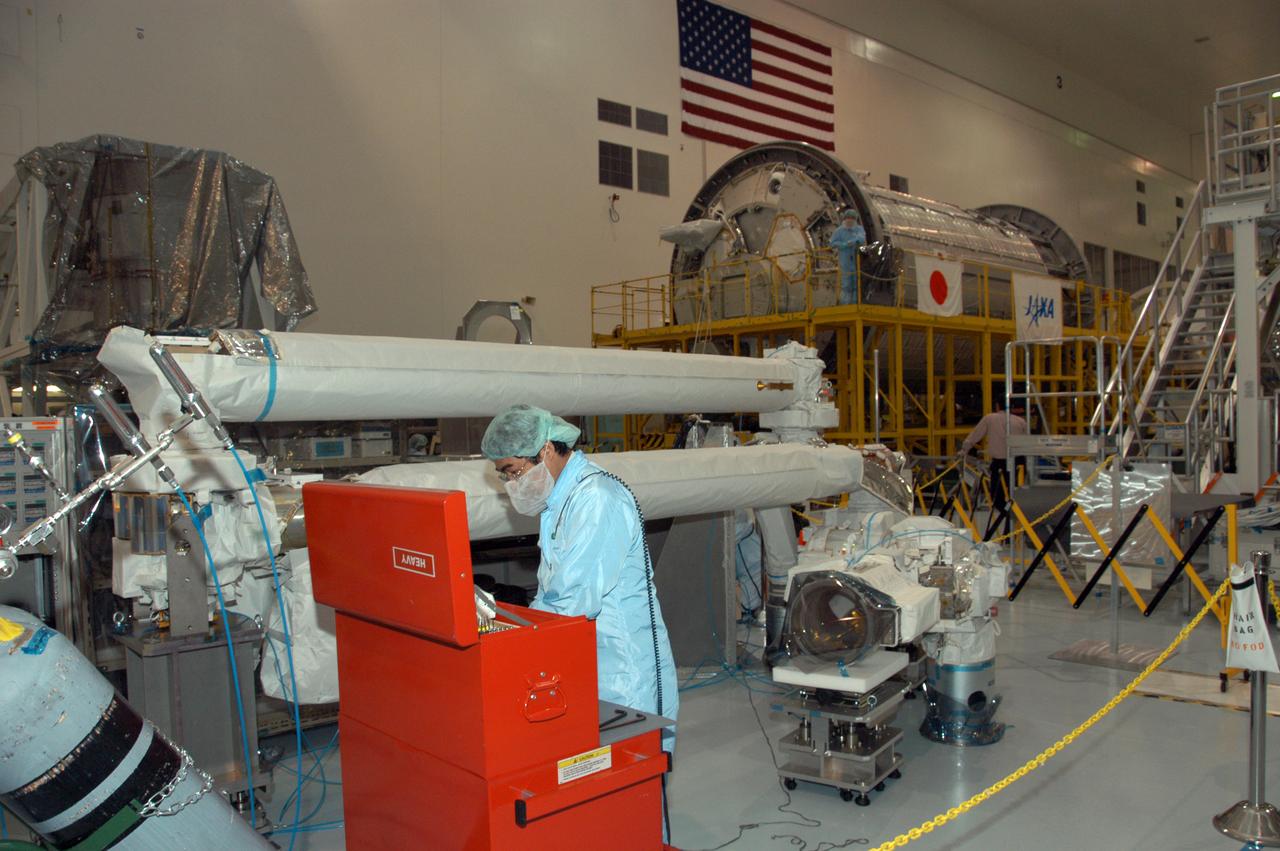
In the Space Station Processing Facility, technicians work on the Japanese remote manipulator system. It is scheduled to fly on a 2008 mission along with the Kibo Japanese Experiment Module Pressurized Module (JEM-PM).
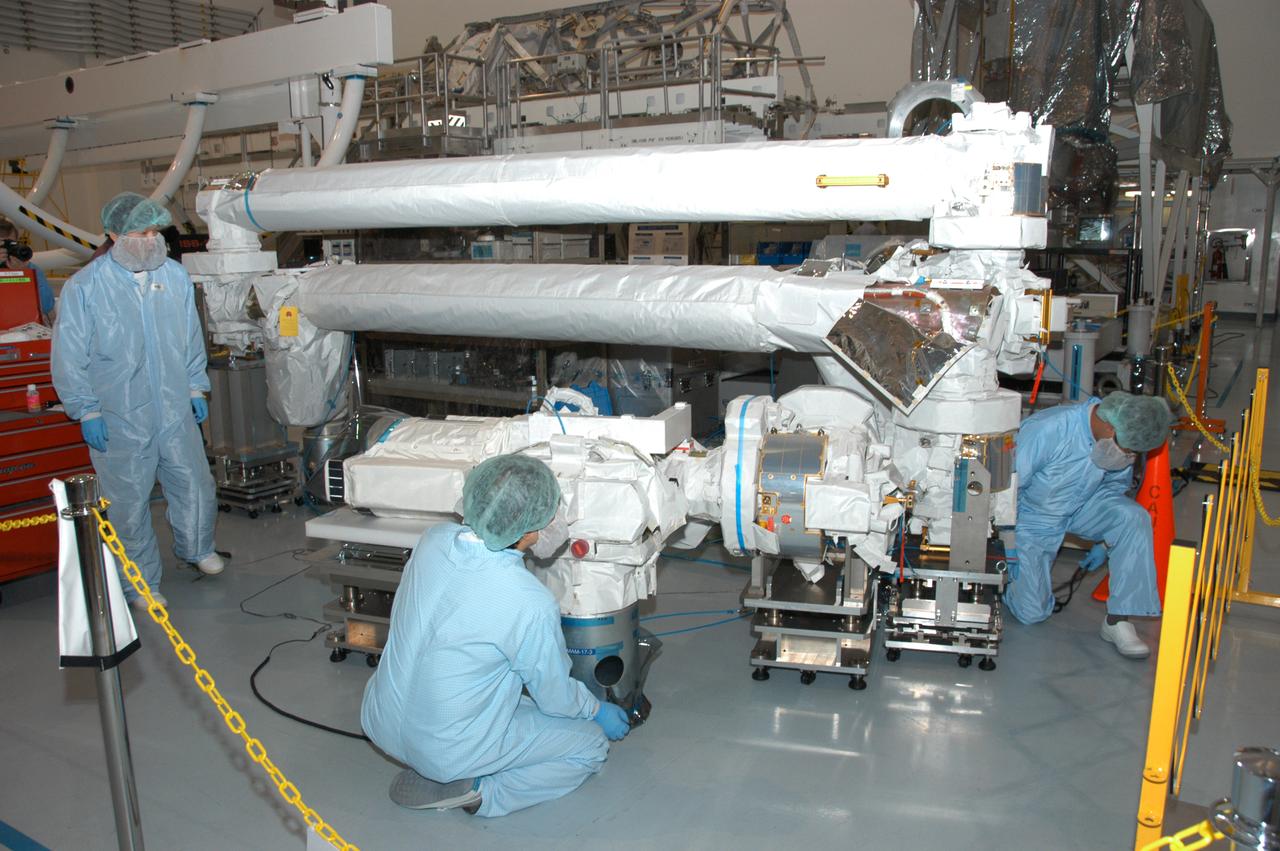
In the Space Station Processing Facility, technicians work on the Japanese remote manipulator system. It is scheduled to fly on a 2008 mission along with the Kibo Japanese Experiment Module Pressurized Module (JEM-PM).
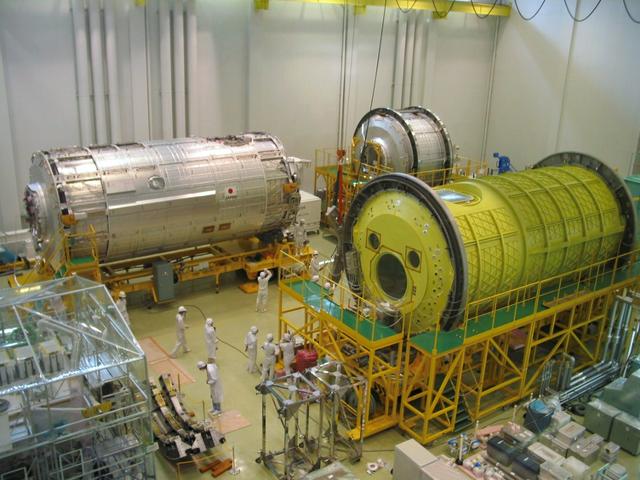
JSC2003-E-34753 (16 April 2003) --- Components of Japan's primary contribution to the International Space Station, the Japanese Experiment Module (JEM), Kibo, are seen in this view at the Tsukuba Space Center. Clockwise from left are the JEM Pressurized Module (PM) (an on-orbit laboratory), the JEM Experiment Logistics Module - Pressurized Section (an experiment and logistics storage module), the JEM PM Engineering Model (used for pre-flight development and testing), and the JEM Exposed Facility (an unpressurized platform for space environment experiments). The laboratory module was transported by truck and then by barge to Yokohama Harbor, Yokohama, Japan where it was loaded on a container ship bound for Port Canaveral, Florida. The Kibo laboratory, built by the National Space Development Agency of Japan (NASDA), is expected to arrive at the Kennedy Space Center for module integration tests with Node 2 and pre-launch processing in early June. Photo Credit: NASA

JSC2006-E-43506 (October 2006) --- Computer-generated artist's rendering of the International Space Station after flight 1J. Kibo Japanese Experiment Module Pressurized Module (JEM-PM) and Japanese Remote Manipulator System (JEM-RMS) are installed. JEM Pressurized Section is moved from Node 2 onto the JEM Pressurized Module.
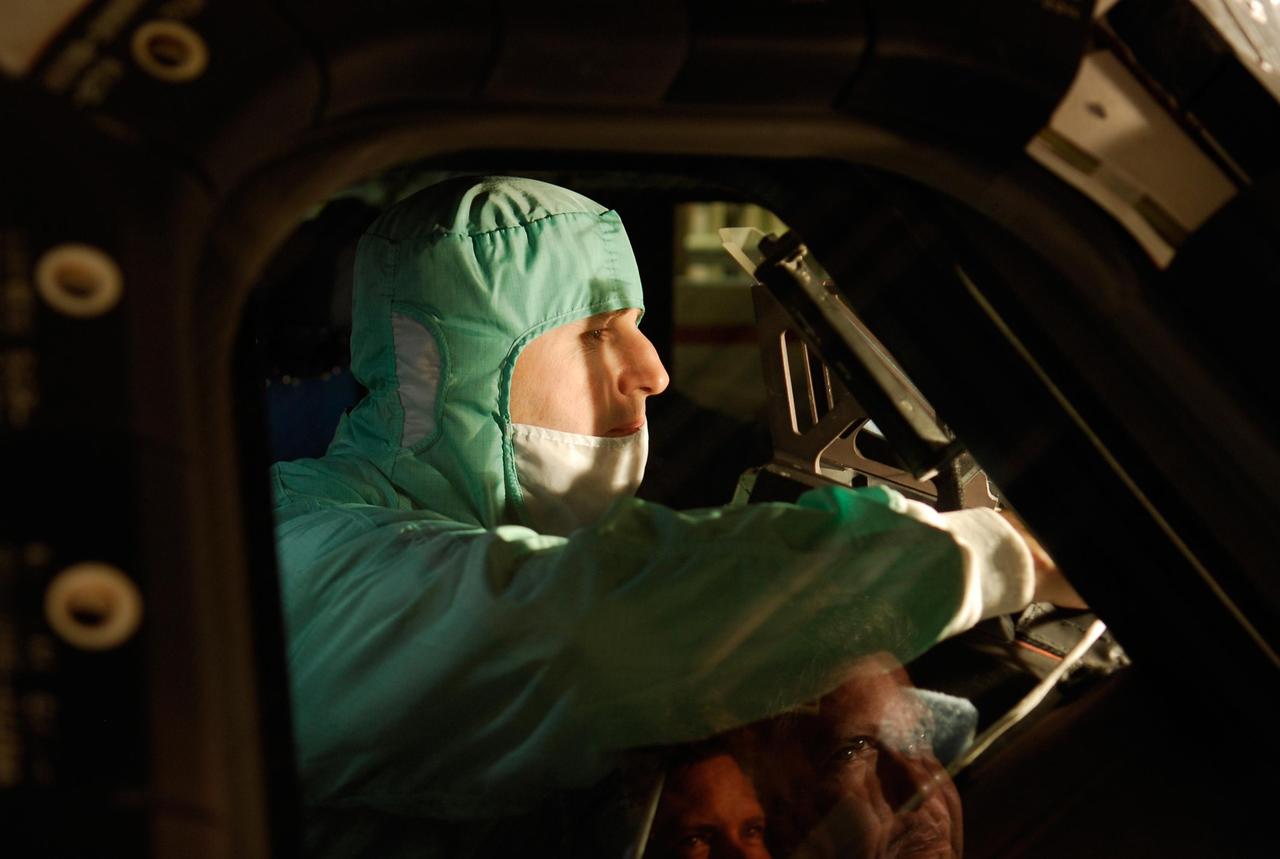
KENNEDY SPACE CENTER, FLA. -- During a crew equipment interface test in the Orbiter Processing Facility bay 3 at NASA's Kennedy Space Center, STS-124 Pilot Kenneth Ham checks the cockpit window in space shuttle Discovery. The shuttle will transport the Kibo Japanese Experiment Module - Pressurized Module (JEM-PM) and the Japanese Remote Manipulator System (JEM-RMS) to the International Space Station to complete the Kibo laboratory. The launch of Discovery is targeted for April 24. Photo credit: NASA/Kim Shiflett
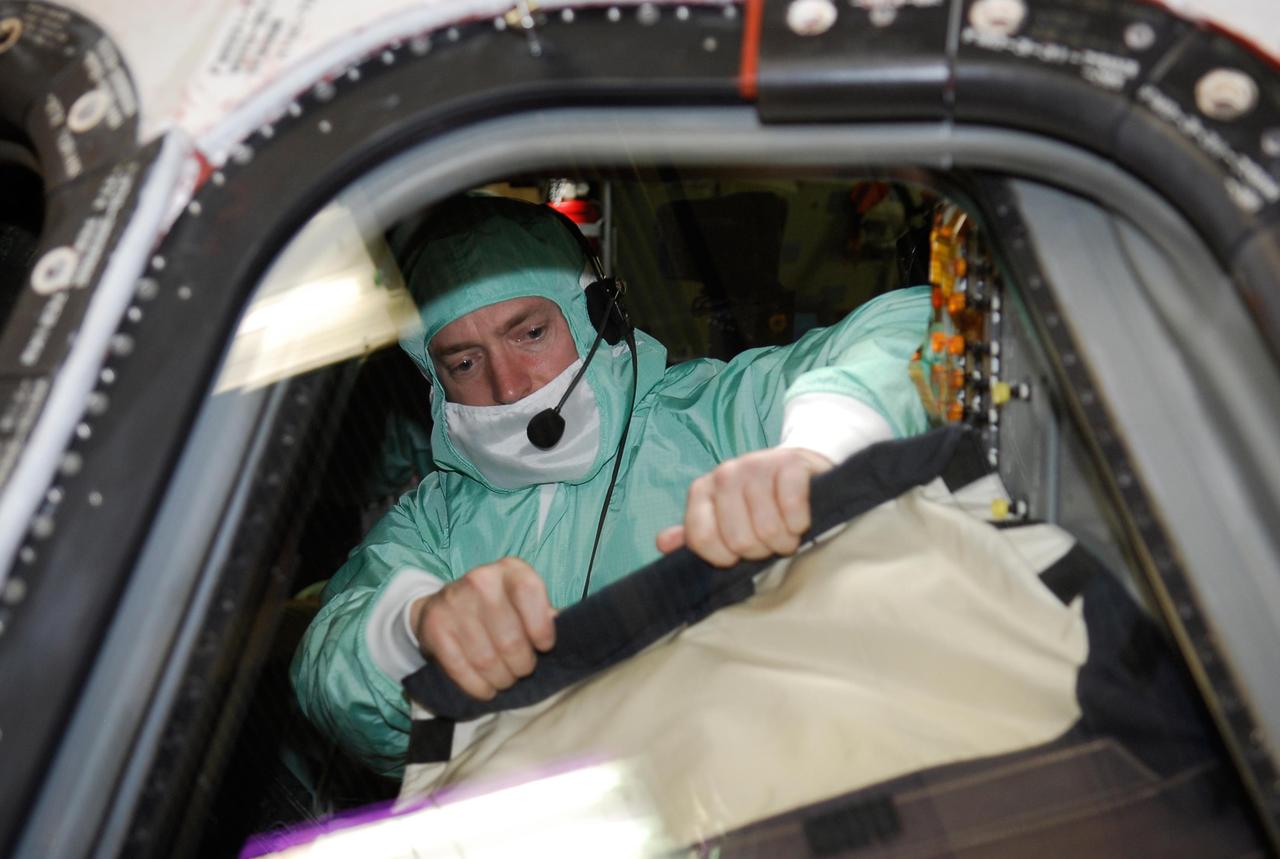
KENNEDY SPACE CENTER, FLA. -- During a crew equipment interface test in the Orbiter Processing Facility bay 3 at NASA's Kennedy Space Center, STS-124 Commander Mark Kelly closely examines a window in the cockpit of space shuttle Discovery. The shuttle will transport the Kibo Japanese Experiment Module - Pressurized Module (JEM-PM) and the Japanese Remote Manipulator System (JEM-RMS) to the International Space Station to complete the Kibo laboratory. The launch of Discovery is targeted for April 24. Photo credit: NASA/Kim Shiflett
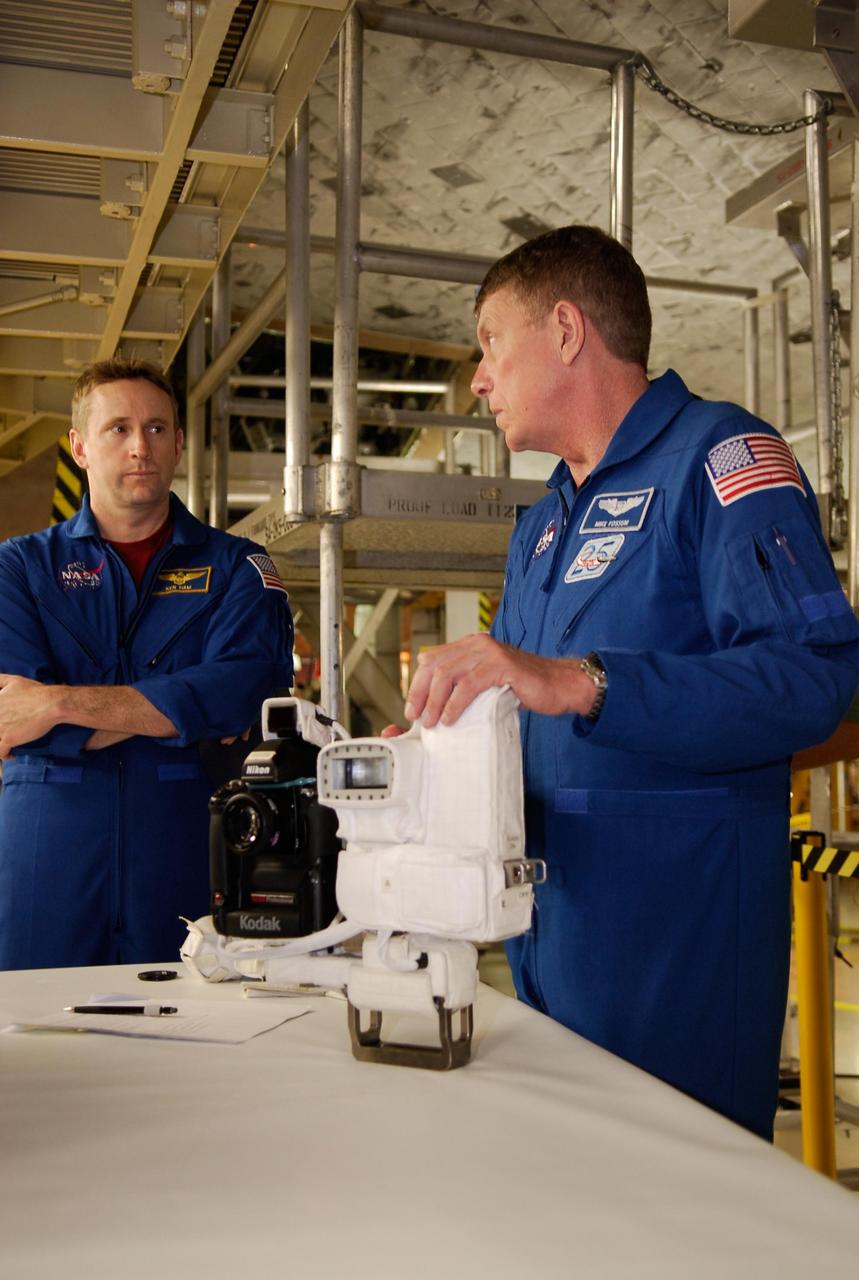
KENNEDY SPACE CENTER, FLA. -- During a crew equipment interface test in the Orbiter Processing Facility bay 3, space shuttle Discovery's STS-124 Pilot Kenneth Ham (left) and Mission Specialist Michael Fossum look at cameras that will be used on the mission. Discovery will transport the Kibo Japanese Experiment Module - Pressurized Module (JEM-PM) and the Japanese Remote Manipulator System (JEM-RMS) to the International Space Station to complete the Kibo laboratory. The launch of Discovery is targeted for April 24. Photo credit: NASA/Kim Shiflett
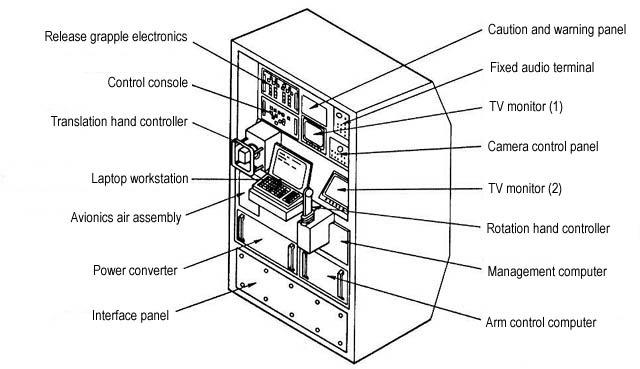
JSC2003-E-42546 (For Release: 18 June 2003) --- This graphic shows the console where flight crews will operate the Kibo Japanese Experiment Module (JEM) Remote Manipulator System (RMS) from inside the Pressurized Module (PM). The RMS is used to exchange experiment payloads or hardware located on the JEM Exposed Facility and Experiment Logistics Module - Exposed Section and from inside the Pressurized Module through a scientific airlock, support maintenance tasks of Kibo and handle orbital replacement units (ORUs). Photo Credit: NASDA
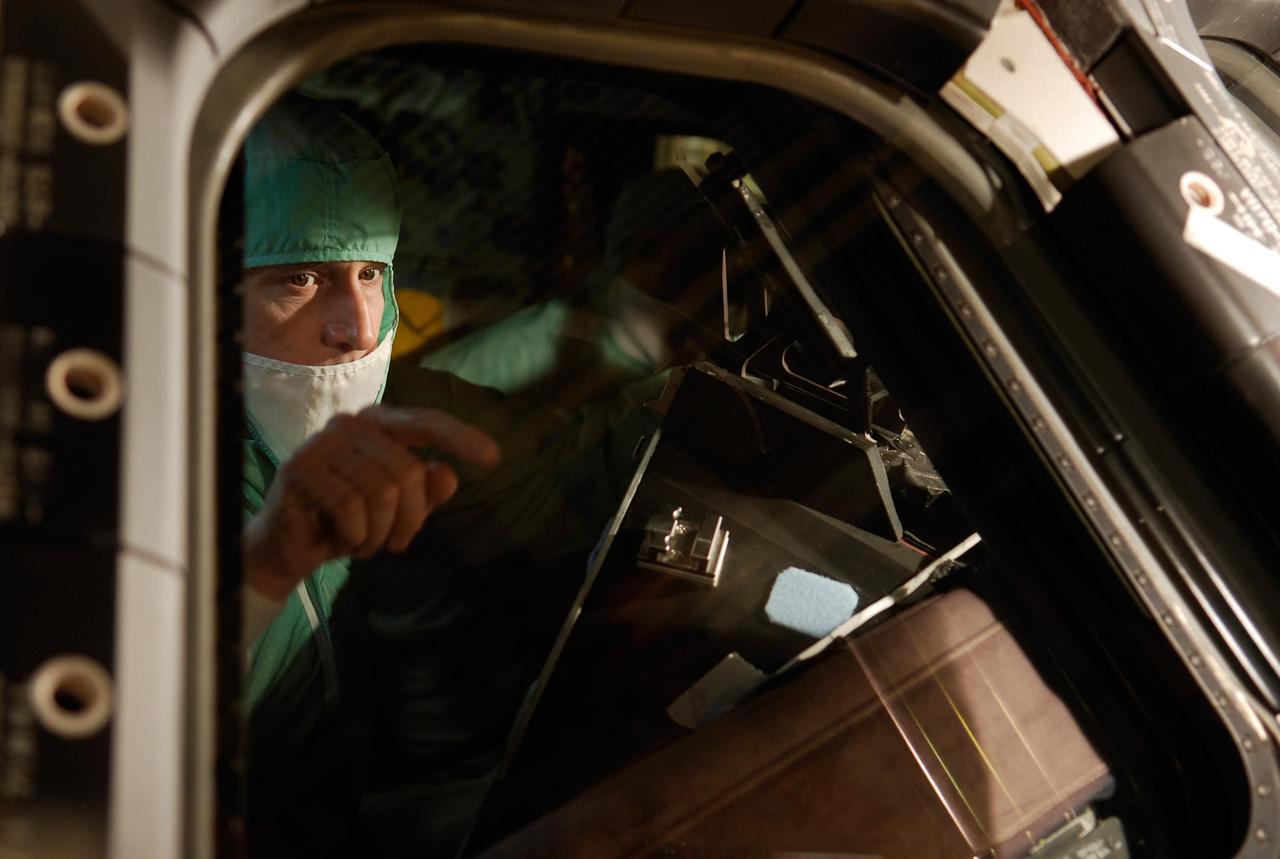
KENNEDY SPACE CENTER, FLA. -- During a crew equipment interface test in the Orbiter Processing Facility bay 3 at NASA's Kennedy Space Center, STS-124 Pilot Kenneth Ham checks a manual in the cockpit of space shuttle Discovery. The shuttle will transport the Kibo Japanese Experiment Module - Pressurized Module (JEM-PM) and the Japanese Remote Manipulator System (JEM-RMS) to the International Space Station to complete the Kibo laboratory. The launch of Discovery is targeted for April 24. Photo credit: NASA/Kim Shiflett
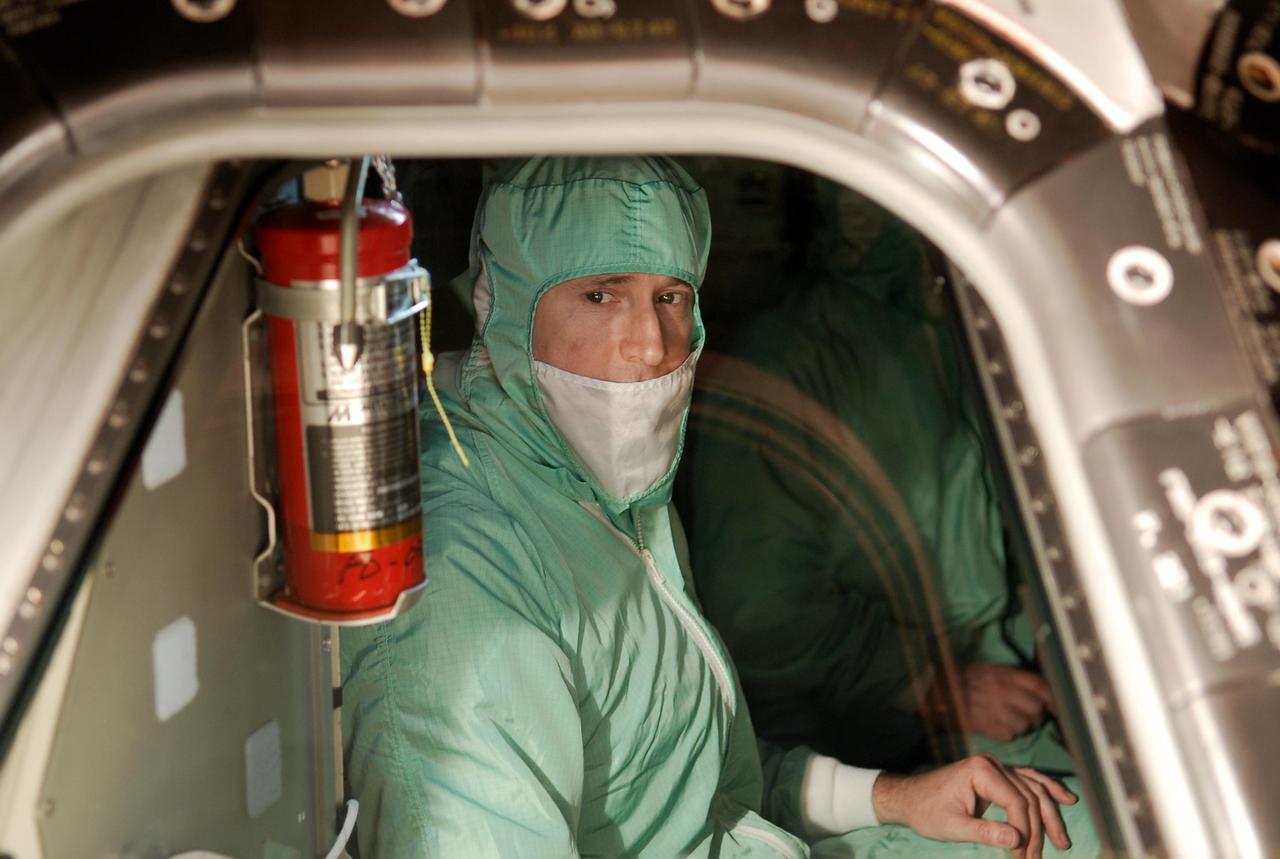
KENNEDY SPACE CENTER, FLA. -- During a crew equipment interface test in the Orbiter Processing Facility bay 3 at NASA's Kennedy Space Center, STS-124 Pilot Kenneth Ham examines the area around his seat in the cockpit of space shuttle Discovery. The shuttle will transport the Kibo Japanese Experiment Module - Pressurized Module (JEM-PM) and the Japanese Remote Manipulator System (JEM-RMS) to the International Space Station to complete the Kibo laboratory. The launch of Discovery is targeted for April 24. Photo credit: NASA/Kim Shiflett
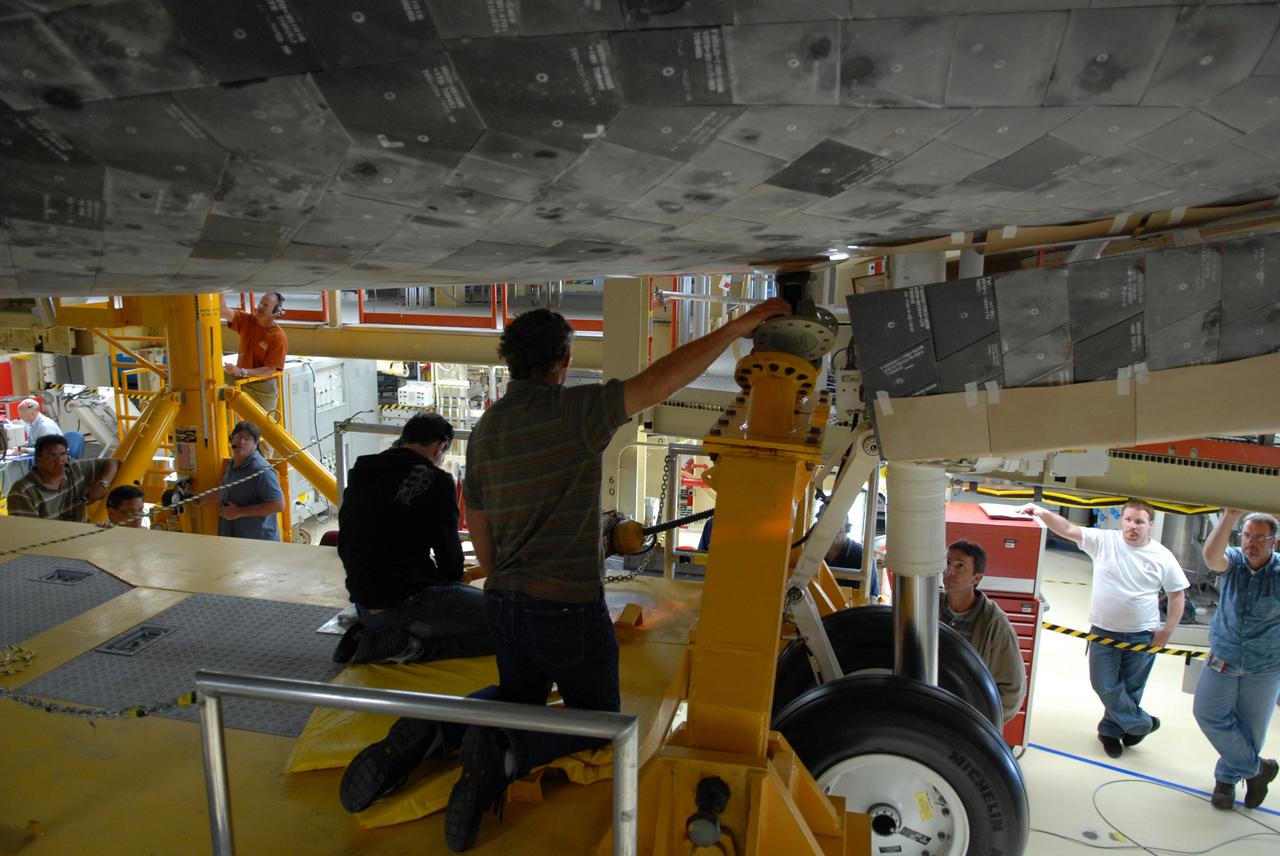
CAPE CANAVERAL, Fla. -- In Orbiter Processing Facility Bay 3 at NASA’s Kennedy Space Center, workers check the progress of the testing of the Orbiter Transport System on space shuttle Discovery. Discovery is targeted to launch May 31 on the STS-124 mission to the International Space Station. On the mission, Discovery will transport the Kibo Japanese Experiment Module - Pressurized Module (JEM-PM) and the Japanese Remote Manipulator System (JEM-RMS) to the space station to add to the Kibo laboratory. Photo credit: NASA/Troy Cryder
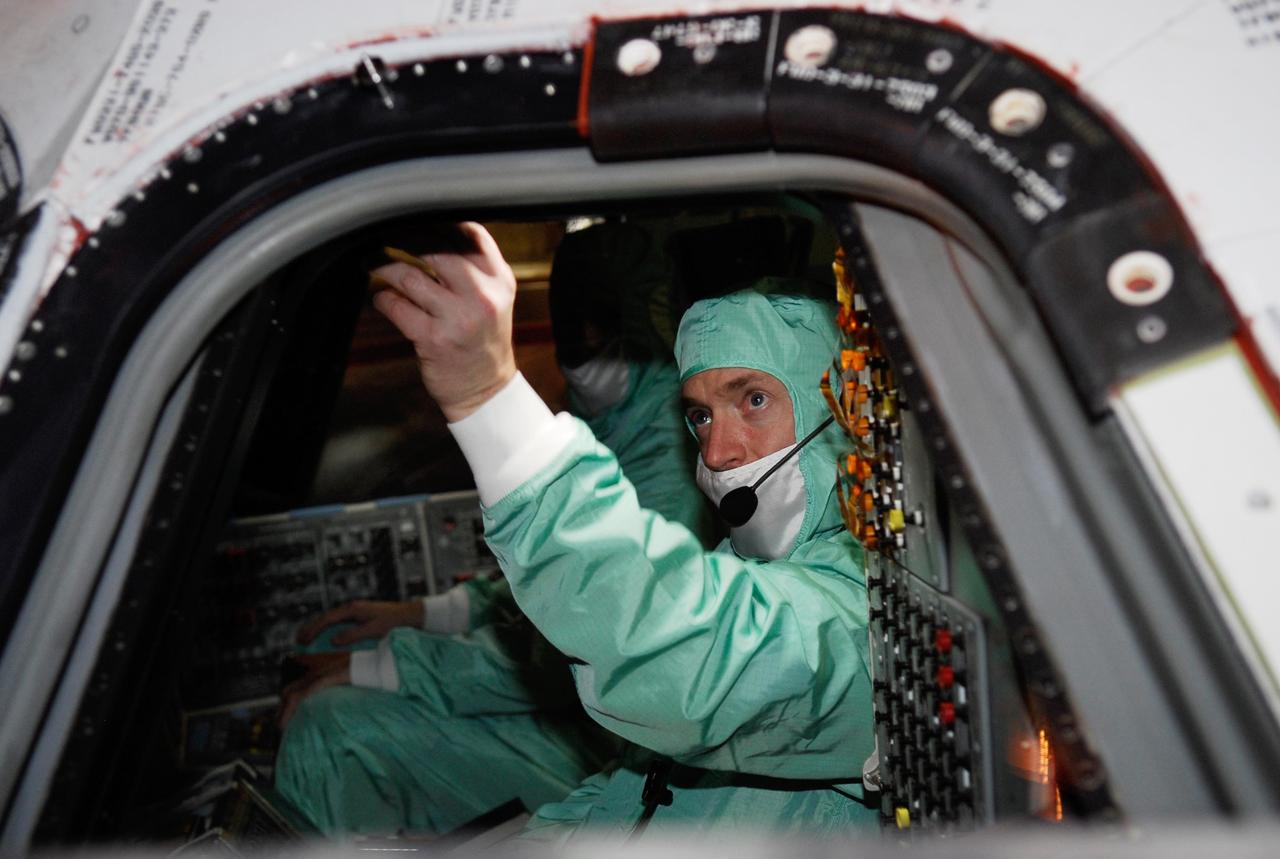
KENNEDY SPACE CENTER, FLA. -- During a crew equipment interface test in the Orbiter Processing Facility bay 3 at NASA's Kennedy Space Center, STS-124 Commander Mark Kelly checks the area around the window in the cockpit of space shuttle Discovery. The shuttle will transport the Kibo Japanese Experiment Module - Pressurized Module (JEM-PM) and the Japanese Remote Manipulator System (JEM-RMS) to the International Space Station to complete the Kibo laboratory. The launch of Discovery is targeted for April 24. Photo credit: NASA/Kim Shiflett
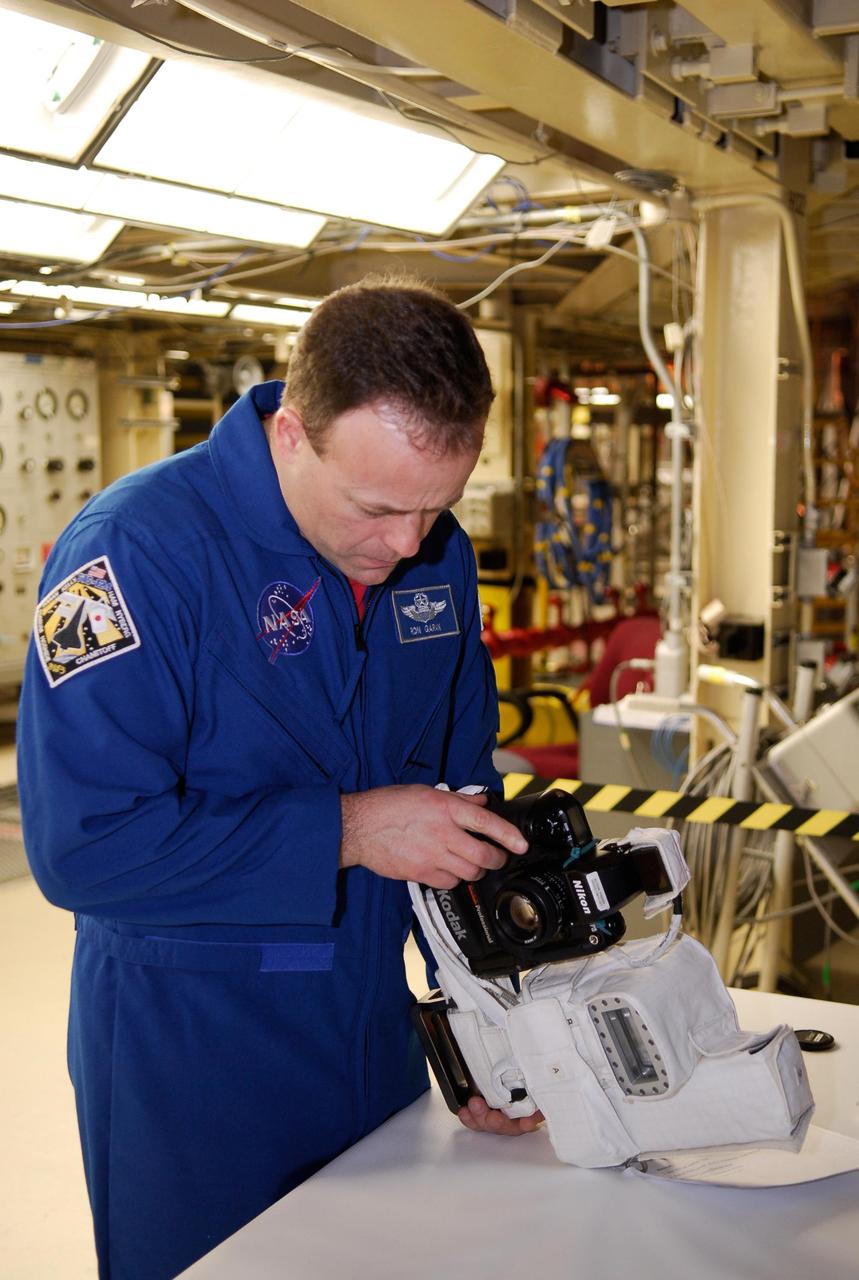
KENNEDY SPACE CENTER, FLA. -- During a crew equipment interface test in the Orbiter Processing Facility bay 3 at NASA's Kennedy Space Center, STS-124 Mission Specialist Ronald Garan inspects a camera that will be used on the mission. Space shuttle Discovery will transport the Kibo Japanese Experiment Module - Pressurized Module (JEM-PM) and the Japanese Remote Manipulator System (JEM-RMS) to the International Space Station to complete the Kibo laboratory. The launch of Discovery is targeted for April 24. Photo credit: NASA/Kim Shiflett
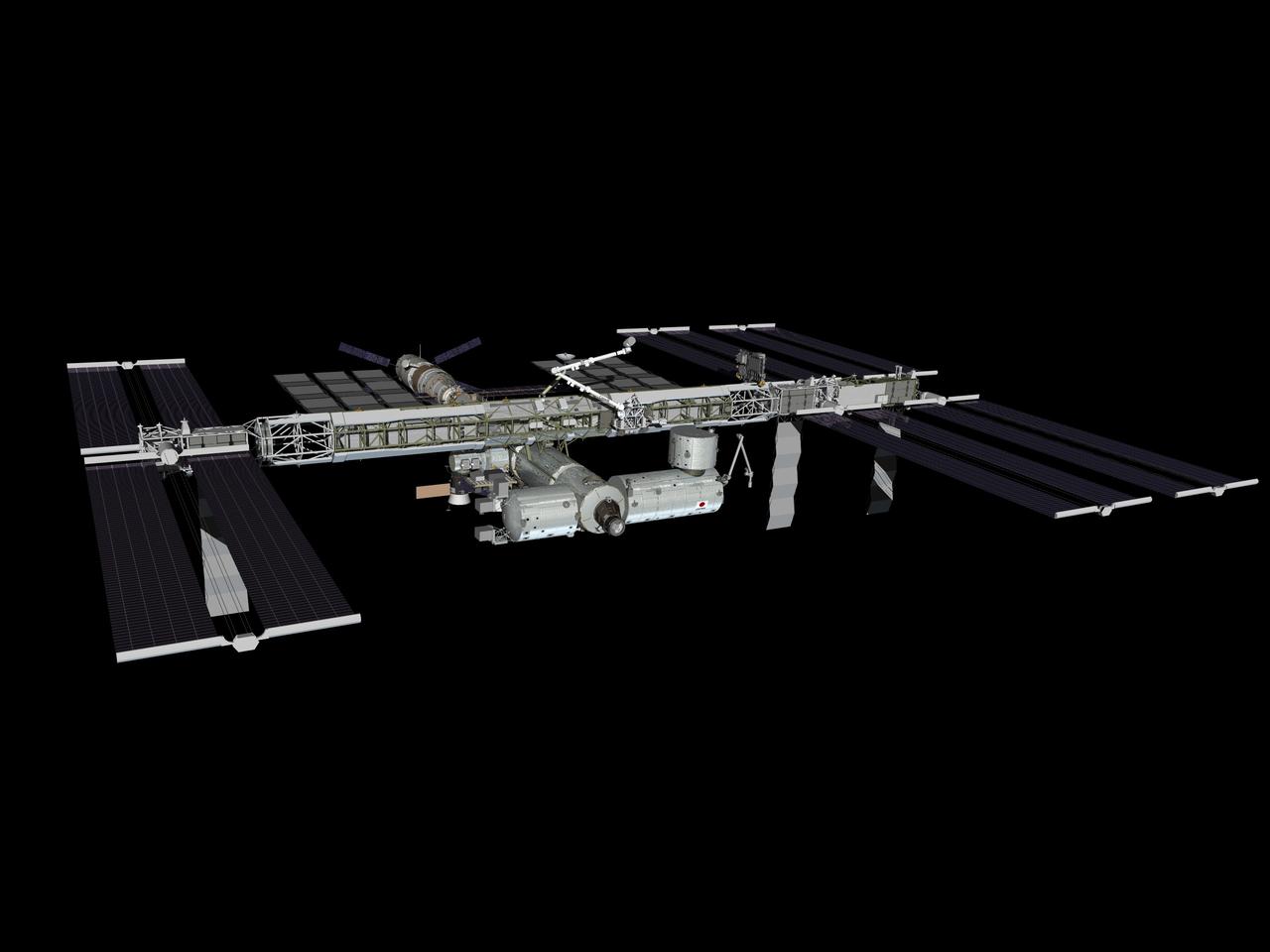
JSC2008-E-038663 (June 2008) --- Computer-generated artist's rendering of the International Space Station after flight STS-124/1J in June 2008. Kibo Japanese Experiment Module Pressurized Module (JEM-PM) and Japanese Remote Manipulator System (JEM-RMS) are installed. The Japanese Logistics Module - Pressurized Section (JLP), which was installed in a temporary location on the Harmony node during STS-123, is moved onto the JEM Pressurized Module. The STS-124 mission is the second of three flights that will launch components to complete the Kibo laboratory.
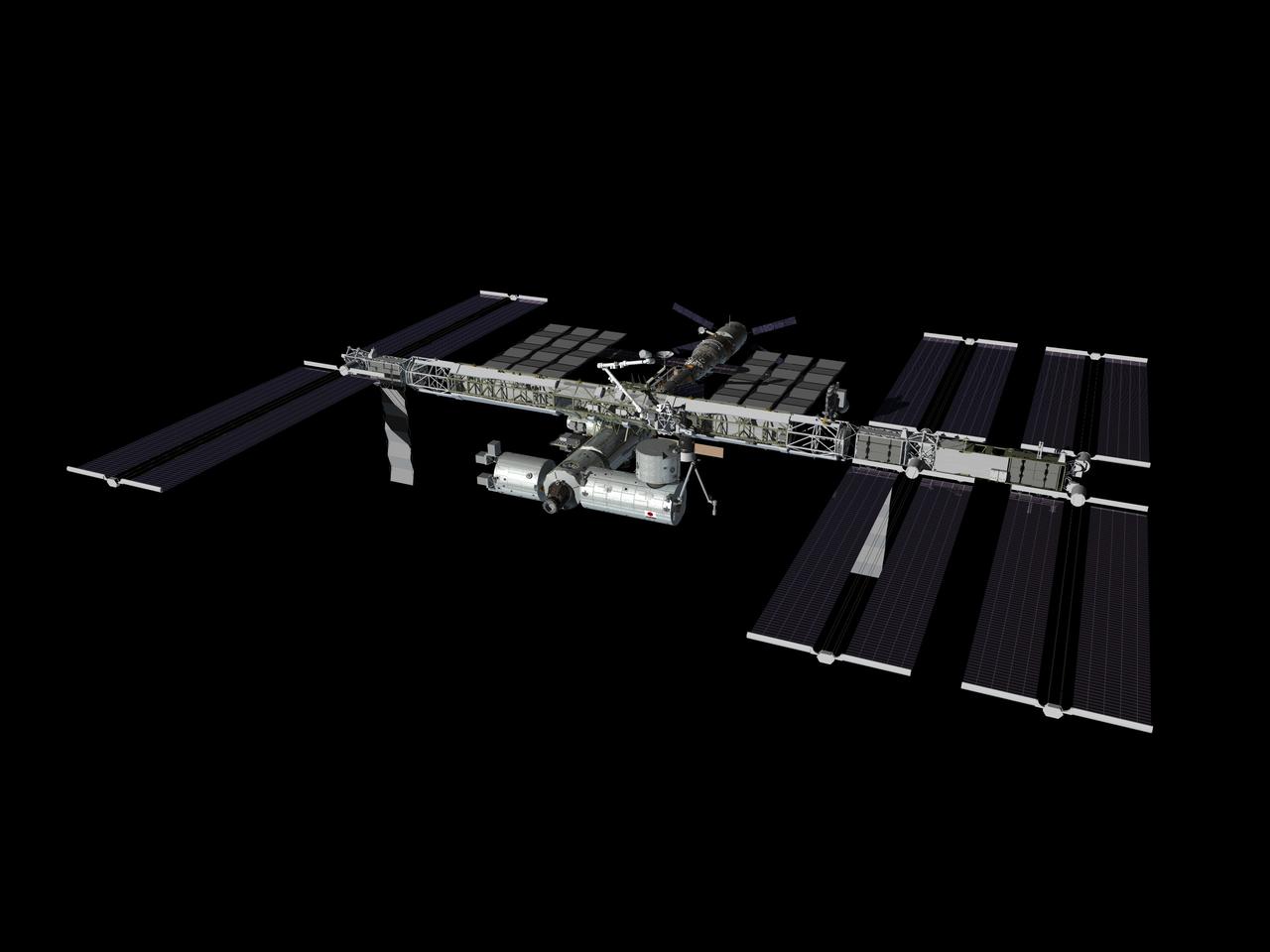
JSC2008-E-038662 (June 2008) --- Computer-generated artist's rendering of the International Space Station after flight STS-124/1J in June 2008. Kibo Japanese Experiment Module Pressurized Module (JEM-PM) and Japanese Remote Manipulator System (JEM-RMS) are installed. The Japanese Logistics Module - Pressurized Section (JLP), which was installed in a temporary location on the Harmony node during STS-123, is moved onto the JEM Pressurized Module. The STS-124 mission is the second of three flights that will launch components to complete the Kibo laboratory.
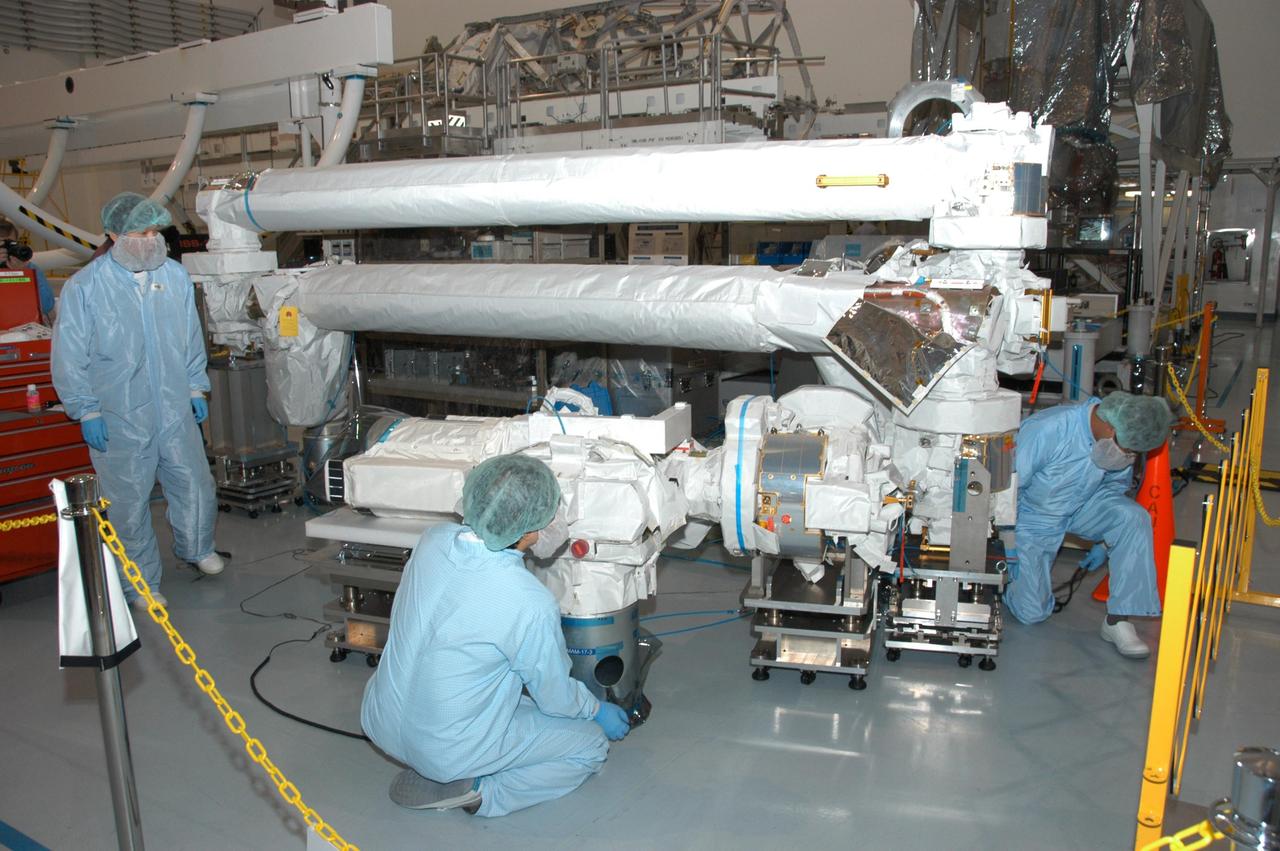
KENNEDY SPACE CENTER, FLA. -- In the Space Station Processing Facility, technicians work on the Japanese remote manipulator system. It is scheduled to fly on a 2008 mission along with the Kibo Japanese Experiment Module Pressurized Module (JEM-PM). Photo credit: NASA/George Shelton
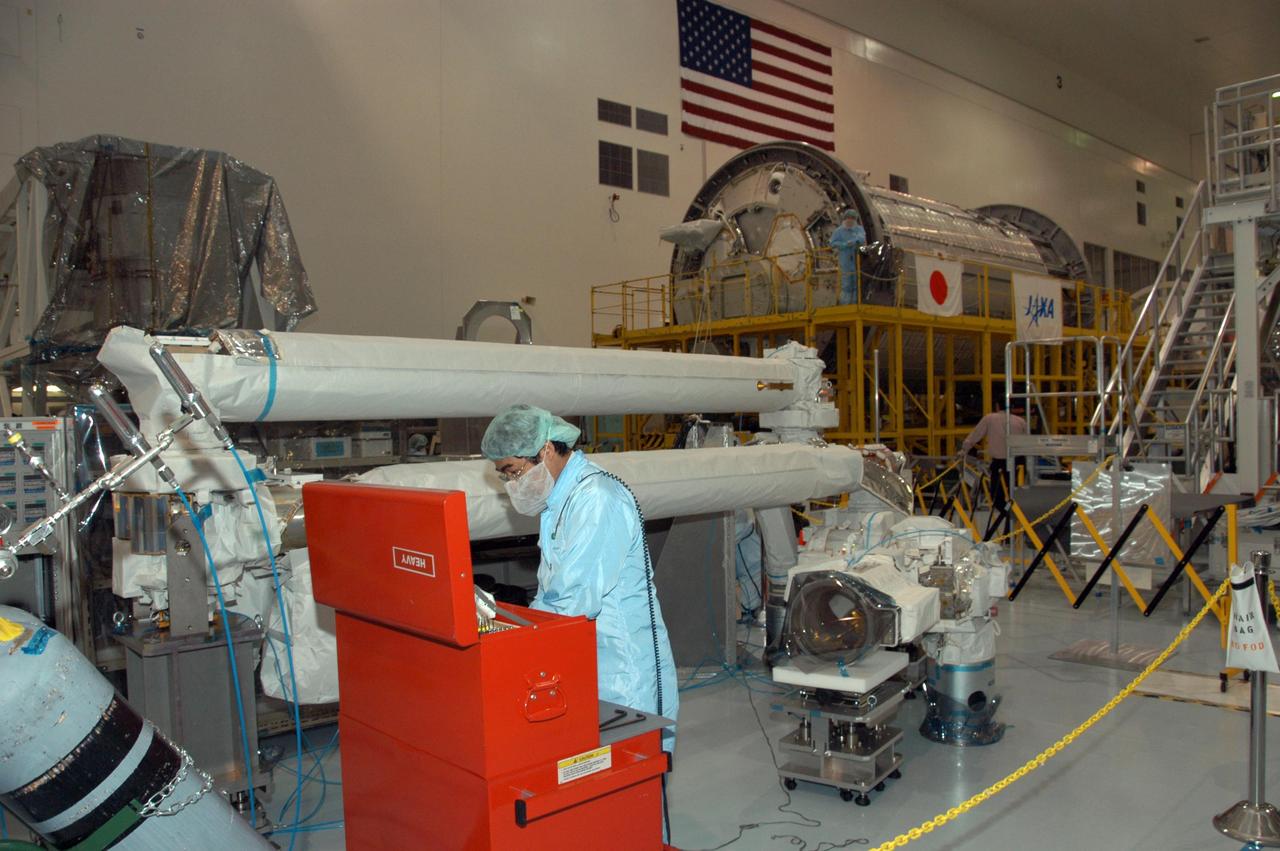
KENNEDY SPACE CENTER, FLA. -- In the Space Station Processing Facility, technicians work on the Japanese remote manipulator system. It is scheduled to fly on a 2008 mission along with the Kibo Japanese Experiment Module Pressurized Module (JEM-PM). Photo credit: NASA/George Shelton
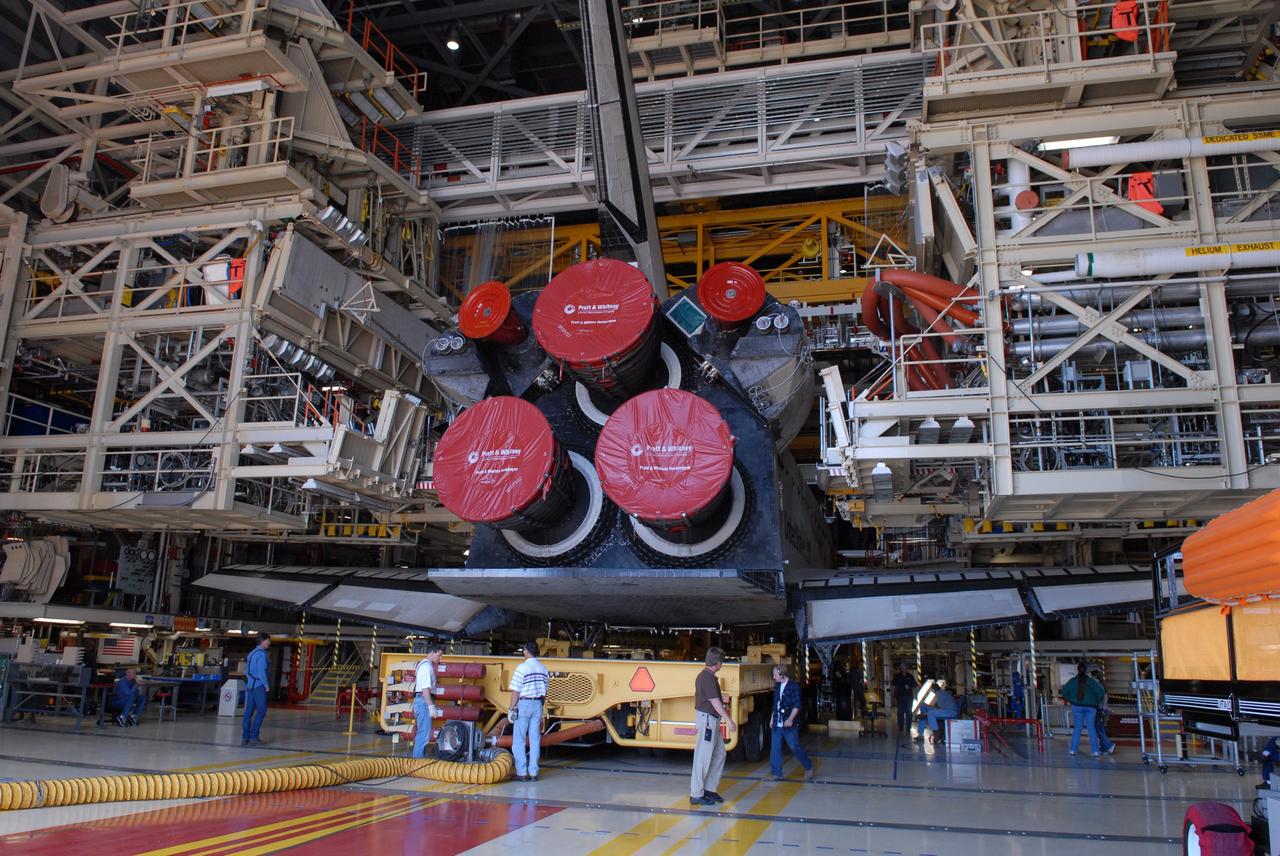
CAPE CANAVERAL, Fla. -- In Orbiter Processing Facility Bay 3 at NASA’s Kennedy Space Center, the Orbiter Transport System, or OTS, moves in place under the belly of space shuttle Discovery. The OTS will help move the orbiter on its rollover to the Vehicle Assembly Building. Discovery is targeted to launch May 31 on the STS-124 mission to the International Space Station. On the mission, Discovery will transport the Kibo Japanese Experiment Module - Pressurized Module (JEM-PM) and the Japanese Remote Manipulator System (JEM-RMS) to the space station to add to the Kibo laboratory. Photo credit: NASA/Troy Cryder
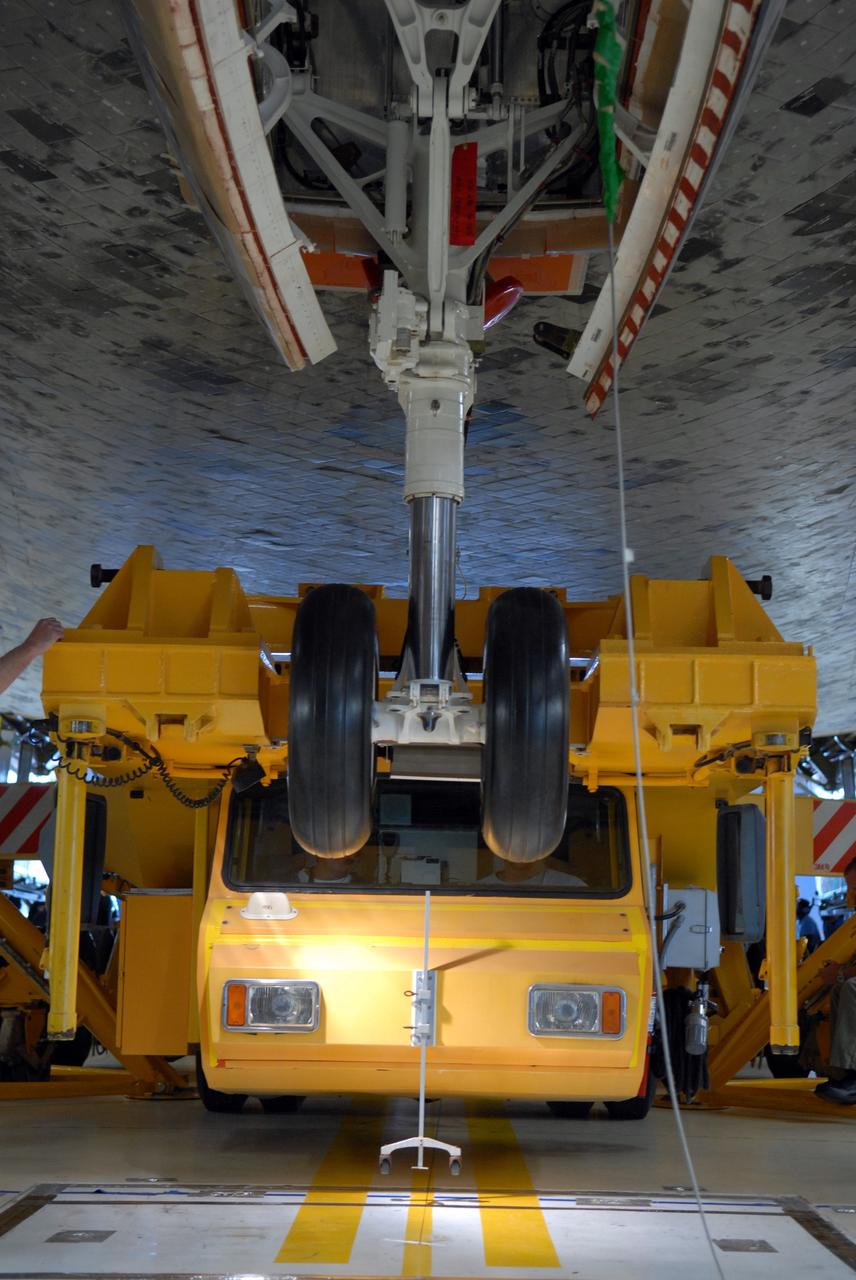
CAPE CANAVERAL, Fla. -- In Orbiter Processing Facility Bay 3 at NASA’s Kennedy Space Center, the Orbiter Transport System, or OTS, moves under the belly of space shuttle Discovery. The OTS will help move the orbiter on its rollover to the Vehicle Assembly Building. Discovery is targeted to launch May 31 on the STS-124 mission to the International Space Station. On the mission, Discovery will transport the Kibo Japanese Experiment Module - Pressurized Module (JEM-PM) and the Japanese Remote Manipulator System (JEM-RMS) to the space station to add to the Kibo laboratory. Photo credit: NASA/Troy Cryder
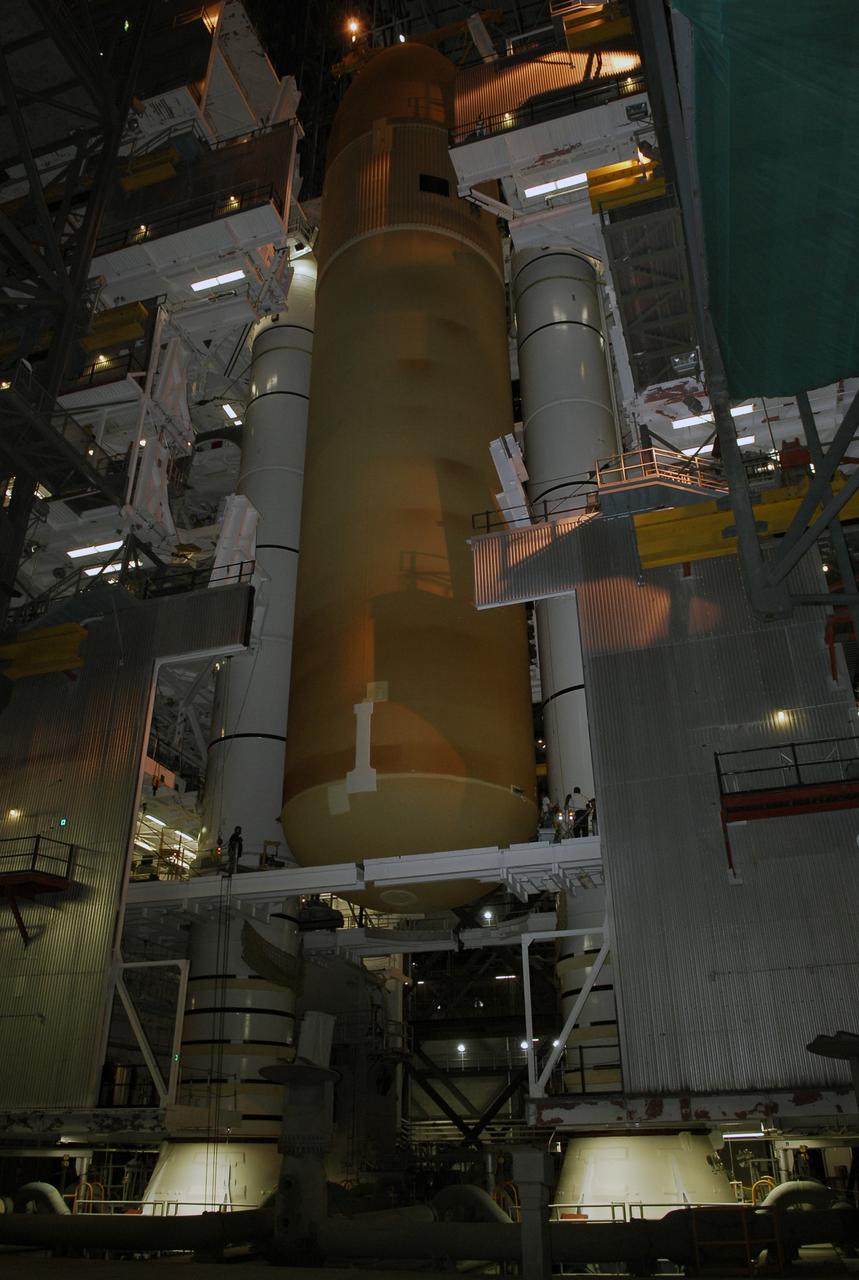
CAPE CANAVERAL, Fla. -- In the Vehicle Assembly Building at NASA's Kennedy Space Center, the external tank for space shuttle Discovery is being lowered into place in high bay 3 between the solid rocket boosters waiting on the mobile launcher platform. The tank will be mated to the boosters. Discovery is targeted to launch May 31 on the STS-124 mission to the International Space Station. On the mission, Discovery will transport the Kibo Japanese Experiment Module - Pressurized Module (JEM-PM) and the Japanese Remote Manipulator System (JEM-RMS) to the space station to add to the Kibo laboratory. Photo credit: NASA/Kim Shiflett
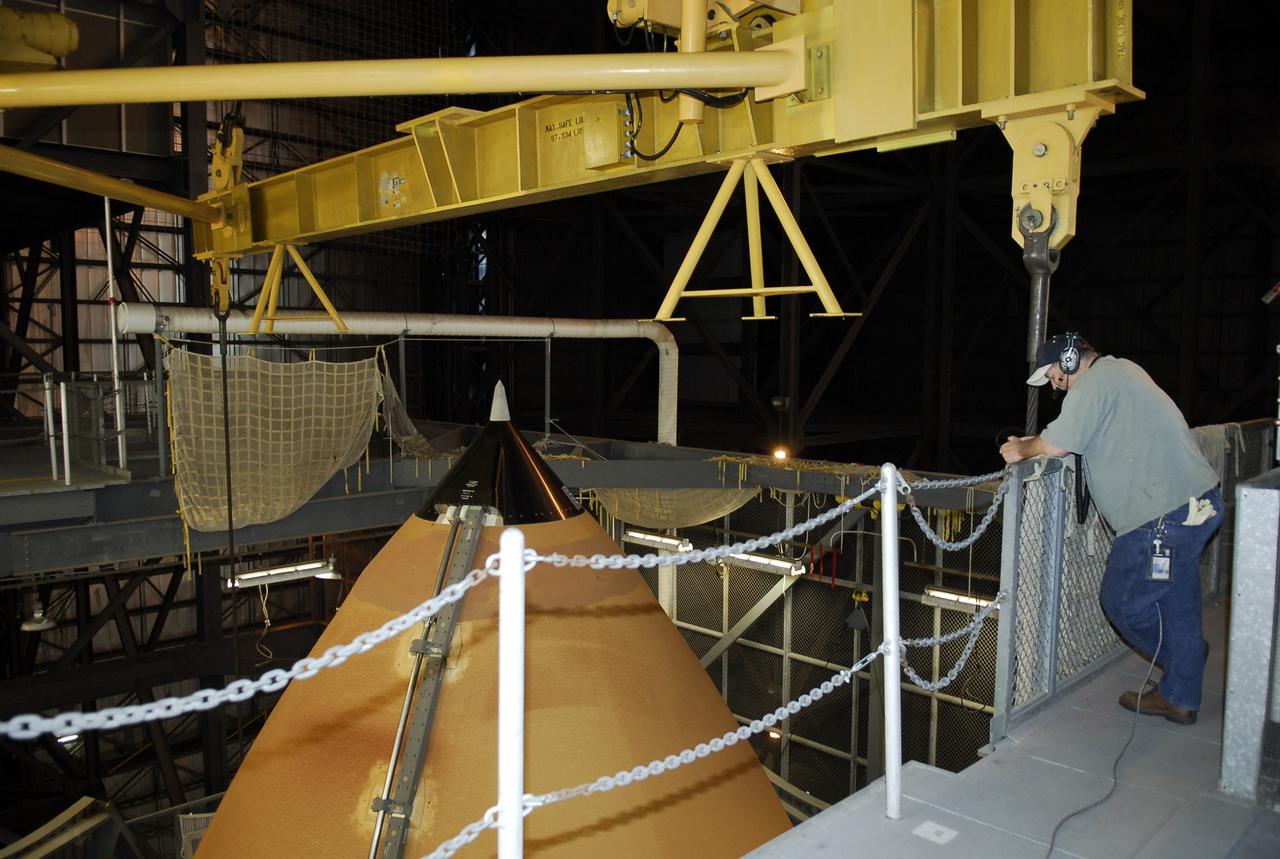
CAPE CANAVERAL, Fla. -- Seen from an upper level in the Vehicle Assembly Building at NASA's Kennedy Space Center, the external tank for space shuttle Discovery is being lowered into high bay 3. The tank will be mated to the solid rocket boosters waiting below on the mobile launcher platform. Discovery is targeted to launch May 31 on the STS-124 mission to the International Space Station. On the mission, Discovery will transport the Kibo Japanese Experiment Module - Pressurized Module (JEM-PM) and the Japanese Remote Manipulator System (JEM-RMS) to the space station to add to the Kibo laboratory. Photo credit: NASA/Kim Shiflett
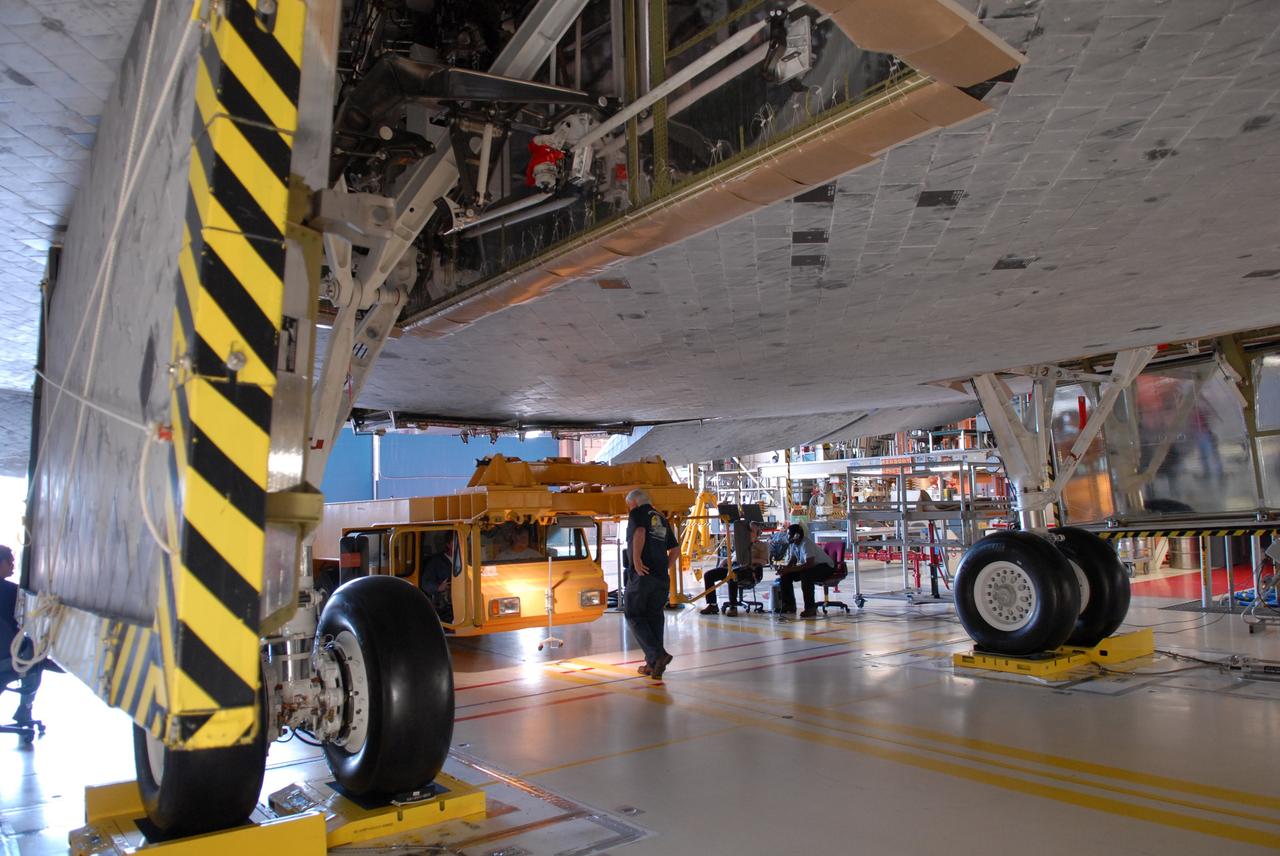
CAPE CANAVERAL, Fla. -- In Orbiter Processing Facility Bay 3 at NASA’s Kennedy Space Center, space shuttle Discovery is ready for the Orbiter Transport System, or OTS (left), to be rolled in underneath. The OTS will help move the orbiter on its rollover to the Vehicle Assembly Building. Discovery is targeted to launch May 31 on the STS-124 mission to the International Space Station. On the mission, Discovery will transport the Kibo Japanese Experiment Module - Pressurized Module (JEM-PM) and the Japanese Remote Manipulator System (JEM-RMS) to the space station to add to the Kibo laboratory. Photo credit: NASA/Troy Cryder

CAPE CANAVERAL, Fla. -- In Orbiter Processing Facility Bay 3 at NASA’s Kennedy Space Center, Jerry McKlin (left) and Milan Vasic, with United Space Alliance, check the placement under space shuttle Discovery of the struts from the Orbiter Transport System, or OTS. The OTS will help move the orbiter on its rollover to the Vehicle Assembly Building. Discovery is targeted to launch May 31 on the STS-124 mission to the International Space Station. On the mission, Discovery will transport the Kibo Japanese Experiment Module - Pressurized Module (JEM-PM) and the Japanese Remote Manipulator System (JEM-RMS) to the space station to add to the Kibo laboratory. Photo credit: NASA/Troy Cryder
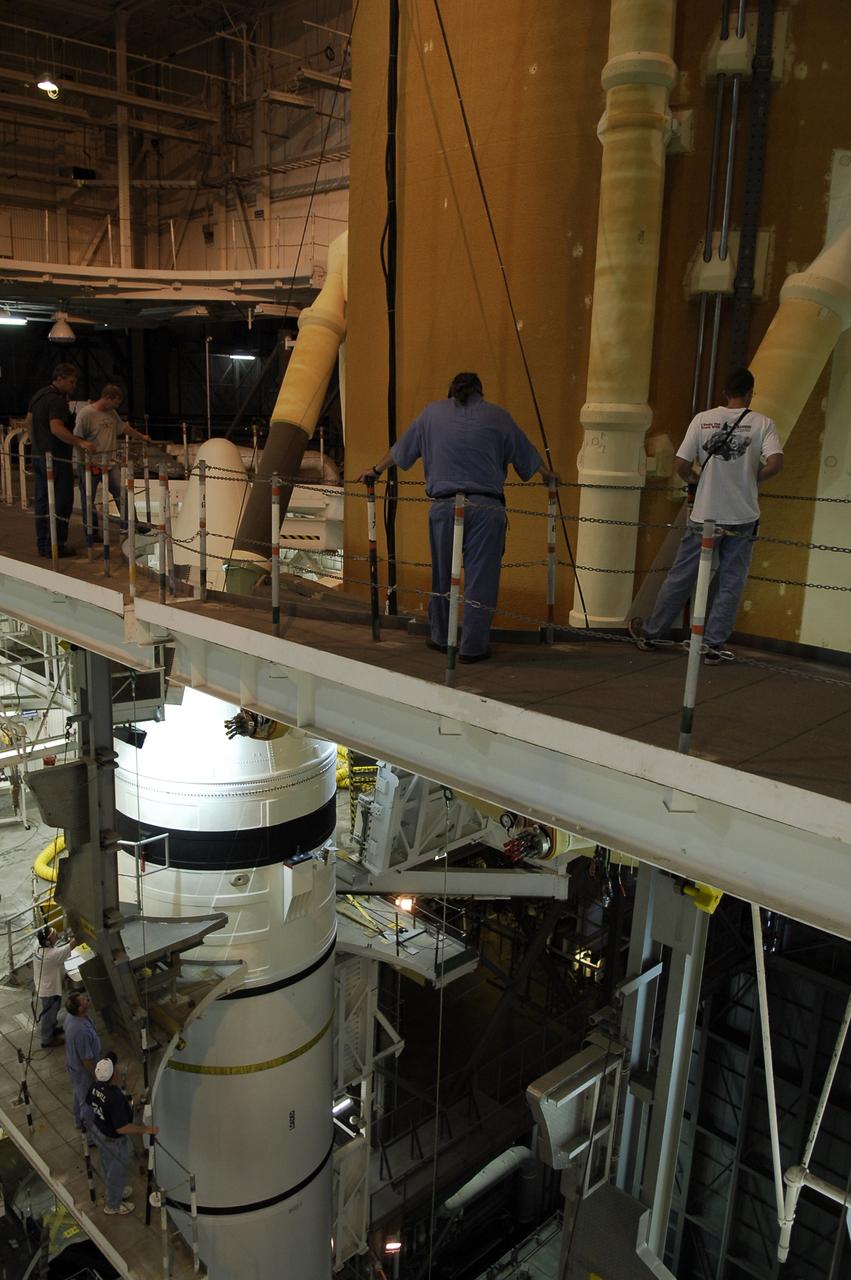
CAPE CANAVERAL, Fla. -- In the Vehicle Assembly Building at NASA's Kennedy Space Center, workers track the movement of space shuttle Discovery's external tank as it is lowered into high bay 3 between the solid rocket boosters waiting on the mobile launcher platform. The tank and rockets will be mated for the launch of Discovery on the STS-124 mission to the International Space Station, targeted for May 31. On the mission, Discovery will transport the Kibo Japanese Experiment Module - Pressurized Module (JEM-PM) and the Japanese Remote Manipulator System (JEM-RMS) to the space station to add to the Kibo laboratory. Photo credit: NASA/Kim Shiflett
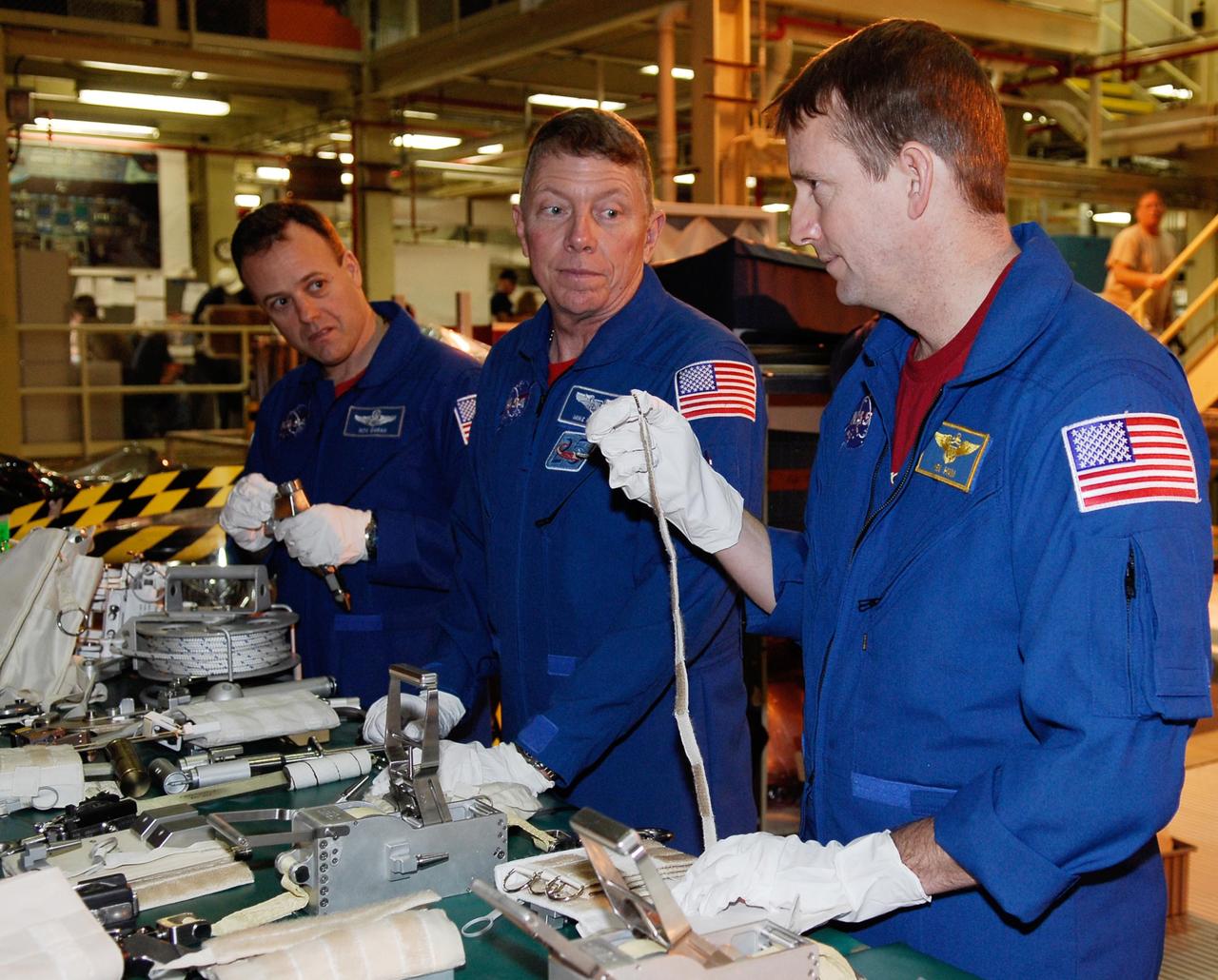
KENNEDY SPACE CENTER, FLA. -- During a crew equipment interface test in the Orbiter Processing Facility bay 3 NASA's Kennedy Space Center, space shuttle Discovery's STS-124 crew members get hands-on experience with some of the equipment that will used on the mission. From left are Mission Specialists Ronald Garan and Michael Fossum and Pilot Kenneth Ham. Discovery will transport the Kibo Japanese Experiment Module - Pressurized Module (JEM-PM) and the Japanese Remote Manipulator System (JEM-RMS) to the International Space Station to complete the Kibo laboratory. The launch of Discovery is targeted for April 24. Photo credit: NASA/Kim Shiflett
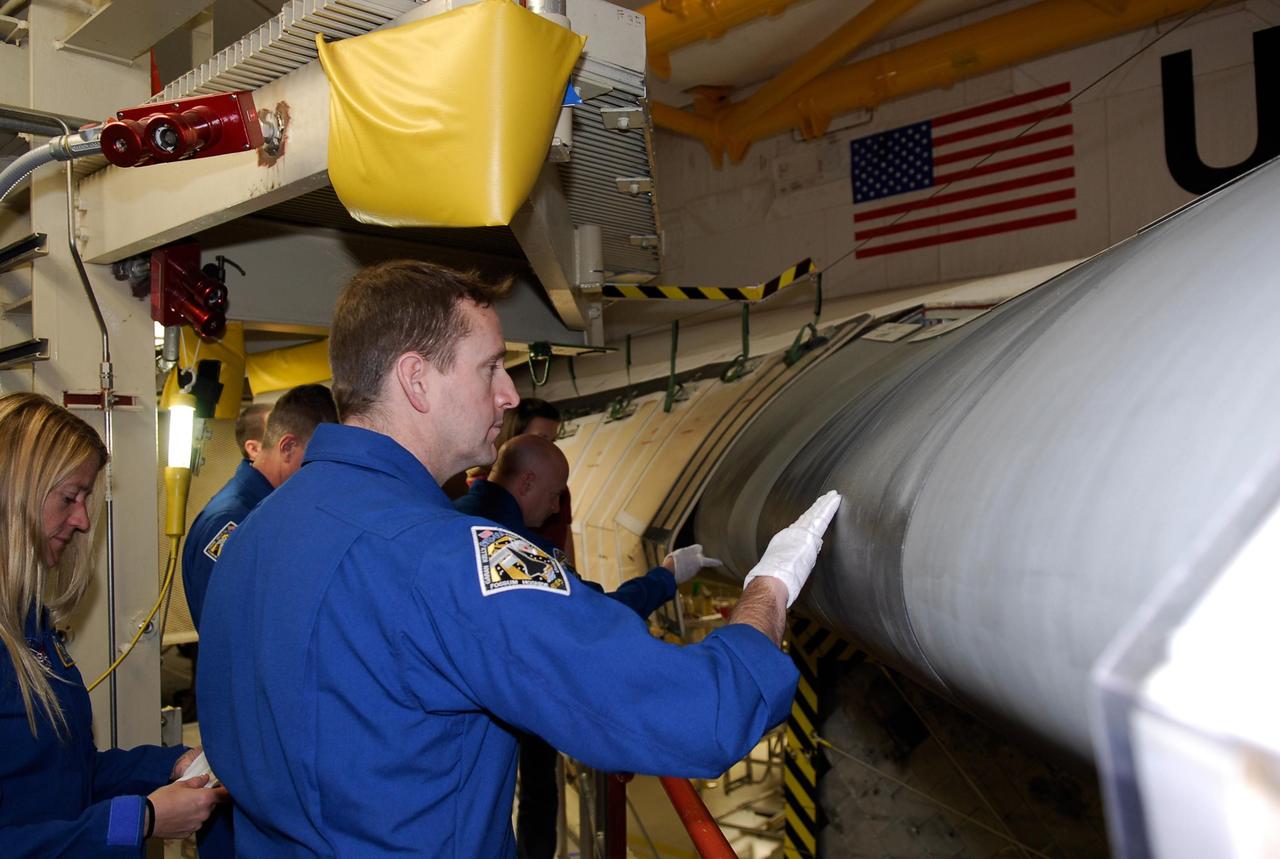
KENNEDY SPACE CENTER, FLA. -- In the Orbiter Processing Facility bay 3 at NASA's Kennedy Space Center, STS-124 Pilot Kenneth Ham takes a close look at the wing leading edge on space shuttle Discovery. Members of the crew are at Kennedy for a crew equipment interface test. On the mission, Discovery will transport the Kibo Japanese Experiment Module - Pressurized Module (JEM-PM) and the Japanese Remote Manipulator System (JEM-RMS) to the International Space Station to complete the Kibo laboratory. The launch of Discovery is targeted for April 24. Photo credit: NASA/Kim Shiflett
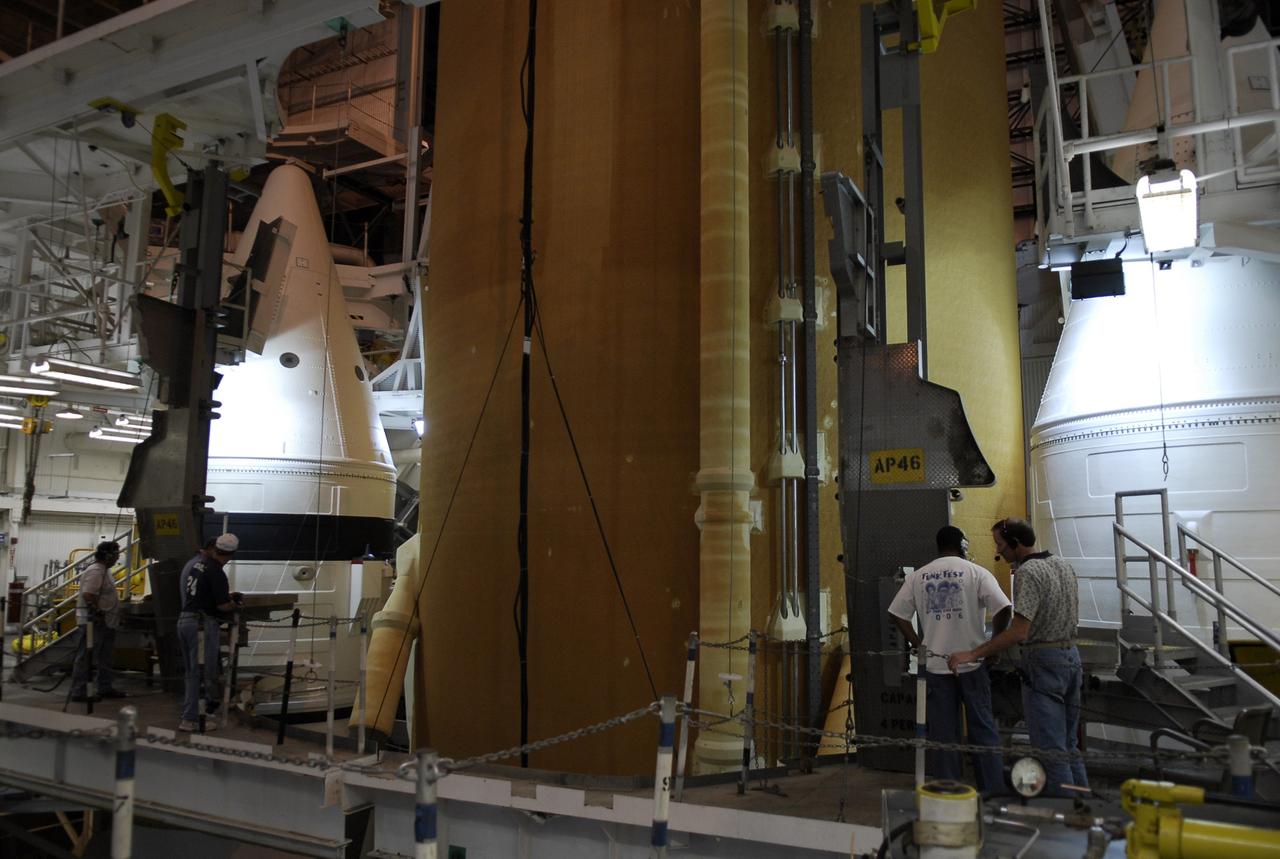
CAPE CANAVERAL, Fla. -- In the Vehicle Assembly Building at NASA's Kennedy Space Center, workers track the movement of space shuttle Discovery's external tank as it is lowered into high bay 3 between the solid rocket boosters waiting on the mobile launcher platform. The tank and rockets will be mated for the launch of Discovery on the STS-124 mission to the International Space Station, targeted for May 31. On the mission, Discovery will transport the Kibo Japanese Experiment Module - Pressurized Module (JEM-PM) and the Japanese Remote Manipulator System (JEM-RMS) to the space station to add to the Kibo laboratory. Photo credit: NASA/Kim Shiflett
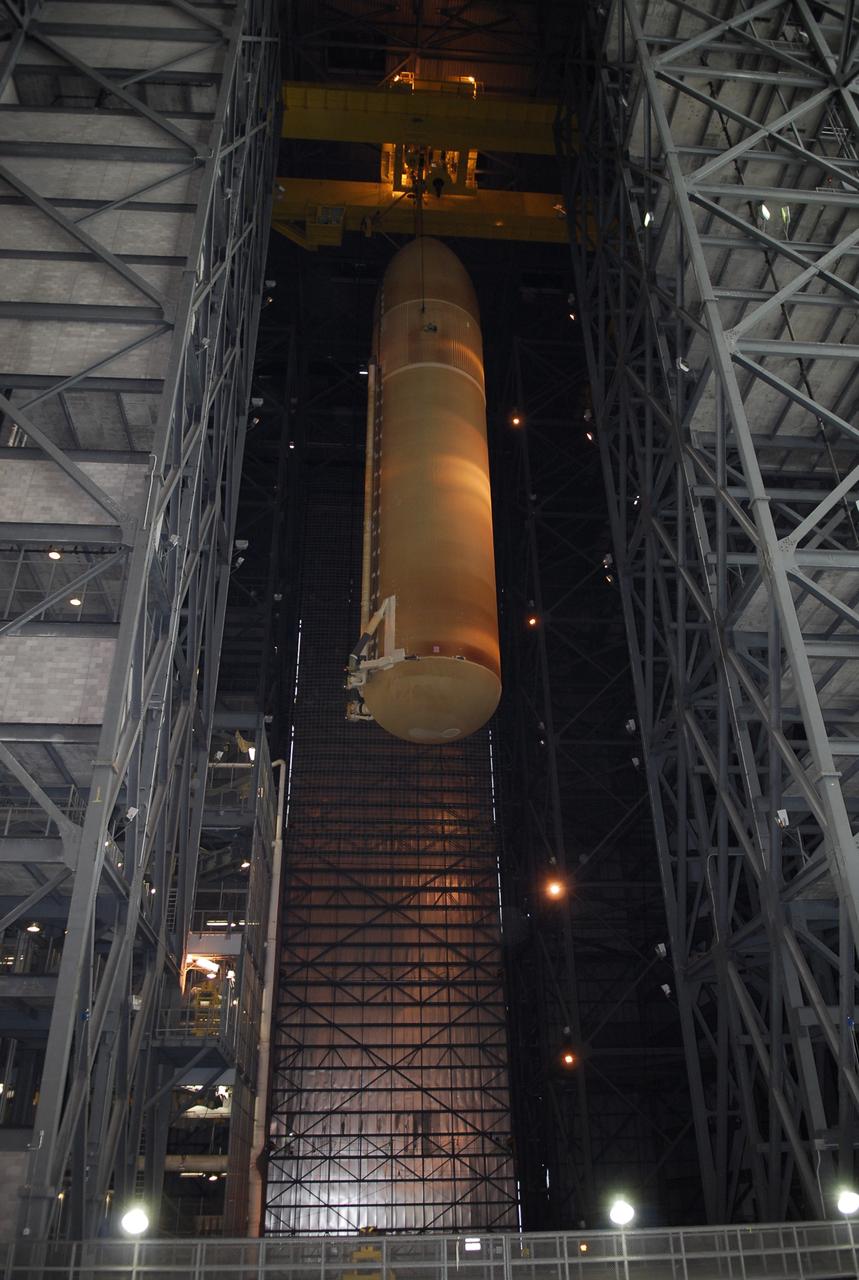
CAPE CANAVERAL, Fla. -- In the Vehicle Assembly Building at NASA's Kennedy Space Center, the external tank for space shuttle Discovery is being lowered into high bay 3. The tank will be mated to the solid rocket boosters waiting below on the mobile launcher platform. Discovery is targeted to launch May 31 on the STS-124 mission to the International Space Station. On the mission, Discovery will transport the Kibo Japanese Experiment Module - Pressurized Module (JEM-PM) and the Japanese Remote Manipulator System (JEM-RMS) to the space station to add to the Kibo laboratory. Photo credit: NASA/Kim Shiflett
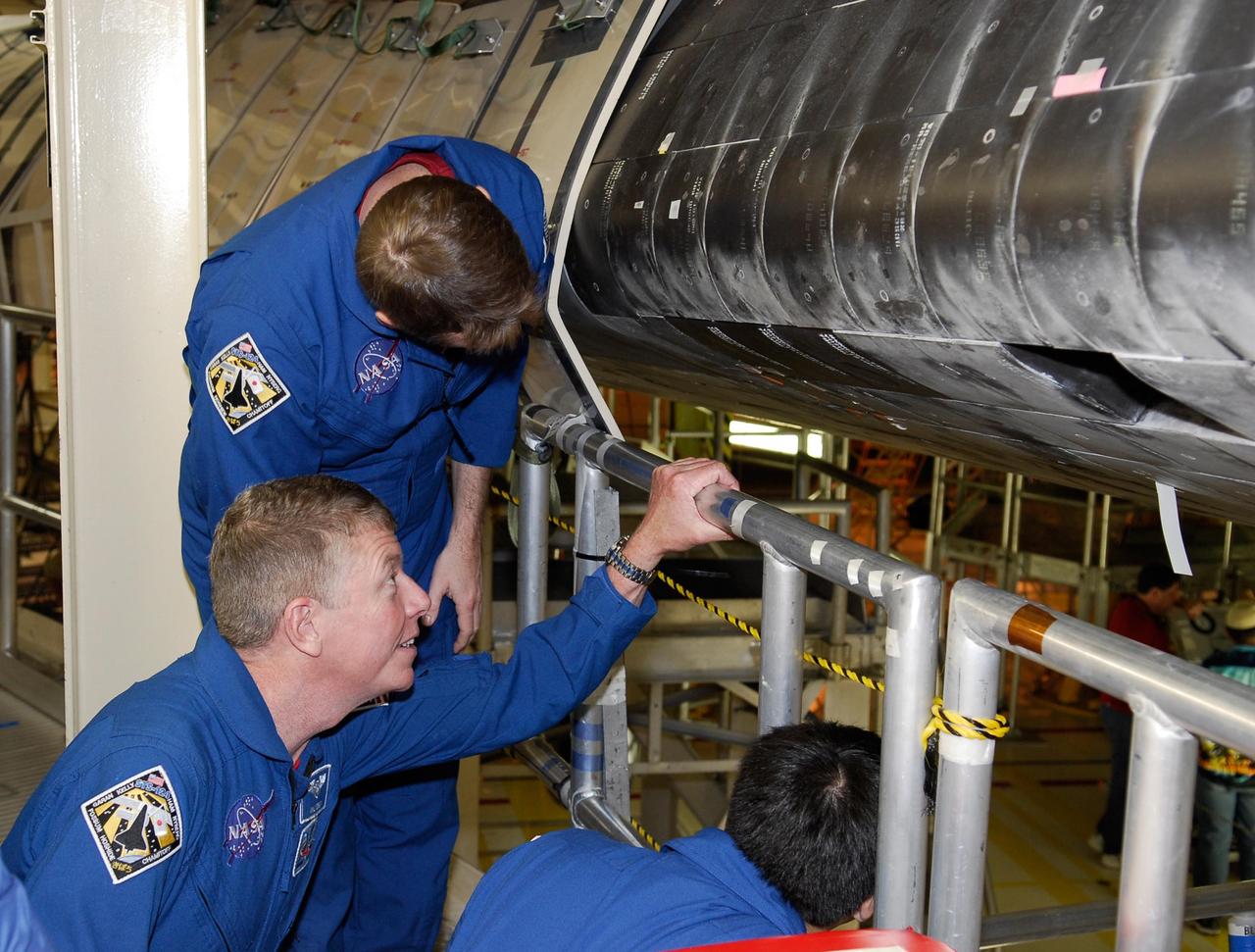
KENNEDY SPACE CENTER, FLA. -- In the Orbiter Processing Facility bay 3 at NASA's Kennedy Space Center, members of the STS-124 crew inspect space shuttle Discovery during a crew equipment interface test. Seen, top to bottom are Pilot Kenneth Ham and Mission Specialists Michael Fossum and Akihiko Hoshide, who represents the Japan Aerospace Exploration Agency, called JAXA. On the mission, Discovery will transport the Kibo Japanese Experiment Module - Pressurized Module (JEM-PM) and the Japanese Remote Manipulator System (JEM-RMS) to the International Space Station to complete the Kibo laboratory. The launch of Discovery is targeted for April 24. Photo credit: NASA/Kim Shiflett
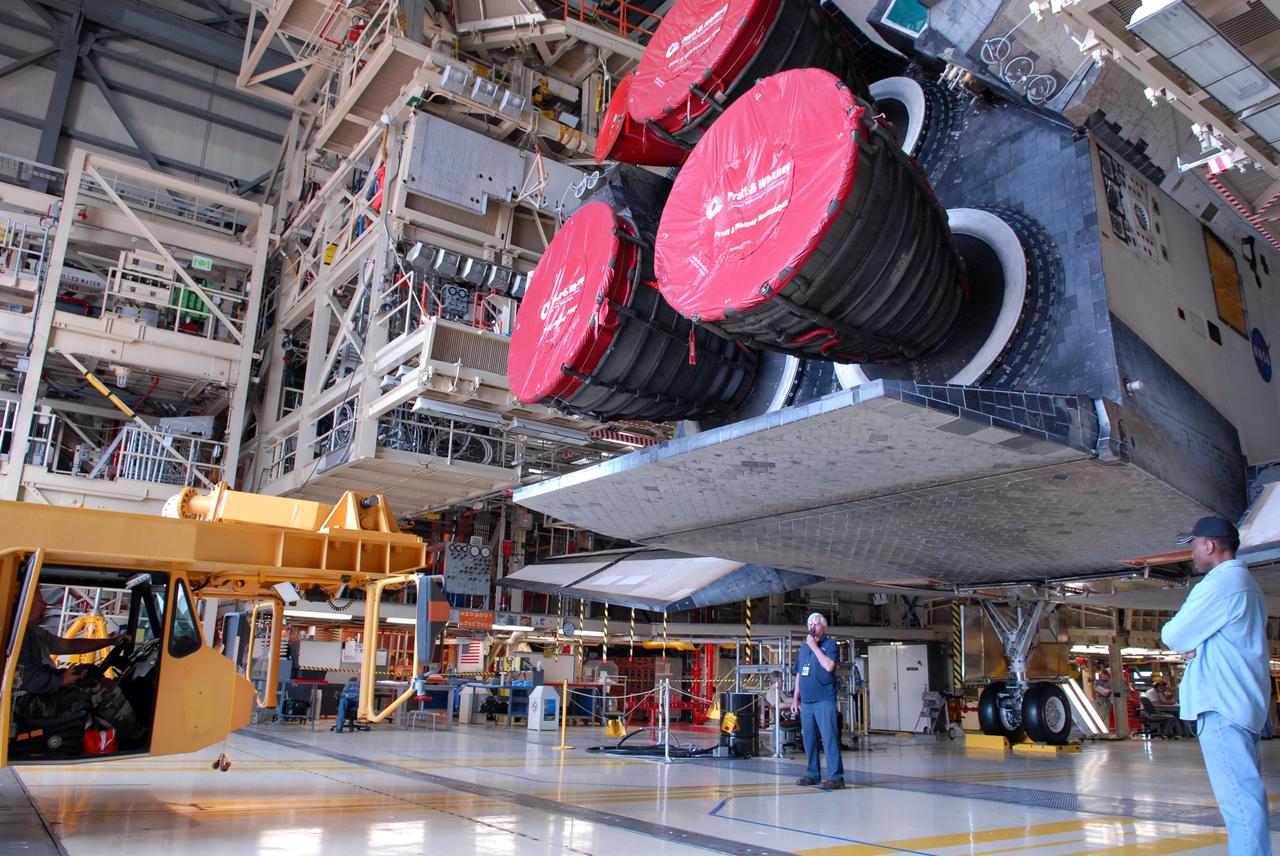
CAPE CANAVERAL, Fla. -- In Orbiter Processing Facility Bay 3 at NASA’s Kennedy Space Center, space shuttle Discovery is ready for the Orbiter Transport System, or OTS (left), to be rolled in underneath. The OTS will help move the orbiter on its rollover to the Vehicle Assembly Building. Discovery is targeted to launch May 31 on the STS-124 mission to the International Space Station. On the mission, Discovery will transport the Kibo Japanese Experiment Module - Pressurized Module (JEM-PM) and the Japanese Remote Manipulator System (JEM-RMS) to the space station to add to the Kibo laboratory. Photo credit: NASA/Troy Cryder
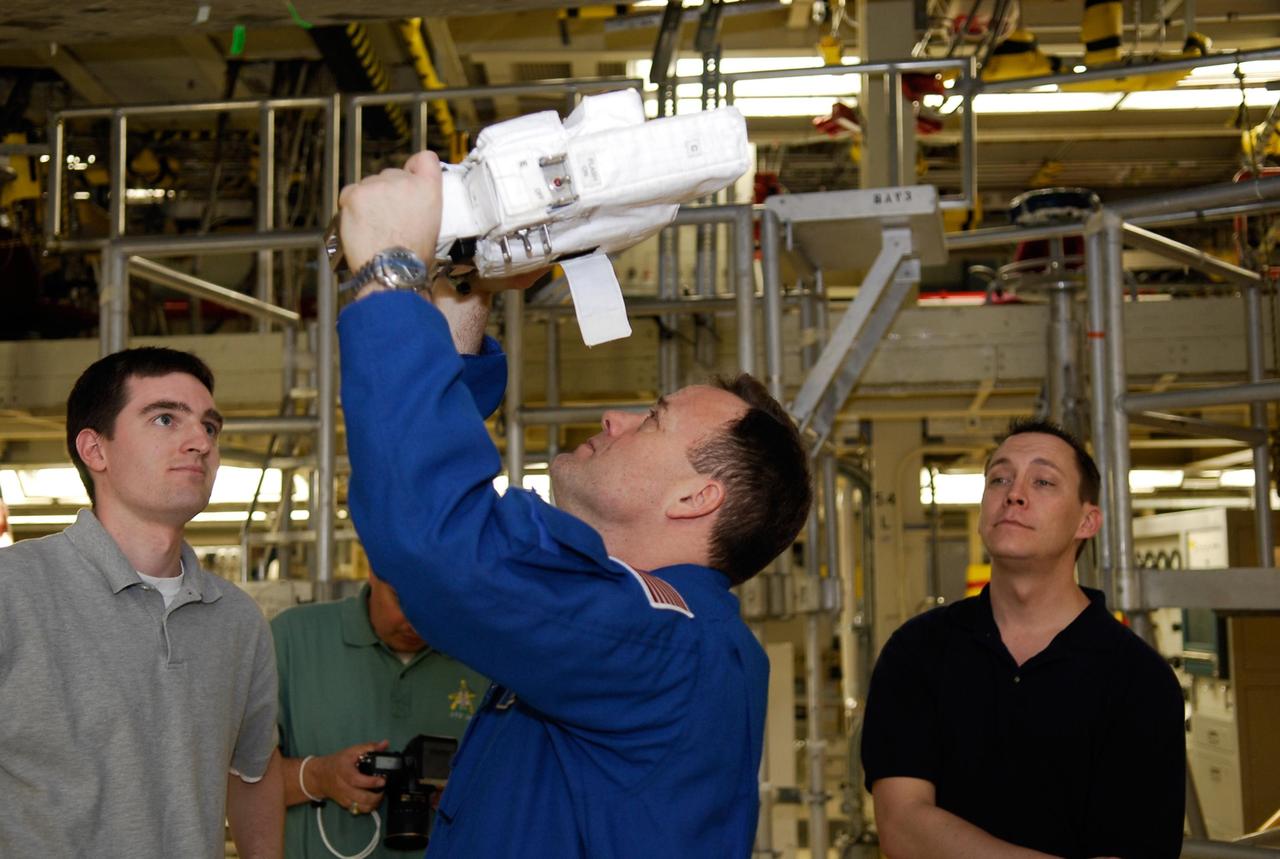
KENNEDY SPACE CENTER, FLA. -- During a crew equipment interface test in the Orbiter Processing Facility bay 3 at NASA's Kennedy Space Center, STS-124 Mission Specialist Ronald Garan practices focusing a camera on the underside of space shuttle Discovery. The camera will be used on the mission. Discovery will transport the Kibo Japanese Experiment Module - Pressurized Module (JEM-PM) and the Japanese Remote Manipulator System (JEM-RMS) to the International Space Station to complete the Kibo laboratory. The launch of Discovery is targeted for April 24. Photo credit: NASA/Kim Shiflett
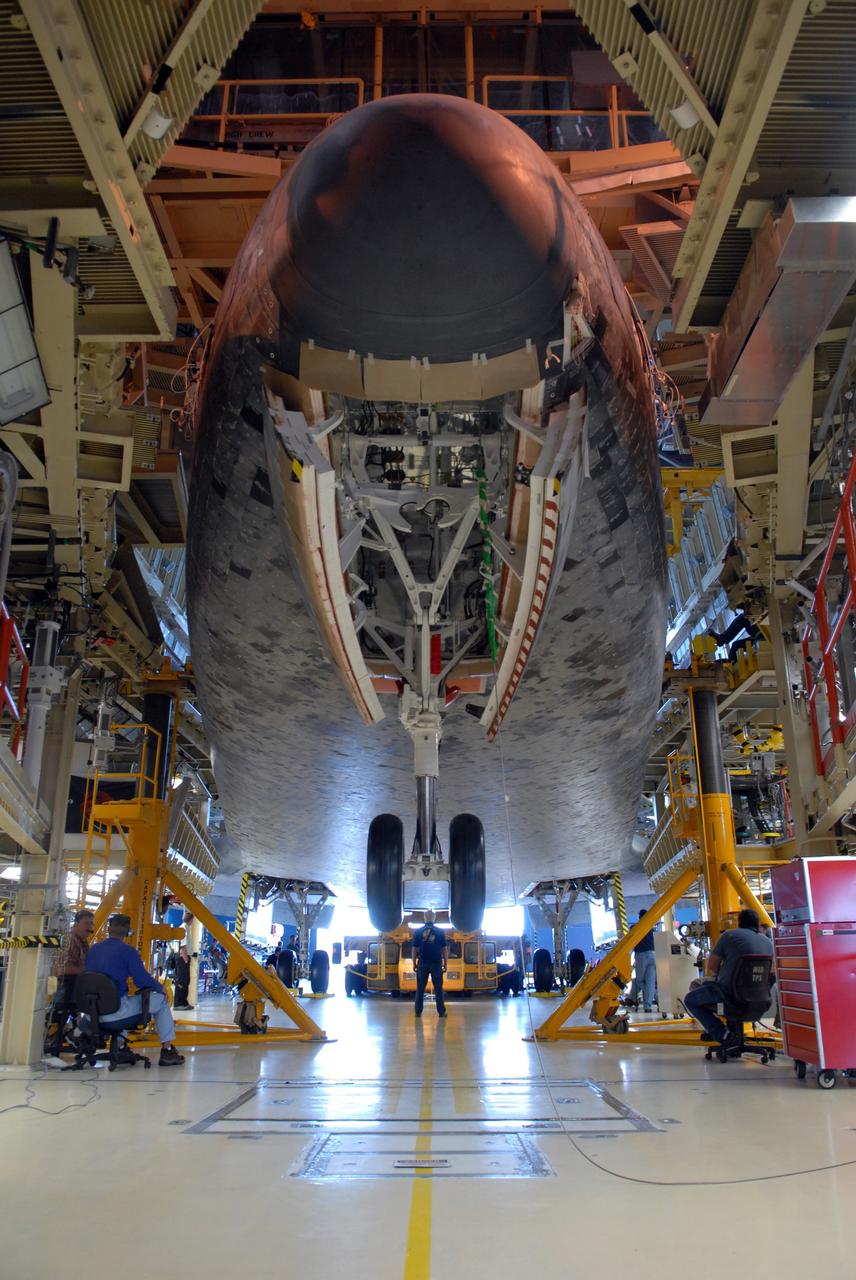
CAPE CANAVERAL, Fla. -- In Orbiter Processing Facility Bay 3 at NASA’s Kennedy Space Center, the underbelly of space shuttle Discovery is seen as the Orbiter Transport System, or OTS (behind it), is ready to roll in under it. The OTS will help move the orbiter on its rollover to the Vehicle Assembly Building. Discovery is targeted to launch May 31 on the STS-124 mission to the International Space Station. On the mission, Discovery will transport the Kibo Japanese Experiment Module - Pressurized Module (JEM-PM) and the Japanese Remote Manipulator System (JEM-RMS) to the space station to add to the Kibo laboratory. Photo credit: NASA/Troy Cryder
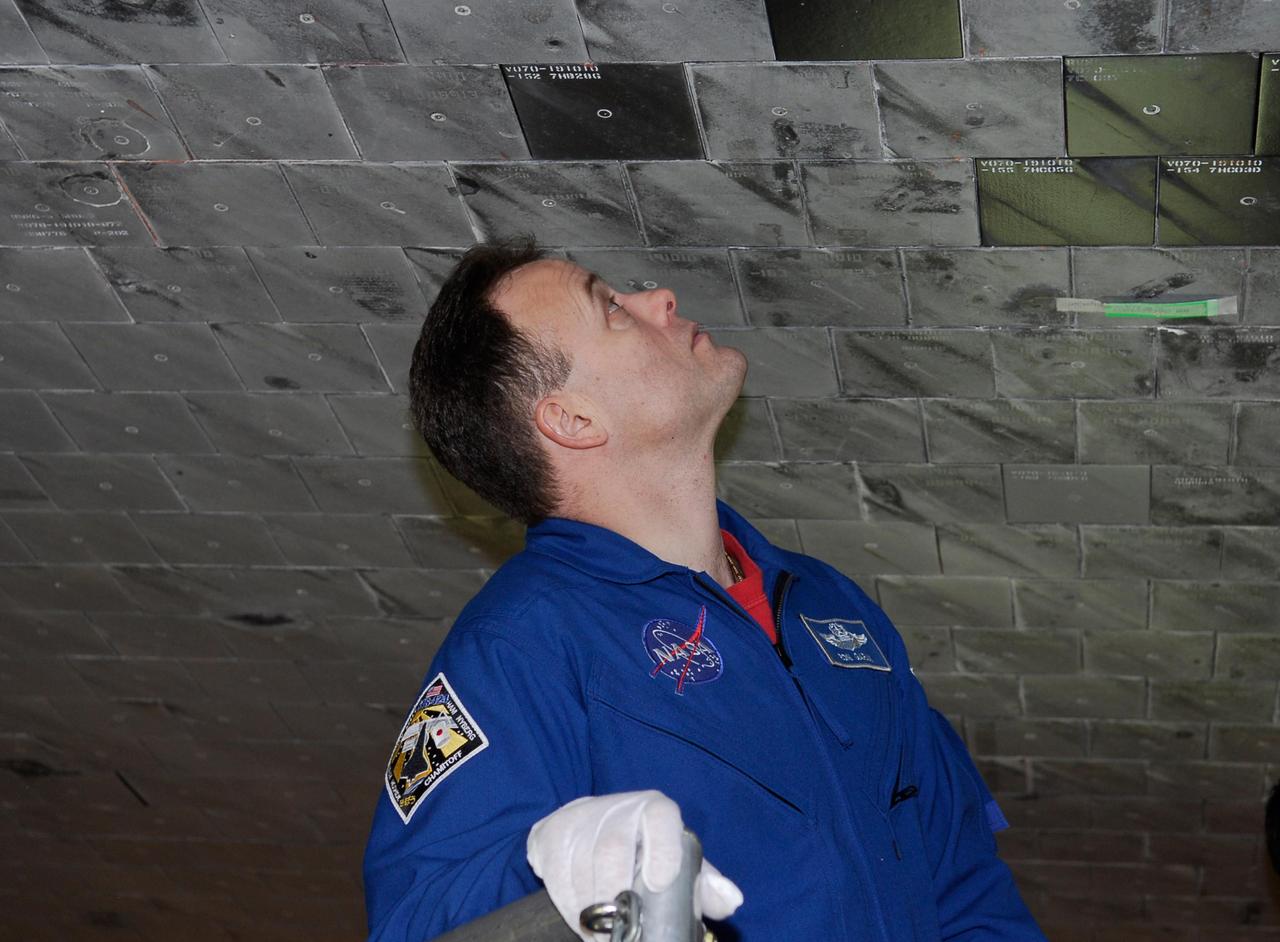
KENNEDY SPACE CENTER, FLA. -- STS-124 Mission Specialist Ron Garan examines the tiles on the underbelly of space shuttle Discovery in the Orbiter Processing Facility bay 2 at NASA's Kennedy Space Center. Members of the crew are at Kennedy for a crew equipment interface test. On the mission, Discovery will transport the Kibo Japanese Experiment Module - Pressurized Module (JEM-PM) and the Japanese Remote Manipulator System (JEM-RMS) to the International Space Station to complete the Kibo laboratory. The launch of Discovery is targeted for April 24. Photo credit: NASA/Kim Shiflett
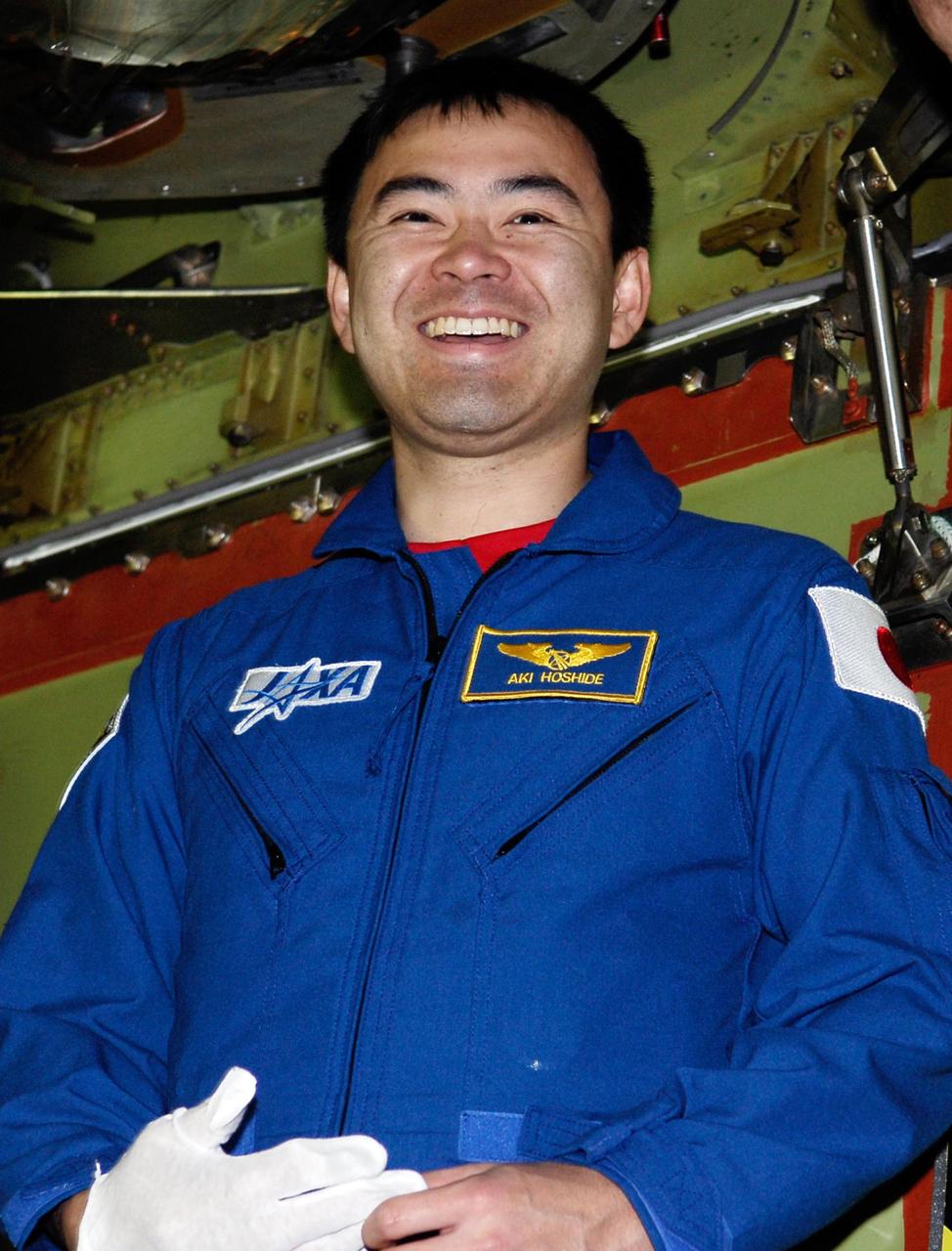
KENNEDY SPACE CENTER, FLA. -- STS-124 Mission Specialist Akihiko Hoshide looks over space shuttle Discovery in the Orbiter Processing Facility bay 2 at NASA's Kennedy Space Center. Members of the crew are at Kennedy for a crew equipment interface test. Hoshide represents the Japan Aerospace Exploration Agency, called JAXA. On the mission, Discovery will transport the Kibo Japanese Experiment Module - Pressurized Module (JEM-PM) and the Japanese Remote Manipulator System (JEM-RMS) to the International Space Station to complete the Kibo laboratory. The launch of Discovery is targeted for April 24. Photo credit: NASA/Kim Shiflett
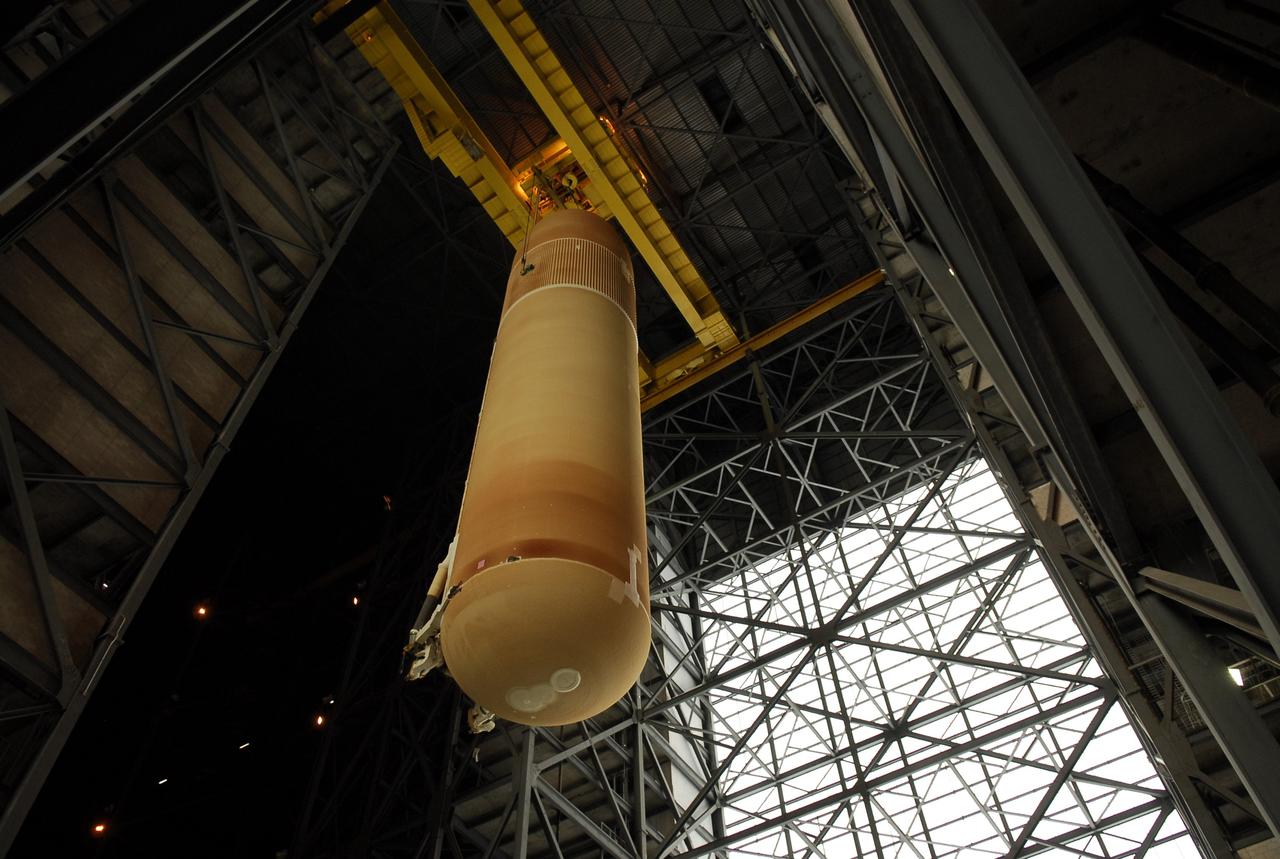
CAPE CANAVERAL, Fla. -- In the Vehicle Assembly Building at NASA's Kennedy Space Center, the external tank for space shuttle Discovery is being lowered into high bay 3. The tank will be mated to the solid rocket boosters waiting below on the mobile launcher platform. Discovery is targeted to launch May 31 on the STS-124 mission to the International Space Station. On the mission, Discovery will transport the Kibo Japanese Experiment Module - Pressurized Module (JEM-PM) and the Japanese Remote Manipulator System (JEM-RMS) to the space station to add to the Kibo laboratory. Photo credit: NASA/Kim Shiflett
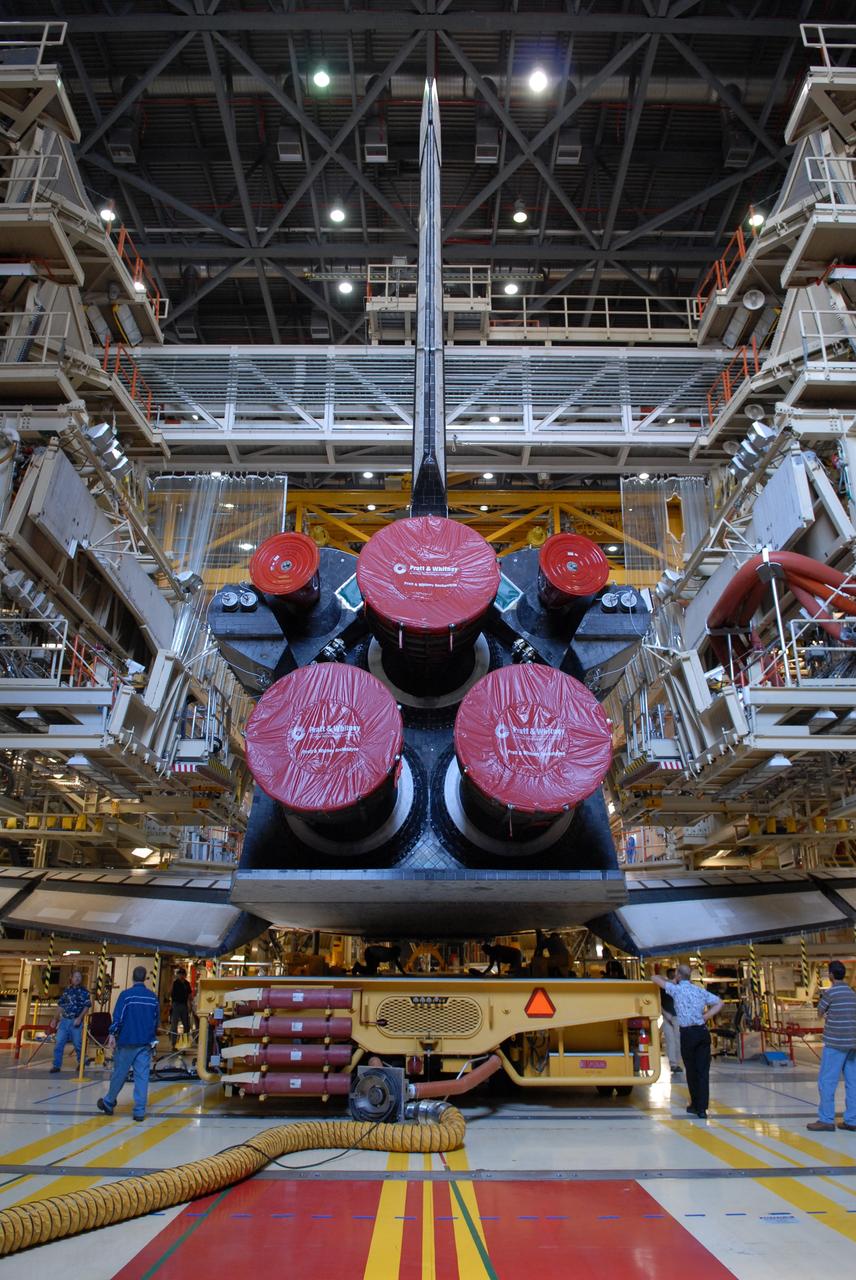
CAPE CANAVERAL, Fla. -- In Orbiter Processing Facility Bay 3 at NASA’s Kennedy Space Center, workers continue to secure the Orbiter Transport System, or OTS, under space shuttle Discovery. The OTS will help move the orbiter on its rollover to the Vehicle Assembly Building. Discovery is targeted to launch May 31 on the STS-124 mission to the International Space Station. On the mission, Discovery will transport the Kibo Japanese Experiment Module - Pressurized Module (JEM-PM) and the Japanese Remote Manipulator System (JEM-RMS) to the space station to add to the Kibo laboratory. Photo credit: NASA/Troy Cryder

KENNEDY SPACE CENTER, FLA. -- During a crew equipment interface test in the Orbiter Processing Facility bay 3 at NASA's Kennedy Space Center, STS-124 crew members ride into the open payload bay of space shuttle Discovery. At center is Mission Specialist Akihiko Hoshide; second from right is Mission Specialist Karen Nyberg. Hoshide represents the Japan Aerospace Exploration Agency, called JAXA. Discovery will transport the Kibo Japanese Experiment Module - Pressurized Module (JEM-PM) and the Japanese Remote Manipulator System (JEM-RMS) to the International Space Station to complete the Kibo laboratory. The launch of Discovery is targeted for April 24. Photo credit: NASA/Kim Shiflett
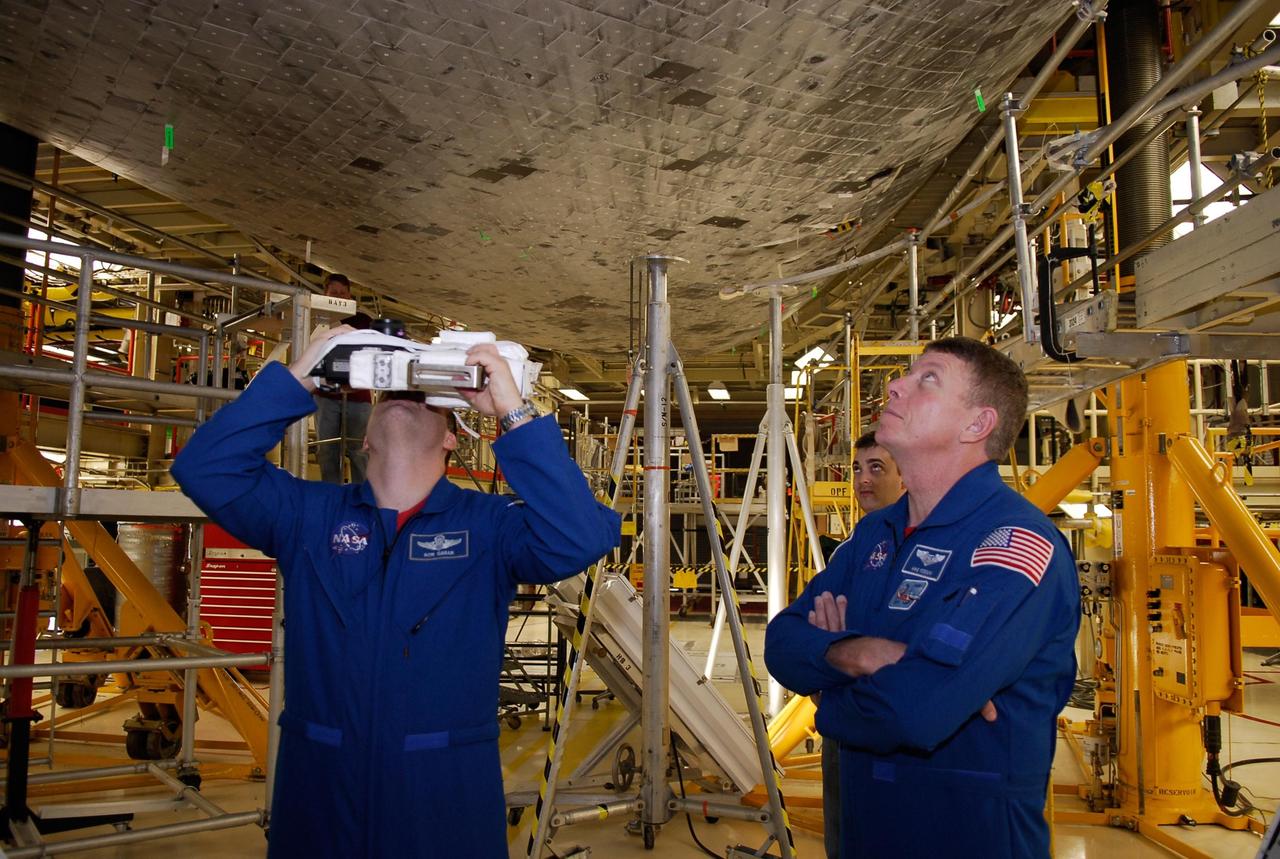
KENNEDY SPACE CENTER, FLA. -- During a crew equipment interface test in the Orbiter Processing Facility bay 3 at NASA's Kennedy Space Center, STS-124 Mission Specialist Ronald Garan practices focusing a camera on the underside of space shuttle Discovery. At right is Mission Specialist Michael Fossum. The camera will be used on the mission. Discovery will transport the Kibo Japanese Experiment Module - Pressurized Module (JEM-PM) and the Japanese Remote Manipulator System (JEM-RMS) to the International Space Station to complete the Kibo laboratory. The launch of Discovery is targeted for April 24. Photo credit: NASA/Kim Shiflett
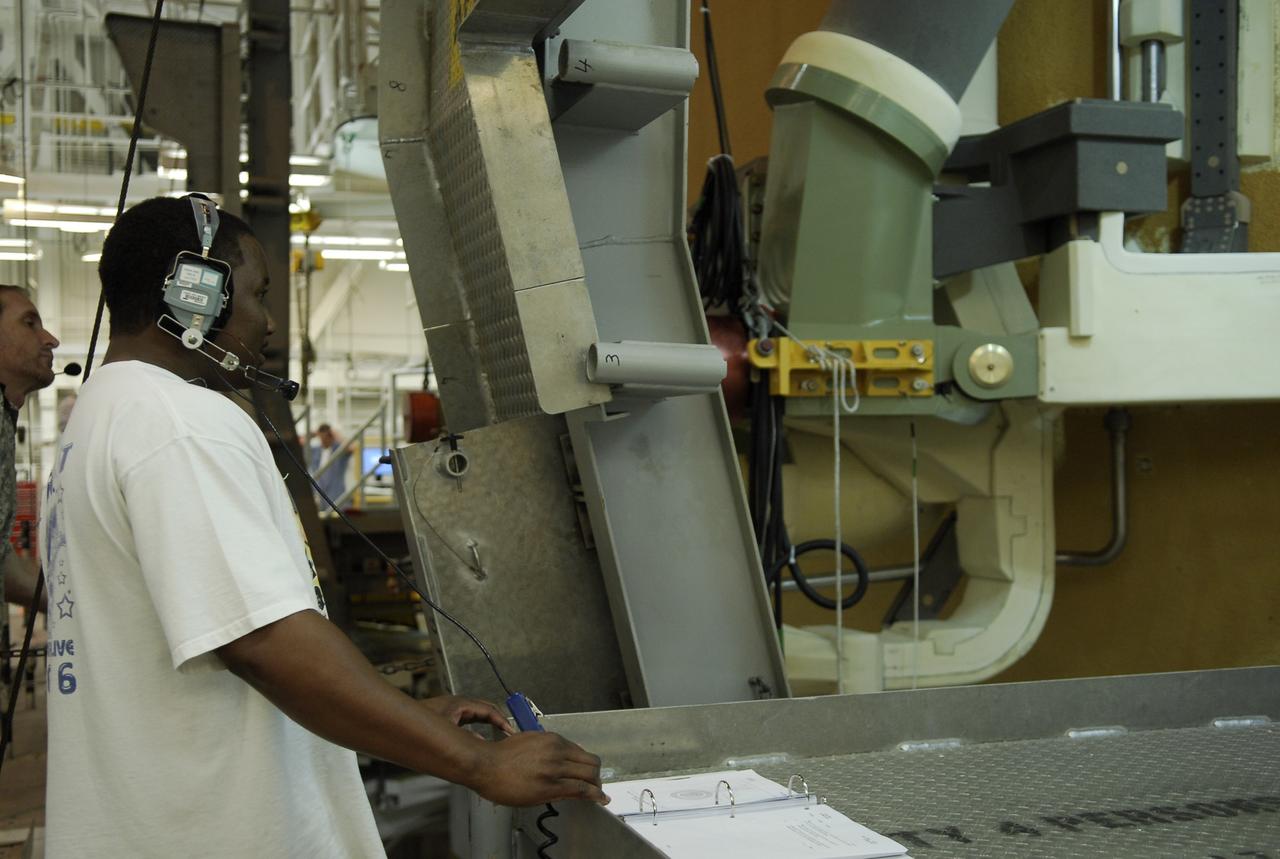
CAPE CANAVERAL, Fla. -- In the Vehicle Assembly Building at NASA's Kennedy Space Center, Payton Jones, an aerospace senior technician with United Space Alliance, stands on E platform on the 14th floor of high bay 3 as he monitors the external tank being lowered and leveled between the solid rocket boosters and platforms. The tank and rockets will be mated for the launch of Discovery on the STS-124 mission to the International Space Station, targeted for May 31. On the mission, Discovery will transport the Kibo Japanese Experiment Module - Pressurized Module (JEM-PM) and the Japanese Remote Manipulator System (JEM-RMS) to the space station to add to the Kibo laboratory. Photo credit: NASA/Kim Shiflett

KENNEDY SPACE CENTER, FLA. -- In the Orbiter Processing Facility bay 3 at NASA's Kennedy Space Center, STS-124 Mission Specialist Akihiko Hoshide takes a close look inside part of space shuttle Discovery during a crew equipment interface test. Hoshide represents the Japan Aerospace Exploration Agency, called JAXA. On the mission, Discovery will transport the Kibo Japanese Experiment Module - Pressurized Module (JEM-PM) and the Japanese Remote Manipulator System (JEM-RMS) to the International Space Station to complete the Kibo laboratory. The launch of Discovery is targeted for April 24. Photo credit: NASA/Kim Shiflett

KENNEDY SPACE CENTER, FLA. -- In the Orbiter Processing Facility bay 3 at NASA's Kennedy Space Center, STS-124 Mission Specialist Michael Fossum takes a close look inside part of space shuttle Discovery during a crew equipment interface test. On the mission, Discovery will transport the Kibo Japanese Experiment Module - Pressurized Module (JEM-PM) and the Japanese Remote Manipulator System (JEM-RMS) to the International Space Station to complete the Kibo laboratory. The launch of Discovery is targeted for April 24. Photo credit: NASA/Kim Shiflett
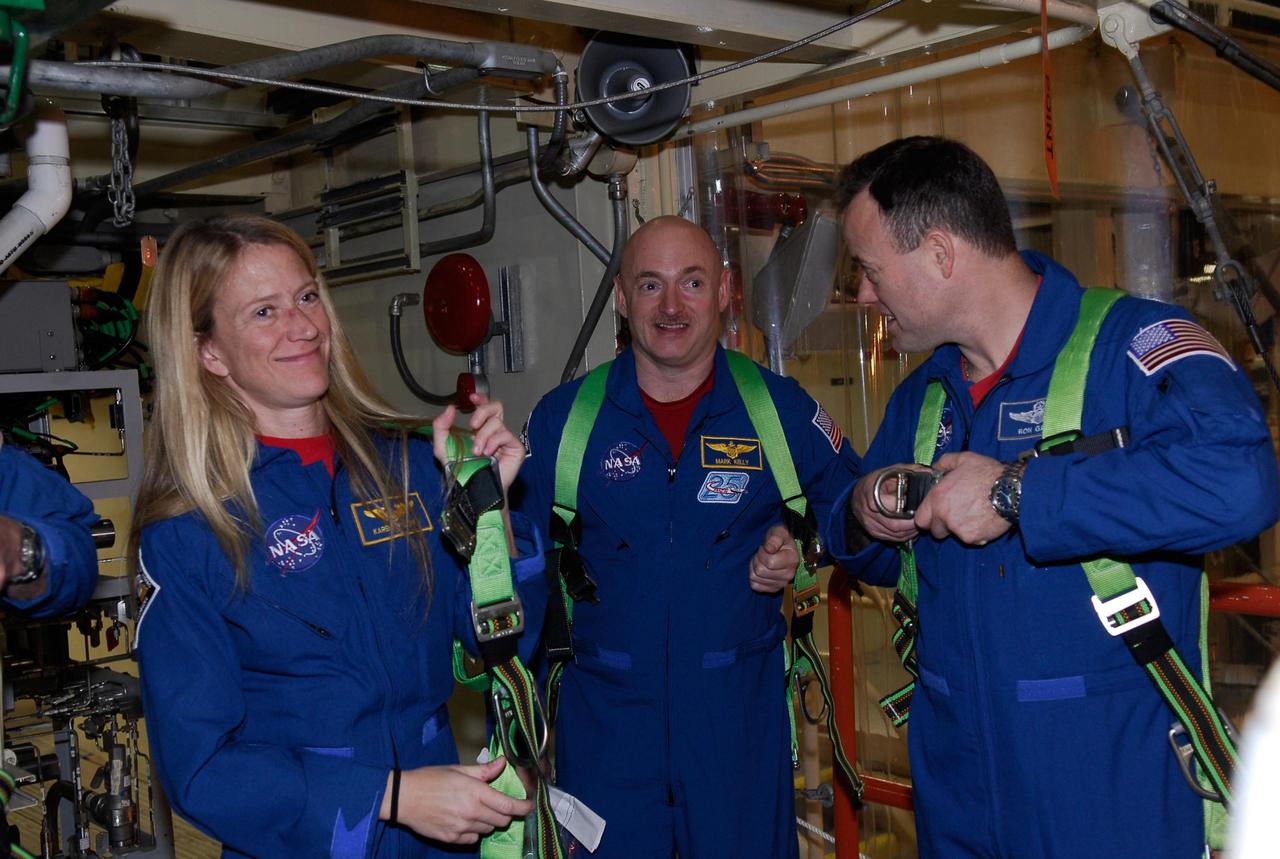
KENNEDY SPACE CENTER, FLA. -- Members of space shuttle Discovery's STS-124 crew put on safety harnesses in the Orbiter Processing Facility bay 3 at NASA's Kennedy Space Center during a crew equipment interface test. From left are Mission Specialist Karen Nyberg, Pilot Mark Kelly and Mission Specialist Ronald Garan. On the mission, Discovery will transport the Kibo Japanese Experiment Module - Pressurized Module (JEM-PM) and the Japanese Remote Manipulator System (JEM-RMS) to the International Space Station to complete the Kibo laboratory. The launch of Discovery is targeted for April 24. Photo credit: NASA/Kim Shiflett
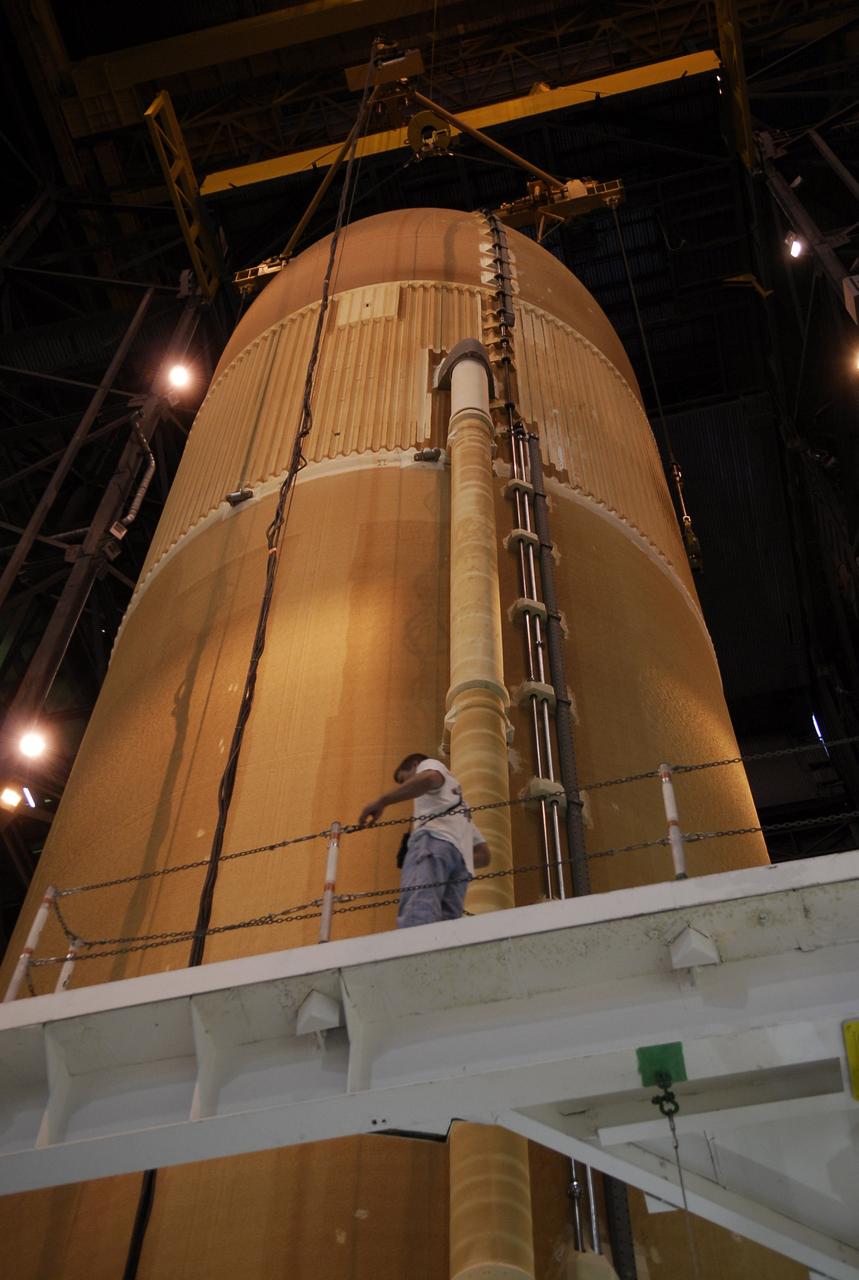
CAPE CANAVERAL, Fla. -- In the Vehicle Assembly Building at NASA's Kennedy Space Center, the external tank for space shuttle Discovery is being lowered into place in high bay 3 between the solid rocket boosters waiting on the mobile launcher platform. The tank will be mated to the boosters. Discovery is targeted to launch May 31 on the STS-124 mission to the International Space Station. On the mission, Discovery will transport the Kibo Japanese Experiment Module - Pressurized Module (JEM-PM) and the Japanese Remote Manipulator System (JEM-RMS) to the space station to add to the Kibo laboratory. Photo credit: NASA/Kim Shiflett
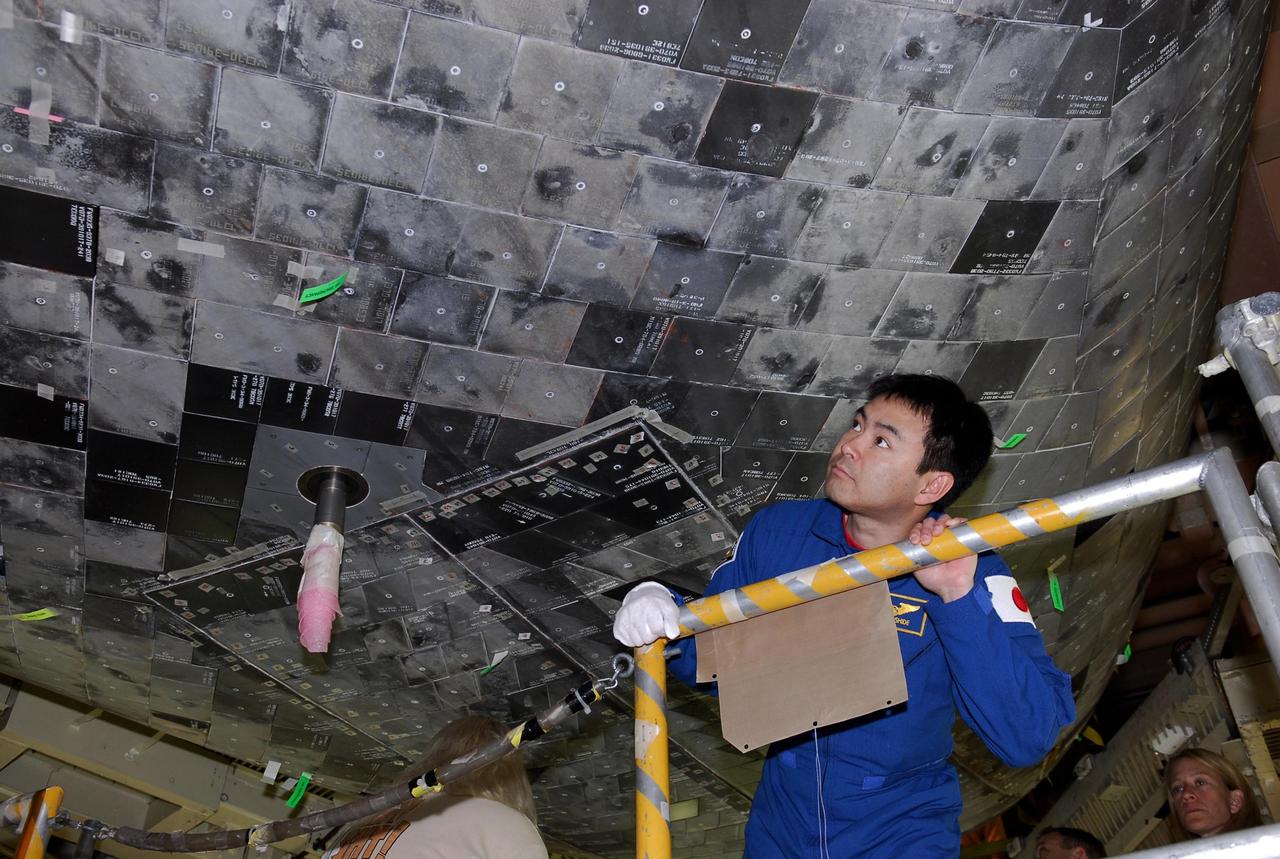
KENNEDY SPACE CENTER, FLA. -- In the Orbiter Processing Facility bay 3 at NASA's Kennedy Space Center, STS-124 Mission Specialist Akihiko Hoshide takes a close look at the tiles on the underbelly of space shuttle Discovery. Hoshide represents the Japan Aerospace Exploration Agency, called JAXA. On the mission, Discovery will transport the Kibo Japanese Experiment Module - Pressurized Module (JEM-PM) and the Japanese Remote Manipulator System (JEM-RMS) to the International Space Station to complete the Kibo laboratory. The launch of Discovery is targeted for April 24. Photo credit: NASA/Kim Shiflett

JSC2003-E-42545 (For Release: 18 June 2003) --- The Japanese Experiment Module (JEM) Pressurized Module (PM) is shown in a processing facility with the Remote Manipulator System (RMS) Main Arm attached for integrated testing. The JEM, called Kibo, which means "hope" in Japanese is Japan's primary contribution to the International Space Station. The Main Arm can handle up to seven tons (14,000 pounds) of hardware and a Small Fine Arm can be attached to handle more delicate operations. The PM arrived at Kennedy Space Center (KSC) in early June 2003 to begin integrated testing with the Station's Node 2 and eventually pre-launch processing. The RMS will be delivered to KSC processing at a later date. Photo Credit: NASA

KENNEDY SPACE CENTER, FLA. --In the Space Station Processing Facility at NASA's Kennedy Space Center, workers stand by as an overhead crane lowers the Japanese Experiment Module, called Kibo, onto the scale for weighing. Also known as the JEM-PM, the module is the primary payload for space shuttle Discovery's STS-124 mission, which is targeted for launch to the International Space Station on April 24. Photo credit: NASA/Jim Cain

KENNEDY SPACE CENTER, FLA. -- In the Space Station Processing Facility at NASA's Kennedy Space Center, an overhead crane is fitted onto the Japanese Experiment Module, called Kibo. The module will be lifted to a scale for weighing. Also known as the JEM-PM, the module is the primary payload for space shuttle Discovery's STS-124 mission, which is targeted for launch to the International Space Station on April 24. Photo credit: NASA/Jim Cain

KENNEDY SPACE CENTER, FLA. -- In the Space Station Processing Facility at NASA's Kennedy Space Center, workers prepare the Japanese Experiment Module, called Kibo, to be weighed. Also known as the JEM-PM, the module is the primary payload for space shuttle Discovery's STS-124 mission, which is targeted for launch to the International Space Station on April 24. Photo credit: NASA/Jim Cain
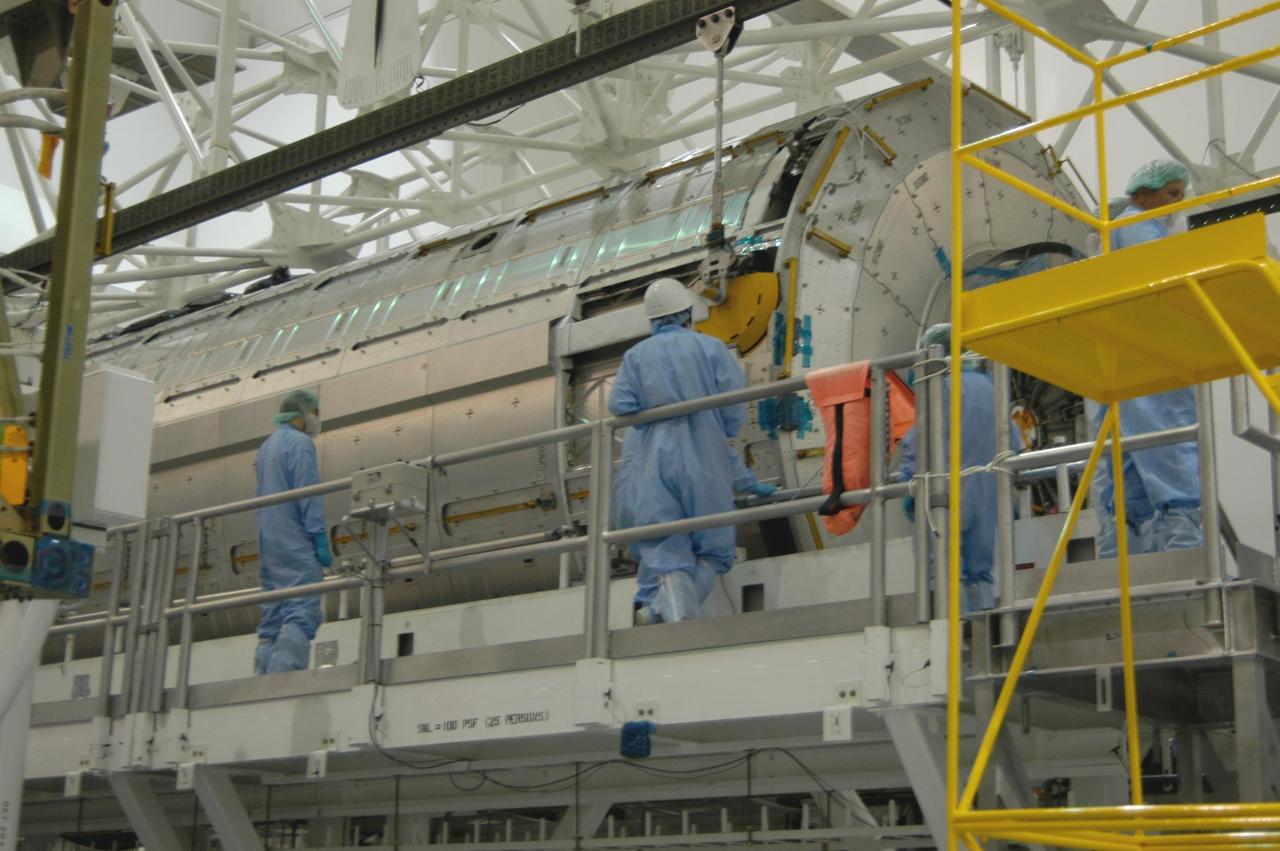
KENNEDY SPACE CENTER, FLA. --In the Space Station Processing Facility at NASA's Kennedy Space Center, workers stand by as an overhead crane lowers the Japanese Experiment Module, called Kibo, onto the scale for weighing. Also known as the JEM-PM, the module is the primary payload for space shuttle Discovery's STS-124 mission, which is targeted for launch to the International Space Station on April 24. Photo credit: NASA/Jim Cain
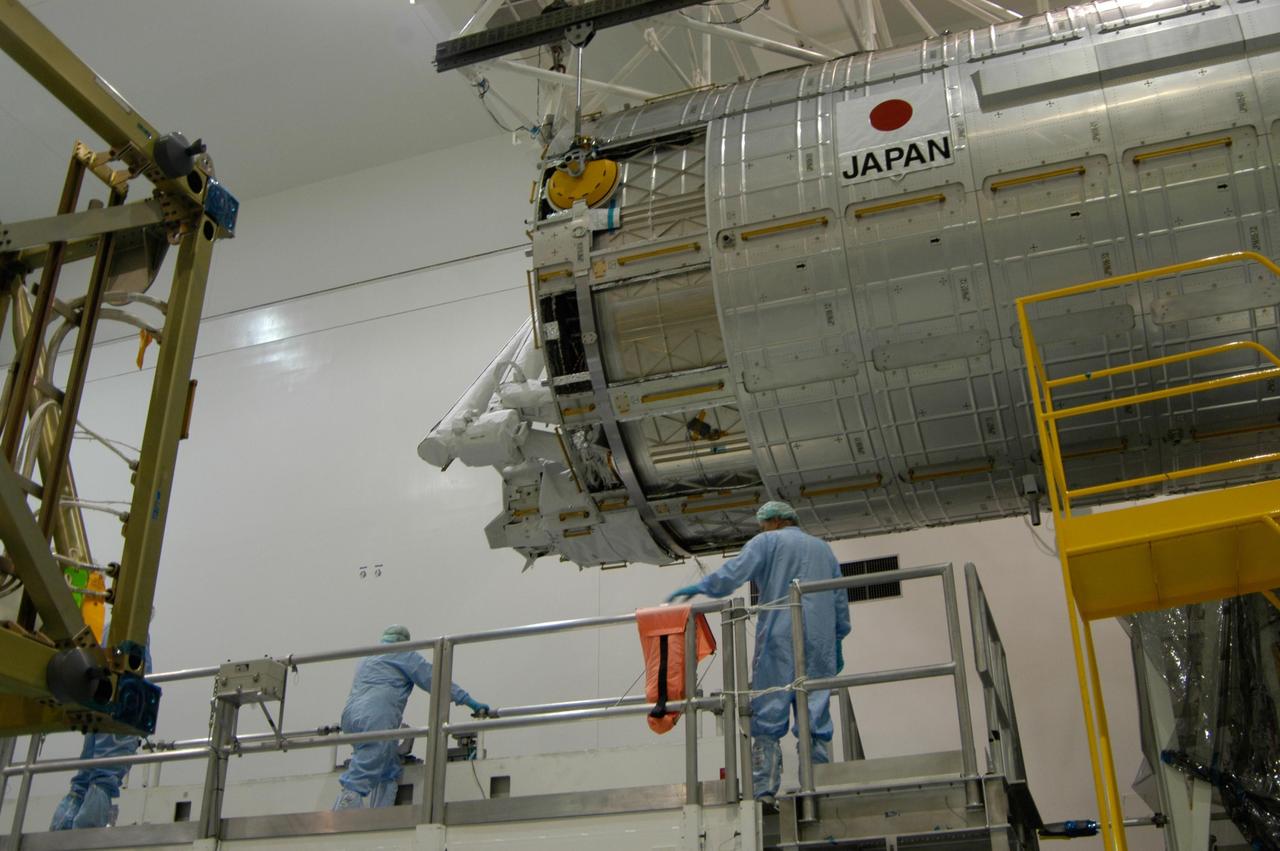
KENNEDY SPACE CENTER, FLA. -- In the Space Station Processing Facility at NASA's Kennedy Space Center, workers stand by as an overhead crane moves the Japanese Experiment Module, called Kibo, onto the scale for weighing. Also known as the JEM-PM, the module is the primary payload for space shuttle Discovery's STS-124 mission, which is targeted for launch to the International Space Station on April 24. Photo credit: NASA/Jim Cain
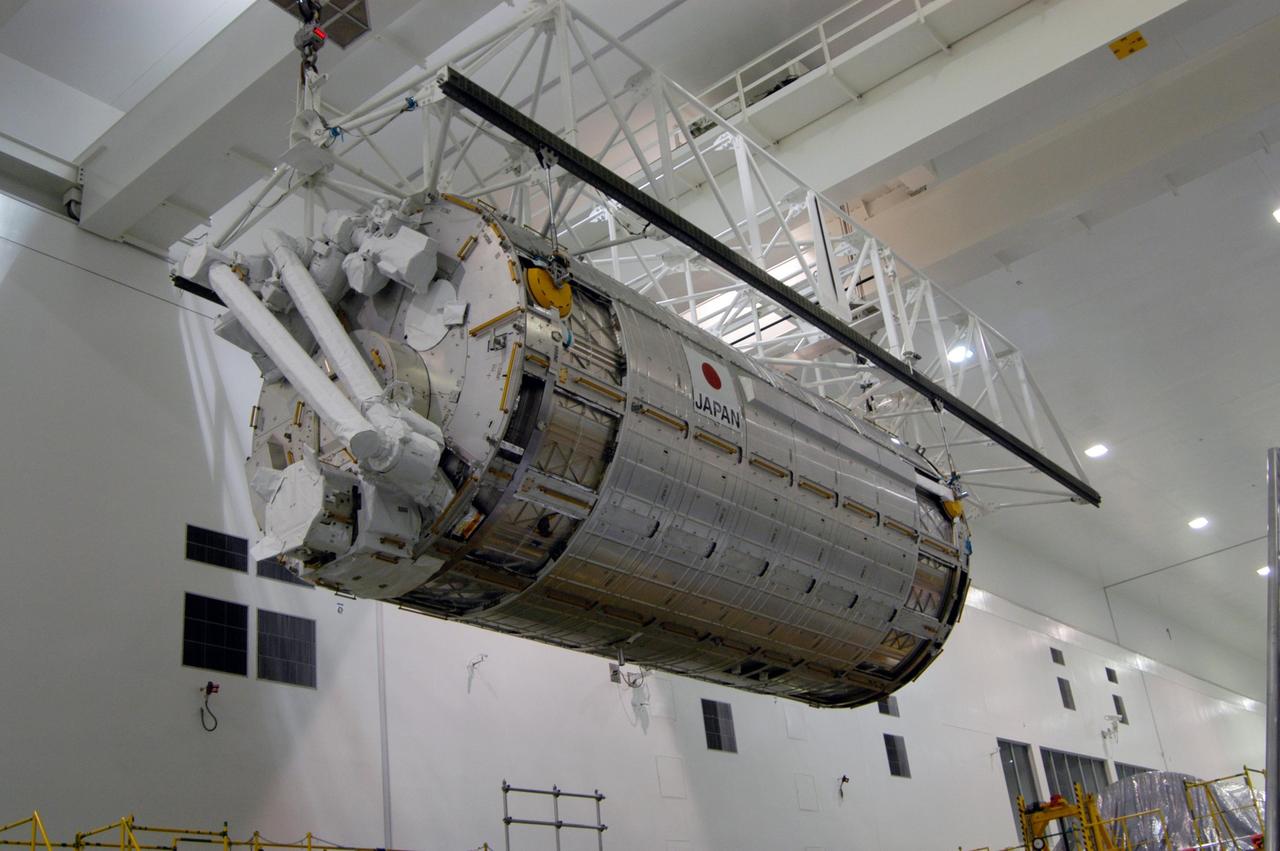
KENNEDY SPACE CENTER, FLA. -- In the Space Station Processing Facility at NASA's Kennedy Space Center, an overhead crane lifts and moves the Japanese Experiment Module, called Kibo, to a scale for weighing. Also known as the JEM-PM, the module is the primary payload for space shuttle Discovery's STS-124 mission, which is targeted for launch to the International Space Station on April 24. Photo credit: NASA/Jim Cain
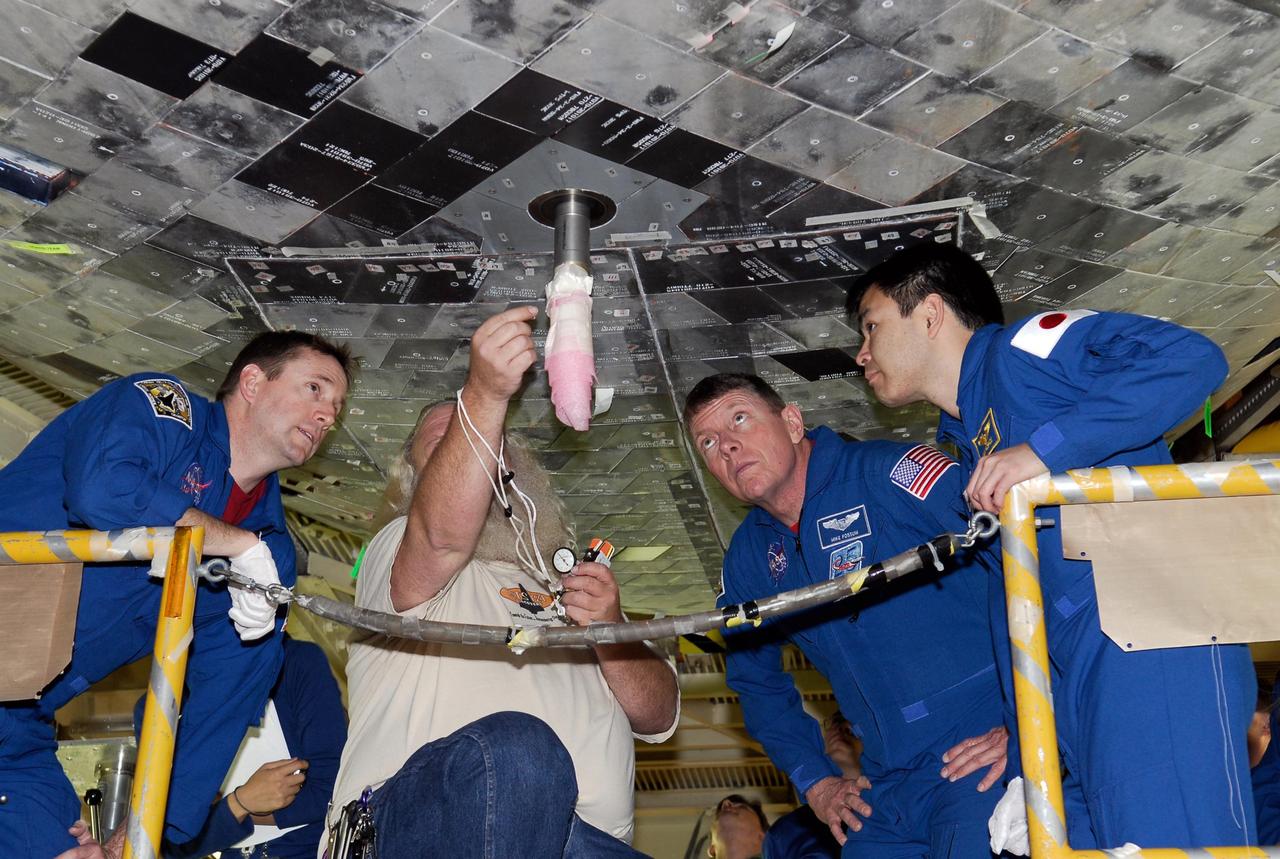
KENNEDY SPACE CENTER, FLA. -- During a crew equipment interface test in the Orbiter Processing Facility bay 3 at NASA's Kennedy Space Center, members of the STS-124 crew, along with a technician, get a close look at the underside of space shuttle Discovery and the attach point for the external tank. The crew members from left are Pilot Kenneth Ham and Mission Specialists Michael Fossum and Akihiko Hoshide, who represents the Japan Aerospace Exploration Agency, called JAXA. On the mission, Discovery will transport the Kibo Japanese Experiment Module - Pressurized Module (JEM-PM) and the Japanese Remote Manipulator System (JEM-RMS) to the International Space Station to complete the Kibo laboratory. The launch of Discovery is targeted for April 24. Photo credit: NASA/Kim Shiflett