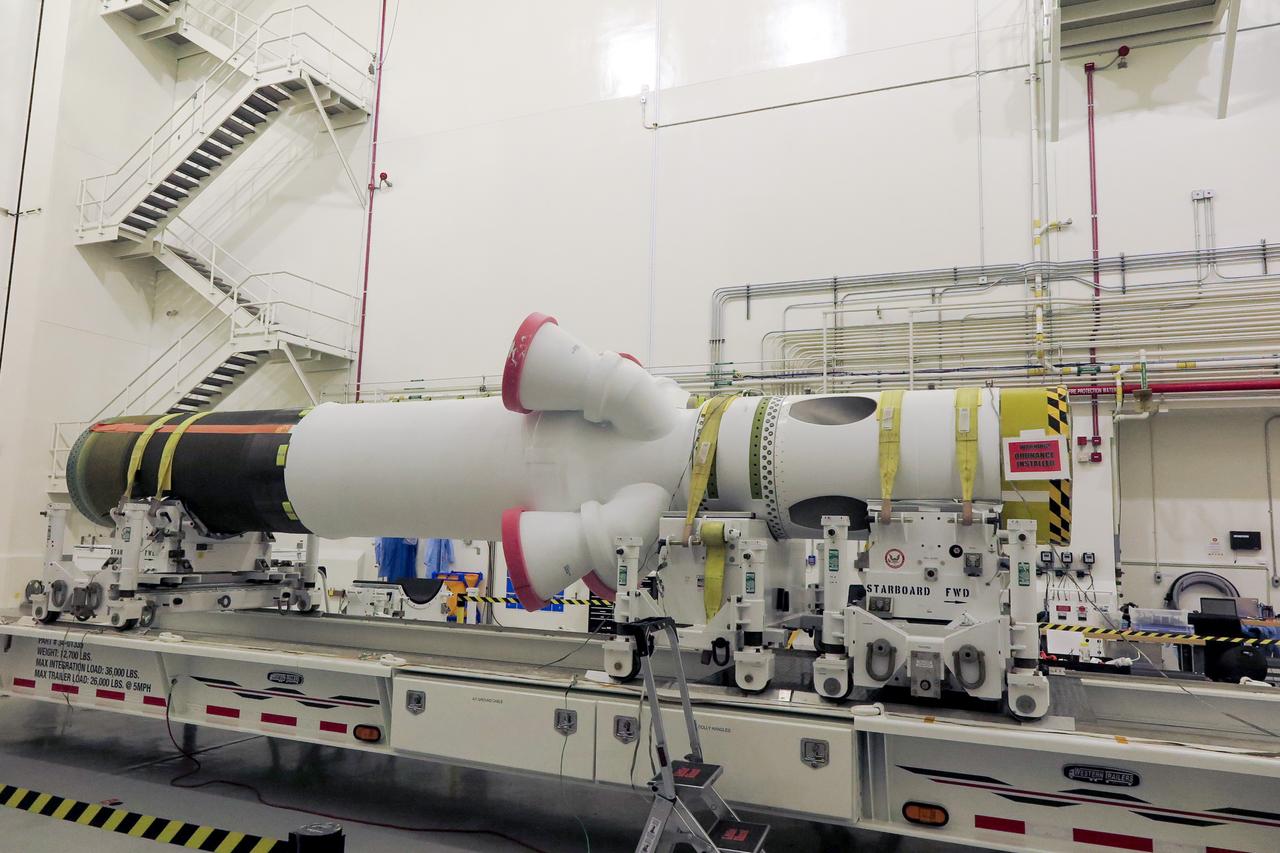
The launch abort motor is integrated with the jettison motor for Orion’s launch abort system (LAS) for Artemis II, inside the Launch Abort System Facility at NASA’s Kennedy Space Center in Florida on April 15, 2020. The launch abort and jettison motors are two of three motors on the LAS. The LAS will be positioned atop the Orion crew module and is designed to protect astronauts if a problem arises during launch by pulling the spacecraft away from a failing rocket. Artemis II will take the first humans in orbit around the Moon in the 21st century.
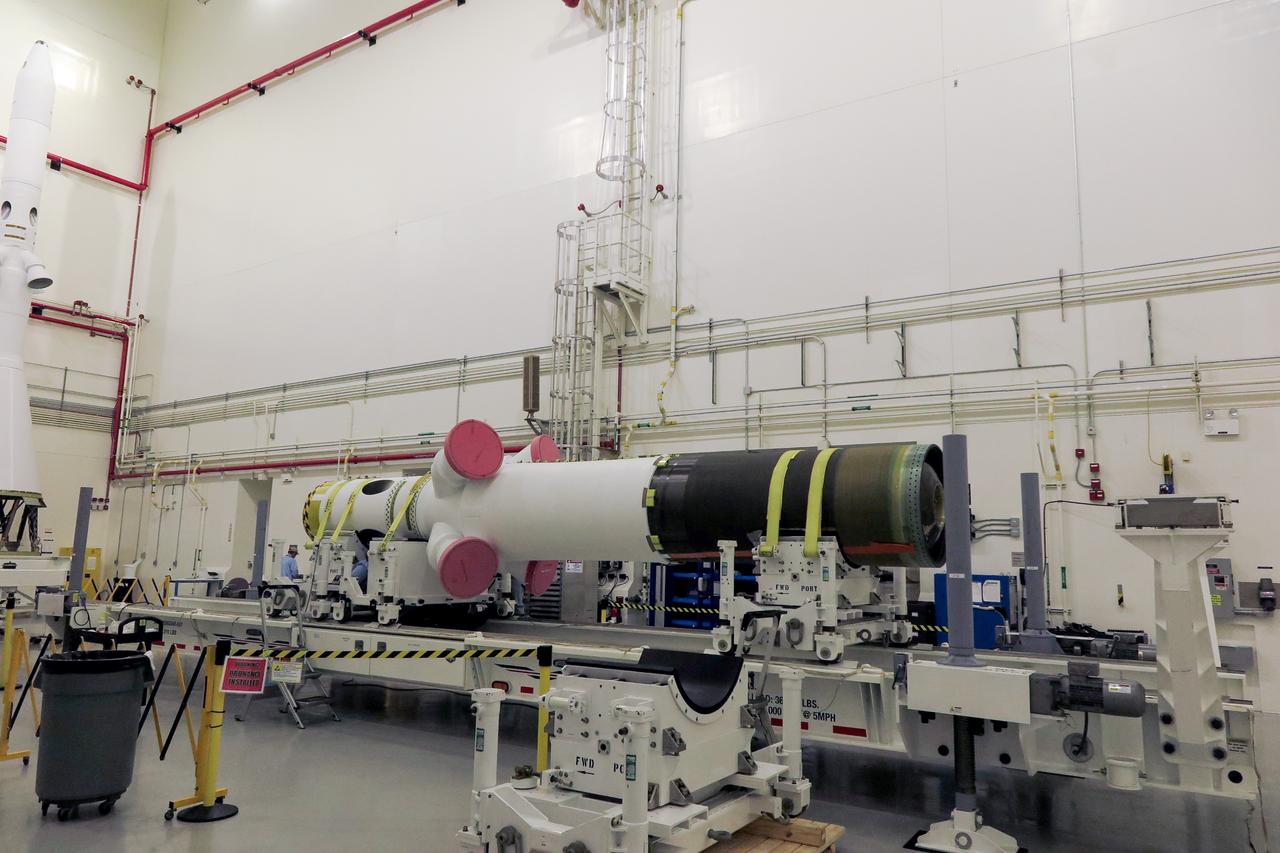
The launch abort motor is integrated with the jettison motor for Orion’s launch abort system (LAS) for Artemis II, inside the Launch Abort System Facility at NASA’s Kennedy Space Center in Florida on April 15, 2020. The launch abort and jettison motors are two of three motors on the LAS. The LAS will be positioned atop the Orion crew module and is designed to protect astronauts if a problem arises during launch by pulling the spacecraft away from a failing rocket. Artemis II will take the first humans in orbit around the Moon in the 21st century. In view, at far left, is the Launch Abort System for Artemis I, the first uncrewed mission of Orion atop the Space Launch System rocket.
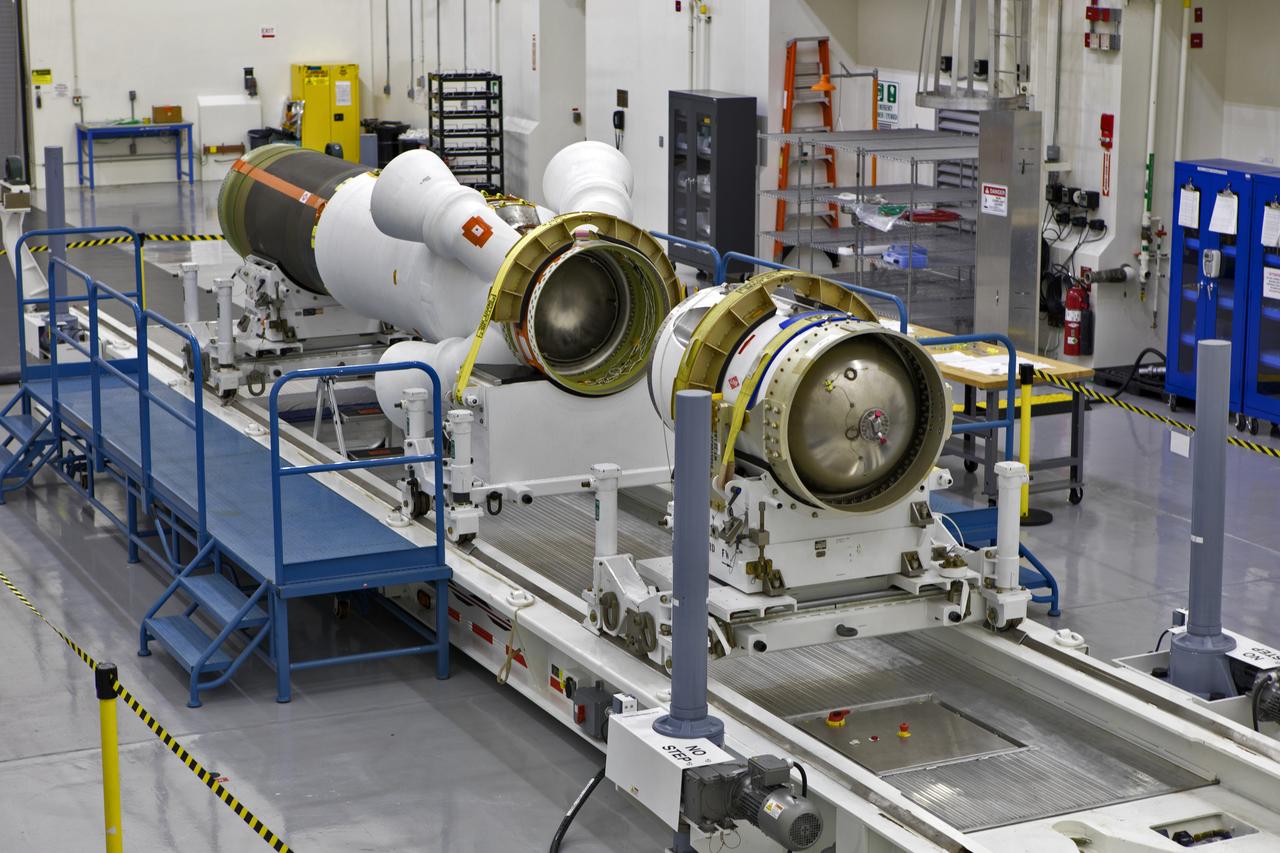
The jettison motor for Orion’s Launch Abort System (LAS) is shown inside the Launch Abort System Facility (LASF) at NASA’s Kennedy Space Center in Florida. The motor, which arrived at Kennedy on Sept. 10, 2018, will be stored in the LASF until processing for a full-stress test of the LAS called Ascent Abort-2 (AA-2), scheduled for April 2019. Designed and built by NASA and Lockheed Martin, the LAS will protect astronauts if a problem arises during launch by pulling the spacecraft away from a failing rocket. The jettison motor is one of three solid propellant rocket motors in the LAS (the abort motor and attitude control motor are the other two). The jettison motor will pull the LAS away from the crew module, allowing Orion’s parachutes to deploy and the spacecraft to safely land in the ocean.
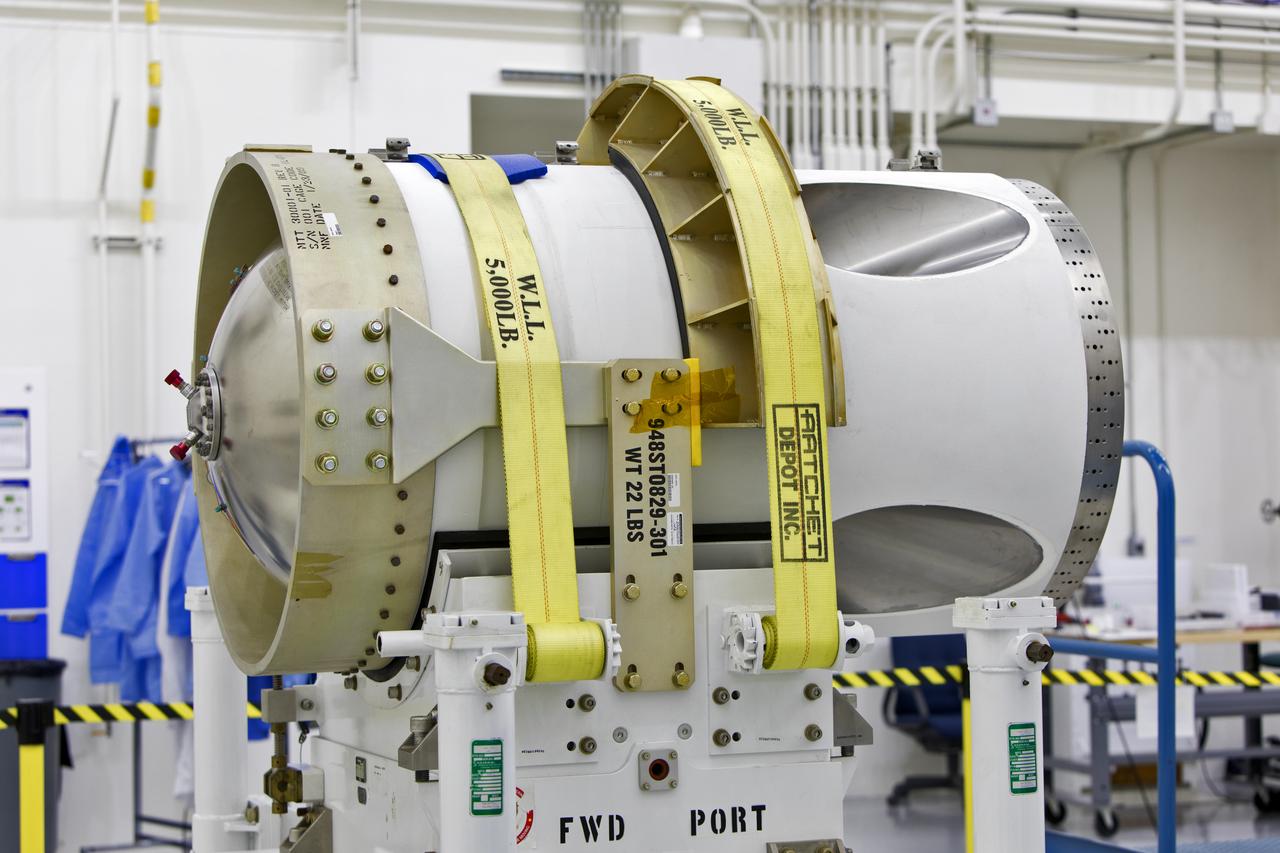
The jettison motor for Orion’s Launch Abort System (LAS) is shown inside the Launch Abort System Facility (LASF) at NASA’s Kennedy Space Center in Florida. The motor, which arrived at Kennedy on Sept. 10, 2018, will be stored in the LASF until processing for a full-stress test of the LAS called Ascent Abort-2 (AA-2), scheduled for April 2019. Designed and built by NASA and Lockheed Martin, the LAS will protect astronauts if a problem arises during launch by pulling the spacecraft away from a failing rocket. The jettison motor is one of three solid propellant rocket motors in the LAS (the abort motor and attitude control motor are the other two). The jettison motor will pull the LAS away from the crew module, allowing Orion’s parachutes to deploy and the spacecraft to safely land in the ocean.
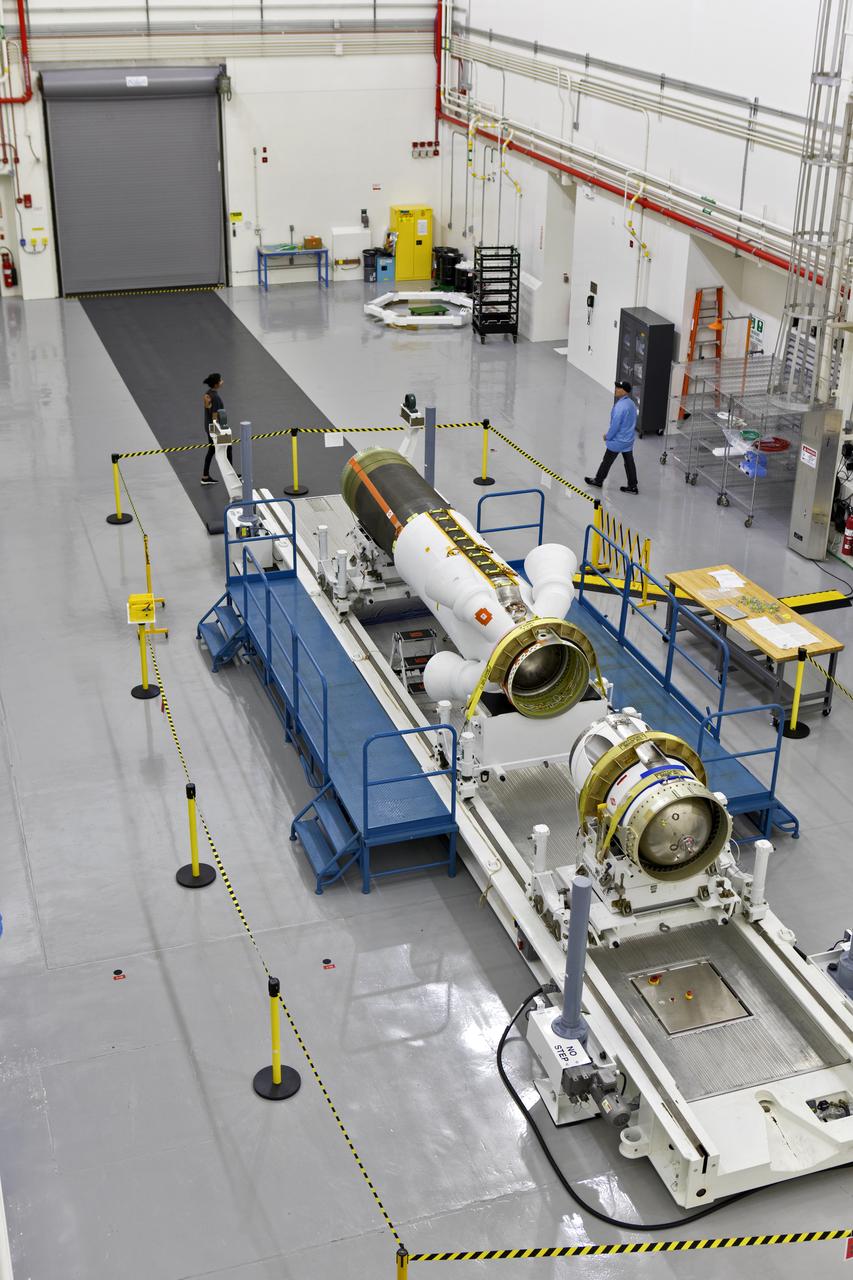
The jettison motor for Orion’s Launch Abort System (LAS) is shown inside the Launch Abort System Facility (LASF) at NASA’s Kennedy Space Center in Florida. The motor, which arrived at Kennedy on Sept. 10, 2018, will be stored in the LASF until processing for a full-stress test of the LAS called Ascent Abort-2 (AA-2), scheduled for April 2019. Designed and built by NASA and Lockheed Martin, the LAS will protect astronauts if a problem arises during launch by pulling the spacecraft away from a failing rocket. The jettison motor is one of three solid propellant rocket motors in the LAS (the abort motor and attitude control motor are the other two). The jettison motor will pull the LAS away from the crew module, allowing Orion’s parachutes to deploy and the spacecraft to safely land in the ocean.
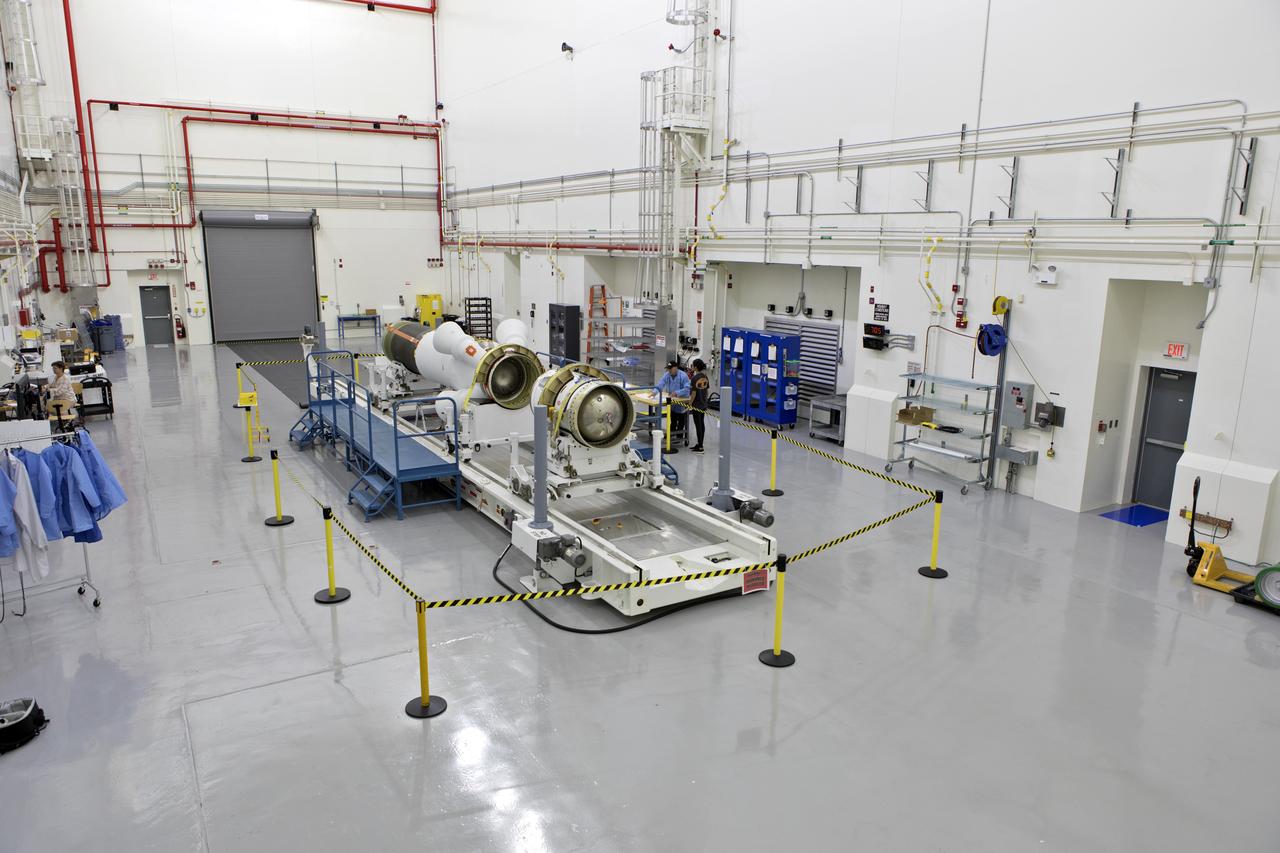
The jettison motor for Orion’s Launch Abort System (LAS) is shown inside the Launch Abort System Facility (LASF) at NASA’s Kennedy Space Center in Florida. The motor, which arrived at Kennedy on Sept. 10, 2018, will be stored in the LASF until processing for a full-stress test of the LAS called Ascent Abort-2 (AA-2), scheduled for April 2019. Designed and built by NASA and Lockheed Martin, the LAS will protect astronauts if a problem arises during launch by pulling the spacecraft away from a failing rocket. The jettison motor is one of three solid propellant rocket motors in the LAS (the abort motor and attitude control motor are the other two). The jettison motor will pull the LAS away from the crew module, allowing Orion’s parachutes to deploy and the spacecraft to safely land in the ocean.
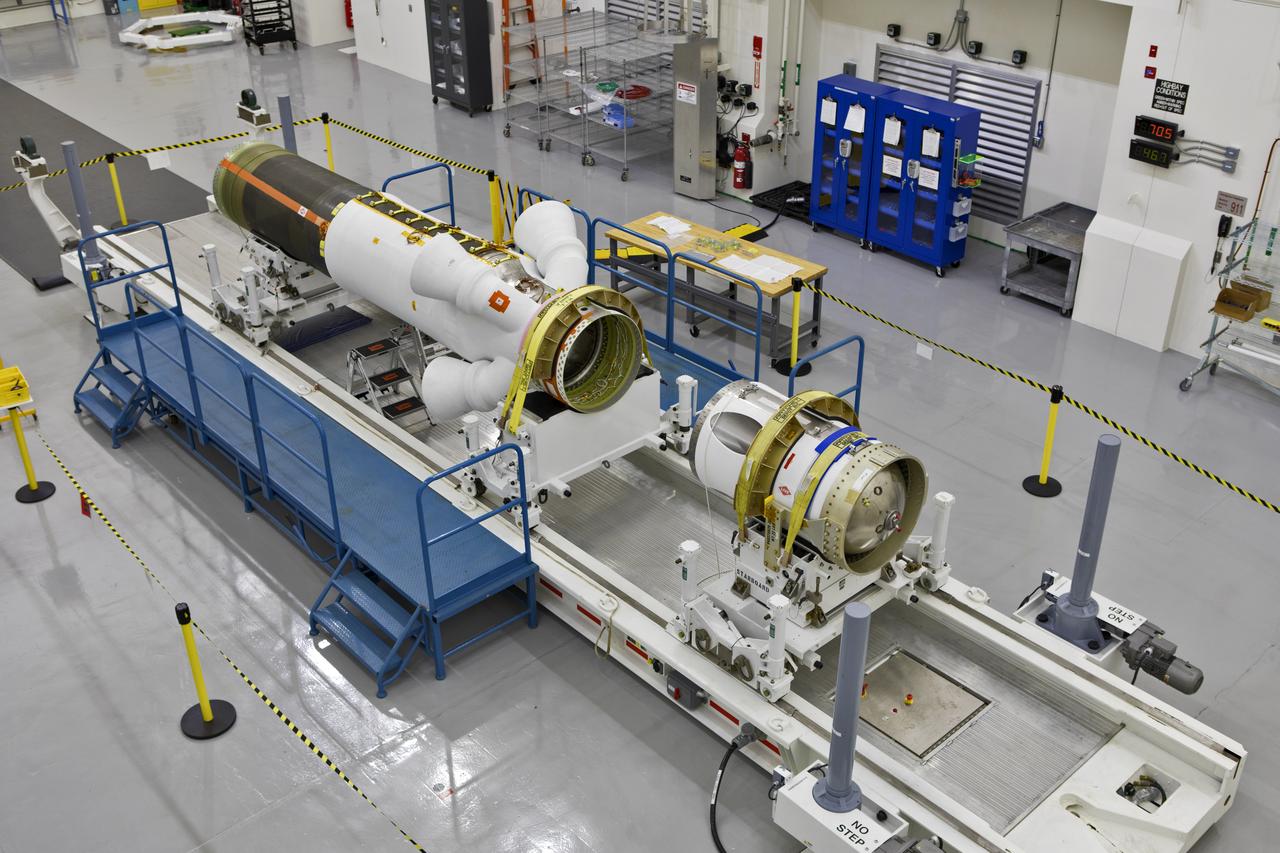
The jettison motor for Orion’s Launch Abort System (LAS) is shown inside the Launch Abort System Facility (LASF) at NASA’s Kennedy Space Center in Florida. The motor, which arrived at Kennedy on Sept. 10, 2018, will be stored in the LASF until processing for a full-stress test of the LAS called Ascent Abort-2 (AA-2), scheduled for April 2019. Designed and built by NASA and Lockheed Martin, the LAS will protect astronauts if a problem arises during launch by pulling the spacecraft away from a failing rocket. The jettison motor is one of three solid propellant rocket motors in the LAS (the abort motor and attitude control motor are the other two). The jettison motor will pull the LAS away from the crew module, allowing Orion’s parachutes to deploy and the spacecraft to safely land in the ocean.
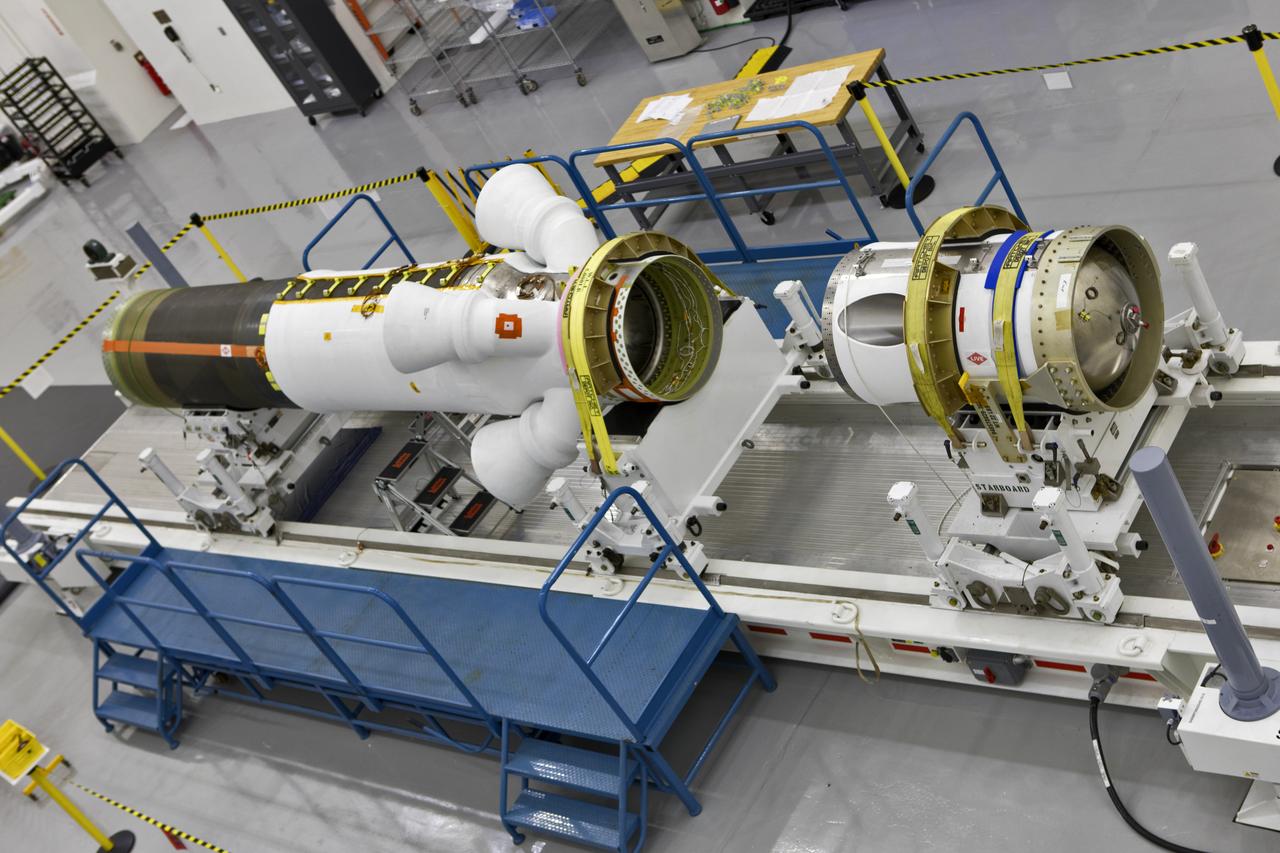
The jettison motor for Orion’s Launch Abort System (LAS) is shown inside the Launch Abort System Facility (LASF) at NASA’s Kennedy Space Center in Florida. The motor, which arrived at Kennedy on Sept. 10, 2018, will be stored in the LASF until processing for a full-stress test of the LAS called Ascent Abort-2 (AA-2), scheduled for April 2019. Designed and built by NASA and Lockheed Martin, the LAS will protect astronauts if a problem arises during launch by pulling the spacecraft away from a failing rocket. The jettison motor is one of three solid propellant rocket motors in the LAS (the abort motor and attitude control motor are the other two). The jettison motor will pull the LAS away from the crew module, allowing Orion’s parachutes to deploy and the spacecraft to safely land in the ocean.
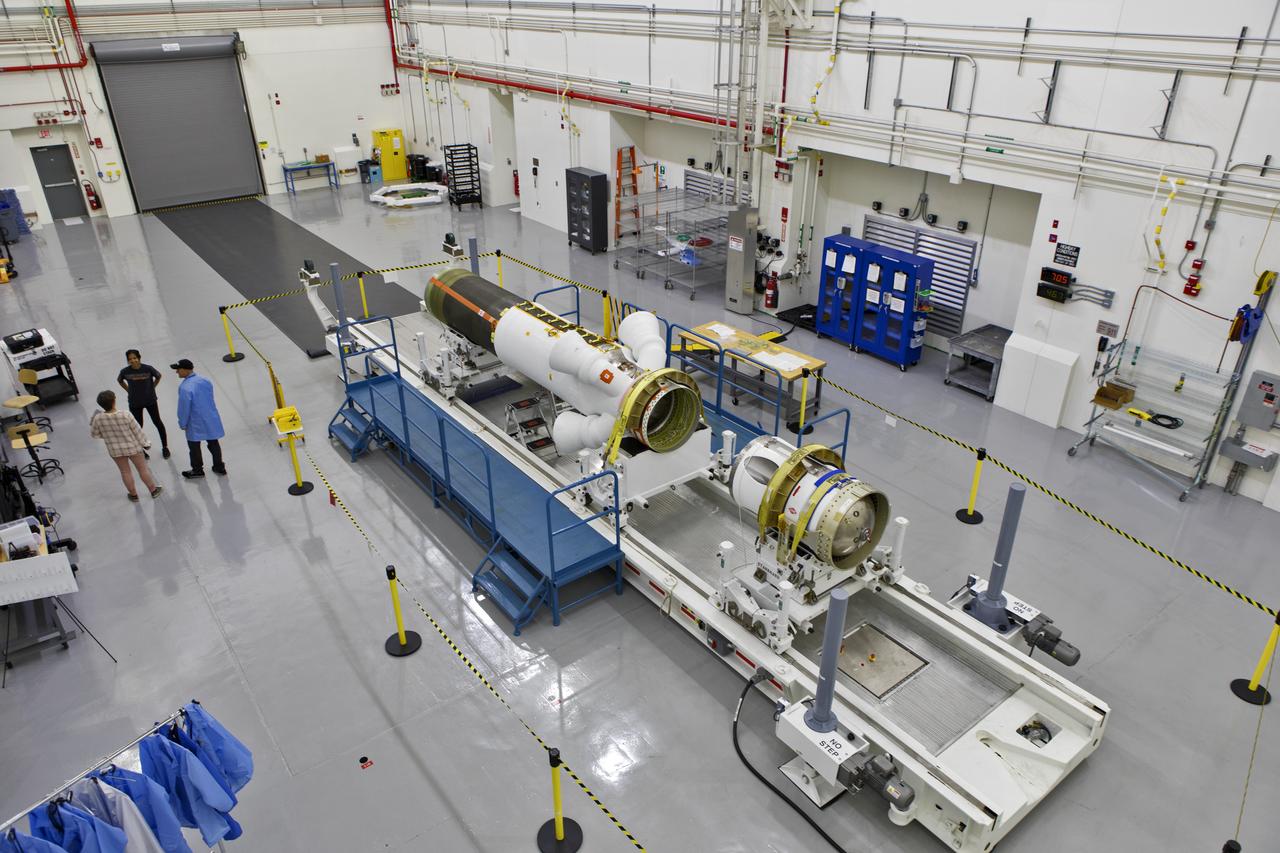
The jettison motor for Orion’s Launch Abort System (LAS) is shown inside the Launch Abort System Facility (LASF) at NASA’s Kennedy Space Center in Florida. The motor, which arrived at Kennedy on Sept. 10, 2018, will be stored in the LASF until processing for a full-stress test of the LAS called Ascent Abort-2 (AA-2), scheduled for April 2019. Designed and built by NASA and Lockheed Martin, the LAS will protect astronauts if a problem arises during launch by pulling the spacecraft away from a failing rocket. The jettison motor is one of three solid propellant rocket motors in the LAS (the abort motor and attitude control motor are the other two). The jettison motor will pull the LAS away from the crew module, allowing Orion’s parachutes to deploy and the spacecraft to safely land in the ocean.
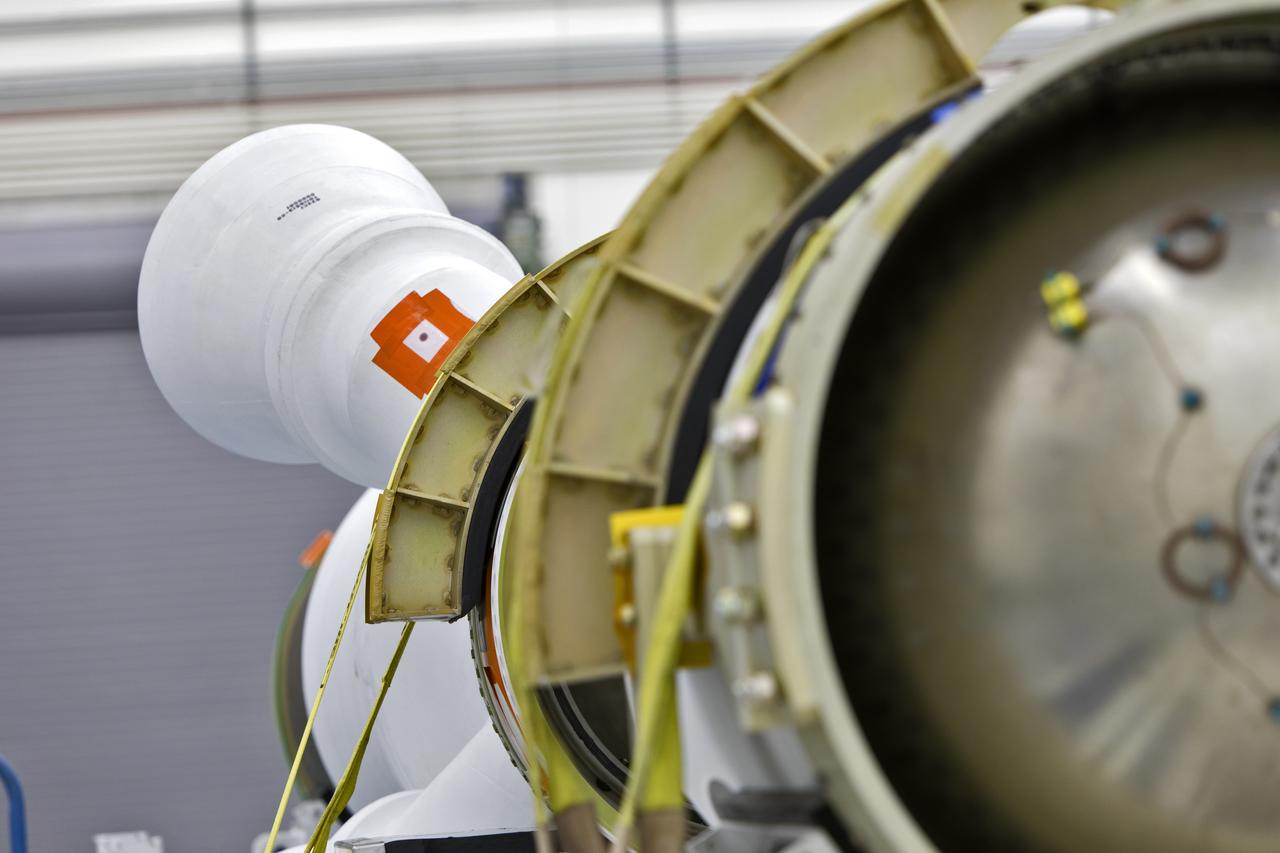
The jettison motor for Orion’s Launch Abort System (LAS) is shown inside the Launch Abort System Facility (LASF) at NASA’s Kennedy Space Center in Florida. The motor, which arrived at Kennedy on Sept. 10, 2018, will be stored in the LASF until processing for a full-stress test of the LAS called Ascent Abort-2 (AA-2), scheduled for April 2019. Designed and built by NASA and Lockheed Martin, the LAS will protect astronauts if a problem arises during launch by pulling the spacecraft away from a failing rocket. The jettison motor is one of three solid propellant rocket motors in the LAS (the abort motor and attitude control motor are the other two). The jettison motor will pull the LAS away from the crew module, allowing Orion’s parachutes to deploy and the spacecraft to safely land in the ocean.
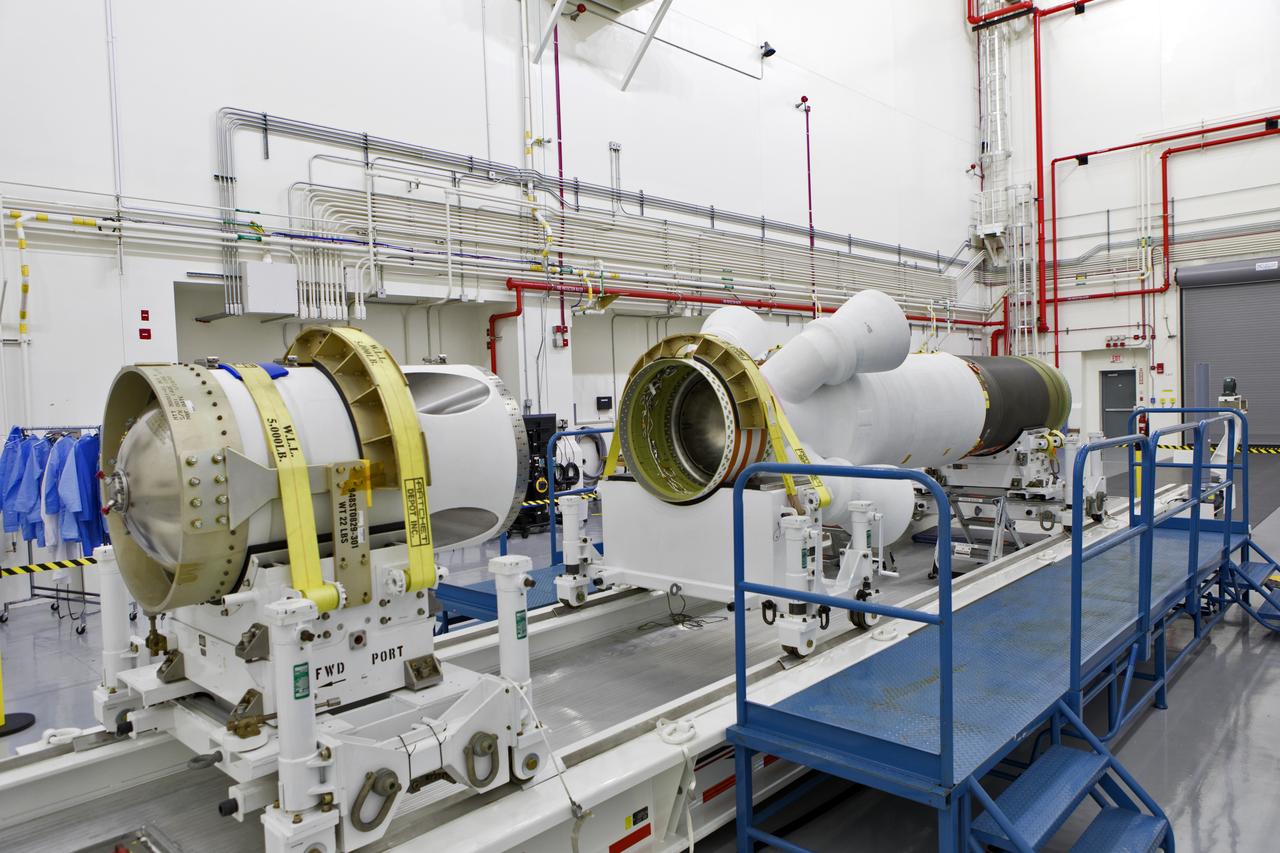
The jettison motor for Orion’s Launch Abort System (LAS) is shown inside the Launch Abort System Facility (LASF) at NASA’s Kennedy Space Center in Florida. The motor, which arrived at Kennedy on Sept. 10, 2018, will be stored in the LASF until processing for a full-stress test of the LAS called Ascent Abort-2 (AA-2), scheduled for April 2019. Designed and built by NASA and Lockheed Martin, the LAS will protect astronauts if a problem arises during launch by pulling the spacecraft away from a failing rocket. The jettison motor is one of three solid propellant rocket motors in the LAS (the abort motor and attitude control motor are the other two). The jettison motor will pull the LAS away from the crew module, allowing Orion’s parachutes to deploy and the spacecraft to safely land in the ocean.
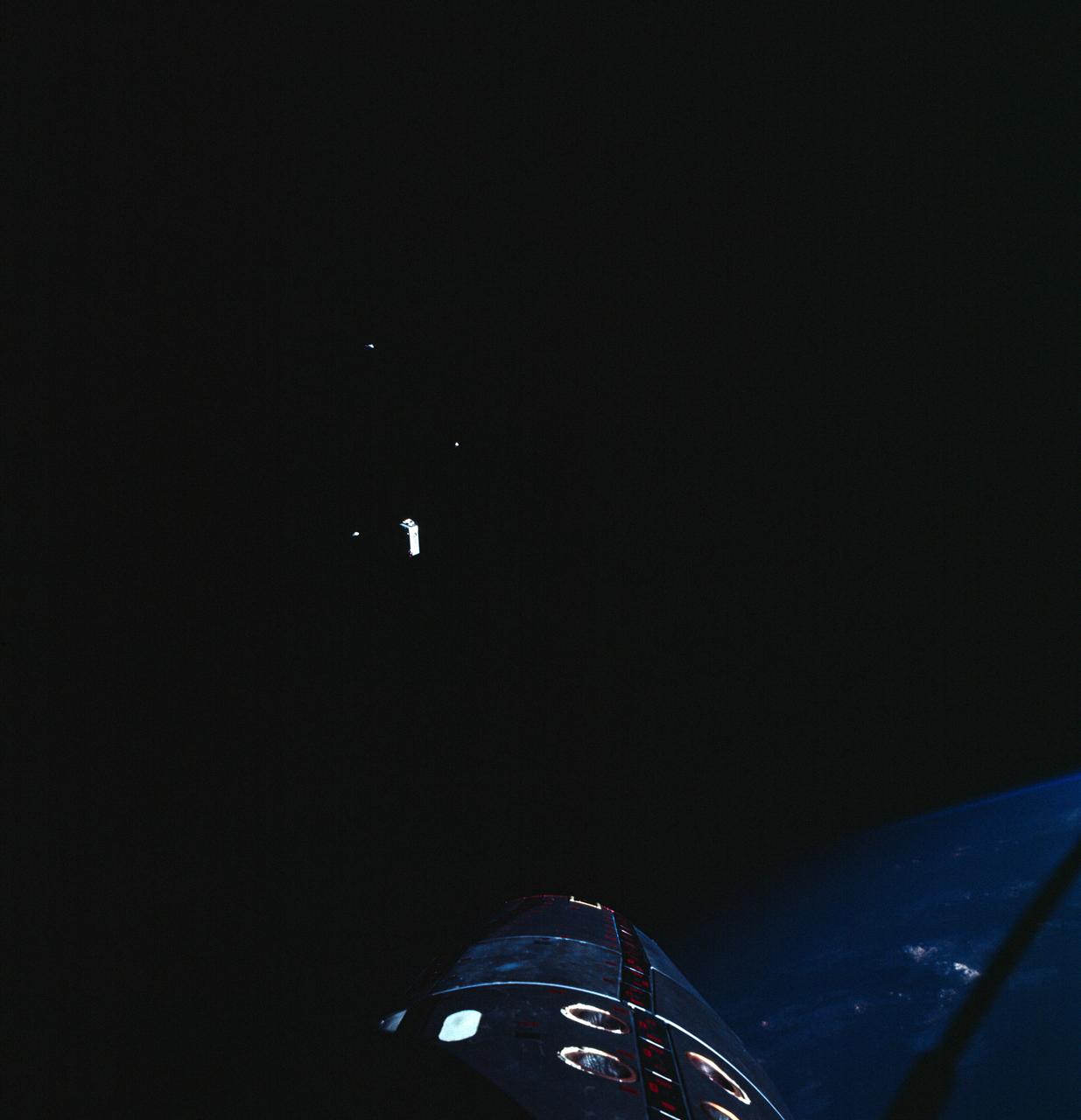
S66-62999 (13 Nov. 1966) --- Jettison of the extravehicular life support system (ELSS) and other equipment from the Gemini-12 spacecraft during its rendezvous mission in space. The nose of the Gemini-12 spacecraft is clearly visible at right edge of photo. Photo credit: NASA
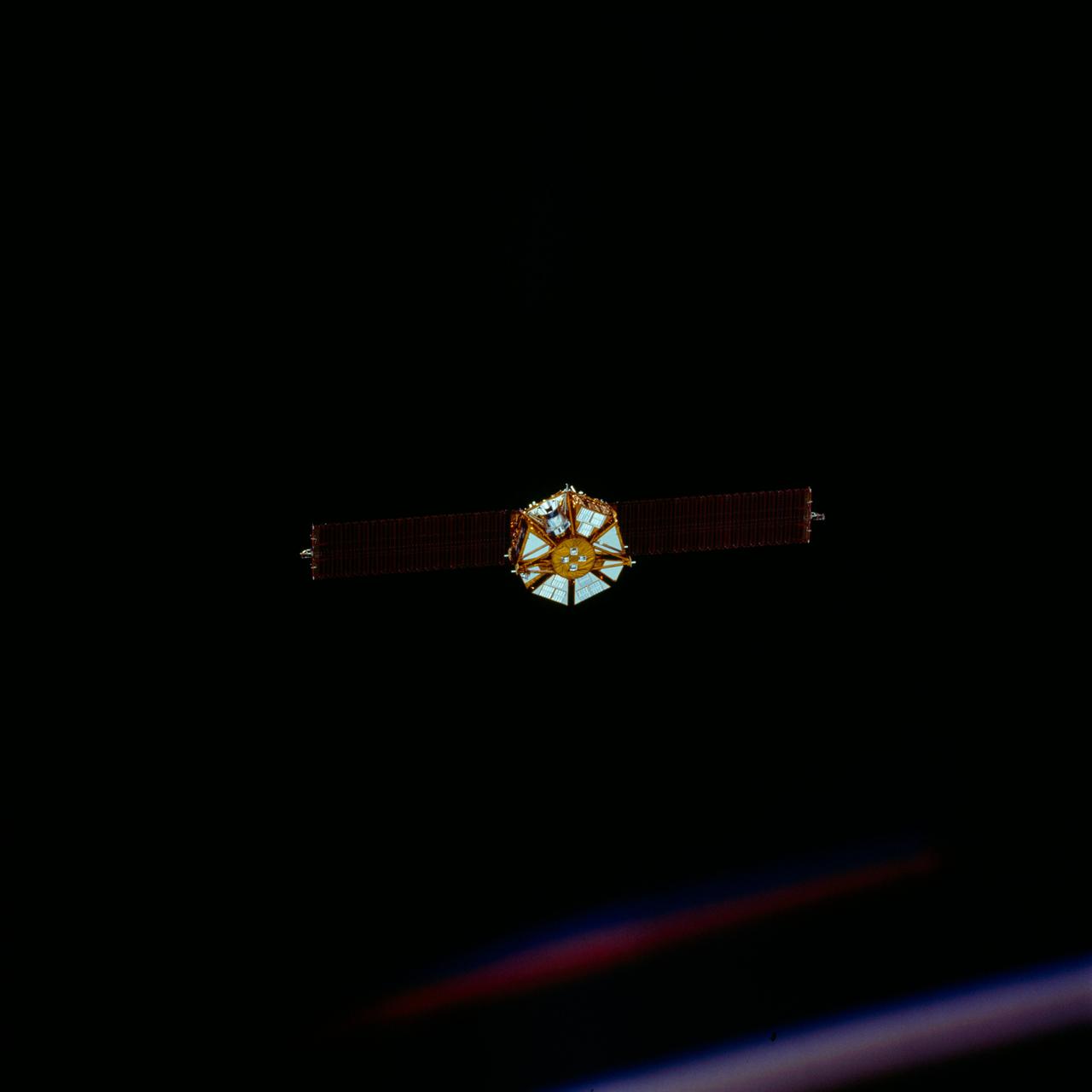
STS072-720-042 (13 Jan. 1996) --- The crew members captured this 70mm view of the Japanese Space Flyer Unit (SFU) just prior to the jettisoning of the solar panels. Later, they used the Remote Manipulator System (RMS) to latch onto the satellite and berth it in the Space Shuttle Endeavour’s aft cargo bay.
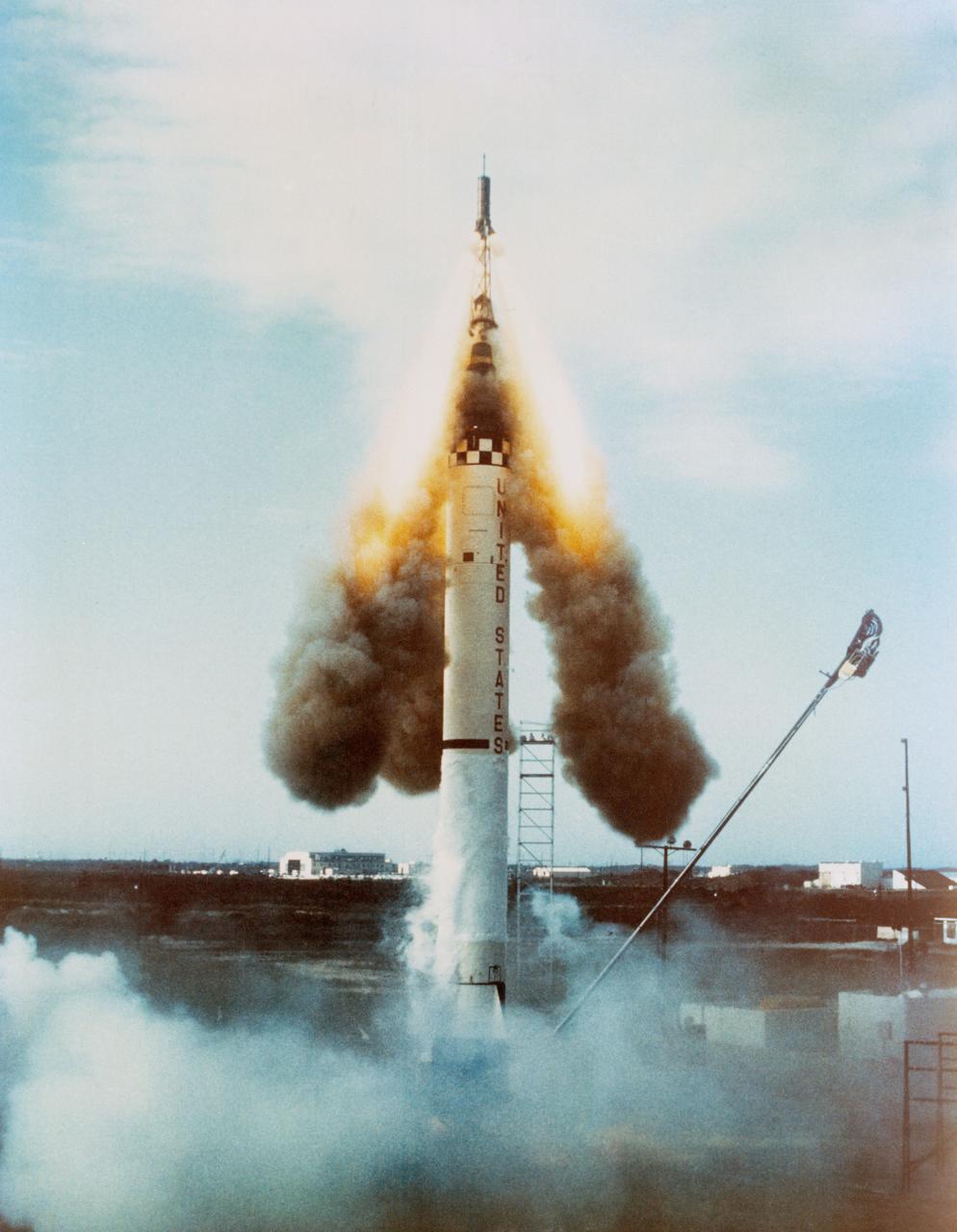
S63-00193 (29 July 1960) --- Launch of the unmanned Mercury-Atlas 1 (MA-1) from Cape Canaveral, Florida. Premature engine cutoff at launch terminated the test. Emergency escape system jettisoned. The Altas exploded 65 seconds after launch. Photo credit: NASA
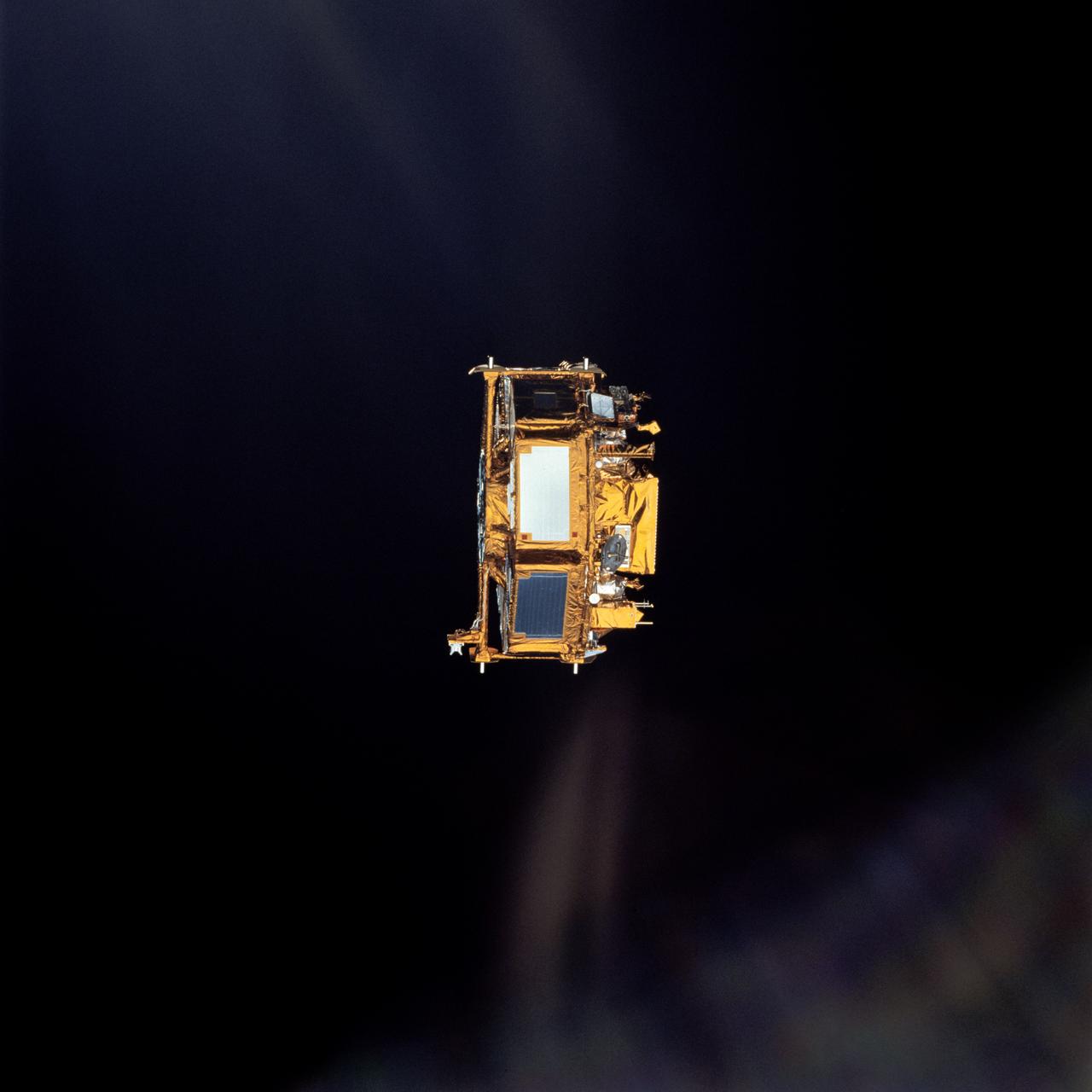
STS072-720-076 (13 Jan. 1996) --- The crewmembers captured this 35mm view of the Japanese Space Flyer Unit (SFU) following the jettisoning of the solar panels. Later they used the Remote Manipulator System (RMS) to latch onto the satellite and berth it in the Space Shuttle Endeavour's aft cargo bay.
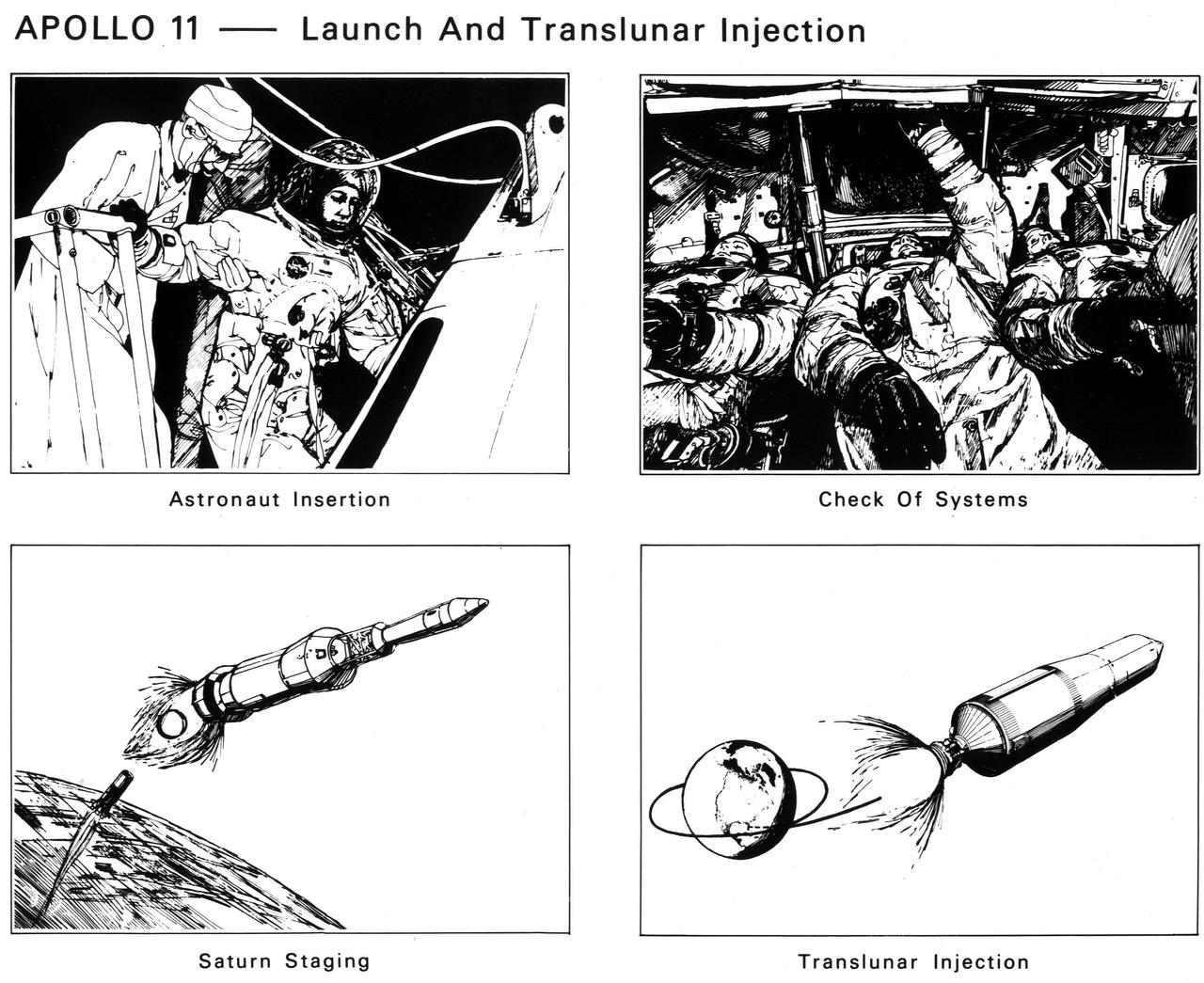
The astronauts enter the spacecraft. After launch and Saturn V first-stage burnout and jettison, the S-II second stage ignites. The crew checks spacecraft systems in Earth orbit before the S-IVB third stage ignites the second time to send Apollo 11 to the Moon

The launch abort system jettisons 3 minutes and 18 seconds following liftoff of the Artemis II test flight on Wednesday, April 1, 2026, from Launch Complex 39B at NASA’s Kennedy Space Center in Florida. In the event of early ascent emergencies, the launch abort system would quickly pull the Orion spacecraft and the crew safely away from the SLS (Space Launch System) rocket. If needed for an abort, the launch abort system can accelerate from 0 to 500 mph in 2 seconds.

The launch abort system jettisons 3 minutes and 18 seconds following liftoff of the Artemis II test flight on Wednesday, April 1, 2026, from Launch Complex 39B at NASA’s Kennedy Space Center in Florida. In the event of early ascent emergencies, the launch abort system would quickly pull the Orion spacecraft and the crew safely away from the SLS (Space Launch System) rocket. If needed for an abort, the launch abort system can accelerate from 0 to 500 mph in 2 seconds.

The launch abort system jettisons 3 minutes and 18 seconds following liftoff of the Artemis II test flight on Wednesday, April 1, 2026, from Launch Complex 39B at NASA’s Kennedy Space Center in Florida. In the event of early ascent emergencies, the launch abort system would quickly pull the Orion spacecraft and the crew safely away from the SLS (Space Launch System) rocket. If needed for an abort, the launch abort system can accelerate from 0 to 500 mph in 2 seconds.
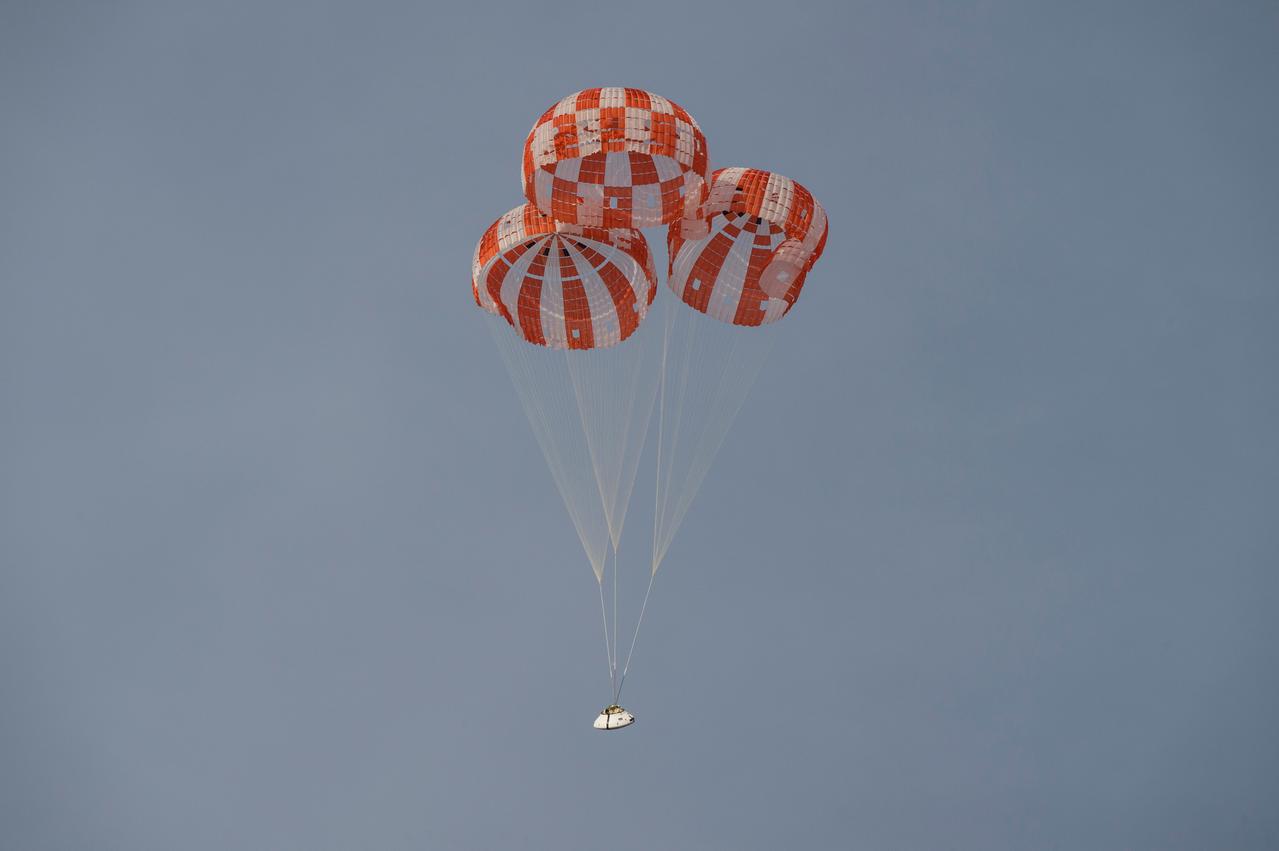
NASA successfully tested the Orion spacecraft’s parachute system on March 16, 2018 at the U.S. Army Proving Ground in Yuma, Arizona. It was the first time engineers intentionally failed one of the system’s three Forward Bay Cover parachutes. The Forward Bay Cover protects the upper part of Orion throughout its mission, but must be jettisoned during landing so the rest of Orion’s parachutes can deploy. Engineers are nearing completion of the series of tests to qualify the parachute system for flights with crew.
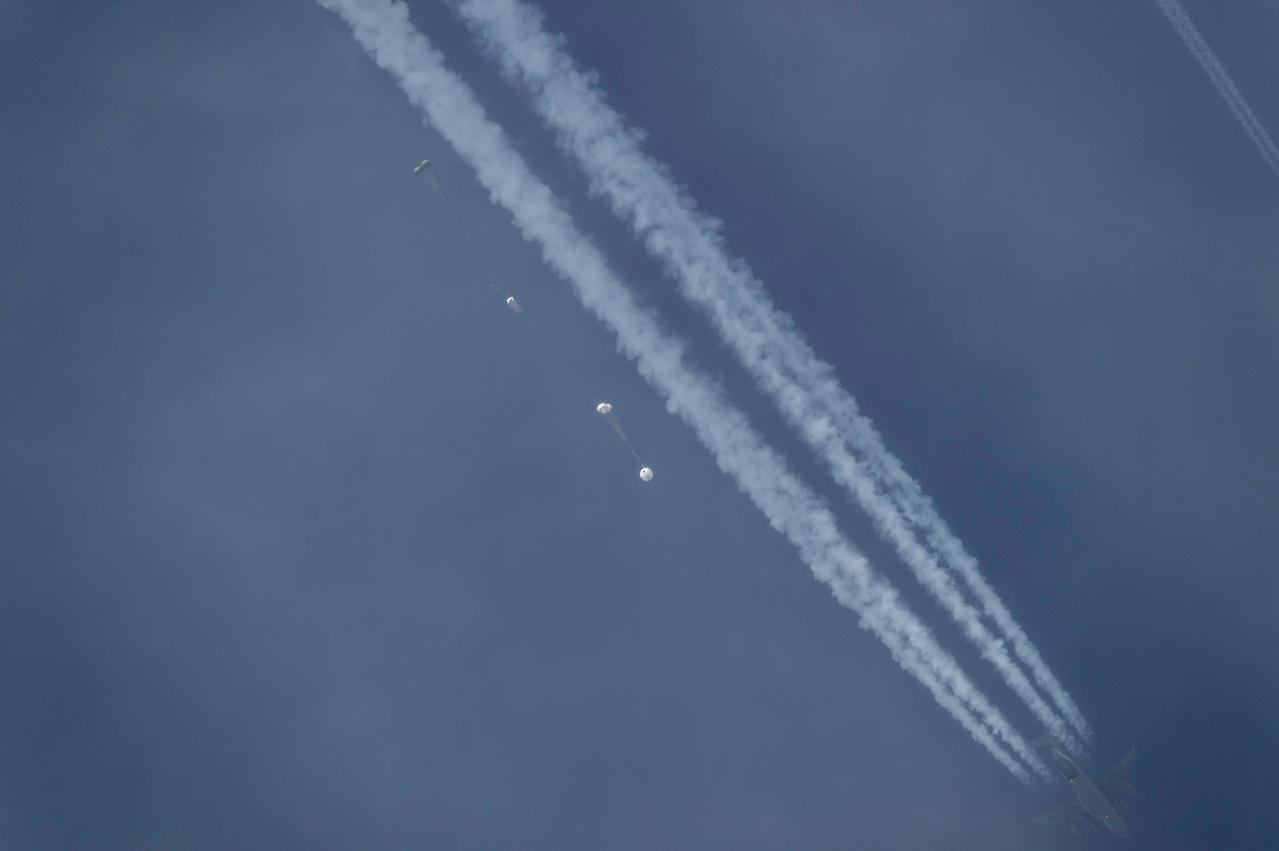
NASA successfully tested the Orion spacecraft’s parachute system on March 16, 2018 at the U.S. Army Proving Ground in Yuma, Arizona. It was the first time engineers intentionally failed one of the system’s three Forward Bay Cover parachutes. The Forward Bay Cover protects the upper part of Orion throughout its mission, but must be jettisoned during landing so the rest of Orion’s parachutes can deploy. Engineers are nearing completion of the series of tests to qualify the parachute system for flights with crew.
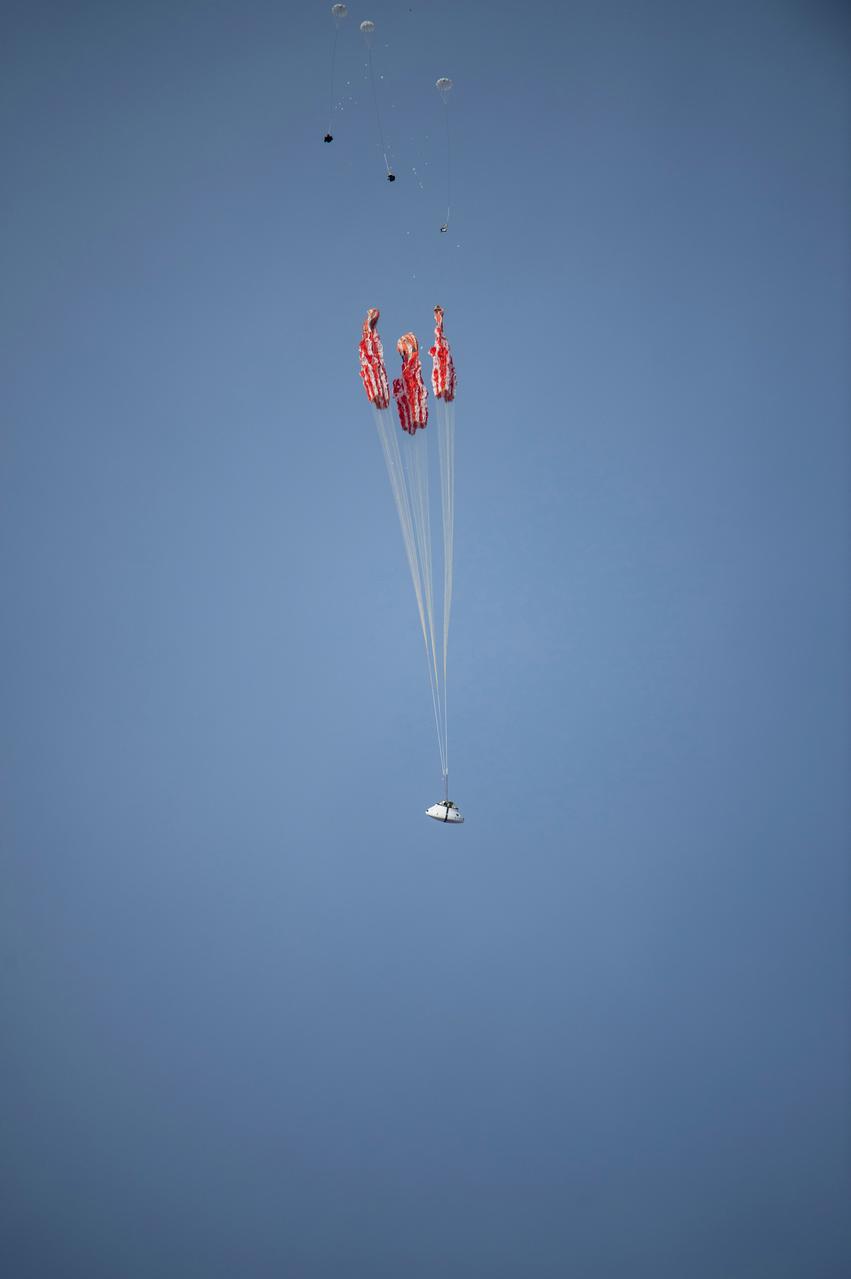
NASA successfully tested the Orion spacecraft’s parachute system on March 16, 2018 at the U.S. Army Proving Ground in Yuma, Arizona. It was the first time engineers intentionally failed one of the system’s three Forward Bay Cover parachutes. The Forward Bay Cover protects the upper part of Orion throughout its mission, but must be jettisoned during landing so the rest of Orion’s parachutes can deploy. Engineers are nearing completion of the series of tests to qualify the parachute system for flights with crew.
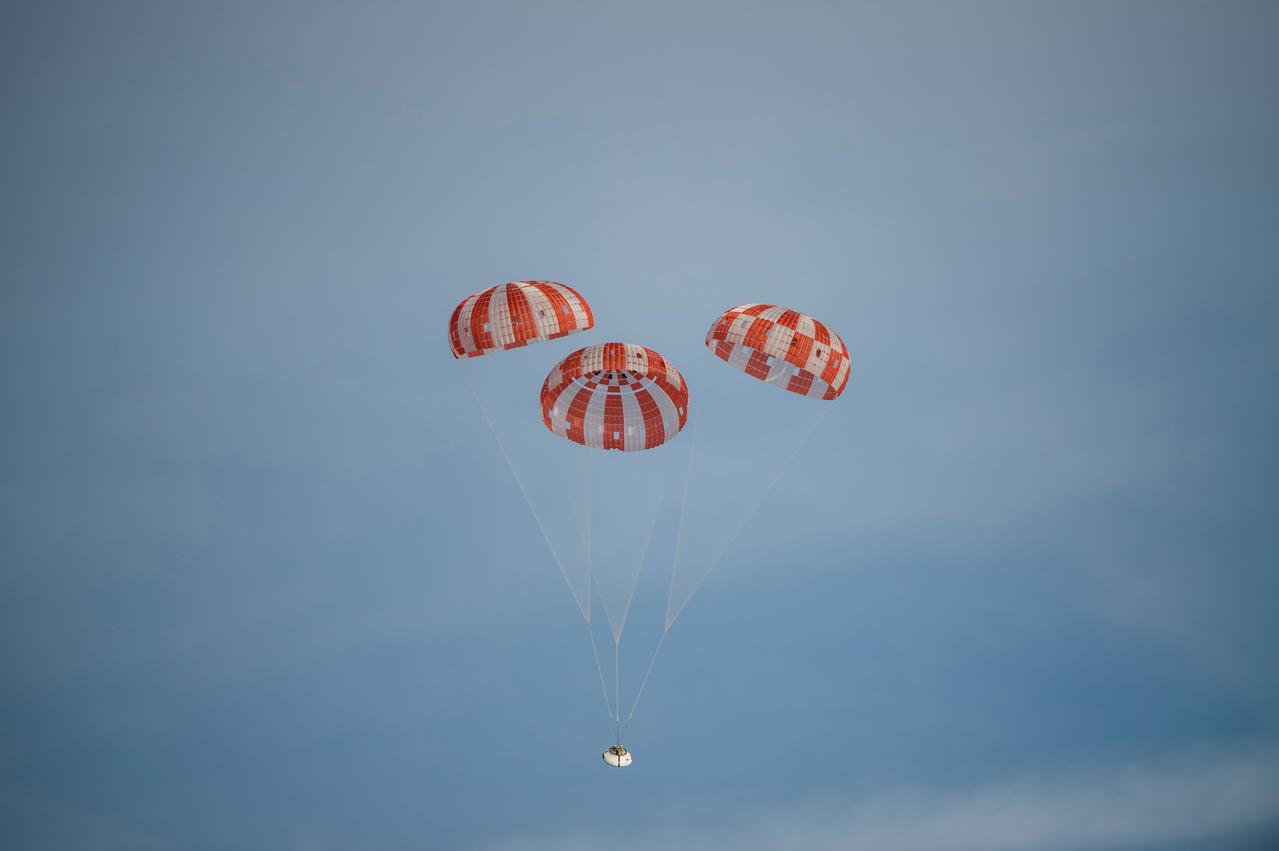
NASA successfully tested the Orion spacecraft’s parachute system on March 16, 2018 at the U.S. Army Proving Ground in Yuma, Arizona. It was the first time engineers intentionally failed one of the system’s three Forward Bay Cover parachutes. The Forward Bay Cover protects the upper part of Orion throughout its mission, but must be jettisoned during landing so the rest of Orion’s parachutes can deploy. Engineers are nearing completion of the series of tests to qualify the parachute system for flights with crew.
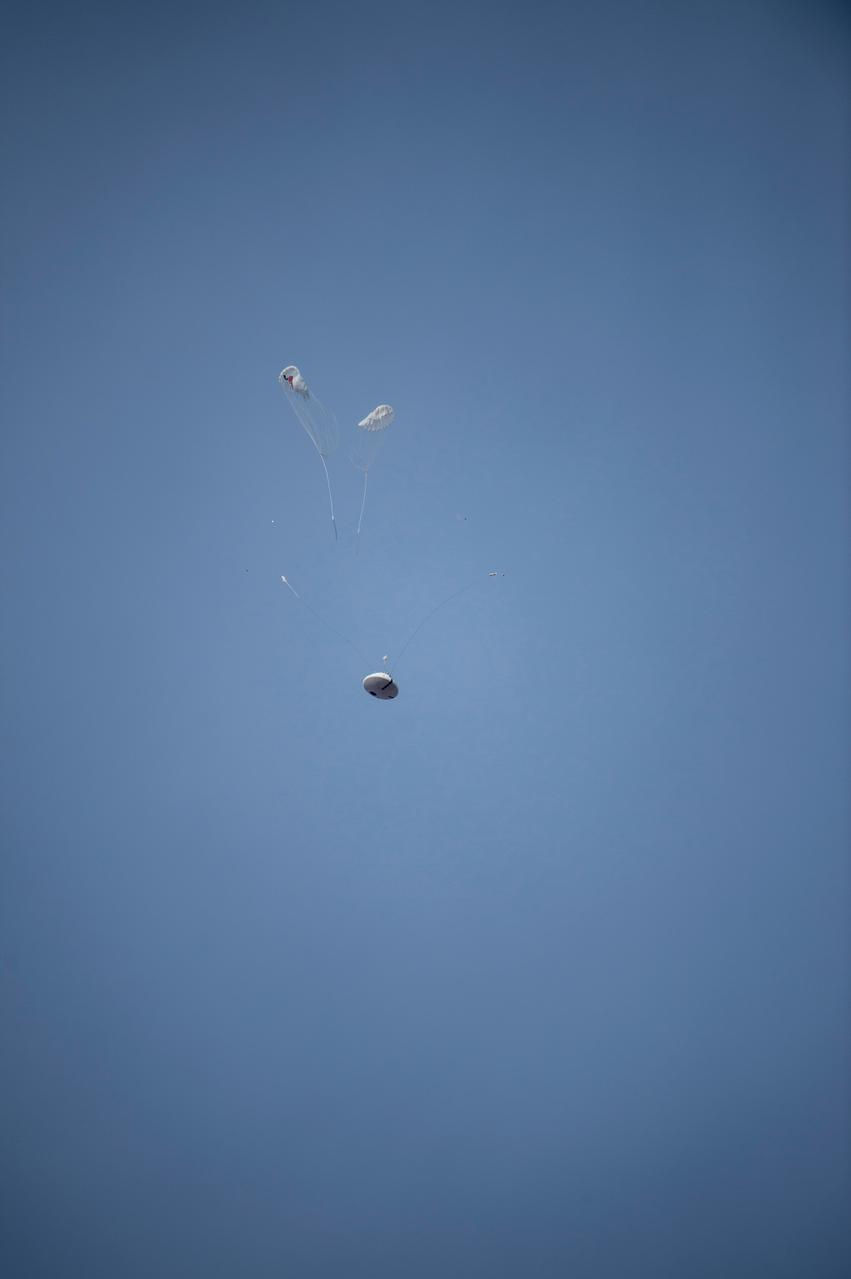
NASA successfully tested the Orion spacecraft’s parachute system on March 16, 2018 at the U.S. Army Proving Ground in Yuma, Arizona. It was the first time engineers intentionally failed one of the system’s three Forward Bay Cover parachutes. The Forward Bay Cover protects the upper part of Orion throughout its mission, but must be jettisoned during landing so the rest of Orion’s parachutes can deploy. Engineers are nearing completion of the series of tests to qualify the parachute system for flights with crew.
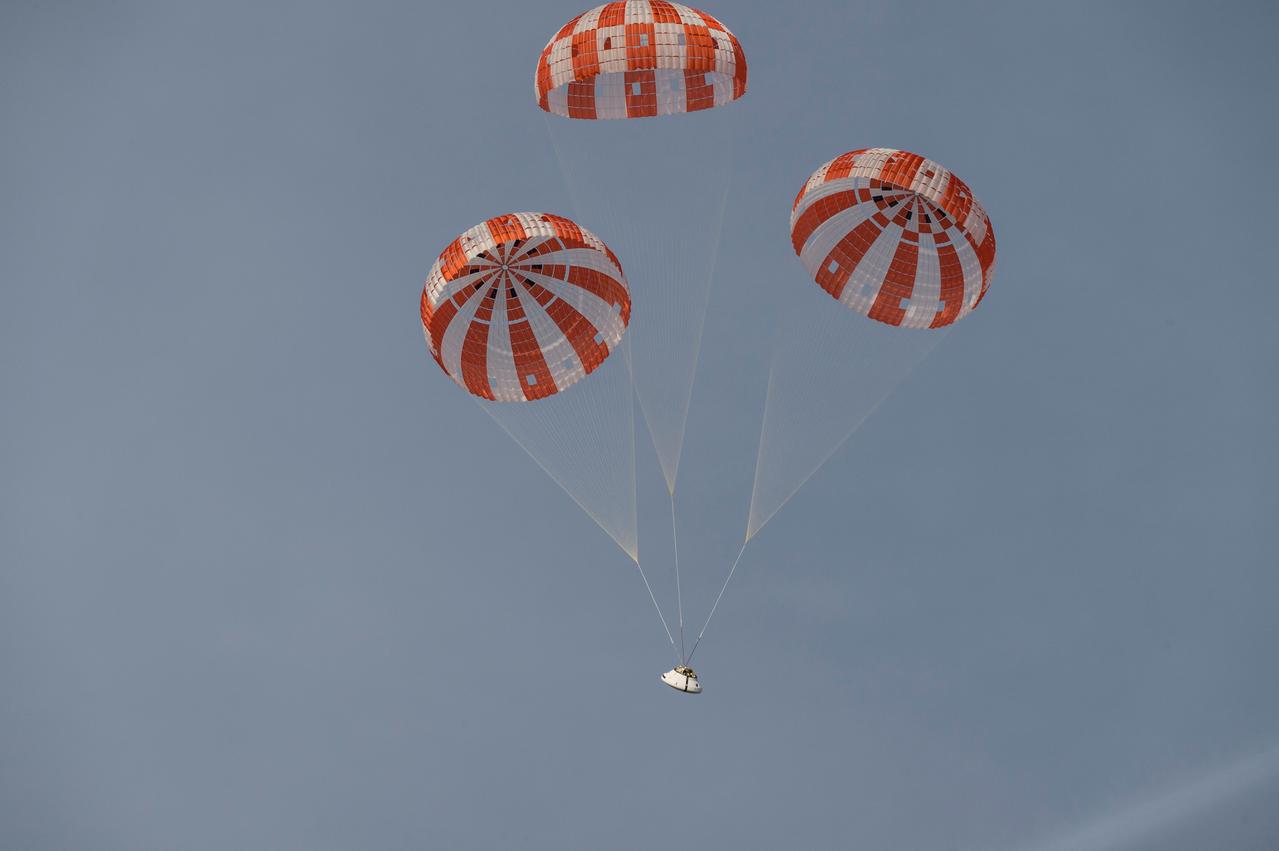
NASA successfully tested the Orion spacecraft’s parachute system on March 16, 2018 at the U.S. Army Proving Ground in Yuma, Arizona. It was the first time engineers intentionally failed one of the system’s three Forward Bay Cover parachutes. The Forward Bay Cover protects the upper part of Orion throughout its mission, but must be jettisoned during landing so the rest of Orion’s parachutes can deploy. Engineers are nearing completion of the series of tests to qualify the parachute system for flights with crew.
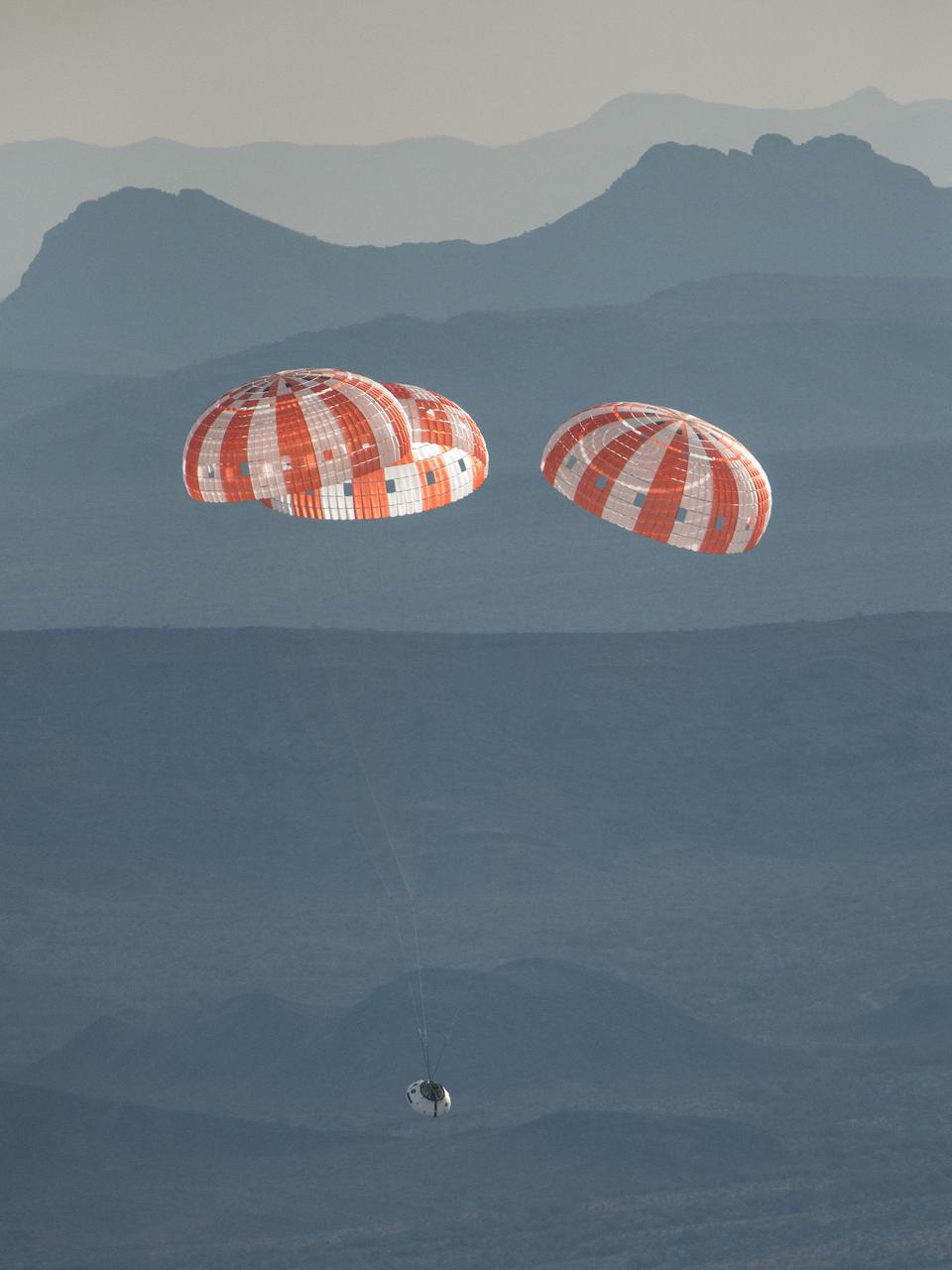
NASA successfully tested the Orion spacecraft’s parachute system on March 16, 2018 at the U.S. Army Proving Ground in Yuma, Arizona. It was the first time engineers intentionally failed one of the system’s three Forward Bay Cover parachutes. The Forward Bay Cover protects the upper part of Orion throughout its mission, but must be jettisoned during landing so the rest of Orion’s parachutes can deploy. Engineers are nearing completion of the series of tests to qualify the parachute system for flights with crew.
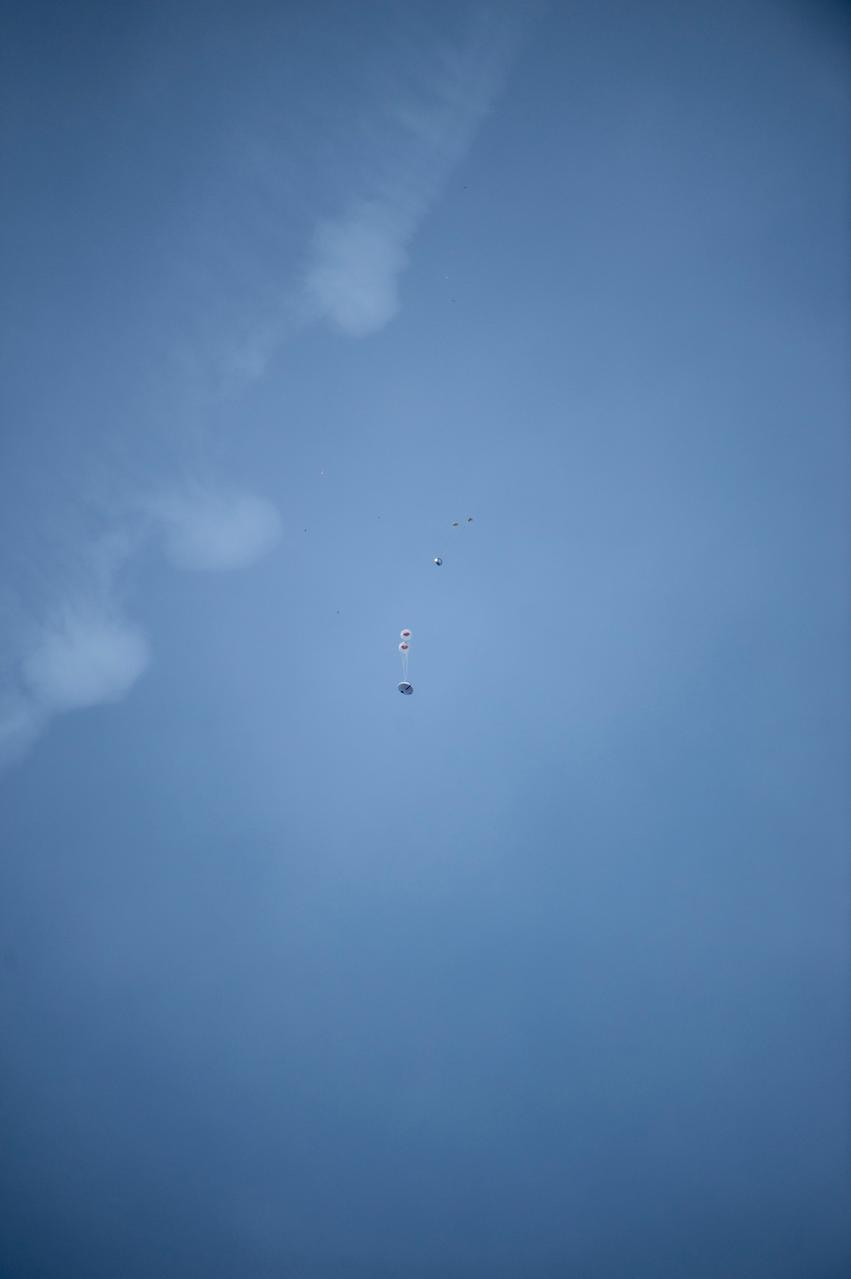
NASA successfully tested the Orion spacecraft’s parachute system on March 16, 2018 at the U.S. Army Proving Ground in Yuma, Arizona. It was the first time engineers intentionally failed one of the system’s three Forward Bay Cover parachutes. The Forward Bay Cover protects the upper part of Orion throughout its mission, but must be jettisoned during landing so the rest of Orion’s parachutes can deploy. Engineers are nearing completion of the series of tests to qualify the parachute system for flights with crew.
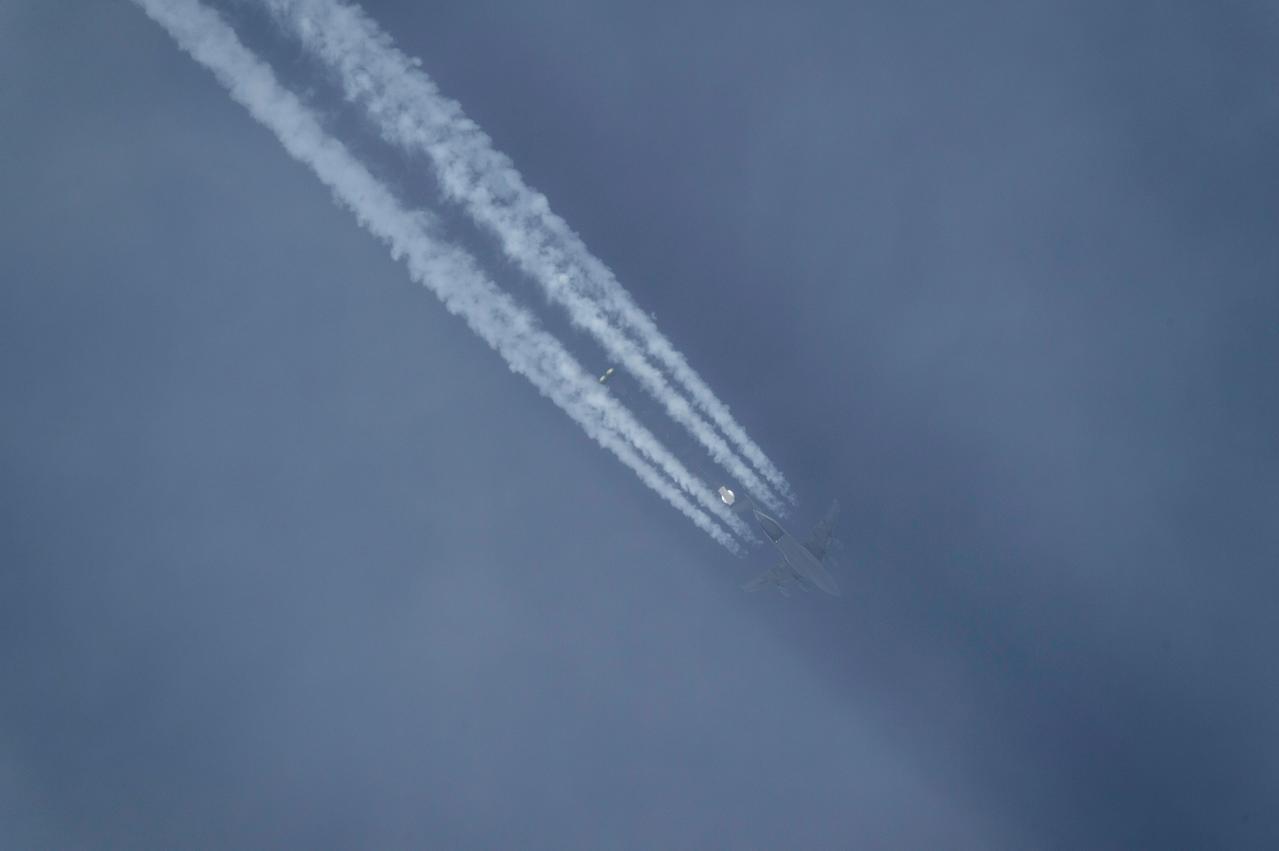
NASA successfully tested the Orion spacecraft’s parachute system on March 16, 2018 at the U.S. Army Proving Ground in Yuma, Arizona. It was the first time engineers intentionally failed one of the system’s three Forward Bay Cover parachutes. The Forward Bay Cover protects the upper part of Orion throughout its mission, but must be jettisoned during landing so the rest of Orion’s parachutes can deploy. Engineers are nearing completion of the series of tests to qualify the parachute system for flights with crew.

NASA successfully tested the Orion spacecraft’s parachute system on March 16, 2018 at the U.S. Army Proving Ground in Yuma, Arizona. It was the first time engineers intentionally failed one of the system’s three Forward Bay Cover parachutes. The Forward Bay Cover protects the upper part of Orion throughout its mission, but must be jettisoned during landing so the rest of Orion’s parachutes can deploy. Engineers are nearing completion of the series of tests to qualify the parachute system for flights with crew.
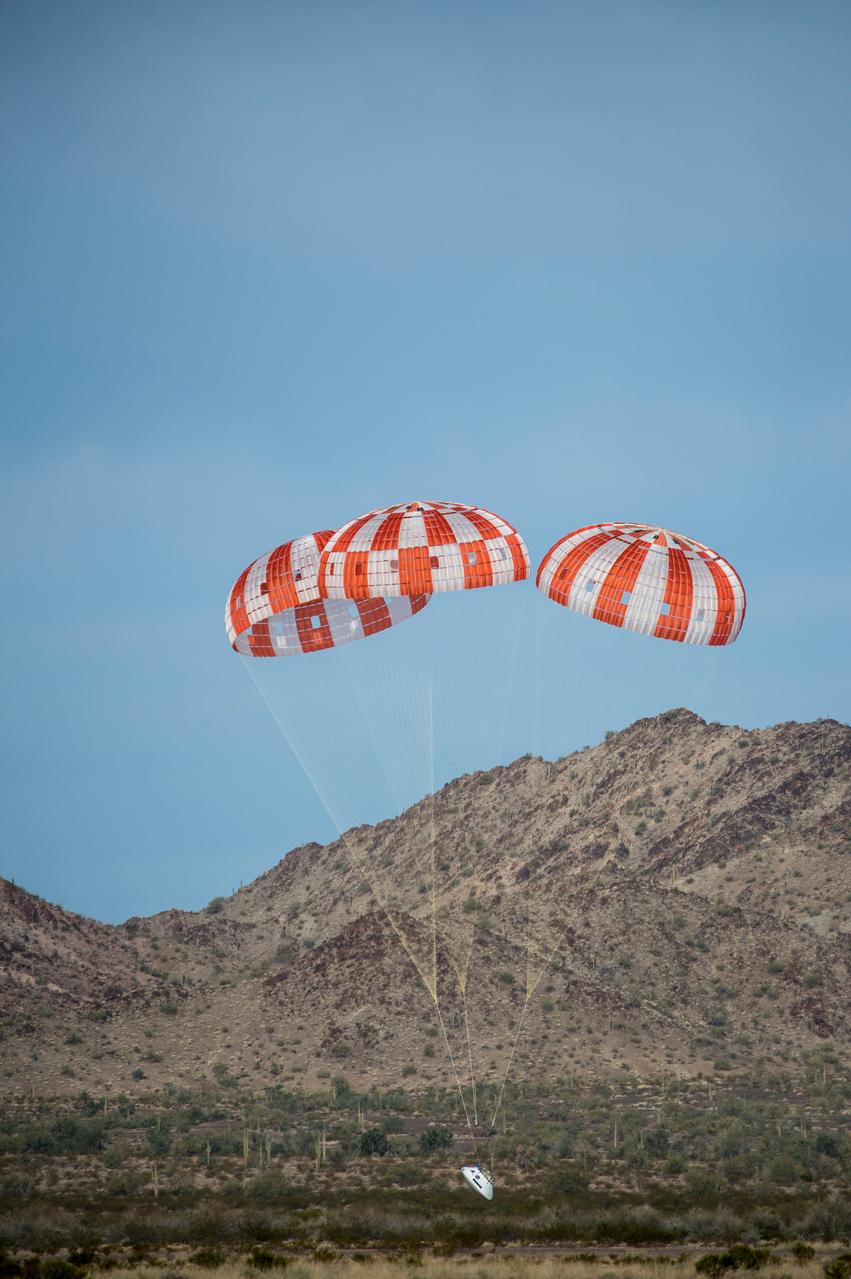
NASA successfully tested the Orion spacecraft’s parachute system on March 16, 2018 at the U.S. Army Proving Ground in Yuma, Arizona. It was the first time engineers intentionally failed one of the system’s three Forward Bay Cover parachutes. The Forward Bay Cover protects the upper part of Orion throughout its mission, but must be jettisoned during landing so the rest of Orion’s parachutes can deploy. Engineers are nearing completion of the series of tests to qualify the parachute system for flights with crew.
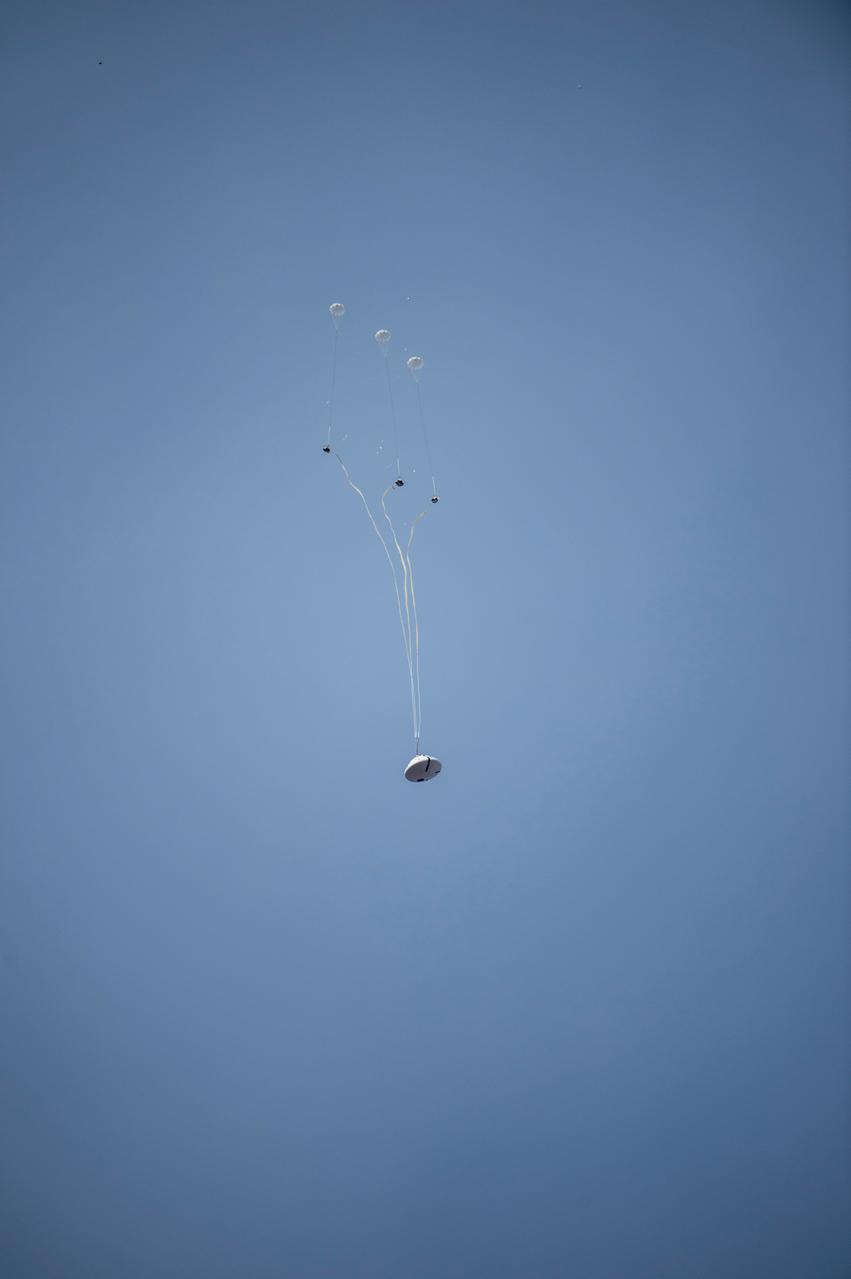
NASA successfully tested the Orion spacecraft’s parachute system on March 16, 2018 at the U.S. Army Proving Ground in Yuma, Arizona. It was the first time engineers intentionally failed one of the system’s three Forward Bay Cover parachutes. The Forward Bay Cover protects the upper part of Orion throughout its mission, but must be jettisoned during landing so the rest of Orion’s parachutes can deploy. Engineers are nearing completion of the series of tests to qualify the parachute system for flights with crew.
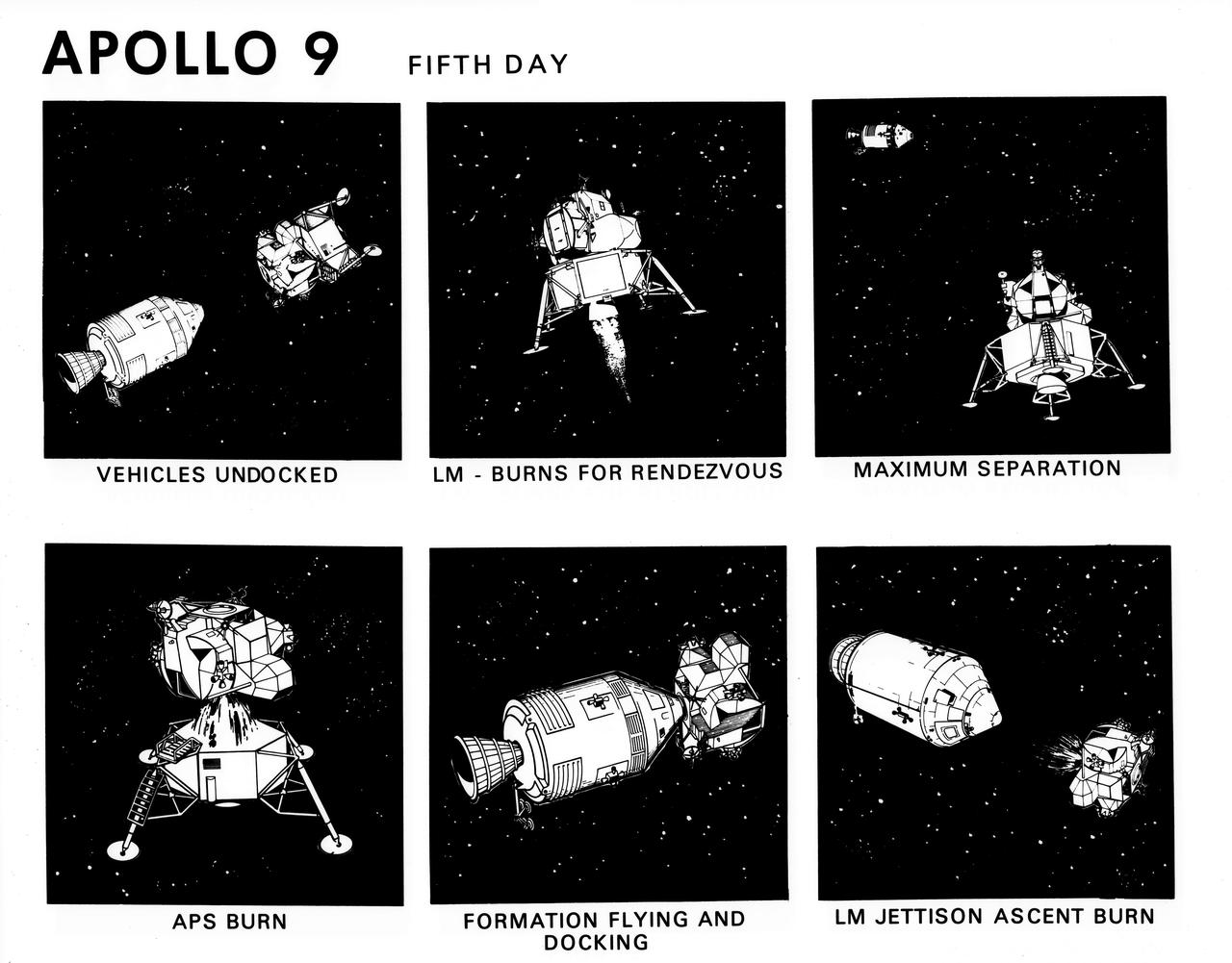
S69-19796 (February 1969) --- Composite of six artist's concepts illustrating key events, tasks and activities on the fifth day of the Apollo 9 mission, including vehicles undocked, Lunar Module burns for rendezvous, maximum separation, ascent propulsion system burn, formation flying and docking, and Lunar Module jettison ascent burn. The Apollo 9 mission will evaluate spacecraft lunar module systems performance during manned Earth-orbital flight.
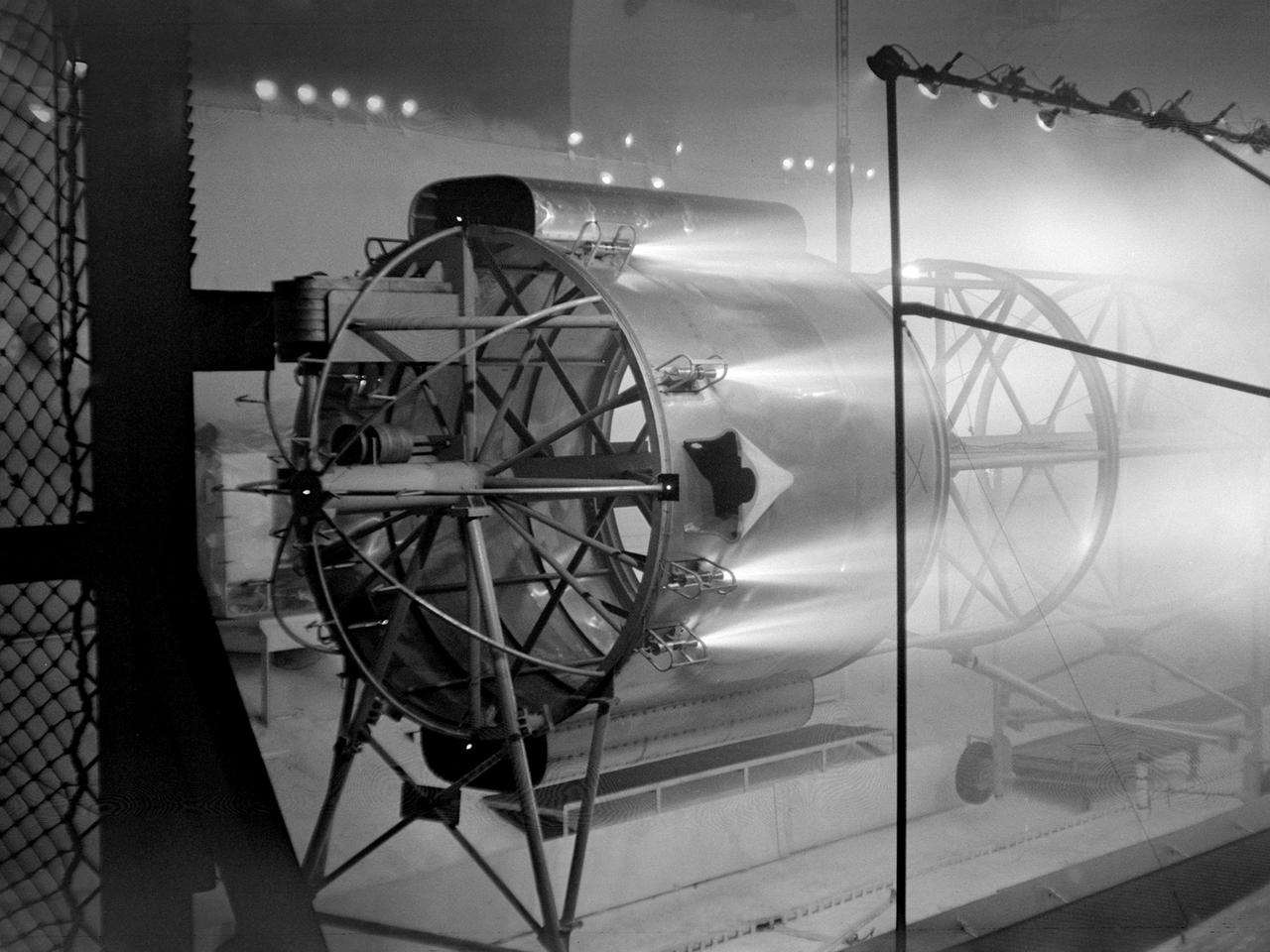
An Atlas/Centaur mass model undergoes a separation test inside the Space Power Chambers at NASA Lewis Research Center. Lewis was in the midst of an extensive effort to prepare the Centaur second-stage rocket for its missions to send the Surveyor spacecraft to the moon as a precursor to the Apollo missions. As part of these preparations, Lewis management decided to convert its Altitude Wind Tunnel into two large test chambers—the Space Power Chambers. The conversion included the removal of the tunnel’s internal components and the insertion of bulkheads to seal off the new chambers within the tunnel. One chamber could simulate conditions found at 100 miles altitude, while this larger chamber simulated the upper atmosphere. In this test series, researchers wanted to verify that the vehicle’s retrorockets would properly separate the Centaur from the Atlas. The model was suspended horizontally on a trolley system inside chamber. A net was hung at one end to catch the jettisoned Atlas model. The chamber atmosphere was reduced to a pressure altitude of 100,000 feet, and high-speed cameras were synchronized to the ignition of the retrorockets. The simulated Centaur is seen here jettisoning from the Atlas out of view to the right. The study resulted in a new jettison method that would significantly reduce the separation time and thus minimize the danger of collision between the two stages during separation.
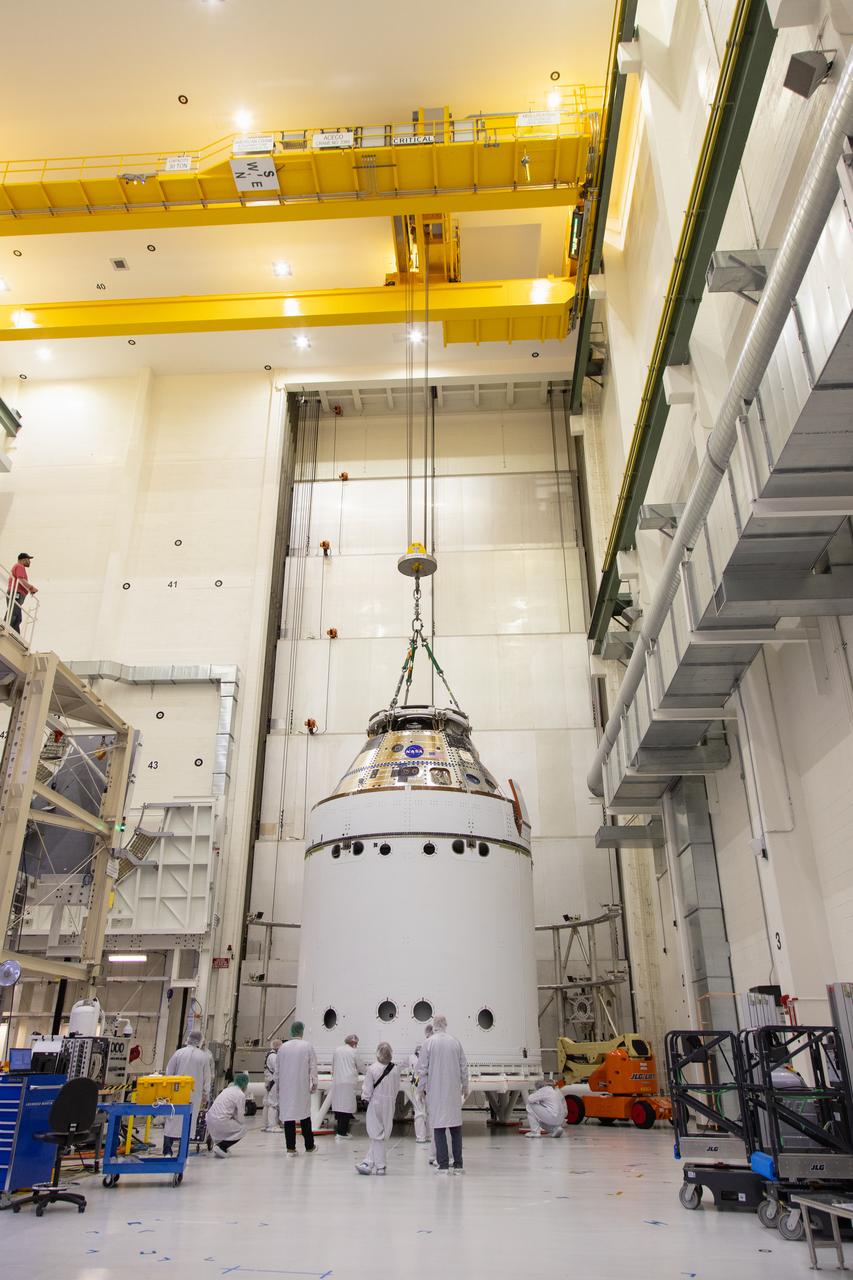
A crane returns NASA’s Artemis II Orion spacecraft to the Final Assembly and System Testing (FAST) cell inside the Neil A. Armstrong Operations and Checkout Building at NASA’s Kennedy Space Center in Florida on Friday, March 21, 2025, following installation of four solar array winds and adapter jettison fairings. Once complete, the Orion spacecraft will be transported to other facilities for fueling and integration with its launch abort system before arriving at the Vehicle Assembly Building where it will be stacked atop the SLS (Space Launch System) by NASA’s Exploration Ground System team at the Vehicle Assembly Building in preparations for Artemis II launch operations.
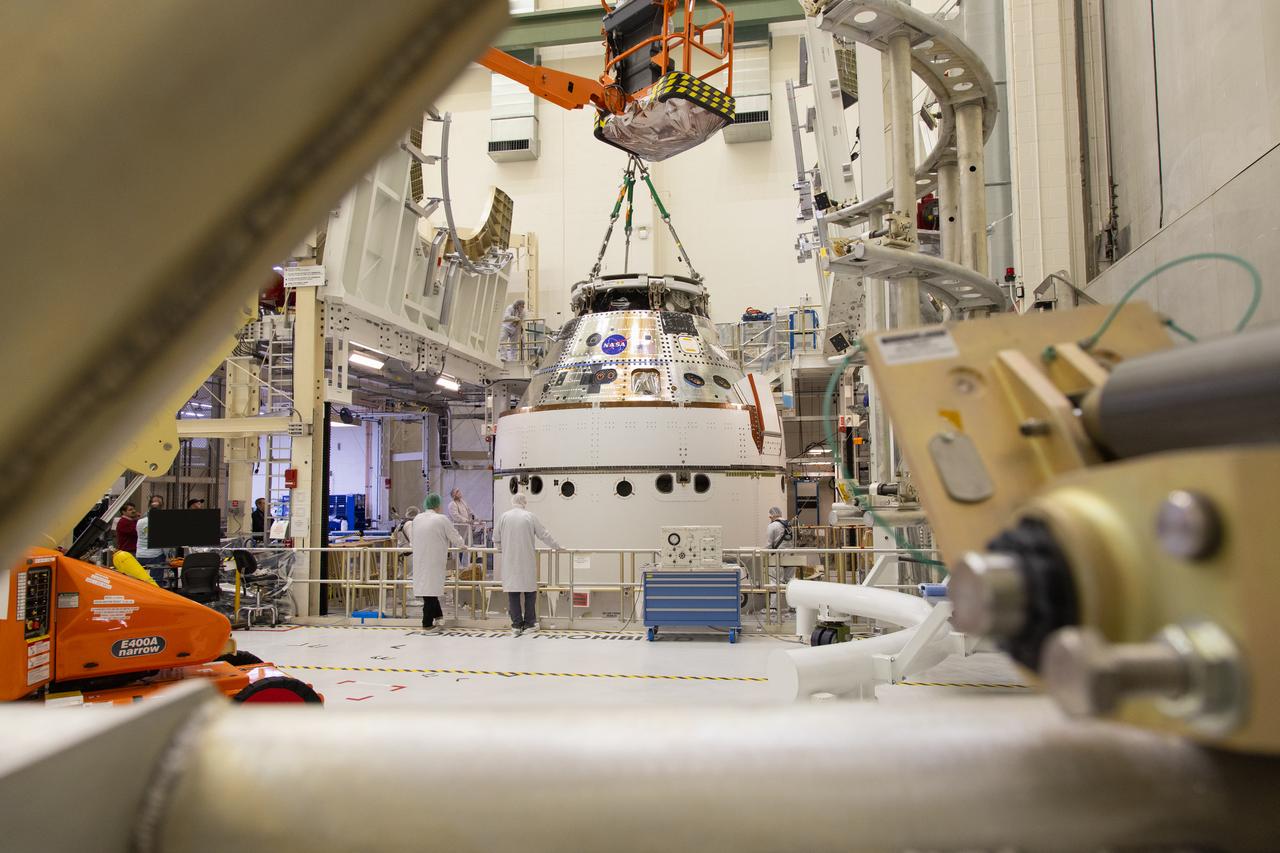
A crane returns NASA’s Artemis II Orion spacecraft to the Final Assembly and System Testing (FAST) cell inside the Neil A. Armstrong Operations and Checkout Building at NASA’s Kennedy Space Center in Florida on Friday, March 21, 2025, following installation of four solar array winds and adapter jettison fairings. Once complete, the Orion spacecraft will be transported to other facilities for fueling and integration with its launch abort system before arriving at the Vehicle Assembly Building where it will be stacked atop the SLS (Space Launch System) by NASA’s Exploration Ground System team at the Vehicle Assembly Building in preparations for Artemis II launch operations.
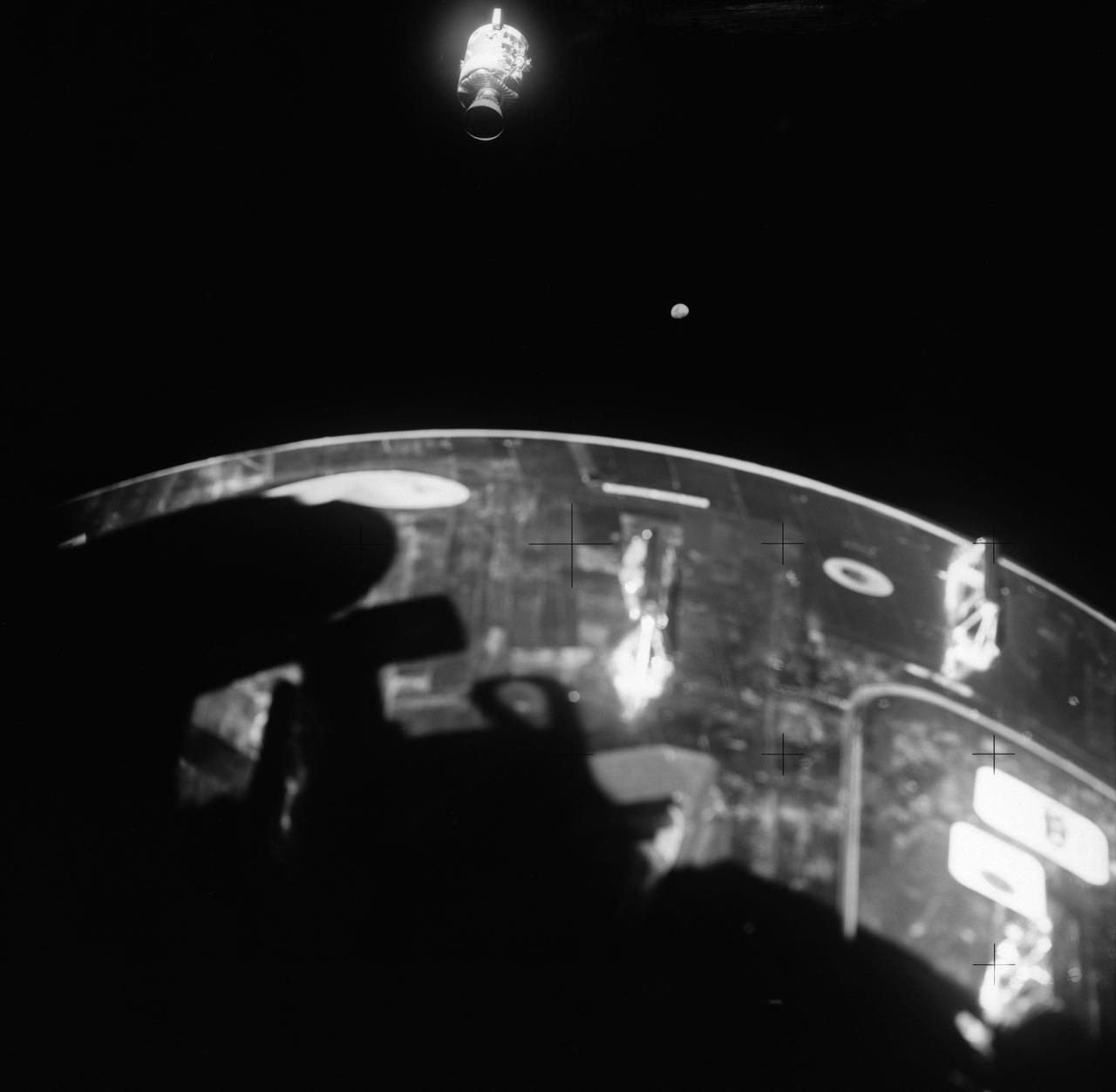
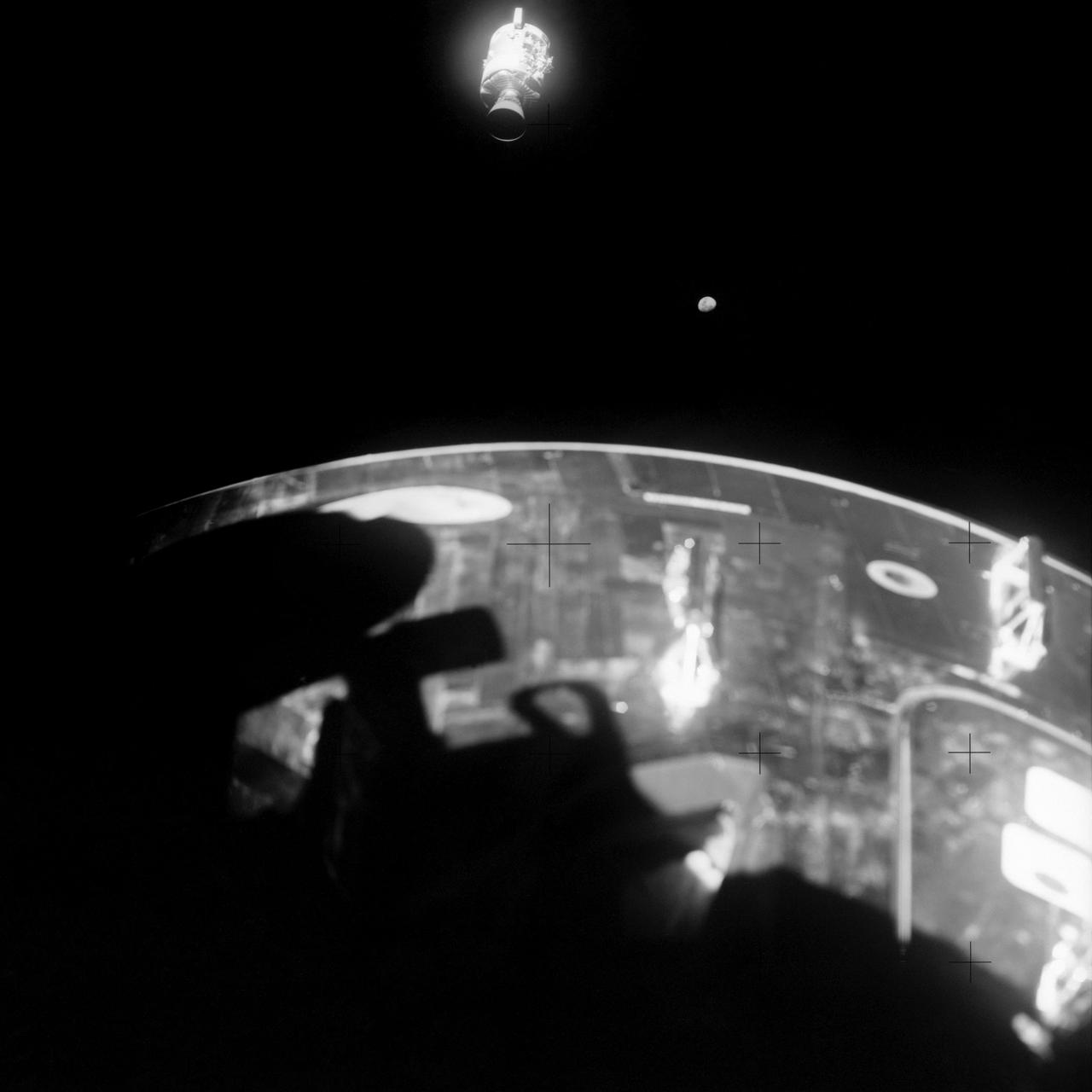
This view of the damaged Apollo 13 Service Module (SM) was photographed from the Lunar Module/Command Module following SM jettisoning. As seen here, an entire panel on the SM was blown away by the apparent explosion of oxygen tank number two located in Sector 4 of the SM. Two of the three fuel cells are visible just forward (above) the heavily damaged area. Three fuel cells, two oxygen tanks, and two hydrogen tanks are locate in Sector 4. The damaged area is located above the S-band high gain antenna. Nearest the camera is the Service Propulsion System (SPS) engine and nozzle. The damage to the SM caused the Apollo 13 crewmen to use the Lunar Module (LM) as a "lifeboat". The LM was jettisoned just prior to Earth reentry by the Command Module.
AS13-59-8501 (17 April 1970) --- This view of the severely damaged Apollo 13 Service Module (SM) was photographed from the Lunar Module/Command Module (LM/CM) following SM jettisoning. As seen here, an entire panel on the SM was blown away by the apparent explosion of oxygen tank number two located in Sector 4 of the SM. Two of the three fuel cells are visible just forward (above) the heavily damaged area. Three fuel cells, two oxygen tanks, and two hydrogen tanks are located in Sector 4. The damaged area is located above the S-Band high gain antenna. Nearest the camera is the Service Propulsion System (SPS) engine and nozzle. The damage to the SM caused the Apollo 13 crew men to use the LM as a "lifeboat." The LM was jettisoned just prior to Earth re-entry by the CM.
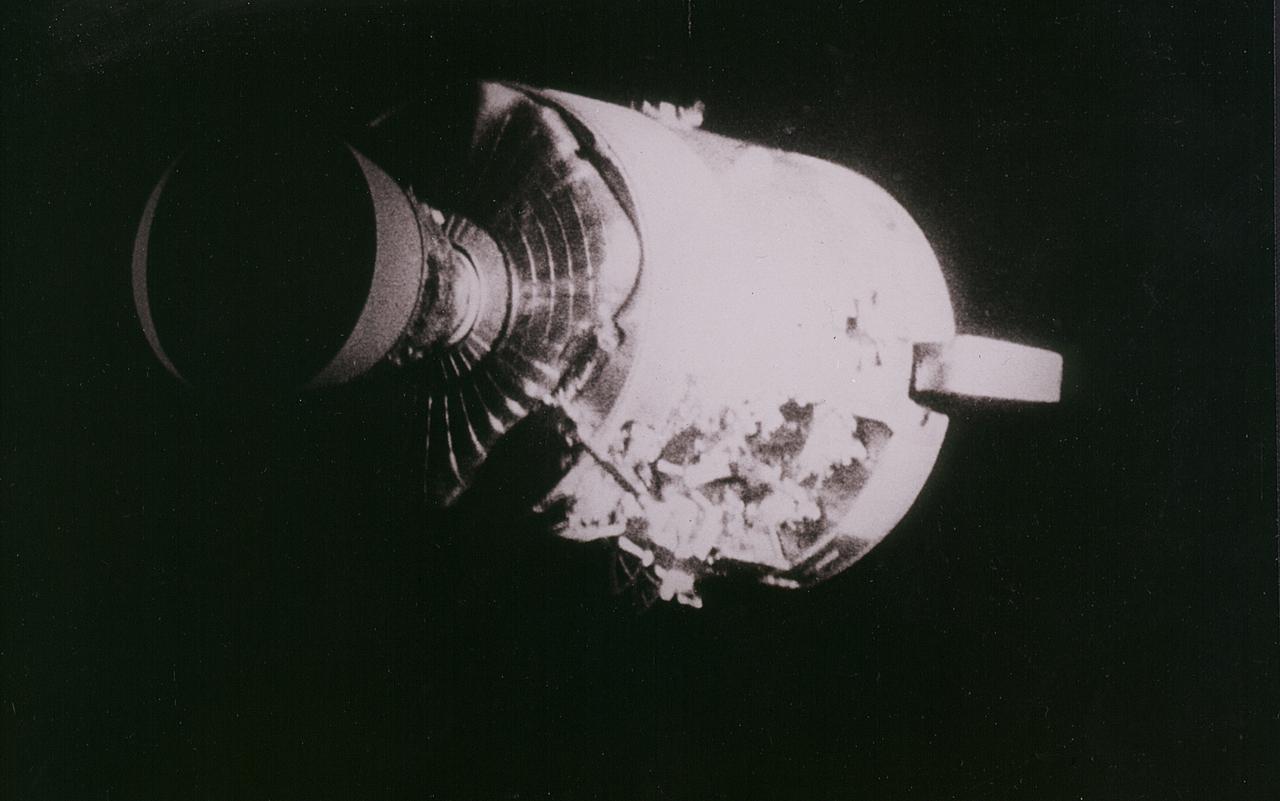
Apollo 13 onboard photo: This view of the severely damaged Apollo 13 Service Module was photographed from the Lunar Module/Command Module following the jettison of the Service Module. As seen here, an entire panel of the Service Module was blown away by the apparent explosion of oxygen tank number two located in Sector 4 of the Service Module. Two of the three fuel cells are visible just forward (above) the heavily damaged area. Three fuel cells, two oxygen tanks, and two hydrogen tanks, are located in Sector 4. The damaged area is located above the S-band high gain anterna. Nearest the camera is the Service Propulsion System (SPS) engine and nozzle. The damage to the Service Module caused the Apollo 13 crewmen to use the Lunar Module as a lifeboat. The Lunar Module was jettisoned by the Command Module just prior to Earth re-entry.
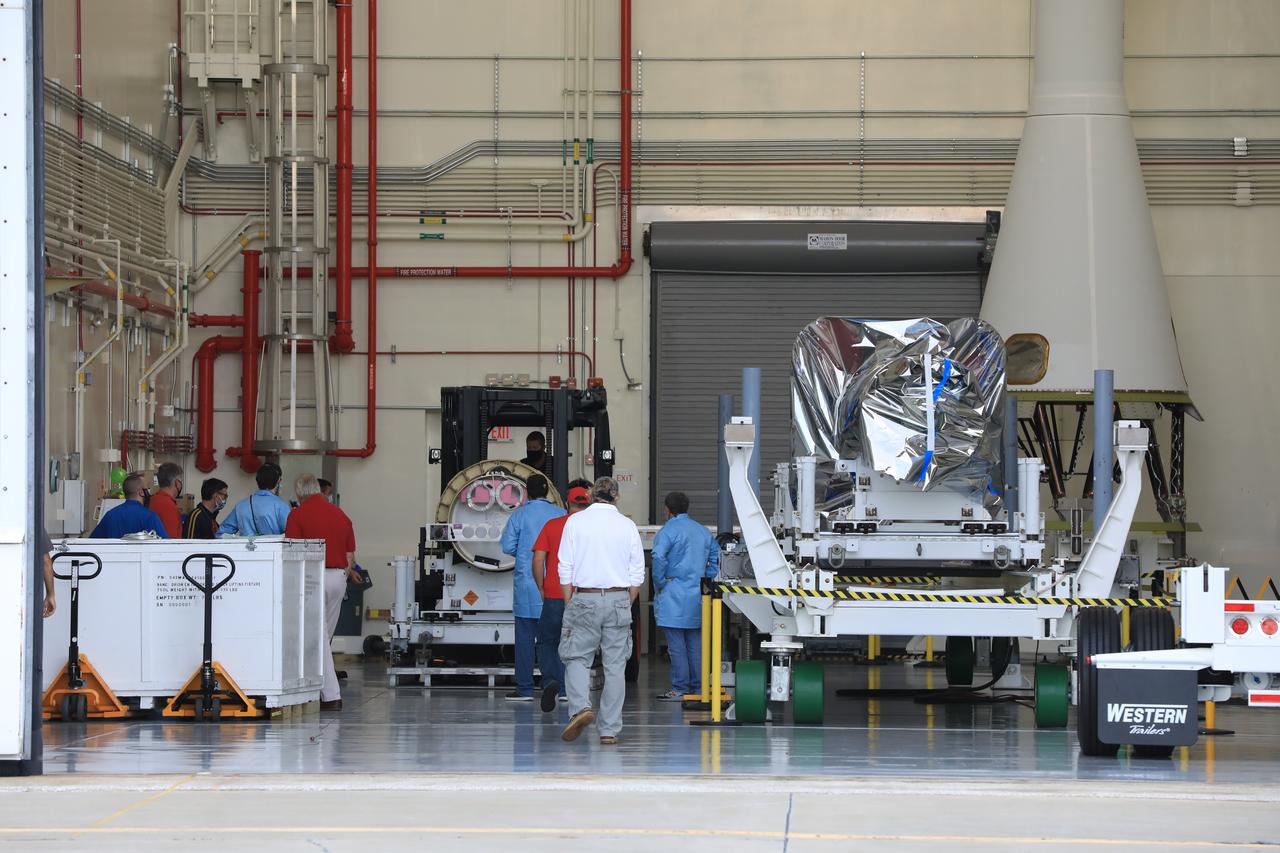
The last of three motors required to assemble the Launch Abort System for NASA’s Artemis II mission, the attitude control motor (ACM), arrives at Kennedy Space Center in Florida on August 28. The attitude control motor (ACM) was delivered by truck from Northrop Grumman’s manufacturing facility in Maryland, to the Launch Abort System Facility (LASF) at Kennedy. During launch of Orion atop the agency’s Space Launch System rocket, the LAS motors work together to separate the spacecraft from the rocket in the unlikely event of an emergency during launch. The LAS includes three motors – the launch abort motor, the jettison motor, and the attitude control motor—that once activated, will steer the spacecraft carrying the astronauts to safety. The ACM operates to keep Orion’s crew module on a controlled flight path in the event it needs to jettison and steer away from the rocket. Artemis II is the first crewed flight in a series of increasingly complex missions to the Moon that will lay the foundation for exploration of Mars and beyond. Artemis II will confirm all of the Orion spacecraft’s systems operate as designed in the actual environment of deep space with astronauts aboard. As part of the Artemis program, NASA will send the first woman and next man to the Moon in 2024.
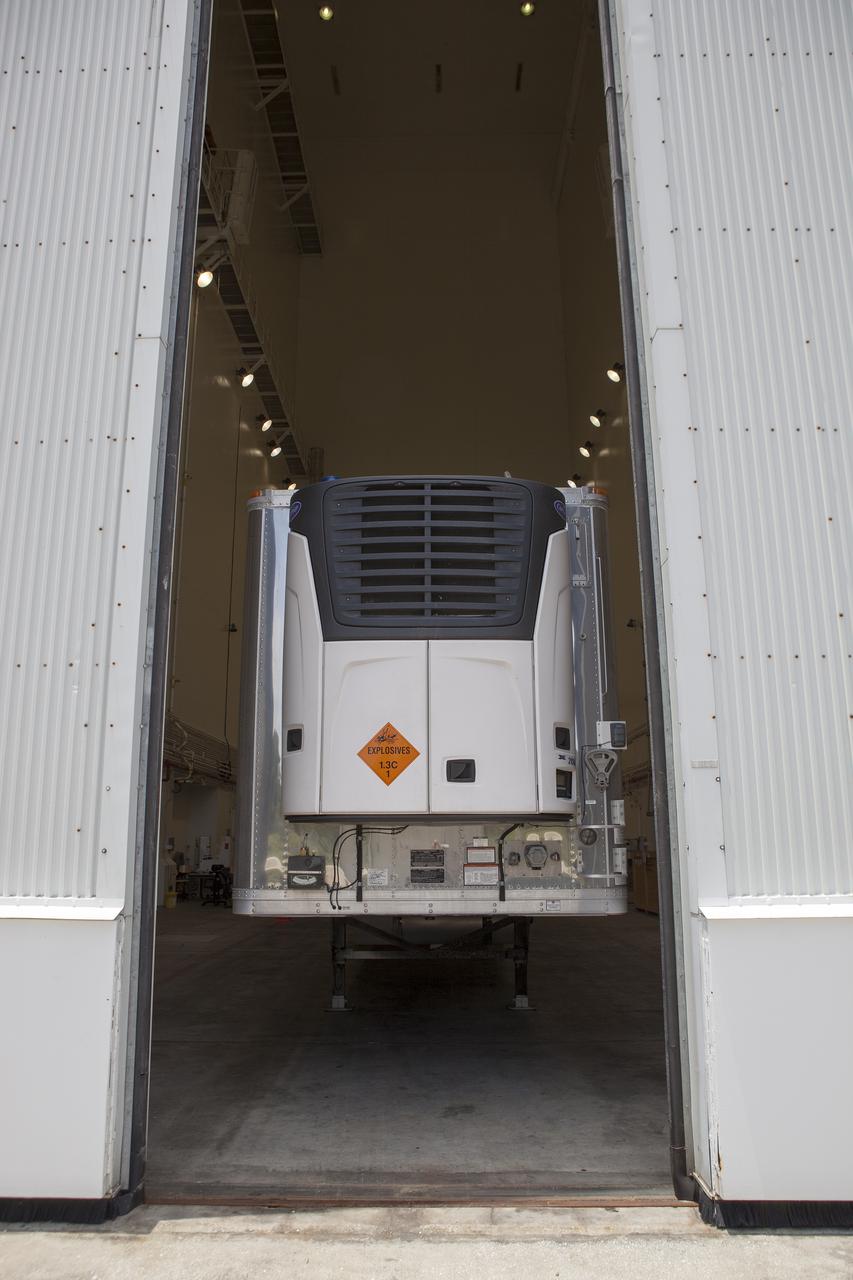
CAPE CANAVERAL, Fla. – At NASA’s Kennedy Space Center in Florida, a truck arrives at the Launch Abort System Facility with the jettison motor from Aerojet in Redmond, Wash. The motor is part of the Launch Abort System, or LAS, for Exploration Flight Test 1, or EFT-1, of the agency’s Orion Multi-Purpose Crew Vehicle. The motor will jettison the LAS away from the Orion crew capsule during the flight test’s early ascent phase. Orion’s Launch Abort System is designed to safely pull the Orion crew module away from the launch vehicle in the event of an emergency on the launch pad or during the initial ascent of NASA’s Space Launch System, or SLS, rocket. Orion is the exploration spacecraft designed to carry crews to space beyond low Earth orbit. It will provide emergency abort capability, sustain the crew during the space travel and provide safe re-entry from deep space return velocities. Orion’s first unpiloted test flight is scheduled to launch in 2014 atop a Delta IV rocket. A second uncrewed flight test is scheduled for 2017 on the SLS rocket. For more information, visit http:__www.nasa.gov_orion. Photo credit: NASA_Dimitri Gerondidakis
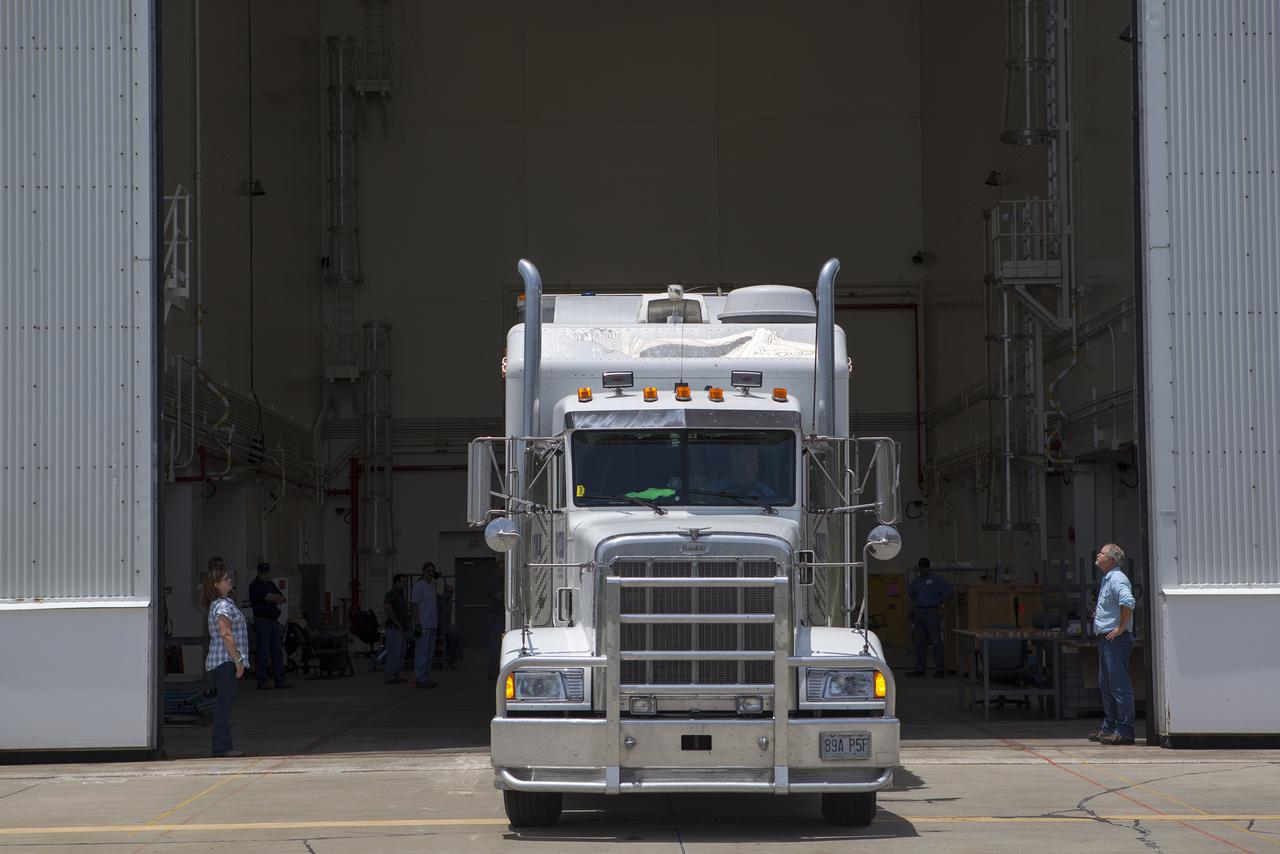
CAPE CANAVERAL, Fla. – At NASA’s Kennedy Space Center in Florida, a truck arrives at the Launch Abort System Facility with the jettison motor from Aerojet in Redmond, Wash. The motor is part of the Launch Abort System, or LAS, for Exploration Flight Test 1, or EFT-1, of the agency’s Orion Multi-Purpose Crew Vehicle. The motor will jettison the LAS away from the Orion crew capsule during the flight test’s early ascent phase. Orion’s Launch Abort System is designed to safely pull the Orion crew module away from the launch vehicle in the event of an emergency on the launch pad or during the initial ascent of NASA’s Space Launch System, or SLS, rocket. Orion is the exploration spacecraft designed to carry crews to space beyond low Earth orbit. It will provide emergency abort capability, sustain the crew during the space travel and provide safe re-entry from deep space return velocities. Orion’s first unpiloted test flight is scheduled to launch in 2014 atop a Delta IV rocket. A second uncrewed flight test is scheduled for 2017 on the SLS rocket. For more information, visit http:__www.nasa.gov_orion. Photo credit: NASA_Dimitri Gerondidakis
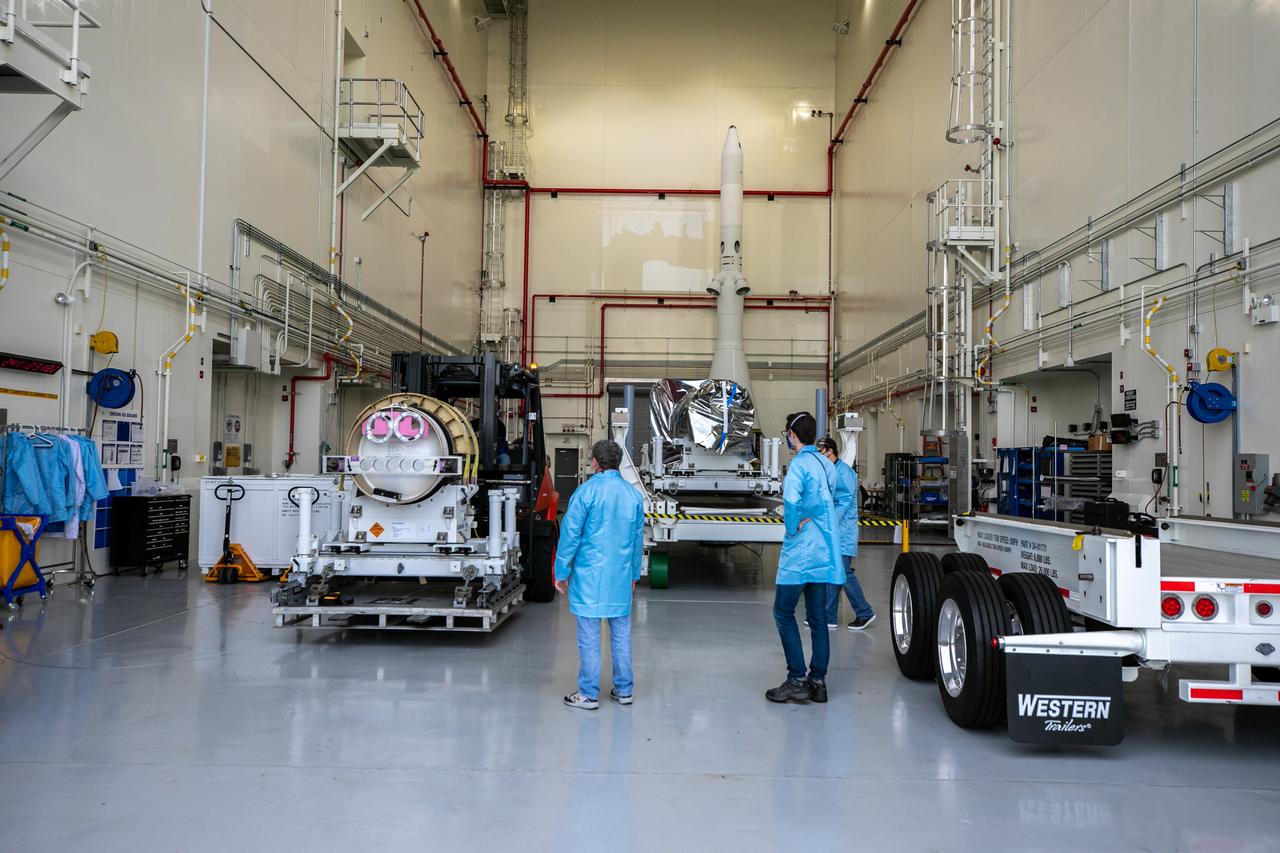
The last of three motors required to assemble the Launch Abort System for NASA’s Artemis II mission, the attitude control motor (ACM), arrives at Kennedy Space Center in Florida on August 28. The attitude control motor (ACM) was delivered by truck from Northrop Grumman’s manufacturing facility in Maryland, to the Launch Abort System Facility (LASF) at Kennedy. During launch of Orion atop the agency’s Space Launch System rocket, the LAS motors work together to separate the spacecraft from the rocket in the unlikely event of an emergency during launch. The LAS includes three motors – the launch abort motor, the jettison motor, and the attitude control motor—that once activated, will steer the spacecraft carrying the astronauts to safety. The ACM operates to keep Orion’s crew module on a controlled flight path in the event it needs to jettison and steer away from the rocket. Artemis II is the first crewed flight in a series of increasingly complex missions to the Moon that will lay the foundation for exploration of Mars and beyond. Artemis II will confirm all of the Orion spacecraft’s systems operate as designed in the actual environment of deep space with astronauts aboard. As part of the Artemis program, NASA will send the first woman and next man to the Moon in 2024.
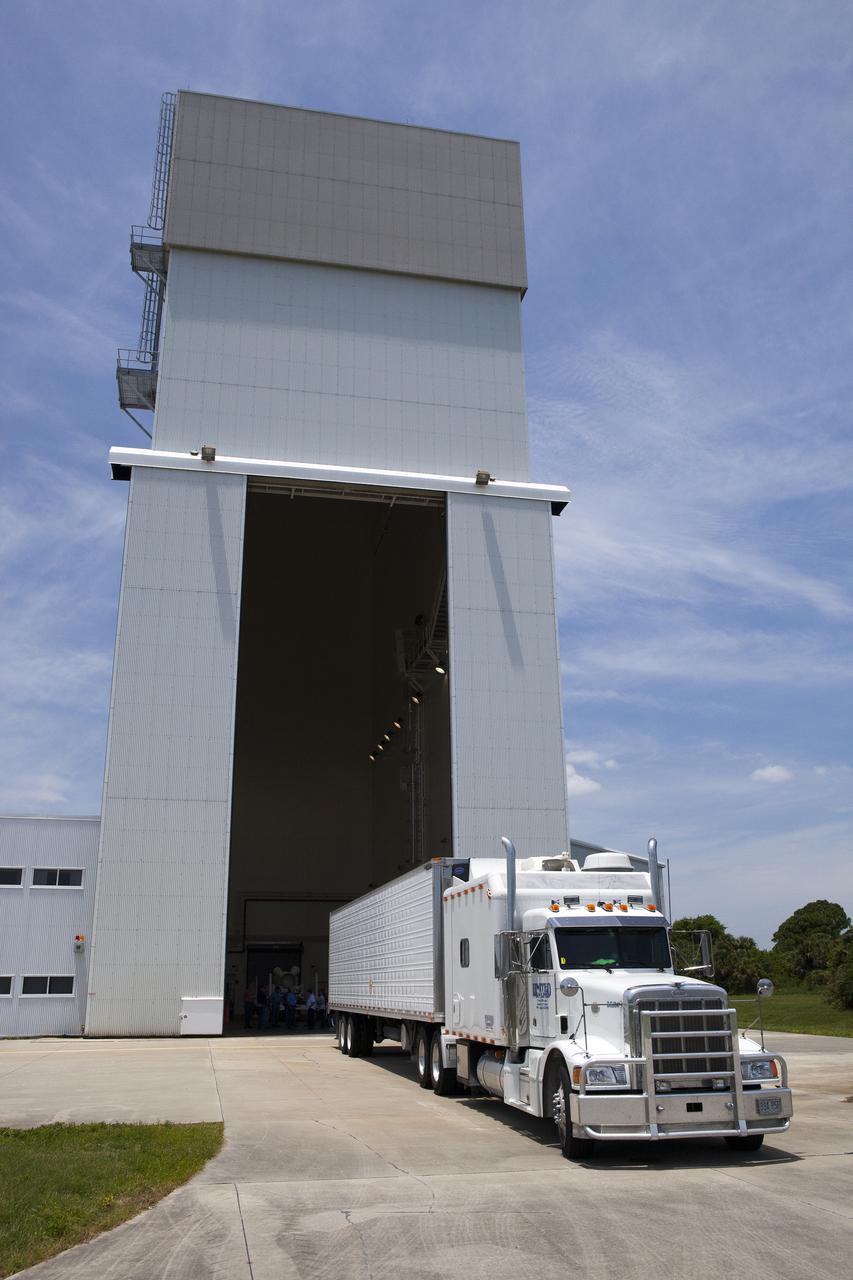
CAPE CANAVERAL, Fla. – At NASA’s Kennedy Space Center in Florida, a truck arrives at the Launch Abort System Facility with the jettison motor from Aerojet in Redmond, Wash. The motor is part of the Launch Abort System, or LAS, for Exploration Flight Test 1, or EFT-1, of the agency’s Orion Multi-Purpose Crew Vehicle. The motor will jettison the LAS away from the Orion crew capsule during the flight test’s early ascent phase. Orion’s Launch Abort System is designed to safely pull the Orion crew module away from the launch vehicle in the event of an emergency on the launch pad or during the initial ascent of NASA’s Space Launch System, or SLS, rocket. Orion is the exploration spacecraft designed to carry crews to space beyond low Earth orbit. It will provide emergency abort capability, sustain the crew during the space travel and provide safe re-entry from deep space return velocities. Orion’s first unpiloted test flight is scheduled to launch in 2014 atop a Delta IV rocket. A second uncrewed flight test is scheduled for 2017 on the SLS rocket. For more information, visit http:__www.nasa.gov_orion. Photo credit: NASA_Dimitri Gerondidakis
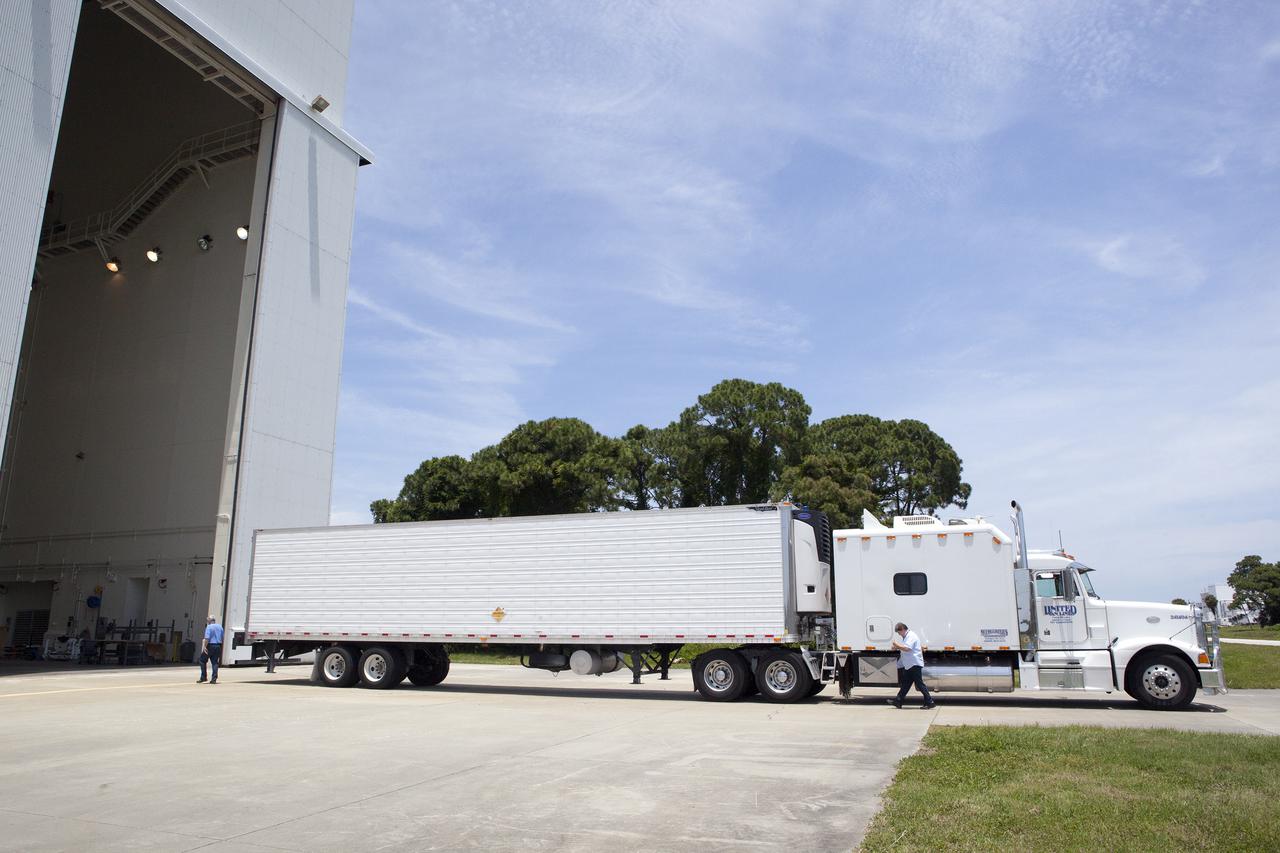
CAPE CANAVERAL, Fla. – At NASA’s Kennedy Space Center in Florida, a truck arrives at the Launch Abort System Facility with the jettison motor from Aerojet in Redmond, Wash. The motor is part of the Launch Abort System, or LAS, for Exploration Flight Test 1, or EFT-1, of the agency’s Orion Multi-Purpose Crew Vehicle. The motor will jettison the LAS away from the Orion crew capsule during the flight test’s early ascent phase. Orion’s Launch Abort System is designed to safely pull the Orion crew module away from the launch vehicle in the event of an emergency on the launch pad or during the initial ascent of NASA’s Space Launch System, or SLS, rocket. Orion is the exploration spacecraft designed to carry crews to space beyond low Earth orbit. It will provide emergency abort capability, sustain the crew during the space travel and provide safe re-entry from deep space return velocities. Orion’s first unpiloted test flight is scheduled to launch in 2014 atop a Delta IV rocket. A second uncrewed flight test is scheduled for 2017 on the SLS rocket. For more information, visit http:__www.nasa.gov_orion. Photo credit: NASA_Dimitri Gerondidakis
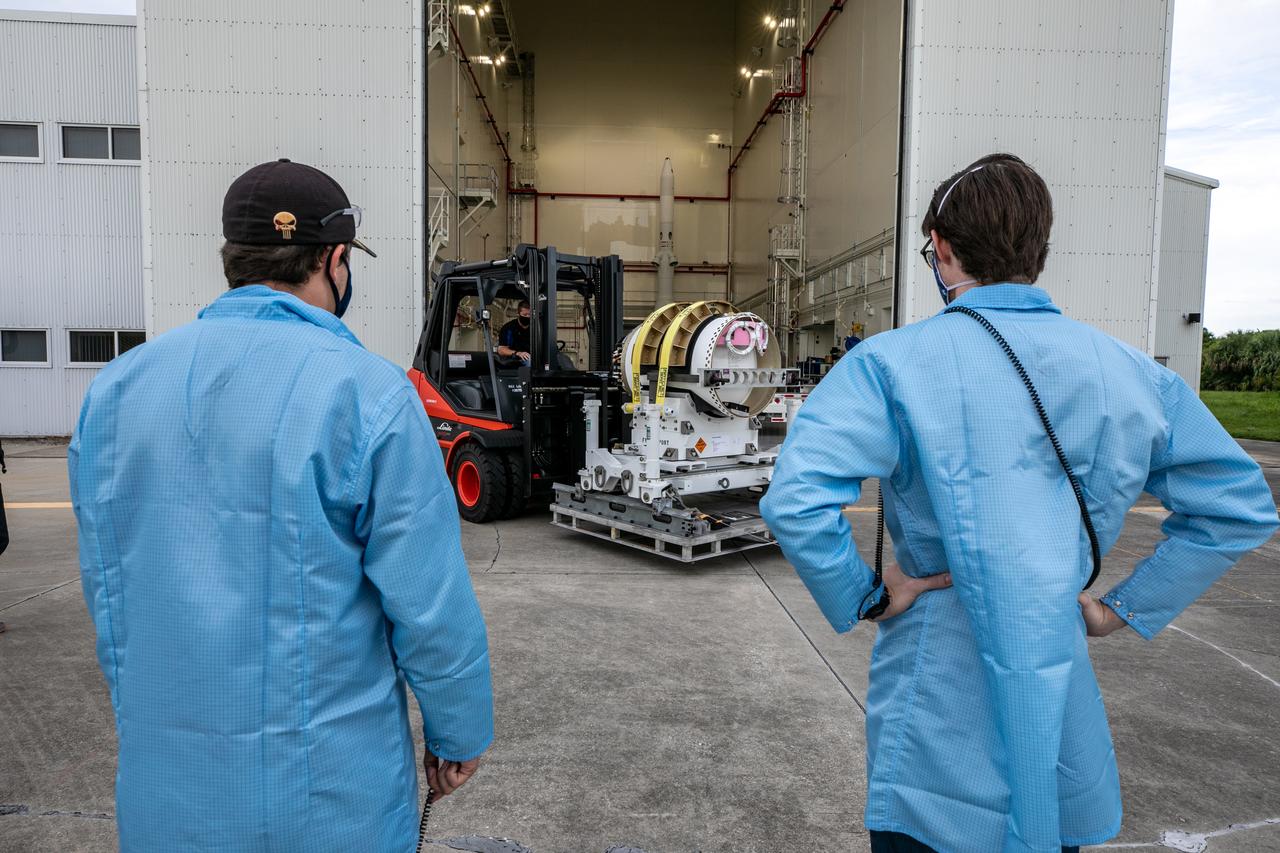
The last of three motors required to assemble the Launch Abort System for NASA’s Artemis II mission, the attitude control motor (ACM), arrives at Kennedy Space Center in Florida on August 28. The attitude control motor (ACM) was delivered by truck from Northrop Grumman’s manufacturing facility in Maryland, to the Launch Abort System Facility (LASF) at Kennedy. During launch of Orion atop the agency’s Space Launch System rocket, the LAS motors work together to separate the spacecraft from the rocket in the unlikely event of an emergency during launch. The LAS includes three motors – the launch abort motor, the jettison motor, and the attitude control motor—that once activated, will steer the spacecraft carrying the astronauts to safety. The ACM operates to keep Orion’s crew module on a controlled flight path in the event it needs to jettison and steer away from the rocket. Artemis II is the first crewed flight in a series of increasingly complex missions to the Moon that will lay the foundation for exploration of Mars and beyond. Artemis II will confirm all of the Orion spacecraft’s systems operate as designed in the actual environment of deep space with astronauts aboard. As part of the Artemis program, NASA will send the first woman and next man to the Moon in 2024.
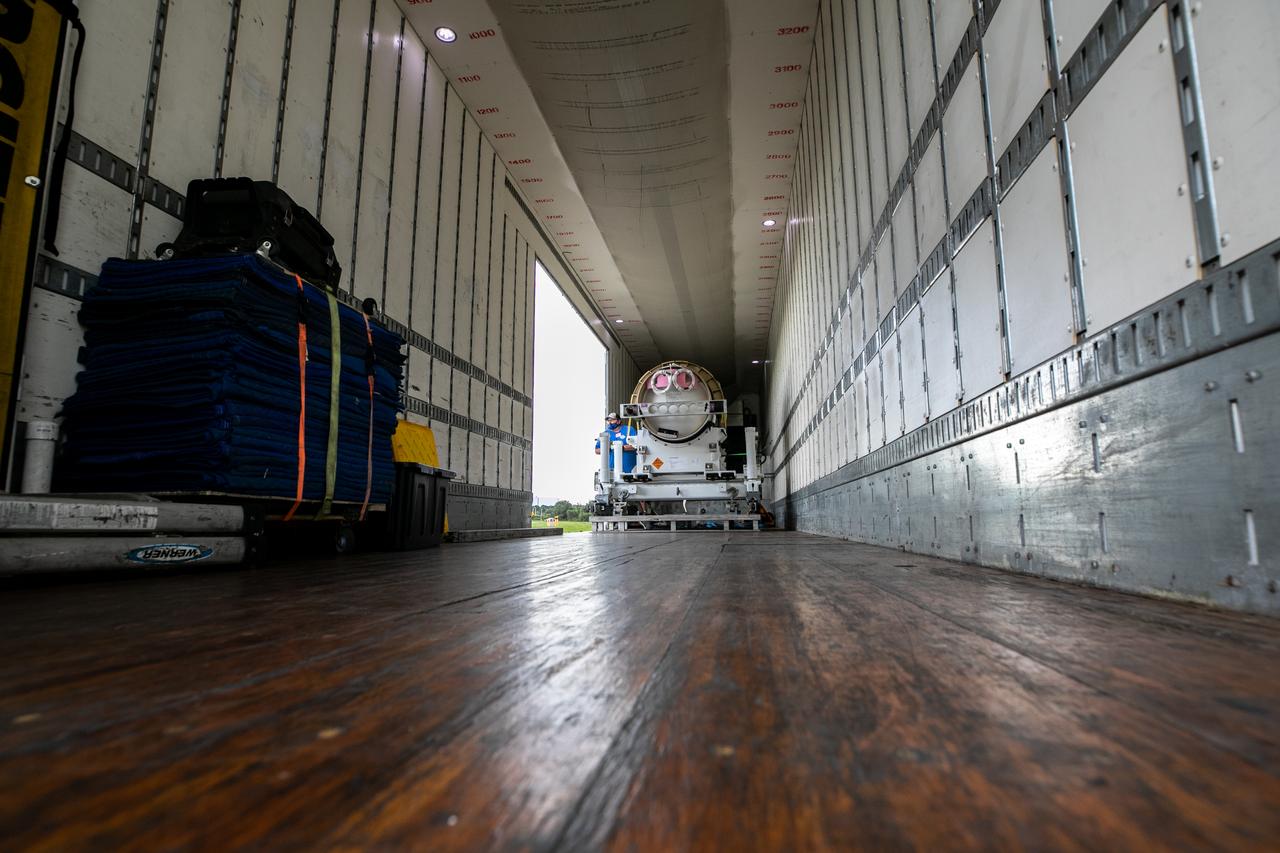
The last of three motors required to assemble the Launch Abort System for NASA’s Artemis II mission, the attitude control motor (ACM), arrives at Kennedy Space Center in Florida on August 28. The attitude control motor (ACM) was delivered by truck from Northrop Grumman’s manufacturing facility in Maryland, to the Launch Abort System Facility (LASF) at Kennedy. During launch of Orion atop the agency’s Space Launch System rocket, the LAS motors work together to separate the spacecraft from the rocket in the unlikely event of an emergency during launch. The LAS includes three motors – the launch abort motor, the jettison motor, and the attitude control motor—that once activated, will steer the spacecraft carrying the astronauts to safety. The ACM operates to keep Orion’s crew module on a controlled flight path in the event it needs to jettison and steer away from the rocket. Artemis II is the first crewed flight in a series of increasingly complex missions to the Moon that will lay the foundation for exploration of Mars and beyond. Artemis II will confirm all of the Orion spacecraft’s systems operate as designed in the actual environment of deep space with astronauts aboard. As part of the Artemis program, NASA will send the first woman and next man to the Moon in 2024.

The jettison, abort, and attitude control motors for Artemis II are secured on a work stand inside the Launch Abort System Facility at NASA’s Kennedy Space Center in Florida on Nov. 17, 2021. The motors will continue undergoing inspections, testing, and assembly ahead of the first crewed Artemis mission. The launch abort system is designed to protect astronauts if a problem arises during launch by pulling the Orion spacecraft away from a failing rocket. Artemis II will confirm all the Orion spacecraft’s systems operate as designed in the actual environment of deep space with astronauts aboard.

The jettison, abort, and attitude control motors for Artemis II are secured on a work stand inside the Launch Abort System Facility at NASA’s Kennedy Space Center in Florida on Nov. 17, 2021. The motors will continue undergoing inspections, testing, and assembly ahead of the first crewed Artemis mission. The launch abort system is designed to protect astronauts if a problem arises during launch by pulling the Orion spacecraft away from a failing rocket. Artemis II will confirm all the Orion spacecraft’s systems operate as designed in the actual environment of deep space with astronauts aboard.
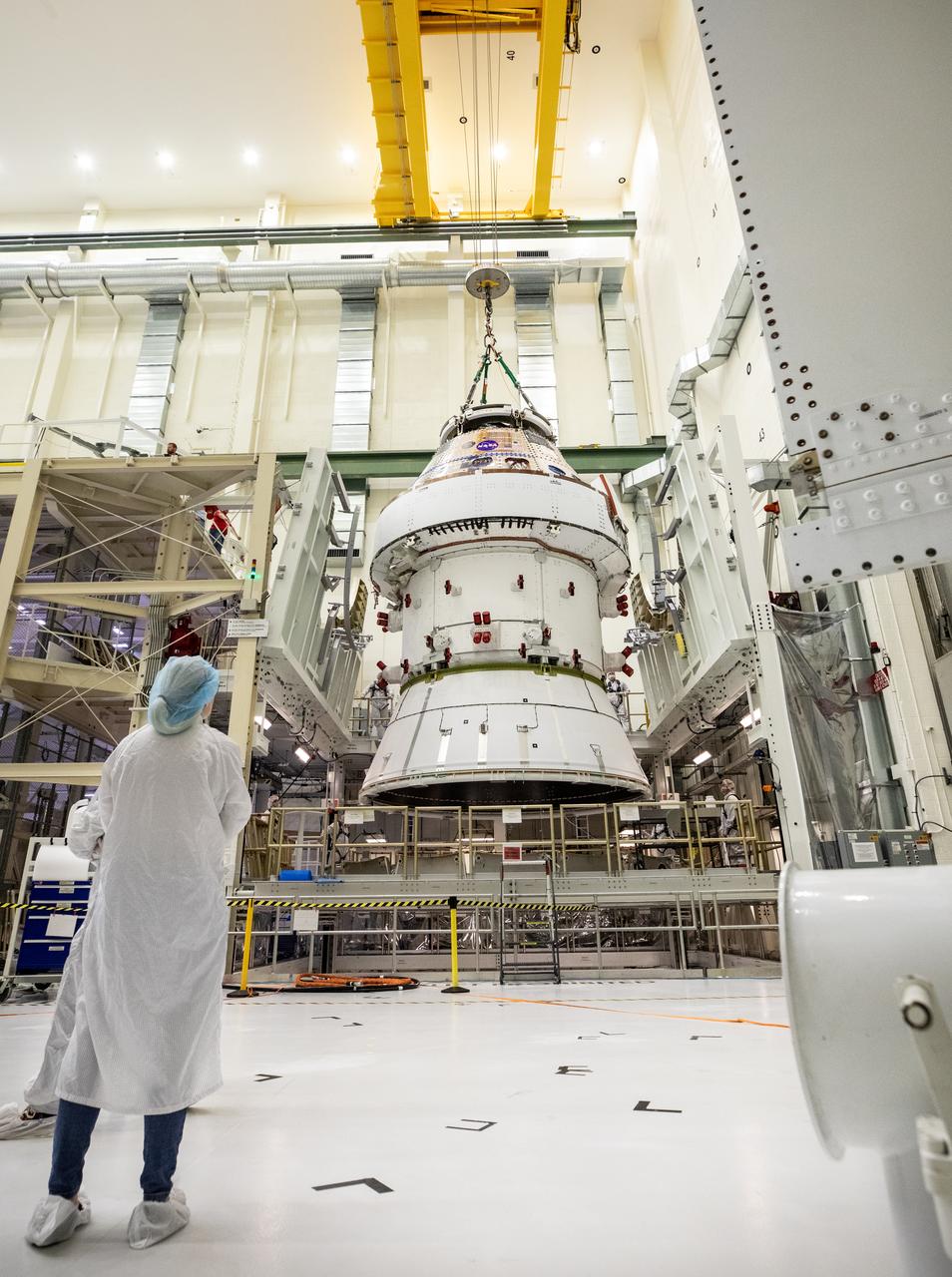
Technicians with NASA and Lockheed Martin operate a 30-ton crane to move NASA’s Artemis II Orion spacecraft out of the Final Assembly and System Testing cell inside the Neil A. Operations and Checkout Building at NASA’s Kennedy Space Center in Florida on Saturday, Feb. 22, 2025. The move prepares for the upcoming installation of four solar array wings and spacecraft adapter jettison fairings for the agency’s first crewed flight test under the Artemis campaign.
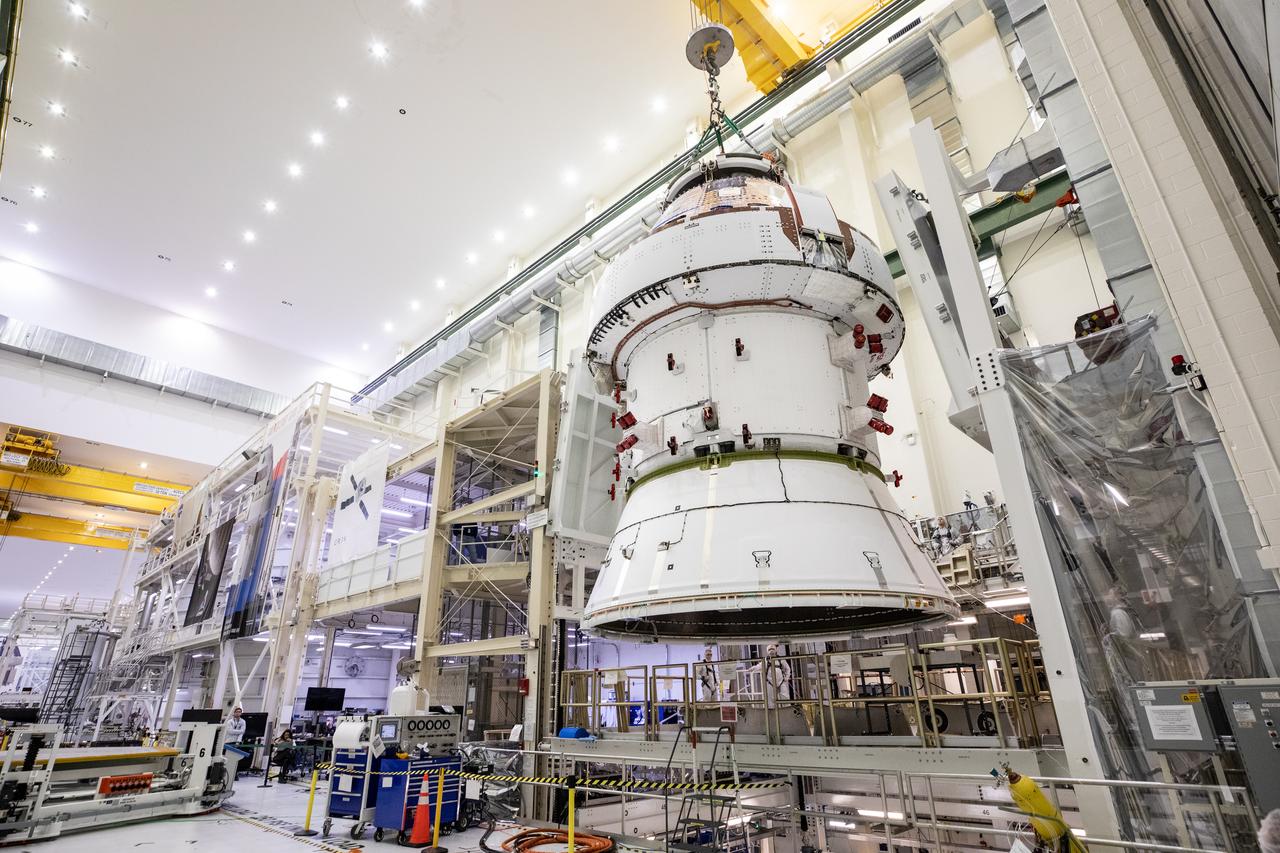
Technicians with NASA and Lockheed Martin operate a 30-ton crane to move NASA’s Artemis II Orion spacecraft out of the Final Assembly and System Testing cell inside the Neil A. Operations and Checkout Building at NASA’s Kennedy Space Center in Florida on Saturday, Feb. 22, 2025. The move prepares for the upcoming installation of four solar array wings and spacecraft adapter jettison fairings for the agency’s first crewed flight test under the Artemis campaign.
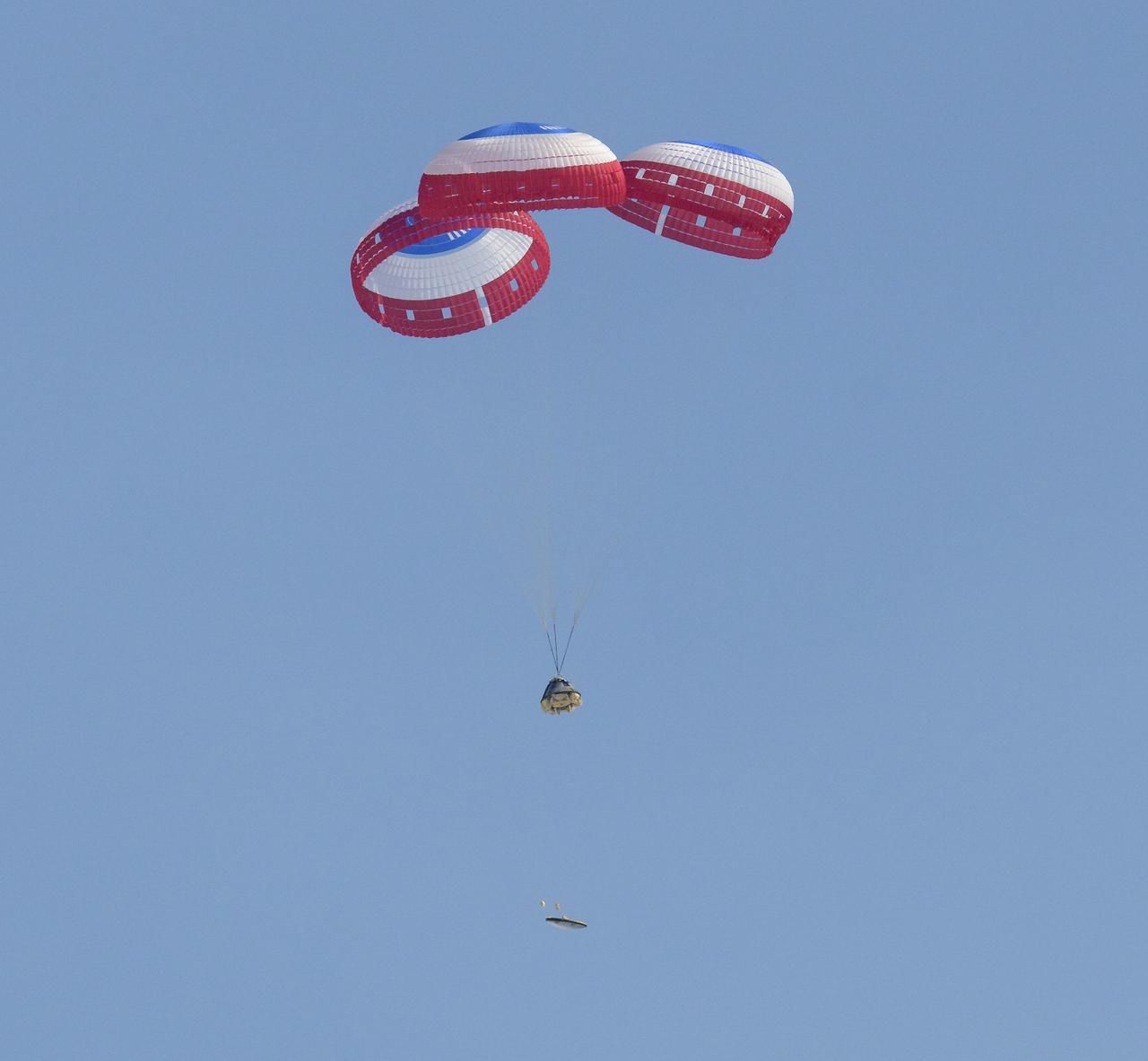
The Boeing CST-100 Starliner spacecraft jettisons the heat shield as it lands at White Sands Missile Range’s Space Harbor, Wednesday, May 25, 2022, in New Mexico. Boeing’s Orbital Flight Test-2 (OFT-2) is Starliner’s second uncrewed flight test to the International Space Station as part of NASA's Commercial Crew Program. OFT-2 serves as an end-to-end test of the system's capabilities. Photo Credit: (NASA/Bill Ingalls)
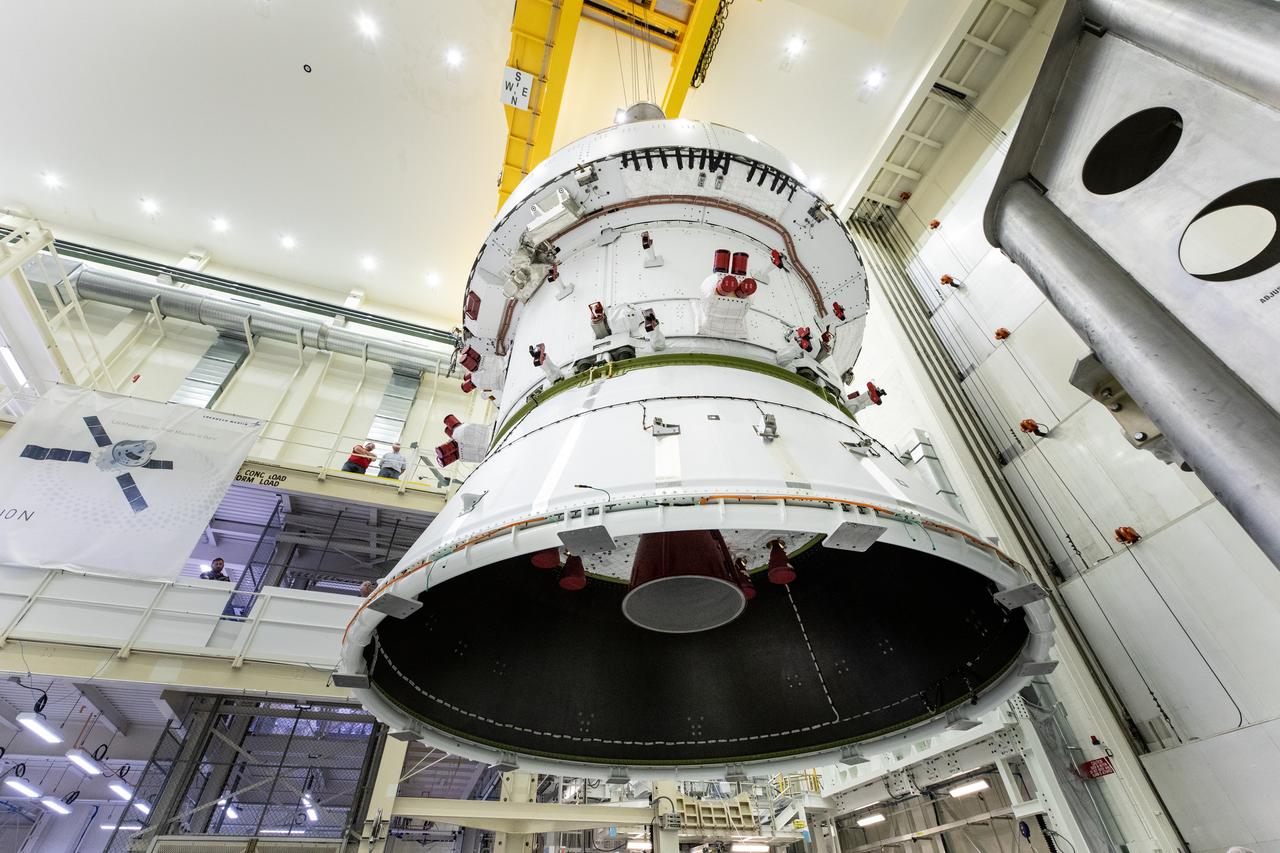
Technicians with NASA and Lockheed Martin operate a 30-ton crane to move NASA’s Artemis II Orion spacecraft out of the Final Assembly and System Testing cell inside the Neil A. Operations and Checkout Building at NASA’s Kennedy Space Center in Florida on Saturday, Feb. 22, 2025. The move prepares for the upcoming installation of four solar array wings and spacecraft adapter jettison fairings for the agency’s first crewed flight test under the Artemis campaign.
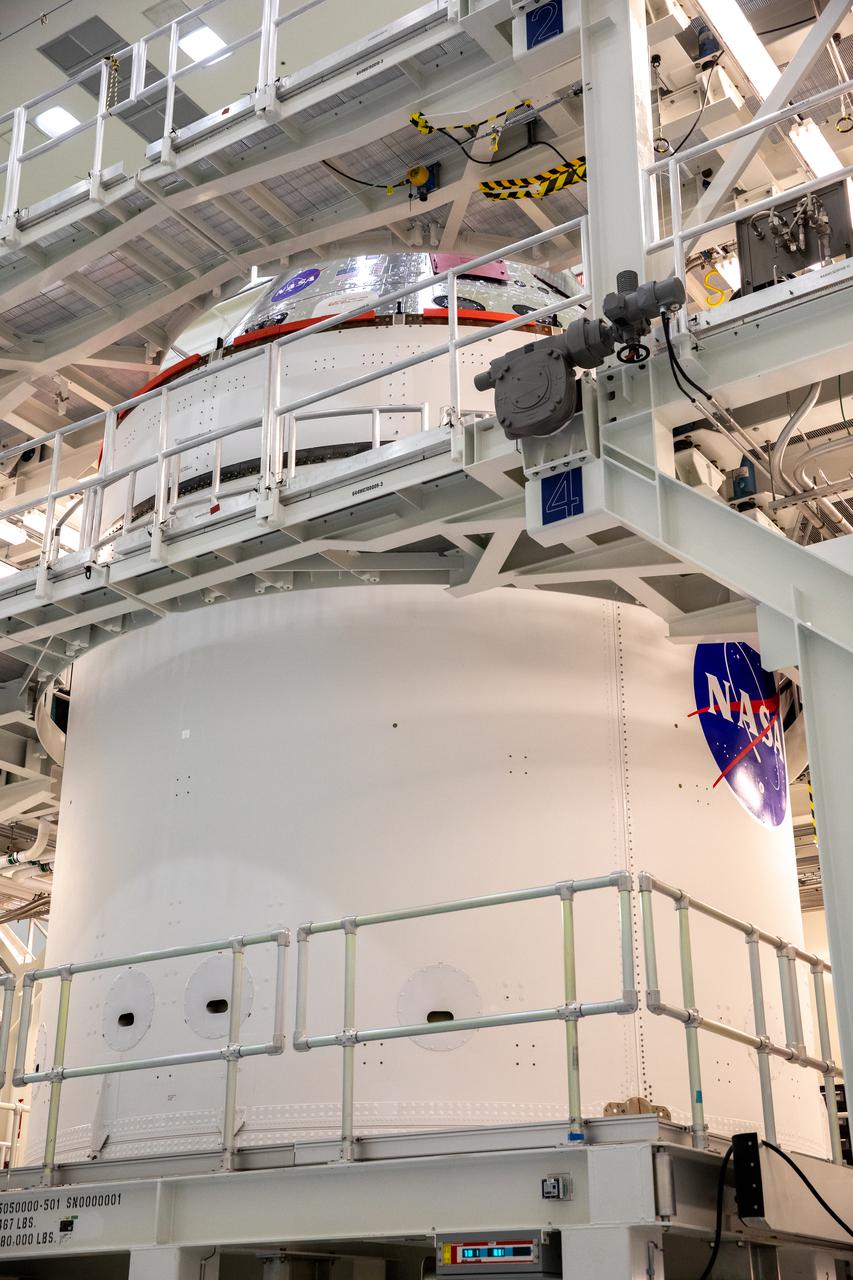
NASA’s famous “meatball” insignia is affixed to the Artemis I Orion spacecraft adapter jettison fairings, which protect the European built service module, Jan. 20, 2021, inside the Multi-Payload Processing Facility at NASA’s Kennedy Space Center in Florida. Shown inside its servicing stand, ground processing begins on Orion, with the Exploration Ground Systems and Jacobs teams performing checkouts and fueling the spacecraft with commodities as part of preparations ahead of the Artemis I mission.
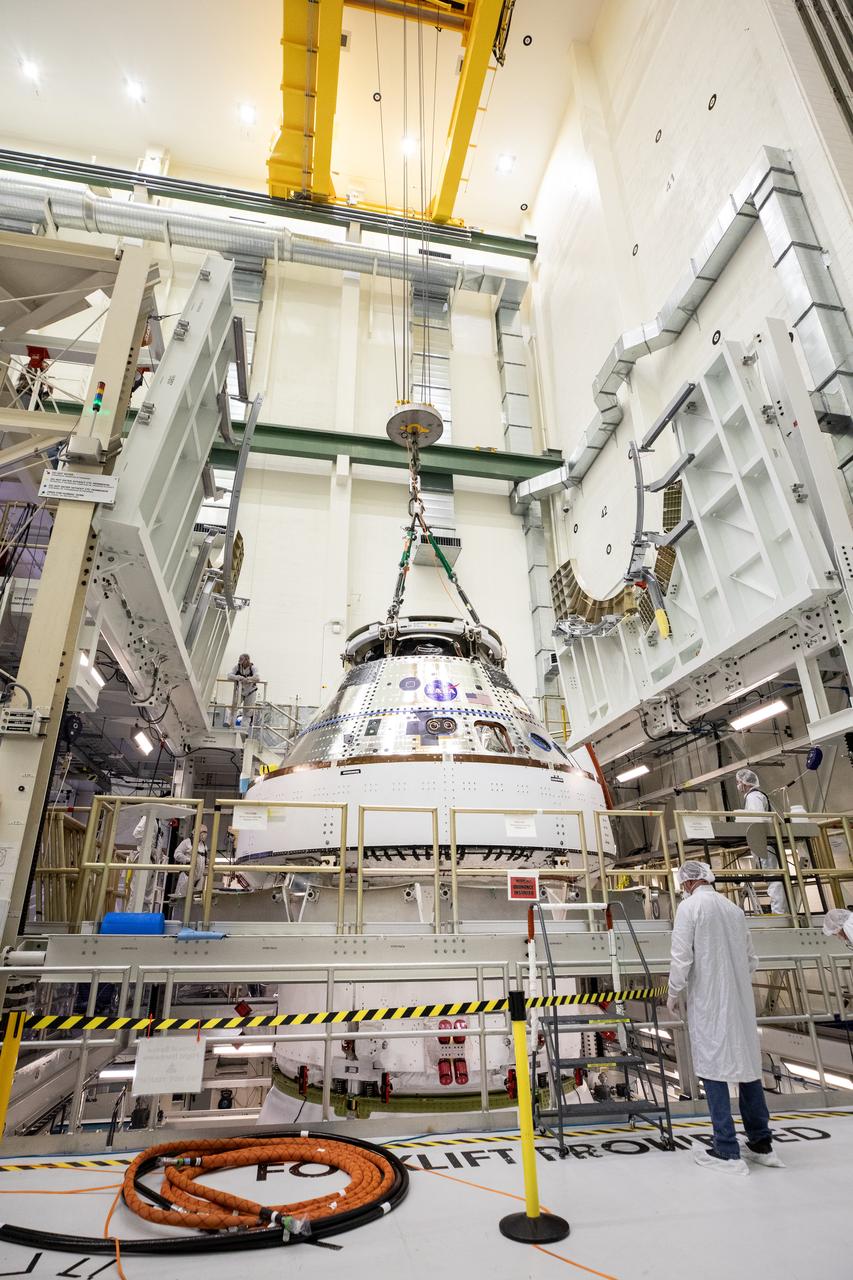
Technicians with NASA and Lockheed Martin operate a 30-ton crane to move NASA’s Artemis II Orion spacecraft out of the Final Assembly and System Testing cell inside the Neil A. Operations and Checkout Building at NASA’s Kennedy Space Center in Florida on Saturday, Feb. 22, 2025. The move prepares for the upcoming installation of four solar array wings and spacecraft adapter jettison fairings for the agency’s first crewed flight test under the Artemis campaign.
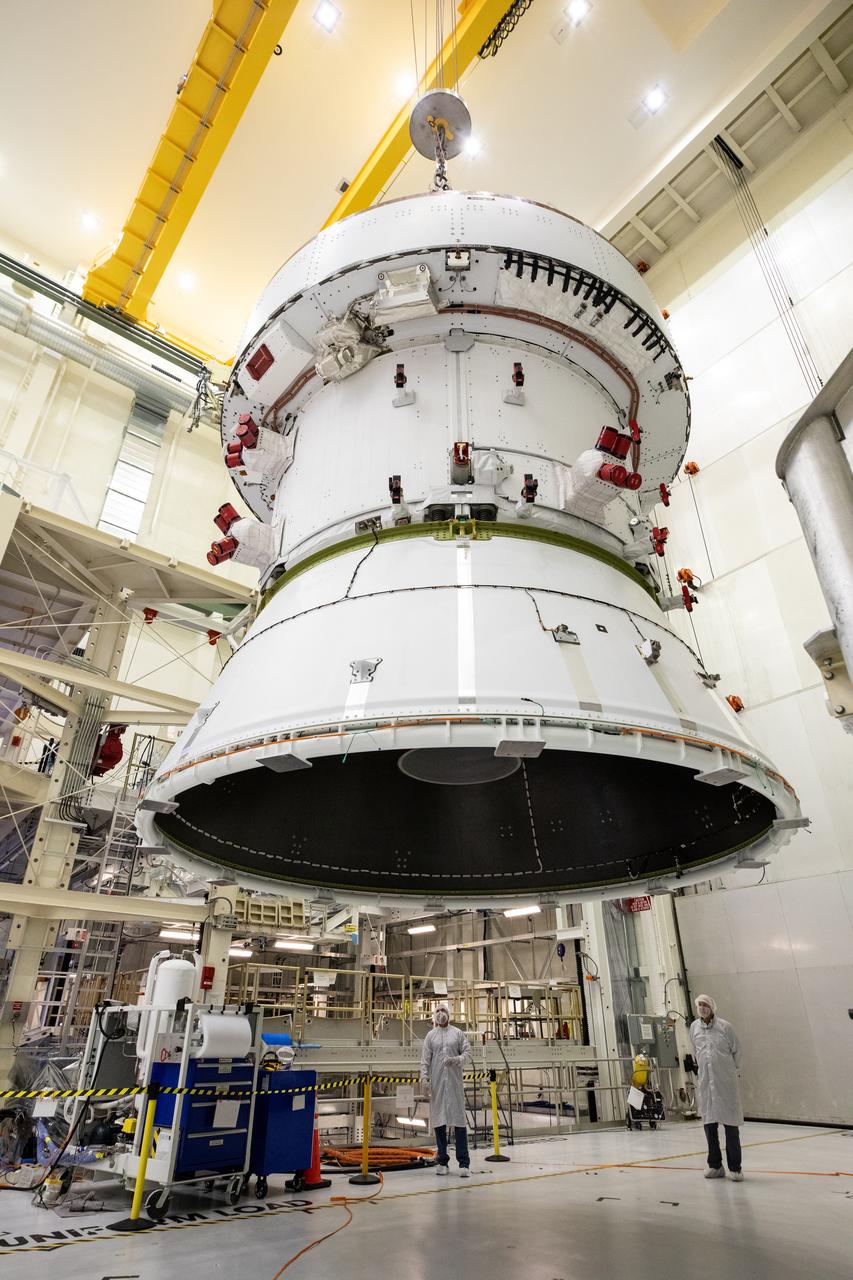
Technicians with NASA and Lockheed Martin operate a 30-ton crane to move NASA’s Artemis II Orion spacecraft out of the Final Assembly and System Testing cell inside the Neil A. Operations and Checkout Building at NASA’s Kennedy Space Center in Florida on Saturday, Feb. 22, 2025. The move prepares for the upcoming installation of four solar array wings and spacecraft adapter jettison fairings for the agency’s first crewed flight test under the Artemis campaign.
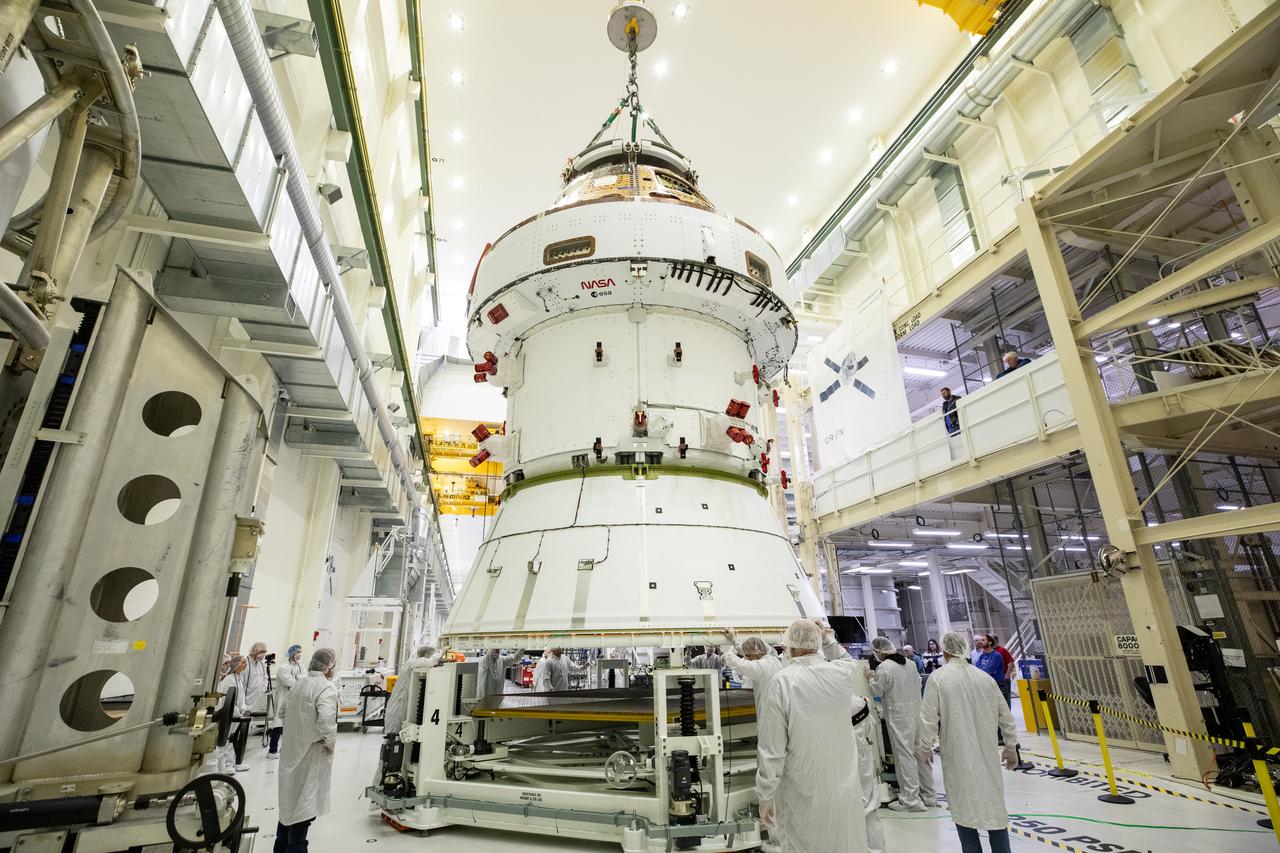
Technicians with NASA and Lockheed Martin operate a 30-ton crane to move NASA’s Artemis II Orion spacecraft out of the Final Assembly and System Testing cell inside the Neil A. Operations and Checkout Building at NASA’s Kennedy Space Center in Florida on Saturday, Feb. 22, 2025. The move prepares for the upcoming installation of four solar array wings and spacecraft adapter jettison fairings for the agency’s first crewed flight test under the Artemis campaign.
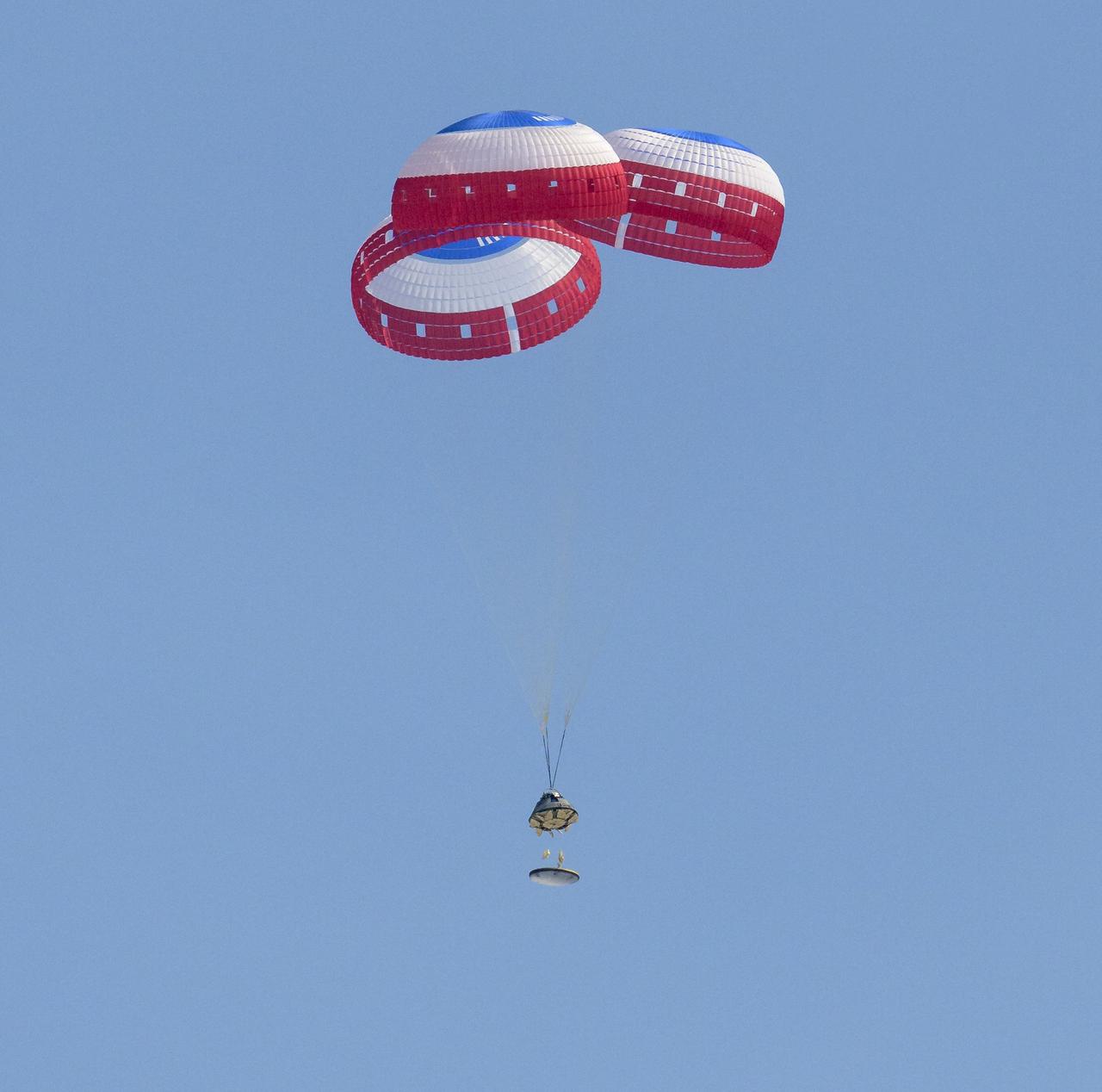
The Boeing CST-100 Starliner spacecraft jettisons the heat shield as it lands at White Sands Missile Range’s Space Harbor, Wednesday, May 25, 2022, in New Mexico. Boeing’s Orbital Flight Test-2 (OFT-2) is Starliner’s second uncrewed flight test to the International Space Station as part of NASA's Commercial Crew Program. OFT-2 serves as an end-to-end test of the system's capabilities. Photo Credit: (NASA/Bill Ingalls)
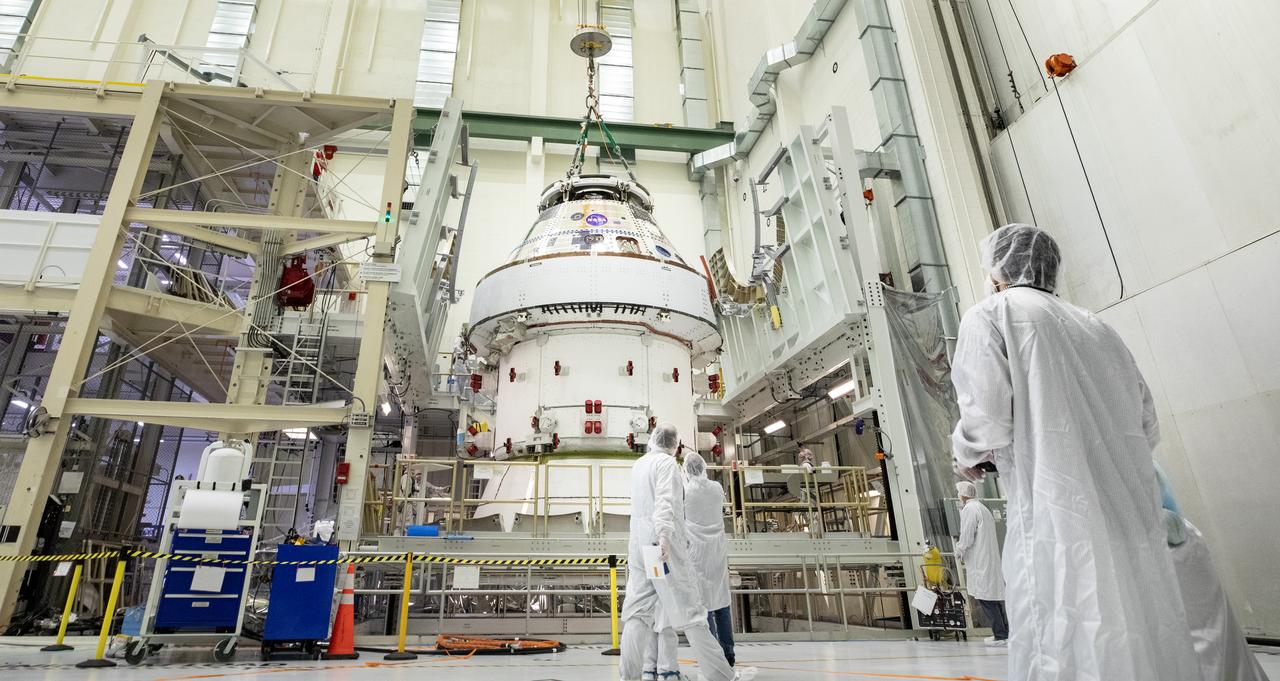
Technicians with NASA and Lockheed Martin operate a 30-ton crane to move NASA’s Artemis II Orion spacecraft out of the Final Assembly and System Testing cell inside the Neil A. Operations and Checkout Building at NASA’s Kennedy Space Center in Florida on Saturday, Feb. 22, 2025. The move prepares for the upcoming installation of four solar array wings and spacecraft adapter jettison fairings for the agency’s first crewed flight test under the Artemis campaign.
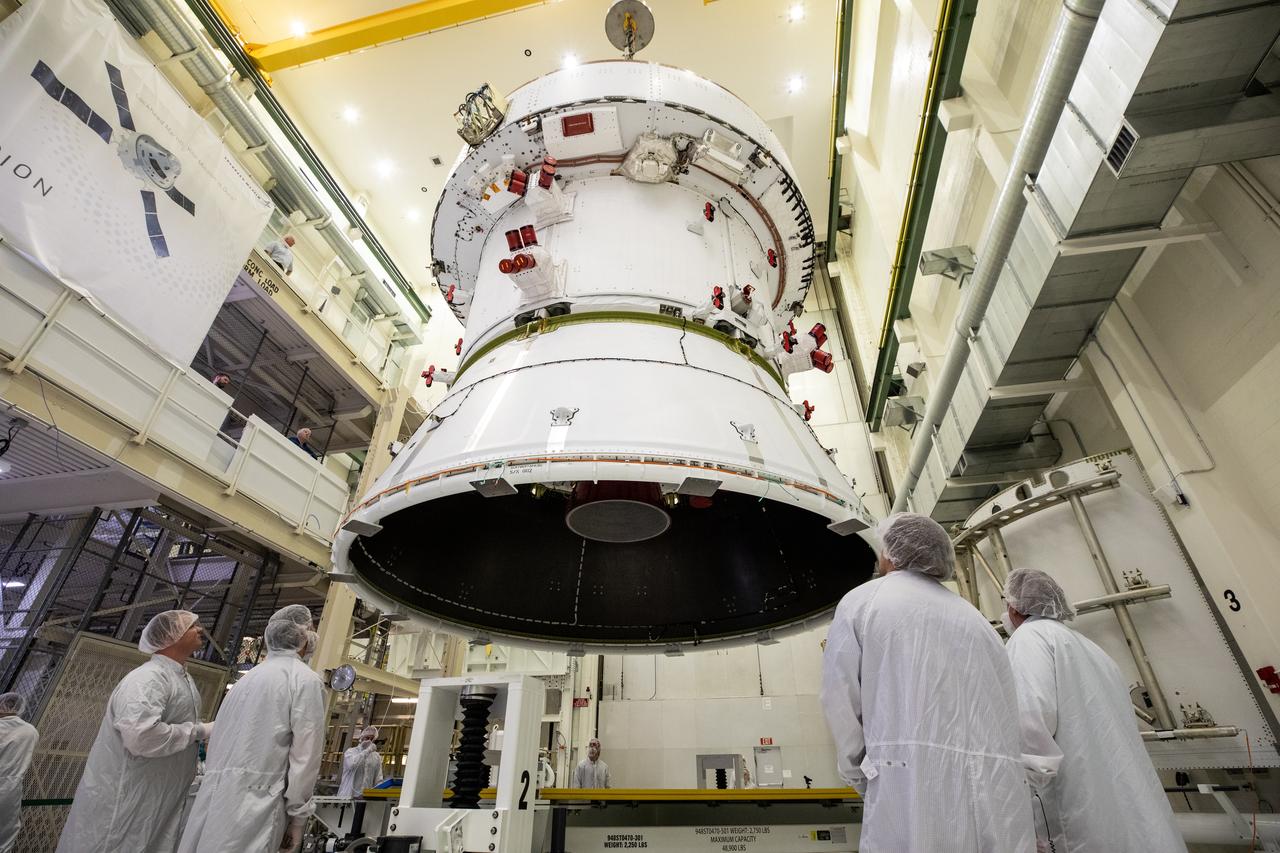
Technicians with NASA and Lockheed Martin operate a 30-ton crane to move NASA’s Artemis II Orion spacecraft out of the Final Assembly and System Testing cell inside the Neil A. Operations and Checkout Building at NASA’s Kennedy Space Center in Florida on Saturday, Feb. 22, 2025. The move prepares for the upcoming installation of four solar array wings and spacecraft adapter jettison fairings for the agency’s first crewed flight test under the Artemis campaign.
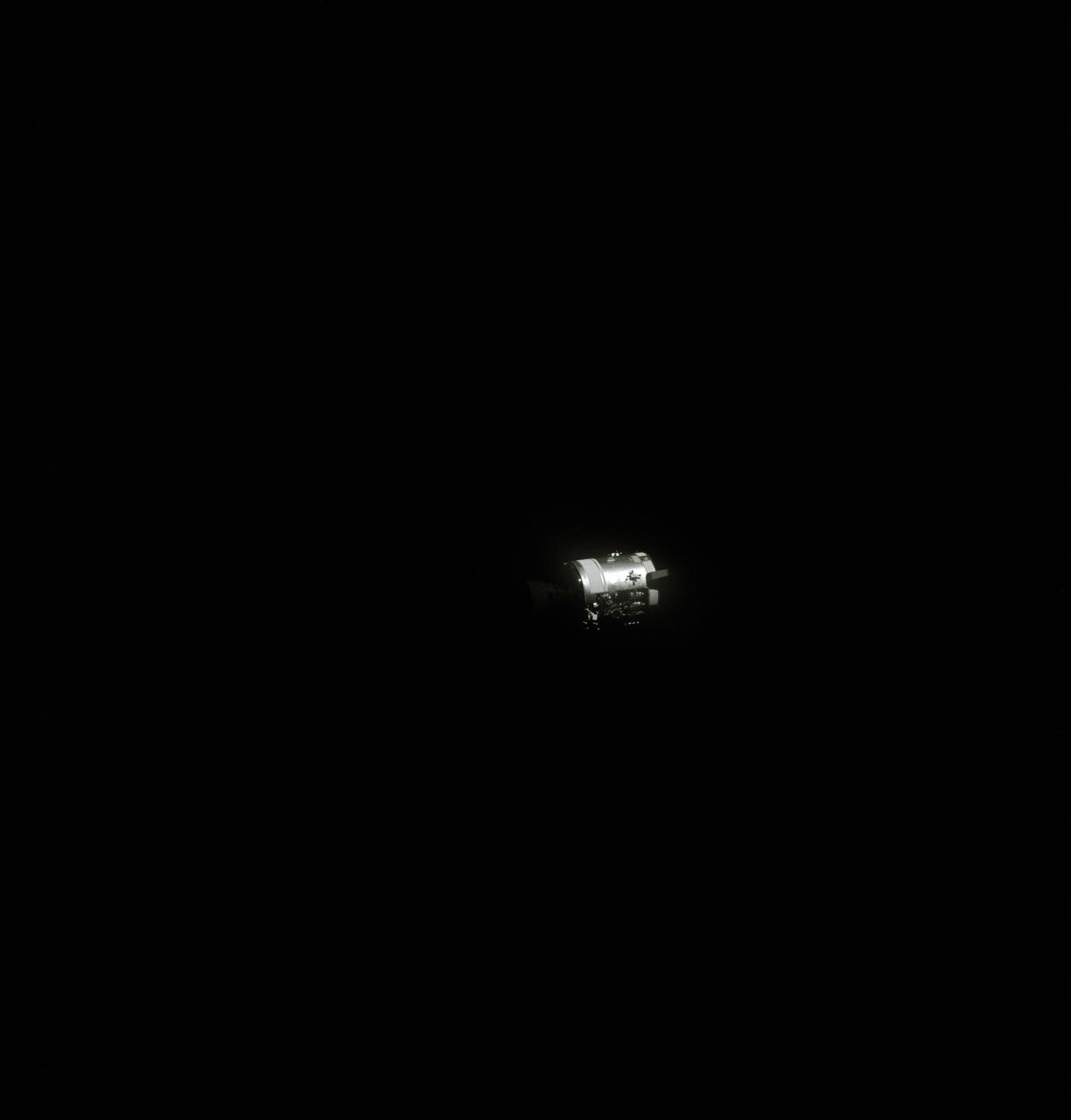
AS13-58-8464 (17 April 1970) --- This view of the severely damaged Apollo 13 Service Module (SM) was photographed from the Lunar Module/Command Module (LM/CM) following SM jettisoning. Nearest the camera is the Service Propulsion System (SPS) engine and nozzle. An entire SM panel was blown away by the apparent explosion of oxygen tank number two located in Sector 4 of the SM. The apparent rupture of the oxygen tank caused the Apollo 13 crew men to use the Lunar Module (LM) as a "lifeboat".

Technicians with NASA and Lockheed Martin operate a 30-ton crane to move NASA’s Artemis II Orion spacecraft out of the Final Assembly and System Testing cell inside the Neil A. Operations and Checkout Building at NASA’s Kennedy Space Center in Florida on Saturday, Feb. 22, 2025. The move prepares for the upcoming installation of four solar array wings and spacecraft adapter jettison fairings for the agency’s first crewed flight test under the Artemis campaign.
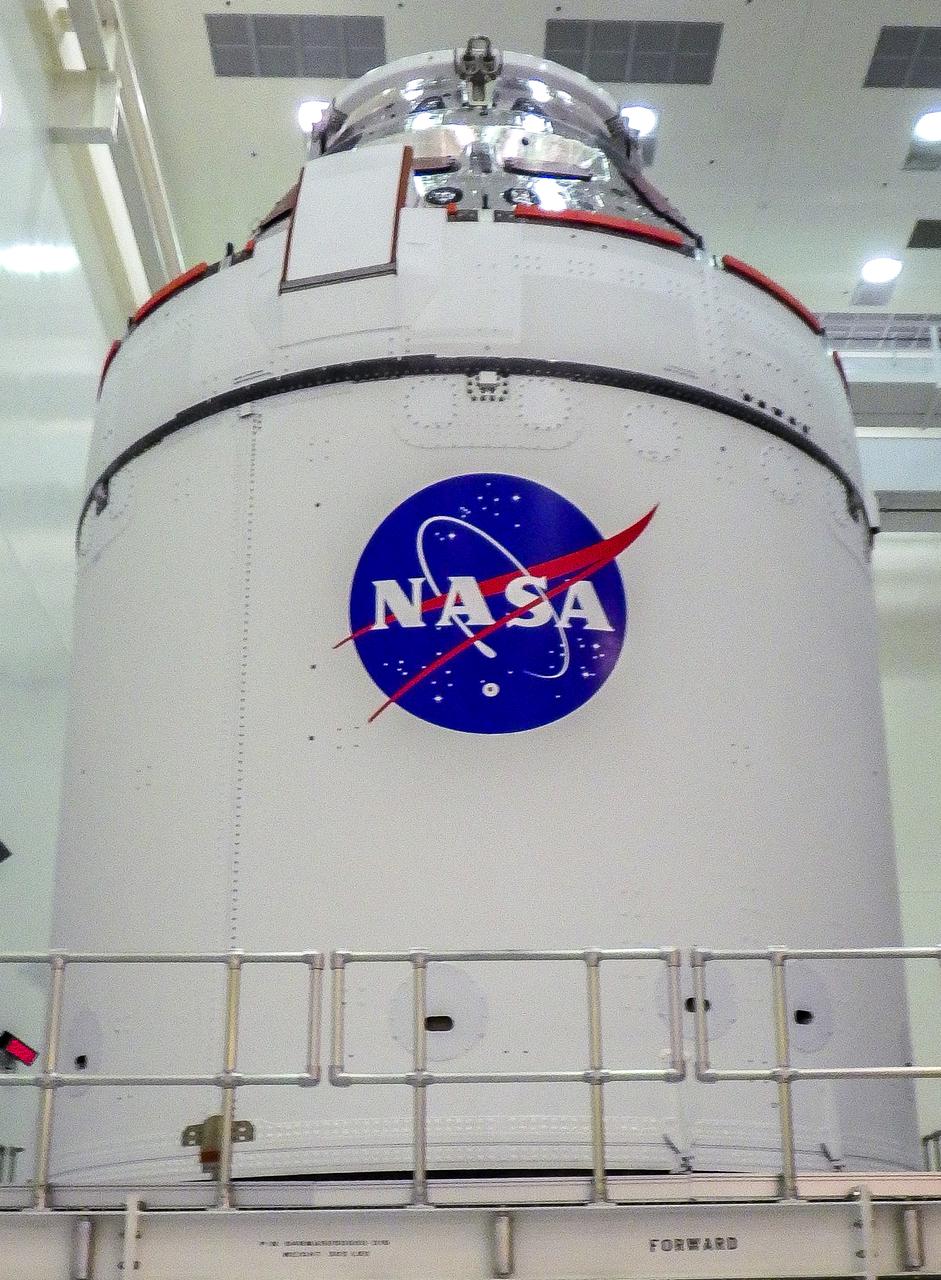
A close-up view of the Artemis I Orion spacecraft with NASA’s famous “meatball” insignia is affixed to the spacecraft adapter jettison fairings, which protect the European built service module, inside the Multi-Payload Processing Facility at Kennedy Space Center on Jan. 20, 2021. Ground processing will begin on Orion, with the Exploration Ground Systems and Jacobs teams performing checkouts and fueling the spacecraft with commodities as part of preparations ahead of the Artemis I mission.
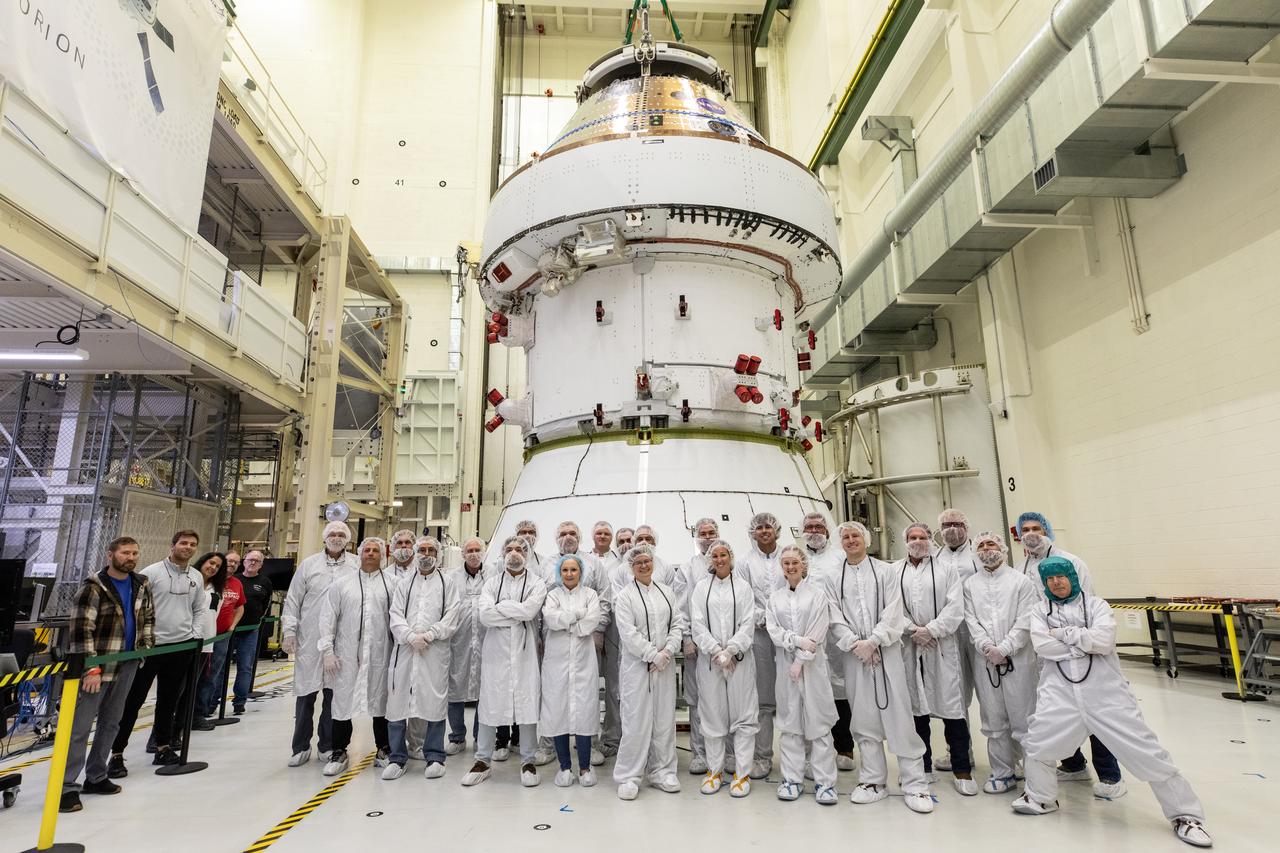
Crews with NASA and Lockheed Martin pose for a photo in front of NASA’s Artemis II Orion spacecraft inside the Neil A. Operations and Checkout Building at NASA’s Kennedy Space Center in Florida on Saturday, Feb. 22, 2025. Technicians operated a 30-ton crane to move the spacecraft from the Final Assembly and System Testing cell to prepare for upcoming installation of four solar array wings and spacecraft adapter jettison fairings for the agency’s first crewed flight test under the Artemis campaign.
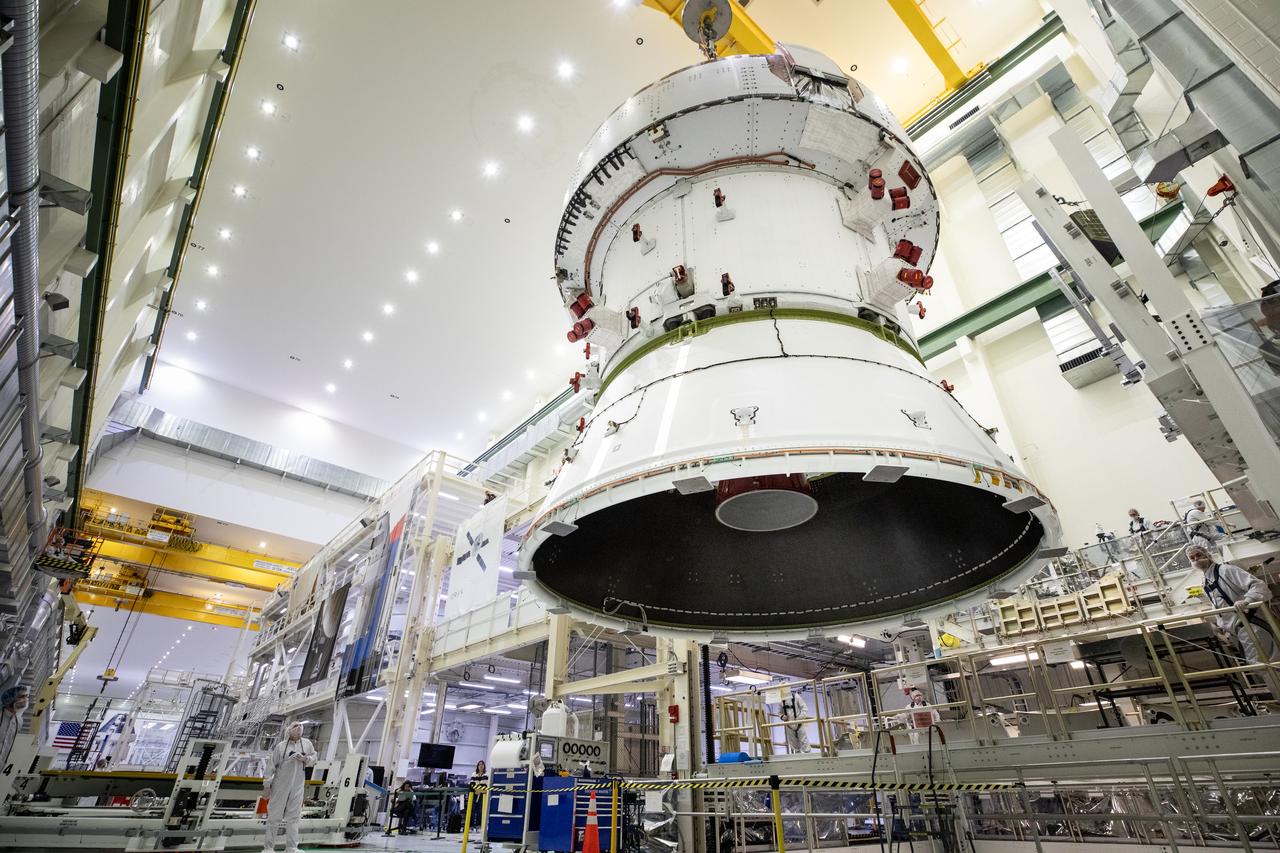
Technicians with NASA and Lockheed Martin operate a 30-ton crane to move NASA’s Artemis II Orion spacecraft out of the Final Assembly and System Testing cell inside the Neil A. Operations and Checkout Building at NASA’s Kennedy Space Center in Florida on Saturday, Feb. 22, 2025. The move prepares for the upcoming installation of four solar array wings and spacecraft adapter jettison fairings for the agency’s first crewed flight test under the Artemis campaign.
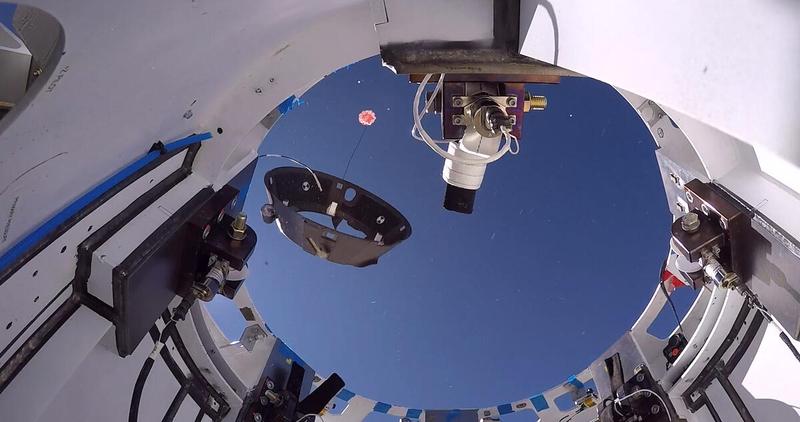
Boeing CST-100 Starliner’s forward heat shield jettisons from a test article during the vehicle’s final balloon drop parachute test at White Sands, New Mexico, on Sept 19, 2020. The test is part of a reliability campaign that will help strengthen the spacecraft’s landing system ahead of crewed flights to and from the International Space Station as part of NASA’s Commercial Crew Program.
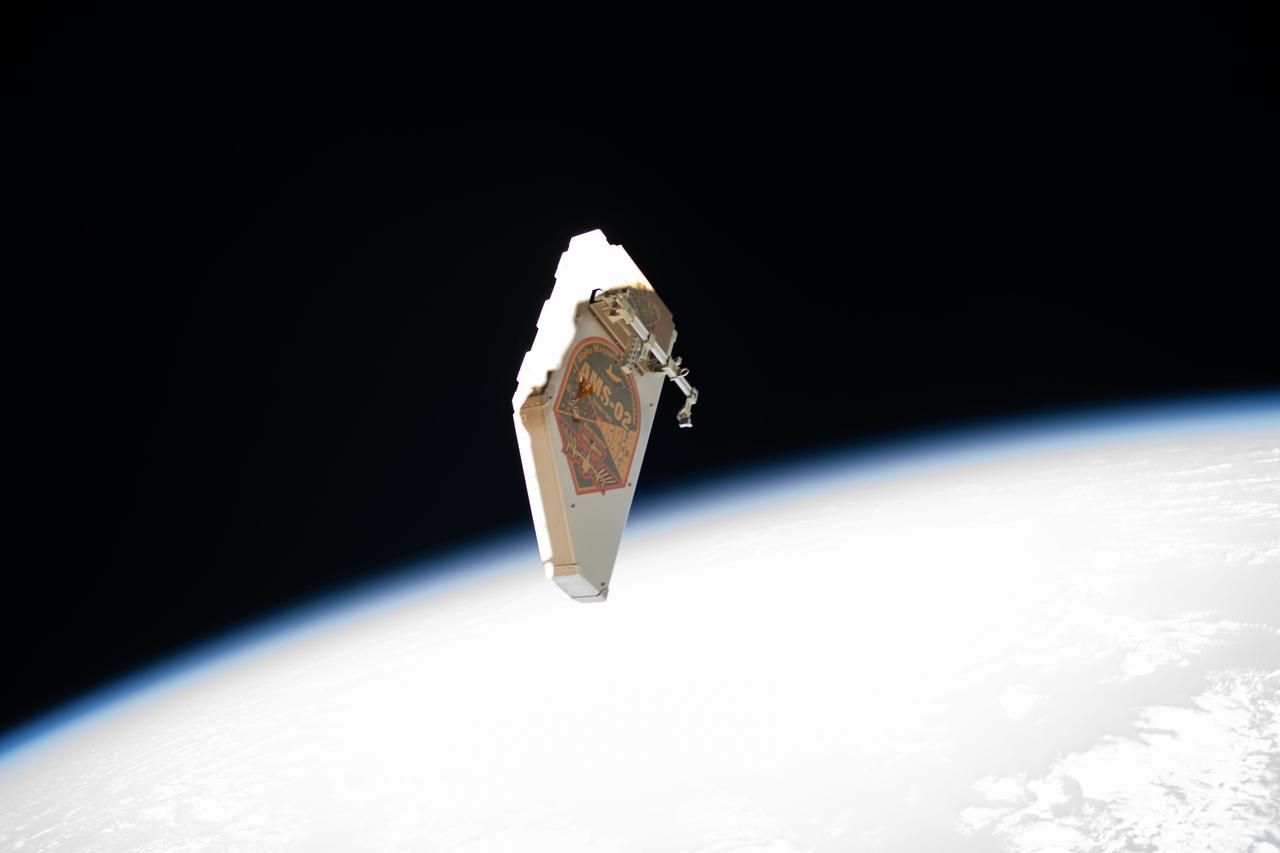
iss061e045319 (Nov. 15, 2019) --- A debris shield that was removed from the Alpha Magnetic Spectrometer (AMS), the International Space Station's cosmic particle detector, is pictured drifting away from the orbiting lab after spacewalkers Andrew Morgan and Luca Parmitano jettisoned it. The debris shield was detached by the spacewalkers so they could access and begin the repairs of the AMS thermal control system.

Technicians with NASA and Lockheed Martin operate a 30-ton crane to move NASA’s Artemis II Orion spacecraft out of the Final Assembly and System Testing cell inside the Neil A. Operations and Checkout Building at NASA’s Kennedy Space Center in Florida on Saturday, Feb. 22, 2025. The move prepares for the upcoming installation of four solar array wings and spacecraft adapter jettison fairings for the agency’s first crewed flight test under the Artemis campaign.

NASA’s famous “meatball” insignia is affixed to the Artemis I Orion spacecraft adapter jettison fairings, which protect the European built service module, Jan. 20, 2021, inside the Multi-Payload Processing Facility at NASA’s Kennedy Space Center in Florida. Shown inside its servicing stand, ground processing begins on Orion, with the Exploration Ground Systems and Jacobs teams performing checkouts and fueling the spacecraft with commodities as part of preparations ahead of the Artemis I mission.
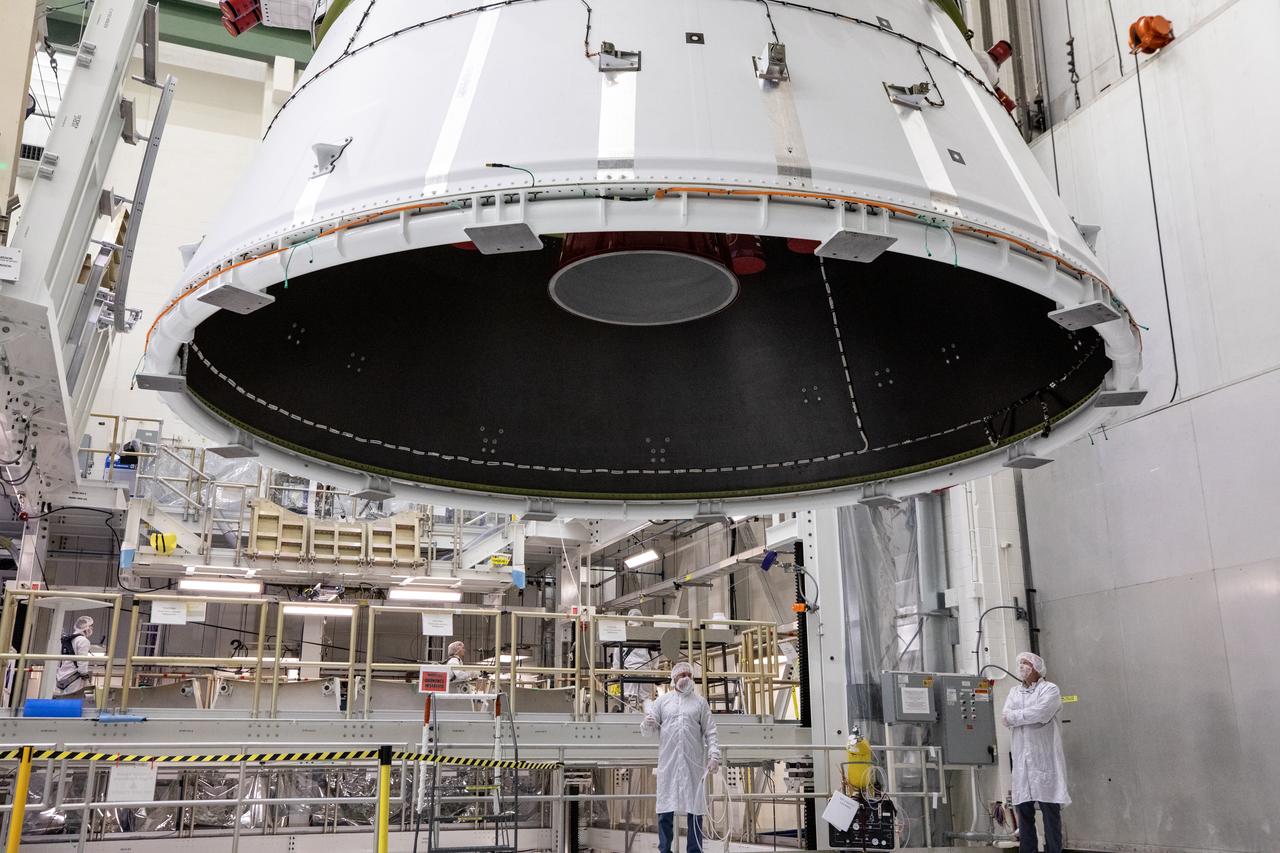
Technicians with NASA and Lockheed Martin operate a 30-ton crane to move NASA’s Artemis II Orion spacecraft out of the Final Assembly and System Testing cell inside the Neil A. Operations and Checkout Building at NASA’s Kennedy Space Center in Florida on Saturday, Feb. 22, 2025. The move prepares for the upcoming installation of four solar array wings and spacecraft adapter jettison fairings for the agency’s first crewed flight test under the Artemis campaign.
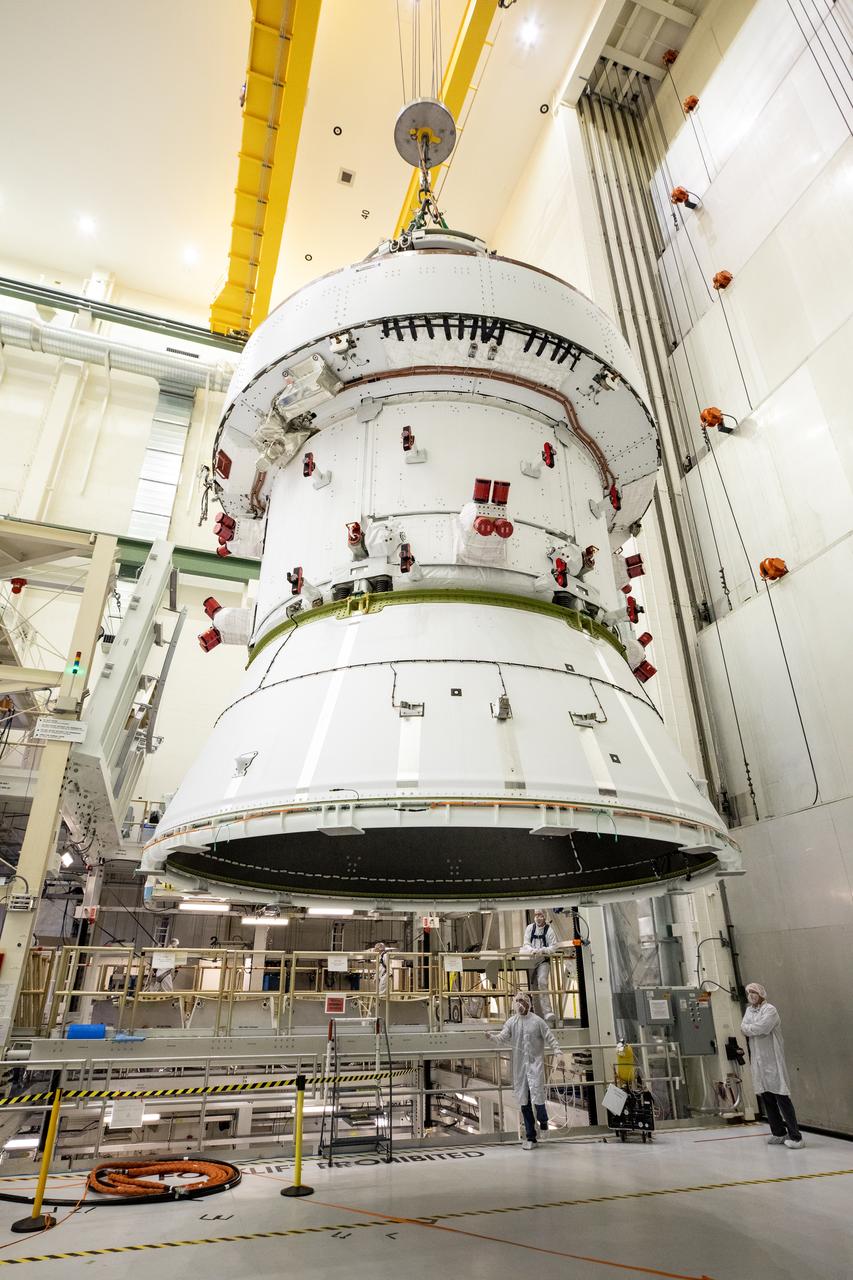
Technicians with NASA and Lockheed Martin operate a 30-ton crane to move NASA’s Artemis II Orion spacecraft out of the Final Assembly and System Testing cell inside the Neil A. Operations and Checkout Building at NASA’s Kennedy Space Center in Florida on Saturday, Feb. 22, 2025. The move prepares for the upcoming installation of four solar array wings and spacecraft adapter jettison fairings for the agency’s first crewed flight test under the Artemis campaign.
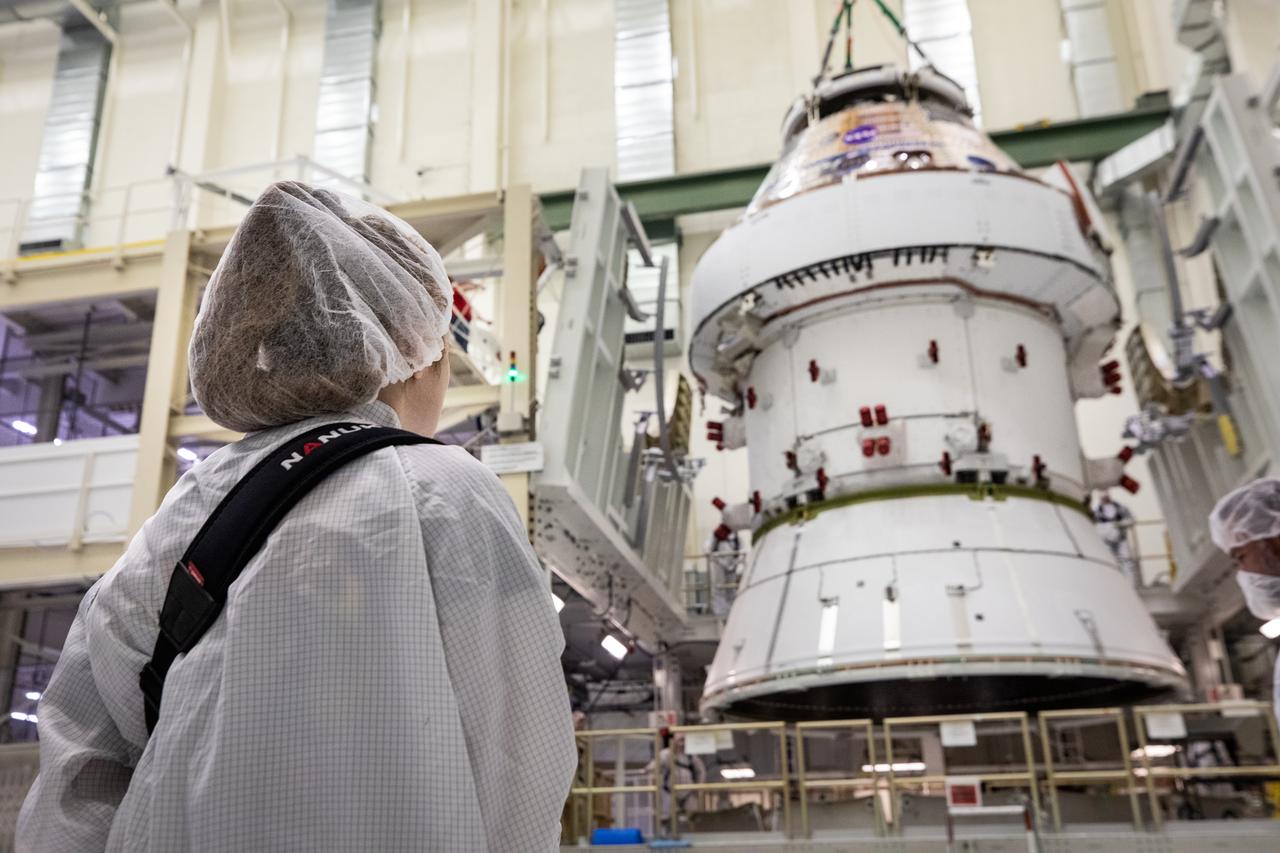
Rebekah Tolatovicz, a technician with Lockheed Martin, operates a 30-ton crane to move NASA’s Artemis II Orion spacecraft out of the Final Assembly and System Testing cell inside the Neil A. Operations and Checkout Building at NASA’s Kennedy Space Center in Florida on Saturday, Feb. 22, 2025. The move prepares for the upcoming installation of four solar array wings and spacecraft adapter jettison fairings for the agency’s first crewed flight test under the Artemis campaign.
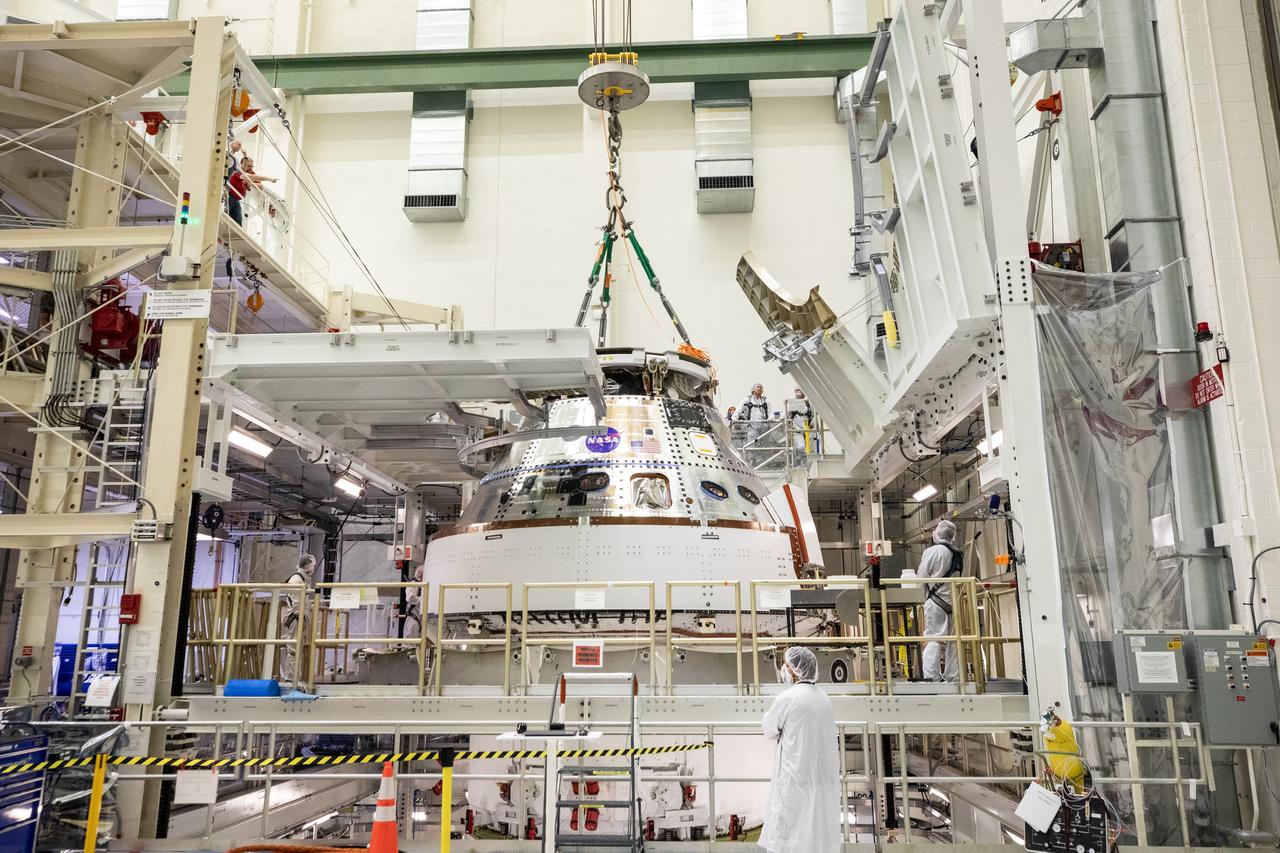
Technicians with NASA and Lockheed Martin operate a 30-ton crane to move NASA’s Artemis II Orion spacecraft out of the Final Assembly and System Testing cell inside the Neil A. Operations and Checkout Building at NASA’s Kennedy Space Center in Florida on Saturday, Feb. 22, 2025. The move prepares for the upcoming installation of four solar array wings and spacecraft adapter jettison fairings for the agency’s first crewed flight test under the Artemis campaign.
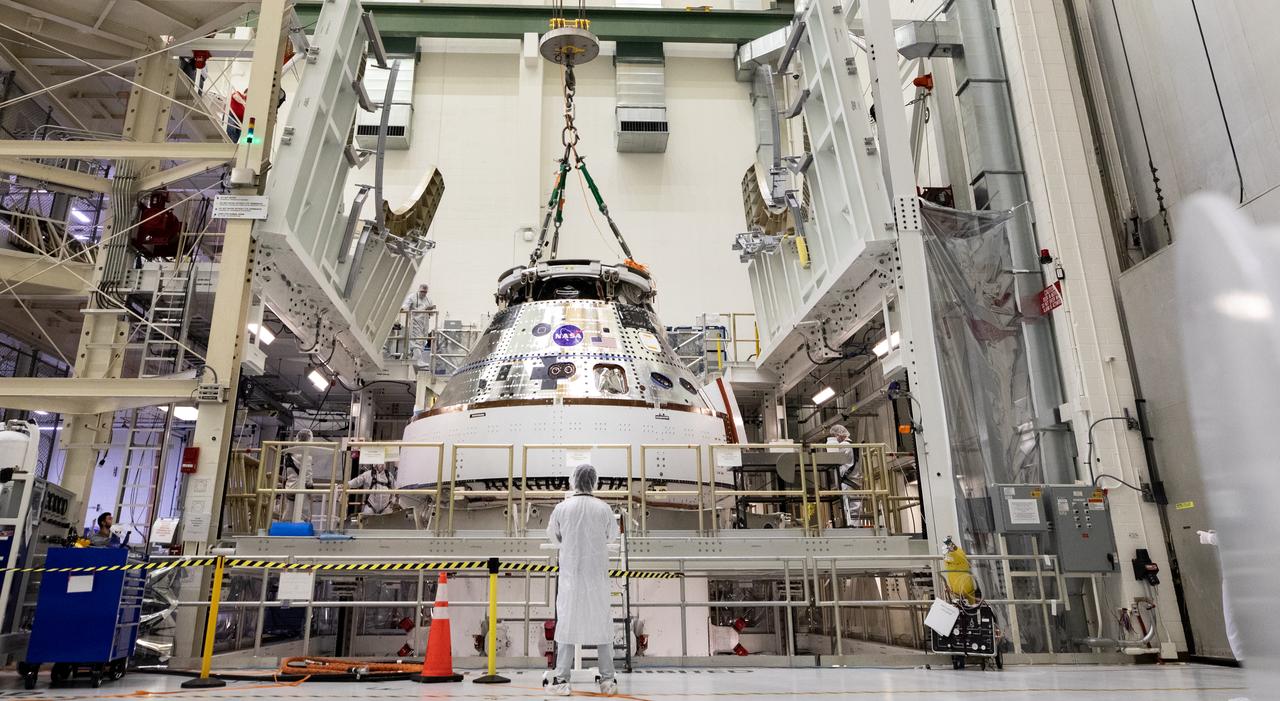
Technicians with NASA and Lockheed Martin operate a 30-ton crane to move NASA’s Artemis II Orion spacecraft out of the Final Assembly and System Testing cell inside the Neil A. Operations and Checkout Building at NASA’s Kennedy Space Center in Florida on Saturday, Feb. 22, 2025. The move prepares for the upcoming installation of four solar array wings and spacecraft adapter jettison fairings for the agency’s first crewed flight test under the Artemis campaign.
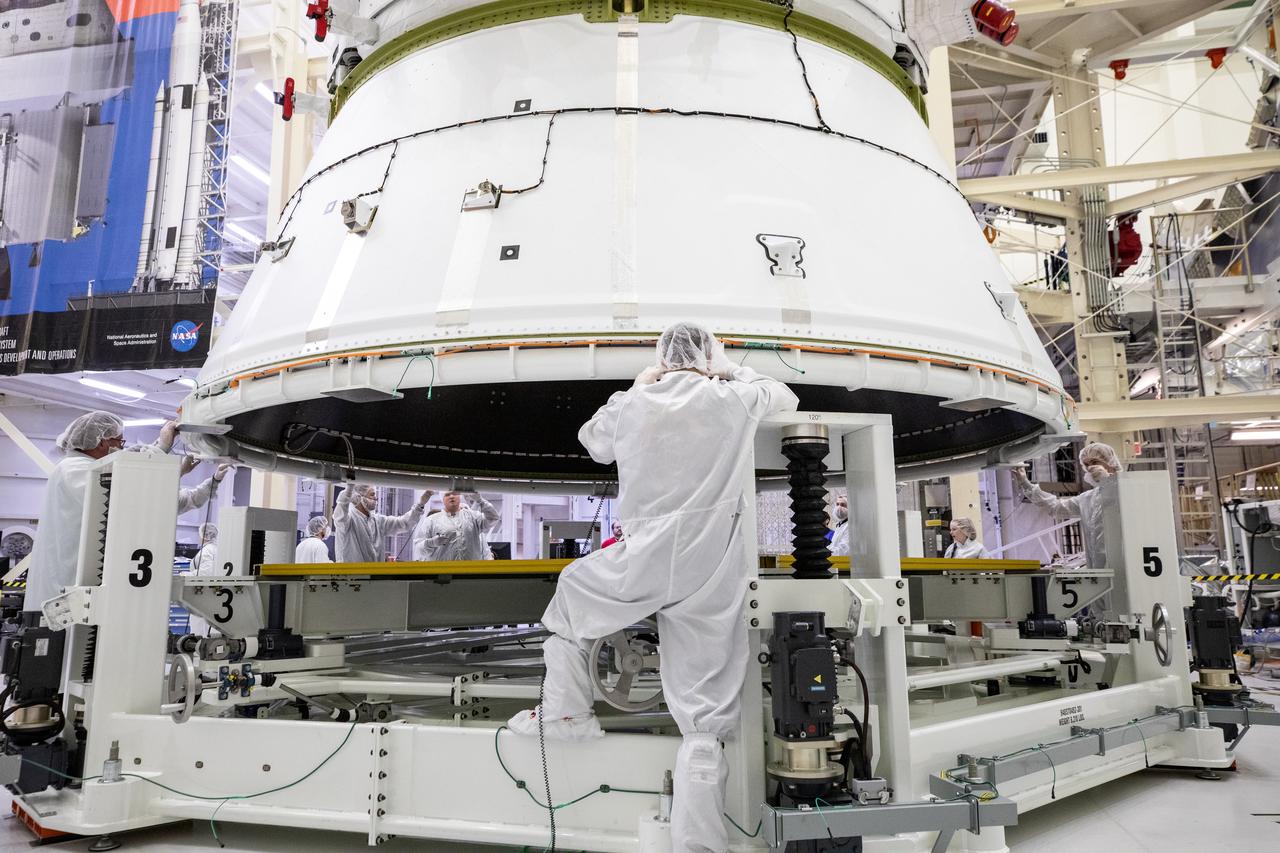
Technicians with NASA and Lockheed Martin operate a 30-ton crane to move NASA’s Artemis II Orion spacecraft out of the Final Assembly and System Testing cell inside the Neil A. Operations and Checkout Building at NASA’s Kennedy Space Center in Florida on Saturday, Feb. 22, 2025. The move prepares for the upcoming installation of four solar array wings and spacecraft adapter jettison fairings for the agency’s first crewed flight test under the Artemis campaign.
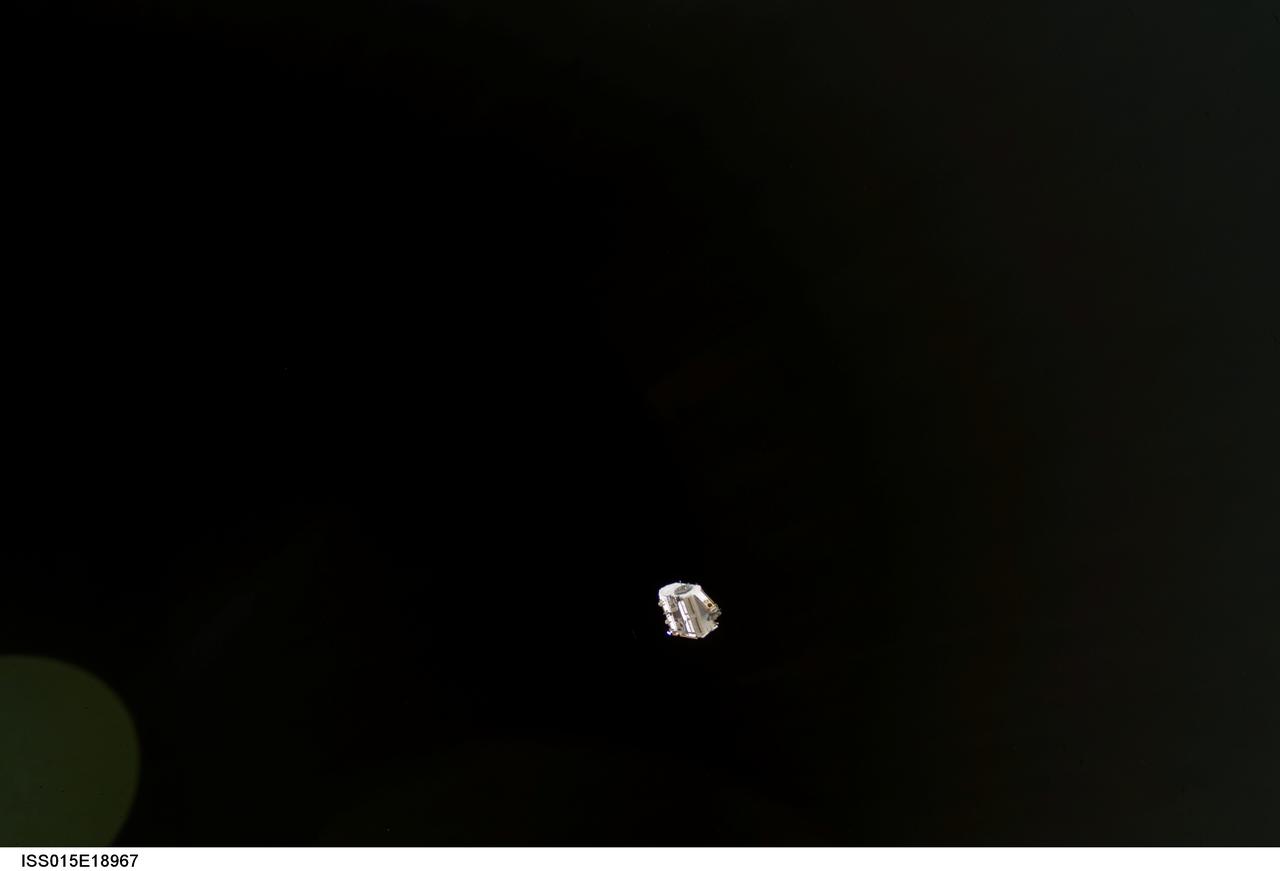
ISS015-E-18967 (23 July 2007) --- An Early Ammonia Servicer (EAS) moves away from the International Space Station after it was jettisoned by astronaut Clay Anderson (out of frame), Expedition 15 flight engineer, during today's session of extravehicular activity (EVA). The EAS was installed on the P6 truss during STS-105 in August 2001, as an ammonia reservoir if a leak had occurred. It was never used, and was no longer needed after the permanent cooling system was activated last December.
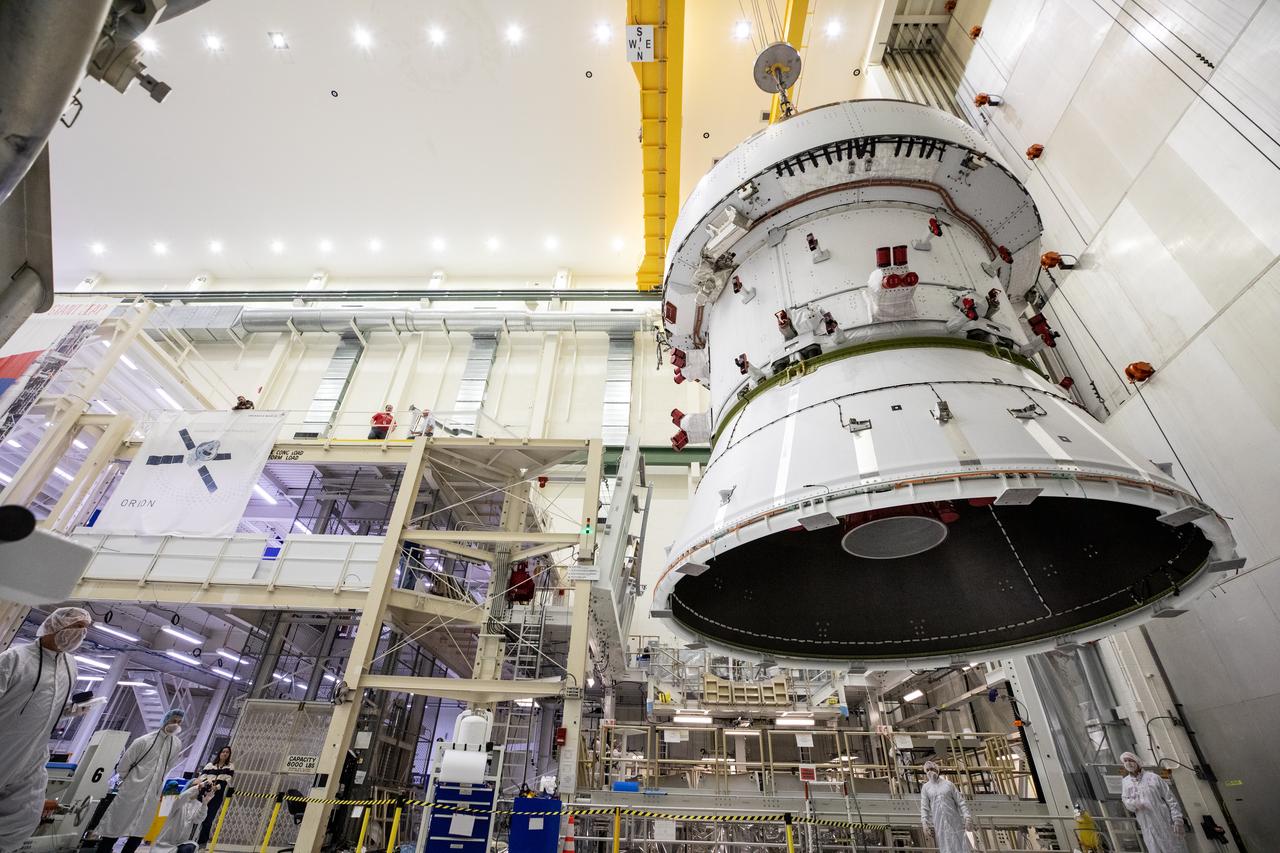
Technicians with NASA and Lockheed Martin operate a 30-ton crane to move NASA’s Artemis II Orion spacecraft out of the Final Assembly and System Testing cell inside the Neil A. Operations and Checkout Building at NASA’s Kennedy Space Center in Florida on Saturday, Feb. 22, 2025. The move prepares for the upcoming installation of four solar array wings and spacecraft adapter jettison fairings for the agency’s first crewed flight test under the Artemis campaign.
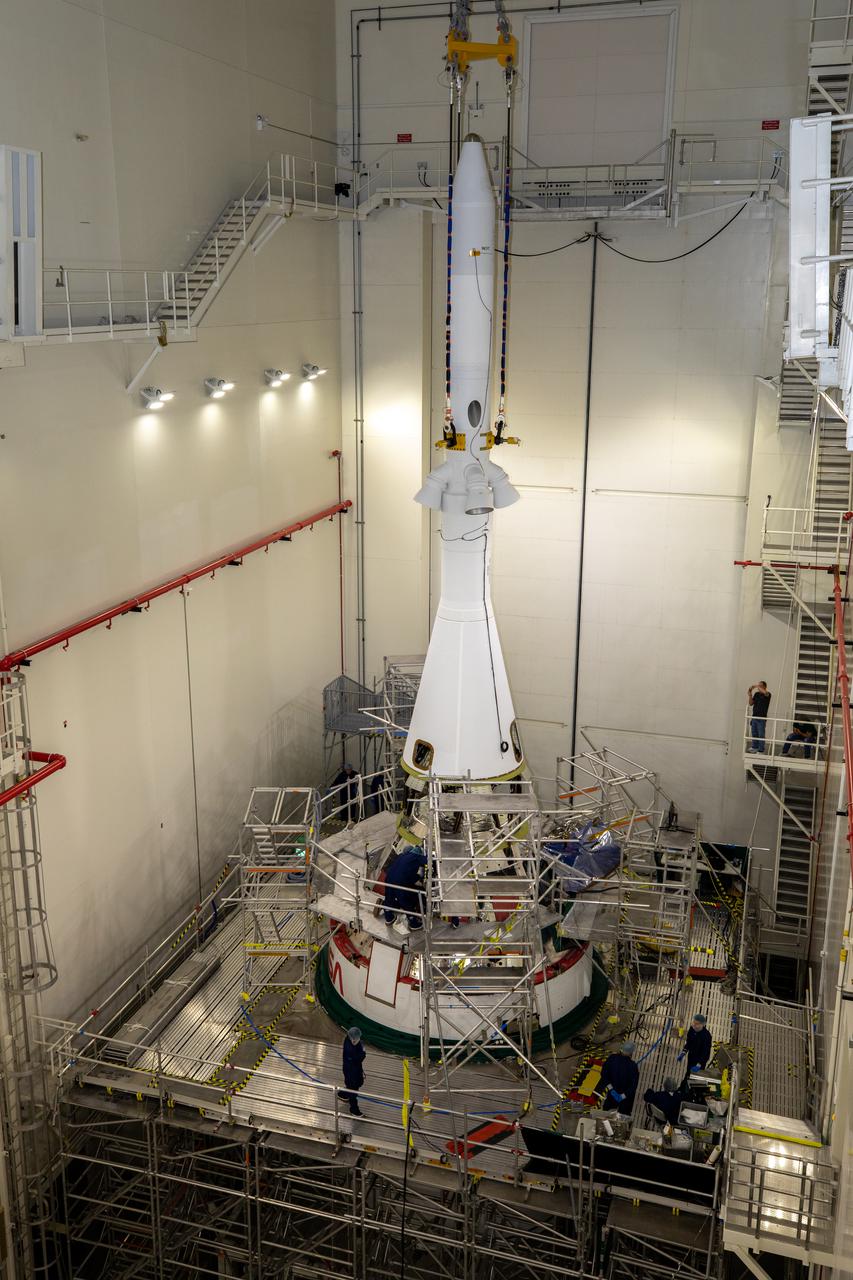
Teams with NASA’s Exploration Ground Systems (EGS) and contractor Jacobs integrated the launch abort system (LAS) with the Orion spacecraft inside the Launch Abort System Facility at NASA’s Kennedy Space Center in Florida on July 23, 2021. Launching later this year, Artemis I will be a test of the Orion spacecraft and Space Launch System rocket as an integrated system ahead of crewed flights to the Moon. Although there will be no crew the Artemis I, the launch abort system will collect flight data during the ascent to space and then jettison from the spacecraft. Next, technicians will install four panels, or ogives, that make up the fairing assembly and protect the spacecraft from heat, air, and acoustic environments during its entry into orbit. Once final checkouts are complete, Orion will join the Space Launch System for integration.
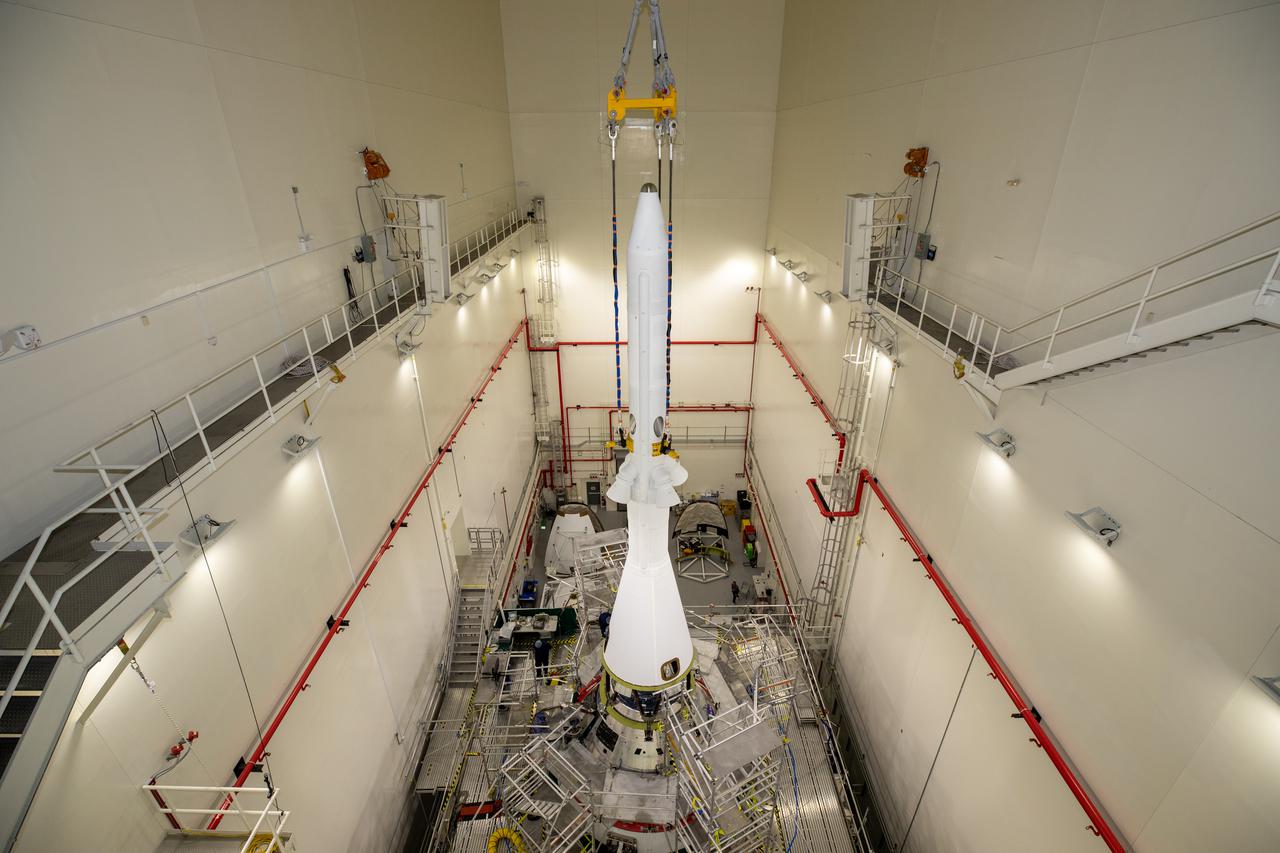
Teams with NASA’s Exploration Ground Systems (EGS) and contractor Jacobs integrated the launch abort system (LAS) with the Orion spacecraft inside the Launch Abort System Facility at NASA’s Kennedy Space Center in Florida on July 23, 2021. Launching later this year, Artemis I will be a test of the Orion spacecraft and Space Launch System rocket as an integrated system ahead of crewed flights to the Moon. Although there will be no crew the Artemis I, the launch abort system will collect flight data during the ascent to space and then jettison from the spacecraft. Next, technicians will install four panels, or ogives, that make up the fairing assembly and protect the spacecraft from heat, air, and acoustic environments during its entry into orbit. Once final checkouts are complete, Orion will join the Space Launch System for integration.
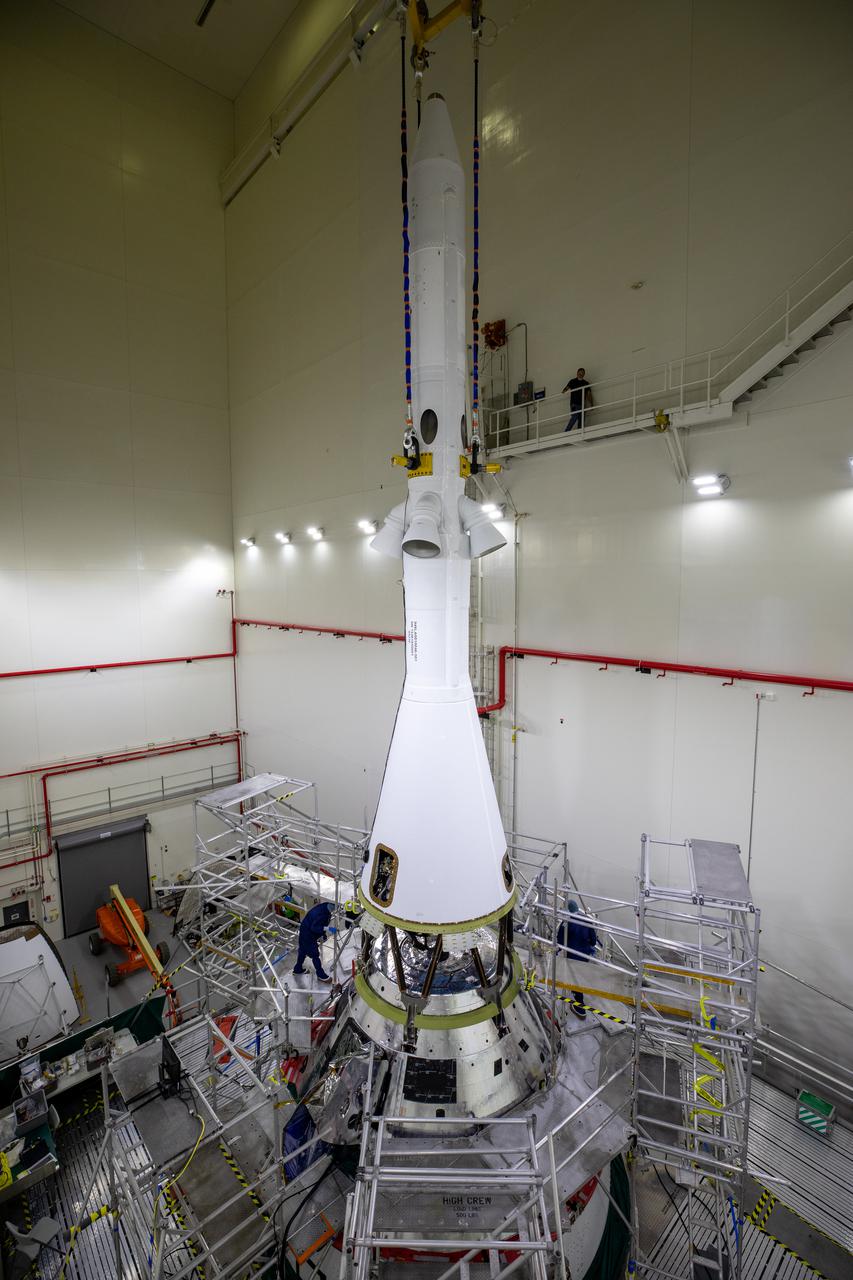
Teams with NASA’s Exploration Ground Systems (EGS) and contractor Jacobs integrated the launch abort system (LAS) with the Orion spacecraft inside the Launch Abort System Facility at NASA’s Kennedy Space Center in Florida on July 23, 2021. Launching later this year, Artemis I will be a test of the Orion spacecraft and Space Launch System rocket as an integrated system ahead of crewed flights to the Moon. Although there will be no crew the Artemis I, the launch abort system will collect flight data during the ascent to space and then jettison from the spacecraft. Next, technicians will install four panels, or ogives, that make up the fairing assembly and protect the spacecraft from heat, air, and acoustic environments during its entry into orbit. Once final checkouts are complete, Orion will join the Space Launch System for integration.
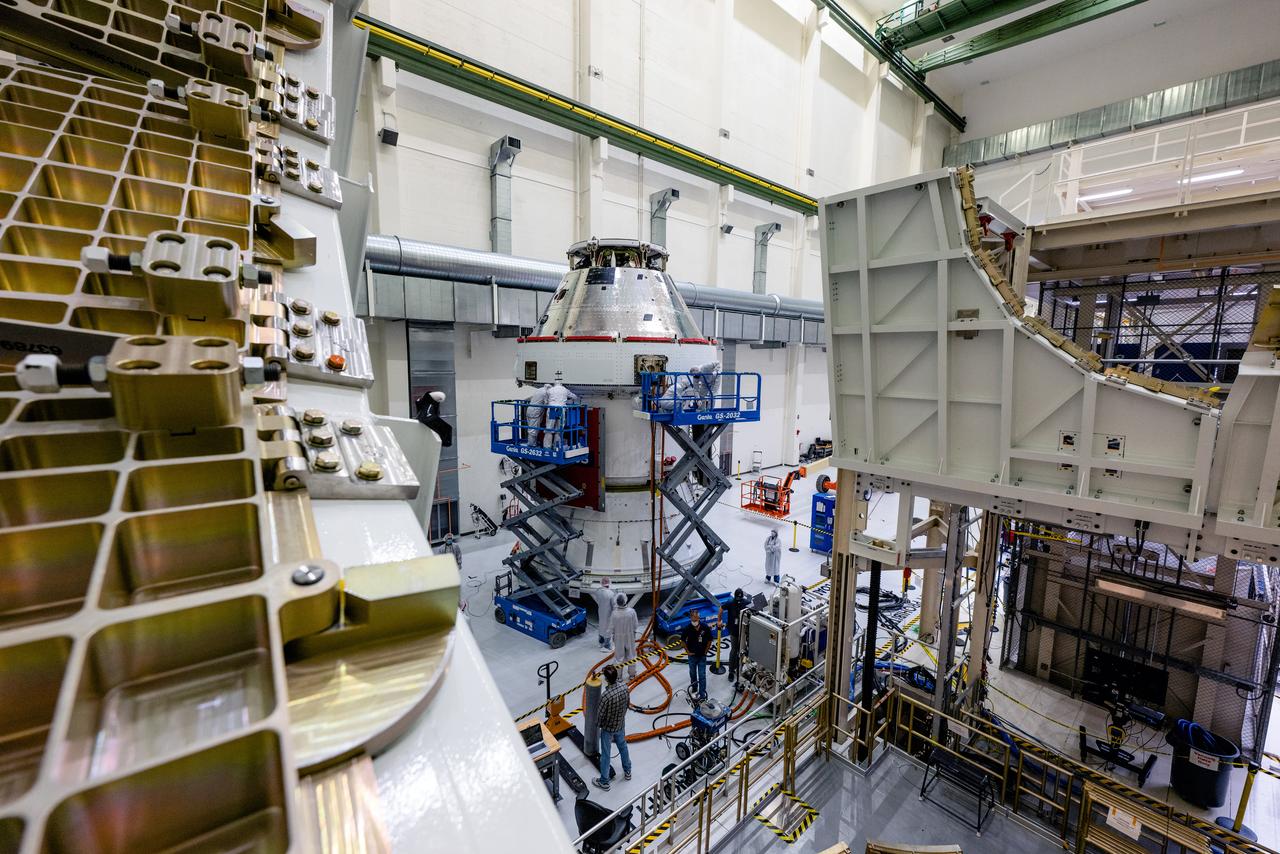
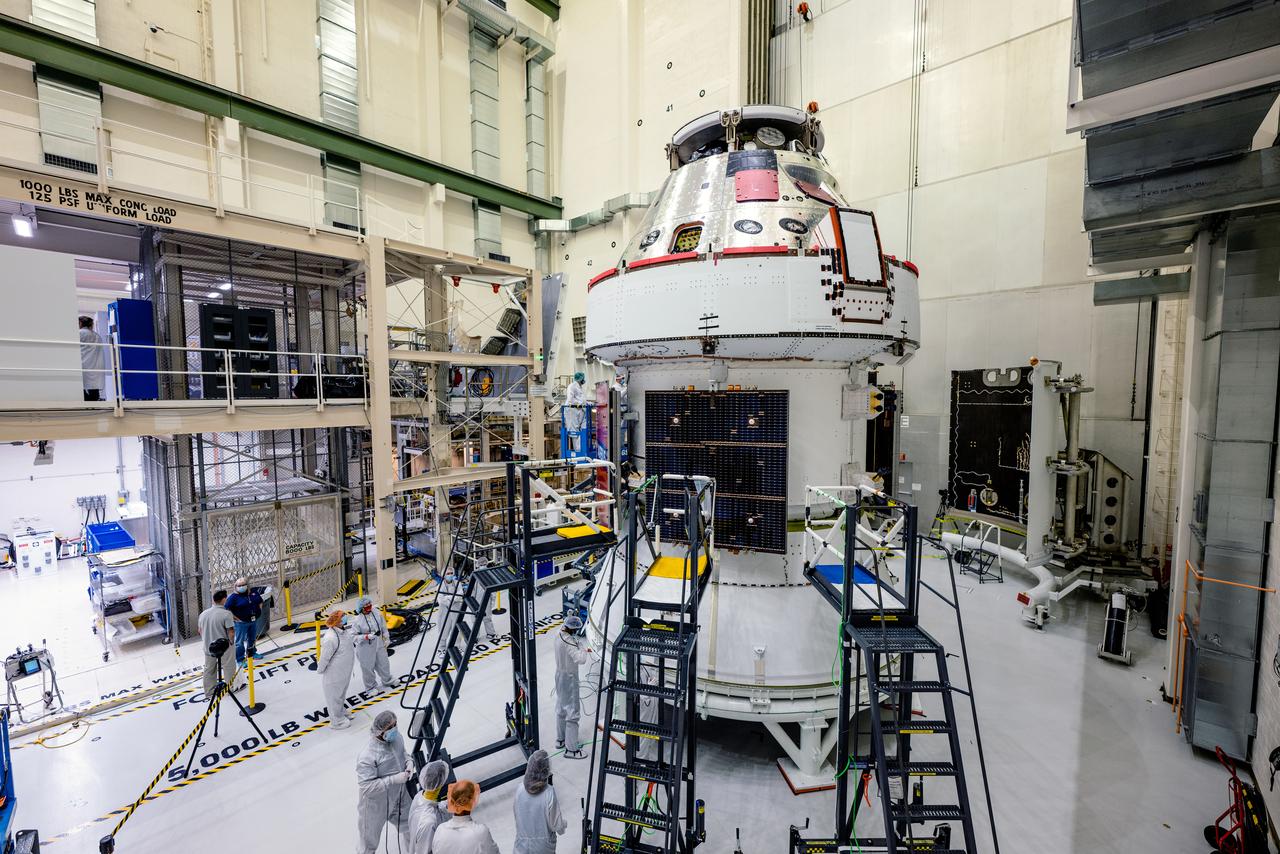
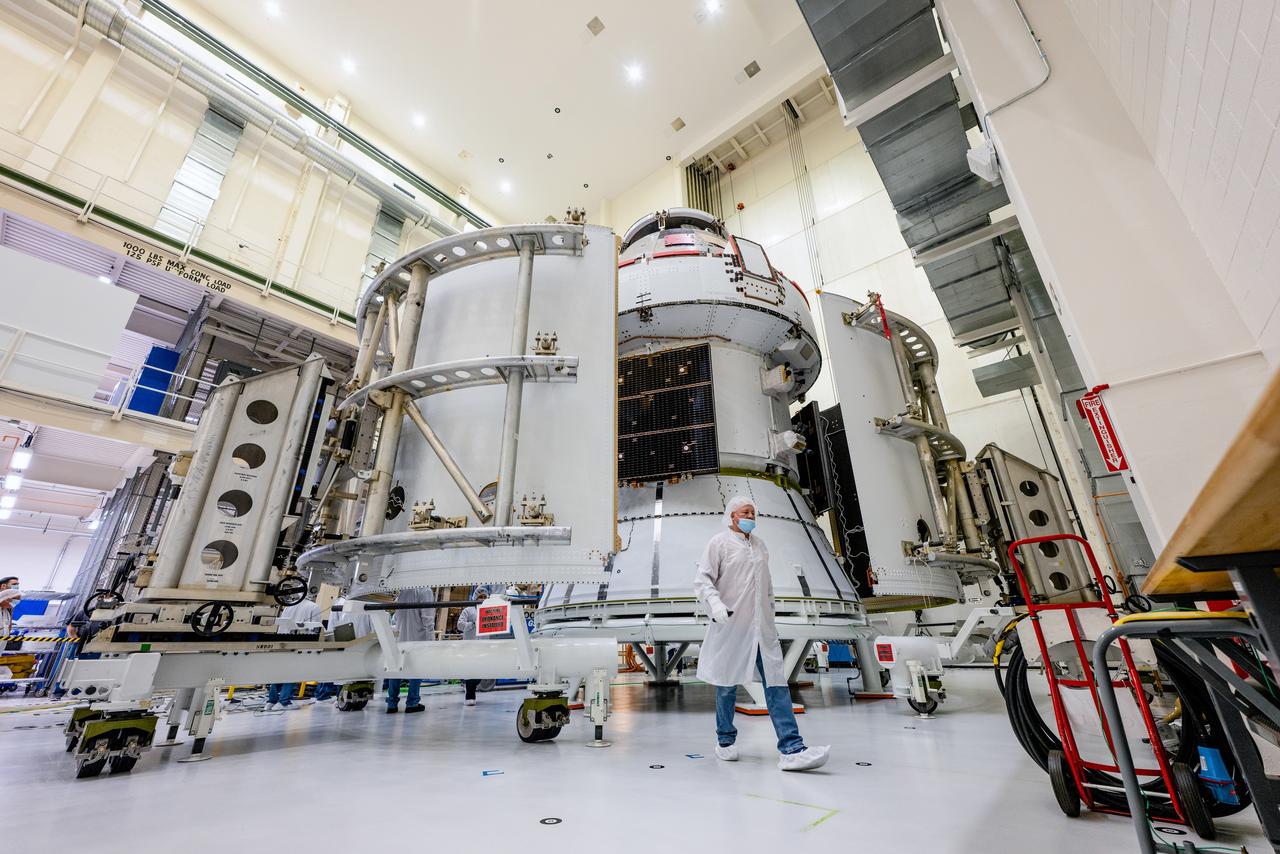
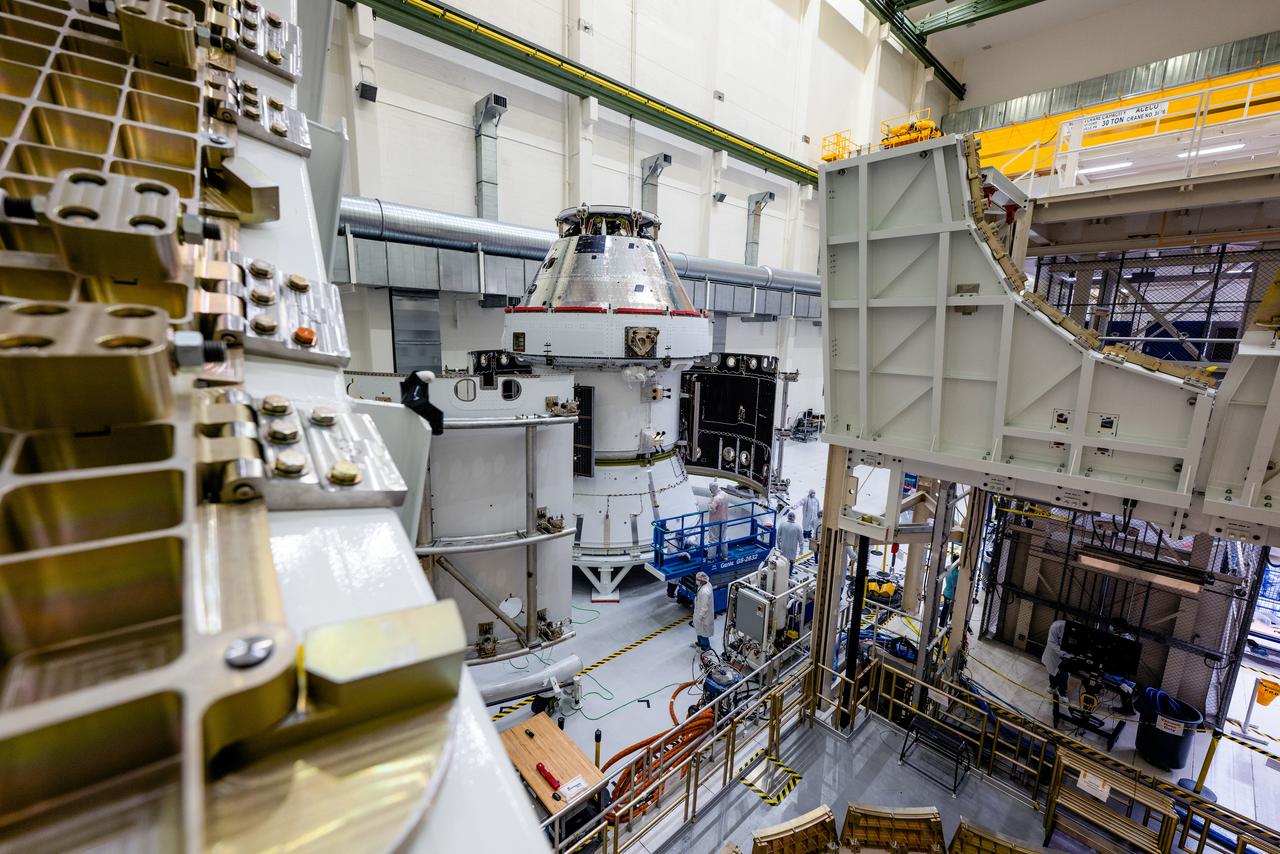
In the Operations and Checkout Building (O&C) at Kennedy Space Center, three spacecraft adapter jettison (SAJ) fairings are prepared for installation and will be moved into place by technicians with Lockheed Martin, lead contractor for Orion on Oct. 12, 2020. They will be secured around the spacecraft, encapsulating the European Service Module to protect it from the harsh environment as the spacecraft is propelled out of Earth’s atmosphere atop the Space Launch System (SLS) rocket during NASA’s Artemis I mission. The next time the solar array wings will be visible will be when Orion is in space. Artemis I will test the Orion spacecraft and SLS as an integrated system ahead of crewed flights to the Moon.
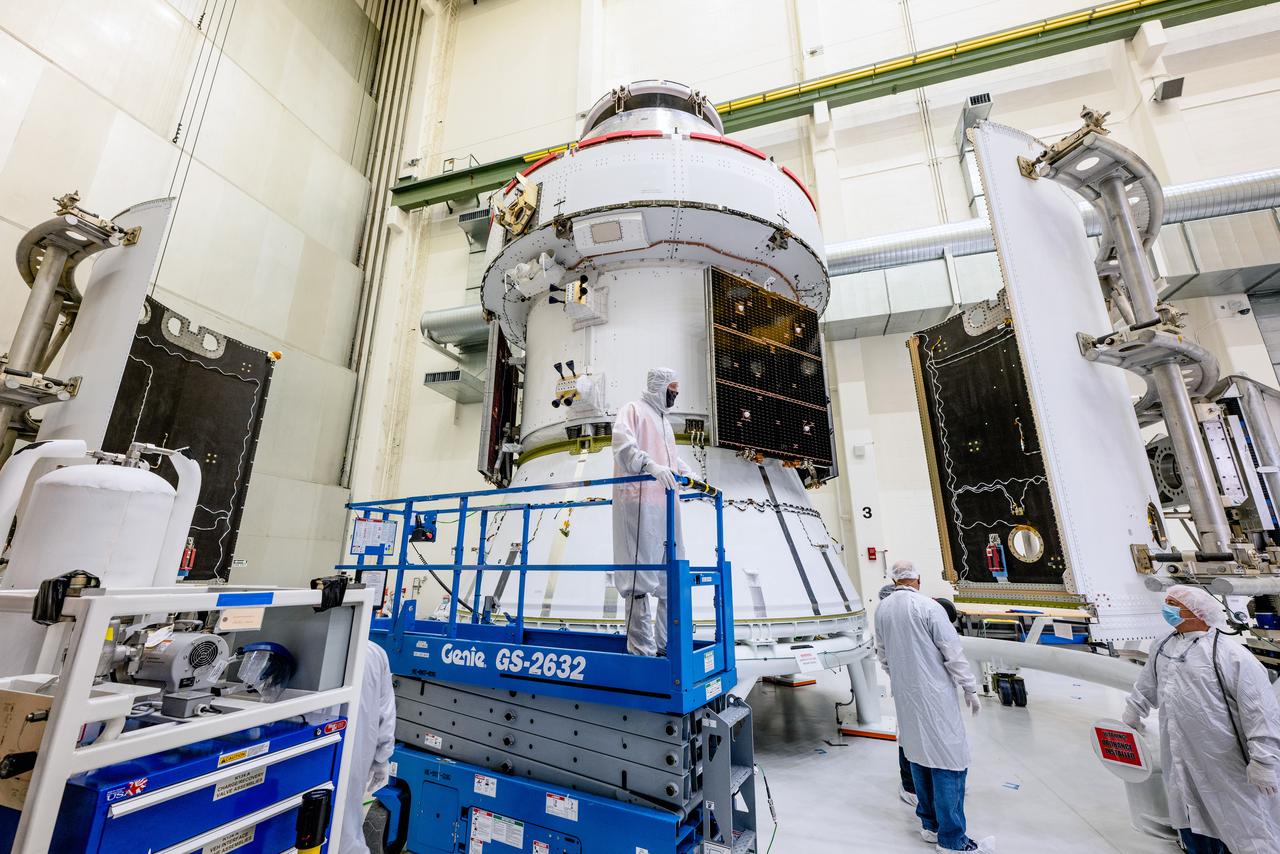
In the Operations and Checkout Building (O&C) at Kennedy Space Center, three spacecraft adapter jettison (SAJ) fairings are prepared for installation and will be moved into place by technicians with Lockheed Martin, lead contractor for Orion on Oct. 12, 2020. They will be secured around the spacecraft, encapsulating the European Service Module to protect it from the harsh environment as the spacecraft is propelled out of Earth’s atmosphere atop the Space Launch System (SLS) rocket during NASA’s Artemis I mission. The next time the solar array wings will be visible will be when Orion is in space. Artemis I will test the Orion spacecraft and SLS as an integrated system ahead of crewed flights to the Moon.
In the Operations and Checkout Building (O&C) at Kennedy Space Center, three spacecraft adapter jettison (SAJ) fairings are prepared for installation and will be moved into place by technicians with Lockheed Martin, lead contractor for Orion on Oct. 12, 2020. They will be secured around the spacecraft, encapsulating the European Service Module to protect it from the harsh environment as the spacecraft is propelled out of Earth’s atmosphere atop the Space Launch System (SLS) rocket during NASA’s Artemis I mission. The next time the solar array wings will be visible will be when Orion is in space. Artemis I will test the Orion spacecraft and SLS as an integrated system ahead of crewed flights to the Moon.
In the Operations and Checkout Building (O&C) at Kennedy Space Center, three spacecraft adapter jettison (SAJ) fairings are prepared for installation and will be moved into place by technicians with Lockheed Martin, lead contractor for Orion on Oct. 12, 2020. They will be secured around the spacecraft, encapsulating the European Service Module to protect it from the harsh environment as the spacecraft is propelled out of Earth’s atmosphere atop the Space Launch System (SLS) rocket during NASA’s Artemis I mission. The next time the solar array wings will be visible will be when Orion is in space. Artemis I will test the Orion spacecraft and SLS as an integrated system ahead of crewed flights to the Moon.
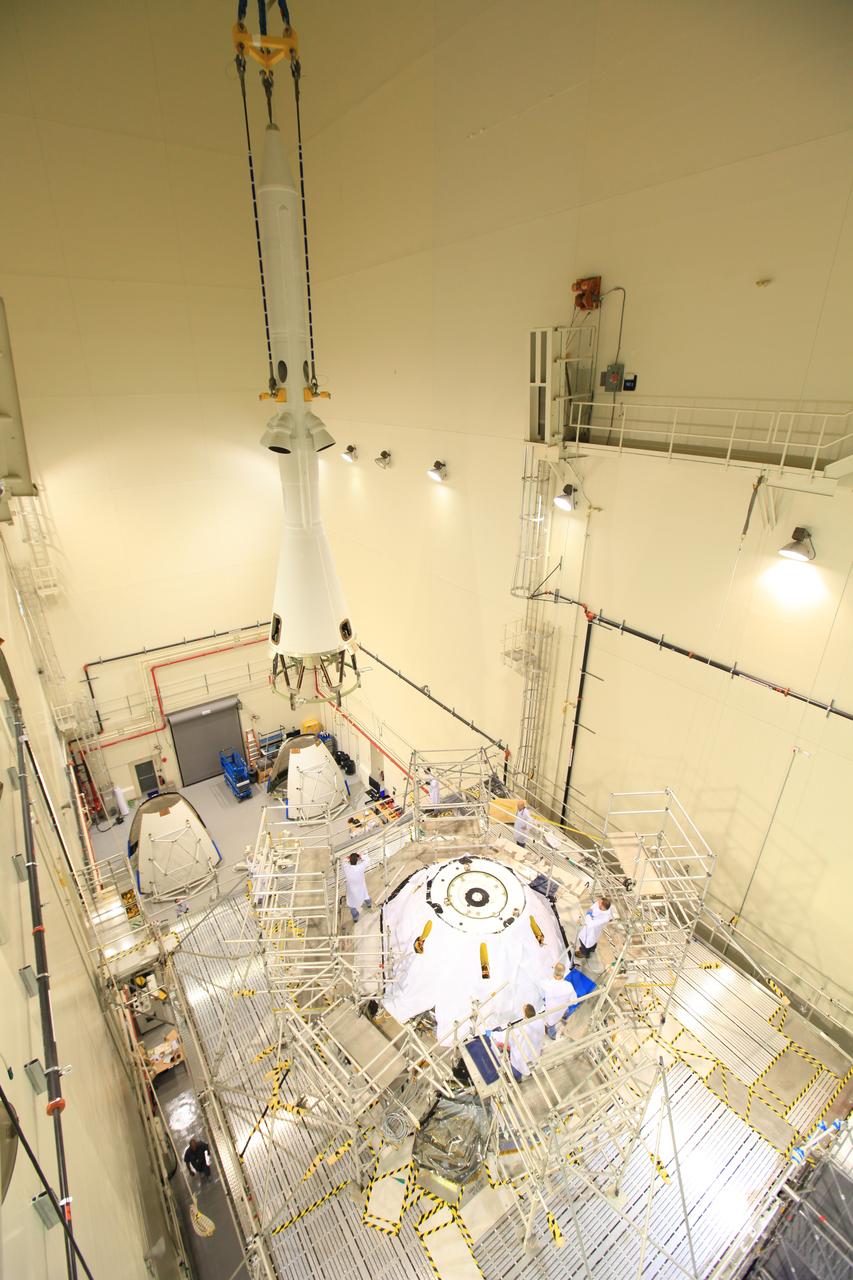
Exploration Flight Test-1 (EFT-1) Orion's launch abort system, or LAS, is positioned atop the crew and service module in the Launch Abort System Facility (LASF) at Kennedy Space Center on Oct. 3, 2014, in preparation for rollout to mate with the Delta IV Heavy launch vehicle. The LAS is designed to activate within milliseconds to pull the crew module to safety in case of an emergency. Exploration Flight Test-1 (EFT-1) verified the function of the jettison motor to separate the LAS from the crew module to ensure a safe, successful mission. Part of Batch image transfer from Flickr.
In the Operations and Checkout Building (O&C) at Kennedy Space Center, three spacecraft adapter jettison (SAJ) fairings are prepared for installation and will be moved into place by technicians with Lockheed Martin, lead contractor for Orion on Oct. 12, 2020. They will be secured around the spacecraft, encapsulating the European Service Module to protect it from the harsh environment as the spacecraft is propelled out of Earth’s atmosphere atop the Space Launch System (SLS) rocket during NASA’s Artemis I mission. The next time the solar array wings will be visible will be when Orion is in space. Artemis I will test the Orion spacecraft and SLS as an integrated system ahead of crewed flights to the Moon.
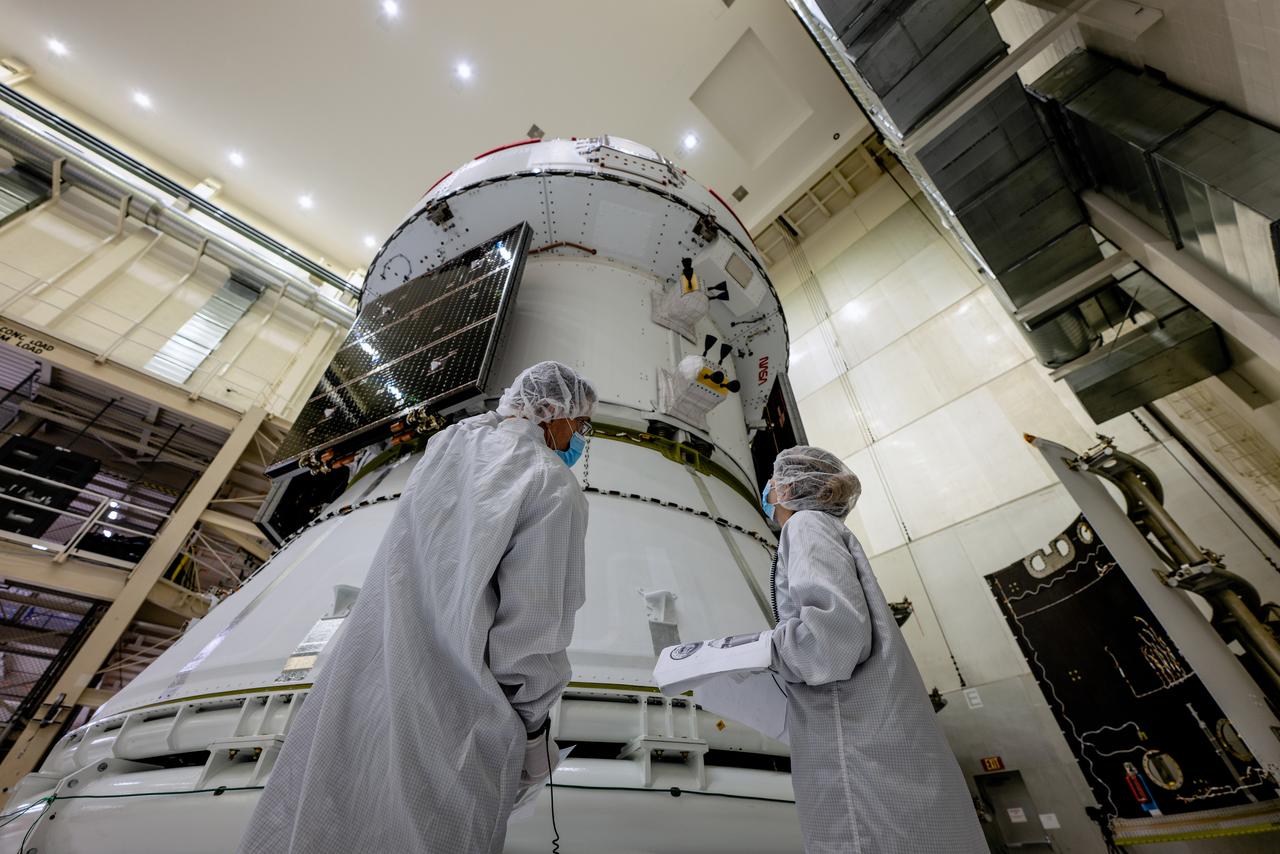
In the Operations and Checkout Building (O&C) at Kennedy Space Center, three spacecraft adapter jettison (SAJ) fairings are prepared for installation and will be moved into place by technicians with Lockheed Martin, lead contractor for Orion on Oct. 12, 2020. They will be secured around the spacecraft, encapsulating the European Service Module to protect it from the harsh environment as the spacecraft is propelled out of Earth’s atmosphere atop the Space Launch System (SLS) rocket during NASA’s Artemis I mission. The next time the solar array wings will be visible will be when Orion is in space. Artemis I will test the Orion spacecraft and SLS as an integrated system ahead of crewed flights to the Moon.
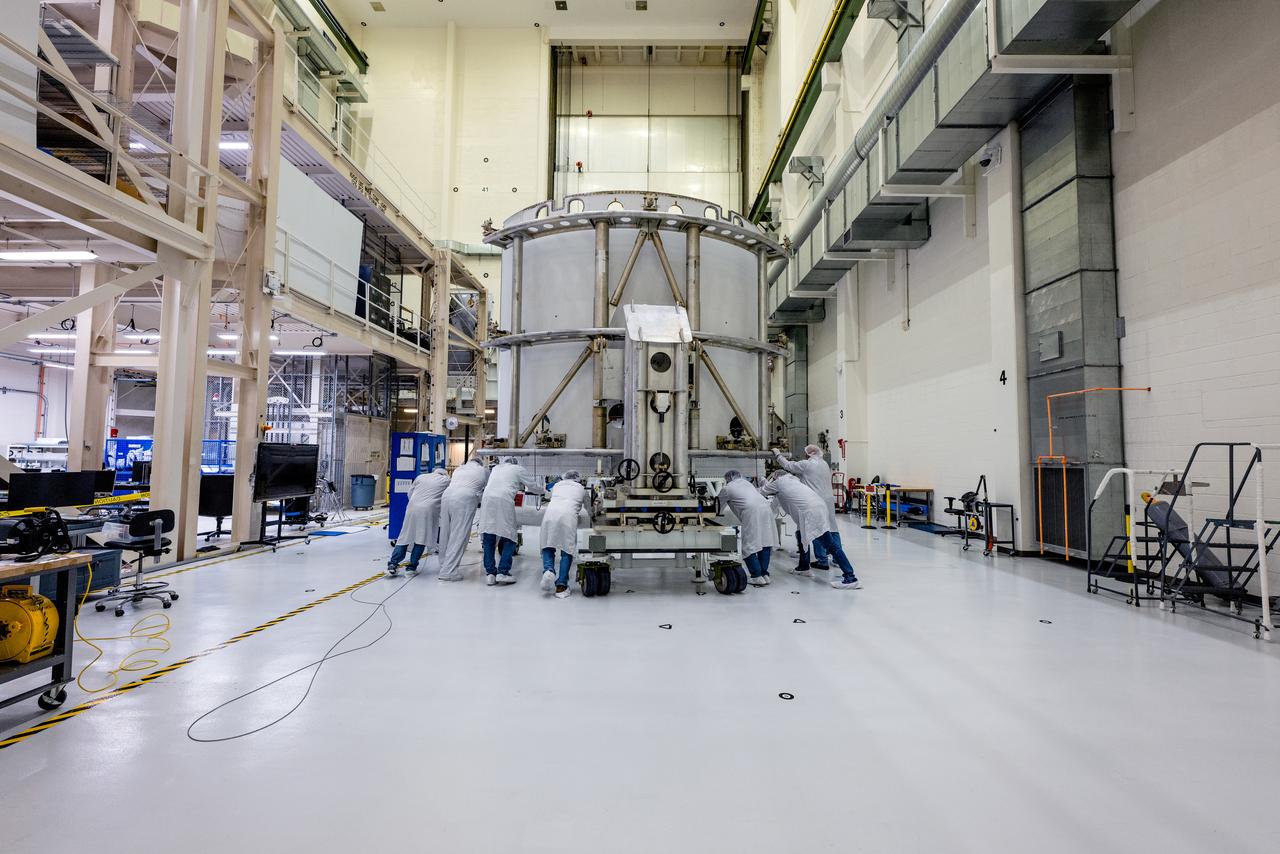
In the Operations and Checkout Building (O&C) at Kennedy Space Center, three spacecraft adapter jettison (SAJ) fairings are prepared for installation and will be moved into place by technicians with Lockheed Martin, lead contractor for Orion on Oct. 12, 2020. They will be secured around the spacecraft, encapsulating the European Service Module to protect it from the harsh environment as the spacecraft is propelled out of Earth’s atmosphere atop the Space Launch System (SLS) rocket during NASA’s Artemis I mission. The next time the solar array wings will be visible will be when Orion is in space. Artemis I will test the Orion spacecraft and SLS as an integrated system ahead of crewed flights to the Moon.
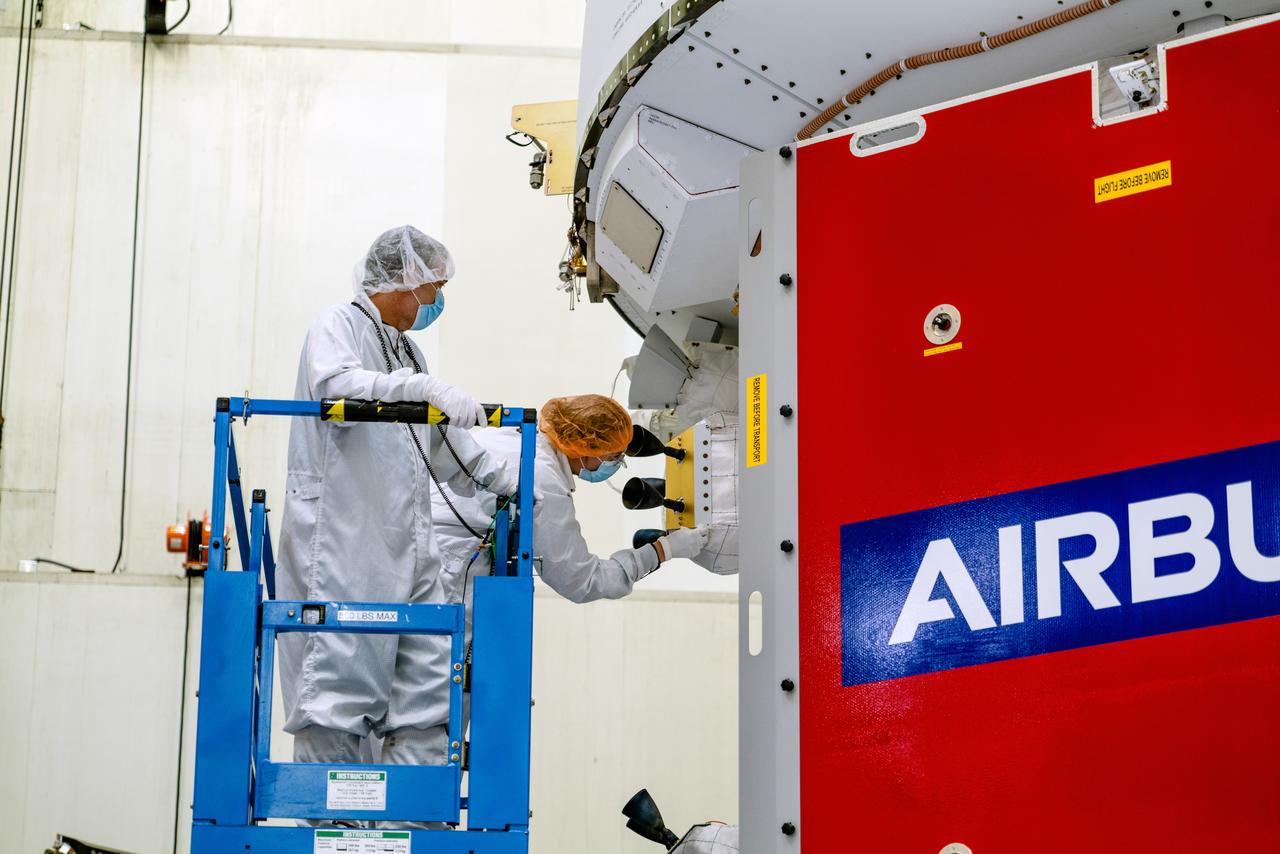
In the Operations and Checkout Building (O&C) at Kennedy Space Center, three spacecraft adapter jettison (SAJ) fairings are prepared for installation and will be moved into place by technicians with Lockheed Martin, lead contractor for Orion on Oct. 12, 2020. They will be secured around the spacecraft, encapsulating the European Service Module to protect it from the harsh environment as the spacecraft is propelled out of Earth’s atmosphere atop the Space Launch System (SLS) rocket during NASA’s Artemis I mission. The next time the solar array wings will be visible will be when Orion is in space. Artemis I will test the Orion spacecraft and SLS as an integrated system ahead of crewed flights to the Moon.
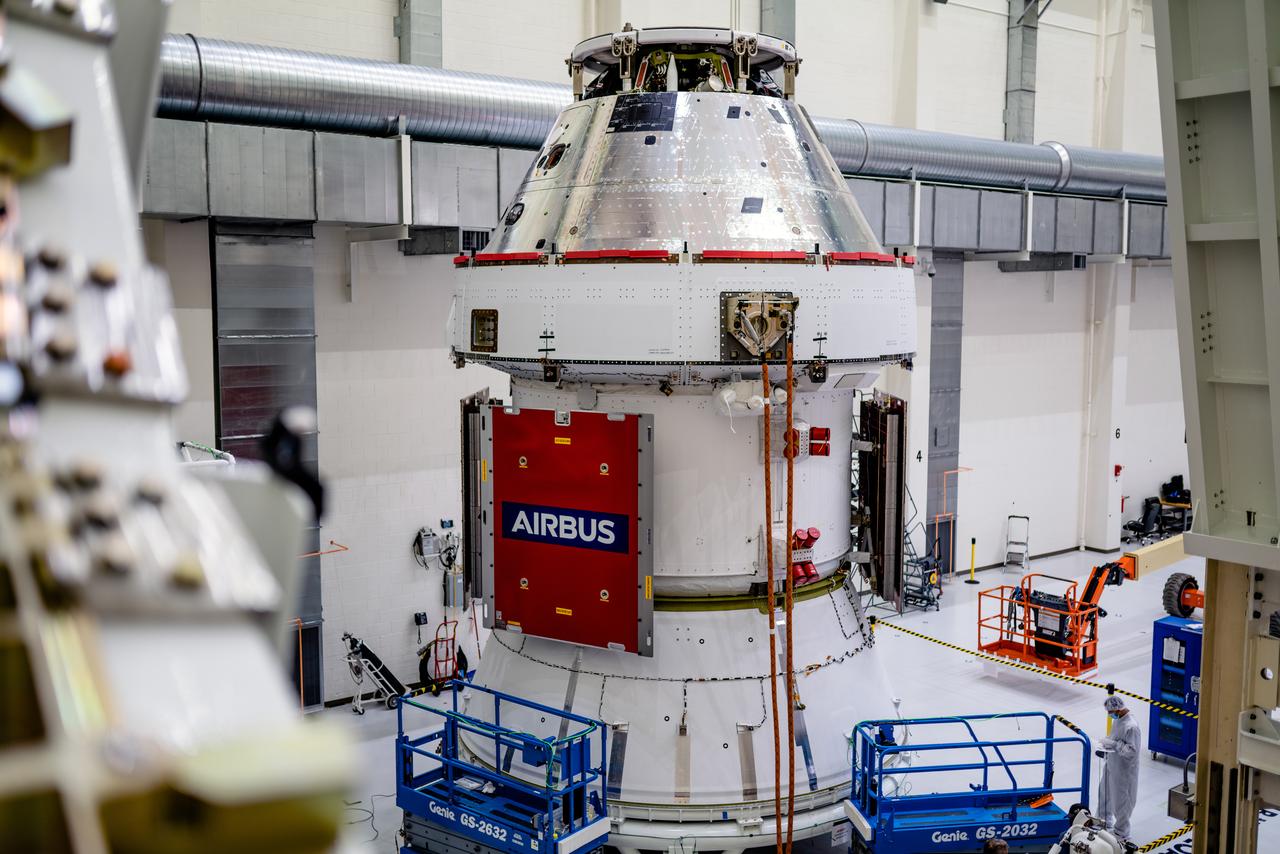
In the Operations and Checkout Building (O&C) at Kennedy Space Center, three spacecraft adapter jettison (SAJ) fairings are prepared for installation and will be moved into place by technicians with Lockheed Martin, lead contractor for Orion on Oct. 12, 2020. They will be secured around the spacecraft, encapsulating the European Service Module to protect it from the harsh environment as the spacecraft is propelled out of Earth’s atmosphere atop the Space Launch System (SLS) rocket during NASA’s Artemis I mission. The next time the solar array wings will be visible will be when Orion is in space. Artemis I will test the Orion spacecraft and SLS as an integrated system ahead of crewed flights to the Moon.
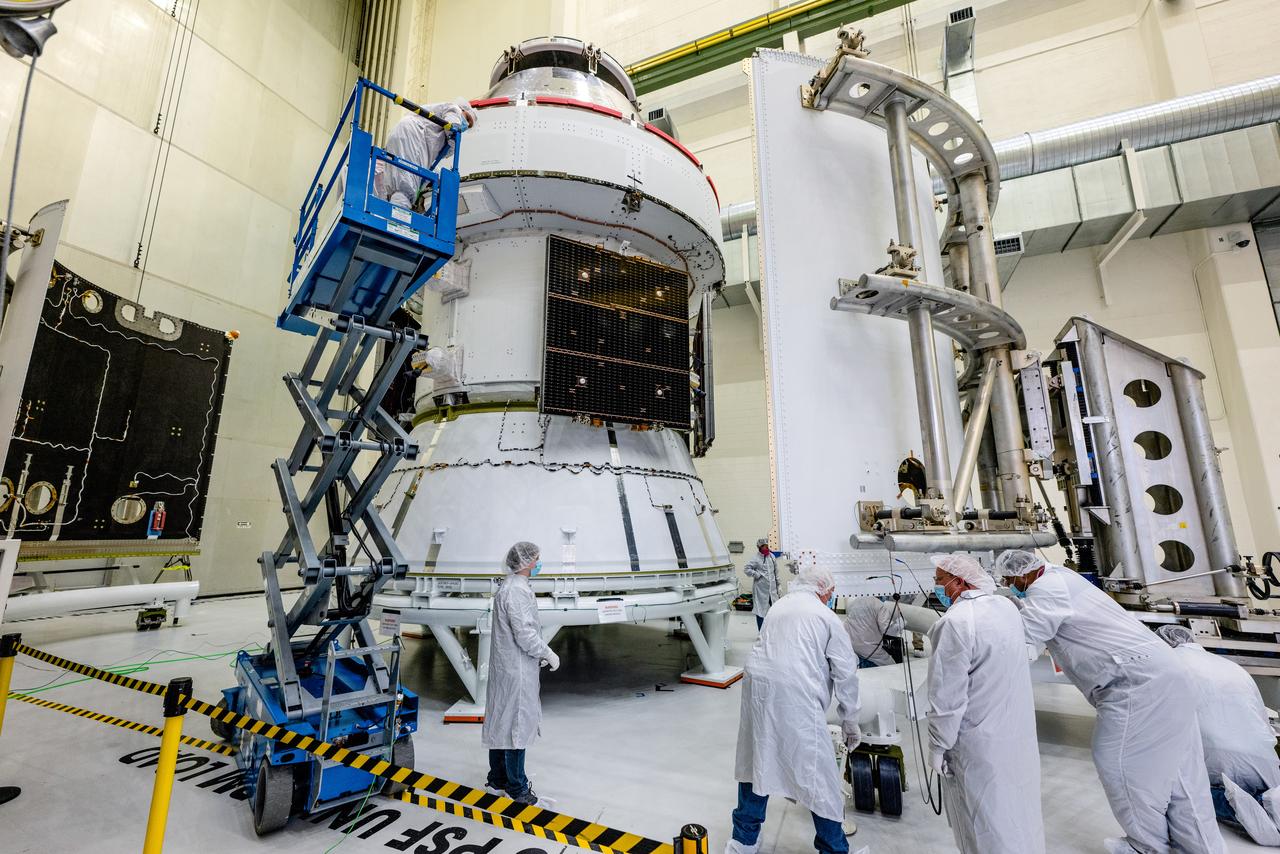
In the Operations and Checkout Building (O&C) at Kennedy Space Center, three spacecraft adapter jettison (SAJ) fairings are prepared for installation and will be moved into place by technicians with Lockheed Martin, lead contractor for Orion on Oct. 12, 2020. They will be secured around the spacecraft, encapsulating the European Service Module to protect it from the harsh environment as the spacecraft is propelled out of Earth’s atmosphere atop the Space Launch System (SLS) rocket during NASA’s Artemis I mission. The next time the solar array wings will be visible will be when Orion is in space. Artemis I will test the Orion spacecraft and SLS as an integrated system ahead of crewed flights to the Moon.
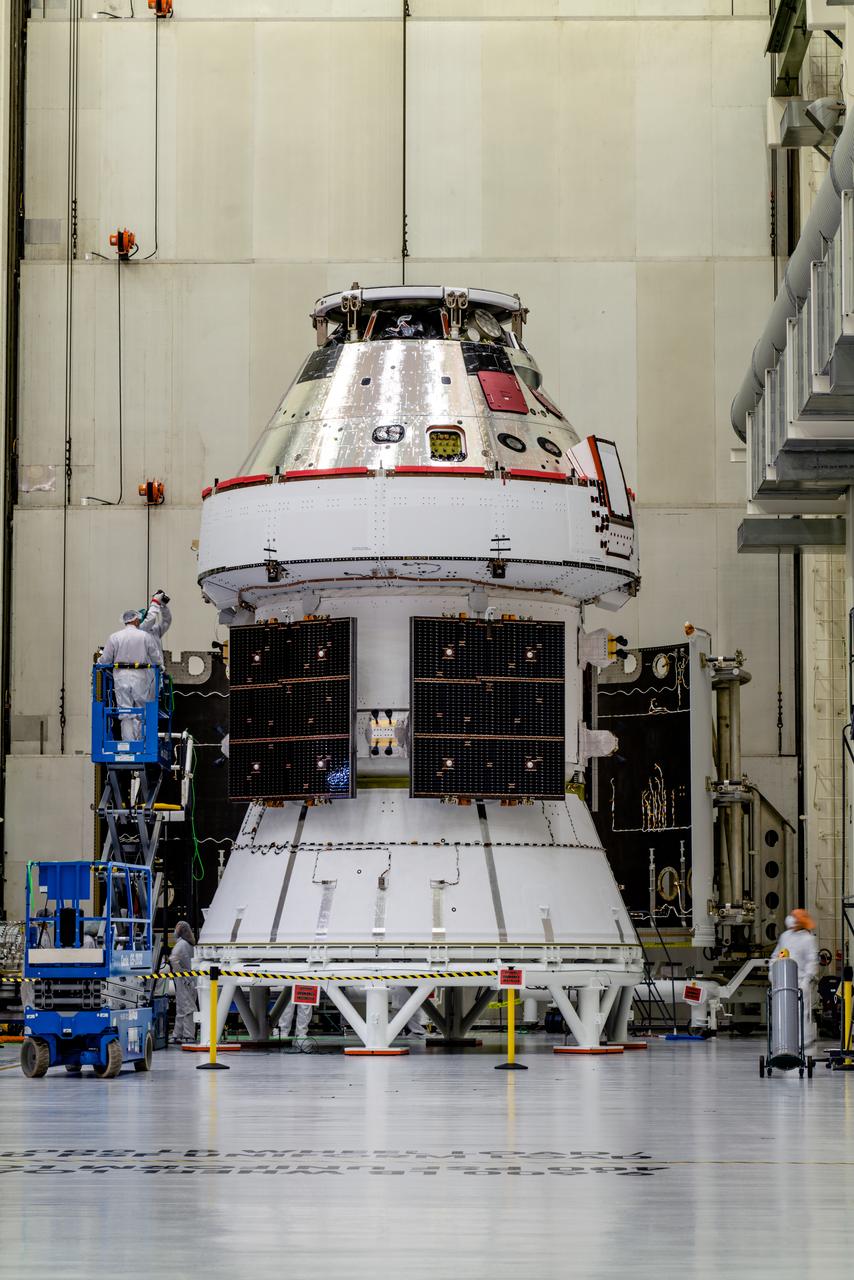
In the Operations and Checkout Building (O&C) at Kennedy Space Center, three spacecraft adapter jettison (SAJ) fairings are prepared for installation and will be moved into place by technicians with Lockheed Martin, lead contractor for Orion on Oct. 12, 2020. They will be secured around the spacecraft, encapsulating the European Service Module to protect it from the harsh environment as the spacecraft is propelled out of Earth’s atmosphere atop the Space Launch System (SLS) rocket during NASA’s Artemis I mission. The next time the solar array wings will be visible will be when Orion is in space. Artemis I will test the Orion spacecraft and SLS as an integrated system ahead of crewed flights to the Moon.
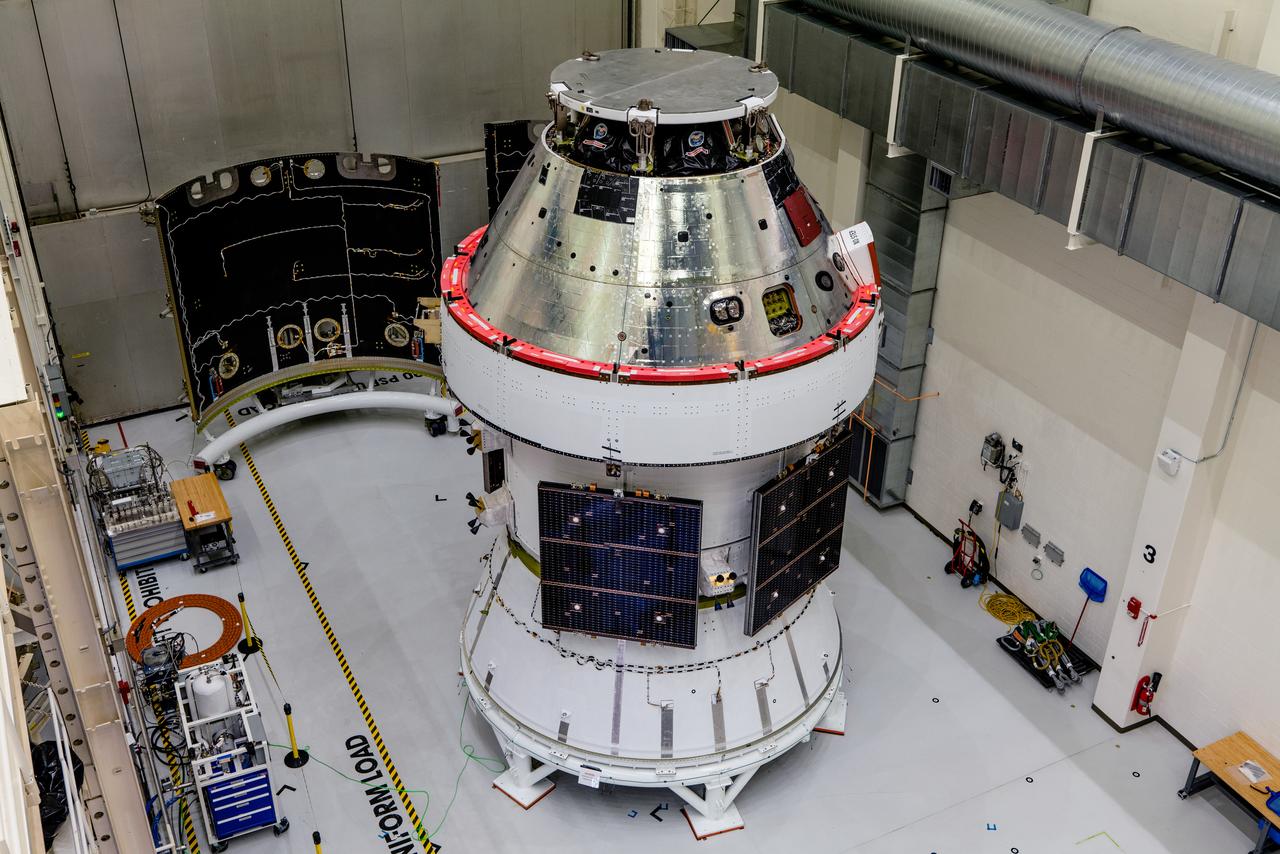
In the Operations and Checkout Building (O&C) at Kennedy Space Center, three spacecraft adapter jettison (SAJ) fairings are prepared for installation and will be moved into place by technicians with Lockheed Martin, lead contractor for Orion on Oct. 12, 2020. They will be secured around the spacecraft, encapsulating the European Service Module to protect it from the harsh environment as the spacecraft is propelled out of Earth’s atmosphere atop the Space Launch System (SLS) rocket during NASA’s Artemis I mission. The next time the solar array wings will be visible will be when Orion is in space. Artemis I will test the Orion spacecraft and SLS as an integrated system ahead of crewed flights to the Moon.
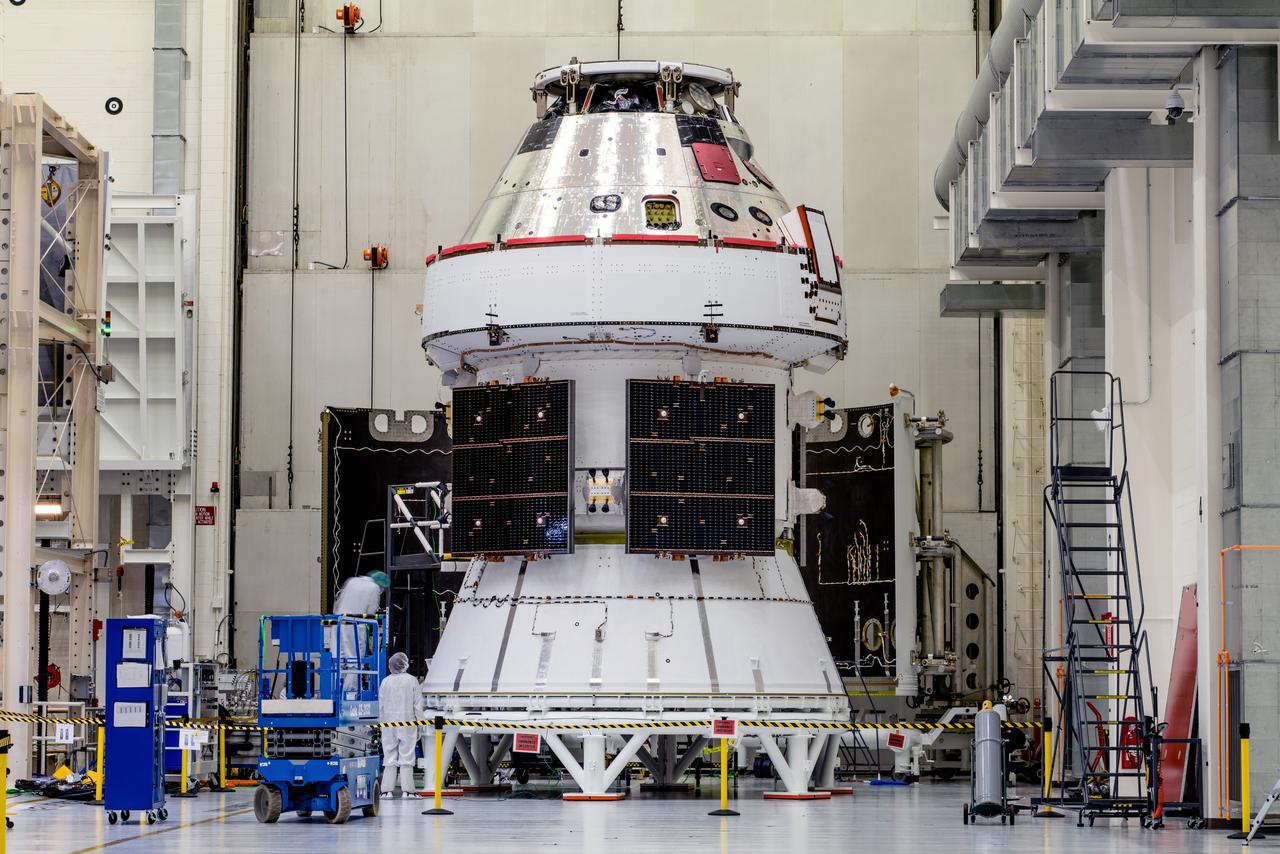
In the Operations and Checkout Building (O&C) at Kennedy Space Center, three spacecraft adapter jettison (SAJ) fairings are prepared for installation and will be moved into place by technicians with Lockheed Martin, lead contractor for Orion on Oct. 12, 2020. They will be secured around the spacecraft, encapsulating the European Service Module to protect it from the harsh environment as the spacecraft is propelled out of Earth’s atmosphere atop the Space Launch System (SLS) rocket during NASA’s Artemis I mission. The next time the solar array wings will be visible will be when Orion is in space. Artemis I will test the Orion spacecraft and SLS as an integrated system ahead of crewed flights to the Moon.
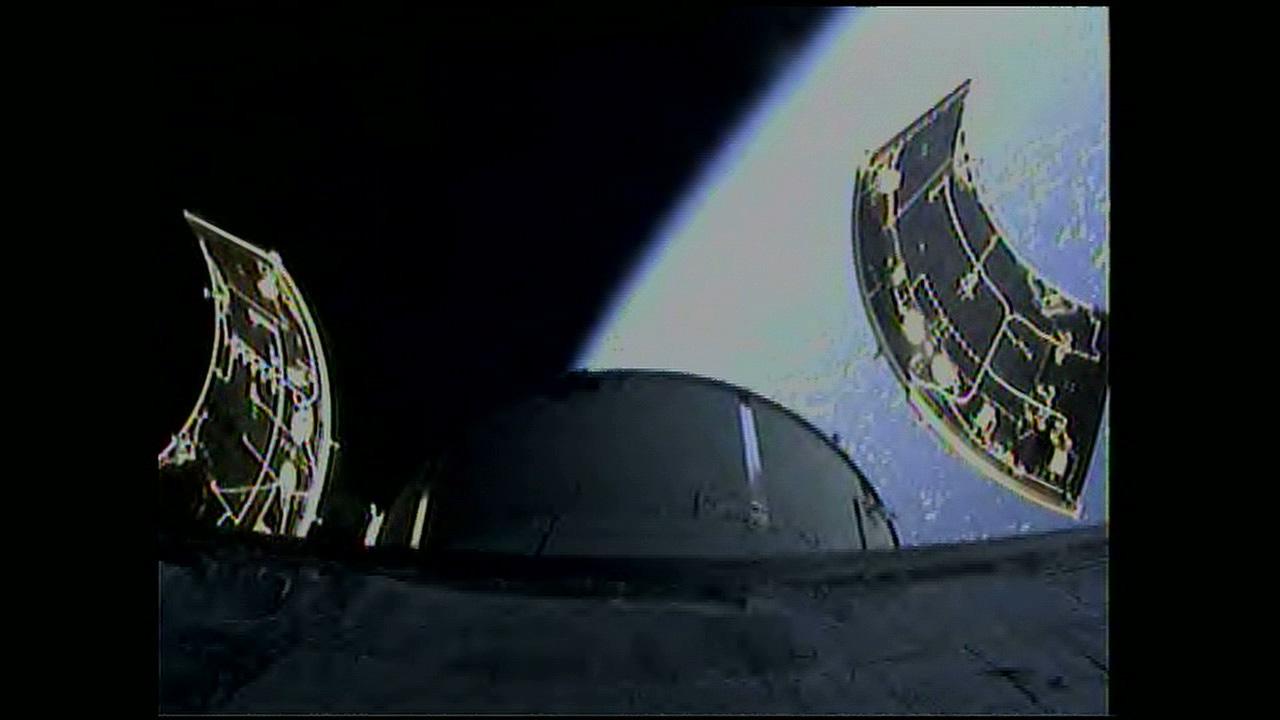
An onboard camera captures separation of the three 13 by 14-foot Orion service module fairings following lift off the Delta IV Heavy rocket from Space Launch Complex 37 at Cape Canaveral Air Force Station in Florida on Dec. 5, 2014. Exploration Flight Test-1 (EFT-1) also will validate systems such as Orion’s parachutes, avionics and attitude control, and demonstrate major separation events such as the launch abort system jettison and the service module fairing separation. Part of Batch image transfer from Flickr.
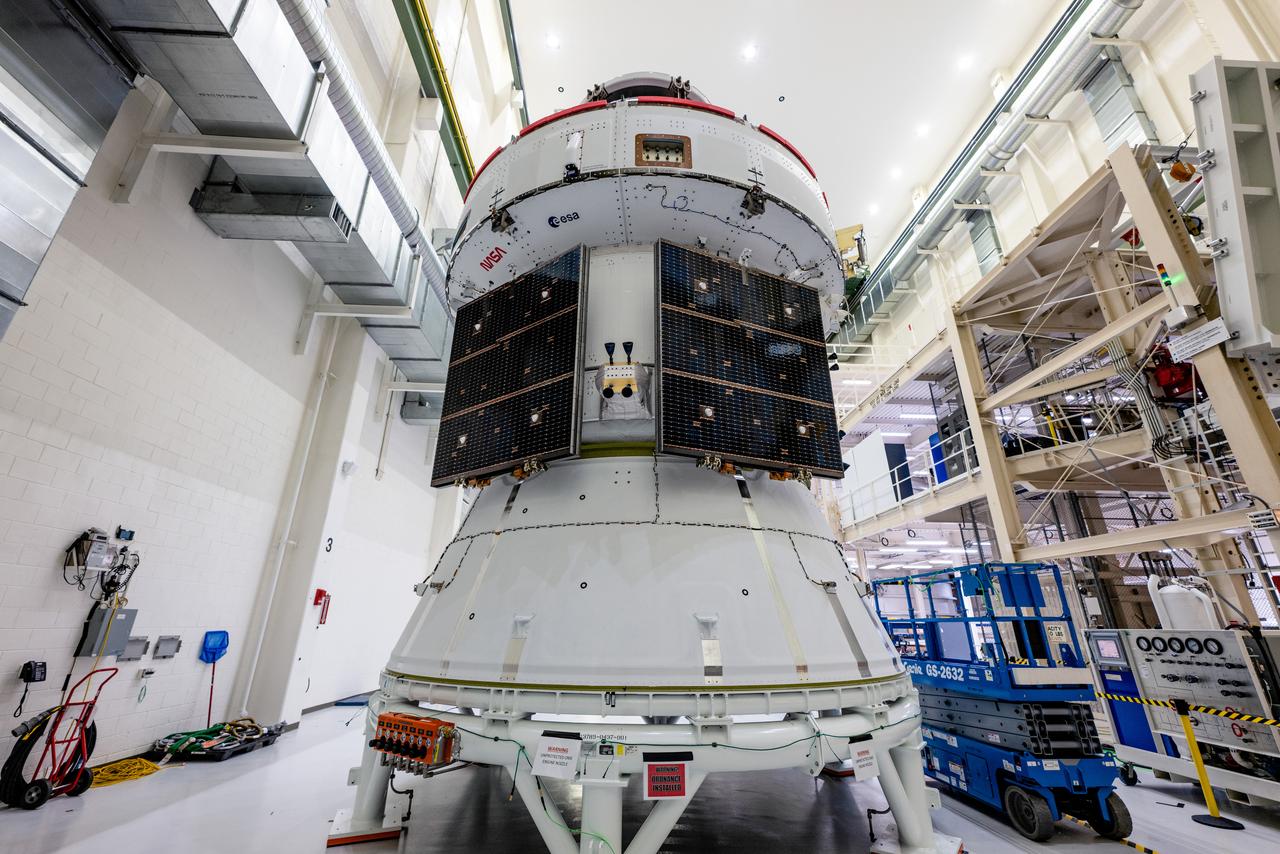
In the Operations and Checkout Building (O&C) at Kennedy Space Center, three spacecraft adapter jettison (SAJ) fairings are prepared for installation and will be moved into place by technicians with Lockheed Martin, lead contractor for Orion on Oct. 12, 2020. They will be secured around the spacecraft, encapsulating the European Service Module to protect it from the harsh environment as the spacecraft is propelled out of Earth’s atmosphere atop the Space Launch System (SLS) rocket during NASA’s Artemis I mission. The next time the solar array wings will be visible will be when Orion is in space. Artemis I will test the Orion spacecraft and SLS as an integrated system ahead of crewed flights to the Moon.
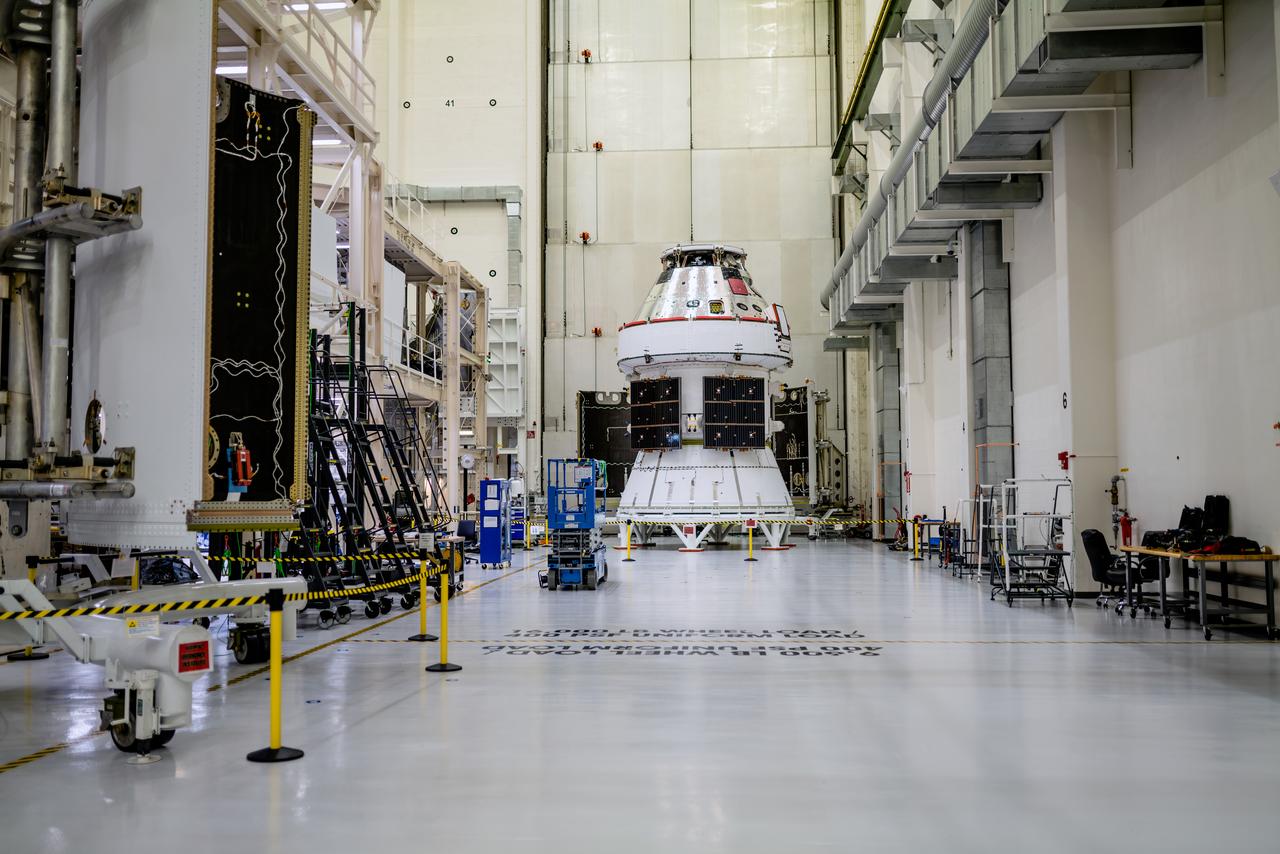
In the Operations and Checkout Building (O&C) at Kennedy Space Center, three spacecraft adapter jettison (SAJ) fairings are prepared for installation and will be moved into place by technicians with Lockheed Martin, lead contractor for Orion on Oct. 12, 2020. They will be secured around the spacecraft, encapsulating the European Service Module to protect it from the harsh environment as the spacecraft is propelled out of Earth’s atmosphere atop the Space Launch System (SLS) rocket during NASA’s Artemis I mission. The next time the solar array wings will be visible will be when Orion is in space. Artemis I will test the Orion spacecraft and SLS as an integrated system ahead of crewed flights to the Moon.
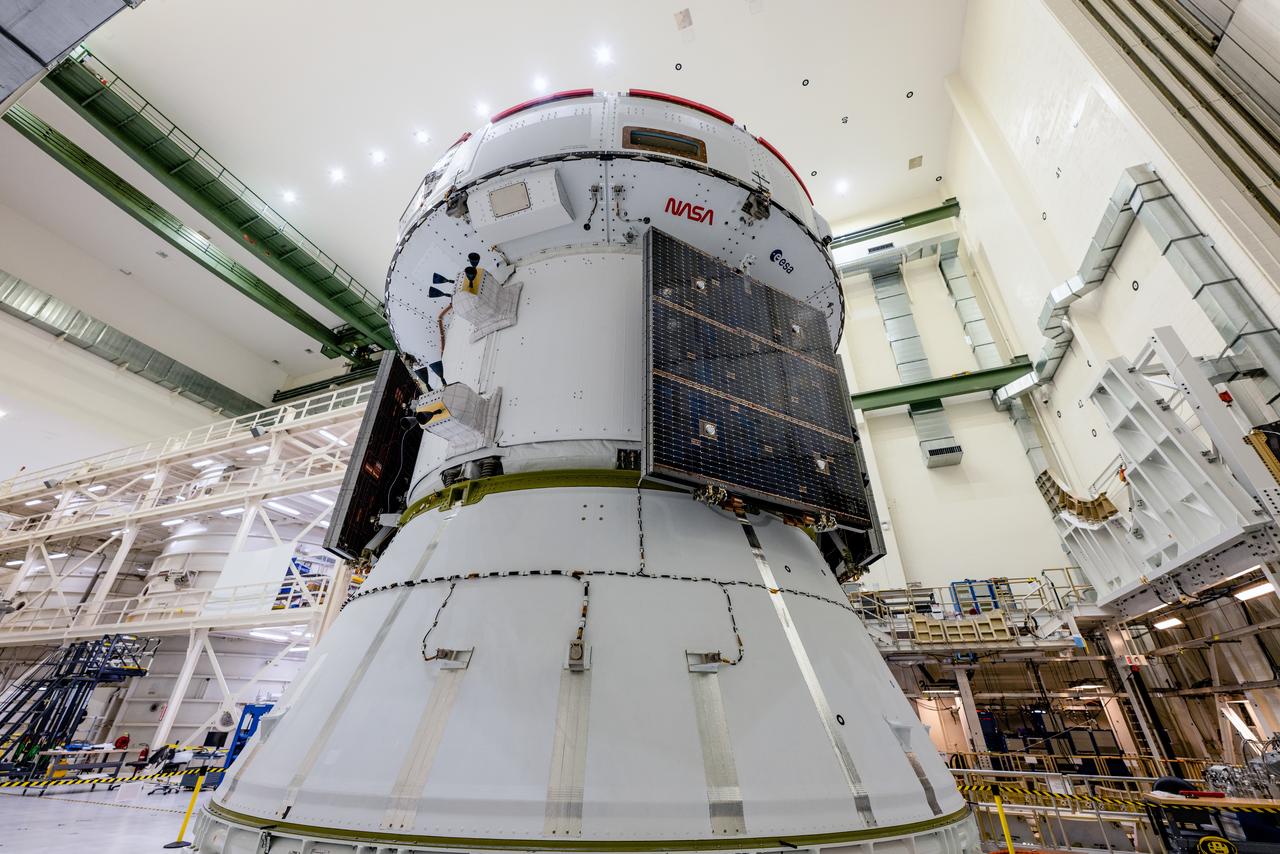
In the Operations and Checkout Building (O&C) at Kennedy Space Center, three spacecraft adapter jettison (SAJ) fairings are prepared for installation and will be moved into place by technicians with Lockheed Martin, lead contractor for Orion on Oct. 12, 2020. They will be secured around the spacecraft, encapsulating the European Service Module to protect it from the harsh environment as the spacecraft is propelled out of Earth’s atmosphere atop the Space Launch System (SLS) rocket during NASA’s Artemis I mission. The next time the solar array wings will be visible will be when Orion is in space. Artemis I will test the Orion spacecraft and SLS as an integrated system ahead of crewed flights to the Moon.
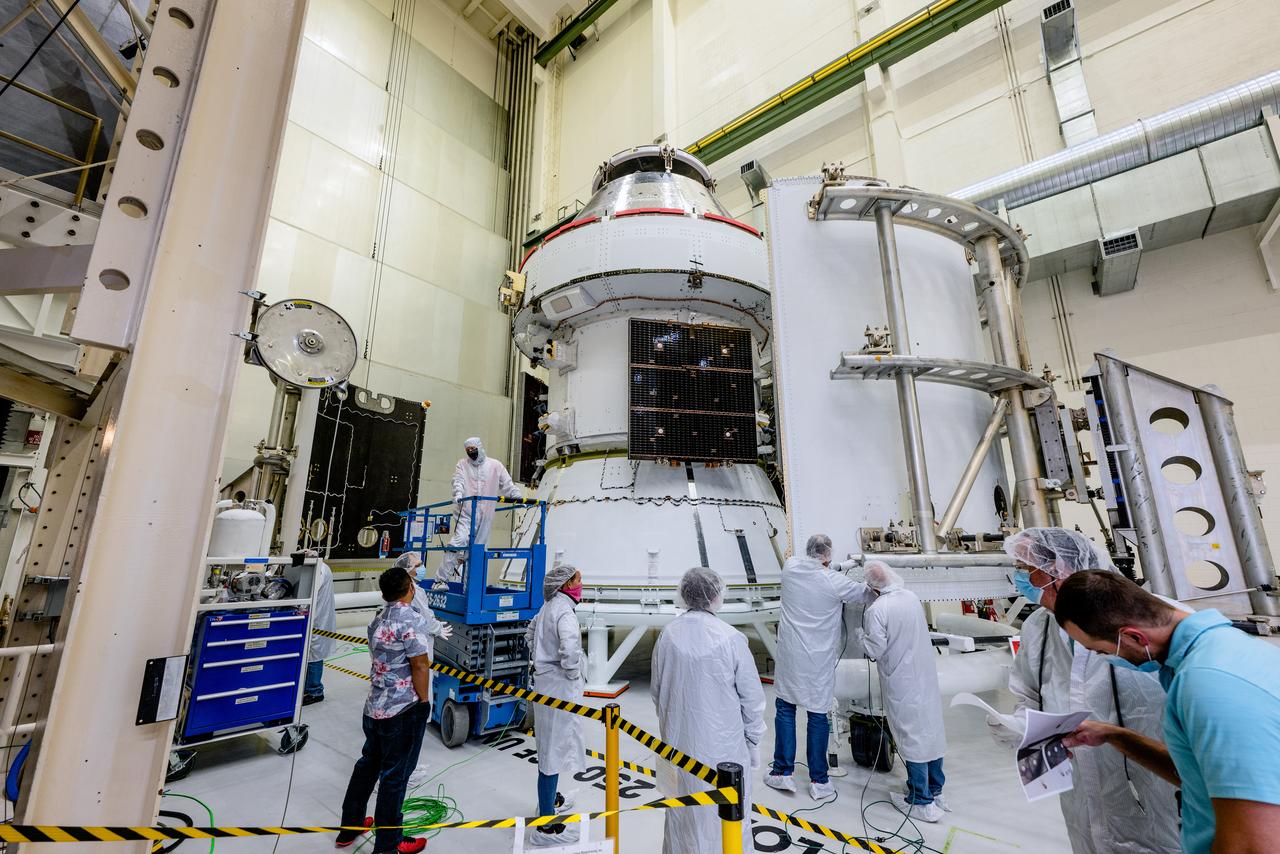
In the Operations and Checkout Building (O&C) at Kennedy Space Center, three spacecraft adapter jettison (SAJ) fairings are prepared for installation and will be moved into place by technicians with Lockheed Martin, lead contractor for Orion on Oct. 12, 2020. They will be secured around the spacecraft, encapsulating the European Service Module to protect it from the harsh environment as the spacecraft is propelled out of Earth’s atmosphere atop the Space Launch System (SLS) rocket during NASA’s Artemis I mission. The next time the solar array wings will be visible will be when Orion is in space. Artemis I will test the Orion spacecraft and SLS as an integrated system ahead of crewed flights to the Moon.
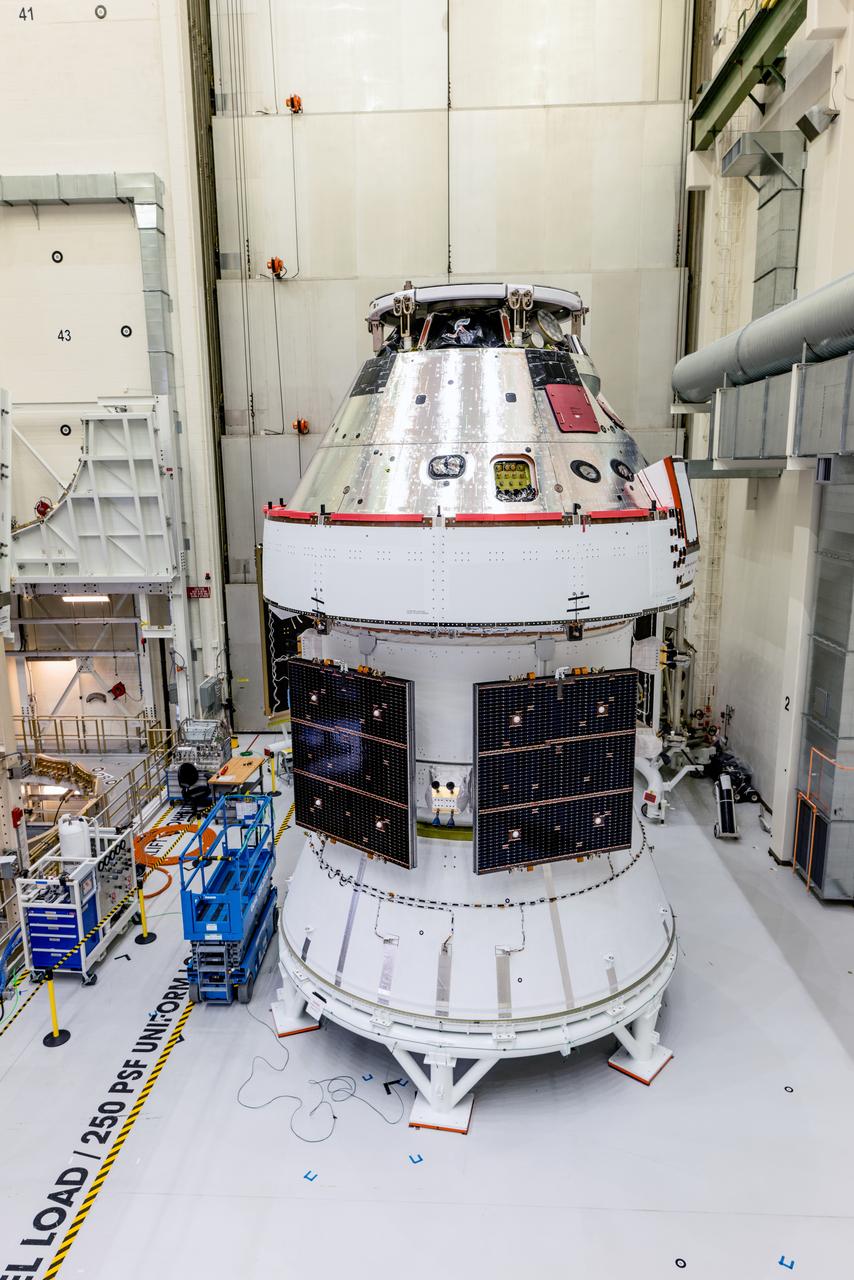
In the Operations and Checkout Building (O&C) at Kennedy Space Center, three spacecraft adapter jettison (SAJ) fairings are prepared for installation and will be moved into place by technicians with Lockheed Martin, lead contractor for Orion on Oct. 12, 2020. They will be secured around the spacecraft, encapsulating the European Service Module to protect it from the harsh environment as the spacecraft is propelled out of Earth’s atmosphere atop the Space Launch System (SLS) rocket during NASA’s Artemis I mission. The next time the solar array wings will be visible will be when Orion is in space. Artemis I will test the Orion spacecraft and SLS as an integrated system ahead of crewed flights to the Moon.
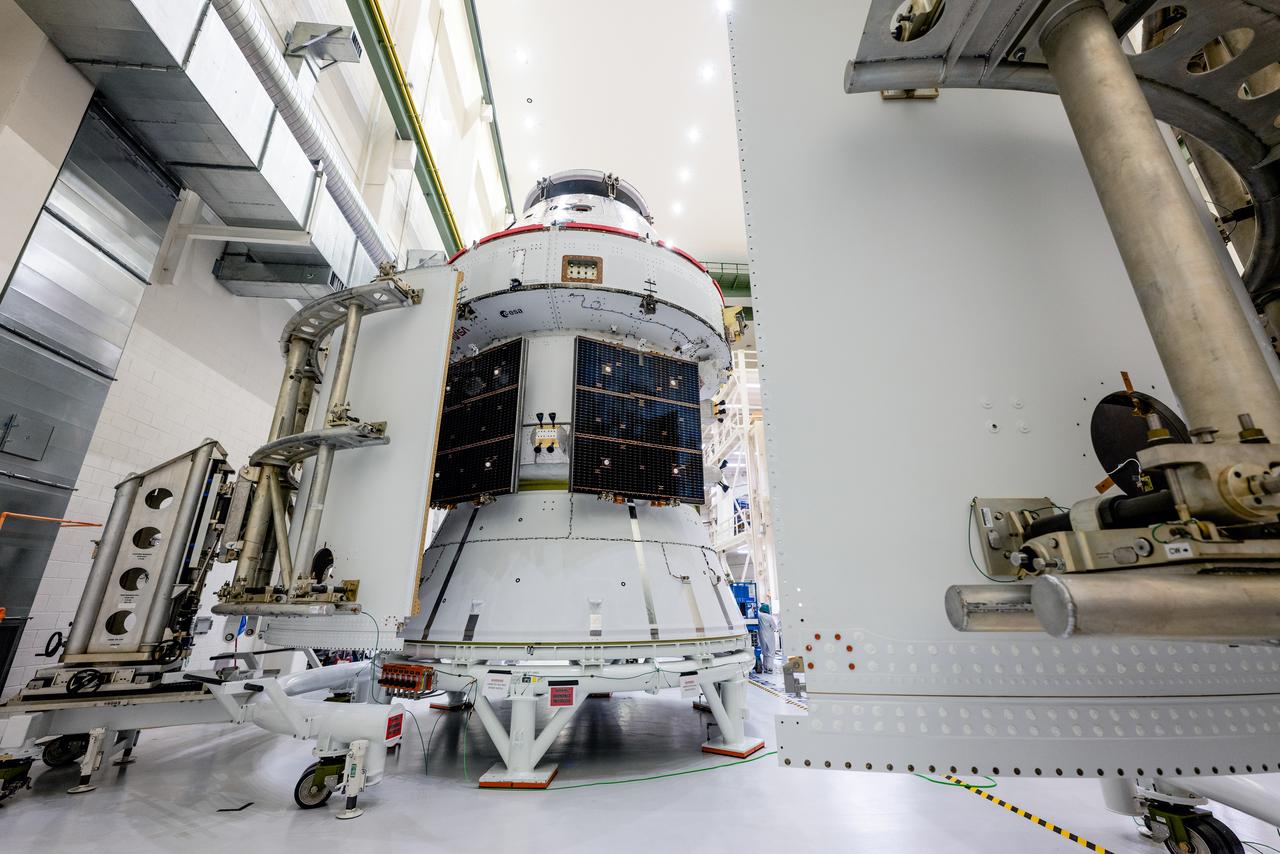
In the Operations and Checkout Building (O&C) at Kennedy Space Center, three spacecraft adapter jettison (SAJ) fairings are prepared for installation and will be moved into place by technicians with Lockheed Martin, lead contractor for Orion on Oct. 12, 2020. They will be secured around the spacecraft, encapsulating the European Service Module to protect it from the harsh environment as the spacecraft is propelled out of Earth’s atmosphere atop the Space Launch System (SLS) rocket during NASA’s Artemis I mission. The next time the solar array wings will be visible will be when Orion is in space. Artemis I will test the Orion spacecraft and SLS as an integrated system ahead of crewed flights to the Moon.