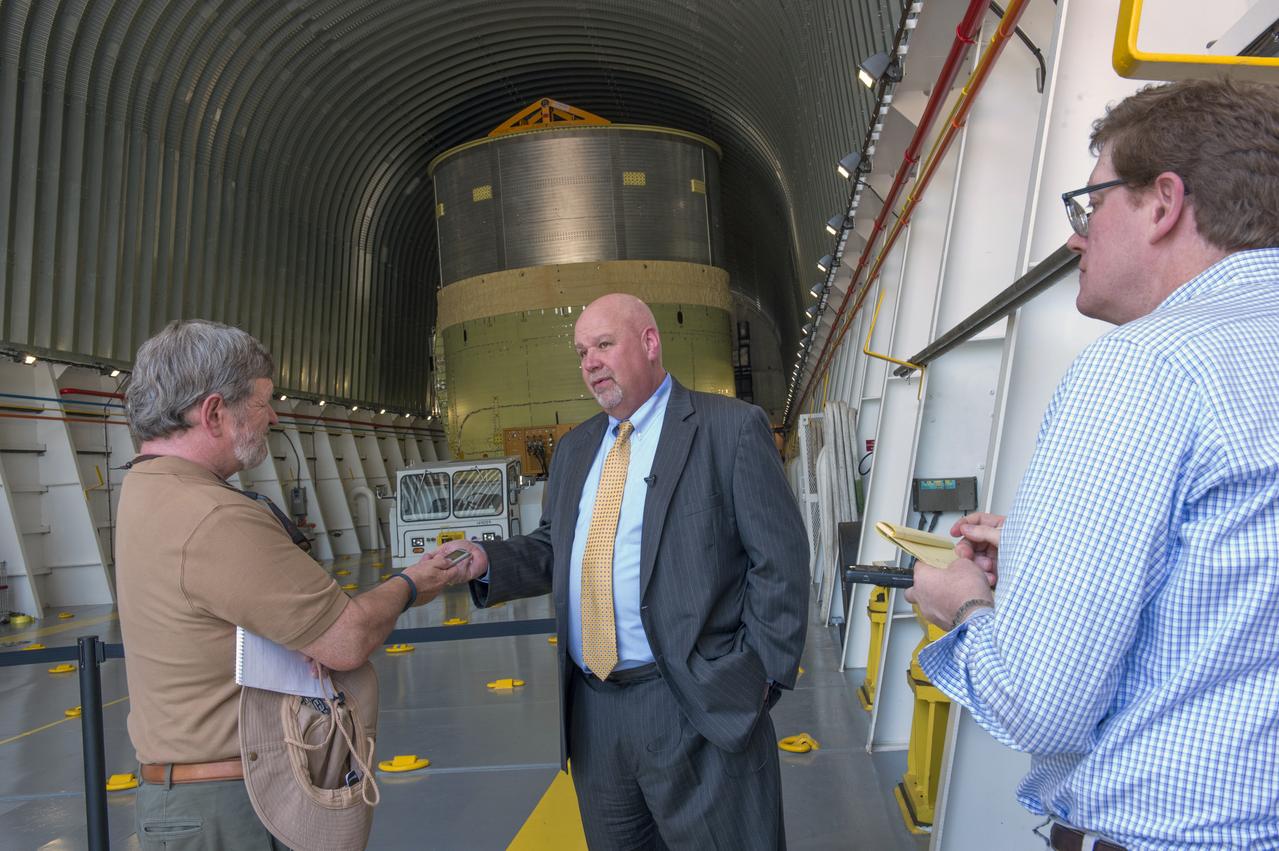
John Honeycutt talks with reporters on NASA Barge Pegasus

John Honeycutt and Mark White compare model of SLS test stand with actual test stand
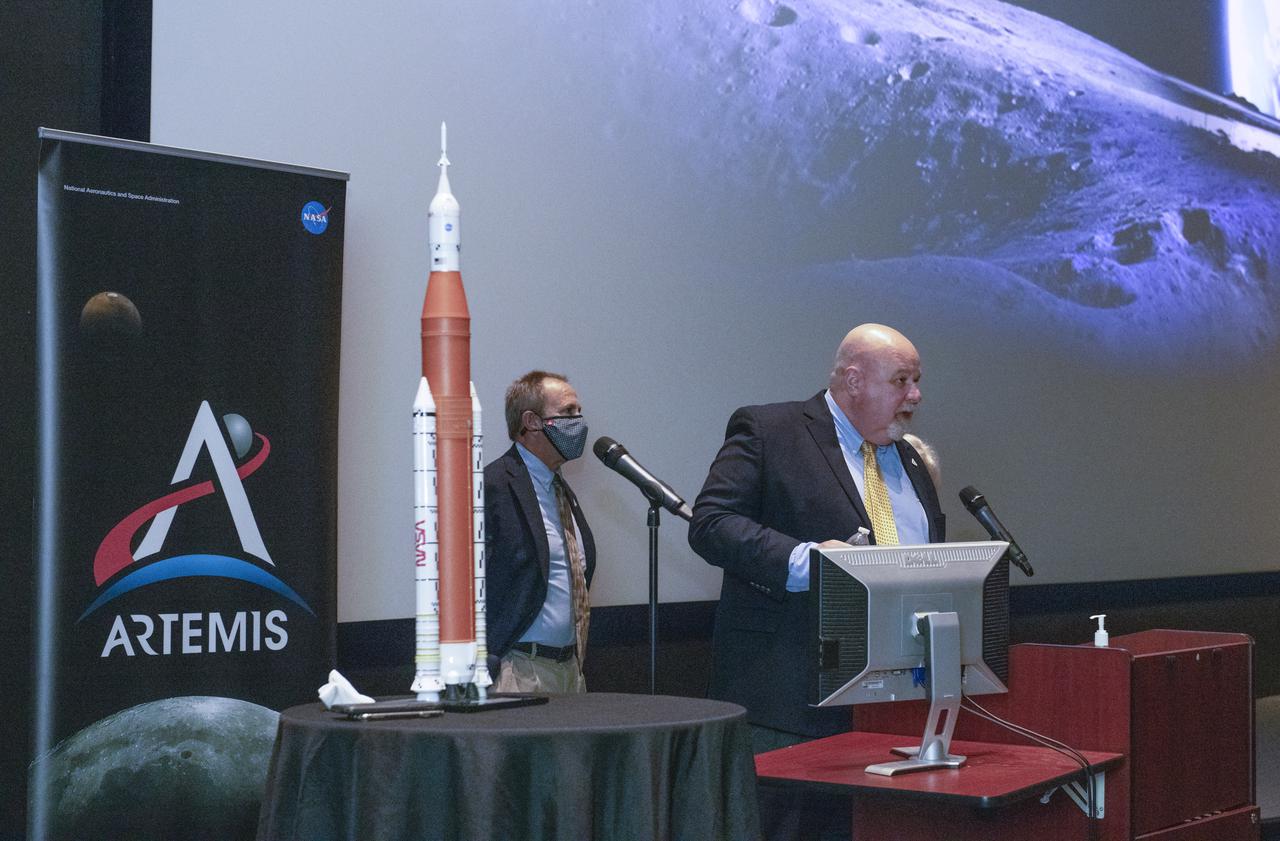
John Honeycutt, SLS Program Manager, takes questions at Chamber Media Briefing at USSRC
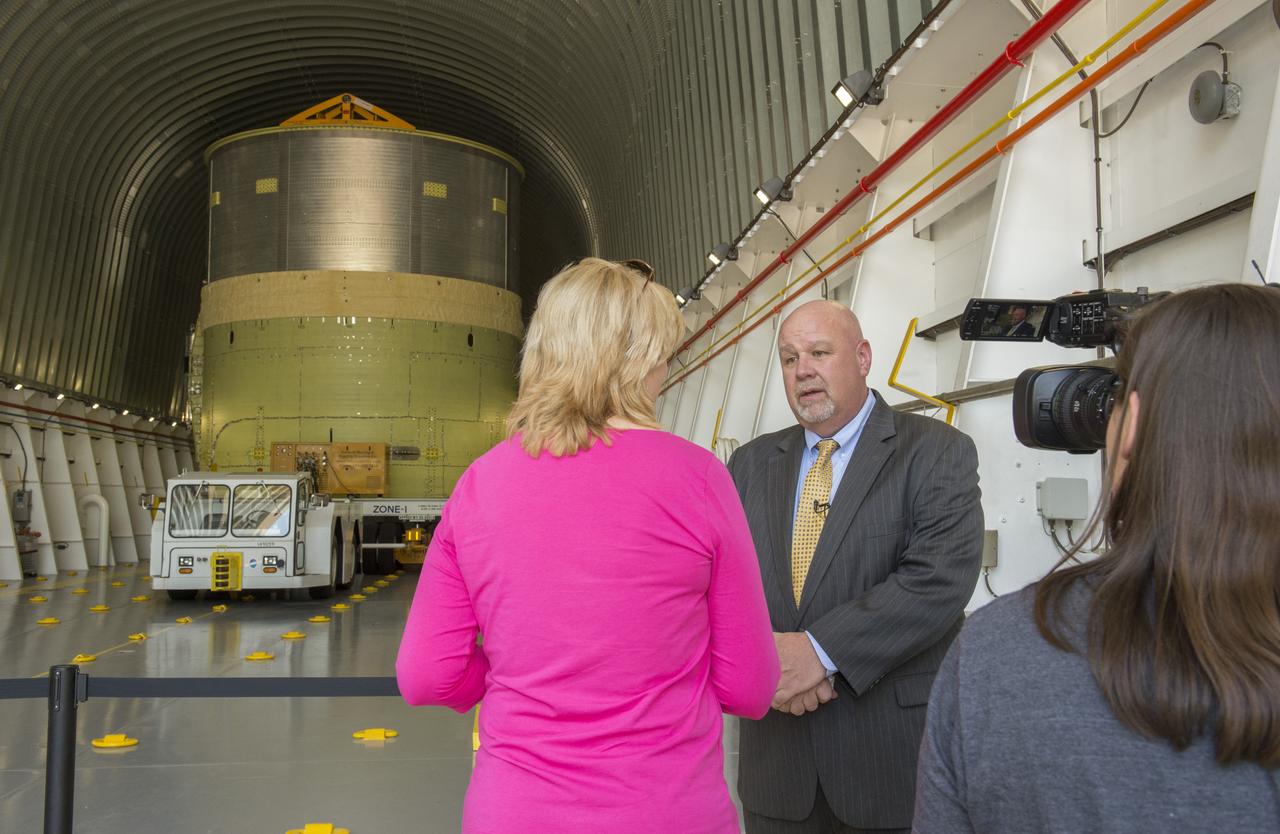
John Honeycutt talks with reporters on NASA Barge Pegasus

John Honeycutt talks with reporters on NASA Barge Pegasus
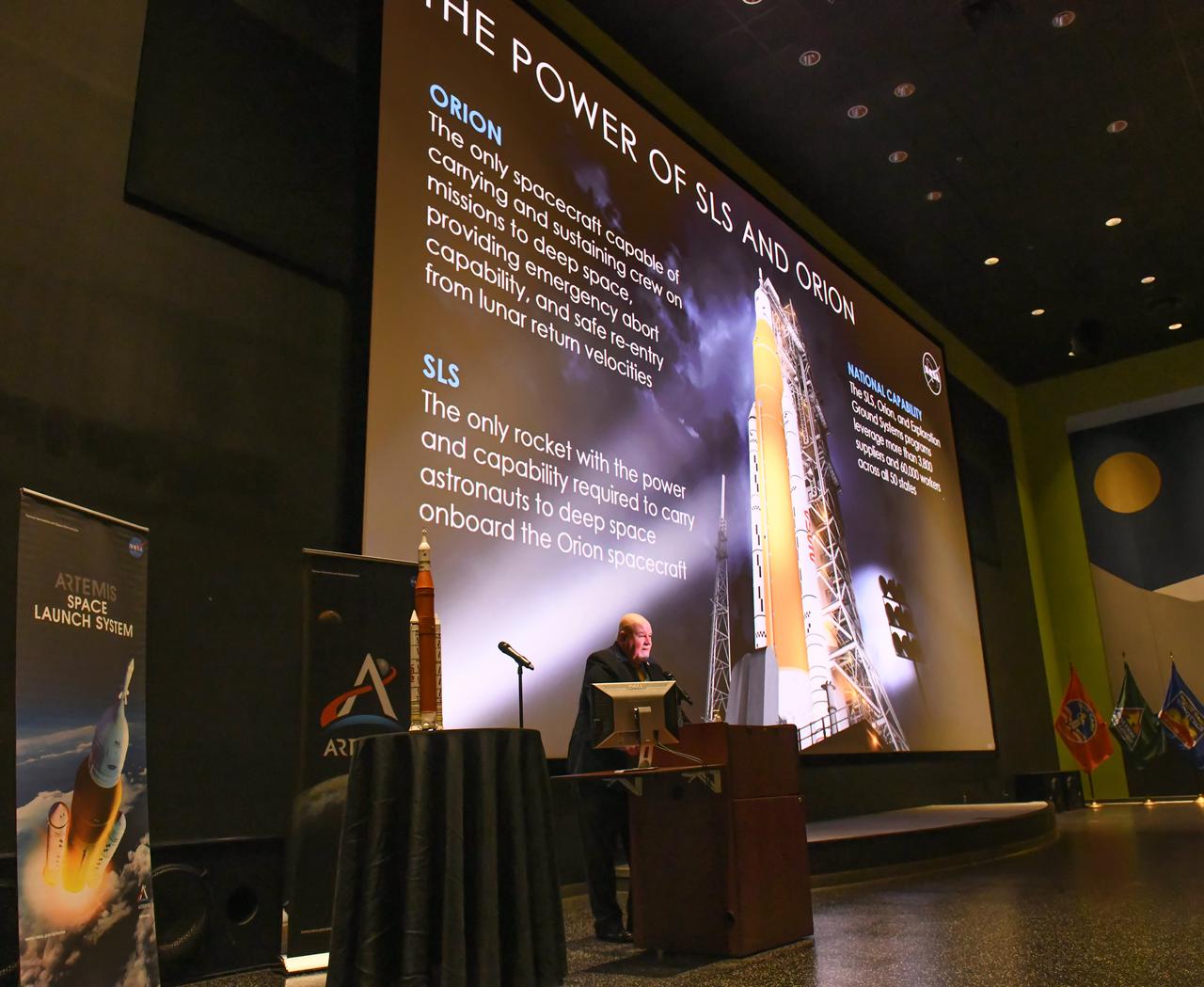
John Honeycutt, SLS Program Manager gives ARTEMIS update to audience at Chamber Media Briefing at USSRC.
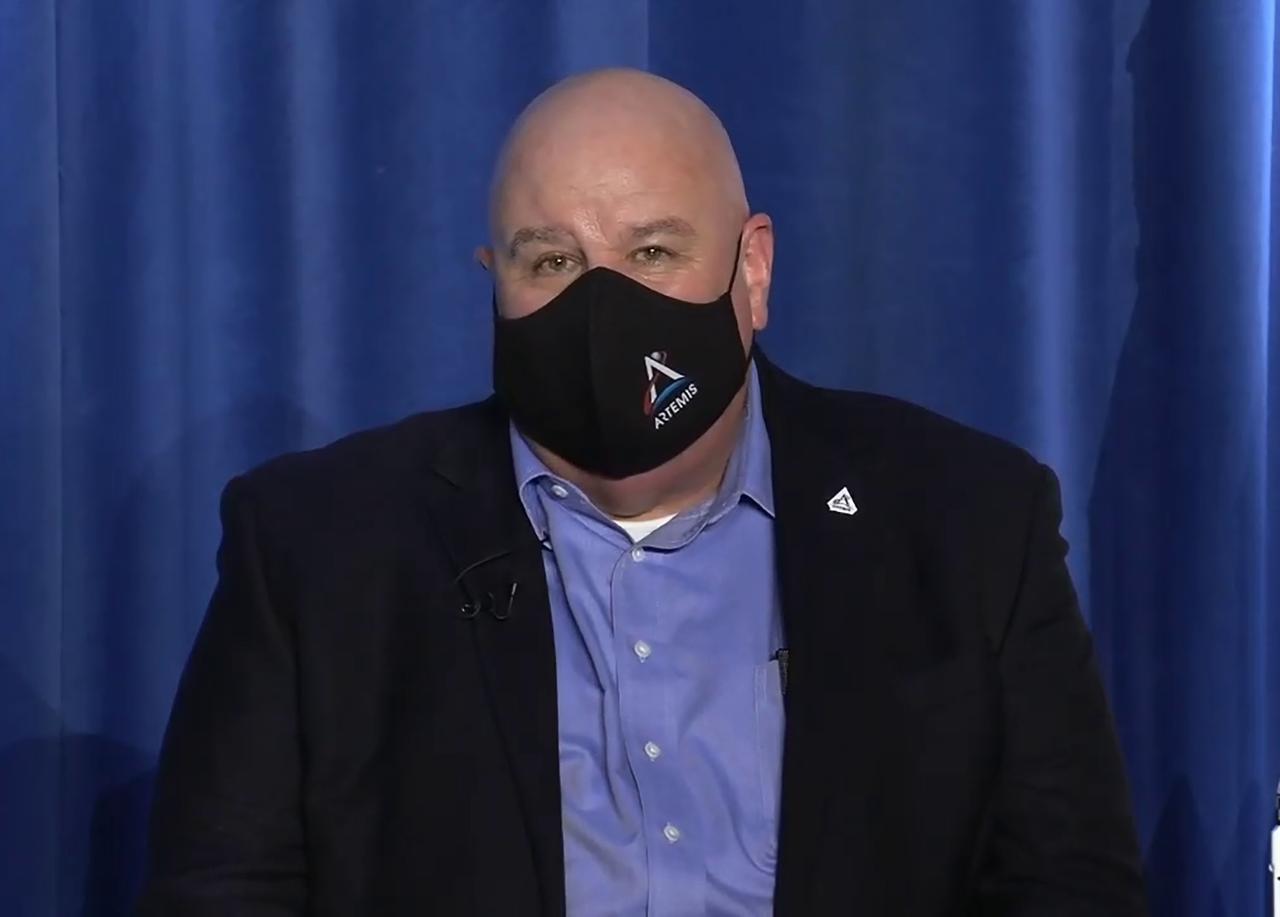
NASA leaders participated in a virtual press briefing following the Space Launch System core stage hot fire test at Stennis Space Center near Bay St. Louis, Mississippi, on March 18. The leaders fielded questions submitted by offsite media during the post-test session. Agency participants present at Stennis included John Honeycutt, SLS Program manager at Marshall Space Flight Center in Huntsville, Alabama.
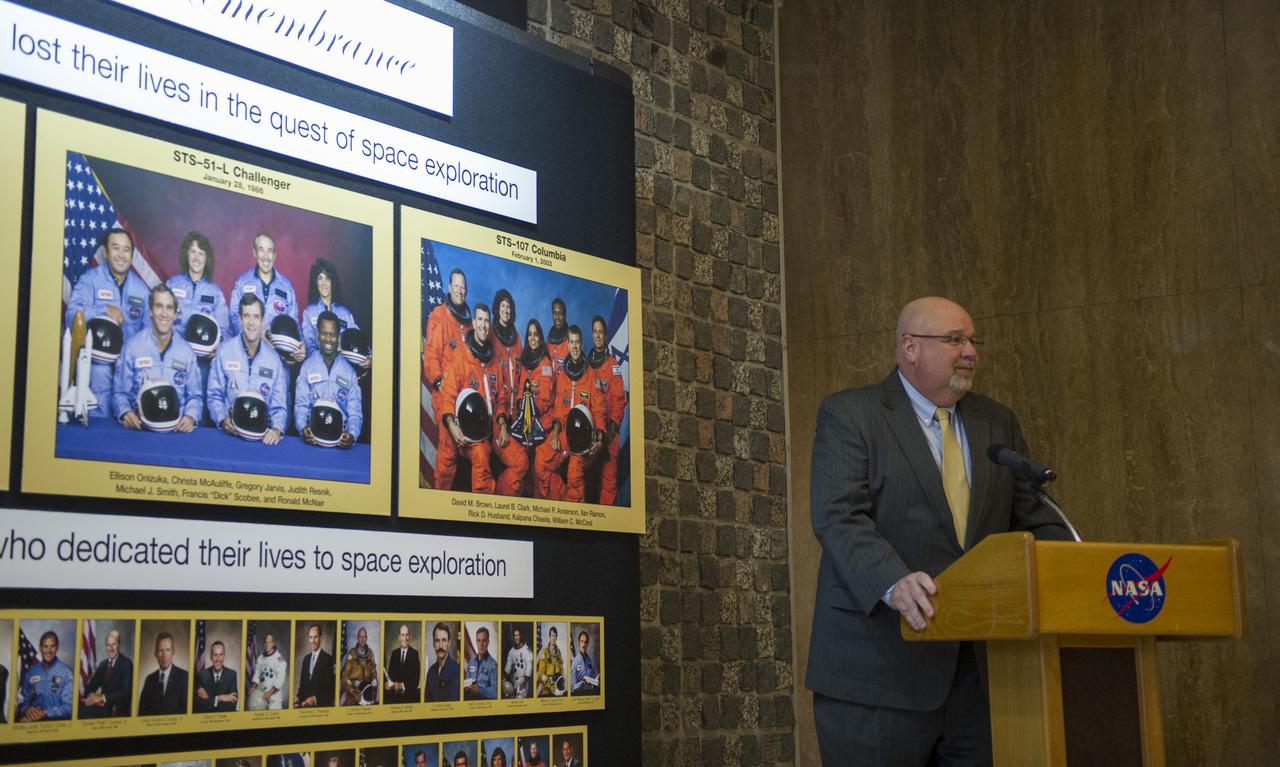
JOHN HONEYCUTT, DEPUTY MANAGER OF THE SPACE LAUNCH SYSTEM, MAKES COMMENTS AT ANNUAL DAY OF REMEMBRANCE EVENT
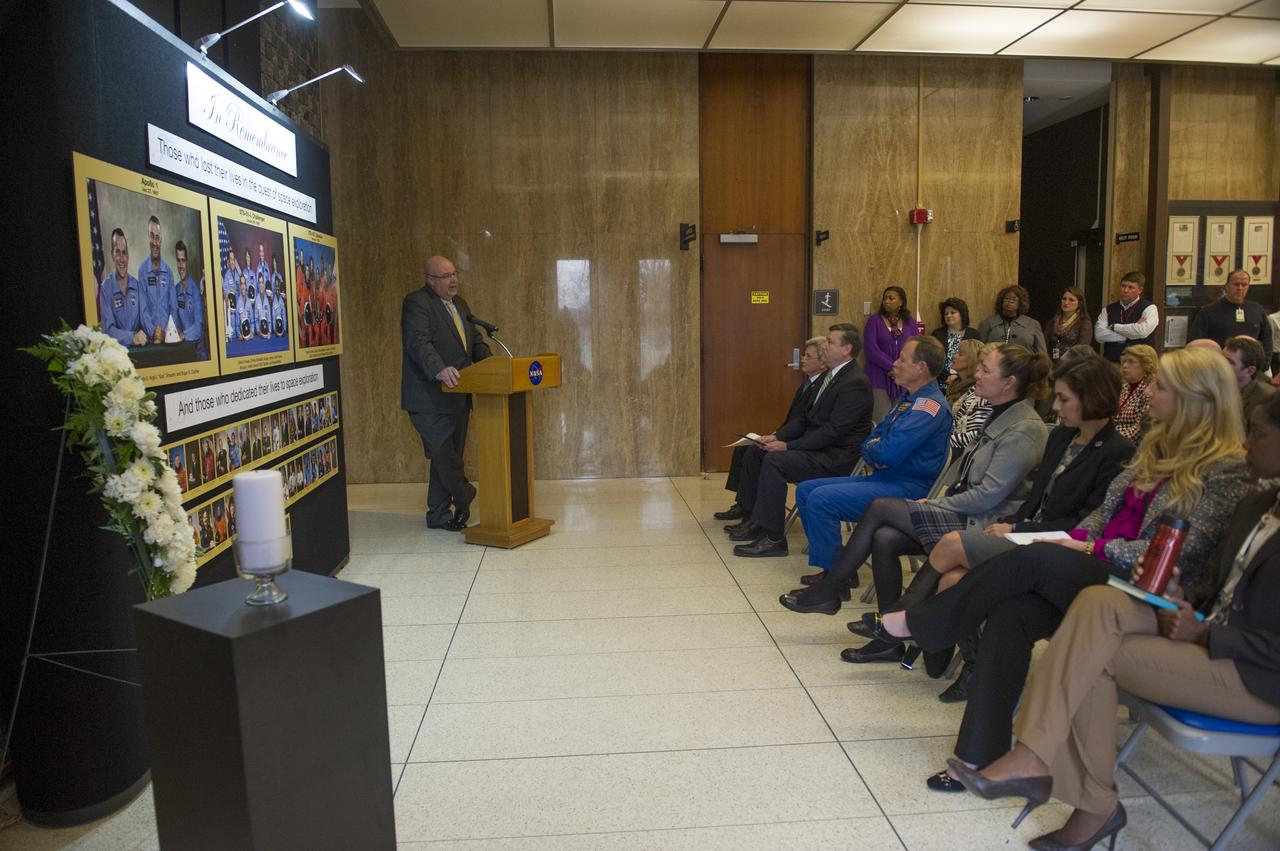
JOHN HONEYCUTT, DEPUTY MANAGER OF THE SPACE LAUNCH SYSTEM, MAKES COMMENTS AT ANNUAL DAY OF REMEMBRANCE EVENT
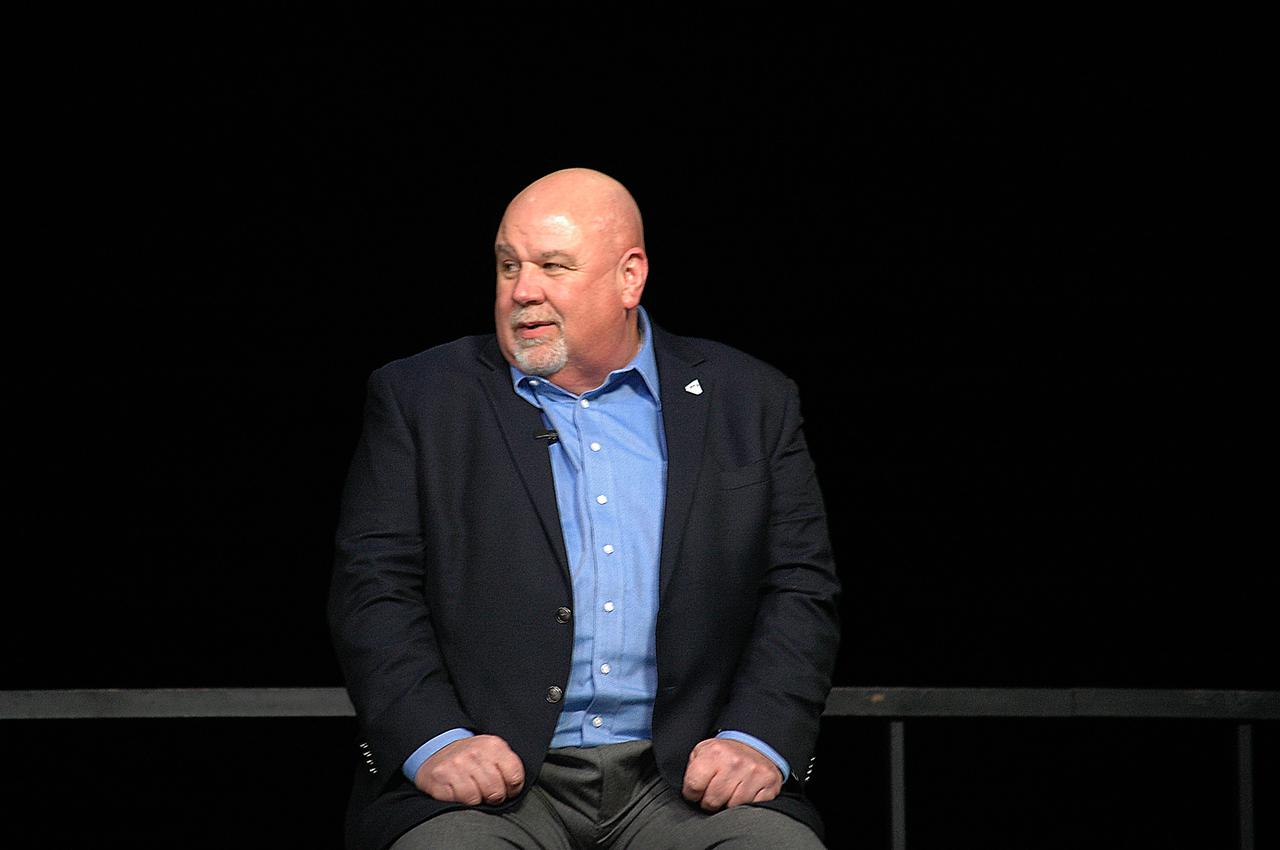
SLS Program Manager John Honeycutt from NASA’s Marshall Space Flight Center participates in a press conference following the Green Run hot fire test of the core stage for NASA’s Space Launch System (SLS) rocket on Saturday, January 16, 2021. NASA conducted a hot fire test of the core stage’s four RS-25 engines on the B-2 Test Stand at Stennis Space Center near Bay St. Louis, Mississippi. Scheduled for as long as eight minutes, the engines fired for a little more than one minute to generate a combined 1.6 million pounds of thrust, just as will occur during an actual launch. The hot fire is the final test of the Green Run test series, a comprehensive assessment of the SLS core stage prior to launching the Artemis I mission to the Moon.
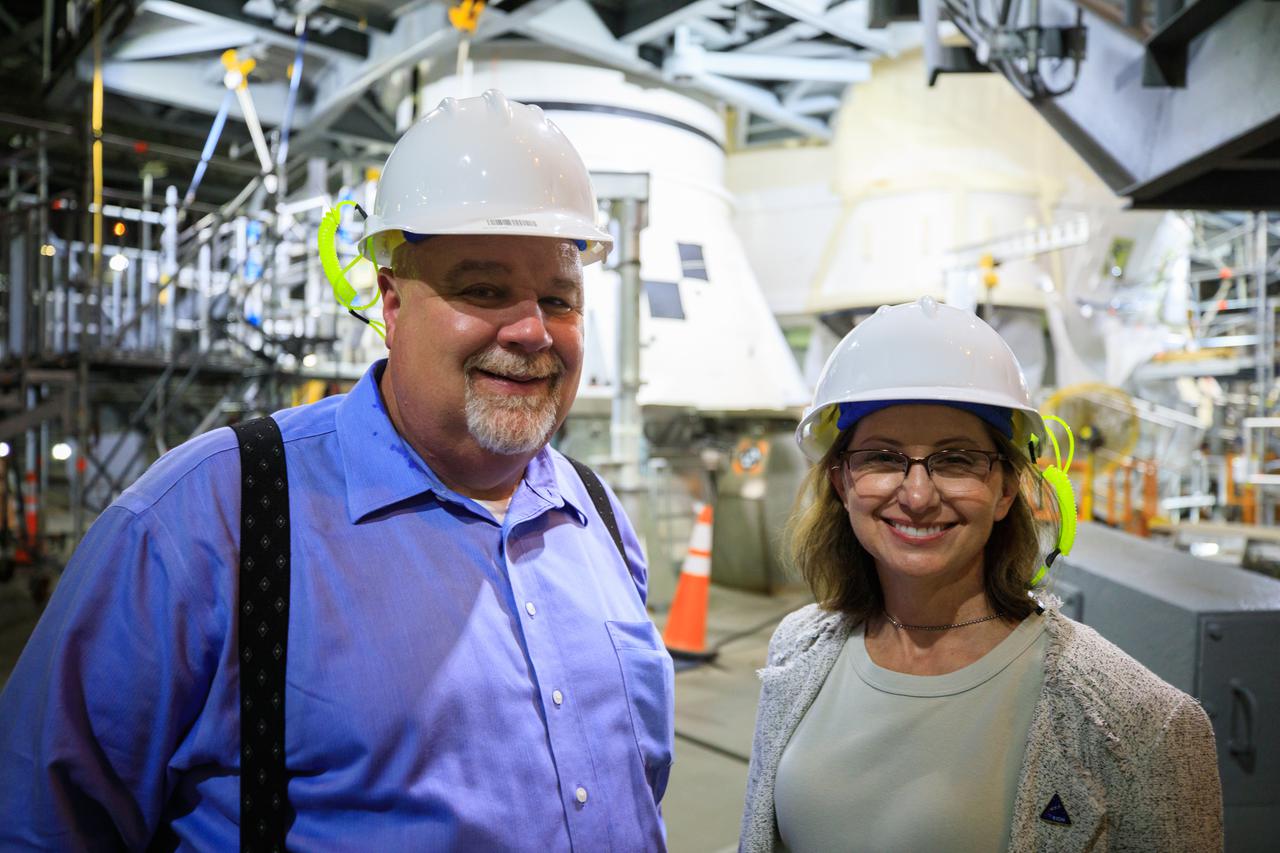
Space Launch System (SLS) Program Manager John Honeycutt, left, and Orion Program Manager Cathy Koerner pose for a photo while touring the Vehicle Assembly Building (VAB) during a visit to the agency’s Kennedy Space Center in Florida on June 23, 2021. Seen in the background are the aft booster segments – or the bottommost portion – of the SLS twin solid rocket boosters for Artemis I. The first in an increasingly complex set of missions, Artemis I will test SLS and the Orion spacecraft as an integrated system prior to crewed flights to the Moon. Through Artemis, NASA will land the first woman and first person of color on the lunar surface, as well as establish a sustainable presence on and around the Moon.
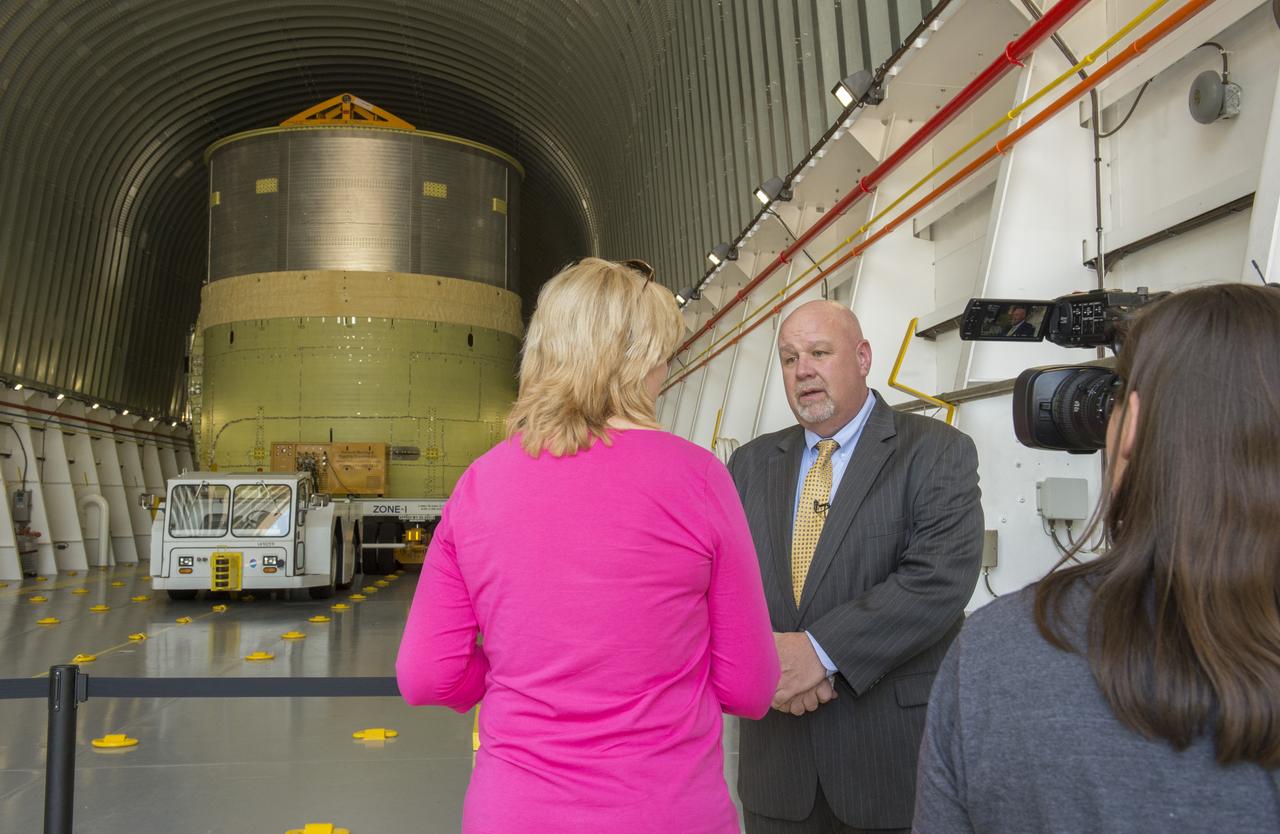
The interior of the NASA transportation barge with the RS-25 engine core stage test article. SLS manager John Honeycutt is interviewed by the local media.

John Honeycutt, manager of the Space Launch System Program at NASA’s Marshall Space Flight Center, speaks during an Artemis Program progress update panel at the 2024 Artemis Suppliers Conference, Tuesday, Feb. 27, 2024, at the Grand Hyatt Hotel in Washington. Photo Credit: (NASA/Joel Kowsky)
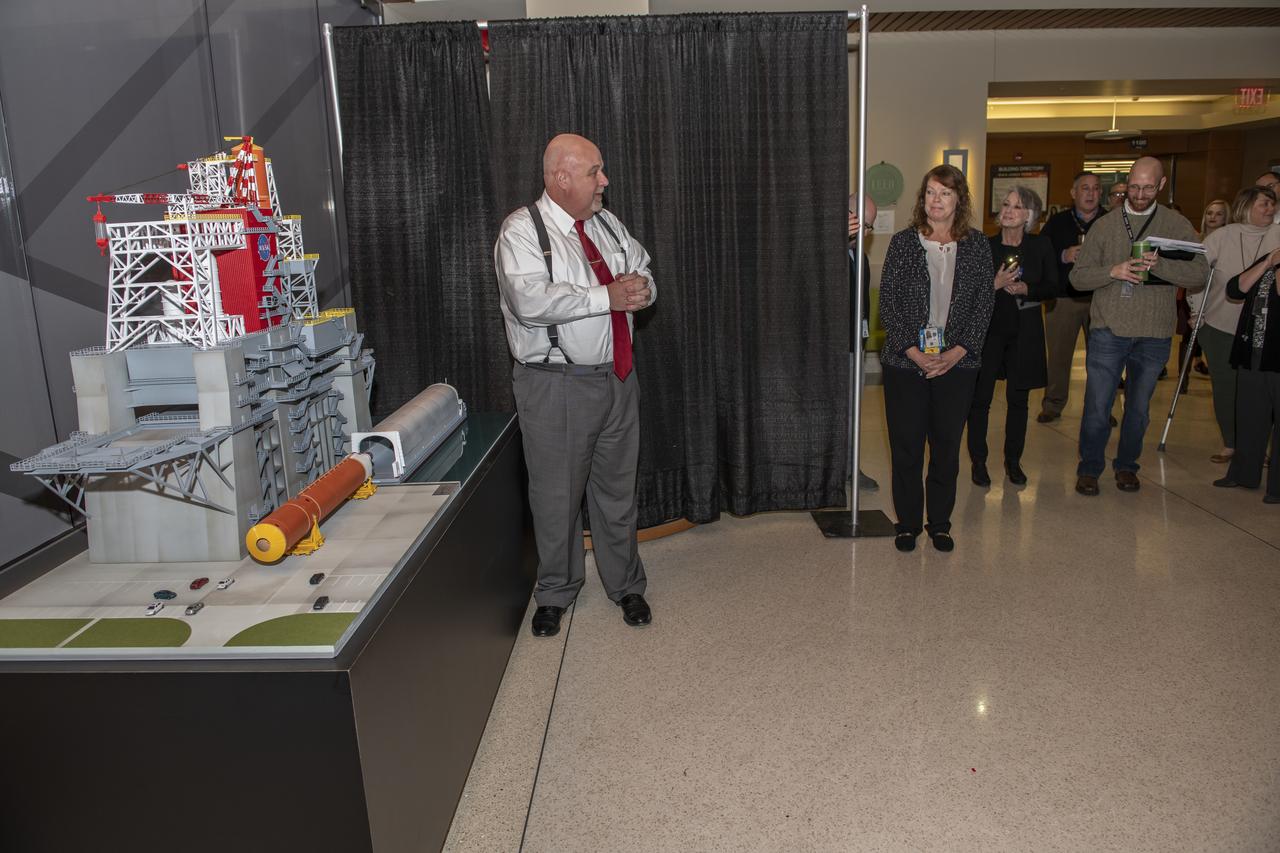
The unveiling of the B-2 Test Stand model for the SLS management team and employees in building 4220. Taking part was John Honeycutt and Julie Bassler.
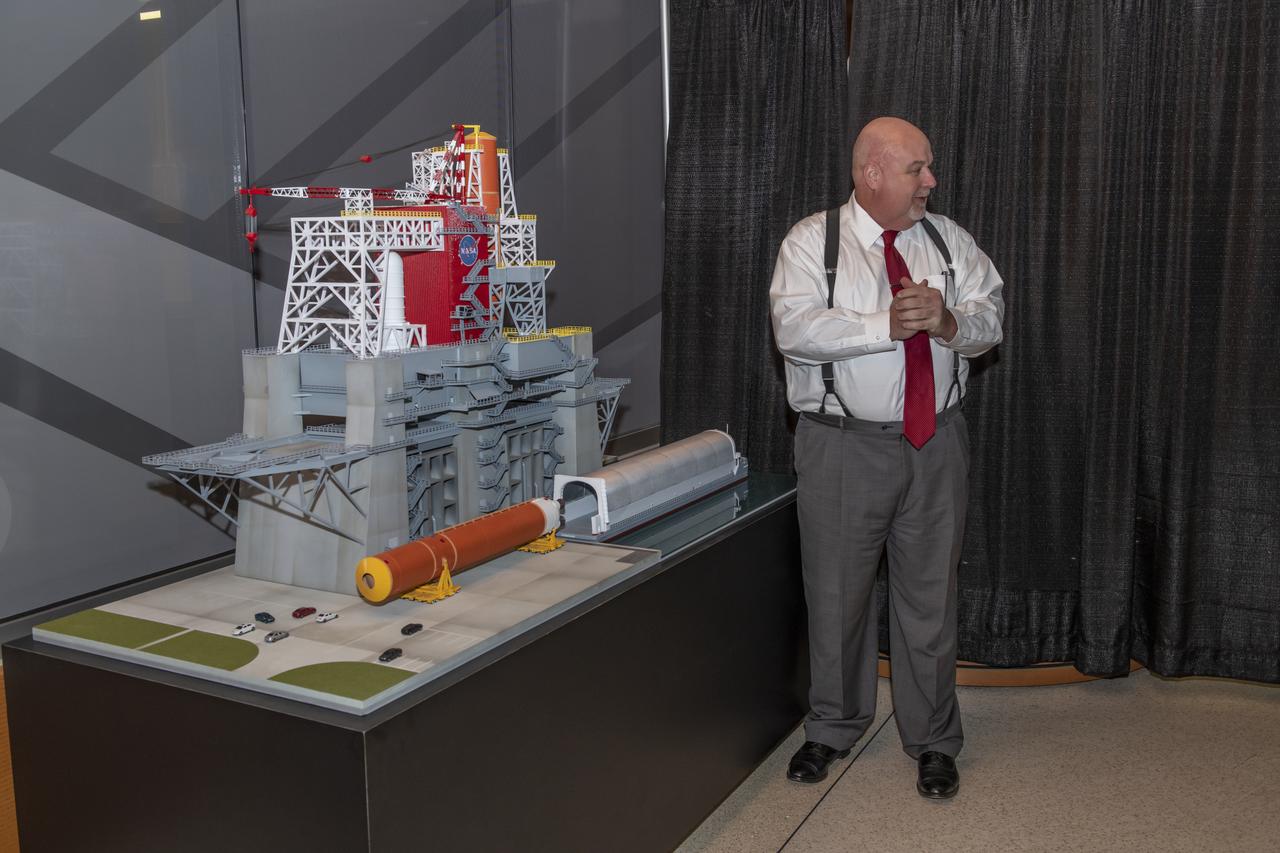
The unveiling of the B-2 Test Stand model for the SLS management team and employees in building 4220. Taking part was John Honeycutt and Julie Bassler.
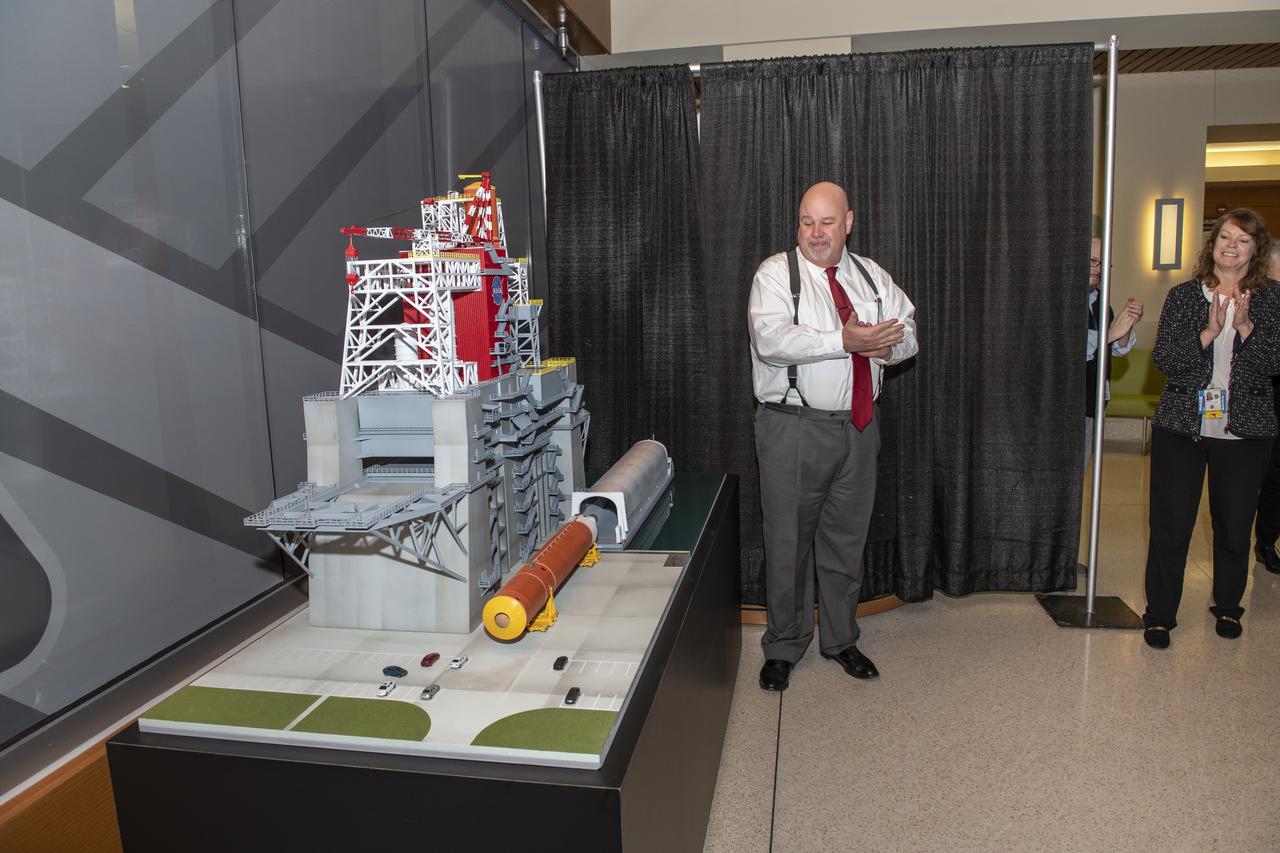
The unveiling of the B-2 Test Stand model for the SLS management team and employees in building 4220. Taking part was John Honeycutt and Julie Bassler.
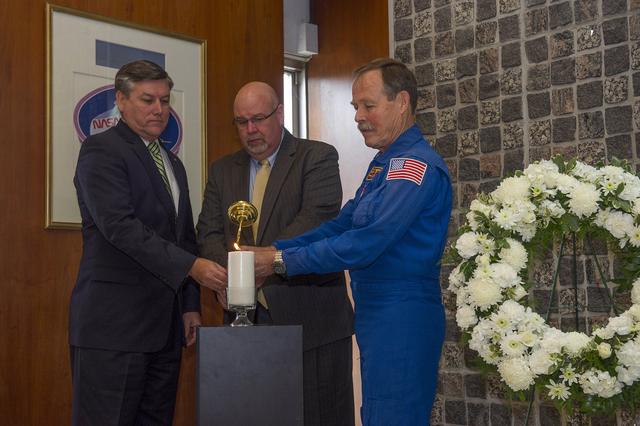
LIGHTING A MEMORIAL CANDLE DURING THE JAN. 29 DAY OF REMEMBRANCE OBSERVANCE AT NASA'S MARSHALL SPACE FLIGHT CENTER ARE, FROM LEFT, PATRICK SCHEUERMANN, MARSHALL DIRECTOR; JOHN HONEYCUTT, DEPUTY MANAGER OF THE SPACE LAUNCH SYSTEM; AND RETIRED ASTRONAUT ROBERT “HOOT” GIBSON. THE CEREMONY IN BUILDING 4200 PAID TRIBUTE TO THE CREWS OF APOLLO 1 AND SPACE SHUTTLES CHALLENGER AND COLUMBIA, AS WELL AS OTHER NASA COLLEAGUES.
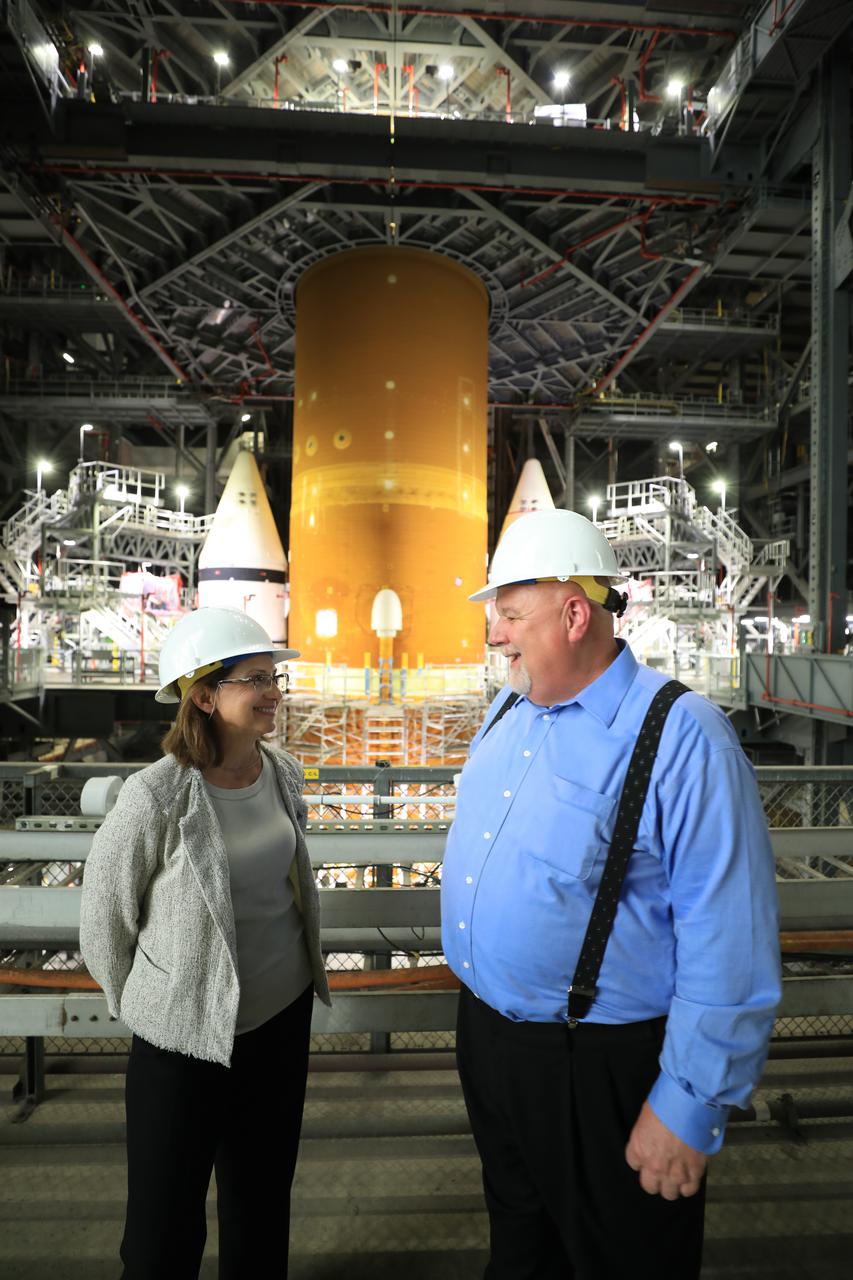
Orion Program Manager Cathy Koerner, left, and Space Launch System (SLS) Program Manager John Honeycutt tour the Vehicle Assembly Building (VAB) during a visit to the agency’s Kennedy Space Center in Florida on June 23, 2021. Seen in the background is the SLS core stage in between the twin solid rocket boosters for Artemis I. The first in an increasingly complex set of missions, Artemis I will test SLS and the Orion spacecraft as an integrated system prior to crewed flights to the Moon. Through Artemis, NASA will land the first woman and first person of color on the lunar surface, as well as establish a sustainable presence on and around the Moon.
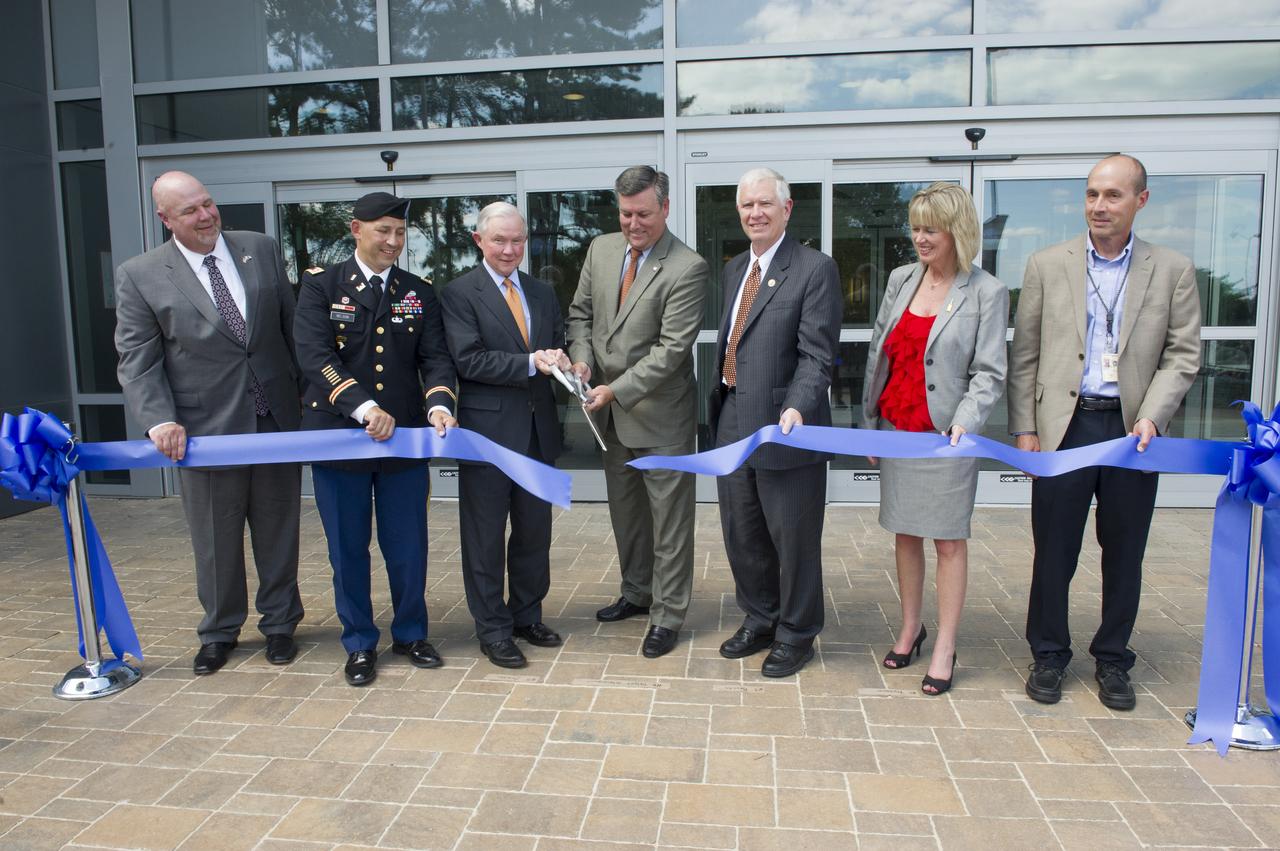
AIDING IN THE OFFICIAL BUILDING 4220 RIBBON-CUTTING ARE, FROM LEFT, JOHN HONEYCUTT, DEPUTY MANAGER OF THE SPACE LAUNCH SYSTEM PROGRAM OFFICE; LT. COL. TOM NELSON, DEPUTY COMMANDER OF THE U.S. ARMY CORPS OF ENGINEERS-MOBILE DISTRICT; U.S. SEN. JEFF SESSIONS OF ALABAMA; MARSHALL CENTER DIRECTOR PATRICK SCHEUERMANN; U.S. REP. MO BROOKS OF ALABAMA'S 5TH DISTRICT; MARSHALL DEPUTY DIRECTOR TERESA VANHOOSER; AND MARSHALL ENGINEER DAVID SKRIDULIS, TEAM LEAD FOR THE FACILITIES MANAGEMENT OFFICE'S CIVIL STRUCTURAL GROUP.
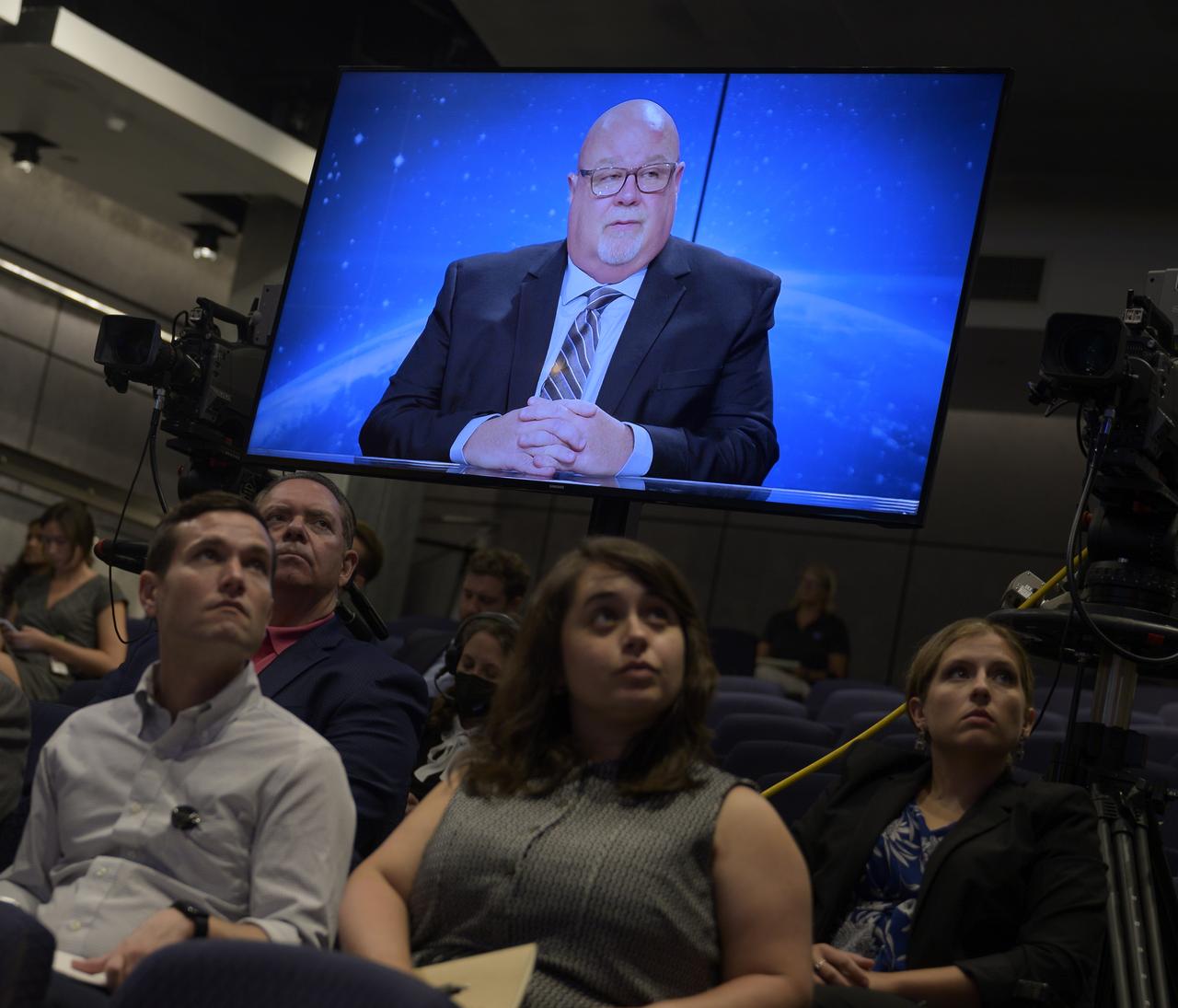
John Honeycutt, Space Launch System (SLS) program manager at NASA's Marshall Space Flight Center gives remarks remotely during a NASA briefing on the Artemis I Moon mission, Wednesday, Aug. 3, 2022, at the Mary W. Jackson NASA Headquarters building in Washington. NASA’s Artemis I mission is the first integrated test of the agency’s deep space exploration systems: the Orion spacecraft, Space Launch System rocket, and supporting ground systems. Launch of the uncrewed flight test is targeted for no earlier than Monday, Aug. 29. Photo Credit: (NASA/Bill Ingalls)

John Honeycutt, chair, Artemis II Mission Management Team, participates in a post-Flight Readiness Review news conference for the Artemis II test flight inside the John Holliman Auditorium of the NASA News Center at the agency’s Kennedy Space Center in Florida on Thursday, March 12, 2026. The review is an assessment of the readiness of NASA’s SLS (Space Launch System) rocket and Orion spacecraft to support the Artemis II test flight as four astronauts journey around the Moon and return to Earth.
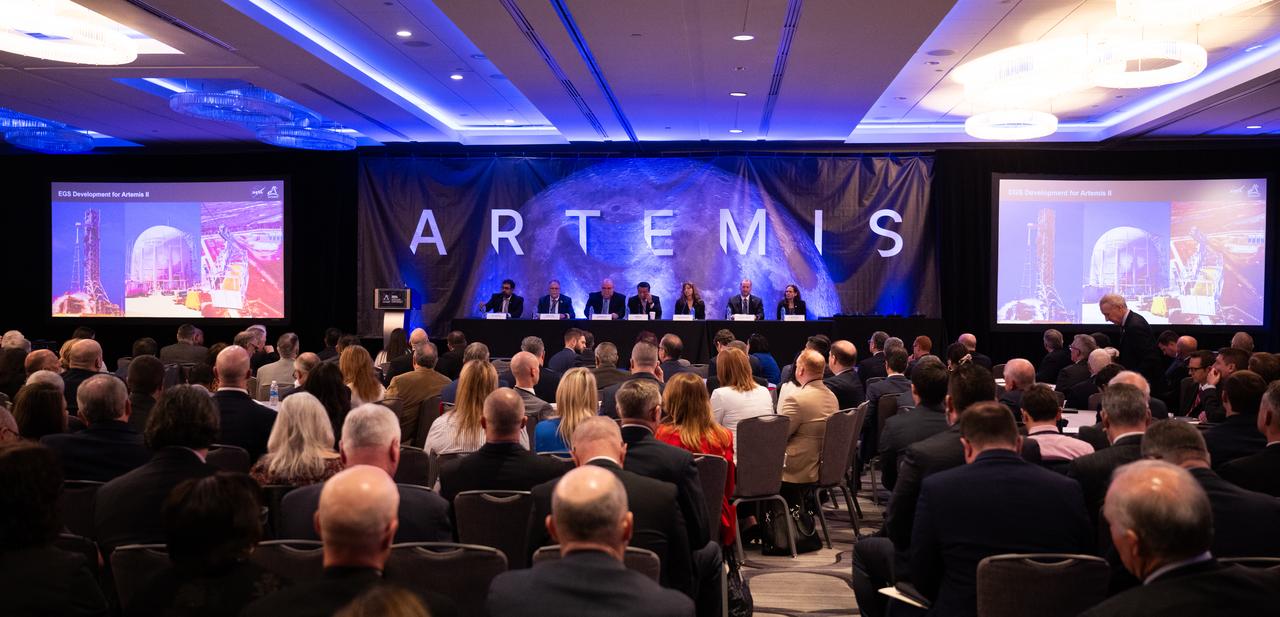
Shawn Quinn, manager of Exploration Ground Systems at NASA’s Kennedy Space Center, second from left, speaks during an Artemis Program progress update panel at the 2024 Artemis Suppliers Conference, Tuesday, Feb. 27, 2024, at the Grand Hyatt Hotel in Washington. Also participating in the panel was, from left, Amit Kshatriya, deputy associate administrator for the Moon to Mars Program in NASA’s Explorations Systems Development Mission Directorate; John Honeycutt, manager of the Space Launch System Program at NASA’s Marshall Space Flight Center; Howard Hu, manager of the Orion Program at NASA’s Johnson Space Center; Lisa Watson-Morgan, manager of the Human Landing System Program at NASA’s Marshall Space Flight Center; Jon B. Olansen, manager of the Gateway Program at NASA’s Johnson Space Center; and Lara Kearney, manager of Extravehicular Activity and Human Surface Mobility Program at NASA’s Johnson Space Center. Photo Credit: (NASA/Joel Kowsky)
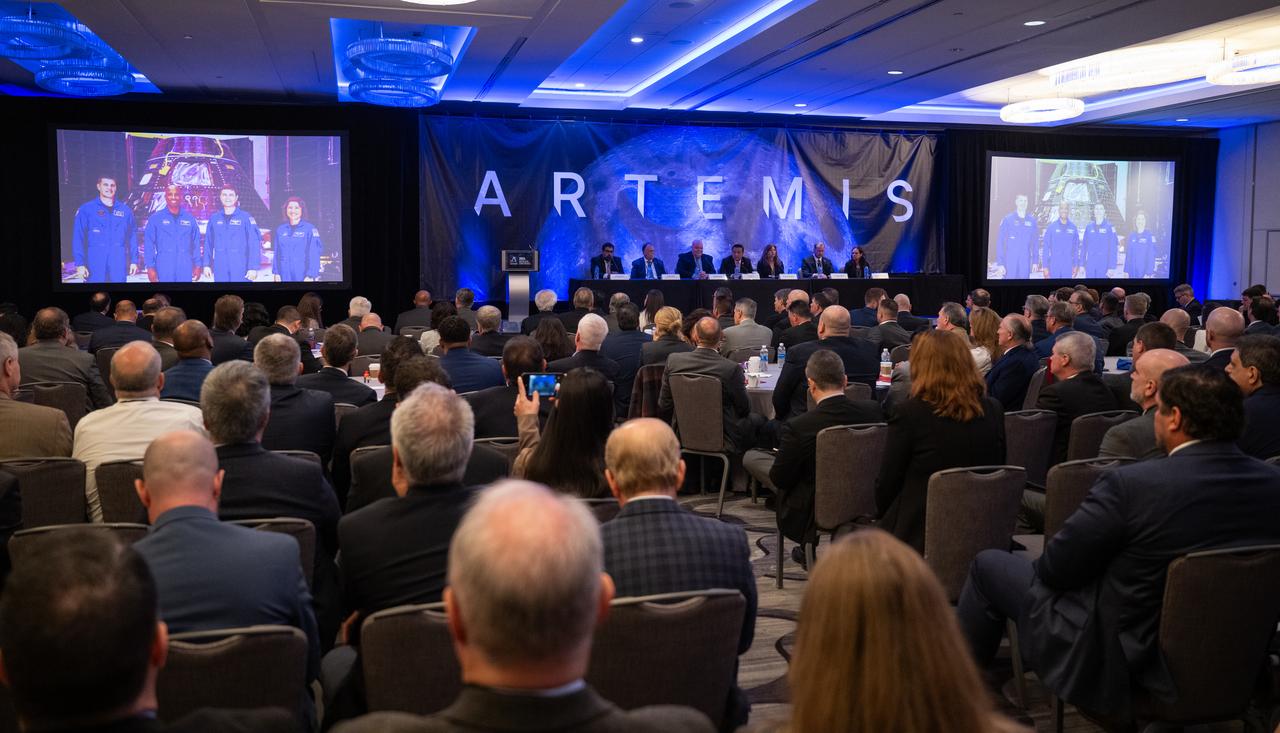
Howard Hu, manager of the Orion Program at NASA’s Johnson Space Center, center, speaks during an Artemis Program progress update panel at the 2024 Artemis Suppliers Conference, Tuesday, Feb. 27, 2024, at the Grand Hyatt Hotel in Washington. Also participating in the panel was, from left, Amit Kshatriya, deputy associate administrator for the Moon to Mars Program in NASA’s Explorations Systems Development Mission Directorate; Shawn Quinn, manager of Exploration Ground Systems at NASA’s Kennedy Space Center; John Honeycutt, manager of the Space Launch System Program at NASA’s Marshall Space Flight Center; Lisa Watson-Morgan, manager of the Human Landing System Program at NASA’s Marshall Space Flight Center; Jon B. Olansen, manager of the Gateway Program at NASA’s Johnson Space Center; and Lara Kearney, manager of Extravehicular Activity and Human Surface Mobility Program at NASA’s Johnson Space Center. Photo Credit: (NASA/Joel Kowsky)

Howard Hu, manager of the Orion Program at NASA’s Johnson Space Center, center, speaks during an Artemis Program progress update panel at the 2024 Artemis Suppliers Conference, Tuesday, Feb. 27, 2024, at the Grand Hyatt Hotel in Washington. Also participating in the panel was, from left, Amit Kshatriya, deputy associate administrator for the Moon to Mars Program in NASA’s Explorations Systems Development Mission Directorate; Shawn Quinn, manager of Exploration Ground Systems at NASA’s Kennedy Space Center; John Honeycutt, manager of the Space Launch System Program at NASA’s Marshall Space Flight Center; Lisa Watson-Morgan, manager of the Human Landing System Program at NASA’s Marshall Space Flight Center; Jon B. Olansen, manager of the Gateway Program at NASA’s Johnson Space Center; and Lara Kearney, manager of Extravehicular Activity and Human Surface Mobility Program at NASA’s Johnson Space Center. Photo Credit: (NASA/Joel Kowsky)
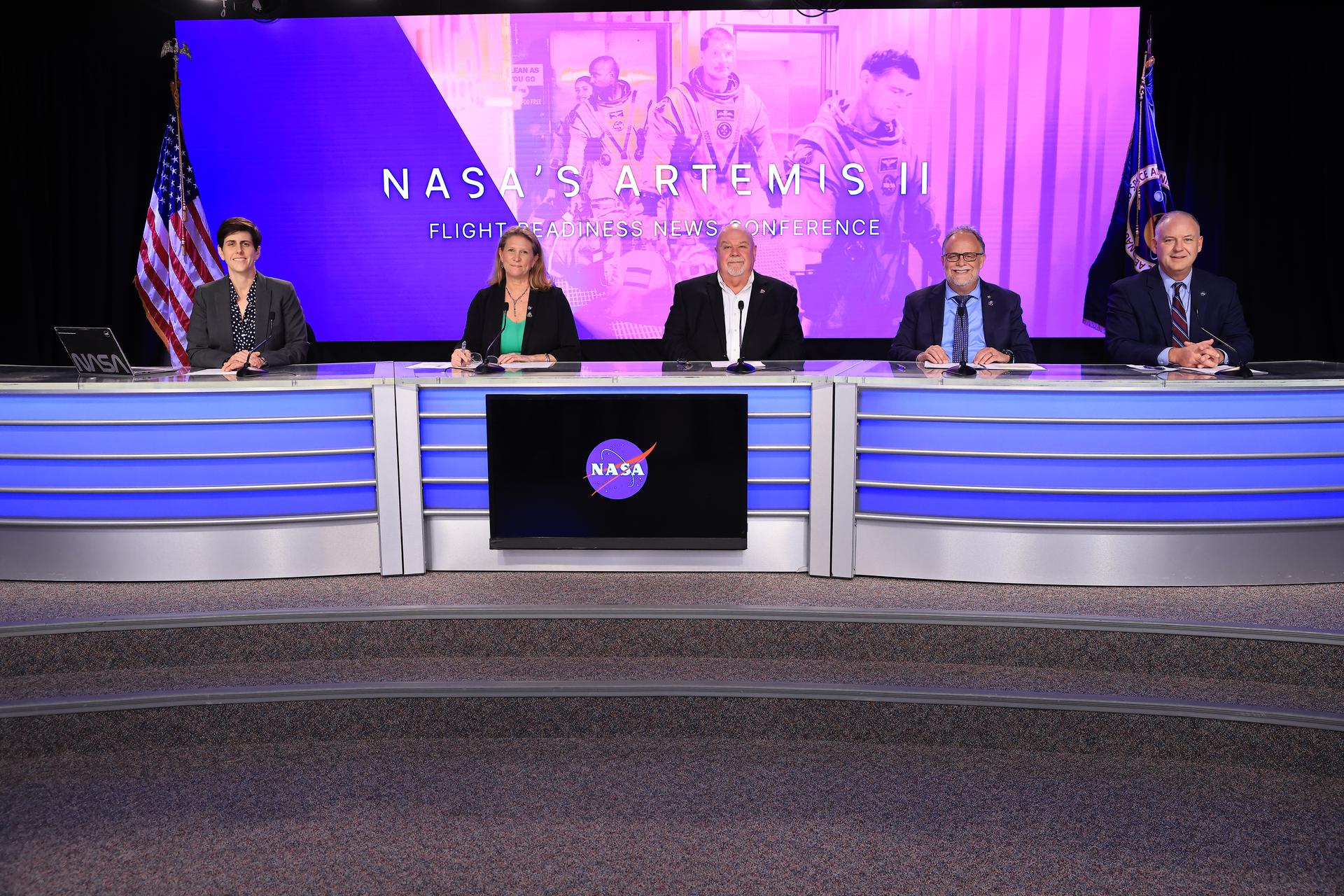
From left to right, Rachel Kraft, NASA Communications; Lori Glaze, acting associate administrator, Exploration Systems Development Mission Directorate; John Honeycutt, chair, Artemis II Mission Management Team; Shawn Quinn, manager, Exploration Ground Systems Program; and Norm Knight, director, Flight Operations Directorate, participate in a post-Flight Readiness Review news conference for the Artemis II test flight inside the John Holliman Auditorium of the NASA News Center at the agency’s Kennedy Space Center in Florida on Thursday, March 12, 2026. The review is an assessment of the readiness of NASA’s SLS (Space Launch System) rocket and Orion spacecraft to support the Artemis II test flight as four astronauts journey around the Moon and return to Earth.
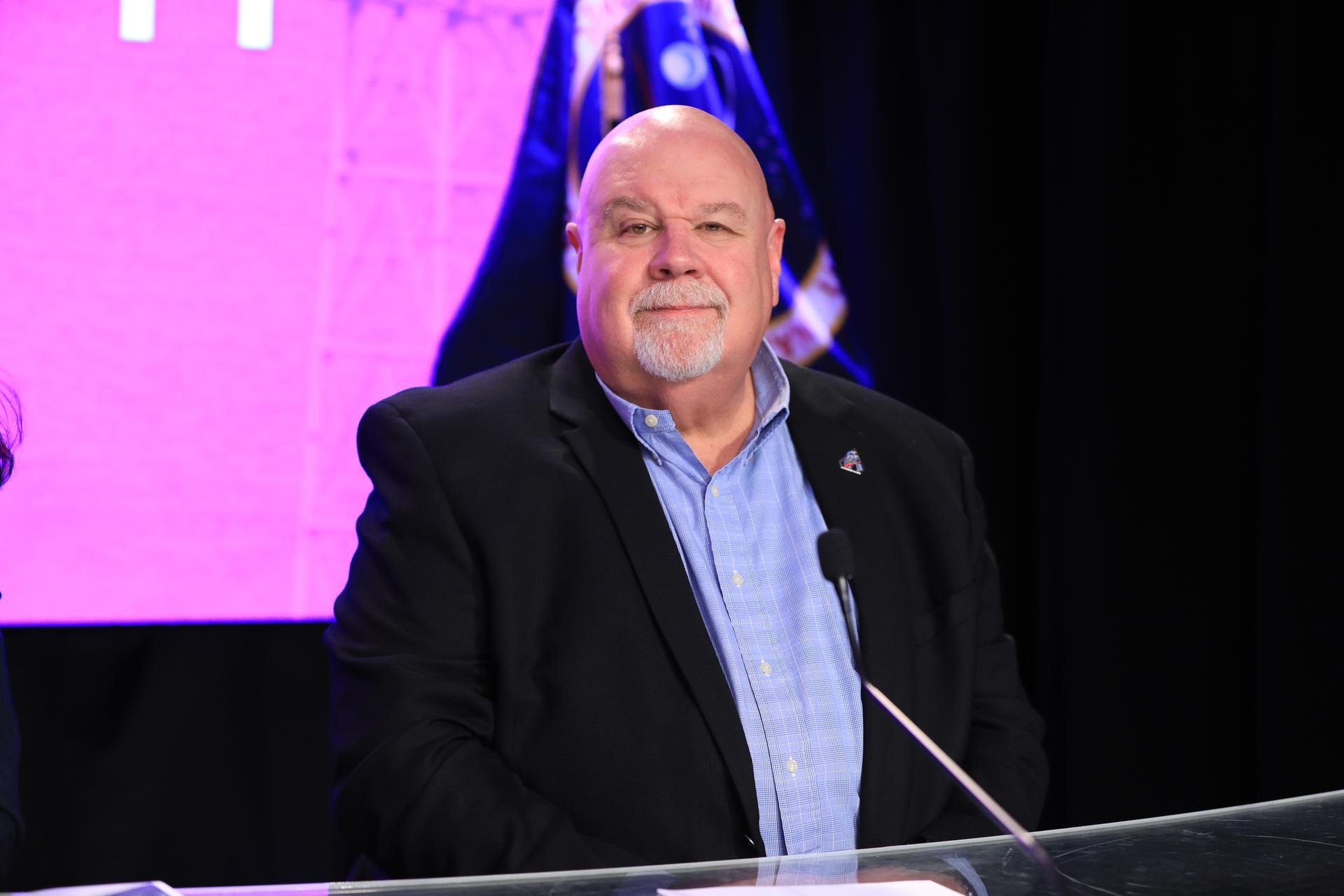
John Honeycutt, chair, Artemis II mission management team, participates in a news conference on Tuesday, Feb. 3, 2026, to discuss the completion of Artemis II wet dress rehearsal at NASA’s Kennedy Space Center in Florida. The wet dress rehearsal allows the Artemis II launch team to run through operations to load propellant, conduct a full launch countdown, demonstrate the ability to recycle the countdown clock, and drain the tanks to practice timelines and procedures for launch.
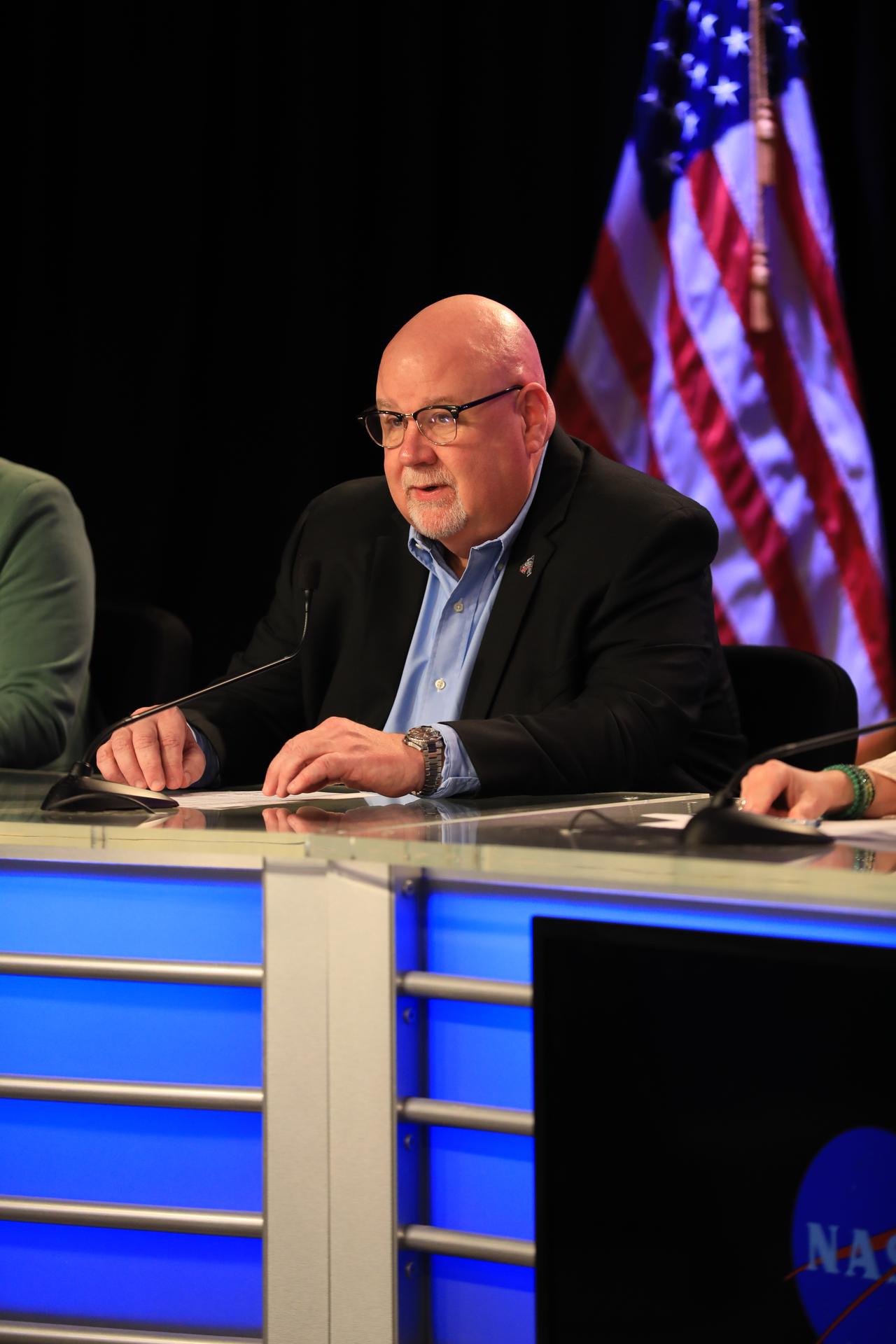
John Honeycutt, Artemis II mission management team chair, participates in an Artemis II mission overview news conference on Friday, Jan. 16, 2026, at NASA’s Kennedy Space Center in Florida ahead of rollout of the SLS (Space Launch System) rocket and Orion spacecraft from the Vehicle Assembly Building to Launch Complex 39B at NASA Kennedy. The Artemis II test flight will take Commander Reid Wiseman, Pilot Victor Glover, and Mission Specialist Christina Koch from NASA, and Mission Specialist Jeremy Hansen from the CSA (Canadian Space Agency), around the Moon and back to Earth no later than April 2026.
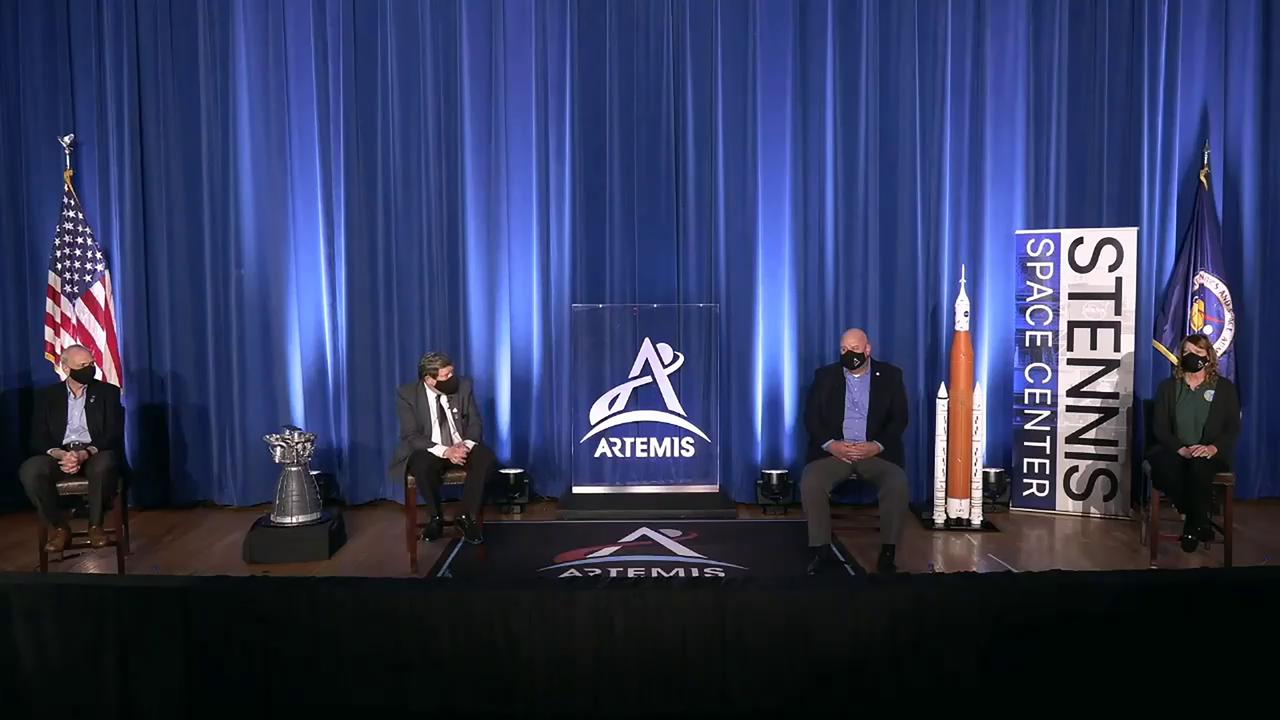
NASA leaders participated in a participate in a virtual press briefing following the Space Launch System core stage hot fire test at Stennis Space Center near Bay St. Louis, Mississippi, on March 18. The leaders fielded questions submitted by offsite media during the post-test session. Agency participants present at Stennis included (l to r): NASA acting Administrator Steve Jurczyk; Tom Whitmeyer, NASA deputy associate administrator for Exploration Systems Development; John Honeycutt, SLS Program manager at Marshall Space Flight Center; and Julie Bassler, SLS Stages Office manager at Marshall Space Flight Center.
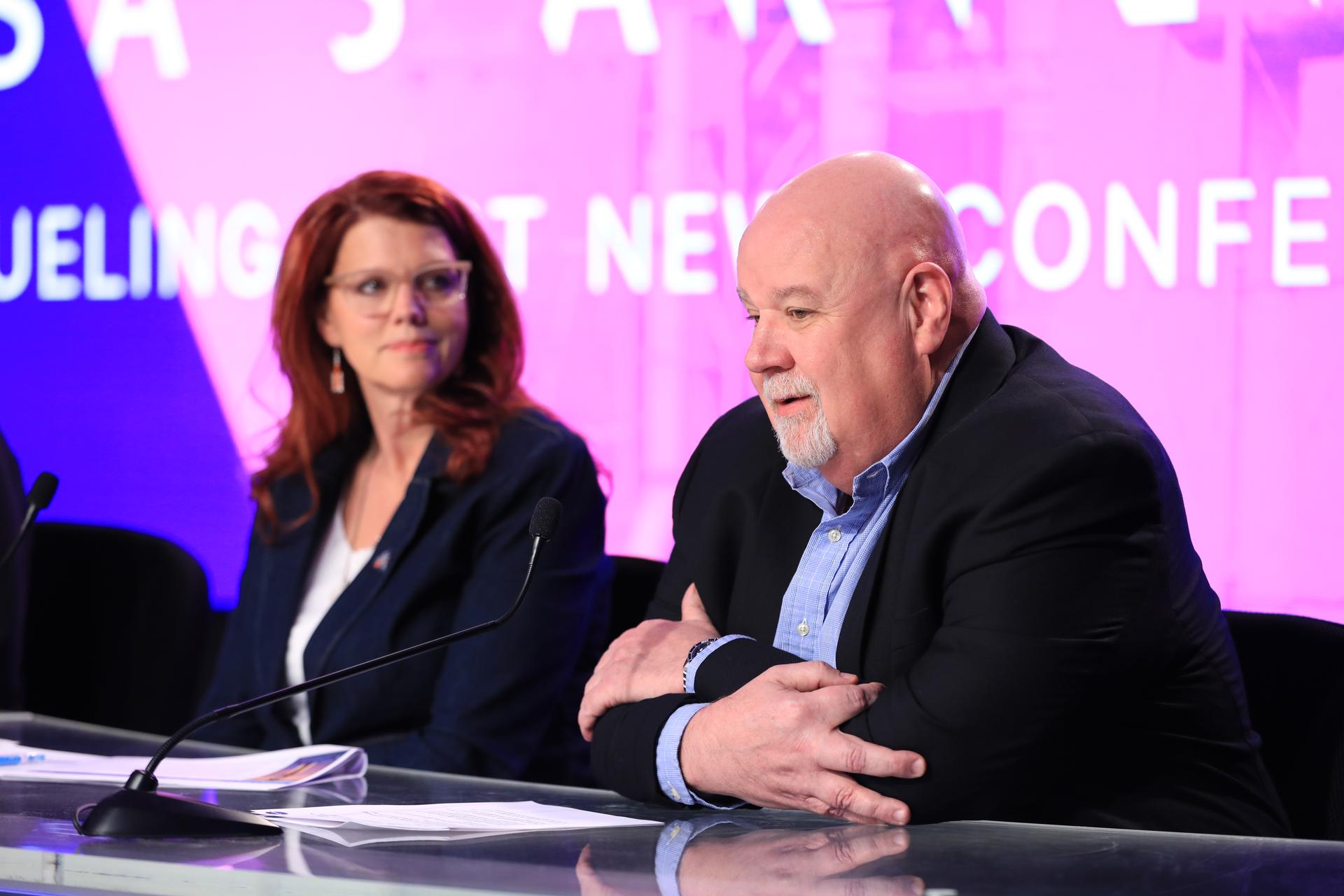
From left, Charlie Blackwell-Thompson, launch director, Exploration Ground Systems Program, and John Honeycutt, chair, Artemis II mission management team, participate in a news conference on Tuesday, Feb. 3, 2026, to discuss the completion of Artemis II wet dress rehearsal at NASA’s Kennedy Space Center in Florida. The wet dress rehearsal allows the Artemis II launch team to run through operations to load propellant, conduct a full launch countdown, demonstrate the ability to recycle the countdown clock, and drain the tanks to practice timelines and procedures for launch.

From left, NASA Associate Administrator Amit Kshatriya; Lori Glaze, acting associate administrator, Exploration Systems Development Mission Directorate; and John Honeycutt, chair, Artemis II mission management team, participate in the Artemis II Flight Readiness Review with NASA leadership on Wednesday, March 11, 2026, at NASA’s Kennedy Space Center in Florida. The review is an assessment of the readiness of NASA’s SLS (Space Launch System) rocket and Orion spacecraft to support the Artemis II test flight as four astronauts journey around the Moon and return to Earth.
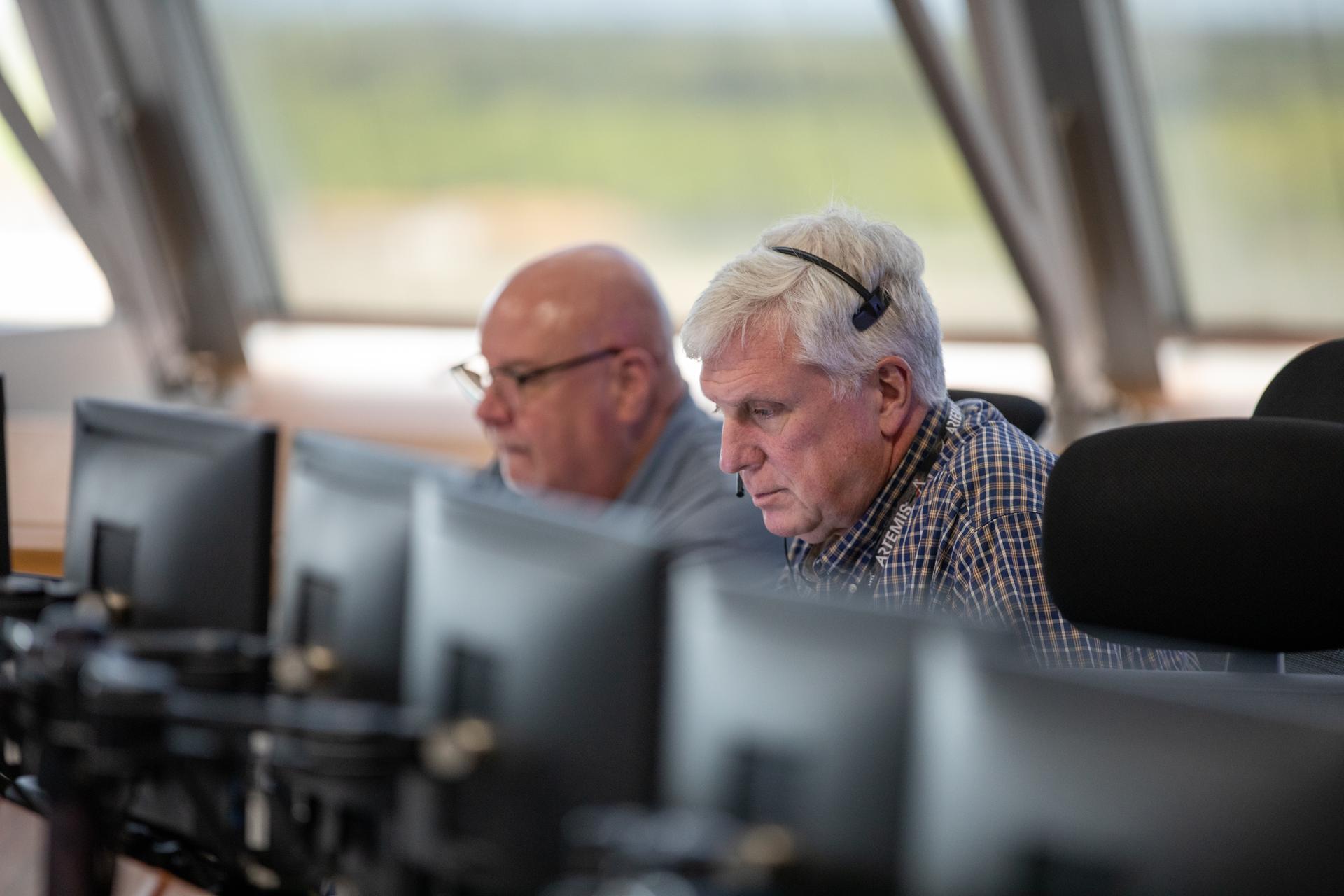
From left, John Honeycutt, Artemis II mission management team chair and Matthew Ramsey, Artemis II mission manager with NASA’s Exploration Systems Development Mission Directorate, participate in an Artemis II launch countdown simulation inside Firing Room 1 in the Launch Control Center at NASA’s Kennedy Space Center in Florida on Wednesday, Nov. 5, 2025. The simulations go through launch day scenarios to help launch team members test software and make adjustments if needed during countdown operations. For Artemis II, four astronauts will venture around the Moon, the first crewed mission on NASA’s path to establishing a long-term presence for science and exploration through Artemis.
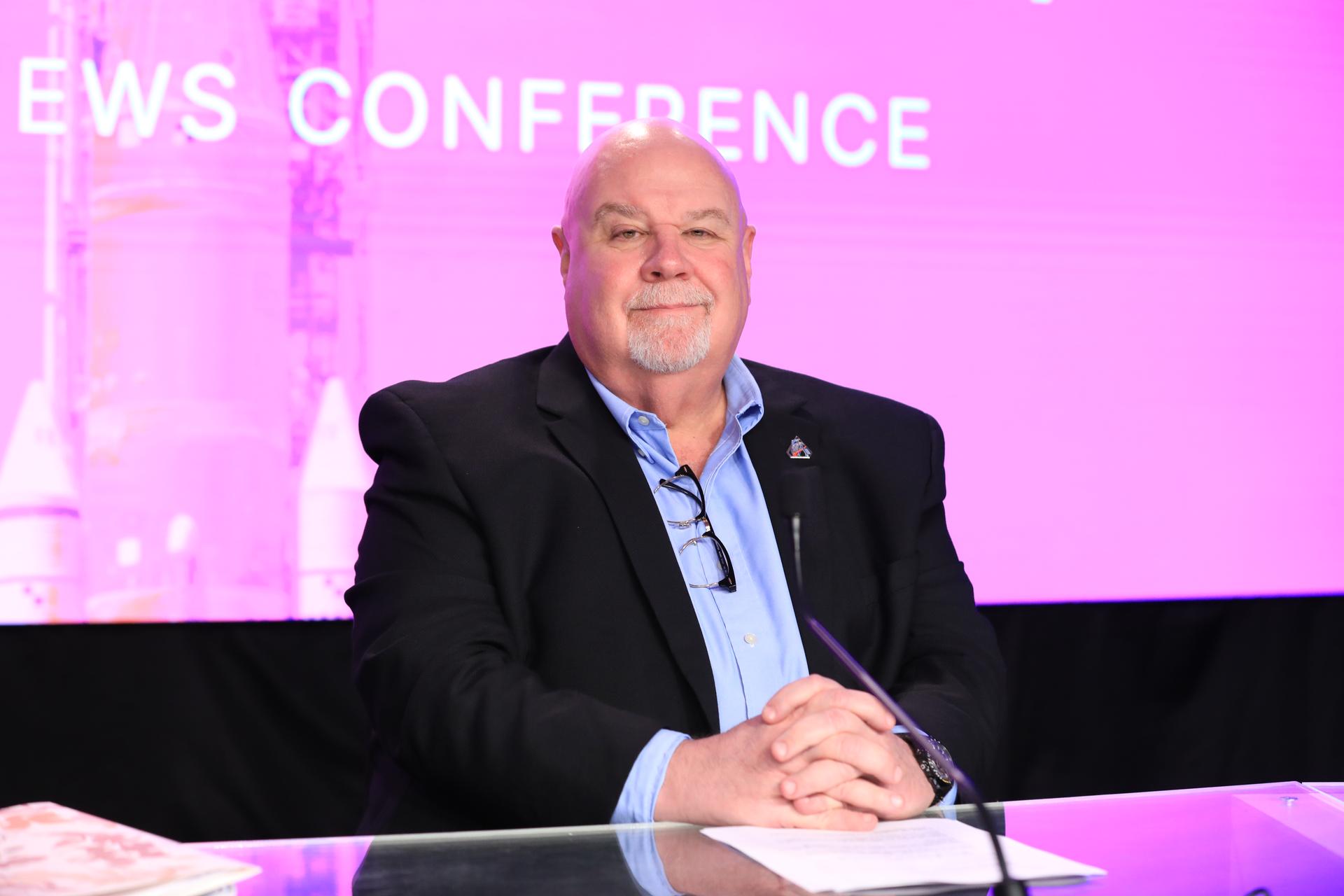
John Honeycutt, chair, Artemis II mission management team, participates in a news conference on Monday, March 30, 2026, to discuss the upcoming Artemis II test flight at NASA’s Kennedy Space Center in Florida. The Artemis II mission will take Artemis II Commander Reid Wiseman, Pilot Victor Glover, and Mission Specialist Christina Koch from NASA, and Mission Specialist Jeremy Hansen from the CSA (Canadian Space Agency) on a 10-day journey around the Moon and back aboard NASA’s SLS (Space Launch System) rocket and Orion spacecraft from Launch Complex 39B no earlier than 6:24 p.m. EDT on Wednesday, April 1.

From left, John Honeycutt, chair, Artemis II mission management team and Lori Glaze, acting associate administrator, Exploration Systems Development Mission Directorate, with Artemis II astronauts Christina Koch, Victor Glover, Reid Wiseman, and CSA (Canadian Space Agency) Jeremy Hansen joining virtually, participate in the Artemis II Flight Readiness Review with NASA leadership on Wednesday, March 11, 2026, at NASA’s Kennedy Space Center in Florida. The review is an assessment of the readiness of NASA’s SLS (Space Launch System) rocket and Orion spacecraft to support the Artemis II test flight as four astronauts journey around the Moon and return to Earth.
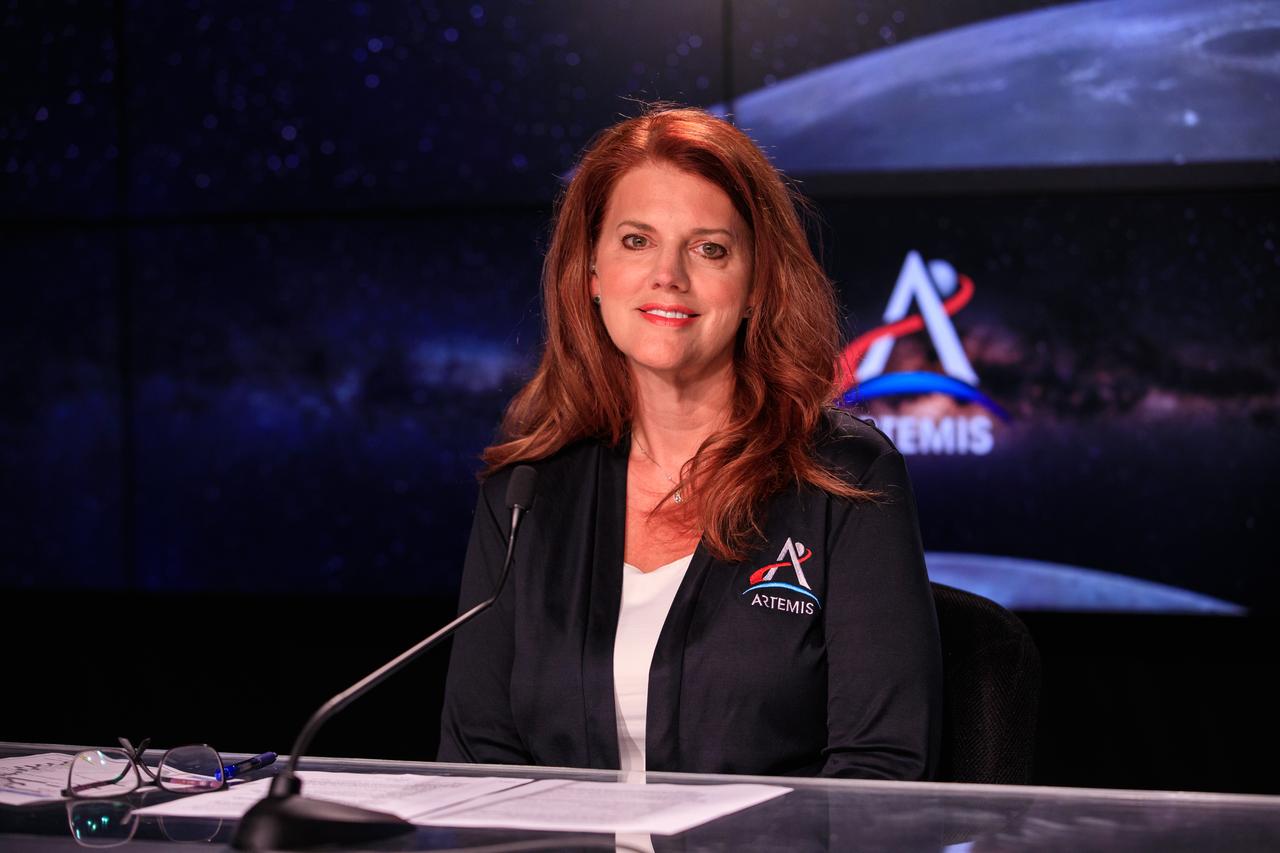
Launch Director Charlie Blackwell-Thompson participates in an Artemis I mission overview briefing inside the Press Site auditorium at NASA’s Kennedy Space Center in Florida on Aug. 3, 2022. Also participating in the briefing from various locations were NASA Administrator Bill Nelson; Associate Administrator for Technology, Policy, and Strategy Bhavya Lal; Mission Manager Mike Sarafin; Space Launch System (SLS) Program Manager John Honeycutt; and Orion Program Manager Howard Hu. The first in an increasingly complex series of missions, Artemis I will test the SLS rocket and Orion spacecraft as an integrated system prior to crewed flights to the Moon. Through Artemis, NASA will land the first woman and first person of color on the lunar surface, paving the way for long-term lunar presence and serving as a steppingstone before venturing to Mars.
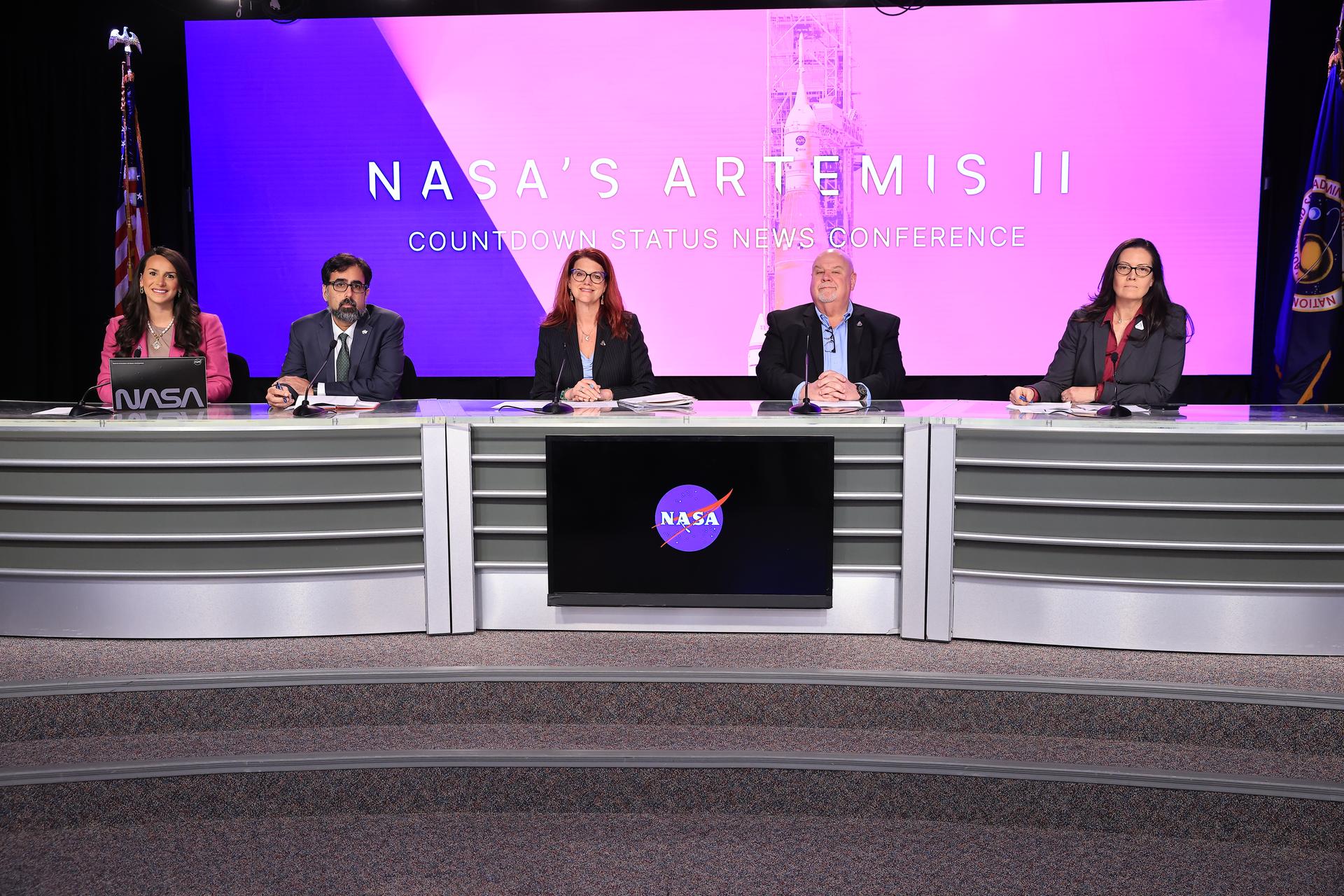
From left to right, Courtney Beasley, NASA communications; NASA Associate Administrator Amit Kshatriya; Charlie Blackwell-Thompson, Artemis II launch director; John Honeycutt, chair, Artemis II mission management team; and Emily Nelson, NASA’s chief flight director, participates in a news conference on Monday, March 30, 2026, to discuss the upcoming Artemis II test flight at the agency’s Kennedy Space Center in Florida. The Artemis II mission will take Artemis II Commander Reid Wiseman, Pilot Victor Glover, and Mission Specialist Christina Koch from NASA, and Mission Specialist Jeremy Hansen from the CSA (Canadian Space Agency) on a 10-day journey around the Moon and back aboard NASA’s SLS (Space Launch System) rocket and Orion spacecraft from Launch Complex 39B no earlier than 6:24 p.m. EDT on Wednesday, April 1.
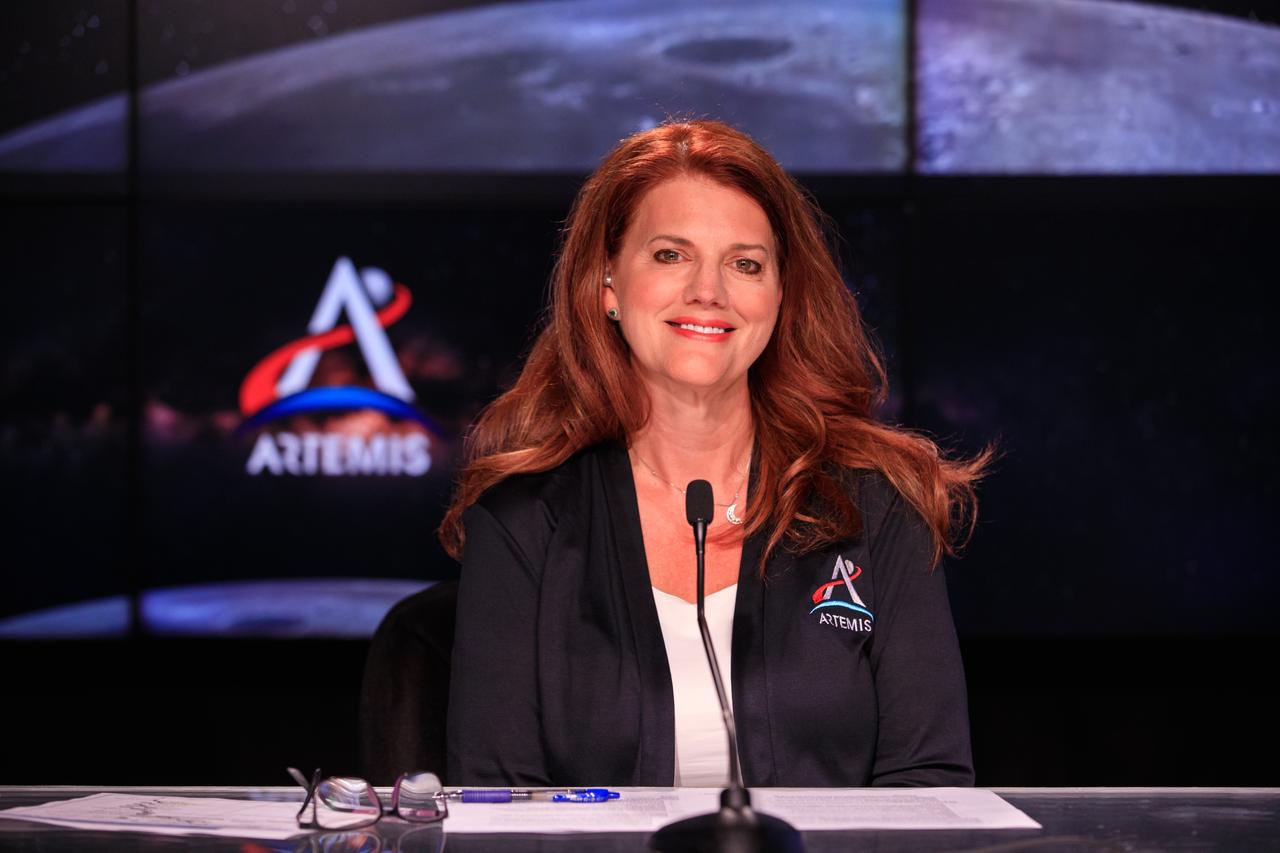
Launch Director Charlie Blackwell-Thompson participates in an Artemis I mission overview briefing inside the Press Site auditorium at NASA’s Kennedy Space Center in Florida on Aug. 3, 2022. Also participating in the briefing from various locations were NASA Administrator Bill Nelson; Associate Administrator for Technology, Policy, and Strategy Bhavya Lal; Mission Manager Mike Sarafin; Space Launch System (SLS) Program Manager John Honeycutt; and Orion Program Manager Howard Hu. The first in an increasingly complex series of missions, Artemis I will test the SLS rocket and Orion spacecraft as an integrated system prior to crewed flights to the Moon. Through Artemis, NASA will land the first woman and first person of color on the lunar surface, paving the way for long-term lunar presence and serving as a steppingstone before venturing to Mars.
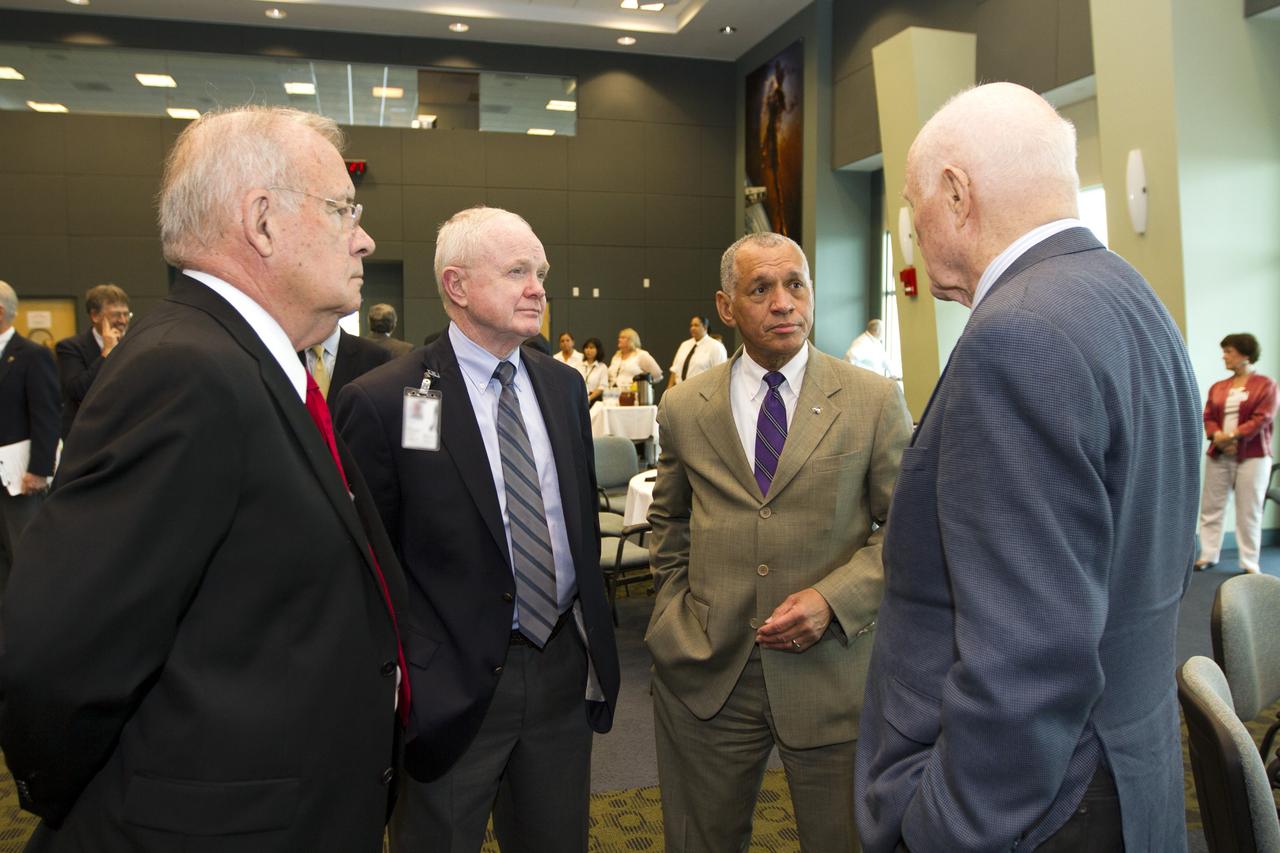
CAPE CANAVERAL, Fla. - Former Kennedy Space Center directors Jay Honeycutt, left, Roy Bridges and NASA Administrator Charles Bolden talk with astronaut John Glenn before a luncheon Feb. 17, 2012 celebrating 50 years of Americans in orbit, an era which began with Glenn's Mercury mission MA-6, on Feb. 20, 1962. Glenn's launch aboard an Atlas rocket took with it the hopes of an entire nation and ushered in a new era of space travel that eventually led to Americans walking on the moon by the end of the 1960s. Glenn soon was followed into orbit by Scott Carpenter, Walter Schirra and Gordon Cooper. Their fellow Mercury astronauts Alan Shepard and Virgil "Gus" Grissom flew earlier suborbital flights. Deke Slayton, a member of NASA's original Mercury 7 astronauts, was grounded by a medical condition until the Apollo-Soyuz Test Project in 1975. Photo credit: NASA/Kim Shiflett
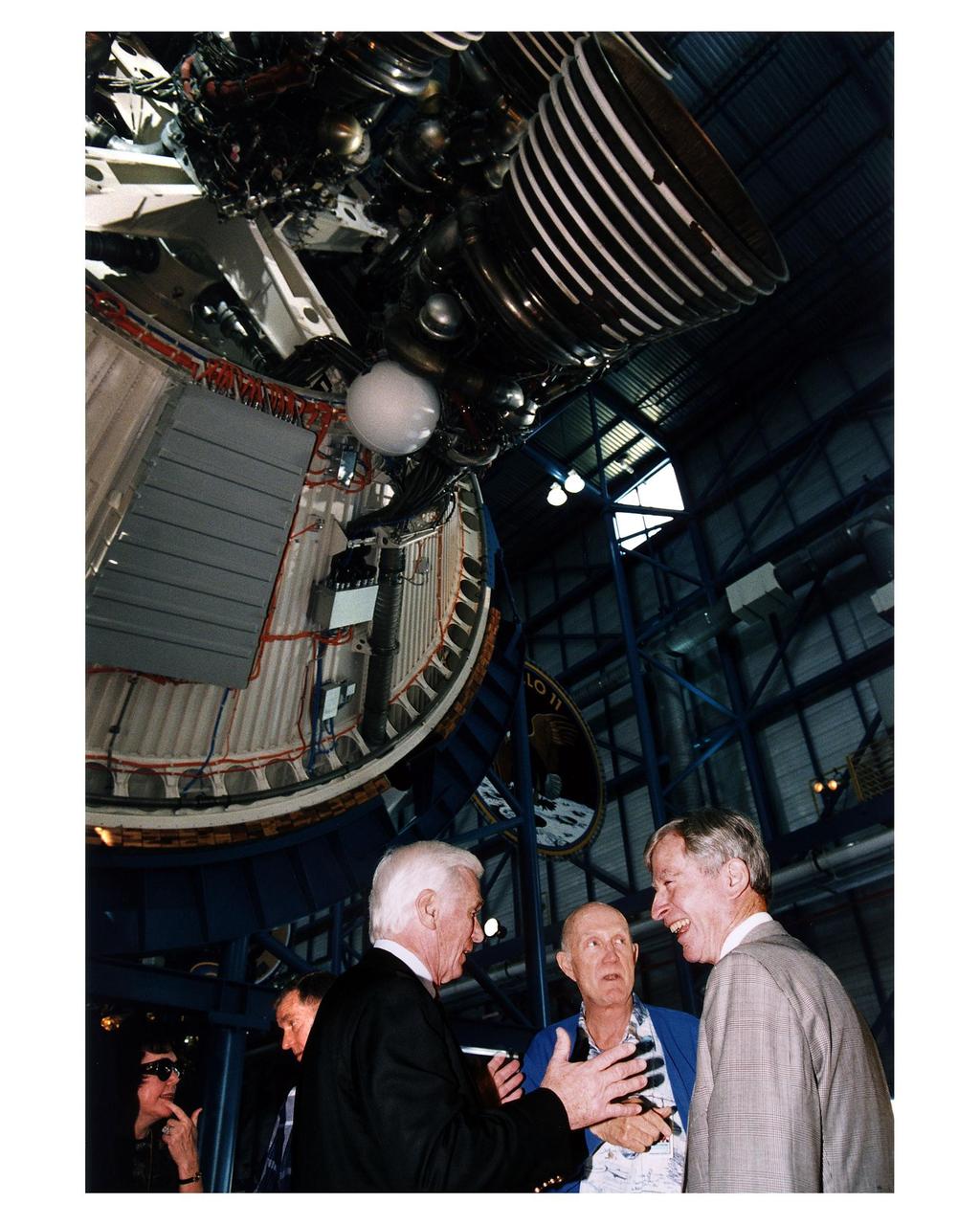
KENNEDY SPACE CENTER, FLA. -- Some of the former Apollo program astronauts tour the new Apollo/Saturn V Center (ASVC) at KSC prior to the gala grand opening ceremony for the facility that was held Jan. 8, 1997. The astronauts were invited to participate in the event, which also featured NASA Administrator Dan Goldin and KSC Director Jay Honeycutt. Discussing old times beneath the KSC Apollo/Saturn V rocket inside the building are (from left) Apollo 10 Lunar Module Pilot and Apollo 17 Commander Eugene A. Cernan; Apollo 10 Commander Thomas P. Stafford and Apollo 16 Commander John W. Young. The ASVC also features several other Apollo program spacecraft components, multimedia presentations and a simulated Apollo/ Saturn V liftoff. The facility will be a part of the KSC bus tour that embarks from the KSC Visitor Center
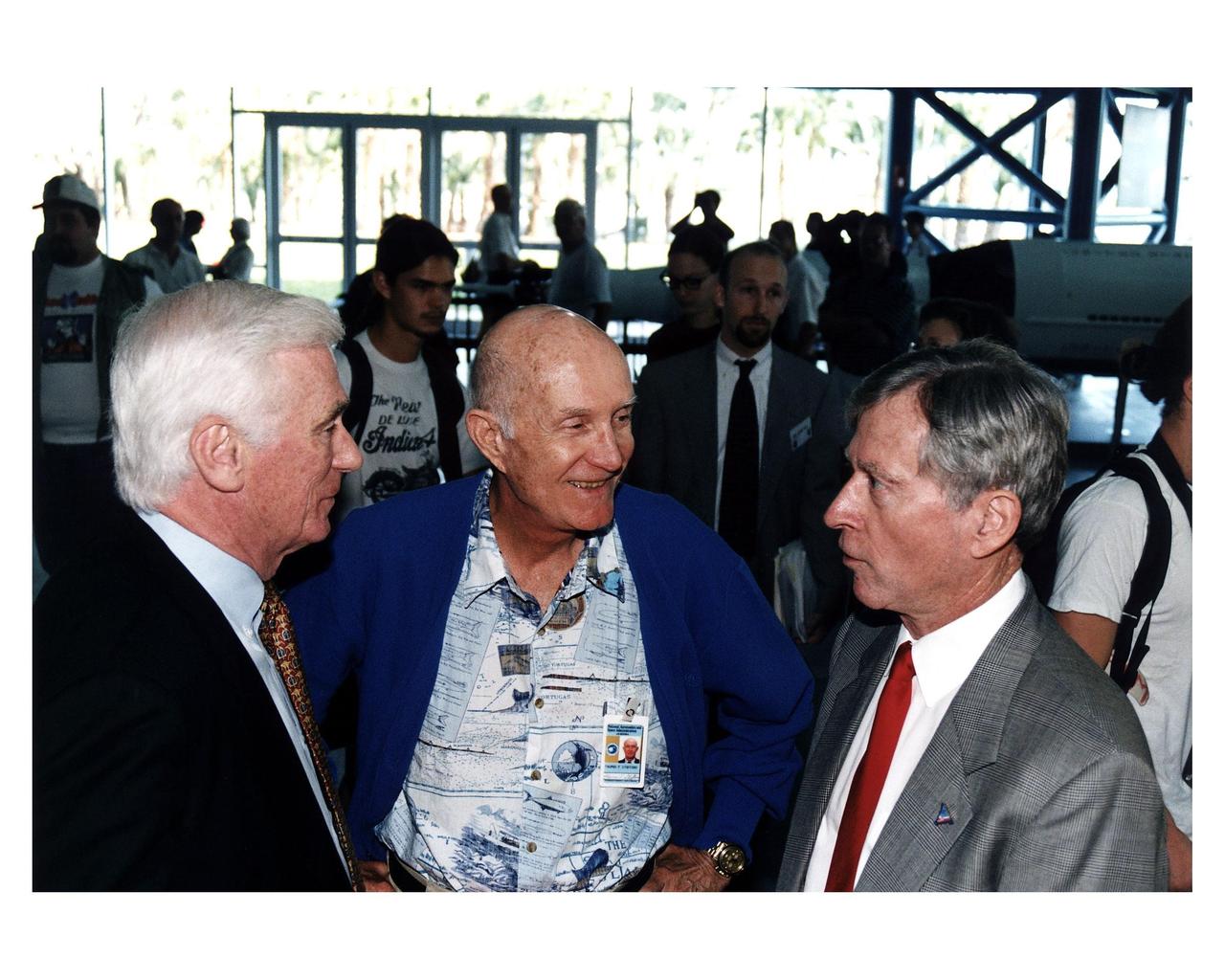
KENNEDY SPACE CENTER, FLA. -- Some of the former Apollo program astronauts tour the new Apollo/Saturn V Center (ASVC) at KSC prior to the gala grand opening ceremony for the facility that was held Jan. 8, 1997. The astronauts were invited to participate in the event, which also featured NASA Administrator Dan Goldin and KSC Director Jay Honeycutt. Discussing old times are (from left) Apollo 10 Lunar Module Pilot and Apollo 17 Commander Eugene A. Cernan; Apollo 10 Commander Thomas P. Stafford and Apollo 16 Commander John W. Young. The ASVC also features several other Apollo program spacecraft components, multimedia presentations and a simulated Apollo/ Saturn V liftoff. The facility will be a part of the KSC bus tour that embarks from the KSC Visitor Center
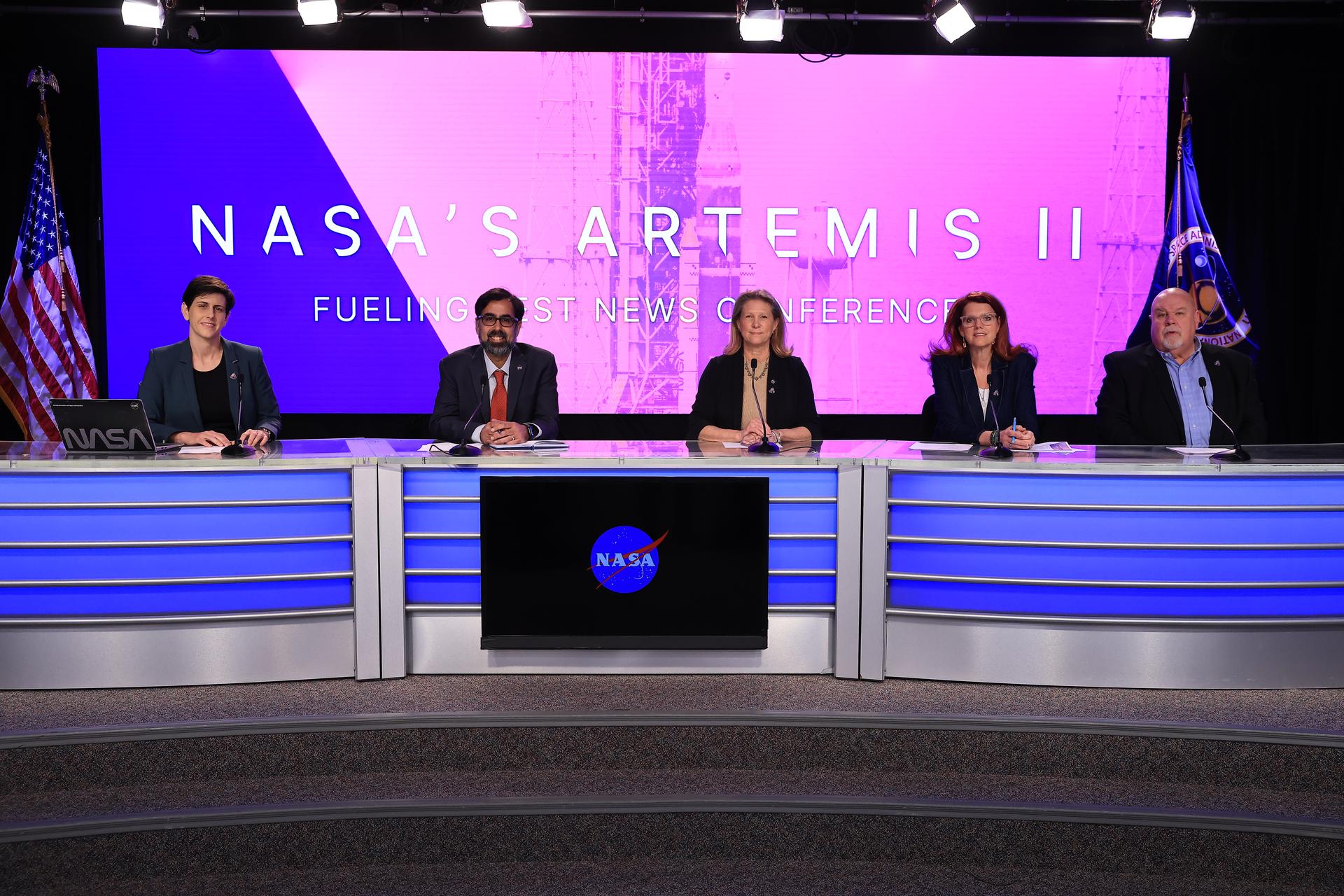
From left to right, Rachel Kraft, NASA Communications; NASA Associate Administrator Amit Kshatriya; Lori Glaze, acting associate administrator for Exploration Systems Development Mission Directorate; Charlie Blackwell-Thompson, launch director, Exploration Ground Systems Program; and John Honeycutt, chair, Artemis II mission management team, participate in a news conference on Tuesday, Feb. 3, 2026, to discuss the completion of Artemis II wet dress rehearsal at NASA’s Kennedy Space Center in Florida. The wet dress rehearsal allows the Artemis II launch team to run through operations to load propellant, conduct a full launch countdown, demonstrate the ability to recycle the countdown clock, and drain the tanks to practice timelines and procedures for launch.
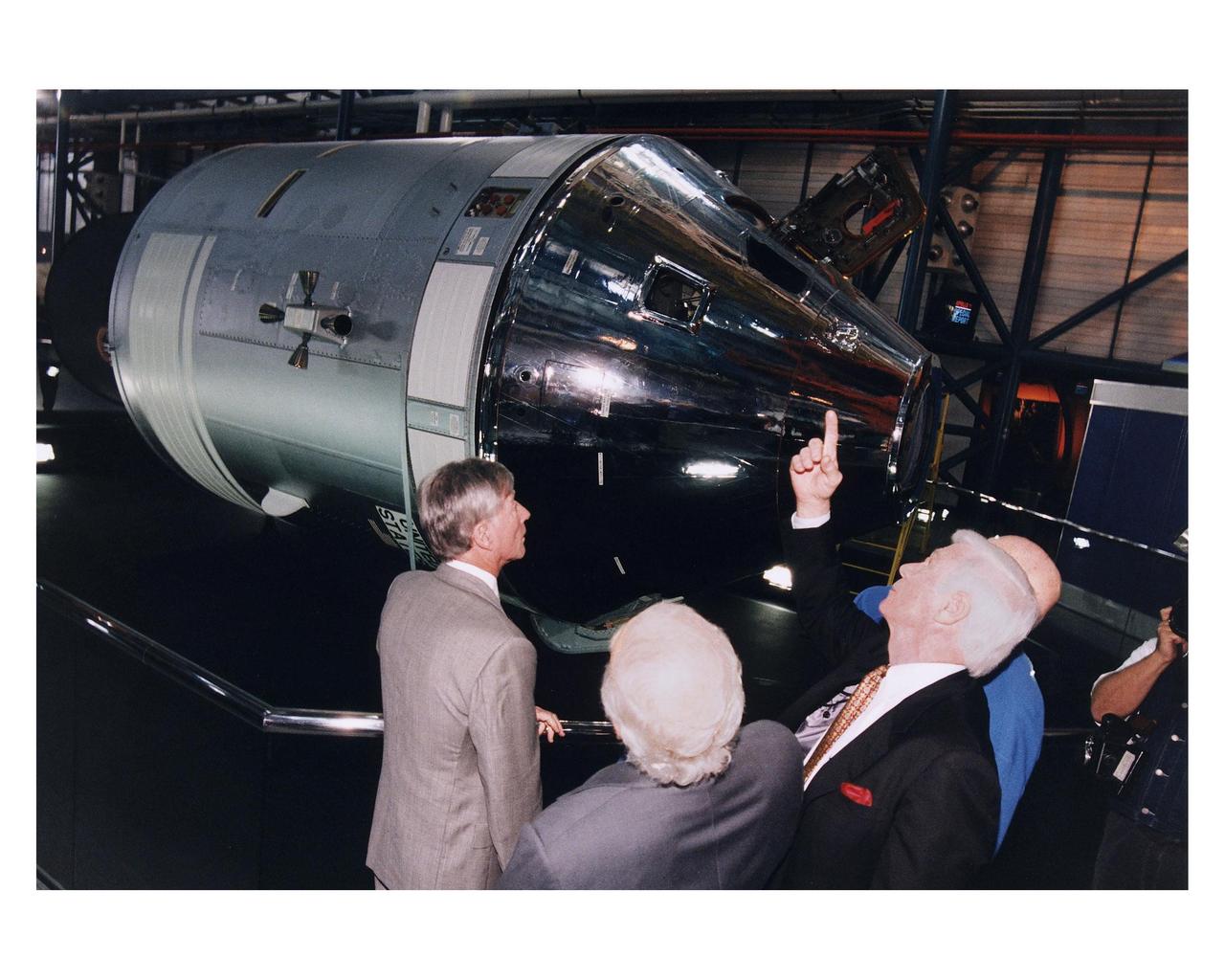
KENNEDY SPACE CENTER, FLA. -- Some of the former Apollo program astronauts admire an Apollo Command and Service Module during a tour the new Apollo/Saturn V Center (ASVC) at KSC prior to the gala grand opening ceremony for the facility that was held Jan. 8, 1997. The astronauts were invited to participate in the event, which also featured NASA Administrator Dan Goldin and KSC Director Jay Honeycutt. The astronauts are (from left): Apollo 10 Command Module Pilot and Apollo 16 Commander John W. Young;. Apollo 11 Lunar Module Pilot Edwin E. "Buzz" Aldrin, Jr.; Apollo 17 Commander Eugene A. Cernan; and Apollo 10 Commander Thomas P. Stafford. The ASVC also features several other Apollo program spacecraft components, multimedia presentations and a simulated Apollo/Saturn V liftoff. The facility will be a part of the KSC bus tour that embarks from the KSC Visitor Center
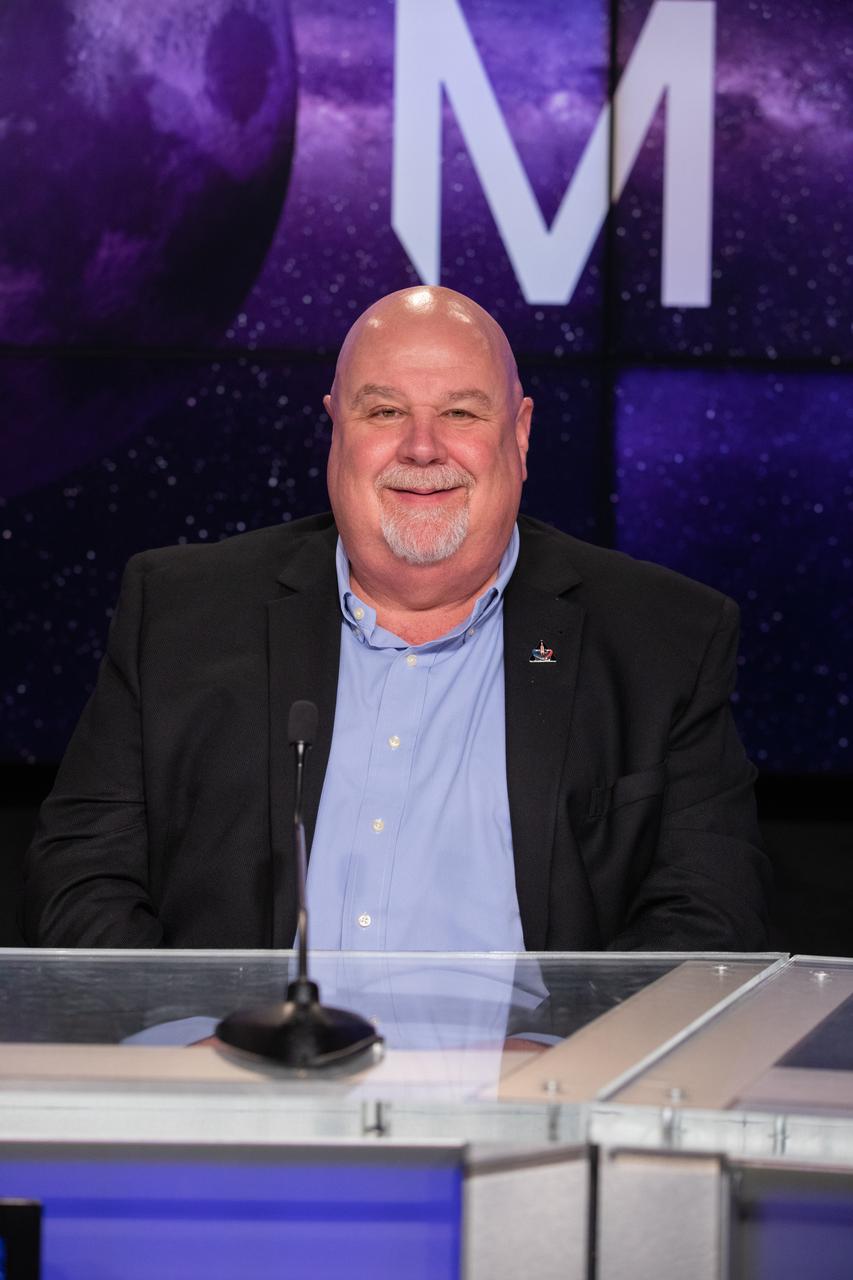
John Honeycutt, Space Launch System Program manager, Marshall Space Flight Center, participates in a postlaunch news conference on Nov. 16, 2022, at NASA’s Kennedy Space Center in Florida, after launch of Artemis I at 1:47 a.m. EST from Kennedy’s Launch Complex 39B. The first in a series of increasingly complex missions, Artemis I will provide a foundation for human deep space exploration and demonstrate our commitment and capability to extend human presence to the Moon and beyond. The primary goal of Artemis I is to thoroughly test the integrated systems before crewed missions by operating the spacecraft in a deep space environment, testing Orion’s heat shield, and recovering the crew module after reentry, descent, and splashdown
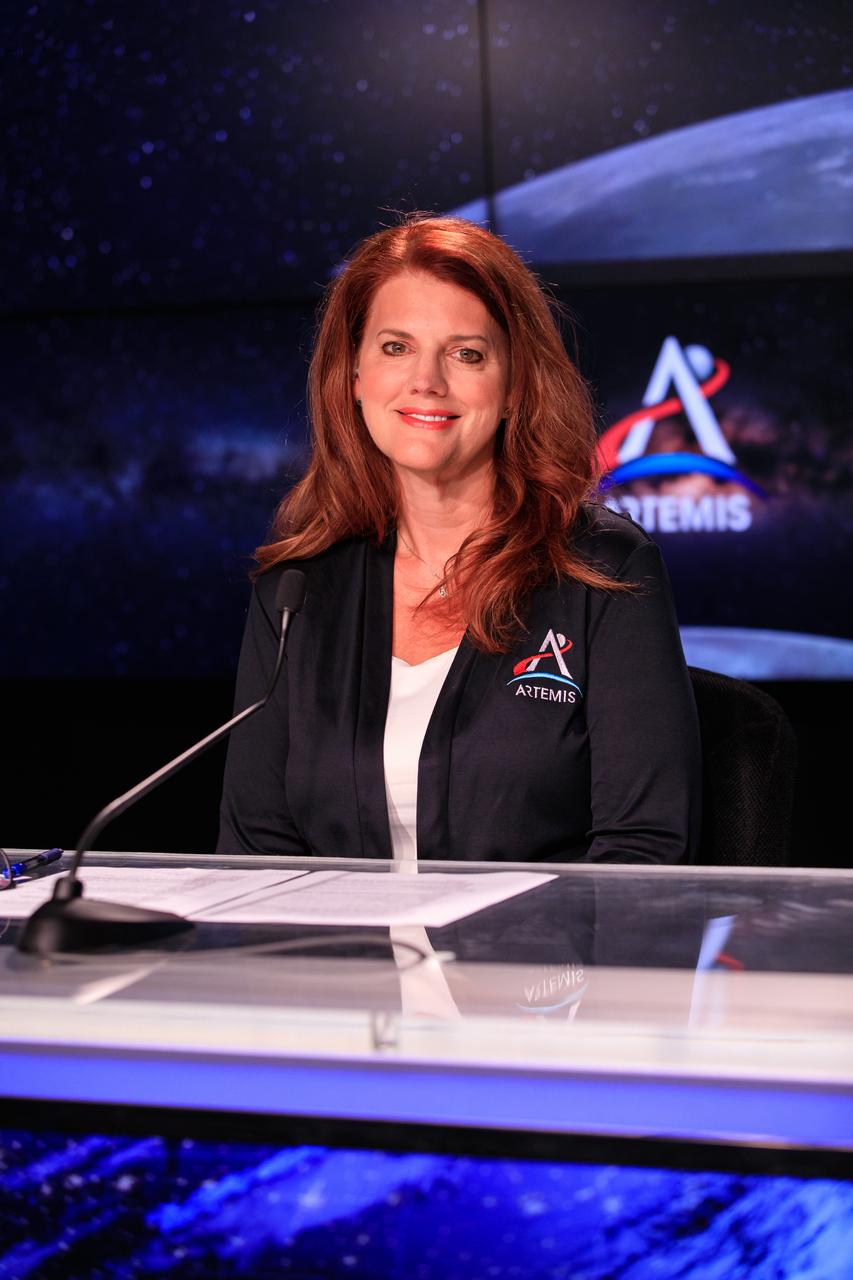
Launch Director Charlie Blackwell-Thompson participates in an Artemis I mission overview briefing inside the Press Site auditorium at NASA’s Kennedy Space Center in Florida on Aug. 3, 2022. Also participating in the briefing from various locations were NASA Administrator Bill Nelson; Associate Administrator for Technology, Policy, and Strategy Bhavya Lal; Mission Manager Mike Sarafin; Space Launch System (SLS) Program Manager John Honeycutt; and Orion Program Manager Howard Hu. The first in an increasingly complex series of missions, Artemis I will test the SLS rocket and Orion spacecraft as an integrated system prior to crewed flights to the Moon. Through Artemis, NASA will land the first woman and first person of color on the lunar surface, paving the way for long-term lunar presence and serving as a steppingstone before venturing to Mars.
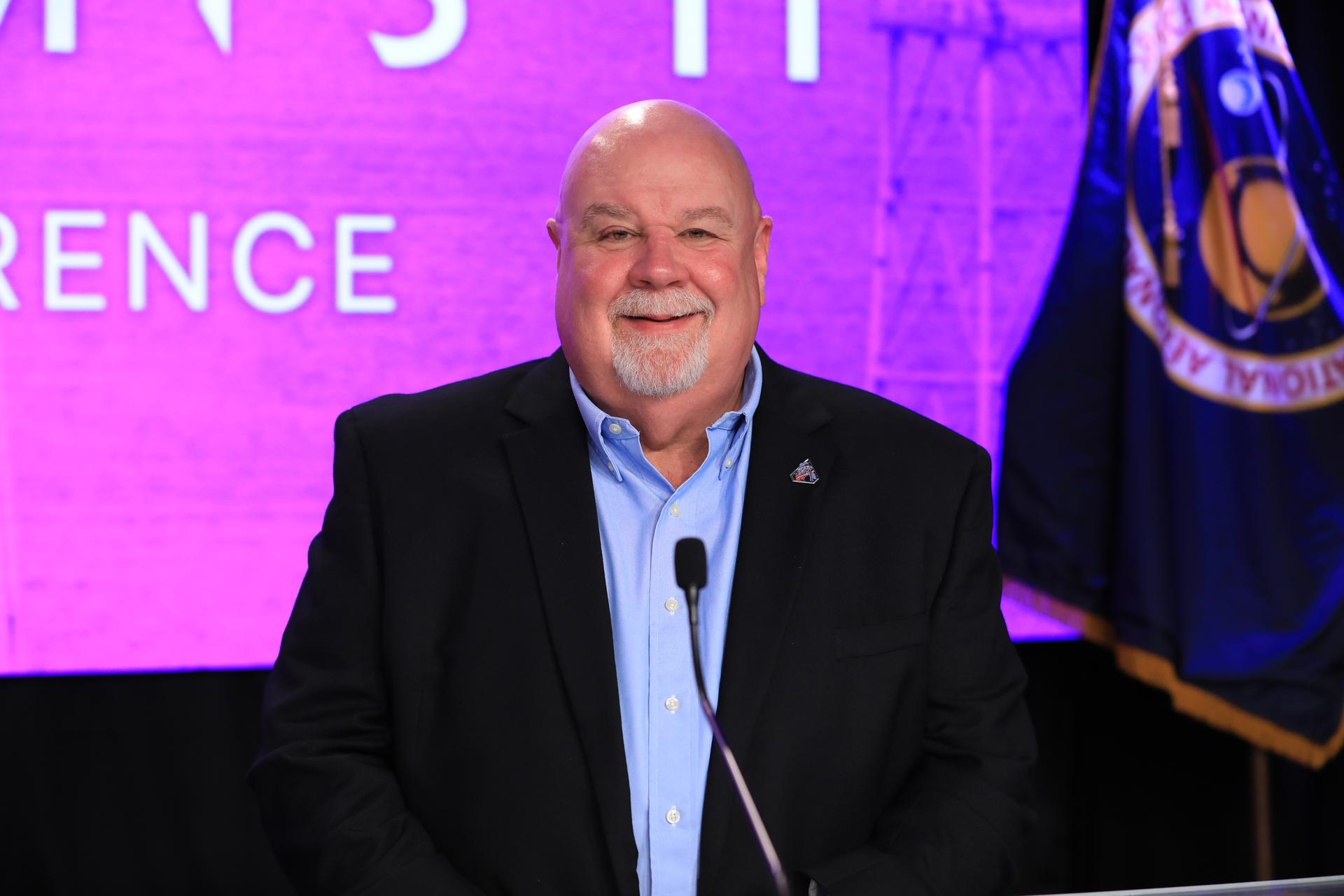
John Honeycutt, chair, Artemis II mission management team, participates in a news conference on Friday, Feb. 20, 2026, to discuss the completion of the Artemis II second wet dress rehearsal at NASA’s Kennedy Space Center in Florida. The wet dress rehearsal allows the Artemis II launch team to run through operations to load propellant, conduct a full launch countdown, demonstrate the ability to recycle the countdown clock, and drain the tanks to practice timelines and procedures for launch. The Artemis II test flight will take Commander Reid Wiseman, Pilot Victor Glover, and Mission Specialist Christina Koch from NASA, and Mission Specialist Jeremy Hansen from the CSA (Canadian Space Agency), around the Moon and back to Earth from Launch Complex 39B at NASA Kennedy.
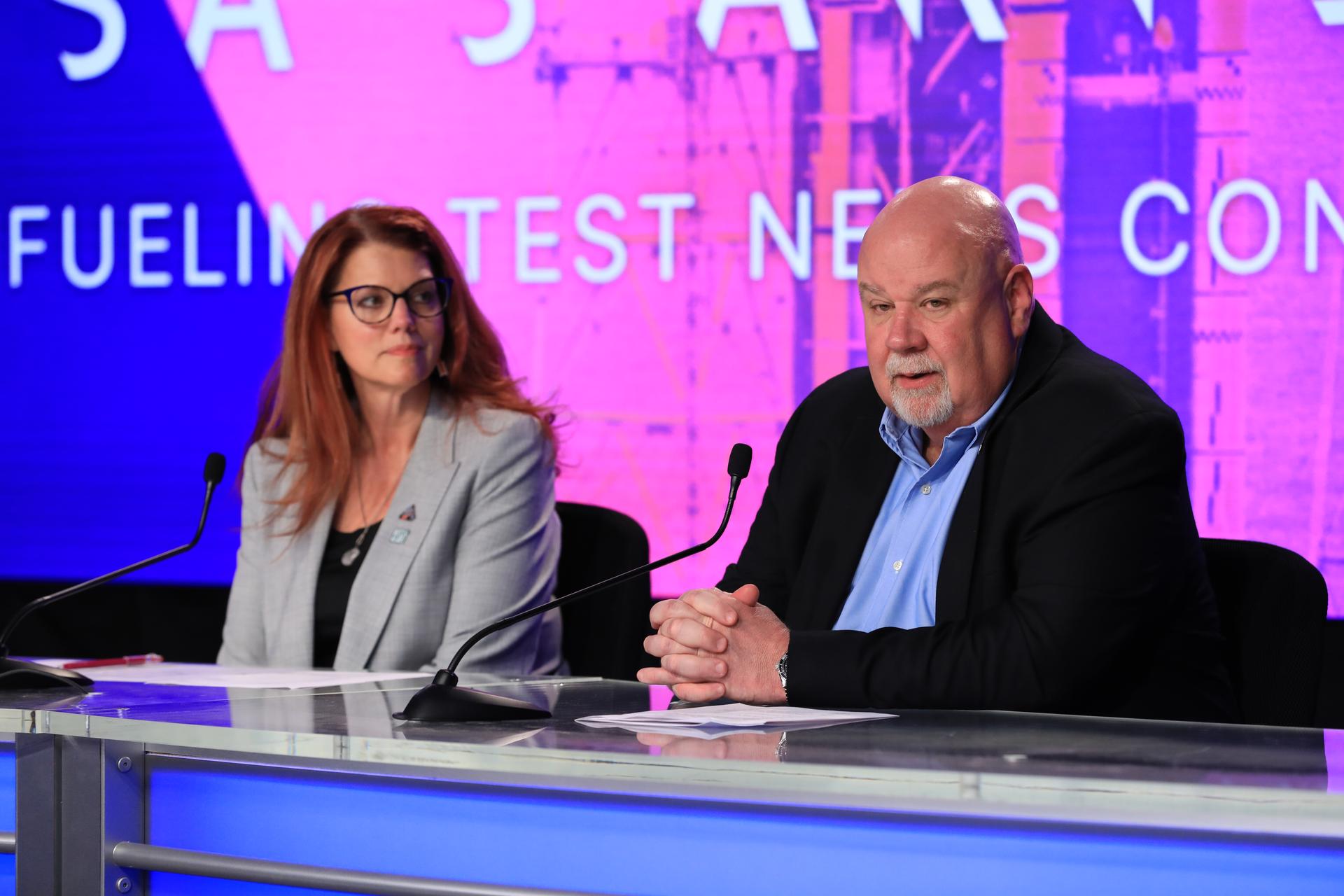
From left, Charlie Blackwell-Thompson, launch director, Exploration Ground Systems Program, and John Honeycutt, chair, Artemis II mission management team, participate in a news conference on Friday, Feb.20, 2026, to discuss the completion of Artemis II second wet dress rehearsal at NASA’s Kennedy Space Center in Florida. The wet dress rehearsal allows the Artemis II launch team to run through operations to load propellant, conduct a full launch countdown, demonstrate the ability to recycle the countdown clock, and drain the tanks to practice timelines and procedures for launch. The Artemis II test flight will take Commander Reid Wiseman, Pilot Victor Glover, and Mission Specialist Christina Koch from NASA, and Mission Specialist Jeremy Hansen from the CSA (Canadian Space Agency), around the Moon and back to Earth from Launch Complex 39B at NASA Kennedy.
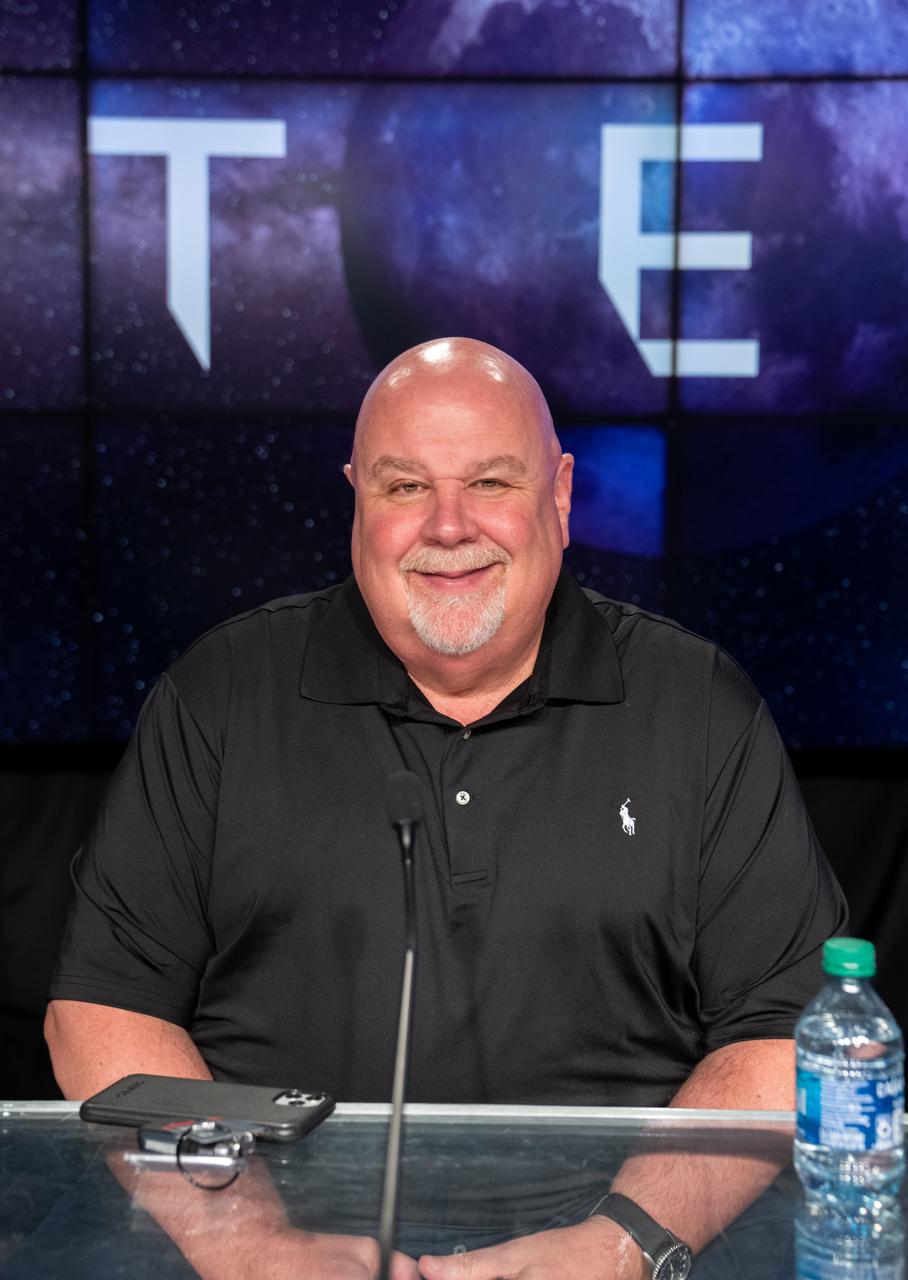
John Honeycutt, Space Launch System program manager, participates in a prelaunch media briefing following a mission management team meeting for Artemis I on Sept. 1, 2022, at NASA’s Kennedy Space Center in Florida. Artemis I is scheduled to launch at 2:17 p.m. EDT on Sept. 3, from Kennedy’s Launch Complex 39B. Launch was waved off on Aug. 29 due to an issue during tanking. The first in a series of increasingly complex missions, Artemis I will provide a foundation for human deep space exploration and demonstrate NASA’s capability to extend human presence to the Moon and beyond. The primary goal of Artemis I is to thoroughly test the integrated systems before crewed missions by operating the spacecraft in a deep space environment, testing Orion’s heat shield, and recovering the crew module after reentry, descent, and splashdown.
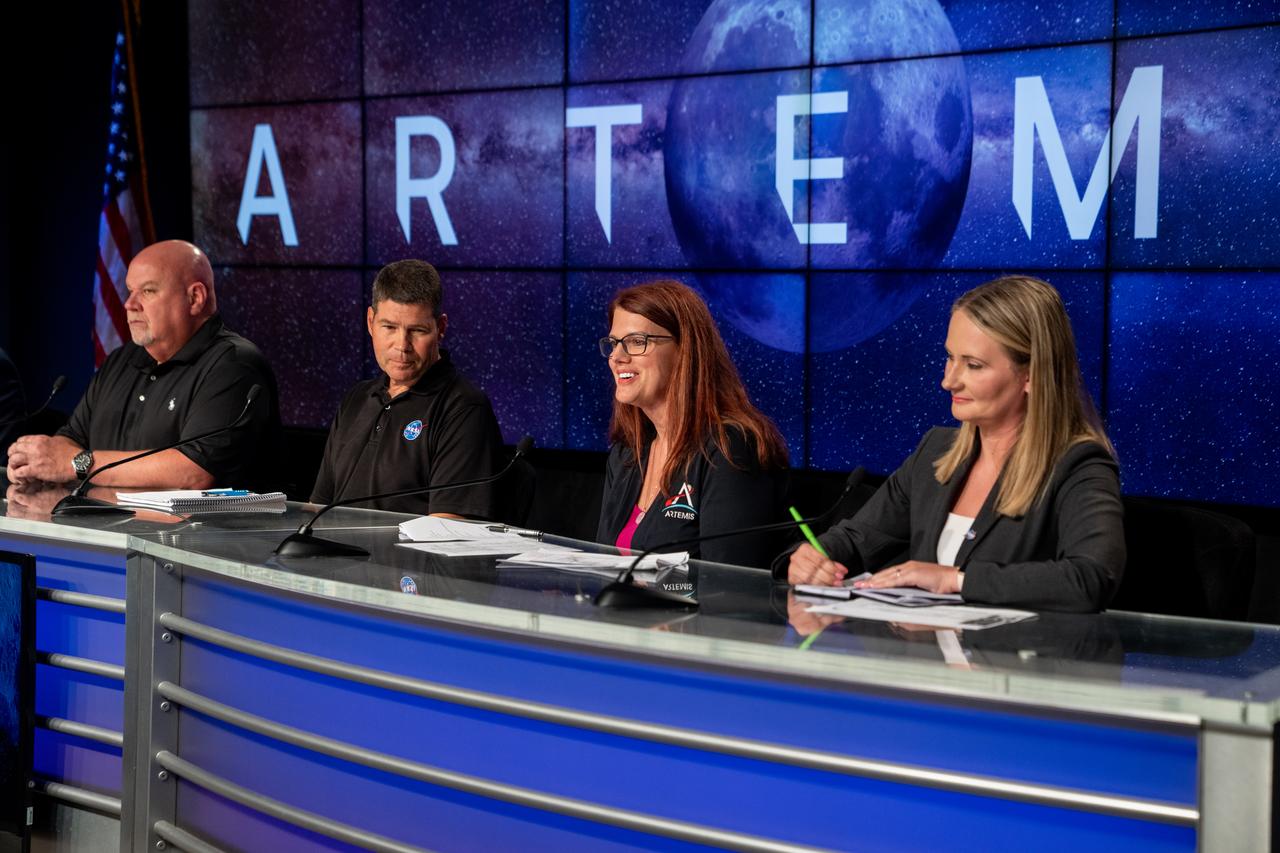
A prelaunch media briefing is held following a mission management team meeting for Artemis I on Sept. 1, 2022, at NASA’s Kennedy Space Center in Florida. Participants are, from left, John Honeycutt, Space Launch System (SLS) program manager; John Blevins, SLS chief engineer; Charlie Blackwell-Thompson, Artemis launch director; and Melody Lovin, Space Launch Delta 45 weather officer. Artemis I is scheduled to launch at 2:17 p.m. EDT on Sept. 3, from Kennedy’s Launch Complex 39B. Launch was waved off on Aug. 29 due to an issue during tanking. The first in a series of increasingly complex missions, Artemis I will provide a foundation for human deep space exploration and demonstrate NASA’s capability to extend human presence to the Moon and beyond. The primary goal of Artemis I is to thoroughly test the integrated systems before crewed missions by operating the spacecraft in a deep space environment, testing Orion’s heat shield, and recovering the crew module after reentry, descent, and splashdown.
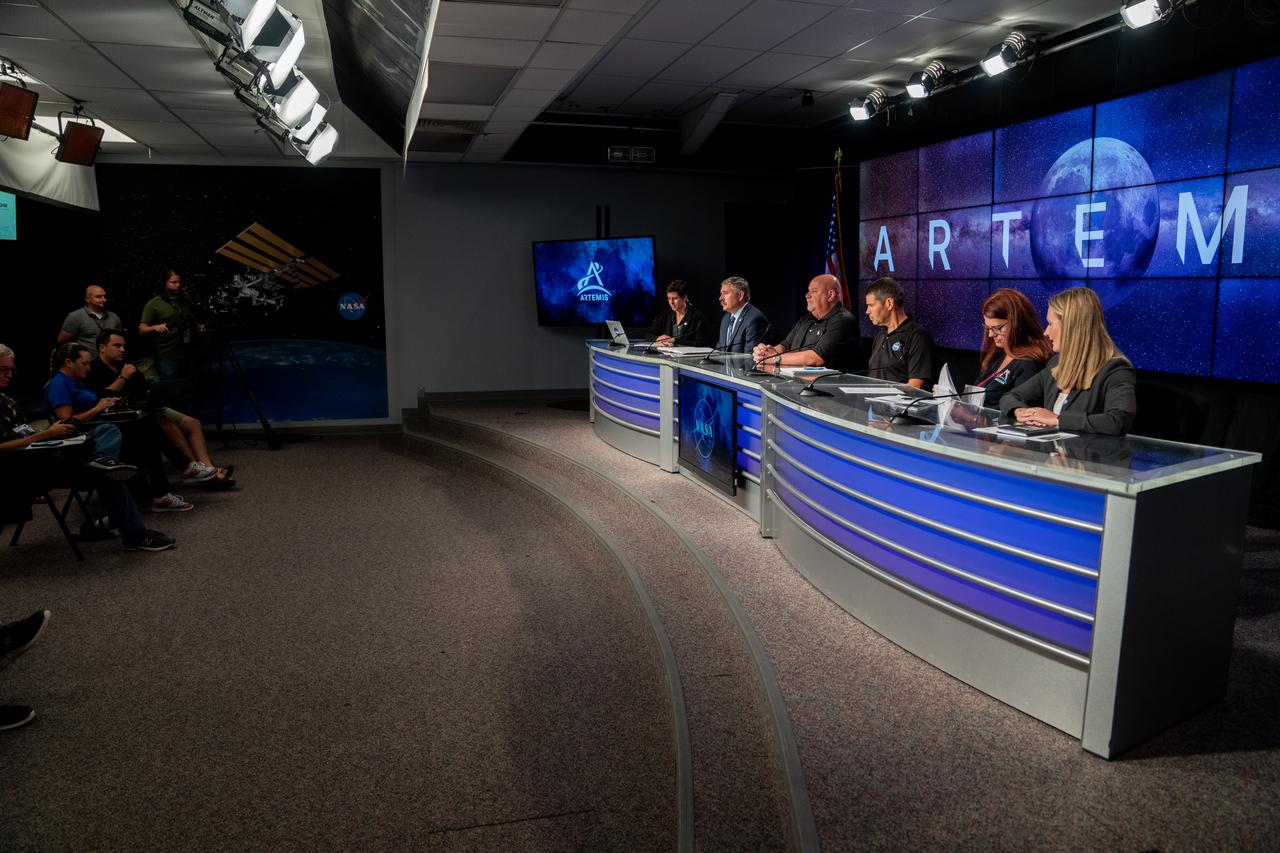
A prelaunch media briefing is held following a mission management team meeting for Artemis I on Sept. 1, 2022, at NASA’s Kennedy Space Center in Florida. Participants are, from left, Rachel Kraft, NASA Communications; Mike Sarafin, Artemis mission manager; John Honeycutt, Space Launch System (SLS) program manager; John Blevins, SLS chief engineer; Charlie Blackwell-Thompson, Artemis launch director; and Melody Lovin, Space Launch Delta 45 weather officer. Artemis I is scheduled to launch at 2:17 p.m. EDT on Sept. 3, from Kennedy’s Launch Complex 39B. Launch was waved off on Aug. 29 due to an issue during tanking. The first in a series of increasingly complex missions, Artemis I will provide a foundation for human deep space exploration and demonstrate NASA’s capability to extend human presence to the Moon and beyond. The primary goal of Artemis I is to thoroughly test the integrated systems before crewed missions by operating the spacecraft in a deep space environment, testing Orion’s heat shield, and recovering the crew module after reentry, descent, and splashdown.
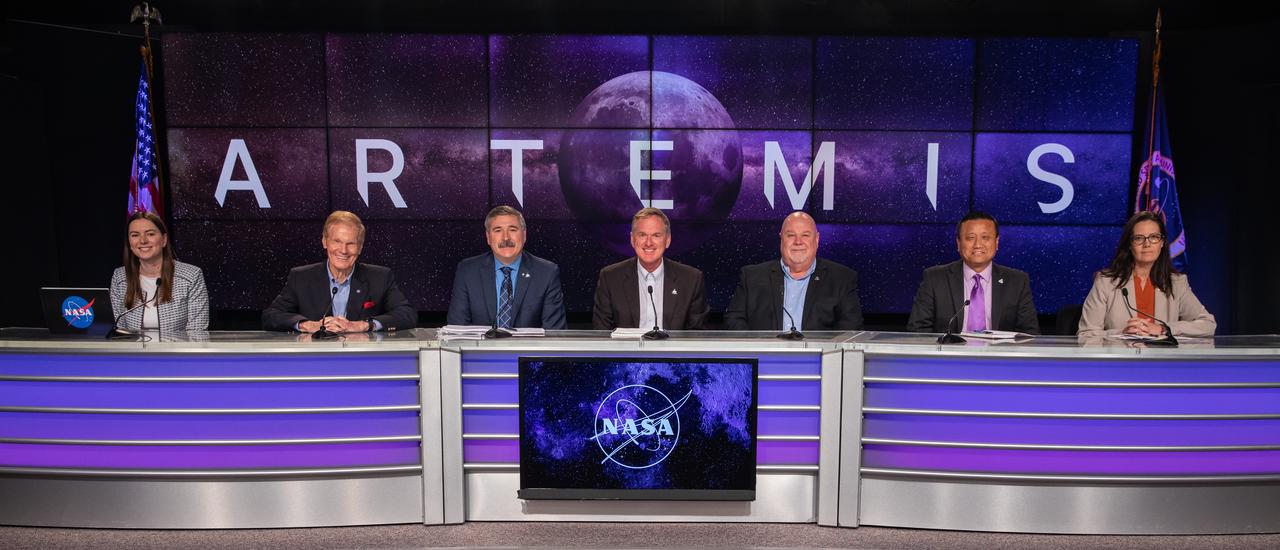
A postlaunch news conference is held on Nov. 16, 2022, at NASA’s Kennedy Space Center in Florida, after launch of Artemis I at 1:47 a.m. EST from Kennedy’s Launch Complex 39B. Participants are, from left, Jackie McGuiness, NASA Communications; Bill Nelson, NASA administrator; Mike Sarafin, Artemis mission manager, NASA Headquarters; Mike Bolger, Exploration Ground Systems Program manager, Kennedy; John Honeycutt, Space Launch System Program manager, Marshall; Howard Hu, Orion Program manager, NASA’s Johnson Space Center; and Emily Nelson, chief flight director, Johnson. The first in a series of increasingly complex missions, Artemis I will provide a foundation for human deep space exploration and demonstrate our commitment and capability to extend human presence to the Moon and beyond. The primary goal of Artemis I is to thoroughly test the integrated systems before crewed missions by operating the spacecraft in a deep space environment, testing Orion’s heat shield, and recovering the crew module after reentry, descent, and splashdown.
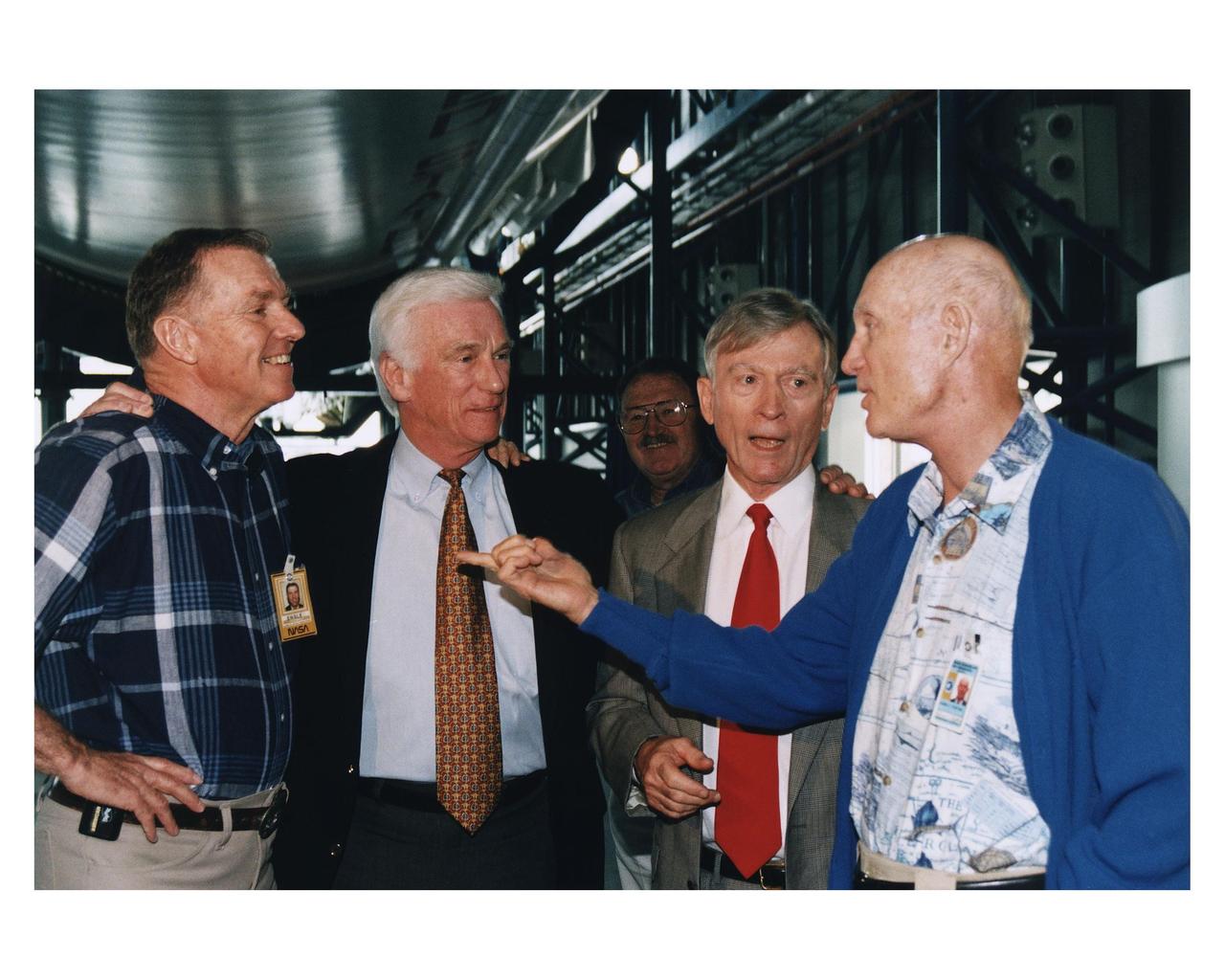
KENNEDY SPACE CENTER, FLA. -- Some of the former Apollo program astronauts recall the past as they tour the new Apollo/Saturn V Center (ASVC) at KSC prior to the gala grand opening ceremony for the facility that was held Jan. 8, 1997. The astronauts were invited to participate in the event, which also featured NASA Administrator Dan Goldin and KSC Director Jay Honeycutt. Standing underneath the KSC Apollo/Saturn V inside the building are (from left): Apollo 14 Back-up Lunar Module Pilot Joe H. Engle; Apollo 10 Lunar Module Pilot and Apollo 17 Commander Eugene A. Cernan; Apollo 10 Command Module Pilot and Apollo 16 Commander John W. Young; and Apollo 10 Commander Thomas P. Stafford. The ASVC also features several other Apollo program spacecraft components, multimedia presentations and a simulated Apollo/Saturn V liftoff. The facility will be a part of the KSC bus tour that embarks from the KSC Visitor Center
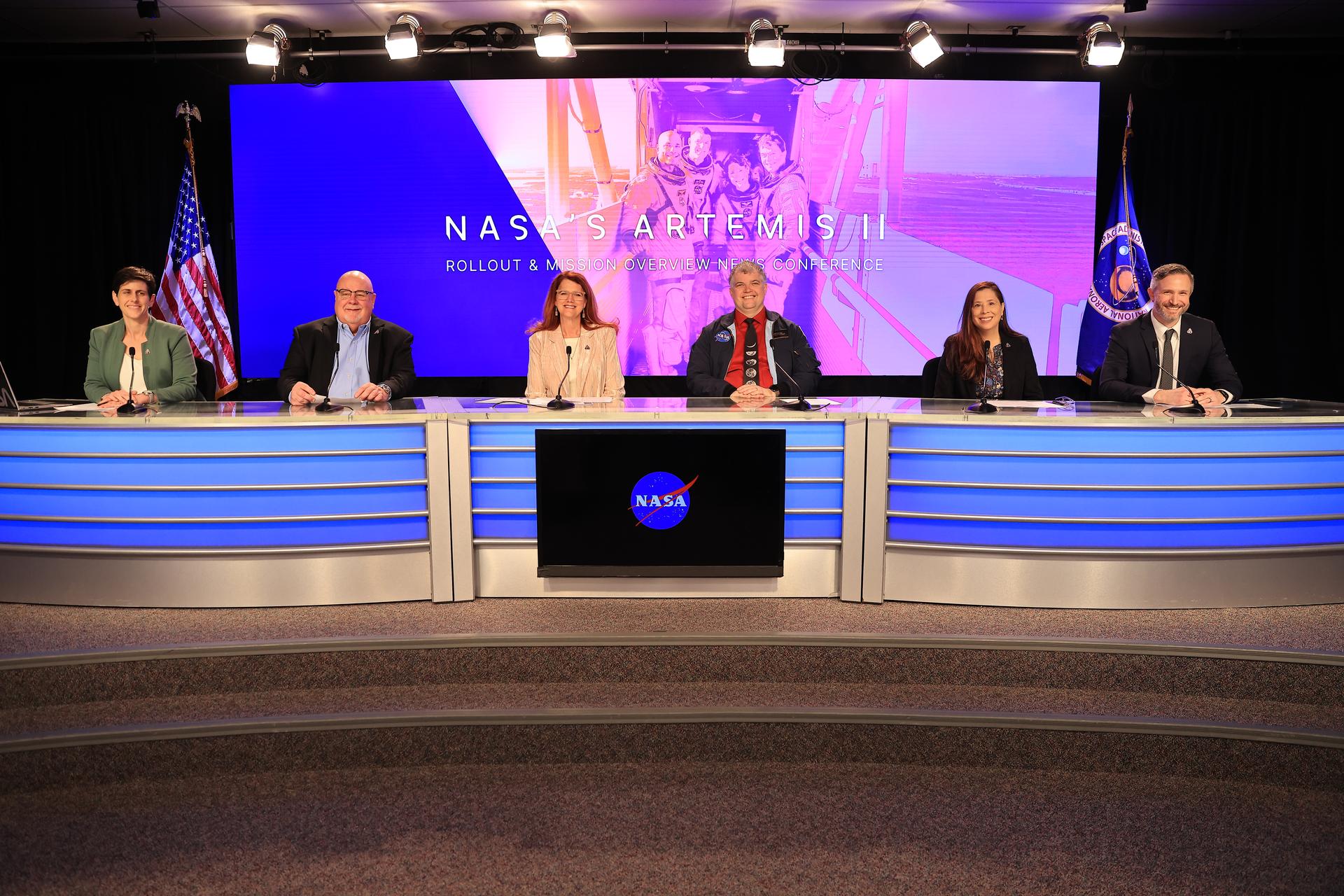
From left to right, Rachel Kraft, NASA's Office of Communications; John Honeycutt, Artemis II mission management team chair; Charlie Blackwell-Thompson, launch director, Exploration Ground Systems Program at NASA’s Kennedy Space Center in Florida; Jeff Radigan, Artemis II lead flight director, Flight Operations Directorate; Lili Villarreal, Artemis II landing and recovery director in Exploration Ground Systems Program at NASA’s Kennedy Space Center in Florida; Jacob Bleacher, chief exploration scientist in the Exploration Systems Development Mission Directorate at NASA Headquarters in Washington, participate in an Artemis II mission overview news conference on Friday, Jan. 16, 2026, at NASA’s Kennedy Space Center in Florida ahead of rollout of the SLS (Space Launch System) rocket and Orion spacecraft from the Vehicle Assembly Building to Launch Complex 39B at NASA Kennedy. The Artemis II test flight will take Commander Reid Wiseman, Pilot Victor Glover, and Mission Specialist Christina Koch from NASA, and Mission Specialist Jeremy Hansen from the CSA (Canadian Space Agency), around the Moon and back to Earth no later than April 2026.
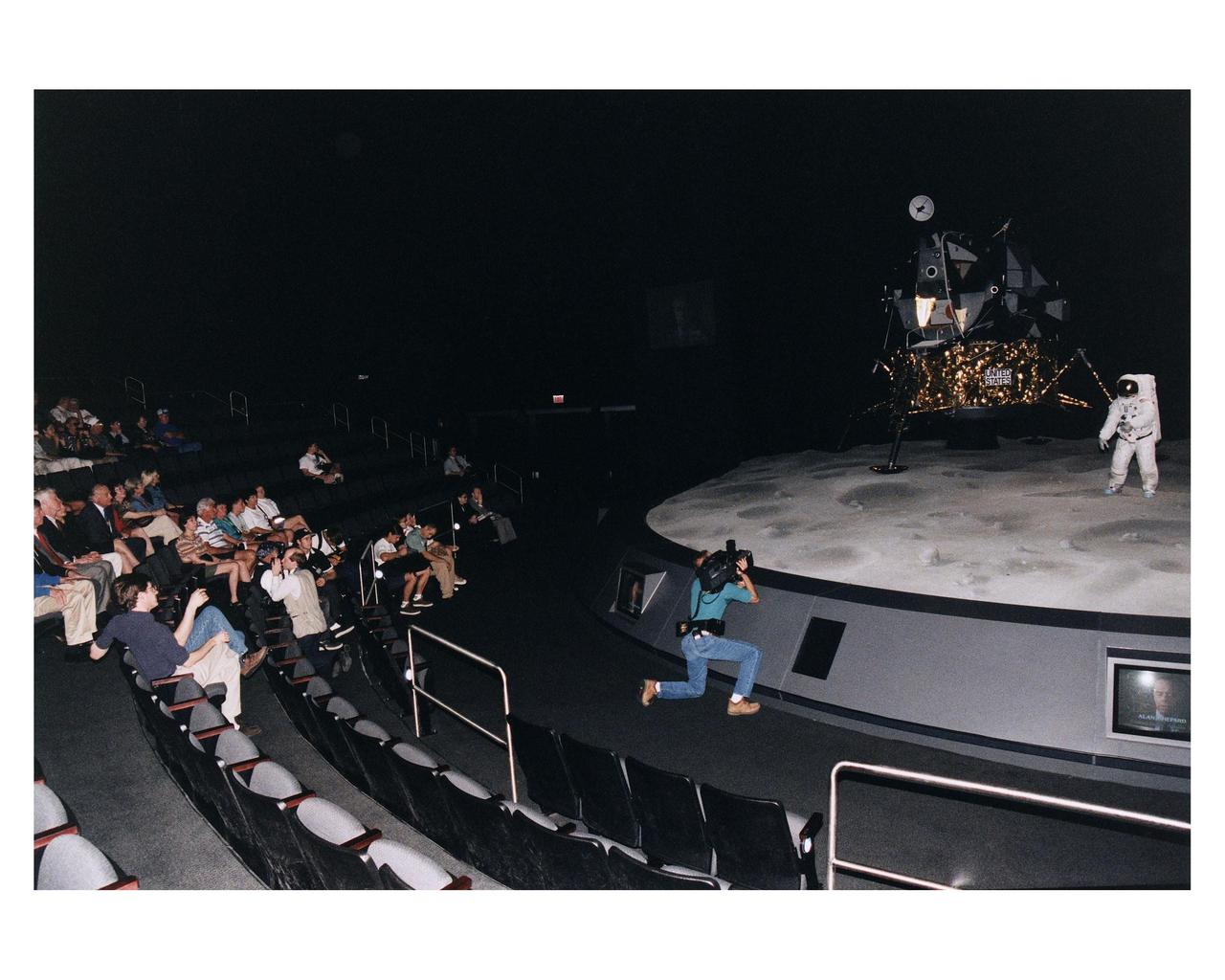
KENNEDY SPACE CENTER, FLA. -- Some of the former Apollo program astronauts observe a Lunar Module and Moon mockup during a tour the new Apollo/Saturn V Center (ASVC) at KSC prior to the gala grand opening ceremony for the facility that was held Jan. 8, 1997. The astronauts were invited to participate in the event, which also featured NASA Administrator Dan Goldin and KSC Director Jay Honeycutt. Some of the visiting astonauts were (from left): Apollo 10 Lunar Module Pilot and Apollo 17 Commander Eugene A. Cernan; Apollo 9 Lunar Module Pilot Russell L. Schweikart; Apollo 10 Command Module Pilot and Apollo 16 Commander John W. Young; Apollo 10 Commander Thomas P. Stafford; and Apollo 11 Lunar Module Pilot Edwin E. "Buzz" Aldrin, Jr. The ASVC also features several other Apollo program spacecraft components, multimedia presentations and a simulated Apollo/Saturn V liftoff. The facility will be a part of the KSC bus tour that embarks from the KSC Visitor Center
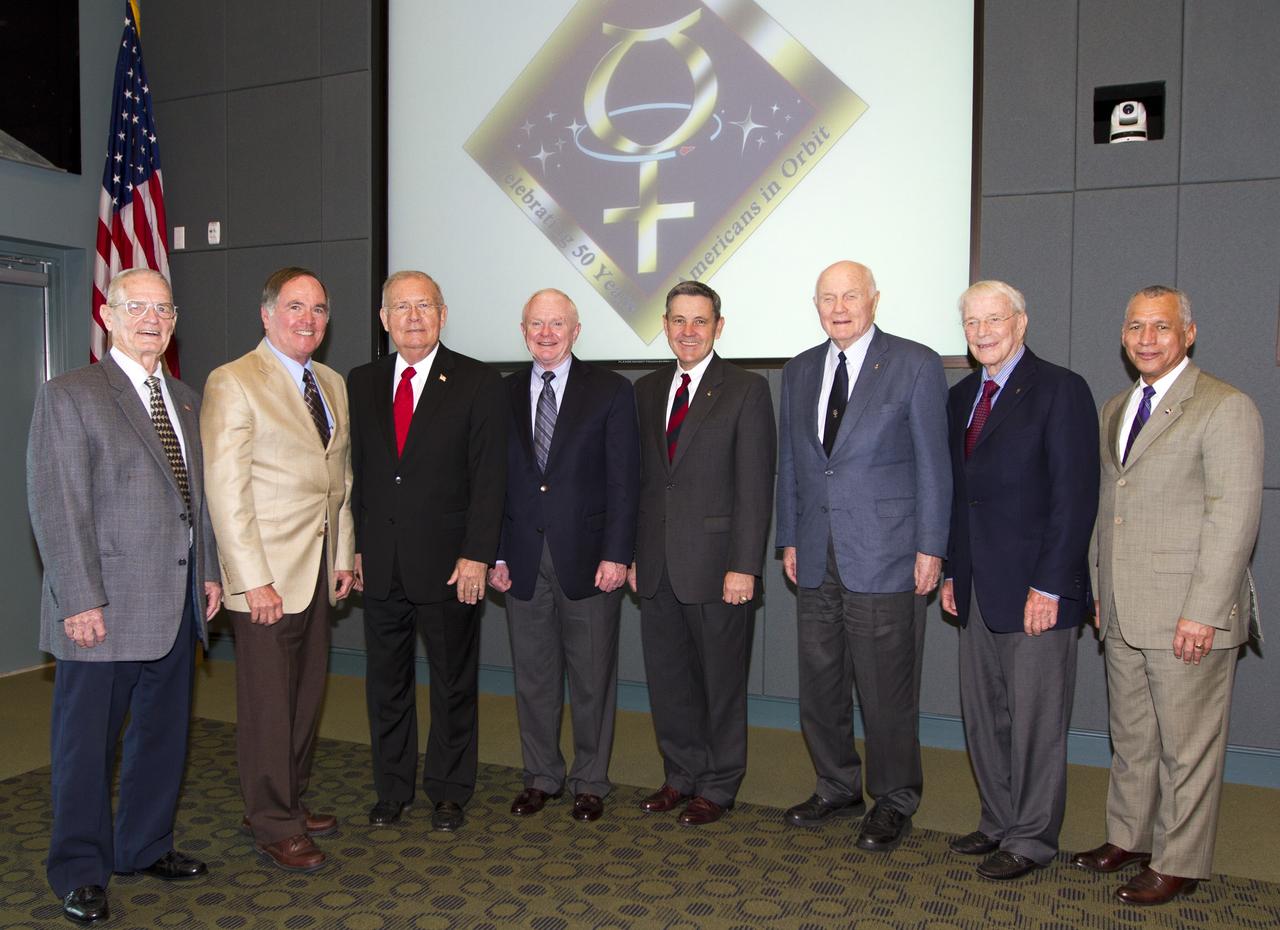
CAPE CANAVERAL, Fla. - Former Kennedy Space Center directors Forrest McCartney, from left, Bob Crippen, Jay Honeycutt and Roy Bridges stand with current Kennedy director Bob Cabana, Mercury astronauts John Glenn and Scott Carpenter and NASA Administrator Charles Bolden during a luncheon Feb. 17, 2012, celebrating 50 years of Americans in orbit, an era which began with Glenn's Mercury mission MA-6, on Feb. 20, 1962. Glenn's launch aboard an Atlas rocket took with it the hopes of an entire nation and ushered in a new era of space travel that eventually led to Americans walking on the moon by the end of the 1960s. Glenn soon was followed into orbit by Scott Carpenter, Walter Schirra and Gordon Cooper. Their fellow Mercury astronauts Alan Shepard and Virgil "Gus" Grissom flew earlier suborbital flights. Deke Slayton, a member of NASA's original Mercury 7 astronauts, was grounded by a medical condition until the Apollo-Soyuz Test Project in 1975. Photo credit: NASA/Kim Shiflett
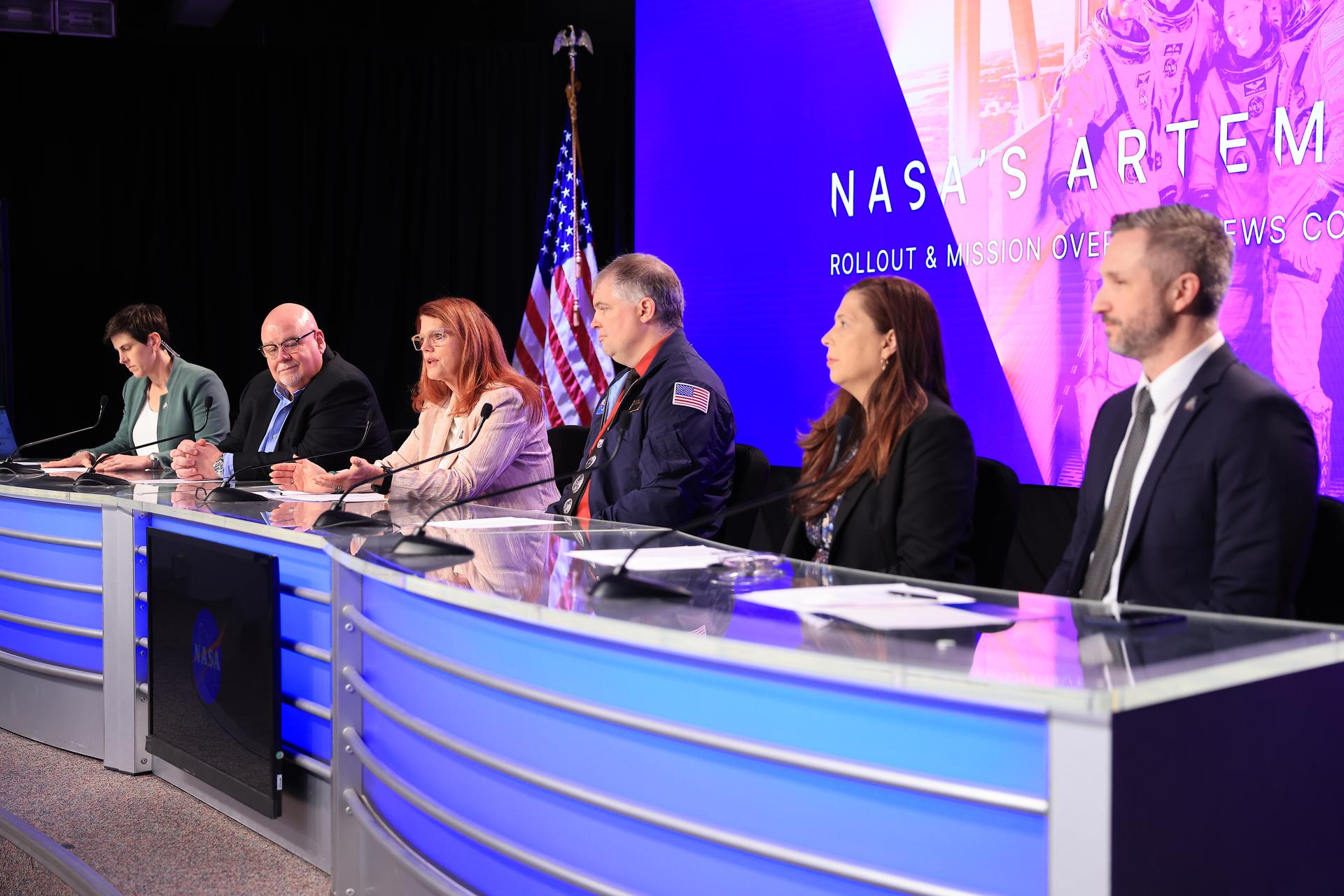
From left to right, Rachel Kraft, NASA's Office of Communications; John Honeycutt, Artemis II mission management team chair; Charlie Blackwell-Thompson, launch director, Exploration Ground Systems Program at NASA’s Kennedy Space Center in Florida; Jeff Radigan, Artemis II lead flight director, Flight Operations Directorate; Lili Villarreal, Artemis II landing and recovery director in Exploration Ground Systems Program at NASA’s Kennedy Space Center in Florida; Jacob Bleacher, chief exploration scientist in the Exploration Systems Development Mission Directorate at NASA Headquarters in Washington, participate in an Artemis II mission overview news conference on Friday, Jan. 16, 2026, at NASA’s Kennedy Space Center in Florida ahead of rollout of the SLS (Space Launch System) rocket and Orion spacecraft from the Vehicle Assembly Building to Launch Complex 39B at NASA Kennedy. The Artemis II test flight will take Commander Reid Wiseman, Pilot Victor Glover, and Mission Specialist Christina Koch from NASA, and Mission Specialist Jeremy Hansen from the CSA (Canadian Space Agency), around the Moon and back to Earth no later than April 2026.
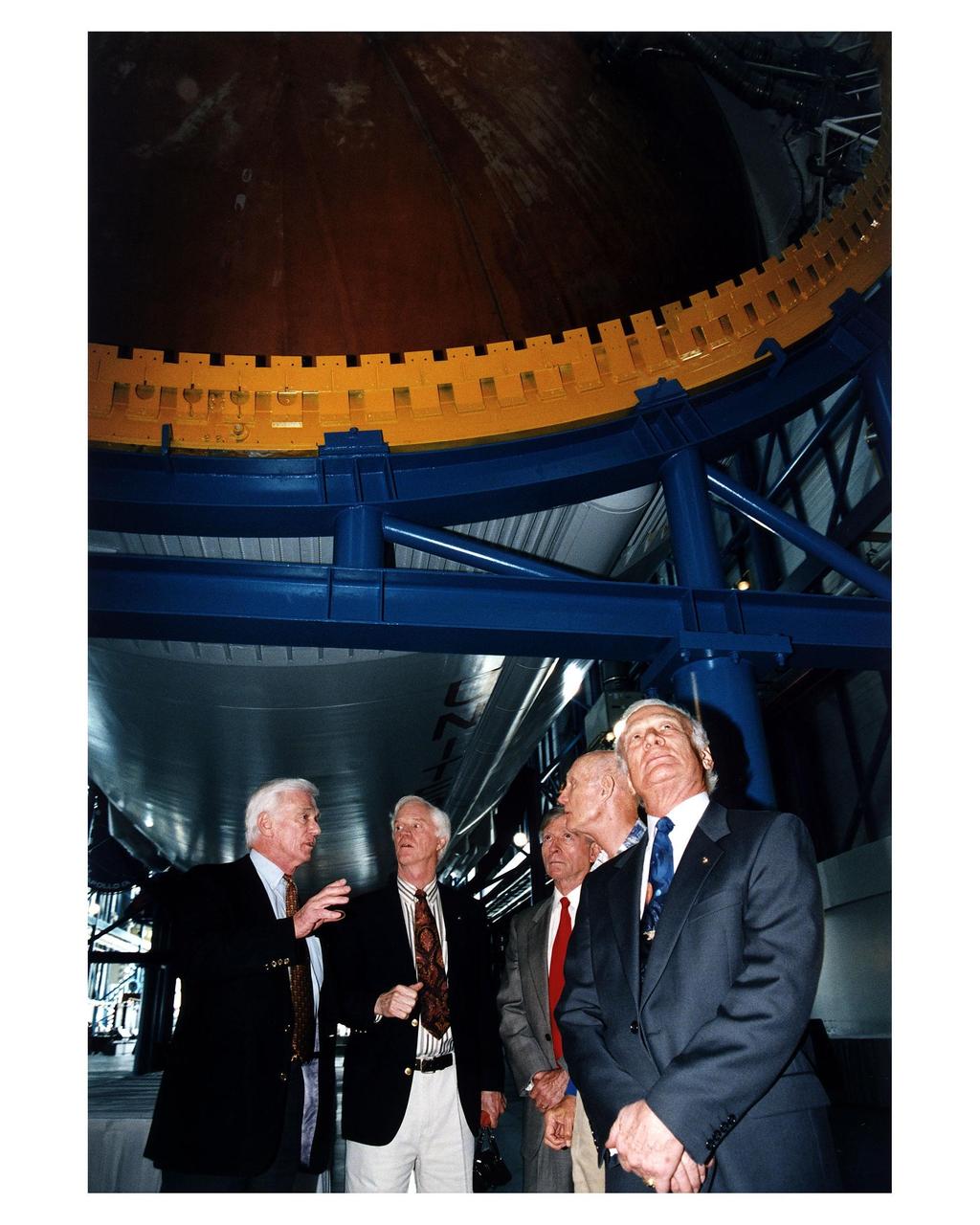
KENNEDY SPACE CENTER, FLA. -- Some of the former Apollo program astronauts tour the new Apollo/Saturn V Center (ASVC) at KSC prior to the gala grand opening ceremony for the facility that was held Jan. 8, 1997. The astronauts were invited to participate in the event, which also featured NASA Administrator Dan Goldin and KSC Director Jay Honeycutt. Passing underneath the KSC Apollo/Saturn V inside the building are (from left): Apollo 10 Lunar Module Pilot and Apollo 17 Commander Eugene A. Cernan; Apollo 9 Lunar Module Pilot Russell L. Schweikart; Apollo 10 Command Module Pilot and Apollo 16 Commander John W. Young; Apollo 10 Commander Thomas P. Stafford; and Apollo 11 Lunar Module Pilot Edwin E. "Buzz" Aldrin, Jr. The ASVC also features several other Apollo program spacecraft components, multimedia presentations and a simulated Apollo/Saturn V liftoff. The facility will be a part of the KSC bus tour that embarks from the KSC Visitor Center
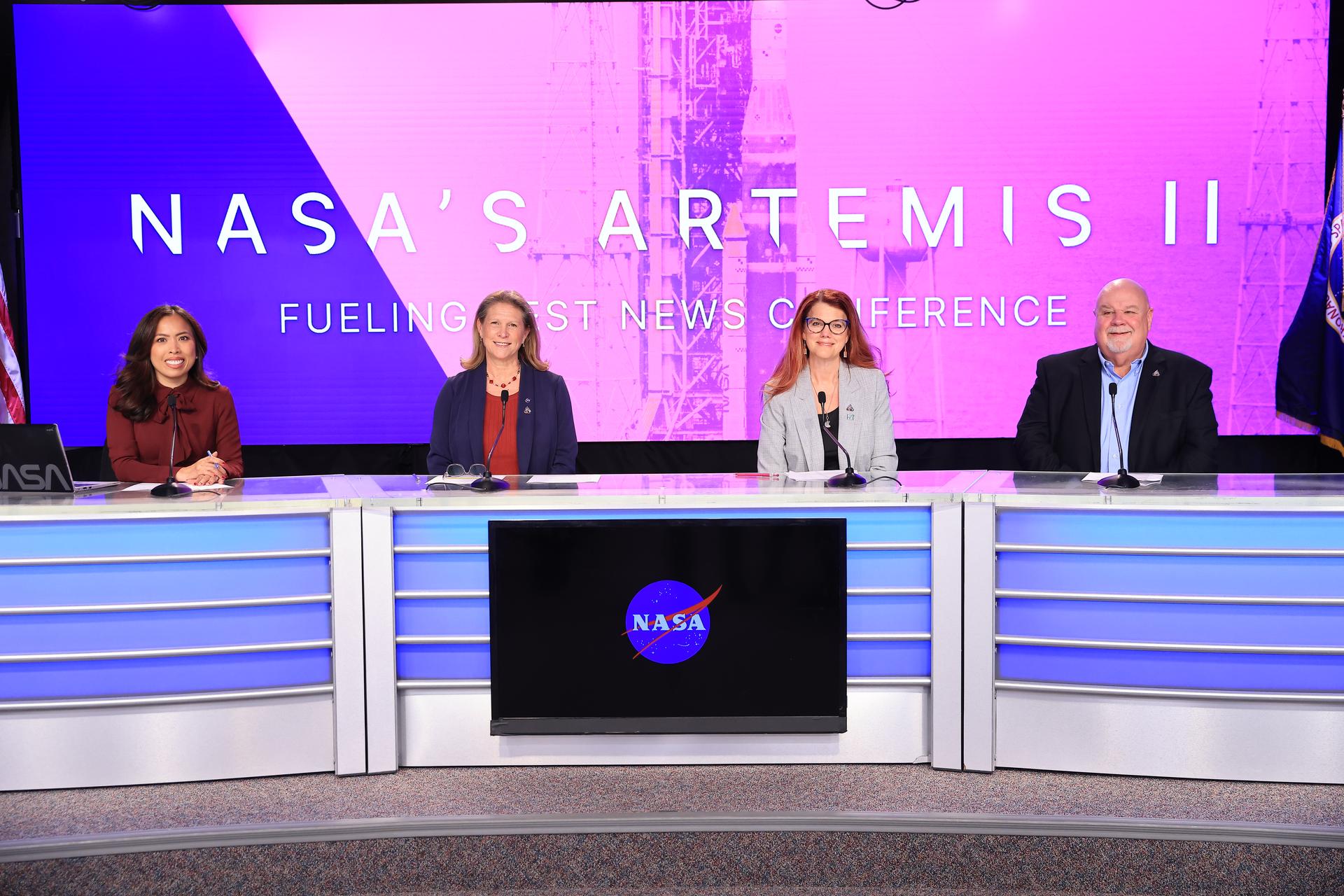
From left to right, Megan Cruz, NASA Communications; Lori Glaze, acting associate administrator for Exploration Systems Development Mission Directorate; Charlie Blackwell-Thompson, launch director, Exploration Ground Systems Program; and John Honeycutt, chair, Artemis II mission management team, participate in a news conference on Friday, Feb. 20, 2026, to discuss the completion of the Artemis II second wet dress rehearsal at NASA’s Kennedy Space Center in Florida. The wet dress rehearsal allows the Artemis II launch team to run through operations to load propellant, conduct a full launch countdown, demonstrate the ability to recycle the countdown clock, and drain the tanks to practice timelines and procedures for launch. The Artemis II test flight will take Commander Reid Wiseman, Pilot Victor Glover, and Mission Specialist Christina Koch, from NASA and Mission Specialist Jeremy Hansen from the CSA (Canadian Space Agency), around the Moon and back to Earth from Launch Complex 39B at NASA Kennedy.
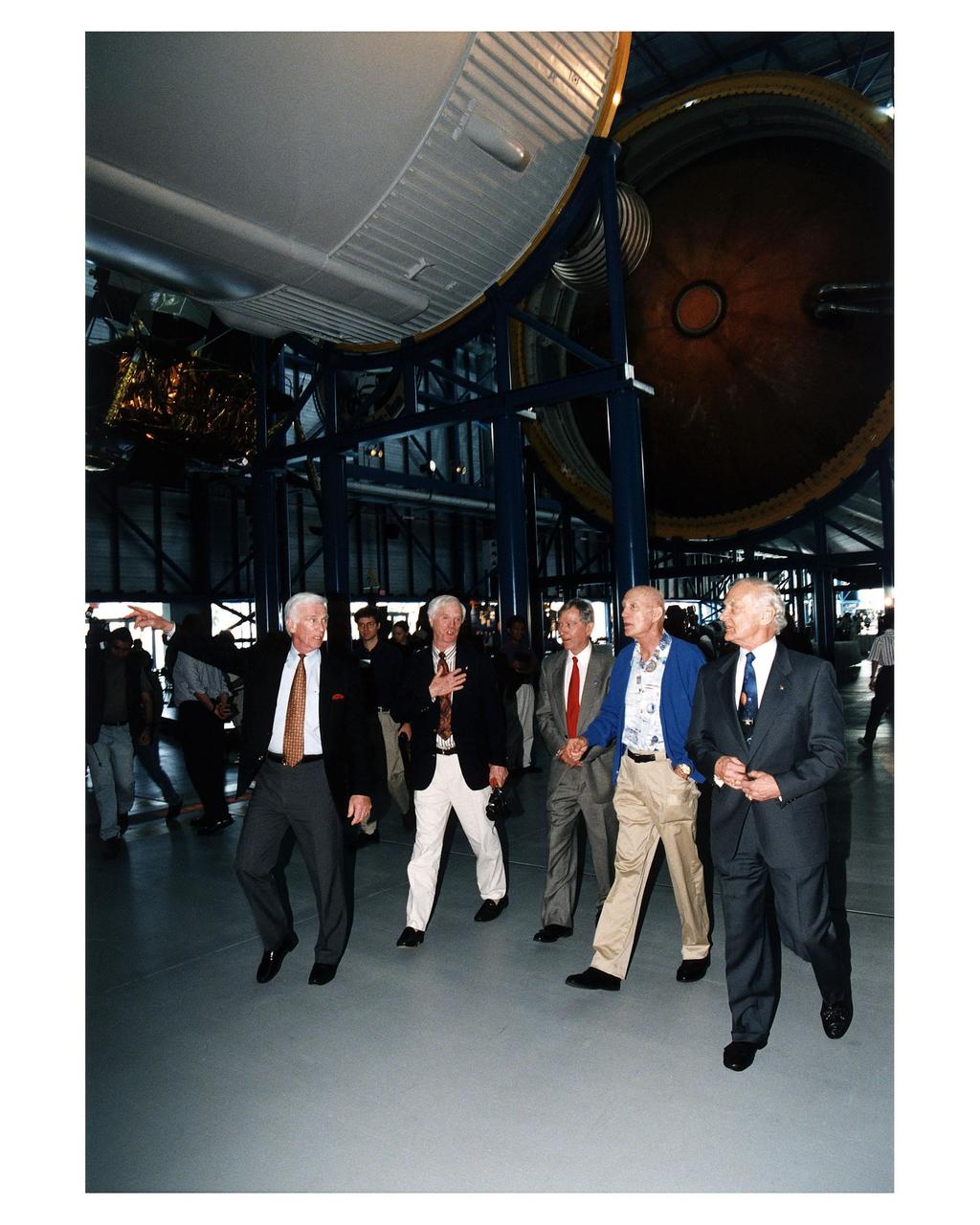
KENNEDY SPACE CENTER, FLA. -- Some of the former Apollo program astronauts tour the new Apollo/Saturn V Center (ASVC) at KSC prior to the gala grand opening ceremony for the facility that was held Jan. 8, 1997. The astronauts were invited to participate in the event, which also featured NASA Administrator Dan Goldin and KSC Director Jay Honeycutt. Passing underneath the KSC Apollo/Saturn V inside the building are (from left): Apollo 10 Lunar Module Pilot and Apollo 17 Commander Eugene A. Cernan; Apollo 9 Lunar Module Pilot Russell L. Schweikart; Apollo 10 Command Module Pilot and Apollo 16 Commander John W. Young; Apollo 10 Commander Thomas P. Stafford; and Apollo 11 Lunar Module Pilot Edwin E. "Buzz" Aldrin, Jr. The ASVC also features several other Apollo program spacecraft components, multimedia presentations and a simulated Apollo/Saturn V liftoff. The facility will be a part of the KSC bus tour that embarks from the KSC Visitor Center
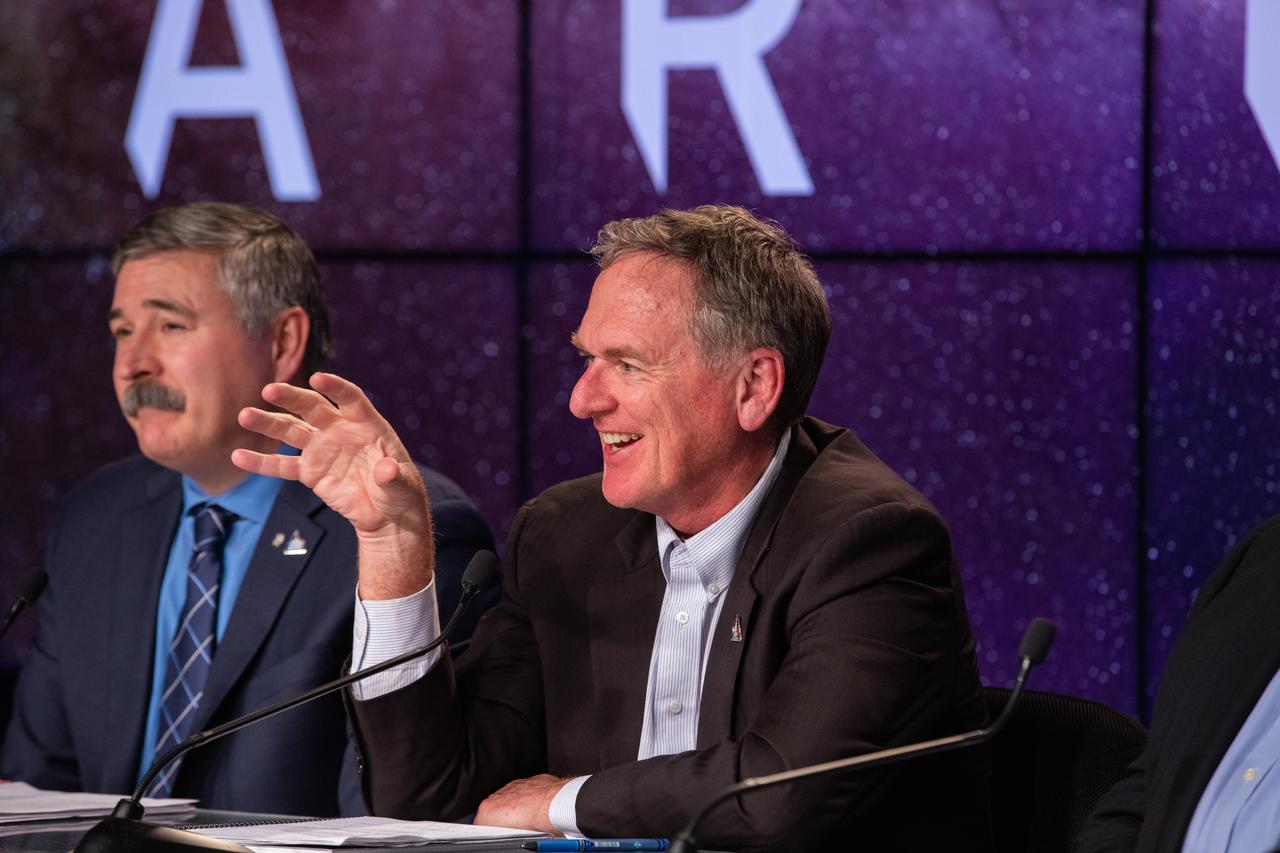
A postlaunch news conference is held on Nov. 16, 2022, at NASA’s Kennedy Space Center in Florida, after launch of Artemis I at 1:47 a.m. EST from Kennedy’s Launch Complex 39B. Participants were, from left, Mike Sarafin, Artemis mission manager, NASA Headquarters; and Mike Bolger, Exploration Ground Systems Program manager, Kennedy. Also participating were NASA Administrator Bill Nelson; John Honeycutt, Space Launch System Program manager, Marshall; Howard Hu, Orion Program manager, NASA’s Johnson Space Center; and Emily Nelson, chief flight director, Johnson. The first in a series of increasingly complex missions, Artemis I will provide a foundation for human deep space exploration and demonstrate our commitment and capability to extend human presence to the Moon and beyond. The primary goal of Artemis I is to thoroughly test the integrated systems before crewed missions by operating the spacecraft in a deep space environment, testing Orion’s heat shield, and recovering the crew module after reentry, descent, and splashdown.
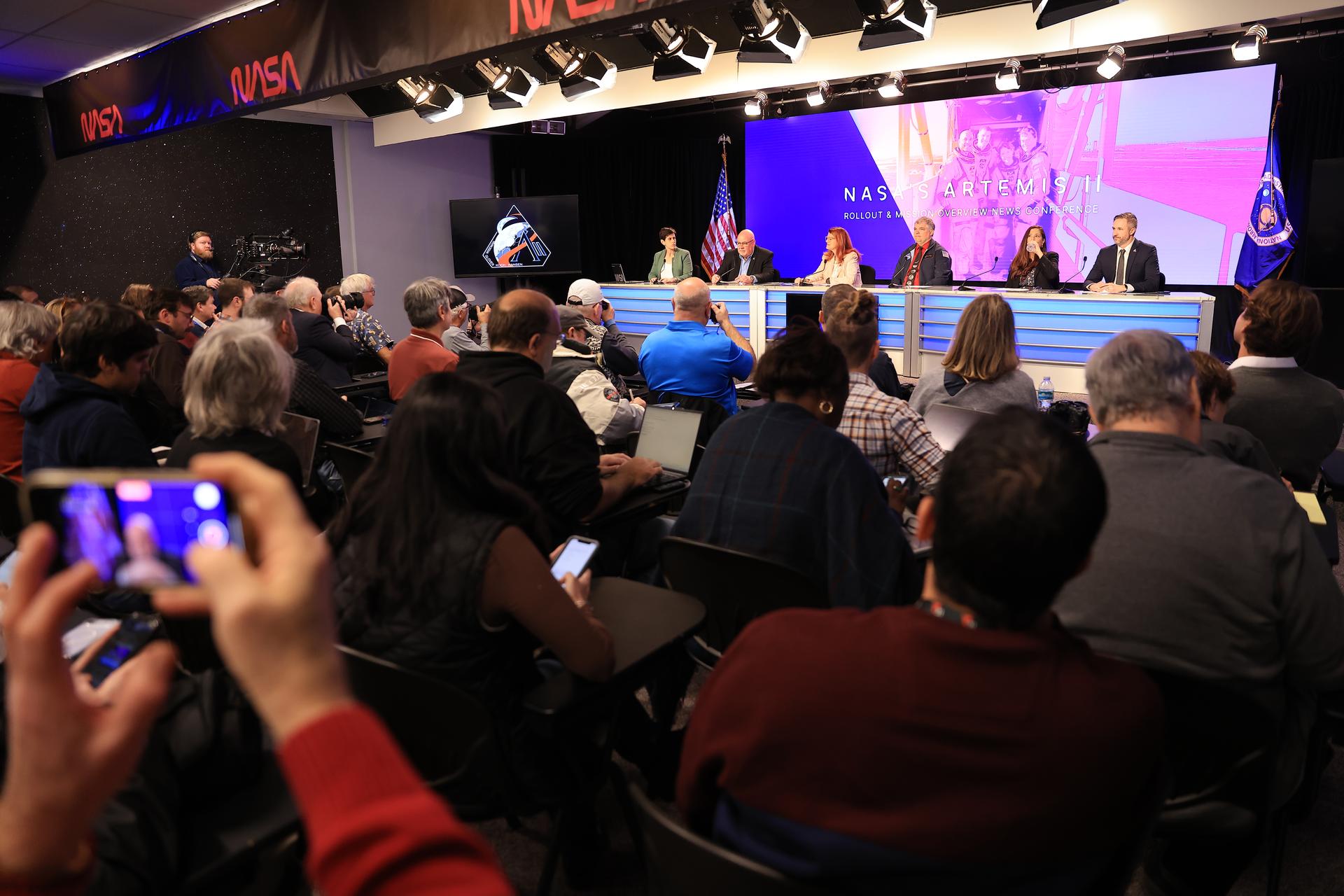
From left to right, Rachel Kraft, NASA's Office of Communications; John Honeycutt, Artemis II mission management team chair; Charlie Blackwell-Thompson, launch director, Exploration Ground Systems Program at NASA’s Kennedy Space Center in Florida; Jeff Radigan, Artemis II lead flight director, Flight Operations Directorate; Lili Villarreal, Artemis II landing and recovery director in Exploration Ground Systems Program at NASA’s Kennedy Space Center in Florida; Jacob Bleacher, chief exploration scientist in the Exploration Systems Development Mission Directorate at NASA Headquarters in Washington, participate in an Artemis II mission overview news conference on Friday, Jan. 16, 2026, at NASA’s Kennedy Space Center in Florida ahead of rollout of the SLS (Space Launch System) rocket and Orion spacecraft from the Vehicle Assembly Building to Launch Complex 39B at NASA Kennedy. The Artemis II test flight will take Commander Reid Wiseman, Pilot Victor Glover, and Mission Specialist Christina Koch from NASA, and Mission Specialist Jeremy Hansen from the CSA (Canadian Space Agency), around the Moon and back to Earth no later than April 2026.
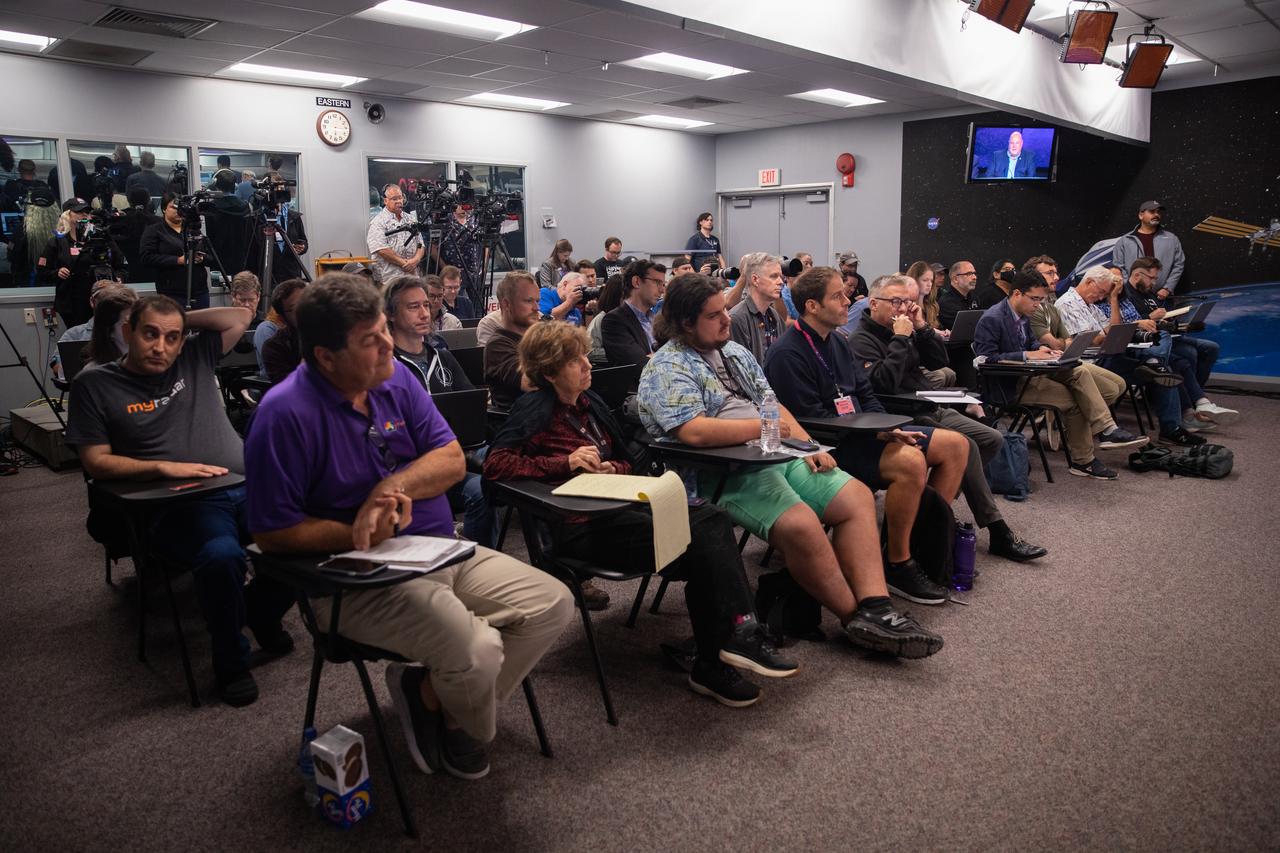
Members of the media attend a postlaunch news conference on Nov. 16, 2022, at NASA’s Kennedy Space Center in Florida, after launch of Artemis I at 1:47 a.m. EST from Kennedy’s Launch Complex 39B. Participants were Jackie McGuiness, NASA Communications; Bill Nelson, NASA administrator; Mike Sarafin, Artemis mission manager, NASA Headquarters; Mike Bolger, Exploration Ground Systems Program manager, Kennedy; John Honeycutt, Space Launch System Program manager, Marshall; Howard Hu, Orion Program manager, NASA’s Johnson Space Center; and Emily Nelson, chief flight director, Johnson. The first in a series of increasingly complex missions, Artemis I will provide a foundation for human deep space exploration and demonstrate our commitment and capability to extend human presence to the Moon and beyond. The primary goal of Artemis I is to thoroughly test the integrated systems before crewed missions by operating the spacecraft in a deep space environment, testing Orion’s heat shield, and recovering the crew module after reentry, descent, and splashdown.
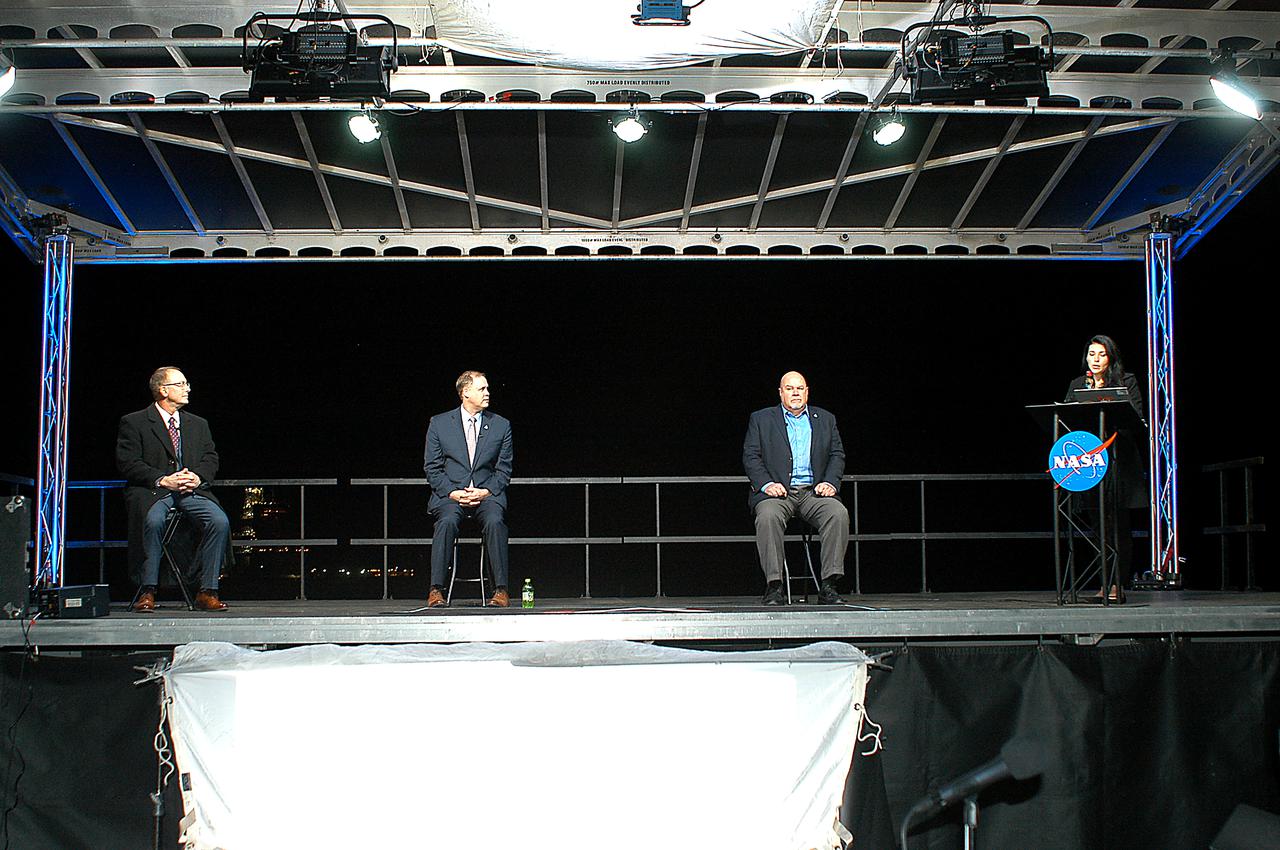
Outgoing NASA Associate Administrator for Communications Bettina Inclan (far right) hosts a press conference following the Green Run hot fire test of the core stage for NASA’s Space Launch System (SLS) rocket on Saturday, January 16, 2021. Seated press conference participants included outgoing NASA Administrator Jim Bridenstine (center), Stennis Space Center Director Rick Gilbrech (left) and SLS Program Manager John Honeycutt from Marshall Space Flight Center. NASA conducted a hot fire test of the core stage’s four RS-25 engines on the B-2 Test Stand at Stennis Space Center near Bay St. Louis, Mississippi. Scheduled for as long as eight minutes, the engines fired for a little more than one minute to generate a combined 1.6 million pounds of thrust, just as will occur during an actual launch. The hot fire is the final test of the Green Run test series, a comprehensive assessment of the SLS core stage prior to launching the Artemis I mission to the Moon.
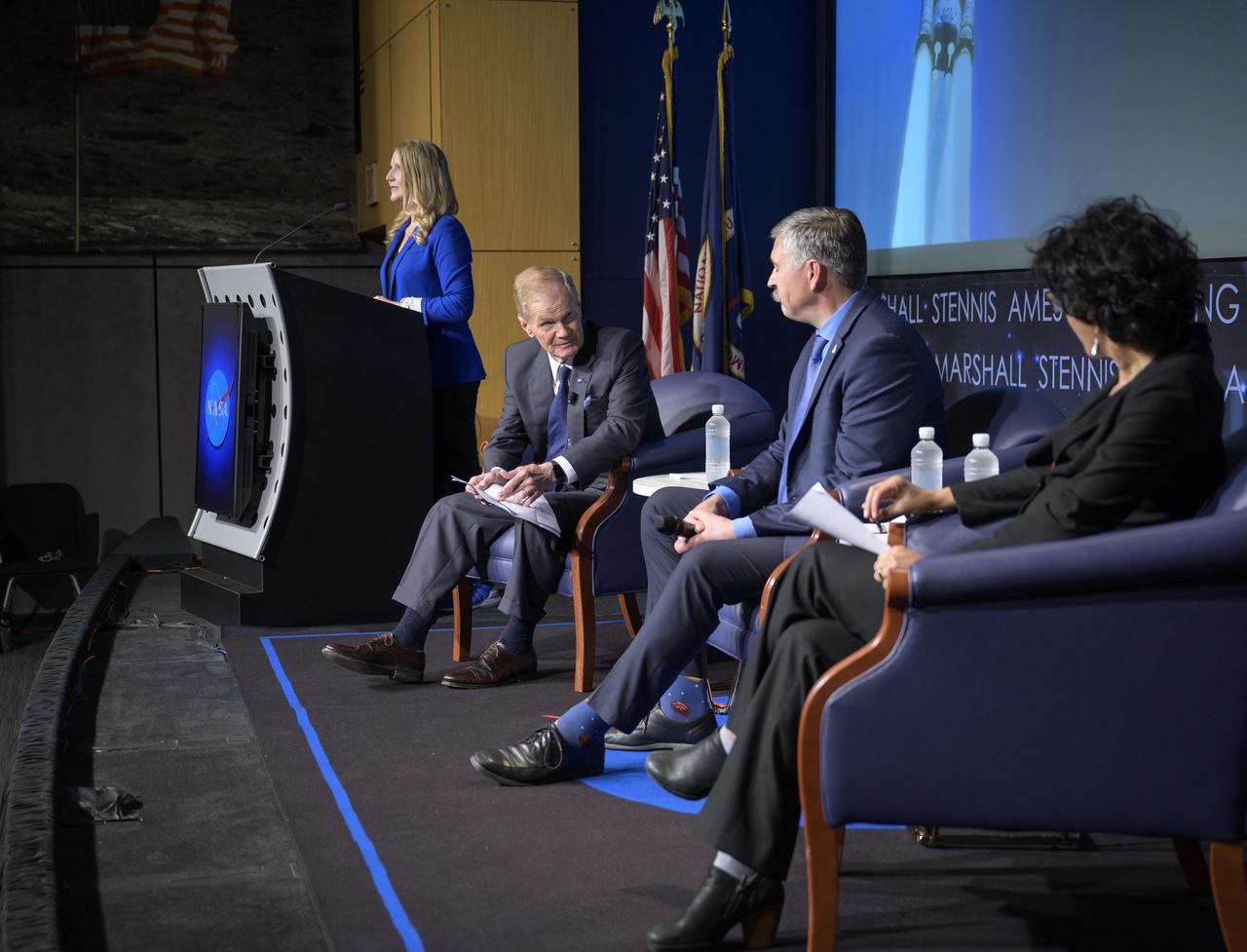
Stephanie Schierholz, a press secretary at NASA Headquarters, left, moderates a NASA briefing on the Artemis I Moon mission, with NASA Administrator Bill Nelson, Mike Sarafin, Artemis I mission manager at NASA Headquarters, and Bhavya Lal, associate administrator for technology, policy, and strategy at NASA Headquarters, right, Wednesday, Aug. 3, 2022, at the Mary W. Jackson NASA Headquarters building in Washington. Also participating remotely were Charlie Blackwell-Thompson, Artemis I launch director at NASA's Kennedy Space Center, John Honeycutt, Space Launch System (SLS) program manager at NASA's Marshall Space Flight Center, and Howard Hu, Orion program manager at NASA's Johnson Space Center. NASA’s Artemis I mission is the first integrated test of the agency’s deep space exploration systems: the Orion spacecraft, Space Launch System rocket, and supporting ground systems. Launch of the uncrewed flight test is targeted for no earlier than Monday, Aug. 29. Photo Credit: (NASA/Bill Ingalls)
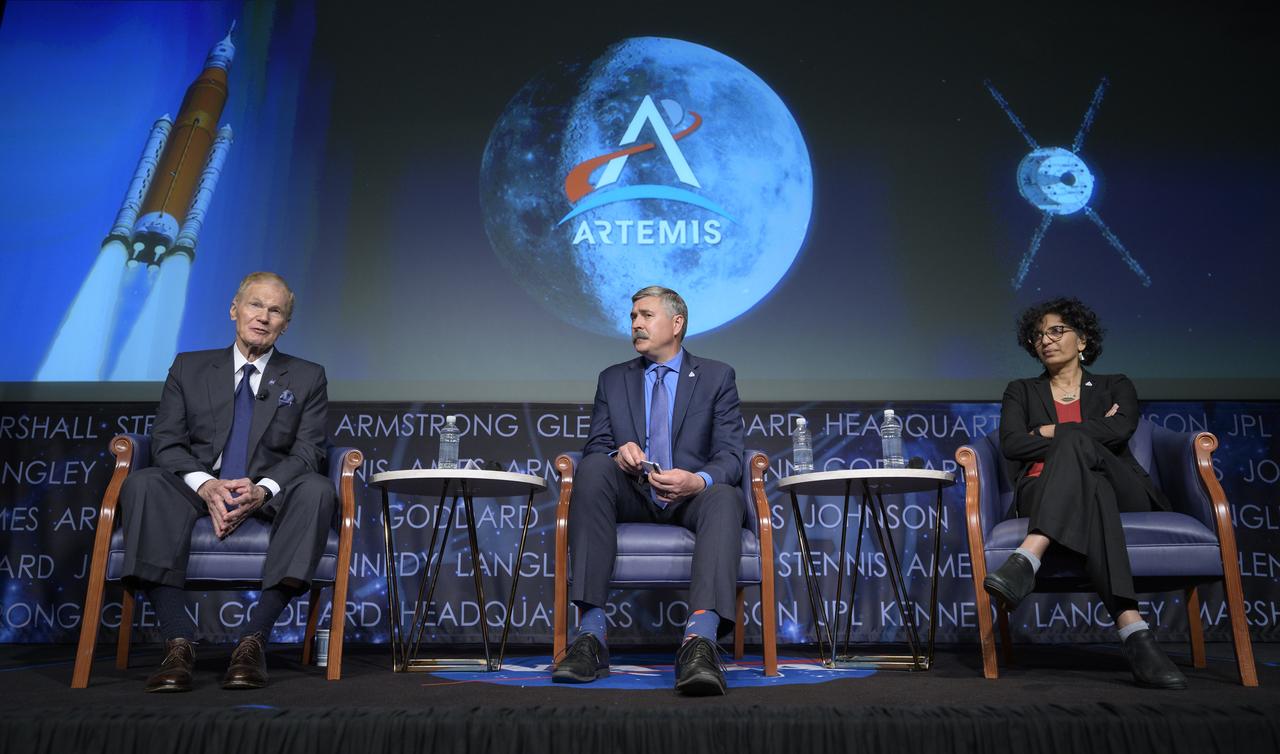
NASA Administrator Bill Nelson, left, Mike Sarafin, Artemis I mission manager at NASA Headquarters, and Bhavya Lal, associate administrator for technology, policy, and strategy at NASA Headquarters, right, are seen during a NASA briefing on the Artemis I Moon mission, Wednesday, Aug. 3, 2022, at the Mary W. Jackson NASA Headquarters building in Washington. Also participating remotely were Charlie Blackwell-Thompson, Artemis I launch director at NASA's Kennedy Space Center, John Honeycutt, Space Launch System (SLS) program manager at NASA's Marshall Space Flight Center, and Howard Hu, Orion program manager at NASA's Johnson Space Center. NASA’s Artemis I mission is the first integrated test of the agency’s deep space exploration systems: the Orion spacecraft, Space Launch System rocket, and supporting ground systems. Launch of the uncrewed flight test is targeted for no earlier than Monday, Aug. 29. Photo Credit: (NASA/Bill Ingalls)

KENNEDY SPACE CENTER, FLA. -- Some of the former Apollo program astronauts pose in front of an Apollo Command and Service Module during a tour the new Apollo/Saturn V Center (ASVC) at KSC prior to the gala grand opening ceremony for the facility that was held Jan. 8, 1997. The astronauts were invited to participate in the event, which also featured NASA Administrator Dan Goldin and KSC Director Jay Honeycutt. The astronauts are (from left): Apollo 14 Lunar Module Pilot Edgar D. Mitchell; Apollo 10 Command Module Pilot and Apollo 16 Commander John W. Young; Apollo 11 Lunar Module Pilot Edwin E. "Buzz" Aldrin, Jr.; Apollo 10 Commander Thomas P. Stafford; Apollo 10 Lunar Module Pilot and Apollo 17 Commander Eugene A. Cernan; and Apollo 9 Lunar Module Pilot Russell L. Schweikart. The ASVC also features several other Apollo program spacecraft components, multimedia presentations and a simulated Apollo/Saturn V liftoff. The facility will be a part of the KSC bus tour that embarks from the KSC Visitor Center
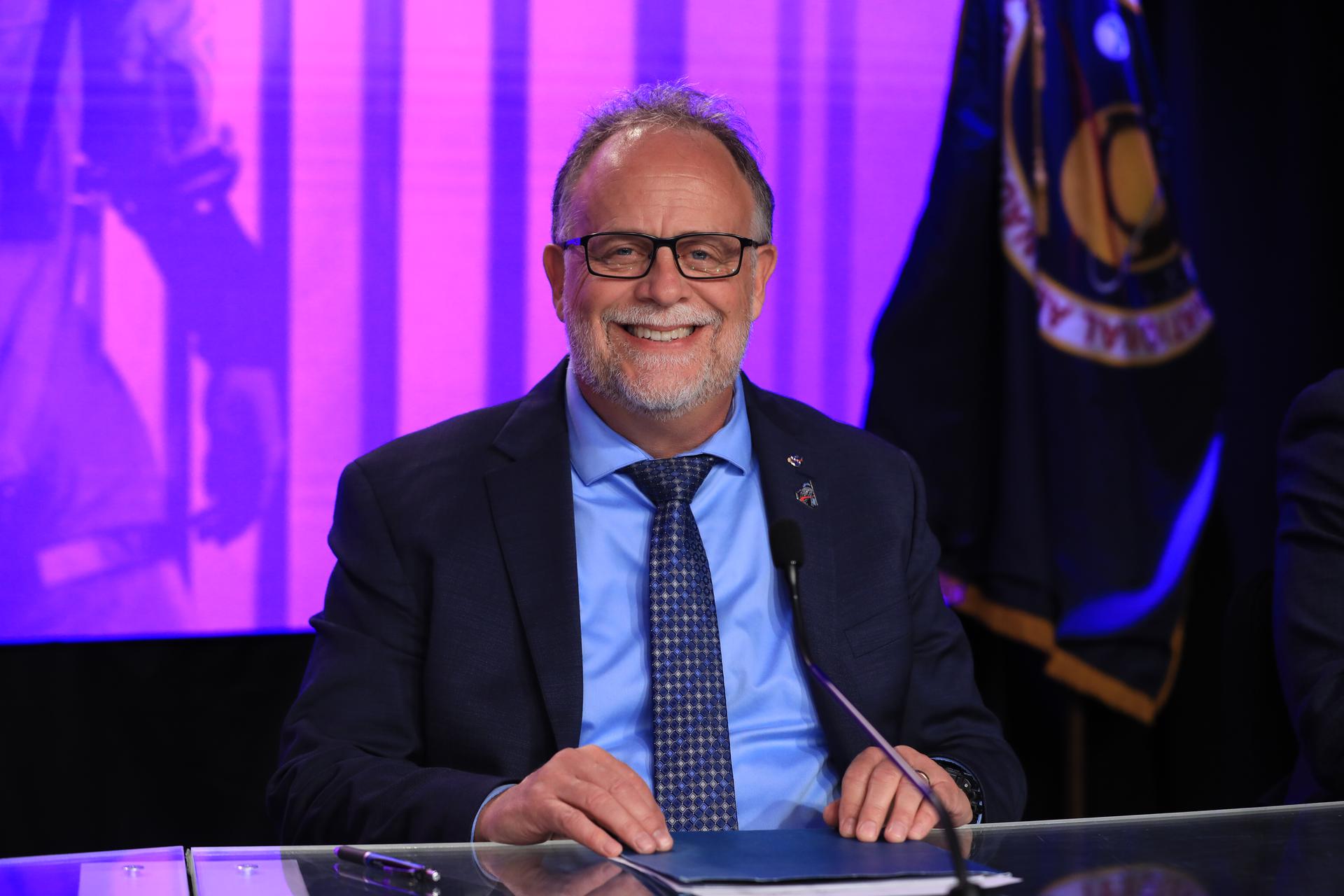
Shawn Quinn, manager, Exploration Ground Systems Program, participates in a post-Flight Readiness Review news conference for the Artemis II test flight inside the John Holliman Auditorium of the NASA News Center at the agency’s Kennedy Space Center in Florida on Thursday, March 12, 2026. The review is an assessment of the readiness of NASA’s SLS (Space Launch System) rocket and Orion spacecraft to support the Artemis II test flight as four astronauts journey around the Moon and return to Earth.
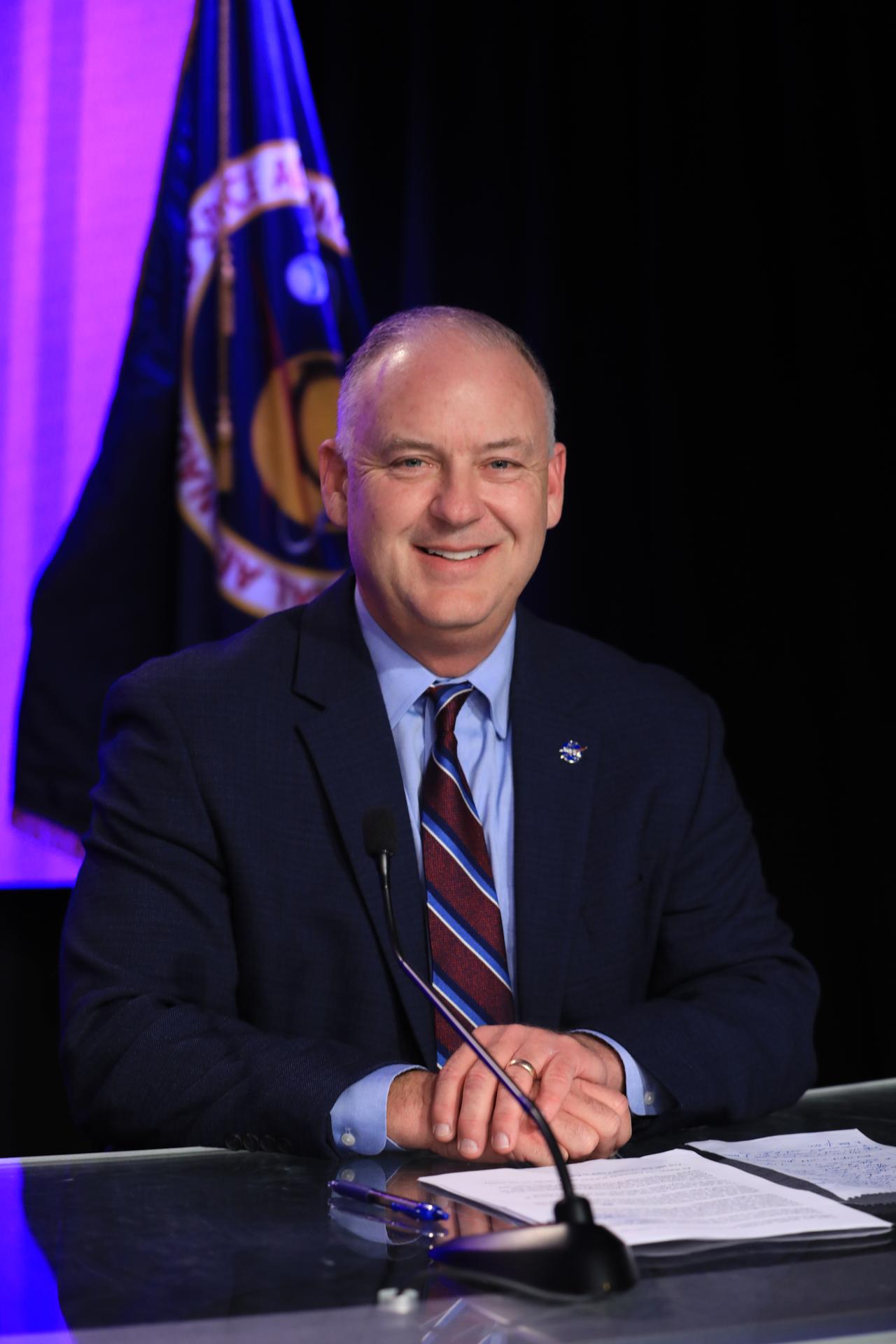
Norm Knight, director, Flight Operations Directorate, participates in a post-Flight Readiness Review news conference for the Artemis II test flight inside the John Holliman Auditorium of the NASA News Center at the agency’s Kennedy Space Center in Florida on Thursday, March 12, 2026. The review is an assessment of the readiness of NASA’s SLS (Space Launch System) rocket and Orion spacecraft to support the Artemis II test flight as four astronauts journey around the Moon and return to Earth.
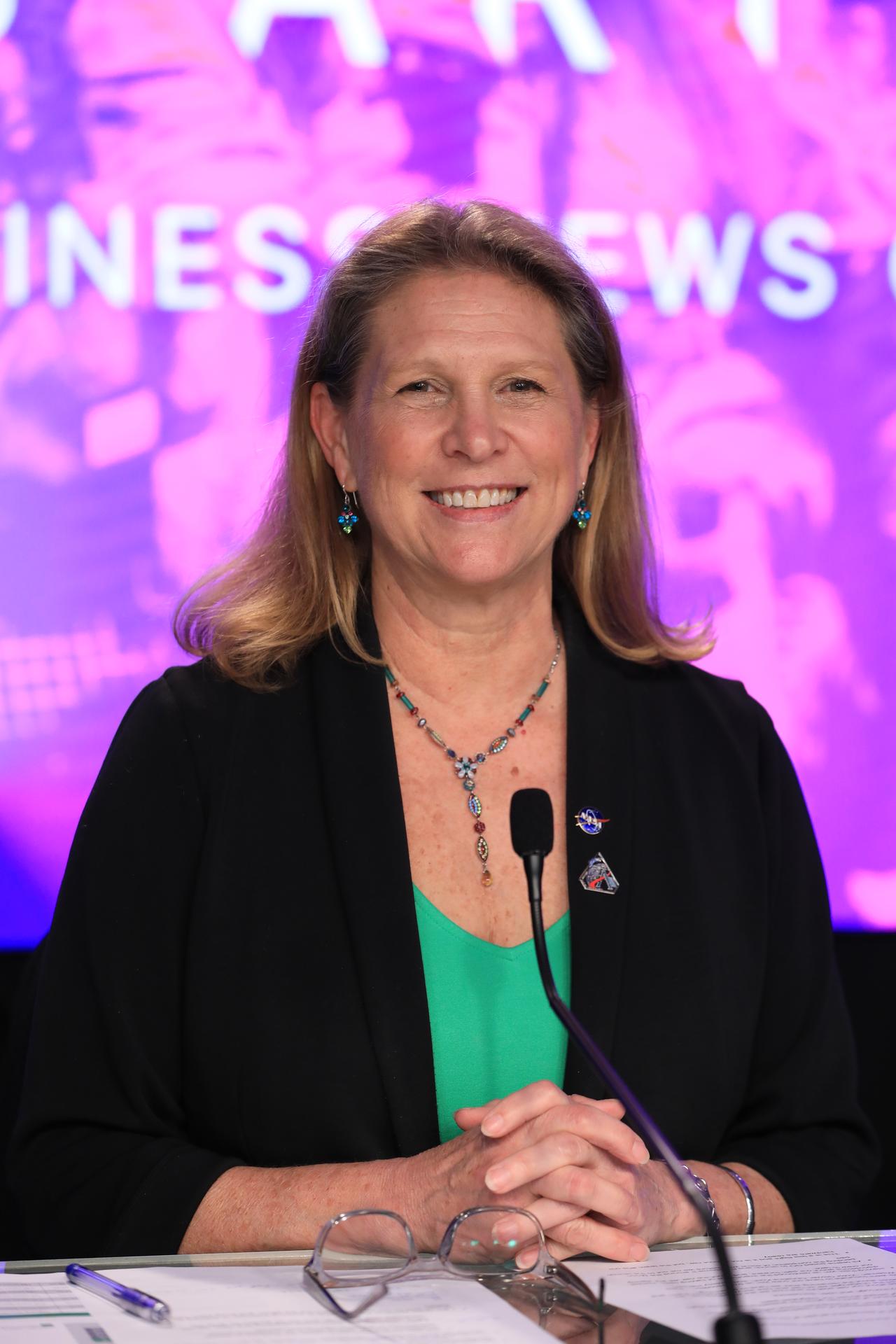
Lori Glaze, acting associate administrator, Exploration Systems Development Mission Directorate, participates in a post-Flight Readiness Review news conference for the Artemis II test flight inside the John Holliman Auditorium of the NASA News Center at the agency’s Kennedy Space Center in Florida on Thursday, March 12, 2026. The review is an assessment of the readiness of NASA’s SLS (Space Launch System) rocket and Orion spacecraft to support the Artemis II test flight as four astronauts journey around the Moon and return to Earth.

Rachel Kraft, NASA Communications, participates in a post-Flight Readiness Review news conference for the Artemis II test flight inside the John Holliman Auditorium of the NASA News Center at the agency’s Kennedy Space Center in Florida on Thursday, March 12, 2026. The review is an assessment of the readiness of NASA’s SLS (Space Launch System) rocket and Orion spacecraft to support the Artemis II test flight as four astronauts journey around the Moon and return to Earth.