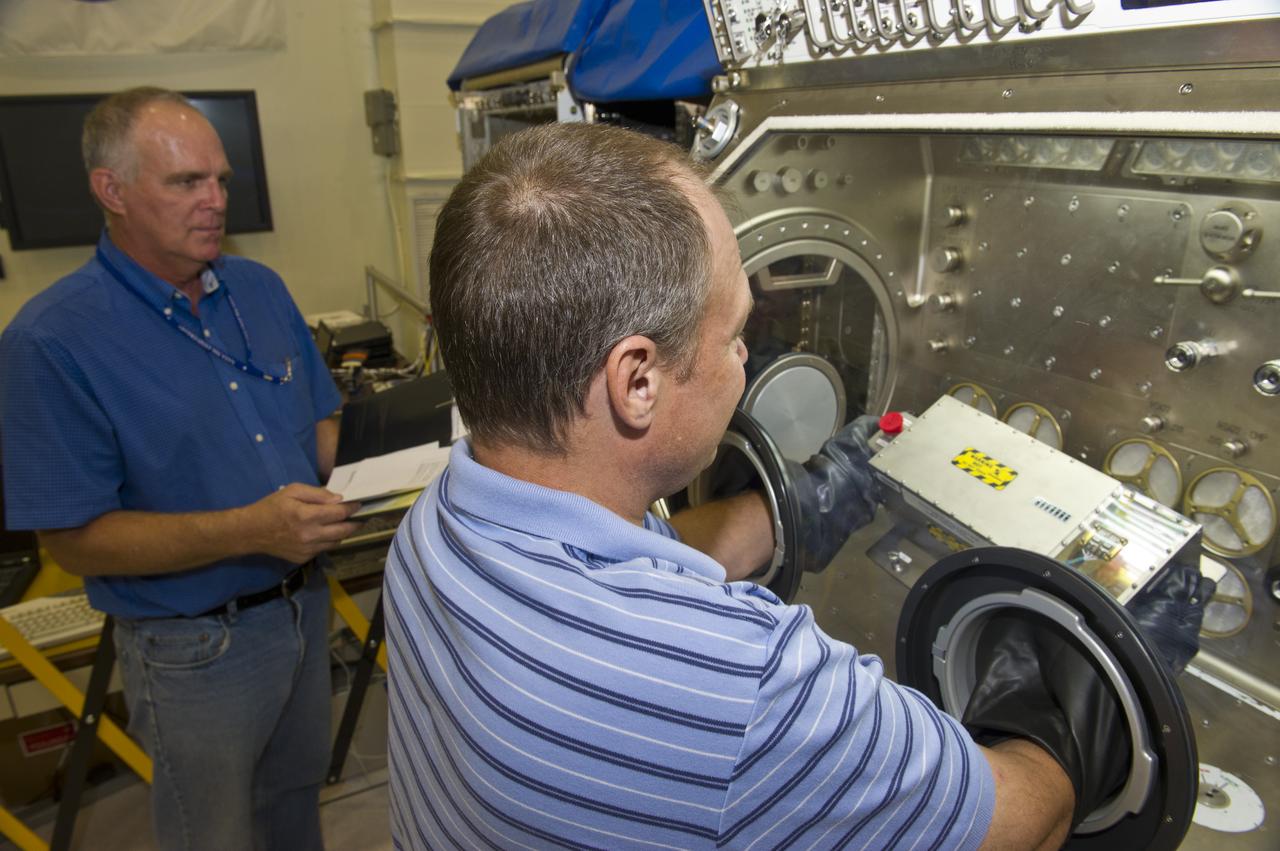
MSG TEAM MEMBERS JOHN WILSON, (L), AND PHILLIP BRYANT TEST AND INTEGRATE HARDWARE BEFORE SENDING TO ISS
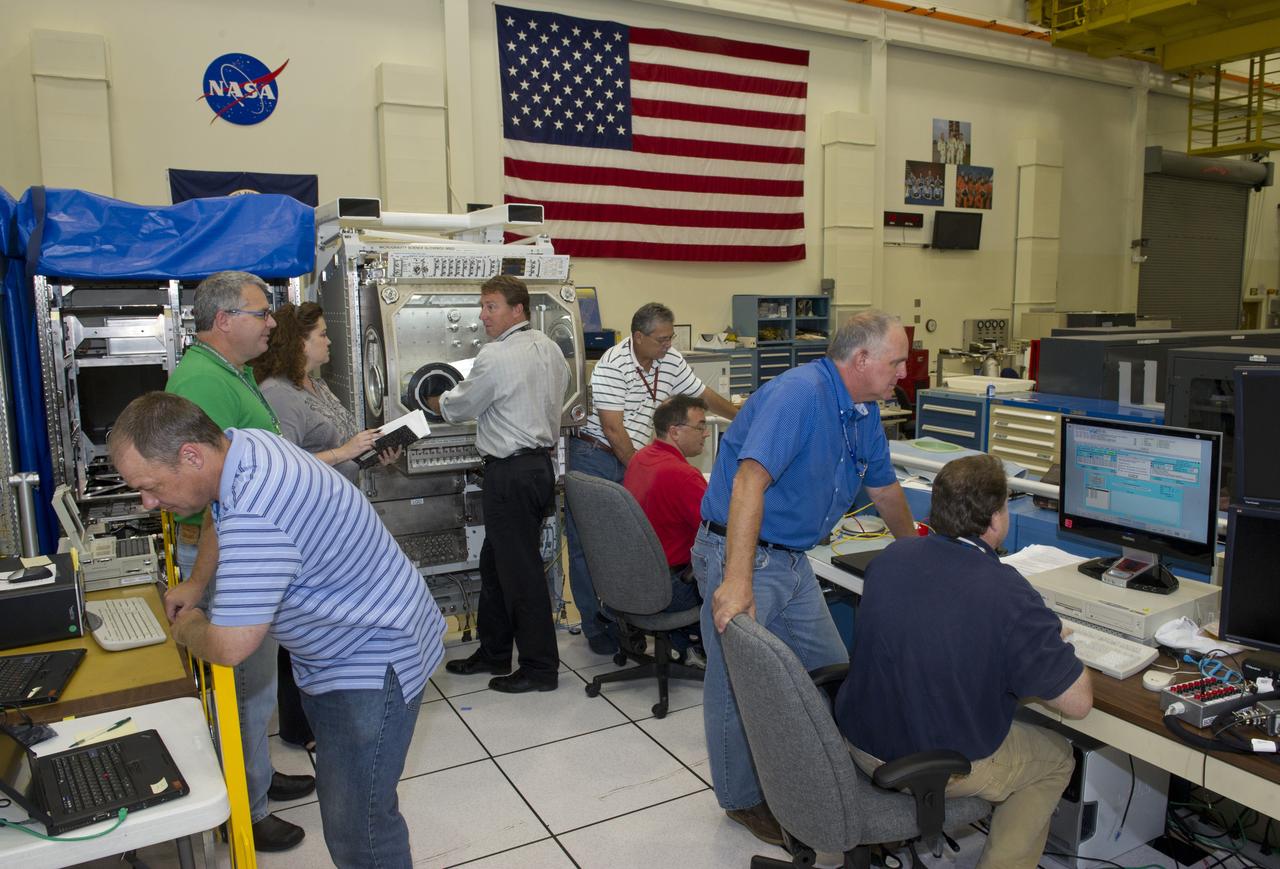
MSG TEAM MEMBERS AT WORK: (L TO R): PHILLIP BRYANT, CHRIS BUTLER, GINGER FLORES, REGGIE SPIVEY, NEAL SCOTT, ANDREW TYGIELSKI, JOHN WILSON, TIM BROACH
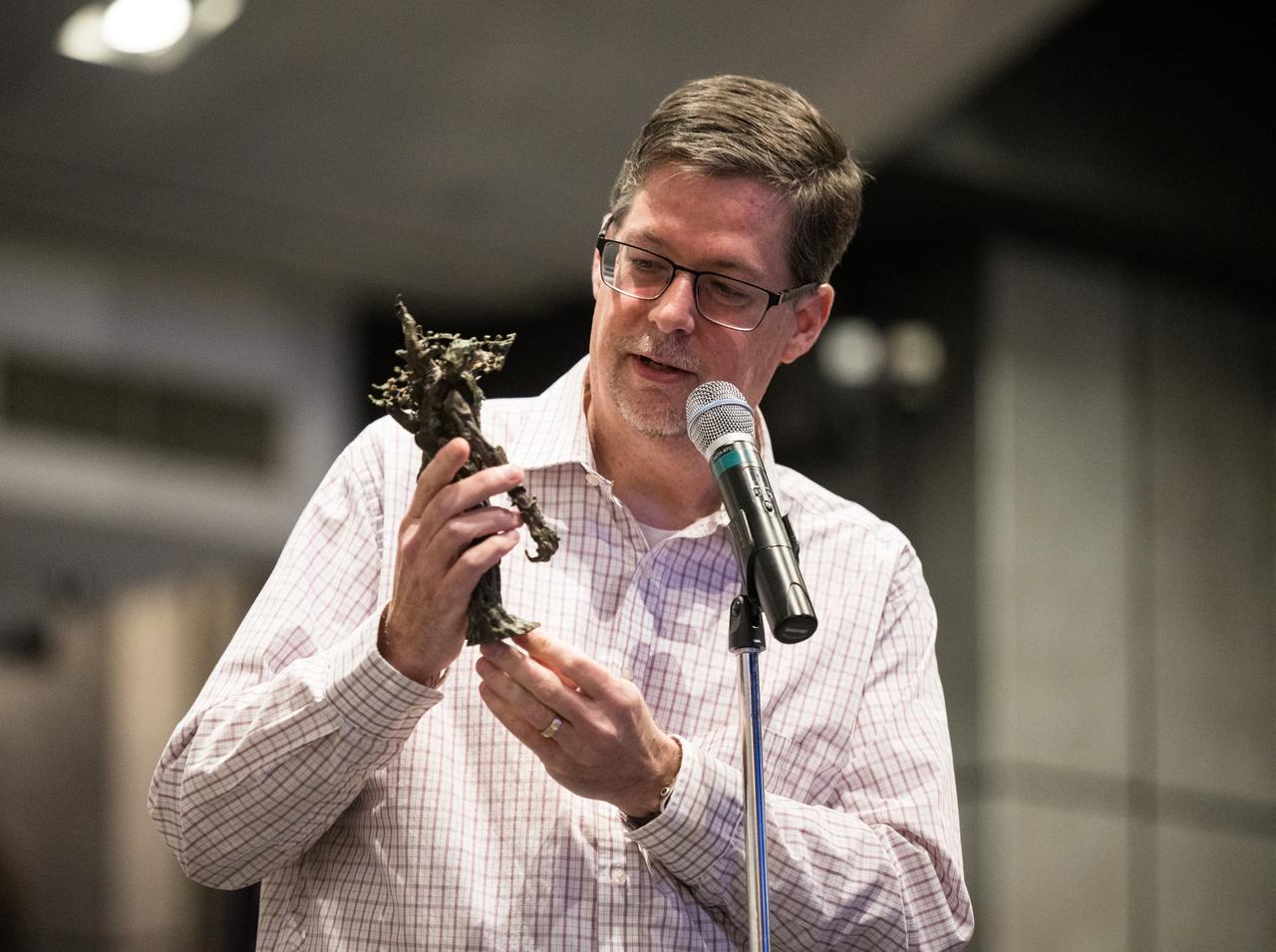
Jim Wilson, NASA public affairs officer, asks John Rhys-Davies, the actor best known for his roles as Gimli in The Lord of the Rings trilogy and Sallah in the Indiana Jones franchise, a question during an employee event, Friday, March 28, 2025 at the Mary W. Jackson NASA Headquarters building in Washington, DC. Photo Credit: (NASA/Aubrey Gemignani)
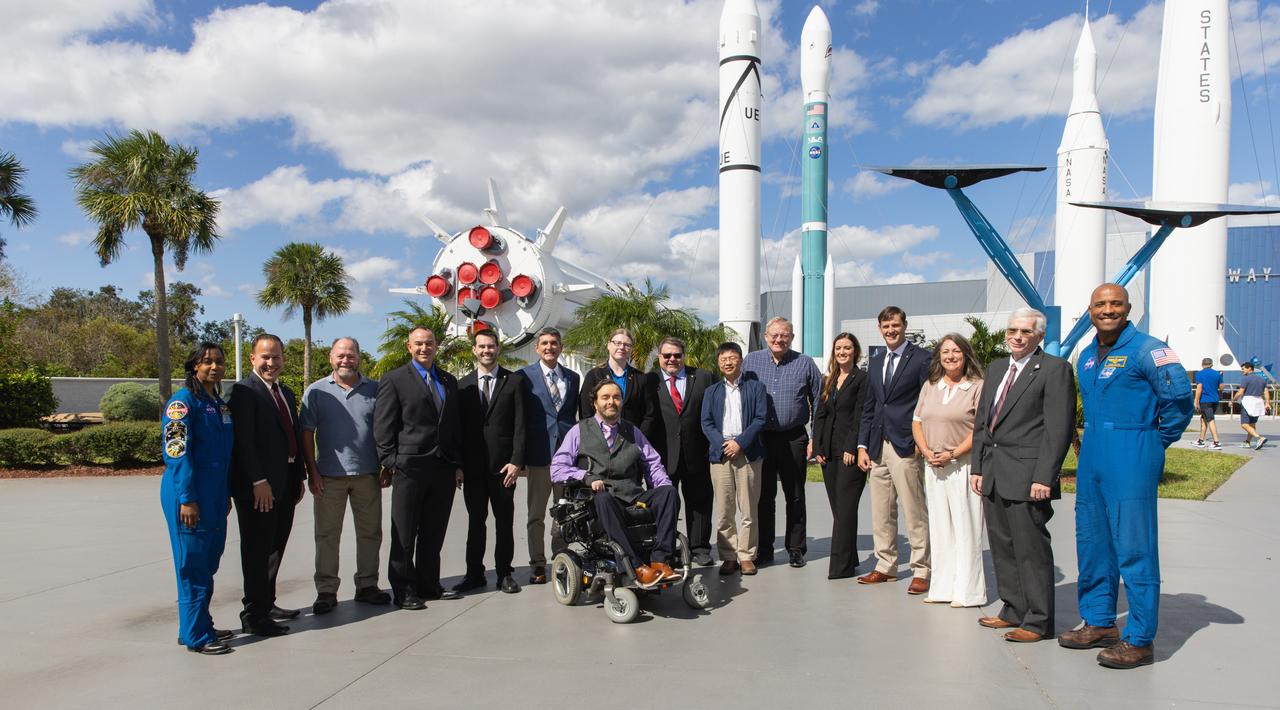
NASA astronauts Stephanie Wilson and Victor Glover pose with recipients of the Silver Snoopy award after the ceremony on Thursday, Oct. 17, at the Kennedy Space Center Visitor Complex in Florida. From left to right, those photographed include Wilson; Marcos Otero-Cruz, Defense Contract Management Agency; Mark Burton, Jacobs Technology; Kevin Vega, NASA Engineering; John Posey, NASA Engineering; Miles Ashley, NASA Engineering; Jamie Szafran, NASA Engineering; Paul Kuracz, NASA Engineering; Wilson Zheng, Jacobs Technology; Mark Dykstra, Defense Contract Management Agency; Elizabeth Cook, Safety and Mission Assurance; Dean Kendall, Jacobs Technology; Connie Lehan, NASA Engineering; Paul Janes, Jacobs Technology; Glover; and in front, Salim Nasser, NASA Engineering. The Silver Snoopy is part of NASA’s Space Flight Awareness Program, which recognizes outstanding job performances and contributions by civil servants and contract employees. It focuses on excellence in quality and safety in support of human spaceflight.
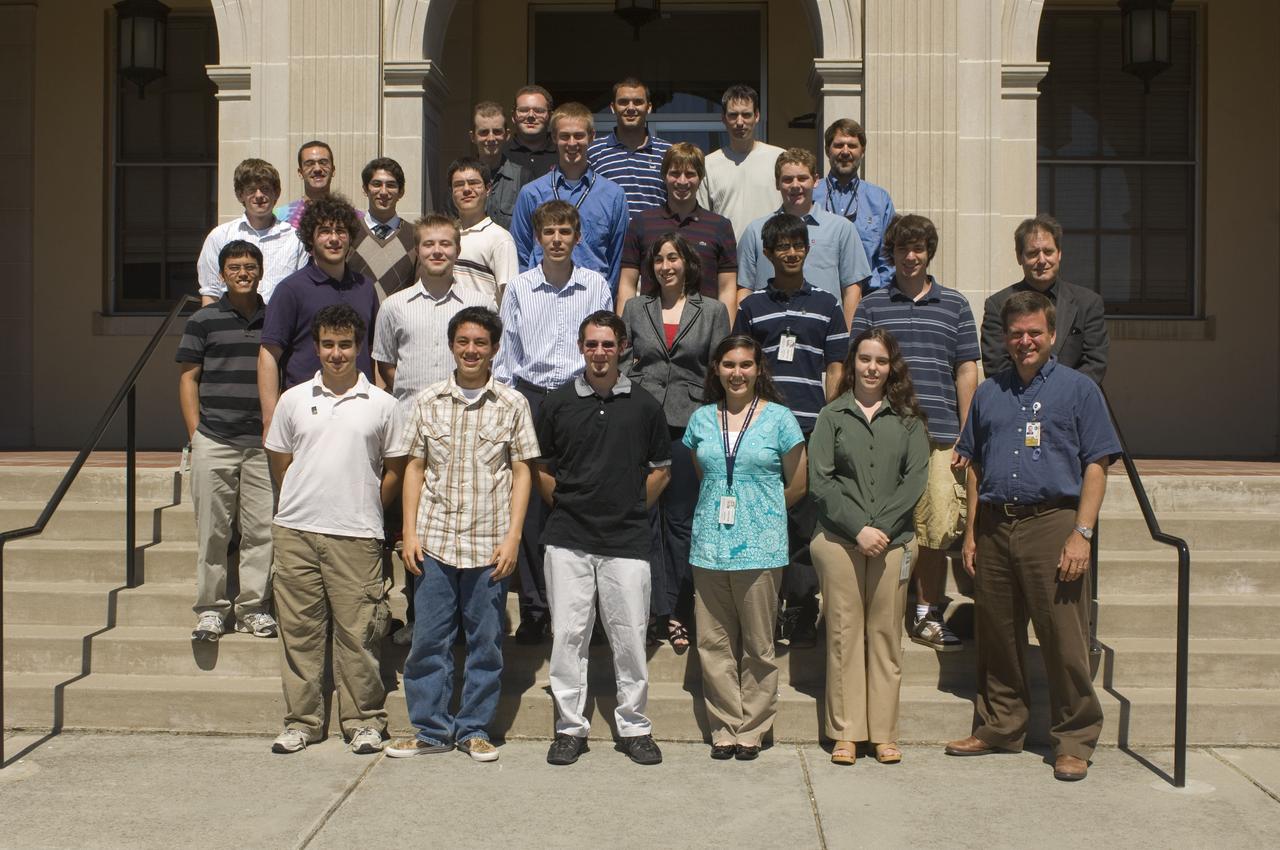
NASA Ames Robotics Academy Interns at the Lunar Science Institute (LSI) building 17 Interns: David Black, Michael Zwach, Guy Chriqui, Mark Mordarski Jr., Katy Levinson, Daniela Buchman, Scott Strutner, Patrick Crownover, Neil Bhateja, Michael Buchman, John Mueller, Michelle Grau, Ben Silver, Jacques Dolan, Alex Golec Windell Jones, Colin Wilson, Joe DeBlasio, Nick Hayes, Jordan Olive, William Shaw, Ames Education Dept., Mark Leon, Ames Robotics, Josh Weiner, jack Biesiadecki, Andrew Pilloud
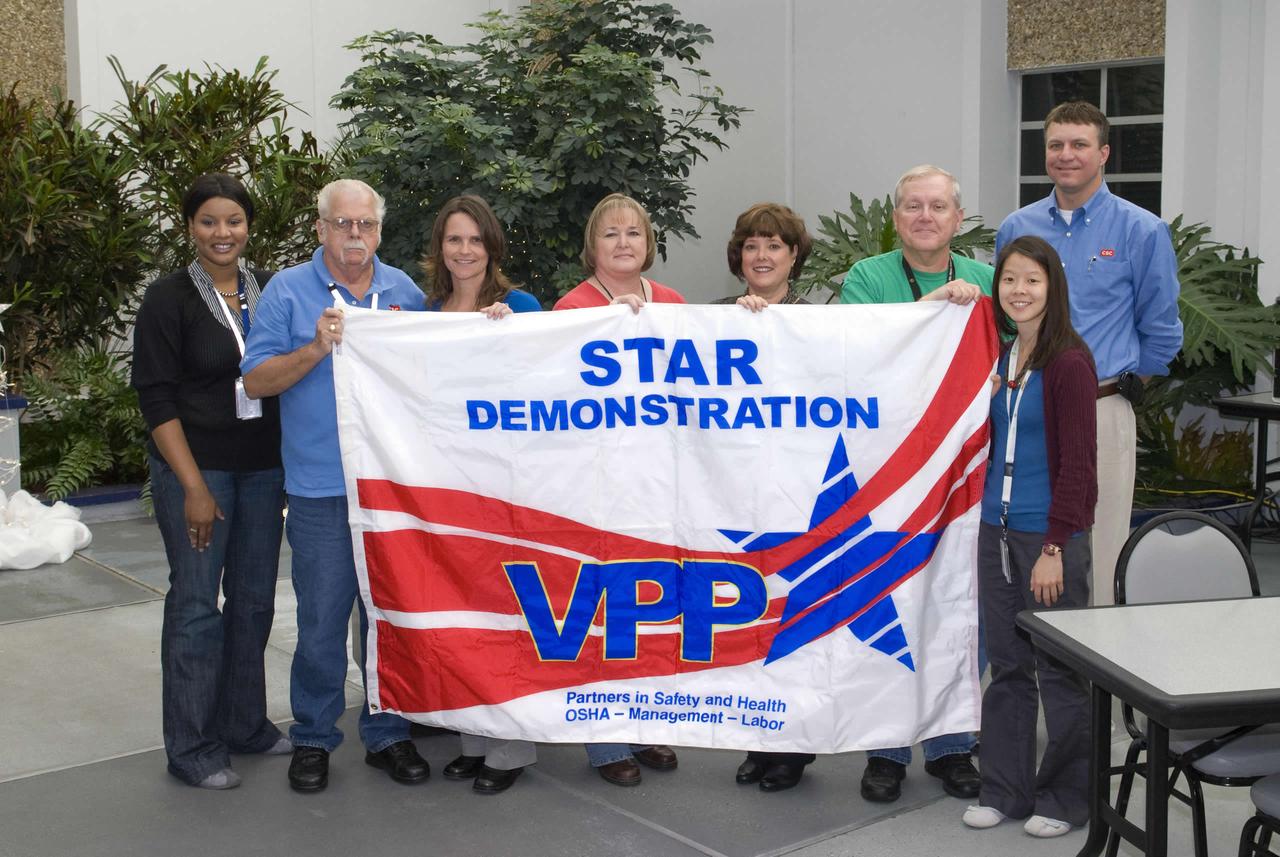
CSC Inc. at NASA's John C. Space Center was presented a Voluntary Protection Programs (VPP) Star Demonstration banner by the Occupational Safety and Health administration (OSHA) during a Dec. 9 ceremony. From left, CSC Employee Safety Committee members LaSonya Pulliam (l to r), Jim Sever, Stacy Brunson, Debbie Duke, Sheliah Wilson, Fred Voss and Beth Nguyen, and CSC Program Manager Tony Lisotta received the banner. OSHA established VPP in 1982 as a proactive safety management model so organizations and their employees could be recognized for excellence in safety and health.
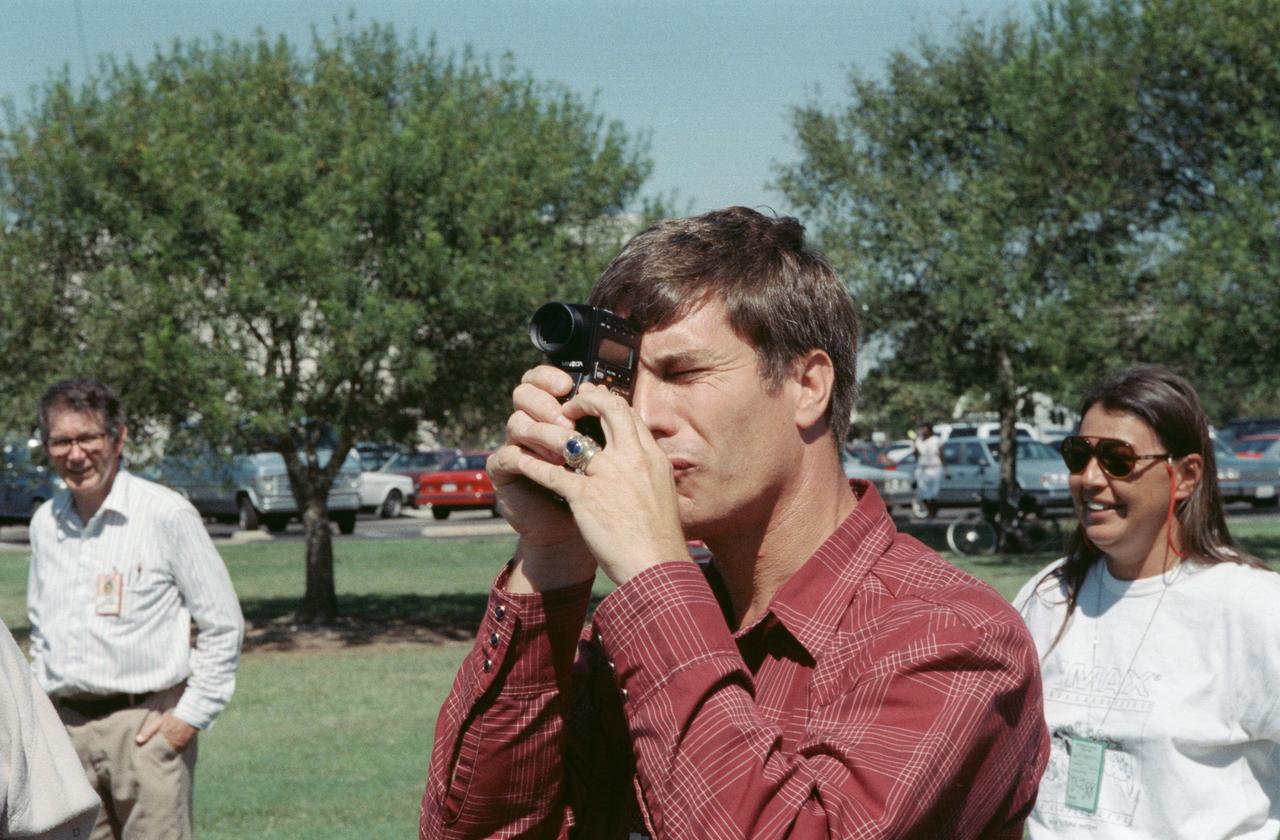
S88-52476 (8 Nov 1988) --- John E. Blaha, STS-29 pilot, gets in some training on the operation of one of the payloads for his upcoming spaceflight aboard Discovery. The payload is an Imax motion-picture camera, hardware of which is out of frame here. Blaha uses a light meter to get a reading before operating the camera in a practice run. The crew met with Imax personnel on the JSC grounds to practice using the motion-picture camera, making its first post-Challenger trip into space. Phyllis Wilson with Imax is at far right. The payload flew on a number of earlier STS flights.
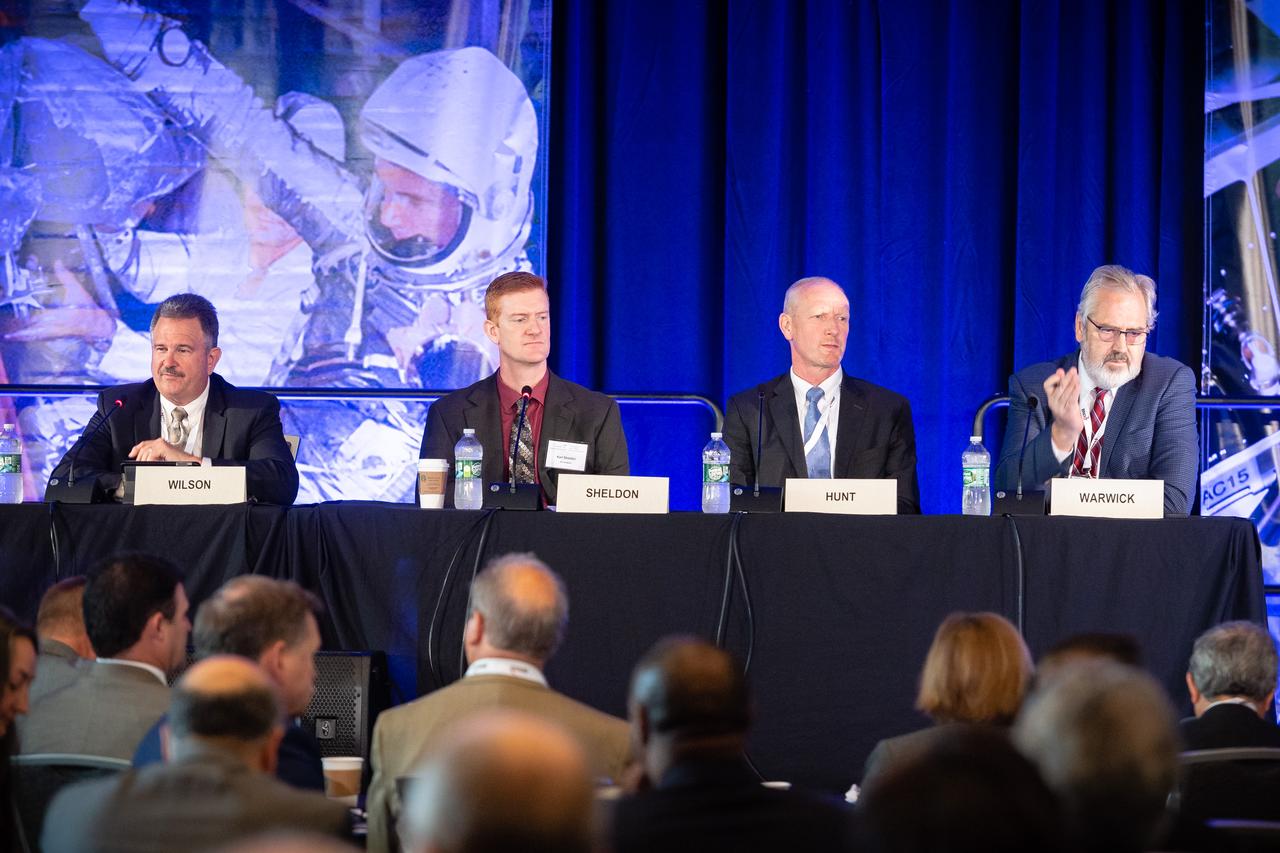
The inaugural Glenn Symposium focused on advancements in aerospace technology including power and propulsion, autonomy and communications, low boom supersonics, hypersonics, and more. Discussion also encompassed humans returning to the moon, including challenges associated with the 2024 mission.
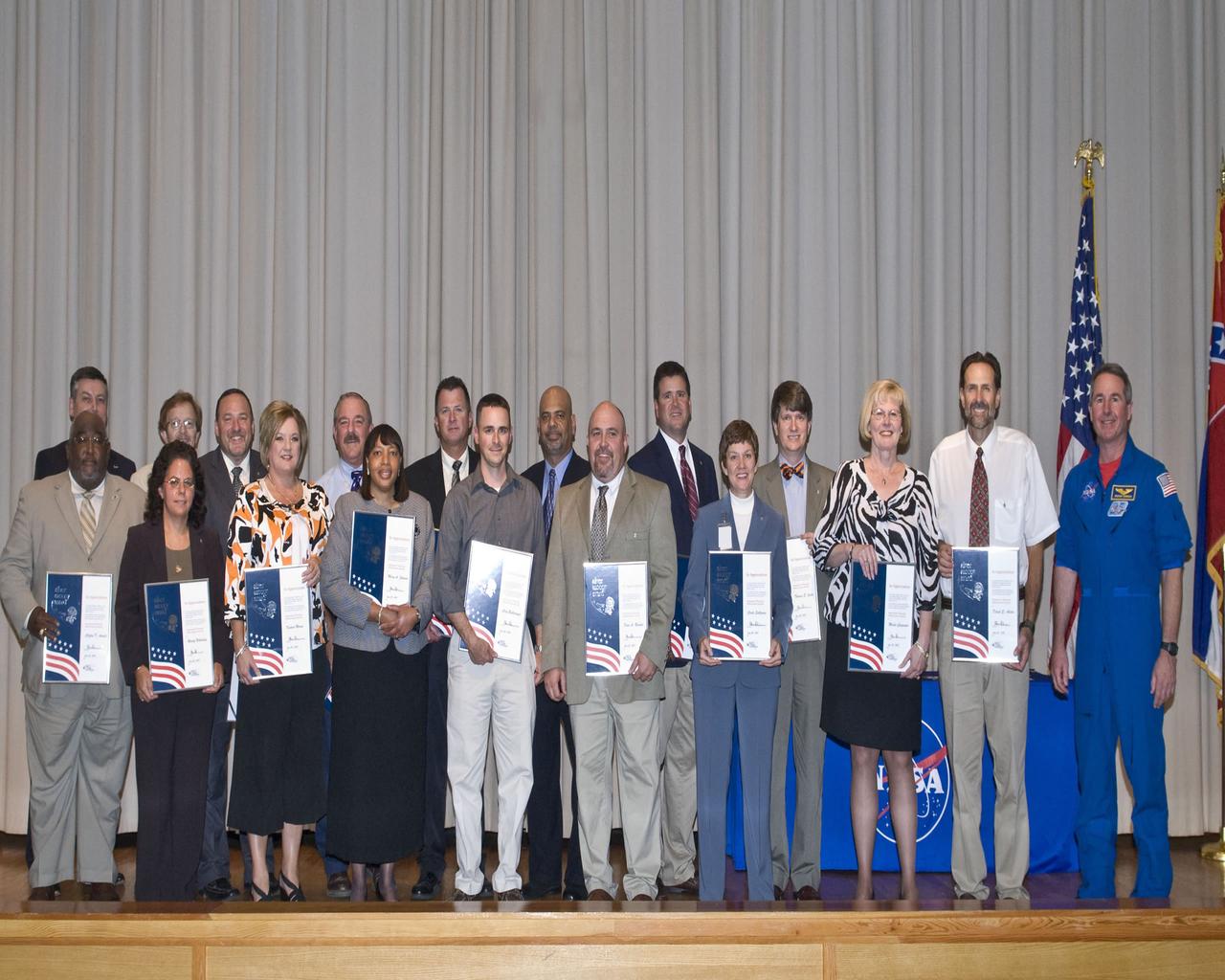
NASA's John C. Stennis Space Center Director Patrick Scheuermann and astronaut Steve Robinson stand with recipients of the 2010 Silver Snoopy awards following a June 23 ceremony. Sixteen Stennis employees received the astronauts' personal award, which is presented by a member of the astronaut corps representing its core principles for outstanding flight safety and mission success. This year's recipients and ceremony participants were: (front row, l to r): Cliff Arnold (NASA), Wendy Holladay (NASA), Kendra Moran (Pratt & Whitney Rocketdyne), Mary Johnson (Jacobs Technology Facility Operating Services Contract group), Cory Beckemeyer (PWR), Dean Bourlet (PWR), Cecile Saltzman (NASA), Marla Carpenter (Jacobs FOSC), David Alston (Jacobs FOSC); (back row, l to r) Scheuermann, Don Wilson (A2 Research), Tim White (NASA), Ira Lossett (Jacobs Technology NASA Test Operations Group), Kerry Gallagher (Jacobs NTOG); Rene LeFrere (PWR), Todd Ladner (ASRC Research and Technology Solutions) and Thomas Jacks (NASA).
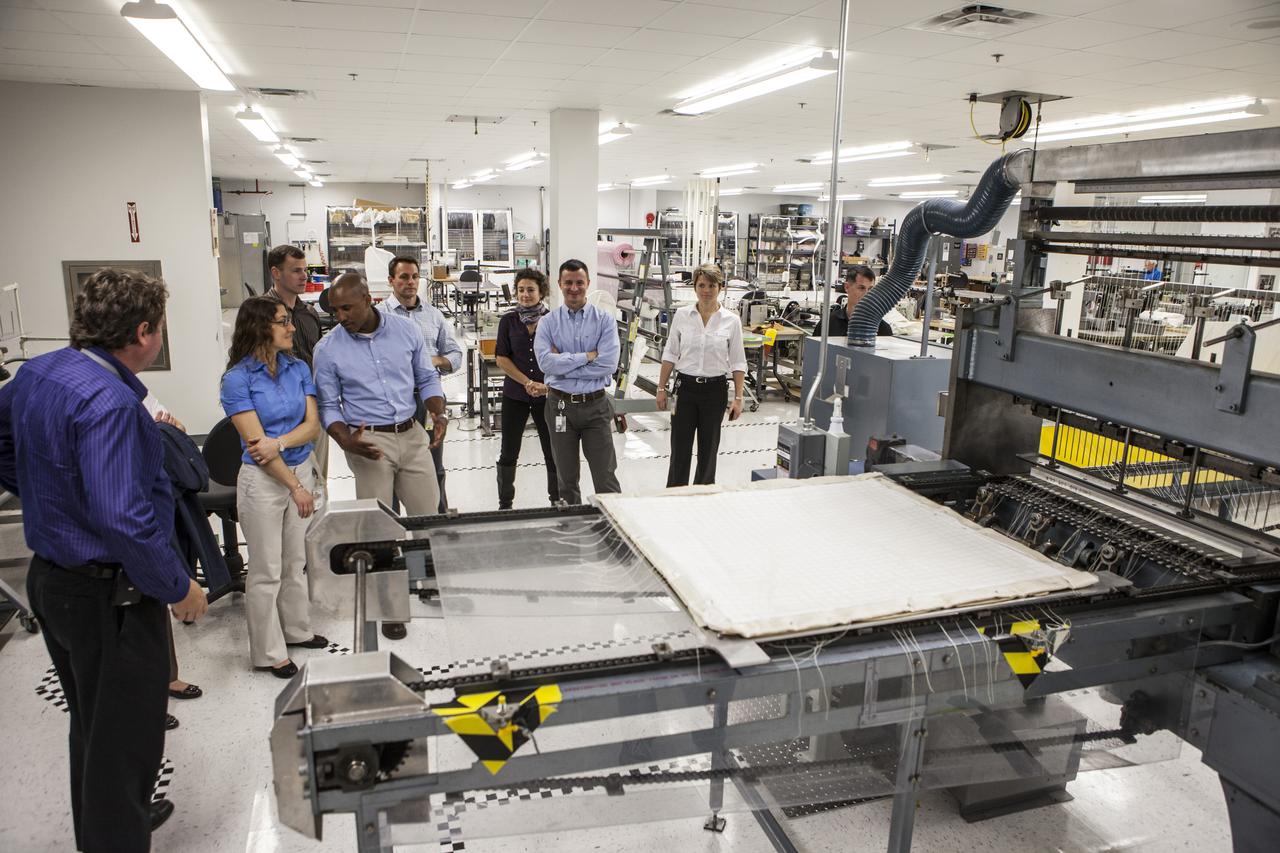
CAPE CANAVERAL, Fla. -- In the Thermal Protection System Facility NASA's Kennedy Space Center in Florida, agency astronaut candidates are briefed on thermal blankets being manufactured for agency spacecraft by TPSF manager, Martin Wilson of Jacobs Technology, far left. Participating in the briefing, from the left, are Christina Hammock, Tyler ‘Nick’ Hague, Victor Glover, John Cassada, Jessica Meir, Andrew Morgan and Anne McClain. Plans call for the Lockheed Martin-built Orion to launch atop a United Launch Alliance Delta IV Heavy rocket from Cape Canaveral Air Force Station on Exploration Flight Test EFT-1 later this year. The astronaut class of 2013 was selected by NASA after an extensive year-and-a-half search. The new group will help the agency push the boundaries of exploration and travel to new destinations in the solar system. To learn more about the astronaut class of 2013, visit: http://www.nasa.gov/astronauts/2013astroclass.html Photo credit: NASA/Kim Shiflett
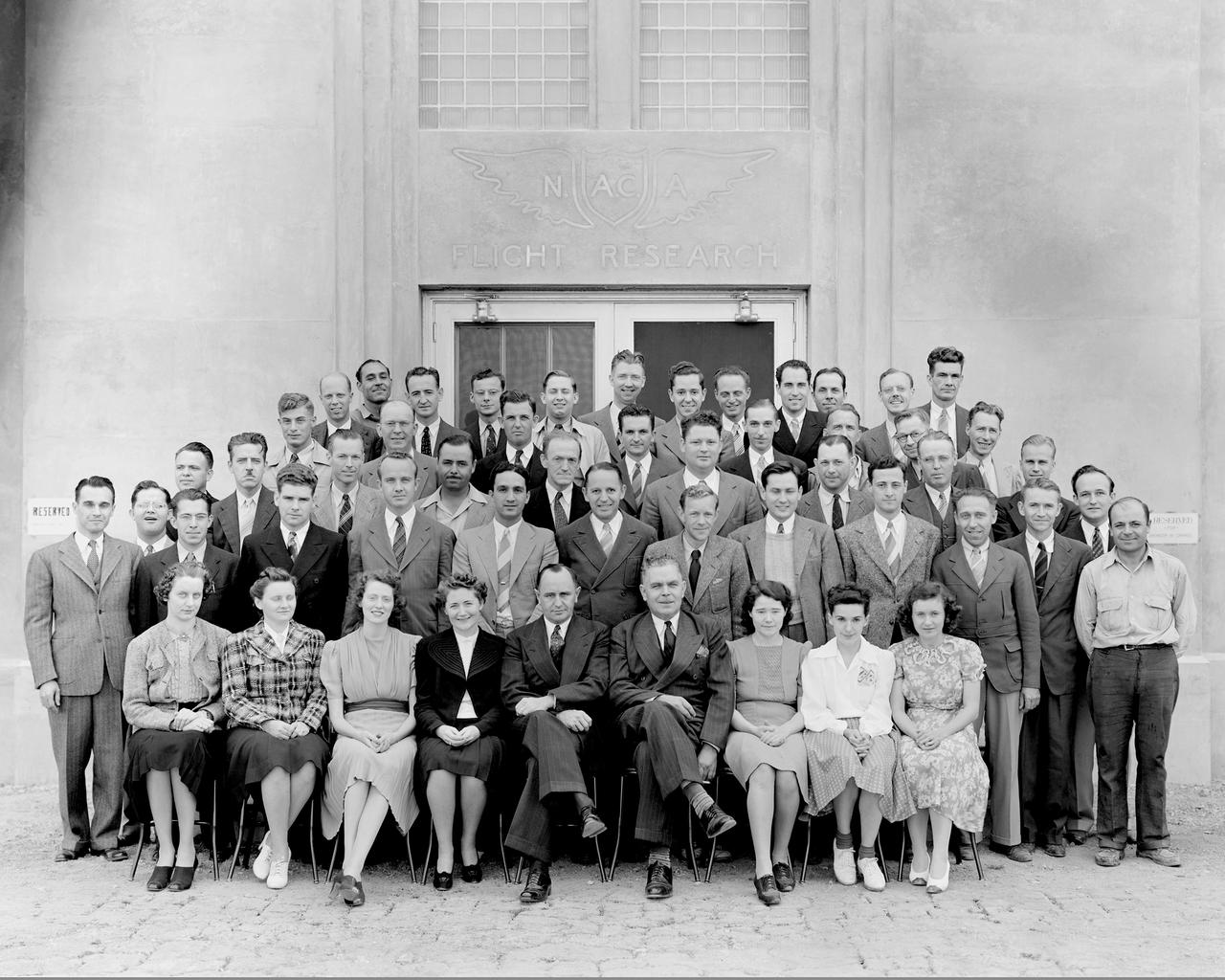
AMES STAFF STANDING IN FRONT OF THE NEW FLIGHT RESEARCH BUILDING. FROM LEFT TO RIGHT: FIRST ROW: M.U. NETTLE, M.A. WILLEY, M.H. DAVIES, M.W. ST. JOHN, S.J. DEFRANCE, E.R. SHARP, M.G. POOLE, V. BURGESS, R.A. PIPKIN. SECOND ROW: A.B. FREEMAN, T.W. O'BRIANT, L.T. VIDELL, C. F. WILSON, R.M. FOSTER, M.C. MASSA, M.J. HOOD, C. BIOLETTI, C.W. FRICK, W.G. VINCENTI, H.W. KIRSCHBAUM, L. A. RODERT, E.C. BRAIG, C. GERBO. THIRD ROW: R.E. BROWNING, E.H. WOOD, R HUGHES, G BULIFANT, J.V. KELLEY, H.J. ALLEN, J. P. HOUSTON, K.S. BURCHARD, M. A. GREENE, FOURTH ROW: A. G. BUCK, E.W. BETTS, R.E. BRAIG, H.J. GOETT, J.F. PARSONS, H.S. DUNLAP, L.E. MINDEN, R.J. CLARKE. FIFTH ROW: W.O. PETERSON, W. WALKER, C.H. HARVEY, J.C. DELANEY, T.W. MACOMBER, A.L. BLOCKER, N.K. DELANY, A.S. HERTZOG, R.R. NICKLE, P.T. PRIZLER, R.R. BENN, E.H.A. SCHNITKER.
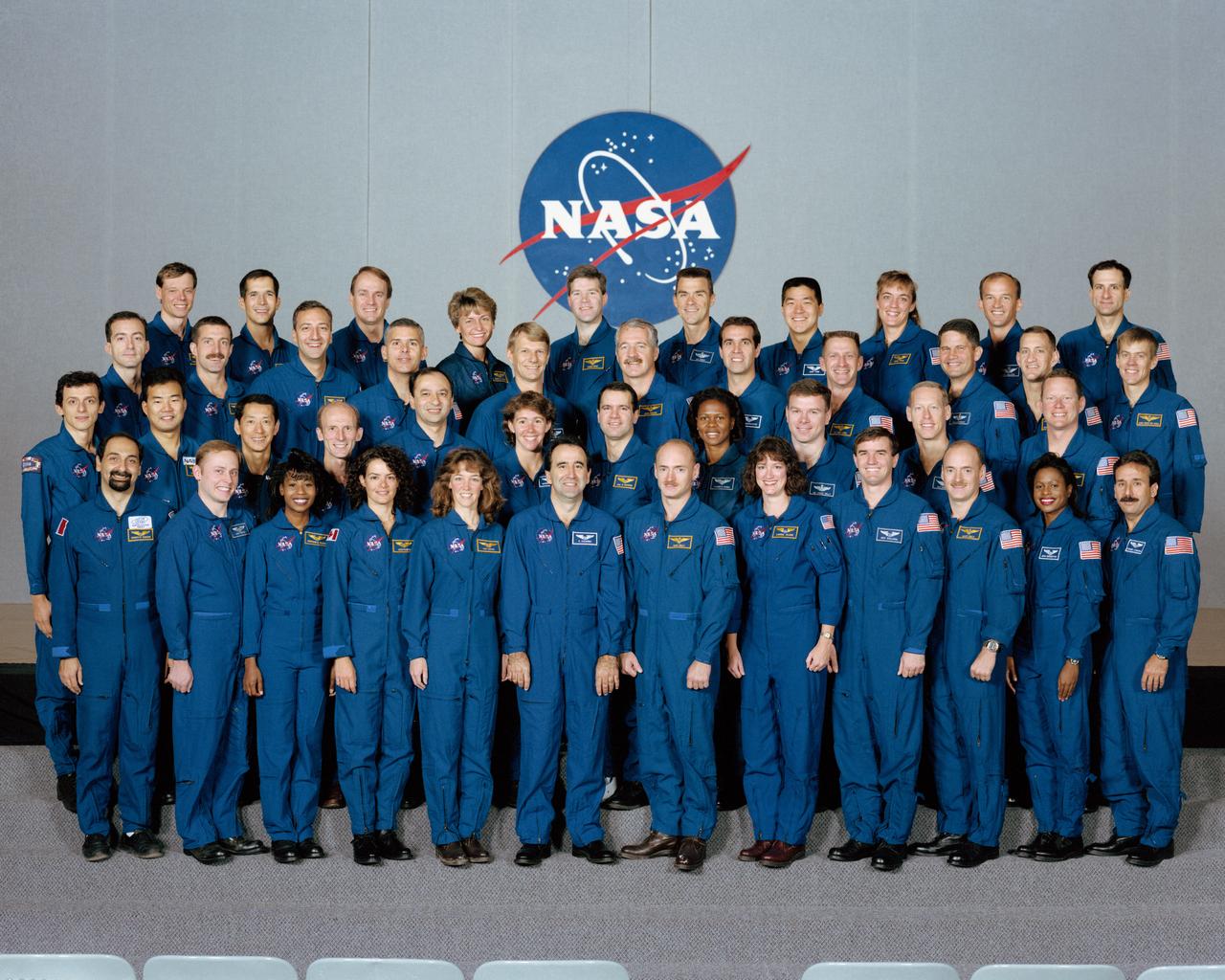
S96-18546 (5 Nov. 1996) --- Following their selection from among 2,400 applicants, the 44 astronaut candidates begin a lengthy period of training and evaluation at NASA's Johnson Space Center as they gather for their group portrait. This year?s class is the largest in the history of space shuttle astronauts and their early program predecessors. Ten pilots and 25 mission specialists make up the internationally diverse class. The international trainees represent the Canadian, Japanese, Italian, French, German and European space agencies. Back row ? from the left, Christer Fuglesang, John Herrington, Steve MacLean, Peggy Whitson, Stephen Frick, Duane Carey, Daniel Tani, Heidemarie Stefanyshyn-Piper, Jeffrey Williams and Donald Pettit. Second to back row ? from the left, Philippe Perrin, Daniel Burbank, Michael Massimino, Lee Morin, Piers Sellers, John Phillips, Richard Mastraccio, Christopher Loria, Paul Lockhart, Charles Hobaugh and William McCool. Second to front row ? from the left, Pedro Duque, Soichi Noguchi, Mamoru Mohri, Gerhard Thiele, Mark Polansky, Sandra Magnus, Paul Richards, Yvonne Cagle, James Kelly, Patrick Forrester and David Brown. Front row ? from the left, Umberto Guidoni, Edward Fincke, Stephanie Wilson, Julie Payette, Lisa Nowak, Fernando Caldeiro, Mark Kelly, Laurel Clark, Rex Walheim, Scott Kelly, Joan Higginbotham and Charles Camarda. Guidoni represents the Italian Space Agency (ASI). Fuglesang and Duque represent the European Space Agency (ESA). Mohri and Noguchi represent the Japanese Space Agency (NASDA). MacLean and Payette are with the Canadian Space Agency. Perrin is associated with the French Space Agency (CNES) and Thiele represents the German Space Agency (DARA). Photo credit: NASA or National Aeronautics and Space Administration
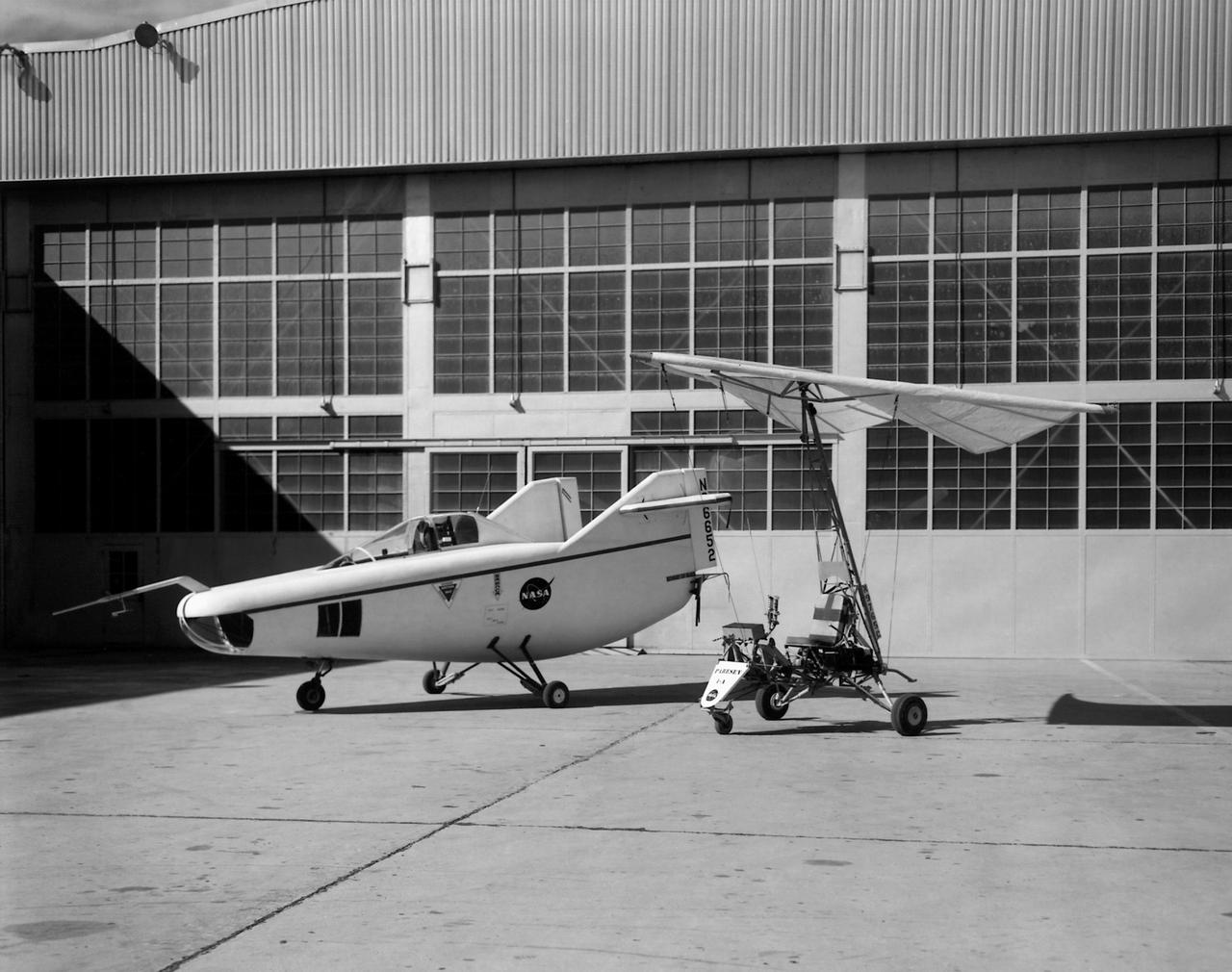
In this photo of the M2-F1 lifting body and the Paresev 1B on the ramp, the viewer sees two vehicles representing different approaches to building a research craft to simulate a spacecraft able to land on the ground instead of splashing down in the ocean as the Mercury capsules did. The M2-F1 was a lifting body, a shape able to re-enter from orbit and land. The Paresev (Paraglider Research Vehicle) used a Rogallo wing that could be (but never was) used to replace a conventional parachute for landing a capsule-type spacecraft, allowing it to make a controlled landing on the ground.