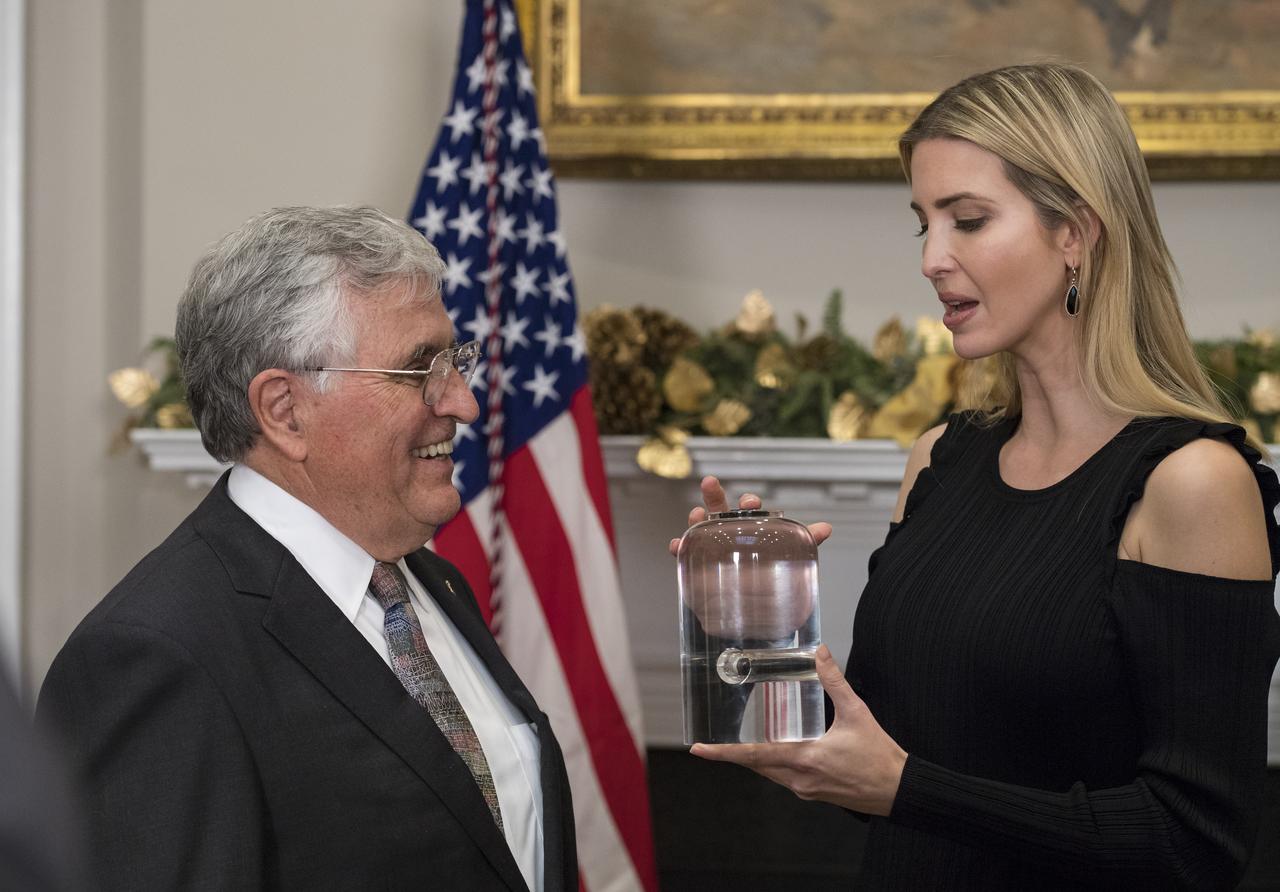
Ivanka Trump, advisor to President Donald Trump, touches a sample from the moon that former astronaut Jack Schmitt, left, collected during the Apollo 17 mission, just after President Trump signed Space Policy Directive - 1, directing NASA to return to the moon, in the Roosevelt room of the White House in Washington, Monday, Dec. 11, 2017. Photo Credit: (NASA/Aubrey Gemignani)
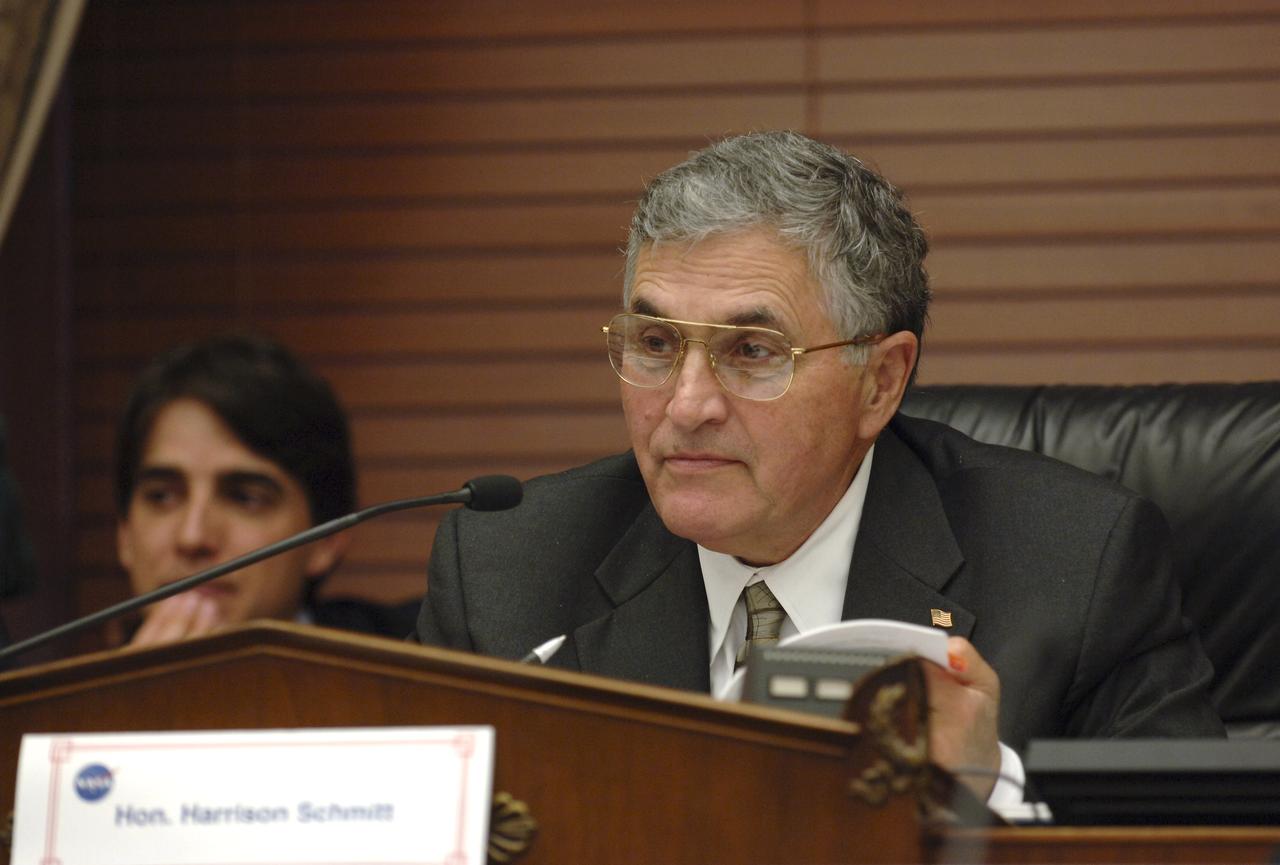
Former Senator and Apollo astronaut Harrison H. "Jack" Schmitt presides over the NASA Advisory Council meeting at the Rayburn House Office Building, Tuesday, Nov. 29, 2005, in Washington. Photo Credit: (NASA/Bill Ingalls)
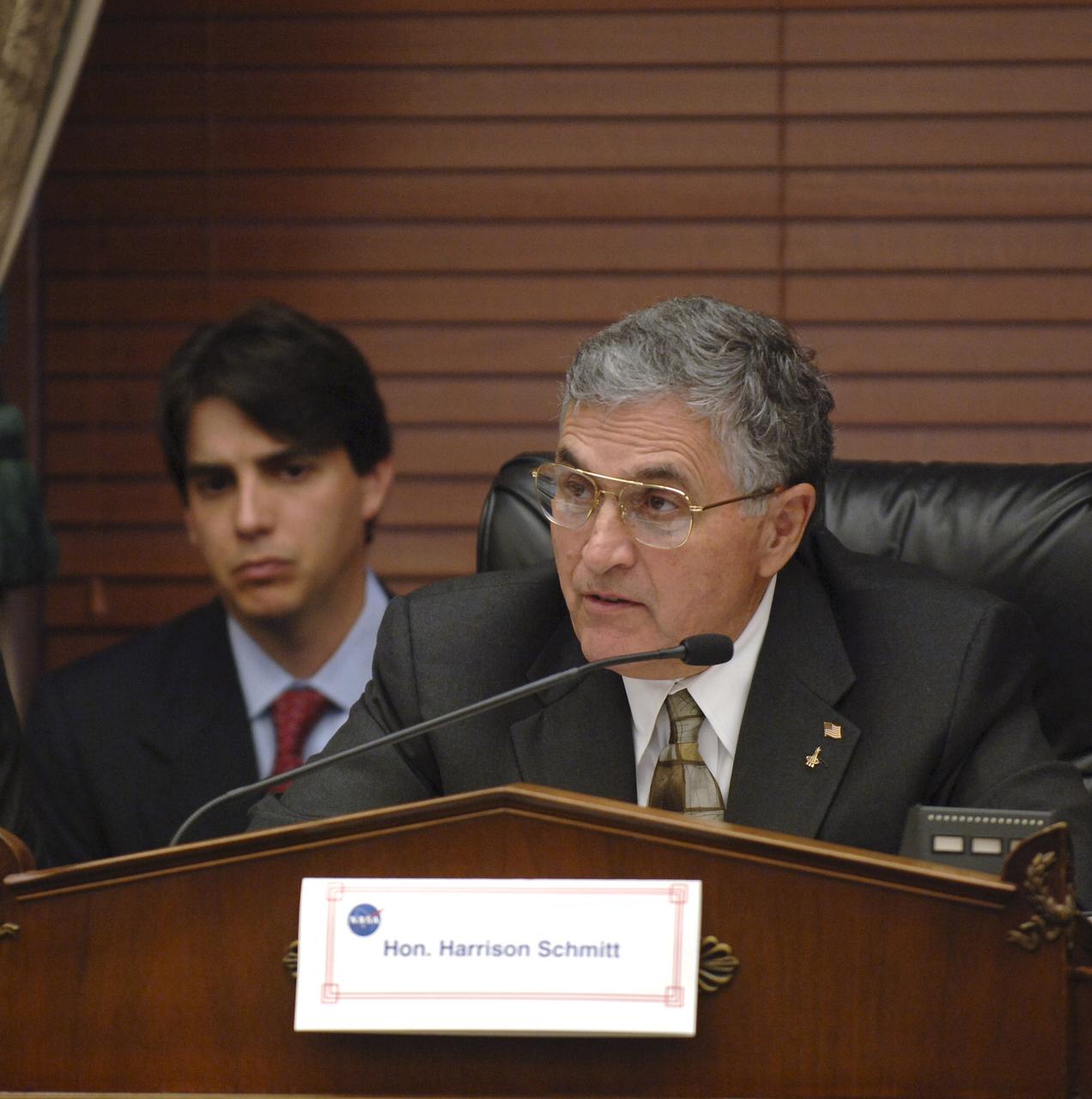
Former Senator and Apollo astronaut Harrison H. "Jack" Schmitt presides over the NASA Advisory Council meeting at the Rayburn House Office Building, Tuesday, Nov. 29, 2005, in Washington. Photo Credit: (NASA/Bill Ingalls)
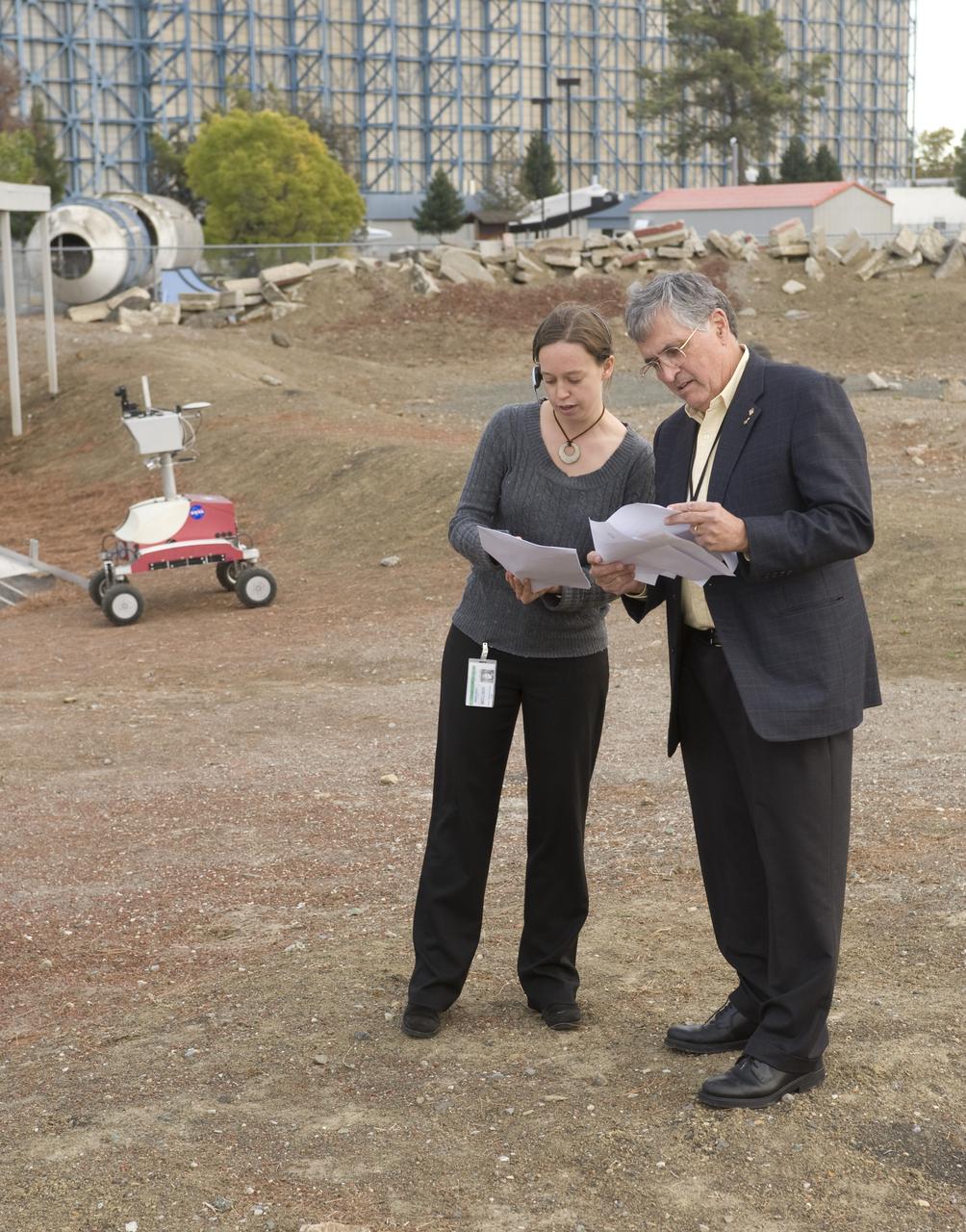
K-10 (red) robot operations tests at Marscape (Ames Mars Yard) with remote operations from Ames Future Flight Centeral (FFC) Simulator, with Melissa Rice and Harrison 'Jack' Schmitt (Apollo 17 Astronaut)
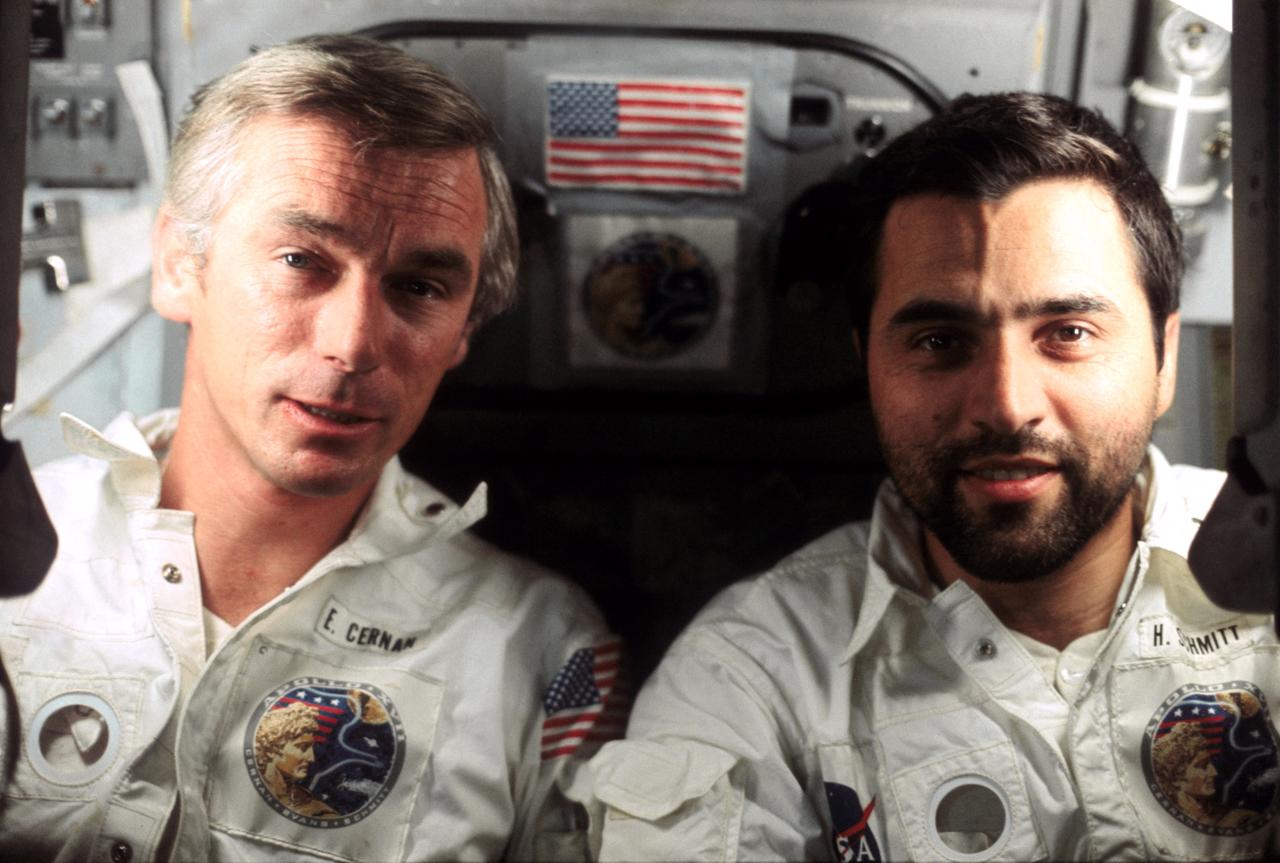
AS17-163-24148 (7-19 Dec. 1972) --- Astronaut Eugene A. Cernan (left) and scientist-astronaut Harrison H. "Jack" Schmitt are photographed by the third crew man aboard the Apollo 17 spacecraft during the final lunar landing mission in NASA's Apollo program. Astronaut Ronald E. Evans, command module pilot, took this picture. Cernan was the mission commander. Schmitt served as the lunar module pilot.
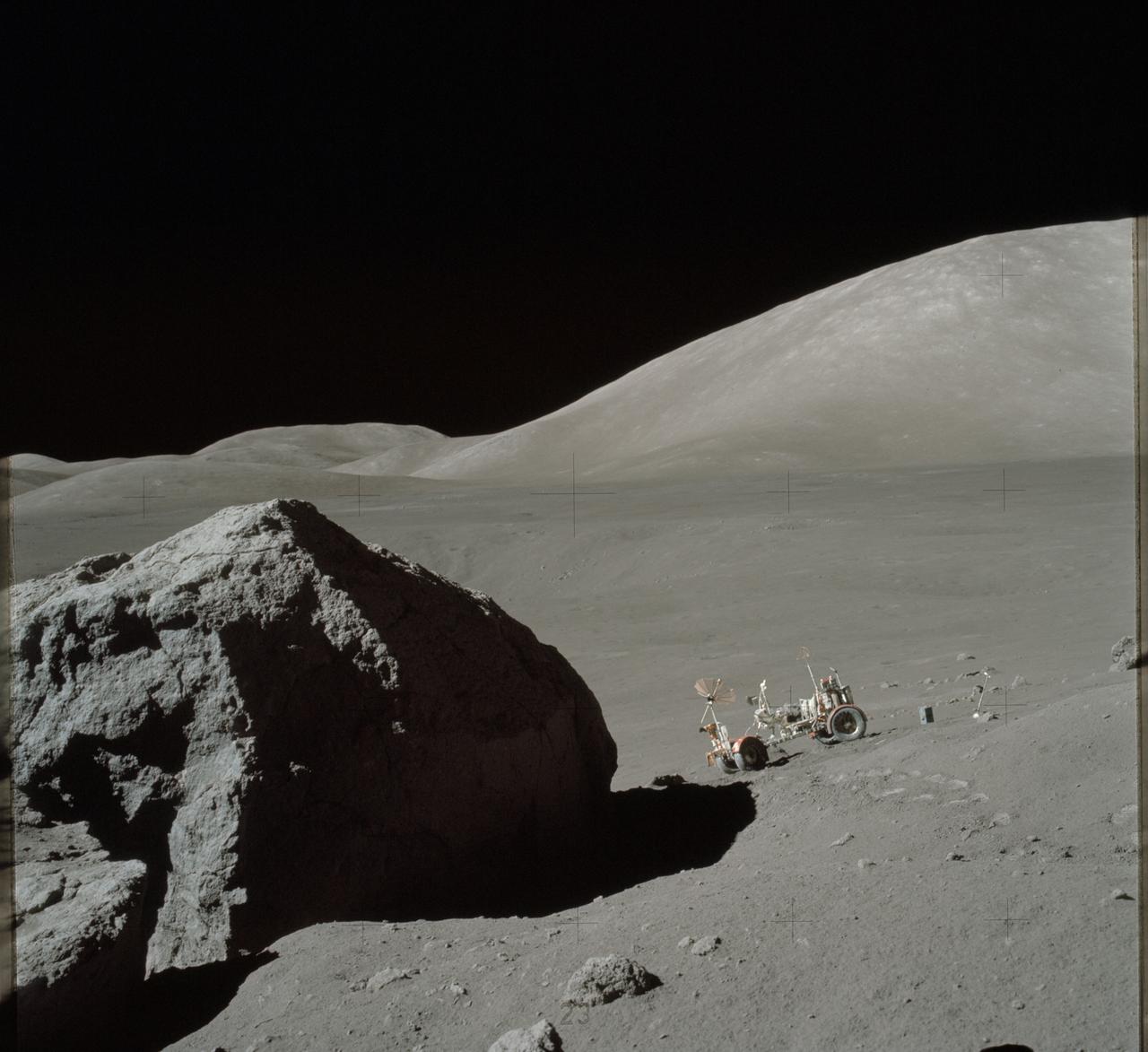
AS17-140-21494 (13 Dec. 1972) --- This view shows the Lunar Roving Vehicle (LRV) parked by an outcrop of rocks by astronauts Eugene A. Cernan and Harrison H. (Jack) Schmitt during their visit to extravehicular activity Station 6 (Henry Crater).
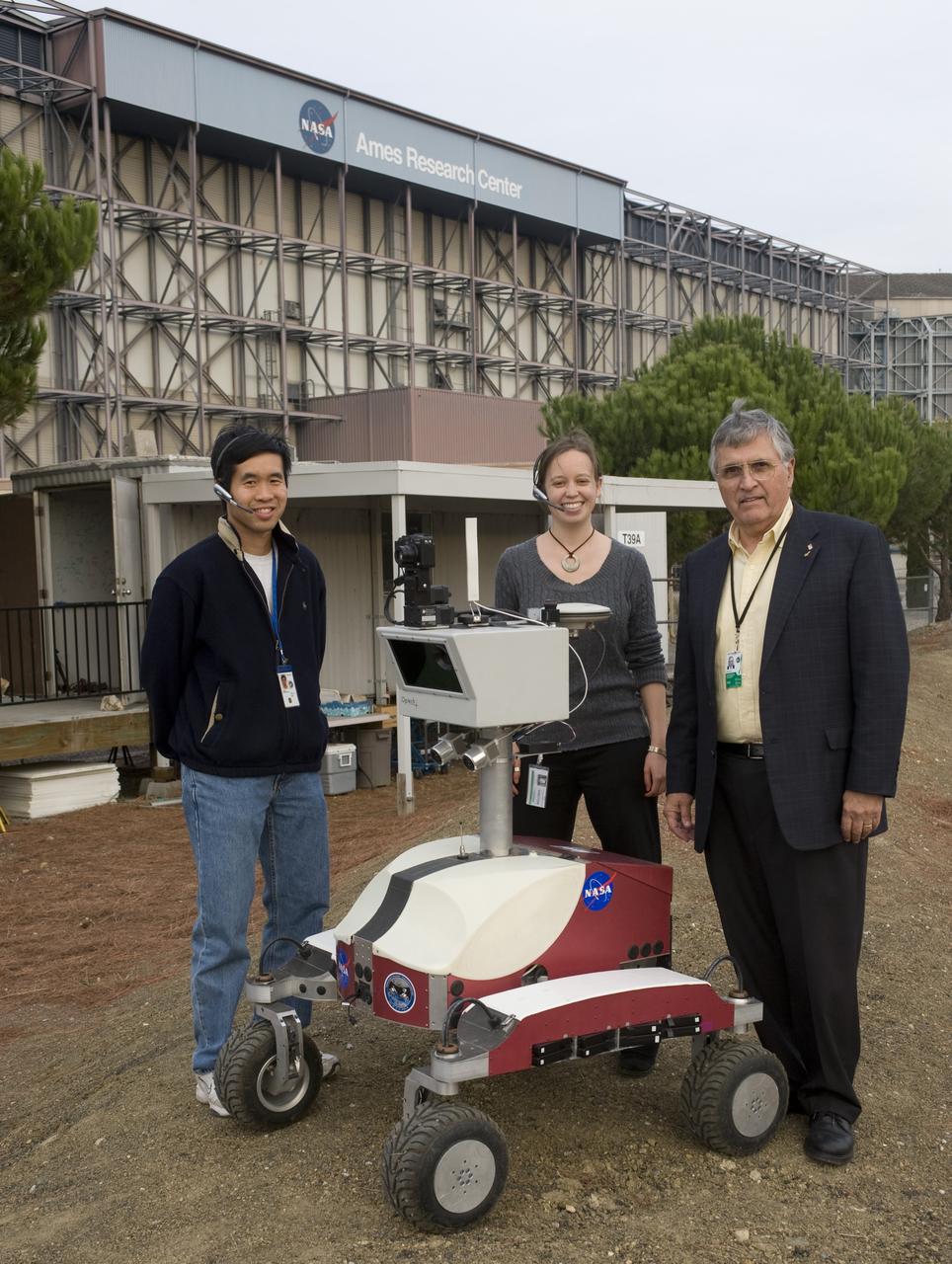
K-10 (red) robot operations tests at Marscape (Ames Mars Yard) with remote operations from Ames Future Flight Centeral (FFC) Simulator, L-R; Terry Fong, Melissa Rice and Harrison 'Jack' Schmitt (Apollo 17 Astronaut).
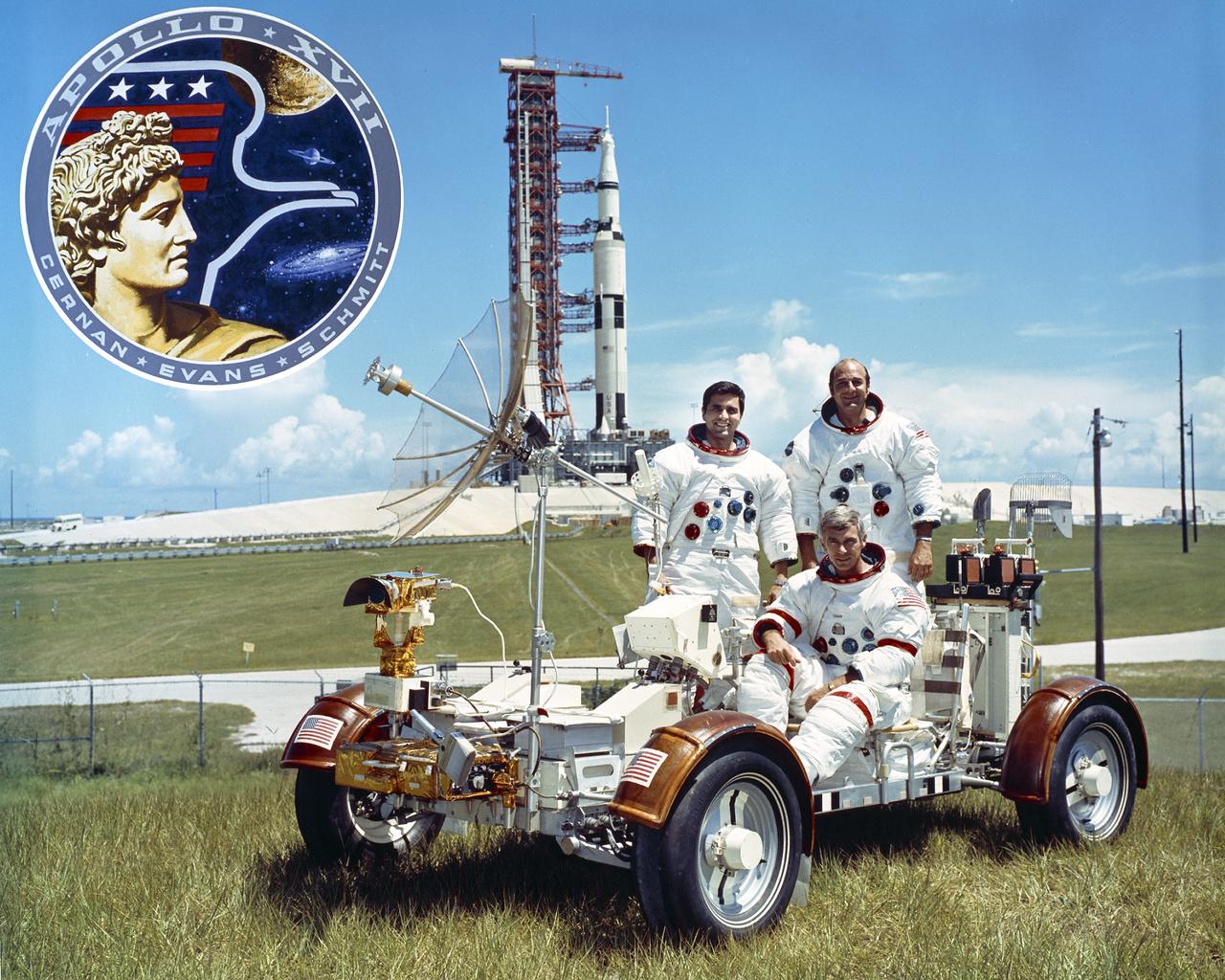
The Apollo 17 crew took time out from training for the press after the Space Vehicle for their Manned Lunar Landing Mission was moved to Complex 39A. Seated, Eugene A. Cernan, Commander standing, left to right, Dr. Harrison H. “Jack” Schmitt, Lunar Module Pilot and Ronald A. Evans, Command Module Pilot.
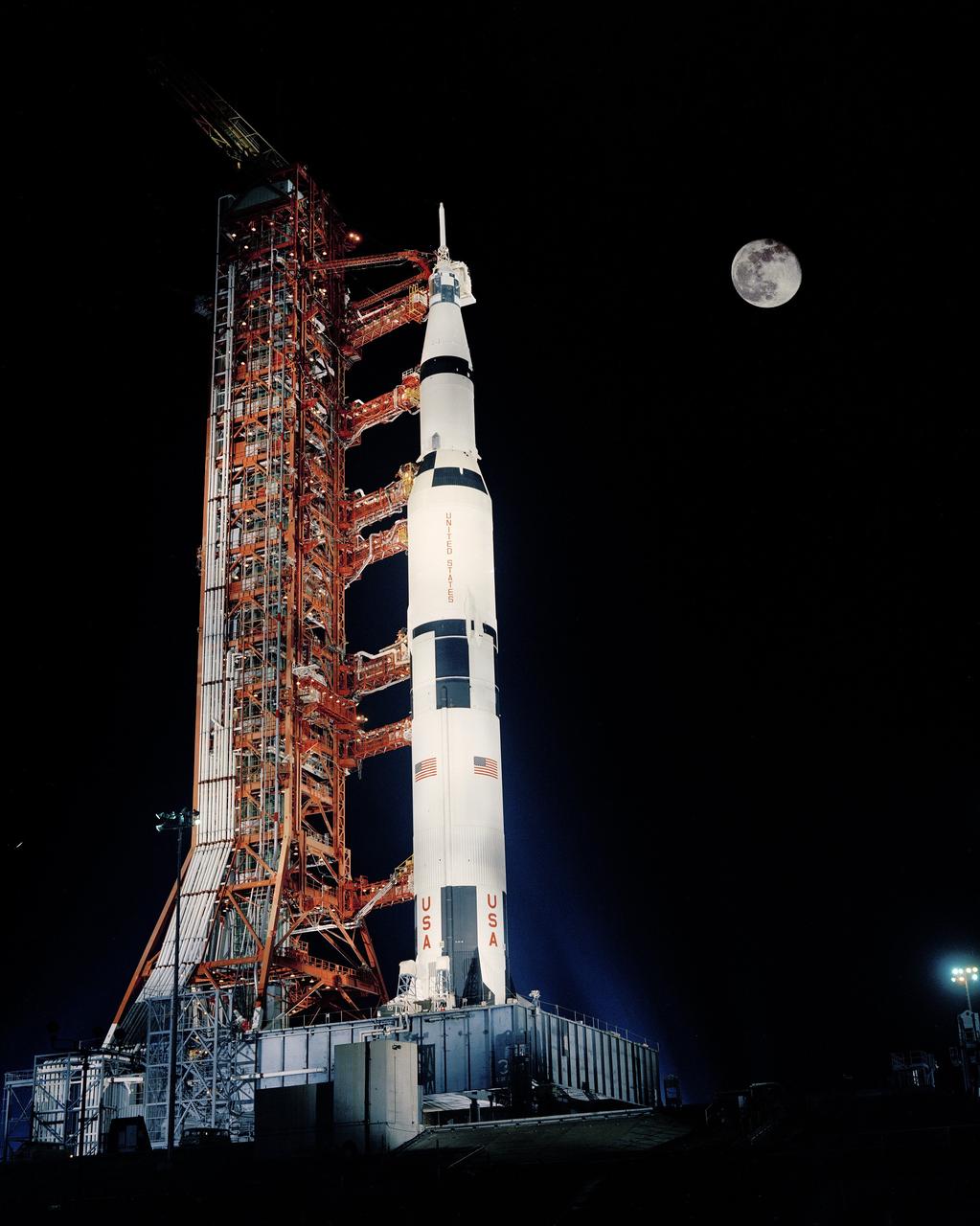
The Apollo 17 Space Vehicle sits poised beneath a full moon on Launch Pad 39A during launch countdown. Astronauts Eugene A. Cernan, Commander Ronald Evans, Command Module Pilot and Dr. Harrison "Jack" Schmitt, Lunar Module Pilot, will be the crew for the sixth U.S. manned Lunar landing mission.
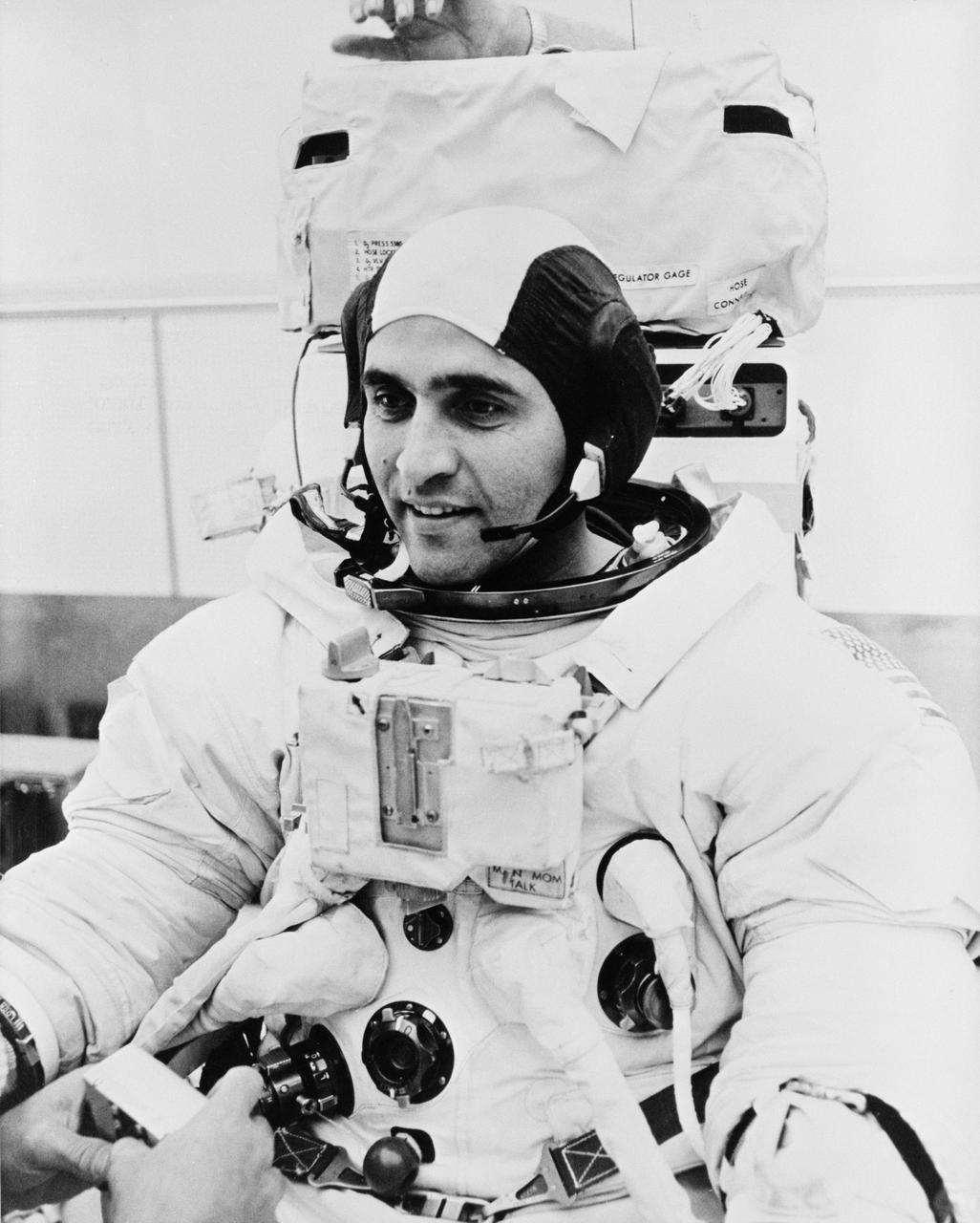
S72-44422 (8 Sept. 1972) --- Scientist-astronaut Harrison H. "Jack" Schmitt, lunar module pilot of the Apollo 17 lunar landing mission, is suited up in preparation for lunar surface extravehicular activity simulations at the Kennedy Space Center, Florida.

jsc2004e20304 - Panorama view of Apollo 17 lunar surface photos for Station 5 at the Taurus-Littrow landing site taken during the second moonwalk of the mission by Apollo 17 commander Eugene Cernan and lunar module pilot Harrison (Jack) Schmitt. The panoramas were built by combining Apollo 17 images starting with frame AS17-145-22159 through end frame AS17-145-22181. The panoramic images received minimal retouching by NASA imagery specialists, including the removal of lens flares that were problematic in stitching together the individual frames and blacking out the sky to the lunar horizon. These adjustments were made based on observations of the Moon walkers who reported that there are no stars visible in the sky due to the bright lunar surface reflection of the Sun.

jsc2004e52779 - Panorama view of Apollo 17 lunar surface photos for Station 6 taken during the third moonwalk of the mission by Apollo 17 commander Eugene Cernan and lunar module pilot Harrison (Jack) Schmitt. The panoramas were built by combining Apollo 17 images starting with frame AS17-141-21575 through end frame AS17-141-21603. The panoramic images received minimal retouching by NASA imagery specialists, including the removal of lens flares that were problematic in stitching together the individual frames and blacking out the sky to the lunar horizon. These adjustments were made based on observations of the Moon walkers who reported that there are no stars visible in the sky due to the bright lunar surface reflection of the Sun.
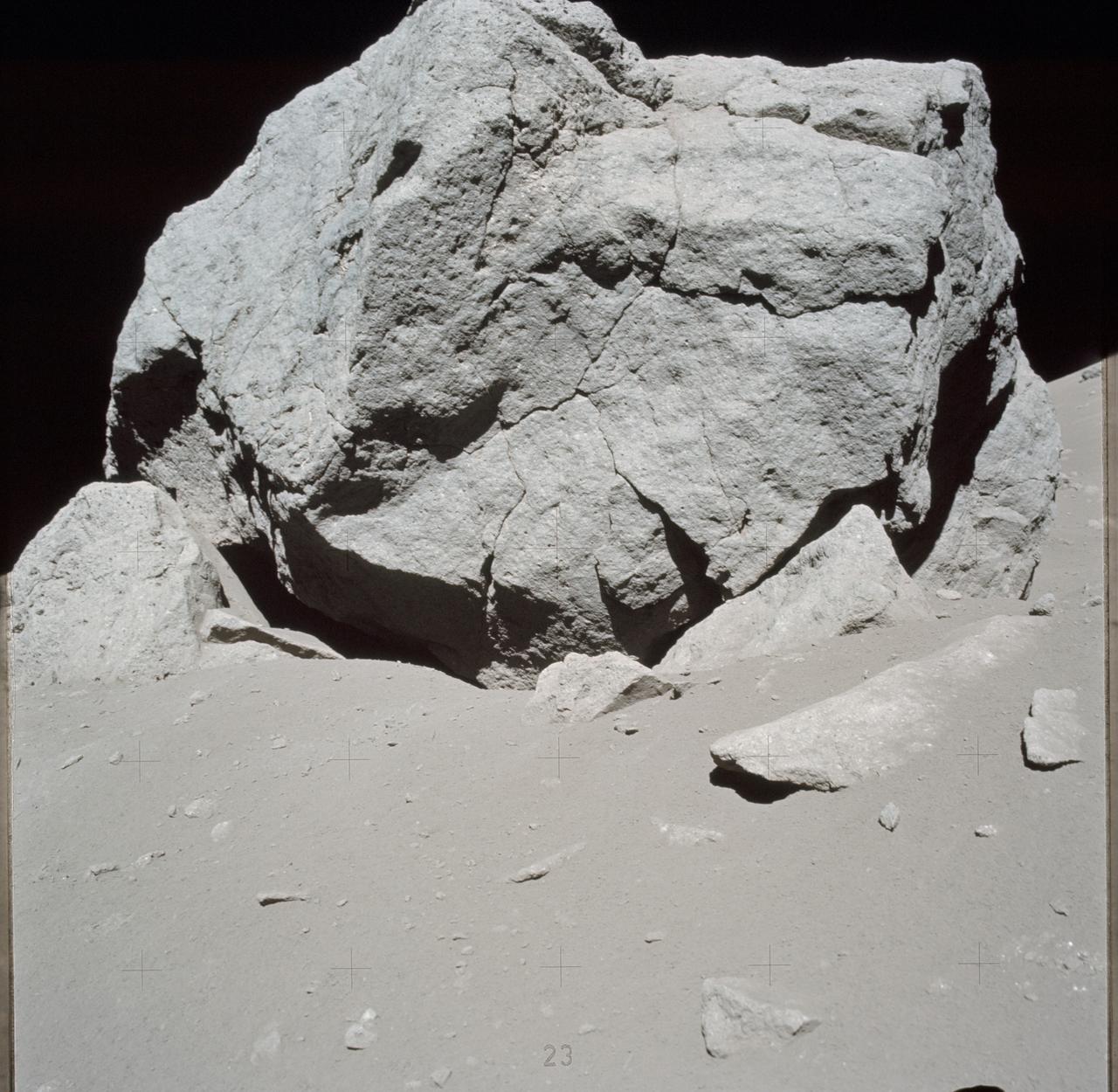
AS17-140-21438 (7-19 Dec. 1972) --- This 70mm frame features a close-up view of a large multi-cracked boulder discovered by astronauts Eugene A. Cernan, commander, and Harrison H. (Jack) Schmitt, lunar module pilot, during their visit to extravehicular activity (EVA) Station 6. This boulder, referred to as number two, provided several samples for the crew members' record-setting volume of rock collections. While astronauts Cernan and Schmitt descended in the Lunar Module (LM) "Challenger" to explore the Taurus-Littrow region of the moon, astronaut Ronald E. Evans, command module pilot, remained with the Command and Service Modules (CSM) "America" in lunar orbit. Cernan and Schmitt were the last crew members to explore the moon in the Apollo Program.
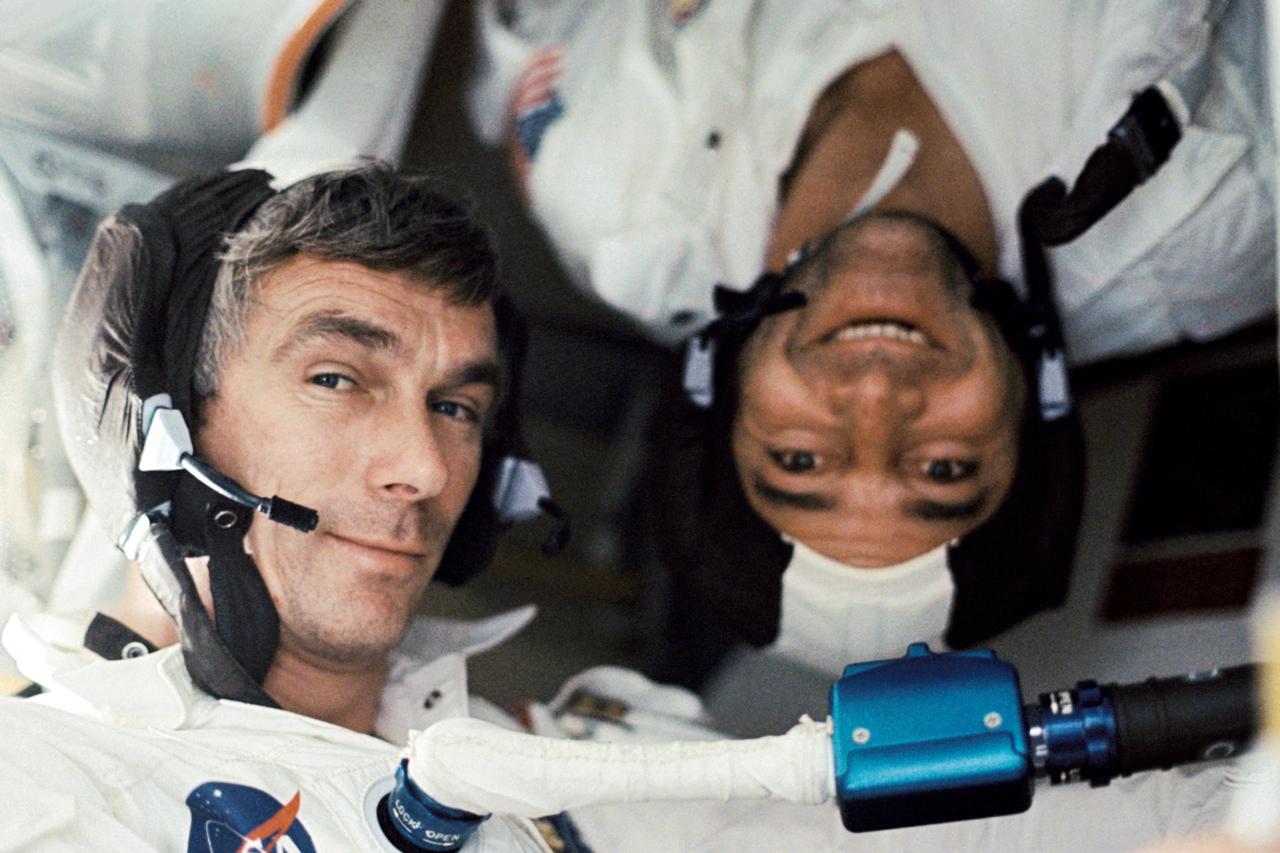
AS17-162-24053 (7-19 Dec. 1972) --- Scientist-astronaut Harrison H. "Jack" Schmitt, lunar module pilot, took this photograph of his two fellow crew men under zero-gravity conditions aboard the Apollo 17 spacecraft during the final lunar landing mission in NASA's Apollo program. That is astronaut Eugene A. Cernan, commander, who is seemingly "right side up." Astronaut Ronald E. Evans, command module pilot, appears to be "upside down." While astronauts Cernan and Schmitt descended in the Lunar Module (LM) "Challenger" to explore the Taurus-Littrow region of the moon, astronaut Evans remained with the Command and Service Modules (CSM) "America" in lunar orbit.
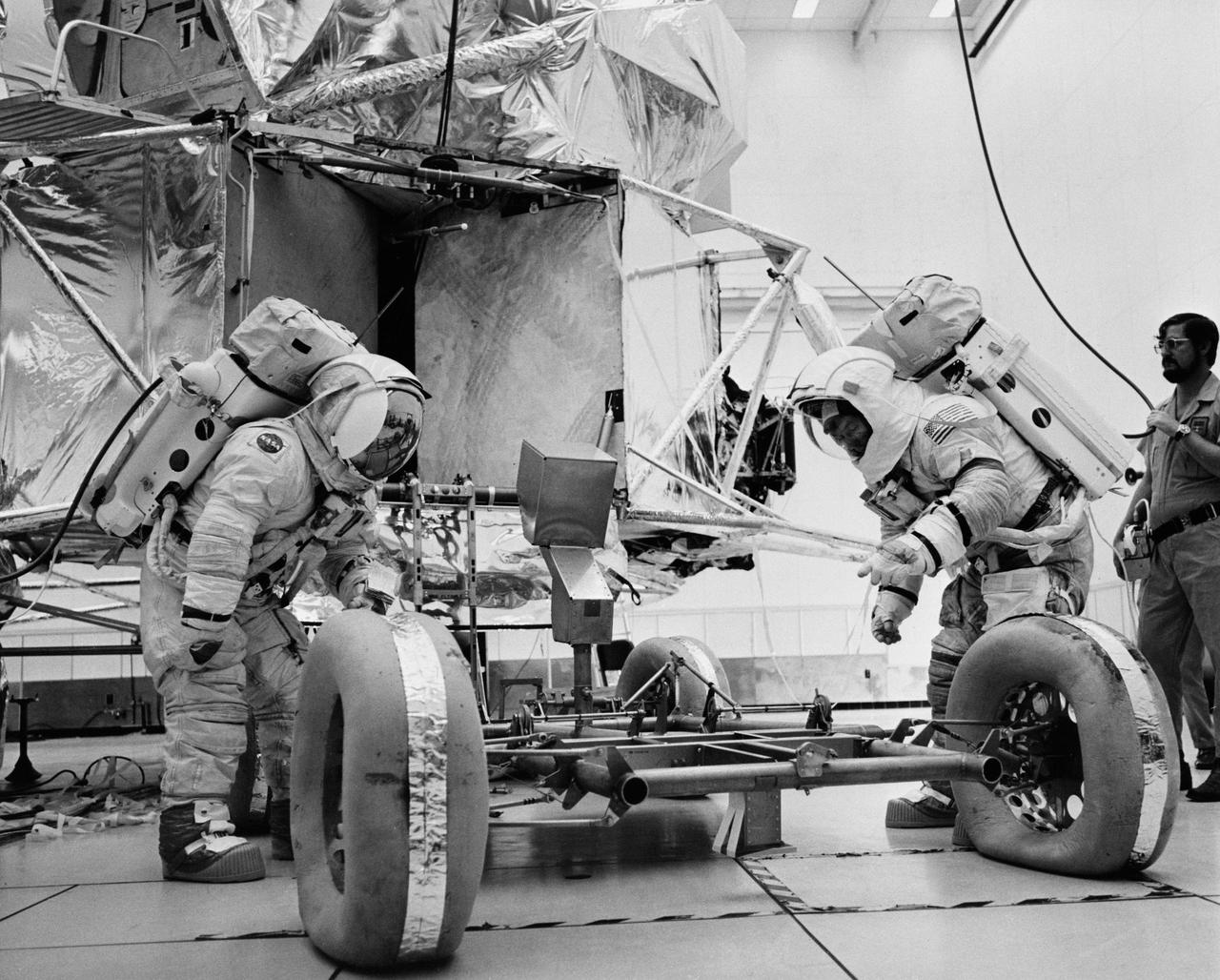
S72-44423 (8 Sept. 1972) --- Two Apollo 17 crewmen ready a Lunar Roving Vehicle trainer following its deployment from a Lunar Module trainer in the Flight Crew Training Building at the Kennedy Space Center, Florida. Taking part in the Apollo 17 training exercise were astronauts Eugene A. Cernan (right), commander; and Harrison H. "Jack" Schmitt, lunar module pilot.
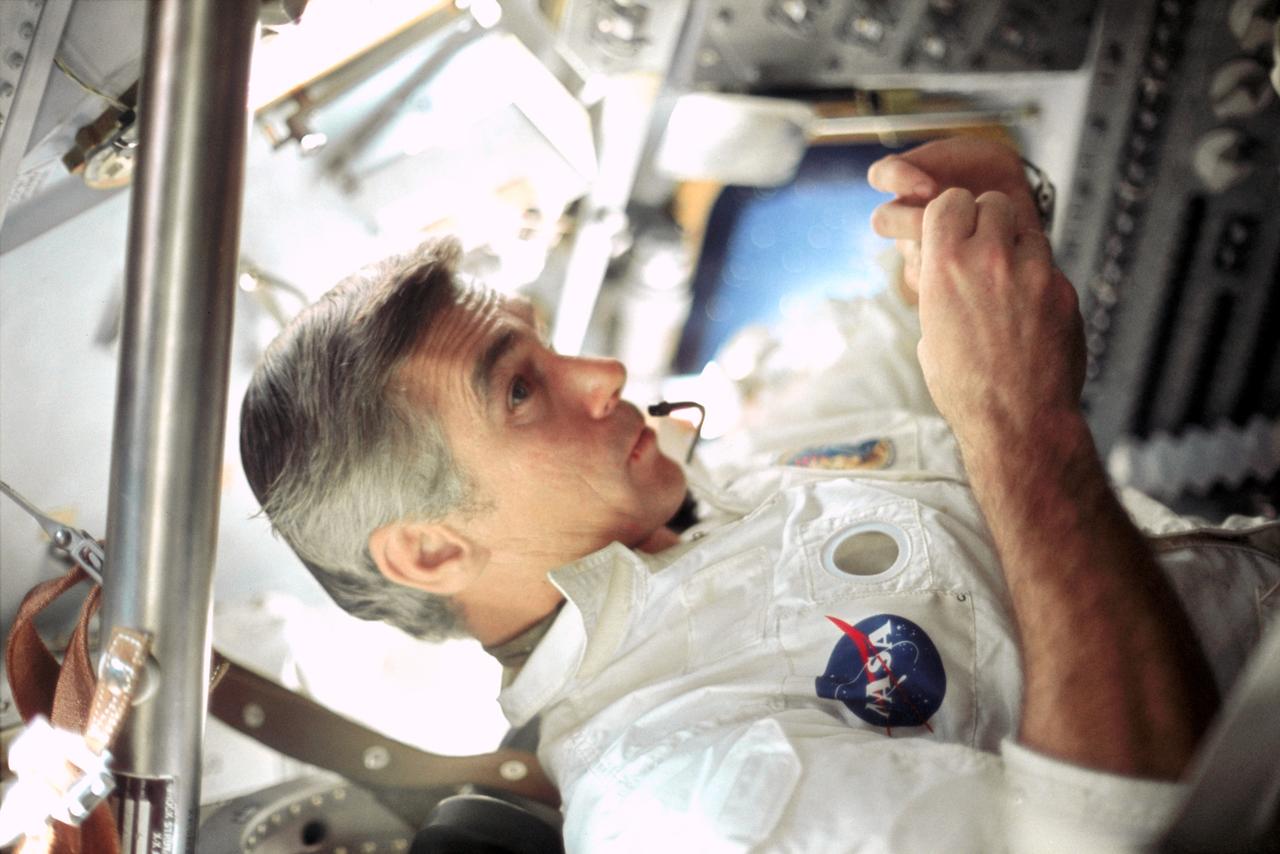
AS17-163-24122 (7-19 Dec. 1972) --- This candid photograph of astronaut Eugene A. Cernan was taken by a fellow crewman aboard the Apollo 17 spacecraft during the final lunar landing mission in NASA's Apollo program. Cernan was the mission commander. Also, aboard Apollo 17 were astronaut Ronald E. Evans, command module pilot, and scientist-astronaut Harrison H. "Jack" Schmitt, lunar module pilot.
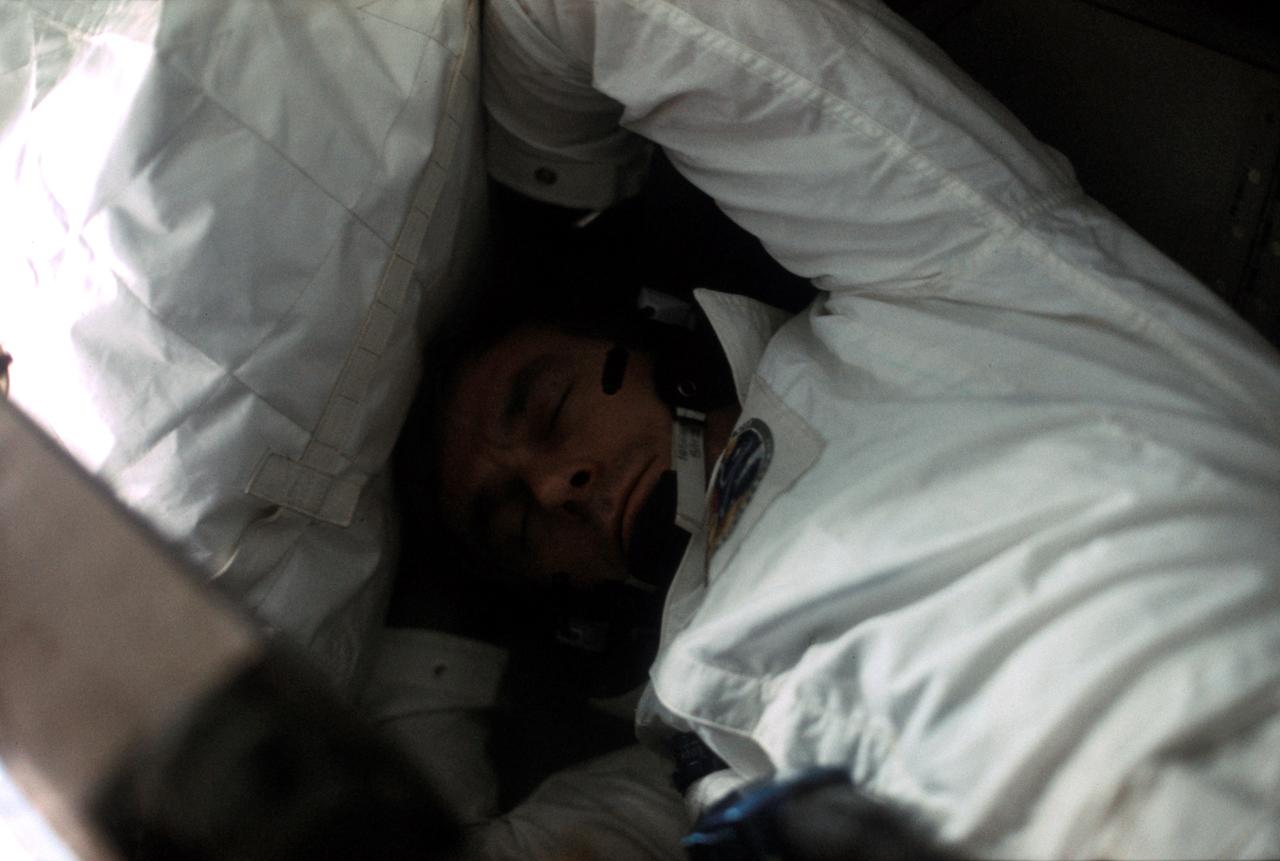
AS17-162-24049 (7-19 Dec. 1972) --- A fellow crewman took this picture of astronaut Eugene A. Cernan dozing aboard the Apollo 17 spacecraft during the final lunar landing mission in NASA's Apollo program. Also, aboard Apollo 17 were astronaut Ronald E. Evans, command module pilot, and scientist-astronaut Harrison H. "Jack" Schmitt, lunar module pilot. Cernan was the mission commander.
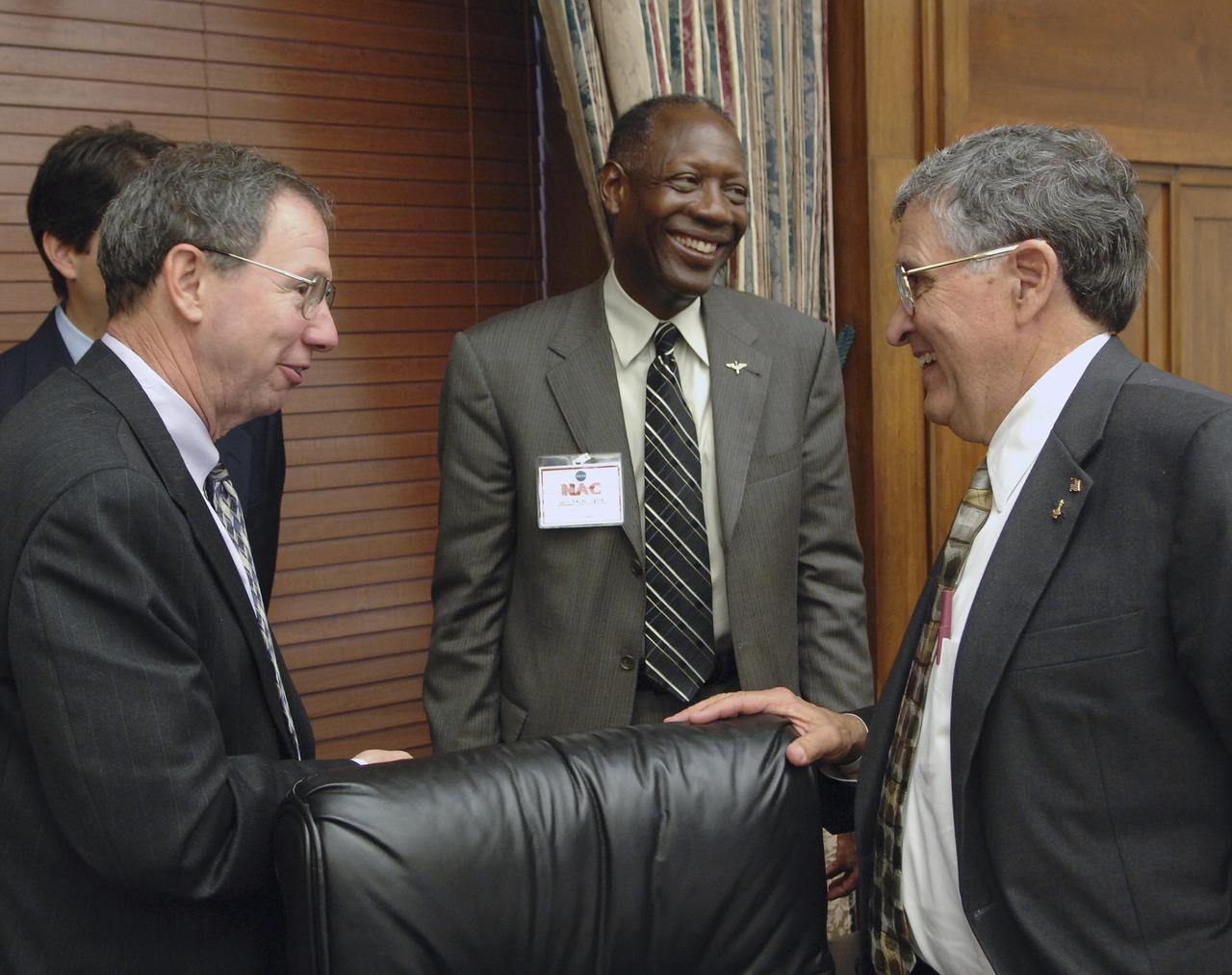
NASA Administrator Michael Griffin, left, talks with NASA Advisory Council members Gen. Lester L. Lyles, USAF (Ret.), center, and NASA Advisory Council chairman, former Senator and Apollo astronaut Harrison H. "Jack" Schmitt at the Rayburn House Office Building, Tuesday, Nov. 29, 2005, in Washington. Photo Credit: (NASA/Bill Ingalls)
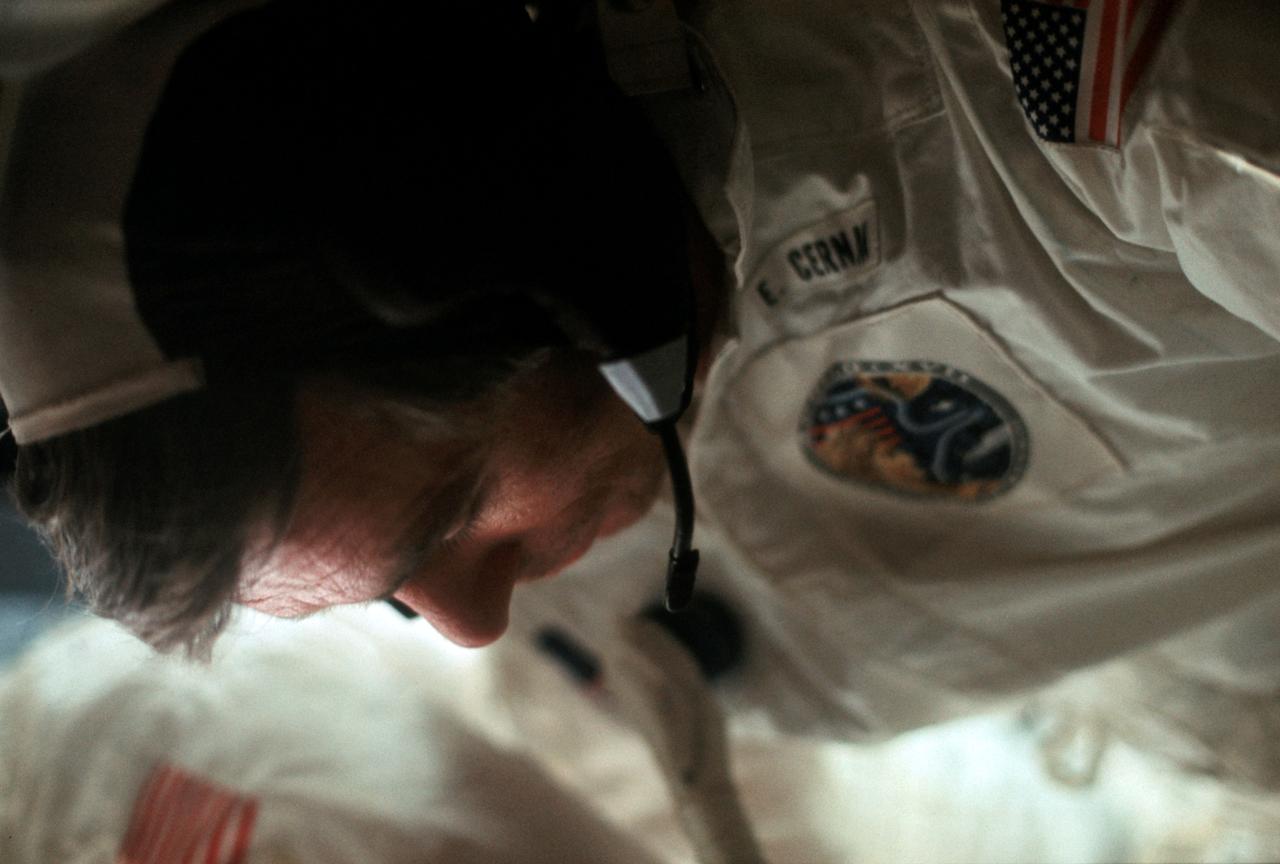
AS17-162-24050 (7-19 Dec. 1972) --- Astronaut Eugene A. Cernan appears to be relaxing in this candid photograph taken by a fellow crewman aboard the Apollo 17 spacecraft during the final lunar landing mission in NASA's Apollo program. Also, aboard Apollo 17 were astronaut Ronald E. Evans, command module pilot, and scientist-astronaut Harrison H. "Jack" Schmitt, lunar module pilot. Cernan was the mission commander.
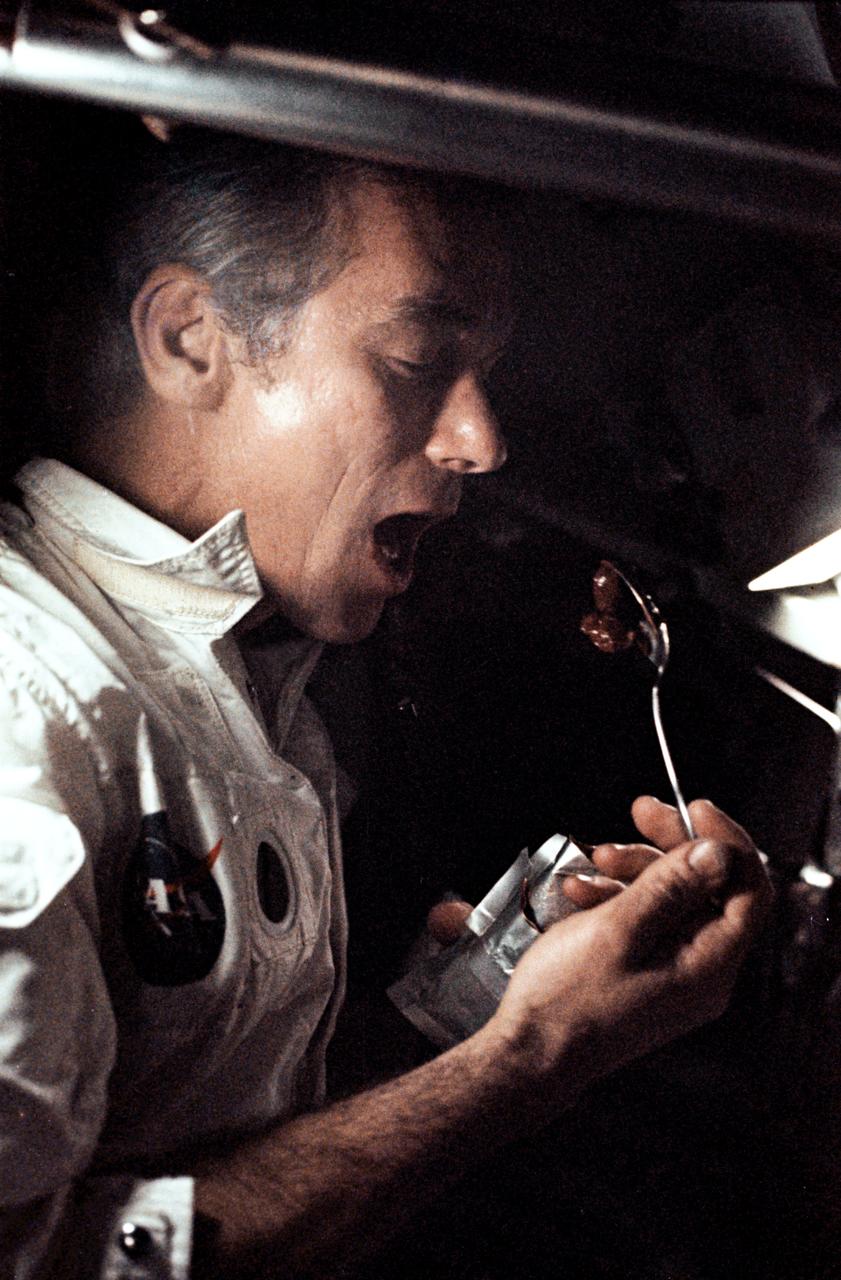
AS17-163-24129 (7-19 Dec. 1972) --- A fellow crewman took this photograph of astronaut Eugene A. Cernan eating a meal under weightlessness conditions of space during the final lunar landing mission in NASA's Apollo program. Also, aboard the Apollo 17 spacecraft were astronaut Ronald E. Evans, command module pilot, and scientist-astronaut Harrison H. "Jack" Schmitt, lunar module pilot. Cernan was the mission commander.
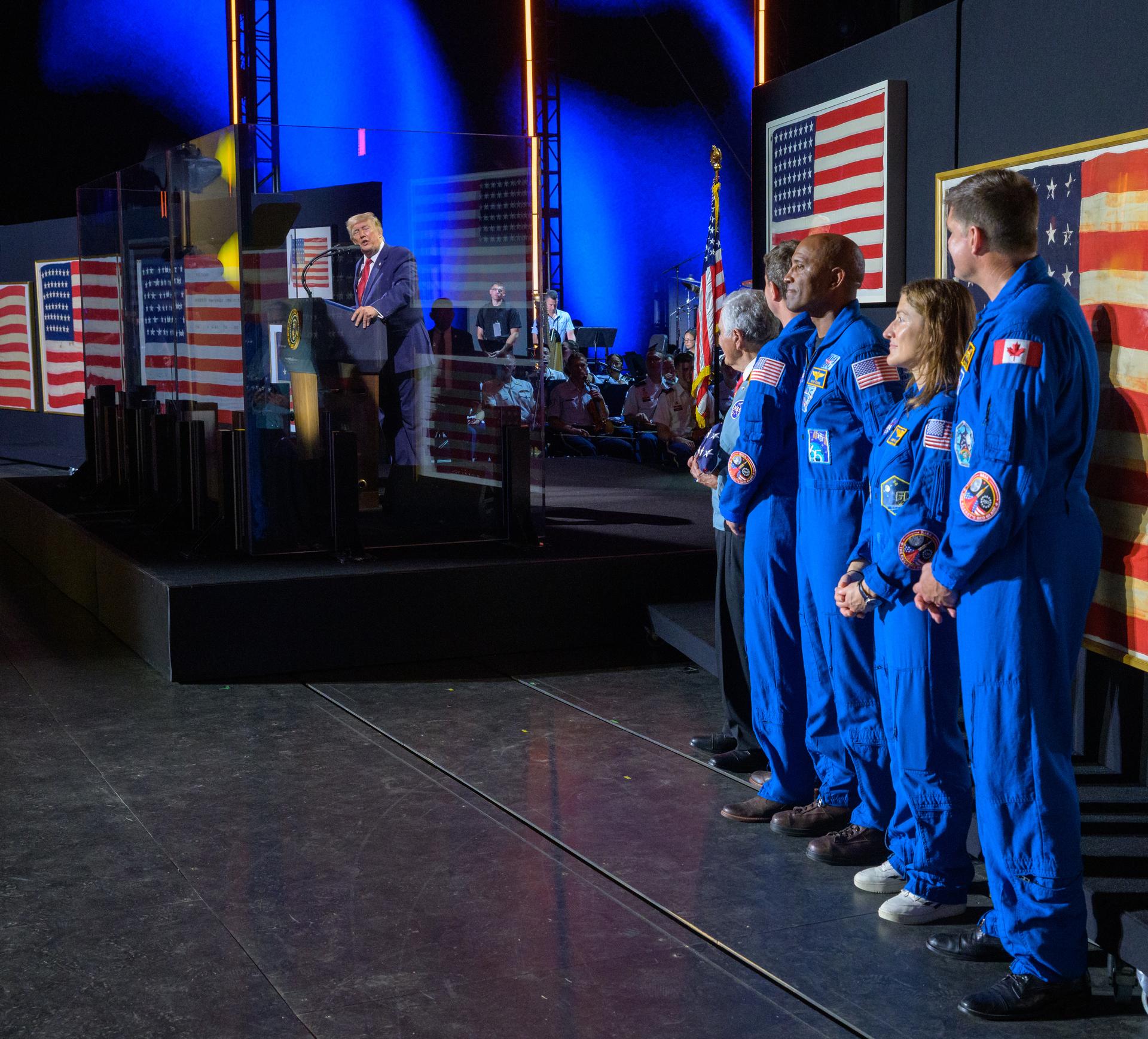
President Donald Trump recognizes NASA Apollo astronaut Harrison "Jack" Schmitt, left, NASA astronauts Reid Wiseman, commander; Victor Glover, pilot; Christina Koch, mission specialist; and CSA (Canadian Space Agency) astronaut Jeremy Hansen, mission specialist, right, during the “Salute to America” event, Saturday, July 4, 2026, on the National Mall in Washington, D.C. The United States Semiquincentennial celebrates the 250th anniversary of the adoption of the Declaration of Independence. Photo Credit: (NASA/Bill Ingalls)
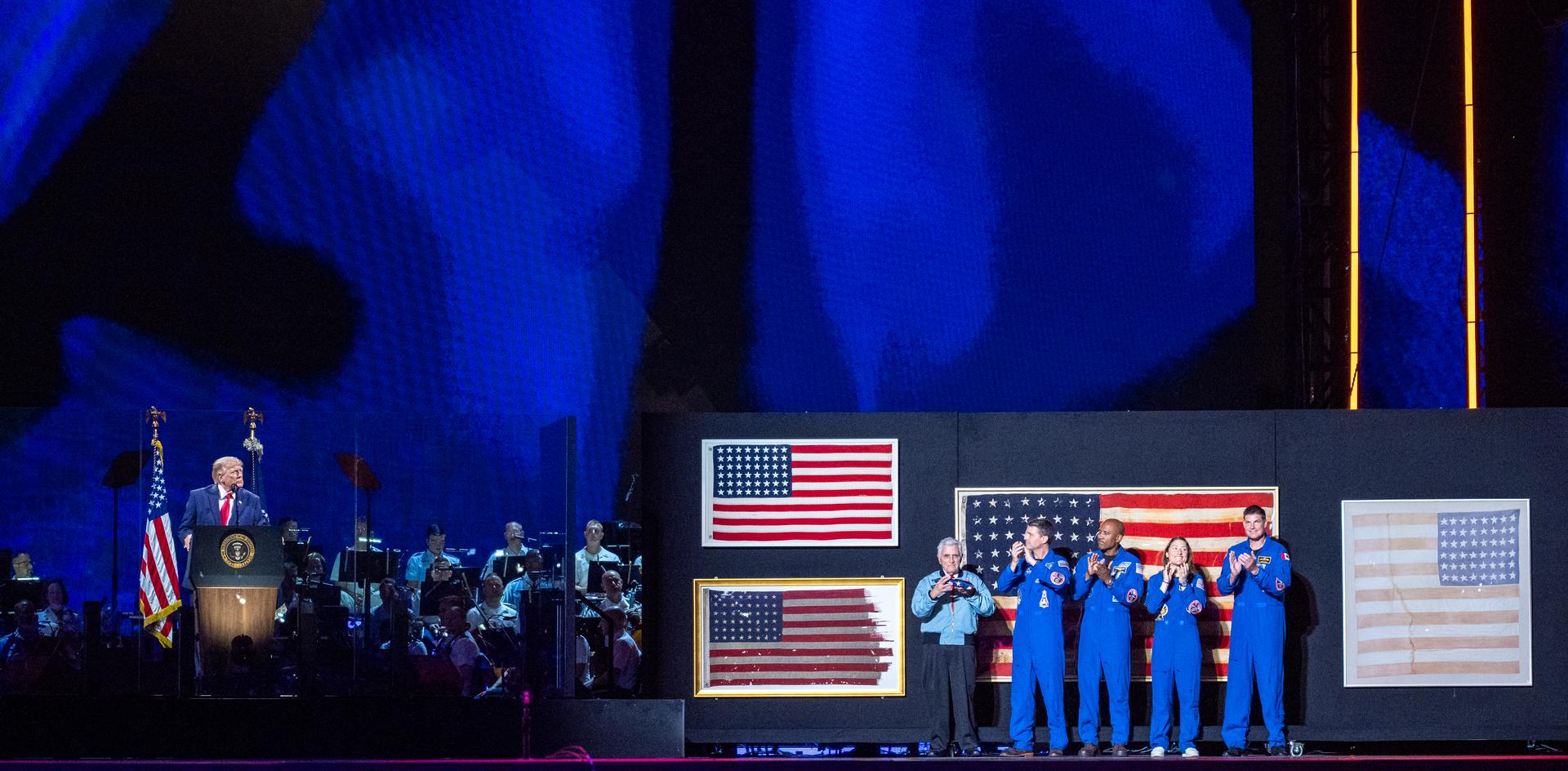
President Donald Trump recognizes NASA Apollo astronaut Harrison "Jack" Schmitt, left, NASA astronauts Reid Wiseman, commander; Victor Glover, pilot; Christina Koch, mission specialist; and CSA (Canadian Space Agency) astronaut Jeremy Hansen, mission specialist, right, during the “Salute to America” event, Saturday, July 4, 2026, on the National Mall in Washington, D.C. The United States Semiquincentennial celebrates the 250th anniversary of the adoption of the Declaration of Independence. Photo Credit: (NASA/Keegan Barber)
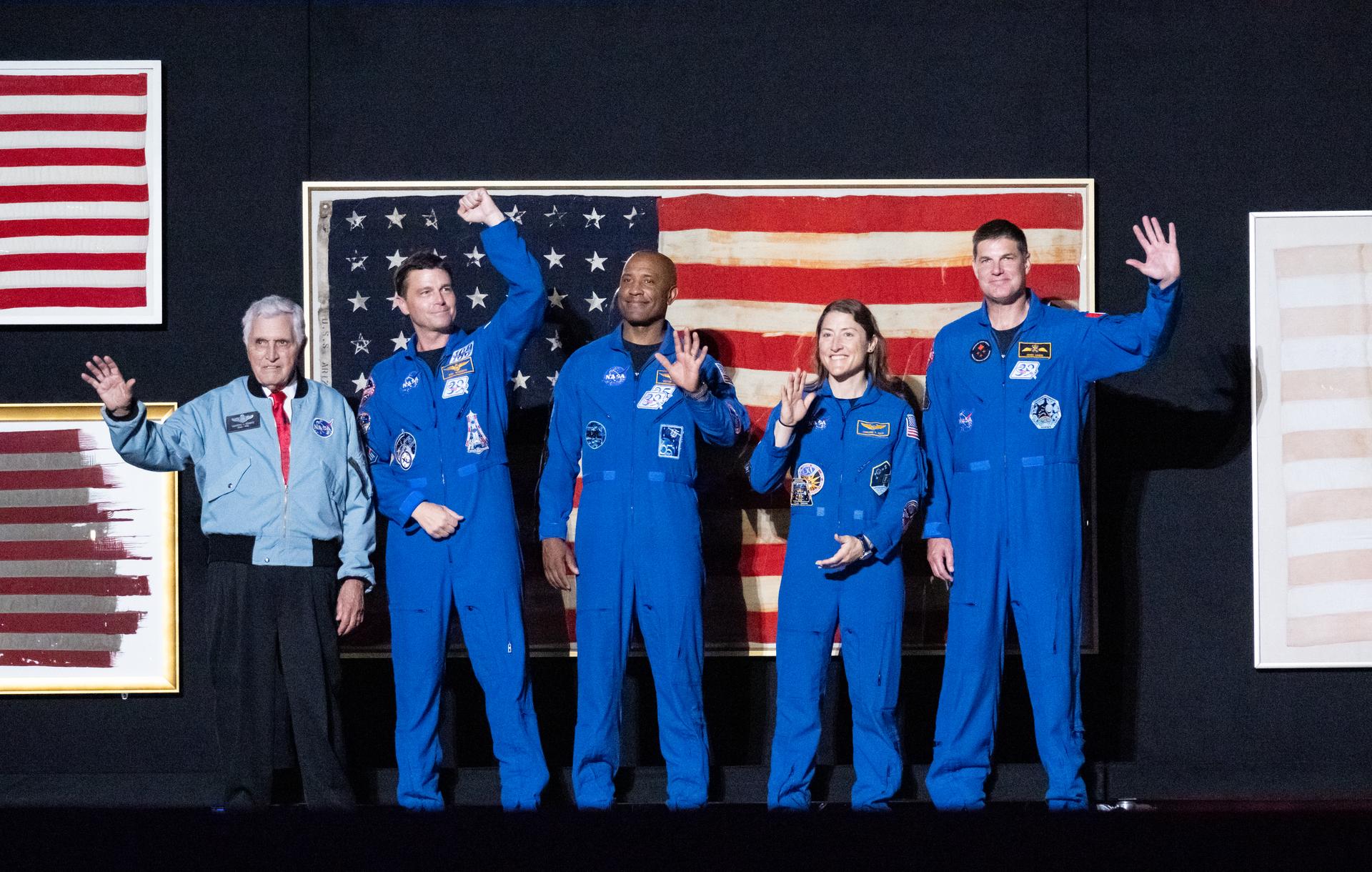
President Donald Trump recognizes NASA Apollo astronaut Harrison "Jack" Schmitt, left, NASA astronauts Reid Wiseman, commander; Victor Glover, pilot; Christina Koch, mission specialist; and CSA (Canadian Space Agency) astronaut Jeremy Hansen, mission specialist, right, during the “Salute to America” event, Saturday, July 4, 2026, on the National Mall in Washington, D.C. The United States Semiquincentennial celebrates the 250th anniversary of the adoption of the Declaration of Independence. Photo Credit: (NASA/Keegan Barber)
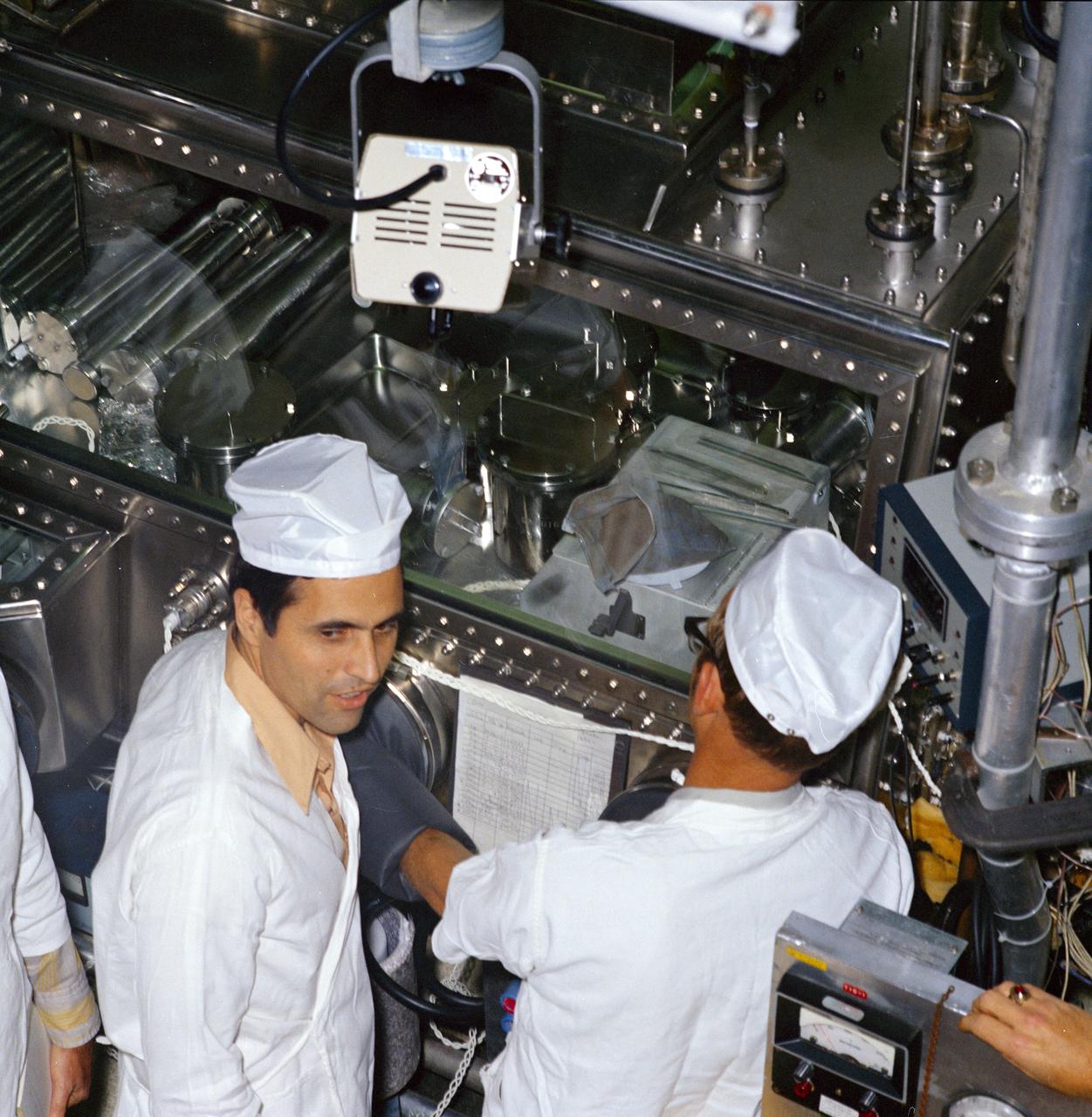
S72-56362 (27 Dec. 1972) --- Scientist-astronaut Harrison H. "Jack" Schmitt (facing camera), Apollo 17 lunar module pilot, was one of the first to look at the sample of "orange" soil which was brought back from the Taurus-Littrow landing site by the Apollo 17 crewmen. Schmitt discovered the material at Shorty Crater during the second Apollo 17 extravehicular activity (EVA). The "orange" sample, which was opened Wednesday, Dec. 27, 1972, is in the bag on a weighing platform in the sealed nitrogen cabinet in the upstairs processing line in the Lunar Receiving Laboratory at the Manned Spacecraft Center. Just before, the sample was removed from one of the bolt-top cans visible to the left in the cabinet. The first reaction of Schmitt was "It doesn't look the same." Most of the geologists and staff viewing the sample agreed that it was more tan and brown than orange. Closer comparison with color charts showed that the sample had a definite orange cast, according the MSC geology branch Chief William Phinney. After closer investigation and sieving, it was discovered that the orange color was caused by very fine spheres and fragments of orange glass in the midst of darker colored, larger grain material. Earlier in the day the "orange" soil was taken from the Apollo Lunar Sample Return Container No. 2 and placed in the bolt-top can (as was all the material in the ALSRC "rock box").
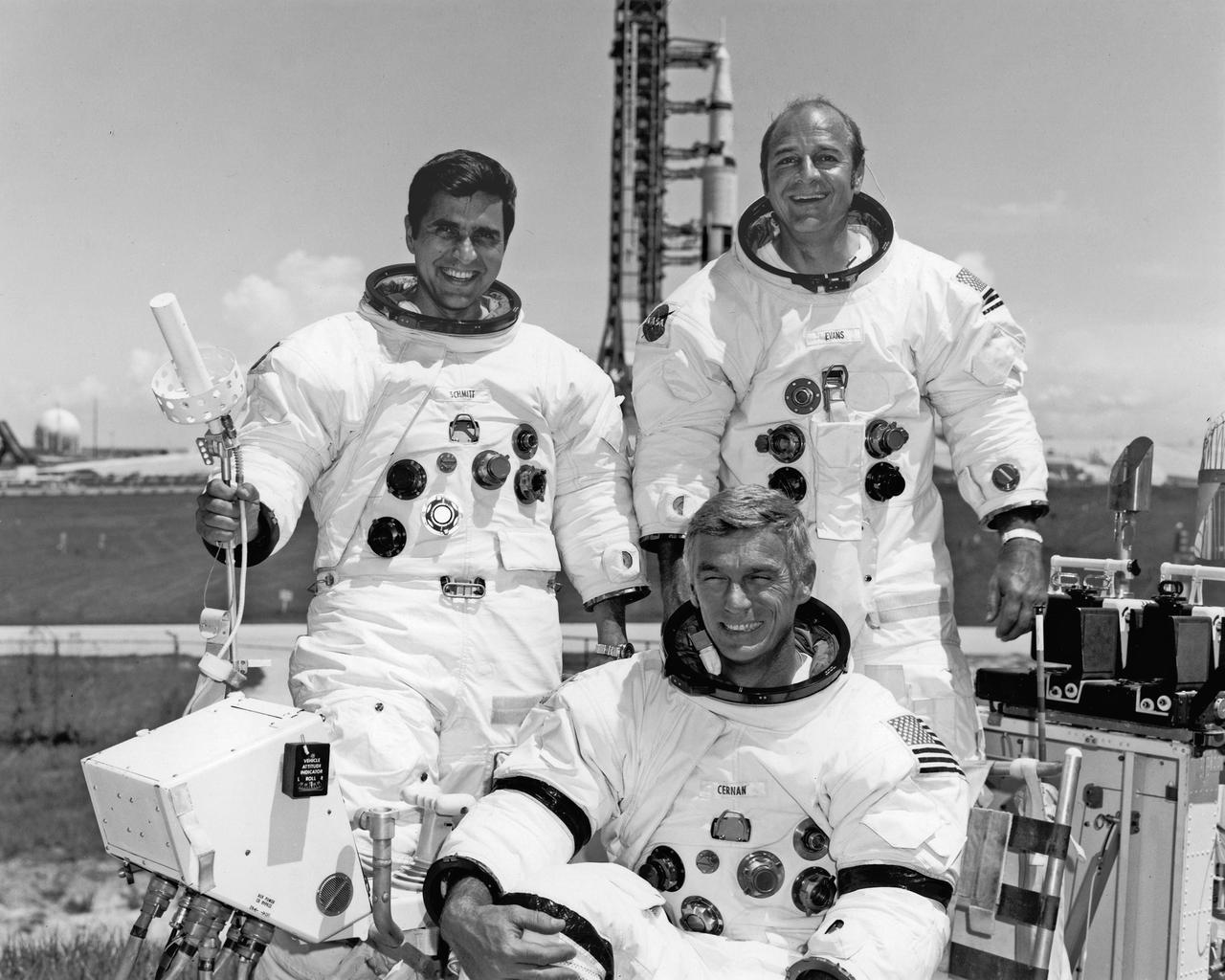
CAPE CANAVERAL, Fla. -- The Apollo 17 crew took time out from training to pose for the press after the Space Vehicle for their Manned Lunar Landing Mission was moved to Pad A, Complex 39 today. Apollo 17 Commander Eugene A Cernan sits at the controls of the One-G Lunar Roving Vehicle Simulator used to simulate operations on the Moon’s surface. With Cernan are Lunar Module Pilot Dr. Harrison H. “Jack” Schmitt, left and Command Module Plot Ronald A. Evans. The Apollo 17 Space Vehicle, scheduled for launch from KSC on the sixth U.S. Manned Lunar Landing Mission on December 6, 1972 is in the background. Photo credit: NASA
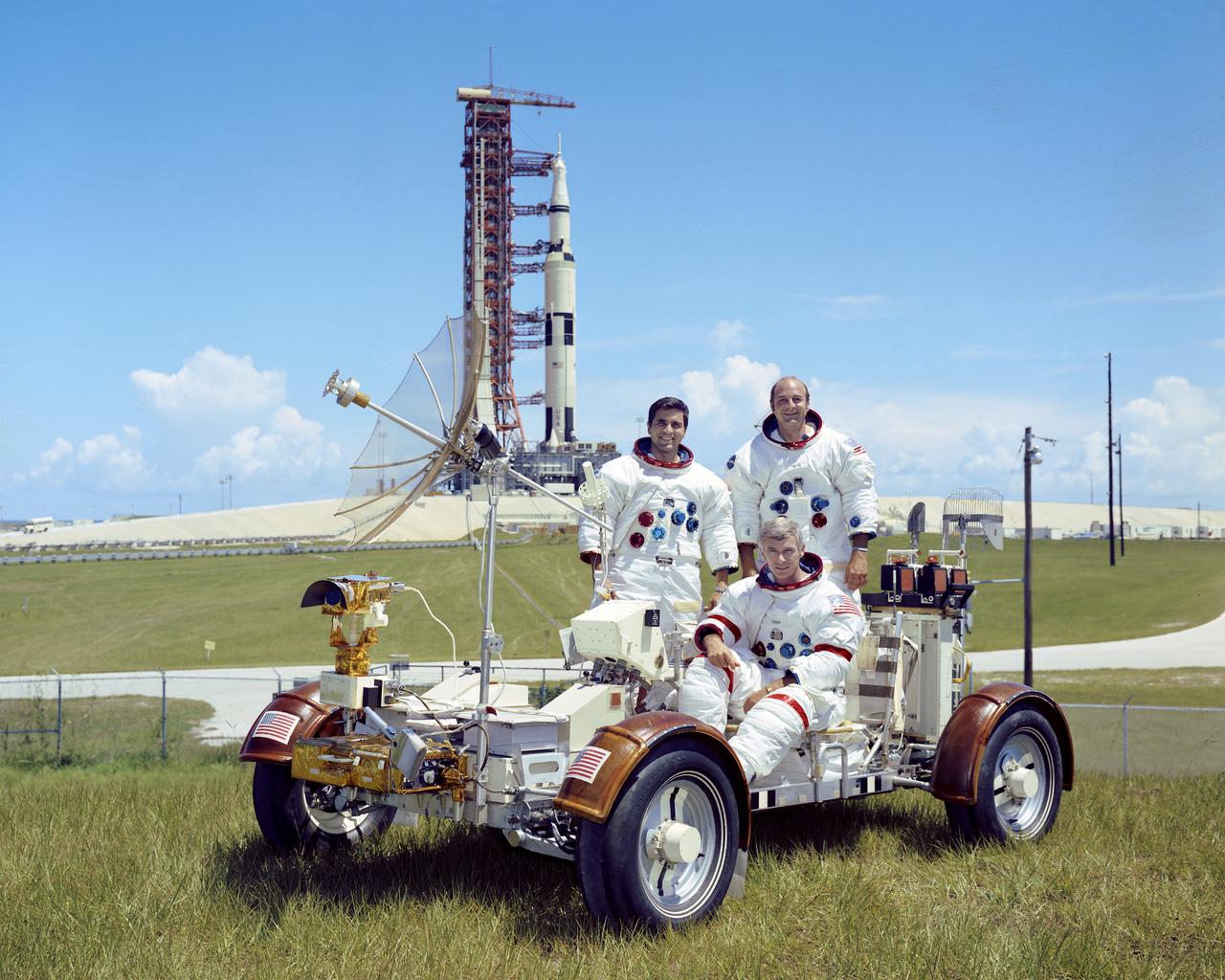
CAPE CANAVERAL, Fla. -- The Apollo 17 crew took time out from training to pose for the press after the Space Vehicle for their Manned Lunar Landing Mission was moved to Pad A, Complex 39 today. Apollo 17 Commander Eugene A Cernan sits at the controls of the One-G Lunar Roving Vehicle Simulator used to simulate operations on the Moon’s surface. With Cernan are Lunar Module Pilot Dr. Harrison H. “Jack” Schmitt, left and Command Module Plot Ronald A. Evans. The Apollo 17 Space Vehicle, scheduled for launch from KSC on the sixth U.S. Manned Lunar Landing Mission on December 6, 1972 is in the background. Photo credit: NASA
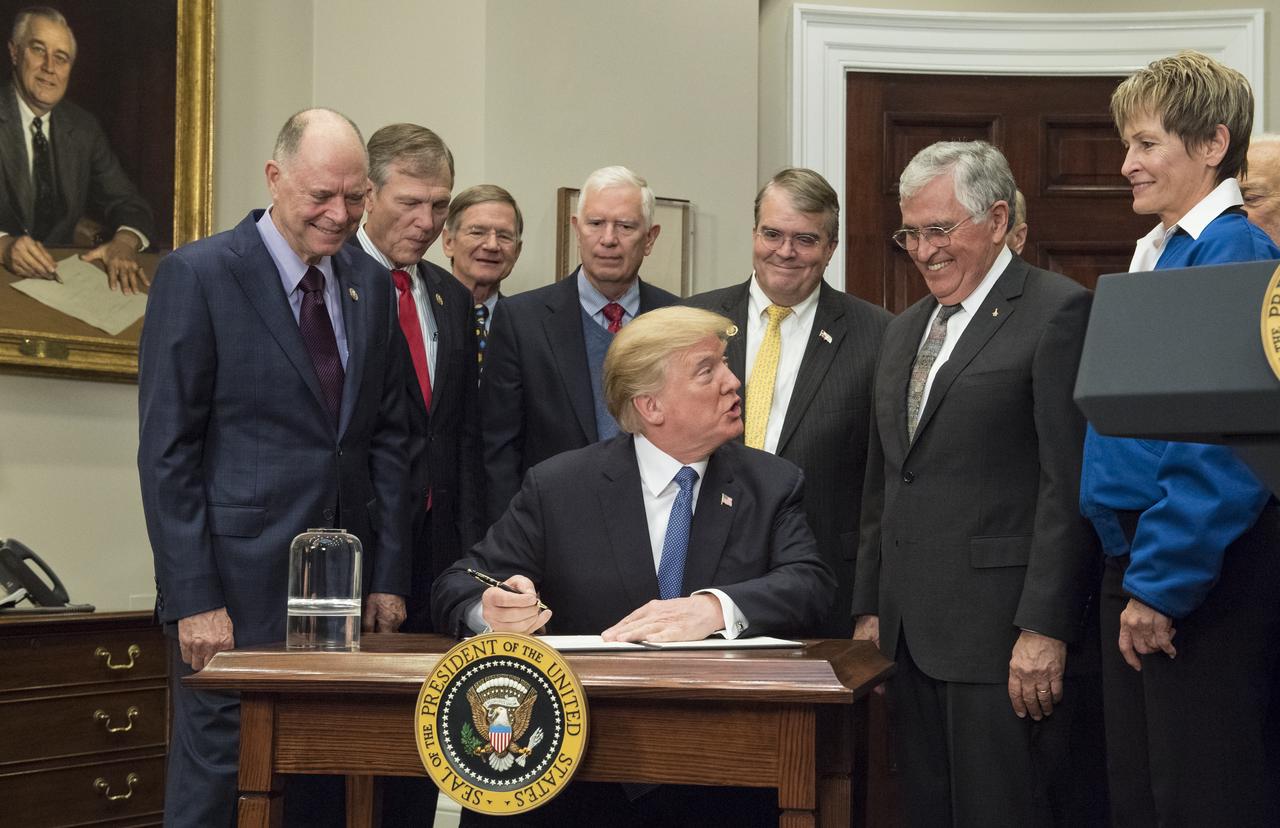
President Donald Trump prepares to sign Space Policy Directive - 1, directing NASA to return to the moon, alongside members of the Senate, Congress, NASA, and commercial space companies in the Roosevelt room of the White House in Washington, Monday, Dec. 11, 2017. Photo Credit: (NASA/Aubrey Gemignani)
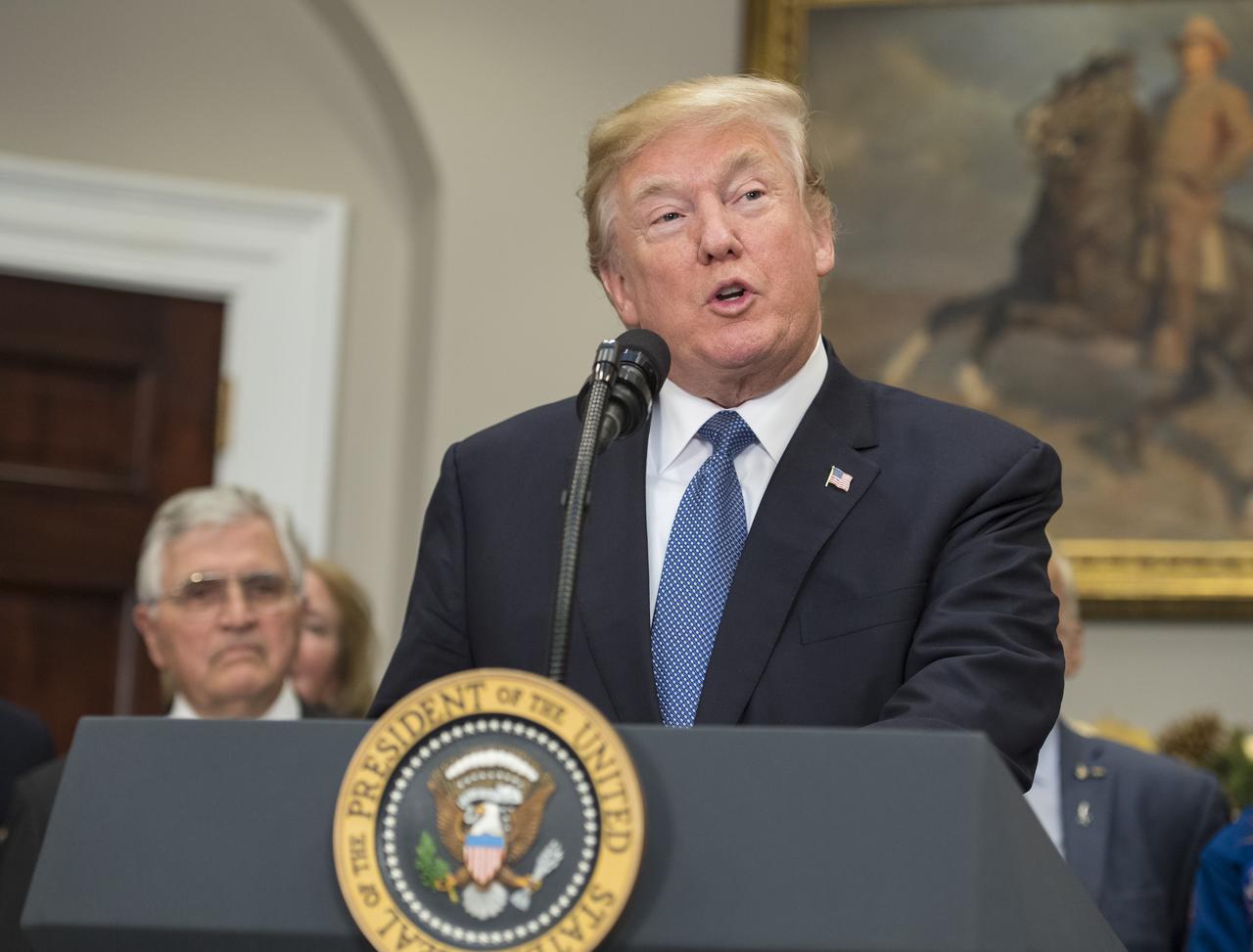
President Donald Trump, speaks before signing Space Policy Directive - 1, directing NASA to return to the moon, in the Roosevelt room of the White House in Washington, Monday, Dec. 11, 2017. Photo Credit: (NASA/Aubrey Gemignani)
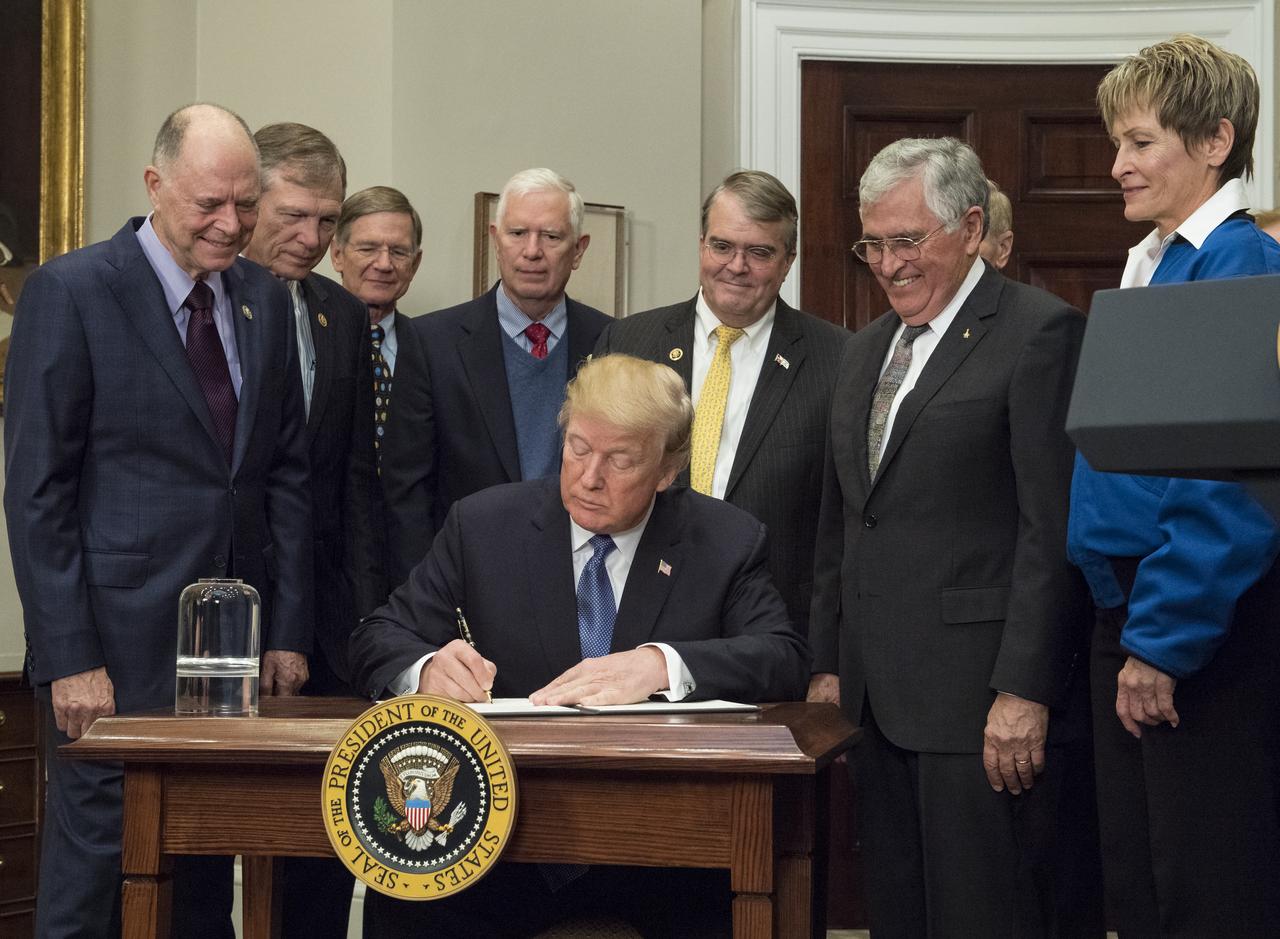
President Donald Trump signs Space Policy Directive - 1, directing NASA to return to the moon, alongside members of the Senate, Congress, NASA, and commercial space companies in the Roosevelt room of the White House in Washington, Monday, Dec. 11, 2017. Photo Credit: (NASA/Aubrey Gemignani)
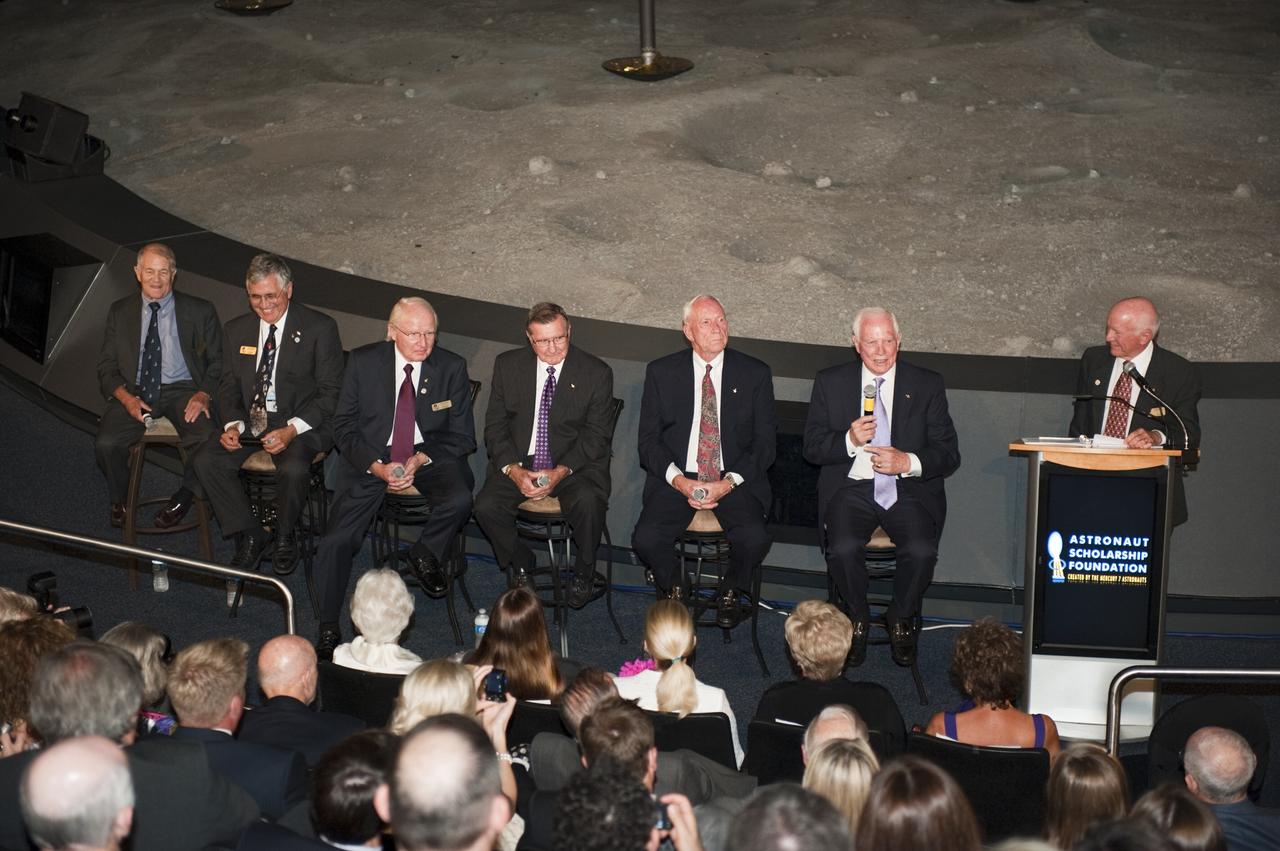
CAPE CANAVERAL, Fla. -- The Apollo/Saturn V Center at NASA's Kennedy Space Center in Florida hosted a celebration on the 40th anniversary of NASA's Apollo 15 mission. An elite gathering of Apollo-era astronauts were on hand for the event and panel discussion. Gerry Griffin, Apollo 15 flight director moderates the question-and-answer period with the panel. From left are: Apollo 15 astronaut backup support crew members, Joe Allen, Jack Schmitt, Vance Brand and Dick Gordon; Al Worden and Dave Scott. Worden circled the moon while Scott and the late Jim Irwin, the Lunar Module commander, made history when they became the first humans to drive a vehicle on the surface of the moon. They also provided extensive descriptions and photographic documentation of geologic features in the vicinity of the Hadley Rille landing site during their three days on the lunar surface. Photo credit: NASA/Kim Shiflett
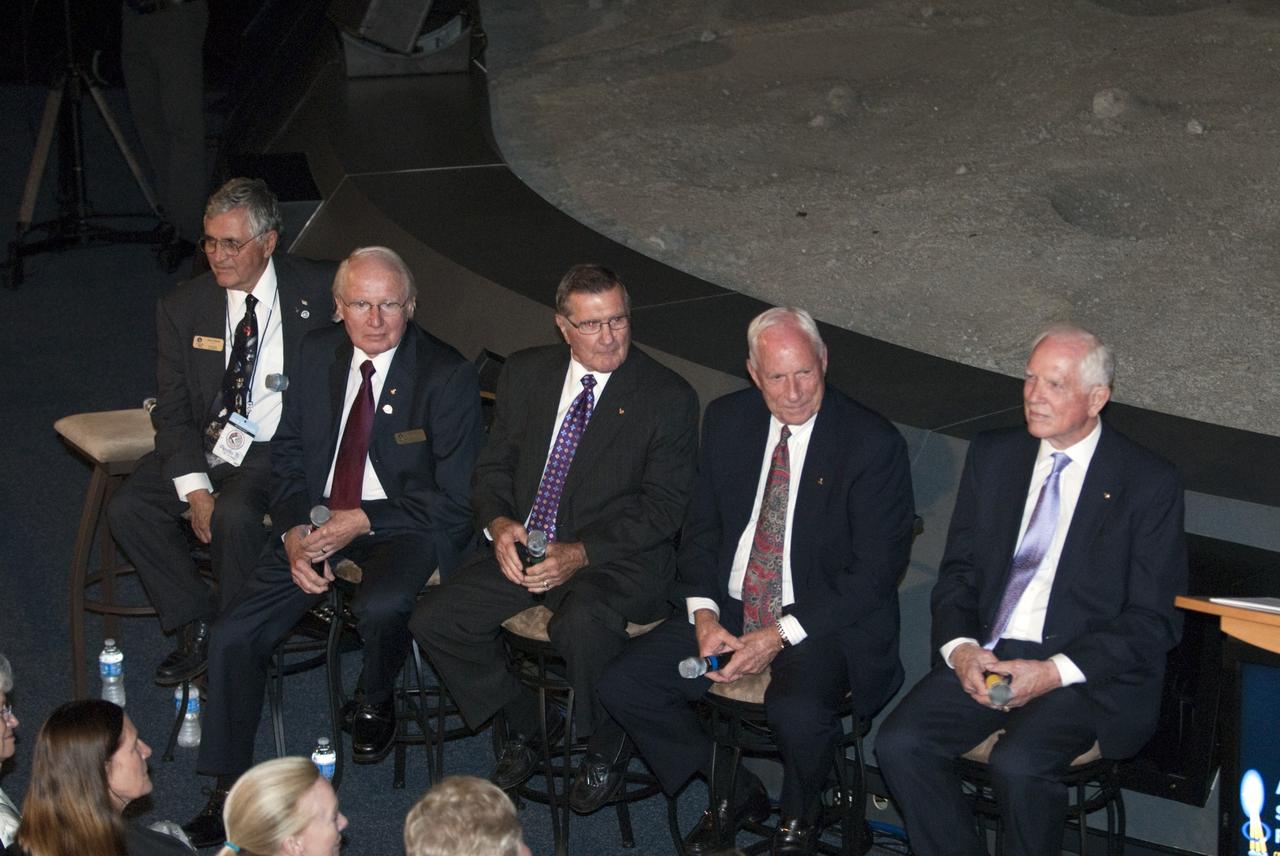
CAPE CANAVERAL, Fla. -- The Apollo/Saturn V Center at NASA's Kennedy Space Center in Florida hosted a celebration on the 40th anniversary of NASA's Apollo 15 mission. Apollo 15 Commander Dave Scott and Command Module Pilot Al Worden and an elite gathering of Apollo-era astronauts were on hand for the event and panel discussion. Seen here are Apollo 15 astronaut backup support crew members, Jack Schmitt (left), Vance Brand and Dick Gordon; Al Worden and Dave Scott. Worden circled the moon while Scott and the late Jim Irwin, the Lunar Module commander, made history when they became the first humans to drive a vehicle on the surface of the moon. They also provided extensive descriptions and photographic documentation of geologic features in the vicinity of the Hadley Rille landing site during their three days on the lunar surface. Photo credit: NASA/Kim Shiflett
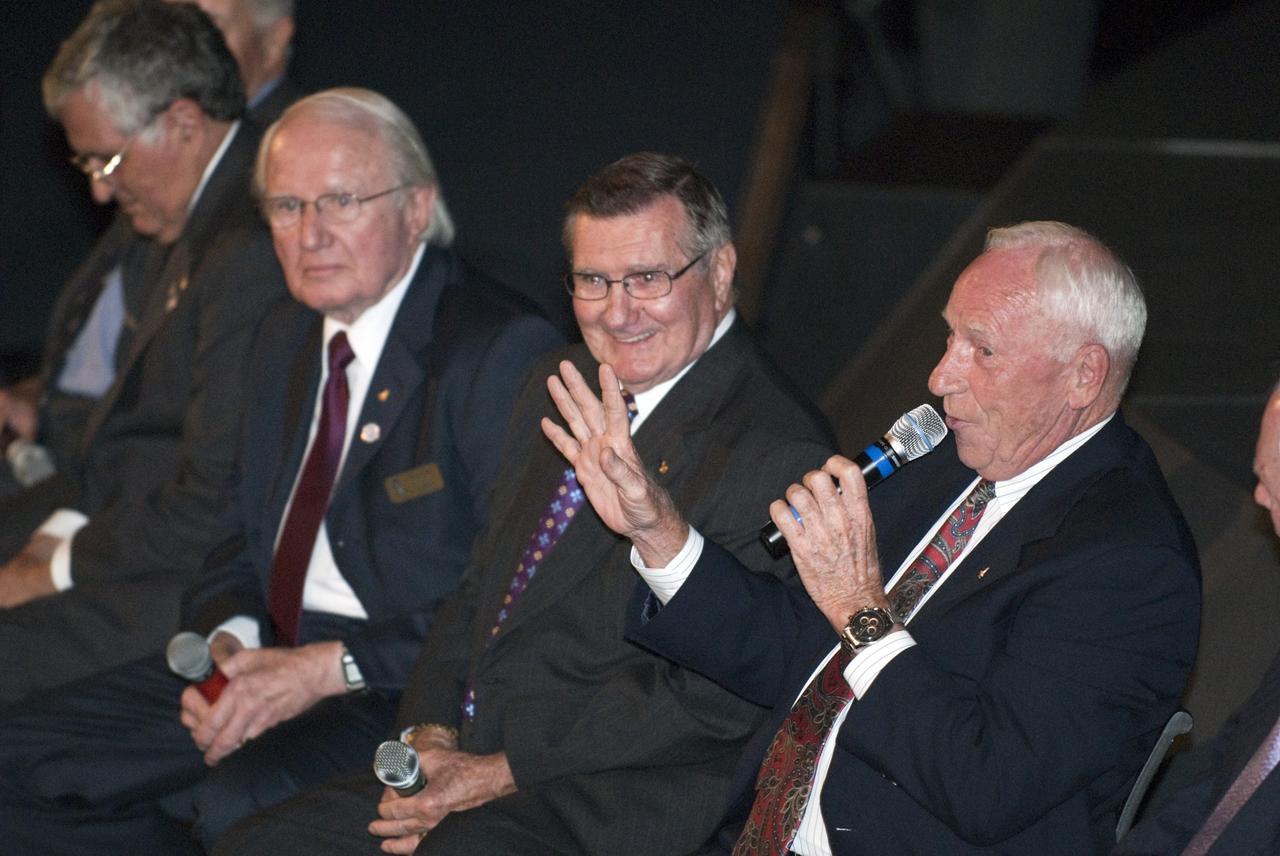
CAPE CANAVERAL, Fla. -- The Apollo/Saturn V Center at NASA's Kennedy Space Center in Florida hosted a celebration on the 40th anniversary of NASA's Apollo 15 mission. Apollo 15 Commander Dave Scott and Command Module Pilot Al Worden and an elite gathering of Apollo-era astronauts were on hand for the event and panel discussion. Seen here are Al Worden (right), and Apollo 15 astronaut backup support crew members, Dick Gordon, Vance Brand and Jack Schmitt. Worden circled the moon while Scott and the late Jim Irwin, the Lunar Module commander, made history when they became the first humans to drive a vehicle on the surface of the moon. They also provided extensive descriptions and photographic documentation of geologic features in the vicinity of the Hadley Rille landing site during their three days on the lunar surface. Photo credit: NASA/Kim Shiflett
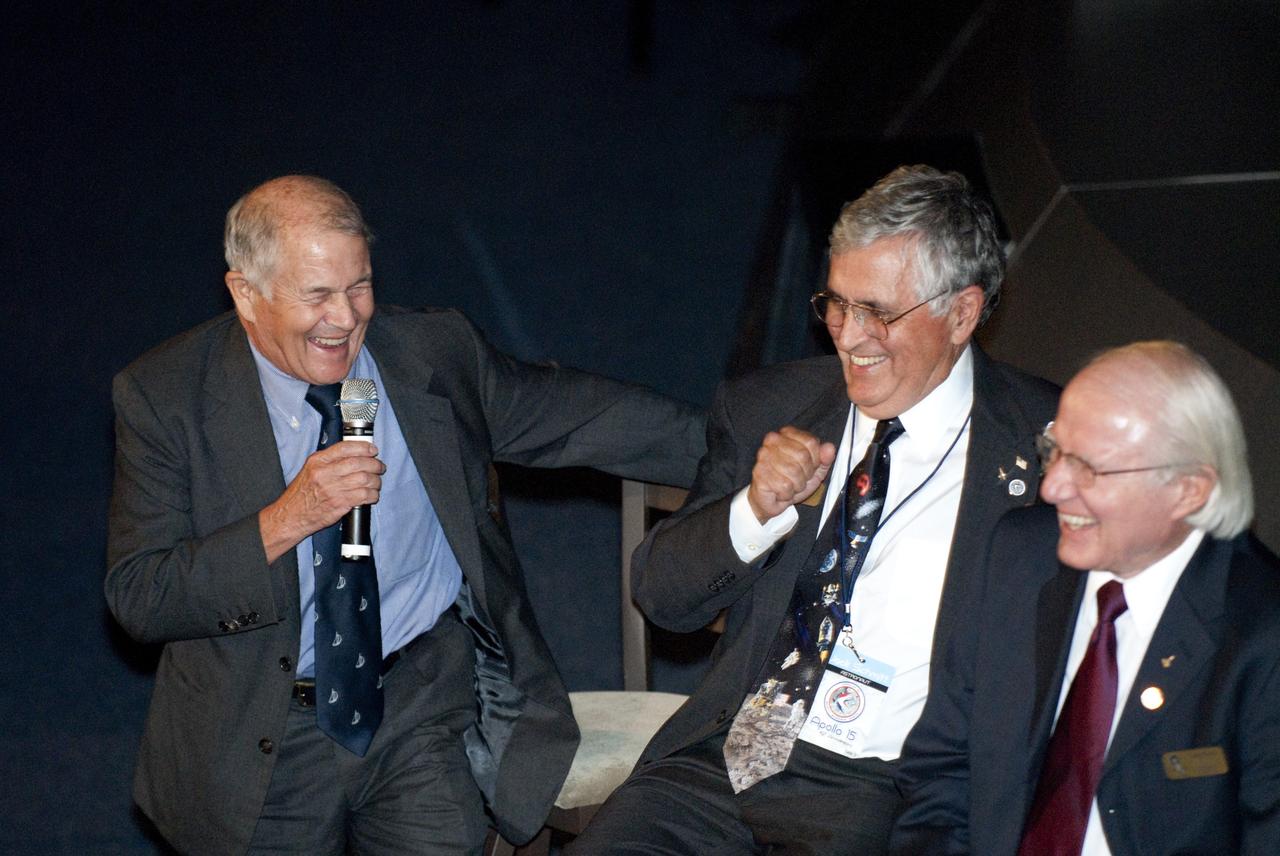
CAPE CANAVERAL, Fla. -- The Apollo/Saturn V Center at NASA's Kennedy Space Center in Florida hosted a celebration on the 40th anniversary of NASA's Apollo 15 mission. Apollo 15 Commander Dave Scott and Command Module Pilot Al Worden and an elite gathering of Apollo-era astronauts were on hand for the event and panel discussion. Here, sharing a light moment are from left, Apollo 15 astronaut support crew members, Joe Allen, Jack Schmitt and Vance Brand. Worden circled the moon while Scott and the late Jim Irwin, the Lunar Module commander, made history when they became the first humans to drive a vehicle on the surface of the moon. They also provided extensive descriptions and photographic documentation of geologic features in the vicinity of the Hadley Rille landing site during their three days on the lunar surface. Photo credit: NASA/Kim Shiflett
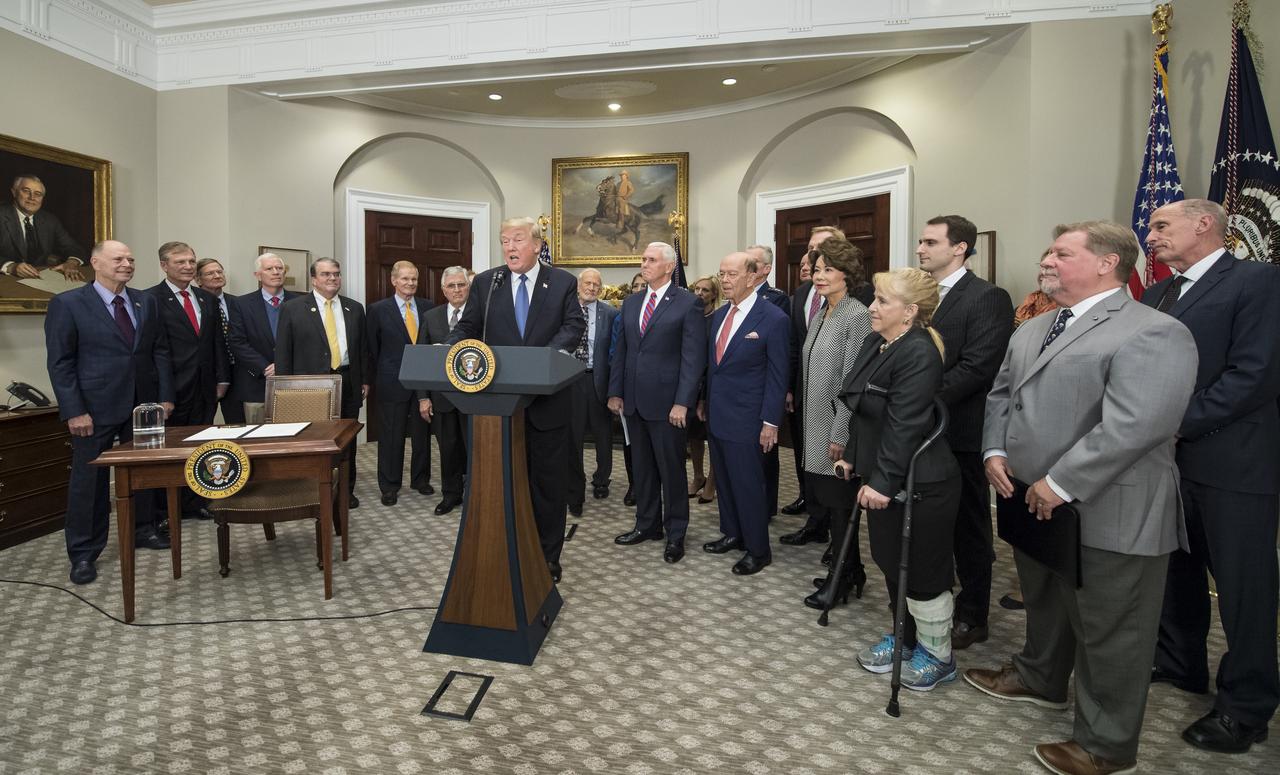
President Donald Trump, speaks before signing Space Policy Directive - 1, directing NASA to return to the moon, alongside Vice President Mike Pence, members of the Senate, Congress, NASA, and commercial space companies in the Roosevelt room of the White House in Washington, Monday, Dec. 11, 2017. Photo Credit: (NASA/Aubrey Gemignani)
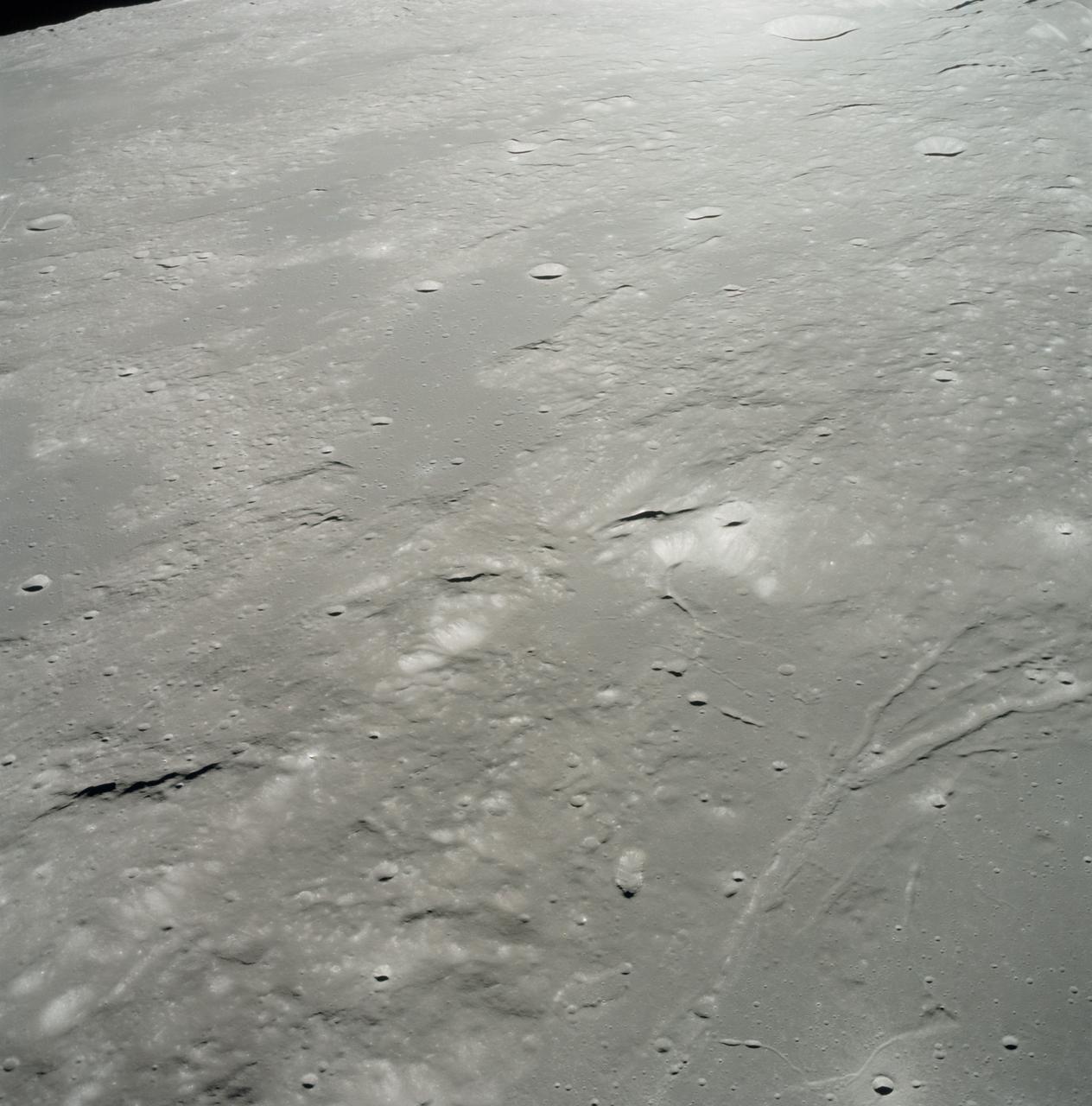
AS17-153-23572 (15 Dec. 1972) --- An oblique view of the Sulpicius Gallus region on the southwestern edge of the Sea of Serenity looking westward across the Haemus Mountains, as photographed from the Apollo 17 Command and Service Modules during its 65th revolution of the moon. This photograph shows the slight orange cast which was identified by astronaut Ronald E. Evans, command module pilot. The region shown in the picture is about 600 kilometers (360 statute miles) west across Mare Serentatis from the Taurus-Littrow landing site where scientist-astronaut Harrison H. "Jack" Schmitt, lunar module pilot, discovered an orange soil sample composed of fine glass particles rich in iron and titanium. North is toward the right. Rima Sulpicius Gallus is the lunar trench or valley (right foreground) that crosses the edge of the Mare and divides into three branches as it runs to the northwest. The crater Sulpicius Gallus is just off the photograph at the bottom right. Note that several small craters in the dark portion of the picture (east) show a more distinct orange cast. The coordinates of the center of this photograph are about 8.4 degrees east longitude and 19.8 degrees north latitude.

President Donald Trump, speaks before signing Space Policy Directive - 1, directing NASA to return to the moon, alongside Vice President Mike Pence, members of the Senate, Congress, NASA, and commercial space companies in the Roosevelt room of the White House in Washington, Monday, Dec. 11, 2017. Photo Credit: (NASA/Aubrey Gemignani)
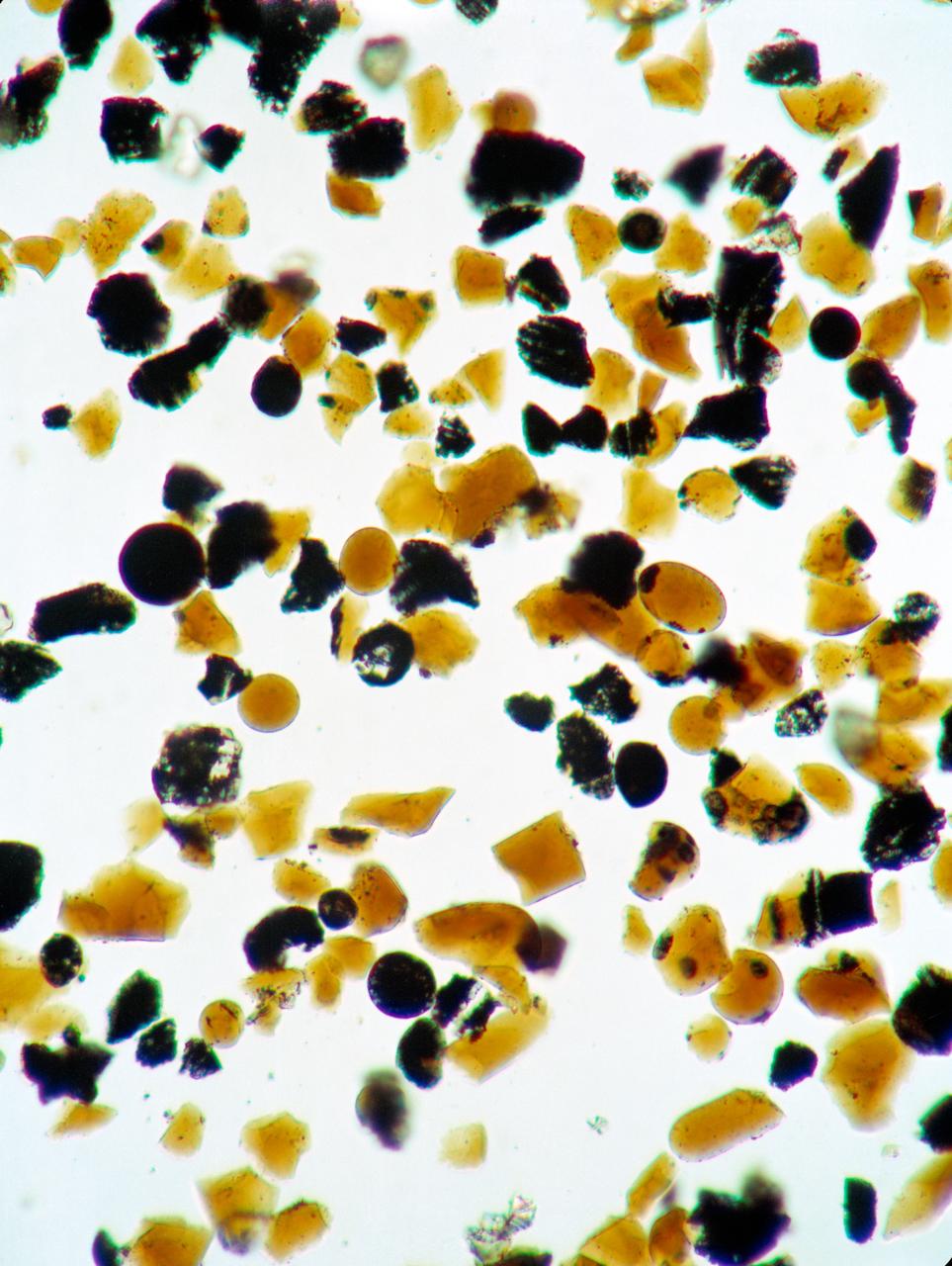
S73-15171 (4 Jan. 1973) --- These orange glass spheres and fragments are the finest particles ever brought back from the moon. Ranging in size from 20 to 45 microns (about 1/1000 of an inch) the particles are magnified 160 times in this photomicrograph made in the Lunar Receiving Laboratory at the Manned Spacecraft Center. The orange soil was brought back from the Taurus-Littrow landing site by the Apollo 17 crewmen. Scientist-astronaut Harrison H. "Jack" Schmitt discovered the orange soil at Shorty Crater during the second Apollo 17 extravehicular activity (EVA). This lunar material is being studied and analyzed by scientists in the LRL. The orange particles in this photomicrograph, which are intermixed with black and black-speckled grains, are about the same size as the particles that compose silt on Earth. Chemical analysis of the orange soil material has shown the sample to be similar to some of the samples brought back from the Apollo 11 (Sea of Tranquility) site several hundred miles to the southwest. Like those samples, it is rich in titanium (8%) and iron oxide (22%). But unlike the Apollo 11 samples, the orange soil is unexplainably rich in zinc ? an anomaly that has scientists in a quandary. This Apollo 17 sample is not high in volatile elements, nor do the minerals contain substantial amounts of water. These would have provided strong evidence of volcanic activity. On the other hand, the lack of agglutinates (rocks made up of a variety of minerals cemented together) indicates that the orange glass is probably not the product of meteorite impact -- strengthening the argument that the glass was produced by volcanic activity.