
S87-29019 (16 March 1987) --- Astronaut James F. Buchli.

S78-35296 (1978) --- Astronaut James F. Buchli.
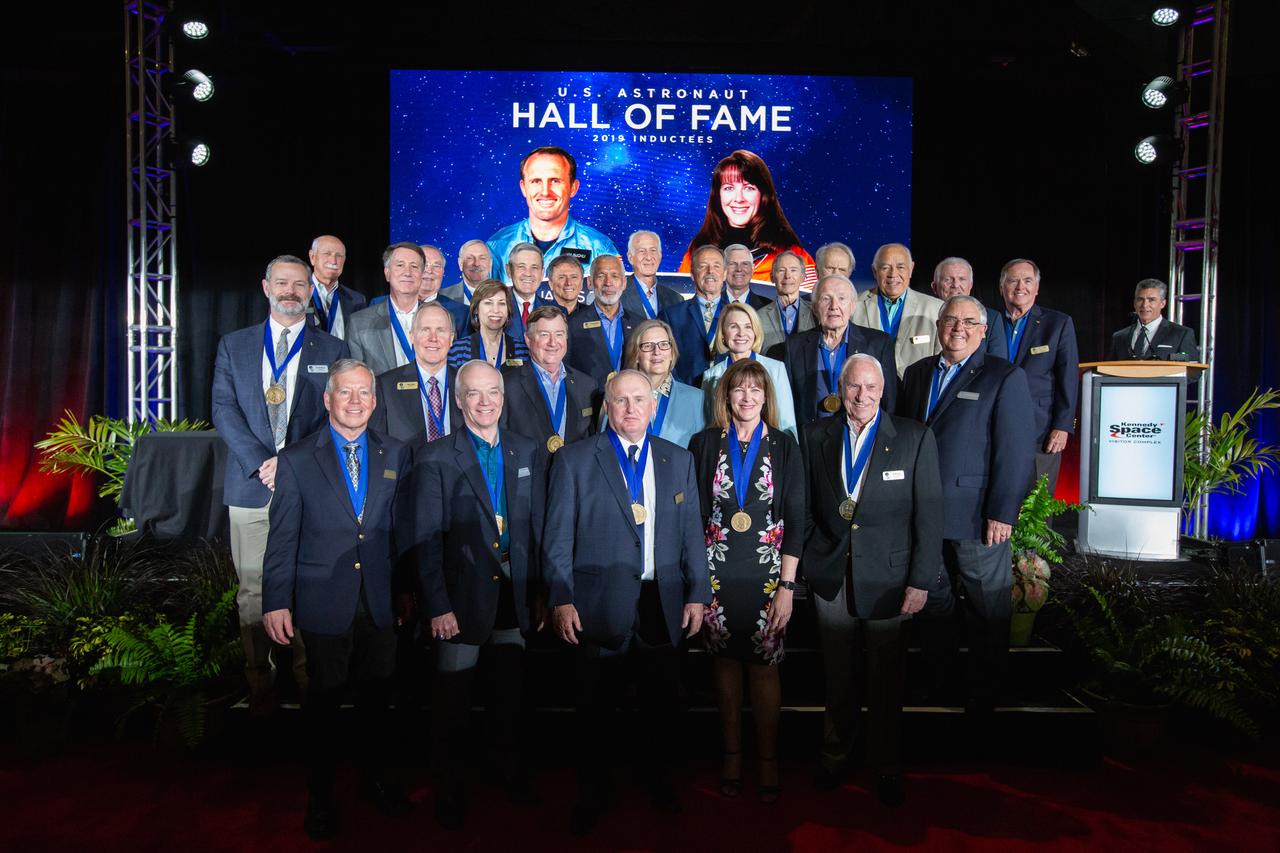
Veteran NASA astronauts James Buchli and Janet Kavandi were inducted into the U.S. Astronaut Hall of Fame in a public ceremony at Kennedy Space Center Visitor Complex in the Space Shuttle Atlantis attraction on April 6, 2019.
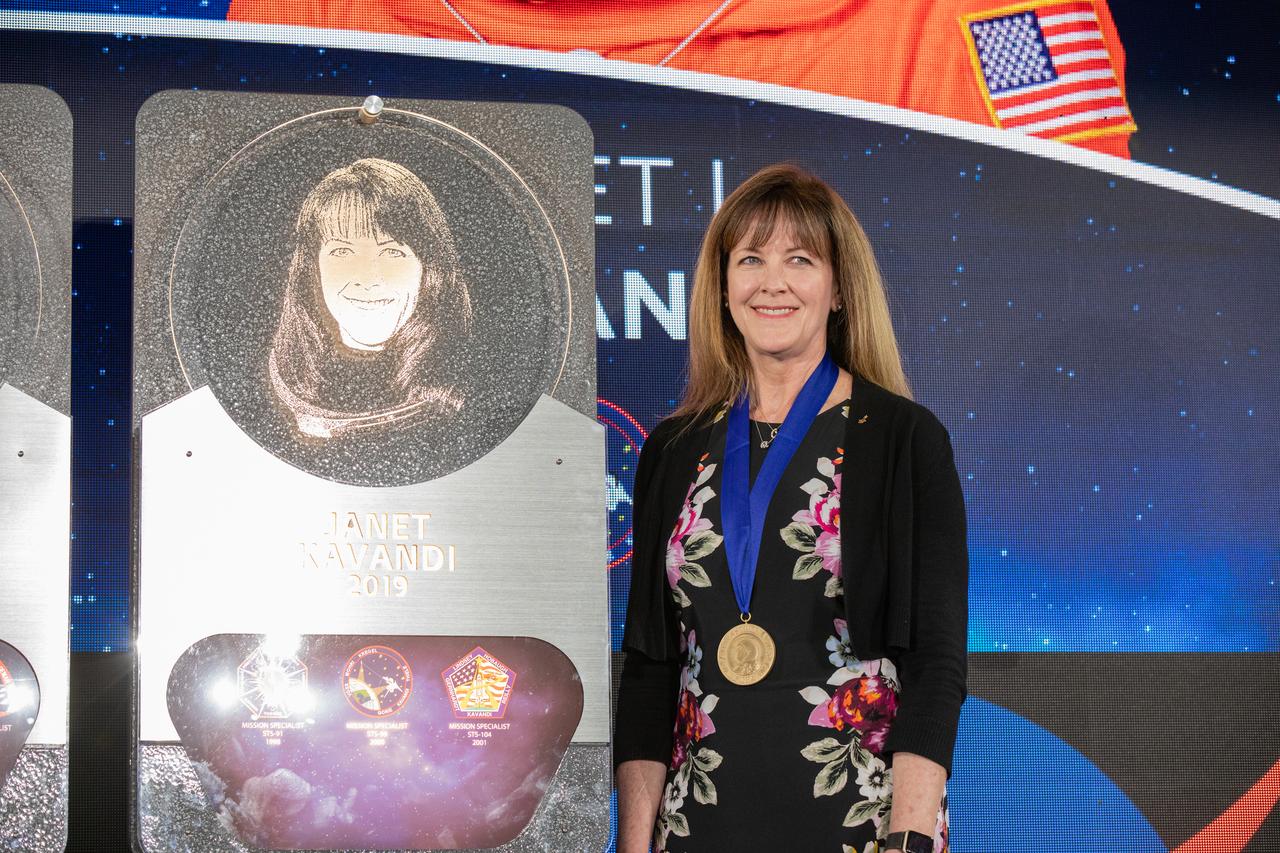
Veteran NASA astronauts James Buchli and Janet Kavandi were inducted into the U.S. Astronaut Hall of Fame in a public ceremony at Kennedy Space Center Visitor Complex in the Space Shuttle Atlantis attraction on April 6, 2019.
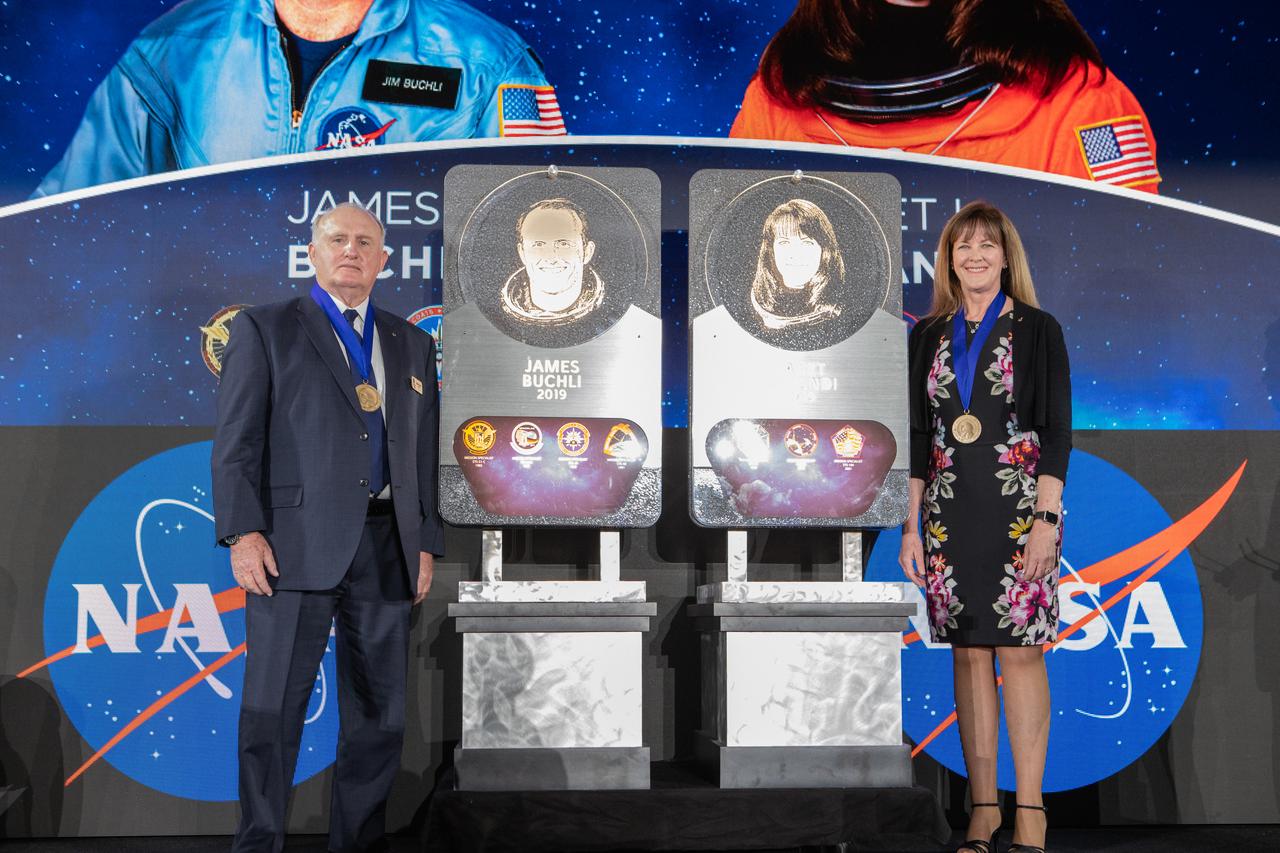
Veteran NASA astronauts James Buchli and Janet Kavandi were inducted into the U.S. Astronaut Hall of Fame in a public ceremony at Kennedy Space Center Visitor Complex in the Space Shuttle Atlantis attraction on April 6, 2019.
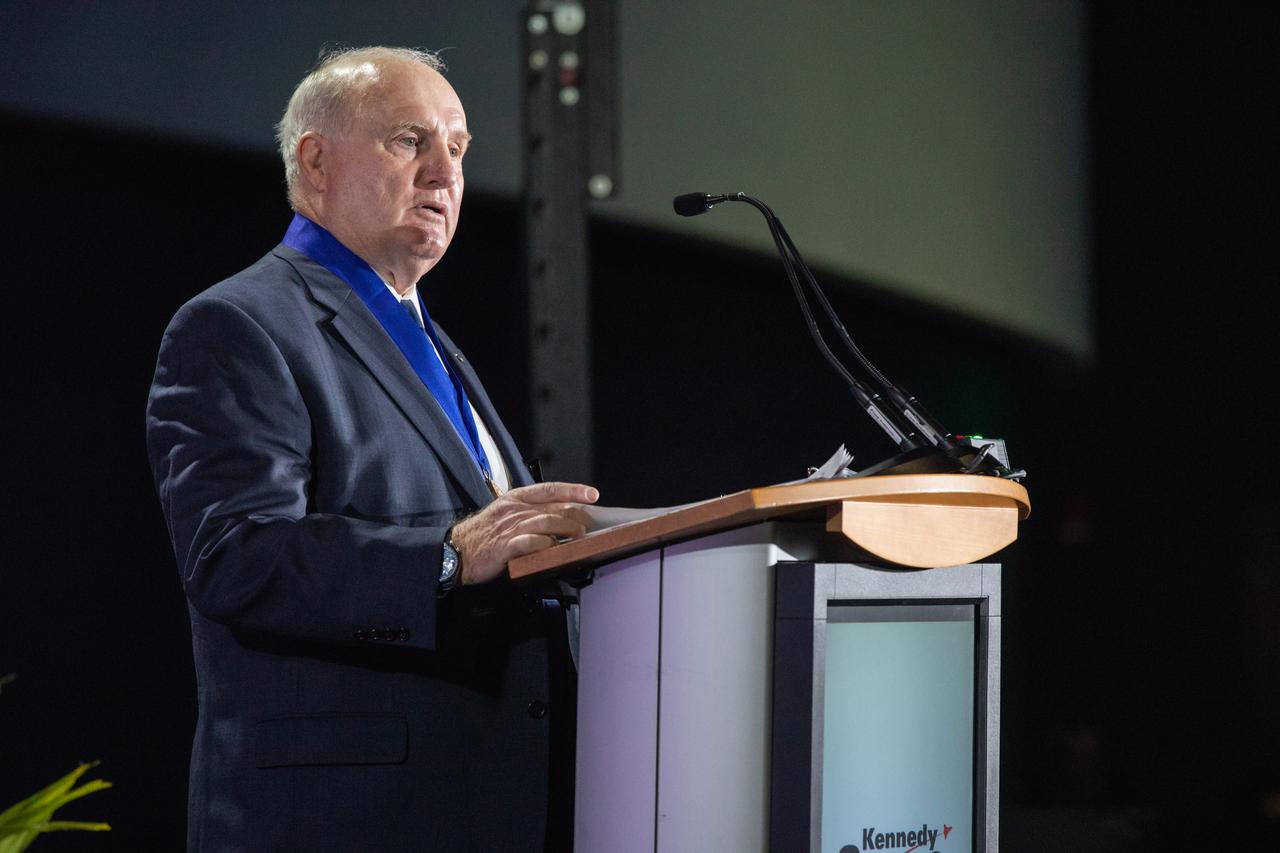
Veteran NASA astronauts James Buchli and Janet Kavandi were inducted into the U.S. Astronaut Hall of Fame in a public ceremony at Kennedy Space Center Visitor Complex in the Space Shuttle Atlantis attraction on April 6, 2019.
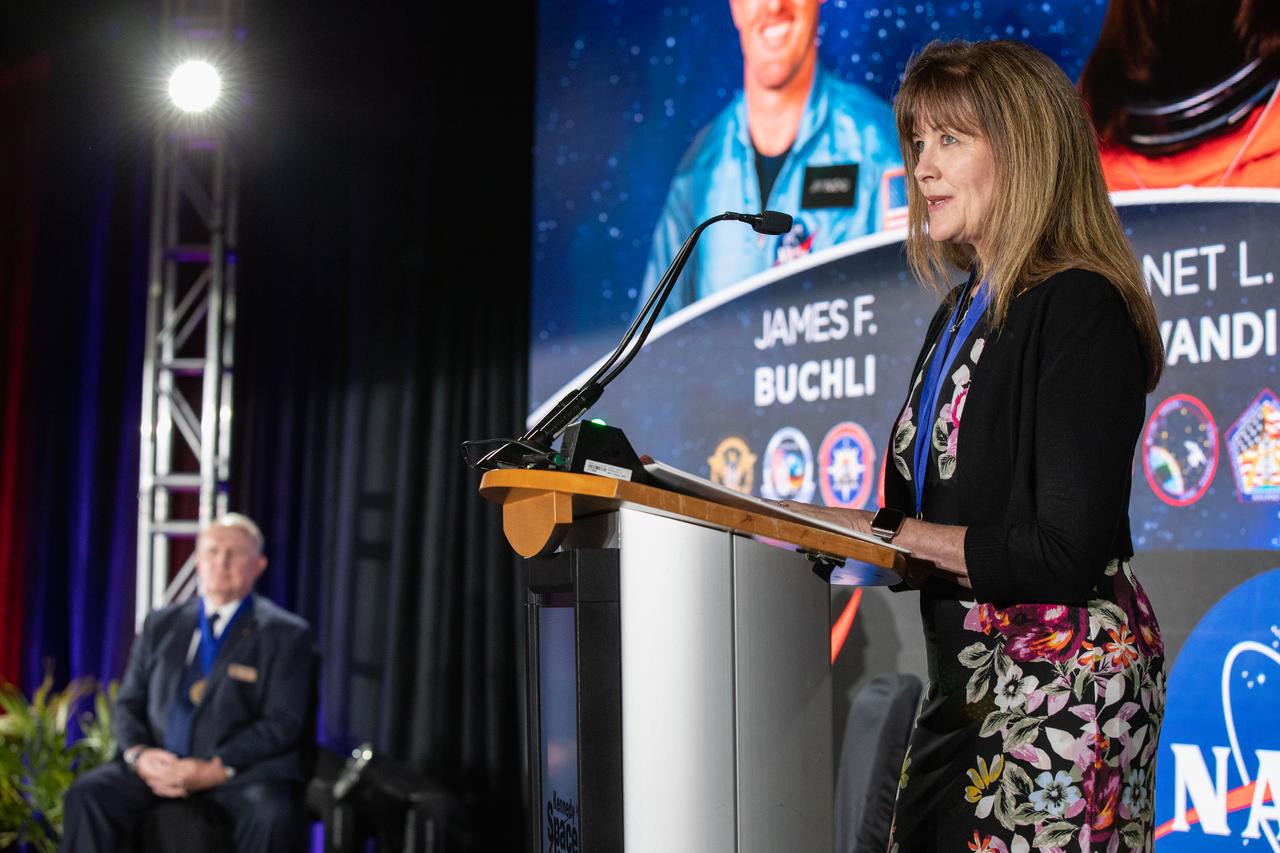
Veteran NASA astronauts James Buchli and Janet Kavandi were inducted into the U.S. Astronaut Hall of Fame in a public ceremony at Kennedy Space Center Visitor Complex in the Space Shuttle Atlantis attraction on April 6, 2019.
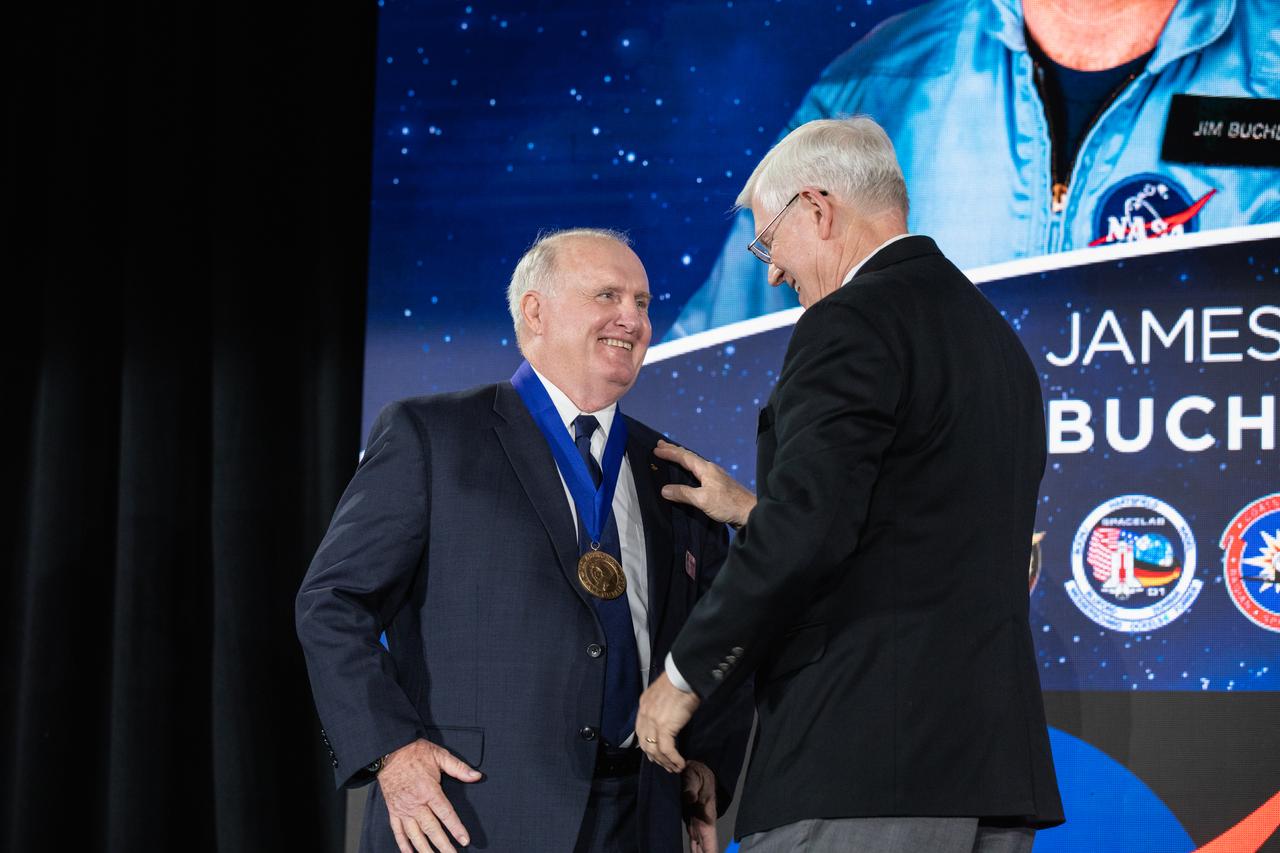
Veteran NASA astronauts James Buchli and Janet Kavandi were inducted into the U.S. Astronaut Hall of Fame in a public ceremony at Kennedy Space Center Visitor Complex in the Space Shuttle Atlantis attraction on April 6, 2019.
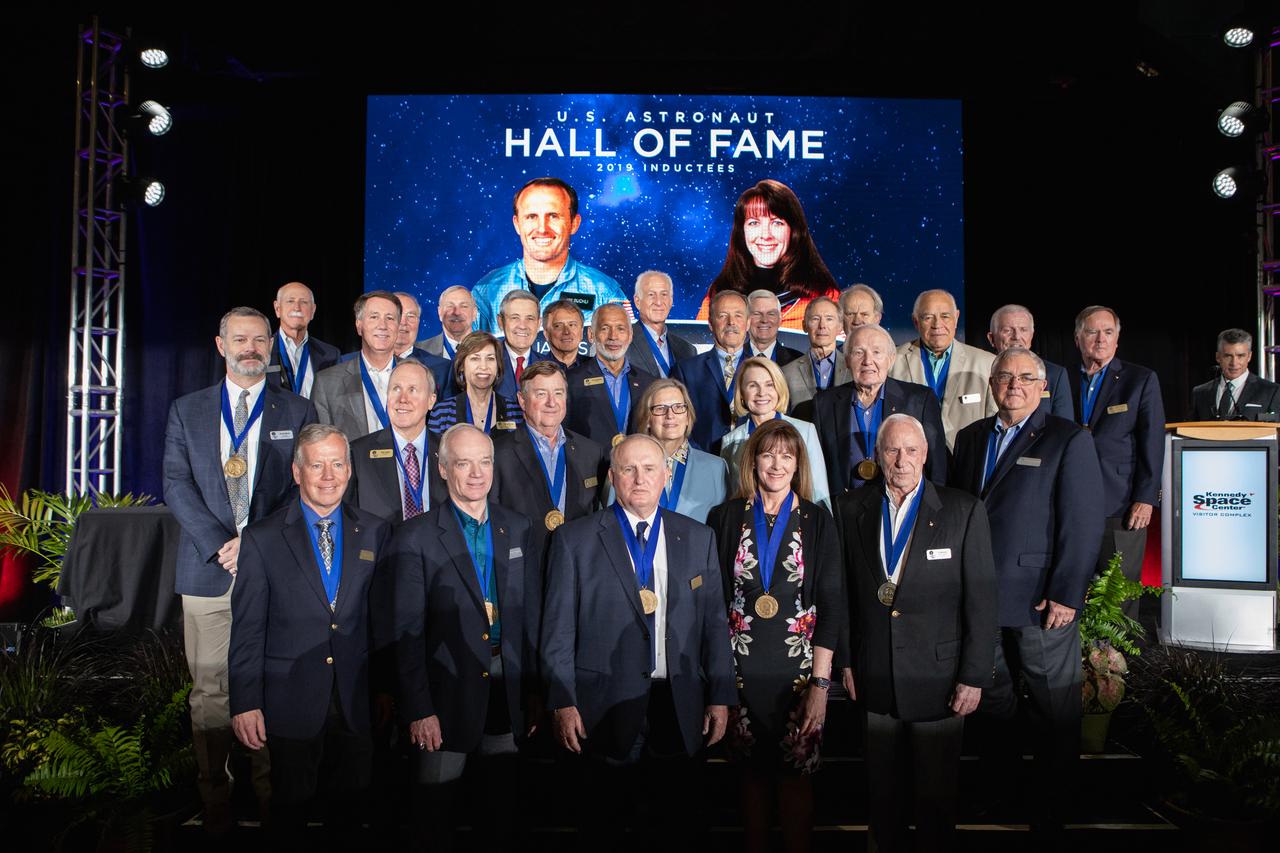
Veteran NASA astronauts James Buchli and Janet Kavandi were inducted into the U.S. Astronaut Hall of Fame in a public ceremony at Kennedy Space Center Visitor Complex in the Space Shuttle Atlantis attraction on April 6, 2019.
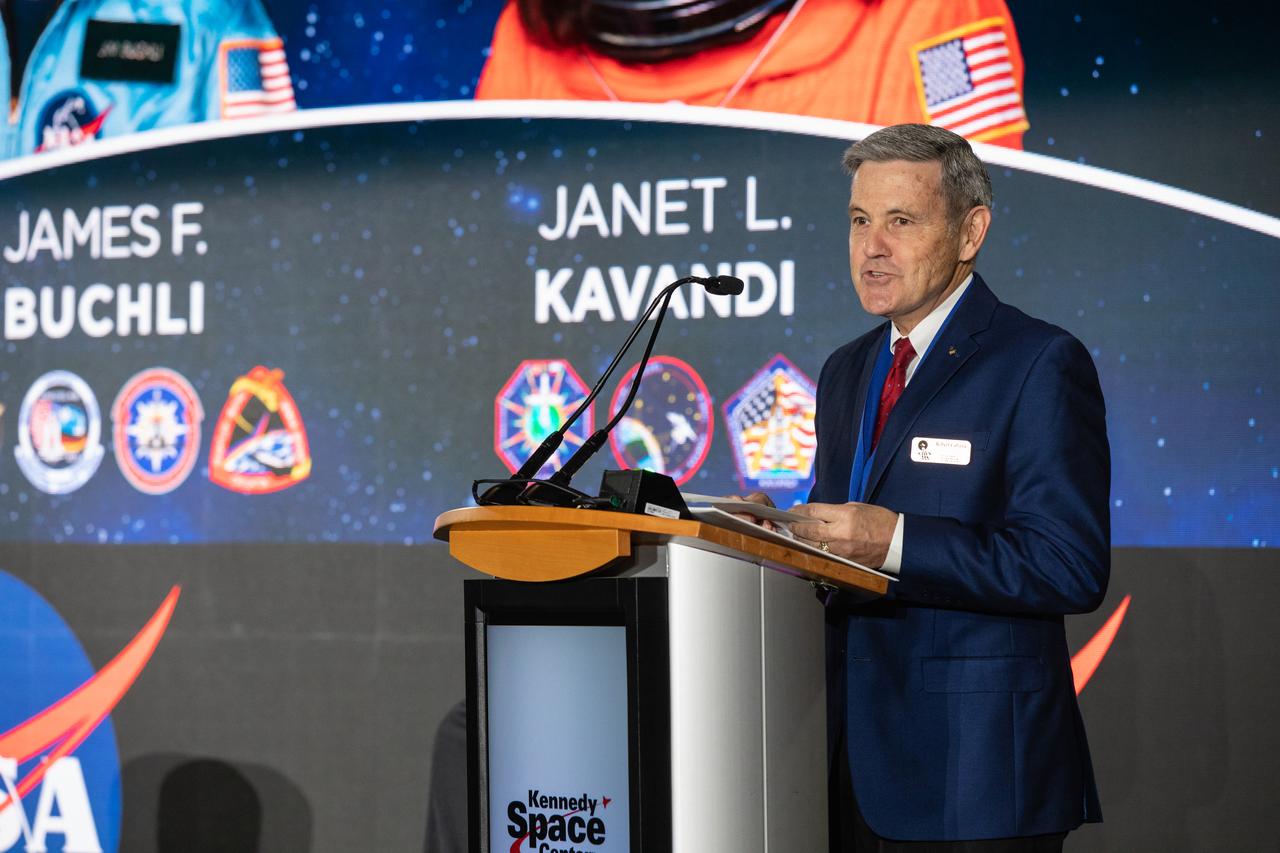
Veteran NASA astronauts James Buchli and Janet Kavandi were inducted into the U.S. Astronaut Hall of Fame in a public ceremony at Kennedy Space Center Visitor Complex in the Space Shuttle Atlantis attraction on April 6, 2019.
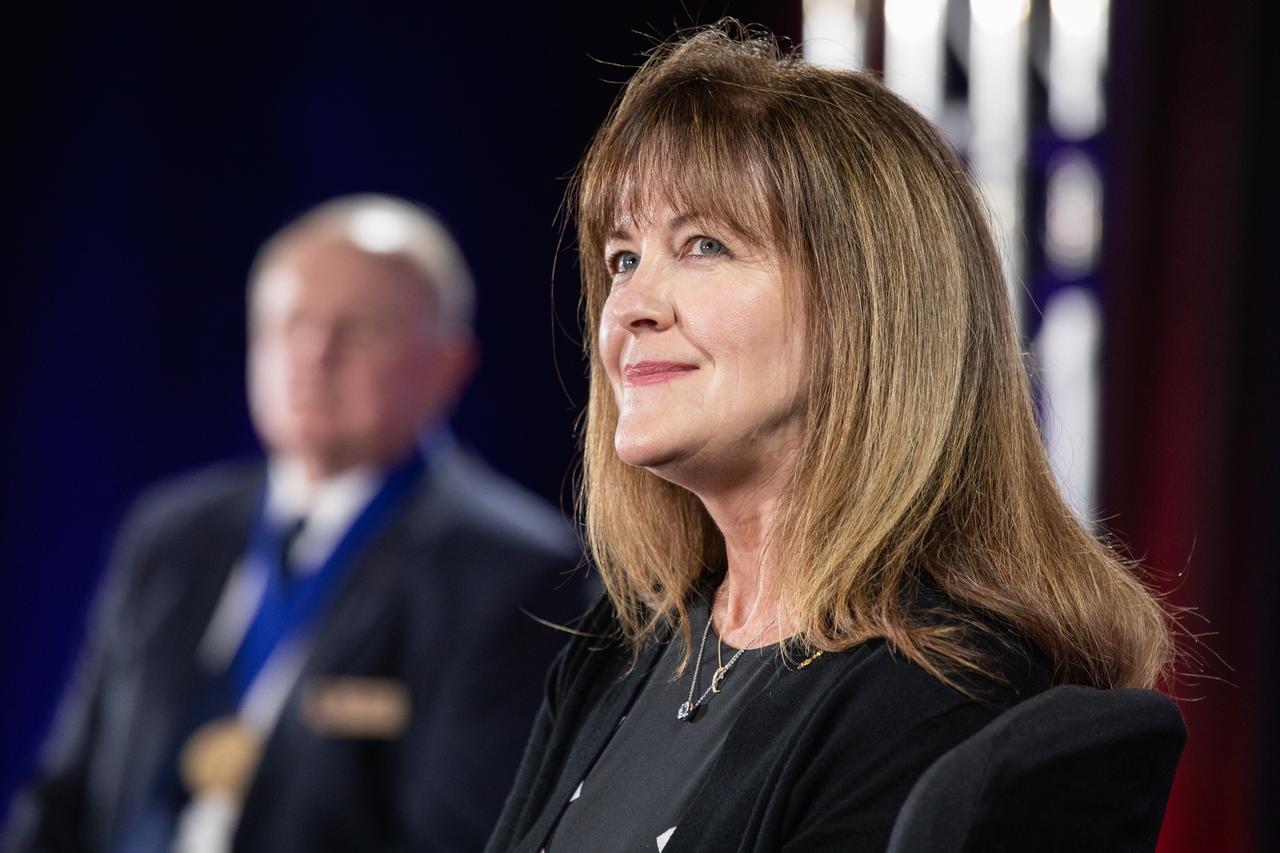
Veteran NASA astronauts James Buchli and Janet Kavandi were inducted into the U.S. Astronaut Hall of Fame in a public ceremony at Kennedy Space Center Visitor Complex in the Space Shuttle Atlantis attraction on April 6, 2019.

Veteran NASA astronauts James Buchli and Janet Kavandi were inducted into the U.S. Astronaut Hall of Fame in a public ceremony at Kennedy Space Center Visitor Complex in the Space Shuttle Atlantis attraction on April 6, 2019.
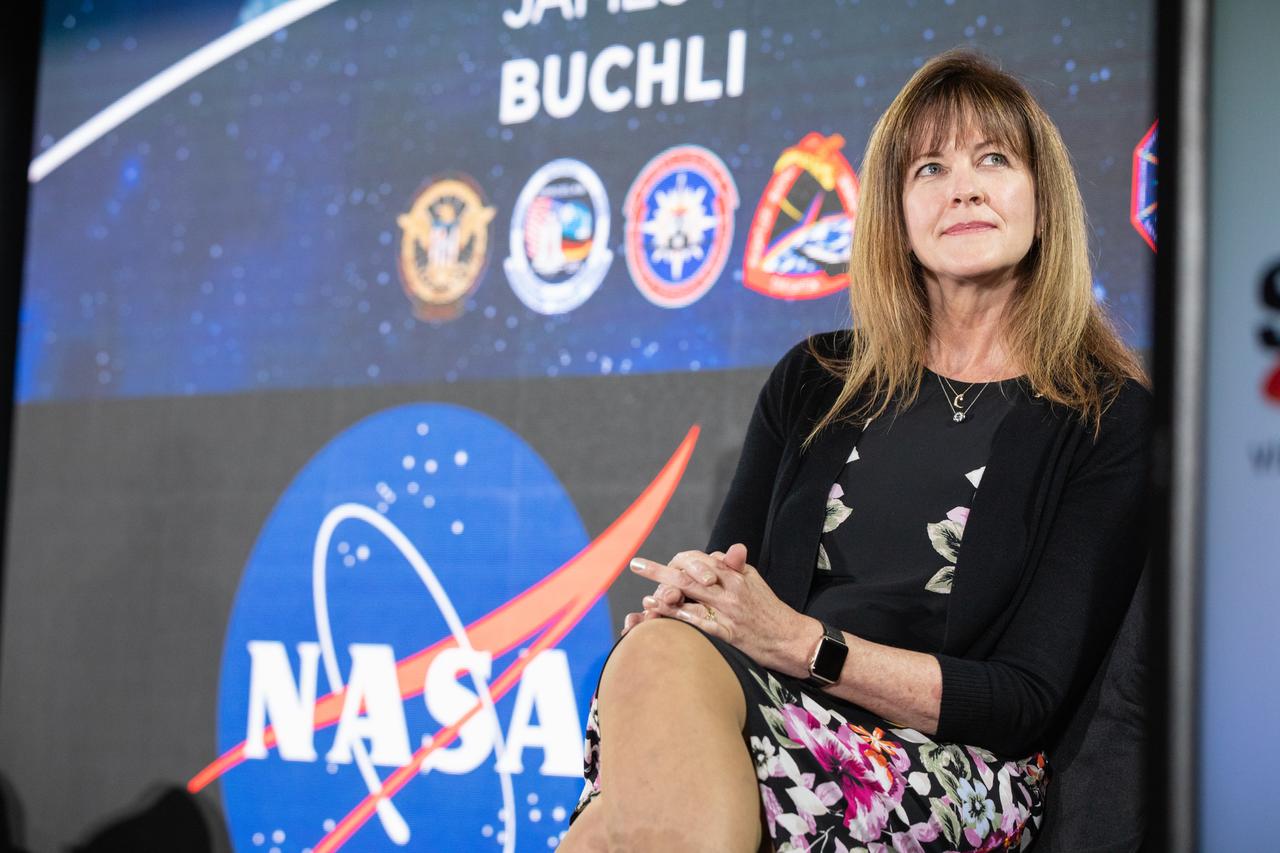
Veteran NASA astronauts James Buchli and Janet Kavandi were inducted into the U.S. Astronaut Hall of Fame in a public ceremony at Kennedy Space Center Visitor Complex in the Space Shuttle Atlantis attraction on April 6, 2019.
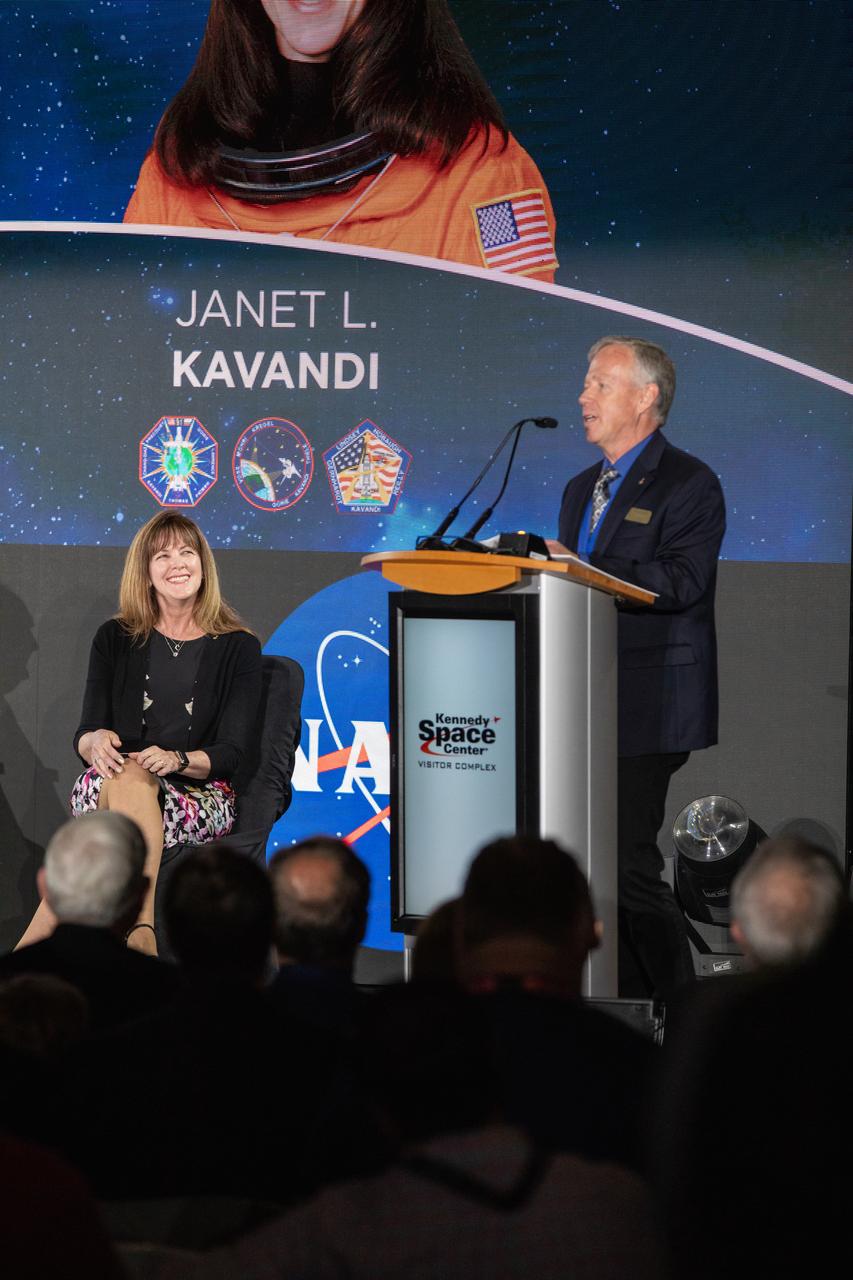
Veteran NASA astronauts James Buchli and Janet Kavandi were inducted into the U.S. Astronaut Hall of Fame in a public ceremony at Kennedy Space Center Visitor Complex in the Space Shuttle Atlantis attraction on April 6, 2019.
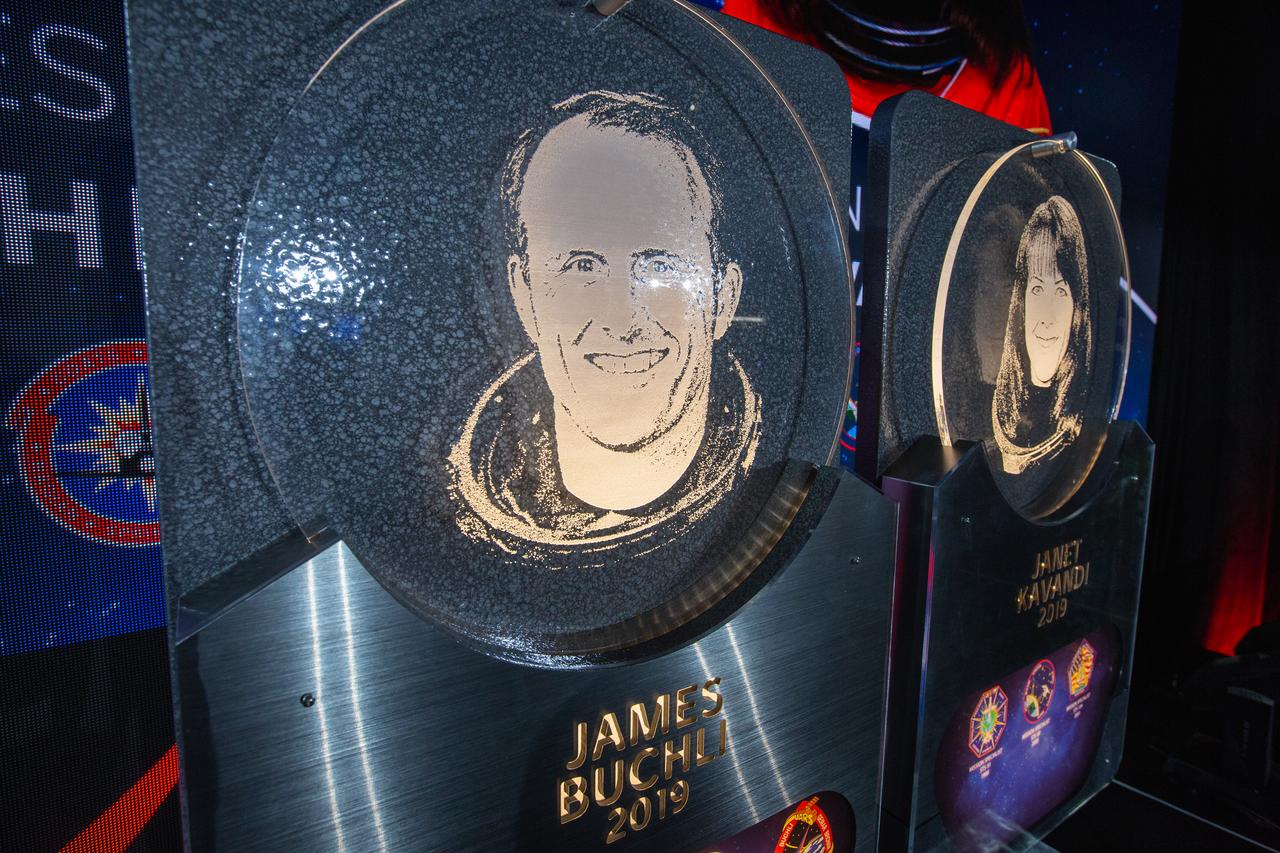
Veteran NASA astronauts James Buchli and Janet Kavandi were inducted into the U.S. Astronaut Hall of Fame in a public ceremony at Kennedy Space Center Visitor Complex in the Space Shuttle Atlantis attraction on April 6, 2019.
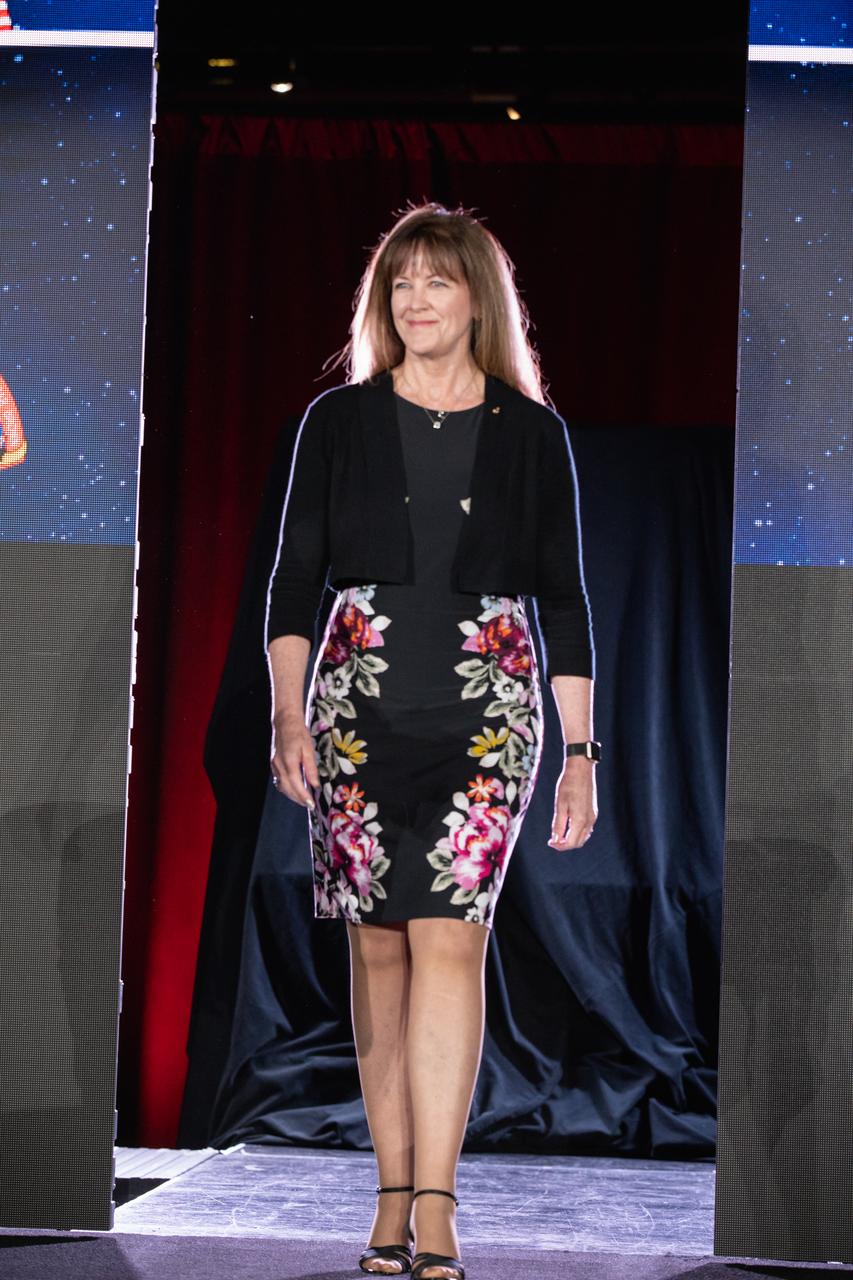
Veteran NASA astronauts James Buchli and Janet Kavandi were inducted into the U.S. Astronaut Hall of Fame in a public ceremony at Kennedy Space Center Visitor Complex in the Space Shuttle Atlantis attraction on April 6, 2019.
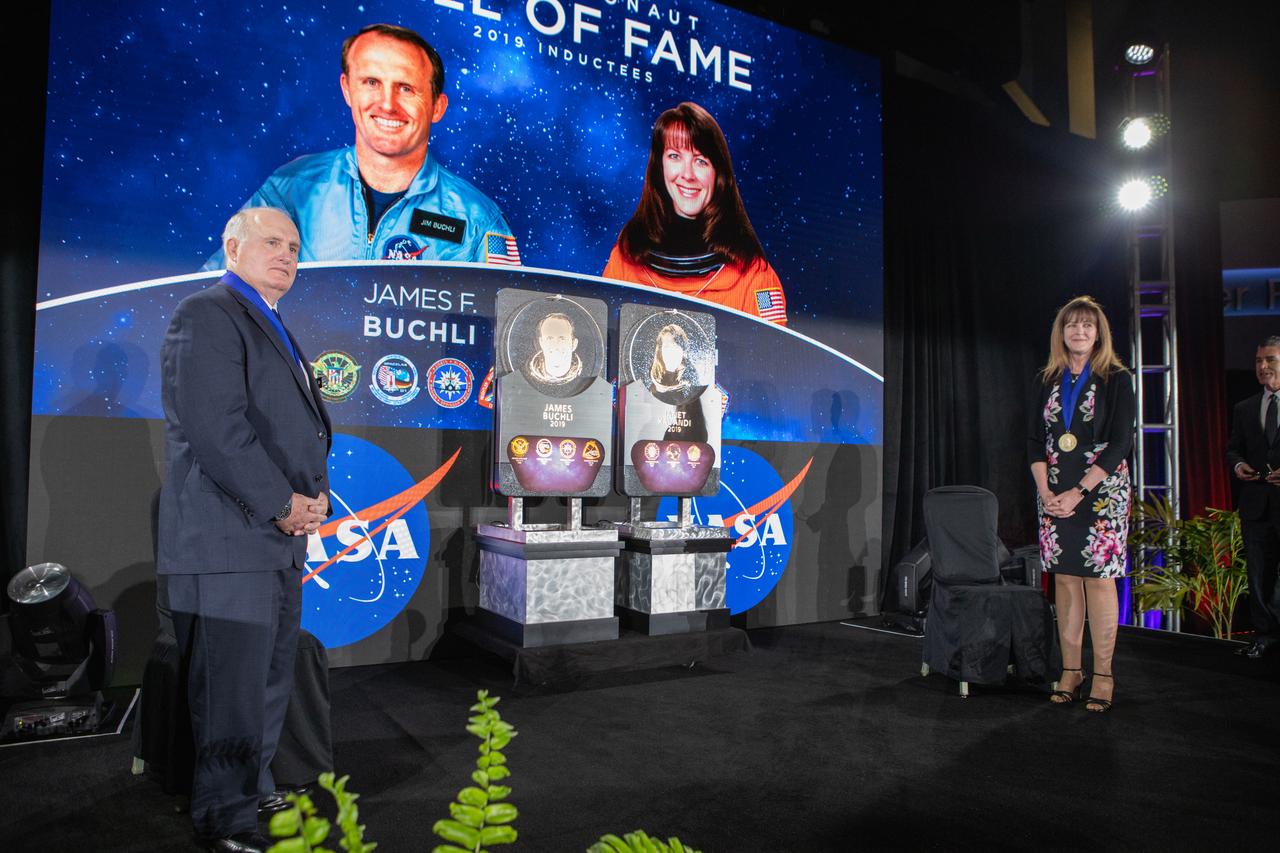
Veteran NASA astronauts James Buchli and Janet Kavandi were inducted into the U.S. Astronaut Hall of Fame in a public ceremony at Kennedy Space Center Visitor Complex in the Space Shuttle Atlantis attraction on April 6, 2019.
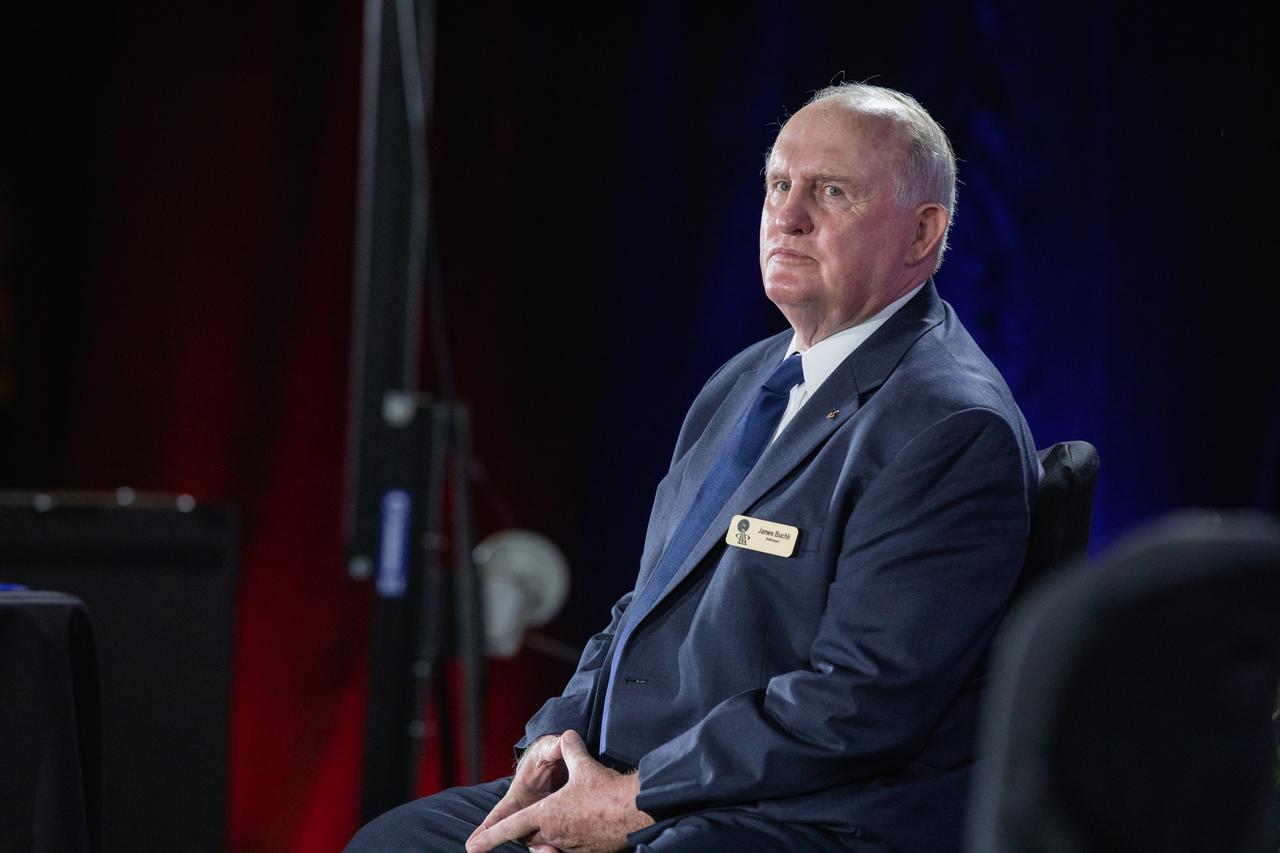
Veteran NASA astronauts James Buchli and Janet Kavandi were inducted into the U.S. Astronaut Hall of Fame in a public ceremony at Kennedy Space Center Visitor Complex in the Space Shuttle Atlantis attraction on April 6, 2019.

Veteran NASA astronauts James Buchli and Janet Kavandi were inducted into the U.S. Astronaut Hall of Fame in a public ceremony at Kennedy Space Center Visitor Complex in the Space Shuttle Atlantis attraction on April 6, 2019.
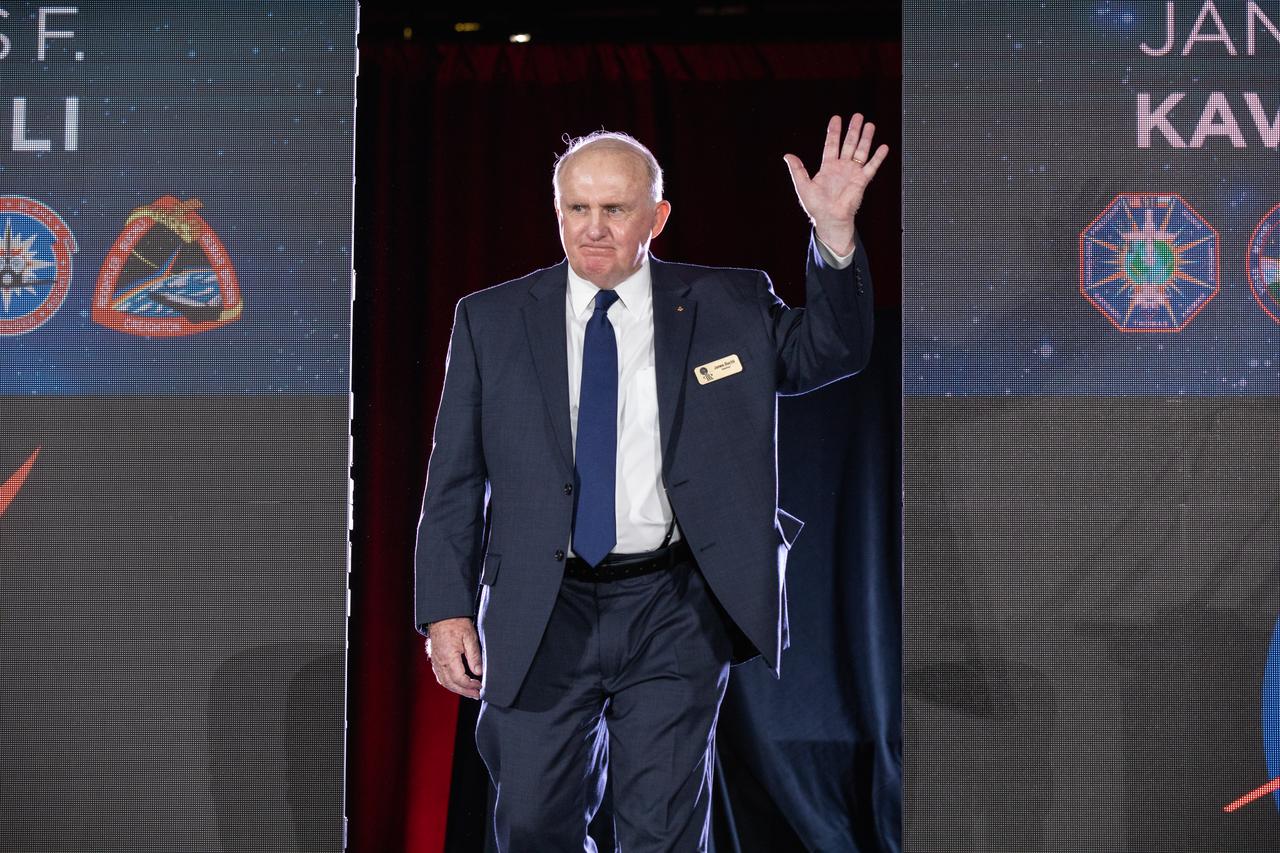
Veteran NASA astronauts James Buchli and Janet Kavandi were inducted into the U.S. Astronaut Hall of Fame in a public ceremony at Kennedy Space Center Visitor Complex in the Space Shuttle Atlantis attraction on April 6, 2019.
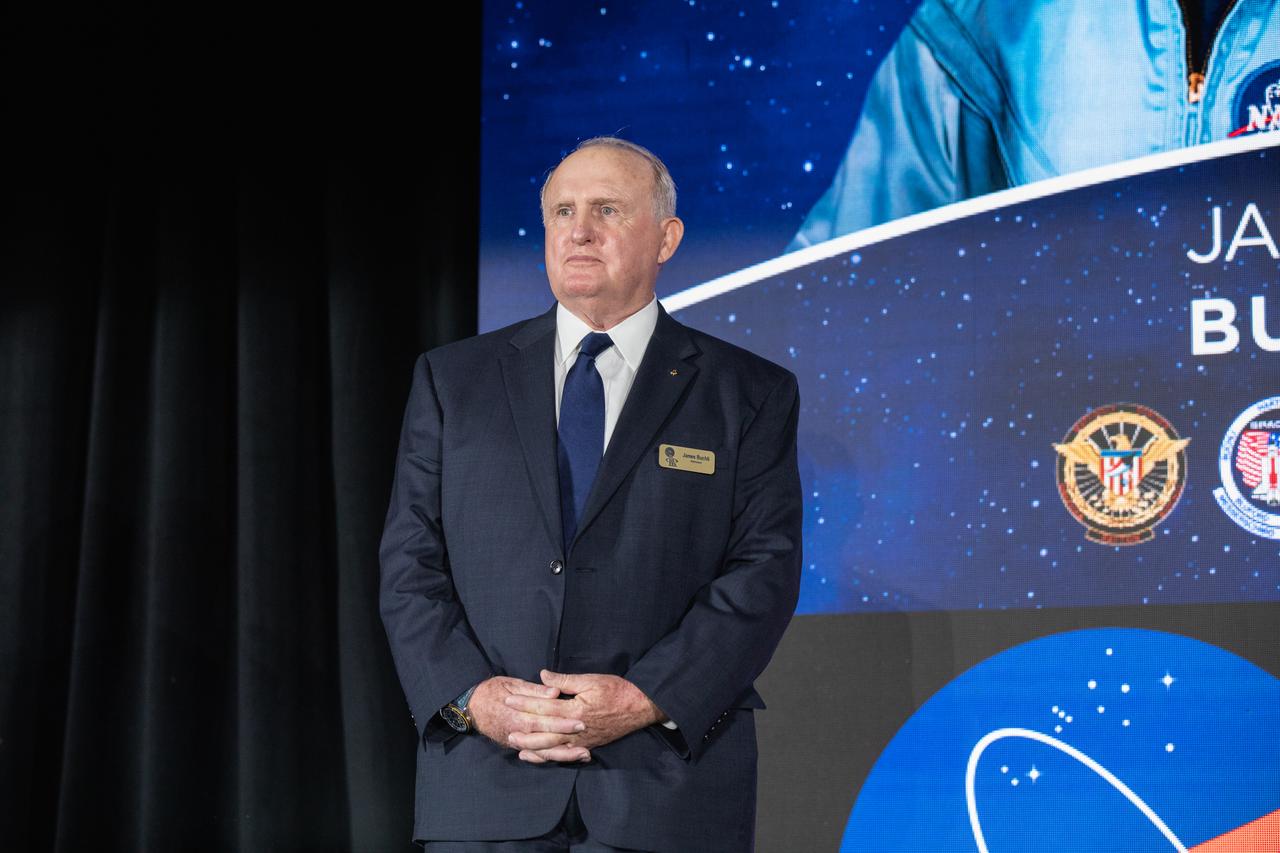
Veteran NASA astronauts James Buchli and Janet Kavandi were inducted into the U.S. Astronaut Hall of Fame in a public ceremony at Kennedy Space Center Visitor Complex in the Space Shuttle Atlantis attraction on April 6, 2019.
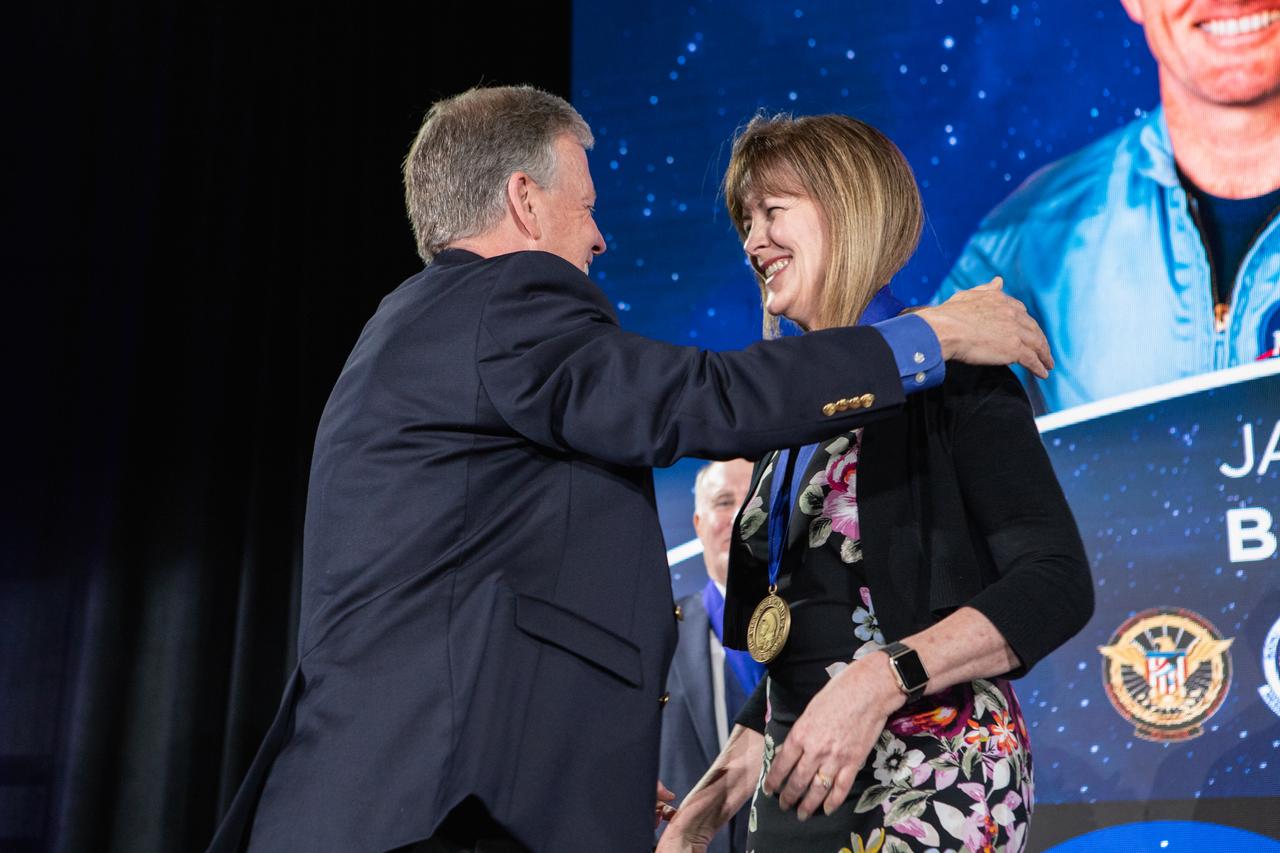
Veteran NASA astronauts James Buchli and Janet Kavandi were inducted into the U.S. Astronaut Hall of Fame in a public ceremony at Kennedy Space Center Visitor Complex in the Space Shuttle Atlantis attraction on April 6, 2019.
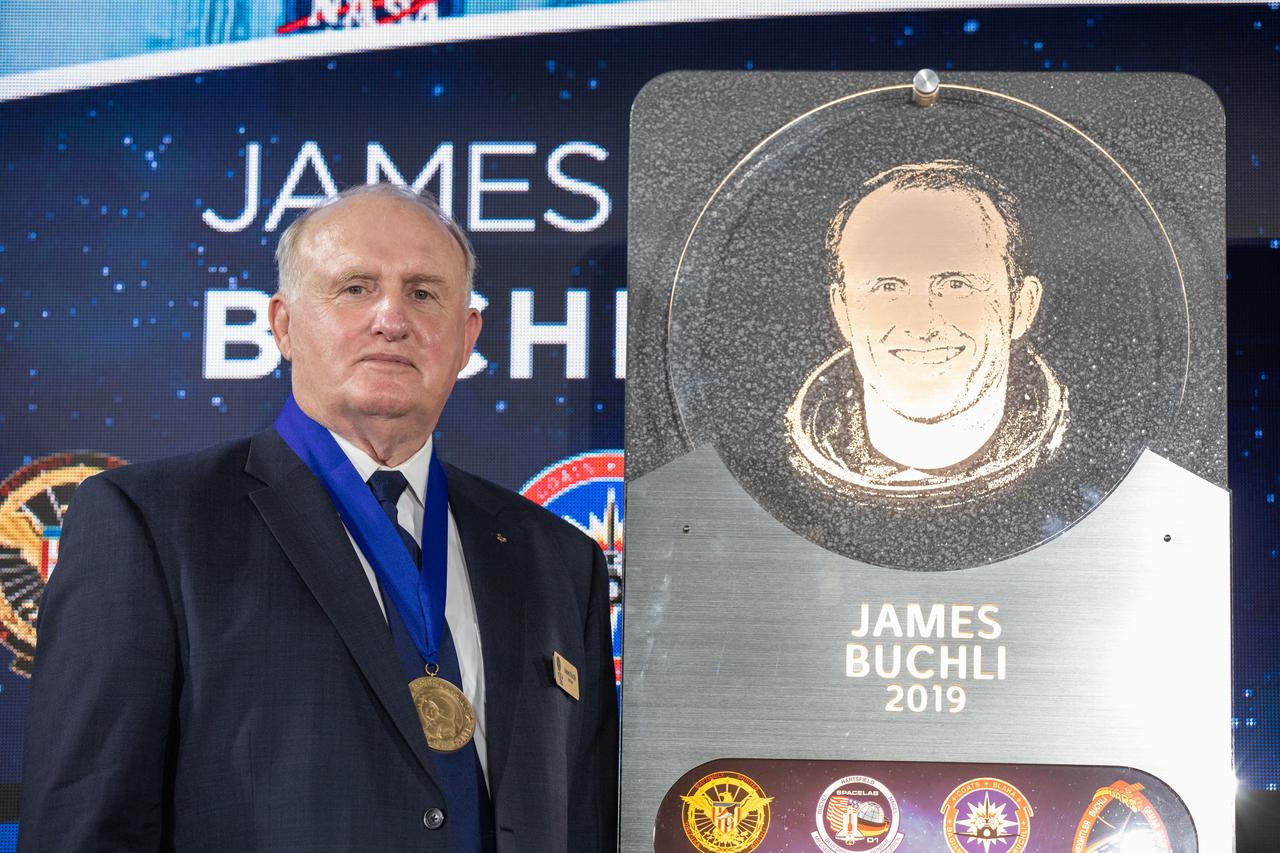
Veteran NASA astronauts James Buchli and Janet Kavandi were inducted into the U.S. Astronaut Hall of Fame in a public ceremony at Kennedy Space Center Visitor Complex in the Space Shuttle Atlantis attraction on April 6, 2019.
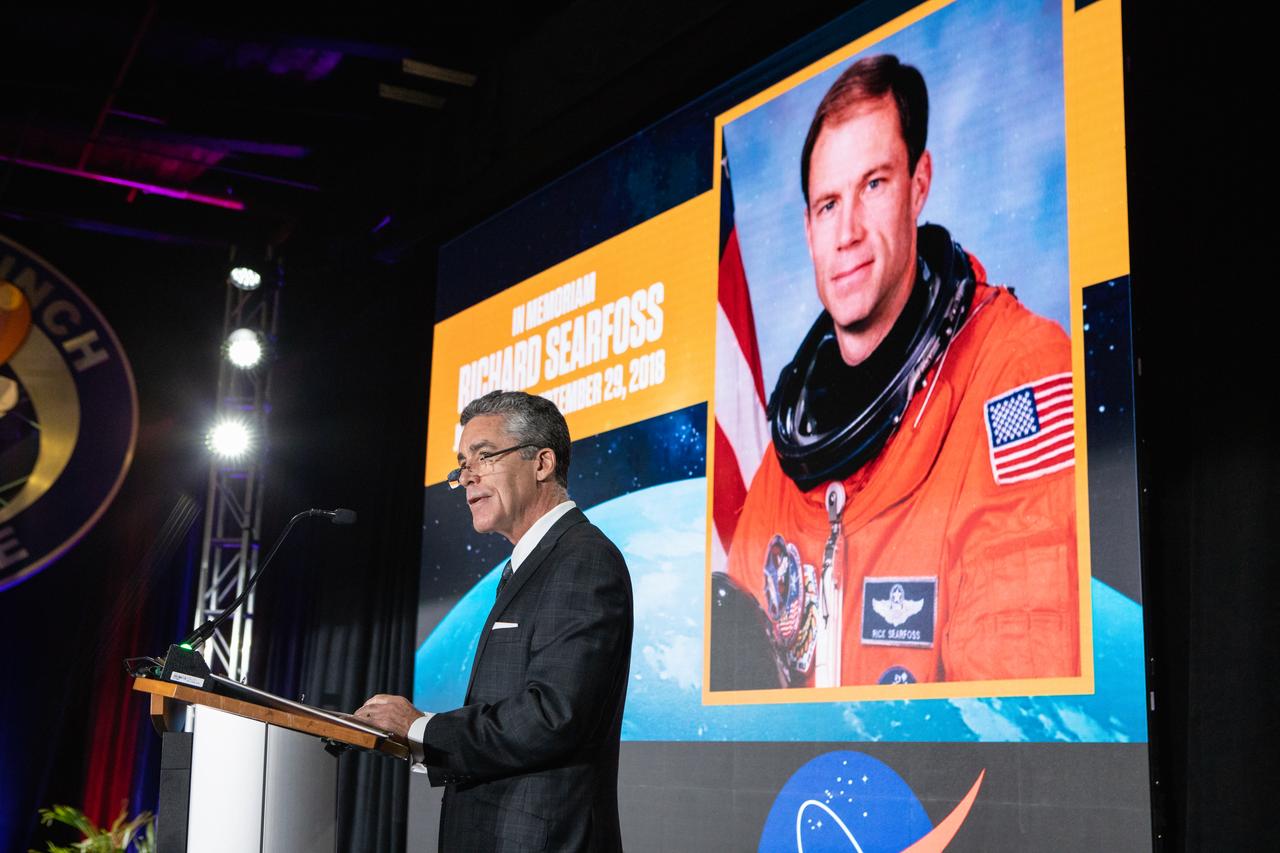
Veteran NASA astronauts James Buchli and Janet Kavandi were inducted into the U.S. Astronaut Hall of Fame in a public ceremony at Kennedy Space Center Visitor Complex in the Space Shuttle Atlantis attraction on April 6, 2019.
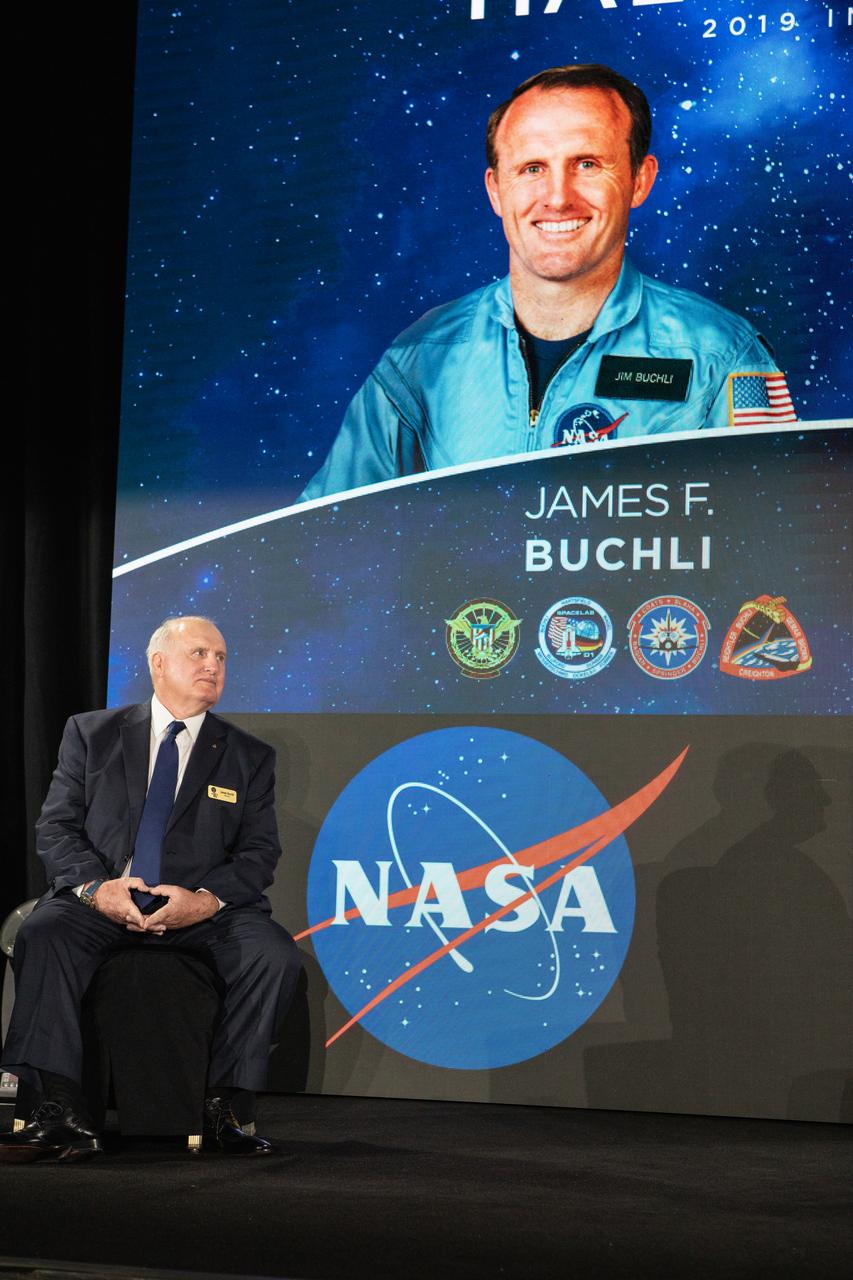
Veteran NASA astronauts James Buchli and Janet Kavandi were inducted into the U.S. Astronaut Hall of Fame in a public ceremony at Kennedy Space Center Visitor Complex in the Space Shuttle Atlantis attraction on April 6, 2019.

STS-48 Mission Specialist (MS) James F. Buchli, wearing an extravehicular mobility unit (EMU), is watched by SCUBA-equipped divers as the platform he is standing on is lowered into JSC's Weightless Environment Training Facility (WETF) Bldg 29 pool. When completely underwater, Buchli will be released from the platform and will perform contingency extravehicular activity (EVA) operations. This underwater simulation of a spacewalk is part of the training required for Buchli's upcoming mission aboard Discovery, Orbiter Vehicle (OV) 103.
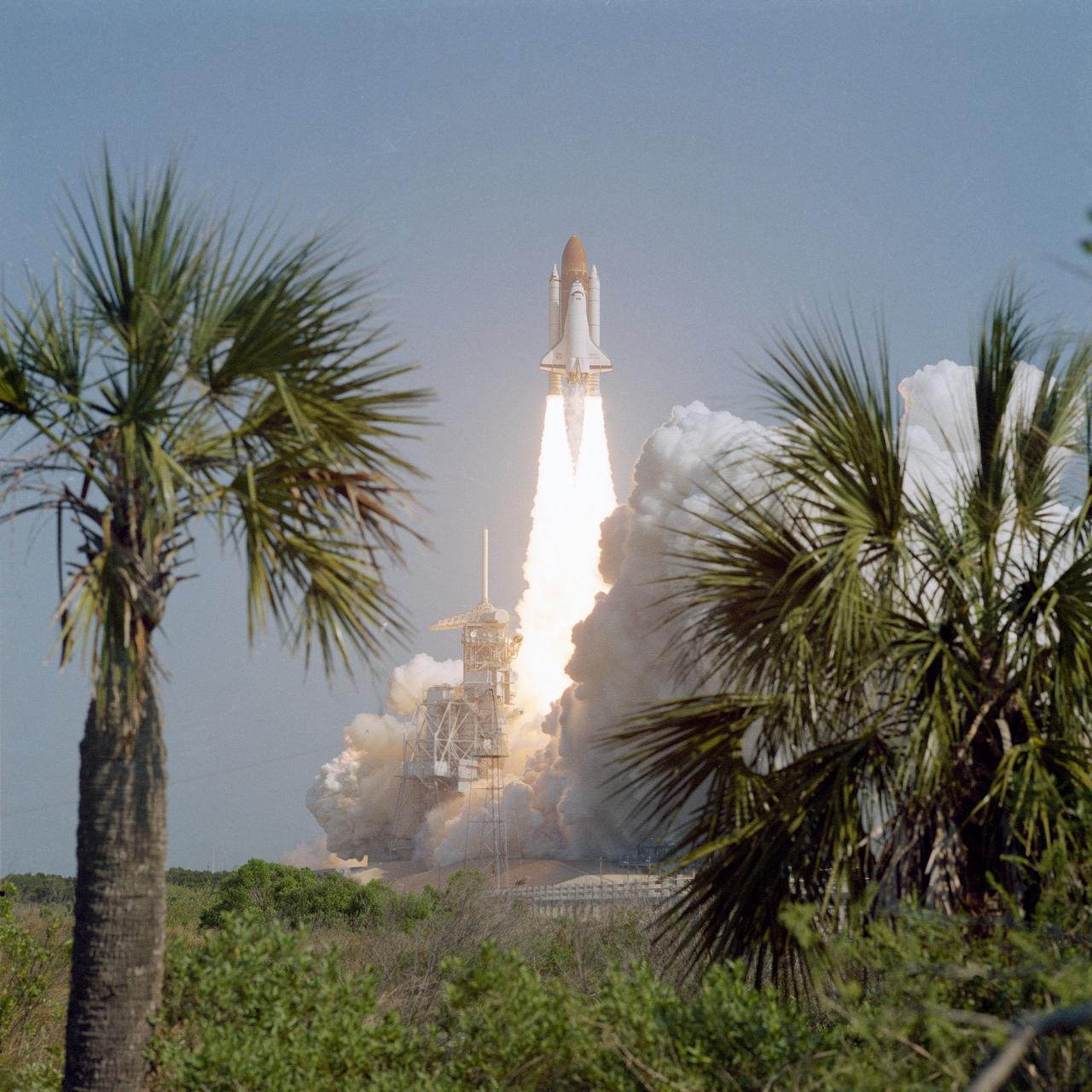
STS029-S-027 (13 March 1989) --- From Launch Pad 39D, the Space Shuttle Discovery is launched on mission STS-29. Discovery lifted off at 9:57 a.m. (EST), March 13, 1989, carrying the tracking and data relay satellite (TDRS-1) into orbit. Florida vegetation frames the launch scene. Onboard the spacecraft were astronauts Michael L. Coats, commander; John E. Blaha, pilot; and James F. Buchli, James P. Bagian and Robert C. Springer, all mission specialists.

S88-54948 (6 Dec 1988) --- The STS-29 crewmembers are trained in procedures to follow in the event of a fire with their spacecraft. Here, the crew is briefed on correct handling of the fire extinguisher by Robert Fife (far left) of NASA's fire and security staff. Pictured, left to right, are Astronauts John E. Blaha, pilot; Michael L. Coats, mission commander; Robert C. Springer, James F. Buchli and James P. Bagian, mission specialists. The training exercise took place on the northern end of the 1625-acre JSC facility.

S89-25082 (January 1989) --- Space shuttle Discovery will be manned by these five astronauts when it makes it second flight within a five-month period next month. The STS-29 crew members are (front row), Michael L. Coats (right), commander; and John E. Blaha, pilot; (left to right back row) James P. Bagian, Robert C. Springer and James F. Buchli, mission specialists. Photo credit: NASA
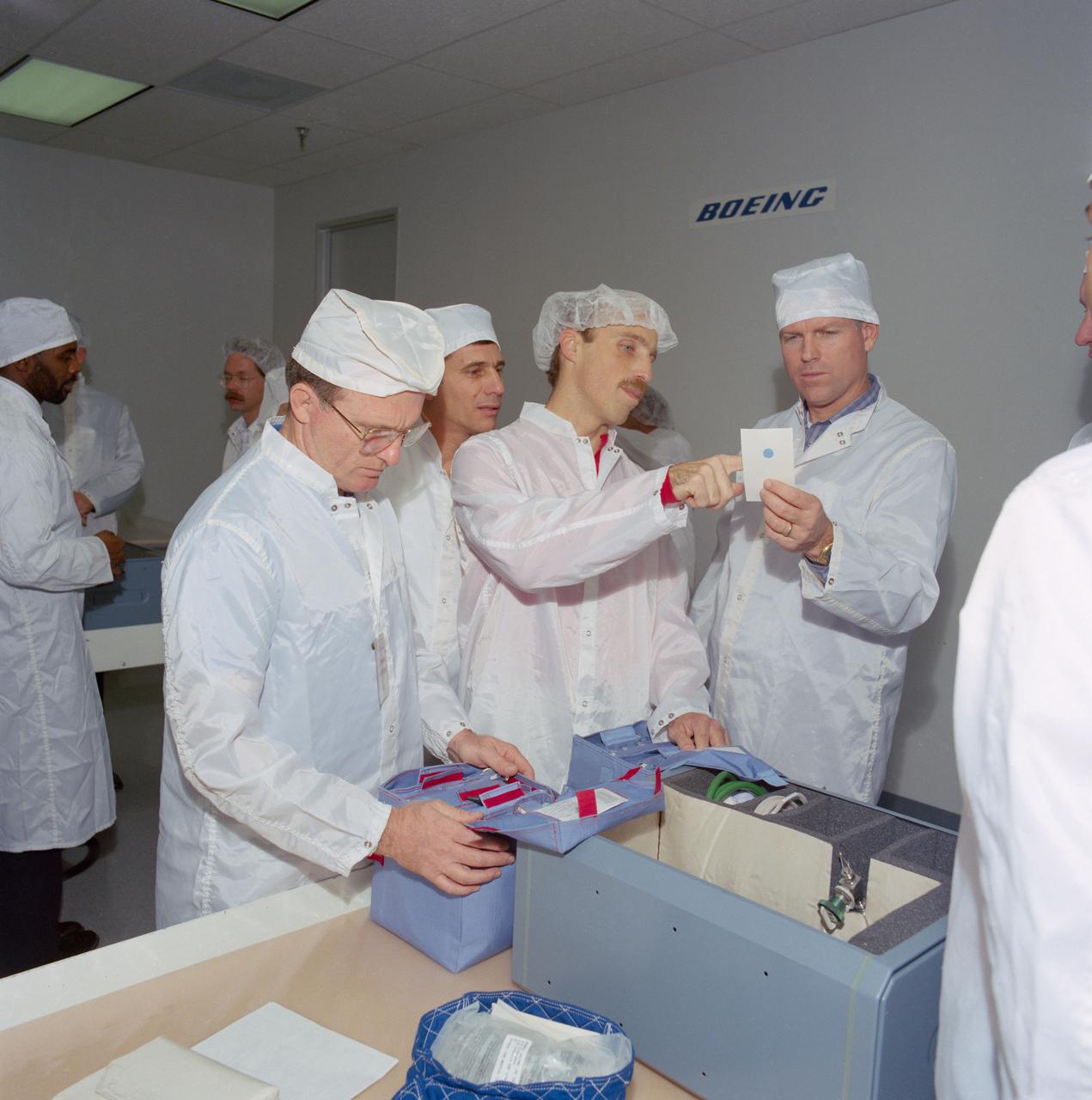
S89-26240 (20 Jan 1989) --- Four of the five STS-29 crewmembers inspect the content of their emergency medical and medication kits during the recent bench review of middeck locker equipment avaialable for their scheduled March 1989 flight. From left to right are Astronauts James H. Buchli, John E. Blaha, James P. Bagian and Michael L. Coats. Not pictured is Robert C. Springer.
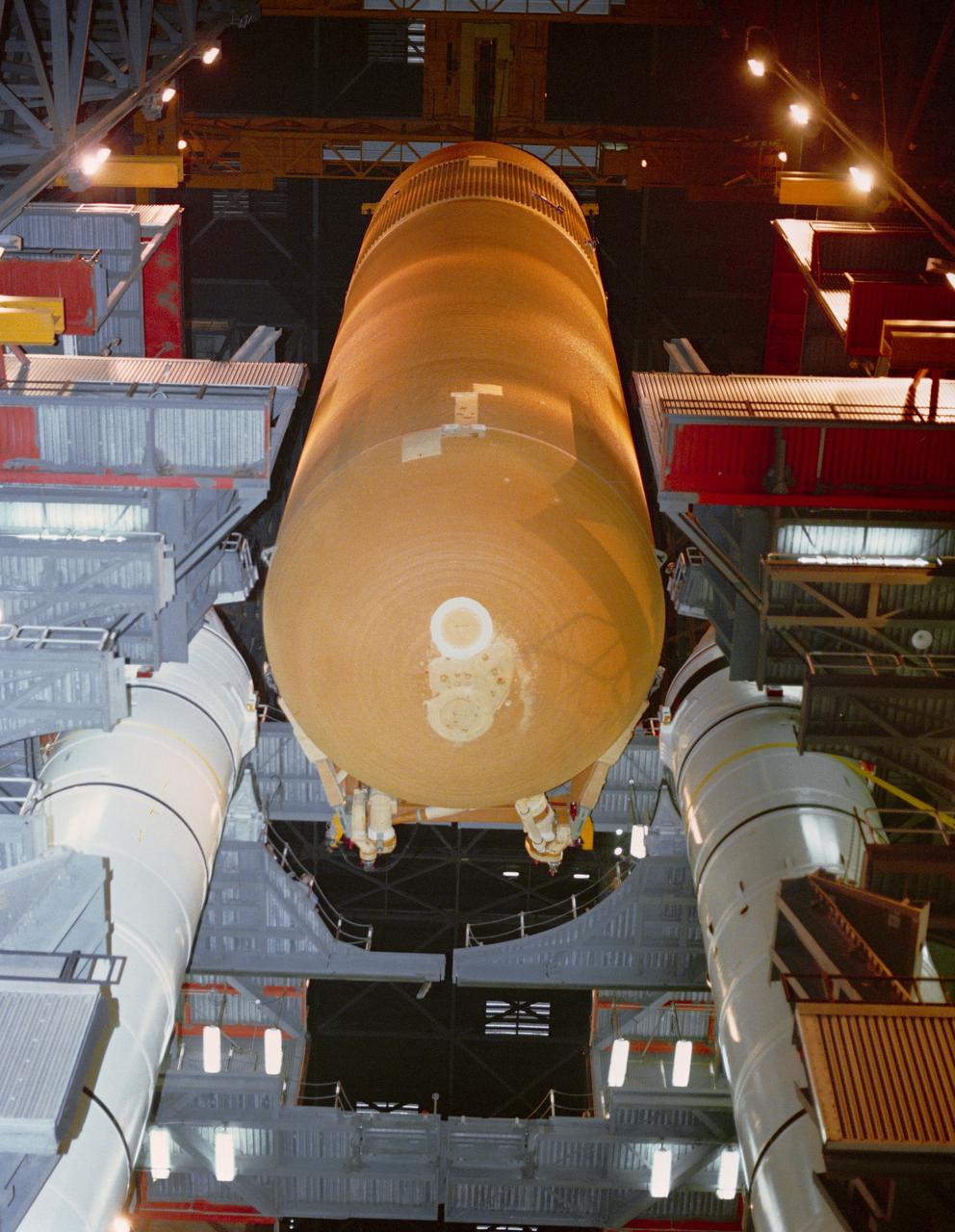
S89-27380 (15 Dec 1988) --- The 155-ft. long external fuel tank (ET) is slowly lowered for mating with the twin solid rocket boosters (SRB) in Bay 1 of the Vehicle Assembly Building at KSC, as preparations continue for a March 1989 launch of Discovery. Primary payload for the mission will be the tracking and data relay satellite (TDRS-D). Crewmembers are astronauts Michael L. Coats, John E. Blaha, James F. Buchli, Robert C. Springer and James P. Bagain.
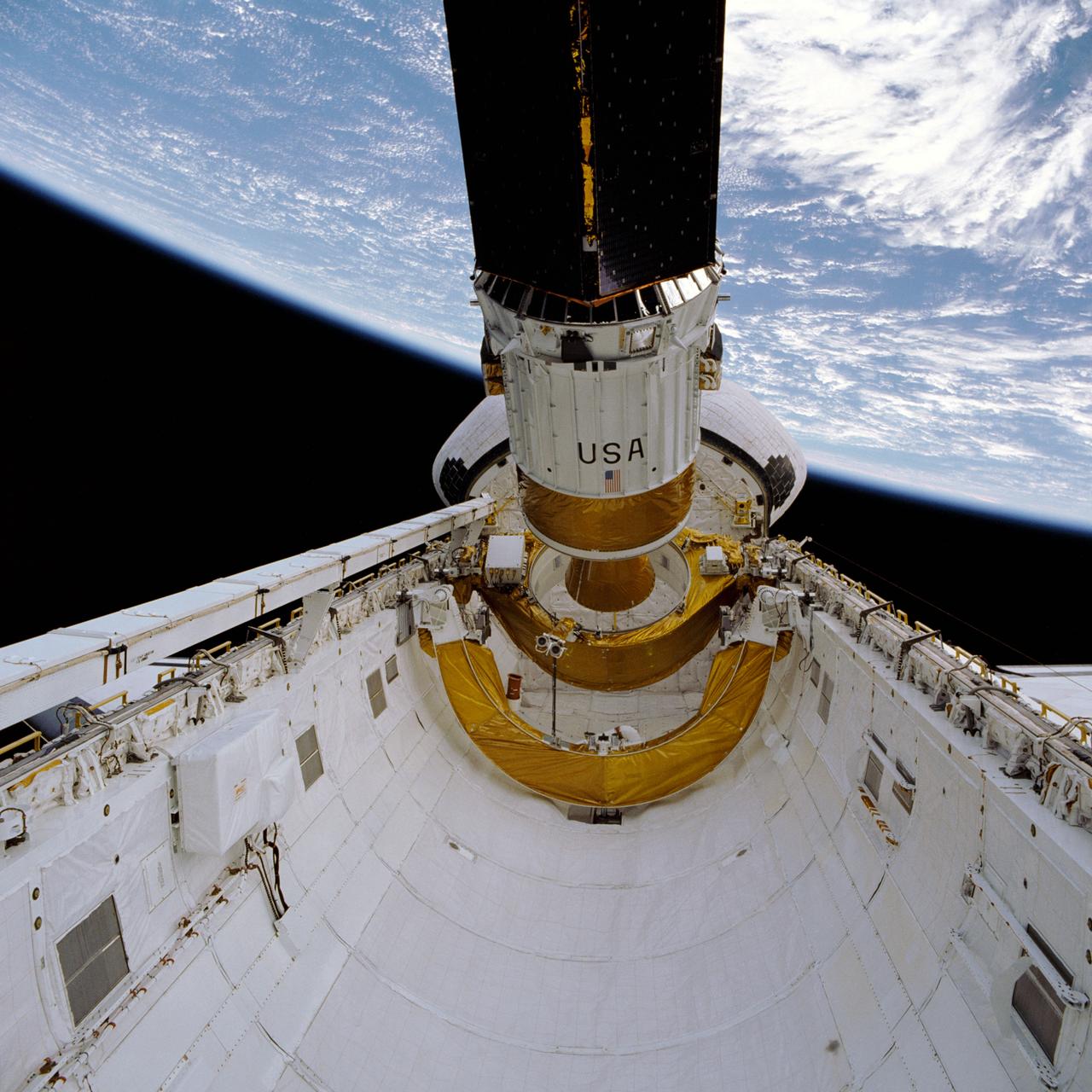
STS029-71-026 (13 March 1989) --- The Tracking and Data Relay Satellite (TDRS-D) is tilted in the cargo bay prior to its release via a remote system on Discovery's flight deck. This photographic frame was among NASA's third STS-29 photo release. Monday, March 20, 1989. Crewmembers were Astronauts Michael L. Coats, John E. Blaha, James F. Buchli, Robert C. Springer and James P. Bagian.
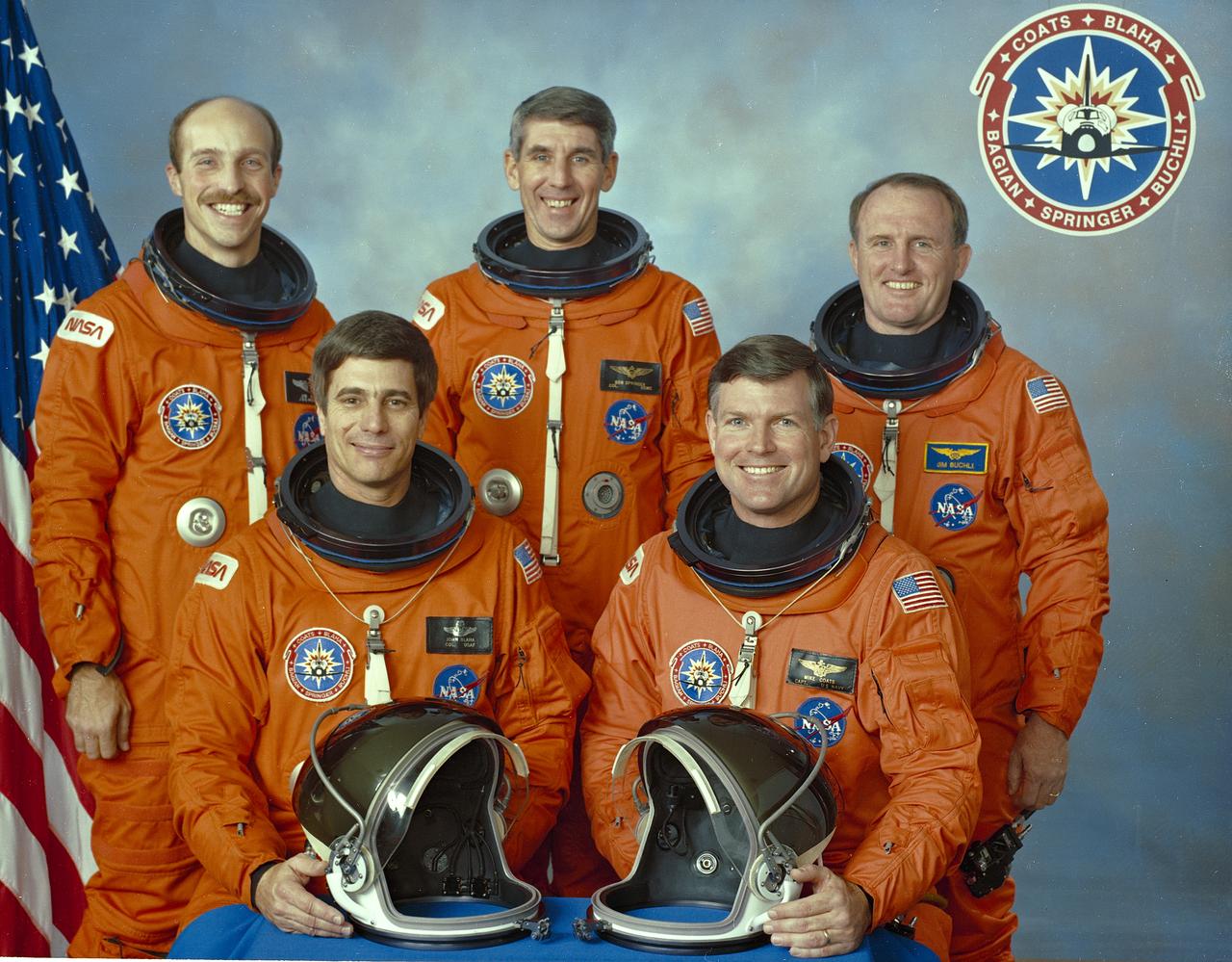
Five astronauts composed the STS-29 crew. Standing (left ot right) are James P. Bagian, mission specialist 1; Robert C. Springer, mission specialist 3; and James F. (Jim) Buchli, mission specialist 2. Seated (left to right) are John E. Blaha, pilot, and Michael L. Coats, commander. STS-29 launched aboard the Space Shuttle Discovery on March 13, 1989 at 9:57 am (EST). The primary payload was the Tracking and Data Relay Satellite- 4 (TDRS-4).

S89-25326 (11 Jan 1989) --- Five astronauts field questions from the news media, as they interrupt a busy training schedule in preparation for NASA's STS-29 mission in mid-March. Left to right on the dais are Astronauts James P. Bagian, James F. Buchli, Robert C. Springer, John E. Blaha and Michael L. Coats. Coats is mission commander. Jeffrey E. Carr of the Media Services Branch of JSC's Public Affairs Office, is at far right.

STS029-S-065 (18 March 1989) --- The five-man crew who flew aboard NASA's Space Shuttle Discovery (background) pose near it following a successful five-day mission in space. Left to right are Astronauts John E. Blaha, pilot, and James P. Bagian, mission specialist; Michael L. Coats, commander; and James F. Buchli and Robert C. Springer, mission specialists.
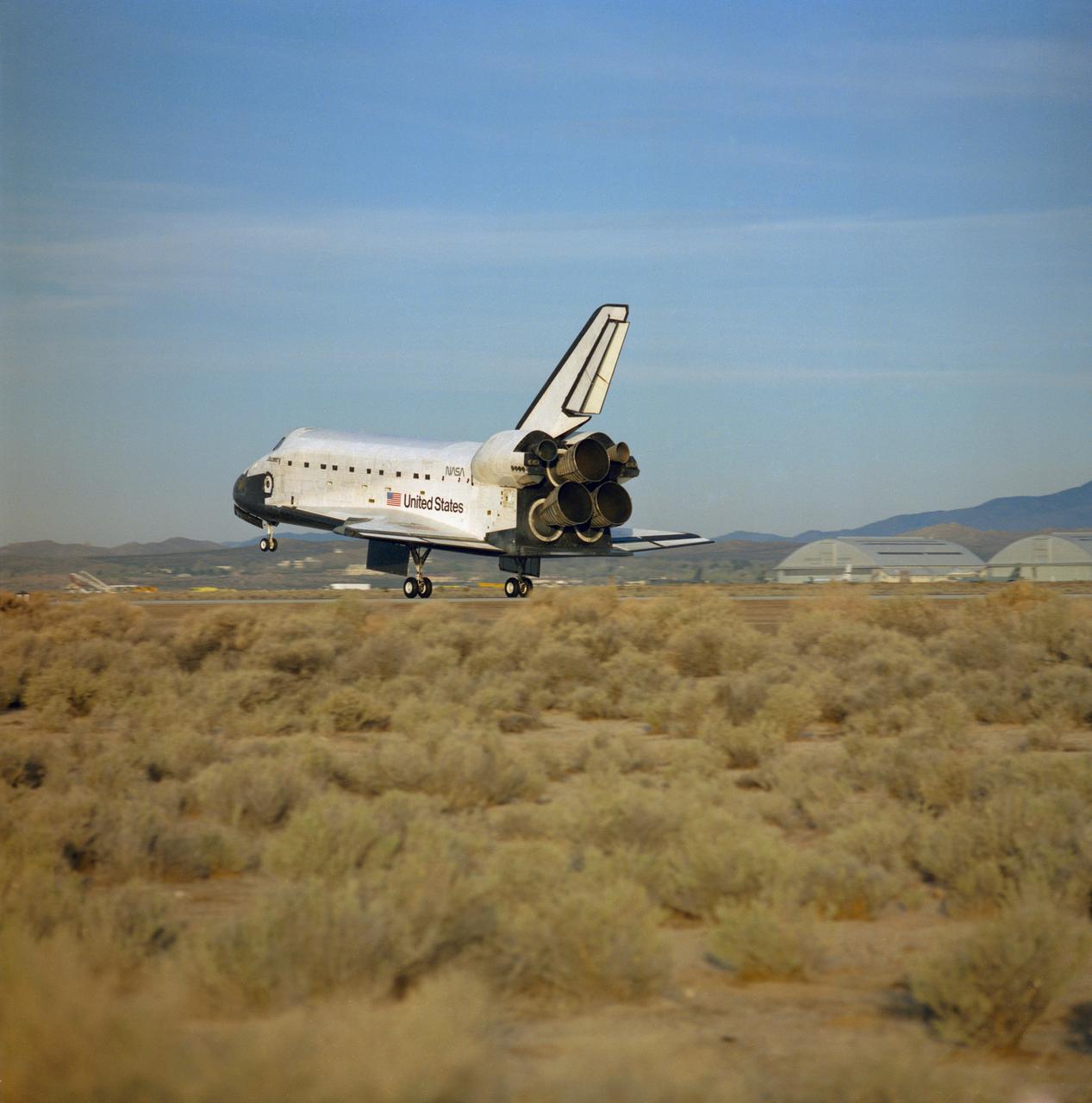
STS029-S-064 (18 Mar 1989) --- A rear view photographed from the ground just after Discovery's main landing gear touches down on Runway 22 at Edwards Air Force Base in California following a successful five-day mission in Earth orbit. Onboard the spacecraft were Astronauts Michael L. Coats, John E. Blaha, James F. Buchli, Robert C. Springer and James P. Bagian. Wheels came to a stop at 6:36:40 a.m. (PST), March 18, 1989.
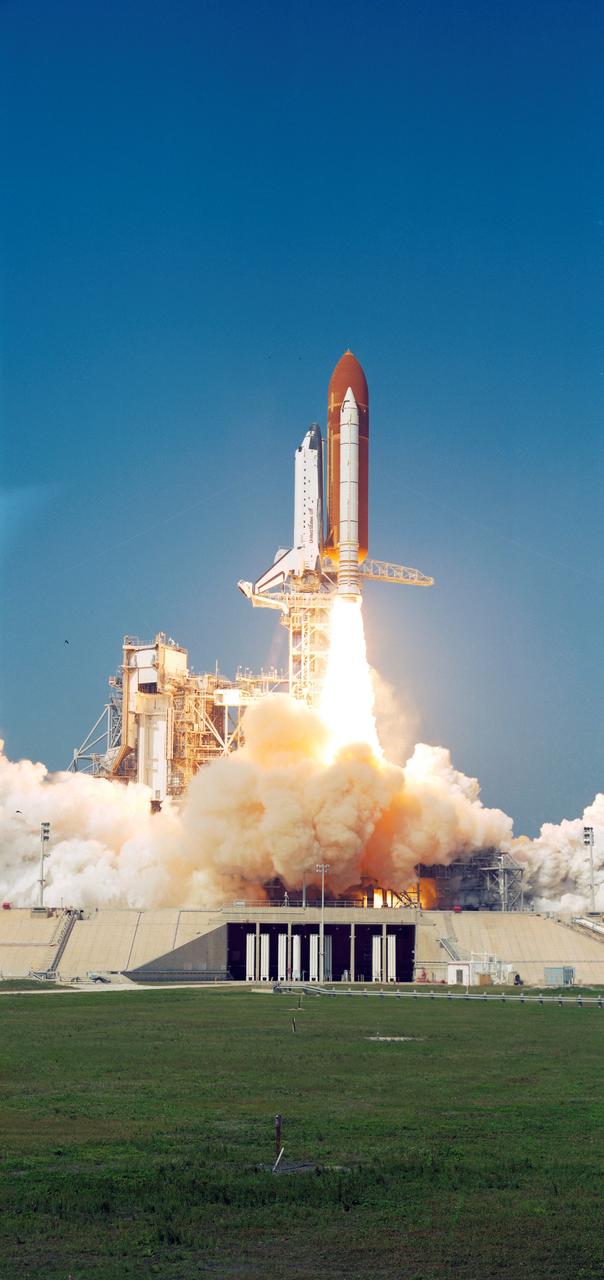
STS029-S-028 (13 March 1989) --- From Launch Pad 39B, the Space Shuttle Discovery is launched on Mission STS-29. Discovery lifted off at 9:57 a.m. (EST), March 13, 1989, carrying the tracking and data relay satellite (TDRS-1) into orbit. Onboard the spacecraft were astronauts Michael L. Coats, commander; John E. Blaha, pilot; and James F. Buchli, James P. Bagian and Robert C. Springer, all mission specialists.

Five astronauts launched aboard the Space Shuttle Discovery on March 13, 1989 at 9:57 am (EST) for the STS-29 mission. Included were James P. Bagian, mission specialist 1; Robert C. Springer, mission specialist 3; James F. (Jim) Buchli, mission specialist 2; John E. Blaha, pilot; and Michael L. Coats, commander. The mission’s primary payload was the Tracking and Data Relay Satellite-4 (TDRS-4).

STS029-S-063 (18 March 1989) --- Discovery's main landing gear touches down on Runway 22 at Edwards Air Force Base in California following a successful five-day mission in Earth orbit. Onboard the spacecraft were Astronauts Michael L. Coats, John E. Blaha, James F. Buchli, Robert C. Springer and James P. Bagian. Wheels came to a stop at 6:36:40 a.m. (PST), March 18, 1989.

S89-28089 (24 Jan 1989) --- The Space Shuttle Discovery is lowered for mating to the external tank and two solid rockert boosters in the vehicle assembly building (VAB) at the Kennedy Space Center. Onboard the spacecraft in mid-March for a five-day mission, on which will be deployed a third tracking and data relay satellite (TDRS-D), will be Astronauts Michael L. Coats, John E. Blaha, James F. Buchli, James P. Bagian and Robert C. Springer.

Five astronauts launched aboard the Space Shuttle Discovery on March 13, 1989 at 9:57 am (EST) for the STS-29 mission. Included were James P. Bagian, mission specialist 1; Robert C. Springer, mission specialist 3; James F. (Jim) Buchli, mission specialist 2; John E. Blaha, pilot; and Michael L. Coats, commander. The mission’s primary payload was the Tracking and Data Relay Satellite-4 (TDRS-4).
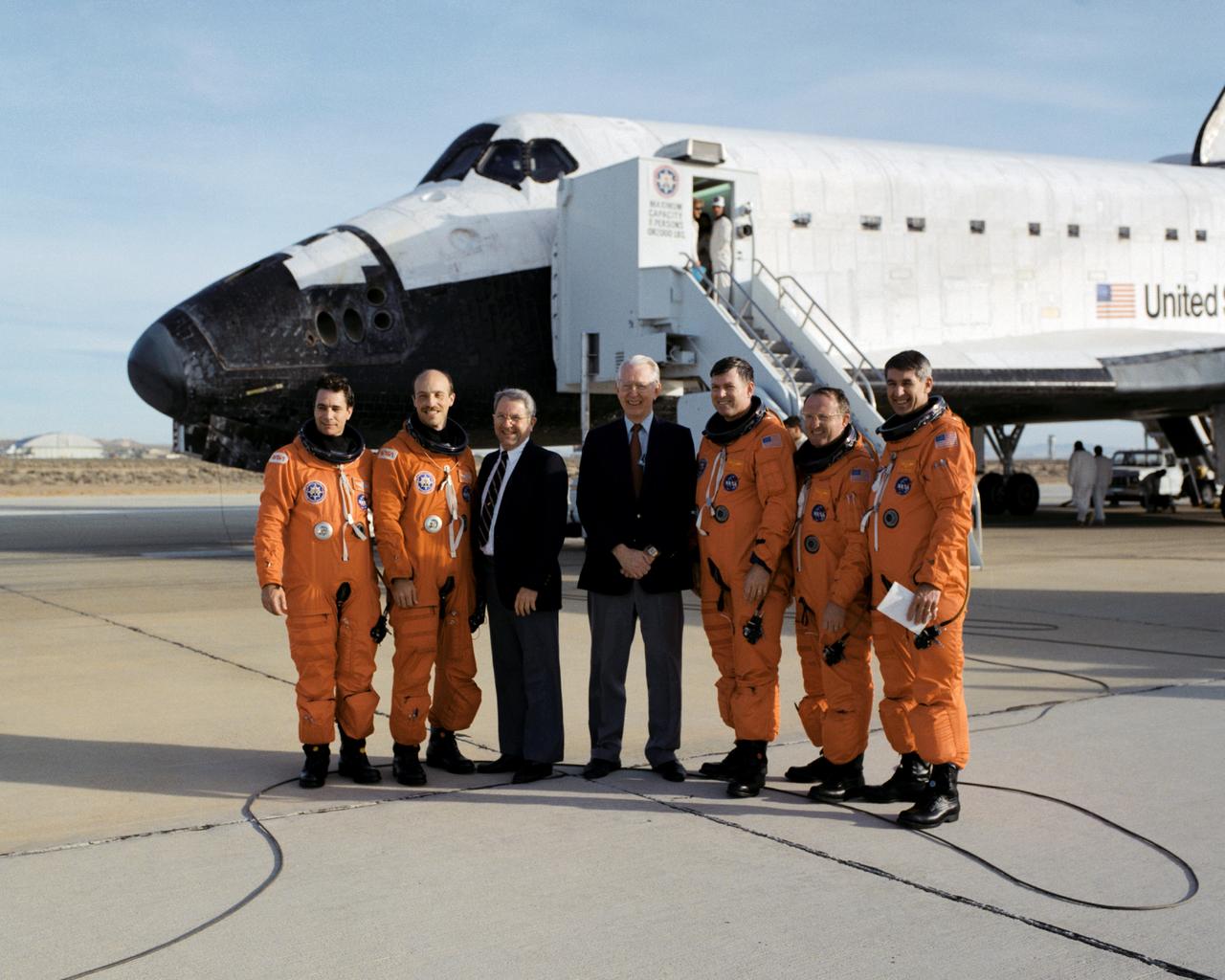
STS029-S-066 (18 March 1989) --- The five-man crew who flew aboard NASA's Space Shuttle Discovery (background) pose near it with NASA officials following a successful five-day mission in space. Left to right are astronauts John E. Blaha, pilot; and James P. Bagian, mission specialist; Rear Admiral Richard H. Truly, NASA Associate Administrator for Space Flight; Dr. James C. Fletcher, NASA Administrator; astronauts Michael L. Coats, commander; and James F. Buchli and Robert C. Springer, mission specialists.
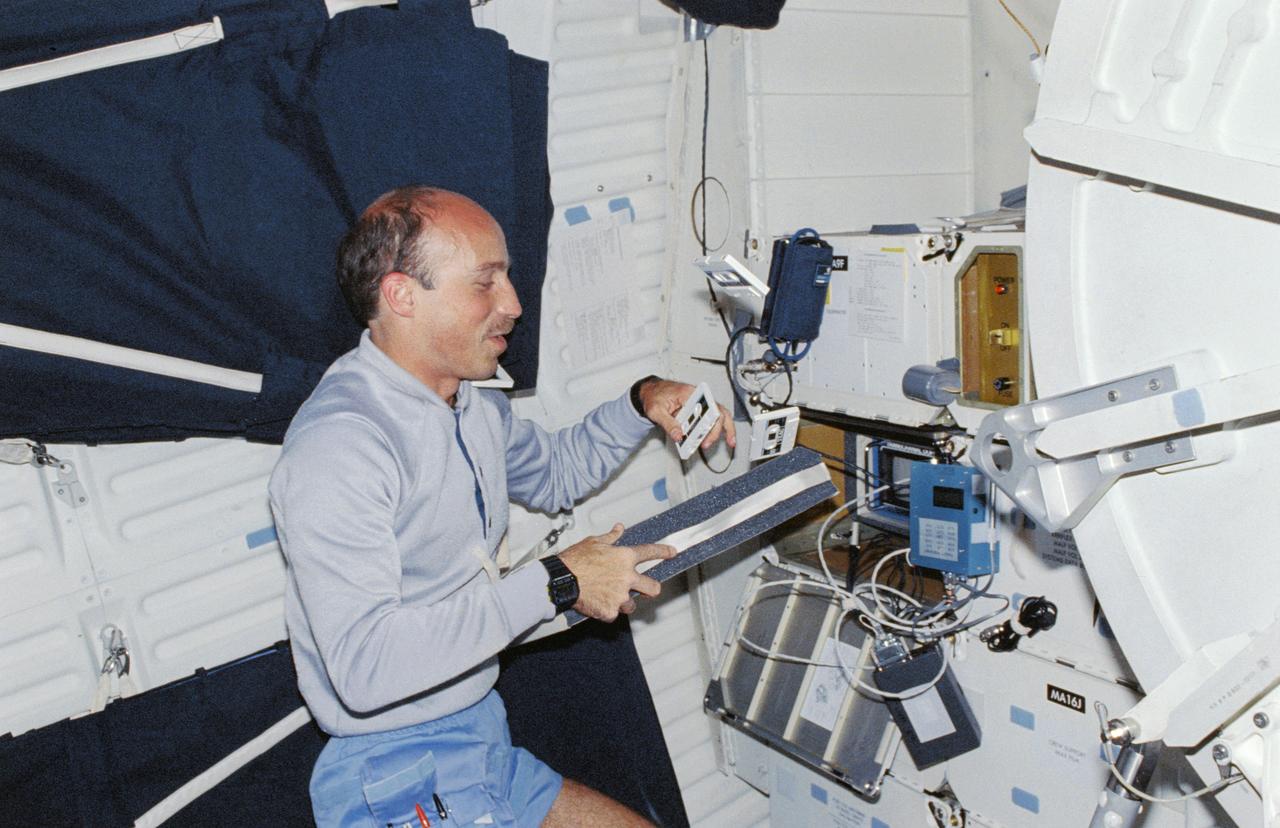
STS29-02-033 (3-18 March 1989) --- In what appears to be a juggling act in the microgravity of space, James P. Bagian, a physician, is actually attempting to organize audio cassettes. Other frames taken during the flight document Bagian's medical testing of his fellow crewmembers. This photographic frame was among NASA's third STS-29 photo release. Monday, March 20, 1989. Crewmembers were Astronauts Michael L. Coats, John E. Blaha, James F. Buchli, Robert C. Springer and James P. Bagian.
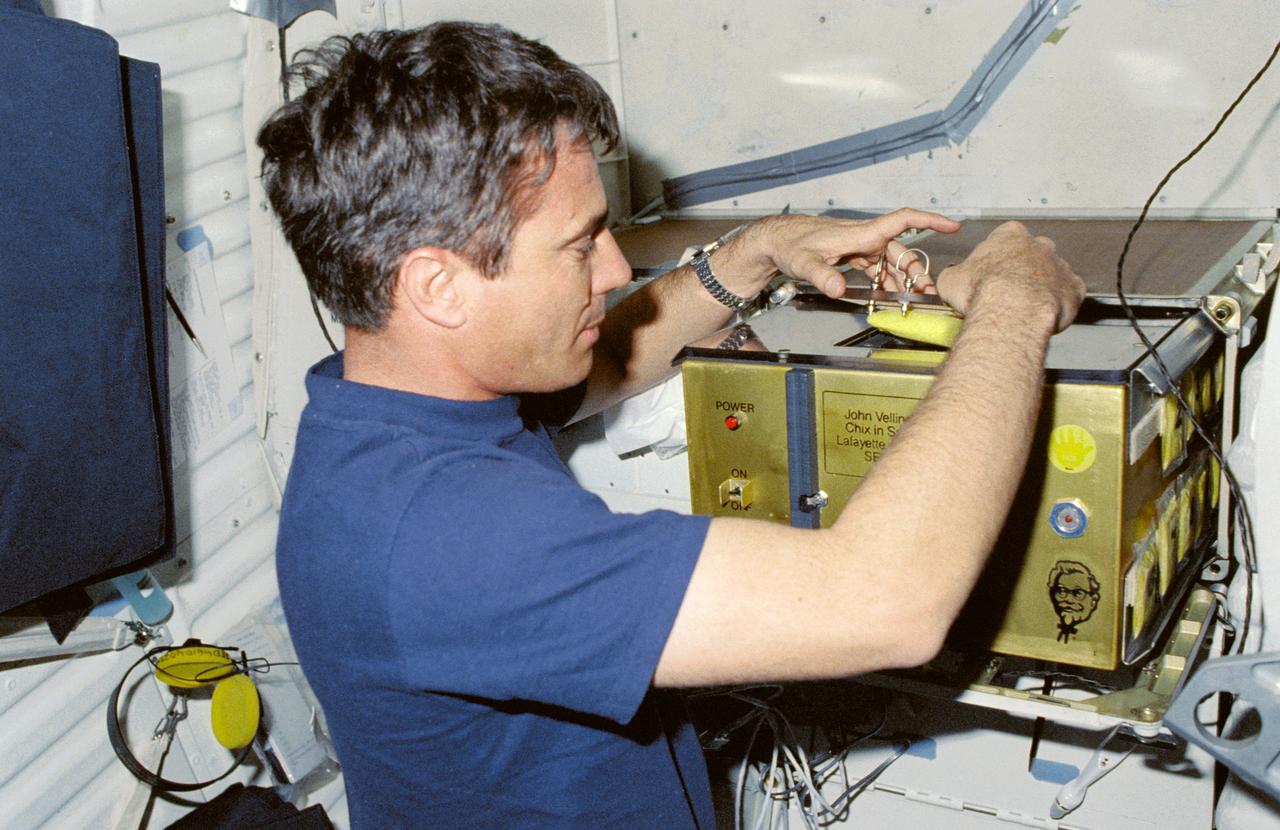
STS029-01-001 (16 Marach 1989) --- Astronaut John E. Blaha, STS-29 pilot, checks an incubator on the mid deck of Earth-orbiting Discovery during Flight Day 4 activity. The incubator is part of a student involvement program experiment titled, "Chicken Embryo Development in Space." The student experimenter is John C. Vellinger. The experiment's sponsor is Kentucky Fried Chicken. This photographic frame was among NASA's third STS-29 photo release. Monday, March 20, 1989. Crewmembers were Astronauts Michael L. Coats, John E. Blaha, James F. Buchli, Robert C. Springer and James P. Bagian.
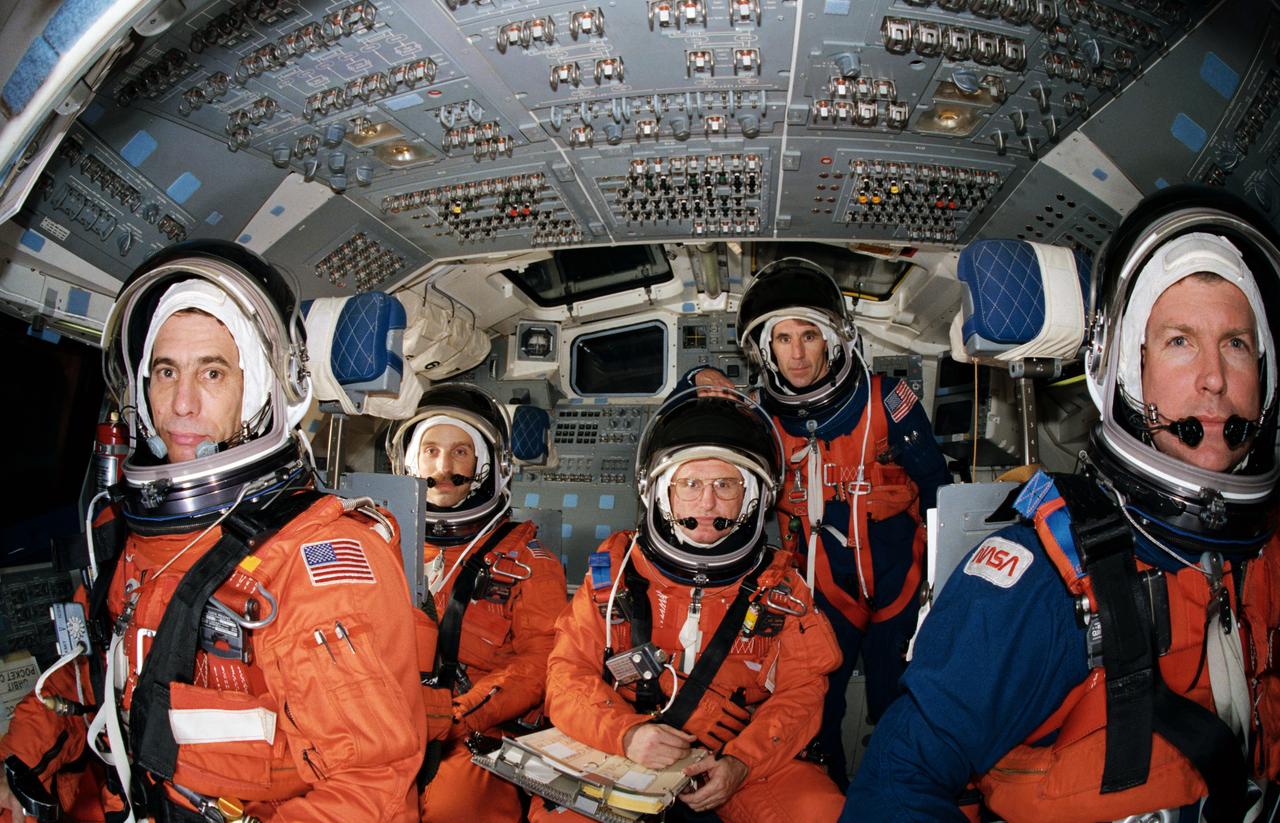
S89-26390 (January 1989) --- The five crew members for STS-29 pause during launch and entry phase rehearsals in the crew compartment trainer at the Johnson Space Center. Four members are in their entry positions and the fifth has been "borrowed" for a moment from the middeck. In front are John E. Blaha (left), pilot, and Michael L. Coats, mission commander. Behind them are James P. Bagian (left), and James F. Buchli, both mission specialists. Robert C. Springer, the third mission specialist, stands here at aft station. He will occupy Discovery's middeck for entry phase, while Bagian will occupy that post for launch. Photo credit: NASA
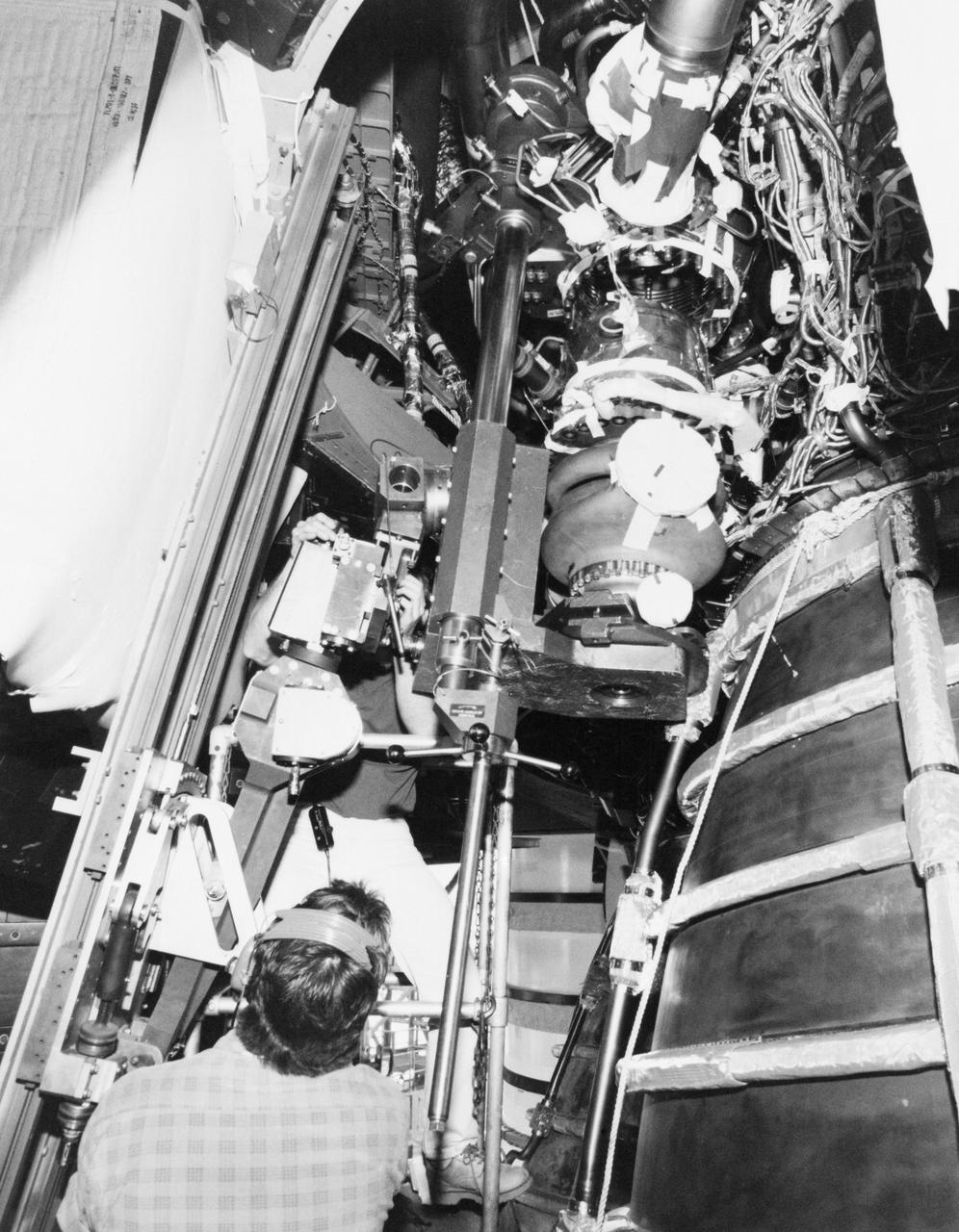
S89-28092 (7 Feb 1989) --- Kennedy Space Center technicians inspect an area near the three main engines of the Space Shuttle Discovery prior to the removal of one of three oxidozer turbo pumps. New pumps are scheduled to be installed soon. Now at Launch Pad 39-B, Discovery is set for launch in mid-March for Mission STS-29. Primary payload will be TDRS-D. Crewmembers are Astronauts Michael L. Coats, mission commander, John E. Blaha, pilot; along with James F. Buchli, Robert C. Springer and James P. Bagian, all mission specialists.
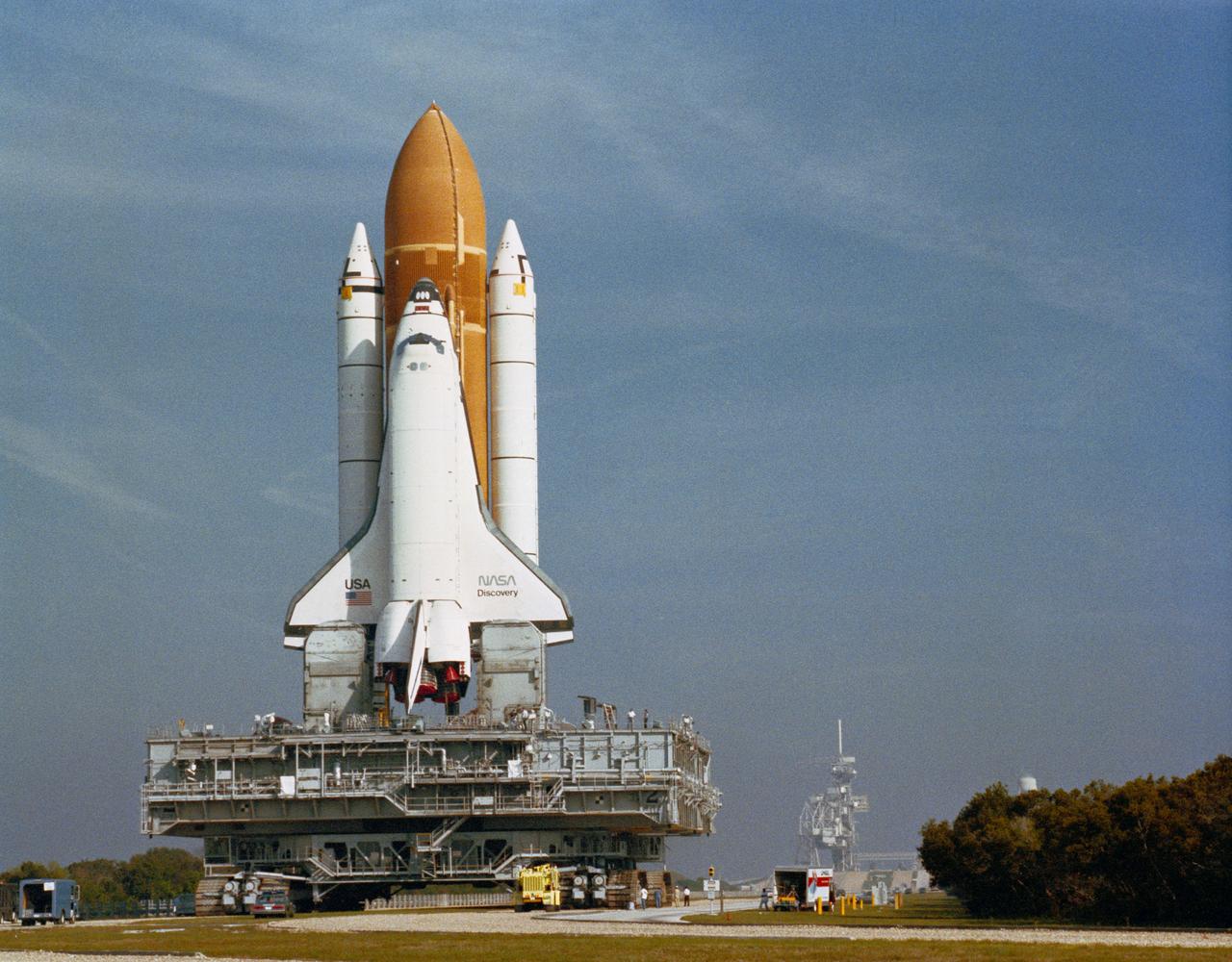
S89-28110 (3 Feb 1989) ---The Space Shuttle Discovery, atop a mobile launch platform, is rolled toward Kennedy Space Center's Launch Pad 39-B on Feb. 3, l989. It rolled through the doors of the huge vehicle assembly building (VAB) at 6 a.m.,several hours ago. The Launch Complex is in view here. The trip to the pad takes approximately 5 and 1/2 hours. Onboard the spacecraft in mid-March for a five-day mission, on which will be deployed a third tracking and data relay satellite (TDRS-D), will be Astronauts Michael L. Coats, John E. Blaha, James F. Buchli, James P. Bagian and Robert C. Springer.
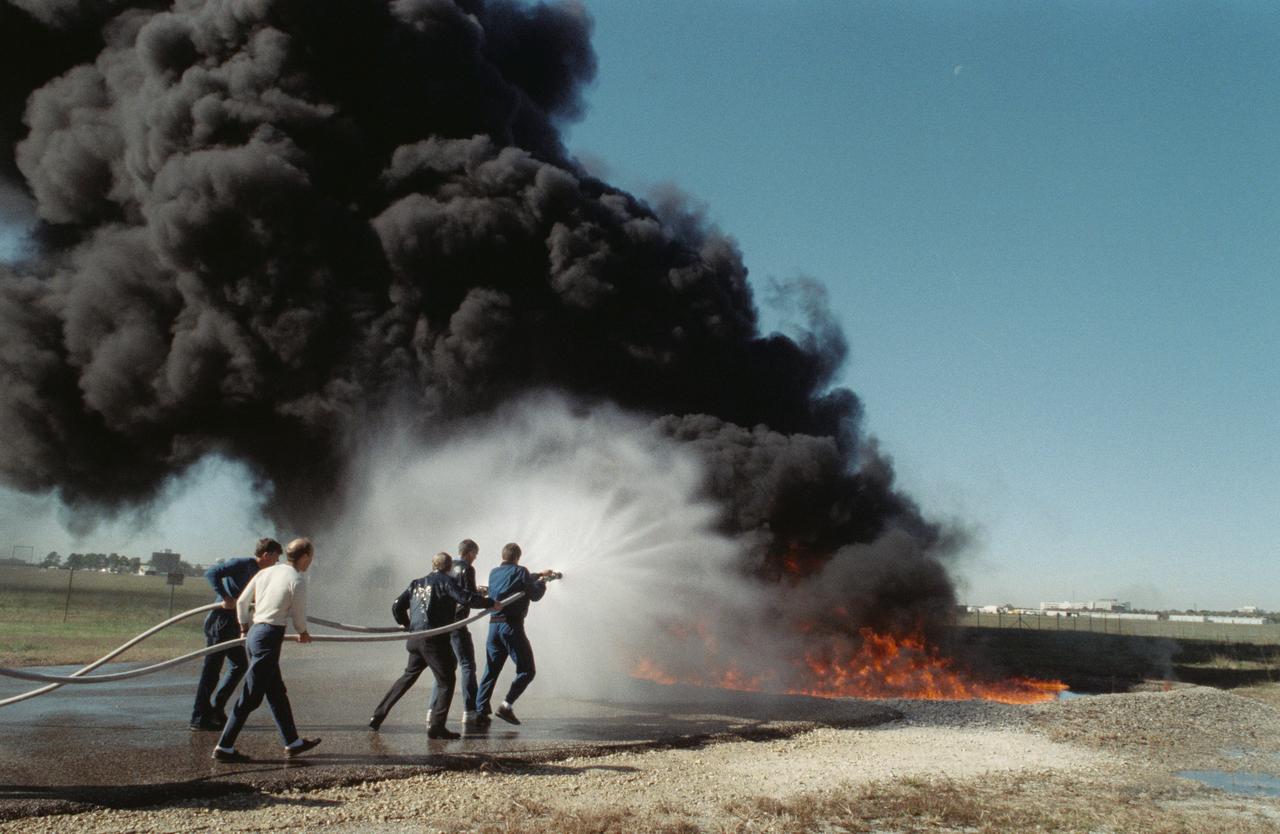
S88-54947 (6 Dec 1988) --- The STS-29 crewmembers are trained in procedures to follow in the event of a fire with their spacecraft. Here, Astronauts Michael L. Coats (far left), mission commander, and James P. Bagian, mission specialist, follow the lead of two fellow crewmembers as they extinguish a fire. The astronauts in front of the action are Robert C. Springer, mission specialist, and John E. Blaha, pilot. Not pictured is James F. Buchli, mission specialist. Their instructor, center, is Robert Fife of NASA's security staff. The training took place on the northern end of the 1625-acre JSC facility.
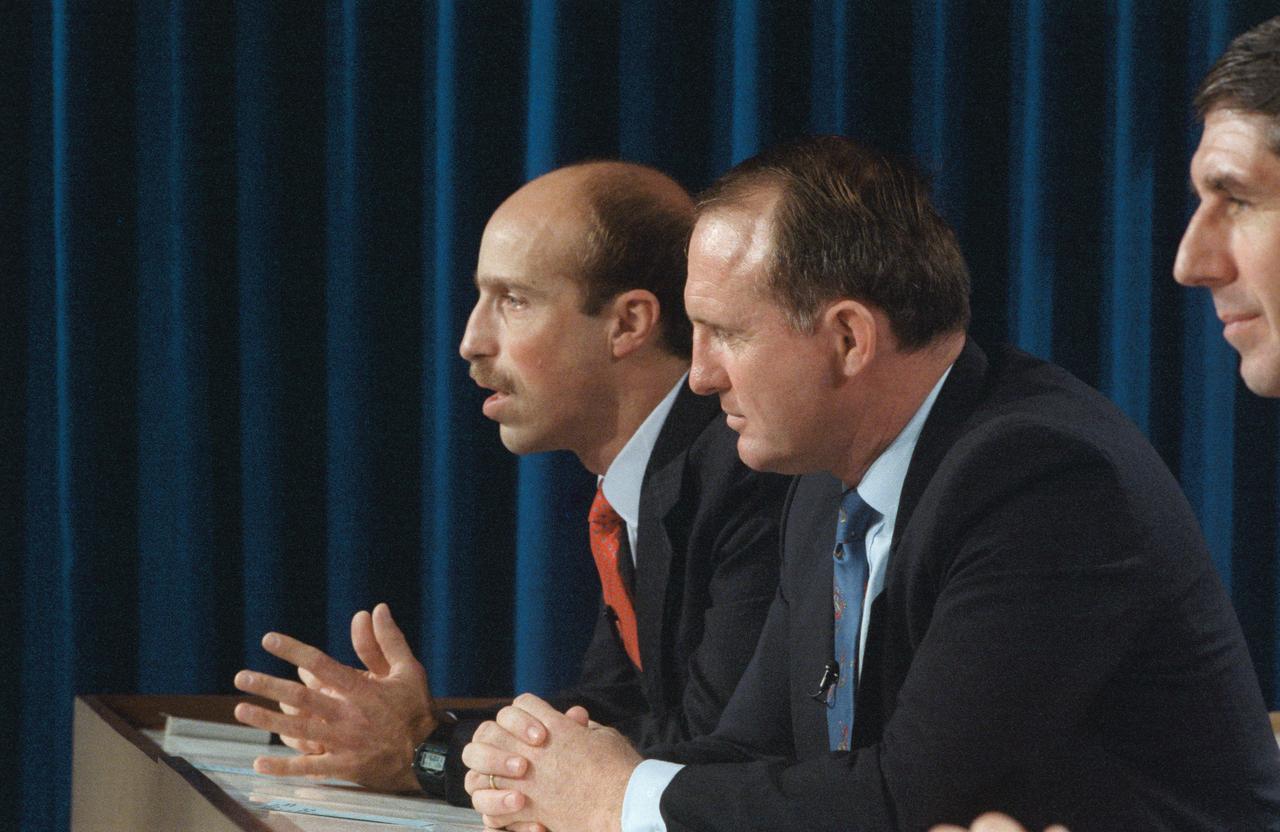
S89-25327 (11 Jan 1989) --- Two crewmembers for NASA's STS-29 mission ponder a question from a news reporter during a press conference concerning their scheduled mid-March flight. James P. Bagian, at left, begins to answer the query, as James F. Buchli listens. Out of the frame are other members of the crew--Astronauts Michael L. Coats, mission commander; and John E. Blaha and Robert C. Springer. The five will deploy a tracking and data relay satellite from Discovery's cargo bay as well as perform other important chores on their scheduled five-day flight.
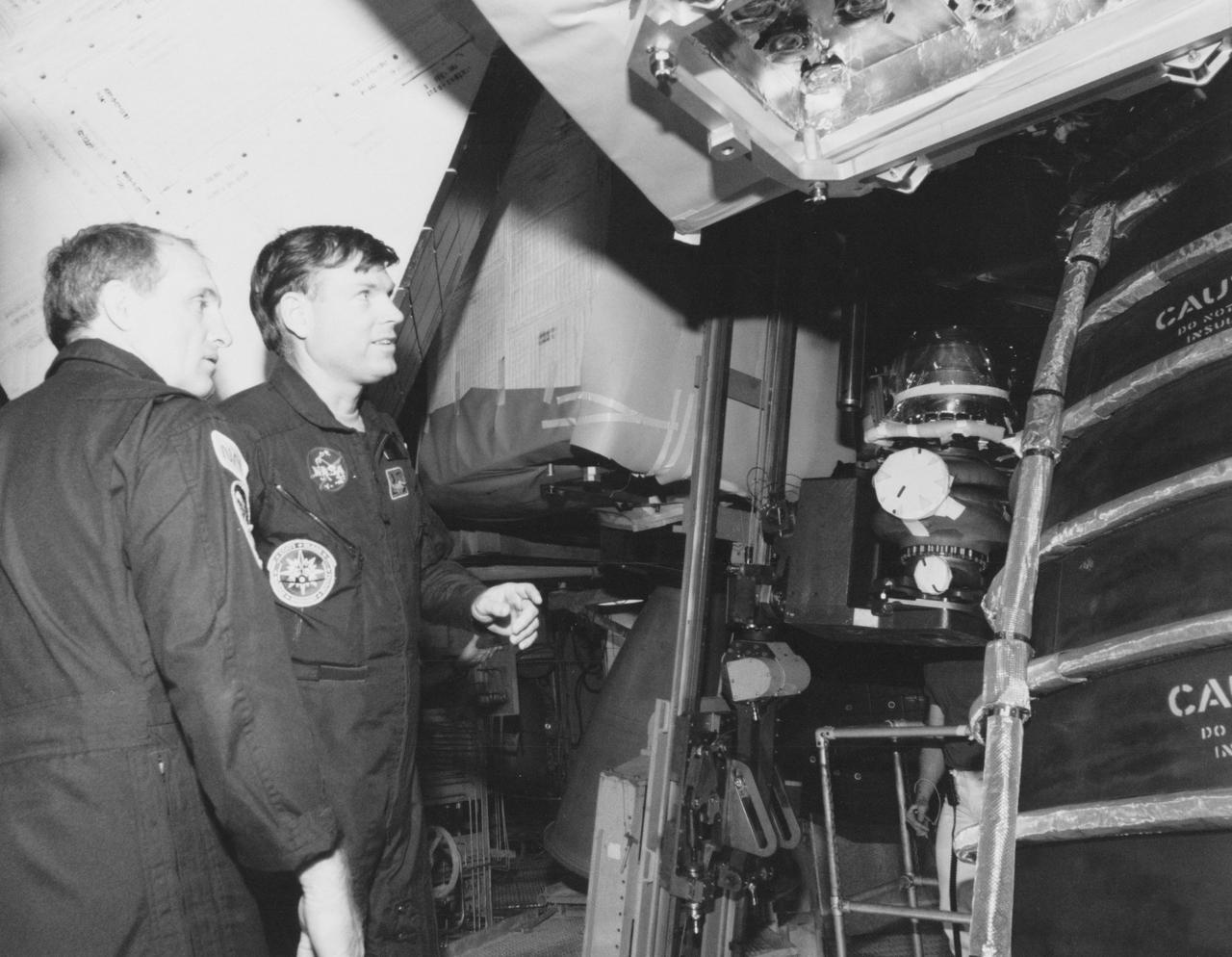
S89-28091 (7 Feb 1989) --- STS-29 astronauts inspect an area near the three main engines of the Space Shuttle Discovery prior to the removal of one of three oxidozer turbo pumps. Left to right are Astronauts James F. Buchli, mission specialist, and Michael L. Coats, mission commander. New pumps are scheduled to be installed soon. Now at Launch Pad 39-B, Discovery is set for launch in mid-March for Mission STS-29. Primary payload will be TDRS-D. Crewmembers not seen here are John E. Blaha, the pilot; and Robert C. Springer and James P. Bagian, both mission specialists.
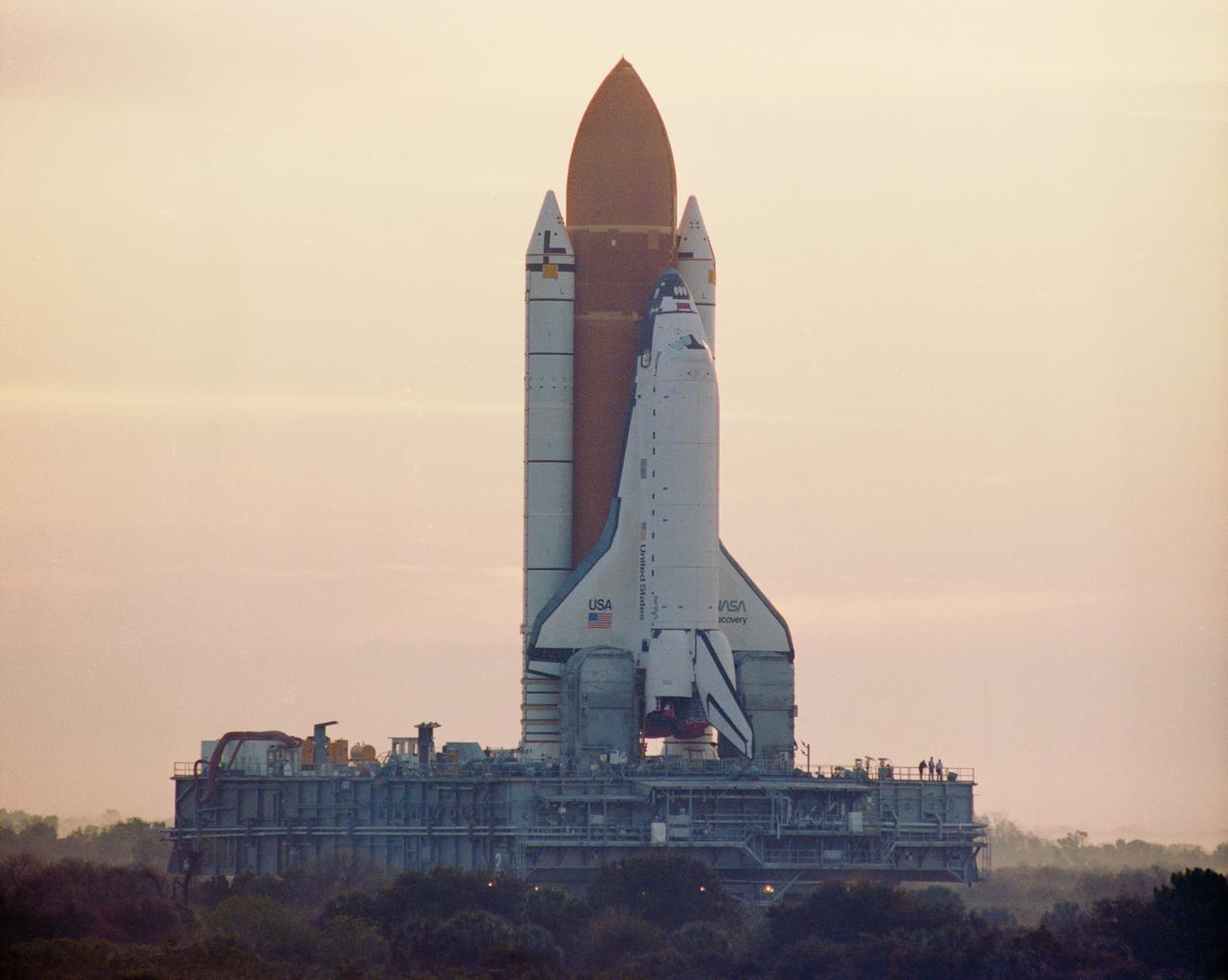
S89-28112 (3 Feb 1989) --- The Space Shuttle Discovery, atop a mobile launch platform, is rolled toward Kennedy Space Center's Launch Pad 39-B in the early morning hours of Feb. 3, l989. It rolled through the doors of the huge vehicle assembly building (VAB) at 6 a.m. The trip to the pad takes approximately 5 and 1/2 hours. Onboard the spacecraft in mid-March for a five-day mission, on which will be deployed a third tracking and data relay satellite (TDRS-D), will be Astronauts Michael L. Coats, John E. Blaha, James F. Buchli, James P. Bagian and Robert C. Springer.
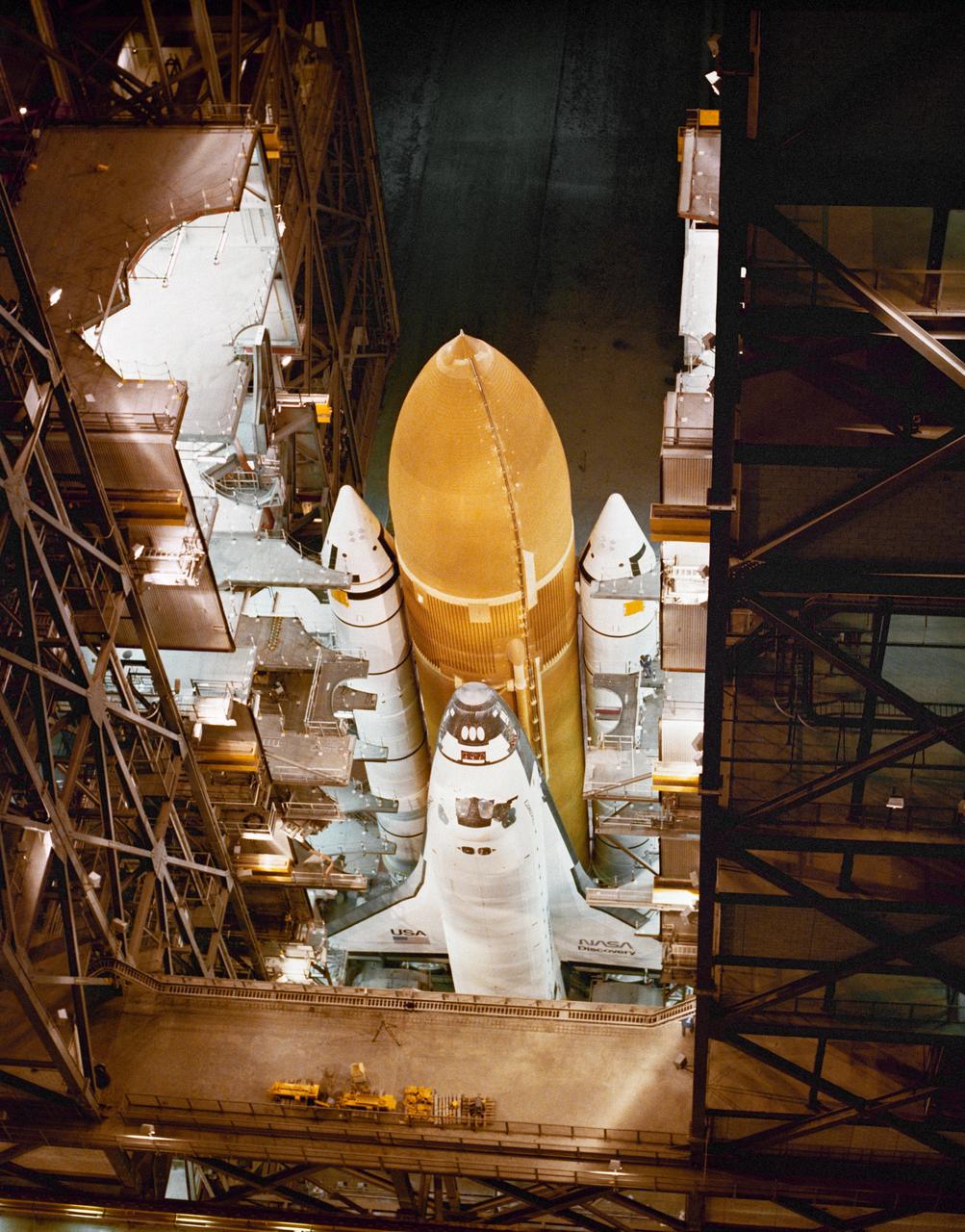
S89-28111 (3 Feb 1989) --- The Space Shuttle Discovery, atop a mobile launch platform, is rolled through the doors of the huge vehicle assembly building (VAB) at 6 a.m., Feb. 3, 1989 on its way to Launch Complex 39. The trip to the pad takes approximately 5 and 1/2 hours. Onboard the spacecraft in mid-March for a five-day mission, on which will be deployed a third tracking and data relay satellite (TDRS-D), will be Astronauts Michael L. Coats, John E. Blaha, James F. Buchli, James P. Bagian and Robert C. Springer.
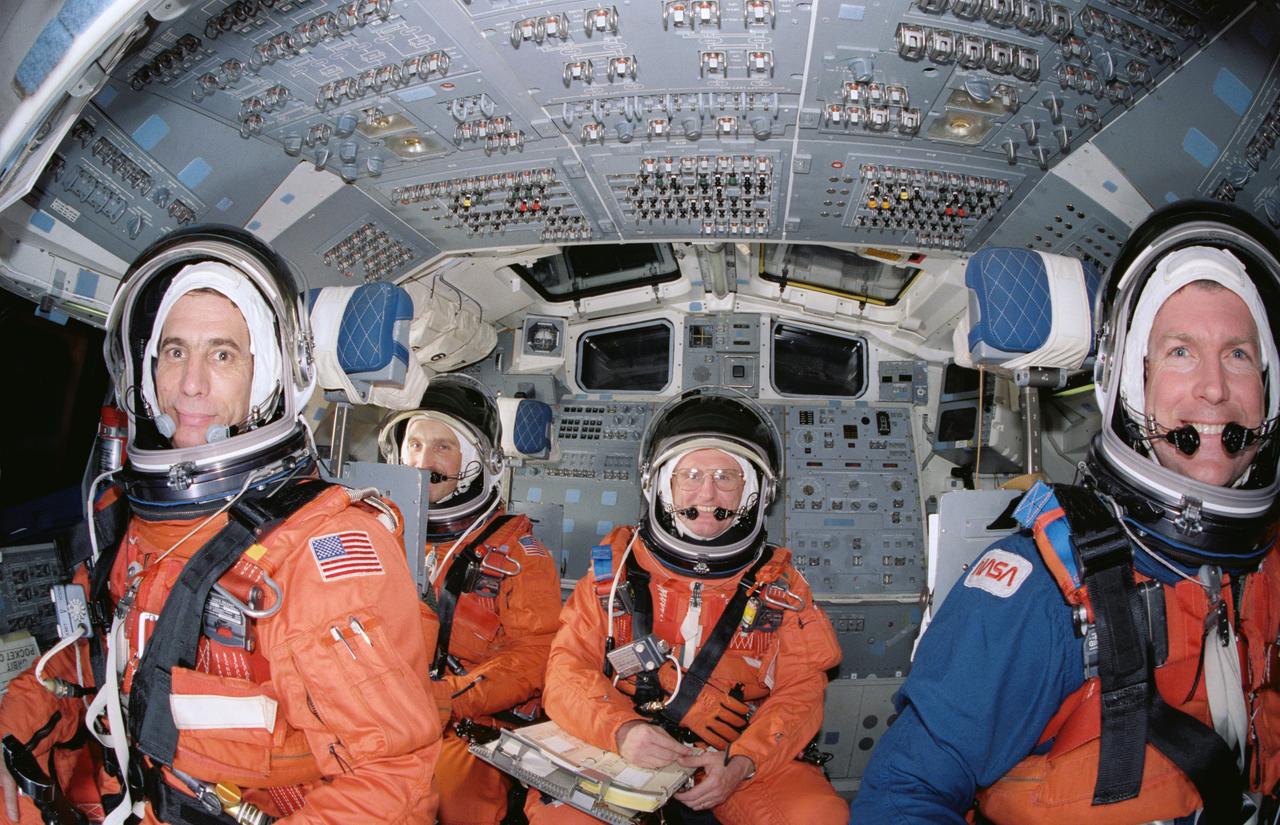
S89-26389 (Jan 1989) --- Four of five crewmembers for STS-29 pause during launch and entry phase rehearsals in the crew compartment trainer at the Johnson Space Center. The astronauts are in their entry positions, while the fifth (out of frame) remains strapped into a chair on the mid deck. In front are John E. Blaha (left), pilot, and Michael L. Coats, mission commander. Behind them are James P. Bagian (left), and James F. Buchli, both mission specialists. Robert C. Springer, the third mission specialist, is on the mid deck. He will occupy Discovery's middeck for entry phase, while Bagian will occupy that post for launch. Photo was made by Bill Bowers of the Johnson Space Center.

STS029-04-029 (13-18 March 1989) --- Astronaut Michael L. Coats appears to like the status of the STS-29 flight as he offers a big smile from the commander's station on the flight deck. He takes a momentary break from updating the crew activity plan (CAP) to pose for the photo. This photographic frame was among NASA's third STS-29 photo release. Monday, March 20, 1989. Crew members were astronauts Michael L. Coats, John E. Blaha, James F. Buchli, Robert C. Springer and James P. Bagian. Photo credit: NASA
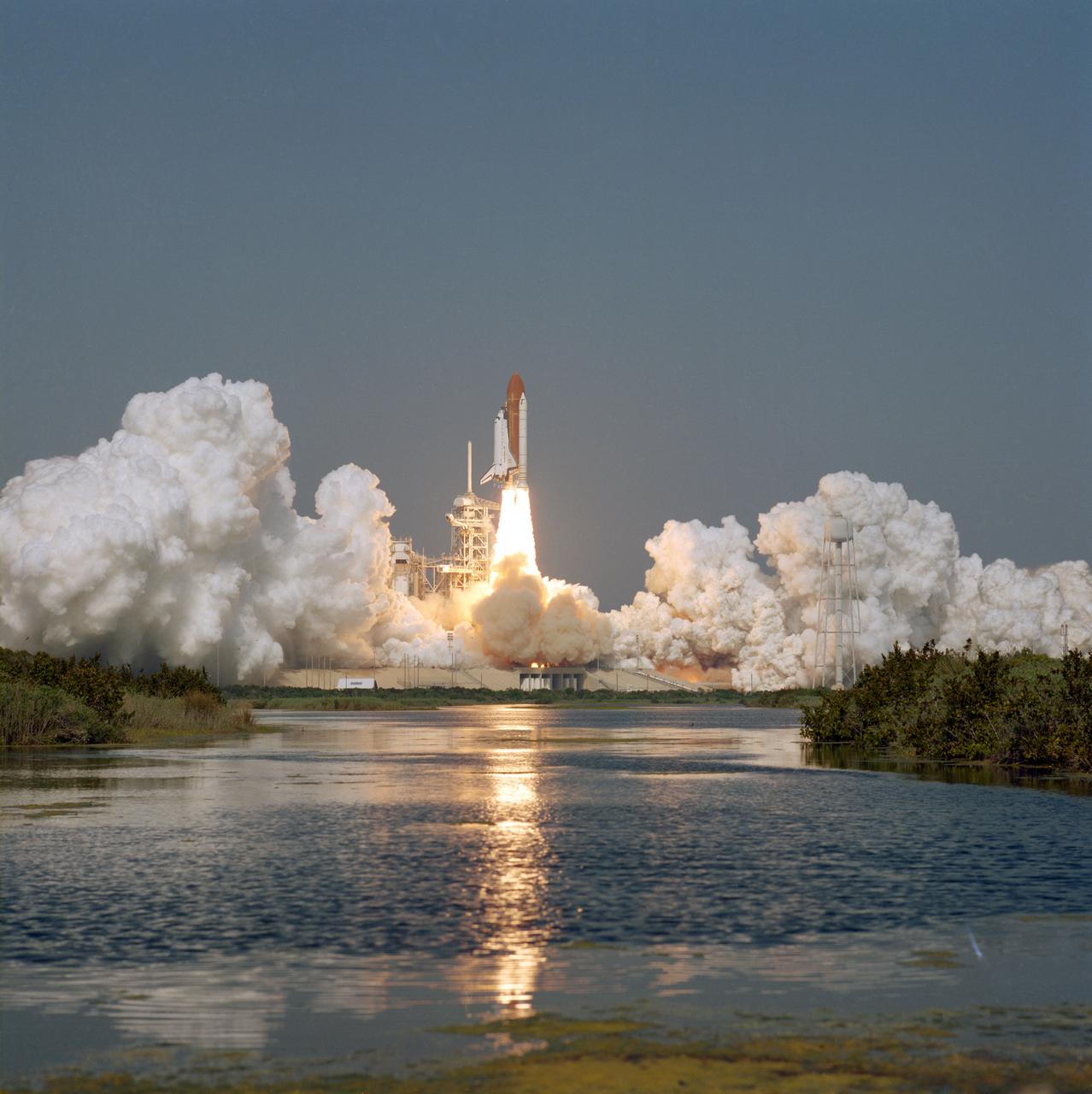
STS029-S-026 (13 Mar 1989) --- A wide shot of the Space Shuttle Discovery lifting off from Launch Pad 39B on mission STS-29. Discovery lifted off at 9:57 a.m. (EST), March 13, 1989, carrying the Tracking And Data Relay Satellite (TDRS-1) into orbit. The brilliant flames associated with the launch are reflected in the marsh waters. Onboard the spacecraft were astronauts Michael L. Coats, commander; John E. Blaha, pilot; and James F. Buchli, James P. Bagian and Robert C. Springer, all mission specialists.
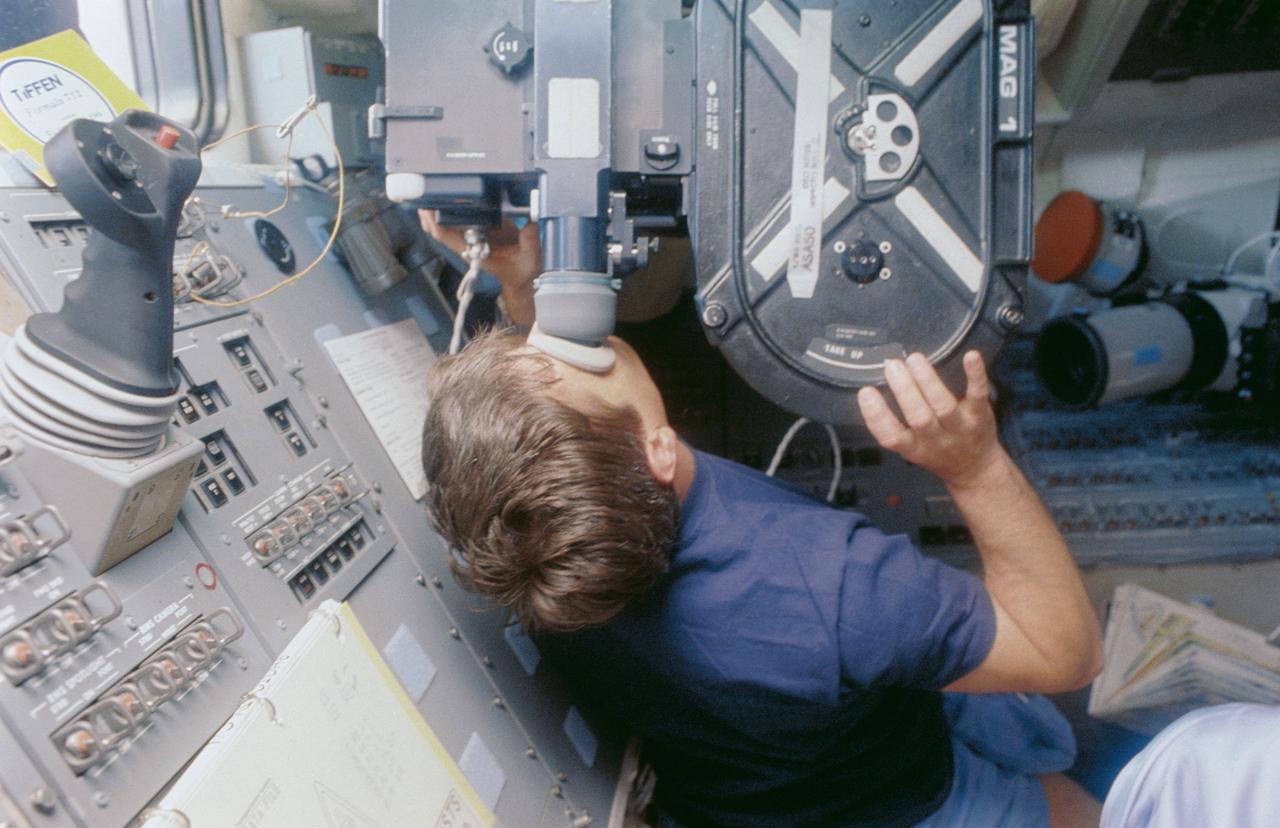
STS029-04-028 (March 1989) --- One of a series of photographs released in conjunction with the STS-29 post-flight press conference on March 28, 1989 at the Johnson Space Center (JSC), Houston, Texas. Onboard Discovery for the five-day mission were Astronauts Michael L. Coats, John E. Blaha, James F. Buchli, James P. Bagian and Robert C. Springer. STS029-04-028 --- A 35mm frame of Blaha using the overhead window on Discovery's aft flight deck to capture Earth scenes with the IMAX motion picture camera.
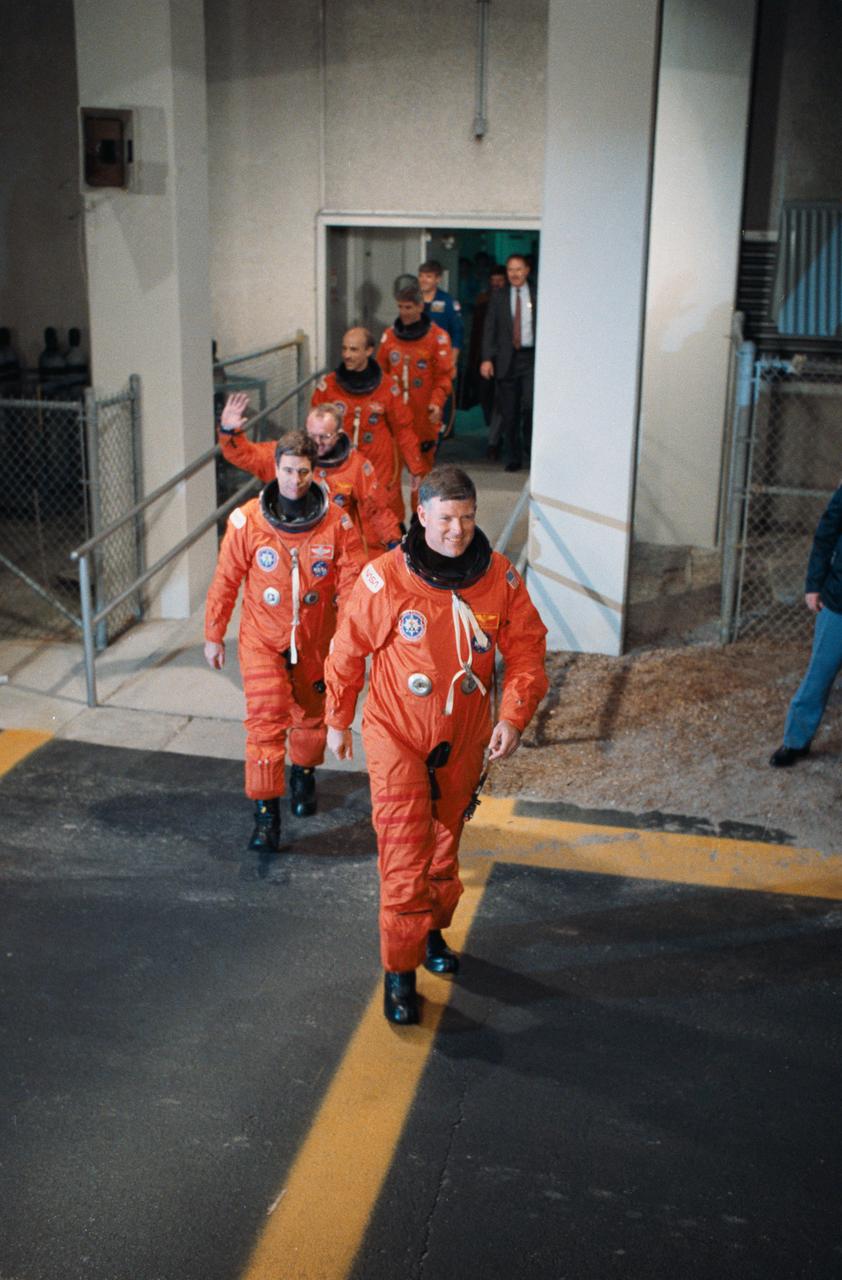
STS029-S-024 (13 March 1989) --- The flight crew for NASA's STS-29 mission leave the operations and checkout building en route to the van that will transport them to Launch Pad 39B, where Discovery awaits the astronauts for its second post-Challenge flight. Leading the way is astronaut Michael L. Coats, mission commander. He is followed by astronauts John E. Blaha, pilot; and James F. Buchli, James P. Bagian and Robert C. Springer, all mission specialists. In the background are astronaut Daniel C. Brandenstein, chief of the astronaut office, and Donald R. Puddy, director of flight crew operations.
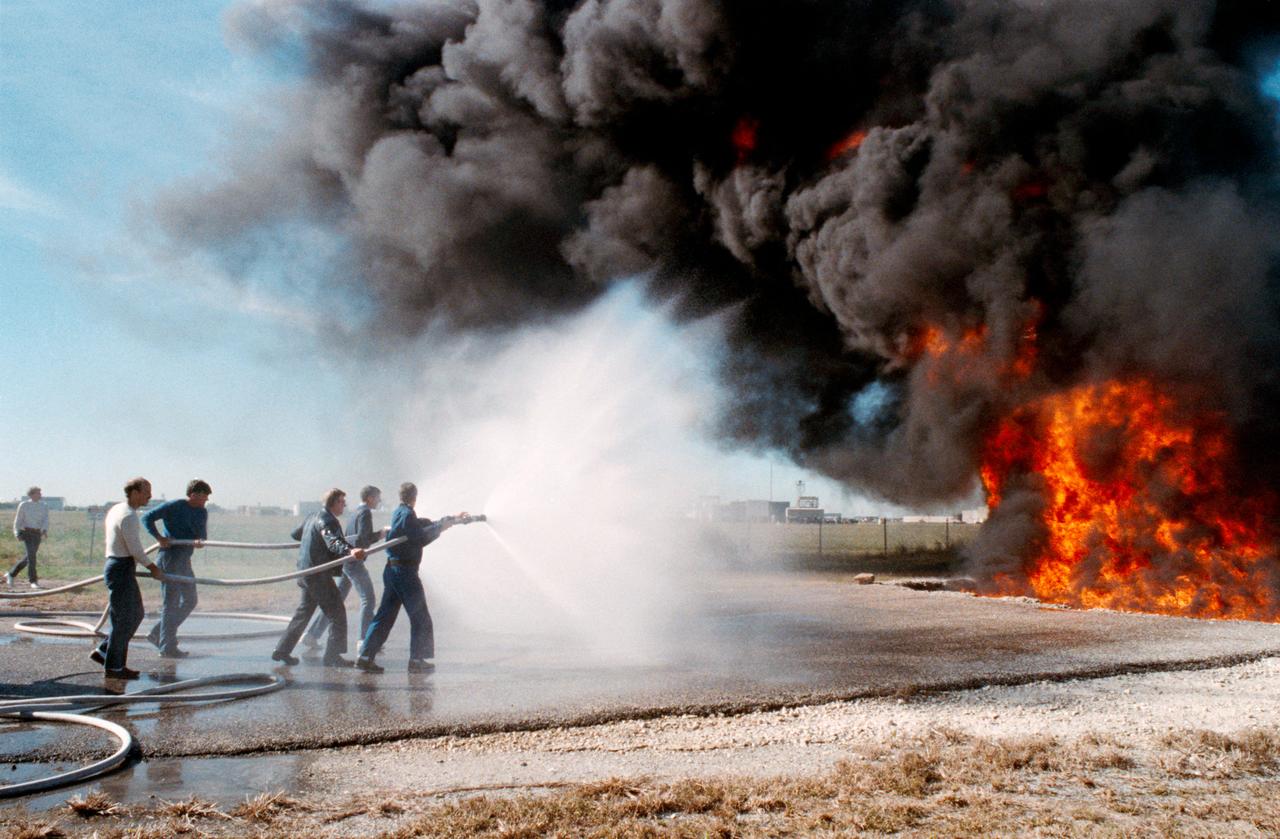
S88-54945 (6 Dec 1988) --- The STS-29 crewmembers are trained in procedures to follow in the event of a fire with their spacecraft. Here, Astronauts Michael L. Coats (far left), mission commander, and James P. Bagian, mission specialist, follow the lead of two fellow crewmembers as they extinguish a fire. The astronauts in front of the action are Robert C. Springer, mission specialist, and John E. Blaha, pilot. Not pictured is James F. Buchli, mission specialist. Their instructor, center, is Robert Fife of NASA's security staff. The training took place on the northern end of the 1625-acre JSC facility.
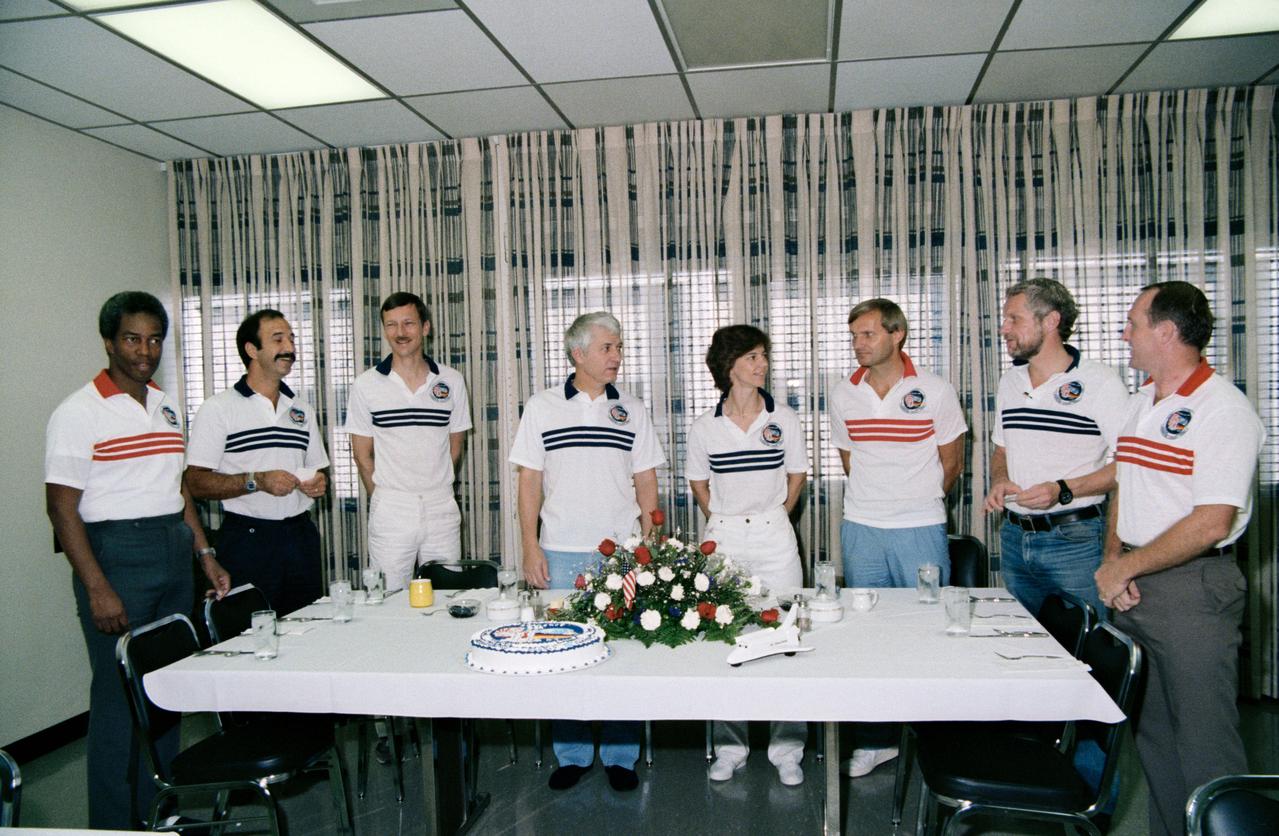
61A-S-016 (30 Oct 1985) --- Standing near their pre-flight breakfast table are the eight crewmembers for the STS 61-A/Spacelab D1 mission. L.-R., Guion S. Bluford, Wubbo J. Ockels, Steven R. Nagel, Henry W. Hartsfield, Bonnie J. Dunbar, Ernst Messerschmid, Reinhard Furrer and James F. Buchli, discuss their upcoming week in space.
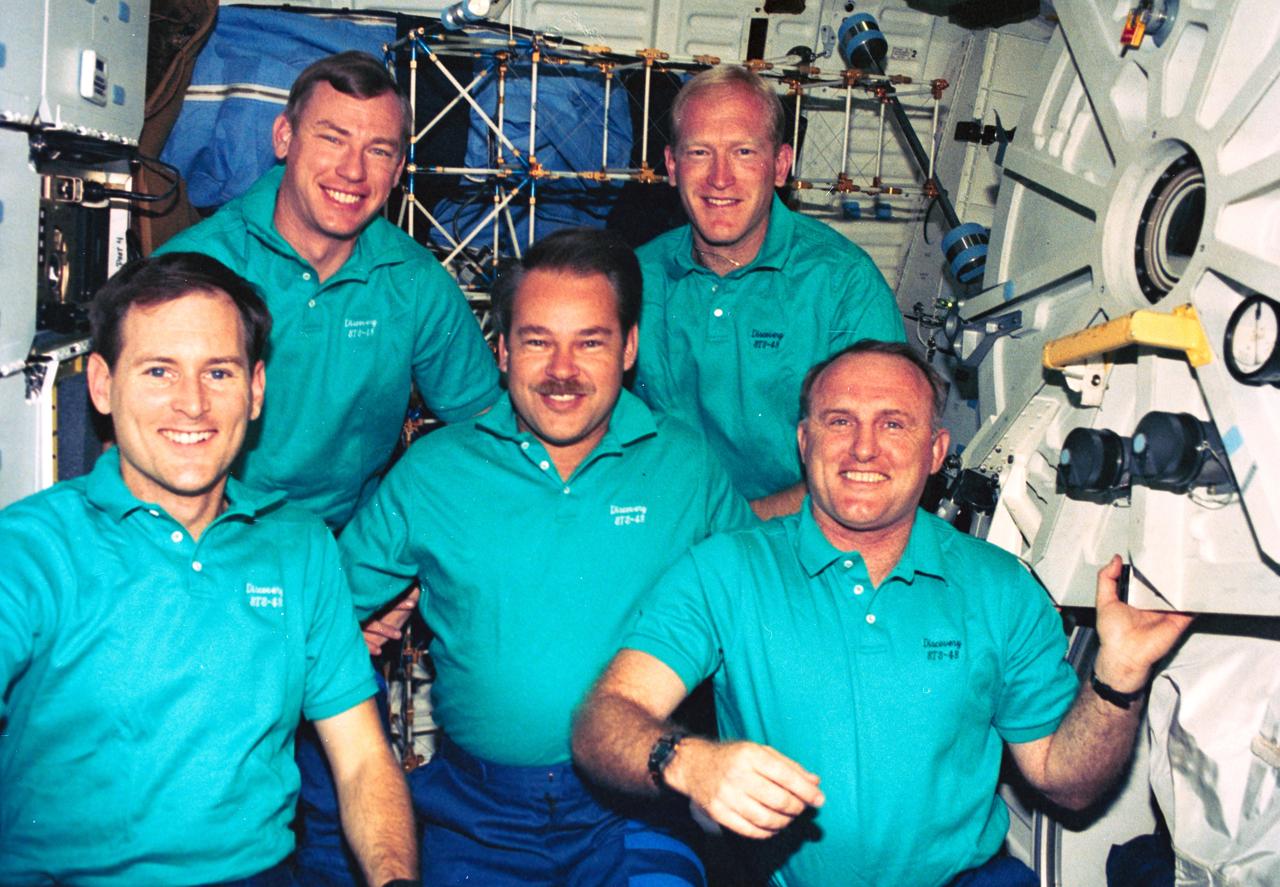
STS048-21-04 (15 Sept 1991) --- The five astronauts pose on the Space Shuttle Discovery's middeck for the traditional in-flight crew portrait. Astronaut John O. Creighton, mission commander, is at center. Others are (front row, left to right) Kenneth S. Reightler, pilot; and James F. Buchli, mission specialist; and (rear row, left to right) astronauts Mark N. Brown and Charles D. (Sam) Gemar, both mission specialists. The image was photographed with a pre-set 35mm camera.
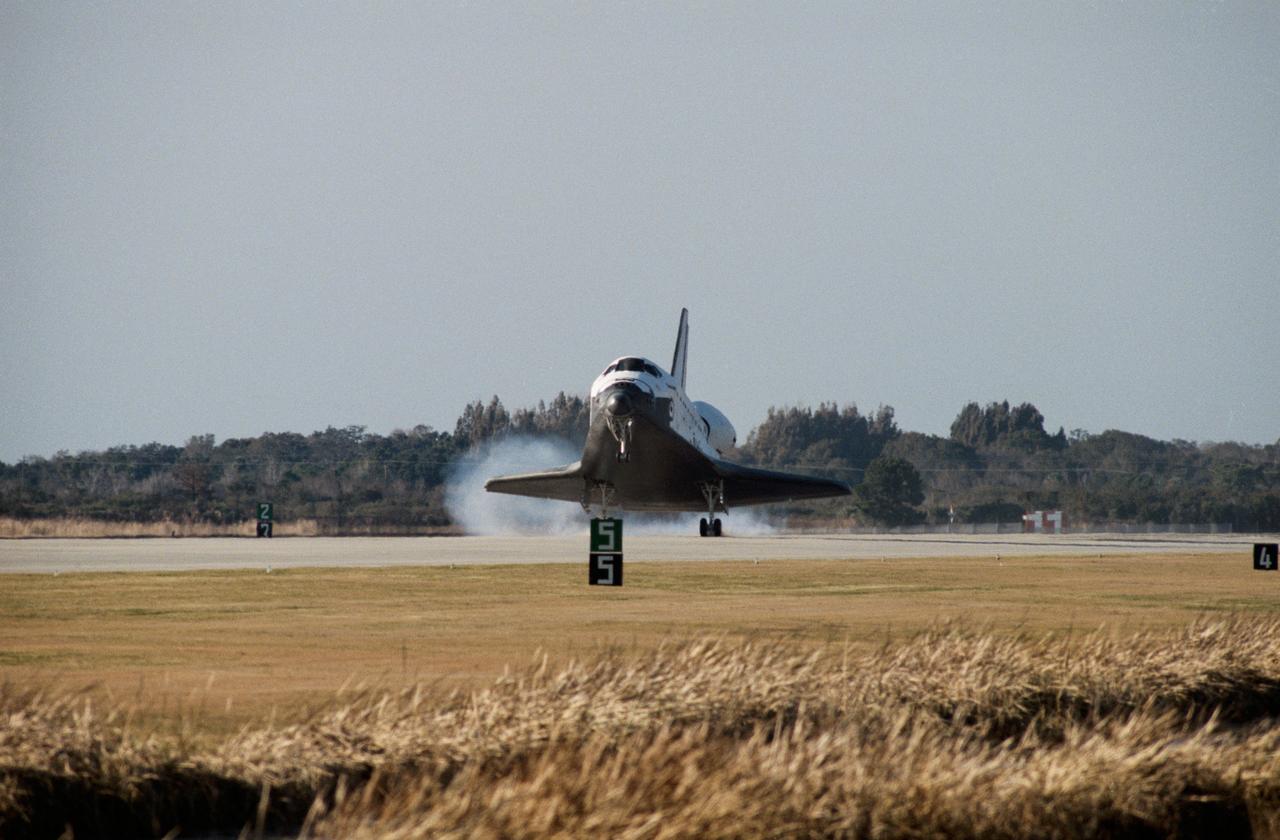
S85-26933 (27 Jan 1985) --- An unusual almost-straight-on view of the Space Shuttle Discovery as its main landing gear touches down on the Shuttle landing facility runway at the Kennedy Space Center (KSC). Aboard the spacecraft for the STS-51C mission were astronauts Thomas K. (Ken) Mattingly II, Loren J. Shriver, James F. Buchli and Ellison S. Onizuka of NASA; and payload specialist Gary E. Payton of the USAF.

The STS-48 mission launched aboard the Space Shuttle Discovery on September 12, 1991 at 7:11:04 pm. Five astronauts composed the crew including: John O. Creighton, commander; Kenneth S. Reightler, pilot; and Mark N. Brown, Charles D. (Sam) Gemar, and James F. Buchli, all mission specialists. The primary payload of the mission was the Upper Atmosphere Research Satellite (UARS).
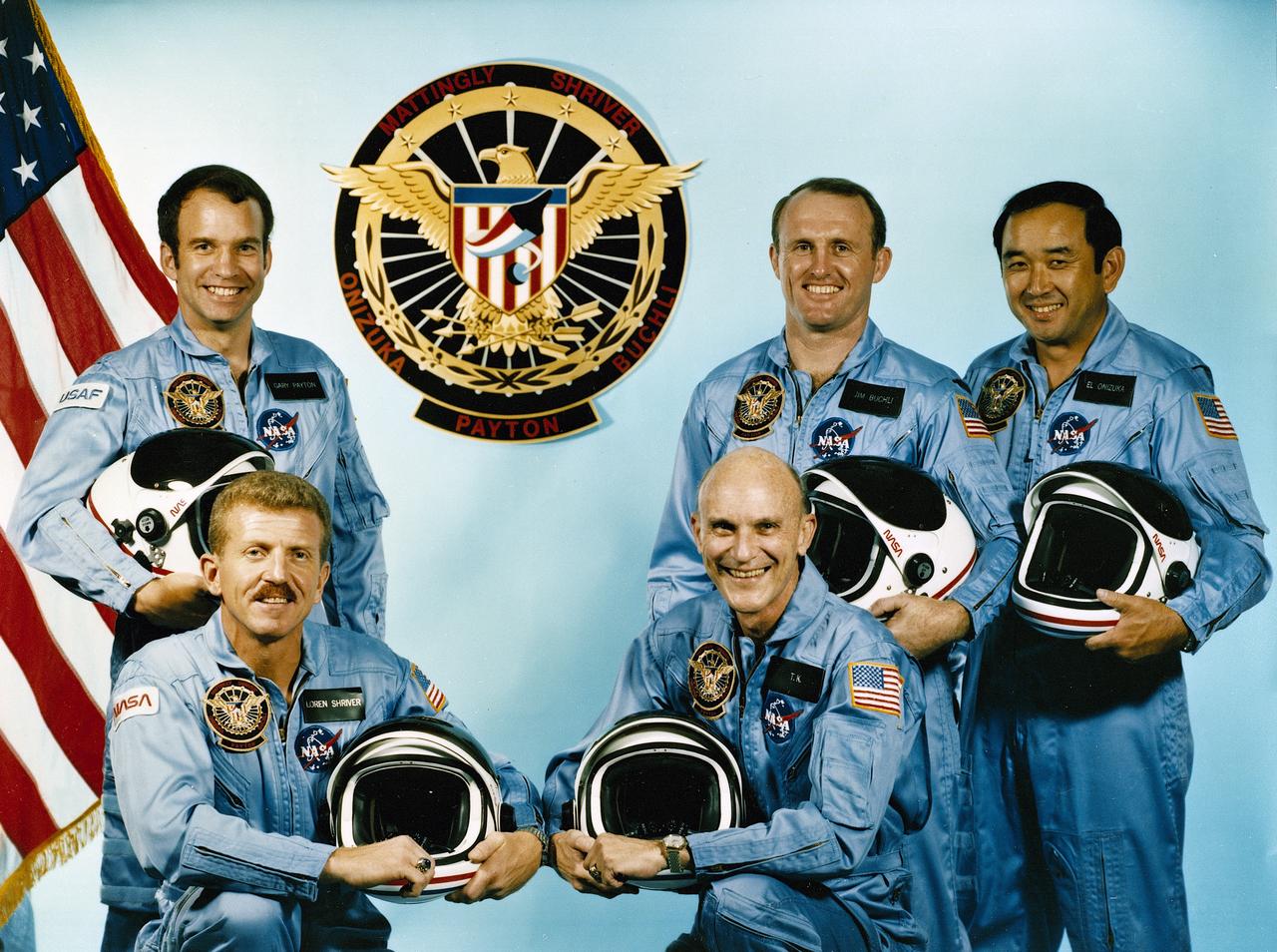
The crew assigned to the STS-51C mission included (kneeling in front left to right) Loren J. Schriver, pilot; and Thomas K. Mattingly, II, commander. Standing, left to right, are Gary E. Payton, payload specialist; and mission specialists James F. Buchli, and Ellison L. Onzuka. Launched aboard the Space Shuttle Discovery on January 24, 1985 at 2:50:00 pm (EST), the STS-51C was the first mission dedicated to the Department of Defense (DOD).
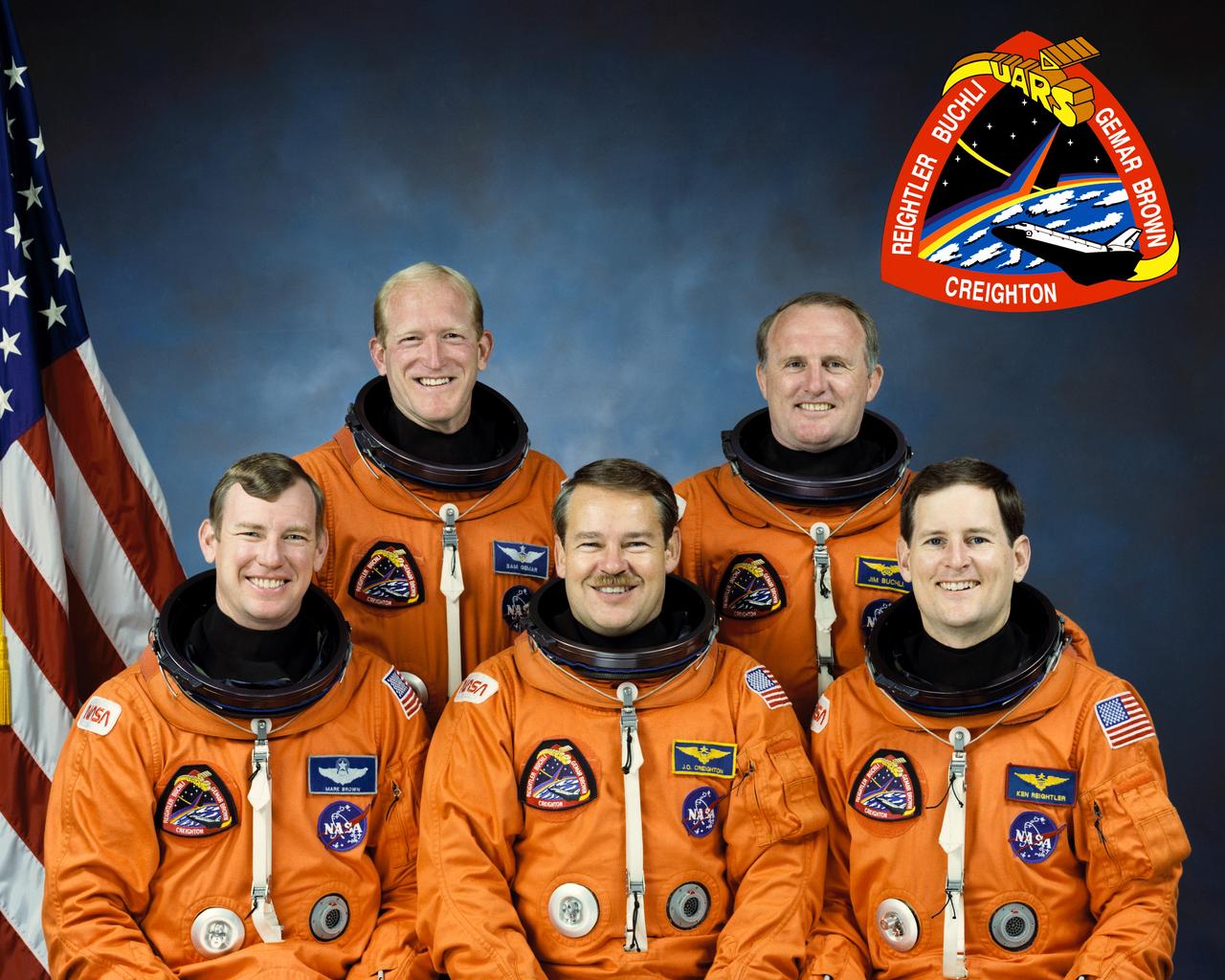
STS048-S-002 (August 1991) --- These five astronauts have been assigned to NASA's mission, scheduled for September. Astronaut John O. Creighton, center, is mission commander. Astronaut Kenneth S. Reightler Jr. (right front) will be pilot for the flight aboard the Space Shuttle Discovery. Mission specialists are Mark N. Brown (left, front row) and (left to right, back row) Charles D. (Sam) Gemar and James F. Buchli.
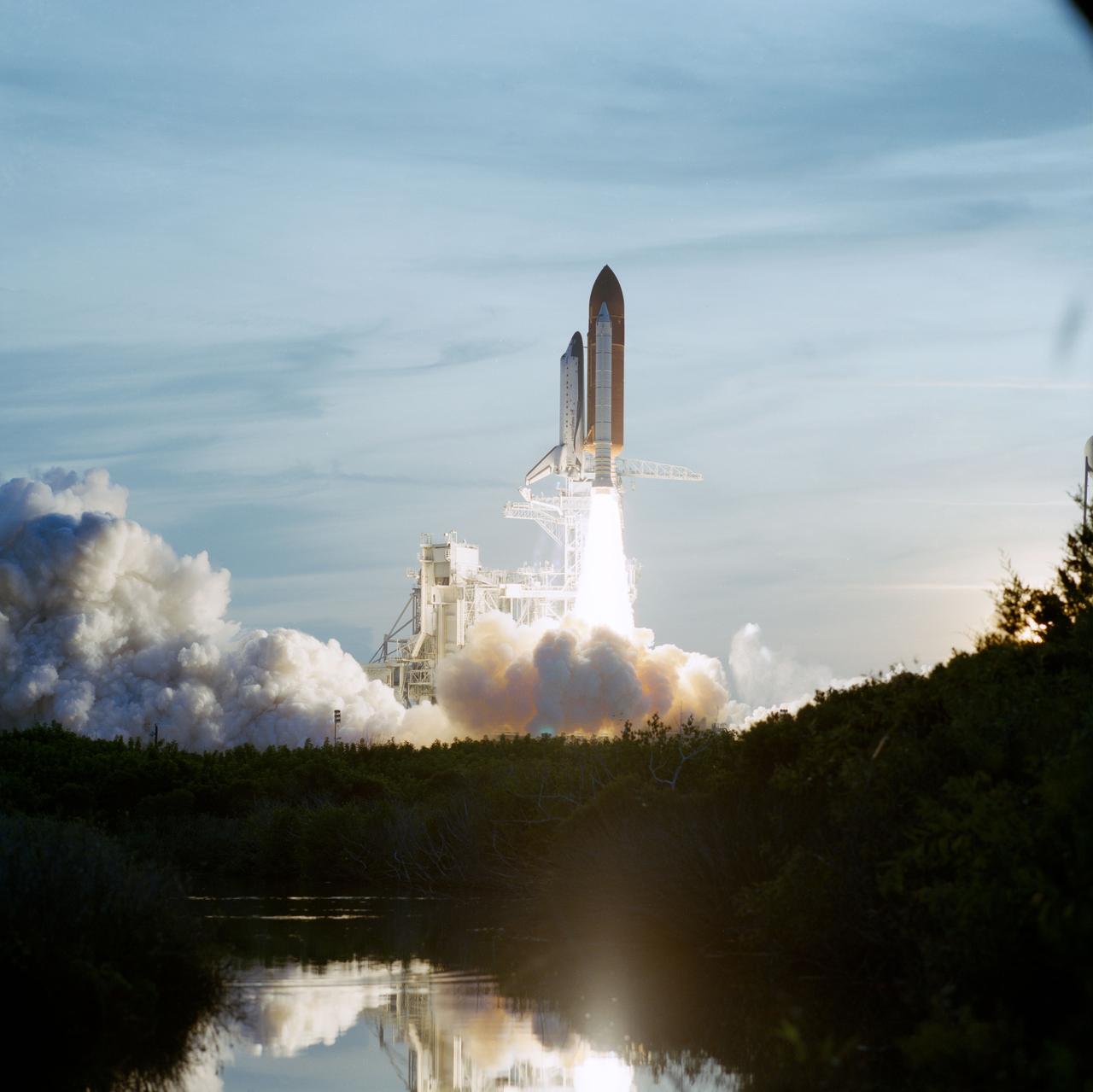
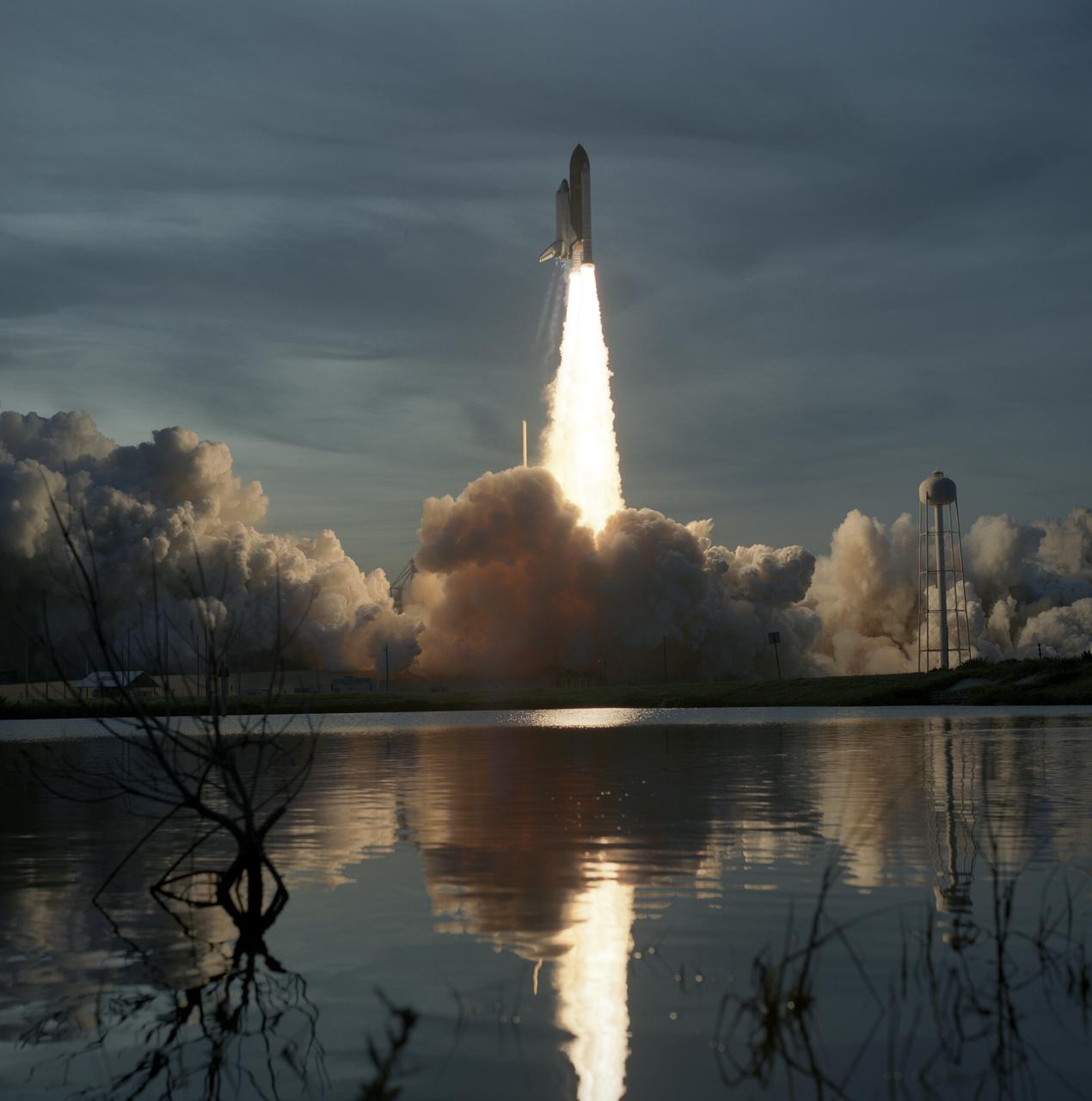
STS048-S-172 (12 Sept 1991) ---- With five astronauts and the Upper Atmosphere Research Satellite (UARS) onboard, the Space Shuttle Discovery heads toward a six day mission in Earth orbit. Onboard are astronauts John O. Creighton, Kenneth S. Reightler, Charles D. (Sam) Gemar, James F. Buchli and Mark N. Brown. Liftoff occurred at 7:11:04 p.m. (EDT), September 12, 1991.
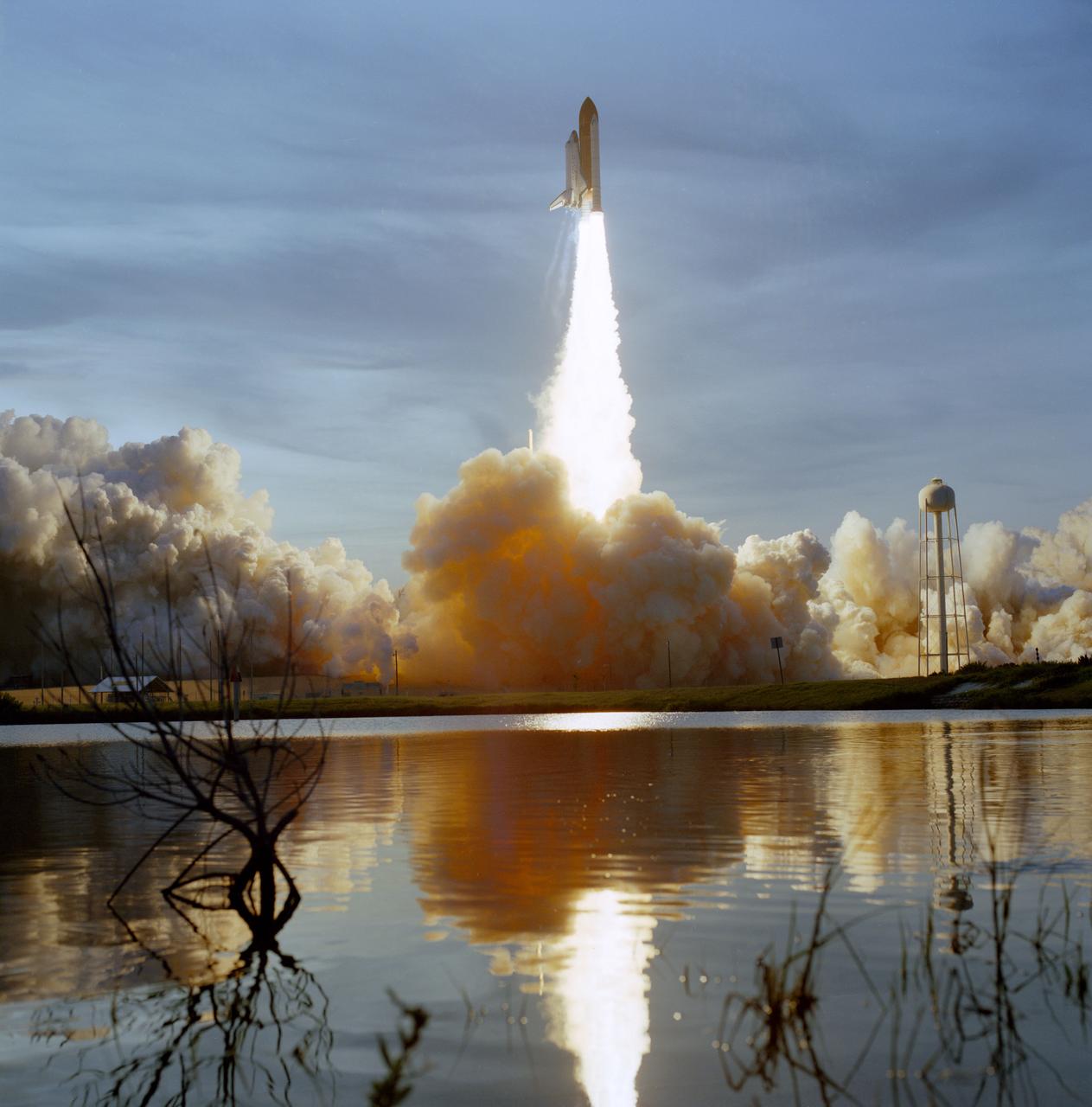
STS048-S-170 (12 Sept 1991) ---- With five astronauts and the Upper Atmosphere Research Satellite (UARS) onboard, the Space Shuttle Discovery heads toward a six day mission in Earth orbit. Onboard are astronauts John O. Creighton, Kenneth S. Reightler, Charles D. (Sam) Gemar, James F. Buchli and Mark N. Brown. Liftoff occurred at 7:11:04 p.m. (EDT), September 12, 1991.
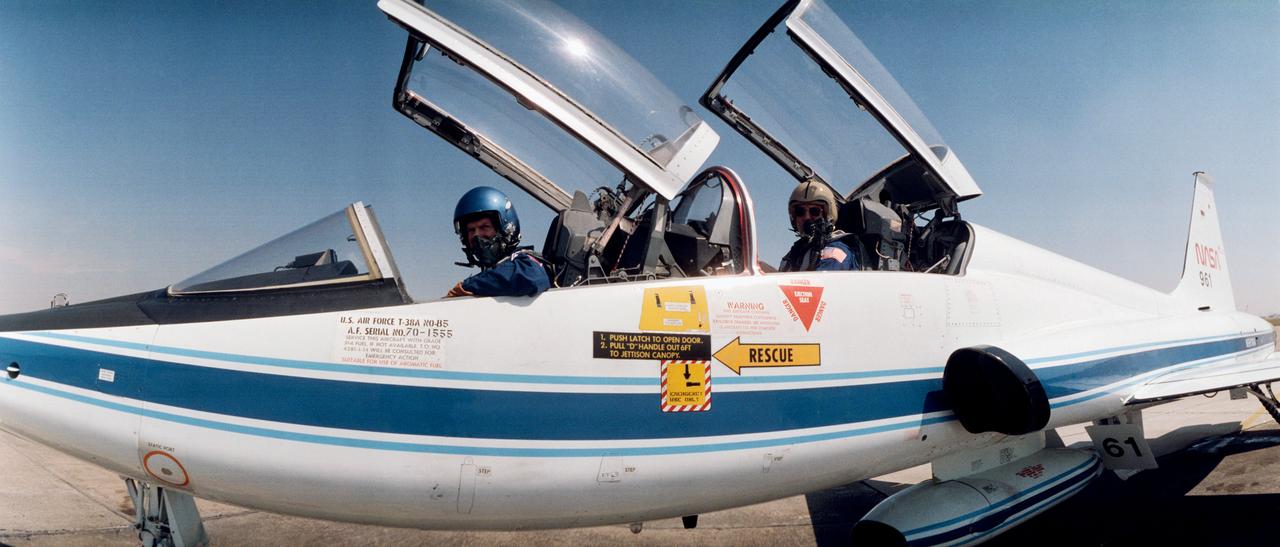
STS029-S-005 (10 March 1989) --- A wide angle view of a T-38 on the flight line at Ellington Field near the Johnson Space Center (JSC). Astronauts Michael L. Coats, mission commander; and James F. Buchli, STS-29 mission specialist, moments later were en route to Florida's Kennedy Space Center. In three days, they and three fellow STS-29 crew members are scheduled to lift off aboard the space shuttle Discovery from Launch Pad 39B. Photo credit: NASA
The STS-48 mission launched aboard the Space Shuttle Discovery on September 12, 1991 at 7:11:04 pm. Five astronauts composed the crew including: John O. Creighton, commander; Kenneth S. Reightler, pilot; and Mark N. Brown, Charles D. (Sam) Gemar, and James F. Buchli, all mission specialists. The primary payload of the mission was the Upper Atmosphere Research Satellite (UARS).
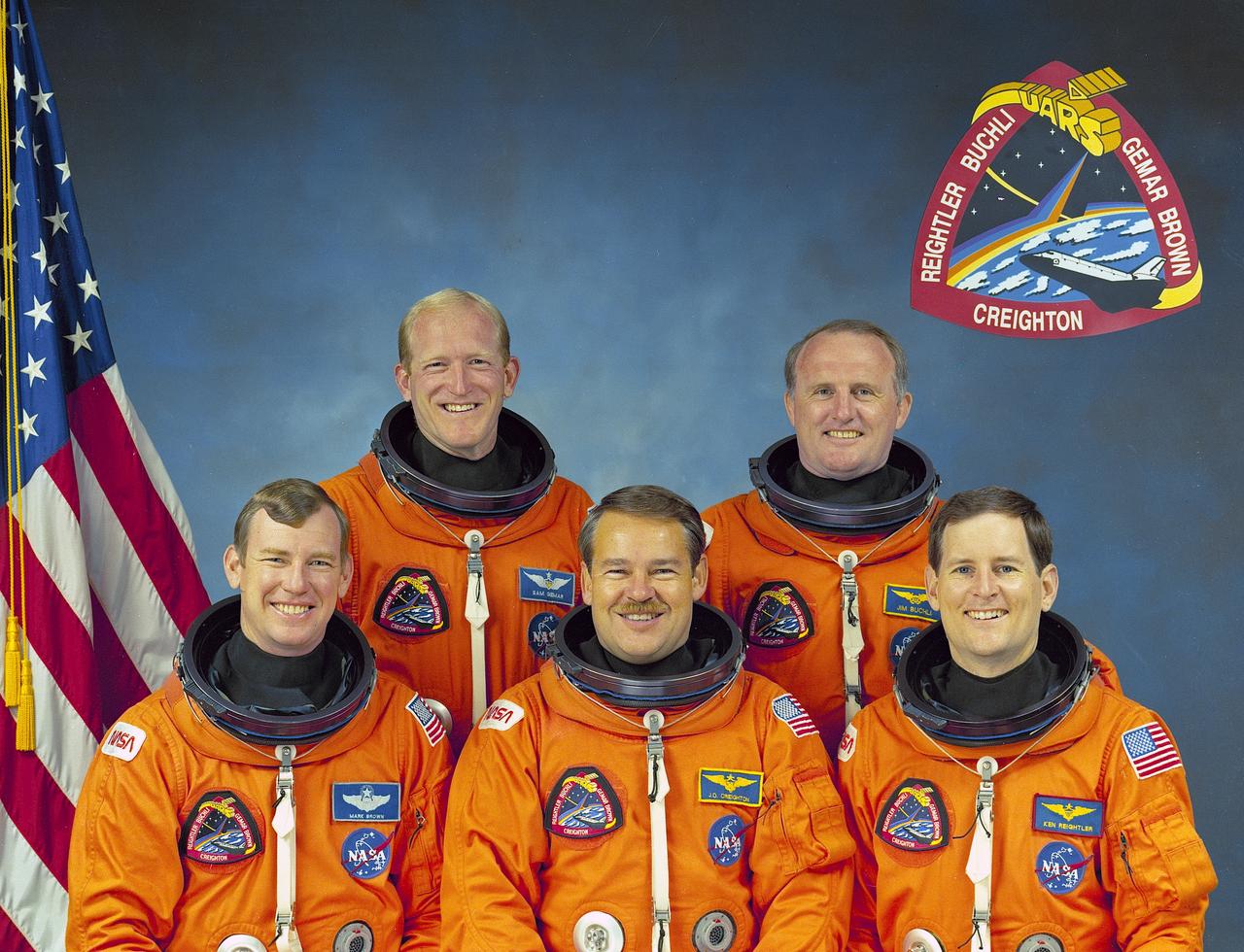
The STS-48 crew portrait includes (front row left to right): Mark N. Brown, mission specialist; John O. Creighton, commander; and Kenneth S. Reightler, pilot. Pictured on the back row (left to right) are mission specialists Charles D. (Sam) Gemar, and James F. Buchli. The crew of five launched aboard the Space Shuttle Discovery on September 12, 1991 at 7:11:04 pm (EDT). The primary payload of the mission was the Upper Atmosphere Research Satellite (UARS).
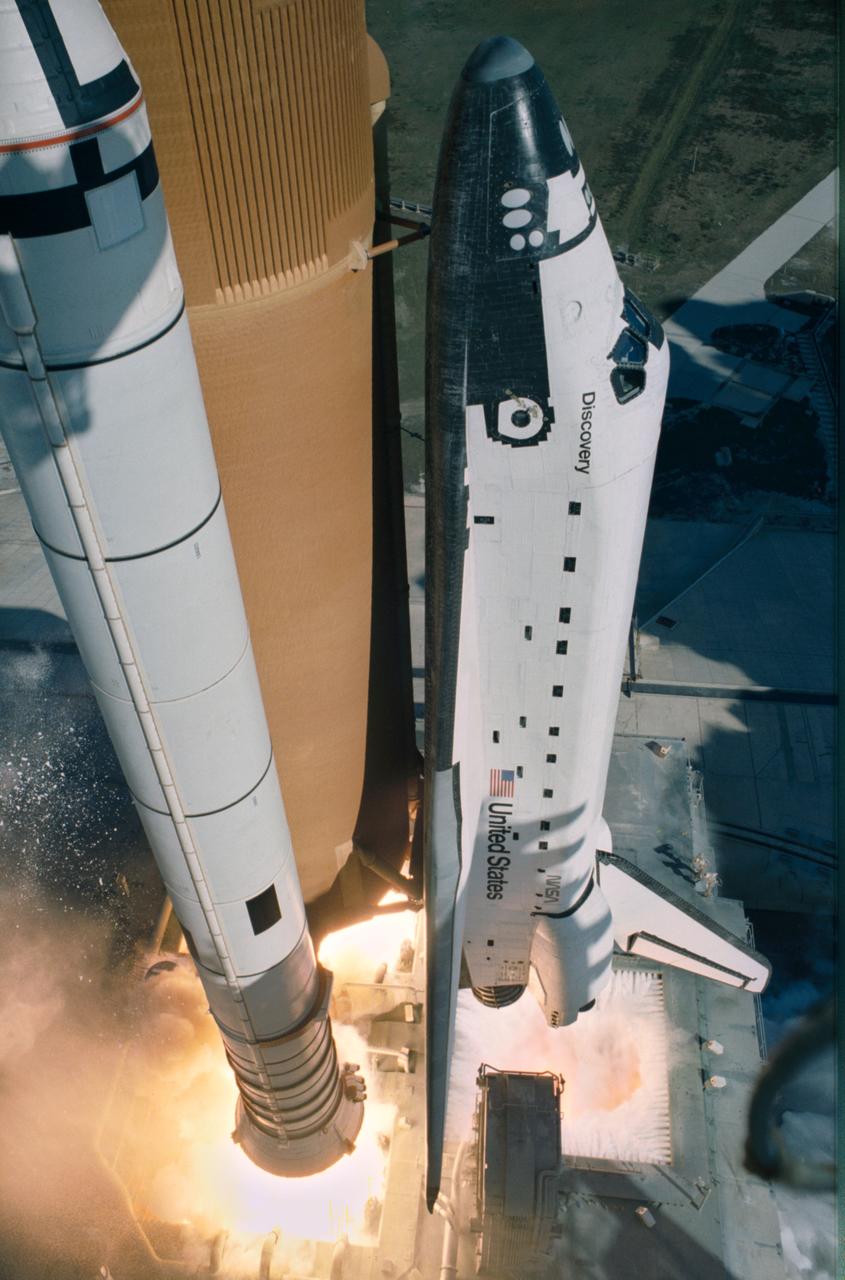
S85-26185 (24 Jan 1985) --- The Space Shuttle Discovery was photographed following engine ignition with a 35mm camera on the nearby service structure, as the vehicle headed for its third mission in Earth orbit. The five member STS-51C crew aboard consisted of astronauts Thomas K. (Ken) Mattingly II, Loren J. Shriver, James F. Buchli and Ellison S. Onizuka of NASA; and Gary E. Payton of the USAF.
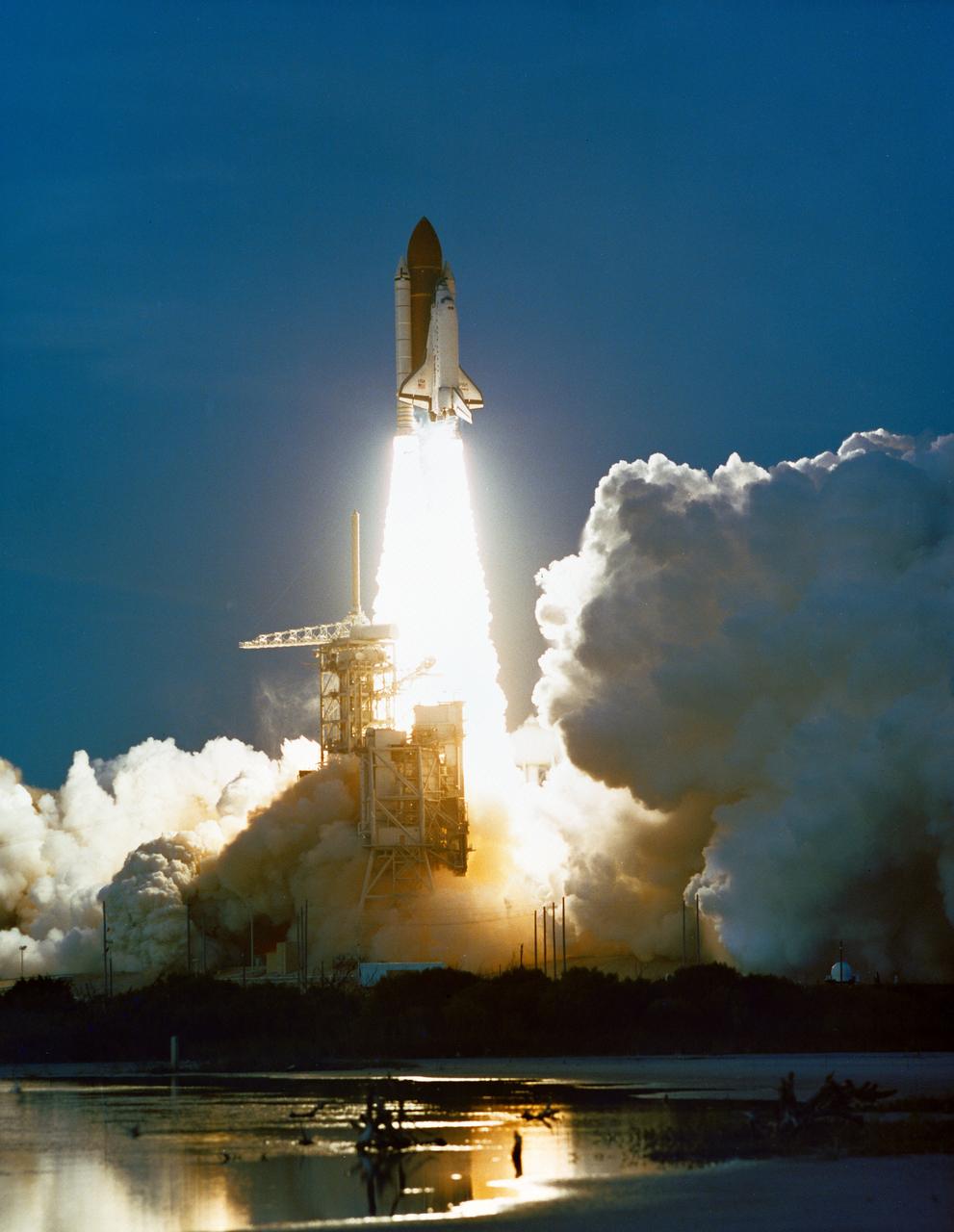
STS048-S-171 (12 Sept 1991) --- With five astronauts and the Upper Atmosphere Research Satellite (UARS) onboard, the Space Shuttle Discovery heads toward a six day mission in Earth orbit. Onboard are astronauts John O. Creighton, Kenneth S. Reightler, Charles D. (Sam) Gemar, James F. Buchli and Mark N. Brown. Liftoff occurred at 7:11:04 p.m. (EDT), September 12, 1991.
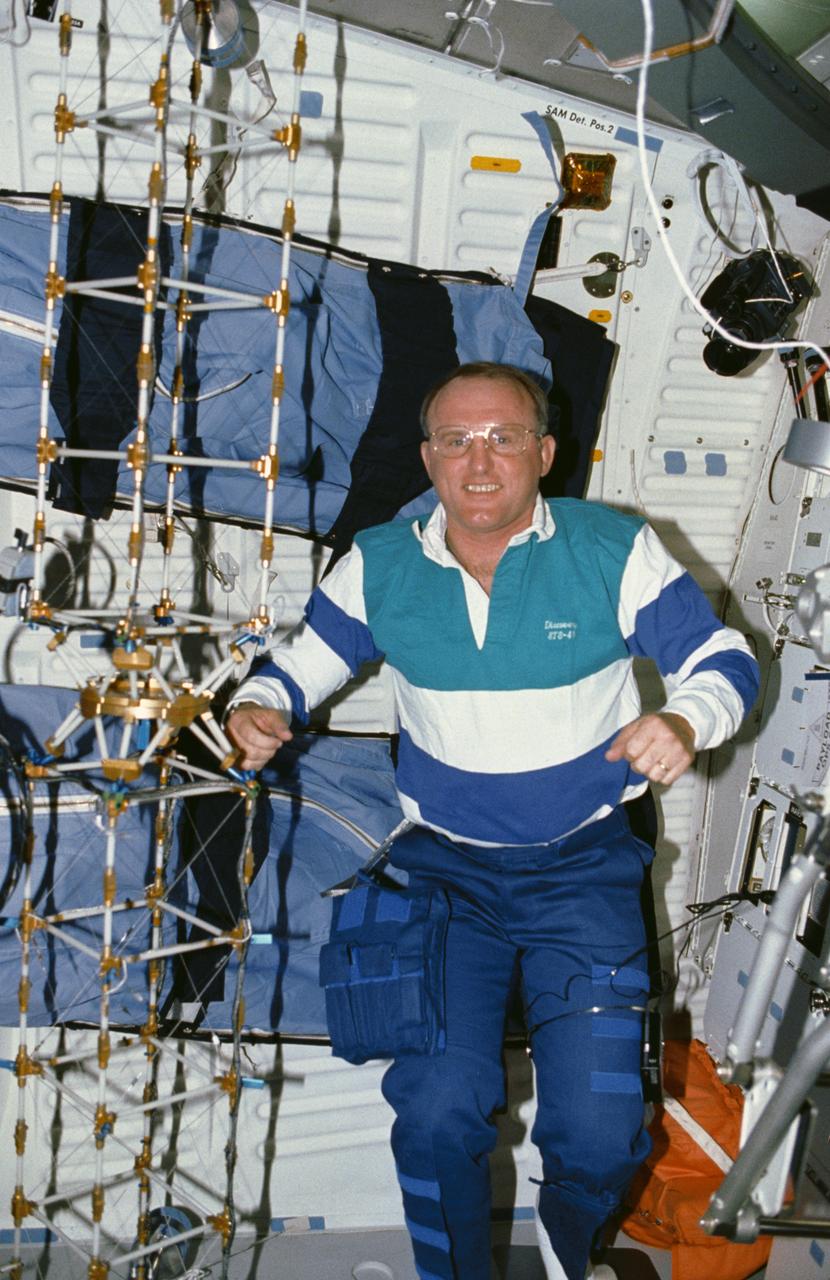
STS048-10-023 (16 Sept 1991) --- Astronaut James F. Buchli poses with the structural test article (STA), a model of the space station truss structure. The STA is part of the middeck zero gravity dynamics experiment (MODE). MODE was designed to study the vibration characteristics of the jointed truss structure. The structural test article includes four strain gauges and eleven accelerometers and is vibrated by an actuator. Assembled by crewmembers in the Shuttle orbiter's middeck, the device is about 72 inches long with an 8-inch square cross section.
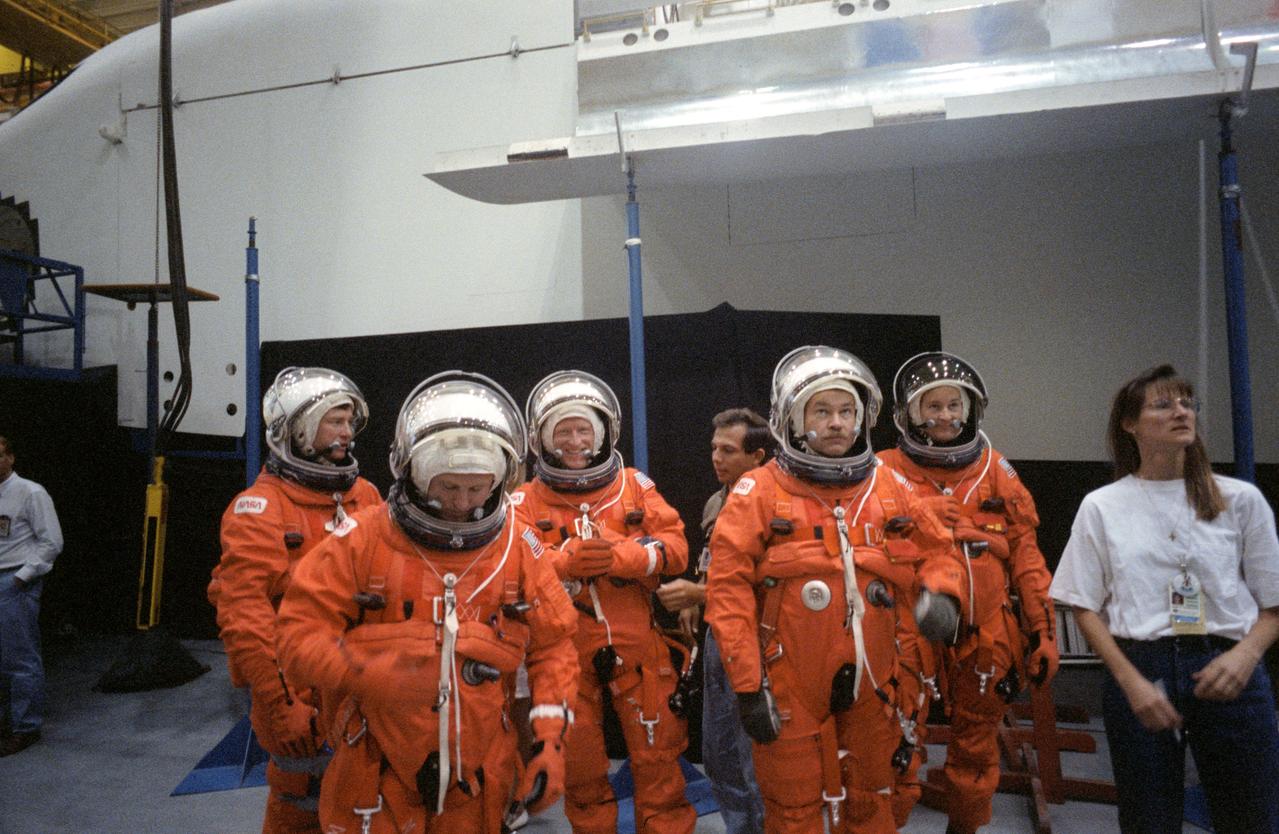
S91-43614 (25 July 1991) --- The astronaut crewmembers for NASA's STS 48 mission, attired in orange partial pressure garments used for Shuttle launch and entry, prepare to participate in an emergency egress training session at the Johnson Space Center. The crewmembers are, left to right, astronauts Mark N. Brown, James F. Buchli and Charles D. (Sam) Gemar, all mission specialists, and John O. Creighton, Mission commander, and Kenneth S. Reightler, pilot. STS 48 is currently scheduled for mid-September of this year.

STS029-S-004 (10 March 1989) --- Astronaut James F. Buchli, STS-29 mission specialist, prepares to take a rear-seat ride in a NASA T-38 jet aircraft from Houston's Johnson Space Center to Florida's Kennedy Space Center. In three days, he and four fellow STS-29 crewmembers are scheduled to lift off aboard the Space Shuttle Discovery from Launch Pad 39B.
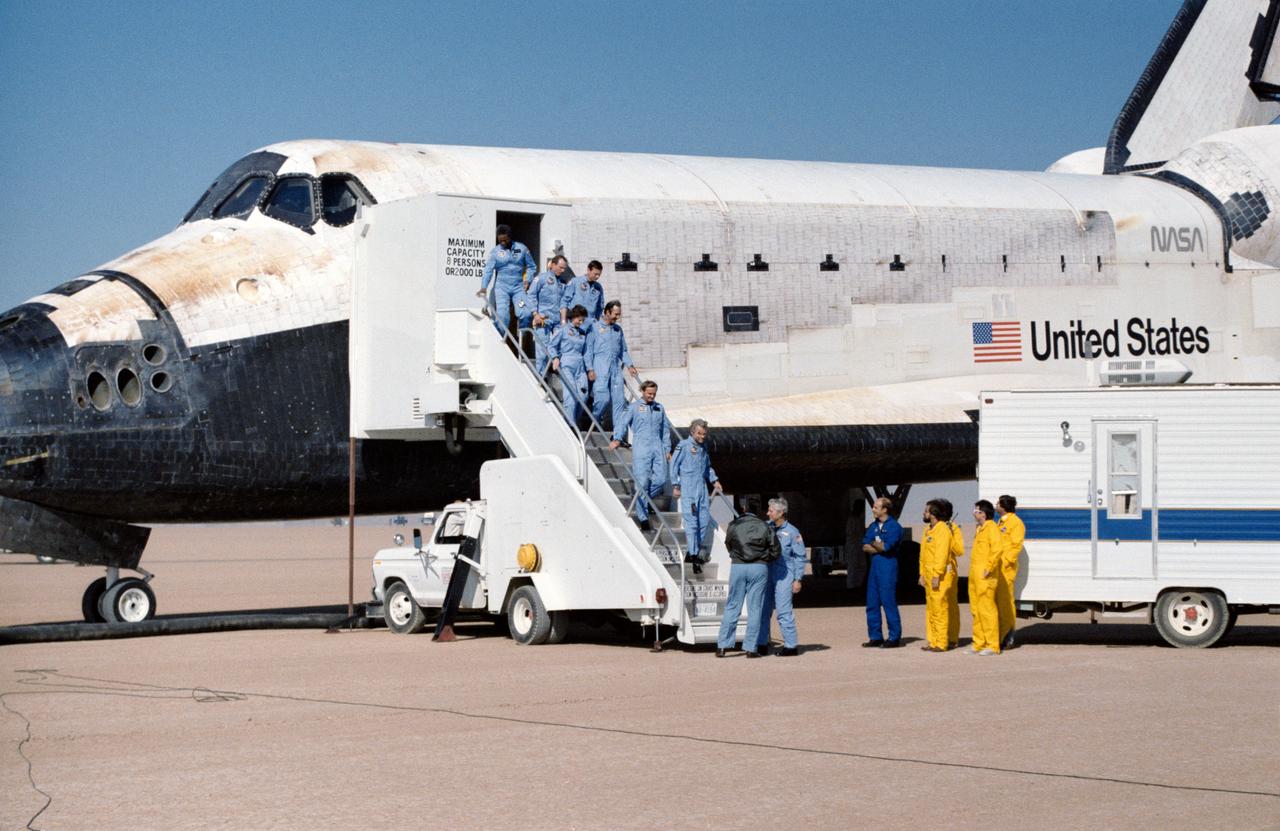
61A-S-140 (6 Nov 1985) --- The record-setting eight crewmembers for STS 61-A file from their "home" for the past week at the completion of a successful Spacelab D-1 mission. Astronaut Henry W. Hartsfield Jr., mission commander, shakes hands with George W. S. Abbey, director of flight crew operations at JSC. Other crewmembers, from left to right, are Astronauts Guion S. Bluford Jr., James F. Buchli, Steven R. Nagel and Bonnie J. Dunbar; and Payload Specialists Wubbo J. Ockels, Ernst Messerschmid and Reinhard Furrer. The Challenger came to a complete stop at 9:45:39 a.m. (PST).
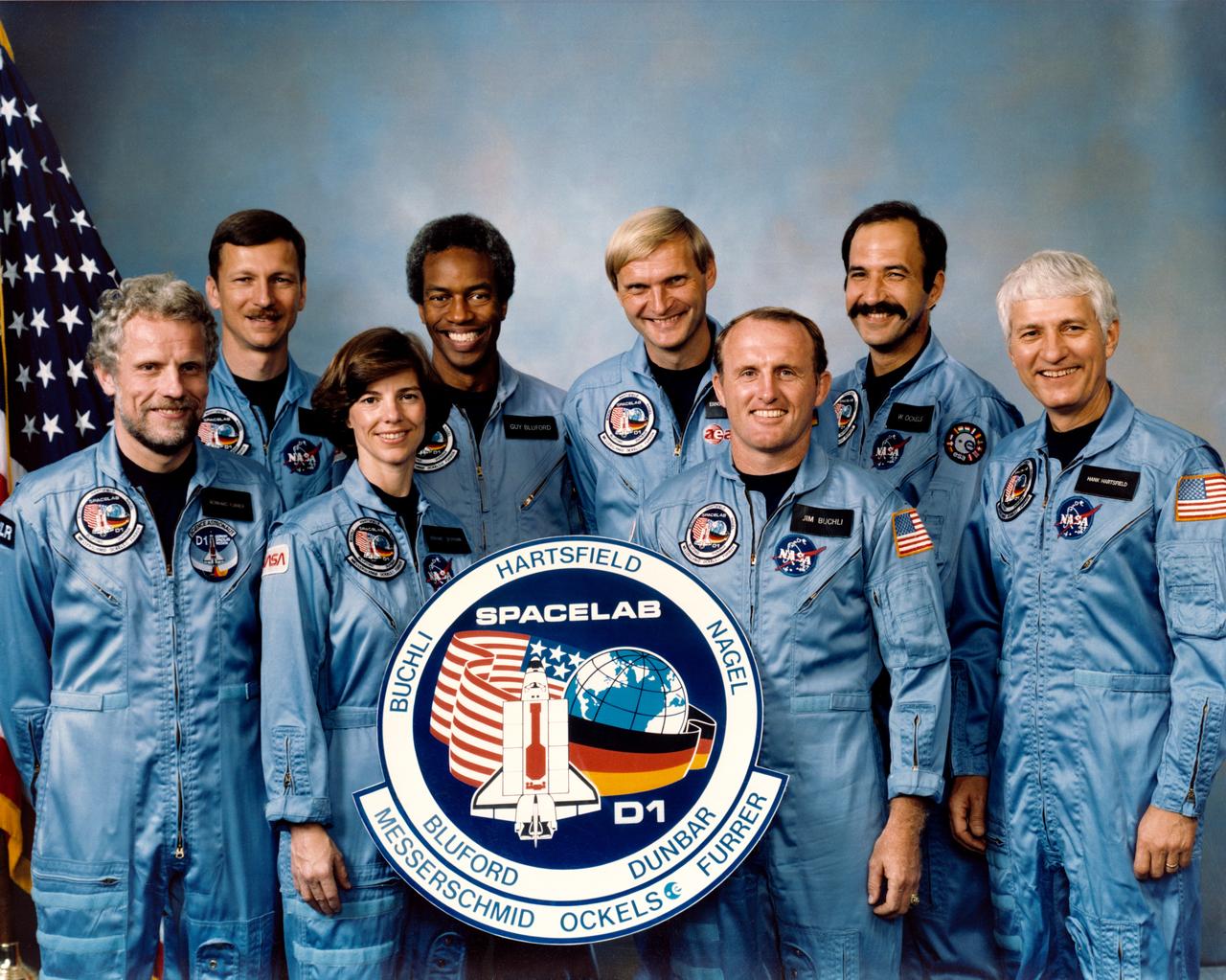
S85-40783 (27 Sept. 1985) --- This international crew expected to fly aboard the space shuttle Challenger when it launches next month represents the largest number (eight) of persons to occupy an orbiting spacecraft at the same time. Posing with the mission insignia are (front row, left to right) Reinhard Furrer, German payload specialist; Bonnie J. Dunbar, mission specialist; James F. Buchli, mission specialist; and Henry W. Hartsfield Jr., commander; and (back row, left to right) Steven R. Nagel, pilot; Guion S. Bluford, mission specialist; Ernst Messerschmid, German payload specialist; and Wubbo J. Ockels, Dutch payload specialist. Photo credit: NASA
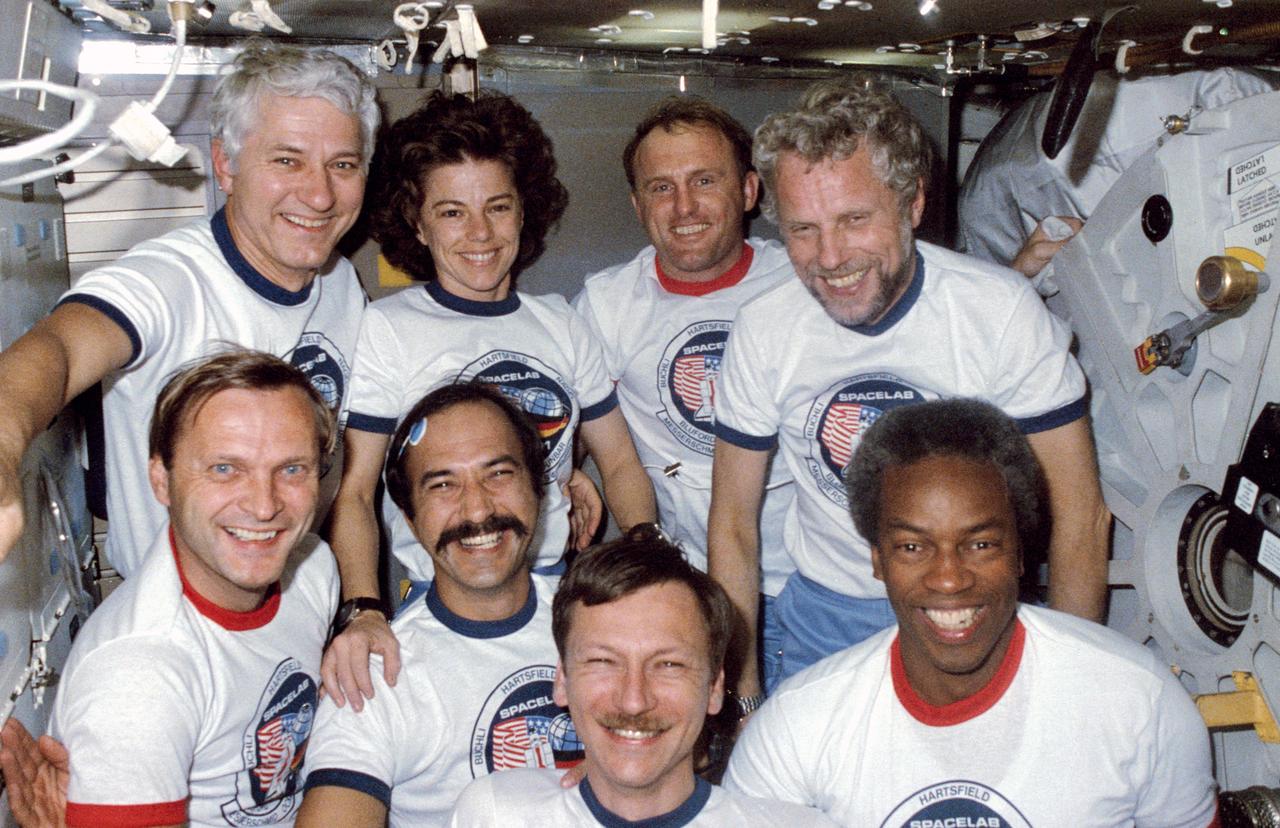
61A-117-019 (30 Oct.-6 Nov. 1985) --- Traditional in-flight portrait of all eight STS-61A crew members was made with an automatic exposure of a 35mm camera. Left to right, back row, Henry W. Hartsfield Jr., commander; Bonnie J. Dunbar, mission specialist; James F. Buchli, mission specialist; and Reinhard Furrer, payload specialist. Left to right, front row, Ernst Messerschmid, payload specialist; Wubbo J. Ockels, payload specialist representing the European Space Agency (ESA); Steven R. Nagel, pilot; and Guion S. Bluford Jr., mission specialist. Photo credit: NASA

S84-43708 (11 Oct 1984) --- These five crewmembers are scheduled to fly aboard the Space Shuttle Challenger for Mission STS-51C, scheduled for January of next year. Astronauts Thomas K. (Ken) Mattingly II (kneeling right) and Loren J. Shriver (kneeling left) are commander and pilot, respectively. Astronauts James F. Buchli (standing center) and Ellison L. Onizuka (right) are mission specialists. Gary E. Payton of the U.S. Air Force, left, is payload specialist. The crewmembers, holding their launch and entry helmets, were photographed with their crew insignia.
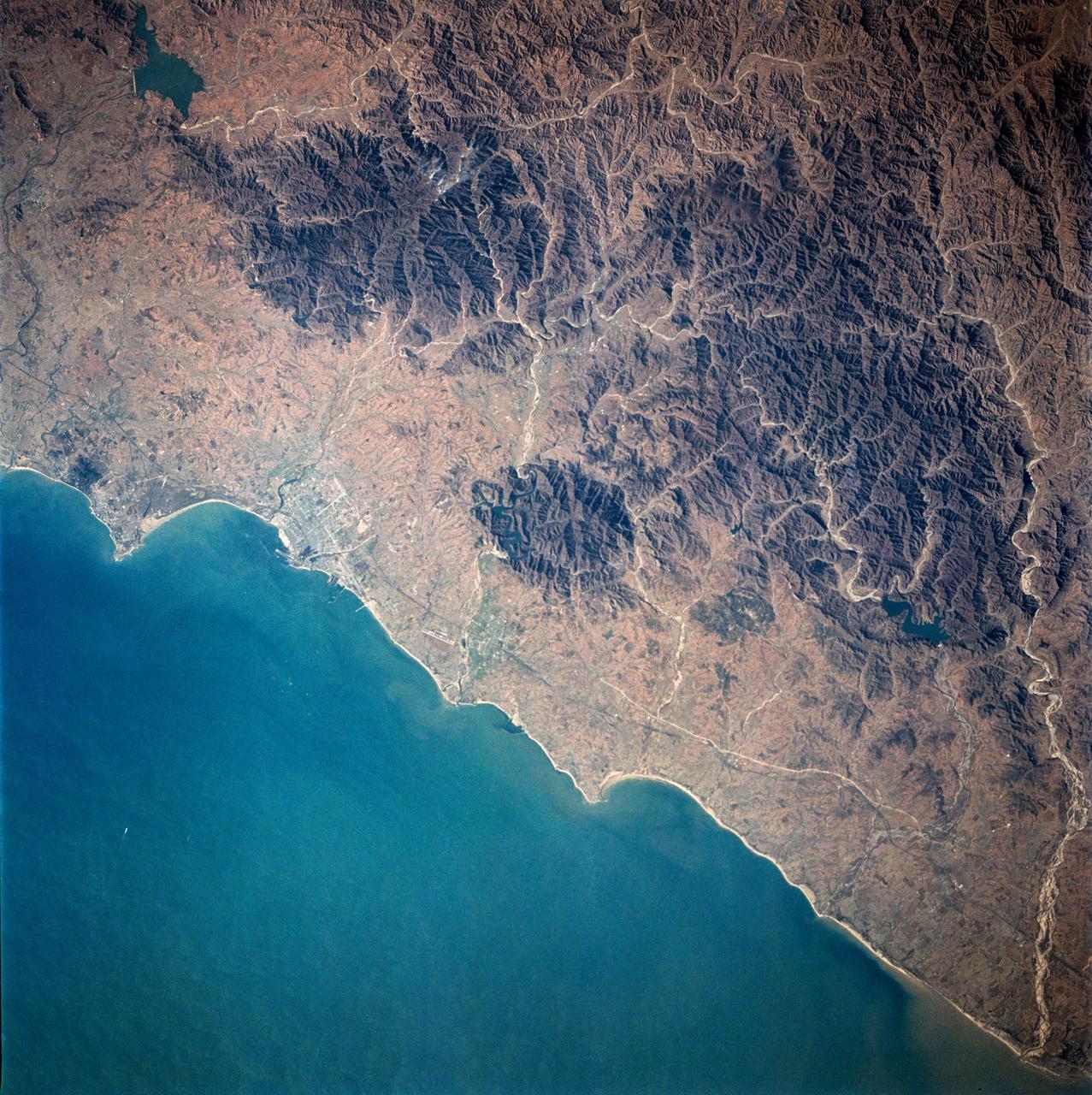
61A-39-052 (30 Oct-6 Nov 1985) --- This Earth view shows Quinhuangdao, China. The Great Wall of China can be seen in this photograph. The center coordinates are 40.0 north latitude and 120.0 east longitude. This photograph was taken from an altitude of 180 miles, on the 24th orbit of the Space Shuttle Challenger. The crew consists of astronauts Henry W. Hartsfield, Jr., commander; Steven R. Nagel, pilot; mission specialists James F. Buchli, Guion S. Bluford, Jr., Bonnie J. Dunbar; payload specialists Reinhard Furrer (DFVLR), Ernst Messerschmid (DFVLR), and Wubbo J. Ockels (ESA).
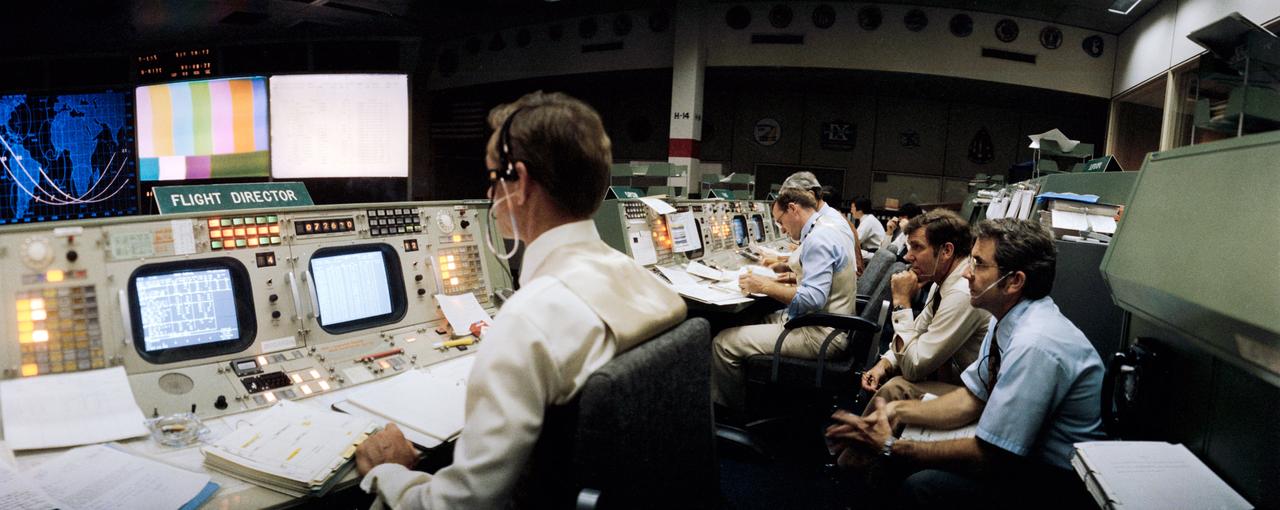
S81-30386 (14 April 1981) --- Flight director Charles R. Lewis, left, studies a chart display on his console?s monitor in the mission operations control room (MOCR) in the Johnson Space Center?s Mission Control Center. The photograph was taken just prior to a TV transmission on day two of STS-1, with a special wide-angle lens. Astronauts Joe H. Engle (second from right) and Richard H. Truly, right, are backup commander and pilot, respectively, for NASA?s first space shuttle orbital test mission. Astronaut James F. Buchli, spacecraft communicator, is at right center. Photo credit: NASA
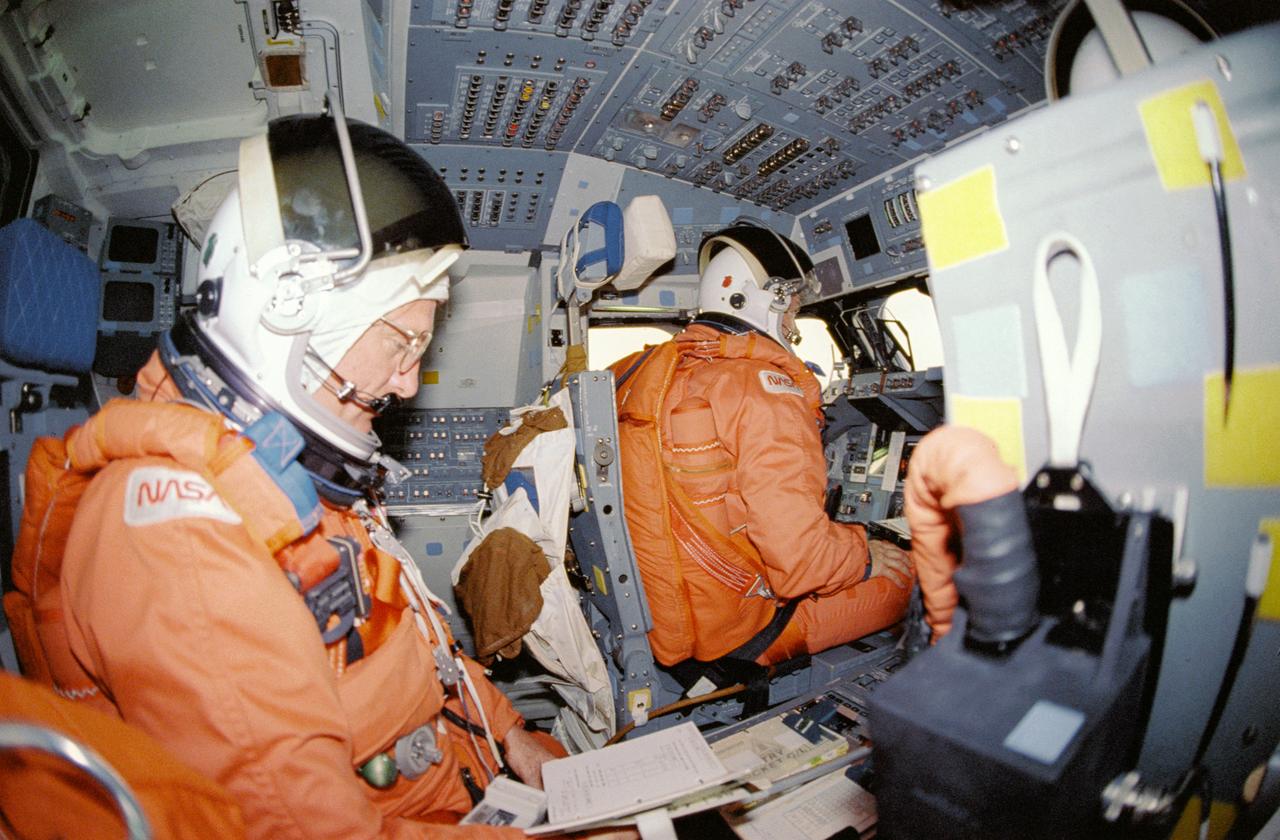
STS029-24-004 (18 March 1989) --- STS-29 crewmembers, wearing launch and entry suits (LESs) and launch and entry helmets (LEHs), review checklists on Discovery, Orbiter Vehicle (OV) 103, flight deck. Commander Michael L. Coats is seated at the forward flight deck commanders station with Mission Specialist (MS) James F. Buchli on aft flight deck strapped in mission specialist seat. OV-103 makes its return after five days in space. Note color in forward windows W1, W2, W3 caused by friction of entry through the Earth's atmosphere. Personal Egress Air Pack (PEAP) is visible on pilots seat back.
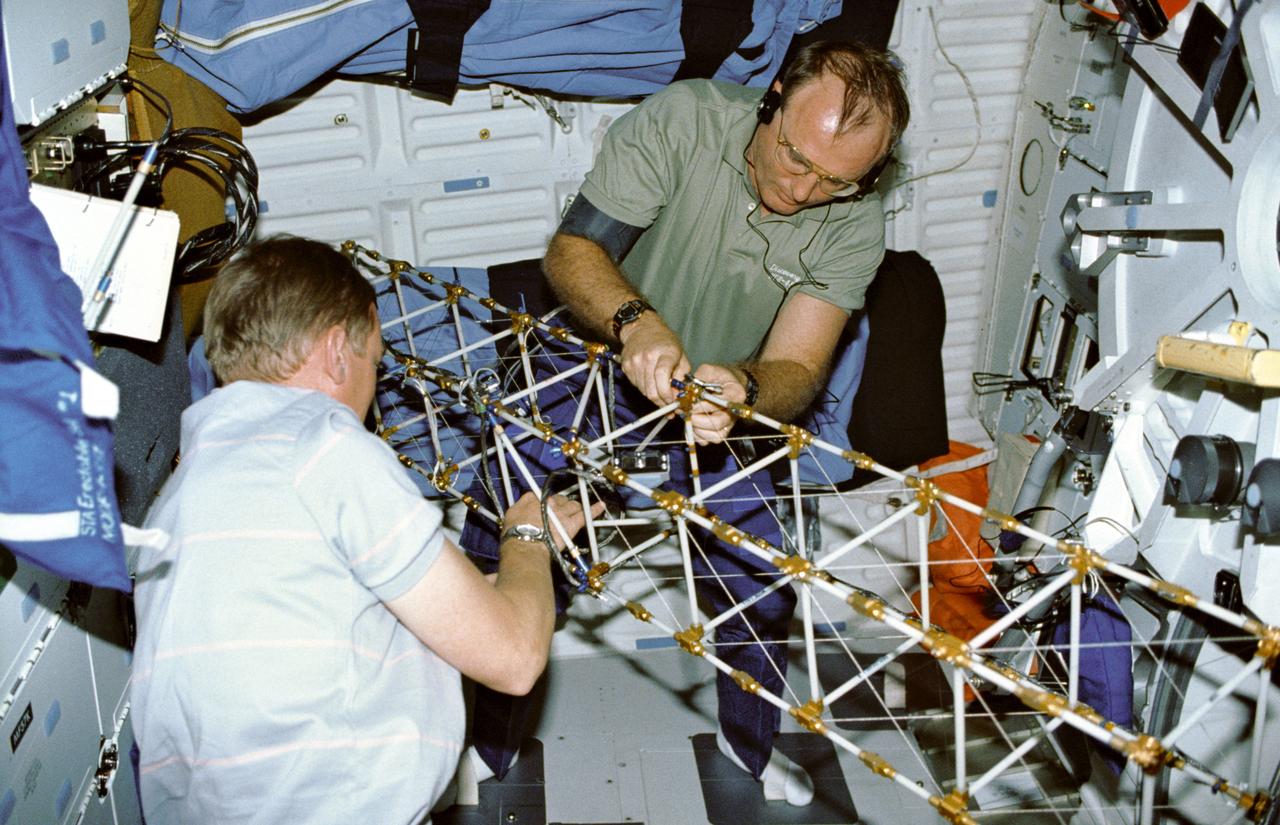
STS048-09-019 (16 Sept 1991) --- Astronauts Mark N. Brown, left, and James F. Buchli work with the structural test article (STA), a model of the space station truss structure. STA is part of the middeck zero gravity dynamics experiment (MODE). MODE was designed to study the vibration characteristics of the jointed truss structure. The structural test article includes four strain gauges and eleven accelerometers and is vibrated by an actuator. Assembled by crewmembers in the Shuttle orbiter's middeck, the device is about 72 inches long with an 8-inch square cross section.
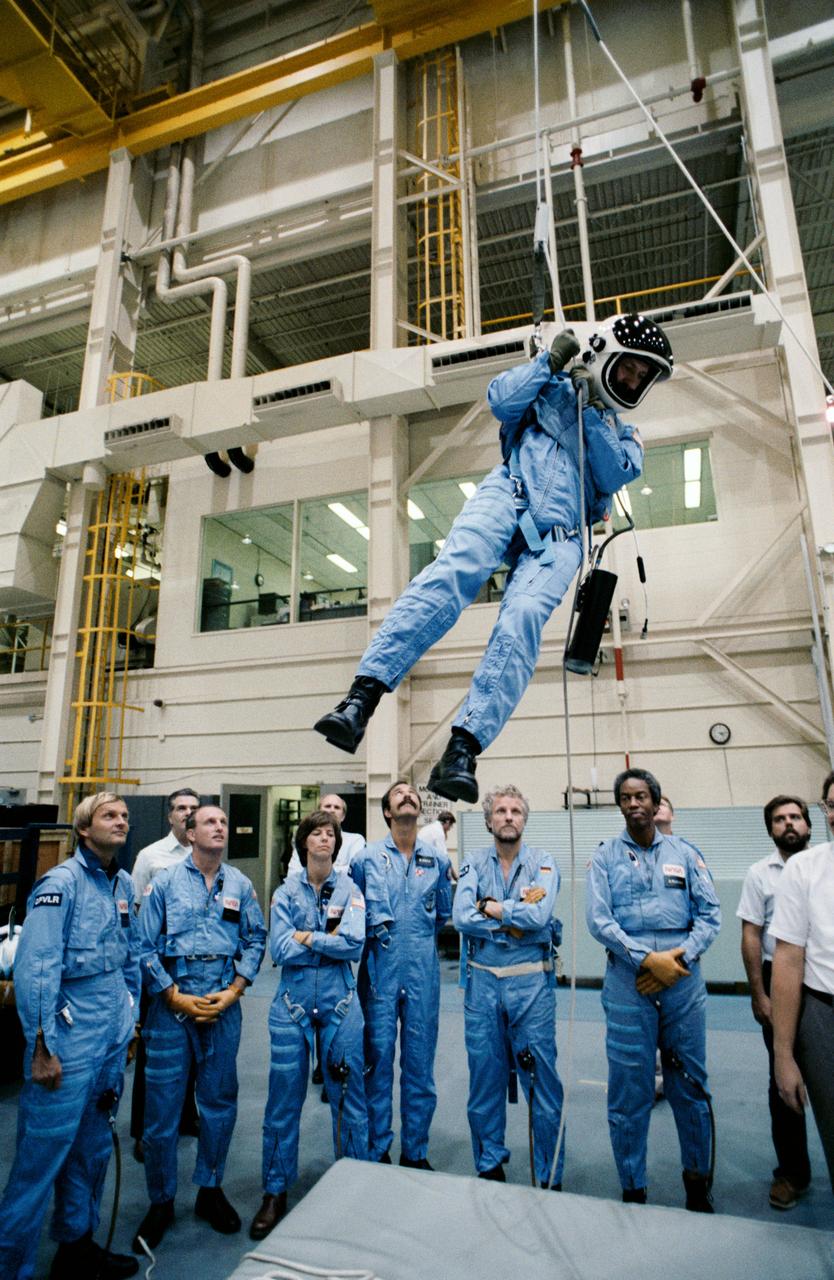
S85-41246 (26 Sept 1985) --- The STS 61-A/Spacelab D-1 crewmembers are seen in this training scene in the Johnson Space Center's Space Shuttle mockup and integration laboratory. Descending from a simulated Shuttle orbiter in distress, using a Sky-Genie device, is Astronaut Henry W. Hartsfield, Jr. mission commander. Watching in blue flight garments are other members of the crew. They are, left to right, Ernst Messerschmid, German payload specialist (PS1); James F. Buchli, NASA mission specialist (MS2); Bonnie J. Dunbar, NASA mission specialist (MS1); Wubbo J. Ockels, Dutch PS3. Not pictured is Steven R. Nagel, pilot. Photo was taken by Otis Imboden.
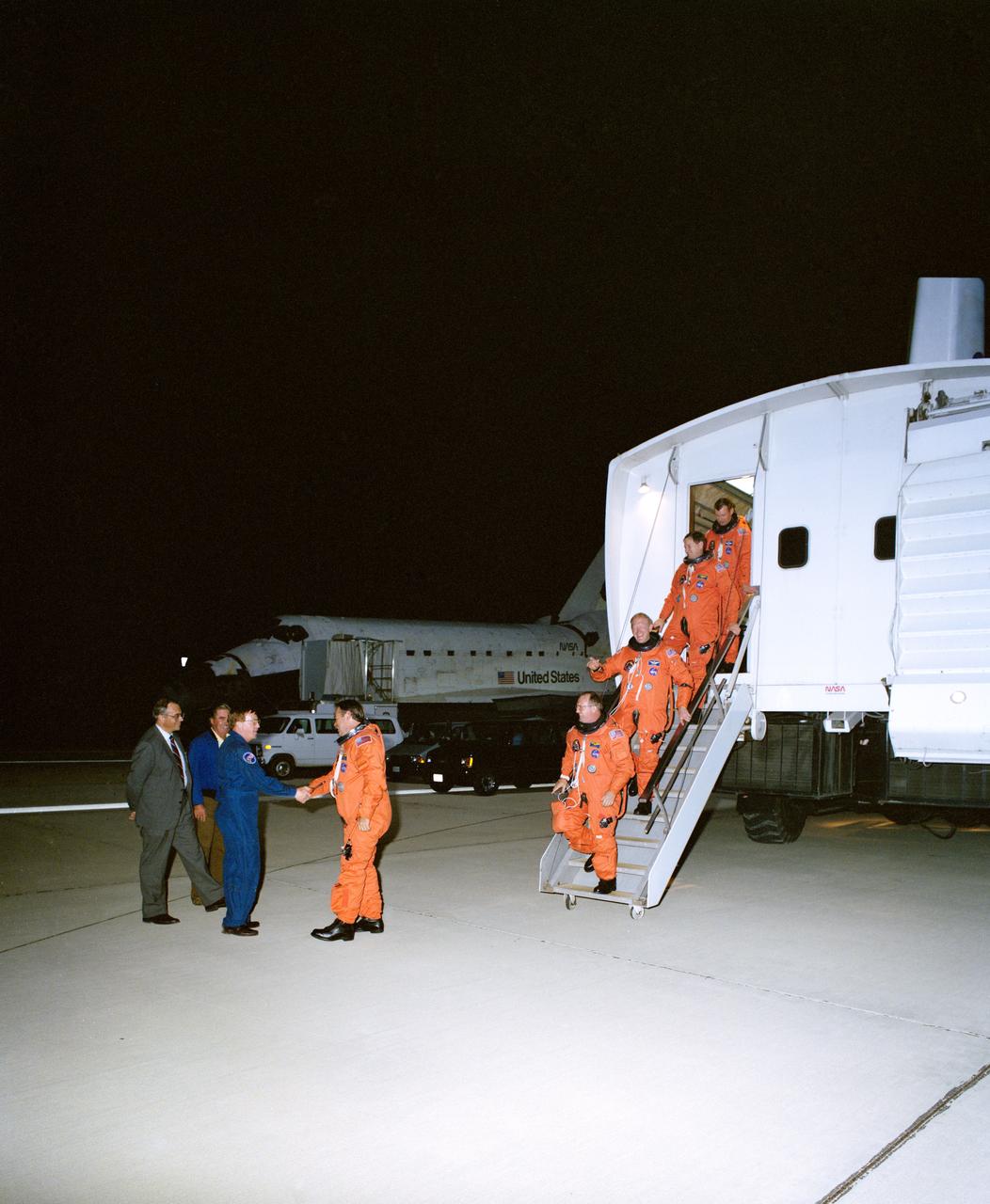
STS048-S-180 (18 Sept 1991) --- Having just completed a successful six day mission in Earth orbit, the five astronaut crewmembers for NASA's STS-48 spaceflight egress the crew transport vehicle (CTV). Astronaut John O. Creighton shakes hands with astronaut Richard N. Richards, who had earlier flown a NASA aircraft for weather checkout in the landing area. Following the mission commander are astronauts James F. Buchli, Charles D. (Sam) Gemar, Kenneth S. Reightler and Mark N. Brown. Discovery can be seen in the background. The Edwards Air Force Base landing occurred at 12:38:38 a.m. (PDT), September 18, 1991.
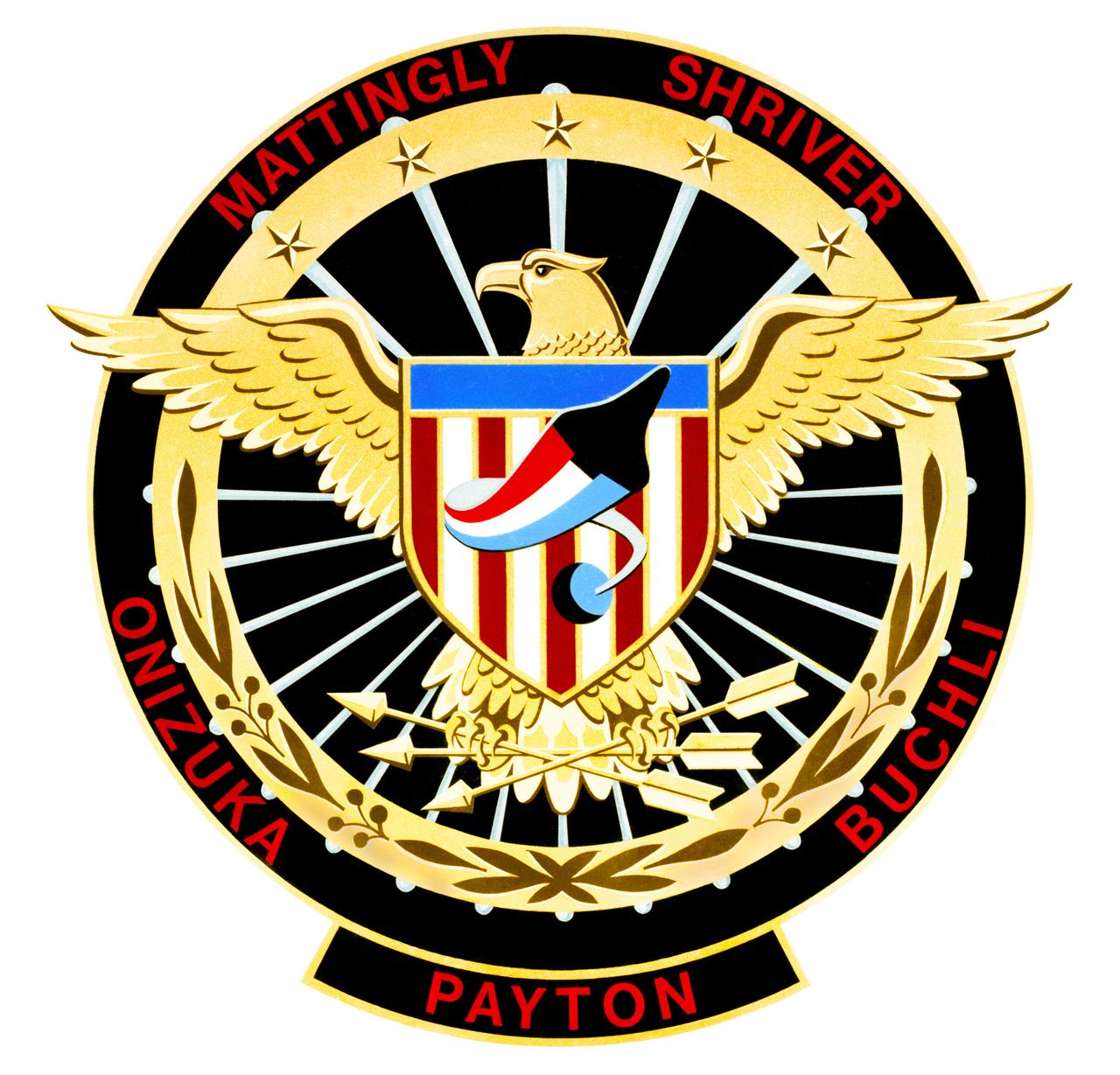
S84-42223 (10 Nov. 1984) --- The crew insignia for STS-51C includes the names of its five crew members are astronauts Thomas K. Mattingly, commander; Loren J. Shriver, pilot; Ellison L. Onizuka and James F. Buchli, mission specialists; and Gary E. Payton, payload specialist. The NASA insignia design for space shuttle flights is reserved for use by the astronauts and for other official use as the NASA Administrator may authorize. Public availability has been approved only in the forms of illustrations by the various news media. When and if there is any change in this policy, which is not anticipated, the change will be publicly announced. Photo credit: NASA
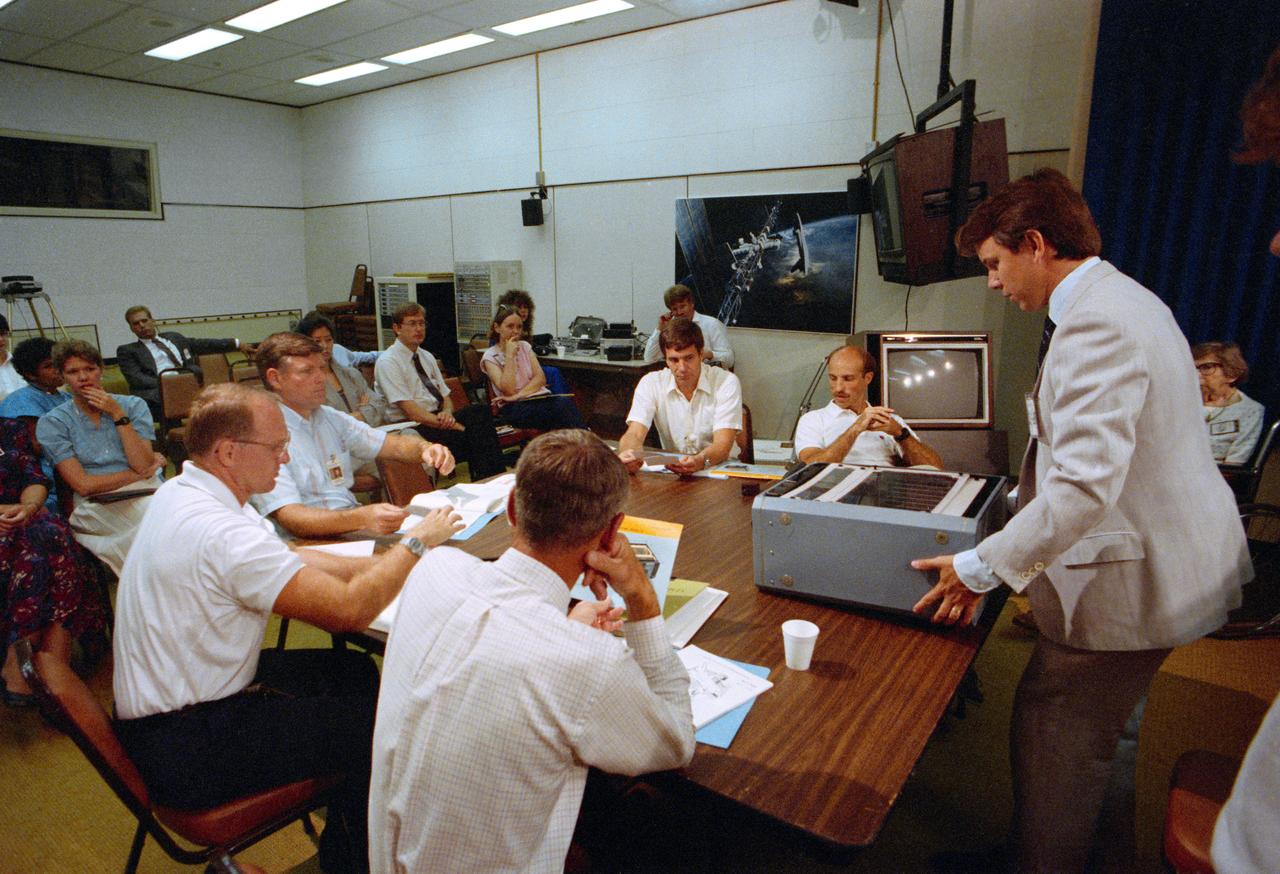
S88-44661 (13 Aug 1988) --- Tom Kestler, with Orthopaedic Hospital, USC, one of the sponsor representatives for student experimenter Andrew Fras explains components of Fras' experiment. It will be carried onboard theDiscovery for NASA's STS-29 mission next year. His primary audience is made up of members of the STS-29 crew who will monitor in-space operation of the experiment, titled "Effects of Weightlessness on Bone Healing." Crewmembers, clockwise around the table from the left, are Astronauts Robert C. Springer, James F. Buchli, Michael L. Coats, John E. Blaha and James P. Bagian. Seated in far right background is Dr. June Marshall of the University of Southern California School of Medicine, the student's sponsoring organization.
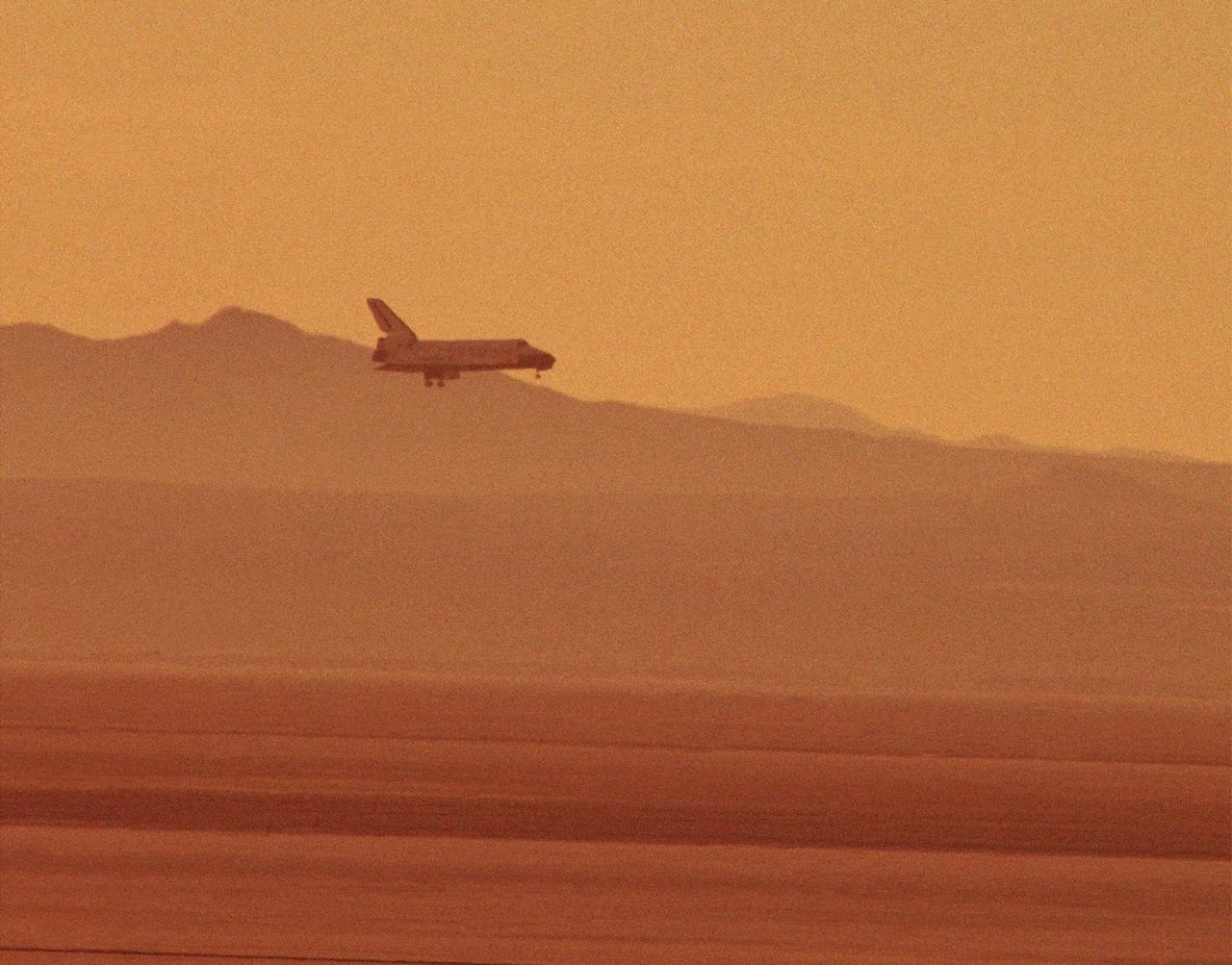
The STS-29 Space Shuttle Discovery mission approaches for a landing at NASA's then Ames-Dryden Flight Research Facility, Edwards AFB, California, early Saturday morning, 18 March 1989. Touchdown was at 6:35:49 a.m. PST and wheel stop was at 6:36:40 a.m. on runway 22. Controllers chose the concrete runway for the landing in order to make tests of braking and nosewheel steering. The STS-29 mission was very successful, completing the launch a Tracking and Data Relay communications satellite, as well as a range of scientific experiments. Discovery's five man crew was led by Commander Michael L. Coats, and included pilot John E. Blaha and mission specialists James P. Bagian, Robert C. Springer, and James F. Buchli.
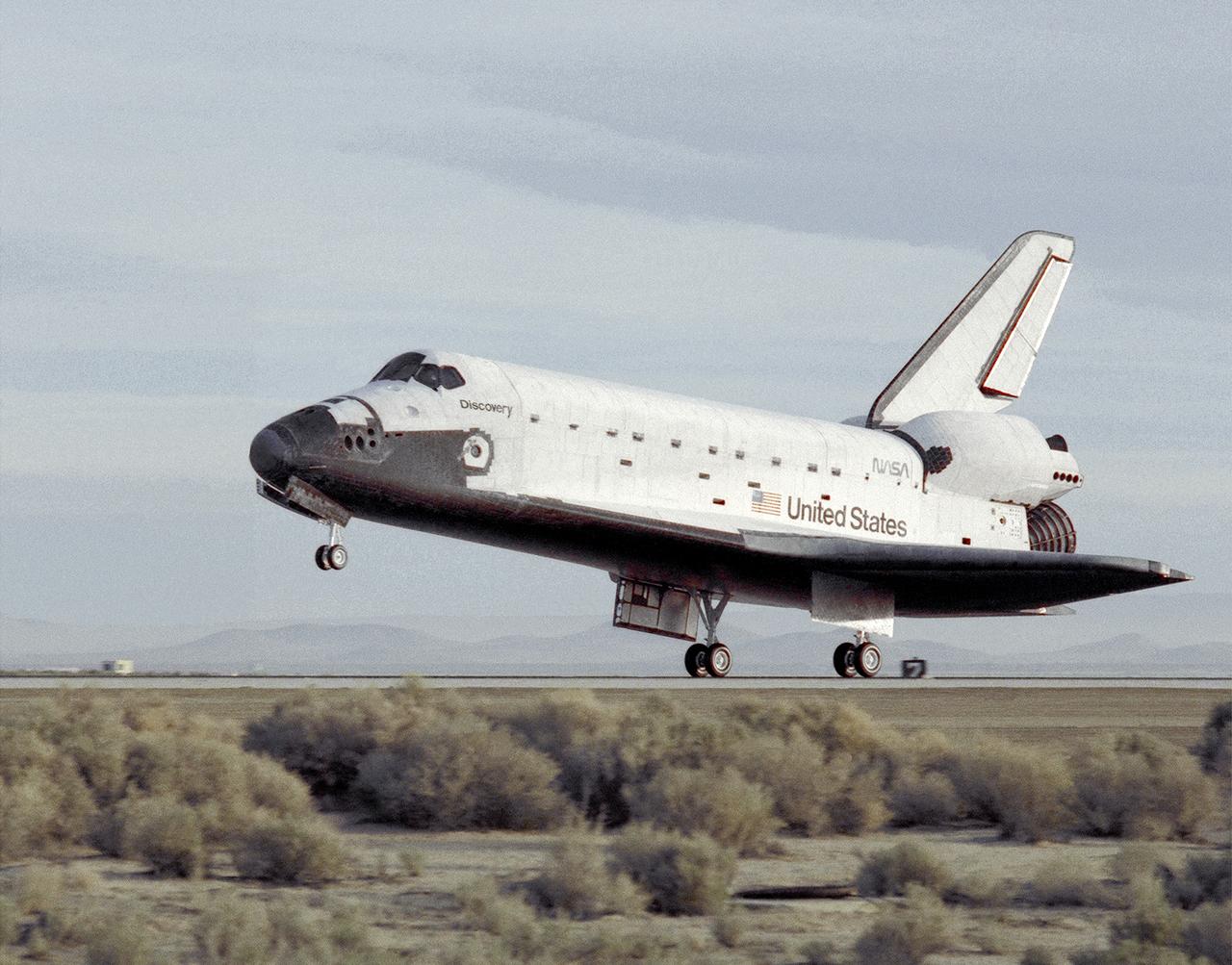
The STS-29 Space Shuttle Discovery mission lands at NASA's then Ames-Dryden Flight Research Facility, Edwards AFB, California, early Saturday morning, 18 March 1989. Touchdown was at 6:35:49 a.m. PST and wheel stop was at 6:36:40 a.m. on runway 22. Controllers chose the concrete runway for the landing in order to make tests of braking and nosewheel steering. The STS-29 mission was very successful, completing the launch of a Tracking and Data Relay communications satellite, as well as a range of scientific experiments. Discovery's five-man crew was led by Commander Michael L. Coats, and included pilot John E. Blaha and mission specialists James P. Bagian, Robert C. Springer, and James F. Buchli.
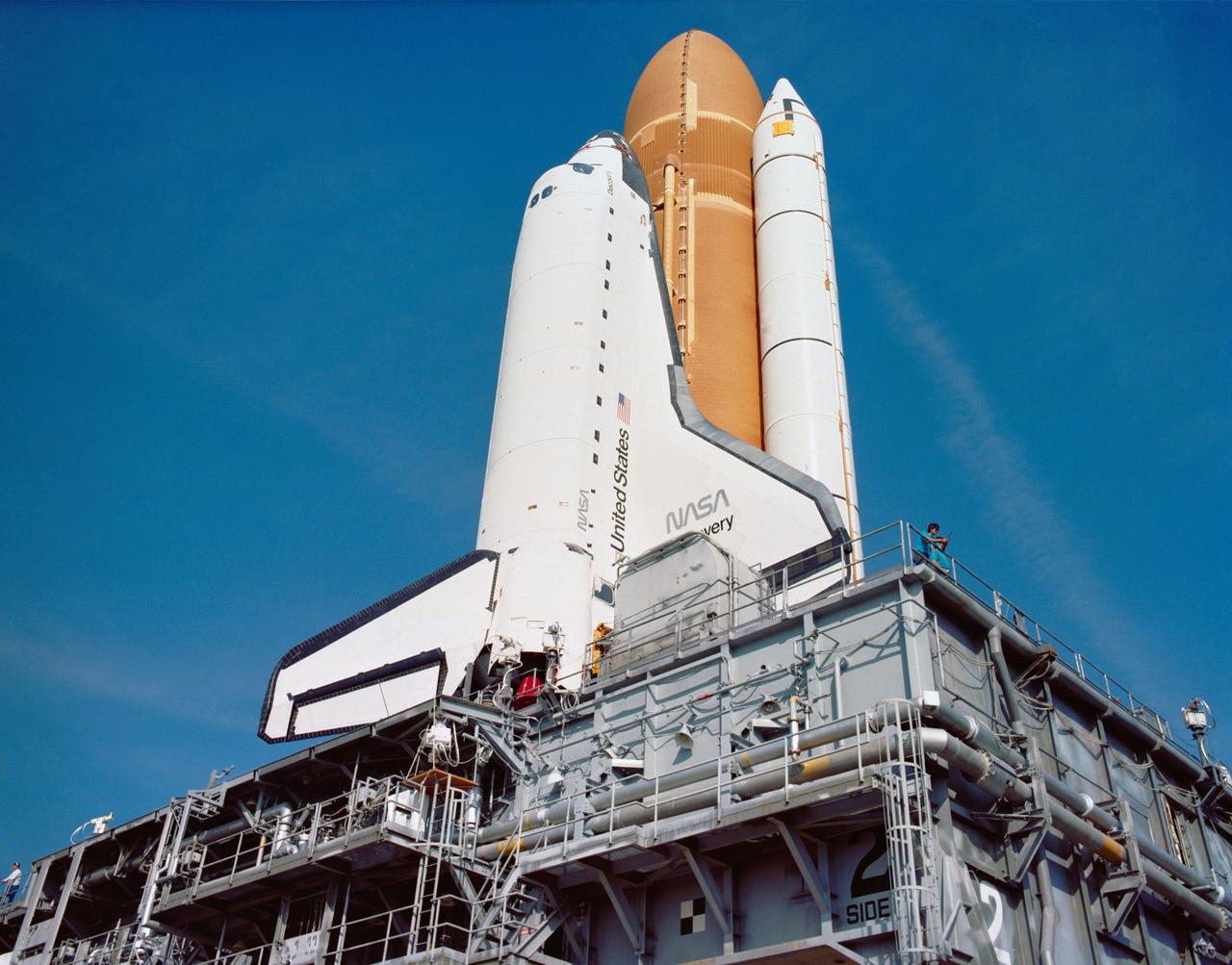
S89-28107 (3 Feb 1989) --- A low angle view of the Space Shuttle Discovery, atop a mobile launch platform, during its slow move to Kennedy Space Center's Launch Pad 39-B on Feb. 3, l989. It rolled through the doors of the huge vehicle assembly building (VAB) at 6 a.m., hours ago as the blue sky testifies. The trip to the pad takes approximately 5 and 1/2 hours. Onboard the spacecraft in mid-March for a five-day mission, on which will be deployed a third tracking and data relay satellite (TDRS-D), will be Astronauts Michael L. Coats, John E. Blaha, James F. Buchli, James P. Bagian and Robert C. Springer.
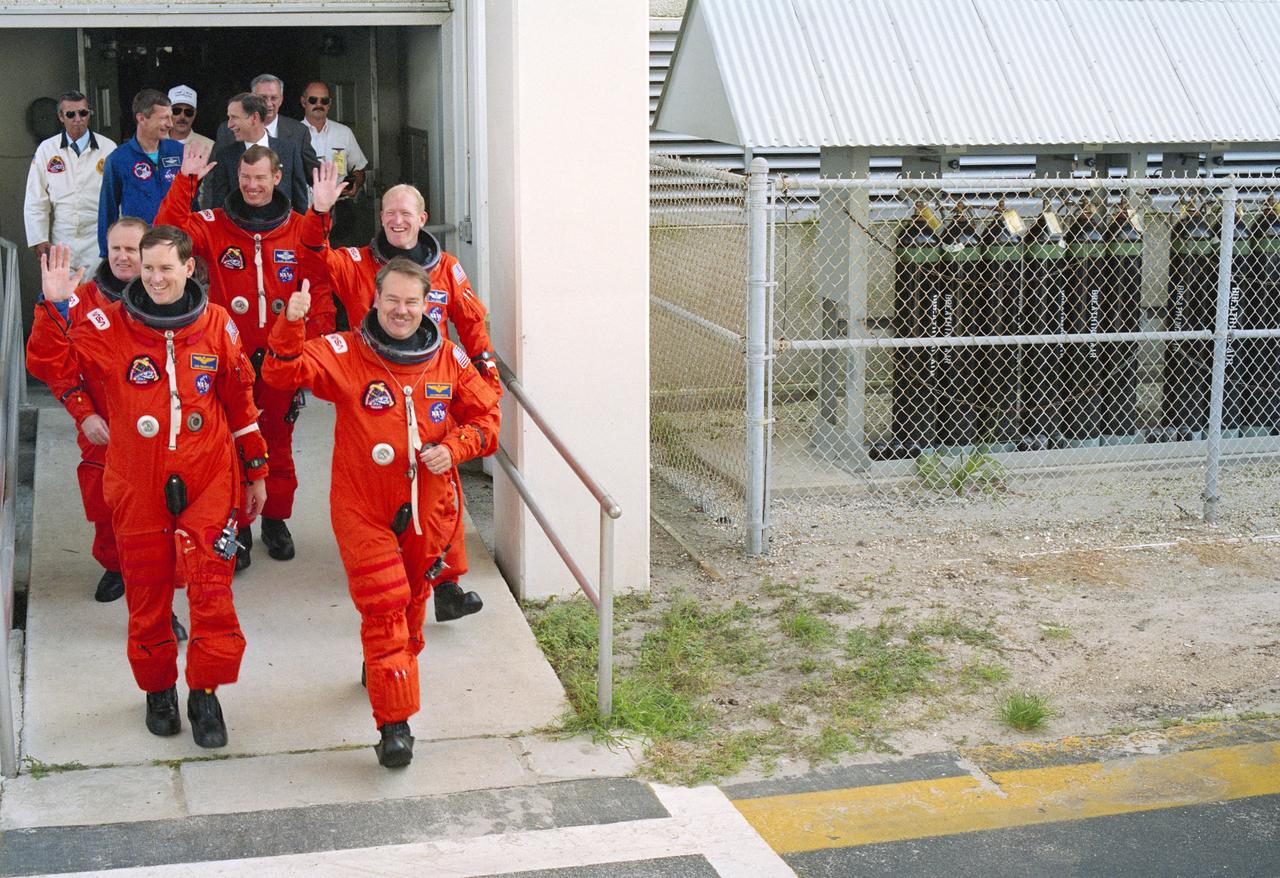
STS048-S-168 (18 Sept. 1991) --- The five astronaut crew members for NASA's STS-48 mission leave the operations and checkout building headed for a transfer van that will take them to the awaiting Discovery at Launch Complex 39. Astronaut John O. Creighton, right, mission commander, leads the group, with Kenneth S. Reightler, pilot, on his right. Mission specialists are, left to right, James F. Buchli, Mark N. Brown and Charles D. (Sam) Gemar. In the background are astronauts Steven R. Nagel and Richard O. Covey and Olan J. Bertrand, all from the Johnson Space Center (JSC). Discovery launched at 7:11:04 p.m. (EDT), Sept. 12, 1991. Photo credit: NASA
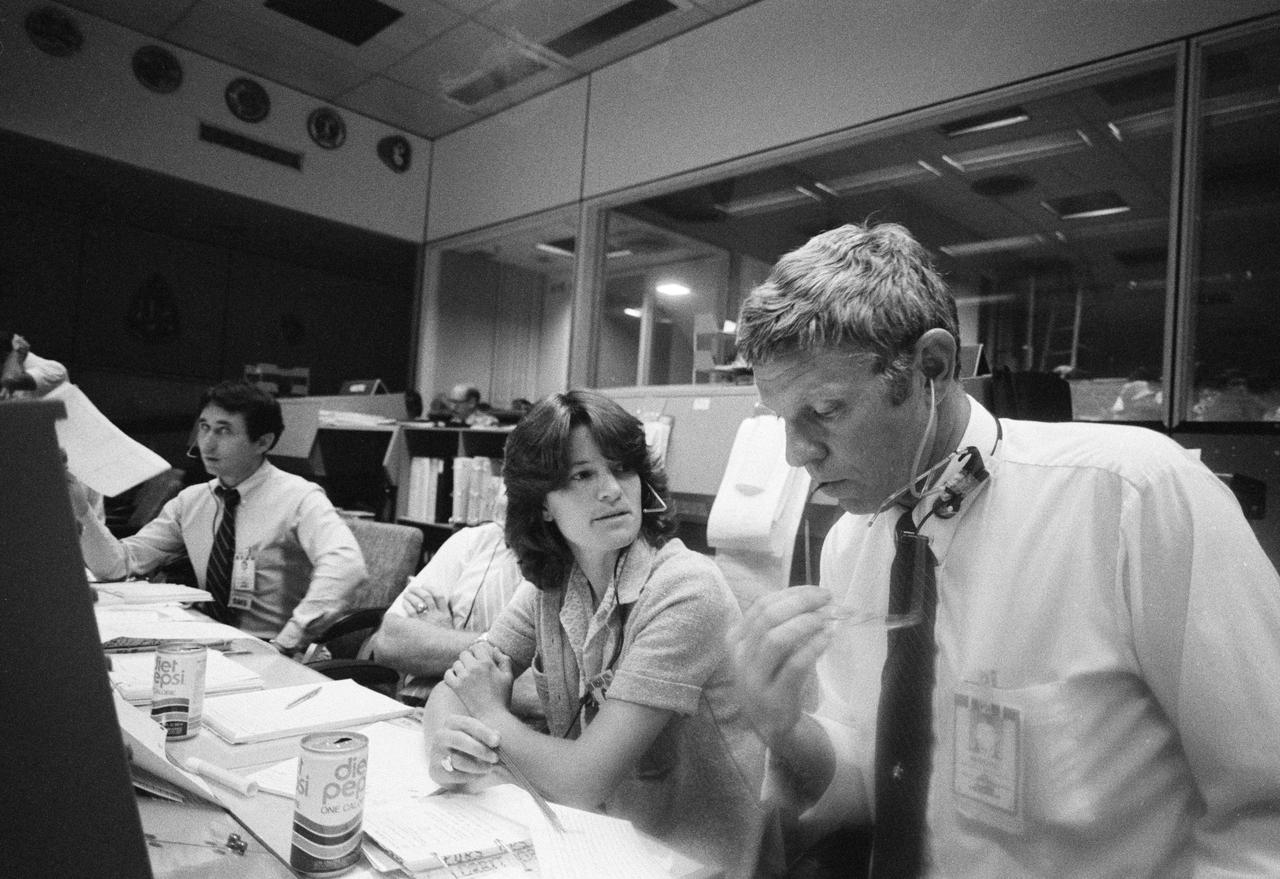
S81-33963 (July 1981) --- Mission specialist/astronaut Sally K. Ride and Dale E. Moore of the flight control division?s electrical, mechanical and environmental systems branch take a special interest in a simulations session during which the remote manipulator system (RMS, a mechanized arm) takes a momentary spotlight. They are seated at the CAPCOM or capsule communicator console in the mission operations control room of JSC?s mission control center. Dr. Ride will converse with astronauts Joe H. Engle and Richard H. Truly during their STS-2 mission in space when the RMS will have its debut in the Columbia?s cargo bay. Astronaut James F. Buchli, serving in a CAPCOM capacity, is partially obscured behind Dr. Ride. Photo credit: NASA
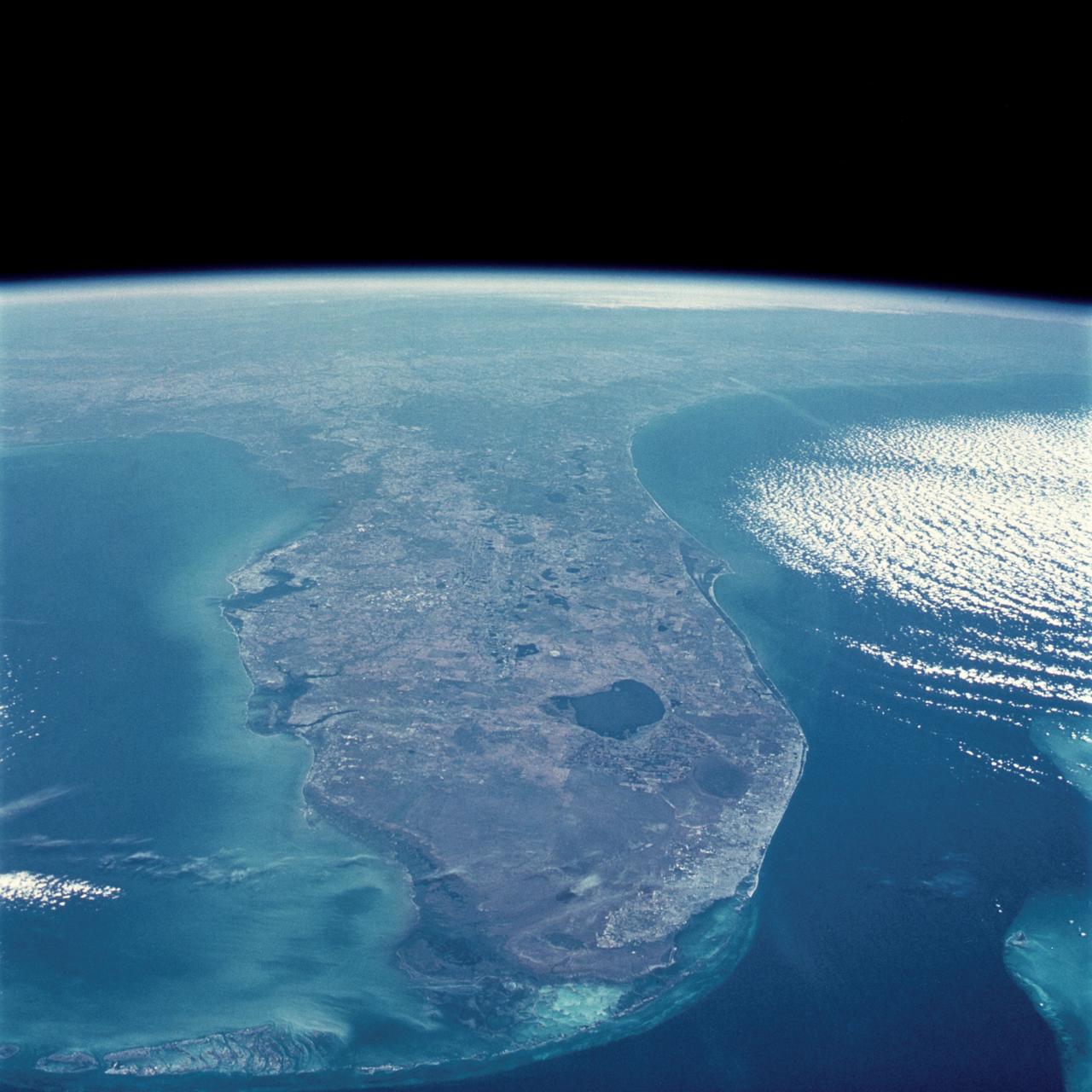
51C-44-026 (24-27 January 1985) --- This oblique view of the Florida peninsula was photographed from the Earth-orbiting Space Shuttle Discovery during the DOD-devoted mission. Many popular features of the state can be delineated in the scene. Kennedy Space Center (KSC), from which this and all Space Shuttle missions are launched, is on the jutting Cape Canaveral, visible on the east Atlantic Coast. The spacecraft was flying at an altitude of 190 nautical miles. A handheld Hasselblad camera, with 70mm Kodak natural color Ektachrome ASA 64 film, was used to expose the frame. Crew members for the flight were astronauts Thomas K. Mattingly, Loren J. Shriver, Ellison S. Onizuka, James F. Buchli, and Gary E. Payton of the United States Air Force.
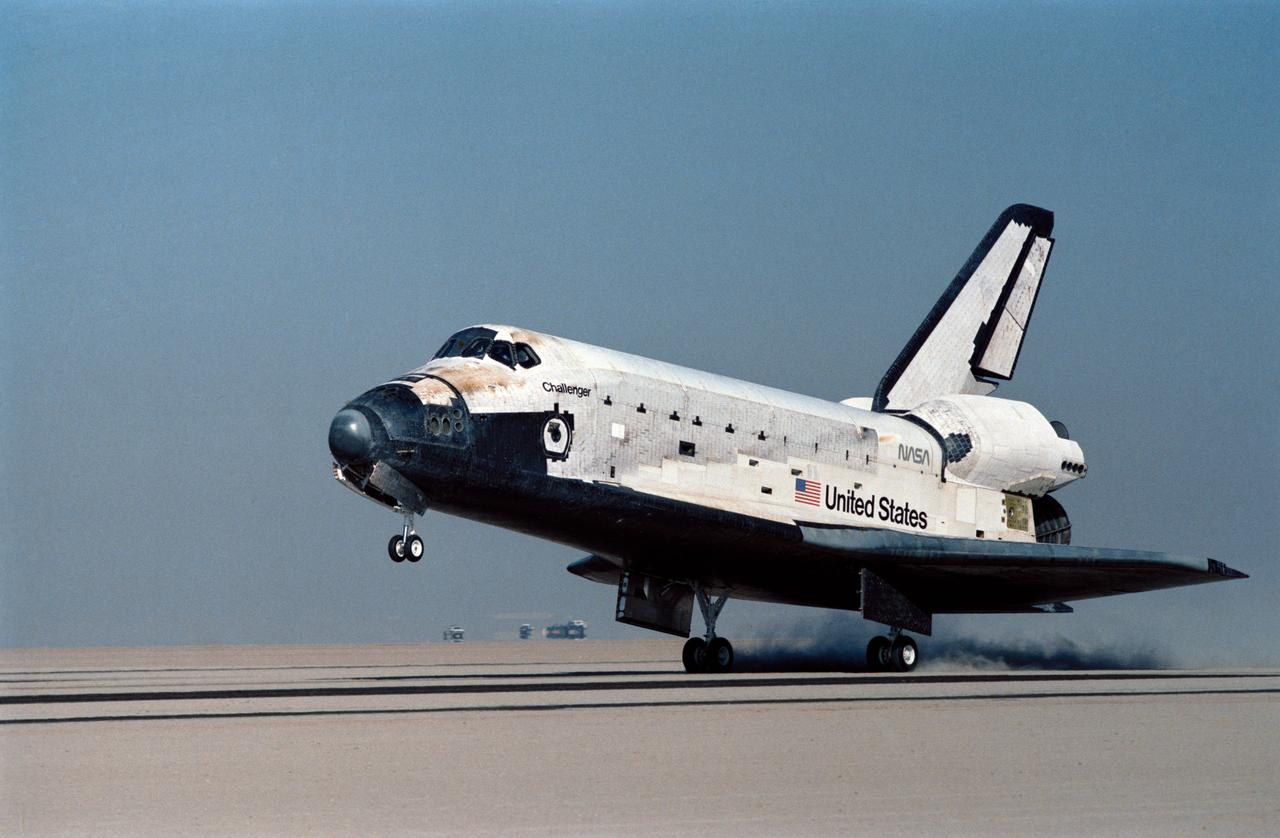
61A-S-139 (6 Nov 1985) --- Eight persons returning from space at one time is a record which was set at 9:45:39 a.m. (PST) today when the Space Shuttle Challenger's wheels came to a stop on the runway at Edwards Air Force Base. The main gear is seen touching down at 9:44:51 a.m. Inside the spacecraft are astronauts Henry W. Hartsfield Jr., Steven R. Nagel, Bonnie J. Dunbar, James F. Buchli, Guion S. Bluford Jr., Reinard Furrer, Ernst Messerschmid and Wubbo J. Ockels. A number of West German and other European experiments were performed during the week-long Spacelab D-1 mission.
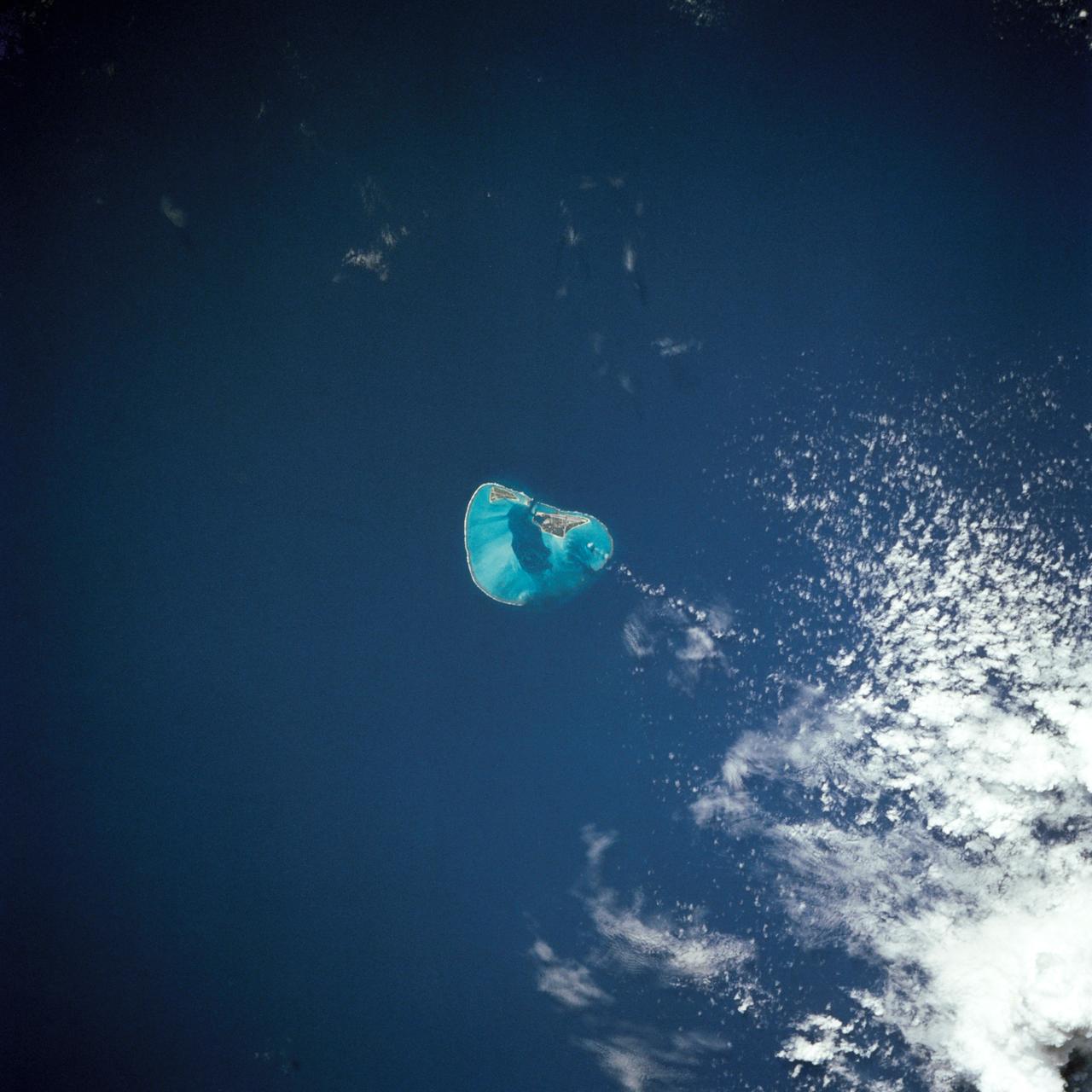
61A-40-38 (30 Oct-6 Nov 1985) --- The coral reef forming the atoll of Midway sits atop a volcanic seamount that has descended more than 3,000 feet (1000 meters) below the sea surface in this ancient region of the Hawaiian volcanic chain. This view was taken by the crew members onboard the Earth-orbiting Space Shuttle Challenger. The crew consisted of astronauts Henry W. Hartsfield, Jr., commander; Steven R. Nagel, pilot; James F. Buchli, Guion S. Bluford, Jr., and Bonnie J. Dunbar, all mission specialists; Reinhard Furrer, Ernst Messerschmid, and Wubbo J. Ockels, all payload specialists. Ockels represents the European Space Agency (ESA).
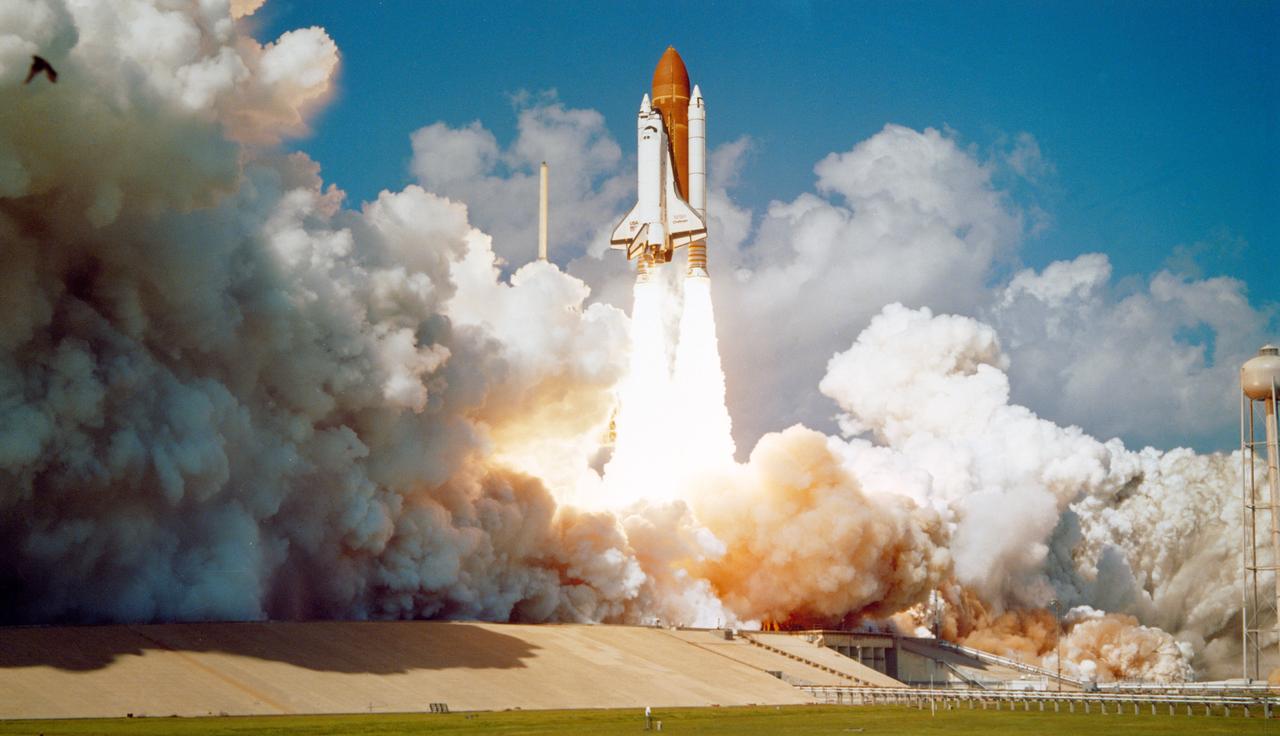
61A-S-018 (30 Oct 1985) --- A record-sized crew of eight persons is lifted toward Earth-orbit as the space shuttle Challenger blasts from the launch pad at Complex 39, Kennedy Space Center (KSC), Florida. Almost all the service structure/gantry is obscured by smoke resulting from the boosters' firing. Inside the spacecraft are astronauts Henry W. Hartsfield, Jr., Steven R. Nagel, Bonnie J. Dunbar, James F. Buchli, Guion S. Bluford, Jr., along with payload specialists Wubbo J. Ockels, Reinhard Furrer and Ernst Messerschmid. Within hours of this photo, the Spacelab D-1 Science Module was activated and crew members were busy performing experiments. Launch occurred at noon (EST), Oct. 30, 1985. Photo credit: NASA
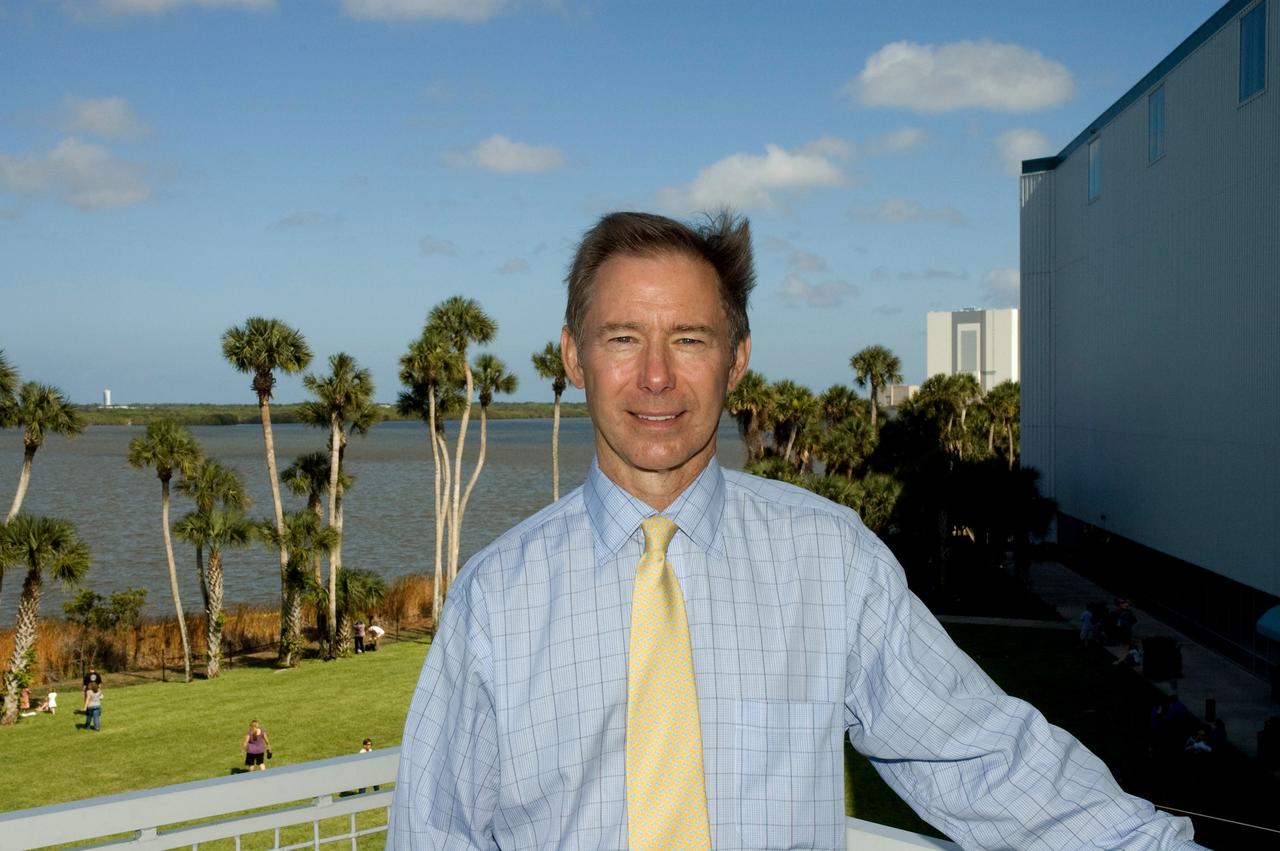
CAPE CANAVERAL, Fla. -- Brewster Shaw is a former astronaut from the first graduating class of astronauts after the Apollo program. He and others from the class were guests at NASA's Kennedy Space Center for the launch of space shuttle Discovery on its STS-124 mission. Shaw is Vice President and General Manager, Space Exploration, for Integrated Defense Systems, The Boeing Company. In 1978 a new group of 35 astronauts was selected after nine years without new astronauts. The pilots were Daniel Brandenstein, Michael Coats, Richard Covey, John Creighton, Robert Gibson, Frederick D. Gregory, Frederick Hauck, Jon McBride, Francis "Dick" Scobee, Brewster Shaw, Loren Shriver, David Walker and Donald Williams. The mission specialists were Guion Bluford, James Buchli, John Fabian, Anna Fisher, Dale Gardner, S. David Griggs, Terry Hart, Steven Hawley, Jeffrey Hoffman, Shannon Lucid, Ronald McNair, Richard Mullane, Steven Nagel, George Nelson, Ellison Onizuka, Judith Resnik, Sally Ride, Rhea Seddon, Robert Stewart, Kathryn D. Sullivan, Norman Thagard and James van Hoften. Since then, a new group has been selected roughly every two years. Photo credit: NASA/Jim Grossmann

CAPE CANAVERAL, Fla. -- A group from the first graduating class of astronauts after the Apollo program gathers at the Banana River viewing site at NASA's Kennedy Space Center before the launch of space shuttle Discovery on its STS-124 mission. In 1978 a new group of 35 astronauts was selected after nine years without new astronauts. The pilots were Daniel Brandenstein, Michael Coats, Richard Covey, John Creighton, Robert Gibson, Frederick D. Gregory, Frederick Hauck, Jon McBride, Francis "Dick" Scobee, Brewster Shaw, Loren Shriver, David Walker and Donald Williams. The mission specialists were Guion Bluford, James Buchli, John Fabian, Anna Fisher, Dale Gardner, S. David Griggs, Terry Hart, Steven Hawley, Jeffrey Hoffman, Shannon Lucid, Ronald McNair, Richard Mullane, Steven Nagel, George Nelson, Ellison Onizuka, Judith Resnik, Sally Ride, Rhea Seddon, Robert Stewart, Kathryn D. Sullivan, Norman Thagard and James van Hoften. Since then, a new group has been selected roughly every two years. Photo credit: NASA/Jim Grossmann

S78-26481 (January 1978) --- This is a montage of the individual portraits of the 35-member 1978 class of astronaut candidates. From left to right are Guion S. Bluford, Daniel C. Brandenstein, James F. Buchli, Michael L. Coats, Richard O. Covey, John O. Creighton, John M. Fabian, Anna L. Fisher, Dale A. Gardner, Robert L. Gibson, Frederick D. Gregory, S. David Griggs, Terry J. Hart, Frederick H. (Rick) Hauck, Steven A. Hawley, Jeffrey A. Hoffman, Shannon W. Lucid, Jon A. McBride, Ronald E. McNair, Richard M. (Mike) Mullane, Steven R. Nagel, George D. Nelson, Ellison S. Onizuka, Judith A. Resnik, Sally K. Ride, Francis R. (Dick) Scobee, Rhea Seddon, Brewster H. Shaw Jr., Loren J. Shriver, Robert L. Stewart, Kathryn D. Sullivan, Norman E. Thagard, James D. Van Hoften, David M. Walker and Donald E. Williams. Photo credit: NASA or National Aeronautics and Space Administration
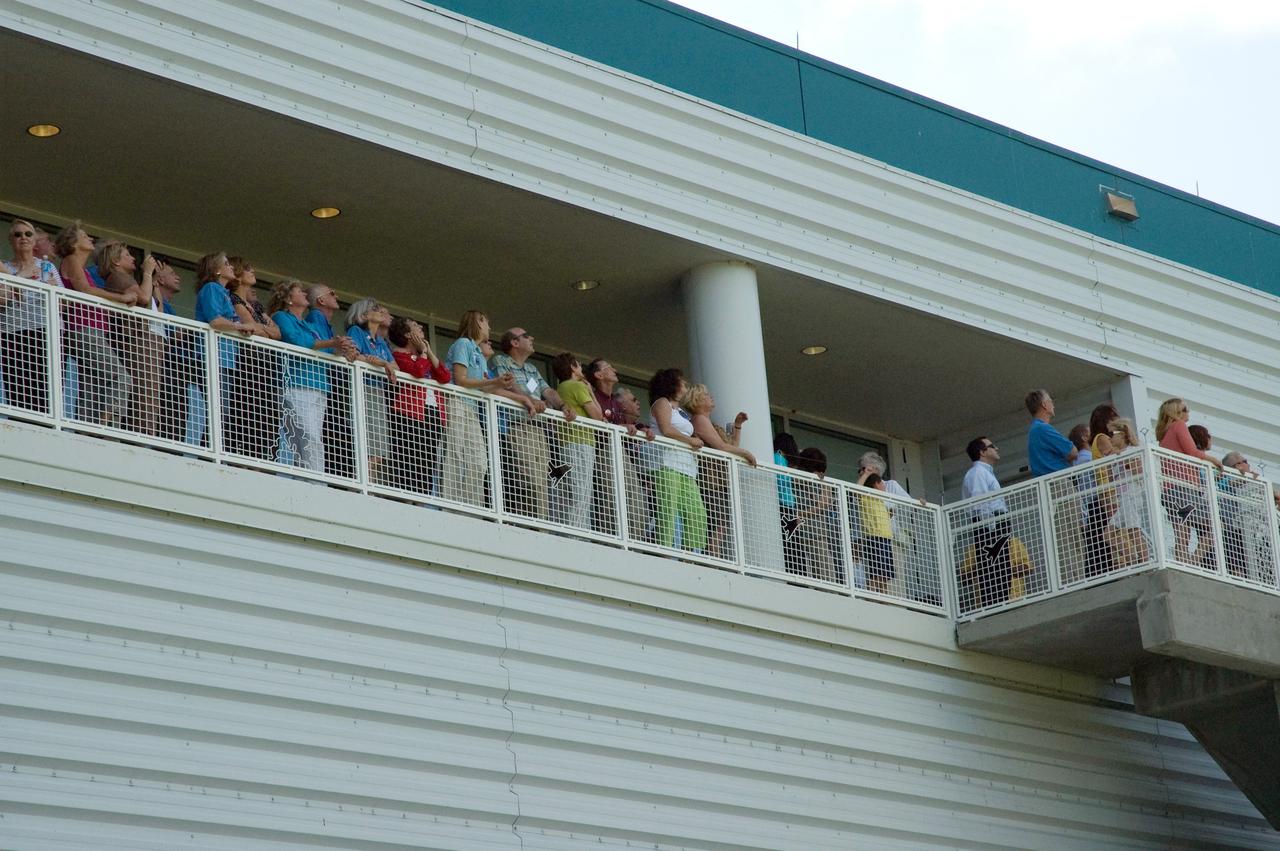
CAPE CANAVERAL, Fla. -- All eyes look skyward as space shuttle Discovery launches on its STS-124 mission. The group gathered here at the Banana River viewing site at NASA's Kennedy Space Center are members of the first graduating class of astronauts after the Apollo program. In 1978 a new group of 35 astronauts was selected after nine years without new astronauts. The pilots were Daniel Brandenstein, Michael Coats, Richard Covey, John Creighton, Robert Gibson, Frederick D. Gregory, Frederick Hauck, Jon McBride, Francis "Dick" Scobee, Brewster Shaw, Loren Shriver, David Walker and Donald Williams. The mission specialists were Guion Bluford, James Buchli, John Fabian, Anna Fisher, Dale Gardner, S. David Griggs, Terry Hart, Steven Hawley, Jeffrey Hoffman, Shannon Lucid, Ronald McNair, Richard Mullane, Steven Nagel, George Nelson, Ellison Onizuka, Judith Resnik, Sally Ride, Rhea Seddon, Robert Stewart, Kathryn D. Sullivan, Norman Thagard and James van Hoften. Since then, a new group has been selected roughly every two years. Photo credit: NASA/Jim Grossmann
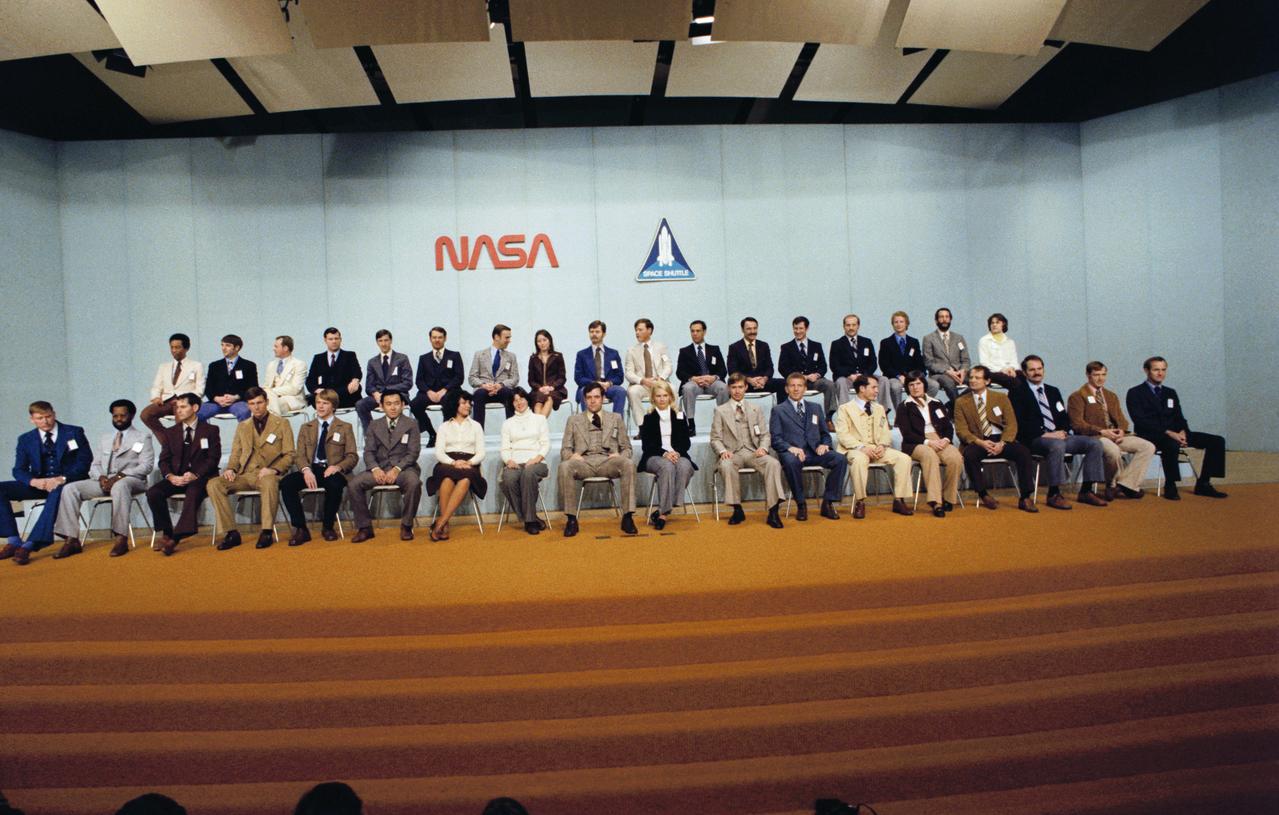
S78-26569 (31 Jan. 1978) --- The 35 new astronaut candidates, presented Jan. 31, 1978, in the Building 2 auditorium at NASA's Johnson Space Center, pose for photographers. They are arranged in alphabetical order with top left as beginning point and bottom right as stopping point. They are Guion S. Bluford, Daniel C. Brandenstein, James F. Buchli, Michael L. Coats, Richard O. Covey, John O. Creighton, John M. Fabian, Anna L. Fisher, Dale A. Gardner, Robert L. Gibson, Frederick D. Gregory, S. David Griggs, Terry J. Hart, Frederick H. (Rick) Hauck, Steven A. Hawley, Jeffrey A. Hoffman, Shannon W. Lucid, Jon A. McBride, Ronald E. McNair, Richard M. (Mike) Mullane, Steven R. Nagel, George D. Nelson, Ellison S. Onizuka, Judith A. Resnik, Sally K. Ride, Francis R. (Dick) Scobee, Rhea Seddon, Brewster H. Shaw Jr., Loren J. Shriver, Robert L. Stewart, Kathryn D. Sullivan, Norman E. Thagard, James D. van Hoften, David M. Walker and Donald E. Williams. Photo credit: NASA or National Aeronautics and Space Administration