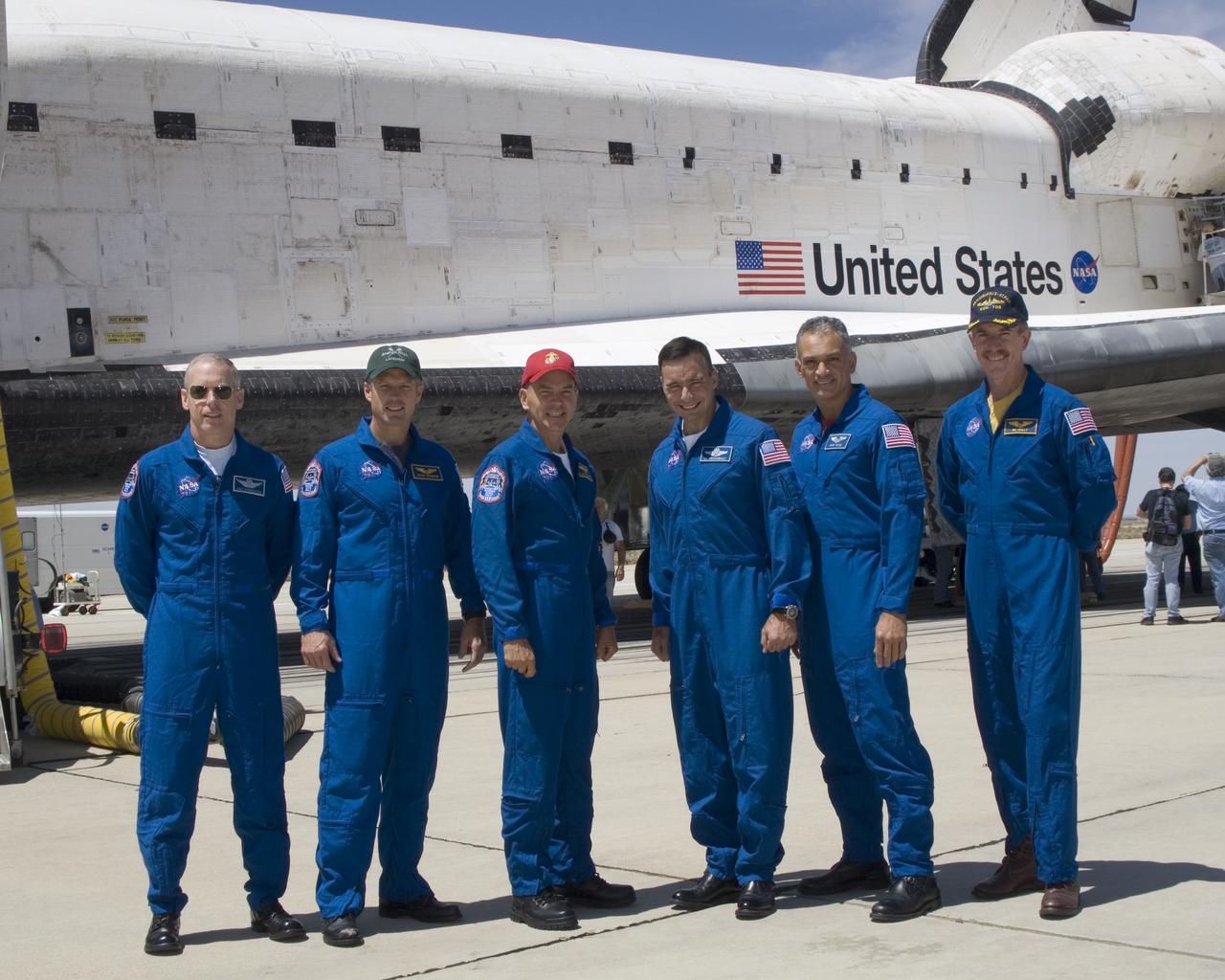
The crew of Space Shuttle mission STS-117 gathered in front of the shuttle Atlantis following landing at Edwards Air Force Base, California, June 22, 2007. From left to right: mission specialists Patrick Forrester and Steven Swanson, Commander Frederick Sturckow, Pilot Lee Archambault, and mission specialists John D. Olivas and James Reilly II.
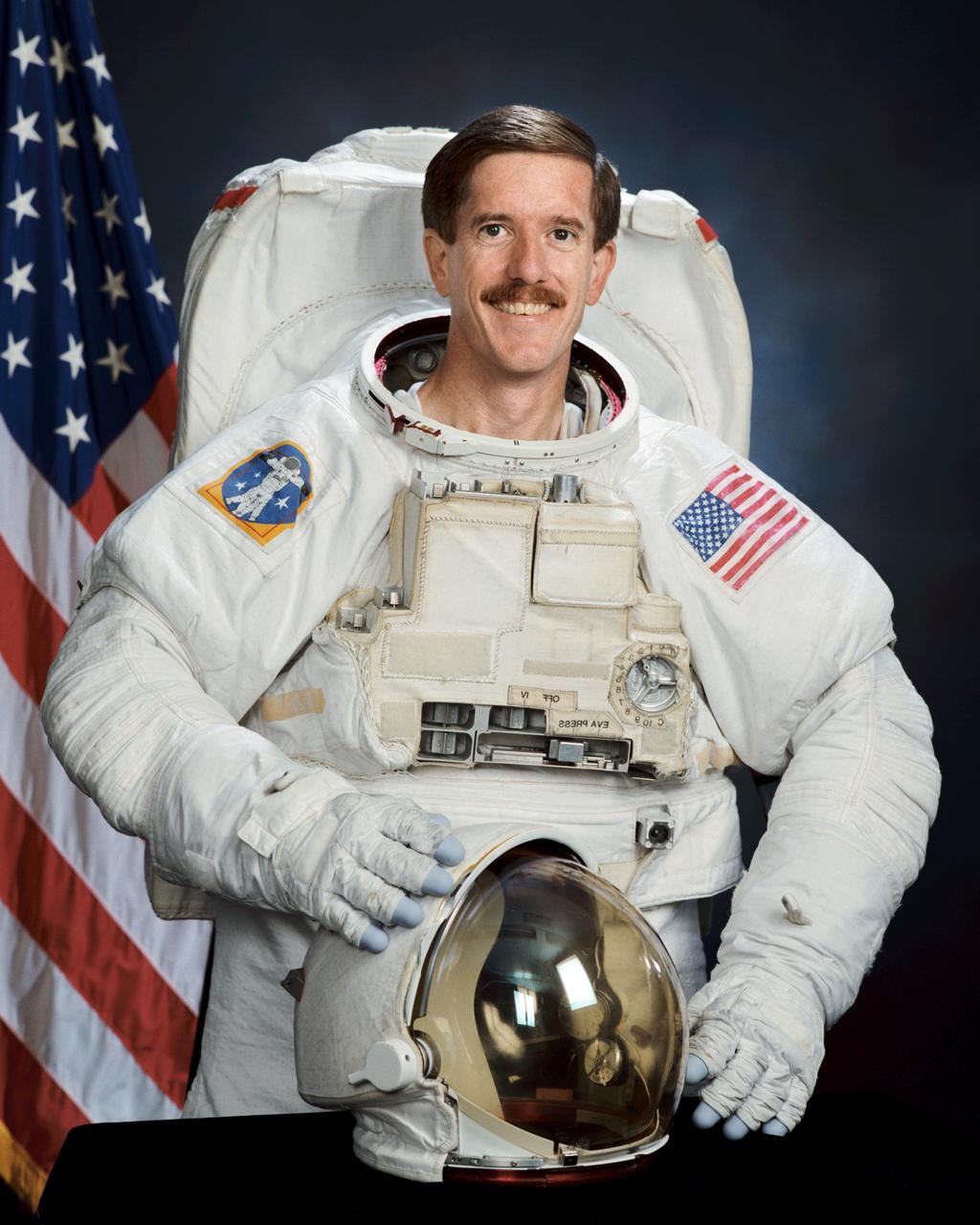
S98-00122 (8 Oct 1997) --- Astroanut James F. Reilly II, mission specialist.
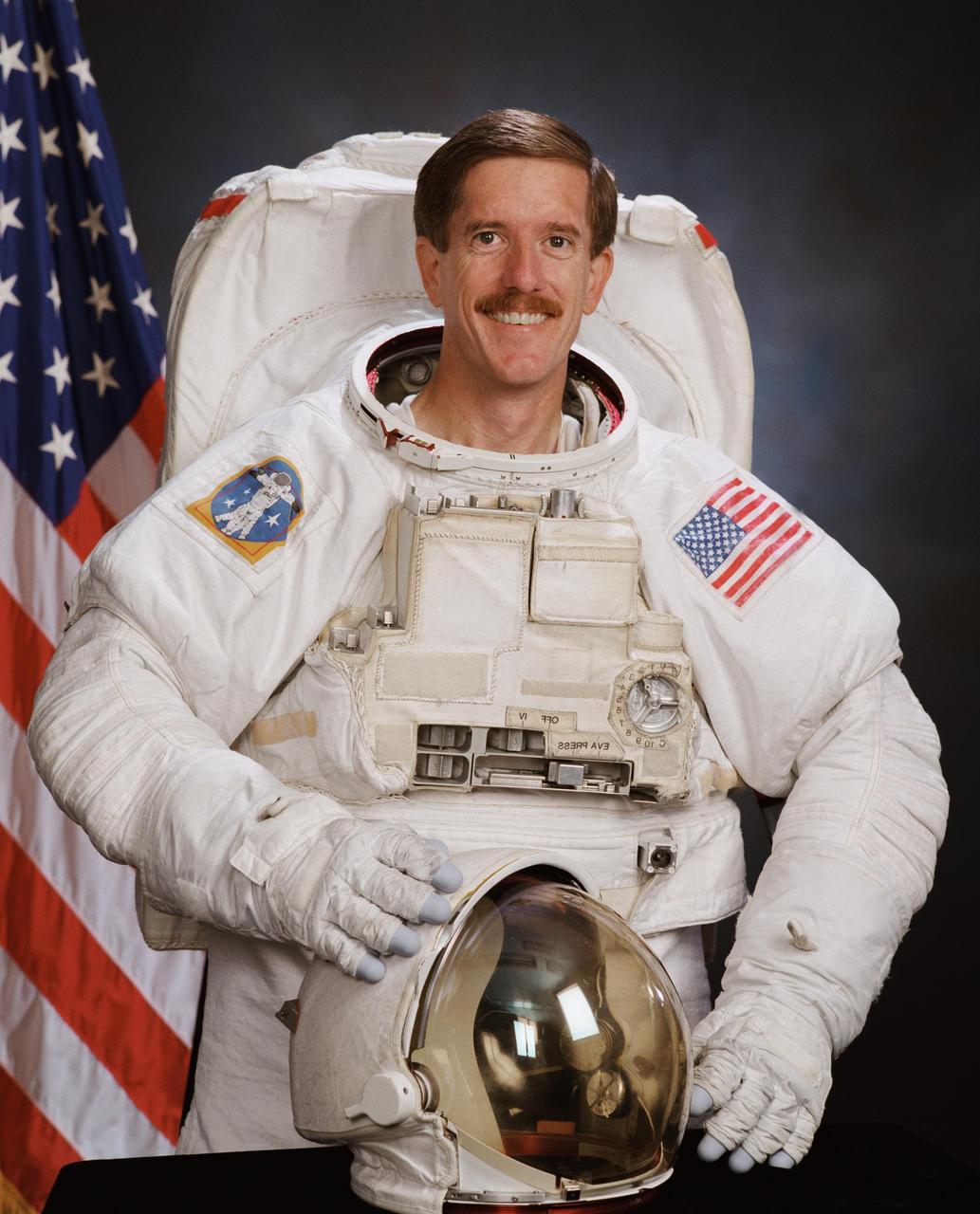
KENNEDY SPACE CENTER, FLA. -- S98-00122 -- Astronaut James F. Reilly II, mission specialist on mission STS-117.
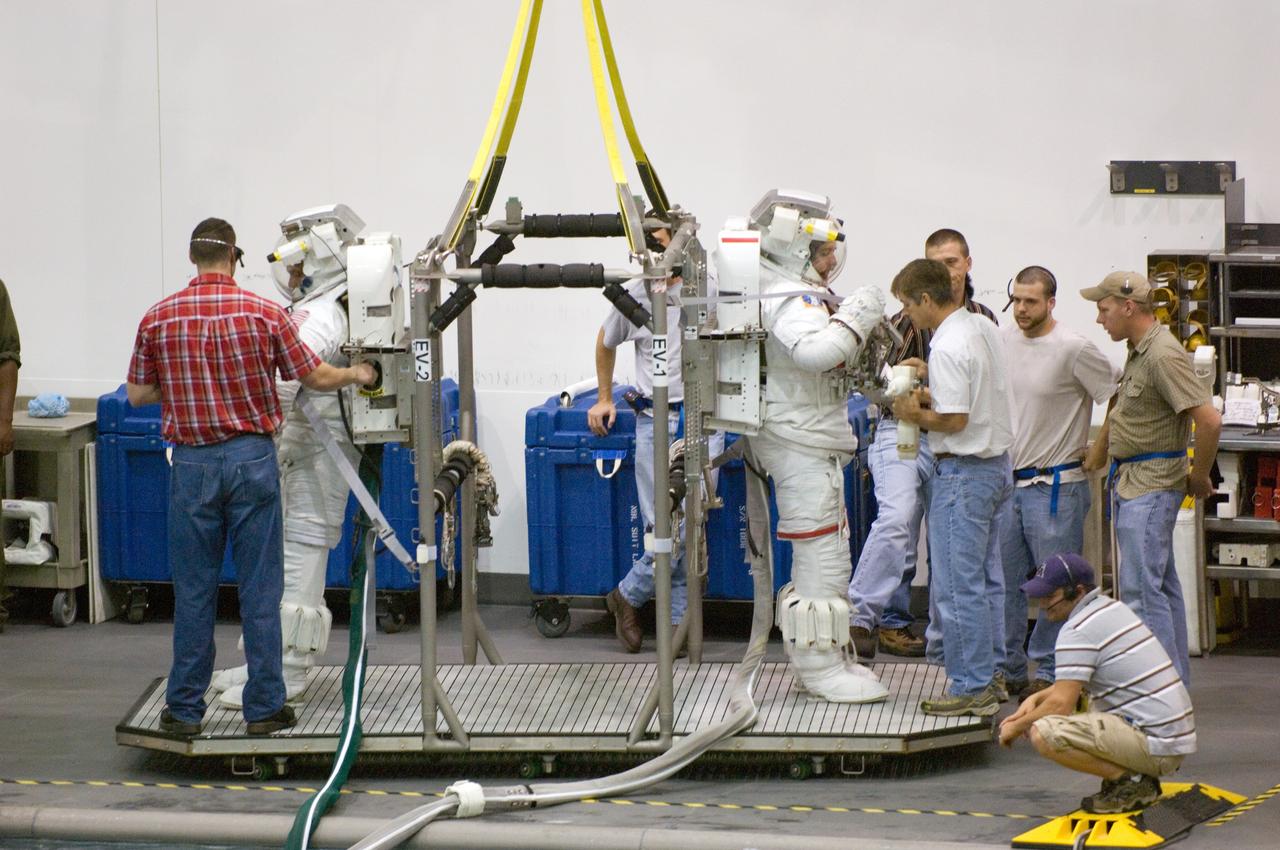
JSC2006-E-44663 (16 Oct. 2006) --- Astronauts John D. (Danny) Olivas and James F. Reilly II, both STS-117 mission specialists, are about to be submerged in the waters of the Neutral Buoyancy Laboratory (NBL) near Johnson Space Center. Olivas and Reilly are attired in training versions of the Extravehicular Mobility Unit (EMU) spacesuit.
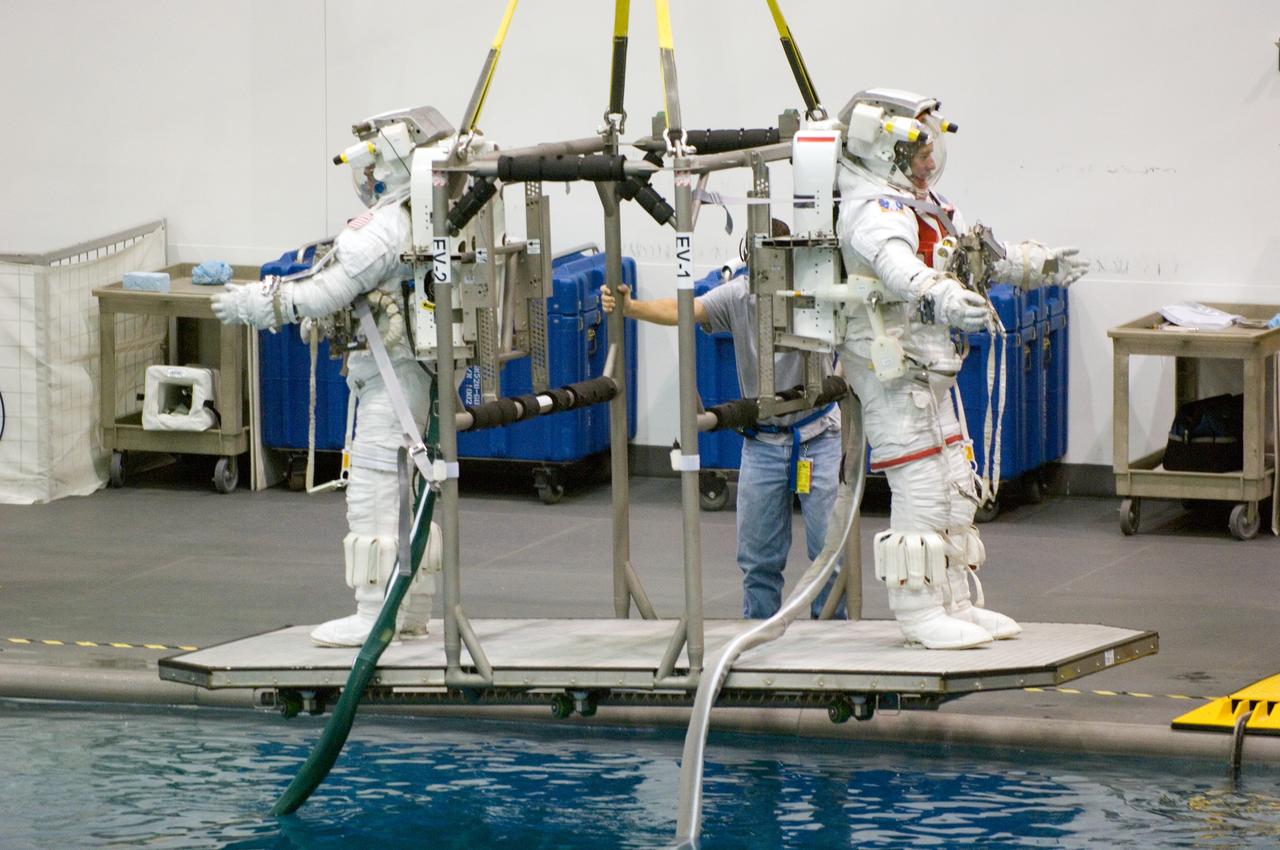
JSC2006-E-44664 (16 Oct. 2006) --- Astronauts John D. (Danny) Olivas and James F. Reilly II, both STS-117 mission specialists, are about to be submerged in the waters of the Neutral Buoyancy Laboratory (NBL) near Johnson Space Center. Olivas and Reilly are attired in training versions of the Extravehicular Mobility Unit (EMU) spacesuit.
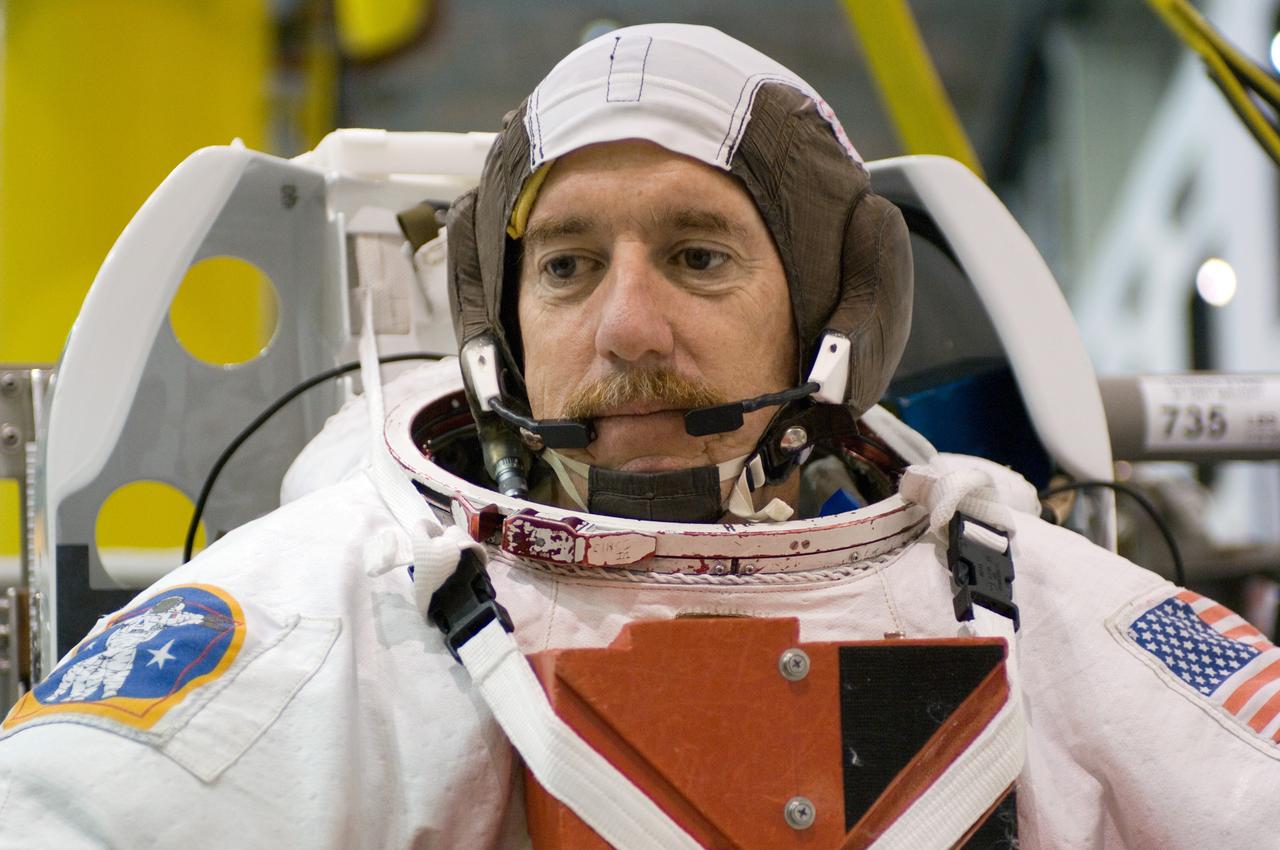
JSC2006-E-44646 (16 Oct. 2006) --- Astronaut James F. Reilly II, STS-117 mission specialist, attired in a training version of the Extravehicular Mobility Unit (EMU) spacesuit, is about to begin a training session in the waters of the Neutral Buoyancy Laboratory (NBL) near the Johnson Space Center.
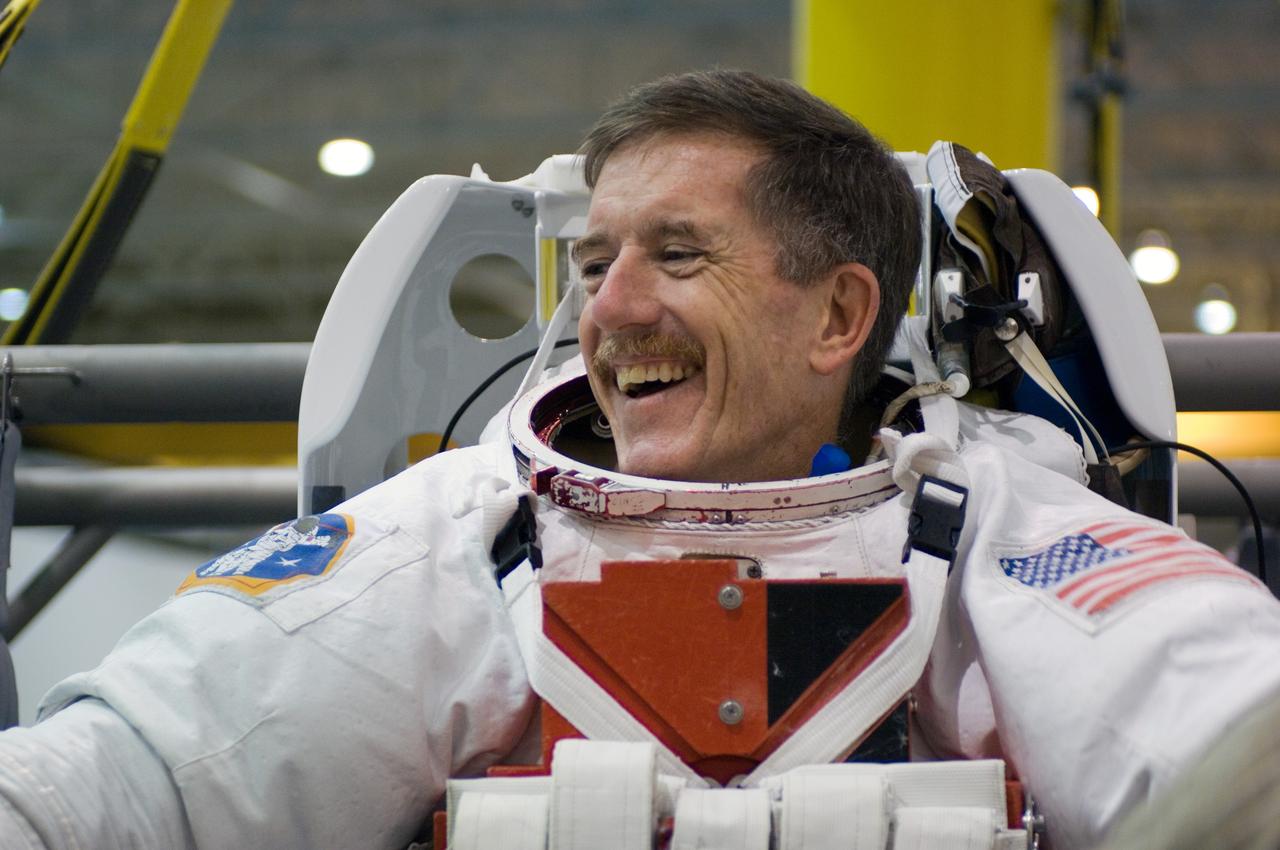
JSC2006-E-44638 (16 Oct. 2006) --- Astronaut James F. Reilly II, STS-117 mission specialist, attired in a training version of the Extravehicular Mobility Unit (EMU) spacesuit, is about to begin a training session in the waters of the Neutral Buoyancy Laboratory (NBL) near the Johnson Space Center.
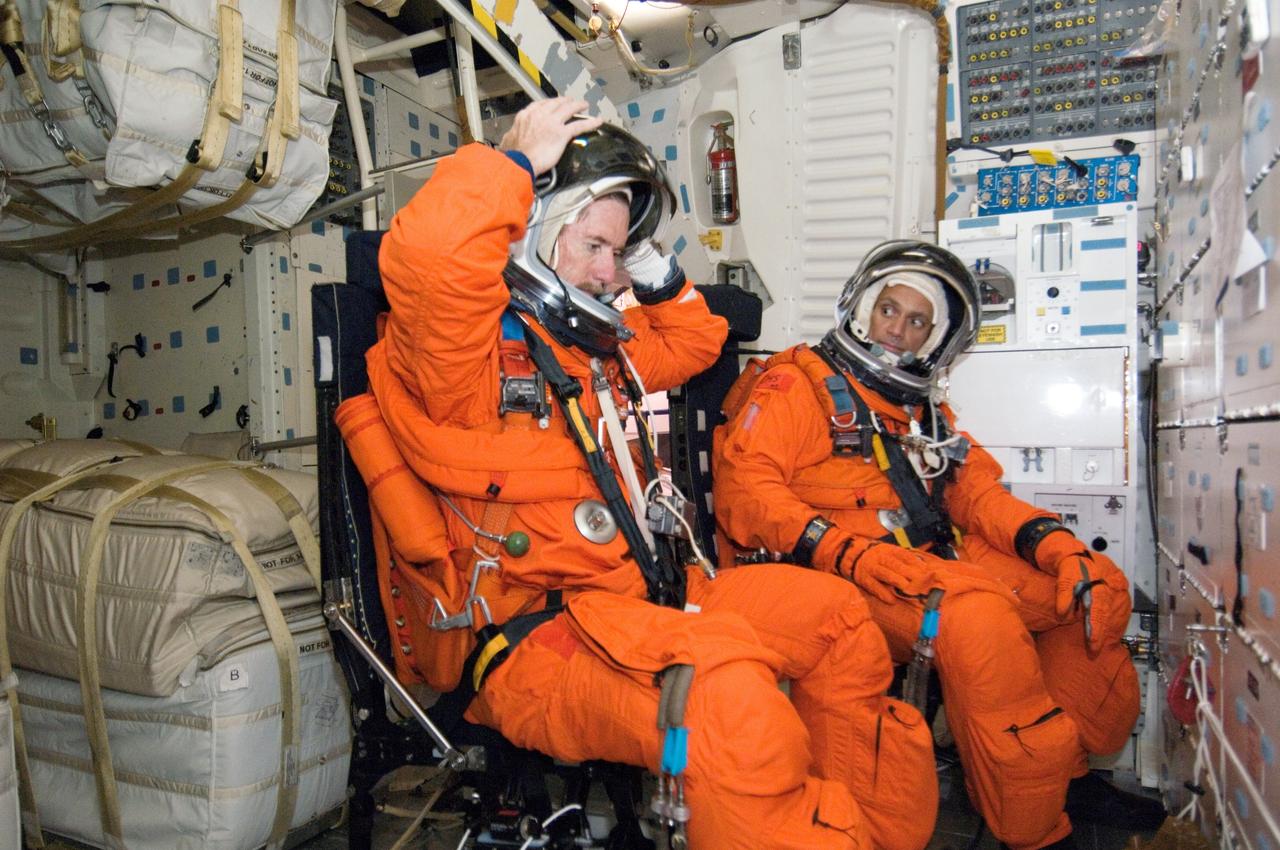
JSC2006-E-32666 (3 Aug. 2006) --- Attired in training versions of their shuttle launch and landing suits, astronauts James F. Reilly II (left) and John D. (Danny) Olivas, both STS-117 mission specialists, participate in a training session on the middeck of the crew compartment trainer (CCT-2) in the Space Vehicle Mockup Facility at Johnson Space Center.
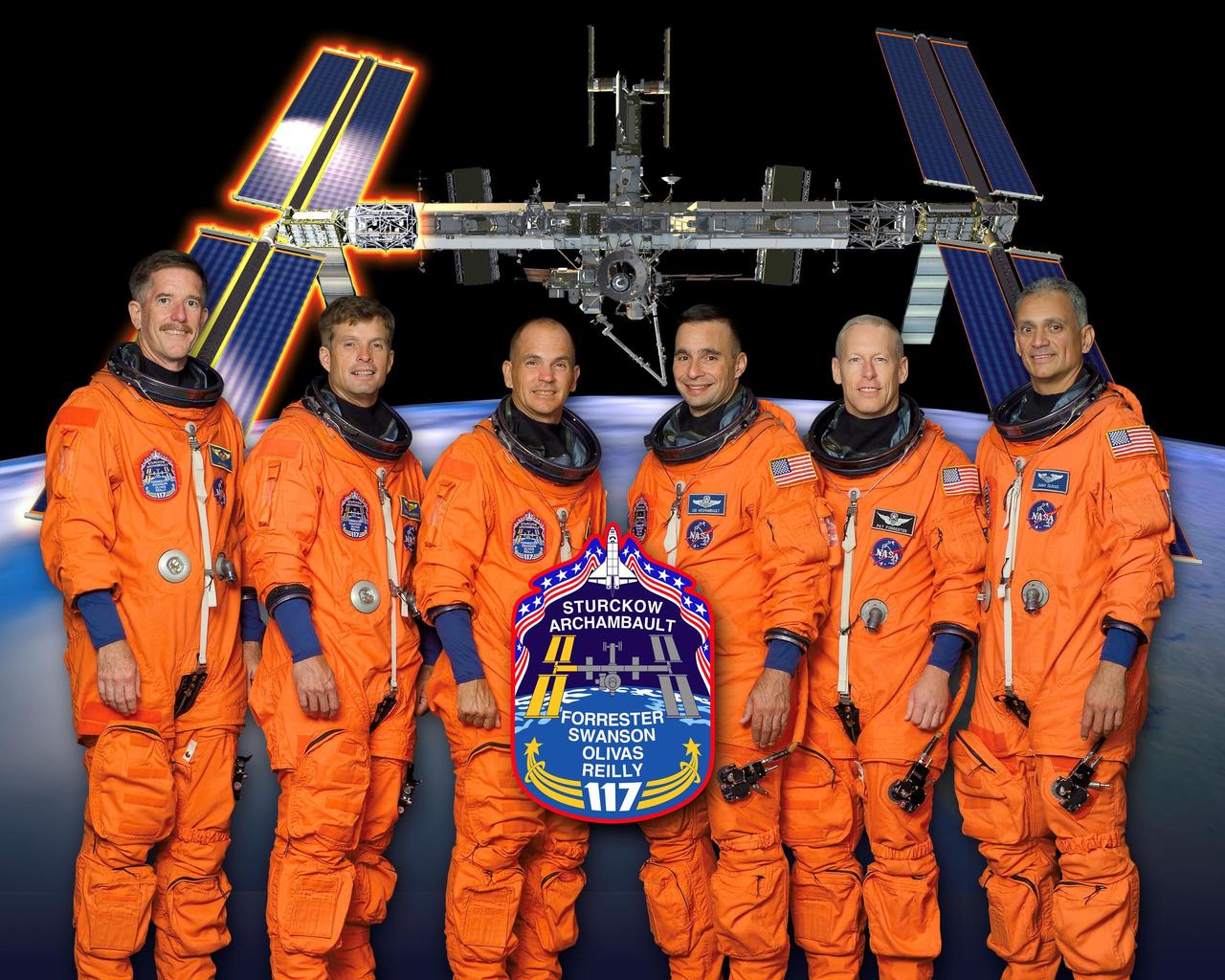
KENNEDY SPACE CENTER, FLA. -- STS117-S-002 -- These six astronauts take a break from traiing to pose for the STS-117 crew portrait. Scheduled to launch aboard the Space Shuttle Atlantis are (from the left) astronauts James F. Reilly II and Steven R. Swanson, mission specialists; Frederick W. (Rick) Sturckow, commander; Lee J. Archambault, pilot; Patrick G. Forrester and John D. (Danny) Olivas, mission specialists. The crew members are attired in training versions of their shuttle launch and entry suits.
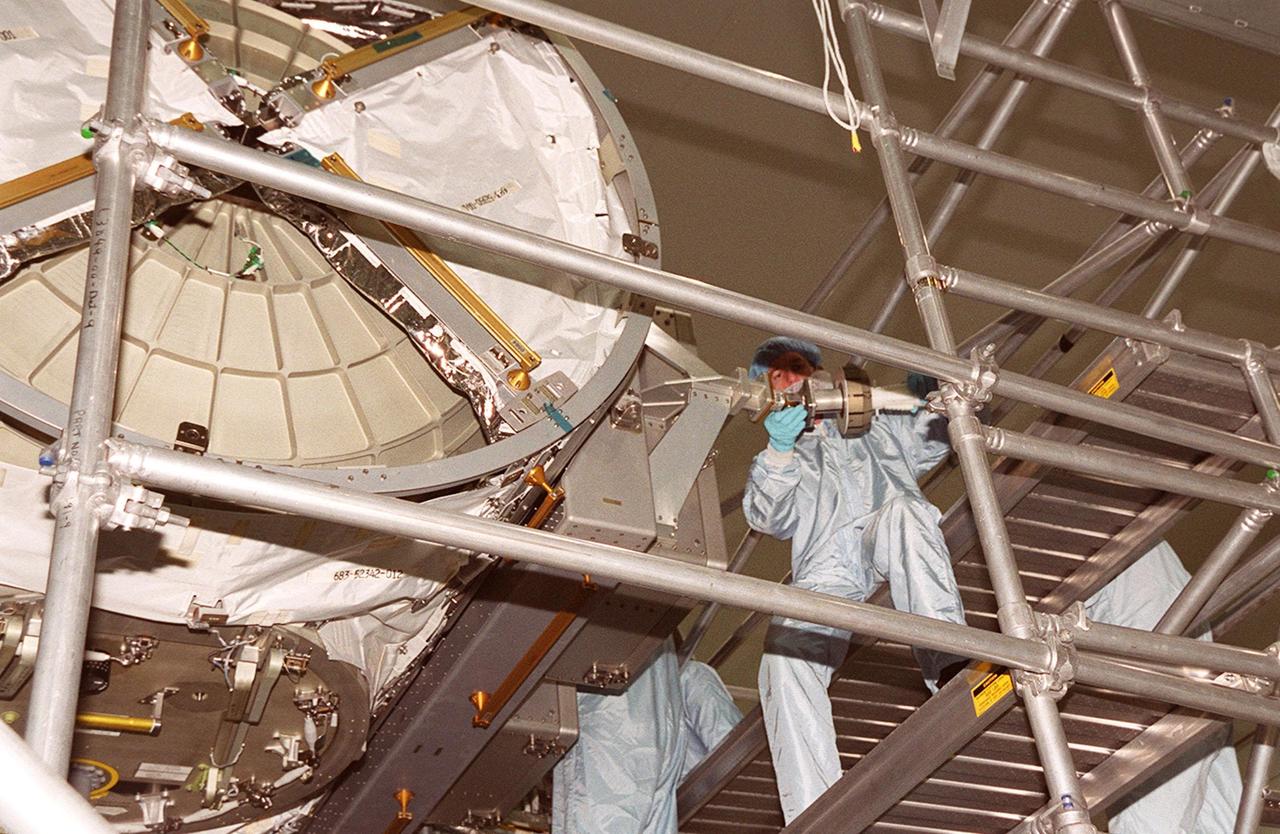
KENNEDY SPACE CENTER, FLA. -- At the Space Station Processing Facility, STS-104 Mission Specialist James F. Reilly II checks out a piece of equipment. The crew is at KSC to take part in Crew Equipment Interface Test activities. Reilly will perform three spacewalks during the mission, which will carry the Joint Airlock Module to the International Space Station. The U.S.-made module will allow astronauts and cosmonauts in residence on the Station to perform future spacewalks without the presence of a Space Shuttle. The module, which comprises a crew lock and an equipment lock, will be connected to the starboard (right) side of Node 1 Unity. Atlantis will also carry oxygen and nitrogen storage tanks, vital to operation of the Joint Airlock, on a Spacelab Logistics Double Pallet in the payload bay. The tanks, to be installed on the perimeter of the Joint Module during the mission’s spacewalks, will support future spacewalk operations and experiments plus agument the resupply system for the Station’s Service Module
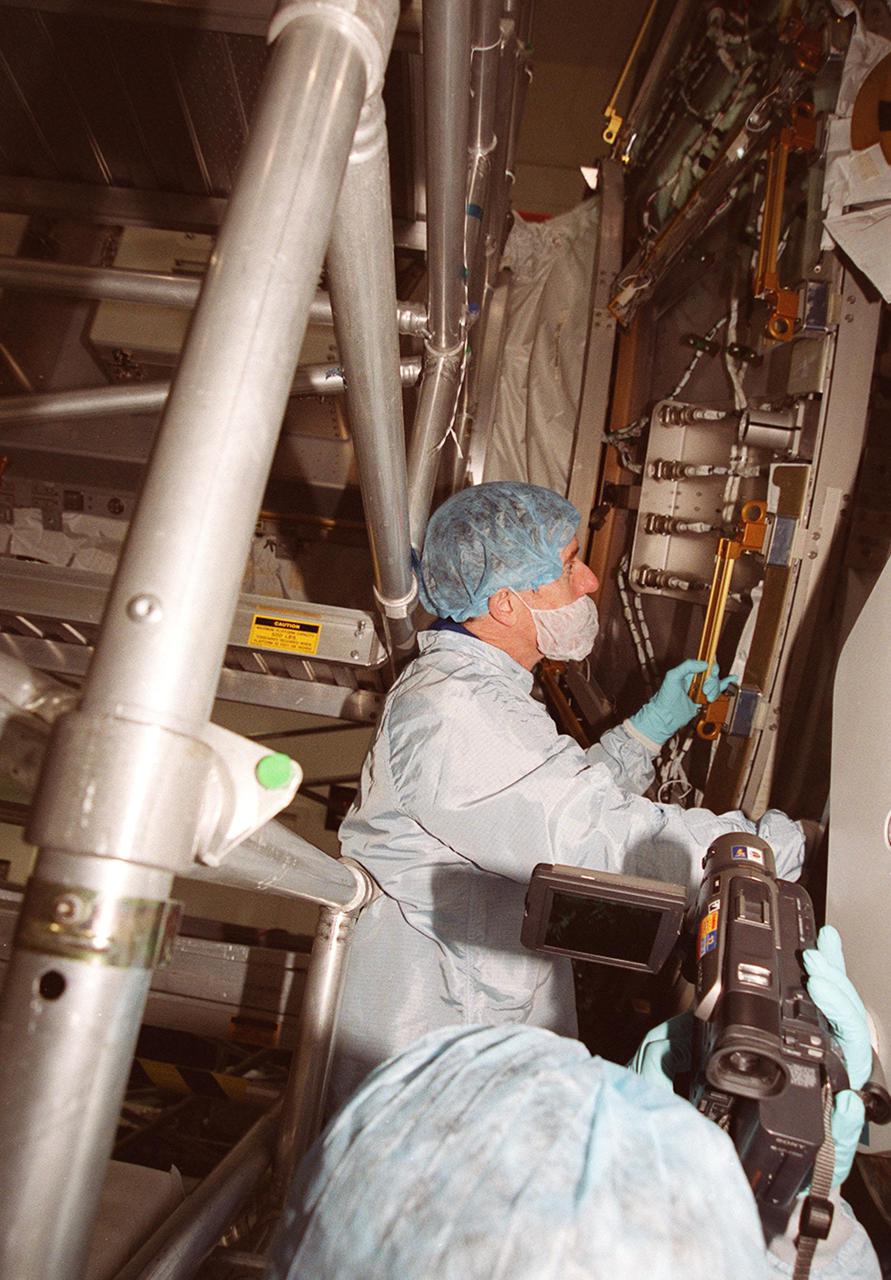
KENNEDY SPACE CENTER, FLA. -- At the Space Station Processing Facility, STS-104 Mission Specialist James F. Reilly II checks out a piece of equipment. The crew is at KSC to take part in Crew Equipment Interface Test activities. Reilly will perform three spacewalks during the mission, which will carry the Joint Airlock Module to the International Space Station. The U.S.-made module will allow astronauts and cosmonauts in residence on the Station to perform future spacewalks without the presence of a Space Shuttle. The module, which comprises a crew lock and an equipment lock, will be connected to the starboard (right) side of Node 1 Unity. Atlantis will also carry oxygen and nitrogen storage tanks, vital to operation of the Joint Airlock, on a Spacelab Logistics Double Pallet in the payload bay. The tanks, to be installed on the perimeter of the Joint Module during the mission’s spacewalks, will support future spacewalk operations and experiments plus agument the resupply system for the Station’s Service Module
These six STS 117 astronauts, assigned to launch aboard the Space Shuttle Atlantis, are (from the left) astronauts James F. Reilly II, Steven R. Swanson, mission specialists; Frederick W. (Rick) Sturckow, commander; Lee J. Archambault, pilot; and Patrick G. Forrester and John D. (Danny) Olivas, mission specialists. The crewmembers are attired in training versions of their shuttle launch and entry suits. Mission objectives include the addition of the second and third starboard truss segments (S3/S4) with Photovoltaic Radiator (PVR), the deployed third set of solar arrays. The P6 starboard solar array wing and one radiator are to be retracted.
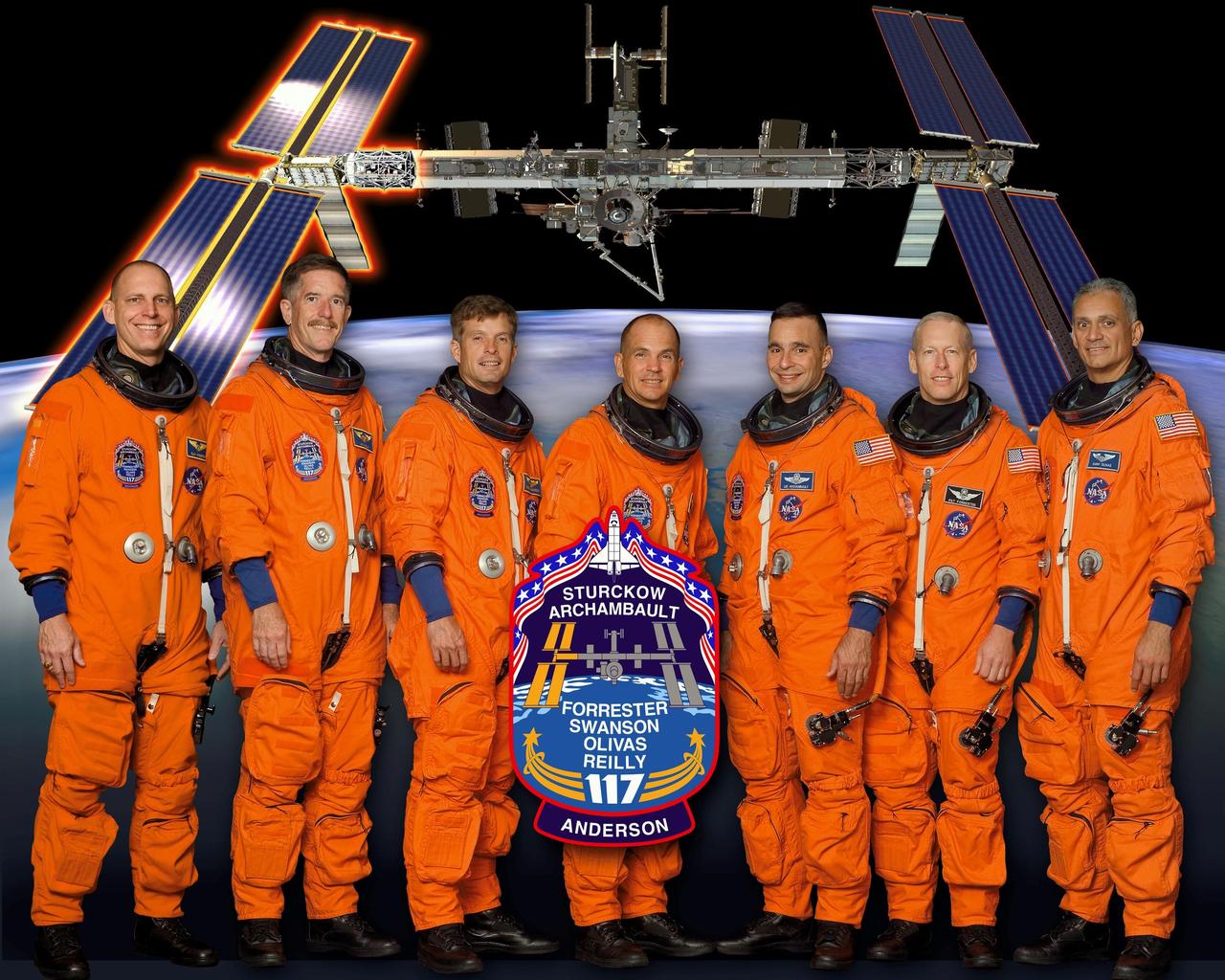
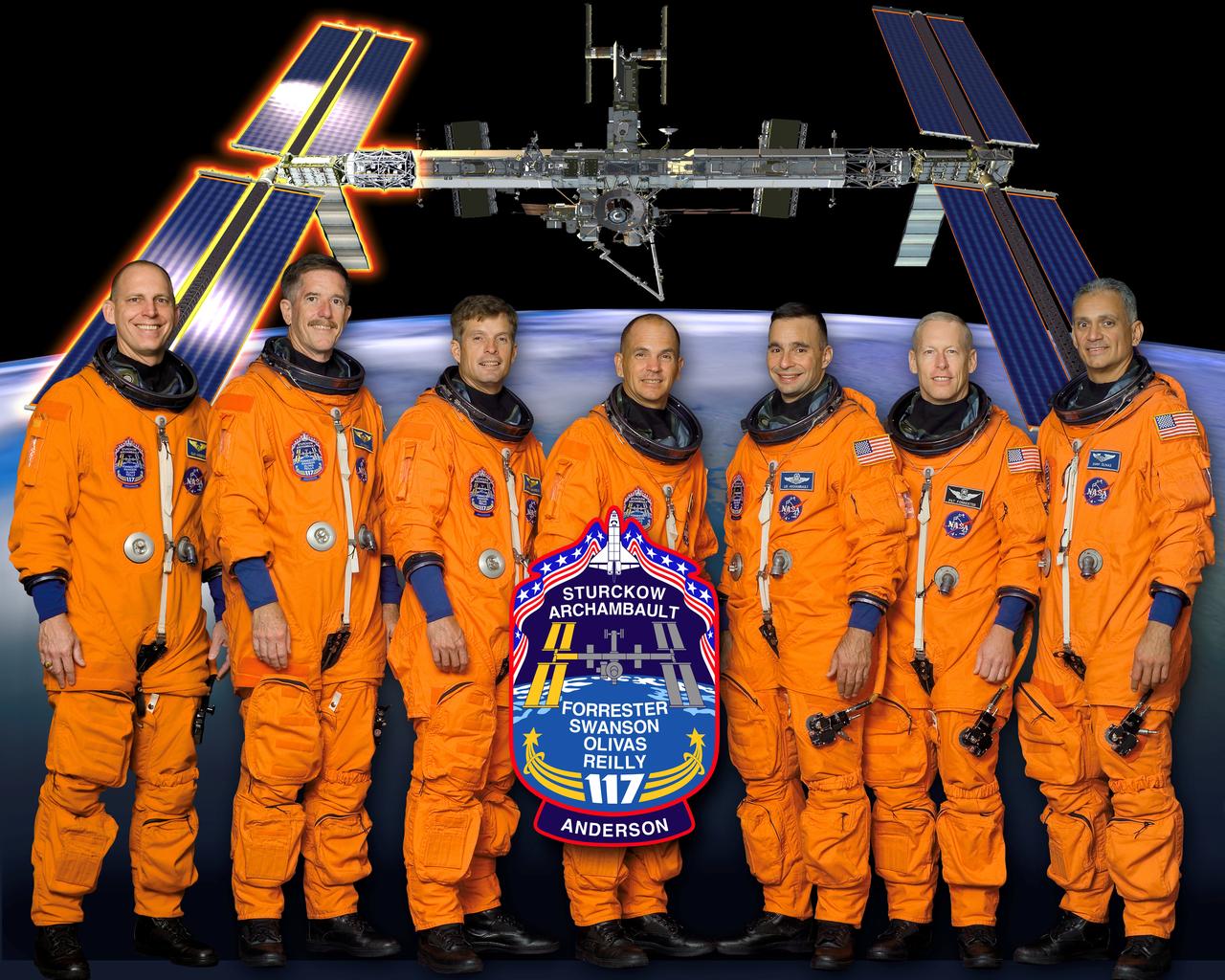
KENNEDY SPACE CENTER, FLA. -- STS117-S-002 (May 2007) --- These seven astronauts take a break from training to pose for the STS-117 crew portrait. Scheduled to launch aboard the Space Shuttle Atlantis are (from the left) astronauts Clayton C. Anderson, James F. Reilly II, Steven R. Swanson, mission specialists; Frederick W. (Rick) Sturckow, commander; Lee J. Archambault, pilot; Patrick G. Forrester and John D. (Danny) Olivas, mission specialists. Anderson will join Expedition 15 in progress to serve as a flight engineer aboard the International Space Station. The crewmembers are attired in training versions of their shuttle launch and entry suits.
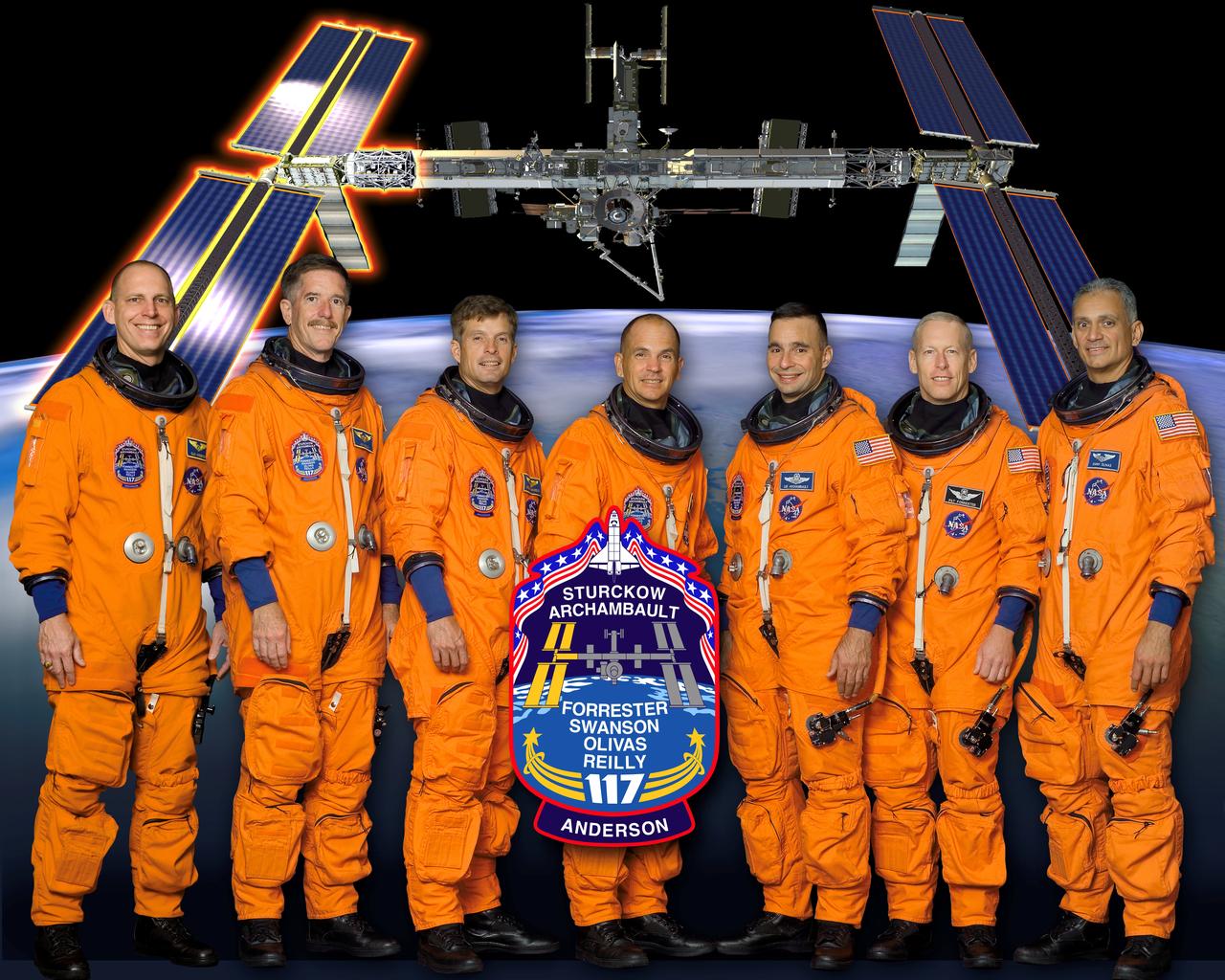
STS117-S-002 (May 2007) --- These seven astronauts take a break from training to pose for the STS-117 crew portrait. Scheduled to launch aboard the Space Shuttle Atlantis are (from the left) astronauts Clayton C. Anderson, James F. Reilly II, Steven R. Swanson, mission specialists; Frederick W. (Rick) Sturckow, commander; Lee J. Archambault, pilot; Patrick G. Forrester and John D. (Danny) Olivas, mission specialists. Anderson will join Expedition 15 in progress to serve as a flight engineer aboard the International Space Station. The crewmembers are attired in training versions of their shuttle launch and entry suits.
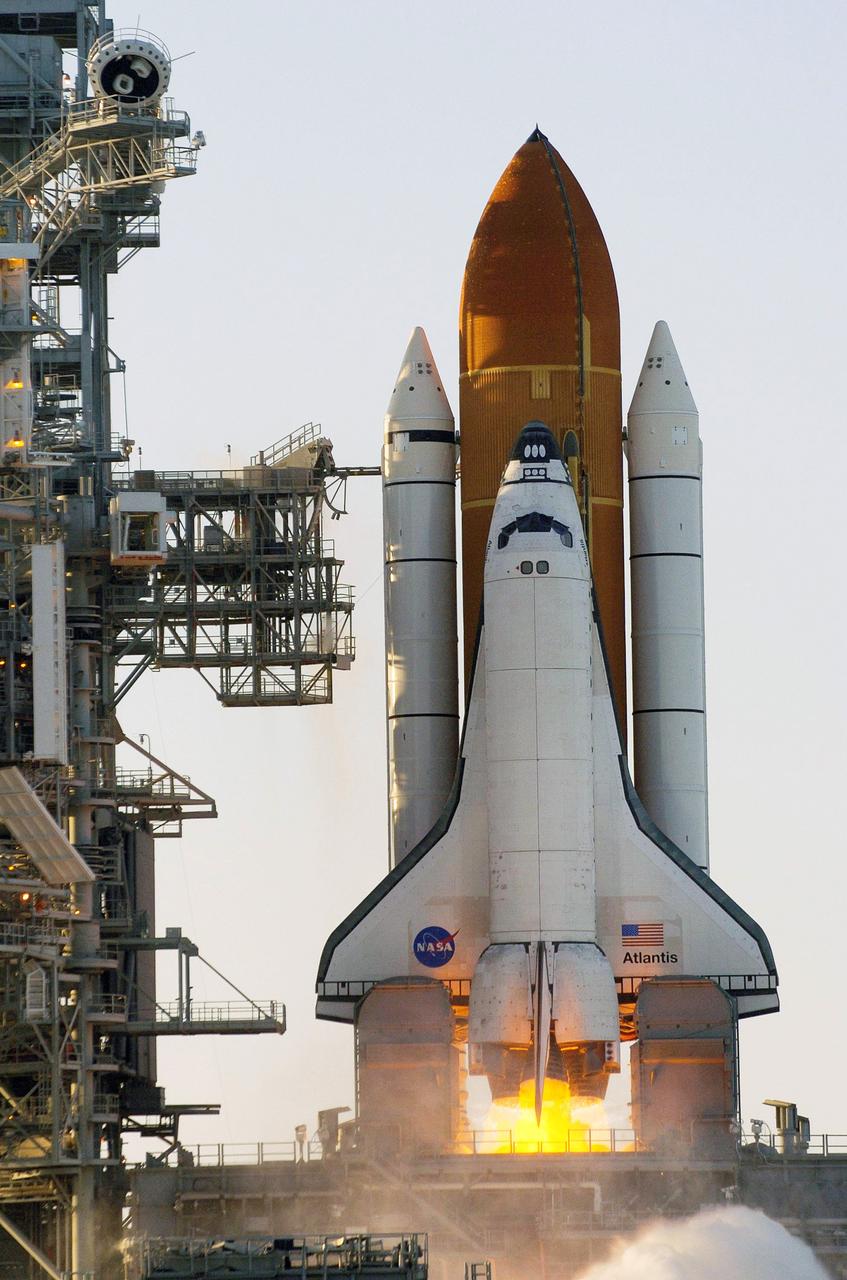
Headed toward Earth orbit and a link up with the International Space Station (ISS), the Space Shuttle Atlantis lifted off from Kennedy Space Center on June 8, 2007. Aboard were STS-117 astronauts James F. Reilly II, Steven R. Swanson, Patrick G. Forrester and John D. “Danny” Olivas, all mission specialists; Frederick W. (Rick) Sturckow, commander; Lee J. Archambault, pilot; and Clayton Anderson, mission specialist who joined the Expedition 15 crew. The crew members along with the Expedition 15 crew spent 8 days resuming construction on the ISS with the installation of the second and third starboard truss segments (S3 and S4) with Photovoltaic Radiator (PVR), and retracted the P6 starboard solar array wing and radiator for later use.

KENNEDY SPACE CENTER, FLA. -- At the Space Station Processing Facility, members of the STS-104 crew check out equipment. At left is Mission Specialist Michael L. Gernhardt; and second from right is Mission Specialist James F. Reilly II. The crew is taking part in Crew Equipment Interface Test activities. The mission will carry the Joint Airlock Module to the International Space Station. The U.S.-made module will allow astronauts and cosmonauts in residence on the Station to perform future spacewalks without the presence of a Space Shuttle. The module, which comprises a crew lock and an equipment lock, will be connected to the starboard (right) side of Node 1 Unity. Atlantis will also carry oxygen and nitrogen storage tanks, vital to operation of the Joint Airlock, on a Spacelab Logistics Double Pallet in the payload bay. The tanks, to be installed on the perimeter of the Joint Module during the mission’s spacewalks, will support future spacewalk operations and experiments plus augment the resupply system for the Station’s Service Module
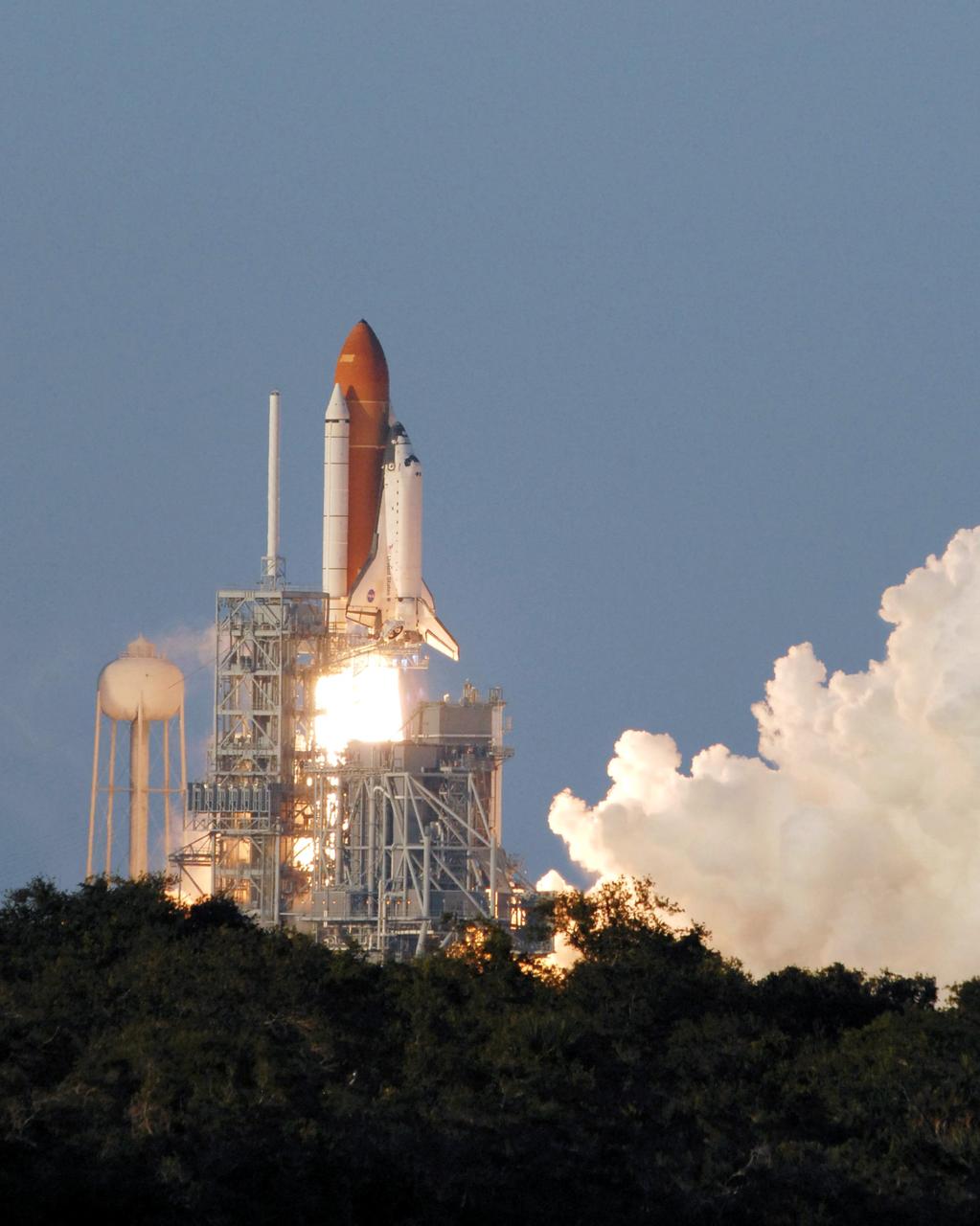
Headed toward Earth orbit and a link up with the International Space Station (ISS), the Space Shuttle Atlantis lifted off from Kennedy Space Center on June 8, 2007. Aboard were STS-117 astronauts James F. Reilly II, Steven R. Swanson, Patrick G. Forrester and John D. “Danny” Olivas, all mission specialists; Frederick W. (Rick) Sturckow, commander; Lee J. Archambault, pilot; and Clayton Anderson, mission specialist who joined the Expedition 15 crew. The crew members along with the Expedition 15 crew spent 8 days resuming construction on the ISS with the installation of the second and third starboard truss segments (S3 and S4) with Photovoltaic Radiator (PVR), and retracted the P6 starboard solar array wing and radiator for later use.
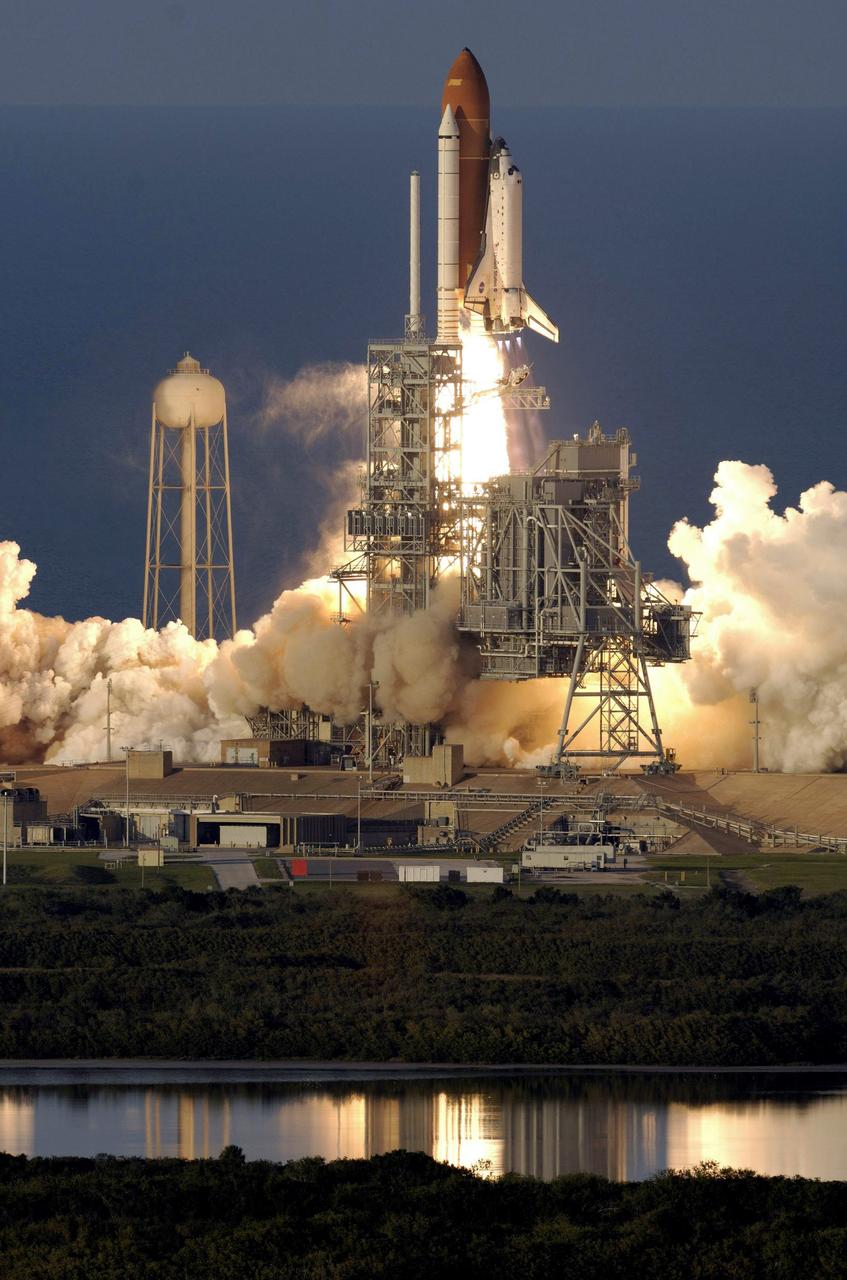
Headed toward Earth orbit and a link up with the International Space Station (ISS), the Space Shuttle Atlantis lifted off from Kennedy Space Center on June 8, 2007. Aboard were STS-117 astronauts James F. Reilly II, Steven R. Swanson, Patrick G. Forrester and John D. “Danny” Olivas, all mission specialists; Frederick W. (Rick) Sturckow, commander; Lee J. Archambault, pilot; and Clayton Anderson, mission specialist who joined the Expedition 15 crew. The crew members along with the Expedition 15 crew spent 8 days resuming construction on the ISS with the installation of the second and third starboard truss segments (S3 and S4) with Photovoltaic Radiator (PVR), and retracted the P6 starboard solar array wing and radiator for later use.
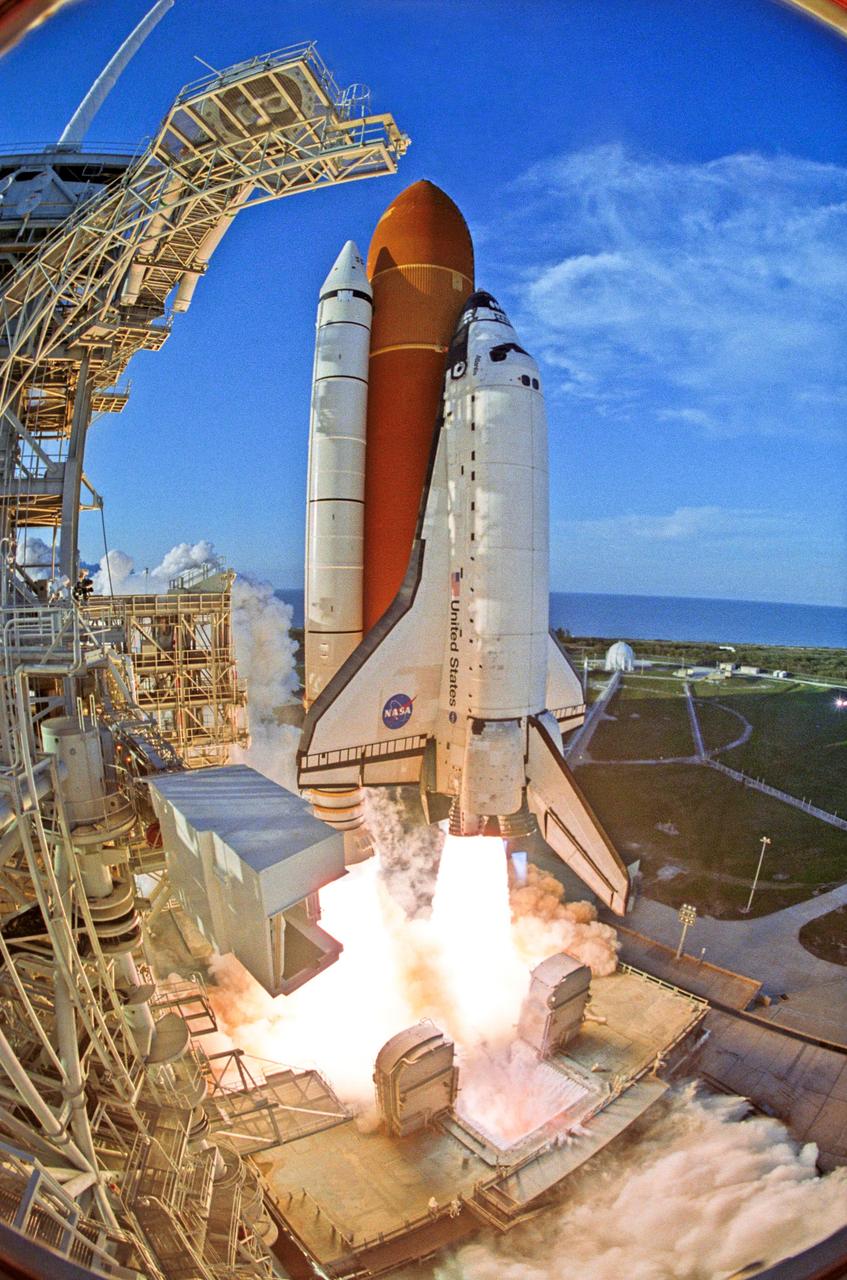
Headed toward Earth orbit and a link up with the International Space Station (ISS), the Space Shuttle Atlantis lifted off from Kennedy Space Center on June 8, 2007. Aboard were STS-117 astronauts James F. Reilly II, Steven R. Swanson, Patrick G. Forrester and John D. “Danny” Olivas, all mission specialists; Frederick W. (Rick) Sturckow, commander; Lee J. Archambault, pilot; and Clayton Anderson, mission specialist who joined the Expedition 15 crew. The crew members along with the Expedition 15 crew spent 8 days resuming construction on the ISS with the installation of the second and third starboard truss segments (S3 and S4) with Photovoltaic Radiator (PVR), and retracted the P6 starboard solar array wing and radiator for later use.

KENNEDY SPACE CENTER, FLA. -- Members of the STS-104 crew check out equipment at the Space Station Processing Facility as part of Crew Equipment Interface Test activities. Seen are (from left) Mission Specialist Michael L. Gernhardt, Commander Steven W. Lindsey, Pilot Charles O. Hobaugh and Mission Specialist James F. Reilly II. Not shown is Mission Specialist Janet L. Kavandi. The mission will carry the Joint Airlock Module to the International Space Station. The U.S.-made module will allow astronauts and cosmonauts in residence on the Station to perform future spacewalks without the presence of a Space Shuttle. The module, which comprises a crew lock and an equipment lock, will be connected to the starboard (right) side of Node 1 Unity. Atlantis will also carry oxygen and nitrogen storage tanks, vital to operation of the Joint Airlock, on a Spacelab Logistics Double Pallet in the payload bay. The tanks, to be installed on the perimeter of the Joint Module during the mission’s spacewalks, will support future spacewalk operations and experiments plus augment the resupply system for the Station’s Service Module

KENNEDY SPACE CENTER, FLA. -- Members of the STS-104 crew check out equipment at the Space Station Processing Facility as part of Crew Equipment Interface Test activities. Shown are Mission Specialist James F. Reilly II (left), Pilot Charles O. Hobaugh (center) and Mission Specialist Michael L. Gernhardt (right). The mission will carry the Joint Airlock Module to the International Space Station. The U.S.-made module will allow astronauts and cosmonauts in residence on the Station to perform future spacewalks without the presence of a Space Shuttle. The module, which comprises a crew lock and an equipment lock, will be connected to the starboard (right) side of Node 1 Unity. Atlantis will also carry oxygen and nitrogen storage tanks, vital to operation of the Joint Airlock, on a Spacelab Logistics Double Pallet in the payload bay. The tanks, to be installed on the perimeter of the Joint Module during the mission’s spacewalks, will support future spacewalk operations and experiments plus augment the resupply system for the Station’s Service Module
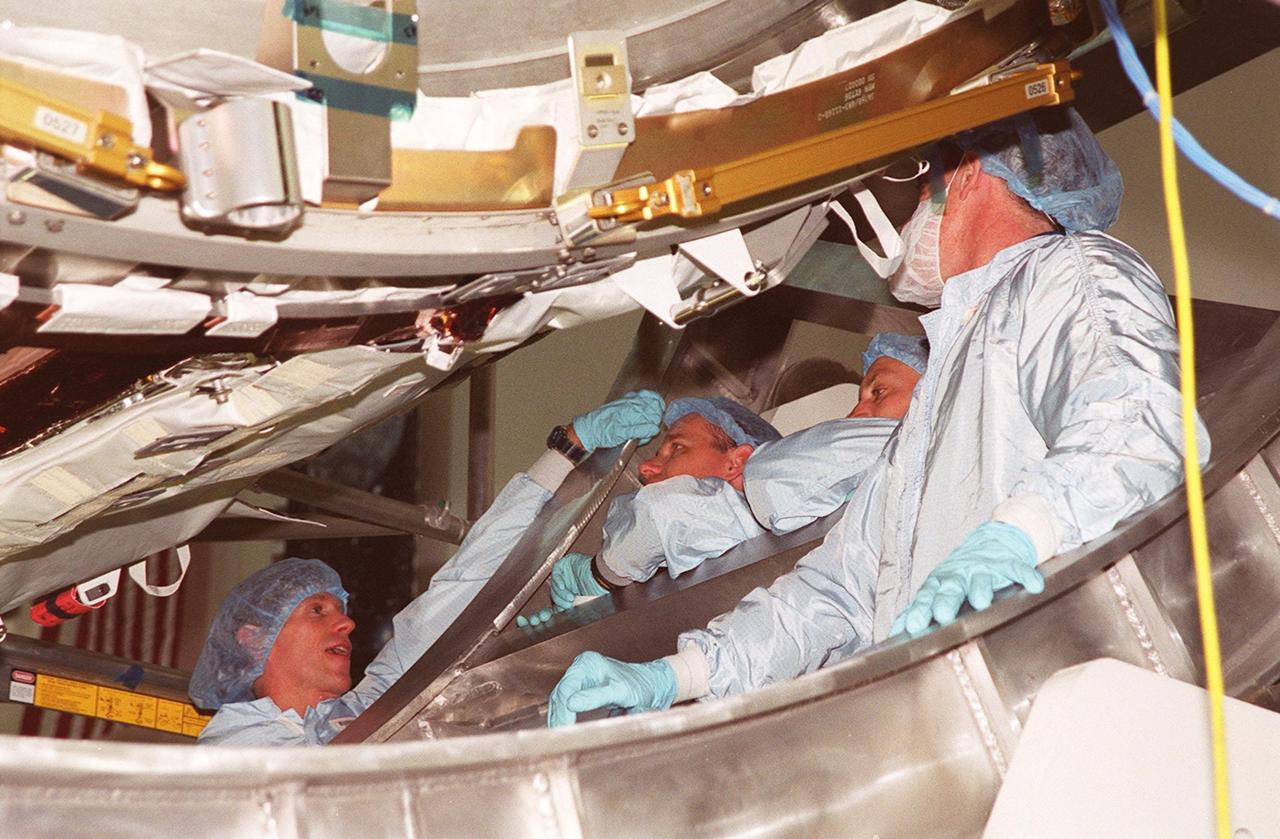
KENNEDY SPACE CENTER, FLA. -- Members of the STS-104 crew check out equipment at the Space Station Processing Facility as part of Crew Equipment Interface Test activities. Seen are (from left) Mission Specialist Michael L. Gernhardt, Commander Steven W. Lindsey, Pilot Charles O. Hobaugh and Mission Specialist James F. Reilly II. Not shown is Mission Specialist Janet L. Kavandi. The mission will carry the Joint Airlock Module to the International Space Station. The U.S.-made module will allow astronauts and cosmonauts in residence on the Station to perform future spacewalks without the presence of a Space Shuttle. The module, which comprises a crew lock and an equipment lock, will be connected to the starboard (right) side of Node 1 Unity. Atlantis will also carry oxygen and nitrogen storage tanks, vital to operation of the Joint Airlock, on a Spacelab Logistics Double Pallet in the payload bay. The tanks, to be installed on the perimeter of the Joint Module during the mission’s spacewalks, will support future spacewalk operations and experiments plus augment the resupply system for the Station’s Service Module
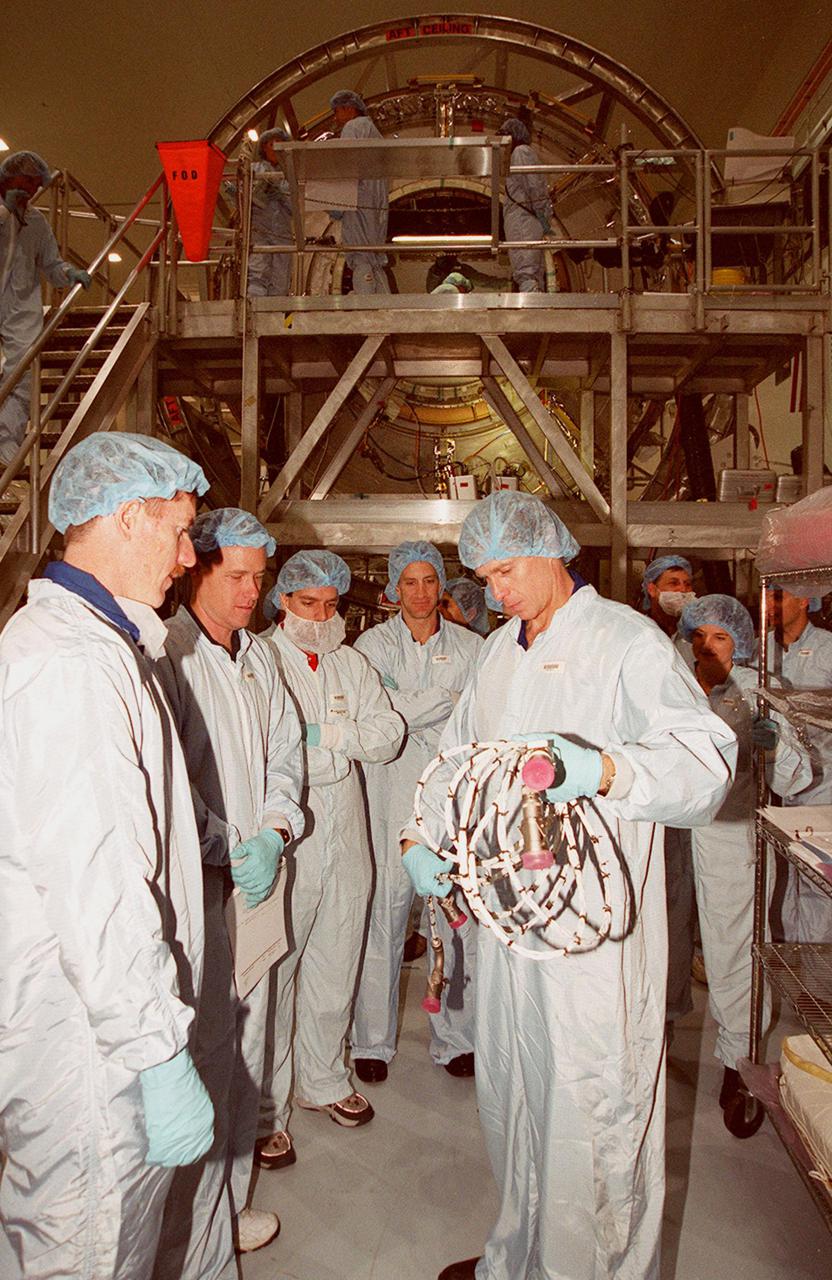
KENNEDY SPACE CENTER, FLA. -- Members of the STS-104 crew check out equipment at the Space Station Processing Facility as part of Crew Equipment Interface Test activities. Shown (from left) are Mission Specialist James F. Reilly II and Commander Steven W. Lindsey; (rear) Pilot Charles O. Hobaugh; (right) Mission Specialist Michael L. Gernhardt. Not shown is Mission Specialist Janet L. Kavandi. ). The mission will carry the Joint Airlock Module to the International Space Station. The U.S.-made module will allow astronauts and cosmonauts in residence on the Station to perform future spacewalks without the presence of a Space Shuttle. The module, which comprises a crew lock and an equipment lock, will be connected to the starboard (right) side of Node 1 Unity. Atlantis will also carry oxygen and nitrogen storage tanks, vital to operation of the Joint Airlock, on a Spacelab Logistics Double Pallet in the payload bay. The tanks, to be installed on the perimeter of the Joint Module during the mission’s spacewalks, will support future spacewalk operations and experiments plus augment the resupply system for the Station’s Service Module
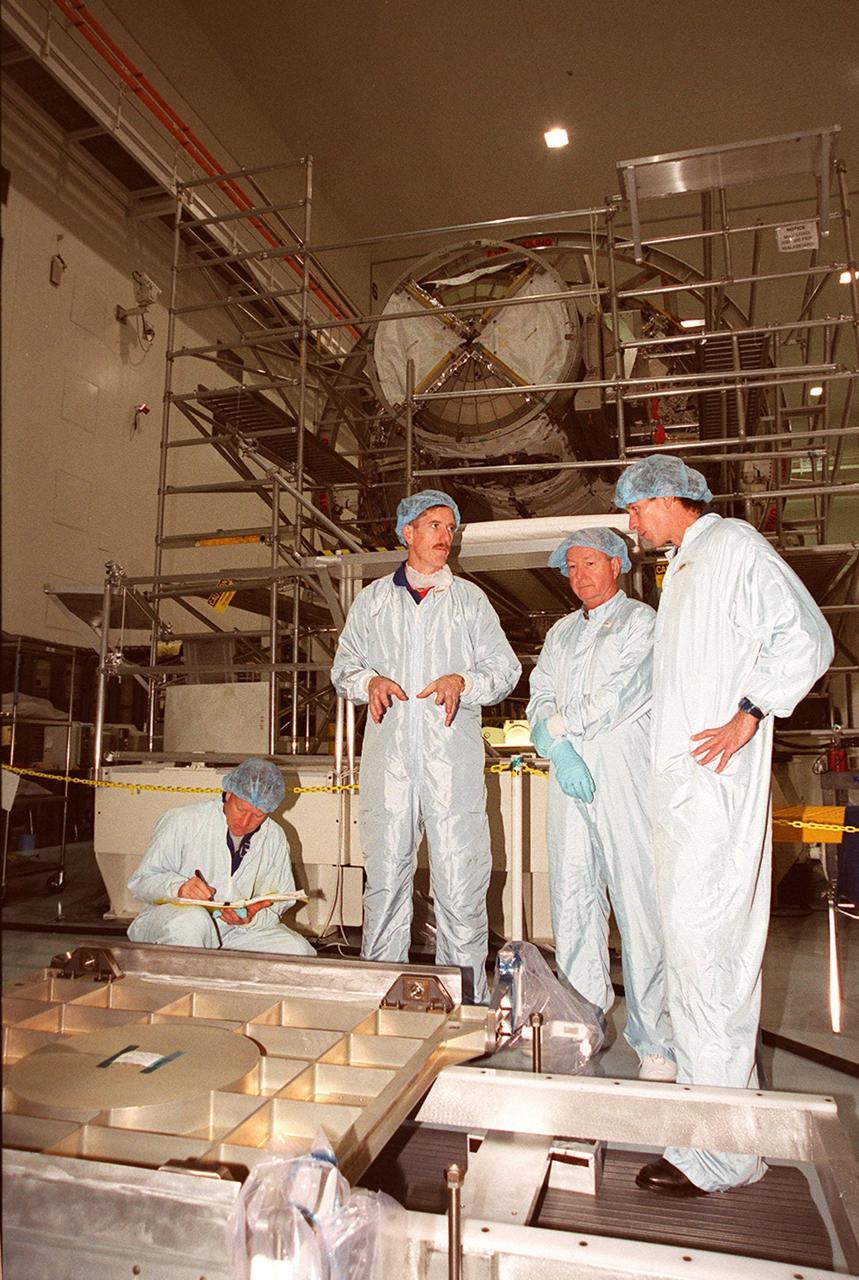
KENNEDY SPACE CENTER, FLA. -- At the Space Station Processing Facility, the STS-104 crew look over equipment as part of Crew Equipment Interface Test activities. From left are Commander Steven Lindsey, Mission Specialist James F. Reilly II and Mission Specialist Michael L. Gernhardt at far right. Not shown is Pilot Charles O. Hobaugh. The STS-104 mission will carry the Joint Airlock Module to the International Space Station. The U.S.-made module will allow astronauts and cosmonauts in residence on the Station to perform future spacewalks without the presence of a Space Shuttle. The module, which comprises a crew lock and an equipment lock, will be connected to the starboard (right) side of Node 1 Unity. Atlantis will also carry oxygen and nitrogen storage tanks, vital to operation of the Joint Airlock, on a Spacelab Logistics Double Pallet in the payload bay. The tanks, to be installed on the perimeter of the Joint Module during the mission’s spacewalks, will support future spacewalk operations and experiments plus agument the resupply system for the Station’s Service Module
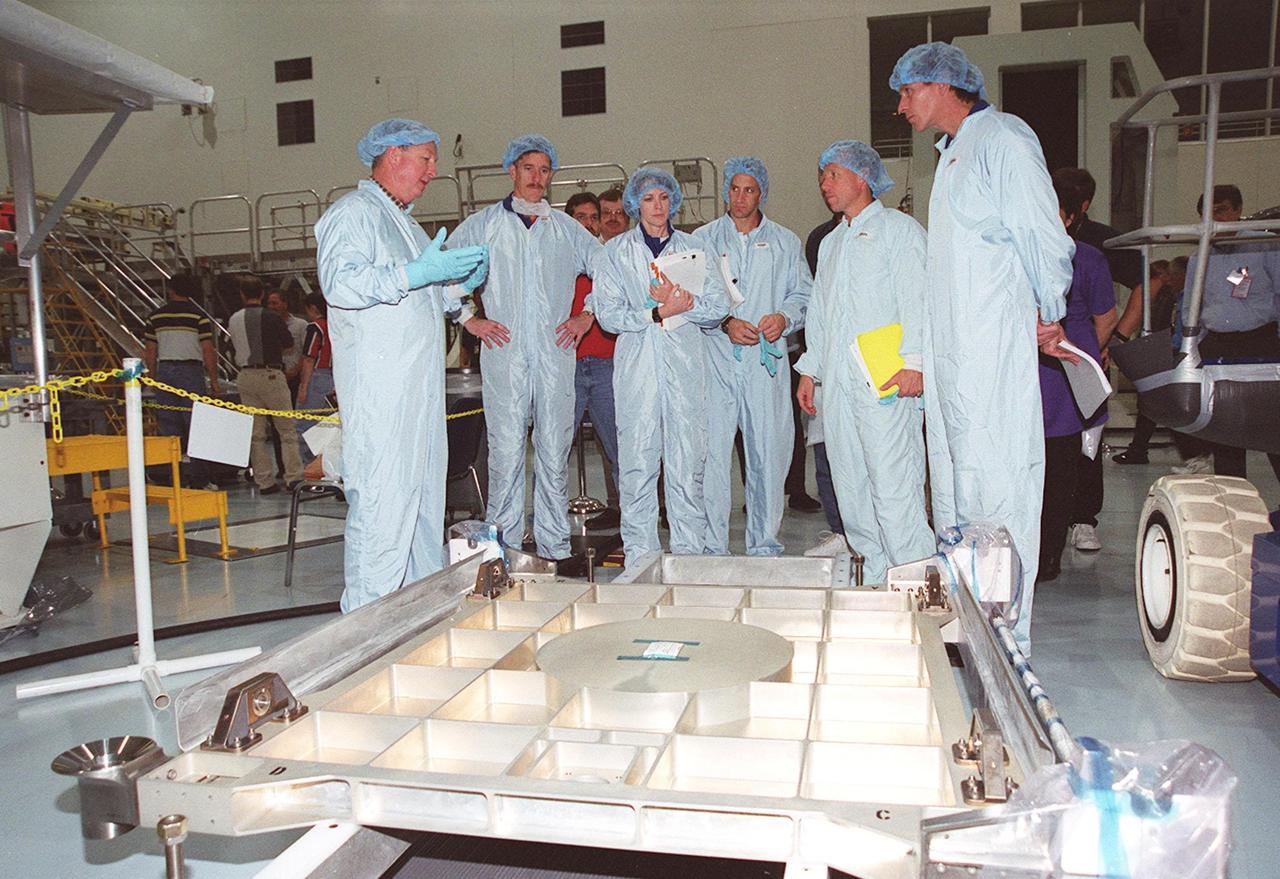
KENNEDY SPACE CENTER, FLA. -- At the Space Station Processing Facility, the STS-104 crew look over equipment as part of Crew Equipment Interface Test activities. Starting second from left are Mission Specialists James F. Reilly II, Janet L. Kavandi, Pilot Charles O. Hobaugh, Commander Steven Lindsey and Mission Specialist Michael L. Gernhardt. The STS-104 mission will carry the Joint Airlock Module to the International Space Station. The U.S.-made module will allow astronauts and cosmonauts in residence on the Station to perform future spacewalks without the presence of a Space Shuttle. The module, which comprises a crew lock and an equipment lock, will be connected to the starboard (right) side of Node 1 Unity. Atlantis will also carry oxygen and nitrogen storage tanks, vital to operation of the Joint Airlock, on a Spacelab Logistics Double Pallet in the payload bay. The tanks, to be installed on the perimeter of the Joint Module during the mission’s spacewalks, will support future spacewalk operations and experiments plus agument the resupply system for the Station’s Service Module
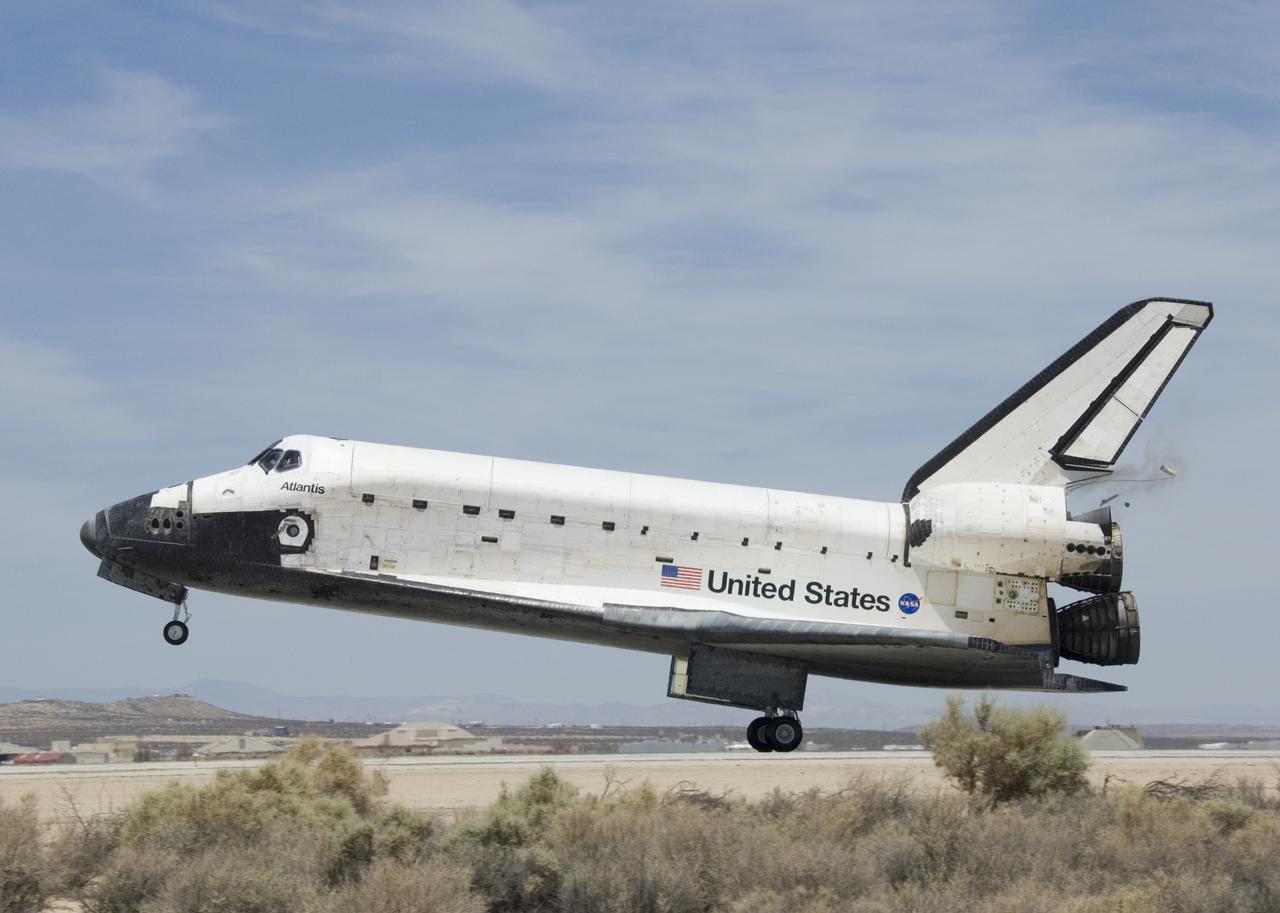
Space Shuttle Atlantis starts to deploy its braking parachute following touchdown at Edwards Air Force Base, California, on June 22, 2007.
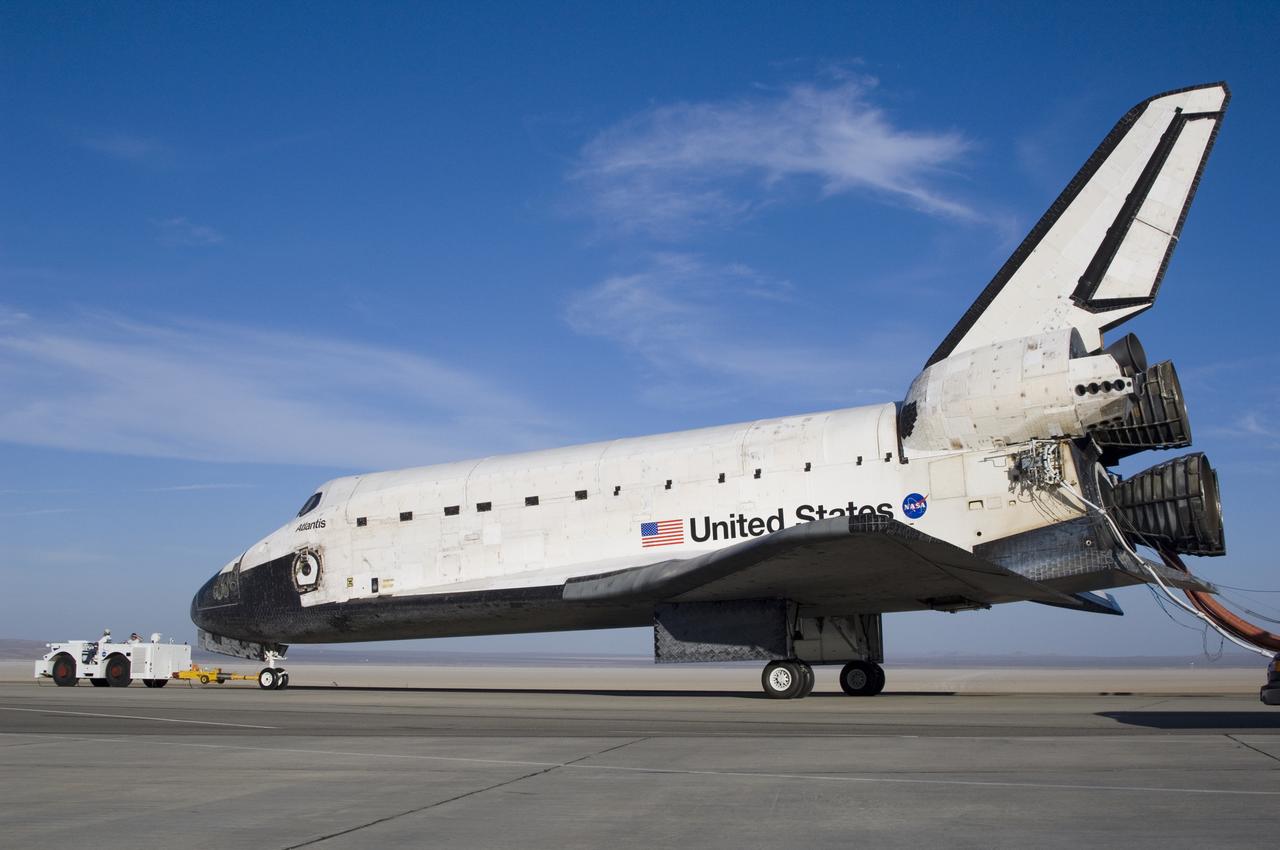
Following its landing on June 22, 2007, the Space Shuttle Atlantis is towed from the runway at Edwards Air Force Base to NASA Dryden's Mate-Demate Device (MDD) for post-flight processing in preparation for its return to the Kennedy Space Center in Florida.
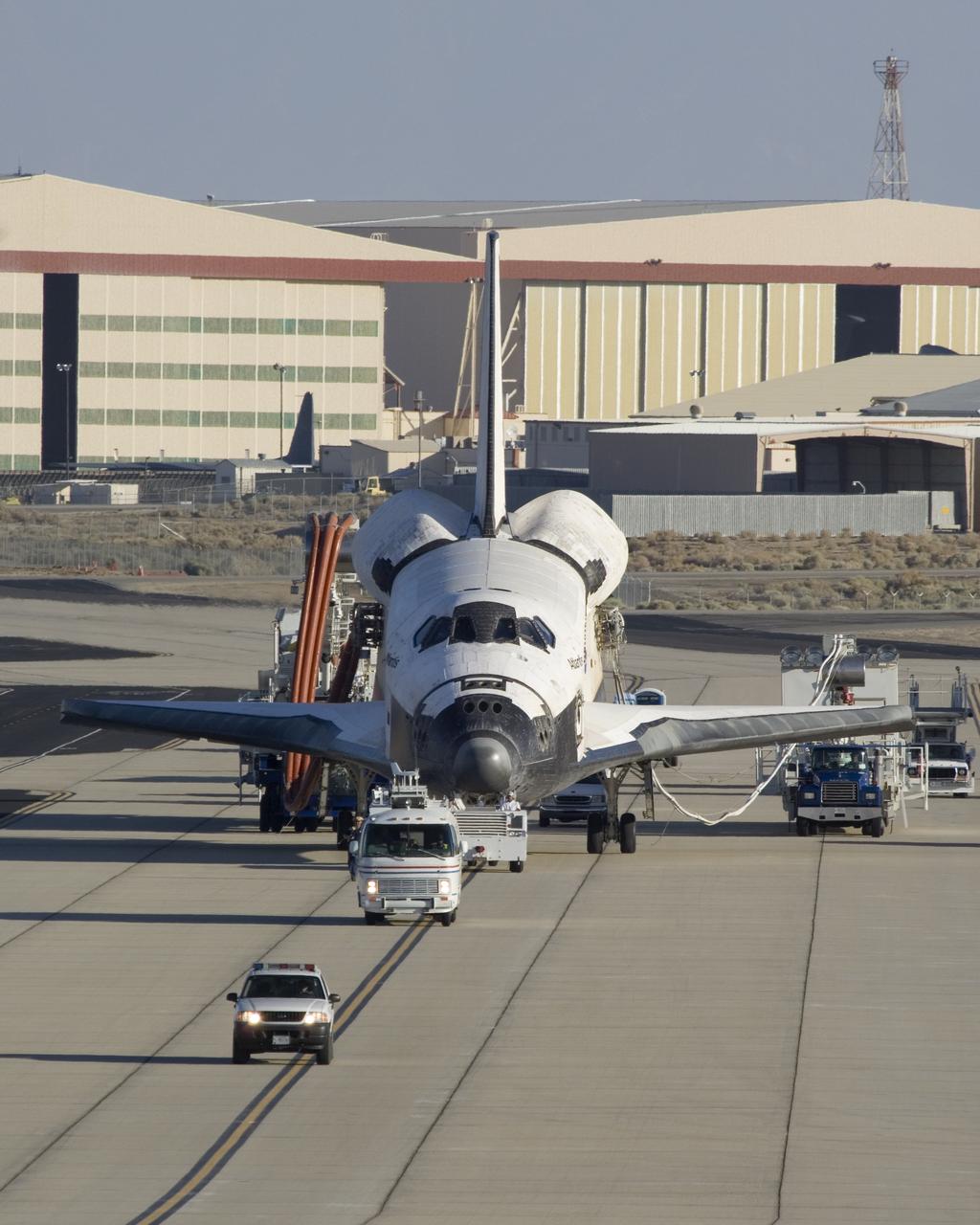
Space Shuttle Atlantis descended to a smooth landing at Edwards Air Force Base, Calif., concluding a successful assembly mission to the International Space Station. With Commander Rick Sturckow and Pilot Lee Archambault at the controls, Atlantis landed at 12:49 p.m. PDT on June 22, 2007. Atlantis launched June 8, 2007, and arrived at the International Space Station on June 10. While at the orbital outpost, the crew installed the Starboard 3 and 4 truss segment and conducted four spacewalks to activate it. During the third spacewalk, the crew repaired an out of position thermal blanket on the left orbital maneuvering system pod. Atlantis also delivered a new station crew member, Flight Engineer Clayton Anderson. He replaced astronaut Suni Williams, who is the new record holder for a long-duration single spaceflight for a woman. She arrived at the station in December of 2006 with STS-116. STS-117 is the 118th shuttle mission and 21st mission to visit the space station.
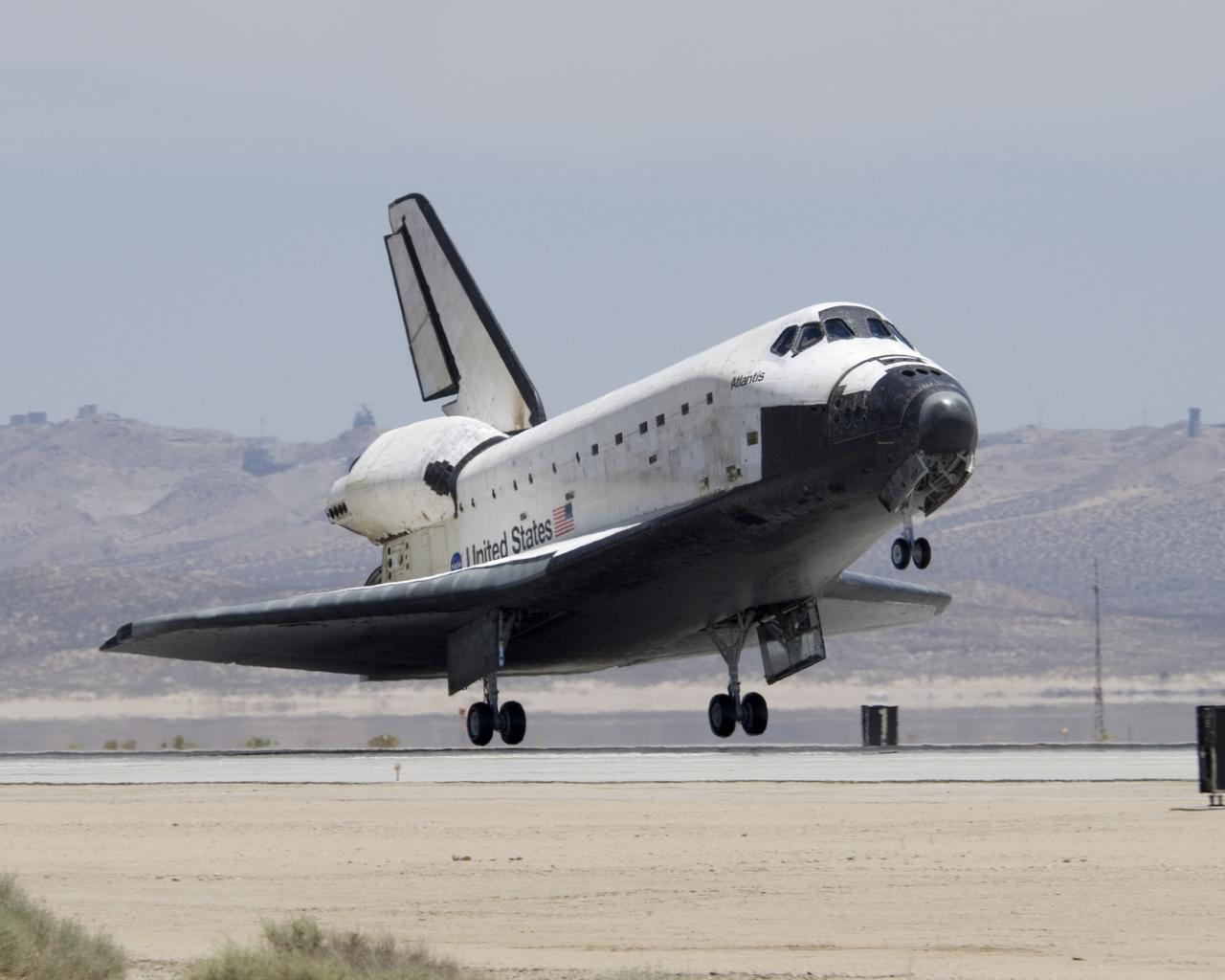
The Space Shuttle Atlantis touches down at Edwards AFB on June 22, 2007, to conclude International Space Station construction and supply mission STS-117.
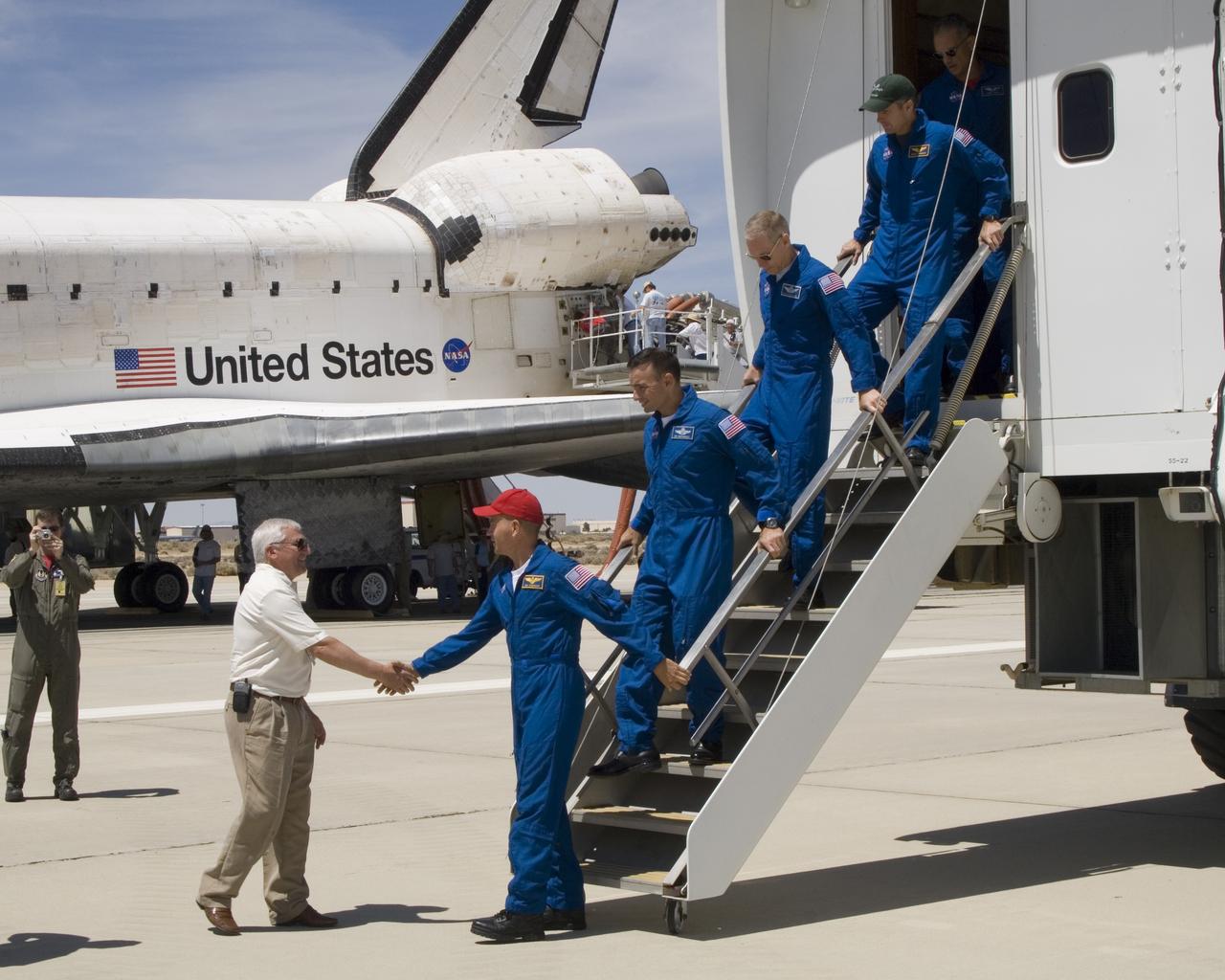
DFRC Center Director Kevin Petersen greets STS-117 Commander Frederick Sturckow and the crew of the Space Shuttle Atlantis at Edwards, AFB, Calif., on June 22, 2007. Left to right: DFRC Center Director Kevin Petersen, Commander Frederick Sturckow, Pilot Lee Archambault, and mission specialists Patrick Forrester, Steven Swanson and John D. Olivas.