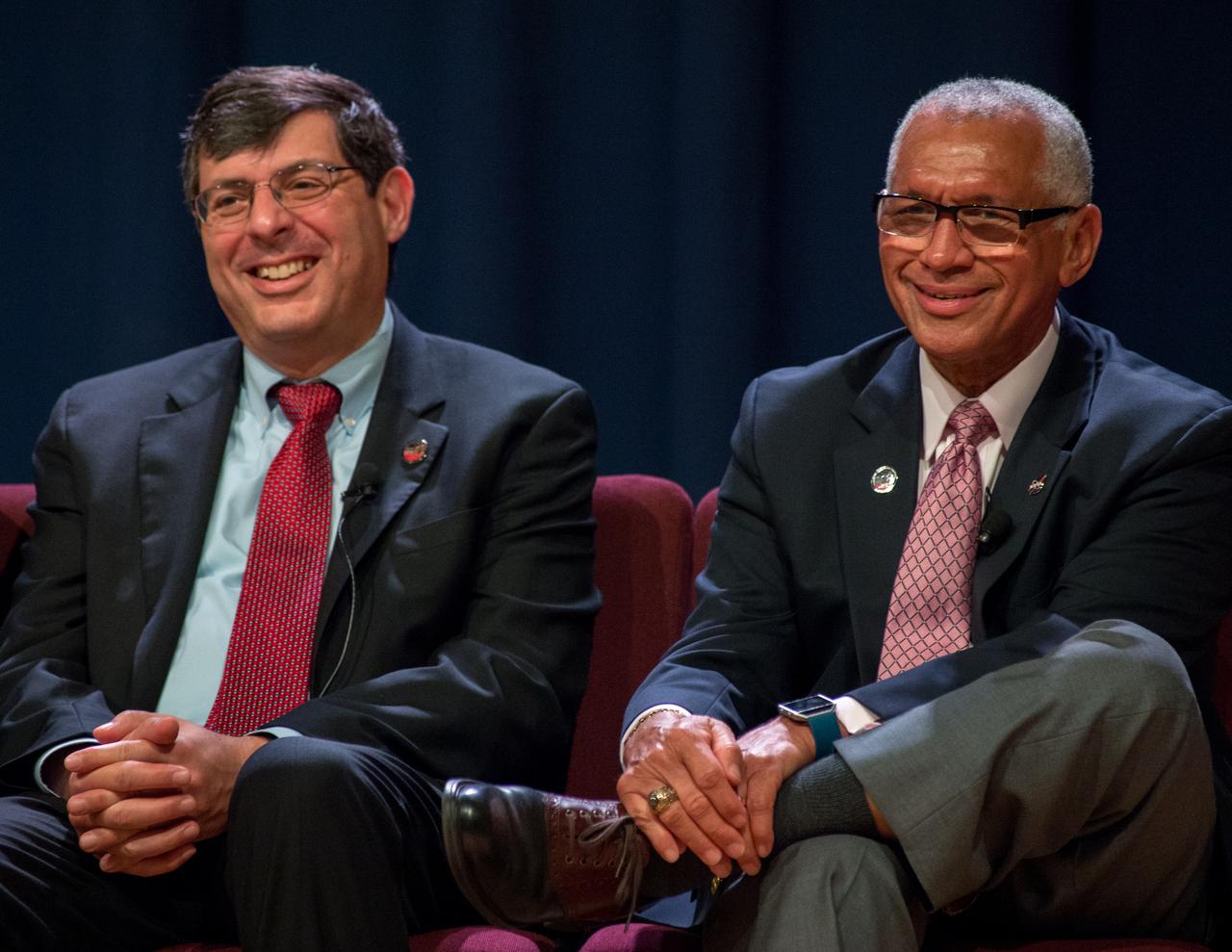
James Webb Space Telescope (JWST) Town Hall - Panel question and answer - Bill Ochs; Dr. John Mather; Dr. Eric Smith; Thomas Zurbuchen; Center Director Chris Scolese; NASA Administrator Charlie Bolden.
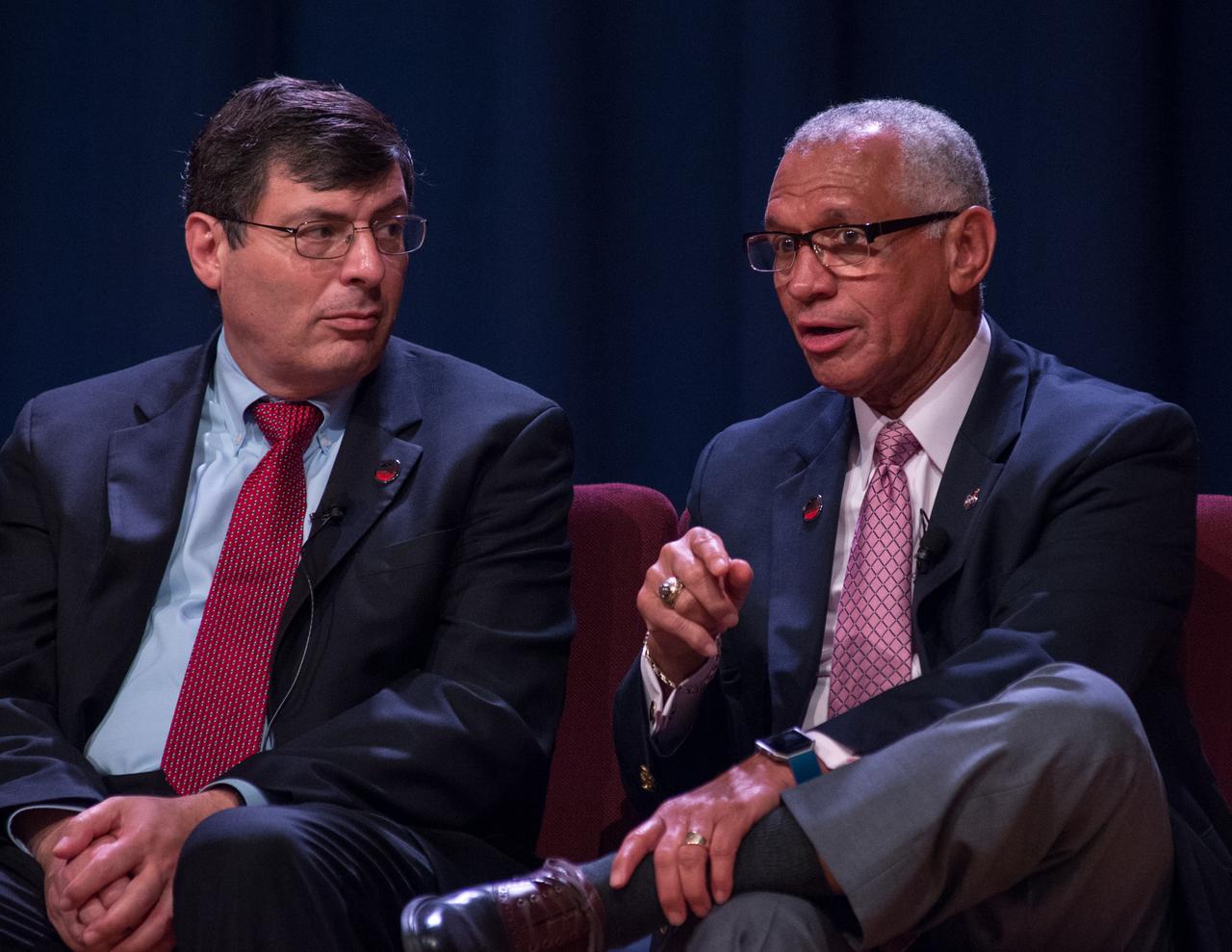
James Webb Space Telescope (JWST) Town Hall - Panel question and answer - Bill Ochs; Dr. John Mather; Dr. Eric Smith; Thomas Zurbuchen; Center Director Chris Scolese; NASA Administrator Charlie Bolden.
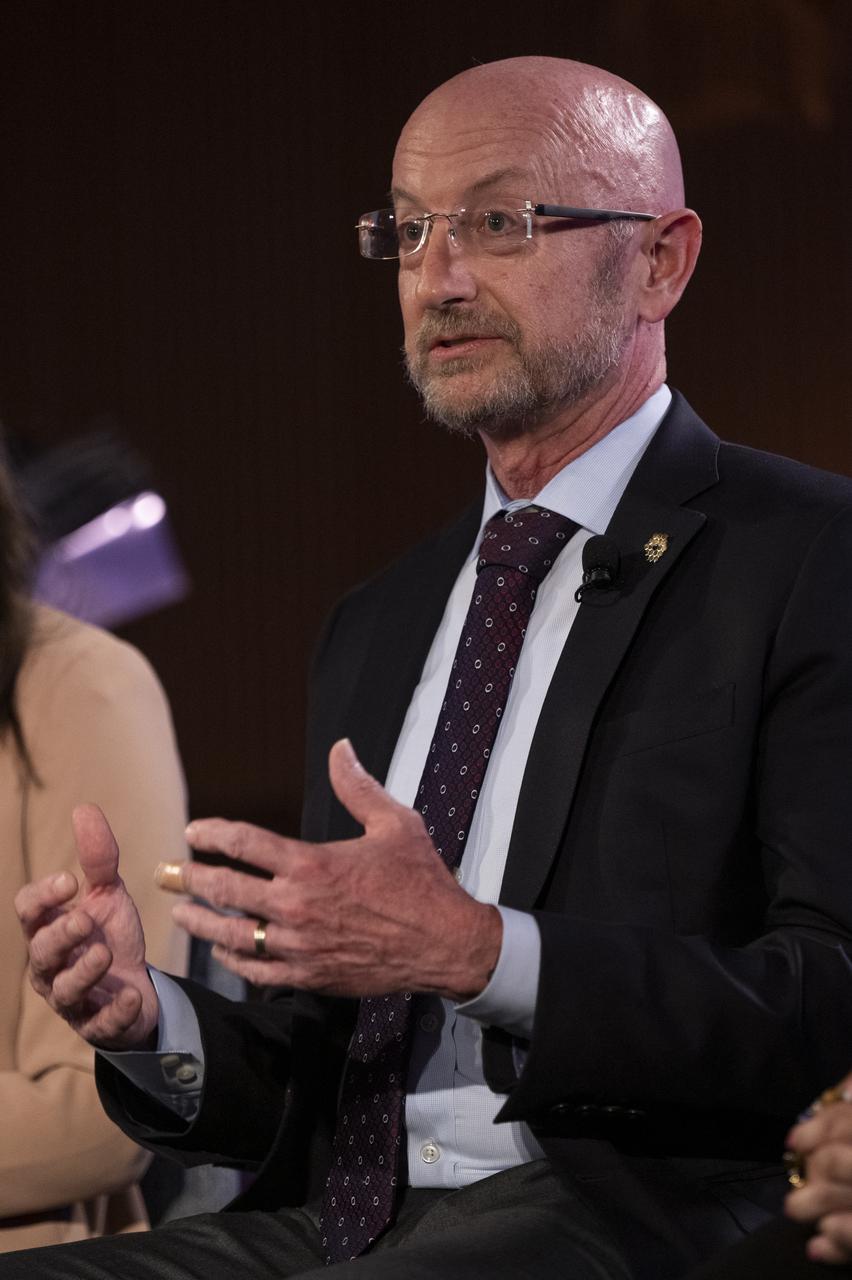
NASA James Webb Space Telescope Program Scientist and Astrophysics Division Chief Scientist Eric Smith delivers opening remarks during a briefing following the release of the first full-color images from NASA’s James Webb Space Telescope, Tuesday, July 12, 2022, at NASA’s Goddard Space Flight Center in Greenbelt, Md. The first full-color images and spectroscopic data from the James Webb Space Telescope, a partnership with ESA (European Space Agency) and the Canadian Space Agency (CSA), are a demonstration of the power of Webb as the telescope begins its science mission to unfold the infrared universe. Photo Credit: (NASA/Bill Ingalls)
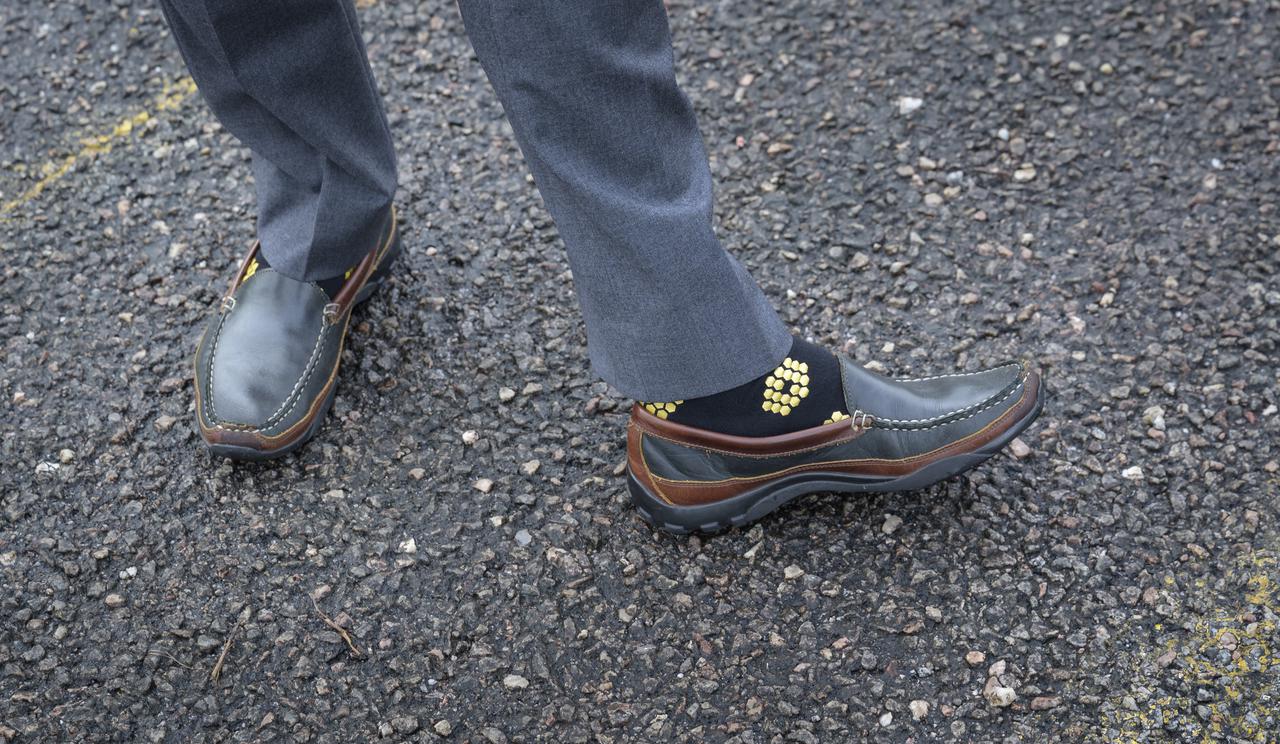
NASA James Webb Space Telescope Program Scientist Eric Smith, wearing Webb themed socks, waits for Arianespace's Ariane 5 rocket with NASA’s James Webb Space Telescope onboard, to rollout to the launch pad, Thursday, Dec. 23, 2021, at Europe’s Spaceport, the Guiana Space Center in Kourou, French Guiana. The James Webb Space Telescope (sometimes called JWST or Webb) is a large infrared telescope with a 21.3 foot (6.5 meter) primary mirror. The observatory will study every phase of cosmic history—from within our solar system to the most distant observable galaxies in the early universe. Photo Credit: (NASA/Bill Ingalls)
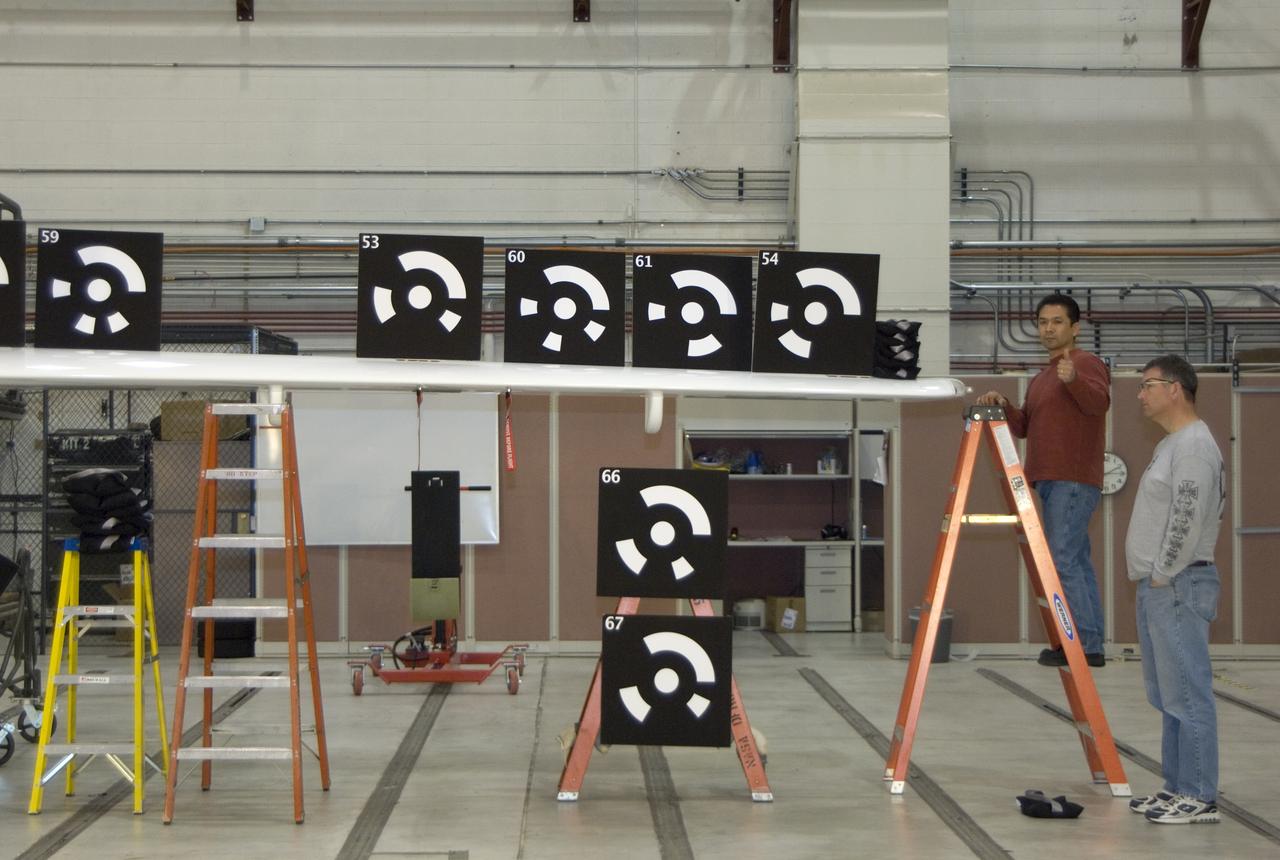
NASA engineer Larry Hudson and Ikhana ground crew member James Smith work on a ground validation test with new fiber optic sensors that led to validation flights on the Ikhana aircraft. NASA Dryden Flight Research Center is evaluating an advanced fiber optic-based sensing technology installed on the wings of NASA's Ikhana aircraft. The fiber optic system measures and displays the shape of the aircraft's wings in flight. There are other potential safety applications for the technology, such as vehicle structural health monitoring. If an aircraft structure can be monitored with sensors and a computer can manipulate flight control surfaces to compensate for stresses on the wings, structural control can be established to prevent situations that might otherwise result in a loss of control.
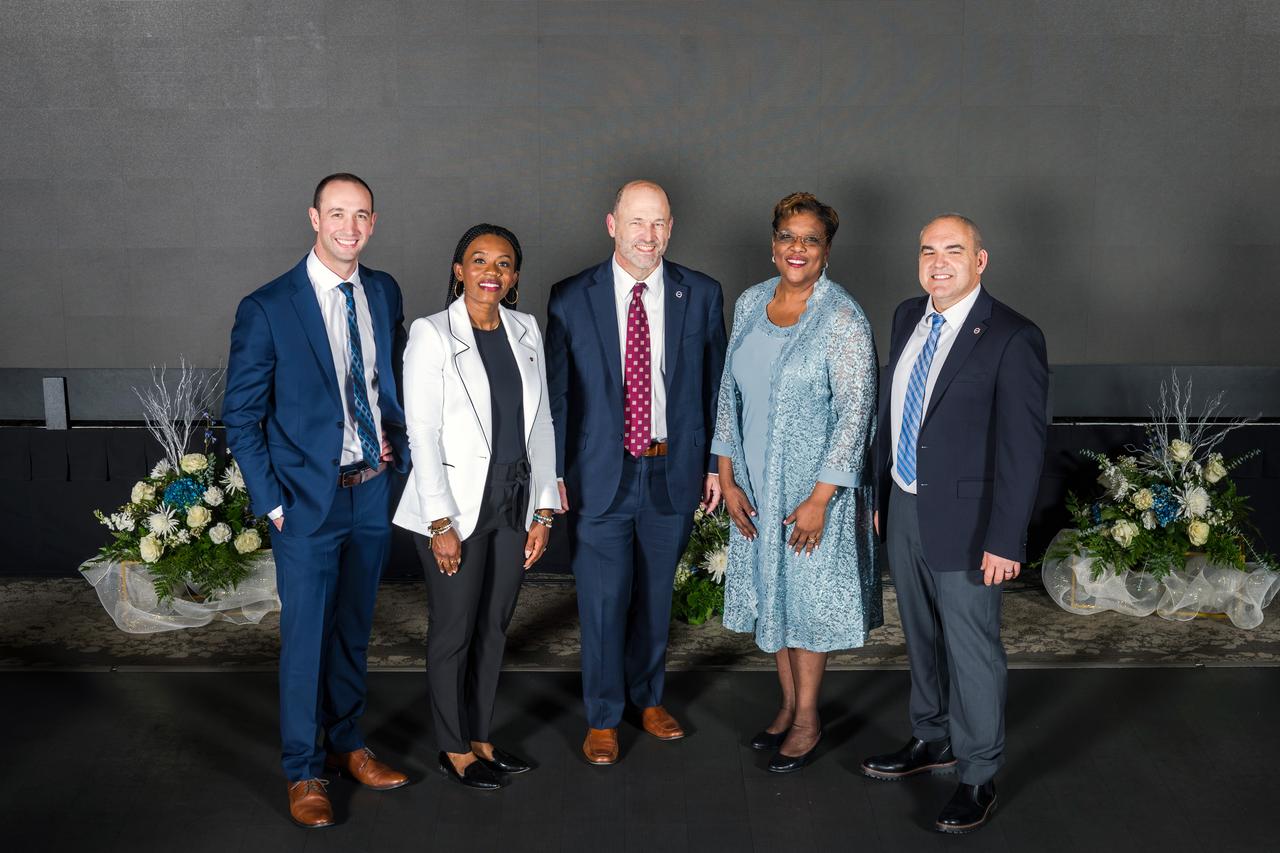
NASA Glenn's Spotlight on the Stars, 10 Years and Counting was held at Windows on the River in Cleveland, OH on November 20th, 2024. Sponsorship organized by the Ohio Aerospace Institute. Pictured from left to right: Timothy Smith, Nikki Welch, Center Director Dr. James Kenyon, Acting Deputy Center Director Dr. Wanda Peters, Carlos Garcia-Galan. Welcome by Dennis Andersh, CEO and President, Parallax Advanced Research, Ohio Aerospace Institute. Remarks by Terrence Slaybaugh, Vice President of Sites and Infrastructure, JobsOhio. Introduction of 10th Anniversary Video, Dr. Wanda Peters, Acting Deputy Director, NASA Glenn Research Center. Remarks/Introduction of Presenters, Dr. James Kenyon, Director, NASA Glenn Research Center. Keynote Speakers: Nikki Welch, NASA Glenn Communications, Connecting People to the Mission. Timothy Smith, NASA Glenn's Superalloy Achievements. Carlos Garcia-Galan, Dreaming of Going to the Moon.

NASA James Webb Space Telescope Program Scientist Eric Smith reacts after hearing confirmation that the James Webb Space Telescope successfully separated from the Ariane 5 rocket, Saturday, Dec. 25, 2021, in the Jupiter Hall of the Guiana Space Centre in Kourou, French Guiana. The James Webb Space Telescope (sometimes called JWST or Webb) is a large infrared telescope with a 21.3 foot (6.5 meter) primary mirror. The observatory will study every phase of cosmic history—from within our solar system to the most distant observable galaxies in the early universe. Photo Credit: (NASA/Bill Ingalls)
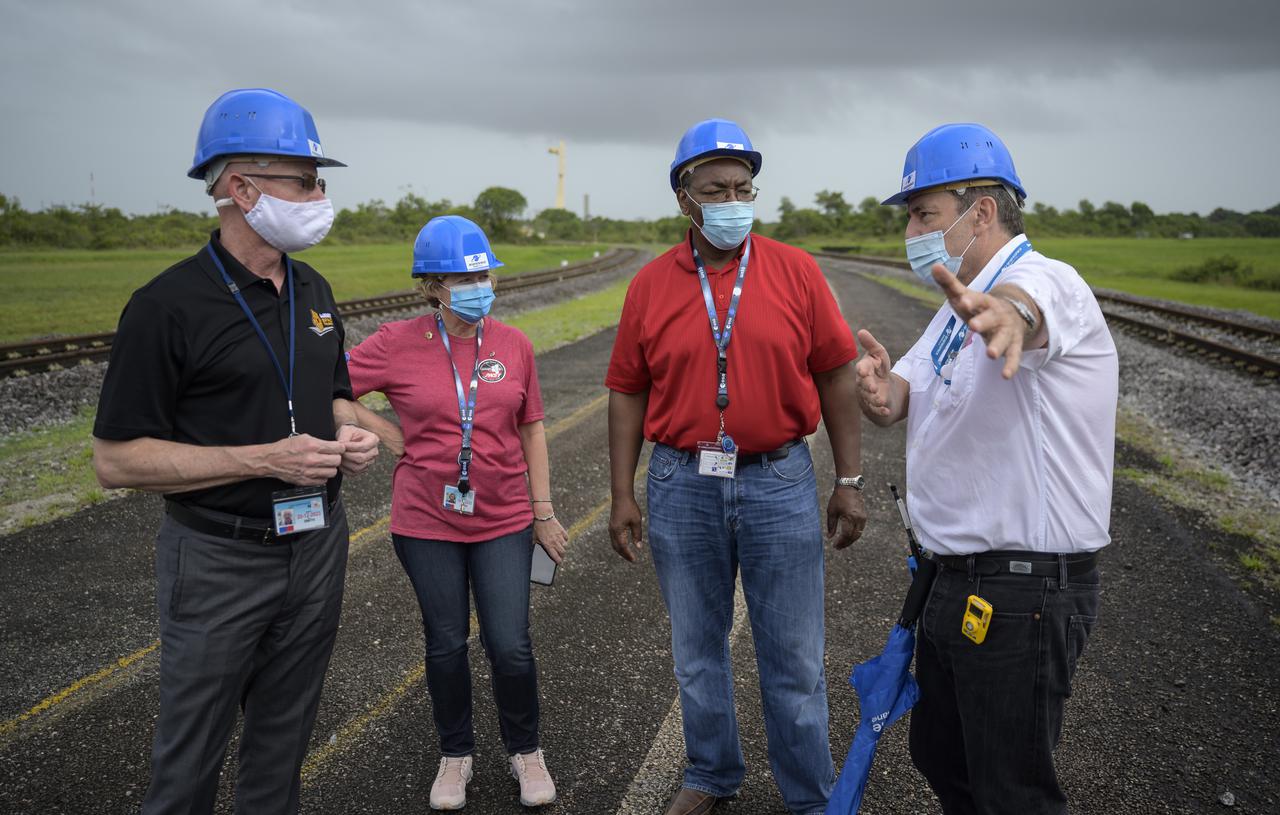
NASA James Webb Space Telescope Program Scientist Eric Smith left, NASA James Webb Space Telescope Program Manager Jeanne Davis, NASA Program Director for the James Webb Space Telescope Greg Robinson, and Arianespace’s Vice President for French Guiana Bruno Gérard, right, talk as they wait for Arianespace's Ariane 5 rocket with NASA’s James Webb Space Telescope onboard, to rollout to the launch pad, Thursday, Dec. 23, 2021, at Europe’s Spaceport, the Guiana Space Center in Kourou, French Guiana. The James Webb Space Telescope (sometimes called JWST or Webb) is a large infrared telescope with a 21.3 foot (6.5 meter) primary mirror. The observatory will study every phase of cosmic history—from within our solar system to the most distant observable galaxies in the early universe. Photo Credit: (NASA/Bill Ingalls)
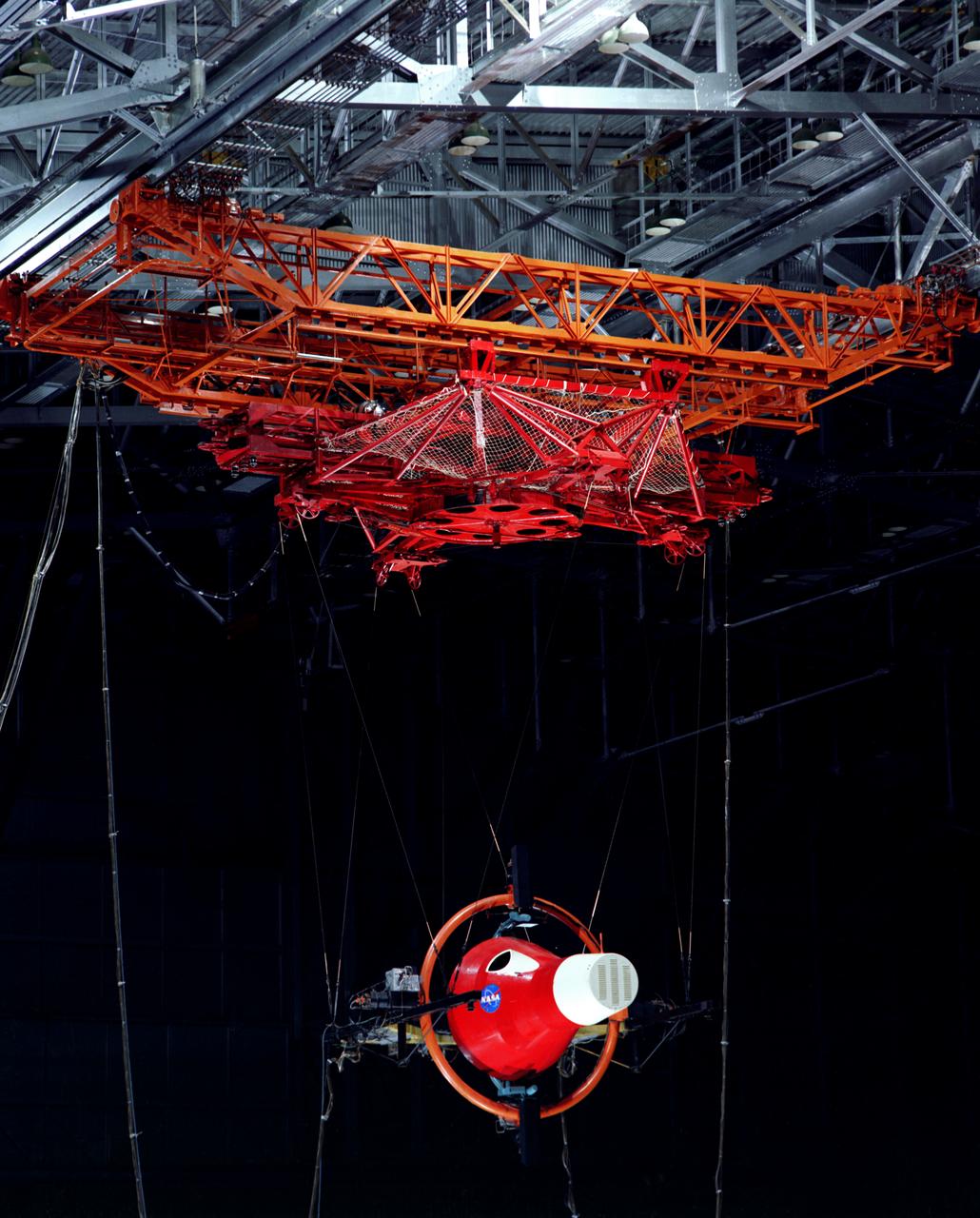
Gemini Rendezvous Docking Simulator suspended from the roof of the Langley Research Center s aircraft hangar. Francis B. Smith wrote: The rendezvous and docking operation of the Gemini spacecraft with the Agena and of the Apollo Command Module with the Lunar Excursion Module have been the subject of simulator studies for several years. This figure illustrates the Gemini-Agena rendezvous docking simulator at Langley. The Gemini spacecraft was supported in a gimbal system by an overhead crane and gantry arrangement which provided 6 degrees of freedom - roll, pitch, yaw, and translation in any direction - all controllable by the astronaut in the spacecraft. Here again the controls fed into a computer which in turn provided an input to the servos driving the spacecraft so that it responded to control motions in a manner which accurately simulated the Gemini spacecraft. -- Published in Barton C. Hacker and James M. Grimwood, On the Shoulders of Titans: A History of Project Gemini, NASA SP-4203 Francis B. Smith, Simulators for Manned Space Research, Paper presented at the 1966 IEEE International convention, March 21-25, 1966.
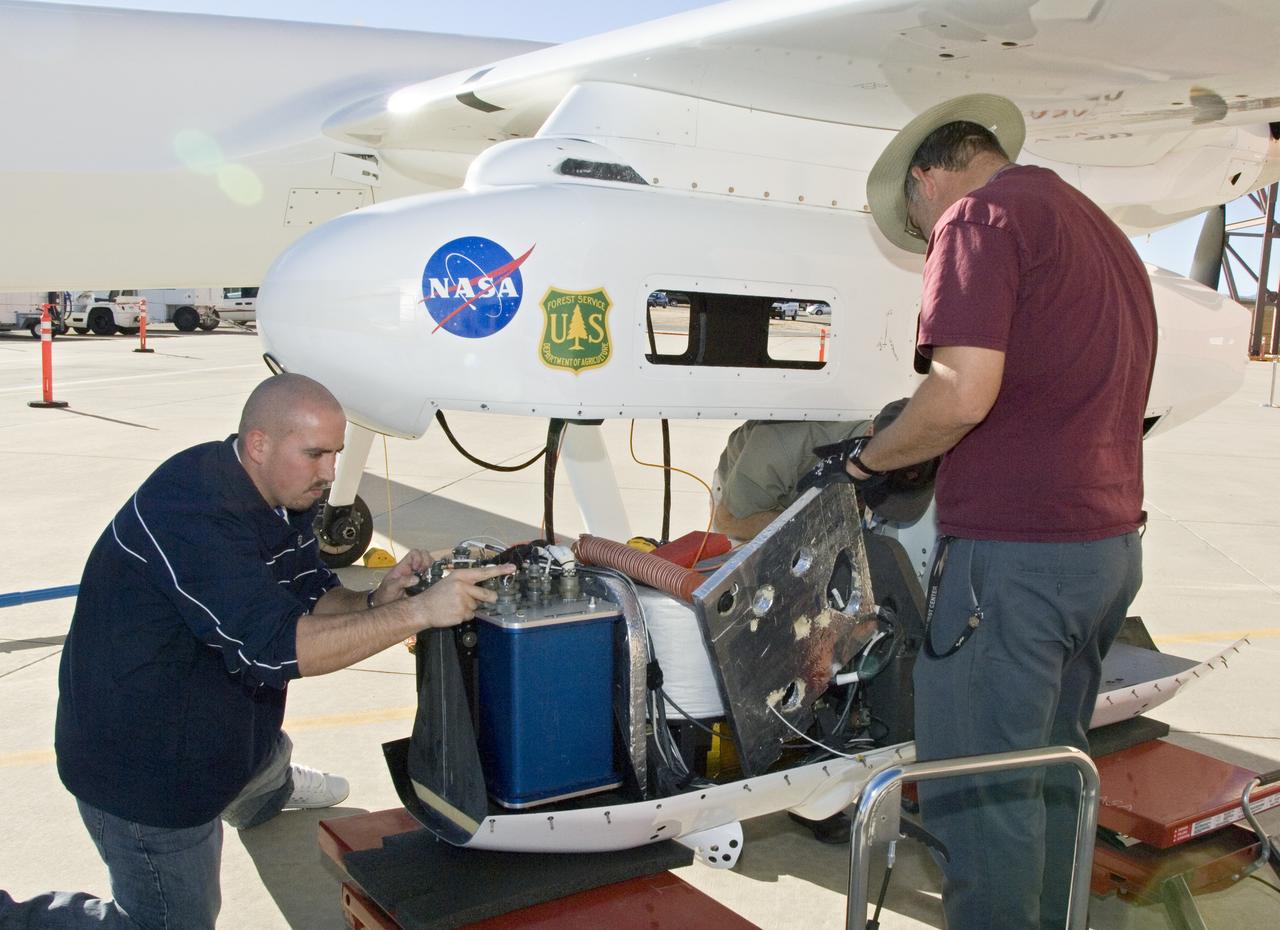
NASA Dryden's Ikhana ground crewmen Gus Carreno and James Smith load the thermal-infrared imaging scanner pallet into the Ikhana's underwing payload pod.
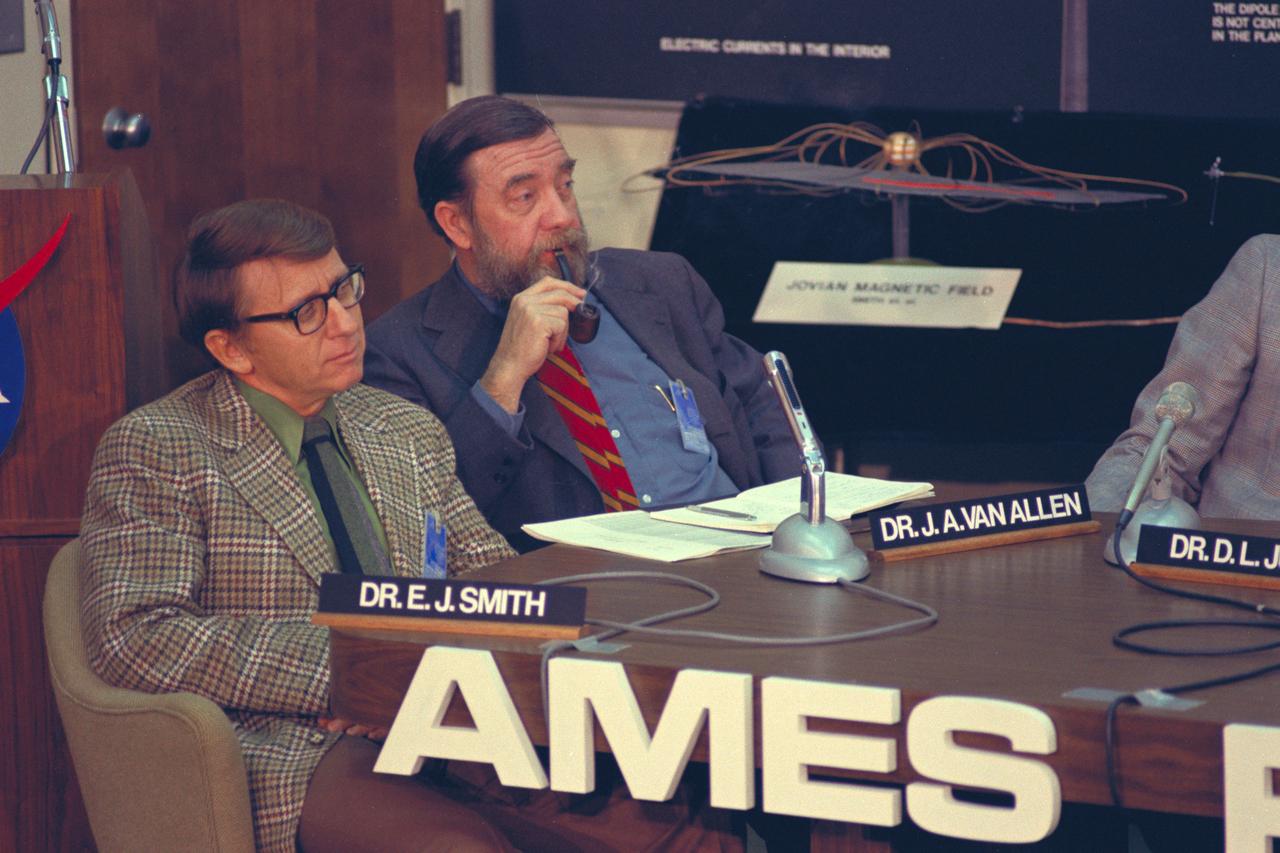
Dr. E. J. Smith (L) Dr. James Van Allen (R) during press conference for Pioneer 11 Jupiter encounter
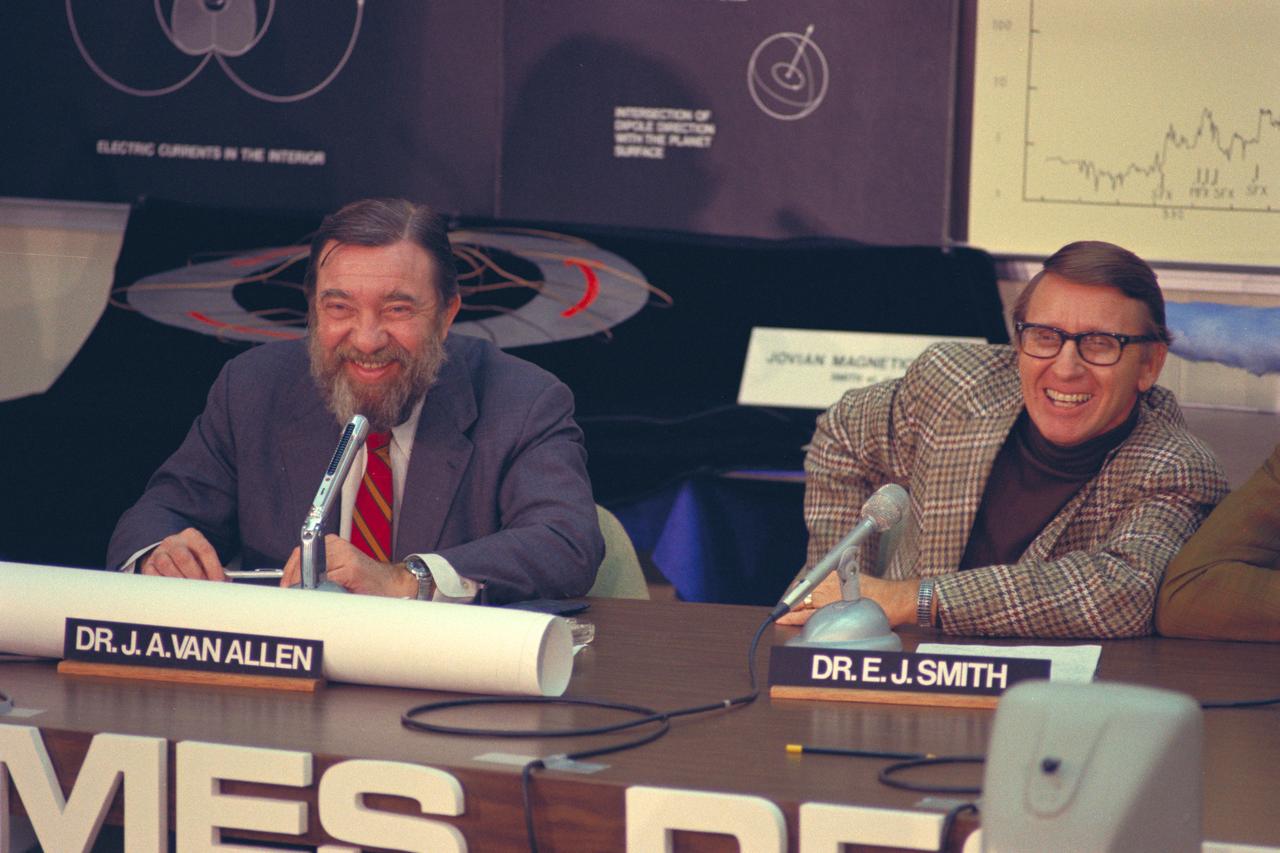
Dr James Van Allen (L) and Dr E. J. Smith (R) during press conference for Pioneer 11 Jupiter encounter
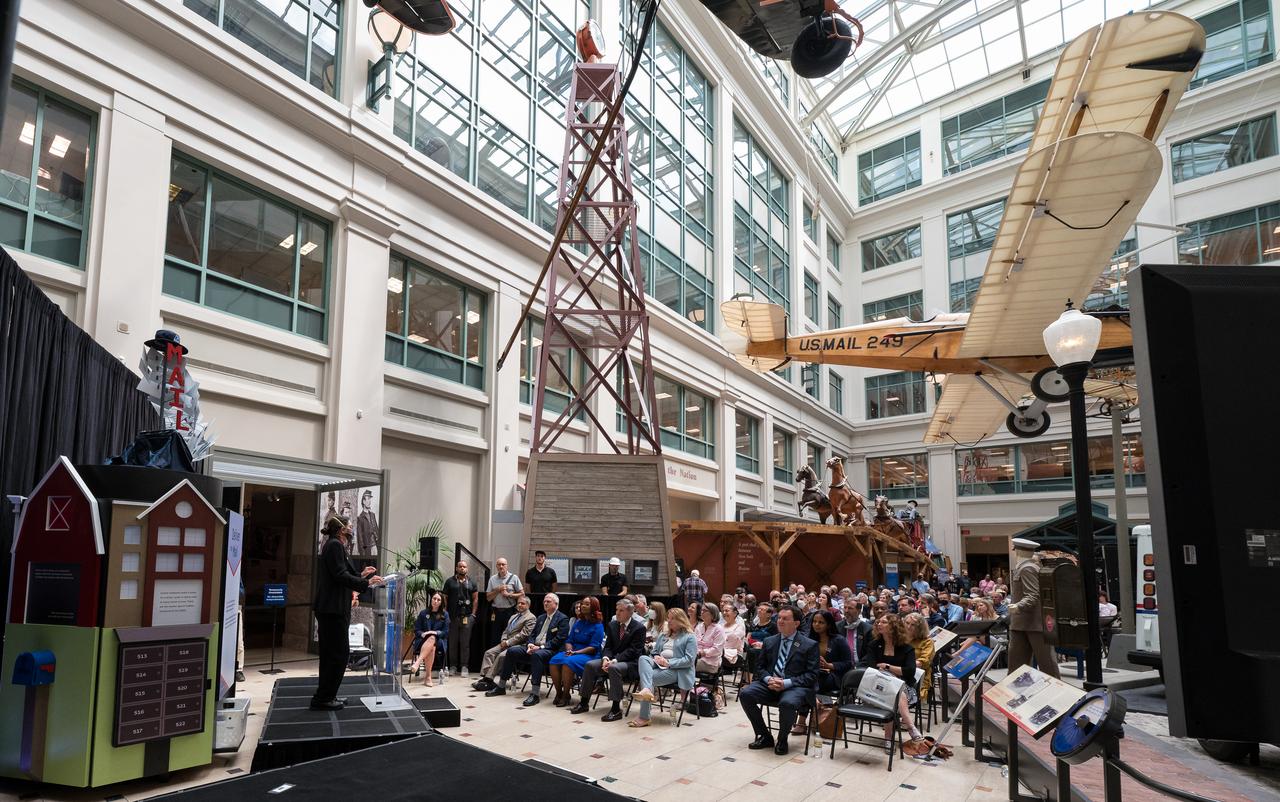
NASA’s Goddard Space Flight Center Webb Deputy Observatory Project Scientist, Erin Smith, provides remarks at the first-day-of-issue event for the United States Postal Service’s new stamp celebrating NASA’s James Webb Space Telescope (JWST) on Thursday, Sept. 8, 2022, at the Smithsonian’s National Postal Museum in Washington. The stamp, which features an illustration of the observatory, honors Webb’s mission to explore the unknown in our universe – solving mysteries in our solar system, looking beyond to distant worlds around other stars, and probing the structures and origins of our universe and our place in it. Photo Credit: (NASA/Aubrey Gemignani)
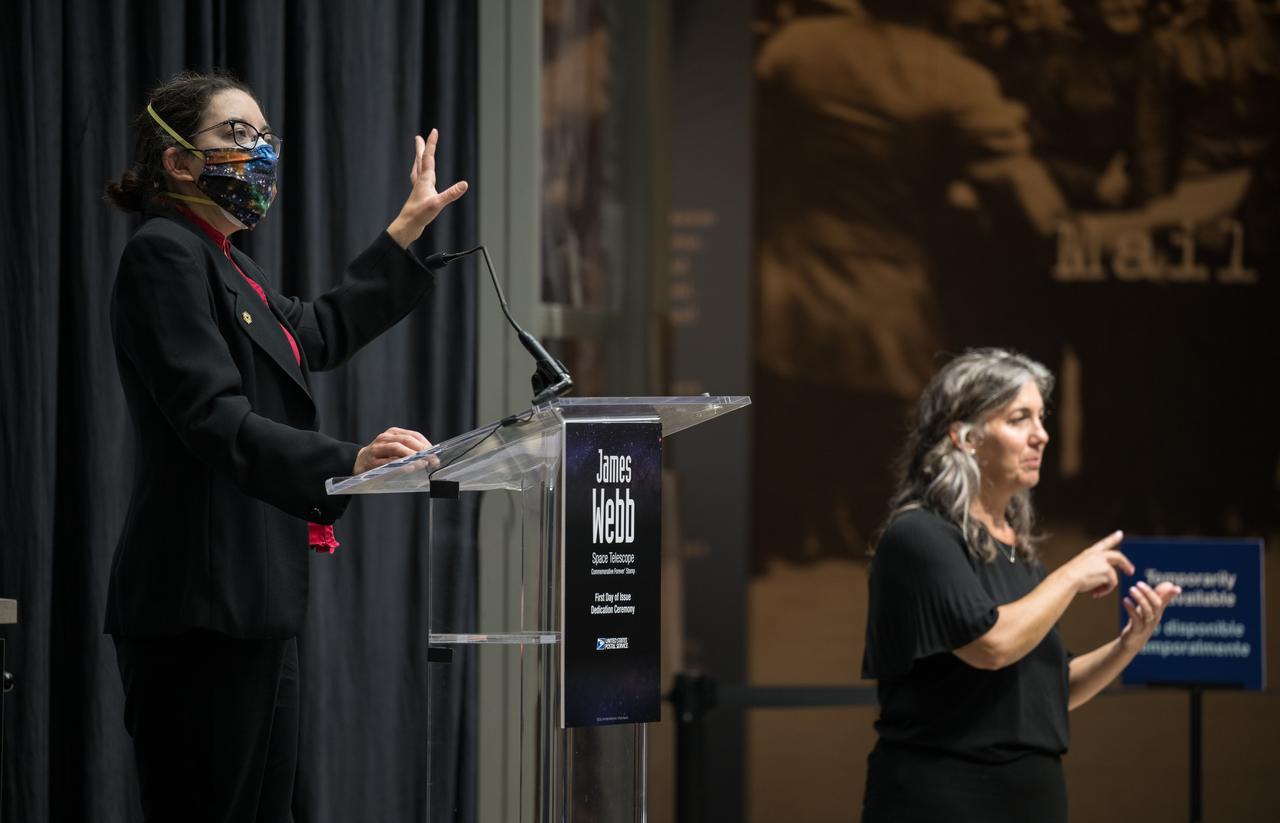
NASA’s Goddard Space Flight Center Webb Deputy Observatory Project Scientist, Erin Smith, provides remarks at the first-day-of-issue event for the United States Postal Service’s new stamp celebrating NASA’s James Webb Space Telescope (JWST) on Thursday, Sept. 8, 2022, at the Smithsonian’s National Postal Museum in Washington. The stamp, which features an illustration of the observatory, honors Webb’s mission to explore the unknown in our universe – solving mysteries in our solar system, looking beyond to distant worlds around other stars, and probing the structures and origins of our universe and our place in it. Photo Credit: (NASA/Aubrey Gemignani)
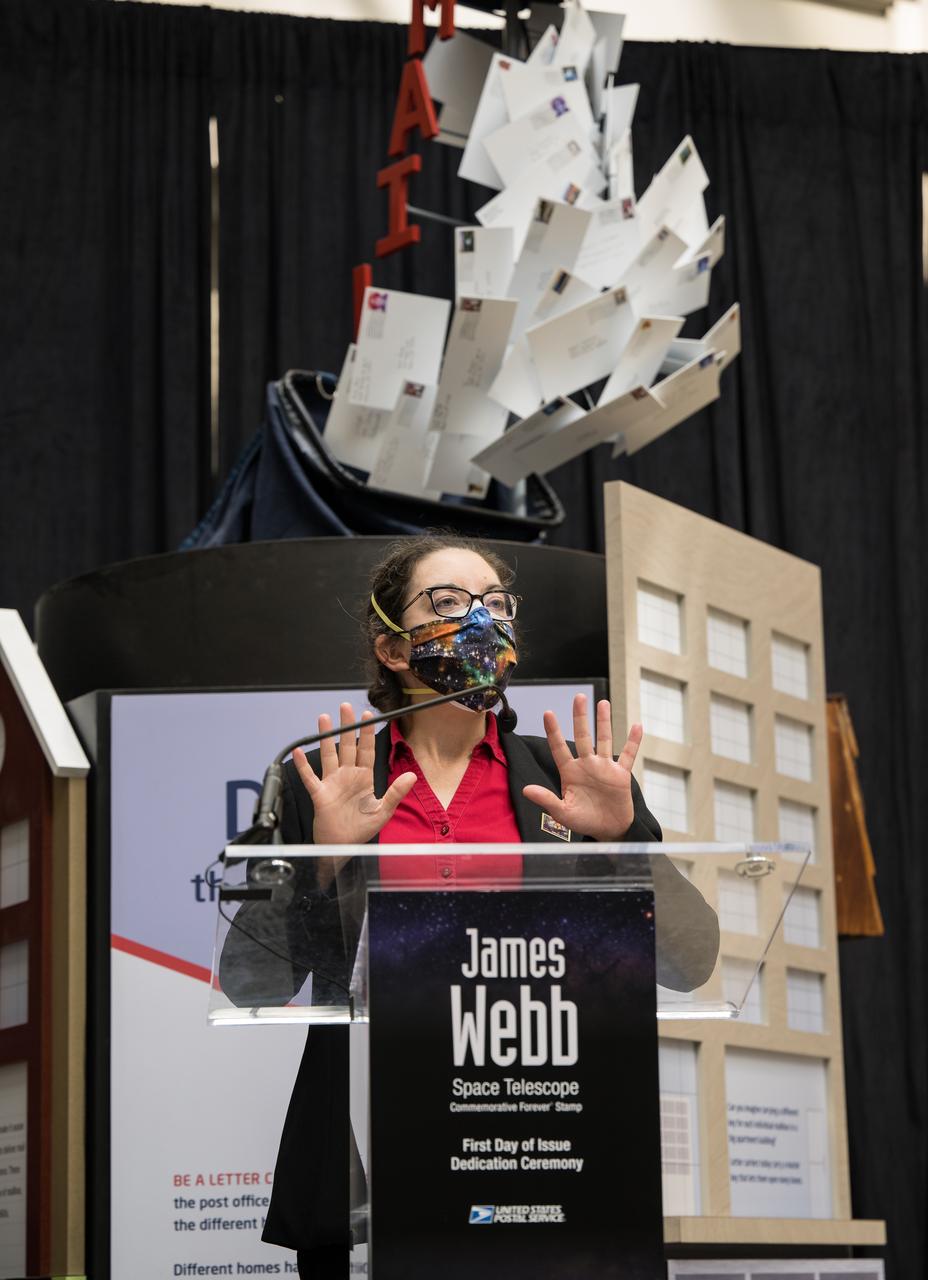
NASA’s Goddard Space Flight Center Webb Deputy Observatory Project Scientist, Erin Smith, provides remarks at the first-day-of-issue event for the United States Postal Service’s new stamp celebrating NASA’s James Webb Space Telescope (JWST) on Thursday, Sept. 8, 2022, at the Smithsonian’s National Postal Museum in Washington. The stamp, which features an illustration of the observatory, honors Webb’s mission to explore the unknown in our universe – solving mysteries in our solar system, looking beyond to distant worlds around other stars, and probing the structures and origins of our universe and our place in it. Photo Credit: (NASA/Aubrey Gemignani)
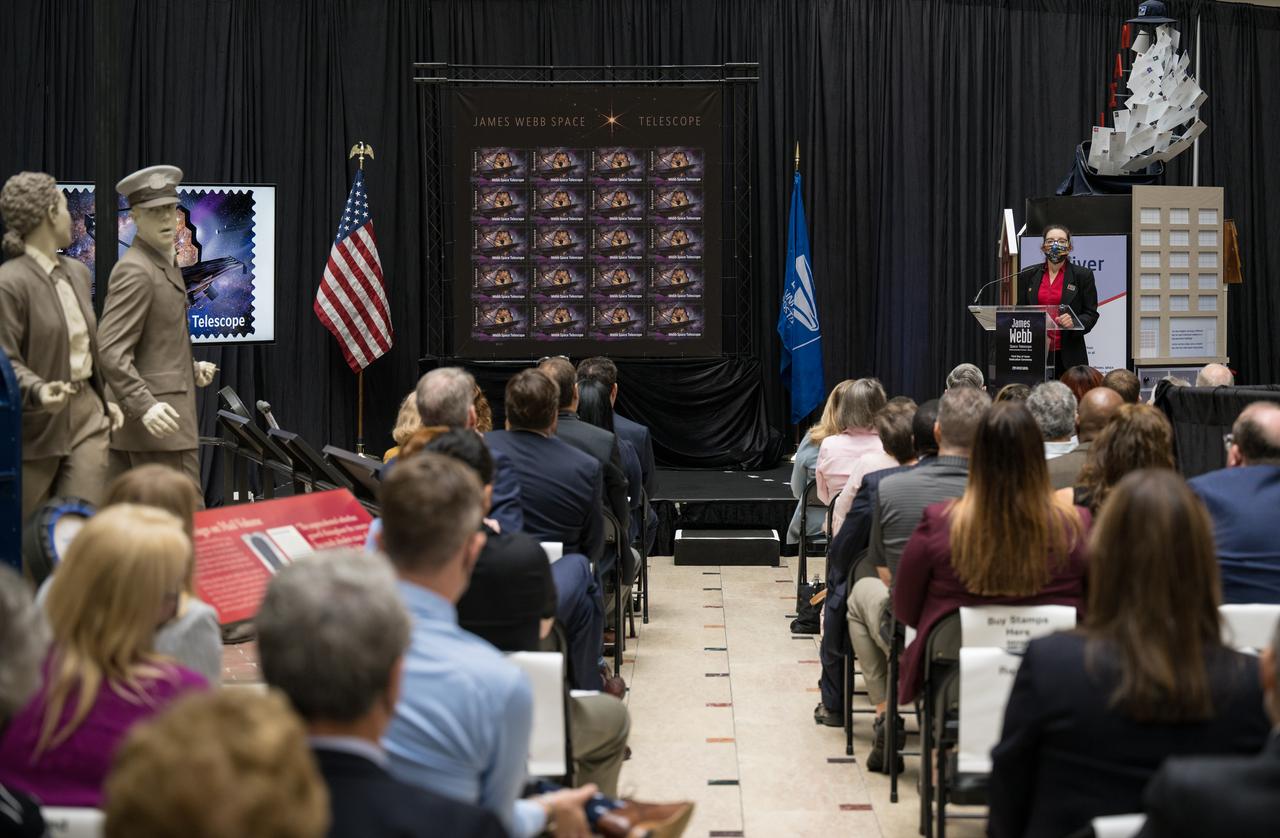
NASA’s Goddard Space Flight Center Webb Deputy Observatory Project Scientist, Erin Smith, provides remarks at the first-day-of-issue event for the United States Postal Service’s new stamp celebrating NASA’s James Webb Space Telescope (JWST) on Thursday, Sept. 8, 2022, at the Smithsonian’s National Postal Museum in Washington. The stamp, which features an illustration of the observatory, honors Webb’s mission to explore the unknown in our universe – solving mysteries in our solar system, looking beyond to distant worlds around other stars, and probing the structures and origins of our universe and our place in it. Photo Credit: (NASA/Aubrey Gemignani)

NASA’s Goddard Space Flight Center Webb Deputy Observatory Project Scientist, Erin Smith, provides remarks at the first-day-of-issue event for the United States Postal Service’s new stamp celebrating NASA’s James Webb Space Telescope (JWST) on Thursday, Sept. 8, 2022, at the Smithsonian’s National Postal Museum in Washington. The stamp, which features an illustration of the observatory, honors Webb’s mission to explore the unknown in our universe – solving mysteries in our solar system, looking beyond to distant worlds around other stars, and probing the structures and origins of our universe and our place in it. Photo Credit: (NASA/Aubrey Gemignani)
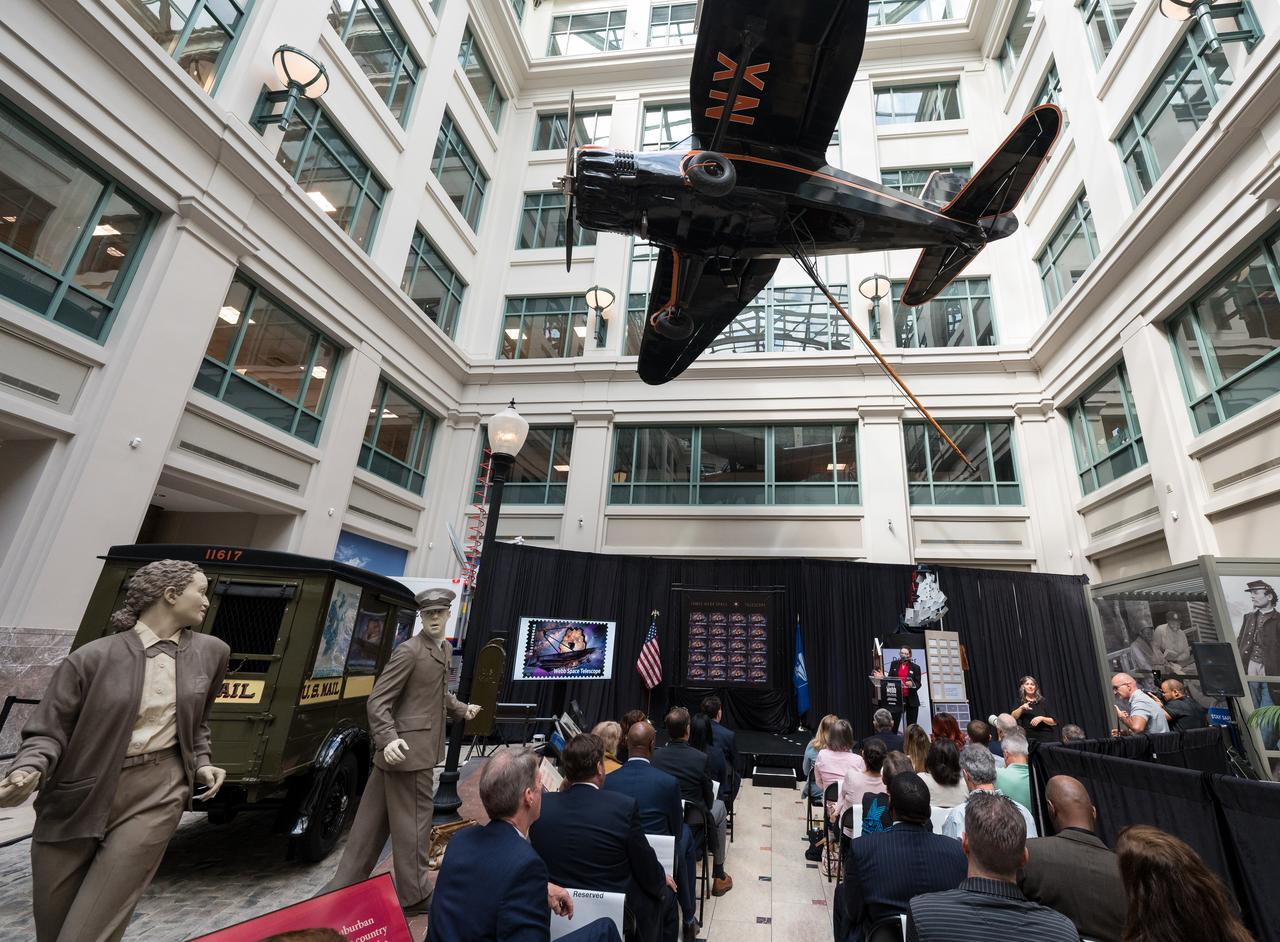
NASA’s Goddard Space Flight Center Webb Deputy Observatory Project Scientist, Erin Smith, provides remarks at the first-day-of-issue event for the United States Postal Service’s new stamp celebrating NASA’s James Webb Space Telescope (JWST) on Thursday, Sept. 8, 2022, at the Smithsonian’s National Postal Museum in Washington. The stamp, which features an illustration of the observatory, honors Webb’s mission to explore the unknown in our universe – solving mysteries in our solar system, looking beyond to distant worlds around other stars, and probing the structures and origins of our universe and our place in it. Photo Credit: (NASA/Aubrey Gemignani)
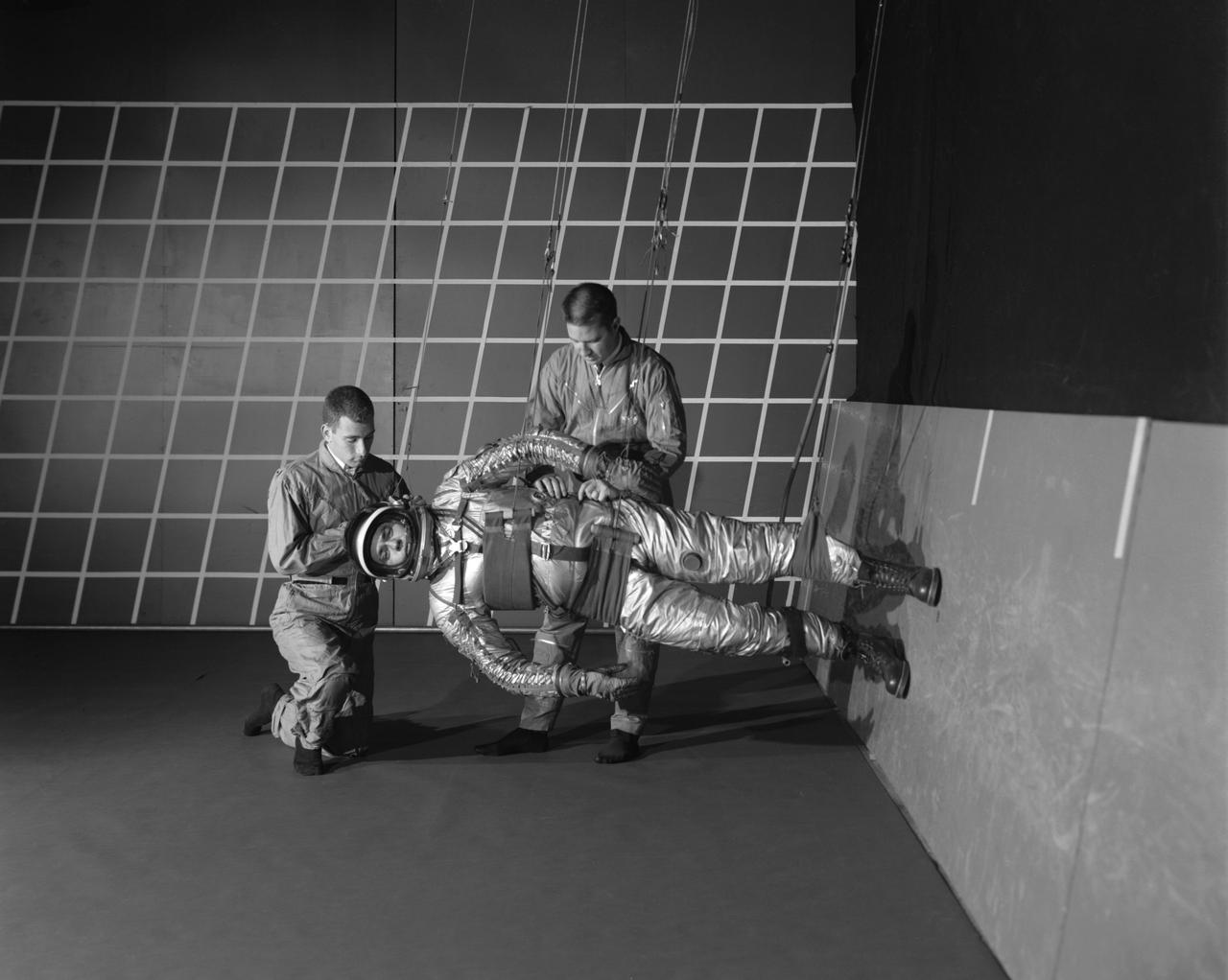
A test subject being suited up for studies on the Reduced Gravity Walking Simulator located in the hangar at Langley Research Center. The initial version of this simulator was located inside the hangar. Later a larger version would be located at the Lunar Landing Facility. The purpose of this simulator was to study the subject while walking, jumping or running. Researchers conducted studies of various factors such as fatigue limit, energy expenditure, and speed of locomotion. Francis B. Smith wrote in his paper "Simulators For Manned Space Research," "I would like to conclude this talk with a discussion of a device for simulating lunar gravity which is very effective and yet which is so simple that its cost is in the order of a few thousand dollars at most, rather than hundreds of thousands. With a little ingenuity, one could almost build this type simulator in his backyard for children to play on. The principle is ...if a test subject is suspended in a sling so that his body axis makes an angle of 9 1/2 degrees with the horizontal and if he then "stands" on a platform perpendicular to his body axis, the component of the earth's gravity forcing him toward the platform is one times the sine of 9 1/2 degrees or approximately 1/6 of the earth's normal gravity field. That is, a 180 pound astronaut "standing" on the platform would exert a force of only 30 pounds - the same as if he were standing upright on the lunar surface." -- Published in James R. Hansen, Spaceflight Revolution: NASA Langley Research Center From Sputnik to Apollo, NASA SP-4308; Francis B. Smith, "Simulators For Manned Space Research," Paper for 1966 IEEE International Convention, New York, NY, March 21-25, 1966
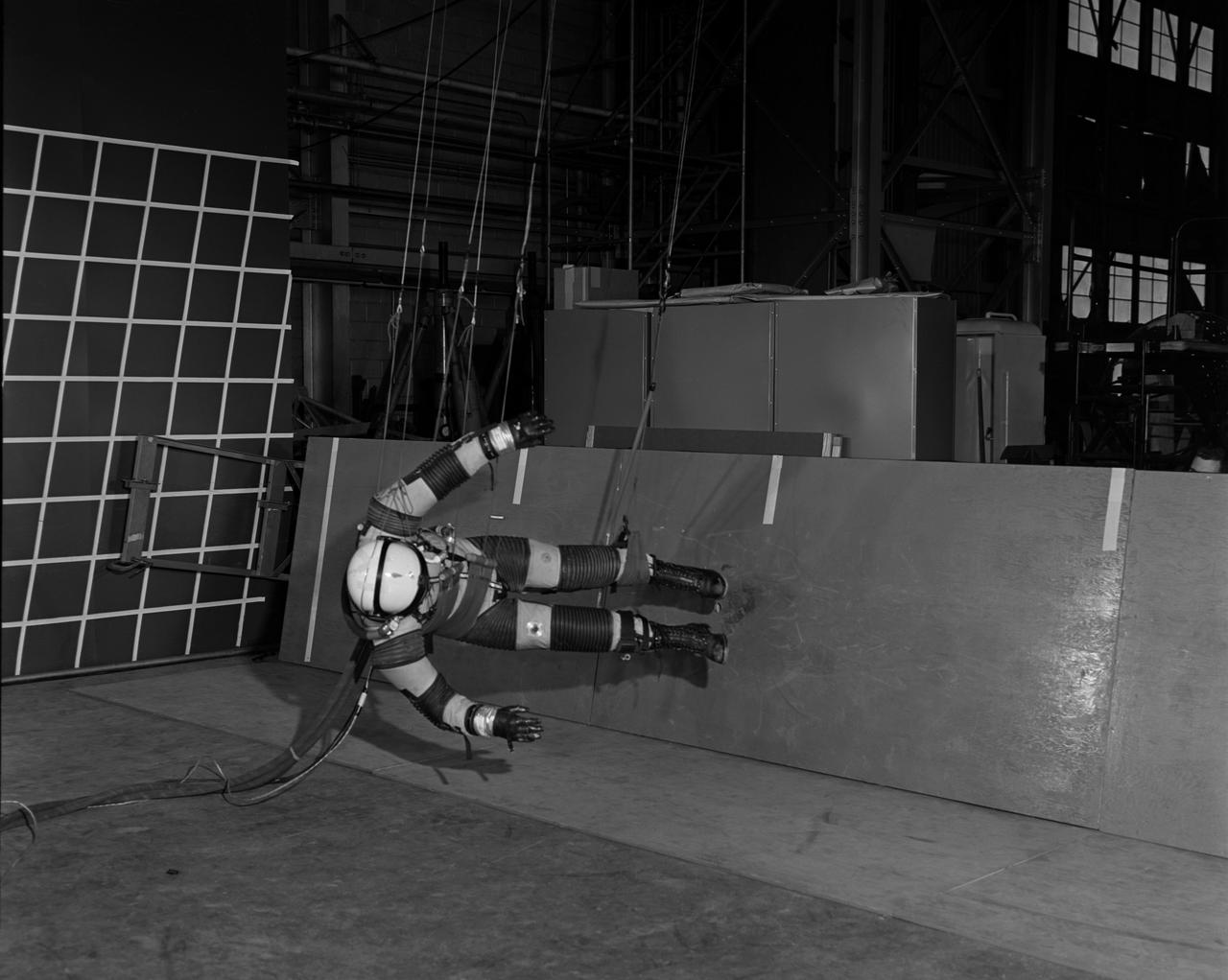
A "suited" test subject on the Reduced Gravity Walking Simulator located in the hangar at Langley Research Center. The initial version of this simulator was located inside the hangar. Later a larger version would be located at the Lunar Landing Facility. The purpose of this simulator was to study the subject while walking, jumping or running. Researchers conducted studies of various factors such as fatigue limit, energy expenditure, and speed of locomotion. Francis B. Smith wrote in "Simulators For Manned Space Research:" "The cables which support the astronaut are supported by an overhead trolley about 150 feet above the center line of the walkway and the support is arranged so that the subject is free to walk, run, jump, and perform other self-locomotive tasks in a more-or-less normal manner, even though he is constrained to move in one place." "The studies thus far show that an astronaut should have no particular difficulty in walking in a pressurized space suit on a hard lunar surface. Rather, the pace was faster and the suit was found to be more comfortable and less fatiguing under lunar "g" than under earth "g." When the test subject wished to travel hurriedly any appreciable distance, a long loping gait at about 10 feet per second was found to be most comfortable." -- Published in James R. Hansen, Spaceflight Revolution: NASA Langley Research Center From Sputnik to Apollo, (Washington: NASA, 1995), p. 377; Francis B. Smith, "Simulators For Manned Space Research," Paper for 1966 IEEE International Convention, New York, NY, March 21-25, 1966.
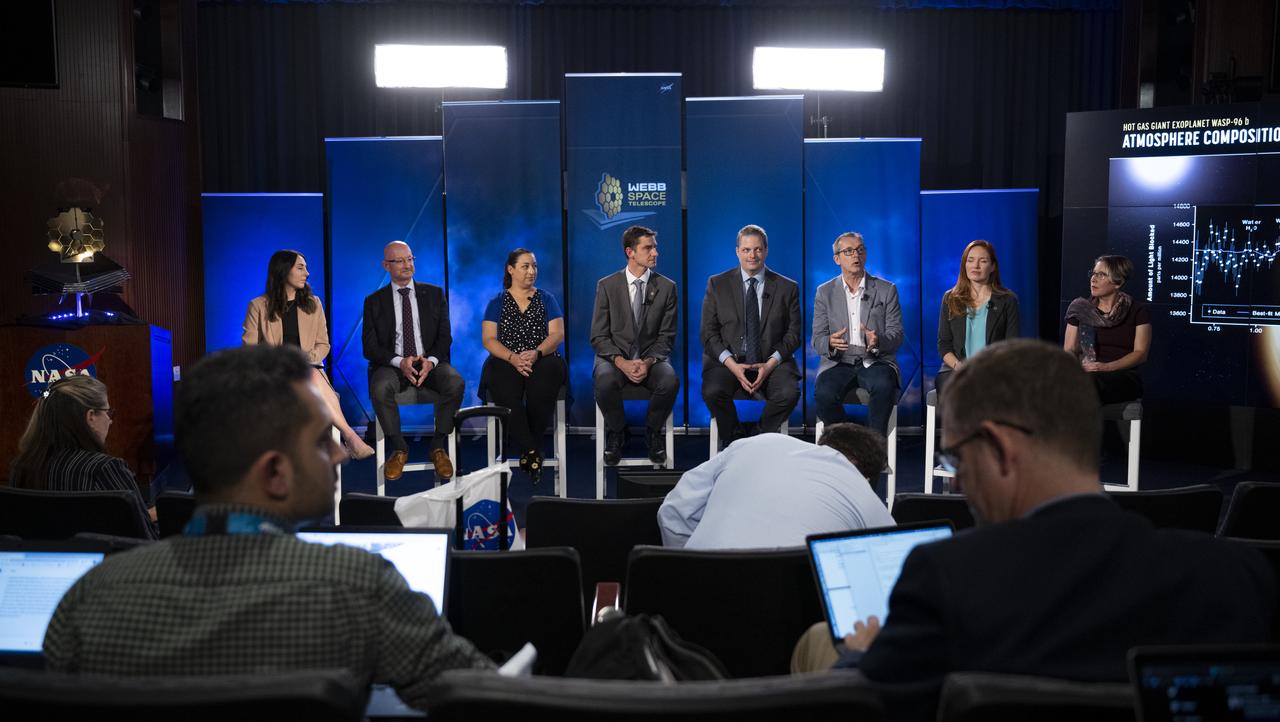
NASA Public Affairs Officer Alise Fisher, left, NASA James Webb Space Telescope Program Scientist and Astrophysics Division Chief Scientist Eric Smith, second from left, NASA James Webb Space Telescope Deputy Project Scientist for Exoplanet Science Knicole Colón, third from left, NASA James Webb Space Telescope Project Scientist at ESA (European Space Agency) Christopher Evans, fourth from left, NASA James Webb Space Telescope Project Scientist, Space Telescope Science Institute, Klaus Pontoppidan, fourth from right, Principal Investigator for the Canadian Near-Infrared Imager and Slitless Spectrograph at the University of Montreal René Doyon, third from right, NASA James Webb Space Telescope Deputy Project Scientist for Communications Amber Straughn, second from right, and NASA James Webb Space Telescope Operations Project Scientist Jane Rigby, right, during a briefing following the release of the first full-color images from NASA’s James Webb Space Telescope, Tuesday, July 12, 2022, at NASA’s Goddard Space Flight Center in Greenbelt, Md. The first full-color images and spectroscopic data from the James Webb Space Telescope, a partnership with ESA (European Space Agency) and the Canadian Space Agency (CSA), are a demonstration of the power of Webb as the telescope begins its science mission to unfold the infrared universe. Photo Credit: (NASA/Bill Ingalls)
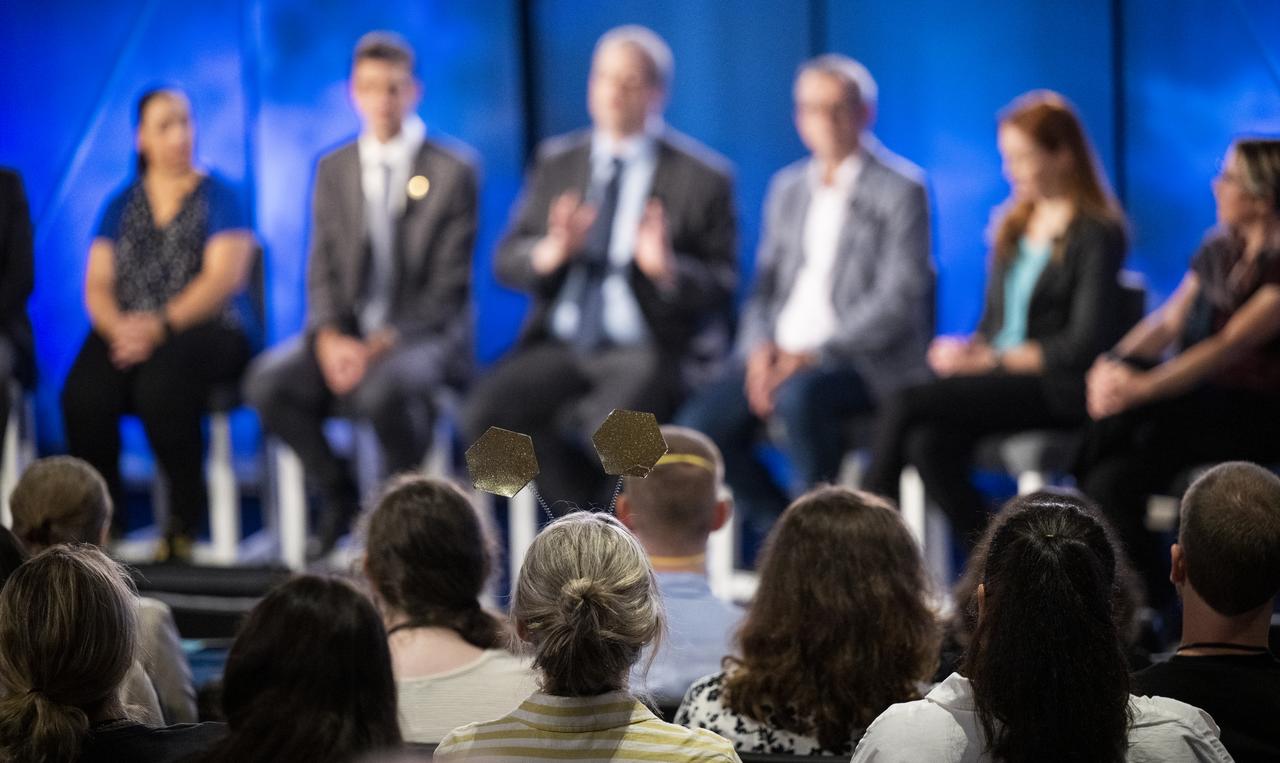
A NASA Social attendee is seen wearing a headband featuring Webb mirrors during a briefing with NASA Public Affairs Officer Alise Fisher, left, NASA James Webb Space Telescope Program Scientist and Astrophysics Division Chief Scientist Eric Smith, second from left, NASA James Webb Space Telescope Deputy Project Scientist for Exoplanet Science Knicole Colón, third from left, NASA James Webb Space Telescope Project Scientist at ESA (European Space Agency) Christopher Evans, fourth from left, NASA James Webb Space Telescope project scietntist, Space Telescope Science Institute, Klaus Pontoppidan, fourth from right, Principal Investigator for the Canadian Near-Infrared Imager and Slitless Spectrograph at the University of Montreal René Doyon, third from right, NASA James Webb Space Telescope Deputy Project Scientist for Communications Amber Straughn, second from right, and NASA James Webb Space Telescope Operations Project Scientist Jane Rigby, right, following the release of the first full-color images from NASA’s James Webb Space Telescope, Tuesday, July 12, 2022, at NASA’s Goddard Space Flight Center in Greenbelt, Md. The first full-color images and spectroscopic data from the James Webb Space Telescope, a partnership with ESA (European Space Agency) and the Canadian Space Agency (CSA), are a demonstration of the power of Webb as the telescope begins its science mission to unfold the infrared universe. Photo Credit: (NASA/Bill Ingalls)
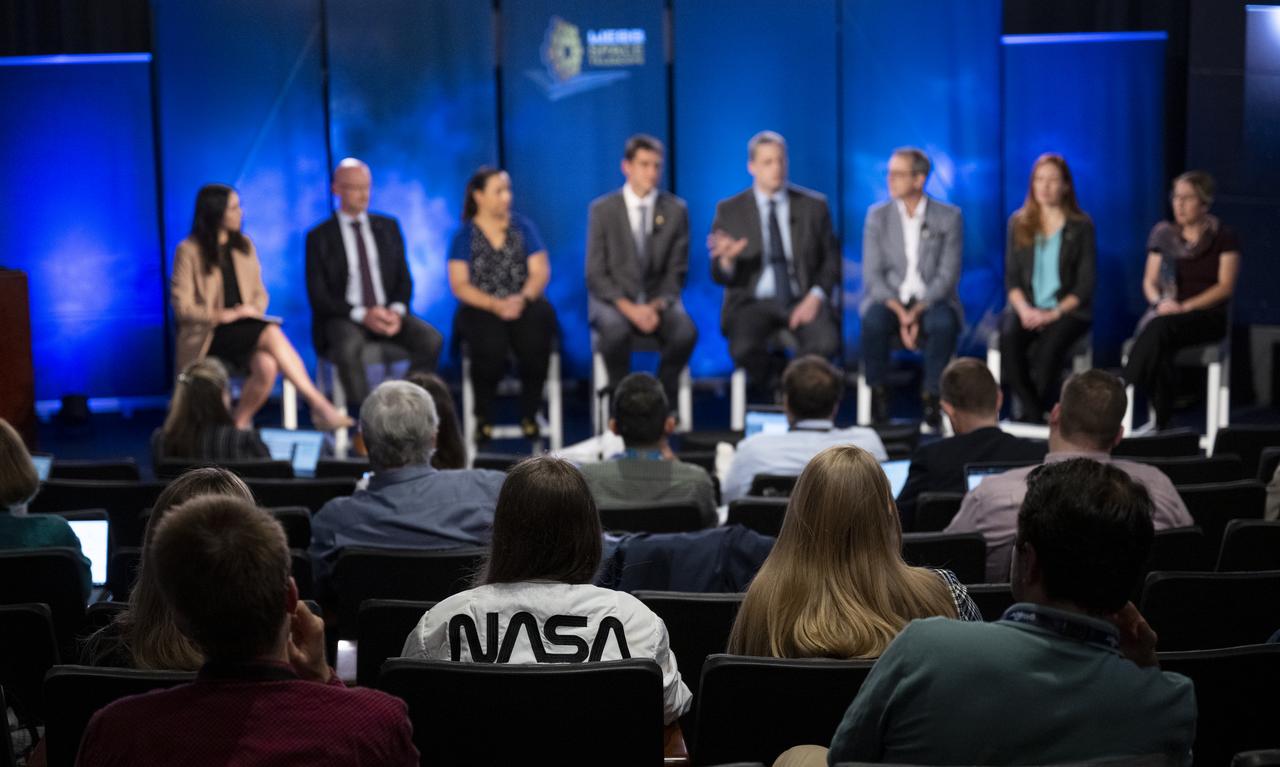
A NASA social attendees and members of the media are seen during a briefing with NASA Public Affairs Officer Alise Fisher, left, NASA James Webb Space Telescope Program Scientist and Astrophysics Division Chief Scientist Eric Smith, second from left, NASA James Webb Space Telescope Deputy Project Scientist for Exoplanet Science Knicole Colón, third from left, NASA James Webb Space Telescope Project Scientist at ESA (European Space Agency) Christopher Evans, fourth from left, NASA James Webb Space Telescope project scietntist, Space Telescope Science Institute, Klaus Pontoppidan, fourth from right, Principal Investigator for the Canadian Near-Infrared Imager and Slitless Spectrograph at the University of Montreal René Doyon, third from right, NASA James Webb Space Telescope Deputy Project Scientist for Communications Amber Straughn, second from right, and NASA James Webb Space Telescope Operations Project Scientist Jane Rigby, right, following the release of the first full-color images from NASA’s James Webb Space Telescope, Tuesday, July 12, 2022, at NASA’s Goddard Space Flight Center in Greenbelt, Md. The first full-color images and spectroscopic data from the James Webb Space Telescope, a partnership with ESA (European Space Agency) and the Canadian Space Agency (CSA), are a demonstration of the power of Webb as the telescope begins its science mission to unfold the infrared universe. Photo Credit: (NASA/Bill Ingalls)
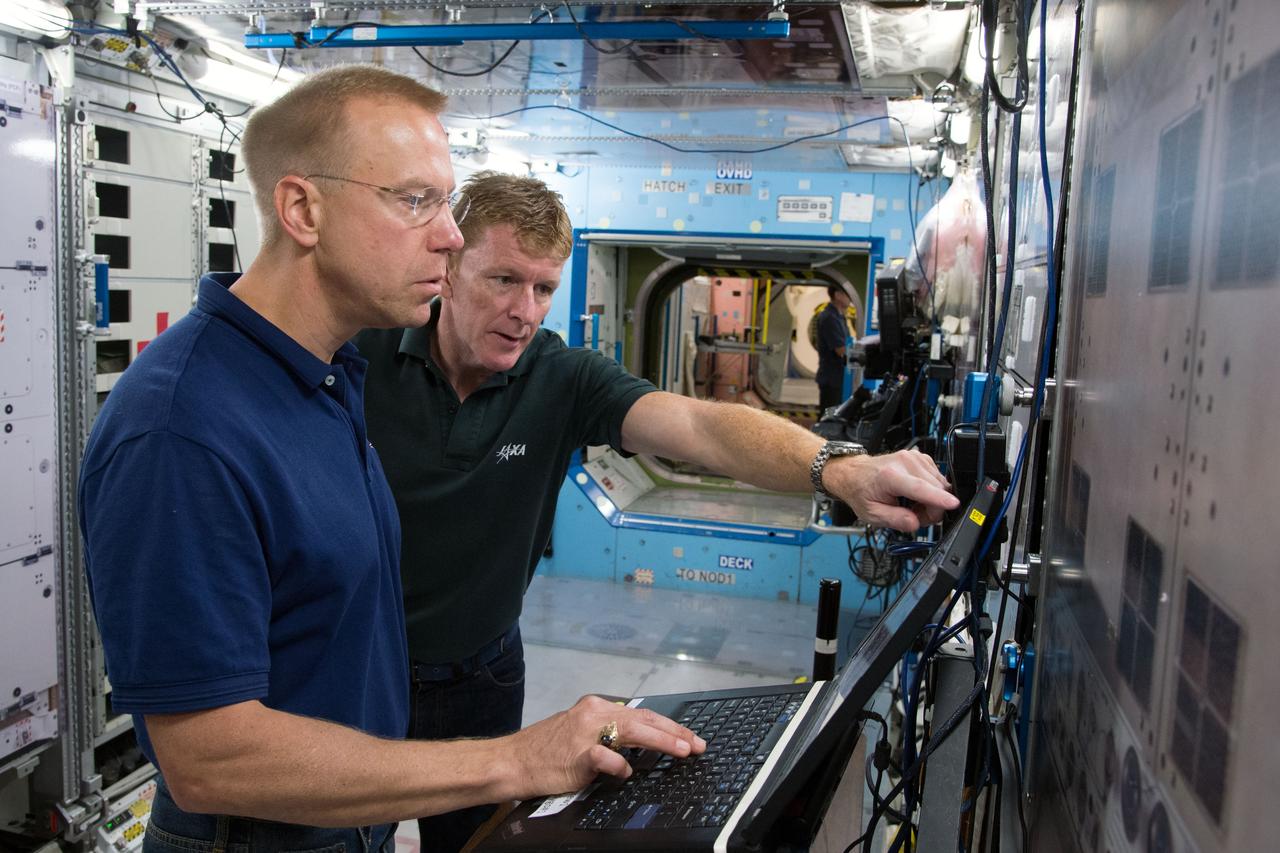
Date: 09-30-14 Location: Bldg 9NW, ISS Mockup Subject: Expedition 46/47 (Soyuz 45) crew members Tim Kopra, Timothy Peake, Yuri Malenchenko with instructor Wyatt Smith during Routine Ops training in the Space Vehicle Mockup Training Facility's ISS mockups Photographer: James Blair

Date: 04-18-14 Location: Bldg 2N, Press Conf. Room Subject: ISS Program Status and Spacewalk Preview Briefing with PAO Moderator Dan Huot, ISS Flight Director, Brian Smith and Lead Spacewalk Officer, Glenda Brown Photographer: James Blair
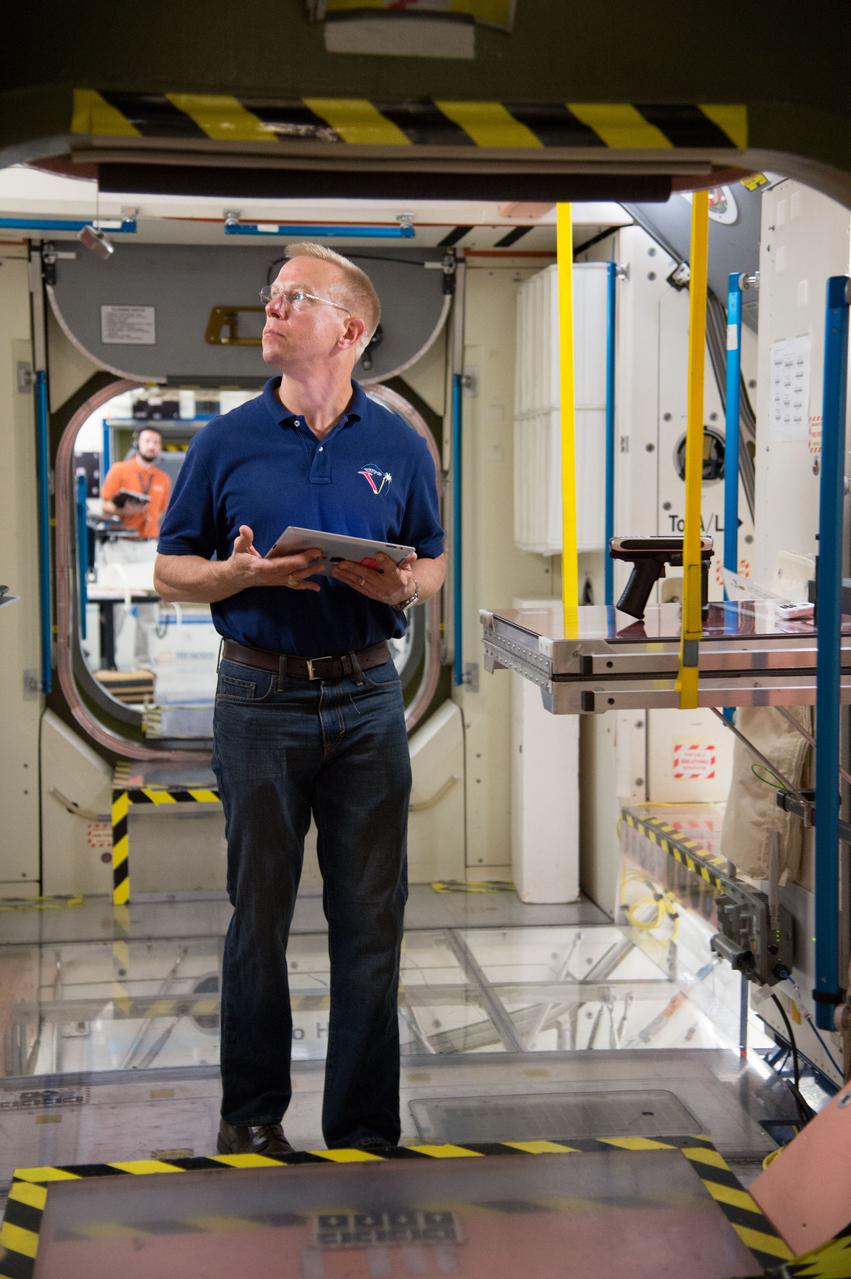
Date: 09-30-14 Location: Bldg 9NW, ISS Mockup Subject: Expedition 46/47 (Soyuz 45) crew members Tim Kopra, Timothy Peake, Yuri Malenchenko with instructor Wyatt Smith during Routine Ops training in the Space Vehicle Mockup Training Facility's ISS mockups Photographer: James Blair
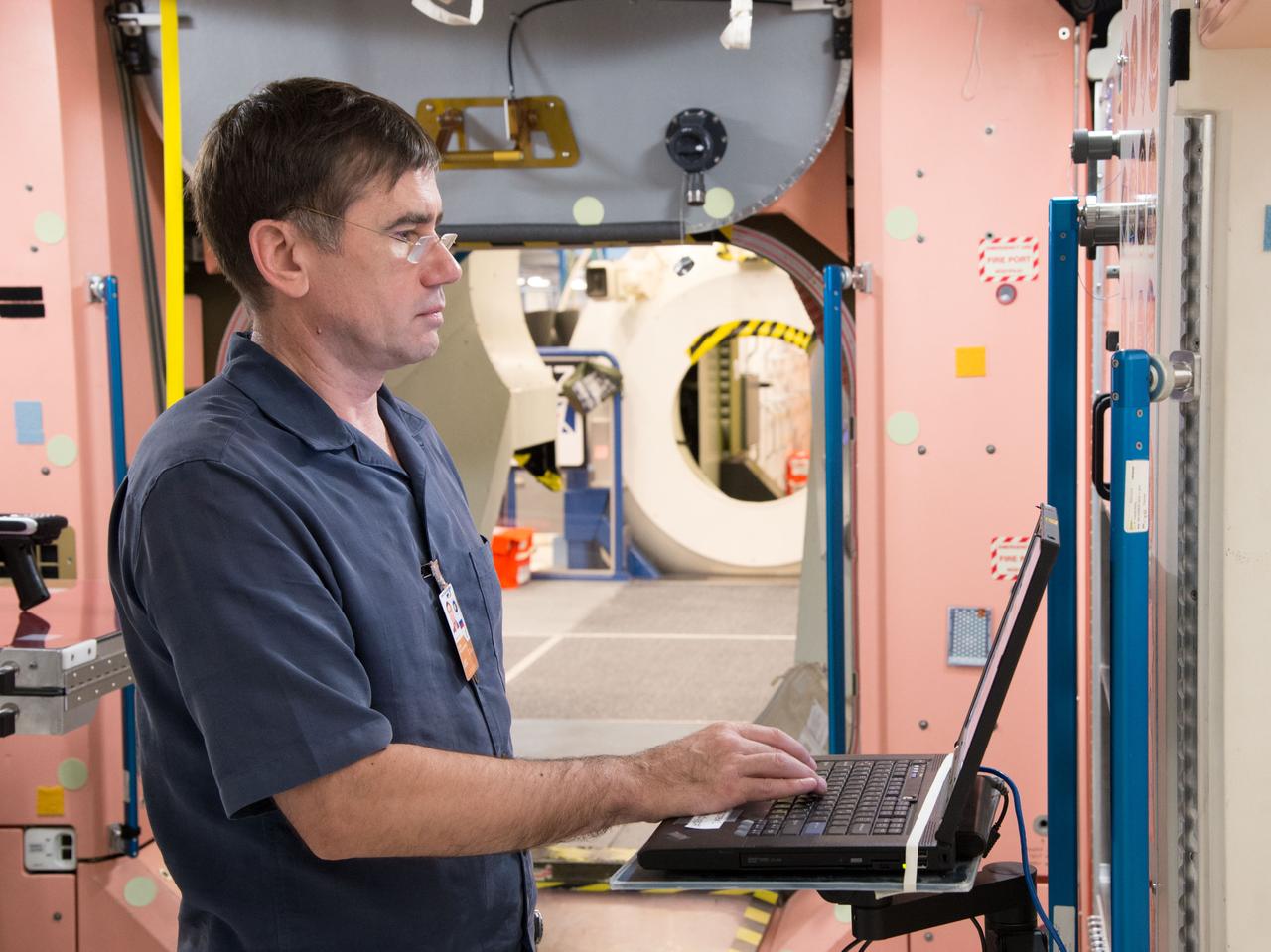
Date: 09-30-14 Location: Bldg 9NW, ISS Mockup Subject: Expedition 46/47 (Soyuz 45) crew members Tim Kopra, Timothy Peake, Yuri Malenchenko with instructor Wyatt Smith during Routine Ops training in the Space Vehicle Mockup Training Facility's ISS mockups Photographer: James Blair
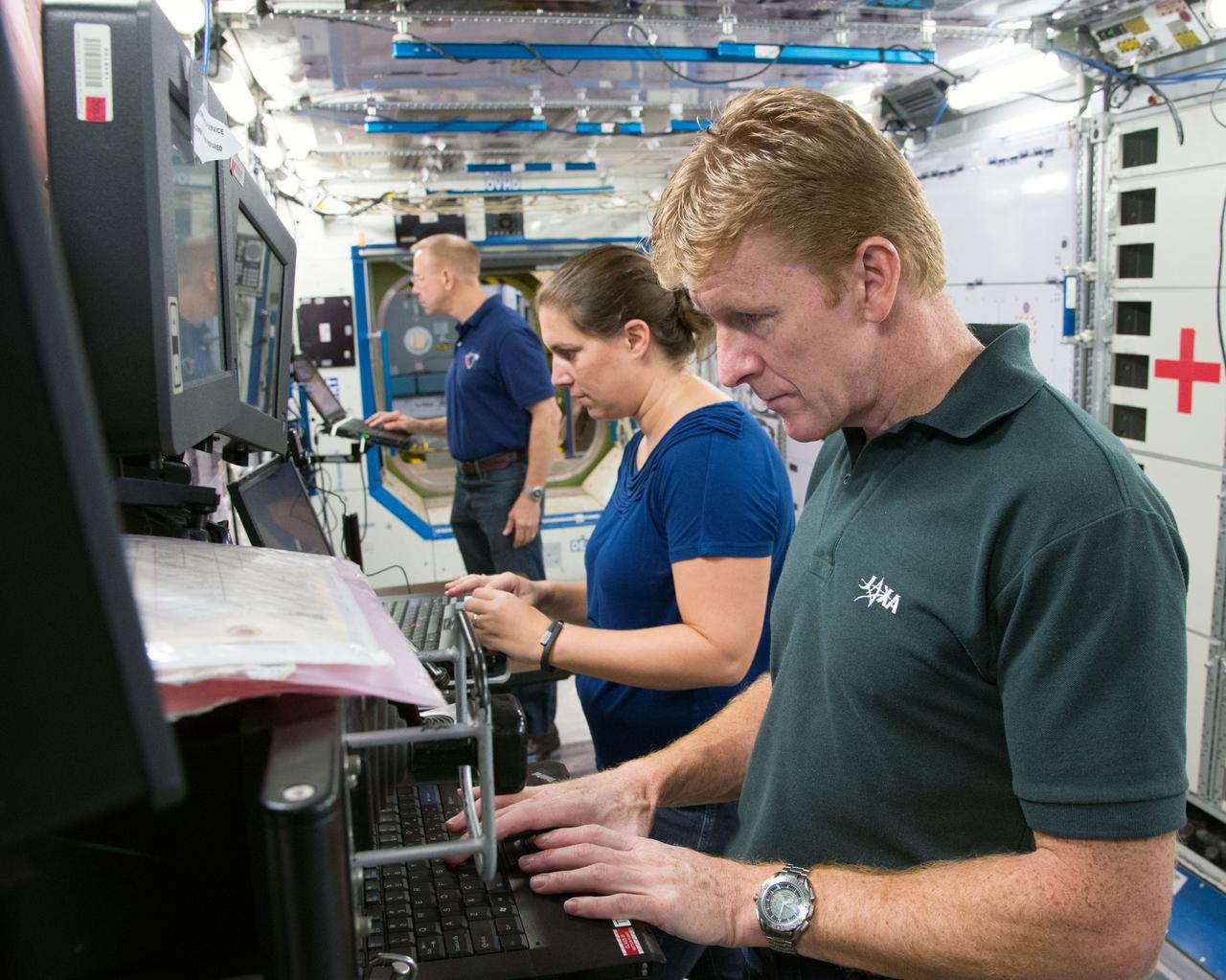
Date: 09-30-14 Location: Bldg 9NW, ISS Mockup Subject: Expedition 46/47 (Soyuz 45) crew members Tim Kopra, Timothy Peake, Yuri Malenchenko with instructor Wyatt Smith during Routine Ops training in the Space Vehicle Mockup Training Facility's ISS mockups Photographer: James Blair
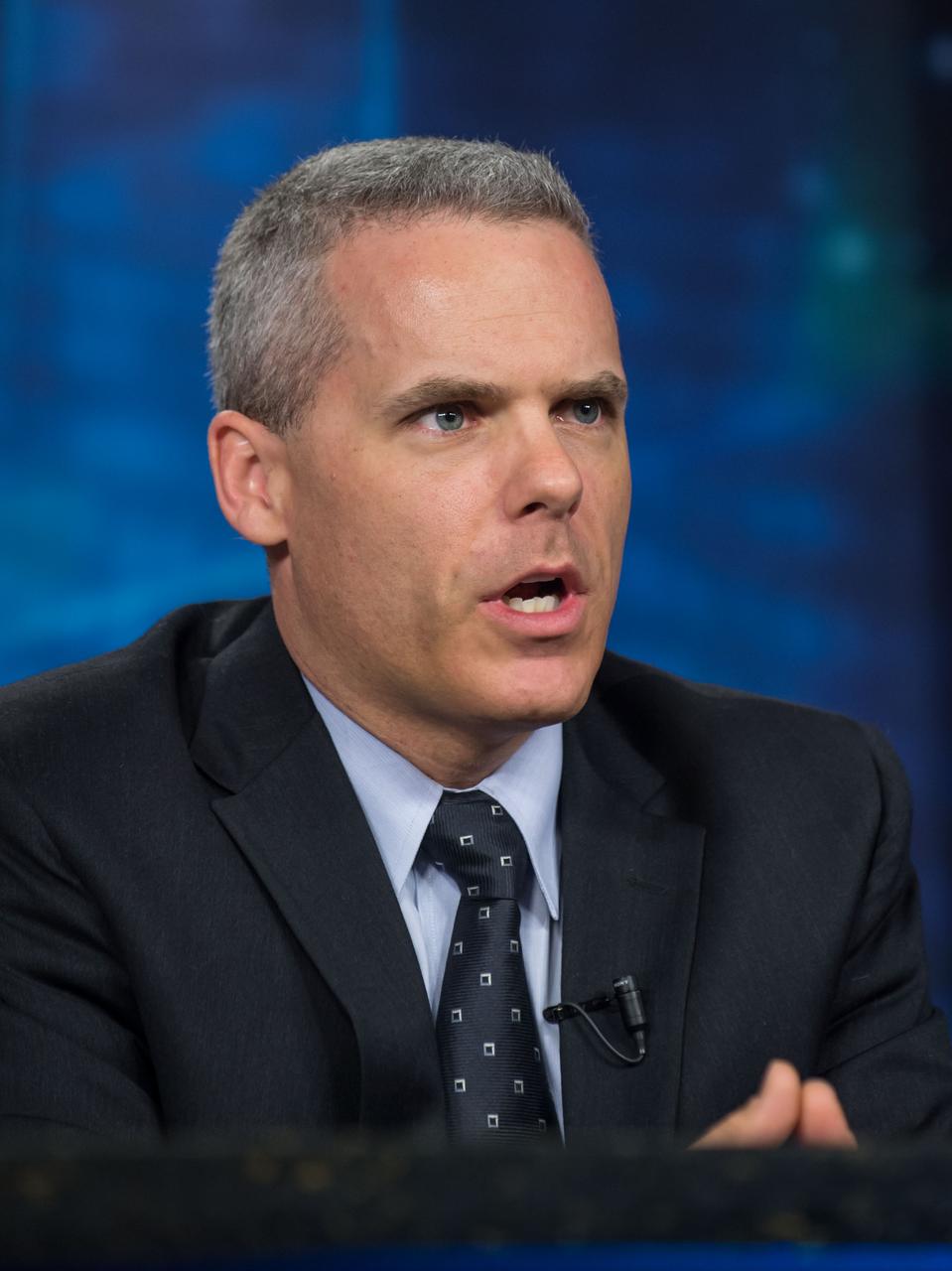
Date: 04-18-14 Location: Bldg 2N, Press Conf. Room Subject: ISS Program Status and Spacewalk Preview Briefing with PAO Moderator Dan Huot, ISS Flight Director, Brian Smith and Lead Spacewalk Officer, Glenda Brown Photographer: James Blair
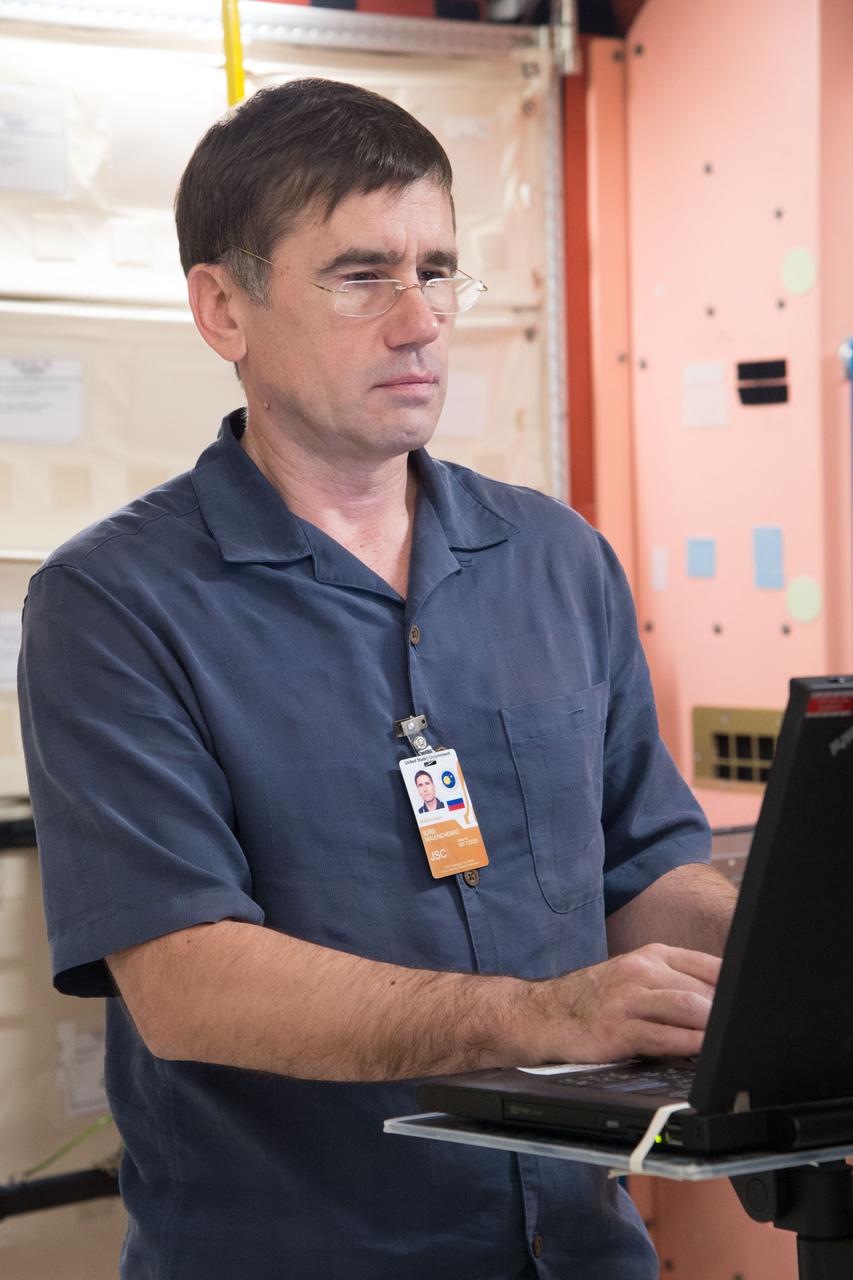
Date: 09-30-14 Location: Bldg 9NW, ISS Mockup Subject: Expedition 46/47 (Soyuz 45) crew members Tim Kopra, Timothy Peake, Yuri Malenchenko with instructor Wyatt Smith during Routine Ops training in the Space Vehicle Mockup Training Facility's ISS mockups Photographer: James Blair
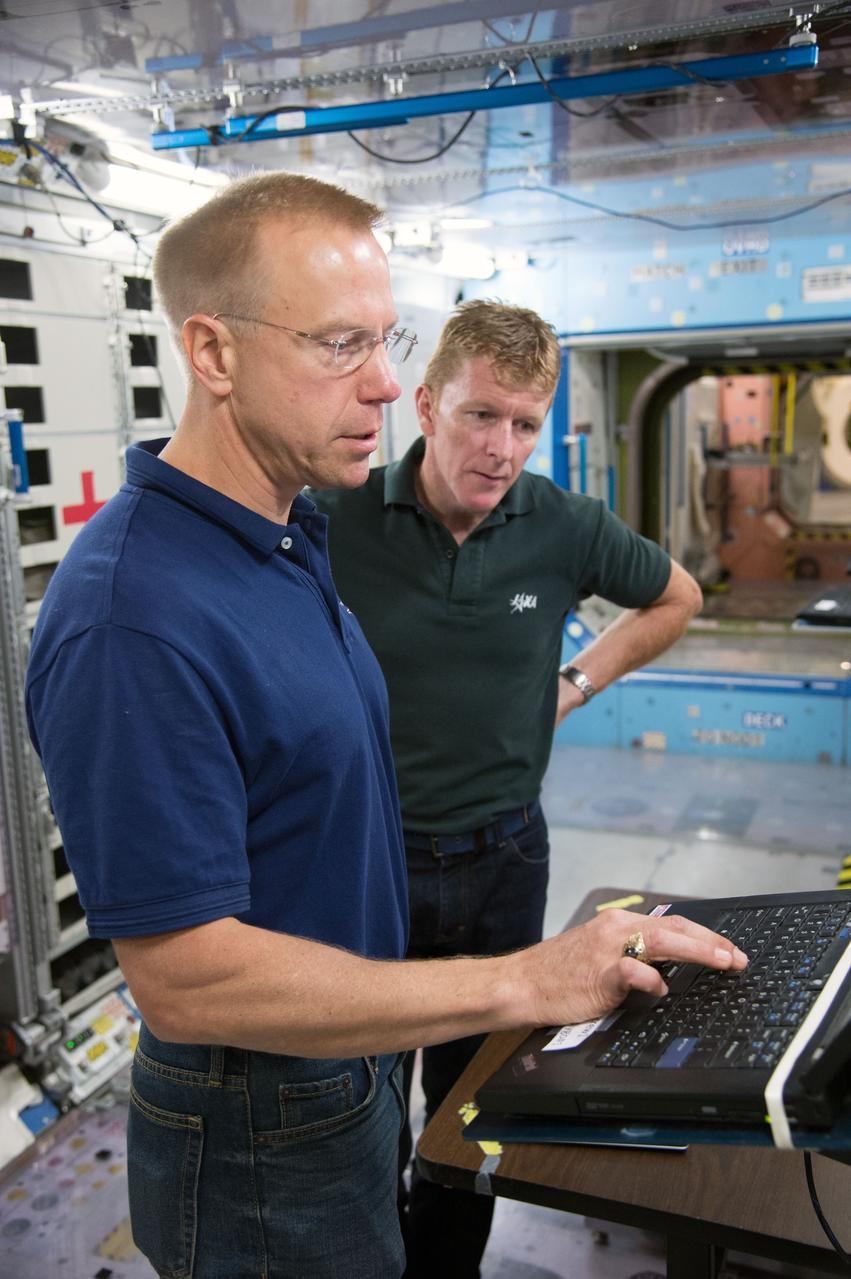
Date: 09-30-14 Location: Bldg 9NW, ISS Mockup Subject: Expedition 46/47 (Soyuz 45) crew members Tim Kopra, Timothy Peake, Yuri Malenchenko with instructor Wyatt Smith during Routine Ops training in the Space Vehicle Mockup Training Facility's ISS mockups Photographer: James Blair
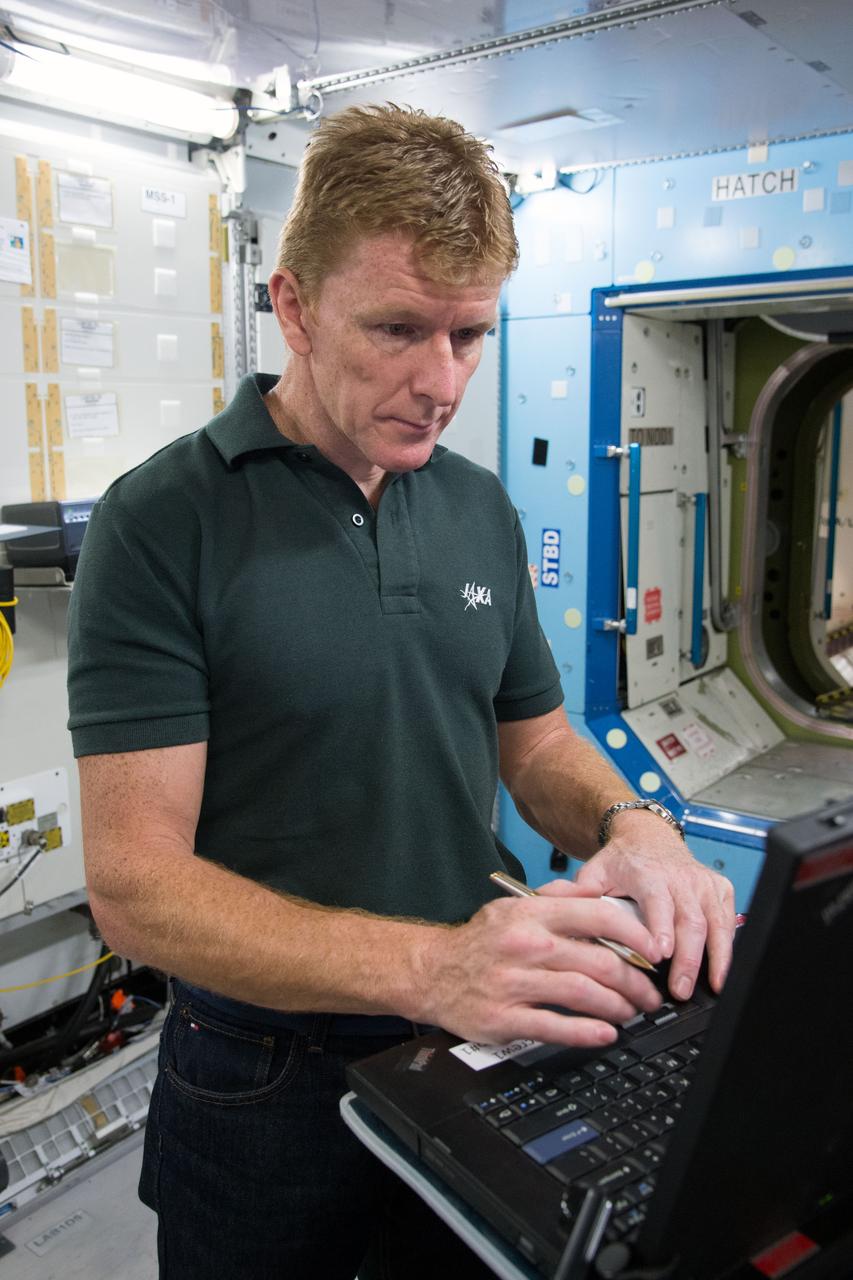
Date: 09-30-14 Location: Bldg 9NW, ISS Mockup Subject: Expedition 46/47 (Soyuz 45) crew members Tim Kopra, Timothy Peake, Yuri Malenchenko with instructor Wyatt Smith during Routine Ops training in the Space Vehicle Mockup Training Facility's ISS mockups Photographer: James Blair
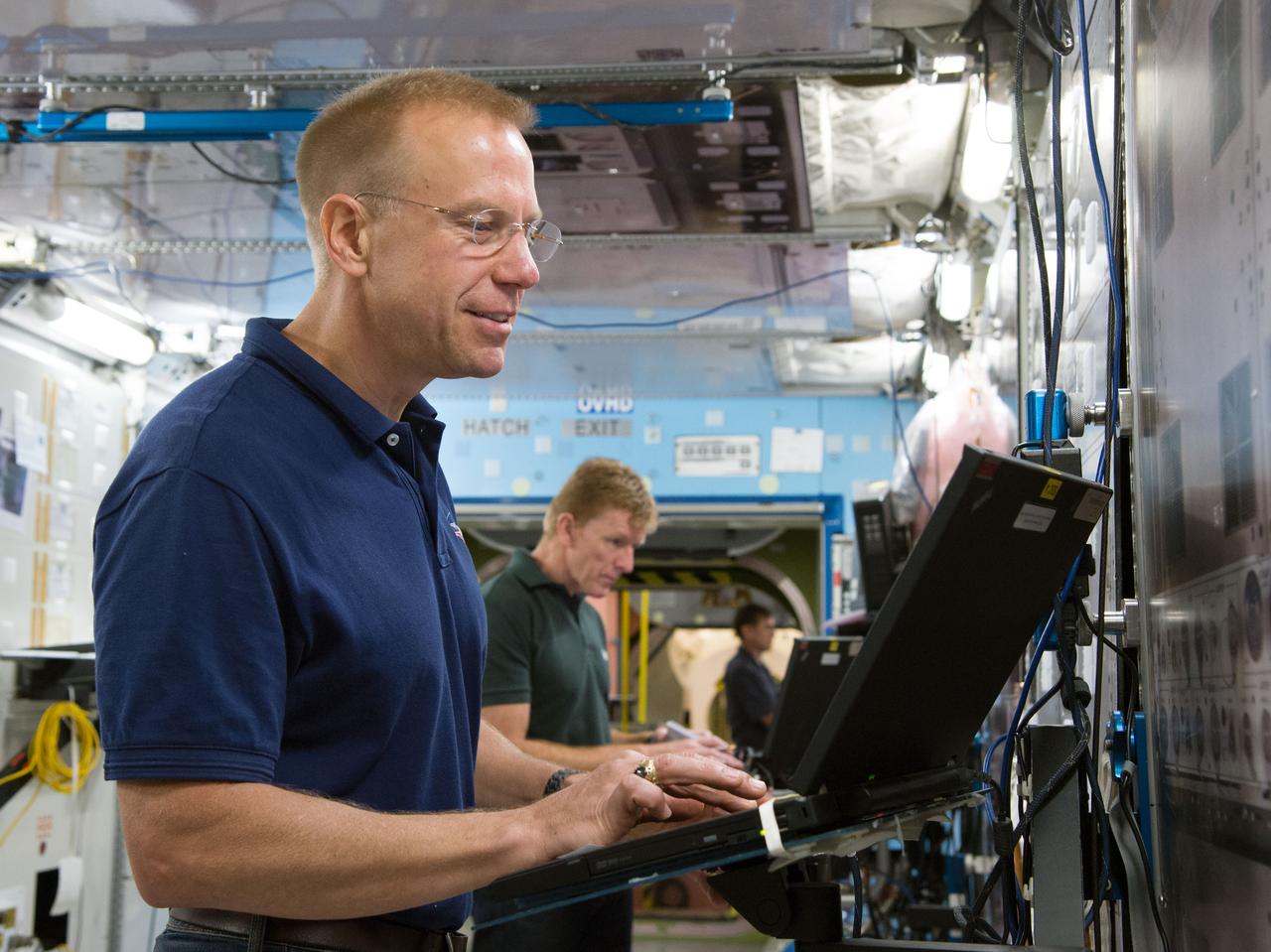
Date: 09-30-14 Location: Bldg 9NW, ISS Mockup Subject: Expedition 46/47 (Soyuz 45) crew members Tim Kopra, Timothy Peake, Yuri Malenchenko with instructor Wyatt Smith during Routine Ops training in the Space Vehicle Mockup Training Facility's ISS mockups Photographer: James Blair
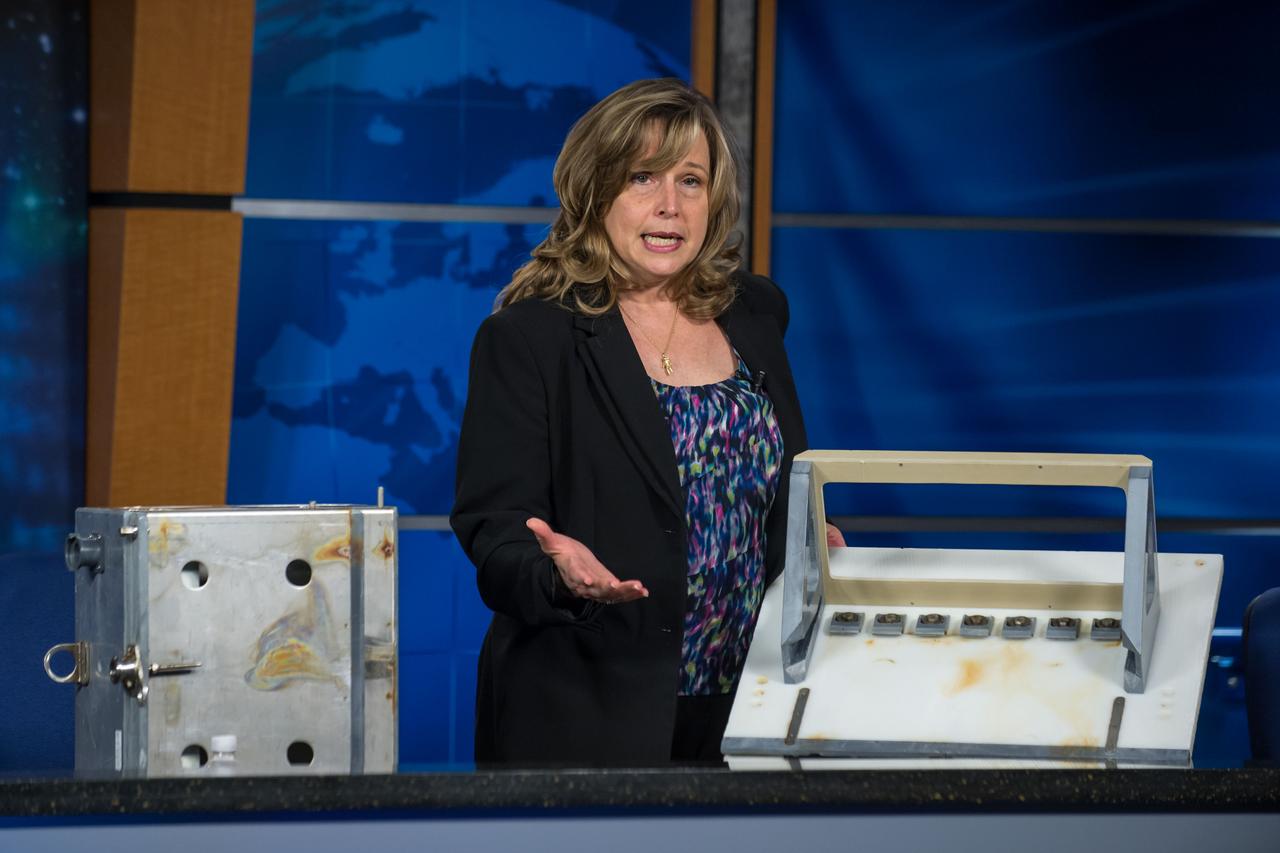
Date: 04-18-14 Location: Bldg 2N, Press Conf. Room Subject: ISS Program Status and Spacewalk Preview Briefing with PAO Moderator Dan Huot, ISS Flight Director, Brian Smith and Lead Spacewalk Officer, Glenda Brown Photographer: James Blair
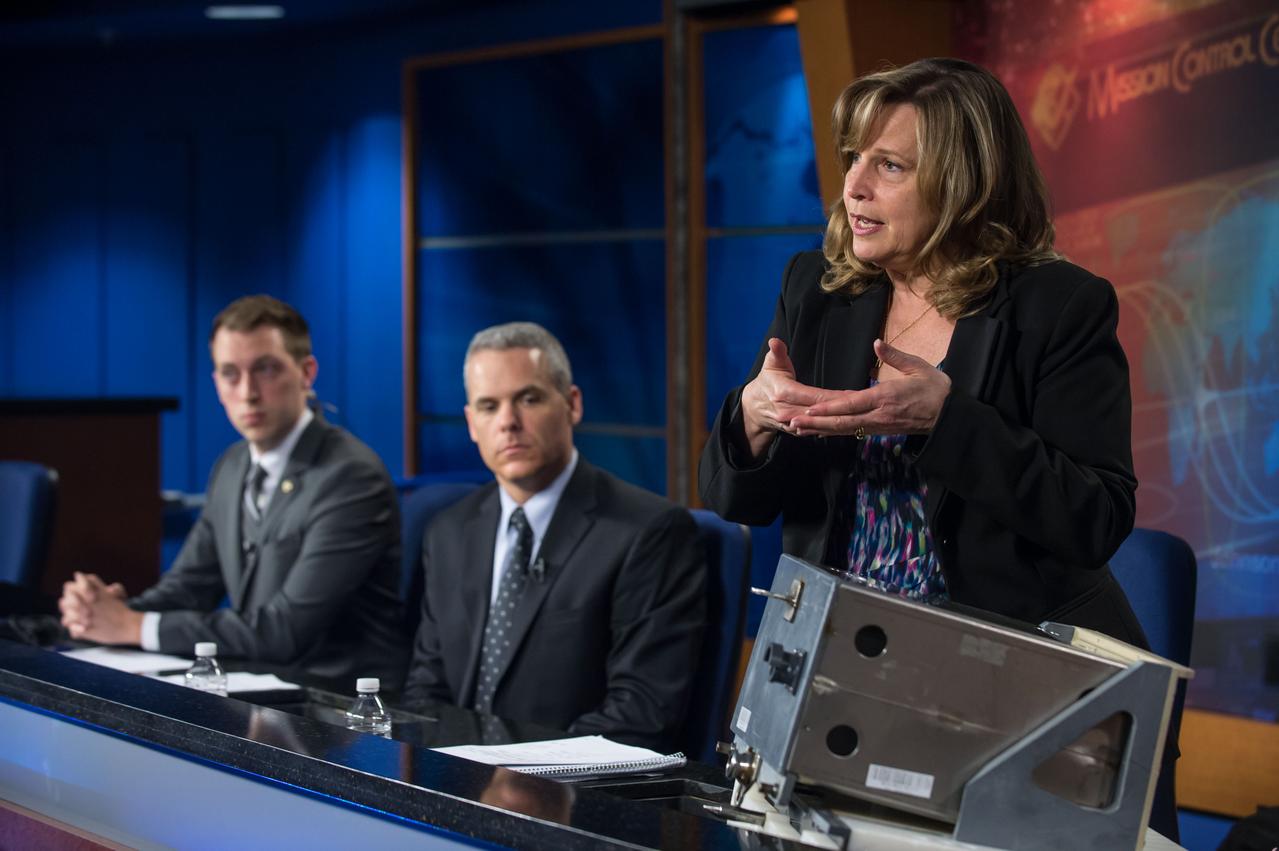
Date: 04-18-14 Location: Bldg 2N, Press Conf. Room Subject: ISS Program Status and Spacewalk Preview Briefing with PAO Moderator Dan Huot, ISS Flight Director, Brian Smith and Lead Spacewalk Officer, Glenda Brown Photographer: James Blair
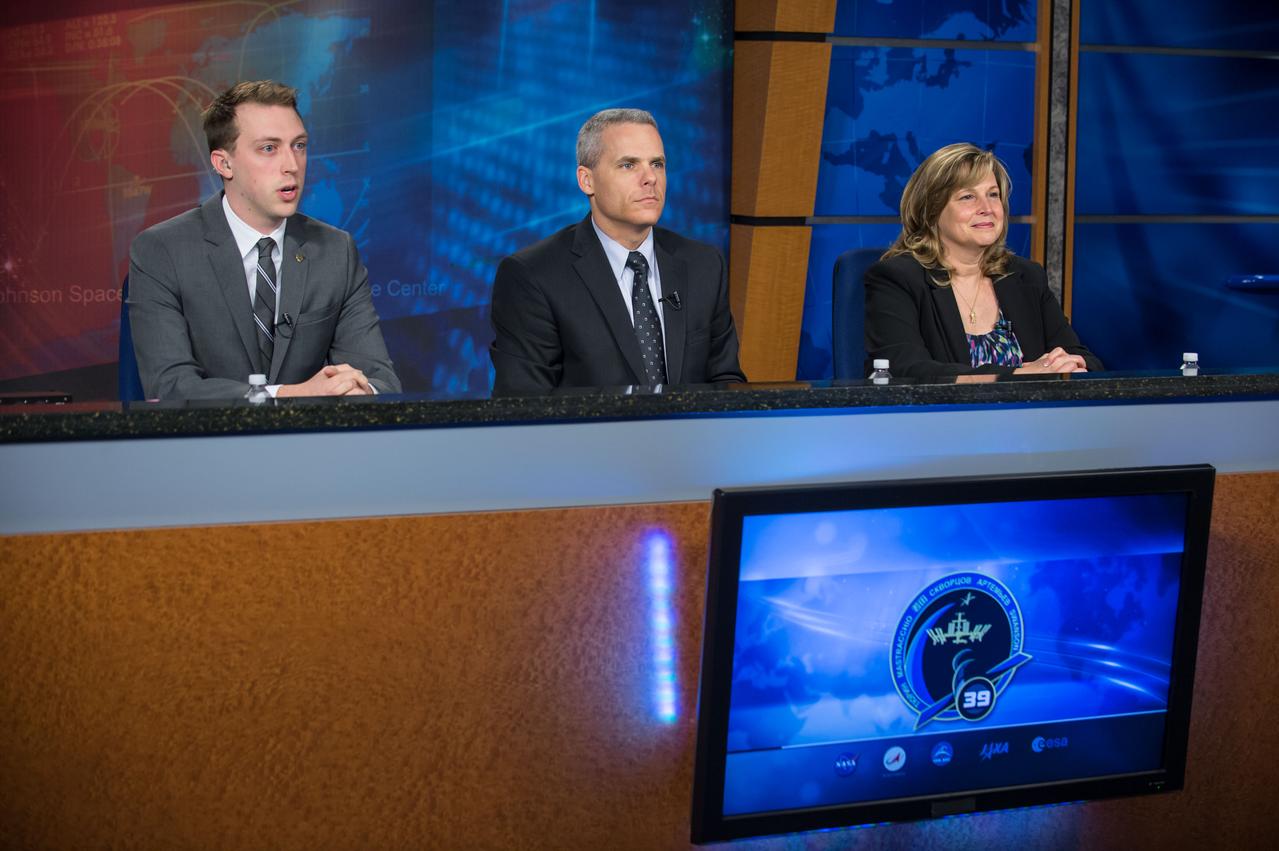
Date: 04-18-14 Location: Bldg 2N, Press Conf. Room Subject: ISS Program Status and Spacewalk Preview Briefing with PAO Moderator Dan Huot, ISS Flight Director, Brian Smith and Lead Spacewalk Officer, Glenda Brown Photographer: James Blair
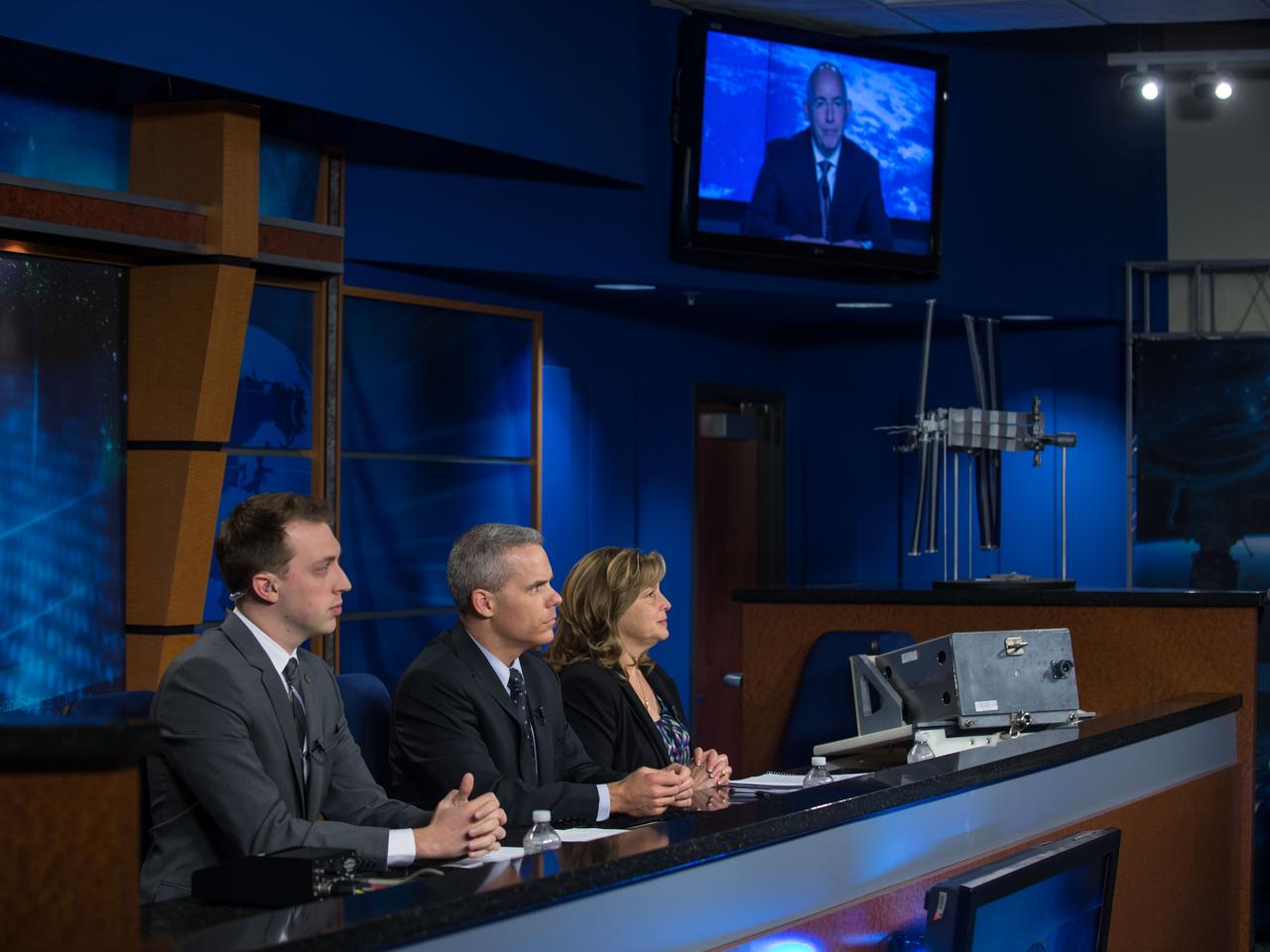
Date: 04-18-14 Location: Bldg 2N, Press Conf. Room Subject: ISS Program Status and Spacewalk Preview Briefing with PAO Moderator Dan Huot, ISS Flight Director, Brian Smith and Lead Spacewalk Officer, Glenda Brown Photographer: James Blair
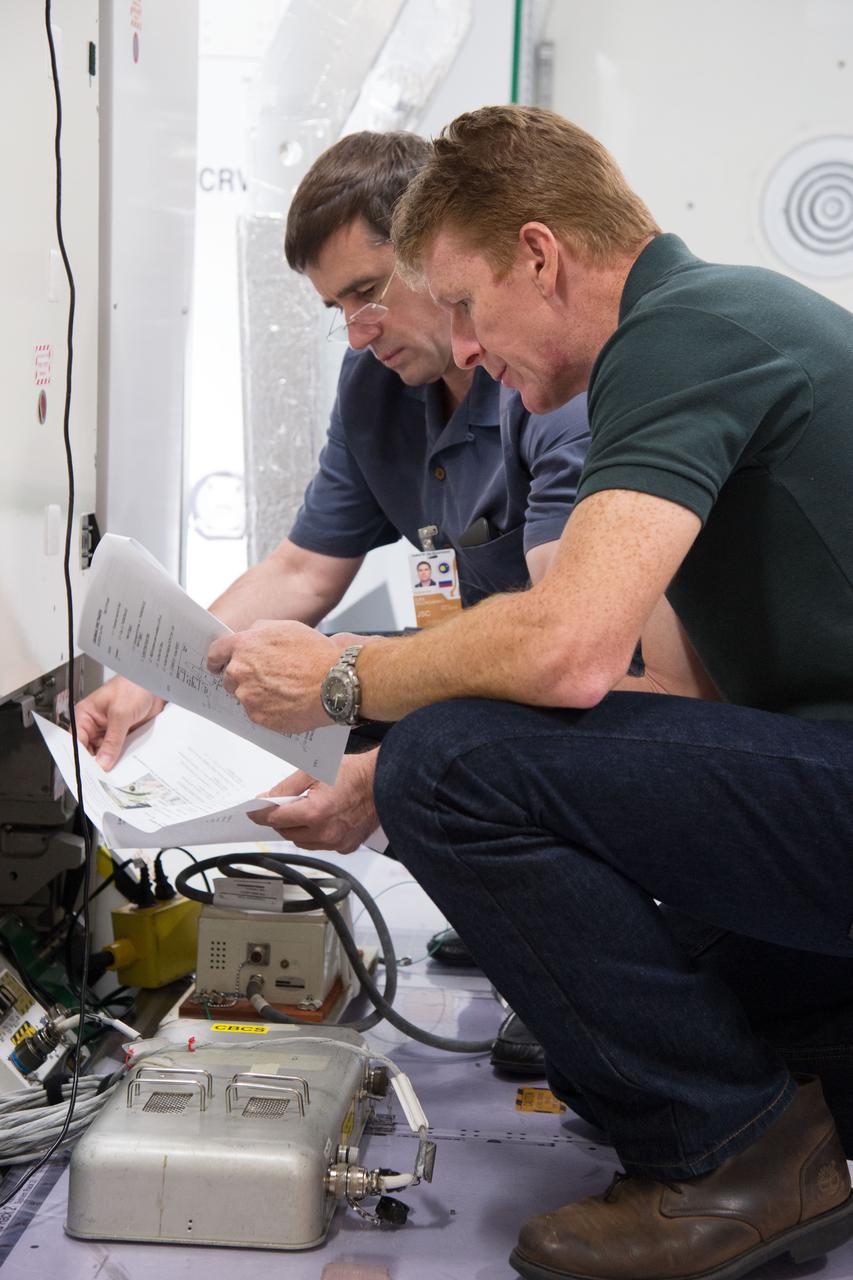
Date: 09-30-14 Location: Bldg 9NW, ISS Mockup Subject: Expedition 46/47 (Soyuz 45) crew members Tim Kopra, Timothy Peake, Yuri Malenchenko with instructor Wyatt Smith during Routine Ops training in the Space Vehicle Mockup Training Facility's ISS mockups Photographer: James Blair
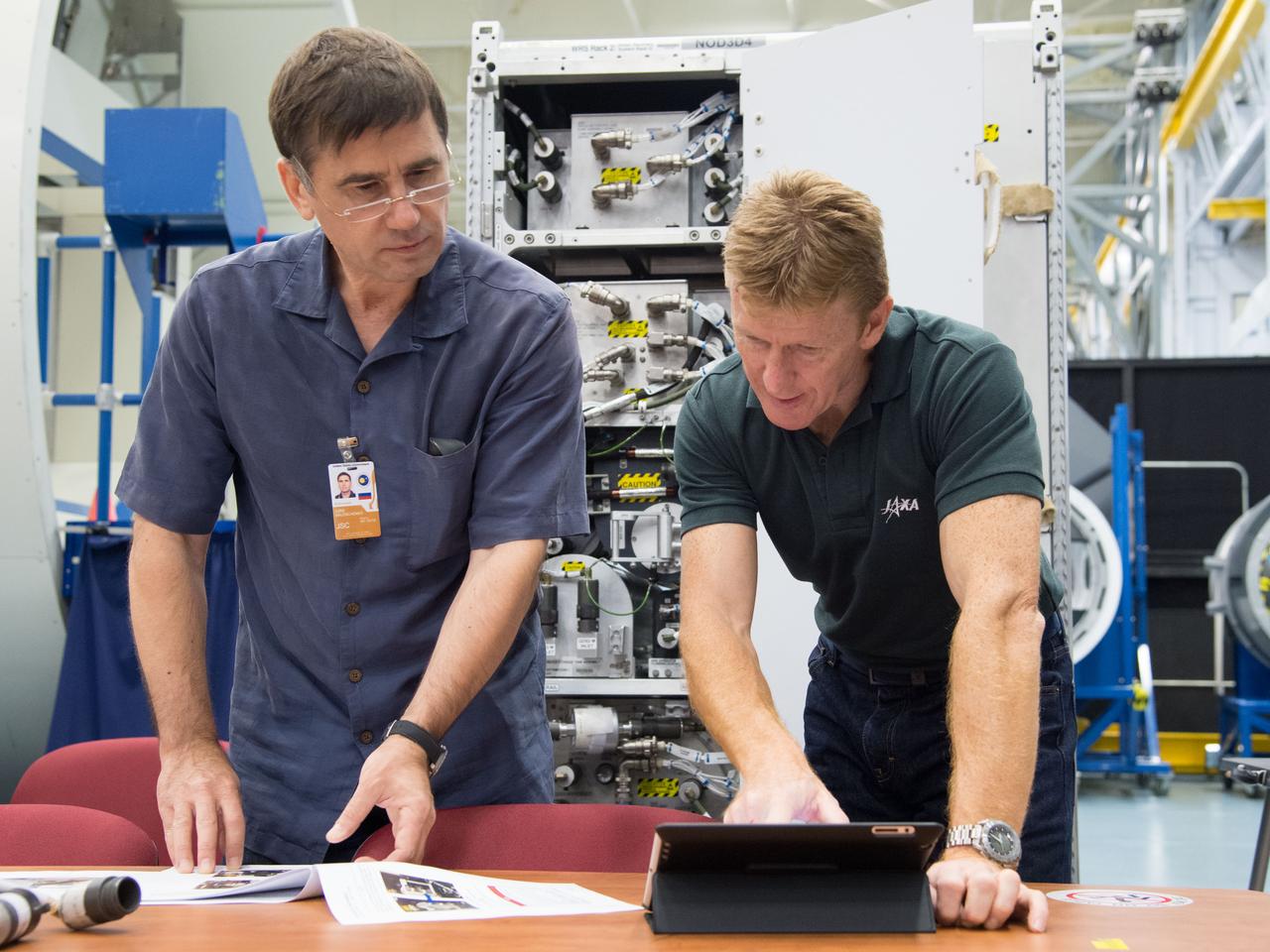
Date: 09-30-14 Location: Bldg 9NW, ISS Mockup Subject: Expedition 46/47 (Soyuz 45) crew members Tim Kopra, Timothy Peake, Yuri Malenchenko with instructor Wyatt Smith during Routine Ops training in the Space Vehicle Mockup Training Facility's ISS mockups Photographer: James Blair
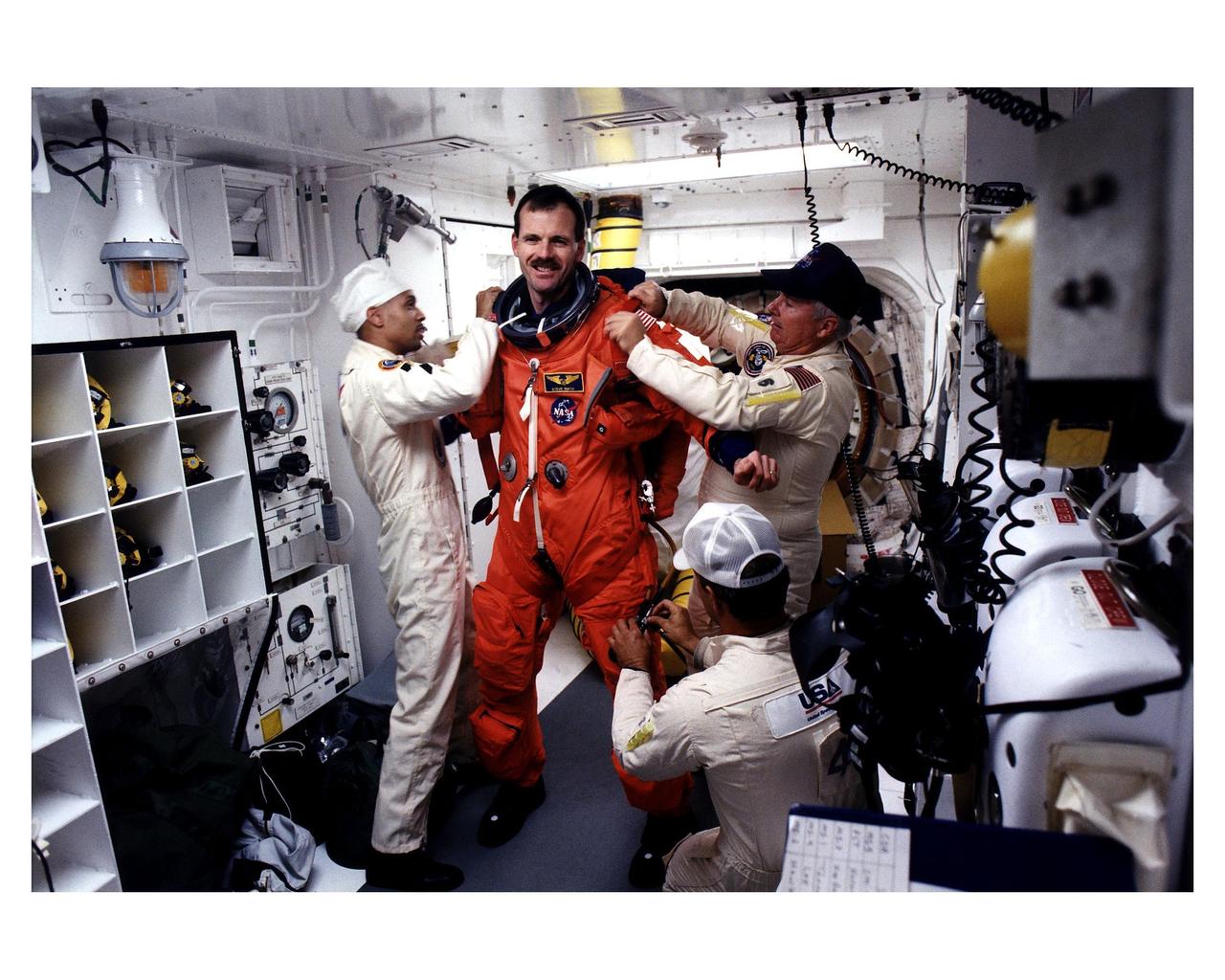
STS-82 Mission Specialist Steven L. Smith prepares to enter the Space Shuttle Discovery at Launch Pad 39A, with the assistance of white room closeout crew members Dave Law, in front; Carlous Gillis, at left; and James Davis
![Multiple exposure of Gemini rendezvous docking simulator. Francis B. Smith wrote in his paper "Simulators for Manned Space Research," "The rendezvous and docking operation of the Gemini spacecraft with the Agena and of the Apollo Command Module with the Lunar Excursion Module have been the subject of simulator studies for several years. [This figure] illustrates the Gemini-Agena rendezvous docking simulator at Langley. The Gemini spacecraft was supported in a gimbal system by an overhead crane and gantry arrangement which provided 6 degrees of freedom - roll, pitch, yaw, and translation in any direction - all controllable by the astronaut in the spacecraft. Here again the controls fed into a computer which in turn provided an input to the servos driving the spacecraft so that it responded to control motions in a manner which accurately simulated the Gemini spacecraft." A.W. Vogeley further described the simulator in his paper "Discussion of Existing and Planned Simulators For Space Research," "Docking operations are considered to start when the pilot first can discern vehicle target size and aspect and terminate, of course, when soft contact is made. ... This facility enables simulation of the docking operation from a distance of 200 feet to actual contact with the target. A full-scale mock-up of the target vehicle is suspended near one end of the track. ... On [the Agena target] we have mounted the actual Agena docking mechanism and also various types of visual aids. We have been able to devise visual aids which have made it possible to accomplish nighttime docking with as much success as daytime docking." -- Published in Barton C. Hacker and James M. Grimwood, On the Shoulders of Titans: A History of Project Gemini, NASA SP-4203; Francis B. Smith, "Simulators for Manned Space Research," Paper presented at the 1966 IEEE International convention, March 21-25, 1966; A.W. Vogeley, "Discussion of Existing and Planned Simulators For Space Research," Paper presented at the Conference on the Role of Simulation in Space Technology, August 17-21, 1964.](https://images-assets.nasa.gov/image/LRC-1963-B701_P-08973/LRC-1963-B701_P-08973~medium.jpg)
Multiple exposure of Gemini rendezvous docking simulator. Francis B. Smith wrote in his paper "Simulators for Manned Space Research," "The rendezvous and docking operation of the Gemini spacecraft with the Agena and of the Apollo Command Module with the Lunar Excursion Module have been the subject of simulator studies for several years. [This figure] illustrates the Gemini-Agena rendezvous docking simulator at Langley. The Gemini spacecraft was supported in a gimbal system by an overhead crane and gantry arrangement which provided 6 degrees of freedom - roll, pitch, yaw, and translation in any direction - all controllable by the astronaut in the spacecraft. Here again the controls fed into a computer which in turn provided an input to the servos driving the spacecraft so that it responded to control motions in a manner which accurately simulated the Gemini spacecraft." A.W. Vogeley further described the simulator in his paper "Discussion of Existing and Planned Simulators For Space Research," "Docking operations are considered to start when the pilot first can discern vehicle target size and aspect and terminate, of course, when soft contact is made. ... This facility enables simulation of the docking operation from a distance of 200 feet to actual contact with the target. A full-scale mock-up of the target vehicle is suspended near one end of the track. ... On [the Agena target] we have mounted the actual Agena docking mechanism and also various types of visual aids. We have been able to devise visual aids which have made it possible to accomplish nighttime docking with as much success as daytime docking." -- Published in Barton C. Hacker and James M. Grimwood, On the Shoulders of Titans: A History of Project Gemini, NASA SP-4203; Francis B. Smith, "Simulators for Manned Space Research," Paper presented at the 1966 IEEE International convention, March 21-25, 1966; A.W. Vogeley, "Discussion of Existing and Planned Simulators For Space Research," Paper presented at the Conference on the Role of Simulation in Space Technology, August 17-21, 1964.
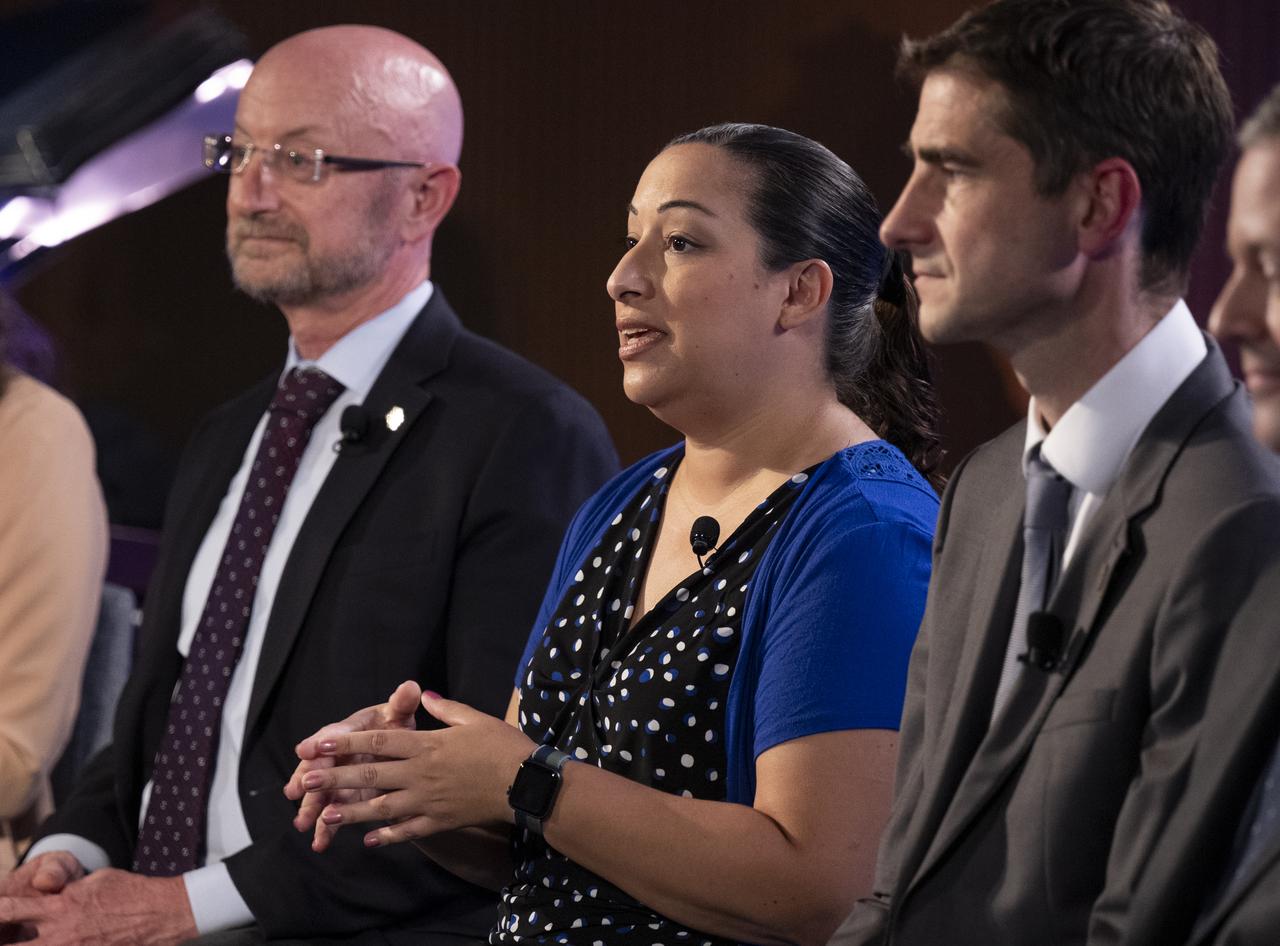
NASA James Webb Space Telescope Deputy Project Scientist for Exoplanet Science Knicole Colón, center, answers a question from a member of the media alongside NASA James Webb Space Telescope Program Scientist and Astrophysics Division Chief Scientist Eric Smith, left, and NASA James Webb Space Telescope Project Scientist at ESA (European Space Agency) Christopher Evans, during a briefing following the release of the first full-color images from NASA’s James Webb Space Telescope, Tuesday, July 12, 2022, at NASA’s Goddard Space Flight Center in Greenbelt, Md. The first full-color images and spectroscopic data from the James Webb Space Telescope, a partnership with ESA (European Space Agency) and the Canadian Space Agency (CSA), are a demonstration of the power of Webb as the telescope begins its science mission to unfold the infrared universe. Photo Credit: (NASA/Bill Ingalls)
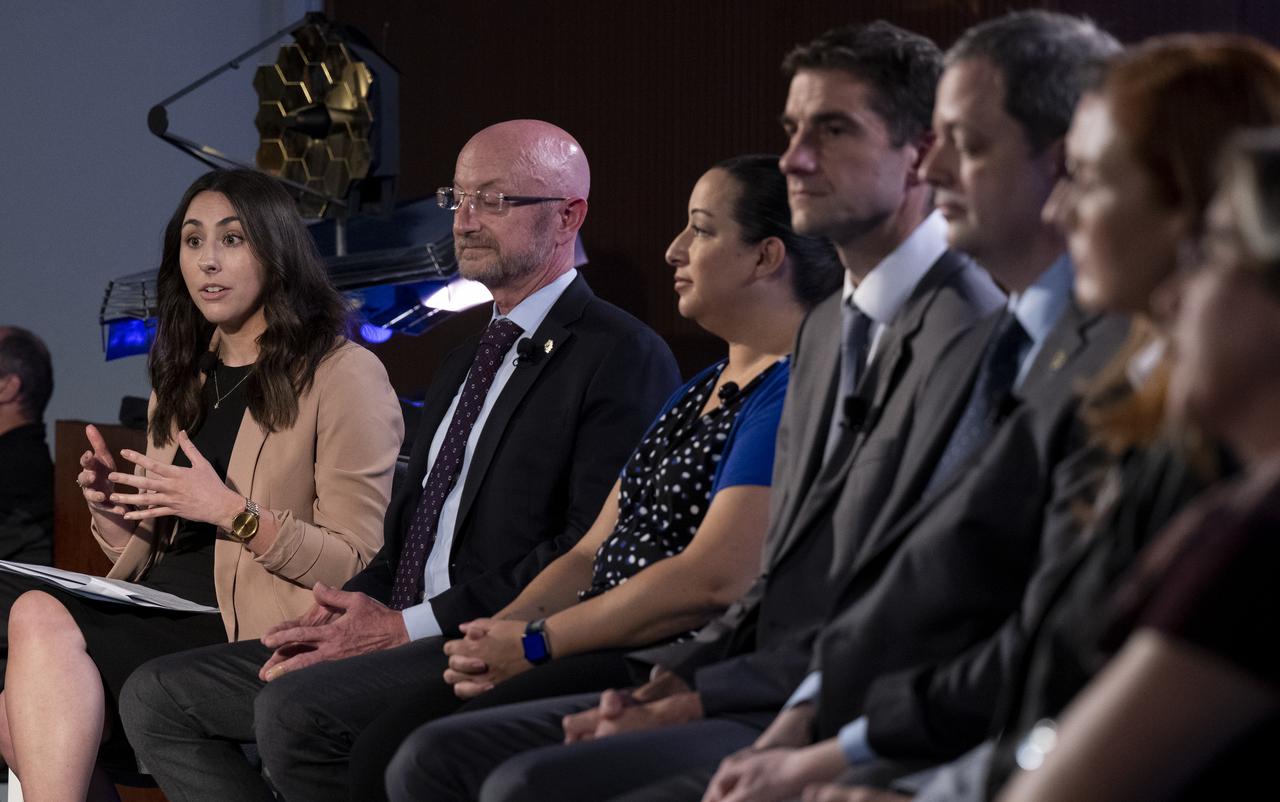
NASA Public Affairs Officer Alise Fisher, left, moderates a briefing with NASA James Webb Space Telescope Program Scientist and Astrophysics Division Chief Scientist Eric Smith, NASA James Webb Space Telescope Deputy Project Scientist for Exoplanet Science Knicole Colón, NASA James Webb Space Telescope Project Scientist at ESA (European Space Agency) Christopher Evans, NASA James Webb Space Telescope project scietntist, Space Telescope Science Institute, Klaus Pontoppidan, Principal Investigator for the Canadian Near-Infrared Imager and Slitless Spectrograph at the University of Montreal René Doyon, NASA James Webb Space Telescope Deputy Project Scientist for Communications Amber Straughn, and NASA James Webb Space Telescope Operations Project Scientist Jane Rigby following the release of the first full-color images from NASA’s James Webb Space Telescope, Tuesday, July 12, 2022, at NASA’s Goddard Space Flight Center in Greenbelt, Md. The first full-color images and spectroscopic data from the James Webb Space Telescope, a partnership with ESA (European Space Agency) and the Canadian Space Agency (CSA), are a demonstration of the power of Webb as the telescope begins its science mission to unfold the infrared universe. Photo Credit: (NASA/Bill Ingalls)
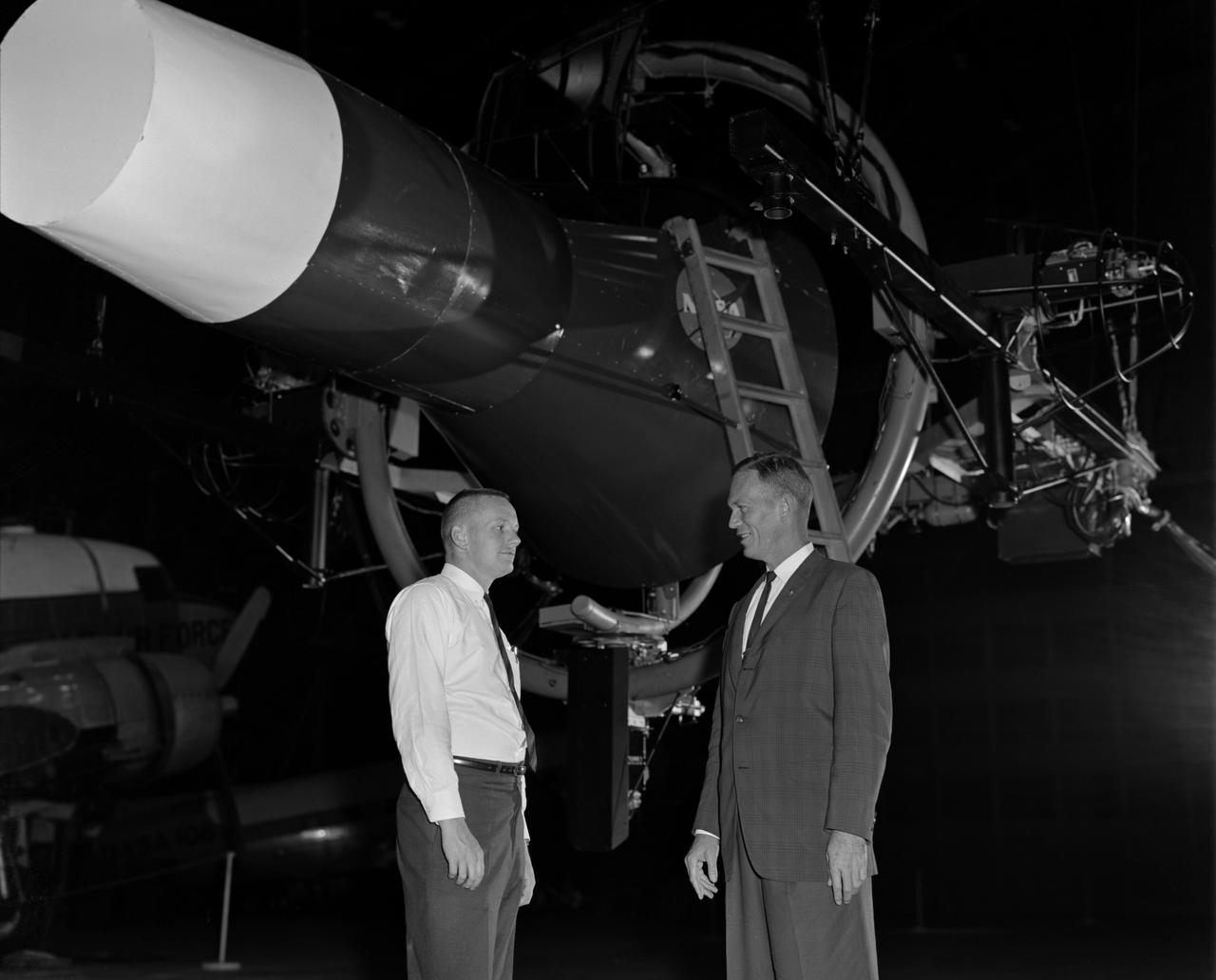
Astronaut Neil Armstrong (left) was one of 14 astronauts, 8 NASA test pilots, and 2 McDonnell test pilots who took part in simulator studies. Armstrong was the first astronaut to participate (November 6, 1963). A.W. Vogeley described the simulator in his paper "Discussion of Existing and Planned Simulators For Space Research," "Many of the astronauts have flown this simulator in support of the Gemini studies and they, without exception, appreciated the realism of the visual scene. The simulator has also been used in the development of pilot techniques to handle certain jet malfunctions in order that aborts could be avoided. In these situations large attitude changes are sometimes necessary and the false motion cues that were generated due to earth gravity were somewhat objectionable; however, the pilots were readily able to overlook these false motion cues in favor of the visual realism." Roy F. Brissenden, noted in his paper "Initial Operations with Langley's Rendezvous Docking Facility," "The basic Gemini control studies developed the necessary techniques and demonstrated the ability of human pilots to perform final space docking with the specified Gemini-Agena systems using only visual references. ... Results... showed that trained astronauts can effect the docking with direct acceleration control and even with jet malfunctions as long as good visual conditions exist.... Probably more important than data results was the early confidence that the astronauts themselves gained in their ability to perform the maneuver in the ultimate flight mission." Francis B. Smith, noted in his paper "Simulators for Manned Space Research," "Some major areas of interest in these flights were fuel requirements, docking accuracies, the development of visual aids to assist alignment of the vehicles, and investigation of alternate control techniques with partial failure modes. However, the familiarization and confidence developed by the astronaut through flying and safely docking the simulator during these tests was one of the major contributions. For example, it was found that fuel used in docking from 200 feet typically dropped from about 20 pounds to 7 pounds after an astronaut had made a few training flights." -- Published in Barton C. Hacker and James M. Grimwood, On the Shoulders of Titans: A History of Project Gemini, NASA SP-4203; A.W. Vogeley, "Discussion of Existing and Planned Simulators For Space Research," Paper presented at the Conference on the Role of Simulation in Space Technology, August 17-21, 1964; Roy F. Brissenden, "Initial Operations with Langley's Rendezvous Docking Facility," Langley Working Paper, LWP-21, 1964; Francis B. Smith, "Simulators for Manned Space Research," Paper presented at the 1966 IEEE International convention, March 21-25, 1966.
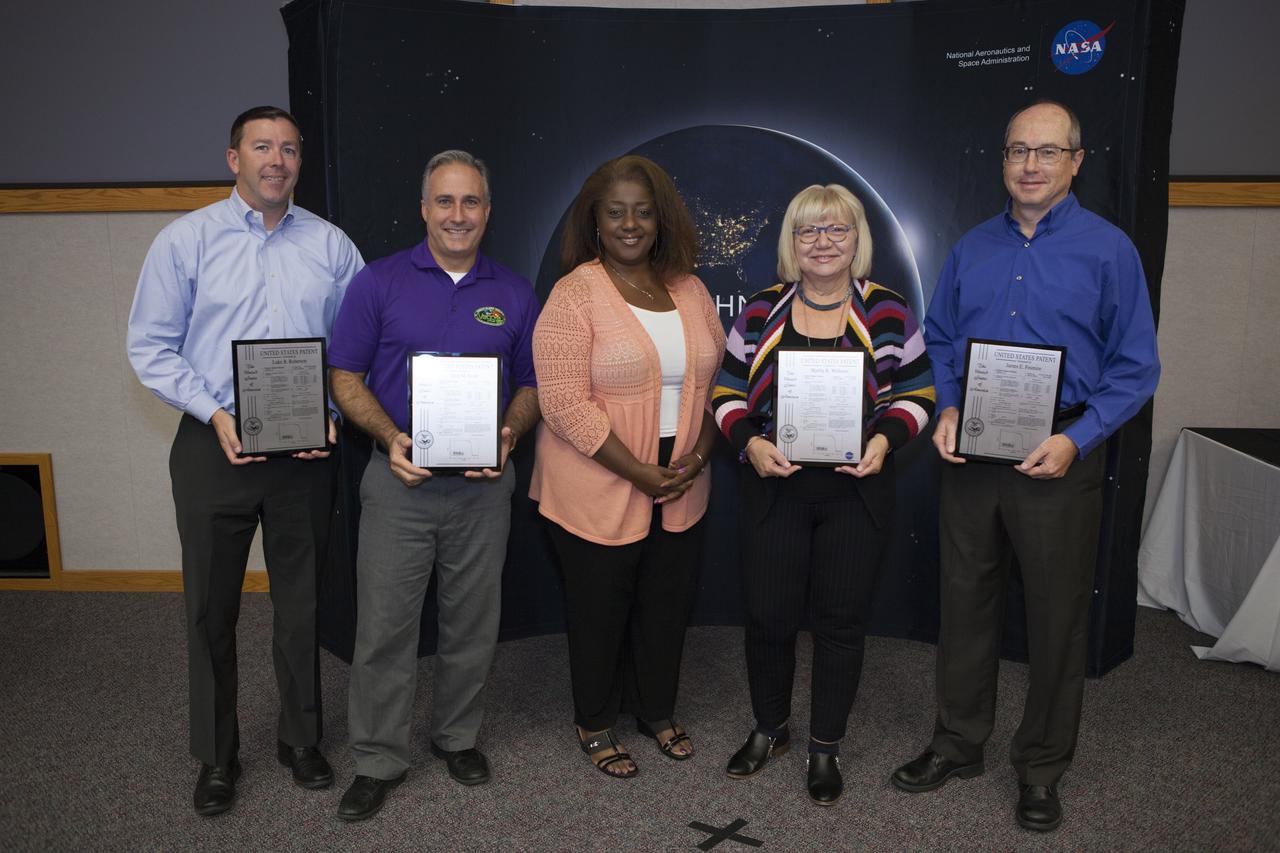
NASA Kennedy Space Center workers display their U.S. Patent plaques during a ceremony at the 2017 Innovation Expo at the center. From left, are Luke Robertson, Trent Smith, Kelly Jones-McDowall, event co-chairperson, Martha Williams and Dr. James Fesmire. The purpose of the annual two-day expo is to help foster innovation and creativity among the Kennedy workforce. The event included several keynote speakers, training opportunities, an innovation showcase and the KSC Kickstart competition.
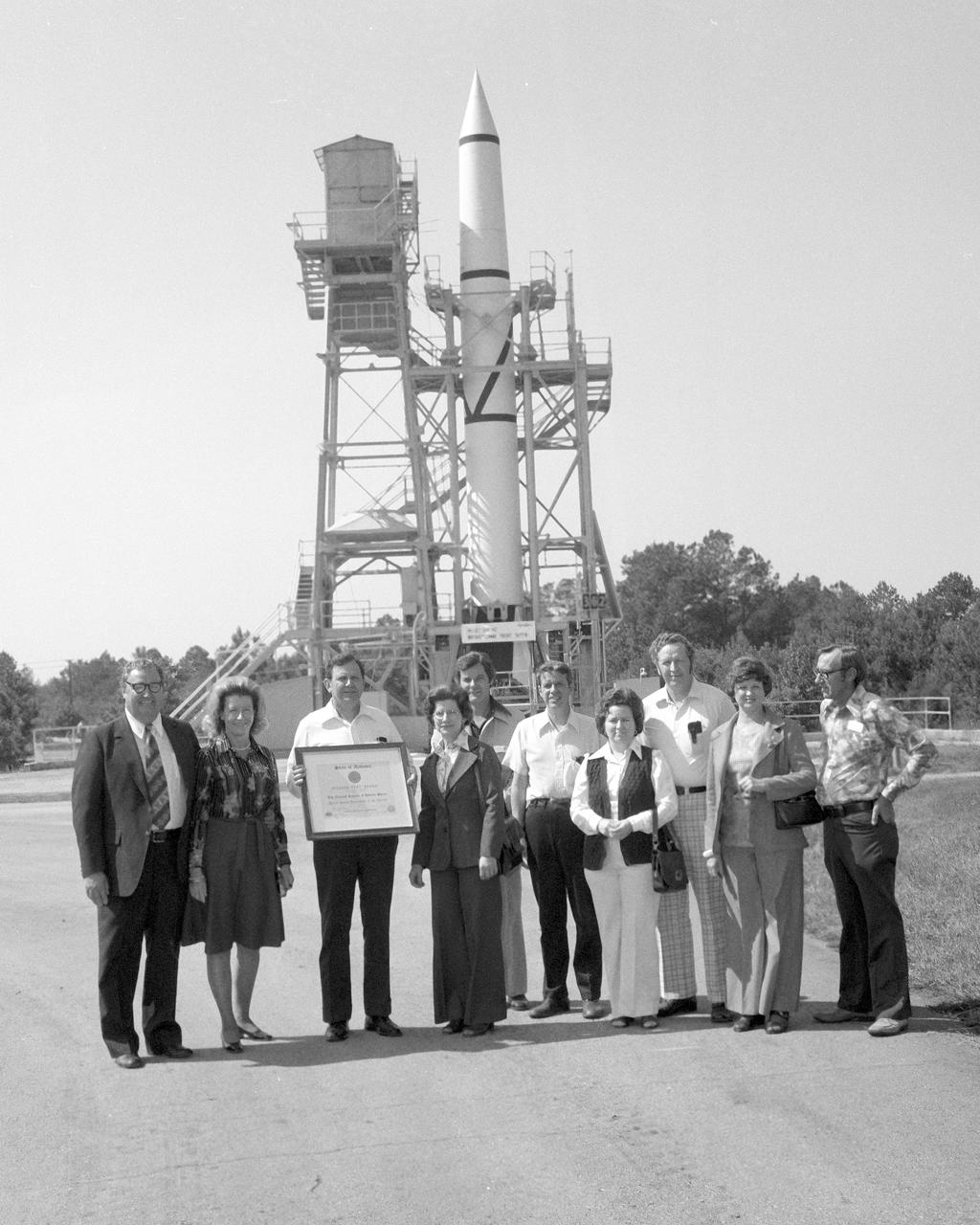
On October 02, 1976, Marshall Space Flight Center’s (MSFC) Redstone test stand was received into the National Registry of Historical Places. Photographed in front of the Redstone test stand along with their wives are (left to right), Madison County Commission Chairman James Record, Dr. William R. Lucas, MSFC Center Director from June 15, 1974 until July 3, 1986, (holding certificate), Ed, Buckbee, Space and Rocket Center Director; Harvie Jones, Huntsville Architect; Dick Smith; and Joe Jones.
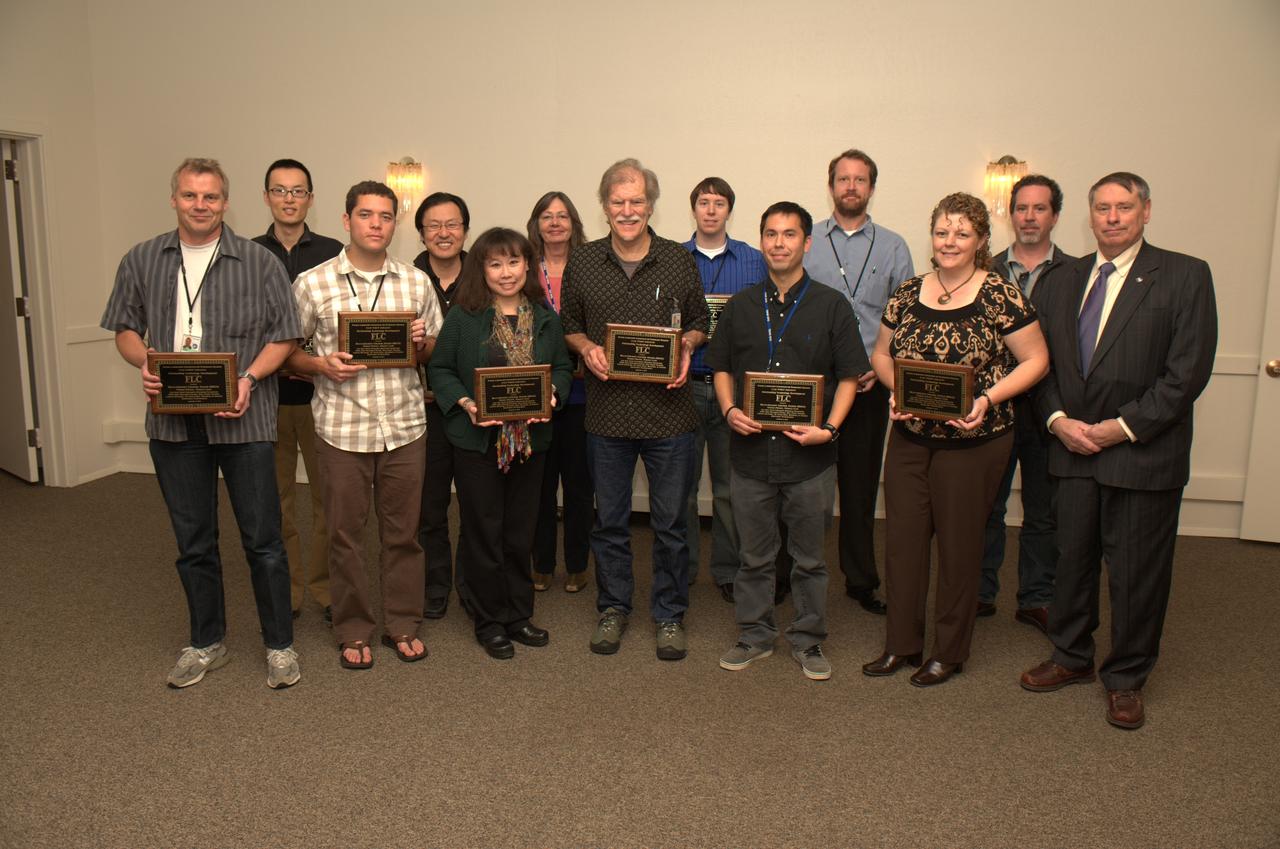
Technology Partnerships awards: Federal Laboratory Consortium Far West Region Award for Outstanding Technology Development for Multi-Aircraft Control System. In particular order are Connie Brasil, Todd Callantine, Al Globus, Jeff Homola, Rich Jacoby, George Lawton, Paul Lee, Matt Mainini, Joey Mercer, Ev Palmer, Tom Prevot, Nancy Smith, Easter Wang, James Wong.
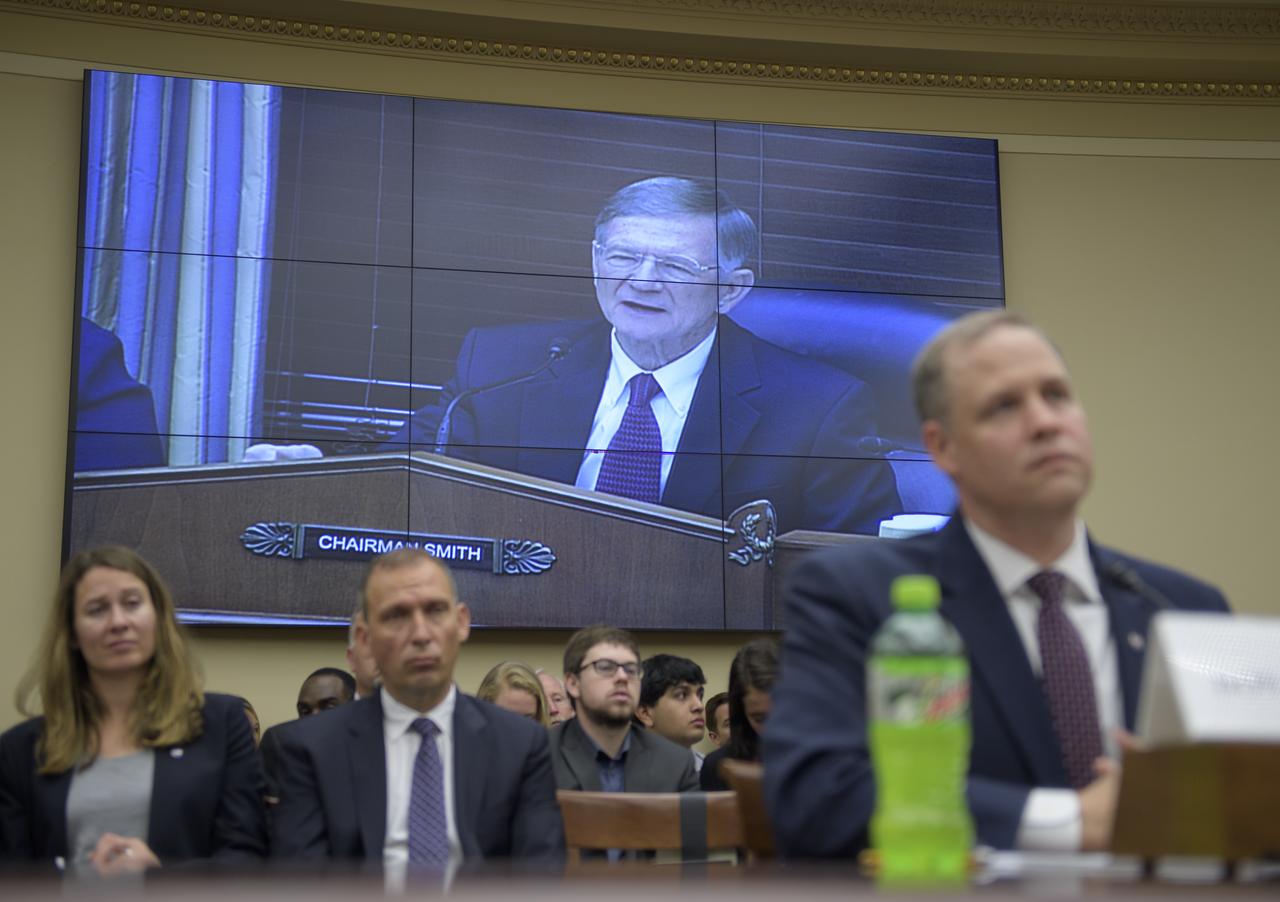
Rep. Lamar Smith, R-Texas, Chairman of the House Committee on Science, Space, and Technology questions NASA Administrator Jim Bridenstine during a House Committee on Science, Space, and Technology hearing on the James Webb Space Telescope, Wednesday, July 25, 2018 at the Rayburn House Office Building in Washington. Photo Credit: (NASA/Bill Ingalls)
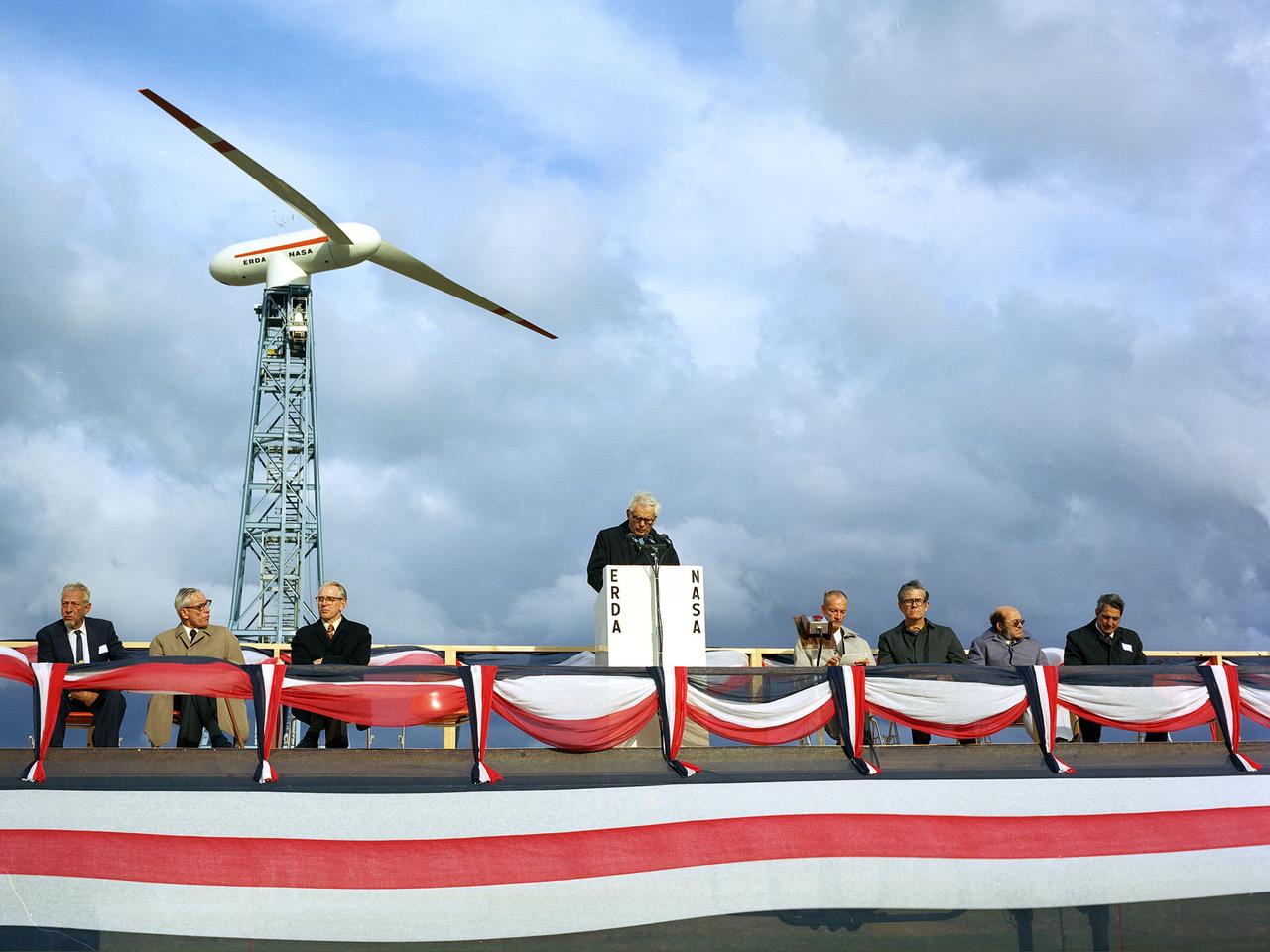
Energy Research and Development Administration (ERDA) Administrator Robert Seamans addresses the crowd at the dedication ceremony for the Mod-0 100-kilowatt wind turbine at the National Aeronautics and Space Administration’s (NASA) Plum Brook Station. The wind turbine program was a joint NASA/ERDA effort to develop less expensive forms of energy during the 1970s. NASA Lewis was able to use its experience with aerodynamics, powerplants, and energy transfer to develop efficient and cost-effective wind energy systems. The Plum Brook wind turbine was the first of a series of increasingly powerful NASA-ERDA wind turbines built around the nation. From left to right: Congressional Committee aide John Dugan, retired S. Morgan Smith Company chief engineer Carl Wilcox, windmill pioneer Beauchamp Smith, NASA Administrator James Fletcher, Seamans, and Lewis Center Director Bruce Lundin. The three men to the right are unidentified.
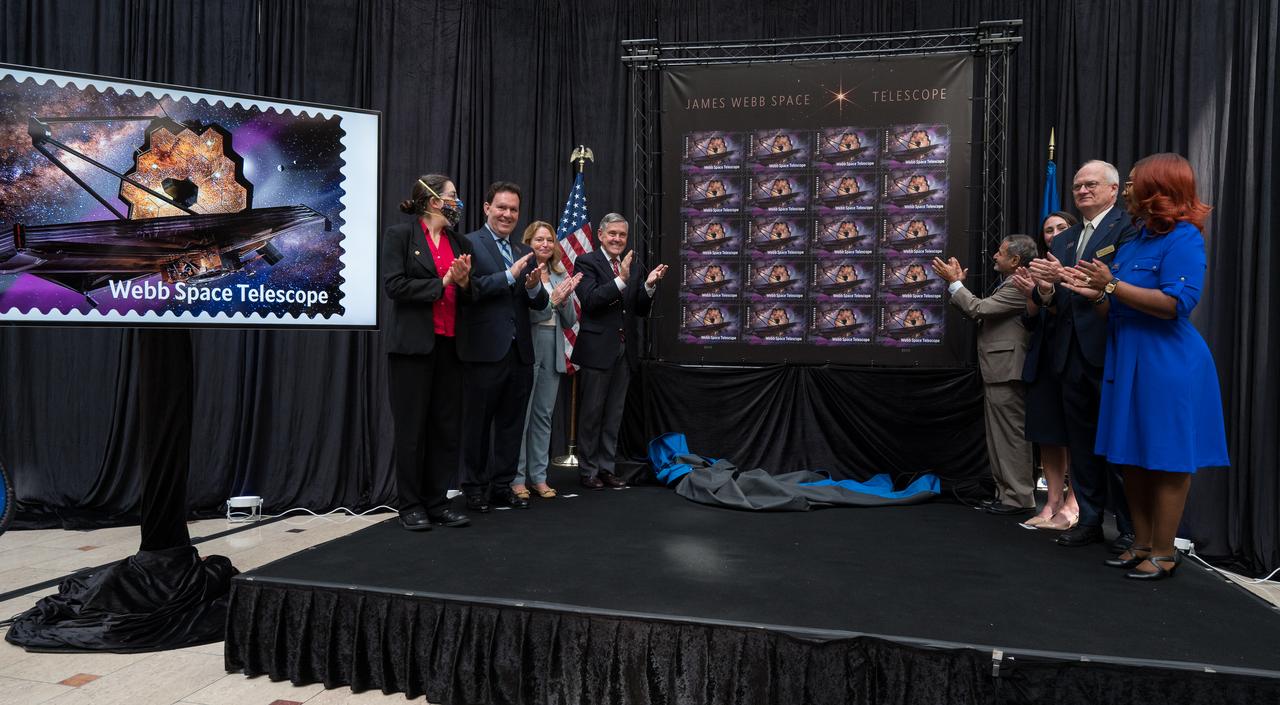
From left to right, NASA’s Goddard Space Flight Center Webb Deputy Observatory Project Scientist, Erin Smith, NASA’s Goddard Space Flight Center Webb Optical Telescope Element Manager, Lee Feinberg, Smithsonian Institution Under Secretary for Service and Research, Ellen Stofan, NASA Associate Administrator and former astronaut Bob Cabana, United States Postal Service Vice Chairman, Board of Governors, Anton Hajjar, NASA public affairs specialist Alice Fisher, National Postal Museum Deputy Director, Toby Mensforth, and Lisa Whitehead, USPS, applaud after unveiling the United States Postal Service’s new stamp celebrating NASA’s James Webb Space Telescope (JWST) at the first-day-of-issue event on Thursday, Sept. 8, 2022, at the Smithsonian’s National Postal Museum in Washington. The stamp, which features an illustration of the observatory, honors Webb’s mission to explore the unknown in our universe – solving mysteries in our solar system, looking beyond to distant worlds around other stars, and probing the structures and origins of our universe and our place in it. Photo Credit: (NASA/Aubrey Gemignani)
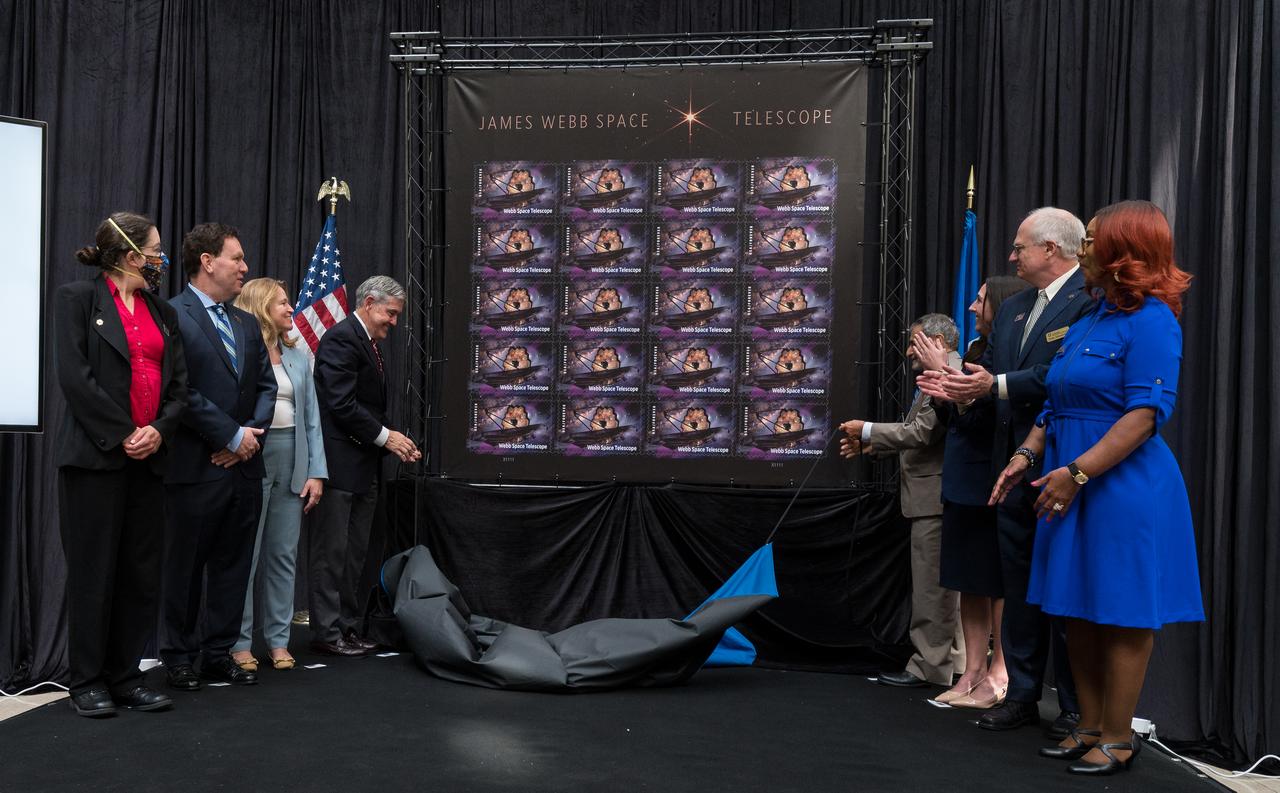
From left to right, NASA’s Goddard Space Flight Center Webb Deputy Observatory Project Scientist, Erin Smith, NASA’s Goddard Space Flight Center Webb Optical Telescope Element Manager, Lee Feinberg, Smithsonian Institution Under Secretary for Service and Research, Ellen Stofan, NASA Associate Administrator and former astronaut Bob Cabana, United States Postal Service Vice Chairman, Board of Governors, Anton Hajjar, NASA public affairs specialist Alice Fisher, National Postal Museum Deputy Director, Toby Mensforth, and Lisa Whitehead, USPS, unveil the United States Postal Service’s new stamp celebrating NASA’s James Webb Space Telescope (JWST) at the first-day-of-issue event on Thursday, Sept. 8, 2022, at the Smithsonian’s National Postal Museum in Washington. The stamp, which features an illustration of the observatory, honors Webb’s mission to explore the unknown in our universe – solving mysteries in our solar system, looking beyond to distant worlds around other stars, and probing the structures and origins of our universe and our place in it. Photo Credit: (NASA/Aubrey Gemignani)
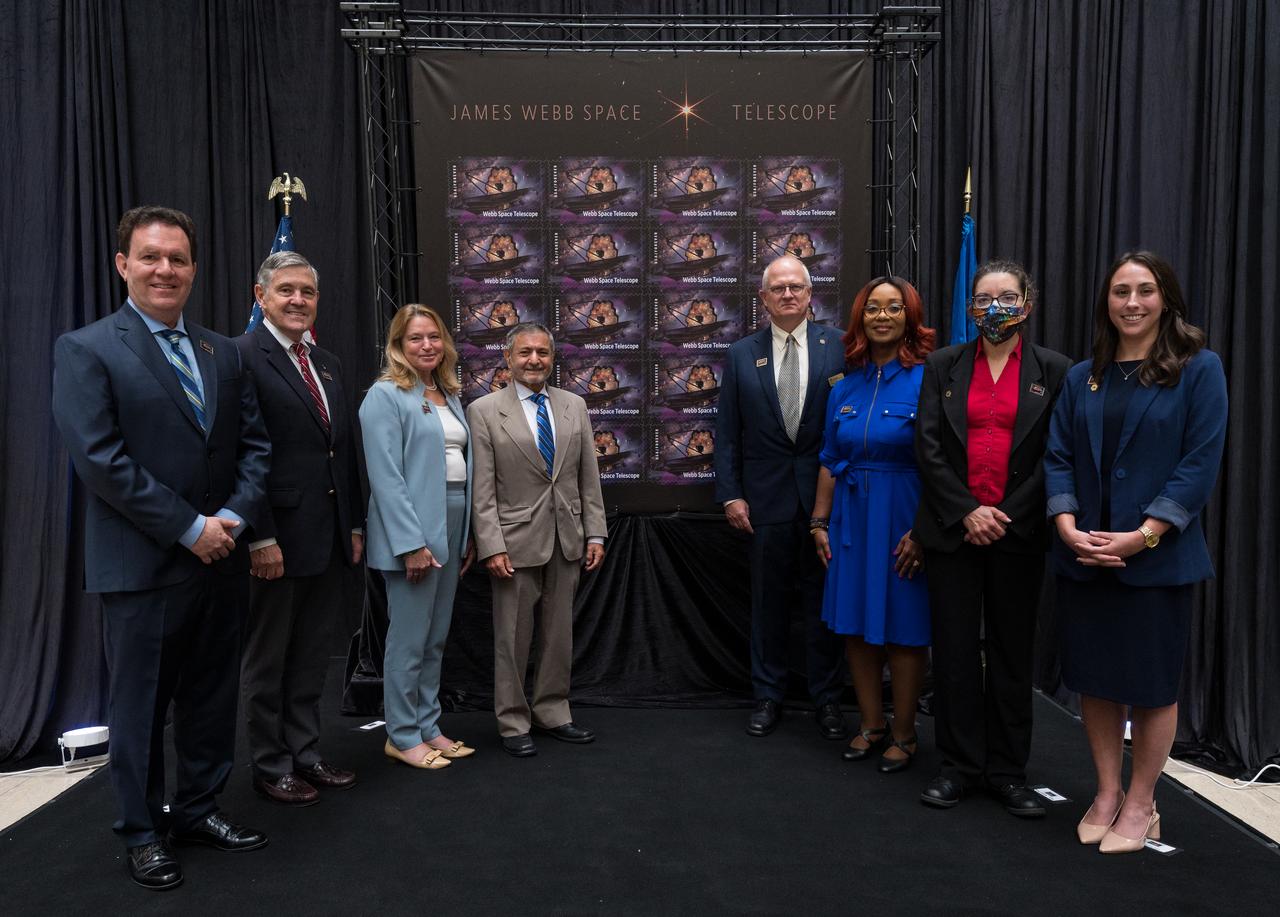
From left to right, NASA’s Goddard Space Flight Center Webb Optical Telescope Element Manager, Lee Feinberg, NASA Associate Administrator and former astronaut Bob Cabana, Smithsonian Institution Under Secretary for Service and Research, Ellen Stofan, United States Postal Service Vice Chairman, Board of Governors, Anton Hajjar, National Postal Museum Deputy Director Toby Mensforth, Lisa Whitehead, USPS, NASA’s Goddard Space Flight Center Webb Deputy Observatory Project Scientist, Erin Smith, and NASA public affairs specialist, Alice Fisher, pose for a photo at the conclusion of the first-day-of-issue event for the United States Postal Service’s new stamp celebrating NASA’s James Webb Space Telescope (JWST) on Thursday, Sept. 8, 2022, at the Smithsonian’s National Postal Museum in Washington. The stamp, which features an illustration of the observatory, honors Webb’s mission to explore the unknown in our universe – solving mysteries in our solar system, looking beyond to distant worlds around other stars, and probing the structures and origins of our universe and our place in it. Photo Credit: (NASA/Aubrey Gemignani)
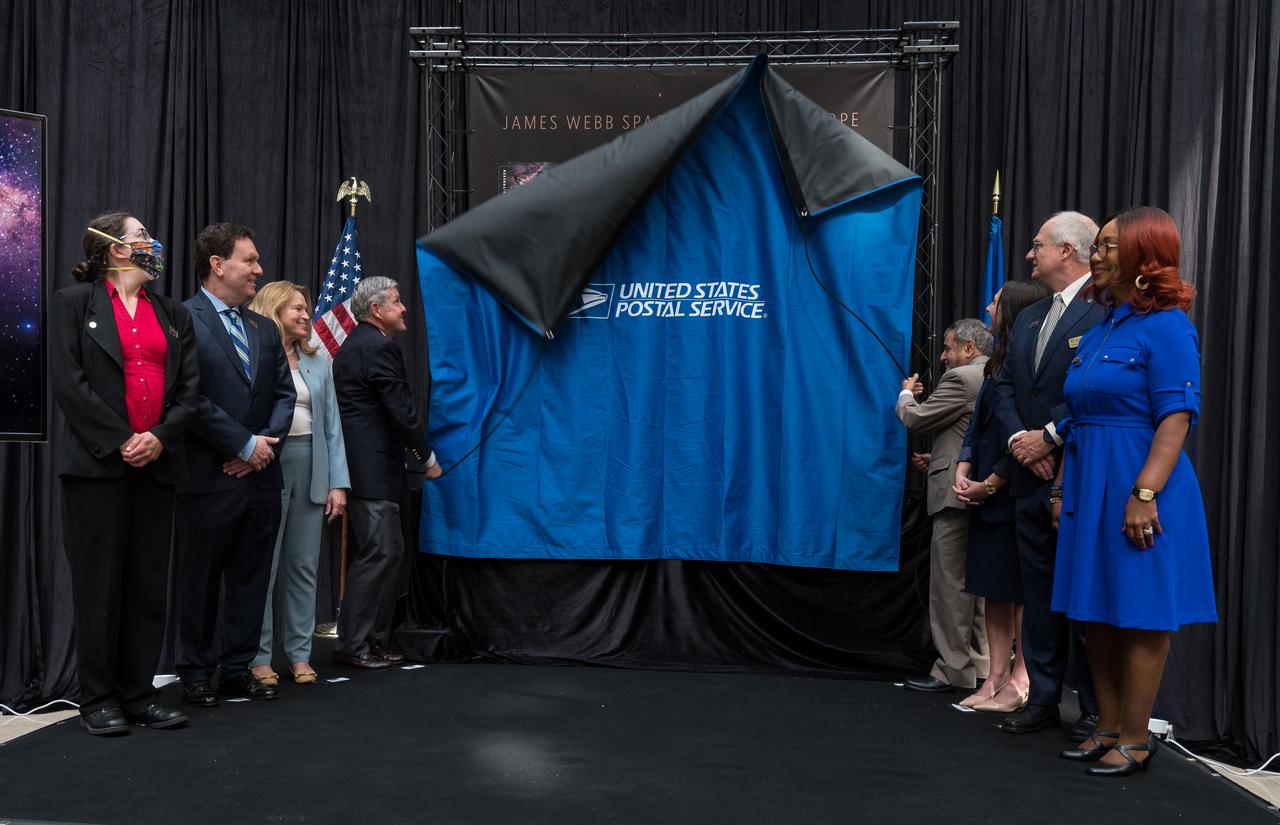
From left to right, NASA’s Goddard Space Flight Center Webb Deputy Observatory Project Scientist, Erin Smith, NASA’s Goddard Space Flight Center Webb Optical Telescope Element Manager, Lee Feinberg, Smithsonian Institution Under Secretary for Service and Research, Ellen Stofan, NASA Associate Administrator and former astronaut Bob Cabana, United States Postal Service Vice Chairman, Board of Governors, Anton Hajjar, NASA public affairs specialist Alice Fisher, National Postal Museum Deputy Director, Toby Mensforth, and Lisa Whitehead, USPS, unveil the United States Postal Service’s new stamp celebrating NASA’s James Webb Space Telescope (JWST) at the first-day-of-issue event on Thursday, Sept. 8, 2022, at the Smithsonian’s National Postal Museum in Washington. The stamp, which features an illustration of the observatory, honors Webb’s mission to explore the unknown in our universe – solving mysteries in our solar system, looking beyond to distant worlds around other stars, and probing the structures and origins of our universe and our place in it. Photo Credit: (NASA/Aubrey Gemignani)
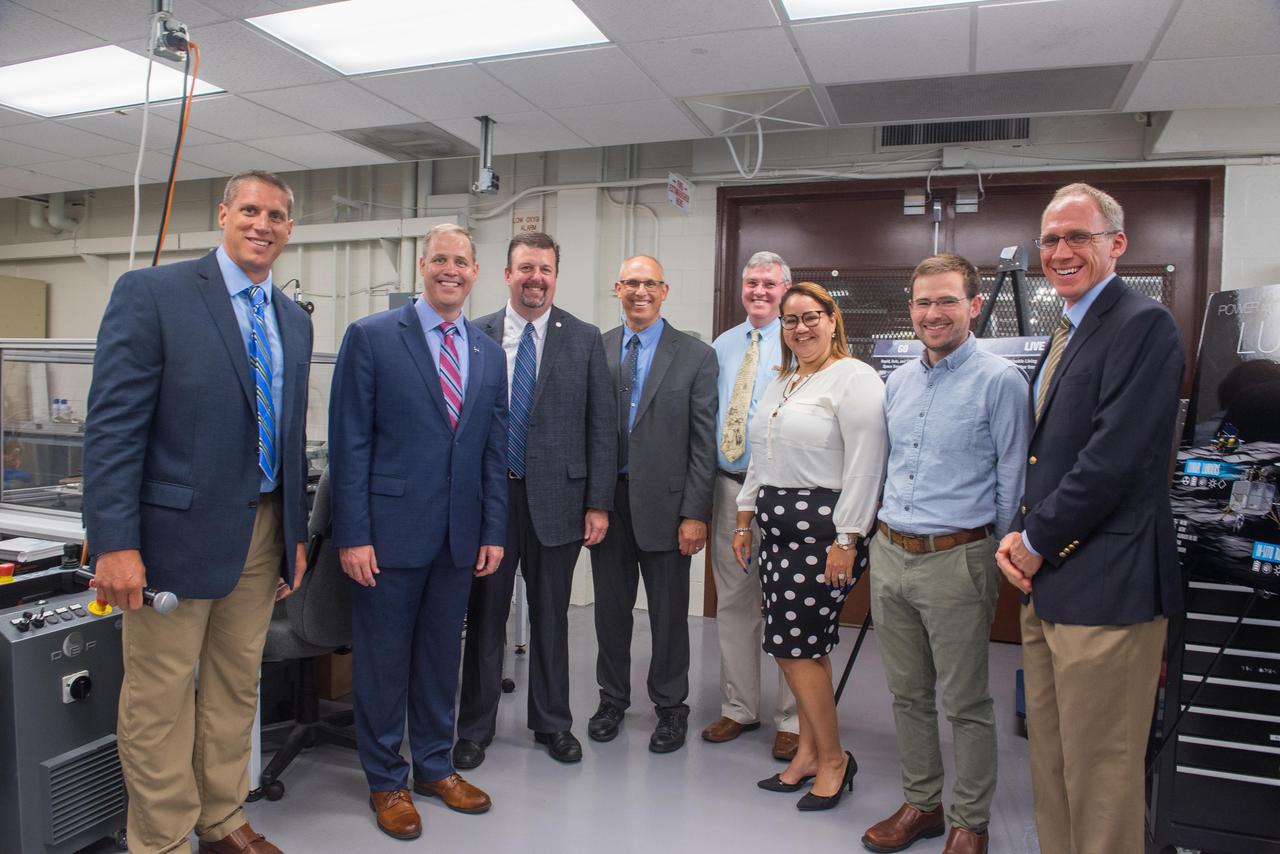
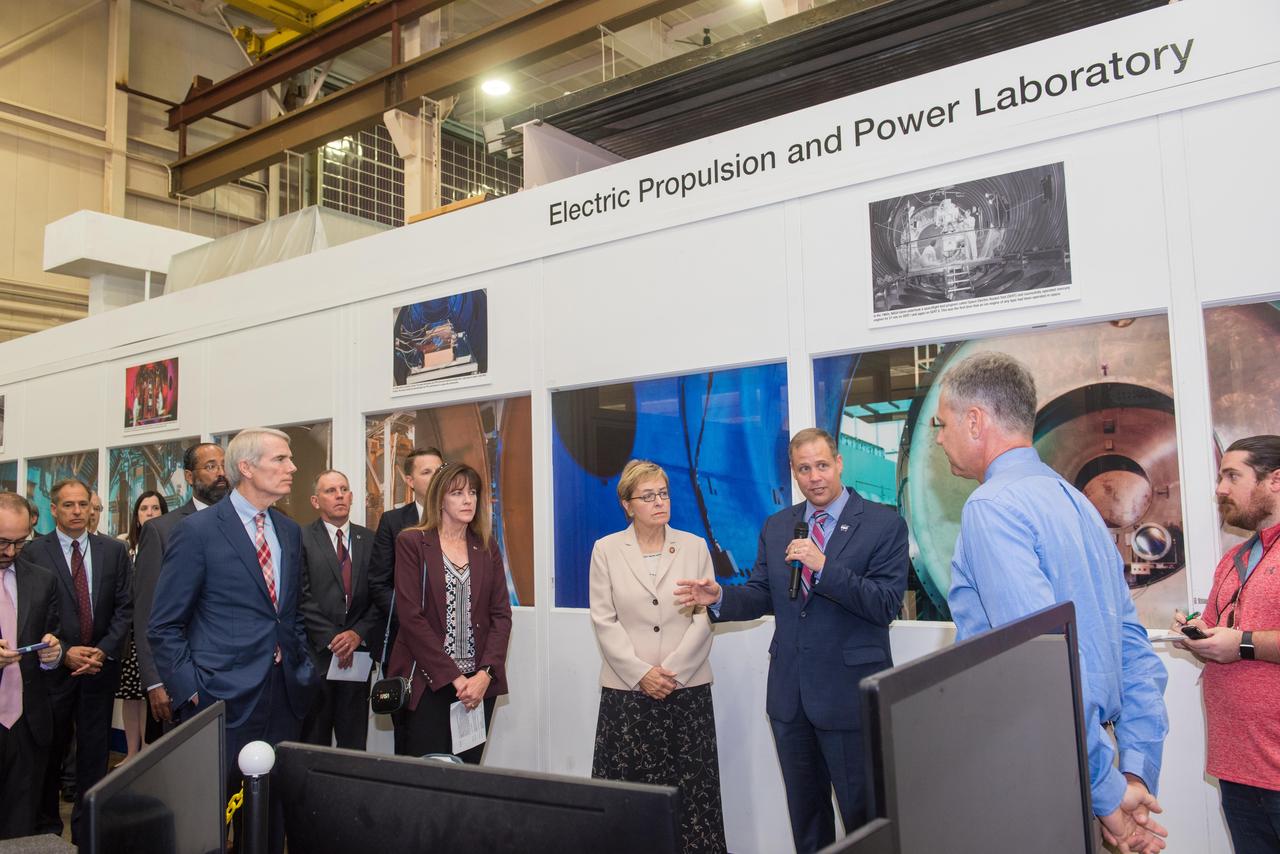
NASA Administrator Jim Bridenstine and Congressional Delegation Visit to Lewis Field and Plum Brook Station
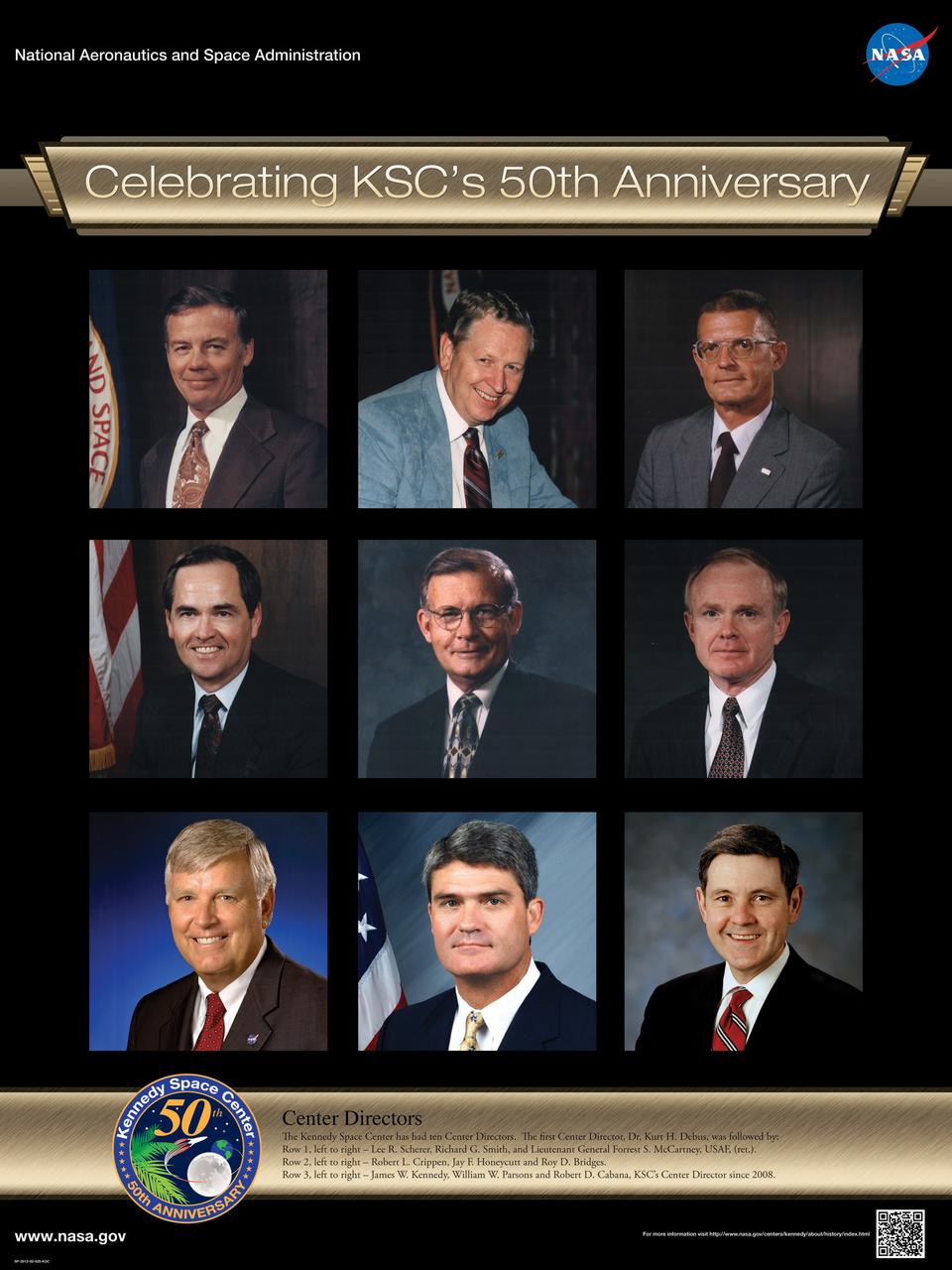
Center Directors: The Kennedy Space Center has had ten Center Directors. The first Center Director, Dr. Kurt H. Debus, was followed by: Row 1, left to right – Lee R. Scherer, Richard G. Smith, and Lieutenant General Forrest S. McCartney, USAF, ret.. Row 2, left to right – Robert L. Crippen, Jay F. Honeycutt and Roy D. Bridges. Row 3, left to right – James W. Kennedy, William W. Parsons and Robert D. Cabana, KSC’s Center Director since 2008. Poster designed by Kennedy Space Center Graphics Department/Greg Lee. Credit: NASA
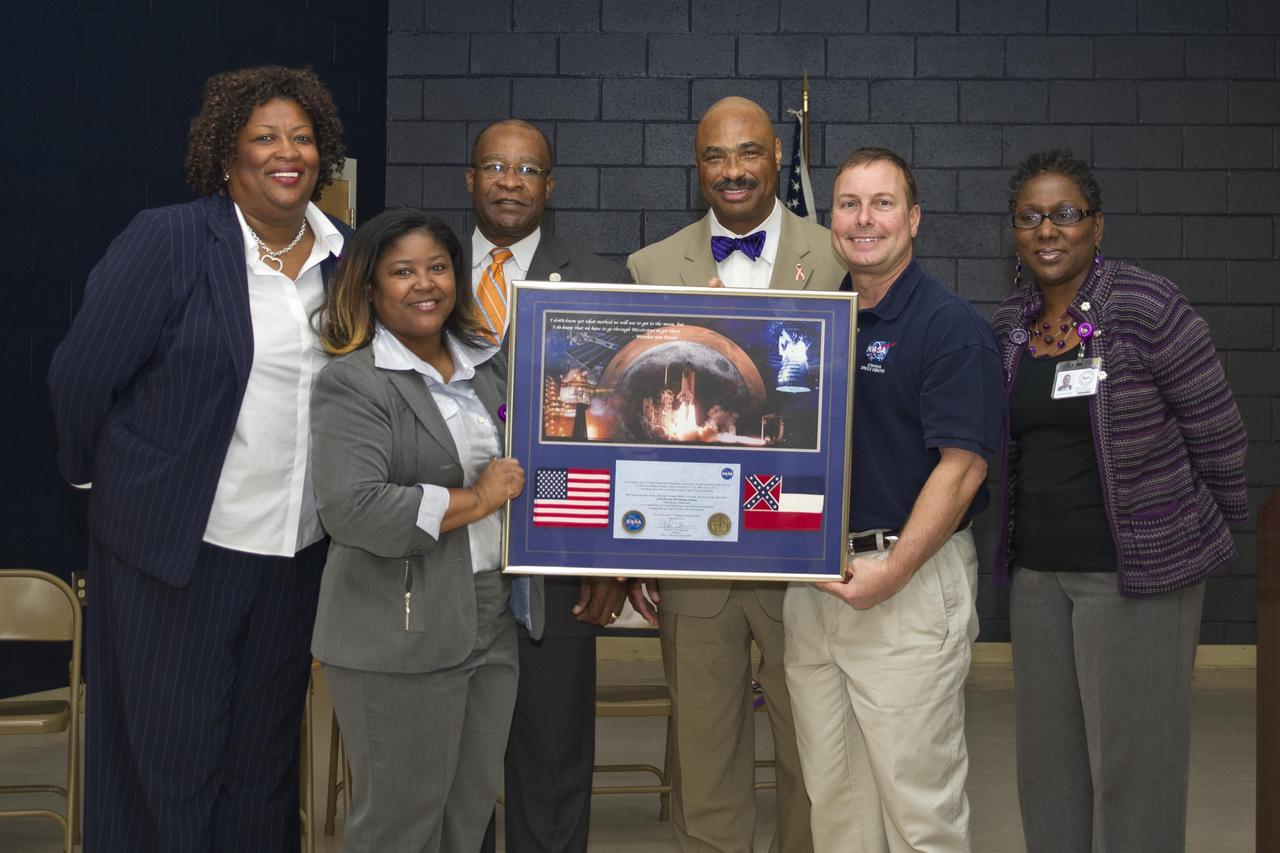
Stennis Deputy Director Rick Gilbrech (second from right) presents a commemorative plaque to Lillie Burney Elementary School officials, including (l to r): Lillie Burney Principal Deborah Smith; Assistant Principal Dr. Bobbie Trussell; Hattiesburg Mayor Johnny DuPree; Hattiesburg Public School District Superintendent James Bacchus; Gilbrech; and District Assistant Superintendent Dr. Edna Thomas. NASA senior staff members from Stennis visited the Hattiesburg, Miss., school Jan. 27, 2012, for a morning of activities and outreach to students and school officials.
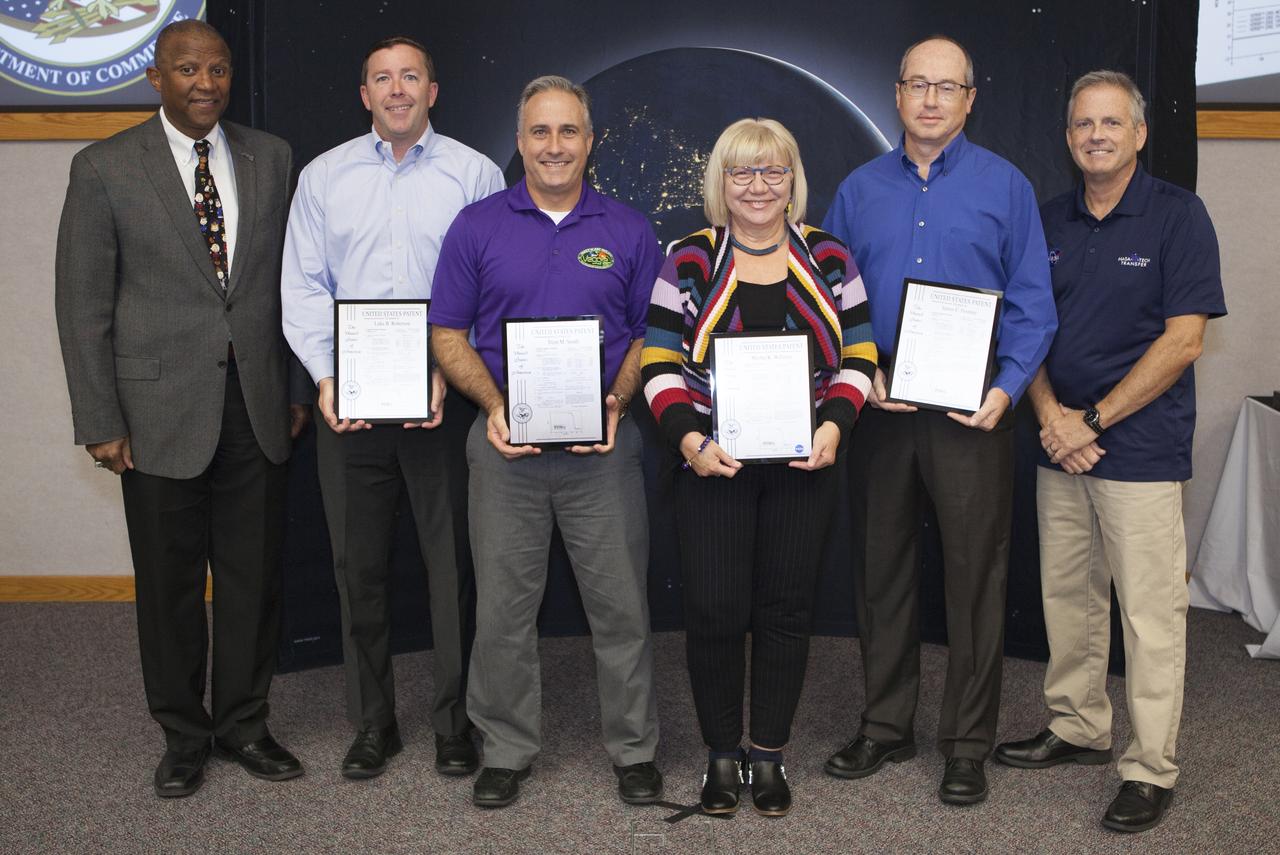
U.S. Patent plaques were awarded to, second from left, Luke Roberson, Trent Smith, Martha Williams and James Fesmire, for their invention, Aerogel/Polymer Composite Materials, known as Aeroplastic, during the 2017 Innovation Expo at NASA's Kennedy Space Center in Florida. At left is Kelvin Manning, Kennedy's associate director; and at far right is Dave Makufka, Kennedy's Technology Transfer Program manager. The purpose of the annual two-day expo is to help foster innovation and creativity among the Kennedy workforce. The event included several keynote speakers, training opportunities, an innovation showcase and the KSC Kickstart competition.
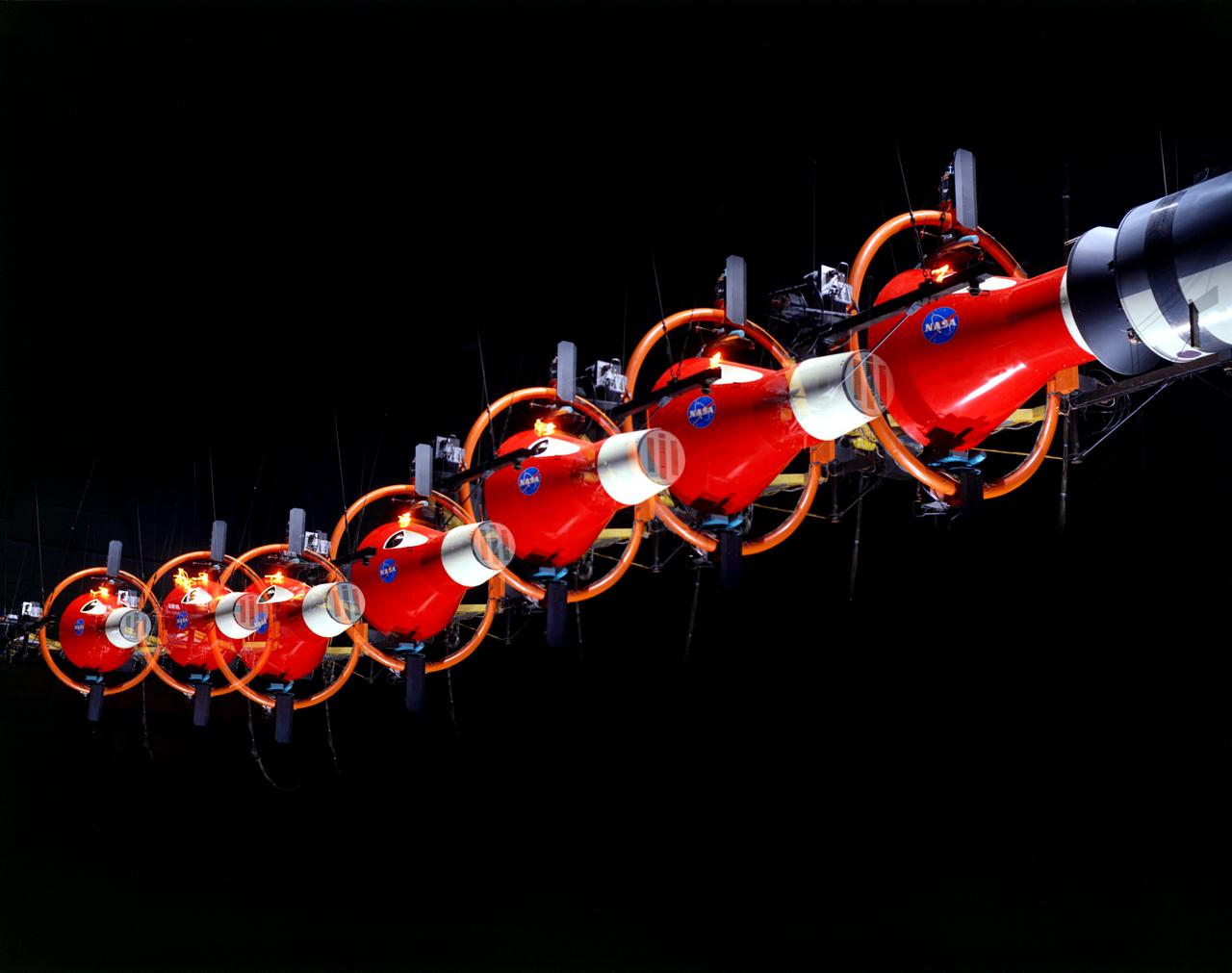
Multiple exposure of Rendezvous Docking Simulator. Francis B. Smith, described the simulator as follows: The rendezvous and docking operation of the Gemini spacecraft with the Agena and of the Apollo Command Module with the Lunar Excursion Module have been the subject of simulator studies for several years. This figure illustrates the Gemini-Agena rendezvous docking simulator at Langley. The Gemini spacecraft was supported in a gimbal system by an overhead crane and gantry arrangement which provided 6 degrees of freedom - roll, pitch, yaw, and translation in any direction - all controllable by the astronaut in the spacecraft. Here again the controls fed into a computer which in turn provided an input to the servos driving the spacecraft so that it responded to control motions in a manner which accurately simulated the Gemini spacecraft. -- Published in Barton C. Hacker and James M. Grimwood, On the Shoulders of Titans: A History of Project Gemini, NASA SP-4203 Francis B. Smith, Simulators for Manned Space Research, Paper presented at the 1966 IEEE International convention, March 21-25, 1966.
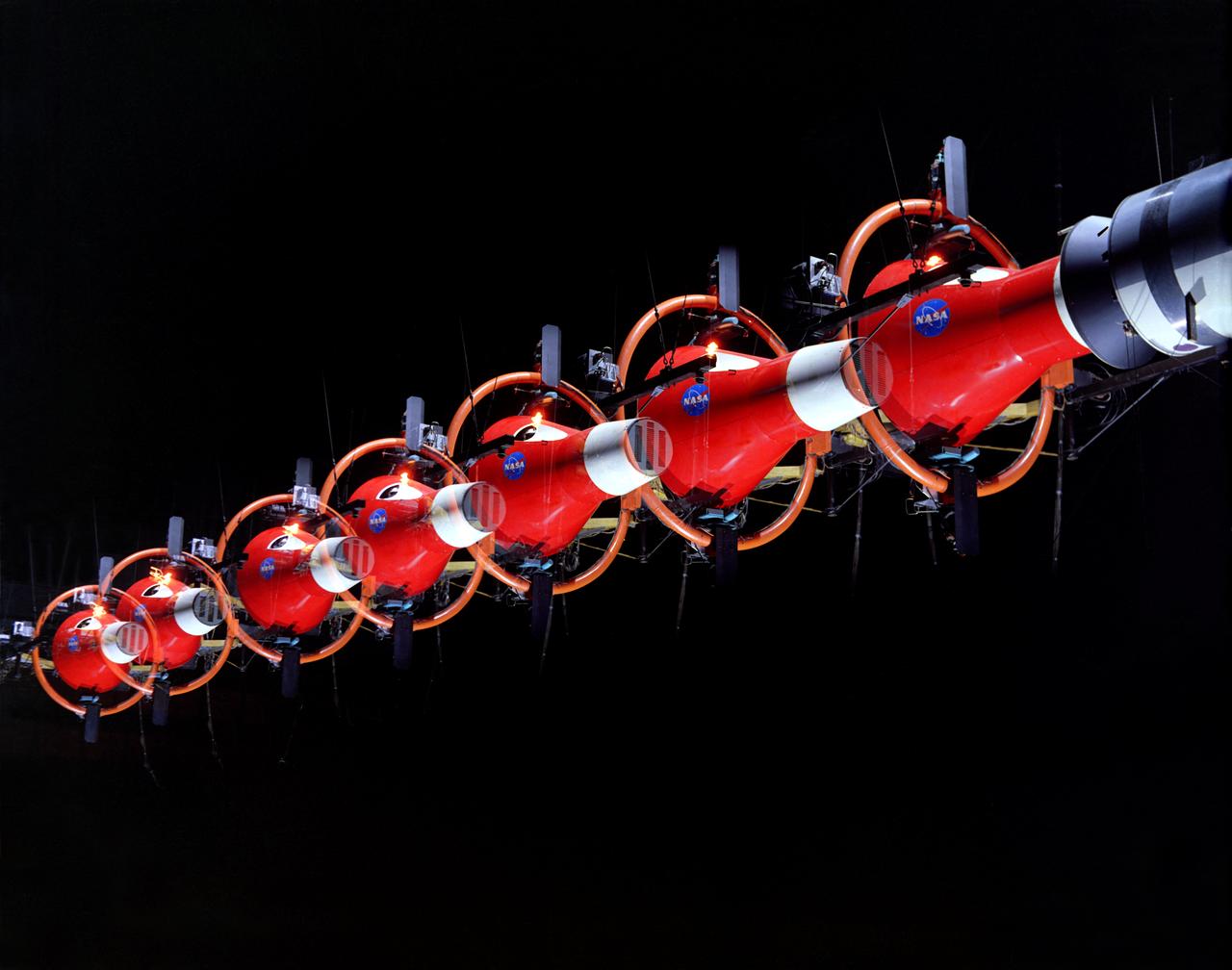
Multiple exposure of Rendezvous Docking Simulator. Francis B. Smith, described the simulator as follows: The rendezvous and docking operation of the Gemini spacecraft with the Agena and of the Apollo Command Module with the Lunar Excursion Module have been the subject of simulator studies for several years. This figure illustrates the Gemini-Agena rendezvous docking simulator at Langley. The Gemini spacecraft was supported in a gimbal system by an overhead crane and gantry arrangement which provided 6 degrees of freedom - roll, pitch, yaw, and translation in any direction - all controllable by the astronaut in the spacecraft. Here again the controls fed into a computer which in turn provided an input to the servos driving the spacecraft so that it responded to control motions in a manner which accurately simulated the Gemini spacecraft. -- Published in Barton C. Hacker and James M. Grimwood, On the Shoulders of Titans: A History of Project Gemini, NASA SP-4203 Francis B. Smith, Simulators for Manned Space Research, Paper presented at the 1966 IEEE International convention, March 21-25, 1966.
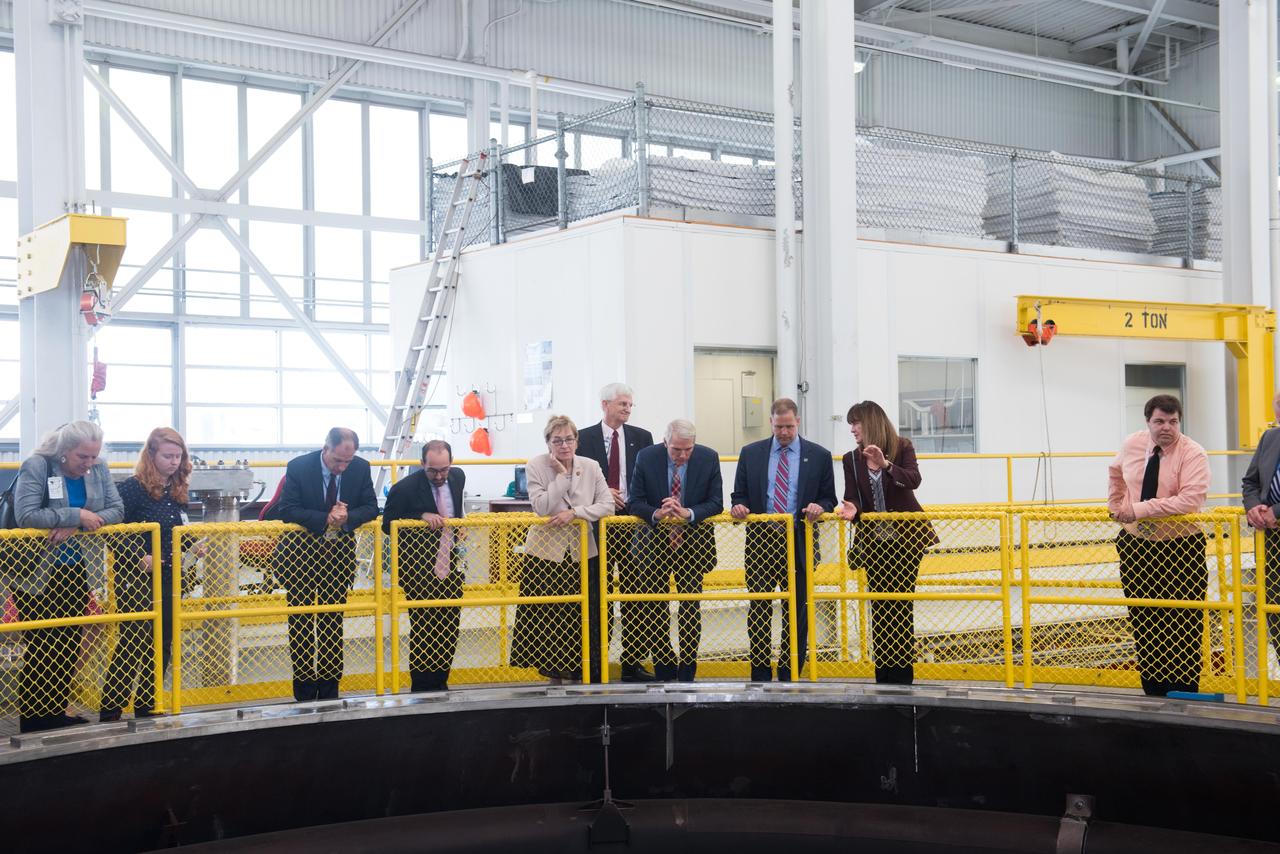
NASA Administrator Jim Bridenstine and Congressional Delegation Visit to Lewis Field and Plum Brook Station
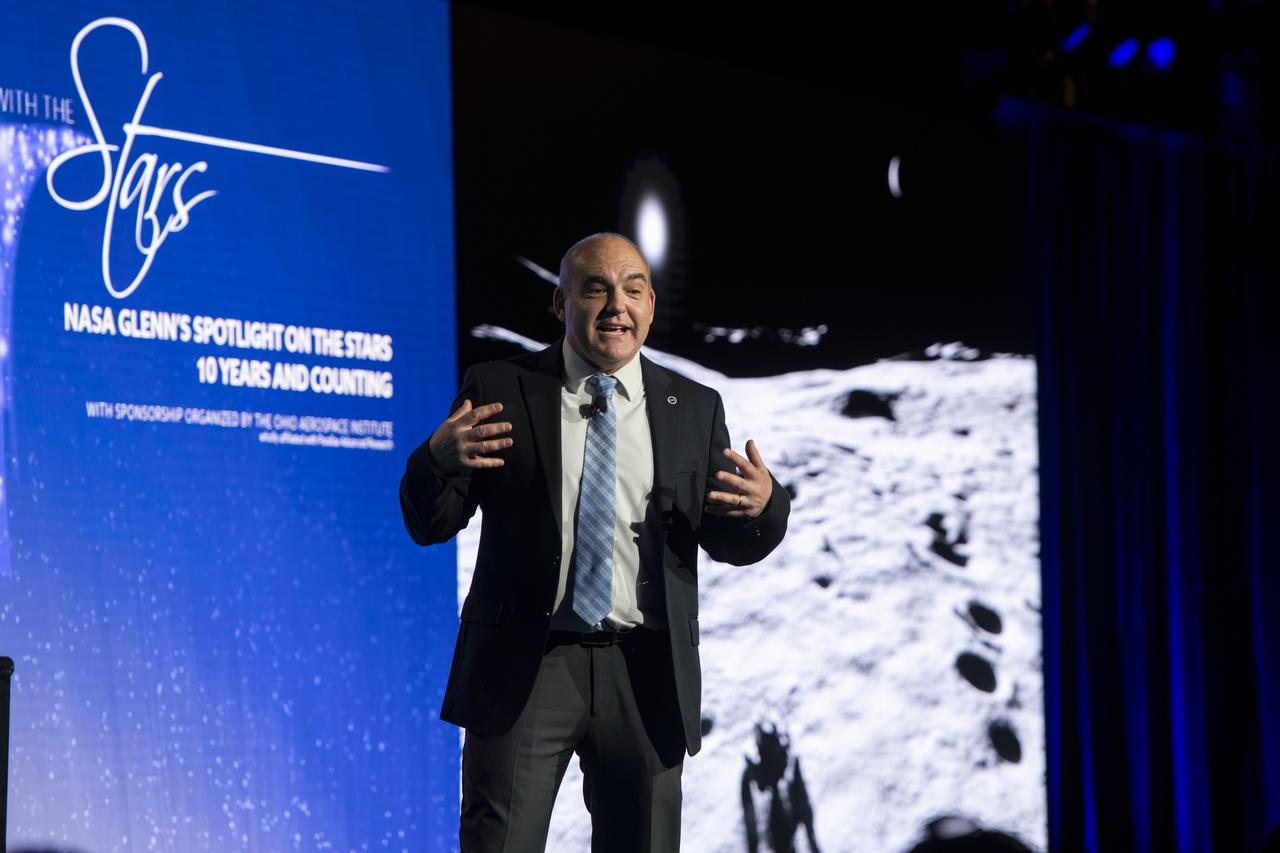
NASA Glenn's Spotlight on the Stars, 10 Years and Counting was held at Windows on the River in Cleveland, OH on November 20th, 2024. Sponsorship organized by the Ohio Aerospace Institute. Welcome by Dennis Andersh, CEO and President, Parallax Advanced Research, Ohio Aerospace Institute. Remarks by Terrence Slaybaugh, Vice President of Sites and Infrastructure, JobsOhio. Introduction of 10th Anniversary Video, Dr. Wanda Peters, Acting Deputy Director, NASA Glenn Research Center. Remarks/Introduction of Presenters, Dr. James Kenyon, Director, NASA Glenn Research Center. Keynote Speakers: Nikki Welch, NASA Glenn Communications, Connecting People to the Mission. Timothy Smith, NASA Glenn's Superalloy Achievements. Carlos Garcia-Galan, Orion Program’s European Service Module Integration Office at Glenn Research Center, Dreaming of Going to the Moon.
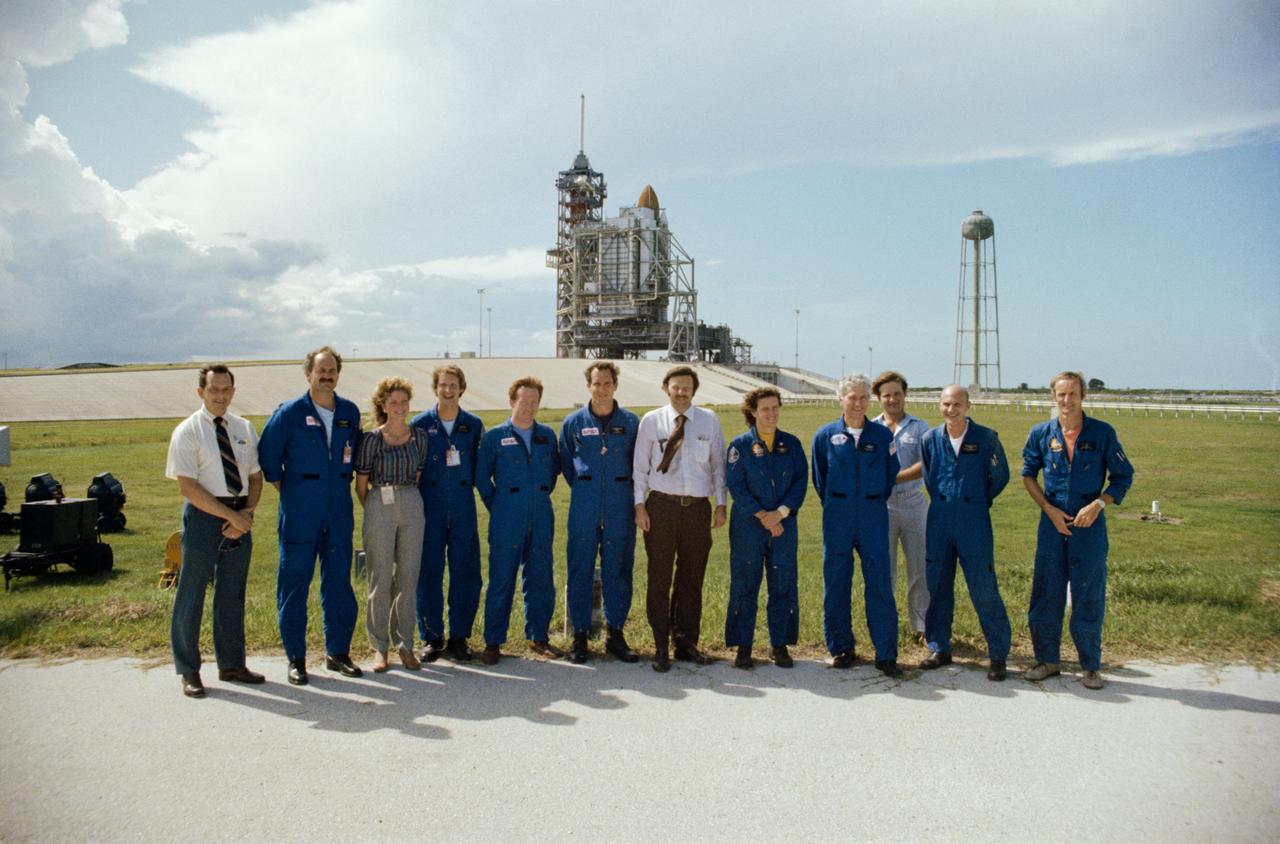
S82-32201 (29 May 1982) --- Members of the JSC astronaut corps, vehicle integration test team (VITT) and other personnel pose for a photograph at the completion of a countdown demonstration test (CDDT) at Launch Pad 39A, Kennedy Space Center (KSC). The participants are, from the left, Wilbur J. Etbauer, engineer with the VITT; mission specialist-astronaut James D. Van Hoften; Terri Stanford, engineer from JSC's flight operations directorate; mission specialist-astronaut Steven A. Hawley; astronaut Richard N. Richards; astronaut Michael J. Smith; Richard W. Nygren, head of the VITT; mission specialist-astronaut Kathryn D. Sullivan; astronaut Henry W. Hartsfield Jr., STS-4 pilot; Mark Haynes, a co-op student participating with the VITT; astronaut Thomas K. Mattingly II, STS-4 commander; and astronaut Donald E. Williams. Photo credit: NASA
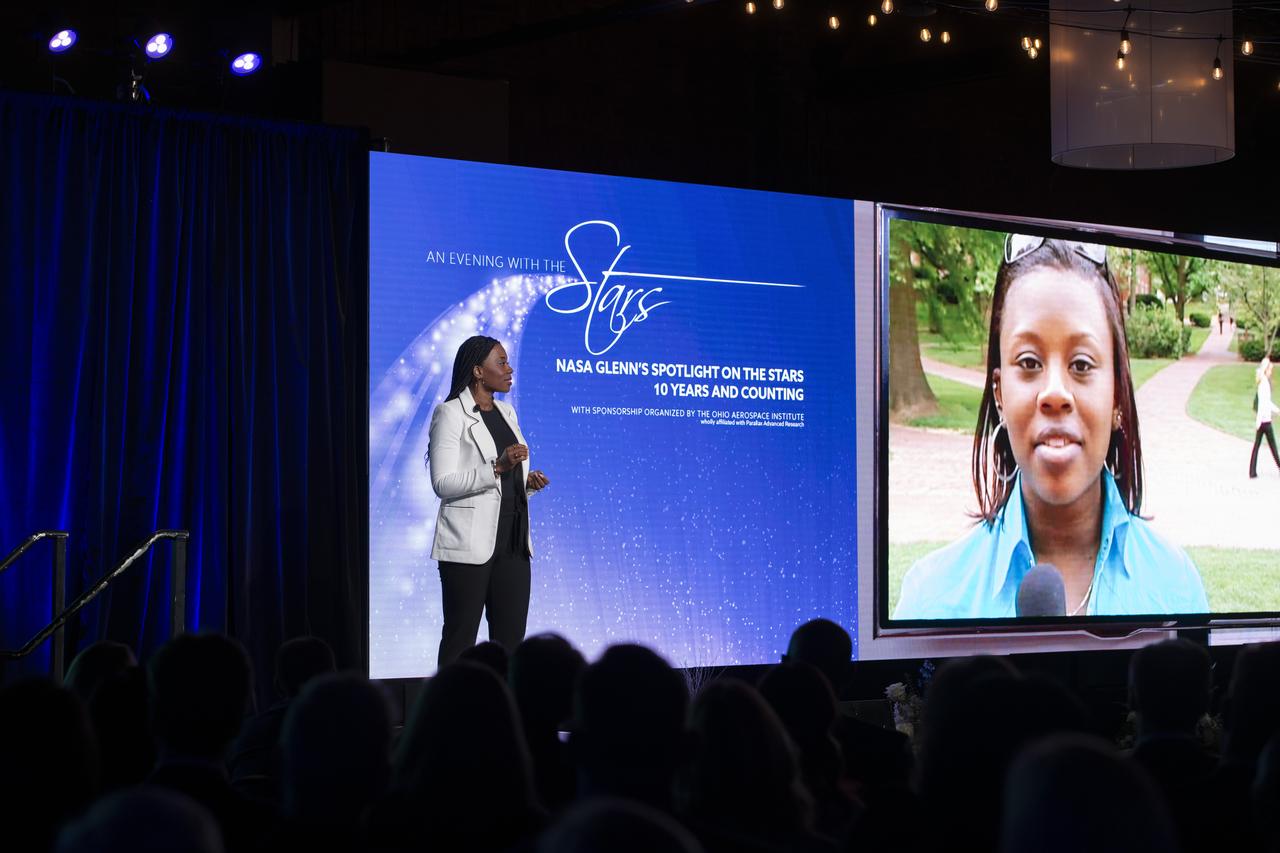
NASA Glenn's Spotlight on the Stars, 10 Years and Counting was held at Windows on the River in Cleveland, OH on November 20th, 2024. Sponsorship organized by the Ohio Aerospace Institute. Welcome by Dennis Andersh, CEO and President, Parallax Advanced Research, Ohio Aerospace Institute. Remarks by Terrence Slaybaugh, Vice President of Sites and Infrastructure, JobsOhio. Introduction of 10th Anniversary Video, Dr. Wanda Peters, Acting Deputy Director, NASA Glenn Research Center. Remarks/Introduction of Presenters, Dr. James Kenyon, Director, NASA Glenn Research Center. Keynote Speakers: Nikki Welch, NASA Glenn Communications, Connecting People to the Mission. Timothy Smith, NASA Glenn's Superalloy Achievements. Carlos Garcia-Galan, Dreaming of Going to the Moon. Photo Credit: (NASA/Sara Lowthian-Hanna)
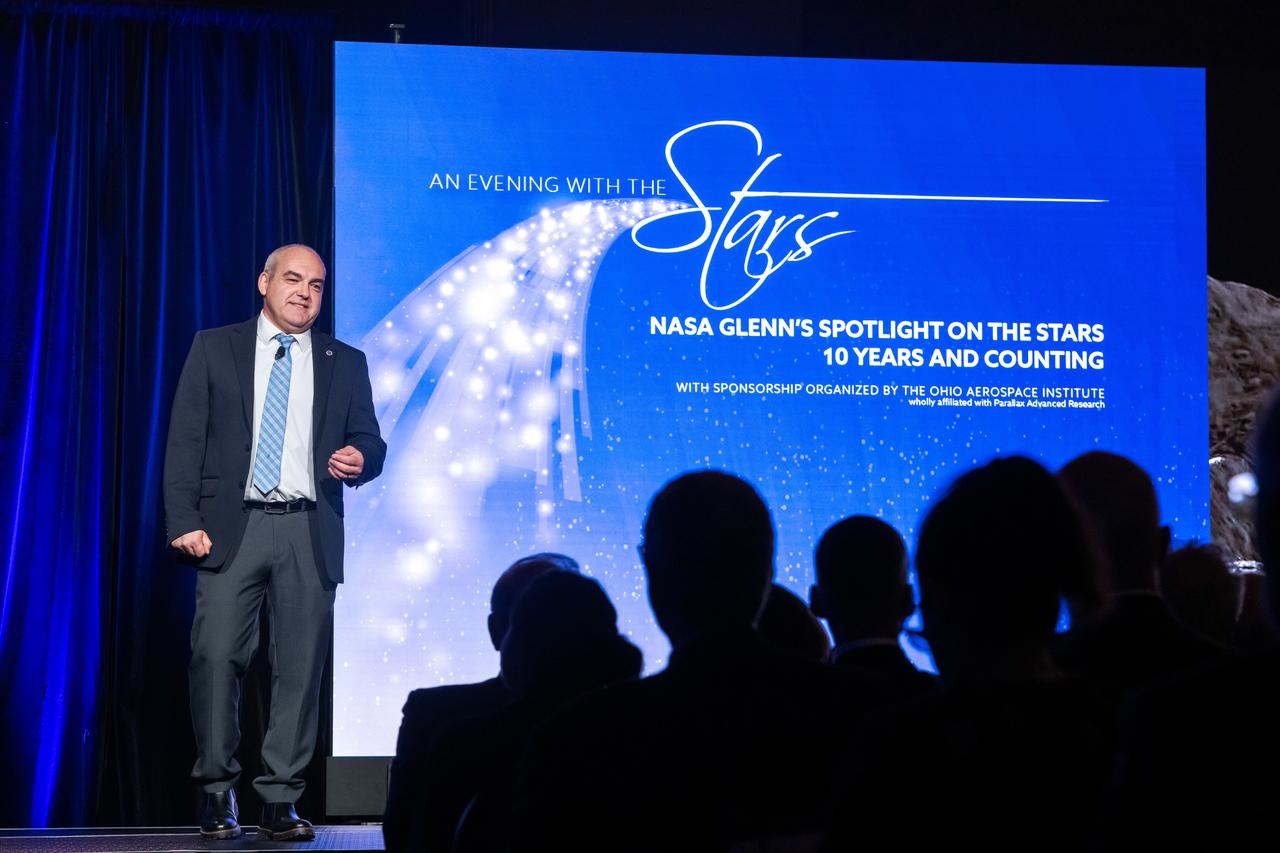
NASA Glenn's Spotlight on the Stars, 10 Years and Counting was held at Windows on the River in Cleveland, OH on November 20th, 2024. Sponsorship organized by the Ohio Aerospace Institute. Welcome by Dennis Andersh, CEO and President, Parallax Advanced Research, Ohio Aerospace Institute. Remarks by Terrence Slaybaugh, Vice President of Sites and Infrastructure, JobsOhio. Introduction of 10th Anniversary Video, Dr. Wanda Peters, Acting Deputy Director, NASA Glenn Research Center. Remarks/Introduction of Presenters, Dr. James Kenyon, Director, NASA Glenn Research Center. Keynote Speakers: Nikki Welch, NASA Glenn Communications, Connecting People to the Mission. Timothy Smith, NASA Glenn's Superalloy Achievements. Carlos Garcia-Galan, Dreaming of Going to the Moon.
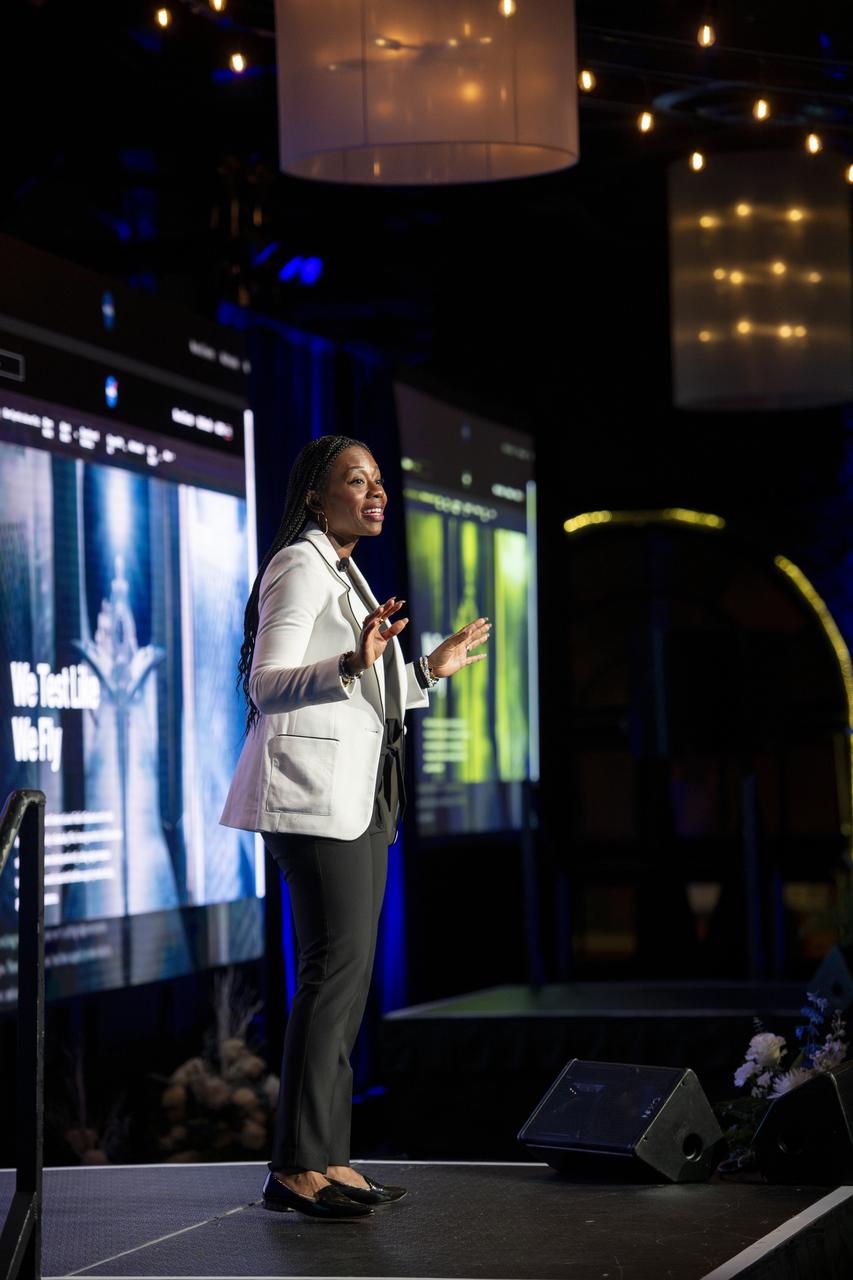
NASA Glenn's Spotlight on the Stars, 10 Years and Counting. Sponsorship organized by the Ohio Aerospace Institute was held at Windows on the River in Cleveland, OH on November 20th, 2024. Here, keynote speaker, Nikki Welch is on stage during Evening with the Stars 2024 Welcome by Dennis Andersh, CEO and President, Parallax Advanced Research, Ohio Aerospace Institute. Remarks by Terrence Slaybaugh, Vice President of Sites and Infrastructure, JobsOhio. Introduction of 10th Anniversary Video, Dr. Wanda Peters, Acting Deputy Director, NASA Glenn Research Center. Remarks/Introduction of Presenters, Dr. James Kenyon, Director, NASA Glenn Research Center. Keynote Speakers: Nikki Welch, NASA Glenn Communications, Connecting People to the Mission. Timothy Smith, NASA Glenn's Superalloy Achievements. Carlos Garcia-Galan, Dreaming of Going to the Moon. Photo Credit: (NASA/Sara Lowthian-Hanna)
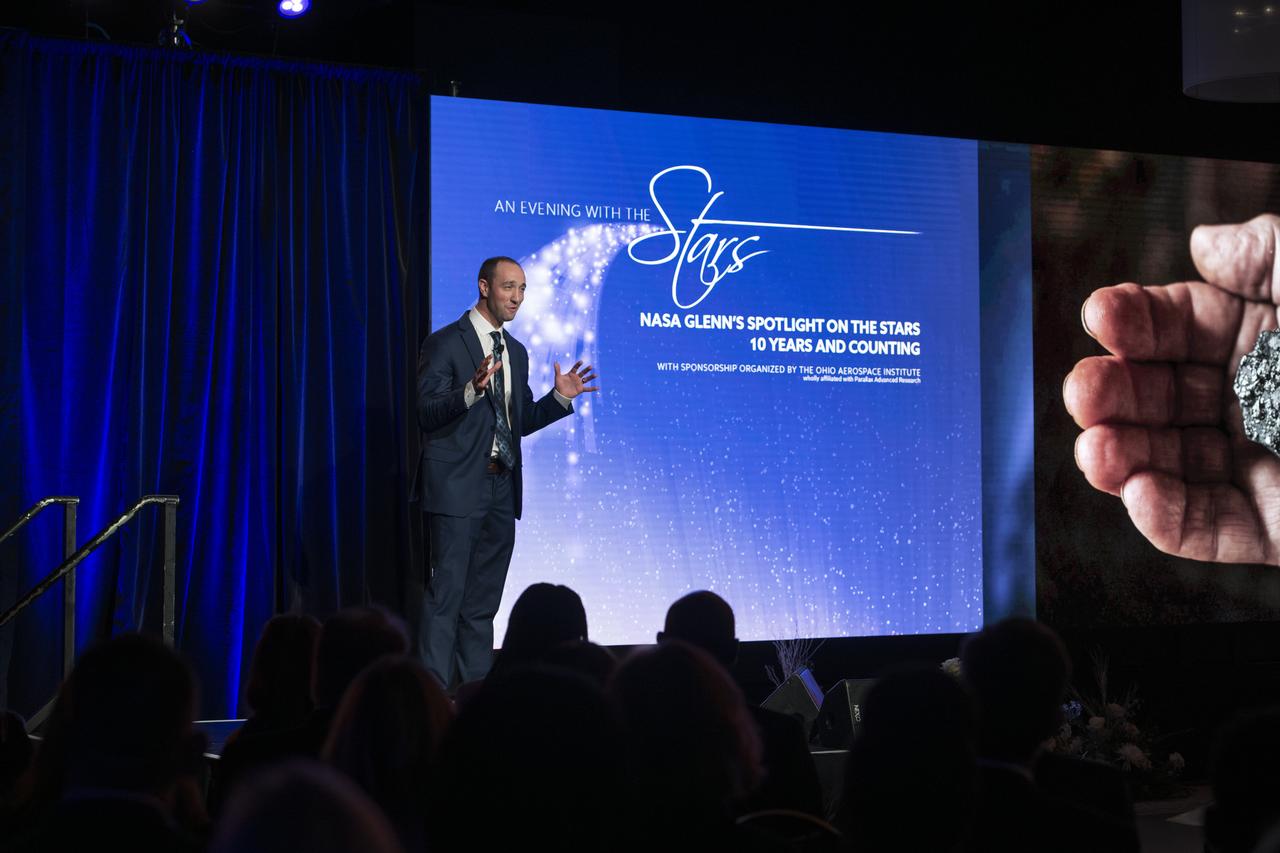
NASA Glenn's Spotlight on the Stars, 10 Years and Counting was held at Windows on the River in Cleveland, OH on November 20th, 2024. Sponsorship organized by the Ohio Aerospace Institute. Welcome by Dennis Andersh, CEO and President, Parallax Advanced Research, Ohio Aerospace Institute. Remarks by Terrence Slaybaugh, Vice President of Sites and Infrastructure, JobsOhio. Introduction of 10th Anniversary Video, Dr. Wanda Peters, Acting Deputy Director, NASA Glenn Research Center. Remarks/Introduction of Presenters, Dr. James Kenyon, Director, NASA Glenn Research Center. Keynote Speakers: Nikki Welch, NASA Glenn Communications, Connecting People to the Mission. Timothy Smith, NASA Glenn's Superalloy Achievements. Carlos Garcia-Galan, Dreaming of Going to the Moon. Photo Credit: (NASA/Sara Lowthian-Hanna)
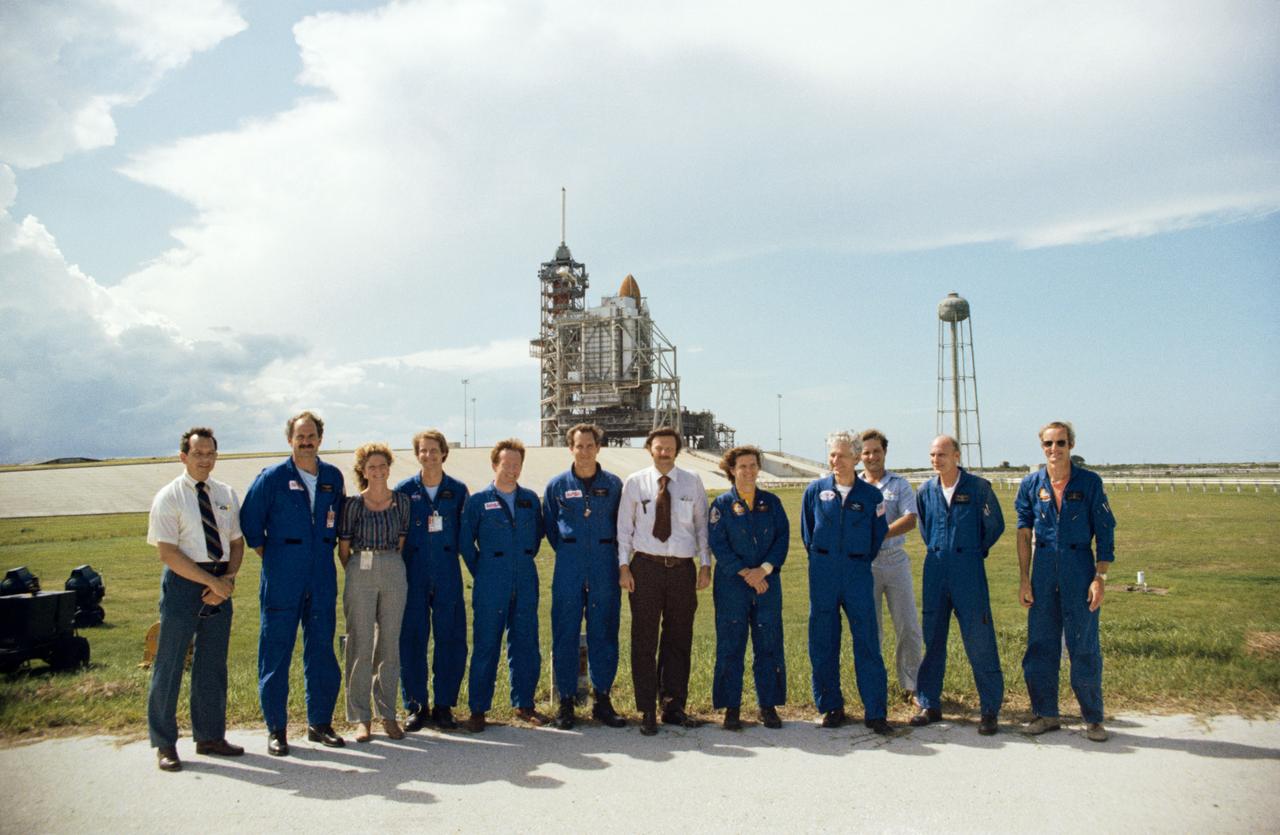
S82-32200 (29 May 1982) --- Members of the JSC astronaut corps, STS-4 vehicle integration test team (VITT) and other personnel pose for a photograph at the completion of a countdown demonstration test (CDDT) at Launch Pad 39A, Kennedy Space Center (KSC). The participants are, from the left, Wilbur J. Etbauer, engineer with the VITT; mission specialist-astronaut James D. van Hoften; Terry Stanford, engineer from JSC's flight operations directorate; mission specialist-astronaut Steven A. Hawley; astronaut Richard N. Richards; astronaut Michael J. Smith; Richard W. Nygren, head of the VITT; mission specialist-astronaut Kathryn D. Sullivan; astronaut Henry W. Hartsfield Jr.,STS-4 pilot; Mary Haynes, a co-op student participating with the VITT; astronaut Thomas K. Mattingly II, STS-4 commander; and astronaut Donald E. Williams. Photo credit: NASA
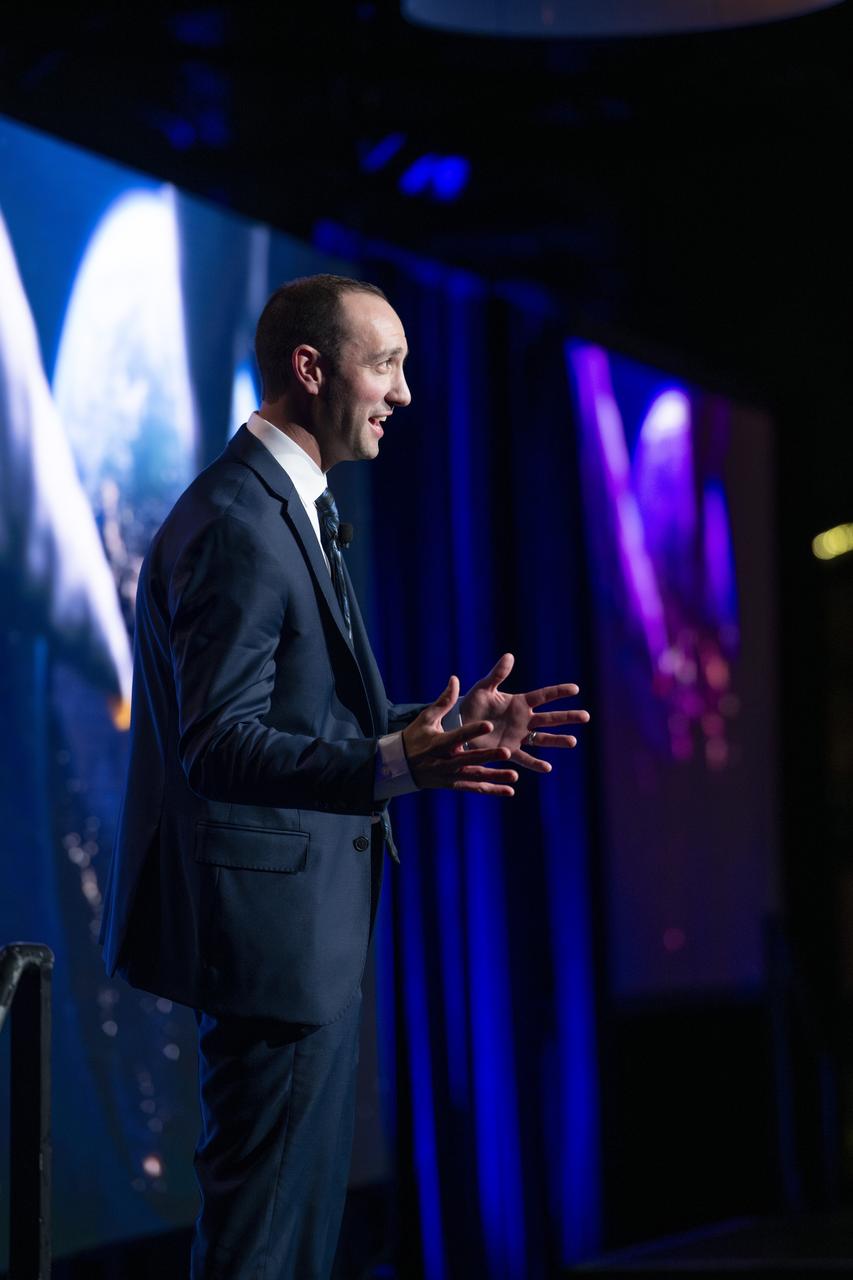
NASA Glenn's Spotlight on the Stars, 10 Years and Counting was held at Windows on the River in Cleveland, OH on November 20th, 2024. Sponsorship organized by the Ohio Aerospace Institute. Welcome by Dennis Andersh, CEO and President, Parallax Advanced Research, Ohio Aerospace Institute. Remarks by Terrence Slaybaugh, Vice President of Sites and Infrastructure, JobsOhio. Introduction of 10th Anniversary Video, Dr. Wanda Peters, Acting Deputy Director, NASA Glenn Research Center. Remarks/Introduction of Presenters, Dr. James Kenyon, Director, NASA Glenn Research Center. Keynote Speakers: Nikki Welch, NASA Glenn Communications, Connecting People to the Mission. Timothy Smith, NASA Glenn's Superalloy Achievements. Carlos Garcia-Galan, Dreaming of Going to the Moon.
![KENNEDY SPACE CENTER, FLA. -- Seventeen new astronaut candidates visited the Vehicle Assembly Building as part of an orientation tour of KSC facilities. Here they are grouped around one of the external fuel tanks in the transfer aisle of the VAB. This latest group of candidates is the tenth chosen since the original seven Mercury astronauts. [From left, Michael J. McCulley, Curtis L. Brown Jr., Frank L. Culbertson Jr., Kathryn C. Thornton, Mark N. Brown, Mark C. Lee, Kenneth D. Cameron, John H. Casper, L. Blaine Hammond Jr., Charles Lacy Veach (deceased), James C. Adamson, William M. Shepherd, Sidney M. Gutierrez, Marsha S. Ivins, David G. Low, Michael J. Smith (deceased), Ellen S. Baker, Sonny Carter (deceased).]](https://images-assets.nasa.gov/image/108-KSC-84P-339/108-KSC-84P-339~medium.jpg)
KENNEDY SPACE CENTER, FLA. -- Seventeen new astronaut candidates visited the Vehicle Assembly Building as part of an orientation tour of KSC facilities. Here they are grouped around one of the external fuel tanks in the transfer aisle of the VAB. This latest group of candidates is the tenth chosen since the original seven Mercury astronauts. [From left, Michael J. McCulley, Curtis L. Brown Jr., Frank L. Culbertson Jr., Kathryn C. Thornton, Mark N. Brown, Mark C. Lee, Kenneth D. Cameron, John H. Casper, L. Blaine Hammond Jr., Charles Lacy Veach (deceased), James C. Adamson, William M. Shepherd, Sidney M. Gutierrez, Marsha S. Ivins, David G. Low, Michael J. Smith (deceased), Ellen S. Baker, Sonny Carter (deceased).]
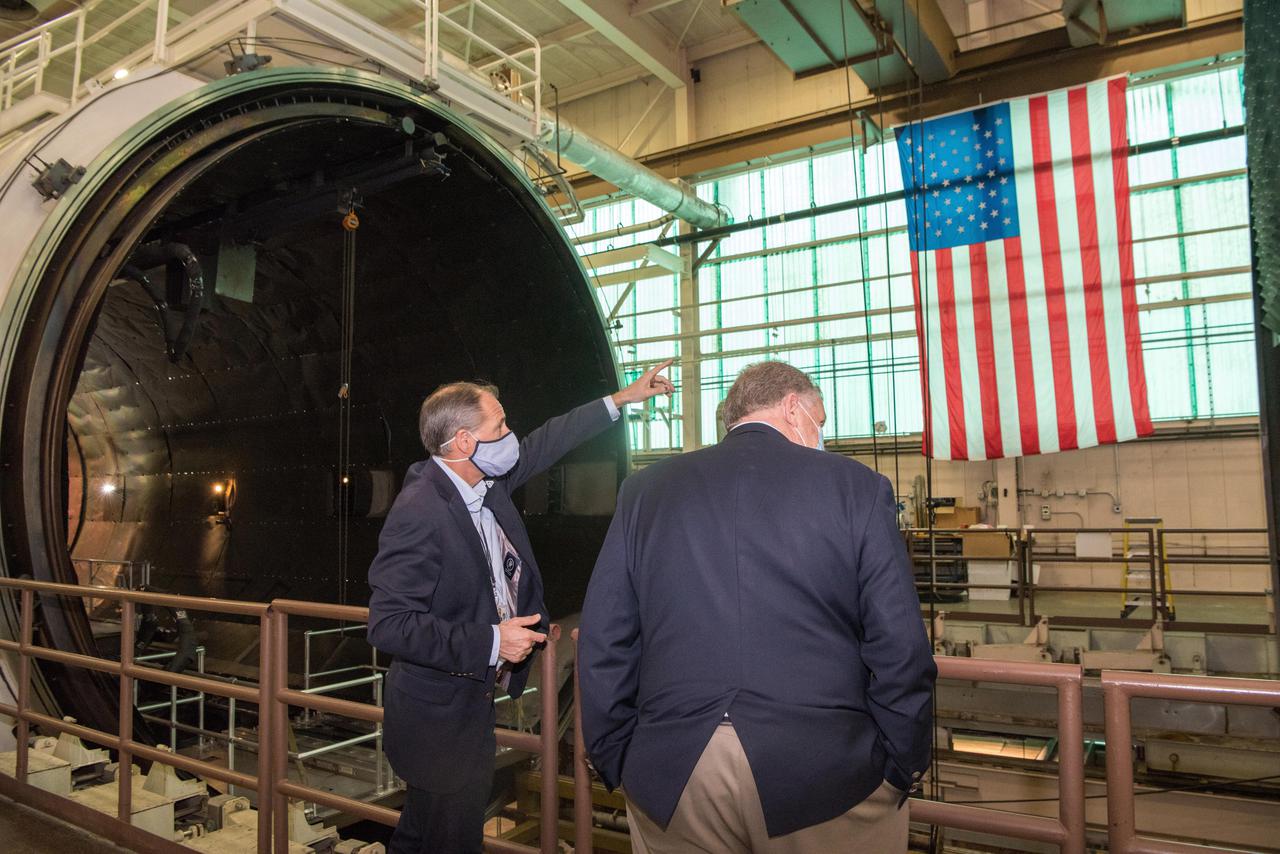
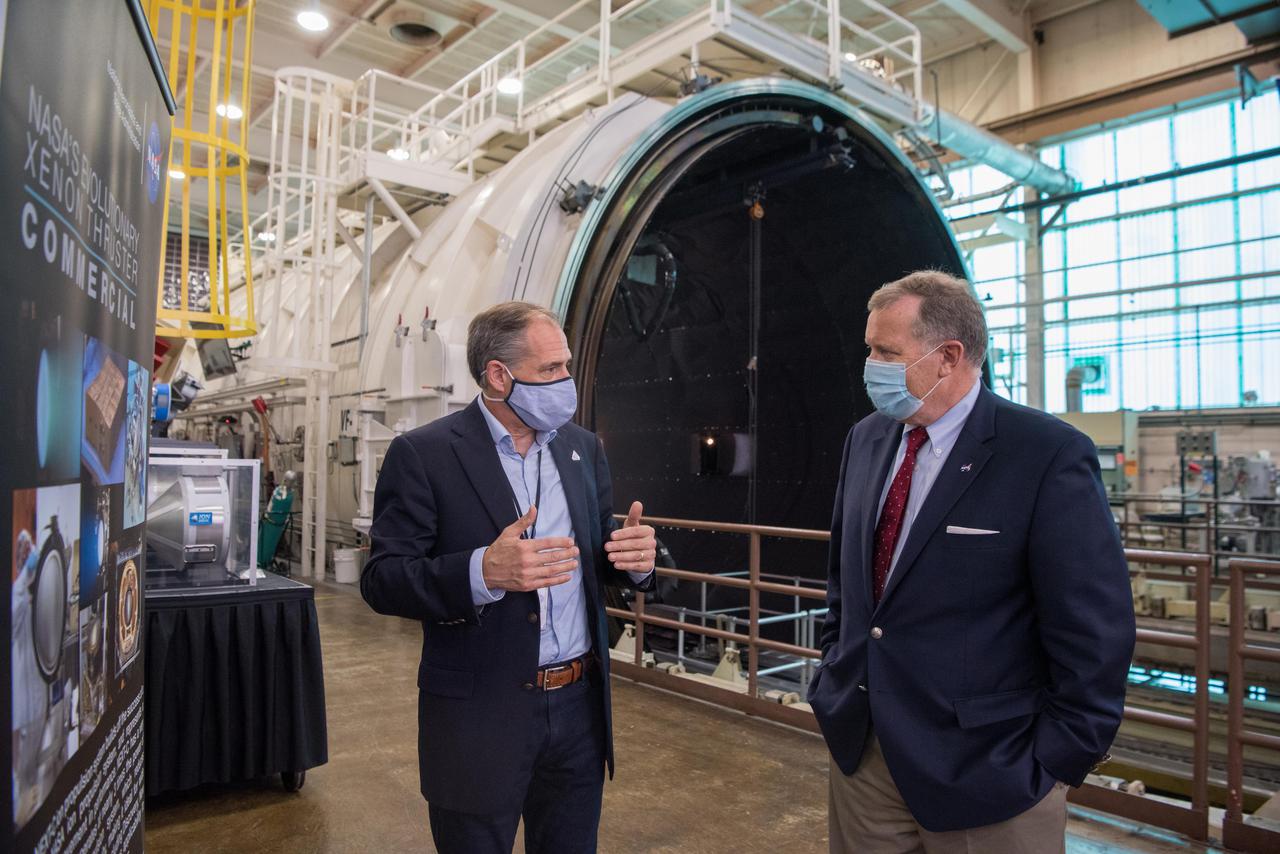
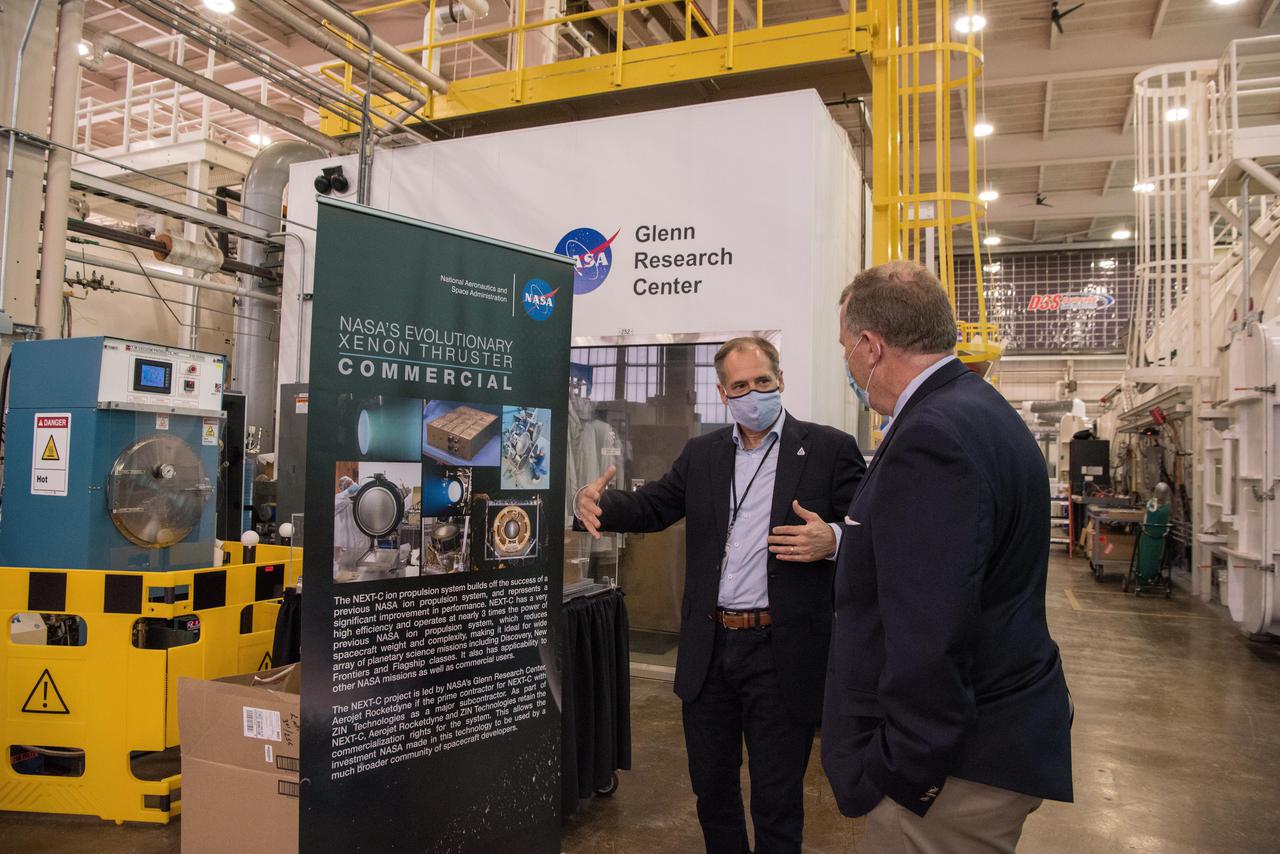
Visit to GRC by the Deputy Administrator, James Morhard
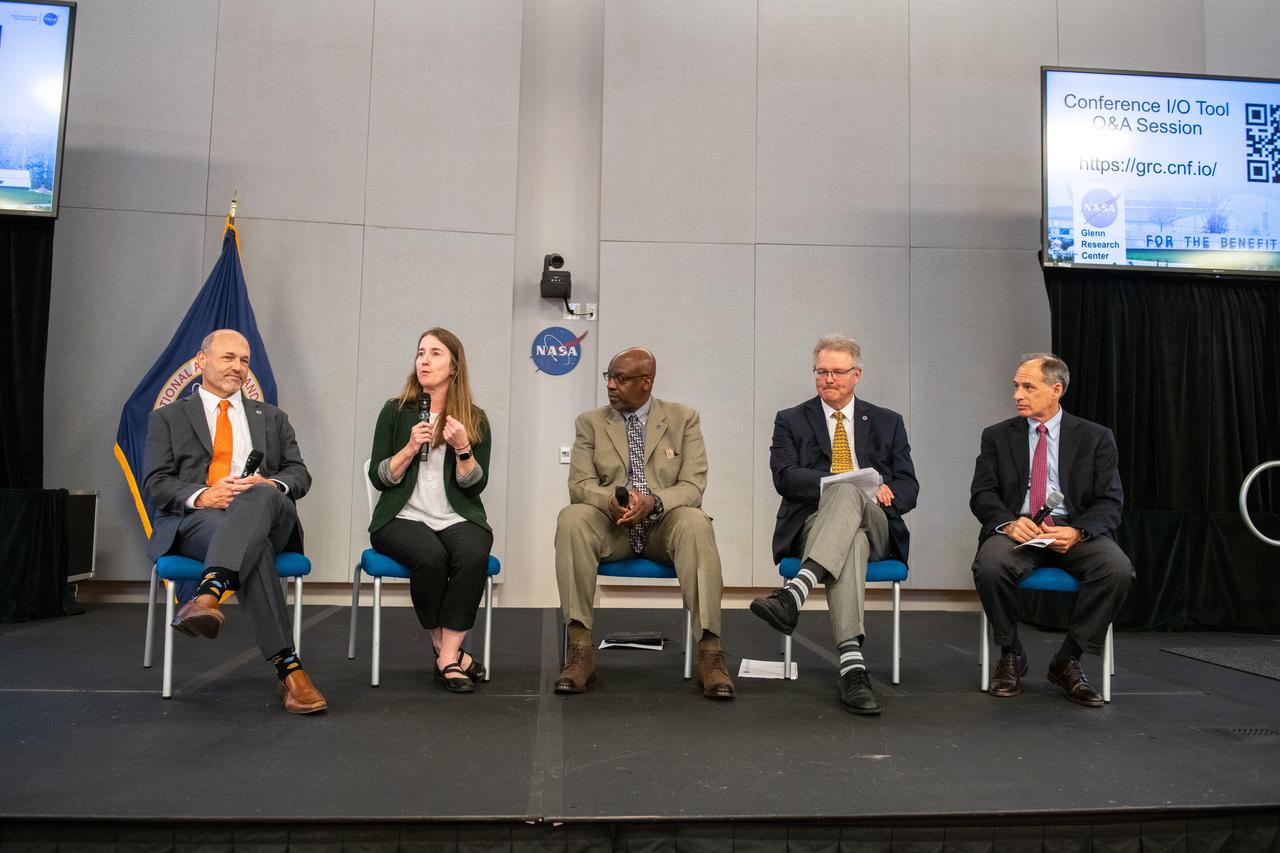
During the climate town hall meeting on June 17th 2024, Dr. Calvin and center leaders explored how technologies being developed at NASA Glenn Research Center could help reduce the effects of climate change. The panelists who lead the discussion include: Dr. Calvin; Dr. Rickey Shyne, Director of Research and Engineering; Bryan Smith, Director of Facilities, Test, & Manufacturing; and W. Allen Kilgore, Acting Director of Aeronautics. Director of Space Flight Systems Dr. Mike Barrett served as the moderator.
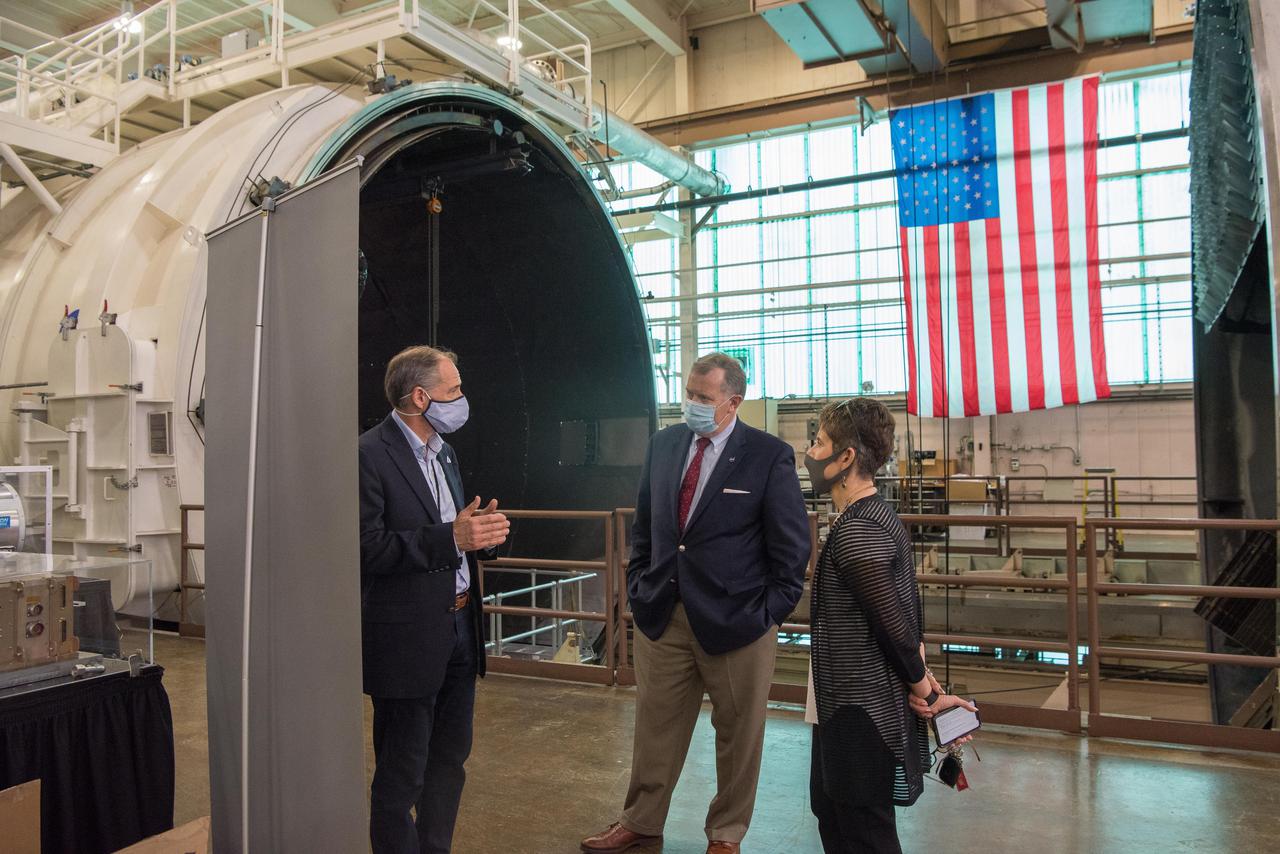
Visit to GRC by the Deputy Administrator, James Morhard
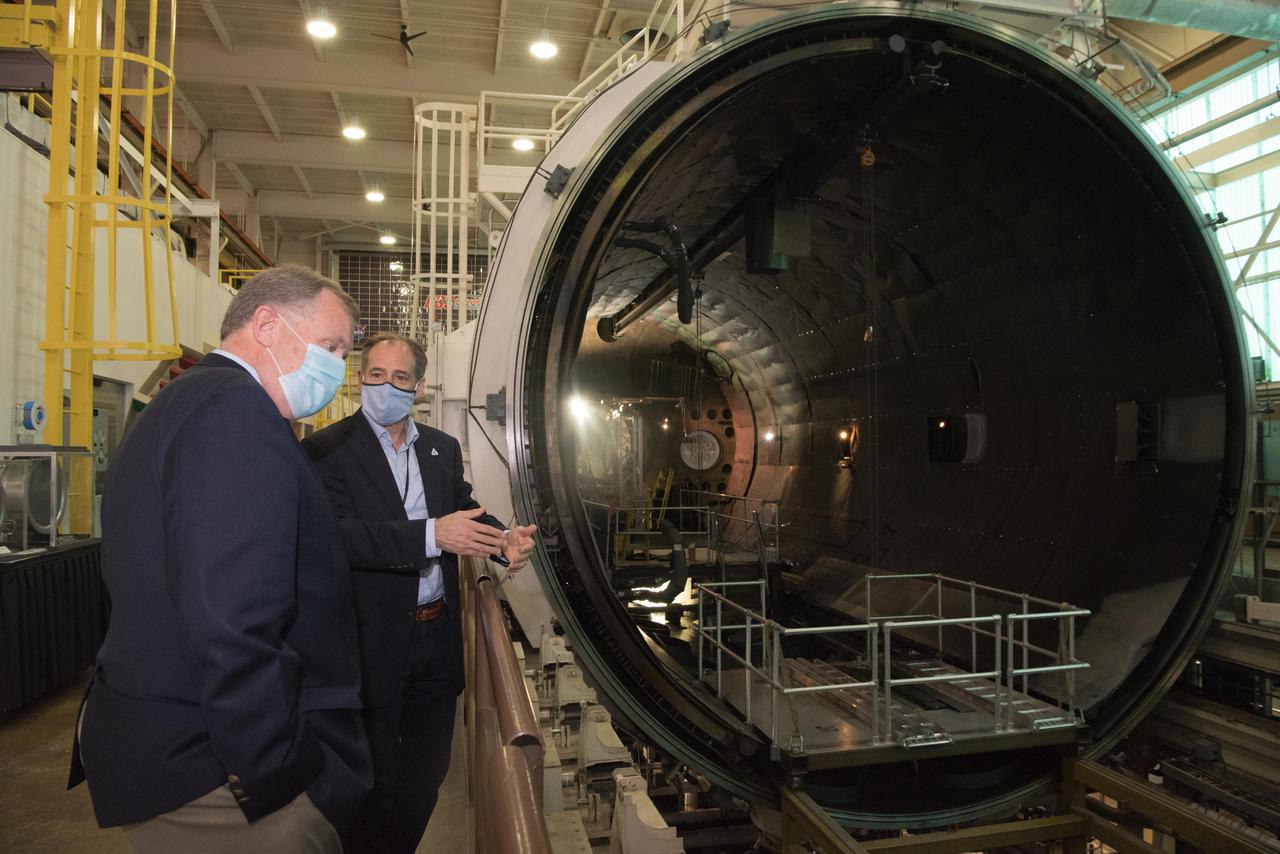
Visit to GRC by the Deputy Administrator, James Morhard
Visit to GRC by the Deputy Administrator, James Morhard
Visit to GRC by the Deputy Administrator, James Morhard
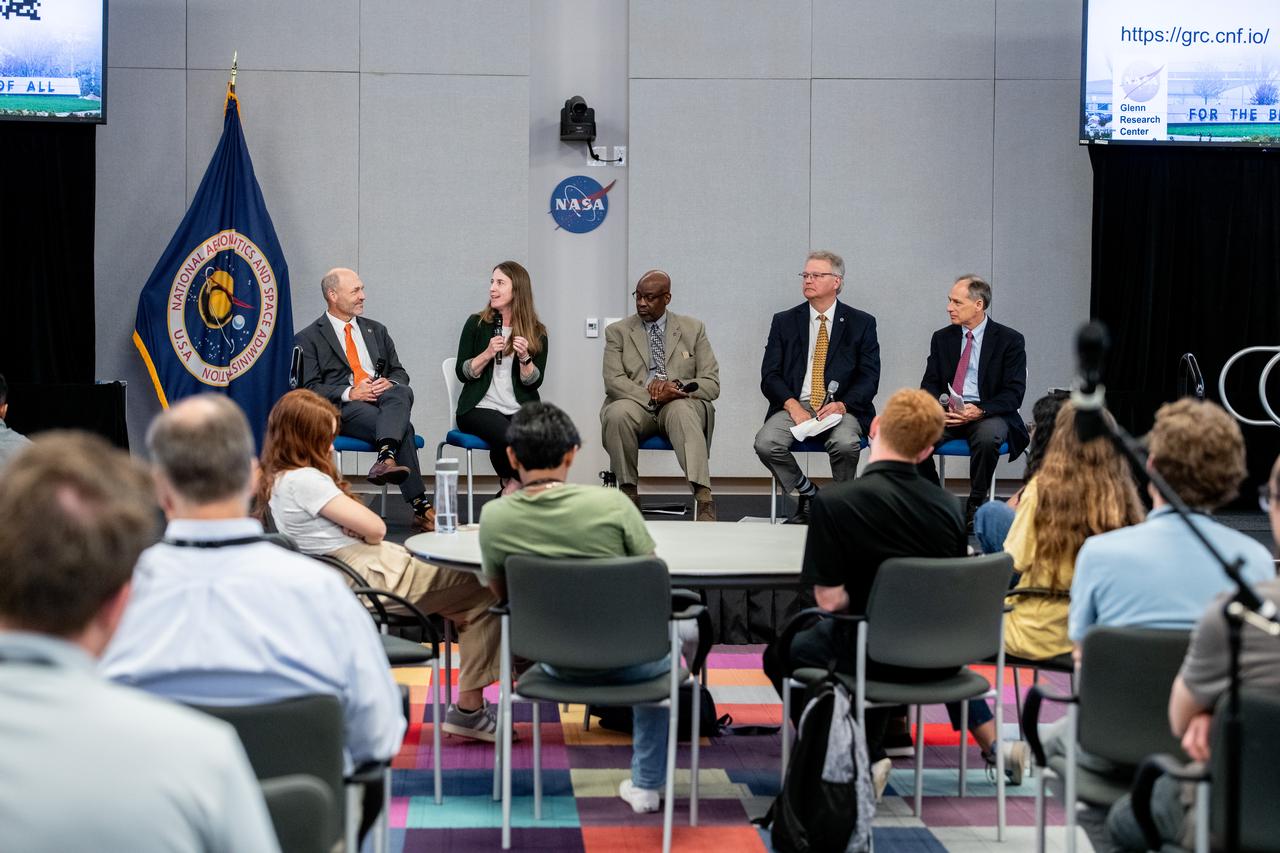
During the meeting, Dr. Calvin and center leaders will explore how technologies being developed at NASA Glenn could help reduce the effects of climate change. The panelists who will be leading the discussion include: Dr. Calvin; Larry Sivic, Associate Director; Dr. Rickey Shyne, Director of Research and Engineering; Bryan Smith, Director of Facilities, Test, & Manufacturing; and W. Allen Kilgore, Acting Director of Aeronautics. Director of Space Flight Systems Dr. Mike Barrett will serve as the moderator.
NASA Administrator Jim Bridenstine and Congressional Delegation Visit to Lewis Field and Plum Brook Station
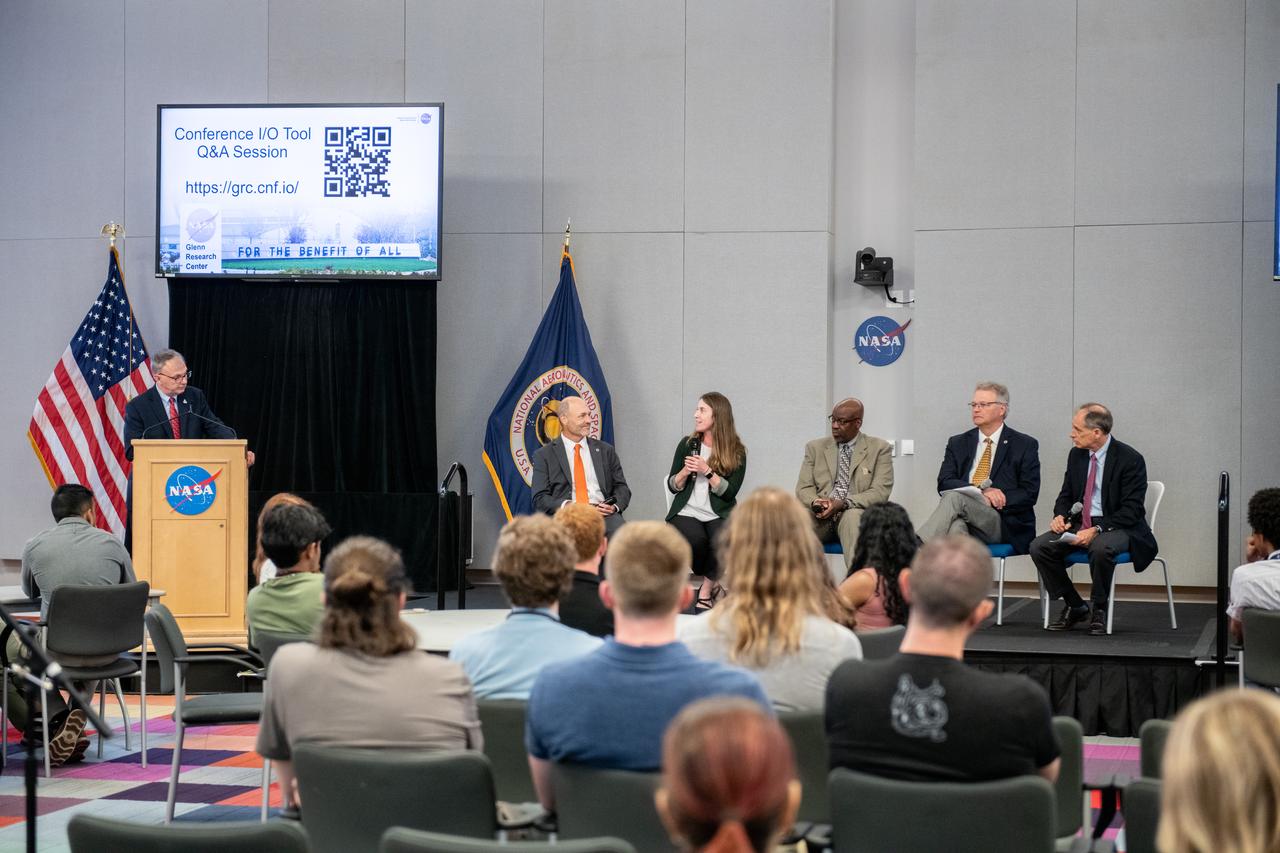
During the climate town hall meeting on June 17th 2024, Dr. Calvin and center leaders explored how technologies being developed at NASA Glenn Research Center could help reduce the effects of climate change. The panelists who lead the discussion include: Dr. Calvin; Dr. Rickey Shyne, Director of Research and Engineering; Bryan Smith, Director of Facilities, Test, & Manufacturing; and W. Allen Kilgore, Acting Director of Aeronautics. Director of Space Flight Systems Dr. Mike Barrett served as the moderator.
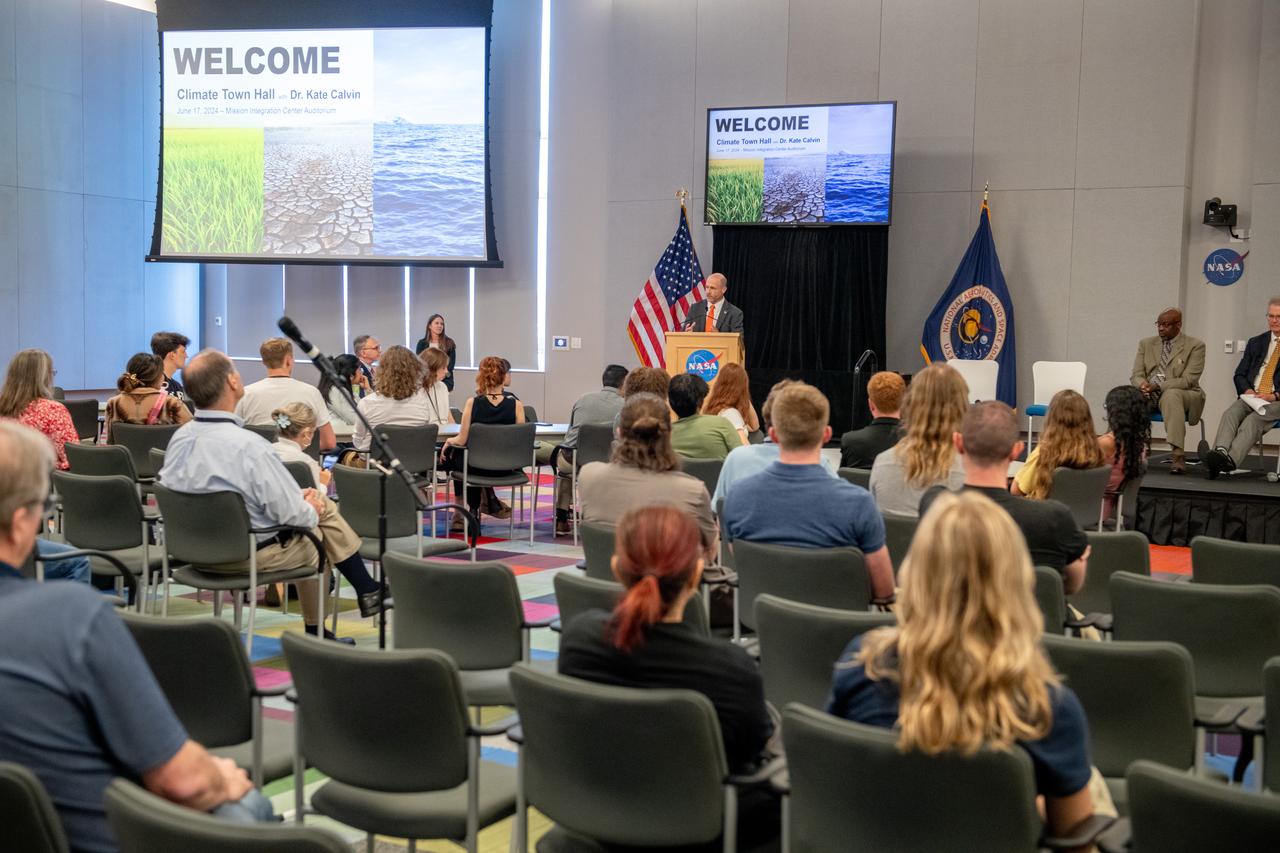
During the meeting, Dr. Calvin and center leaders will explore how technologies being developed at NASA Glenn could help reduce the effects of climate change. The panelists who will be leading the discussion include: Dr. Calvin; Larry Sivic, Associate Director; Dr. Rickey Shyne, Director of Research and Engineering; Bryan Smith, Director of Facilities, Test, & Manufacturing; and W. Allen Kilgore, Acting Director of Aeronautics. Director of Space Flight Systems Dr. Mike Barrett will serve as the moderator.
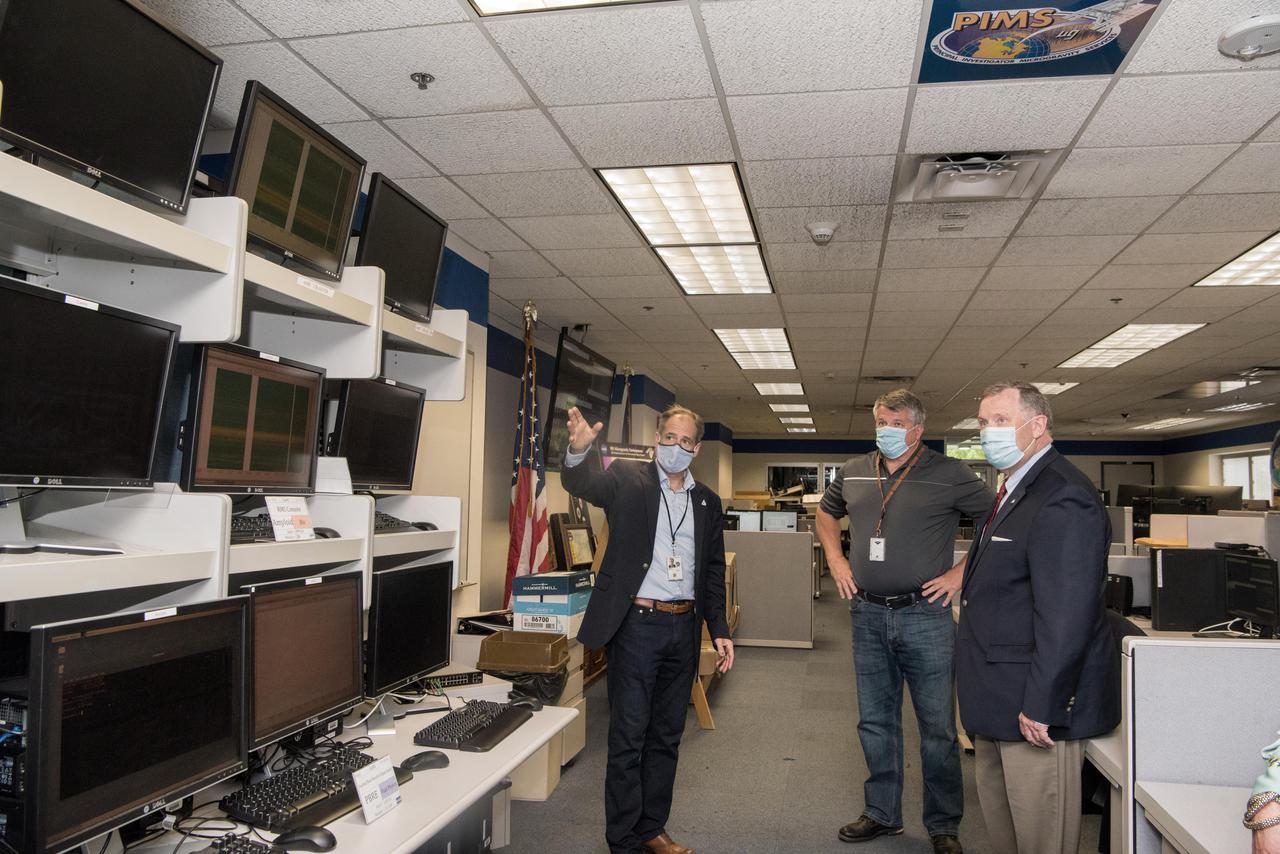
Visit to GRC by the Deputy Administrator, James Morhard
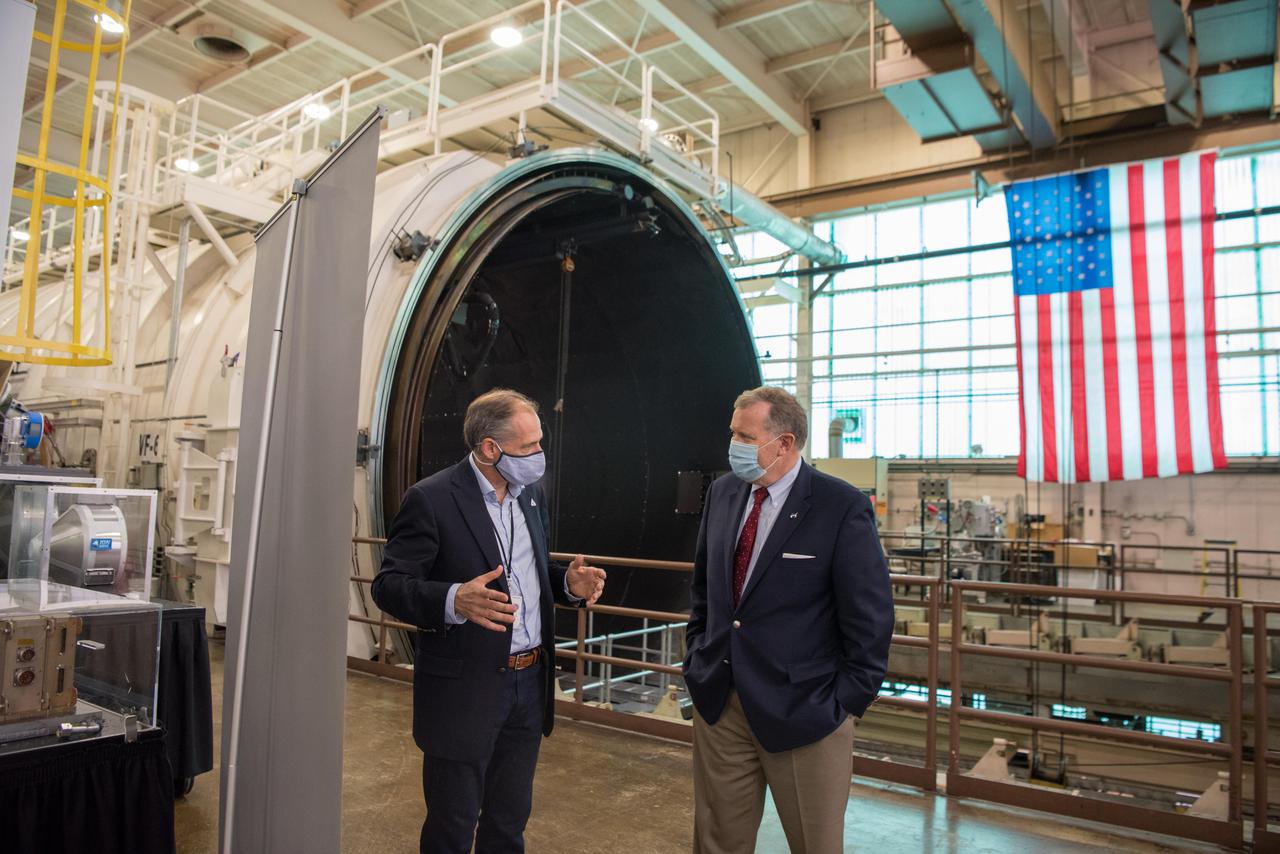
Visit to GRC by the Deputy Administrator, James Morhard
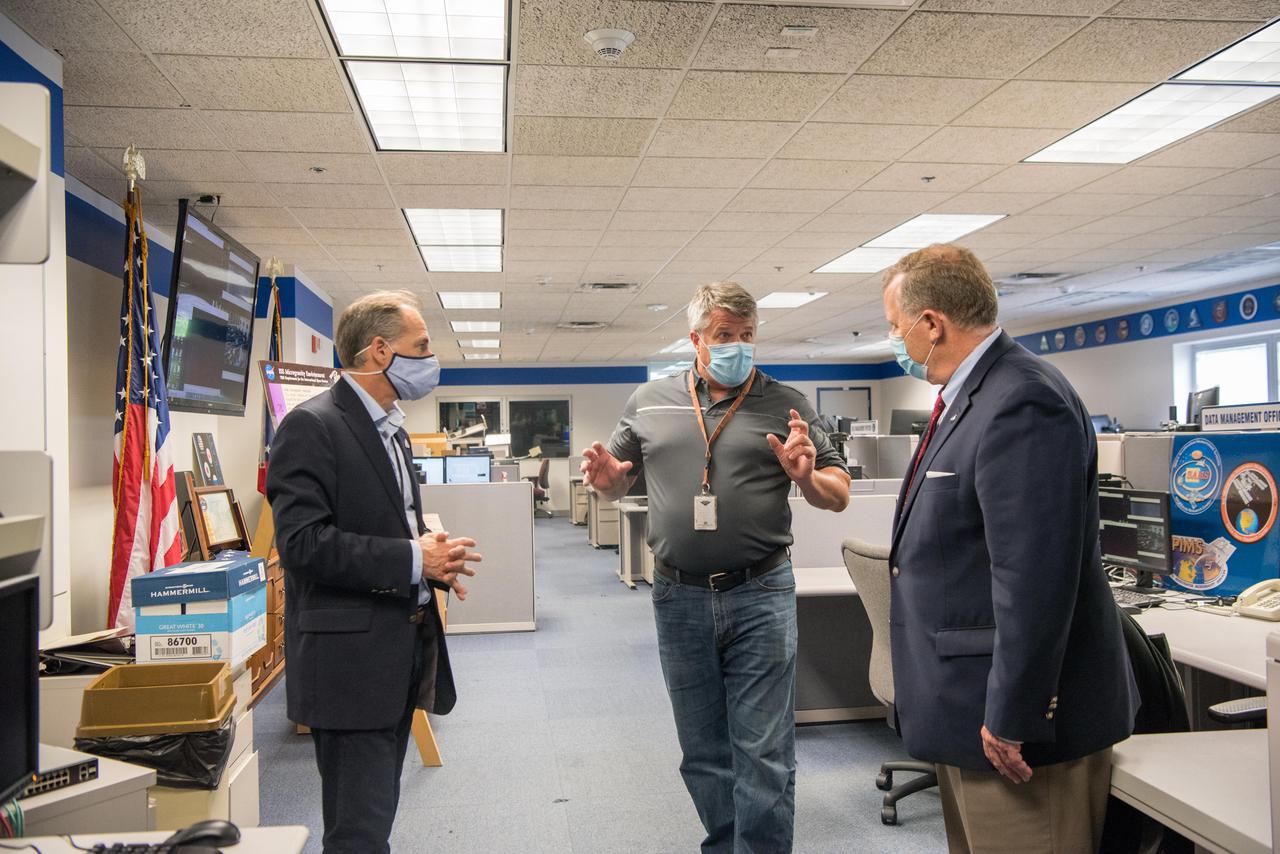
Visit to GRC by the Deputy Administrator, James Morhard
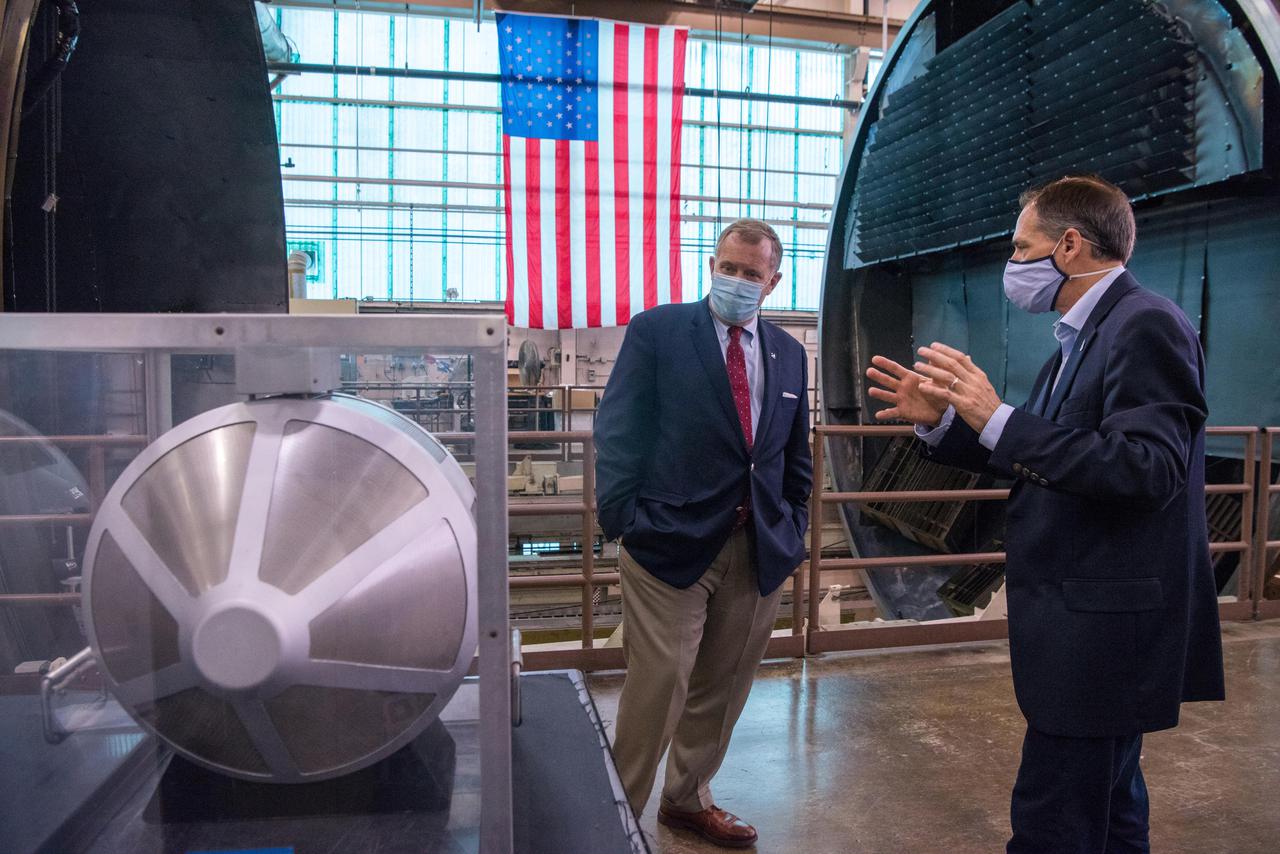
Visit to GRC by the Deputy Administrator, James Morhard
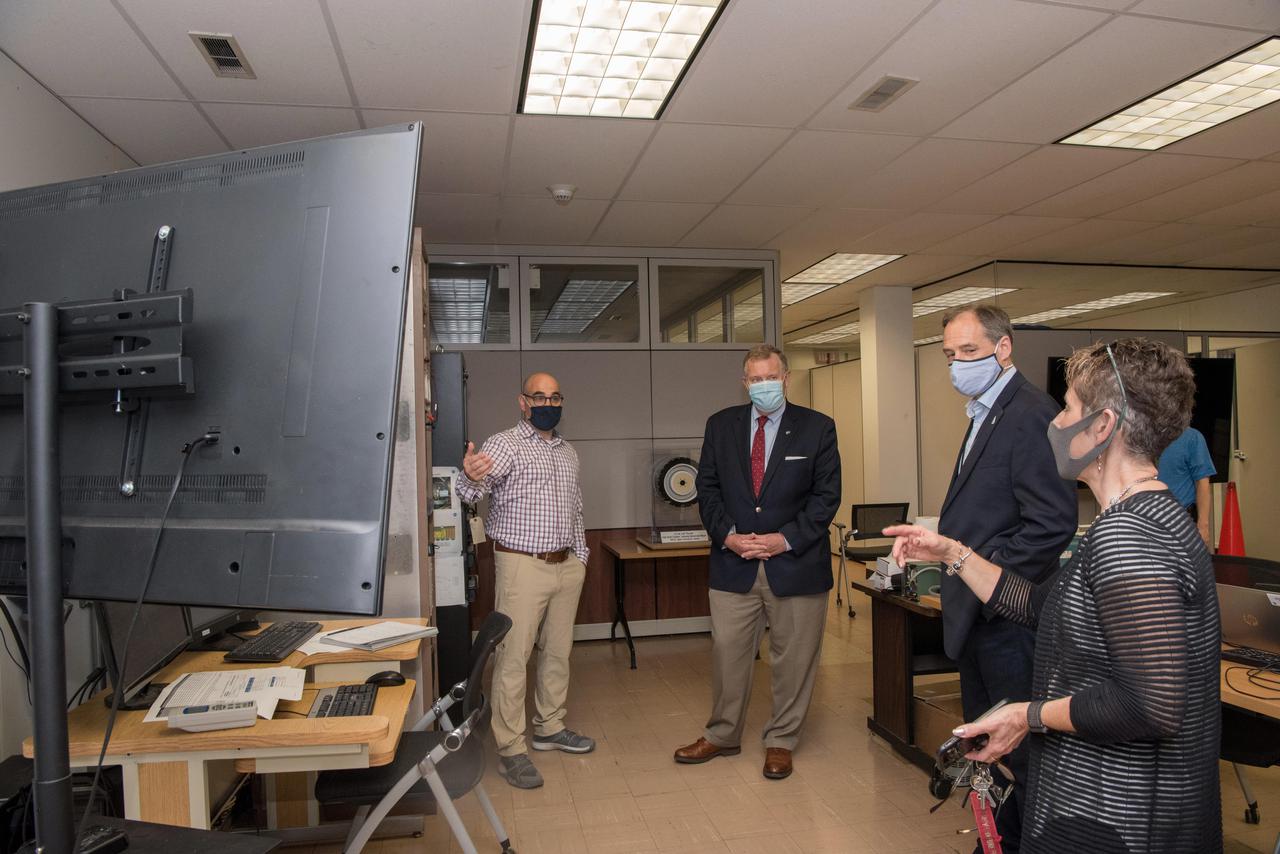
Visit to GRC by the Deputy Administrator, James Morhard
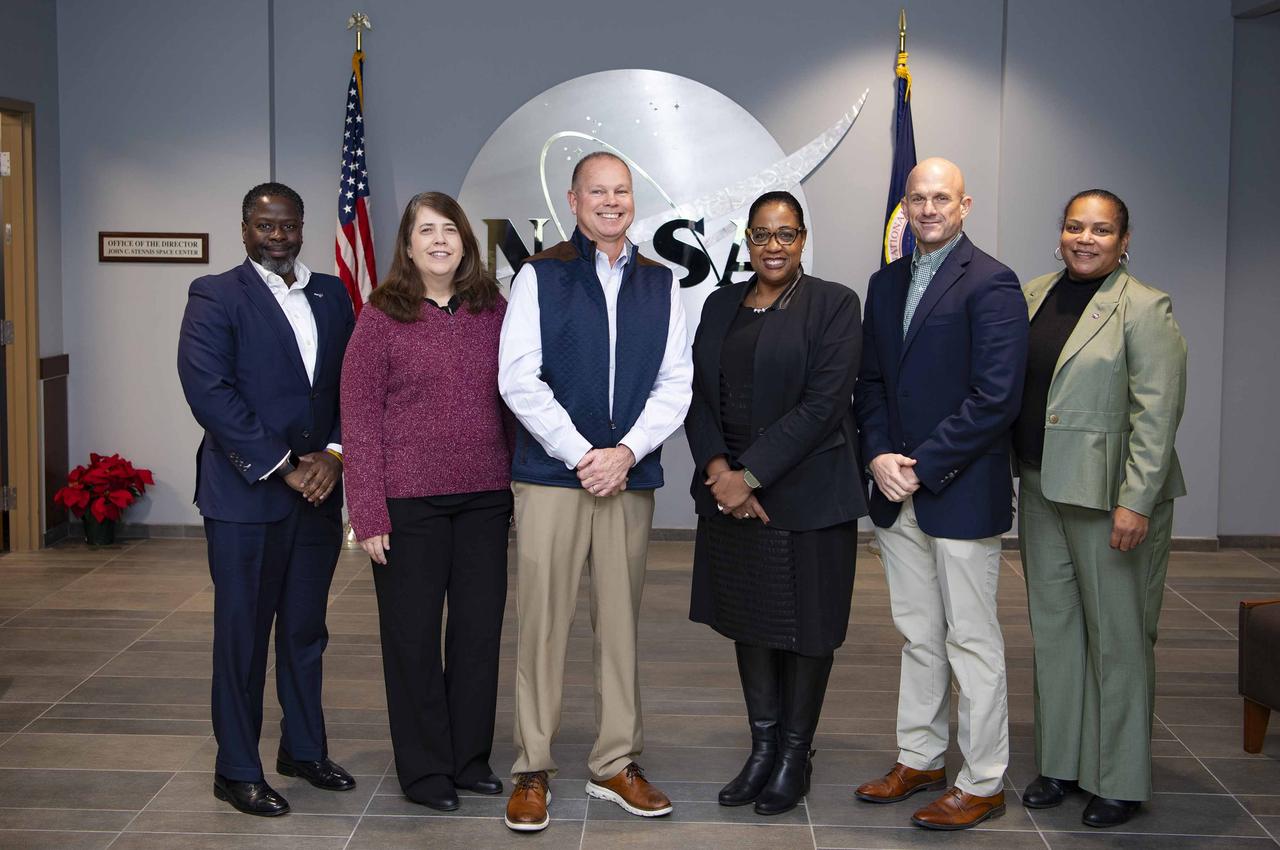
The NASA assistant administrator for procurement stands with leaders of NASA’s Stennis Space Center and the NASA Shared Services Center during a visit to the south Mississippi site Dec. 11 to deliver an agency update, highlighting key initiatives and priorities across NASA’s procurement activities. The visit focused on fostering open communications and collaboration, and included an opportunity for Jackson to engage with procurement staff, provide updates, and respond to questions. The assistant administrator met with NASA leadership to align on strategic goals, discuss procurement-related challenges and opportunities, and reinforce support for the NASA Stennis mission. The visit highlighted NASA’s continued commitment to innovation, efficiency, and mission success through effective procurement strategies. Pictured (left to right) are James Bailey, NASA Shared Services Center/NASA Stennis deputy procurement officer; NASA Stennis Deputy Director Christine Powell; NASA Stennis Director John Bailey; Karla Smith, NASA assistant administrator for procurement; Eli Ouder, NASA Shared Services Center/NASA Stennis procurement officer; and Jamiel Charlton, NASA executive officer.
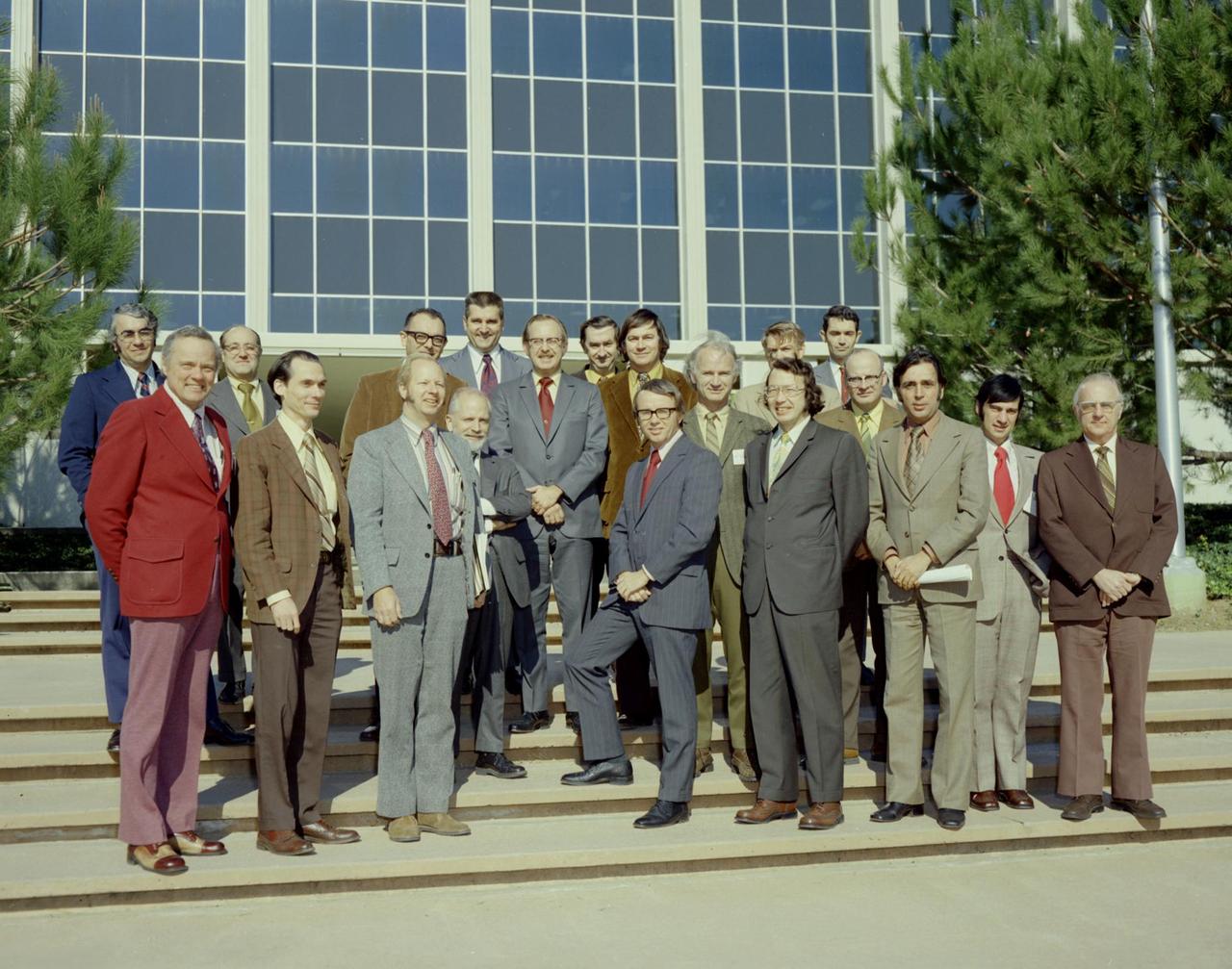
This archival image was released as part of a gallery comparing JPL's past and present, commemorating the 80th anniversary of NASA's Jet Propulsion Laboratory on Oct. 31, 2016. In December 1972, the science steering group for a mission then-known as Mariner Jupiter Saturn 1977 -- later renamed Voyager -- met for the first time at NASA's Jet Propulsion Laboratory in Pasadena, Calif. They are gathered on the steps in front of the administration building (180). The mission was so named because it was planning to send Mariner-class spacecraft to Jupiter and Saturn. It was renamed Voyager a few months before the launch of the twin spacecraft in August and September 1977. This photo shows principal investigators and team leaders for the science experiments and several others from the project and NASA who attended the first meeting. In the first row: Radio Science Subsystem Team Leader Von Eshleman, Project Scientist Edward Stone, Project Manager Harris (Bud) Schurmeier, Mission Analysis and Engineering Manager Ralph Miles, Magnetometer Principal Investigator Norman Ness, NASA Planetary Program Office Deputy Director Ichtiaque Rasool, Robert Soberman (who was proposed to be the principal investigator of the Particulate Matter Investigation, which was not confirmed) and an unidentified member of the NASA Office of Space Science. In the second row: Infrared Interferometer Spectrometer Principal Investigator Rudolf Hanel, Planetary Radio Astronomy Principal Investigator James Warwick, Ultraviolet and Spectrometer Principal Investigator A. Lyle Broadfoot. In the third row: Low-Energy Charged Particles Principal Investigator Stamatios (Tom) Krimigis, Cosmic Ray Subsystem Principal Investigator Rochus (Robbie) Vogt, NASA Outer Planets Missions Program Manager Warren Keller, Imaging Science Subsystem Team Leader Bradford Smith and Photopolarimeter Principal Investigator Charles Lillie. In the fourth row: Plasma Investigation Principal Investigator Herbert Bridge, Spacecraft Systems Manager Raymond Heacock, NASA Outer Planets Missions Program Scientist Milton (Mike) Mitz and Science Manager James Long. http://photojournal.jpl.nasa.gov/catalog/PIA21122
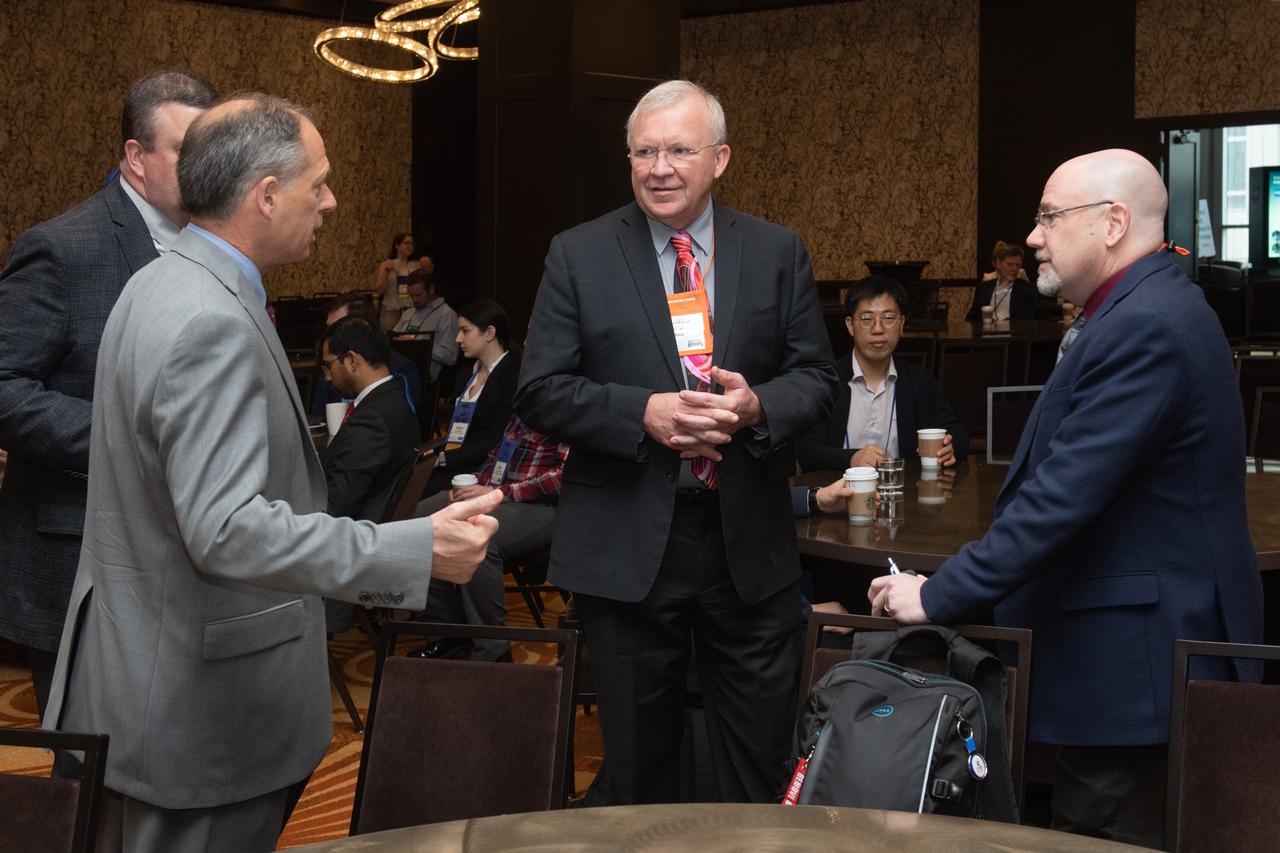
Nuclear Emerging Technologies for Space, NETS 2022 Conference
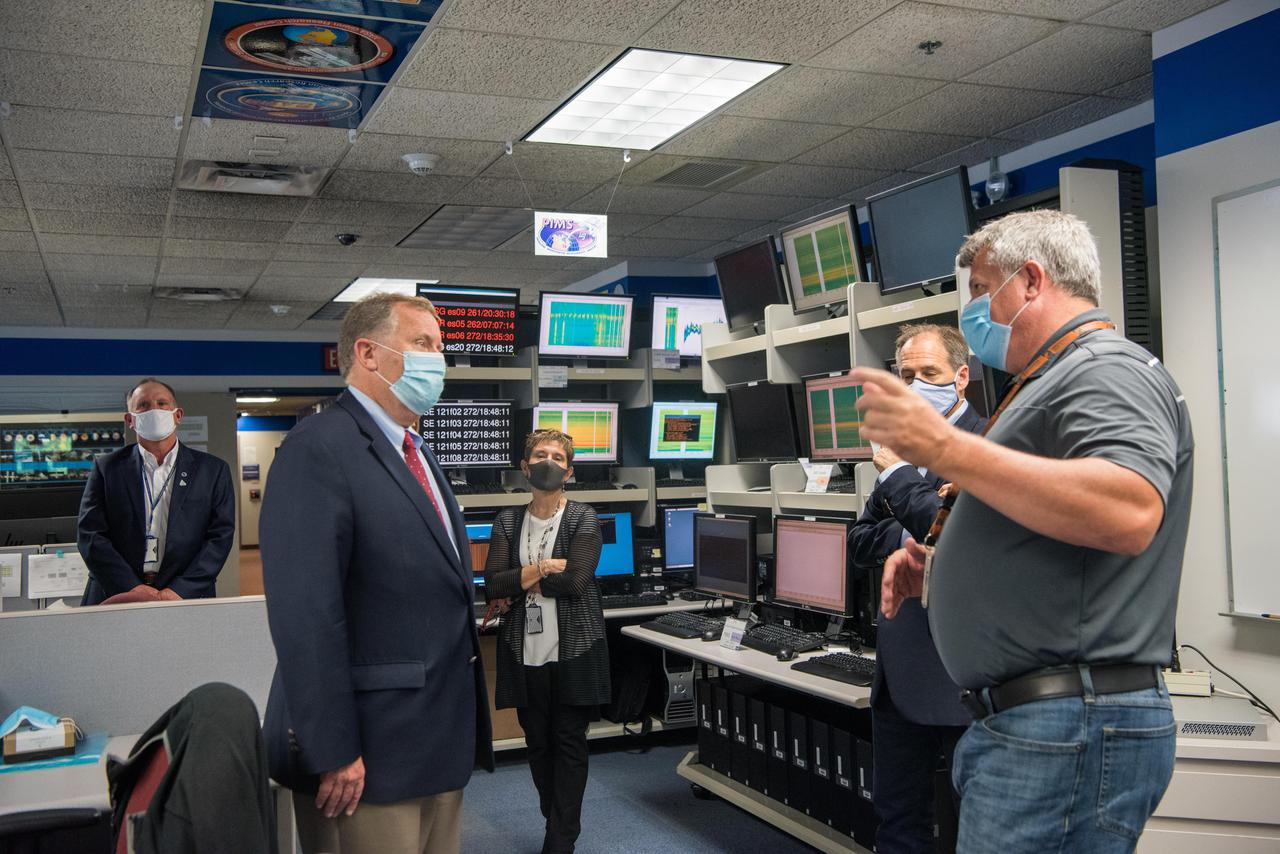
Visit to GRC by the Deputy Administrator, James Morhard

Director's Strategic Management
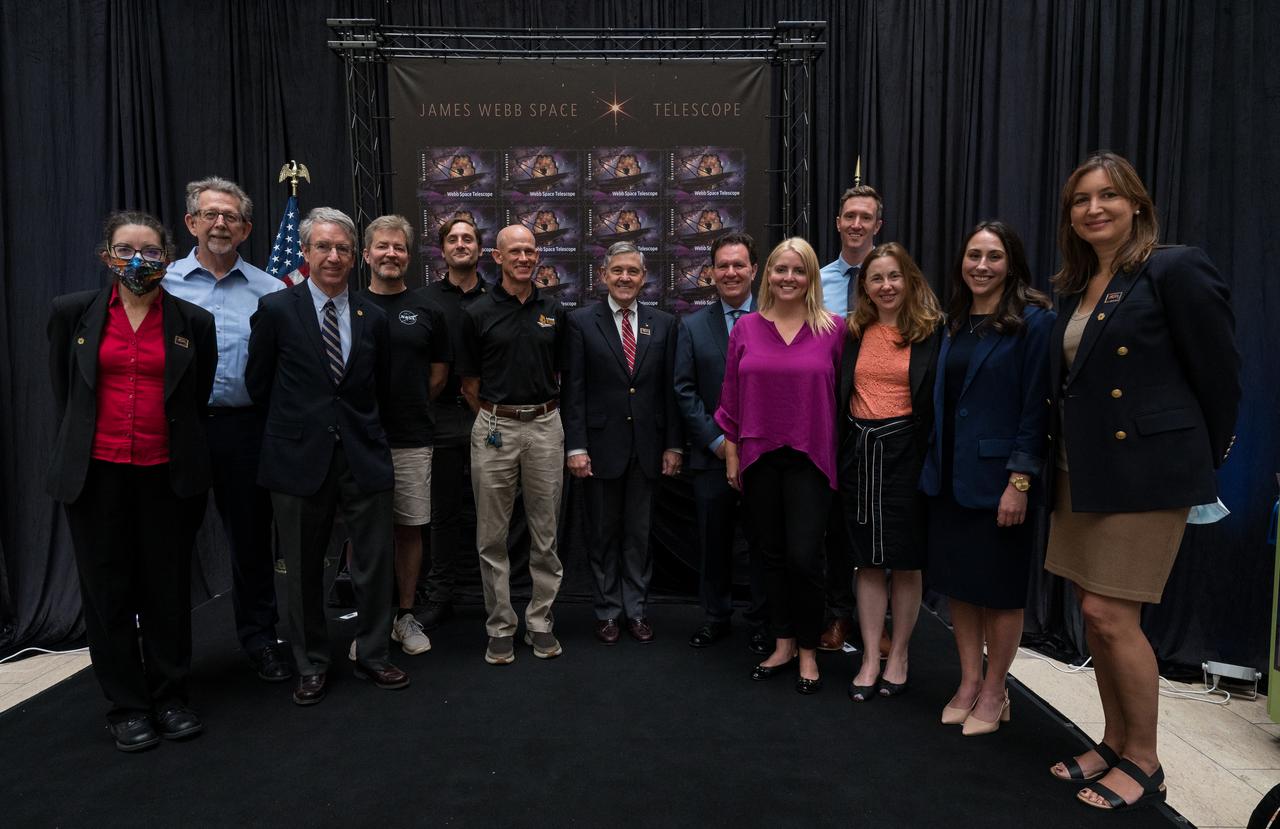
James Webb Space Telescope team members pose for a photo at the first-day-of-issue event for the United States Postal Service’s new stamp celebrating NASA’s James Webb Space Telescope (JWST) on Thursday, Sept. 8, 2022, at the Smithsonian’s National Postal Museum in Washington. The stamp, which features an illustration of the observatory, honors Webb’s mission to explore the unknown in our universe – solving mysteries in our solar system, looking beyond to distant worlds around other stars, and probing the structures and origins of our universe and our place in it. Photo Credit: (NASA/Aubrey Gemignani)