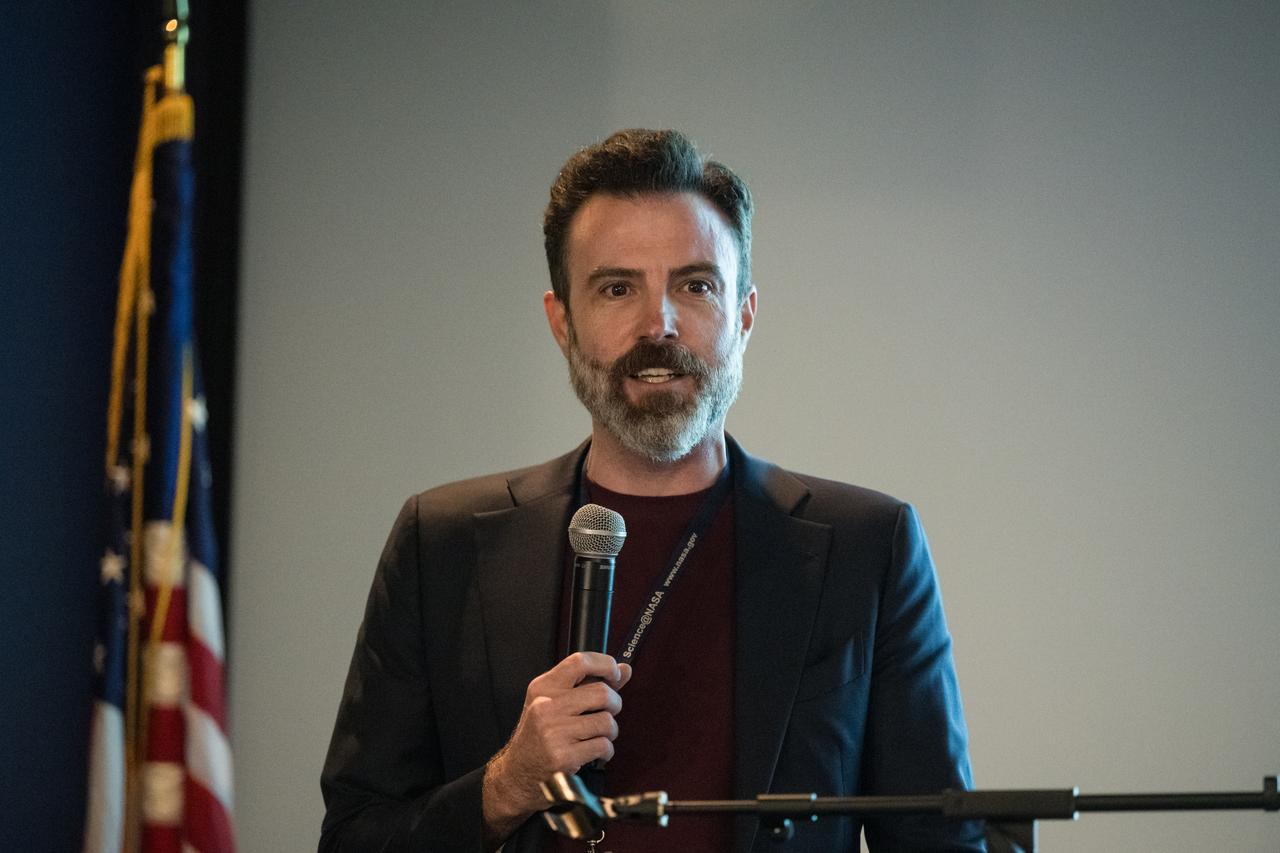
Director of the Space Weather Program, Jamie Favors, speaks about the Space Weather Pilot Project, Tuesday, August 6, 2024, at the Mary W. Jackson NASA Headquarters building in Washington. Every summer early career researchers from NASA’s DEVELOP National Program come to NASA Headquarters and present their research projects. DEVELOP is a training and development program where early career researchers work on Earth science projects, mentored by science advisors from NASA and partner agencies, and provide research results to local communities. Photo Credit: (NASA/Aubrey Gemignani)
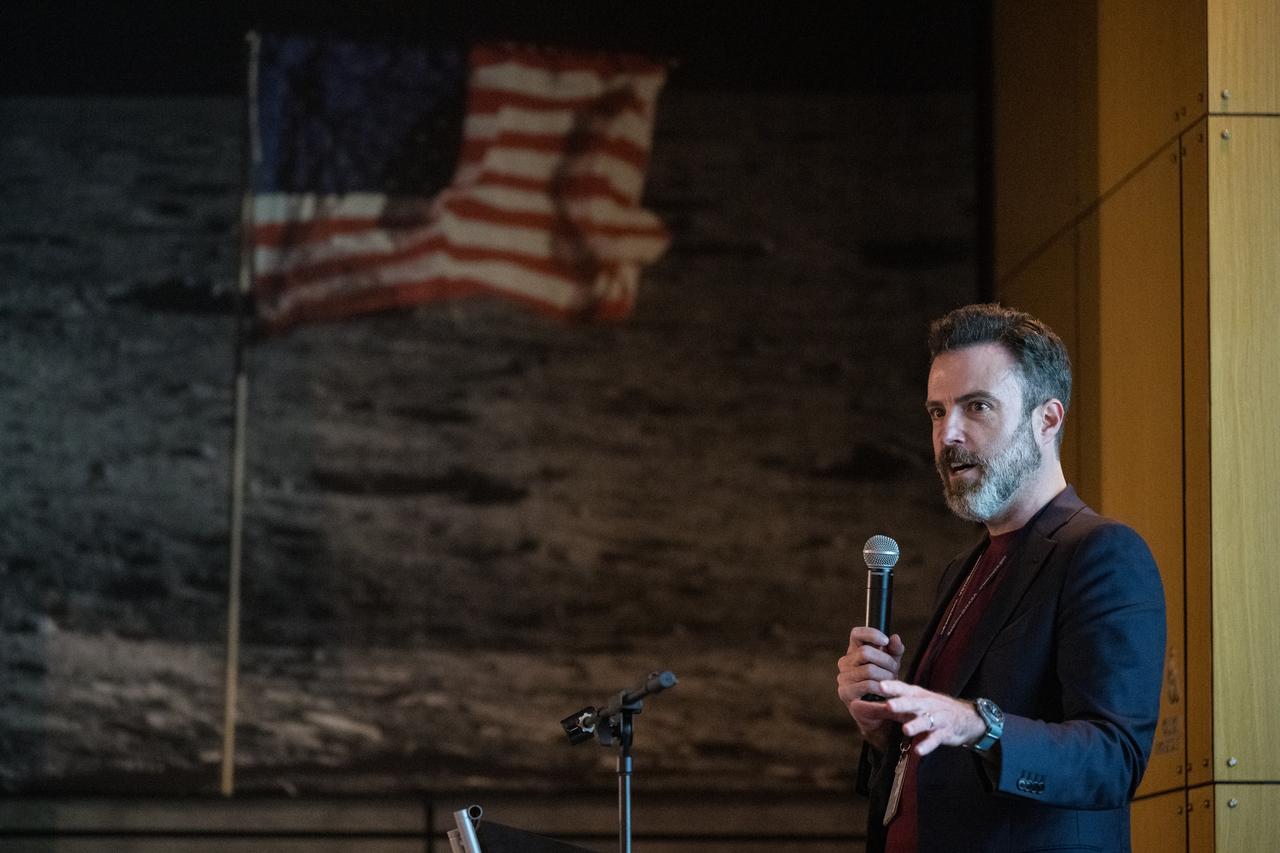
Director of the Space Weather Program, Jamie Favors, speaks about the Space Weather Pilot Project, Tuesday, August 6, 2024, at the Mary W. Jackson NASA Headquarters building in Washington. Every summer early career researchers from NASA’s DEVELOP National Program come to NASA Headquarters and present their research projects. DEVELOP is a training and development program where early career researchers work on Earth science projects, mentored by science advisors from NASA and partner agencies, and provide research results to local communities. Photo Credit: (NASA/Aubrey Gemignani)
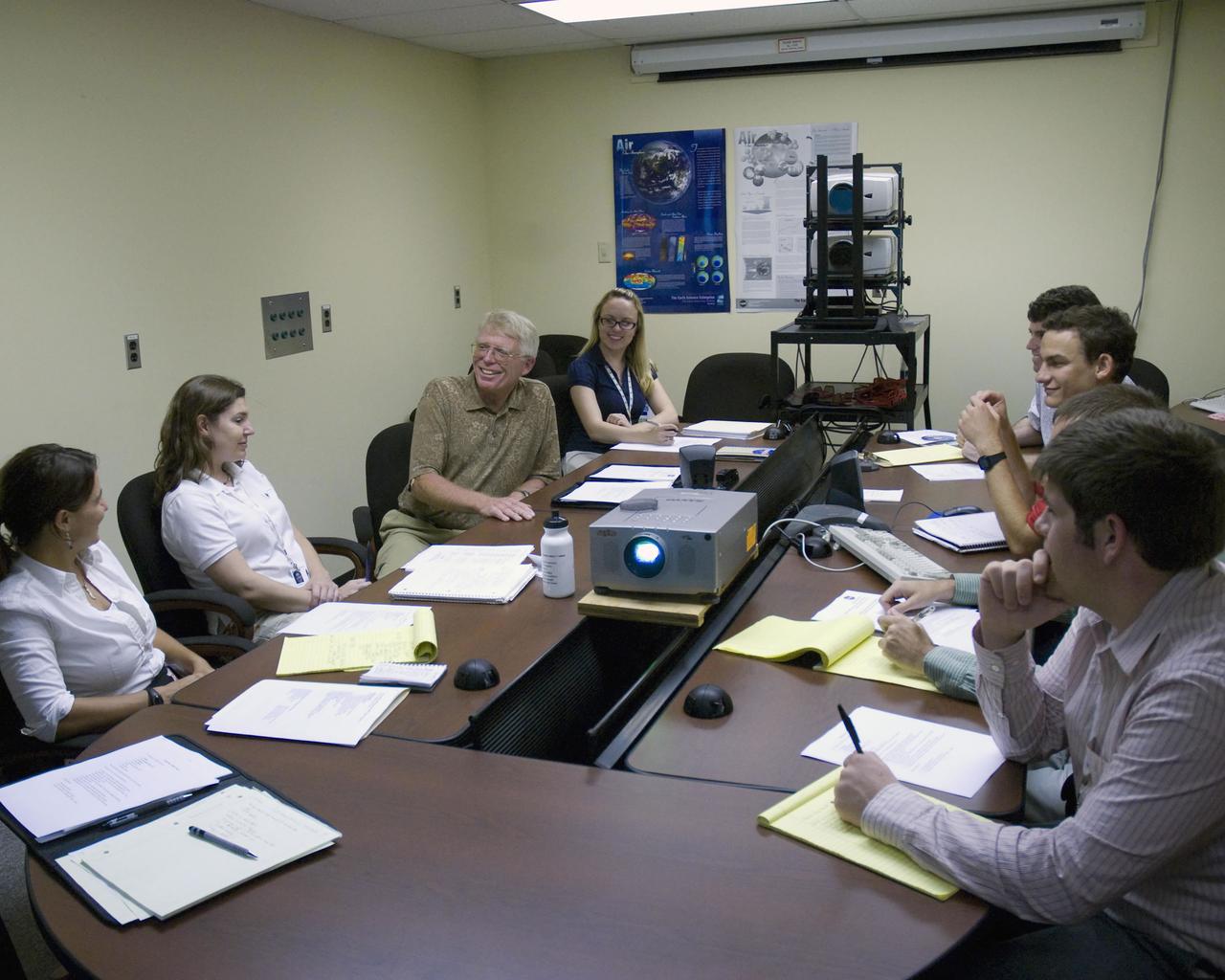
NASA DEVELOP students at Stennis Space Center recently held a midterm review with George Crozier, who serves as a science adviser to the team. The team also was joined by Jamie Favors of the Mobile (Ala.) County Health Department DEVELOP Team; Cheri Miller, the team's NASA adviser; and Kenton Ross, a team science adviser. Students participating in the meeting included: Lauren Childs, Jason Jones, Maddie Brozen, Matt Batina, Jenn Frey, Angie Maki and Aaron Brooks. The primary purpose of the meeting was to update Crozier on the status of the team's work for the summer 2008 term and discuss plans for the fiscal year 2009 project proposal. This included discussion of a possible project to study the effects of hurricanes on the Florida panhandle. DEVELOP is a NASA-sponsored, student-led, student-run program focused on developing projects to help communities.

Jamie Favors, director, Space Weather Program, Heliophysics Division, NASA Headquarters in Washington, participates in a science briefing on NASA’s IMAP (Interstellar Mapping and Acceleration Probe) mission and its two rideshares – NASA’s exosphere-studying Carruthers Geocorona Observatory and National Oceanic and Atmospheric Administration’s (NOAA) Space Weather Follow On–Lagrange 1 (SWFO-L1) observatory – at the agency’s Kennedy Space Center in Florida on Sunday, Sept. 21, 2025. NASA’s IMAP will use 10 science instruments to study and map the heliosphere, a vast magnetic bubble surrounding the Sun protecting our solar system from radiation incoming from interstellar space. The three missions will orbit the Sun near Lagrange point 1, about one million miles from Earth. Launch is targeted for 7:32 a.m. EDT, Tuesday, Sept. 23, from Launch Complex 39A at NASA Kennedy.
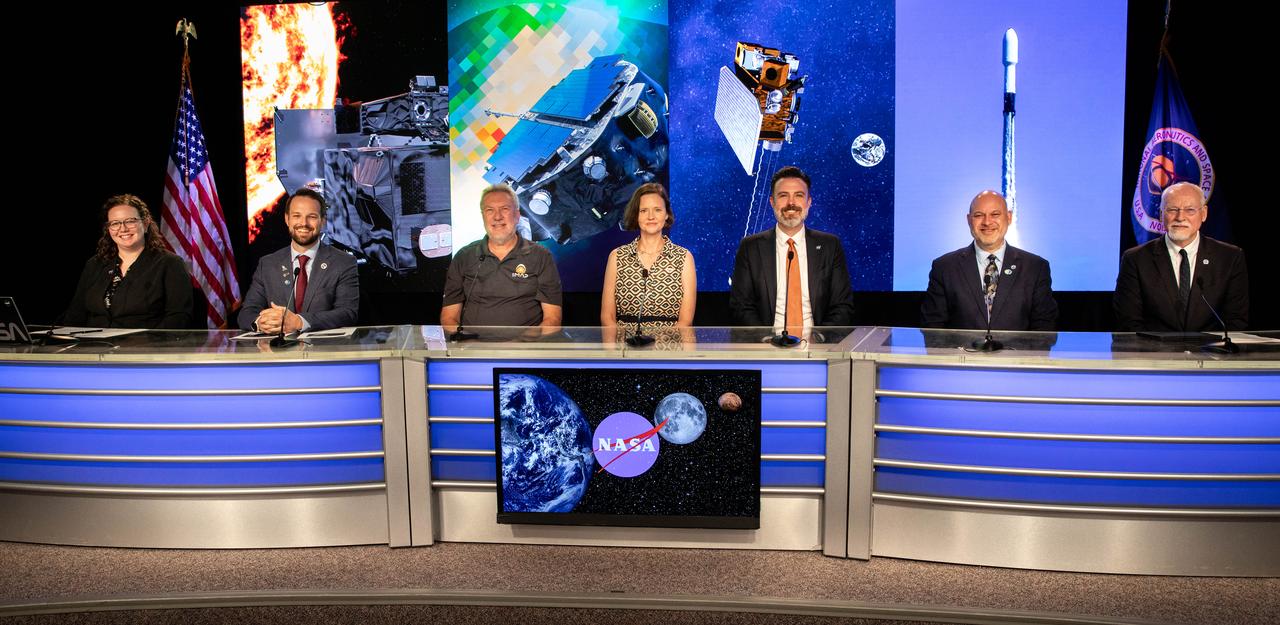
NASA, NOAA, and mission leaders participate in a science briefing on NASA’s IMAP (Interstellar Mapping and Acceleration Probe) mission and its two rideshares – NASA’s exosphere-studying Carruthers Geocorona Observatory and National Oceanic and Atmospheric Administration’s (NOAA) Space Weather Follow On–Lagrange 1 (SWFO-L1) observatory – at the agency’s Kennedy Space Center in Florida on Sunday, Sept. 21, 2025. From left are: Sarah Frazier, NASA Communications; Joe Westlake, director, Heliophysics Division, NASA Headquarters in Washington; David McComas, IMAP principal investigator, Princeton University; Lara Waldrop, Carruthers Geocorona Observatory principal investigator, University of Illinois Urbana-Champaign; Jamie Favors, director, Space Weather Program, Heliophysics Division, NASA Headquarters; Clinton Wallace, director, NOAA Space Weather Prediction Center; James Spann, senior scientist, NOAA Office of Space Weather Observations. NASA’s IMAP will use 10 science instruments to study and map the heliosphere, a vast magnetic bubble surrounding the Sun protecting our solar system from radiation incoming from interstellar space. The missions will orbit the Sun near Lagrange point 1, about one million miles from Earth. Launch is targeted for 7:32 a.m. EDT, Tuesday, Sept. 23, from Launch Complex 39A at NASA Kennedy.