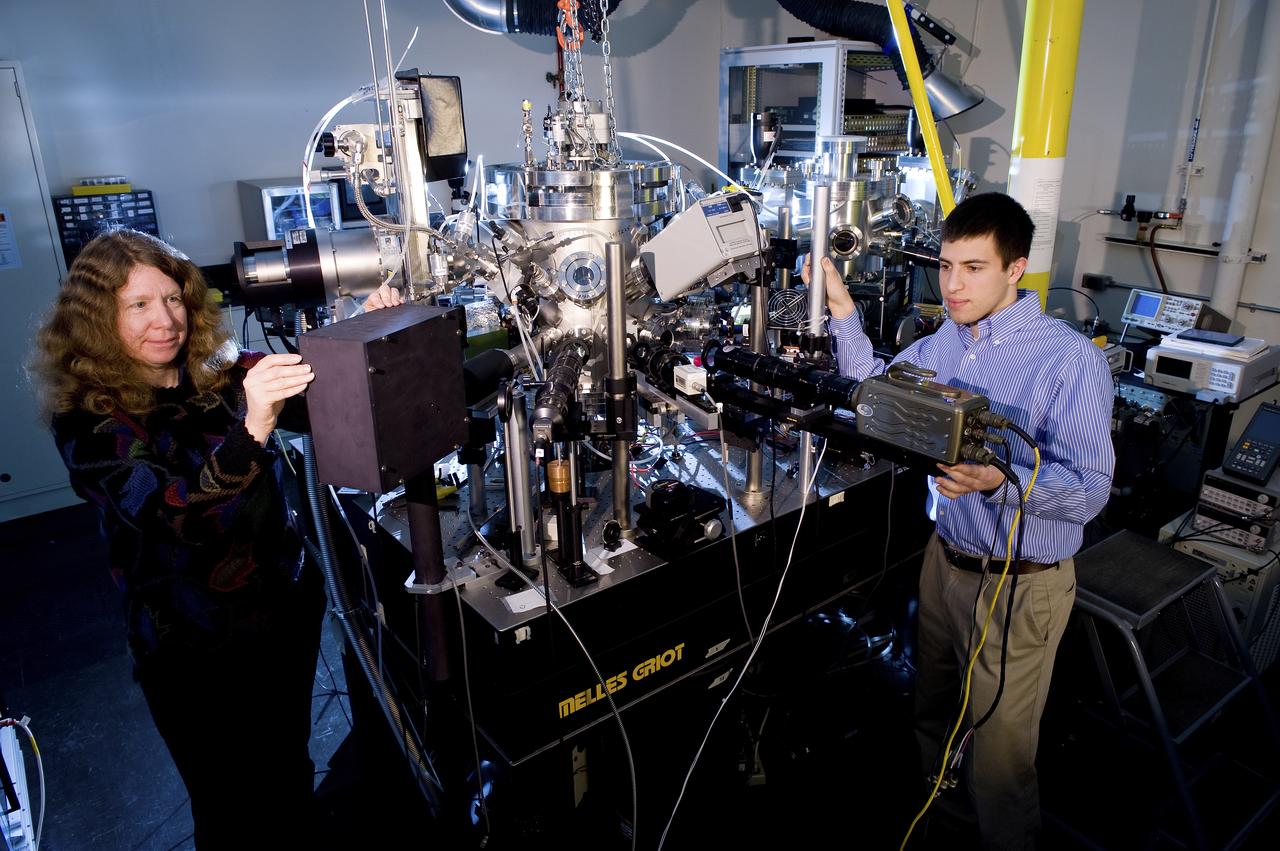
DR. JAN ROGERS, LEFT, AND MATTHEW SHERMAN WITH THE ELECTROSTATIC LEVITATOR

Dr. Jan Rogers, project scientist for the Electrostatic Levitator (ESL) at NASA's Marshall Space Flight Center(MSFC). The ESL uses static electricity to suspend an obejct (about 2-3 mm in diameter) inside a vacuum chamber while a laser heats the sample until it melts. This lets scientists record a wide range of physical properties without the sample contacting the container or any instruments, conditions that would alter the readings. The Electrostatic Levitator is one of several tools used in NASA's microgravity materials sciences program.
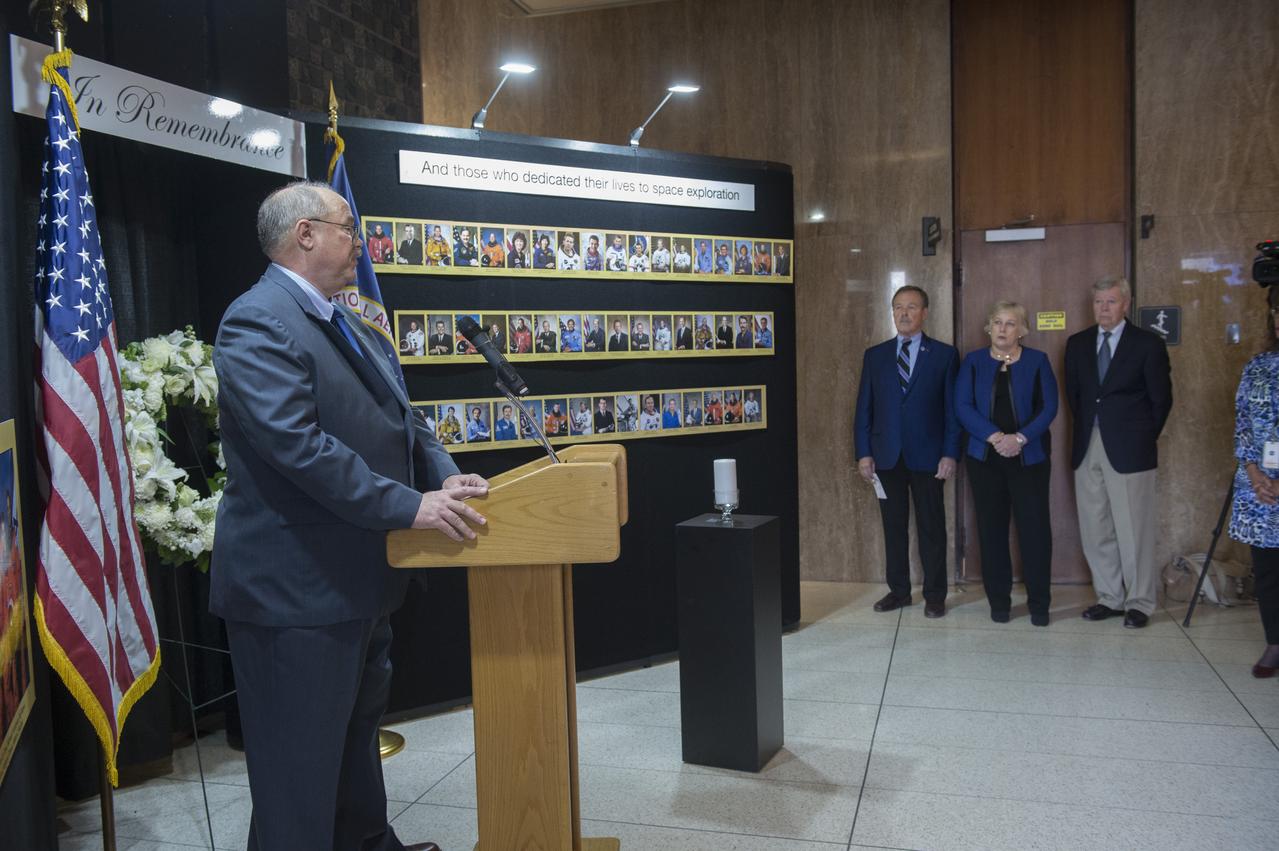
RICK BURT, MANAGER OF SAFETY AND MISSION ASSURANCE, MAKES COMMENTS AT NASA'S DAY OF REMEMBRANCE AS ROBERT "HOOT" GIBSON, JAN DAVIS, AND RICK CHAPPEL LOOK ON
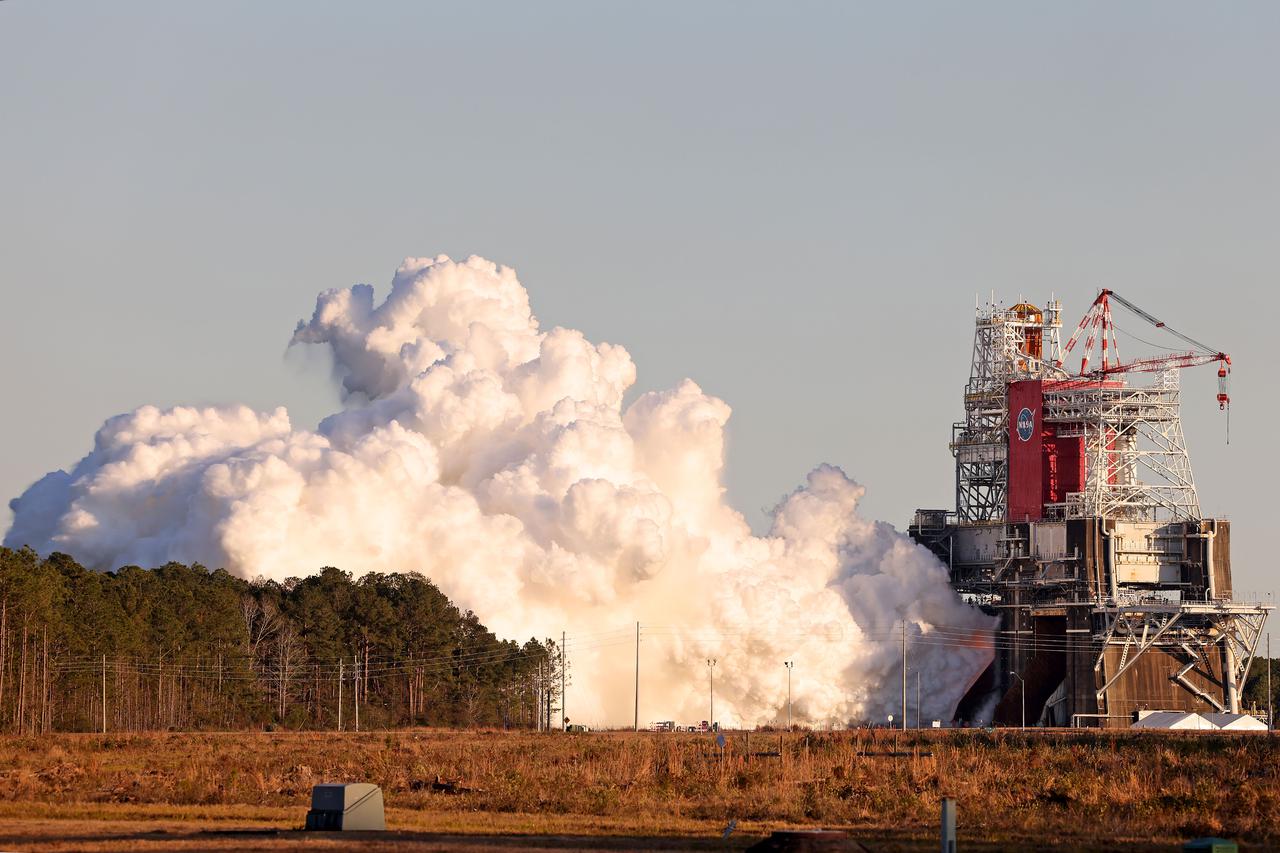
NASA conducts a hot fire test Jan. 16, 2021, of the core stage for the agency’s Space Launch System rocket on the B-2 Test Stand at Stennis Space Center near Bay St. Louis. The hot fire test of the stage’s four RS-25 engines generated a combined 1.6 million pounds of thrust, just as will occur during an actual launch. The hot fire is the final test of the Green Run test series, a comprehensive assessment of the SLS core stage prior to launching the Artemis I mission to the Moon.
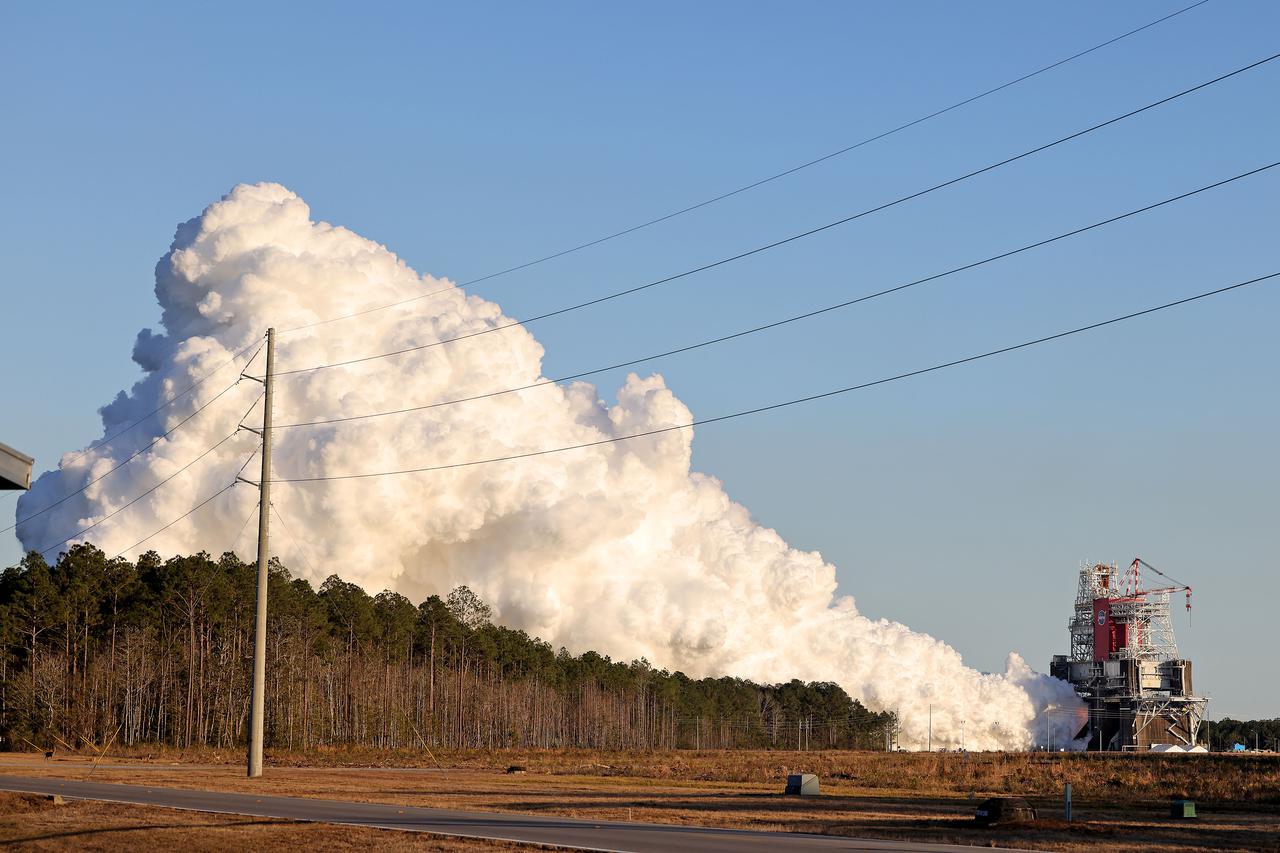
NASA conducts a hot fire test Jan. 16, 2021, of the core stage for the agency’s Space Launch System rocket on the B-2 Test Stand at Stennis Space Center near Bay St. Louis. The hot fire test of the stage’s four RS-25 engines generated a combined 1.6 million pounds of thrust, just as will occur during an actual launch. The hot fire is the final test of the Green Run test series, a comprehensive assessment of the SLS core stage prior to launching the Artemis I mission to the Moon.
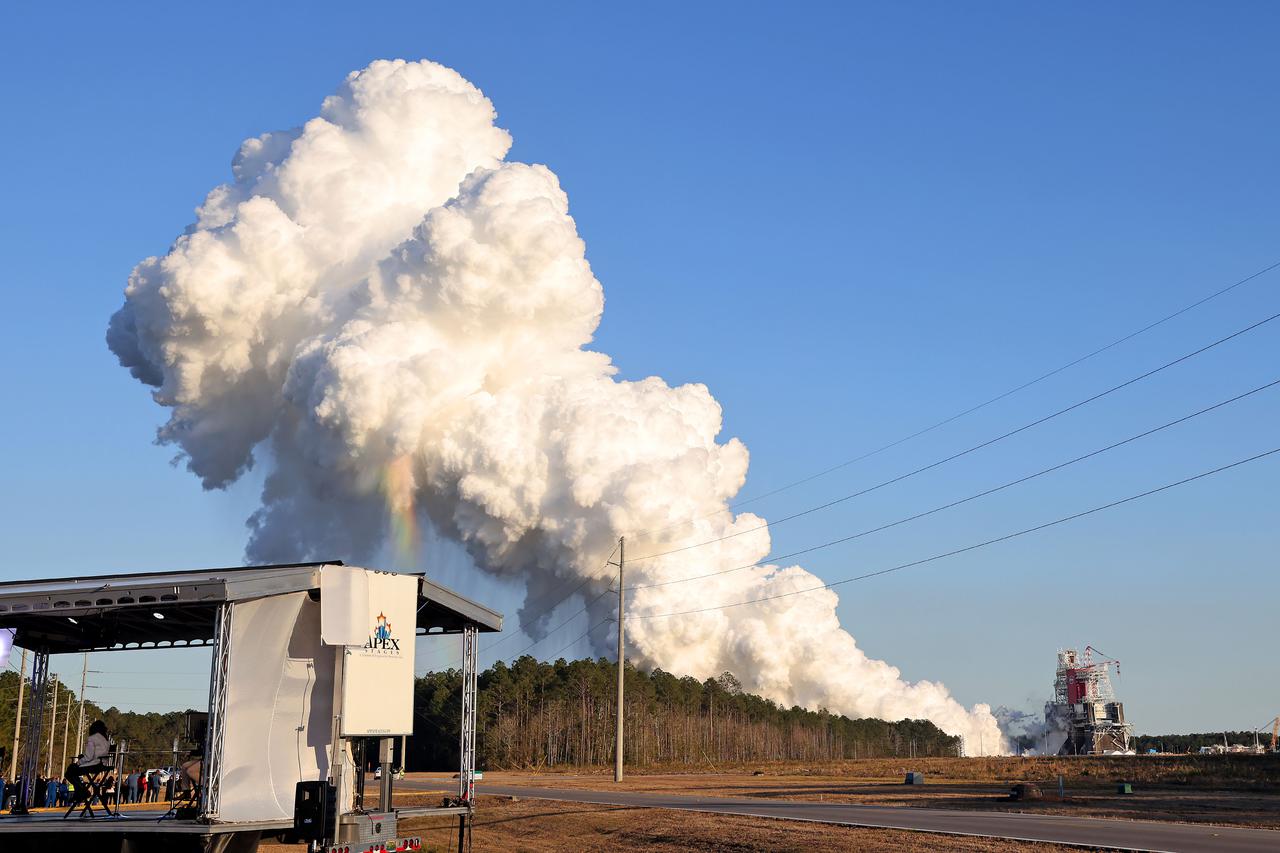
NASA conducts a hot fire test Jan. 16, 2021, of the core stage for the agency’s Space Launch System rocket on the B-2 Test Stand at Stennis Space Center near Bay St. Louis. The hot fire test of the stage’s four RS-25 engines generated a combined 1.6 million pounds of thrust, just as will occur during an actual launch. The hot fire is the final test of the Green Run test series, a comprehensive assessment of the SLS core stage prior to launching the Artemis I mission to the Moon.
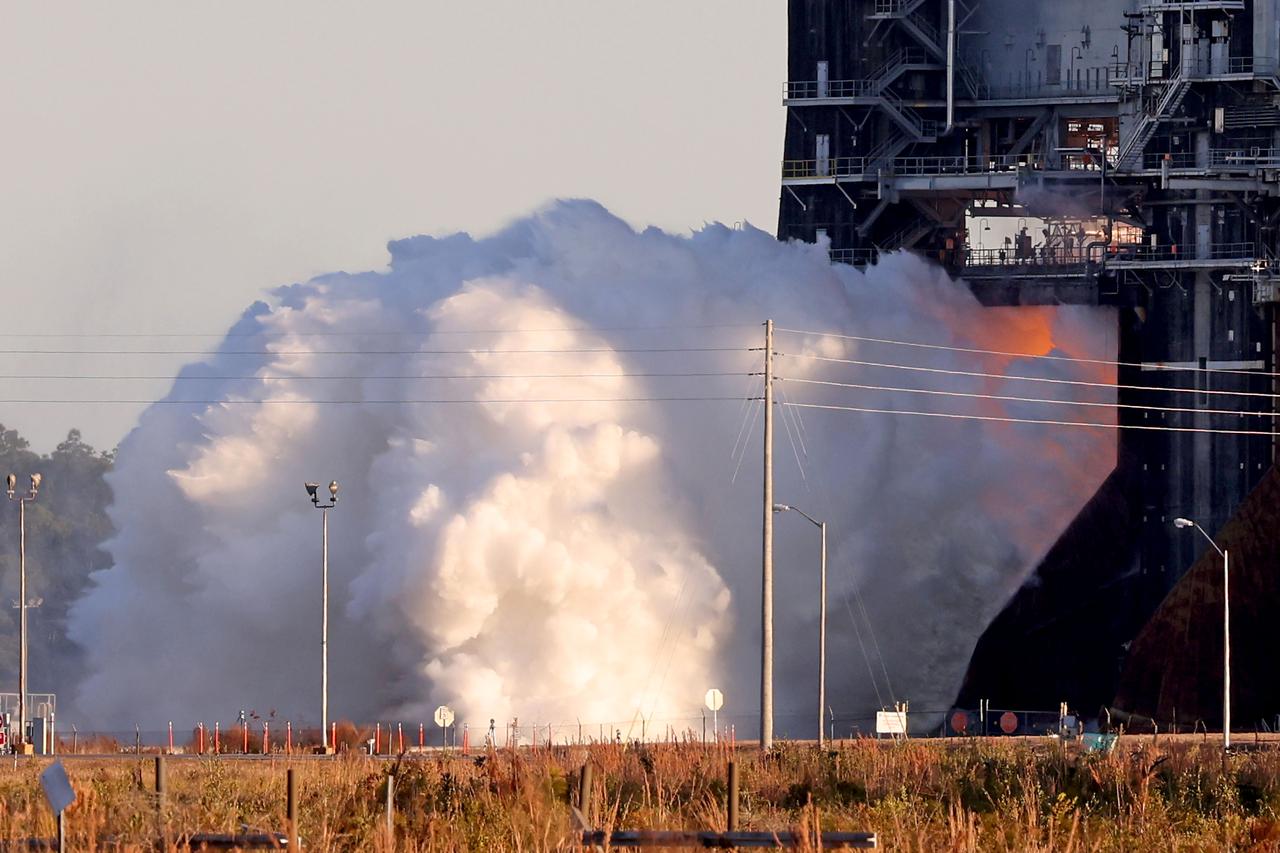
NASA conducts a hot fire test Jan. 16, 2021, of the core stage for the agency’s Space Launch System rocket on the B-2 Test Stand at Stennis Space Center near Bay St. Louis. The hot fire test of the stage’s four RS-25 engines generated a combined 1.6 million pounds of thrust, just as will occur during an actual launch. The hot fire is the final test of the Green Run test series, a comprehensive assessment of the SLS core stage prior to launching the Artemis I mission to the Moon.

This image was obtained by NASA Cassini radar instrument during a flyby on Jan. 12, 2010. High southern latitudes Ontario Lacus, Mezzoramia. https://photojournal.jpl.nasa.gov/catalog/PIA00927

This image was obtained by NASA Cassini radar instrument during a flyby on Jan. 13, 2007. Northern mid-latitudes to equator Ganesa Macula, Aaru, western Senkyo, Tsegihi. https://photojournal.jpl.nasa.gov/catalog/PIA00928
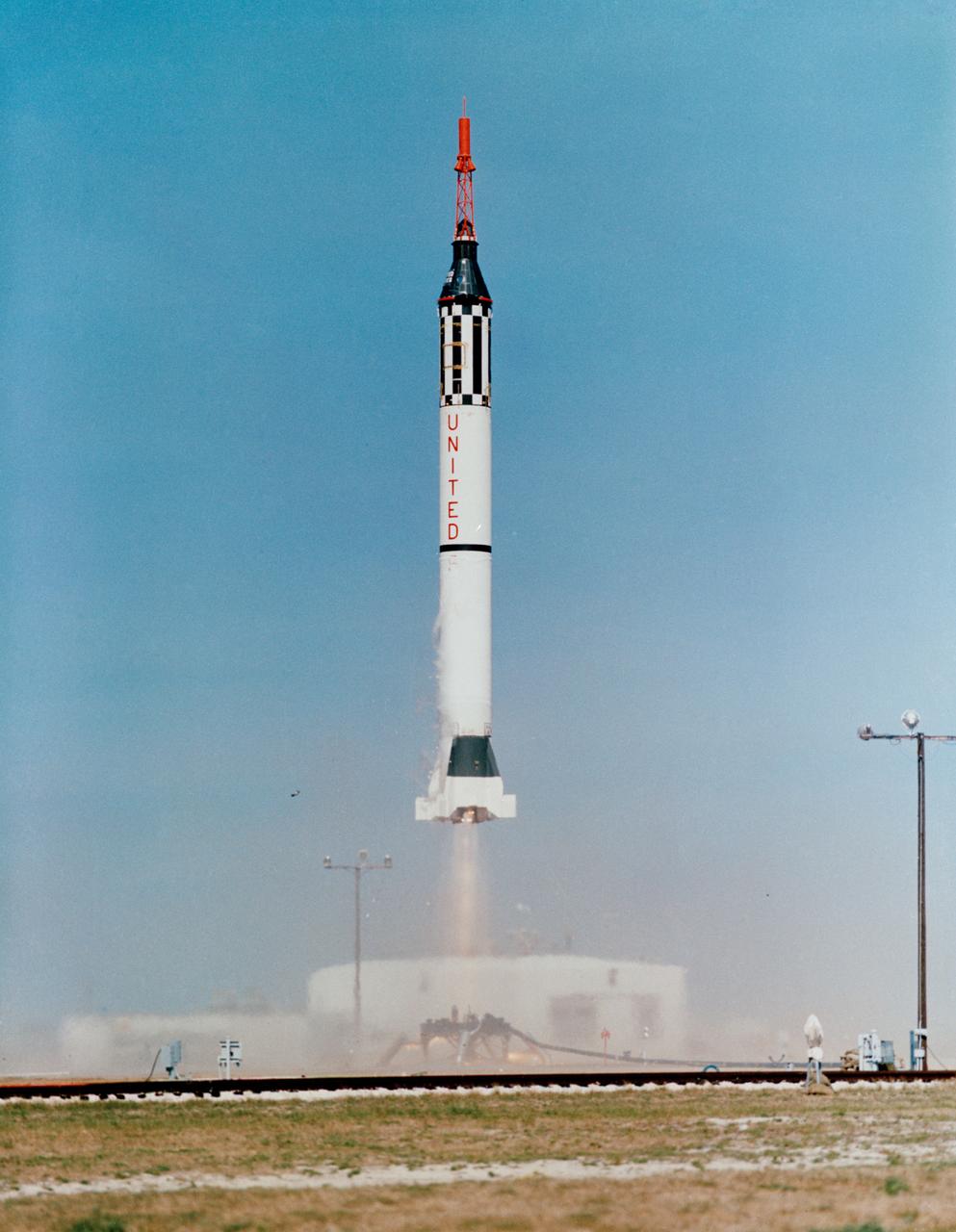
S61-01942 (31 Jan. 1961) --- Launch of the Mercury-Redstone 2 (MR-2) vehicle on Jan. 31, 1961. The 16-minute suborbital flight carried biomedical test subject chimpanzee (Ham) aboard. Photo credit: NASA
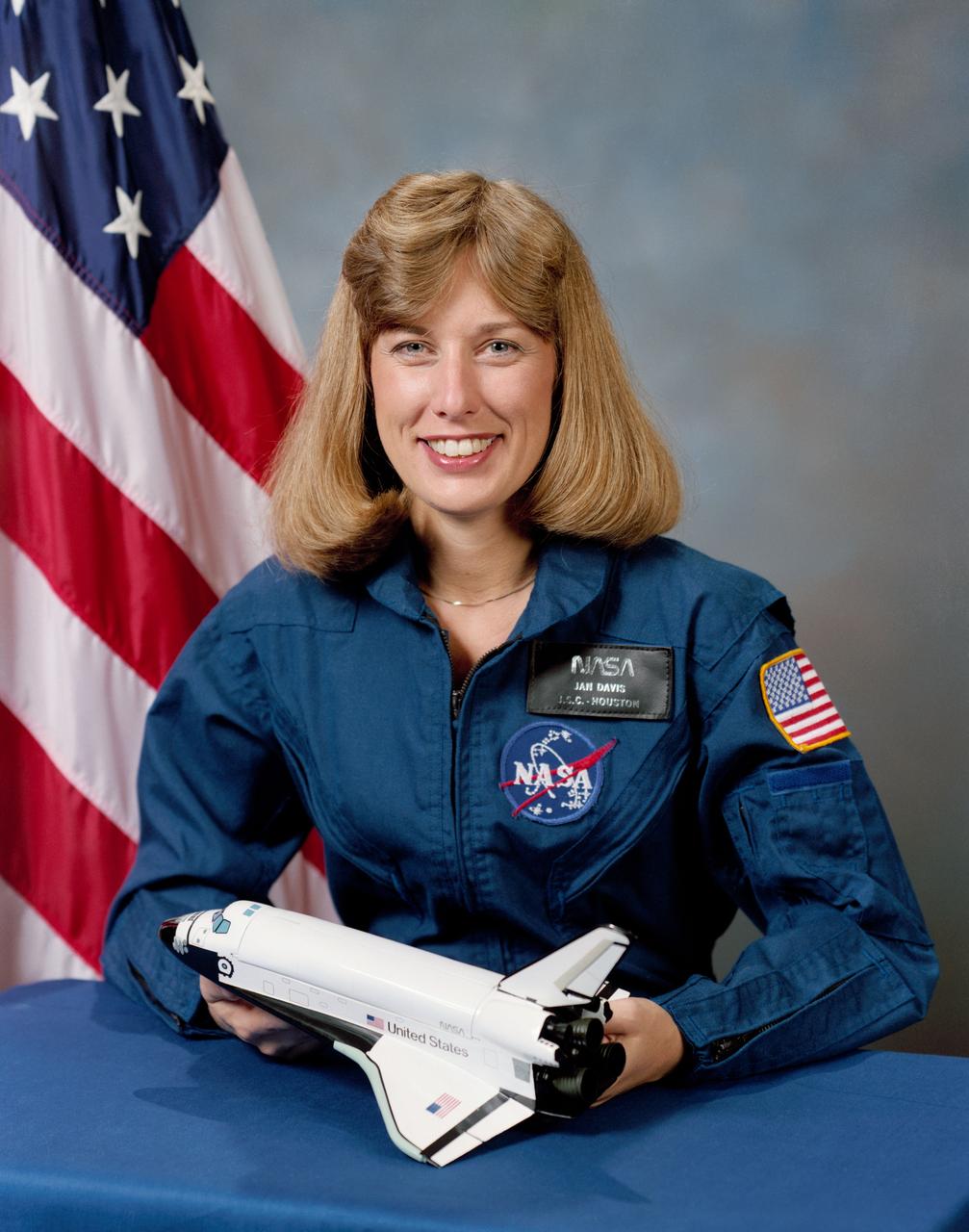
S87-45883 (9 Oct. 1987) --- Astronaut N. Jan Davis
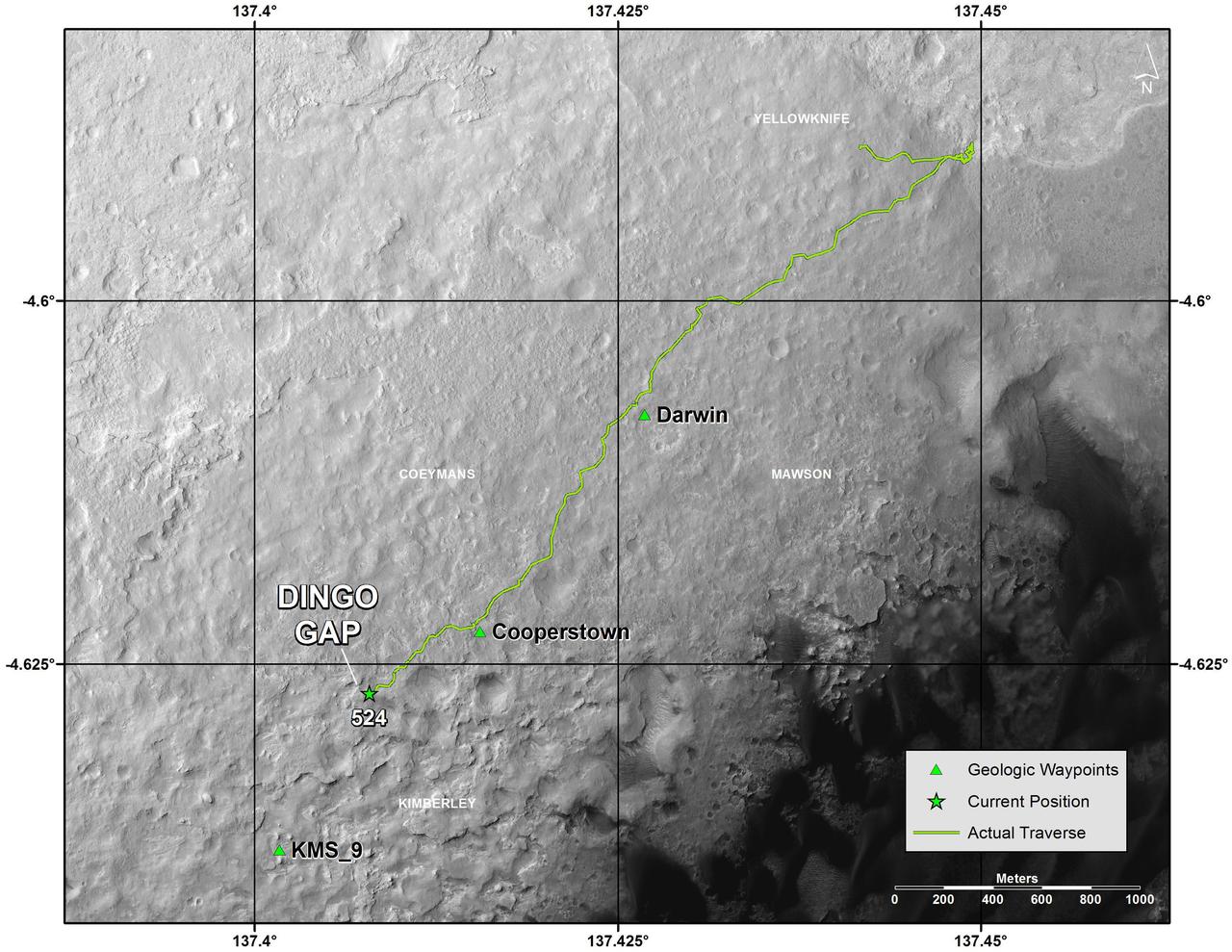
This map shows the route that NASA Curiosity Mars rover drove inside Gale Crater from its landing in August 2013 through Jan. 26, 2004. The rover is approaching a gap between two low scarps, Dingo Gap.
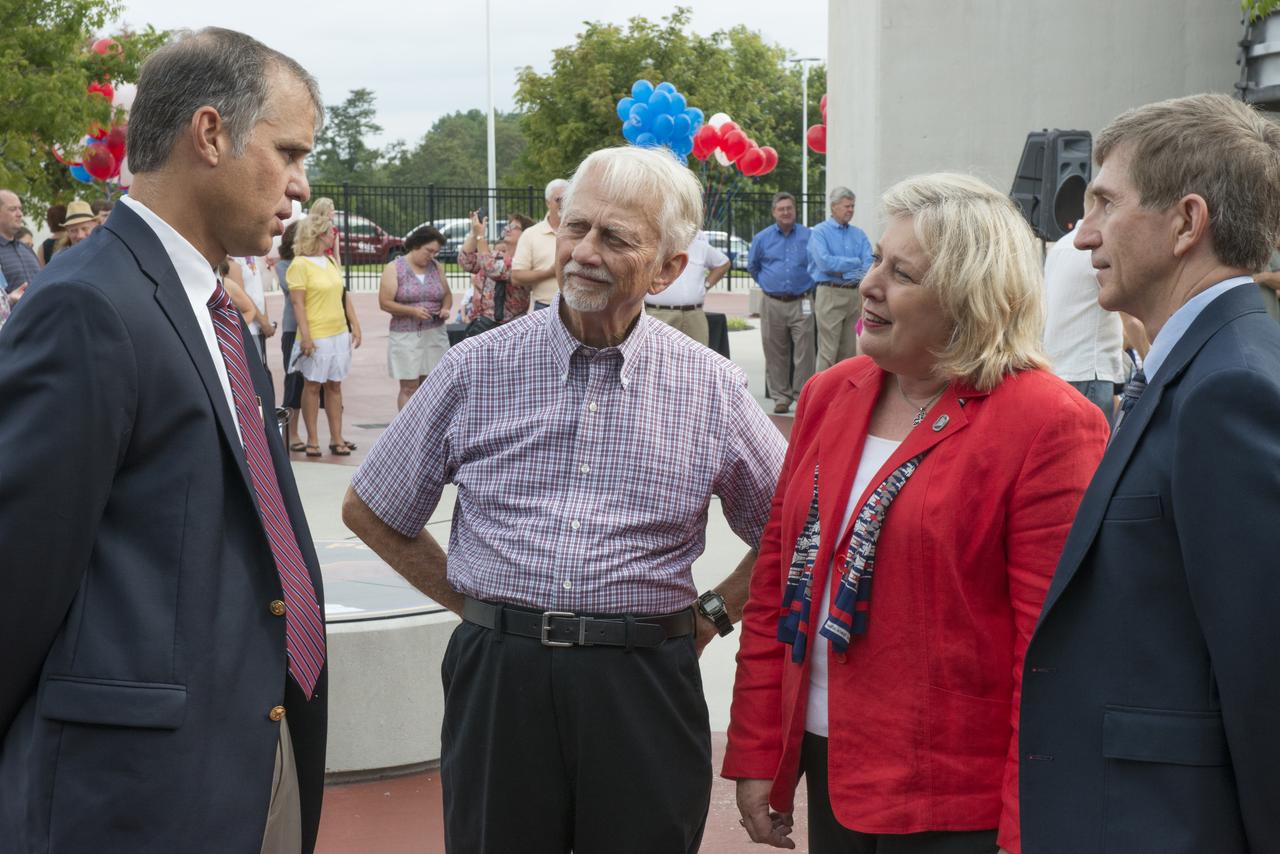
AUGUST 31, 2012 TRIBUTE TO APOLLO ASTRONAUT NEIL ARMSTRONG AT THE USSRC. L TO R: JONATHAN PETTUS, MSFC ACTING ASSOCIATE ADMINISTRATOR; FORMER ASTRONAUT OWEN GARRIOTT; FORMER ASTRONAUT JAN DAVIS AND FORMER ASTRONAUT FRED LESLIE.1200933F
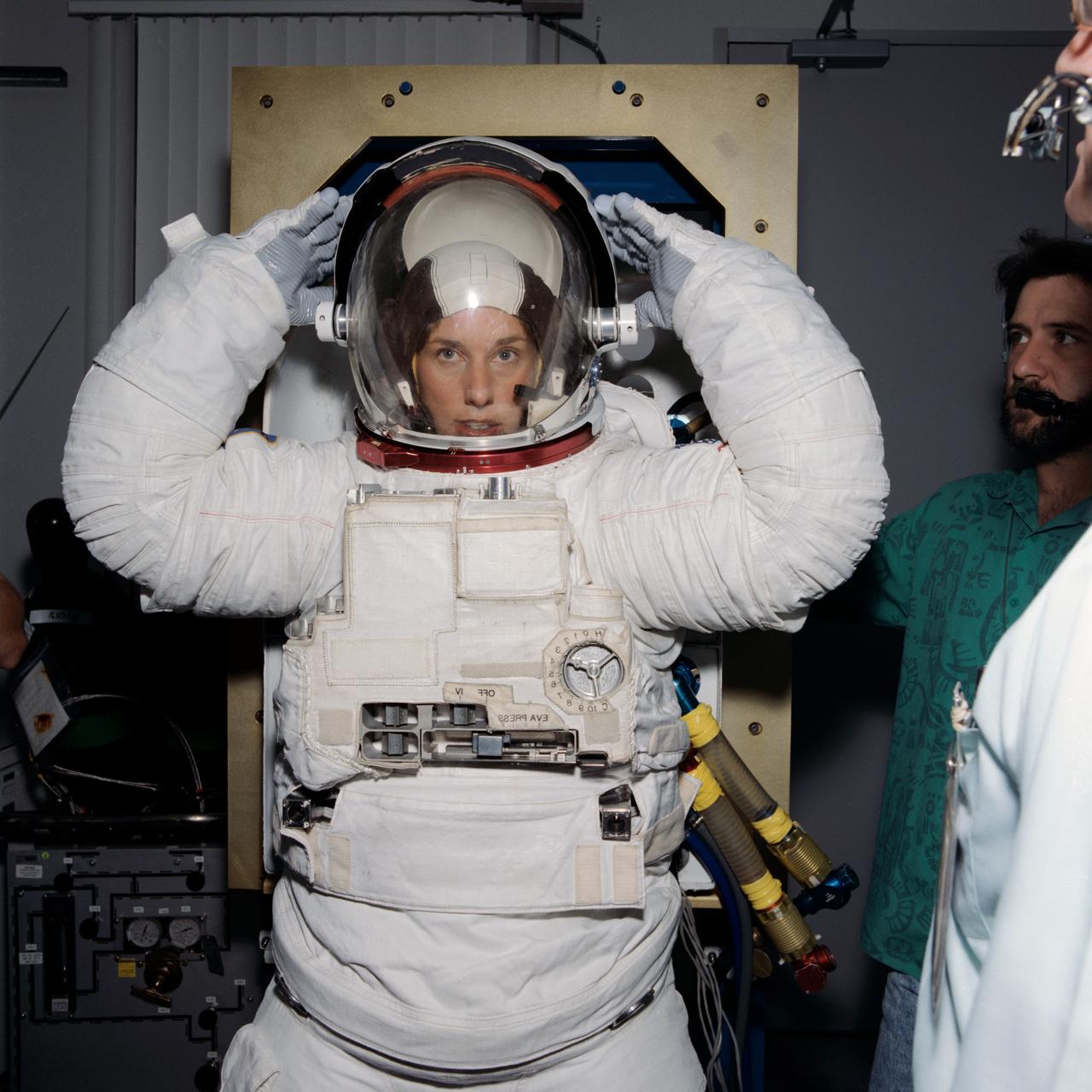
Astronaut N. Jan Davis, with her arms over her head, adjusts her helmet visor during crewmember shuttle suit fit check conducted at JSC's Crew Systems Laboratory Bldg 7.

Foreign Affairs Minister for the Czech Republic, Jan Lipavský, delivers remarks prior to the signing of the Artemis Accords, Wednesday, May 3, 2023, at The Mary W. Jackson NASA Headquarters building in Washington DC. The Czech Republic is the twenty fourth country to sign the Artemis Accords, which establish a practical set of principles to guide space exploration cooperation among nations participating in NASA’s Artemis program. Photo Credit: (NASA/Joel Kowsky)
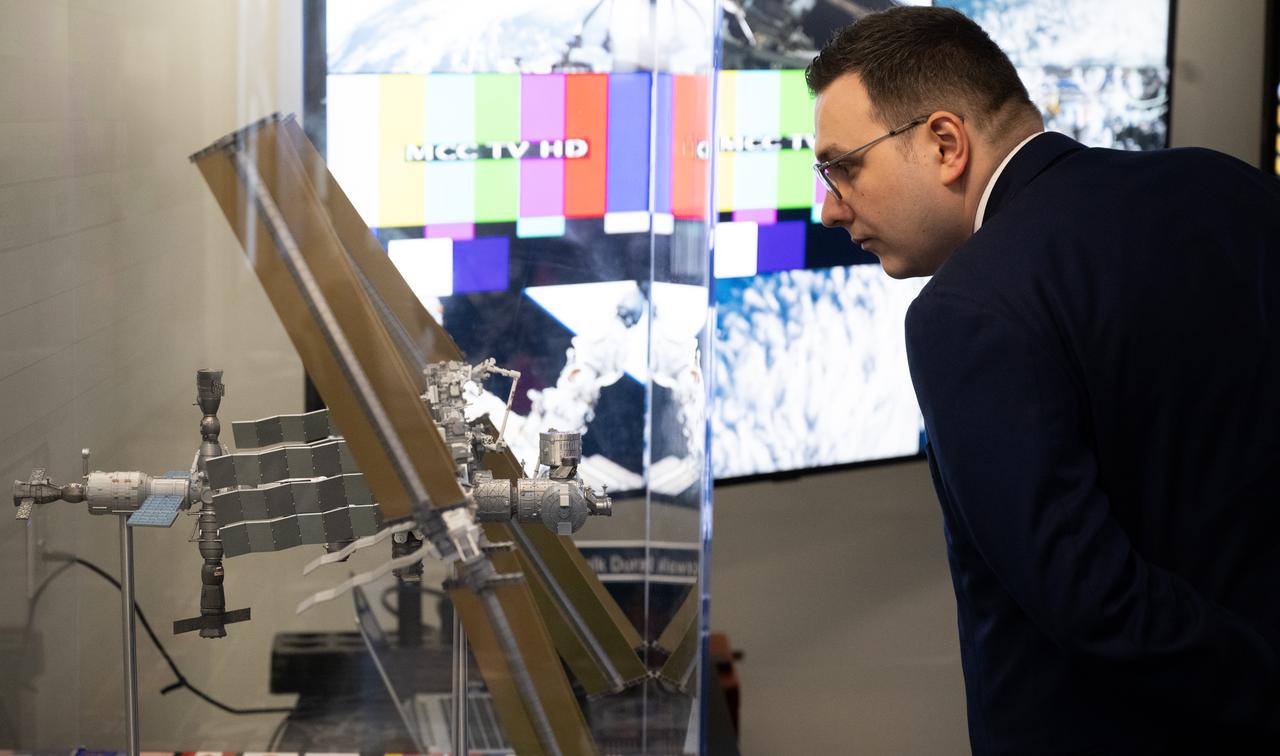
Foreign Affairs Minister for the Czech Republic Jan Lipavský, looks at a model of the International Space Station during a tour of the Space Operations Center following the signing of the Artemis Accords, Wednesday, May 3, 2023, at The Mary W. Jackson NASA Headquarters building in Washington DC. The Czech Republic is the twenty fourth country to sign the Artemis Accords, which establish a practical set of principles to guide space exploration cooperation among nations participating in NASA’s Artemis program. Photo Credit: (NASA/Joel Kowsky)
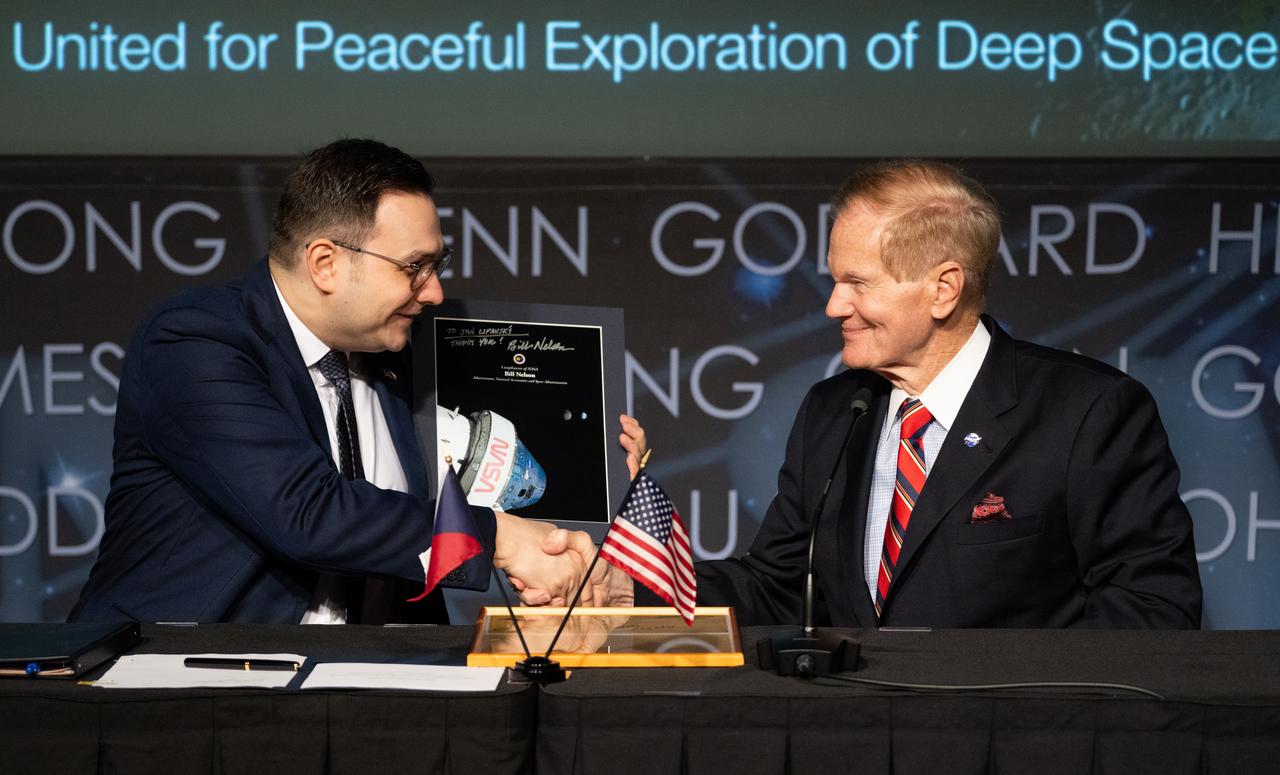
NASA Administrator Bill Nelson presents Foreign Affairs Minister for the Czech Republic Jan Lipavský with a signed photograph of the Orion spacecraft against the Moon and Earth following the signing of the Artemis Accords on, Wednesday, May 3, 2023, at The Mary W. Jackson NASA Headquarters building in Washington DC. The Czech Republic is the twenty fourth country to sign the Artemis Accords, which establish a practical set of principles to guide space exploration cooperation among nations participating in NASA’s Artemis program. Photo Credit: (NASA/Joel Kowsky)

Foreign Affairs Minister for the Czech Republic, Jan Lipavský, speaks to members of the media following the signing of the Artemis Accords, Wednesday, May 3, 2023, at The Mary W. Jackson NASA Headquarters building in Washington DC. The Czech Republic is the twenty fourth country to sign the Artemis Accords, which establish a practical set of principles to guide space exploration cooperation among nations participating in NASA’s Artemis program. Photo Credit: (NASA/Joel Kowsky)

Foreign Affairs Minister for the Czech Republic, Jan Lipavský, speaks to members of the media following the signing of the Artemis Accords, Wednesday, May 3, 2023, at The Mary W. Jackson NASA Headquarters building in Washington DC. The Czech Republic is the twenty fourth country to sign the Artemis Accords, which establish a practical set of principles to guide space exploration cooperation among nations participating in NASA’s Artemis program. Photo Credit: (NASA/Joel Kowsky)
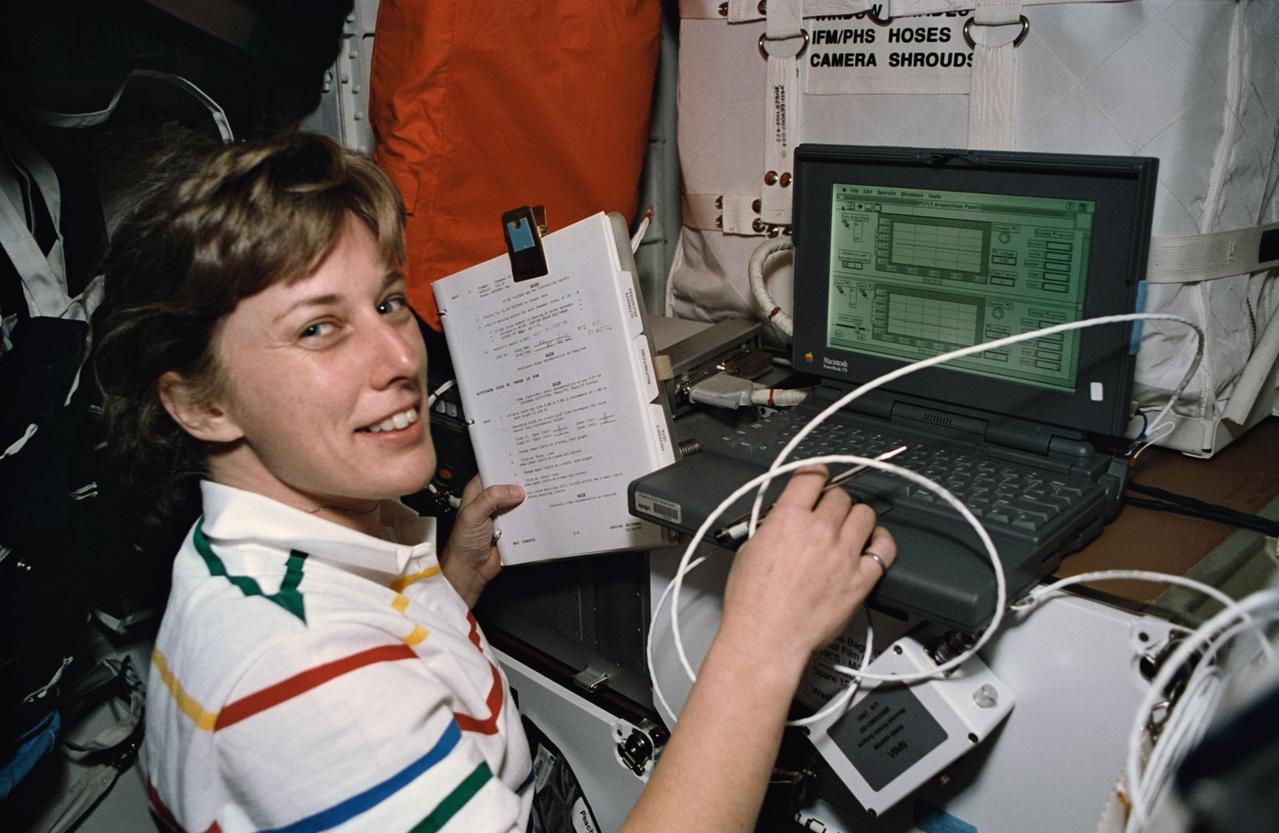
STS060-21-031 (3-11 Feb 1994) --- Using a lap top computer, astronaut N. Jan Davis monitors systems for the Commercial Protein Crystal Growth (CPCG) experiment onboard the Space Shuttle Discovery. Davis joined four other NASA astronauts and a Russian cosmonaut for eight days in space aboard Discovery.
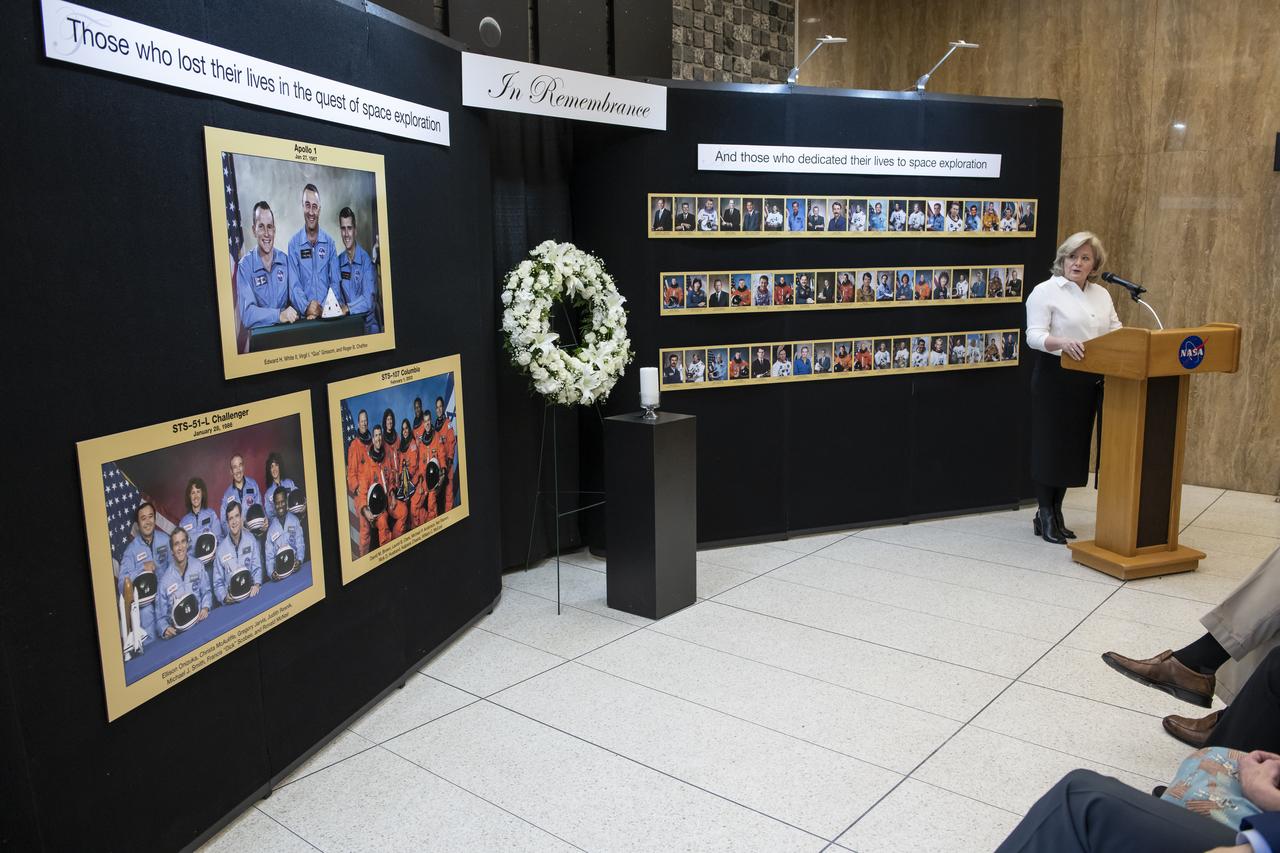
NASA Marshall Space Flight Center Director Jody Singer looks solemnly toward a display honoring the crews of space shuttle Columbia STS-107, space shuttle Challenger STS-51L and Apollo 1 during the center's Day of Remembrance ceremony Feb. 7. Singer, former astronaut Jan Davis, and Marshall Safety and Mission Assurance Directorate Director Rick Burt, spoke at the annual ceremony, which honors those who lost their lives in the quest of space exploration and those who dedicated their lives to space exploration. The ceremony concluded with Singer lighting a candle in memory of the honorees and a moment of silence led by Johnny Stephenson, director of the Office of Strategic Analysis & Communications.
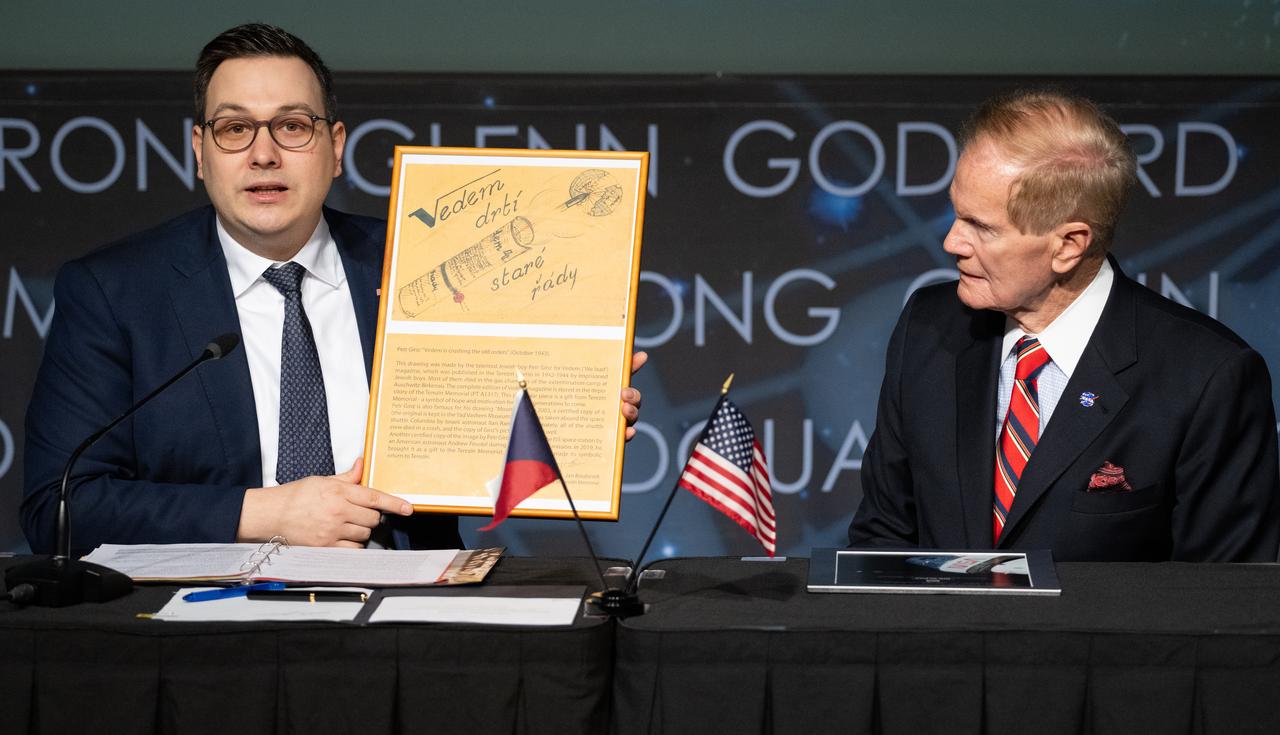
Foreign Affairs Minister for the Czech Republic Jan Lipavský, left, presents NASA Administrator Bill Nelson with a reproduction of an original drawing made by a Czechoslovak boy named Petr Ginz of partial Jewish background who was murdered at Auschwitz concentration camp in 1944, despite being of very young age, he had authored novels and made his own illustrations including this one depicting planet Earth seen from the moon, following the signing of the Artemis Accords, Wednesday, May 3, 2023, at The Mary W. Jackson NASA Headquarters building in Washington DC. The Czech Republic is the twenty fourth country to sign the Artemis Accords, which establish a practical set of principles to guide space exploration cooperation among nations participating in NASA’s Artemis program. Photo Credit: (NASA/Joel Kowsky)

NASA Administrator Bill Nelson left, and Foreign Affairs Minister for the Czech Republic Jan Lipavský, center are seen in the Space Operations Center during a tour following the signing of the Artemis Accords, Wednesday, May 3, 2023, at The Mary W. Jackson NASA Headquarters building in Washington DC. The Czech Republic is the twenty fourth country to sign the Artemis Accords, which establish a practical set of principles to guide space exploration cooperation among nations participating in NASA’s Artemis program. Photo Credit: (NASA/Joel Kowsky)
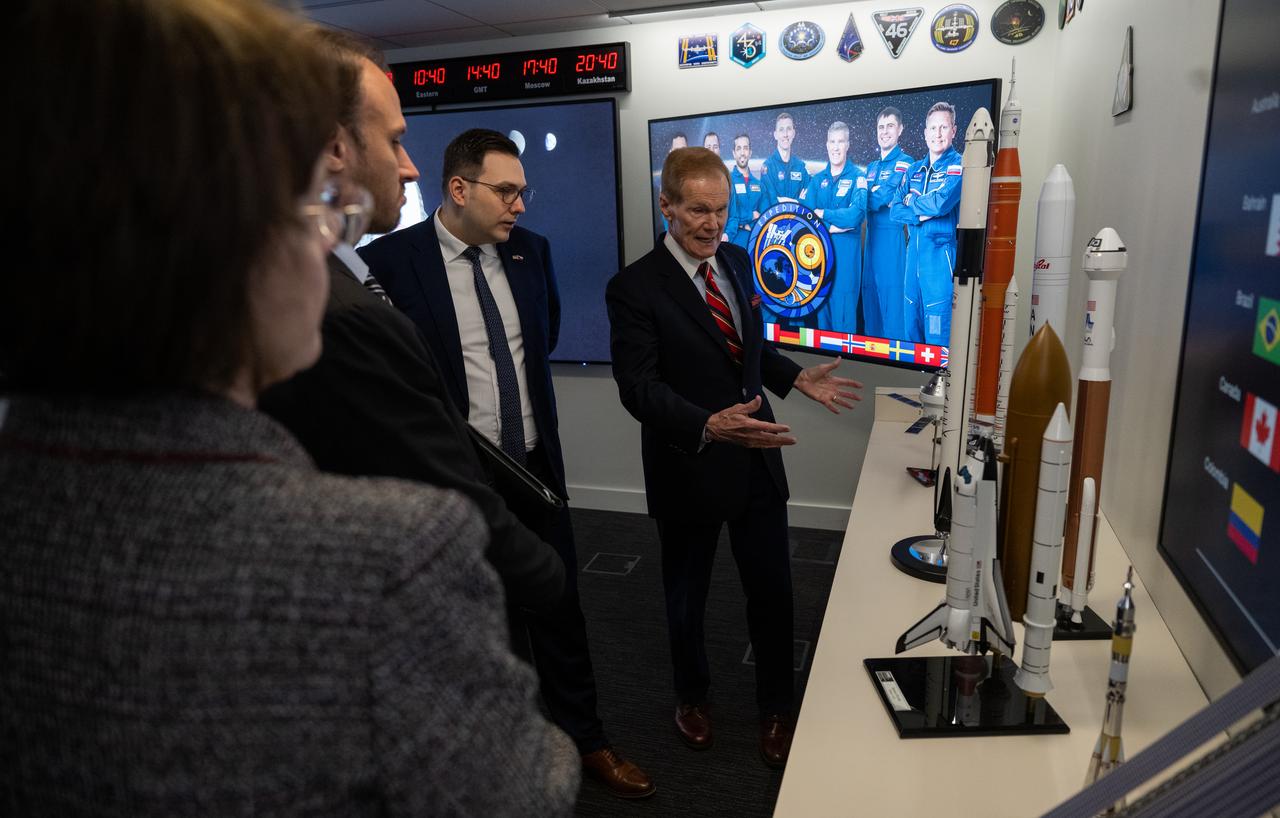
NASA Administrator Bill Nelson right, and Foreign Affairs Minister for the Czech Republic Jan Lipavský are seen in the Space Operations Center during a tour following the signing of the Artemis Accords, Wednesday, May 3, 2023, at The Mary W. Jackson NASA Headquarters building in Washington DC. The Czech Republic is the twenty fourth country to sign the Artemis Accords, which establish a practical set of principles to guide space exploration cooperation among nations participating in NASA’s Artemis program. Photo Credit: (NASA/Joel Kowsky)
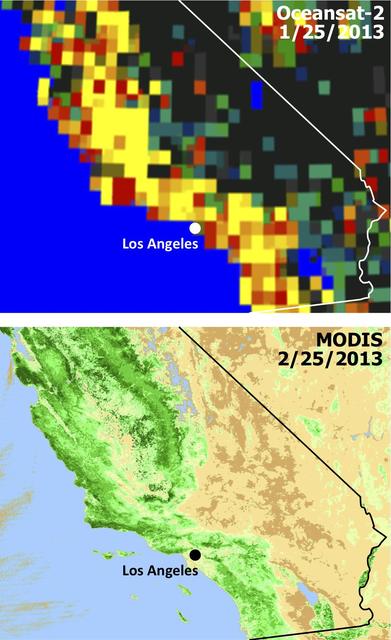
Extensive and persistent rains between Jan. 24 and Jan. 27, 2013, significantly increased soil moisture and enhanced vegetation growth in Southern California based on data from NASA Aqua spacecraft and ISRO Oceansat-2 satellite.

NASA's Stratospheric Observatory for Infrared Astronomy touches down at Moffett Field, Calif., for its first visit to NASA Ames Research Center, Jan. 14, 2008.
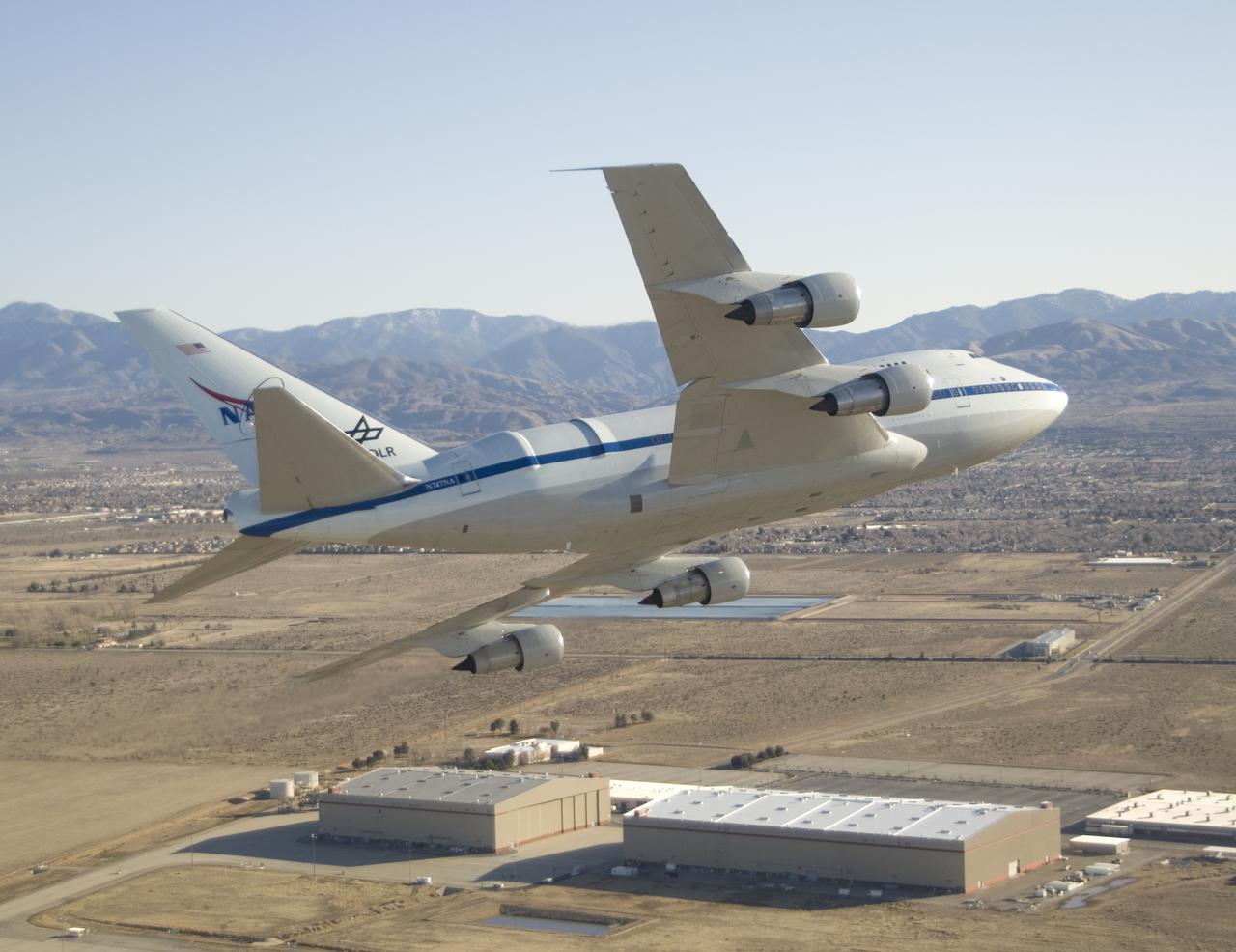
NASA's SOFIA flying infrared observatory banks over the Dryden Aircraft Operations Facility upon arrival at its new base of operations on Jan. 15, 2008.
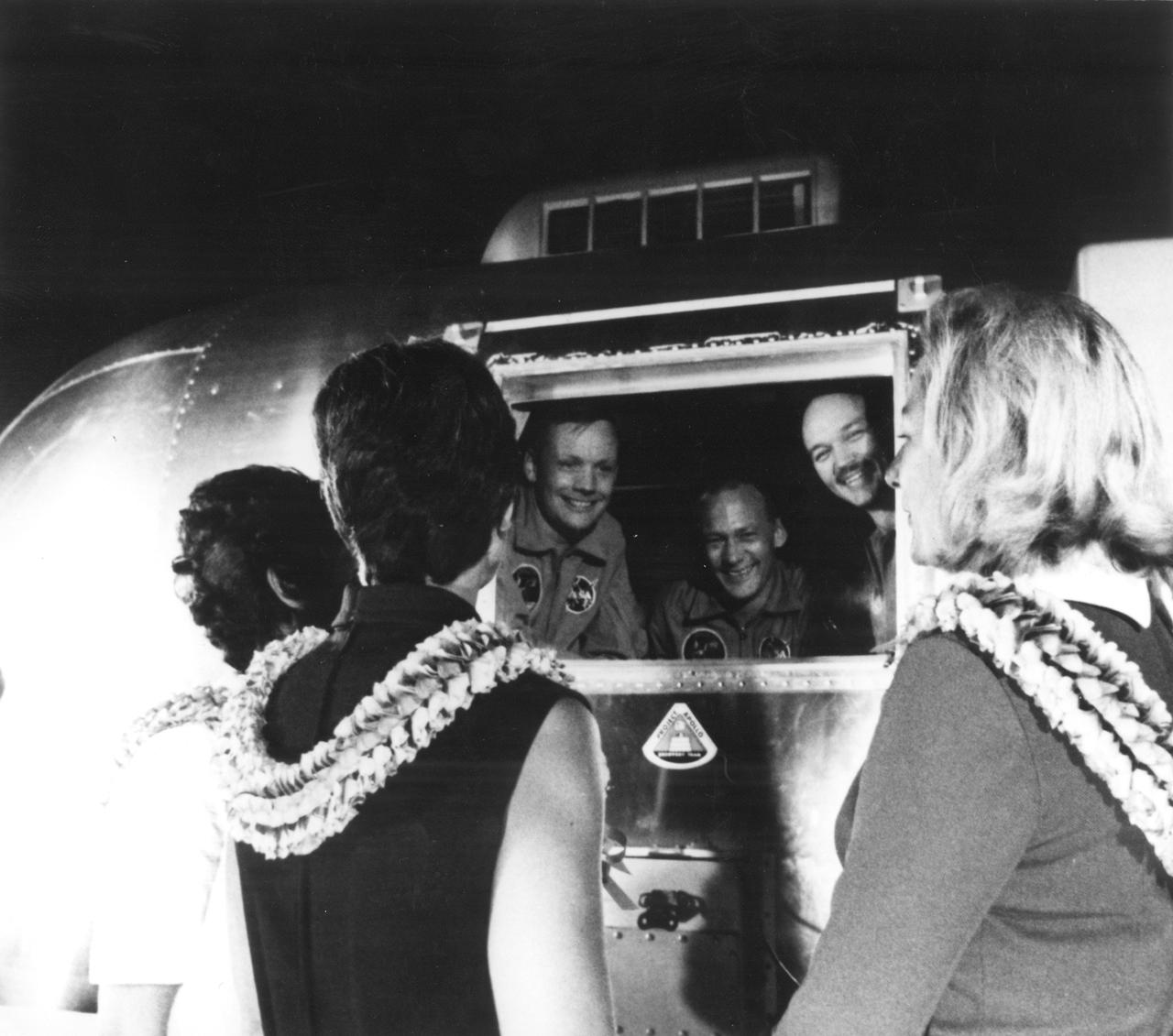
The Apollo 11 mission, the first manned lunar mission, launched from the Kennedy Space Center, Florida via the Marshall Space Flight Center (MSFC) developed Saturn V launch vehicle on July 16, 1969 and safely returned to Earth on July 24, 1969. Aboard the space craft were astronauts Neil A. Armstrong, commander; Michael Collins, Command Module (CM) pilot; and Edwin E. Aldrin Jr., Lunar Module (LM) pilot. The CM, piloted by Michael Collins remained in a parking orbit around the Moon while the LM, named “Eagle’’, carrying astronauts Neil Armstrong and Edwin Aldrin, landed on the Moon. During 2½ hours of surface exploration, the crew collected 47 pounds of lunar surface material for analysis back on Earth. The recovery operation took place in the Pacific Ocean where Navy para-rescue men recovered the capsule housing the 3-man Apollo 11 crew. The crew was airlifted to safety aboard the U.S.S. Hornet, where they were quartered in a Mobile Quarantine Facility (MQF) which served as their home until they reached the NASA Manned Spacecraft Center (MSC) Lunar Receiving Laboratory in Houston, Texas. On arrival at Ellington Air Force base near the MSC, the crew, still under a 21 day quarantine in the MQF are greeted by their wives. Looking out of the facility are (L-R) Armstrong, Aldrin, and Collins. Wives are (L-R) Pat Collins, Jan Armstrong, and Joan Aldrin.

NASA Administrator Bill Nelson, center, speaks with Miloslav Stašek, Ambassador of the Czech Republic to the United States, Foreign Affairs Minister for the Czech Republic, Jan Lipavský, and Acting Assistant Secretary of State for Oceans and International Environmental and Scientific Affairs Jennifer R. Littlejohn, in the Space Operations Center following the signing of the Artemis Accords, Wednesday, May 3, 2023, at The Mary W. Jackson NASA Headquarters building in Washington DC. The Czech Republic is the twenty fourth country to sign the Artemis Accords, which establish a practical set of principles to guide space exploration cooperation among nations participating in NASA’s Artemis program. Photo Credit: (NASA/Joel Kowsky)
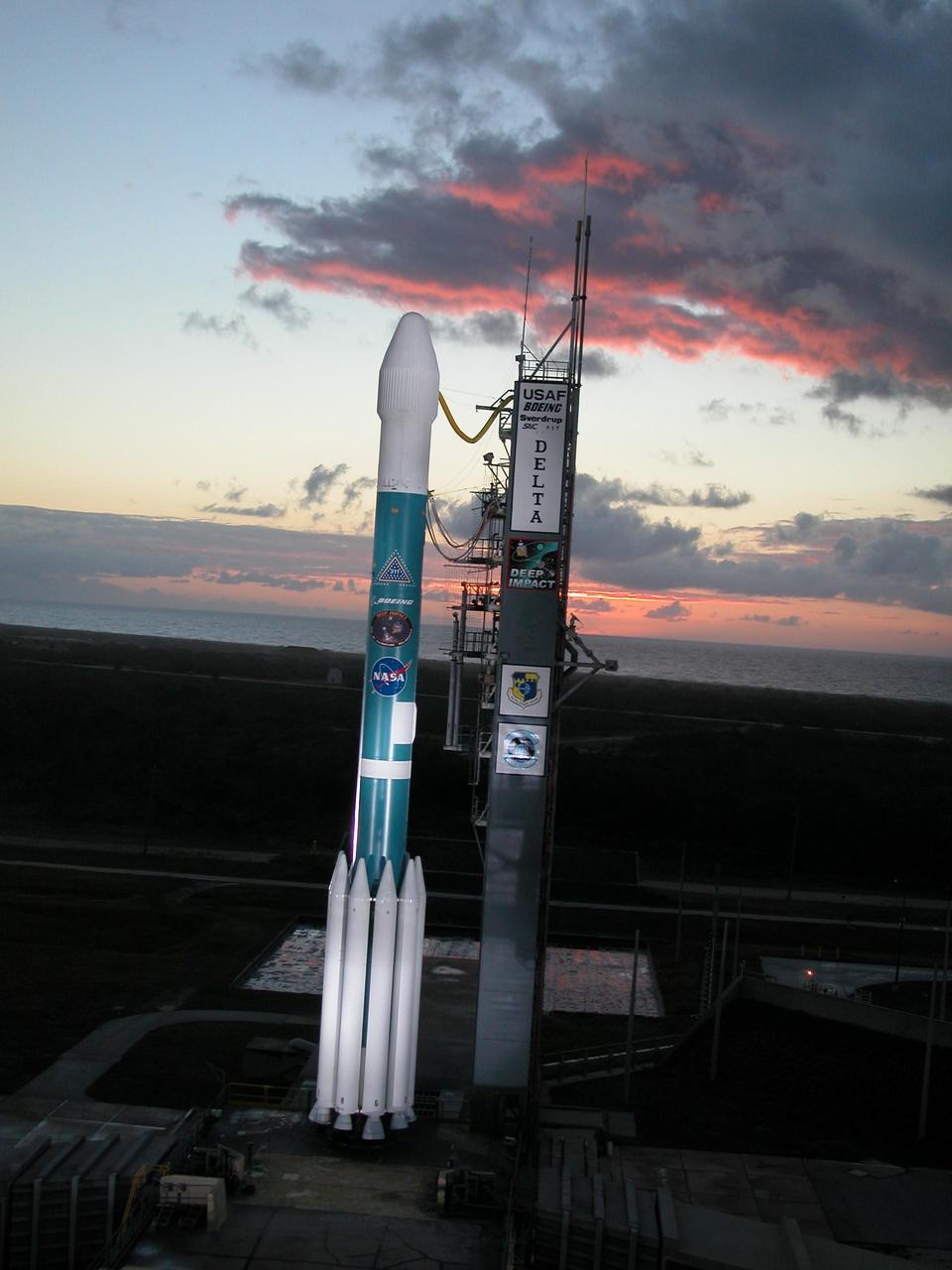
NASA Deep Impact awaits launch from Cape Canaveral Air Force Station, Fla. on Jan. 12, 2005.
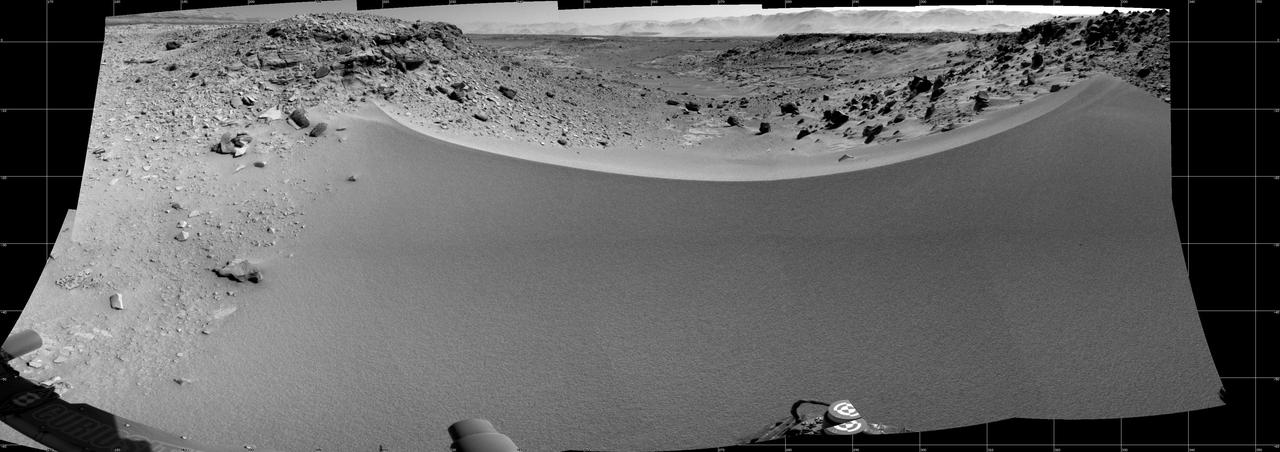
This mosaic of images from NASA Mars rover Curiosity shows the terrain to the west from the rover position on Jan. 30, 2014.
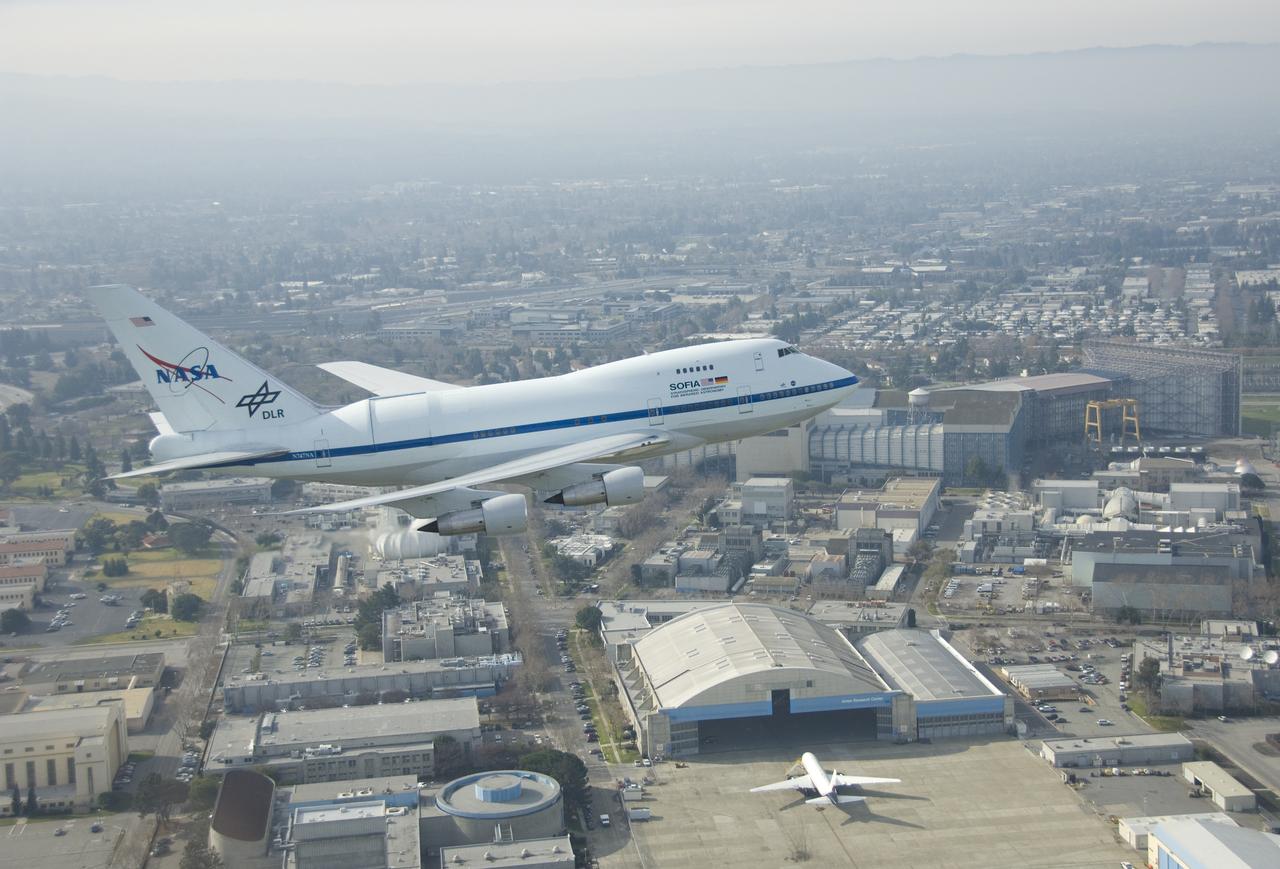
NASA's SOFIA flying observatory makes a low pass over NASA Ames Research Center prior to landing at Moffett Field for a brief visit on Jan. 14, 2008.
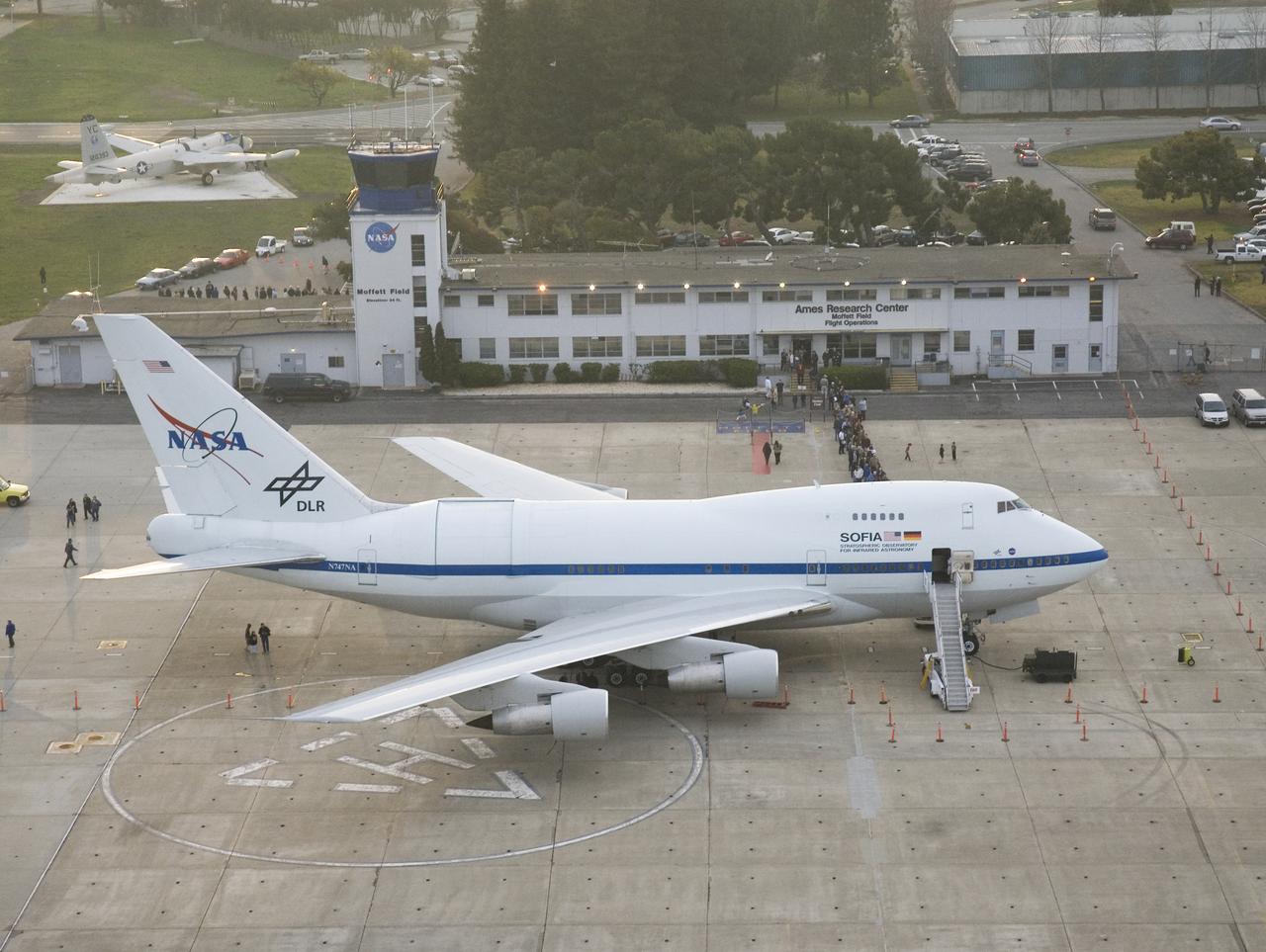
Thousands of NASA Ames employees and their families toured NASA's SOFIA flying observatory during its first visit to NASA Ames Research Center, Jan. 14, 2008.
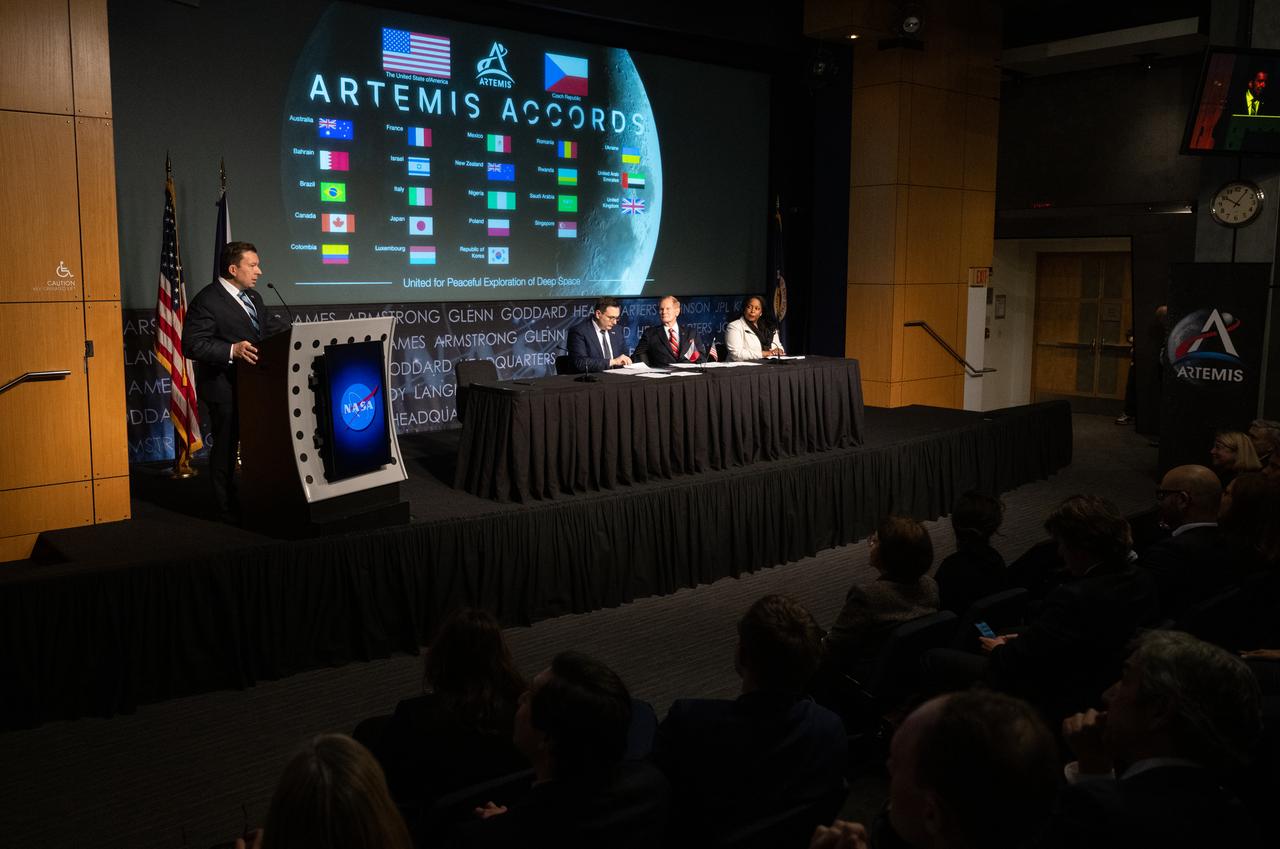
Miloslav Stašek, Ambassador of the Czech Republic to the United States, delivers remarks prior to the signing of the Artemis Accords as Foreign Affairs Minister for the Czech Republic, Jan Lipavský, third from right, NASA Administrator Bill Nelson, second from right, and Acting Assistant Secretary of State for Oceans and International Environmental and Scientific Affairs Jennifer R. Littlejohn, right, look on, Wednesday, May 3, 2023, at The Mary W. Jackson NASA Headquarters building in Washington DC. The Czech Republic is the twenty fourth country to sign the Artemis Accords, which establish a practical set of principles to guide space exploration cooperation among nations participating in NASA’s Artemis program. Photo Credit: (NASA/Joel Kowsky)
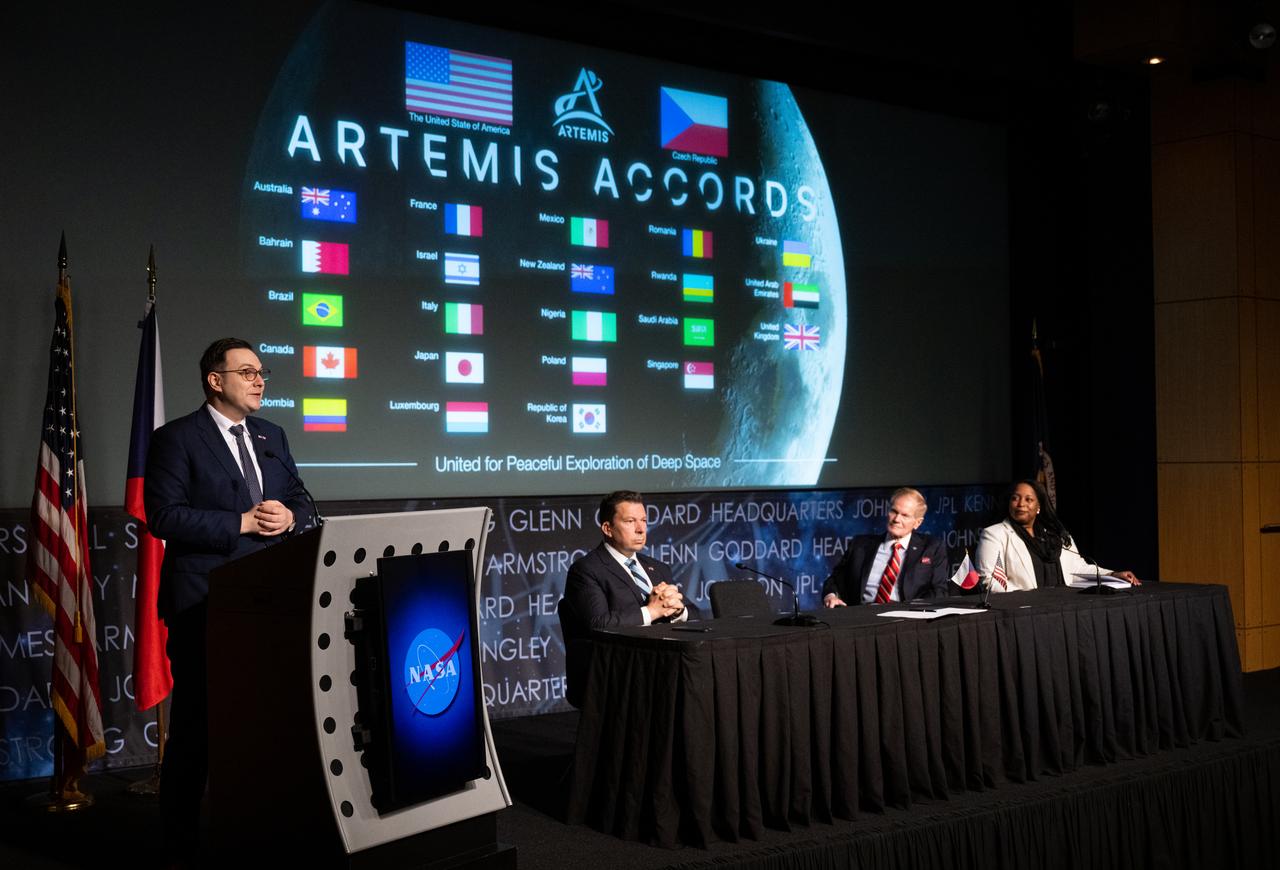
Foreign Affairs Minister for the Czech Republic, Jan Lipavský deliver remarks prior to the signing of the Artemis Accords as Miloslav Stašek, Ambassador of the Czech Republic to the United States, second from left, NASA Administrator Bill Nelson, second from right, and Acting Assistant Secretary of State for Oceans and International Environmental and Scientific Affairs Jennifer R. Littlejohn, right, look on, Wednesday, May 3, 2023, at The Mary W. Jackson NASA Headquarters building in Washington DC. The Czech Republic is the twenty fourth country to sign the Artemis Accords, which establish a practical set of principles to guide space exploration cooperation among nations participating in NASA’s Artemis program. Photo Credit: (NASA/Joel Kowsky)
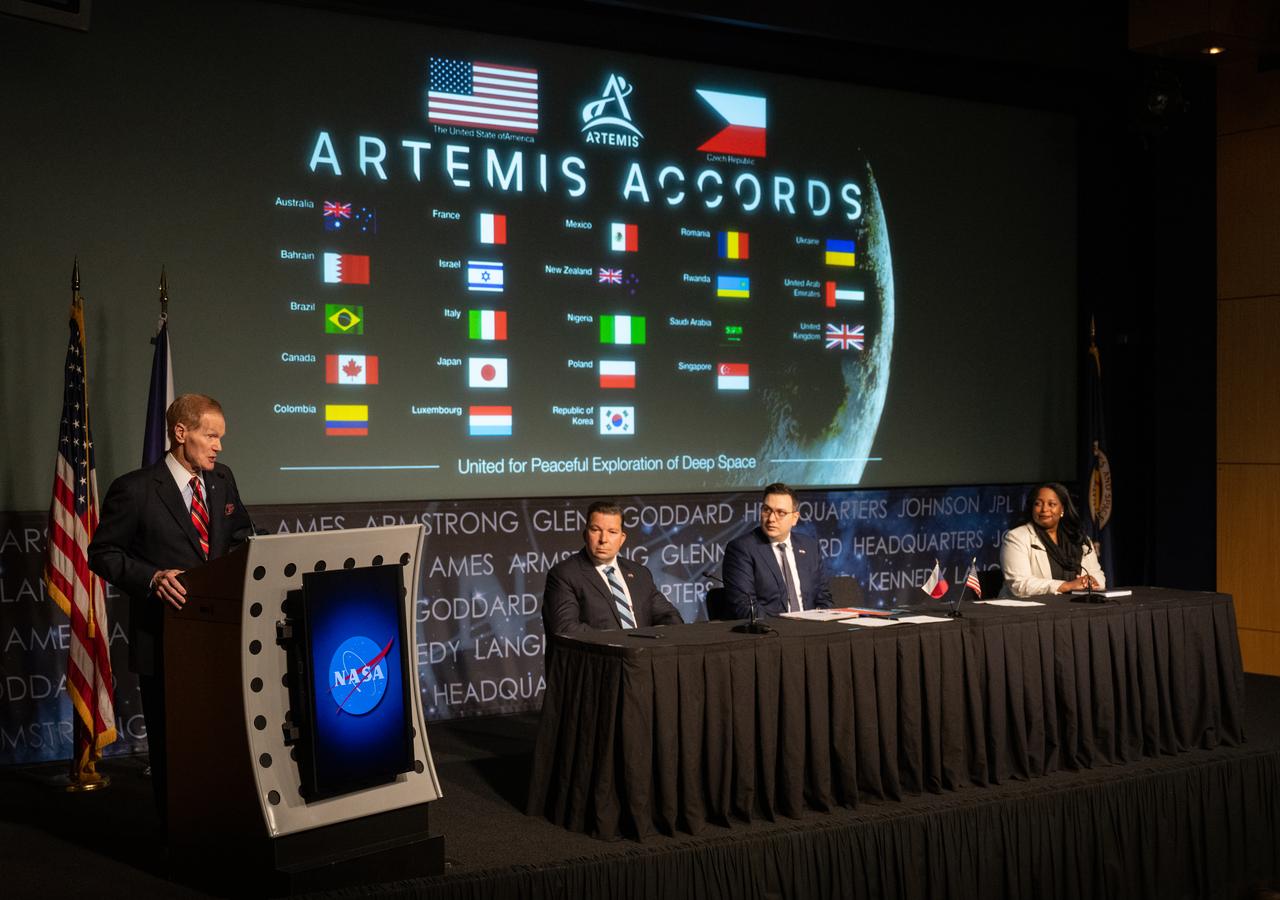
NASA Administrator Bill Nelson, delivers remarks prior to the signing of the Artemis Accords as Miloslav Stašek, Ambassador of the Czech Republic to the United States, second from left, Foreign Affairs Minister for the Czech Republic, Jan Lipavský, second from right, and Acting Assistant Secretary of State for Oceans and International Environmental and Scientific Affairs Jennifer R. Littlejohn, right, look on, Wednesday, May 3, 2023, at The Mary W. Jackson NASA Headquarters building in Washington DC. The Czech Republic is the twenty fourth country to sign the Artemis Accords, which establish a practical set of principles to guide space exploration cooperation among nations participating in NASA’s Artemis program. Photo Credit: (NASA/Joel Kowsky)

NASA Administrator Bill Nelson, left, points to a ground track map for the International Space Station in the Space Operations Center during a tour with Miloslav Stašek, Ambassador of the Czech Republic to the United States, Foreign Affairs Minister for the Czech Republic, Jan Lipavský, and Acting Assistant Secretary of State for Oceans and International Environmental and Scientific Affairs Jennifer R. Littlejohn, following the signing of the Artemis Accords, Wednesday, May 3, 2023, at The Mary W. Jackson NASA Headquarters building in Washington DC. The Czech Republic is the twenty fourth country to sign the Artemis Accords, which establish a practical set of principles to guide space exploration cooperation among nations participating in NASA’s Artemis program. Photo Credit: (NASA/Joel Kowsky)
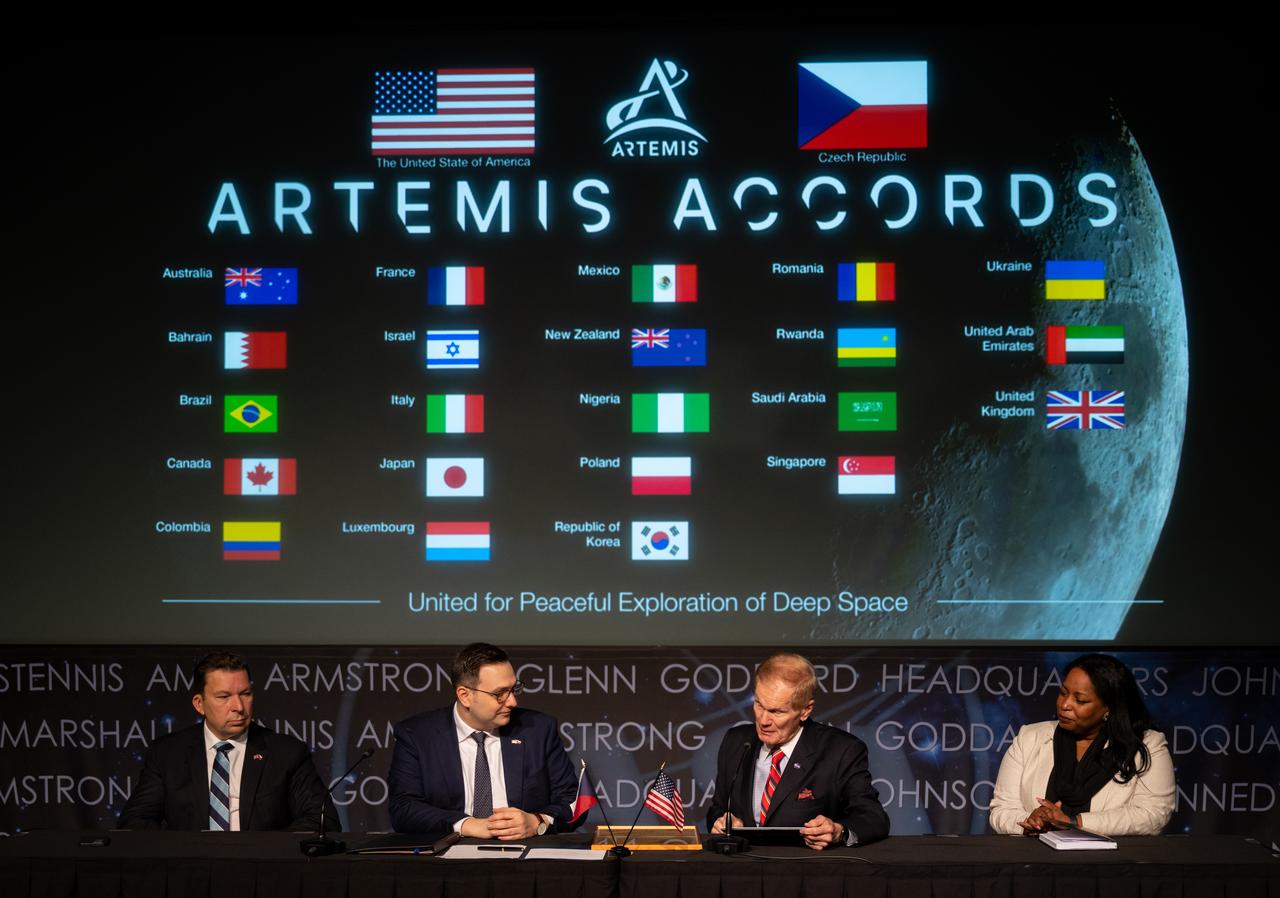
Miloslav Stašek, Ambassador of the Czech Republic to the United States, left, Foreign Affairs Minister for the Czech Republic, Jan Lipavský, second from left, NASA Administrator Bill Nelson, second from right, and Acting Assistant Secretary of State for Oceans and International Environmental and Scientific Affairs Jennifer R. Littlejohn, right, are seen following the signing of the Artemis Accords by the Czech Republic, Wednesday, May 3, 2023, at The Mary W. Jackson NASA Headquarters building in Washington DC. The Czech Republic is the twenty fourth country to sign the Artemis Accords, which establish a practical set of principles to guide space exploration cooperation among nations participating in NASA’s Artemis program. Photo Credit: (NASA/Joel Kowsky)
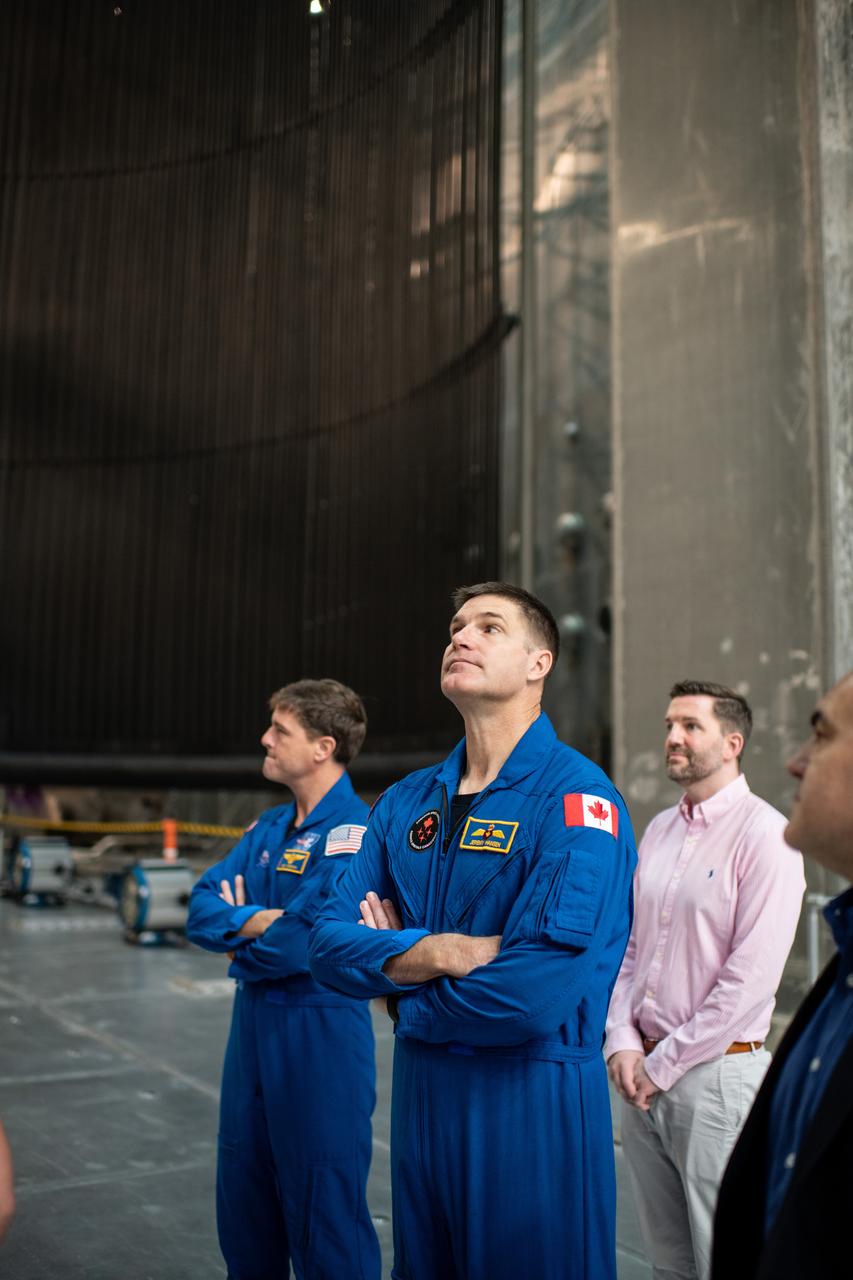
Pictured is Commander Reid Wiseman, Mission Specialist Jeremy Hansen, Jan-Henrik Horstmann and Carlos Garcia-Galan as they are given a tour of the Space Environment Complex (SEC) in Sandusky, OH at Neil Armstrong Test Facility on September 11, 2024. Employees meet three of the four astronauts who will venture around the Moon on Artemis II, the first crewed flight paving the way for future lunar surface missions. Commander Reid Wiseman and Mission Specialists Christina Koch and Jeremy Hansen will be on hand to discuss their upcoming mission and participate in a Question and Answer session with employees afterward. Hansen is an astronaut with the Canadian Space Agency. Victor Glover, the pilot and fourth crew member, will not be present. Photo Credit: (NASA/Sara Lowthian-Hanna)
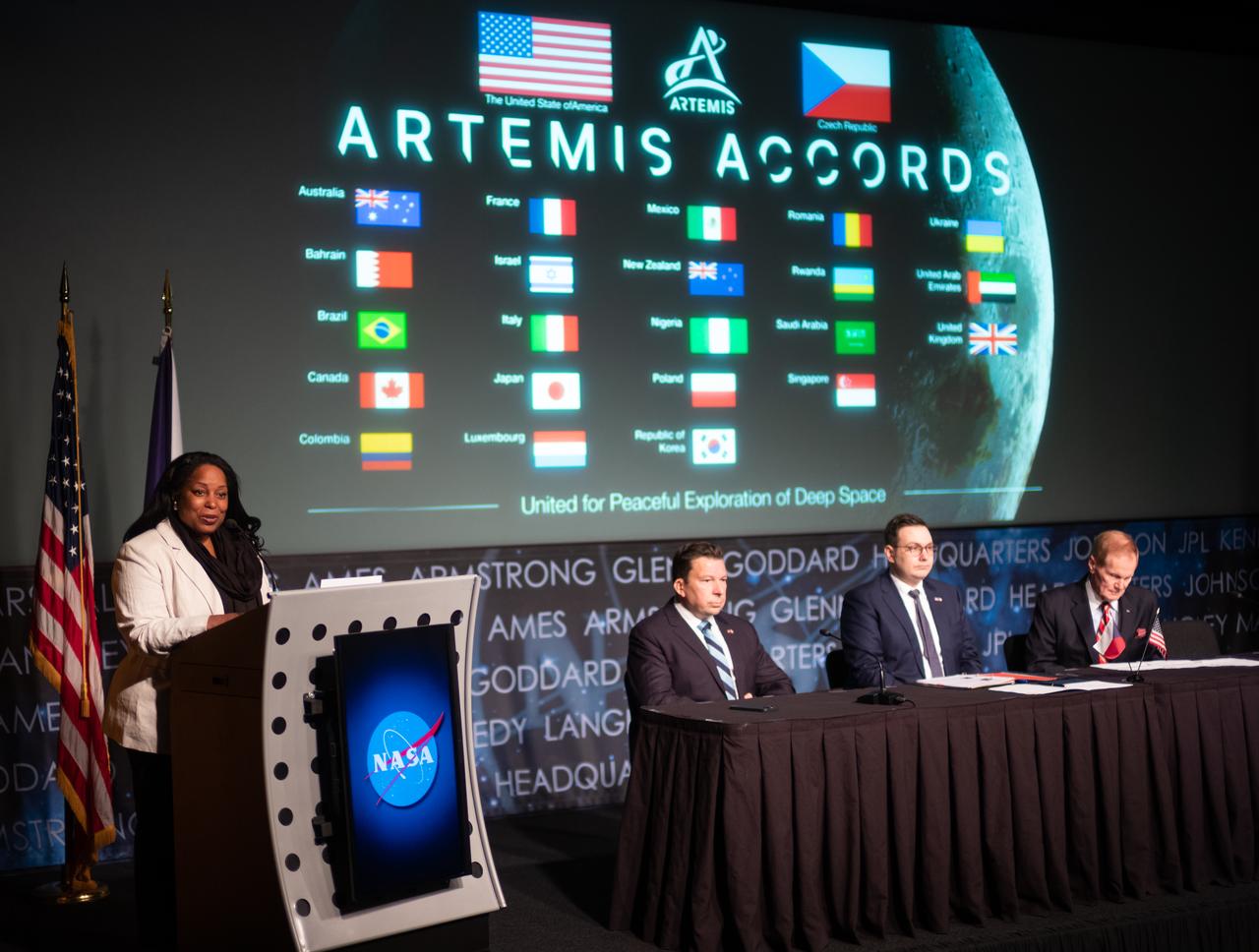
Acting Assistant Secretary of State for Oceans and International Environmental and Scientific Affairs Jennifer R. Littlejohn, delivers remarks prior to the signing of the Artemis Accords as Miloslav Stašek, Ambassador of the Czech Republic to the United States, second from left, Foreign Affairs Minister for the Czech Republic, Jan Lipavský, second from right, and NASA Administrator Bill Nelson, right, look on, Wednesday, May 3, 2023, at The Mary W. Jackson NASA Headquarters building in Washington DC. The Czech Republic is the twenty fourth country to sign the Artemis Accords, which establish a practical set of principles to guide space exploration cooperation among nations participating in NASA’s Artemis program. Photo Credit: (NASA/Joel Kowsky)
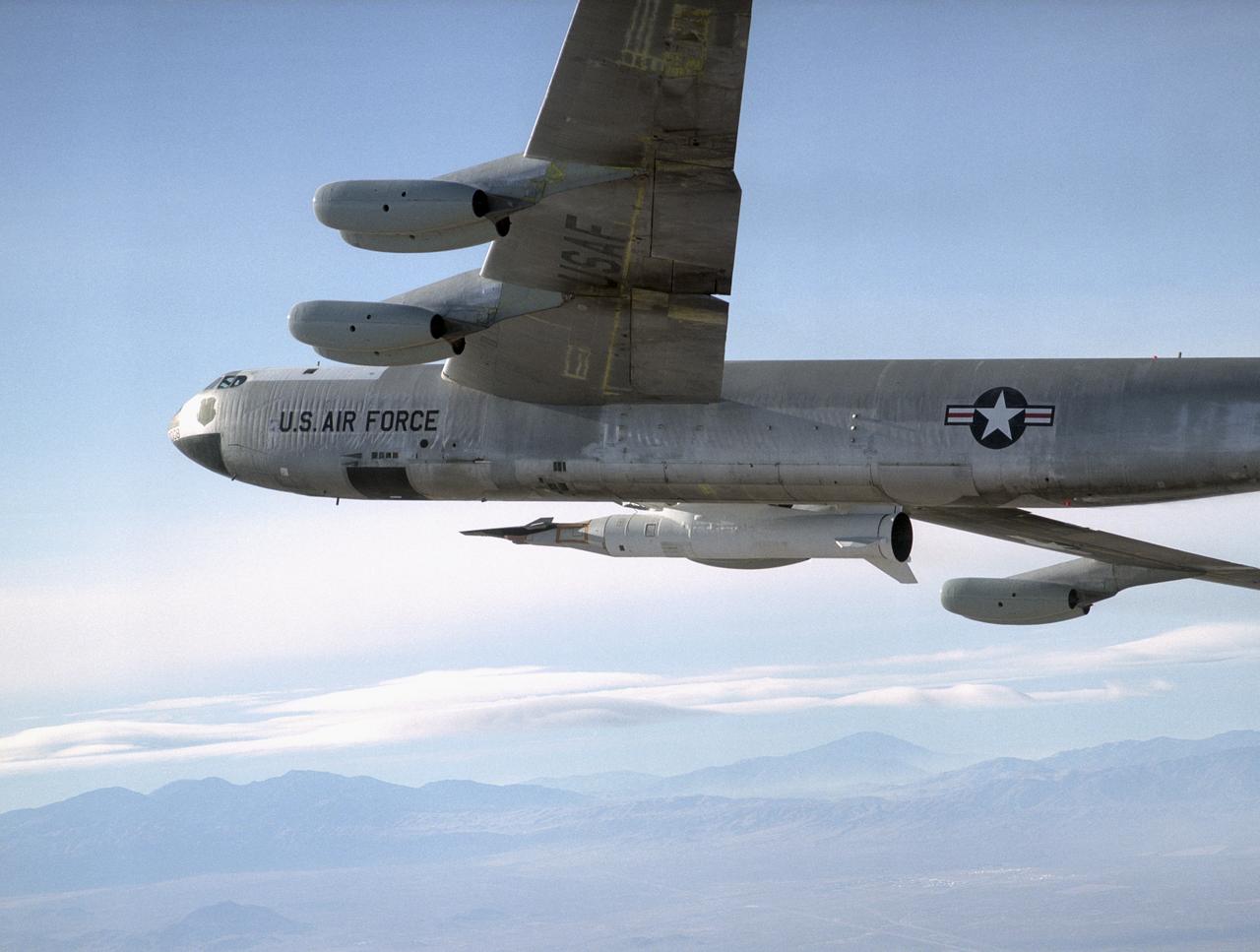
NASA's historic B-52 mother ship carried the X-43A and its Pegasus booster rocket on a captive carry flight from Edwards Air Force Base Jan. 26, 2004. The X-43A and its booster remained mated to the B-52 throughout the two-hour flight, intended to check its readiness for launch. The hydrogen-fueled aircraft is autonomous and has a wingspan of approximately 5 feet, measures 12 feet long and weighs about 2,800 pounds.
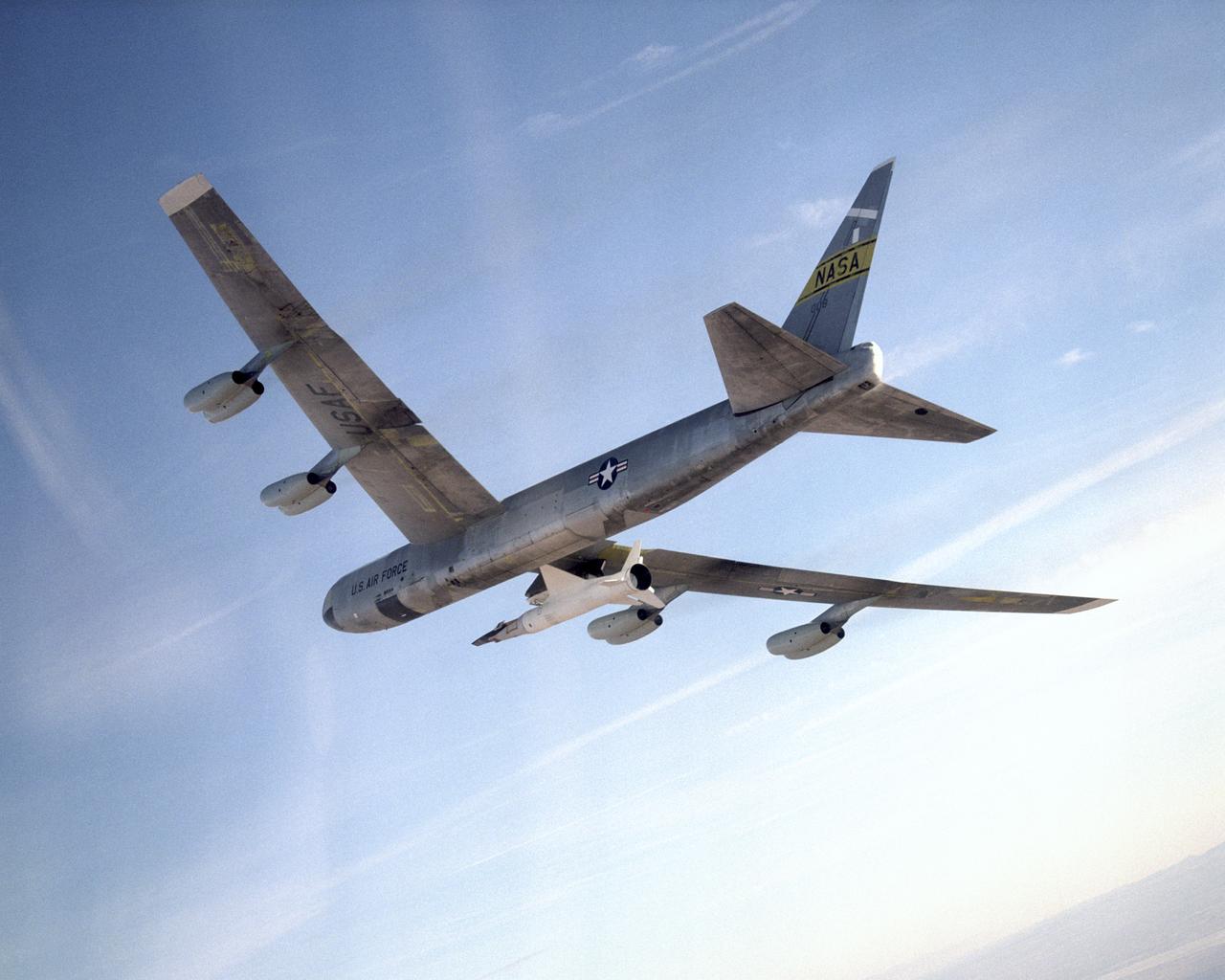
NASA's historic B-52 mother ship carried the X-43A and its Pegasus booster rocket on a captive carry flight from Edwards Air Force Base Jan. 26, 2004. The X-43A and its booster remained mated to the B-52 throughout the two-hour flight, intended to check its readiness for launch. The hydrogen-fueled aircraft is autonomous and has a wingspan of approximately 5 feet, measures 12 feet long and weighs about 2,800 pounds.
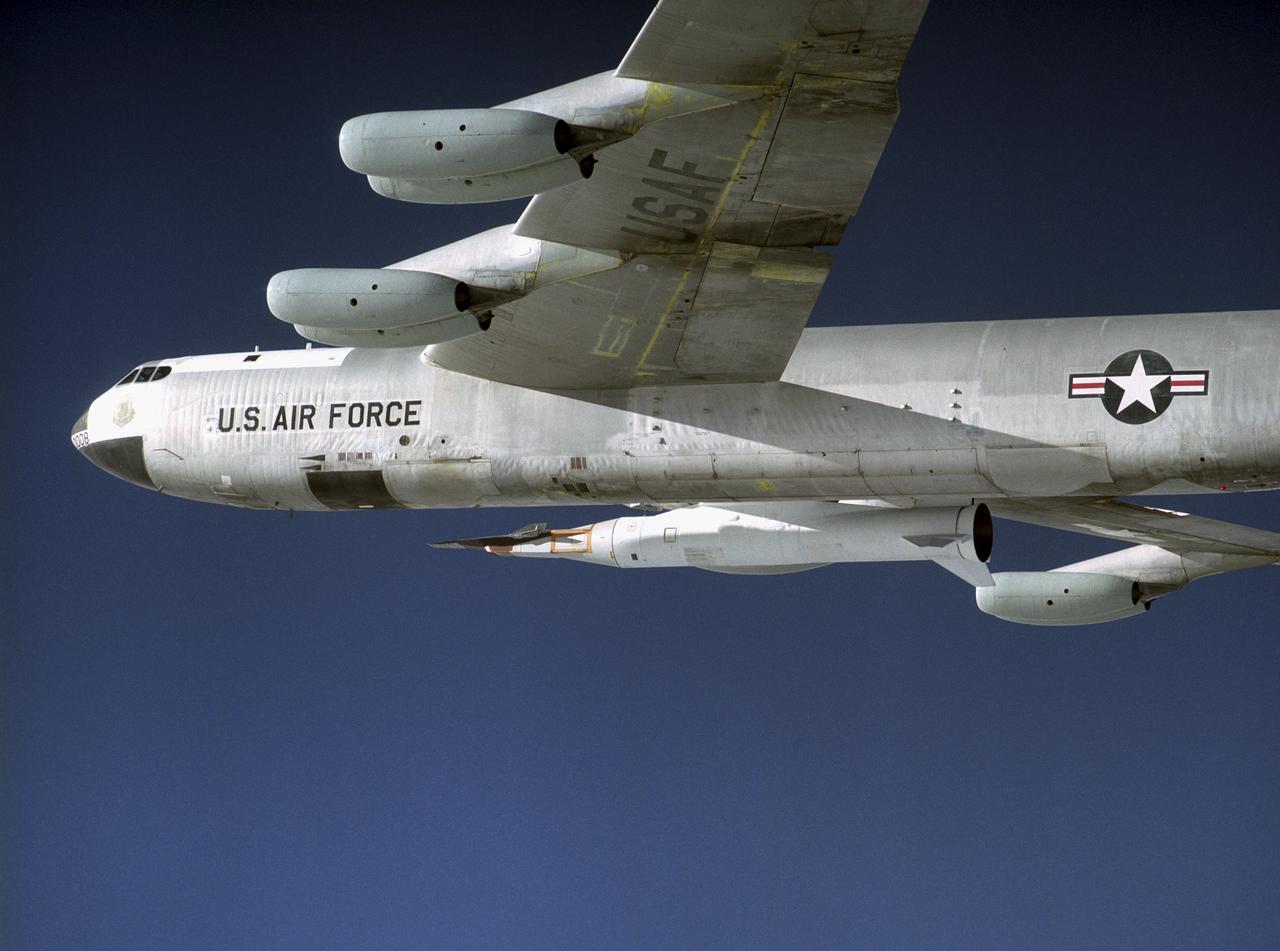
NASA's historic B-52 mother ship carried the X-43A and its Pegasus booster rocket on a captive carry flight from Edwards Air Force Base Jan. 26, 2004. The X-43A and its booster remained mated to the B-52 throughout the two-hour flight, intended to check its readiness for launch. The hydrogen-fueled aircraft is autonomous and has a wingspan of approximately 5 feet, measures 12 feet long and weighs about 2,800 pounds.
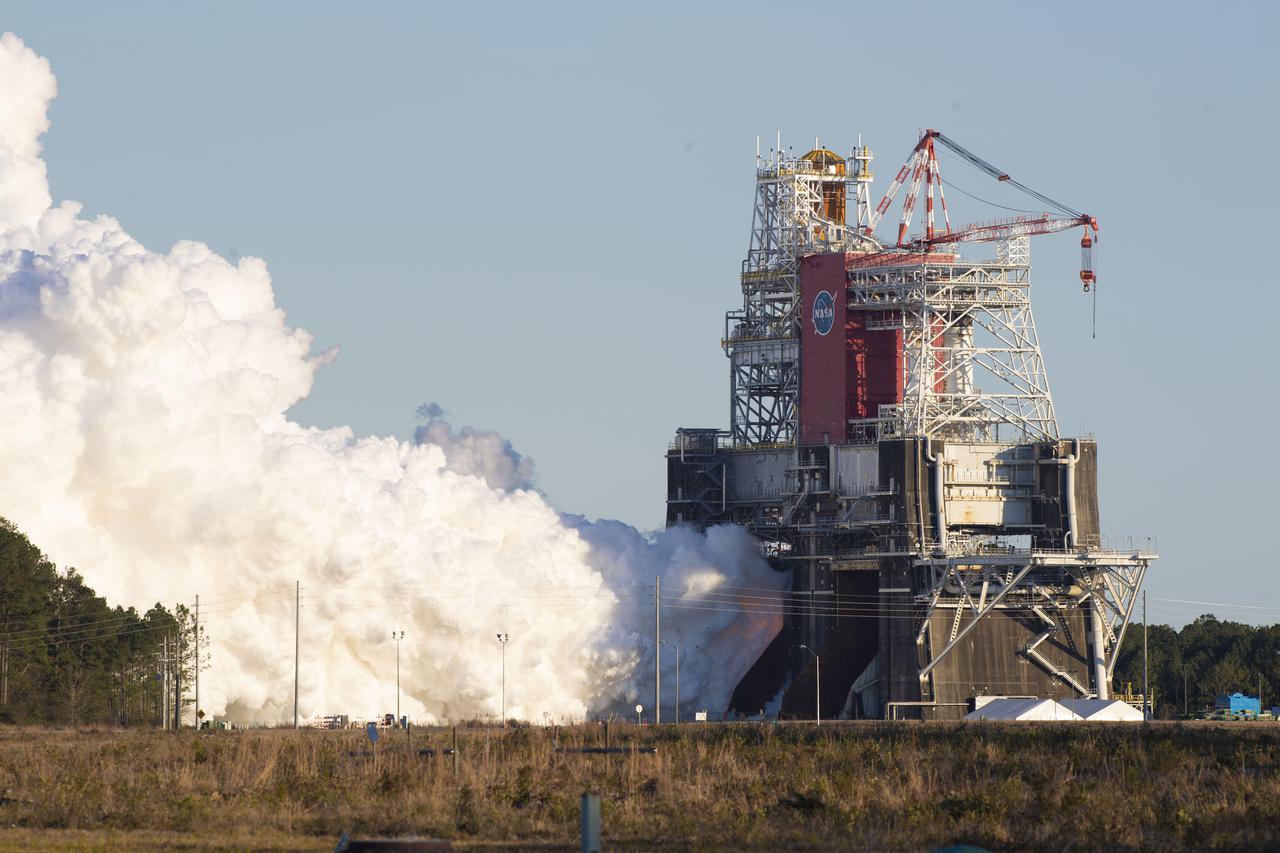
NASA conducts a hot fire test Jan. 16, 2021, of the core stage for the agency’s Space Launch System rocket on the B-2 Test Stand at Stennis Space Center near Bay St. Louis. The hot fire test of the stage’s four RS-25 engines generated a combined 1.6 million pounds of thrust, just as will occur during an actual launch. The hot fire is the final test of the Green Run test series, a comprehensive assessment of the SLS core stage prior to launching the Artemis I mission to the Moon.

NASA conducts a hot fire test Jan. 16, 2021, of the core stage for the agency’s Space Launch System rocket on the B-2 Test Stand at Stennis Space Center near Bay St. Louis. The hot fire test of the stage’s four RS-25 engines generated a combined 1.6 million pounds of thrust, just as will occur during an actual launch. The hot fire is the final test of the Green Run test series, a comprehensive assessment of the SLS core stage prior to launching the Artemis I mission to the Moon.
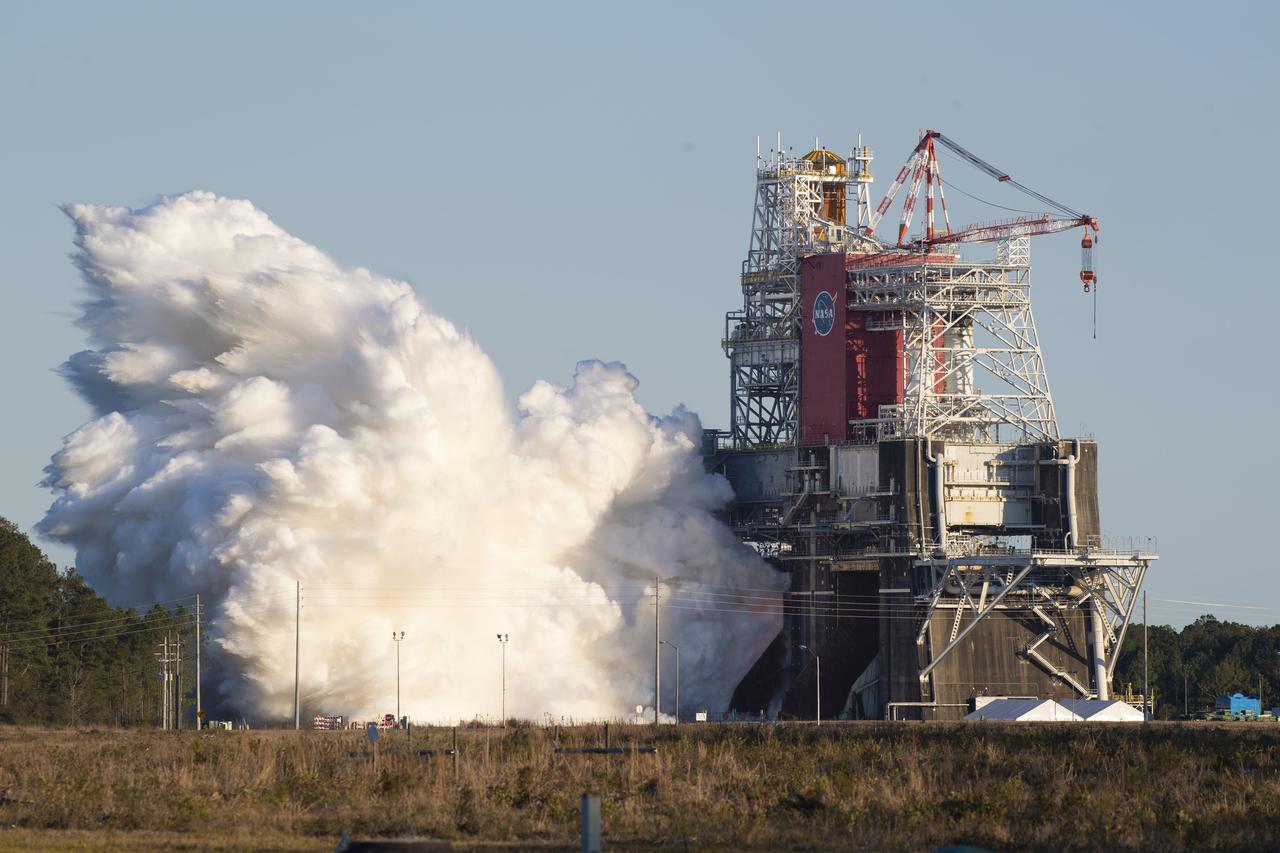
NASA conducts a hot fire test Jan. 16, 2021, of the core stage for the agency’s Space Launch System rocket on the B-2 Test Stand at Stennis Space Center near Bay St. Louis. The hot fire test of the stage’s four RS-25 engines generated a combined 1.6 million pounds of thrust, just as will occur during an actual launch. The hot fire is the final test of the Green Run test series, a comprehensive assessment of the SLS core stage prior to launching the Artemis I mission to the Moon.
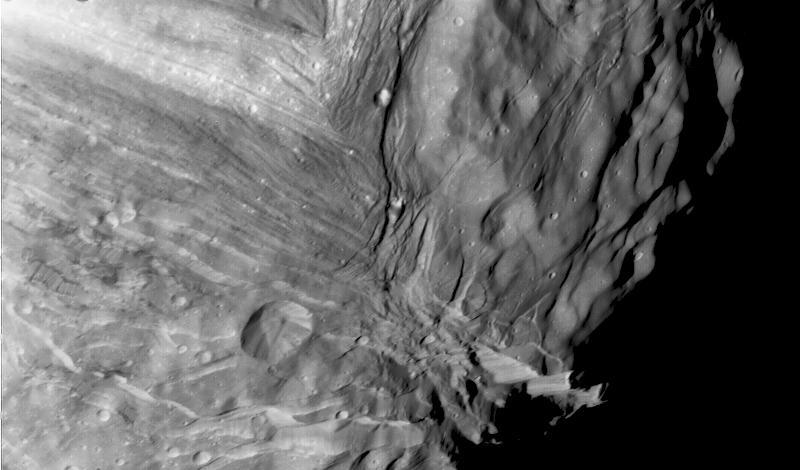
Miranda, innermost of Uranus large satellites, is seen at close range in this Voyager 2 image, taken Jan. 24, 1986, as part of a high-resolution mosaicing sequence.

This silhouetted image of the rings of Uranus was taken by NASA Voyager 2 spacecraft on Jan. 24, 1986, just 27 minutes before its closest approach to the planet.
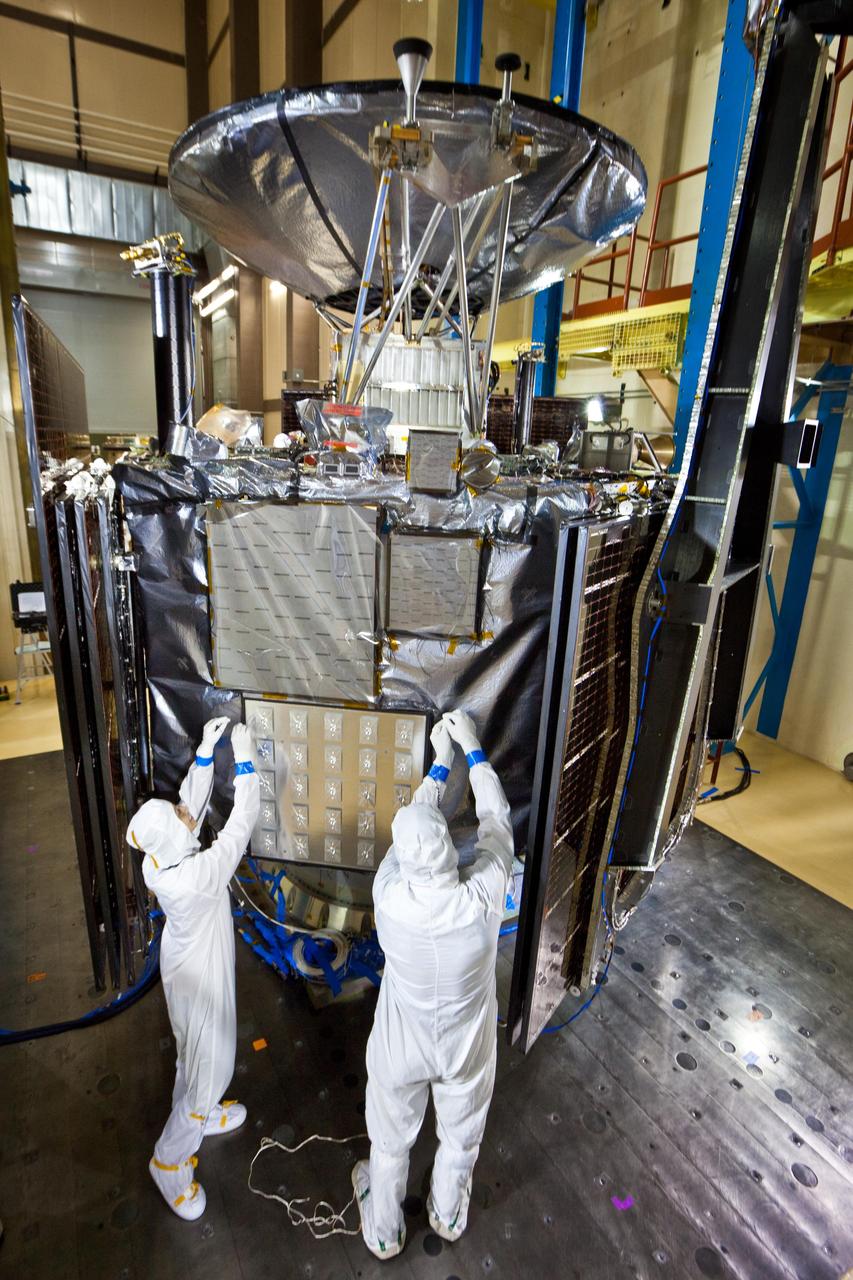
Technicians inspect NASA Juno spacecraft and its science instruments following acoustics testing at Lockheed Martin Space Systems in Denver, Colo. on Jan. 26, 2011.
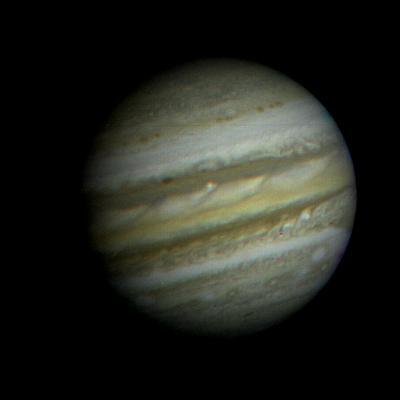
NASA Voyager 1 took this picture of the planet Jupiter on Jan. 6, 1979, the first in its three-month-long, close-up investigation of the largest planet.
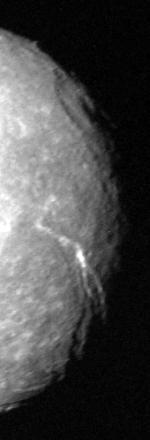
The terminator region of Titania, one of Uranus five large moons, was captured in this Voyager 2 image obtained in the early morning hours of Jan. 24, 1986.
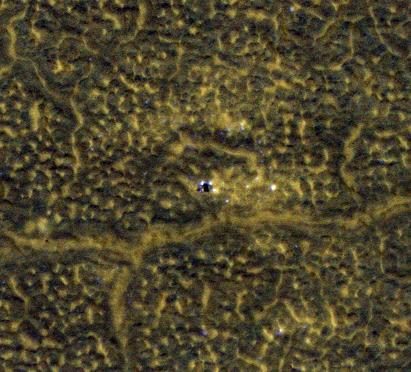
This image, taken Jan. 26, 2012, shows NASA no-longer-active Phoenix Mars Lander spacecraft after its second Martian arctic winter.
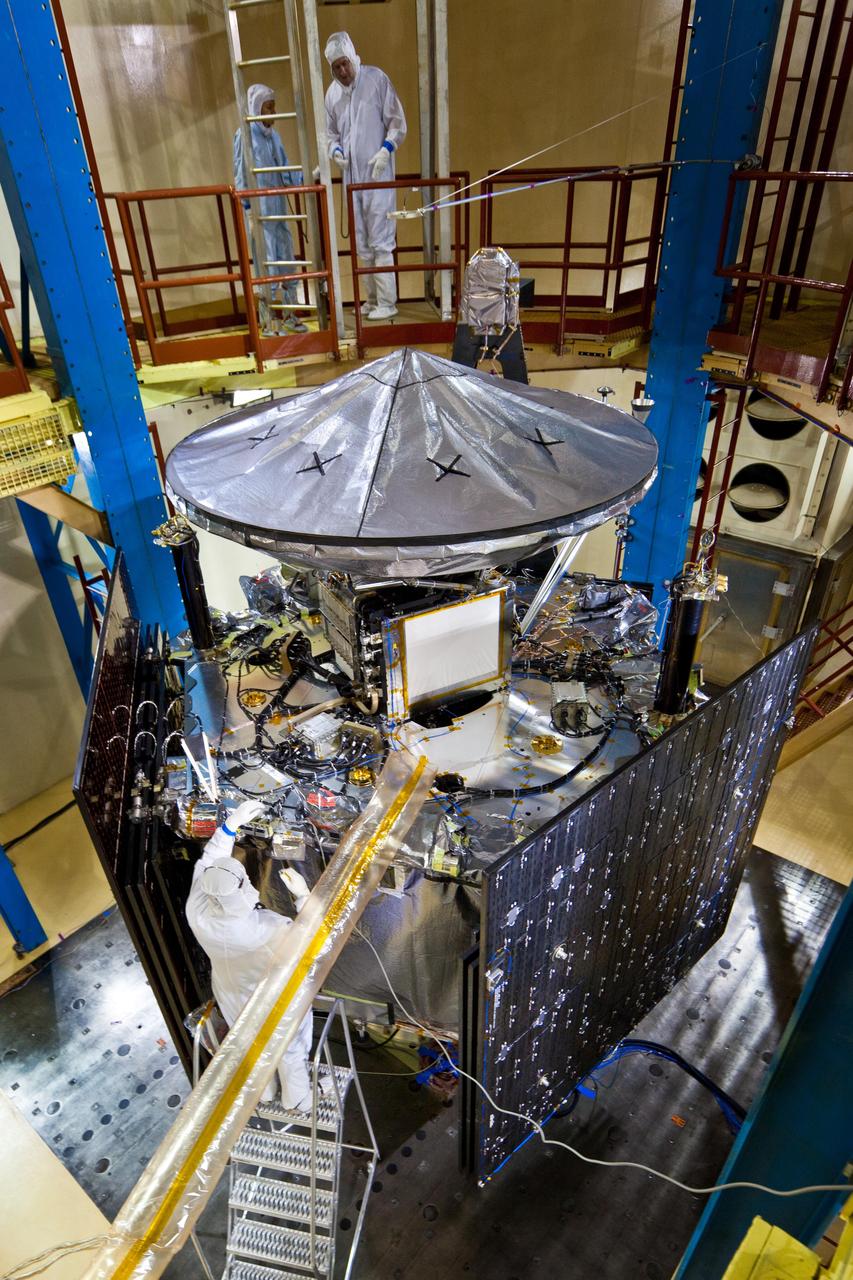
Technicians inspect NASA Juno spacecraft and its science instruments following acoustics testing at Lockheed Martin Space Systems in Denver, Colo. on Jan. 26, 2011.
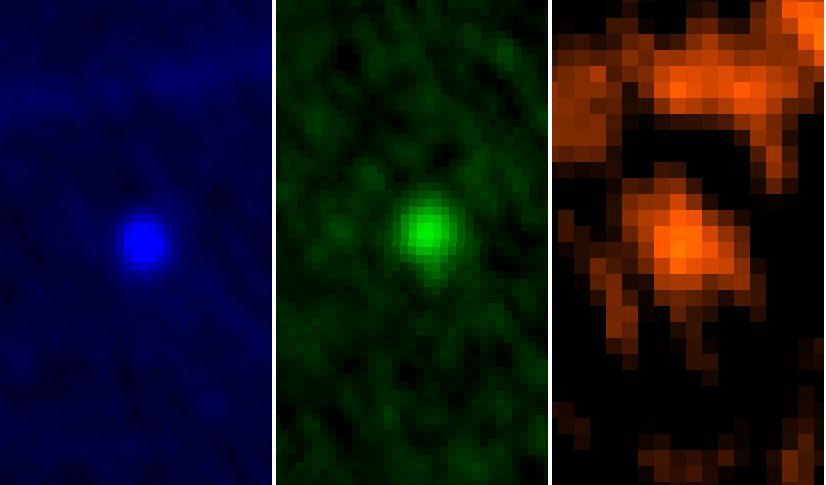
ESA Herschel Space Observatory captured asteroid Apophis in its field of view during the approach to Earth on Jan. 5 and 6, 2013.
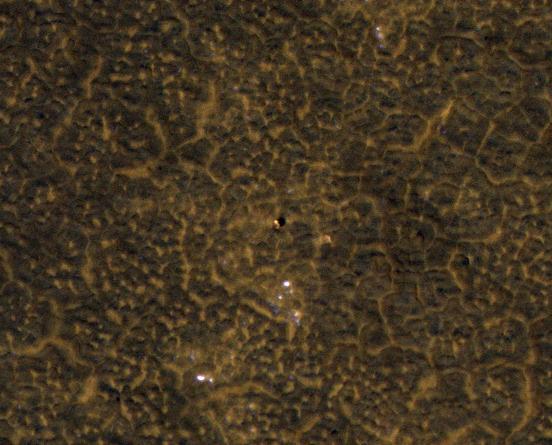
This image, taken Jan. 26, 2012, shows the back shell of NASA Phoenix Mars Lander spacecraft after its second Martian arctic winter.
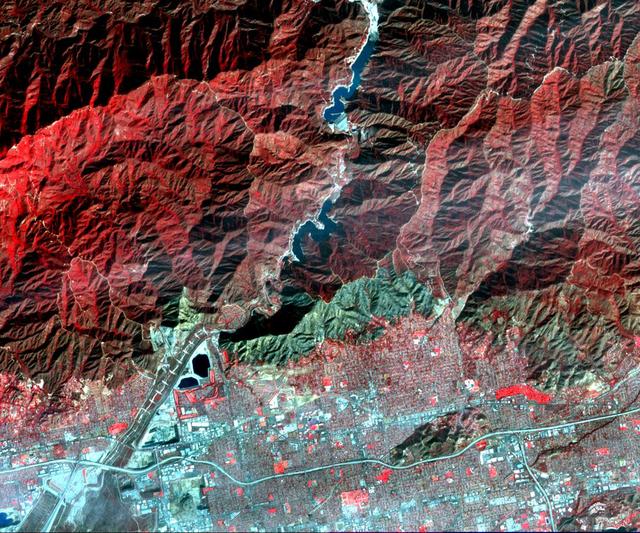
On Jan. 16, 2014, NASA Terra spacecraft acquired this image of a wildfire broke that out in the mountains above the Los Angeles suburbs of Glendora and Azusa.

NASA Terra spacecraft flew over South Africa and Zimbabwe where week-long torrential rains swelled the Limpopo River in Jan. 2013.
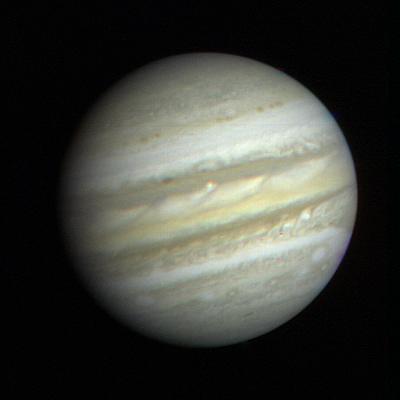
NASAS Voyager 1 took this picture of the planet Jupiter on Jan. 6, 1979, the first in its three-month-long, close-up investigation of the largest planet.
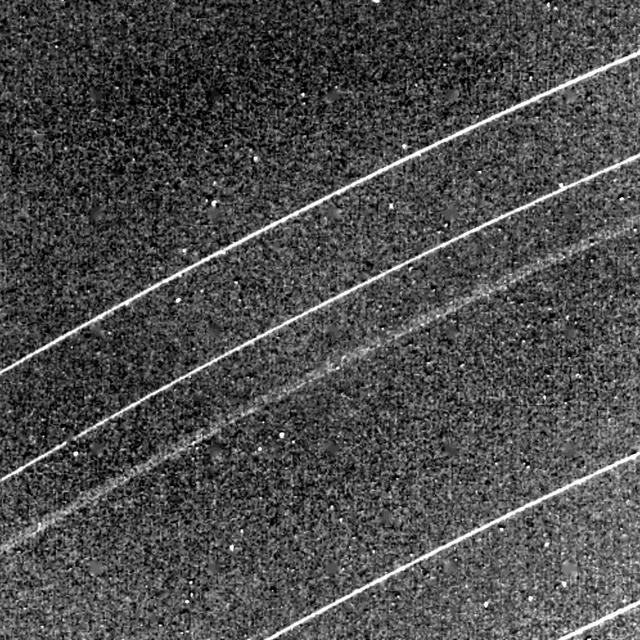
This NASA Voyager 2 image of the Uranian rings delta, gamma, eta, beta and alpha from top was taken Jan. 23, 1986.
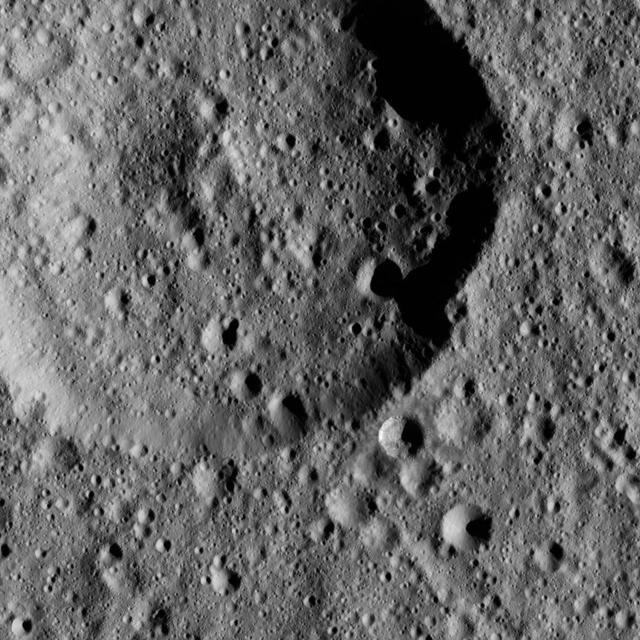
This ancient crater on Ceres displays a flattened floor and a low, rounded central peak. NASA Dawn spacecraft captured the scene on Jan. 2, 2016.

NASA Administrator Jared Isaacman, center, meets with NASA employees during his visit to NASA’s Stennis Space Center near Bay St. Louis, Mississippi, on Jan. 15, 2026. Isaacman, NASA’s 15th administrator, began visiting the agency’s centers after his appointment on Dec. 17, 2025.
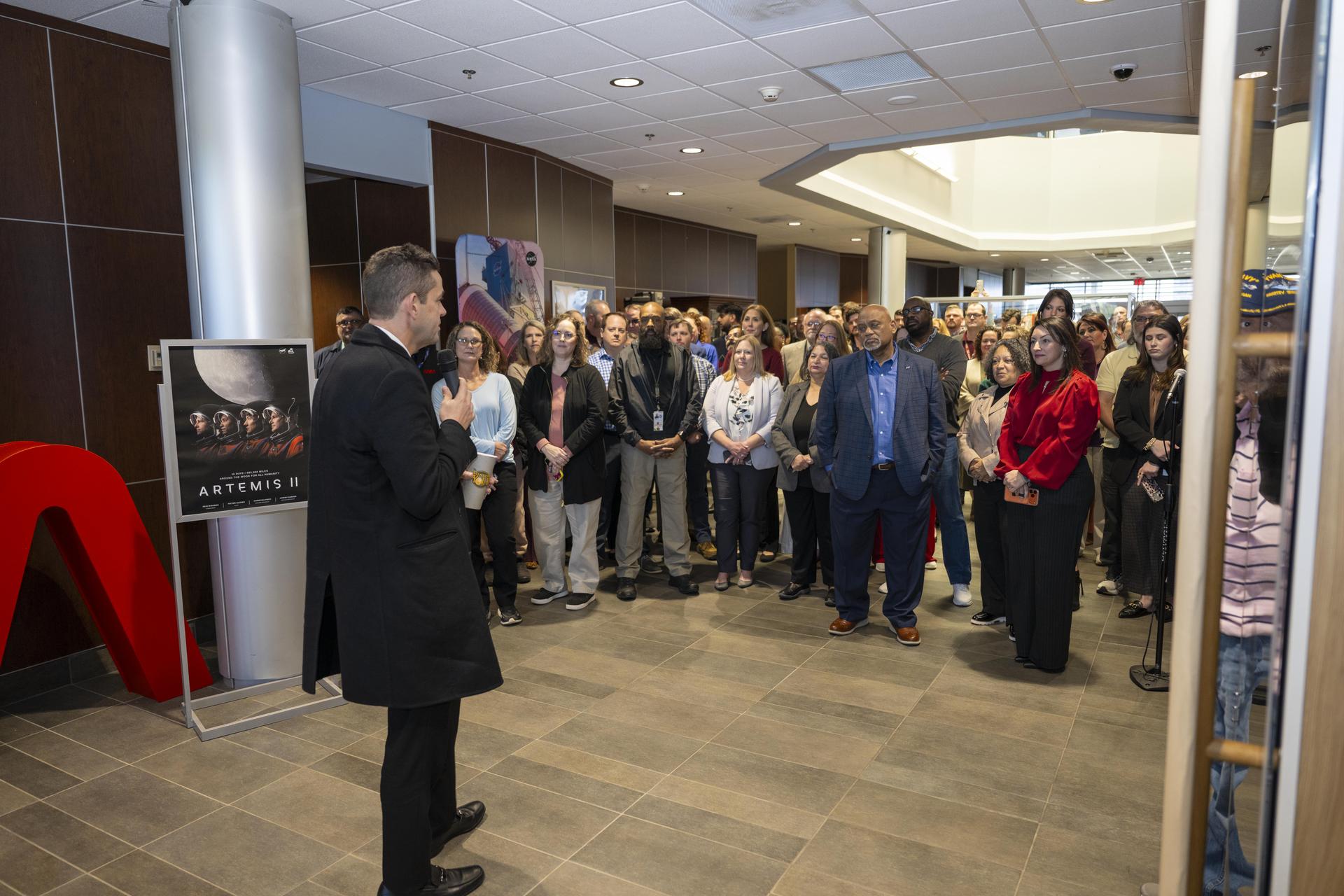
NASA Administrator Jared Isaacman, left, speaks with NASA employees during his visit to NASA’s Stennis Space Center near Bay St. Louis, Mississippi, on Jan. 15, 2026. Isaacman, NASA’s 15th administrator, began visiting the agency’s centers after his appointment on Dec. 17, 2025.

This animation illustrates the modeled trajectories of particles that were ejected from Bennu's surface on Jan. 19, 2019. After ejecting from the asteroid's surface, the particles either briefly orbited Bennu and fell back to its surface or escaped from Bennu and into space. Animation available at https://photojournal.jpl.nasa.gov/catalog/PIA23555

NASA Administrator Jared Isaacman, right, speaks with NASA employees during his visit to NASA’s Stennis Space Center near Bay St. Louis, Mississippi, on Jan. 15, 2026. Isaacman, NASA’s 15th administrator, began visiting the agency’s centers after his appointment on Dec. 17, 2025.

NASA Administrator Jared Isaacman, center, meets with NASA employees during his visit to NASA’s Stennis Space Center near Bay St. Louis, Mississippi, on Jan. 15, 2026. Isaacman, NASA’s 15th administrator, began visiting the agency’s centers after his appointment on Dec. 17, 2025.

NASA Administrator Jared Isaacman speaks with NASA employees during his visit to NASA’s Stennis Space Center near Bay St. Louis, Mississippi, on Jan. 15, 2026. Isaacman, NASA’s 15th administrator, began visiting the agency’s centers after his appointment on Dec. 17, 2025.

NASA Administrator Jared Isaacman, left, meets with NASA employees during his visit to NASA’s Stennis Space Center near Bay St. Louis, Mississippi, on Jan. 15, 2026. Isaacman, NASA’s 15th administrator, began visiting the agency’s centers after his appointment on Dec. 17, 2025.
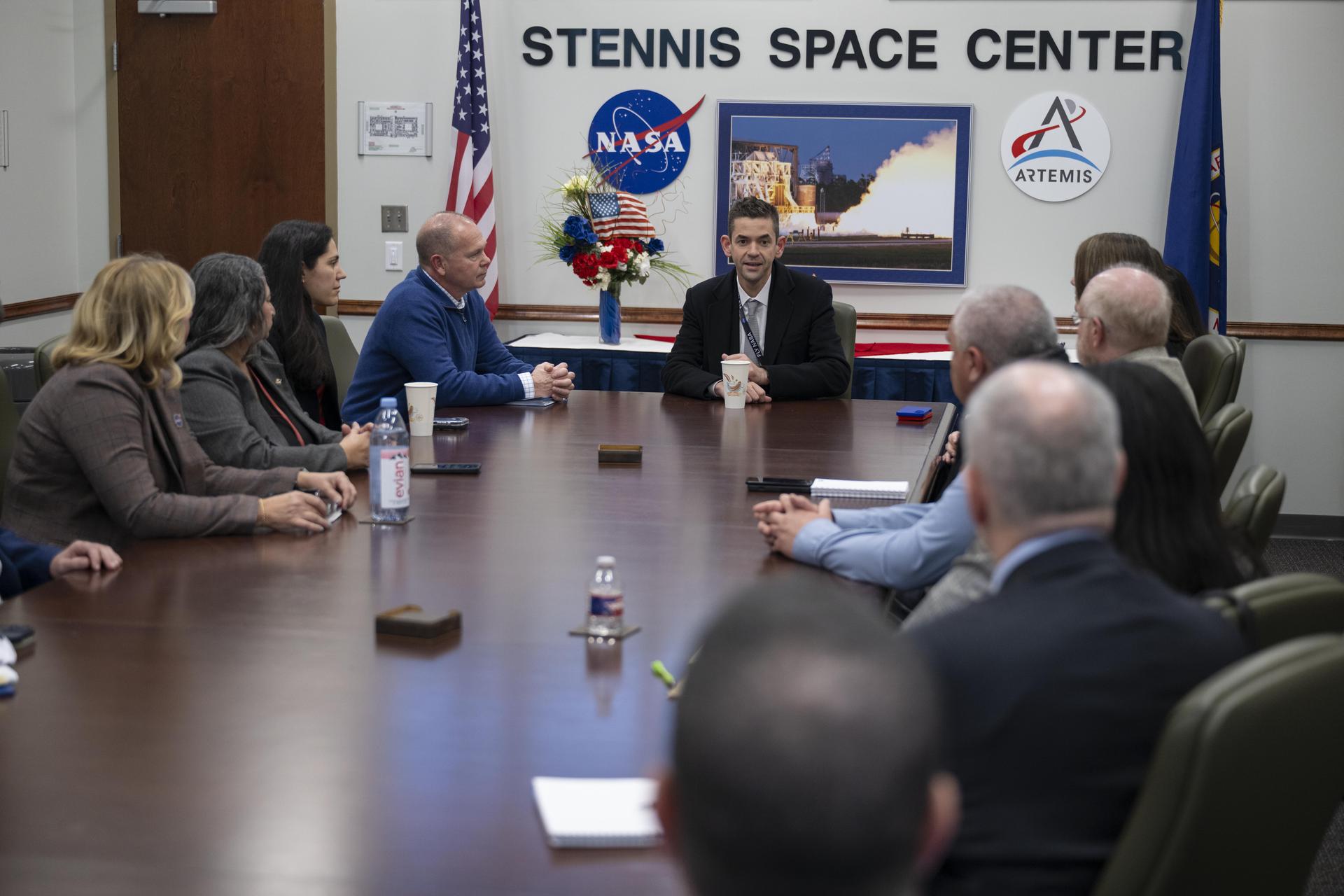
NASA Administrator Jared Isaacman, center, meets with the center’s senior leadership during his visit to NASA’s Stennis Space Center near Bay St. Louis, Mississippi, on Jan. 15, 2026. Isaacman, NASA’s 15th administrator, began visiting the agency’s centers after his appointment on Dec. 17, 2025.
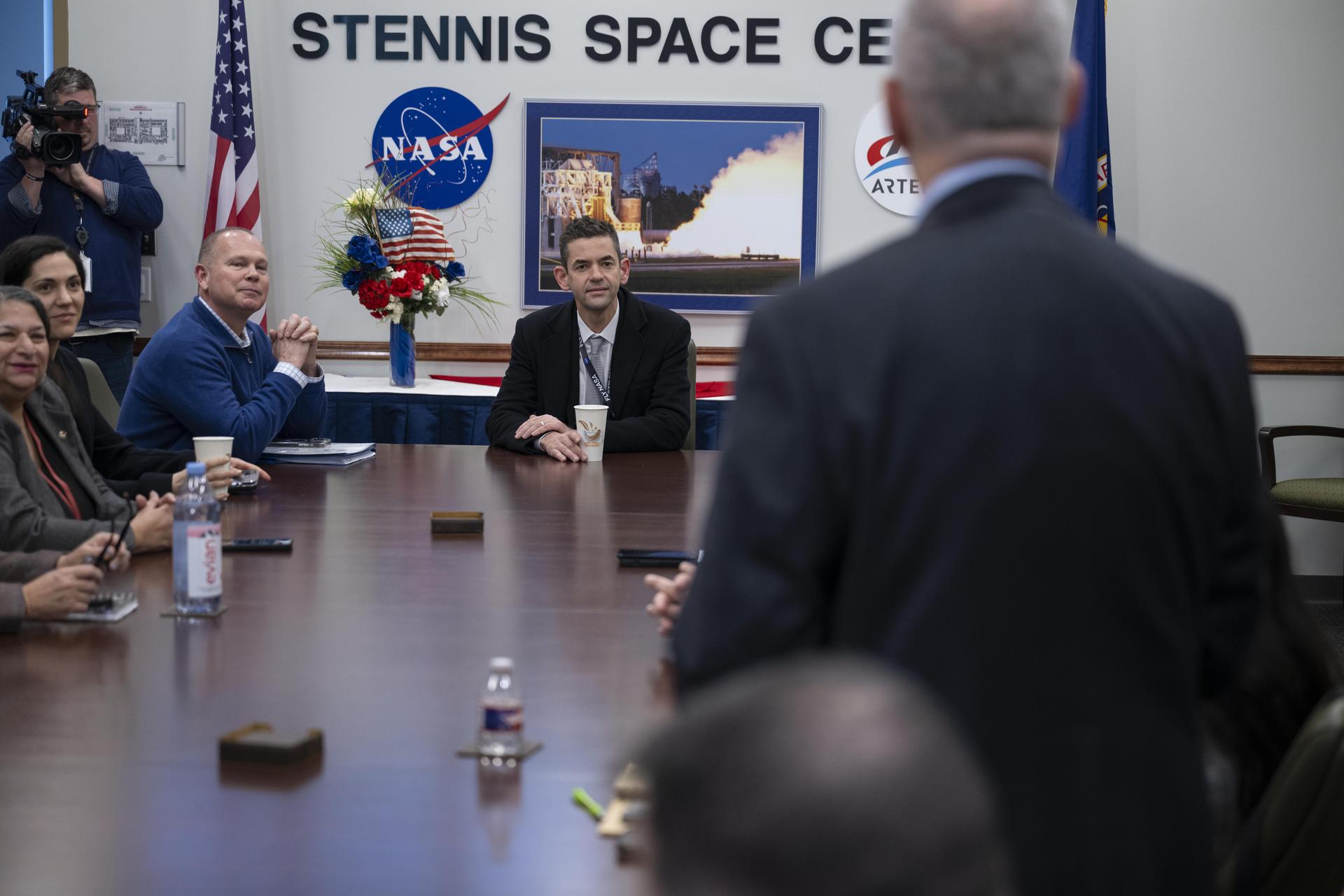
NASA Administrator Jared Isaacman, center, meets with the center’s senior leadership during his visit to NASA’s Stennis Space Center near Bay St. Louis, Mississippi, on Jan. 15, 2026. Isaacman, NASA’s 15th administrator, began visiting the agency’s centers after his appointment on Dec. 17, 2025.
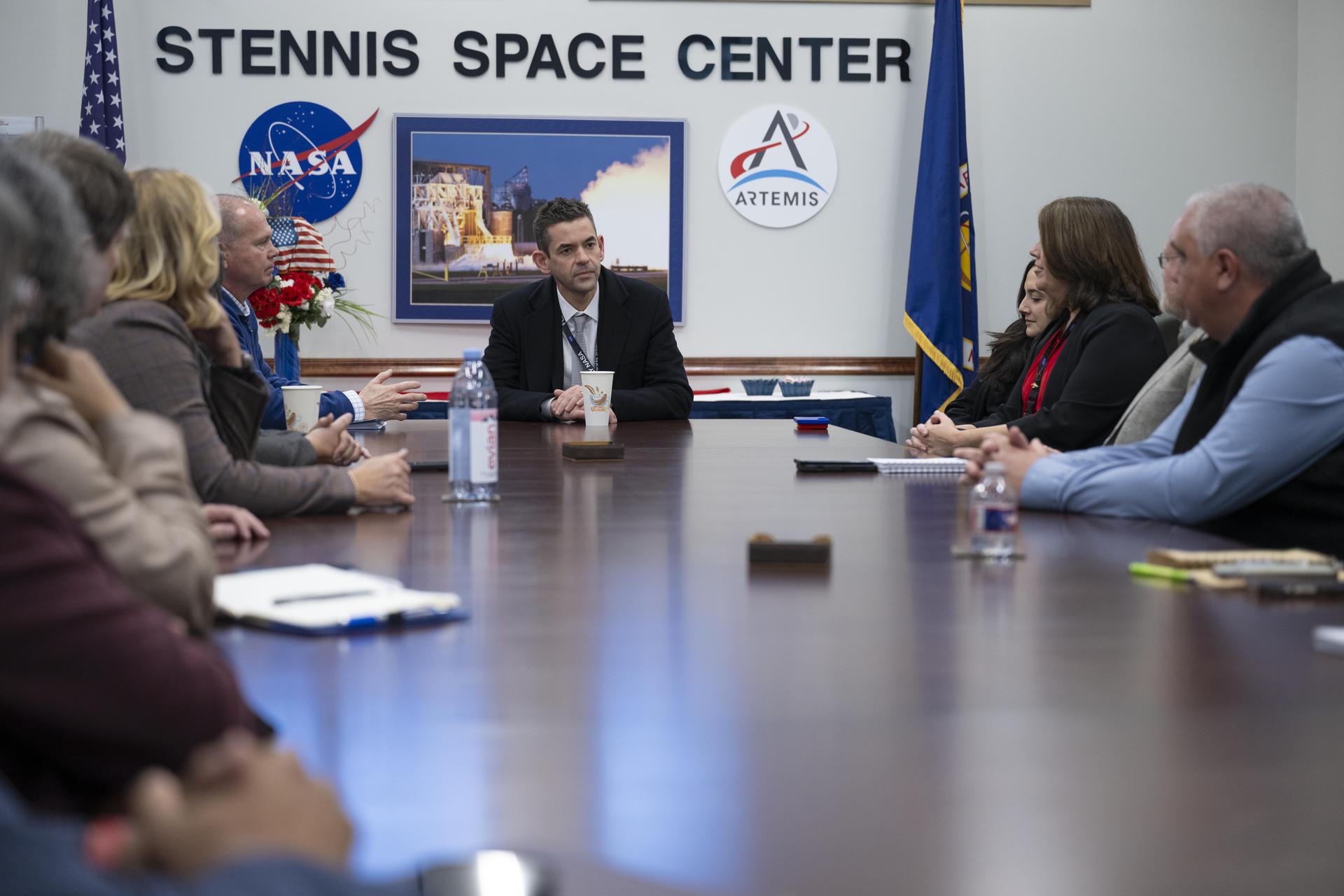
NASA Administrator Jared Isaacman, center, meets with the center’s senior leadership during his visit to NASA’s Stennis Space Center near Bay St. Louis, Mississippi, on Jan. 15, 2026. Isaacman, NASA’s 15th administrator, began visiting the agency’s centers after his appointment on Dec. 17, 2025.

NASA Administrator Jared Isaacman, center, speaks with NASA employees during his visit to NASA’s Stennis Space Center near Bay St. Louis, Mississippi, on Jan. 15, 2026. Isaacman, NASA’s 15th administrator, began visiting the agency’s centers after his appointment on Dec. 17, 2025.
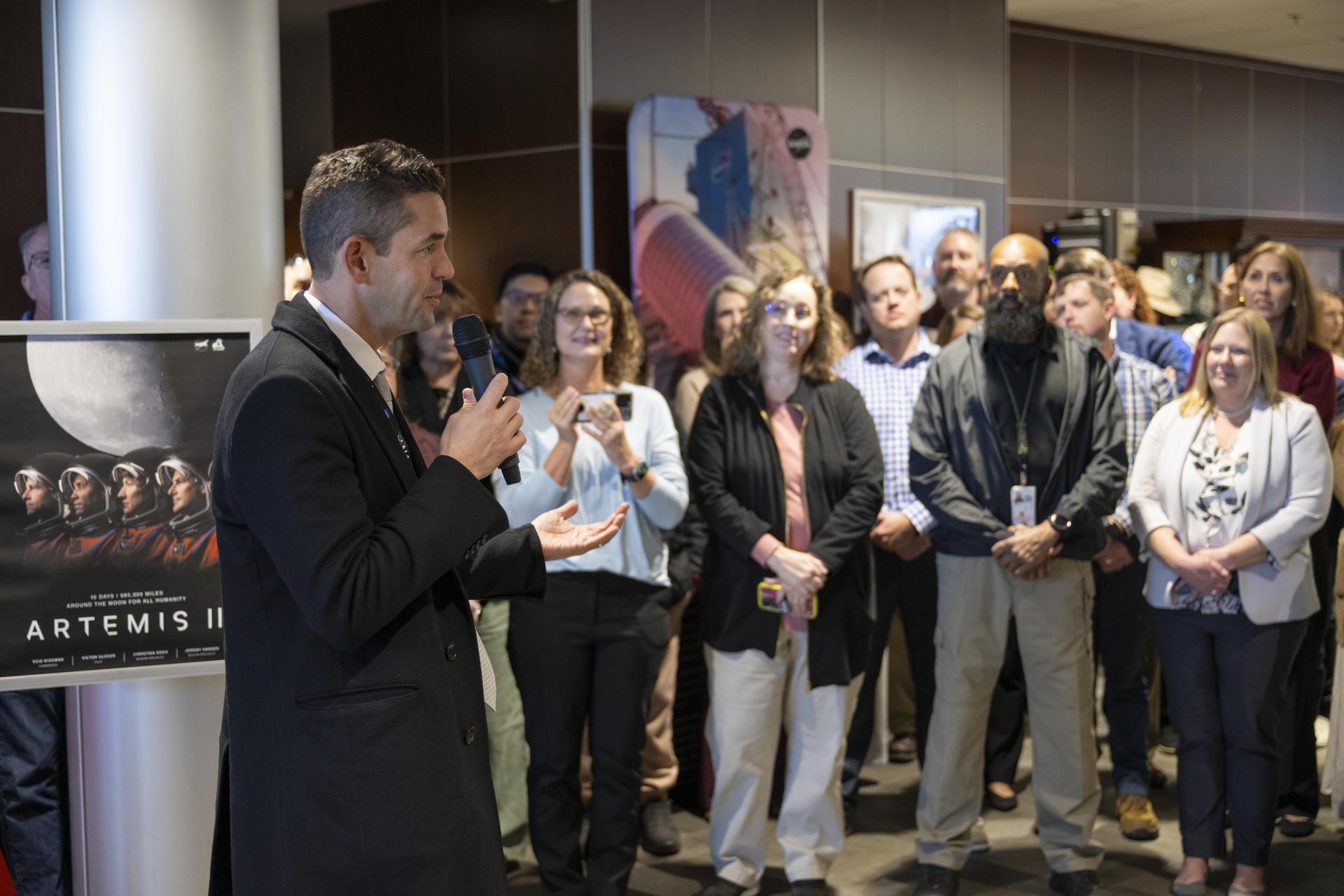
NASA Administrator Jared Isaacman, left, speaks with NASA employees during his visit to NASA’s Stennis Space Center near Bay St. Louis, Mississippi, on Jan. 15, 2026. Isaacman, NASA’s 15th administrator, began visiting the agency’s centers after his appointment on Dec. 17, 2025.
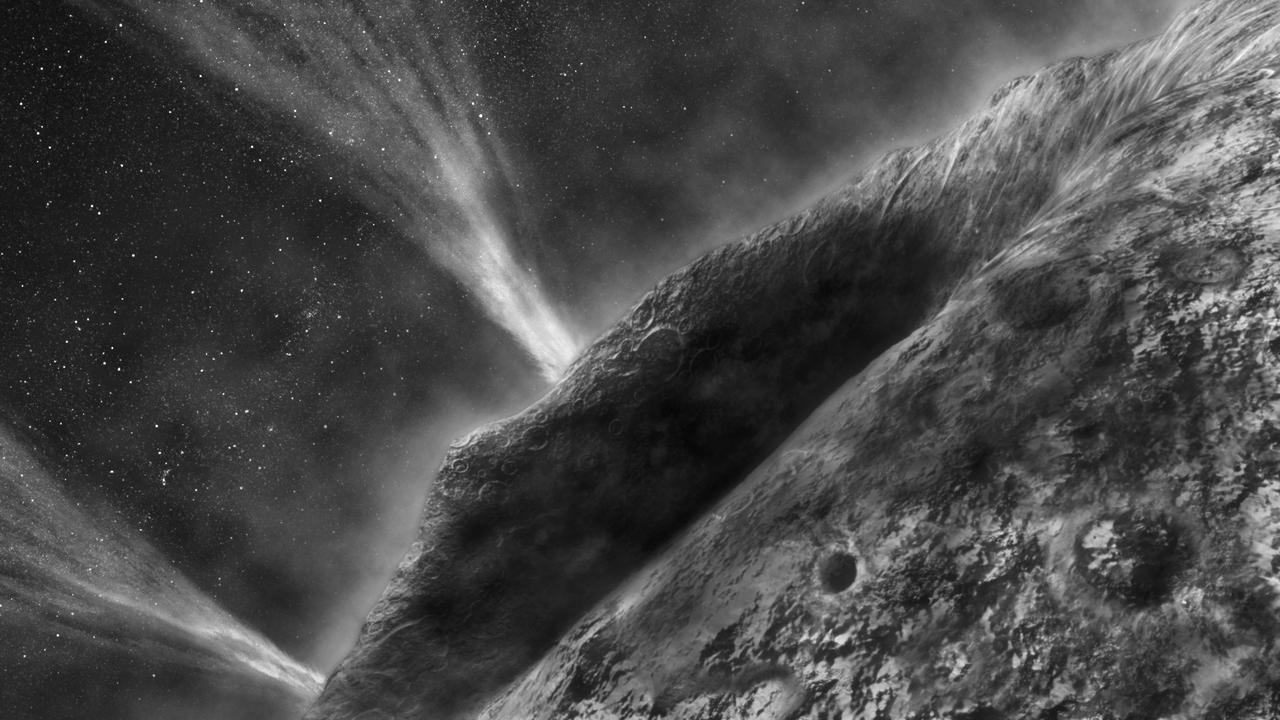
This is an artist's concept depicting a view of comet Wild 2 as seen from NASA's Stardust spacecraft during its flyby of the comet on Jan. 2, 2004. http://photojournal.jpl.nasa.gov/catalog/PIA06283
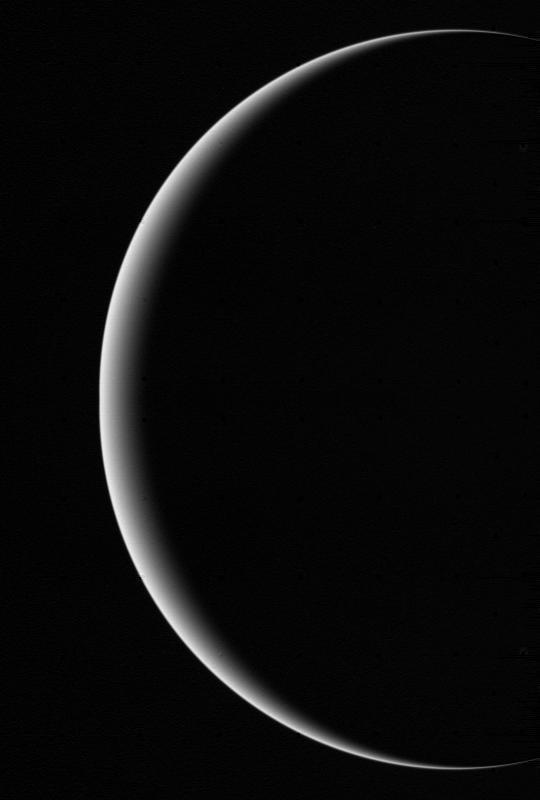
This image shows a crescent Uranus, a view that Earthlings never witnessed until Voyager 2 flew near and then beyond Uranus on Jan 24, 1986. http://photojournal.jpl.nasa.gov/catalog/PIA00346
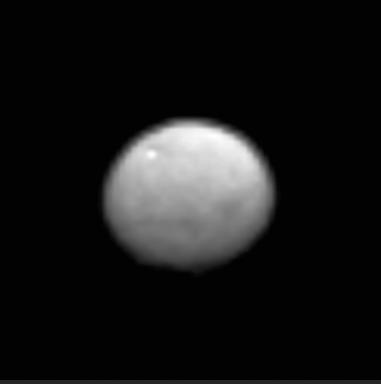
This frame from an animation comes from NASA Dawn spacecraft as it observed Ceres for an hour on Jan. 13, 2015, from a distance of 238,000 miles 383,000 kilometers. http://photojournal.jpl.nasa.gov/catalog/PIA19168
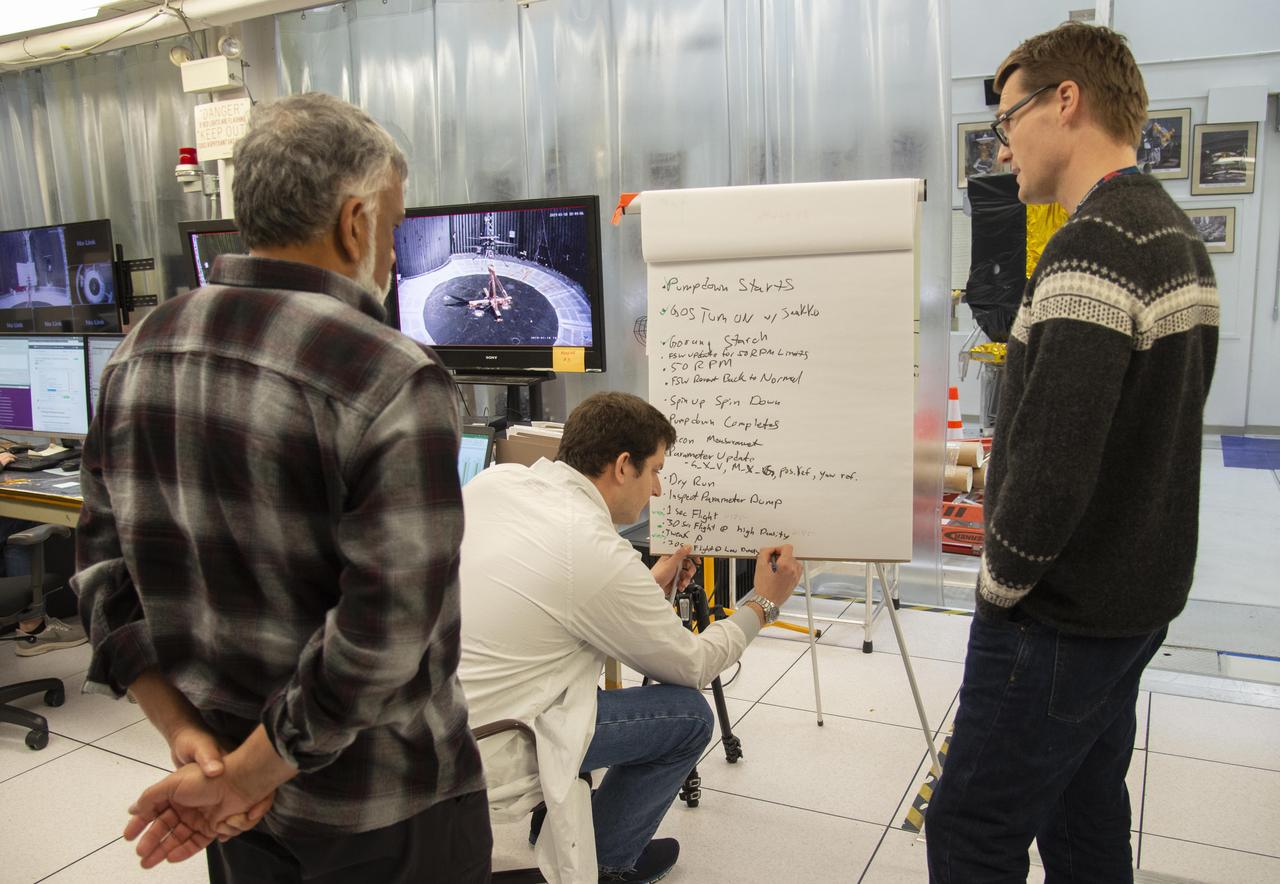
Bob Balaram, Teddy Tzanetos and Havard Grip from the NASA Mars Helicopter project discuss the sequence of events for the day's flight testing. The image was taken Jan. 18, 2019. https://photojournal.jpl.nasa.gov/catalog/PIA23162
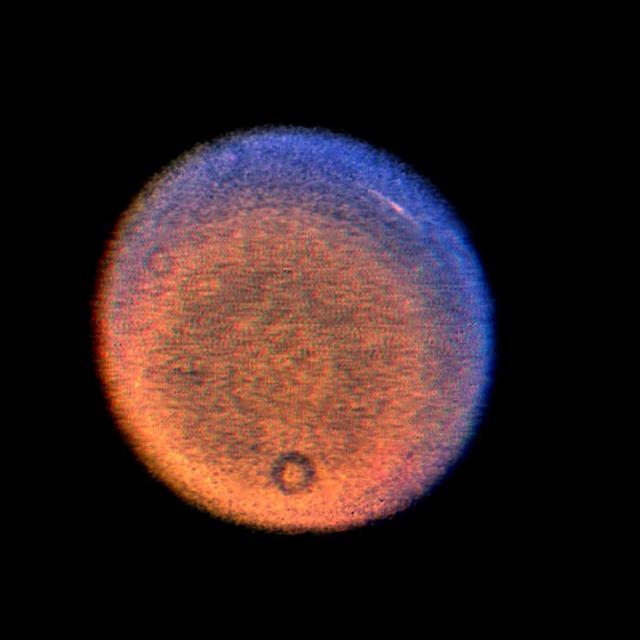
This false-color picture of Uranus, obtained by NASA Voyager on Jan. 14, 1986, shows a discrete cloud seen as a bright streak near the planet limb. http://photojournal.jpl.nasa.gov/catalog/PIA00370
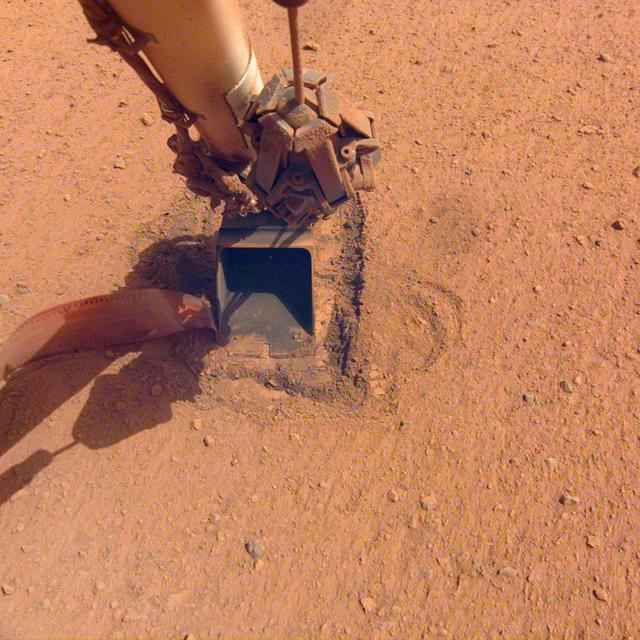
The "mole," a heat probe that traveled to Mars aboard NASA's InSight lander, as it looked after hammering on Saturday, Jan. 9, 2021, the 754th Martian day, or sol, of the mission. Since Feb. 28, 2019, the probe has been attempting to burrow into the Martian surface to take the planet's internal temperature. But the sand's unexpected tendency to clump deprived the spike-like mole of the friction it needs to hammer itself to a sufficient depth. On Jan. 9, with no progress, the team called an end to their efforts. Movie available at https://photojournal.jpl.nasa.gov/catalog/PIA24263

KENNEDY SPACE CENTER, FLA. -- At a press conference, U.S. Rep. Tom Feeney responds to a question from a reporter about the new mission for NASA outlined by President George W. Bush Jan. 14. Present with Feeney are Center Director Jim Kennedy (left) and U.S. Rep. Dave Weldon (right).
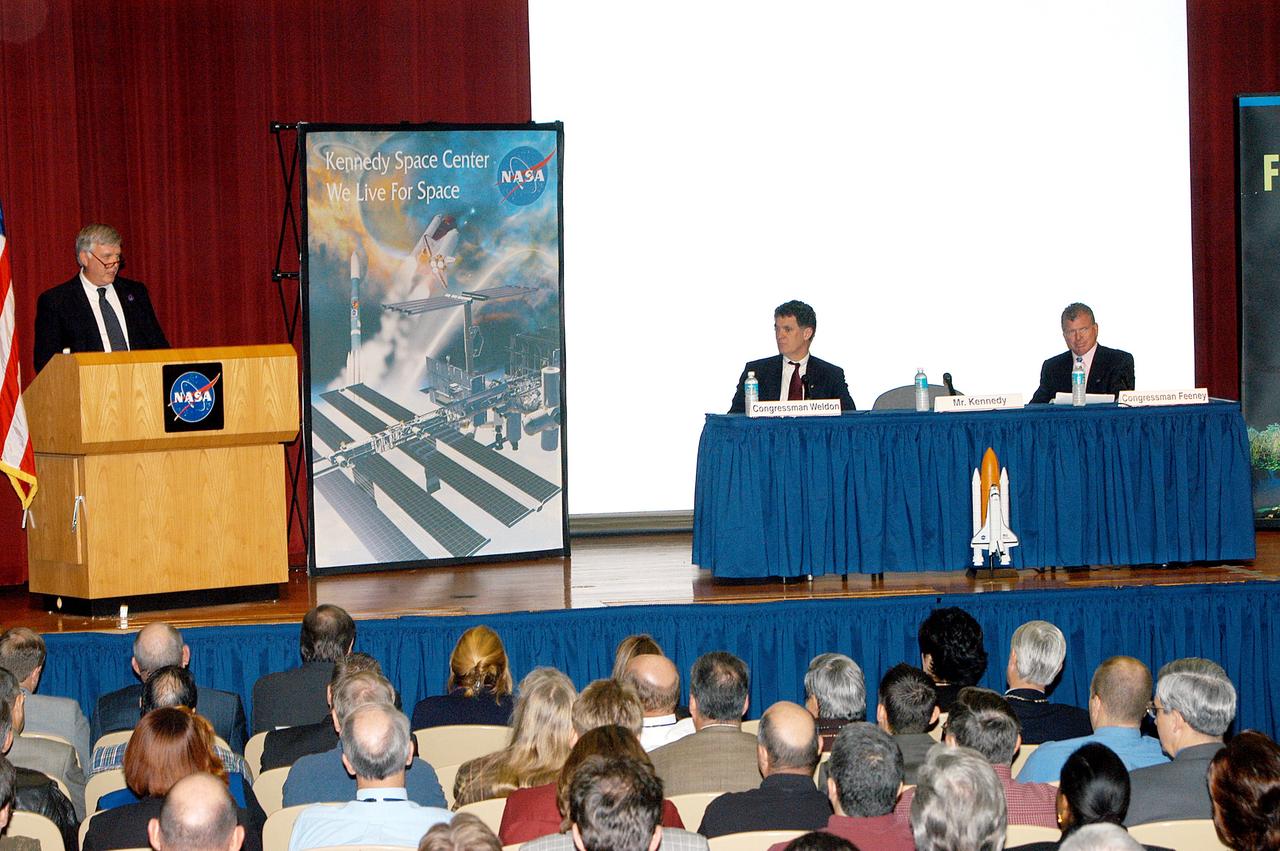
KENNEDY SPACE CENTER, FLA. -- Center Director Jim Kennedy introduces U.S. Reps. Dave Weldon and Tom Feeney in a Town Hall meeting at KSC. Weldon and Feeney commented on the new mission for NASA outlined by President George W. Bush Jan. 14. The congressmen and Kennedy also answered questions from employees in the audience.
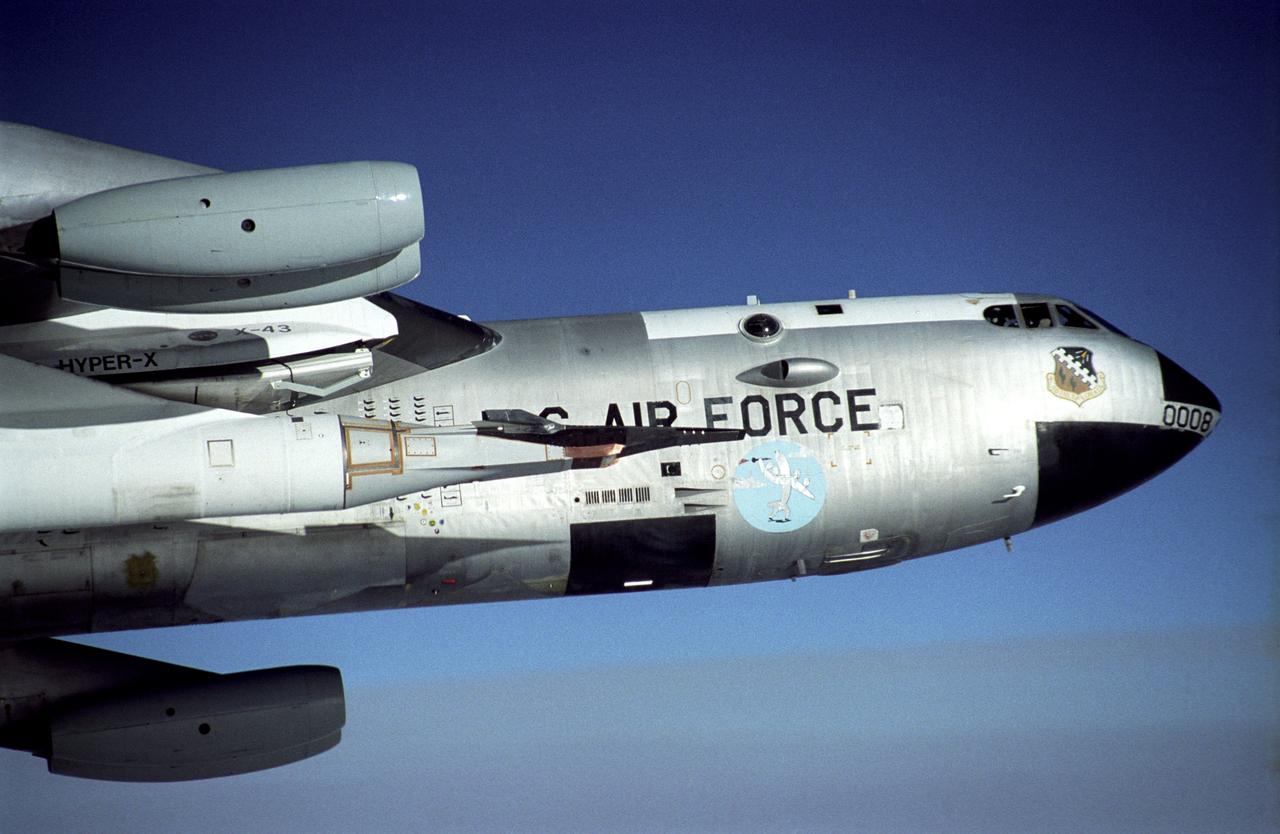
The black X-43A rides on the front of a modified Pegasus booster rocket hung from the special pylon under the wing of NASA's B-52B mother ship. The photo was taken during a captive carry flight Jan. 26, 2004 to verify systems before an upcoming launch.
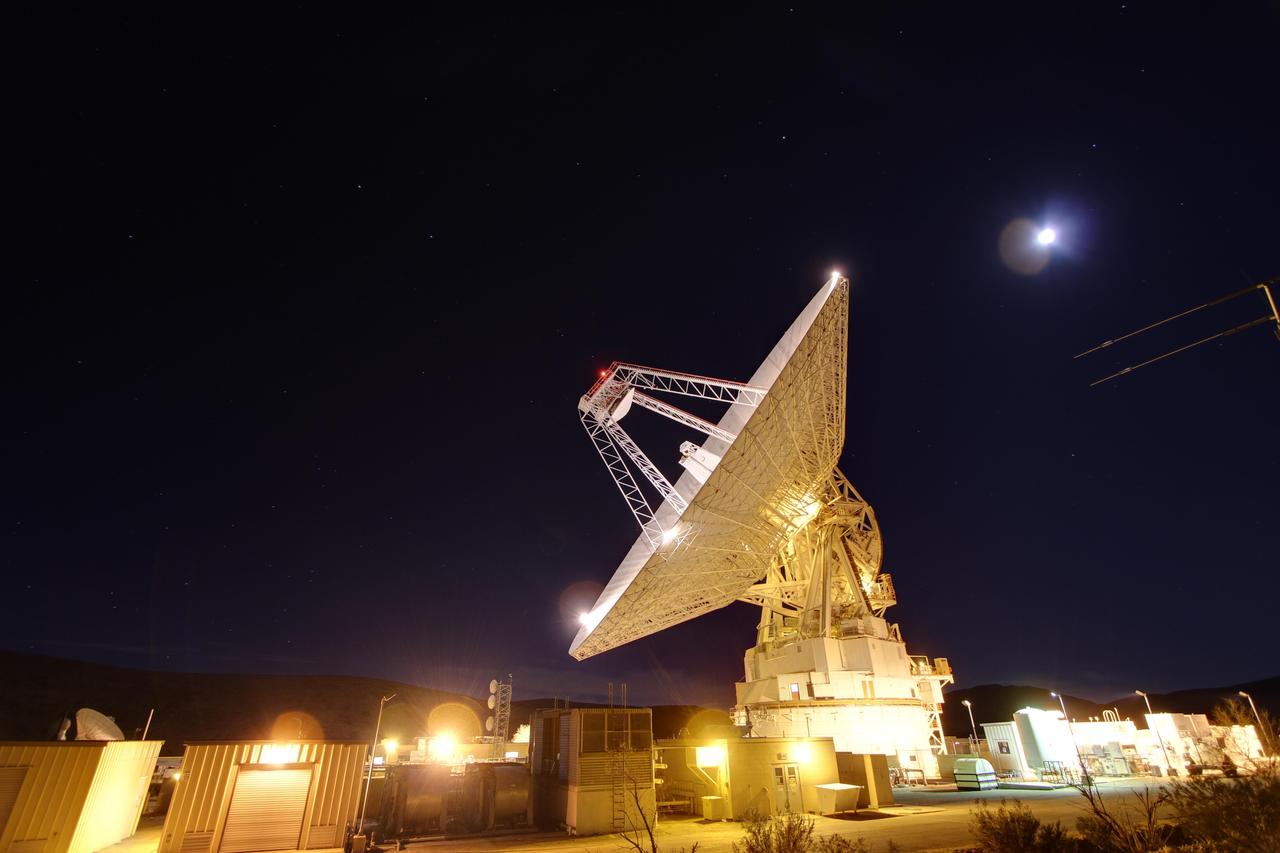
Late night in the desert: Goldstone 230-foot 70-meter antenna tracks spacecraft day and night. This photograph was taken on Jan. 11, 2012. The Goldstone Deep Space Communications Complex is located in the Mojave Desert in California, USA.
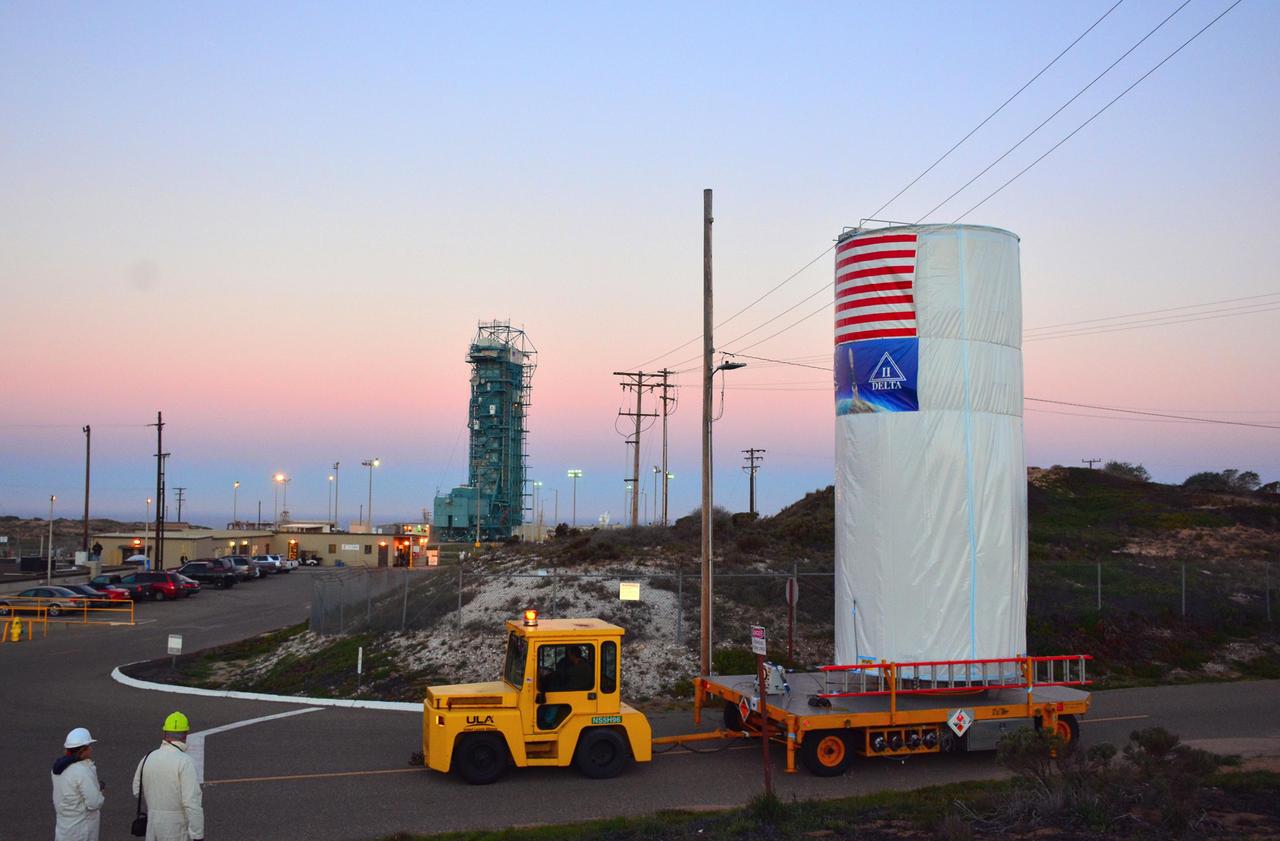
NASA Soil Moisture Active Passive SMAP satellite is transported across Vandenberg Air Force Base in California to Space Launch Complex 2, where it will be mated to a Delta II rocket for launch, targeted for Jan. 29.
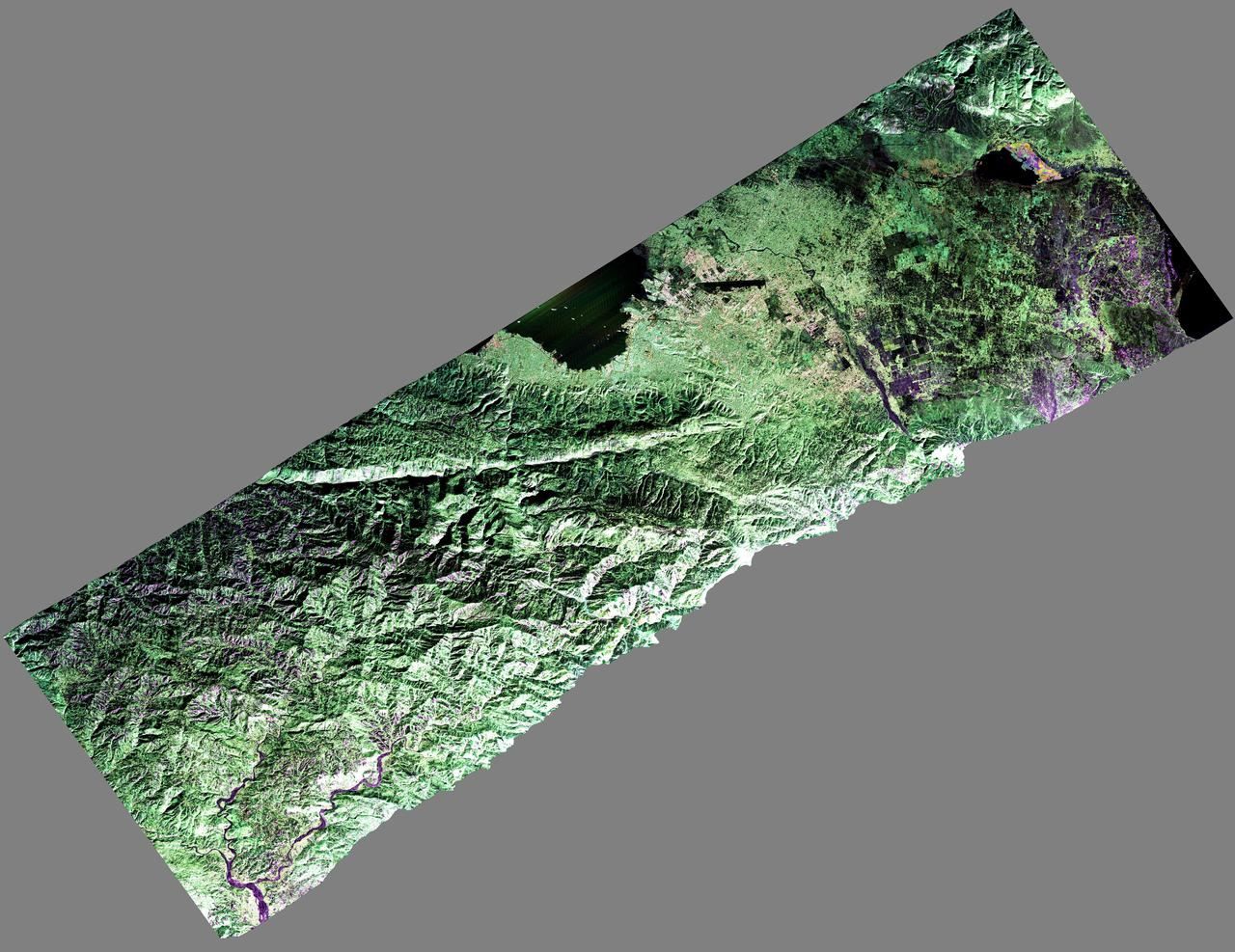
NASA Uninhabited Aerial Vehicle Synthetic Aperture Radar UAVSAR captured this false-color composite image of the city of Port-au-Prince, Haiti, and the surrounding region on Jan. 27, 2010.

On Jan. 18, 2011, NASA Terra spacecraft captured this 3-D perspective image of the city of Nova Friburgo, Brazil. A week of torrential rains triggered a series of deadly mudslides and floods. More details about this image at the Photojournal.
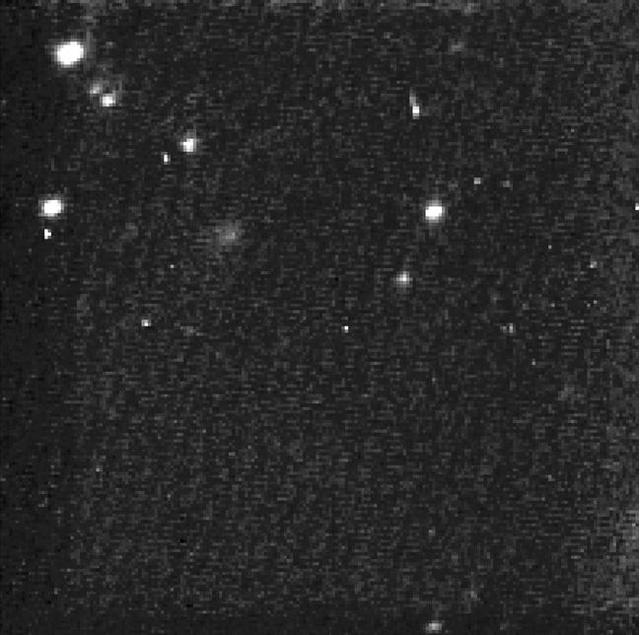
This composite image is the first taken by NASA Stardust spacecraft navigation camera. The observations were made on Jan. 18 and 19, 2011. Stardust will fly within about 200 kilometers 124 miles of the comet nucleus.
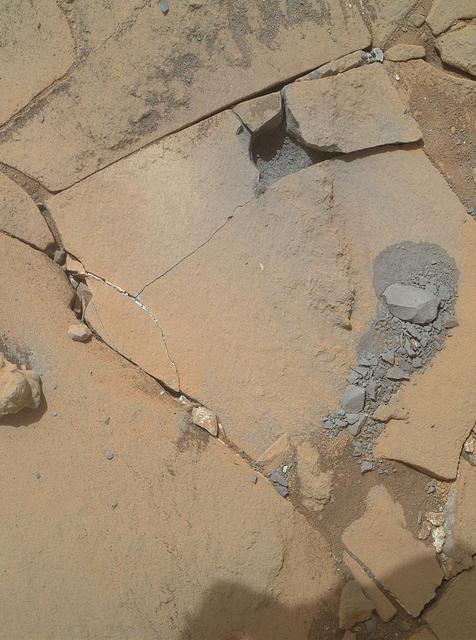
This Jan. 13, 2015, view from NASA Curiosity Mars rover shows outcomes of a mini-drill test to assess whether the Mojave rock is appropriate for full-depth drilling to collect a sample.
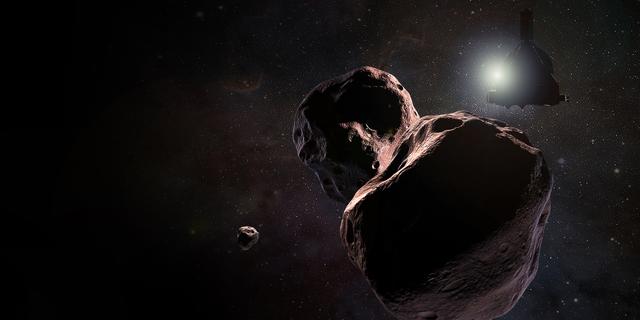
Artist's impression of NASA's New Horizons spacecraft encountering 2014 MU69, a Kuiper Belt object that orbits one billion miles (1.6 billion kilometers) beyond Pluto, on Jan. 1, 2019. https://photojournal.jpl.nasa.gov/catalog/PIA22190
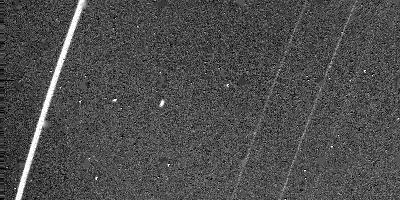
The outer rings of Uranus are visible in this image, obtained by NASA Voyager 2 on Jan. 23, 1986. The outermost and brightest ring, called epsilon, is visible along with the fainter and narrower delta and gamma rings from left.
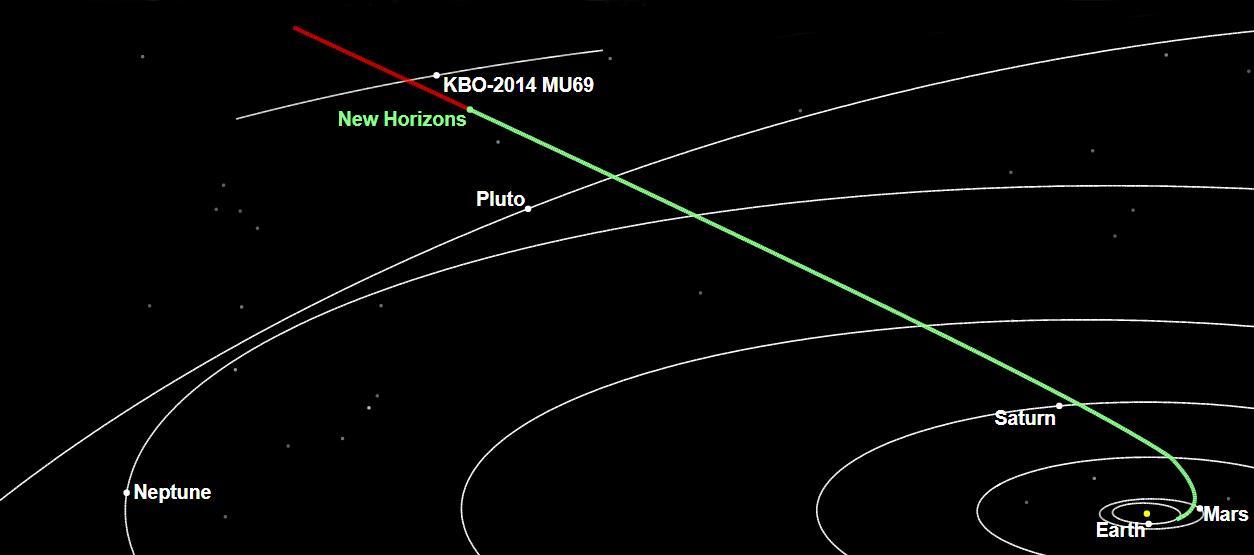
The New Horizons spacecraft is about 300 million miles (483 million kilometers) from 2014 MU69, the Kuiper Belt object it will encounter on Jan. 1, 2019. https://photojournal.jpl.nasa.gov/catalog/PIA22188
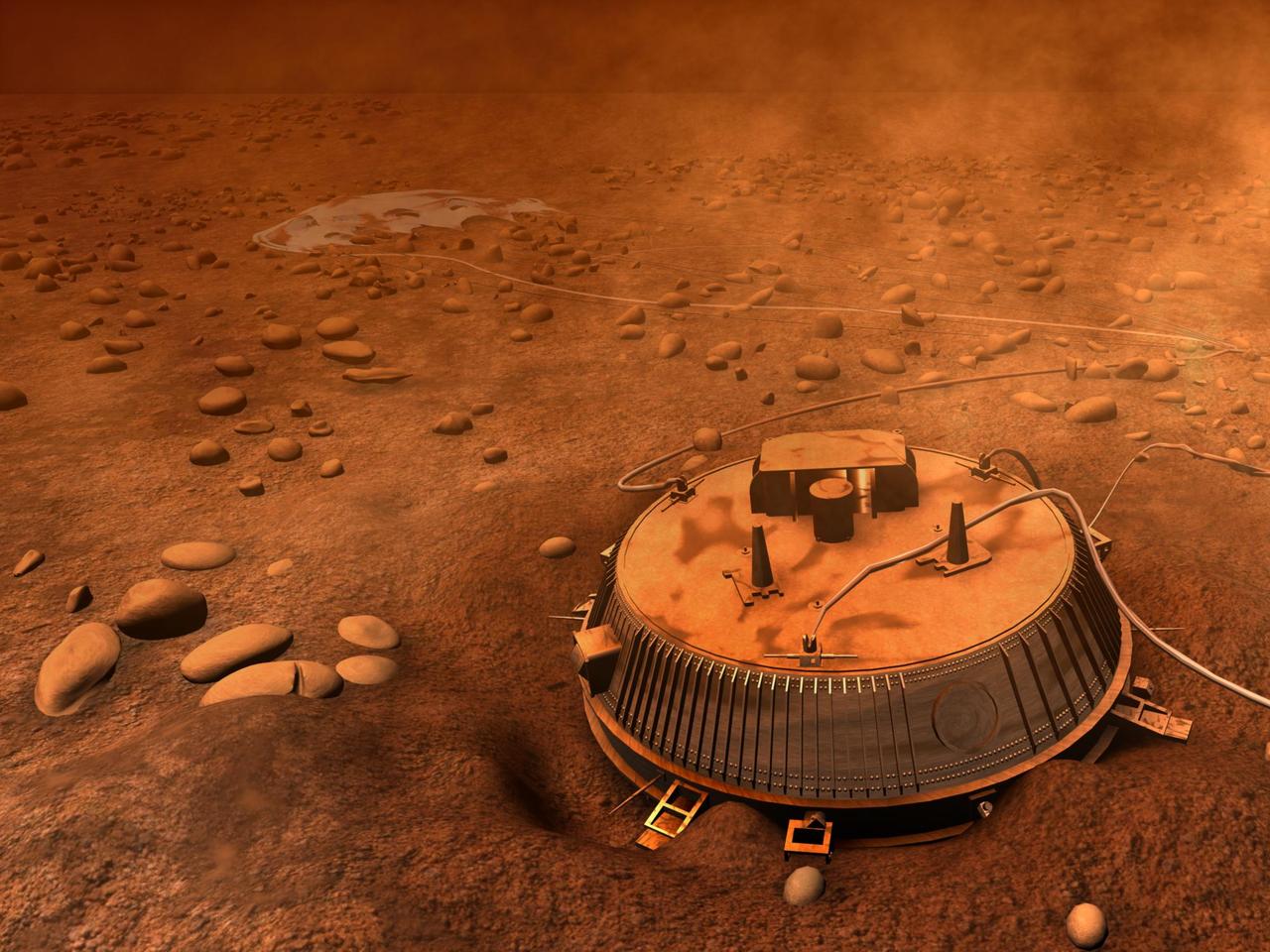
This is an artist interpretation of the area surrounding Huygens landing site, based on images and data returned Jan. 14, 2005. The Cassini-Huygens mission is a cooperative project of NASA, the European Space Agency and the Italian Space Agency.
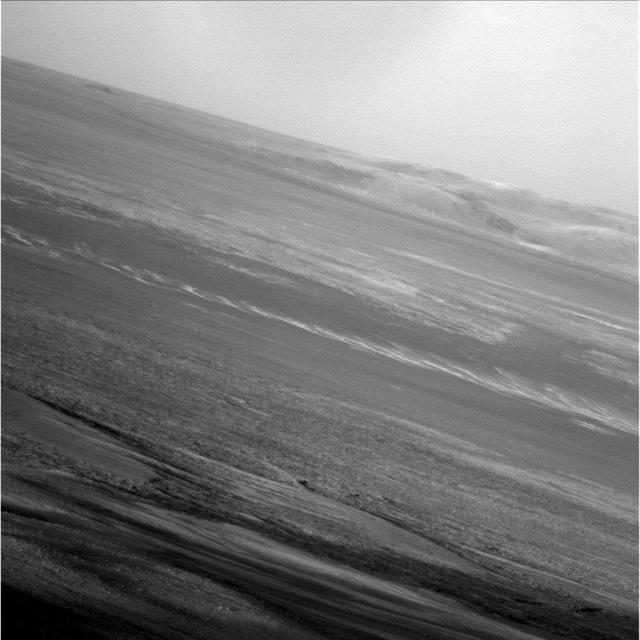
NASA Mars Exploration Rover Opportunity captured this low-light raw image during the late afternoon of the rover 2,847th Martian sol Jan. 27, 2012. The rover is positioned for the Mars winter at Greeley Haven.
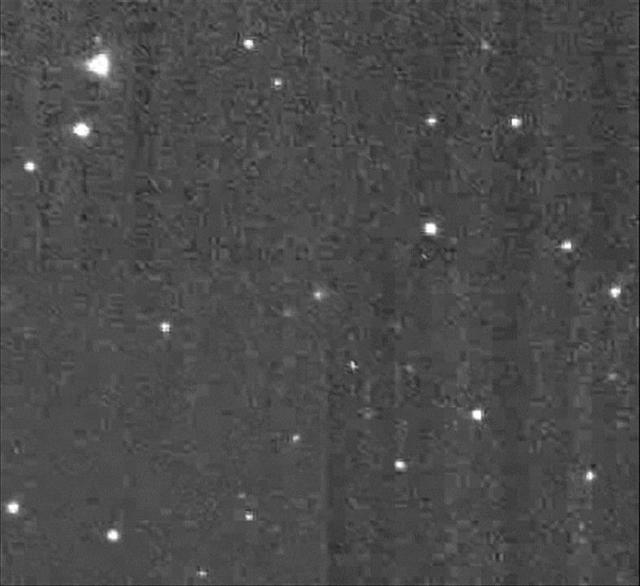
This frame from an animation series of images of comet C/2012 S1 ISON was taken by the Medium-Resolution Imager of NASA Deep Impact spacecraft over a 36-hour period on Jan. 17 and 18, 2013.

On Jan. 7, 2011, NASA Terra spacecraft captured this image of the inundated city of Rockhampton, Queensland, Australia. Torrential rains in NE Australia caused the Fitzroy River to overflow its banks and flood much of the city.
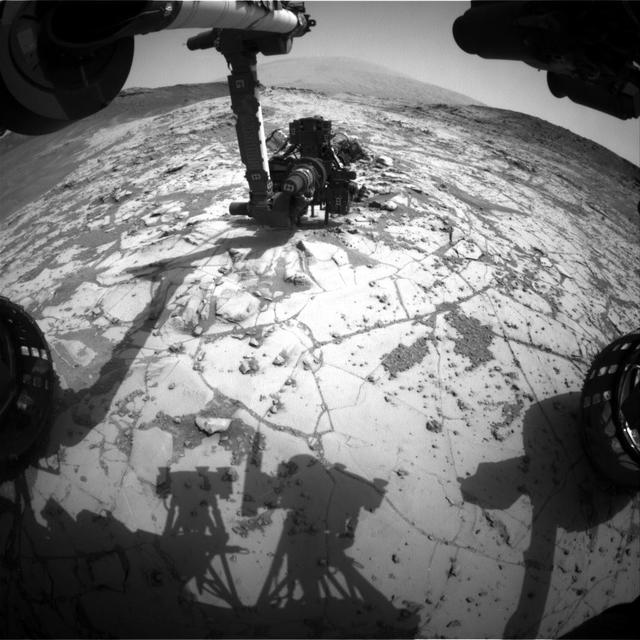
This view NASA Curiosity Mars Rover shows the rover drill in position for a mini-drill test to assess whether a rock target called Mojave is appropriate for full-depth drilling to collect a sample. It was taken on Jan. 13, 2015.
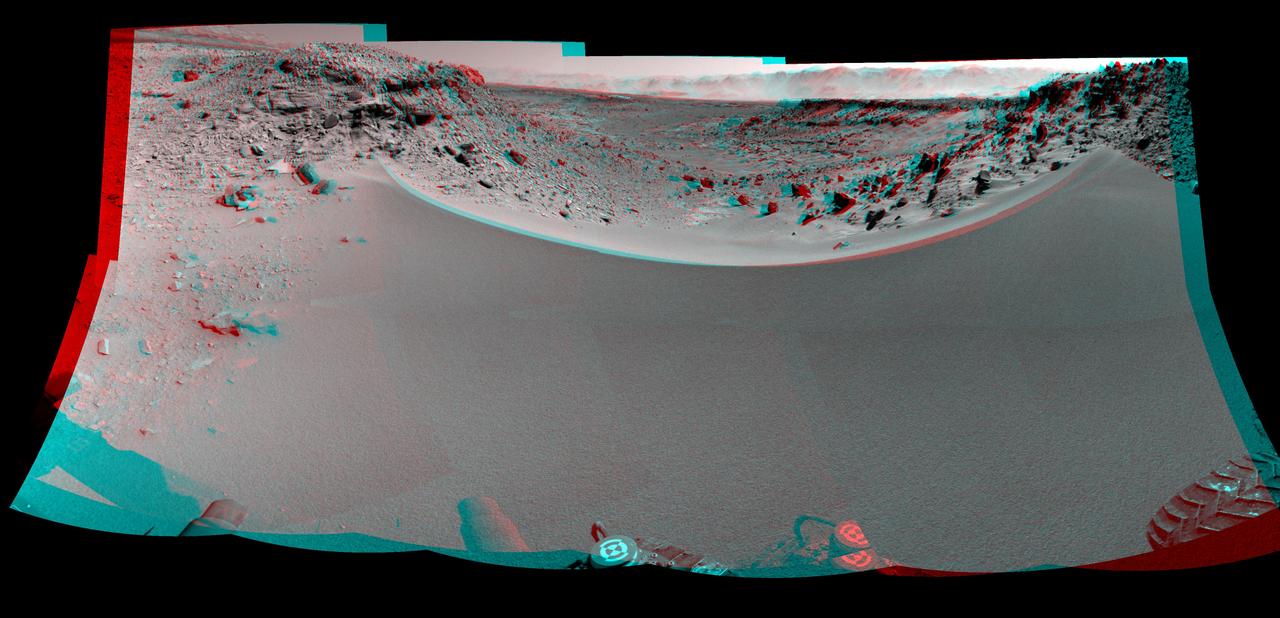
This stereo mosaic of images from NASA Mars rover Curiosity shows the terrain to the west from the rover position on Jan. 30, 2014. You need 3D glasses to view this image.
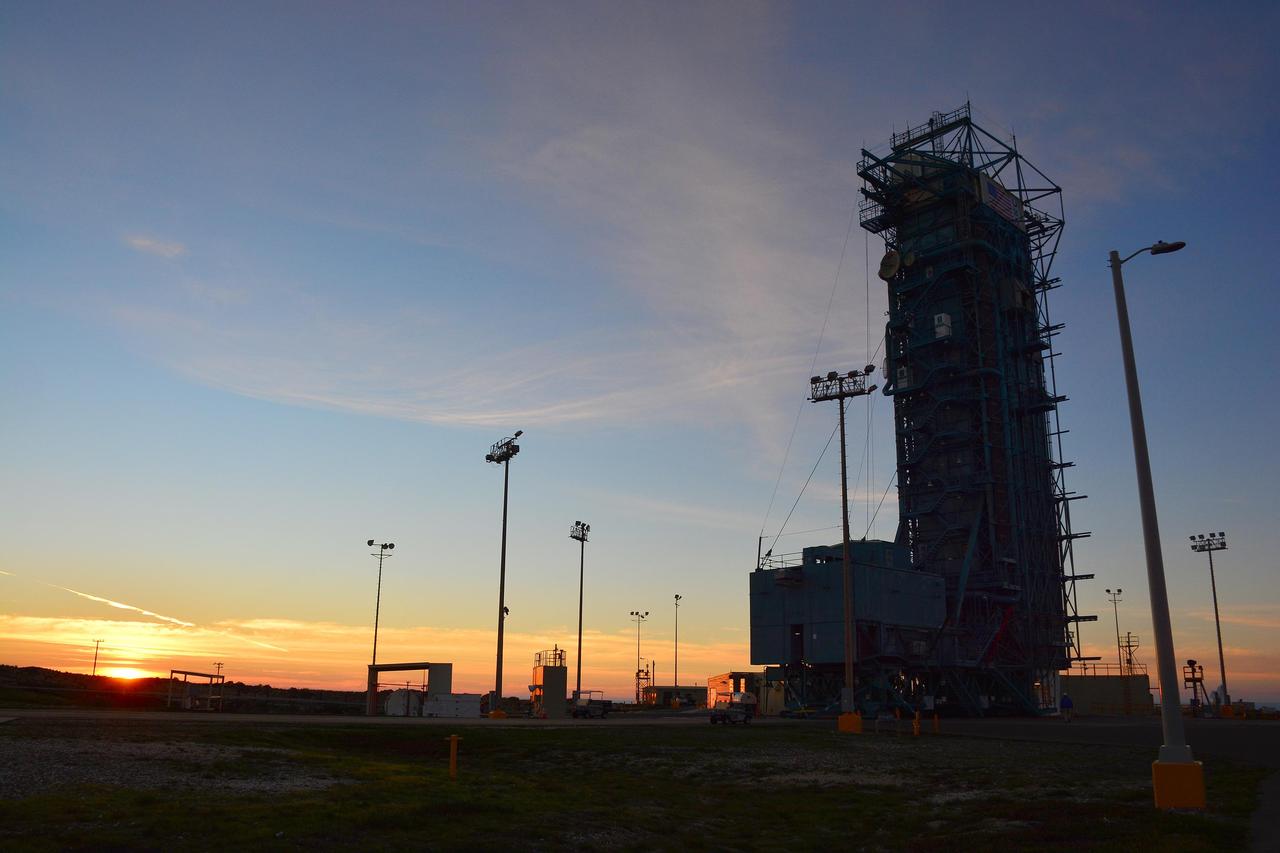
The sun sets behind Space Launch Complex 2, Vandenberg Air Force Base, California, where NASA Soil Moisture Active Passive SMAP mission satellite is being prepared for liftoff. Launch is scheduled for Jan. 29.

This family portrait of Uranus five largest moons was compiled from images sent back Jan. 20, 1986, by NASA Voyager 2 spacecraft. Even in these distant views, the satellites exhibit distinct differences in appearance.
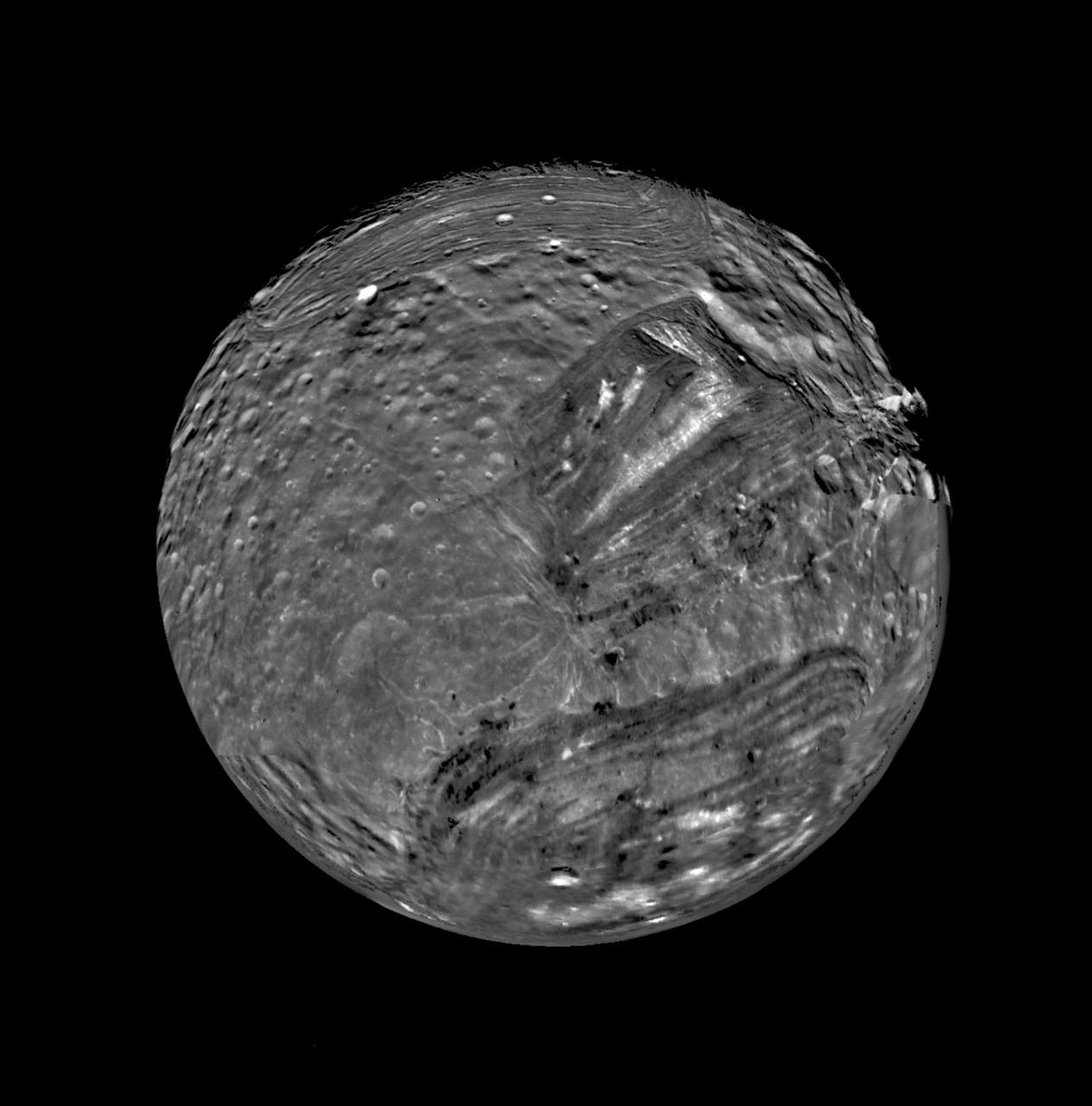
Uranus moon Miranda is shown in a computer-assembled mosaic of images obtained Jan. 24, 1986, by NASA Voyager 2 spacecraft. Miranda is the innermost and smallest of the five major Uranian satellites,
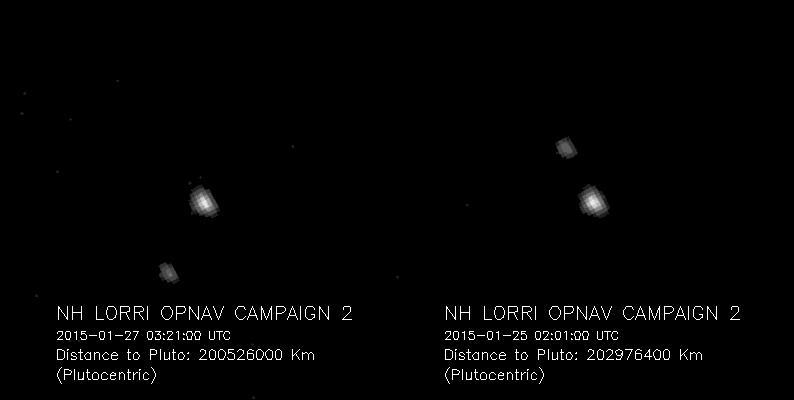
Pluto and Charon, the largest of Pluto five known moons, seen Jan. 25 and 27, 2015, through the telescopic Long-Range Reconnaissance Imager LORRI on NASA New Horizons spacecraft.