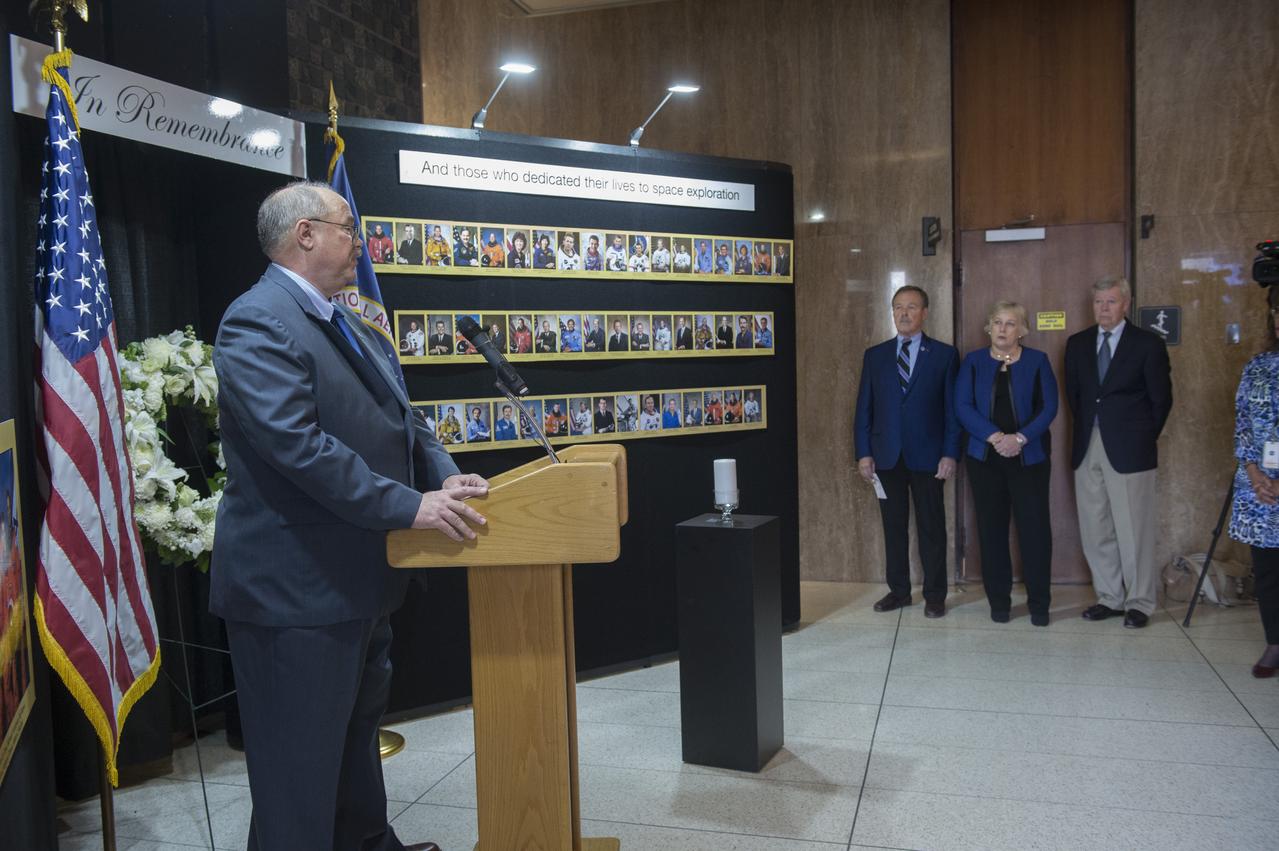
RICK BURT, MANAGER OF SAFETY AND MISSION ASSURANCE, MAKES COMMENTS AT NASA'S DAY OF REMEMBRANCE AS ROBERT "HOOT" GIBSON, JAN DAVIS, AND RICK CHAPPEL LOOK ON
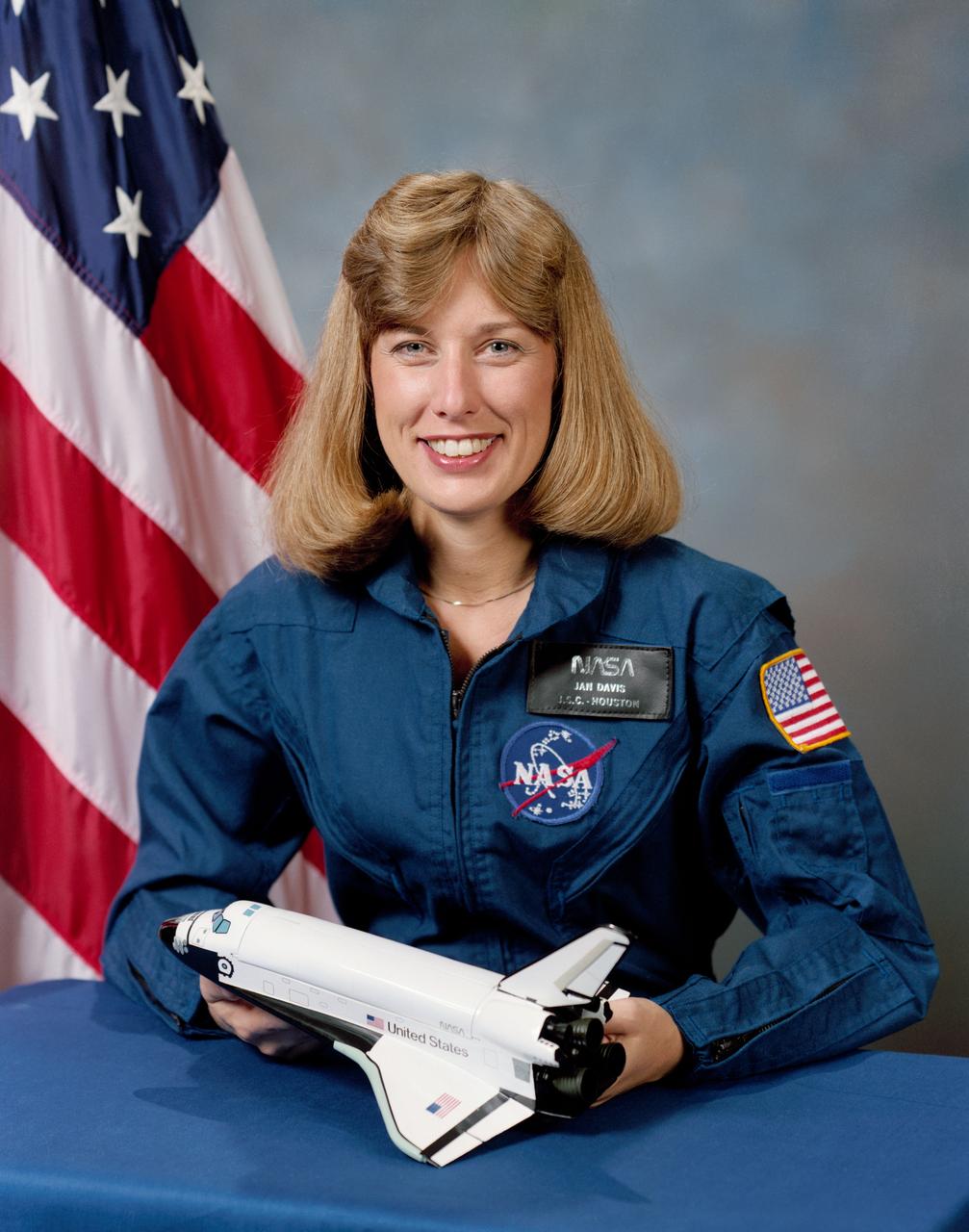
S87-45883 (9 Oct. 1987) --- Astronaut N. Jan Davis
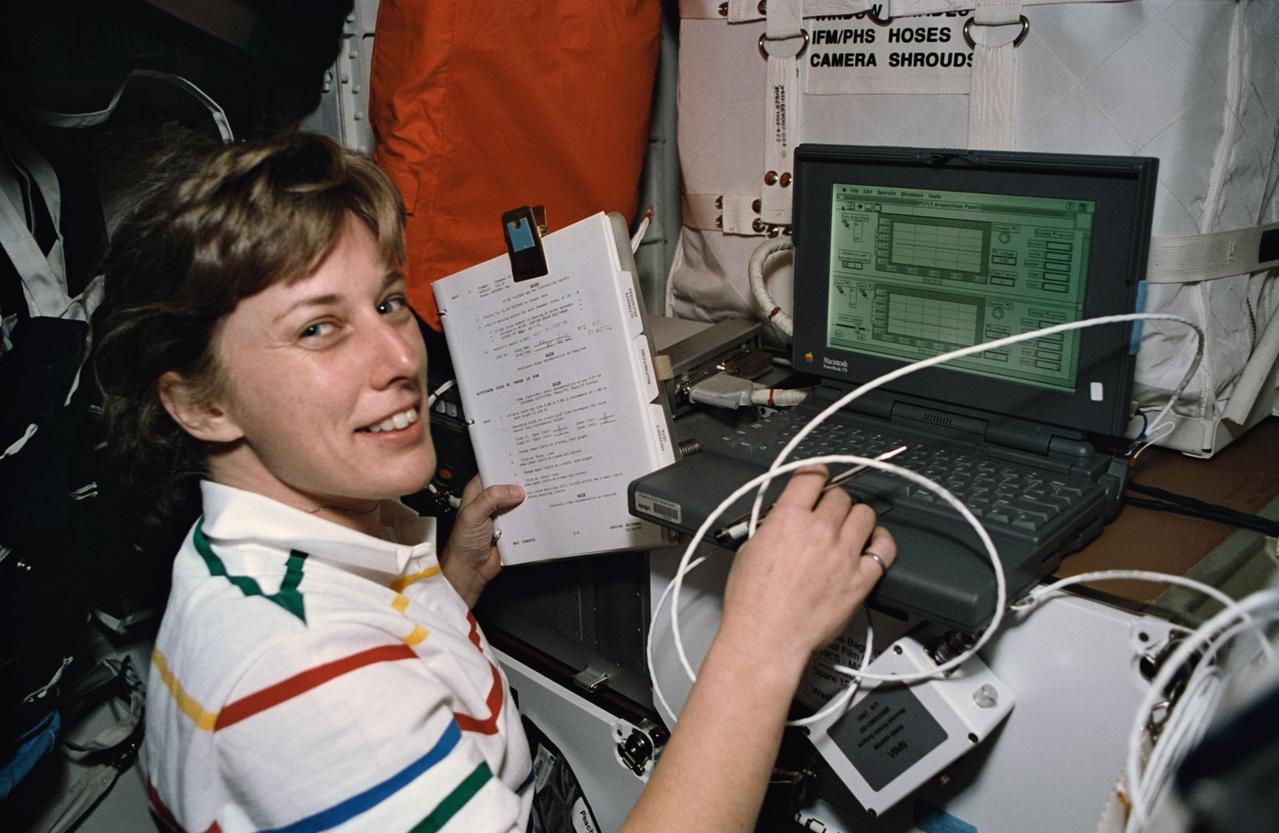
STS060-21-031 (3-11 Feb 1994) --- Using a lap top computer, astronaut N. Jan Davis monitors systems for the Commercial Protein Crystal Growth (CPCG) experiment onboard the Space Shuttle Discovery. Davis joined four other NASA astronauts and a Russian cosmonaut for eight days in space aboard Discovery.
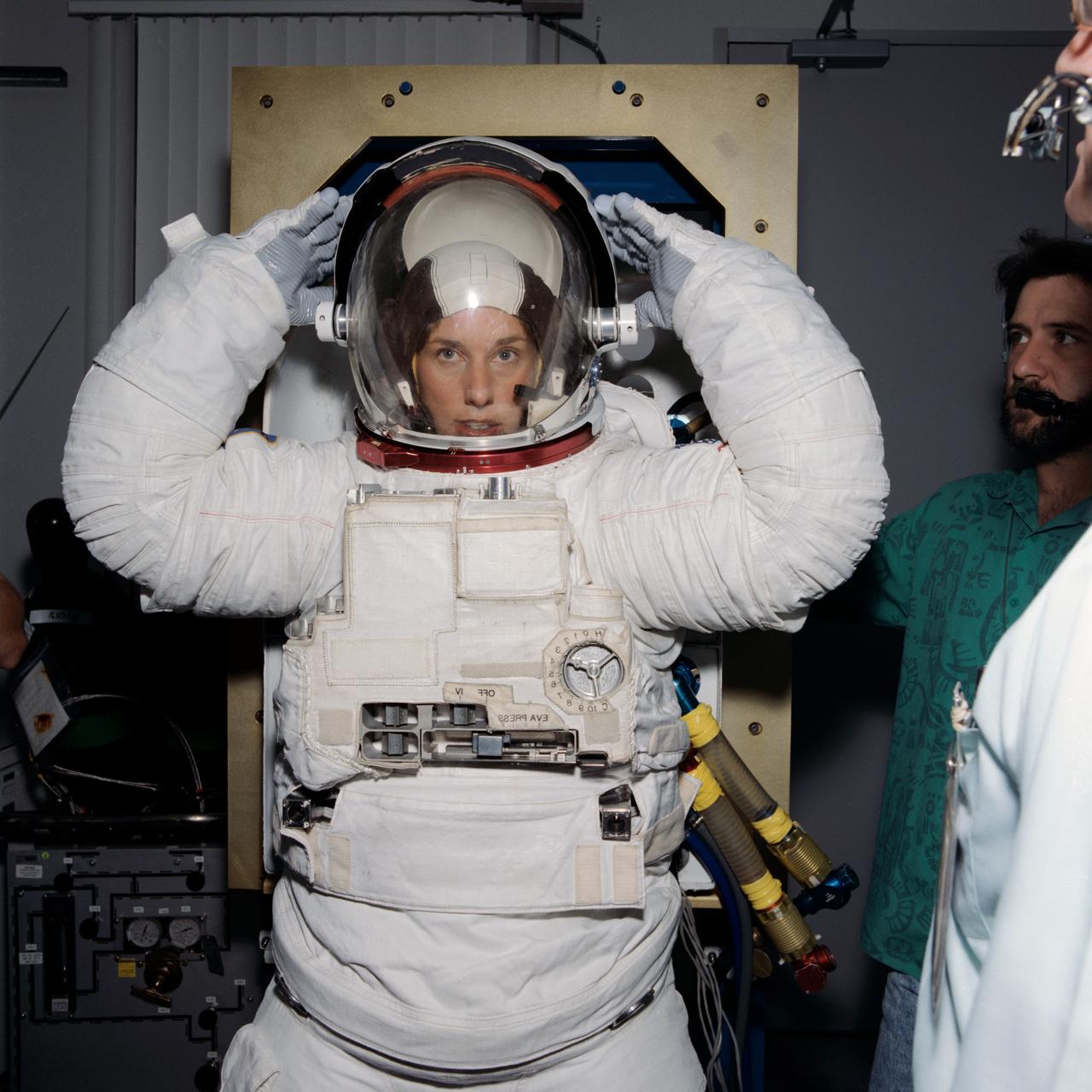
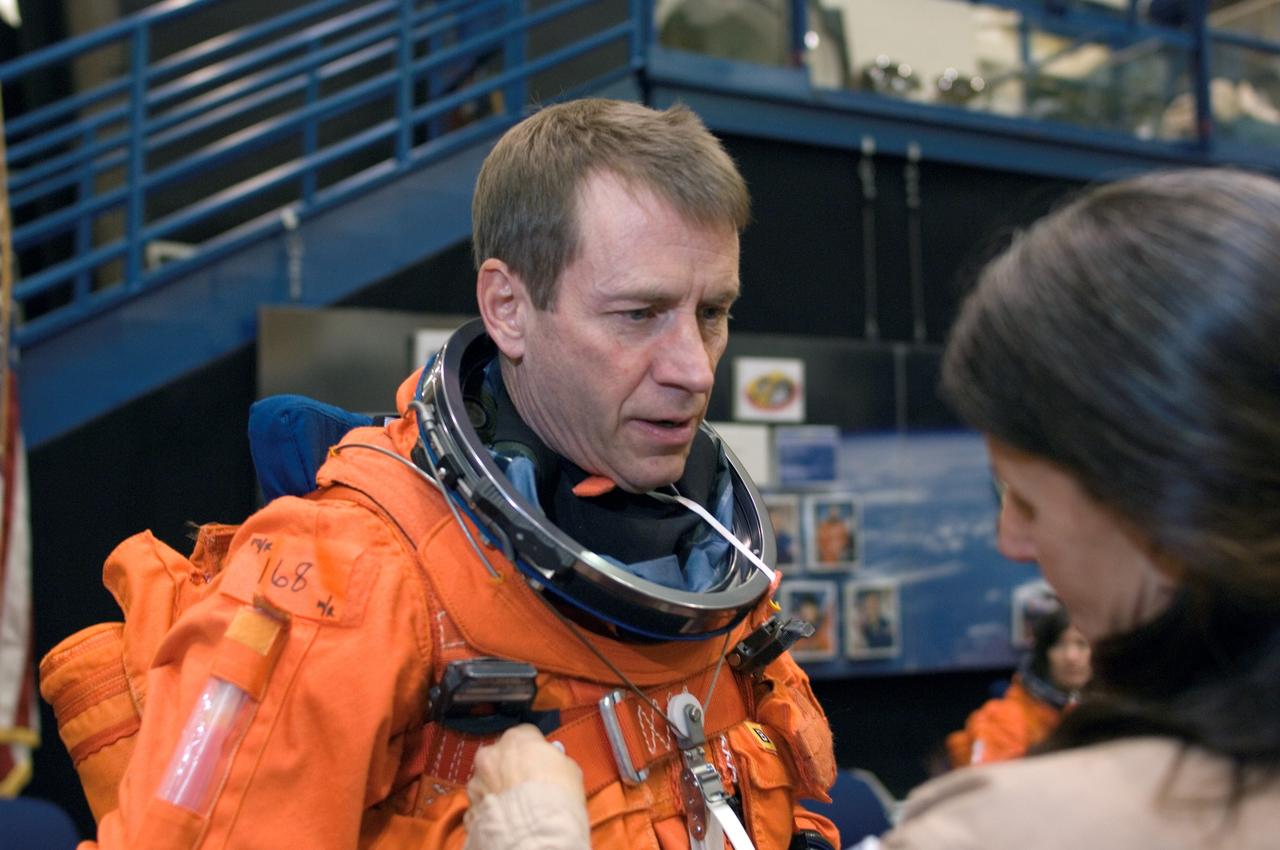
Astronaut N. Jan Davis, with her arms over her head, adjusts her helmet visor during crewmember shuttle suit fit check conducted at JSC's Crew Systems Laboratory Bldg 7.
AUGUST 31, 2012 TRIBUTE TO APOLLO ASTRONAUT NEIL ARMSTRONG AT THE USSRC. L TO R: JONATHAN PETTUS, MSFC ACTING ASSOCIATE ADMINISTRATOR; FORMER ASTRONAUT OWEN GARRIOTT; FORMER ASTRONAUT JAN DAVIS AND FORMER ASTRONAUT FRED LESLIE.1200933F
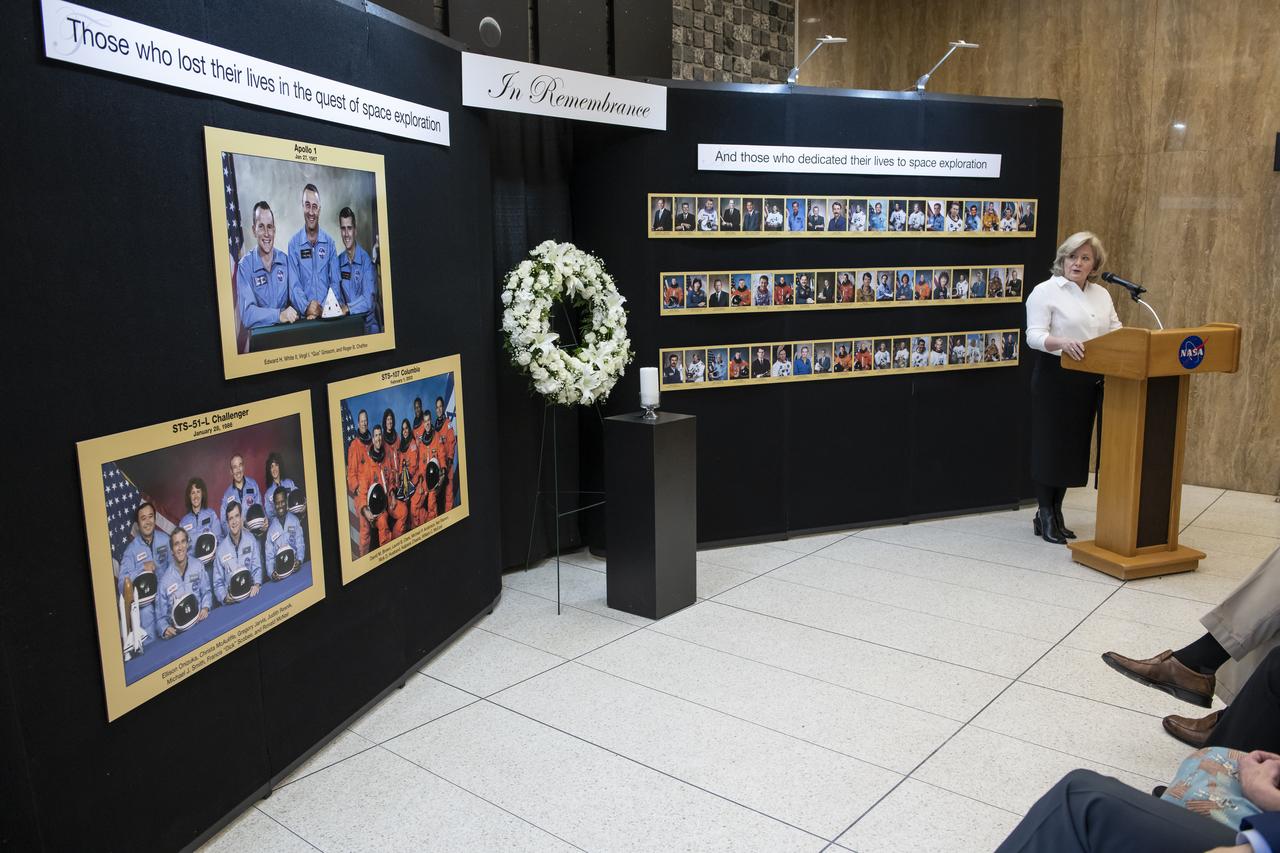
NASA Marshall Space Flight Center Director Jody Singer looks solemnly toward a display honoring the crews of space shuttle Columbia STS-107, space shuttle Challenger STS-51L and Apollo 1 during the center's Day of Remembrance ceremony Feb. 7. Singer, former astronaut Jan Davis, and Marshall Safety and Mission Assurance Directorate Director Rick Burt, spoke at the annual ceremony, which honors those who lost their lives in the quest of space exploration and those who dedicated their lives to space exploration. The ceremony concluded with Singer lighting a candle in memory of the honorees and a moment of silence led by Johnny Stephenson, director of the Office of Strategic Analysis & Communications.
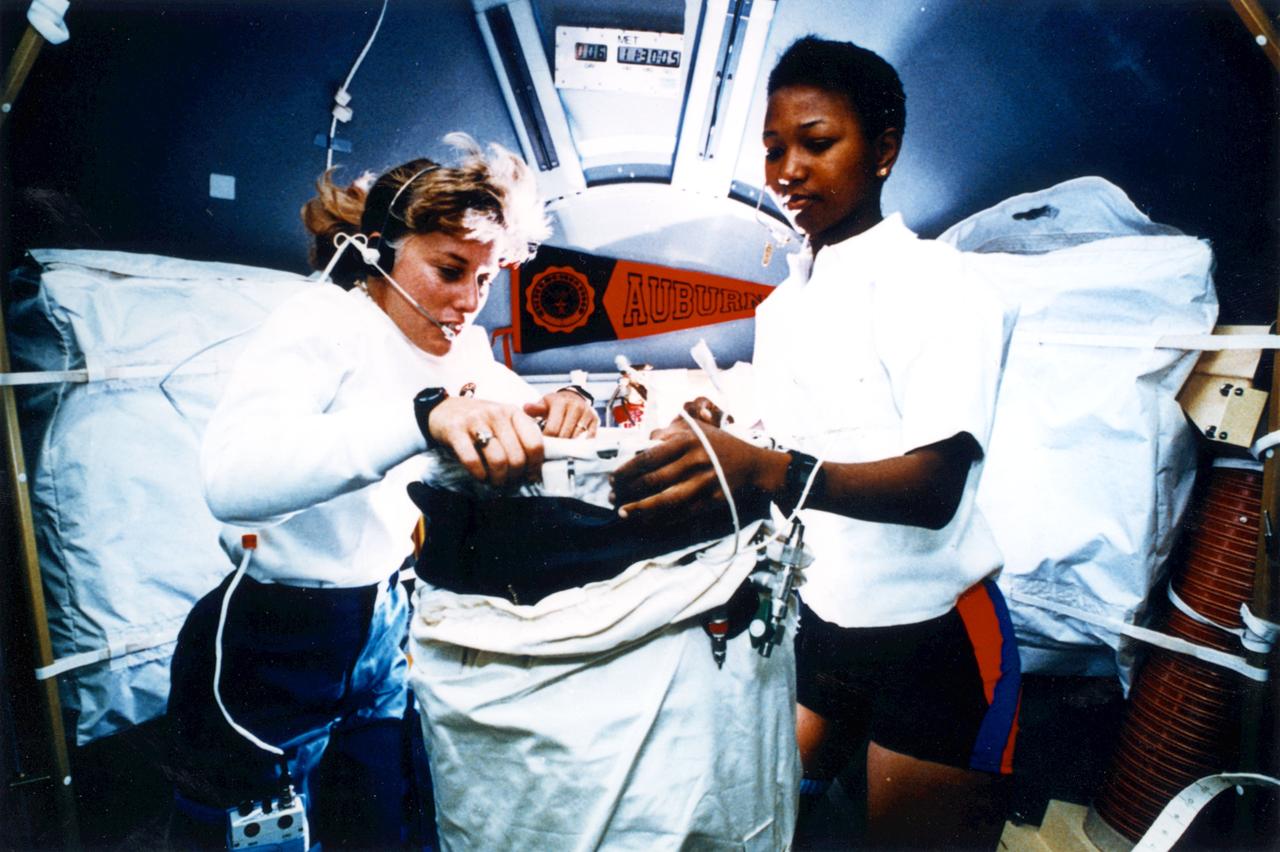
Jan Davis and Mae Jemison working on experiments.
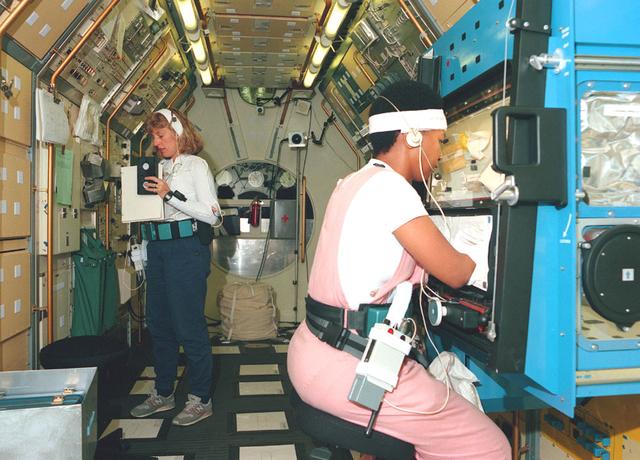
Female astronauts Jan Davis and Mae Jemison undergo training at Marshall's Spacelab-J Crew Training facility.
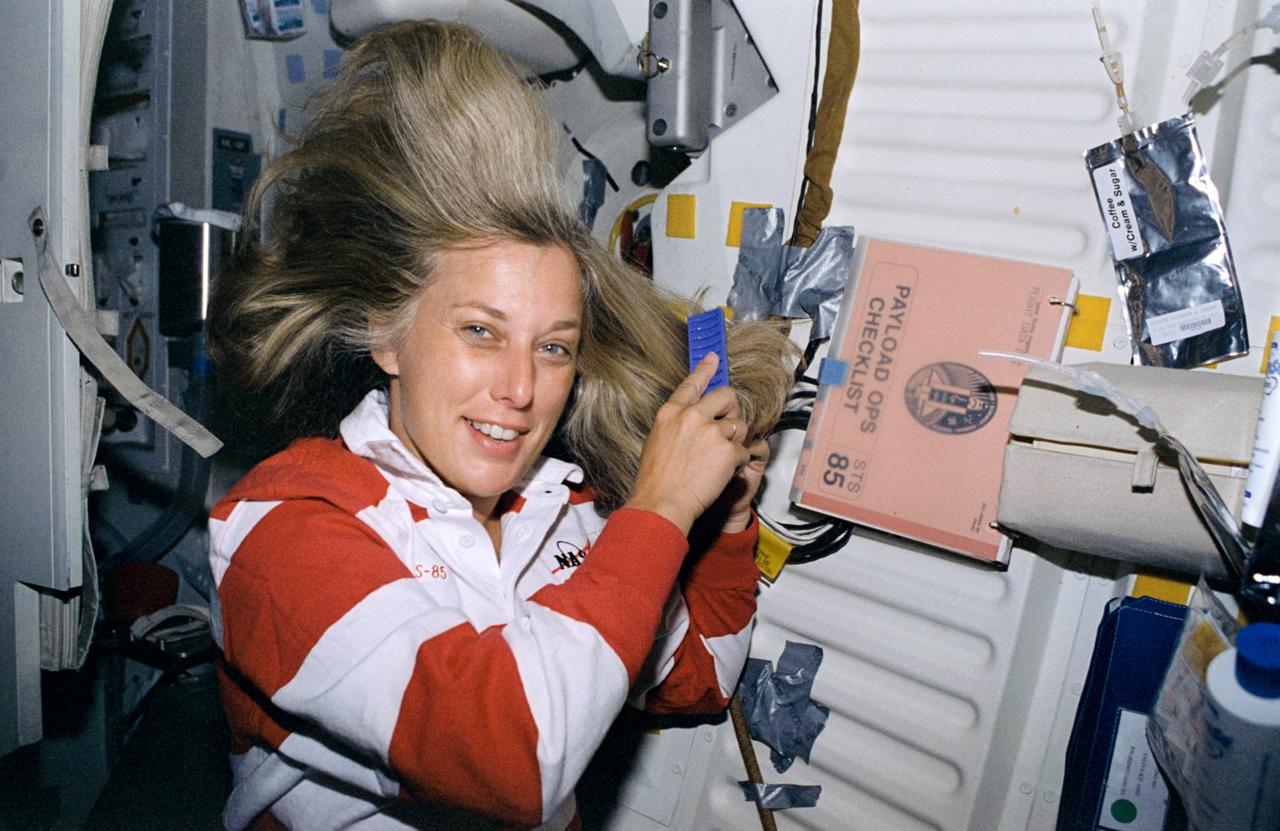
STS085-327-011 (7 - 19 August 1997) --- Astronaut N. Jan Davis spends a moment of her off-duty time aboard the Space Shuttle Discovery brushing her hair. Davis, payload commander, never strayed far from the payload operations checklist, seen attached to nearby mid-deck wall.
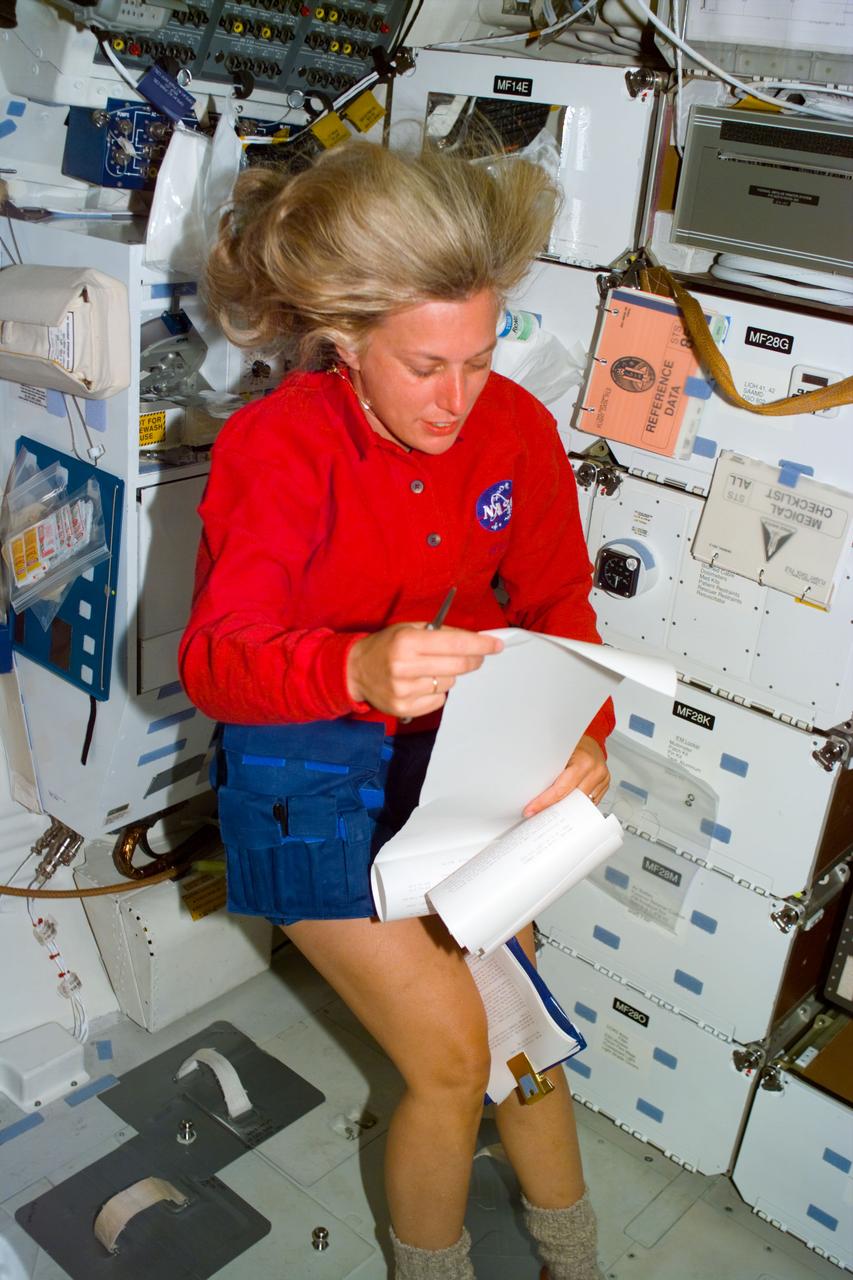
S85-E-5012 (10 August 1997) --- Astronaut N. Jan Davis, payload commander, looks at the mail from the Thermal Imaging Printing System (TIPS), on flight day four activities onboard the Space Shuttle Discovery.
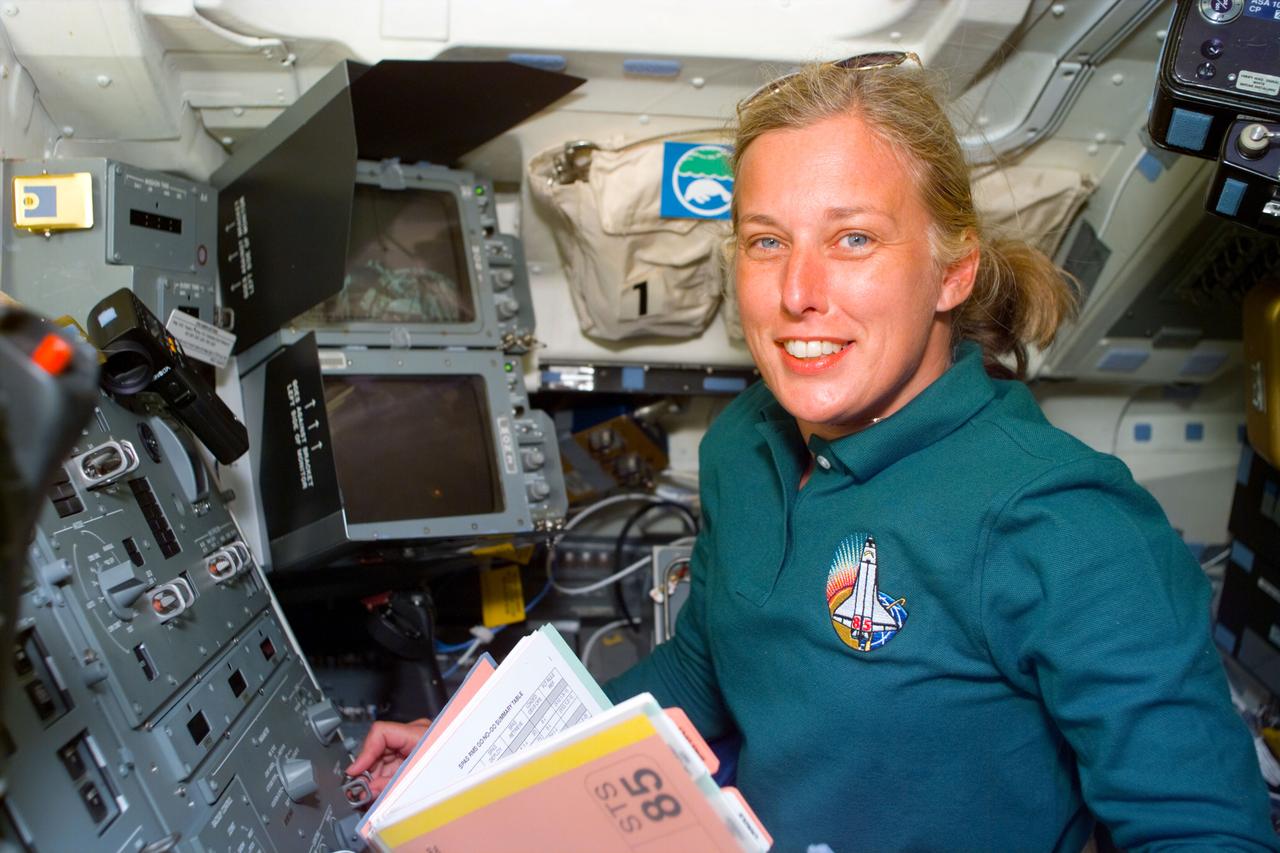
S85-E-5009 (9 August 1997) --- Astronaut N. Jan Davis, payload commander, looks over a checklist on the Space Shuttle Discovery's aft flight deck.

STS085-312-027 (7 - 19 August 1997) --- Astronaut N. Jan Davis, payload commander, is pictured at the work station for the Remote Manipulator System (RMS) on the aft flight deck of the Space Shuttle Discovery. Davis controlled and oversaw operations with the Cryogenic Infrared Spectrometers and Telescopes for the Atmosphere-Shuttle Pallet Satellite-2 (CRISTA-SPAS-2) during the 12-day mission in Earth-orbit.
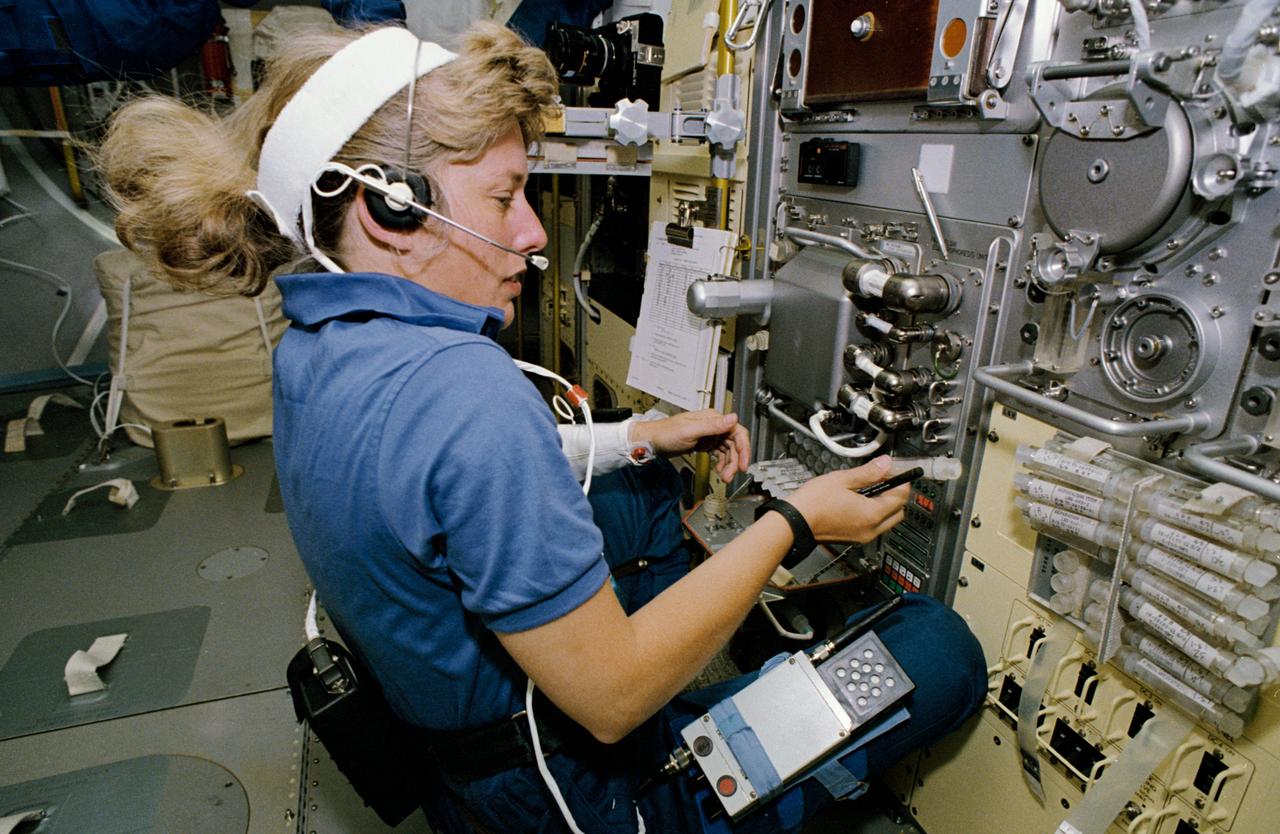
STS047-03-024 (12 - 20 Sept 1992) --- Astronaut N. Jan Davis, mission specialist, talks to ground controllers as she works with the Free Flow Electrophoresis Unit (FFEU) in the Science Module of the Earth-orbiting Space Shuttle Endeavour. Davis joined five other NASA astronauts and a Japanese payload specialist for eight days of scientific research onboard Endeavour.
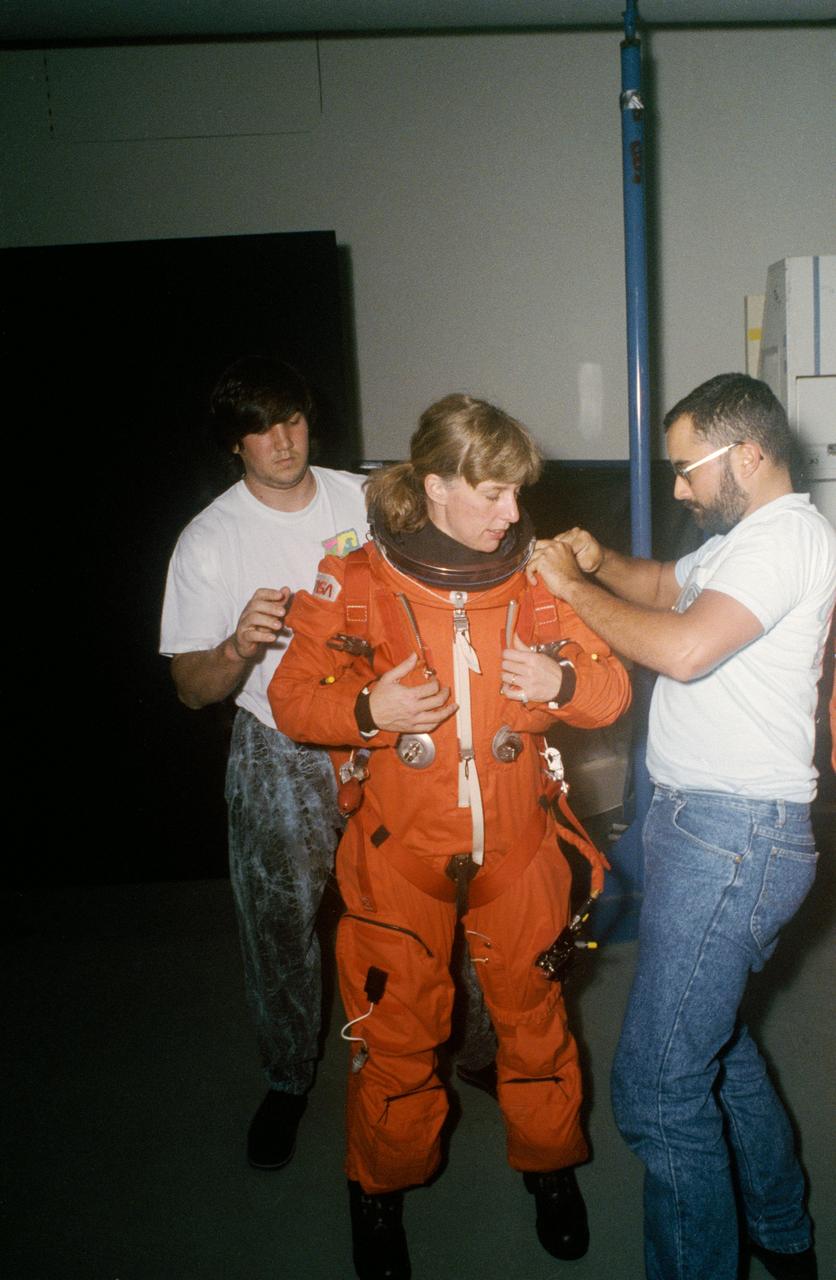
STS-47 Endeavour, Orbiter Vehicle (OV) 105, Mission Specialist (MS) N. Jan Davis, wearing a launch and entry suit (LES), looks on as technicians adjust her LES parachute pack prior to launch emergency egress (bailout) exercises in JSC's Mockup and Integration Laboratory (MAIL) Bldg 9A. Davis is making her first flight in space.
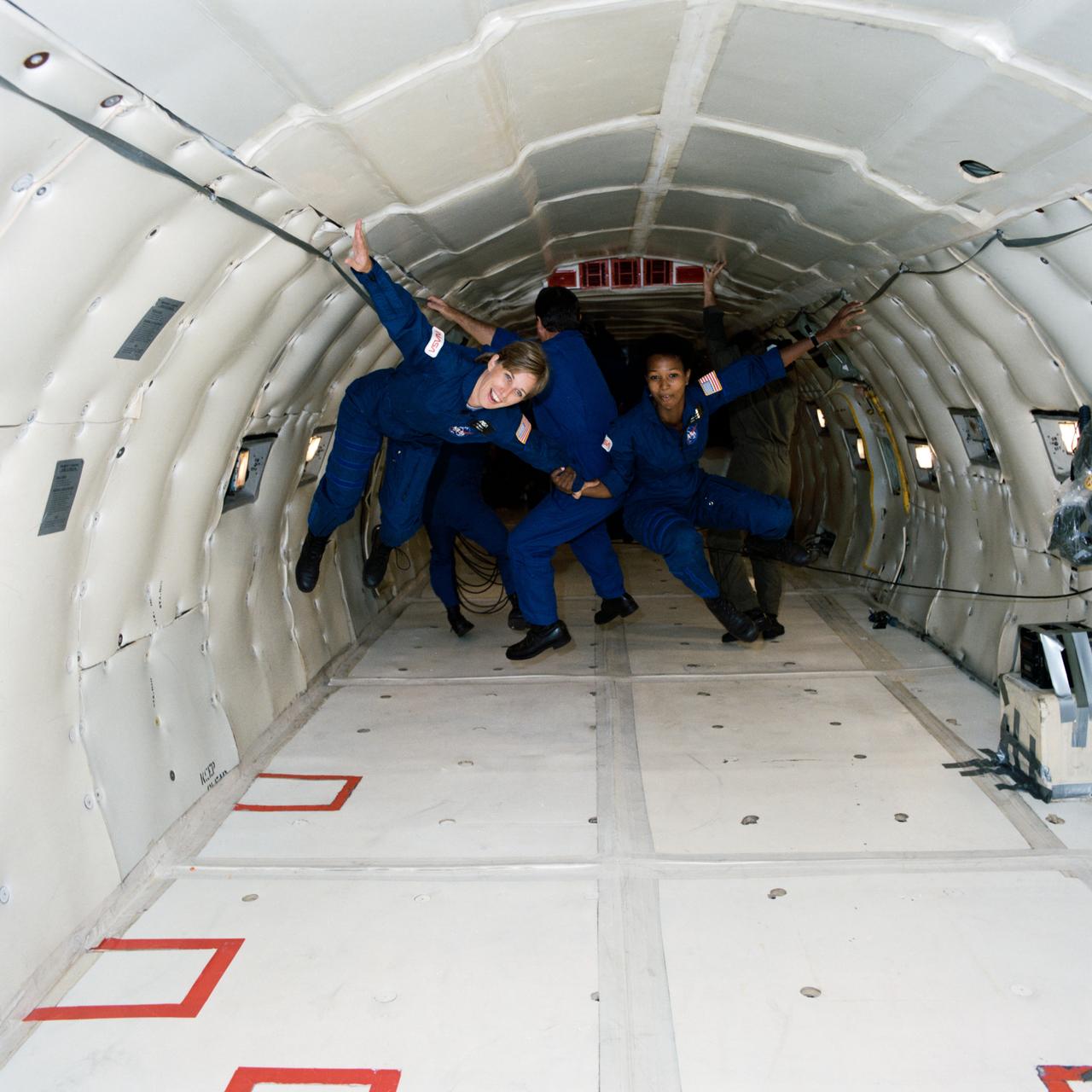
S87-44950 --- Group 12, 1987 Astronaut Class, candidates (ASCANs) N. Jan Davis (left) and Mae C. Jemison freefloat during the seconds of microgravity created aboard the KC-135 NASA 930 aircraft's parabolic flight. Davis and Jemison, two of the recently-named ASCANs, were taking a familiarization flight aboard the KC-135 "zero gravity" aircraft. Photo credit: NASA
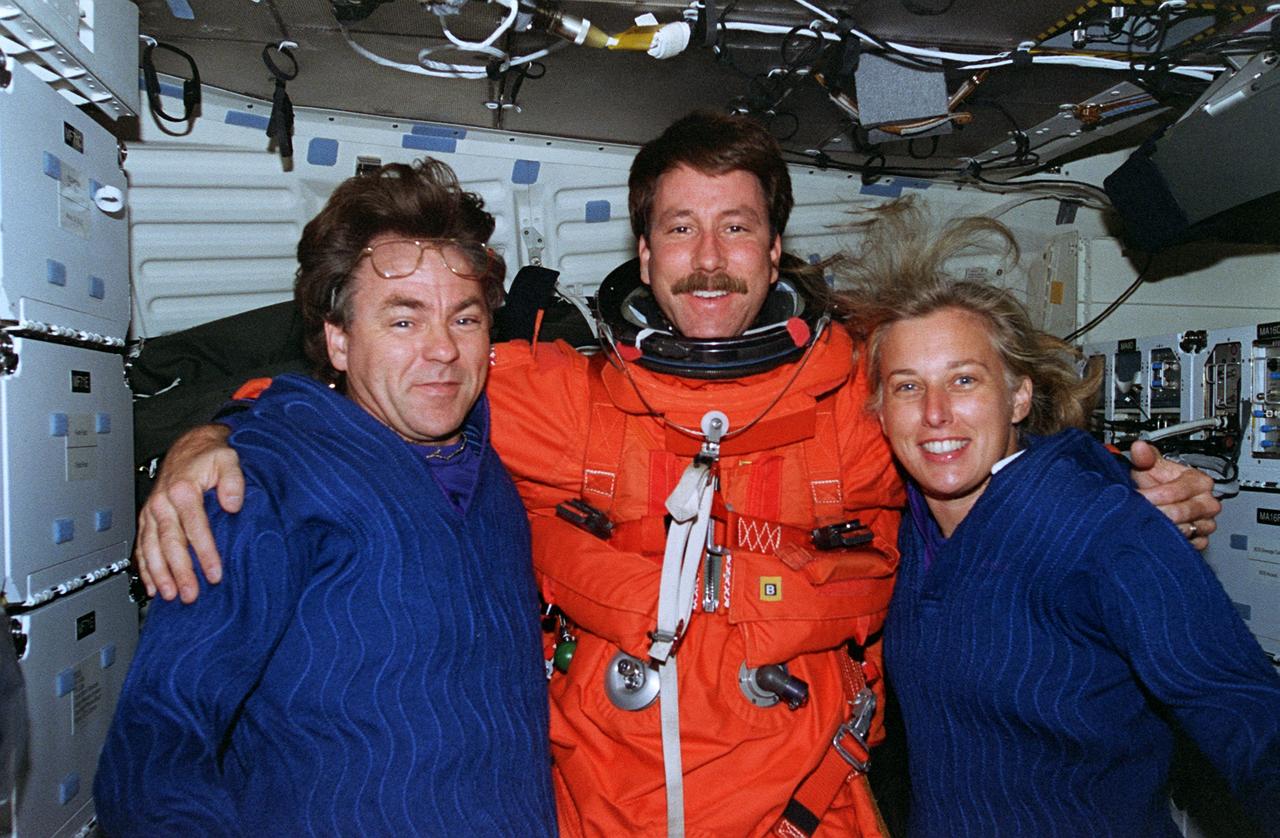
STS085-364-008 (19 August 1997) --- One of the final pictures taken during the STS-85 mission was this frame, exposed on the mid-deck during preparations for the August 19, 1997 entry. Left to right are payload specialist Bjarni V. Tryggvason, with astronauts Kent V. Rominger, pilot, and N. Jan Davis, payload commander. Rominger has already donned his partial pressure launch and entry suit, while Tryggvason and Davis have put on their blue under garments but have yet to don their escape suits.
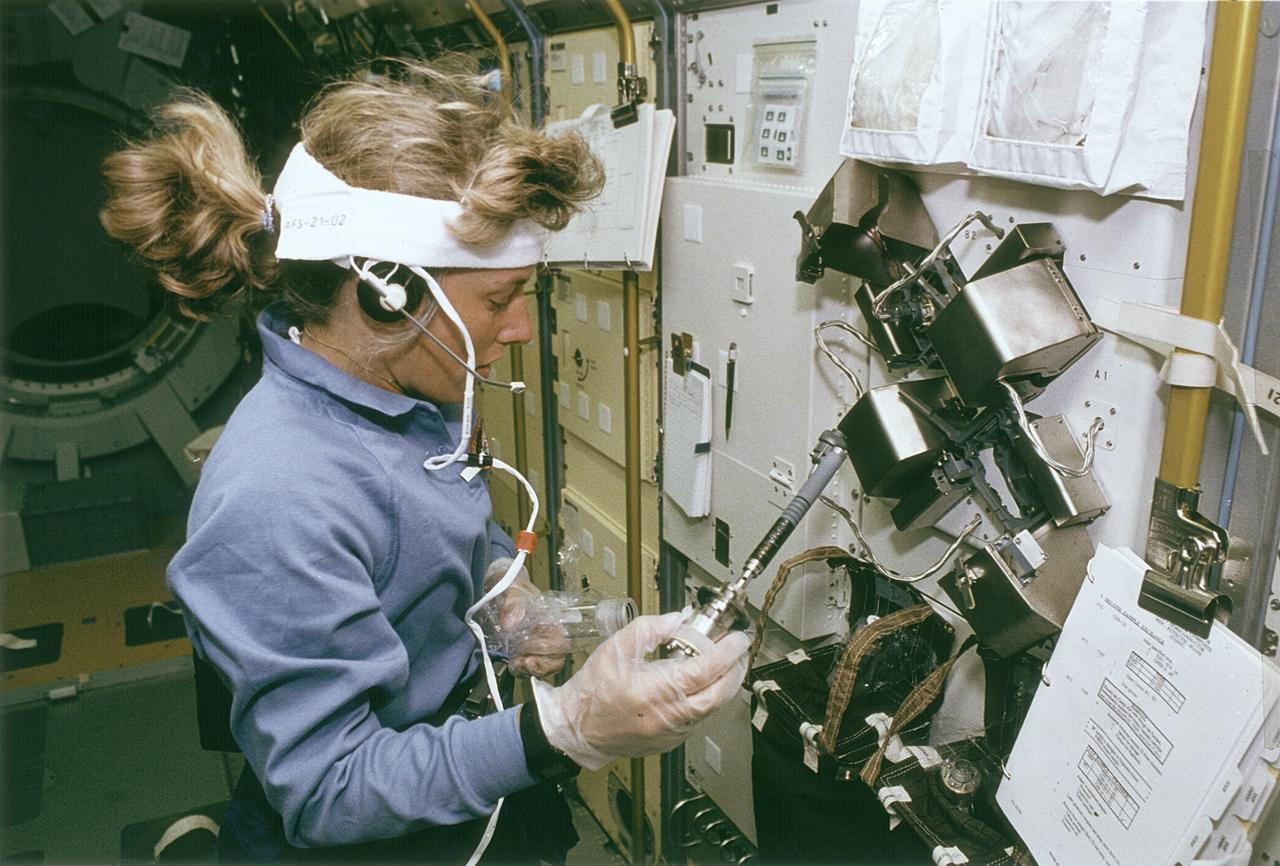
Space Shuttle Endeavour (STS-47) onboard photo of Astronaut N. Jan Davis at work at the Continuous Heating Furnace (CHF) in the Spacelab-J Science Module. Spacelab-J is a combined National Space Development Agency of Japan (NASDA) and NASA mission. The objectives included life sciences, microgravity and technology research.
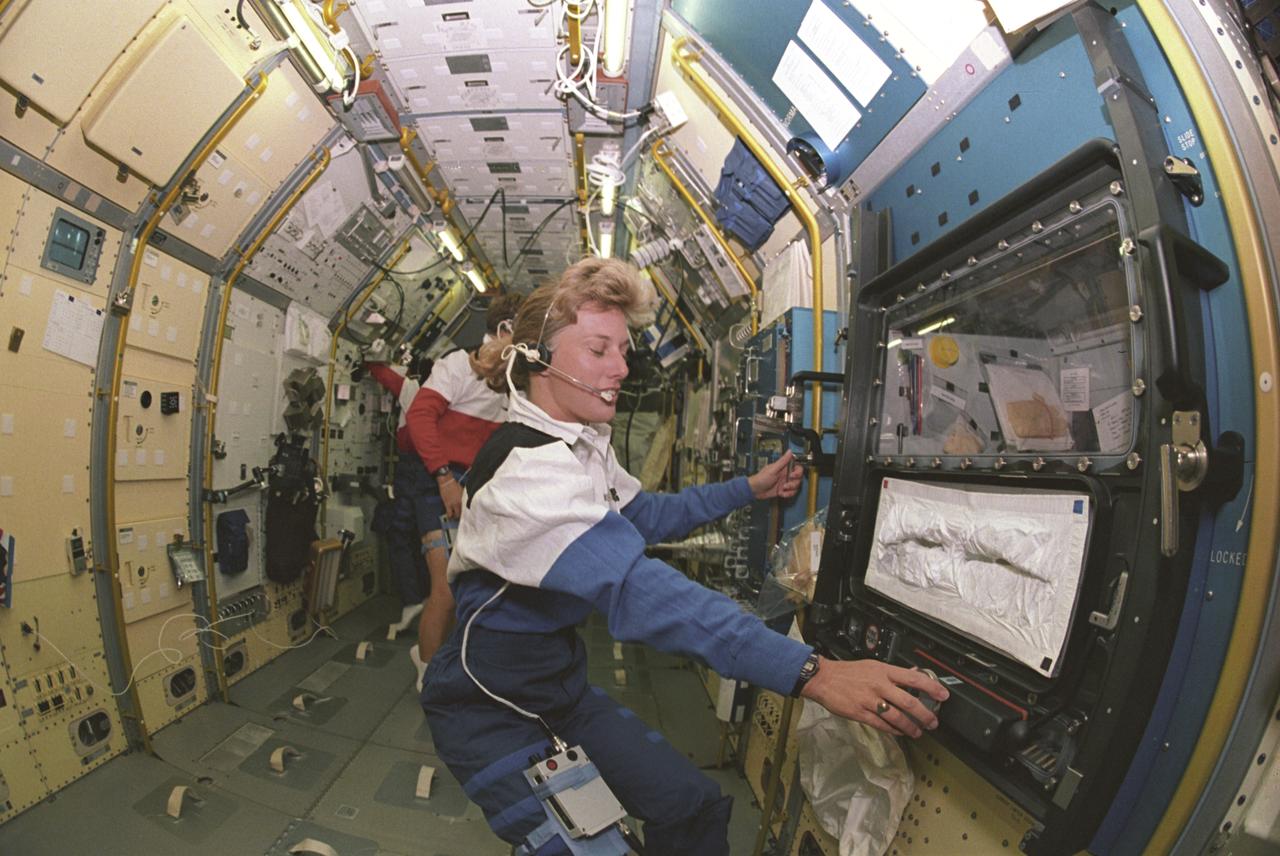
Space Shuttle Endeavour (STS-47) onboard photo of Astronaut Jan Davis inside the Spacelab-J module. Spacelab-J is a combined National Space Development Agency of Japan (NASDA) and NASA mission. The objectives included life sciences, microgravity and technology research.
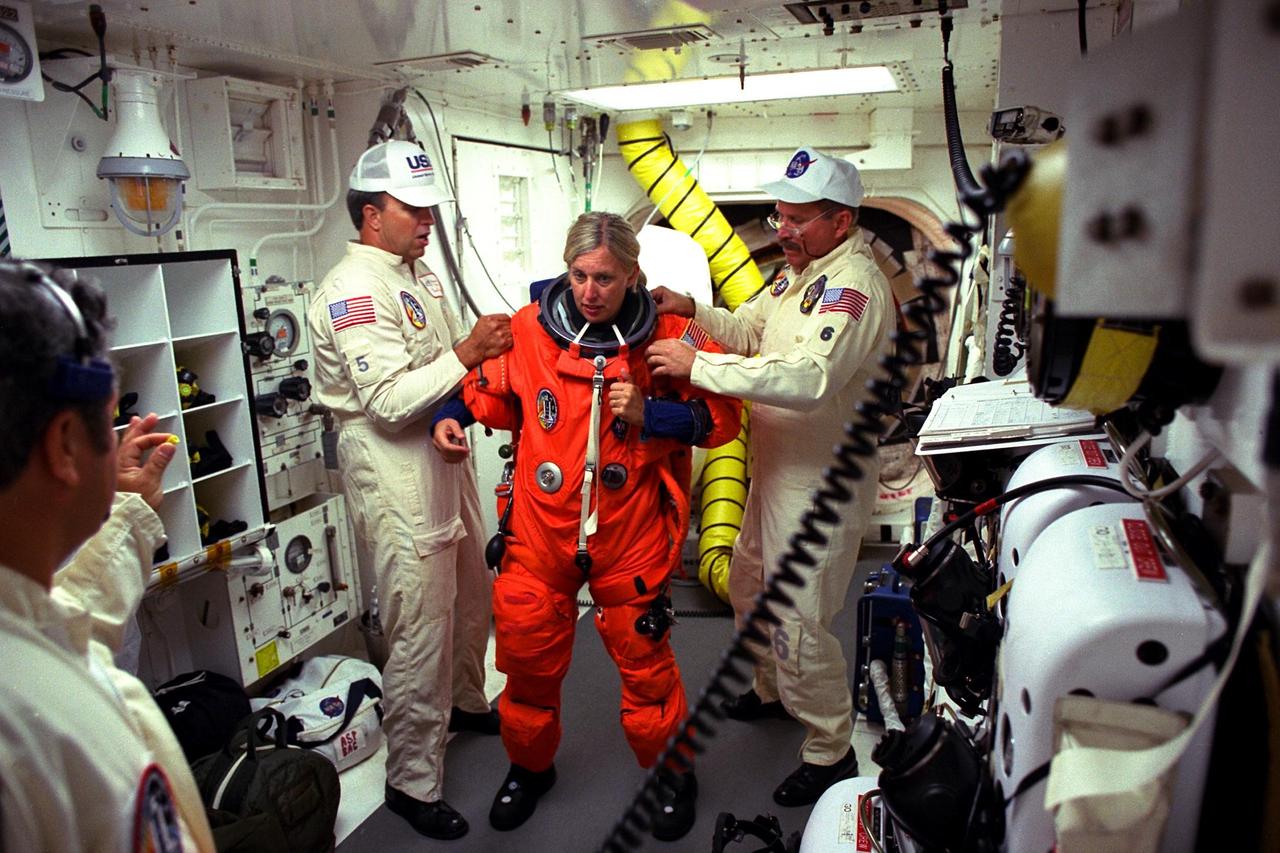
STS-85 Payload Commander N. Jan Davis is assisted with her ascent/reentry flight suit by white room closeout crew members Dave Law (left) and Jack Burritt at Launch Pad 39A before she enters the crew cabin of the Space Shuttle orbiter Discovery
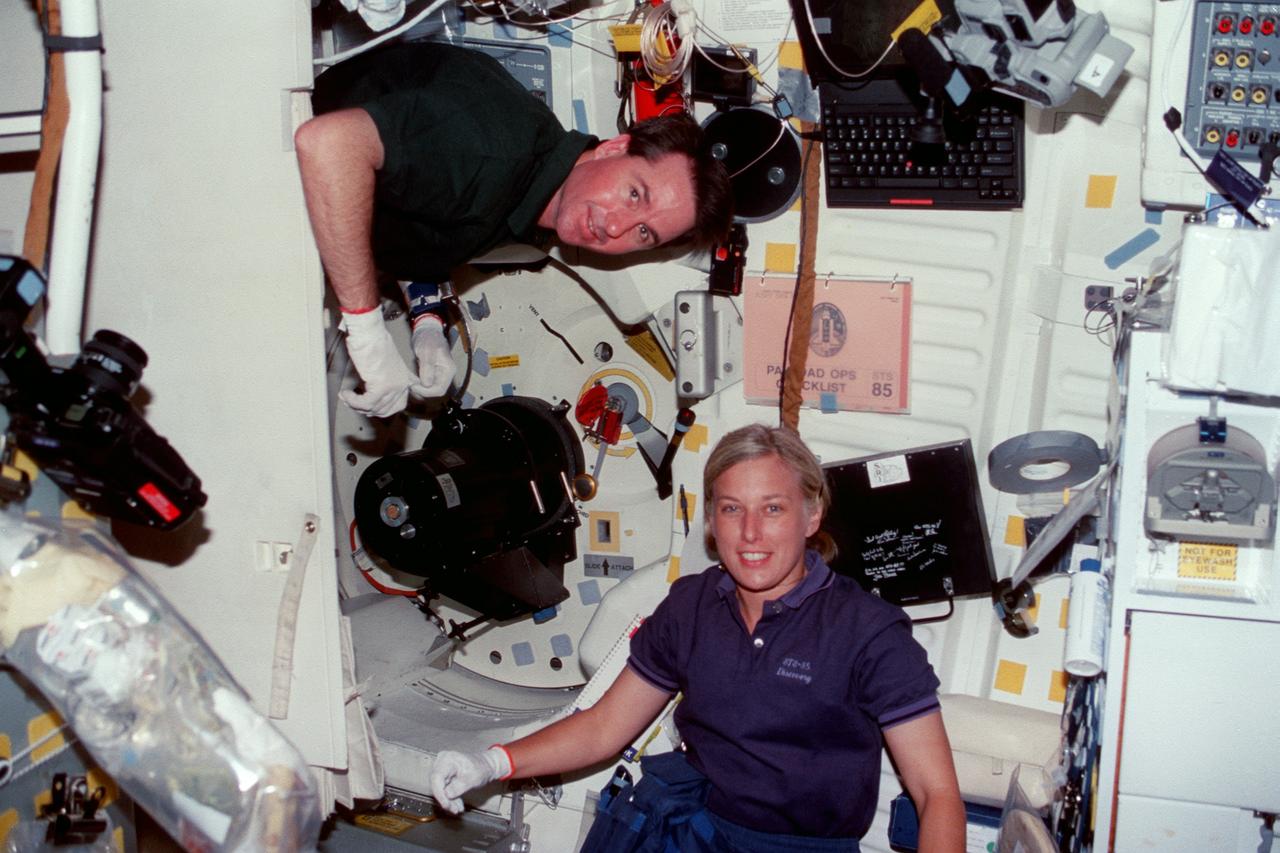
STS085-313-037 (7 - 19 August 1997) --- Astronauts N. Jan Davis, payload commander, and Stephen K. Robinson, mission specialist, prepare to change the film for the Southwest Ultraviolet Imaging System (SWUIS) deployed on the hatch window on the Space Shuttle Discovery's mid-deck.
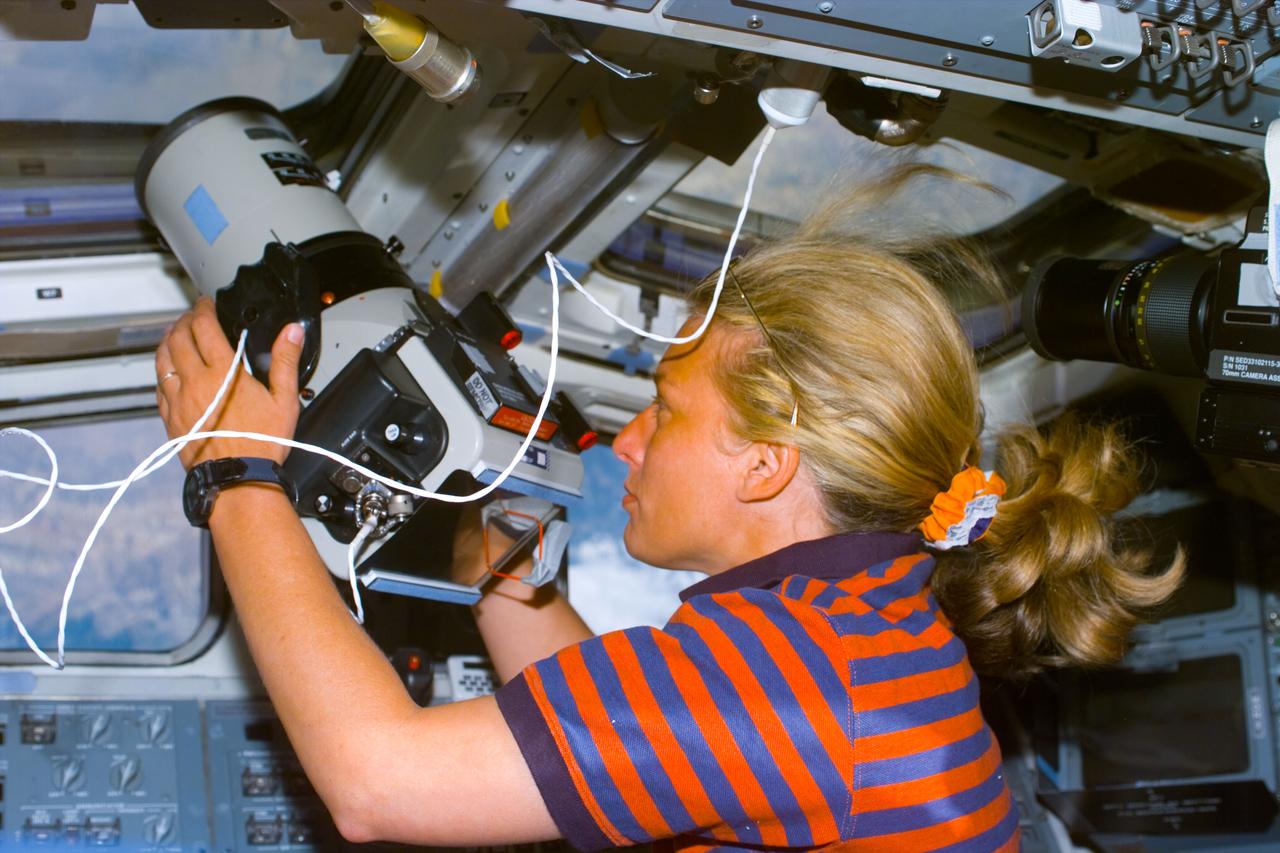
S85-E-5043 (12 August 1997) --- Astronaut N. Jan Davis, payload commander, uses a large format Earth observation camera through the overhead window in the aft flight deck of the Space Shuttle Discovery. The photograph was taken with the Electronic Still Camera (ESC).
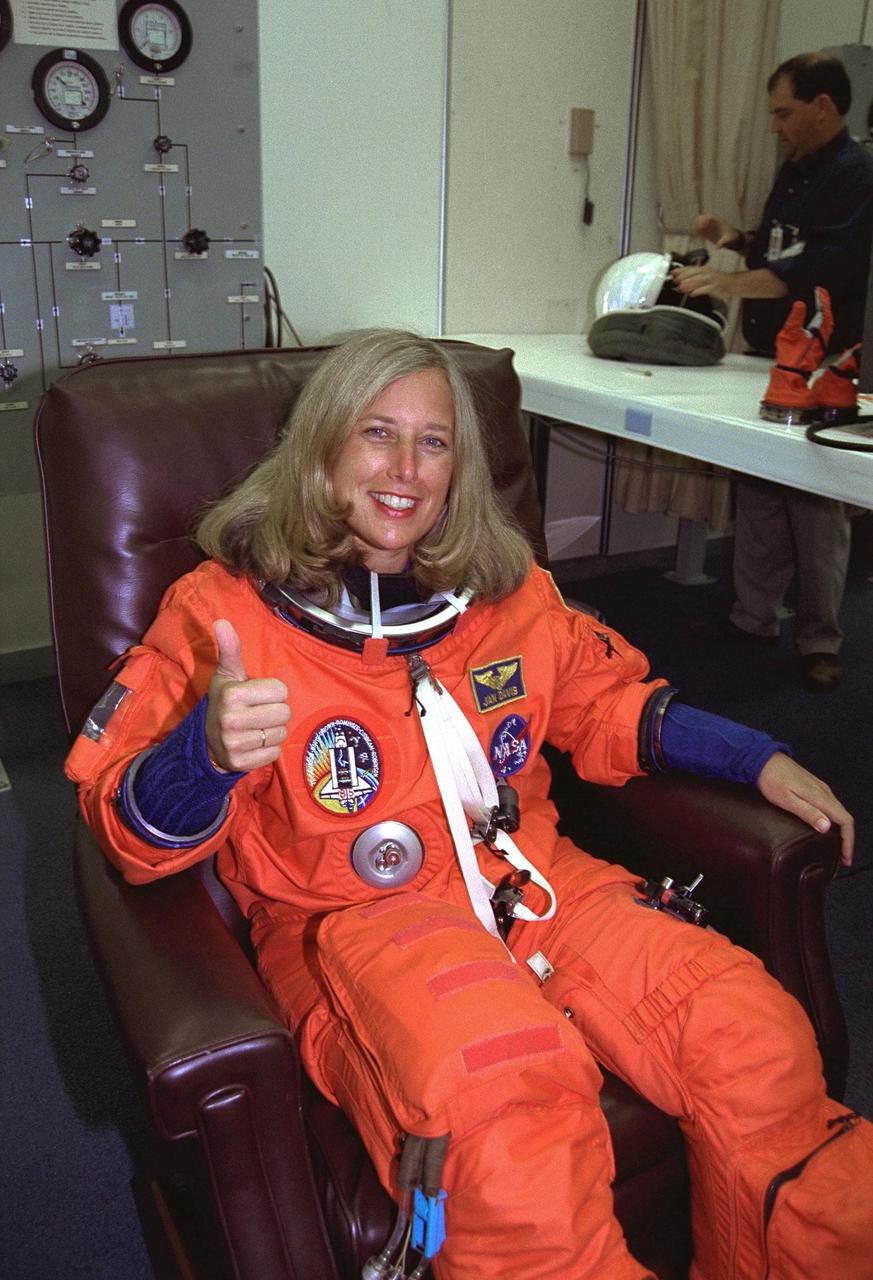
STS-85 Payload Commander N. Jan Davis gives a thumbs up as she is assisted with her ascent/reentry flight suit in the Operations and Checkout (O&C) Building. She has logged nearly 400 hours in space on the STS-47 and STS-60 missions and holds a doctorate in mechanical engineering. Davis will have overall responsibility for the experiments conducted on STS-85. She will also deploy and retrieve the Cryogenic Infrared Spectrometers and Telescopes for the AtmosphereShuttle Pallet Satellite-2 (CRISTA-SPAS-2) free-flyer and operate the prototype Japanese robotic arm. The primary payload aboard the Space Shuttle orbiter Discovery is the CRISTA-SPAS-2. Other payloads on the 11-day mission include the Manipulator Flight Demonstration (MFD), and Technology Applications and Science-1 (TAS-1) and International Extreme Ultraviolet Hitchhiker-2 (IEH-2) experiments

Environmentalist and third-year law student at Elon University School of Law Tyrone Davis is interviewed by TIME for Kids reporter Grace Clark ahead of the annual White House State of Science, Technology, Engineering, and Math (SoSTEM) address, Wednesday, Jan. 29, 2014, in the South Court Auditorium in the Eisenhower Executive Office Building on the White House complex in Washington. Davis sat with the First Lady at the President’s 2014 State of the Union Address. As a Fellow with the Environmental Defense Fund in 2010, he helped show Elizabeth City State University how to save more than $31,000 a year and 200 tons of carbon emissions reductions annually by using technology and efficiency solutions. Photo Credit: (NASA/Bill Ingalls)
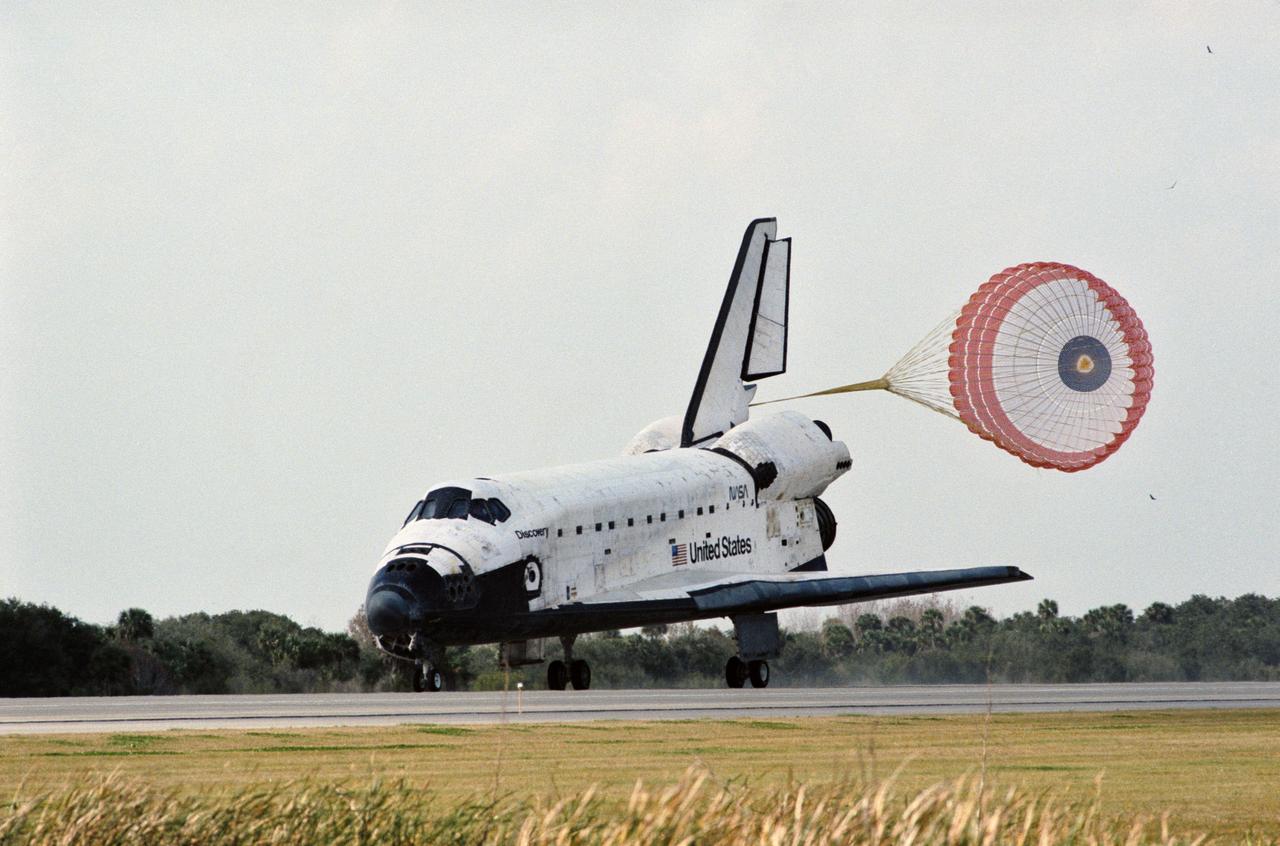
STS060-S-035 (11 Feb 1994) --- The drag chute for Space Shuttle Discovery is deployed on the Shuttle Landing Facility, marking an end to the eight-day STS-60 mission. Landing occurred at 2:19:22 p.m. (EST). Onboard were astronauts Charles F. Bolden Jr., Kenneth S. Reightler Jr., Franklin R. Chang-Diaz, N. Jan Davis and Ronald M. Sega along with Russian cosmonaut Sergei K. Krikalev.
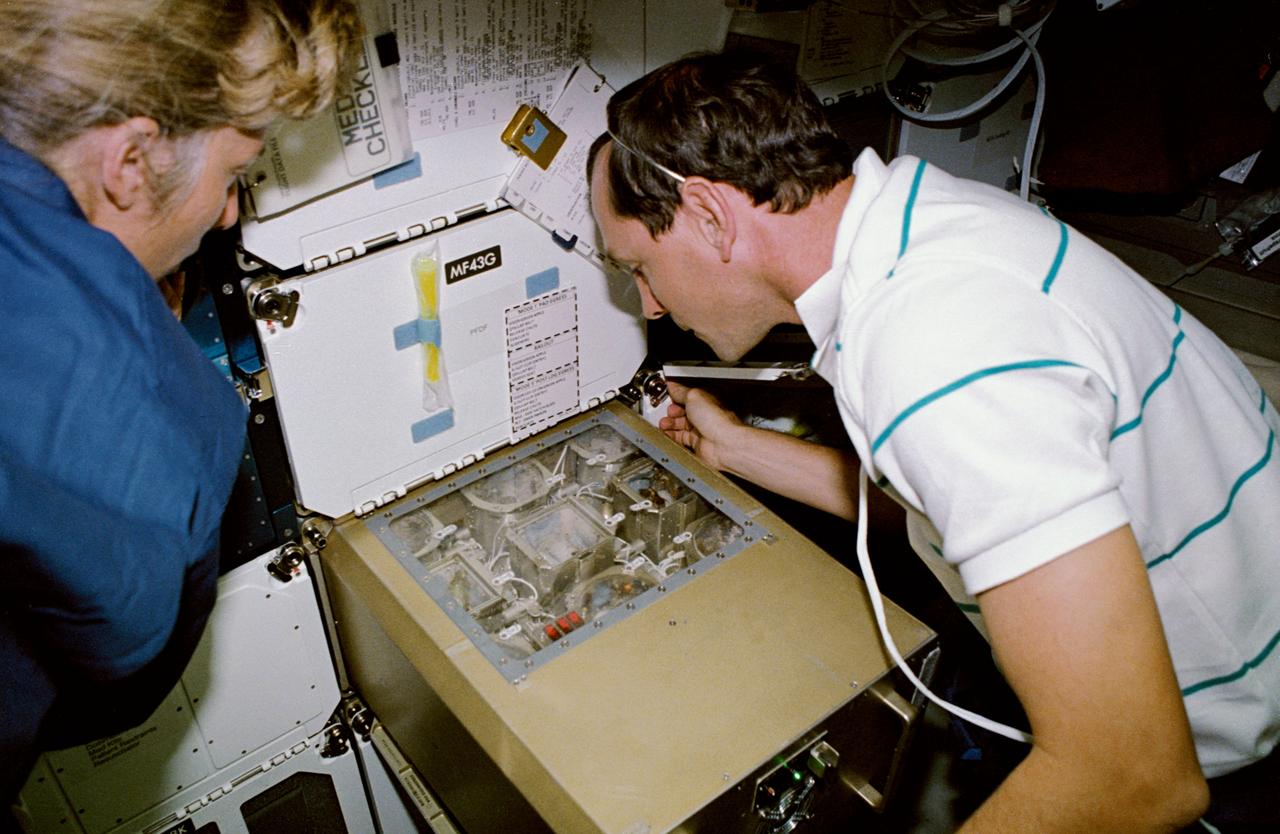
STS047-02-018 (12 - 20 Sept 1992) --- Astronauts N. Jan Davis, mission specialist, and Curtis L. Brown, Jr., pilot, oversee the progress of some of the 180 female Oriental Hornets onboard the Space Shuttle Endeavour. The insects are part of the Israeli Space Agency Investigation About Hornets (ISAIAH) experiment. The objective of this experiment is to examine the effects of microgravity on the orientation, reproductive capability and social activity of the hornets. Also, the direction of comb-building by hornet workers in microgravity, as well as the structural integrity of the combs, will be examined.
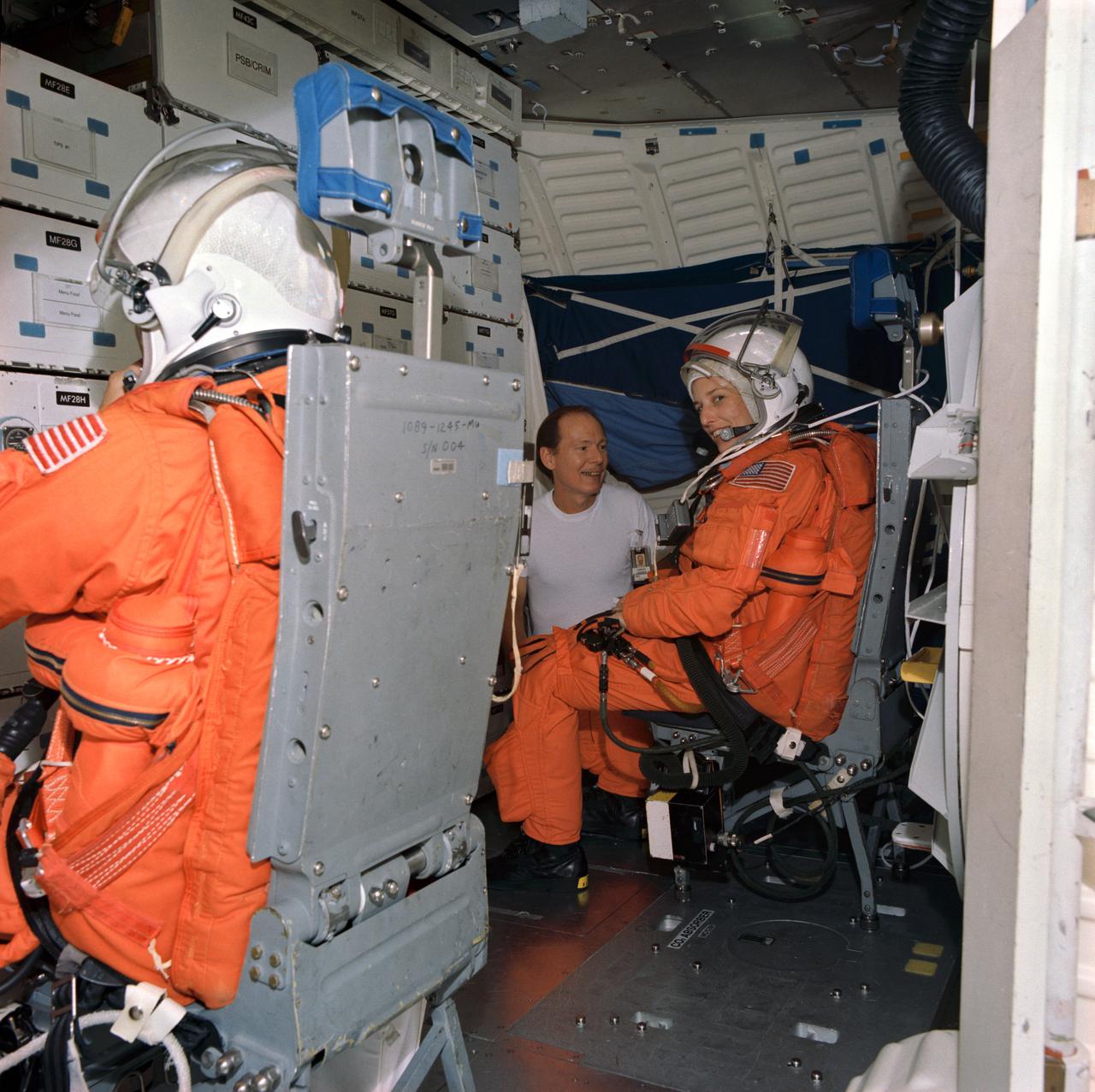
Astronauts Charles F. Bolden Jr. (left) and Kenneth S. Reightler, commander and pilot, respectively, for the STS-60 mission, rehearse some of their duties on the flight deck of the crew compartment trainer in JSC's Shuttle mockup and integration laboratory (50652); Astronaut N. Jan Davis, mission specialist for STS-60, gets assistance with her suit from Lockheed's Max Kandler during a training session at JSC's Shuttle mockup and integration laboratory. She is seated in the mission specialist station on the middeck mockup (50653).
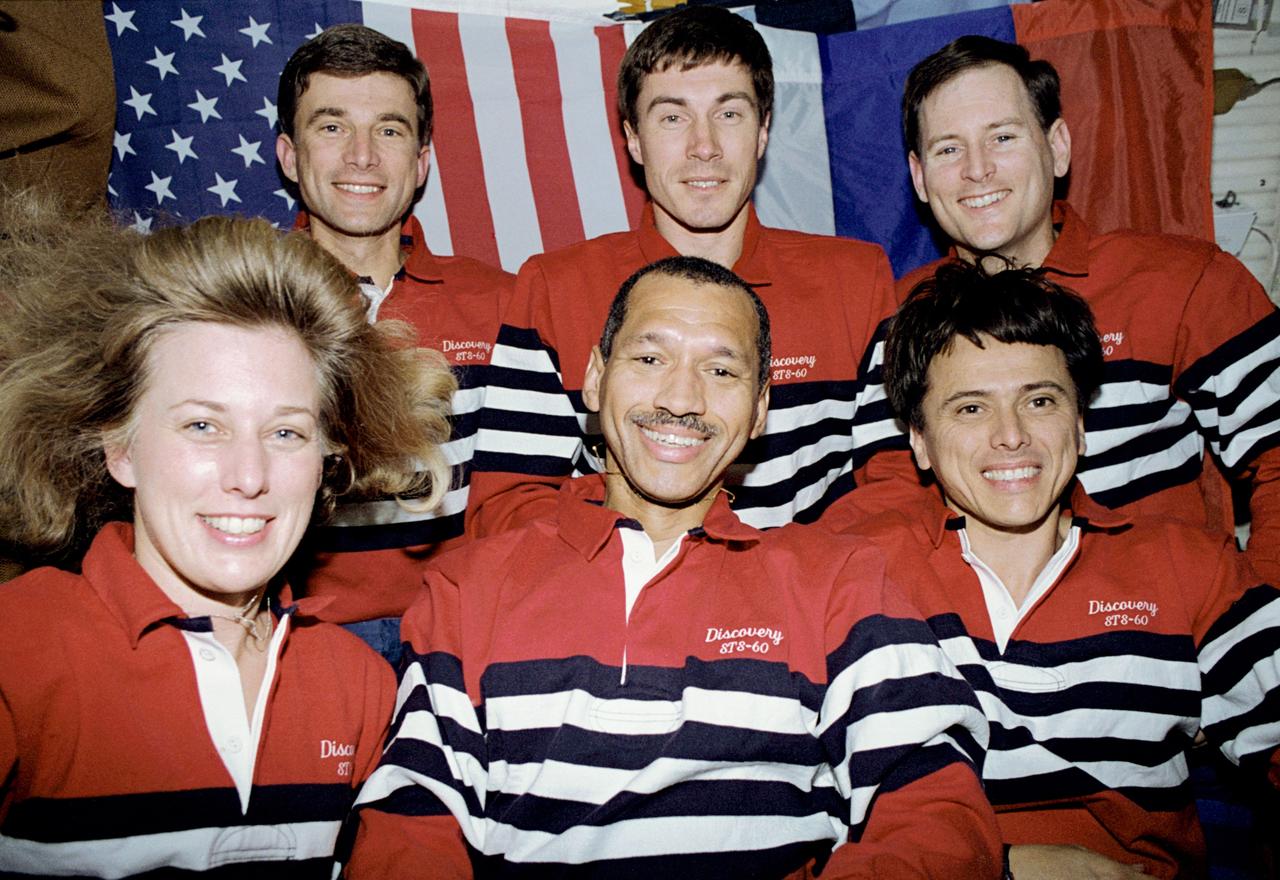
STS060-31-009 (3-11 Feb. 1994) --- The six-member STS-60 crew pose for the traditional in-flight crew portrait, with American and Russian flags forming the backdrop on the space shuttle Discovery’s middeck. Left to right (front row) are N. Jan Davis, Charles F. Bolden Jr. and Franklin R. Chang-Diaz; and (back row) Ronald M. Sega, Sergei K. Krikalev and Kenneth S. Reightler Jr. Photo credit: NASA or National Aeronautics and Space Administration
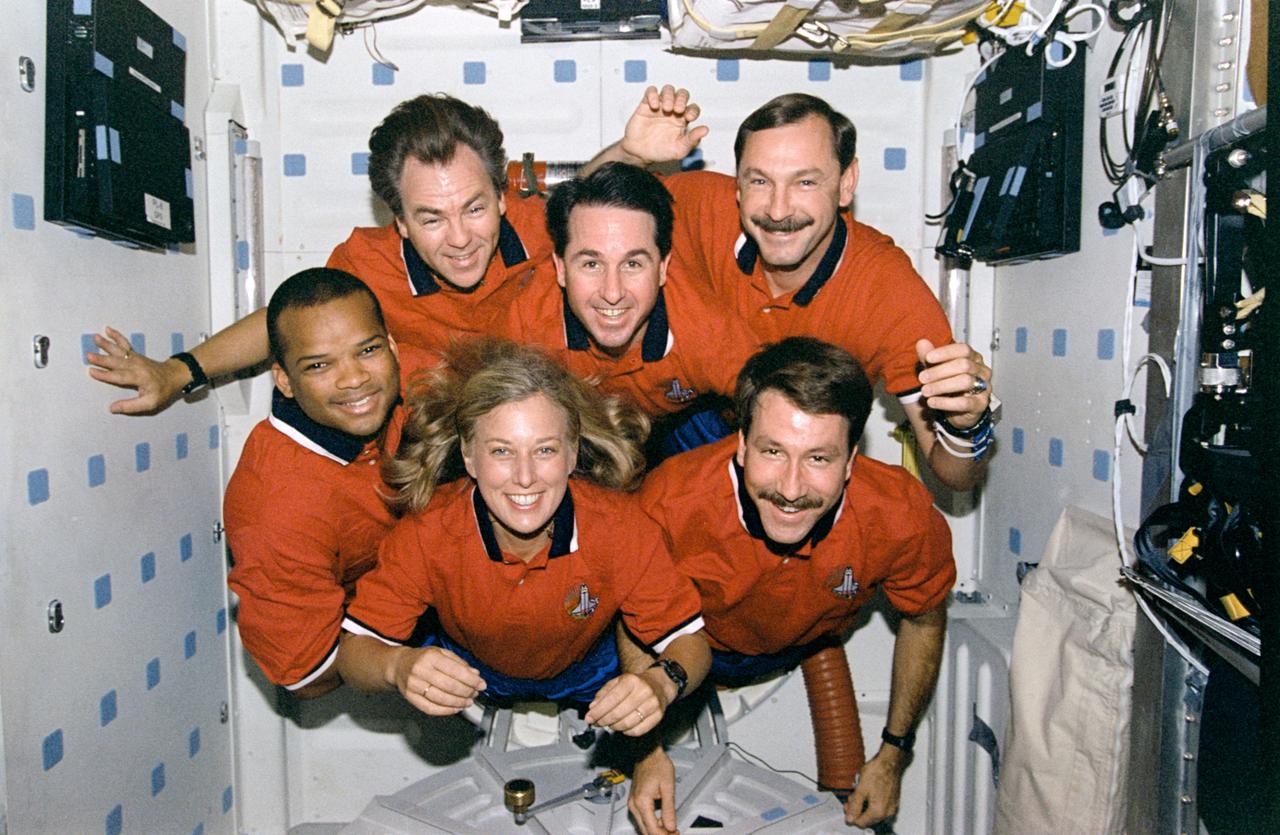
STS085-320-020 (7 - 19 August 1997) --- For their traditional in-flight crew portrait, the six crew members for this mission float on the mid-deck of the Space Shuttle Discovery. On top, left to right, are Bjarni Tryggvason, payload specialist of the Canadian Space Agency (CSA); along with astronauts Stephen K. Robinson, mission specialist; and Curtis L. Brown, Jr., mission commander. On bottom, from the left, are astronauts Robert L. Curbeam, Jr., mission specialist; N. Jan Davis, payload commander; and Kent V. Rominger, pilot.
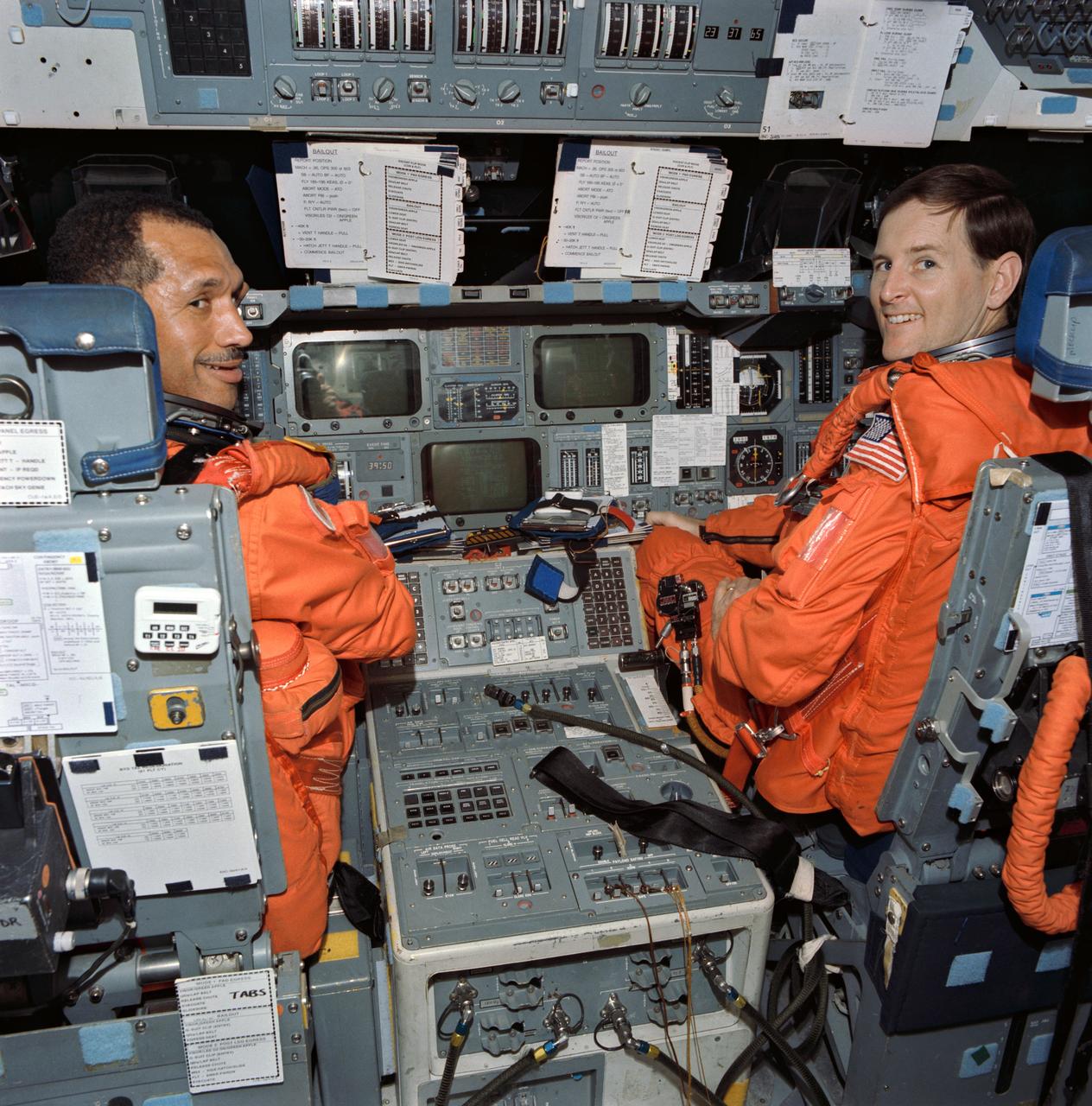
Astronauts Charles F. Bolden Jr. (left) and Kenneth S. Reightler, commander and pilot, respectively, for the STS-60 mission, rehearse some of their duties on the flight deck of the crew compartment trainer in JSC's Shuttle mockup and integration laboratory (50652); Astronaut N. Jan Davis, mission specialist for STS-60, gets assistance with her suit from Lockheed's Max Kandler during a training session at JSC's Shuttle mockup and integration laboratory. She is seated in the mission specialist station on the middeck mockup (50653).
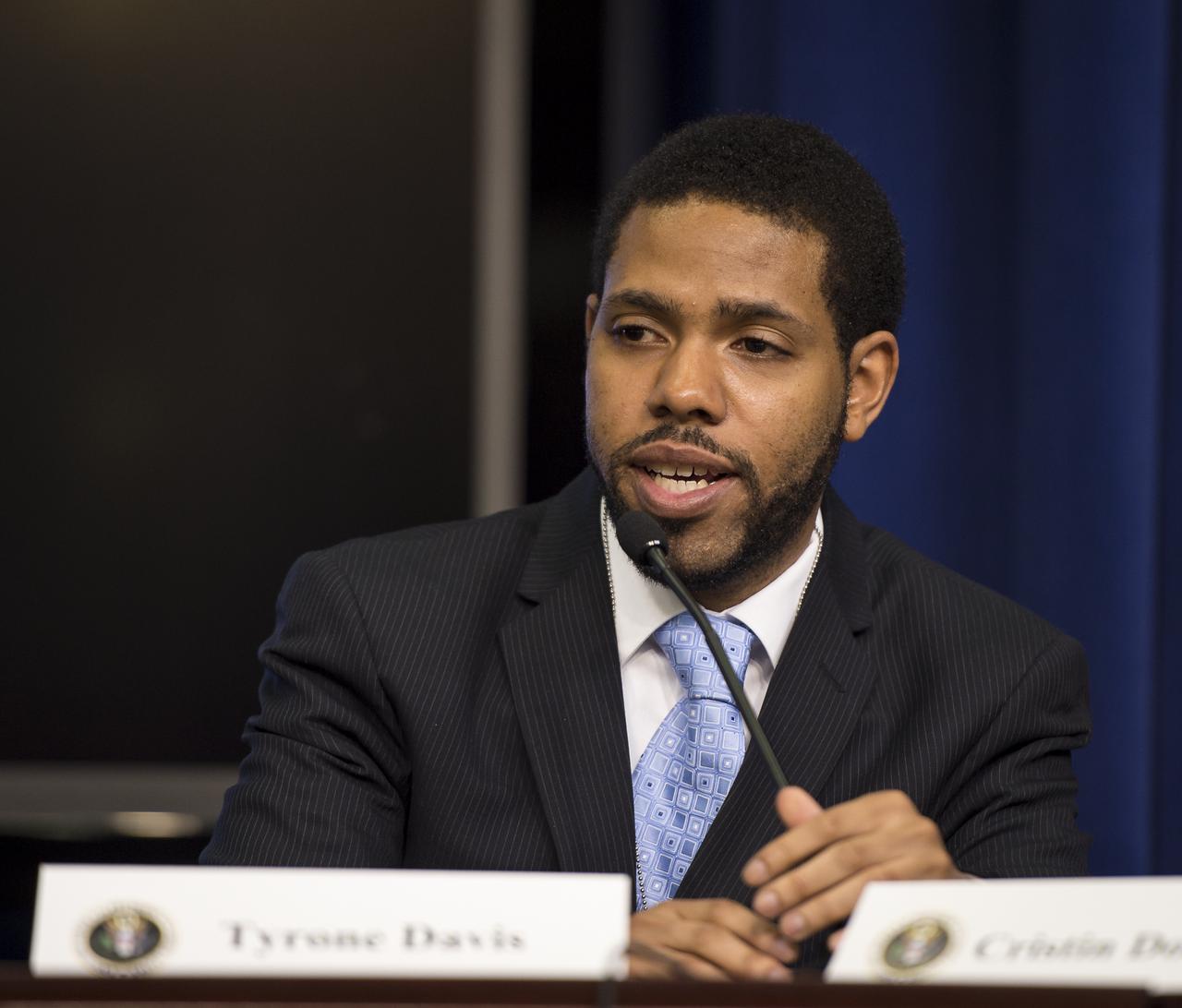
Environmentalist and third-year law student at Elon University School of Law Tyrone Davis speaks at the annual White House State of Science, Technology, Engineering, and Math (SoSTEM) address, Wednesday, Jan. 29, 2014, in the South Court Auditorium in the Eisenhower Executive Office Building on the White House complex in Washington. Photo Credit: (NASA/Bill Ingalls)
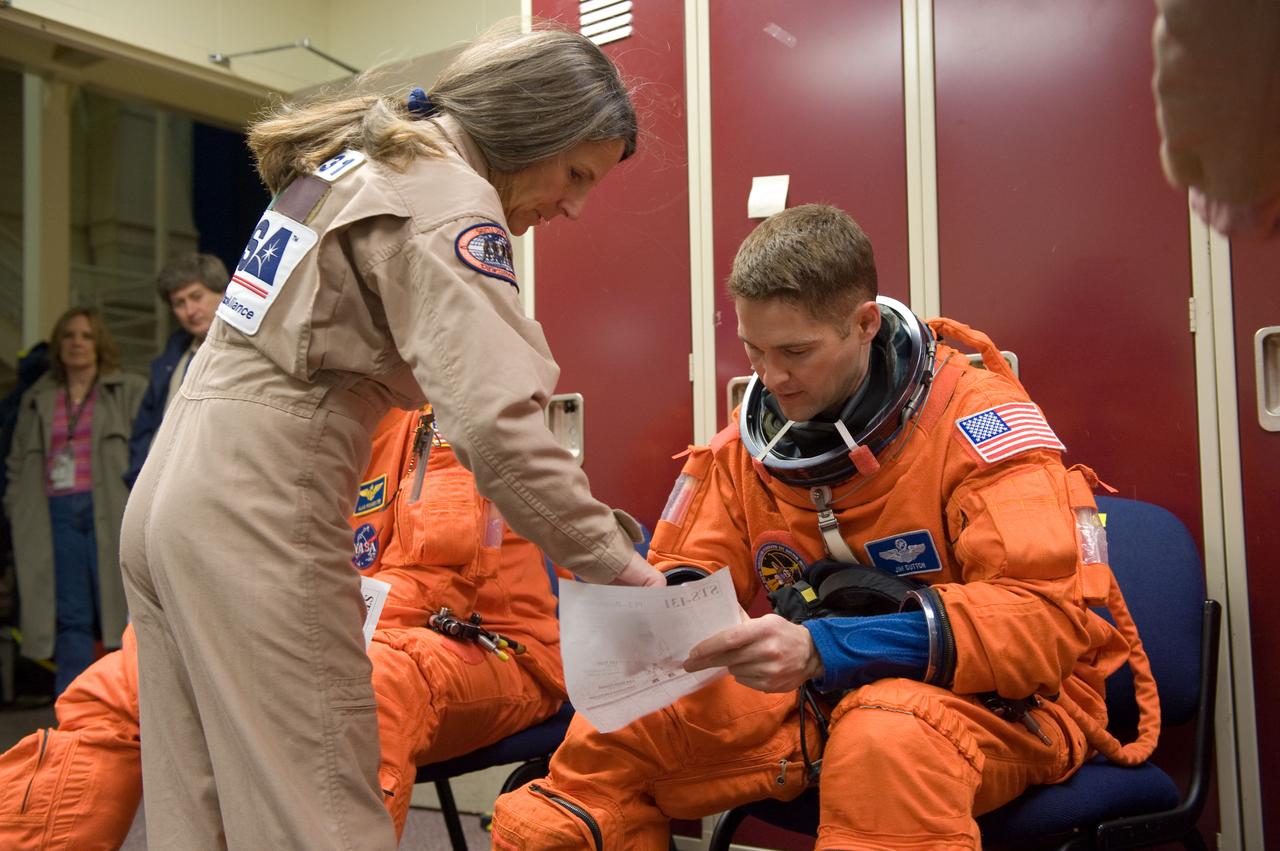
JSC2010-E-017719 (29 Jan. 2010) --- NASA astronaut James P. Dutton Jr., STS-131 pilot, attired in a training version of his shuttle launch and entry suit, prepares for an ingress/egress training session in the Space Vehicle Mock-up Facility at NASA's Johnson Space Center. United Space Alliance suit technician Toni Cost-Davis assisted Dutton.
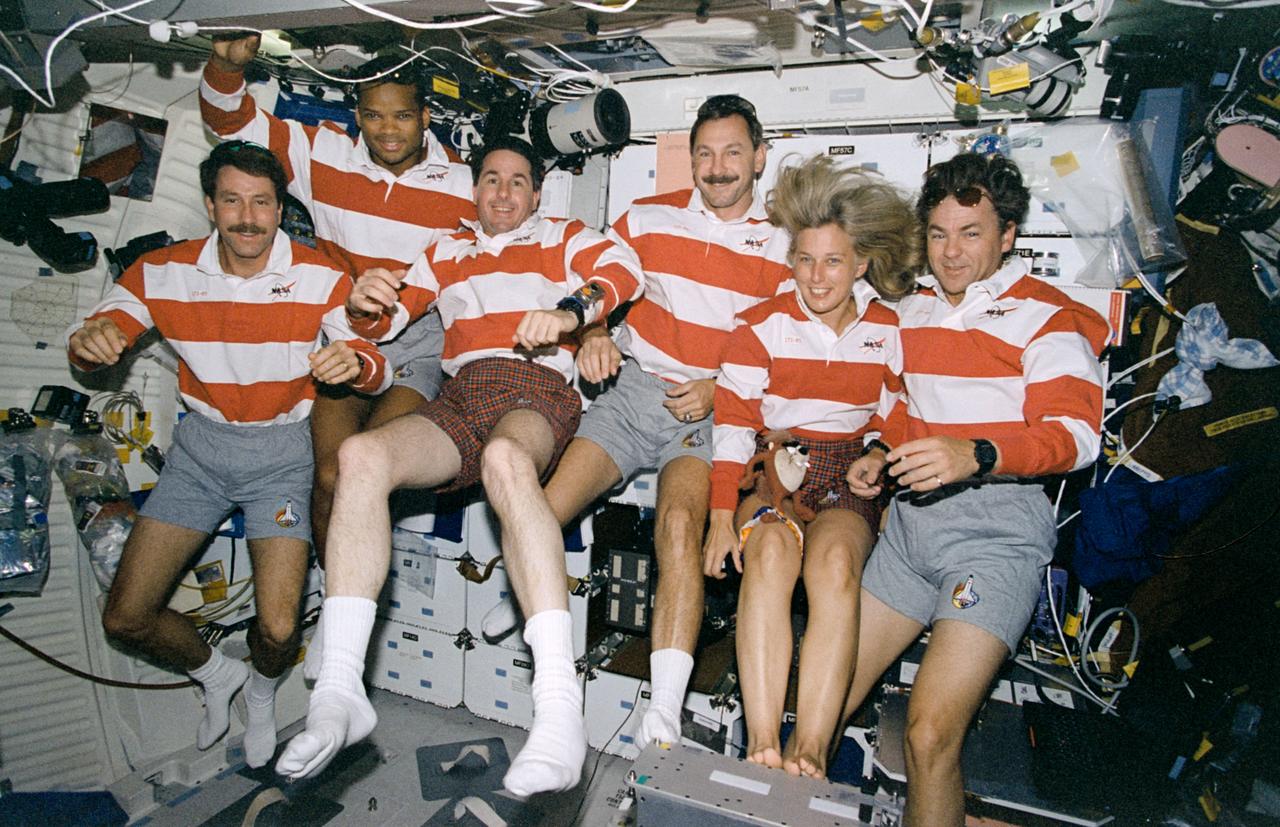
STS085-326-016 (7 - 19 August 1997) --- An impromptu in-flight crew portrait was snapped while the crew members were setting up for a more balanced portrait on the Space Shuttle Discovery's mid-deck. Left to right are astronauts Kent V. Rominger, Robert L. Curbeam, Stephen K. Robinson, Curtis L. Brown, Jr., N. Jan Davis and Bjarni V. Tryggvason.
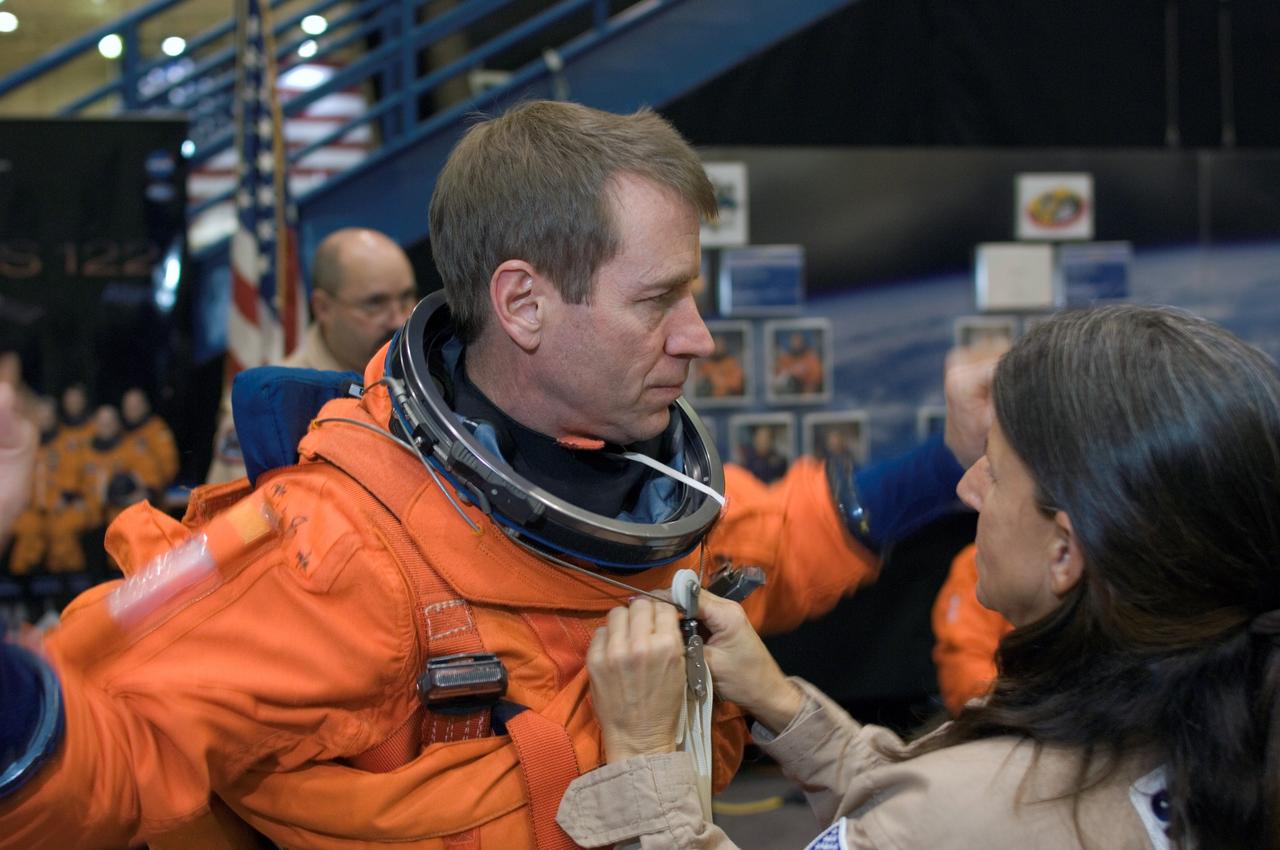
JSC2008-E-008451 (29 Jan. 2008) --- Astronaut Gregory C. Johnson, STS-125 pilot, dons a training version of his shuttle launch and entry suit in preparation for a training session in the Space Vehicle Mockup Facility at Johnson Space Center. United Space Alliance (USA) suit technician Toni Cost-Davis assisted Johnson.
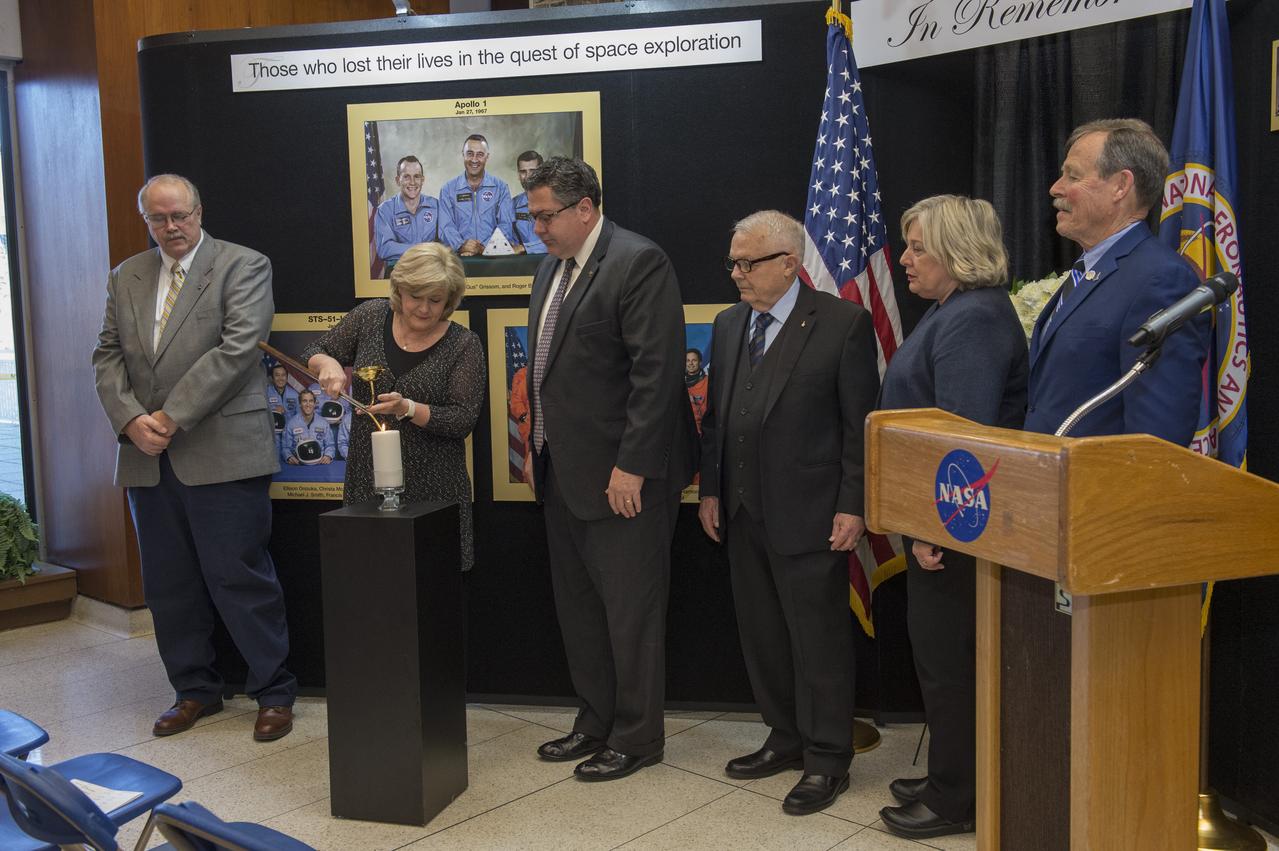
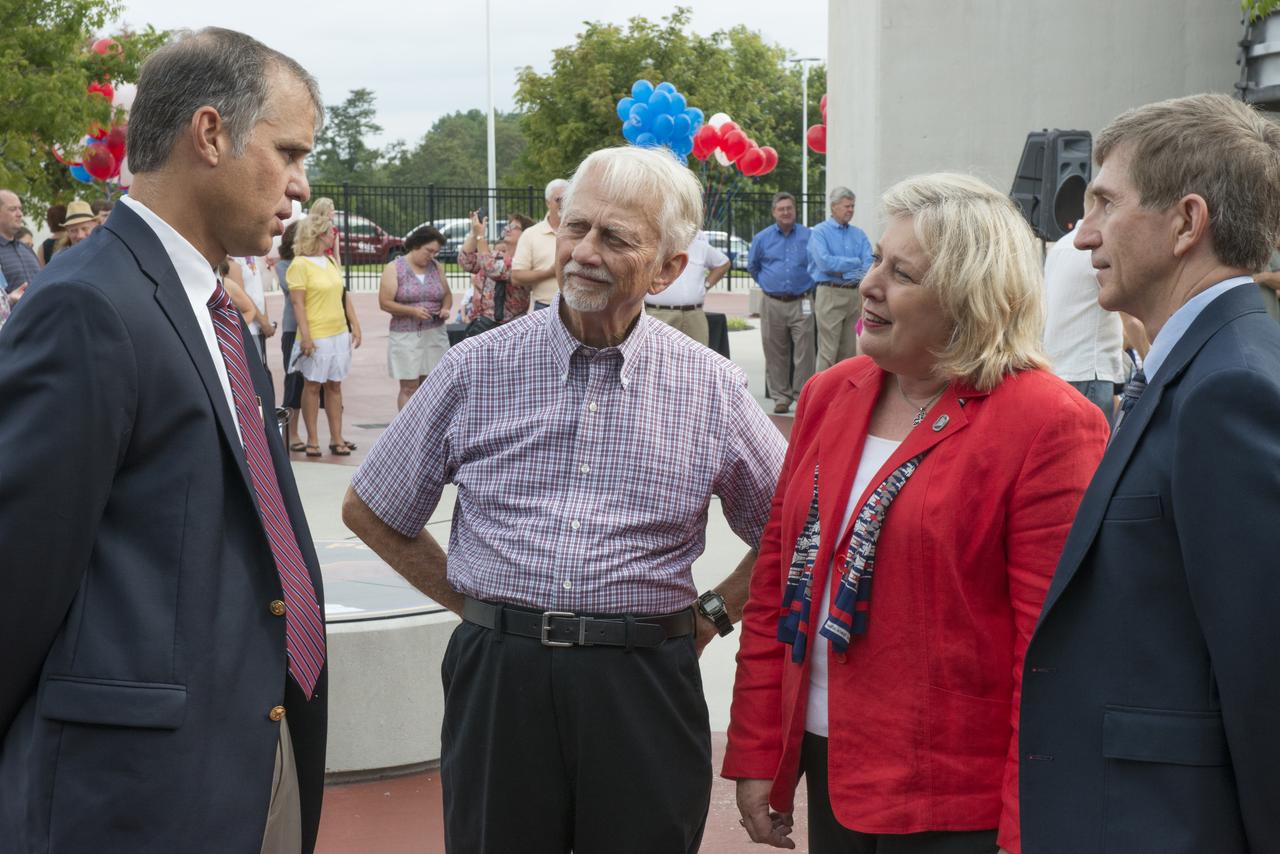
Jody Singer, Marshall deputy director, lights a candle in honor of colleagues who lost their lives in purist of space exploration during Marshall's Day of Remembrance ceremony. Looking on, from left, are Rick Burt, Marshall Safety and Mission Assurance Directorate director; Marshall Center Director Todd May; and former NASA astronauts retired Army Brig. Gen. Robert Stewart; former Marshall Deputy Director Jan Davis; and Robert "Hoot" Gibson.

Johnny Stephenson, Director of the Office of Strategic Analysis and Communications, addresses guests and employees at the Marshall Space Flight Center’s annual “Day of Remembrance†honoring those astronauts who have passed away. Looking on, from left, are Rick Burt, Marshall Safety and Mission Assurance Directorate director; Marshall Center Director Todd May; and former NASA astronauts retired Army Brig. Gen. Robert Stewart; former Marshall Deputy Director Jan Davis; and Robert "Hoot" Gibson.
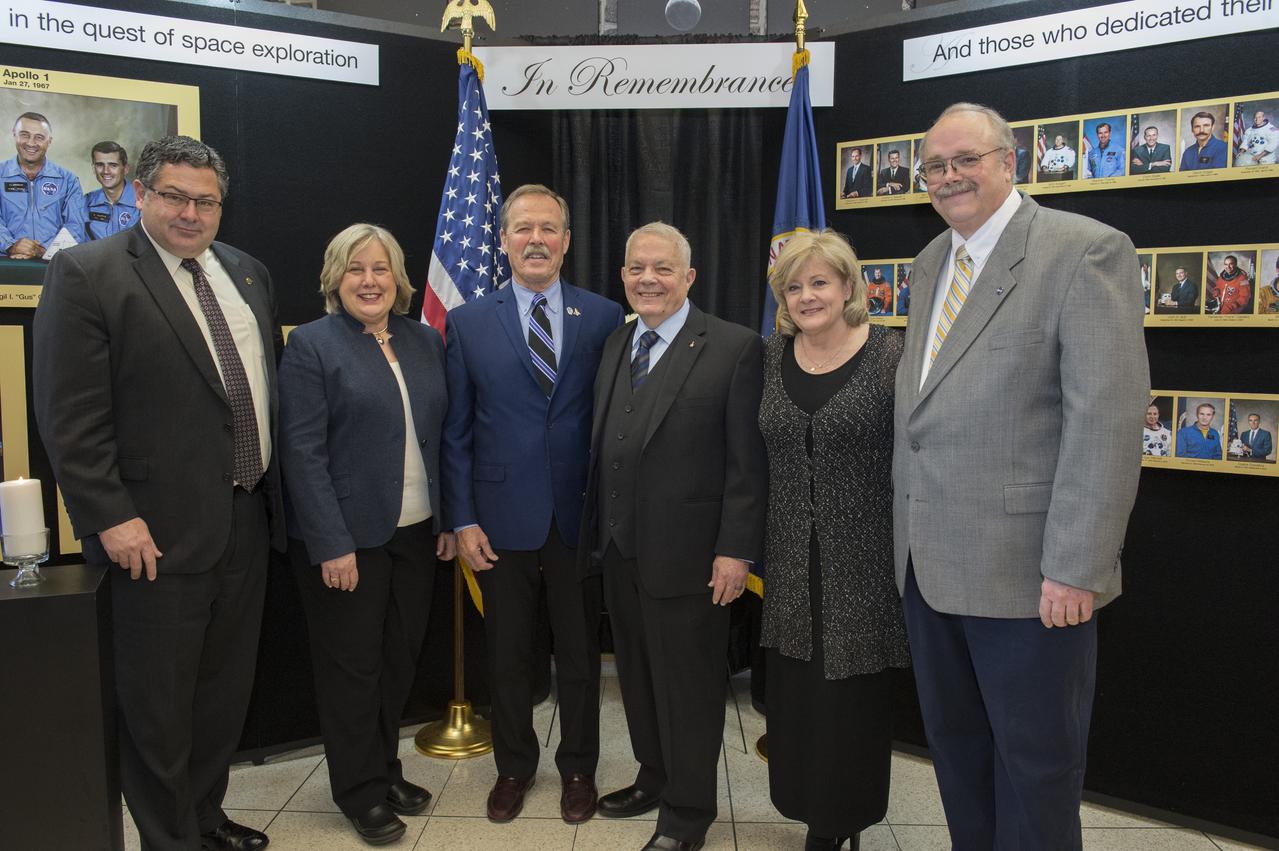
Participants in Marshall Space Flight Center’s annual “Day of Remembrance are, from left to right, MSFC Director Todd May, retired astronaut Jan Davis, retired astronaut Robert “Hoot†Gibson, retired astronaut Robert Stewart, MSFC Deputy Director Jody singer, and Director of Safety and Mission Assurance Rick Burt.
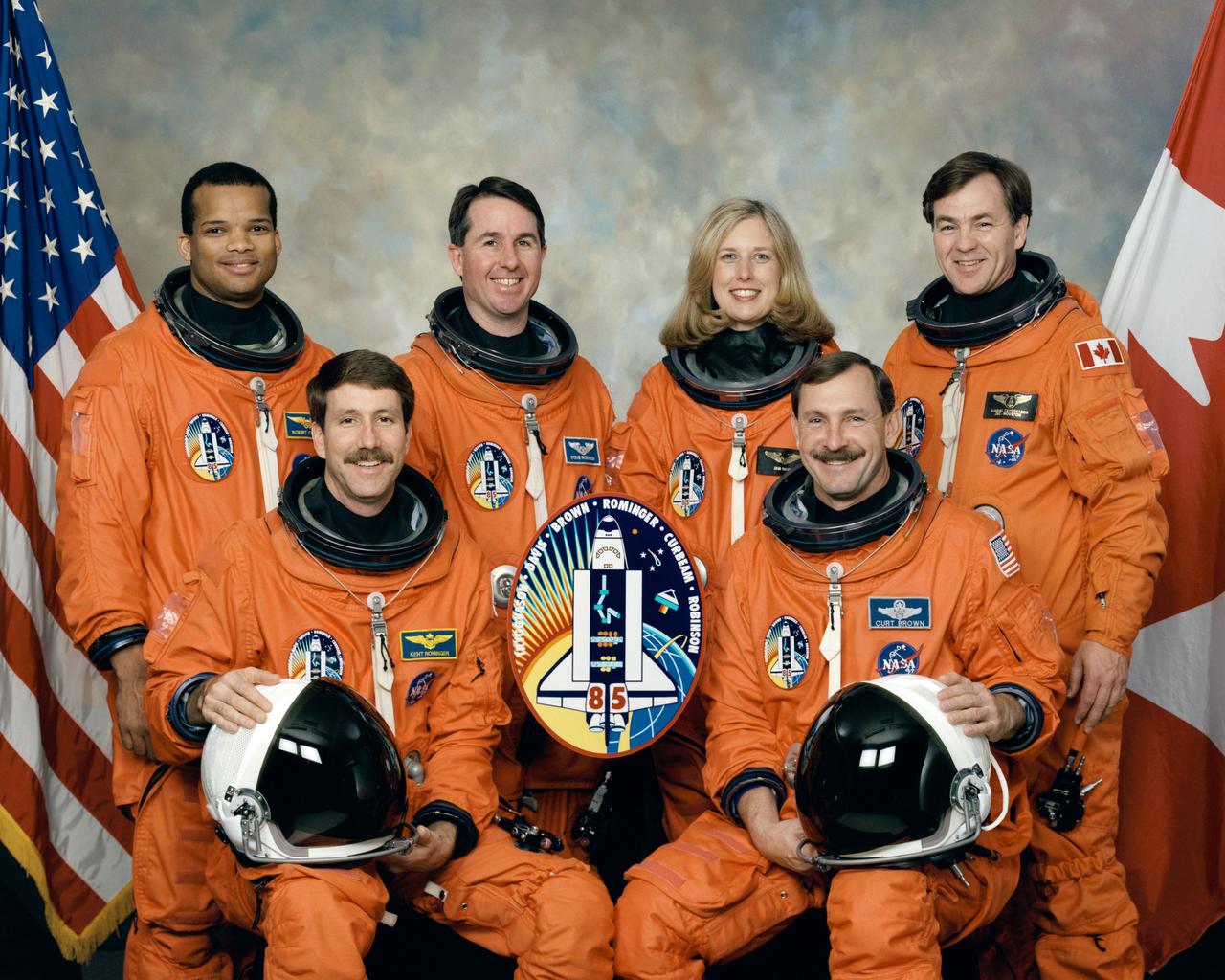
STS085-S-002 (May 1997) --- Five NASA astronauts and a Canadian payload specialist pause from their training schedule to pose for the traditional crew portrait for their mission. In front are astronauts Curtis L. Brown, Jr. (right), mission commander, and Kent V. Rominger, pilot. On the back row, from the left, are astronauts Robert L. Curbeam, Jr., Stephen K. Robinson and N. Jan Davis, all mission specialists, along with the Canadian Space Agency’s (CSA) payload specialist Bjarni Tryggvason.
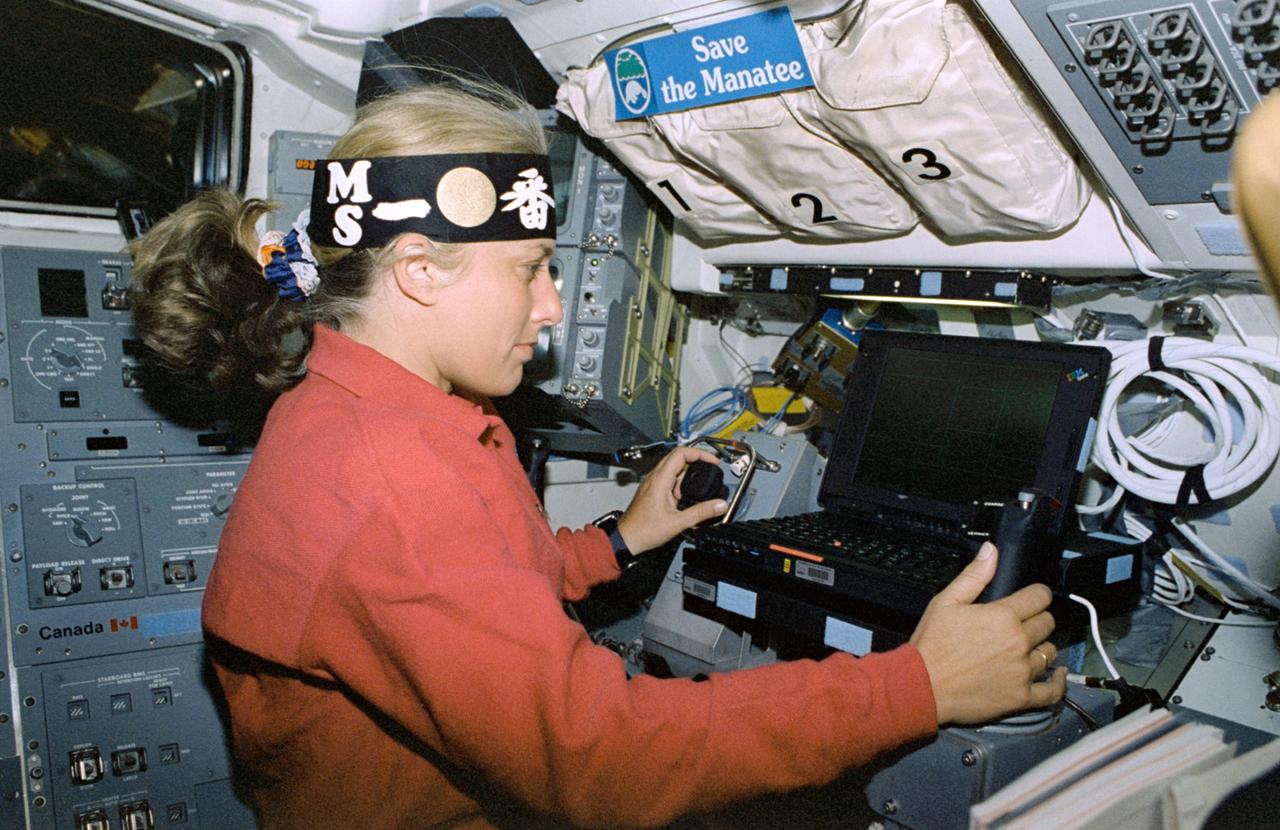
STS085-316-026 (7 - 19 August 1997) --- Wearing a head band representing the Manipulator Flight Demonstration (MFD) hardware several feet away in the open cargo bay of the Space Shuttle Discovery, astronaut N. Jan Davis, payload commander, performs MFD operations at the experiment's work station. This flight of the MFD is in preparation for the Japanese Experiment Module (JEM) Remote Manipulator System (RMS) Small Fine Arm (SFA).
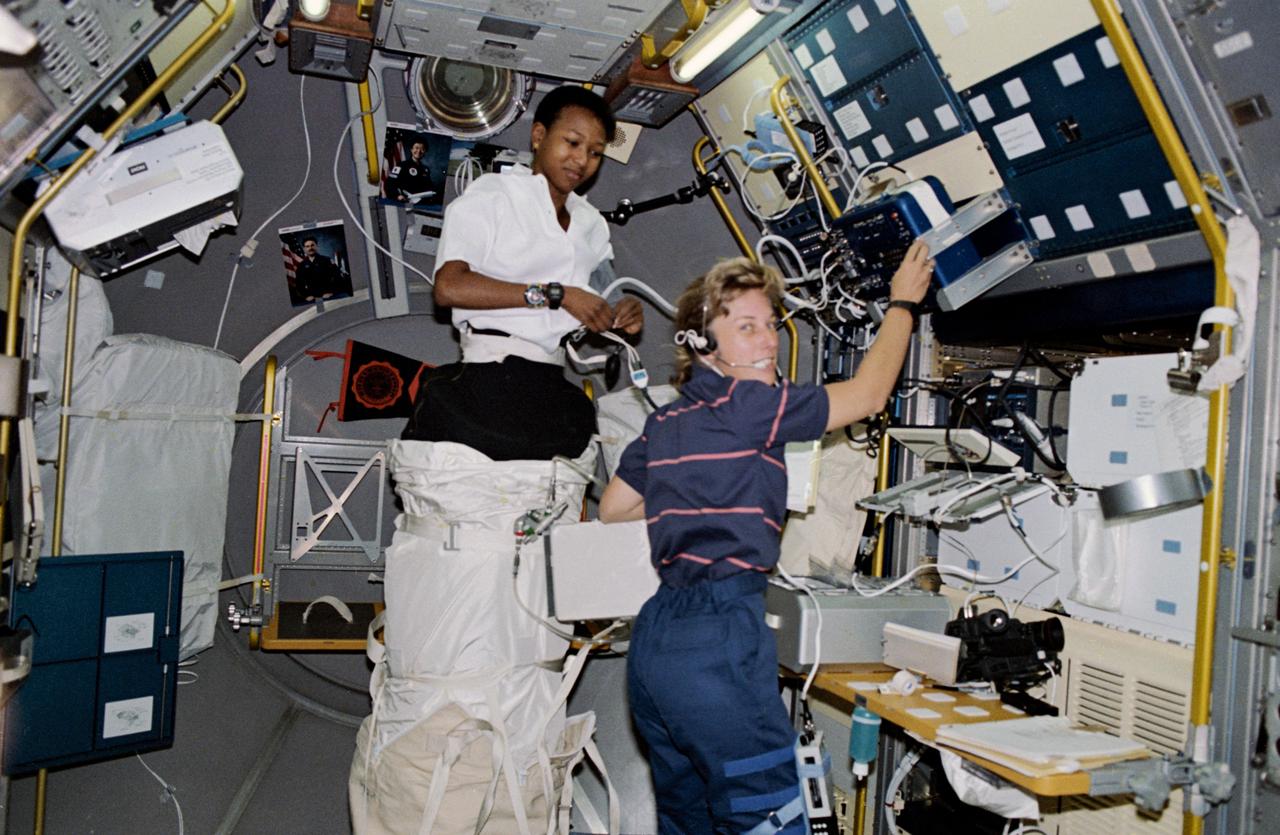
STS047-230-030 (12 - 20 Sept 1992) --- Astronauts Mae C. Jemison (left) and N. Jan Davis, mission specialists, are pictured in the Spacelab-J science module preparing to conduct a session with the Lower Body Negative Pressure (LBNP) experiment. The two joined four other NASA astronauts and a payload specialist representing Japan's National Space Development Agency (NASDA) aboard the Earth-orbiting Space Shuttle Endeavour for eight days of Spacelab-J research.
JSC2008-E-008454 (29 Jan. 2008) --- Astronaut Gregory C. Johnson, STS-125 pilot, dons a training version of his shuttle launch and entry suit in preparation for a training session in the Space Vehicle Mockup Facility at Johnson Space Center. United Space Alliance (USA) suit technician Toni Cost-Davis assisted Johnson.
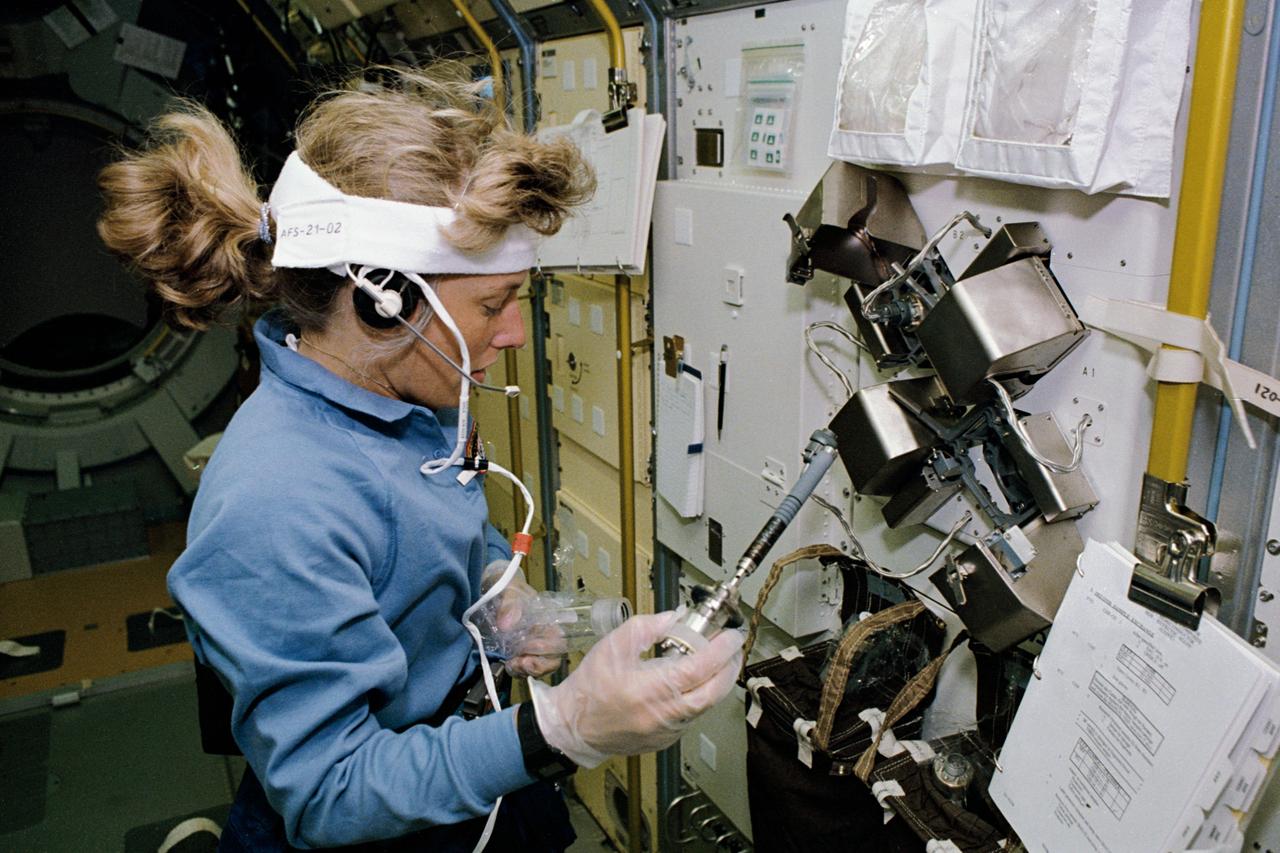
STS047-02-003 (12 - 20 Sept 1992) --- Astronaut N. Jan Davis, mission specialist, works at the Continuous Heating Furnace (CHF) in the Spacelab-J Science Module. This furnace provided temperatures up to 1,300 degrees Celsius and rapid cooling to two sets of samples concurrently. The furnace accommodated in-space experiments in the Fabrication of Si-As-Te:Ni Ternary Amorphous Semiconductor and the Crystal Growth of Compound Semiconductors. These were two of the many experiments designed and monitored by Japan's National Space Development Agency (NASDA).
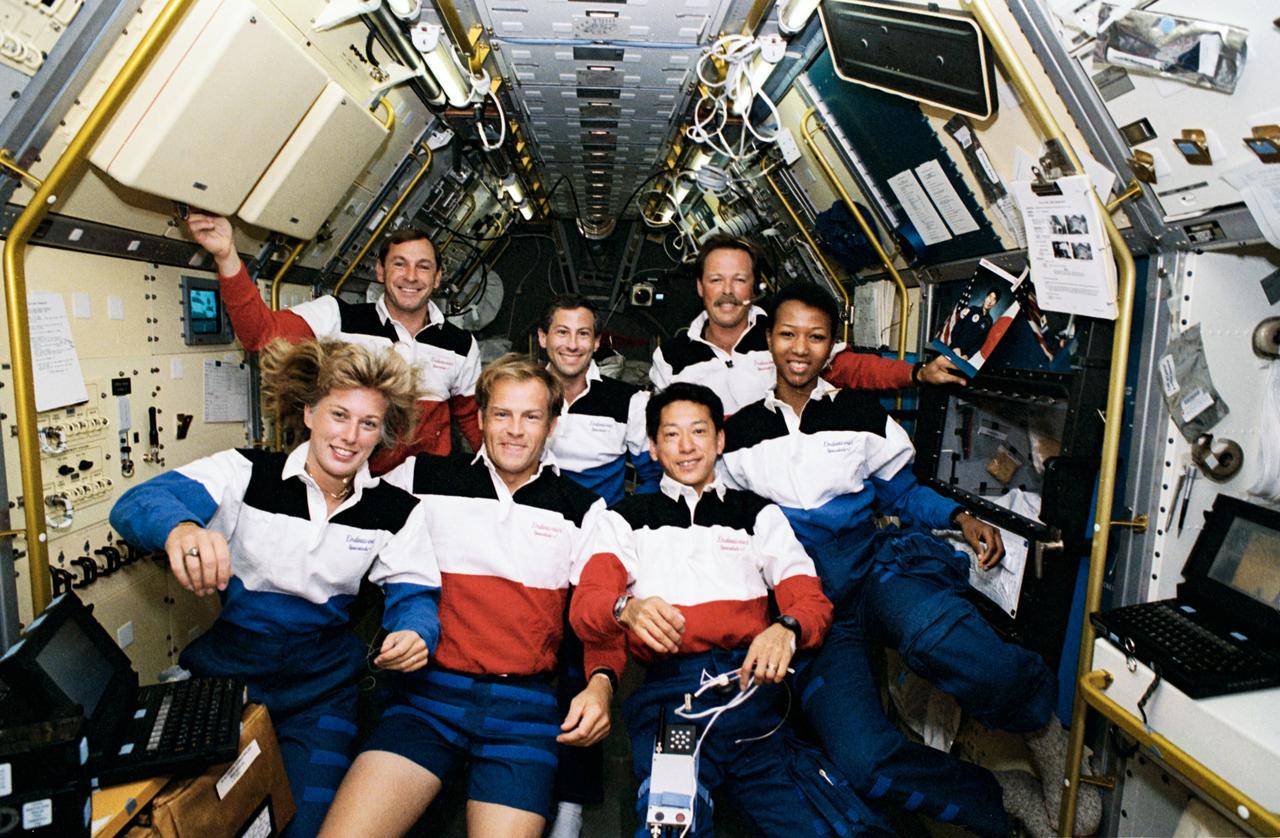
STS047-12-002 (12 - 20 Sept 1992) --- The crew members assemble for their traditional in-flight portrait in this 35mm frame photographed in the Science Module aboard the Earth-orbiting Space Shuttle Endeavour. Left to right (front) are N. Jan Davis, Mark C. Lee and Mamoru Mohri; and (rear) Curtis L. Brown, Jr., Jerome (Jay) Apt, Robert L. Gibson and Mae C. Jemison. The seven spent eight days in space in support of the Spacelab-J mission.
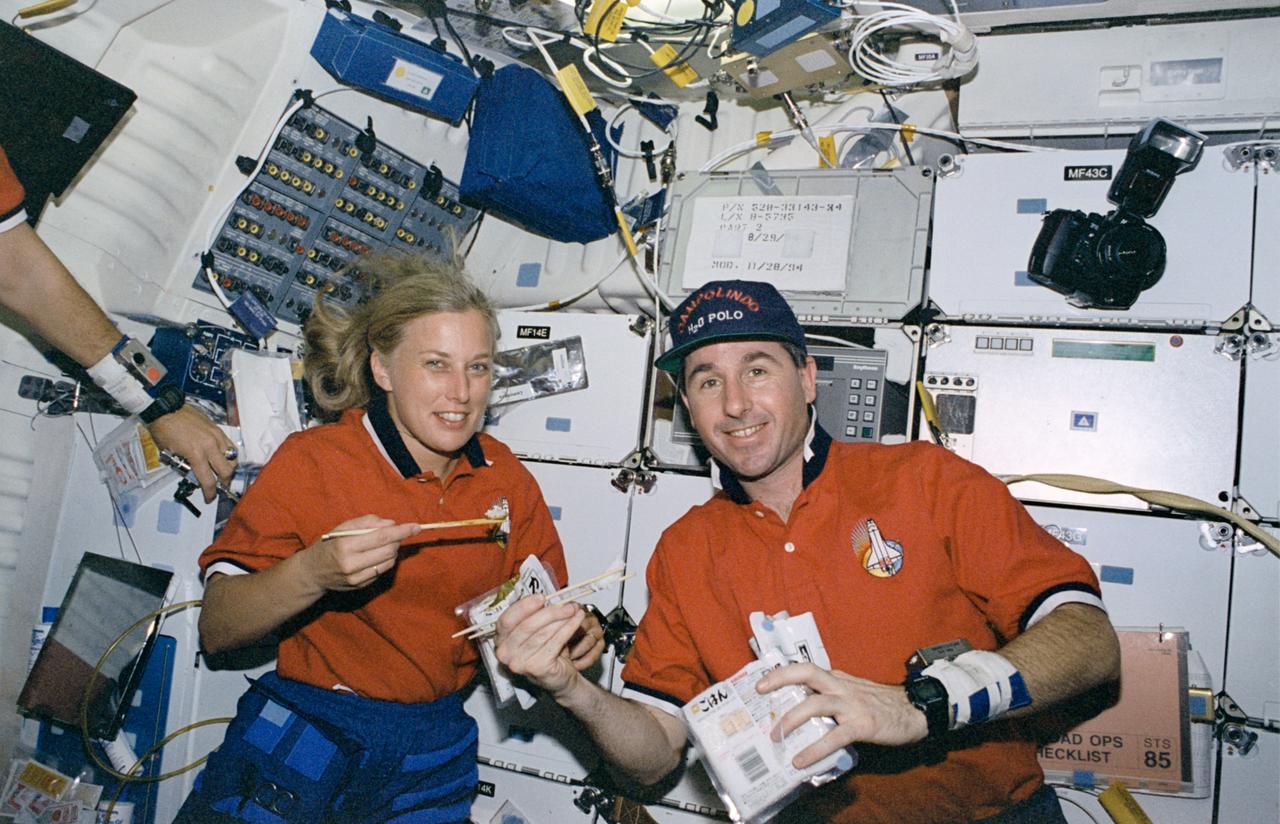
STS085-359-032 (7 - 19 August 1997) --- During off-duty time astronauts N. Jan Davis, payload commander, and Stephen K. Robinson, mission specialist, try their hands at chopsticks while having a meal of some Japanese rice on the Space Shuttle Discovery's mid-deck. Astronaut Curtis L. Brown, Jr., mission commander, is partially out of frame at left. Robinson and Brown are wearing special wrist bands that support a Detailed Supplementary Objective (DSO) experiment. Though Japan's National Space Development Agency (NASDA) had no crew members aboard, it did have a major payload -- the Manipulator Flight Demonstration (MFD) hardware -- in Discovery's cargo bay.
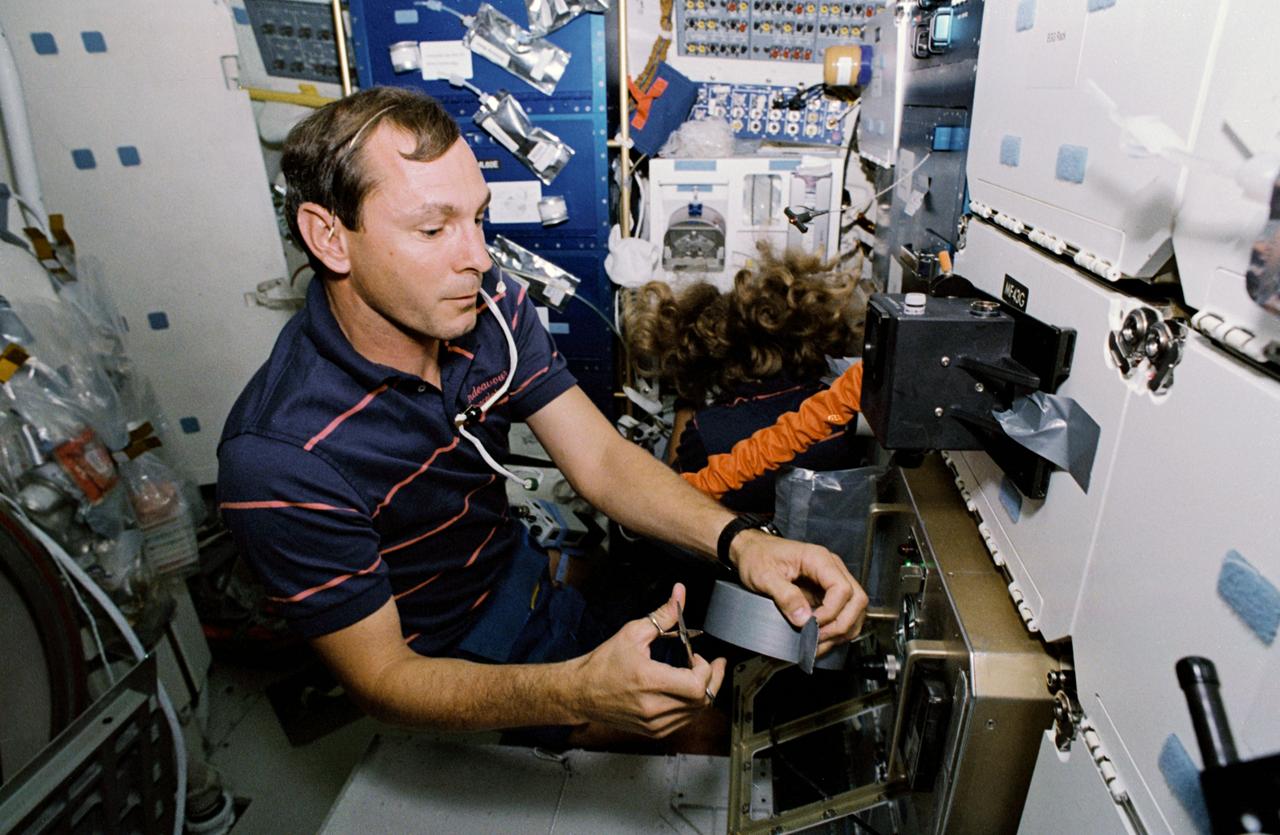
STS047-35-022 (12 - 20 Sept 1992) --- Astronauts Curtis L. Brown, Jr., pilot, and N. Jan Davis, mission specialist, team up to cure a high humidity problem in the hornet experiment in the Spacelab-J Science Module of the Earth-orbiting Space Shuttle Endeavour. Via a jury-rigged hose hook-up, the two were able to blow air from a spacesuit fan into the experiment, thus eliminating condensation that obscured the viewing of the Israeli hornet experiment. The experiment examined the effects of microgravity on the orientation, reproductive capability and social activity of 180 female Oriental Hornets.
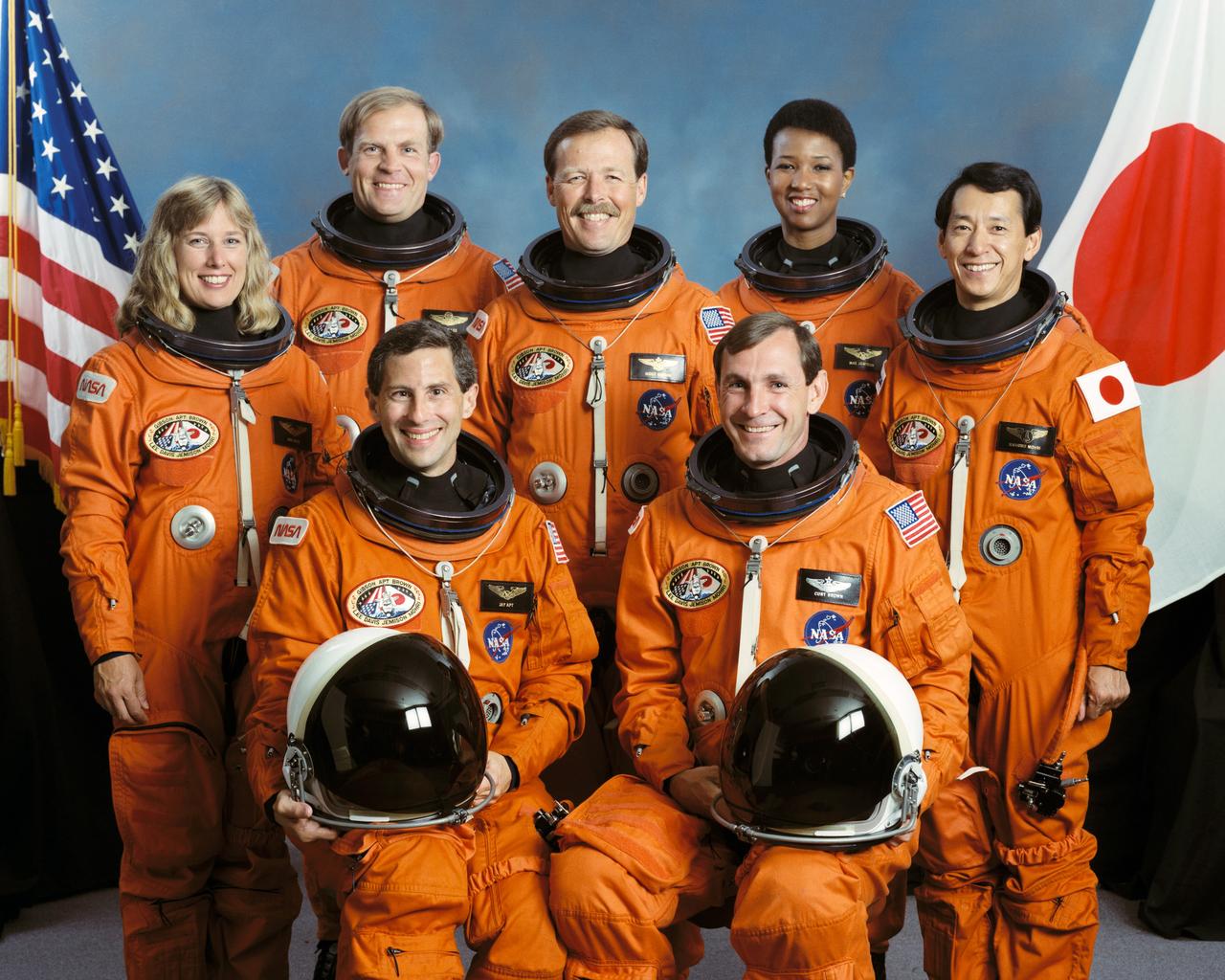
STS047-S-002 (June 1992) --- These seven crew members are currently in training for the STS-47/Spacelab J mission scheduled for later this year. Pictured are (left to right, front) Jerome (Jay) Apt, mission specialist; Curtis L. Brown, pilot; and (left to right, rear) N. Jan Davis, mission specialist; Mark C. Lee, payload commander; Robert L. Gibson, mission commander; Mae C. Jemison, mission specialist; and Mamoru Mohri, payload specialist, representing the National Space Development Agency of Japan (NASDA). This is the Space Shuttle Endeavour's second scheduled mission.
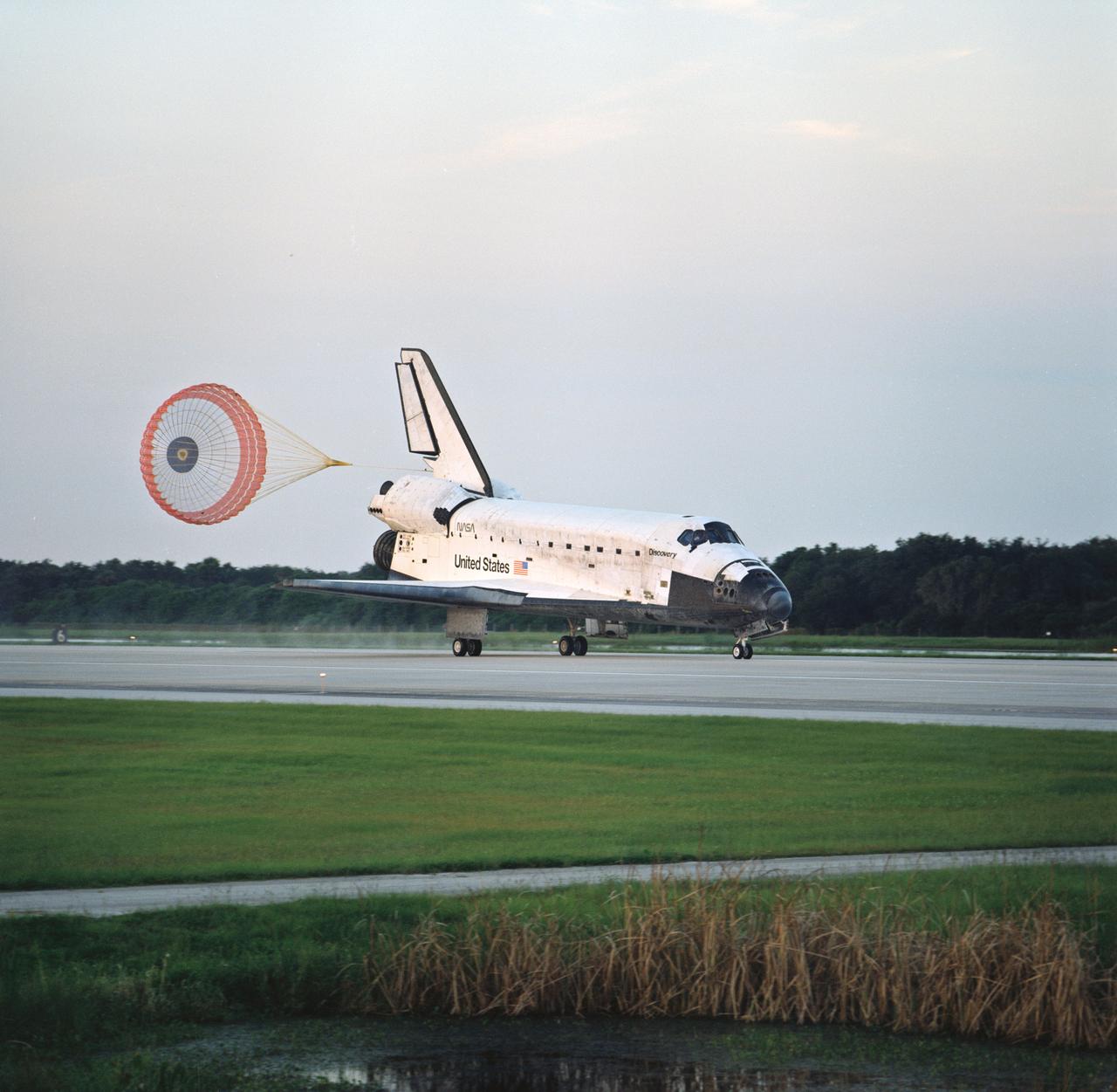
STS085-S-013 (19 August 1997) --- The drag chute of the Space Shuttle Discovery is fully deployed in this scene of the spacecraft's landing on runway 33 at the Kennedy Space Center (KSC). The landing, at 7:08 a.m. (EDT), August 19, 1997, marked the completion of a successful 12-day STS-85 mission. Onboard were astronauts Curtis L. Brown, Jr., mission commander; Kent V. Rominger, pilot; N. Jan Davis, payload commander; and Robert L. Curbeam, Jr., and Stephen K. Robinson, both mission specialists; along with payload specialist Bjarni Tryggvason, representing the Canadian Space Agency (CSA).
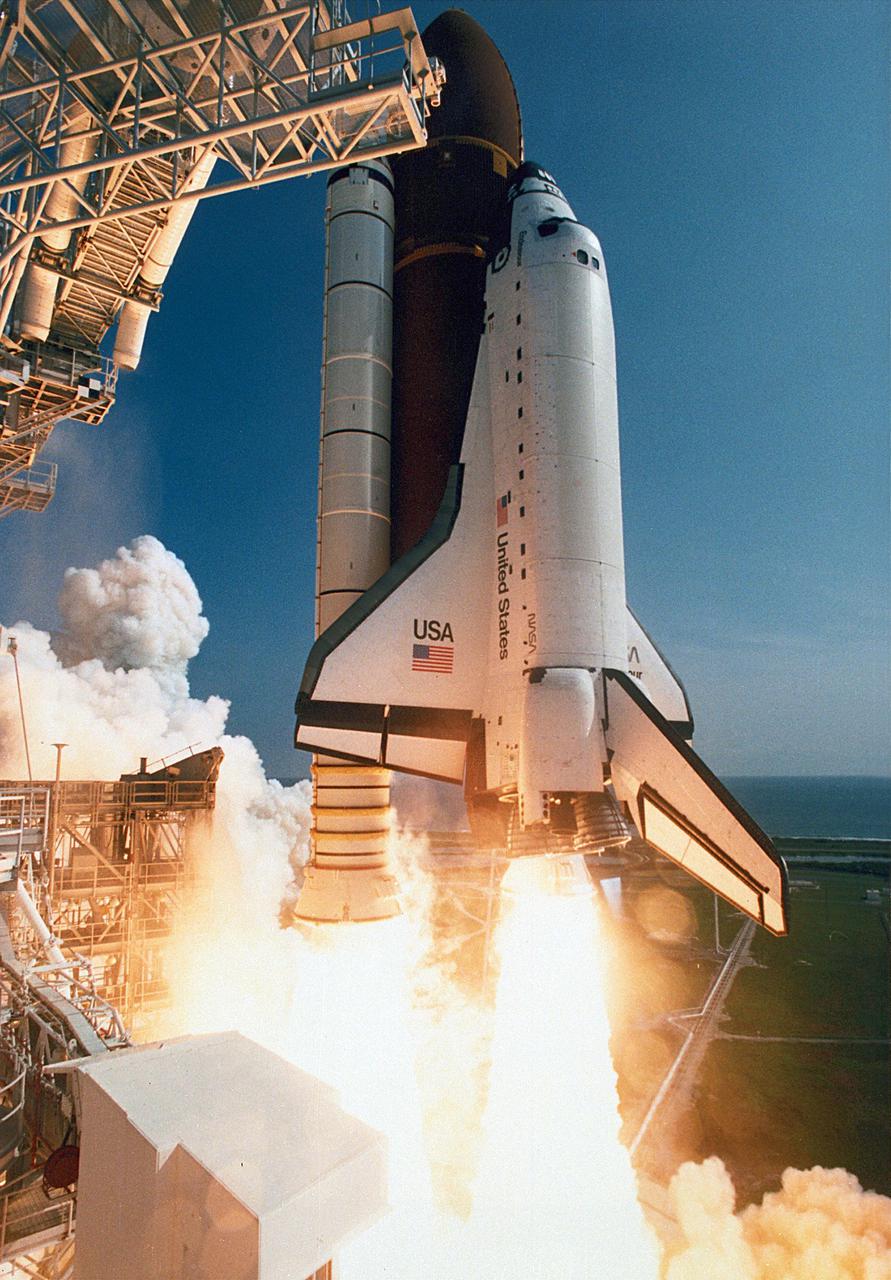
KENNEDY SPACE CENTER, FLA. -- The Space Shuttle Endeavour thunders past the uppermost reaches of the Fixed Service Structure at Launch Pad 39B after an on-schedule liftoff at 10:23:00 a.m. EDT, Sept. 12. Primary payload for the planned seven-day mission STS-47 is the Spacelab-J science laboratory. Mission Commander is Robert L. 'Hoot' Gibson; the Pilot, Curtis L. Brown Jr.; Payload Commander, Mark C. Lee; Mission Specialists, N. Jan Davis and Jay Apt; Science Mission Specialist, Dr. Mae C. Jamison; and Payload Specialist Mamoru Mohri.
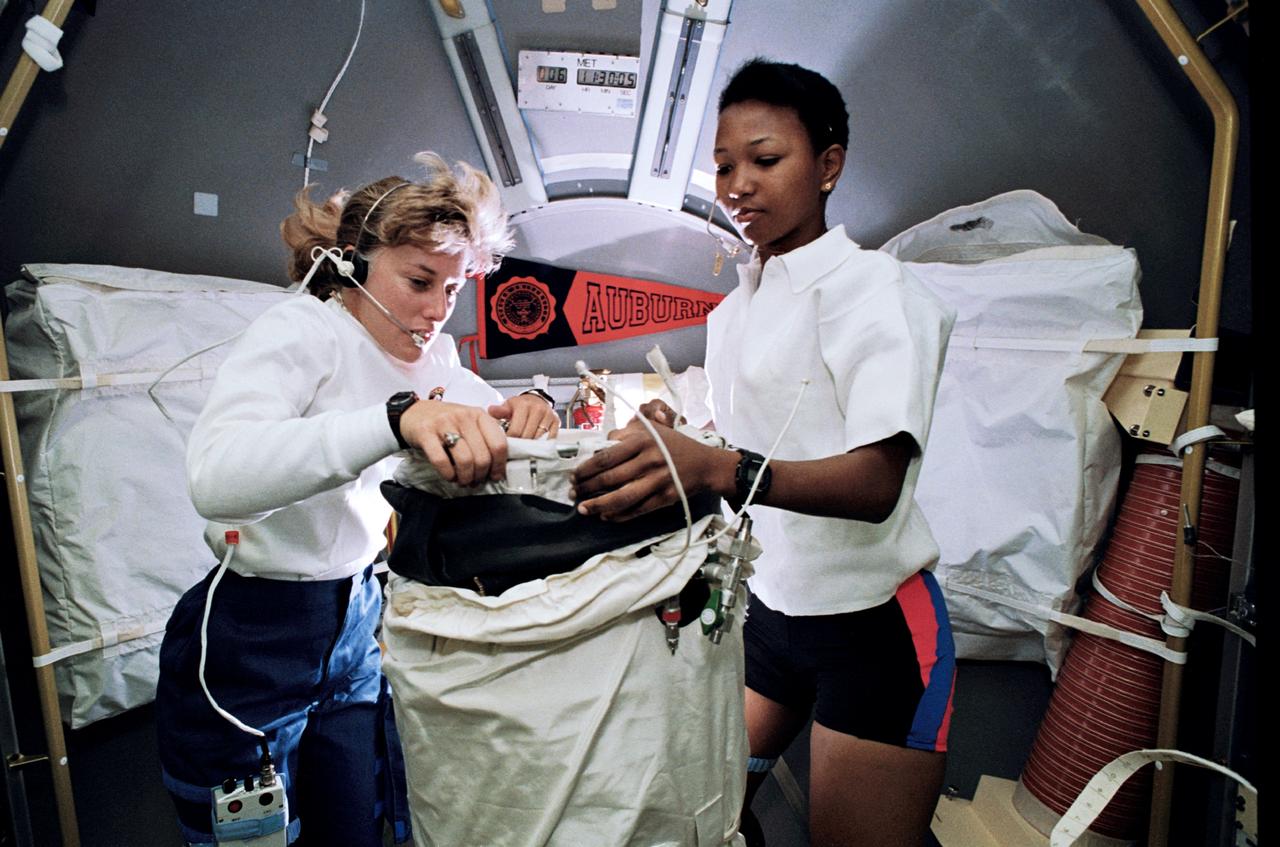
STS047-46-027 (12-20 Sept. 1992) --- Astronauts N. Jan Davis (left) and Mae C. Jemison, STS-47 mission specialists, prepare to deploy the Lower Body Negative Pressure (LBNP) apparatus in this 35mm frame photographed in the Science Module aboard the Earth-orbiting Space Shuttle Endeavour. Making their first flight in space, the two were joined by four other NASA astronauts and a Japanese payload specialist for eight days of research. The Spacelab-J mission is a joint effort between Japan and the United States of America.
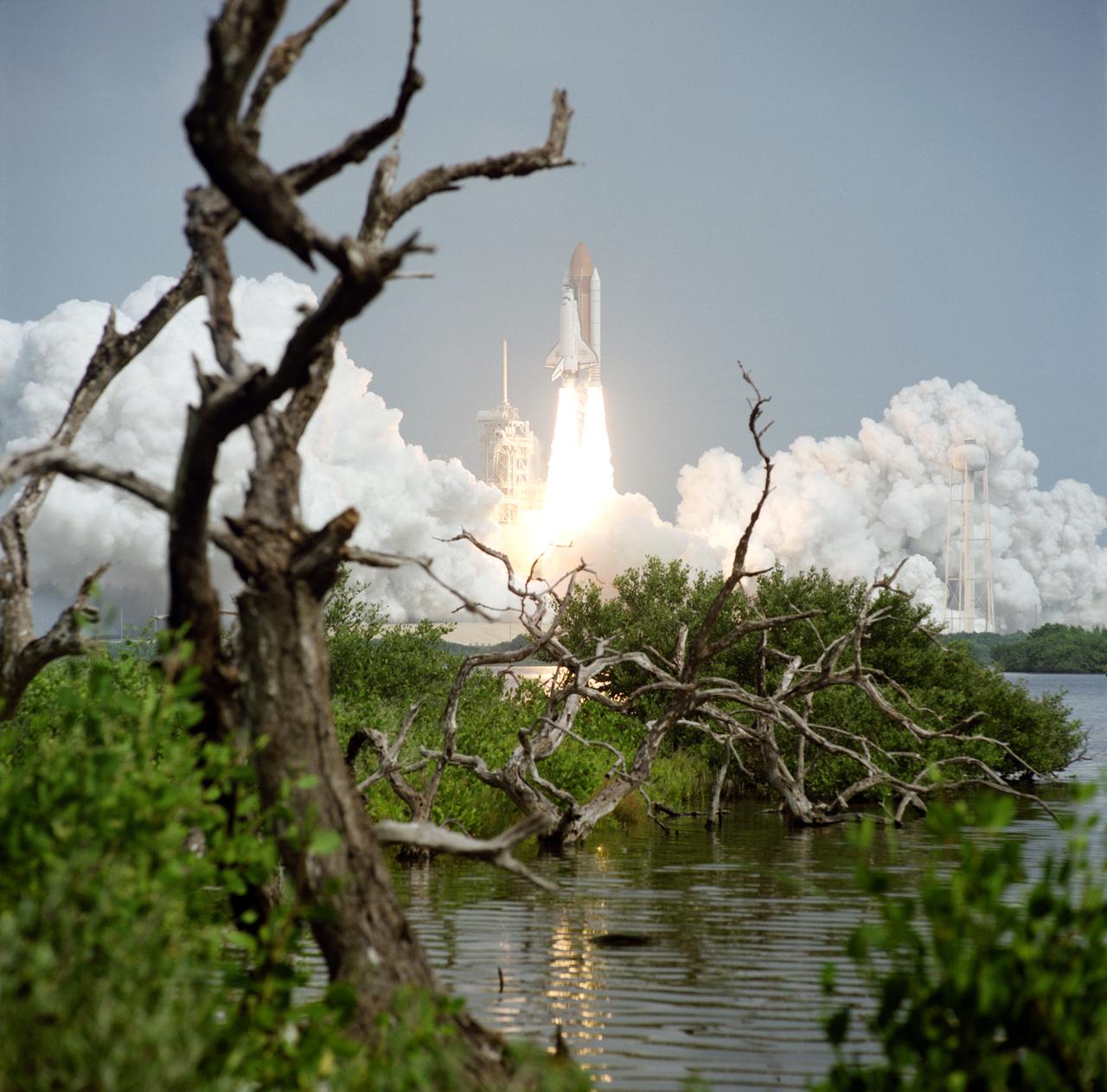
STS085-S-009 (7 August 1997) --- The Space Shuttle Discovery has cleared the launch tower in this low-angle, 35mm frame, and is headed toward an eleven-day mission in Earth-orbit in support of the STS-85 mission. Launch from Pad 39A, at the Kennedy Space Center (KSC), occurred at 10:41 a.m. (EDT), August 7, 1997. Onboard the spacecraft were astronauts Curtis L. Brown, Jr., commander; Kent V. Rominger, pilot; N. Jan Davis, payload commander; and Stephen K. Robinson and Robert L. Curbeam, Jr., both mission specialists; along with payload specialist Bjarni V. Tryggvason, a Canadian Space Agency (CSA) astronaut.
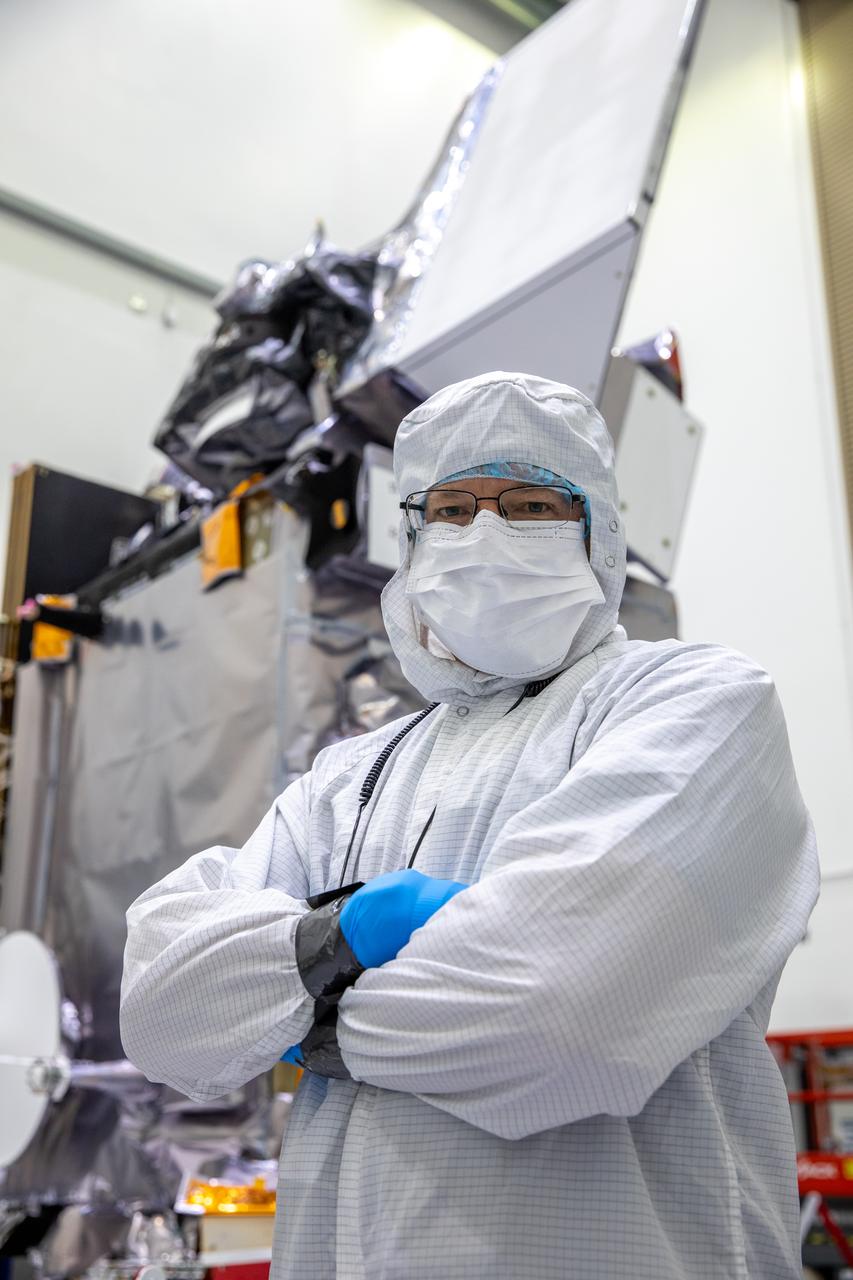
Gary Davis, PACE Mission Systems Engineer, participated in a NASA-hosted media day for the agency’s PACE (Plankton, Aerosol, Cloud, ocean Ecosystem) spacecraft on Wednesday, Jan. 3, 2024, inside a cleanroom at the Astrotech Space Operations Facility near NASA’s Kennedy Space Center in Florida. PACE will collect data on how the ocean and atmosphere exchange carbon dioxide, measure key atmospheric variables associated with air quality and Earth's climate, and monitor ocean health. PACE is set to launch aboard a SpaceX Falcon 9 rocket no earlier than Tuesday, Feb. 6, 2024, from Space Launch Complex 40 at Cape Canaveral Space Force Station in Florida.
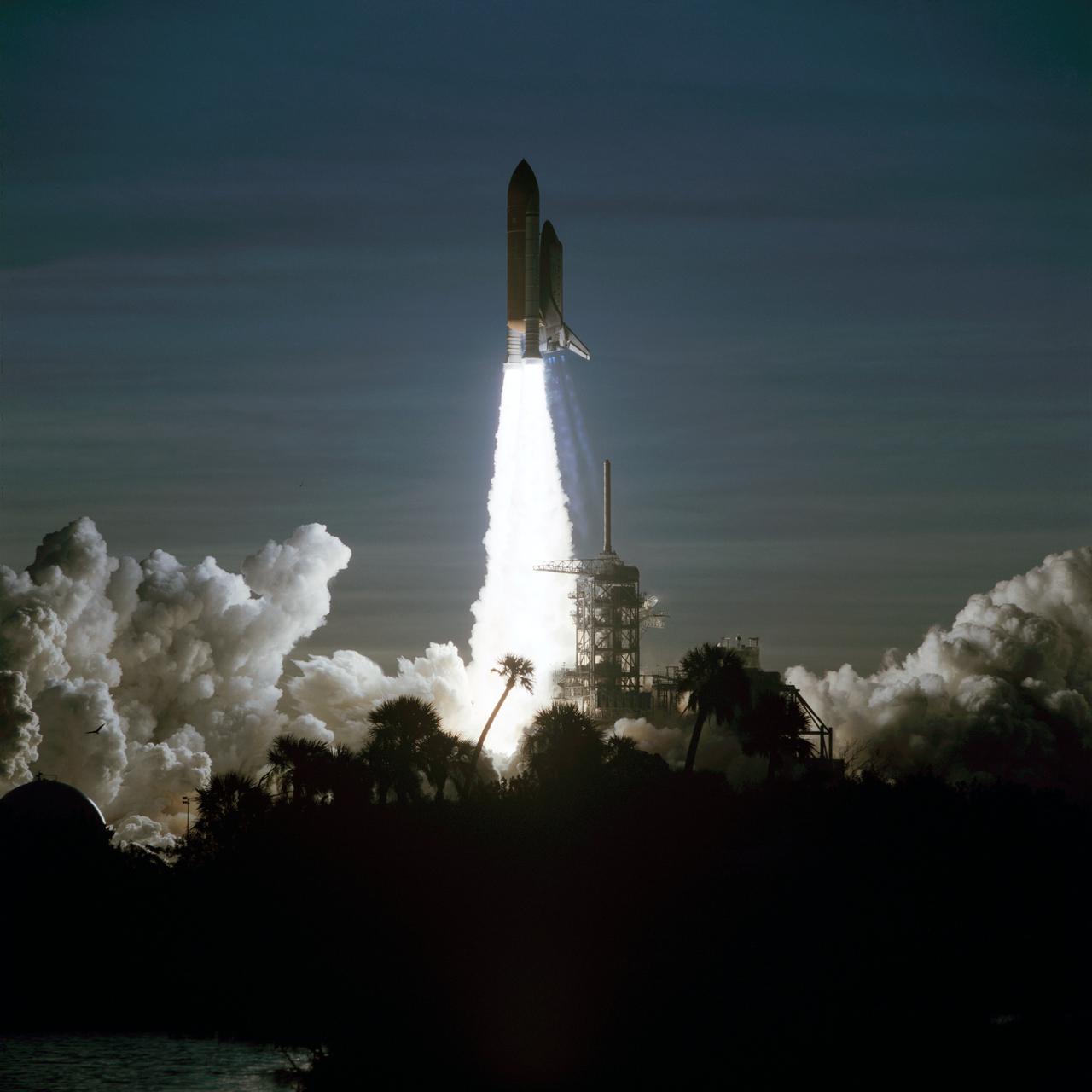
STS060-S-106 (3 Feb 1994) --- Palm trees are silhouetted in the foreground of this 70mm image as the Space Shuttle Discovery heads toward an eight-day mission in Earth orbit. Liftoff occurred as scheduled at 7:10 a.m. (EST), February 3, 1994. Aboard the spacecraft were astronauts Charles F. Bolden Jr., commander; Kenneth S. Reightler Jr., pilot; Franklin R. Chang-Diaz, payload commander; and N. Jan Davis and Ronald M. Sega, mission specialists, along with Russian cosmonaut Sergei K. Krikalev, also a mission specialist.
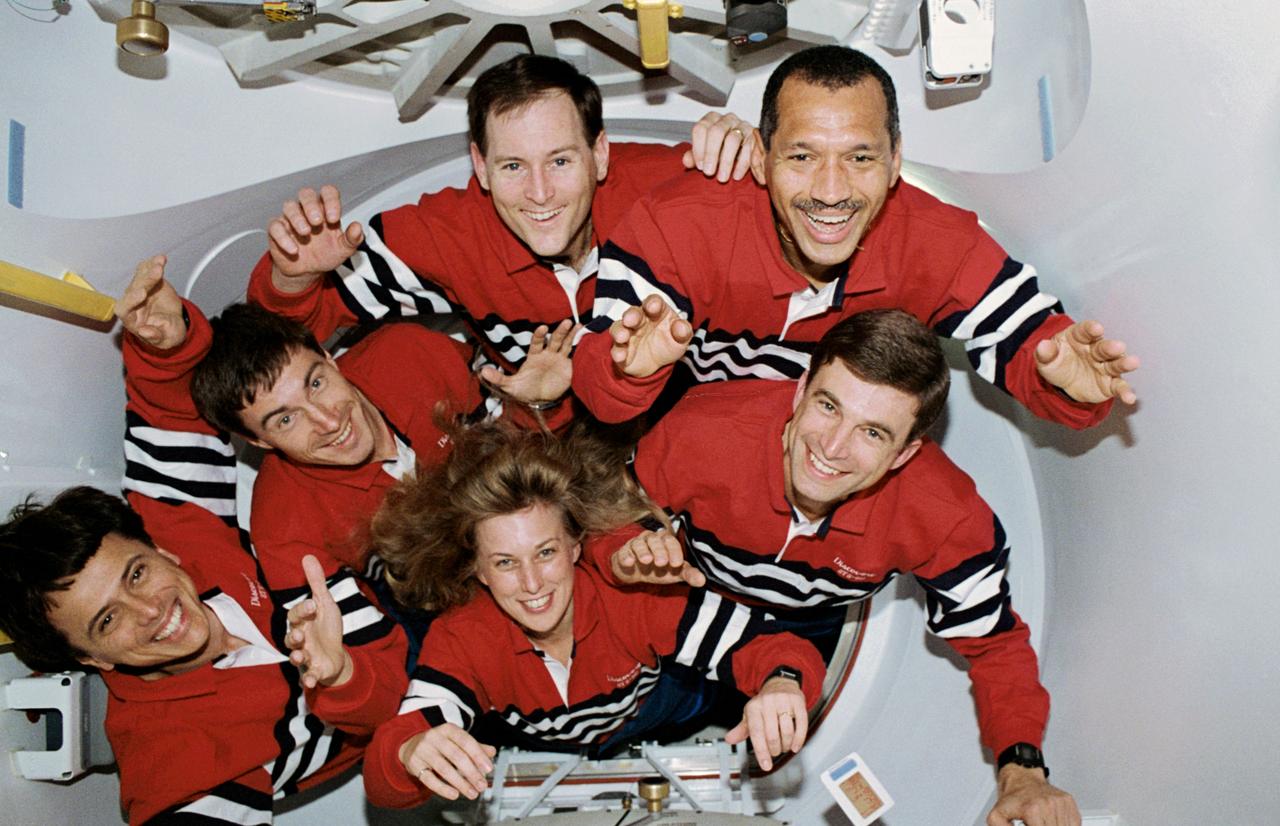
STS060-31-028 (3-11 Feb. 1994) --- Five NASA astronauts and a Russian cosmonaut squeeze through the tunnel which connects the shirt-sleeve environments of the space shuttle Discovery and the SPACEHAB module. SPACEHAB is located in the spacecraft’s payload bay. Charles F. Bolden Jr., mission commander, is at upper right. Others, clockwise from the commander, are Ronald M. Sega and N. Jan Davis, both mission specialists; Franklin R. Chang-Diaz, payload commander; cosmonaut Sergei K. Krikalev, mission specialist; and Kenneth S. Reightler Jr., pilot. The six spent eight days in Earth orbit. Photo credit: NASA
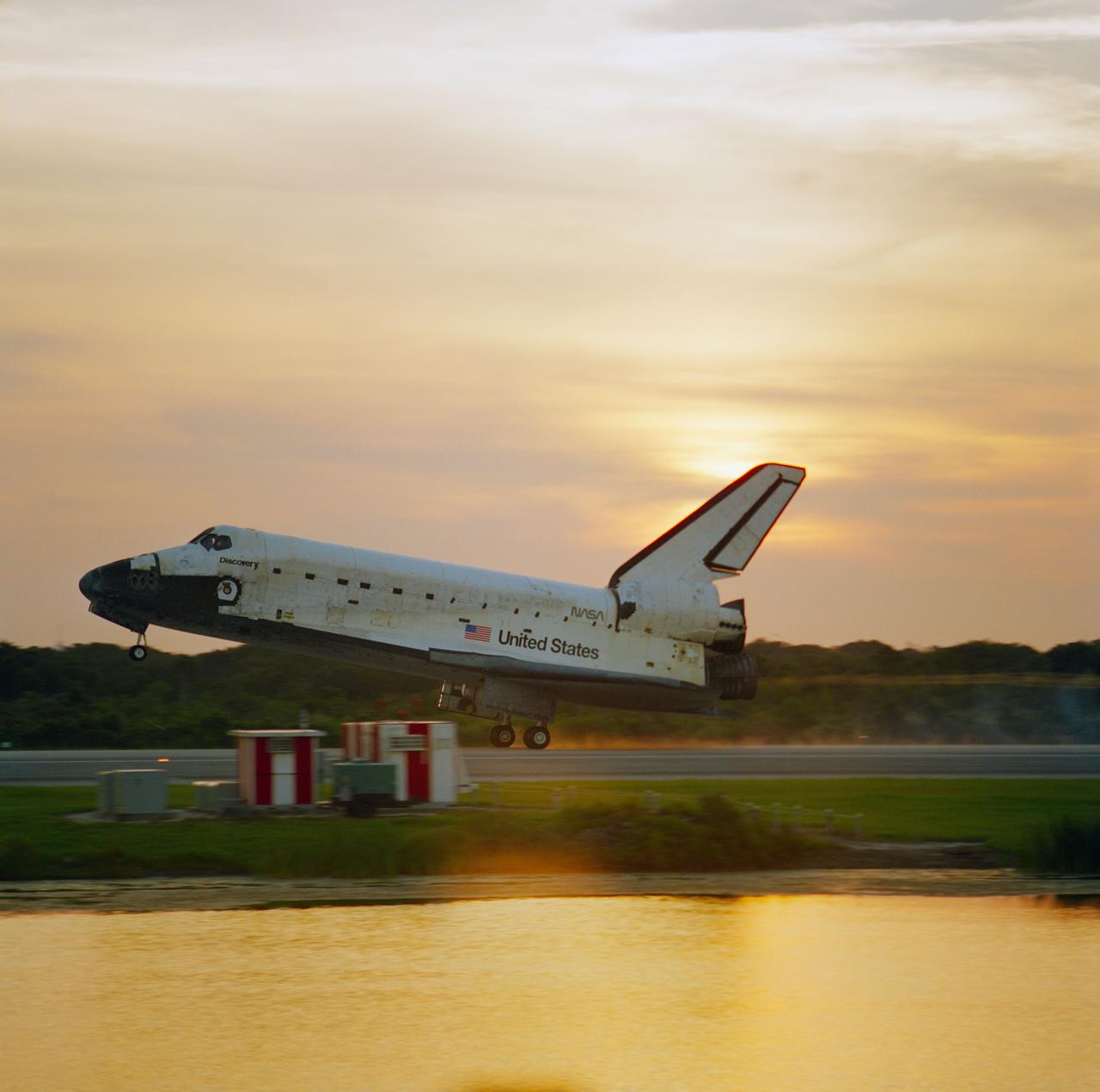
STS085-S-014 (19 Aug. 1997) --- The main landing gear of the space shuttle Discovery touches down on Runway 33 at the Kennedy Space Center to mark the successful completion of 12-day STS-85 mission. Landing occurred at 7:08 a.m. (EDT) on Aug. 19, 1997. Onboard were astronauts Curtis L. Brown, mission commander; Kent V. Rominger, pilot; N. Jan Davis, payload commander; and Robert L. Curbeam and Stephen K. Robinson, both mission specialists; along with payload specialist Bjarni Tryggvason, representing the Canadian Space Agency. Photo credit: NASA
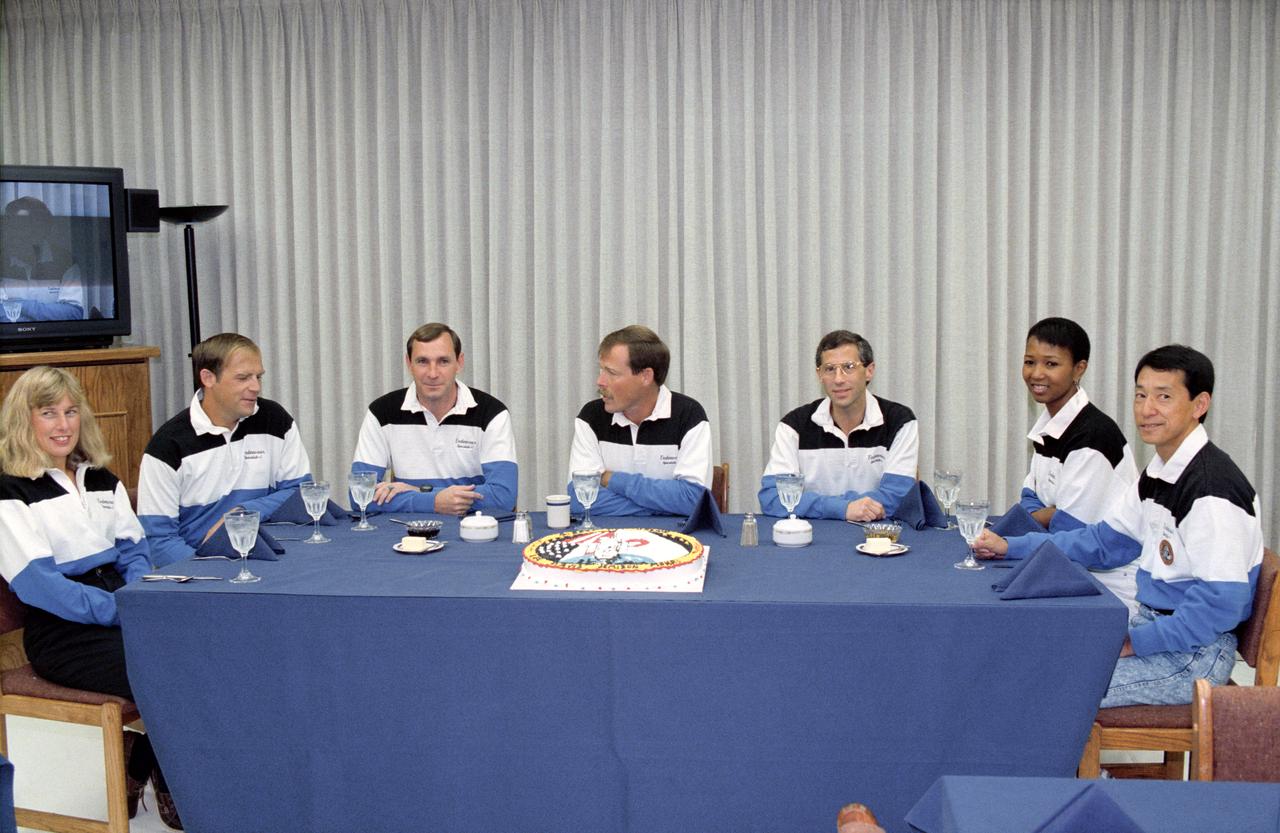
STS047-S-037 (12 Sept 1992) --- The seven crewmembers who will be aboard for Endeavour's second trip into space are about to have a light breakfast prior to the pre-launch suiting up process in the Operations and Checkout Building. Left to right are astronauts N. Jan Davis, Mark C. Lee, Curtis L. Brown Jr., Robert L. Gibson, Jerome (Jay) Apt and Mae C. Jemison; and payload specialist Mamoru Mohri, representing the National Space Development Agency (NASDA) of Japan. This mission will be devoted to support of the Spacelab-J mission, a joint effort between Japan and the United States. Launch occurred at 10:23:00:0680 a.m. (EDT), September 12, 1992.
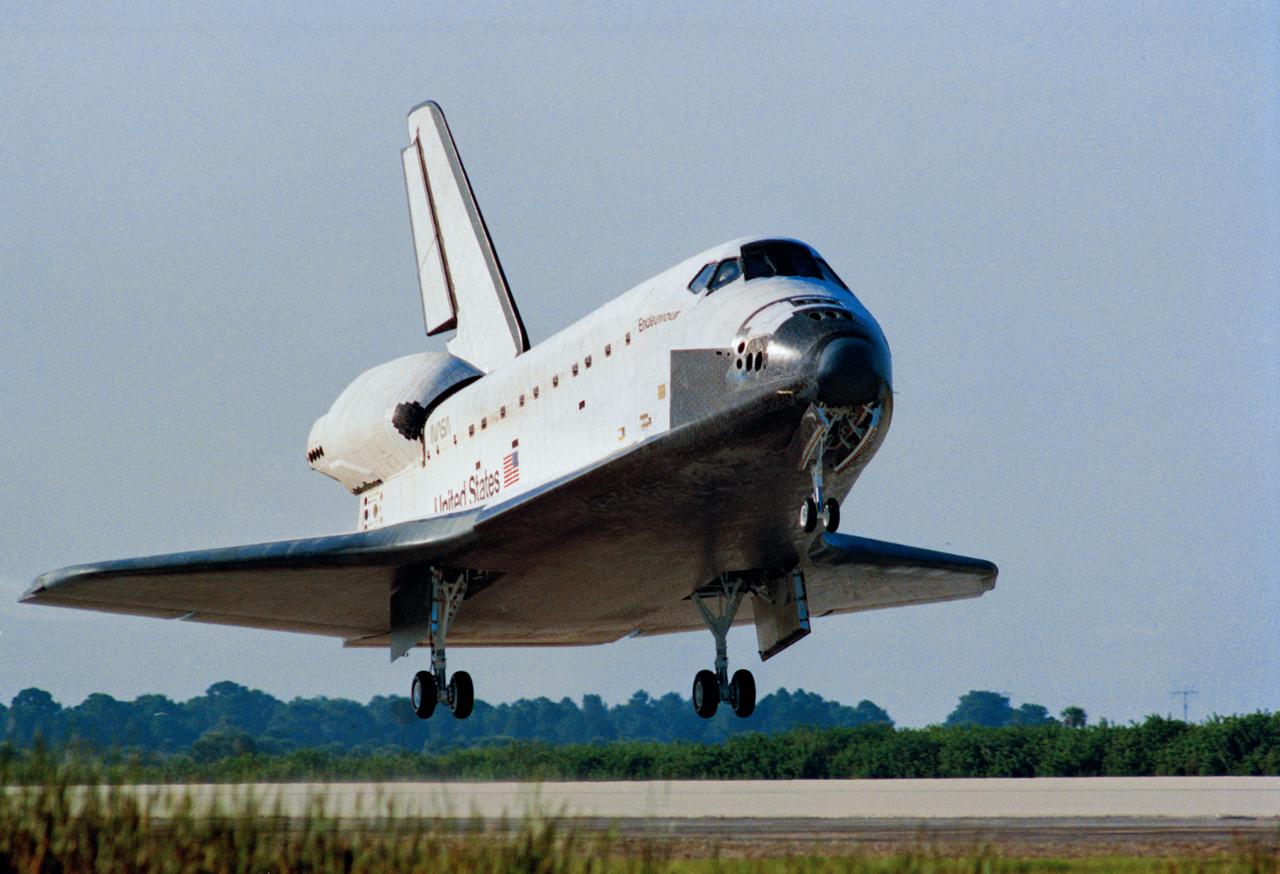
STS047-S-116 (20 Sept 1992) --- The Space Shuttle Endeavour prepares to land on the Kennedy Space Center's Shuttle landing facility runway. The successful landing marked the completion of an eight-day Earth-orbital mission for the orbiter, its seven-member crew and the Spacelab-J payload. Landing occurred at 8:53 a.m. (EDT), September 20, 1992. Onboard the spacecraft were astronauts Robert L. Gibson, Curtis L. Brown Jr., Mark C. Lee, Jerome (Jay) Apt, N. Jan Davis and Mae C. Jemison, along with Japanese payload specialist Dr. Mamoru Mohri.
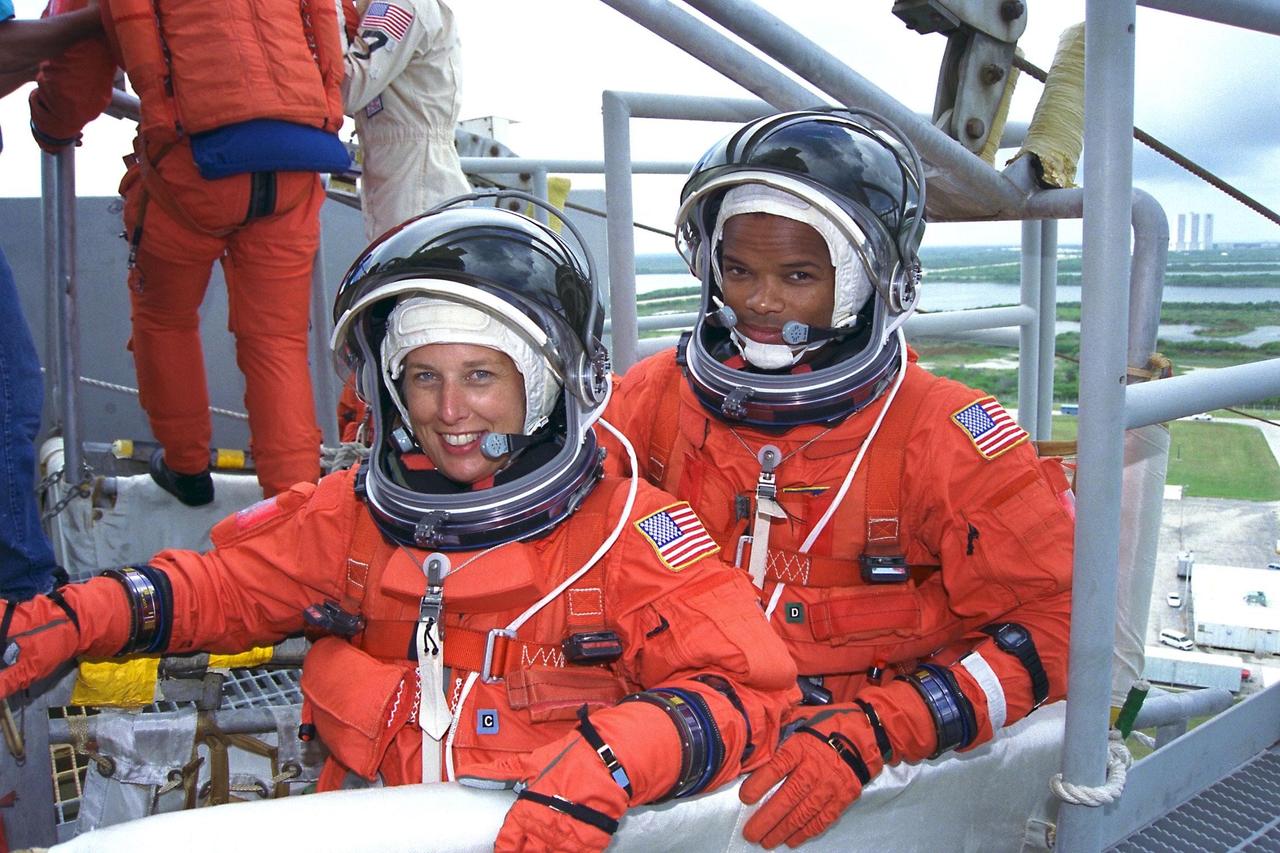
KENNEDY SPACE CENTER, Fla. -- STS-85 Payload Commander N. Jan Davis (left) and Mission Specialist Robert L. Curbeam, Jr., check out an emergency egress slidewire basket at the 195-foot level of Launch Pad 39A during Terminal Countdown Demonstration Test (TCDT) activities for that mission. The primary payload aboard the Space Shuttle orbiter Discovery is the Cryogenic Infrared Spectrometers and Telescopes for the Atmosphere-2 (CRISTA-SPAS-2). Other STS-85 payloads include the Manipulator Flight Demonstration (MFD), and Technology Applications and Science-1 (TAS-1) and International Extreme Ultraviolet Hitchhiker-2 (IEH-2)
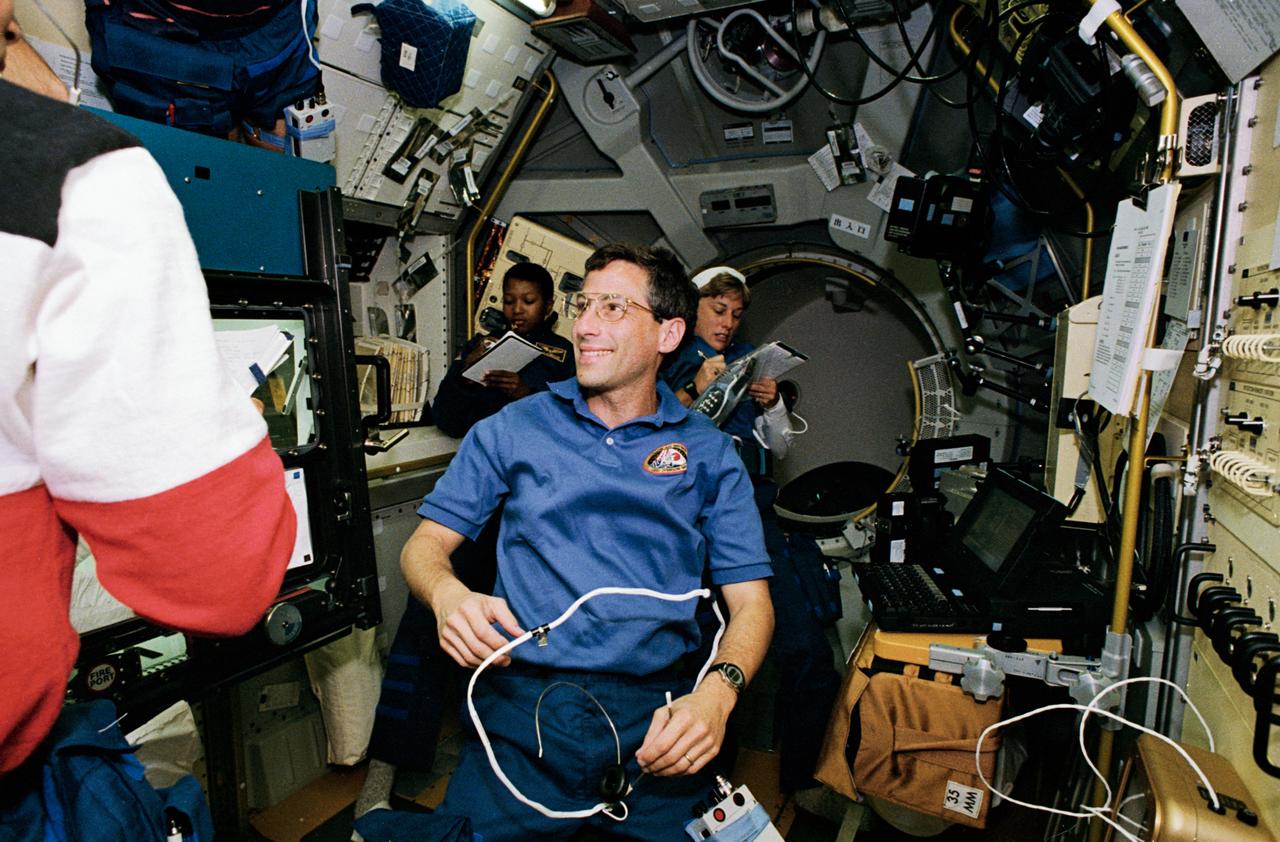
STS047-05-019 (12 - 20 Sept 1992) --- Astronaut Jerome (Jay) Apt, mission specialist, responds to a crew mate's query during a shift change in the Spacelab-J Science Module aboard the Earth-orbiting Space Shuttle Endeavour. Others pictured, left to right, are astronauts Mark C. Lee (immediate foreground, partially out of frame), payload commander; Mae C. Jemison and N. Jan Davis, mission specialists. The four joined two other NASA astronauts and a Japanese payload specialist for eight days aboard Endeavour in support of the joint Japanese-American effort.
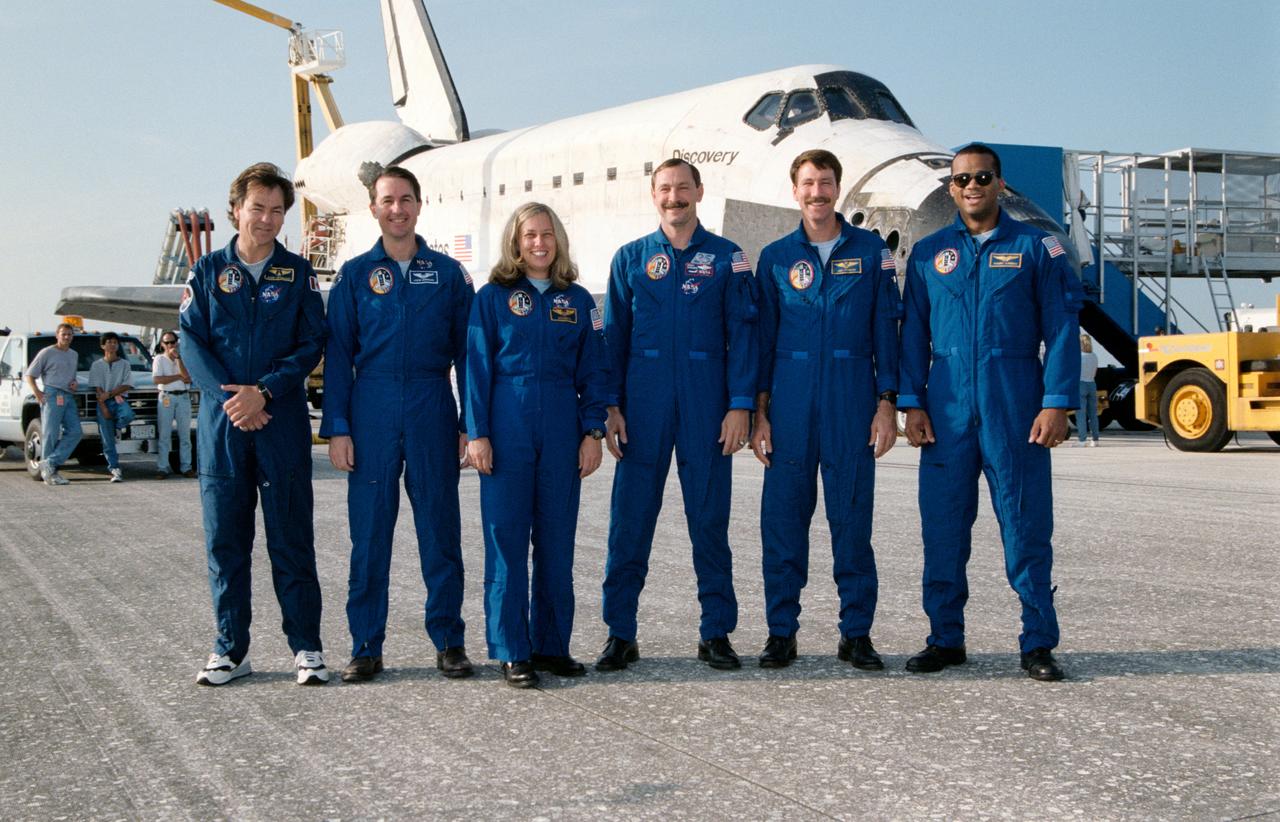
STS085-S-011 (19 August 1997) --- Following the landing of the Space Shuttle Discovery on runway 33 at the Kennedy Space Center (KSC), the six member crew poses for a final crew portrait. The landing, at 7:08 a.m. (EDT), August 19, 1997, marked the completion of a successful 12-day STS-85 mission. Left to right are payload specialist Bjarni Tryggvason of the Canadian Space Agency (CSA), along with astronauts Stephen K. Robinson, mission specialist; N. Jan Davis, payload commander; Curtis L. Brown, Jr., mission commander; Kent V. Rominger, pilot; and Robert L. Curbeam, Jr., mission specialist.
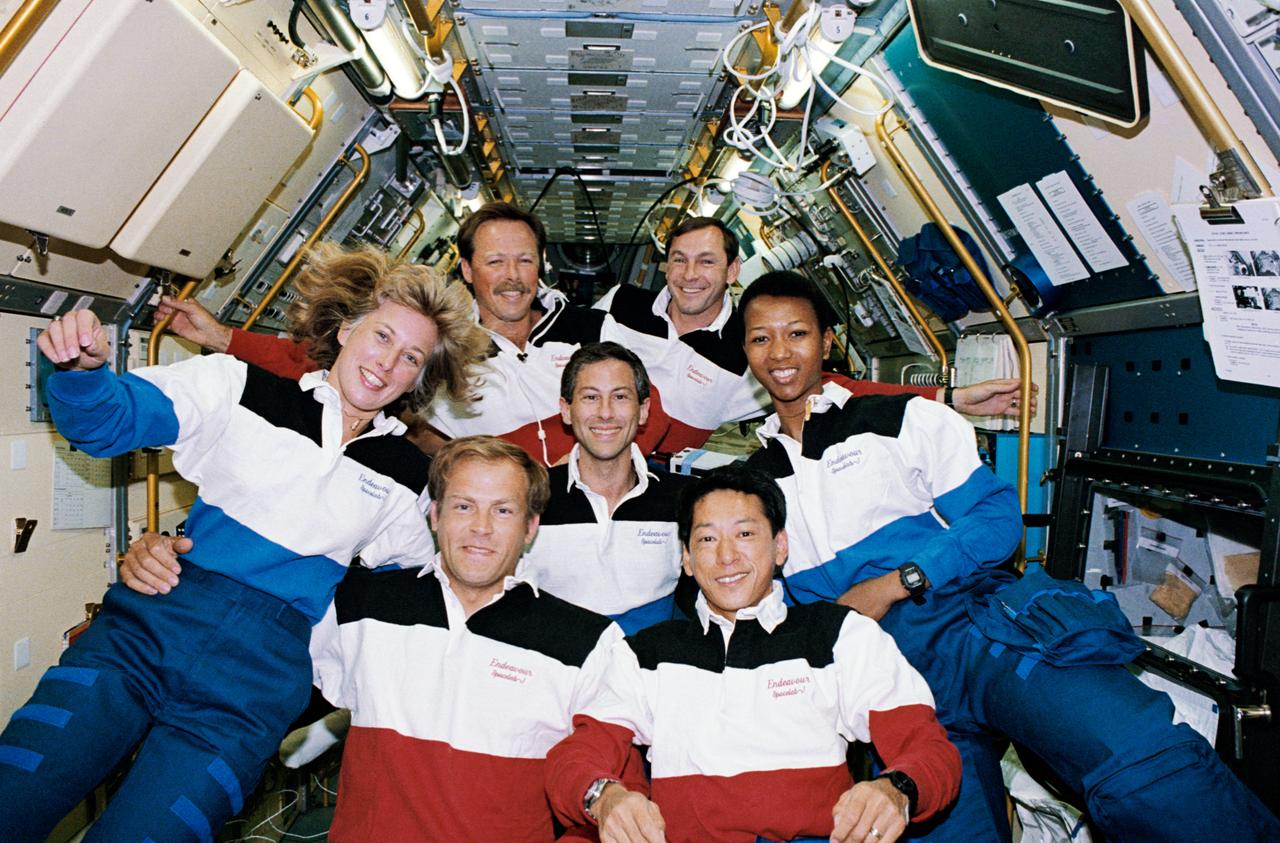
STS047-09-009 (12 - 20 Sept 1992) --- The seven crew members sharing eight days of research in support of Spacelab-J pose for the traditional inflight portrait in the Science Module. Pictured, left to right, back row, are Robert L. Gibson, mission commander; and Curtis L. Brown, Jr., pilot; middle row, N. Jan Davis, Jerome (Jay) Apt and Mae C. Jemison, all mission specialists; and front row, Mark C. Lee, payload commander, and Mamoru Mohri, payload specialist representing Japan's National Space Development Agency (NASDA).
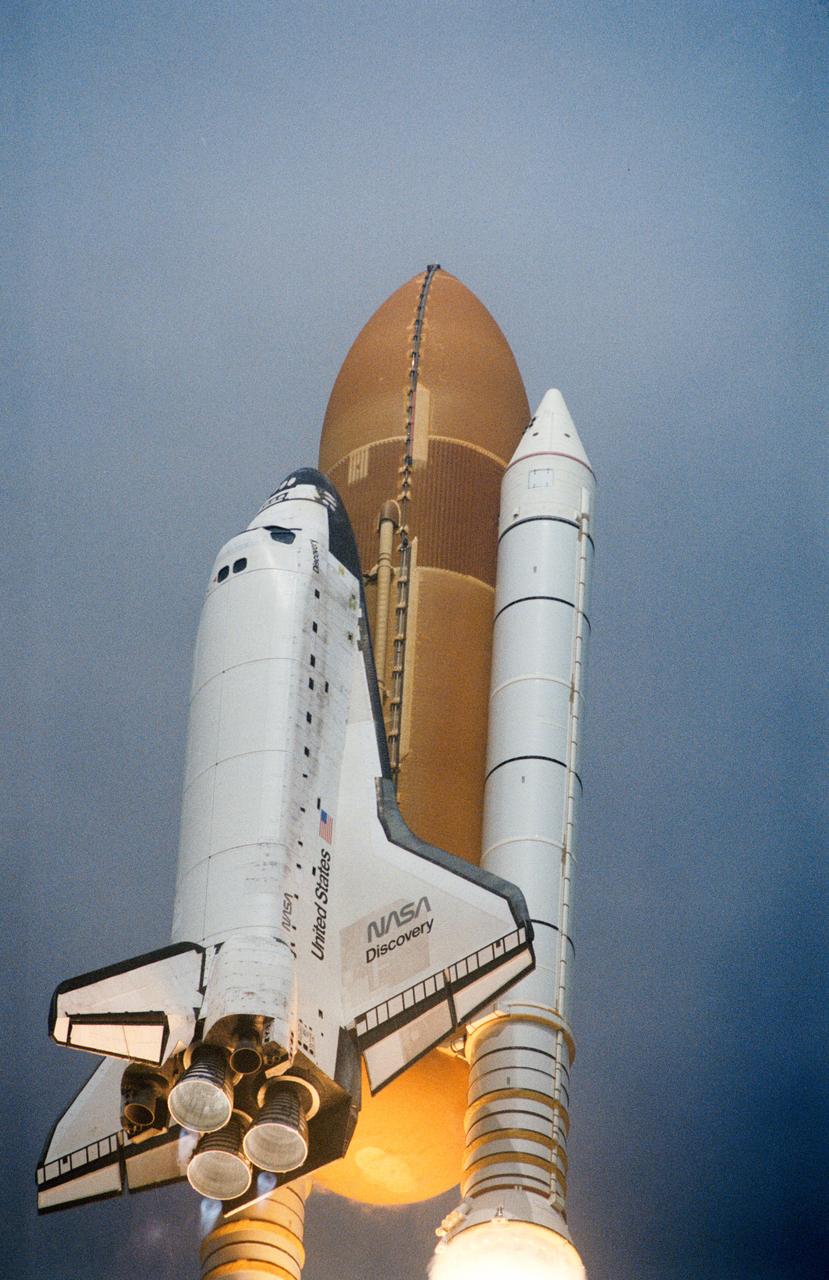
STS085-S-006 (7 August 1997) --- The Space Shuttle Discovery has cleared the launch tower at Pad 39A, at the Kennedy Space Center (KSC), in this low-angle, 35mm frame, and is headed toward an eleven-day mission in Earth-orbit in support of the STS-85 mission. Launch occurred at 10:41 a.m. (EDT), August 7, 1997. Onboard the spacecraft were astronauts Curtis L. Brown, Jr., commander; Kent V. Rominger, pilot; N. Jan Davis, payload commander; and Stephen K. Robinson and Robert L. Curbeam, Jr., both mission specialists; along with payload specialist Bjarni V. Tryggvason, a Canadian Space Agency (CSA) astronaut.
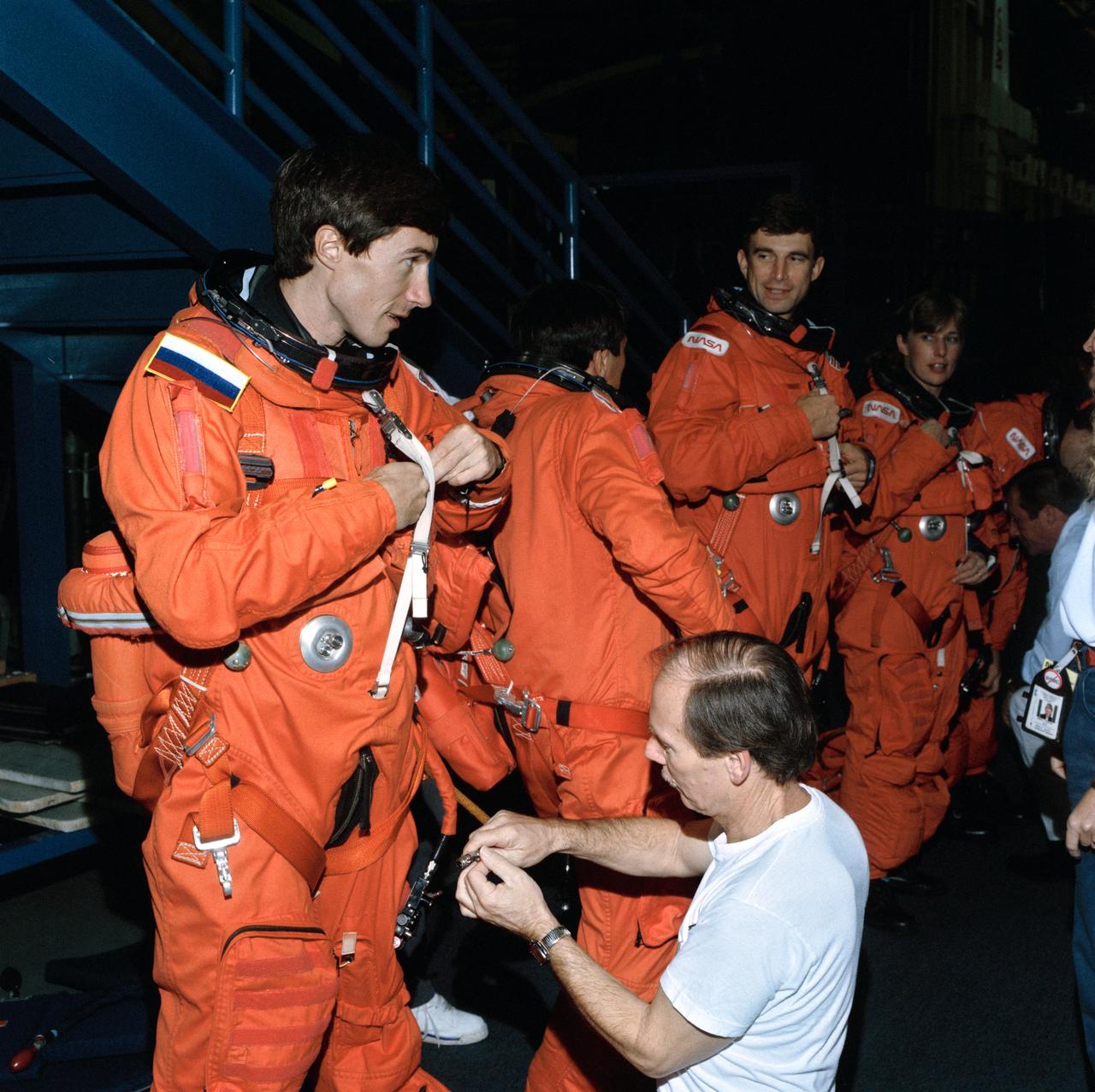
S93-50649 (Dec 1993) --- Cosmonaut Sergei Krikalev, mission specialist for the STS-60 mission, gets assistance with his launch and entry suit from Lockheed's Max Kandler during a training session at the Johnson Space Center (JSC). Others pictured, left to right, are astronauts Franklin R. Chang-Diaz, Ronald M. Sega and N. Jan Davis. This particular phase of training, conducted in the crew compartment trainer in the Shuttle mockup and integration laboratory, familiarizes the crew members with entry activities and launch countdown procedures, as well as emergency egress procedures.
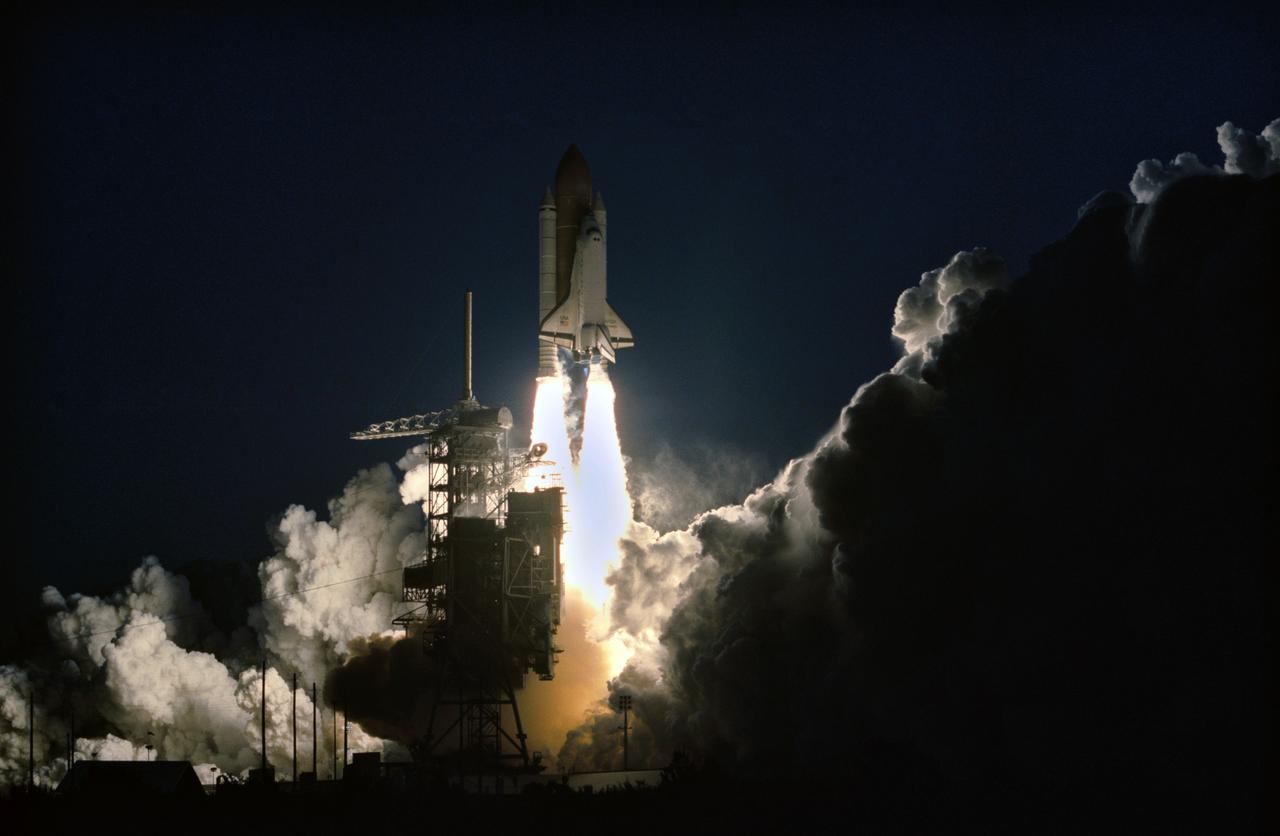
STS060-S-105 (3 Feb 1994) --- The Space Shuttle Discovery heads toward an eight-day mission in Earth orbit with five NASA astronauts and a Russian cosmonaut aboard. Liftoff occurred as scheduled at 7:10 a.m. (EST), February 3, 1994. Aboard the spacecraft were astronauts Charles F. Bolden Jr., commander; Kenneth S. Reightler Jr., pilot; Franklin R. Chang-Diaz, payload commander; and N. Jan Davis and Ronald M. Sega, mission specialists, along with Russian cosmonaut Sergei K. Krikalev, also a mission specialist.
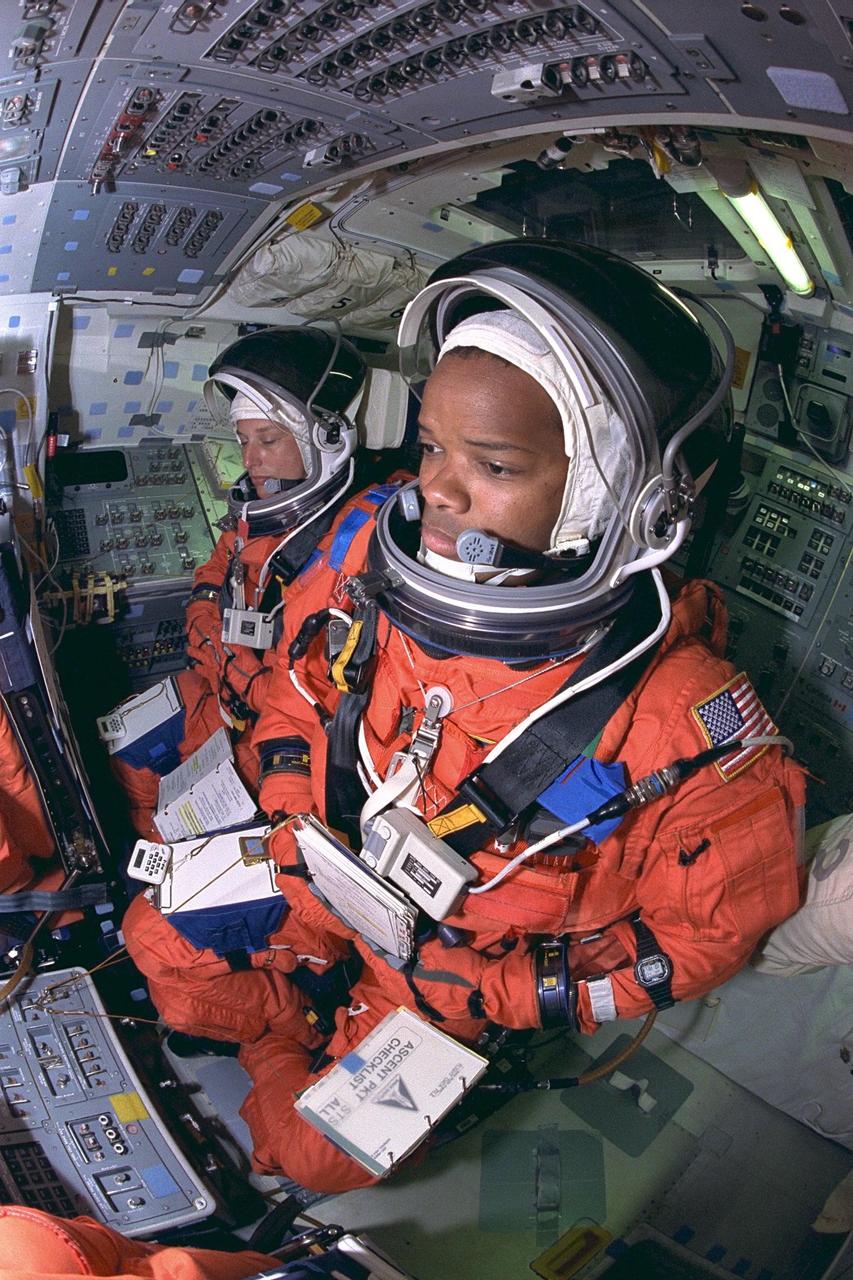
KENNEDY SPACE CENTER, FLA. -- STS-85 Payload Commander N. Jan Davis (left) and Mission Specialist Robert L. Curbeam, Jr., go through countdown procedures aboard the Space Shuttle orbiter Discovery during Terminal Countdown Demonstration Test (TCDT) activities for that mission. The TCDT includes a simulation of the final launch countdown. The primary payload aboard the Space Shuttle orbiter Discovery is the Cryogenic Infrared Spectrometers and Telescopes for the Atmosphere-2 (CRISTA-SPAS-2). Other STS-85 payloads include the Manipulator Flight Demonstration (MFD), and Technology Applications and Science-1 (TAS-1) and International Extreme Ultraviolet Hitchhiker-2 (IEH-2) experiments
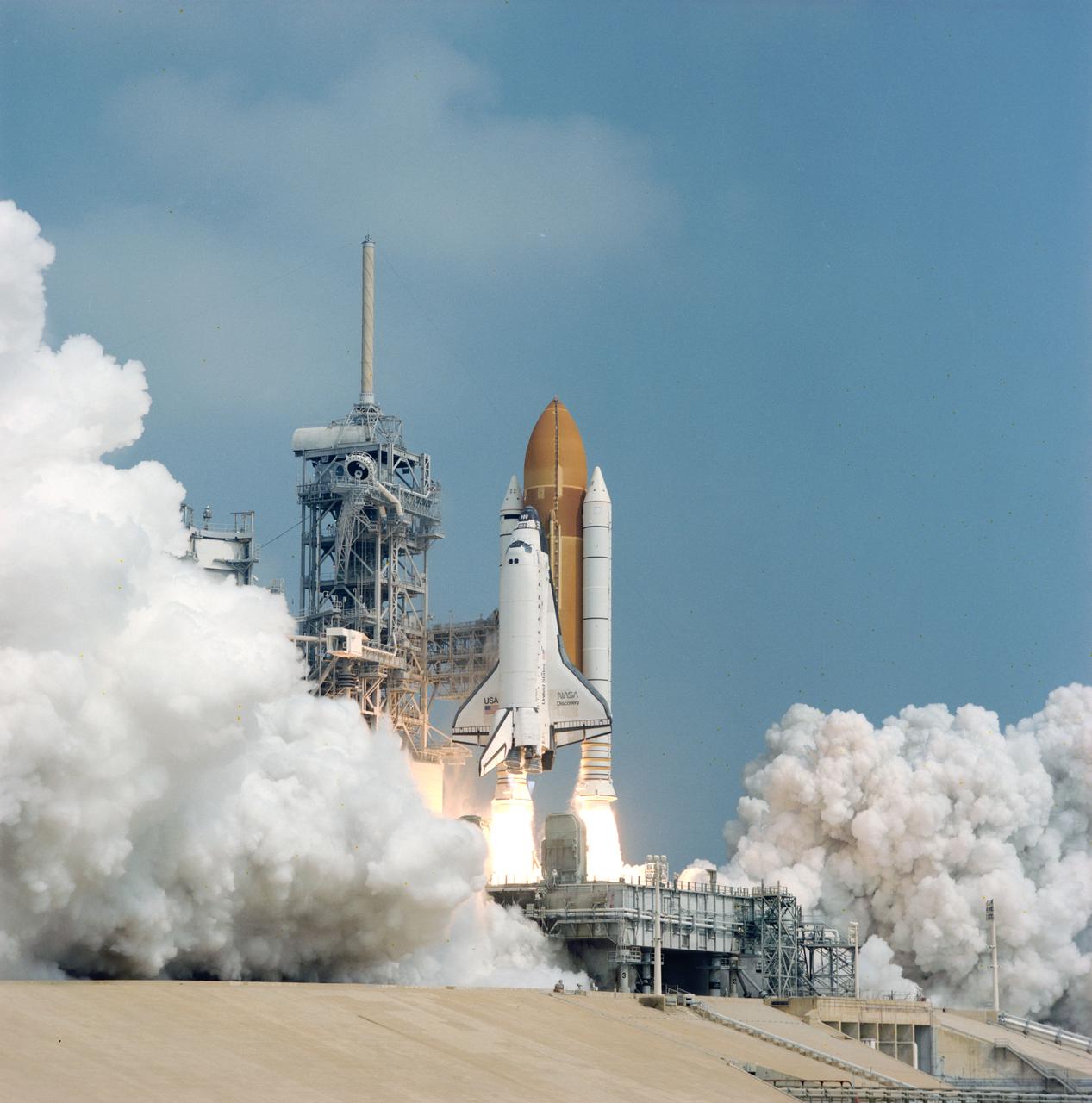
STS085-S-005 (7 August 1997) --- In this scene moments after ignition at Launch Pad 39A, at the Kennedy Space Center (KSC), the Space Shuttle Discovery heads toward an eleven-day mission in Earth-orbit in support of the STS-85 mission. Launch occurred at 10:41 a.m. (EDT), August 7, 1997. Onboard the spacecraft were astronauts Curtis L. Brown, Jr., commander; Kent V. Rominger, pilot; N. Jan Davis, payload commander; and Stephen K. Robinson and Robert L. Curbeam, Jr., both mission specialists; along with payload specialist Bjarni V. Tryggvason, a Canadian Space Agency (CSA) astronaut.
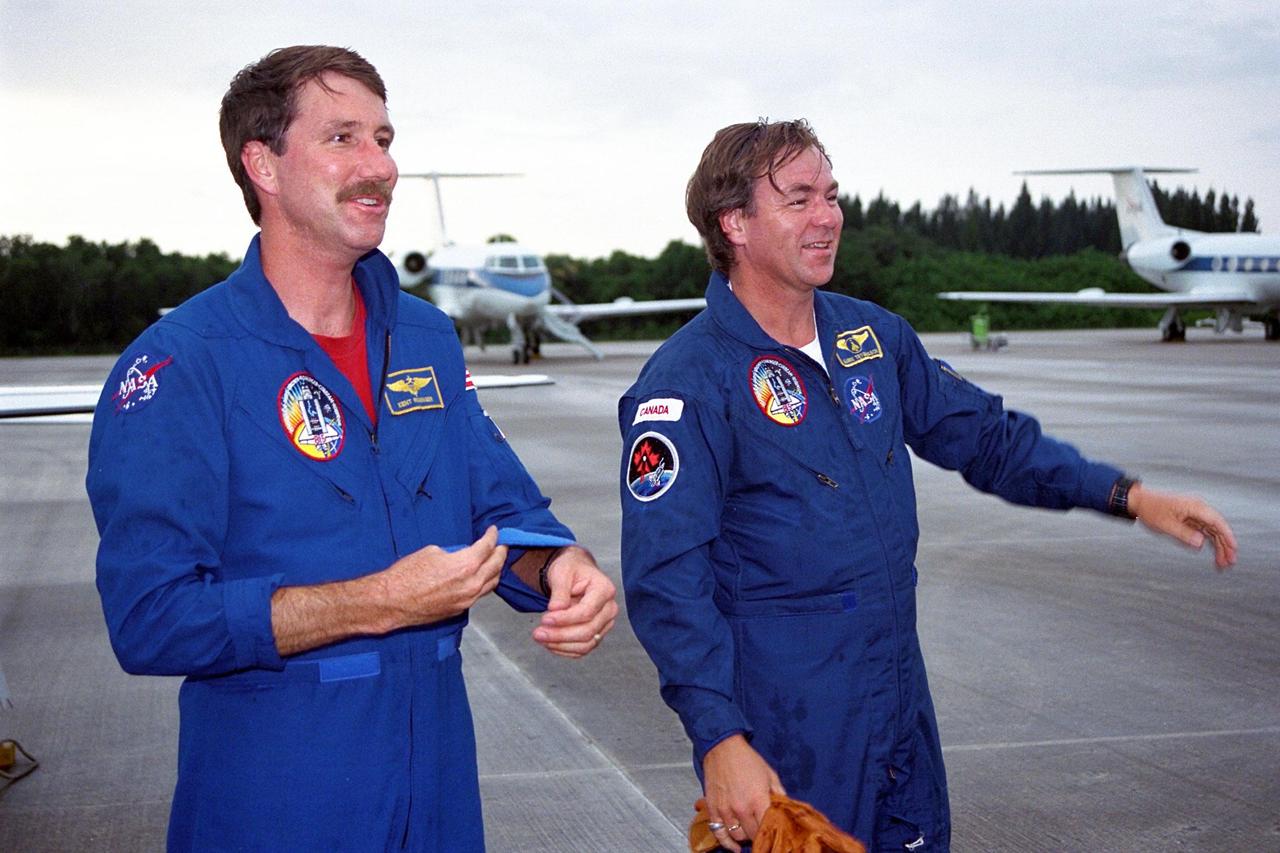
STS-85 Pilot Kent V. Rominger (left) and Payload Specialist Bjarni V. Tryggvason prepare to greet the rest of the flight crew at KSC’s Shuttle Landing Facility (SLF) after their arrival from NASA’s Johnson Space Center to begin final preparations for the STS-85 mission. The other crew members are Commander Curtis L. Brown, Jr., Payload Commander N. Jan Davis, Mission Specialist Robert L. Curbeam, Jr., and Mission Specialist Stephen K. Robinson. The primary payload aboard the Space Shuttle orbiter Discovery for the 11-day space flight is the Cryogenic Infrared Spectrometers and Telescopes for the Atmosphere-2 (CRISTA-SPAS2). Other STS-85 payloads include the Manipulator Flight Demonstration (MFD), and Technology Applications and Science-1 (TAS-1) and International Extreme Ultraviolet Hitchhiker-2 (IEH-2) experiments
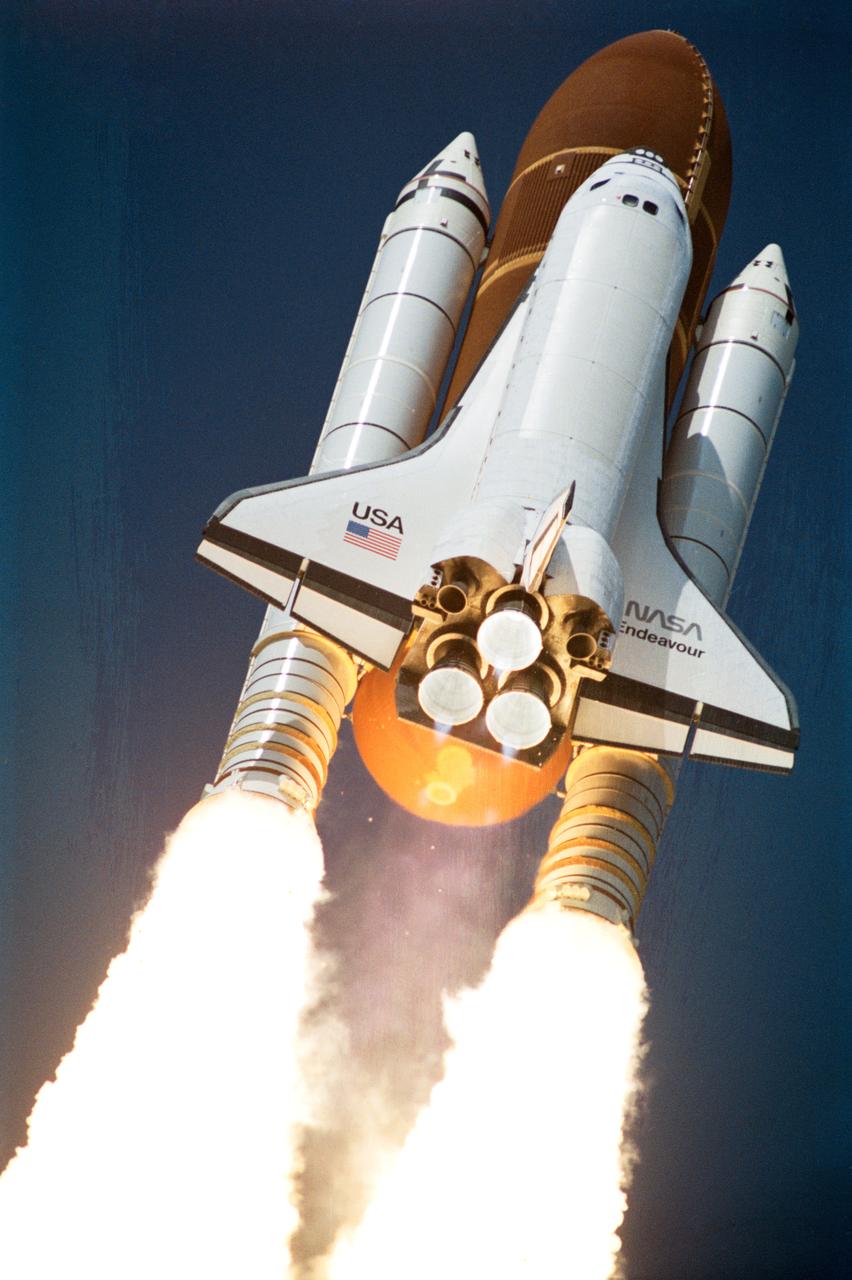
STS047-S-039 (12 Sept 1992) --- A 35mm camera was used to record this low-angle view of the STS-47 launch. With a crew of six NASA astronauts and a Japanese payload specialist onboard, the Space Shuttle Endeavour was heading for its second trip into space. This mission will be devoted to support of the Spacelab-J mission, a joint effort between Japan and the United States. Launch occurred at 10:23:00:0680 a.m. (EDT), September 12, 1992. Onboard were astronauts Robert L. Gibson, mission commander; Curtis L. Brown Jr., pilot; Mark C. Lee, payload commander; and Jerome (Jay) Apt, Mae C. Jemison and N. Jan Davis, mission specialists; along with payload specialist Mamoru Mohri, representing the National Space Development Agency (NASDA) of Japan.
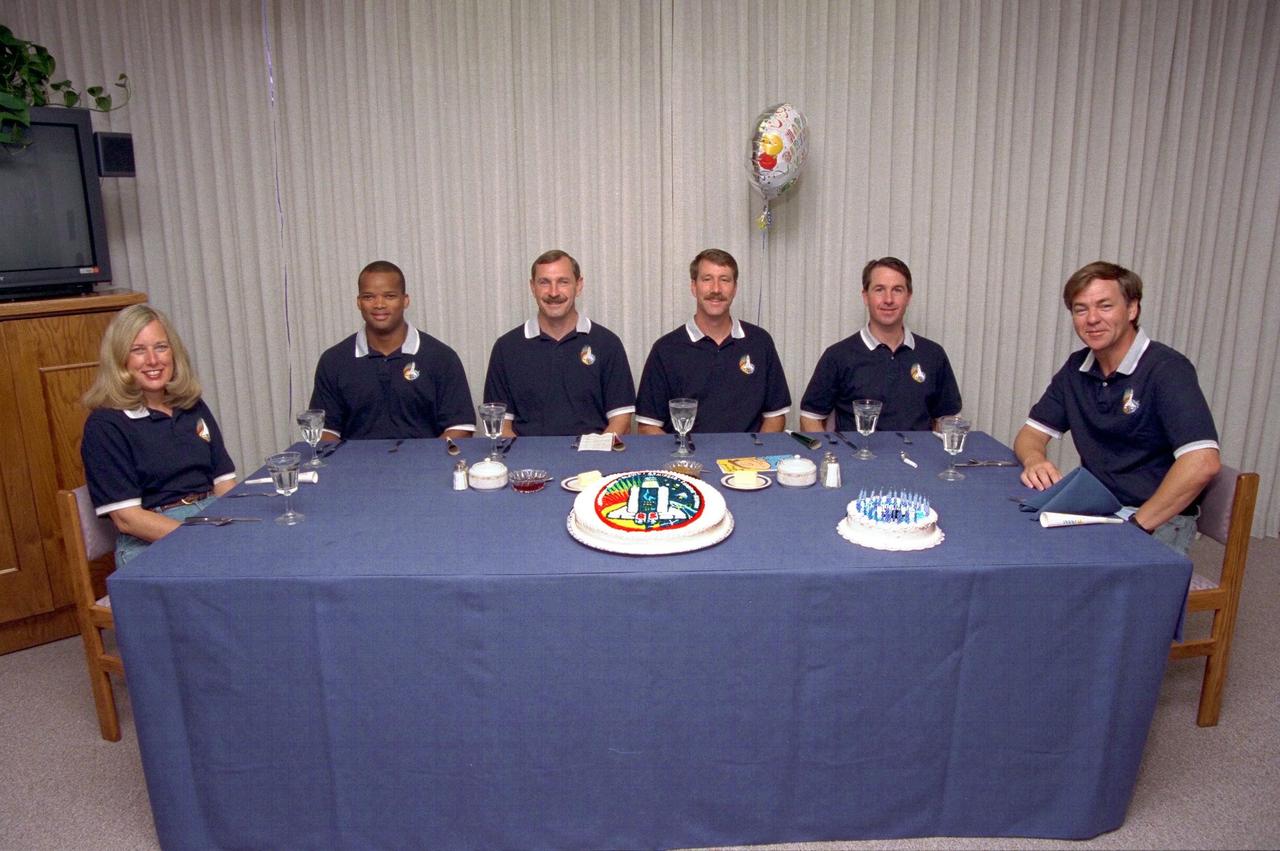
The STS-85 crew partakes in the traditional pre-liftoff breakfast in the Operations and Checkout (O&C) Building. They are (from left): Payload Commander N. Jan Davis; Mission Specialist Robert L. Curbeam, Jr.; Commander Curtis L. Brown, Jr.; Pilot Kent V. Rominger; Mission Specialist Stephen K. Robinson; Payload Specialist Bjarni V. Tryggvason; and The primary payload aboard the Space Shuttle orbiter Discovery is the Cryogenic Infrared Spectrometers and Telescopes for the Atmosphere-Shuttle Pallet Satellite-2 (CRISTA-SPAS-2). Other payloads on the 11-day mission include the Manipulator Flight Demonstration (MFD), and Technology Applications and Science-1 (TAS-1) and International Extreme Ultraviolet Hitchhiker-2 (IEH-2) experiments
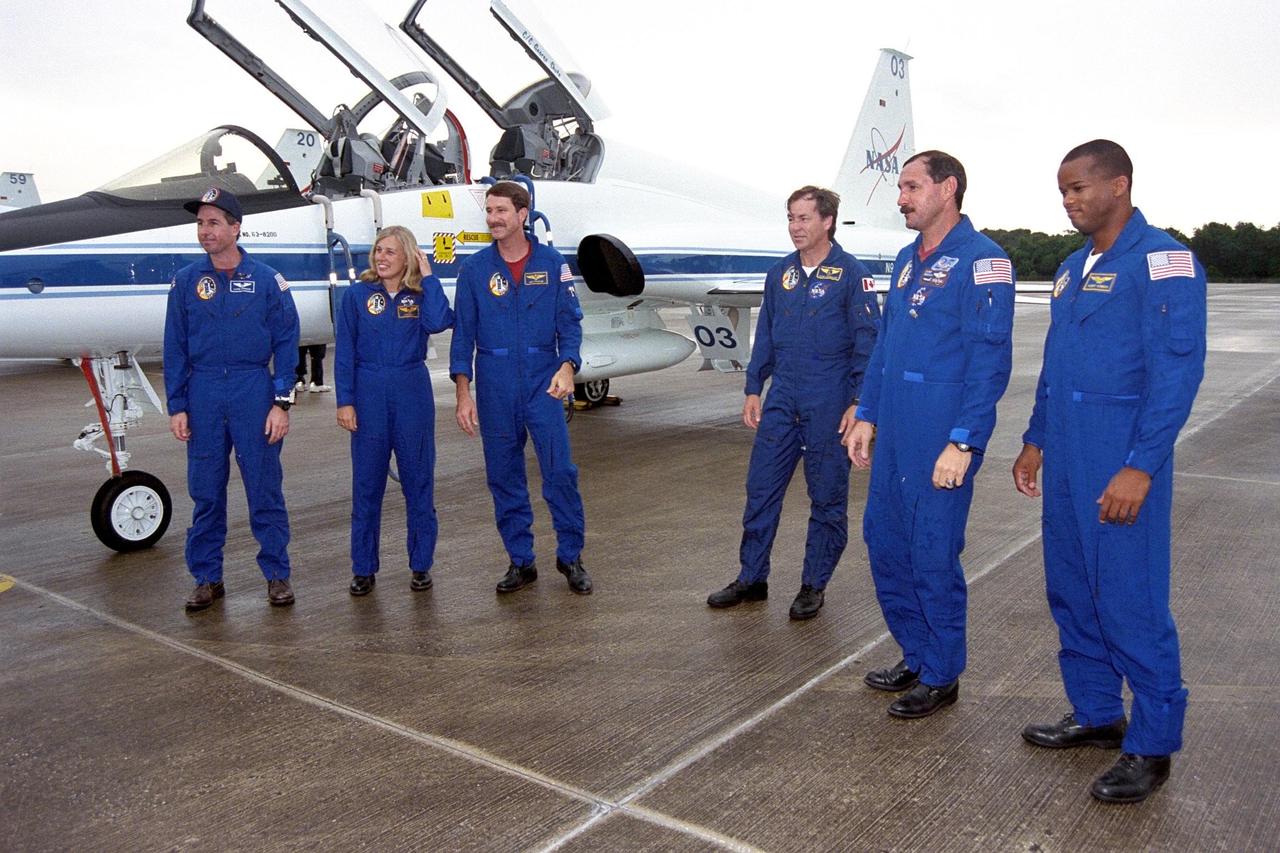
The STS-85 flight crew members pose with their T-38 jet trainer aircraft at the KSC Shuttle Landing Facility (SLF) after their arrival from NASA’s Johnson Space Center to begin final preparations for the STS-85 mission. They are (from left): Mission Specialist Stephen K. Robinson; Payload Commander N. Jan Davis; Pilot Kent V. Rominger; Payload Specialist Bjarni V. Tryggvason; Commander Curtis L. Brown, Jr.; and Mission Specialist Robert L. Curbeam, Jr. The primary payload aboard the Space Shuttle orbiter Discovery for the 11-day space flight is the Cryogenic Infrared Spectrometers and Telescopes for the Atmosphere-2 (CRISTA-SPAS-2). Other STS-85 payloads include the Manipulator Flight Demonstration (MFD), and Technology Applications and Science-1 (TAS-1) and International Extreme Ultraviolet Hitchhiker-2 (IEH-2) experiments
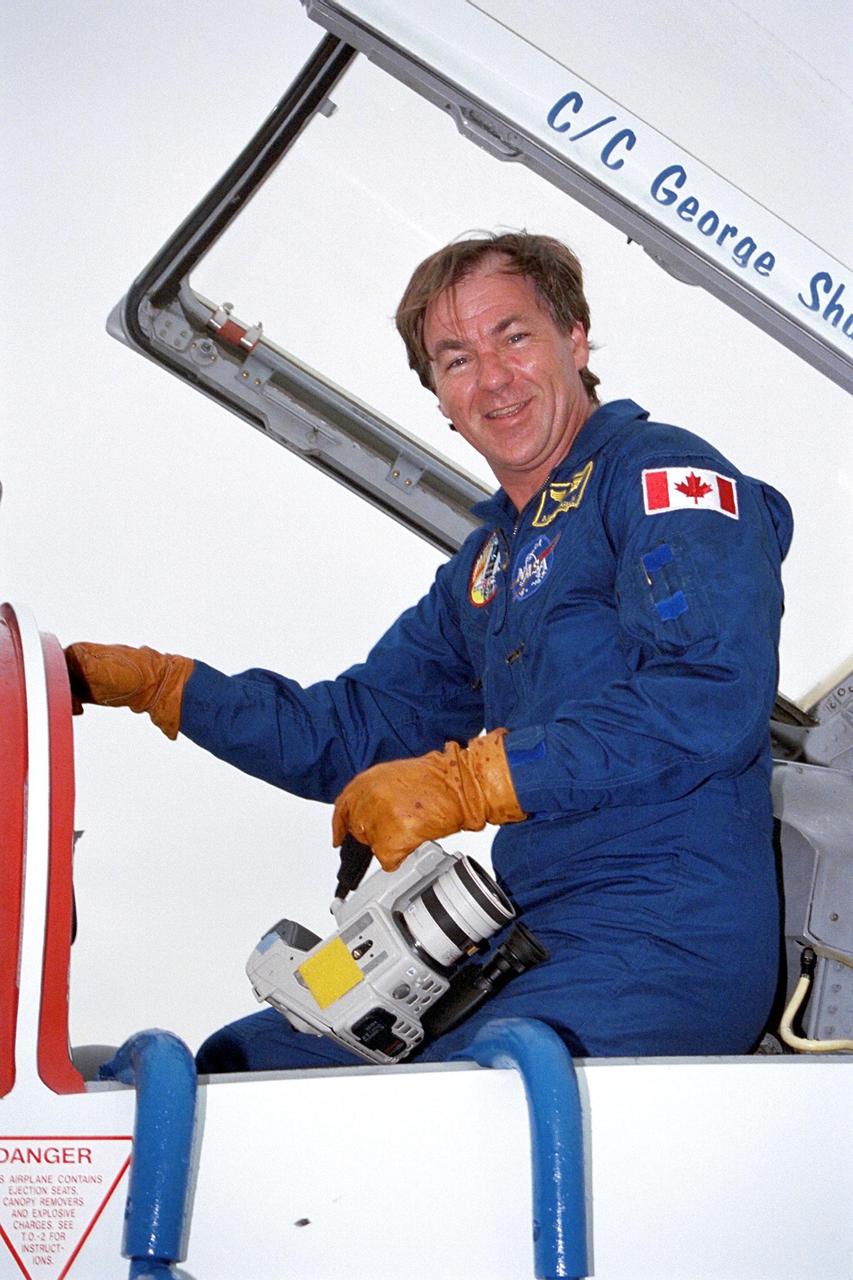
STS-85 Payload Specialist Bjarni V. Tryggvason poses in the cockpit of his T-38 jet trainer aircraft at KSC’s Shuttle Landing Facility (SLF) after his arrival with the rest of the flight crew from NASA’s Johnson Space Center to begin final preparations for the STS-85 mission. The other crew members are Commander Curtis L. Brown, Jr., Pilot Kent V. Rominger, Payload Commander N. Jan Davis, Mission Specialist Robert L. Curbeam, Jr., and Mission Specialist Stephen K. Robinson. The primary payload aboard the Space Shuttle orbiter Discovery for the 11-day space flight is the Cryogenic Infrared Spectrometers and Telescopes for the Atmosphere-2 (CRISTA-SPAS-2). Other STS-85 payloads include the Manipulator Flight Demonstration (MFD), and Technology Applications and Science-1 (TAS-1) and International Extreme Ultraviolet Hitchhiker-2 (IEH-2) experiments
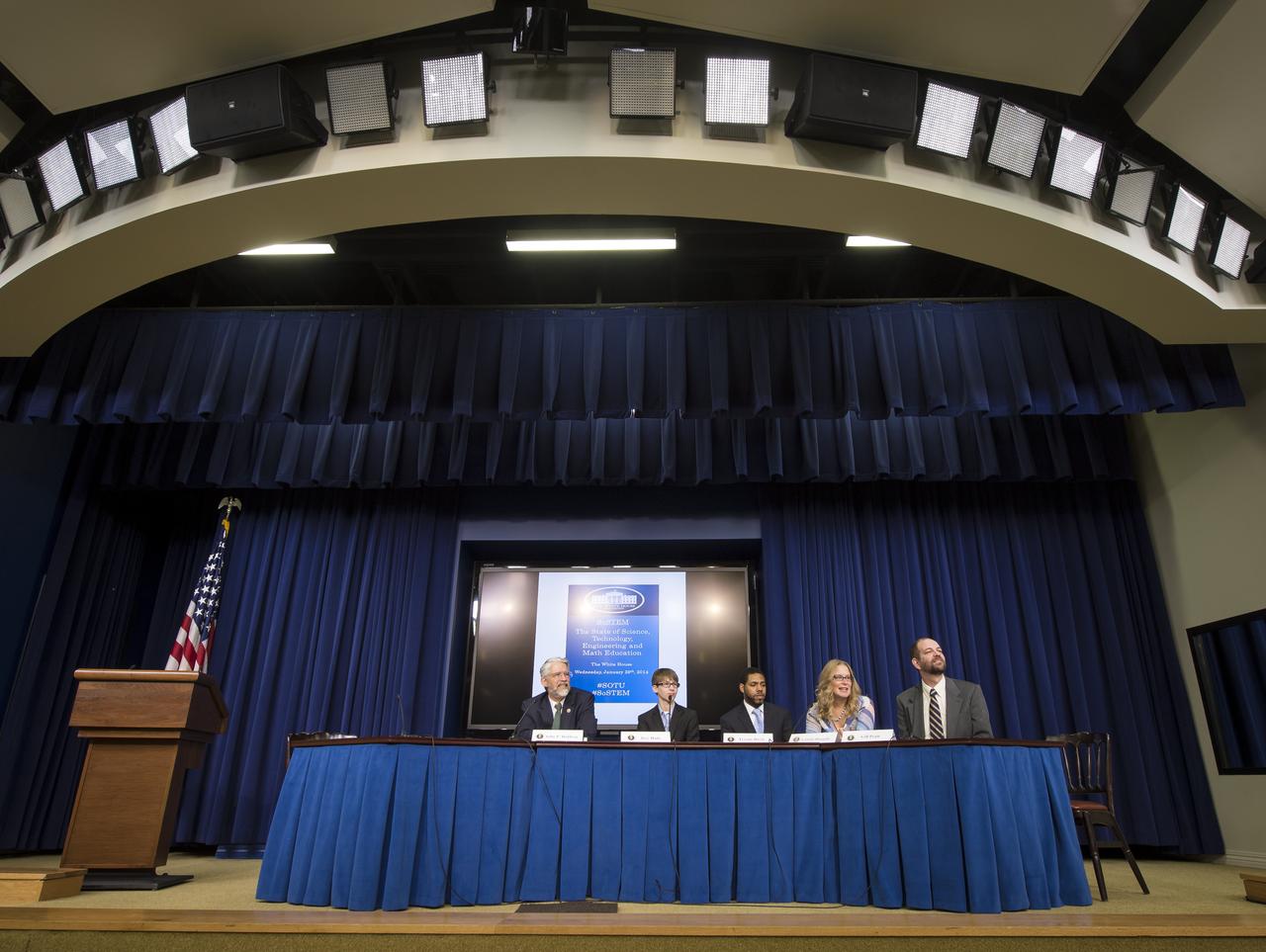
Panels participants, from left, Dr. John P. Holdren, Assistant to the President for Science and Technology and Director of the White House Office of Science & Technology Policy, former White House Science Fair participant Joey Hudy, Environmentalist and third-year law student at Elon University School of Law Tyrone Davis, White House innovation expert Cristin Dorgelo, and Defense Advanced Research Projects Agency (DARPA) Gill Pratt, take a question from the audience during the annual White House State of Science, Technology, Engineering, and Math (SoSTEM) address, Wednesday, Jan. 29, 2014, in the South Court Auditorium in the Eisenhower Executive Office Building on the White House complex in Washington. Photo Credit: (NASA/Bill Ingalls)
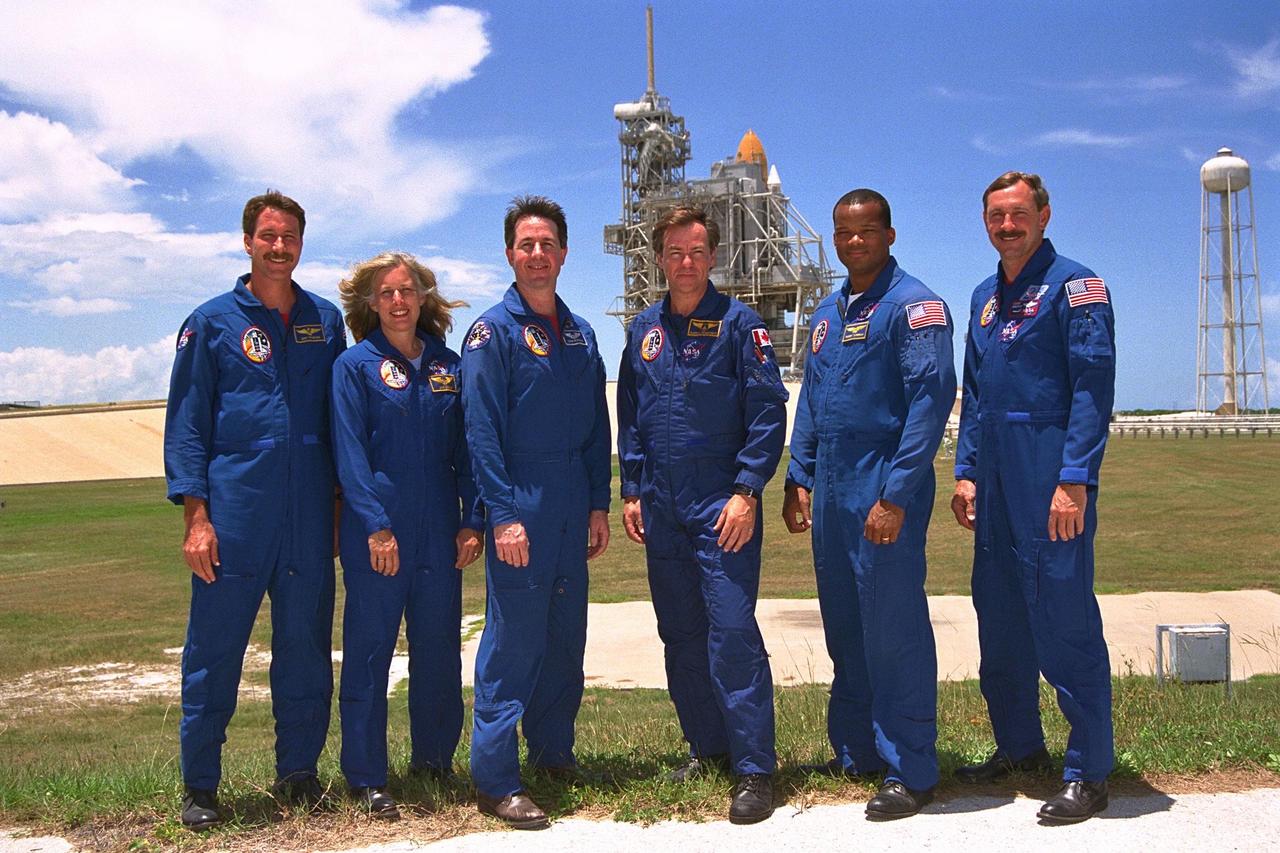
KENNEDY SPACE CENTER, Fla. -- The STS-85 flight crew poses at Launch Pad 39A during a break in Terminal Countdown Demonstration Test (TCDT) activities for that mission. They are (back row, from left): Pilot Kent V. Rominger; Payload Commander N. Jan Davis; Mission Specialist Stephen K. Robinson; Payload Specialist Bjarni V. Tryggvason; Mission Specialist Robert L. Curbeam, Jr.; and Commander Curtis L. Brown, Jr. The primary payload aboard the Space Shuttle orbiter Discovery is the Cryogenic Infrared Spectrometers and Telescopes for the Atmosphere-2 (CRISTA-SPAS-2). Other payloads on the 11-day mission include the Manipulator Flight Demonstration (MFD), and Technology Applications and Science-1 (TAS-1) and International Extreme Ultraviolet Hitchhiker-2 (IEH-2) experiments
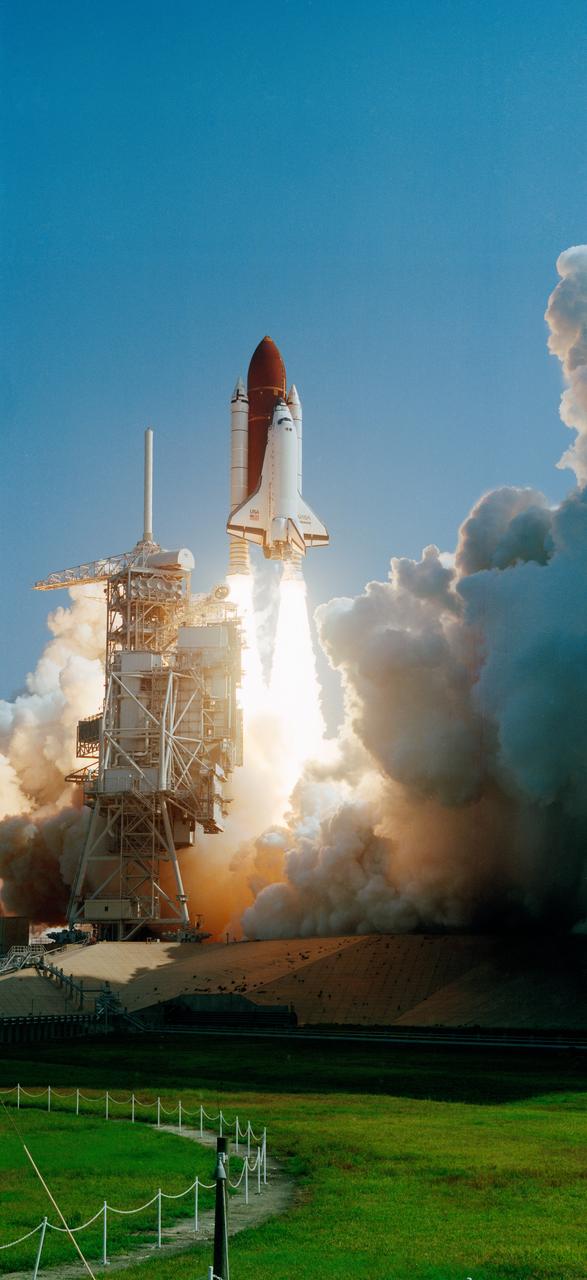
STS047-S-021 (12 Sept 1992) --- With a crew of six NASA astronauts and a Japanese payload specialist onboard, the Space Shuttle Endeavour heads for its second trip into space. This trip will be devoted to support of the Spacelab-J mission, a joint effort between Japan and the United States. Launch occurred at 10:23:00:0680 a.m. (EDT), September 12, 1992. Onboard were astronauts Robert L. Gibson, mission commander; Curtis L. Brown Jr., pilot; Mark C. Lee, payload commander; and Jerome (Jay) Apt, Mae C. Jemison and N. Jan Davis, mission specialists, along with payload specialist Mamoru Mohri, representing the National Space Development Agency of Japan.
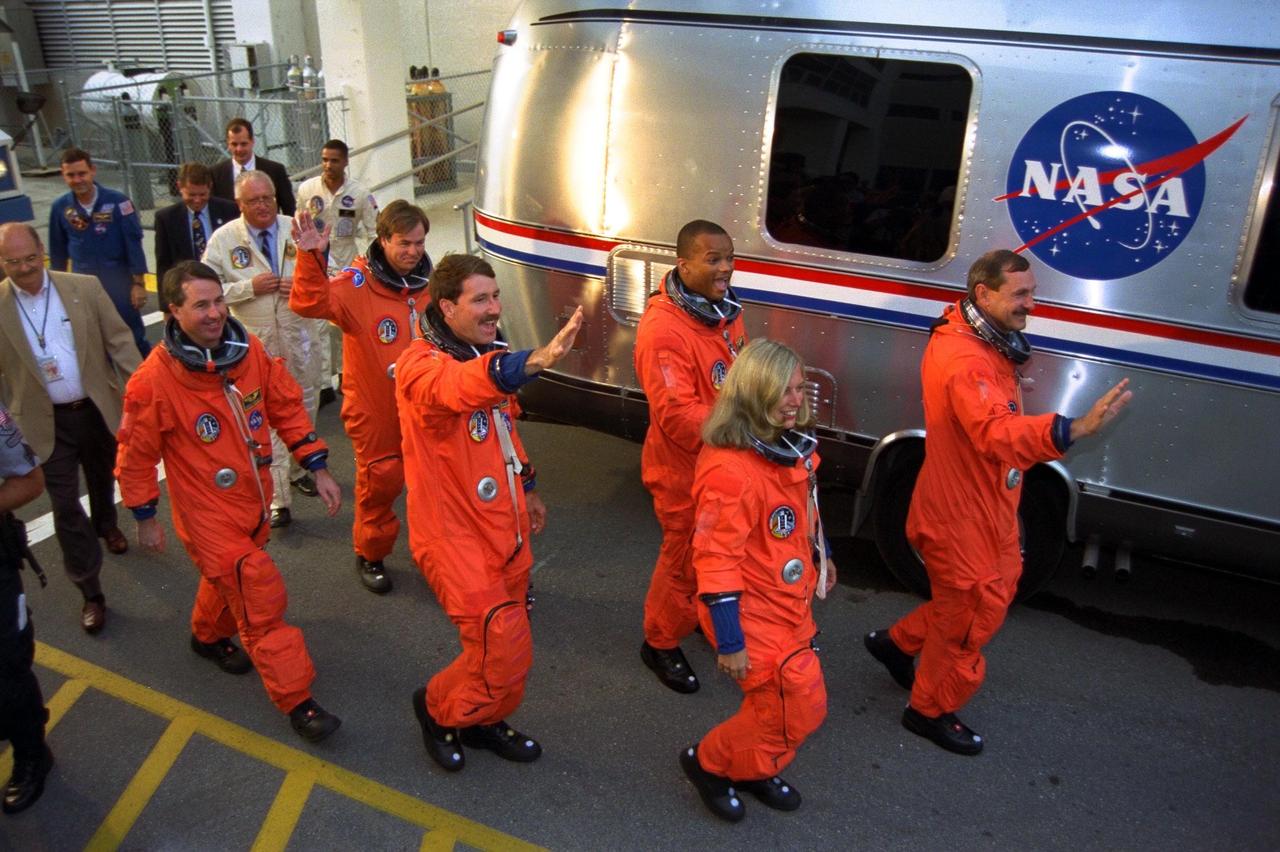
The STS-85 flight crew greets a crowd of well-wishers as they walk out of the Operations and Checkout (O&C) Building to board the Astrovan for their ride to Launch Pad 39A, where they will take their places aboard the Space Shuttle Discovery. Waving to the crowd is Commander Curtis L. Brown, Jr.(right), followed by Payload Commander N. Jan Davis, Mission Specialist Robert L. Curbeam, Jr., Pilot Kent V. Rominger, Mission Specialist Stephen K. Robinson and Payload Specialist Bjarni V. Tryggvason. The primary payload aboard the Space Shuttle orbiter Discovery is the Cryogenic Infrared Spectrometers and Telescopes for the Atmosphere-Shuttle Pallet Satellite-2 (CRISTA-SPAS-2) free-flyer. Other payloads on the 11-day mission include the Manipulator Flight Demonstration (MFD), and Technology Applications and Science-1 (TAS-1) and International Extreme Ultraviolet Hitchhiker-2 (IEH-2) experiments
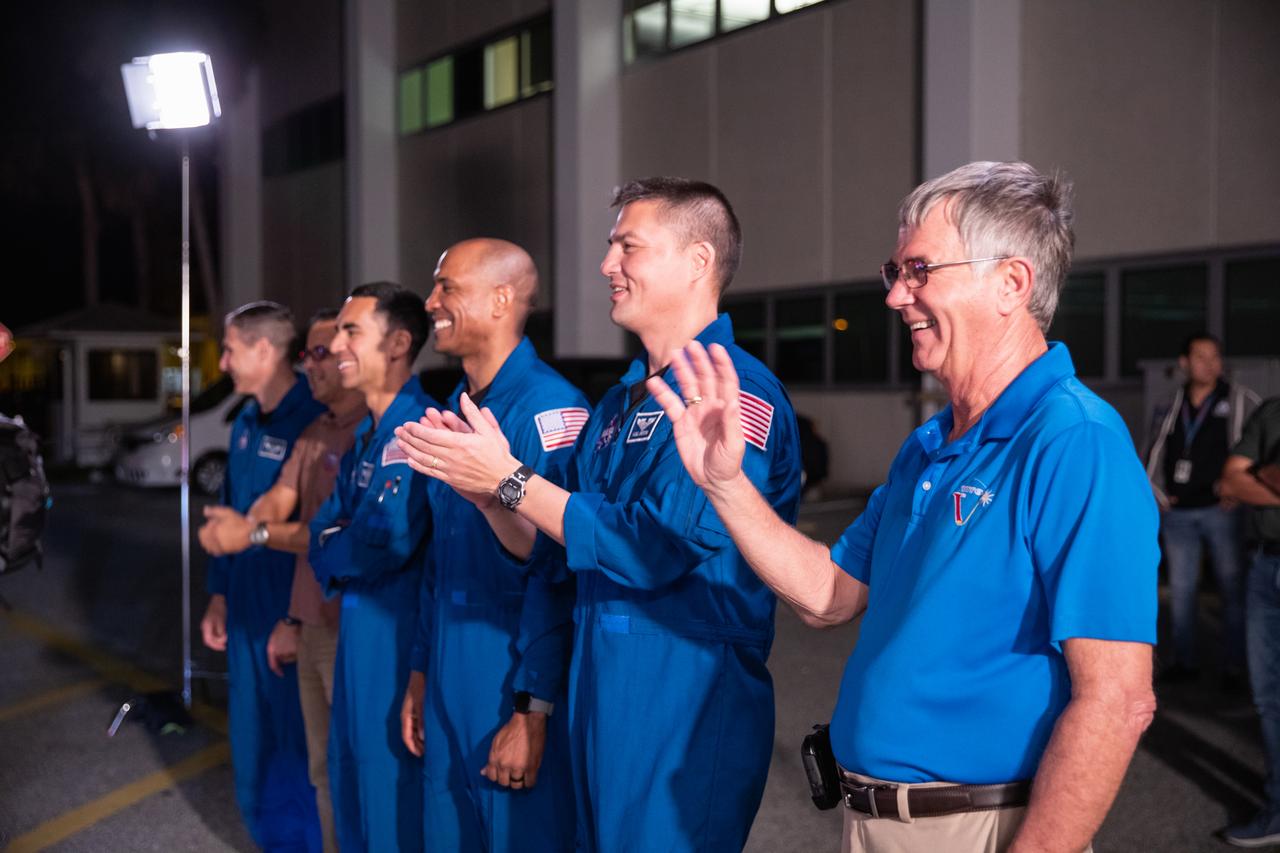
NASA astronauts cheer as fellow astronauts Bob Benhken and Doug Hurley walk out of the Neil A. Armstrong Operations and Checkout Building at Kennedy Space Center in Florida on Jan. 17, 2020, during a dress rehearsal ahead of the SpaceX uncrewed In-Flight Abort Test. From left to right are Mike Hopkins, Joe Acaba, Raja Chari, Victor Glover, Kjell Lindgren and Glen Davis with the Vehicle Integration Test Office at Kennedy. A SpaceX Falcon 9 rocket and Crew Dragon spacecraft will lift off from Launch Complex 39A on the flight test, which will demonstrate the spacecraft’s escape capabilities in preparation for crewed flights to the International Space Station as part of the agency’s Commercial Crew Program. Behnken and Hurley are slated to fly on the company’s first crewed mission, Demo-2.
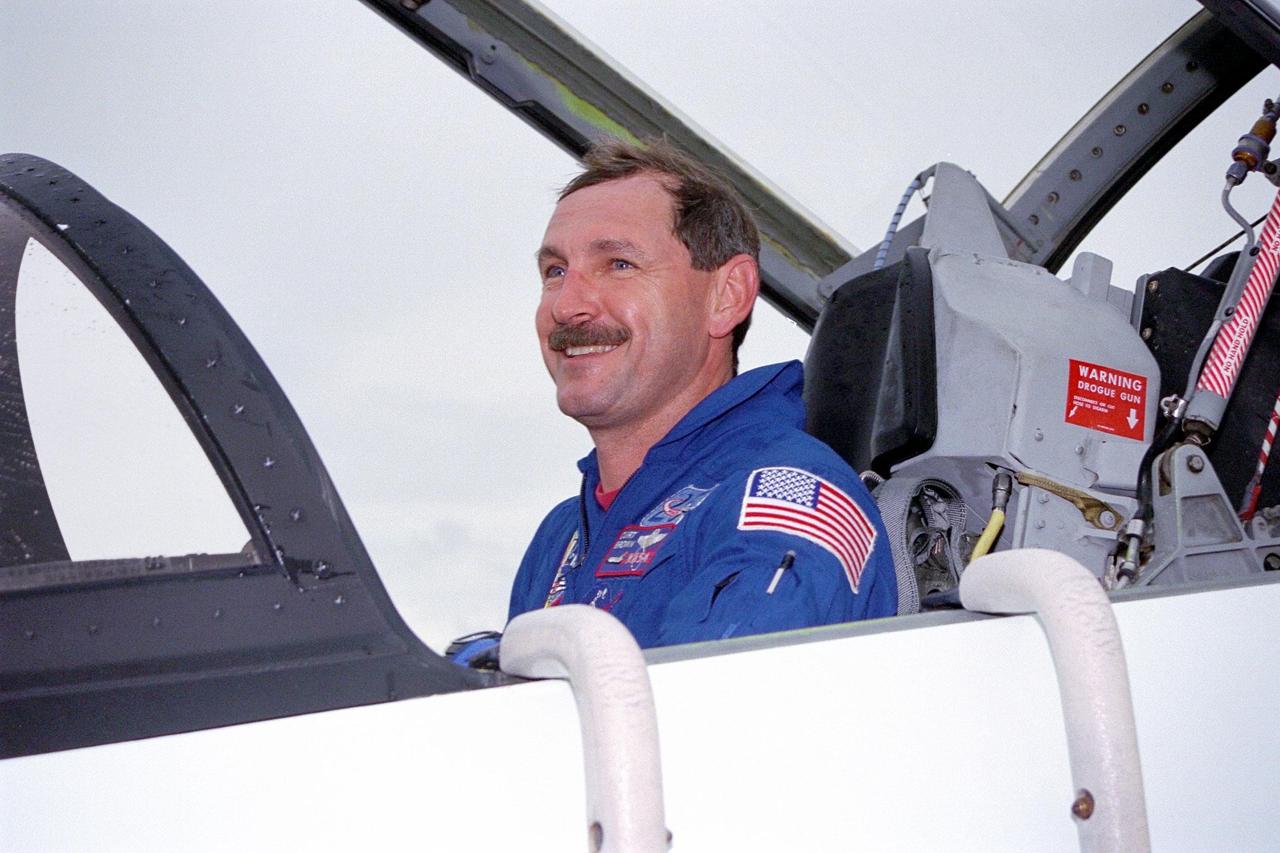
STS-85 Commander Curtis L. Brown, Jr. poses in the cockpit of his T-38 jet trainer aircraft at KSC’s Shuttle Landing Facility (SLF) after his arrival with the rest of the flight crew from NASA’s Johnson Space Center to begin final preparations for the STS-85 mission. The other crew members are Pilot Kent V. Rominger, Payload Commander N. Jan Davis, Mission Specialist Robert L. Curbeam, Jr., Mission Specialist Stephen K. Robinson and Payload Specialist Bjarni V. Tryggvason. The primary payload aboard the Space Shuttle orbiter Discovery for the 11-day space flight is the Cryogenic Infrared Spectrometers and Telescopes for the Atmosphere-2 (CRISTA-SPAS-2). Other STS-85 payloads include the Manipulator Flight Demonstration (MFD), and Technology Applications and Science-1 (TAS-1) and International Extreme Ultraviolet Hitchhiker-2 (IEH-2) experiments
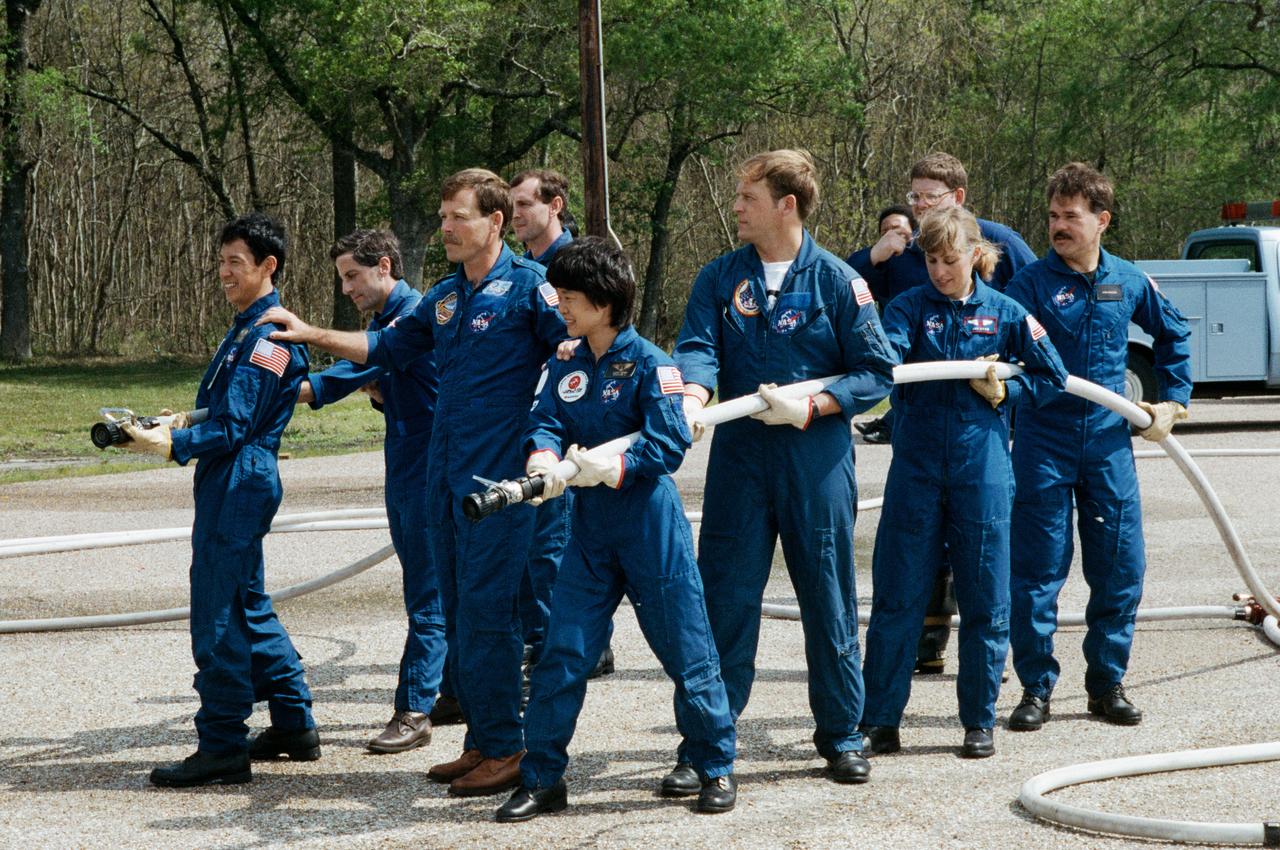
STS-47 Endeavour, Orbiter Vehicle (OV) 105, crewmembers led by Commander Robert L. Gibson (center) prepare to extinguish a blaze in JSC's Fire Training Pit. Lined up along the water hoses are: (on left) Payload Specialist Mamoru Mohri, holding the hose nozzle, followed by Mission Specialist (MS) Jerome Apt, and Pilot Curtis L. Brown, Jr; and (on right) backup Payload Specialist Chiaki Naito-Mukai, holding the hose nozzle, followed by MS and Payload Commander (PLC) Mark C. Lee, MS N. Jan Davis, and backup Payload Specialist Stan Koszelak. A veteran fire fighter and the instructor, positioned between the two hoses, looks on. Mohri and Mukai represent Japan's National Space Development Agency (NASDA). The Fire Training Pit is located across from the Gilruth Center Bldg 207.
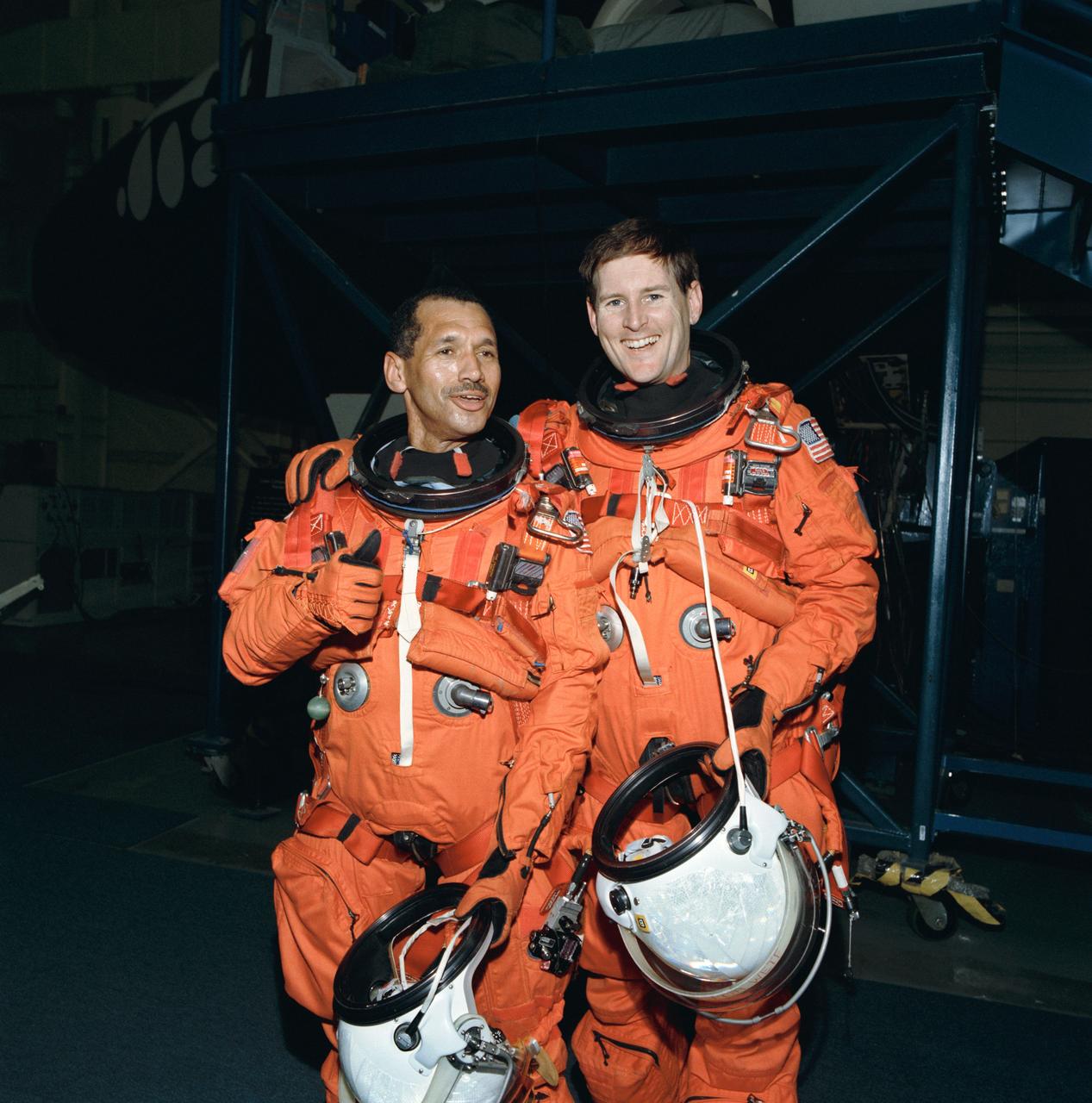
Astronauts Charles F. Bolden Jr. (left) and Kenneth S. Reightler, commander and pilot, respectively, for the STS-60 mission, take a break during rehearsal for some of their flight duties near the crew compartment trainer in JSC's Shuttle mock-up and integration laboratory (50648); Cosmonaut Sergei Krikalev, mission specialist for STS-60, gets assistance with his launch and entry suit from Lockheed's Max Kandloer during a training session. Others pictured, left to right, are Astronauts Franklin R. Chang-Diaz, Ronald M. Sega and N. Jan Davis (50649); Astronaut Kenneth S. Reightler, pilot for STS-60, gets assistance with his launch and entry suit (LES) from Boeing's William Todd during a training session (50650).
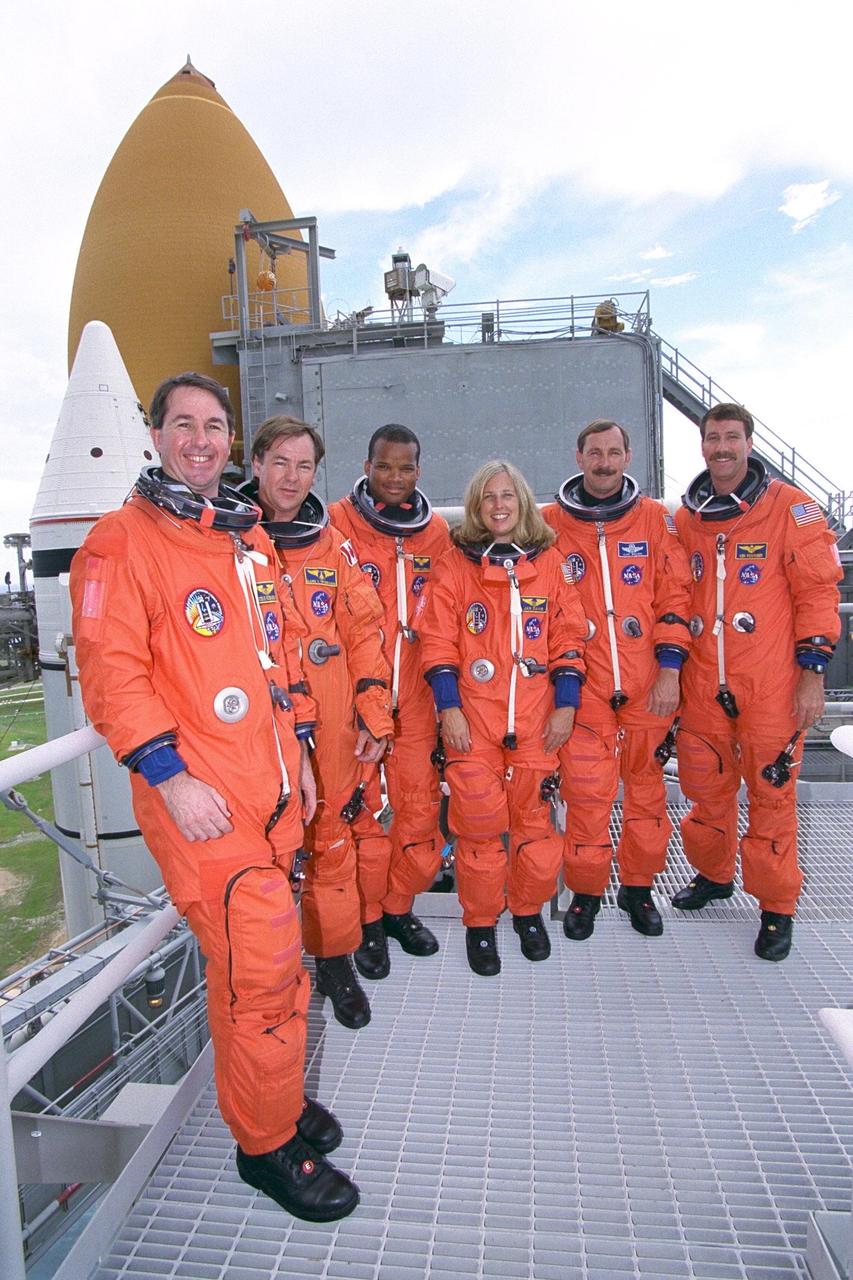
KENNEDY SPACE CENTER, Fla. -- The STS-85 flight crew members pose at the 195-foot level of Launch Pad 39A with the Space Shuttle Discovery in the background during Terminal Countdown Demonstration Test (TCDT) activities for that mission. They are (from left): Mission Specialist Stephen K. Robinson; Payload Specialist Bjarni V. Tryggvason; Mission Specialist Robert L. Curbeam, Jr.; Payload Commander N. Jan Davis; Commander Curtis L. Brown, Jr.; and Pilot Kent V. Rominger. The primary payload aboard the Space Shuttle orbiter Discovery is the Cryogenic Infrared Spectrometers and Telescopes for the Atmosphere-2 (CRISTA-SPAS-2). Other STS-85 payloads include the Manipulator Flight Demonstration (MFD), and Technology Applications and Science-1 (TAS-1) and International Extreme Ultraviolet Hitchhiker-2 (IEH-2) experiments
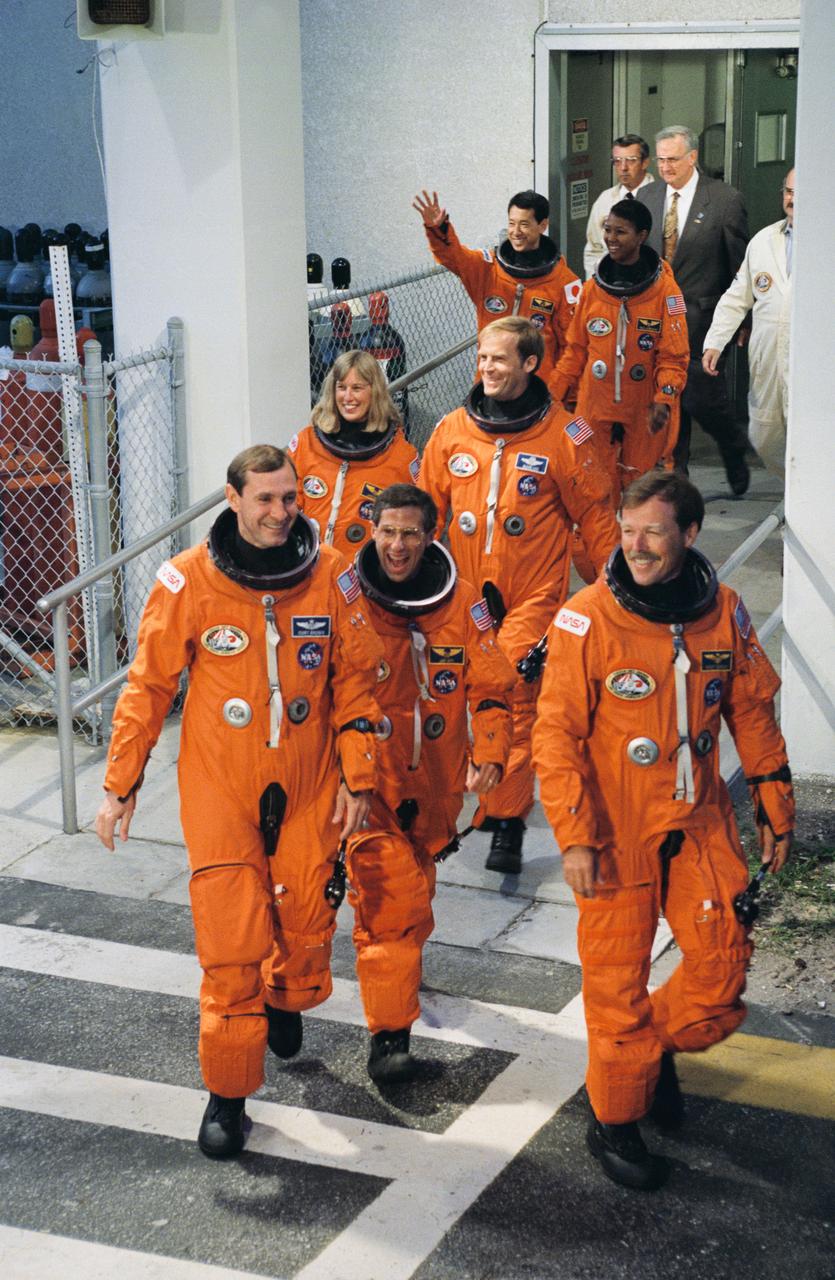
STS047-S-038 (12 Sept 1992) --- The seven crewmembers who will be aboard for Endeavour's second trip into space leave the Operations and Checkout Building to board a van headed for Launch Complex 39. This mission will be devoted to support of the Spacelab-J mission, a joint effort between Japan and the United States. Launch occurred at 10:23:00:0680 a.m. (EDT), September 12, 1992. Onboard were astronauts Robert L. Gibson, mission commander; Curtis L. Brown Jr., pilot; Mark C. Lee, payload commander; and Jerome (Jay) Apt, Mae C. Jemison and N. Jan Davis, mission specialists; along with payload specialist Mamoru Mohri, representing the National Space Development Agency (NASDA) of Japan.

KENNEDY SPACE CENTER, FLA. -- The STS-85 flight crew members address the news media at the KSC Shuttle Landing Facility (SLF) after their arrival from NASA’s Johnson Space Center to begin final preparations for the STS-85 mission. They are (from left): Mission Specialist Stephen K. Robinson; Payload Commander N. Jan Davis; Commander Curtis L. Brown, Jr.; Pilot Kent V. Rominger; Mission Specialist Robert L. Curbeam, Jr.; and Payload Specialist Bjarni V. Tryggvason. The primary payload aboard the Space Shuttle orbiter Discovery for the 11-day space flight is the Cryogenic Infrared Spectrometers and Telescopes for the Atmosphere-2 (CRISTA-SPAS-2). Other STS-85 payloads include the Manipulator Flight Demonstration (MFD), and Technology Applications and Science-1 (TAS-1) and International Extreme Ultraviolet Hitchhiker-2 (IEH-2) experiments.
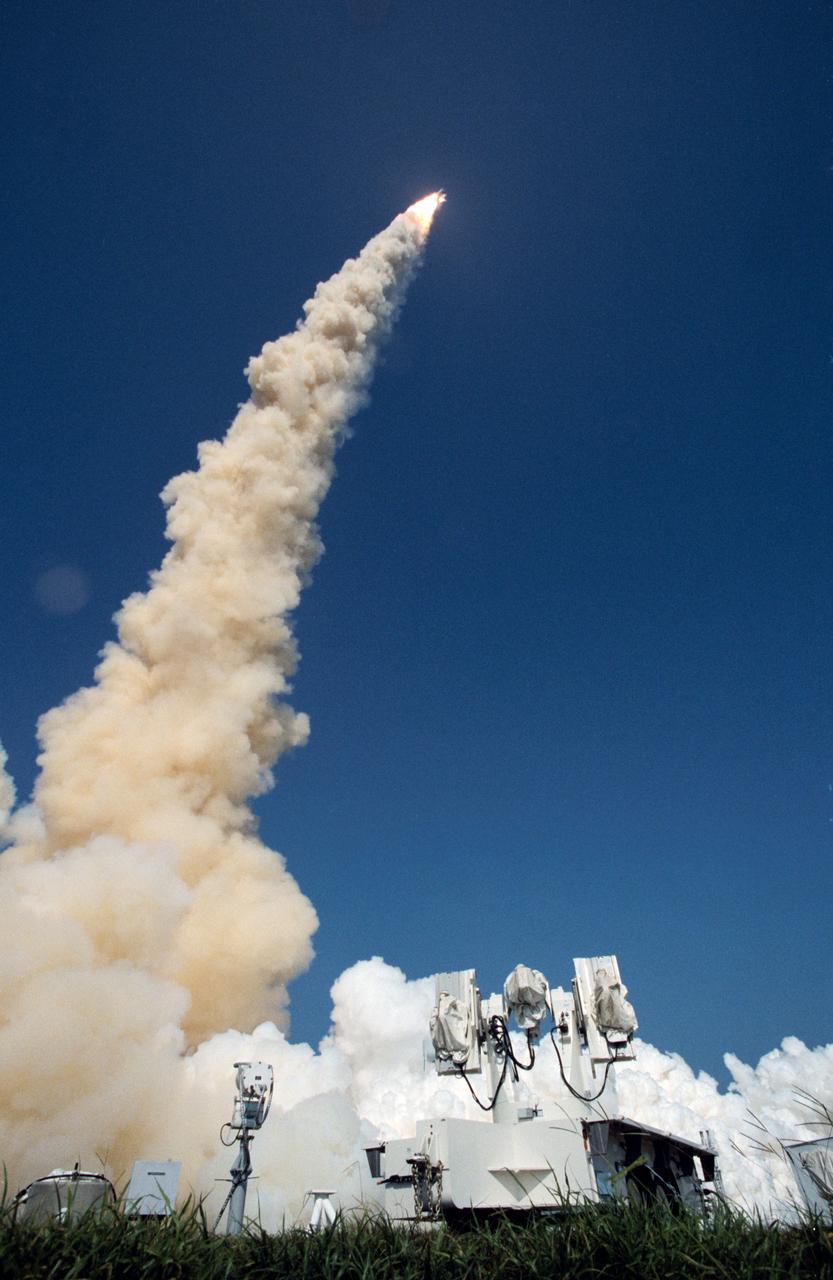
STS047-S-040 (12 Sept 1992) --- A 35mm camera was used to record this distant, low-angle view of the STS-47 launch. With a crew of six NASA astronauts and a Japanese payload specialist onboard, the Space Shuttle Endeavour was heading for its second trip into space. This mission is devoted to support of the Spacelab-J mission, a joint effort between Japan and the United States. Launch occurred at 10:23:00:0680 a.m. (EDT), September 12, 1992. Onboard were astronauts Robert L. Gibson, mission commander; Curtis L. Brown Jr., pilot; Mark C. Lee, payload commander; and Jerome (Jay) Apt, Mae C. Jemison and N. Jan Davis, mission specialists; along with payload specialist Mamoru Mohri, representing the National Space Development Agency (NASDA) of Japan.

KENNEDY SPACE CENTER, Fla. -- The Rotating Service Structure is rolled back at Launch Complex 39A to reveal the Space Shuttle orbiter Discovery, scheduled to launch on mission STS-85 at 10:41 a.m. EDT on August 7. The STS-85 flight crew members are Mission Specialist Stephen K. Robinson; Payload Commander N. Jan Davis; Pilot Kent V. Rominger; Payload Specialist Bjarni V. Tryggvason; Commander Curtis L. Brown, Jr.; and Mission Specialist Robert L. Curbeam, Jr. The primary payload aboard the Space Shuttle orbiter Discovery for the 11-day space flight is the Cryogenic Infrared Spectrometers and Telescopes for the Atmosphere-2 (CRISTA-SPAS-2). Other STS-85 payloads include the Manipulator Flight Demonstration (MFD), and Technology Applications and Science-1 (TAS-1) and International Extreme Ultraviolet Hitchhiker-2 (IEH-2) experiments
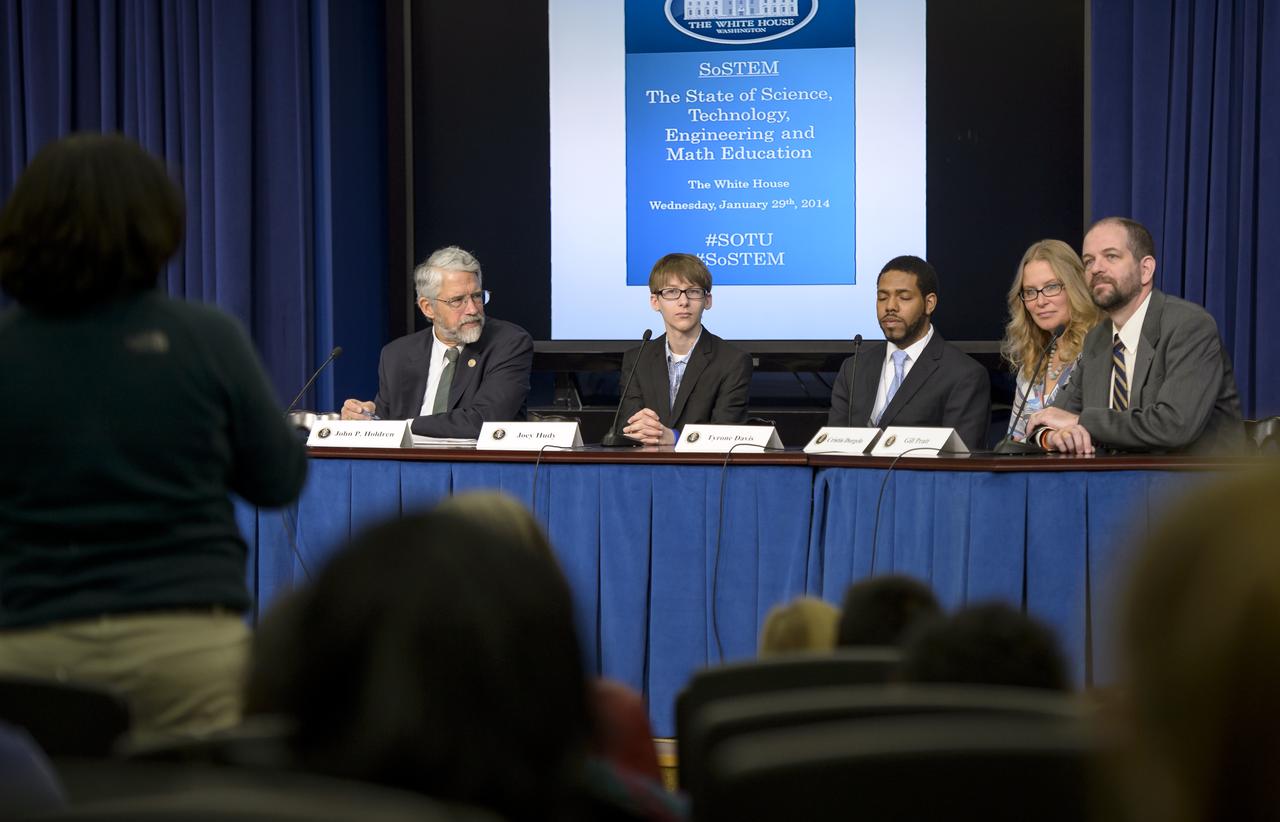
Panels participants, from left, Dr. John P. Holdren, Assistant to the President for Science and Technology and Director of the White House Office of Science & Technology Policy, former White House Science Fair participant Joey Hudy, Environmentalist and third-year law student at Elon University School of Law Tyrone Davis, White House innovation expert Cristin Dorgelo, and Defense Advanced Research Projects Agency (DARPA) Gill Pratt, take a question from the audience during the annual White House State of Science, Technology, Engineering, and Math (SoSTEM) address, Wednesday, Jan. 29, 2014, in the South Court Auditorium in the Eisenhower Executive Office Building on the White House complex in Washington. Photo Credit: (NASA/Bill Ingalls)
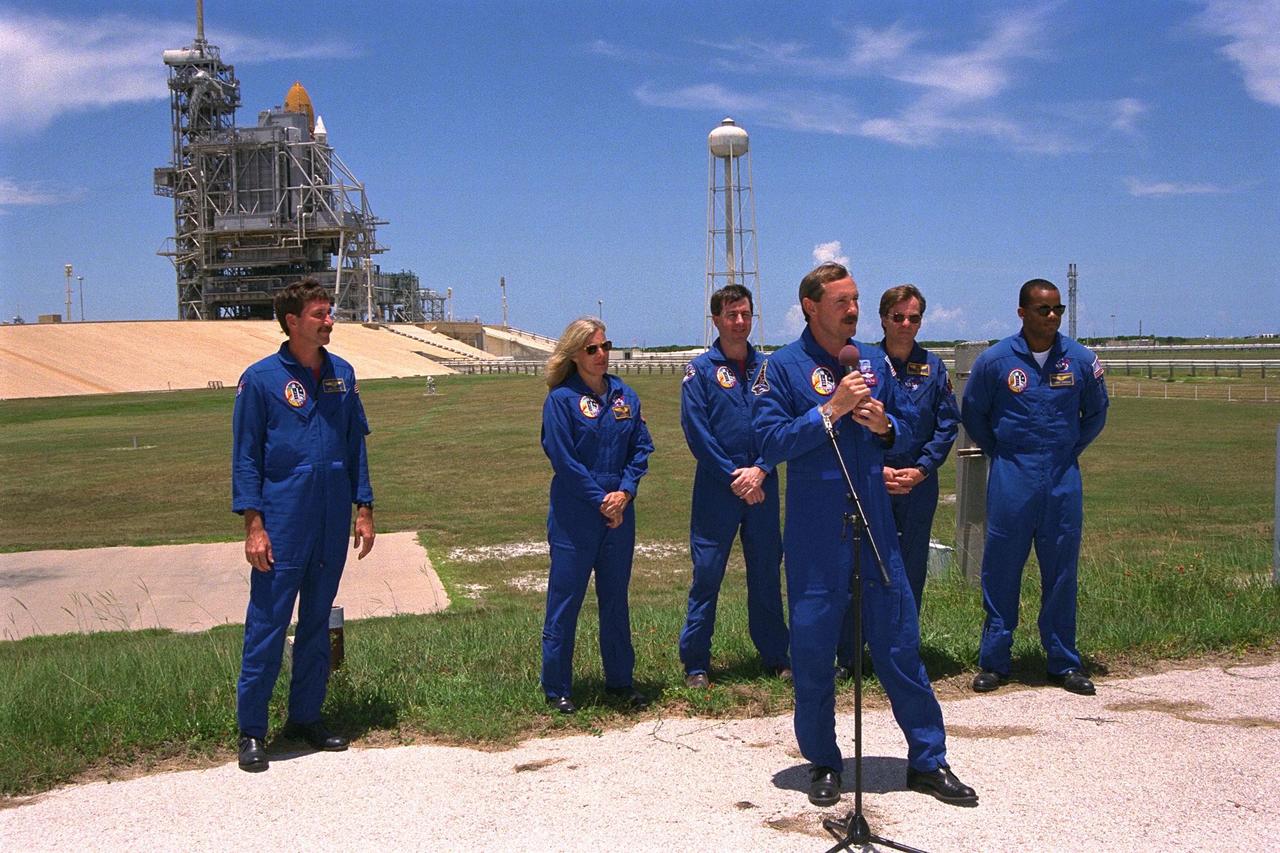
KENNEDY SPACE CENTER, Fla. -- STS-85 Commander Curtis L. Brown, Jr., addresses the news media at a briefing at Launch Pad 39A while the other members of the flight crew in the background prepare to field questions during a break in Terminal Countdown Demonstration Test (TCDT) activities for that mission. They are (back row, from left): Pilot Kent V. Rominger; Payload Commander N. Jan Davis; Mission Specialist Stephen K. Robinson; Payload Specialist Bjarni V. Tryggvason; and Mission Specialist Robert L. Curbeam, Jr. The primary payload aboard the Space Shuttle orbiter Discovery is the Cryogenic Infrared Spectrometers and Telescopes for the Atmosphere-2 (CRISTA-SPAS-2). Other payloads on the 11-day mission include the Manipulator Flight Demonstration (MFD), and Technology Applications and Science-1 (TAS-1) and International Extreme Ultraviolet Hitchhiker-2 (IEH-2) experiments
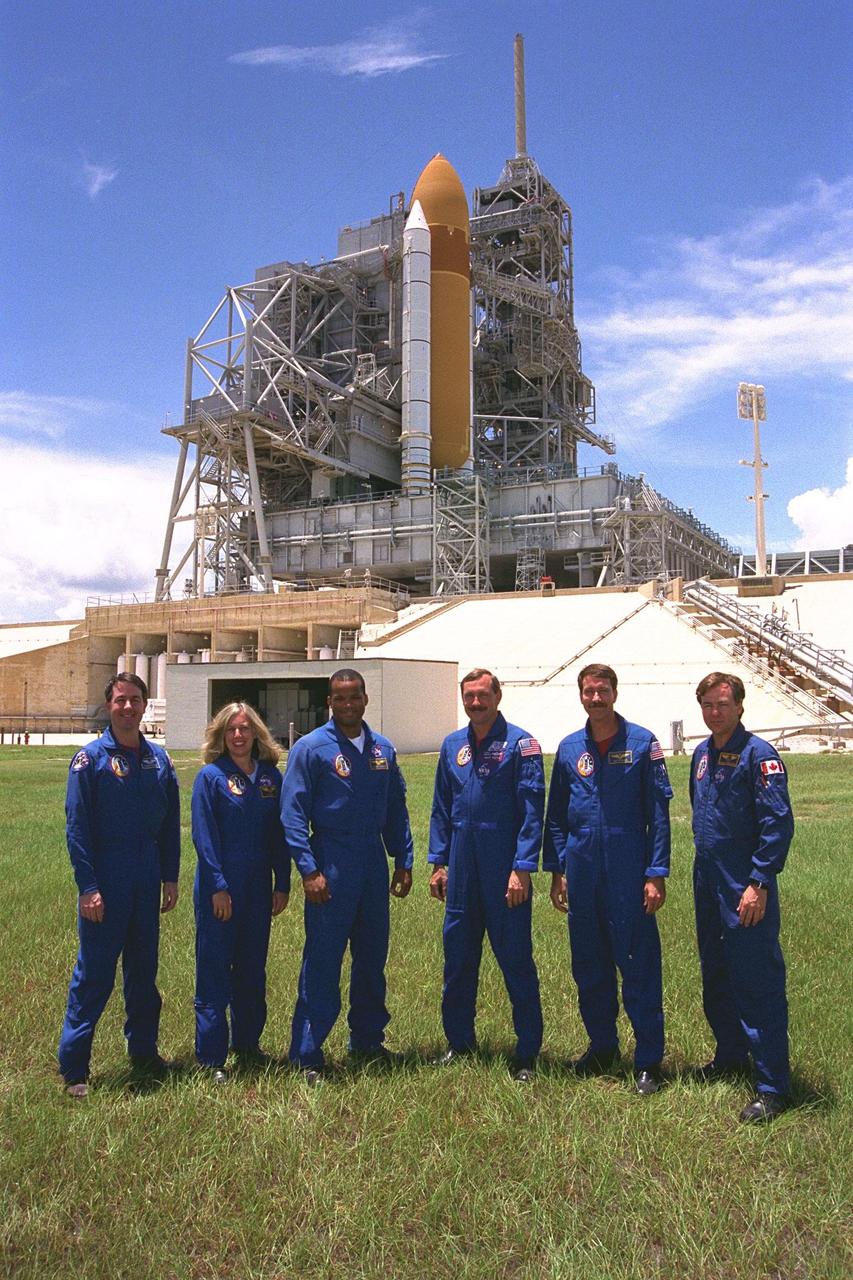
KENNEDY SPACE CENTER, Fla. -- The STS-85 flight crew poses in front of the Space Shuttle Discovery at Launch Pad 39A during a break in Terminal Countdown Demonstration Test (TCDT) activities for that mission. They are (from left): Mission Specialist Stephen K. Robinson; Payload Commander N. Jan Davis; Mission Specialist Robert L. Curbeam, Jr.; Commander Curtis L. Brown, Jr.; Pilot Kent V. Rominger; and Payload Specialist Bjarni V. Tryggvason. The primary payload aboard the Space Shuttle orbiter Discovery is the Cryogenic Infrared Spectrometers and Telescopes for the Atmosphere-2 (CRISTA-SPAS-2). Other payloads on the 11-day mission include the Manipulator Flight Demonstration (MFD), and Technology Applications and Science-1 (TAS-1) and International Extreme Ultraviolet Hitchhiker-2 (IEH-2) experiments
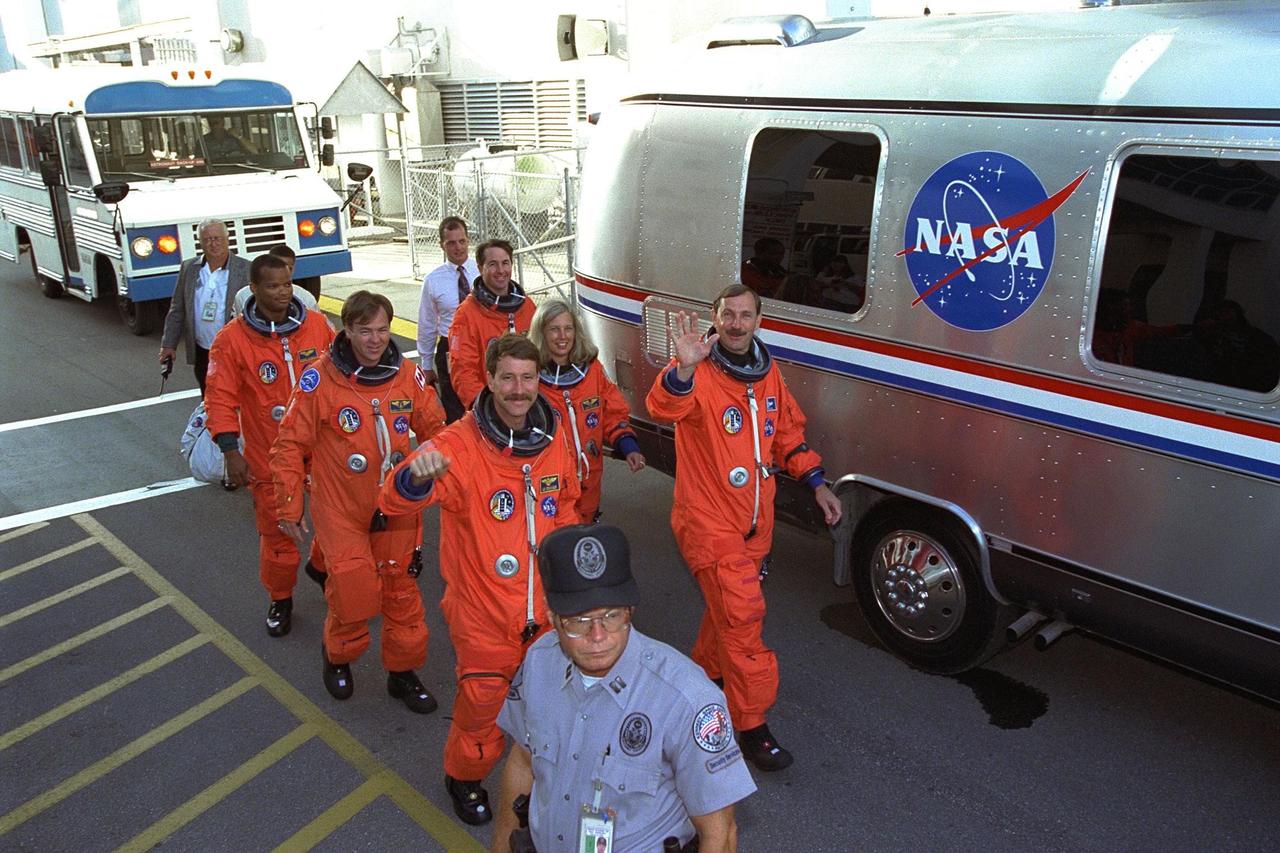
The STS-85 flight crew walks out of the Operations and Checkout (O&C) Building during Terminal Countdown Demonstration Test (TCDT) activities for that mission to board the Astrovan for the ride to the Space Shuttle Discovery on Launch Pad 39A. Waving to the crowd is Commander Curtis L. Brown, Jr. (right). Directly behind him are Payload Commander N. Jan Davis and Mission Specialist Stephen K. Robinson. Pilot Kent V. Rominger (to Brown’s right) is leading the second row, followed by Payload Specialist Bjarni V. Tryggvason and Mission Specialist Robert L. Curbeam, Jr. The primary payload aboard the Space Shuttle orbiter Discovery is the Cryogenic Infrared Spectrometers and Telescopes for the Atmosphere-2 (CRISTA-SPAS-2). Other payloads on the 11-day mission include the Manipulator Flight Demonstration (MFD), and Technology Applications and Science-1 (TAS-1) and International Extreme Ultraviolet Hitchhiker-2 (IEH-2) experiments
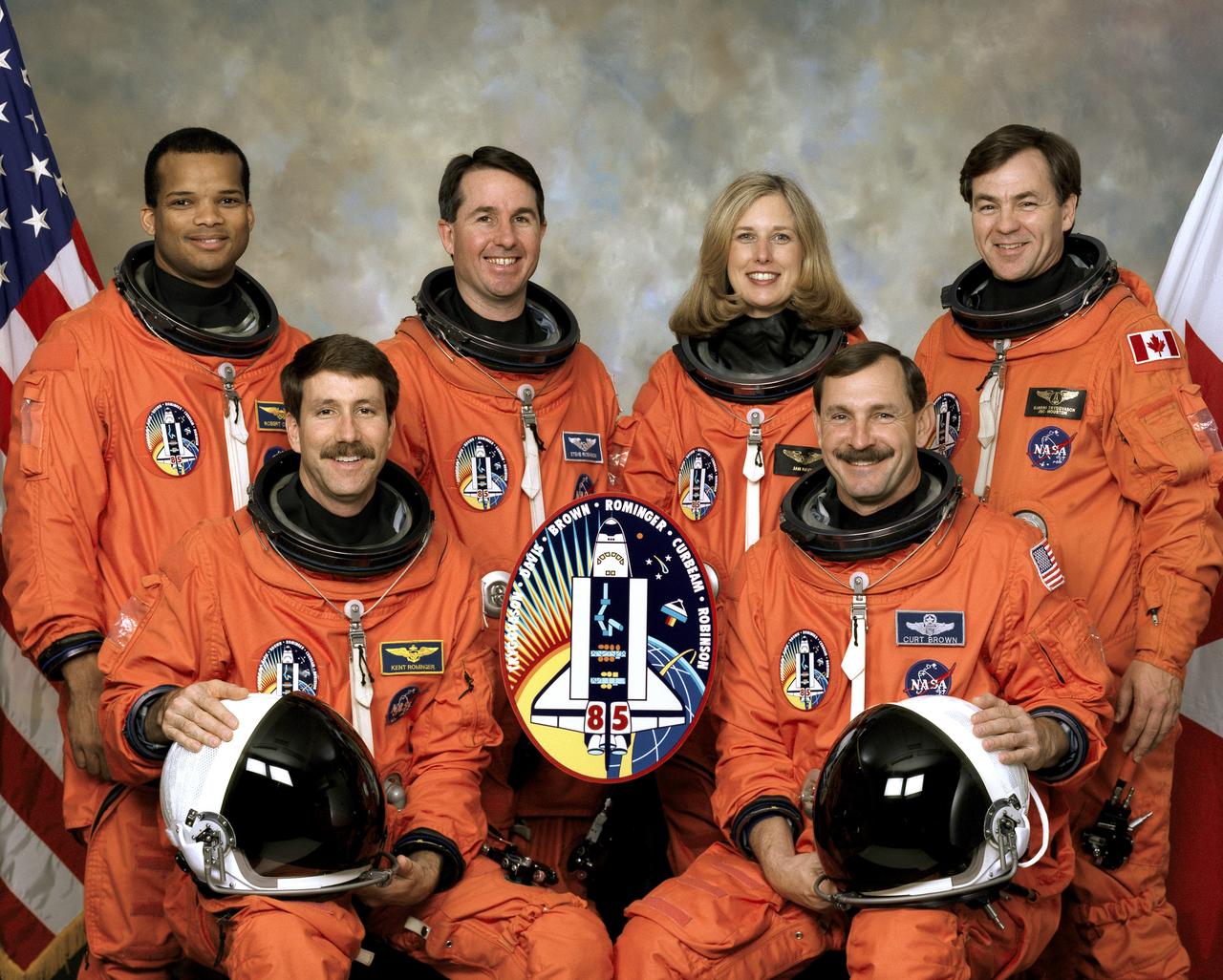
Five NASA astronauts and a Canadian payload specialist pause from their training schedule to pose for the traditional crew portrait for their mission, STS-85. In front are astronauts Curtis L. Brown, Jr. (right), mission commander, and Kent V. Rominger, pilot. On the back row, from the left, are astronauts Robert L. Curbeam, Jr., Stephen K. Robinson, and N. Jan Davis, all mission specialists, along with the Canadian Space Agency’s (CSA) payload specialist, Bjarni Tryggvason. The five launched into space aboard the Space Shuttle Discovery on August 7, 1997 at 10:41:00 a.m. (EDT). Major payloads included the satellite known as Cryogenic Infrared Spectrometers and Telescopes for the Atmosphere-Shuttle Pallet Satellite-2 CRISTA-SPAS-02. CRISTA; a Japanese Manipulator Flight Development (MFD); the Technology Applications and Science (TAS-01); and the International Extreme Ultraviolet Hitchhiker (IEH-02).
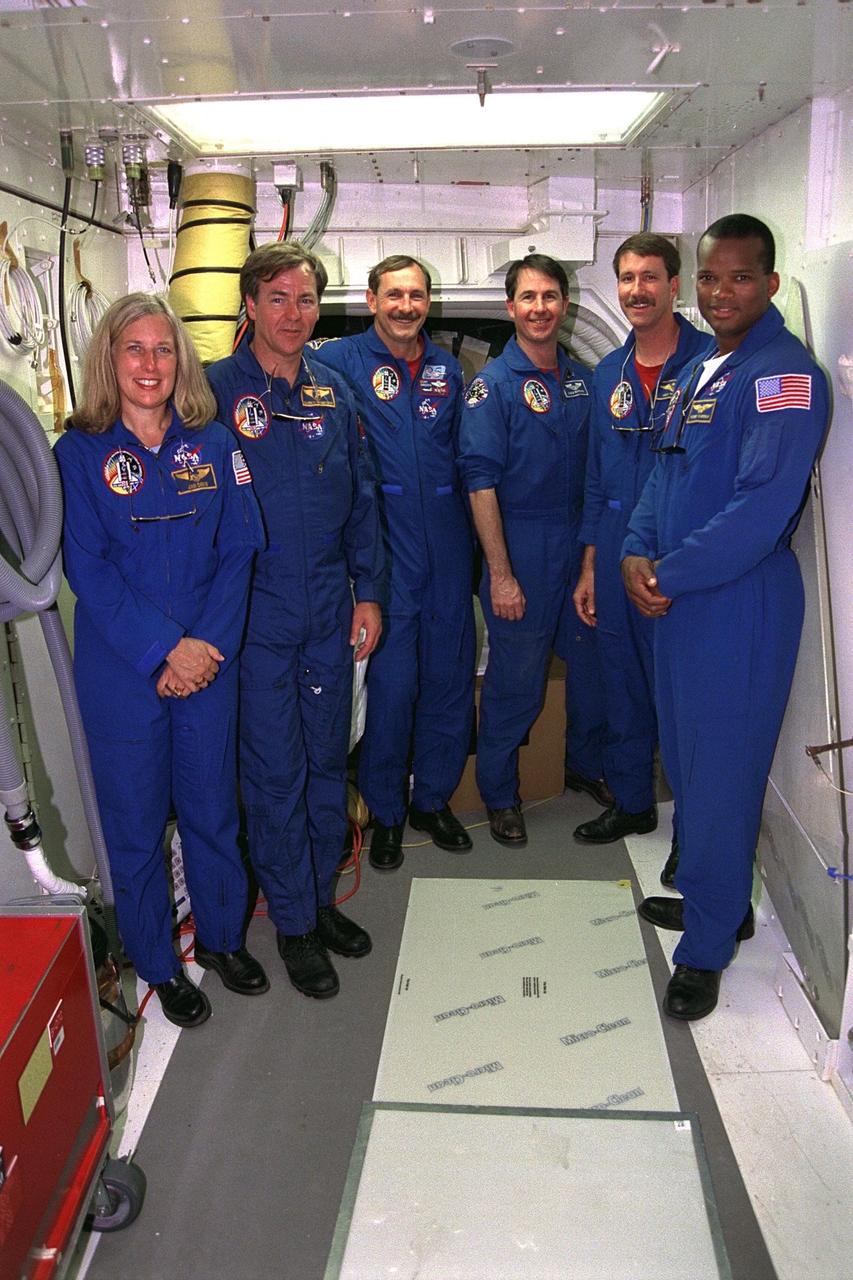
The STS-85 flight crew poses in the white room at Launch Pad 39A during a break in Terminal Countdown Demonstration Test (TCDT) activities for that mission. They are (from left): Payload Commander N. Jan Davis; Payload Specialist Bjarni V. Tryggvason; Commander Curtis L. Brown, Jr.; Mission Specialist Stephen K. Robinson; Pilot Kent V. Rominger; and Mission Specialist Robert L. Curbeam, Jr. The primary payload aboard the Space Shuttle orbiter Discovery is the Cryogenic Infrared Spectrometers and Telescopes for the Atmosphere-2 (CRISTA-SPAS-2). Other payloads on the 11-day mission include the Manipulator Flight Demonstration (MFD), and Technology Applications and Science-1 (TAS-1) and International Extreme Ultraviolet Hitchhiker-2 (IEH-2) experiments
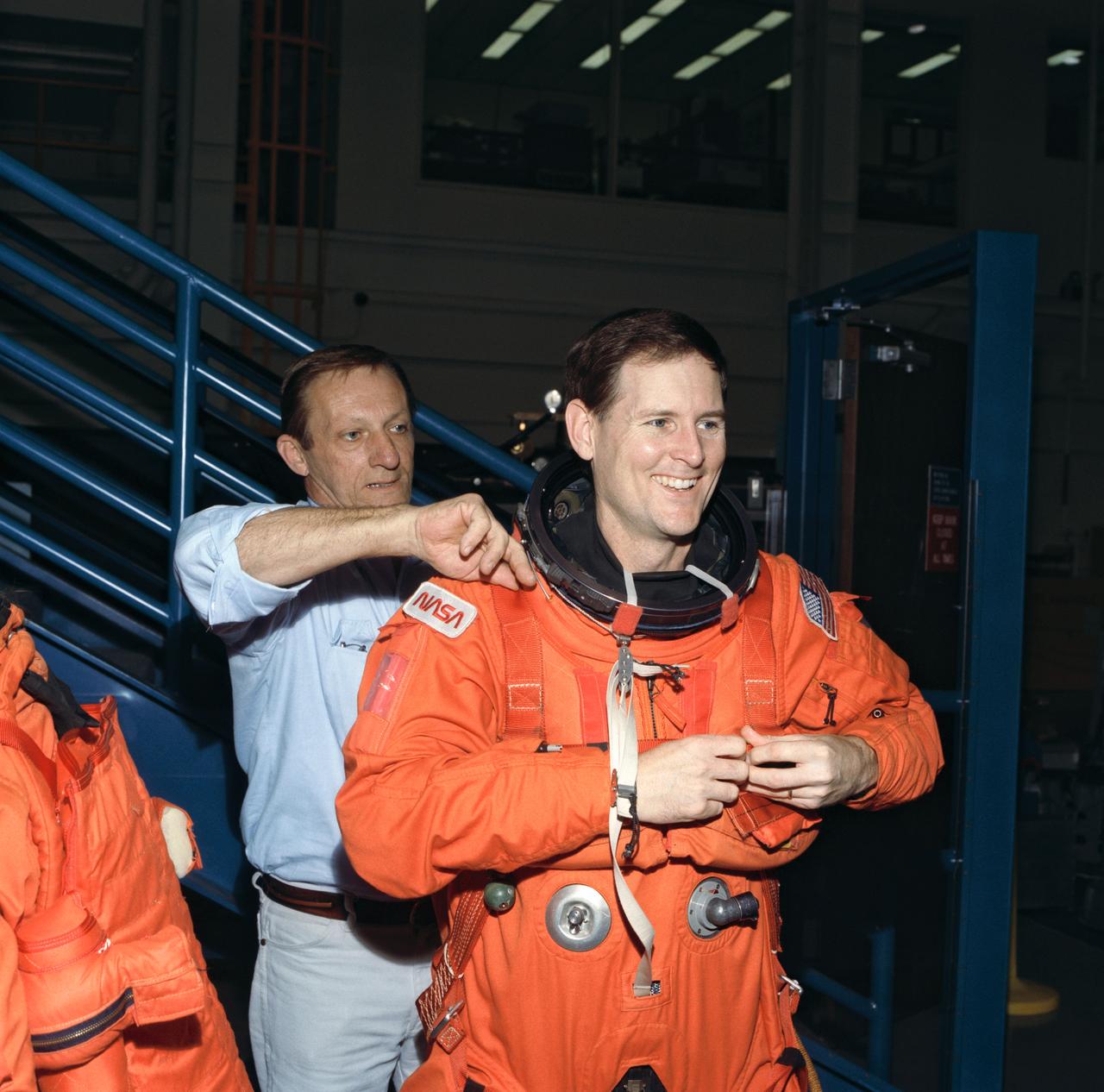
Astronauts Charles F. Bolden Jr. (left) and Kenneth S. Reightler, commander and pilot, respectively, for the STS-60 mission, take a break during rehearsal for some of their flight duties near the crew compartment trainer in JSC's Shuttle mock-up and integration laboratory (50648); Cosmonaut Sergei Krikalev, mission specialist for STS-60, gets assistance with his launch and entry suit from Lockheed's Max Kandloer during a training session. Others pictured, left to right, are Astronauts Franklin R. Chang-Diaz, Ronald M. Sega and N. Jan Davis (50649); Astronaut Kenneth S. Reightler, pilot for STS-60, gets assistance with his launch and entry suit (LES) from Boeing's William Todd during a training session (50650).
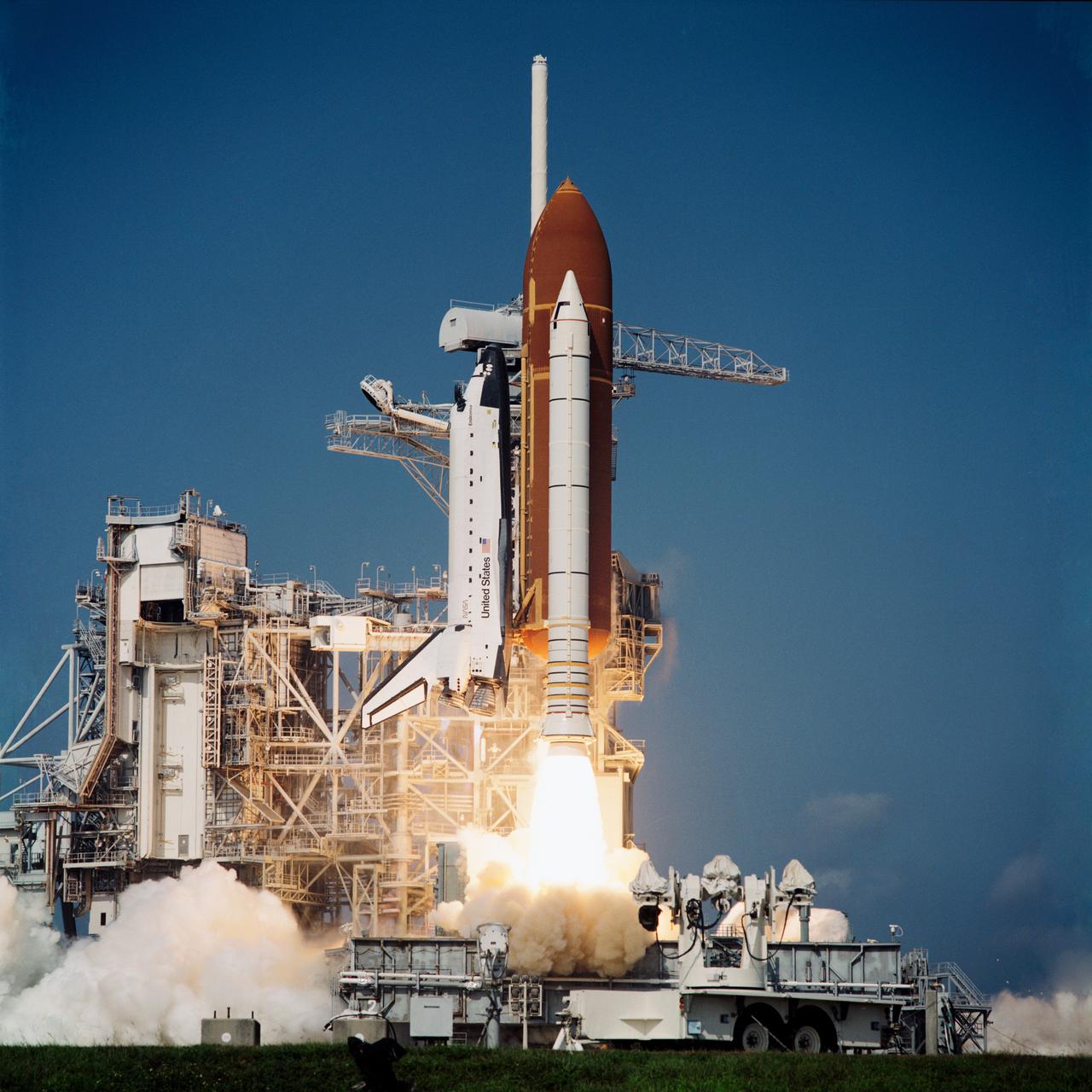
STS047-S-019 (12 Sept 1992) --- With a crew of six NASA astronauts and a Japanese payload specialist onboard, the Space Shuttle Endeavour heads for its second trip into space. This trip will be devoted to support of the Spacelab-J mission, a joint effort between Japan and the United States. Launch occurred at 10:23:00:0680 a.m. (EDT), September 12, 1992. Onboard were astronauts Robert L. Gibson, mission commander; Curtis L. Brown Jr., pilot; Mark C. Lee, payload commander; and Jerome (Jay) Apt, Mae C. Jemison and N. Jan Davis, mission specialists; along with payload specialist Mamoru Mohri, representing the National Space Development Agency of Japan.
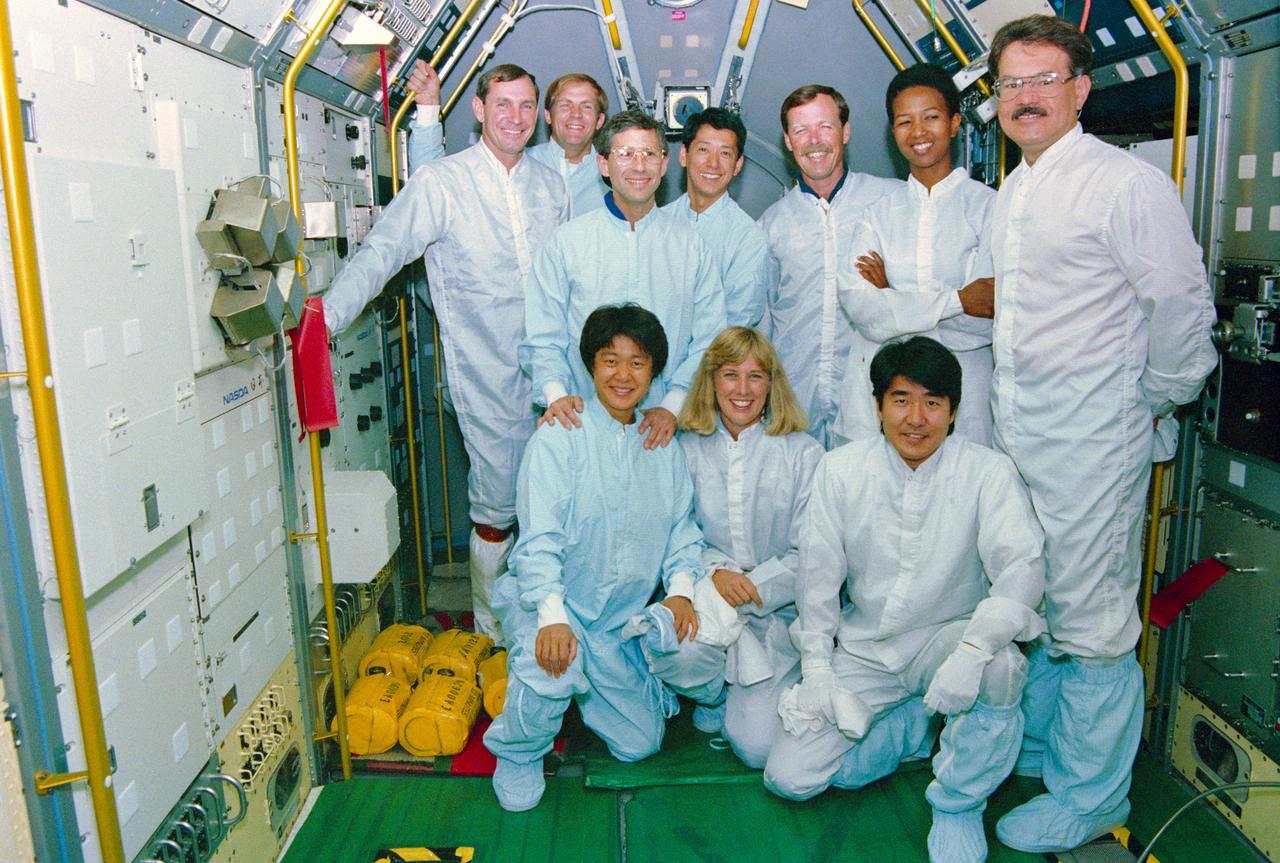
S92-44303 --- STS-47 Endeavour, Orbiter Vehicle (OV) 105, crew members and back-up payload specialists, wearing clean suits, pose for a group portrait in the Spacelab Japan (SLJ) module. The team is at the Kennedy Space Center's (KSC's) Orbiter Processing Facility (OPF) to inspect SLJ configuration and OV-105 preparations. Kneeling, from left, are back-up Payload Specialist Chiaki Naito-Mukai; Mission Specialist N. Jan Davis; and backup Payload Specialist Takao Doi. Standing, from the left, are Pilot Curtis L. Brown,Jr; Payload Commander Mark C. Lee; Jerome Apt; Payload Specialist Mamoru Mohri; Commander Robert L. Gibson; Mae C. Jemison; and back-up Payload Specialist Stanely L. Koszelak. Mohri, Mukai, and Doi represent the National Space Development Agency of Japan (NASDA). View provided by KSC with alternate KSC number KSC-92PC-1647. Photo credit: NASA
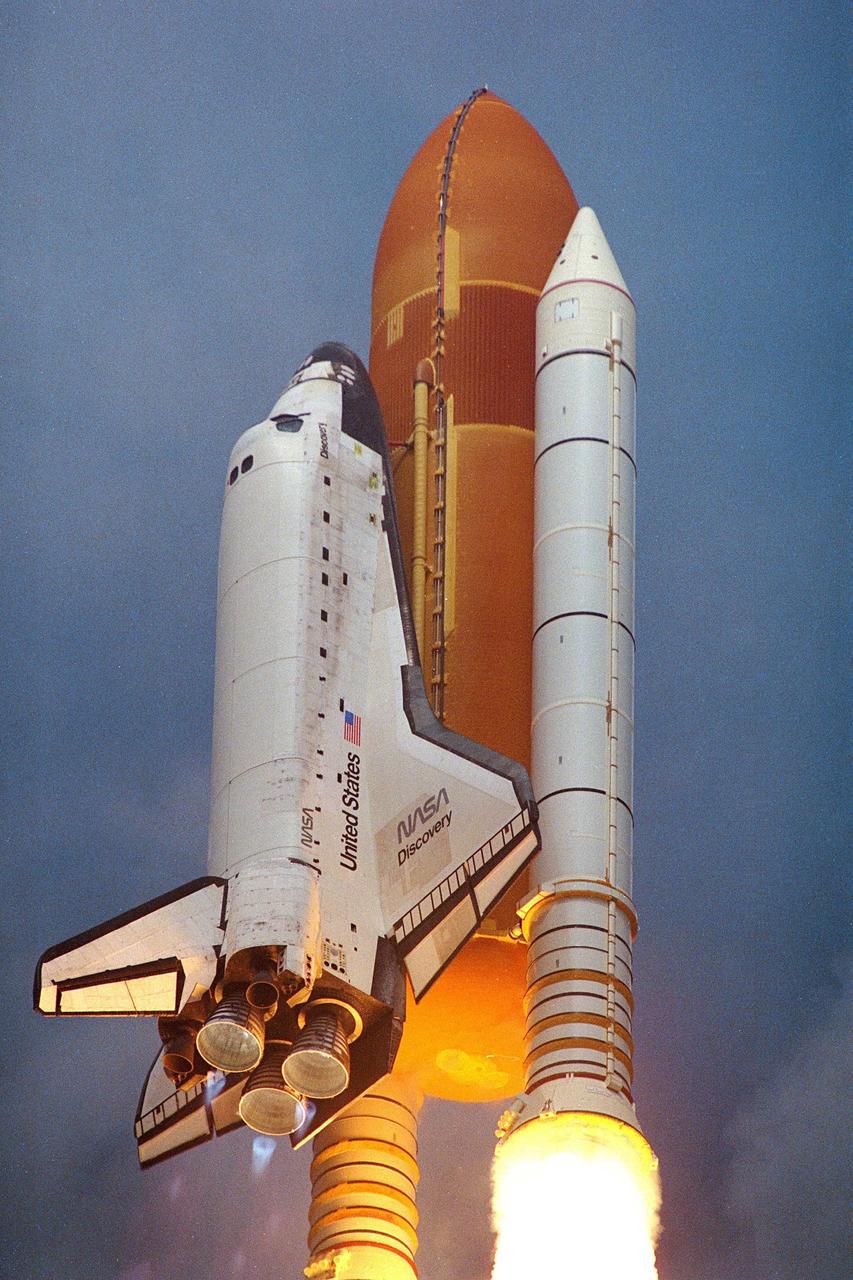
KENNEDY SPACE CENTER, Fla. -- Blasting through the hazy late morning sky, the Space Shuttle Discovery soars from Launch Pad 39A at 10:41 a.m. EDT Aug. 7 on the 11-day STS-85 mission. Aboard Discovery are Commander Curtis L. Brown, Jr.; Pilot Kent V. Rominger, Payload Commander N. Jan Davis, Mission Specialist Robert L. Curbeam, Jr., Mission Specialist Stephen K. Robinson and Payload Specialist Bjarni V. Tryggvason, a Canadian Space Agency astronaut . The primary payload aboard the Space Shuttle orbiter Discovery is the Cryogenic Infrared Spectrometers and Telescopes for the Atmosphere-Shuttle Pallet Satellite-2 (CRISTA-SPAS-2) free-flyer. The CRISTA-SPAS-2 will be deployed on flight day 1 to study trace gases in the Earth’s atmosphere as a part of NASA’s Mission to Planet Earth program. Also aboard the free-flying research platform will be the Middle Atmosphere High Resolution Spectrograph Instrument (MAHRSI). Other payloads on the 11-day mission include the Manipulator Flight Demonstration (MFD), a Japanese Space Agency-sponsored experiment. Also in Discovery’s payload bay are the Technology Applications and Science-1 (TAS-1) and International Extreme Ultraviolet Hitchhiker-2 (IEH-2) experiments
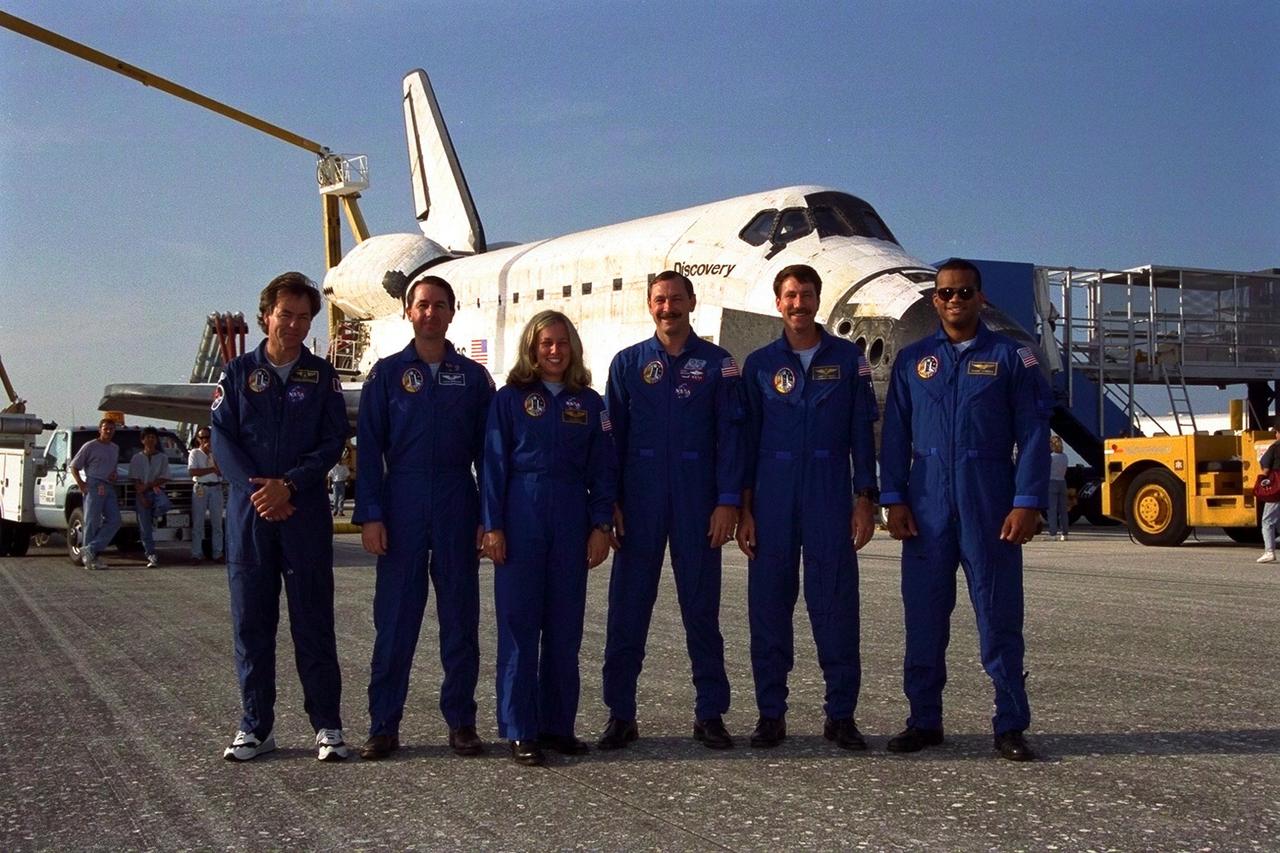
KENNEDY SPACE CENTER, FLA. -- The STS-85 crew poses in front of the Space Shuttle orbiter Discovery after the space plane landed on Runway 33 at KSC’s Shuttle Landing Facility Aug. 19 to complete the 11-day, 20-hour and 27-minute-long STS-85 mission. They are (from left): Payload Specialist and Canadian Space Agency astronaut Bjarni V. Tryggvason; Mission Specialist Stephen K. Robinson; Payload Commander N. Jan Davis; Commander Curtis L. Brown, Jr.; Pilot Kent V. Rominger, and Mission Specialist Robert L. Curbeam, Jr. During the 86th Space Shuttle mission, the crew deployed the Cryogenic Infrared Spectrometers and Telescopes for the AtmosphereShuttle Pallet Satellite-2 (CRISTA-SPAS-2) free-flyer to conduct research on the Earth’s middle atmosphere, retrieving it on flight day 9. The crew also conducted investigations with the Manipulator Flight Demonstration (MFD), Technology Applications and Science-1 (TAS-1) and International Extreme Ultraviolet Hitchhiker-2 (IEH-2) experiments. This was the 39th landing at KSC in the history of the Space Shuttle program and the 11th touchdown for Discovery at the space center
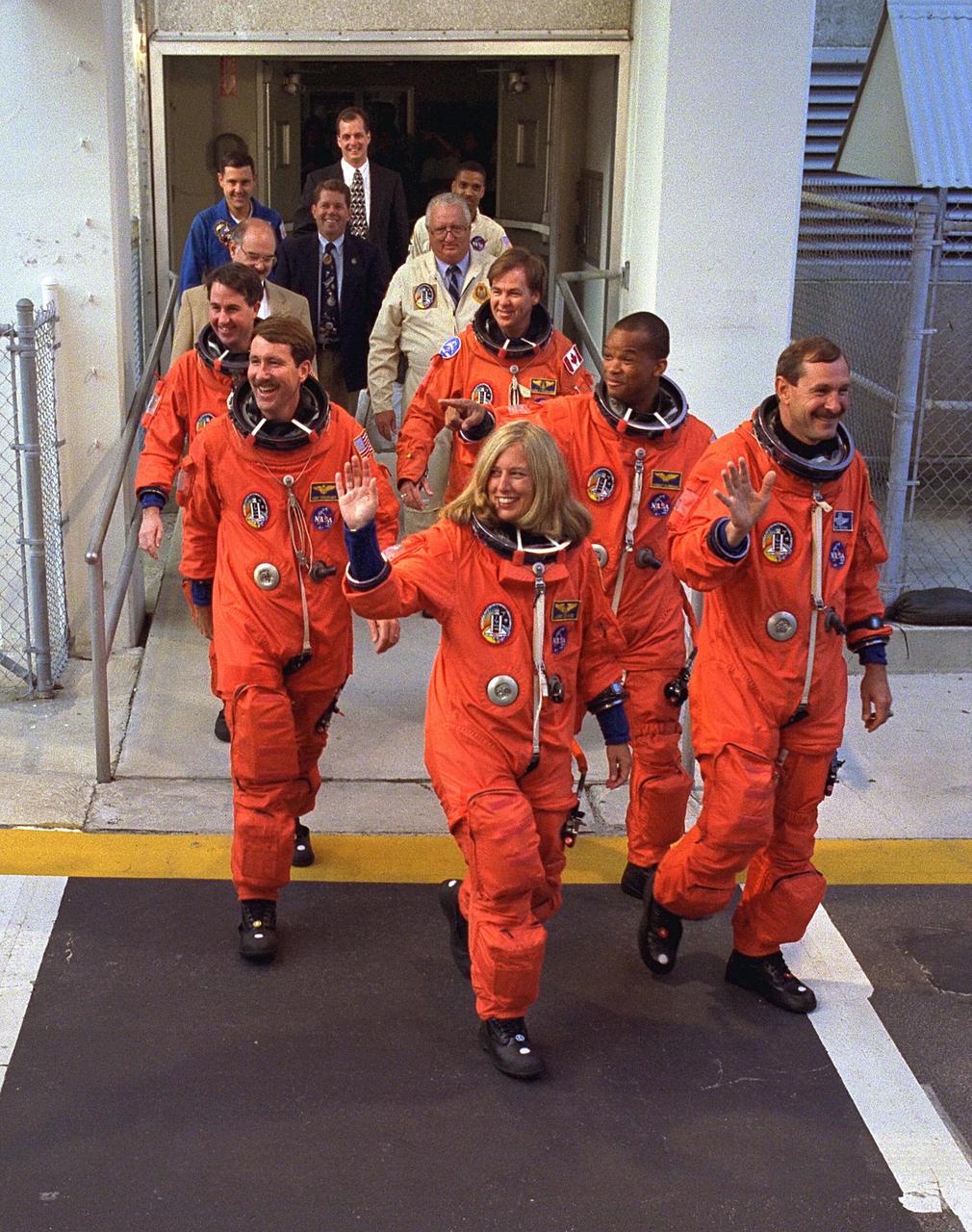
KENNEDY SPACE CENTER, FLA. -- The STS-85 flight crew greets a crowd of well-wishers as they walk out of the Operations and Checkout (O&C) Building for their ride to Launch Pad 39A, where they will take their places aboard the Space Shuttle Discovery. Waving to the crowd is Commander Curtis L. Brown, Jr.(right). Directly behind him are Mission Specialist Robert L. Curbeam, Jr. and Payload Specialist Bjarni V. Tryggvason. To Brown’s right is Payload Commander N. Jan Davis. Directly behind her are Pilot Kent V. Rominger and Mission Specialist Stephen K. Robinson. The primary payload aboard the Space Shuttle orbiter Discovery is the Cryogenic Infrared Spectrometers and Telescopes for the AtmosphereShuttle Pallet Satellite-2 (CRISTA-SPAS-2) free-flyer. Other payloads on the 11-day mission include the Manipulator Flight Demonstration (MFD), and Technology Applications and Science-1 (TAS-1) and International Extreme Ultraviolet Hitchhiker-2 (IEH-2) experiments
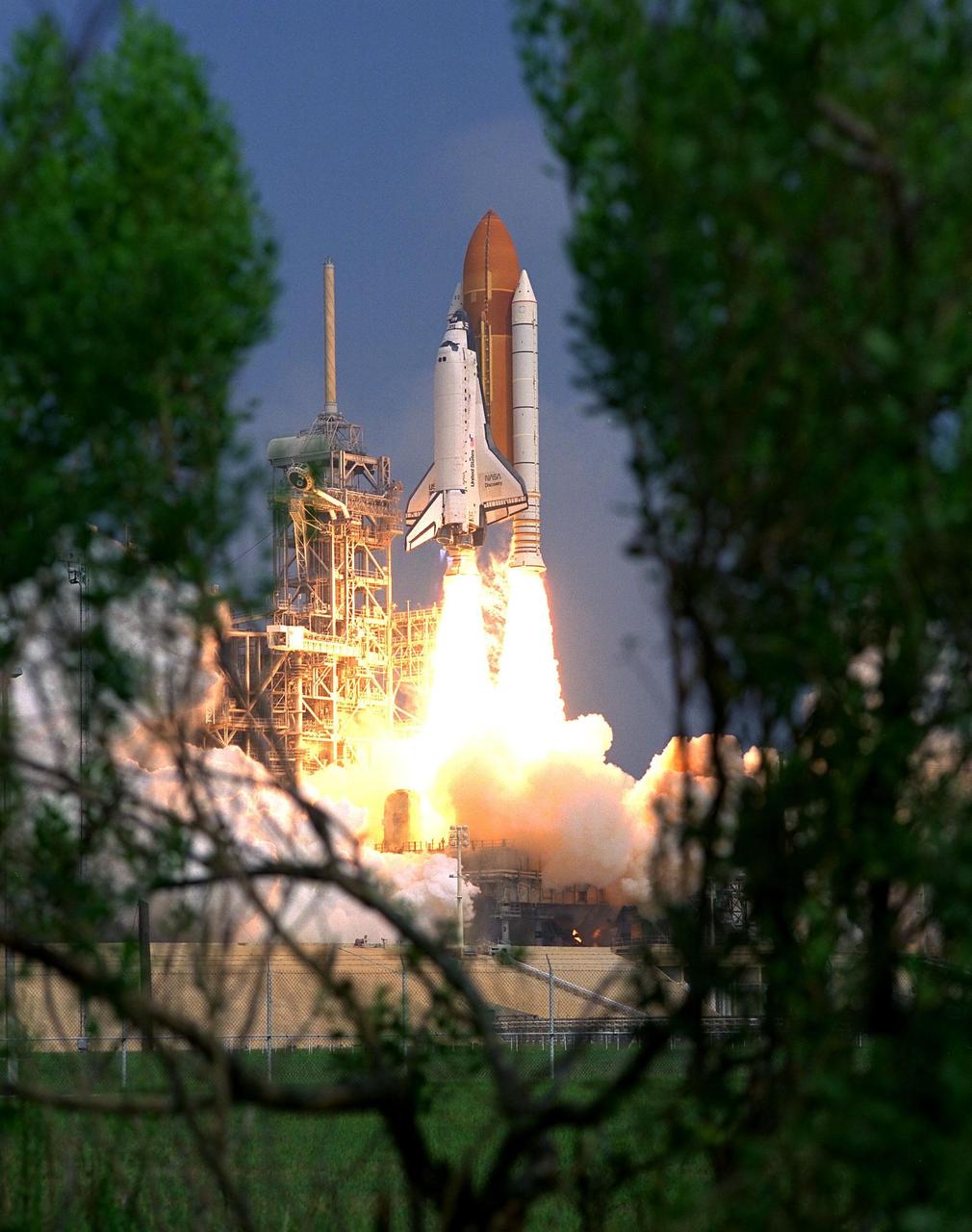
KENNEDY SPACE CENTER, Fla. -- Blasting through the hazy late morning sky, the Space Shuttle Discovery soars from Launch Pad 39A at 10:41 a.m. EDT Aug. 7 on the 11-day STS-85 mission. Aboard Discovery are Commander Curtis L. Brown, Jr.; Pilot Kent V. Rominger, Payload Commander N. Jan Davis, Mission Specialist Robert L. Curbeam, Jr., Mission Specialist Stephen K. Robinson and Payload Specialist Bjarni V. Tryggvason, a Canadian Space Agency astronaut . The primary payload aboard the Space Shuttle orbiter Discovery is the Cryogenic Infrared Spectrometers and Telescopes for the Atmosphere-Shuttle Pallet Satellite-2 (CRISTA-SPAS-2) free-flyer. The CRISTA-SPAS-2 will be deployed on flight day 1 to study trace gases in the Earth’s atmosphere as a part of NASA’s Mission to Planet Earth program. Also aboard the free-flying research platform will be the Middle Atmosphere High Resolution Spectrograph Instrument (MAHRSI). Other payloads on the 11-day mission include the Manipulator Flight Demonstration (MFD), a Japanese Space Agency-sponsored experiment. Also in Discovery’s payload bay are the Technology Applications and Science-1 (TAS-1) and International Extreme Ultraviolet Hitchhiker-2 (IEH-2) experiments
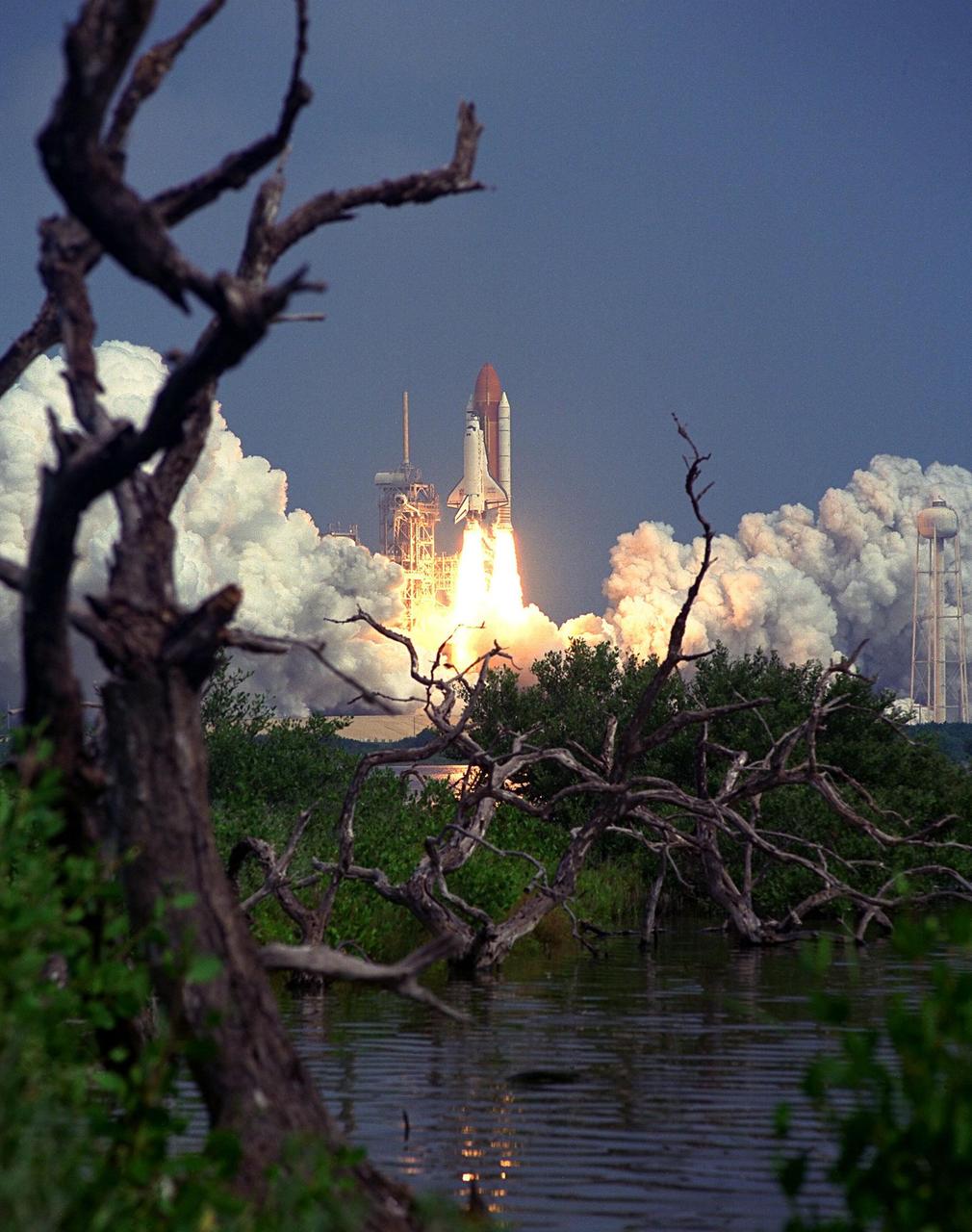
KENNEDY SPACE CENTER, Fla. -- Blasting through the hazy late morning sky, the Space Shuttle Discovery soars from Launch Pad 39A at 10:41 a.m. EDT Aug. 7 on the 11-day STS-85 mission. Aboard Discovery are Commander Curtis L. Brown, Jr.; Pilot Kent V. Rominger, Payload Commander N. Jan Davis, Mission Specialist Robert L. Curbeam, Jr., Mission Specialist Stephen K. Robinson and Payload Specialist Bjarni V. Tryggvason, a Canadian Space Agency astronaut . The primary payload aboard the Space Shuttle orbiter Discovery is the Cryogenic Infrared Spectrometers and Telescopes for the Atmosphere-Shuttle Pallet Satellite-2 (CRISTA-SPAS-2) free-flyer. The CRISTA-SPAS-2 will be deployed on flight day 1 to study trace gases in the Earth’s atmosphere as a part of NASA’s Mission to Planet Earth program. Also aboard the free-flying research platform will be the Middle Atmosphere High Resolution Spectrograph Instrument (MAHRSI). Other payloads on the 11-day mission include the Manipulator Flight Demonstration (MFD), a Japanese Space Agency-sponsored experiment. Also in Discovery’s payload bay are the Technology Applications and Science-1 (TAS-1) and International Extreme Ultraviolet Hitchhiker-2 (IEH-2) experiments
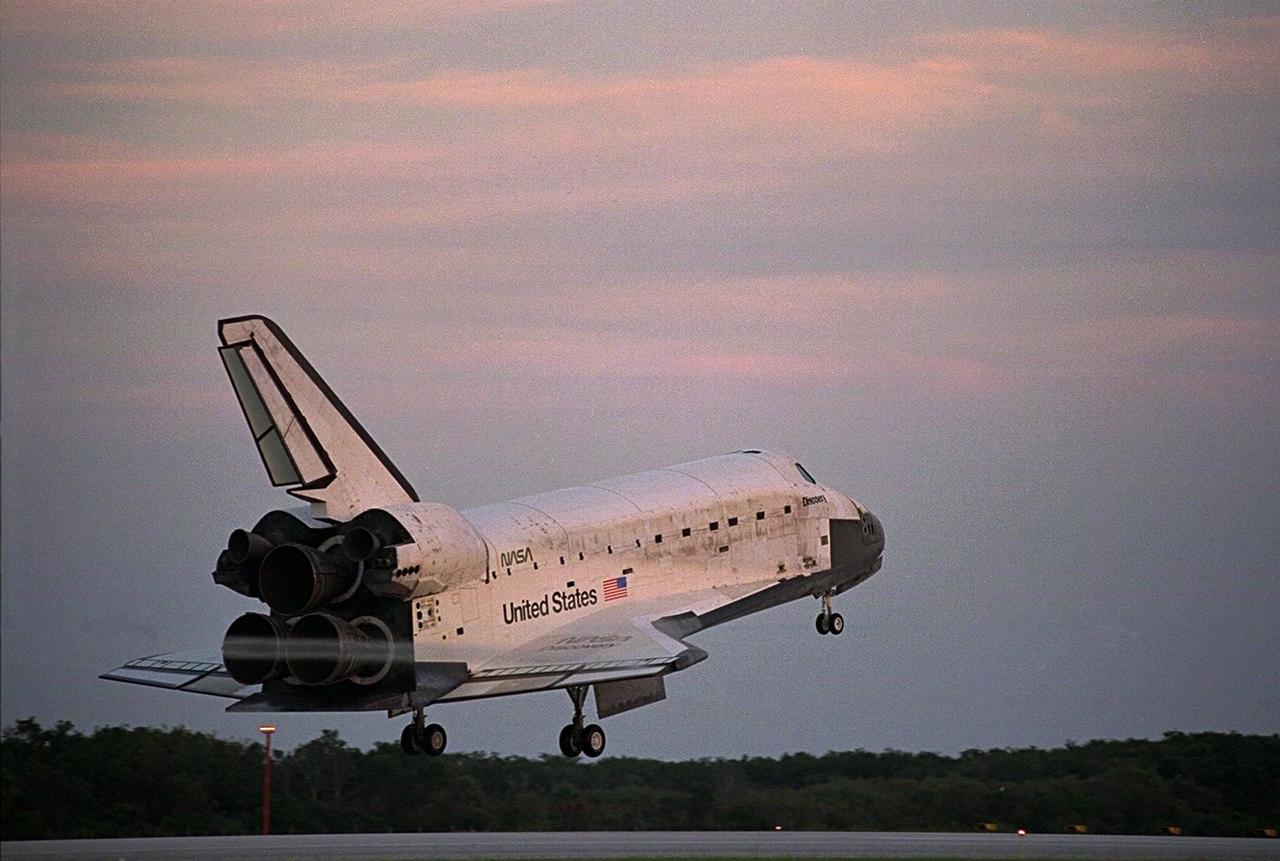
KENNEDY SPACE CENTER, FLA. -- With Commander Curtis L. Brown, Jr. and Pilot Kent V. Rominger at the controls, the Space Shuttle orbiter Discovery prepares to touch down on Runway 33 at KSC’s Shuttle Landing Facility at approximately 7:08 a.m. EDT Aug. 19 to complete the nearly 12-day-long STS-85 mission. The first landing opportunity on Aug. 18 was waved off due to the potential for ground fog. Also onboard the orbiter are Payload Commander N. Jan Davis, Mission Specialist Robert L. Curbeam, Jr., Mission Specialist Stephen K. Robinson and Payload Specialist Bjarni V. Tryggvason. During the 86th Space Shuttle mission, the crew deployed the Cryogenic Infrared Spectrometers and Telescopes for the Atmosphere-Shuttle Pallet Satellite-2 (CRISTA-SPAS-2) free-flyer to conduct research on the Earth’s middle atmosphere, retrieving it on flight day 9. They also conducted investigations with the Manipulator Flight Demonstration (MFD), Technology Applications and Science-1 (TAS-1) and International Extreme Ultraviolet Hitchhiker-2 (IEH-2) experiments. Robinson also made observations of the comet Hale-Bopp with the Southwest Ultraviolet Imaging System (SWIS) while other members of the crew conducted biological experiments in the orbiter’s crew cabin
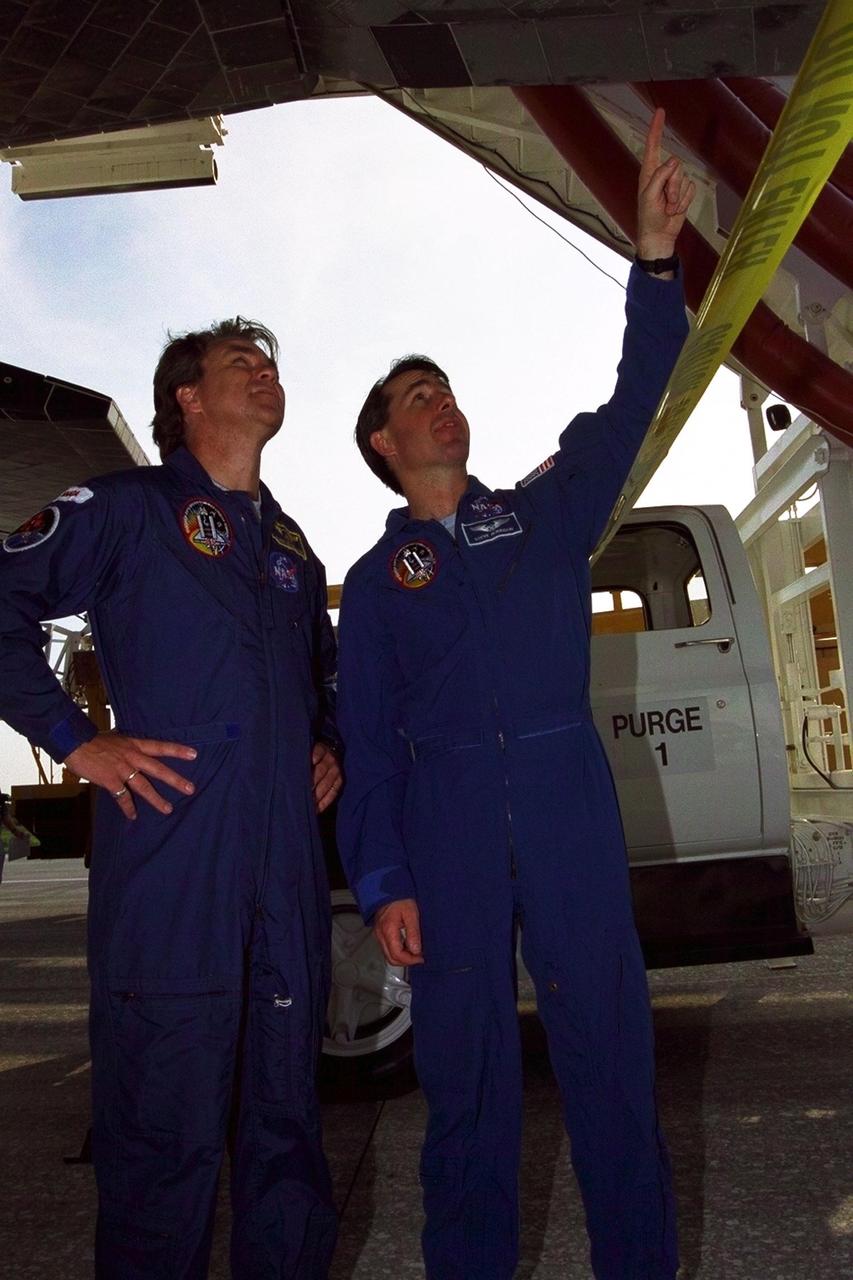
KENNEDY SPACE CENTER, FLA. -- STS-85 Payload Specialist and Canadian Space Agency astronaut Bjarni V. Tryggvason (left) and Mission Specialist Stephen K. Robinson examine the Space Shuttle orbiter Discovery after the space plane landed on Runway 33 at KSC’s Shuttle Landing Facility Aug. 19 to complete the 11-day, 20-hour and 27-minute-long STS-85 mission. Also on board were Commander Curtis L. Brown, Jr., Pilot Kent V. Rominger, Payload Commander N. Jan Davis and Mission Specialist Robert L. Curbeam, Jr. During the 86th Space Shuttle mission, the crew deployed the Cryogenic Infrared Spectrometers and Telescopes for the Atmosphere-Shuttle Pallet Satellite-2 (CRISTA-SPAS-2) free-flyer to conduct research on the Earth’s middle atmosphere, retrieving it on flight day 9. The crew also conducted investigations with the Manipulator Flight Demonstration (MFD), Technology Applications and Science-1 (TAS-1) and International Extreme Ultraviolet Hitchhiker-2 (IEH-2) experiments. This was the 39th landing at KSC in the history of the Space Shuttle program and the 11th touchdown for Discovery at the space center
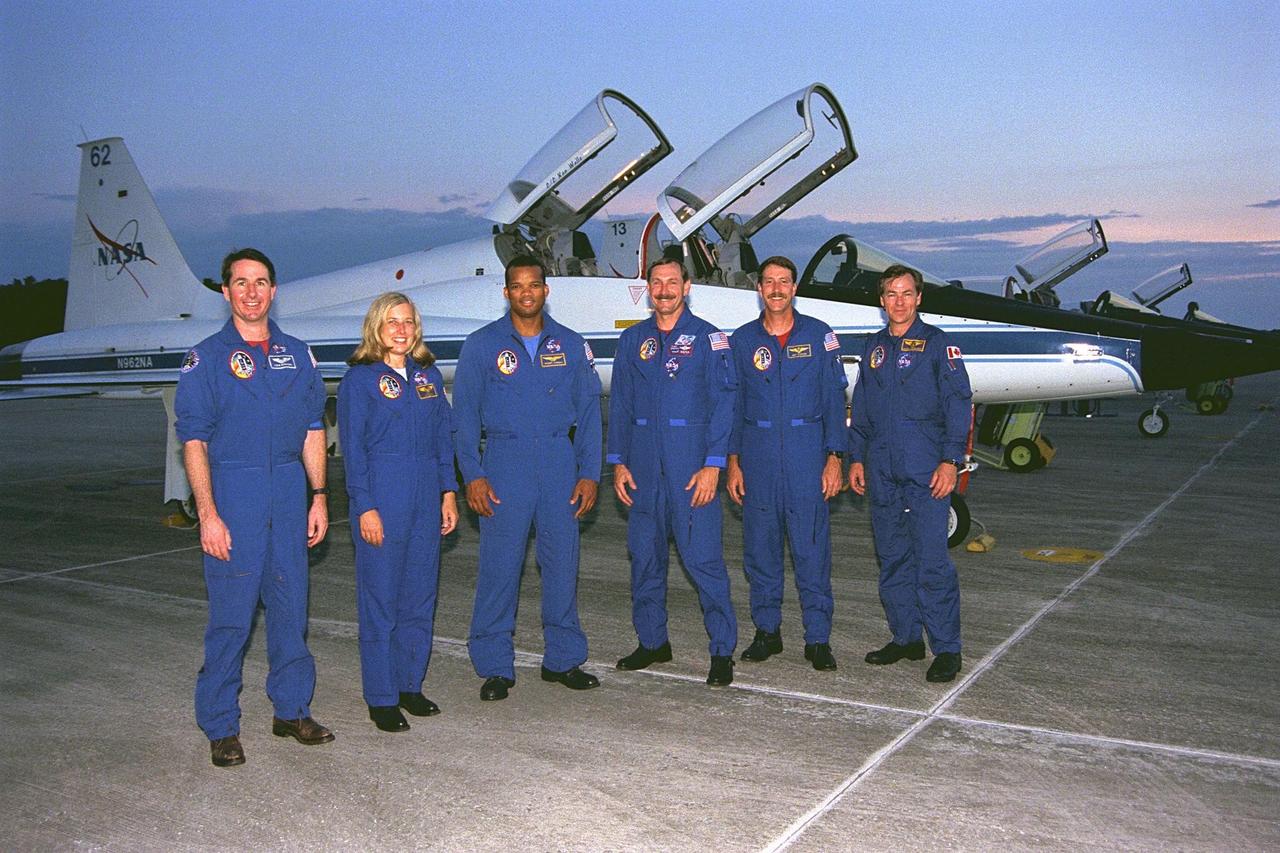
The STS-85 mission crew members pose in front of their T-38 jet trainers after they arrived at KSC’s Shuttle Landing Facility from NASA’s Johnson Space Center to begin Terminal Countdown Demonstration Test (TCDT) activities for that mission. The TCDT includes a dress rehearsal of the launch countdown. They are (front row, from left): Mission Specialist Stephen K. Robinson; Payload Commander N. Jan Davis; Mission Specialist Robert L. Curbeam, Jr.; Commander Curtis L. Brown, Jr.; Pilot Kent V. Rominger; and Payload Specialist Bjarni V. Tryggvason. The STS-85 mission is now targeted for Aug. 7. The primary payload aboard the Space Shuttle orbiter Discovery is the Cryogenic Infrared Spectrometers and Telescopes for the Atmosphere-2 (CRISTA-SPAS-2). Other STS-85 payloads include the Manipulator Flight Demonstration (MFD), and Technology Applications and Science-1 (TAS-1) and International Extreme Ultraviolet Hitchhiker-2 (IEH-2) experiments
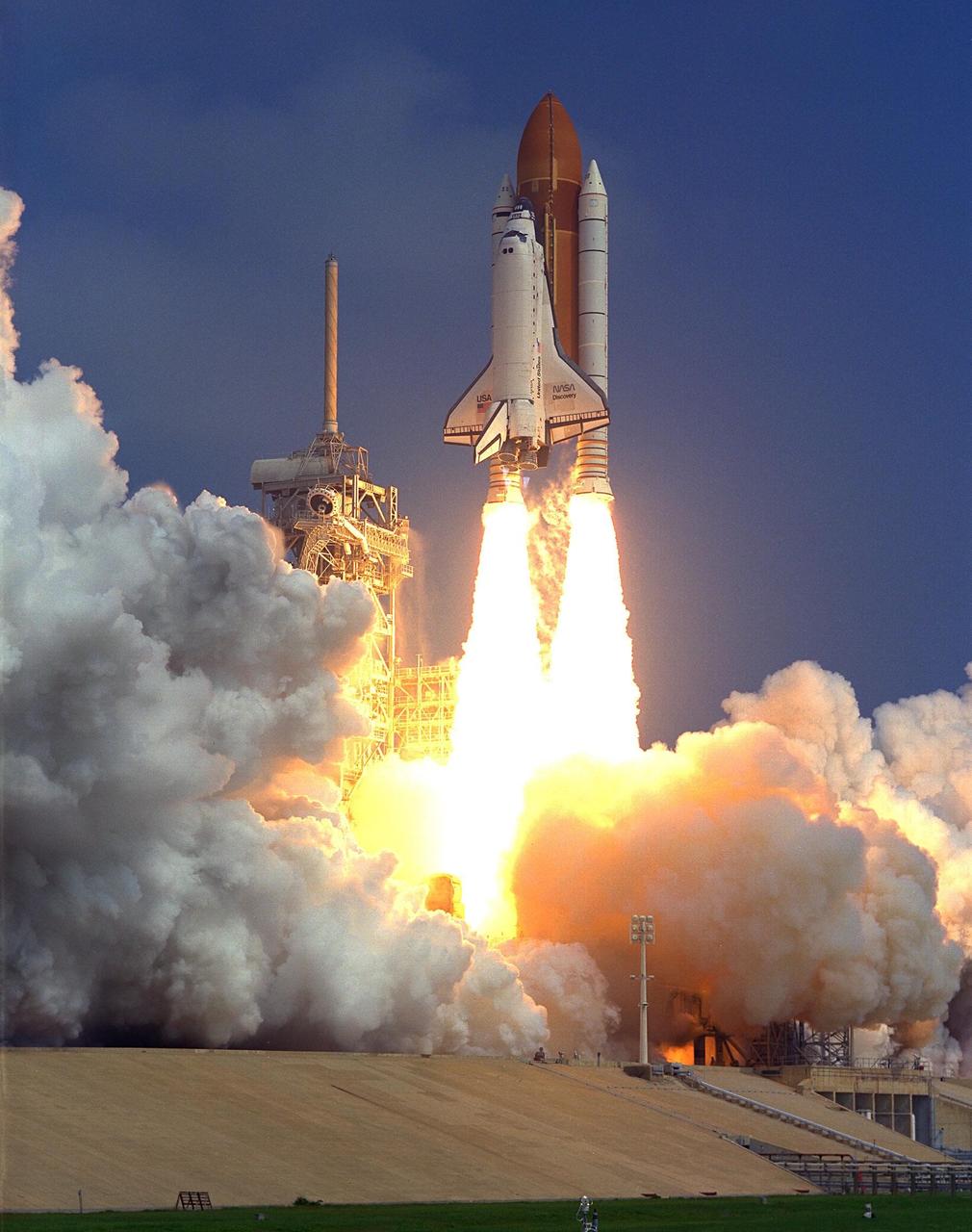
KENNEDY SPACE CENTER, Fla. -- Blasting through the hazy late morning sky, the Space Shuttle Discovery soars from Launch Pad 39A at 10:41 a.m. EDT Aug. 7 on the 11-day STS-85 mission. Aboard Discovery are Commander Curtis L. Brown, Jr.; Pilot Kent V. Rominger, Payload Commander N. Jan Davis, Mission Specialist Robert L. Curbeam, Jr., Mission Specialist Stephen K. Robinson and Payload Specialist Bjarni V. Tryggvason, a Canadian Space Agency astronaut . The primary payload aboard the Space Shuttle orbiter Discovery is the Cryogenic Infrared Spectrometers and Telescopes for the Atmosphere-Shuttle Pallet Satellite-2 (CRISTA-SPAS-2) free-flyer. The CRISTA-SPAS-2 will be deployed on flight day 1 to study trace gases in the Earth’s atmosphere as a part of NASA’s Mission to Planet Earth program. Also aboard the free-flying research platform will be the Middle Atmosphere High Resolution Spectrograph Instrument (MAHRSI). Other payloads on the 11-day mission include the Manipulator Flight Demonstration (MFD), a Japanese Space Agency-sponsored experiment. Also in Discovery’s payload bay are the Technology Applications and Science-1 (TAS-1) and International Extreme Ultraviolet Hitchhiker-2 (IEH-2) experiments