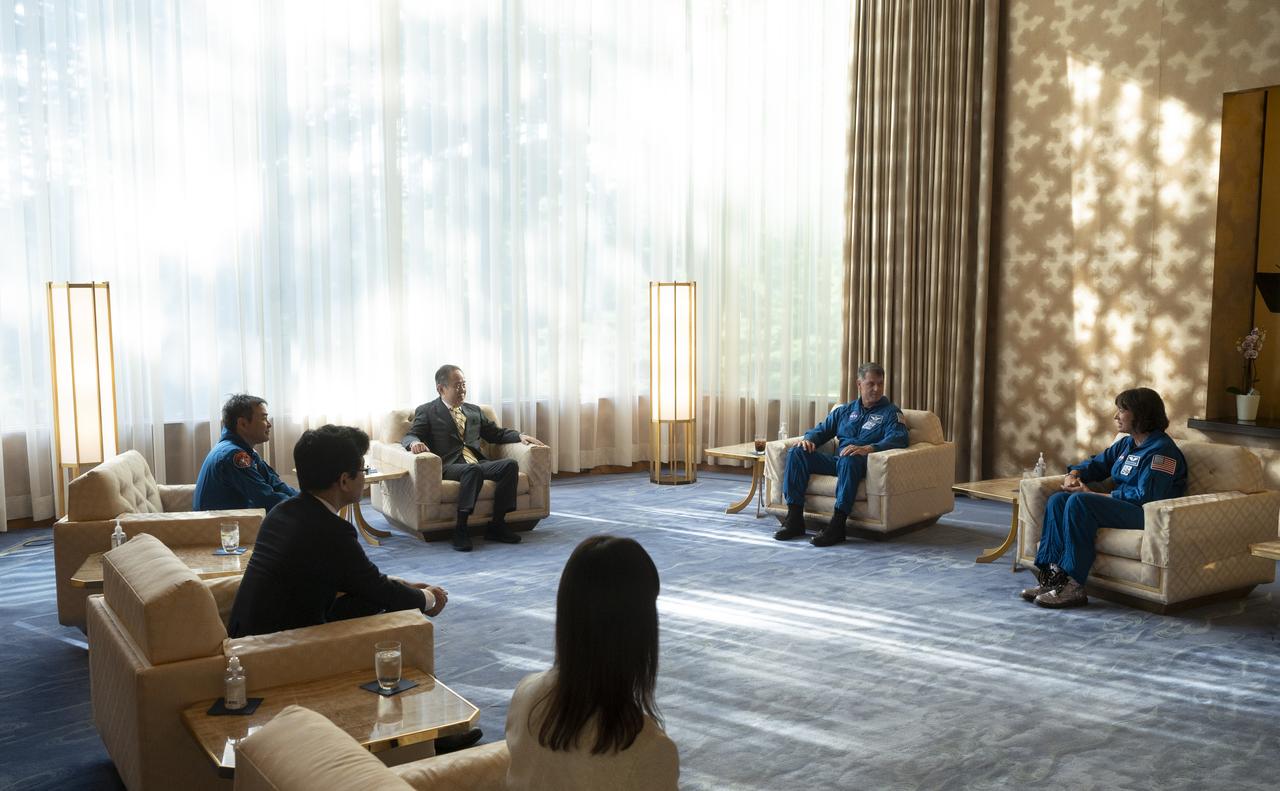
Koji Tomita, Japan's Ambassador to the US, center, speaks with NASA’s SpaceX Crew-2 astronauts Akihiko Hoshide of the Japan Aerospace Exploration Agency (JAXA), left, and NASA astronauts Shane Kimbrough, second from right, and Megan McArthur, Thursday, June 9, 2022, at the Japanese Ambassador’s Residence in Washington, DC. Kimbrough, McArthur, Hoshide, and ESA (European Space Agency) astronaut Thomas Pesquet completed the second crew rotation mission to the International Space Station as part of the agency’s Commercial Crew Program and spent 198 days aboard the orbiting laboratory as part of Expeditions 65 and 66. Photo Credit: (NASA/Joel Kowsky)
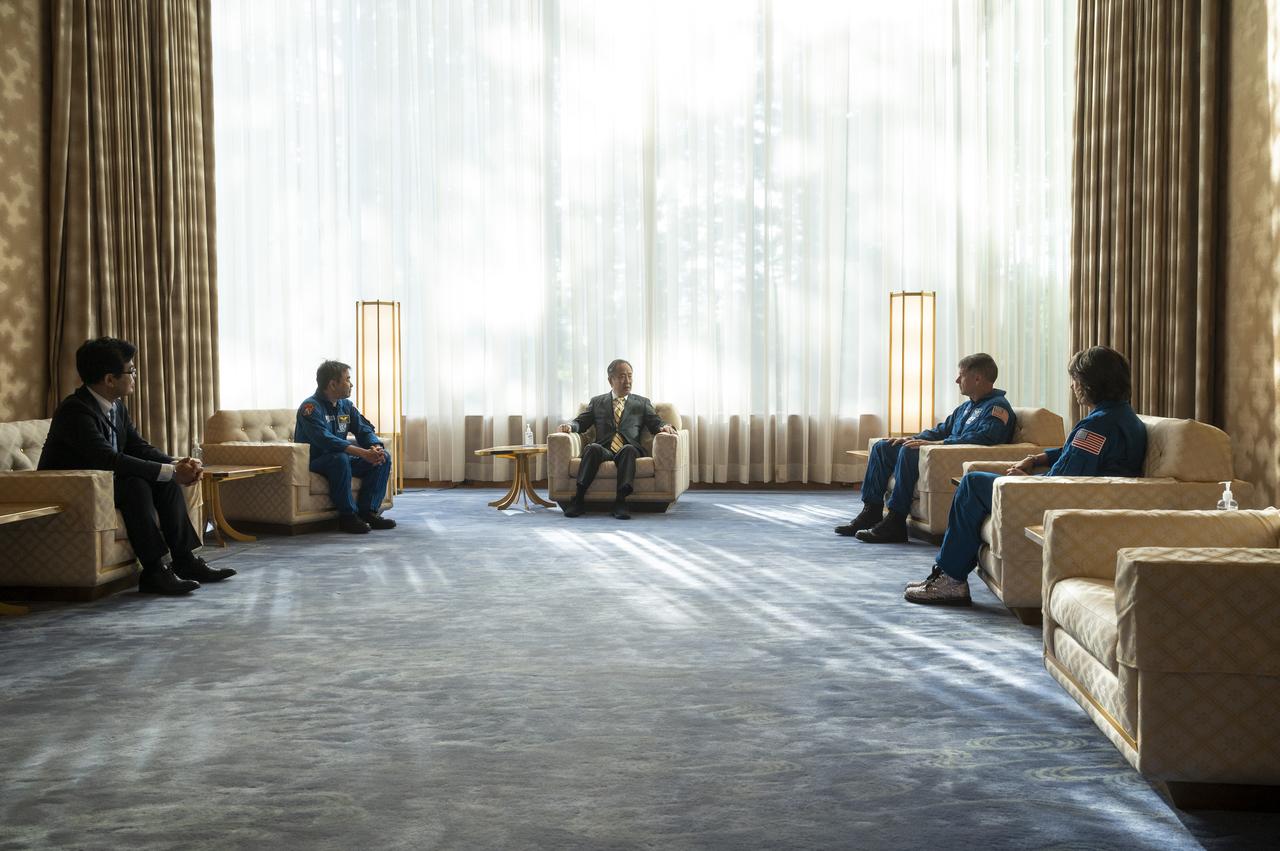
Koji Tomita, Japan's Ambassador to the US, center, speaks with NASA’s SpaceX Crew-2 astronauts Akihiko Hoshide of the Japan Aerospace Exploration Agency (JAXA), second from left, and NASA astronauts Shane Kimbrough, second from right, and Megan McArthur, Thursday, June 9, 2022, at the Japanese Ambassador’s Residence in Washington, DC. Kimbrough, McArthur, Hoshide, and ESA (European Space Agency) astronaut Thomas Pesquet completed the second crew rotation mission to the International Space Station as part of the agency’s Commercial Crew Program and spent 198 days aboard the orbiting laboratory as part of Expeditions 65 and 66. Photo Credit: (NASA/Joel Kowsky)
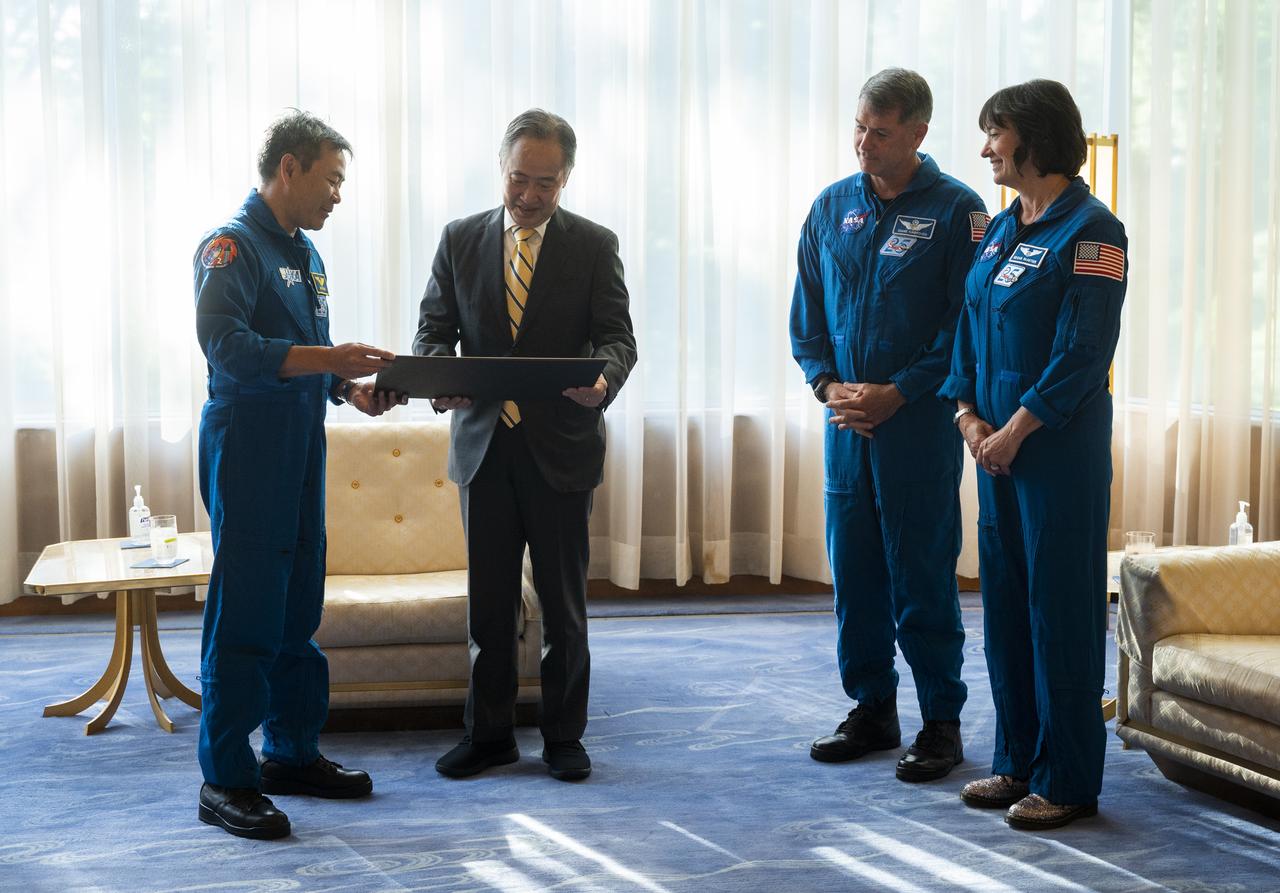
Koji Tomita, Japan's Ambassador to the US, second from left, is presented with a montage by NASA’s SpaceX Crew-2 astronauts Akihiko Hoshide of the Japan Aerospace Exploration Agency (JAXA), left, and NASA astronauts Shane Kimbrough, second from right, and Megan McArthur, Thursday, June 9, 2022, at the Japanese Ambassador’s Residence in Washington, DC. Kimbrough, McArthur, Hoshide, and ESA (European Space Agency) astronaut Thomas Pesquet completed the second crew rotation mission to the International Space Station as part of the agency’s Commercial Crew Program and spent 198 days aboard the orbiting laboratory as part of Expeditions 65 and 66. Photo Credit: (NASA/Joel Kowsky)
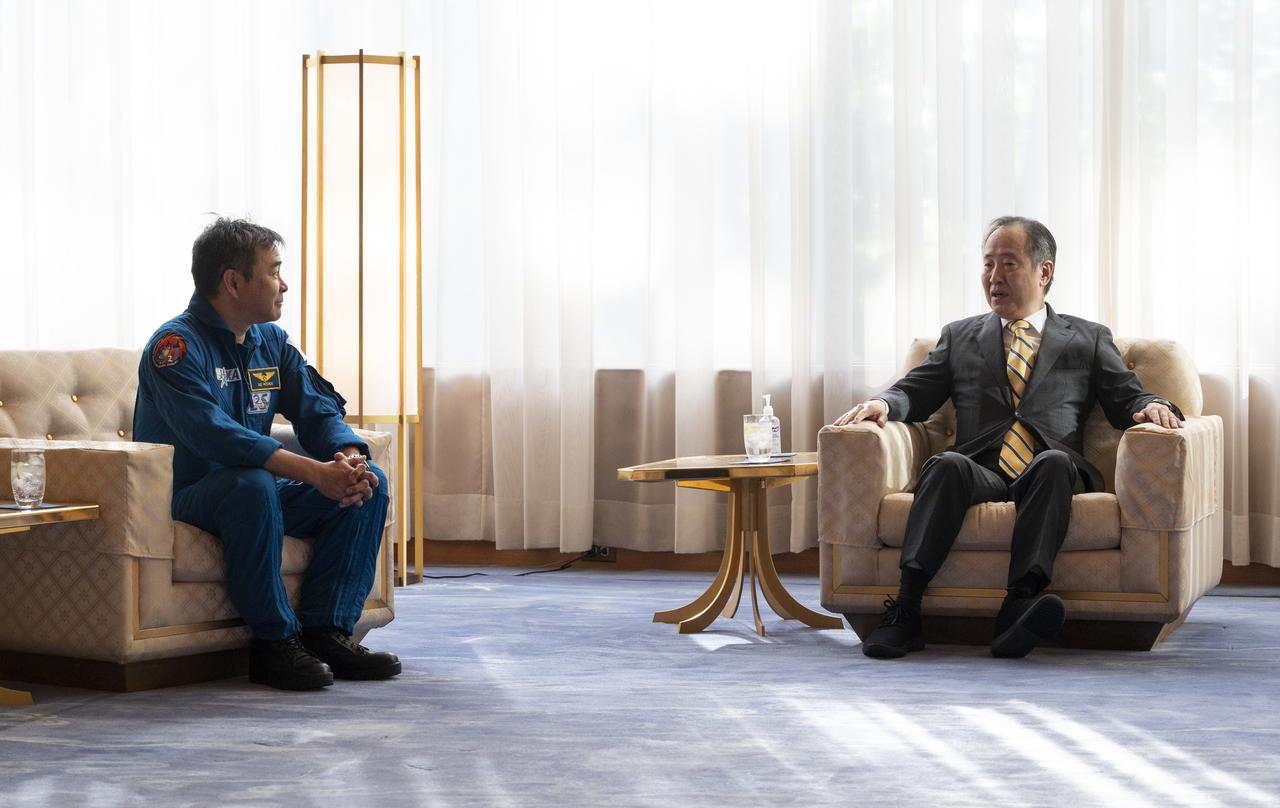
Japan Aerospace Exploration Agency (JAXA) astronaut Akihiko Hoshide is seen with Koji Tomita, Japan's Ambassador to the US, Thursday, June 9, 2022, at the Japanese Ambassador’s Residence in Washington, DC. Hoshide, NASA astronauts Shane Kimbrough and Megan McArthur, and ESA (European Space Agency) astronaut Thomas Pesquet flew on NASA’s SpaceX Crew-2 mission, the second crew rotation mission to the International Space Station as part of the agency’s Commercial Crew Program, and spent 198 days aboard the orbiting laboratory as part of Expeditions 65 and 66. Photo Credit: (NASA/Joel Kowsky)
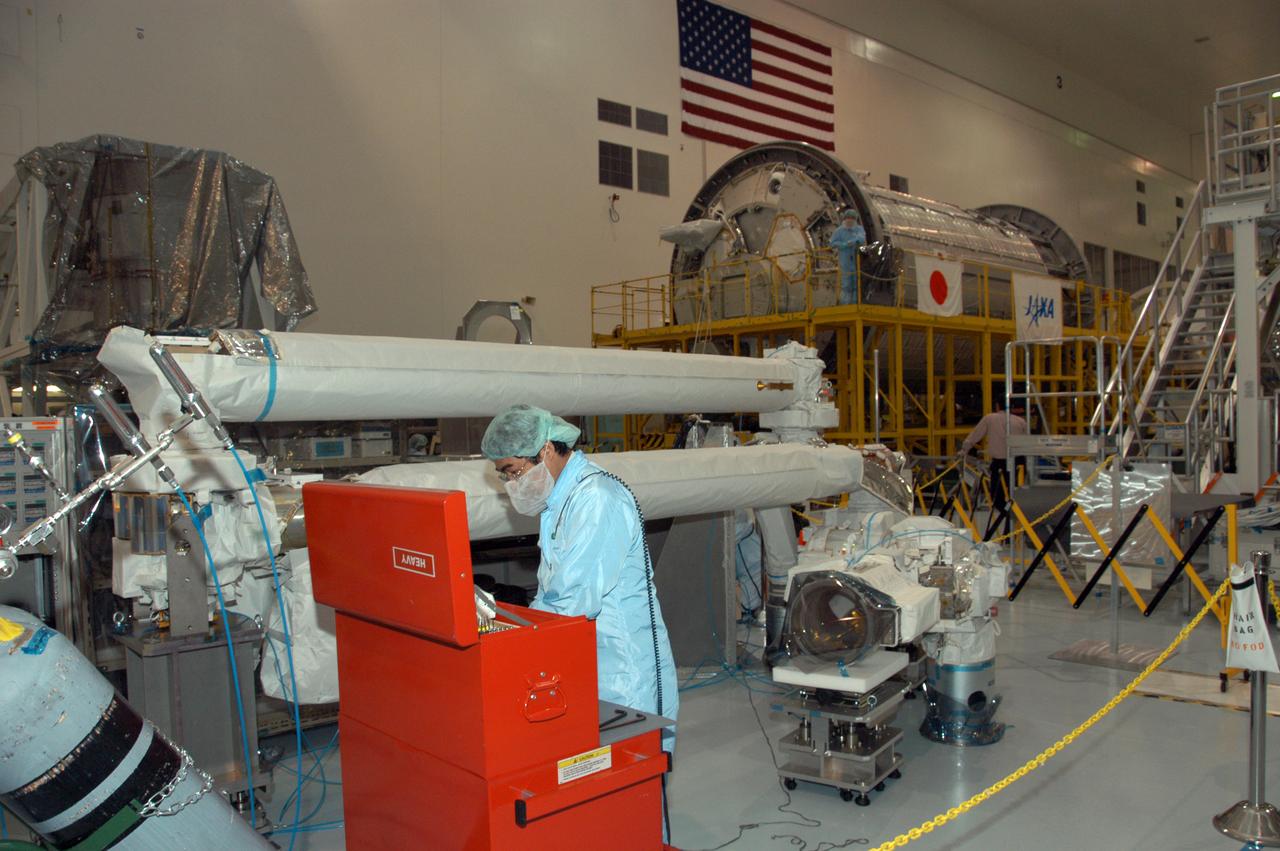
In the Space Station Processing Facility, technicians work on the Japanese remote manipulator system. It is scheduled to fly on a 2008 mission along with the Kibo Japanese Experiment Module Pressurized Module (JEM-PM).
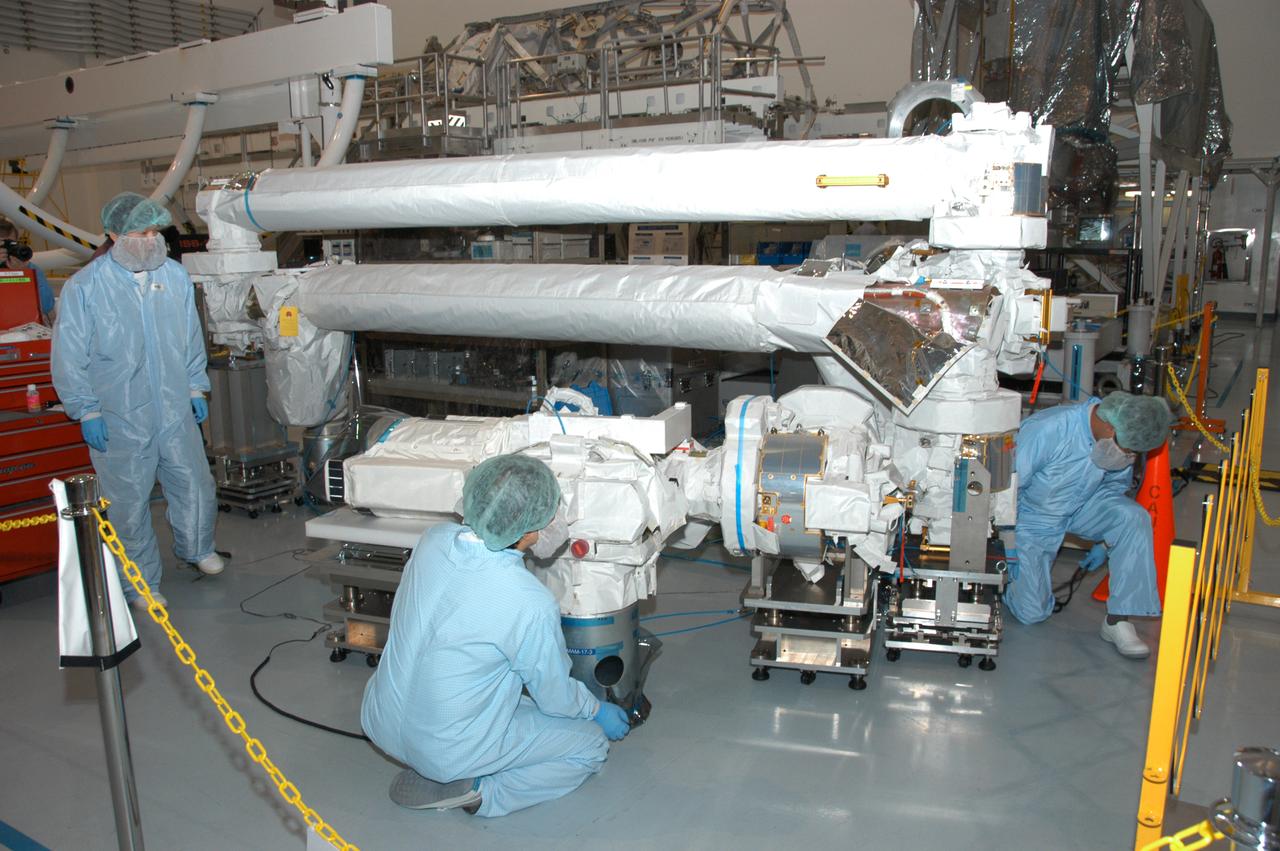
In the Space Station Processing Facility, technicians work on the Japanese remote manipulator system. It is scheduled to fly on a 2008 mission along with the Kibo Japanese Experiment Module Pressurized Module (JEM-PM).
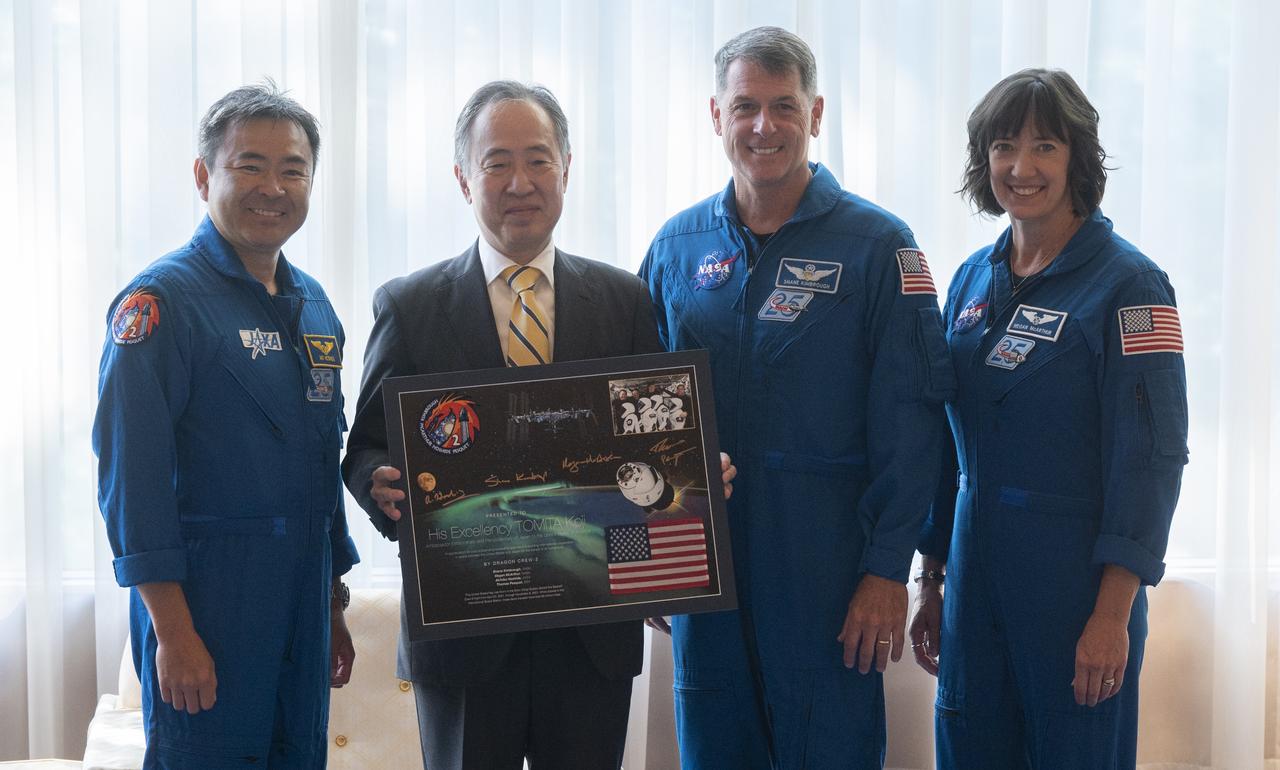
Koji Tomita, Japan's Ambassador to the US, second from left, poses for a picture with NASA’s SpaceX Crew-2 astronauts Akihiko Hoshide of the Japan Aerospace Exploration Agency (JAXA), left, and NASA astronauts Shane Kimbrough, second from right, and Megan McArthur, after being presented with a montage from their mission, Thursday, June 9, 2022, at the Japanese Ambassador’s Residence in Washington, DC. Kimbrough, McArthur, Hoshide, and ESA (European Space Agency) astronaut Thomas Pesquet completed the second crew rotation mission to the International Space Station as part of the agency’s Commercial Crew Program and spent 198 days aboard the orbiting laboratory as part of Expeditions 65 and 66. Photo Credit: (NASA/Joel Kowsky)
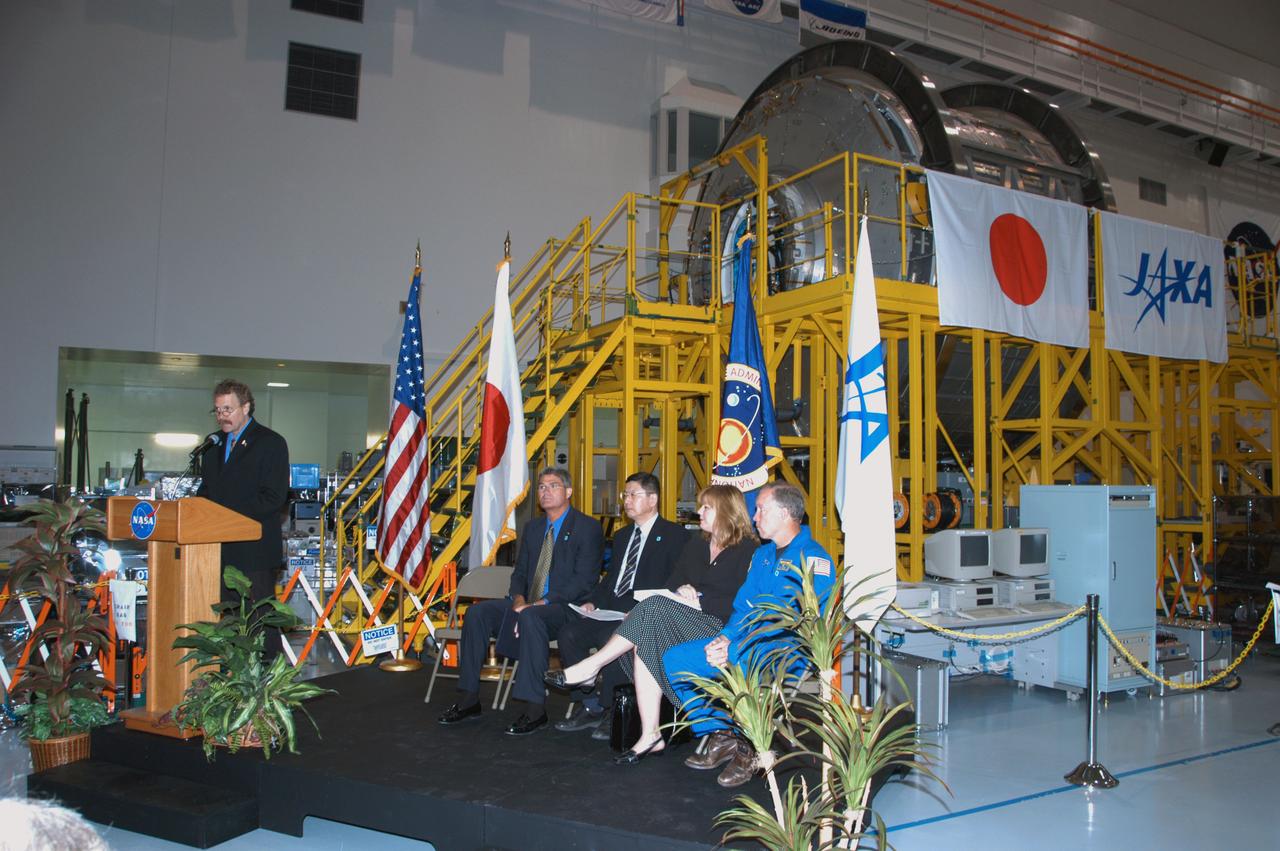
In the Space Station Processing Facility, NASA and Japanese Aerospace and Exploration Agency (JAXA) officials welcome the arrival of the Experiment Logistics Module Pressurized Section for the Japanese Experiment Module, or JEM, to the Kennedy Space Center. At the podium is Russ Romanella, director of International Space Station and Spacecraft Processing. Seated at right are Bill Parsons, director of Kennedy Space Center; Dr. Kichiro Imagawa, project manager of the JEM Development Project Team for JAXA; Melanie Saunders, associate manager of the International Space Station Program at Johnson Space Center; and Dominic Gorie, commander on mission STS-123 that will deliver the module to the space station. The new International Space Station component arrived at Kennedy March 12 to begin preparations for its future launch on mission STS-123. It will serve as an on-orbit storage area for materials, tools and supplies. It can hold up to eight experiment racks and will attach to the top of another larger pressurized module.
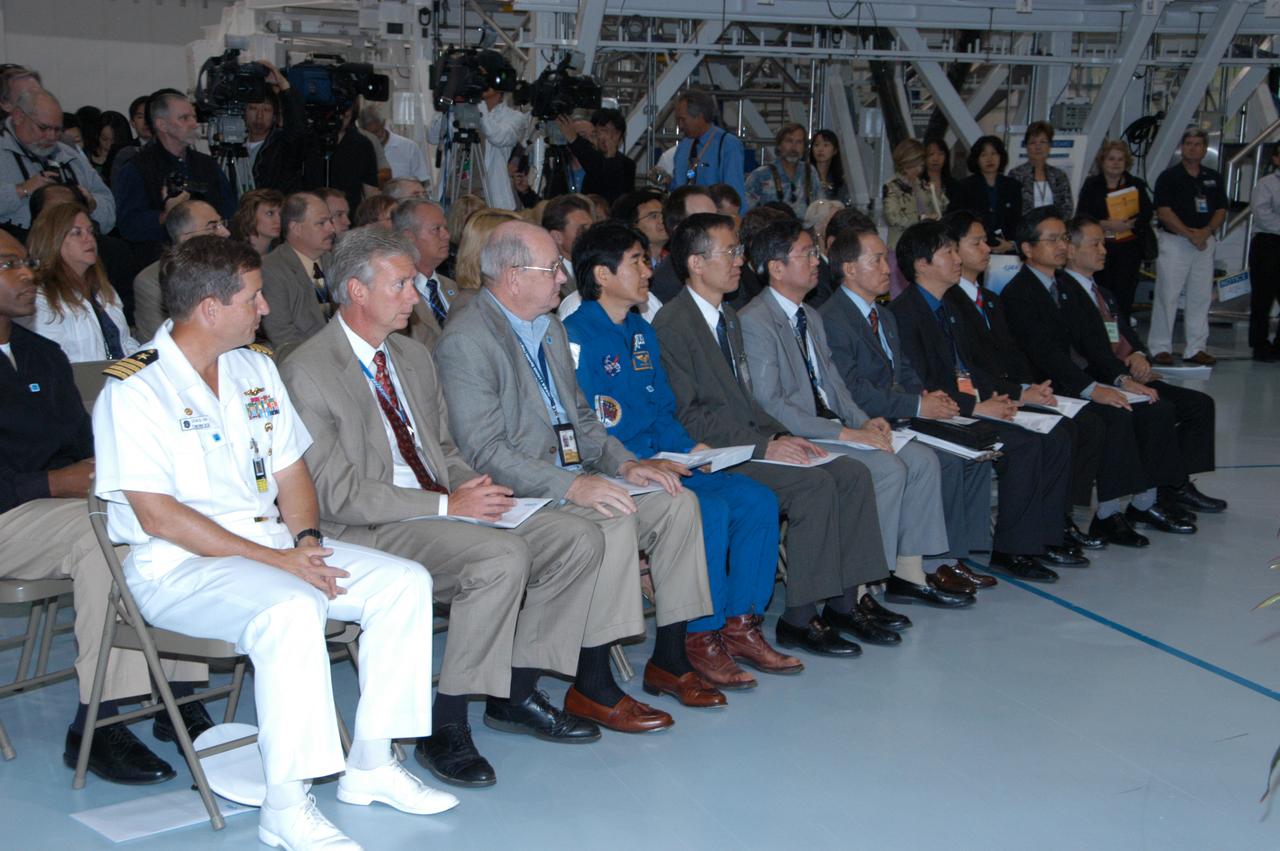
In the Space Station Processing Facility, NASA and Japanese Aerospace and Exploration Agency (JAXA) officials welcome the arrival of the Experiment Logistics Module Pressurized Section for the Japanese Experiment Module, or JEM, to the Kennedy Space Center. Seen here at right are JAXA representatives, including Japanese astronaut Takao Doi (center of front row), who is a crew member for mission STS-123 that will deliver the module to the space station. The new International Space Station component arrived at Kennedy March 12 to begin preparations for its future launch on mission STS-123. It will serve as an on-orbit storage area for materials, tools and supplies. It can hold up to eight experiment racks and will attach to the top of another larger pressurized module.
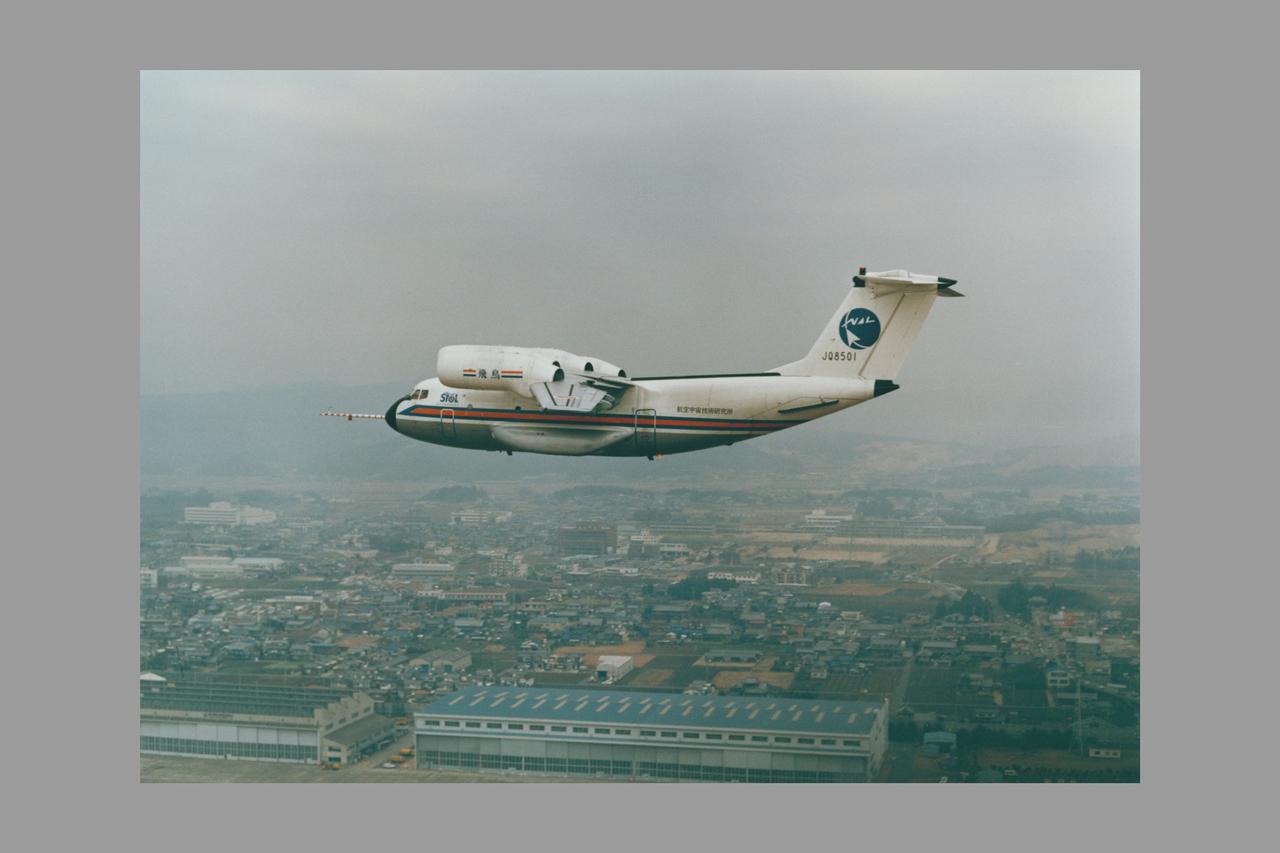
Japanese ASUKA STOL: In-flight

Japanese ASUKA STOL: In-flight
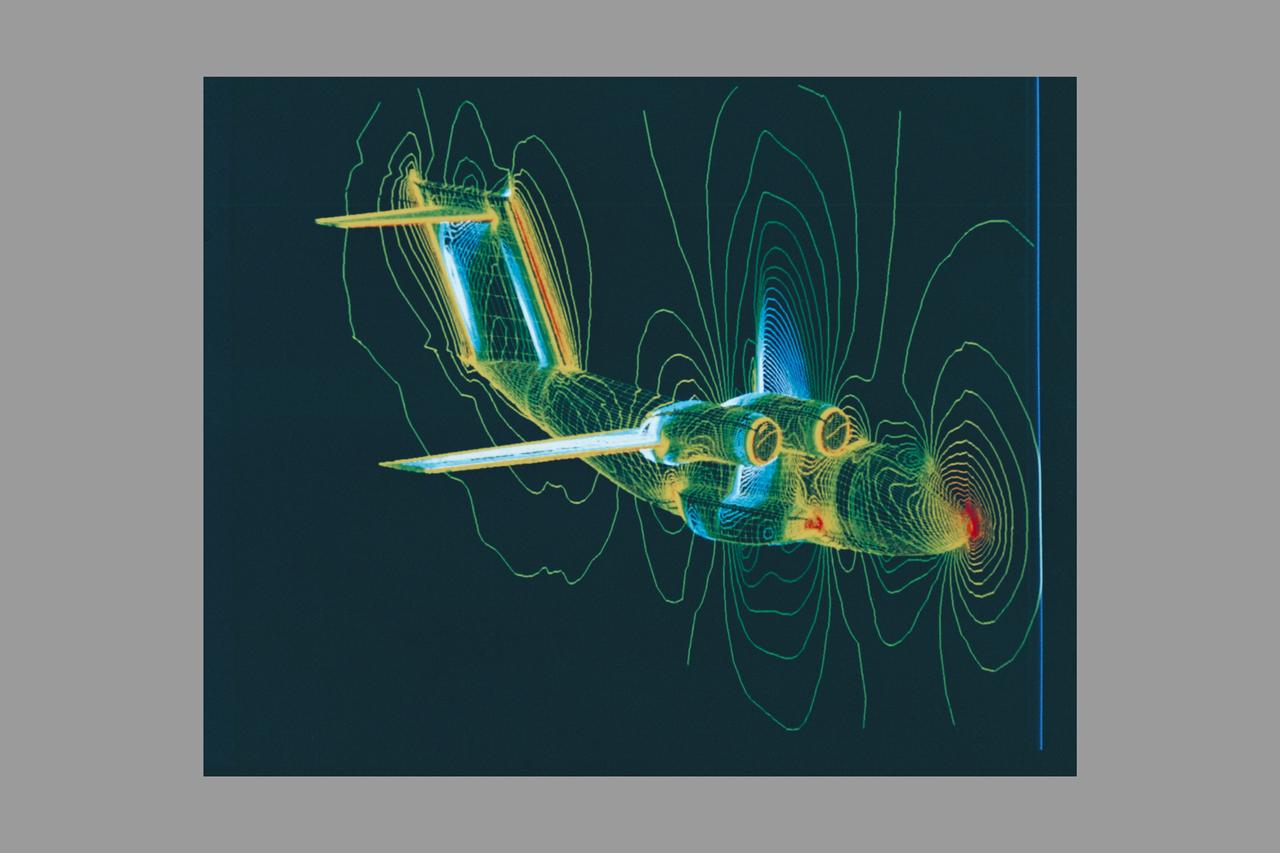
Japanese ASUKA STOL: Computed Pressure CGI (QSRA Configuration)
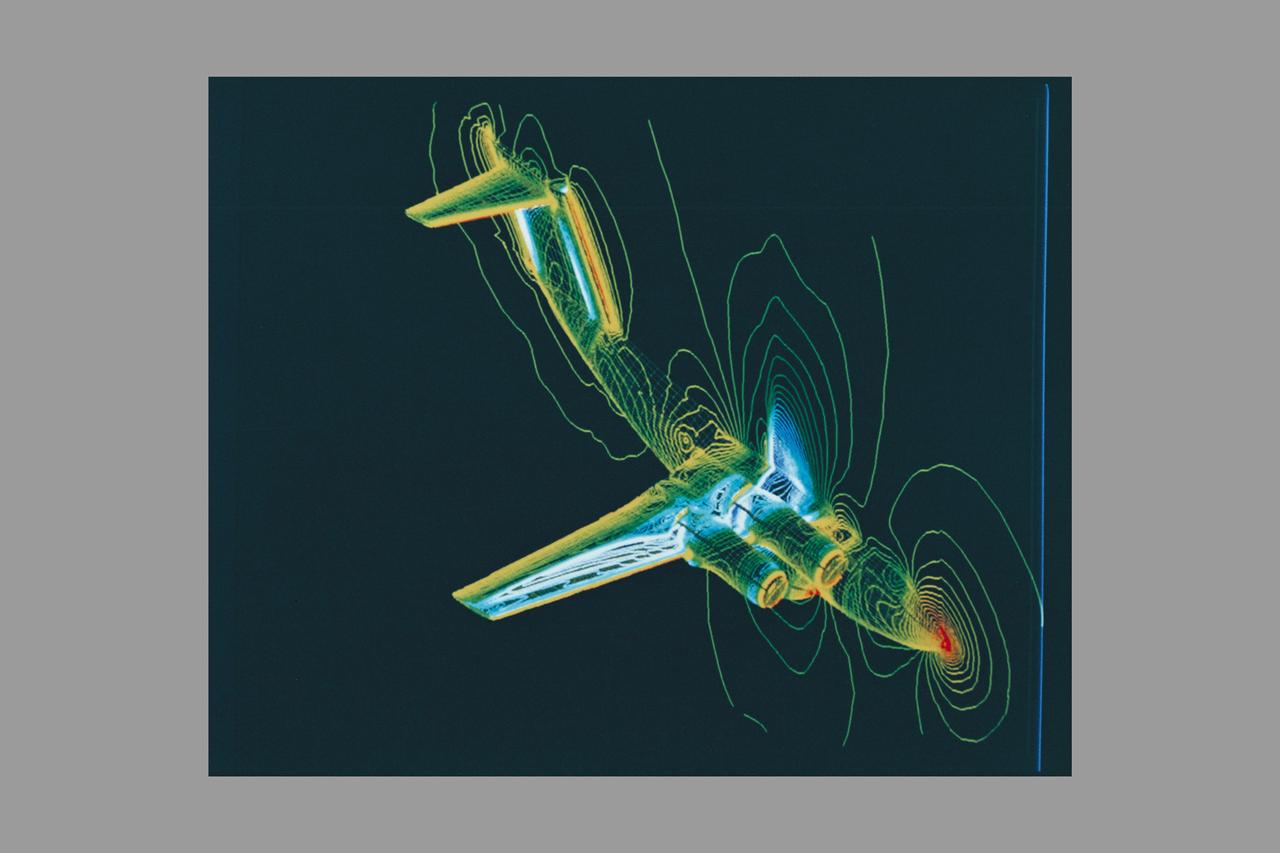
Japanese ASUKA STOL: Computed Pressure CGI (QSRA Configuration)
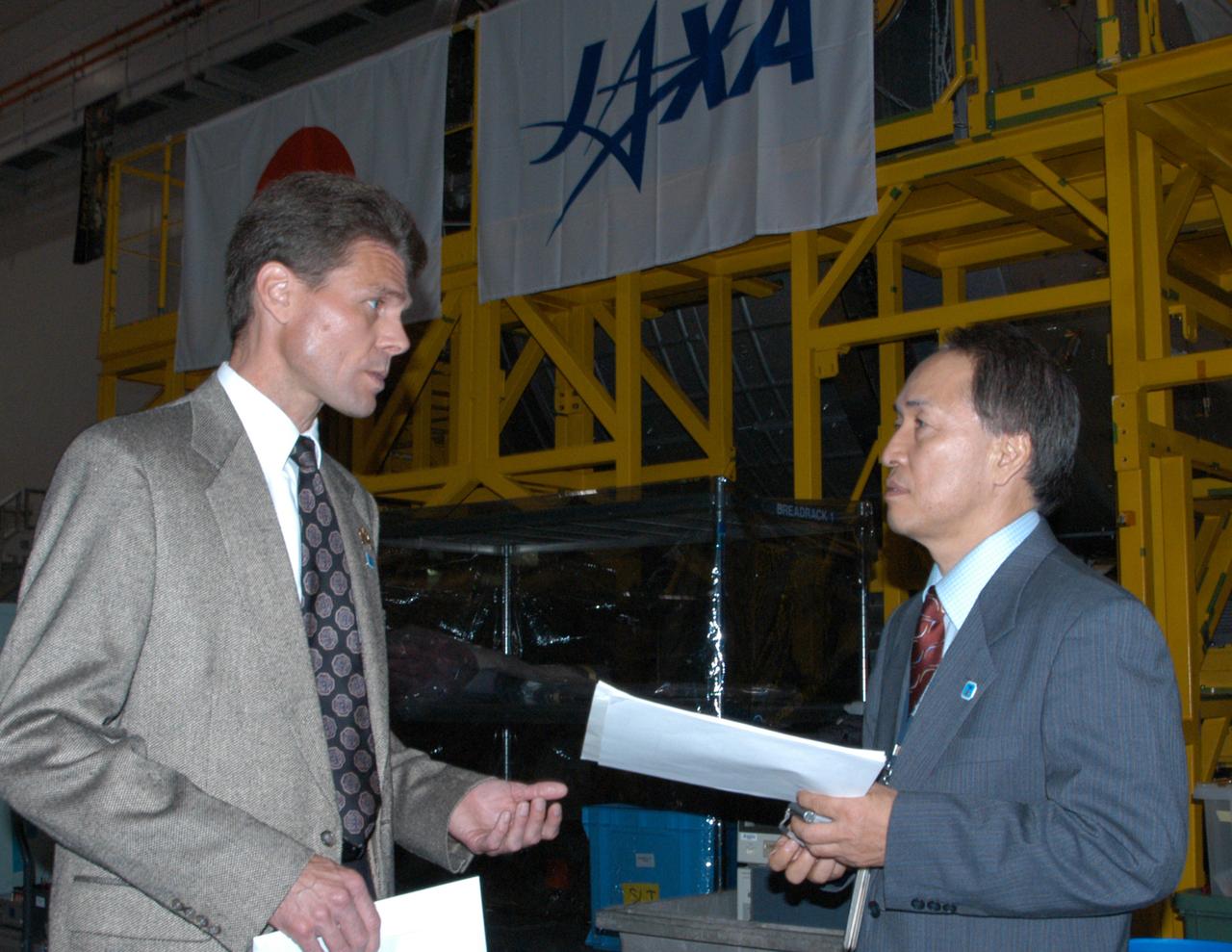
In the Space Station Processing Facility, Scott Higginbotham, payload manager for the International Space Station, discusses the Experiment Logistics Module Pressurized Section for the Japanese Experiment Module (JEM), with Dr. Hidetaka Tanaka, the JEM Project Team resident manager at KSC for the Japanese Aerospace and Exploration Agency (JAXA). Earlier, NASA and JAXA officials welcomed the arrival of the module. The new International Space Station component arrived at Kennedy March 12 to begin preparations for its future launch on mission STS-123. It will serve as an on-orbit storage area for materials, tools and supplies. It can hold up to eight experiment racks and will attach to the top of another larger pressurized module.
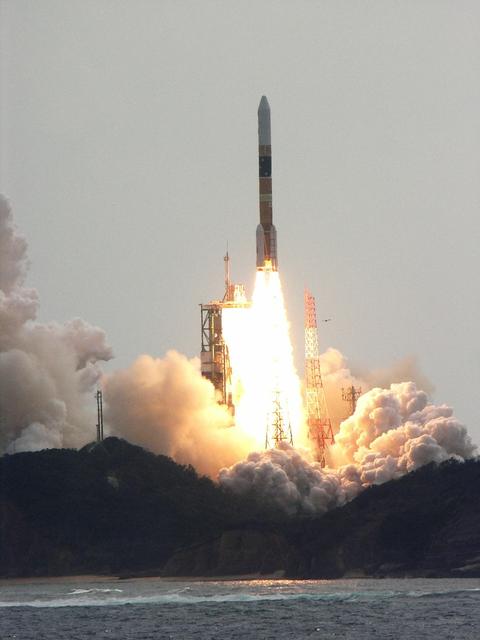
The Japanese H-IIA rocket will be launching the GPM Core Observatory into orbit in 2014. Credit: JAXA The Global Precipitation Measurement (GPM) mission is an international partnership co-led by NASA and the Japan Aerospace Exploration Agency (JAXA) that will provide next-generation global observations of precipitation from space. GPM will study global rain, snow and ice to better understand our climate, weather, and hydrometeorological processes. As of Novermber 2013 the GPM Core Observatory is in the final stages of testing at NASA Goddard Space Flight Center. The satellite will be flown to Japan in the fall of 2013 and launched into orbit on an HII-A rocket in early 2014. For more on the GPM mission, visit <a href="http://gpm.gsfc.nasa.gov/" rel="nofollow">gpm.gsfc.nasa.gov/</a>. <b><a href="http://www.nasa.gov/audience/formedia/features/MP_Photo_Guidelines.html" rel="nofollow">NASA image use policy.</a></b> <b><a href="http://www.nasa.gov/centers/goddard/home/index.html" rel="nofollow">NASA Goddard Space Flight Center</a></b> enables NASA’s mission through four scientific endeavors: Earth Science, Heliophysics, Solar System Exploration, and Astrophysics. Goddard plays a leading role in NASA’s accomplishments by contributing compelling scientific knowledge to advance the Agency’s mission. <b>Follow us on <a href="http://twitter.com/NASA_GoddardPix" rel="nofollow">Twitter</a></b> <b>Like us on <a href="http://www.facebook.com/pages/Greenbelt-MD/NASA-Goddard/395013845897?ref=tsd" rel="nofollow">Facebook</a></b> <b>Find us on <a href="http://instagram.com/nasagoddard?vm=grid" rel="nofollow">Instagram</a></b>
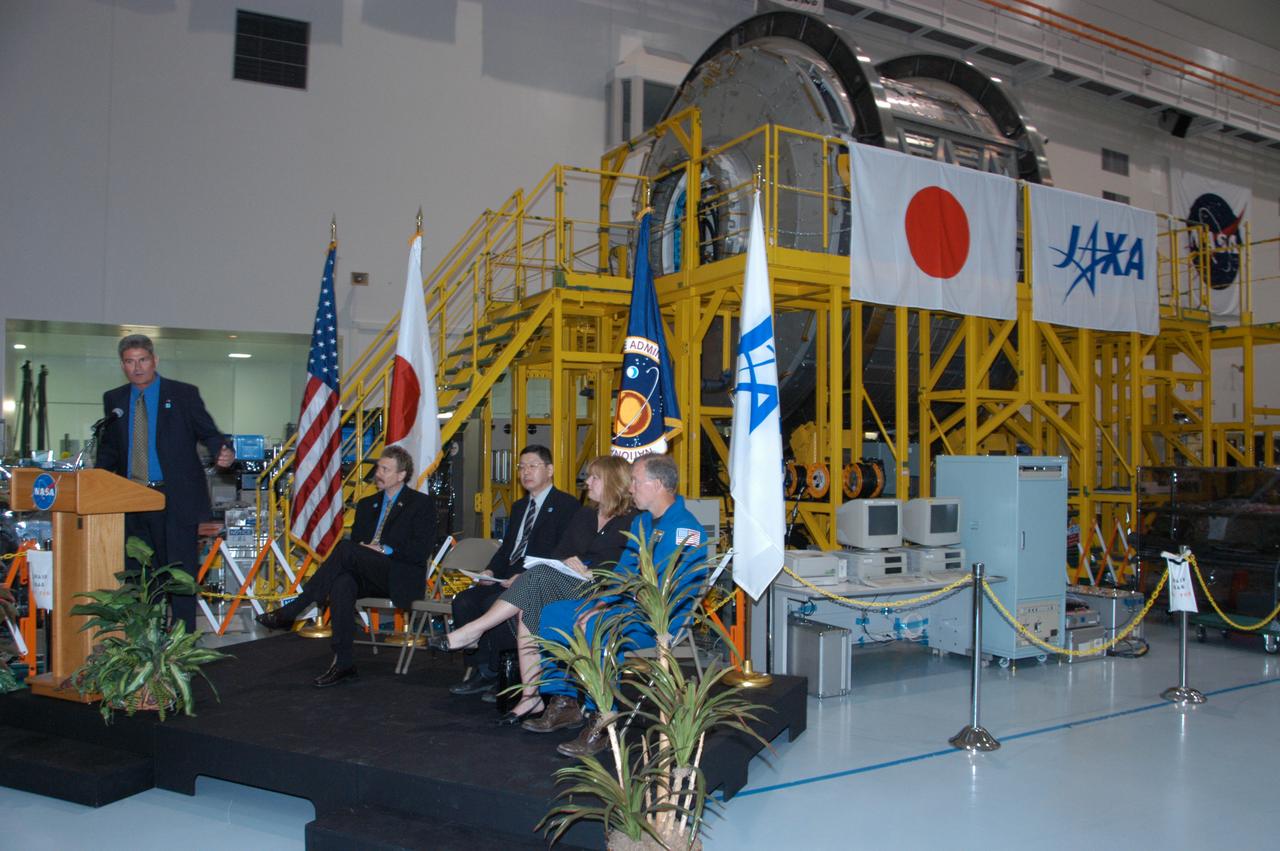
In the Space Station Processing Facility, NASA and Japanese Aerospace and Exploration Agency (JAXA) officials welcome the arrival of the Experiment Logistics Module Pressurized Section for the Japanese Experiment Module, or JEM, to the Kennedy Space Center. At the podium is Bill Parsons, director of Kennedy Space Center. Seated at right are Russ Romanella, director of International Space Station and Spacecraft Processing; Dr. Kichiro Imagawa, project manager of the JEM Development Project Team for JAXA; Melanie Saunders, associate manager of the International Space Station Program at Johnson Space Center; and Dominic Gorie, commander on mission STS-123 that will deliver the module to the space station. The new International Space Station component arrived at Kennedy March 12 to begin preparations for its future launch on mission STS-123. It will serve as an on-orbit storage area for materials, tools and supplies. It can hold up to eight experiment racks and will attach to the top of another larger pressurized module.
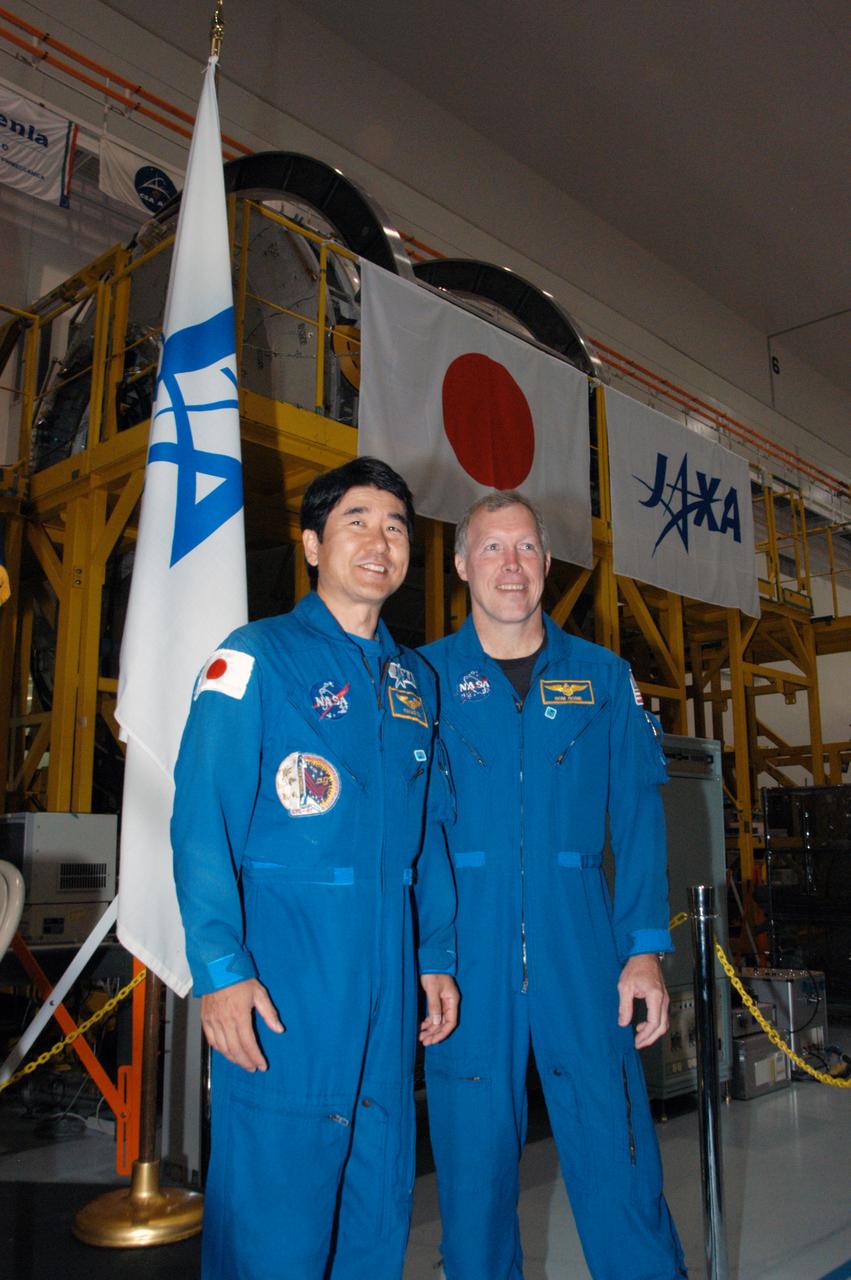
In the Space Station Processing Facility, astronaut Takao Doi (left) and Commander Dominic Gorie pose in front of the Experiment Logistics Module Pressurized Section for the Japanese Experiment Module, or JEM, that recently arrived at Kennedy. Doi and Gorie are crew members for mission STS-123 that will deliver the logistics module to the International Space Station. Earlier, NASA and Japanese Aerospace and Exploration Agency (JAXA) officials welcomed the arrival of the module. The new International Space Station component arrived at Kennedy March 12 to begin preparations for its future launch on mission STS-123. It will serve as an on-orbit storage area for materials, tools and supplies. It can hold up to eight experiment racks and will attach to the top of another larger pressurized module.
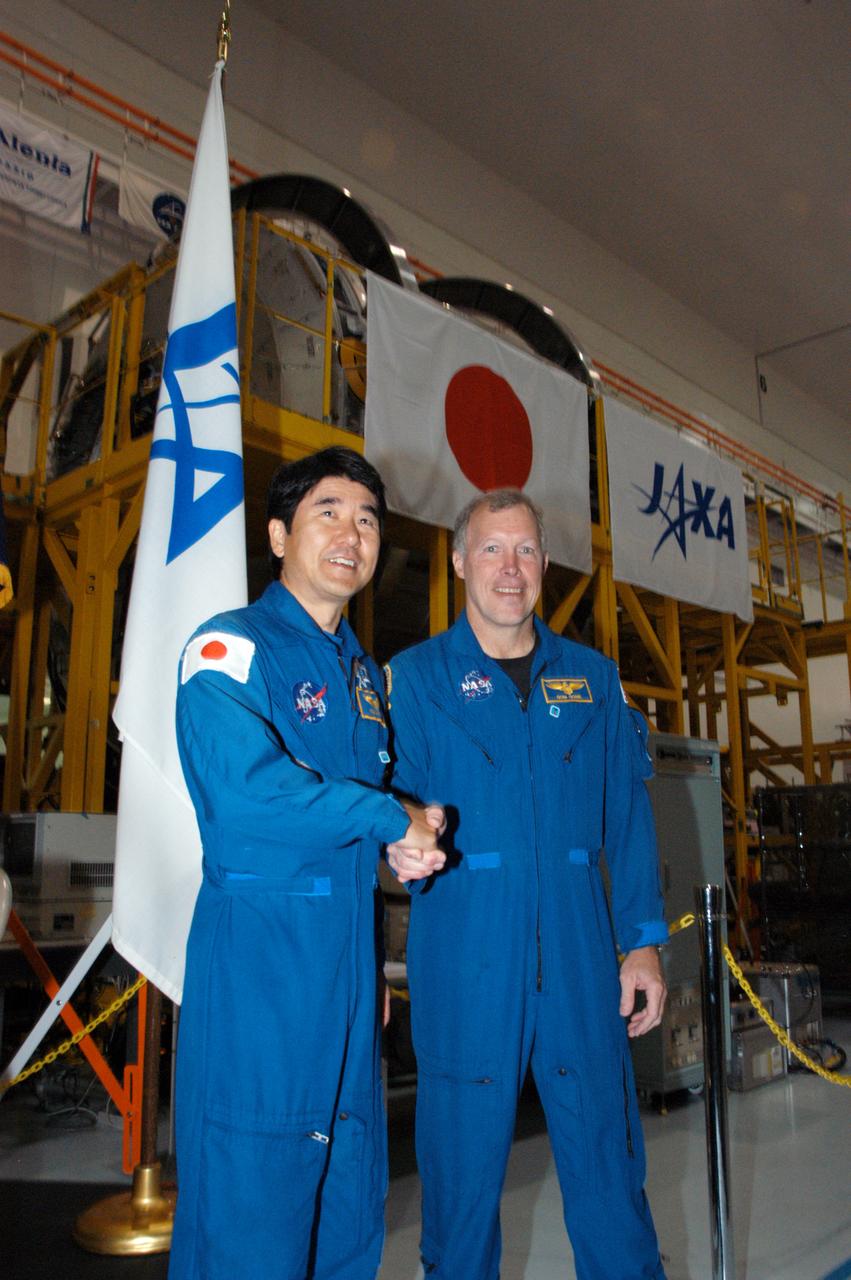
In the Space Station Processing Facility, astronaut Takao Doi (left) and Commander Dominic Gorie pose in front of the Experiment Logistics Module Pressurized Section for the Japanese Experiment Module, or JEM, that recently arrived at Kennedy. Doi and Gorie are crew members for mission STS-123 that will deliver the logistics module to the International Space Station. Earlier, NASA and Japanese Aerospace and Exploration Agency (JAXA) officials welcomed the arrival of the module. The new International Space Station component arrived at Kennedy March 12 to begin preparations for its future launch on mission STS-123. It will serve as an on-orbit storage area for materials, tools and supplies. It can hold up to eight experiment racks and will attach to the top of another larger pressurized module.
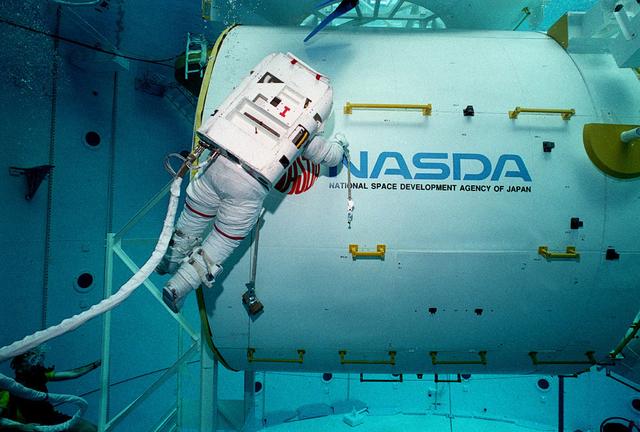
Japanese Experimental Module testing in Marshall's Neutral Buoyancy Simulator (NBS).
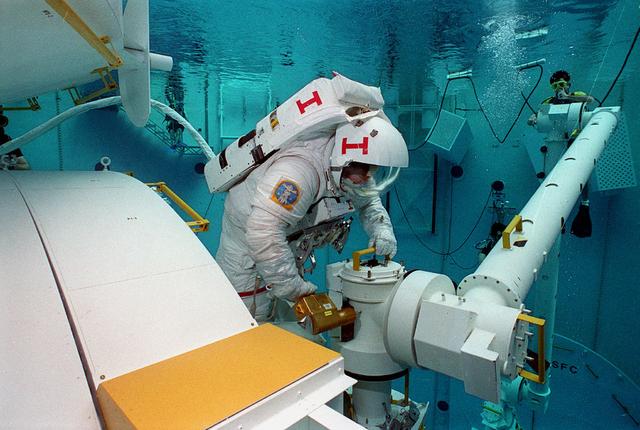
This photograph was taken in the Marshall Space Flight Center (MSFC) Neutral Buoyancy Simulator (NBS) during the testing of the Japanese Experimental Module. The NBS provided the weightless environment encountered in space needed for testing and the practices of extra-vehicular activities.
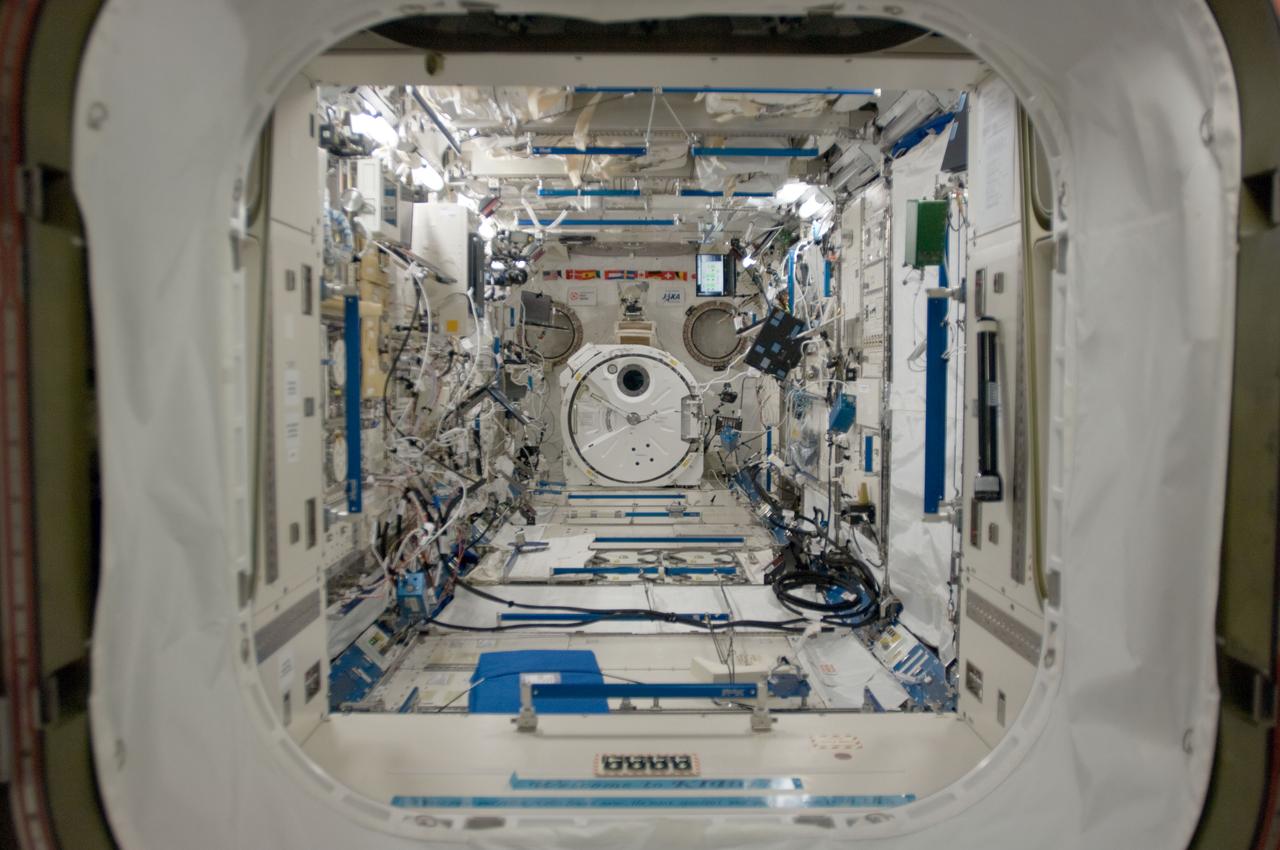
Overall view of the Japanese Experiment Module (JEM) Pressurized Module (JPM). Photo was taken during Expedition 34.
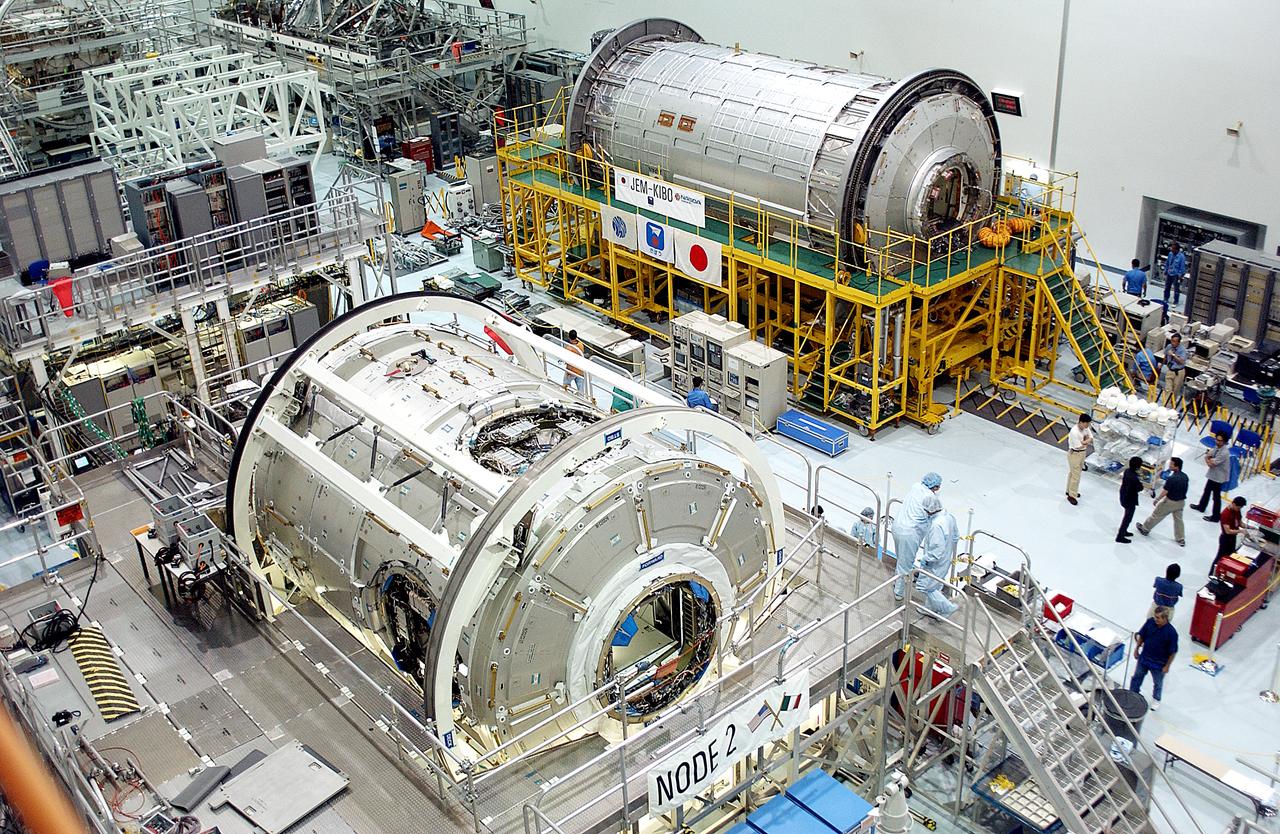
Lining the walls of the Space Station Processing Facility at the Kennedy Space Center (KSC) are the launch awaiting U.S. Node 2 (lower left). and the first pressurized module of the Japanese Experimental Module (JEM) (upper right), named "Kibo" (Hope). Node 2, the "utility hub" and second of three connectors between International Space Station (ISS) modules, was built in the Torino, Italy facility of Alenia Spazio, an International contractor based in Rome. Japan's major contribution to the station, the JEM, was built by the Space Development Agency of Japan (NASDA) at the Tsukuba Space Center near Tokyo and will expand research capabilities aboard the station. Both were part of an agreement between NASA and the European Space Agency (ESA). The Node 2 will be the next pressurized module installed on the Station. Once the Japanese and European laboratories are attached to it, the resulting roomier Station will expand from the equivalent space of a 3-bedroom house to a 5-bedroom house. The Marshall Space Center in Huntsville, Alabama manages the Node program for NASA.
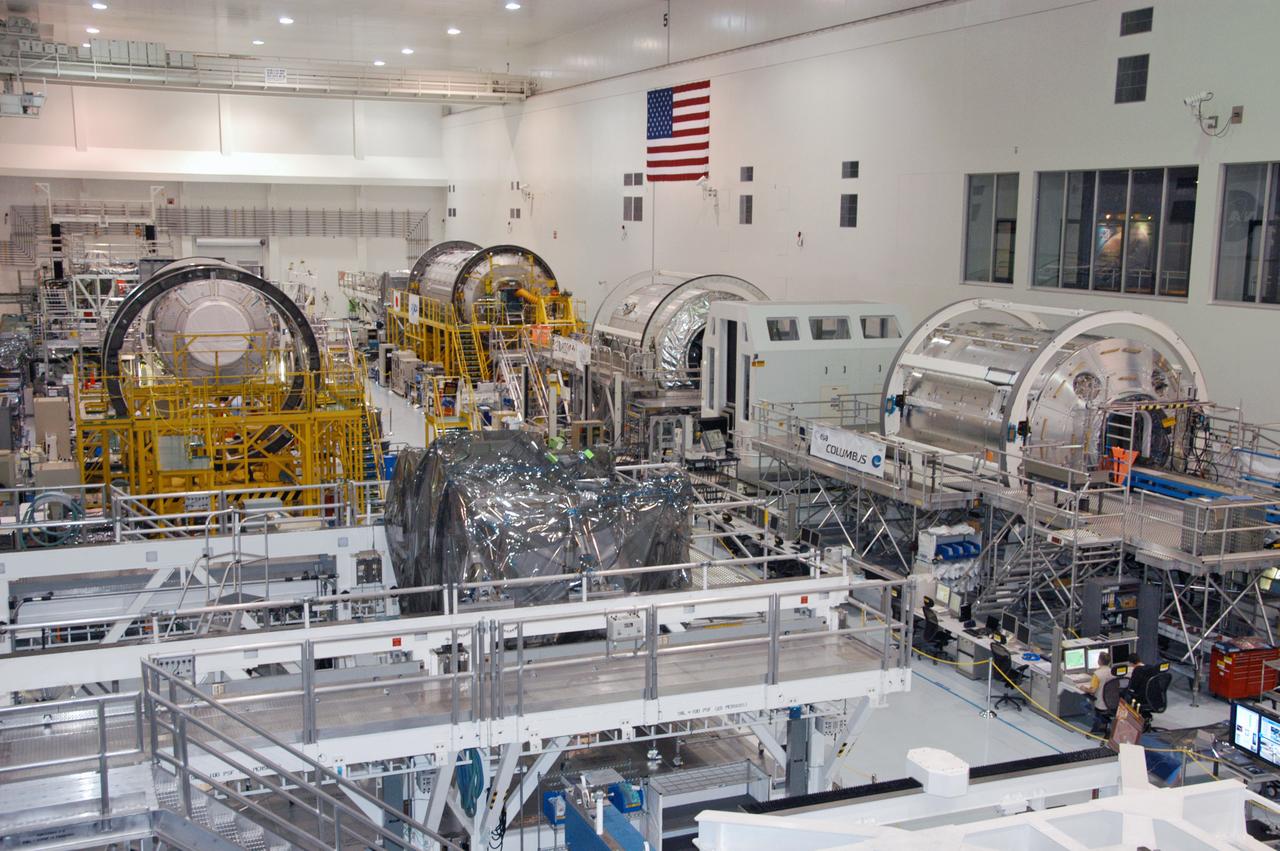
Several components for delivery to the International Space Station sit in test stands inside the Space Station Processing Facility highbay. To the right, from back to front, are the Japanese Experiment Module, the Raffaello multi-purpose logistics module, and the European Space Agency's Columbus scientific research module. To the left in front is the starboard truss segment S5. Behind it is the test stand that will hold the Experiment Logistics Module Pressurized Section for the Japanese Experiment Module. The logistics module is one of the components of the Japanese Experiment Module or JEM, also known as Kibo, which means "hope" in Japanese. Kibo comprises six components: two research facilities -- the Pressurized Module and Exposed Facility; a Logistics Module attached to each of them; a Remote Manipulator System; and an Inter-Orbit Communication System unit. Kibo also has a scientific airlock through which experiments are transferred and exposed to the external environment of space. Kibo is Japan's first human space facility and its primary contribution to the station. Kibo will enhance the unique research capabilities of the orbiting complex by providing an additional environment in which astronauts can conduct science experiments. The various components of JEM will be assembled in space over the course of three Space Shuttle missions. The first of those three missions, STS-123, will carry the Experiment Logistics Module Pressurized Section aboard the Space Shuttle Endeavour, targeted for launch in 2007.
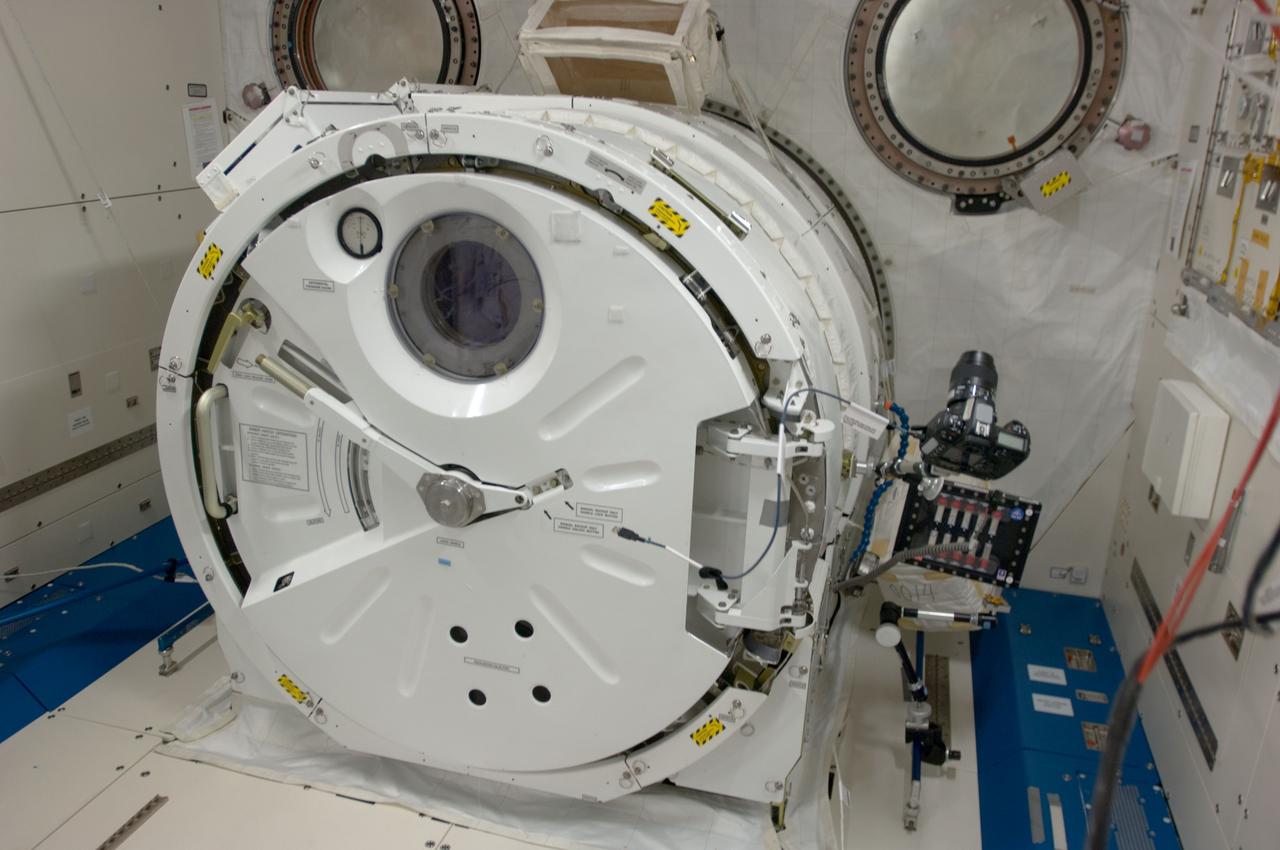
View of internal airlock (A/L) in the Japanese Experiment Module (JEM) Pressurized Module (JPM). Photo was taken during Expedition 34.
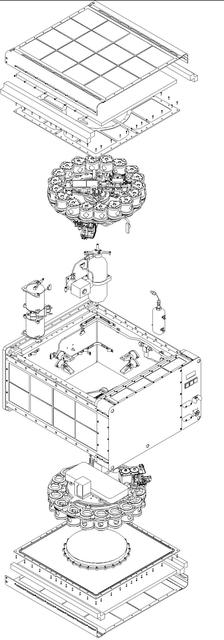
The Avian Development Facility (ADF) supports 36 eggs in two carousels, one of which rotates to provide a 1-g control for comparing to eggs grown in microgravity. The ADF was designed to incubate up to 36 Japanese quail eggs, 18 in microgravity and 18 in artificial gravity. The two sets of eggs were exposed to otherwise identical conditions, the first time this is been accomplished in space. Eggs are preserved at intervals to provide snapshots of their development for later analysis. Quails incubate in just 15 days, so they are an ideal species to be studied within the duration of space shuttle missions. Further, several investigators can use the same specimens to address different questions. The ADF originated in NASA's Shuttle Student Involvement program in the 1980s and was developed under the NASA Small Business Irnovation Research program. In late 2001, the ADF made its first flight and carried eggs used in two investigations.
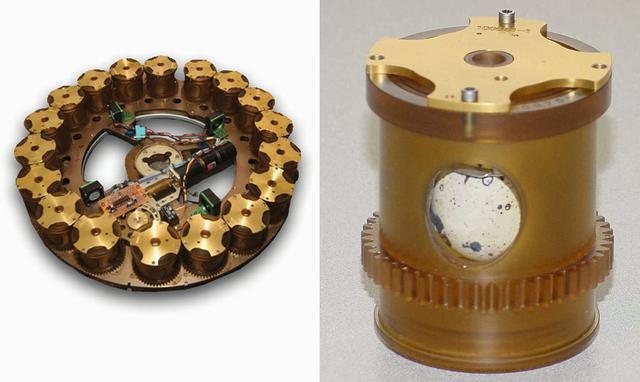
The Avian Development Facility (ADF) supports 36 eggs in two carousels, one of which rotates to provide a 1-g control for comparing to eggs grown in microgravity. The ADF was designed to incubate up to 36 Japanese quail eggs, 18 in microgravity and 18 in artificial gravity. The two sets of eggs were exposed to otherwise identical conditions, the first time this is been accomplished in space. Eggs are preserved at intervals to provide snapshots of their development for later analysis. Quails incubate in just 15 days, so they are an ideal species to be studied within the duration of space shuttle missions. Further, several investigators can use the same specimens to address different questions. The ADF originated in NASA's Shuttle Student Involvement program in the 1980s and was developed under the NASA Small Business Irnovation Research program. In late 2001, the ADF made its first flight and carried eggs used in two investigations.
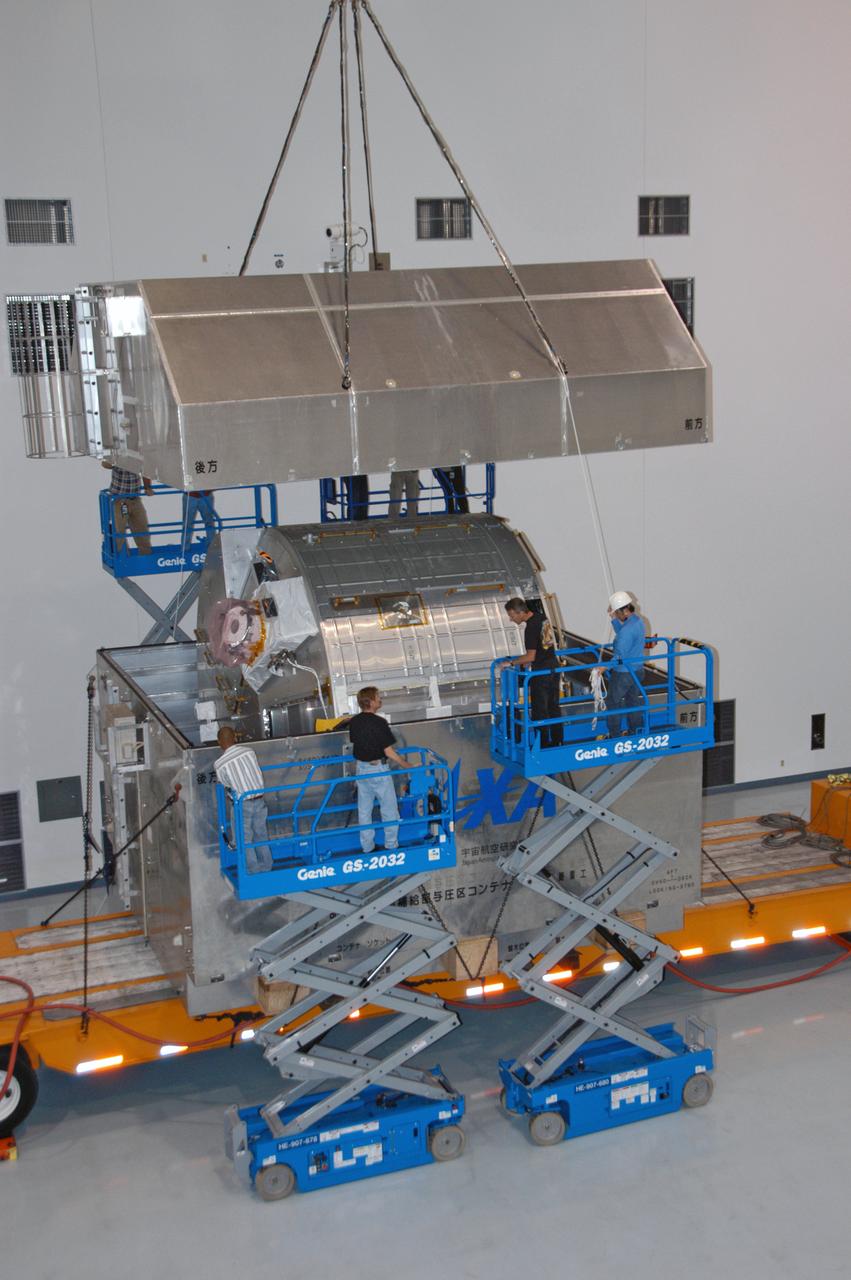
Inside the Space Station Processing Facility, workers monitor progress as a huge crane is used to remove the top of the crate carrying the Experiment Logistics Module Pressurized Section for the Japanese Experiment Module. The logistics module is one of the components of the Japanese Experiment Module or JEM, also known as Kibo, which means "hope" in Japanese. Kibo comprises six components: two research facilities -- the Pressurized Module and Exposed Facility; a Logistics Module attached to each of them; a Remote Manipulator System; and an Inter-Orbit Communication System unit. Kibo also has a scientific airlock through which experiments are transferred and exposed to the external environment of space. Kibo is Japan's first human space facility and its primary contribution to the station. Kibo will enhance the unique research capabilities of the orbiting complex by providing an additional environment in which astronauts can conduct science experiments. The various components of JEM will be assembled in space over the course of three Space Shuttle missions. The first of those three missions, STS-123, will carry the Experiment Logistics Module Pressurized Section aboard the Space Shuttle Endeavour, targeted for launch in 2007.
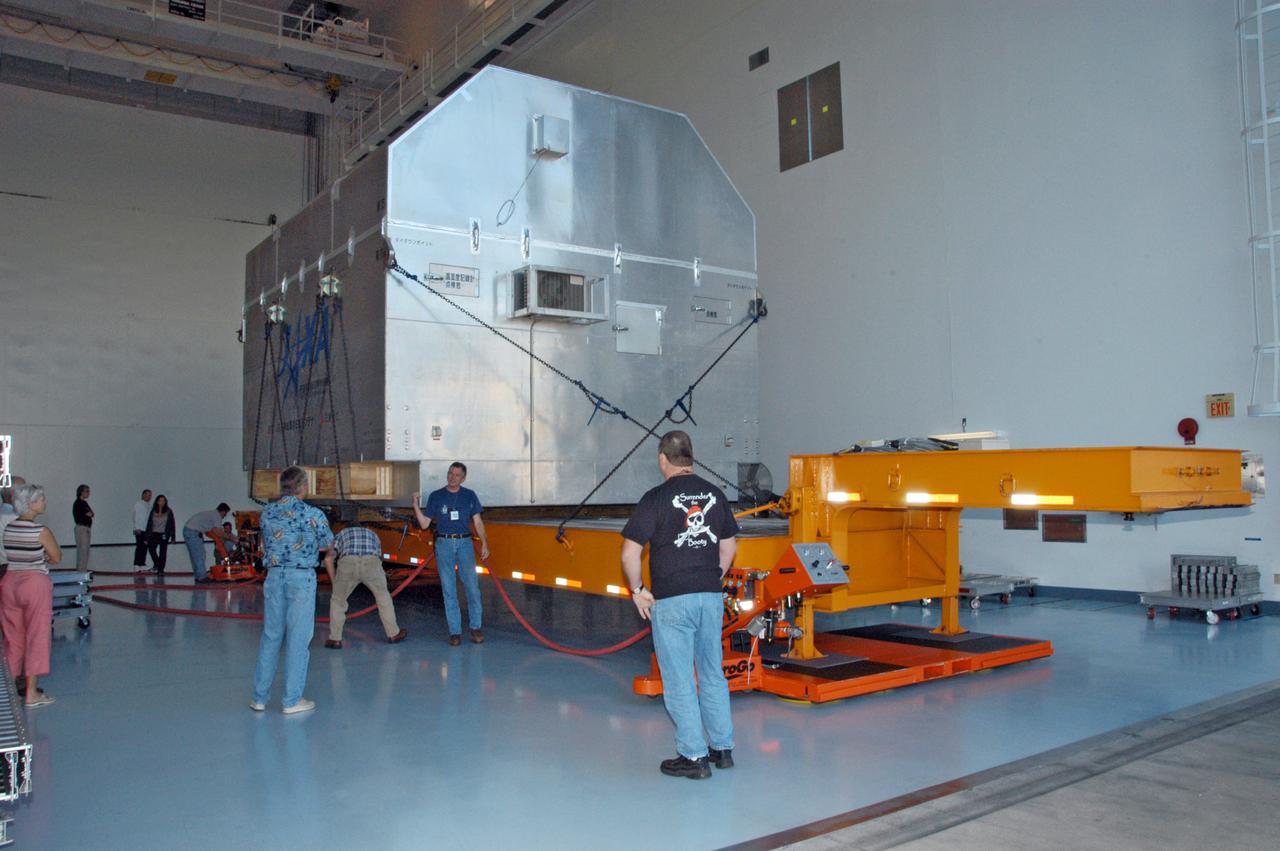
The Experiment Logistics Module Pressurized Section for the Japanese Experiment Module arrives at the Space Station Processing Facility for uncrating. The logistics module is one of the components of the Japanese Experiment Module or JEM, also known as Kibo, which means "hope" in Japanese. Kibo comprises six components: two research facilities -- the Pressurized Module and Exposed Facility; a Logistics Module attached to each of them; a Remote Manipulator System; and an Inter-Orbit Communication System unit. Kibo also has a scientific airlock through which experiments are transferred and exposed to the external environment of space. Kibo is Japan's first human space facility and its primary contribution to the station. Kibo will enhance the unique research capabilities of the orbiting complex by providing an additional environment in which astronauts can conduct science experiments. The various components of JEM will be assembled in space over the course of three Space Shuttle missions. The first of those three missions, STS-123, will carry the Experiment Logistics Module Pressurized Section aboard the Space Shuttle Endeavour, targeted for launch in 2007.
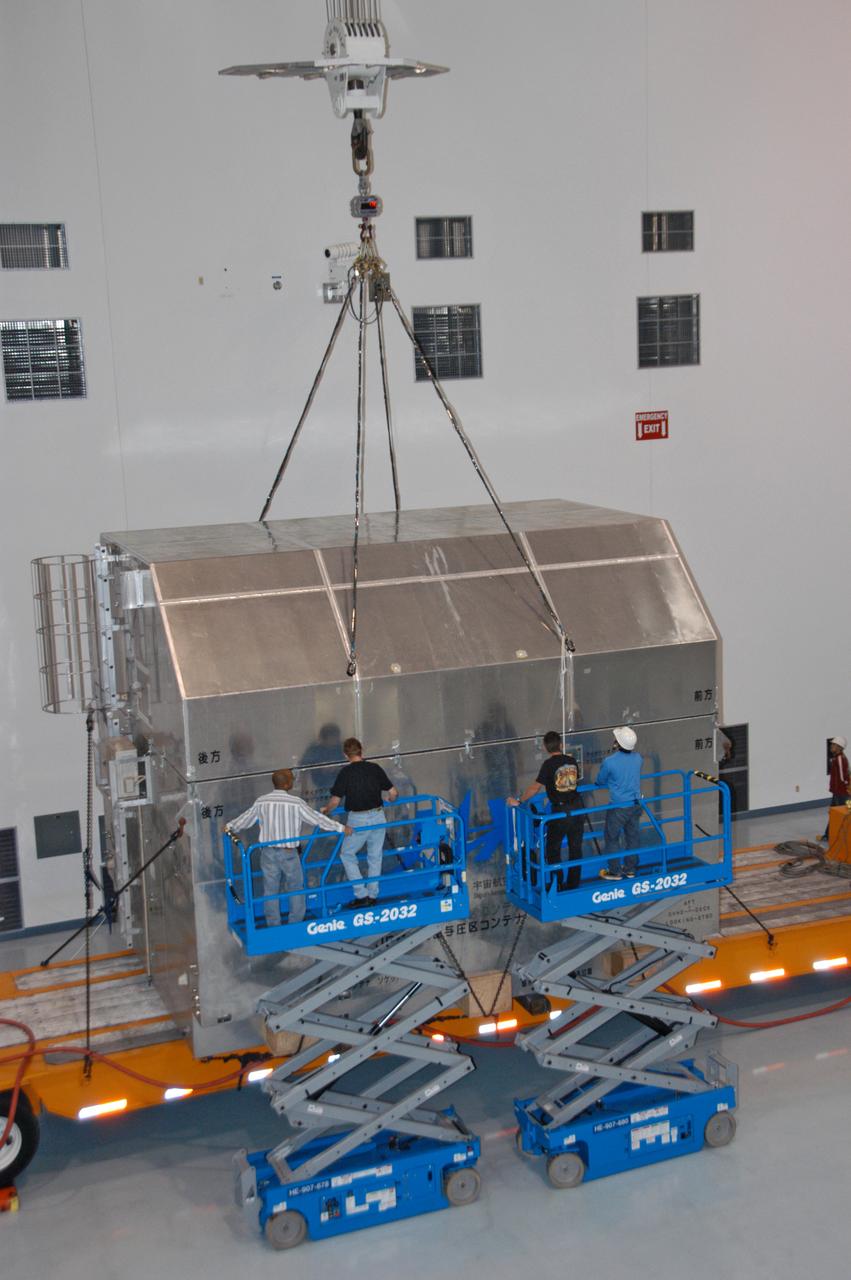
Inside the Space Station Processing Facility, workers monitor progress as a huge crane is used to remove the top of the crate carrying the Experiment Logistics Module Pressurized Section for the Japanese Experiment Module. The logistics module is one of the components of the Japanese Experiment Module or JEM, also known as Kibo, which means "hope" in Japanese. Kibo comprises six components: two research facilities -- the Pressurized Module and Exposed Facility; a Logistics Module attached to each of them; a Remote Manipulator System; and an Inter-Orbit Communication System unit. Kibo also has a scientific airlock through which experiments are transferred and exposed to the external environment of space. Kibo is Japan's first human space facility and its primary contribution to the station. Kibo will enhance the unique research capabilities of the orbiting complex by providing an additional environment in which astronauts can conduct science experiments. The various components of JEM will be assembled in space over the course of three Space Shuttle missions. The first of those three missions, STS-123, will carry the Experiment Logistics Module Pressurized Section aboard the Space Shuttle Endeavour, targeted for launch in 2007.
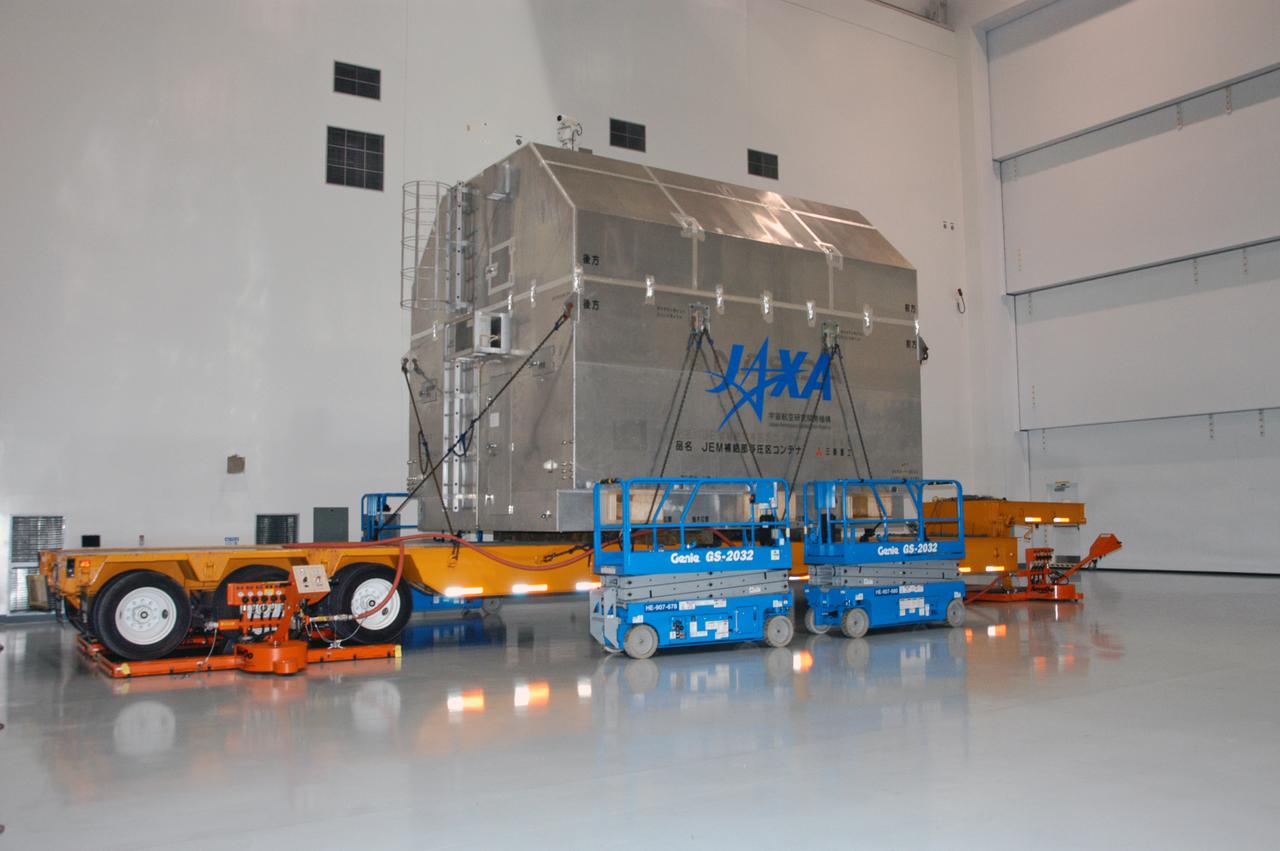
The Experiment Logistics Module Pressurized Section for the Japanese Experiment Module arrives at the Space Station Processing Facility for uncrating. The logistics module is one of the components of the Japanese Experiment Module or JEM, also known as Kibo, which means "hope" in Japanese. Kibo comprises six components: two research facilities -- the Pressurized Module and Exposed Facility; a Logistics Module attached to each of them; a Remote Manipulator System; and an Inter-Orbit Communication System unit. Kibo also has a scientific airlock through which experiments are transferred and exposed to the external environment of space. Kibo is Japan's first human space facility and its primary contribution to the station. Kibo will enhance the unique research capabilities of the orbiting complex by providing an additional environment in which astronauts can conduct science experiments. The various components of JEM will be assembled in space over the course of three Space Shuttle missions. The first of those three missions, STS-123, will carry the Experiment Logistics Module Pressurized Section aboard the Space Shuttle Endeavour, targeted for launch in 2007.
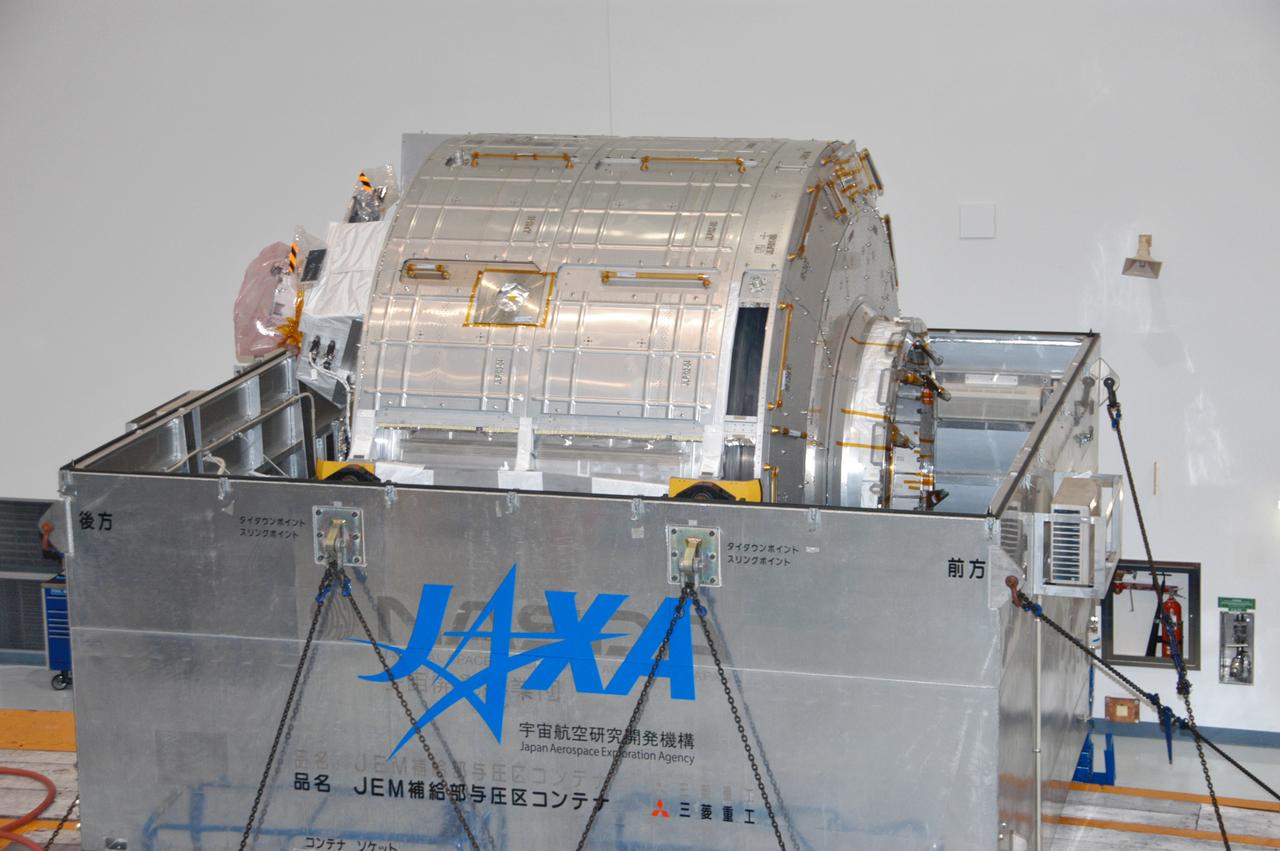
Inside the Space Station Processing Facility, the Experiment Logistics Module Pressurized Section for the Japanese Experiment Module is revealed after the top of the crate is removed. The logistics module is one of the components of the Japanese Experiment Module or JEM, also known as Kibo, which means "hope" in Japanese. Kibo comprises six components: two research facilities -- the Pressurized Module and Exposed Facility; a Logistics Module attached to each of them; a Remote Manipulator System; and an Inter-Orbit Communication System unit. Kibo also has a scientific airlock through which experiments are transferred and exposed to the external environment of space. Kibo is Japan's first human space facility and its primary contribution to the station. Kibo will enhance the unique research capabilities of the orbiting complex by providing an additional environment in which astronauts can conduct science experiments. The various components of JEM will be assembled in space over the course of three Space Shuttle missions. The first of those three missions, STS-123, will carry the Experiment Logistics Module Pressurized Section aboard the Space Shuttle Endeavour, targeted for launch in 2007.

Inside the Space Station Processing Facility, workers monitor progress as a huge crane is used to remove the top of the crate carrying the Experiment Logistics Module Pressurized Section for the Japanese Experiment Module. The logistics module is one of the components of the Japanese Experiment Module or JEM, also known as Kibo, which means "hope" in Japanese. Kibo comprises six components: two research facilities -- the Pressurized Module and Exposed Facility; a Logistics Module attached to each of them; a Remote Manipulator System; and an Inter-Orbit Communication System unit. Kibo also has a scientific airlock through which experiments are transferred and exposed to the external environment of space. Kibo is Japan's first human space facility and its primary contribution to the station. Kibo will enhance the unique research capabilities of the orbiting complex by providing an additional environment in which astronauts can conduct science experiments. The various components of JEM will be assembled in space over the course of three Space Shuttle missions. The first of those three missions, STS-123, will carry the Experiment Logistics Module Pressurized Section aboard the Space Shuttle Endeavour, targeted for launch in 2007.

The Experiment Logistics Module Pressurized Section for the Japanese Experiment Module arrives at the Space Station Processing Facility. The logistics module is one of the components of the Japanese Experiment Module or JEM, also known as Kibo, which means "hope" in Japanese. Kibo comprises six components: two research facilities -- the Pressurized Module and Exposed Facility; a Logistics Module attached to each of them; a Remote Manipulator System; and an Inter-Orbit Communication System unit. Kibo also has a scientific airlock through which experiments are transferred and exposed to the external environment of space. Kibo is Japan's first human space facility and its primary contribution to the station. Kibo will enhance the unique research capabilities of the orbiting complex by providing an additional environment in which astronauts can conduct science experiments. The various components of JEM will be assembled in space over the course of three Space Shuttle missions. The first of those three missions, STS-123, will carry the Experiment Logistics Module Pressurized Section aboard the Space Shuttle Endeavour, targeted for launch in 2007.
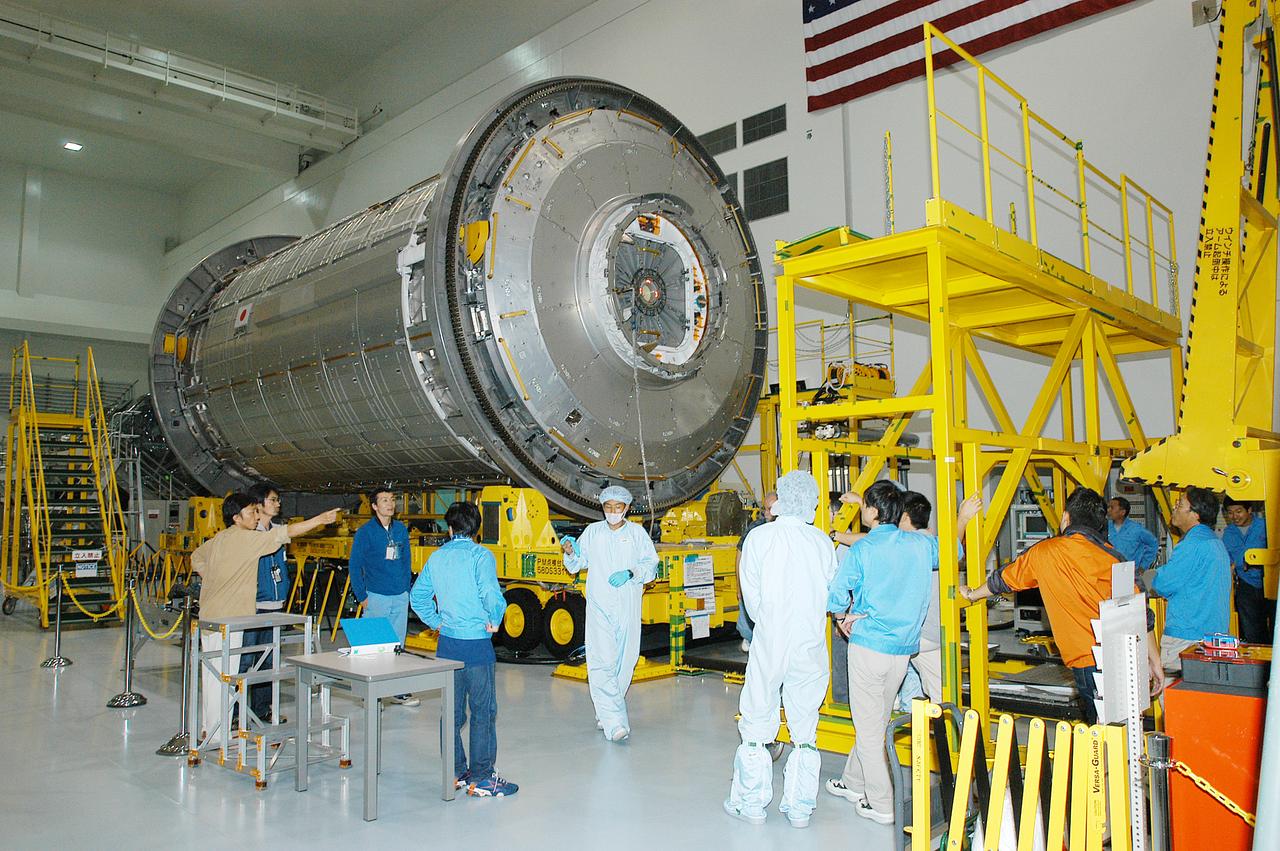
The Japanese Experiment Module (JEM) is moved on its workstand in the Space Station Processing Facility. The JEM will undergo pre-assembly measurements. Developed by the Japan Aerospace Exploration Agency (JAXA), the JEM will enhance the unique research capabilities of the orbiting complex by providing an additional environment for astronauts to conduct science experiments.
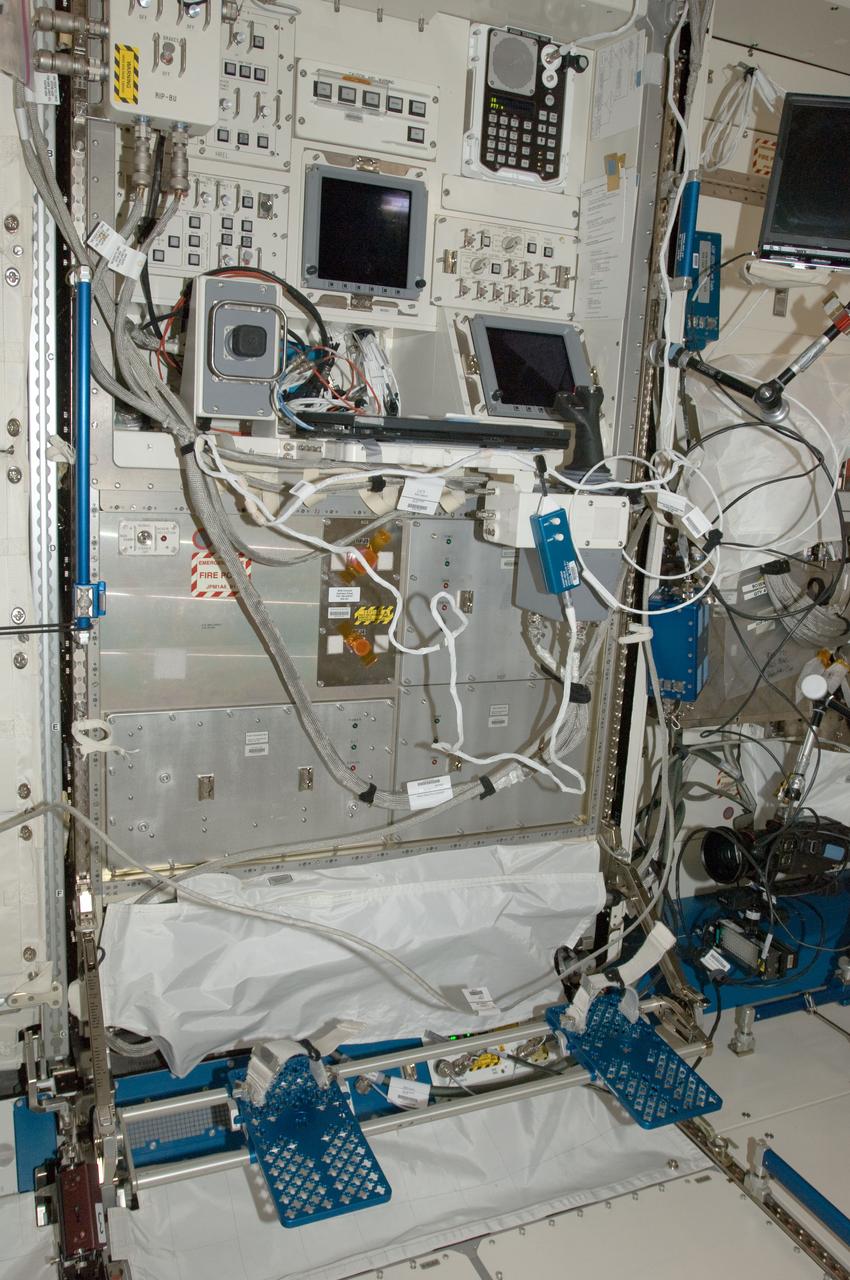
View of Japanese Experiment Module (JEM) Pressurized Module (JPM) Robotic Manipulator System (RMS). Photo was taken during Expedition 34.
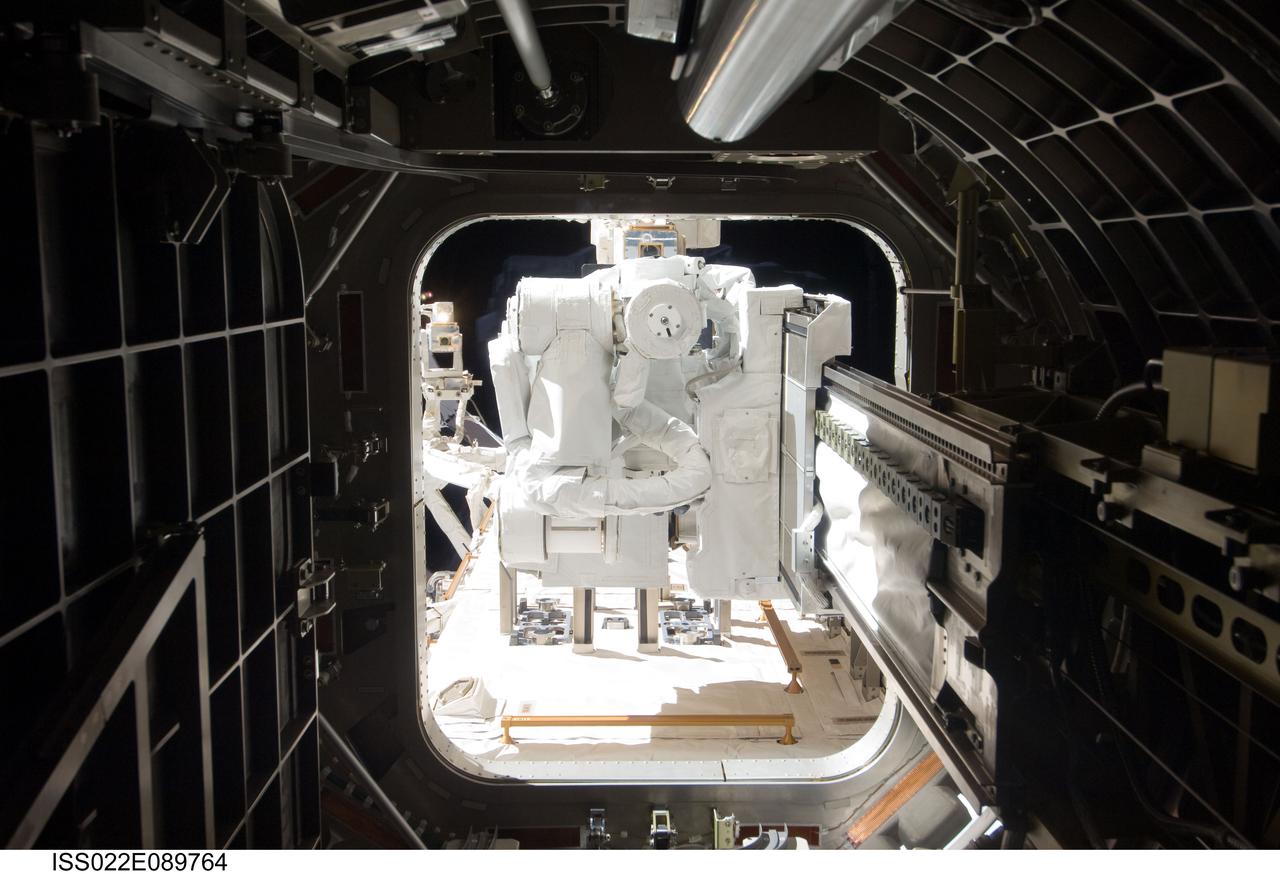
ISS022-E-089764 (10 March 2010) --- Looking through the Kibo airlock, the Japanese robotic Small Fine Arm (SFA), also known as ?Ko-bot?, is featured in this image photographed by an Expedition 22 crew member in the Kibo laboratory of the International Space Station during its installation on the external Japanese Experiment Module - Exposed Facility.
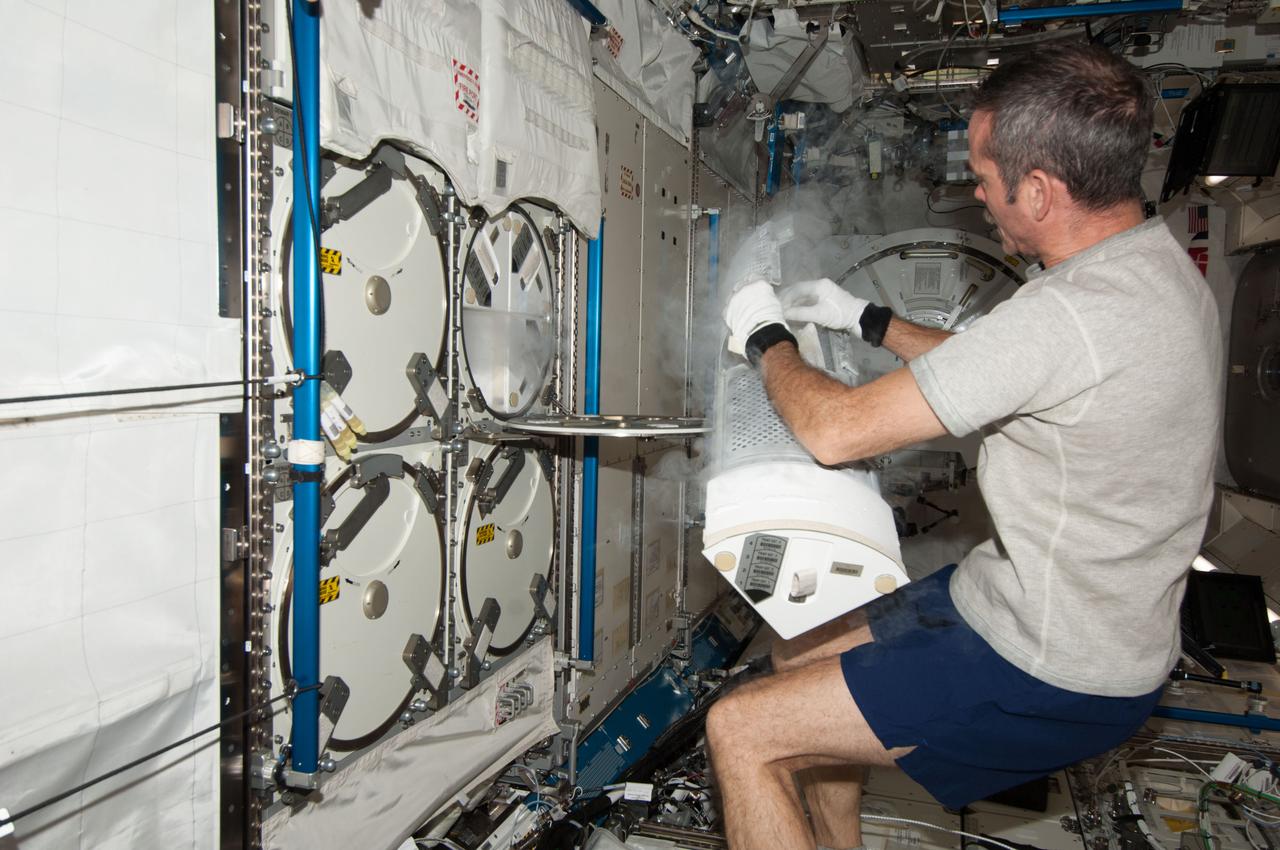
View of Canadian Space Agency (CSA) Chris Hadfield,Expedition 34 Flight Engineer (FE),preparing to insert biological samples in the Minus Eighty Laboratory Freezer for International Space Station (ISS) - (MELFI-1),in the Japanese Experiment Module (JEM) Pressurized Module (JPM). Photo was taken during Expedition 34.
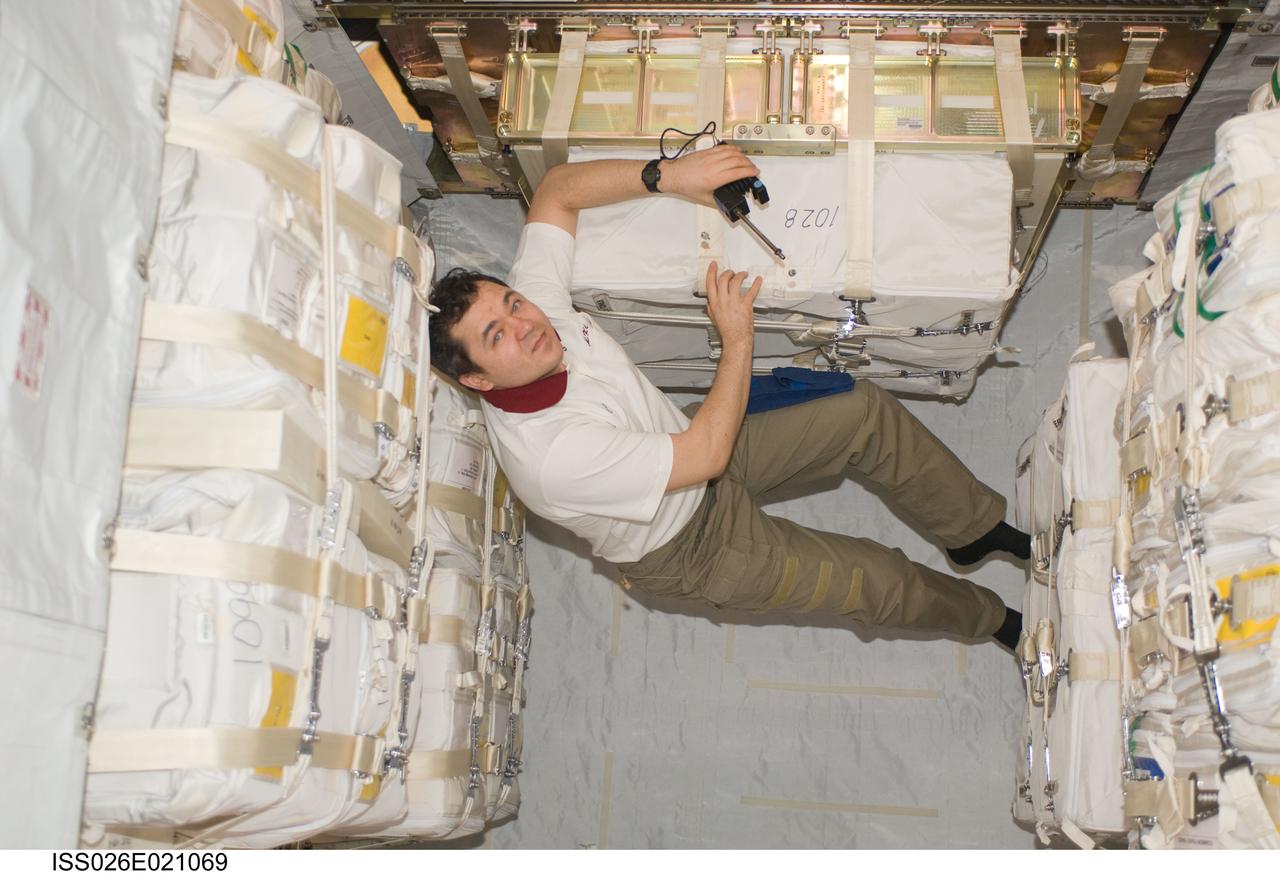
ISS026-E-021069 (27 Jan. 2011) --- Russian cosmonaut Oleg Skripochka, Expedition 26 flight engineer, works in the Japanese Kounotori2 H-II Transfer Vehicle (HTV2) docked to the Harmony node of the International Space Station.
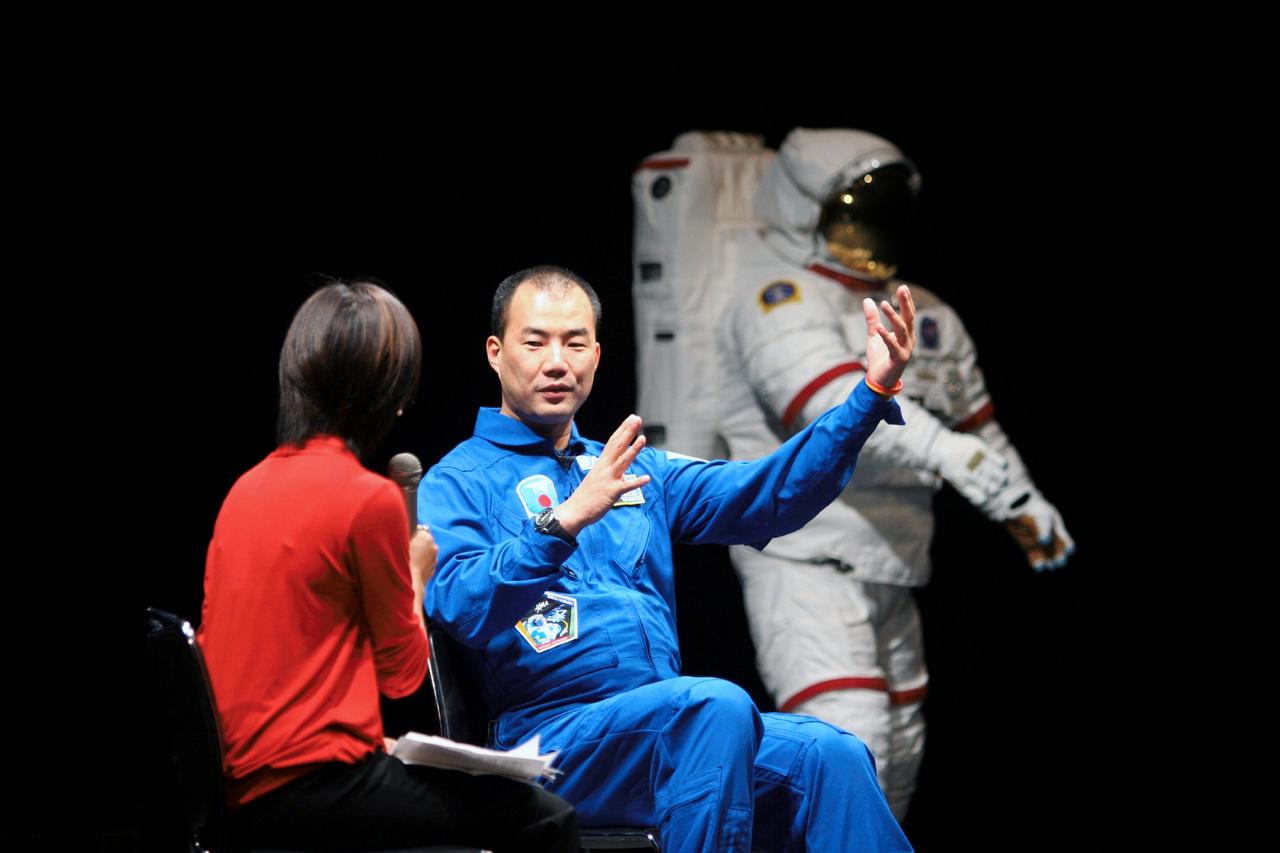
JSC2005-E-40330 (1 October 2005) --- Japanese Aerospace Exploration Agency (JAXA) astronaut Soichi Noguchi discusses his flight on the mission that returned the Space Shuttle to flight earlier this year with members of the public in Tokyo, Japan, on Oct. 1. Noguchi and the rest of the crew of Discovery for STS-114 visited Japan as guests of JAXA and participated in a variety of public events. Photo Credit: Japan Aerospace Exploration Agency
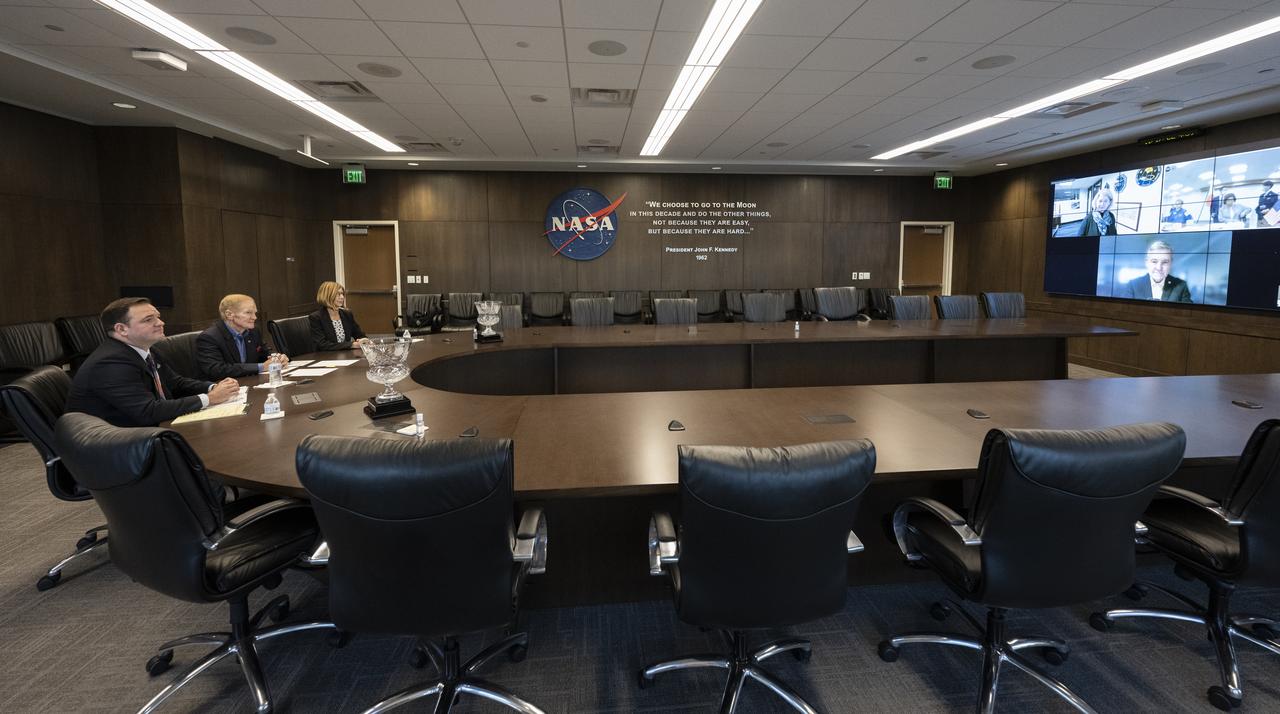
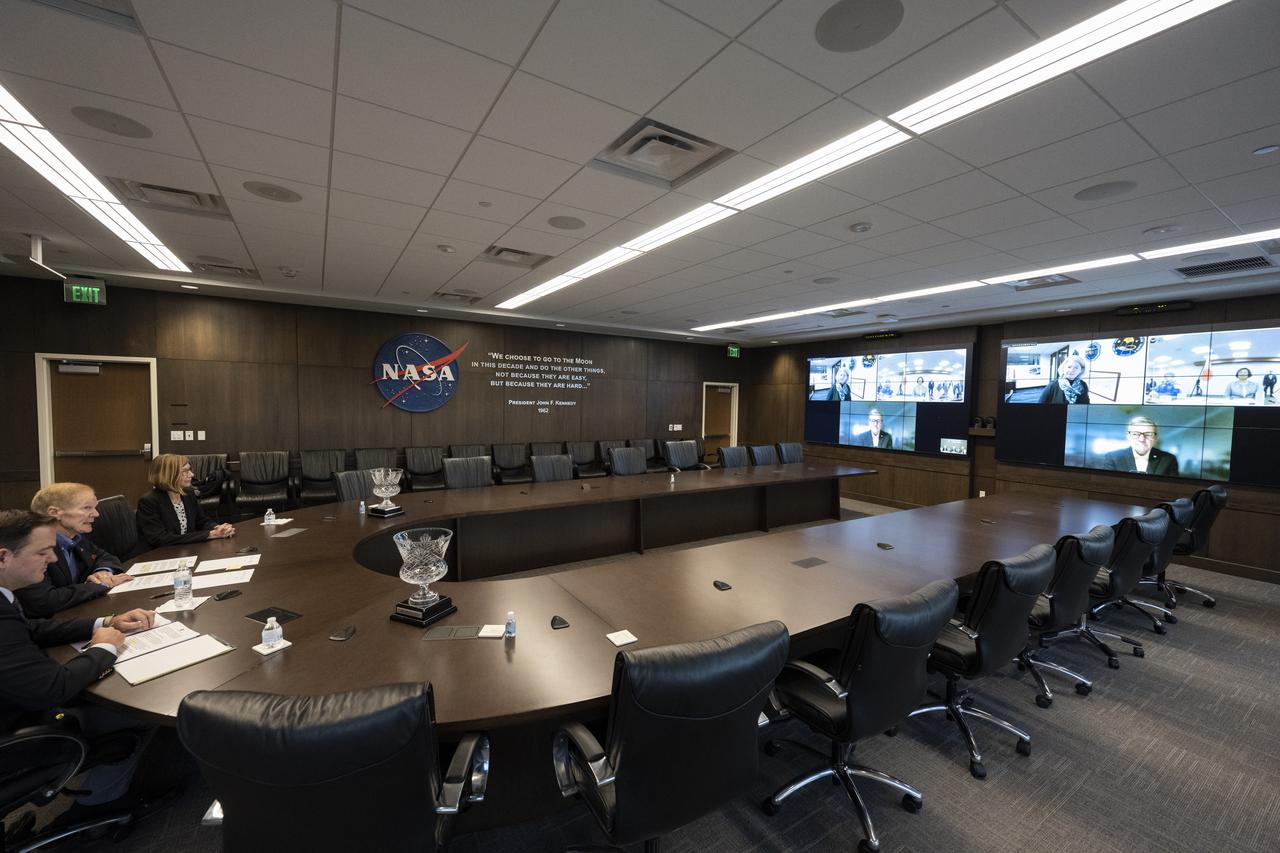
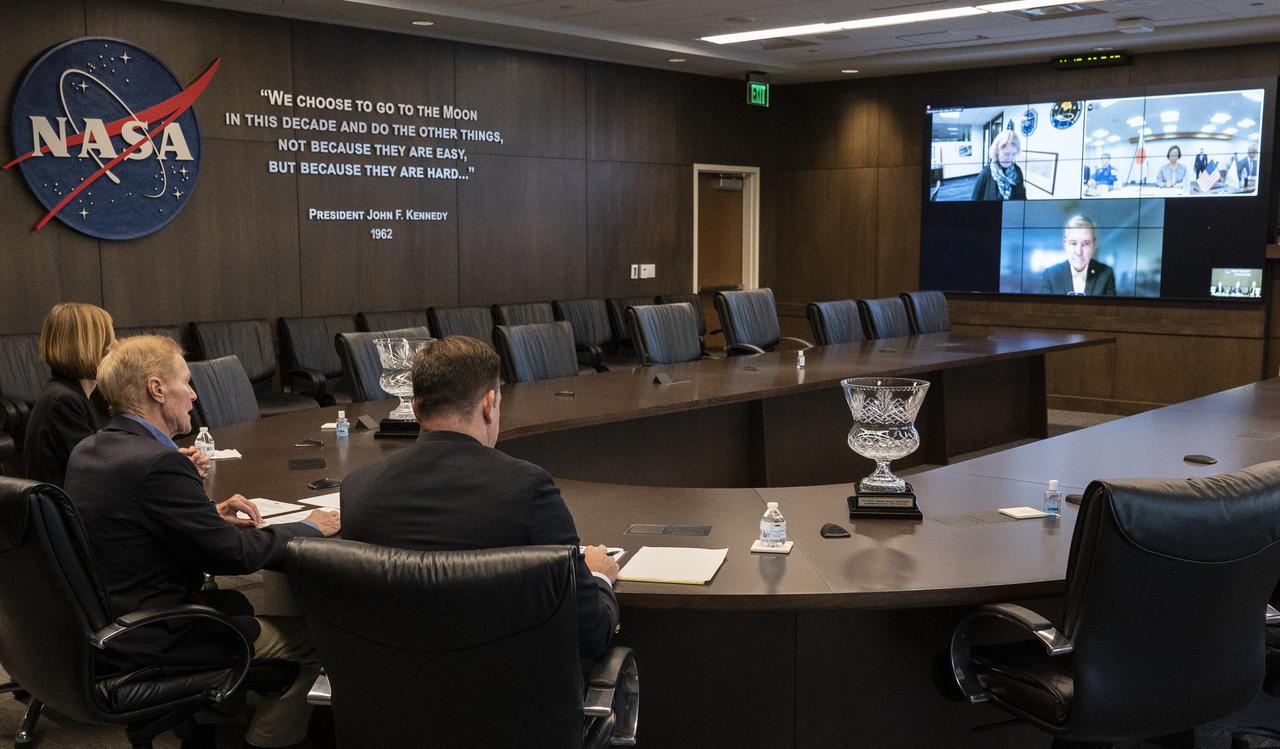
NASA Administrator Bill Nelson, joined by NASA Leadership, attends a virtual meeting hosted by Japanese Minister of Education, Culture, Sports, Science and Technology (MEXT) Keiko Nagaoka prior to signing a Gateway implementing agreement Thursday, Nov. 17, 2022, at NASA’s Kennedy Space Center in Florida. Photo Credit: (NASA/Keegan Barber)
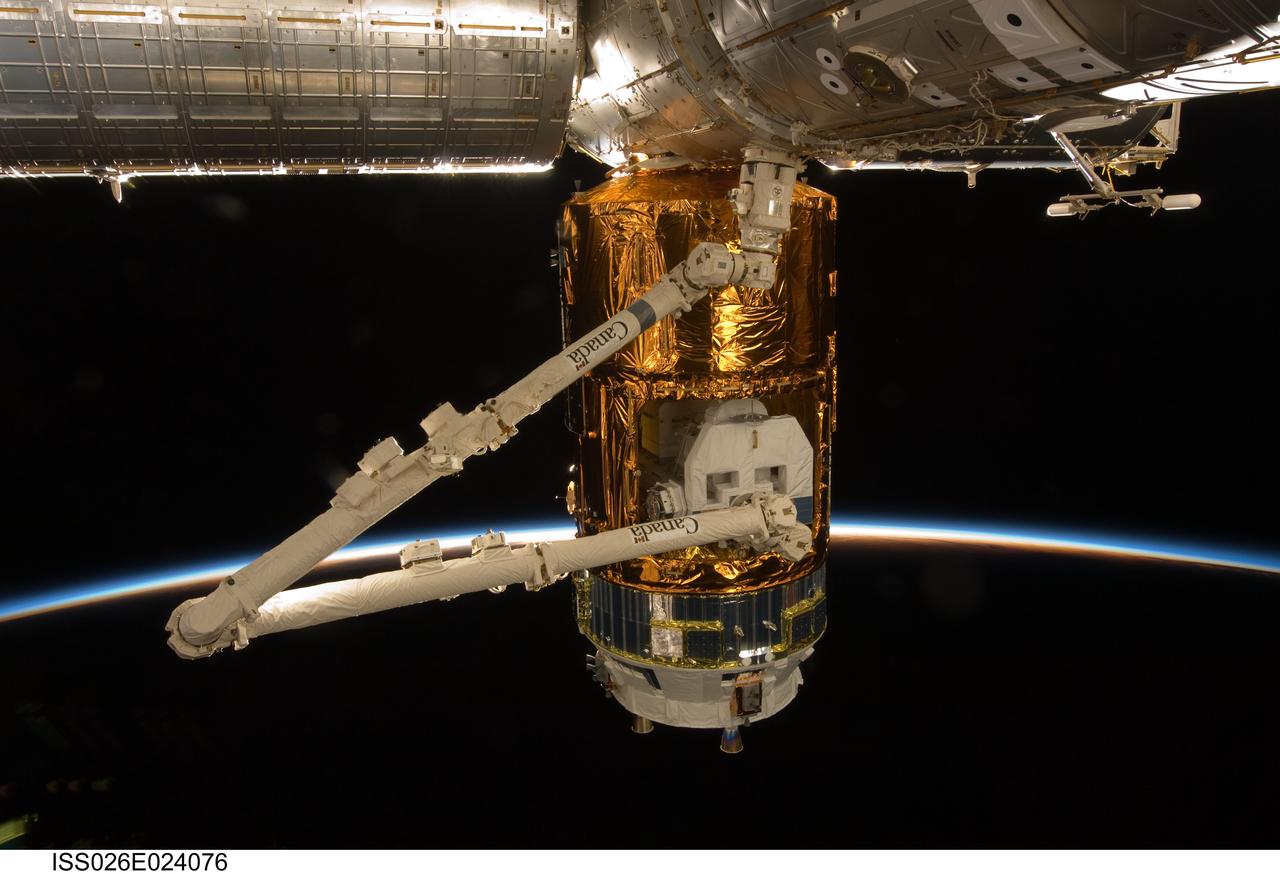
ISS026-E-024076 (1 Feb. 2011) --- The Japanese Kounotori2 H-II Transfer Vehicle (HTV2), docked to the Earth-facing port of the Harmony node and in the grapple of the Candarm2, is featured in this image photographed by an Expedition 26 crew member on the International Space Station. The thin line of Earth's atmosphere and the blackness of space provide the backdrop for the scene.
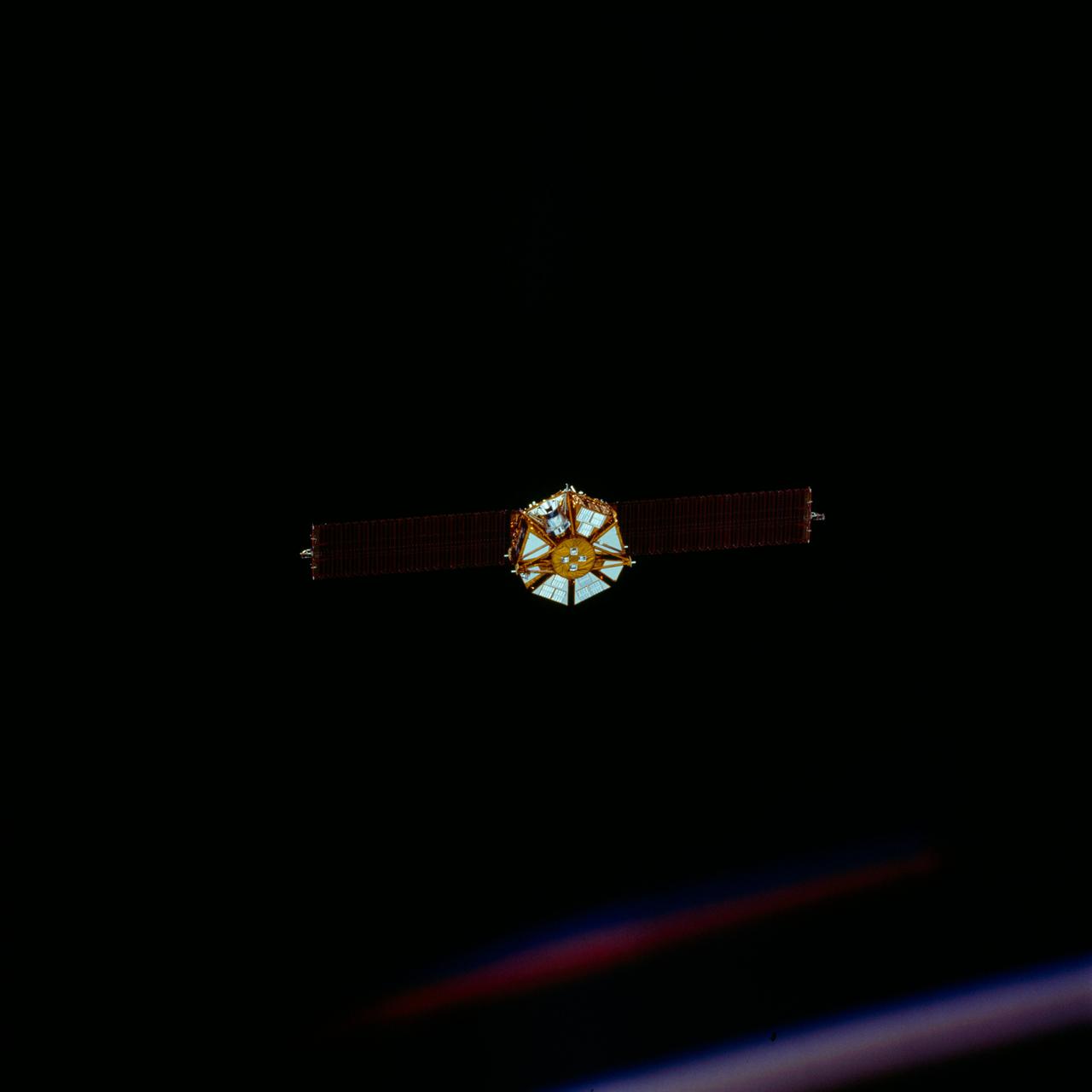
STS072-720-042 (13 Jan. 1996) --- The crew members captured this 70mm view of the Japanese Space Flyer Unit (SFU) just prior to the jettisoning of the solar panels. Later, they used the Remote Manipulator System (RMS) to latch onto the satellite and berth it in the Space Shuttle Endeavour’s aft cargo bay.
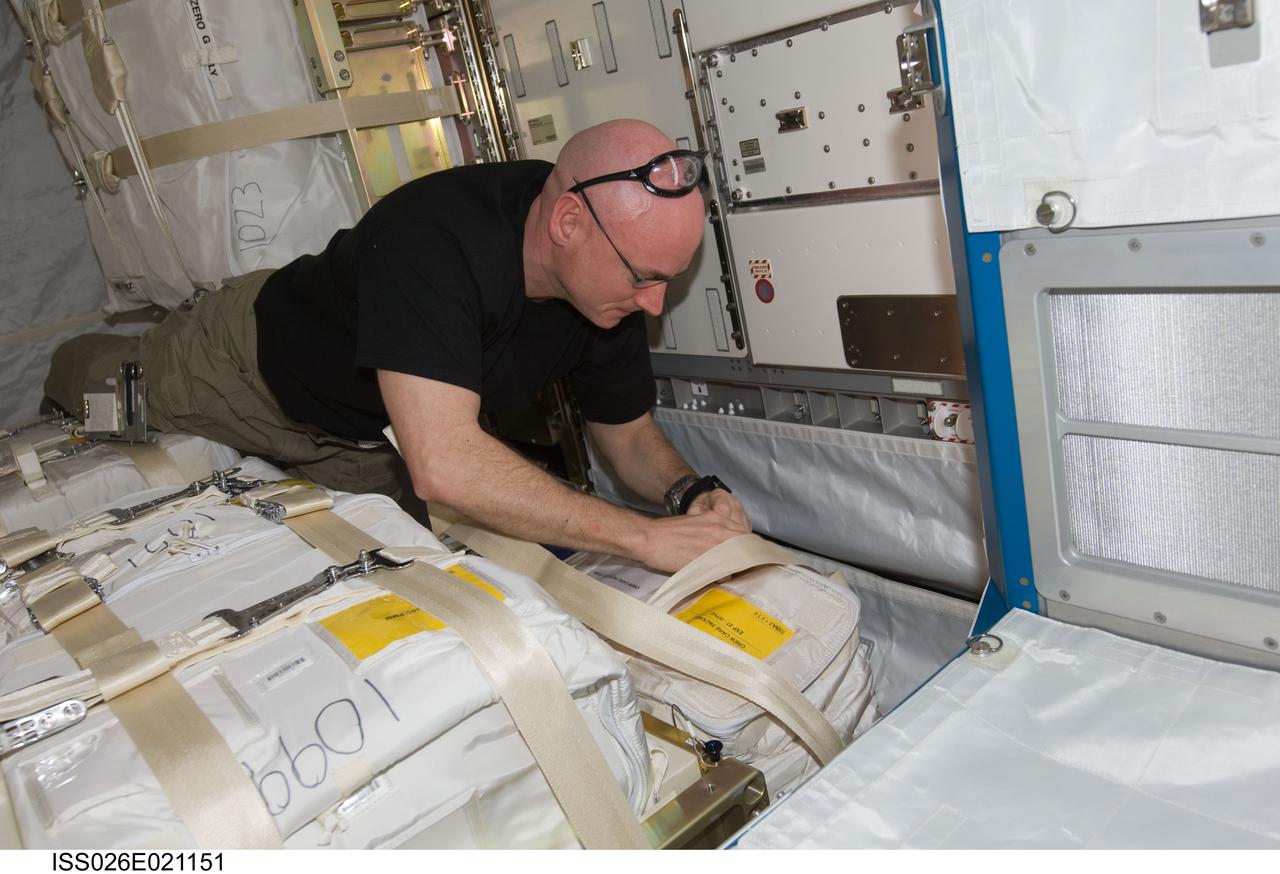
ISS026-E-021151 (27 Jan. 2011) --- NASA astronaut Scott Kelly, Expedition 26 commander, works with stowage containers in the Japanese Kounotori2 H-II Transfer Vehicle (HTV2) docked to the Harmony node of the International Space Station.
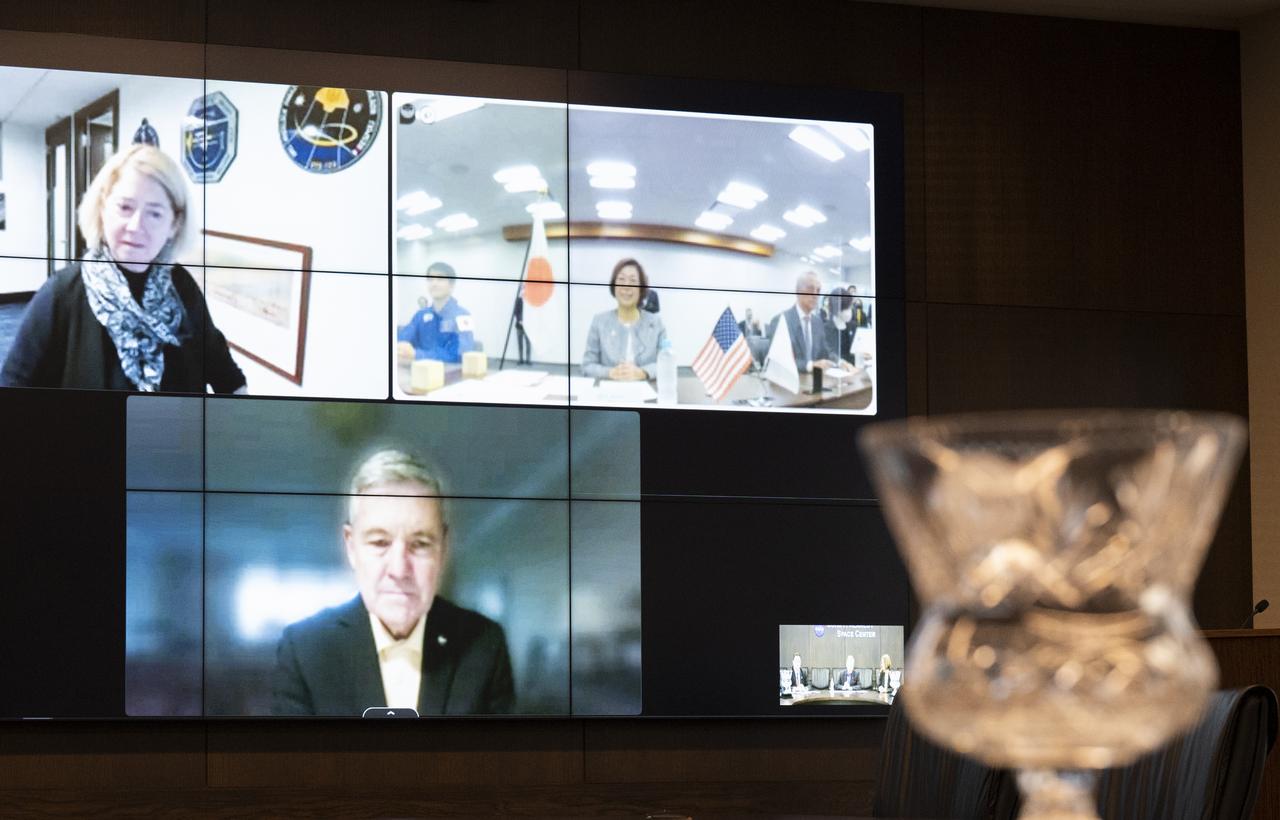
NASA Administrator Bill Nelson, joined by NASA Leadership, attends a virtual meeting hosted by Japanese Minister of Education, Culture, Sports, Science and Technology (MEXT) Keiko Nagaoka following the signing of a Gateway implementing agreement Thursday, Nov. 17, 2022, at NASA’s Kennedy Space Center in Florida. Photo Credit: (NASA/Keegan Barber)
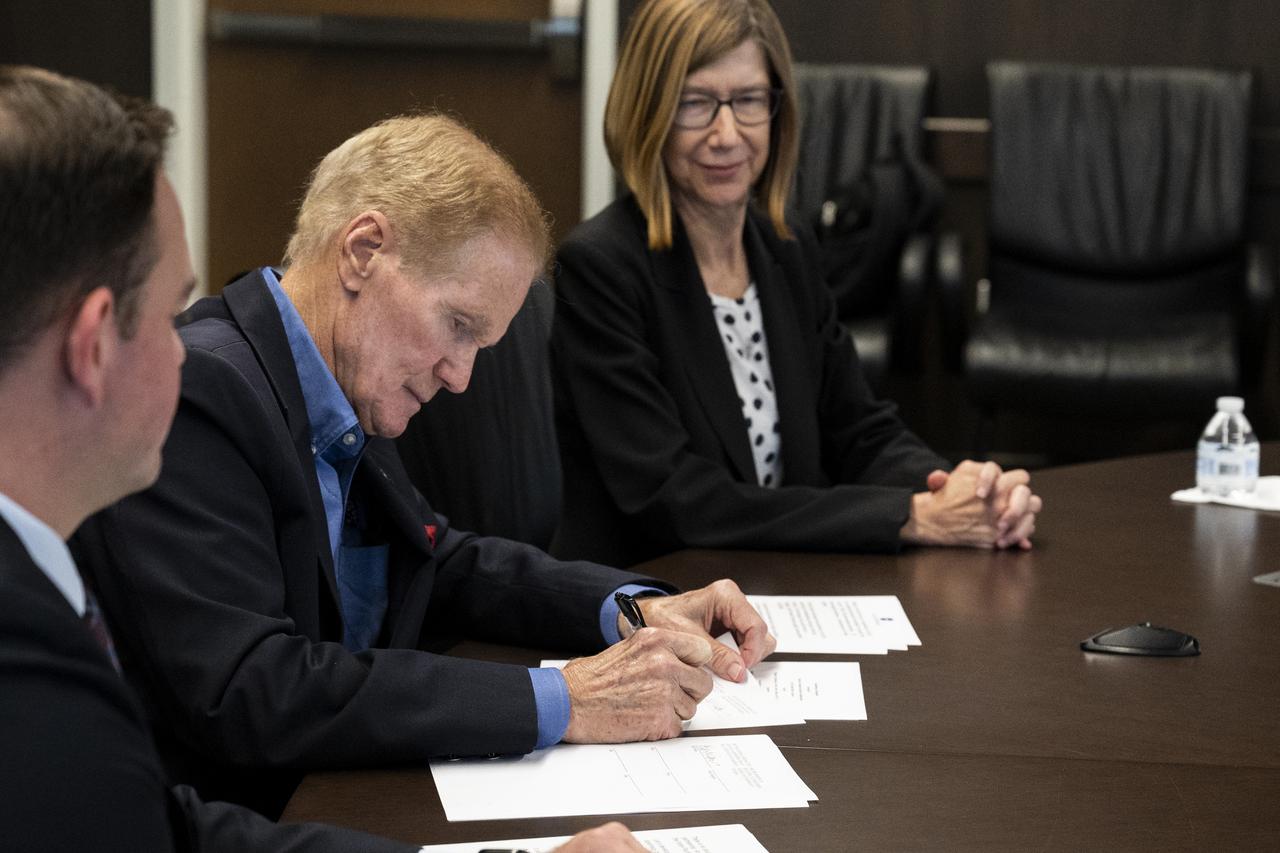
NASA Administrator Bill Nelson, joined by NASA Leadership, signs a Gateway implementing agreement during a virtual meeting hosted by Japanese Minister of Education, Culture, Sports, Science and Technology (MEXT) Keiko Nagaoka Thursday, Nov. 17, 2022, at NASA’s Kennedy Space Center in Florida. Photo Credit: (NASA/Keegan Barber)

ISS022-E-090362 (11 March 2010) --- The Japanese Robotic Manipulator System / Small Fine Arm (RMS/SFA), is featured in this image photographed by an Expedition 22 crew member on the International Space Station. The SFA is also known as ?Ko-bot?.
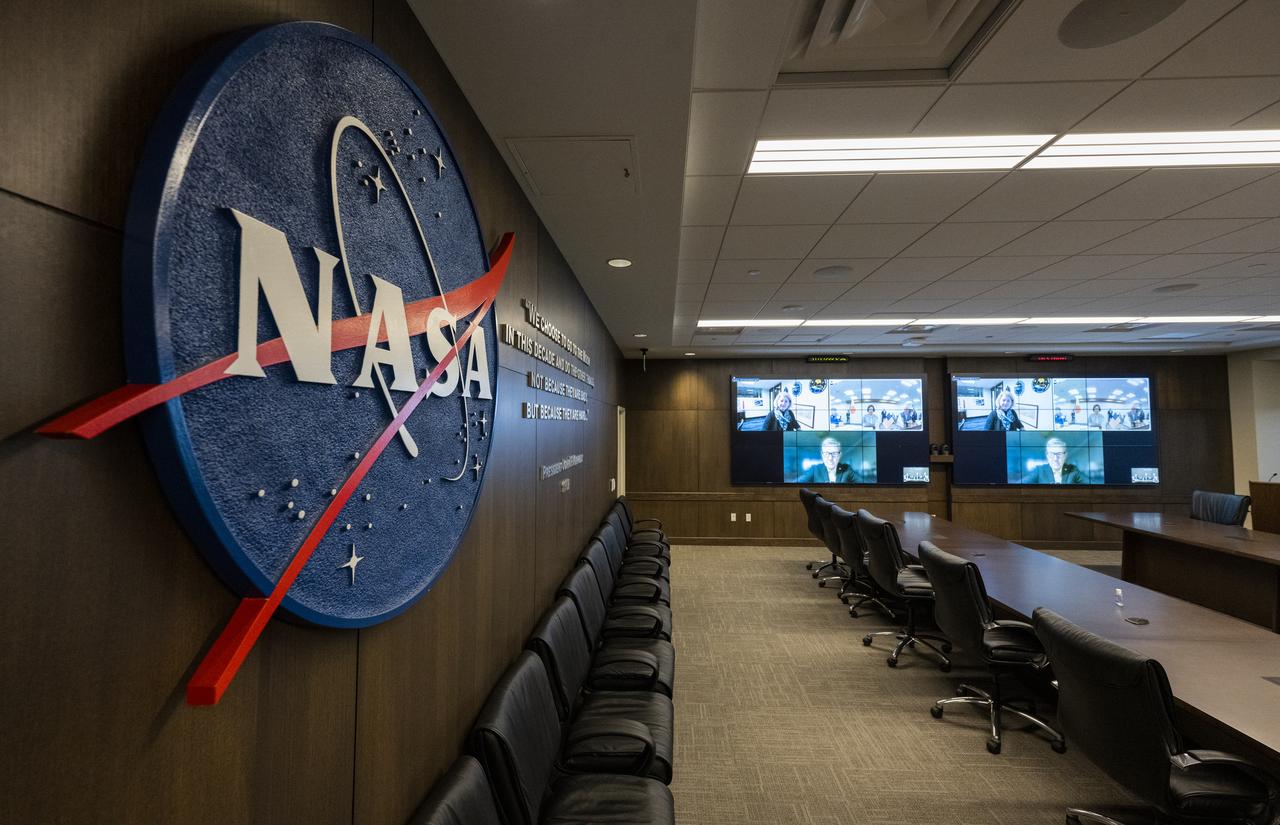
NASA Administrator Bill Nelson, joined by NASA Leadership, attends a virtual meeting hosted by Japanese Minister of Education, Culture, Sports, Science and Technology (MEXT) Keiko Nagaoka following the signing of a Gateway implementing agreement Thursday, Nov. 17, 2022, at NASA’s Kennedy Space Center in Florida. Photo Credit: (NASA/Keegan Barber)
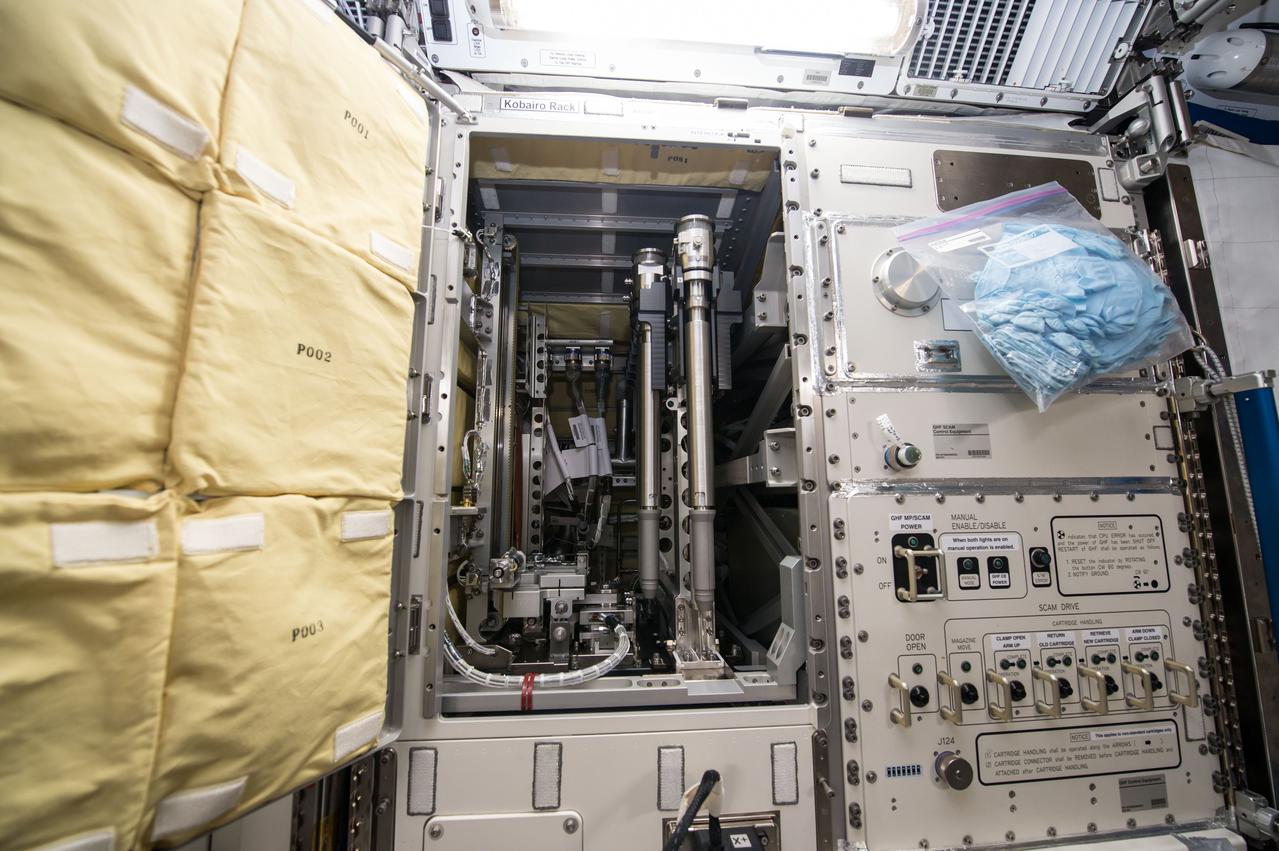
iss042e049014 (12/18/2014) --- A view of the interior of the Kobairo rack of the Japanese Experiment Module (JEM) aboard the International Space station (ISS).The KOBAIRO Rack houses the Gradient Heating Furnace (GHF), an experiment facility for investigating crystal growth of semiconductors. This furnace has the capability of directional solidification of samples.
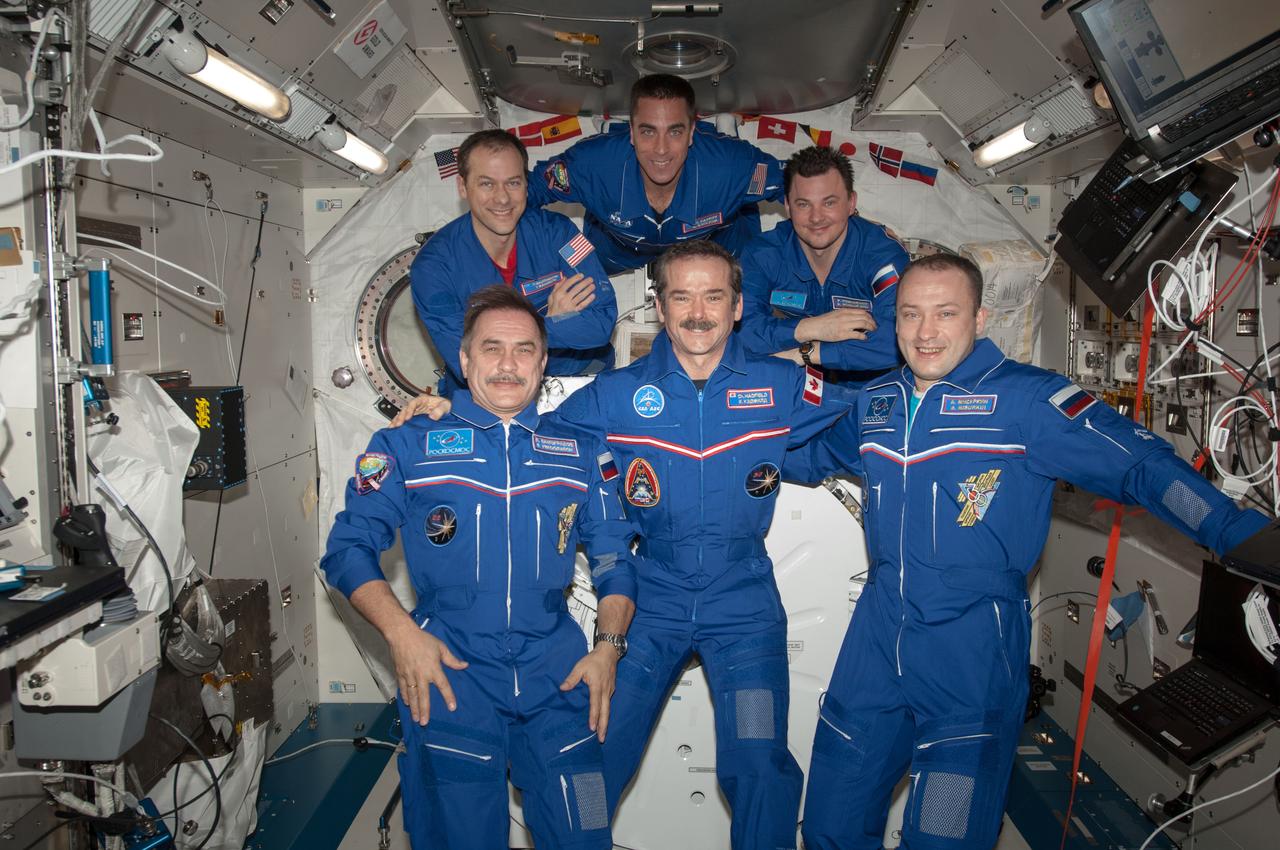
Expedition 35 crewmembers pose for an in-flight portrait in the Kibo Japanese Experiment Pressurized Module (JPM). From left, are (front row) flight engineer (FE) Pavel Vinogradov, commander Chris Hadfield, FE Alexander Misurkin, (back row) FE Tom Marshburn, FE Chris Cassidy, and FE Roman Romanenko. Vinogradov, Misurkin and Romanenko are Roscosmos cosmonauts; Hadfield is a Canadian Space Agency (CSA) astronaut.
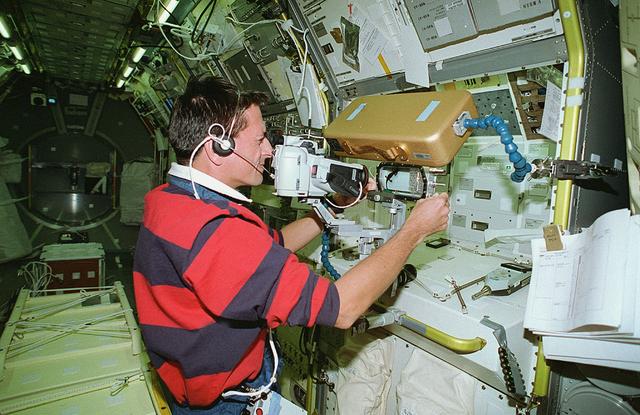
Astronaut Donald Thomas conducts the Fertilization and Embryonic Development of Japanese Newt in Space (AstroNewt) experiment at the Aquatic Animal Experiment Unit (AAEU) inside the International Microgravity Laboratory-2 (IML-2) science module. The AstroNewt experiment aims to know the effects of gravity on the early developmental process of fertilized eggs using a unique aquatic animal, the Japanese red-bellied newt. The newt egg is a large single cell at the begirning of development. The Japanese newt mates in spring and autumn. In late autumn, female newts enter hibernation with sperm in their body cavity and in spring lay eggs and fertilize them with the stored sperm. The experiment takes advantage of this feature of the newt. Groups of newts were sent to the Kennedy Space Center and kept in hibernation until the mission. The AAEU cassettes carried four newts aboard the Space Shuttle. Two newts in one cassette are treated by hormone injection on the ground to simulate egg laying. The other two newts are treated on orbit by the crew. The former group started maturization of eggs before launch. The effects of gravity on that early process were differentiated by comparison of the two groups. The IML-2 was the second in a series of Spacelab flights designed to conduct research by the international science community in a microgravity environment. Managed by the Marshall Space Flight Center, the IML-2 was launched on July 8, 1994 aboard the STS-65 Space Shuttle mission, Orbiter Columbia.
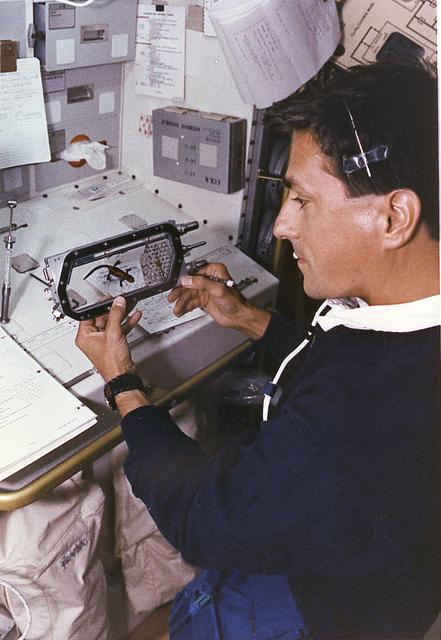
Astronaut Donald Thomas conducts the Fertilization and Embryonic Development of Japanese Newt in Space (AstroNewt) experiment at the Aquatic Animal Experiment Unit (AAEU) inside the International Microgravity Laboratory-2 (IML-2) science module. The AstroNewt experiment aims to know the effects of gravity on the early developmental process of fertilized eggs using a unique aquatic animal, the Japanese red-bellied newt. The newt egg is a large single cell at the begirning of development. The Japanese newt mates in spring and autumn. In late autumn, female newts enter hibernation with sperm in their body cavity and in spring lay eggs and fertilized them with the stored sperm. The experiment takes advantage of this feature of the newt. Groups of newts were sent to the Kennedy Space Center and kept in hibernation until the mission. The AAEU cassettes carried four newts aboard the Space Shuttle. Two newts in one cassette are treated by hormone injection on the ground to simulate egg laying. The other two newts are treated on orbit by the crew. The former group started maturization of eggs before launch. The effects of gravity on that early process were differentiated by comparison of the two groups. The IML-2 was the second in a series of Spacelab flights designed to conduct research by the international science community in a microgravity environment. Managed by the Marshall Space Flight Center, the IML-2 was launch on July 8, 1994 aboard the STS-65 Space Shuttle Orbiter Columbia mission.
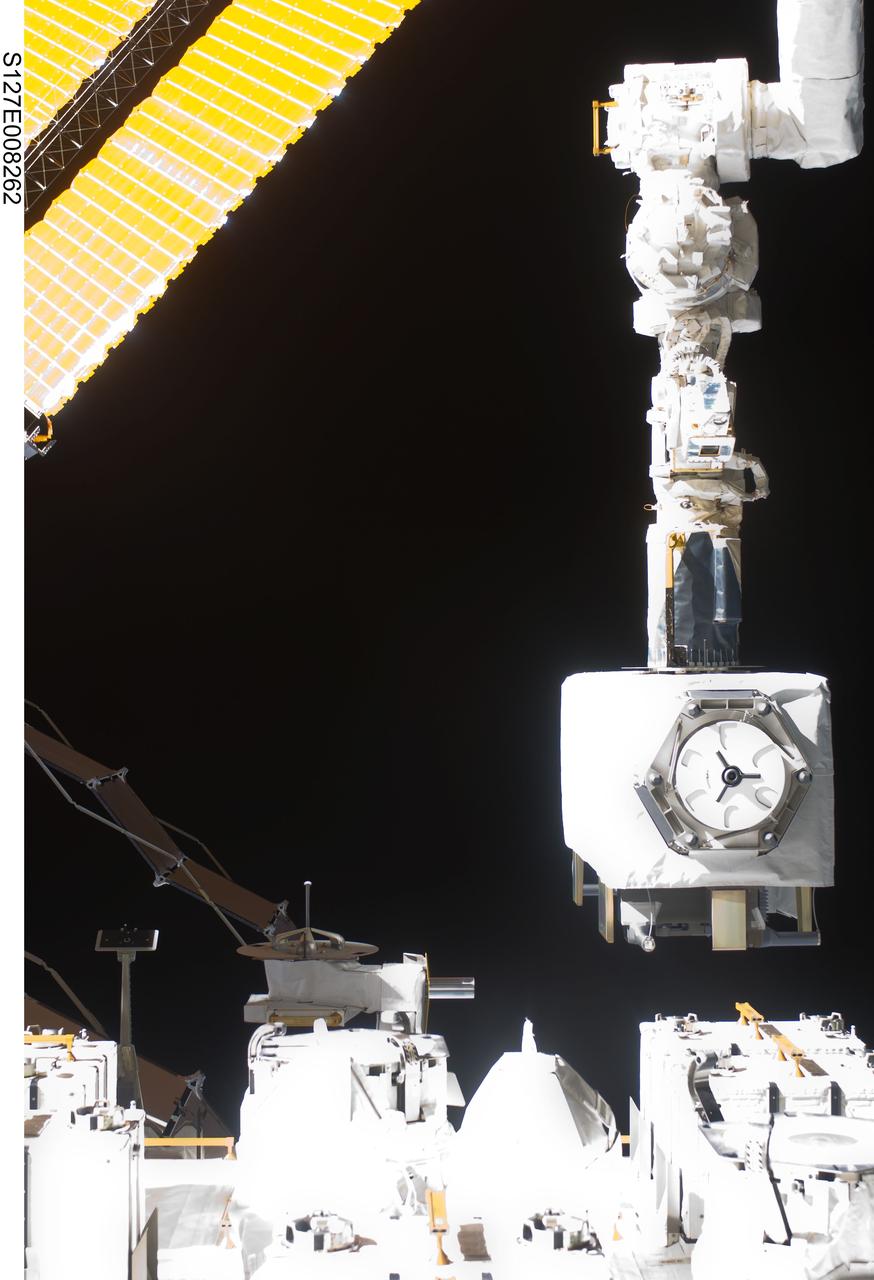
S127-E-008262 (23 July 2009) --- This is a July 23 (flight day 9) view of the robotic arm for the Japanese Experiment Module or Kibo as it assists in the deployment of the JAXA Space Environment Data Acquisition Attached Payload (SEDA-AP) onto the Japanese Exposed Facility Unit (EFU).
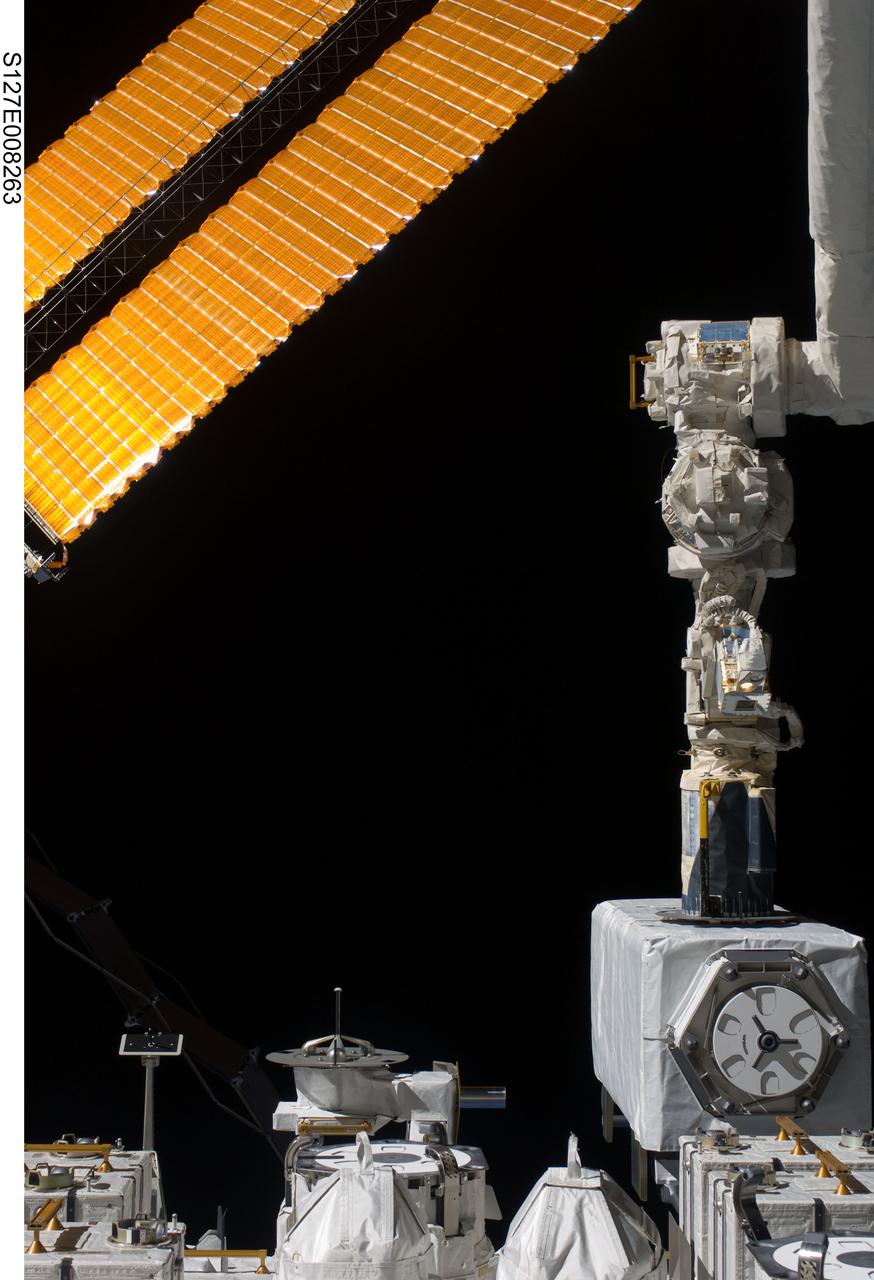
S127-E-008263 (23 July 2009) --- This is a July 23 (flight day 9) view of the robotic arm for the Japanese Experiment Module or Kibo as it assists in the deployment of the JAXA Space Environment Data Acquisition Attached Payload (SEDA-AP) onto the Japanese Exposed Facility Unit (EFU).
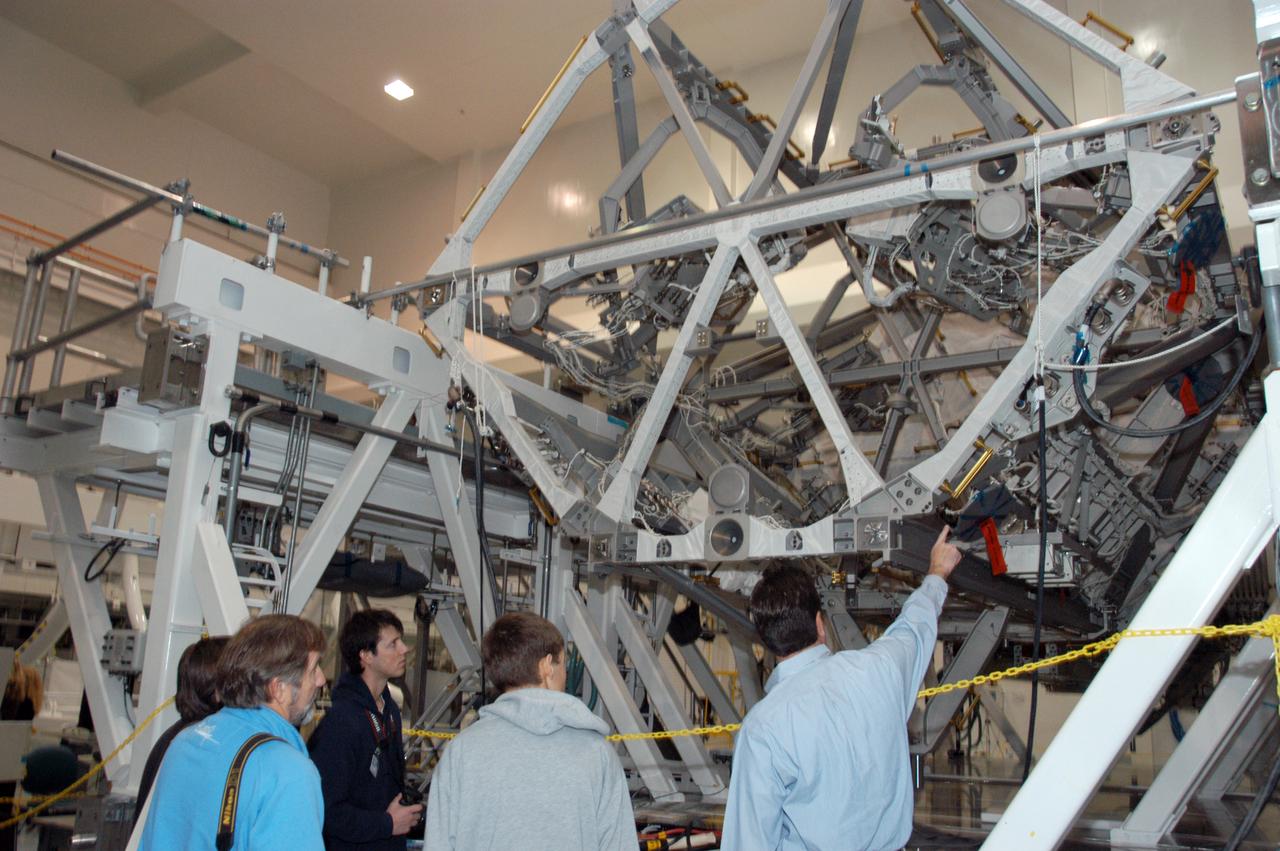
At a media showcase in the Space Station Processing Facility, reporters and photographers get a close look at the S3/S4 integrated truss segment. The starboard 3/4 truss segment will launch aboard Space Shuttle Atlantis on mission STS-117, targeted for March 15. The element will be added to the 11-segment integrated truss structure, the station's backbone. The integrated truss structure eventually will span more than 300 feet. The S3/S4 truss has two large solar arrays and will provide one-fourth of the total power generation for the completed station.
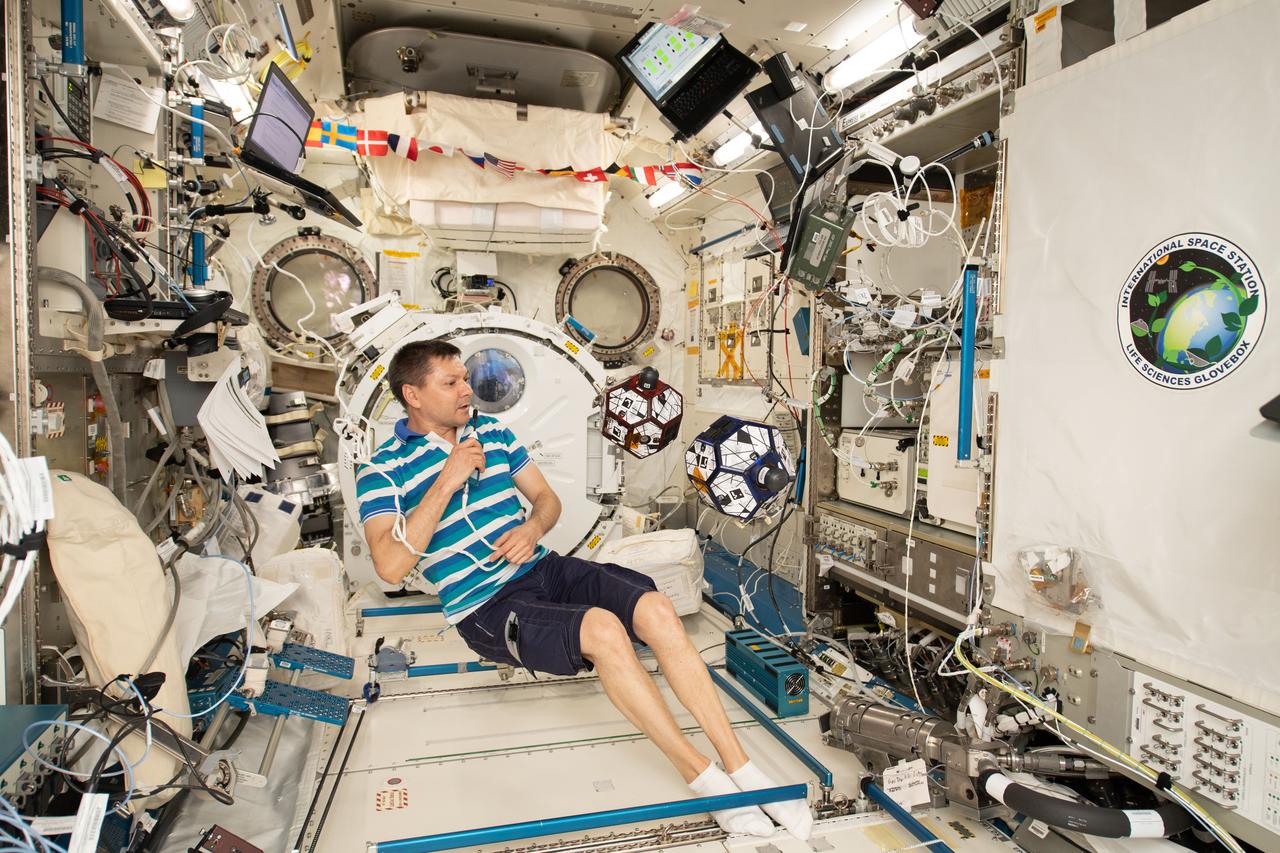
iss058e003128 (Jan. 14, 2019) --- Commander Oleg Kononenko works inside the Japanese Kibo lab module monitoring a pair of tiny internal free-flying satellites known as SPHERES (Synchronized Position Hold, Engage, Reorient, Experimental Satellites). High school students compete to design the best algorithms that control the basketball-sized satellites to mimic spacecraft maneuvers and formation flying.
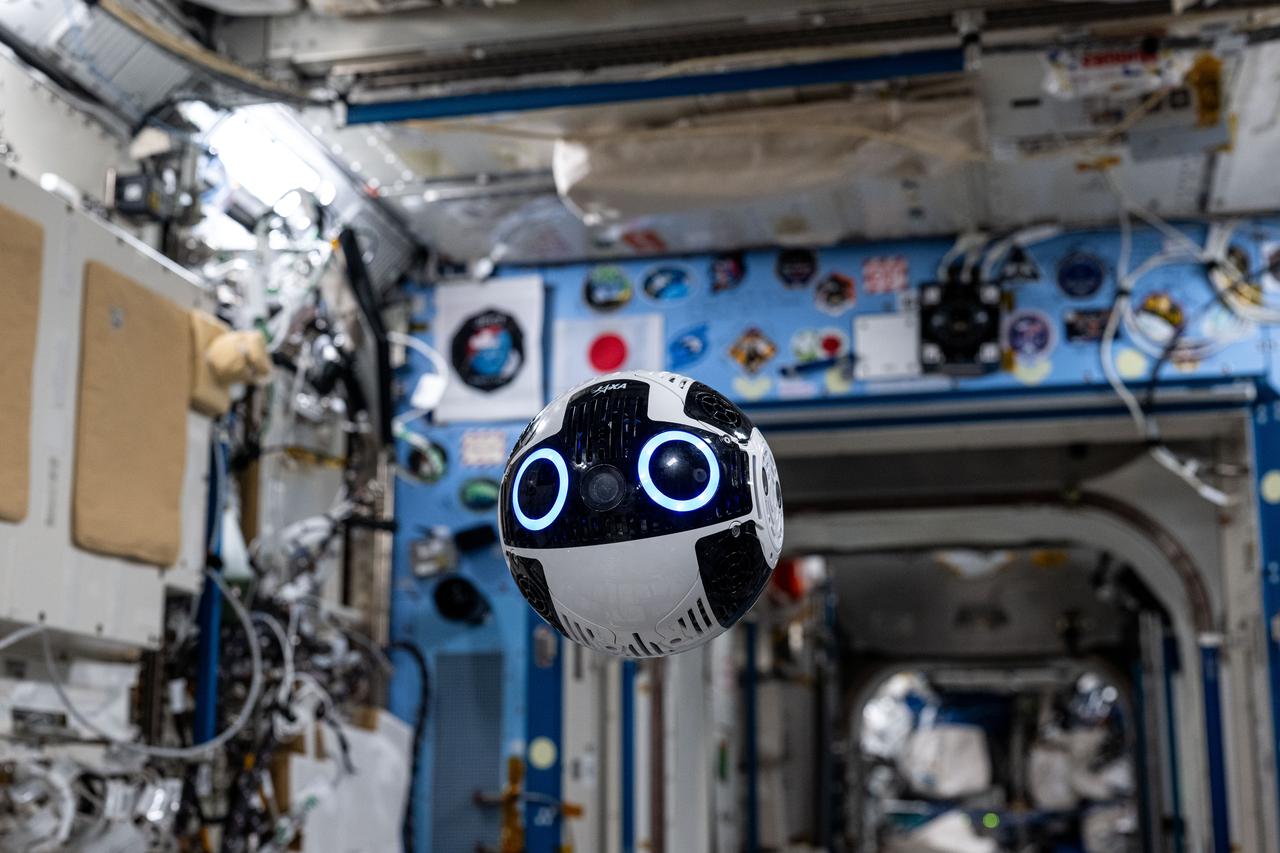
iss073e0030966 (May 14, 2025) --- The Japanese Experiment Module Internal Ball Camera 2 tests the automation of capturing photographs and videos of crew activities aboard the International Space Station's Kibo laboratory module. The spherical, free-flying robotic camera may enable more crew time for important duties such as microgravity research. Credit: JAXA/Takuya Onishi
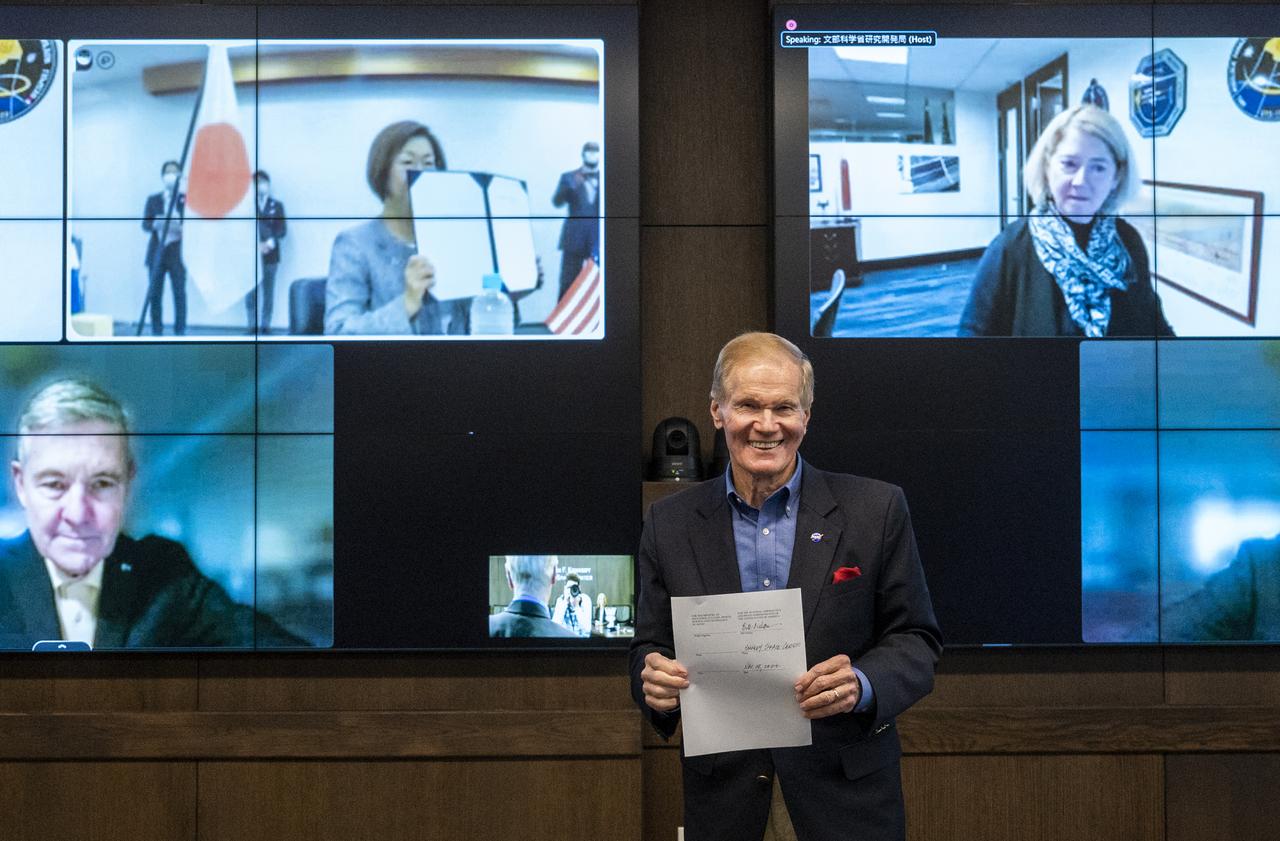
NASA Administrator Bill Nelson, joined by NASA Leadership, poses for photos following the signing of a Gateway implementing agreement during a virtual meeting hosted by Japanese Minister of Education, Culture, Sports, Science and Technology (MEXT) Keiko Nagaoka Thursday, Nov. 17, 2022, at NASA’s Kennedy Space Center in Florida. Photo Credit: (NASA/Keegan Barber)
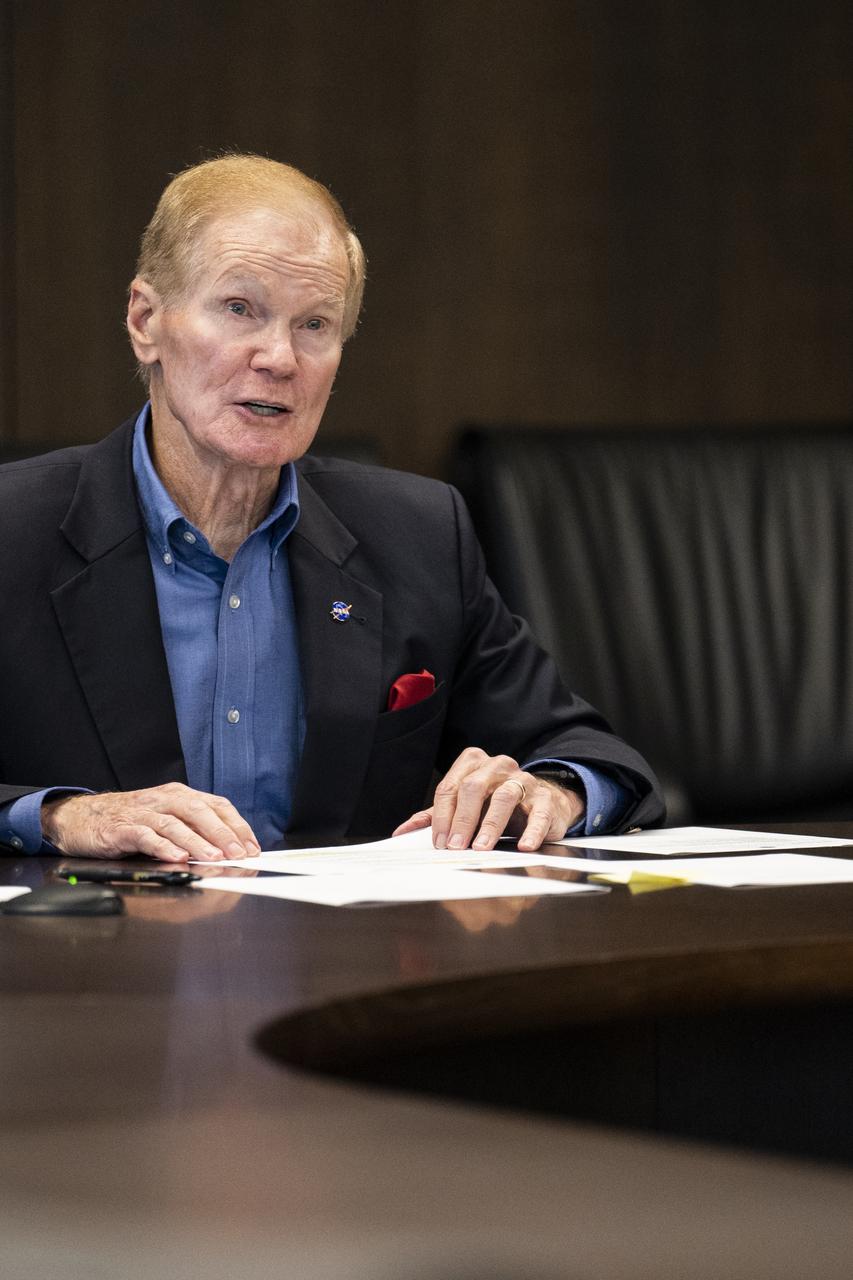
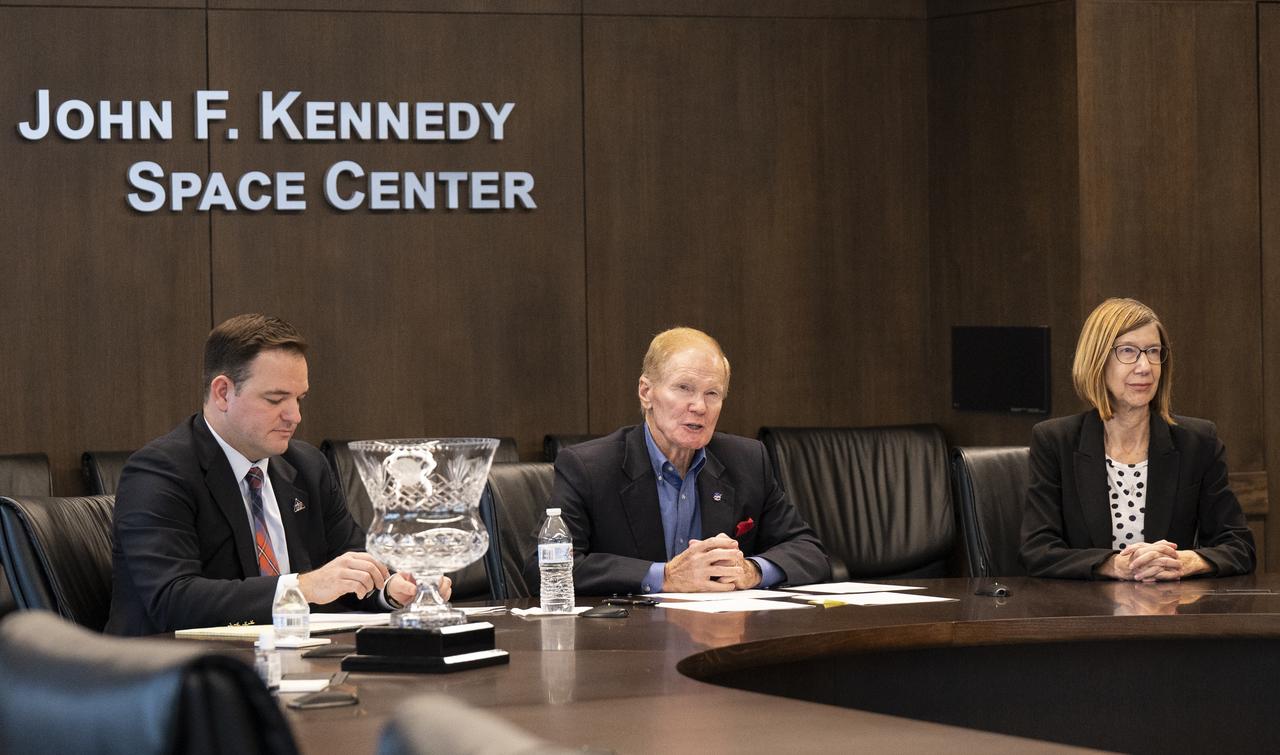
NASA Administrator Bill Nelson, joined by NASA Leadership, delivers opening remarks during a virtual meeting hosted by Japanese Minister of Education, Culture, Sports, Science and Technology (MEXT) Keiko Nagaoka prior to signing a Gateway implementing agreement Thursday, Nov. 17, 2022, at NASA’s Kennedy Space Center in Florida. Photo Credit: (NASA/Keegan Barber)
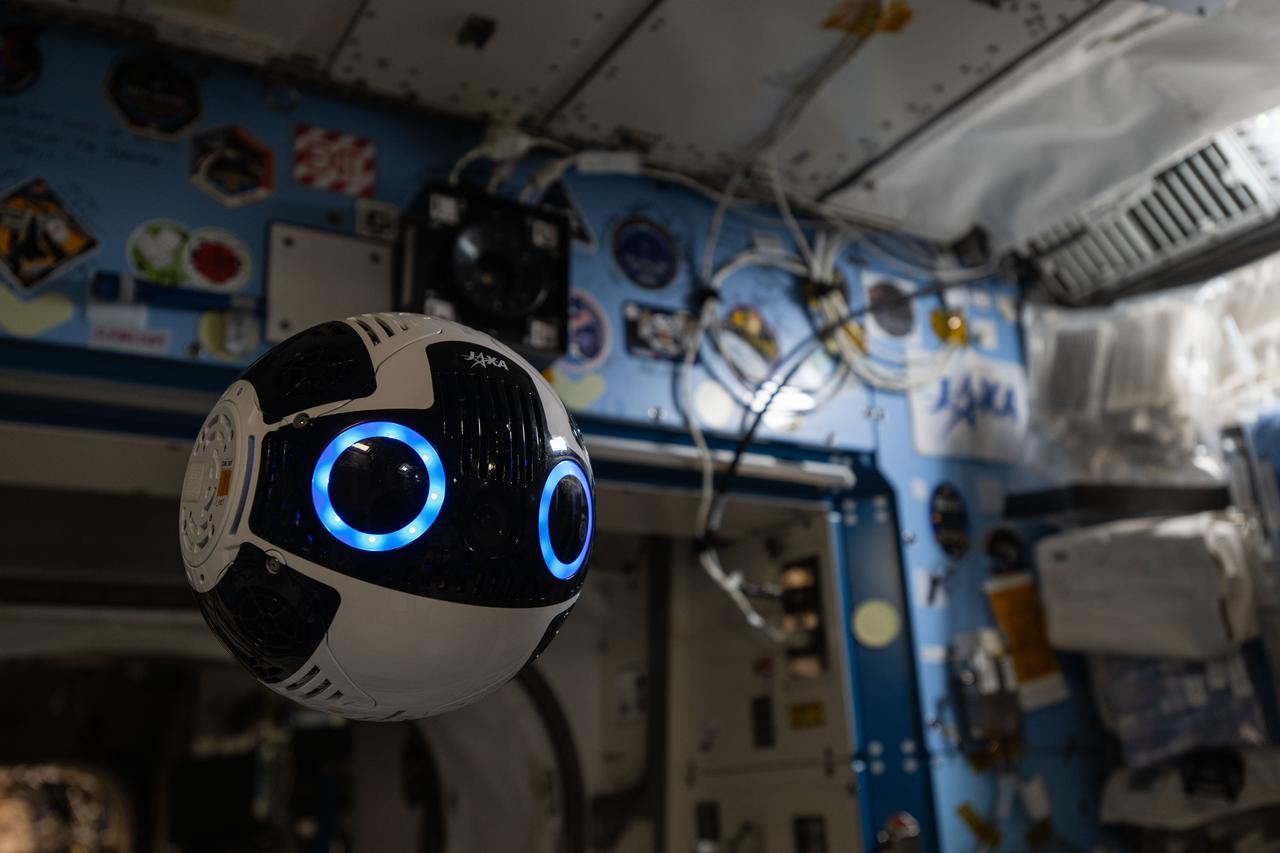
iss072e859330 (March 26, 2025) --- The Japanese Experiment Module Internal Ball Camera 2 tests the automation of capturing photographs and videos of crew activities aboard the International Space Station's Kibo laboratory module The spherical, free-flying robotic camera may enable more crew time for important duties such as microgravity research. Credit: JAXA/Takuya Onishi
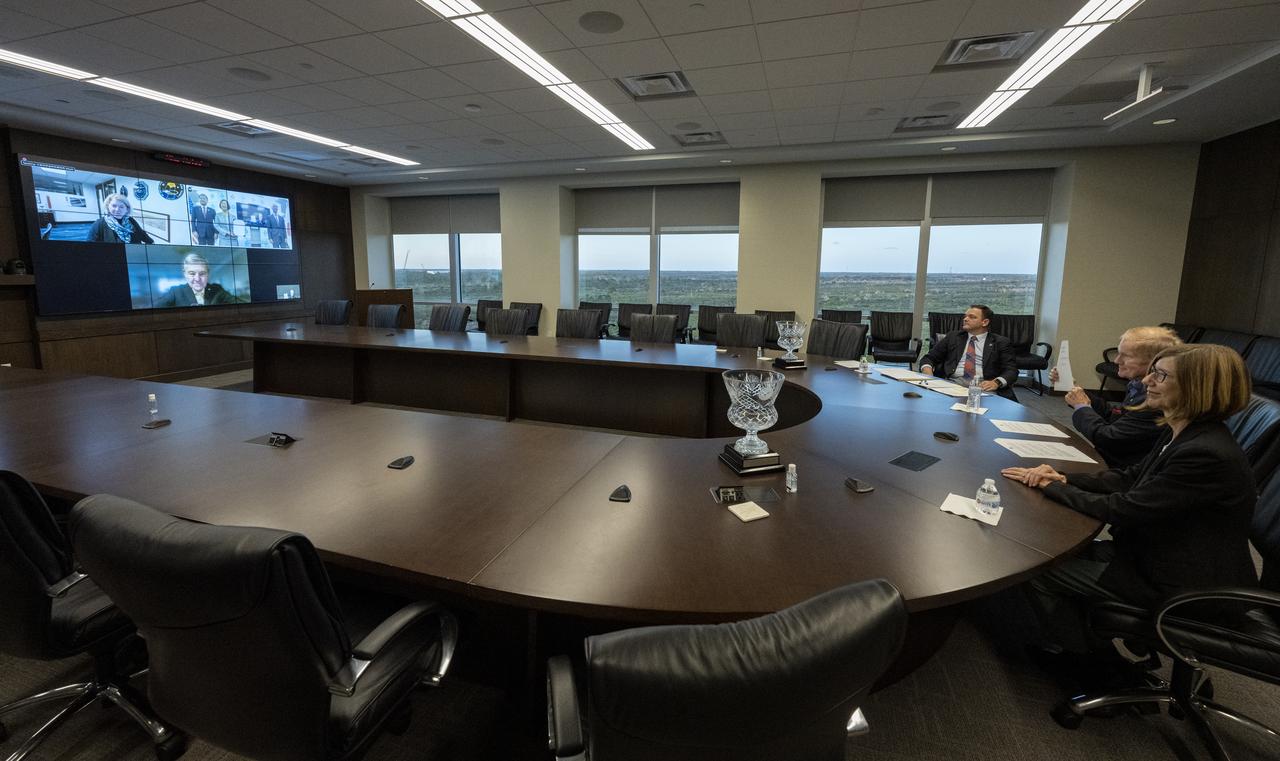
NASA Administrator Bill Nelson, joined by NASA Leadership, poses for photos following the signing of a Gateway implementing agreement during a virtual meeting hosted by Japanese Minister of Education, Culture, Sports, Science and Technology (MEXT) Keiko Nagaoka Thursday, Nov. 17, 2022, at NASA’s Kennedy Space Center in Florida. Photo Credit: (NASA/Keegan Barber)
NASA Administrator Bill Nelson, joined by NASA Leadership, delivers opening remarks during a virtual meeting hosted by Japanese Minister of Education, Culture, Sports, Science and Technology (MEXT) Keiko Nagaoka prior to signing a Gateway implementing agreement Thursday, Nov. 17, 2022, at NASA’s Kennedy Space Center in Florida. Photo Credit: (NASA/Keegan Barber)
NASA Administrator Bill Nelson, joined by NASA Leadership, delivers opening remarks during a virtual meeting hosted by Japanese Minister of Education, Culture, Sports, Science and Technology (MEXT) Keiko Nagaoka prior to signing a Gateway implementing agreement Thursday, Nov. 17, 2022, at NASA’s Kennedy Space Center in Florida. Photo Credit: (NASA/Keegan Barber)
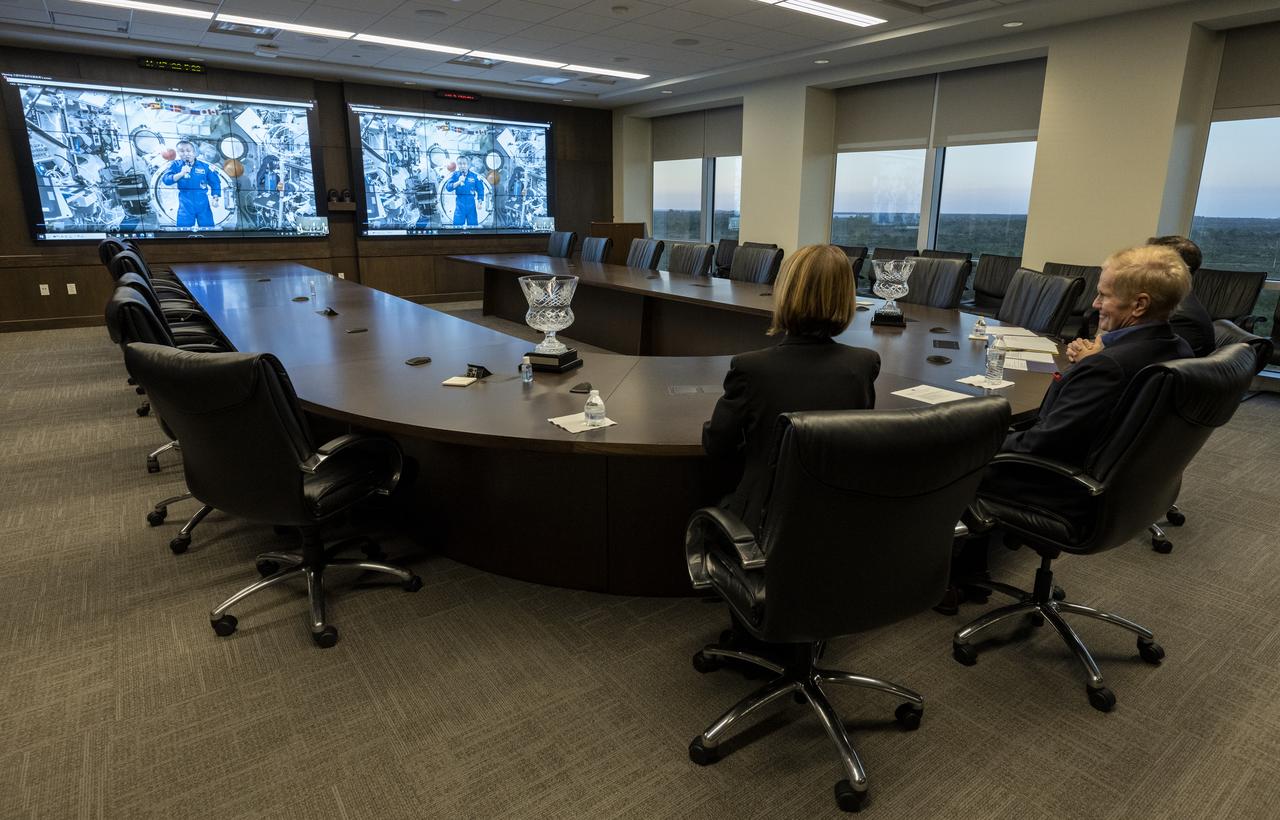
NASA Administrator Bill Nelson, joined by NASA Leadership, view a video message from Japan Aerospace Exploration Agency (JAXA) astronaut Akihiko Hoshide during a virtual meeting hosted by Japanese Minister of Education, Culture, Sports, Science and Technology (MEXT) Keiko Nagaoka following the signing of a Gateway implementing agreement Thursday, Nov. 17, 2022, at NASA’s Kennedy Space Center in Florida. Photo Credit: (NASA/Keegan Barber)
NASA Administrator Bill Nelson, joined by NASA Leadership, delivers opening remarks during a virtual meeting hosted by Japanese Minister of Education, Culture, Sports, Science and Technology (MEXT) Keiko Nagaoka prior to signing a Gateway implementing agreement Thursday, Nov. 17, 2022, at NASA’s Kennedy Space Center in Florida. Photo Credit: (NASA/Keegan Barber)
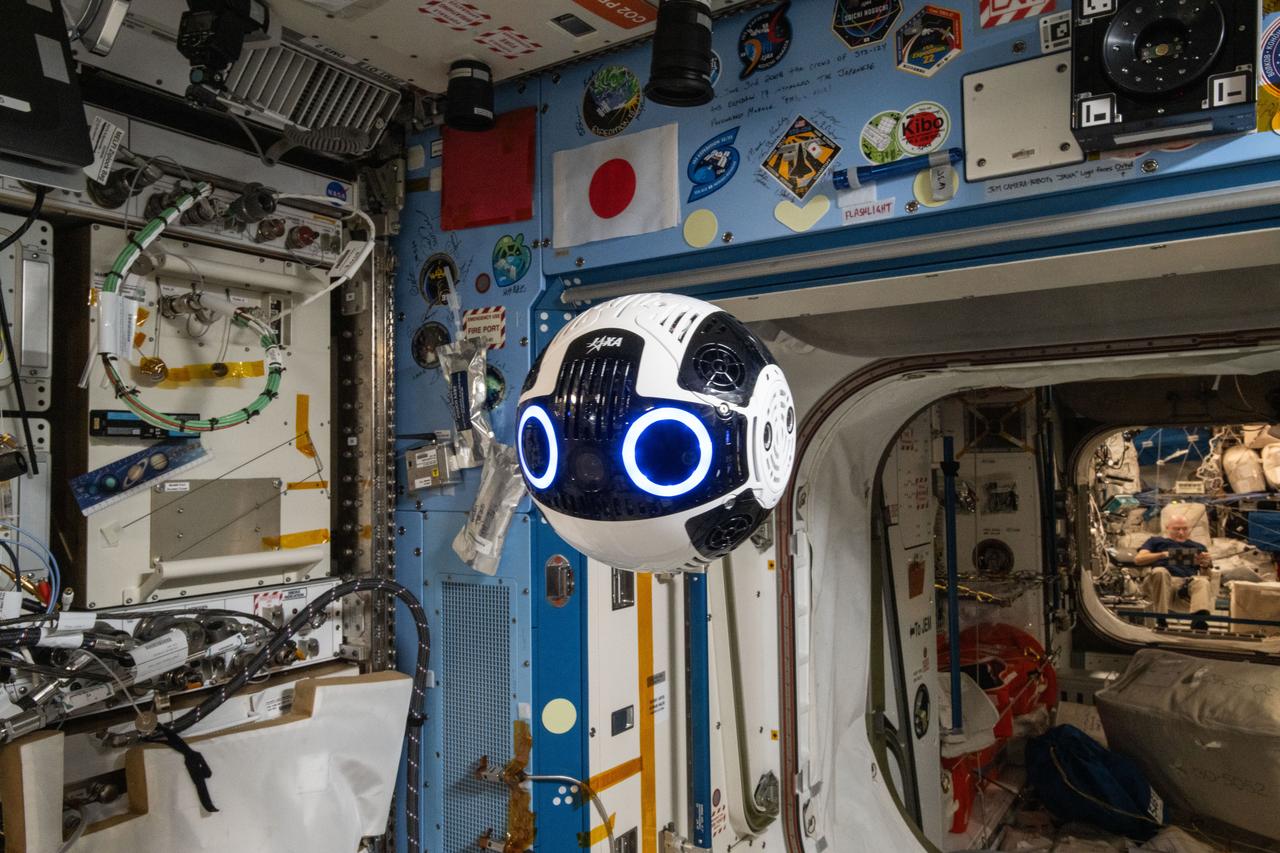
iss072e859334 (March 26, 2025) --- The Japanese Experiment Module Internal Ball Camera 2 tests the automation of capturing photographs and videos of crew activities aboard the International Space Station's Kibo laboratory module The spherical, free-flying robotic camera may enable more crew time for important duties such as microgravity research. Credit: JAXA/Takuya Onishi
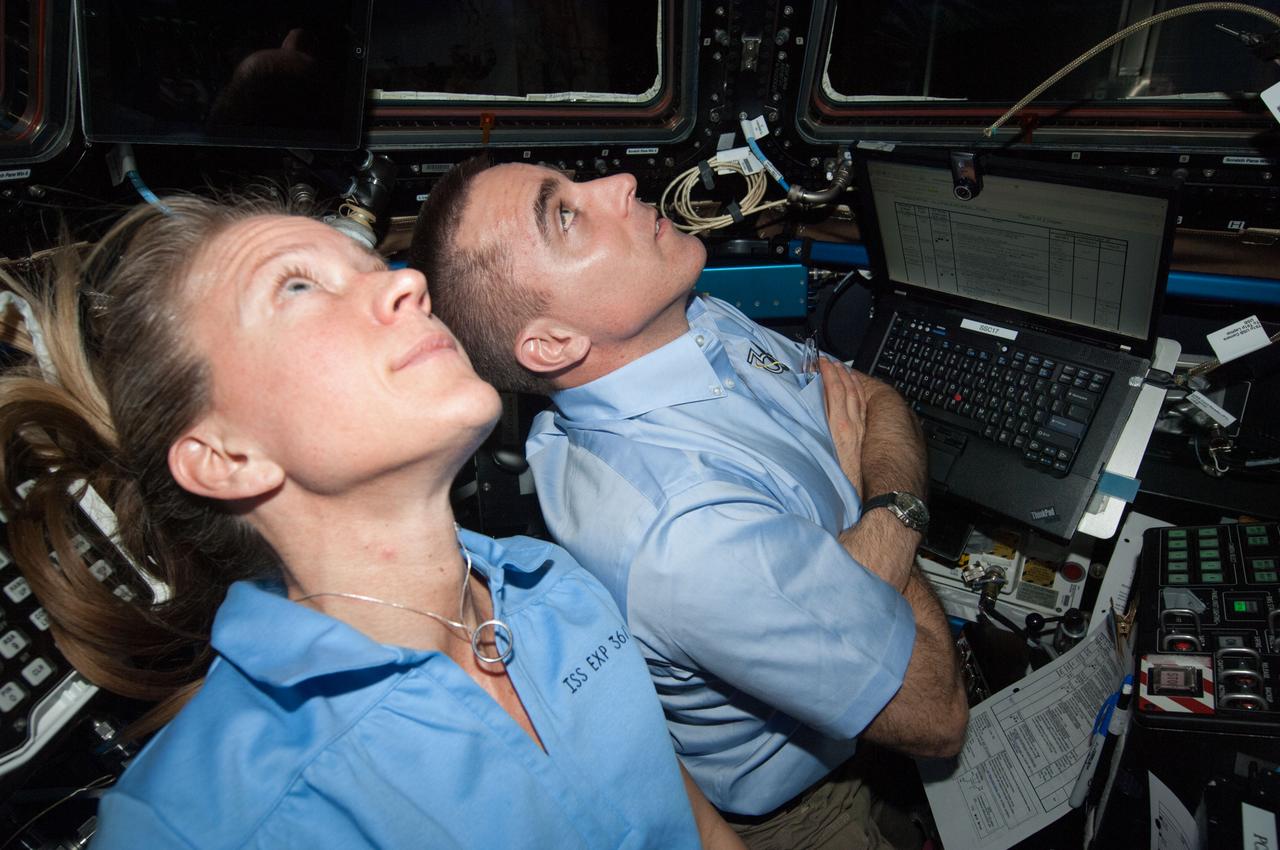
ISS036-E-029883 (9 Aug. 2013) --- NASA astronauts Karen Nyberg and Chris Cassidy, both Expedition 36 flight engineers, are pictured at the robotic workstation in the Cupola of the International Space Station during rendezvous operations with the approaching unpiloted Japanese "Kounotori" H2 Transfer Vehicle-4 (HTV-4).
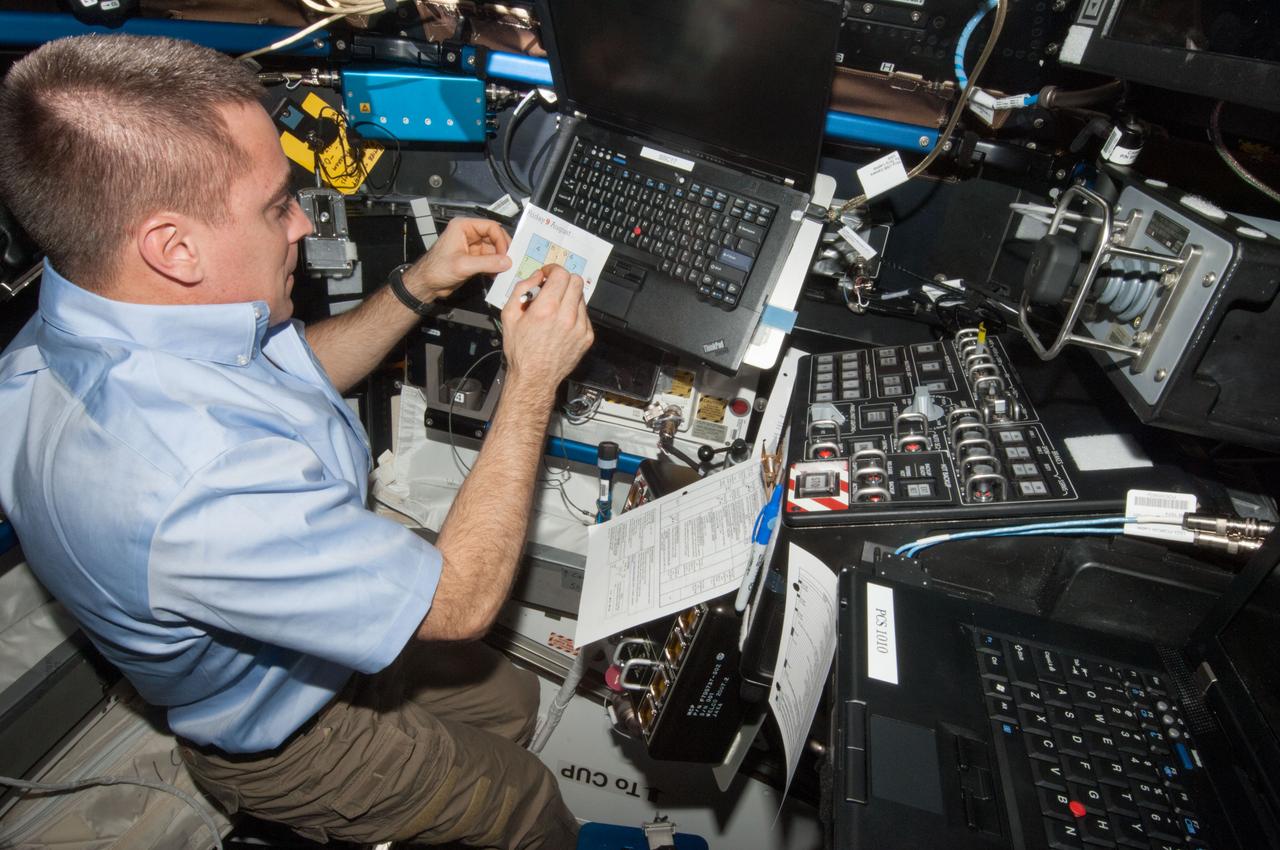
ISS036-E-029877 (9 Aug. 2013) --- NASA astronaut Chris Cassidy, Expedition 36 flight engineer, is pictured at the robotic workstation in the Cupola of the International Space Station during rendezvous operations with the approaching unpiloted Japanese "Kounotori" H2 Transfer Vehicle-4 (HTV-4).
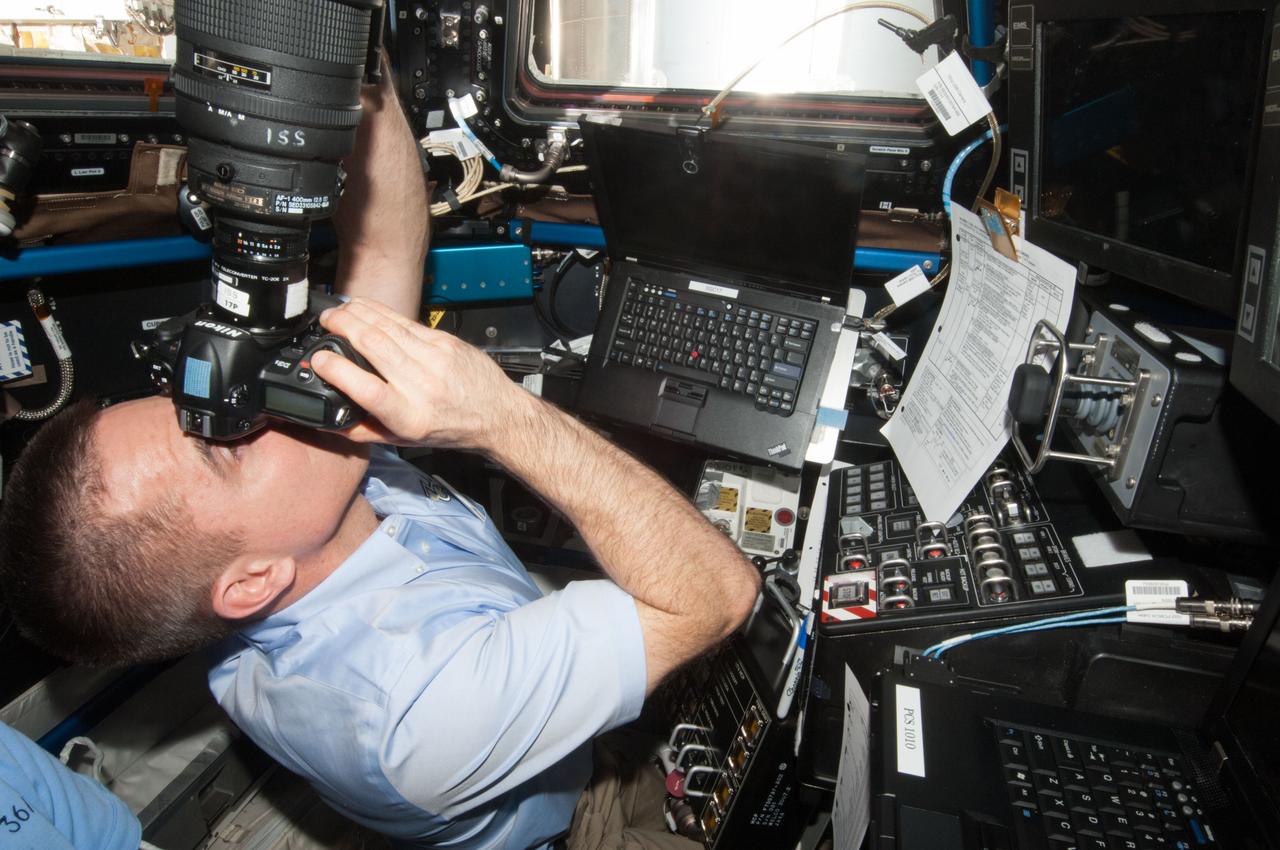
ISS036-E-029897 (9 Aug. 2013) --- At the windows in the International Space Station?s Cupola, NASA astronaut Chris Cassidy, Expedition 36 flight engineer, uses a digital still camera to photograph the approaching unpiloted Japanese "Kounotori" H2 Transfer Vehicle-4 (HTV-4).
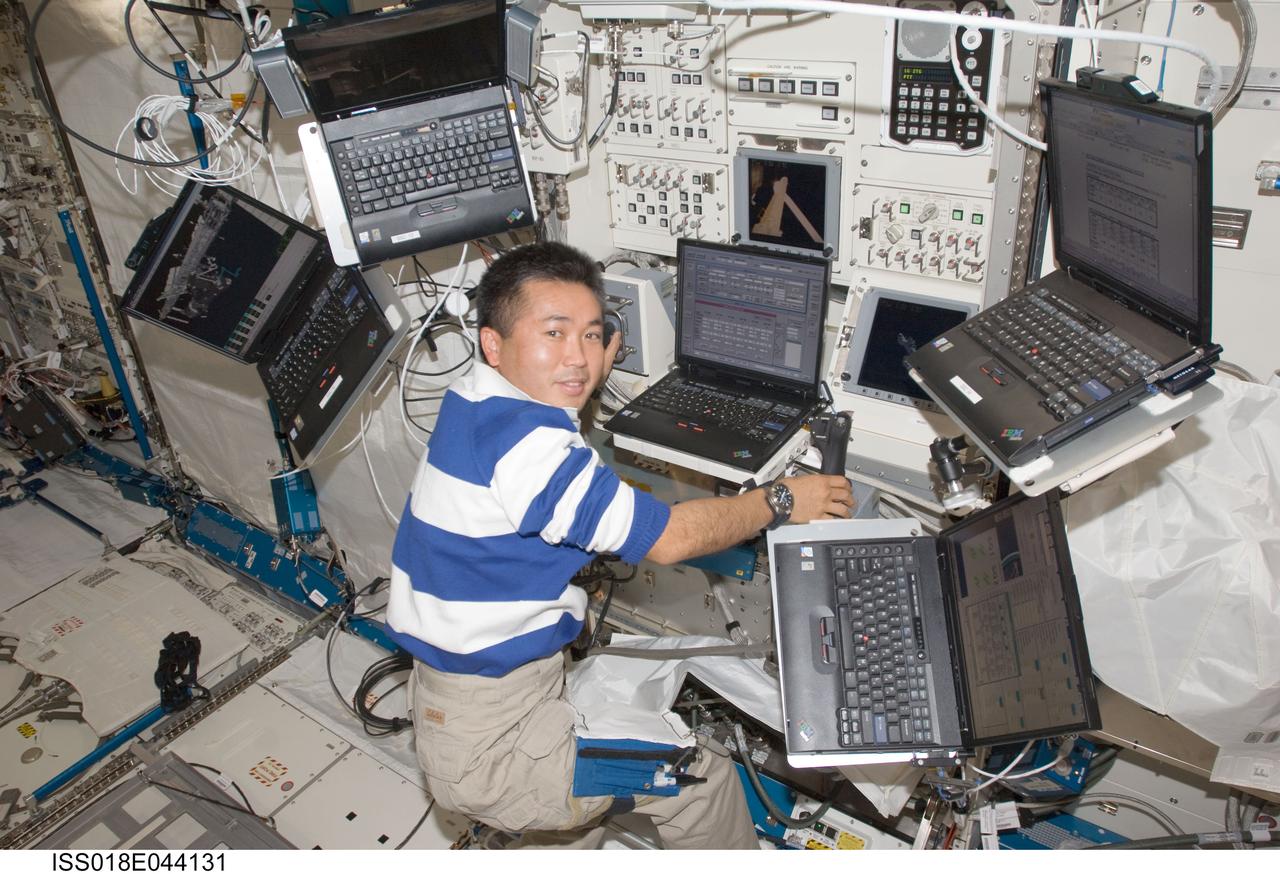
ISS018-E-044131 (31 March 2009) --- Japan Aerospace Exploration Agency (JAXA) astronaut Koichi Wakata, Expedition 18/19 flight engineer, uses a computer at the Japanese Remote Manipulator System (JEM-RMS) work station in the Kibo laboratory of the International Space Station.
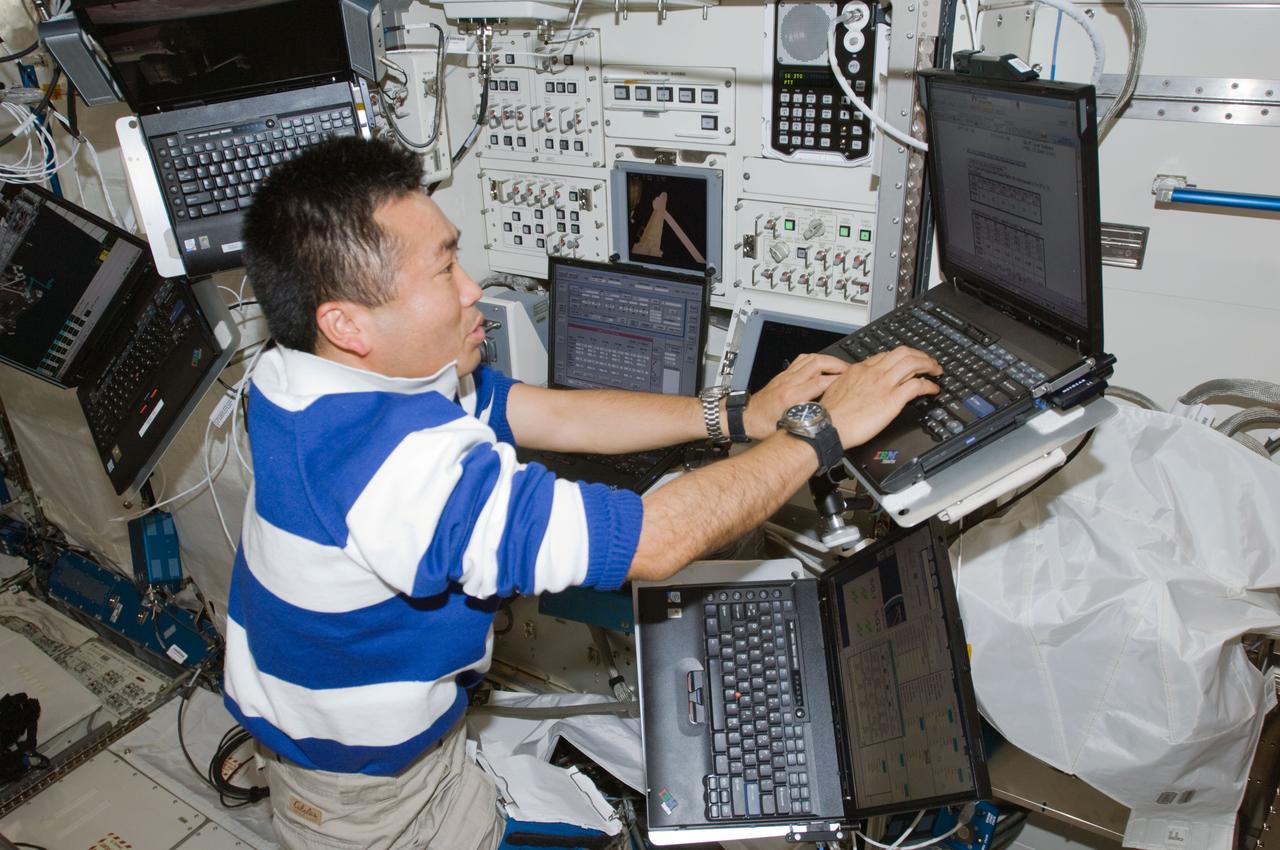
ISS018-E-044134 (31 March 2009) --- Japan Aerospace Exploration Agency (JAXA) astronaut Koichi Wakata, Expedition 18/19 flight engineer, uses a computer at the Japanese Remote Manipulator System (JEM-RMS) work station in the Kibo laboratory of the International Space Station.
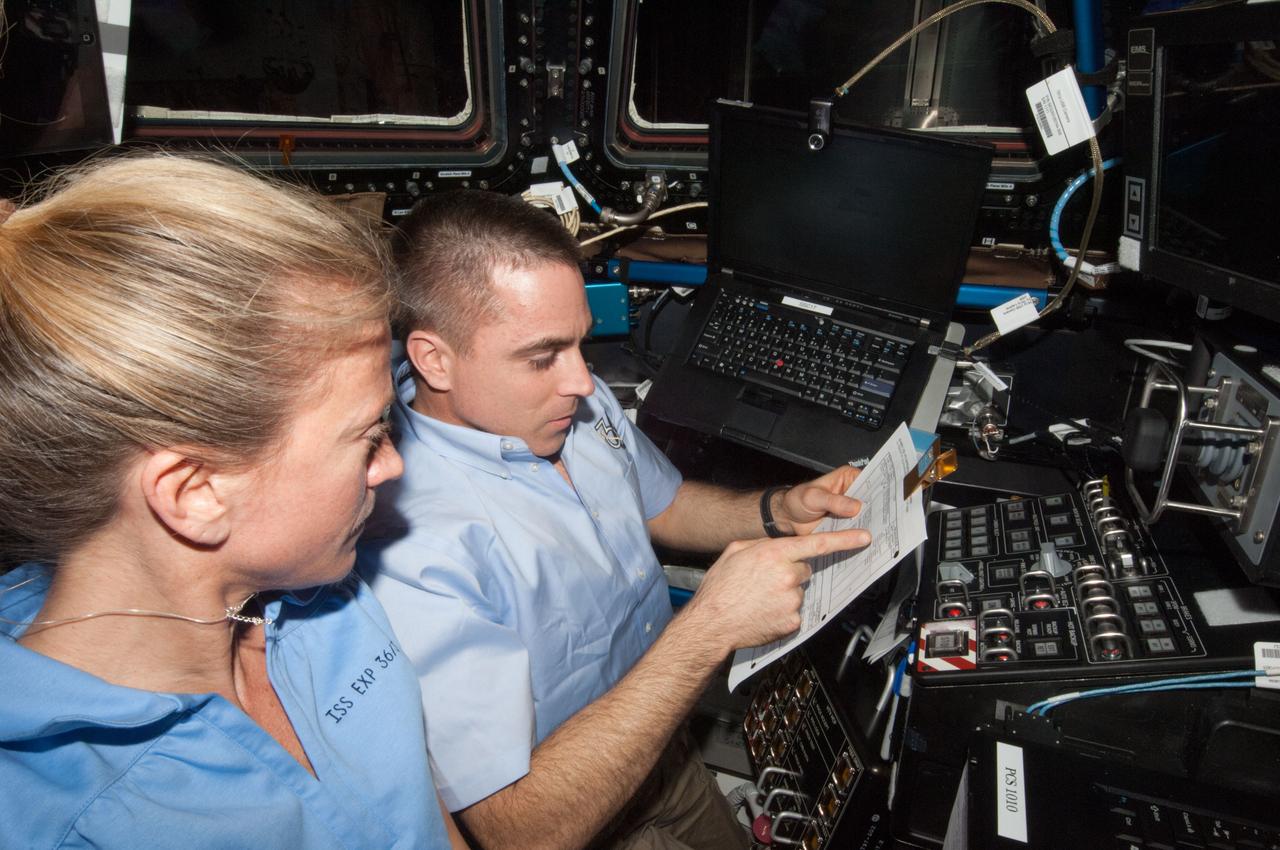
ISS036-E-029902 (9 Aug. 2013) --- NASA astronauts Karen Nyberg and Chris Cassidy, both Expedition 36 flight engineers, are pictured at the robotic workstation in the Cupola of the International Space Station during rendezvous operations with the approaching unpiloted Japanese "Kounotori" H2 Transfer Vehicle-4 (HTV-4).
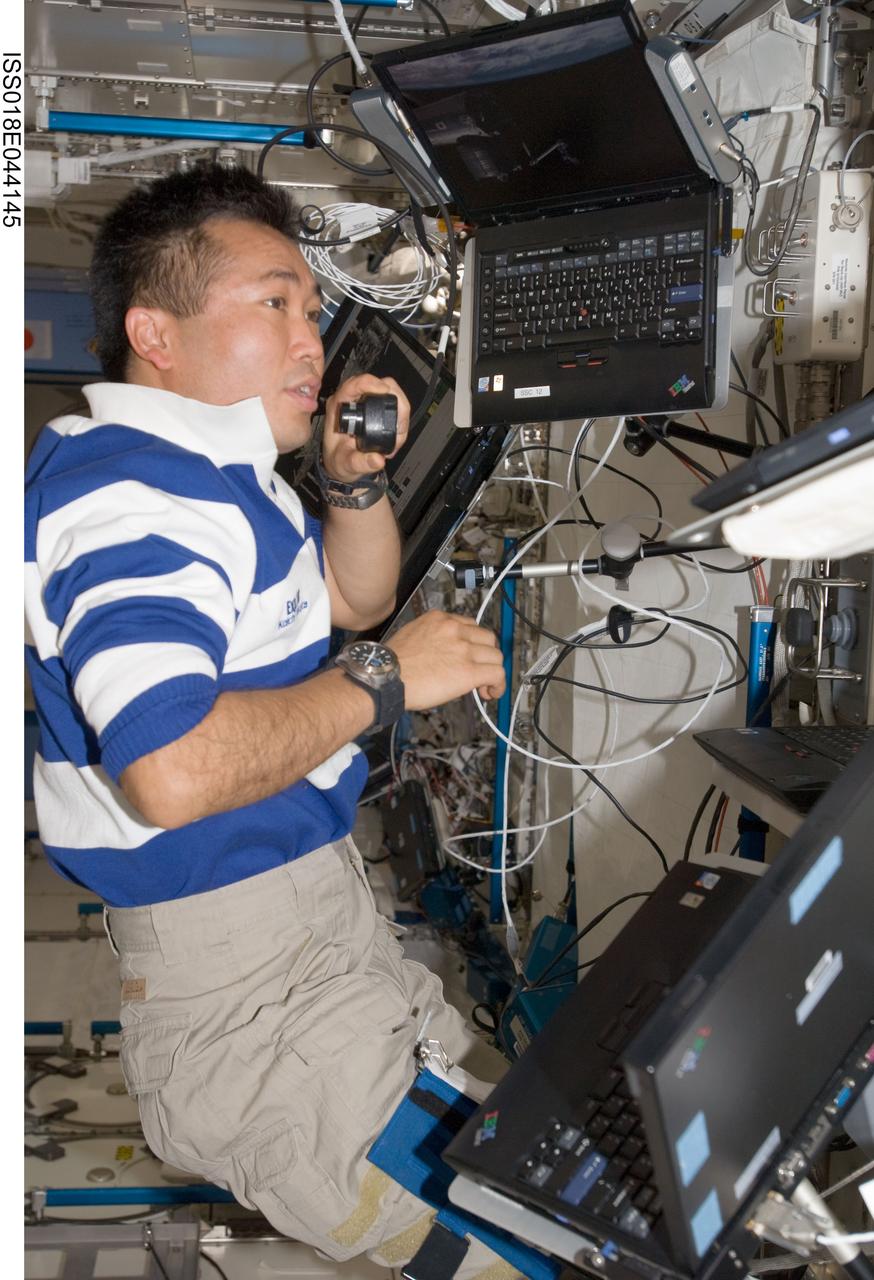
ISS018-E-044145 (31 March 2009) --- Japan Aerospace Exploration Agency (JAXA) astronaut Koichi Wakata, Expedition 18/19 flight engineer, uses a communication system at the Japanese Remote Manipulator System (JEM-RMS) work station in the Kibo laboratory of the International Space Station.
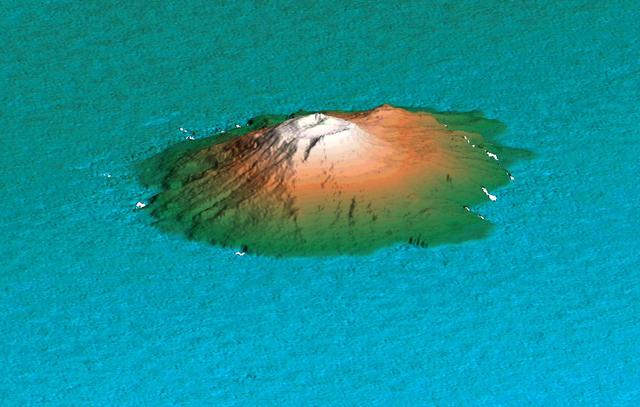
This 3D perspective view shows the Japanese island called Miyake-Jima viewed from the northeast. This island - about 180 kilometers south of Tokyo - is part of the Izu chain of volcanic islands that runs south from the main Japanese island of Honshu.
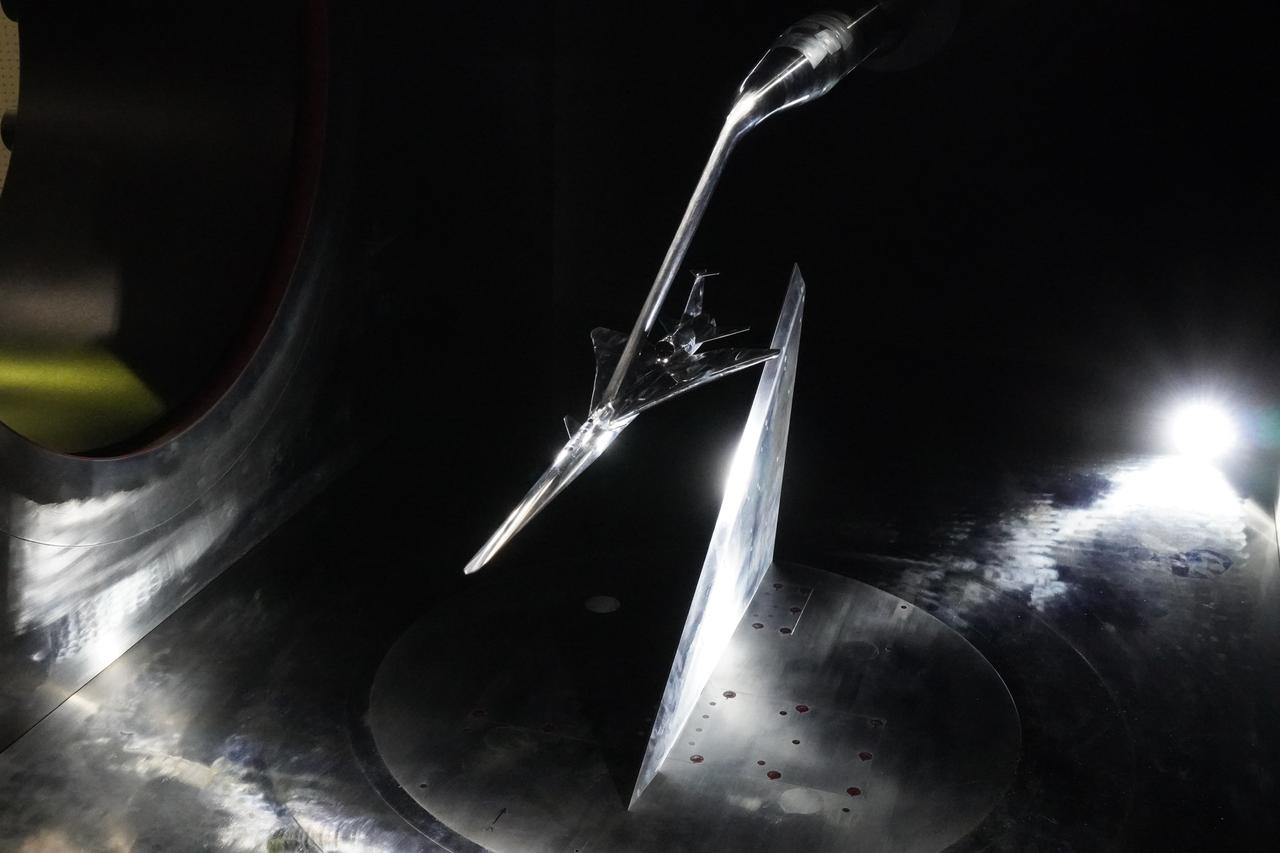
Here you see the X-59 scaled model inside the JAXA supersonic wind tunnel during critical tests related to sound predictions.
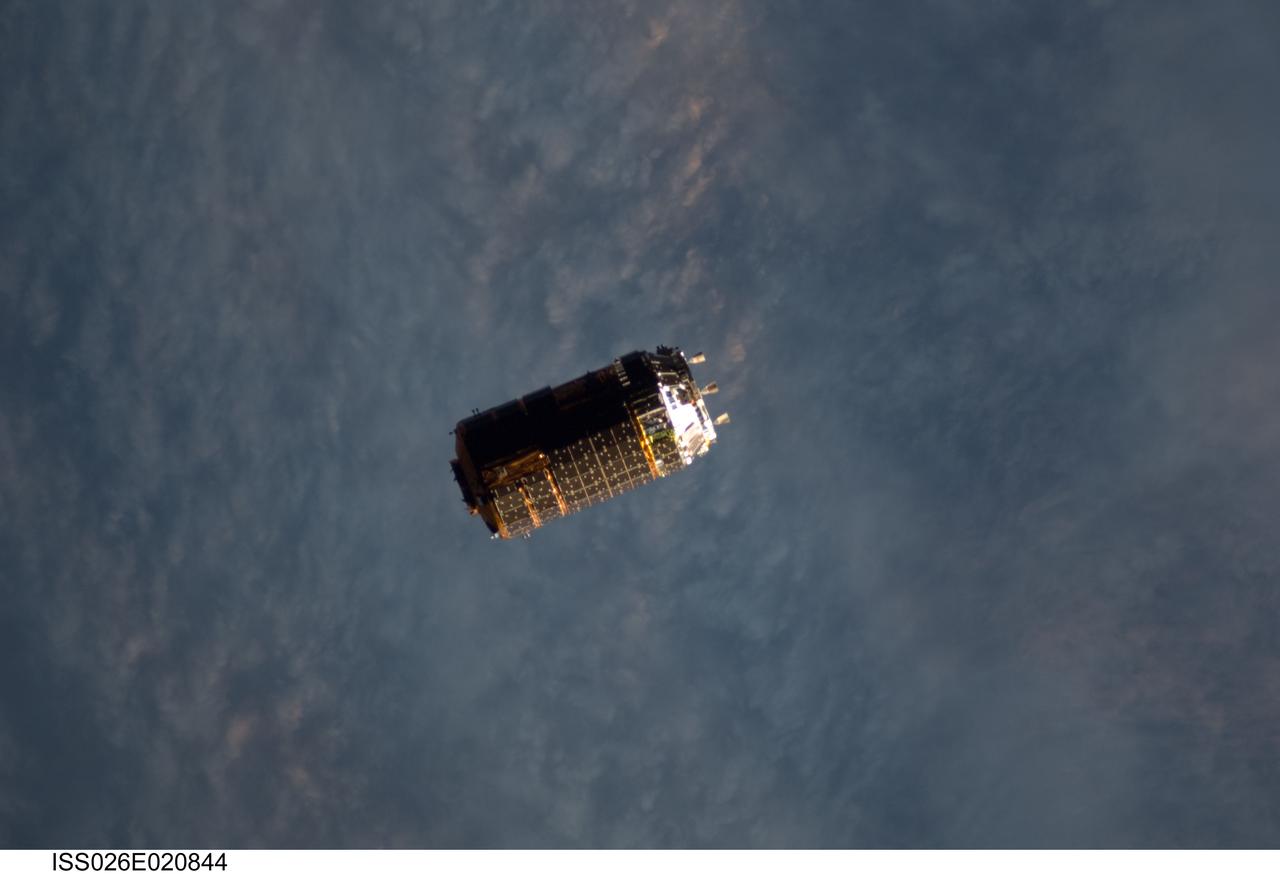
ISS026-E-020844 (27 Jan. 2011) --- The unpiloted Japanese Kounotori2 H-II Transfer Vehicle (HTV2) approaches the International Space Station. The Japan Aerospace Exploration Agency (JAXA) launched HTV2 aboard an H-IIB rocket from the Tanegashima Space Center in southern Japan at 12:37 a.m. (EST) (2:27 p.m. Japan time) on Jan. 22, 2011. HTV2 is the second unpiloted cargo ship launched by JAXA to the station and will deliver more than four tons of food and supplies to the station and its crew members.
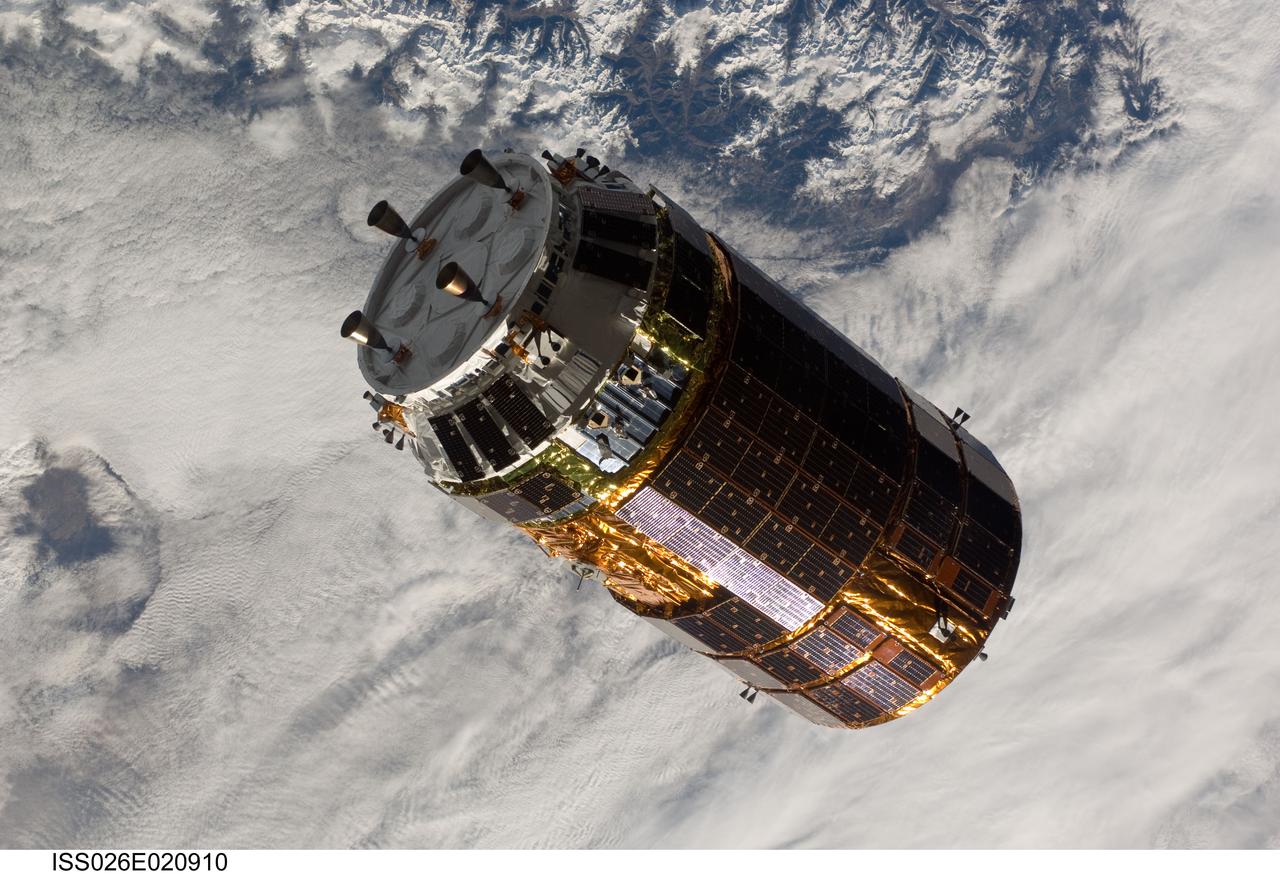
ISS026-E-020910 (27 Jan. 2011) --- Backdropped by a cloud-covered part of Earth, the unpiloted Japanese Kounotori2 H-II Transfer Vehicle (HTV2) approaches the International Space Station. The Japan Aerospace Exploration Agency (JAXA) launched HTV2 aboard an H-IIB rocket from the Tanegashima Space Center in southern Japan at 12:37 a.m. (EST) (2:27 p.m. Japan time) on Jan. 22, 2011. HTV2 is the second unpiloted cargo ship launched by JAXA to the station and will deliver more than four tons of food and supplies to the space station and its crew members.
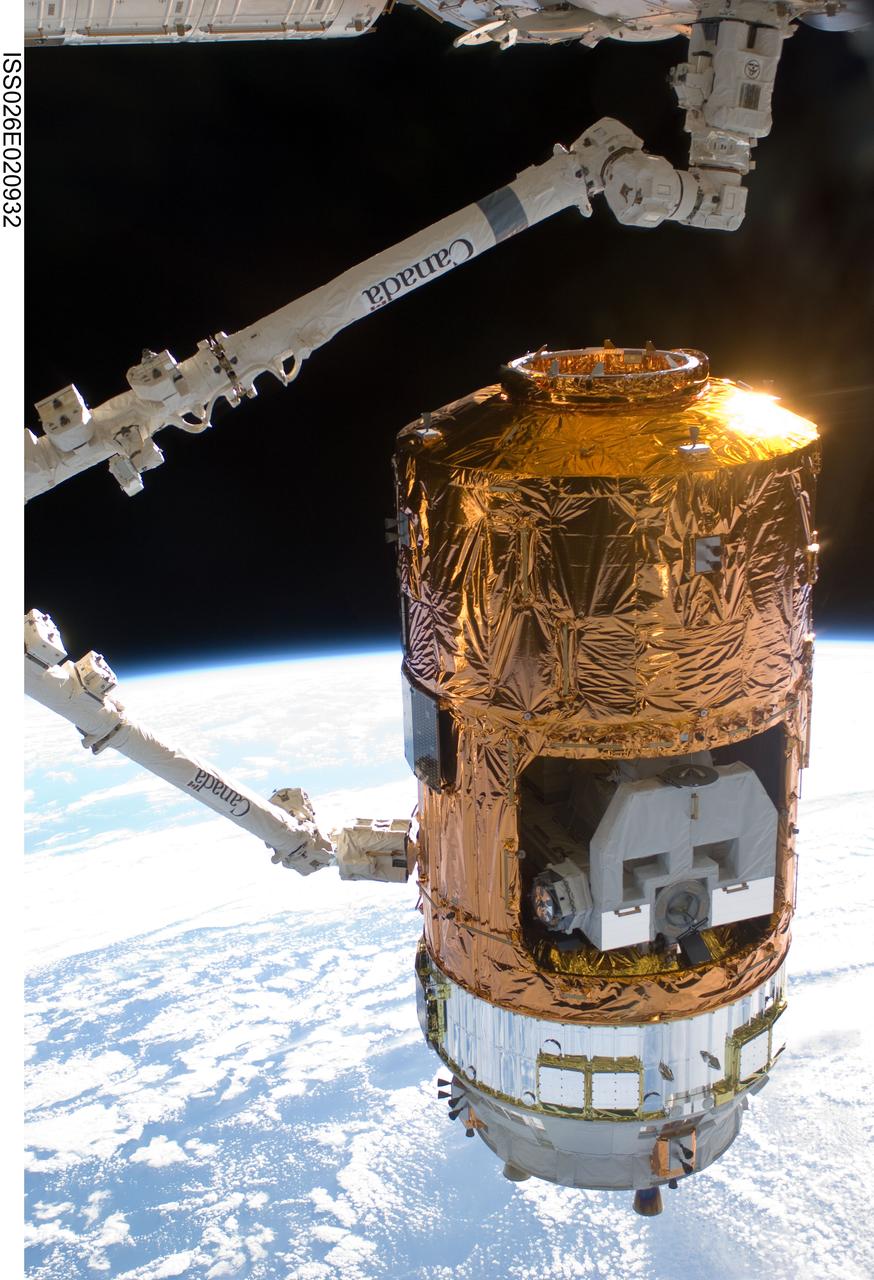
ISS026-E-020932 (27 Jan. 2011) --- Backdropped by Earth?s horizon and the blackness of space, the International Space Station's Canadarm2 grapples the unpiloted Japanese Kounotori2 H-II Transfer Vehicle (HTV2) as it approaches the station. NASA astronaut Catherine (Cady) Coleman and European Space Agency astronaut Paolo Nespoli, both Expedition 26 flight engineers, used the station?s robotic arm to attach the HTV2 to the Earth-facing port of the station?s Harmony node. The attachment was completed at 9:51 a.m. (EST) on Jan. 27, 2011.
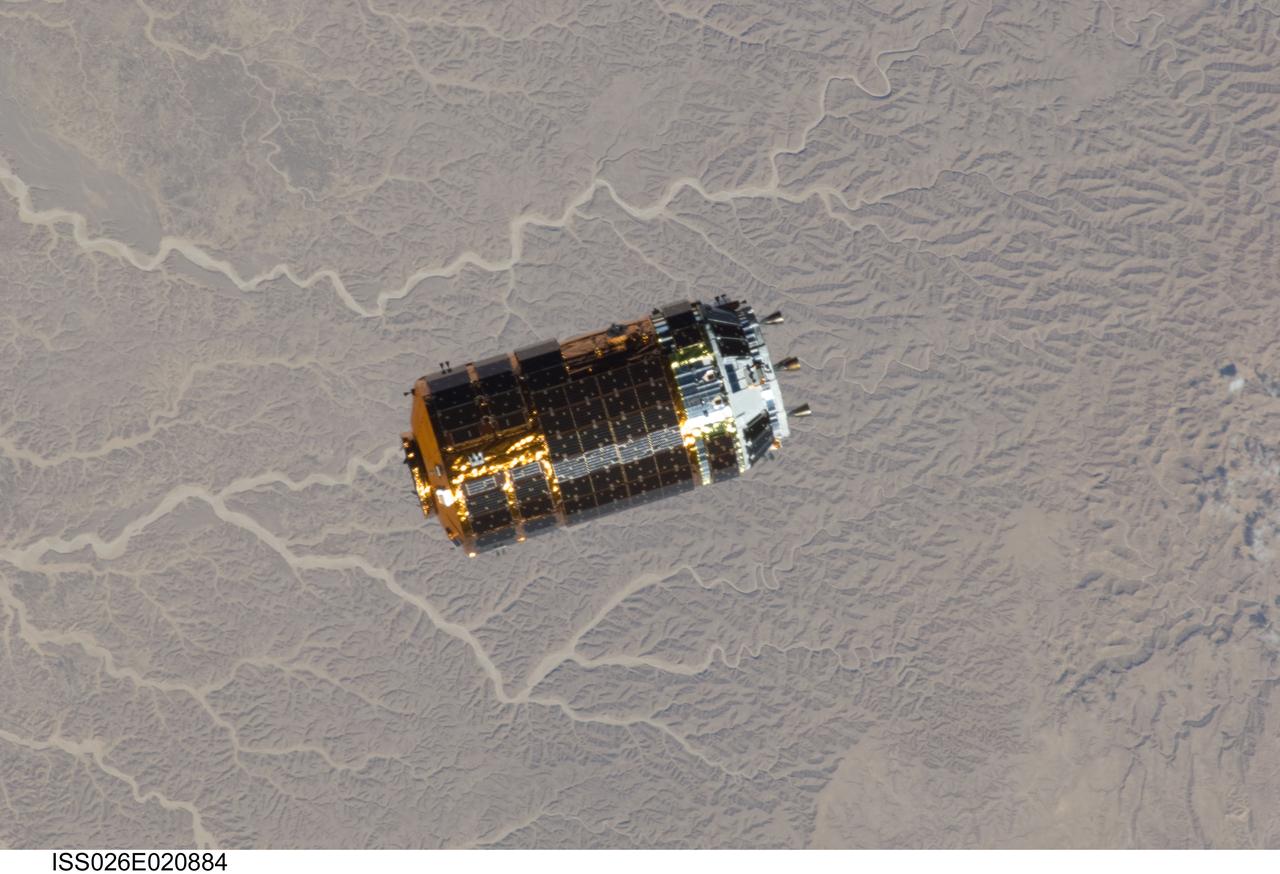
ISS026-E-020884 (27 Jan. 2011) --- Backdropped by rugged Earth terrain, the unpiloted Japanese Kounotori2 H-II Transfer Vehicle (HTV2) approaches the International Space Station. The Japan Aerospace Exploration Agency (JAXA) launched HTV2 aboard an H-IIB rocket from the Tanegashima Space Center in southern Japan at 12:37 a.m. (EST) (2:27 p.m. Japan time) on Jan. 22, 2011. HTV2 is the second unpiloted cargo ship launched by JAXA to the station and will deliver more than four tons of food and supplies to the space station and its crew members.
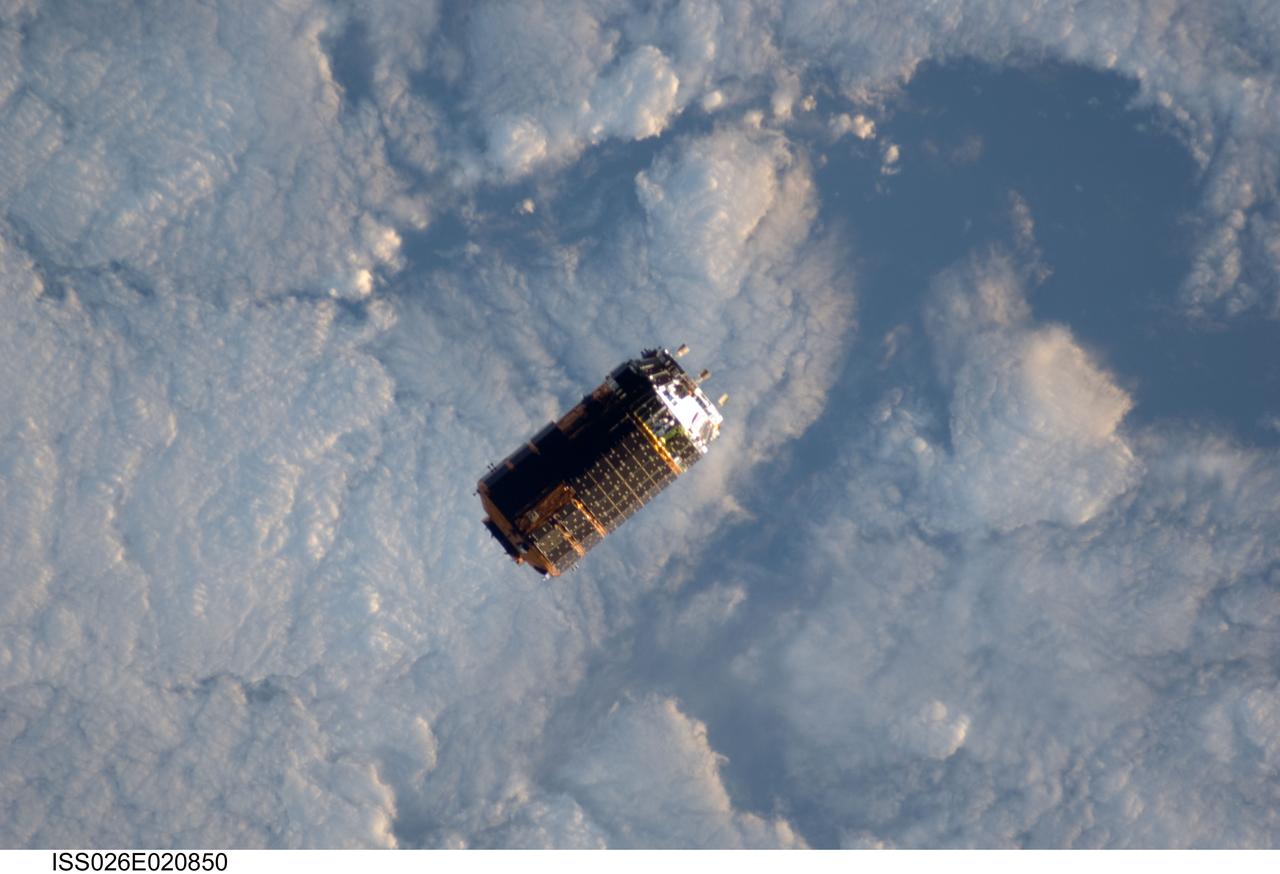
ISS026-E-020850 (27 Jan. 2011) --- Backdropped by a cloud-covered part of Earth, the unpiloted Japanese Kounotori2 H-II Transfer Vehicle (HTV2) approaches the International Space Station. The Japan Aerospace Exploration Agency (JAXA) launched HTV2 aboard an H-IIB rocket from the Tanegashima Space Center in southern Japan at 12:37 a.m. (EST) (2:27 p.m. Japan time) on Jan. 22, 2011. HTV2 is the second unpiloted cargo ship launched by JAXA to the station and will deliver more than four tons of food and supplies to the space station and its crew members.
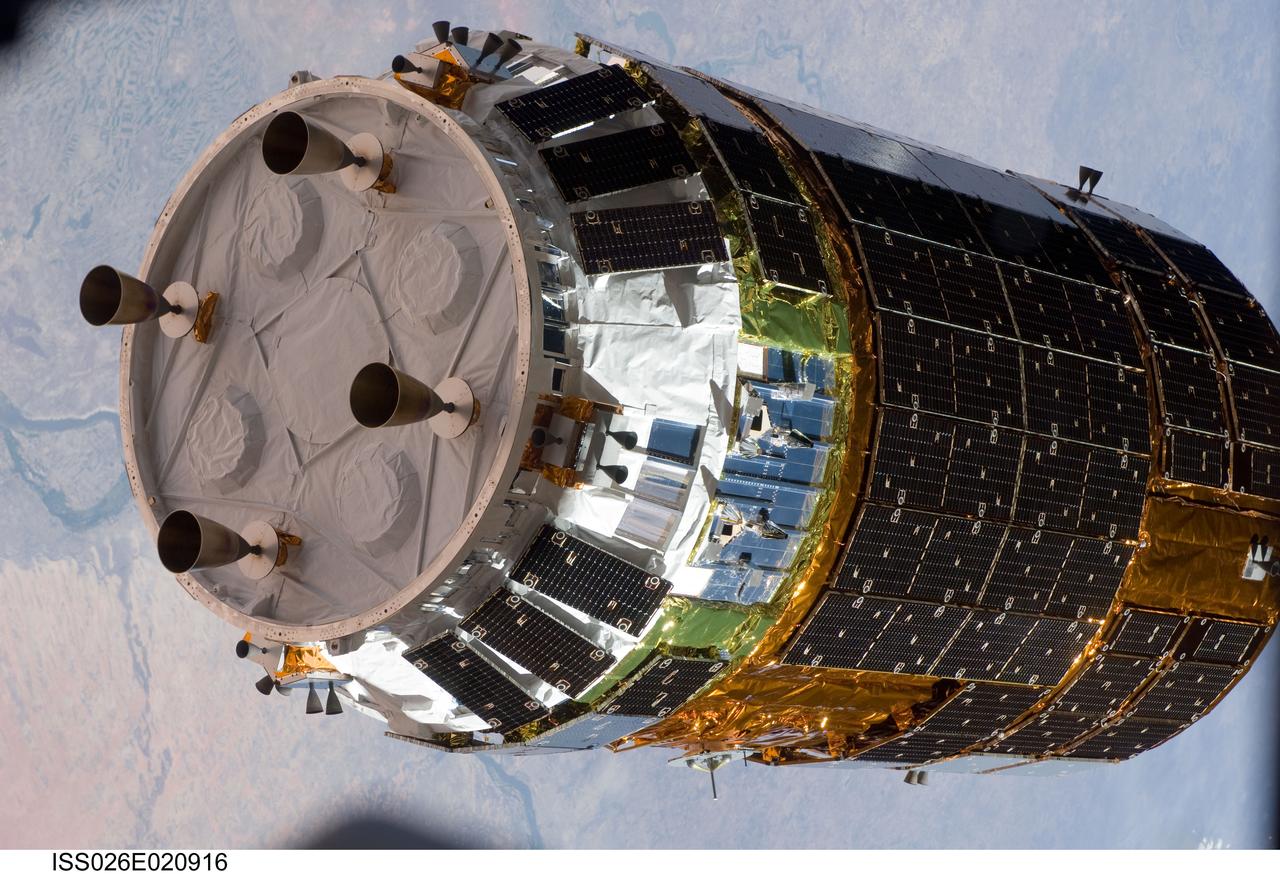
ISS026-E-020916 (27 Jan. 2011) --- The unpiloted Japanese Kounotori2 H-II Transfer Vehicle (HTV2) approaches the International Space Station. The Japan Aerospace Exploration Agency (JAXA) launched HTV2 aboard an H-IIB rocket from the Tanegashima Space Center in southern Japan at 12:37 a.m. (EST) (2:27 p.m. Japan time) on Jan. 22, 2011. HTV2 is the second unpiloted cargo ship launched by JAXA to the station and will deliver more than four tons of food and supplies to the space station and its crew members.
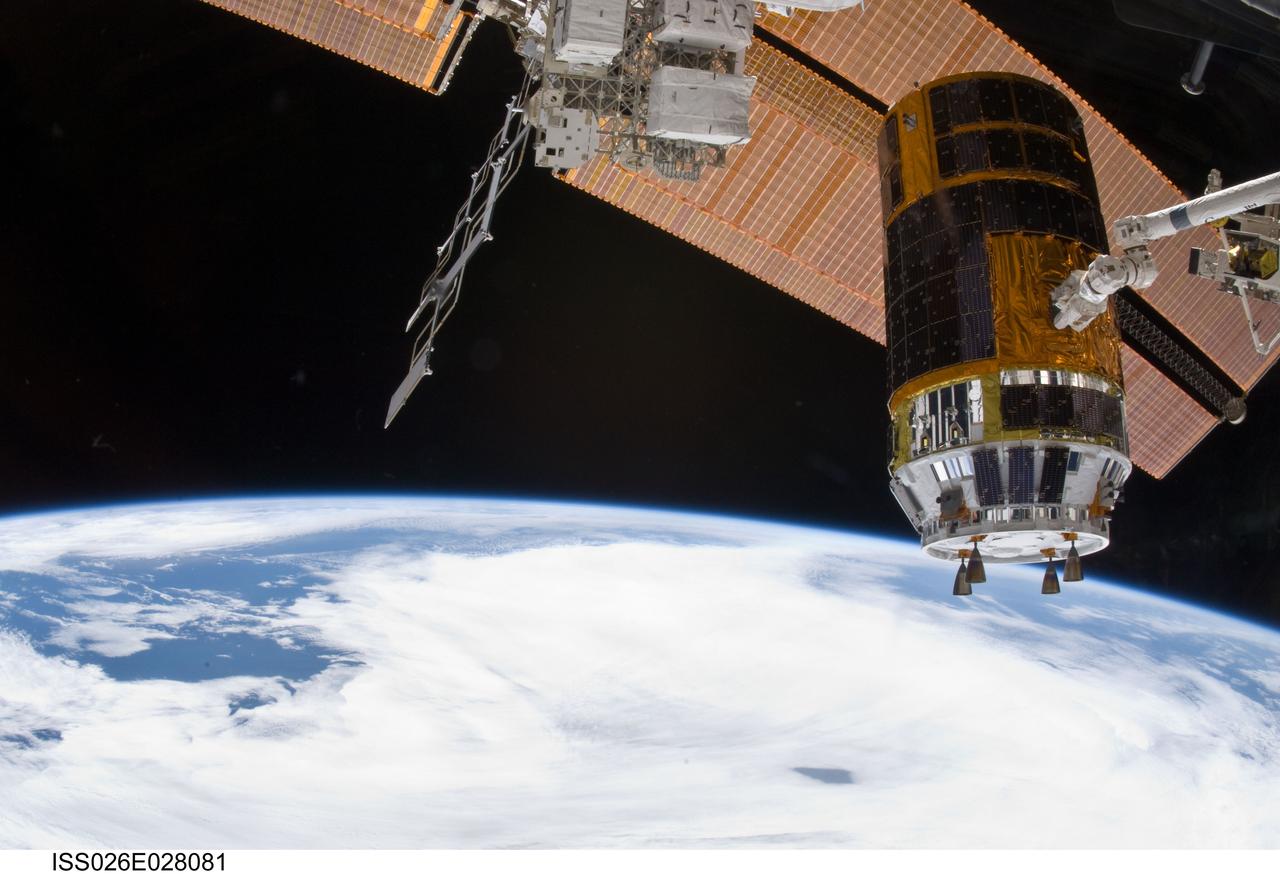
ISS026-E-028081 (18 Feb. 2011) --- In the grasp of the International Space Station?s Canadarm2, the Japanese Kounotori2 H-II Transfer Vehicle (HTV2) is relocated from the Harmony node nadir port to Harmony?s zenith port. NASA astronaut Catherine (Cady) Coleman and European Space Agency astronaut Paolo Nespoli, both Expedition 26 flight engineers, moved the HTV2, operating the station?s robotic arm from the controls inside the Cupola. A cloud-covered part of Earth and the blackness of space provide the backdrop for the scene.
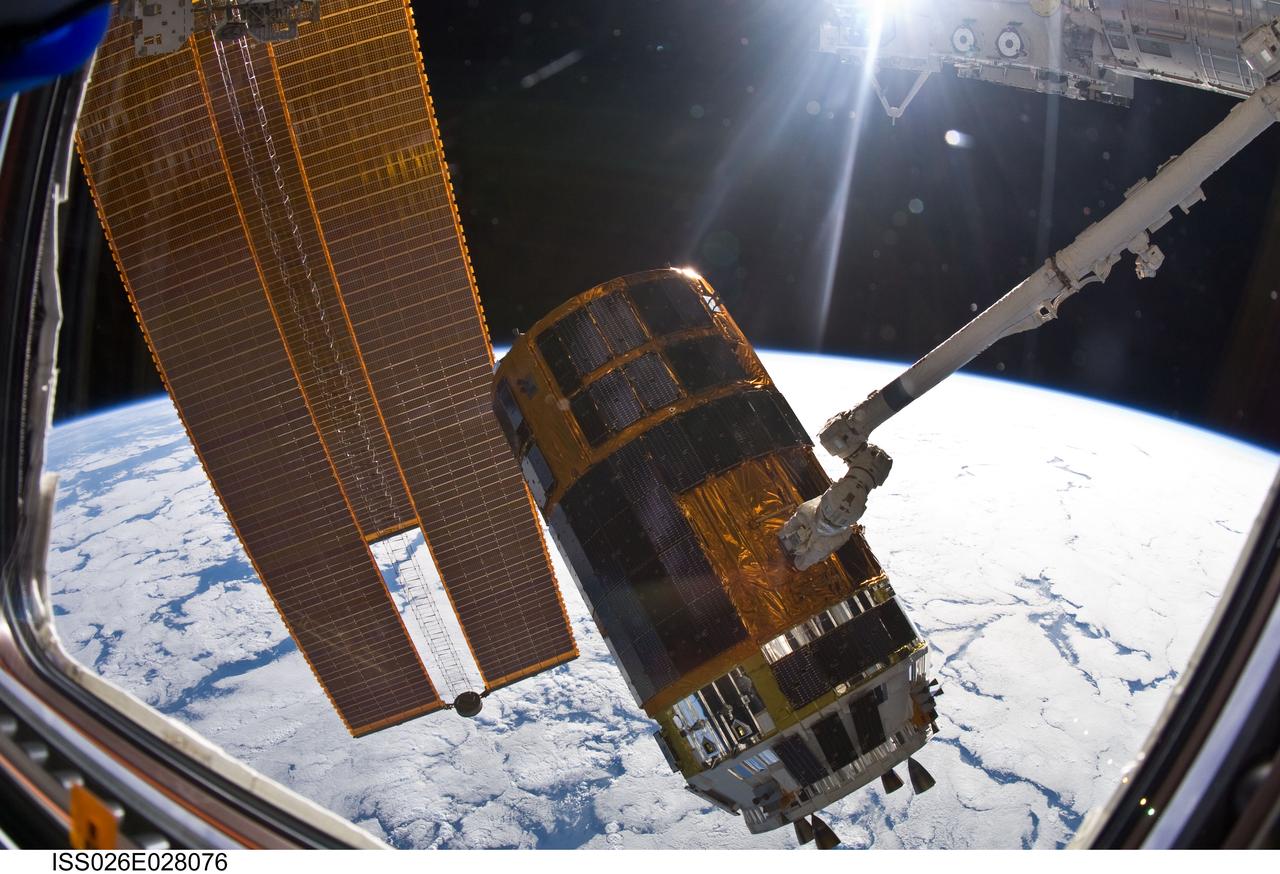
ISS026-E-028076 (18 Feb. 2011) --- In the grasp of the International Space Station?s Canadarm2, the Japanese Kounotori2 H-II Transfer Vehicle (HTV2) is relocated from the Harmony node nadir port to Harmony?s zenith port. NASA astronaut Catherine (Cady) Coleman and European Space Agency astronaut Paolo Nespoli, both Expedition 26 flight engineers, moved the HTV2, operating the station?s robotic arm from the controls inside the Cupola. A cloud-covered part of Earth and the blackness of space provide the backdrop for the scene.
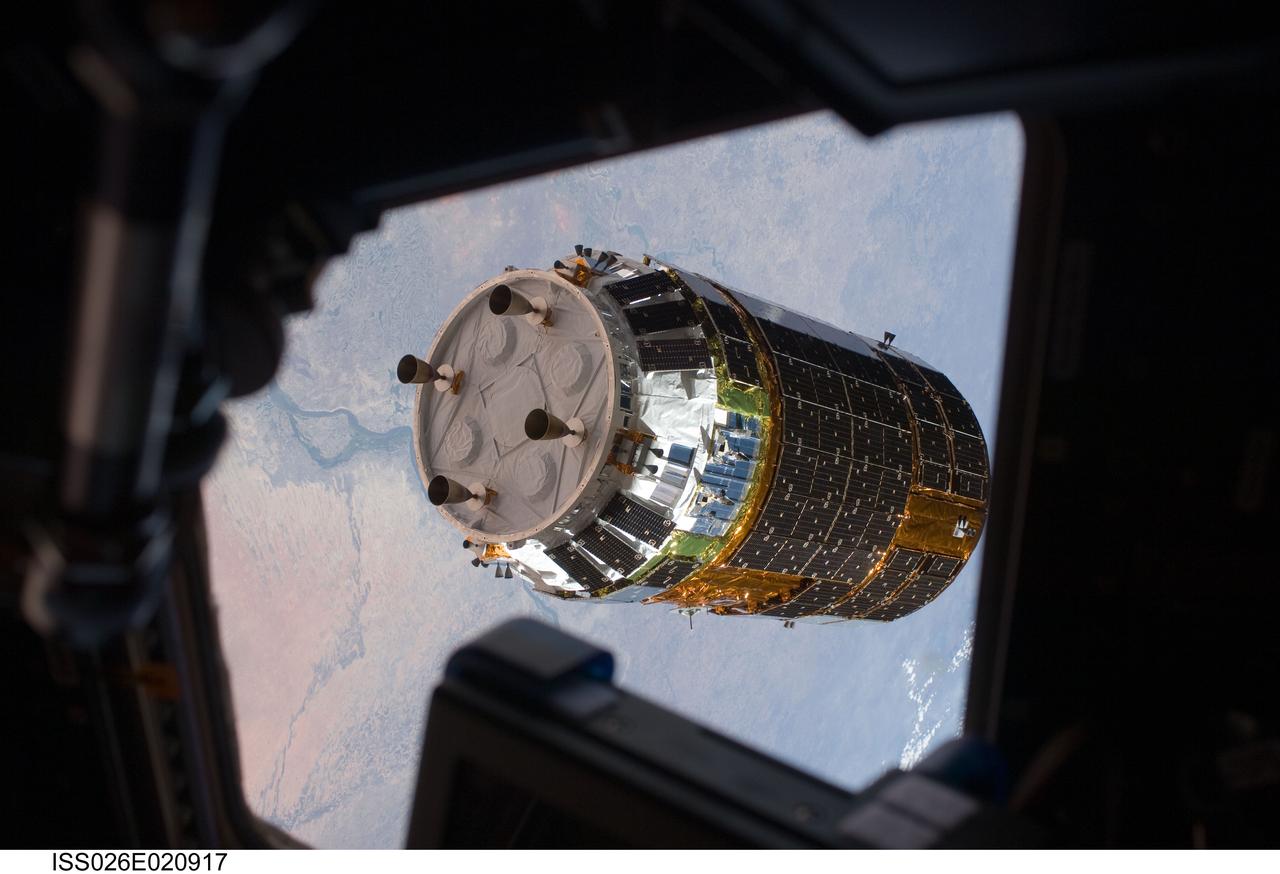
ISS026-E-020917 (27 Jan. 2011) --- Photographed from a Cupola window, the unpiloted Japanese Kounotori2 H-II Transfer Vehicle (HTV2) approaches the International Space Station. The Japan Aerospace Exploration Agency (JAXA) launched HTV2 aboard an H-IIB rocket from the Tanegashima Space Center in southern Japan at 12:37 a.m. (EST) (2:27 p.m. Japan time) on Jan. 22, 2011. HTV2 is the second unpiloted cargo ship launched by JAXA to the station and will deliver more than four tons of food and supplies to the space station and its crew members.
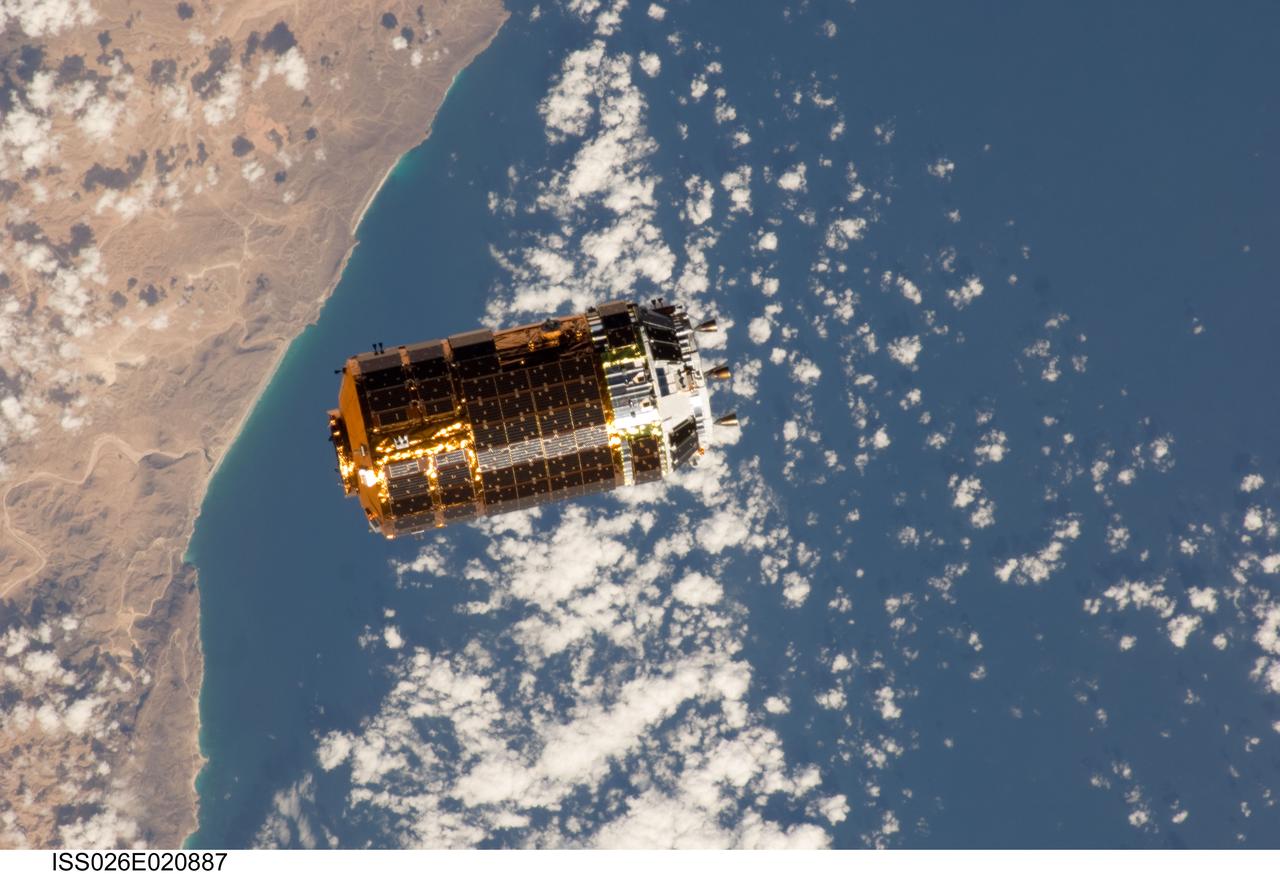
ISS026-E-020887 (27 Jan. 2011) --- Backdropped by a colorful part of Earth, the unpiloted Japanese Kounotori2 H-II Transfer Vehicle (HTV2) approaches the International Space Station. The Japan Aerospace Exploration Agency (JAXA) launched HTV2 aboard an H-IIB rocket from the Tanegashima Space Center in southern Japan at 12:37 a.m. (EST) (2:27 p.m. Japan time) on Jan. 22, 2011. HTV2 is the second unpiloted cargo ship launched by JAXA to the station and will deliver more than four tons of food and supplies to the space station and its crew members.
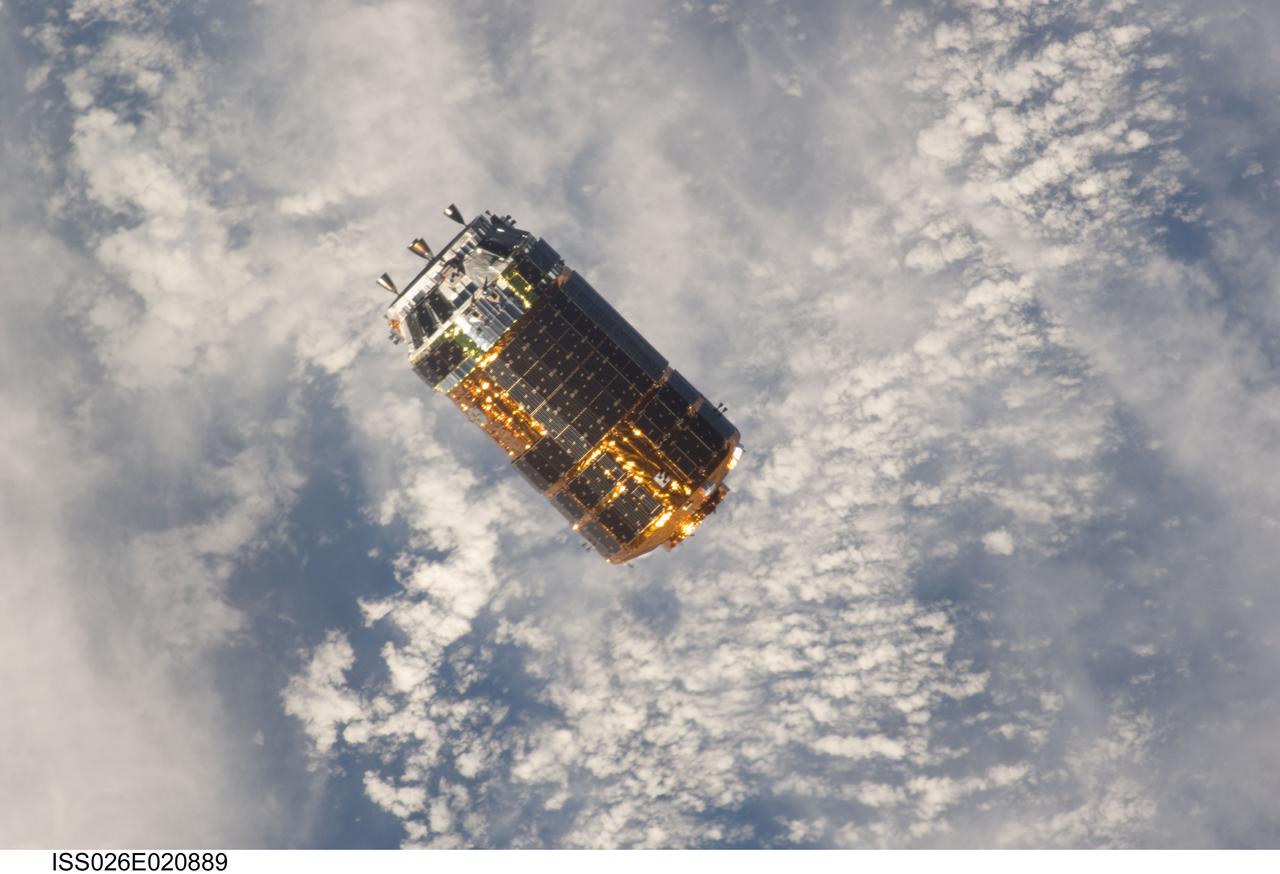
ISS026-E-020889 (27 Jan. 2011) --- Backdropped by a cloud-covered part of Earth, the unpiloted Japanese Kounotori2 H-II Transfer Vehicle (HTV2) approaches the International Space Station. The Japan Aerospace Exploration Agency (JAXA) launched HTV2 aboard an H-IIB rocket from the Tanegashima Space Center in southern Japan at 12:37 a.m. (EST) (2:27 p.m. Japan time) on Jan. 22, 2011. HTV2 is the second unpiloted cargo ship launched by JAXA to the station and will deliver more than four tons of food and supplies to the space station and its crew members.
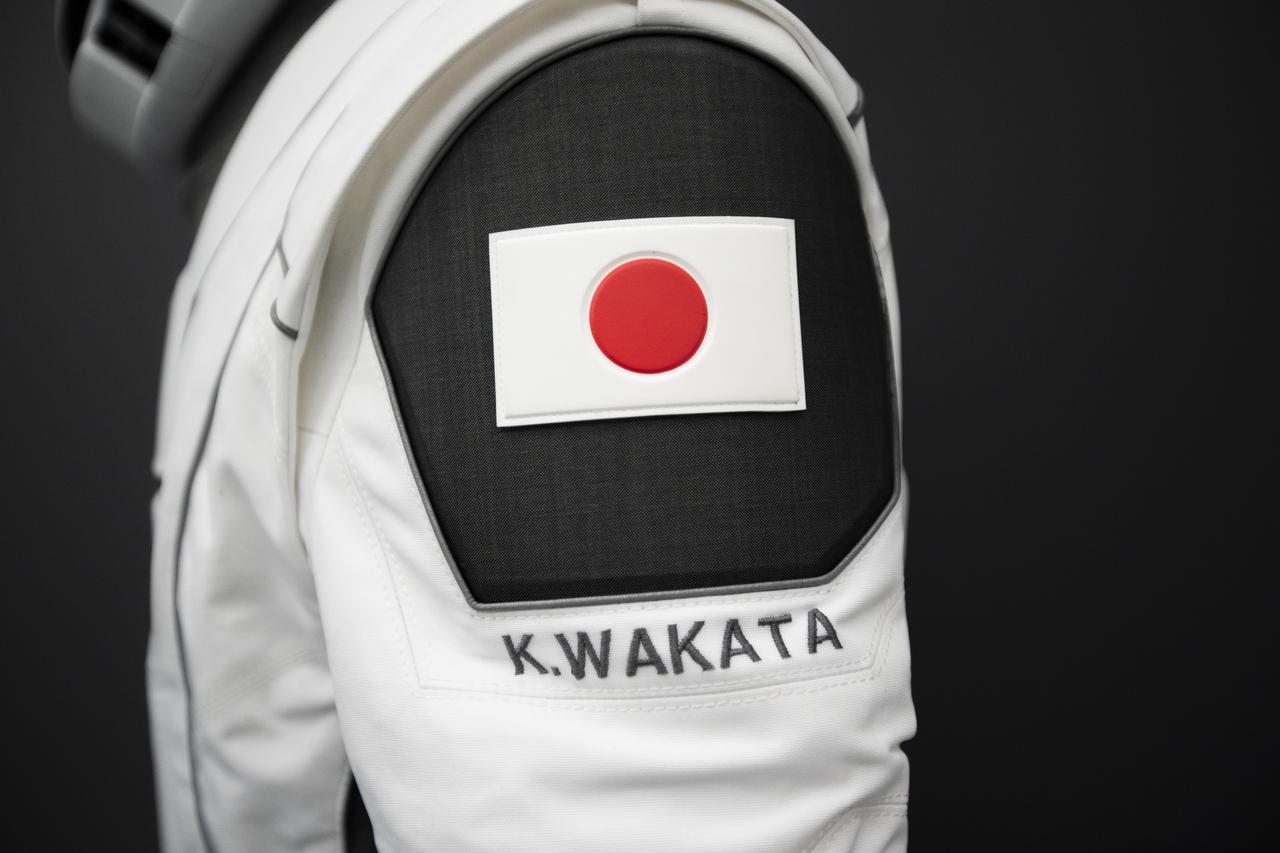
A SpaceX launch and entry suit bears a Japanese flag, and the name of JAXA astronaut Koichi Wakata – a crewmember of NASA's SpaceX Crew-5 mission to the International Space Station.
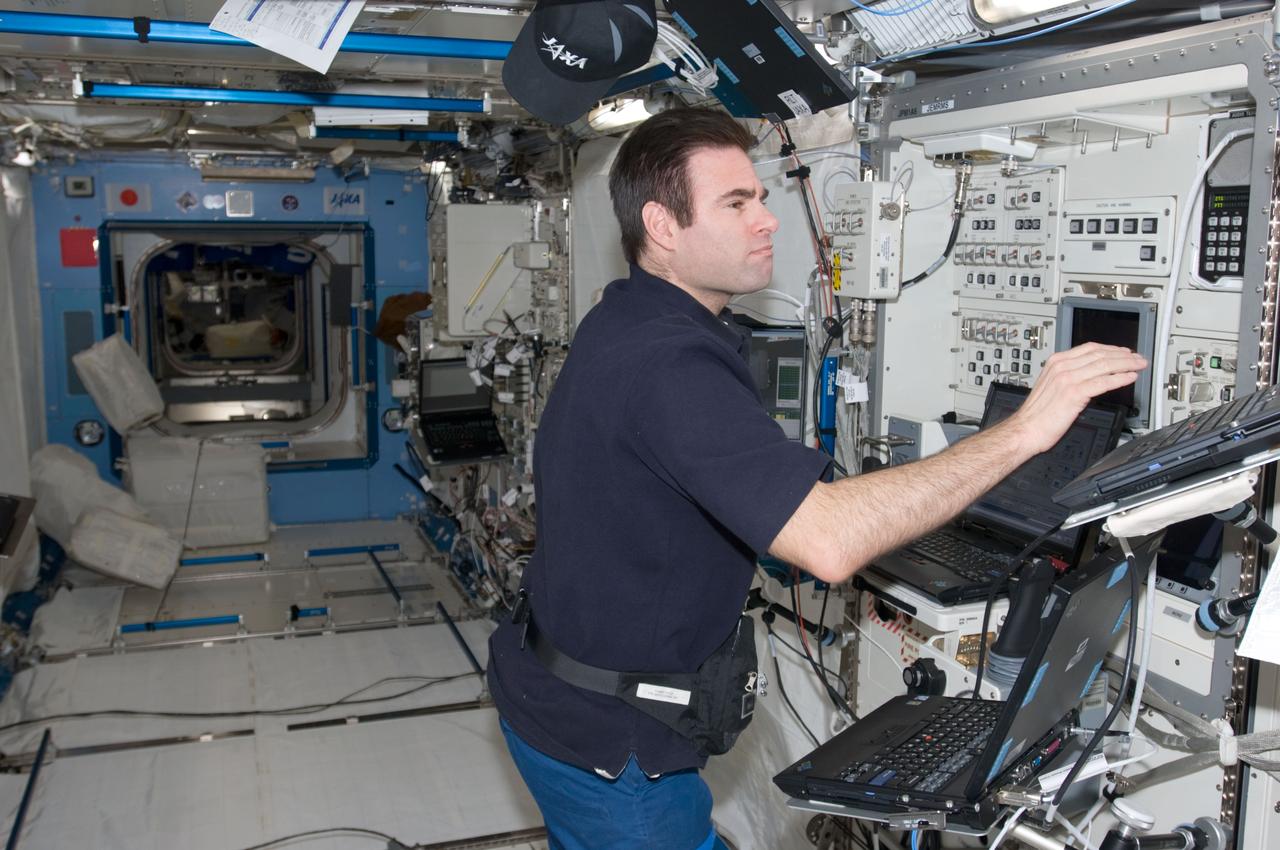
ISS017-E-013970 (22 Aug. 2008) --- Astronaut Greg Chamitoff, Expedition 17 flight engineer, conducts a function checkout for the Japanese Experiment Module's Remote Manipulator System in the Kibo laboratory on the International Space Station.
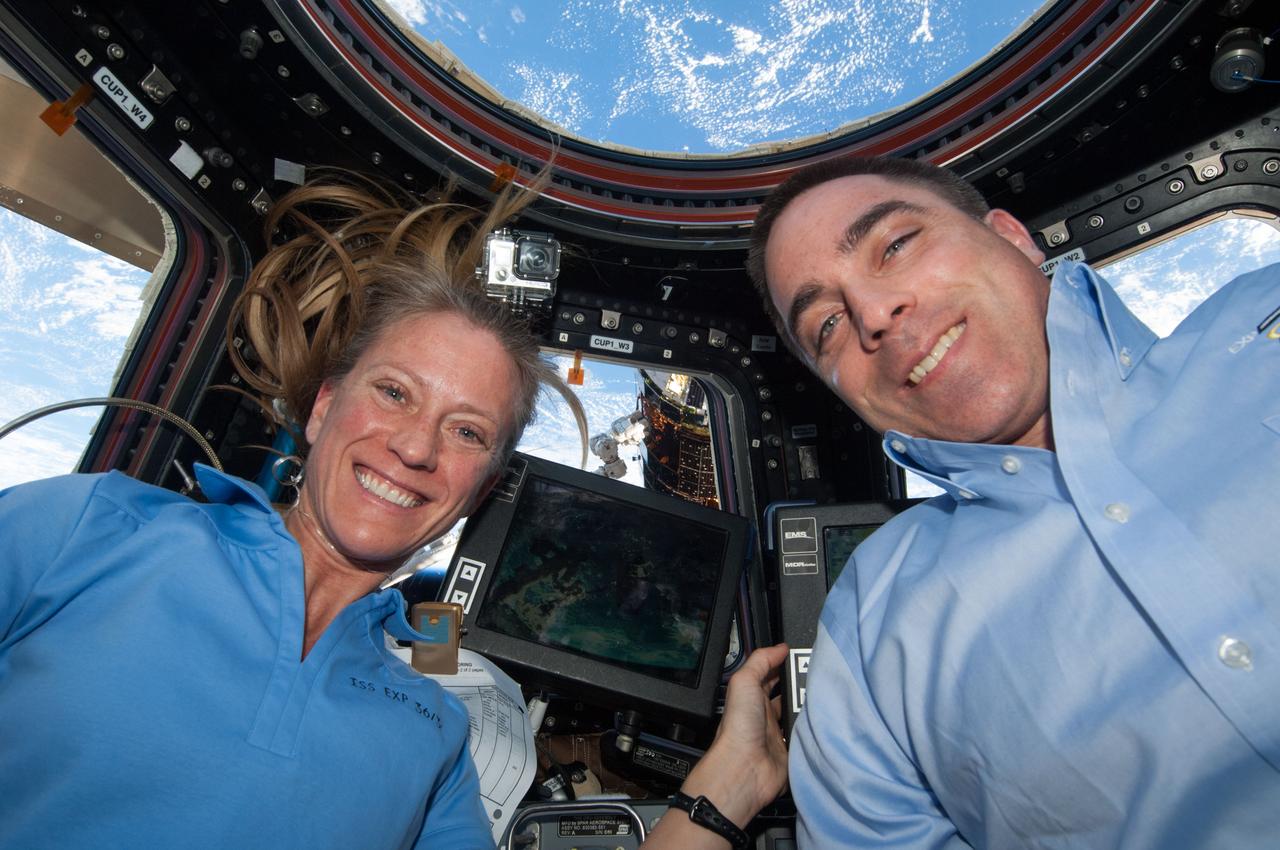
NASA astronauts Karen Nyberg and Chris Cassidy, both Expedition 36 flight engineers, are pictured at the robotic workstation in the Cupola of the International Space Station during rendezvous operations with the approaching unpiloted Japanese Kounotori H2 Transfer Vehicle-4 (HTV-4). The HTV-4 is visible from the Cupola window. Also sent as Twitter message.
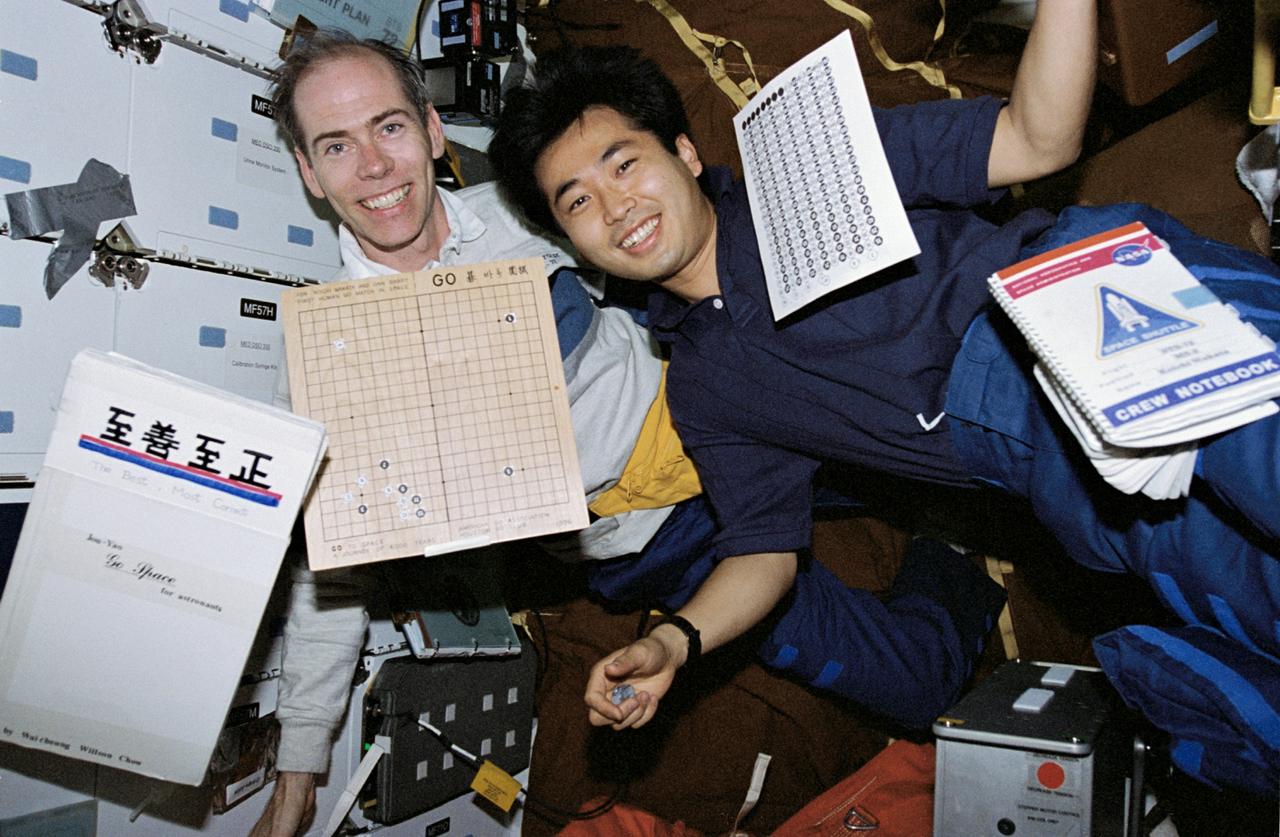
STS072-315-034 (11-20 Jan. 1996) --- During off-duty time aboard the Space Shuttle Endeavour, astronauts Daniel T. Barry (left) and Koichi Wakata join on the middeck for an in-space version of a Japanese game called "Go". Because of microgravity, the usual rock-like pieces that are moved about on the board by each player had to give way to tiny stick-on pieces. Wakata represents Japan's National Space Development Agency (NASDA).
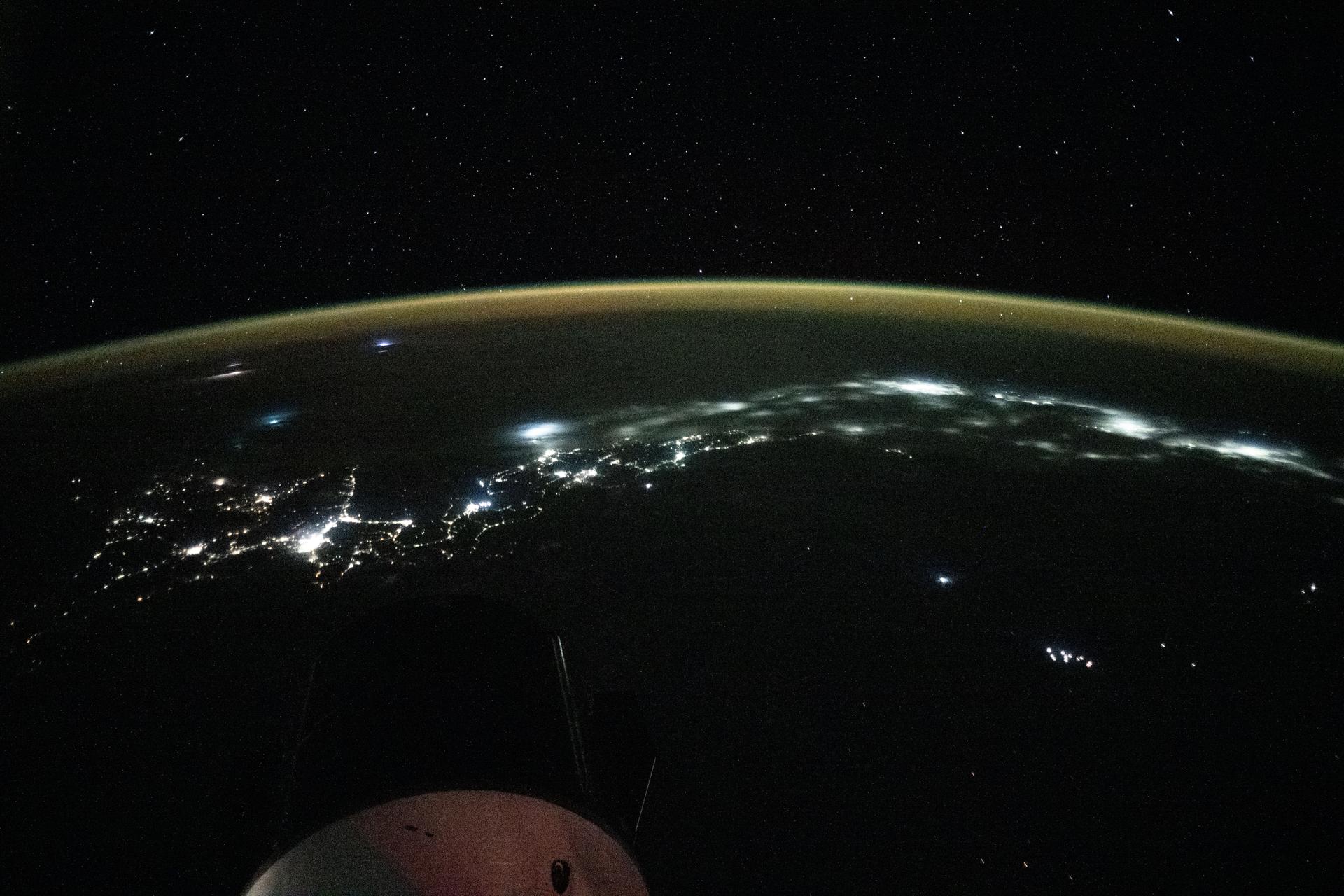
iss073e0703552 (Sept. 18, 2025) --- City lights trace the Japanese coastline underneath a dim yellow-green airglow in this nighttime view across the Sea of Japan, revealing the metropolitan areas (from left to right) of Sapporo, Sendai, Tokyo, and Nagoya. The International Space Station was orbiting 262 miles above Russia’s far eastern coast when this image was captured at approximately 11:29 p.m. local time.
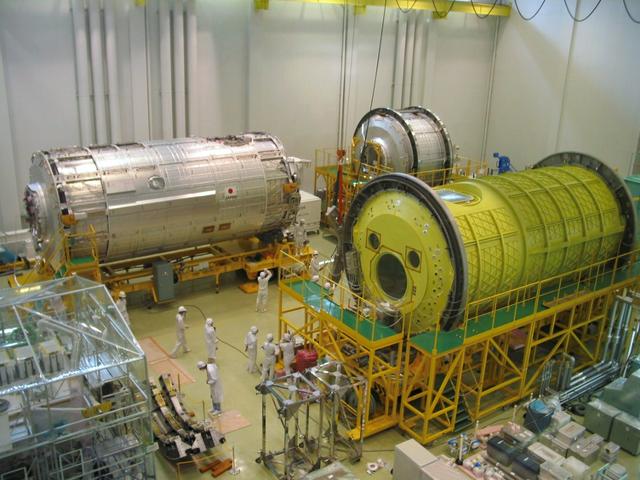
JSC2003-E-34753 (16 April 2003) --- Components of Japan's primary contribution to the International Space Station, the Japanese Experiment Module (JEM), Kibo, are seen in this view at the Tsukuba Space Center. Clockwise from left are the JEM Pressurized Module (PM) (an on-orbit laboratory), the JEM Experiment Logistics Module - Pressurized Section (an experiment and logistics storage module), the JEM PM Engineering Model (used for pre-flight development and testing), and the JEM Exposed Facility (an unpressurized platform for space environment experiments). The laboratory module was transported by truck and then by barge to Yokohama Harbor, Yokohama, Japan where it was loaded on a container ship bound for Port Canaveral, Florida. The Kibo laboratory, built by the National Space Development Agency of Japan (NASDA), is expected to arrive at the Kennedy Space Center for module integration tests with Node 2 and pre-launch processing in early June. Photo Credit: NASA
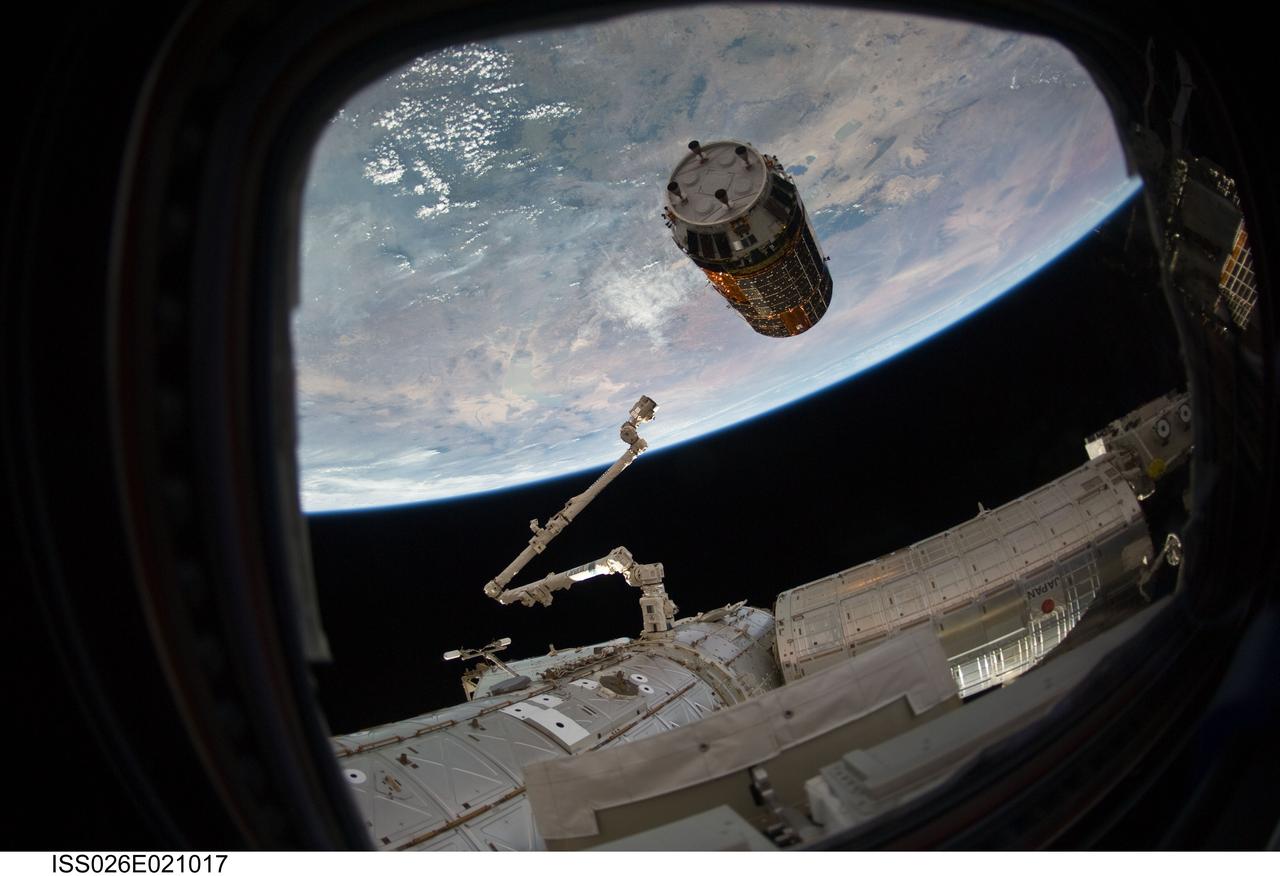
ISS026-E-021017 (27 Jan. 2011) --- The unpiloted Japanese Kounotori2 H-II Transfer Vehicle (HTV2) approaches the International Space Station, delivering more than four tons of food and supplies to the space station and its crew members. The Japan Aerospace Exploration Agency (JAXA) launched HTV2 aboard an H-IIB rocket from the Tanegashima Space Center in southern Japan at 12:37 a.m. (EST) (2:27 p.m. Japan time) on Jan. 22, 2011. NASA astronaut Catherine (Cady) Coleman and European Space Agency astronaut Paolo Nespoli, both Expedition 26 flight engineers, used the station’s robotic Canadarm2 to attach the HTV2 to the Earth-facing port of the Harmony node. The attachment was completed at 9:51 a.m. (EST) on Jan. 27, 2011.
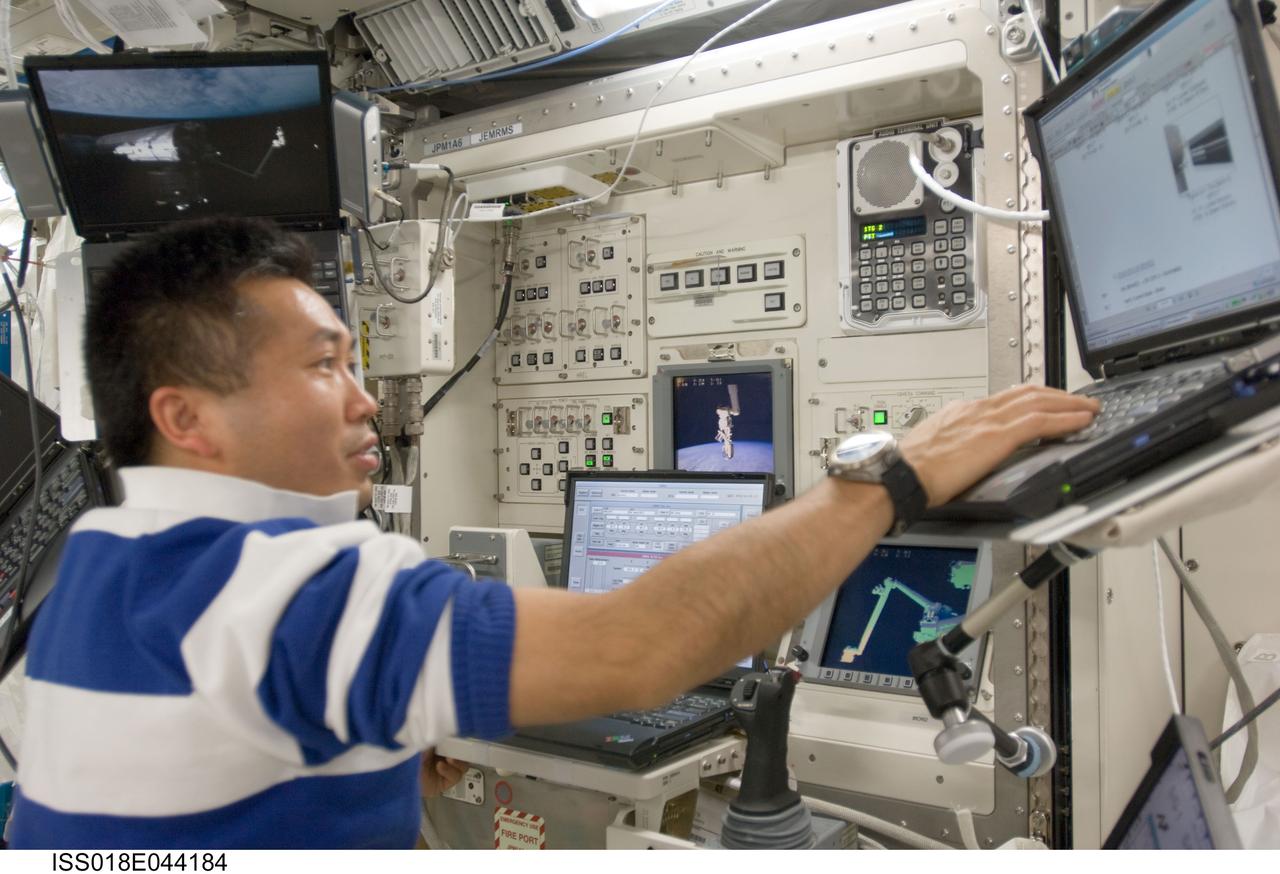
ISS018-E-044184 (31 March 2009) --- Japan Aerospace Exploration Agency (JAXA) astronaut Koichi Wakata, Expedition 18/19 flight engineer, uses a computer at the Japanese Remote Manipulator System (JEM-RMS) work station in the Kibo laboratory of the International Space Station.
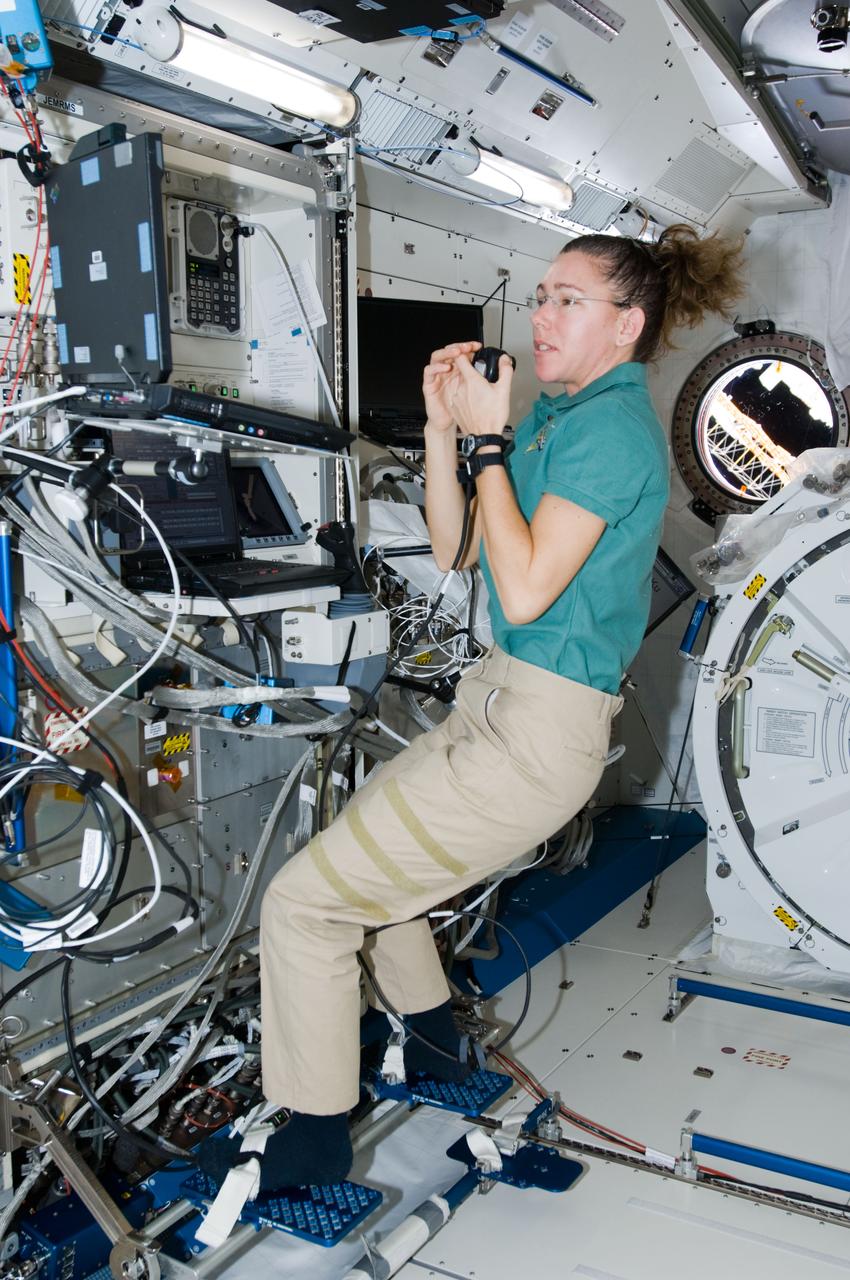
ISS018-E-019933 (19 Jan. 2009) --- Astronaut Sandra Magnus, Expedition 18 flight engineer, uses a communication system while performing a function test of the Japanese Remote Manipulator System (JEM-RMS) in the Kibo laboratory of the International Space Station.
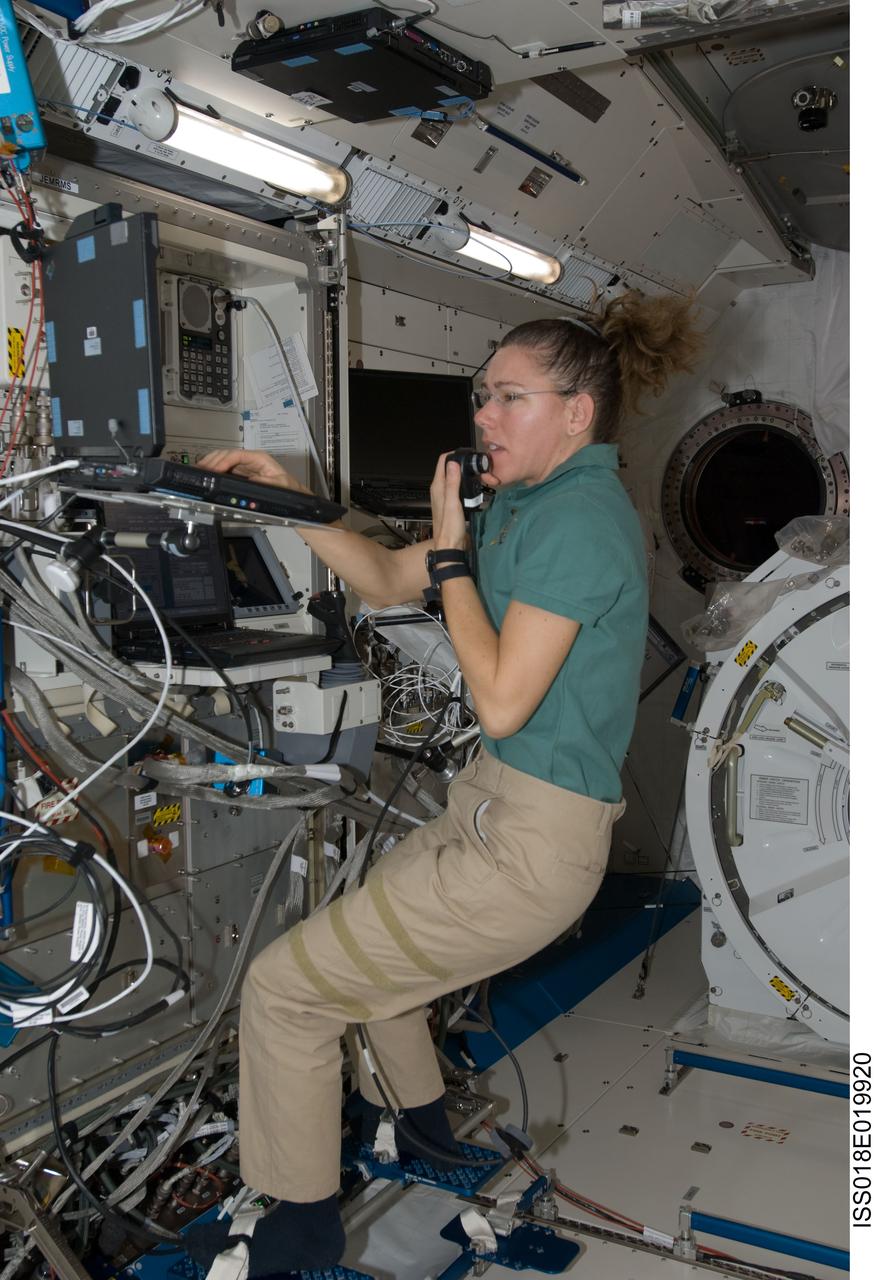
ISS018-E-019920 (19 Jan. 2009) --- Astronaut Sandra Magnus, Expedition 18 flight engineer, uses a communication system while performing a function test of the Japanese Remote Manipulator System (JEM-RMS) in the Kibo laboratory of the International Space Station.
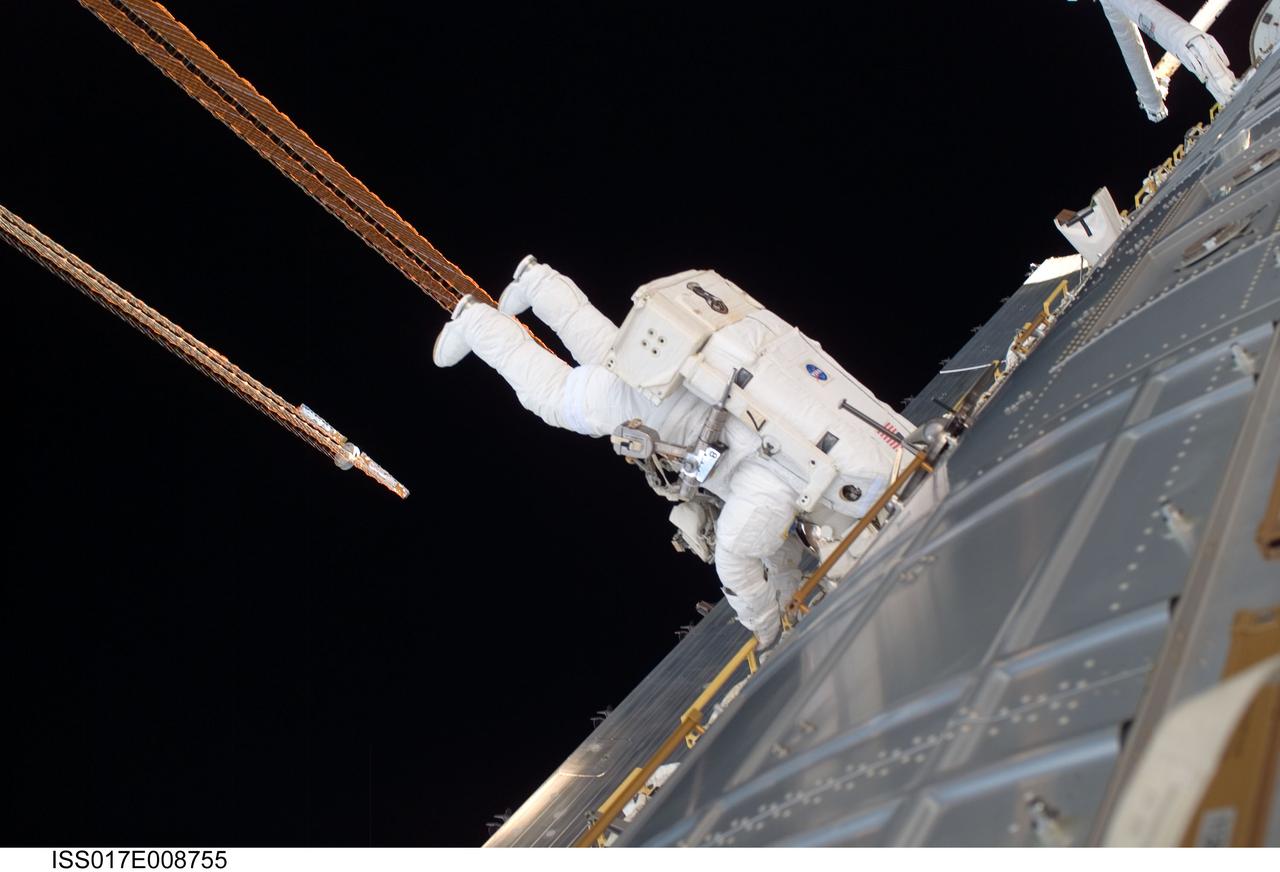
ISS017-E-008755 (3 June 2008) --- Astronaut Ron Garan, STS-124 mission specialist, participates in the mission's first scheduled session of extravehicular activity (EVA) as construction and maintenance continue on the International Space Station. During the six-hour, 48-minute spacewalk, Garan and astronaut Mike Fossum (out of frame), mission specialist, loosened restraints holding the Orbiter Boom Sensor System in its temporary stowage location on the space station's starboard truss, prepared the Kibo Japanese Pressurized Module for its installation to the space station, demonstrated cleaning techniques for the Solar Alpha Rotary Joint's (SARJ) race ring, and installed a replacement SARJ Trundle Bearing Assembly.
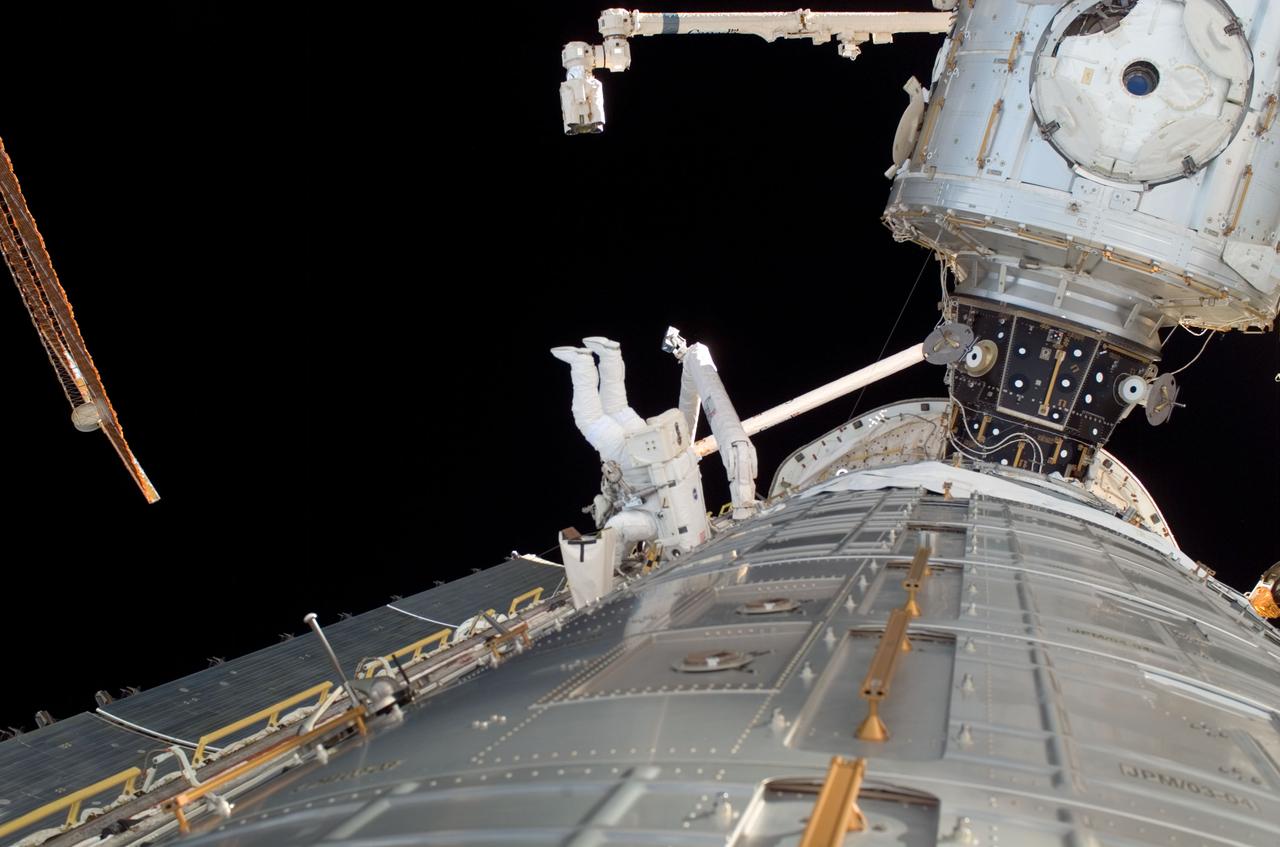
ISS017-E-008751 (3 June 2008) --- Astronaut Ron Garan, STS-124 mission specialist, participates in the mission's first scheduled session of extravehicular activity (EVA) as construction and maintenance continue on the International Space Station. During the six-hour, 48-minute spacewalk, Garan and astronaut Mike Fossum (out of frame), mission specialist, loosened restraints holding the Orbiter Boom Sensor System in its temporary stowage location on the space station's starboard truss, prepared the Kibo Japanese Pressurized Module (foreground) for its installation to the space station, demonstrated cleaning techniques for the Solar Alpha Rotary Joint's (SARJ) race ring, and installed a replacement SARJ Trundle Bearing Assembly.
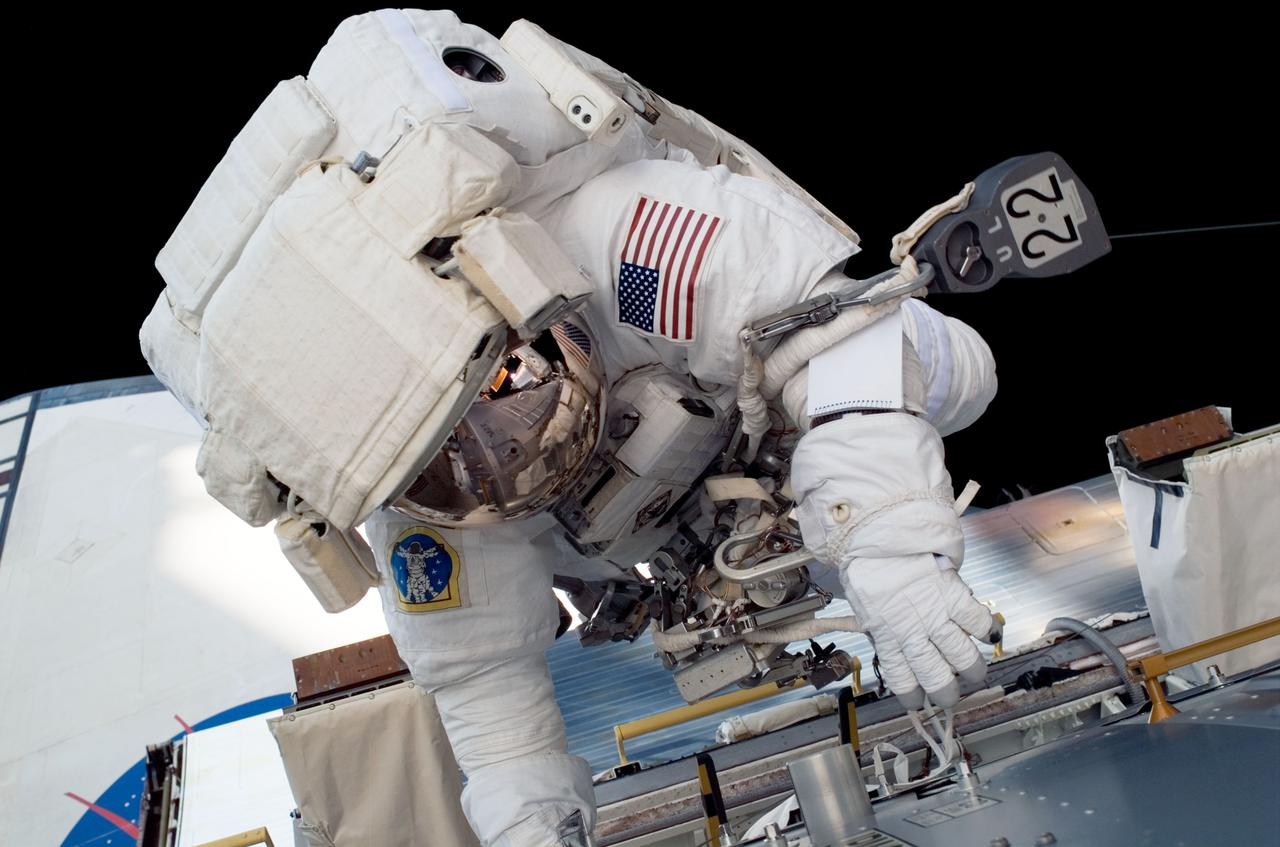
ISS017-E-008757 (3 June 2008) --- Astronaut Ron Garan, STS-124 mission specialist, participates in the mission's first scheduled session of extravehicular activity (EVA) as construction and maintenance continue on the International Space Station. During the six-hour, 48-minute spacewalk, Garan and astronaut Mike Fossum (out of frame), mission specialist, loosened restraints holding the Orbiter Boom Sensor System in its temporary stowage location on the space station's starboard truss, prepared the Kibo Japanese Pressurized Module for its installation to the space station, demonstrated cleaning techniques for the Solar Alpha Rotary Joint's (SARJ) race ring, and installed a replacement SARJ Trundle Bearing Assembly.
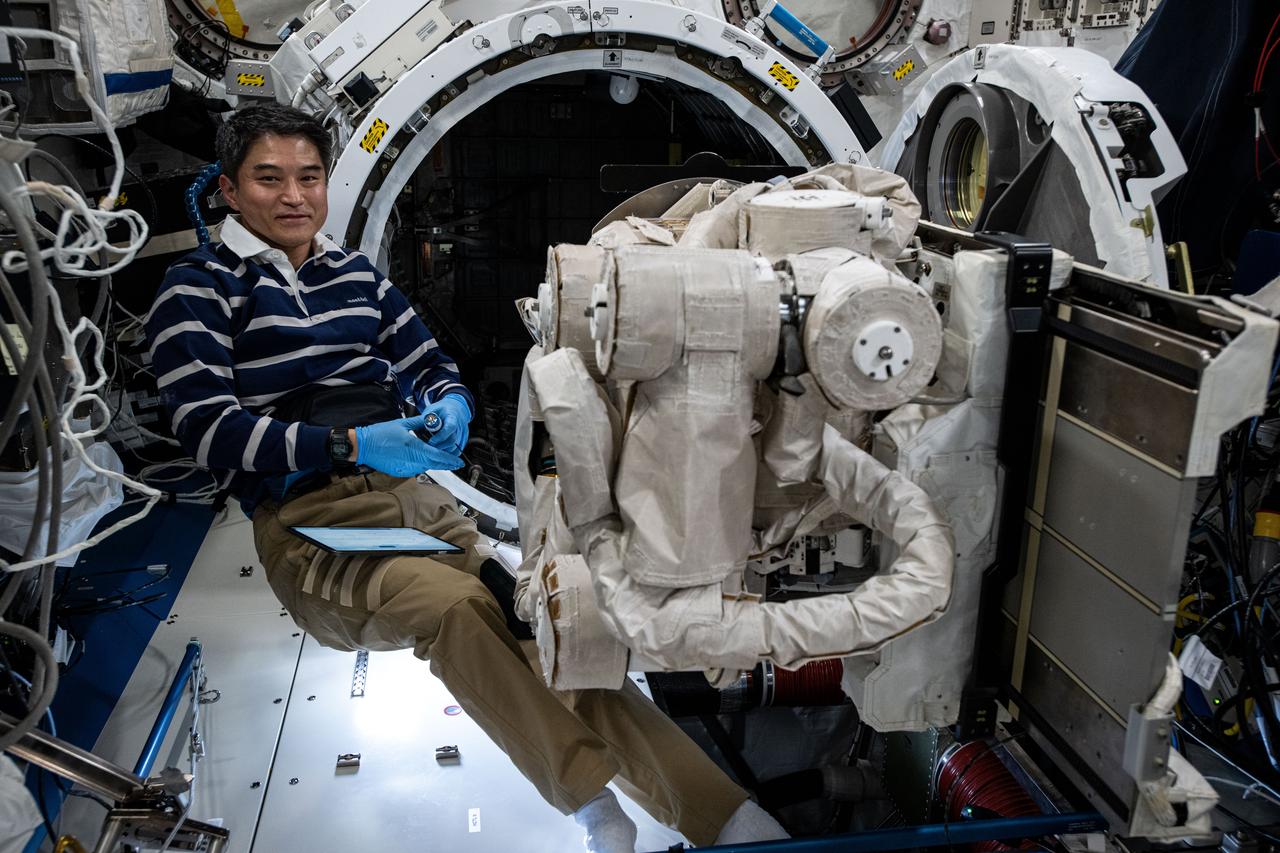
iss073e0133686 (June 3, 2025) --- JAXA (Japan Aerospace Exploration Agency) astronaut and Expedition 73 Commander is pictured during maintenance operations on the Japanese robotic arm's Small Fine Arm inside the Kibo laboratory module. The Small Fine Arm is used for precise and dexterous robotic maneuvers when grappling small components or payloads on the outside of the International Space Station. There are two other robotic arms on the outside of the orbital outpost including the Canadarm2 robotic arm and the European robotic arm (ERA). Canadarm2 can be used to maneuver spacecraft, spacewalkers, and large payloads. ERA can also be used to maneuver spacewalkers and space station components.
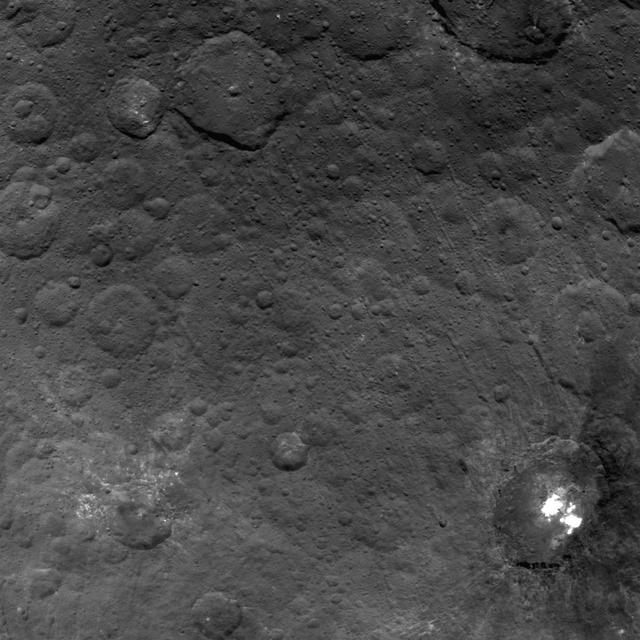
This image from NASA's Dawn spacecraft showing the northern part of Hanami Planum on Ceres honors the Japanese cherry blossom festival, or "Hanami," which is a long-standing Japanese tradition of welcoming spring. Hanami Planum is the third largest geological feature on Ceres, after Vendimia Planitia and the Samhain Catenae. It extends over 345 miles (555 kilometers). This image shows familiar features, such as Occator Crater, characterized both by bright material inside the crater and dark ejecta material outside. Several parallel linear features, called Junina Catenae, can be seen departing from Occator and extending toward the top of the image. These catenae are chains of small craters formed by the impact and scouring of material ejected when large craters are formed. Scientists were able to relate these crater chains to Urvara and Yalode. Even though these are located in the southern hemisphere, some of their ejecta could reach the northern hemisphere, thanks to Ceres' fast rotation and small size. This image was obtained by Dawn on June 15, 2015. The spacecraft was then in its survey orbit (2,700 miles, or 4,400 kilometers high), when the footprint of Dawns framing camera on Ceres surface was about 260 miles (420 kilometers). The resolution is 1,400 feet (410 meters) per pixel. The central coordinates of the picture are 14 degrees north latitude, 213 degrees east in longitude. https://photojournal.jpl.nasa.gov/catalog/PIA21921