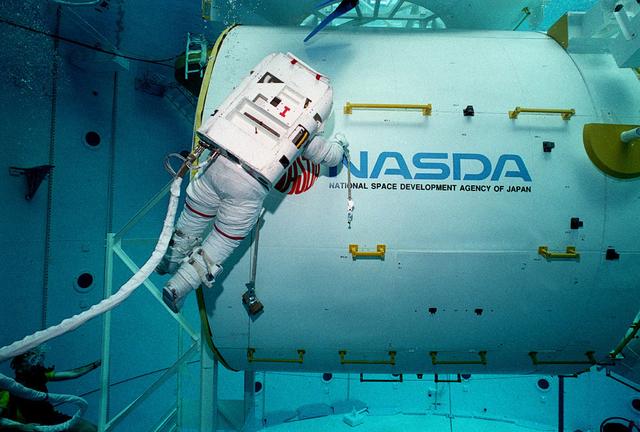
Japanese Experimental Module testing in Marshall's Neutral Buoyancy Simulator (NBS).
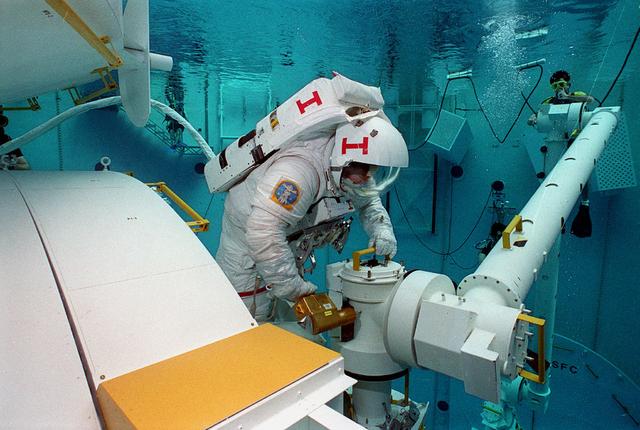
This photograph was taken in the Marshall Space Flight Center (MSFC) Neutral Buoyancy Simulator (NBS) during the testing of the Japanese Experimental Module. The NBS provided the weightless environment encountered in space needed for testing and the practices of extra-vehicular activities.
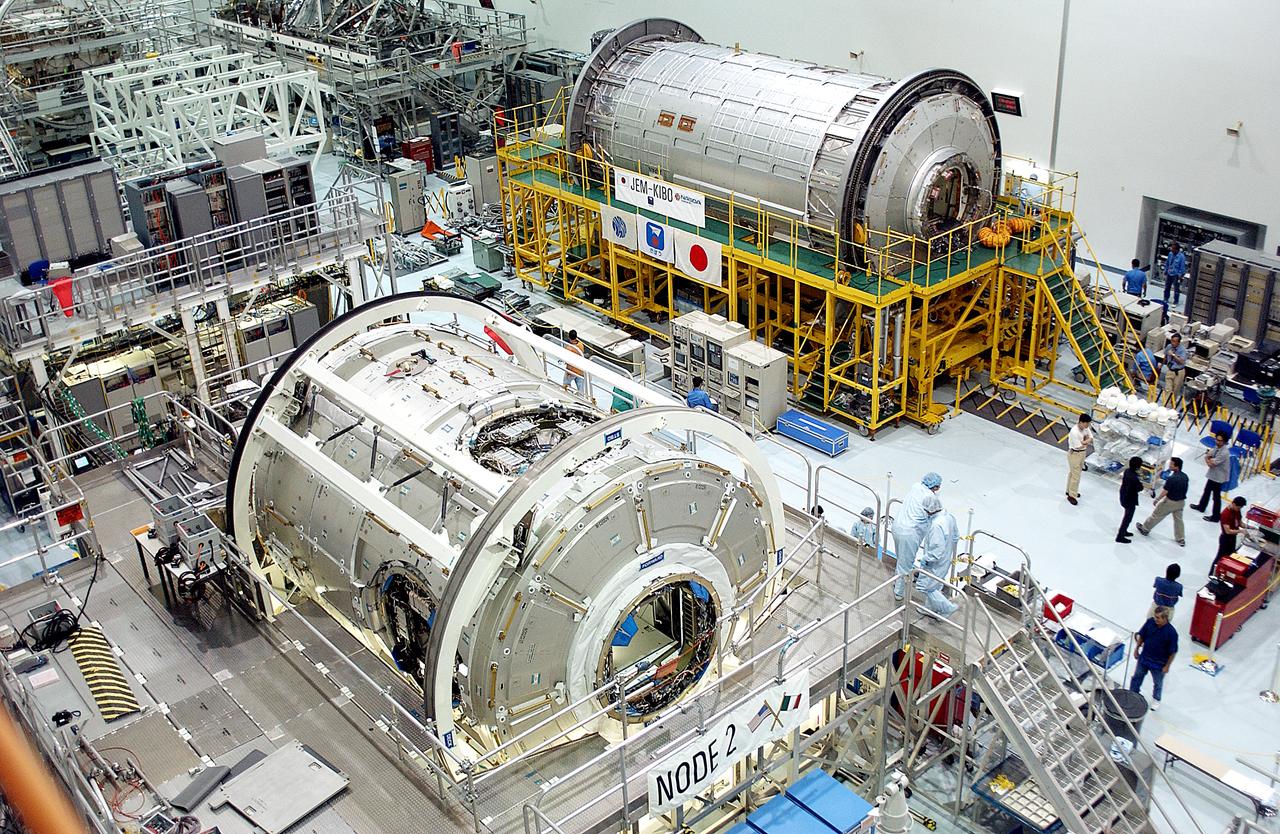
Lining the walls of the Space Station Processing Facility at the Kennedy Space Center (KSC) are the launch awaiting U.S. Node 2 (lower left). and the first pressurized module of the Japanese Experimental Module (JEM) (upper right), named "Kibo" (Hope). Node 2, the "utility hub" and second of three connectors between International Space Station (ISS) modules, was built in the Torino, Italy facility of Alenia Spazio, an International contractor based in Rome. Japan's major contribution to the station, the JEM, was built by the Space Development Agency of Japan (NASDA) at the Tsukuba Space Center near Tokyo and will expand research capabilities aboard the station. Both were part of an agreement between NASA and the European Space Agency (ESA). The Node 2 will be the next pressurized module installed on the Station. Once the Japanese and European laboratories are attached to it, the resulting roomier Station will expand from the equivalent space of a 3-bedroom house to a 5-bedroom house. The Marshall Space Center in Huntsville, Alabama manages the Node program for NASA.
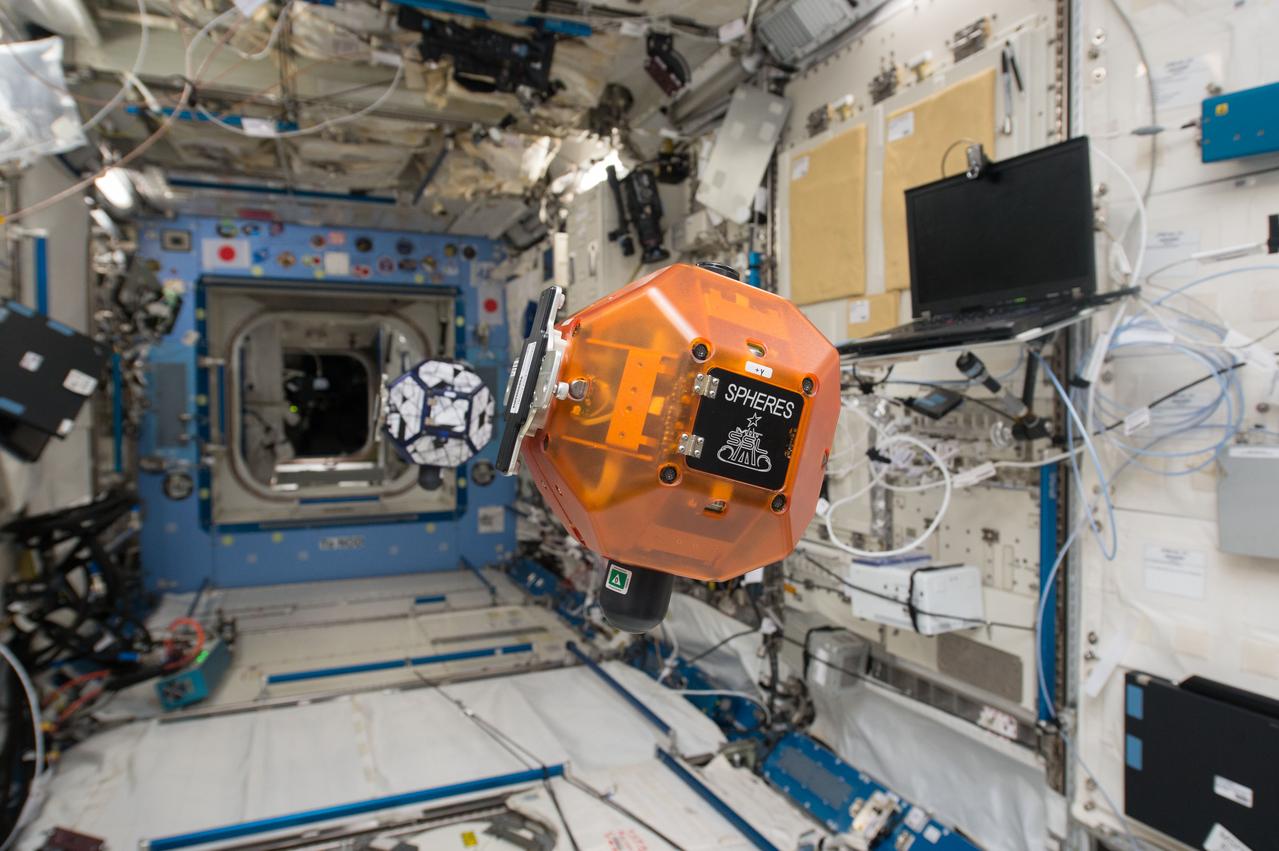
iss042e046207 (12/16/2018) --- Photographic documentation taken during the Synchronized Position Hold Engage and Reorient Experimental Satellites (SPHERES) test run in the Japanese Experiment Module (JEM).
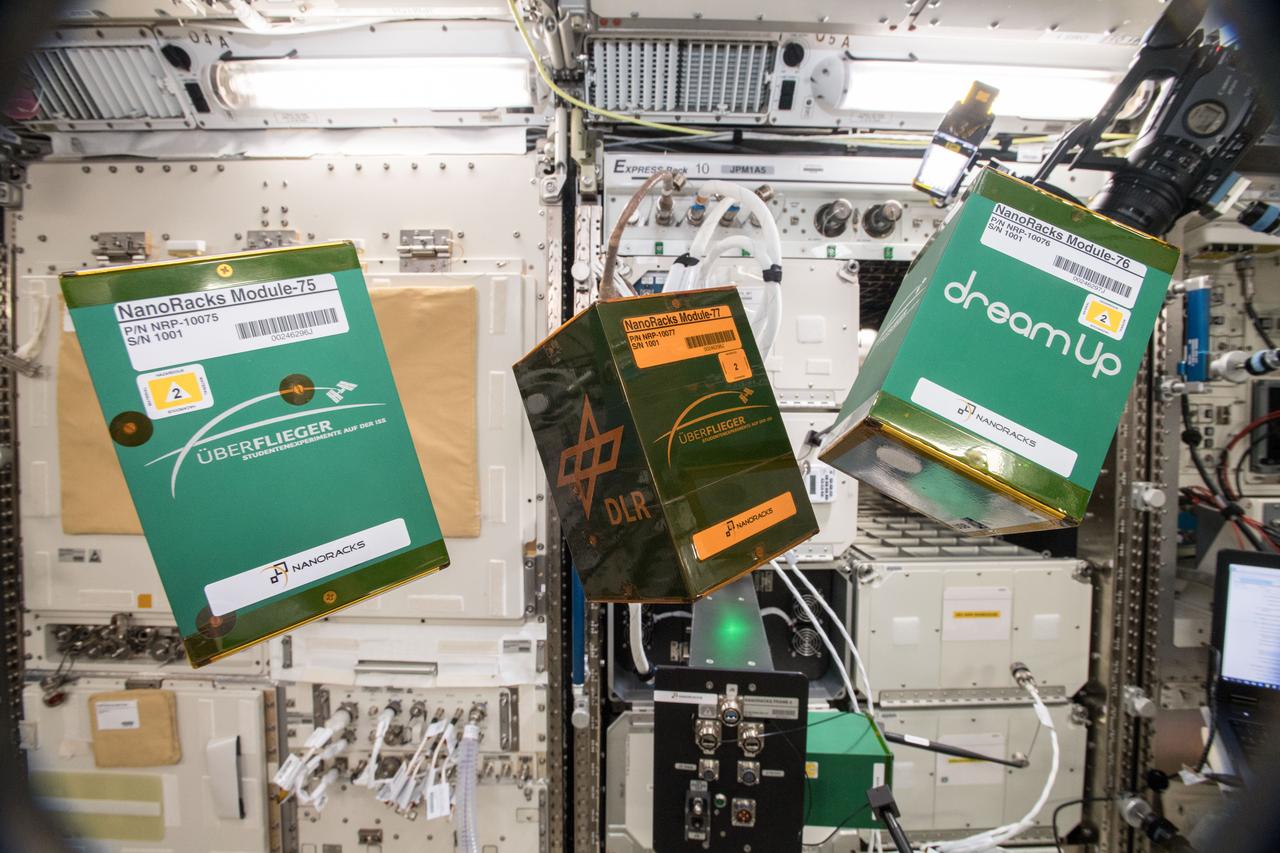
iss057e105661 (11/21/2018) --- A view of (ARISE) - NanoRacks Module-75, the Pump Application using Pulsed Electromagnets for Liquid reLocation (PAPELL) - NanoRacks Module-76 and the Experimental Chondrule Formation at the International Space Station (EXCISS) - NanoRacks Module-77 experiments shown in the Japanese Experiment Module (Kibo).
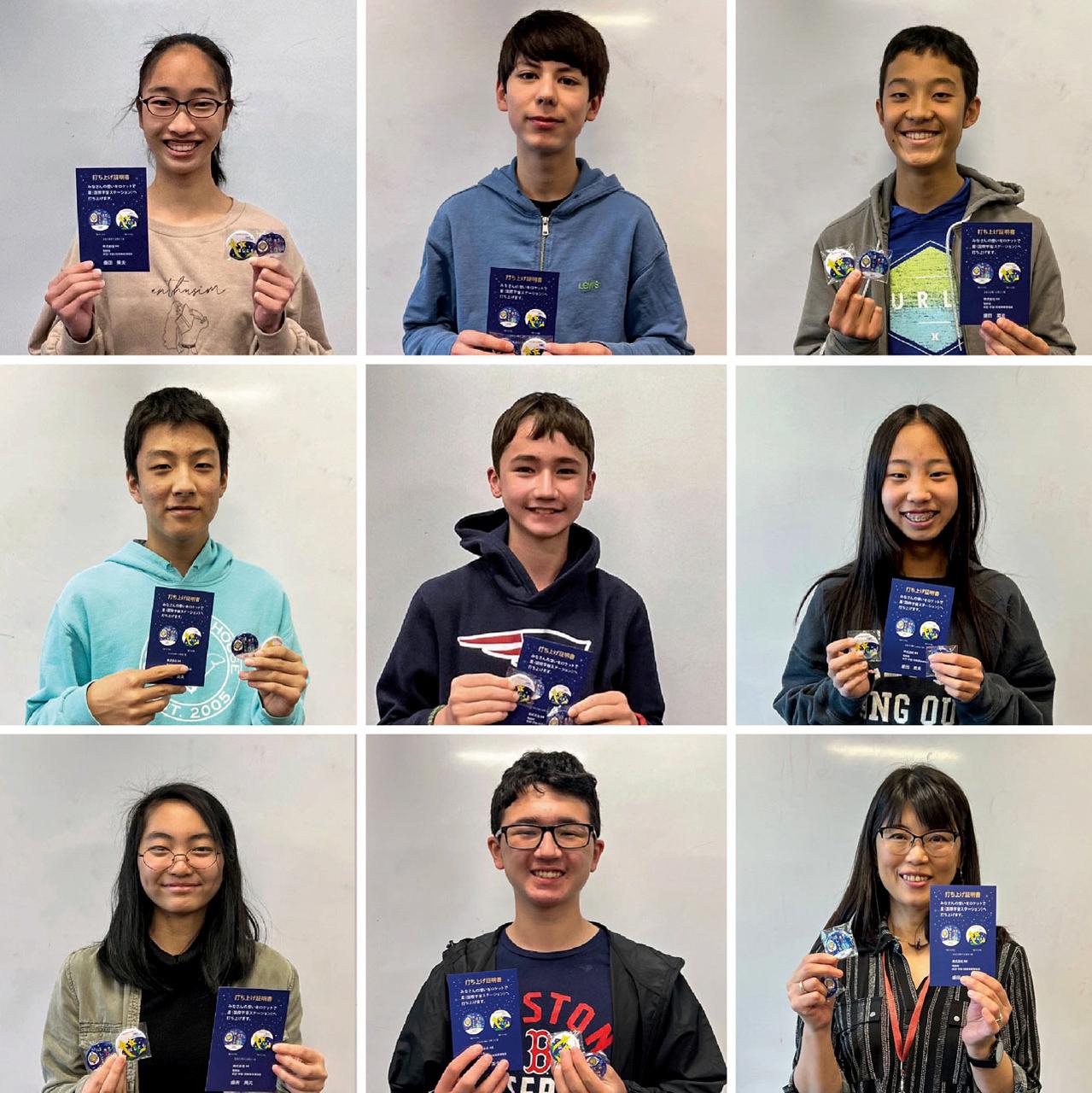
jsc2023e038728 (6/22/2023) --- Students hold Hoshi-Tomo badges at The Japanese Language School in Charlotte, North Carolina. Two types of Hoshi-Tomo badges were designed by students. “Hoshi” implies star(s), planet(s), or the Earth in Japanese. “Tomo” means friend(s) in Japanese. I-Space Essay provides students and teachers the online opportunity to create wishes, which are delivered to the International Space Station's Japanese Experimental Module Kibo. Image courtesy of Mitsumura-Tosho and IHI Corporation.
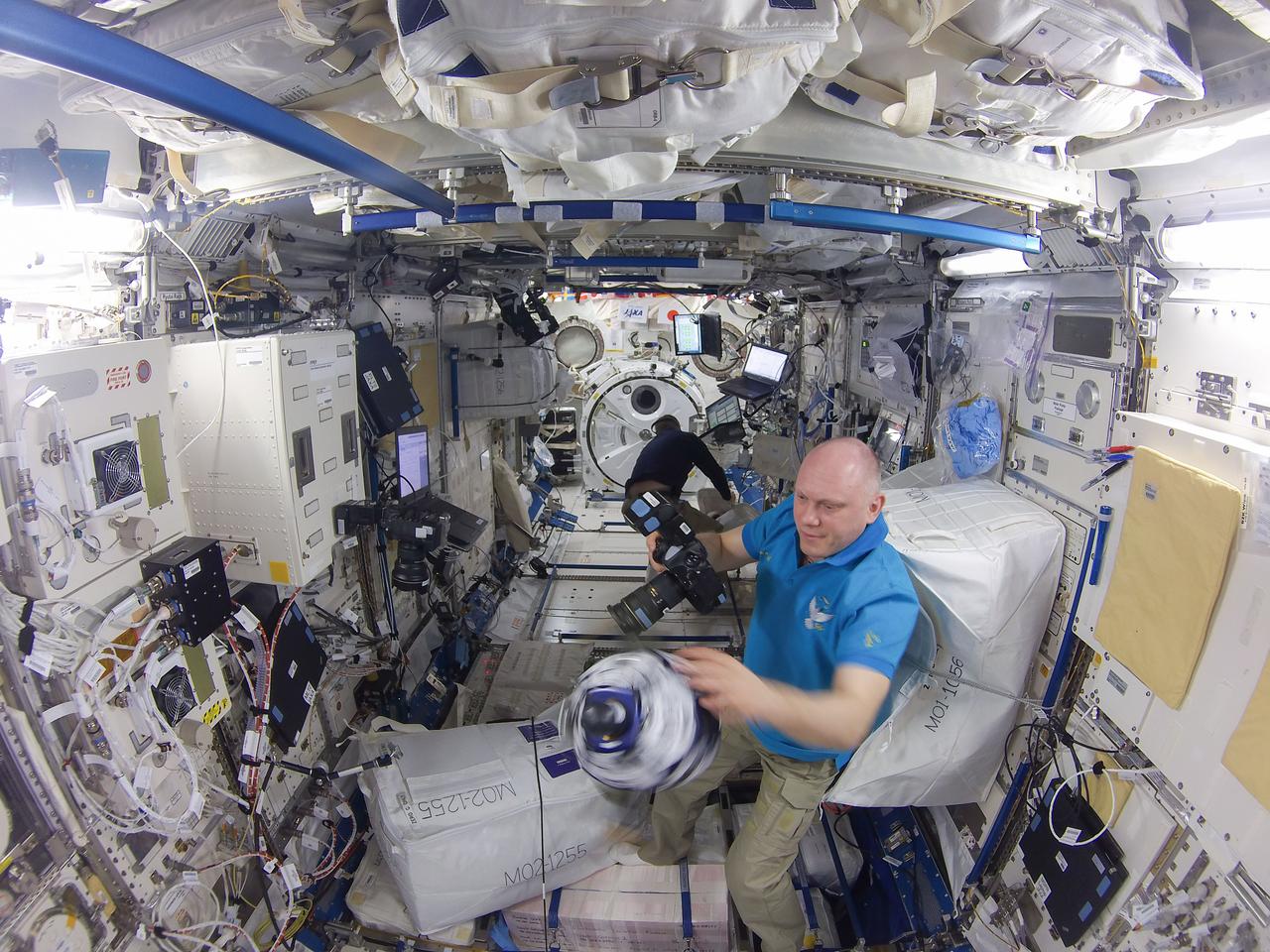
iss056e050302 (6/28/2018) --- Cosmonaut Oleg Artemyev and NASA astronaut Ricky Arnold during the Synchronized Position Hold Engage and Reorient Experimental Satellites (SPHERES) maintenance session two, in the Japanese Experiment Module (JEM) Pressurized Module (JPM).
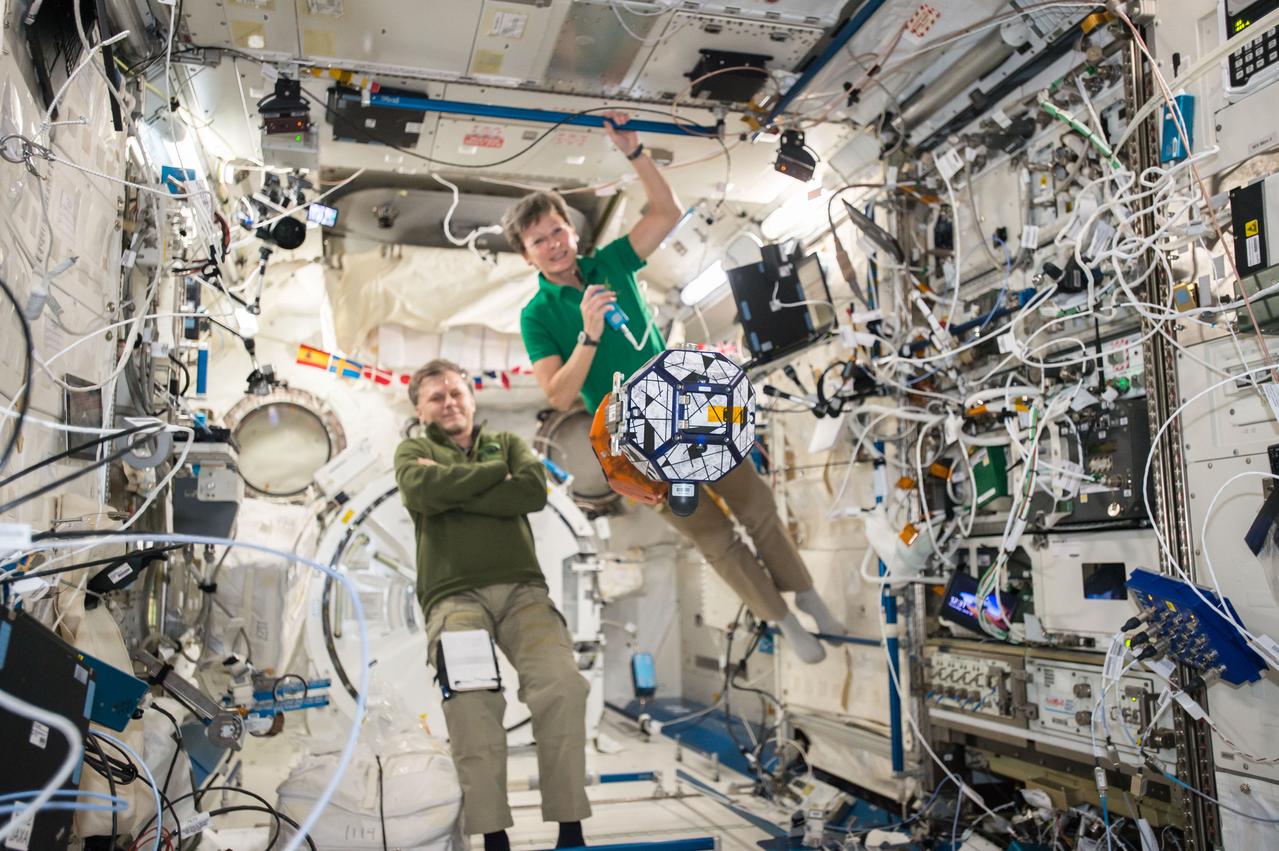
iss050e036008 (1/27/2017) --- NASA astronaut Peggy Whitson, and Cosmonaut Andrei Borisenko setting up cameras and performing Synchronized Position Hold, Engage, Reorient, Experimental Satellites (SPHERES) Zero Robotics tests, in the Japanese Experiment Module (JEM) Pressurized Module (JPM).
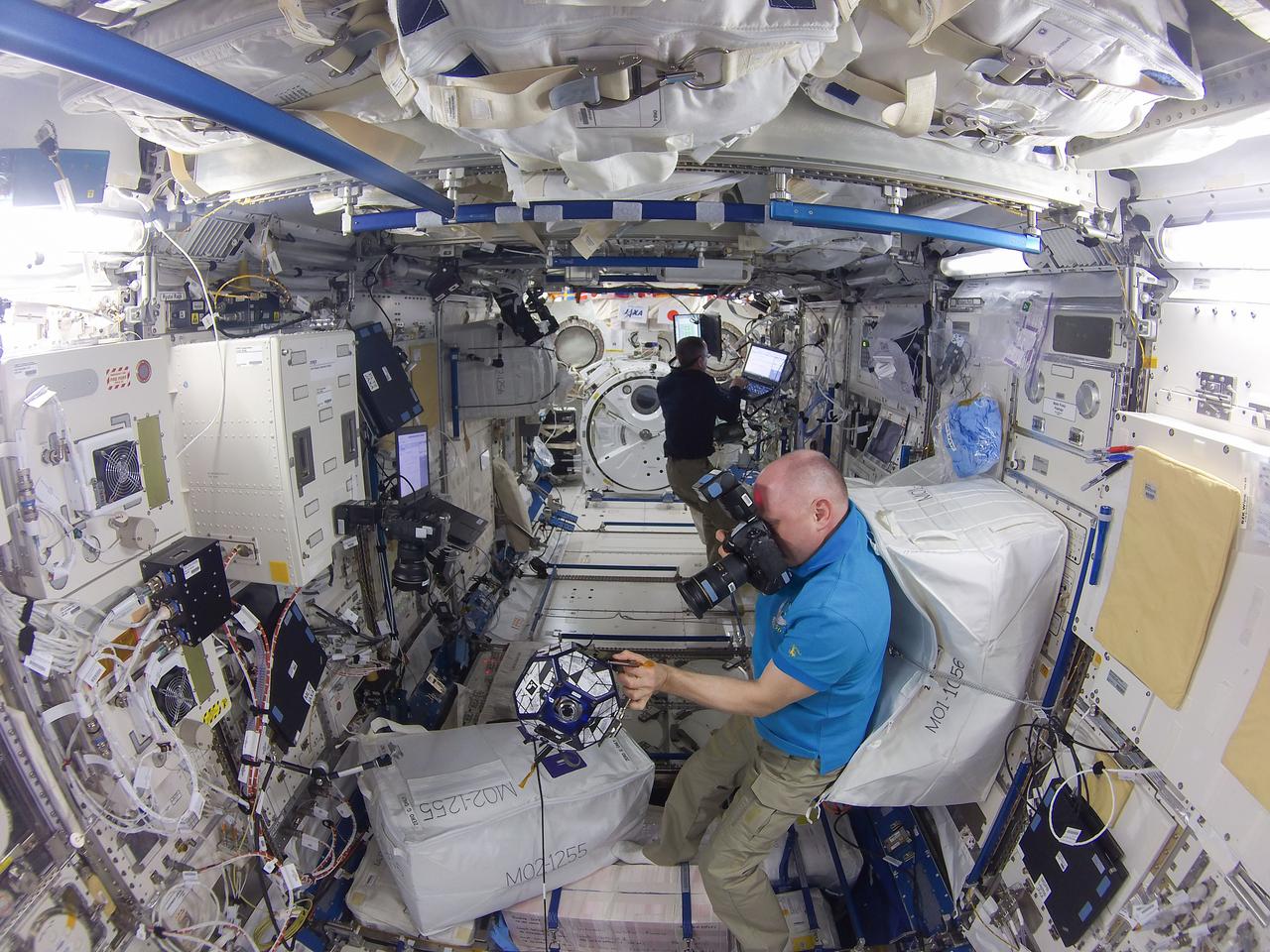
iss056e050304 (6/28/2018) --- Cosmonaut Oleg Artemyev and NASA astronaut Ricky Arnold during the Synchronized Position Hold Engage and Reorient Experimental Satellites (SPHERES) maintenance session two, in the Japanese Experiment Module (JEM) Pressurized Module (JPM).
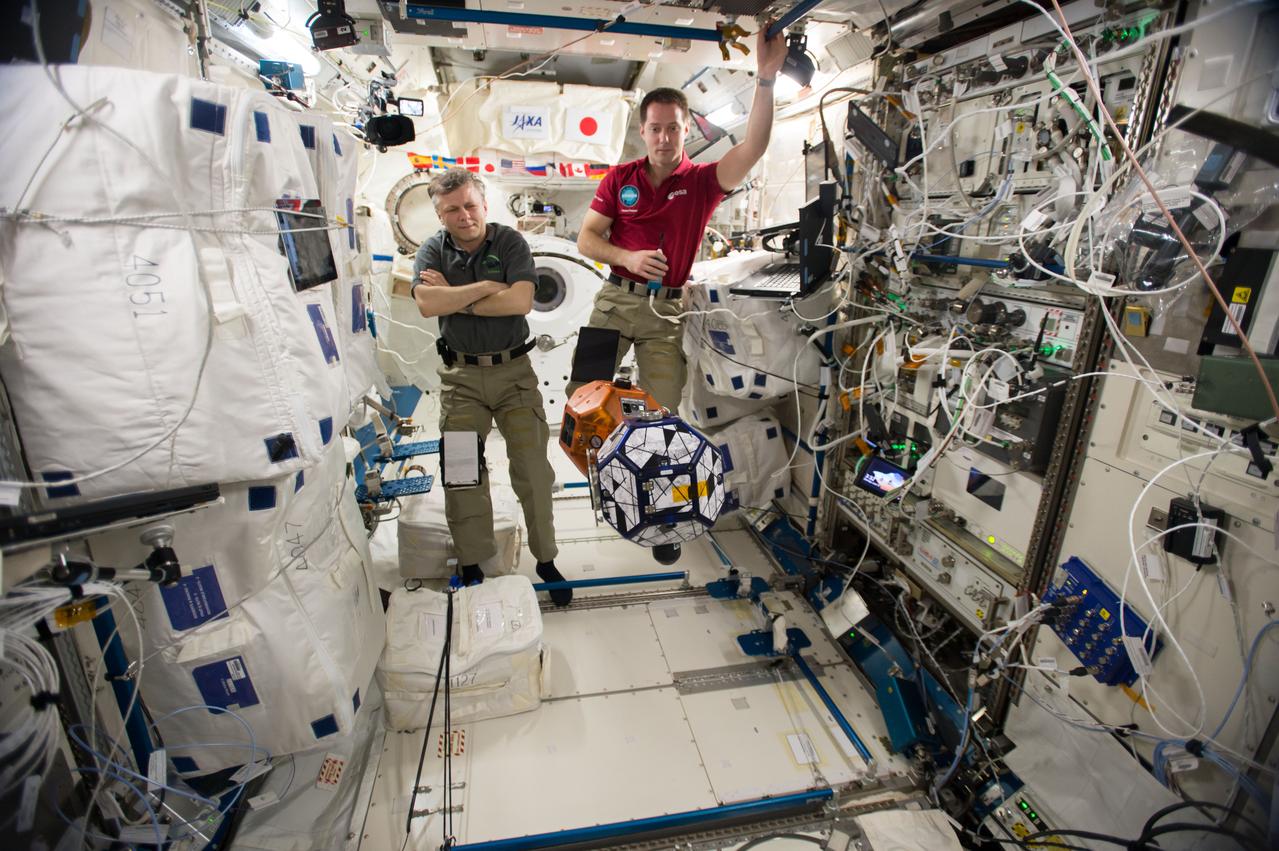
iss050e031138 (1/16/2017) --- A view of Cosmonaut Andrei Borisenko, and European Space Agency (ESA) astronaut Thomas Pesquet during set up and execution of Synchronized Position Hold, Engage, Reorient, Experimental Satellites (SPHERES) hardware dry run for the Zero Robotics, in the Japanese Experiment Module (JEM) Pressurized Module.
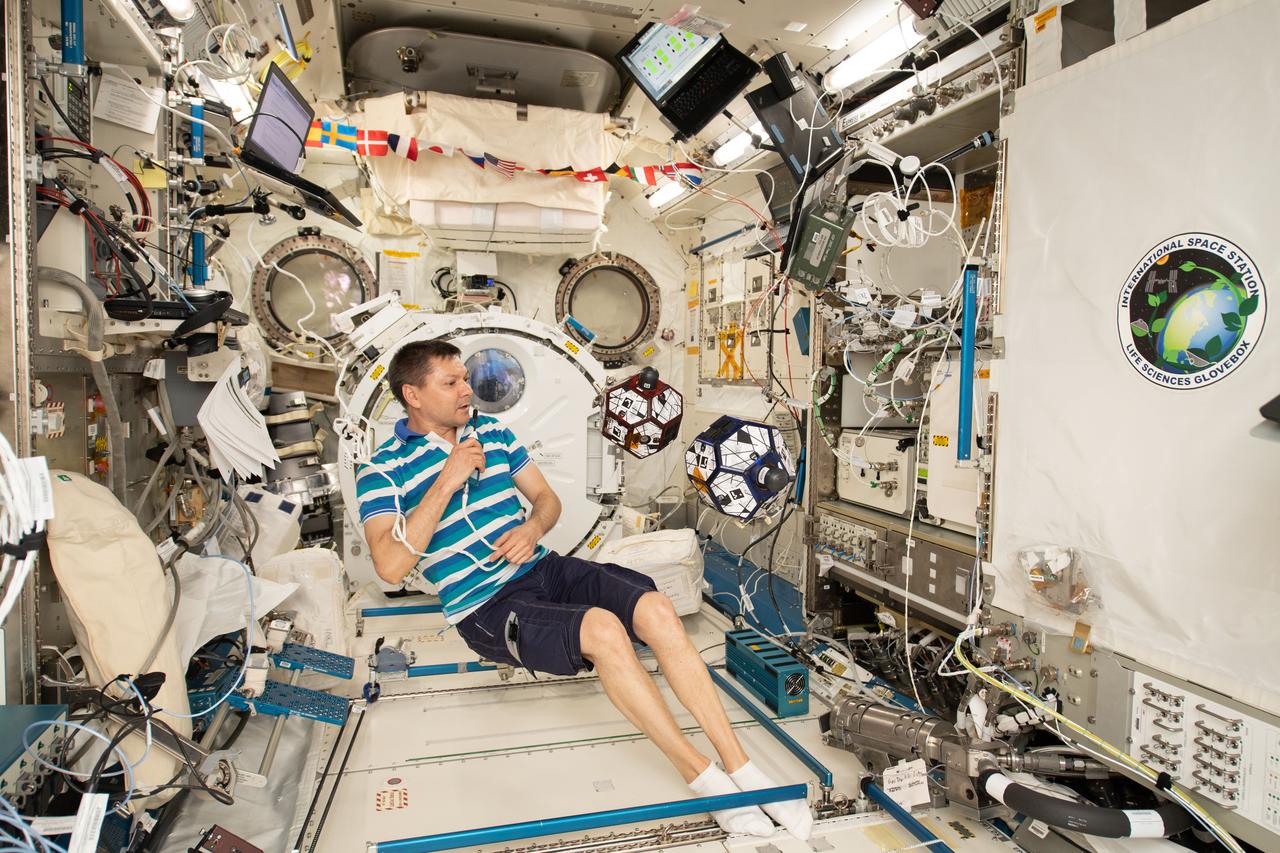
iss058e003128 (Jan. 14, 2019) --- Commander Oleg Kononenko works inside the Japanese Kibo lab module monitoring a pair of tiny internal free-flying satellites known as SPHERES (Synchronized Position Hold, Engage, Reorient, Experimental Satellites). High school students compete to design the best algorithms that control the basketball-sized satellites to mimic spacecraft maneuvers and formation flying.
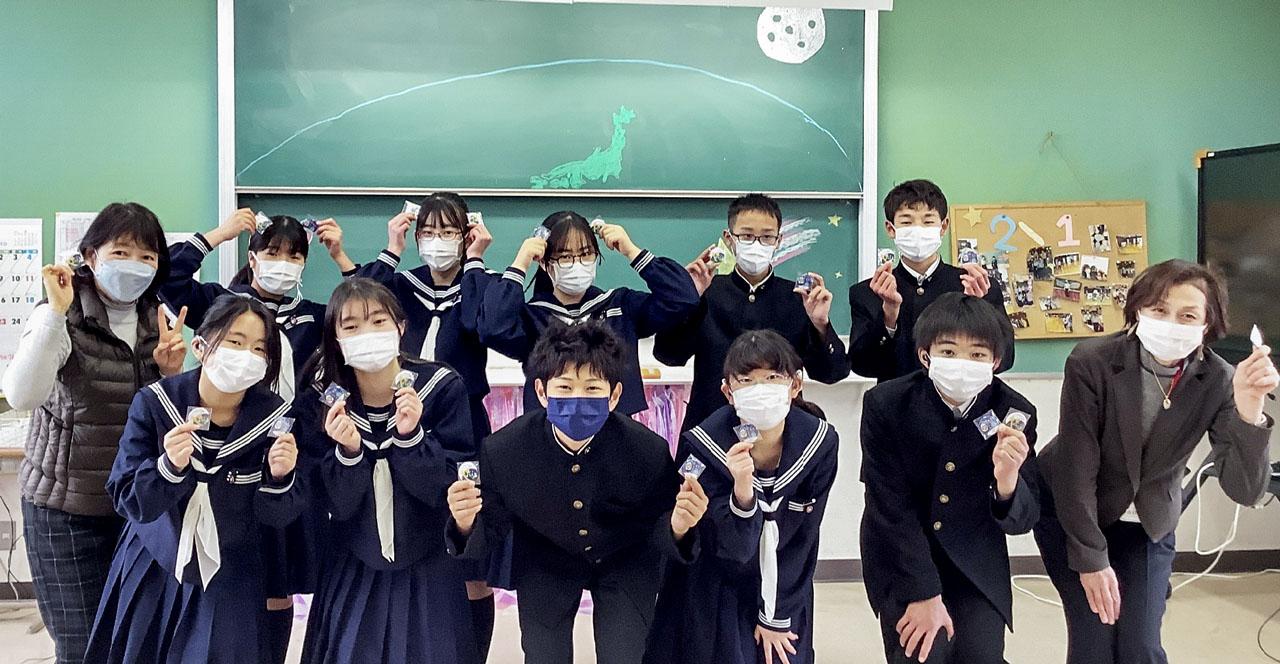
jsc2023e038730 (6/22/2023) --- Students at Nara Prefectural School for the Deaf in Nara, Japan hold Hoshi-Tomo badges. Two types of Hoshi-Tomo badges were designed by students. “Hoshi” implies star(s), planet(s), or the Earth in Japanese. “Tomo” means friend(s) in Japanese. I-Space Essay provides students and teachers the online opportunity to create wishes, which are delivered to the International Space Station's Japanese Experimental Module Kibo. Image courtesy of Mitsumura-Tosho and IHI Corporation.
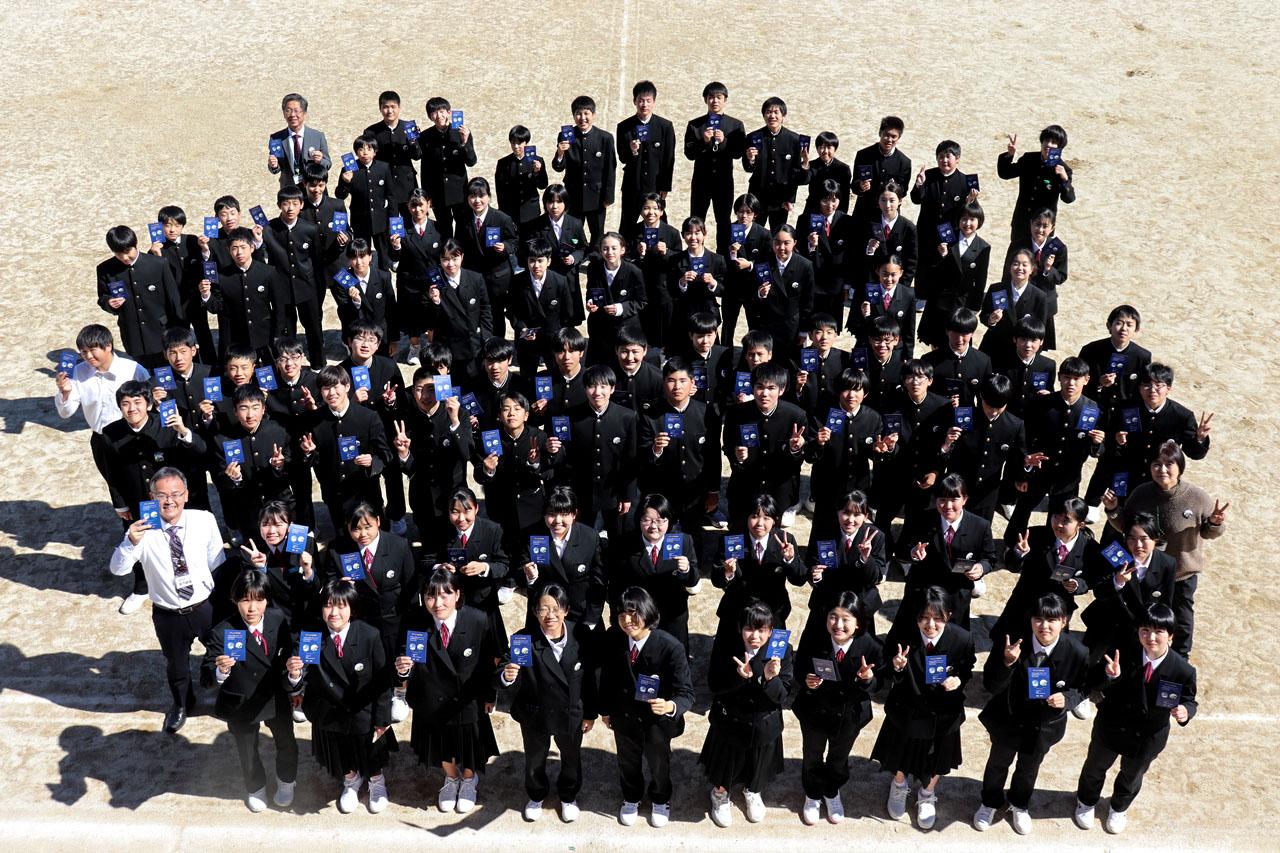
jsc2023e038729 (6/22/2023) --- Students at Misho Junior High School in Ehime, Japan hold Hoshi-Tomo badges. Two types of Hoshi-Tomo badges were designed by students. “Hoshi” implies star(s), planet(s), or the Earth in Japanese. “Tomo” means friend(s) in Japanese. I-Space Essay provides students and teachers the online opportunity to create wishes, which are delivered to the International Space Station's Japanese Experimental Module Kibo. Image courtesy of Mitsumura-Tosho and IHI Corporation.
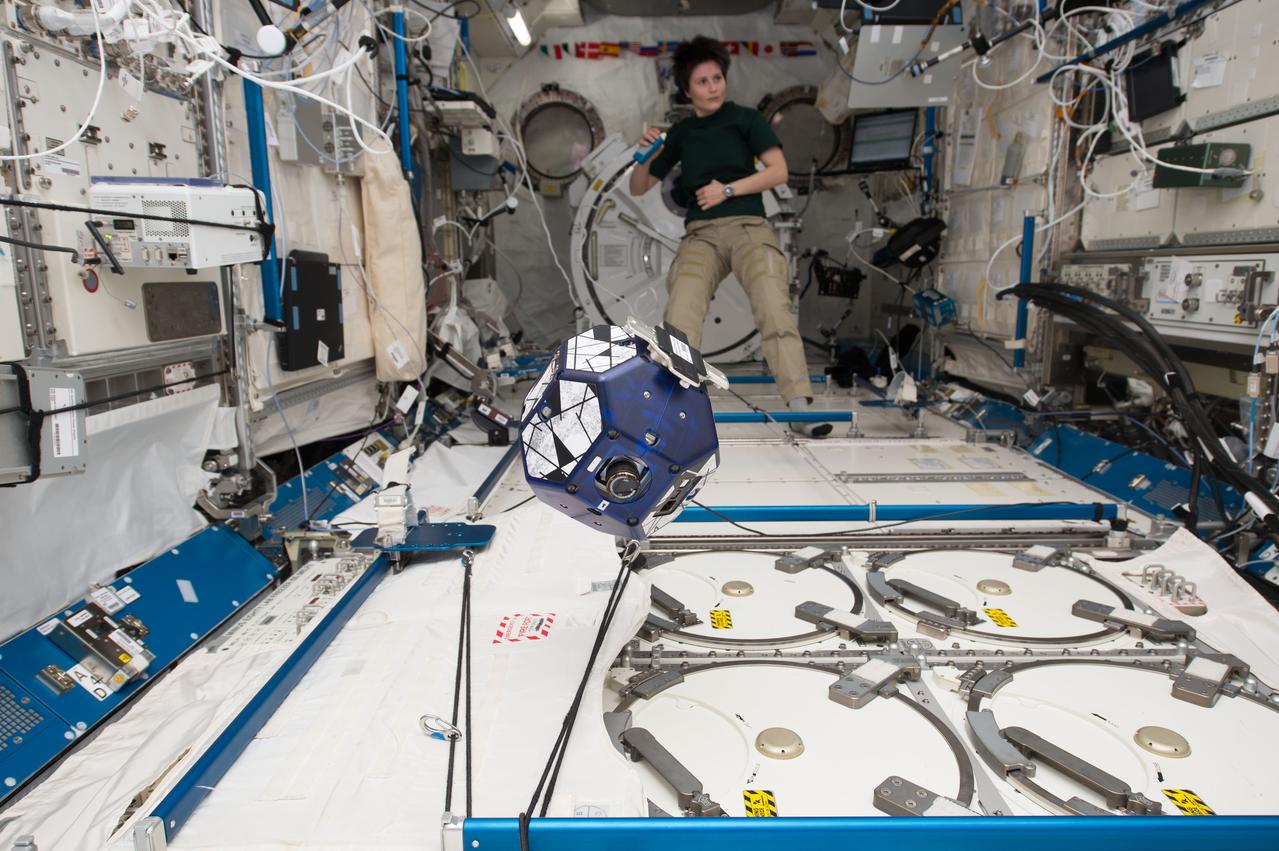
iss042e046171 (12/16/2018) --- Photographic documentation taken during the Synchronized Position Hold Engage and Reorient Experimental Satellites (SPHERES) test run in the Japanese Experiment Module (JEM). European Space Agency (ESA) astronaut Samantha Cristoforetti is visible conducting the test.
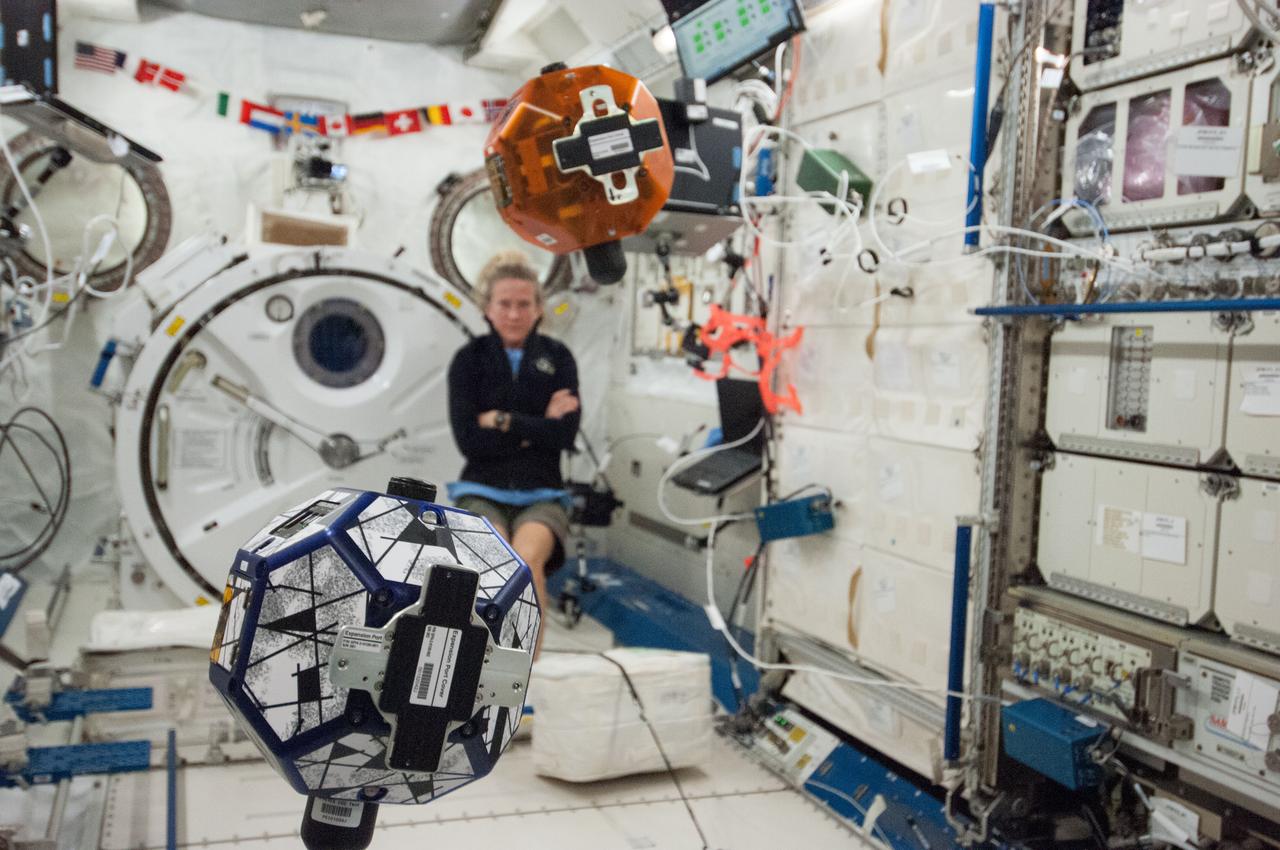
Astronaut Karen Nyberg, Expedition 36 flight engineer, conducts a session with the bowling-ball-sized free-flying satellite known as Synchronized Position Hold, Engage, Reorient, Experimental Satellites, or SPHERES in the International Space Stations Japanese Experiment Module (JEM) Kibo laboratory. Also sent as Twitter message.
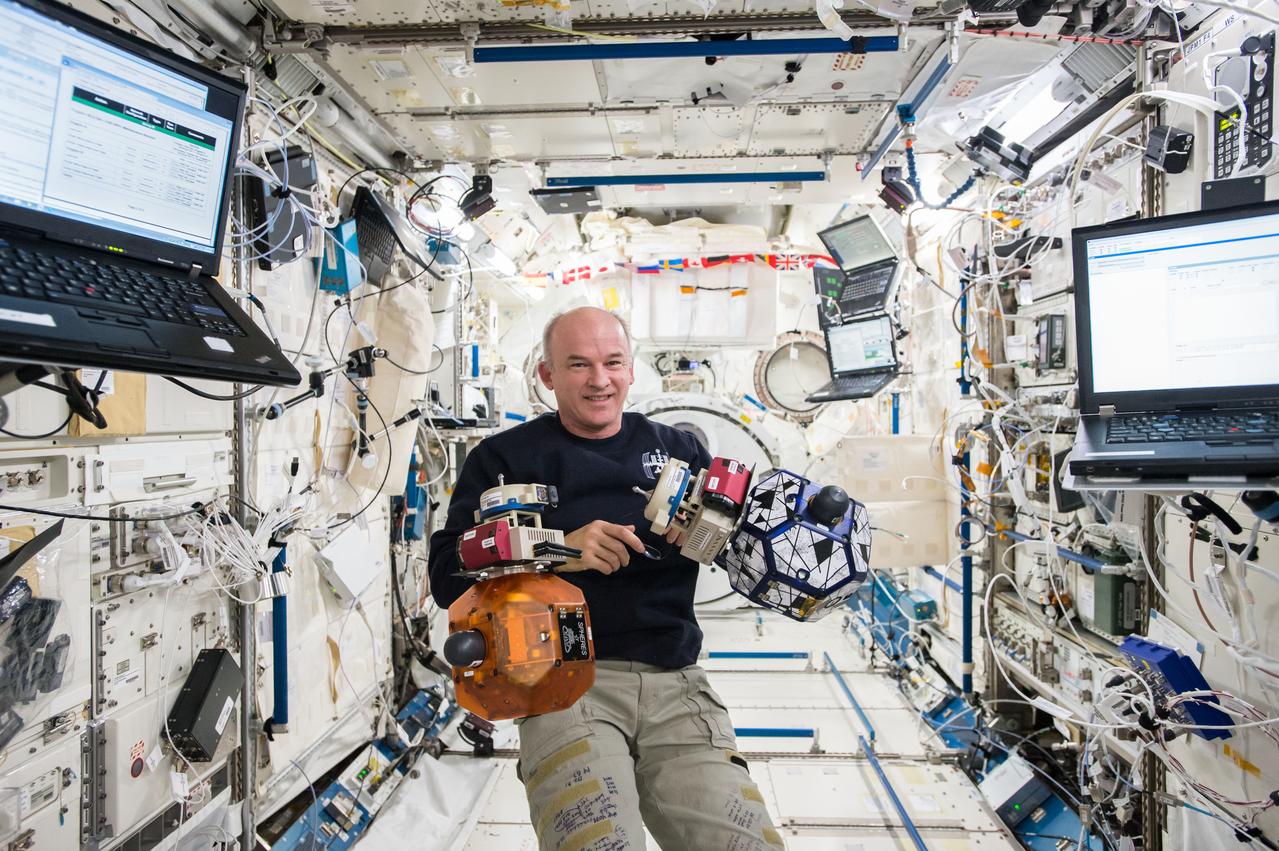
iss048e017435 (6/30/2016) --- Commander Jeff Williams monitors bowling ball-sized internal satellites known as SPHERES (Synchronized Position Hold, Engage, Reorient, Experimental Satellites) during a maintenance run in the Japanese Kibo Laboratory Module.
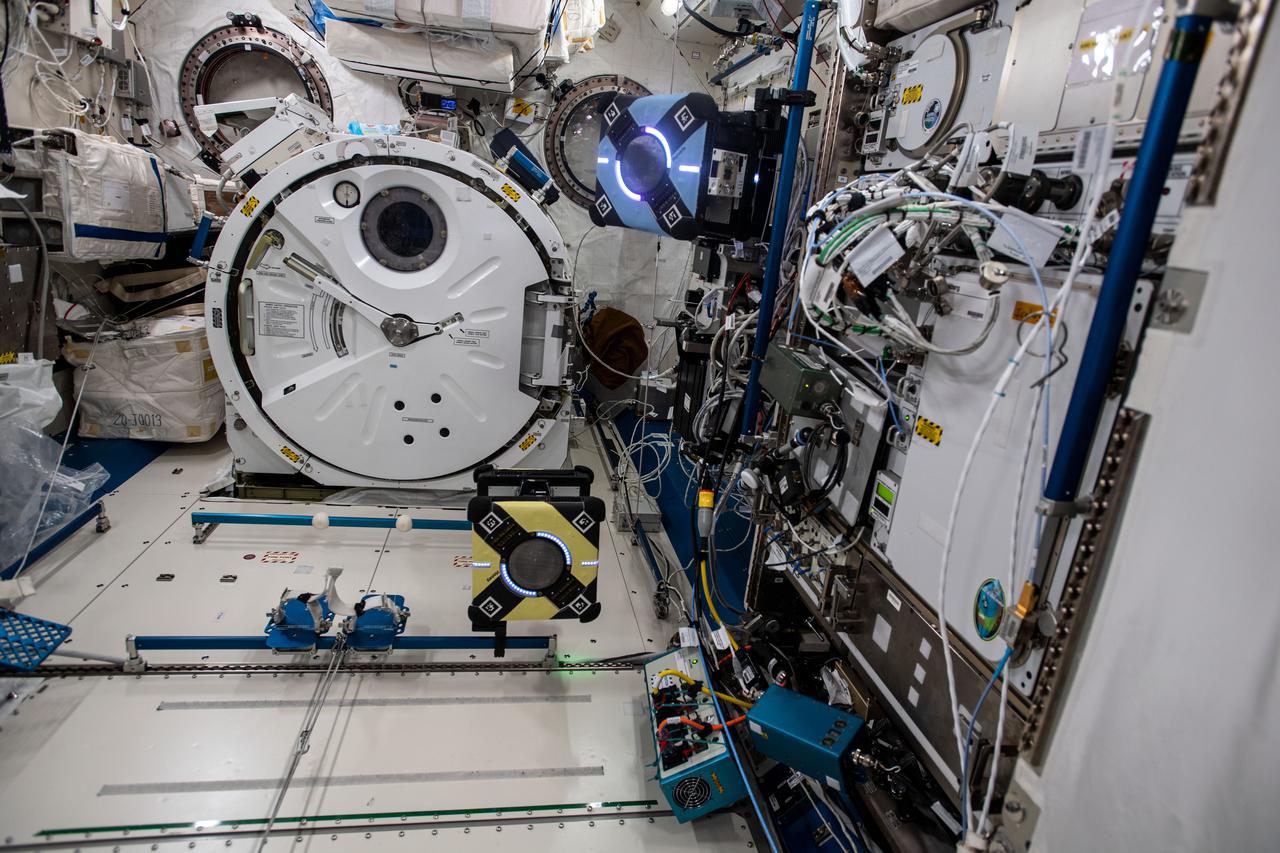
iss064e029291 (Feb. 4, 2021) --- A pair of Astrobee experimental robotic assistants are pictured flying around inside the Japanese Kibo laboratory module. The cube-shaped, toaster-sized robots were being tested for their ability to autonomously navigate and maneuver inside the International Space Station.
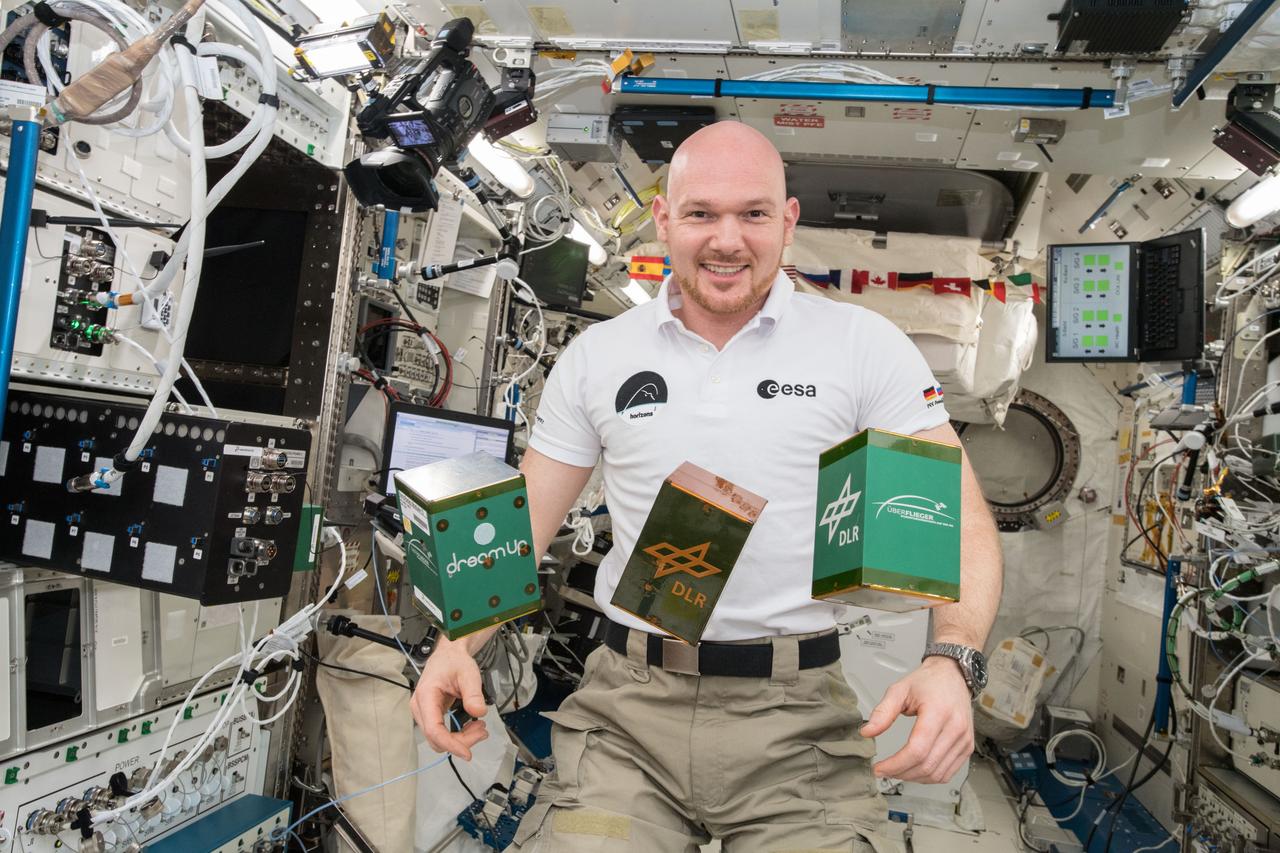
iss057e105672 (11/21/2018) --- (11/21/2018) --- A view of European Space Agency (ESA) astronaut Alexander Gerst with the (ARISE) - NanoRacks Module-75, the Pump Application using Pulsed Electromagnets for Liquid reLocation (PAPELL) - NanoRacks Module-76 and the Experimental Chondrule Formation at the International Space Station (EXCISS) - NanoRacks Module-77 experiments shown in the Japanese Experiment Module (Kibo).
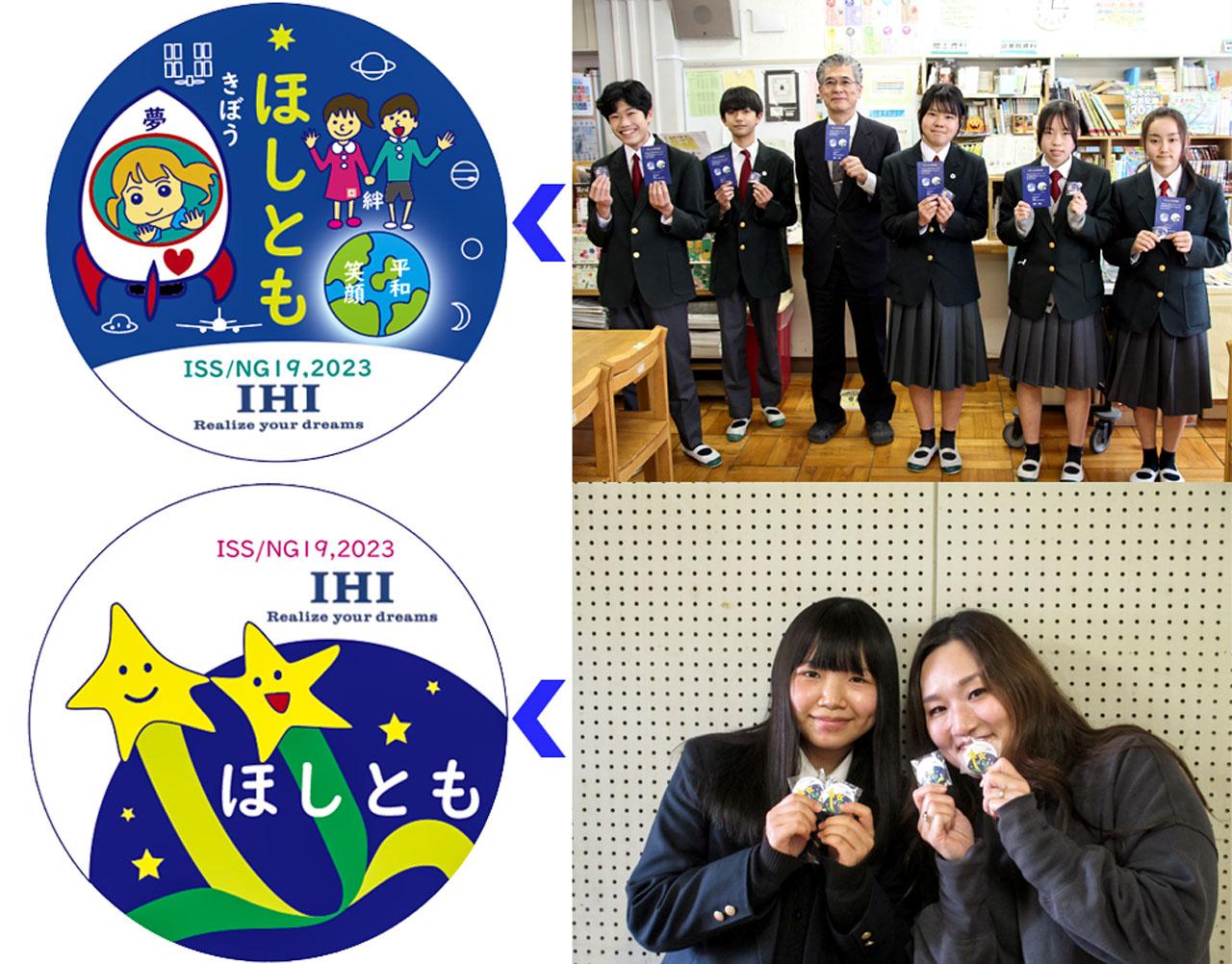
jsc2023e038731 (6/22/2023) --- Two types of Hoshi-Tomo badges were designed by students. “Hoshi” implies star(s), planet(s), or the Earth in Japanese. “Tomo” means friend(s) in Japanese. Top: The Design Team (five students) at Mizuho Junior High School (Japan, Tokyo). Bottom: The Designer (one student) at Mizuho Dai-Ni Junior High School (Japan, Tokyo). I-Space Essay provides students and teachers the online opportunity to create wishes, which are delivered to the International Space Station's Japanese Experimental Module Kibo. Image courtesy of Mizuho Town Education Board and IHI Corporation.
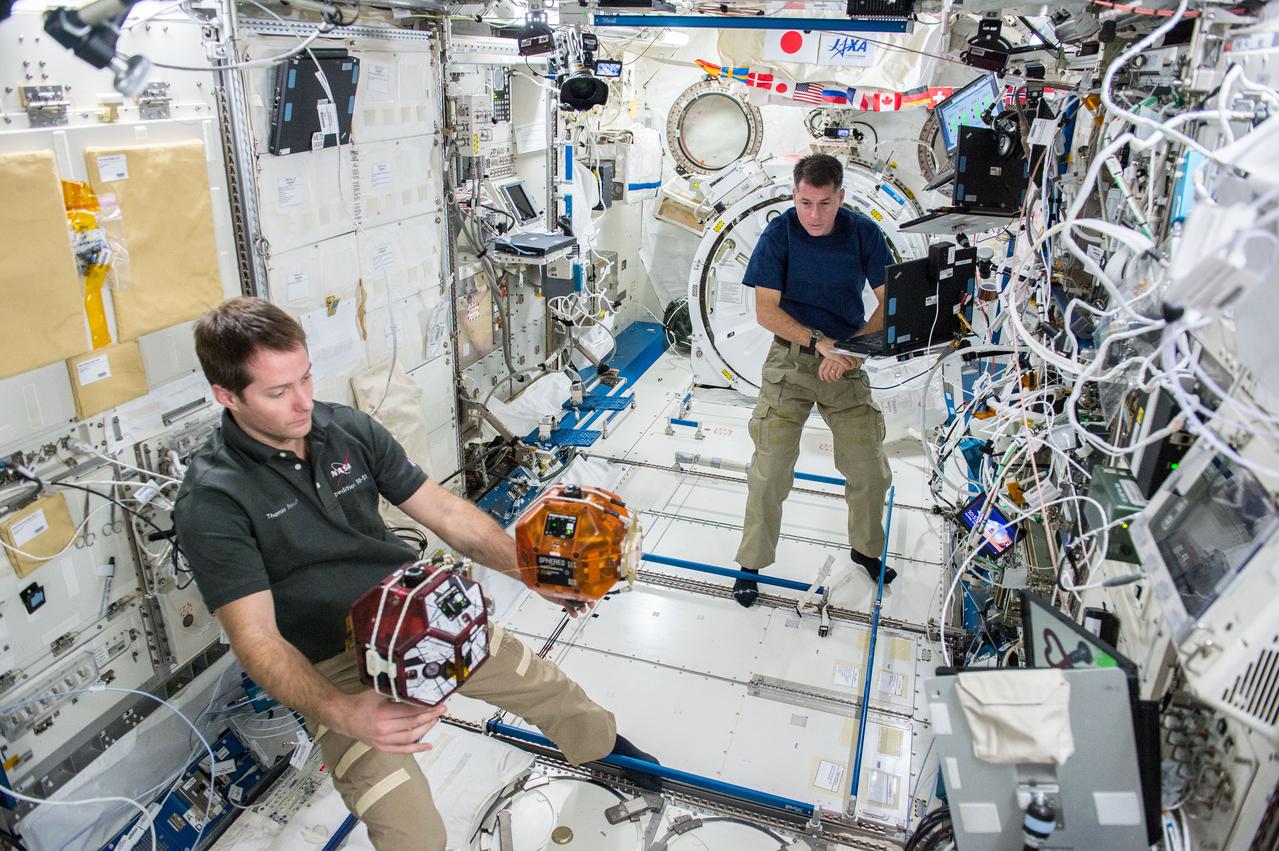
iss050e013146 (12/1/2016) --- NASA astronaut Shane Kimbrough and European Space Agency (ESA) astronaut Thomas Pesquet during the Synchronized Position Hold, Engage, Reorient, Experimental Satellites Tether Demo, in the Japanese Experiment Module (JEM) Pressurized Module (JPM). The SPHERES Tether Demo studies the dynamics of a tethered capture object and a “space tug” chase vehicle, improving computer programs needed for removing space debris as well as capturing scientific samples from other planets.
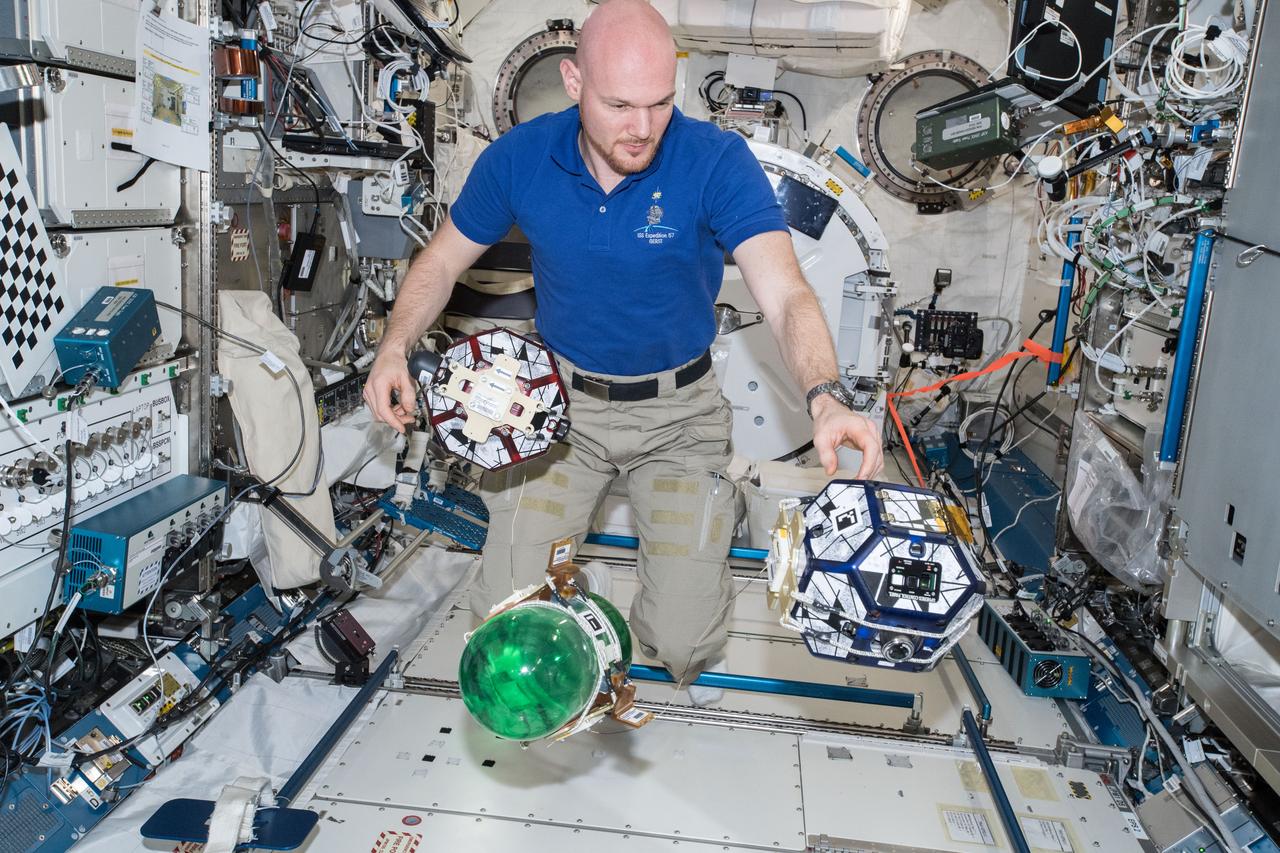
iss057e055052 (10/18/2018) --- European Space Agency astronaut Alexander Gerst is photographed during a Synchronized Position Hold, Engage, Reorient, Experimental Satellites (SPHERES) Tether Slosh experiment test session run. Photo was taken in the Kibo Japanese Experiment Pressurized Module (JPM) aboard the International Space Station (ISS). SPHERES Tether Slosh combines fluid dynamics equipment with robotic capabilities aboard the ISS to investigate automated strategies for steering passive cargo that contain fluids.
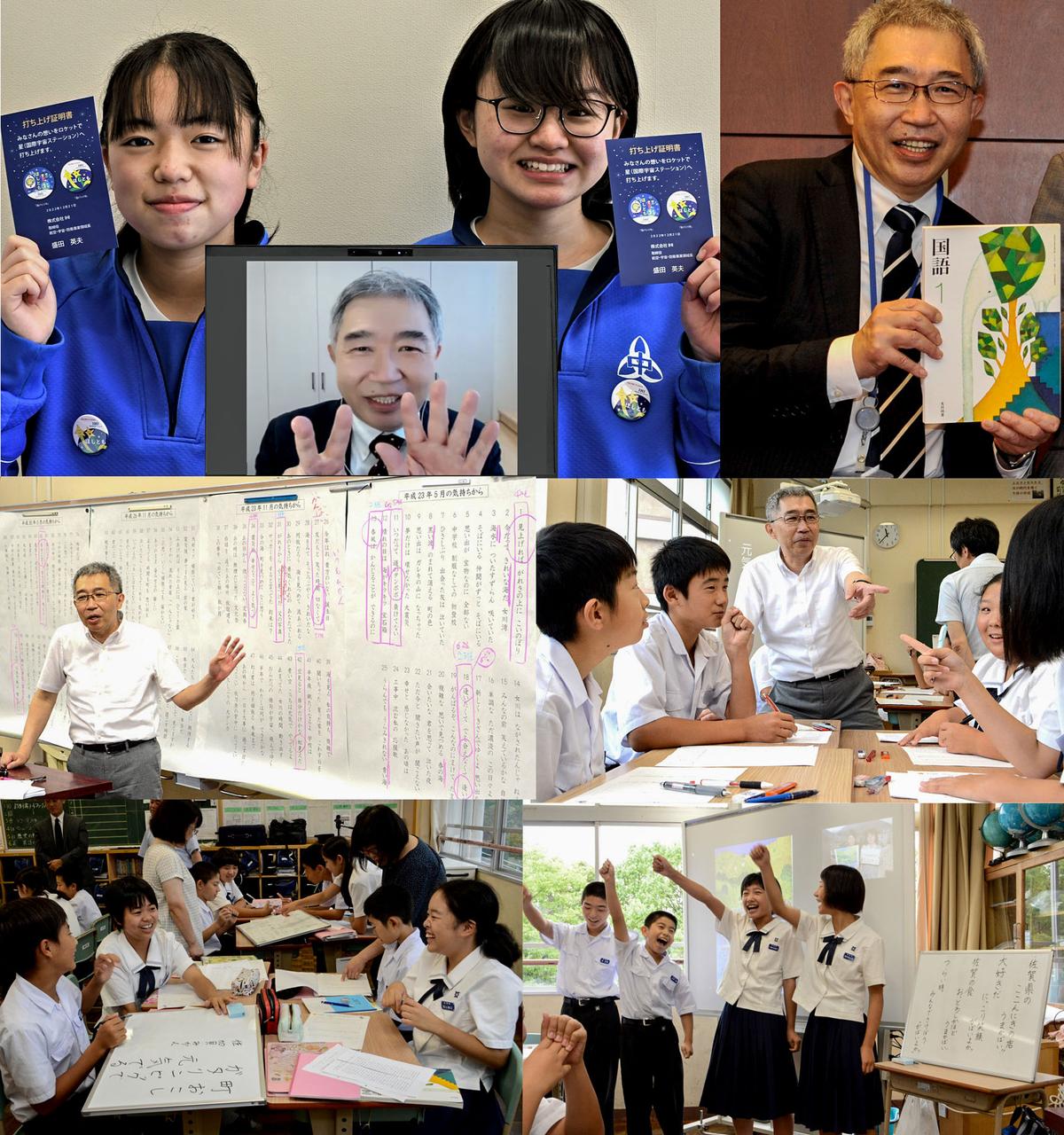
jsc2023e038727 (6/22/2023) --- Principal Investigator Yamanaka Tsutomu conducted online and in-person lectures for students. I-Space Essay provides students and teachers the online opportunity to create wishes, which are delivered to the International Space Station's Japanese Experimental Module Kibo. In 2022, about 8,000 students from 35 elementary, junior high and high schools in 7 countries (Japan, USA, Australia, Germany, UK, Spain, and South Africa) joined this internet-based project. Image courtesy of Mitsumura-Tosho and IHI Corporation.
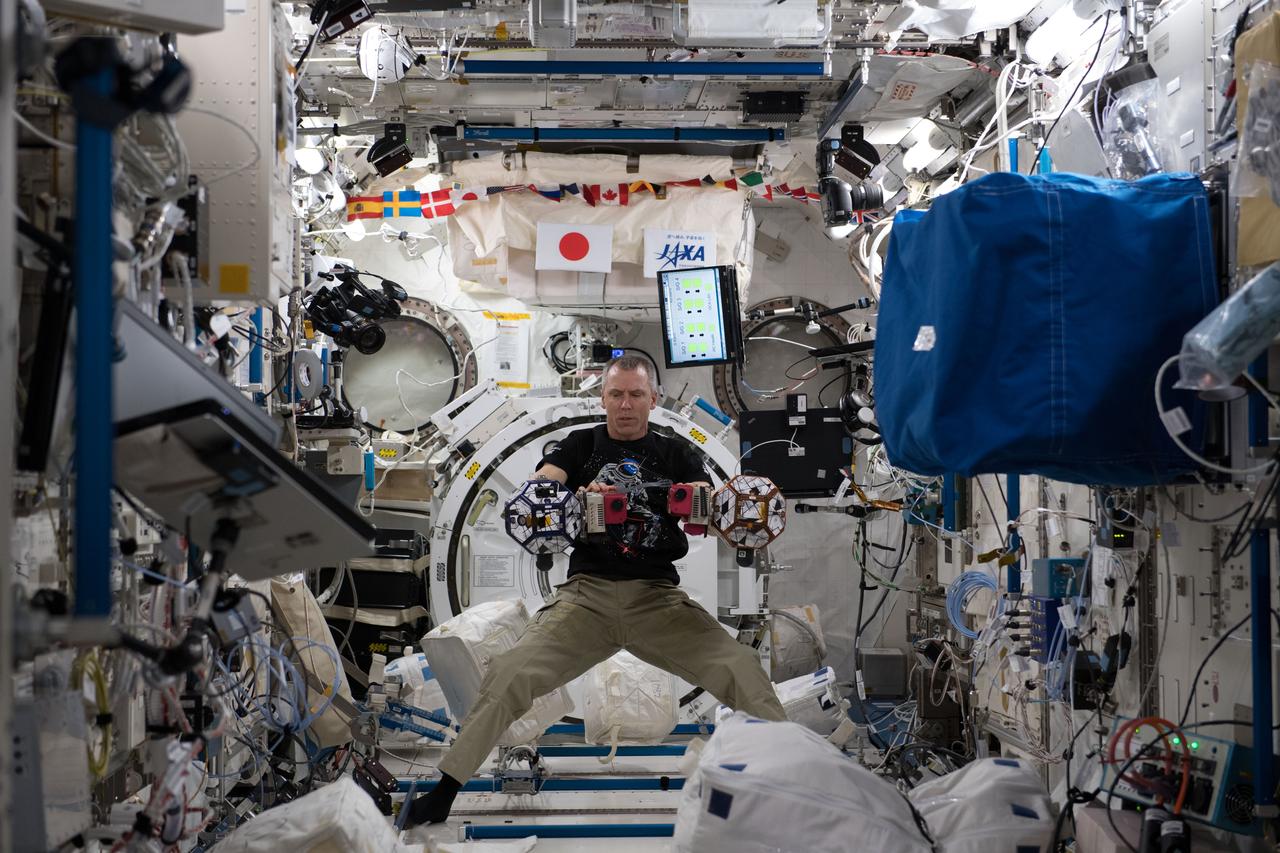
iss055e008318 (April 2, 2018) --- Expedition 55 Flight Engineer Drew Feustel works inside the Japanese Kibo laboratory module with tiny internal satellites known as SPHERES, or Synchronized Position Hold, Engage, Reorient, Experimental Satellites. Feustel was operating the SPHERES for the Smoothing-Based Relative Navigation (SmoothNav) experiment which is developing an algorithm to obtain the most probable estimate of the relative positions and velocities between all spacecraft using all available sensor information, including past measurements.
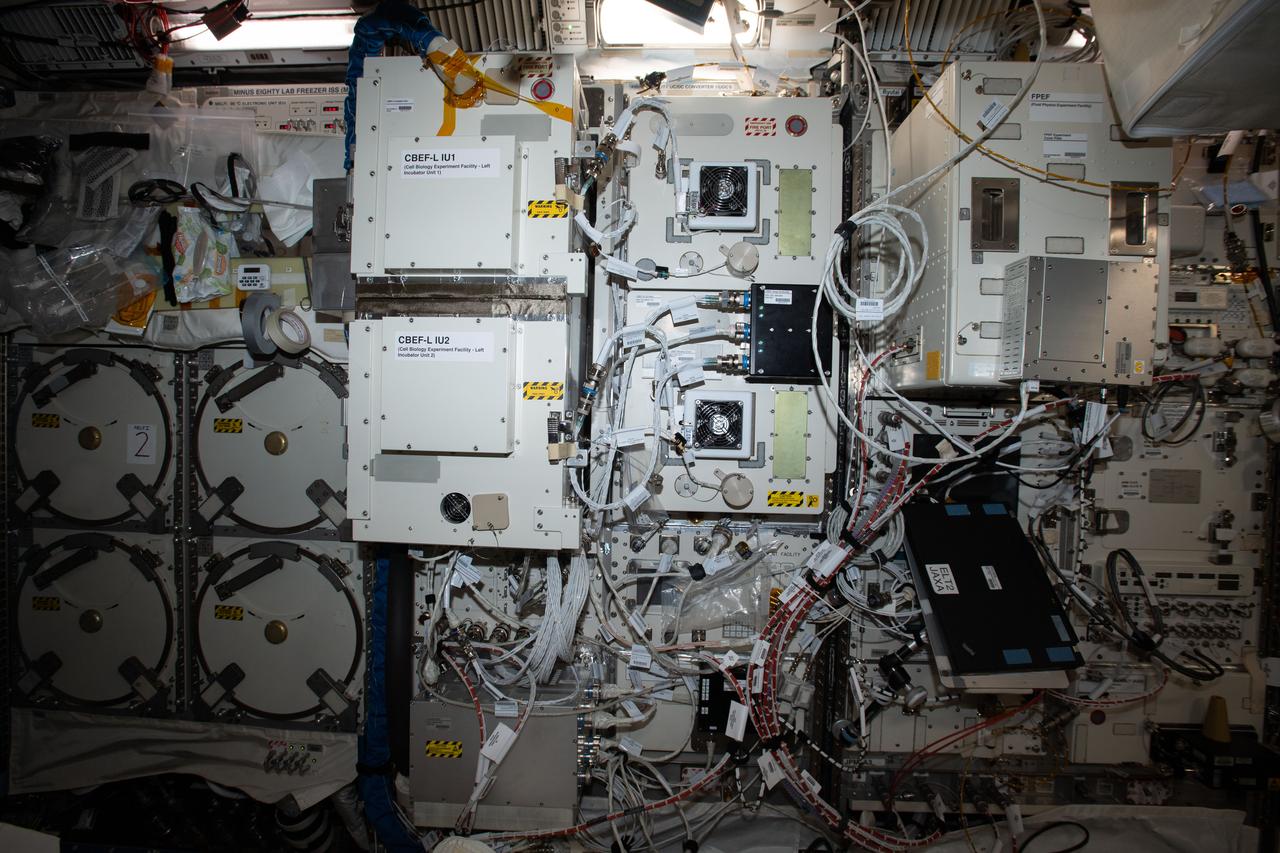
iss062e103684 (3/21/2020) --- A view of the rack containing CBEF-L (Cell Biology Experiment Facility-L) IU1 and CBEF-L IU2 in the Japanese Experiment Module (JEM) Pressurized Module (JPM). aboard the International Space Station (ISS). Cell Biology Experiment Facility-L (CBEF-L) is a Japan Aerospace Exploration Agency (JAXA) new subrack facility, which is an upgraded facility of the original Cell Biology Experiment Facility (CBEF) currently aboard the International Space Station (ISS). CBEF-L provides new capabilities with additional new resources such as Full High Definition video interface, Ethernet, 24 VDC power supply, and a larger diameter centrifugal test environment. By using the original CBEF and CBEF-L as one facility for the same experiment, the payload user is provided with an upgraded experimental environment that can handle the processing of more experimental samples for a wider array of experiments.
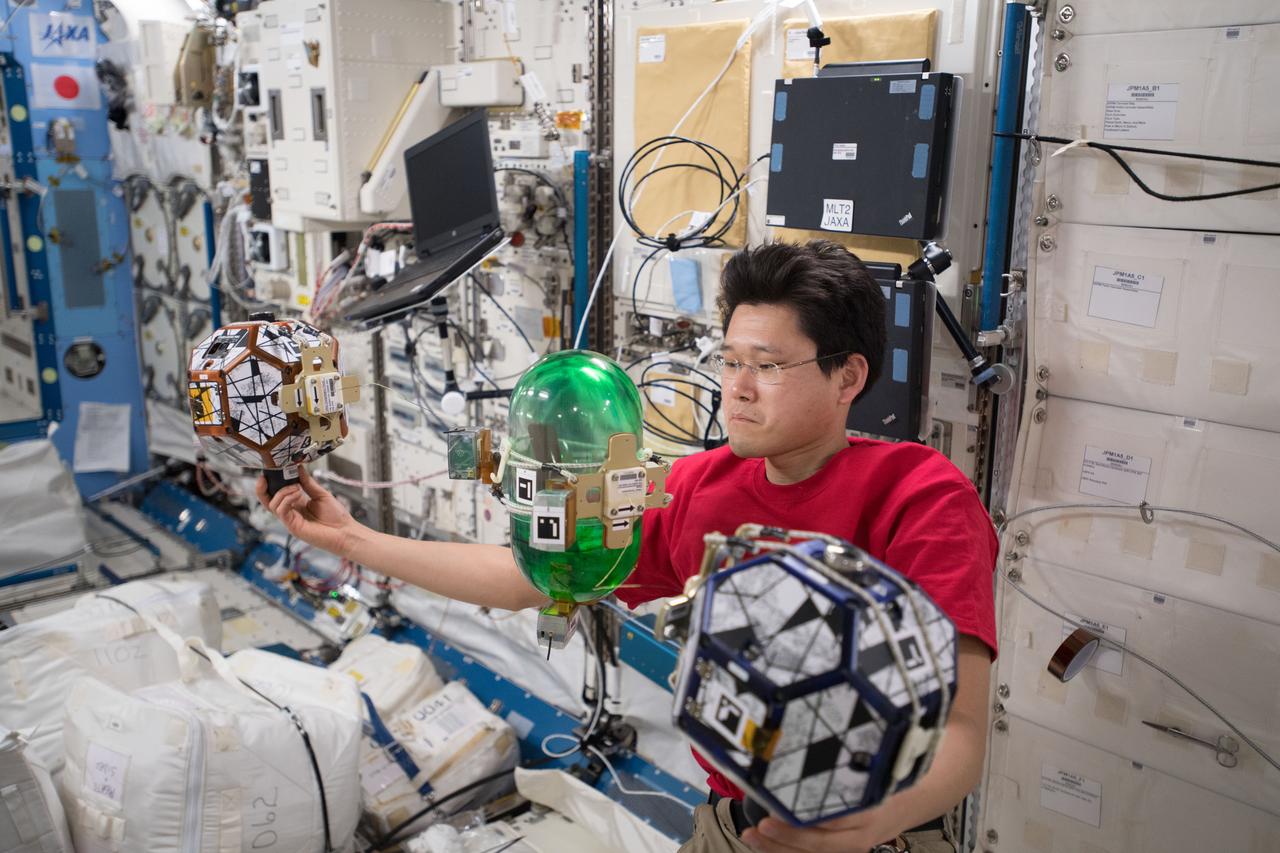
iss054e022175 (1/17/2018) --- Japan Aerospace Exploration Agency (JAXA) astronaut Norishige Kanai is photographed during a Synchronized Position Hold, Engage, Reorient, Experimental Satellites (SPHERES) Tether Slosh experiment test session run. Photo was taken in the Kibo Japanese Experiment Pressurized Module (JPM) aboard the International Space Station (ISS). SPHERES Tether Slosh combines fluid dynamics equipment with robotic capabilities aboard the ISS to investigate automated strategies for steering passive cargo that contain fluids. In space, the fluid fuels used by spacecraft can slosh around in unpredictable ways making space maneuvers difficult. SPHERES Tether Slosh uses two Synchronized Position Hold, Engage, Reorient, Experimental Satellites (SPHERES) robots tethered to a fluid-filled container covered in sensors to test strategies for safely steering spacecraft such as dead satellites that might still have fuel in the tank.
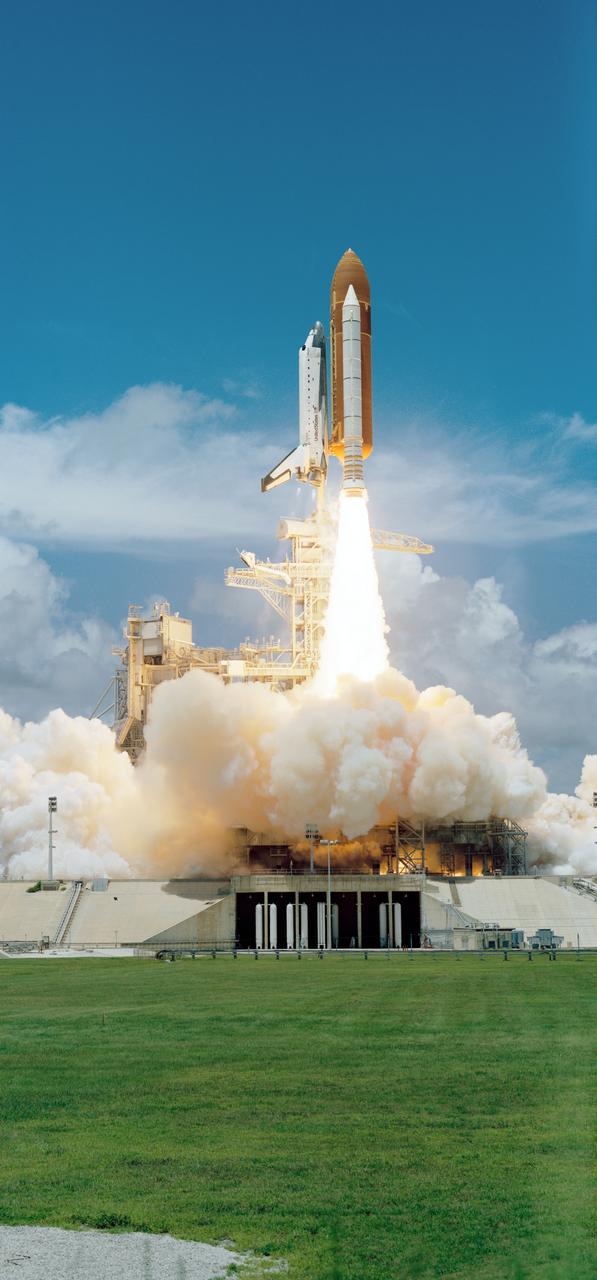
STS065-S-048 (8 July 1994) --- The Space Shuttle Columbia, with six NASA astronauts and a Japanese payload specialist aboard, heads toward Earth-orbit. A short time later, the crew began setting up the science module for two weeks of experimentation in support of the second International Microgravity Laboratory (IML-2). Launch occurred at 12:43 p.m. (EDT), July 8, 1994. Onboard were astronauts Robert D. Cabana, James D. Halsell, Jr., Richard J. Hieb, Carl E. Walz, Leroy Chiao, and Donald A. Thomas along with NASDA payload specialist Dr. Chiaki Mukai.
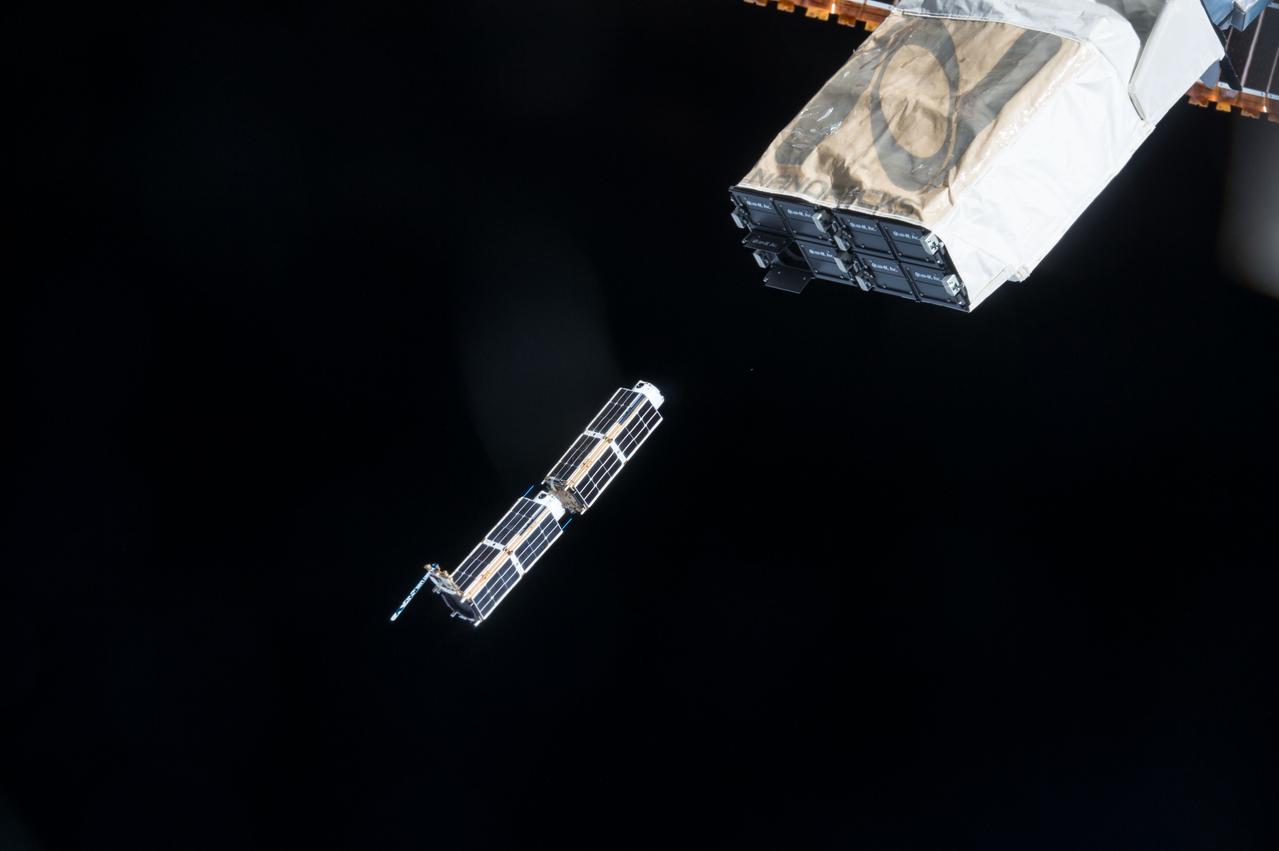
ISS042E290579 (02/27/2015) --- On Feb. 27 2015, a series of CubeSats, small experimental satellites, were deployed via a special device mounted on the Japanese Experiment Module (JEM) Remote Manipulator System (JEMRMS). Deployed satellites included twelve Dove sats, one TechEdSat-4, one GEARRSat, one LambdaSat, one MicroMas. These satellites perform a variety of functions from capturing new Earth imagery, to using microwave scanners to create 3D images of hurricanes, to even developing new methods for returning science samples back to Earth from space. The small satellites were deployed through the first week in March.
![JOHNSON SPACE CENTER, HOUSTON -- STS123-S-001-- STS-123 continues assembly of the International Space Station (ISS). The primary mission objectives include rotating an expedition crew member and installing both the first component of the Japanese Experimental Module (the Experimental Logistics Module - Pressurized Section [ELM-PS]) and the Canadian Special Purpose Dexterous Manipulator (SPDM). In addition, STS-123 will deliver various spare ISS components and leave behind the sensor boom used for inspecting the shuttle's thermal protection system. A follow-on mission to ISS will utilize and then return home with this sensor boom. A total of four spacewalks are planned to accomplish these tasks. The mission will also require the use of both the shuttle and ISS robotic arms. STS-123 will utilize the Station-Shuttle Power Transfer System to extend the docked portion of the mission to 11 days, with a total planned duration of 15 days. The crew patch depicts the space shuttle in orbit with the crew names trailing behind. STS-123's major additions to ISS (the ELM-PS installation with the shuttle robotic arm and the fully constructed SPDM) are both illustrated. The ISS is shown in the configuration that the STS-123 crew will encounter when they arrive. The NASA insignia design for shuttle flights is reserved for use by the astronauts and for other official use as the NASA Administrator may authorize. Public availability has been approved only in the form of illustrations by the various news media. When and if there is any change in this policy, which is not anticipated, it will be publicly announced.](https://images-assets.nasa.gov/image/KSC-08pd0363/KSC-08pd0363~medium.jpg)
JOHNSON SPACE CENTER, HOUSTON -- STS123-S-001-- STS-123 continues assembly of the International Space Station (ISS). The primary mission objectives include rotating an expedition crew member and installing both the first component of the Japanese Experimental Module (the Experimental Logistics Module - Pressurized Section [ELM-PS]) and the Canadian Special Purpose Dexterous Manipulator (SPDM). In addition, STS-123 will deliver various spare ISS components and leave behind the sensor boom used for inspecting the shuttle's thermal protection system. A follow-on mission to ISS will utilize and then return home with this sensor boom. A total of four spacewalks are planned to accomplish these tasks. The mission will also require the use of both the shuttle and ISS robotic arms. STS-123 will utilize the Station-Shuttle Power Transfer System to extend the docked portion of the mission to 11 days, with a total planned duration of 15 days. The crew patch depicts the space shuttle in orbit with the crew names trailing behind. STS-123's major additions to ISS (the ELM-PS installation with the shuttle robotic arm and the fully constructed SPDM) are both illustrated. The ISS is shown in the configuration that the STS-123 crew will encounter when they arrive. The NASA insignia design for shuttle flights is reserved for use by the astronauts and for other official use as the NASA Administrator may authorize. Public availability has been approved only in the form of illustrations by the various news media. When and if there is any change in this policy, which is not anticipated, it will be publicly announced.
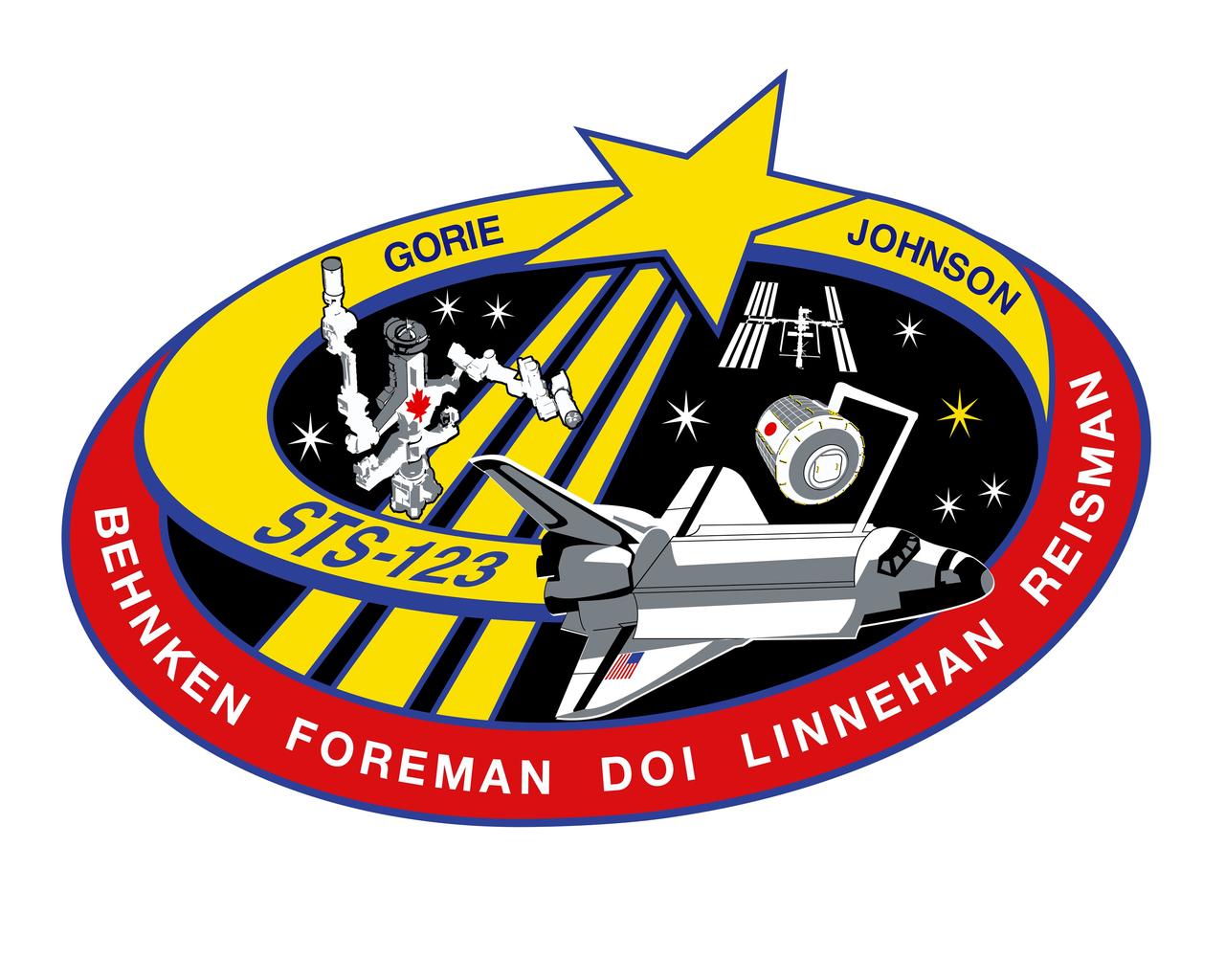
STS123-S-001 (Oct. 2007) --- STS-123 continues assembly of the International Space Station (ISS). The primary mission objectives include rotating an expedition crew member and installing both the first component of the Japanese Experimental Module (the Experimental Logistics Module - Pressurized Section (ELM-PS)) and the Canadian Special Purpose Dexterous Manipulator (SPDM). In addition, STS-123 will deliver various spare ISS components and leave behind the sensor boom used for inspecting the shuttle's thermal protection system. A follow-on mission to ISS will utilize and then return home with this sensor boom. A total of four spacewalks are planned to accomplish these tasks. The mission will also require the use of both the shuttle and ISS robotic arms. STS-123 will utilize the Station-Shuttle Power Transfer System to extend the docked portion of the mission to eleven days, with a total planned duration of 15 days. The crew patch depicts the space shuttle in orbit with the crew names trailing behind. STS-123's major additions to ISS (the ELM-PS installation with the shuttle robotic arm and the fully constructed SPDM) are both illustrated. The ISS is shown in the configuration that the STS-123 crew will encounter when they arrive. The NASA insignia design for space shuttle flights is reserved for use by the astronauts and for other official use as the NASA Administrator may authorize. Public availability has been approved only in the forms of illustrations by the various news media. When and if there is any change in this policy, which is not anticipated, the change will be publicly announced. Photo credit: NASA