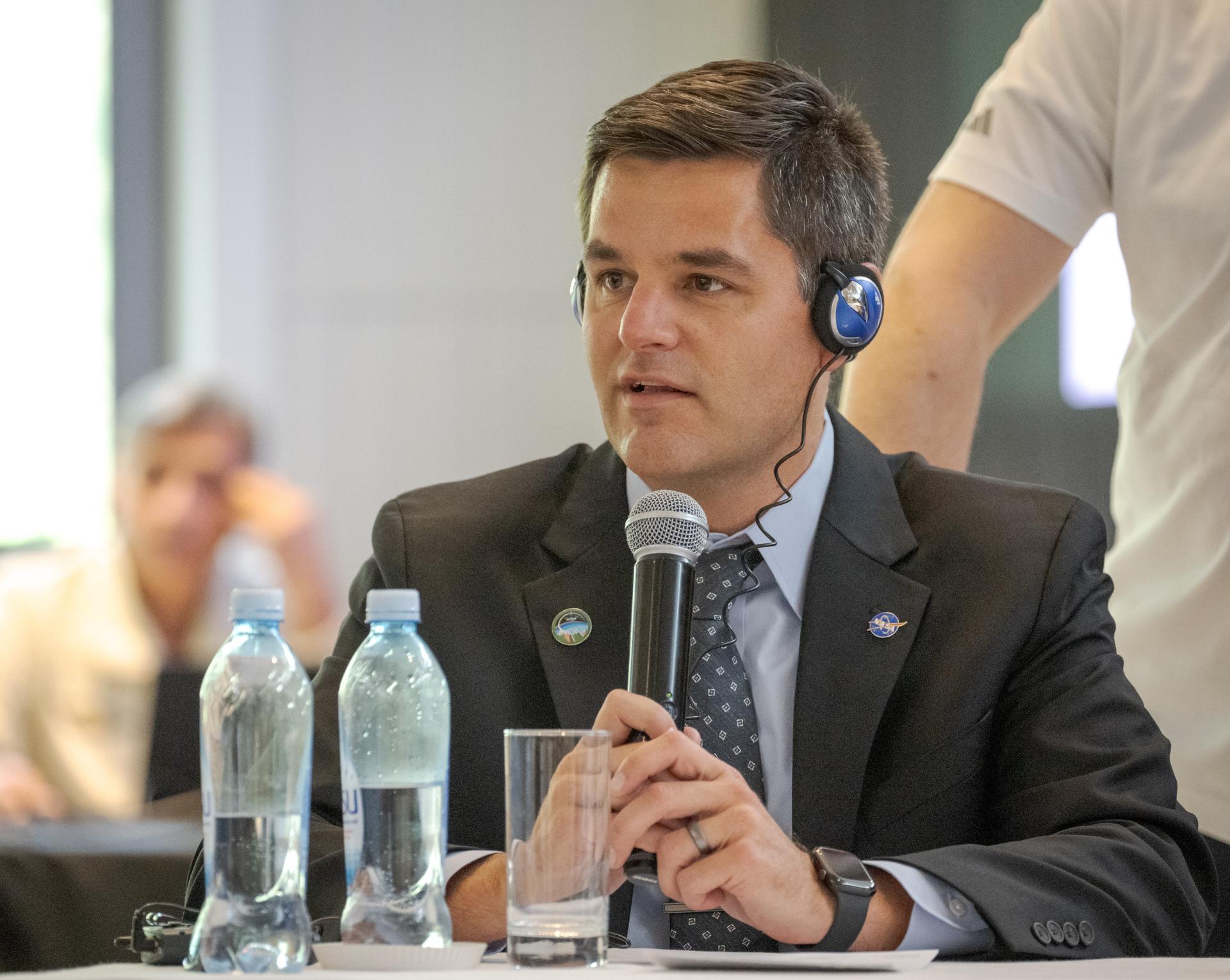
NASA's International Space Station Program representative Jason August reports out as NASA, Roscosmos, and Russian Search and Recovery Forces meet at the Cosmonaut Hotel in Karaganda, Kazakhstan, Saturday, July 25, 2026, to discuss the readiness for the landing of Expedition 74 NASA astronaut Chris Williams, and Roscosmos cosmonauts Sergey Kud-Sverchkov, and Sergei Mikaev. Photo Credit: (NASA/Bill Ingalls)
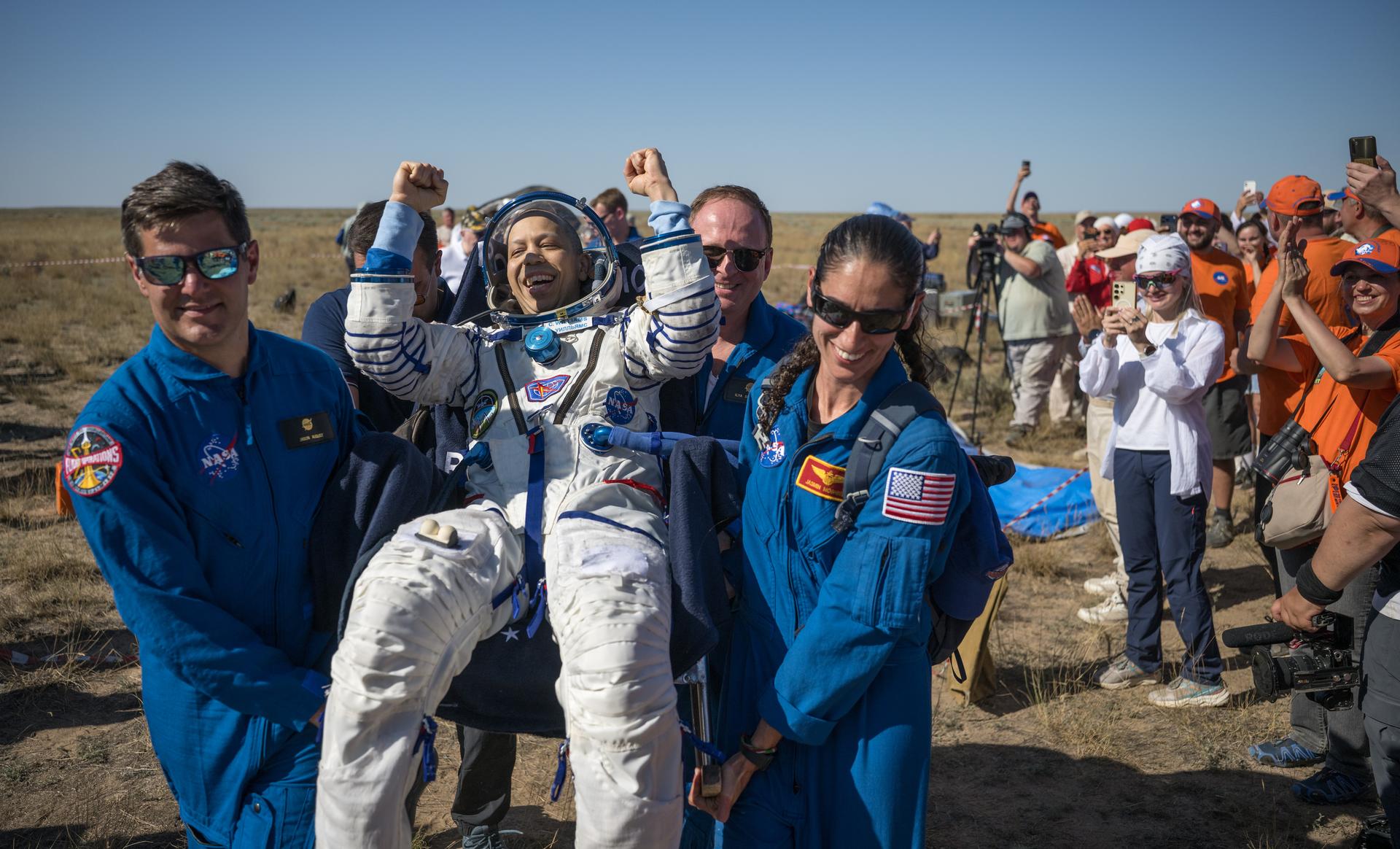
NASA astronaut Chris Williams is carried to a medical tent shortly after he and Roscosmos cosmonauts Sergey Kud-Sverchkov, and Sergei Mikaev landed in their Soyuz MS-28 spacecraft near the town of Zhezkazgan, Kazakhstan on Sunday, July 26, 2026. The trio returned to Earth after logging 241 days in space as a members of Expeditions 73 and 74 aboard the International Space Station. Photo Credit: (NASA/Bill Ingalls)
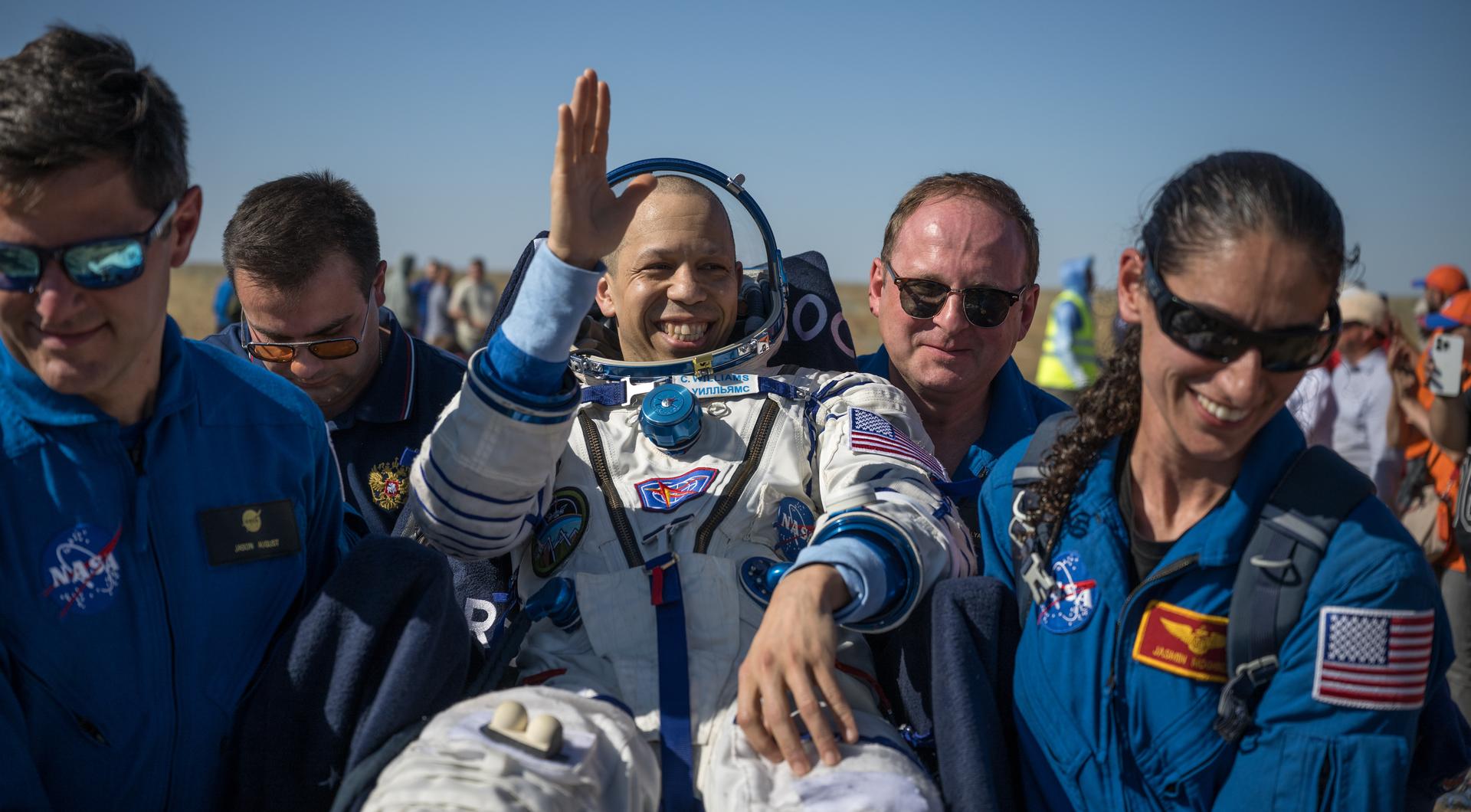
NASA astronaut Chris Williams is carried to a medical tent shortly after he and Roscosmos cosmonauts Sergey Kud-Sverchkov, and Sergei Mikaev landed in their Soyuz MS-28 spacecraft near the town of Zhezkazgan, Kazakhstan on Sunday, July 26, 2026. The trio returned to Earth after logging 241 days in space as a members of Expeditions 73 and 74 aboard the International Space Station. Photo Credit: (NASA/Bill Ingalls)
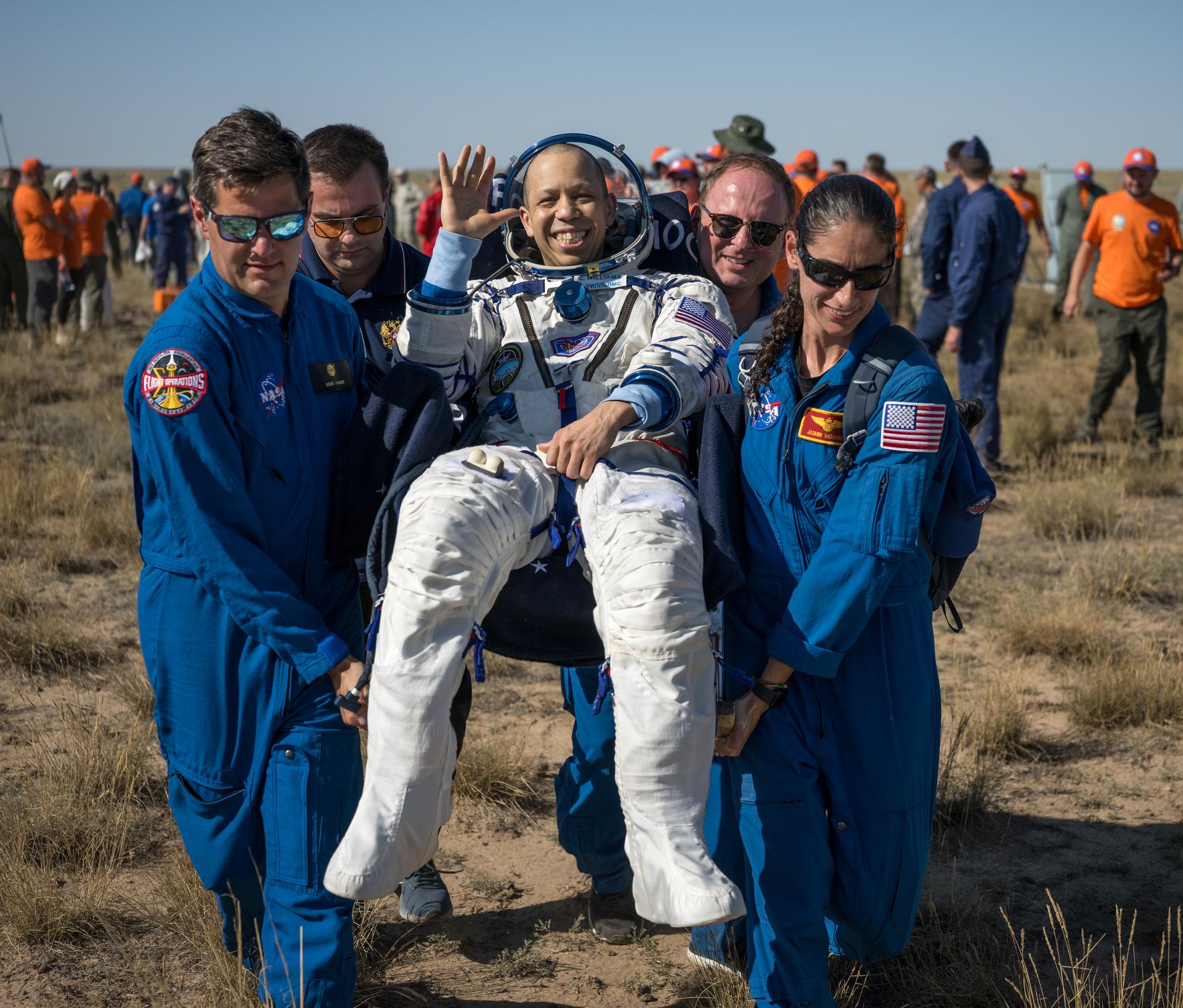
NASA astronaut Chris Williams is carried to a medical tent shortly after he and Roscosmos cosmonauts Sergey Kud-Sverchkov, and Sergei Mikaev landed in their Soyuz MS-28 spacecraft near the town of Zhezkazgan, Kazakhstan on Sunday, July 26, 2026. The trio returned to Earth after logging 241 days in space as a members of Expeditions 73 and 74 aboard the International Space Station. Photo Credit: (NASA/Bill Ingalls)
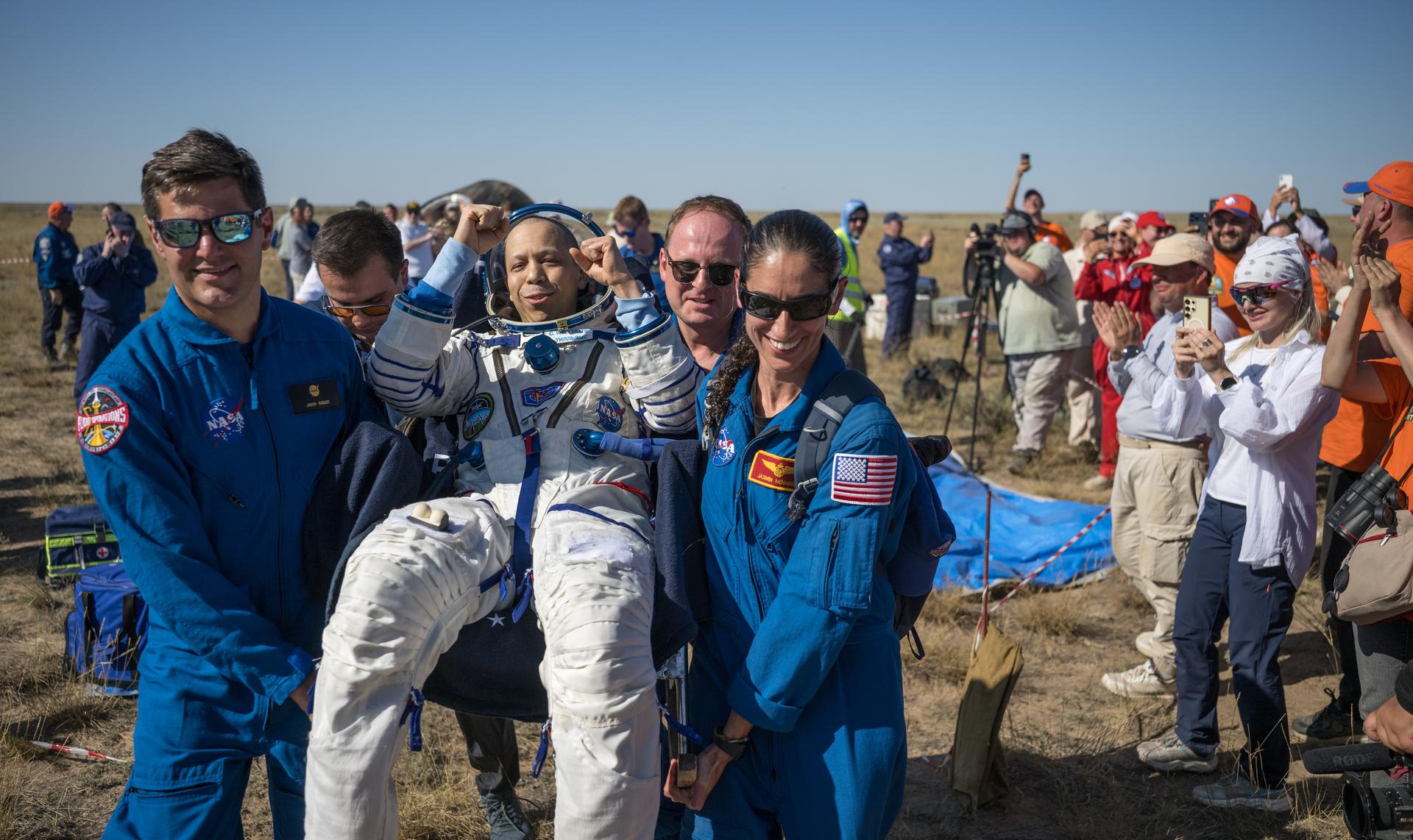
NASA astronaut Chris Williams is carried to a medical tent shortly after he and Roscosmos cosmonauts Sergey Kud-Sverchkov, and Sergei Mikaev landed in their Soyuz MS-28 spacecraft near the town of Zhezkazgan, Kazakhstan on Sunday, July 26, 2026. The trio returned to Earth after logging 241 days in space as a members of Expeditions 73 and 74 aboard the International Space Station. Photo Credit: (NASA/Bill Ingalls)
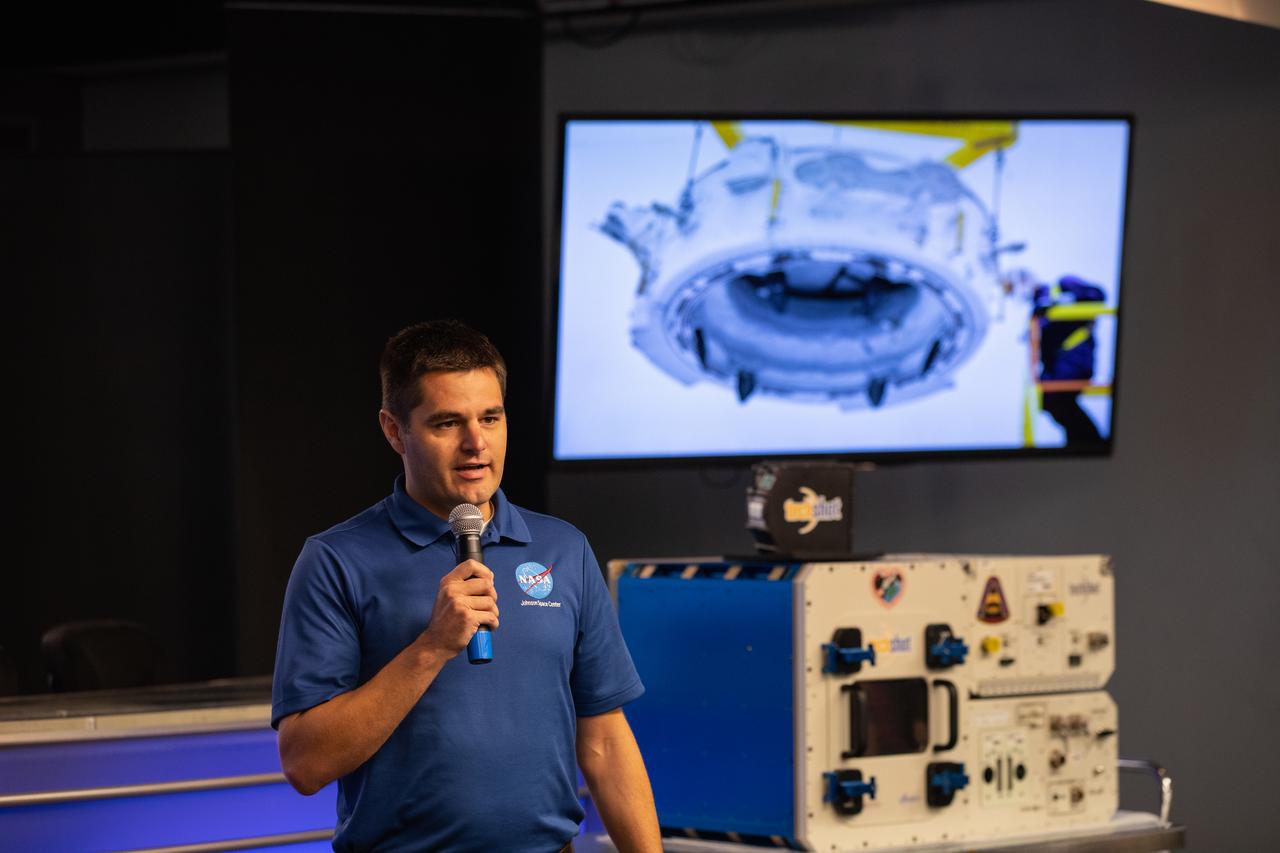
Jason August, International Space Station Mission Evaluation Room manager, talks to NASA Social participants about the International Docking Adapter-3 payload during a What’s On Board science briefing at the agency’s Kennedy Space Center in Florida on July 23, 2019. The briefing was held for SpaceX’s 18th Commercial Resupply Services (CRS-18) mission to the station. The SpaceX Falcon 9 rocket and uncrewed Dragon spacecraft are scheduled to launch July 24, 2019, from Space Launch Complex 40 at Florida’s Cape Canaveral Air Force Station.
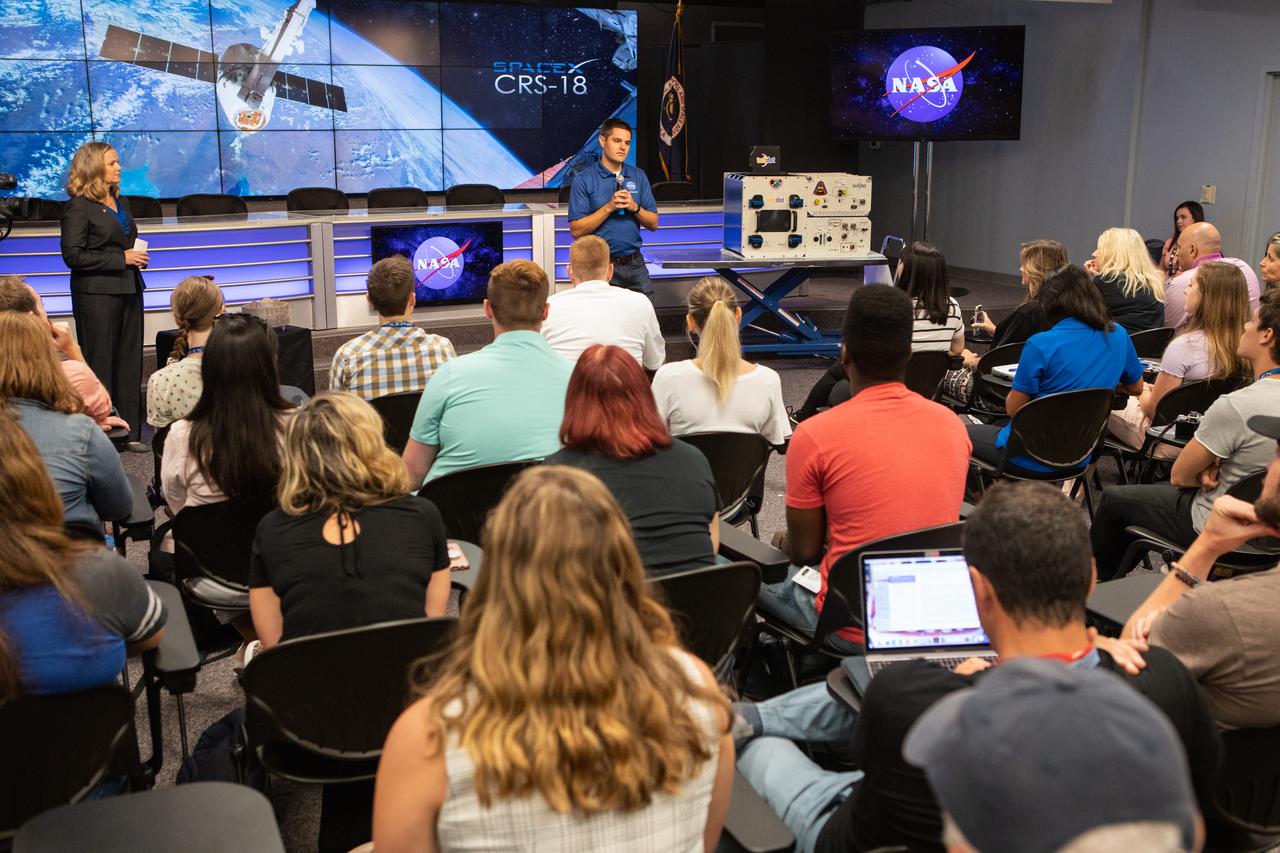
Jason August, International Space Station Mission Evaluation Room manager, talks to NASA Social participants about the International Docking Adapter-3 payload during a What’s On Board science briefing at the agency’s Kennedy Space Center in Florida on July 23, 2019. The briefing was held for SpaceX’s 18th Commercial Resupply Services (CRS-18) mission to the station. The SpaceX Falcon 9 rocket and uncrewed Dragon spacecraft are scheduled to launch July 24, 2019, from Space Launch Complex 40 at Florida’s Cape Canaveral Air Force Station.
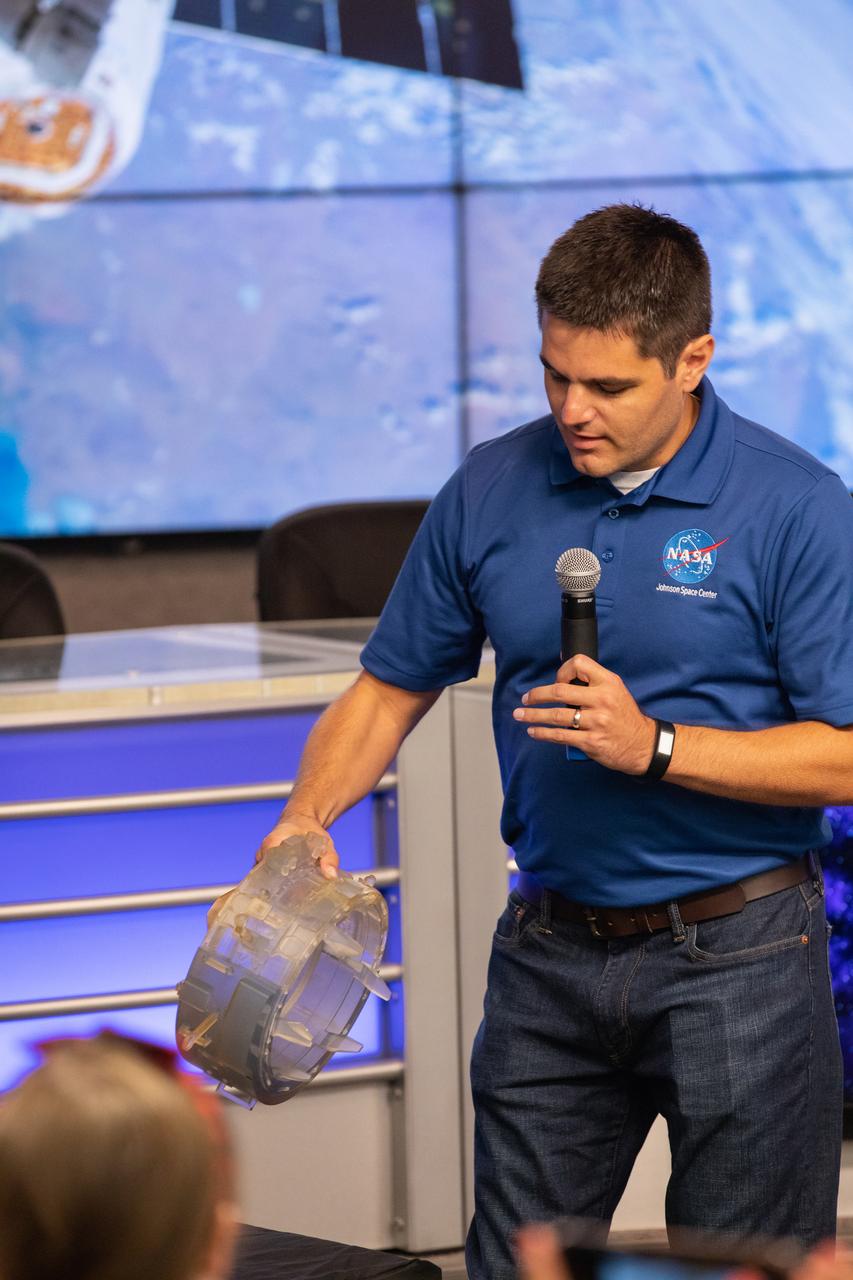
Jason August, International Space Station Mission Evaluation Room manager, talks to NASA Social participants about the International Docking Adapter-3 payload during a What’s On Board science briefing at the agency’s Kennedy Space Center in Florida on July 23, 2019. The briefing was held for SpaceX’s 18th Commercial Resupply Services (CRS-18) mission to the station. The SpaceX Falcon 9 rocket and uncrewed Dragon spacecraft are scheduled to launch July 24, 2019, from Space Launch Complex 40 at Florida’s Cape Canaveral Air Force Station.
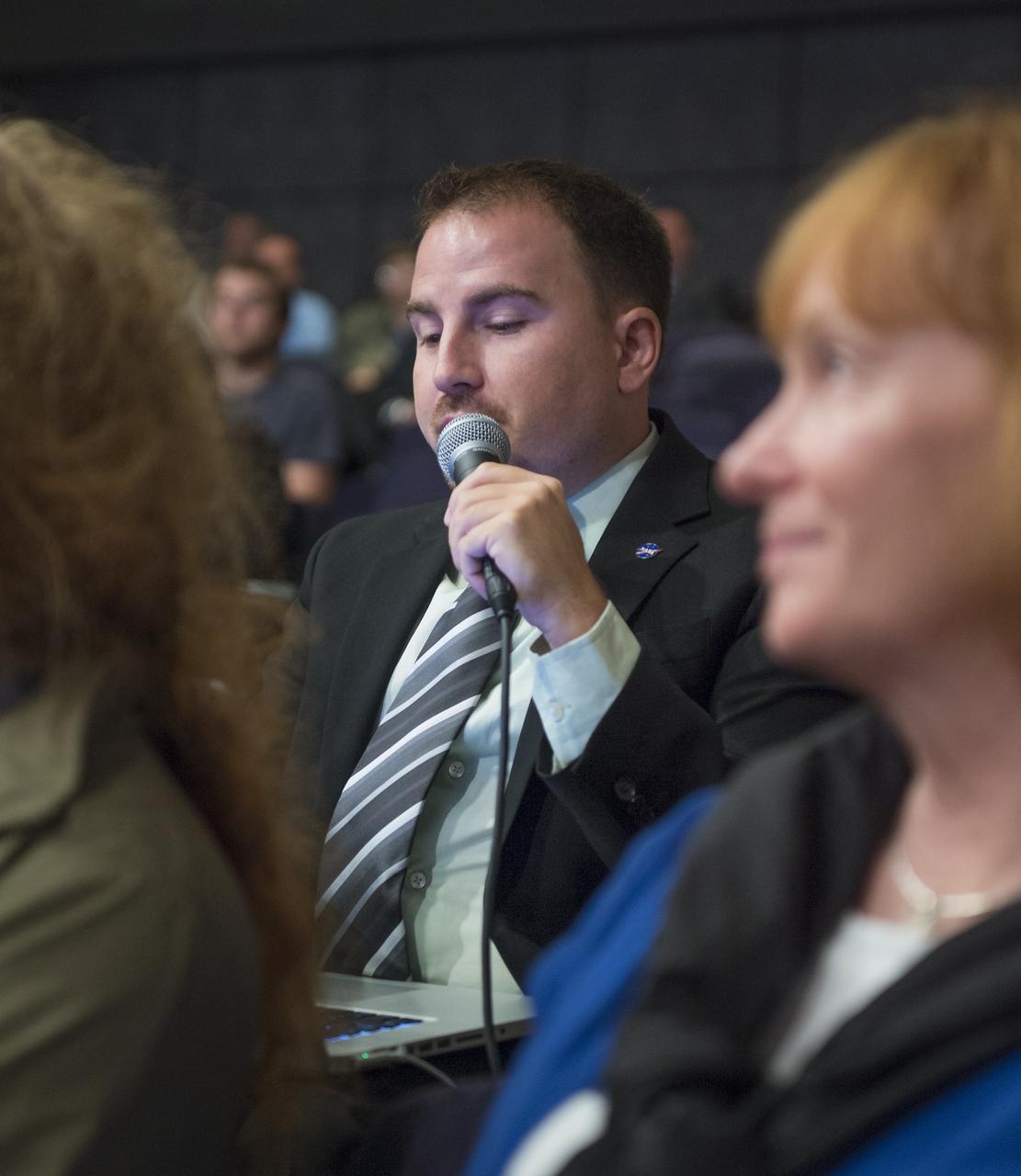
Jason Townsend, NASA's Deputy Social Media Manager, asks a question on behalf of a NASA Twitter follower at a public event at NASA Headquarters observing the first anniversary of the Curiosity rover's landing on Mars, Tuesday, August 6th, 2013 in Washington. The Mars Science Laboratory mission successfully placed the one-ton Curiosity rover on the surface of Mars on Aug. 6, 2012, about 1 mile from the center of its 12-mile-long target area. Within the first eight months of a planned 23-months primary mission, Curiosity met its major science objective of finding evidence of a past environment well-suited to support microbial life. Photo Credit: (NASA/Carla Cioffi)