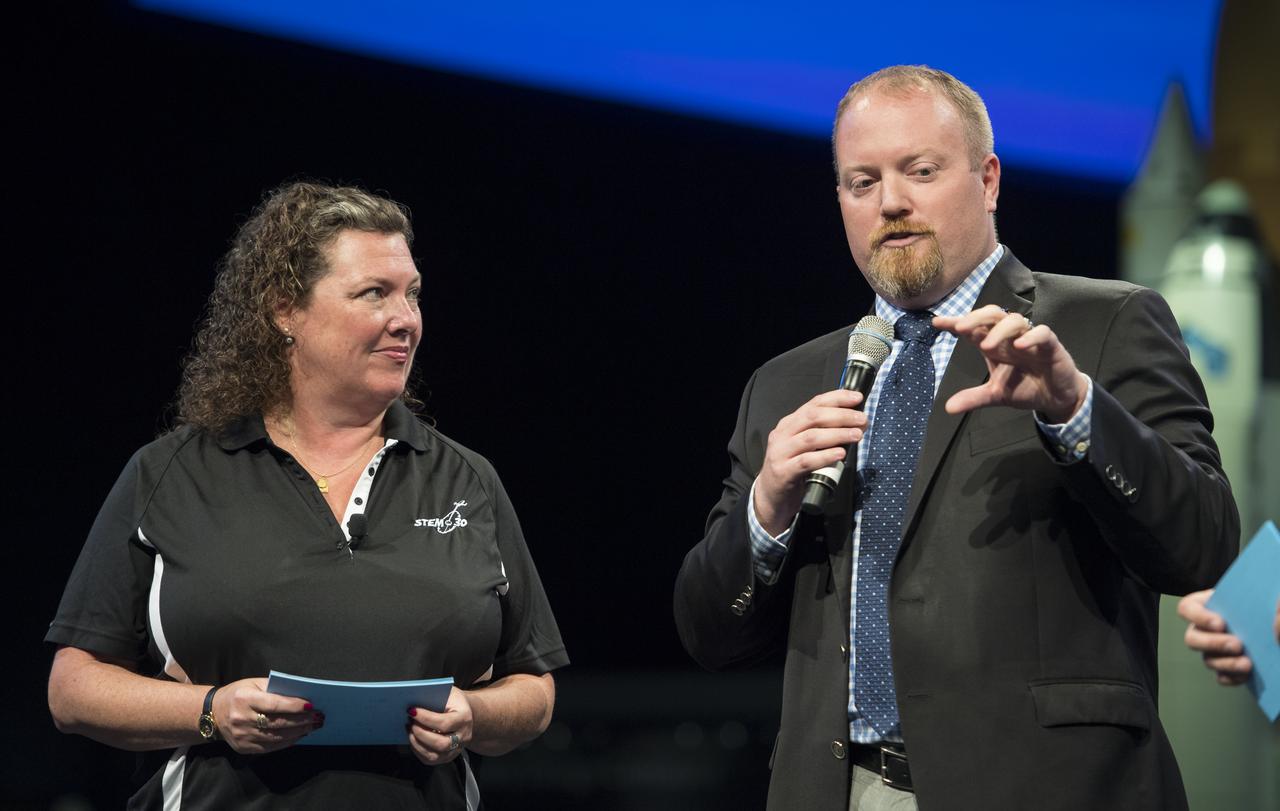
Jason Crusan, director, NASA Advanced Exploration Systems (AES) Division, speaks with the STEM in 30 team Wednesday, June 27, 2018 at Smithsonian's National Air and Space Museum in Washington. Photo Credit: (NASA/Aubrey Gemignani)
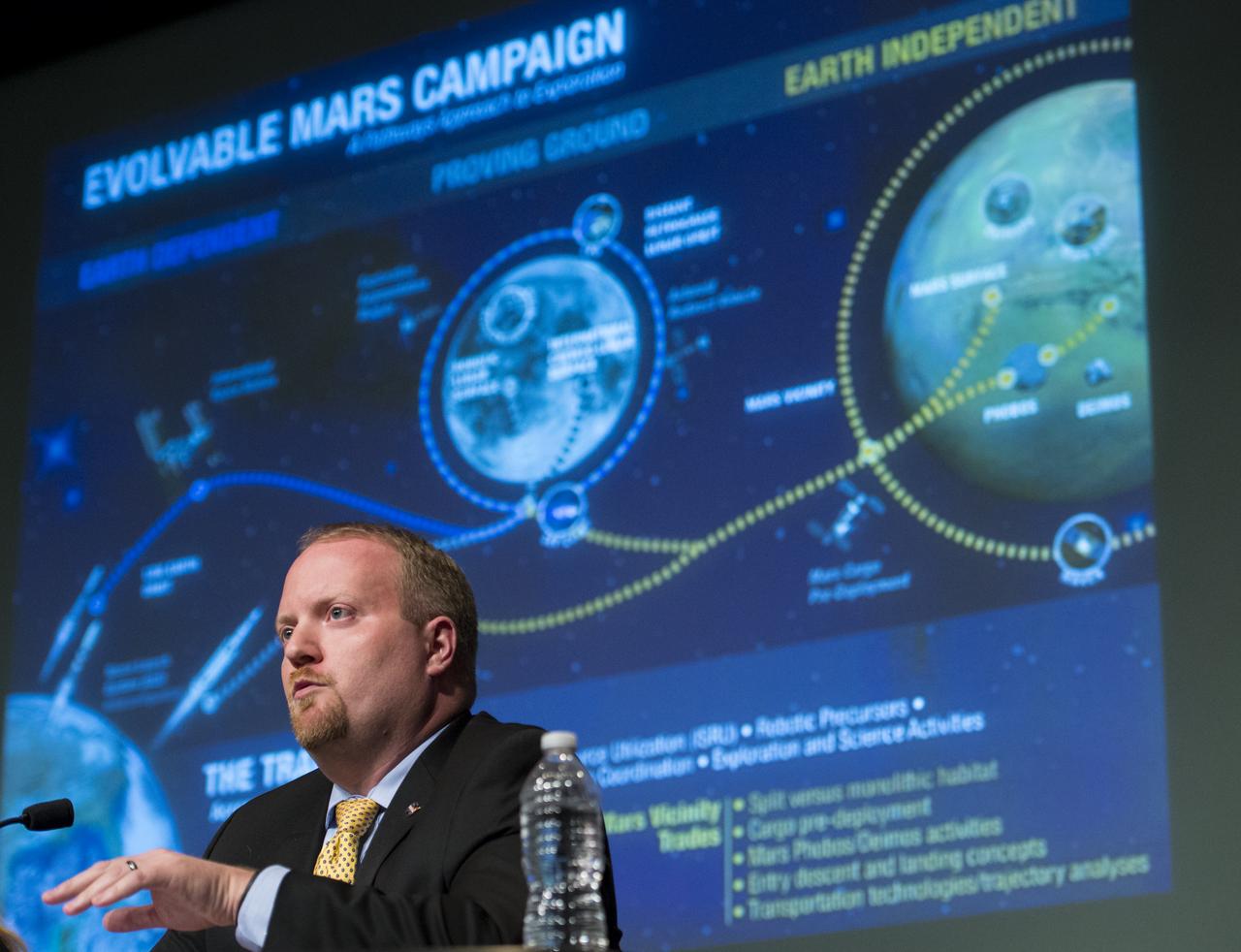
Jason Crusan, Director of NASA's Advanced Exploration Systems Division, speaks during an Exploration Forum showcasing NASA's human exploration path to Mars in the James E. Webb Auditorium at NASA Headquarters on Tuesday, April 29, 2014. Photo Credit: (NASA/Joel Kowsky)
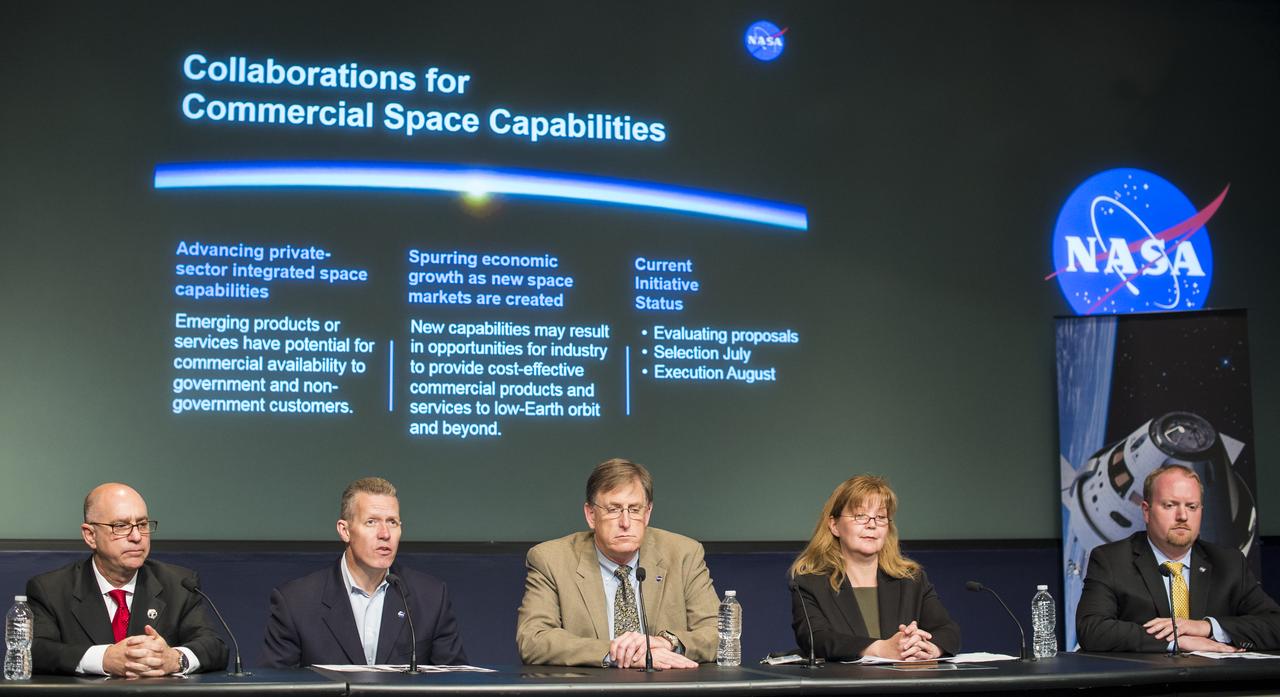
Sam Scimemi, Director of NASA's International Space Station Division, left, Phil McAlister, Director of NASA's Commercial Spaceflight Division, second from left, Dan Dumbacher, Deputy Associate Administrator of NASA's Exploration Systems Development, center, Michele Gates, Senior Technical Advisor of NASA's Human Exploration and Operations Mission Directorate, second from right, and Jason Crusan, Director of NASA's Advanced Exploration Systems Division, right, sit on a panel during an Exploration Forum showcasing NASA's human exploration path to Mars in the James E. Webb Auditorium at NASA Headquarters on Tuesday, April 29, 2014. Photo Credit: (NASA/Joel Kowsky)
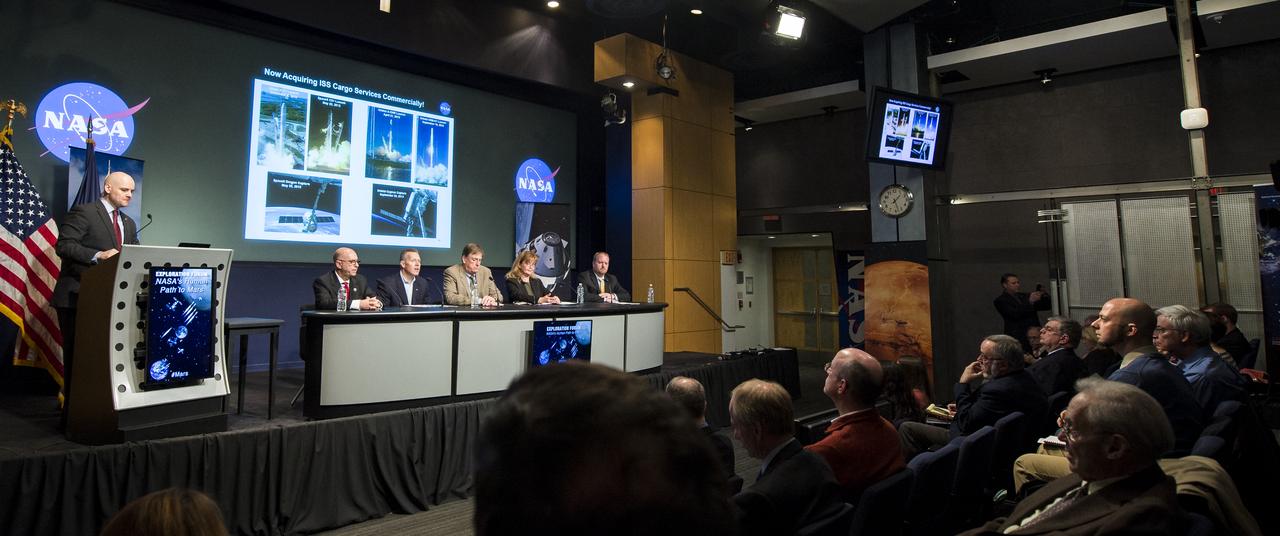
Sam Scimemi, Director of NASA's International Space Station Division, second from left, Phil McAlister, Director of NASA's Commercial Spaceflight Division, third from left, Dan Dumbacher, Deputy Associate Administrator of NASA's Exploration Systems Development, center, Michele Gates, Senior Technical Advisor of NASA's Human Exploration and Operations Mission Directorate, second from right, and Jason Crusan, Director of NASA's Advanced Exploration Systems Division, right, sit on a panel during an Exploration Forum showcasing NASA's human exploration path to Mars in the James E. Webb Auditorium at NASA Headquarters on Tuesday, April 29, 2014. Photo Credit: (NASA/Joel Kowsky)

NASA astronaut Serena Auñon-Chancellor's niece, Anna Sophia, listens as Jason Crusan, director, NASA Advanced Exploration Systems (AES) Division, speaks with the STEM in 30 team Wednesday, June 27, 2018 at Smithsonian's National Air and Space Museum in Washington. Photo Credit: (NASA/Aubrey Gemignani)
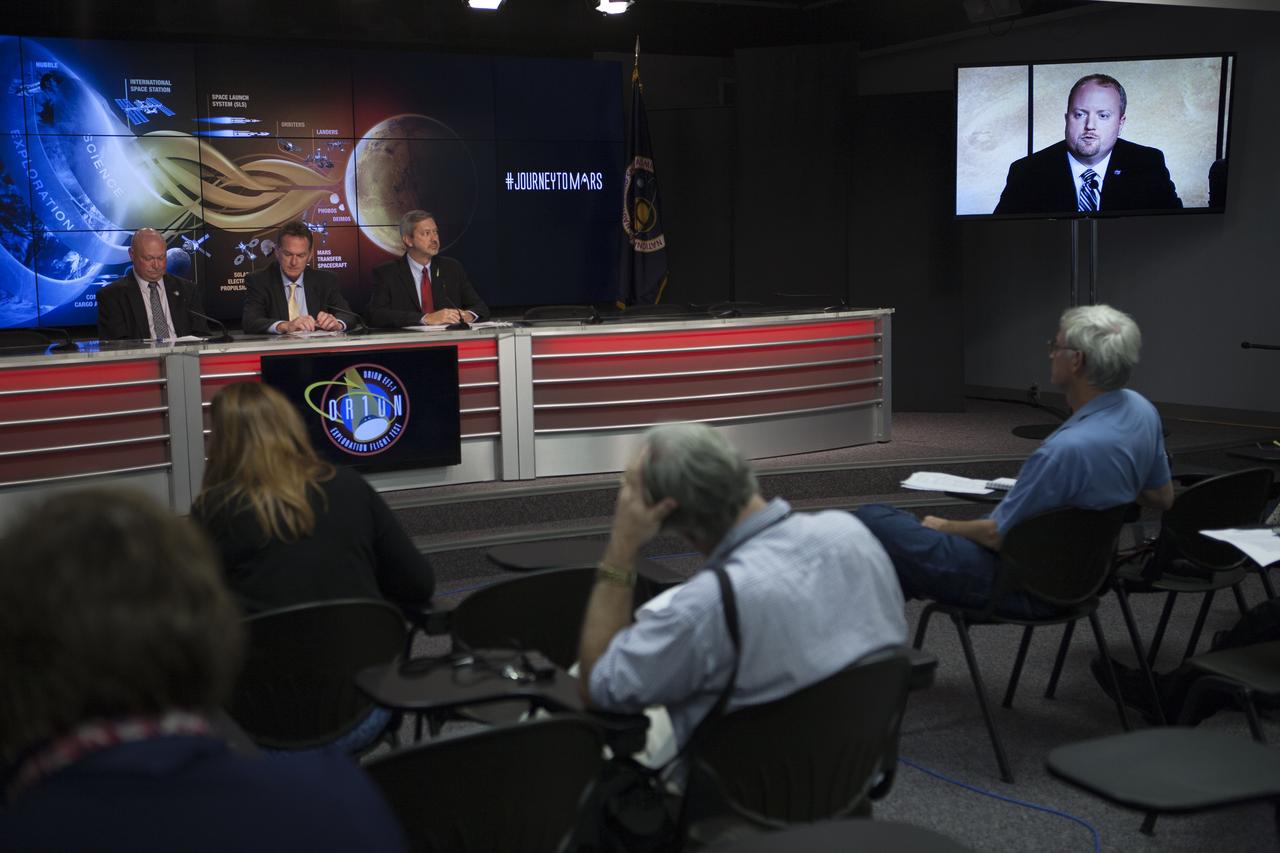
At NASA's Kennedy Space Center in Florida, NASA leaders spoke to members of the news media about how the first flight of the new Orion spacecraft is a first step in the agency's plans to send humans to Mars. At Kennedy's News Center auditorium from the left are: Mike Curie of NASA Public Affairs, Mike Bolger, program manager of Ground Systems Development and Operations Program, and Chris Crumbly, manager of Space Launch System Spacecraft/Payload Integration and Evolution. Participating via video from the agency's headquarters in Washington included Jason Crusan, director of Advanced Exploration Systems Division of Human Exploration and Operations Mission Directorate, seen on the monitor on the right. Orion is the exploration spacecraft designed to carry astronauts to destinations not yet explored by humans, including an asteroid and Mars. It will have emergency abort capability, sustain the crew during space travel and provide safe re-entry from deep space return velocities. The first unpiloted flight test of Orion is scheduled to launch Dec. 4, 2014 atop a United Launch Alliance Delta IV Heavy rocket, and in 2018 on NASA’s Space Launch System rocket.
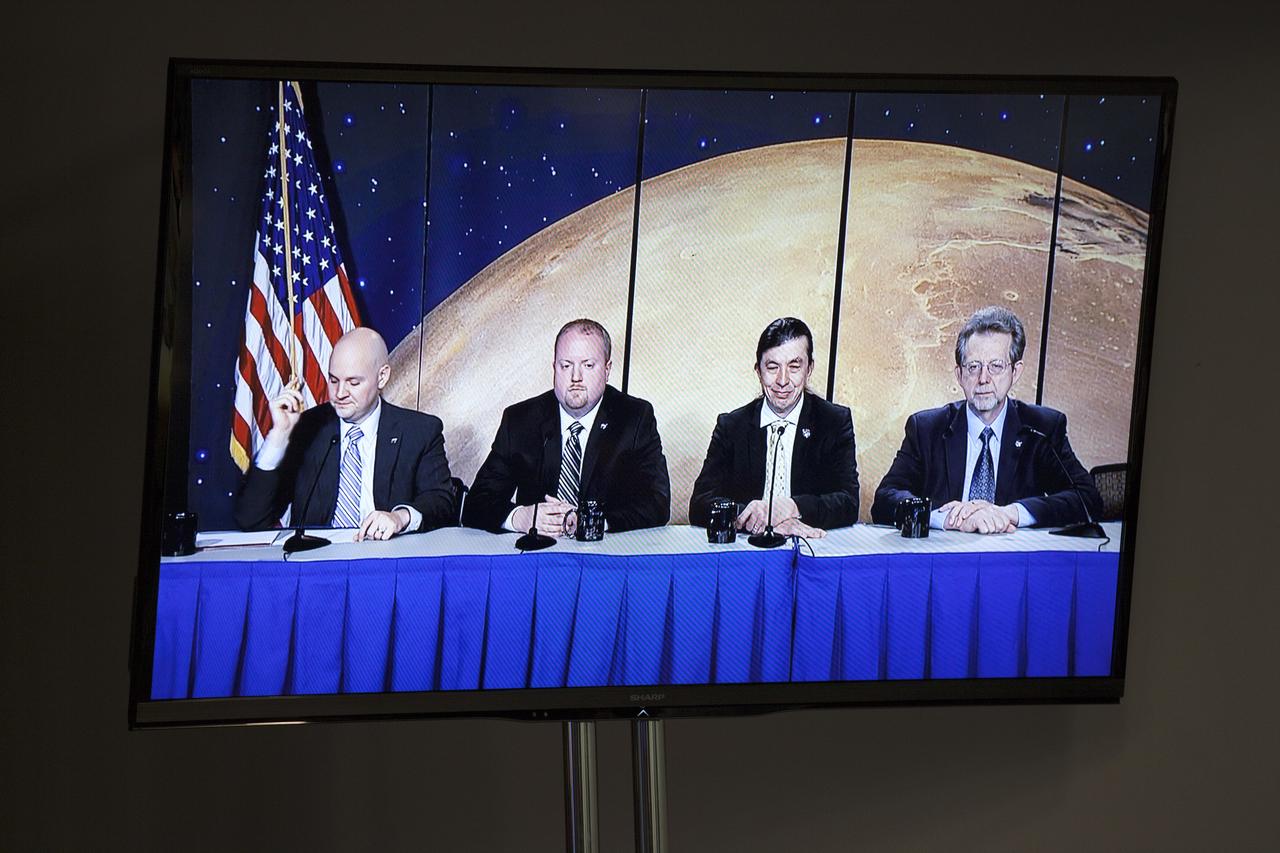
CAPE CANAVERAL, Fla. – At NASA Headquarters in Washington and the Kennedy Space Center in Florida, NASA leaders spoke to members of the new media about how the first flight of the new Orion spacecraft is a first step in the agency's plans to send humans to Mars. Seen on a video monitor at Kennedy, Headquarter participants, from the left are: Trent Perrotto of NASA Public Affairs, Jason Crusan, director of Advanced Exploration Systems Division of Human Exploration and Operations Mission Directorate, Jim Reuther, deputy associate administrator for Programs, Space Technology Mission Directorate, and Jim Green, director of Planetary Division of the Science Mission Directorate. Orion is the exploration spacecraft designed to carry astronauts to destinations not yet explored by humans, including an asteroid and Mars. It will have emergency abort capability, sustain the crew during space travel and provide safe re-entry from deep space return velocities. The first unpiloted flight test of Orion is scheduled to launch Dec. 4, 2014 atop a United Launch Alliance Delta IV Heavy rocket, and in 2018 on NASA’s Space Launch System rocket. For more information, visit www.nasa.gov/orion Photo credit: NASA/Kim Shiflett
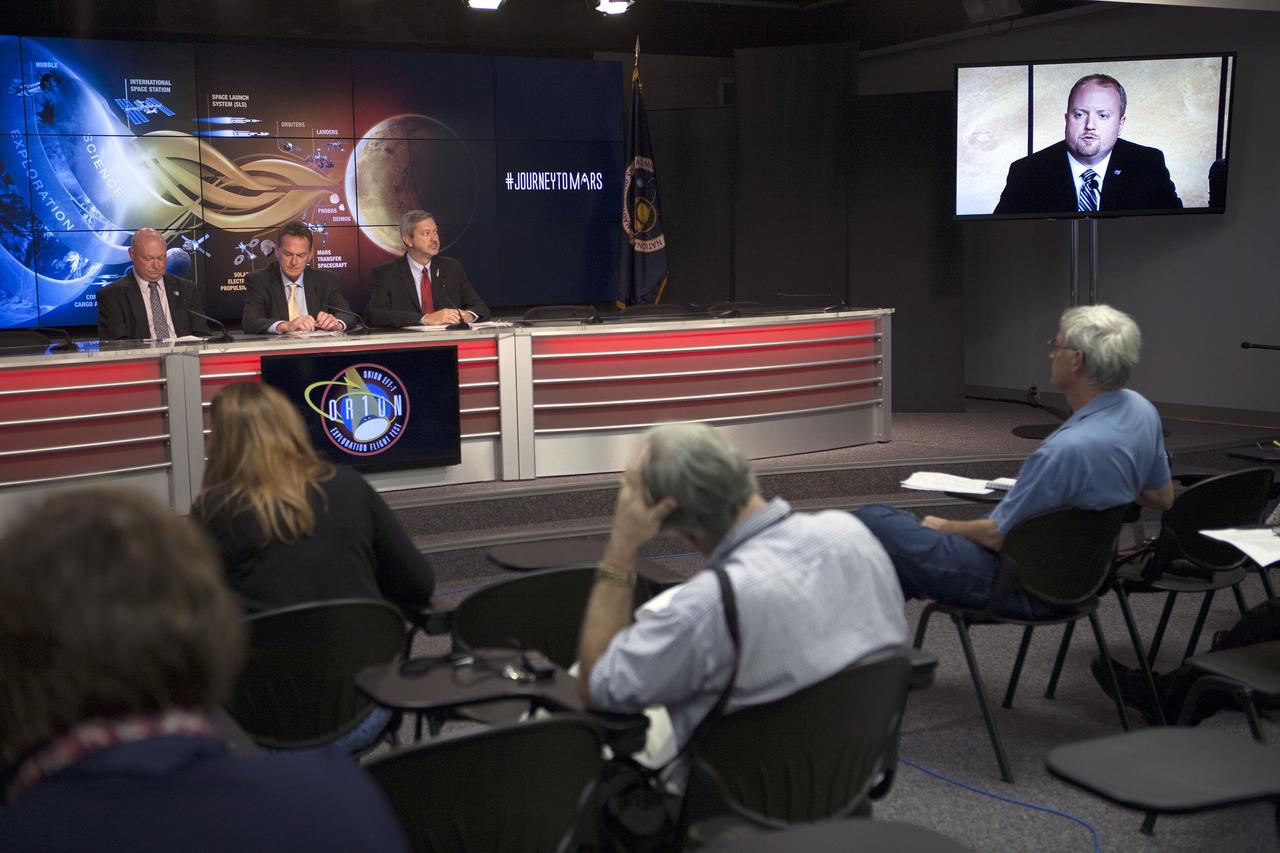
CAPE CANAVERAL, Fla. – At NASA's Kennedy Space Center in Florida, NASA leaders spoke to members of the news media about how the first flight of the new Orion spacecraft is a first step in the agency's plans to send humans to Mars. At Kennedy's News Center auditorium from the left are: Mike Curie of NASA Public Affairs, Mike Bolger, program manager of Ground Systems Development and Operations Program, and Chris Crumbly, manager of Space Launch System Spacecraft/Payload Integration and Evolution. Participating via video from the agency's headquarters in Washington included Jason Crusan, director of Advanced Exploration Systems Division of Human Exploration and Operations Mission Directorate, seen on the monitor on the right. Orion is the exploration spacecraft designed to carry astronauts to destinations not yet explored by humans, including an asteroid and Mars. It will have emergency abort capability, sustain the crew during space travel and provide safe re-entry from deep space return velocities. The first unpiloted flight test of Orion is scheduled to launch Dec. 4, 2014 atop a United Launch Alliance Delta IV Heavy rocket, and in 2018 on NASA’s Space Launch System rocket. For more information, visit www.nasa.gov/orion Photo credit: NASA/Kim Shiflett
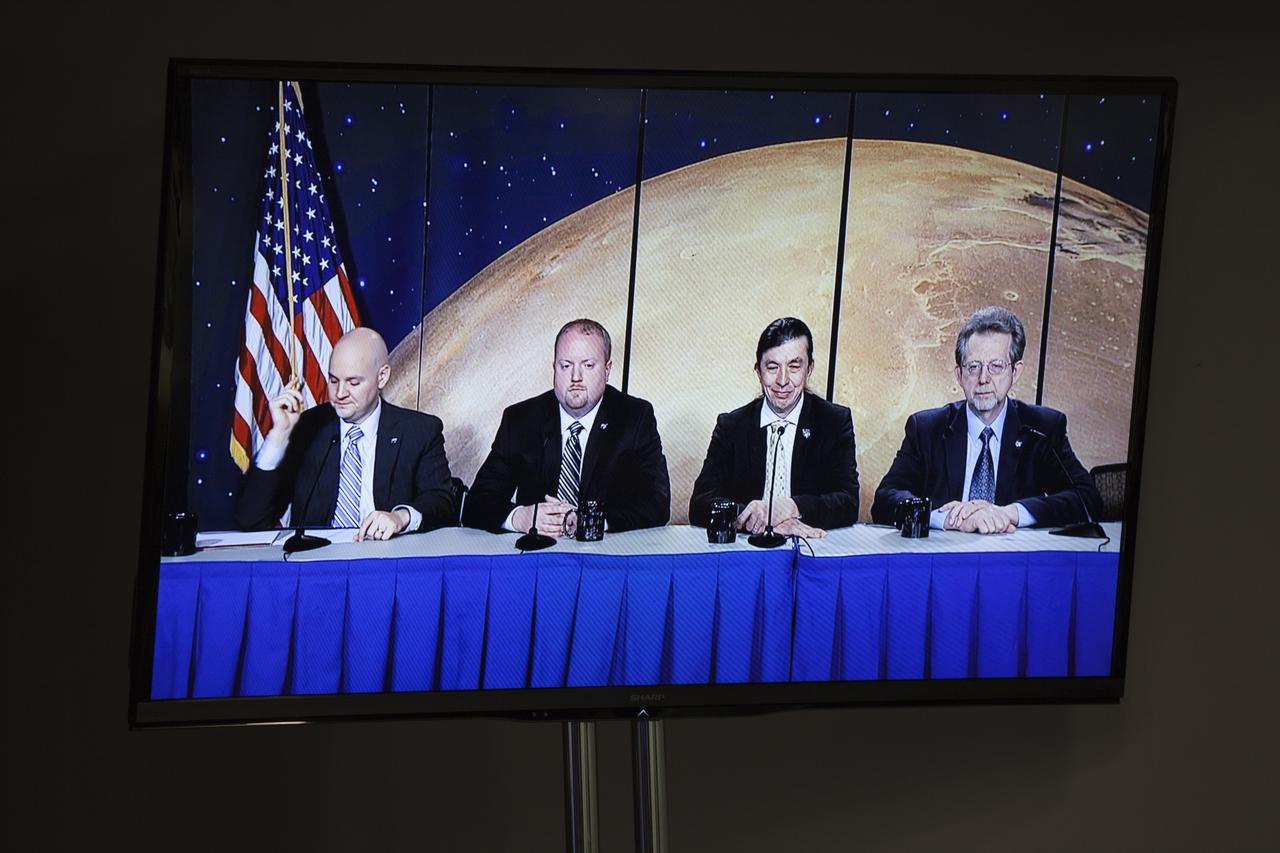
At NASA Headquarters in Washington and the Kennedy Space Center in Florida, NASA leaders spoke to members of the new media about how the first flight of the new Orion spacecraft is a first step in the agency's plans to send humans to Mars. Seen on a video monitor at Kennedy, Headquarter participants, from the left are: Trent Perrotto of NASA Public Affairs, Jason Crusan, director of Advanced Exploration Systems Division of Human Exploration and Operations Mission Directorate, Jim Reuther, deputy associate administrator for Programs, Space Technology Mission Directorate, and Jim Green, director of Planetary Division of the Science Mission Directorate. Orion is the exploration spacecraft designed to carry astronauts to destinations not yet explored by humans, including an asteroid and Mars. It will have emergency abort capability, sustain the crew during space travel and provide safe re-entry from deep space return velocities. The first unpiloted flight test of Orion is scheduled to launch Dec. 4, 2014 atop a United Launch Alliance Delta IV Heavy rocket, and in 2018 on NASA’s Space Launch System rocket.